Ho Chi Minh’s mausoleum is mammoth. It takes up a solid 10 square city blocks and it looks kind of like a slick, chrome, communist version of the Lincoln Memorial. It is only open in the morning. Entry is free but you had best be there at the butt-crack of dawn if you want to avoid a multi-kilometer long line. Most of the line is not tourists either. It is mostly Vietnamese families.
From Toul Sleng, these people were herded onto buses like cattle. Before the buses revved their engines and headed for, what would eventually be known as the Killing Fields, the people were told that everything was okay; they were just moving to a new ‘home.’ Maybe some of them believed that and hung onto it for the duration of the bus ride, but I don’t think many of them had many illusions left.
The reports I had heard about Phnom Penh prior to my arrival were overwhelmingly negative. People talked about the drugs, theft and the prostitution before they mentioned anything else. So I arrived prepared for the worst.
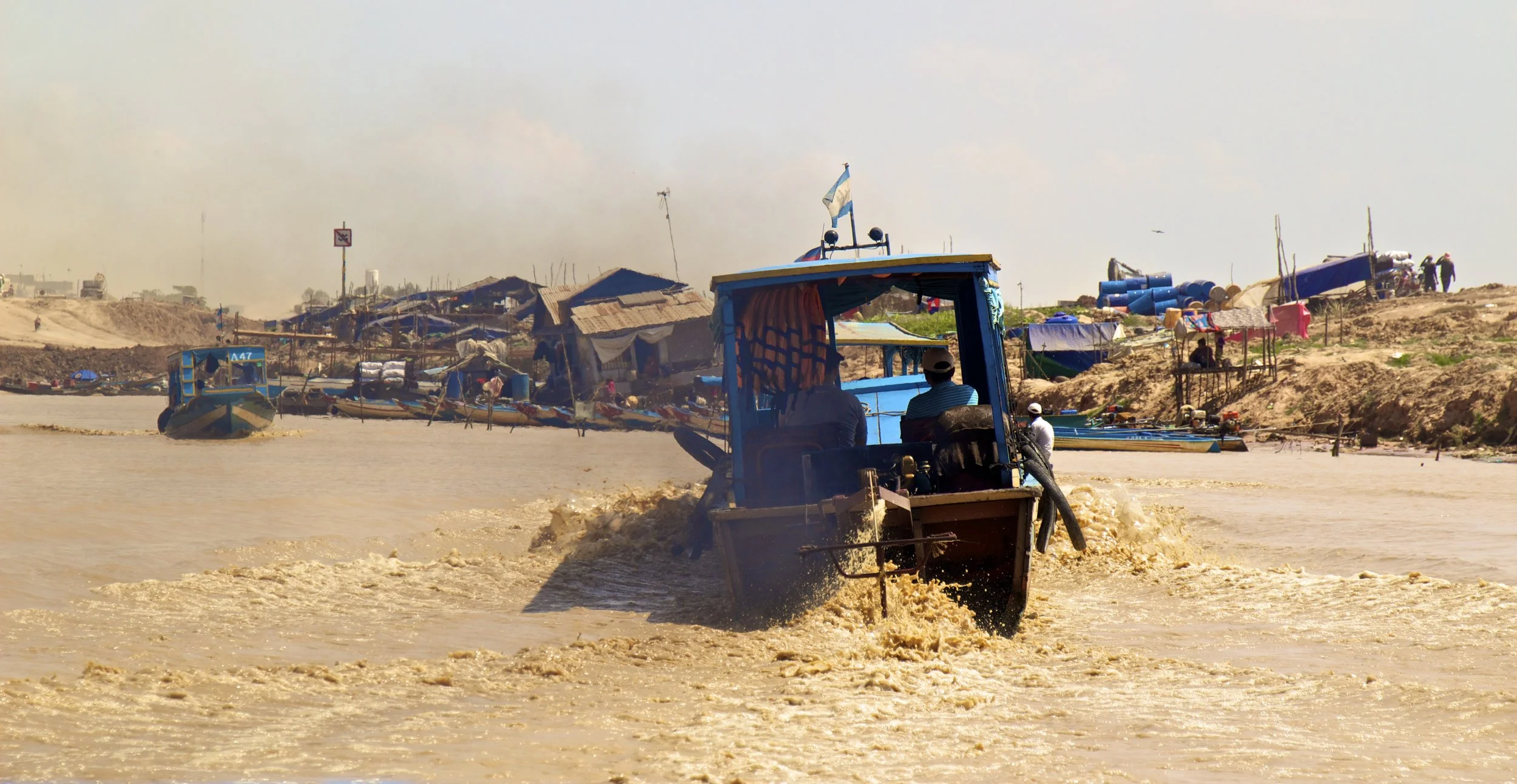
Not far to the South of Siem Reap is Tonle Sap Lake. Being of comparable size to the great lakes in the U.S., this lake is the biggest lake in Southeast Asia. Sitting at one of the Northern most points of this lake is one of the floating villages. This is an actual small town that is floating a few hundred meters off shore. Its population is mostly fishermen, but it also has all of the normal small-town trappings like a supermarket, restaurants, even a pagoda, all floating out there in the lake.
Angkor Wat is perhaps, behind the Great Wall of China, the most recognizable landmark in all of East Asia. But despite its fame, is actually one of the smaller members in a much bigger complex of temples. Angkor is an area of about 20 square miles, containing more than 200 temples. Angkor Wat is special amongst these temples because it is perhaps the best preserved. This is thanks in part of the giant moat that surrounds the temple, keeping the jungle from swallowing it back up like so many of the other temples in Angkor.
Going to Cambodia is a lot like going to a strip club – you better arrive with a fat stack of ones. Trip Advisor ranked Siem Reap as the #1 destination in Asia last year. The Khmer new year was just 2 weeks ago and Siem Reap apparently received roughly 300,000 international visitors in addition to 1,000,000 domestic visitors (in that week alone) who all came to take part in the giant party that was being held in Angkor Wat and the surrounding temple complexes.
Hội An was a very important trading post of the old world. It was the opinion of most Chinese and Japanese merchants that Hội An was the best trading post in Southeast Asia, if not Asia at large. However, thanks to a treaty signed with the colonizing French, Đà Nẵng eventually became the port of choice in lieu of Hội An. Also, due to a build up of silt at the mouth of the river, Hội An became all but inaccessible to the large ships that used to frequent its docks. The effect of this was isolation. The ancient town of Hội An was all but forgotten about during Vietnam’s tumultuous next 200 years.
Travel plans! On this trip, we'll be visiting Da Nang, Hoi An (in Vietnam), Siem Reap, and Phnom Penh (in Cambodia). Included in these destinations will be Angkor Wat and the Killing Fields in Cambodia, as well as a legendary lantern lighting festival in the backwaters of central Vietnam.
With the 40-year anniversary of the end of the war between Vietnam and America in a few days, the timing of this was fortuitous. Our story begins with a dinner, as many of my stories do. One of my former students, Linh (pronounced “ling’), had invited me to have dinner with her and her family. Soon they would be leaving for Newfoundland, Canada. They would be living in a small college town on the Eastern coast while her husband, Dzung (pronounced “zoong”), earned his Ph.D. At the end of this dinner they invited us to come to Bac Ninh Province (just North of Hanoi) to have a large dinner with their extended family.
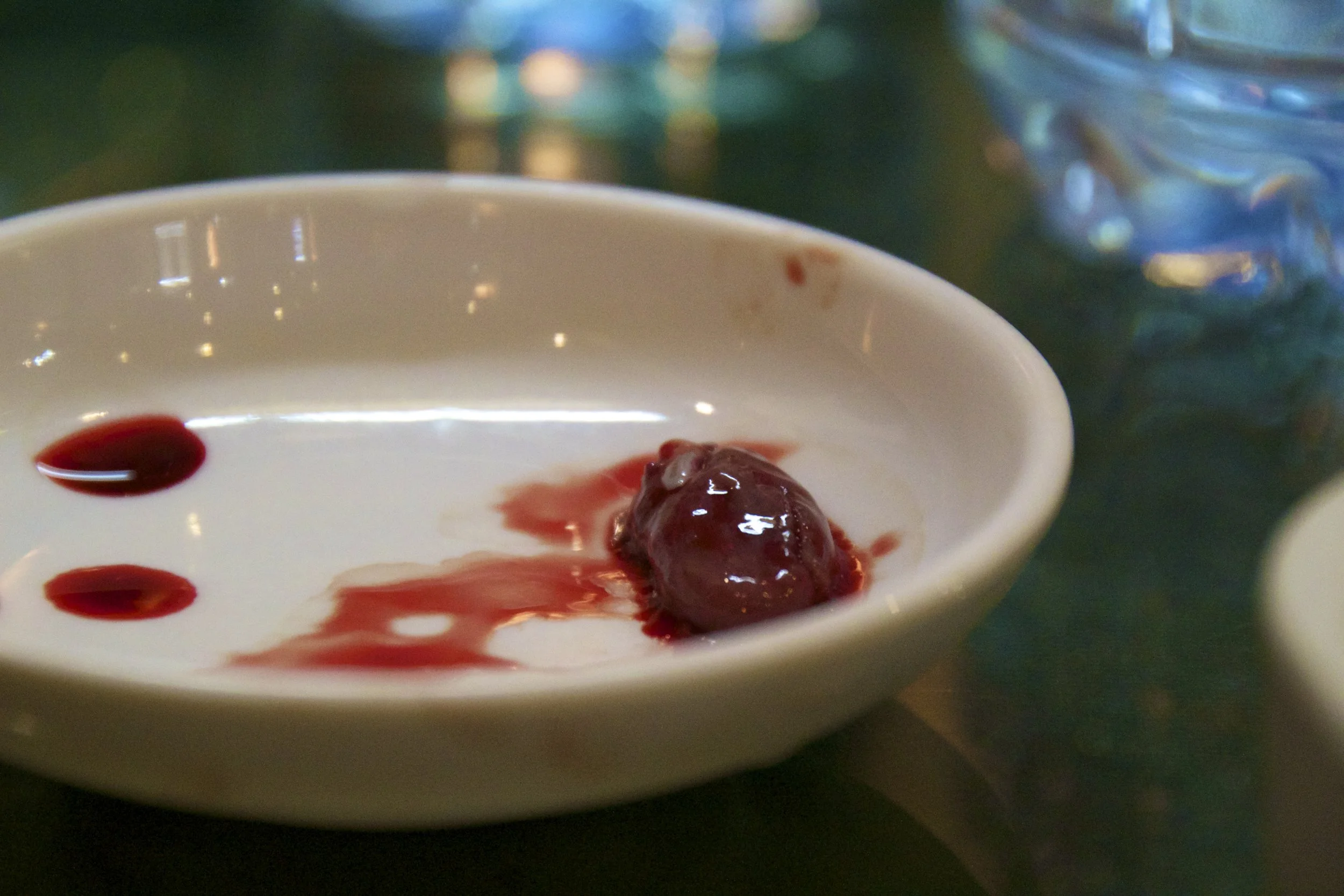
Yeah. Gross, right? Vietnam has a lot to offer to the dark side of the culinary world and I’m doing my best to try all the weird cultural dishes I can whilst I am here. This week’s dish is a beating snake heart. Also included in this post will be snake organs, bones, skin, and poisonous stomach bile.