

NOTE: These are not “City Guides.” Those are categorized under “Guides” in the main navigational menu up top. These articles are mostly introductions or explorations of particular cities and neighborhoods, not prescriptive lists of bars and restaurants you should try when you visit these places. Perhaps a subtle difference, but nevertheless, if you’re looking for “City Guides,” hit the button below.
👇 Who’s up for some urban exploring? 👇
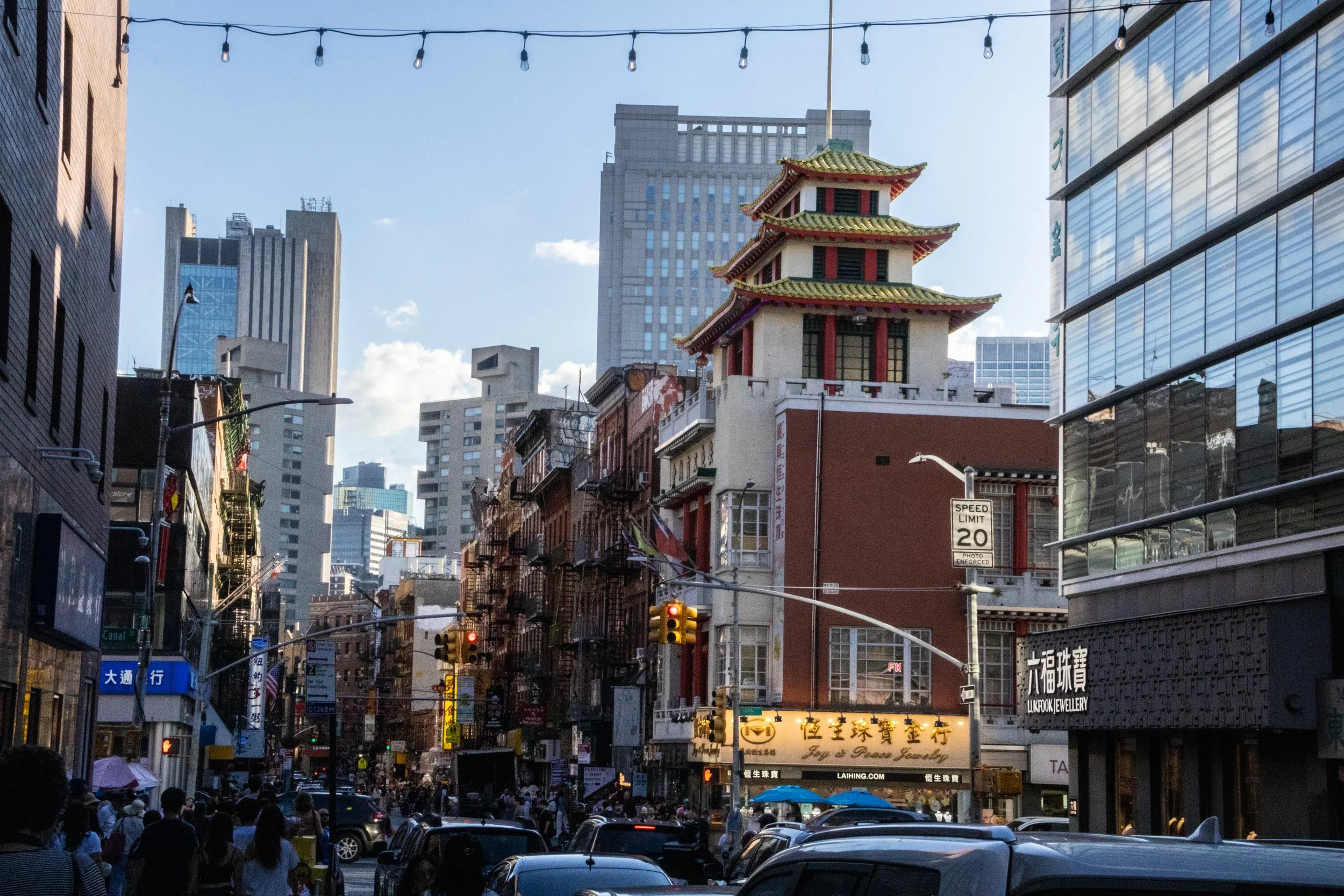
While the ascent of NYC’s Chinatown may have coincided with the shrinkage of Little Italy, giving the impression that the former was “taking over” the latter, the truth is that, by the 1990s, both of them were under equal economic pressure from encroaching gentrification and rising real estate costs. In spite of that Chinatown didn’t start to shrink until the early 2010s. By that point, as had been the case with the Italian immigrants who’d followed a similar path before them to achieve widespread integration into American society, the next generation of this Chinese community soon relocated to other parts of the city, especially Queens and Brooklyn. And just like Italians are now an integral part of the New York identity, this Chinese community is part of the deal now! There are 4th and 5th generation people of Chinese descent walking around New York, which means their families have been here longer even than mine! Cue my recommendation for you to go watch Nora From Queens. Great show.
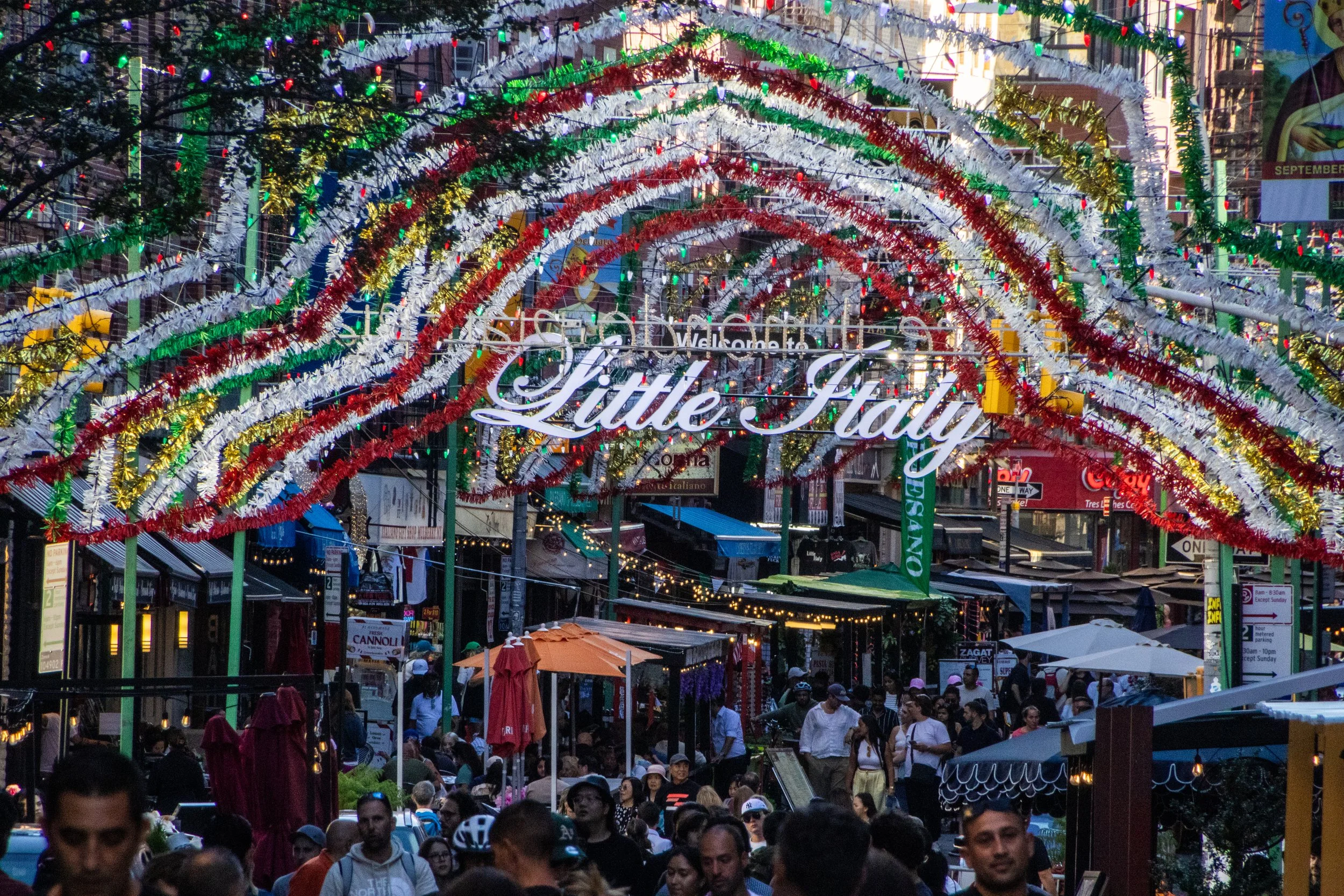
New York City not just one thing; the whole is formed of many thousands of individual threads woven and intertwined together. All of these parallel realities existing on top of each other is a big part of what makes New York so captivating… but some of these threads are more visible to the outside than others. One of New York’s most visible threads is its status as ground-zero for Italian-American culture. Yes, from Frank Sinatra to George Costanza, few immigrant communities in the US managed to balance the simultaneous integration with American society with the maintenance of a shared collective sense of identity like the Italians. Ironically, Italian-American culture has strayed hilariously far from actual Italian culture at this point; the two groups barely even claim each other at this point! But, within the U.S. at least, this shared homeland is a powerful unifier. Indeed, there are about 16 million Americans (~4.8% of the population) that have some level of Italian lineage, including yours truly. 🍕
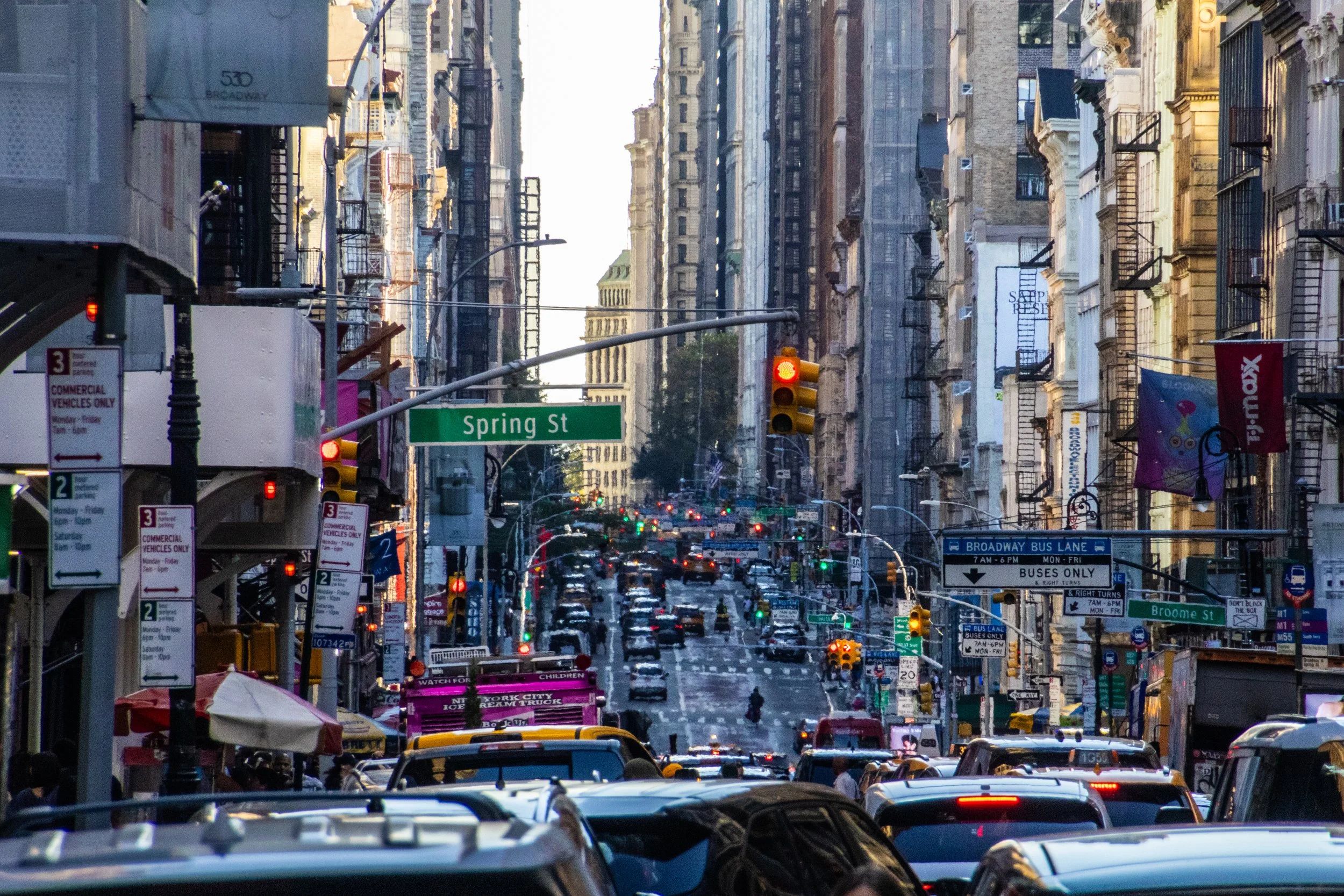
Although the beginnings of the U.S. as we know it today began with British roots, New York City actually began as a Dutch colony called New Amsterdam. It passed into British hands in 1664 and actually served as the capital city of the newly independent United States from 1785 to 1790. So it has been vitally important since the very beginning. As of 2023, the city alone (its metro area, that is) had a stand-alone GDP of $2.30 trillion, making it the most valuable city in the world. In fact, if treated as an independent country, New York City would rank within the top 10 largest economies in the world, ranking above Italy, Canada, and Australia, to name a few. For a domestic point of comparison, the next largest economy in the United States is Los Angeles with an approximate GDP of $1.1 trillion.

Today we’ll explore few key areas from what is locally known simply as “The European Side”. Istanbul straddles a natural strait called the Bosphorus, which is the official boundary between Europe and Asia. The “European Side” of Istanbul—which is divided into two parts by an offshoot waterway of the Bosphorus called the “Golden Horn”—is decidedly more touristy than its Asian neighbor. The two pieces of the European Side that sit on either side of the Golden Horn are the Historic Peninsula (also call the “Fatih” or Old City) to the south, and Galata–Beyoglu to the north.

By the time the urban footprint of London really began to expand in the 18th century, Hampstead Village had become kind of a trendy place to be for Londons affluent intelligentsia, since it was beautiful, clean, and within striking distance of London. Likewise, the giant natural area now known as Hampstead Heath—which served as a shared backyard for this community—became the focal point of conservation efforts in the face of London’s creeping urban sprawl. Luckily, Hampstead already boasted an impressive roster of rich and influential residents who had the muscle to bring this conservation to reality. The result? Both Hampstead Village & Heath have grown into the stuff of postcards; a beautiful and secluded getaway from the hustle and bustle of London.
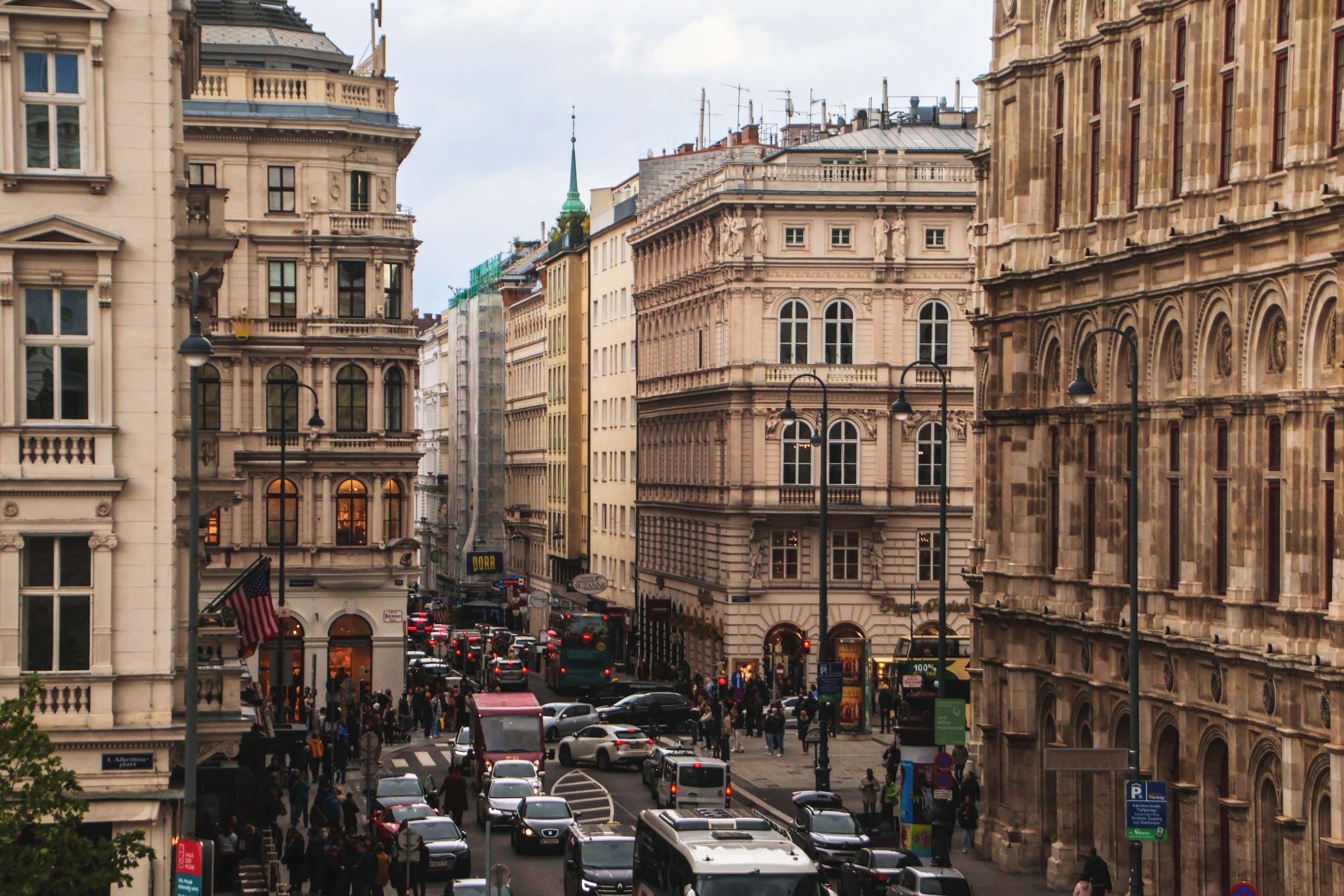
Vienna. It has got a reputation for being one of the most beautiful and most “livable” cities not just in Europe, but in the whole world. And that reputation is very well-deserved! But to me, the geopolitical angle is much more interesting that the generic wiki-tourism preamble. So, why am I saying that Vienna is the “Spy Capital of the World”? Well, I can’t take credit for this designation; it’s a “thing.” If you look it up on YouTube, you’ll find all sorts of interesting explainer videos on this (here’s a good one from Versed). I actually think this is a really good segue into explaining Vienna as it stands today, so here’s the quick version…

Paris needs no introduction, but here’s one anyway.
Paris is the capital of France and—in terms of metro area—the largest city in the European Union by a HUGE margin. According to the OECD, the population is 11.2 million. For context, the next largest metro area population in the EU is Madrid, at 6.9 million. London (now ex-EU) and Istanbul (definitely not EU) clock-in at 13.4m and 14.6m respectively, according to the same OECD data set. So Paris is more than just a historic, beautiful place (although it is those things as well)—it actually fits the definition for a “mega-city”, in the same league as Mumbai, Mexico City or Los Angeles.

As you know, today we’re in NORWAY, which is a new country for this blog! Unlike its Scandinavian peers, Norway is actually not part of the European Union, although it is a member of the Schengen area. Oslo is far and away the largest city in Norway, with a metro area population of 1.5 million people, although Oslo proper has less than half that number. For context, the next largest city in Norway by metro area is Bergen with about 460k people. And Norway overall has a population of 5.52 million people. That’s less than half the population of London, and is more than 7x smaller than the population of the Tokyo metro area. Not a big place, even by Nordic standards. But it’s definitely a beautiful place.
Here are a few fun-facts about Oslo…

Copenhagen is an interesting example of how the center of gravity for contemporary, social life is often not in the historic city center. I think this is true in varying degrees in many cities across Europe, but what I understand from speaking with my Danish friends over here, is that this phenomenon is particularly decisive in Copenhagen. If you move to Copenhagen, most people will tell you that the best place to live is not Indre By, but other neighborhoods that are a bit further afield, a bit less dense, a bit less historic, and a lot less photogenic.
Today we’re going to focus on two such neighborhoods, which have a reputation for the being the “cool / trendy” areas in Copenhagen: Frederiksberg and Nørrebro.
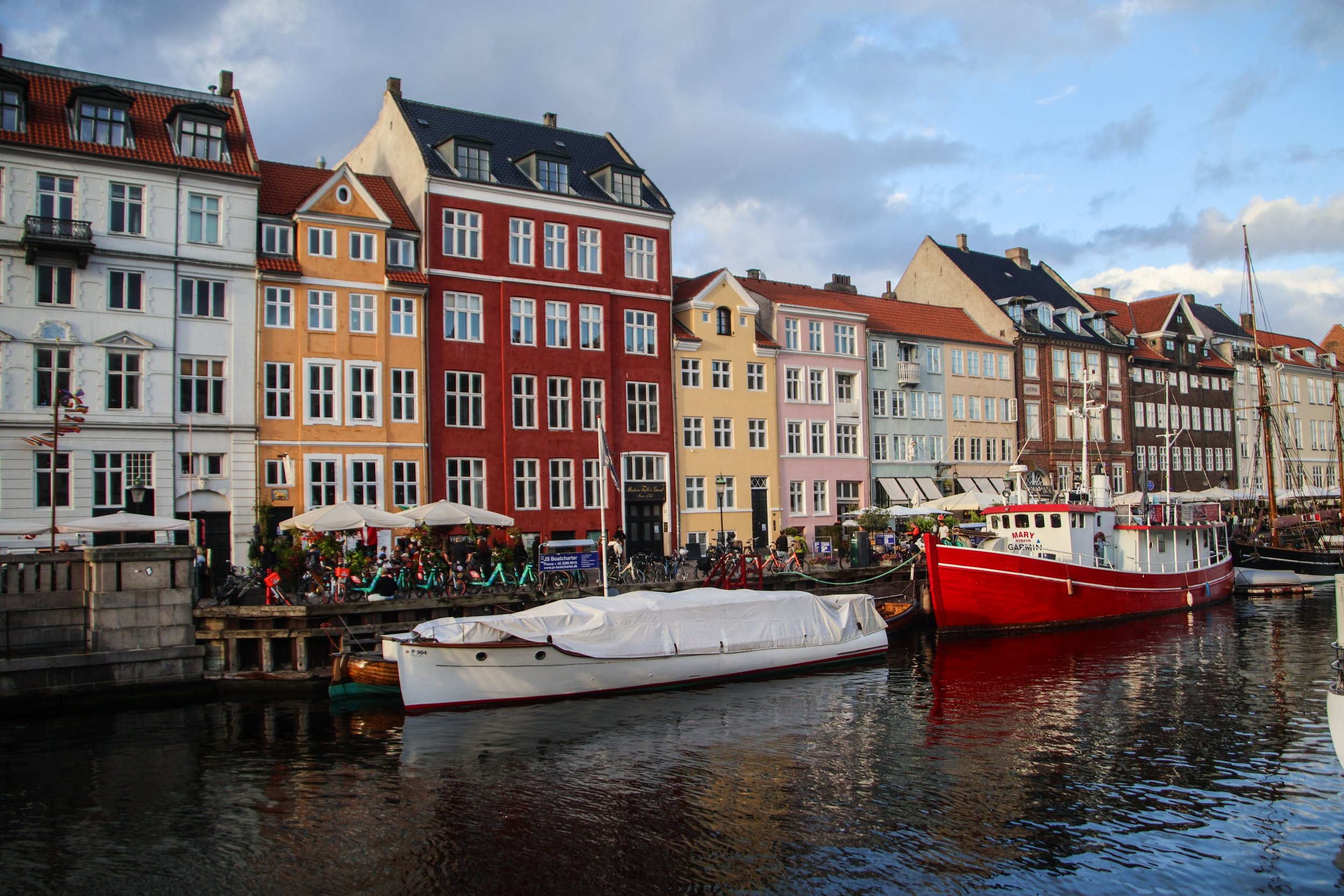
Copenhagen (or, in Danish, København) is the capital city of Denmark. It is also the most populous city, with a metro area population of 2.1 million people, which is almost double the population of its next largest city, Aarhus. If you’ve never taken a moment to observe the geography of Copenhagen, you can do so on the map below; it’s actually pretty interesting. It sits on an island in the North Sea called Zealand—which is home to a whopping 40% of Denmark’s population!—right between Sweden and the peninsula that forms mainland Denmark. This stretch of water is known at the Danish straits, and it separates the North Sea from the Baltic Sea. Thusly, it is quite a consequential water way for trade with Poland, Finland, the Baltics, and Russia.

Clocking in at the projected 12th largest city in the world by 2100 (a title that is today held by Lagos, Nigeria), Nairobi is the capital city of Kenya, and by far its largest population center. The most common languages spoken here are Swahili, and then English (Kenya is a former British colony). This pretty much covers “mainstream” Kenya, but like most nations on this vast continent, there are a LOT more languages being spoken here in addition to these main 2. In fact, there are a total of 68 languages spoken in Kenya!

There is so much history here that it’s tempting to jump down a rabbit-hole, but I think that would actually be sort of a distraction. When I first arrived in Lisbon, although it was clearly rich in history, I spent most of my time just trying to wrap my head around how BEAUTIFUL it is. This is easily one of the most beautiful cities in Europe. I haven’t been everywhere yet, but in terms of raw aesthetics, Lisbon rocketed to the top of my list quite easily, along side places like Amsterdam, Stockholm, and Valletta.

Naples is the capital of the Italian region of Campania and the 3rd largest city in Italy in terms of population, behind only Roma and Milan. Naples proper has a population of ~909,000 people, and a metro area population of ~3.1 million people, although that figure has been on the decline in recent years. However, the UN projects that starting this year the population is expected to enter a new period of growth. So, the punchline is, Naples is a big city. Especially in the context of Italy. Honestly, I would have guessed that the population would be more than this. It feels quite overwhelming when you’re in the middle of it.

Ya’ll, the temperatures here were like -20° C (-4° F). I think this was a bit of a cold snap even by local standards, but that didn’t make it any less painful. According to my FitBit, we did about 30,000 steps on our first day here, all through the frigid cold.
However—and I never thought I would say this—I think the cold made Stockholm all the more magical. This was truly one of the most idyllic trips I’ve ever taken. I’m sure this is just the tip of the iceberg in terms of what winter travel to Scandinavia has to offer, but to me, Stockholm was nothing short of a winter wonderland. And the fact that the cold forced us into cozy little bakeries to warm up about 3x as often as we would have otherwise stopped didn’t hurt either.
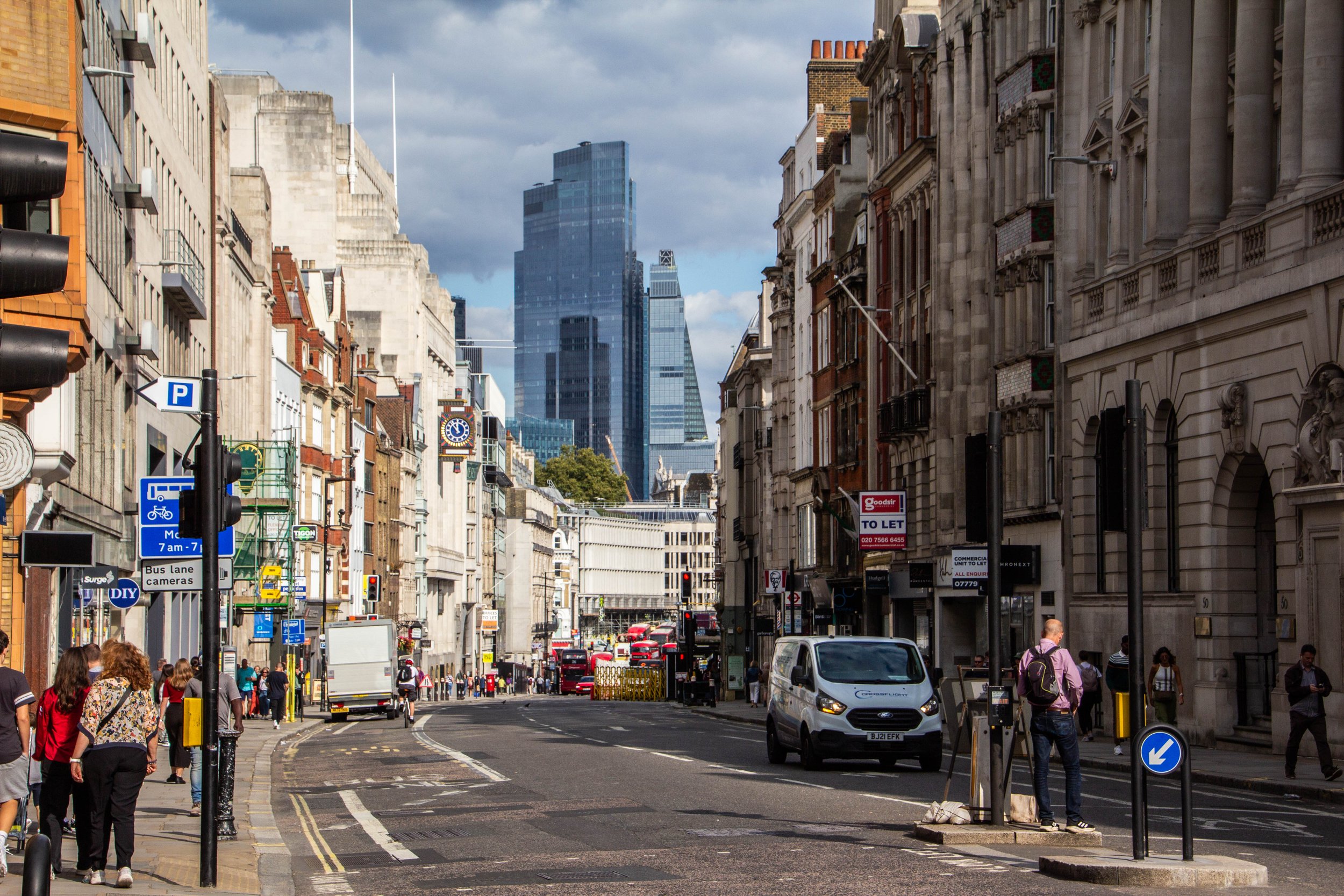
I don’t know if people coming to visit as tourists really get a sense of the scale of this place because most major tourist attractions are clustered relatively close to one another. But to me, whose first time in London was the day I moved to London, its size was a bit terrifying. I couldn’t afford to stay in the city center, so I found an Airbnb further afield. Fighting the traffic and crowds to haul my ass back and forth across this city to do apartment viewings was exhausting, and I only covered a small portion of the city in those trips.

Founded all the way back in 1636, Providence is one of the oldest cities in America. It was founded by puritan exiles from the Massachusetts Bay Colony, and would ultimately become one of America’s original 13 colonies. So, Providence is one of the O.G.s.
What is Providence like today? Well, it turns out that being the “most populous city” in the smallest state in the US doesn’t mean much in terms of population. Boston, which is less than 2 hours away, absolutely dwarfs Providence, whose population is even less than that of Worcester (“wus-tah”), MA. So, Providence is a relatively small place. However, it still manages to play an active role as a regional hub, boasting 8 major universities, including Brown, RISD, and Johnson & Wales University.

Portland is the southernmost major city in the Pacific Northwest, and, driving northward from Sacramento, it’s the next major slice of civilization you’ll find on the West coast. Although, I should clarify that Portland is not actually coastal. It is a “port city” because it sits at the convergence of two major rivers that are connected to the Pacific Ocean: the Willamette and Columbia rivers. It’s about a 1.5 hour drive to the Pacific coast, which leads me to another thing that I want to highlight about Portland: it’s proximity to nature. This is a common theme among cities in the Pacific Northwest—including Seattle and Vancouver. All of these places are great gateways to some incredible natural beauty. And Portland is no exception. With Portland as your “home base,” you can (for example) do day trips to 1) surf, 2) snowboard, 3) hike, 4) rock climb, and 5) sail on 5 back-to-back days. For the “outdoorsy” among us, it’s a great place to be.

Vancouver is kind of a perplexing place because it mashes together a lot of puzzle pieces that don’t really seem like they should fit. Or at least, they didn’t to me. When I first arrived, I was having a sort of dissociative experience trying to piece it all together and make sense of things.
First off, there’s the location. Looking northward, Vancouver is built into a landscape that seems entirely impractical for a major city. It’s hard to believe just how close the northerly Cascade mountains are to the city. The northern suburbs of Vancouver literally slope upwards as far as physics will allow before you’re headed towards snow caps. 🏔

Say what you will about Vancouver—there’s no debating that it makes an impression on you. Its iconic glittery, sparkling, glassy skyline set against a backdrop of imposing, snowcapped mountains and moody gray skies is nothing if not striking. But there’s a lot more to this place than whatever this image conjures up for you. Vancouver is an unlikely swirl of old and new, of chic and grit, and of sun and rain. And it will serve as the base camp for our next series of articles.

Before we head out of the city and into some nature, we’re going to take one last photo-walk through a very specific slice of San Francisco: Haight-Ashbury. Today it would be easy to pass through this area and think it’s just a pretty neighborhood, but there is actually some really cool history here from the not-so-distant past. There was a time when Haight-Ashbury was the epicenter and headquarters of a national zeitgeist whose iconic status endures to this day.
I’m talking about the Summer of Love.

I have been doing this blog for like 8 years now, so I am really only just now arriving at the point where I am running out of things to cover in certain cities. My first articles on San Fran were relatively early in the lifespan of this site, so I would probably do things differently if I were to write about those same things now, but the fact remains that—for the time being—there’s a lot that has already been “checked off the list” here. In other cities that might deter me from taking as many photos or visiting as often, but not here. In San Fransisco, I don’t need an angle. I am happy just to exist here, and walking around it always feels like I shame to leave my camera behind.

San Francisco is not a flat city. The word “hilly” doesn’t quite cover it. So it should come as no surprise that there are lots of interesting staircases (600+) scattered throughout the city, helping pedestrians scale the city’s steepest nooks and crannies. This much is to be expected. But what I did not expect was that many of these staircases have been turned into hidden works of art. I’ve been to San Francisco a few times, and I have somehow never stumbled across even one of these before. And what you’re about to see isn’t even all of them! We’re going to start in the Richmond District, but then we’re going to head south and spend the rest of this article in the Sunset District.

And we’re back in mainland Seattle from our little trip over to Bainbridge Island! In our first installment, we checked off some of Seattle’s more obvious tourist attractions (i.e. Pioneer Square, Pike Place Market, the view of the Space Needle from Kerry Park, etc.). It was very cool, but TODAY we’re going to peel a few more layers off the onion and get into some of Seattle’s quirky b-list attractions. As a city, Seattle has a stronger and more distinct personality than most. I think this cross-section of less-notable items actually did more to help me get to know this place than the major tourist attraction did. It’s all about details.
SO LEMME HITCHU WITH THE DEETS.

I’ve heard Seattle described as “Portland’s mainstream older brother.” It’s true that Portland (Oregon) has long enjoyed a reputation for being one of America’s “weird” cities, as evidenced by its famous slogan, “Keep Portland Weird.” However…
I’ve been to Portland. My main man Buddy who accompanied me on this trip even lived there for a hot minute, and we both agree: Seattle is definitely weirder. In fact, I think I can conclusively say that there is more unabashed weirdness walking around the streets of Seattle than any other city in America. I’d be lying if I told you it didn’t make me feel uncomfortable a time or two (spoiler alert: there’s a nude beach in this article) but after some reflection, I think the problem is me. Because if you really think about it, the amount of weirdness walking around the streets of any city is likely the same no matter where you go. The difference is that, in Seattle, people feel empowered to be themselves. So they let their freak flags fly. And that’s pretty cool.

Denver is famous as America’s “mile-high” city. This is because its geographical position as the gateway to the Rocky Mountains places its elevation roughly a mile above sea level. Indeed, its reputation is inextricably tied to the Rocky Mountains, but I actually think that this is a bit misleading. Denver is a decidedly flat city. It is the last city in the Great Plains before the beginning of the Continental Divide. You’ll see this illustrated on the map below. Denver’s urban sprawl pushes right up the edge of the mountains!

Today we’re going to start with a clerical note that was once confusing to me. The instant you start talking about Boston neighborhoods, you will hear the terms “South Boston,” “South End,” and “Southie” come up fairly often. When I first moved to Boston back in the day, this was confusing to me. I knew there was more than one neighborhood in the mix, but all of these terms sounded the same to me. Well let me break this down for you: South Boston and South End are different neighborhoods. And “Southie” is the common nickname for South Boston. Historically, these were very different places, and today we’re going to check out both of them…

In Mexico City, I knew that neighborhood we stayed in was going to be key. I had lots of recommendations given to me, and the areas that separated themselves as the clear choices were Condesa and Roma. Prior to my arrival, although the two areas are right next to each other, I understood these neighborhoods to be more distinct from one another than they turned out to be. Once I actually got there, I found that they were essentially just extensions of each other, with only minor differences. So I’m just going to treat it as one body. And oh my gosh you guys—I LOVE THIS AREA.

Let’s start with size. Mexico City is really, really big. In fact, Mexico City proper has almost 9 million people and Mexico City metro is home to a whopping 21 million people, which just a few million less than Beijing. This makes it the largest population center on the entire continent of North America—bigger even than New York, LA, Chicago, Toronto, etc. It also puts Mexico City comfortably in the top 10 largest cities in the world.

Stepping out the door of our Airbnb, just a couple blocks away from Forsyth Park, the air was thick with humidity. It was so humid that my camera lens was quickly covered in a dense fog that took a few blocks to wear off. Roots run deep here. Everybody knows everybody. Sure there are lots of visitors that pass through, but in every living room of every house on every quiet Savannah street, there is a thriving community of families living here that are constantly going to school together, growing up together, marrying into one another, and so on.

Of all the amazing pieces of civilization subsisting out here in the Westfjords, none sparked my interest like these tiny Icelandic churches. These little structures were often the only sign of human life for miles in any direction. Each time we caught a glimpse of the small pointy steeple from our place on the road, we would come to a screeching halt and dive off down the nearest dirt road to explore. No two of these churches were the same. Each was completely unique, and a few of them had even been left unlocked!

At 18,380 feet (or 5,602 meters) above sea level, Khardungla Pass is the highest motorable road in the world. To put altitude in perspective for you, that's almost 13 times the height of the Empire State Building. It's a little less than the length of 115 (American) Football fields. It is the equivalent to about 3.5 miles. It is also 780 feet higher than Everest Base Camp.
So let's get into it!
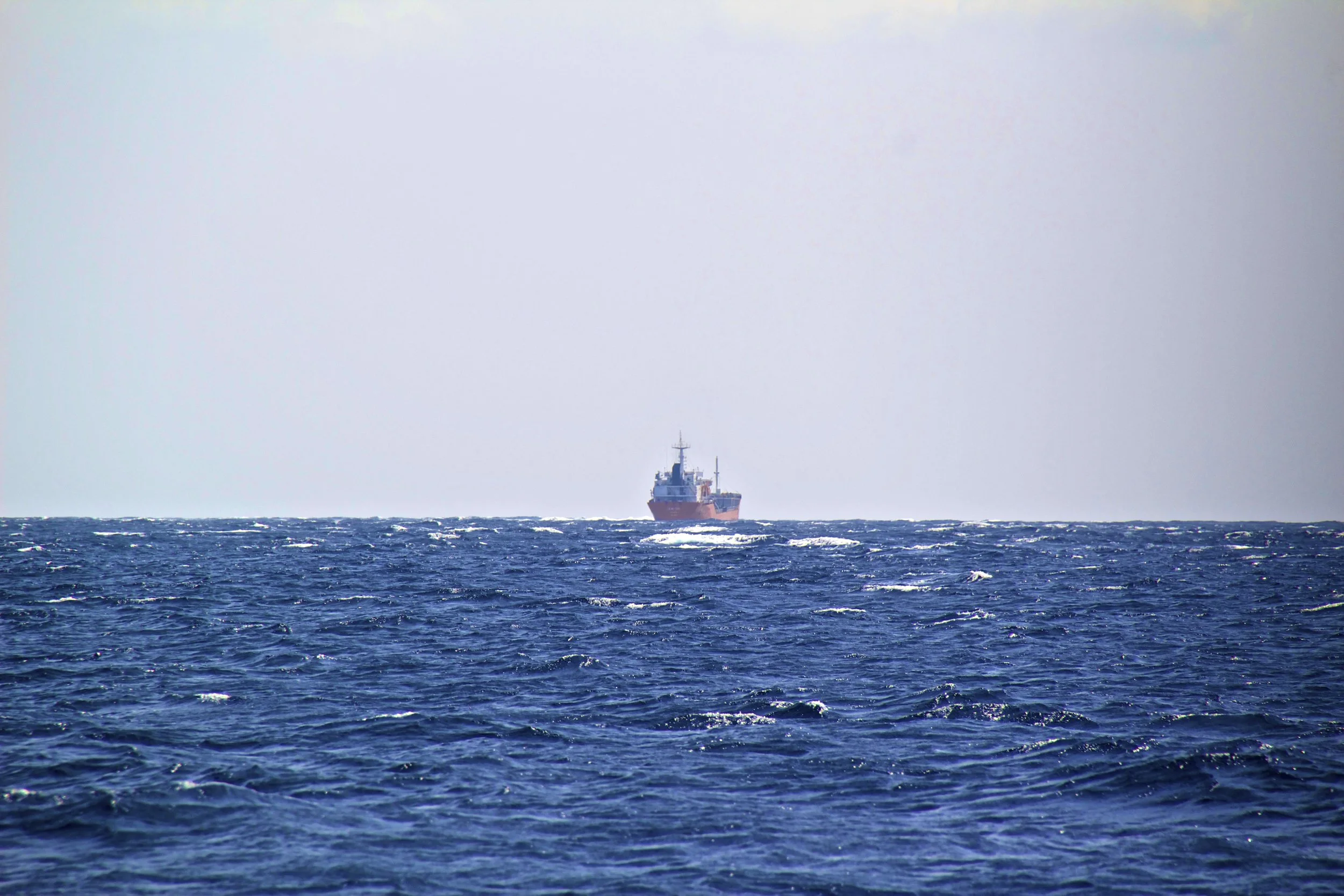
The rest of us, strangers to one another at this point, looked at each other, and then with an uneasy shrug climbed down onto the deck of this tiny boat. It bobbled precariously with every passing wave. One thing was certain: this was going to be interesting. So let’s fast-forward a little bit, shall we?
As one of the 5 boroughs of New York City (the others being Manhattan, The Bronx, Staten Island, and Queens), it’s home to some 2.6 million people, which—if it were a stand-alone city—would make it America’s 4th largest city, nearly as large as Chicago! It has a stand-alone GDP of approximately ~$120B, which—for context—is more than the country of Ethiopia.