
At the start of the previous article, I shared my thoughts on how to approach the daunting task of writing about the absolute beast that is New York City. As the old saying goes: how do you eat an elephant? One bite at a time. That is the guiding philosophy I have arrived at when covering the great mega-cities of the world, and NYC is no exception.
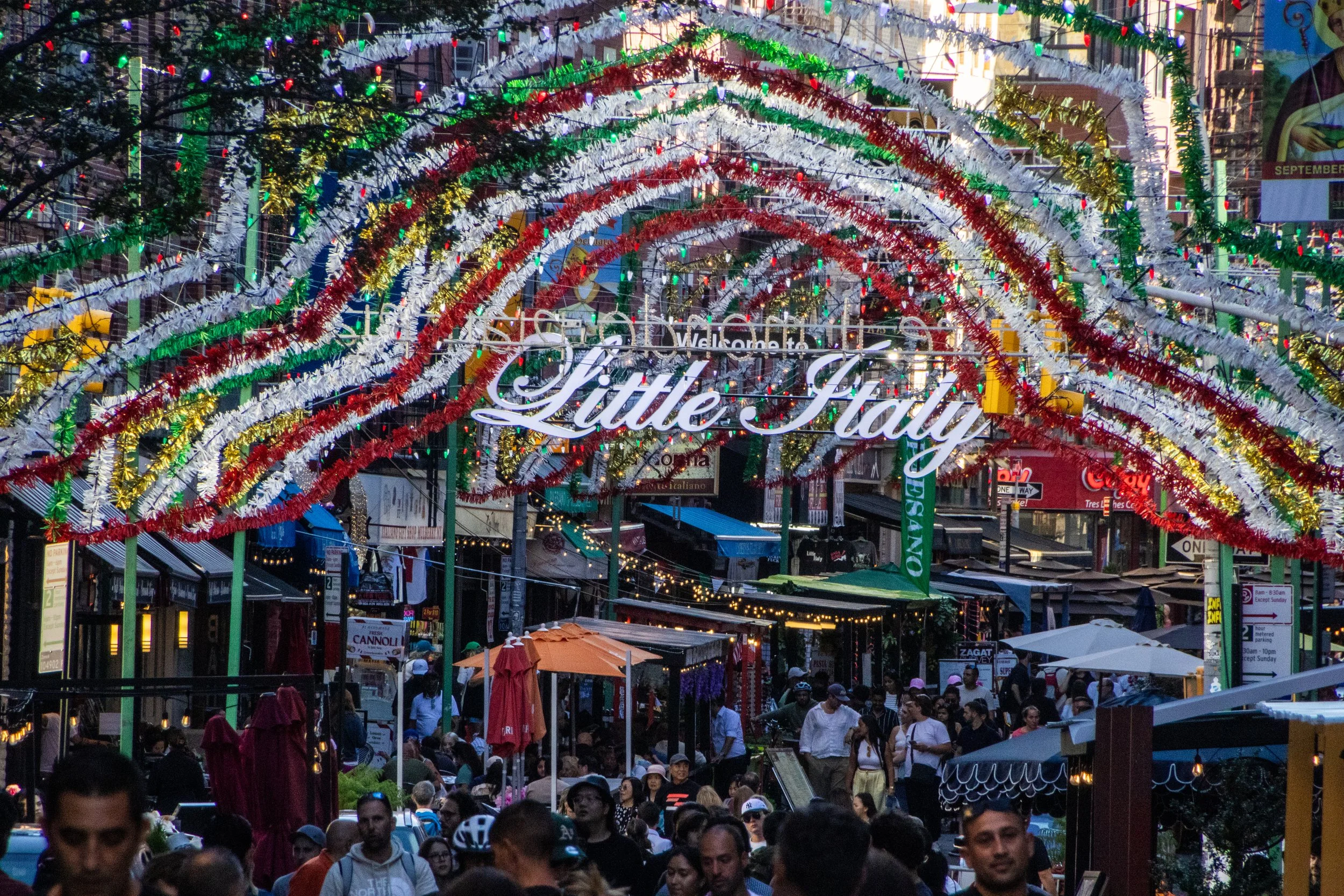
My first article on NYC, which provided a high-level introduction to Manhattan as a whole, was—admittedly—a BIG bite. But now that this is out of the way, we can start getting more specific. And we’re going to start with a neighborhood that I would argue is (one of) the most emblematic of New York City as a whole: Little Italy. And we’ll cover Ellis Island while we’re at it.
New York City not just one thing; the whole is formed of many thousands of individual threads woven and intertwined together. All of these parallel realities existing on top of each other is a big part of what makes New York so captivating… but some of these threads are more visible to the outside than others. One of New York’s most visible threads is its status as ground-zero for Italian-American culture. Yes, from Frank Sinatra to George Costanza, few immigrant communities in the US managed to balance the simultaneous integration with American society with the maintenance of a shared collective sense of identity like the Italians. Ironically, Italian-American culture has strayed hilariously far from actual Italian culture; the two groups barely even claim each other at this point! But, within the U.S. at least, this shared homeland is a powerful unifier. Indeed, there are about 16 million Americans (~4.8% of the population) that have some level of Italian lineage, including yours truly. When I shared that stat with my (Italian-American) mother, she was surprised that it was so low; she said that as a child in New York and New Jersey, she thought that pretty much everybody was Italian! 🍕
My Italian ancestry has long been an object of fascination for me. The stories of how these people made the crossing over to the “new world”, and the sparse information we have about what they left behind is, in some cases, pretty insane! My Great Grandfather, Domenico Albanese, has a particularly harrowing story. The details of Domenico’s story are the subject of some debate in my family, but if you ever meet me IRL, feel free to ask me about it. It’s wild.
As you may know, a little spit of land in the New York harbor called Ellis Island was the primary gateway into the US for immigrants coming over by boat from the mid-late 1800s up until 1954, when it was officially closed. To give you an idea of the scale of Ellis Island’s role in the intake of immigrants into the US, a whopping ~33%-40% of Americans today (including myself) can trace their lineage back to somebody that passed through here not so long ago. Contrary to what the current regime—er, sorry—✨administration✨ would have you believe, the United States is a nation of immigrants.
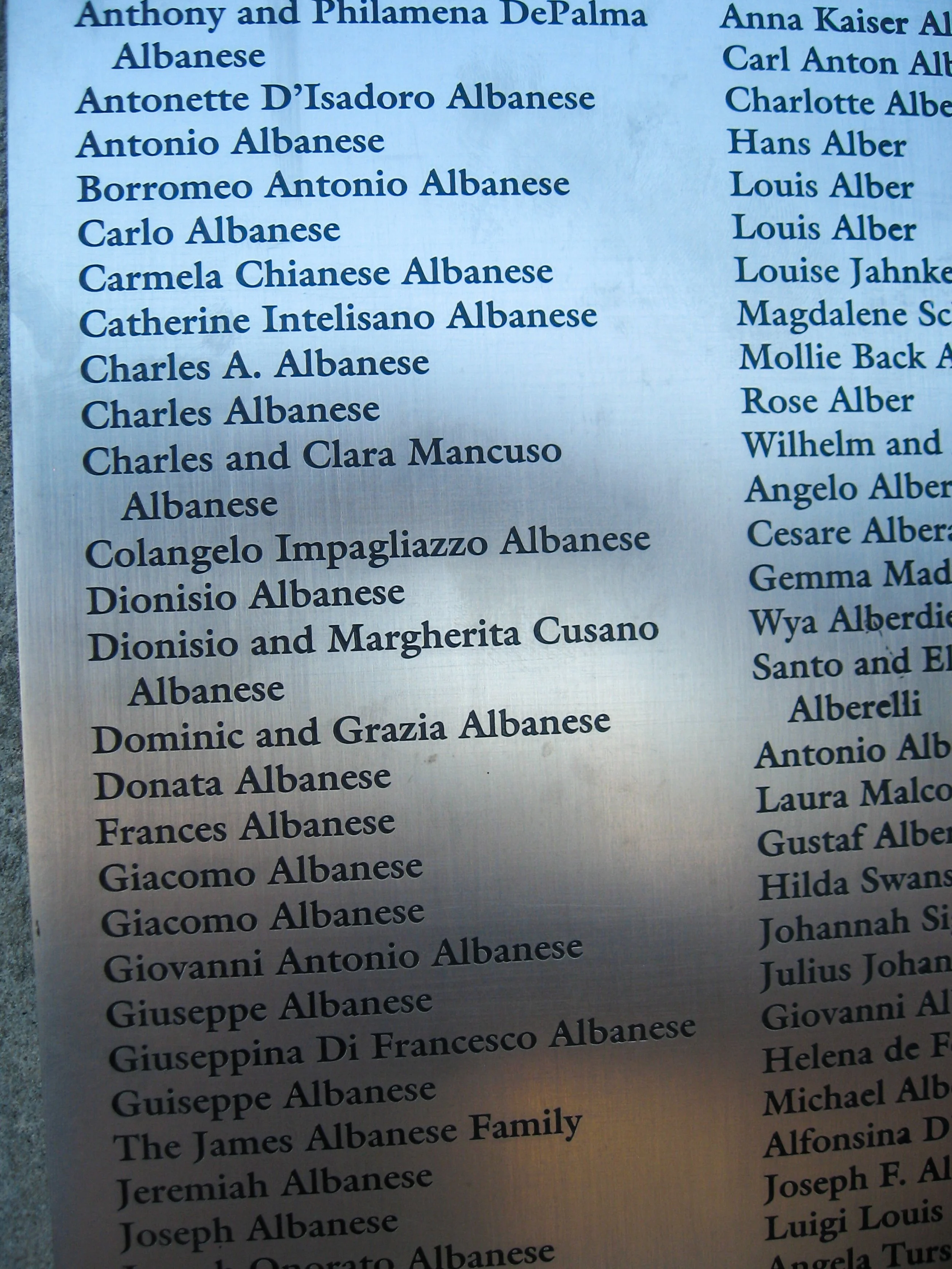
On Ellis Island today, you can visit The American Immigrant Wall of Honor, where the names of the immigrants that passed through Ellis Island are all printed. Visiting Ellis Island and finding the names of ancestors on this wall is something of a pilgrimage for many people are around the US. I have a bit of personal history here, because my great grandparents, Domenico and his wife Grazia, have their names printed on The American Immigrant Wall of Honor on Ellis Island. When I was a teenager, I went with my family and found them here! Here they are on the wall, along with a few other salvaged pictures from that day. This is NYC post-9/11, pre-2008 GFC:
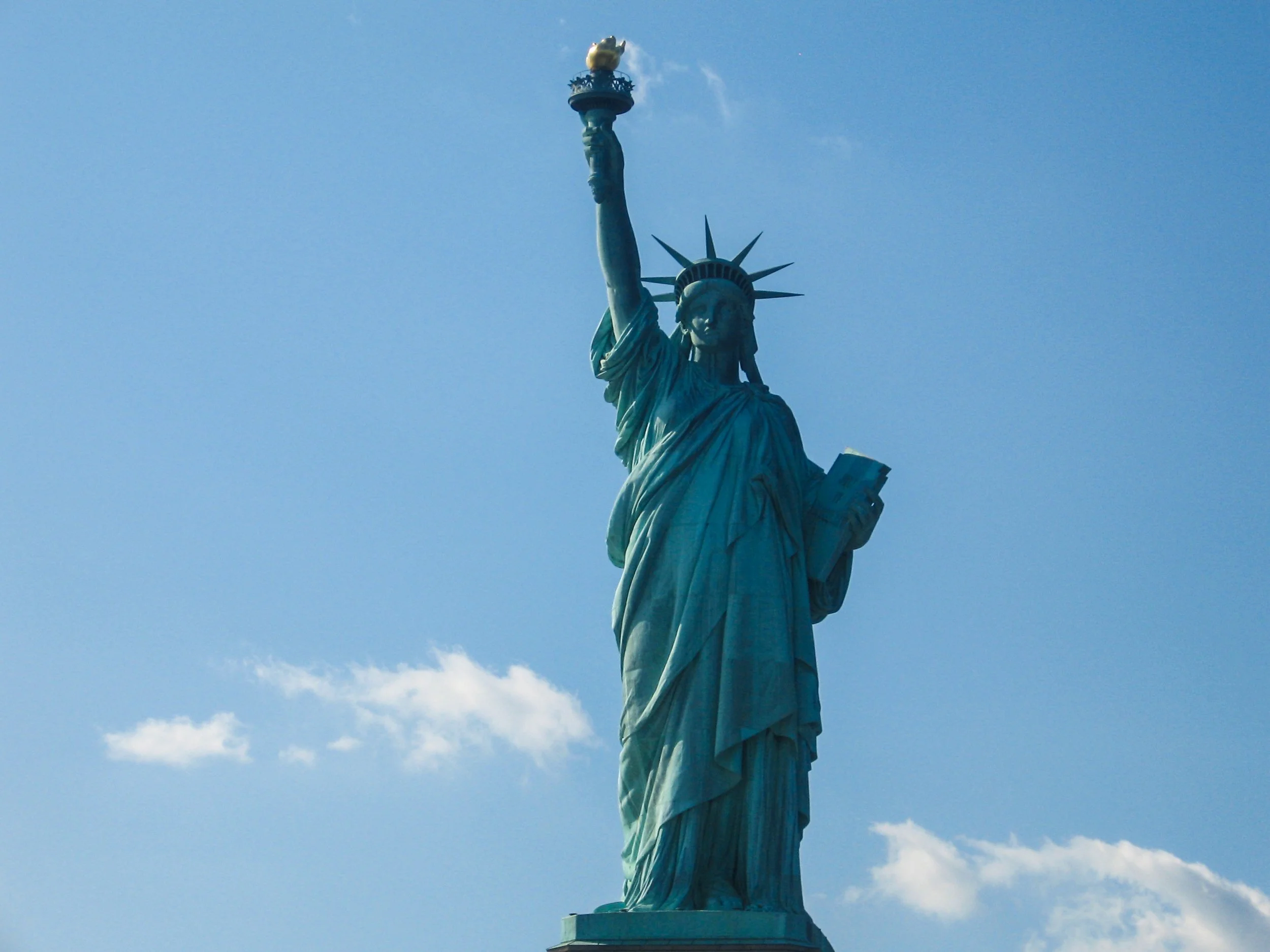
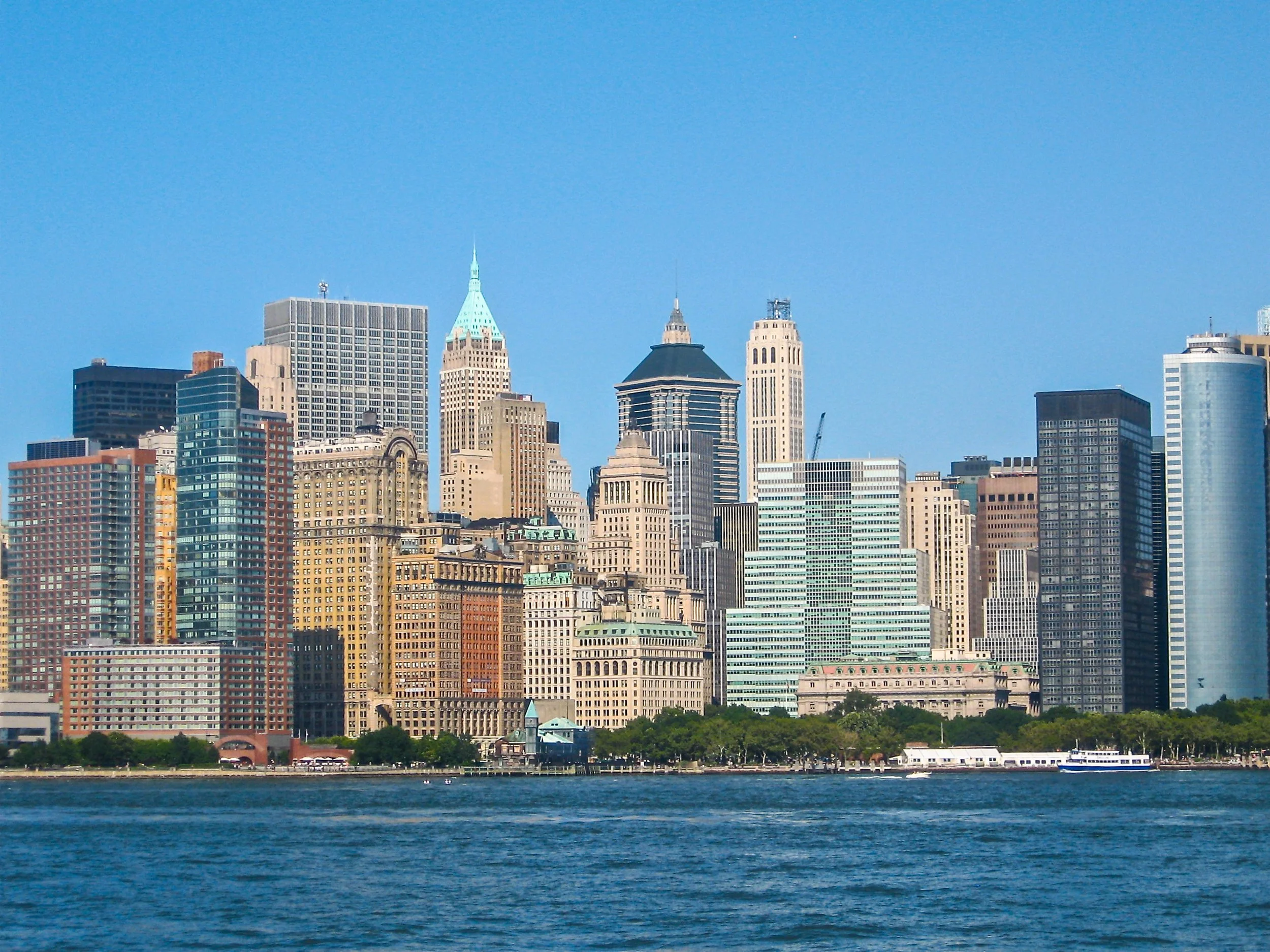

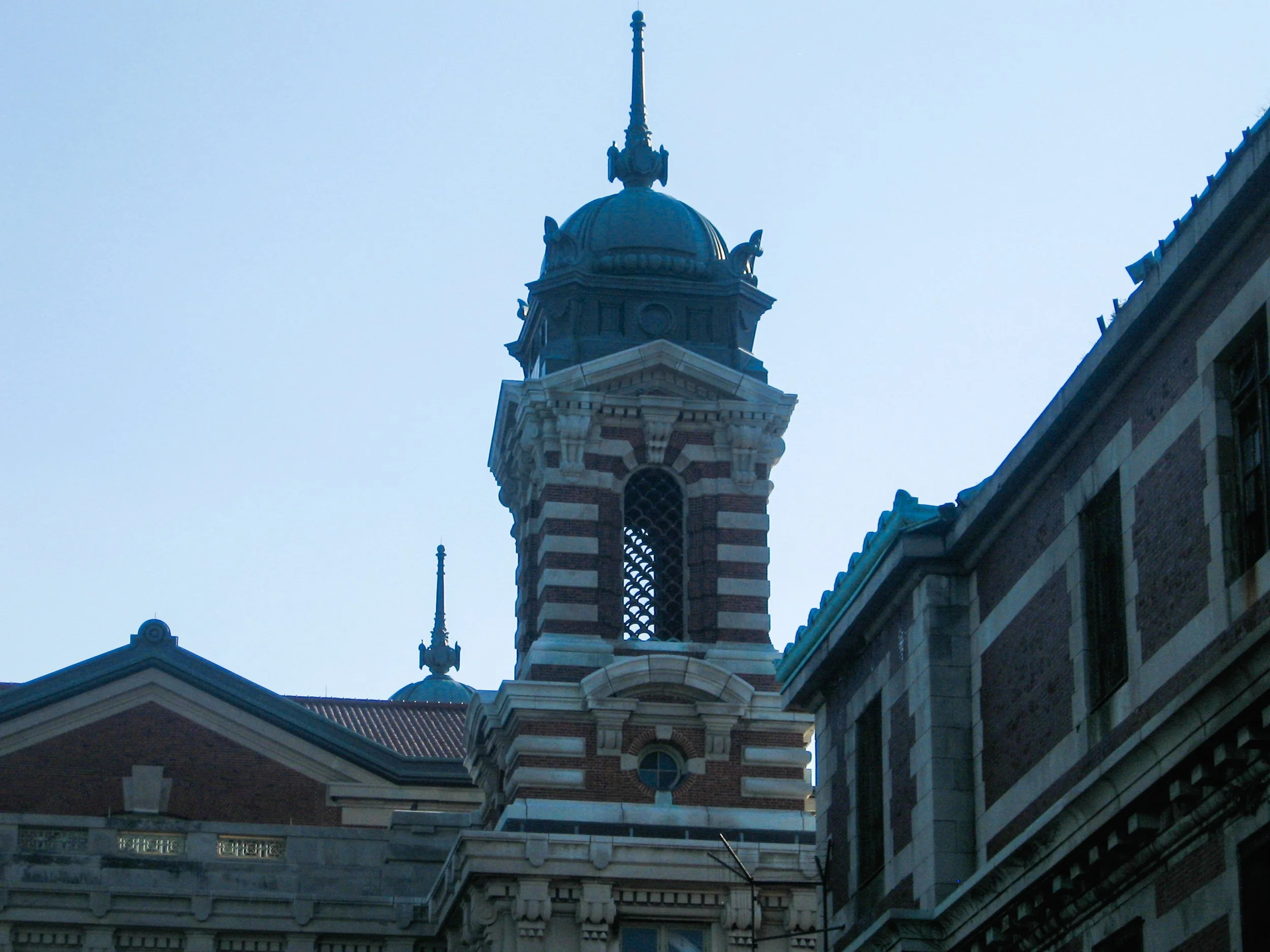

The majority of Italian immigrants during this time hailed from the poverty-stricken south of Italy, especially Campania and Sicily. While half of my Italian roots are Sicilian, Domenico and Grazia were actually from the Italian province of Calabria, which is basically “the toe of the boot.” Specifically, they were both born, raised, and married in a tiny little place called Rizziconi before making the crossing to the new world in the year 1914. For context, this was about 6 months before the start of WWI and almost exactly 6 years after a devastating run of earthquakes that culminated in the notorious 1908 Messina Earthquake, which absolutely ravaged Sicily and Calabria. As a result, the Sicilian city of Messina, which saw 90% of its buildings destroyed, is now called the “city with no memory”. Meanwhile, the information that survived the passage from the old world to the new was often so sparse (it certainly was in my family!) that the question of memory vs. reality is often a hard one to reconcile for subsequent generations. This season of hardship erased a lot more than it might seem at a glance, but also created the space for reinvention in the Italian-American identity.
This period of heavy immigration from Italy to the US is fascinating. Back then, Italians weren’t exactly welcomed into America with open arms. It’s hard to imagine now (or, maybe it’s not, idk) but once upon a time, the hate against Italians was pretty strong. An Italian friend of mine told me a story about their grandparents’ wedding in a small town in Ohio: apparently the KKK was burning a cross outside the church during the ceremony! Like… WHAT?? For an ITALIAN wedding? That story makes me feel very diverse. 😂
Another friend of mine recently had an incident where some Italian-American guy got extremely upset with her in a bar for saying that Italians are white. She (who is, btw, not white) had to call me to double check. Like, “Yo, Peter… you’re white, right??” 🤣
Wait a second… am I not actually white?? 🙀
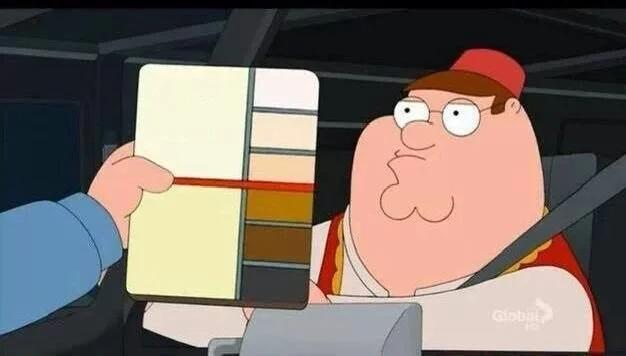
Yes, I am definitely white. Italians have long since achieved “white” status in the U.S., but this wasn’t always the case. Here’s a really interesting article on how Italians finally came to be considered “white” in America. But, of course, I’d be remiss if I did not mention that Italians were the subject of racial discrimination back in Europe as well, and were sometimes not thought of as being “white” there either. Talking about this is making me want to watch The Godfather II. Or, a newer and more in-depth look into this world can be found in the 2024 film, Cabrini, which is based on a true story! Both will also serve as a good segue into the hilarity of just how far Italian-American culture has diverged from actual Italian culture. Or, you can take the short-cut and watch the episode of The Sopranos where Tony goes back to Naples. (S2E4 if you’re interested).
So, if and when these immigrants made it through Ellis Island, where did they land? Well, given that they tended to be extremely poor, they basically landed in the slums. Excuse the term, but I don’t think it would be inaccurate to say that NYC had “slums” back then. Specifically, most Italian immigrants wound up in the Five Points district, which—true to its portrayal in the aforementioned film, Cabrini—was desperately poor and quite dangerous. This was the same housing stock that had served as a gateway for other impoverished groups in the past, most notably Irish and Black Americans. The final communities that passed through here were the Italians, and finally the Chinese, who transformed Five Points into bustling cultural enclaves. So, even today, New York’s Little Italy and Chinatown are pressed right up against one another!
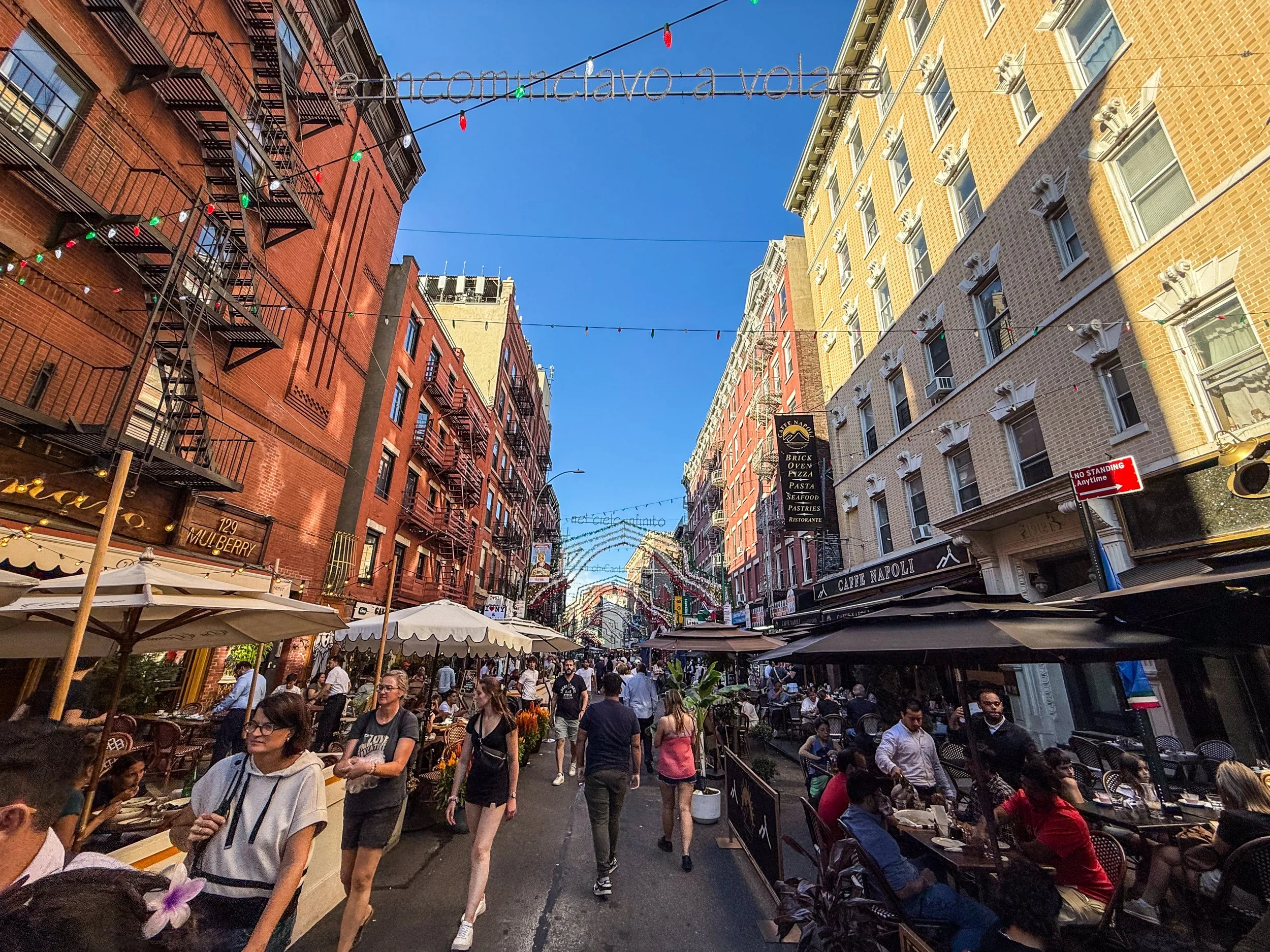
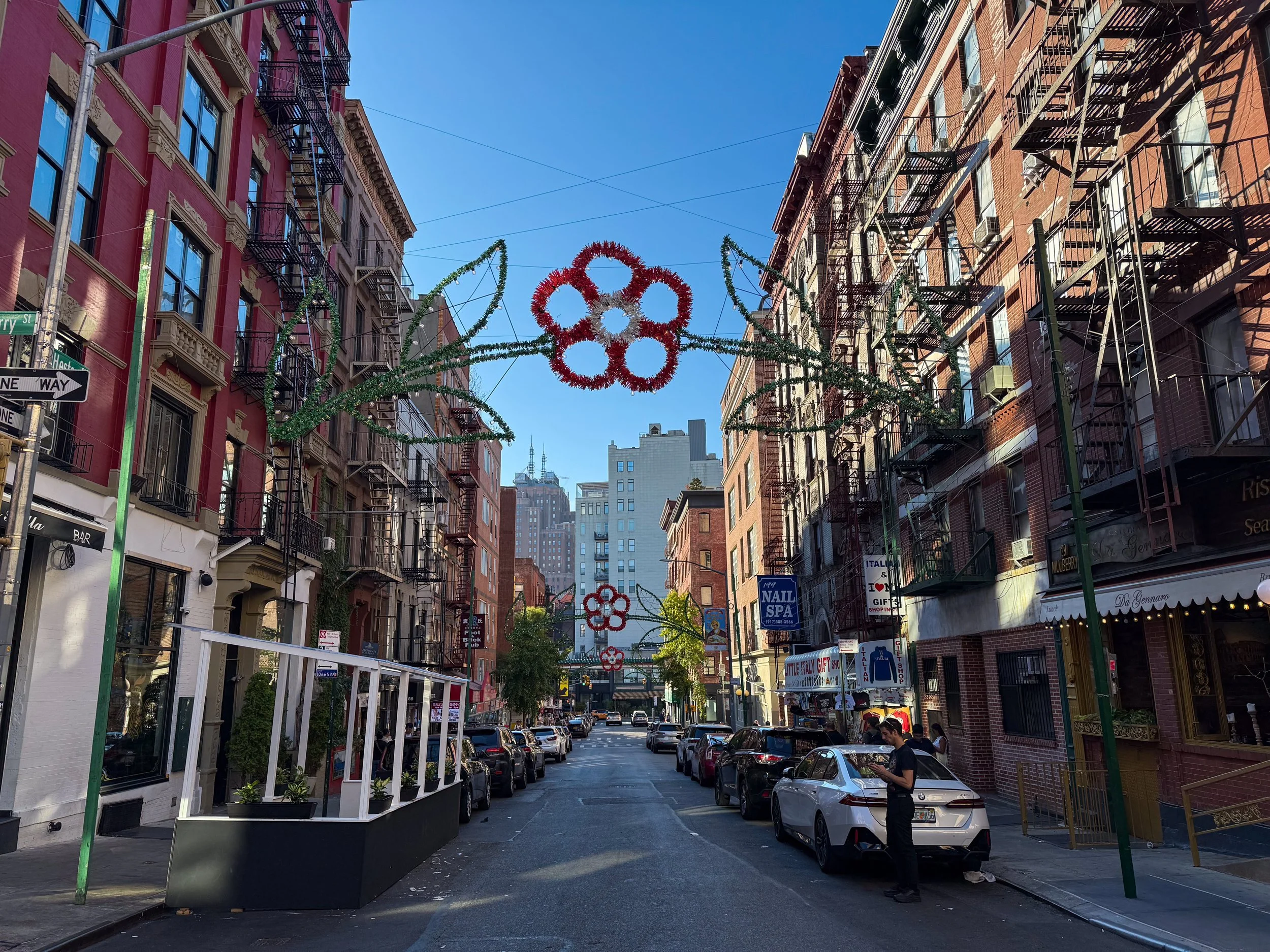
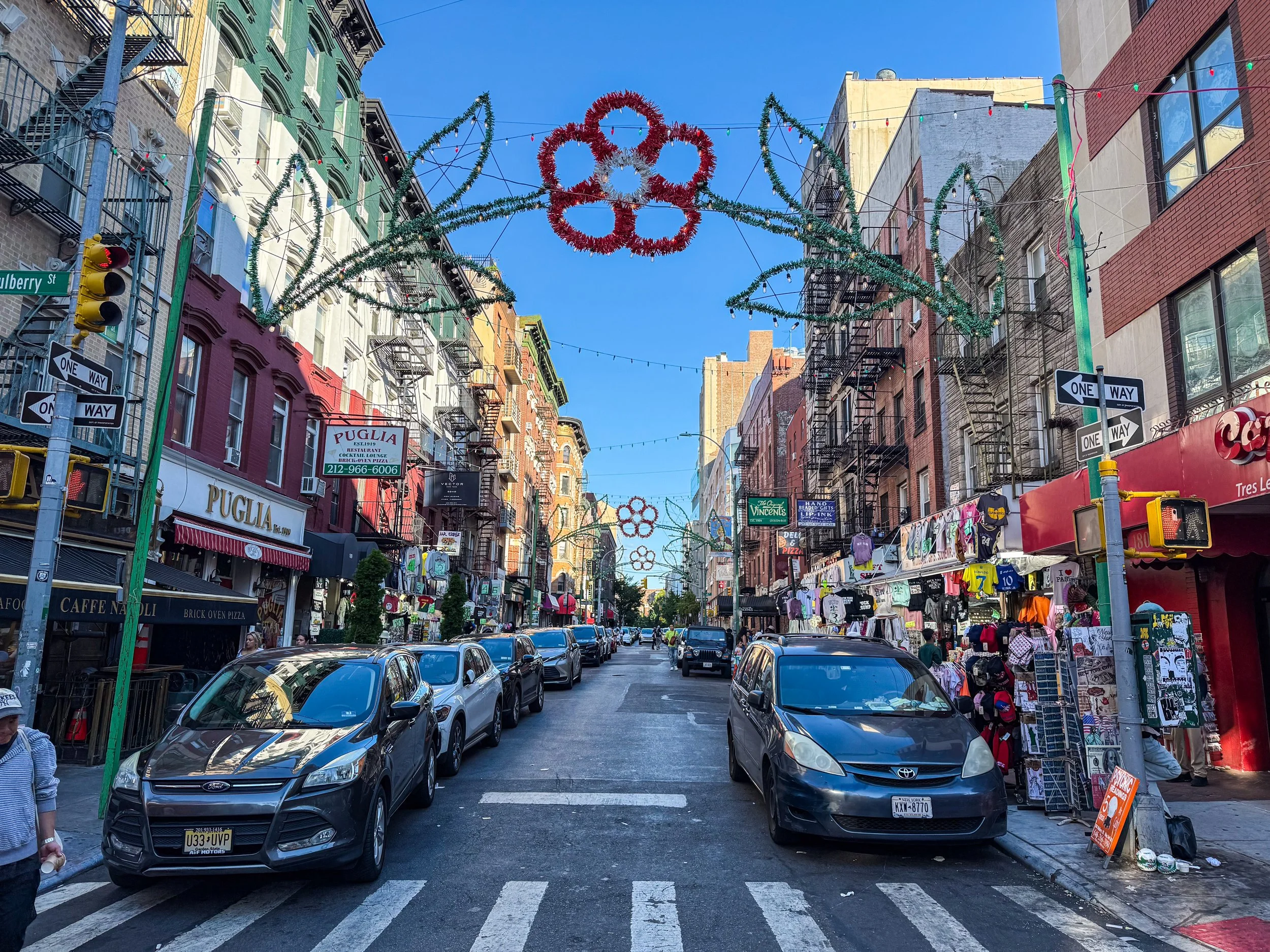
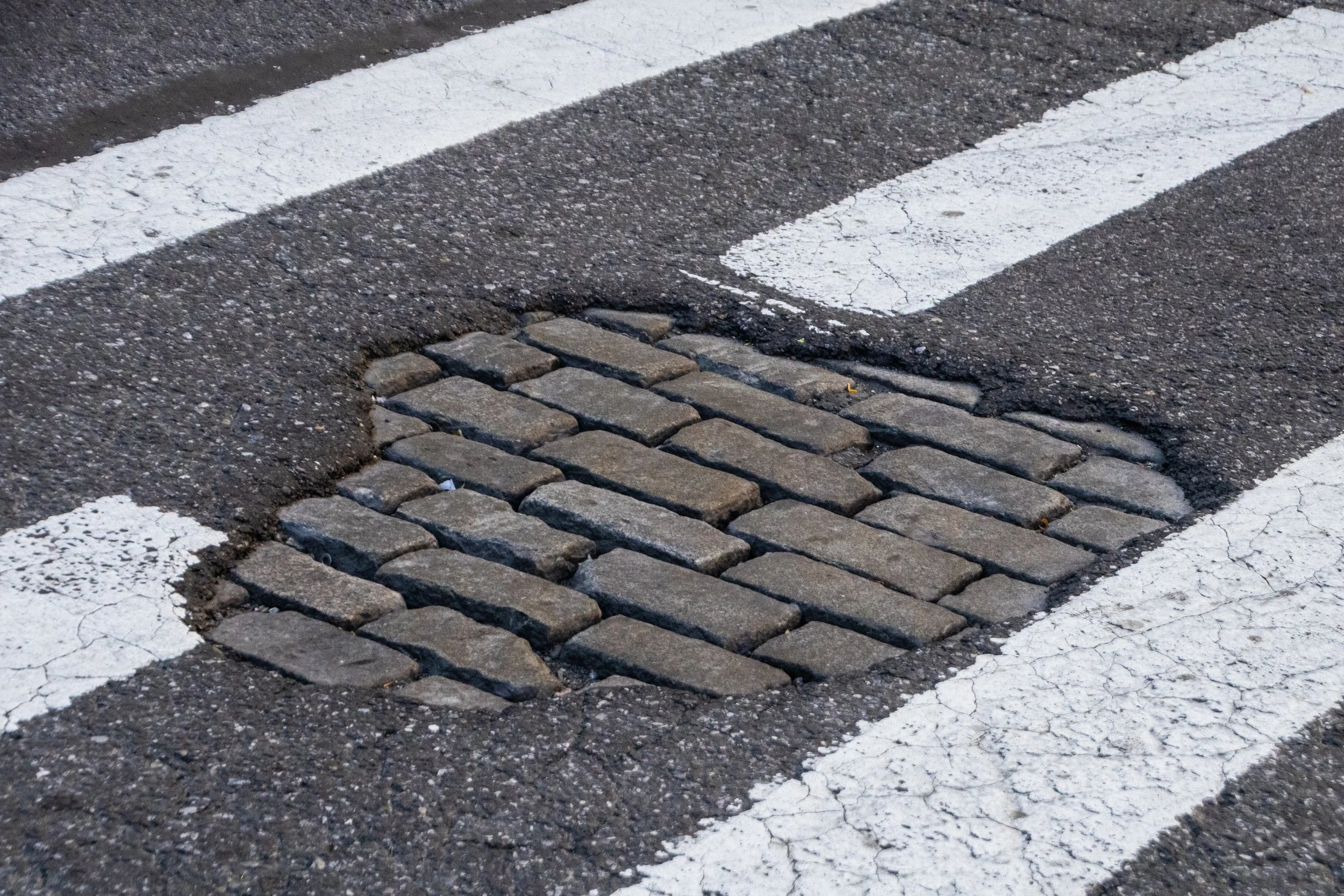
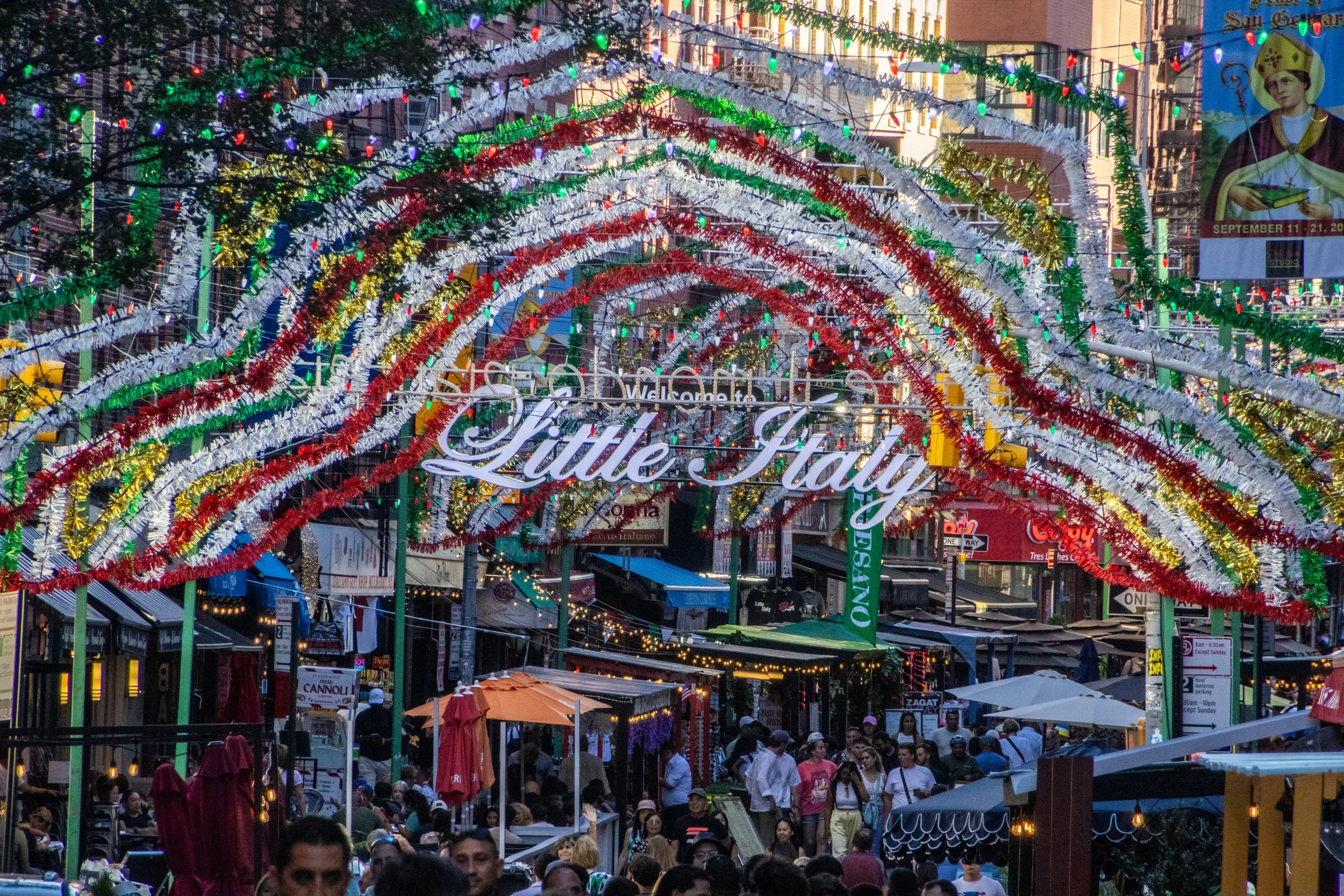
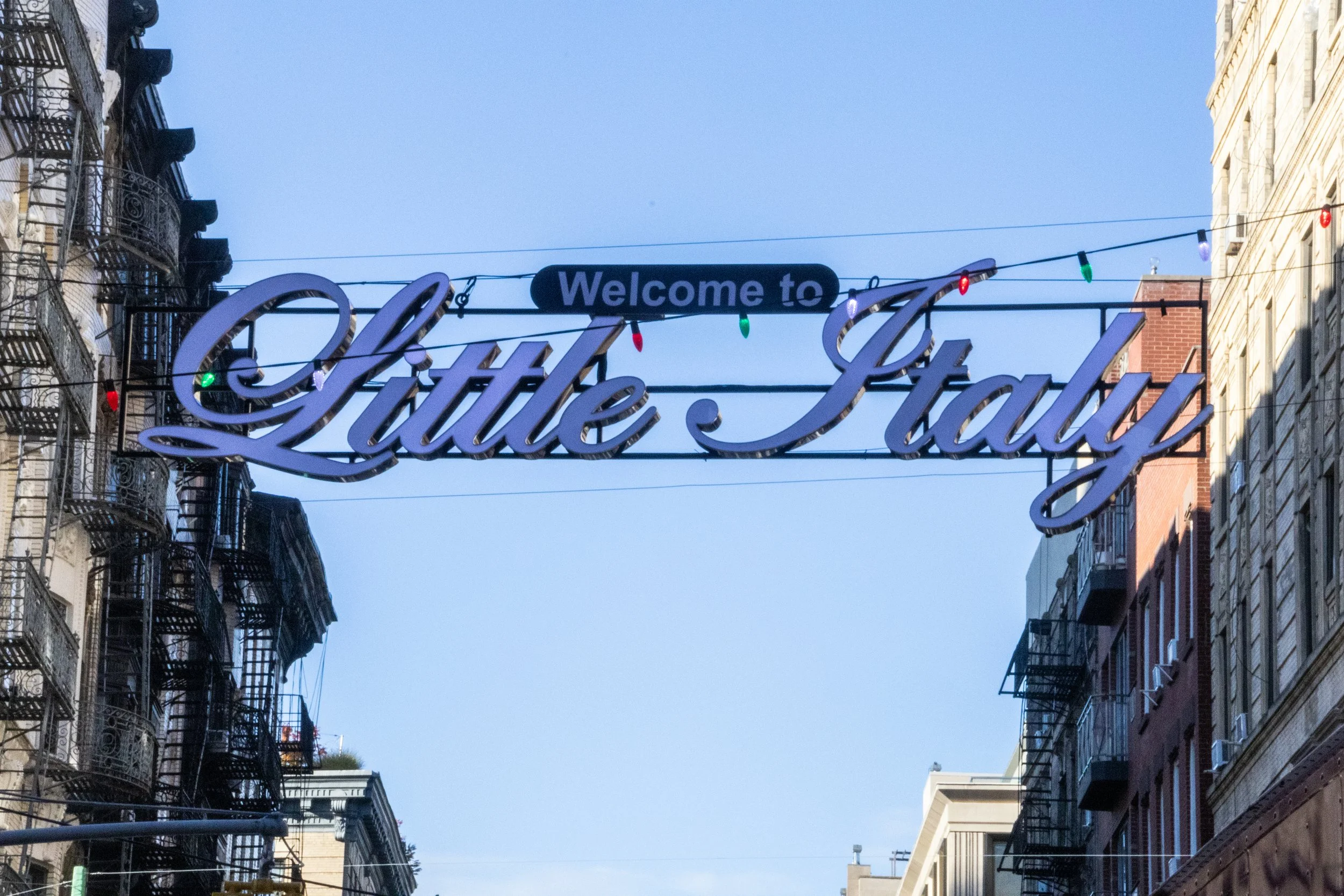
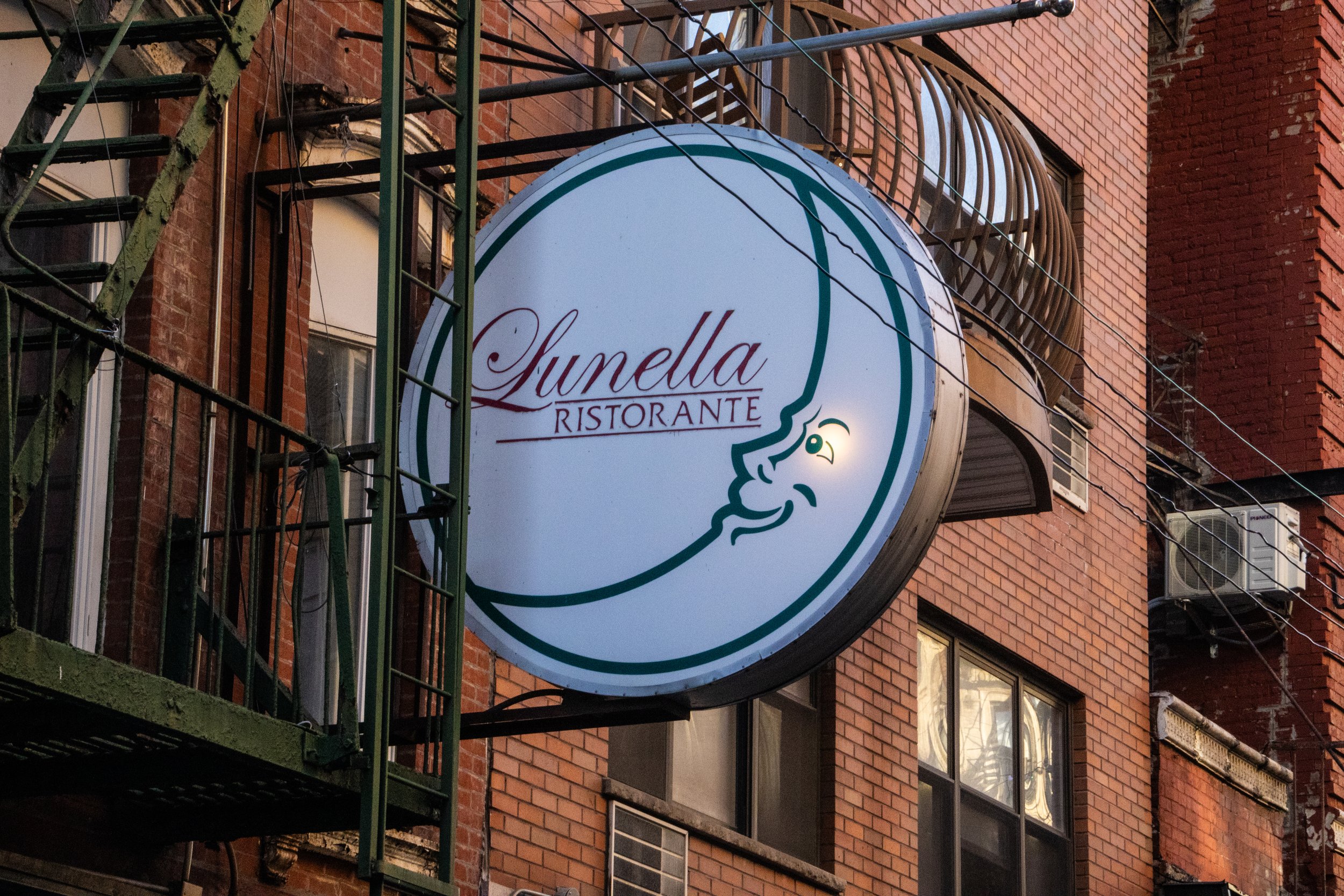
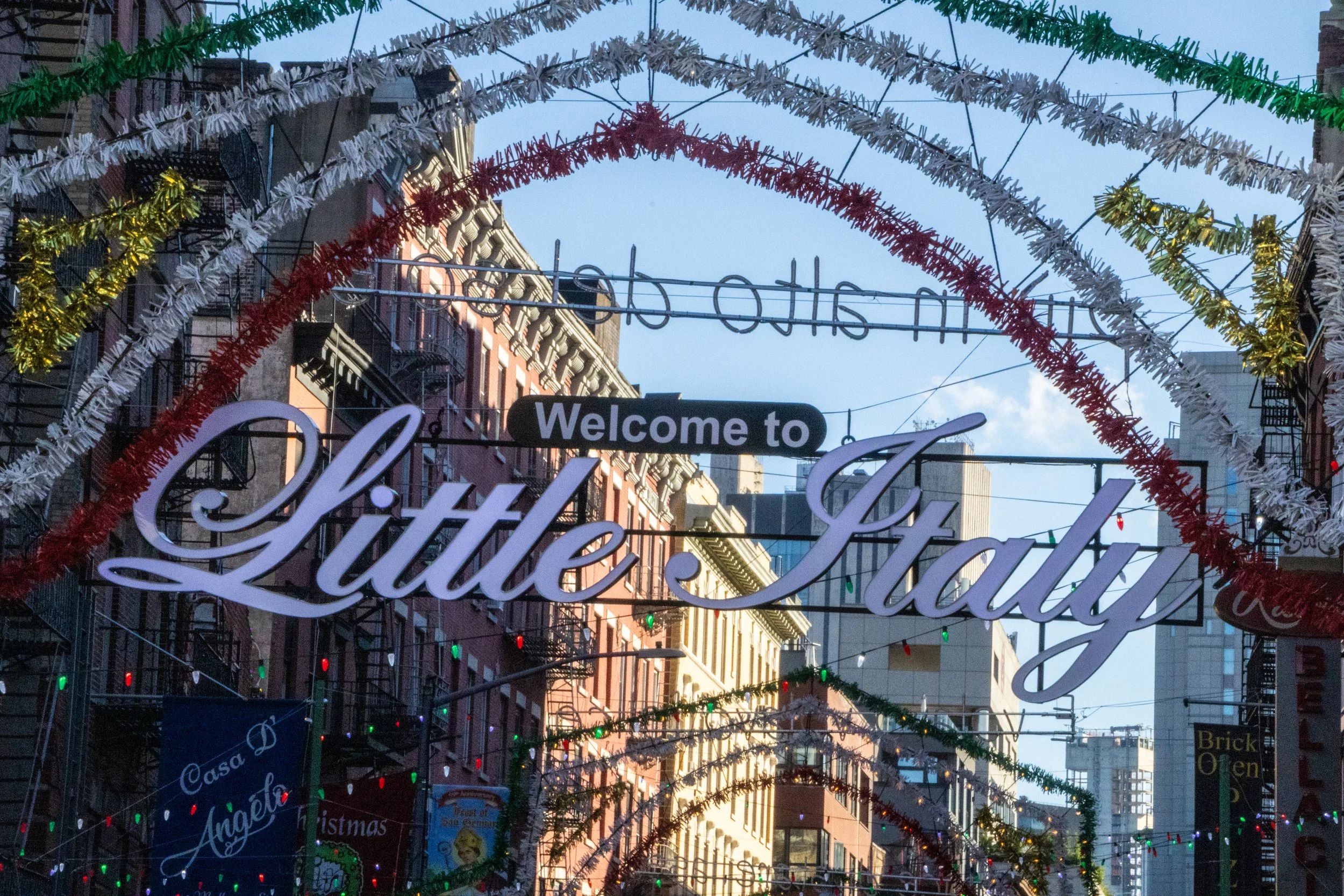
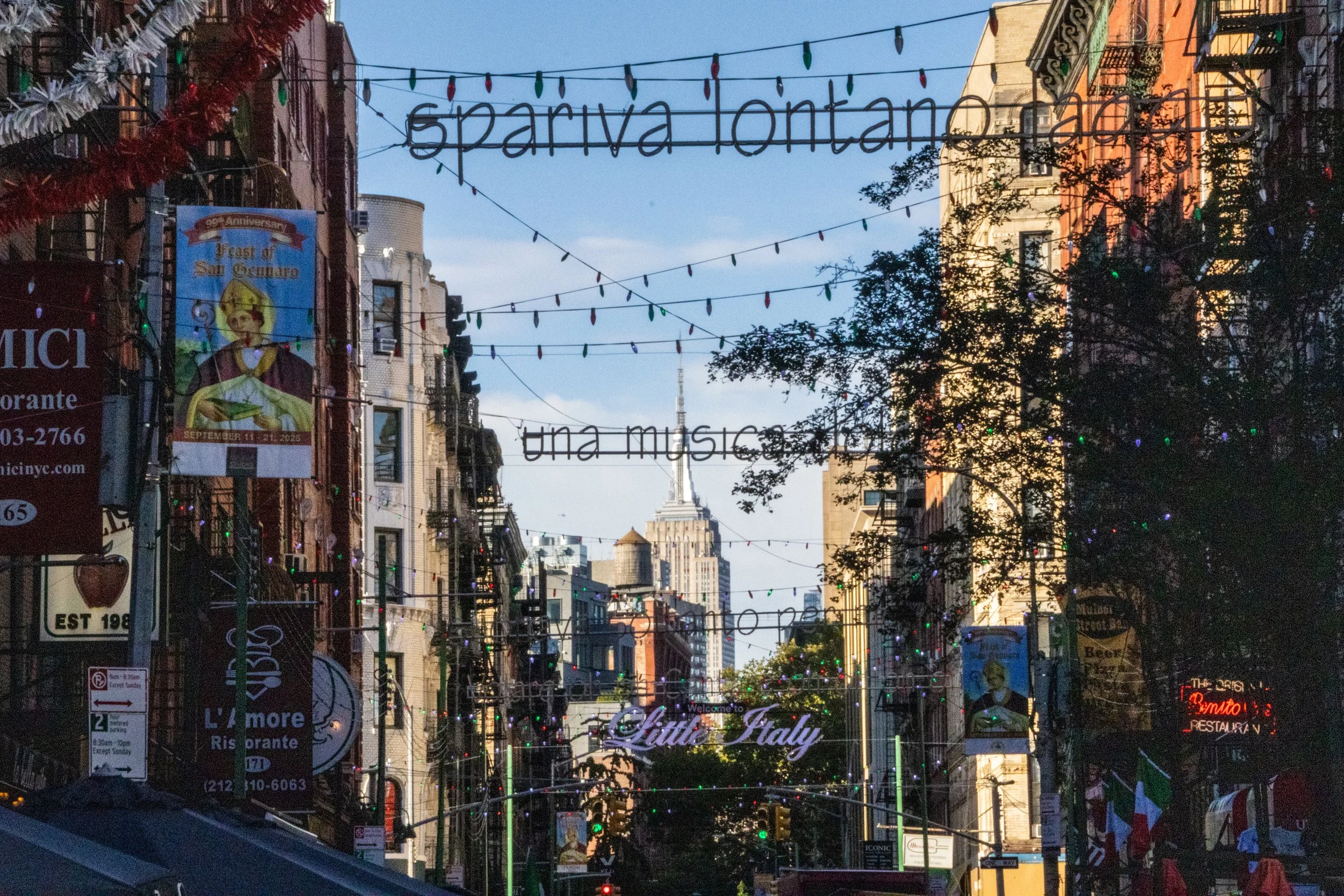
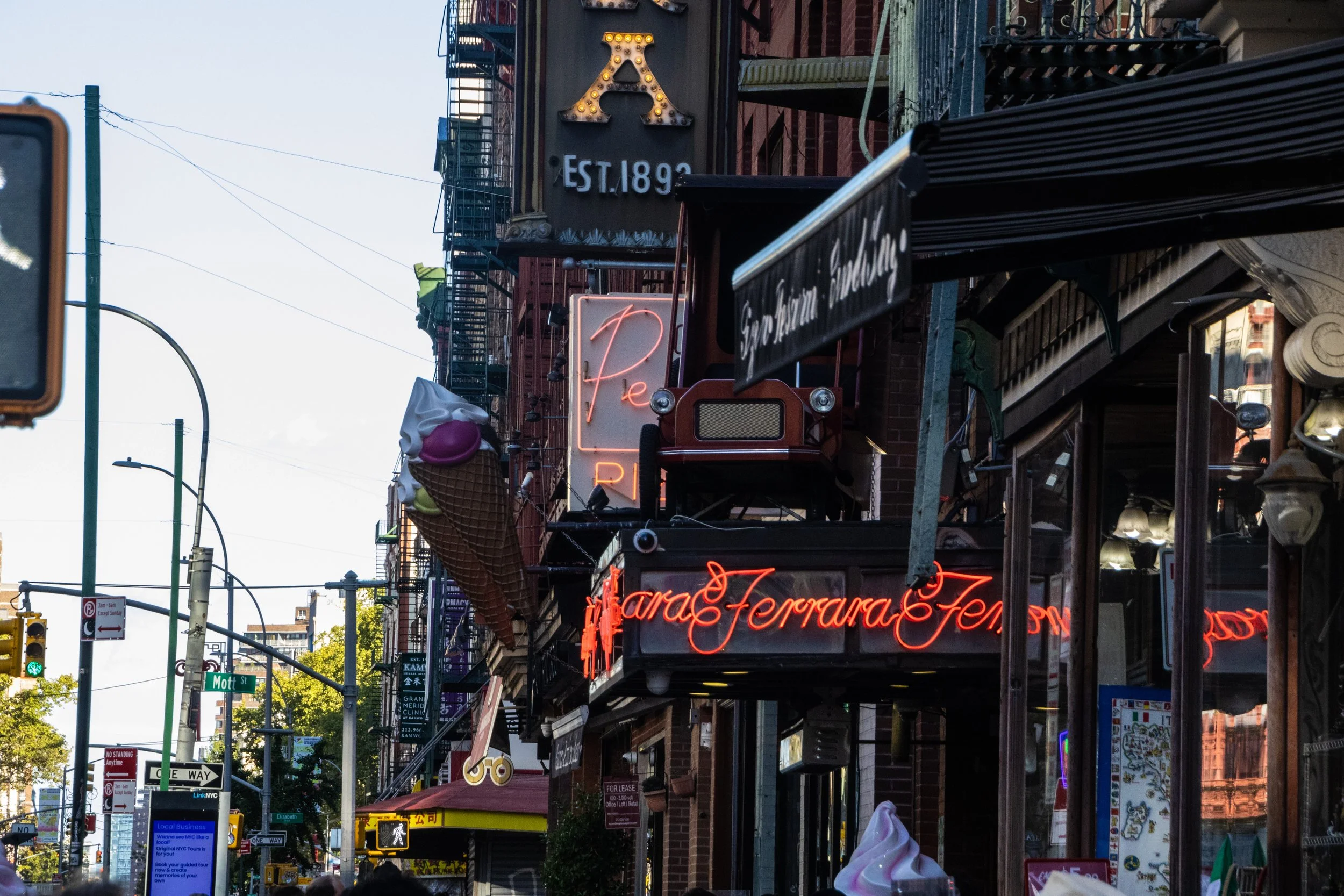
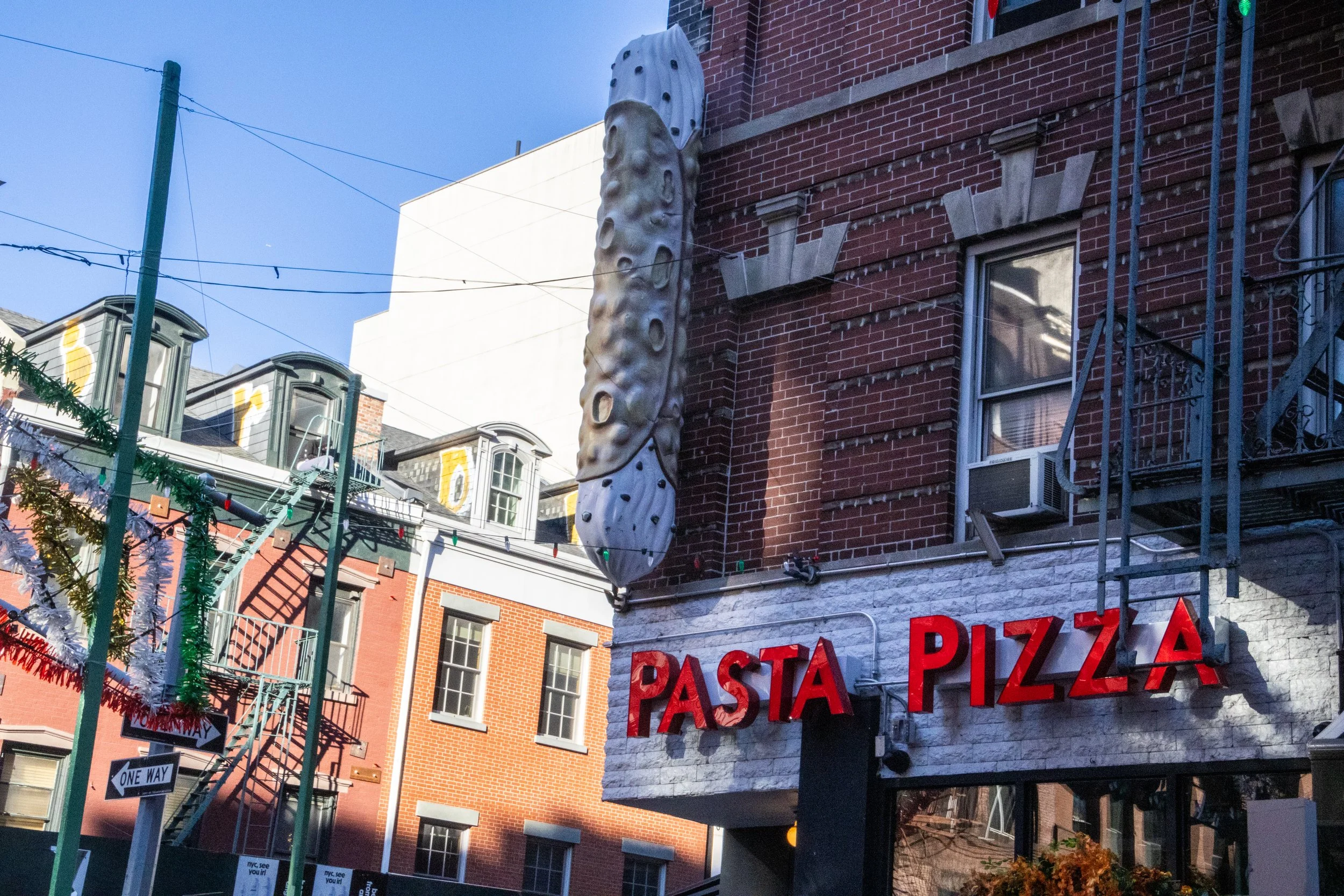
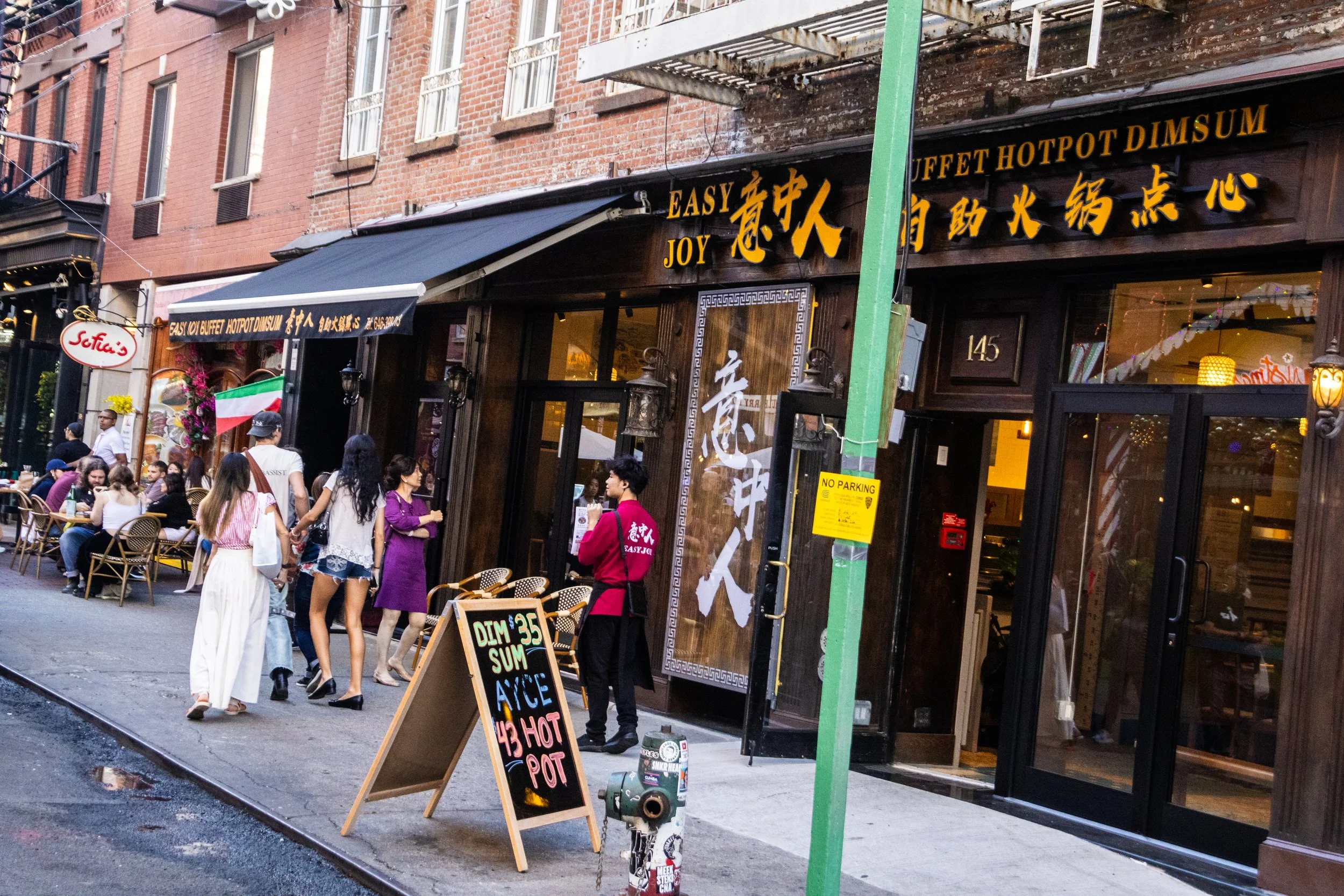
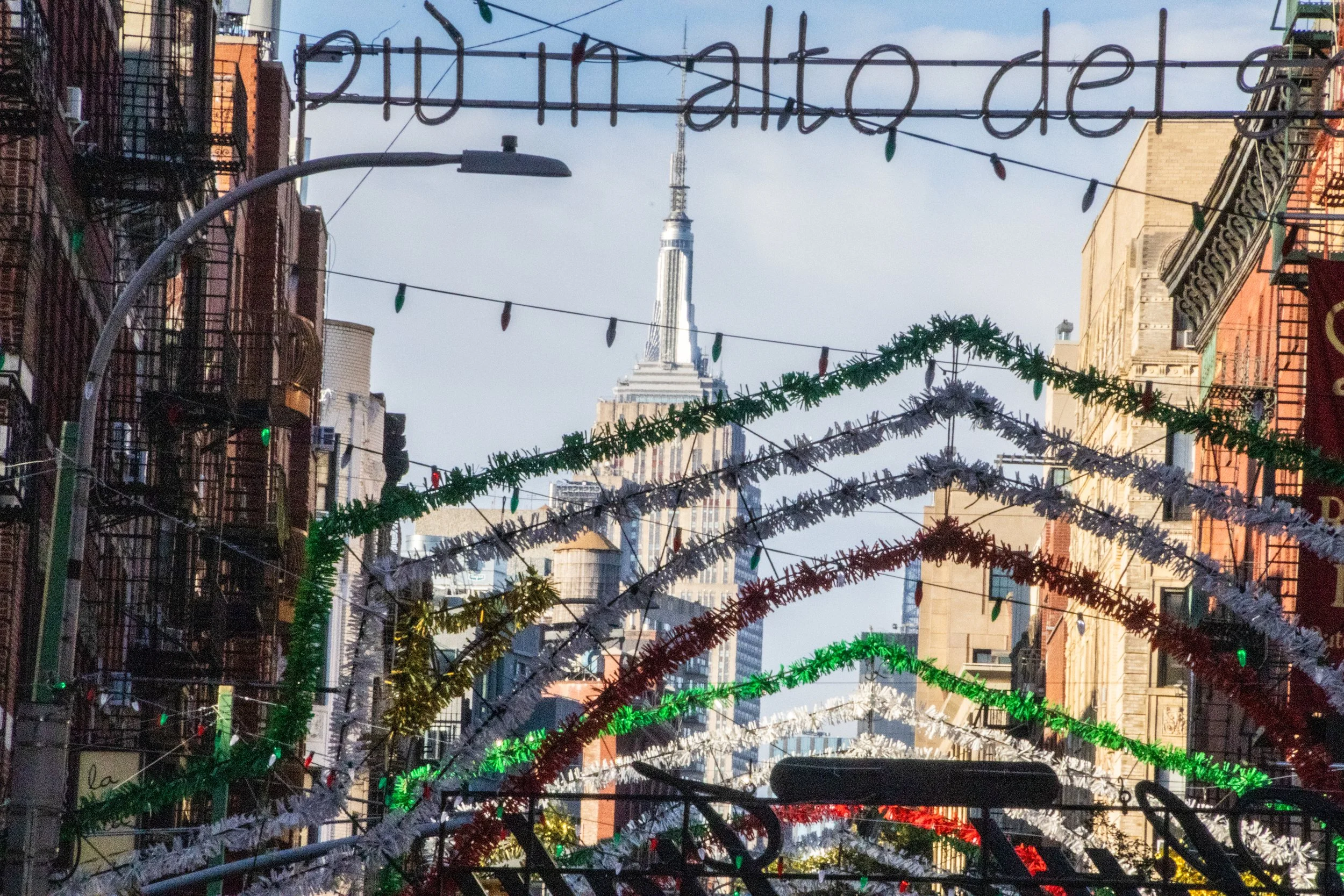
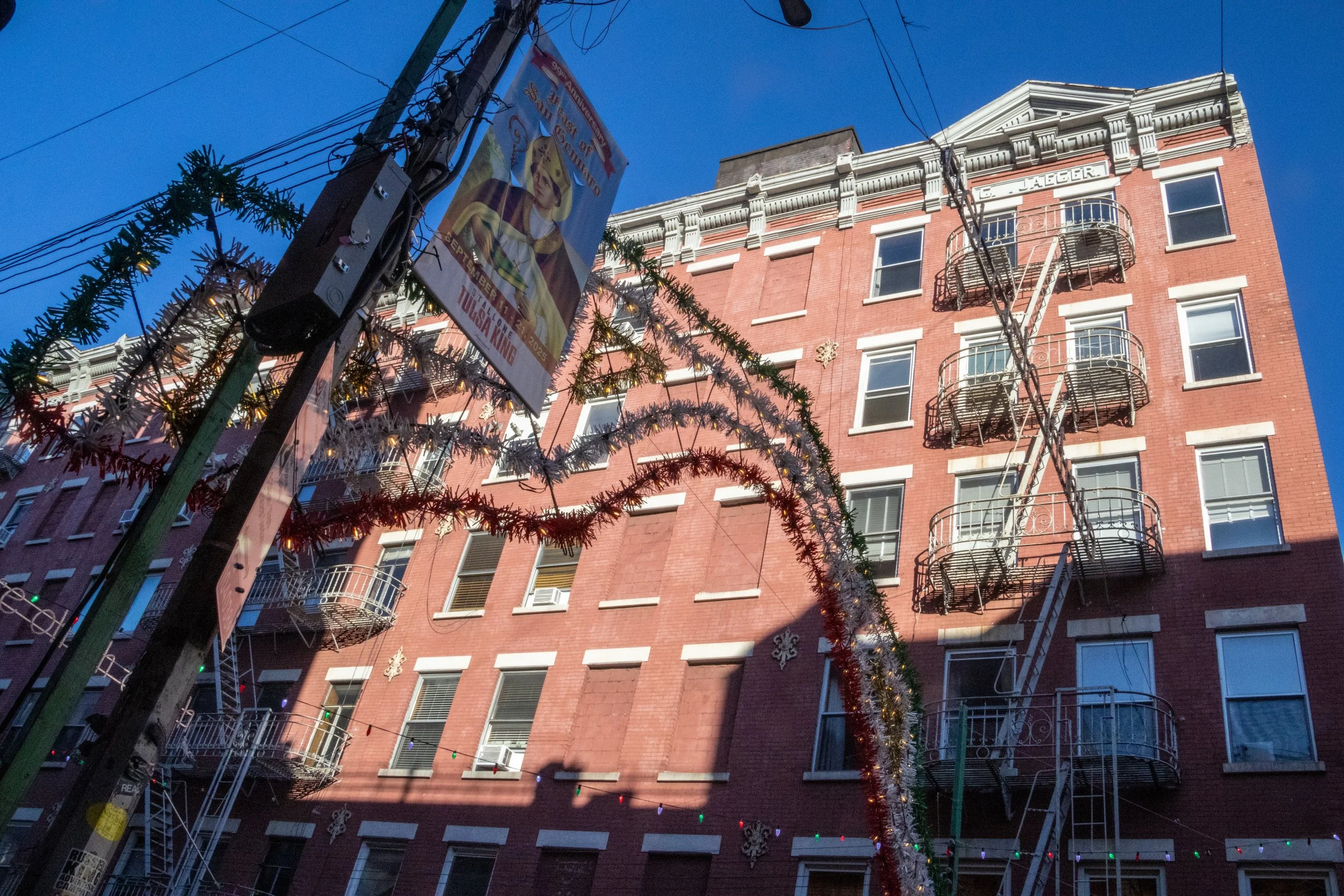
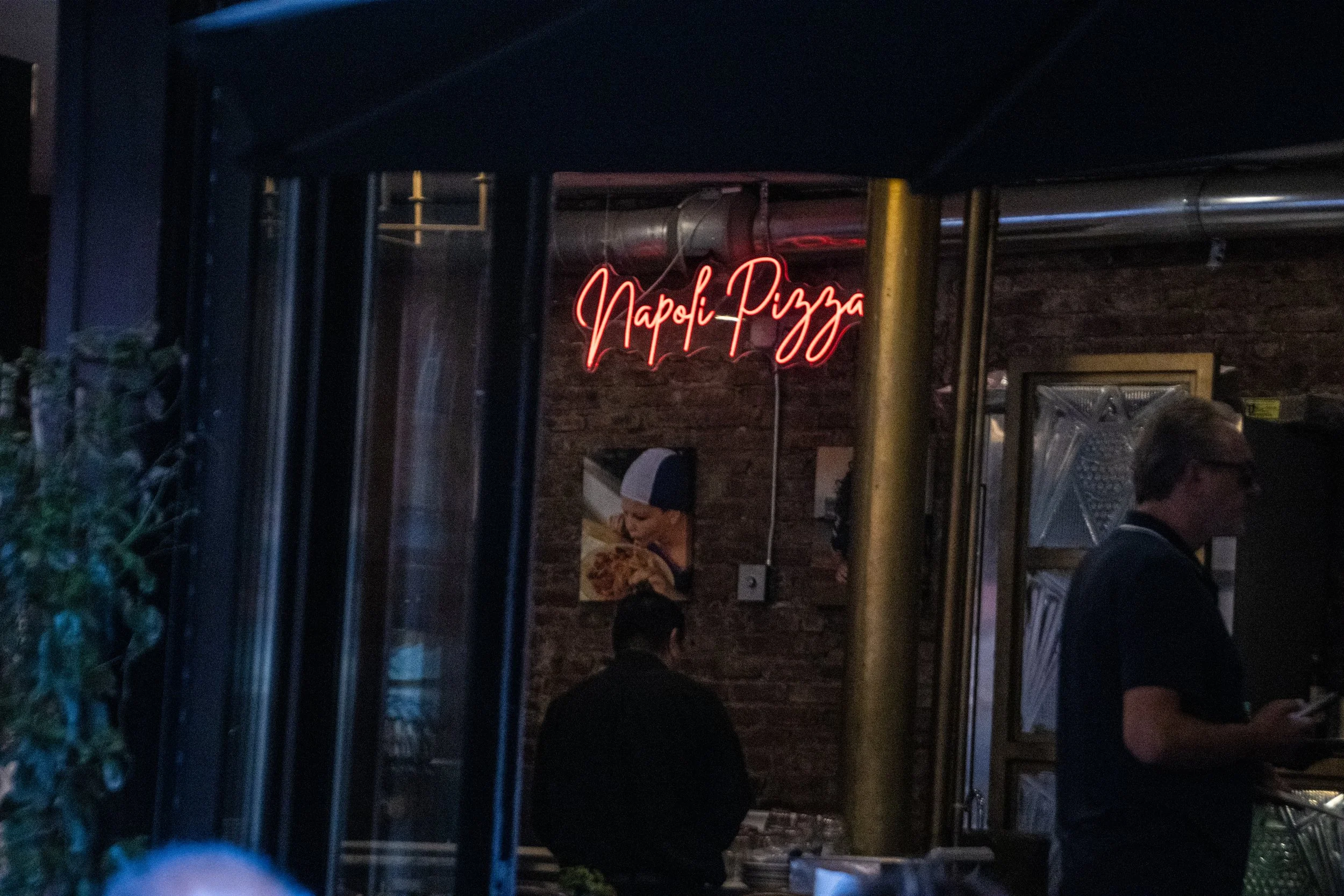
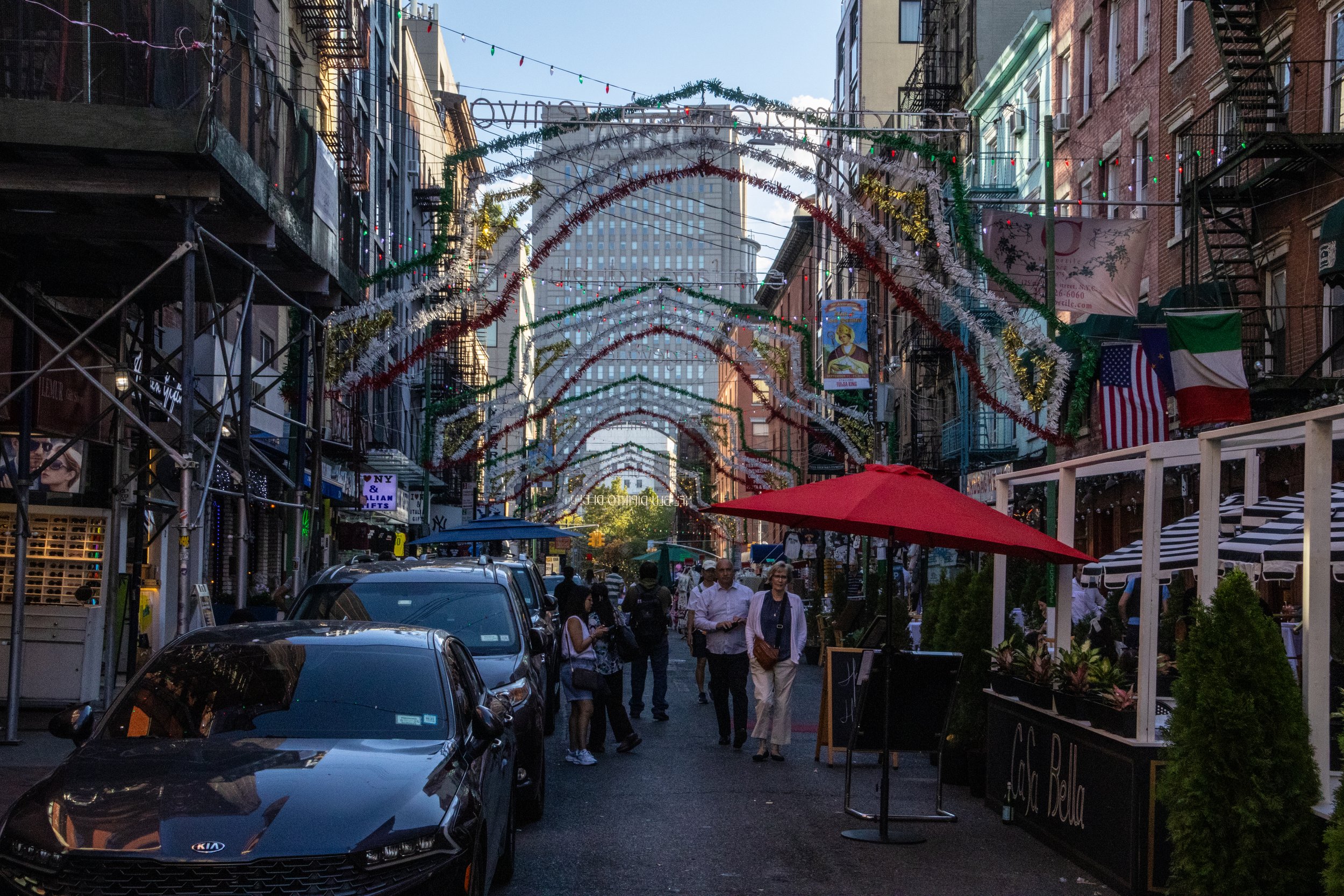
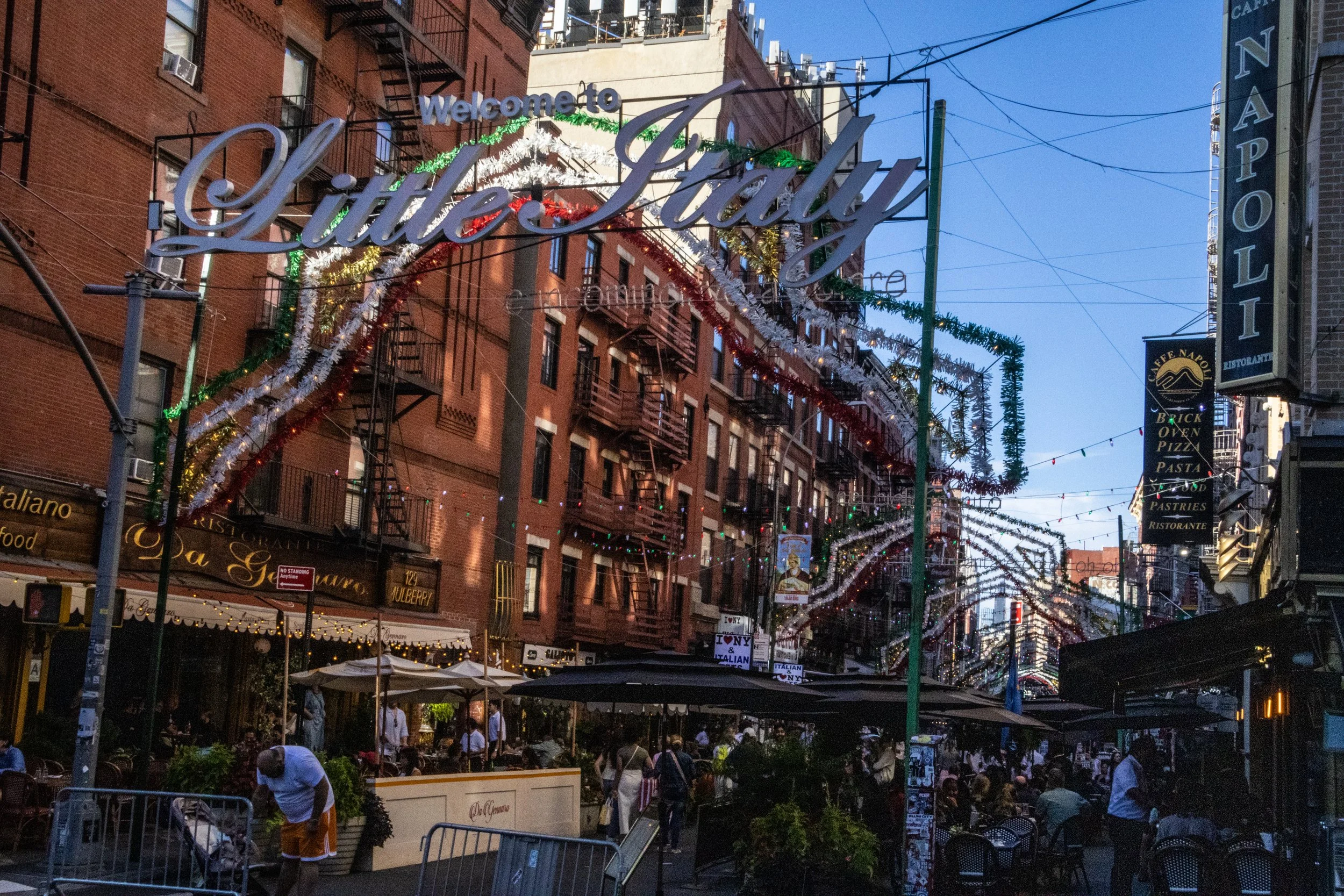
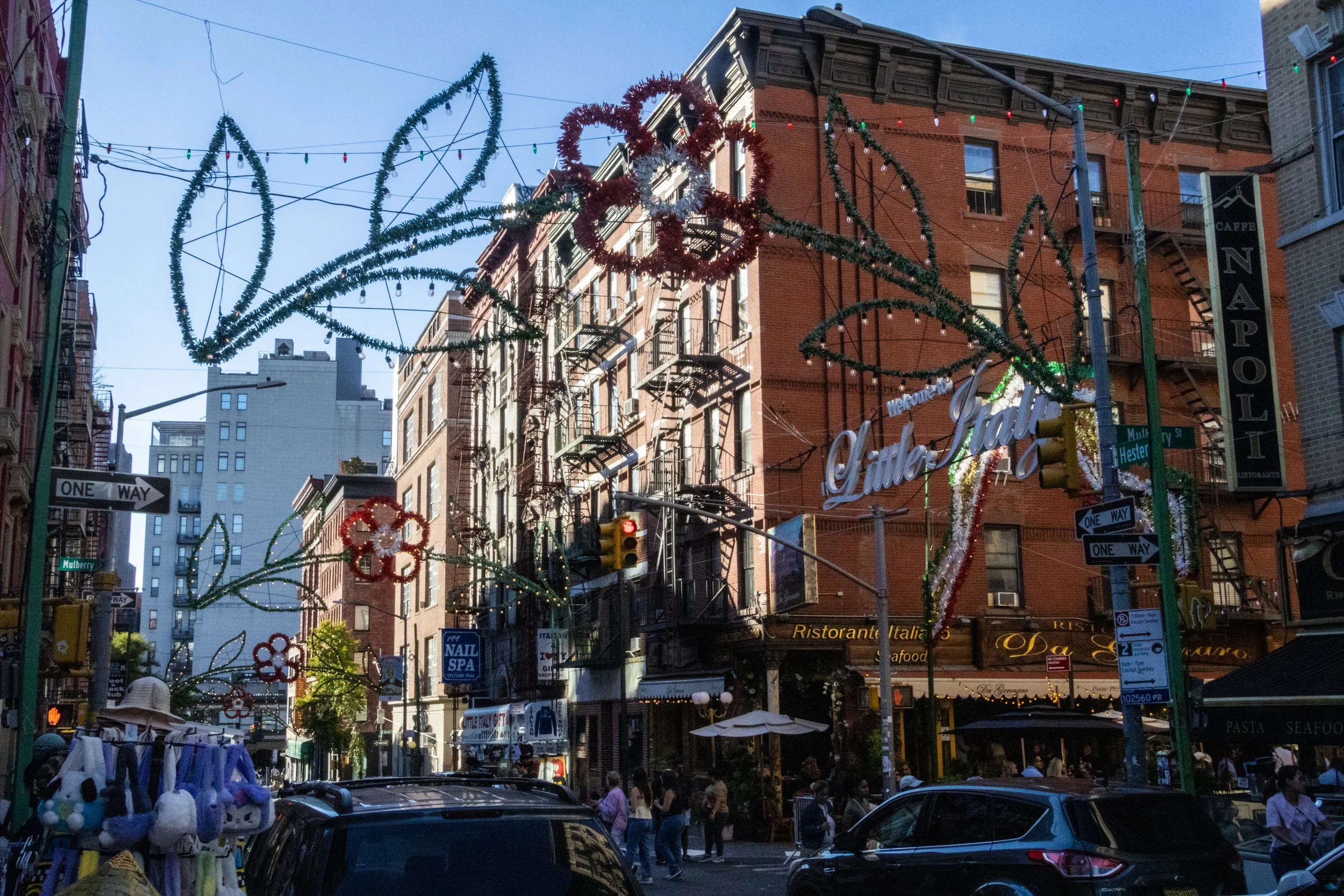
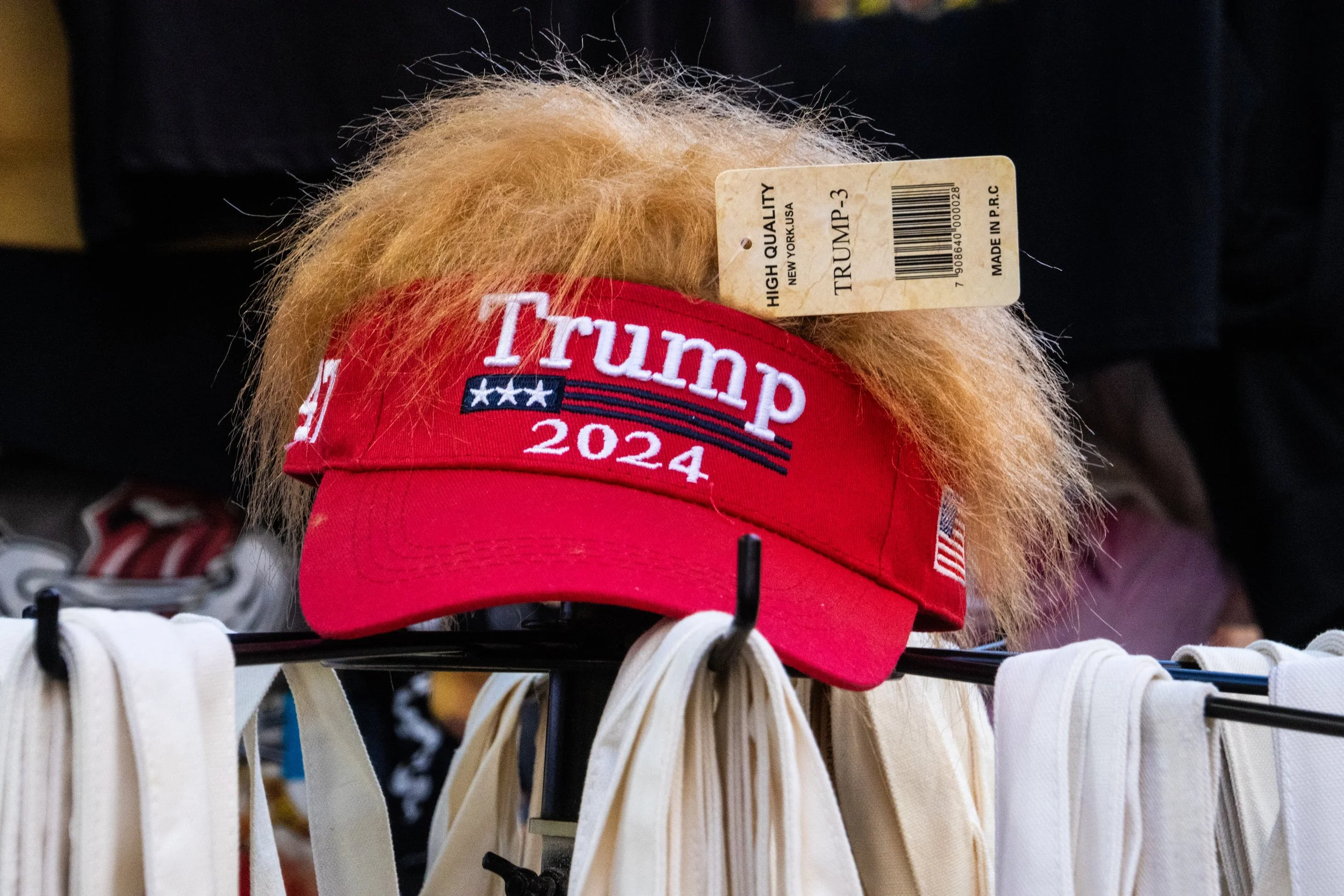
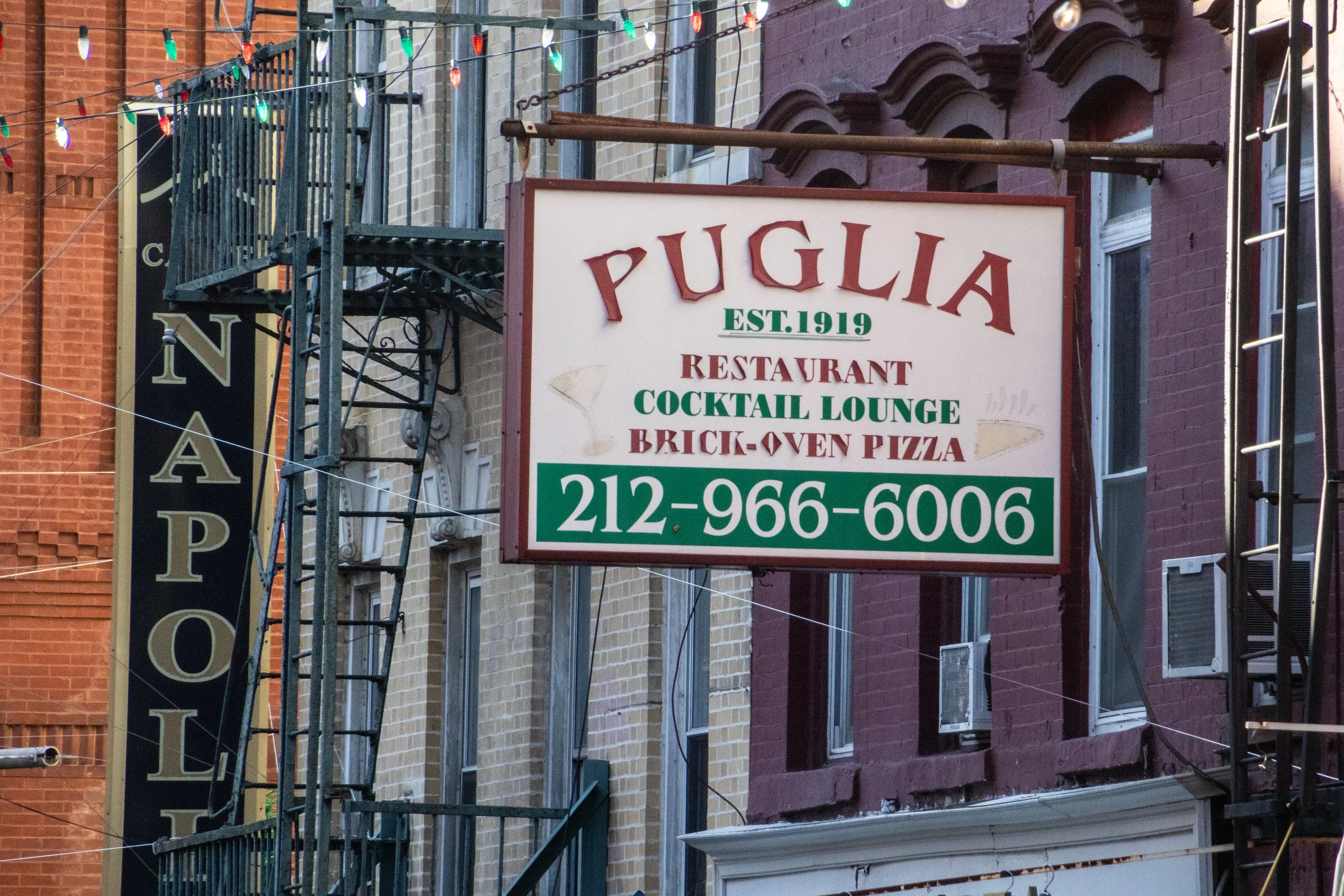
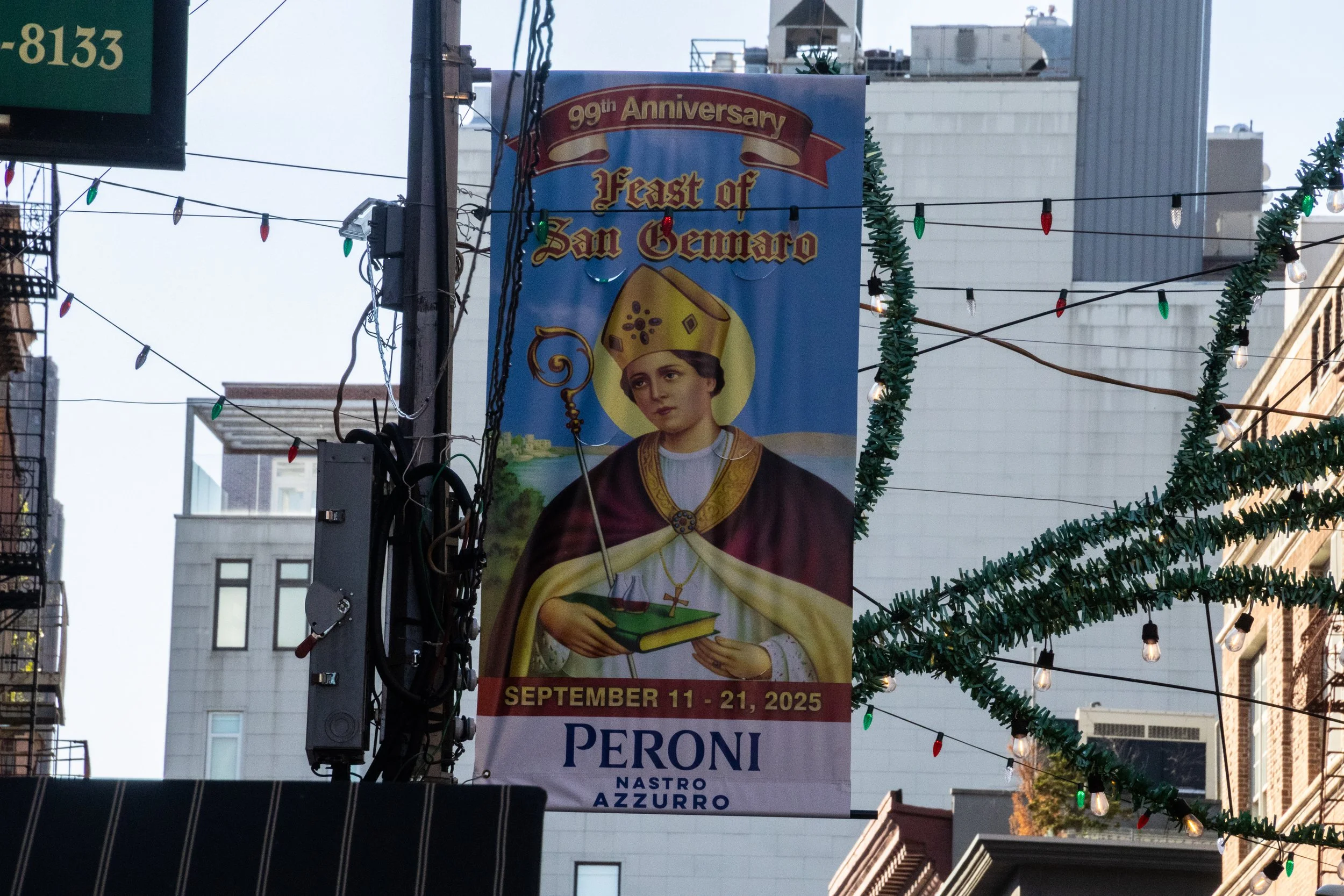
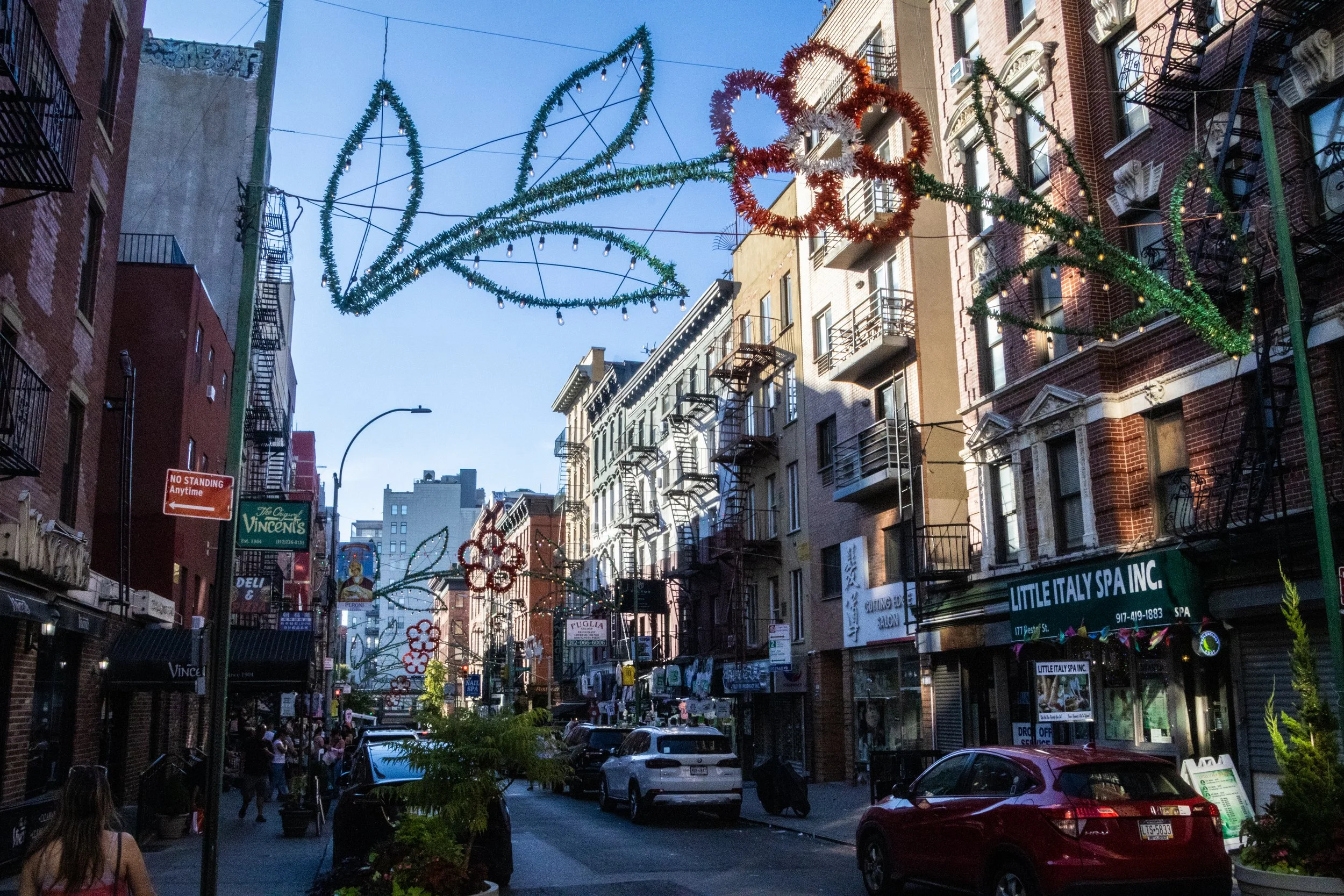
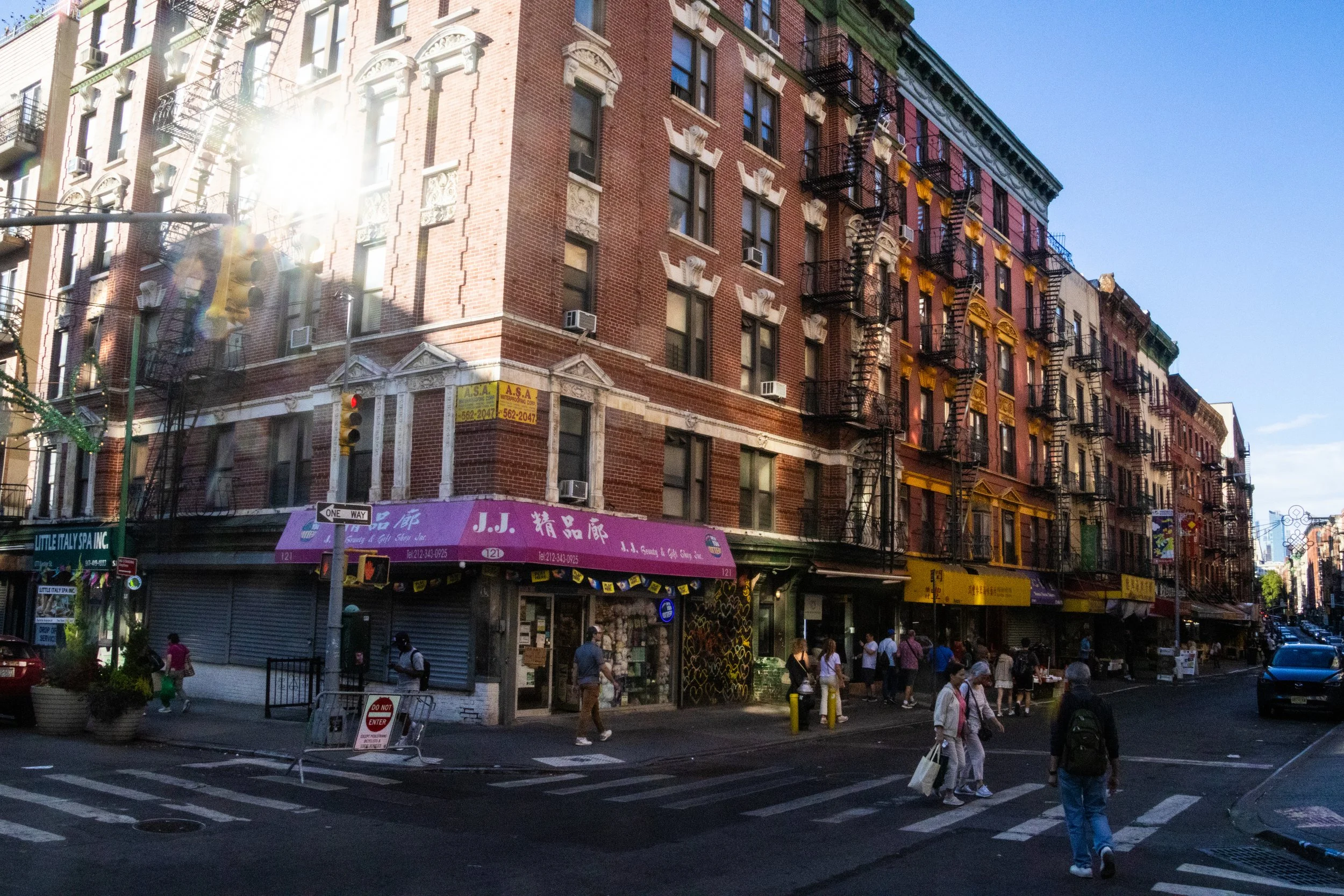
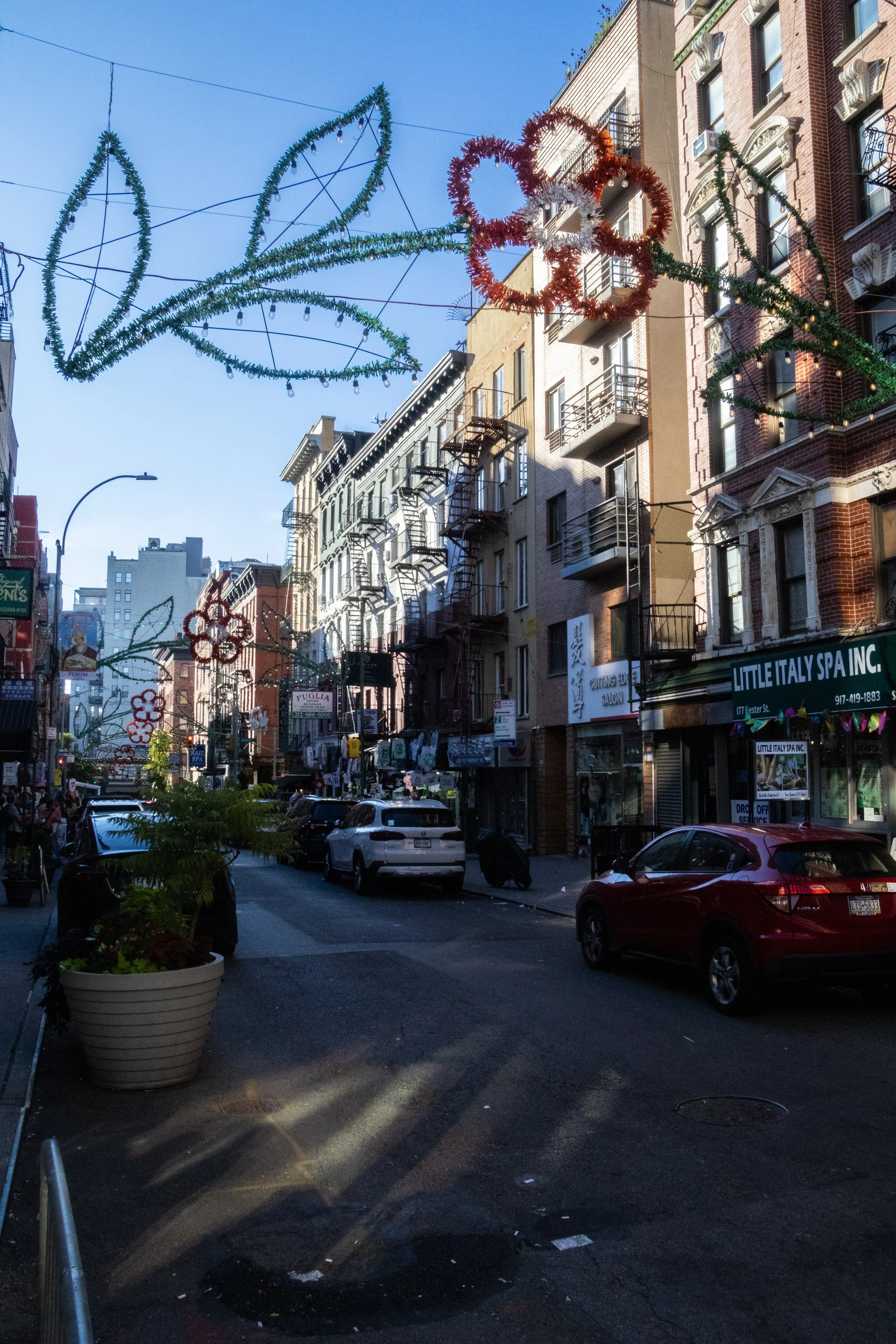
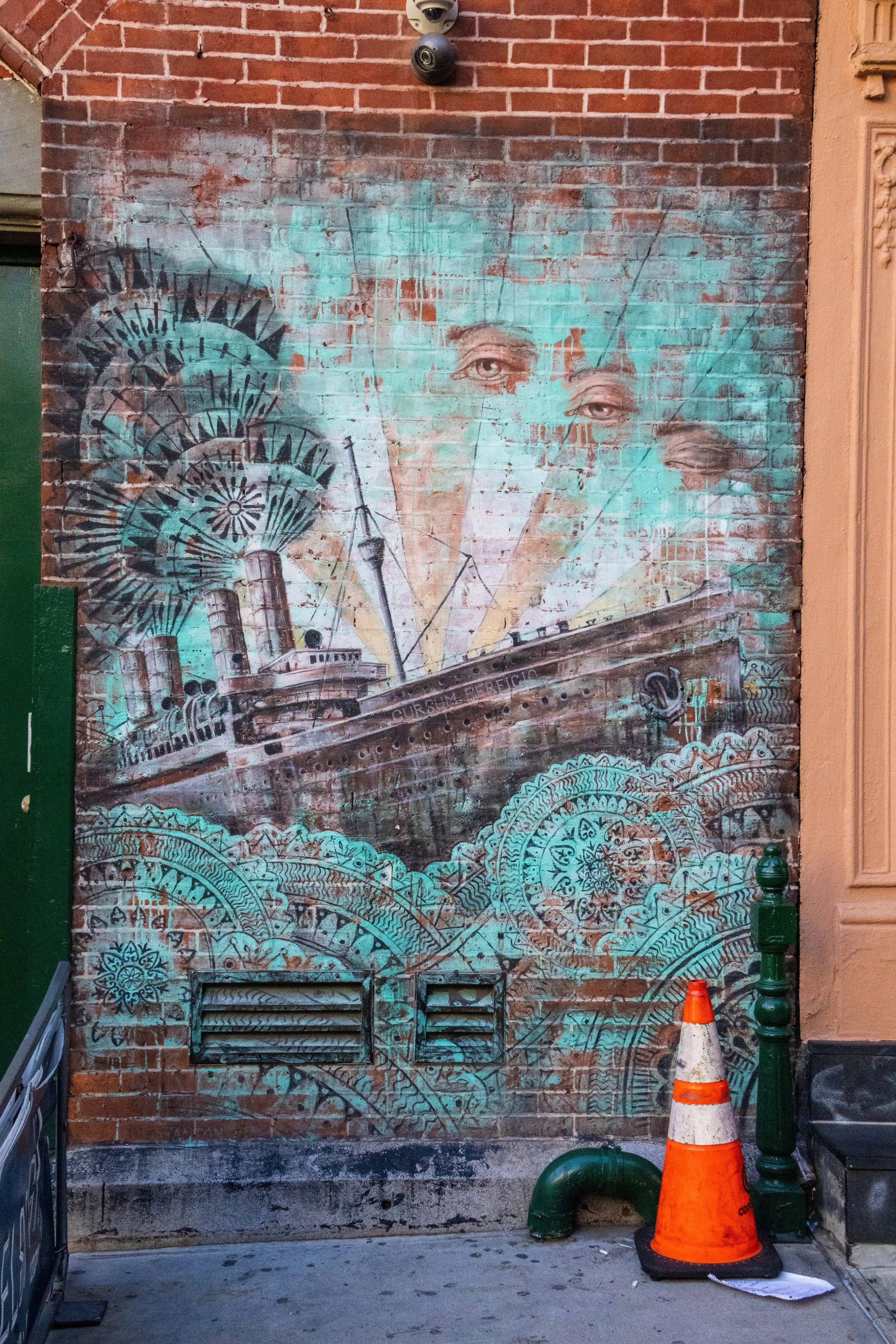
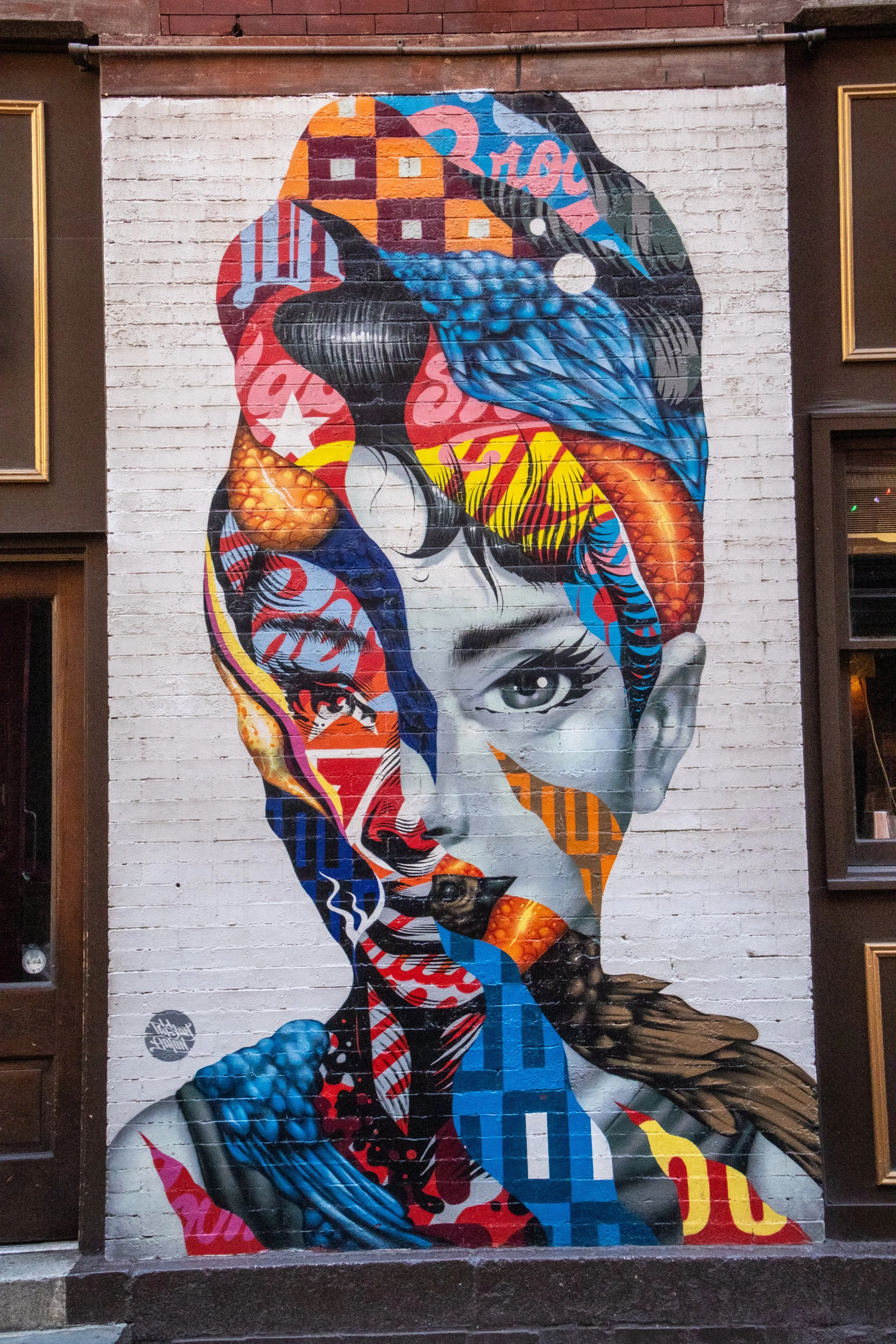
Thanks to restrictive national-origins quotas imposed in the 1920s, Little Italy began to shrink in the following decades as Italian-Americans moved up the socio-economic ladder and relocated to more affluent parts of the city. In the 1960s, the Little Italy’s footprint finally shrank down to its current size, driven in part by NYC’s never-ending real-estate driven gentrification (via the expansion of the SoHo/Nolita neighborhoods), as well as the northward expansion of Chinatown. What remains of Little Italy today can feel like a bit of a theme park, but it is a historical and spiritual home for Italian Americans all the same. On my first trip to NYC as a teenager when we visited Ellis Island, we also came here. I remember walking its crowded streets with my extended (Italian) family quite clearly. It was a summer night, and I remember looking through the windows of bakeries to see the cannolis (which felt a bit foreign to me) and half-moon cookies, a.k.a. “black and white” cookies (which were a family favorite).

Nowadays, you’ll sometimes hear that Chinatown “took over” Little Italy… and while I know it’s not actually that simple from a historical perspective… it feels a bit true. The border between these two neighborhoods is quite stark; you cross a big road to find that you’ve suddenly traveled from Shanghai to Rome. But, the border between these two worlds is less firm that it might seem at first glance, because, occasionally, nestled amongst the Italian restaurants, you’ll come across a Chinese restaurant, audaciously trying to win over passersby to eat Chinese food instead of Italian food.
I found the street-level dynamics very entertaining. This lone Chinese restaurant could be the subject of sitcom.
We’ll cover Chinatown in depth in our next article, but for now—before I close the folder of photographs from my first ever visit to NYC in the 2000s—let me share a hilarious picture that I hadn’t thought about in YEARS.
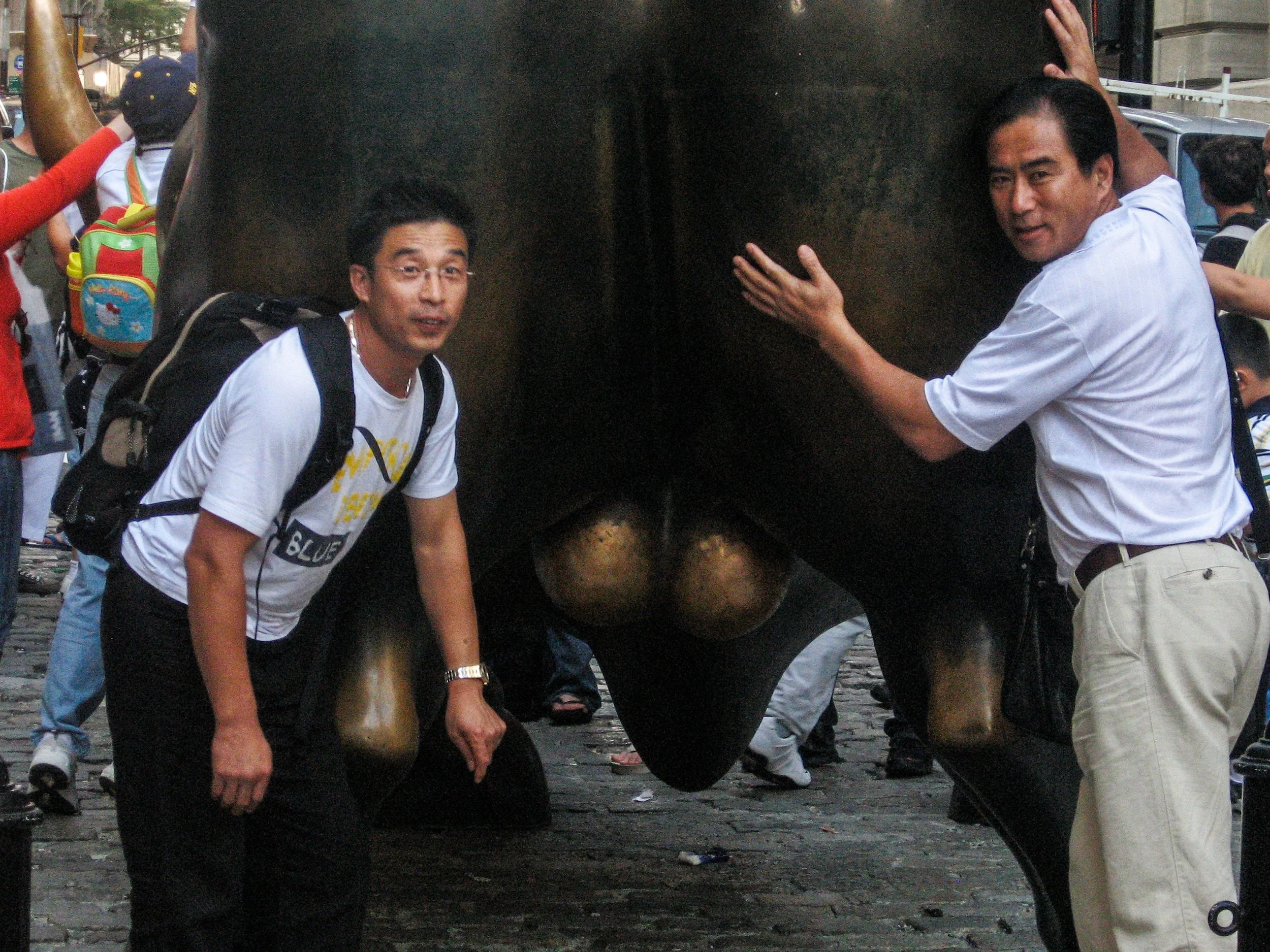
I remember that I was this 🤏 close to catching the jagaloon on the left cup the bull’s balls. He’d just pulled his hand back a half-second earlier.
THIS CLOSE 🤏 🤦🏻♂️
These are the core memories of childhood. 😂



Although the beginnings of the U.S. as we know it today began with British roots, New York City actually began as a Dutch colony called New Amsterdam. It passed into British hands in 1664 and actually served as the capital city of the newly independent United States from 1785 to 1790. So it has been vitally important since the very beginning. As of 2023, the city alone (its metro area, that is) had a stand-alone GDP of $2.30 trillion, making it the most valuable city in the world. In fact, if treated as an independent country, New York City would rank within the top 10 largest economies in the world, ranking above Italy, Canada, and Australia, to name a few. For a domestic point of comparison, the next largest economy in the United States is Los Angeles with an approximate GDP of $1.1 trillion.