

Pretty much every article on this site has at least a few paragraphs’ worth of history included in it, but every once in a while I write an article that is REALLY heavy on history. If that’s the kind of thing that you like, then you’re in the right place!
👇 HERE ARE SOME HISTORY-HEAVY ARTICLES 👇
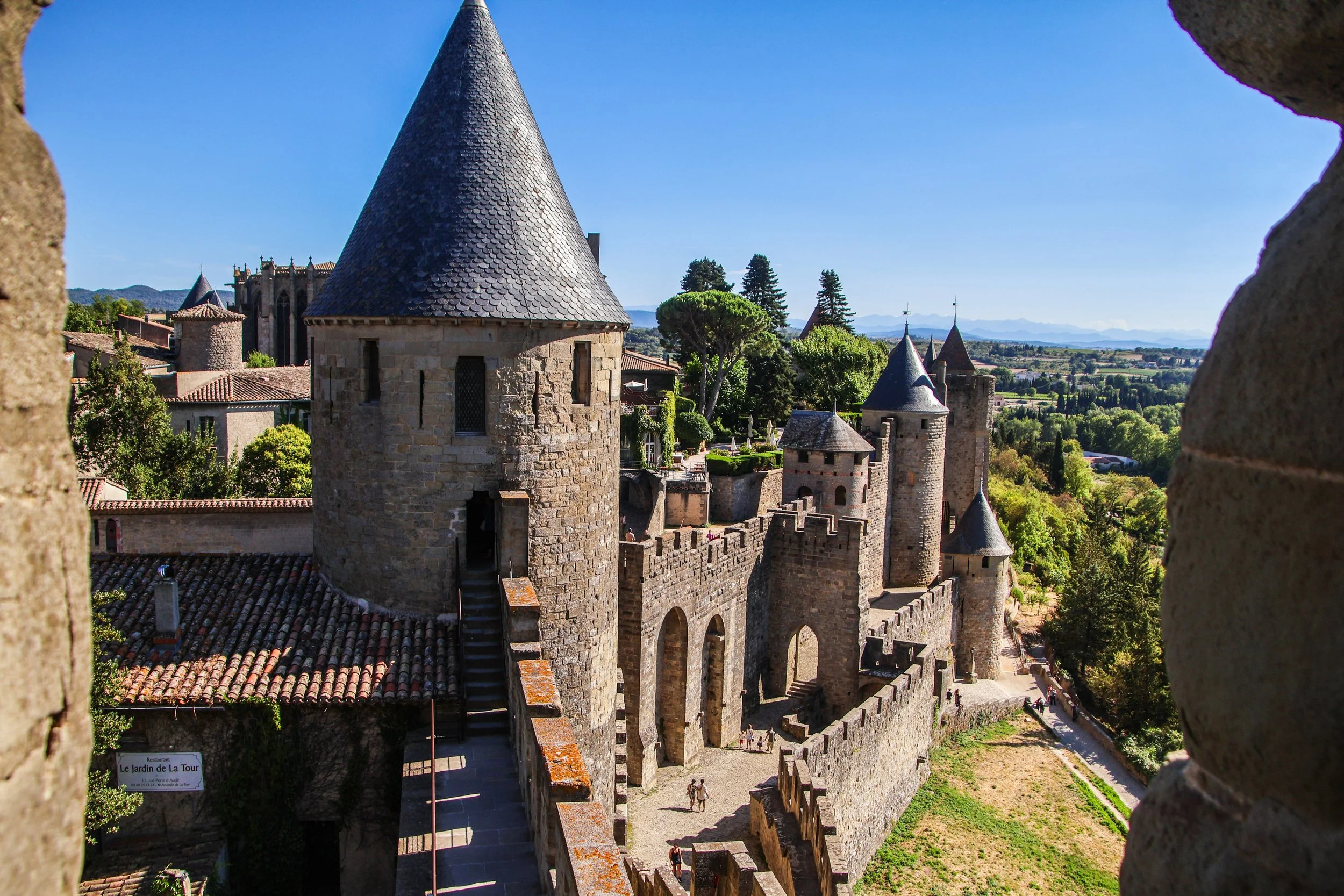
And we’re back in France! But rather than continuing our exploration of 21st century France, we’re going to rewind today and visit Medieval France. I’ve never been a fan of Renaissance Faires (actually, I low-key hate them), but this is an undeniably fascinating time in history to learn about. And actually seeing the castles in real life really takes this to the next level! Today we’re visiting two Medieval castles in the South of France: Carcassone and Villerouge-Termenès. Vamos!

As we all know, the streets of Paris are famously beautiful. But what you might not know is that just a few meters below these charming bistros and boulevards lays hidden a labyrinth of dark tunnels containing somewhere in the vicinity of 6 to 7 MILLION skeletons. These are the catacombs of Paris, and today—in the spirit of Halloween—we’re going down there. 🎃
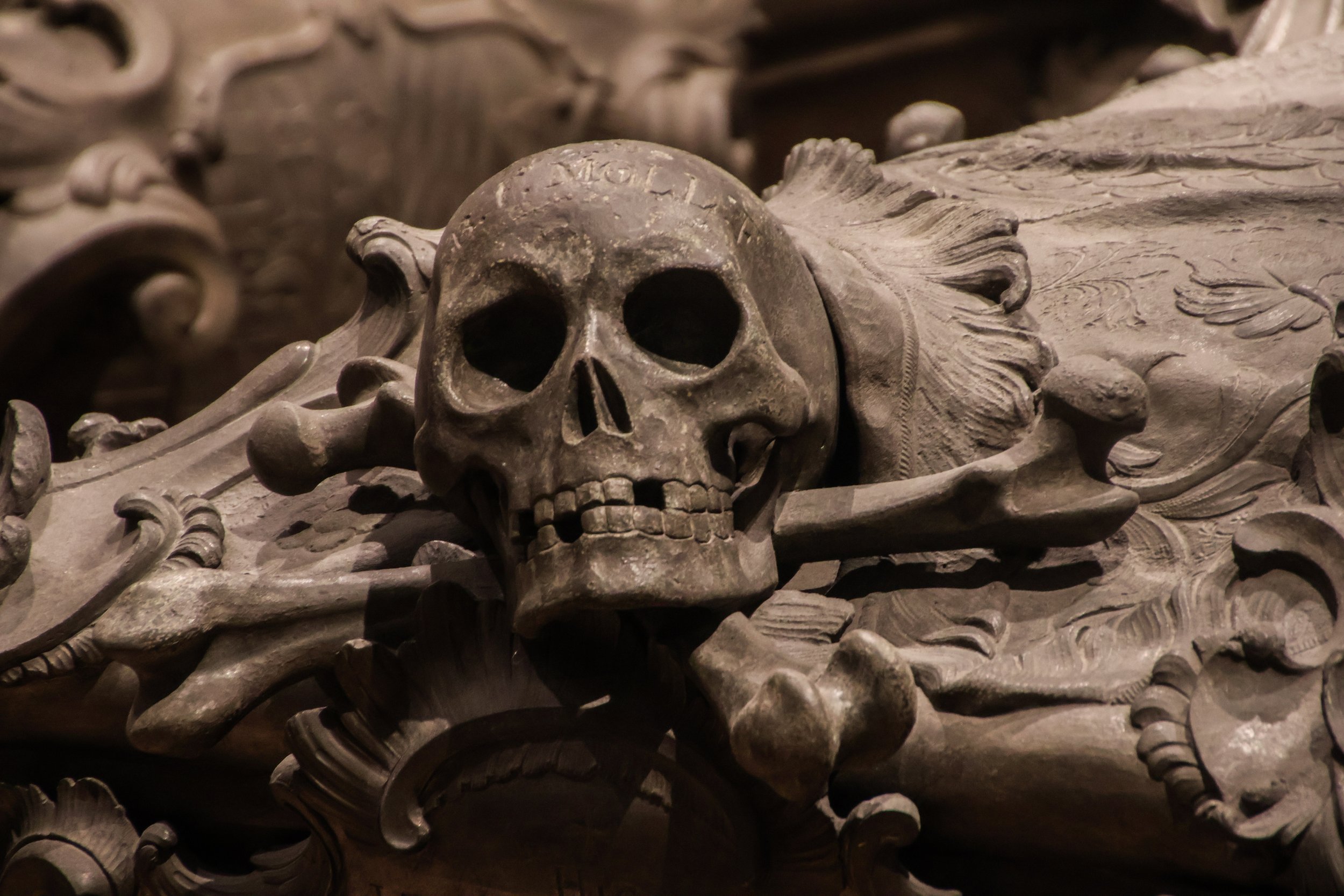
I’ve been forced to reference Vienna’s history books more than once now, but today is where we’re going to take a deep dive into those history books. And we’re going to do so with the aim of exploring one particular character in Vienna’s story: the House of Habsburg.
The House of Habsburg is one of the most important dynasties in European history. Their origins are bit murky, but their collective ascent to nobility as a family can be traced all the way back to the 900s. They were lords controlling patches of territory in central Europe who—over the course of generations—fought their way to the very top. Starting in 1440 when they were at the helm of the Holy Roman Empire, the Habsburgs were in control of major world powers until the early 1900s.
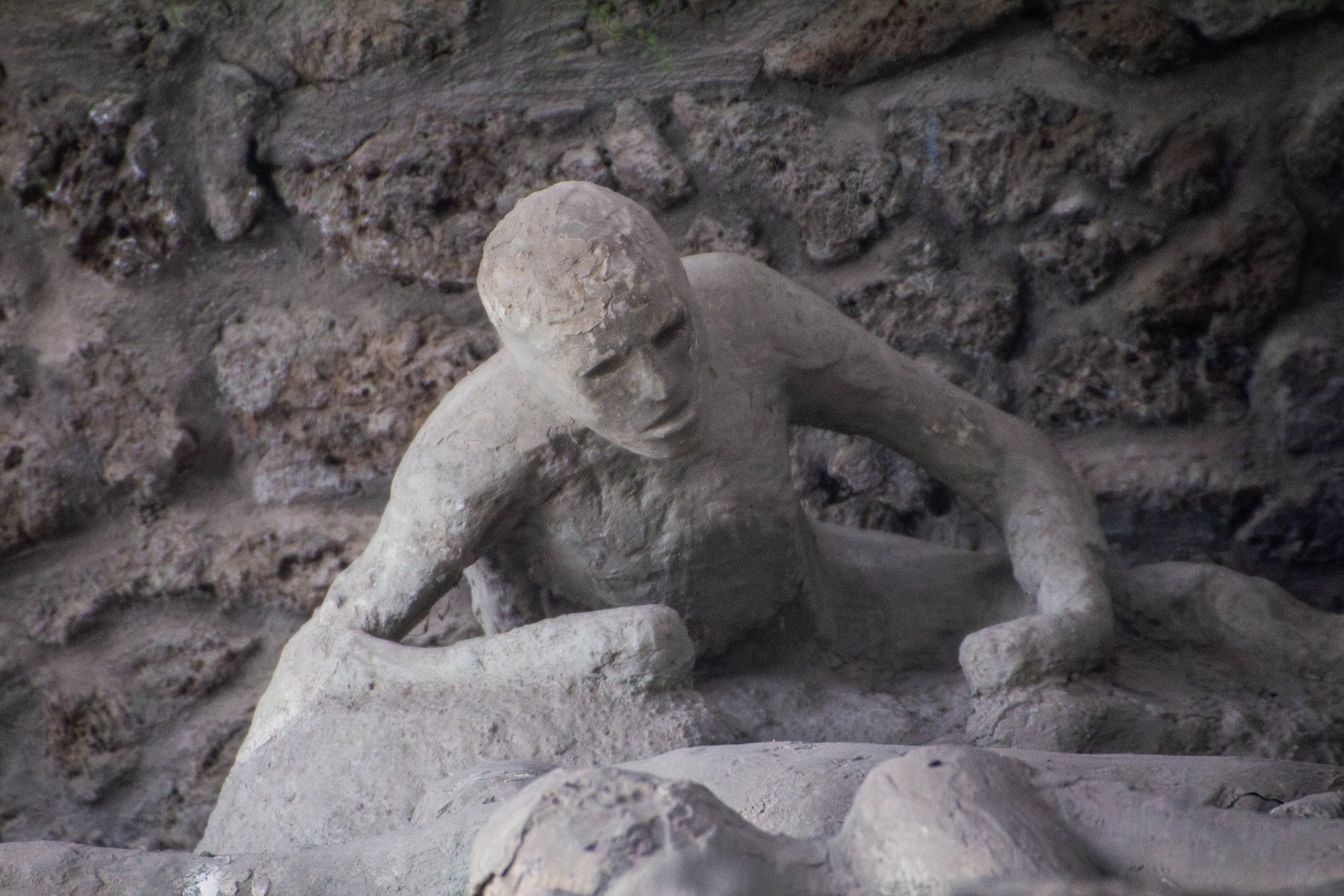
The Greeks really started to invest in and expand Pompeii around 450 BC, but a couple of centuries later, it would ultimately pass into the control of the Roman Empire. By the year 78 AD, it was a large, affluent, well-to-do town in the Roman Empire, which was already more than 3x older than the modern-day United States.
Oh yeah, and it also sat right next to a giant volcano called Mount Vesuvius.
In 79 AD, Vesuvius erupted, releasing approximately 100,000x the energy of the atomics bombs that were dropped on Hiroshima and Nagasaki during WWII COMBINED. At this point in history, the Bay of Naples was already a densely populated area, which made this one of the deadliest eruptions in history. Pompeii, as well as a few other towns in the area, such as Herculaneum, were pretty much wiped off the map, their inhabitants burned and/or suffocated by the violent pyroclastic flows.

The Canterbury Cathedral is a marvel of gothic architecture and remains immensely important in the modern day. In fact, before I had actually visited this place, I mostly just thought of it as the town around this cathedral. We’re going to spend a lot of time exploring this cathedral today, but first, let’s have a walk through town.
It turns out that the town of Canterbury is quite charming in its own rite! My sample size is still quite low when it comes to England, but this felt—to me—like the quintessential English town. Even in the rain, it makes for some lovely walking.

Whether or not these kinds of country bars are “your scene,” there is one thing that can be said for certain about Nashville’s Honky Tonks: they are the genuine artifact. Almost anywhere else you would encounter this kind of atmosphere, it would be a rip-off of something else. But THESE bars are the O.G.s. It was here that the “Father of Country Music” Jimmy Rogers started playing at bars almost a century ago in the 1930s. The area has gone through some ups and downs over the past 100 years, but today Broadway is enjoying multiple consecutive decades of economic growth.
Yes, if the articles on the Internet are to be believed, Music City is the place to be! Over the past few years, it has become an oft-recited fun fact that more than ~100 people are moving to Nashville each day. I can guarantee you that almost every single one of these people knows Nashville’s nickname, ‘Music City,’ and will visit Broadway—and maybe even the nearby Country Music Hall of Fame—in the first 6 months of living here.
However, very few of them will have ever heard of the other side of this coin: Jefferson Street.

Before we head out of the city and into some nature, we’re going to take one last photo-walk through a very specific slice of San Francisco: Haight-Ashbury. Today it would be easy to pass through this area and think it’s just a pretty neighborhood, but there is actually some really cool history here from the not-so-distant past. There was a time when Haight-Ashbury was the epicenter and headquarters of a national zeitgeist whose iconic status endures to this day.
I’m talking about the Summer of Love.
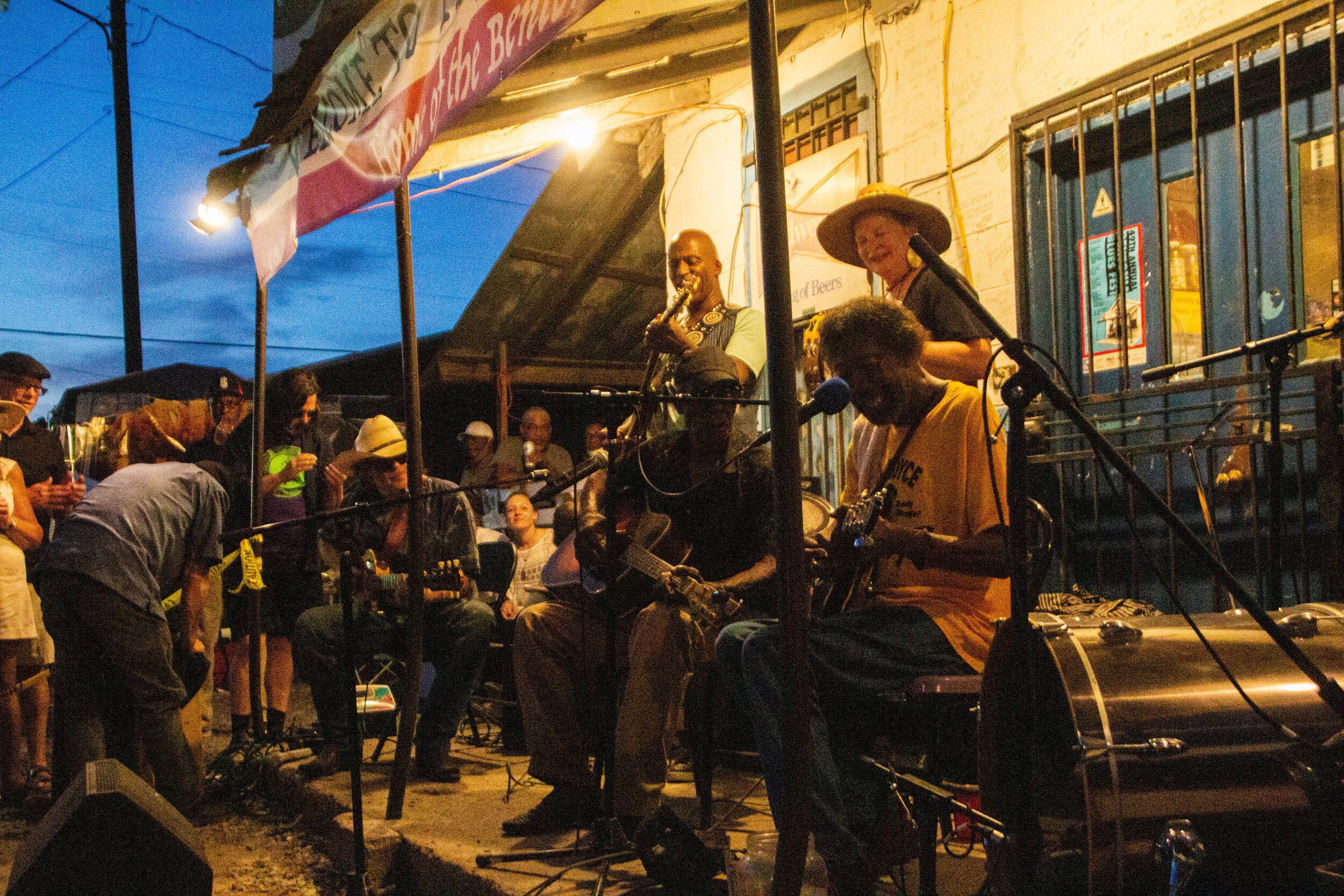
I don’t know what I expected when I showed up in Mississippi. I had some vague aspirations about getting out into the legendary Delta to see pieces of the Blues Trail, but I wasn’t sure how realistic it was to cover all of that ground in the short time I had. I thought it would be cool to visit the Crossroads, but everybody I know that has been there told me it’s literally just an intersection in the middle of nowhere. So I wasn’t sure it was worth the drive. This probably doesn’t sound like the beginning of a great article. I really thought of the Blues mostly in the past tense so I wasn’t expecting to find anything in Mississippi but some history. But OHHHHH MAMA! I have never been more wrong in my LIFE!

I got the chance to visit Mississippi recently, and that just so happened to be on the weekend of Juneteenth, 2021. Mississippi is not a place that tends to be high on anybody’s travel bucket list—least of all mine—but the opportunity presented itself, so I went for it! Honestly, I have always been curious.
Today we’re going to talk about the elephant in the room: race in the Deep South. And just like with any other article I write, I don’t claim to be an expert. I’m just a white dude trying his best to understand the world around him and become a better person along the way. And I am, like the rest of us, a work in progress.

Teotihuacán is one of the most historically, culturally, and architecturally significant cities in the pre-Columbian Americas. At its height, it was the largest city in both North and South America, with a population of 125,000 people (estimated). That might not seem like much today, but by Mesoamerican standards, that’s like Tokyo or New York. This wasn’t just a place—it was THE place. But here’s what makes it so fascinating…
The origins of Teotihuacán are utterly mysterious. The backstory behind its founders is totally unknown. And it’s not just unknown to us now, in 2020. Apparently the Aztecs discovered the ruins of this city and also didn’t know exactly where it came from or what the story was. Isn’t that INSANE? The AZTECS discovered this when it was already ruins!

Some cities hit you with strong vibes the minute you step out of the airport, and those vibes set the tone of your entire stay. But Tbilisi was an interesting one, because I really didn’t feel anything when I arrived here. Or ever, in the 7 nights I spent in this city. I was expecting some sort of strong, emotive, post-Soviet energy of a fledgling nation determined to get on its feet regardless of Russia’s endless attempts to undermine its sovereignty (or, you know, something like that) … but I felt nothing. Because, as it turns out, Tbilisi is a city with absolutely ZERO pretense.

This started as a trip to a church in the southern part of Armenia called Noravank. Not a big deal.
We’re going to get there by the end of this article, but we’re going to take a detour to explain something interesting along the way first. So I’ll drop us into the story right around noon, when I was riding shotgun in a large van, speeding southward along the Armenian-Turkish border.

It was this event that prompted the creation of the term “genocide.” There wasn’t really a word for this before the world started to do business with what happened to the Armenians. I’m going to tell you this story now, and I’m sure you will start to notice some eerie parallels with the Holocaust. In fact, the two aren’t entirely unrelated. But before we dive in, I’m going to warn you, this will be disturbing.

When I made the move to Madrid in 2012, I hadn't done much research. Upon my arrival, I remember being very surprised at how green and lush the city was. This was not what I expected Spain to look like. I was expecting something a bit more arid, a bit more dry, a bit more brown-ish in color. I'm not sure where these preconceptions originally came from, but now I know that TOLEDO is what I expected Spain to look like. This was the image of Spain that I had in my head.

Asheville, North Carolina has little trouble attracting visitors from across the country and abroad on its own. Literally smack-dab in the middle of America’s Great Smoky Mountains, this crunchy enclave is a Mecca for outdoorsmen (and women), beer-lovers, weekend warriors, and hippies from around the country. Indeed, this little Appalachian gem has become a destination in its own rite… but it’s still veiled in a level obscurity. So people are usually surprised to learn that Asheville ALSO happens to be the location of the largest private home in America.
Did you know that? This whole experience was sort of a shock to me!
Today, let me introduce you to the famous Biltmore Estate.

Boston has a lot of cool history. Even if you don't feel like you know very much about Boston, you still probably already knew that. This was the city where the Revolutionary War started! The Boston Tea Party, Paul Revere's Midnight Ride, the Salem Witch Trials—the early history of the Boston area is rich with some of the most riveting stories that American history has to offer. And moving into the modern era, Boston still managed to be the site of some of America's most interesting historical sagas, from the Boston Strangler, to the Great Molasses Flood. However, to me, one story stands out above the rest, and it didn't happen all that long ago.
The story I'm talking about is the heist of the Isabella Stuart Gardener Museum, which happened in 1990.

Catania is the second largest city in Sicily. The population of Catania proper is about 320,000, but there are a combined 1.1 million people who live in the metro area. In Italy overall, Catania is the 10th biggest city, and the 7th largest metro area. This is a major population center for Sicily, second only to Palermo, which will be our last stop on this trip. Catania is not the most well-known place, but it's definitely not small either. It's actually really big, especially by Sicilian standards. But Catania's burgeoning population should be surprising. This isn't exactly prime real estate.
Why? Because of Mount Etna.

Today we're going to be doing a double-header: Cherchell and Tipaza. These places are not quite on the level of Timgad, but they are still going to be interesting and gorgeous. So buckle in kids! It's time to drive out into rural Algeria for some adventuring!
So, if you've been following this series on Algeria, you know that I was traveling with my mother. One little-known fact about my mom is that she's secretly a bad-ass and had actually lived in Algeria briefly in 1980. So this was a long-awaited return trip for her. During that time, although she did spend some time in Oran and Algiers, the majority of her stay was spent in a tiny town called Cherchell (pronounced "share-shell")...

At a glance, much of Algiers is almost a mirror image of its former colonizer, France, which sits just across the Mediterranean. Visually, it is defined by Parisian-style buildings, almost all of which are colored white. However, in spite of its surreal visual similarities with France, it only takes about 10 seconds of walking the streets of Algiers to realize that it is a world all its own.
I’m going to tell you this up front: I LOVE this city.
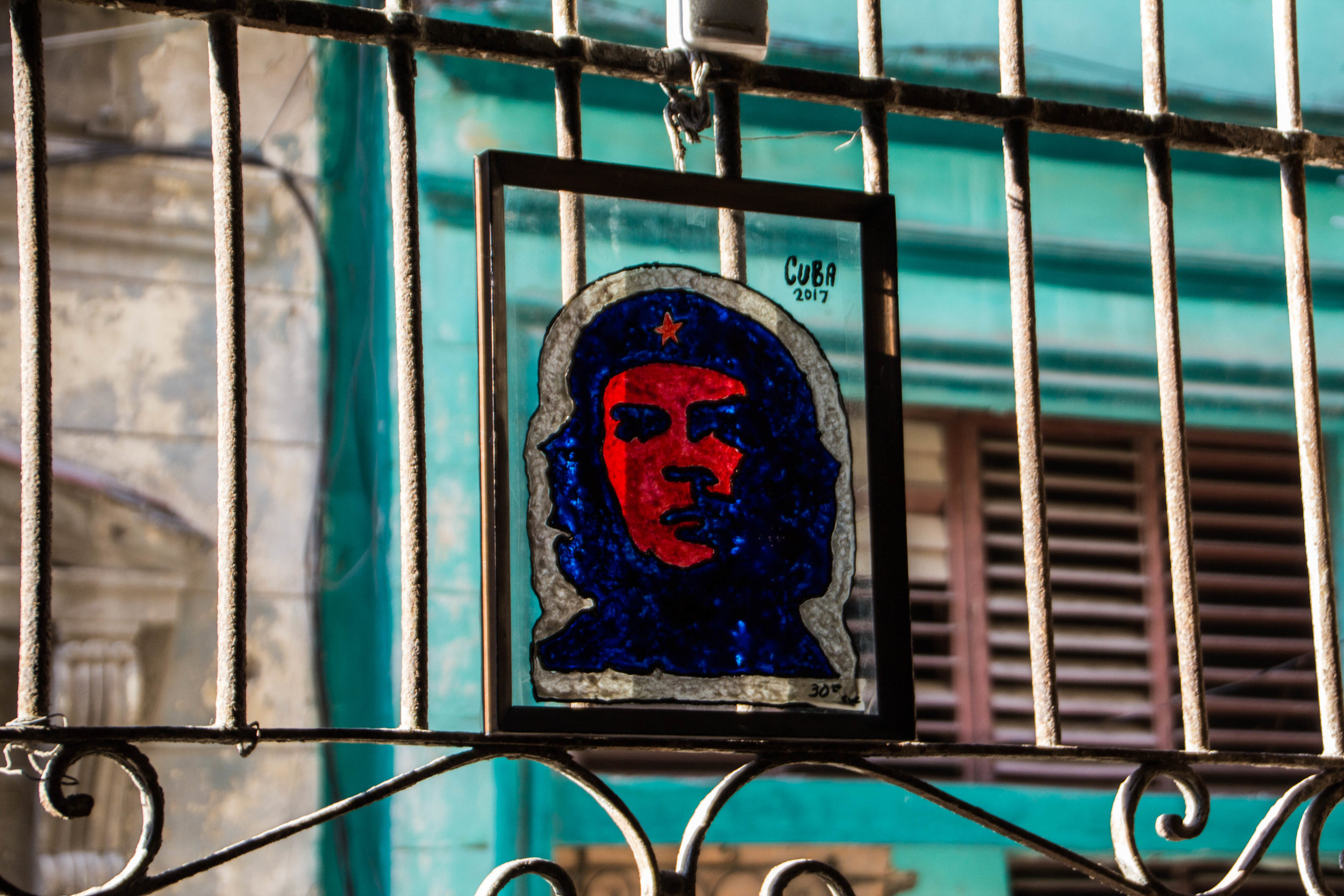
The time has finally come. It's time to talk politics. But before that, I'm going to take 2 minutes to make sure that everybody is up to speed on the Cuban Revolution.
The Cuban Revolution was one of the most unlikely success stories in modern history. Although fighting had been going on intermittently since 1953, it wasn't until 1956 that Fidel Castro (you've heard of him, right?) and 80 of his fellow rebels sailed a small yacht called the Granma from Veracruz, Mexico, back to their home country of Cuba...

From the craggily, black mountains, to the mossy green volcano-scapes, to the endless stretches of artic desert, to some of the world’s last glaciers, Iceland is the stuff of legends. And, as it turns out, Iceland has quite enough legends to go around!
Before leaving for this trip, a friend of mine, who had recently returned from her own journey to Iceland, loaned me a book called A Traveller’s Guide To Icelandic Folk Tales by Jón R. Hjálmarsson. Now that I’ve lived to tell the tale, I want to share with you some of the more compelling tales that (supposedly) occurred in the places that I visited on my trip.

Of all the amazing pieces of civilization subsisting out here in the Westfjords, none sparked my interest like these tiny Icelandic churches. These little structures were often the only sign of human life for miles in any direction. Each time we caught a glimpse of the small pointy steeple from our place on the road, we would come to a screeching halt and dive off down the nearest dirt road to explore. No two of these churches were the same. Each was completely unique, and a few of them had even been left unlocked!

During one of my rainy days in Sa Pa, one of the hostel workers told me about an organization that had just been initiated that allowed foreigners the chance to have a question and answer session with former Viet Cong soldiers, and interact with children who were growing up with disabilities caused by Agent Orange. I was beyond excited to hear that such an organization existed. This was going to be the real deal.

First off, what I’m defining as “Richmond” here is actually made up of 4 smaller districts: Inner, Central, and Outer Richmond… and a little area to the north called Lake Street. This neighborhood (or group of neighborhoods) is essentially a big grid system, which, despite occupying an extremely urban area of San Francisco, is surrounded on almost all sides by nature.

I should start by telling you that Gangi (pronounced "gan-chee") isn't *technically* a ghost town. It's actually trying REALLY hard not to be. In an effort to revitalize this town, the mayor of Gangi decided to start selling the vacant houses to outside investors for €1.00 a piece. This insane bargain comes with 1 string attached: that you will spend no less than 35,000 EUR (43,212-ish USD) to fix up the house within 5 years. Yes, this is 100% true, and if you want to, you really could buy one of these houses right now. Mull it over as you read this article.

Waking up in Dhaka I hear the ringing of bells on rickshaws, people yelling, and dogs barking. I am staying on the 9th floor of an office building that rises high over the slums on Dhaka’s southwestern outskirts. I look out the window, and I can see a rainstorm blowing in from the south. The Muslim call to prayer eerily wafts over the half-finished buildings all around me from the local mosques.
New York City not just one thing; the whole is formed of many thousands of individual threads woven and intertwined together. All of these parallel realities existing on top of each other is a big part of what makes New York so captivating… but some of these threads are more visible to the outside than others. One of New York’s most visible threads is its status as ground-zero for Italian-American culture. Yes, from Frank Sinatra to George Costanza, few immigrant communities in the US managed to balance the simultaneous integration with American society with the maintenance of a shared collective sense of identity like the Italians. Ironically, Italian-American culture has strayed hilariously far from actual Italian culture at this point; the two groups barely even claim each other at this point! But, within the U.S. at least, this shared homeland is a powerful unifier. Indeed, there are about 16 million Americans (~4.8% of the population) that have some level of Italian lineage, including yours truly. 🍕