
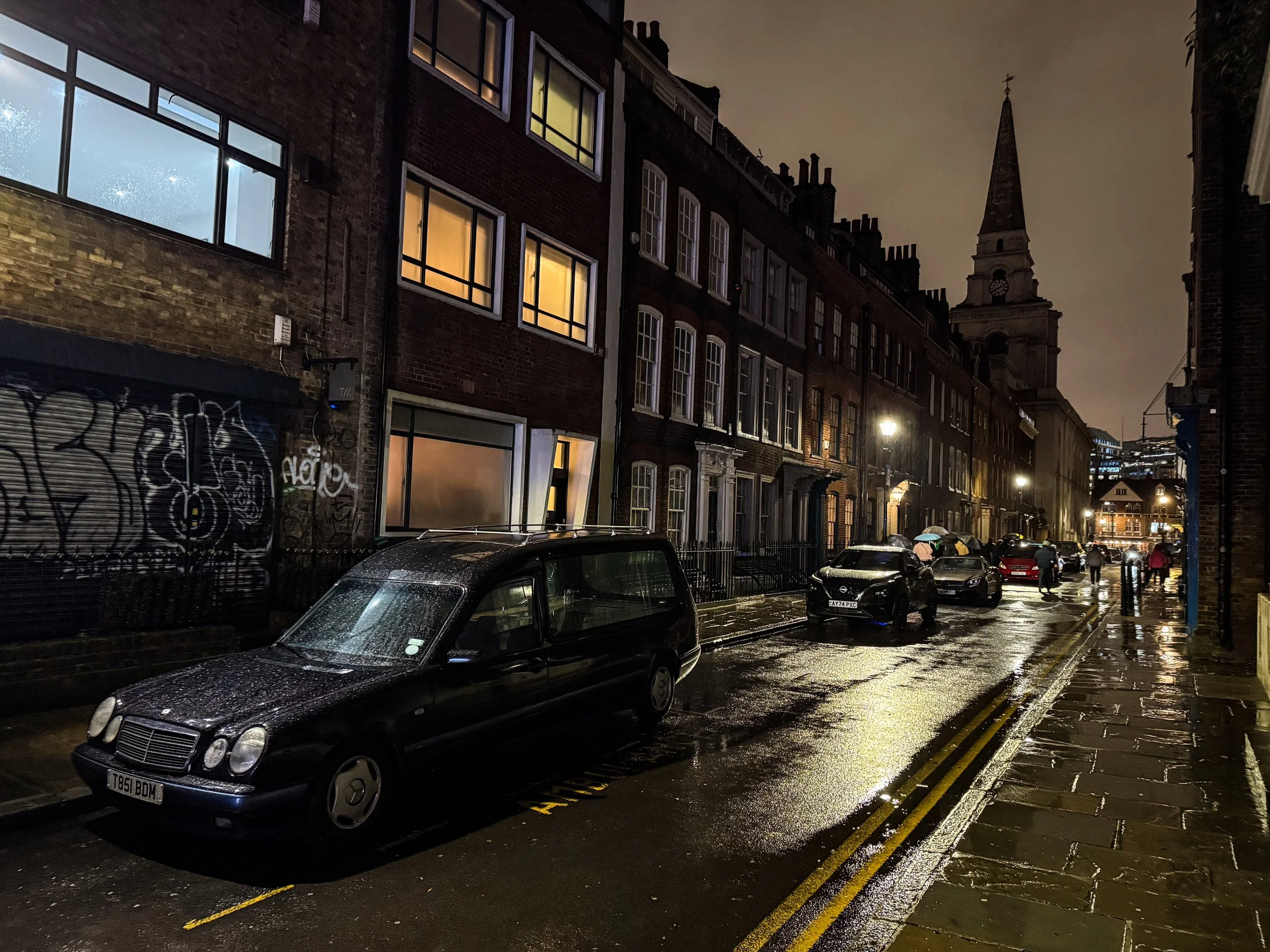
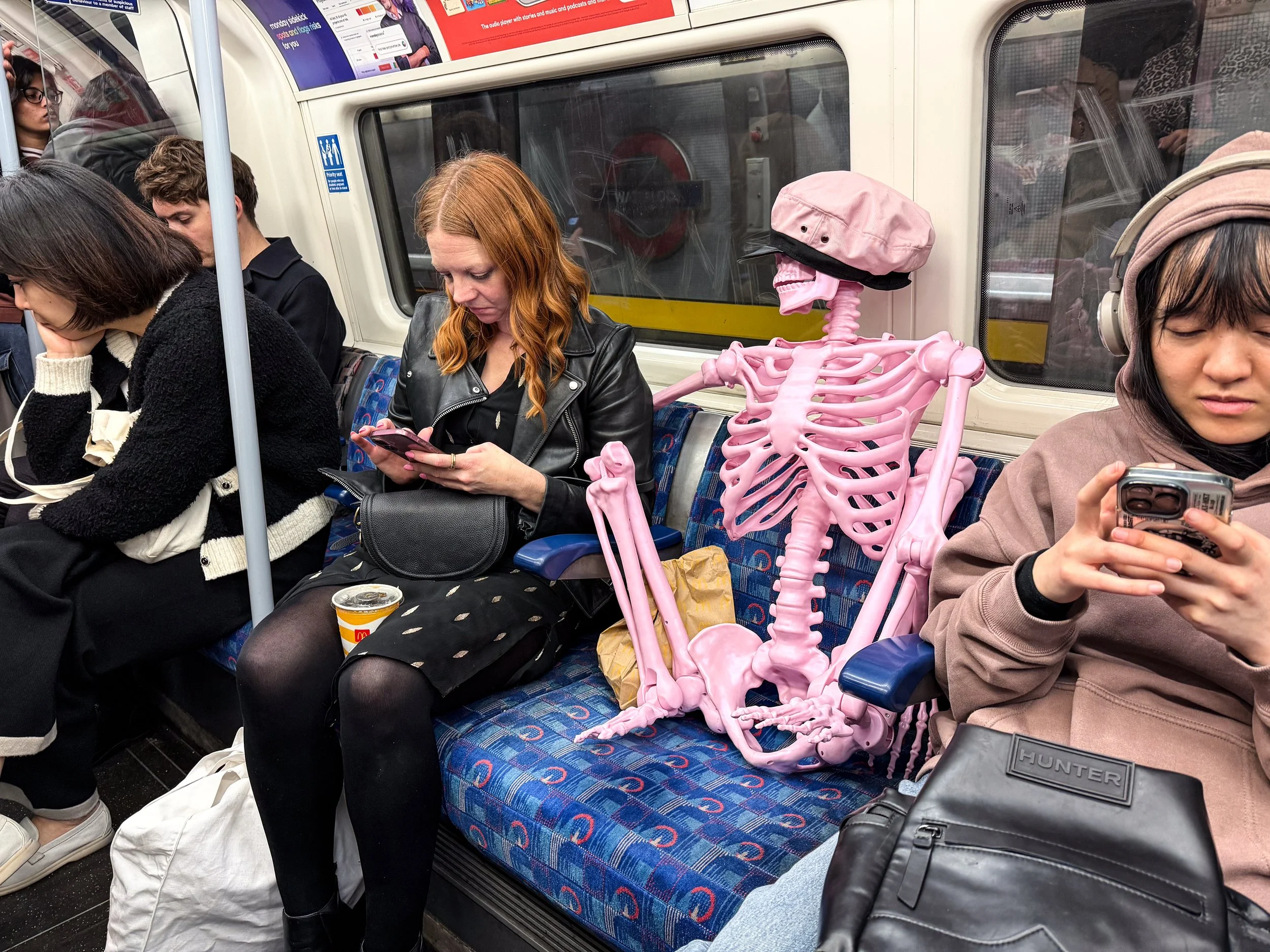
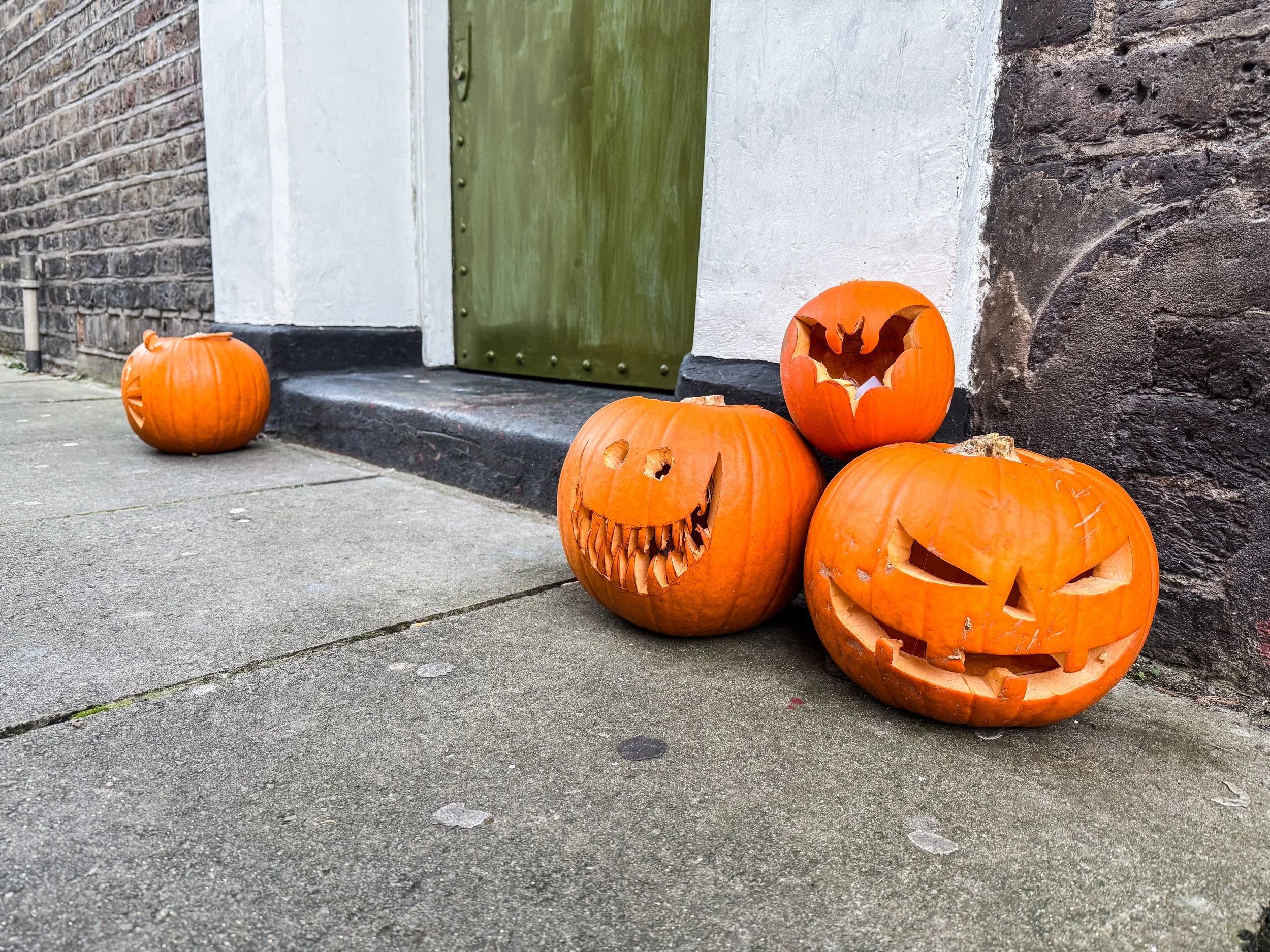
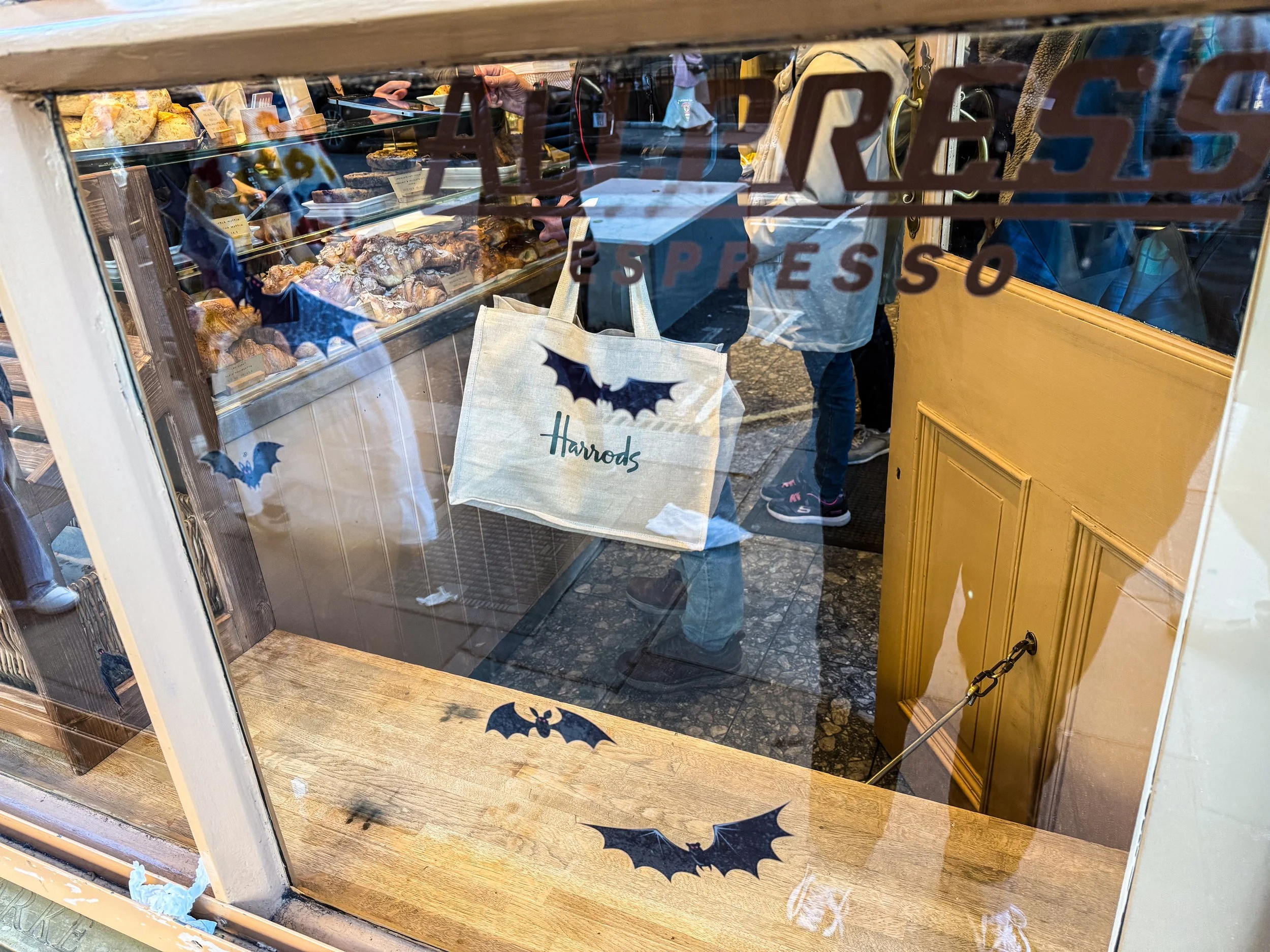
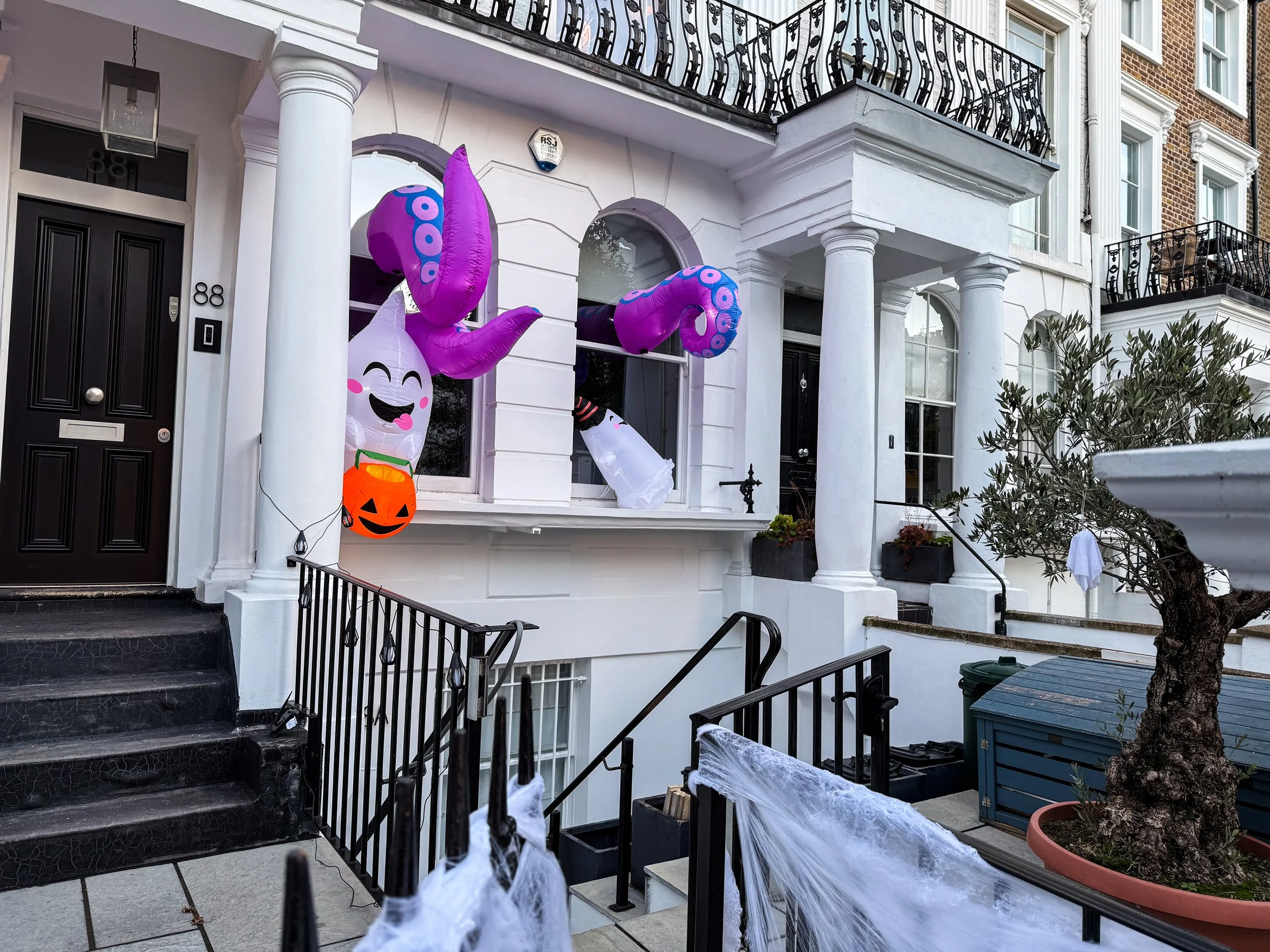
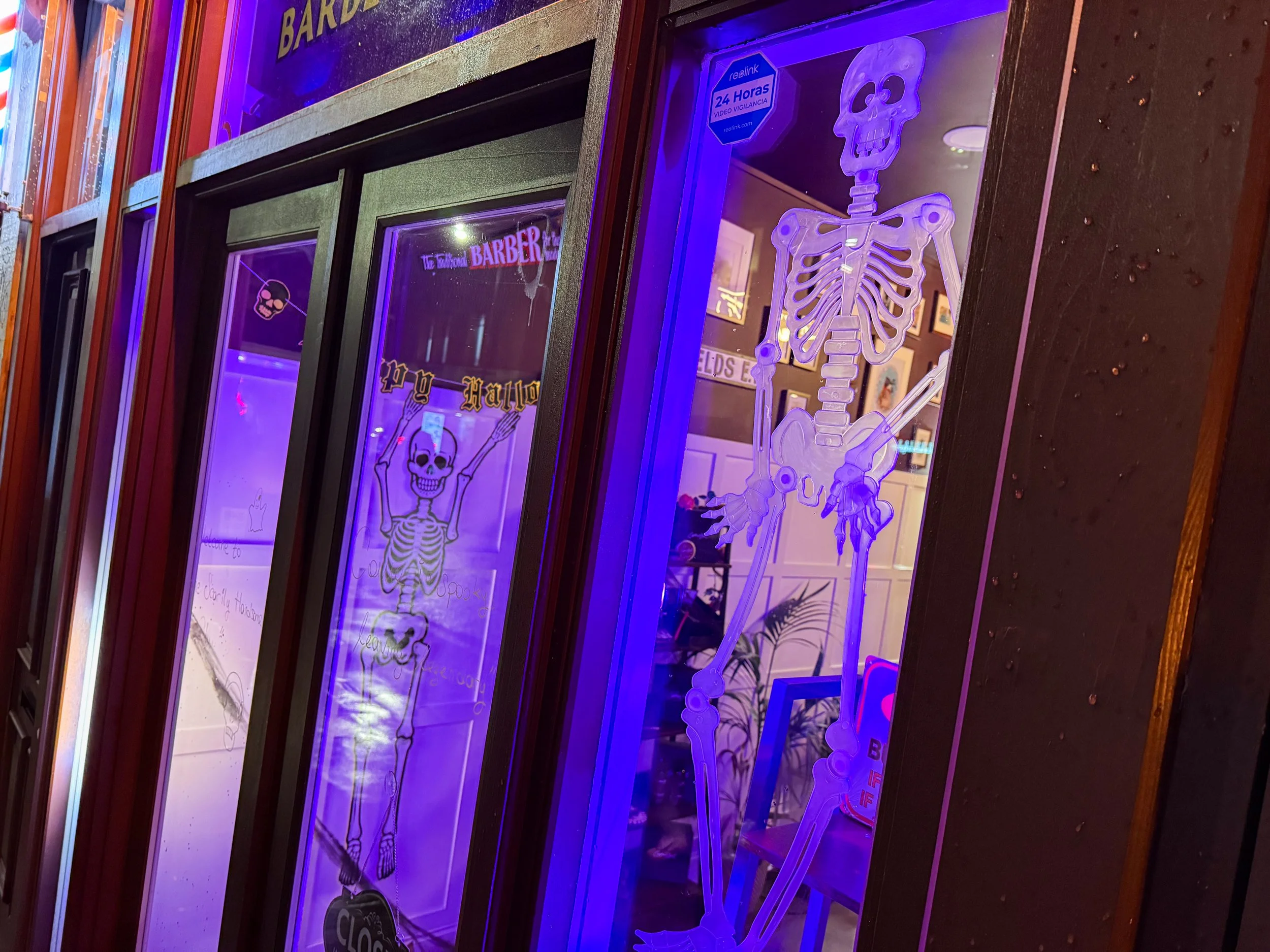
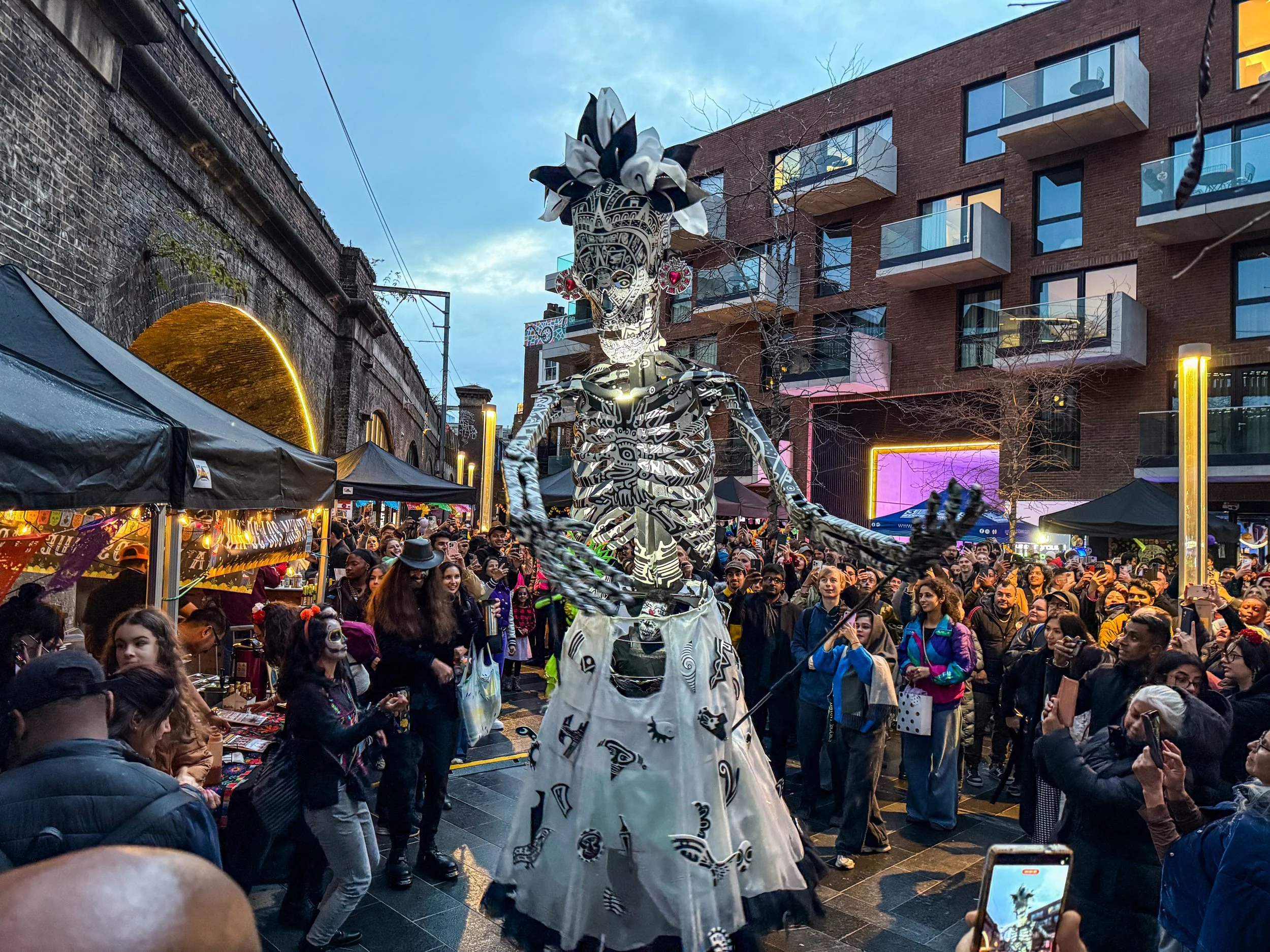
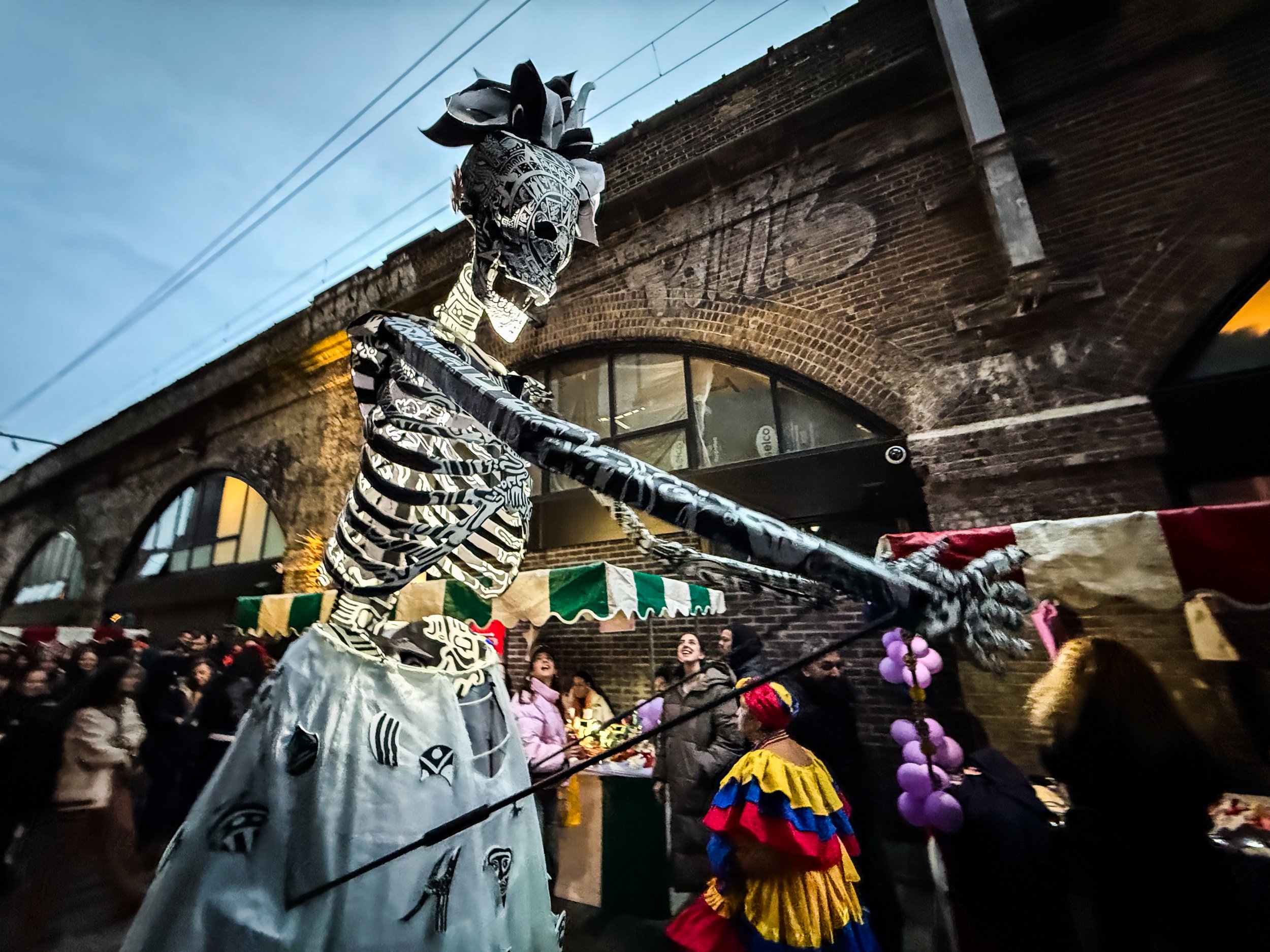
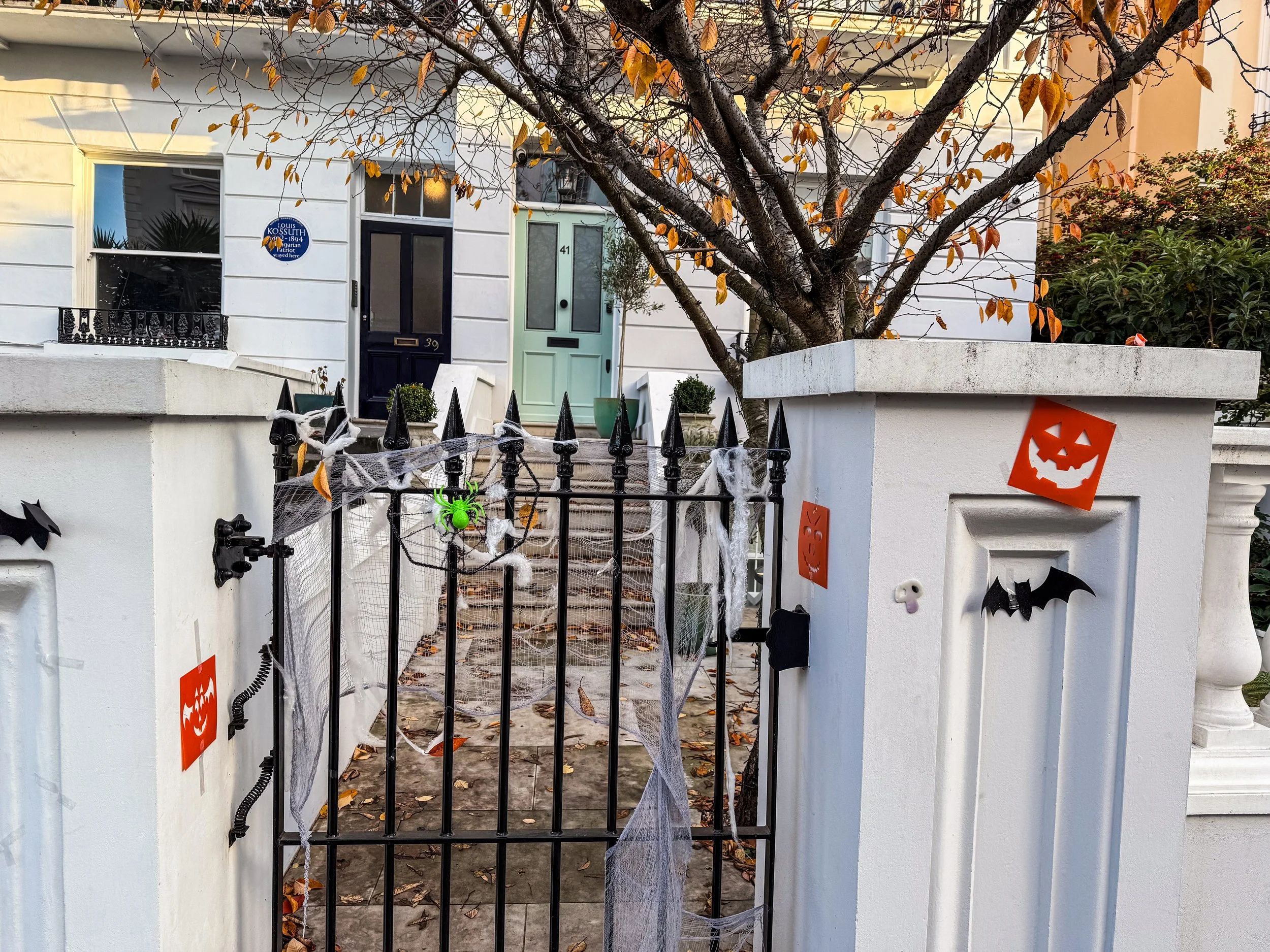
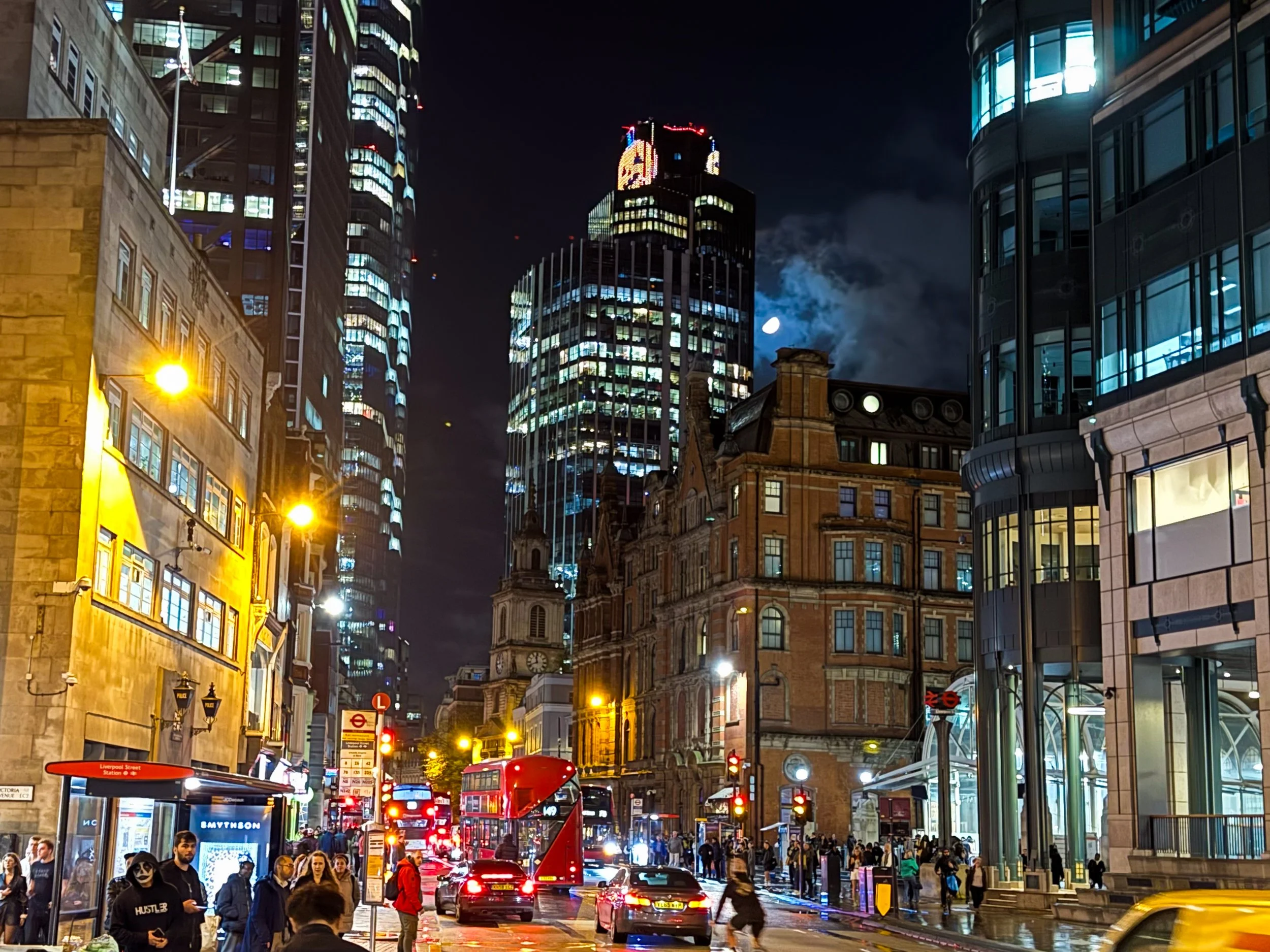
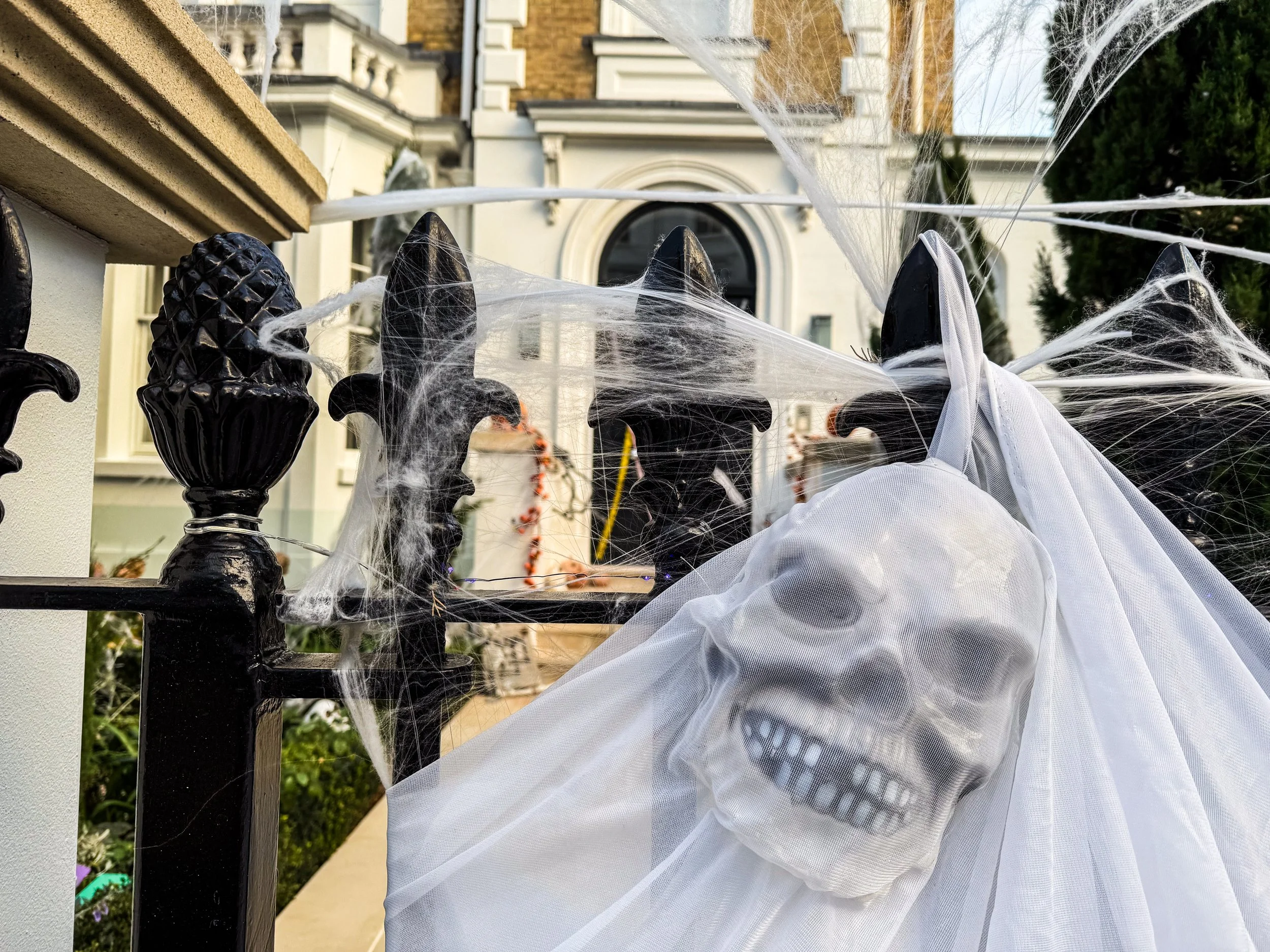
Fall in London! I love October. Halloween in Europe might not be quite on the level that it is back in the US, but London has taken a liking to it, so I still get to enjoy most of the same spooky magic every year. Here are a few snaps from the last few Octobers in London to set the mood for this article…
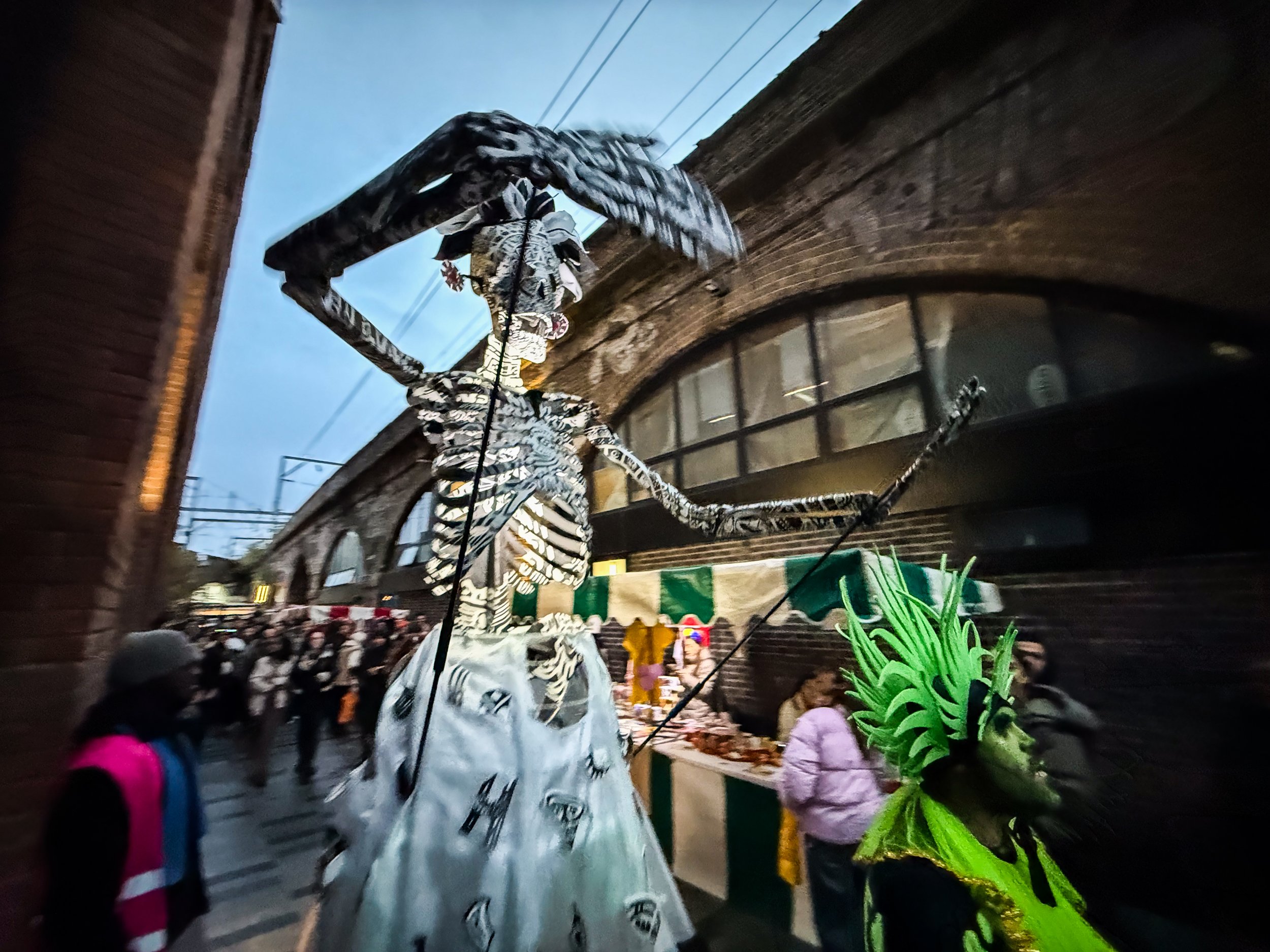

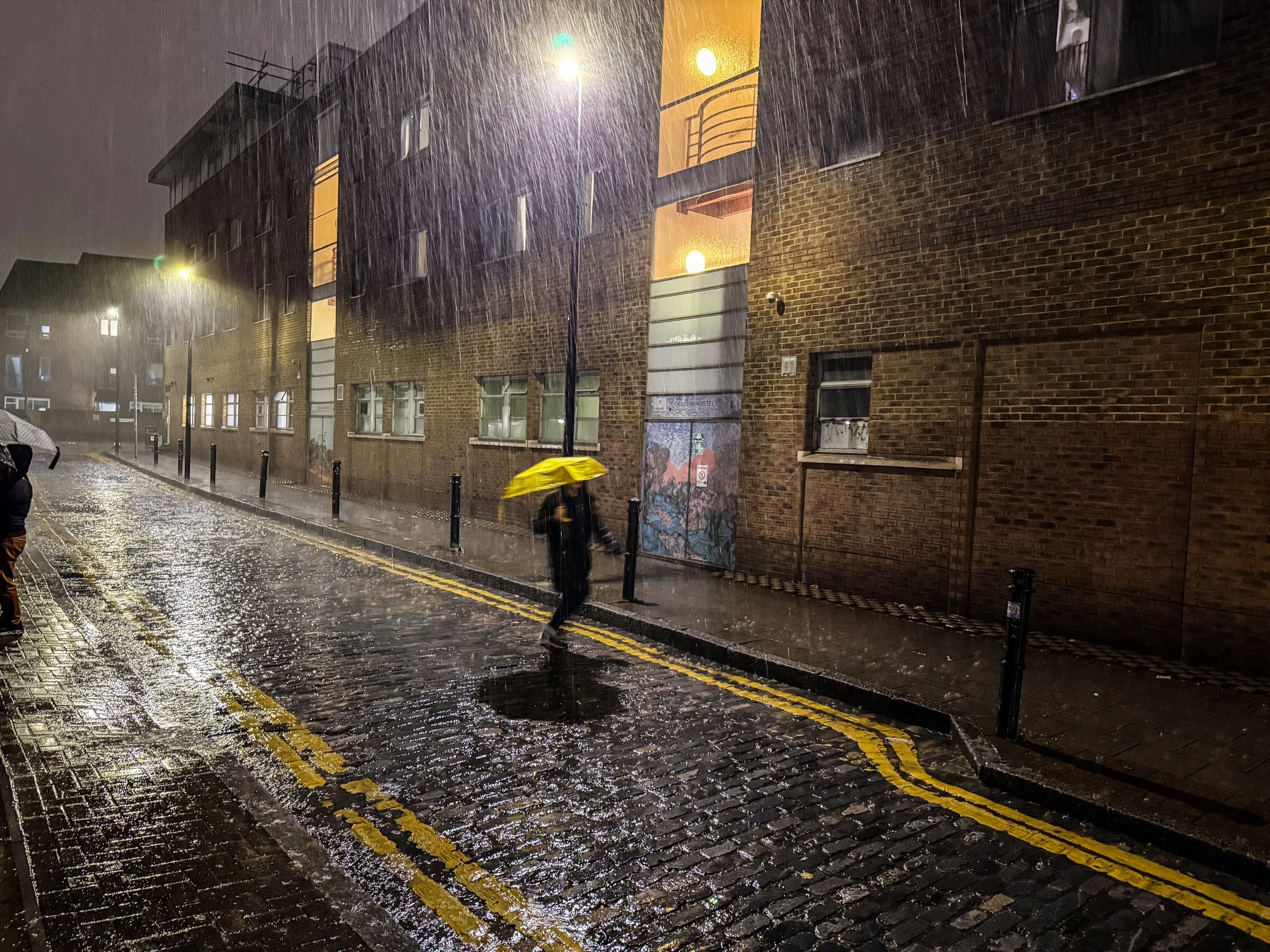
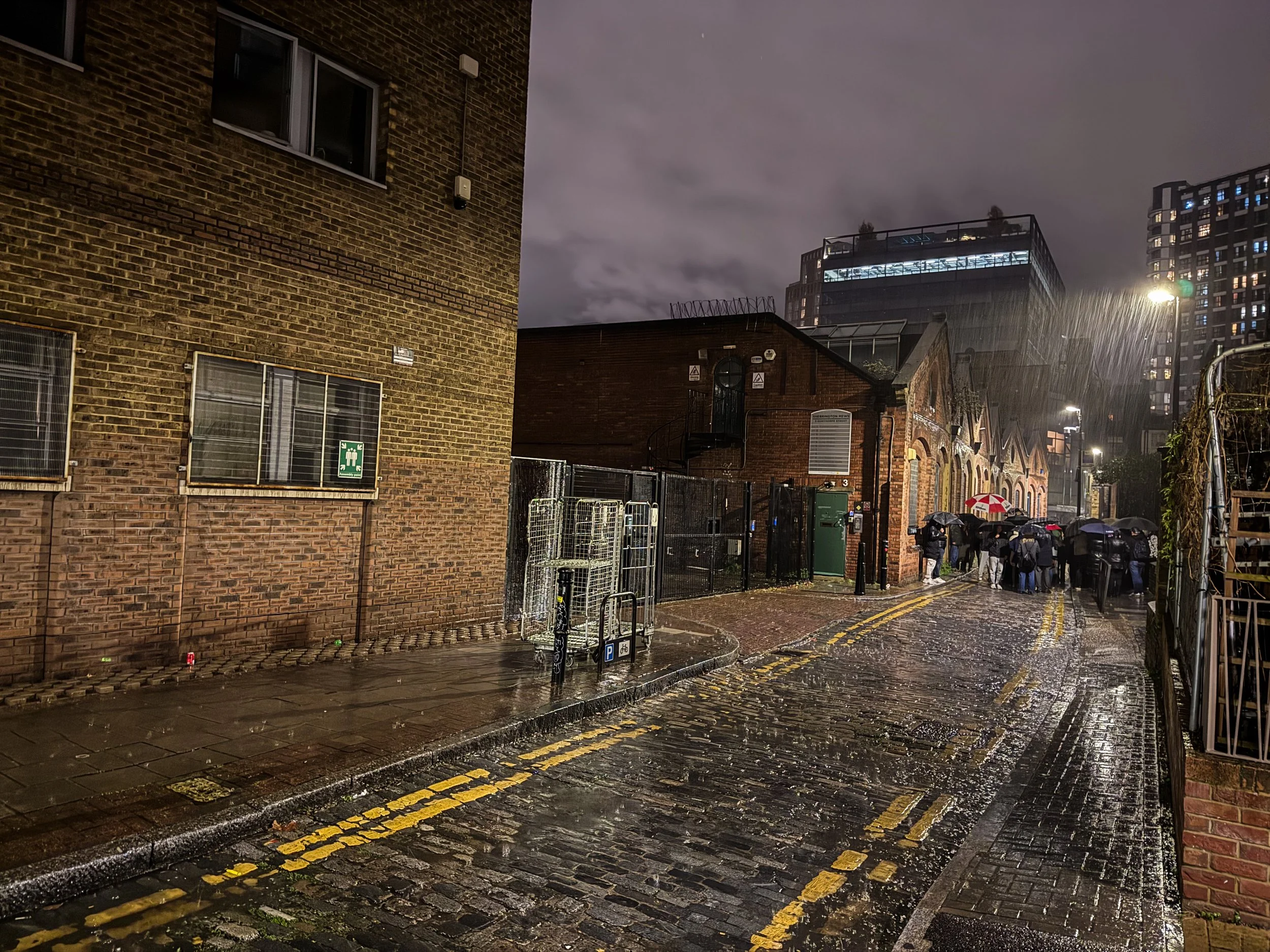
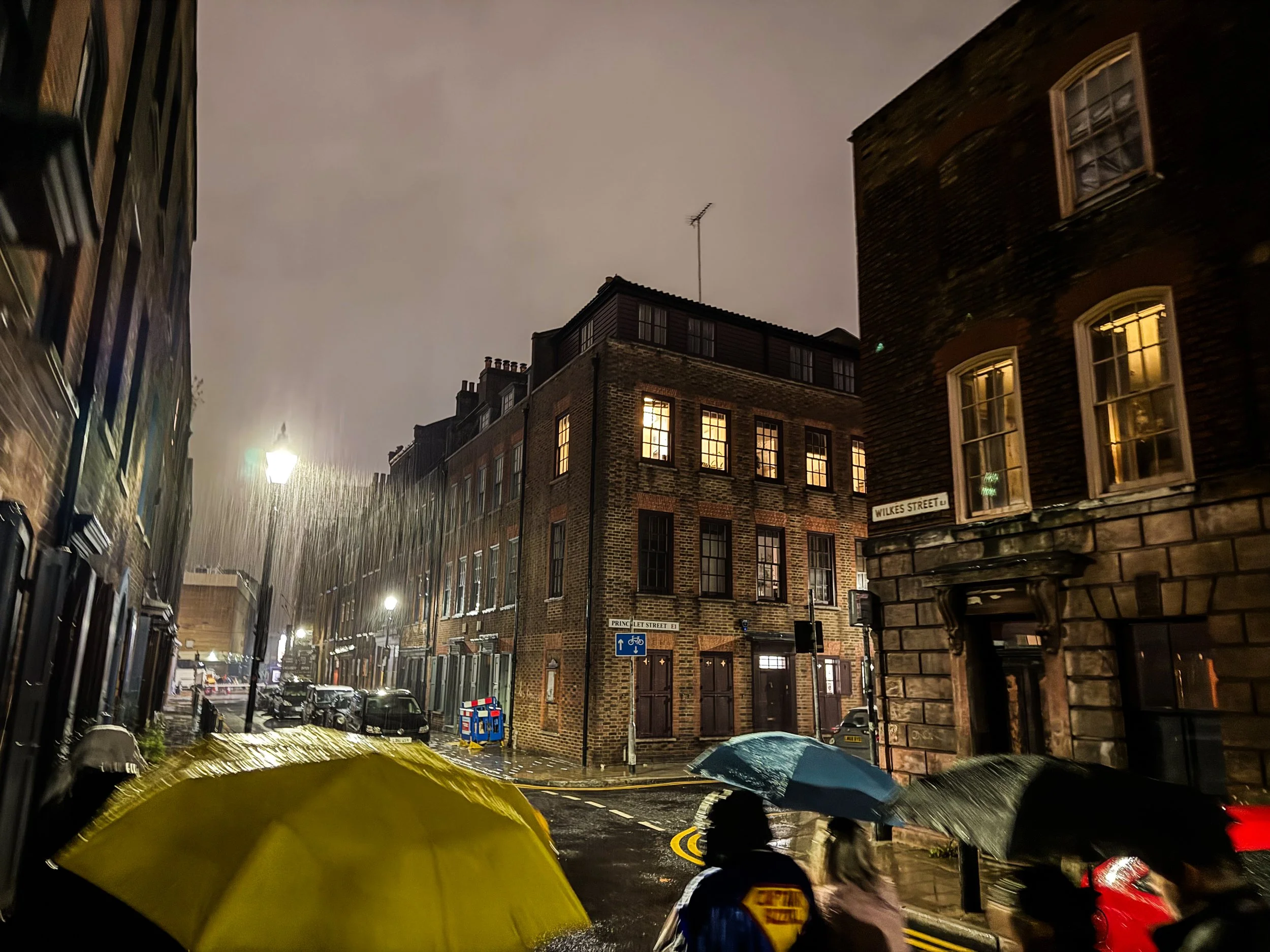
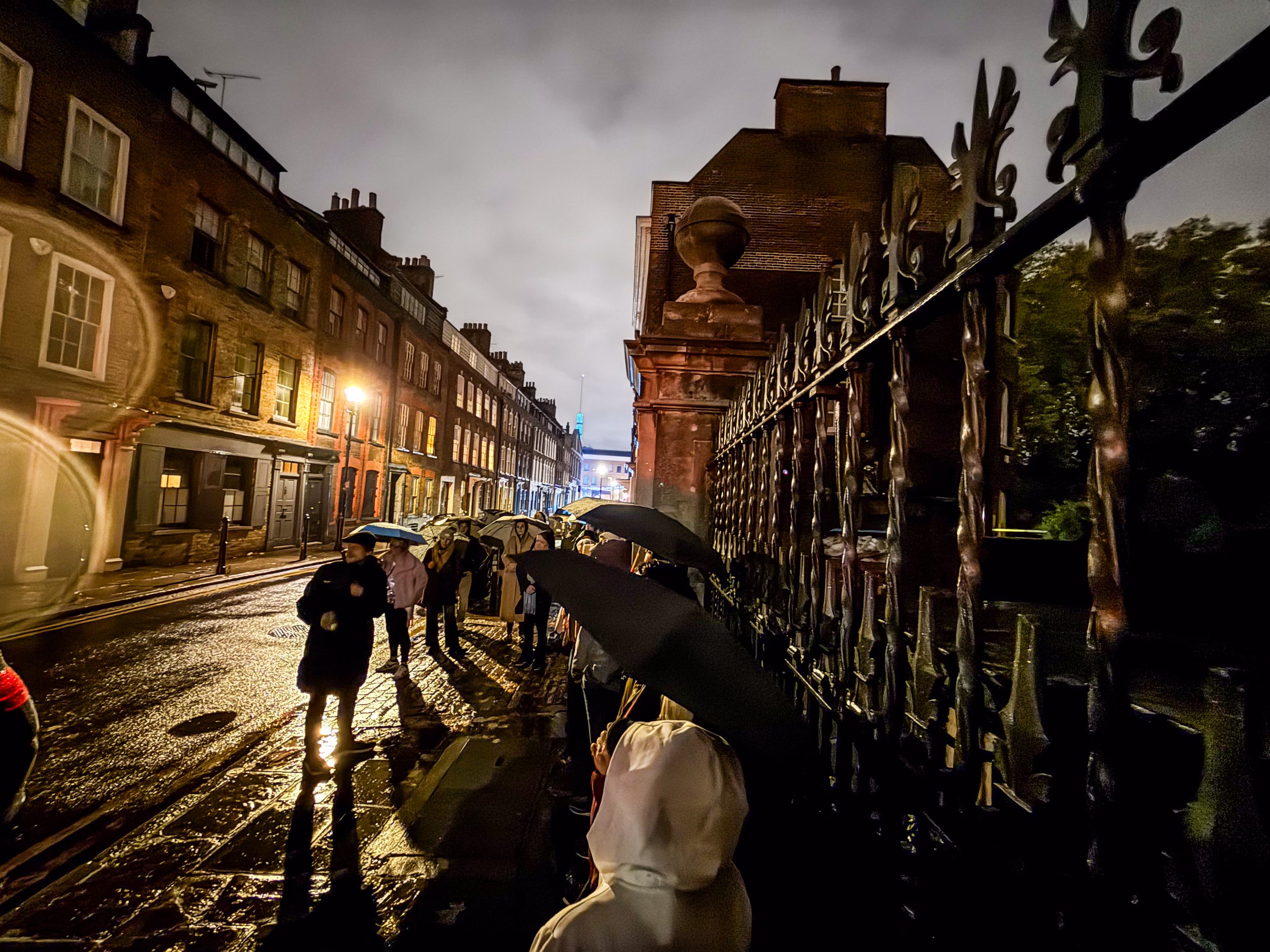
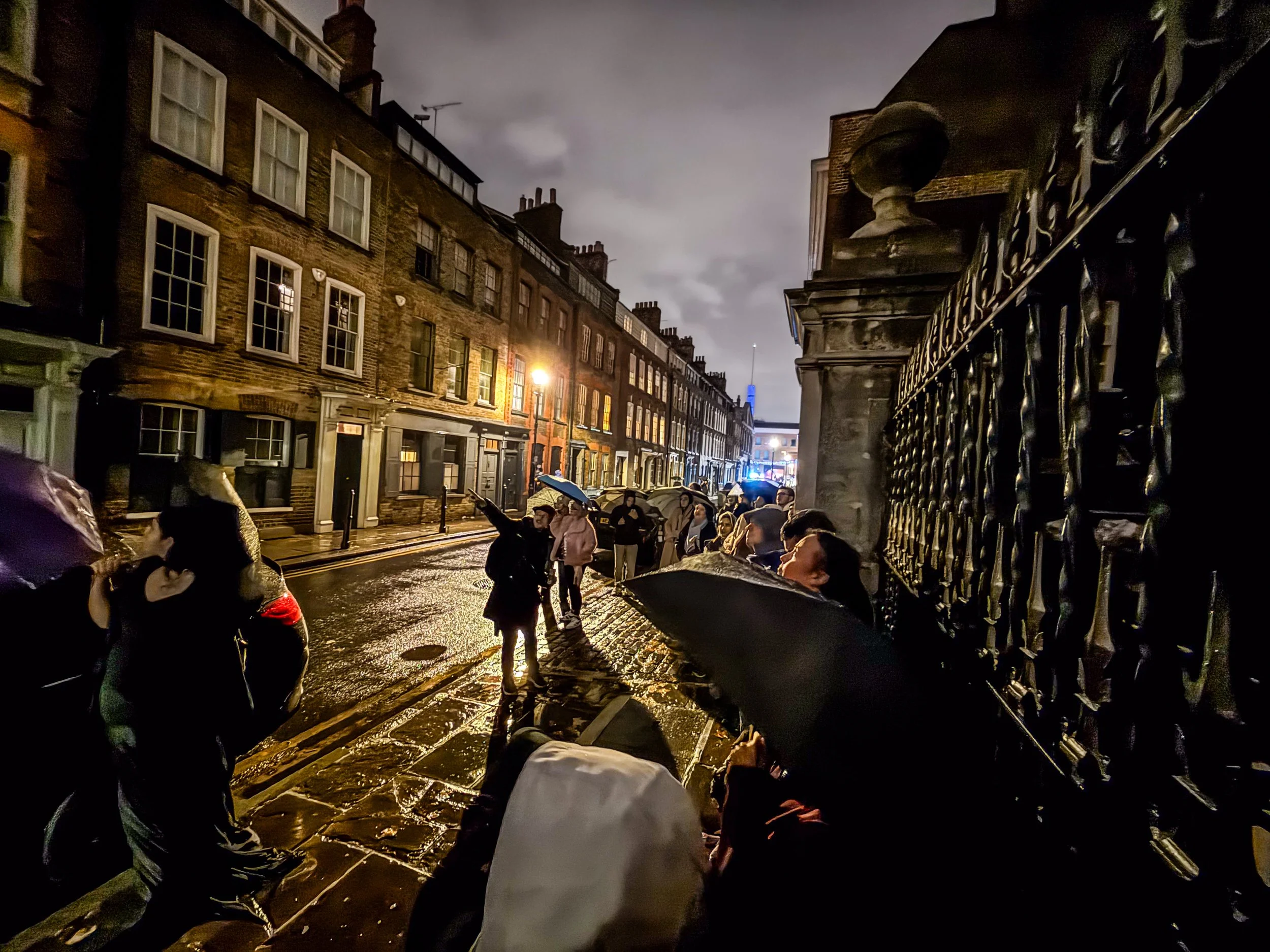
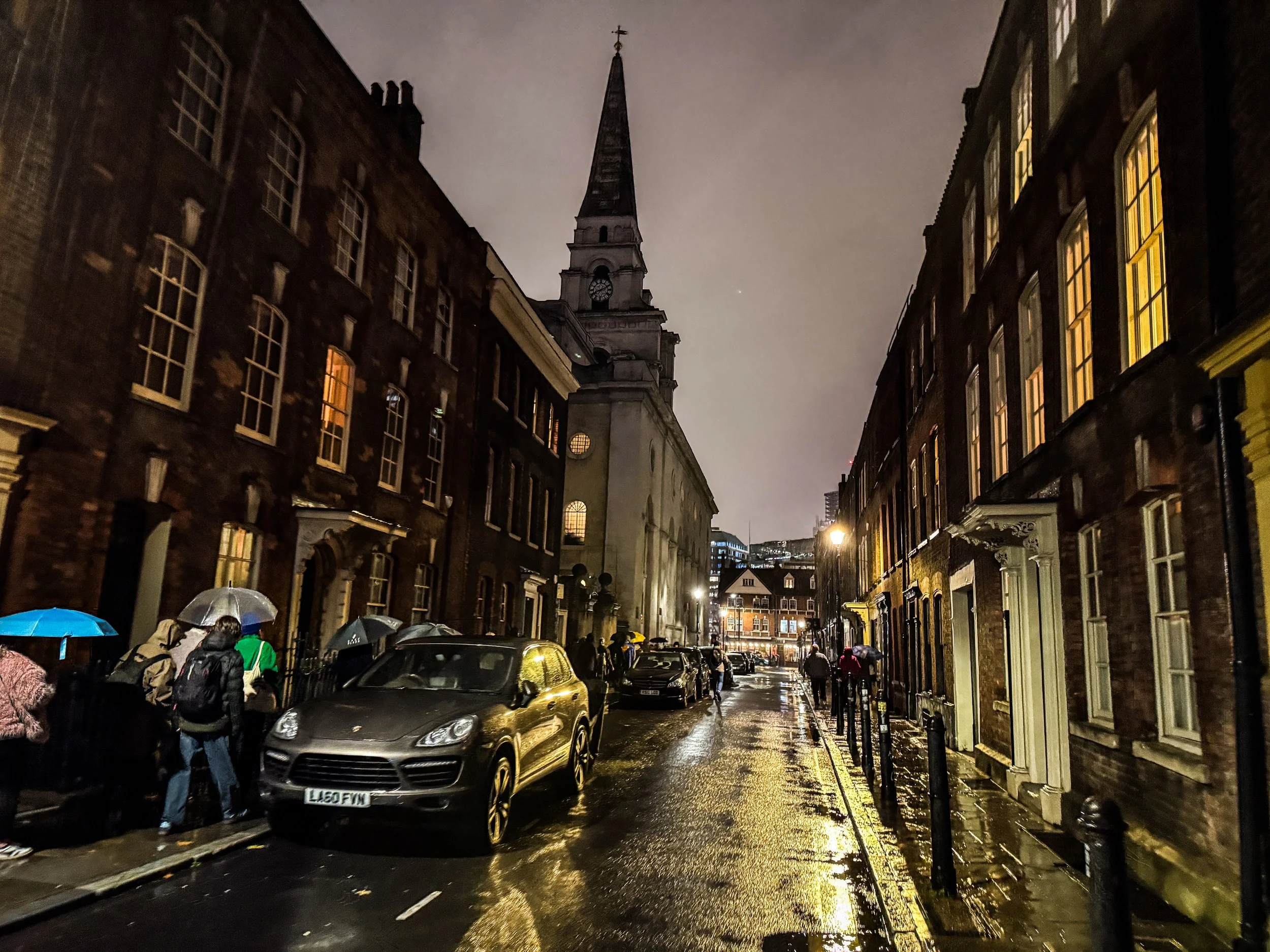
What better to do in London for Halloween than go on a late-night Jack the Ripper historical tour? That was the itinerary for Halloween 2025. On Halloween night, we put on our coats and hopped on the tube to meet our tour group in Whitechapel (East London). And, as our tour embarked, it began to rain about as intensely as I’ve ever seen in London. It was torrential; it was raining cats and dogs. The roar of the rain hitting the pavement, initially, was so loud that our guide had to yell to be heard. It prompted some questions about whether we’d finish the tour… but in a weird way, the rain actually added to the spookiness of the experience. “‘T’was a dark and stormy night” and all that? Plus, this is London: one of the most famously rainy cities in the world. There could be no denying that this was, in fact, a vibe. So, fuggit, we were in.
The Story of Jack The Ripper
(Reader Discretion Advised)
Jack the Ripper committed a string of 5 murders over a 10-week period in the autumn of 1888, in the then-impoverished East End of London. Specifically, this all went down in and around an area called Whitechapel.
But before we get to the murders themselves, let’s quickly set the scene: In 1888, Queen Victoria was 69 years old, and had been on the English throne for 51 years. Britain was THE dominant imperial power in the world, and, accordingly, London was extremely wealthy. But it was also extremely unequal.
The East-West divide in London separated extreme wealth from extreme poverty. On the west side, there were large houses, private clubs, fashionable shops, theaters, elaborate dinners, all powered by an army of servants and horse-drawn carriages. Meanwhile, on the east side, people largely worked in poorly paid, insecure jobs, such as dock labor, workshops, tailoring, laundry, street trading, furniture making, etc. They often lived in overcrowded lodging houses where they suffered from malnutrition, infectious diseases, and inadequate sanitation: all things that had seen improvement in recent decades but remained major issues here in the East End. The air typically smelled of coal smoke, horses, cooking, and the other varied chemical emissions of industries operating nearby. Combine this polluted air with London’s iconic fog, and the visibility here—especially in damp weather—was often quite limited.
As always in this sad life, women had it worse: they might earn money from sewing, cleaning, selling goods, or working odd jobs, but it was often a precarious existence, wherein becoming ill, losing a partner, or just having a run of bad luck without locking down reliable work could quickly result in homelessness. And, in Whitechapel, where these murders took place, violence against women was already a serious problem. I tell you this because all 5 of Jack the Ripper’s victims were women living in poverty. However, before we get into what happened in autumn 1888, let’s first remember that these women all had friends, families, partners, people they loved, people who loved them, and they had hopes, dreams, and fears of their own as well. The timing of their lives would have appropriate for them to have been something like my great-great grandmother. I want to pause on this for a moment, because in talking about true crime—especially through the lens of Halloween—our fatal fascination can sometimes put us at risk of giving some sort of dark glory to the offenders and dehumanizing the victims. And that is certainly not my intent today.
With that said, let’s talk about the murders. What makes this string of murders so morbidly captivating is (1) they were unusually daring, as all of them were committed in crowded areas, with lots of people nearby, (2) there is a clearly observable escalation in the brutality and depravity of the murders, as you will soon see, and (3) as you may already know, the killer was never caught.
I’ll be interspersing the historical accounts with details of our tour, because our scrawny guide’s efforts to maintain a dramatic, ominous, YouTube-documentary-narrator voice juxtaposed against the trying circumstances of giving a tour in a rainstorm actually provided some comic relief to this disturbing tale. At all times, it felt like he was a summer camp counsellor, telling his campers stories at the bonfire with a flashlight illuminating the underside of his face.

Here are the 5 murders that cemented Jack the Ripper into true crime lore…
31 August 1888 – Victim 1: Mary Ann Nichols (a.k.a. Polly)
Polly was 43 years old in 1888; she had five children and had experienced marital separation, poverty and unstable accommodation leading up to the time of her murder. Polly was found in Buck's Row, Whitechapel (now Durward Street) around ~3:40 a.m. This was basically a small alley. Her throat had been cut and she’d sustained several stab wounds to the abdomen. A grisly murder, but the tamest of the 5. The killer will escalate from here.
“Guys, please join me in wishing a ‘rest in peace’ to Mary Ann Nichols” our guide shouted over the roar of the rain.
8 September 1888 – Victim 2: Annie Chapman
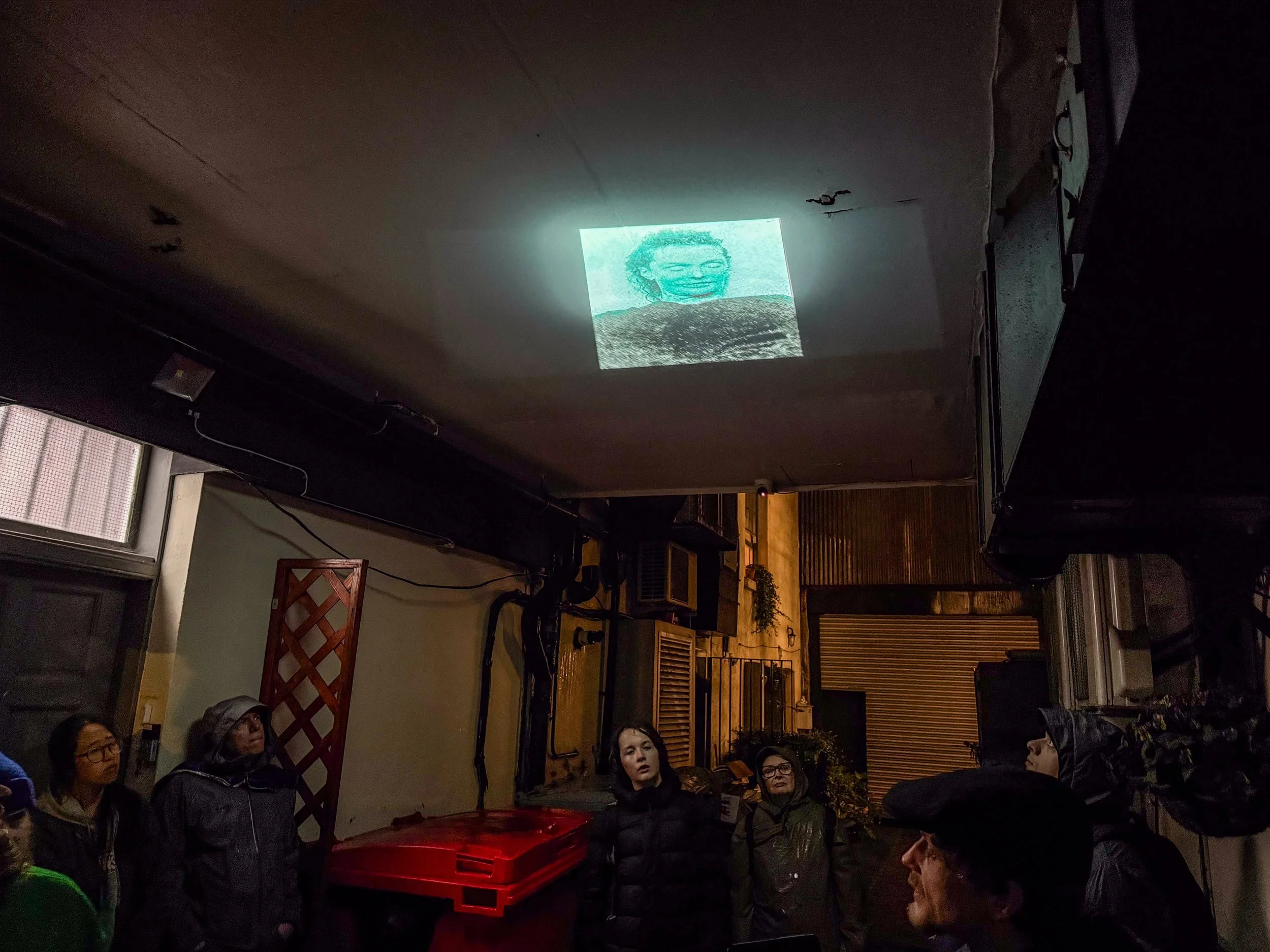
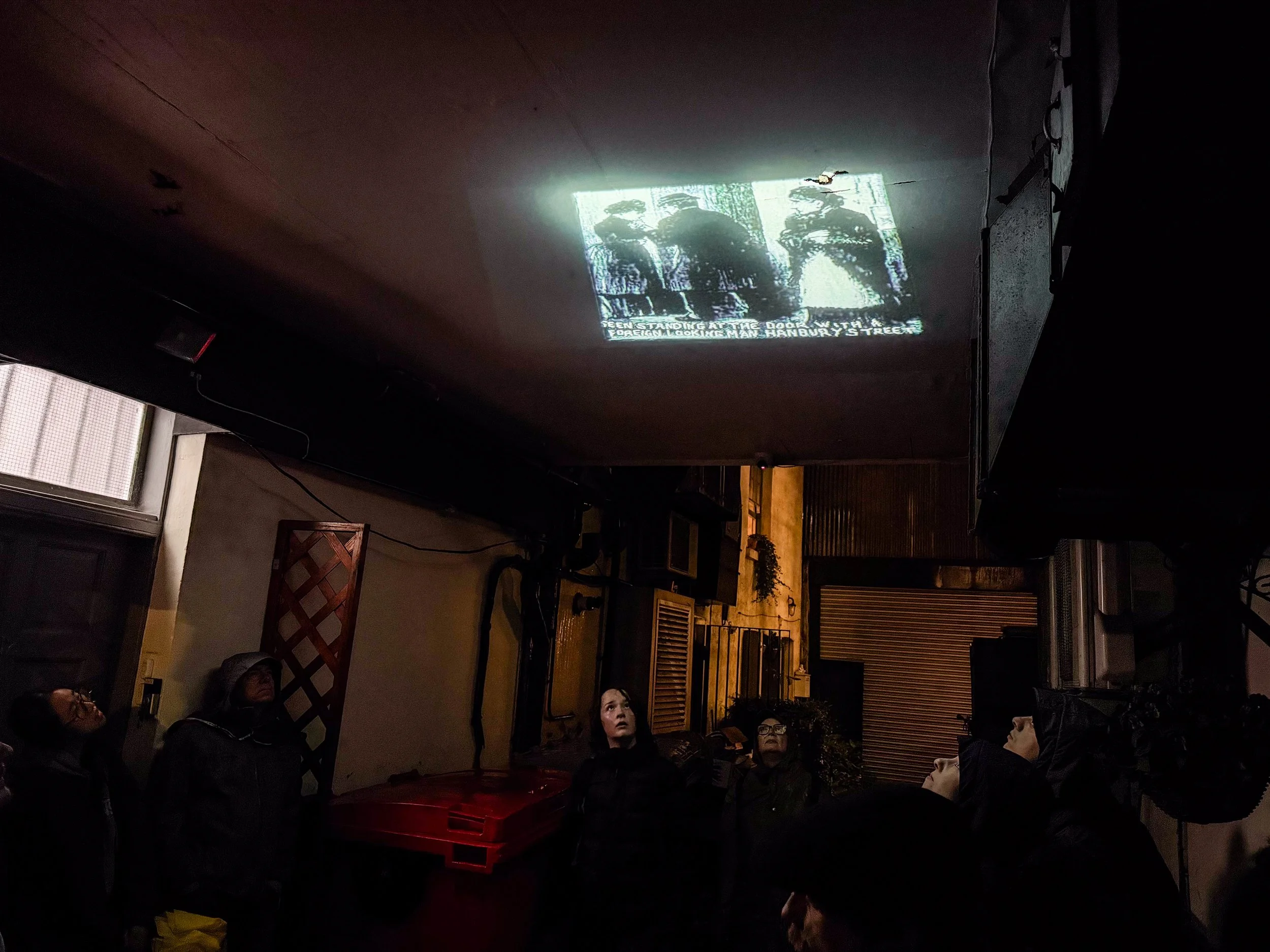
47 years old at the time of her murder, Annie had previously been married and had children. However, her marriage had ended and her circumstances had deteriorated considerably since then. She was found in the backyard of 29 Hanbury Street, Spitalfields. So, this is also outside, behind a building. As was the case with Polly, her throat had been cut. However, her abdomen didn’t just have stab wounds; it had been severely mutilated, with even some internal organs having been removed. 😬
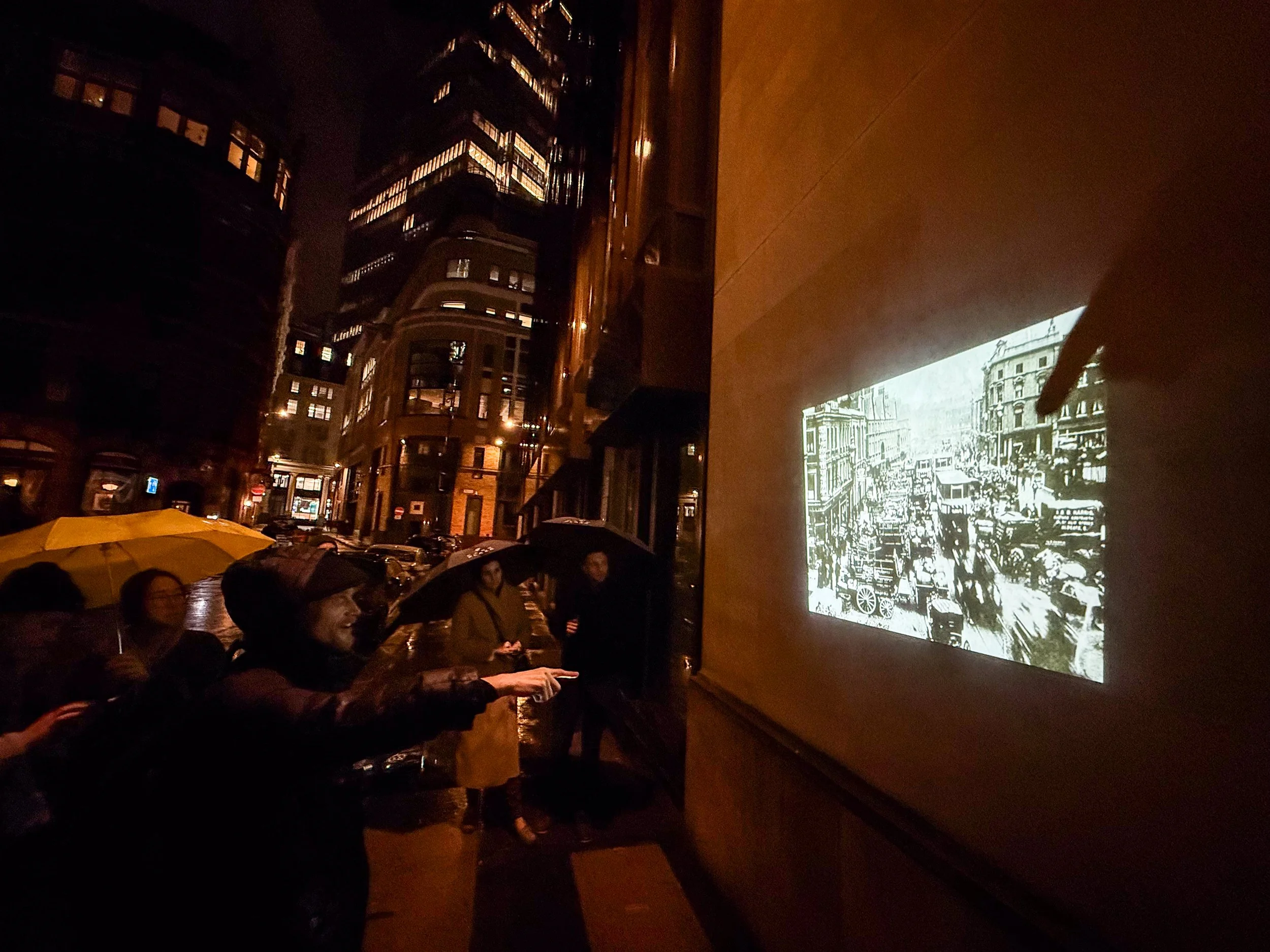
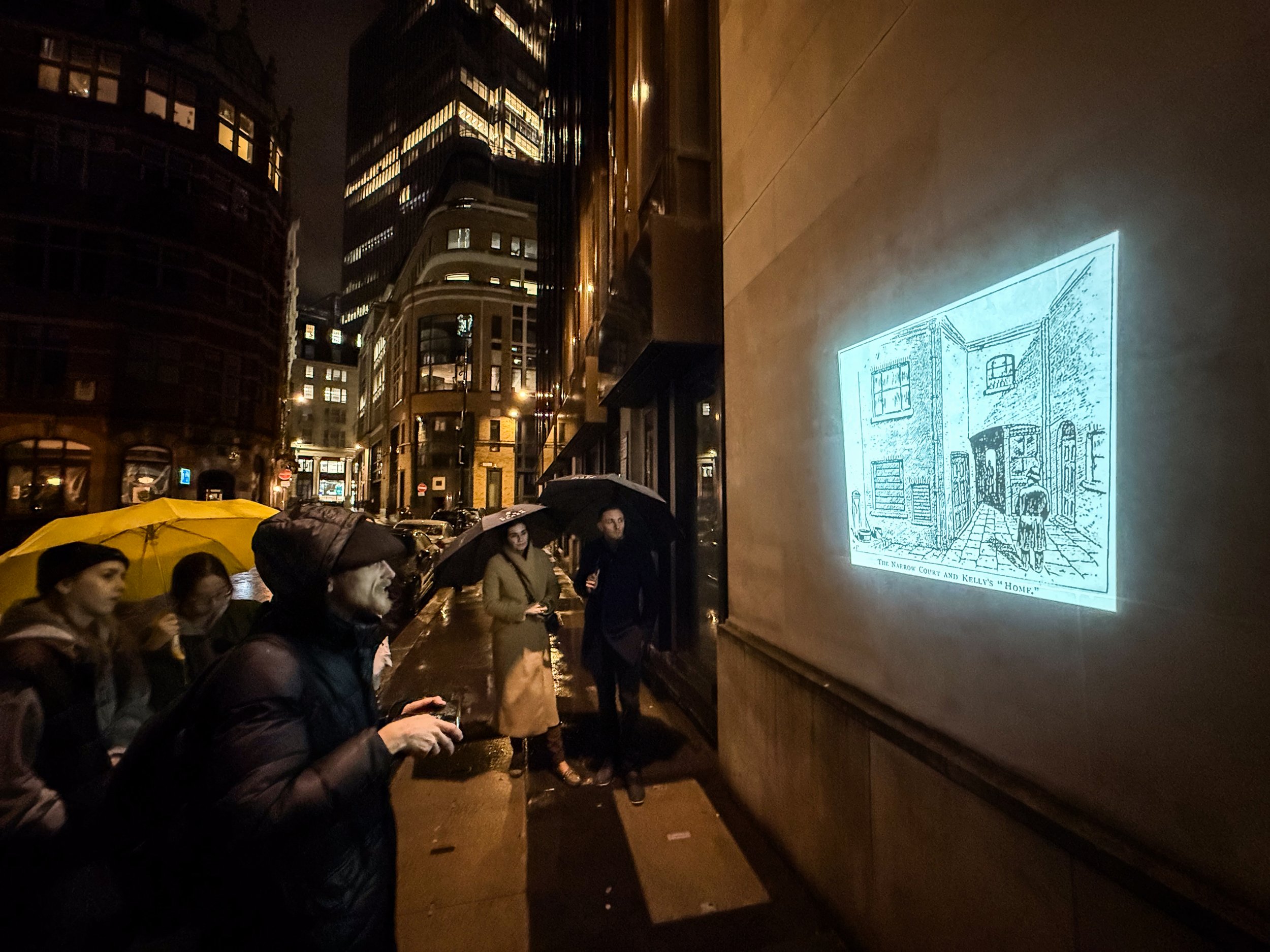
“’Rest in peace’ to Annie Chapman” our guide said theatrically, dripping wet and pointing his portable projector at the ceiling of an industrial overhang he’d found to shield us from the rain.
30 September 1888 – Victim 3: Elizabeth Stride
Elizabeth was 44 years old in 1888; she was actually born in Sweden, but moved to London in her early 20s, getting married and subsequently divorced. She’d since fallen into poverty. She was found in Dutfield's Yard, off Berner Street (now Henriques Street). So, once again, this happened outdoors, in public. Her throat had been cut, but she had not suffered the same sort of mutilations as Annie. One theory is that the killer was interrupted before he could mutilate her, causing him to flee the scene. This is supported by the fact that the next victim came that same night. Perhaps, the killer went looking for another way to get his fix that night? Or, perhaps this wasn’t a victim of Jack the Ripper at all, but the timing and location just happened to coincide.
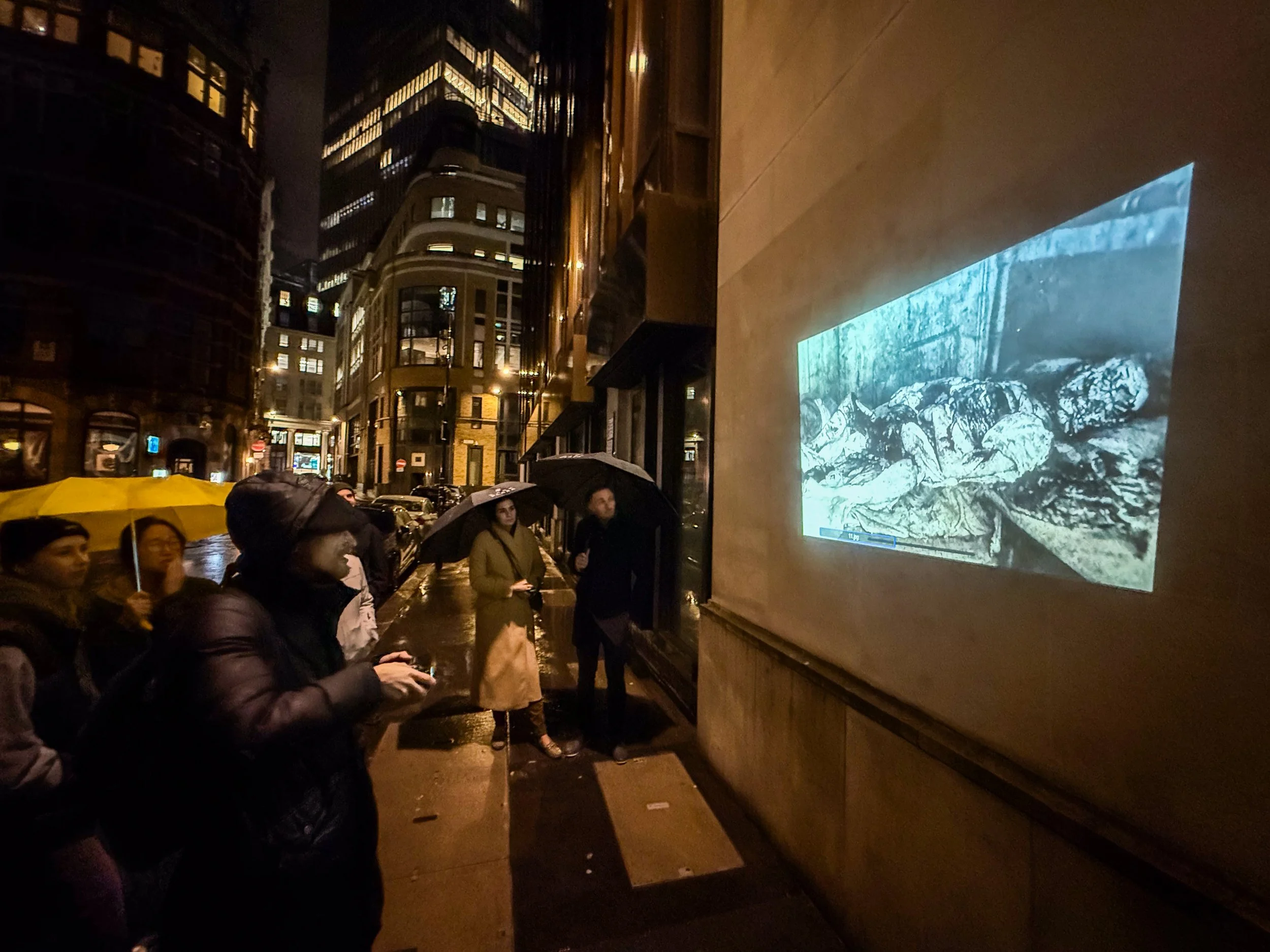
“’Rest in peace’ to Elizabeth Stride” our guide said with newfound calm as the rain’s intensity began to fade, his damp projector pointed at the side of a building near Shoreditch showing an image of Elizabeth’s corpse.
30 September 1888 – Victim 4: Catherine Eddowes
THE SAME NIGHT. Catherine’s body was found just 30 minutes after Elizabeth’s, in Mitre Square. As always, her throat had been cut, but this time the killer had managed to see his ritual mutilation through to its gruesome conclusion. She’d had her abdomen cut open as well, with even more of her organs removed. In addition, she’d sustained extensive facial injuries. Catherine was 46 years old at the time; she had three children and lived with her partner, John Kelly. No doubt an unimaginably traumatizing event for the family.
“Please join me in saying ’rest in peace’ to Elizabeth Stride” our guide said dramatically, his cold wet hands still clutching the portable projector, which cast a grisly black and white image of Catherine’s body on a random brick wall.
9 November 1888 – Victim 5: Mary Jane Kelly
This is the really gruesome one, and the only murder committed behind closed doors. Was the depravity of this crime simply a function of the killer having more time? Or was this part of the escalation? Maybe both?
We don’t know nearly as much about Mary as we do the other victims. From her ex-boyfriend (they’d broken up just 10 days before the murder) we know that she was 25 years old, and Irish-born (although she had been raised mostly in Wales). She lived in a small, ground floor room where she was behind on her rent. The last time she was seen alive was by a neighbor who testified that she’d arrived home to her room drunk with a short, fat man that had a blotchy face and a reddish mustache (she’s known to have been engaging in prostitution at this time). At 1am, the same neighbor reported that Mary’s window was still lit, and that she could be heard singing… so I think we can assume everything was still fine at this point. By 2am, she had supposedly finished up with this man and left her room again. And THIS, supposedly, is where Jack the Ripper enters the story.
A little after 2am, she approached a man and returned to her room with him. A neighbor saw this and described the man, in what is now the most well-known description we have of Jack the Ripper (although there is some doubt as to its legitimacy). He was described as approximately 34–35 years old, with a dark moustache, expensive-looking clothing, a gold watch chain, and a dark coat with astrakhan trim. In short, he was unusually well dressed. I asked ChatGPT to mock up an image of him based on this description. Then I asked it to make him scarier. These were the results.
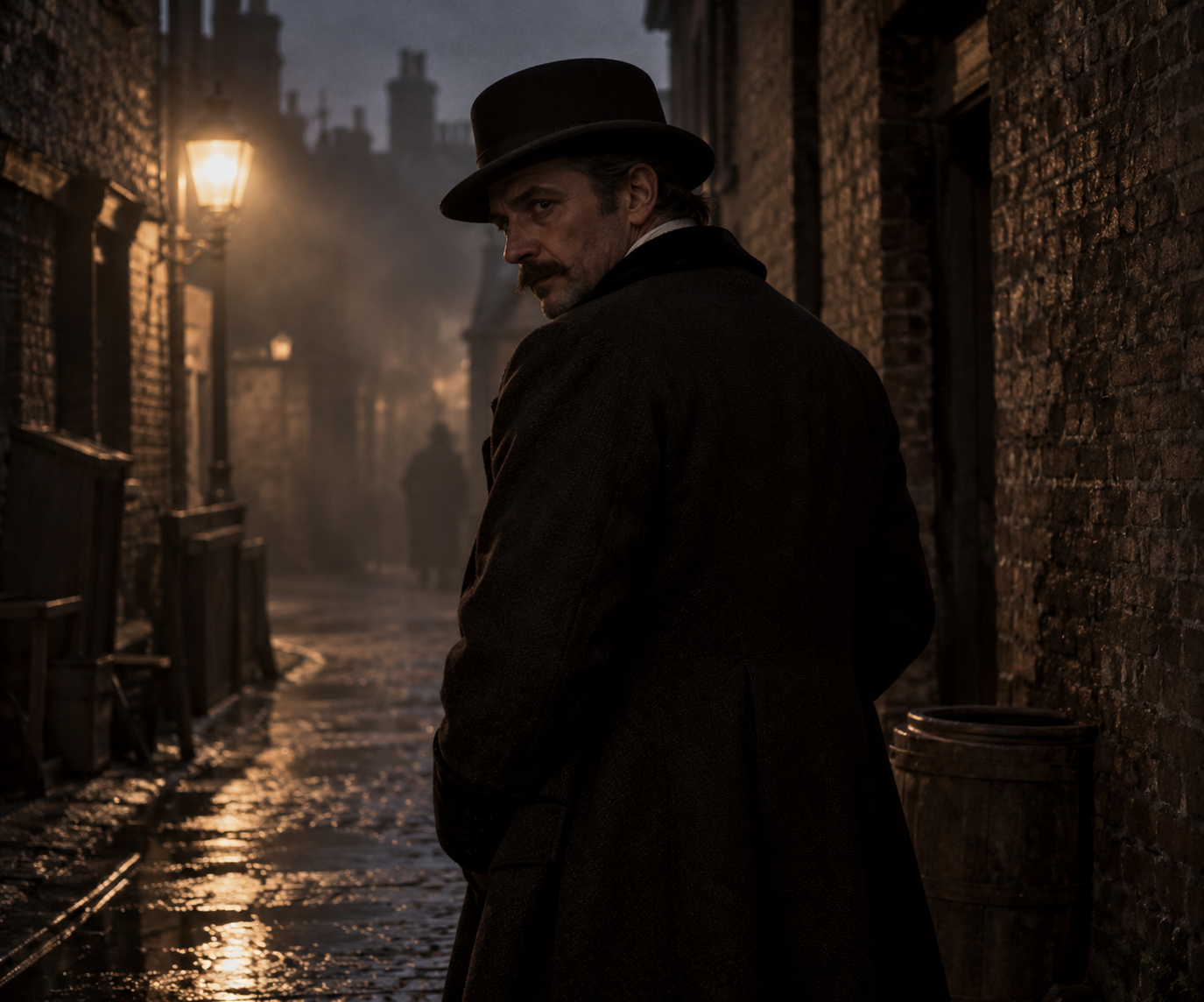
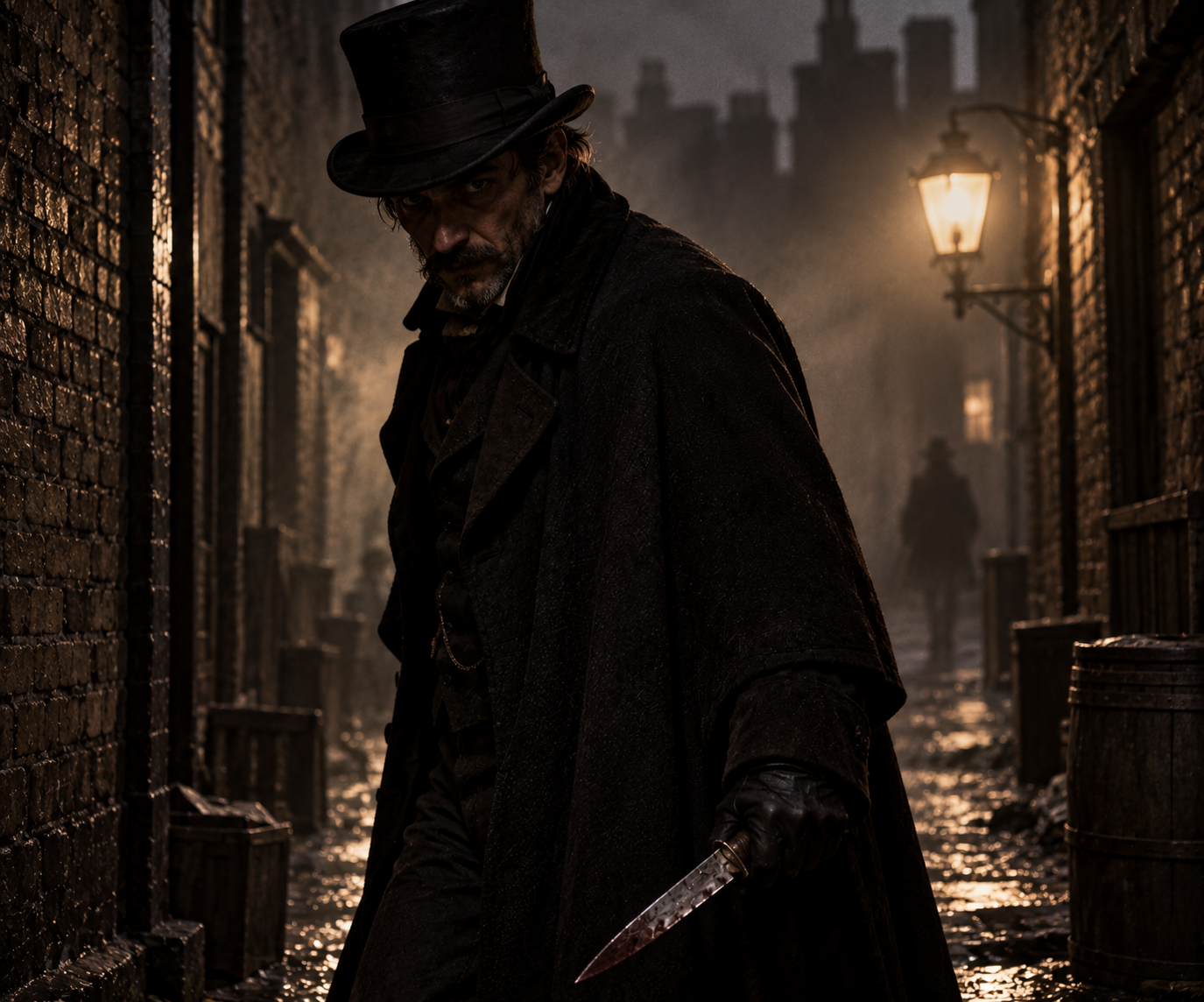
We know that they were back in her room by 2:30am, and that room lights were dark by 3. Around 3:30-4am an upstairs neighbor said they her a faint cry “Oh, murder!", which is an objectively funny thing to yell if you’re being murdered. At 6:15am, a man’s footsteps were heard leaving the courtyard, and at 10:45am a man arrived to collect her rent. He knocked on the door, and when there was no answer, he entered to find her mutilated body. I should note that one neighbor claims to have seen Mary alive around 8:30-9am, but seems less plausible.
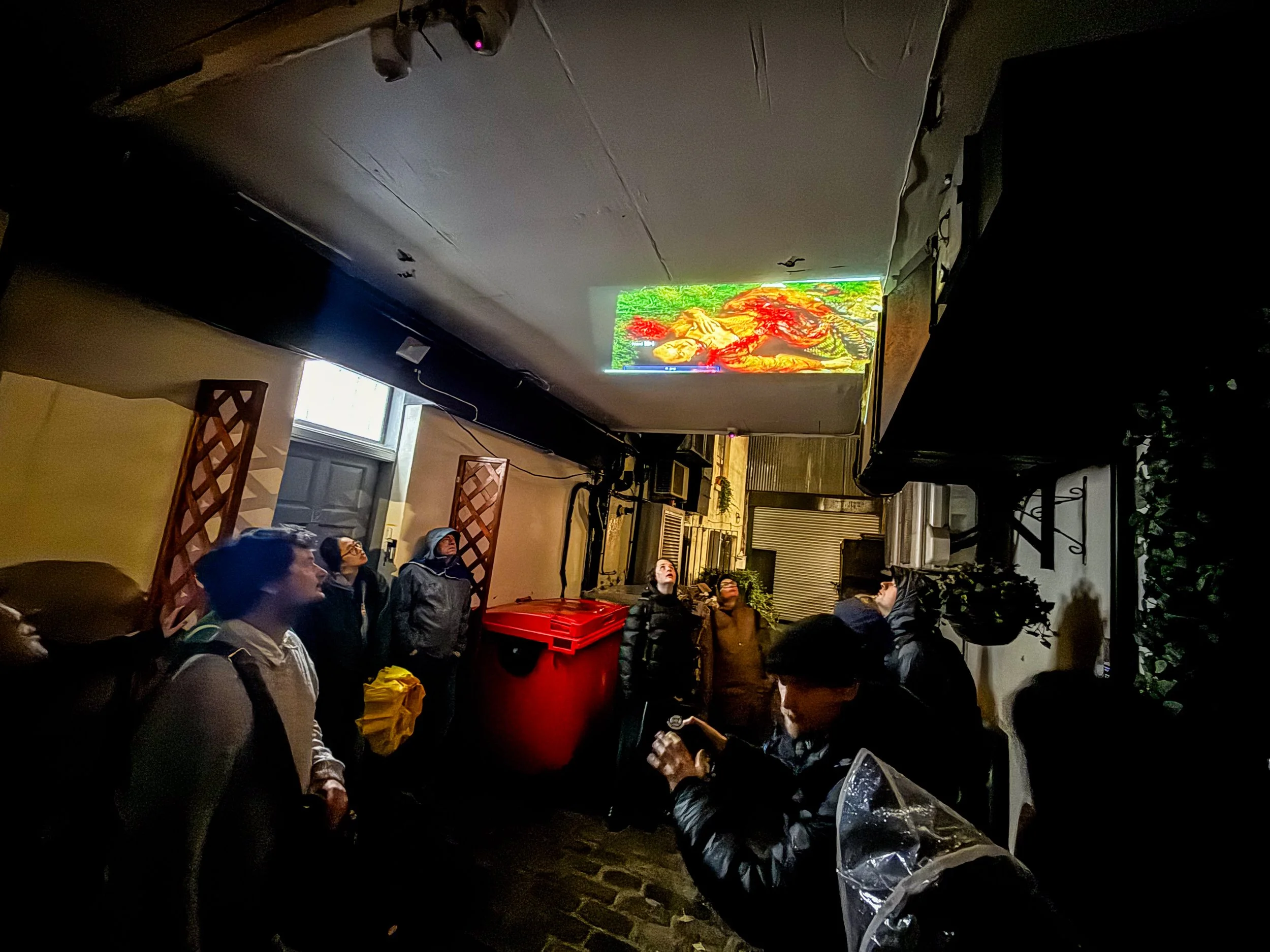
Mary was found naked, laying in bed on her back, the sheets soaked in blood. She’d had her throat cut particularly deeply, which was ruled as the primary cause of death. However, she’d also had her face so thoroughly mutilated that facial recognition was extremely difficult. Her abdomen had been cut open, but this time much of the tissue had been removed, along with most of her organs. The organs were found scattered around the room, except for her heart, which was missing. The killer is thought to have taken her heart with him. There was also extensive cutting of the arms, legs, and breasts.
When the tour guide flashed a photograph of Mary’s body up on the side of a building, I was shocked. I had never seen this image, and I kind of wish I hadn’t seen it now. Even in black and white, it was really disgusting.
“BIG ‘rest in peace’ to Mary Jane Kelly” our wet, frazzled guide concluded, keeping up his YouTube documentary narration voice to the very end.
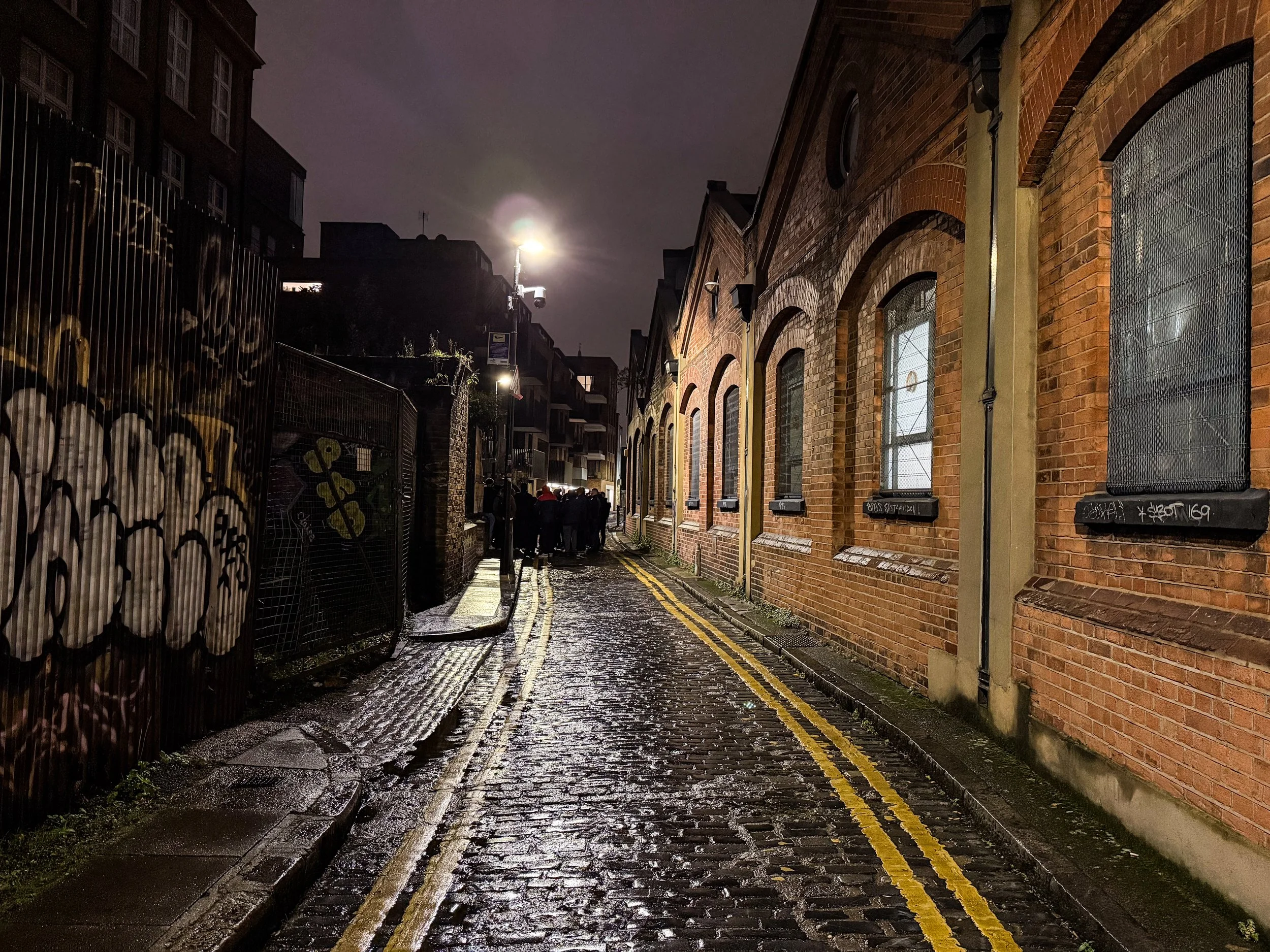
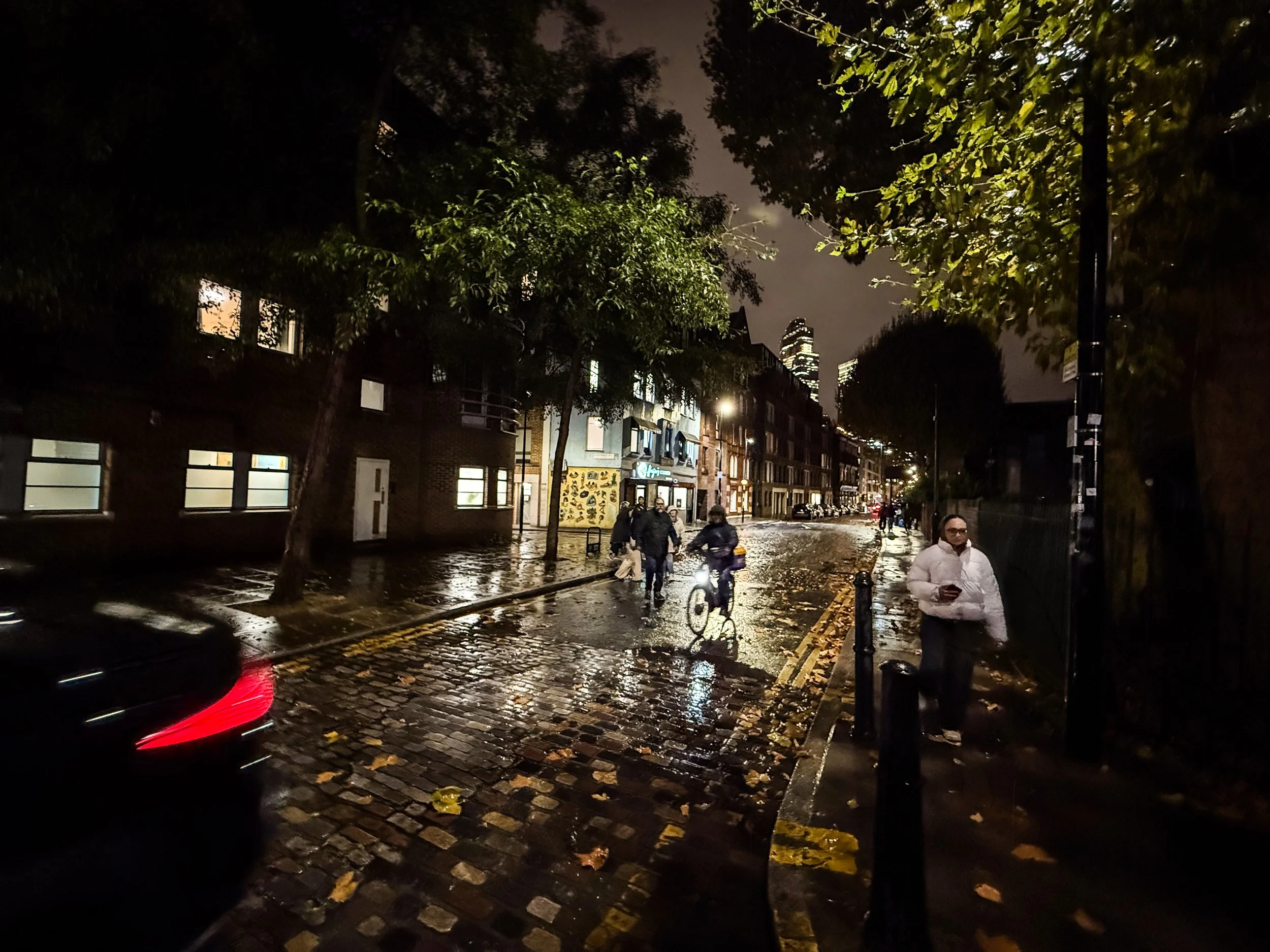
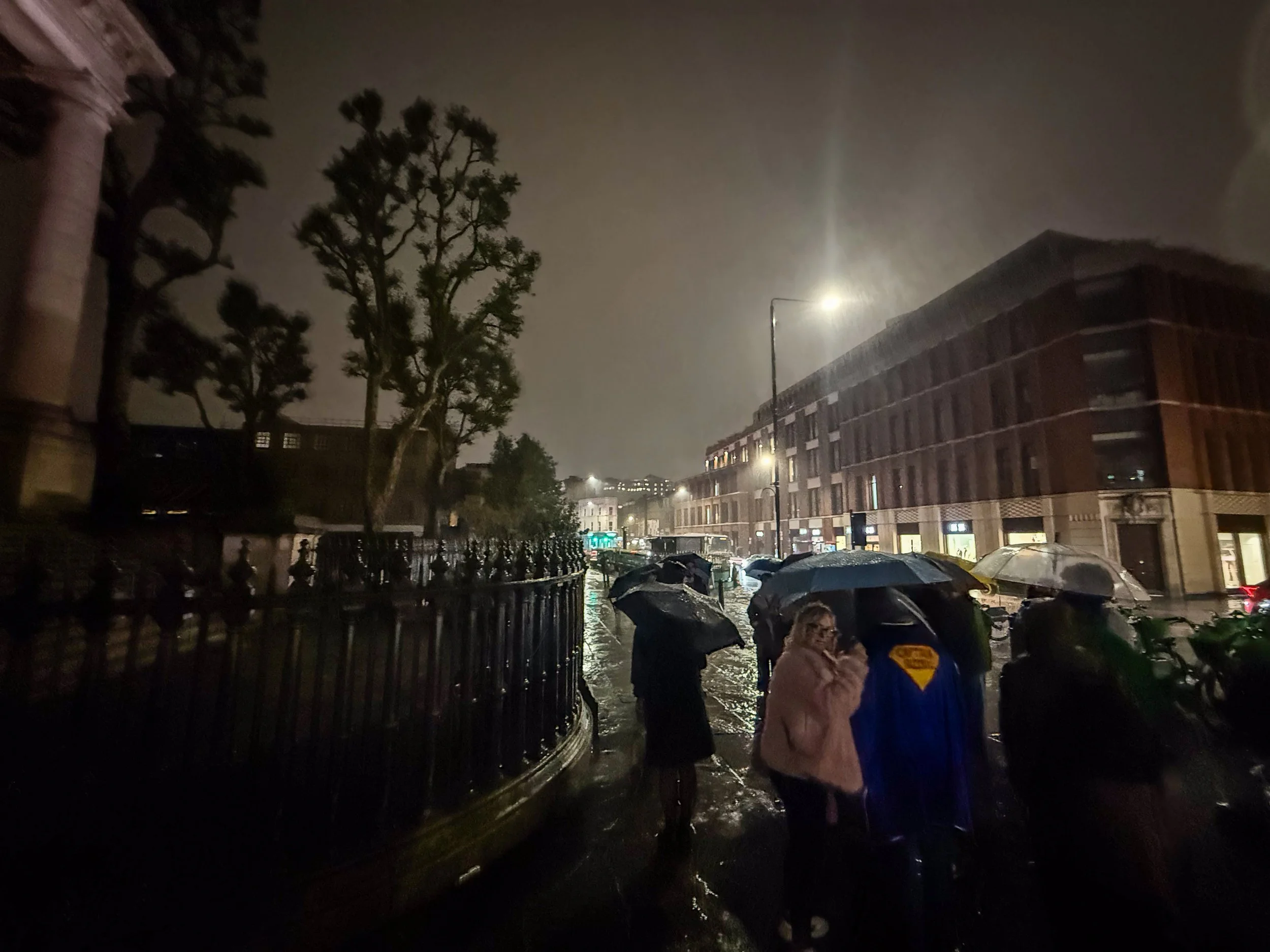
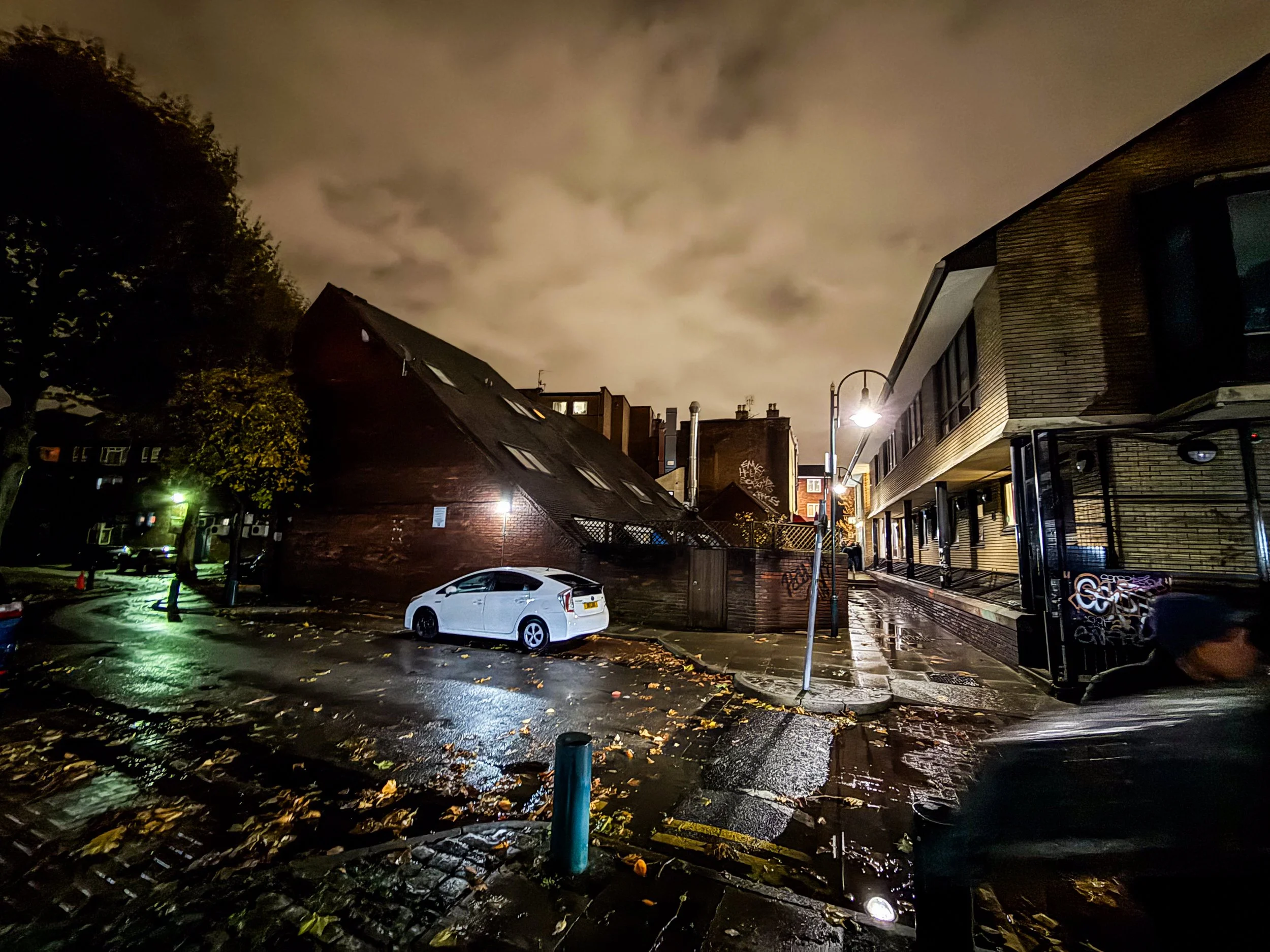
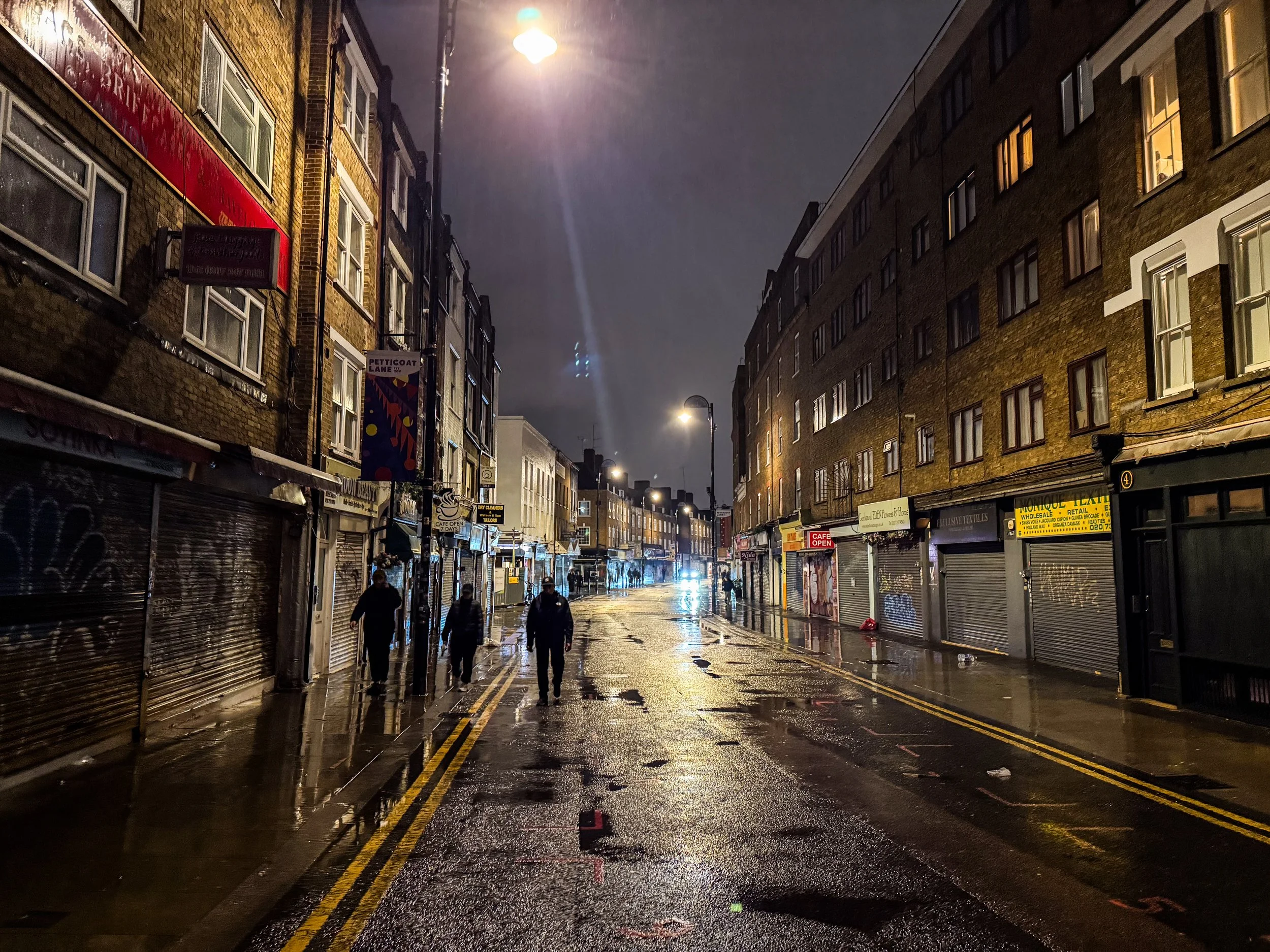
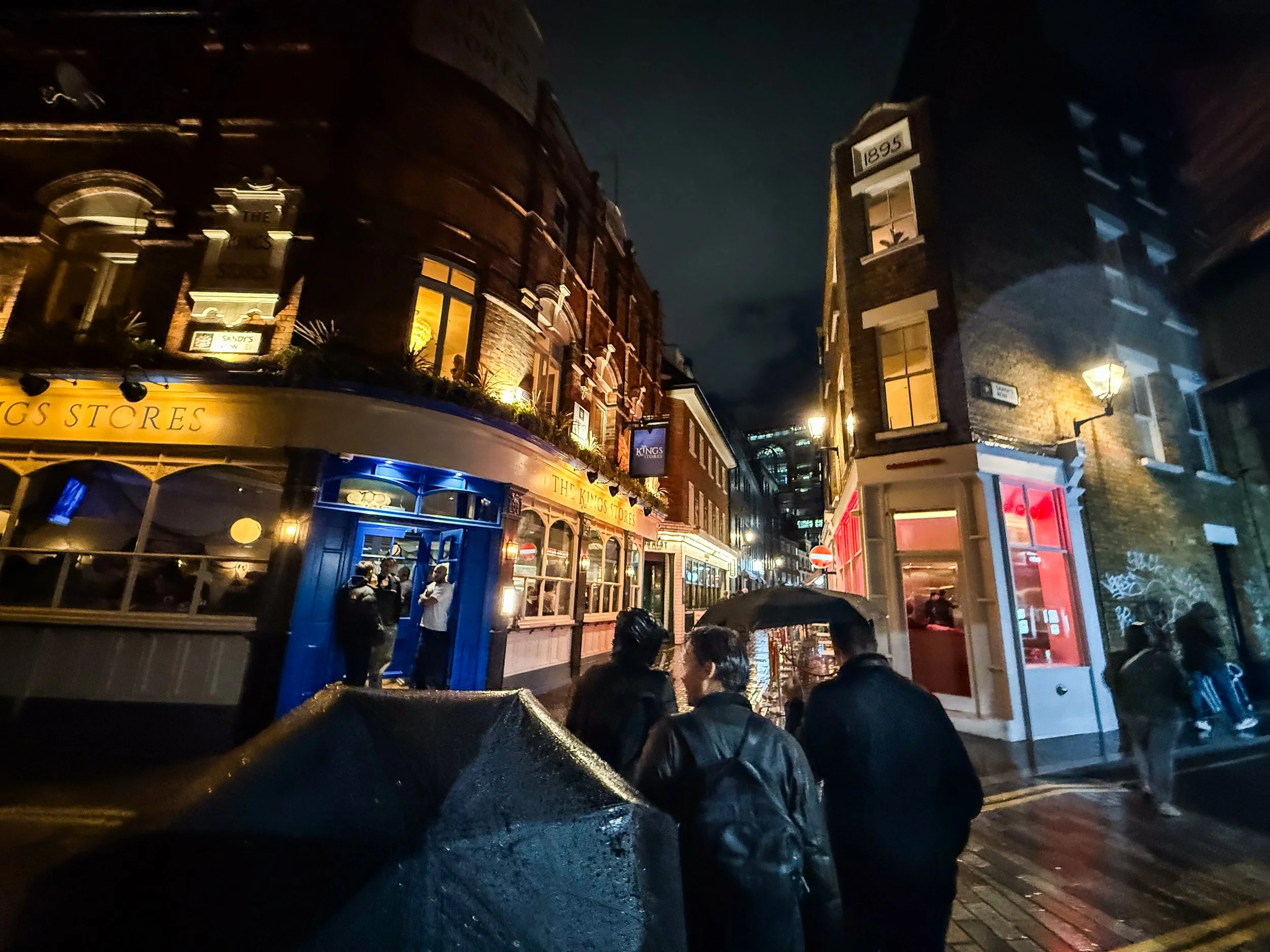
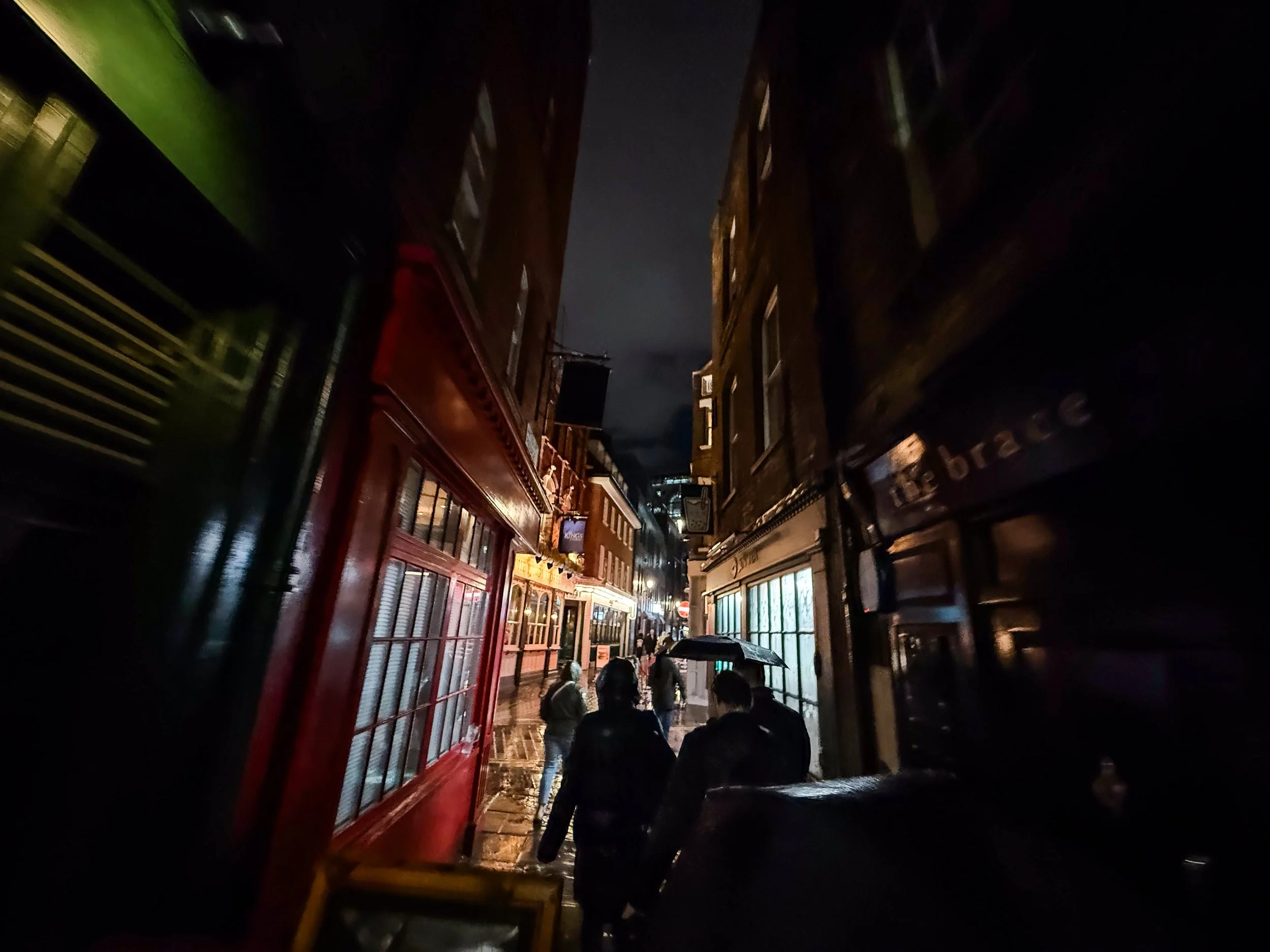
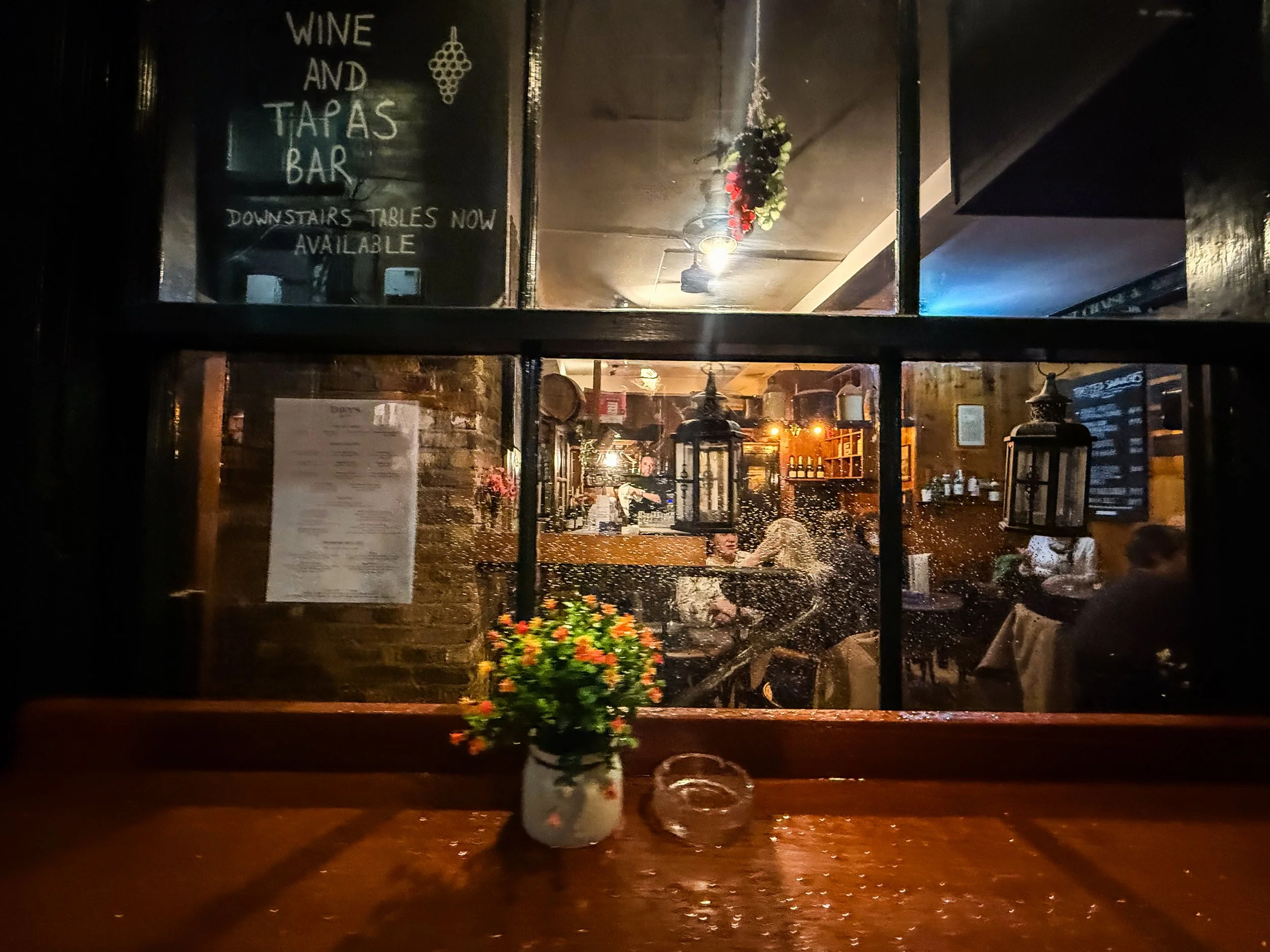
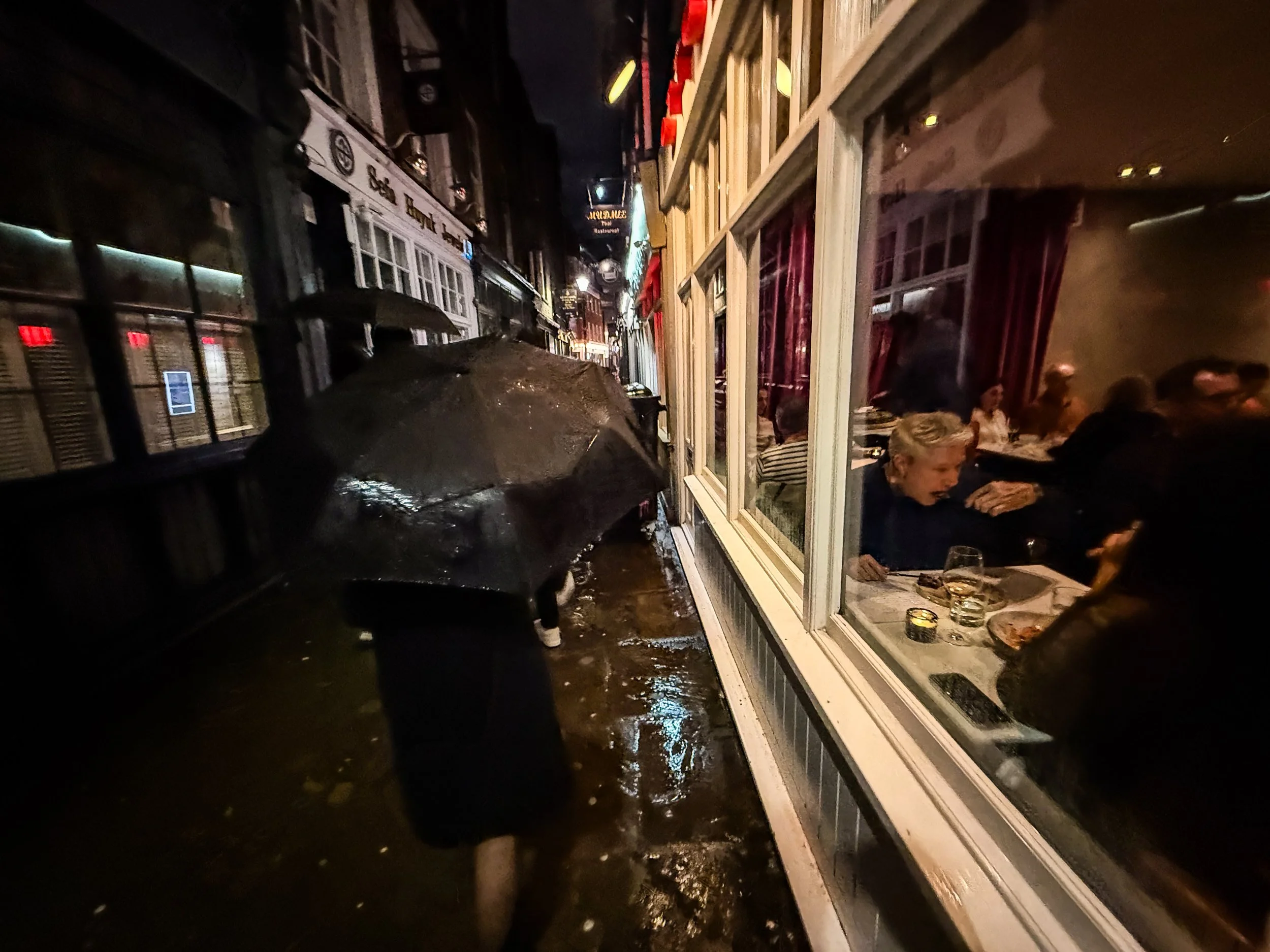
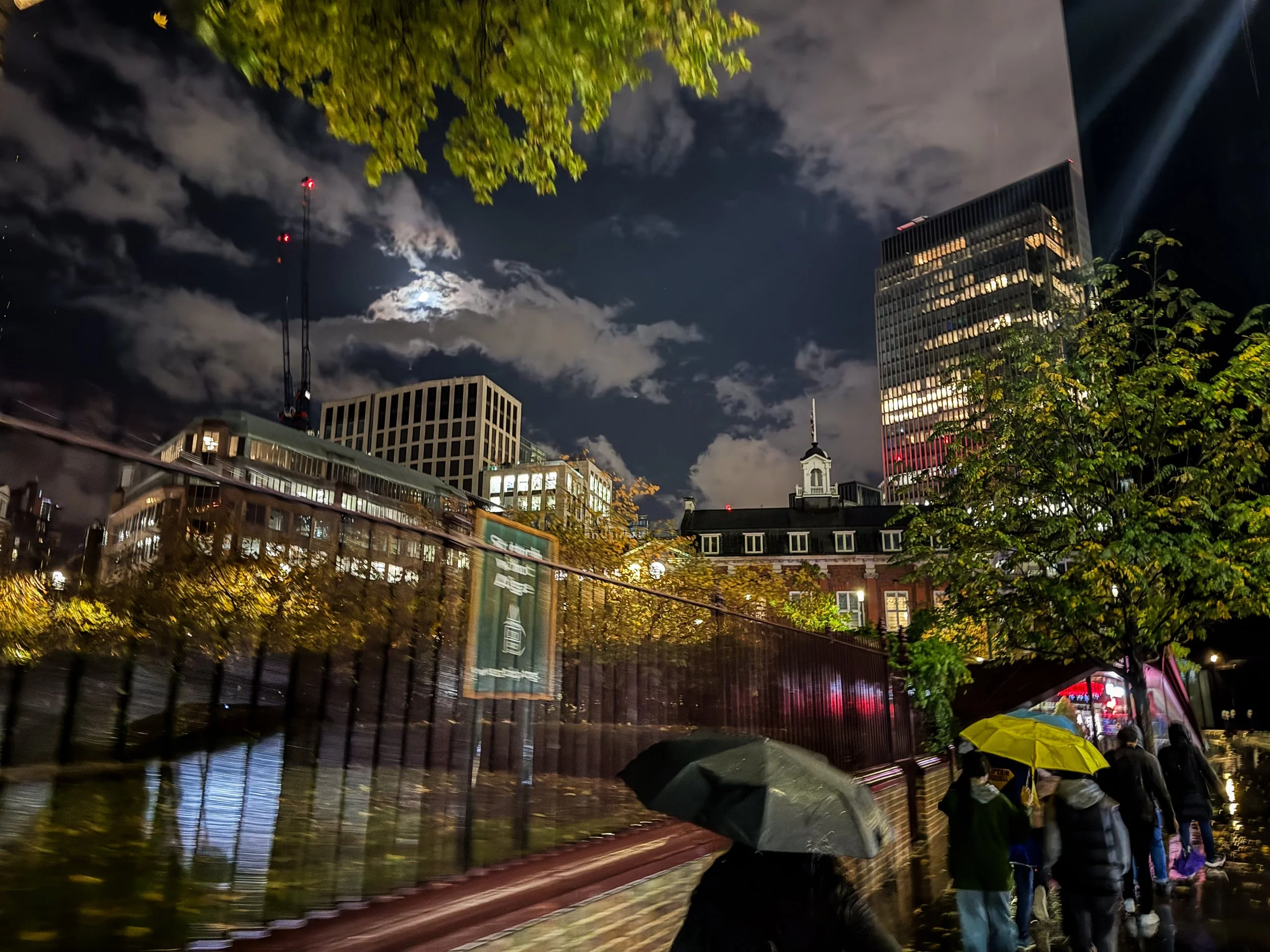
Here are the images from that night. The story of Jack the Ripper got unexpectedly gross at the end, but once the rains cleared, the night was every bit as dark and spooky as we could have possibly hoped. Check out this gallery of Halloween night in Whitechapel, 137 years after Jack the Ripper’s killing spree. Things are pretty different now, but the cobblestone alleyways and industrial architecture remains, keeping the imagery of these murders just within reach. Also please notice and appreciate that, in one photo (the one that I’ve used as the cover of this article) there is an actual hearse in the foreground!
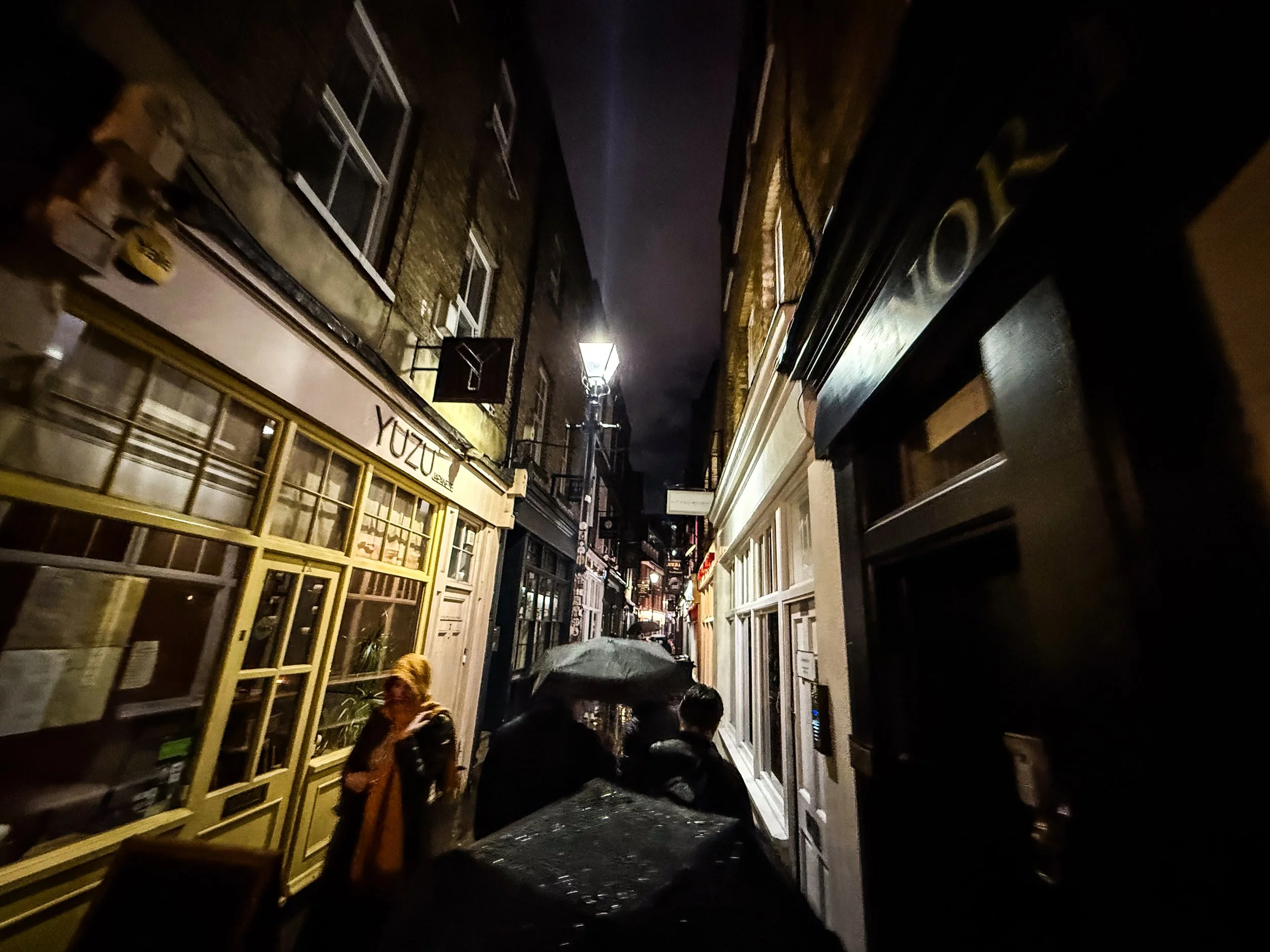
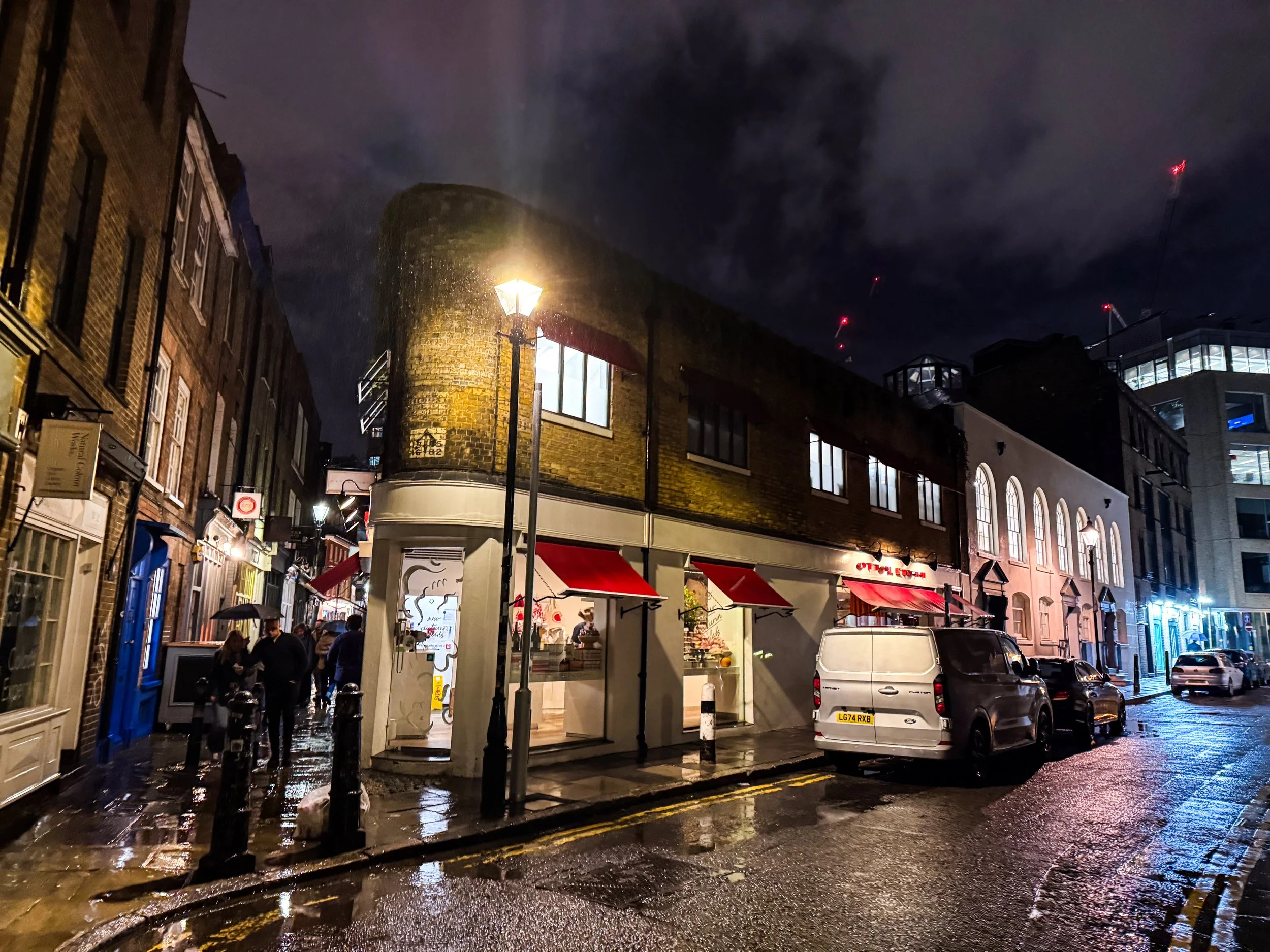
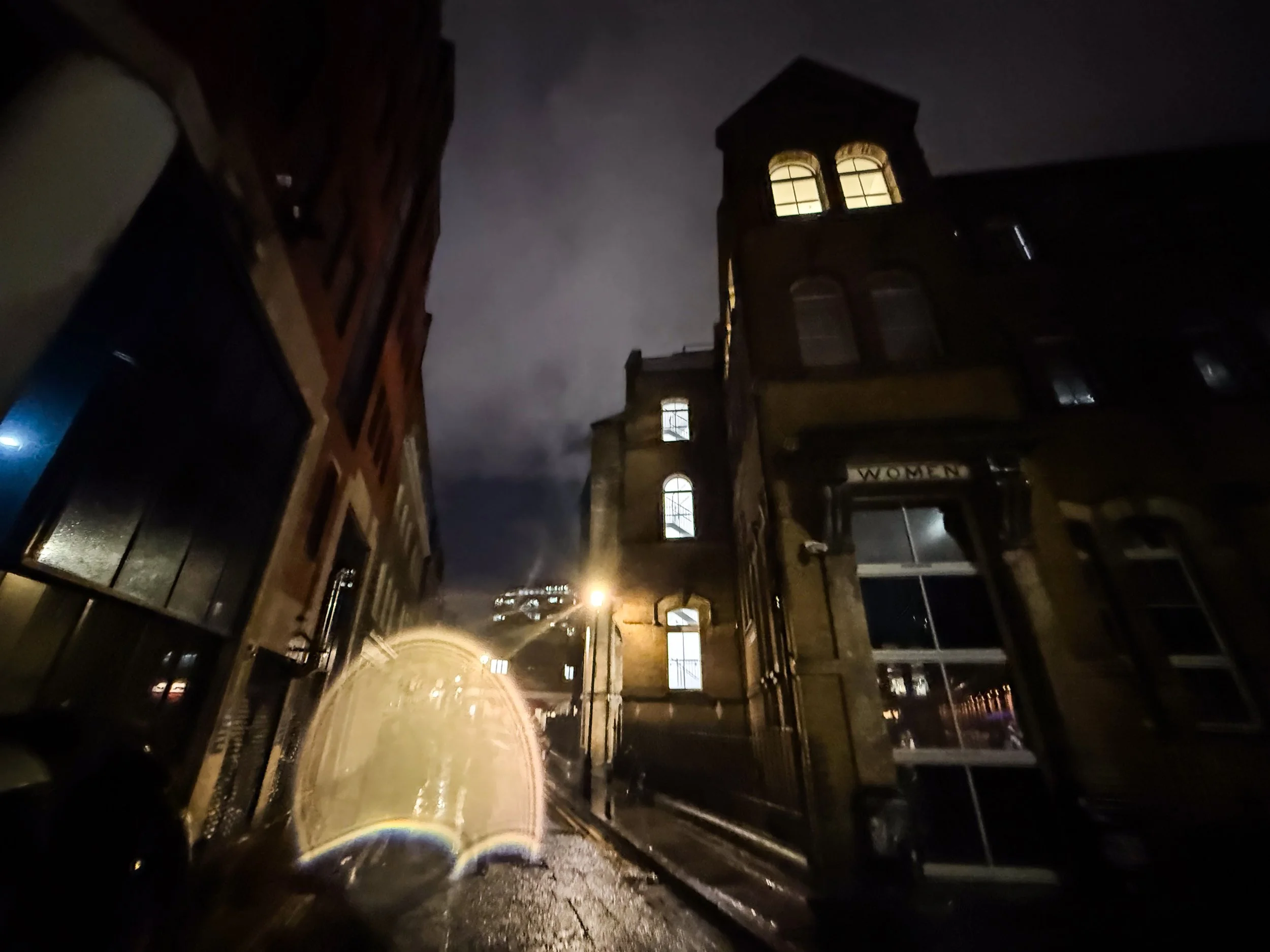
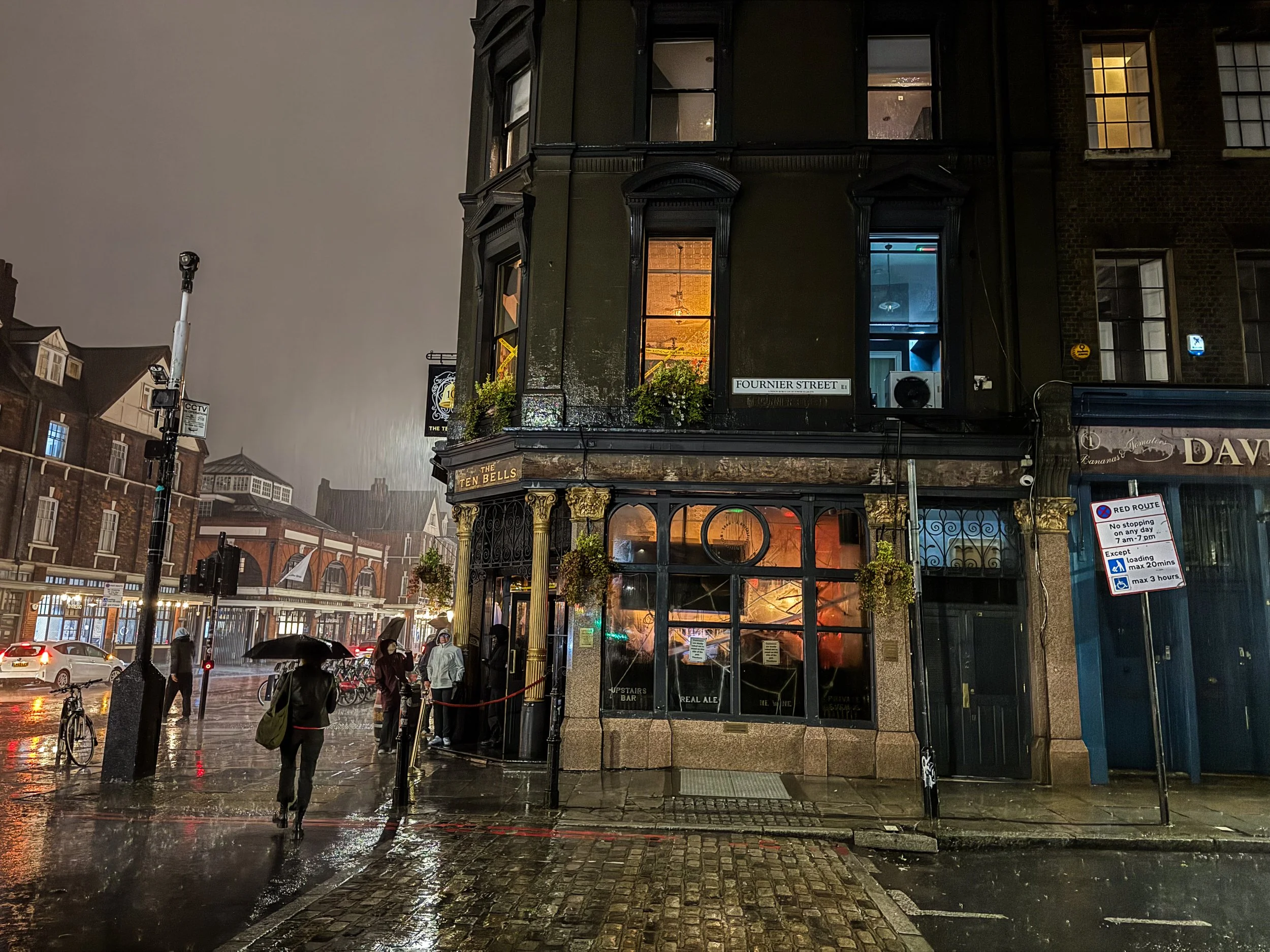
Who Could Jack the Ripper Have Been?
TL;DR – we don’t know. That’s part of what makes this case so tantalizing. But we do have a few suspects.
Suspect #1: Aaron Kosminski
Who he was: A Polish-born Jewish barber who lived in Whitechapel at the time; he later had some sort of psychiatric breakdown and was ultimately institutionalized.
Why he is suspected: Senior police officials left accounts pointing towards a Polish Jewish suspect, with one of them specifically naming Kosminski. His he was near the murders when they happened and fit the description relatively well.
The problem: The reported identification is poorly documented and was never tested in court. There is no reliable direct evidence placing him at a murder scene.
Late-breaking evidence: In 2014 and 2019, researchers publicized DNA findings from a modern analysis of a shawl allegedly connected to Catherine Eddows (Victim #4) that suggested a link to Kosminski. BUT there are some big problems with this analysis, so this is far from definitive.
Suspect #2: Montague John Druitt
Who he was: A barrister (lawyer) and schoolteacher from a respectable middle-class background who was also named by police as an official suspect.
Why he is suspected: His body was discovered in the Thames in December 1888, shortly after the final canonical murder. It is suspected that this was a suicide. Perhaps he felt out of control and/or was so disgusted and remorseful of his escalating actions that he took his own life?
The problem: There is no actual evidence connecting him to the murders; the timing and method of his death is just convenient. Assuming he’s innocent, it makes you feel sorry for him, right? On top of whatever was going on that pushed him to take his own life, he’s now forever known as a suspect to infamously bloody murders. If the timing of his suicide had been just a little bit different, he would have been peacefully lost in the pages of history.
Suspect #3: Francis Tumblety
Who he was: A well-traveled American doctor who was in the area at the time of the murders.
Why he is suspected: The clinical anatomical precision with which Jack the Rippers victims were dismembered suggests somebody with medical training, although I’ve read that working as a butcher might suffice as well. He also just happened to have been arrested during this time, demonstrating at least some level of dysfunction, and was later mentioned in correspondence between Scotland Yard officials.
The problem: Again, there’s no actual evidence that he was the killer. His arrest was completely unrelated.
Suspect #4: George Chapman (Severin Kłosowski)
Who he was: A Polish-born barber who later was convicted as a serial killer for a different set of murders.
Why he is suspected: He lived in the East End of London and would be found guilty of murdering 3 women around that same time. The detectives working on the case thought he was a possibility.
The problem: The method of his murders did not match Jack the Ripper at all. In all murders for which he was convicted, he poisoned the women, which suggests a very different psychological profile. So, again, no direct evidence. Just another murderer in the same neighborhood.
Suspect #6: Prince Albert Victor, Duke of Clarence
This is far-and-away the least convincing theory, but I had to include it because it’s just so juicy. There are basically two versions of this theory:
The first is that the killer was Prince Albert Victor himself. He would have been in his early 20s at the time of the murders. There is apparently some evidence (albeit, unconvincing) that he was secretly visiting this part of London to see women around this time. But he died in 1892 at the age of 28 (of pneumonia) so we’ll never know.
The second version of this theory is that the murders were part of a conspiracy to protect the royal family. There is some evidence to suggest that Prince Albert Victor was not actually in London at the time of the murders, but that he may have fathered an illegitimate child with a woman here. The theory goes that the royal family basically hired somebody to kill anybody that knew about this. In this case, the suspect would be physician called Sir William Gull, who would have allegedly carried out the murders with assistance from others. But, by the time these murders happened, Gull was an elderly man in poor health. Plus, there are other elements of this claim that are confirmed to have been fabricated, so this probably doesn’t hold water either.
So, if they never caught the murderer, why did the murders suddenly stop?
Great question. It could be because the murderer was Montague John Druitt, and he’d committed suicide. It could be because the murderer was apprehended and incarcerated by police for an entirely unrelated charge without anybody realizing who he was. Maybe he left London. Maybe he kept on killing but nobody ever made the connection that it was the same killer because he changed his methods; indeed there was no shortage of violent murders in East End in the following years. Who knows.
Where did the name “Jack The Ripper” come from?
Initially, this murderer was known as “the Whitechapel Murderer”. But, in 1888, a letter was sent to Britain’s Central News Agency claiming to be from the murderer, signed “Jack the Ripper”. Other letters followed, including one that apparently contained a piece of a human kidney, claiming that it (the kidney) came from one of the victims. In fact, the National Archive holds 100s of letters whose writers claimed to be Jack the Ripper, but there is no evidence to support any of these claims. None of these letters helped identify the killer, but they did (understandably) create quite a media sensation in Victorian England, cementing the named “Jack the Ripper” into the stuff of legends.
And THAT, boys and girls, is the story of Jack the Ripper.
That does it for this year’s Halloween article! I don’t get around to this every year, but I’m always looking for the opportunity. So, wherever you are in the world, here’s wishing you a happy Halloween!

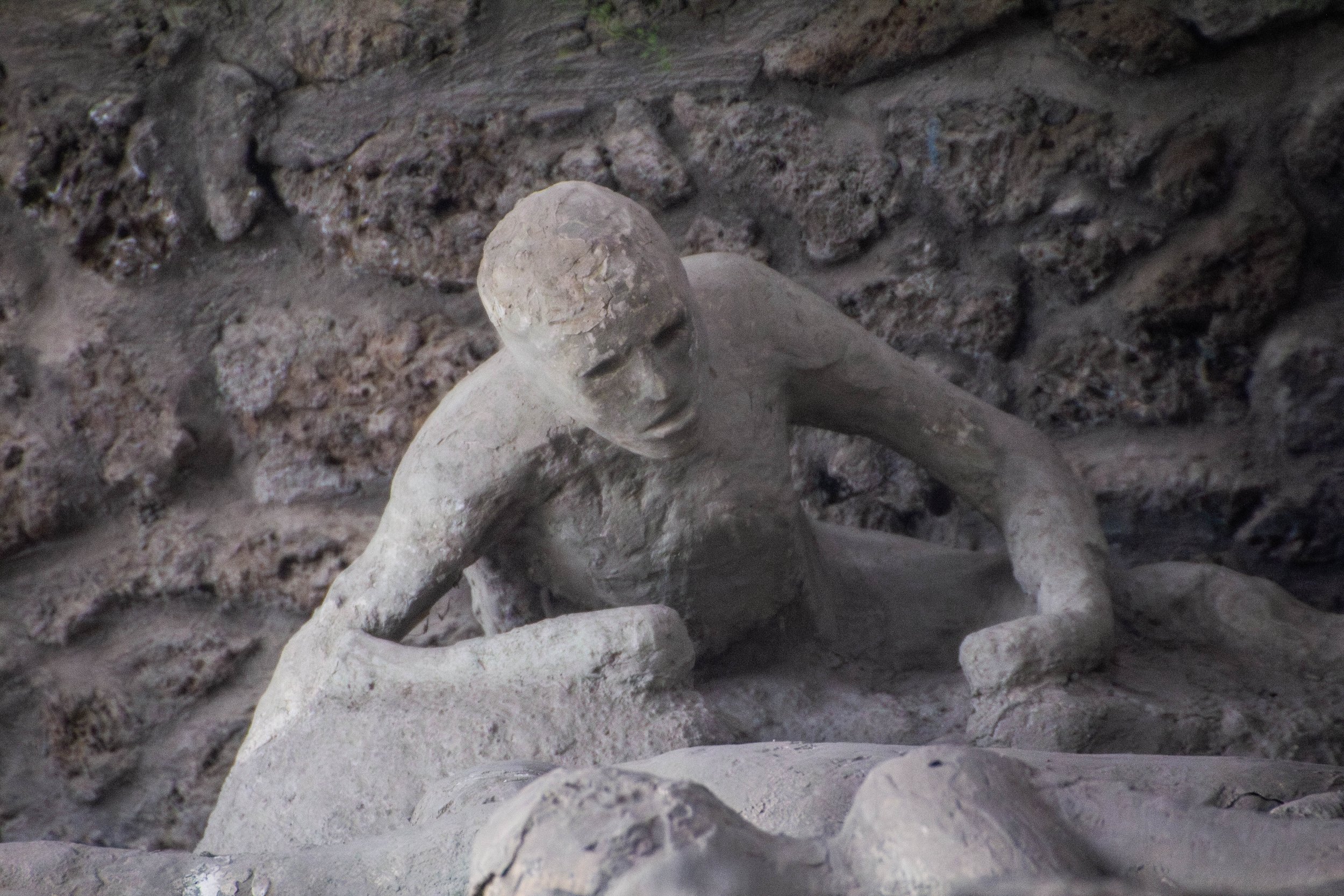


As we all know, the streets of Paris are famously beautiful. But what you might not know is that just a few meters below these charming bistros and boulevards lays hidden a labyrinth of dark tunnels containing somewhere in the vicinity of 6 to 7 MILLION skeletons. These are the catacombs of Paris, and today—in the spirit of Halloween—we’re going down there. 🎃