Millions of years ago, the land we now know as Asia Minor was a fiery, inhospitable land dominated by volcanic eruptions. Unimaginably hot magma exploded upwards out of the Earth’s crust with enormous destructive force, killing everything in its path and bringing with it plumes of ash that darkened the sky over massive areas. Over successive eruptions, all of this ash, pumice, and rock that had been spewed out of the earth slowly accumulated throughout the region. With the passing of time, those same geological forces that had wrought such destruction also worked in more subtle ways, slowly creating slopes, fractures, and pathways for water. And, as this huge hunk of rock that would later be known as “Earth” rotated, tilted on its axis, and orbited its nearest star—all the while hurdling through space at breakneck speeds—temperature varied wildly. When its axis tilted toward this giant ball of fire, the surface was hotter, injecting boundless energy into the watery weather systems that soaked this windswept, volcanic landscape, creating runoff, streams, and rivers. However, when this axis tilted away from the sun, temperatures would drop, slowing down the frenetic activity of the molecules in this water until it assumed a solid state (ice), which imposed an entirely different set of pressures on this landscape.
As millennia passed and the most violent geological activity subsided, it would become clear that not all layers of the volcanic materials that had blanketed this land shared the same level of determination to stay. The harder layers resisted the erosive forces of weather, wind, and water. Meanwhile, the softer layers were gradually worn away, leaving all manner of unique geographical features, including towers, ridges, cliffs, and unusual conical formations. The chemical composition of the materials being acted on throughout these processes endowed each of these features with a tint and color all its own, creating a dramatic and beautiful landscape.
Millions of years in the future, extraordinary evolutionary forces had summoned into being a new species of animal that stood upright on two legs instead of four, and developed a uniquely large brain, endowing it with hitherto unseen levels of intelligence. These hairless curiosities roamed the earth in groups, hunting and gathering the food they needed to survive, already building a knowledge base that would pass through and expand with generations, one day enabling them to the harness the natural resources that surrounded them, and bend the landscape to their will. And, eventually, they came across this unique volcanic landscape, assigning names to the now-dormant stratovolcanoes that towered over this interesting and beautiful terrain.
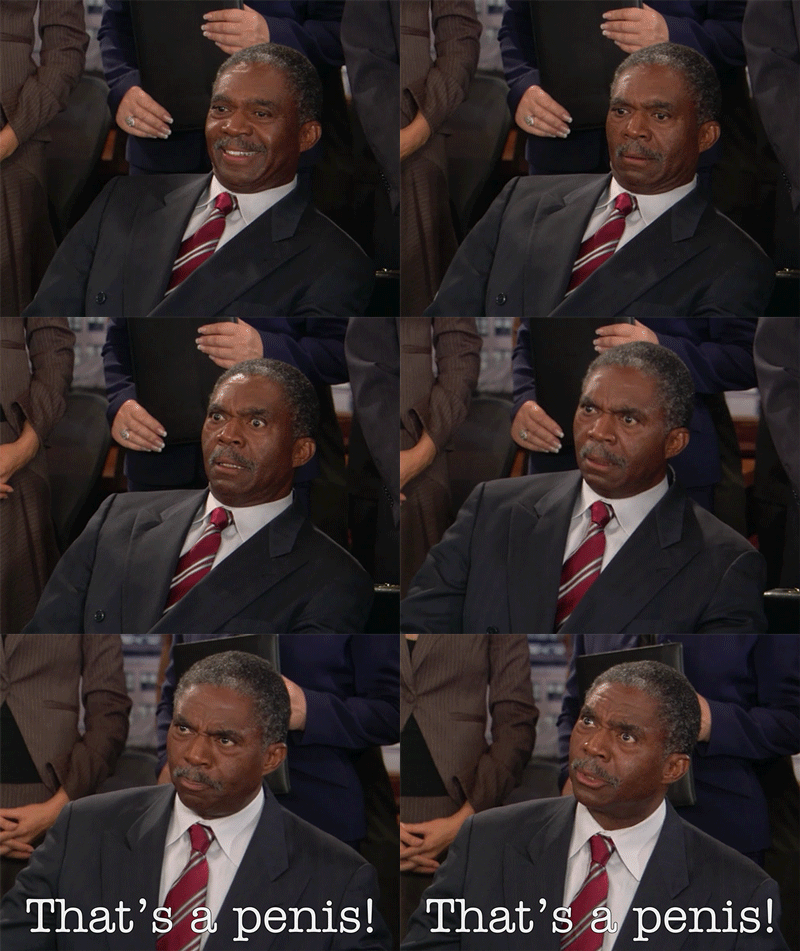
Seeing the unique conical towers of rock, one of these creatures pointed a finger to draw the attention of his peers, and proclaimed…
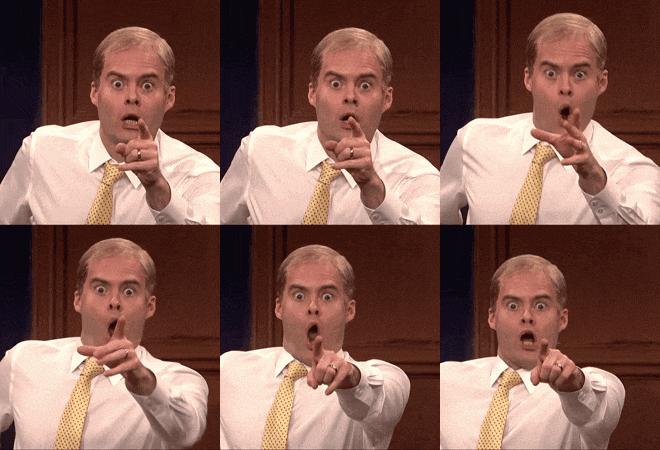
“HEY, THAT LOOKS LIKE A PENIS!”
Welcome to Cappadocia.
~*the “It’s Always Sunny in Philadelphia” theme music plays*~We spent the last article focused on the wealth of ancient Anatolian history that Cappadocia has to offer. Indeed, this is a region whose human history is measured not in centuries, but in millennia. But, as incredible as all of that history is, Cappadocia is more known for its geological and natural environment than for anything to do with humans.
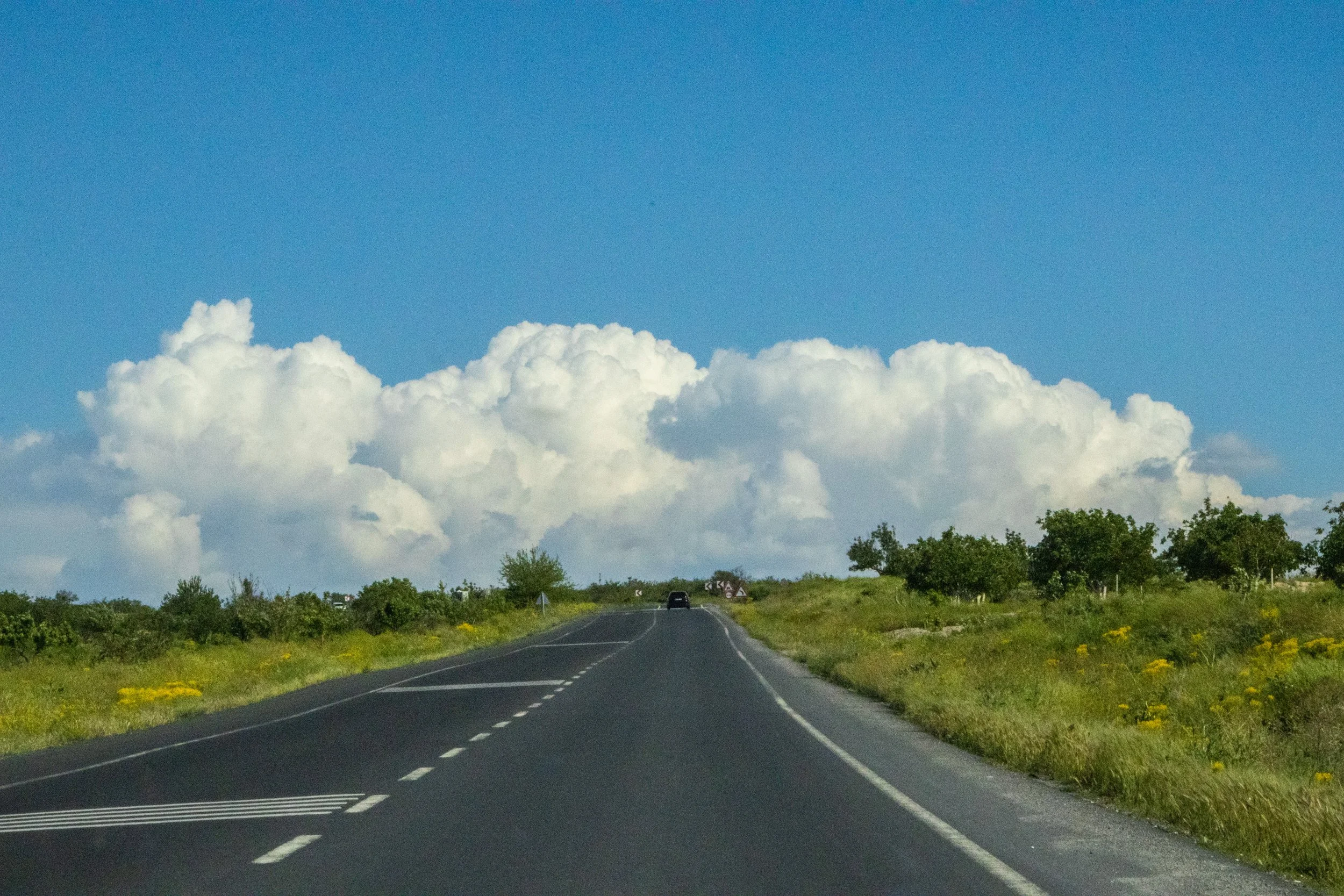
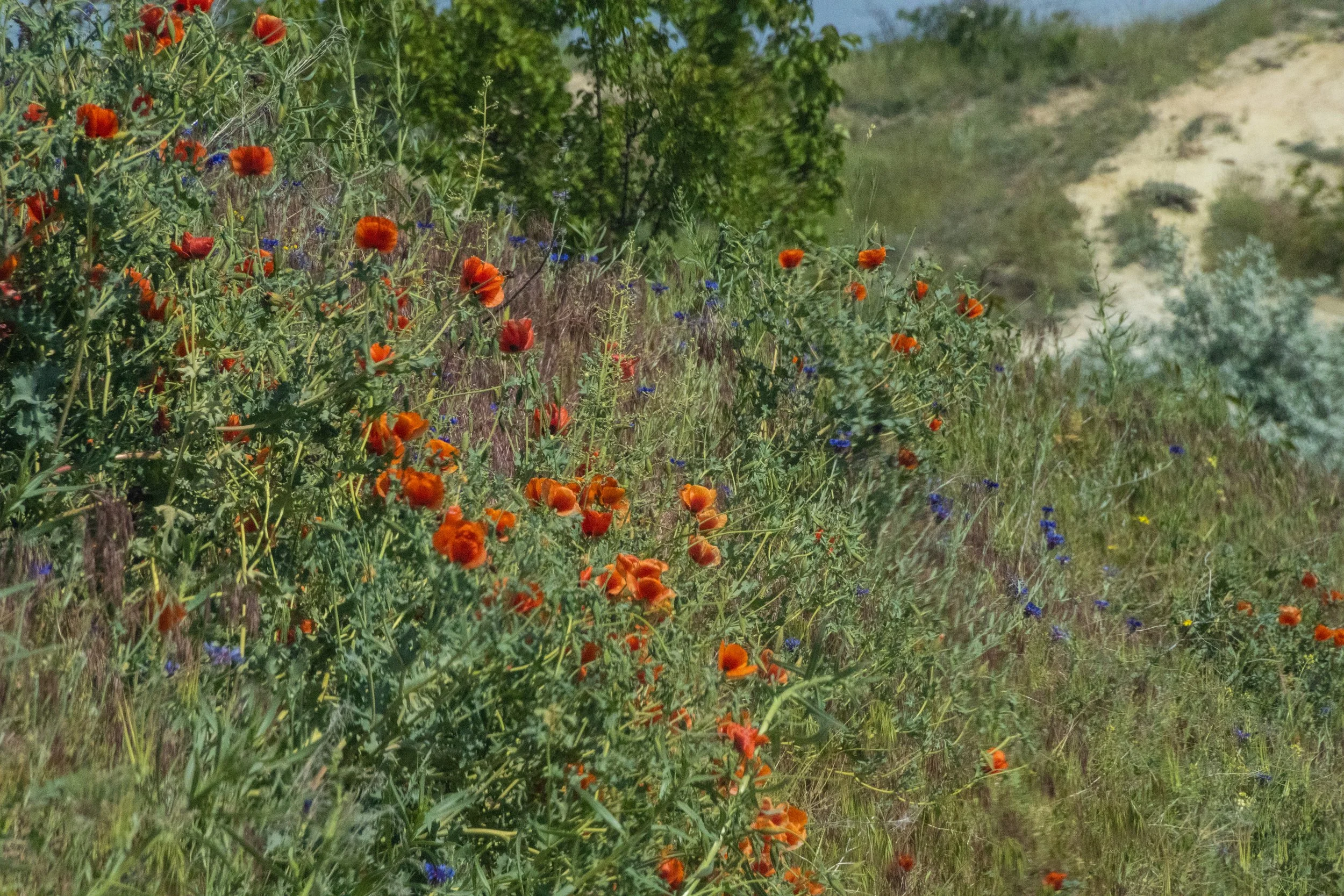
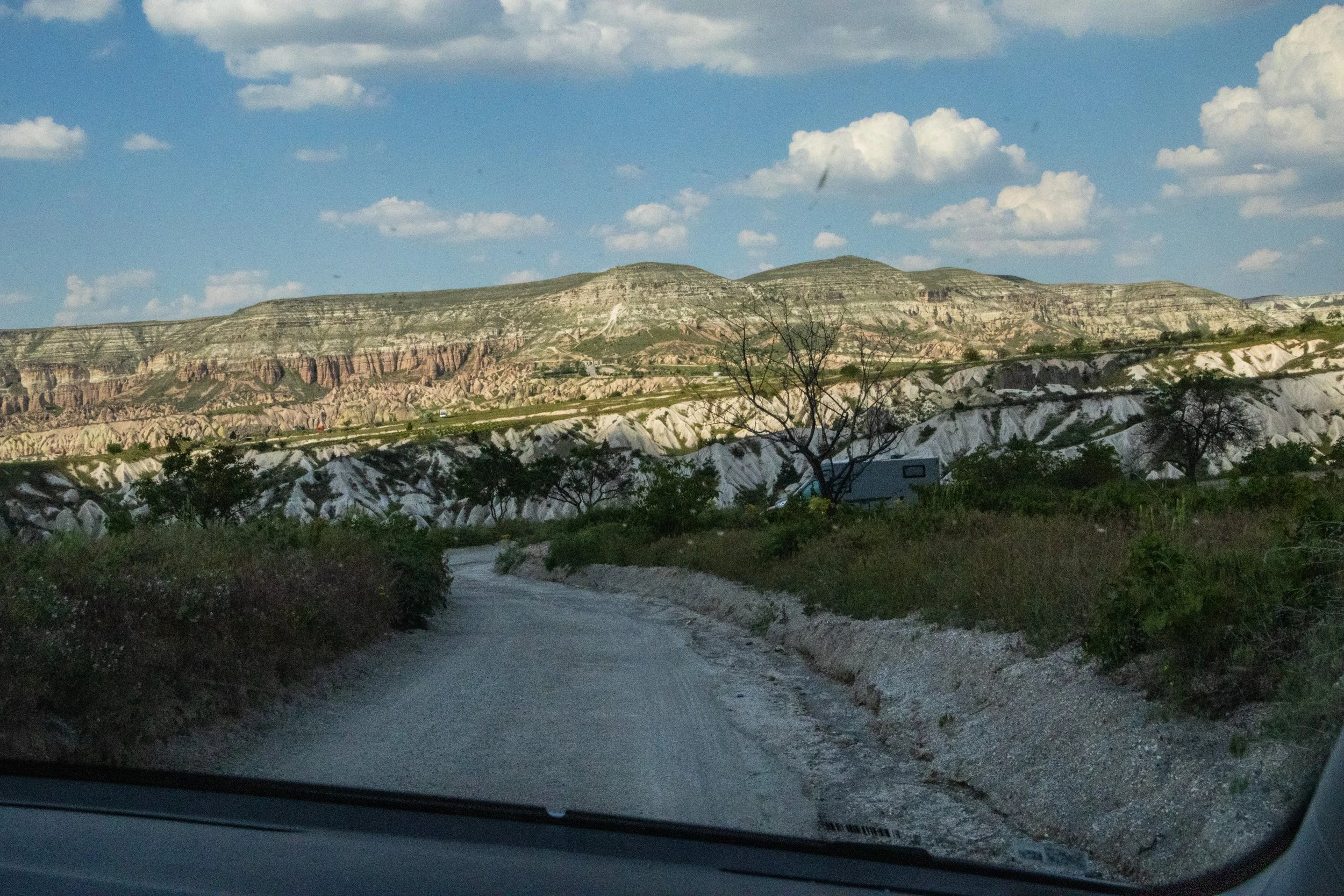
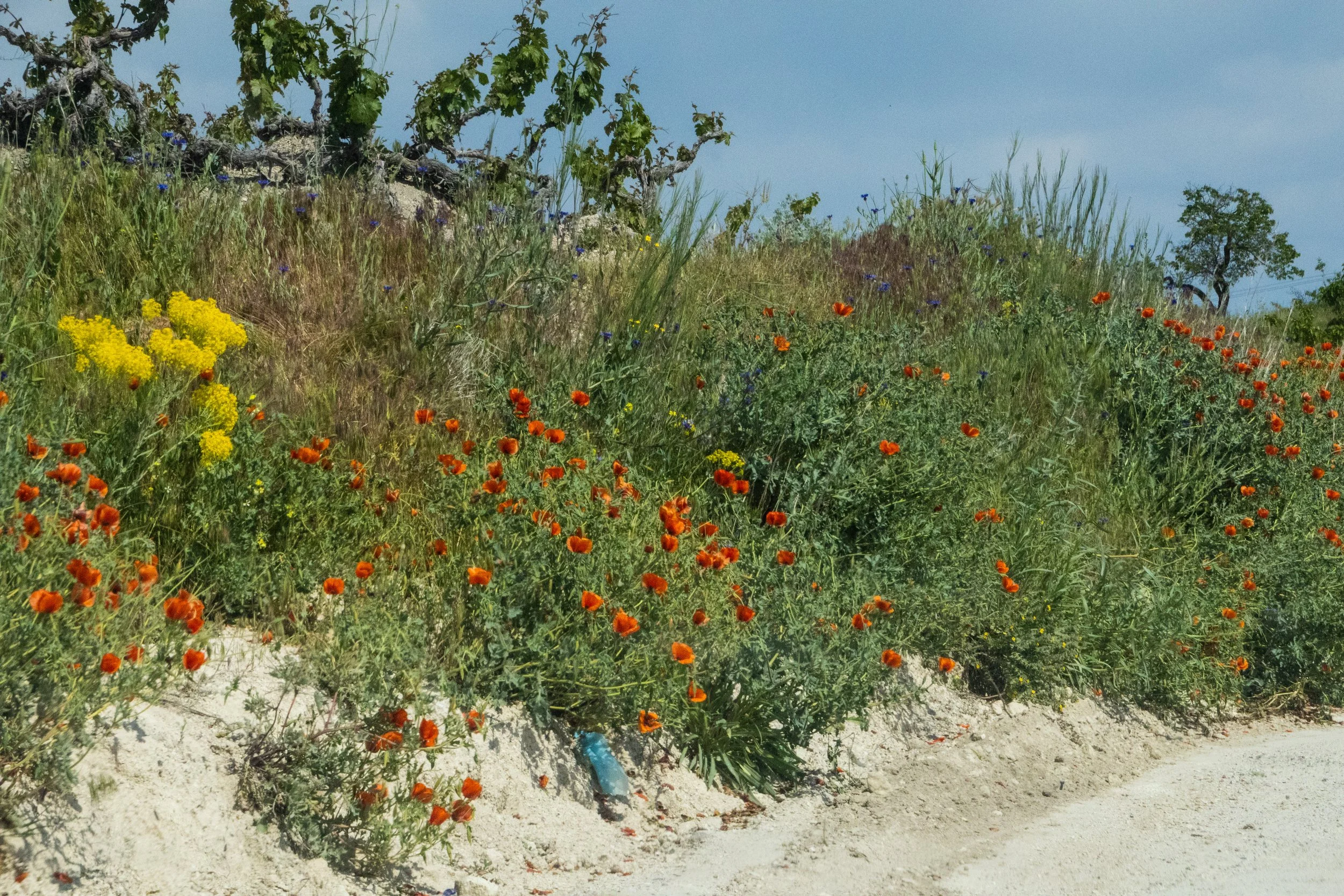
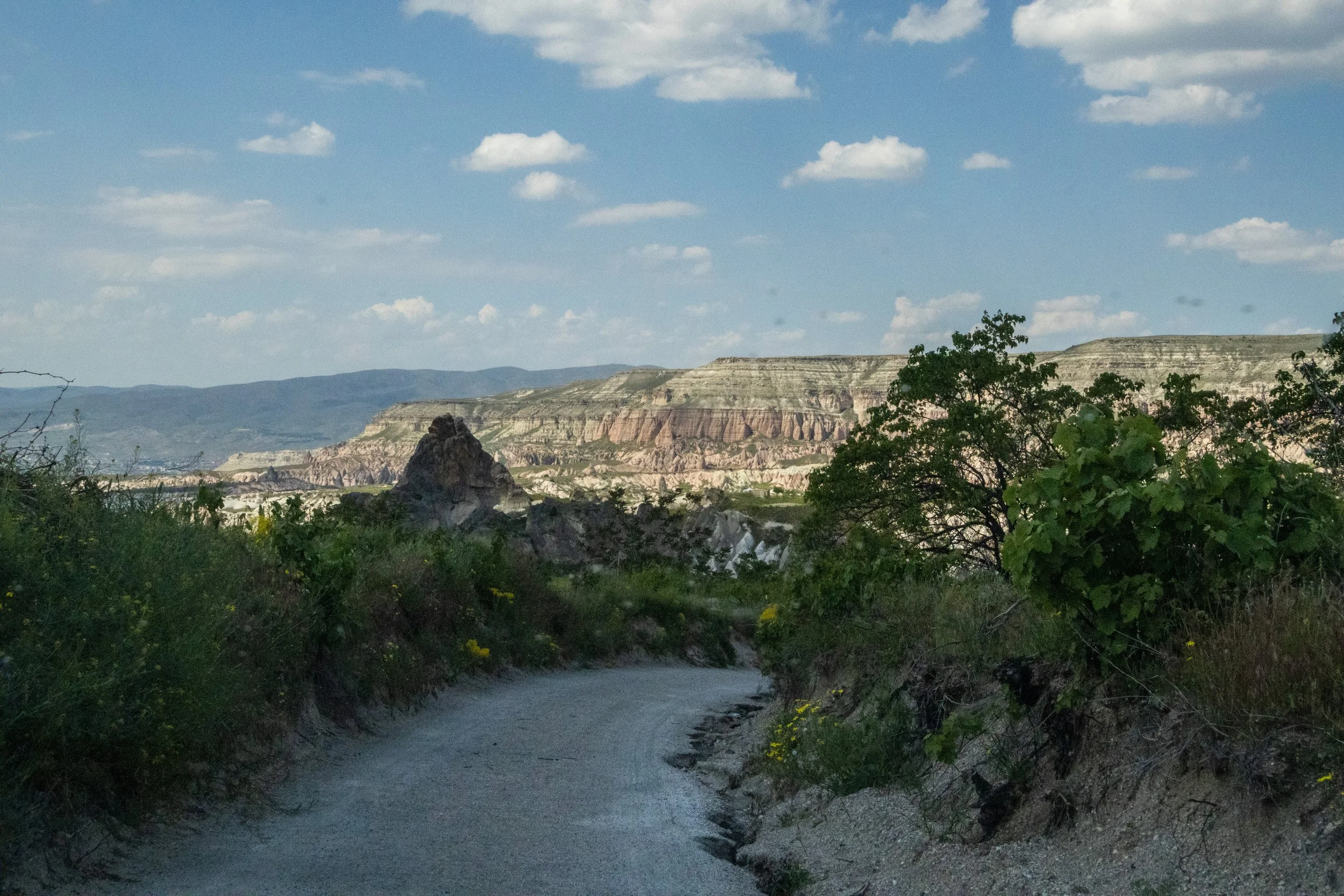
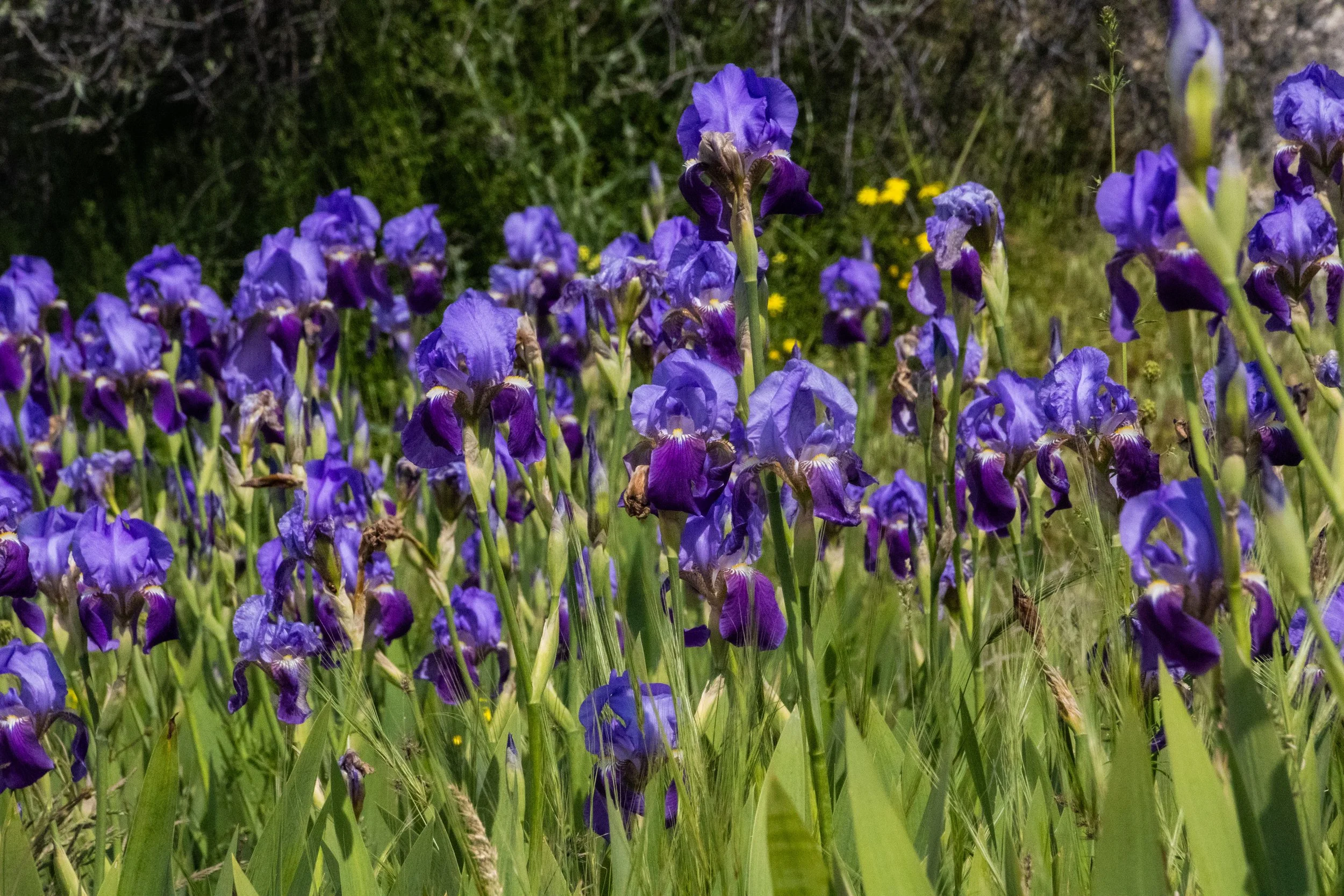
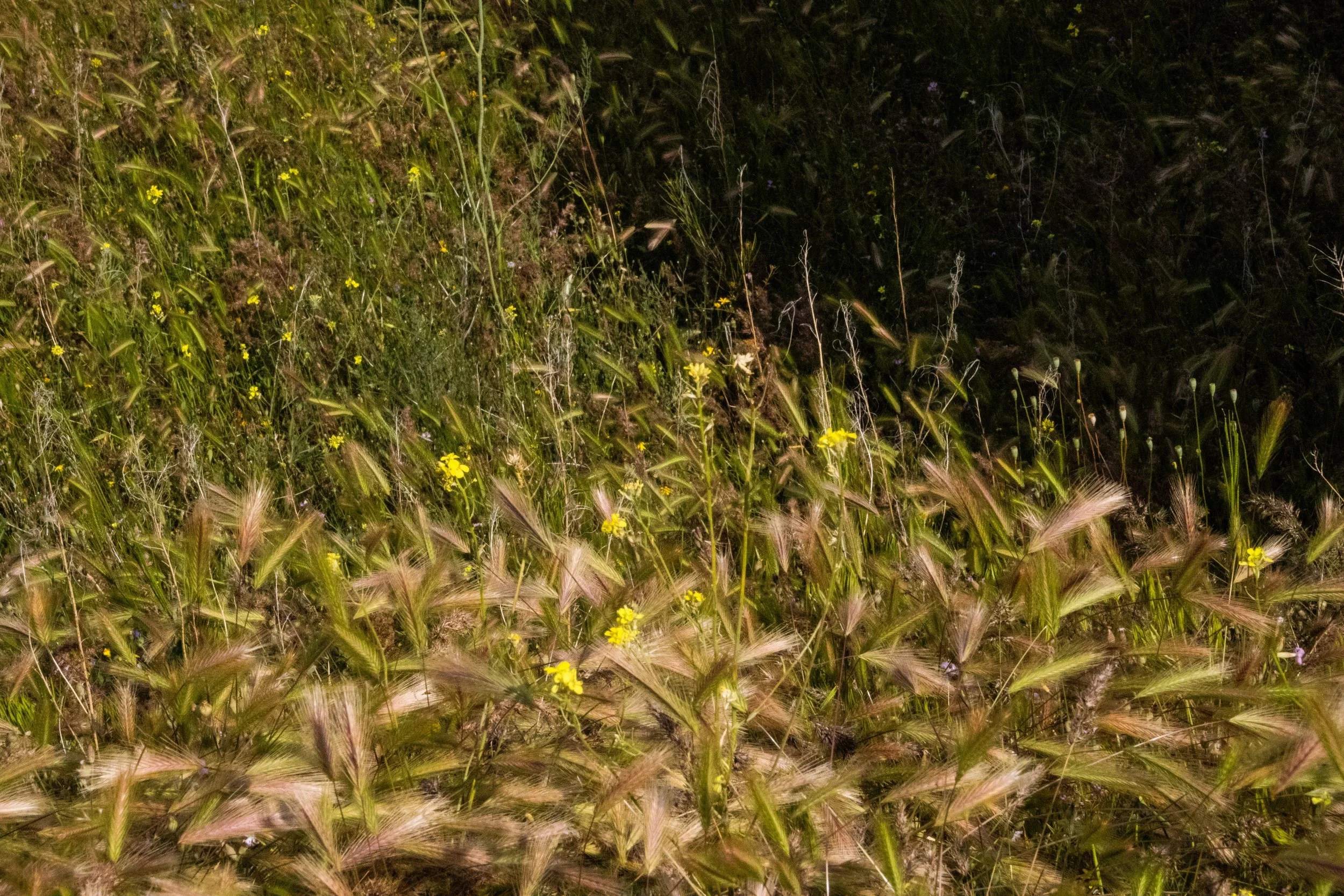
This is definitely a rental car destination, and it’s also a place where a larger car will be rewarded. In addition to the main paved roads that cross this ancient landscape, there are also a number of dirt roads. We found ourselves on these roads a couple of times and they can be ROUGH. But, even on the side of the rockiest, most inhospitable road, the wildflowers were some of the brightest and most abundant that I’ve ever seen. The colors of Cappadocia are really off the charts!
Love Valley
There are a number of natural areas that we’re going to explore today, but I’ll start with the inspiration for the introduction of this article: Love Valley.
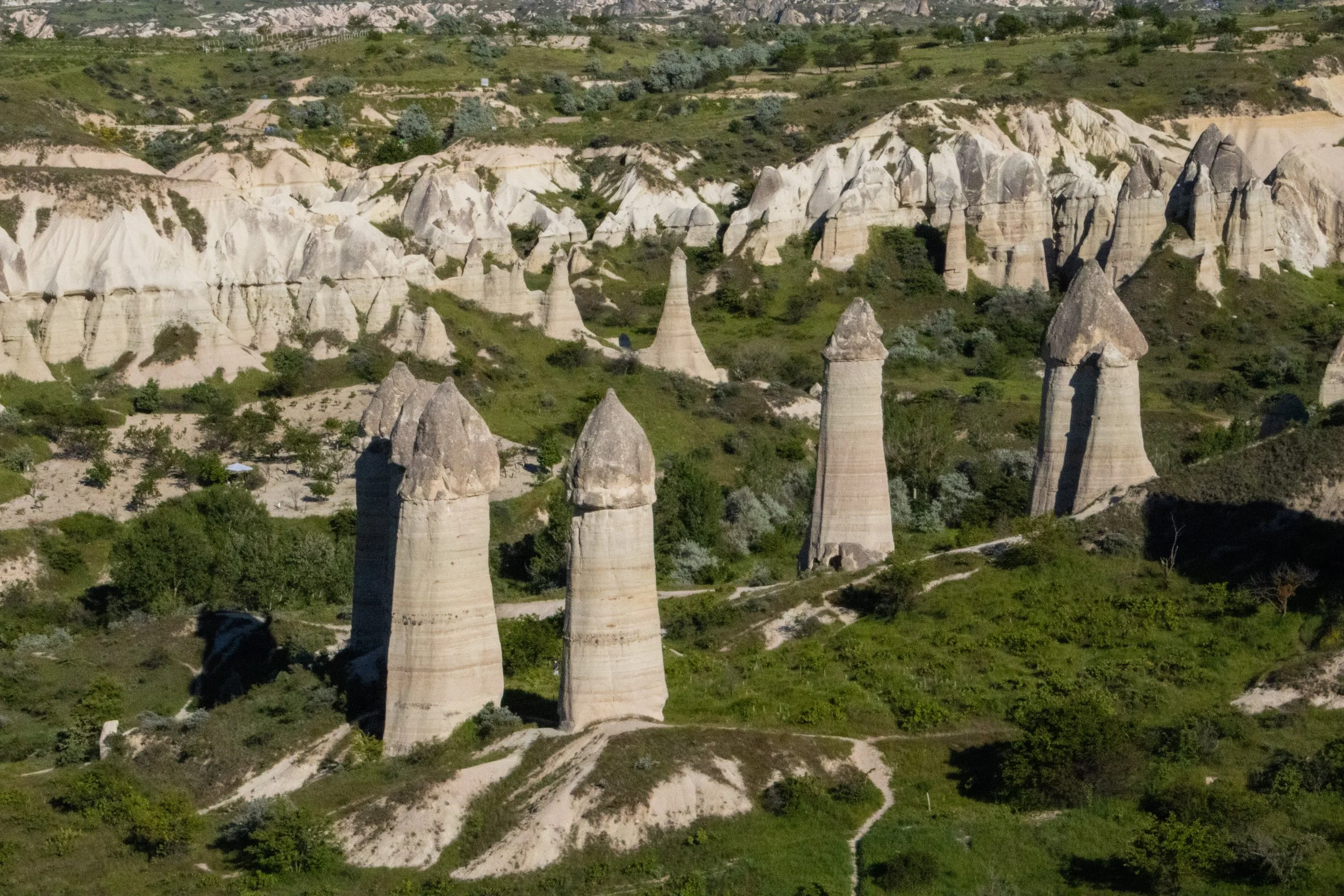
Perhaps you remember from the previous article that Cappadocia is famous for a particular sort of conical rock formation whose local name translates to “fairy chimney”. You’ll find versions of the fairy chimneys all over this region, but there’s one valley where the chimneys take on a more… *ahem* suggestive shape.
But first, we had to find this place! These are massive valleys with a number of different trails that wind through them, intended for everything from cars, to horses, to ATVs, to mountaineers, to regular people, so you can’t just type in “Love Valley trail head” to Google Maps. It took some trial and error to find our way onto the right road. There was one misadventure where we were 20 minutes down a dirt road in the wilderness before we arrived at a fork in the road where angry Turkish man yelled at us to turn around. Apparently we’d missed a “no cars” sign somewhere along the way. Oops!
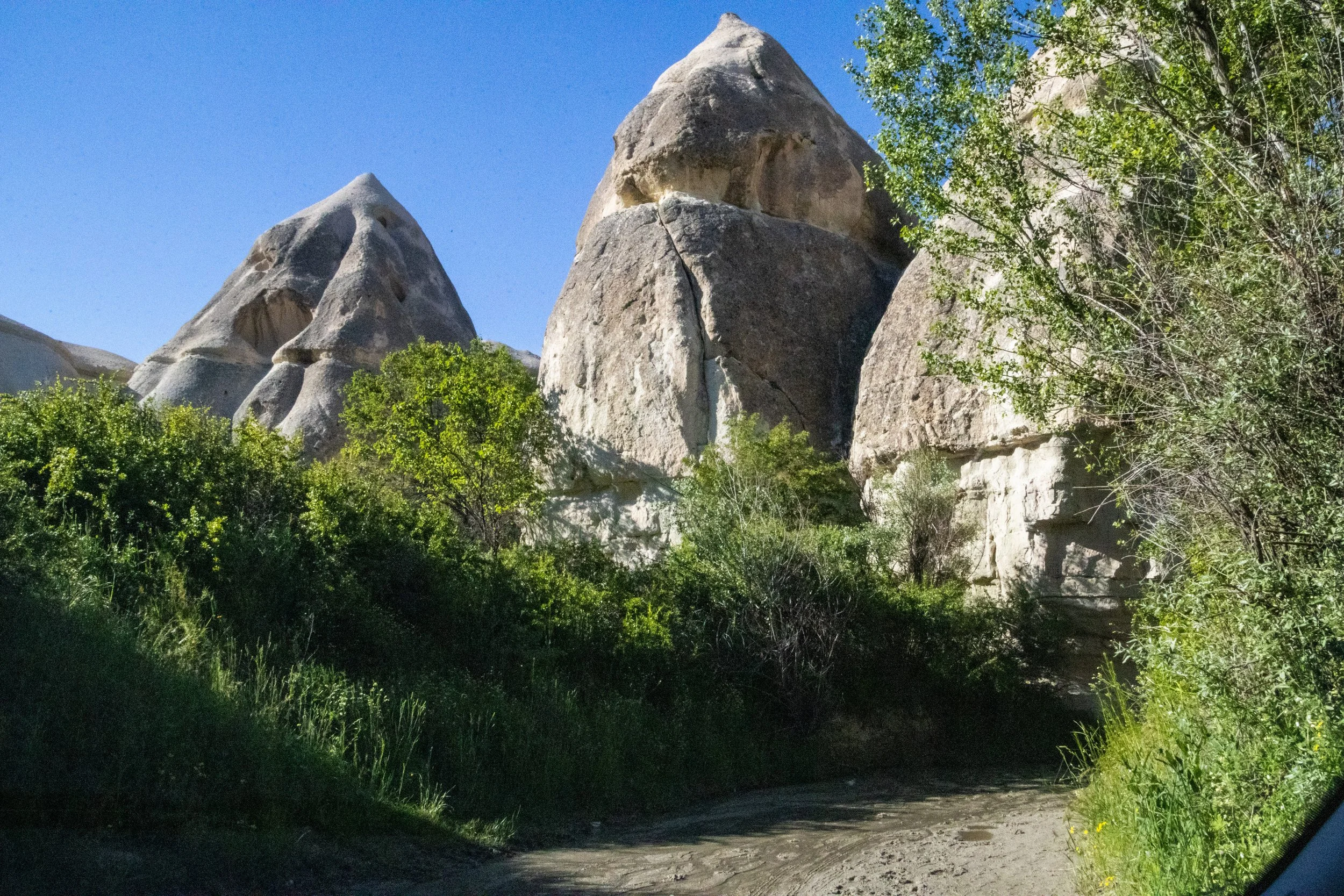
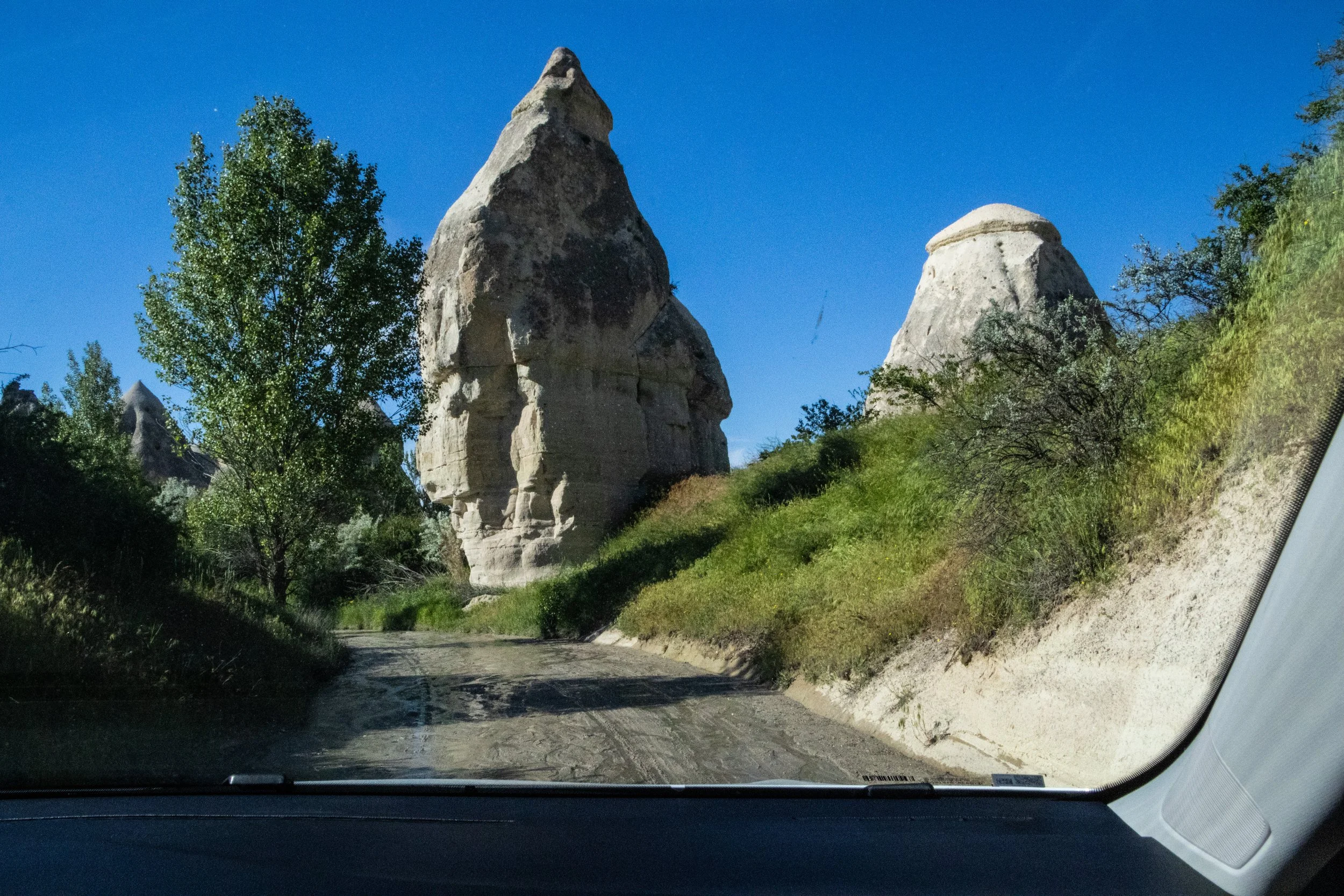
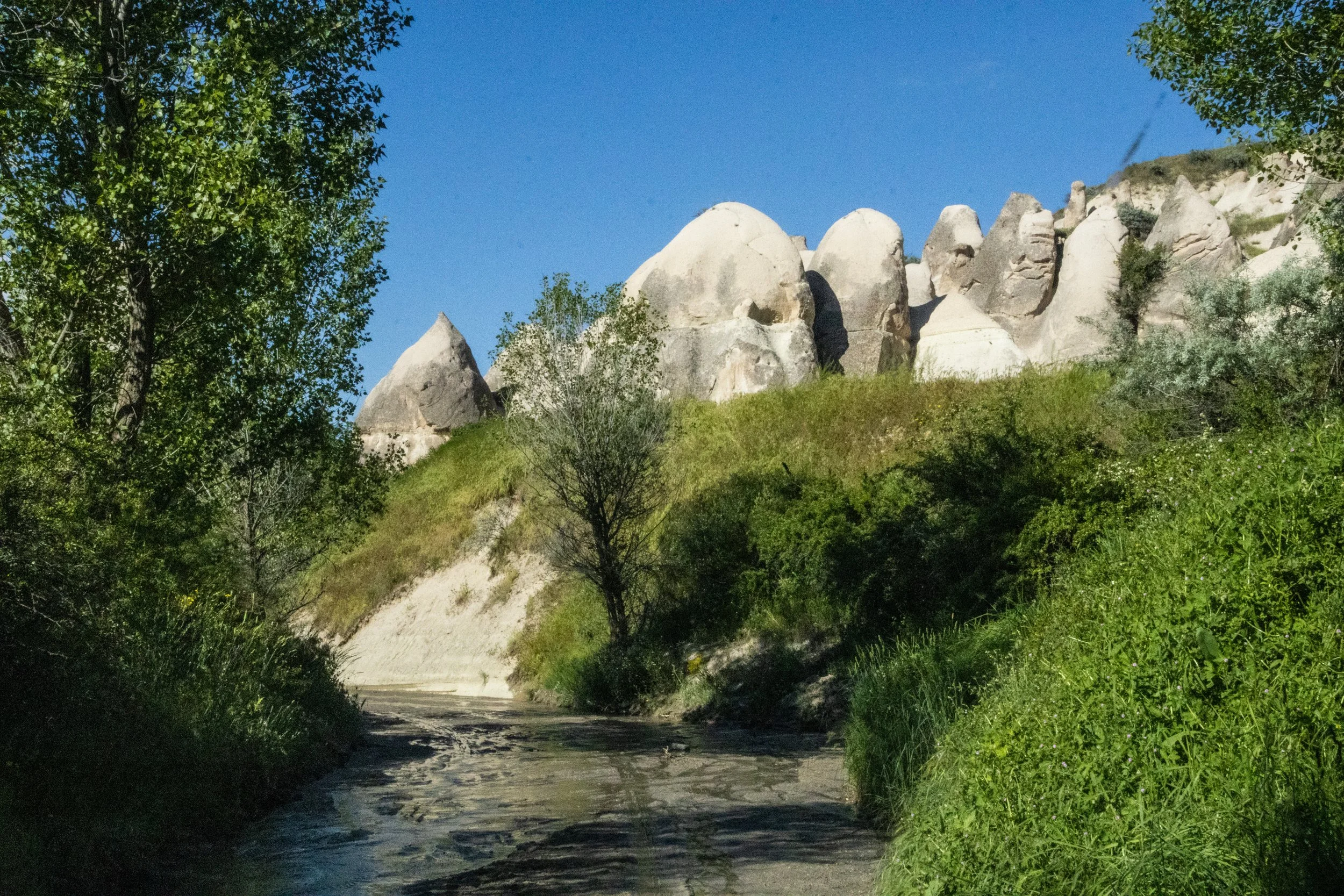
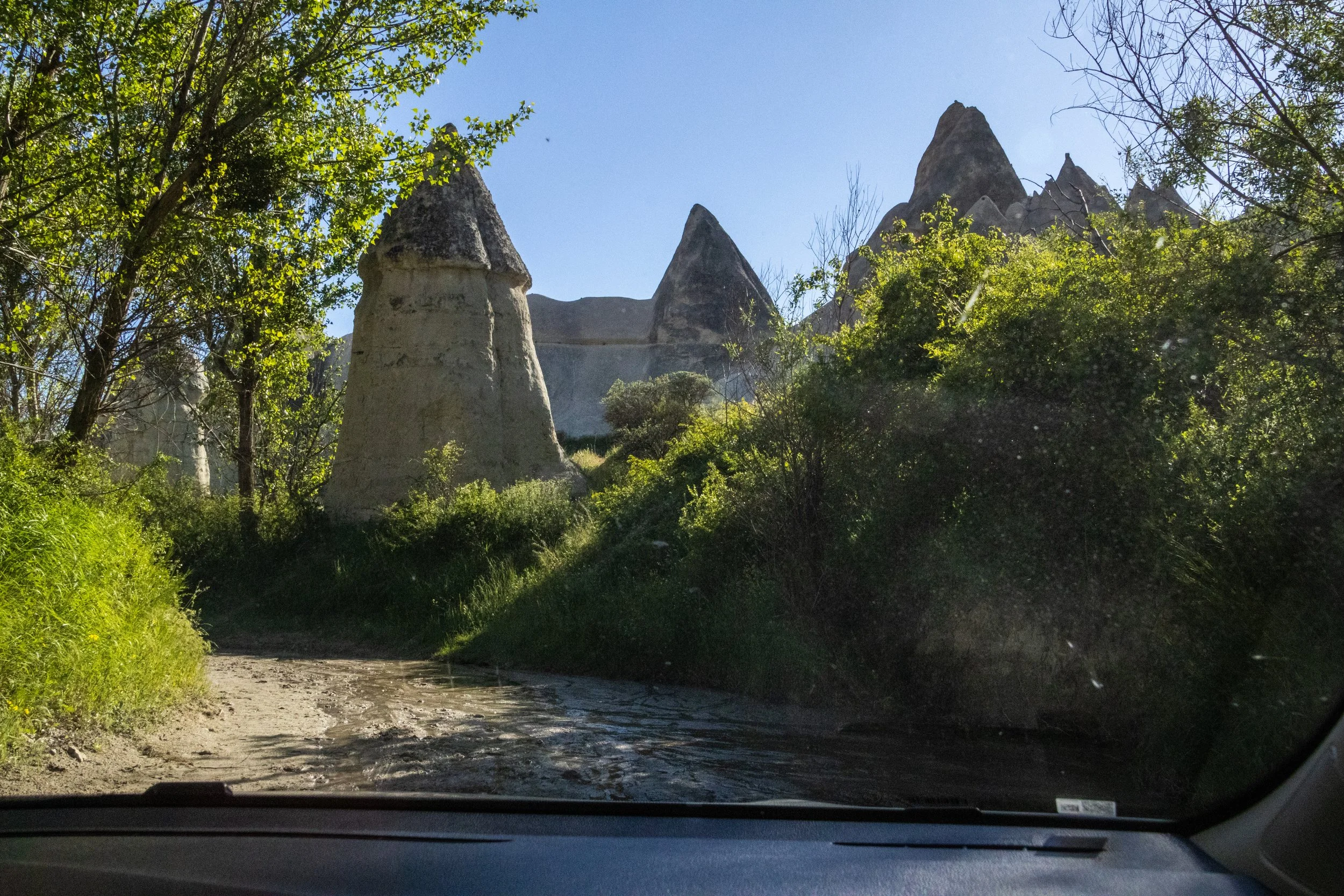
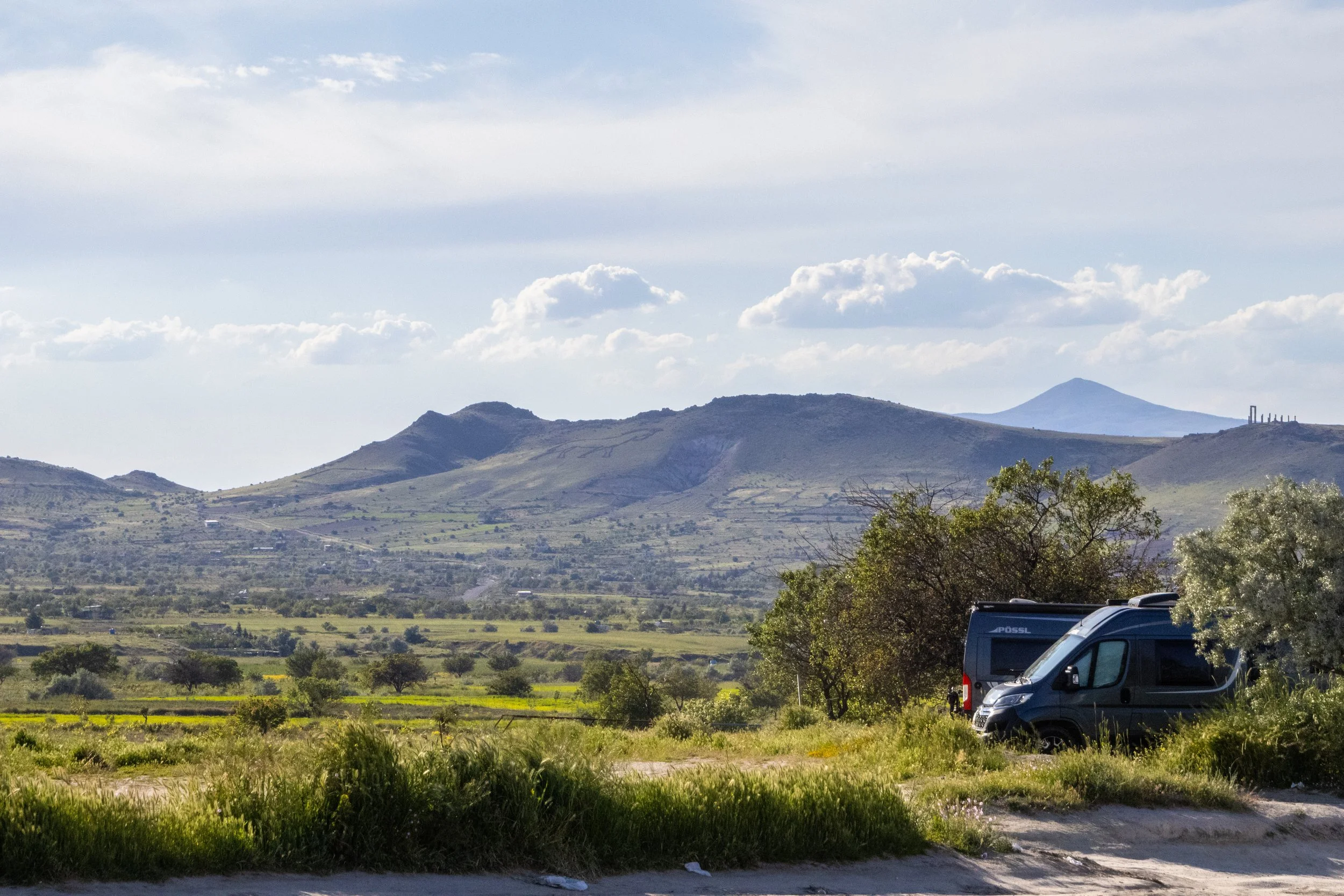
Eventually we found our way into a place that I’m still only 70% sure is the “main” lookout point onto the valley.
Rolling into the ridge line overlooking Love Valley, there was all sorts of tourist infrastructure, including a small café, camels available to ride with heart-themed saddles, and platforms decorated with giant hearts clearly intended for Instagram photoshoots. As we walked up, there was a brigade of ATVs arriving back from a sight-seeing expedition. Tourists from all over the world motored along in a single-file line, with Turkish guides accompanying them like sheepdogs. One of these guides rolled in on just the left two tires of his ATV. Ostentatious, but impressive.
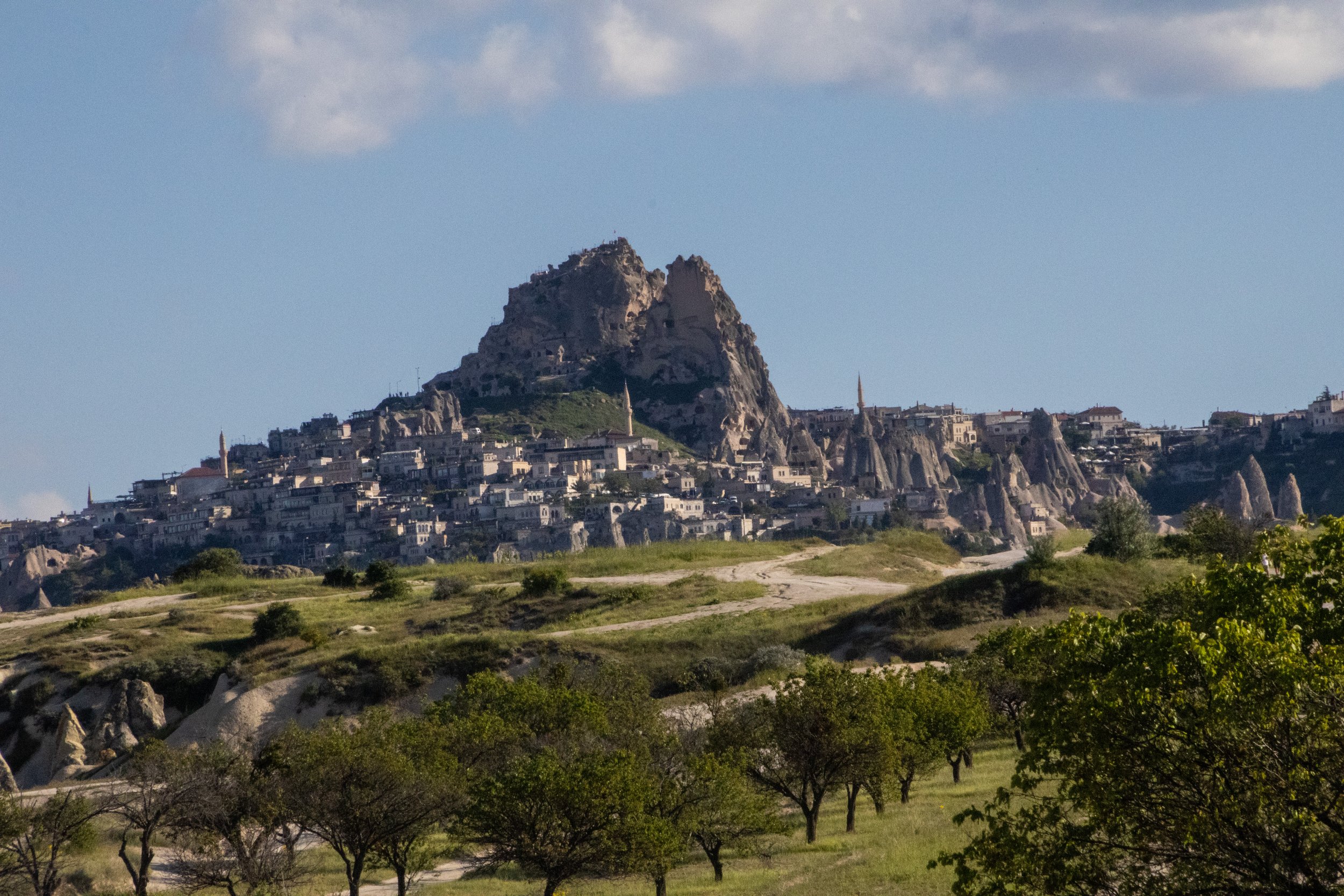
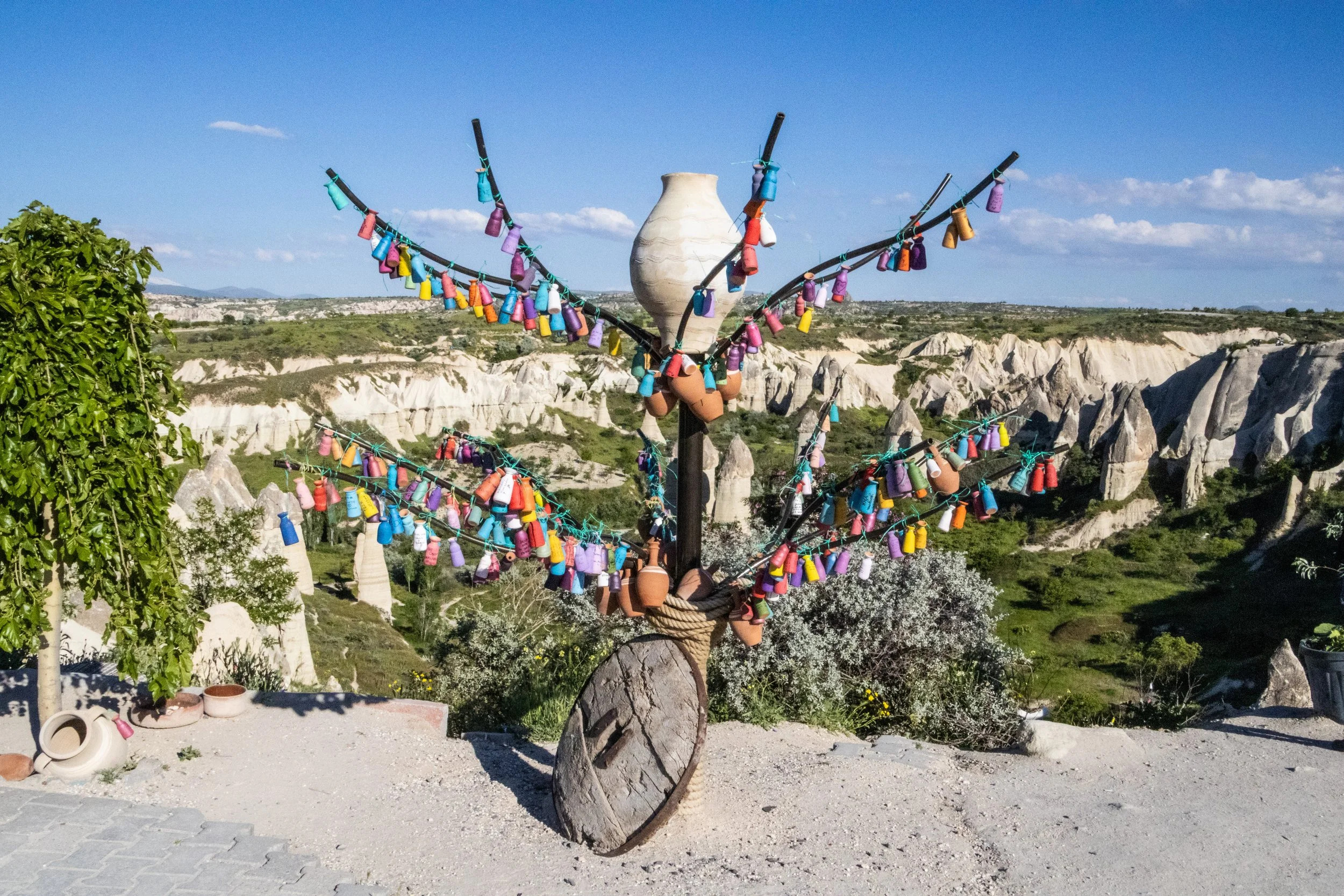
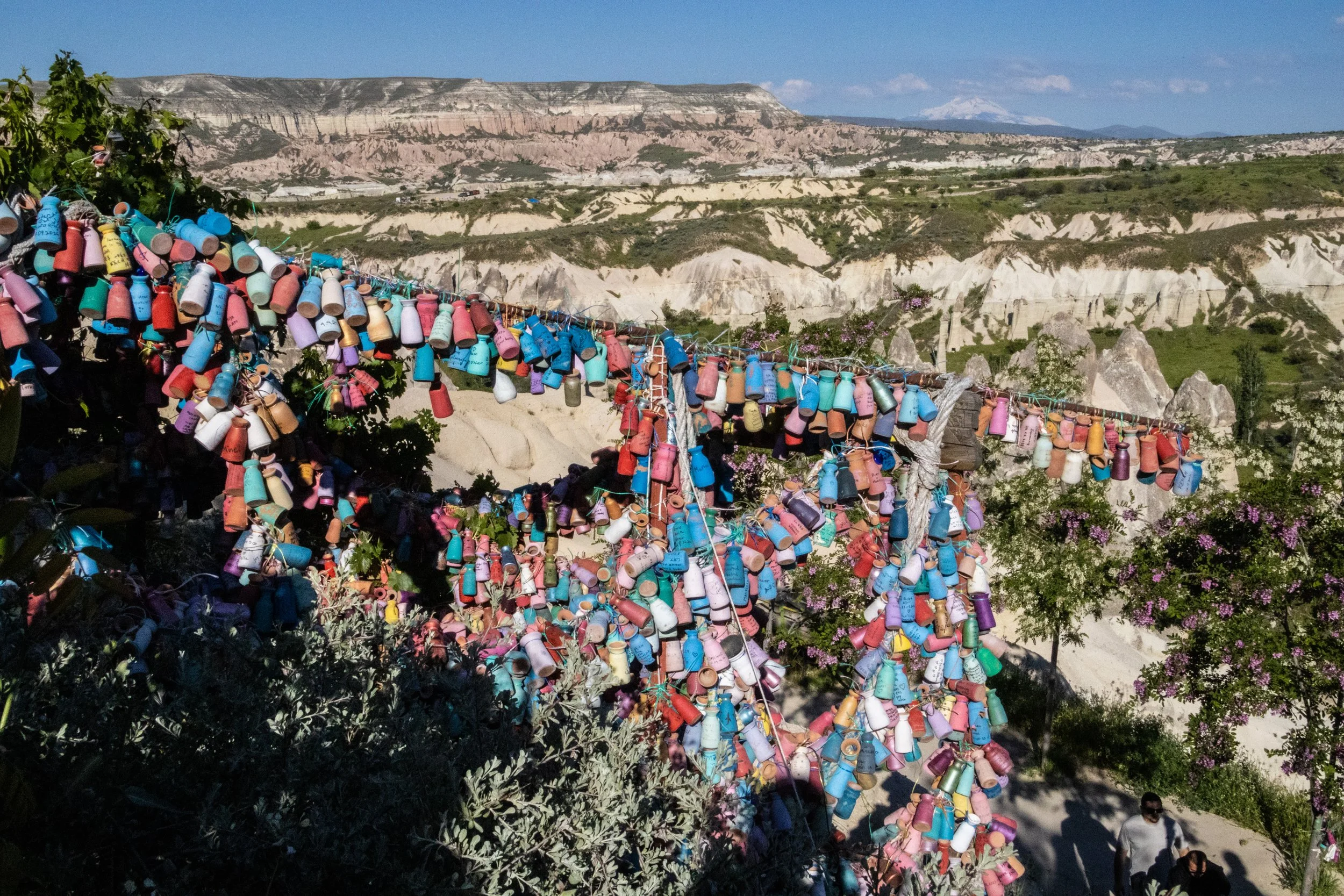
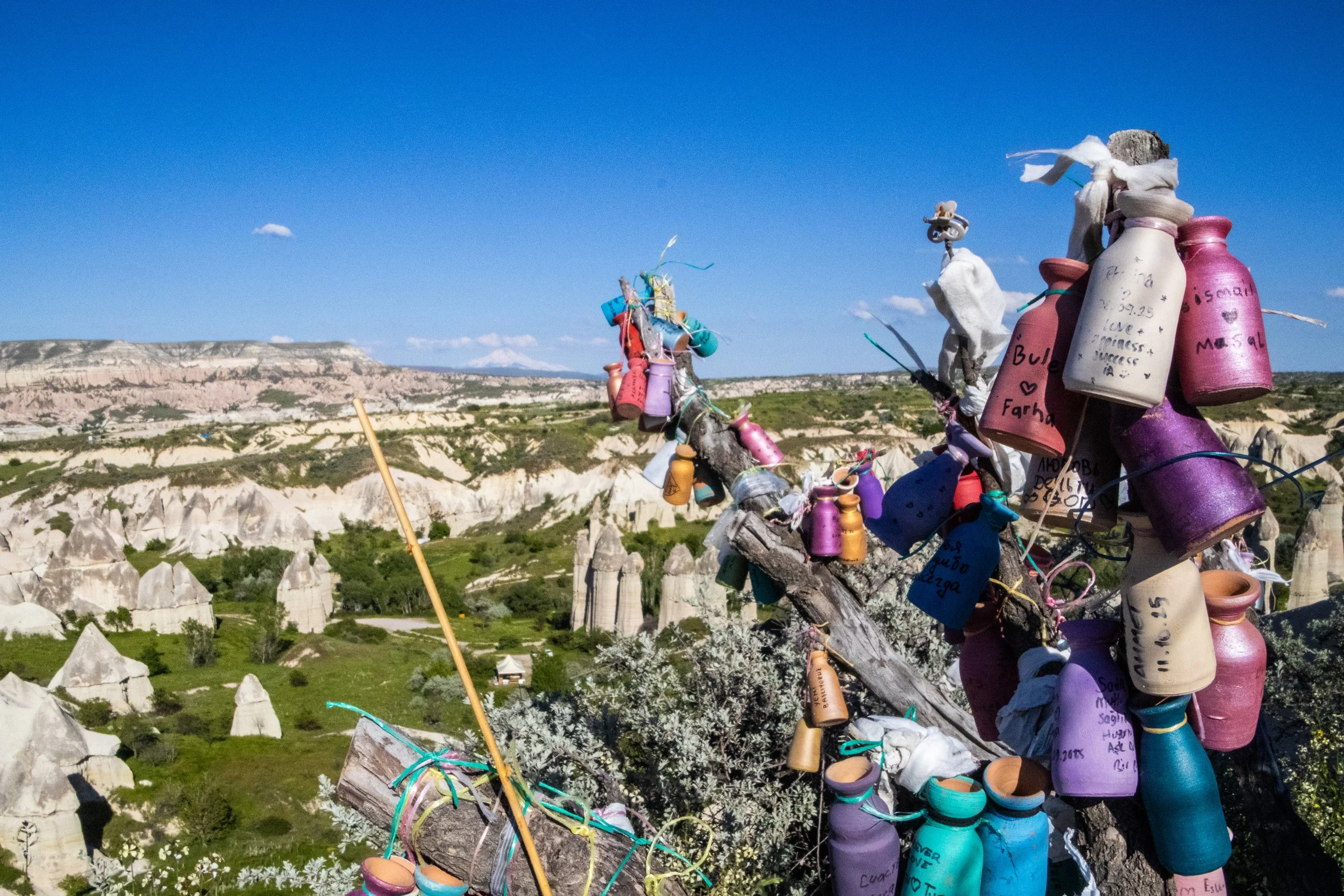
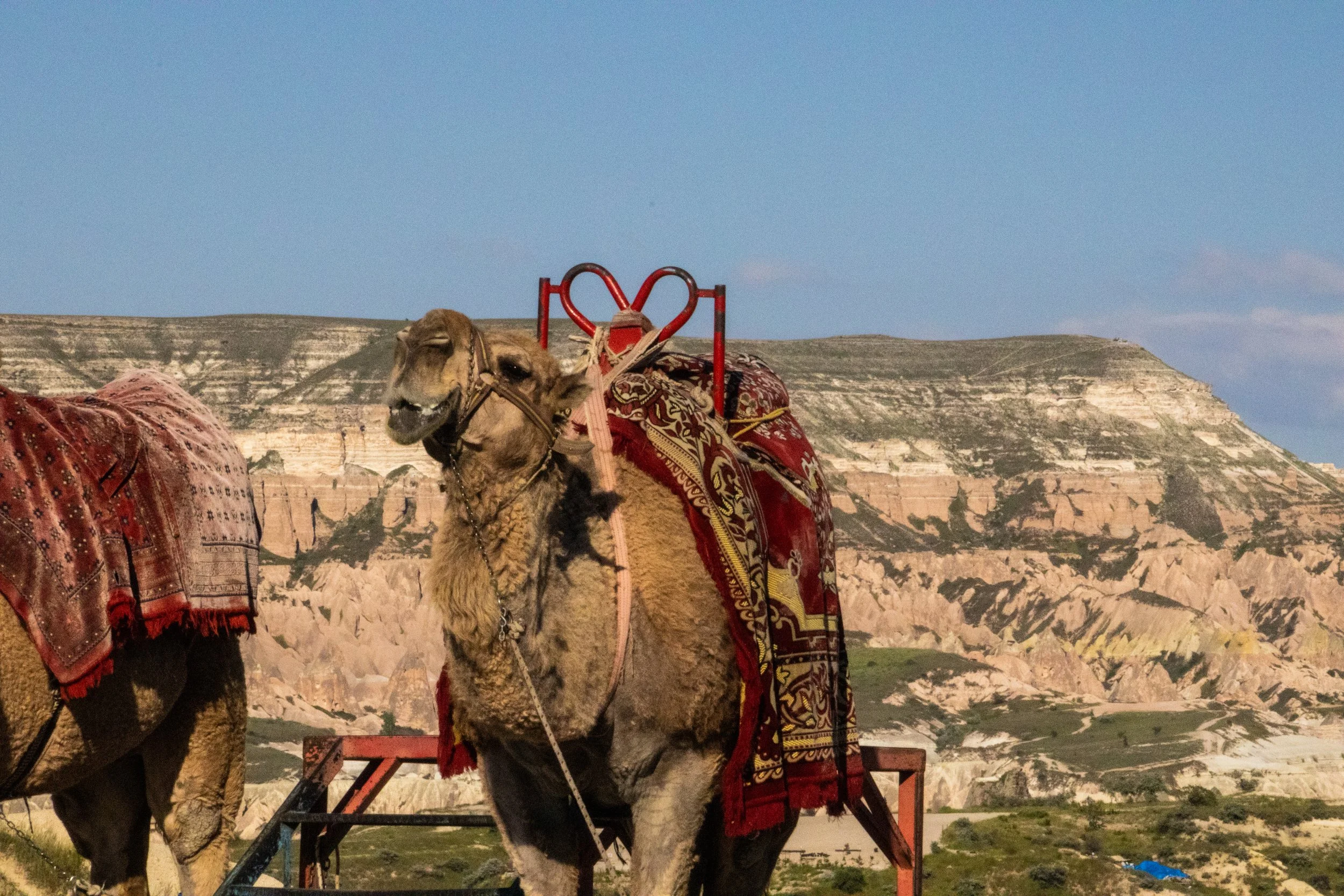
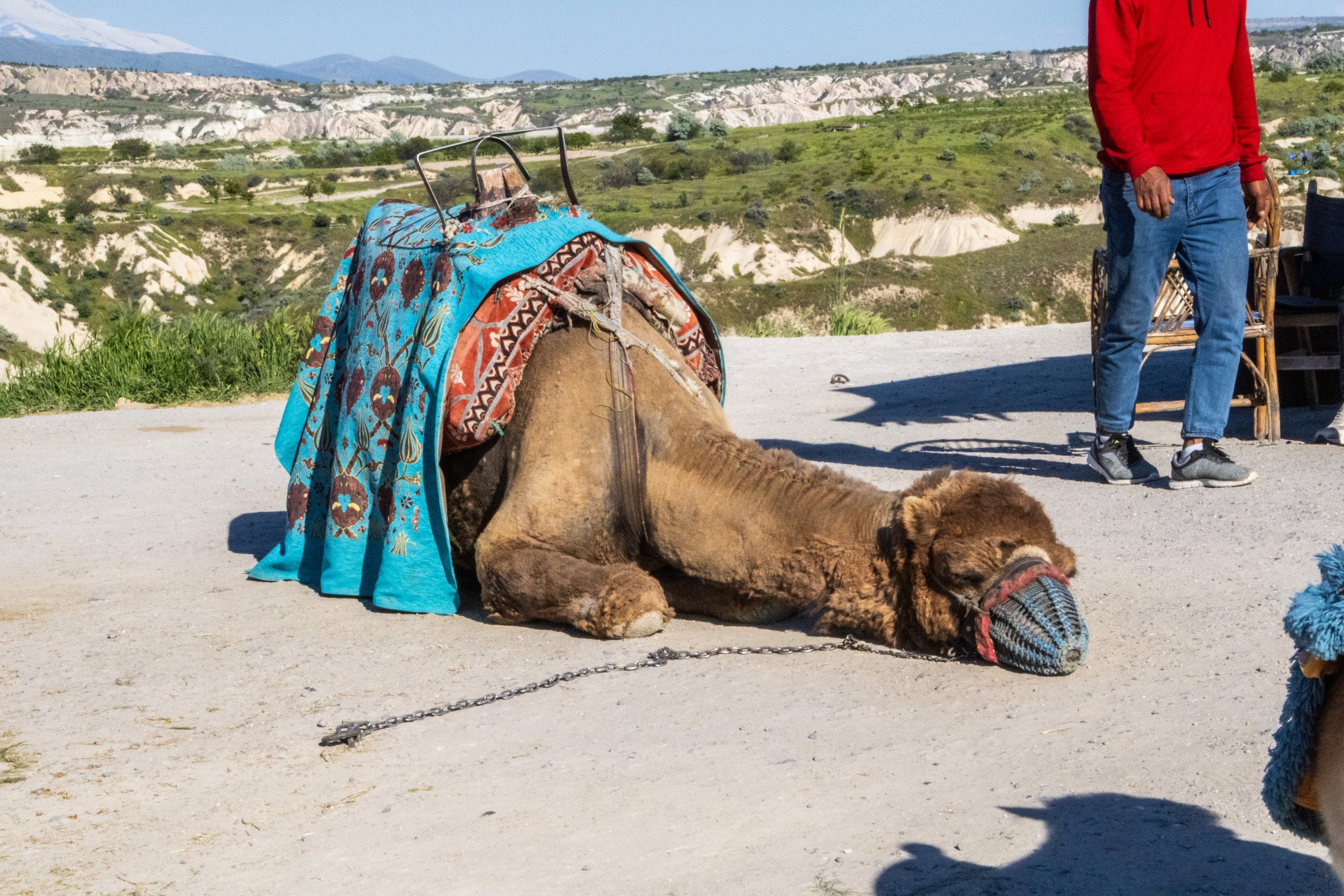
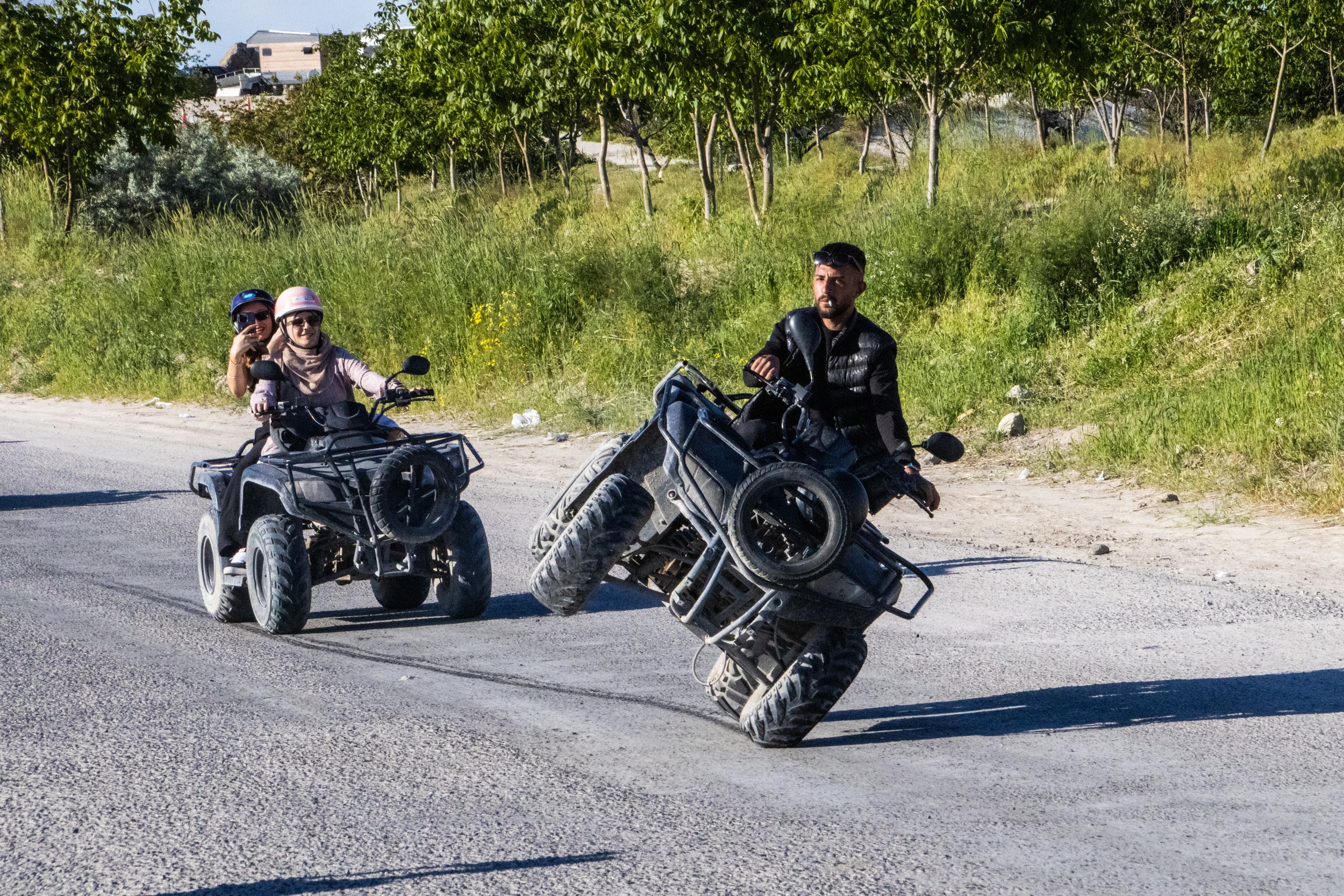
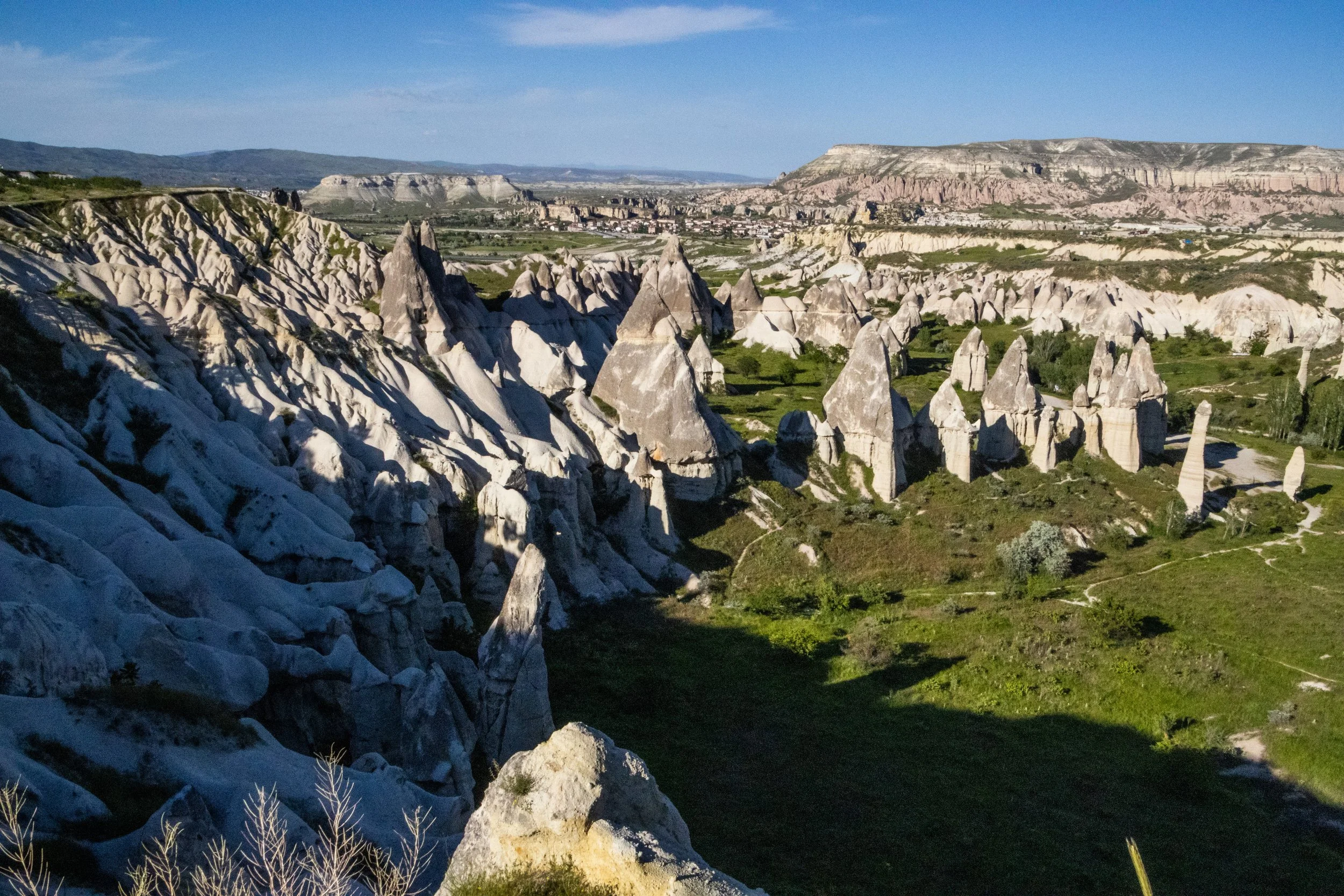
Truth be told, I hadn’t yet pieced together where the name “Love Valley” came from. There were a number valleys in Cappadocia with similar names… Rose Valley, Red Valley, Love Valley… I hadn’t thought much of any of the names. But when I finally walked up to the ridge and looked down over the valley, the thinly veiled innuendo of this name quickly fell away…
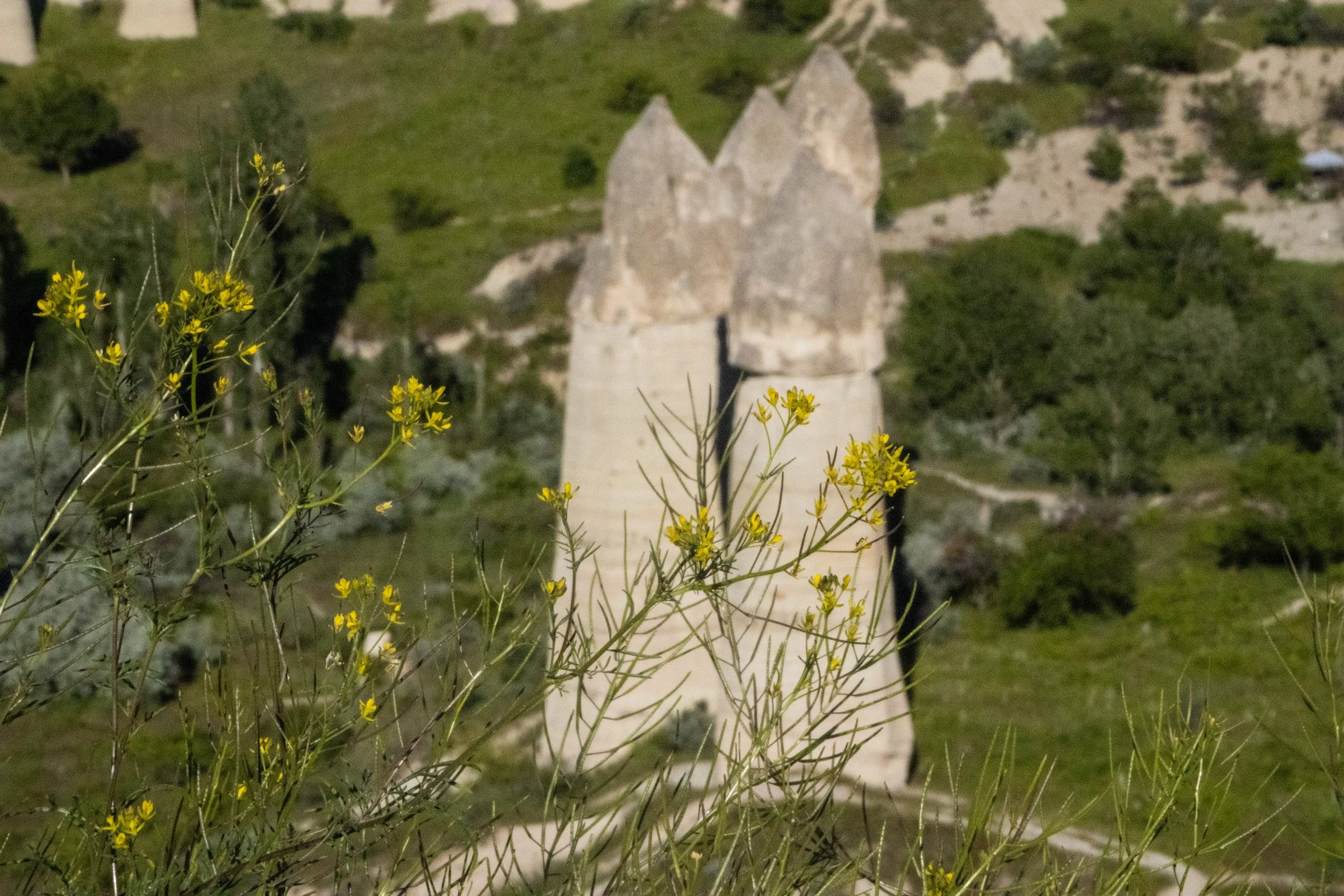
Yes, this was a valley full of giant stone penises. And I want you to take a moment to appreciate all the jokes I haven’t made in this article. In some alternate universe, there’s a version of Peter that wouldn’t have acknowledged this as all, but that Peter probably isn’t very much fun. Anyway, it’s a gorgeous natural setting. Here are some pics:
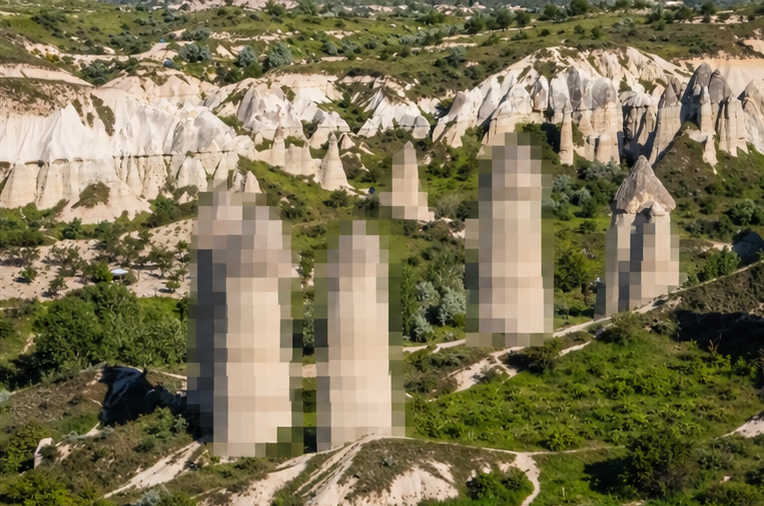
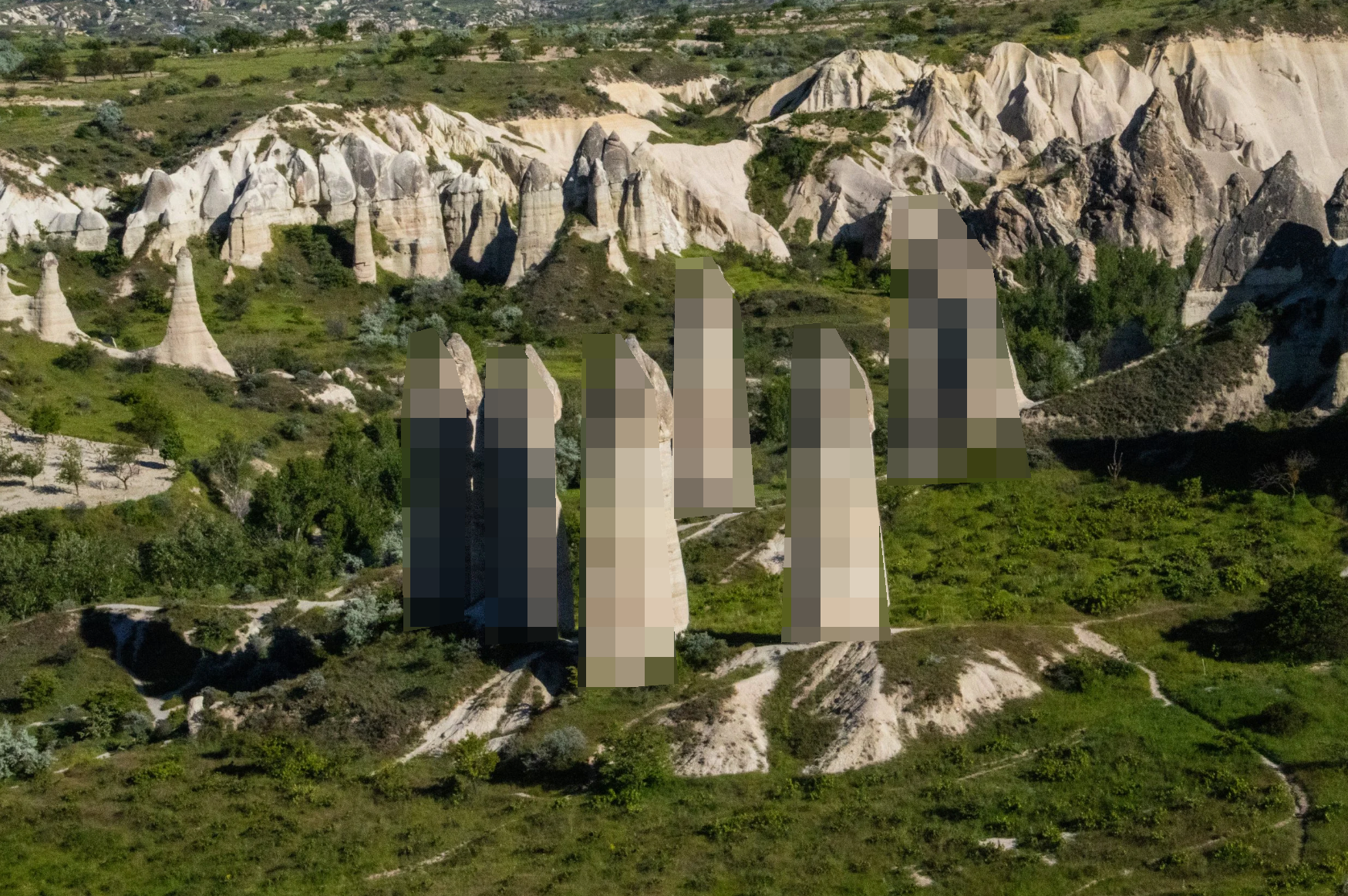
Just kidding.
Here’s the gallery for real:
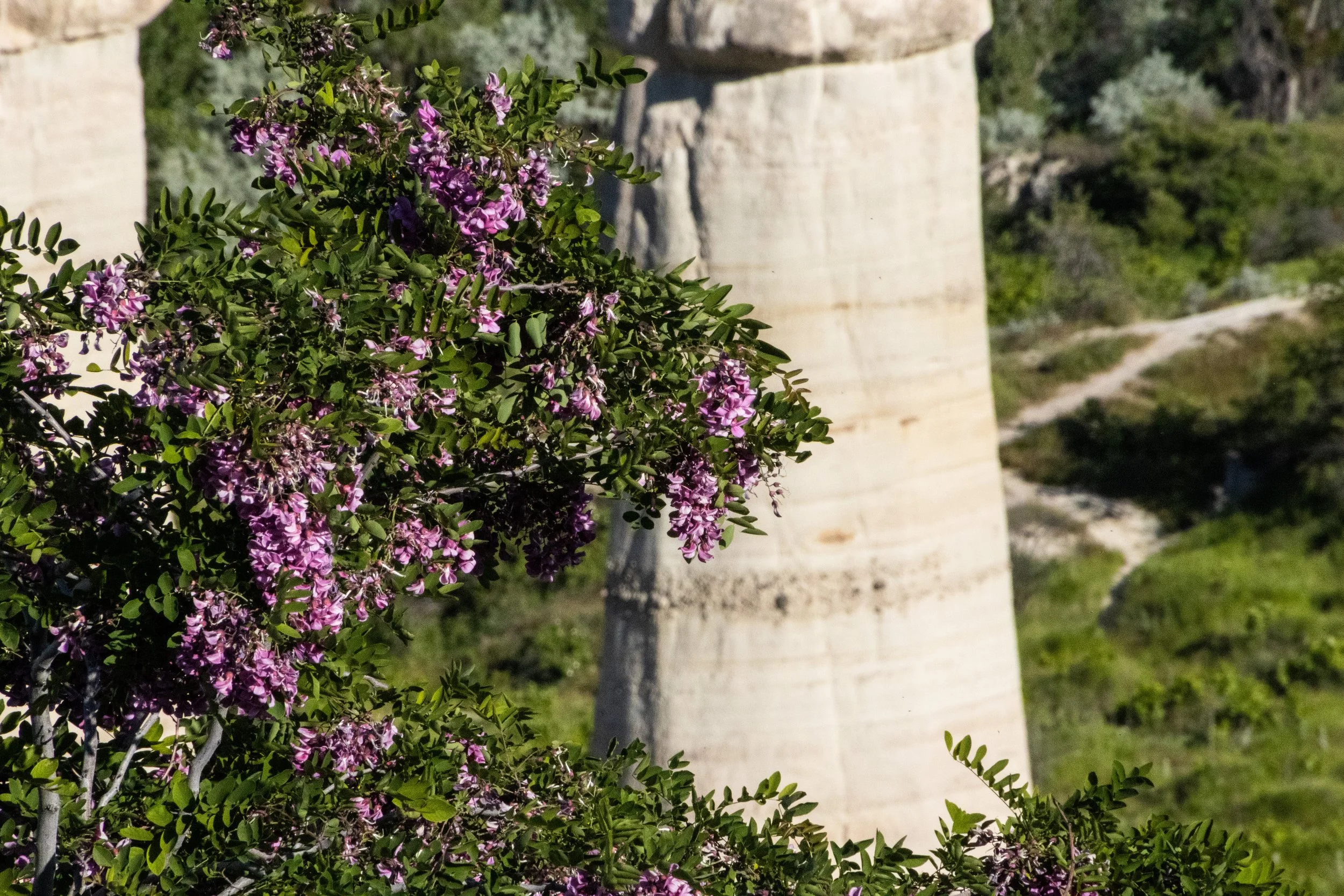
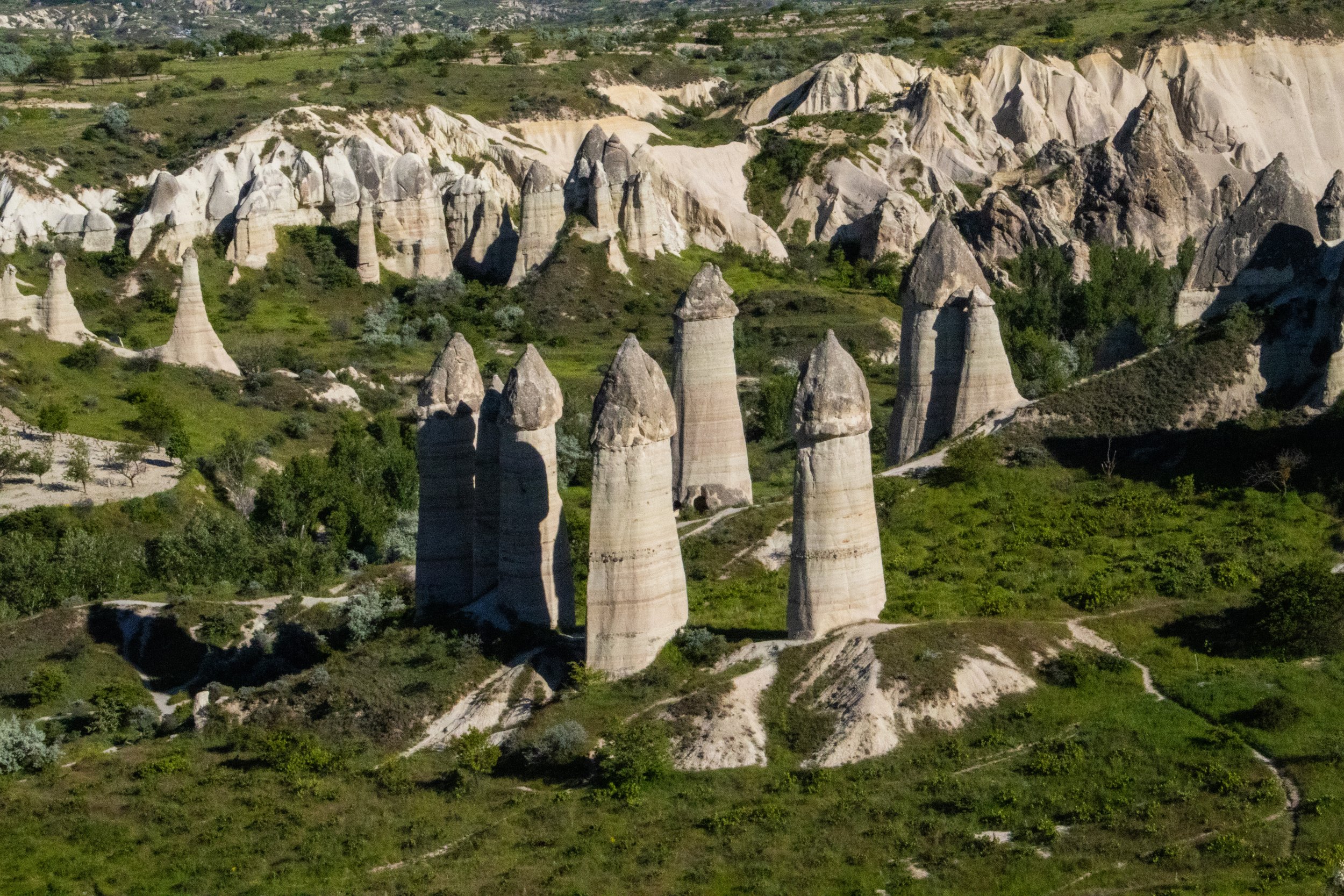
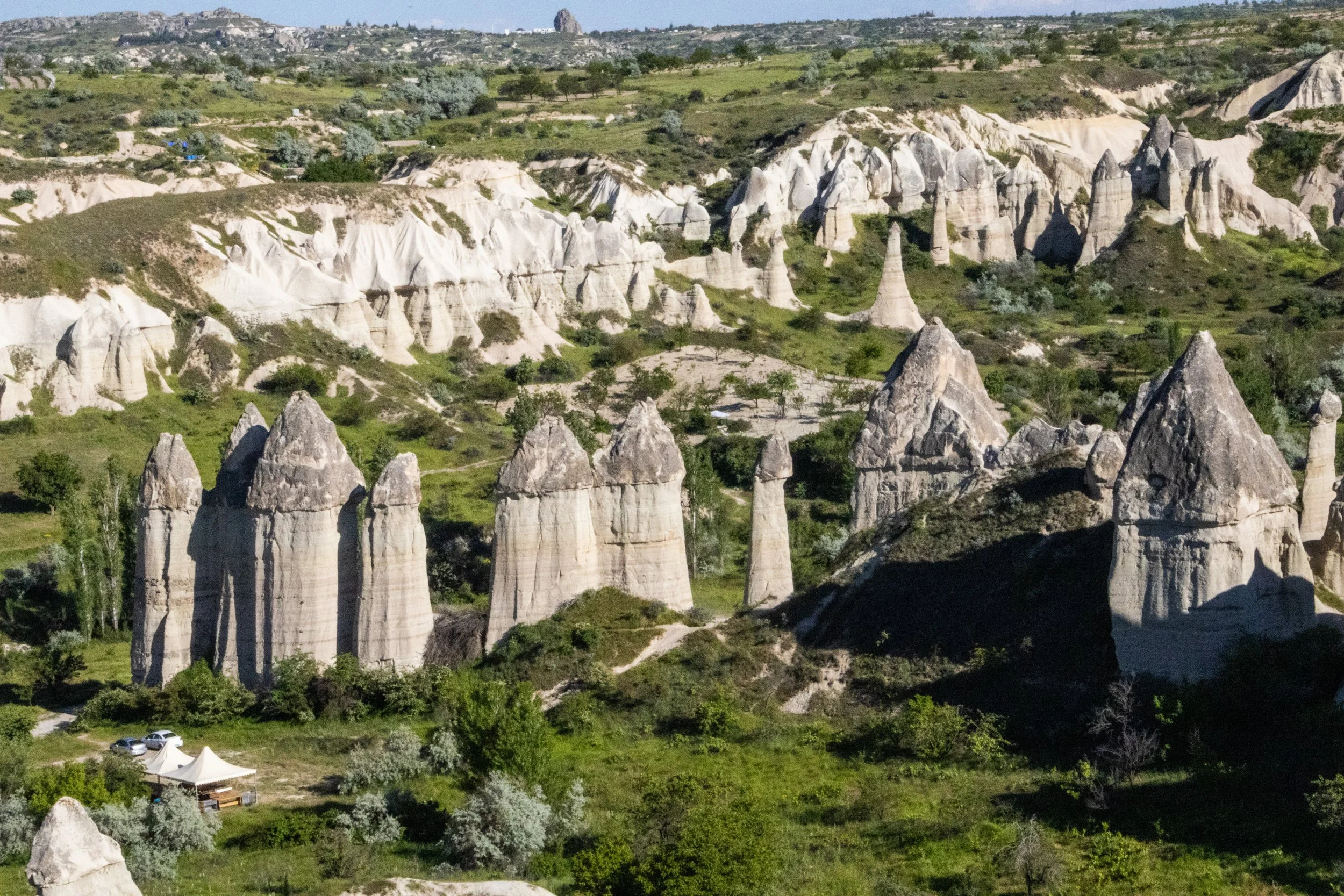
ROSE + RED VALLEY
MOVING ON, up next we’ll visit the Rose Valley and the Red Valley.
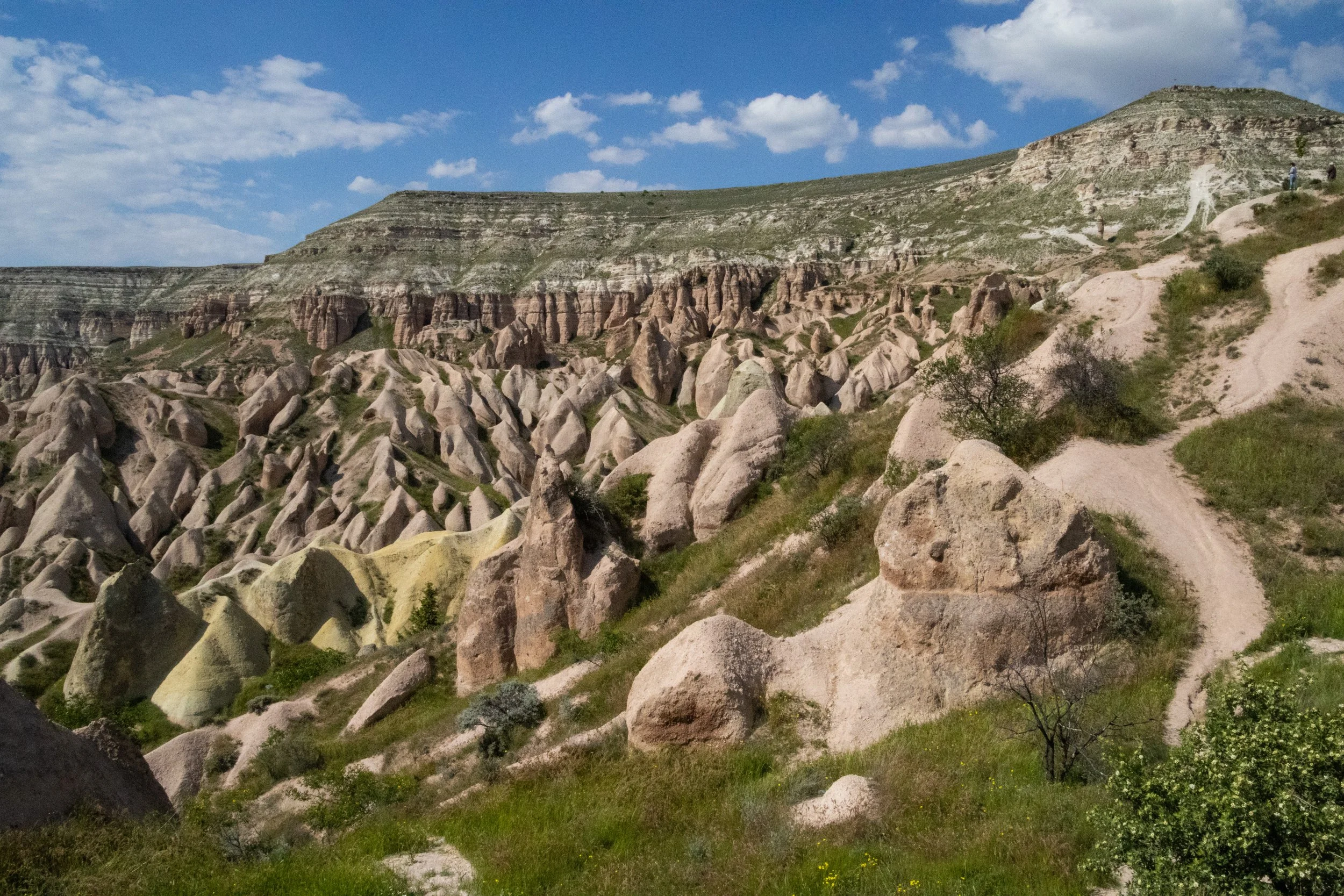
Up first, we have the Red Valley. I’ll tell you in advance that it’s not going to look very ‘red’ in the pictures; Cappadocia is all about the sunsets and sunrises. We’re going to do a couple sunrises at the end of this article, and hopefully you will see just how much the light changes this place. But under the mid-day sun, the Red Valley didn’t look particularly red. The rock formations were extremely cool and unique all the same though. They were almost like big mounds of wet concrete that had hardened in place. It hardly even looked natural! I’m quite sure that our chosen lookout point was not ideal, because we were completely alone, quite a ways down a rocky, dirt road that almost got the best of the poor little rental car.
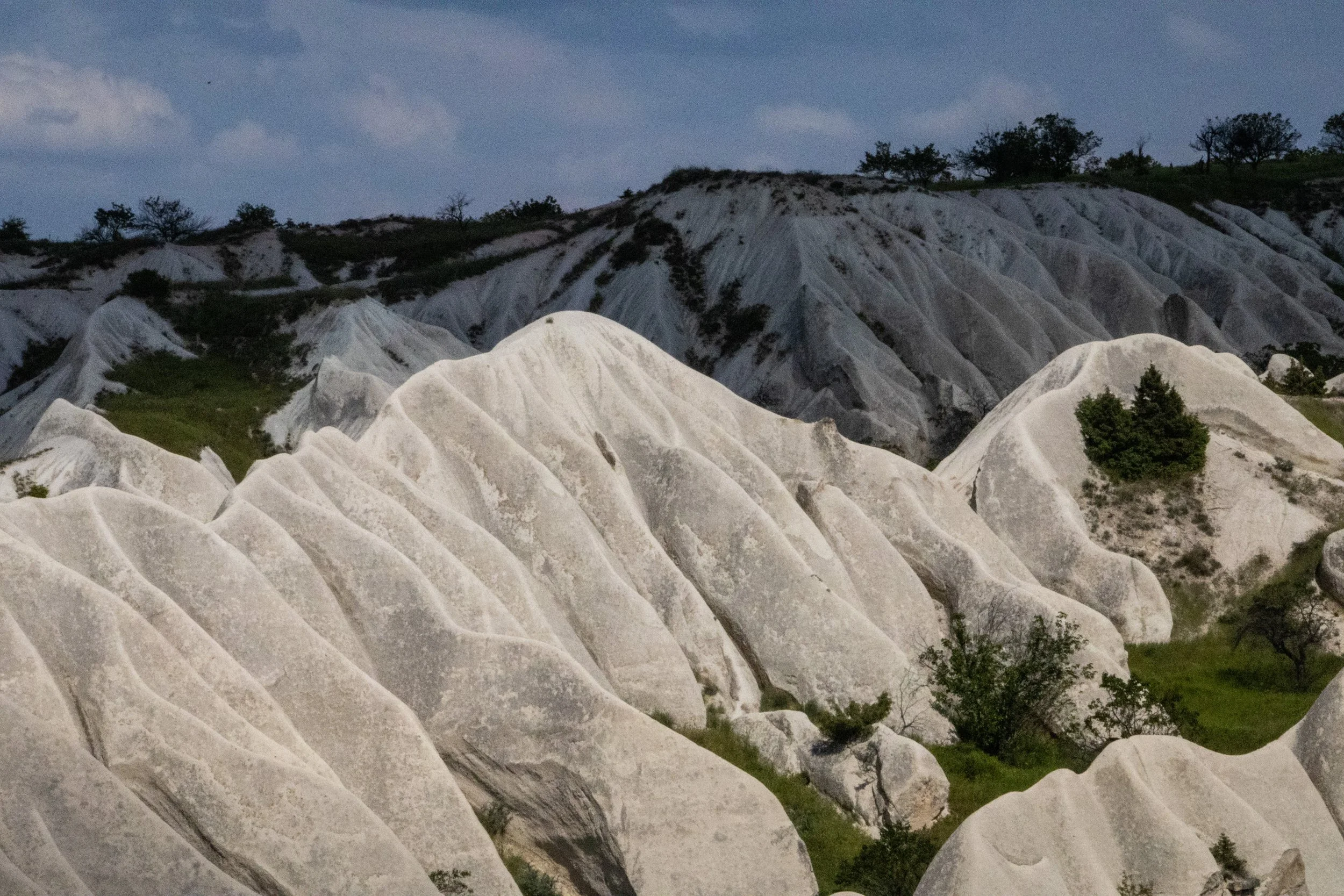
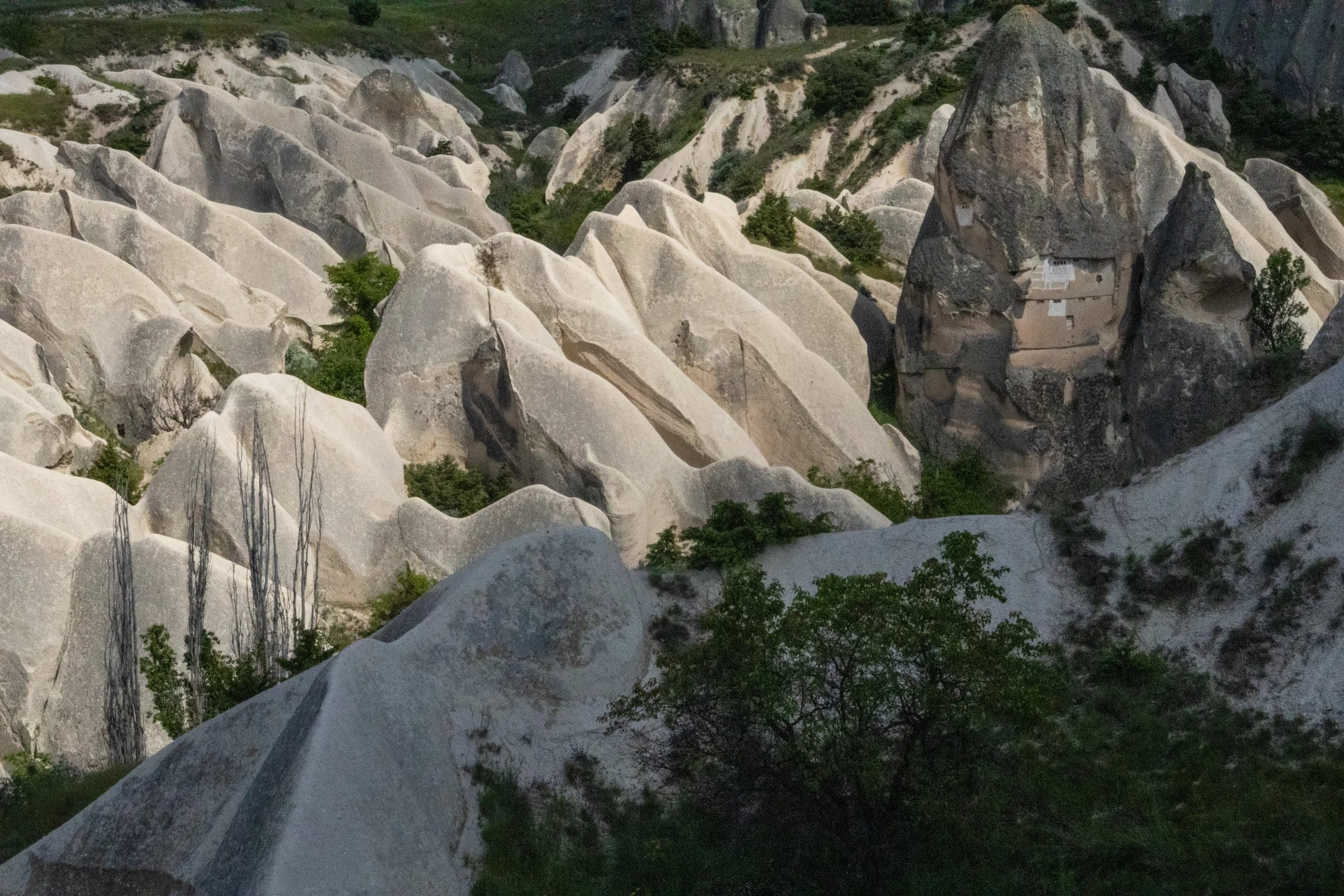
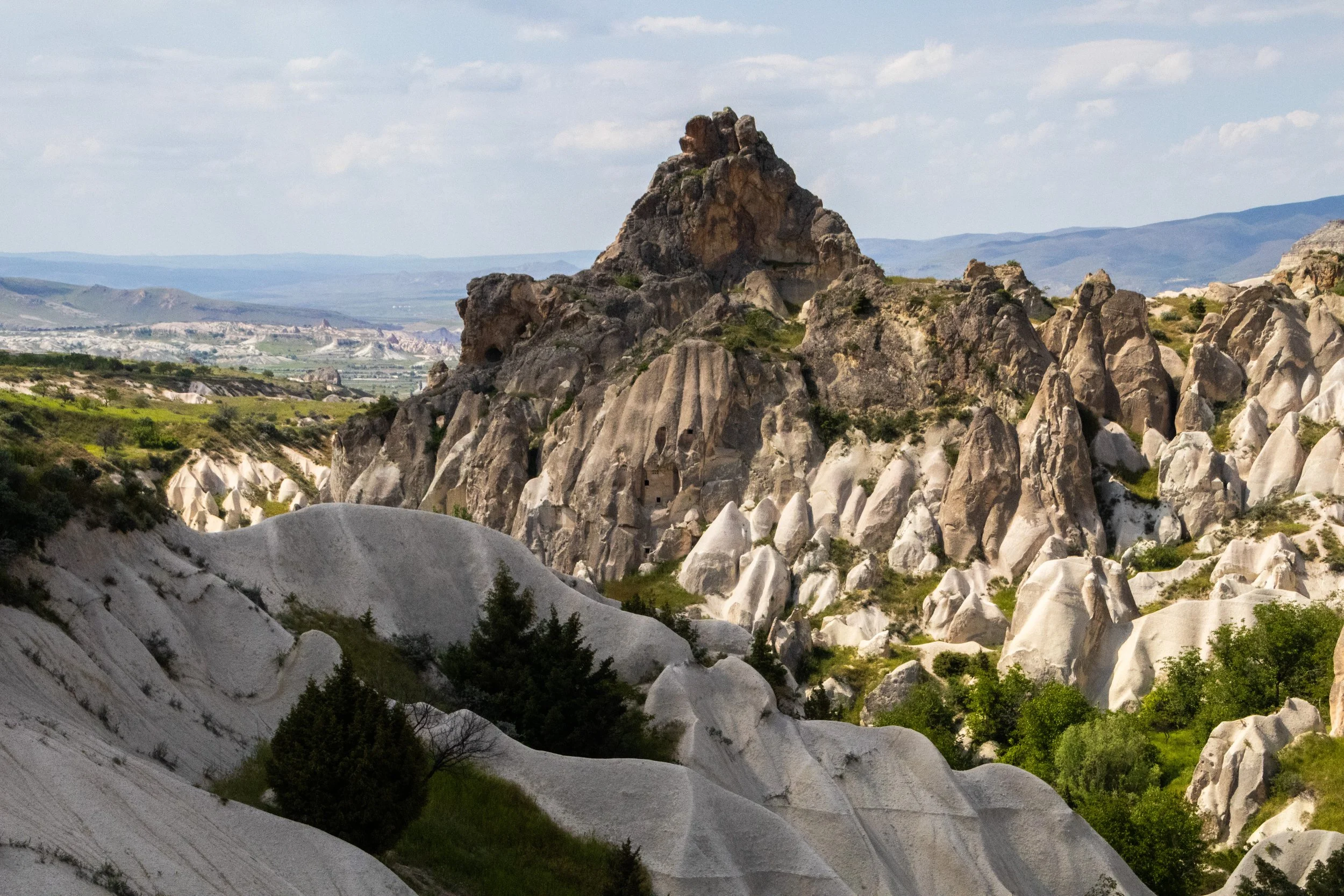
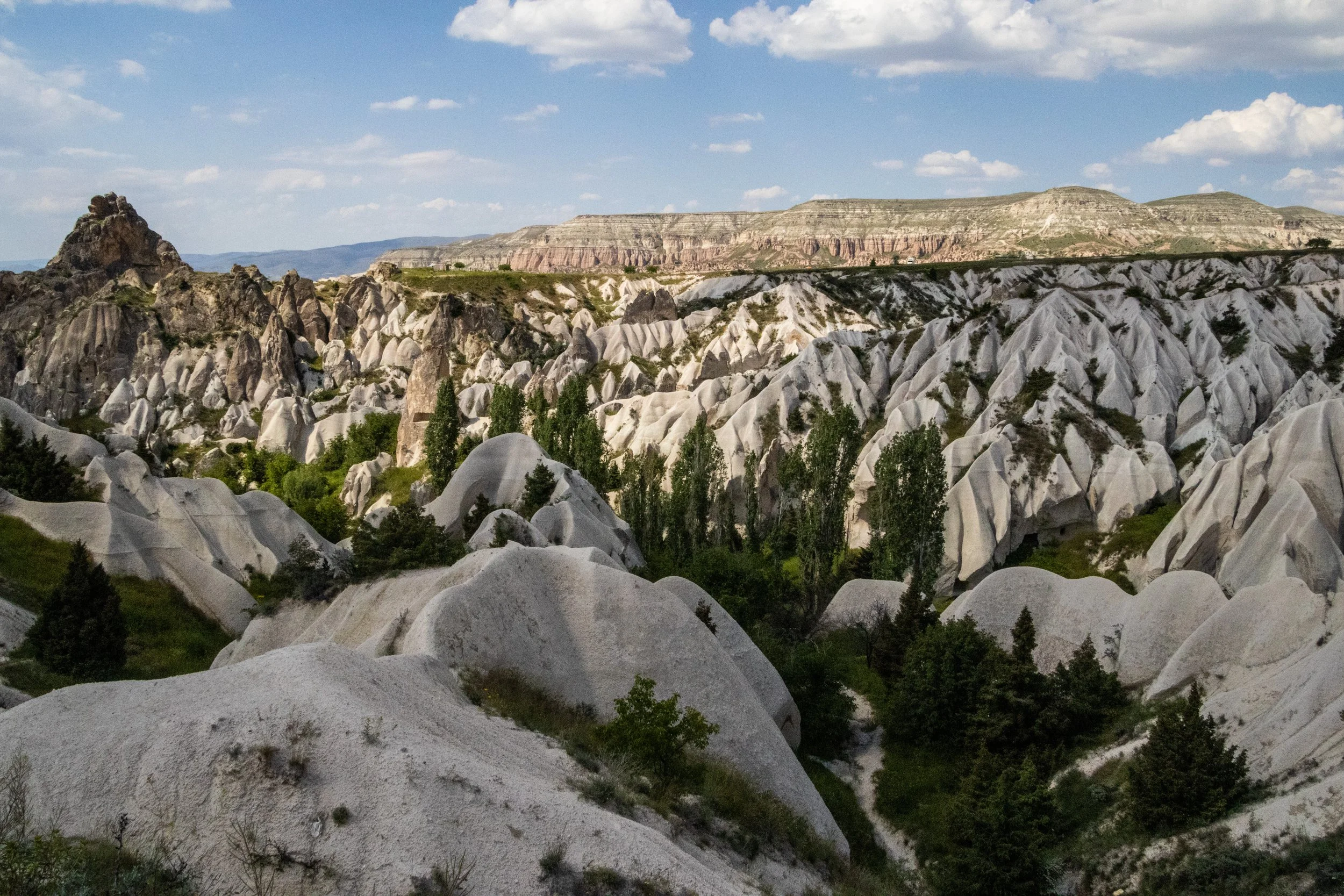
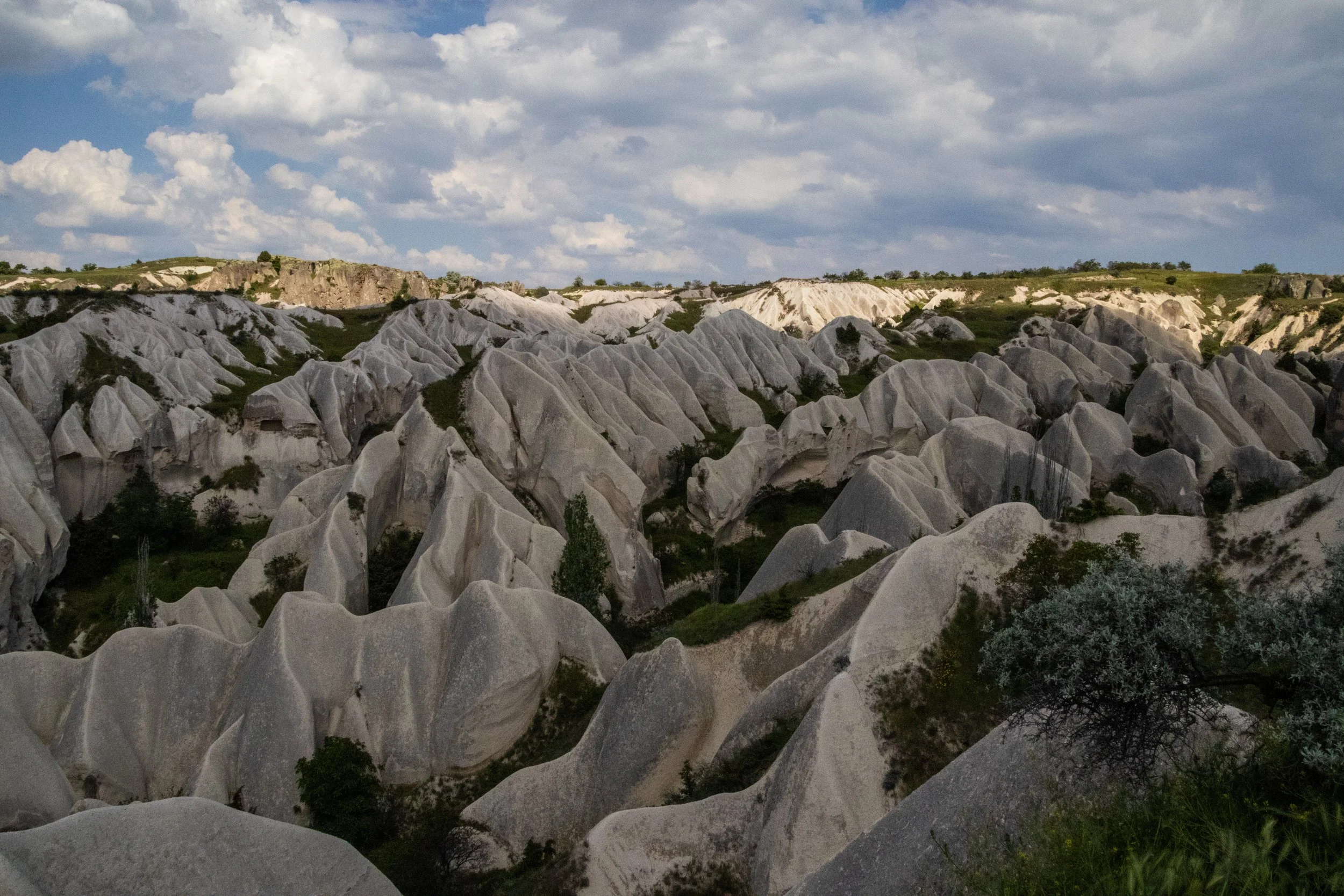
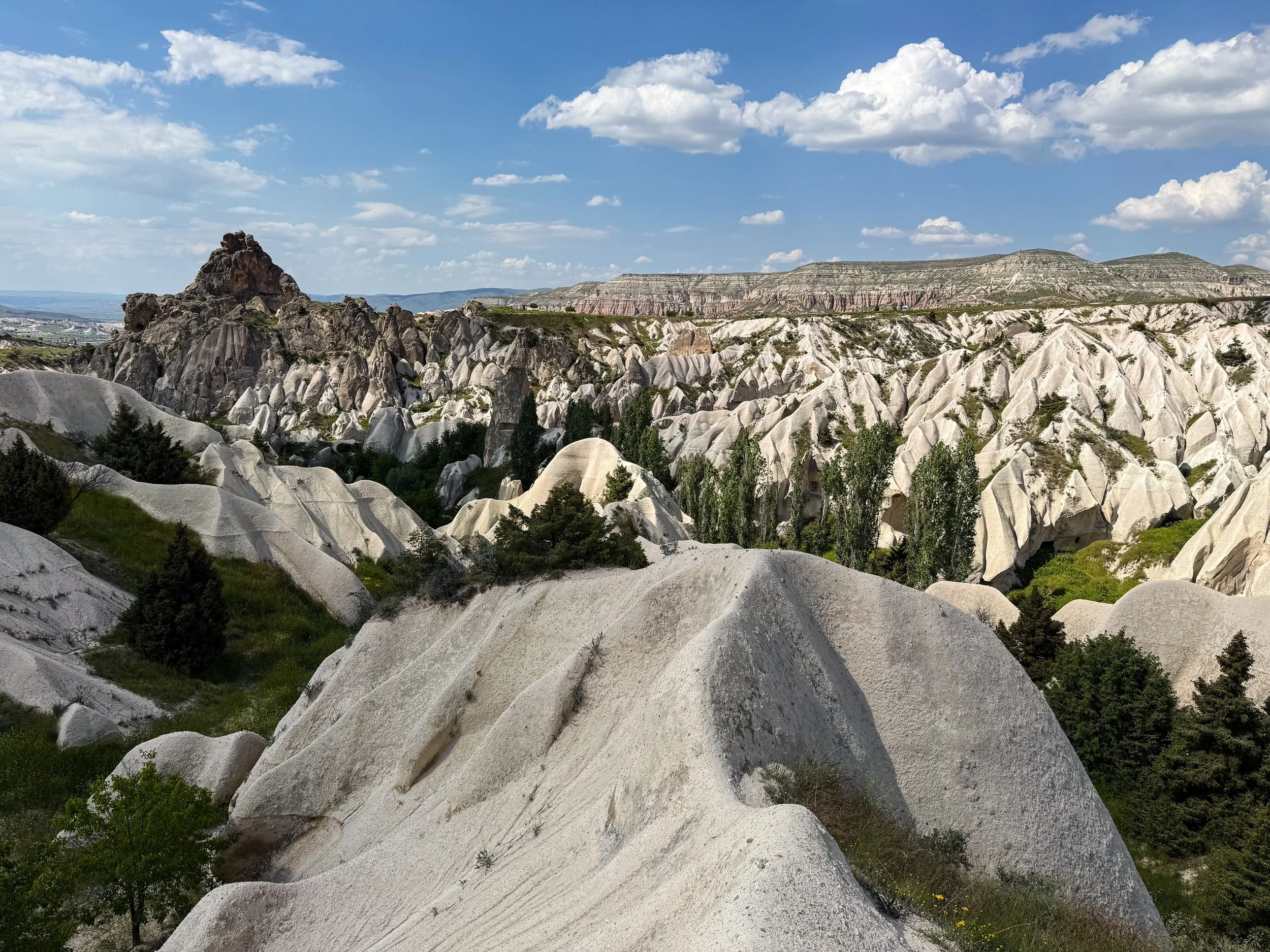
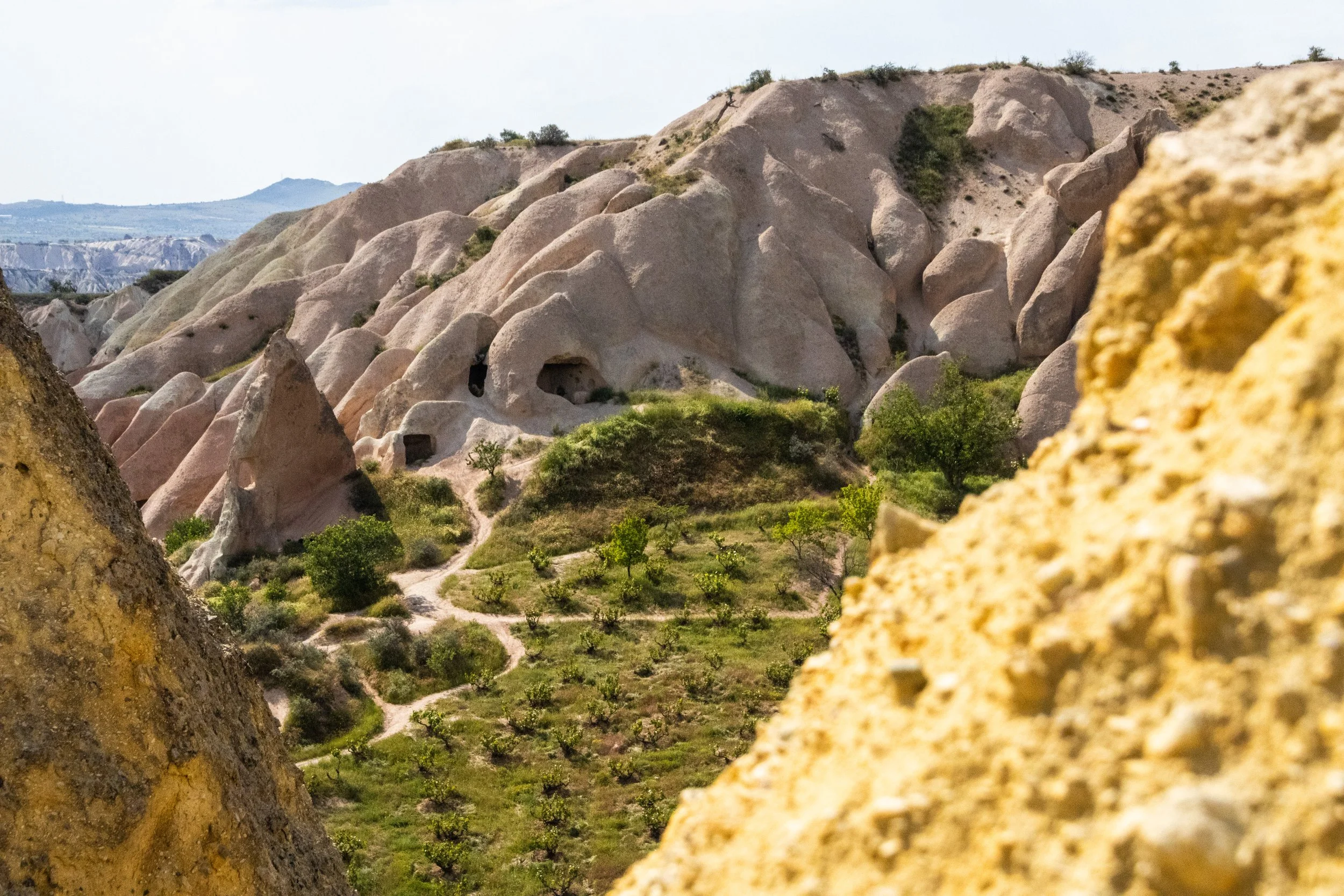
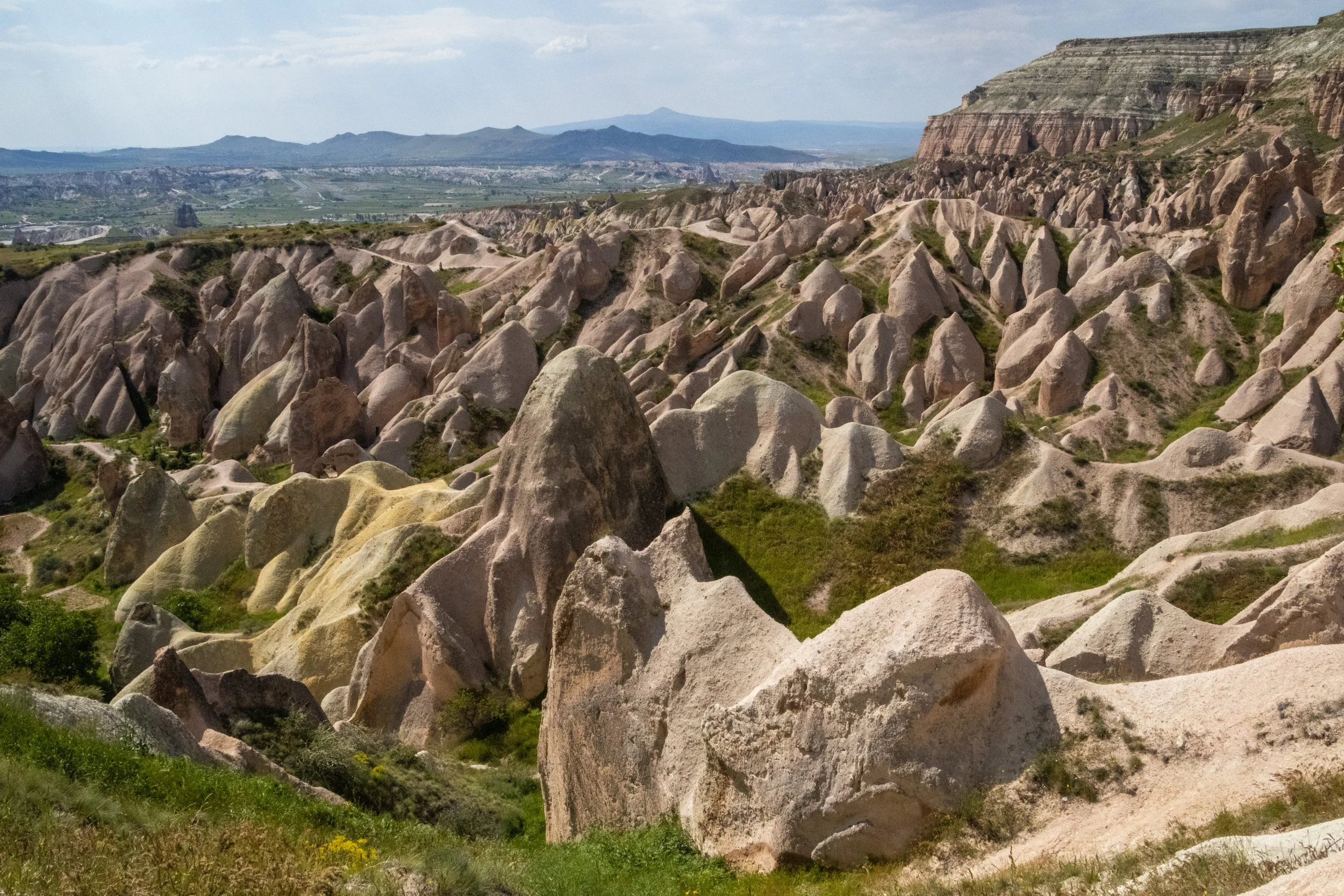
Next up: Rose Valley. As the name suggests, this place is famous for its pinkish, peach, and pale-red volcanic rock. And again, I think it looks 10x better at sunrise and sunset, but you’ll have to settle for the mid-day sun with me. 🙃
Again, I was grasping at straws trying to find THE viewpoint, or THE trail… but this time we had a much more engaging experience. We found our way to a long, empty parking lot with a spectacular view over the valley. But, looking down over the valley, we saw a number of hiking trails, and even a small house… there was no signage, so we found a break in the fence and followed a narrow trail down the steep rocks.
This was actually a really cool environment to explore, not only because of the rock formations themselves, but also because of the human activity down here. Although there was not another soul in sight, much of the available green space appeared to be used for vineyards. Cappadocia’s environment definitely seems well-suited for viticulture, and research done after the fact would indeed confirm: Cappadocia has a longstanding winemaking tradition. However, it’s not just vineyards down here in the Rose Valley, but also apricots, apple orchards, and small vegetables plots. Walking through this, I felt like I was hiking through some far-flung, exotic version of Napa Valley.
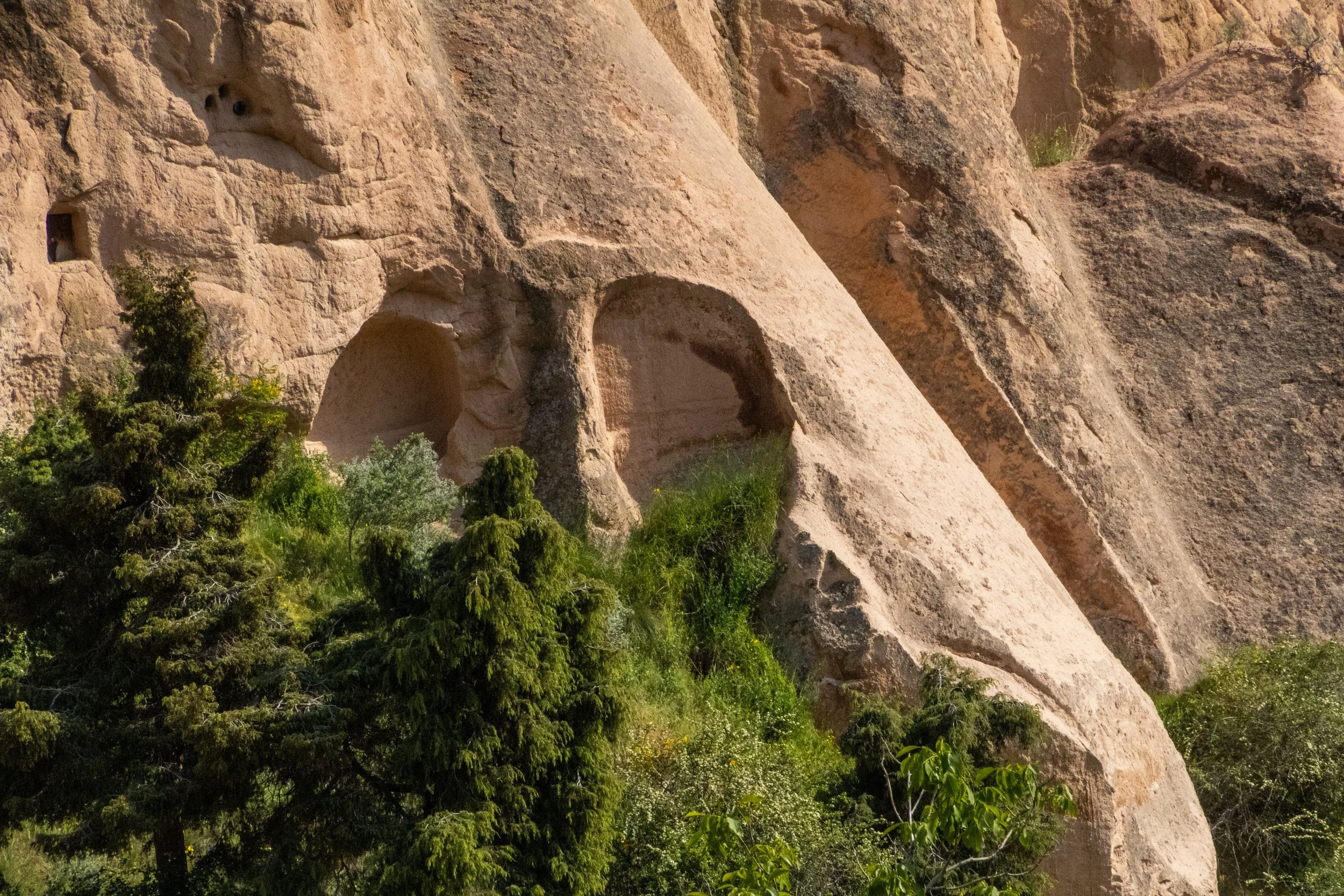
Another cool dimension of human activity was the carvings in the rocks themselves. Remember everything we saw in the previous article in Göreme? Those same sorts of structures are carved into the rocks here as well. Most notably, there are actually small churches sitting anonymously out here, just as we saw in Göreme.
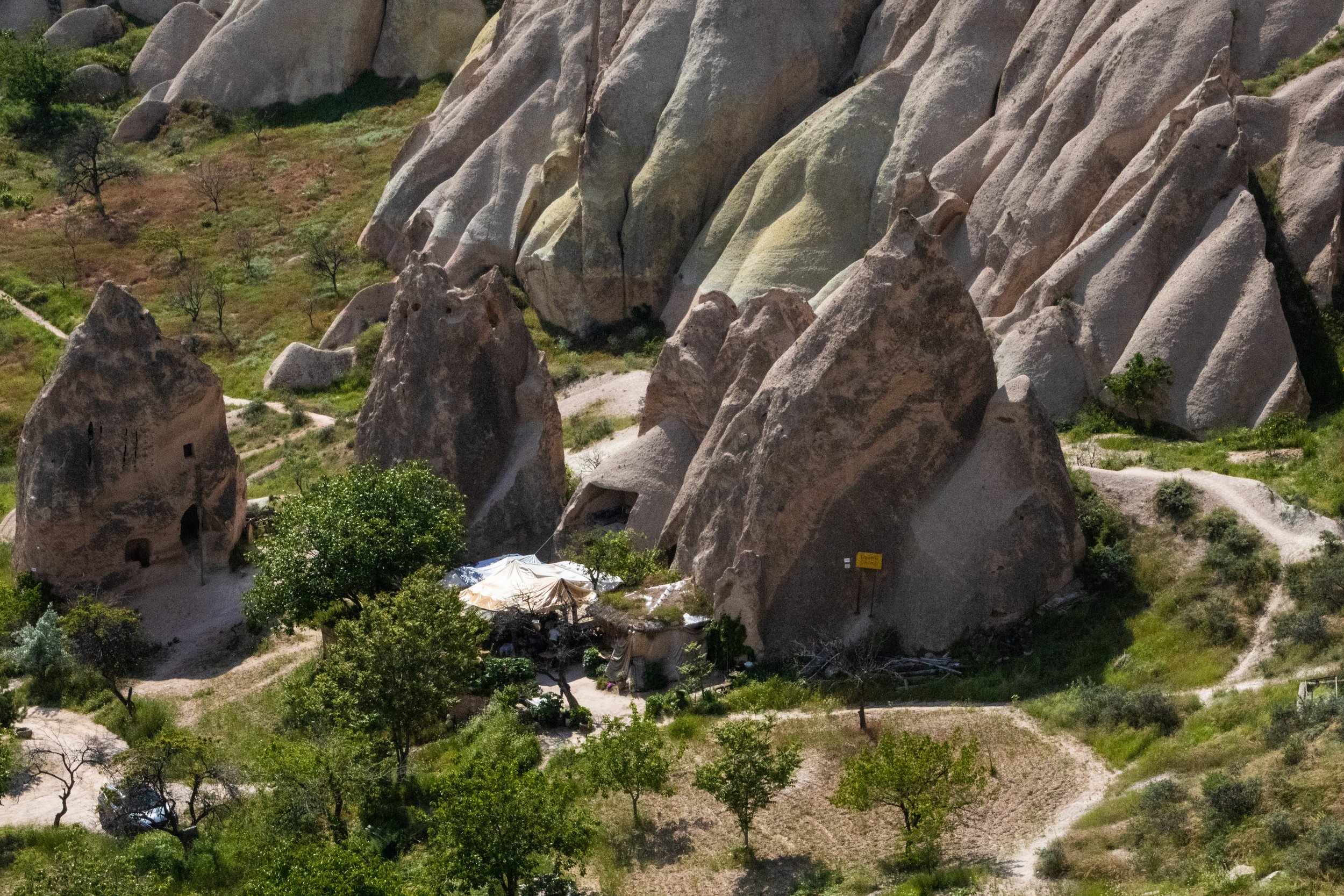
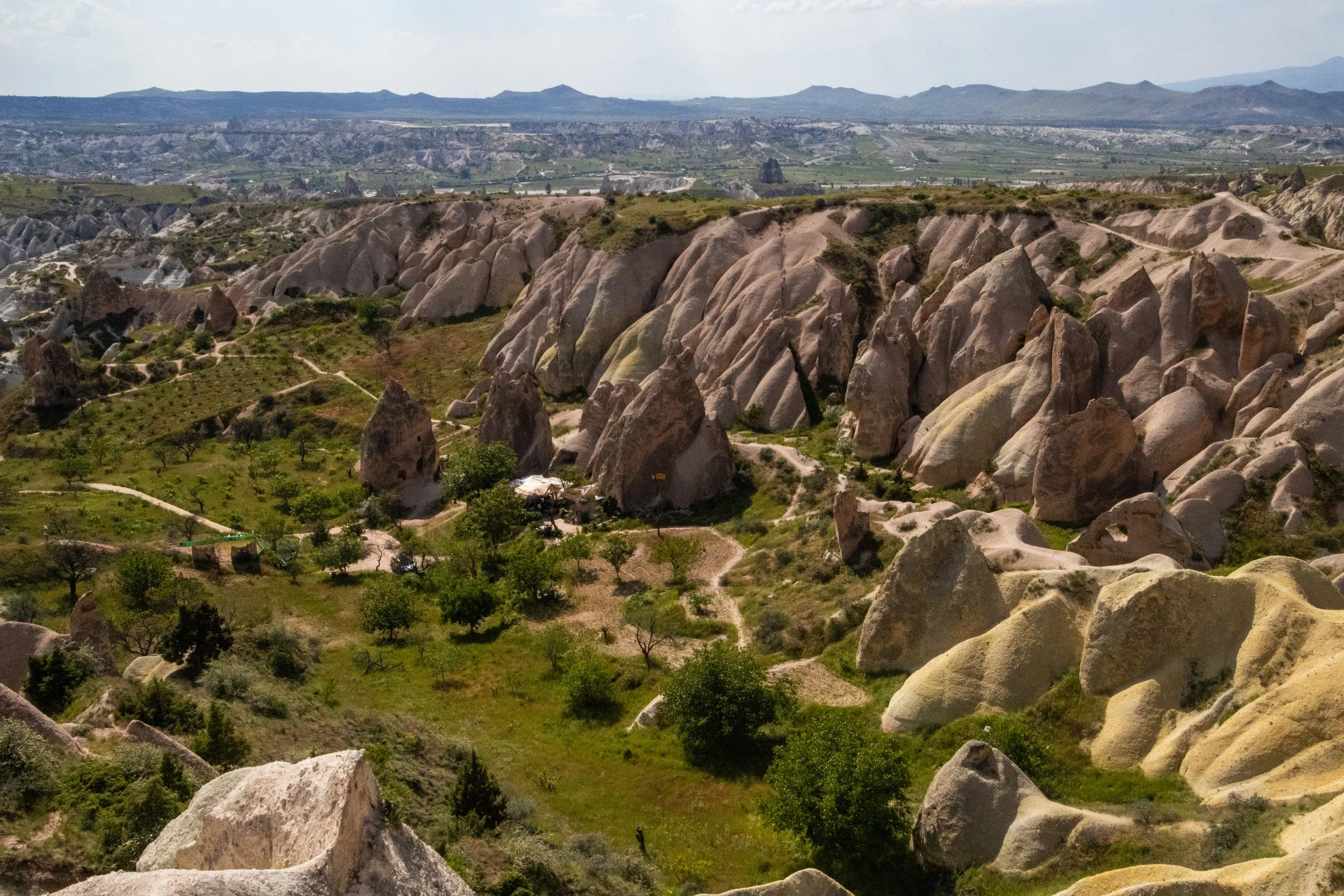
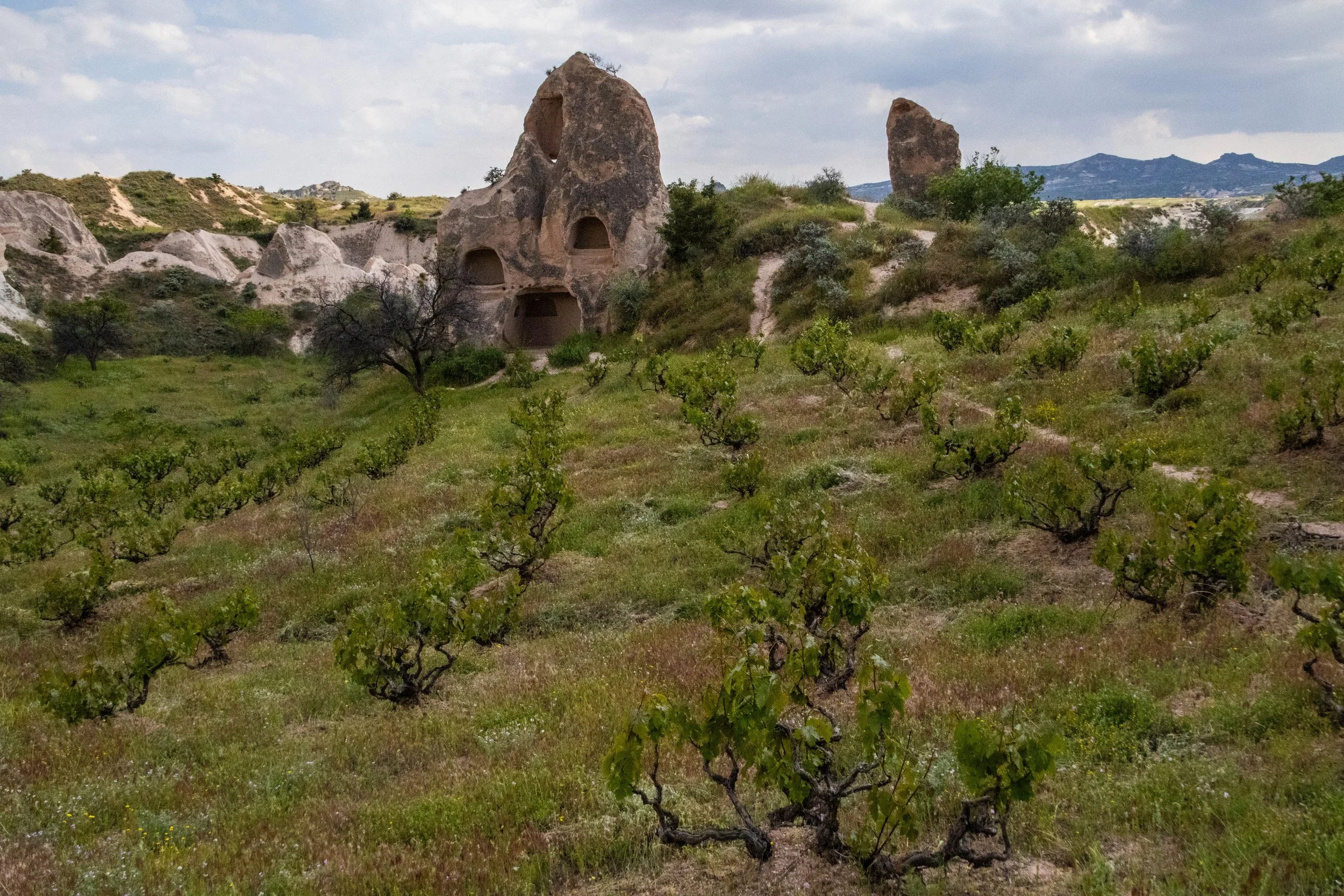
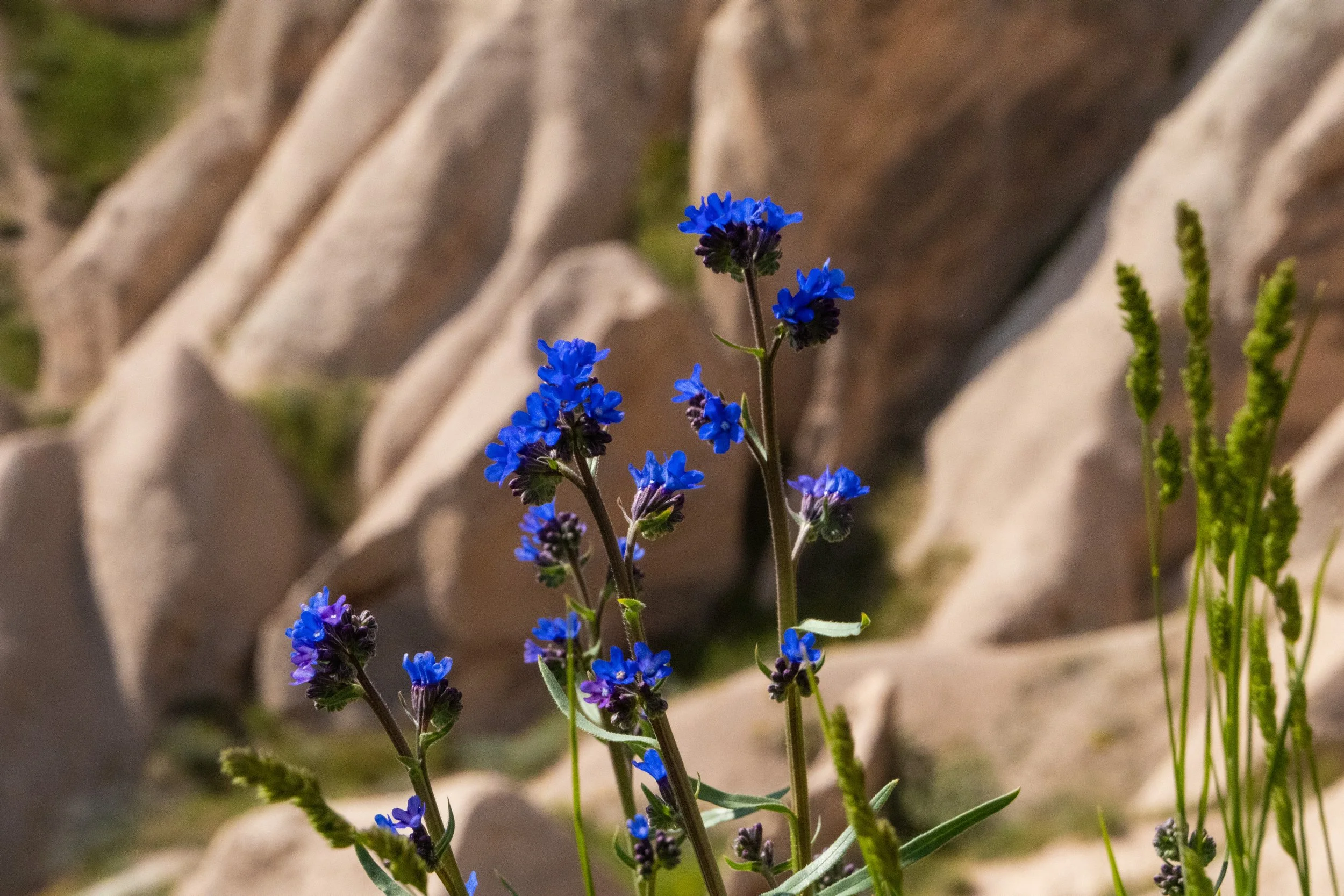
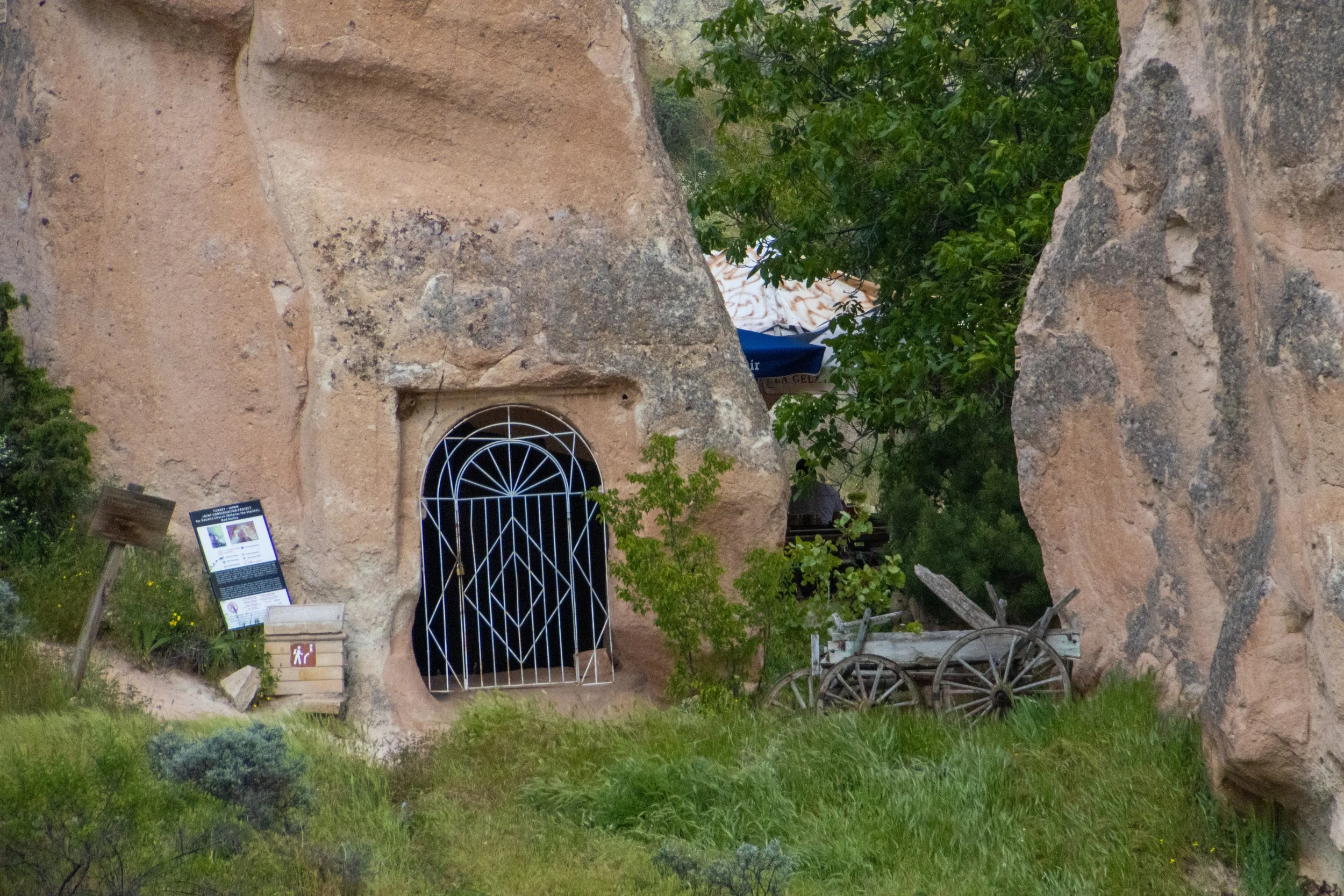
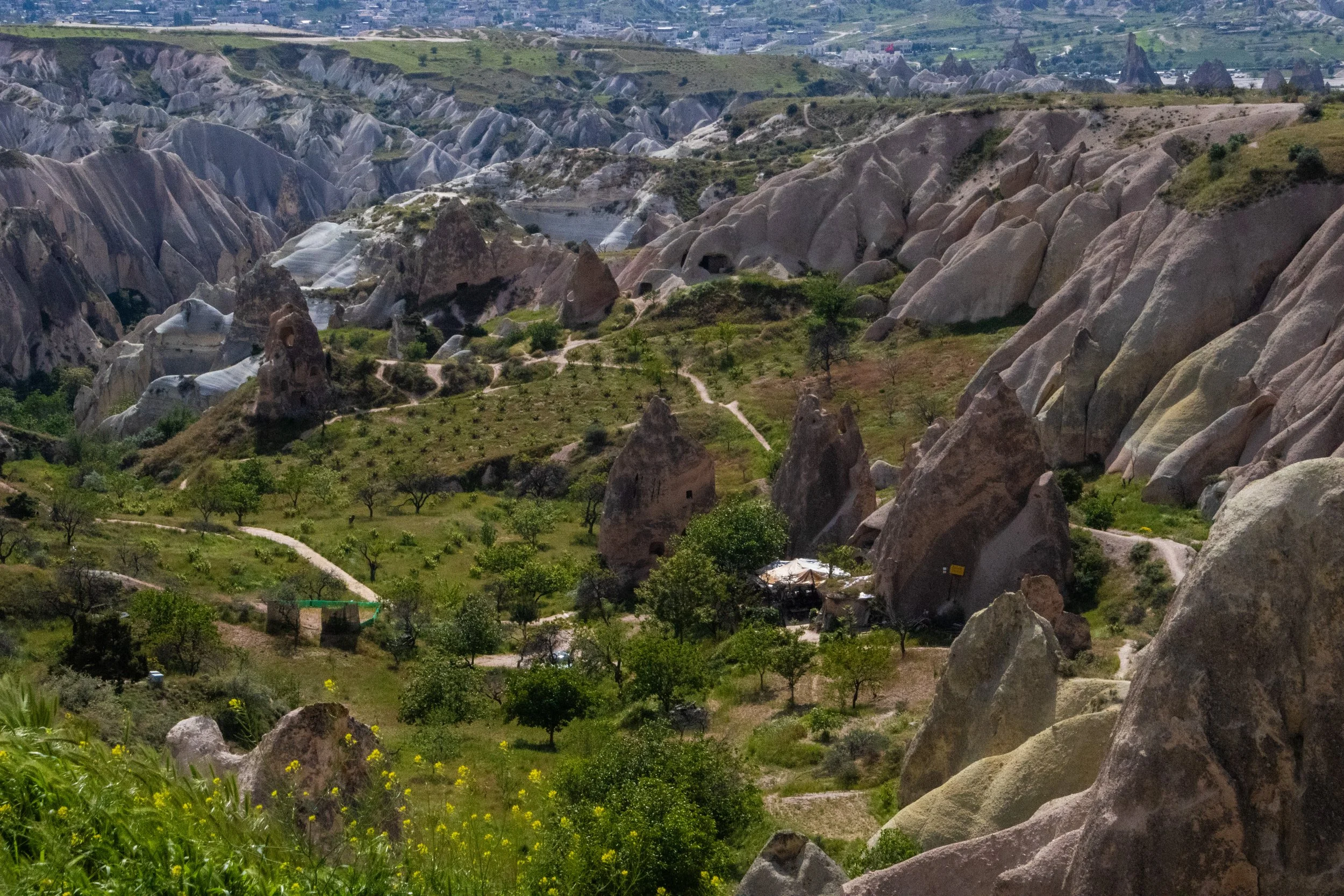
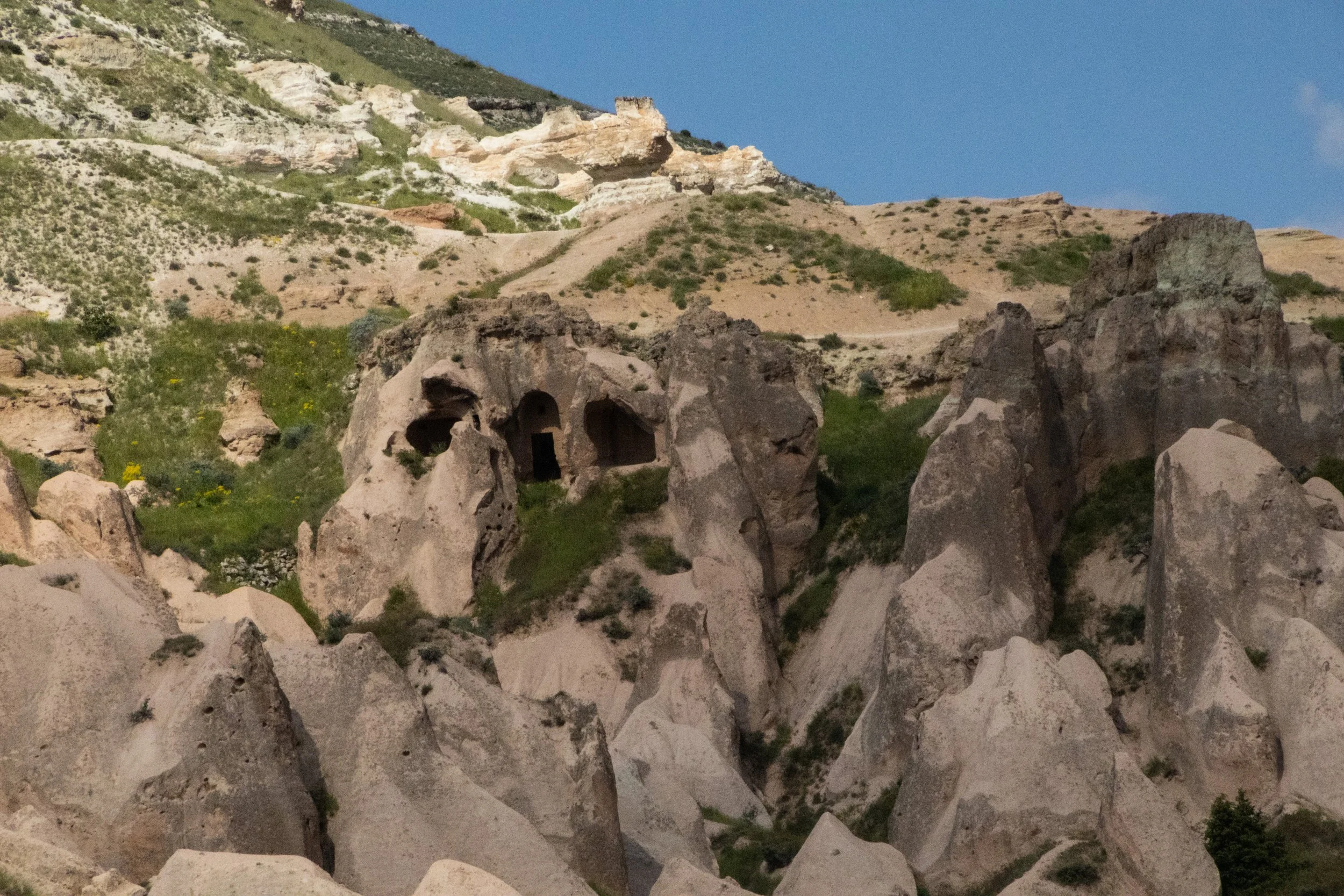
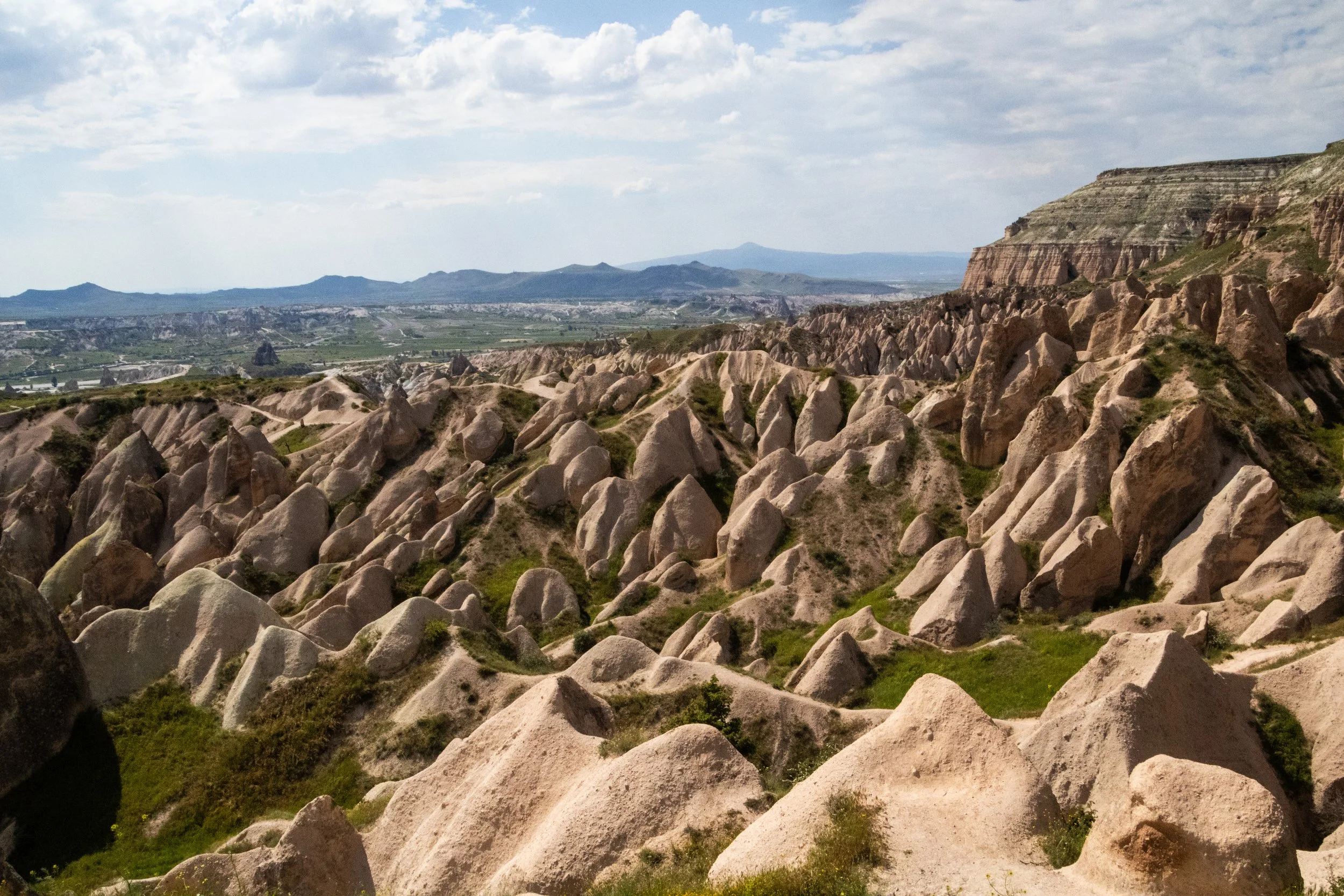
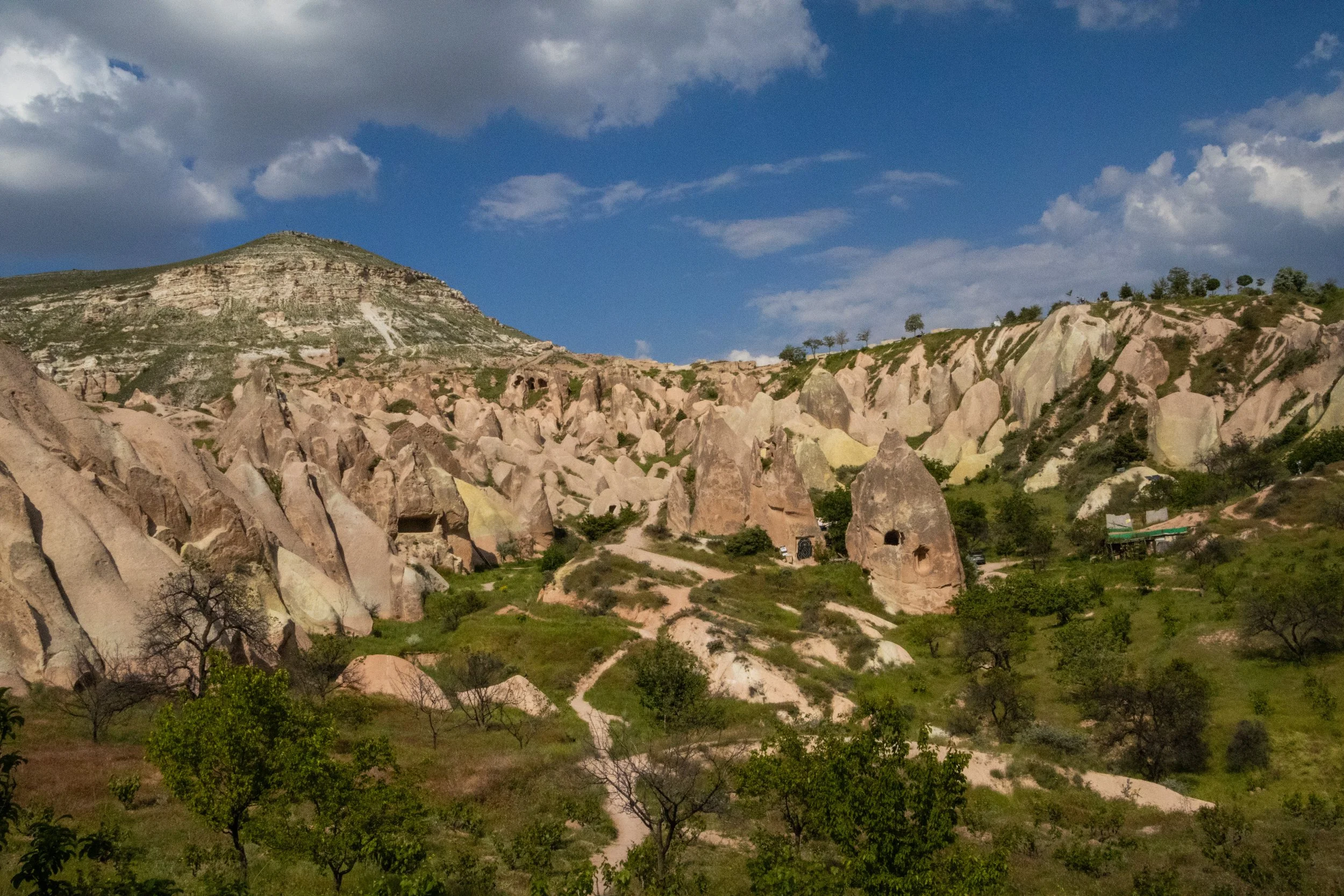
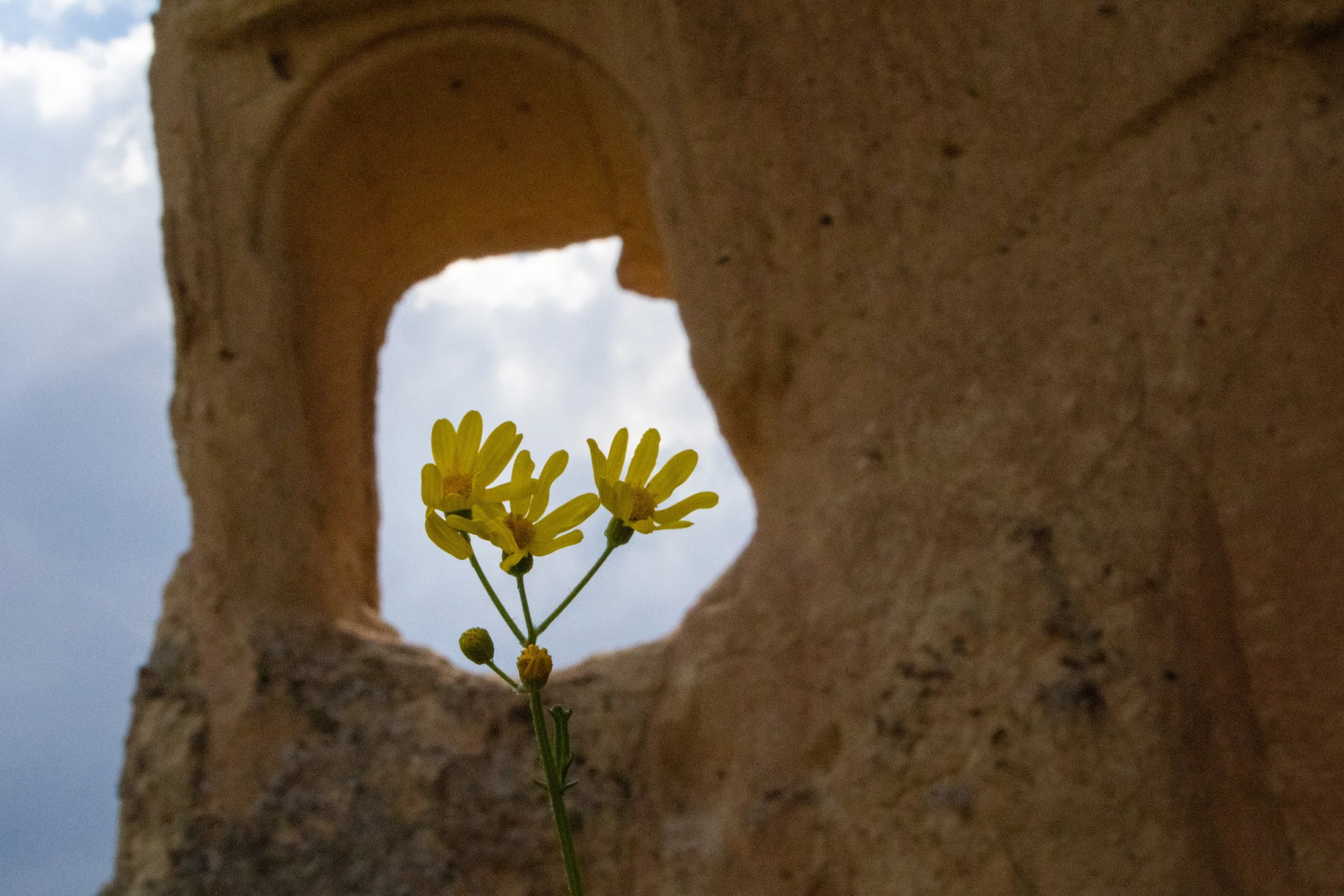
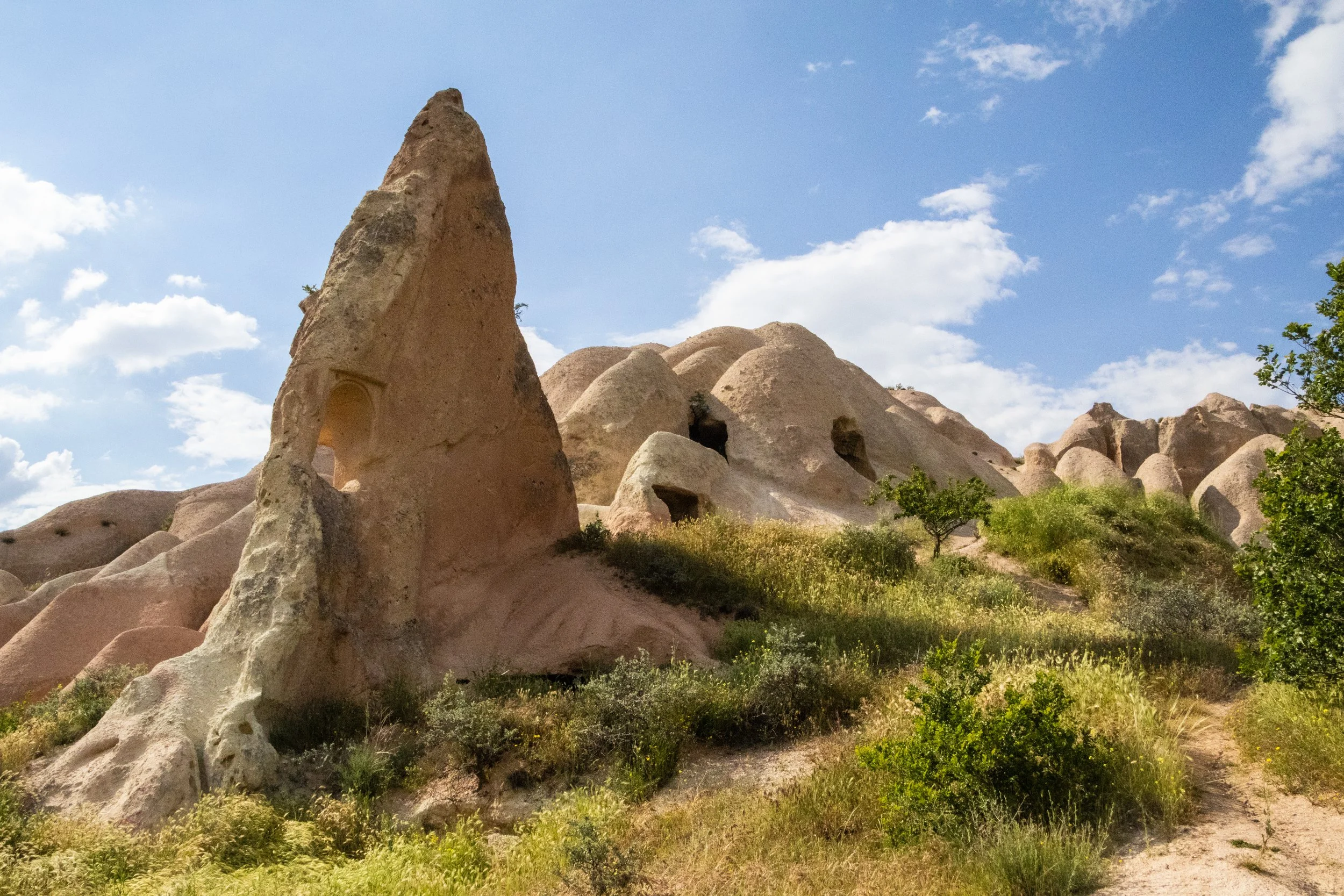
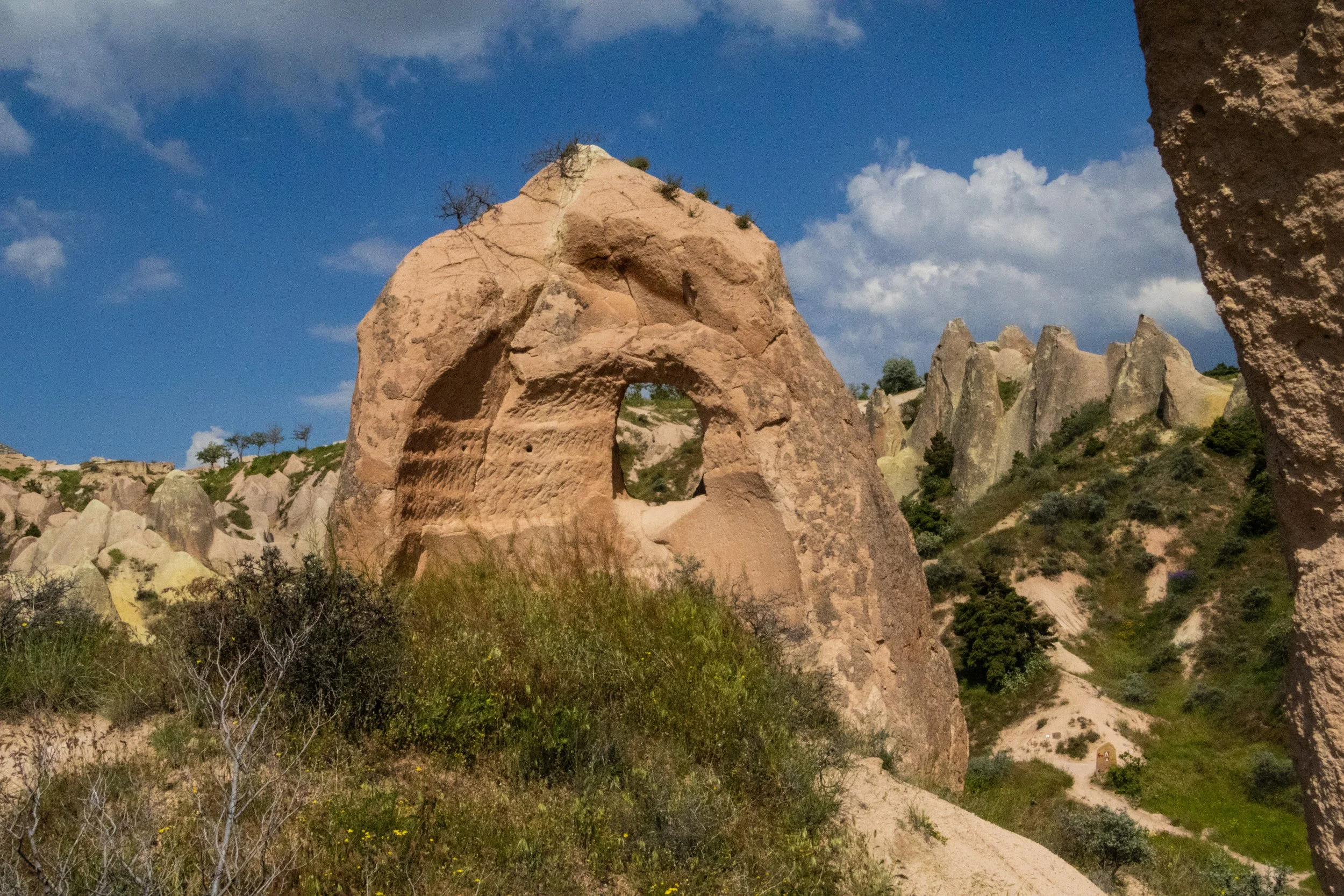
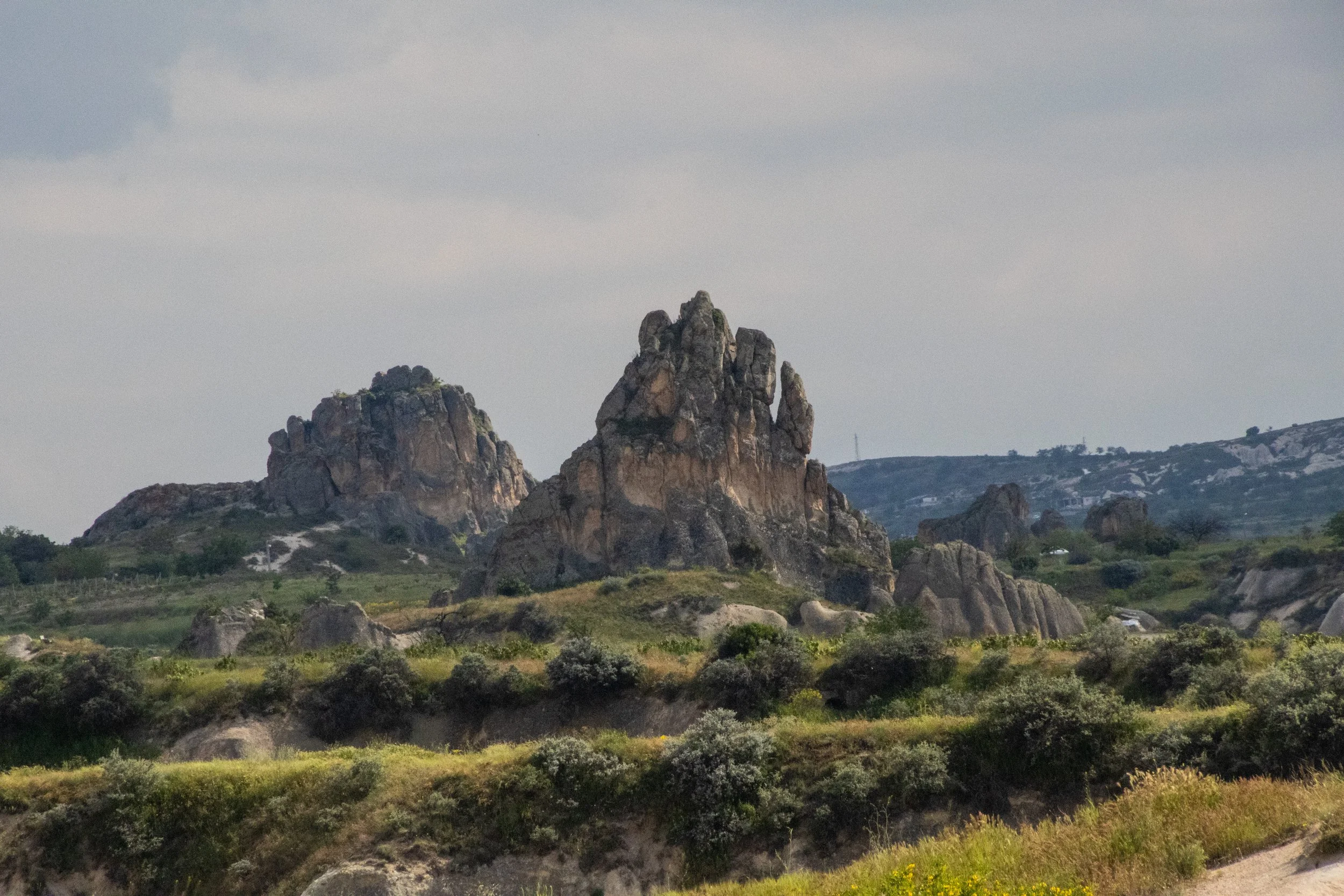
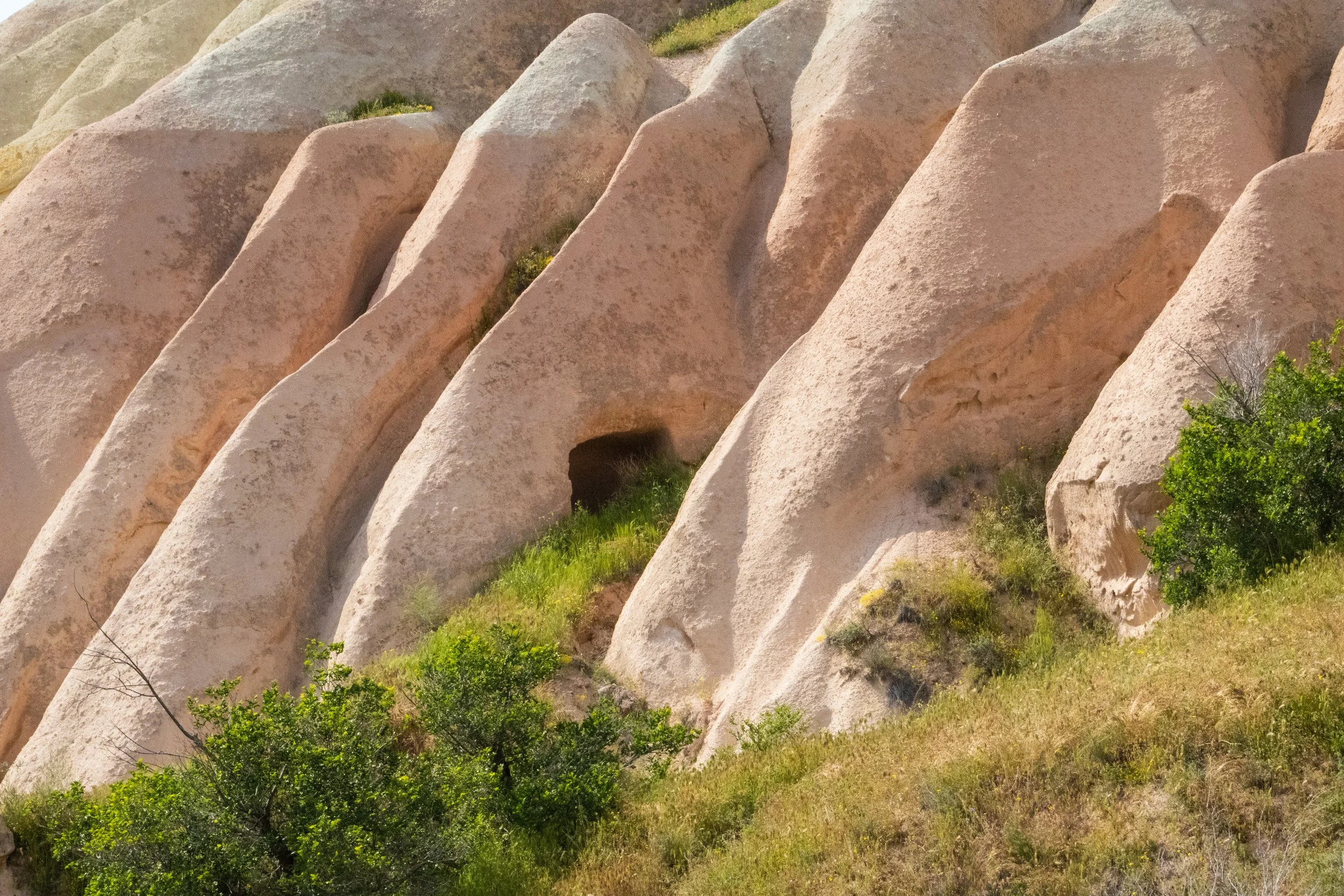
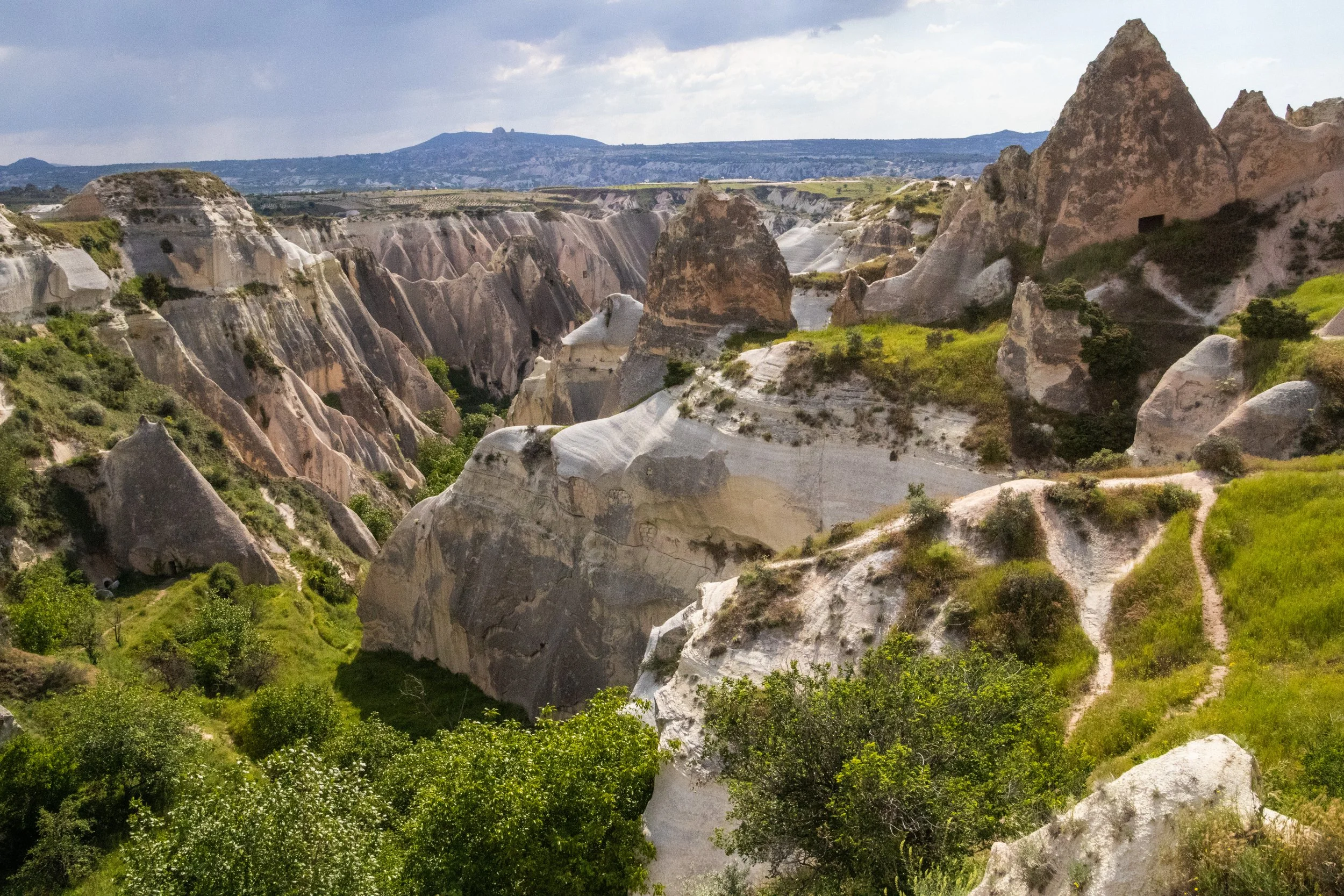
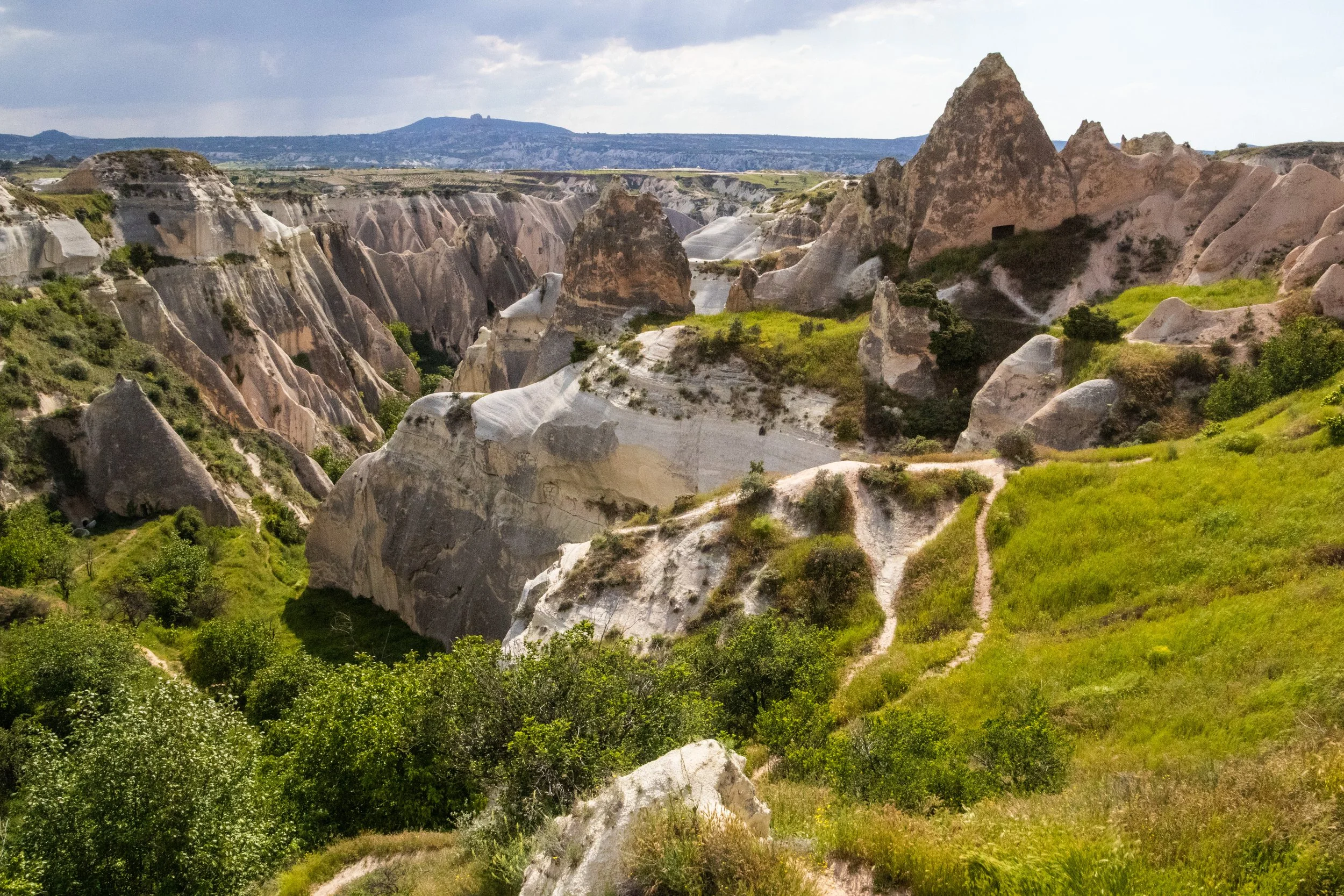
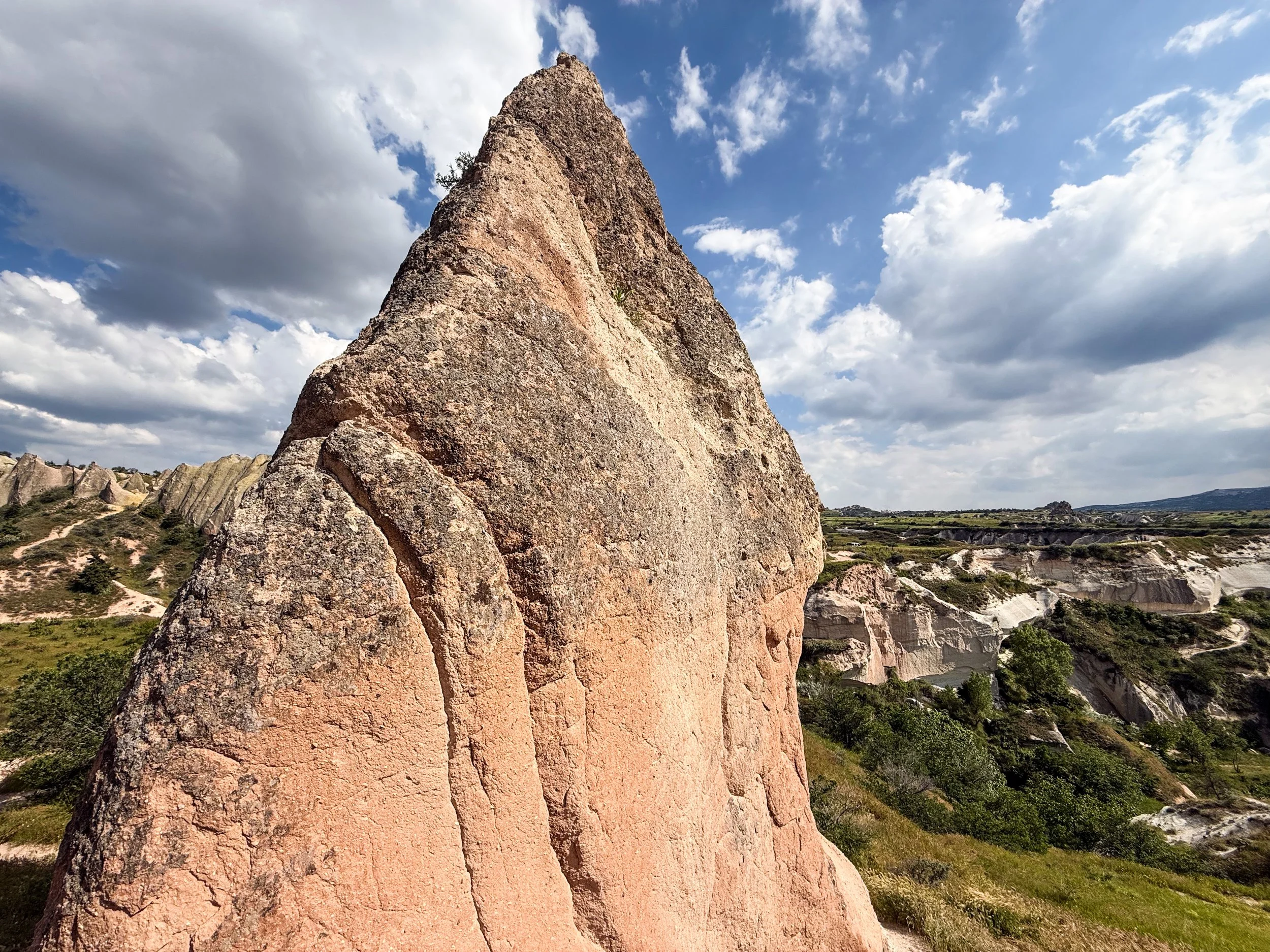
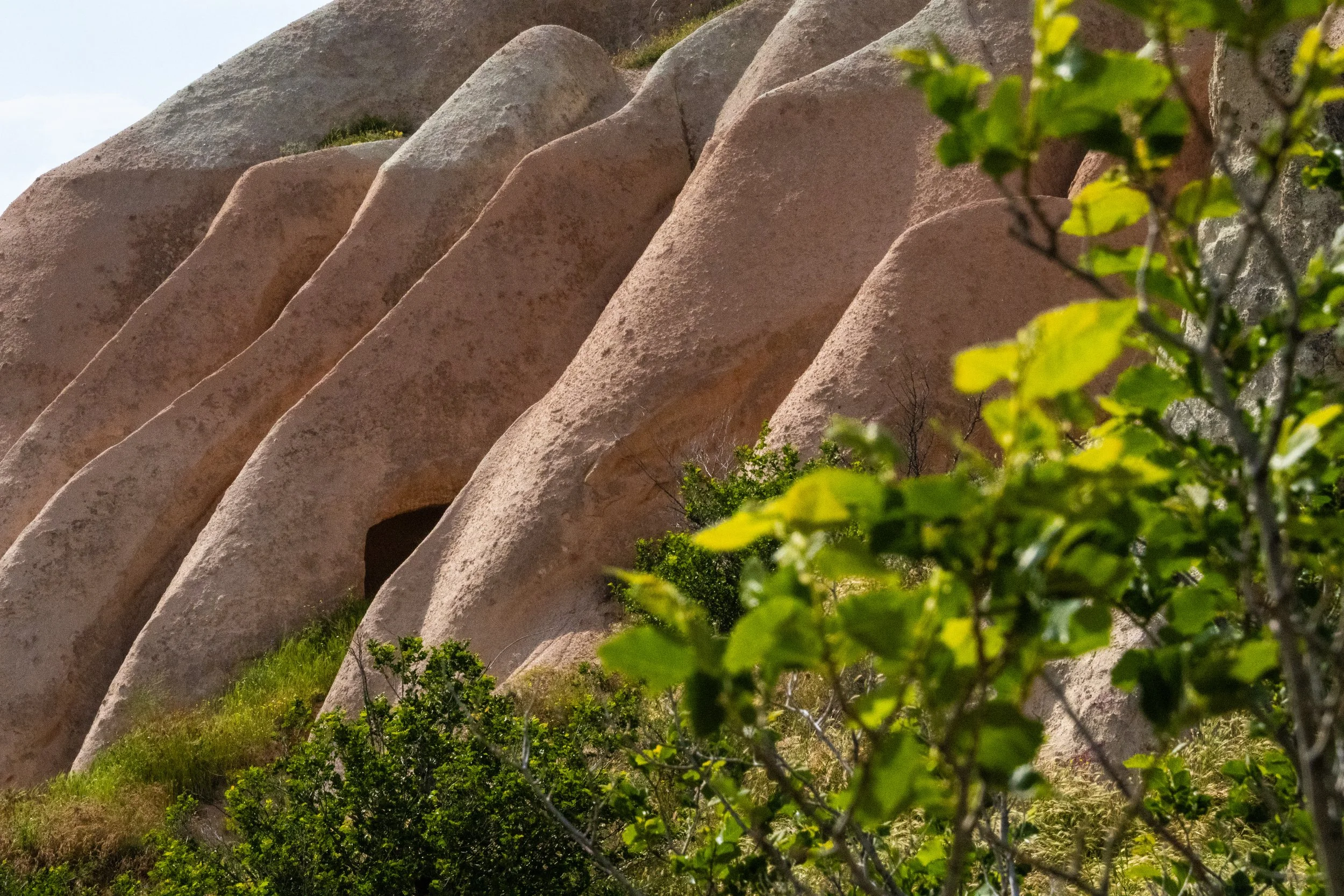
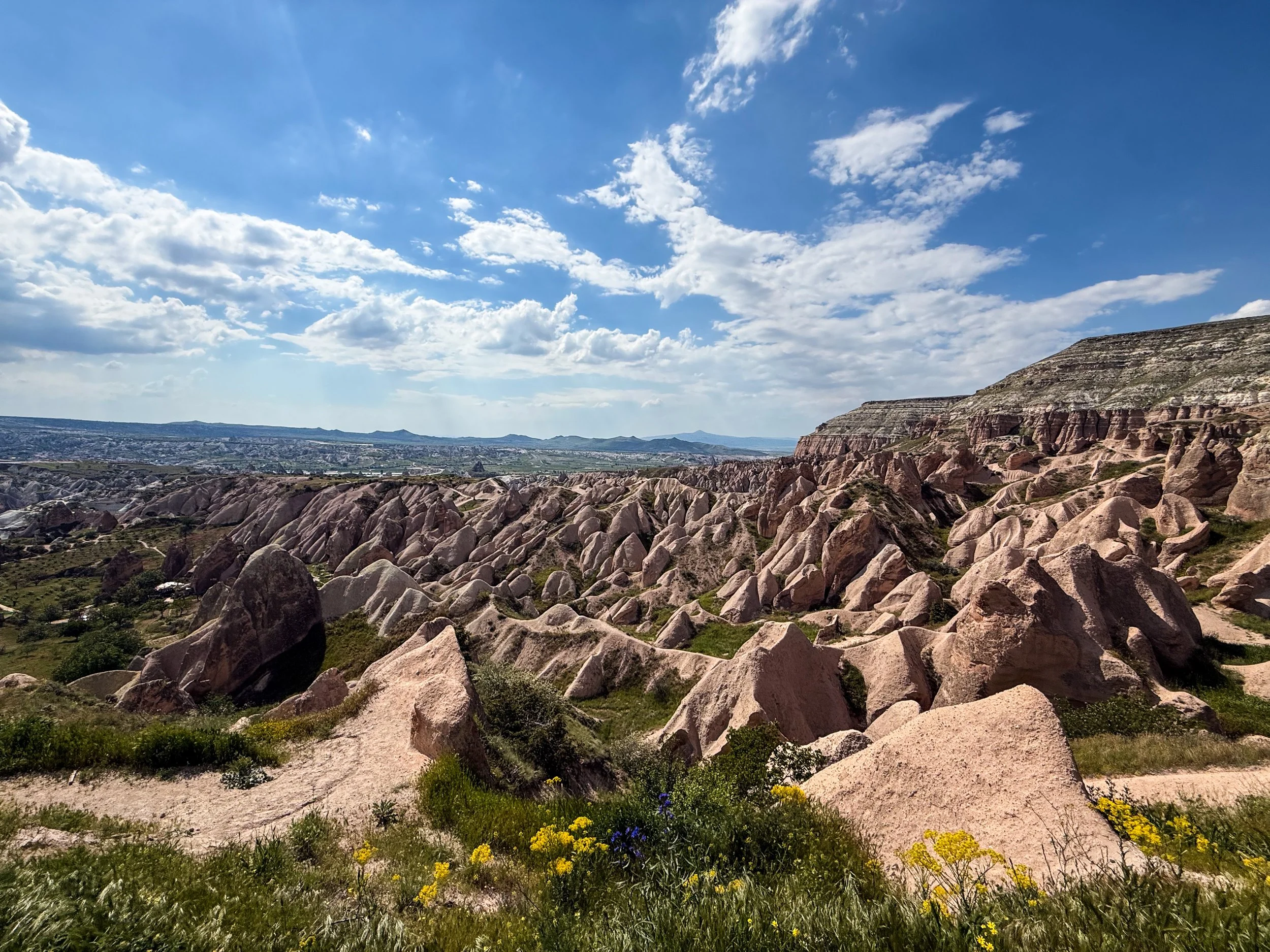
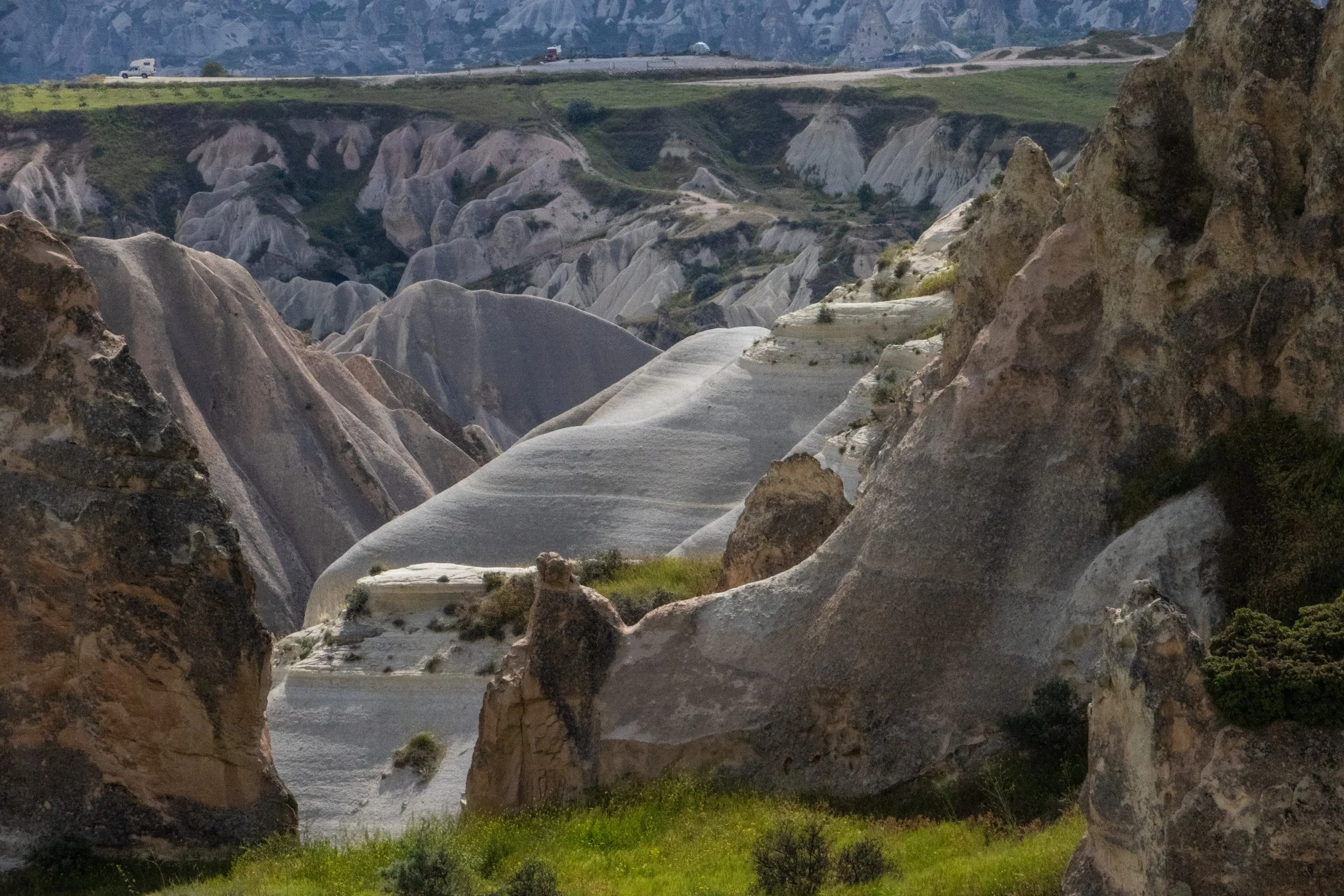
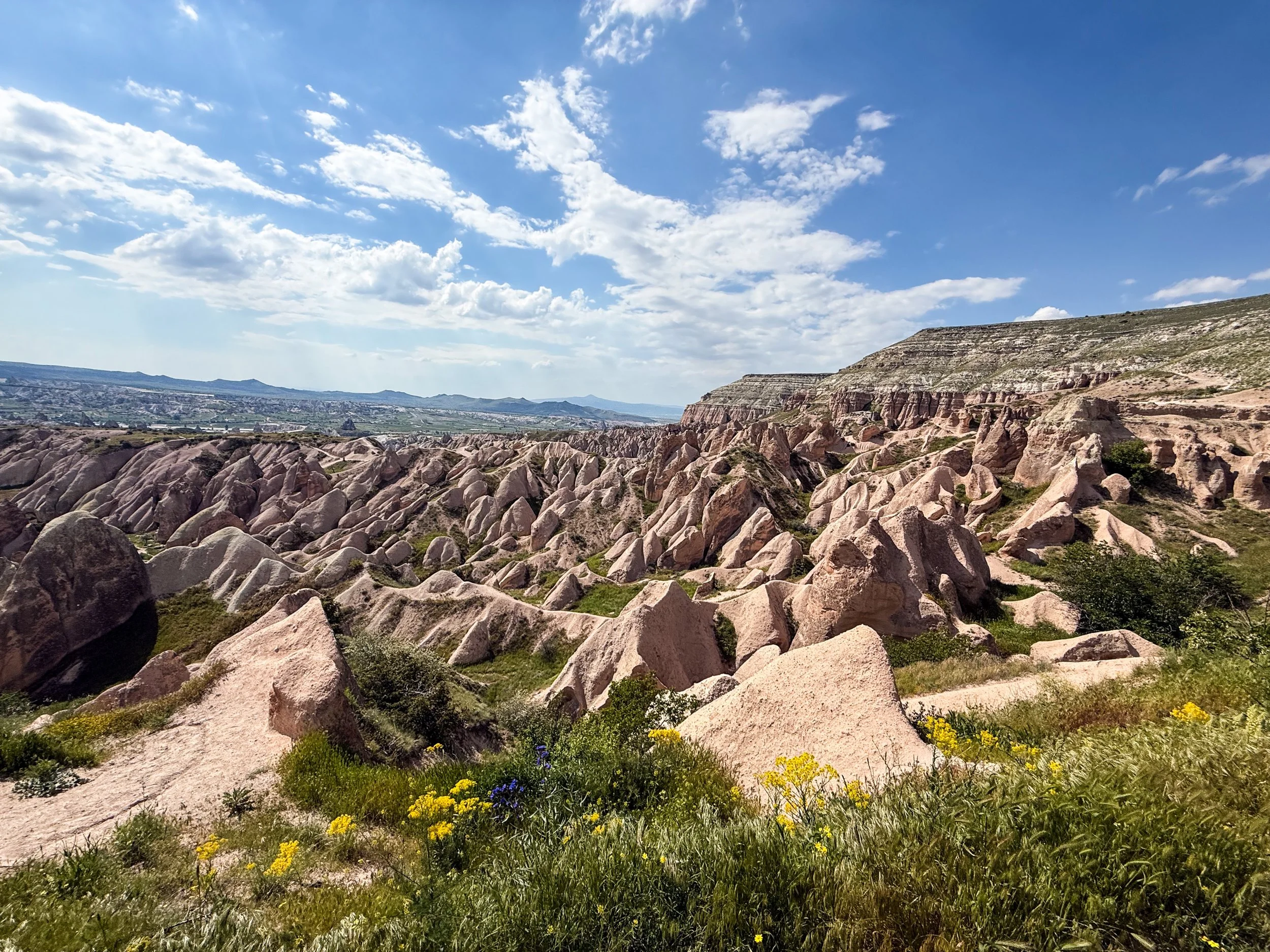
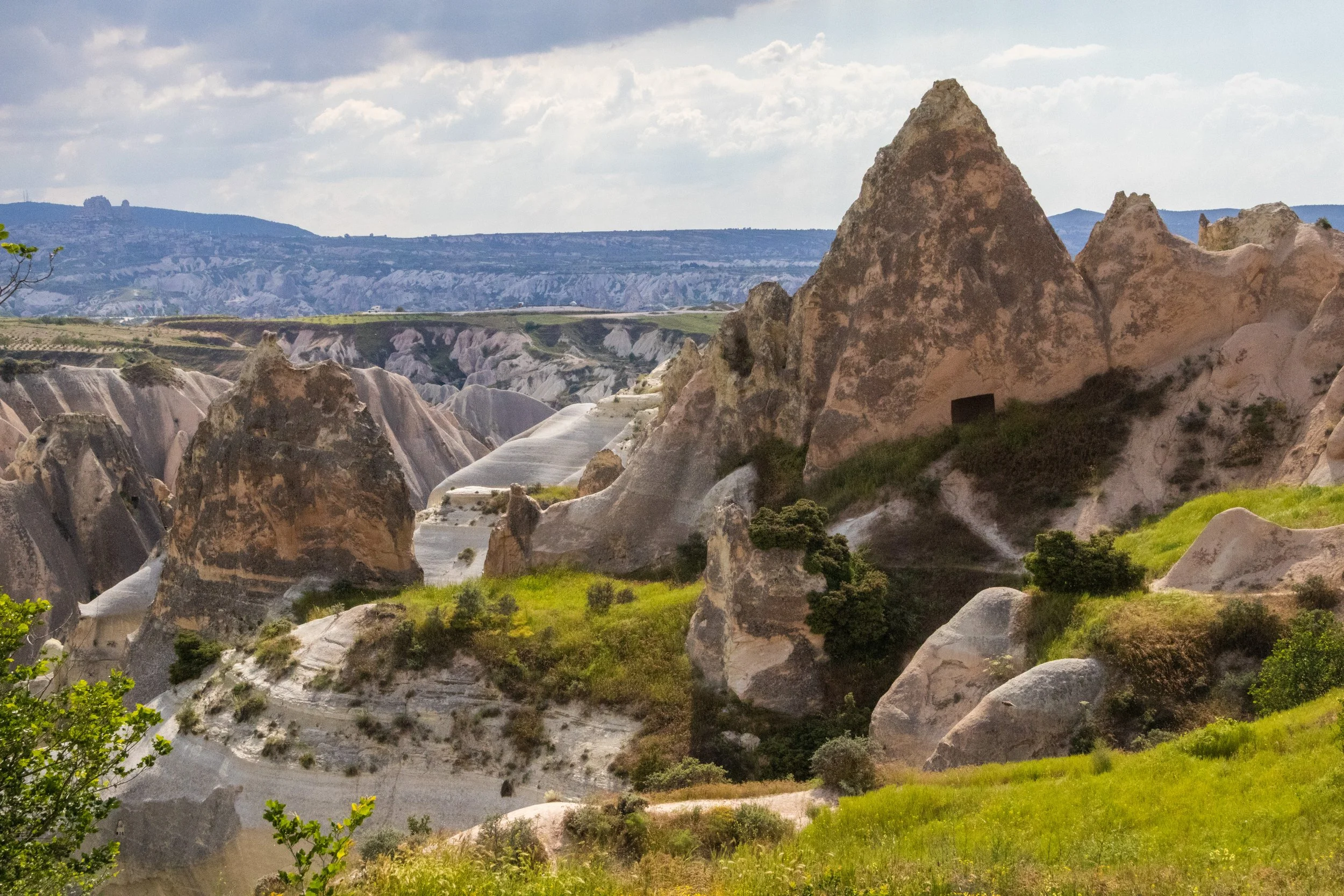
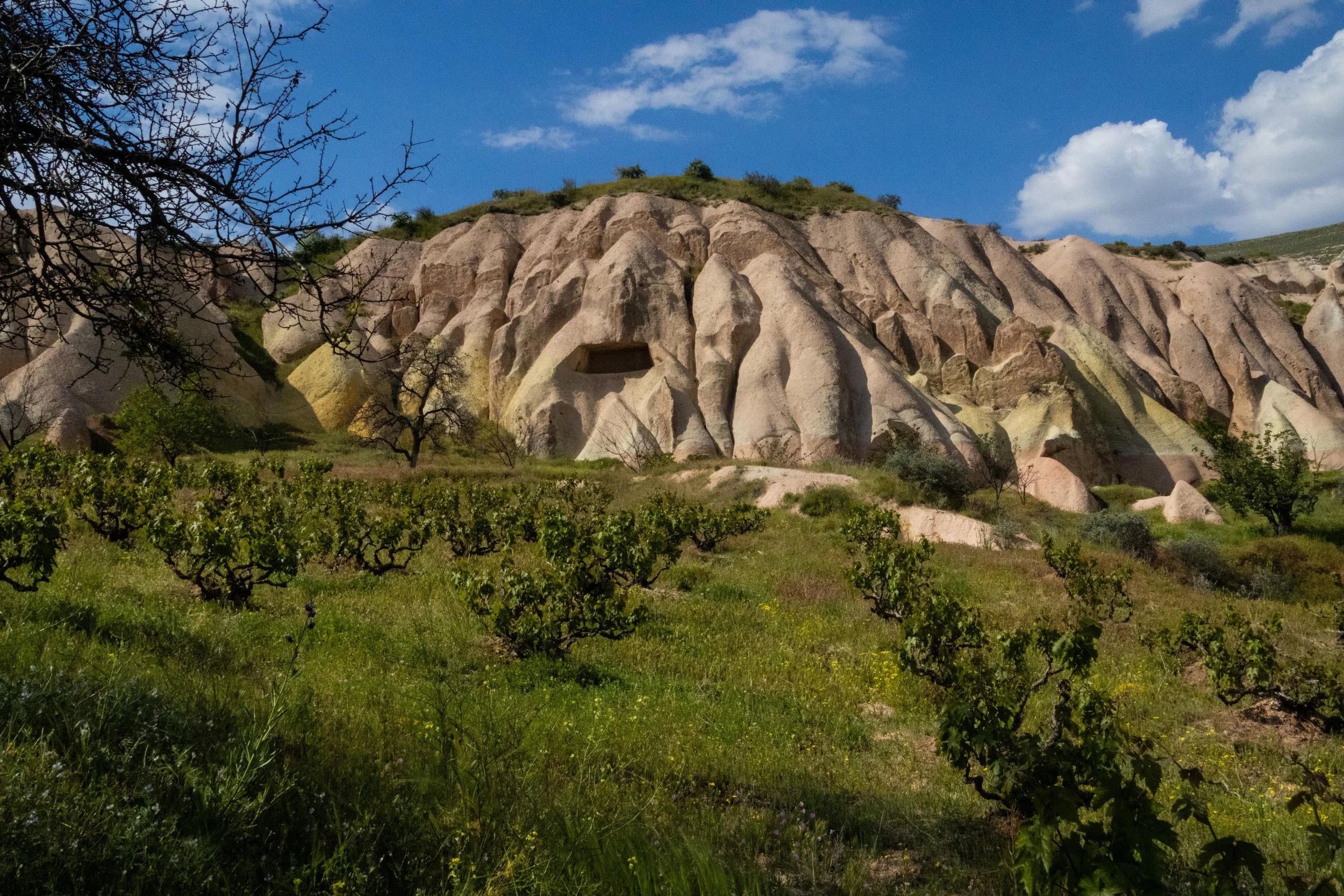
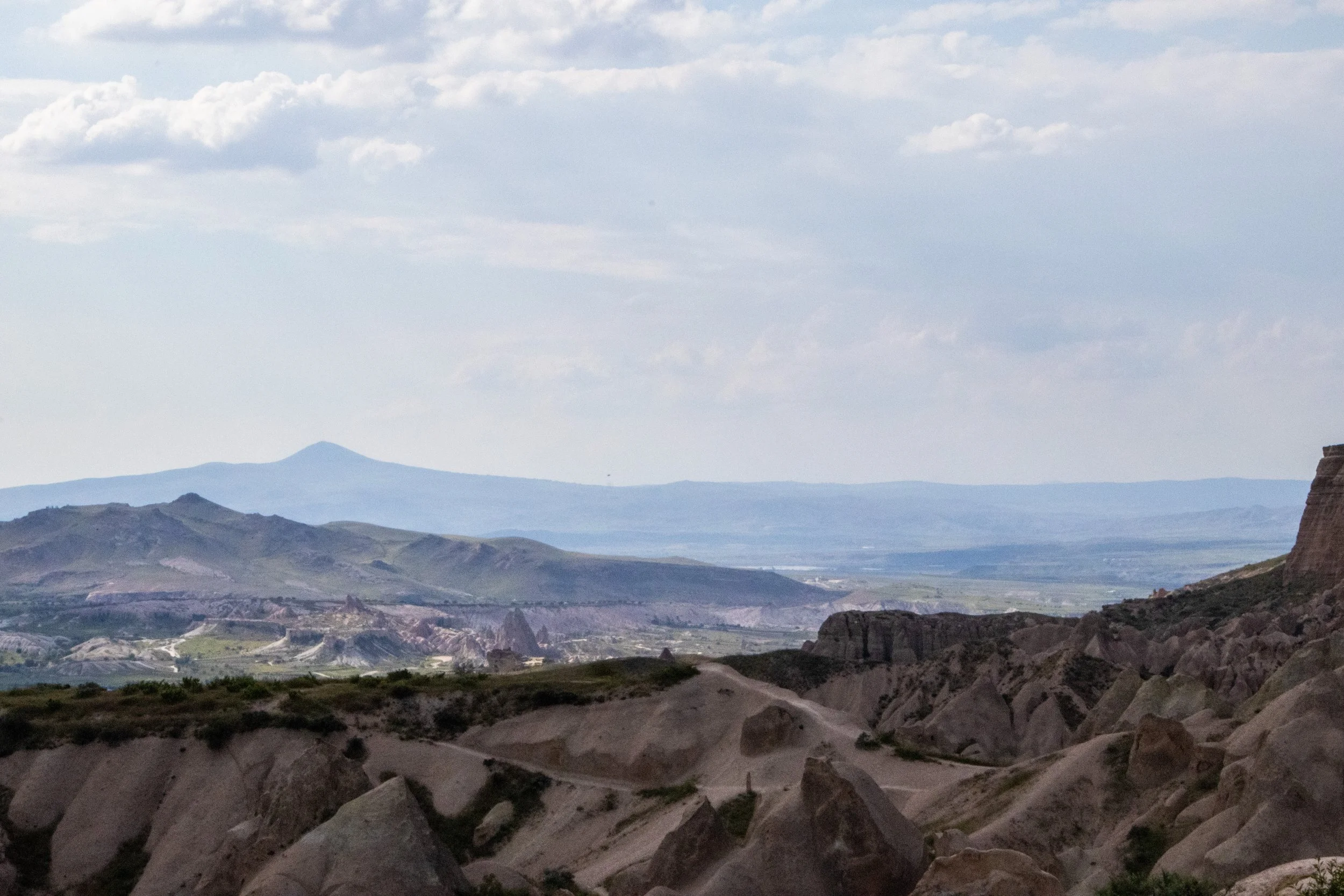
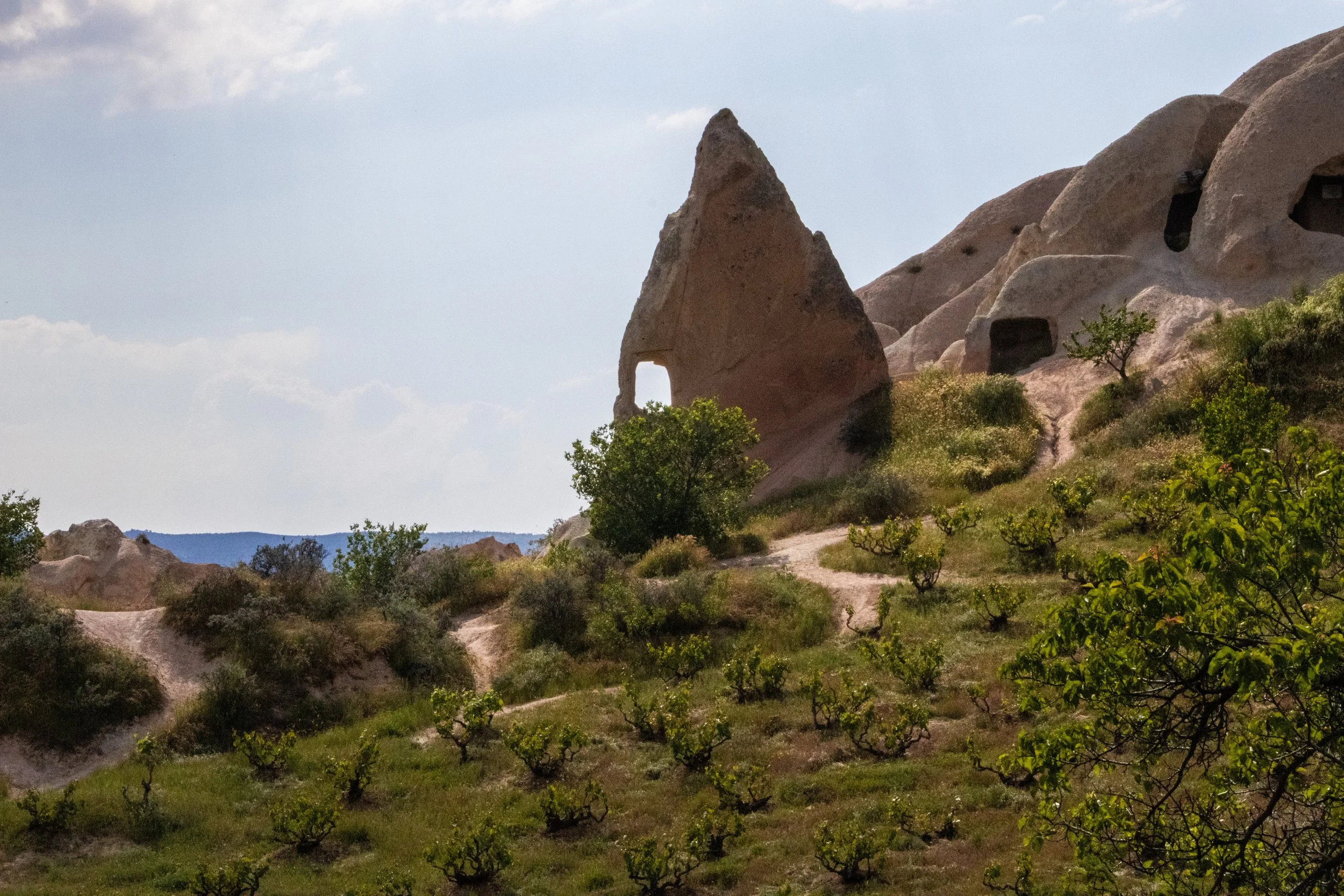
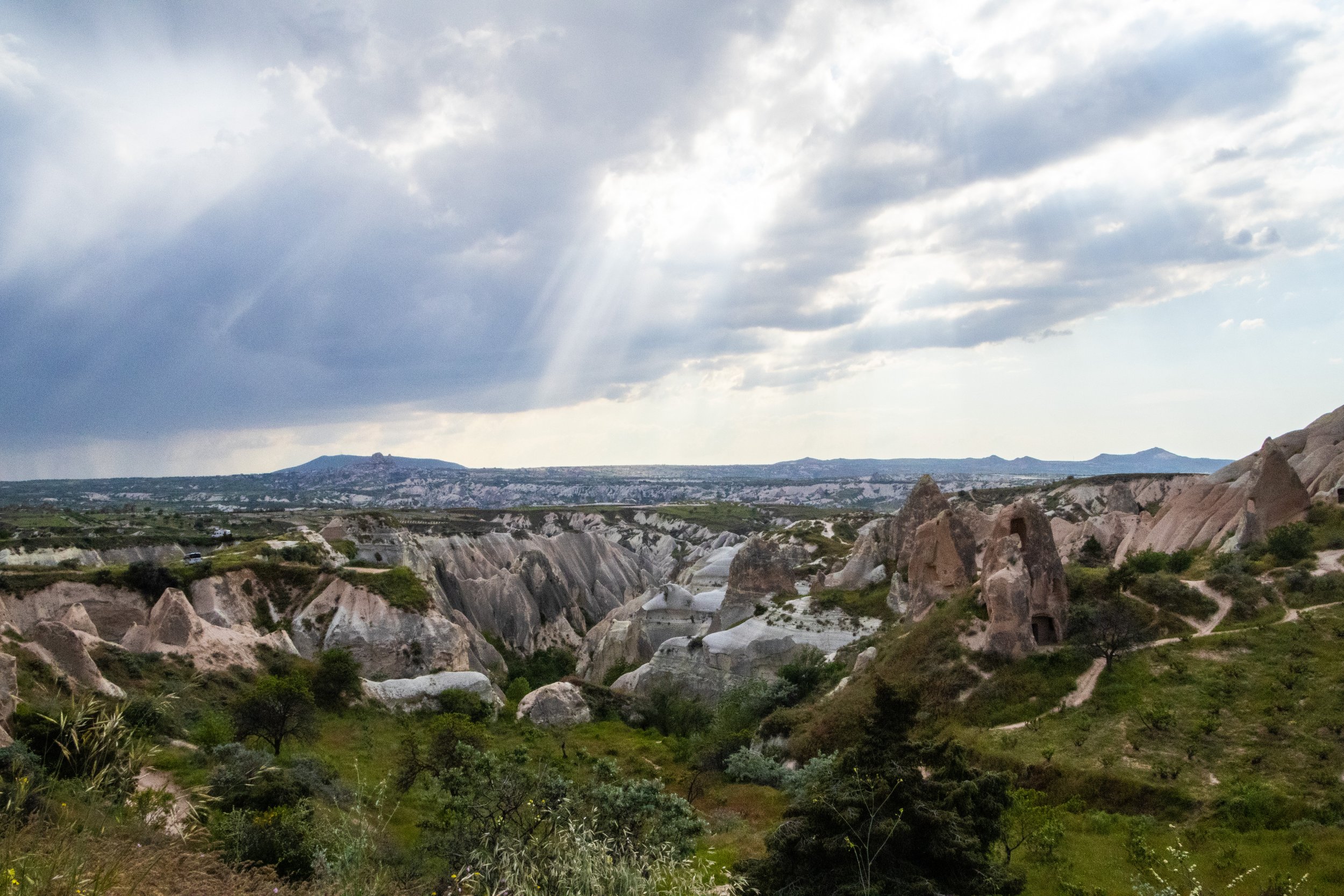
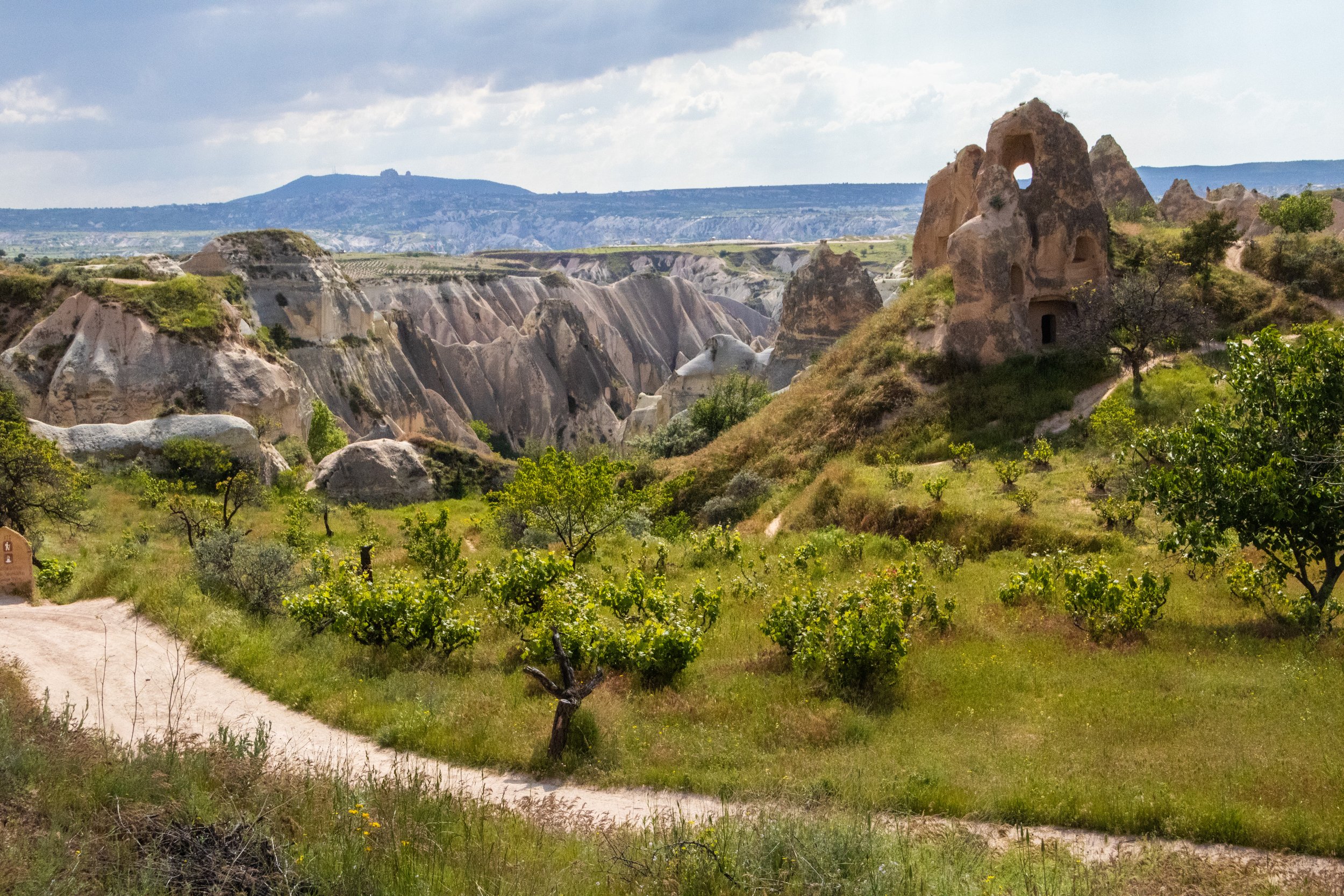
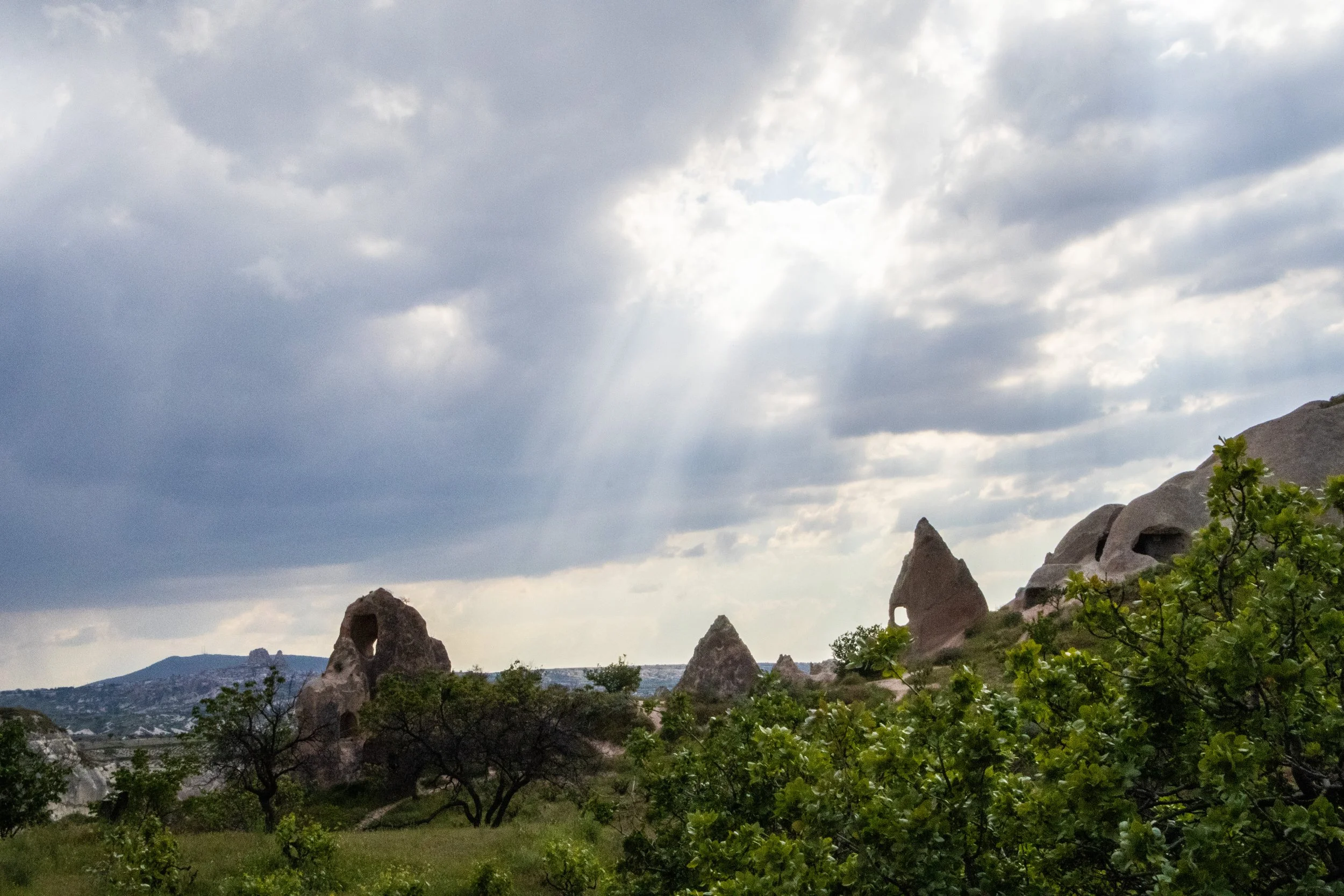
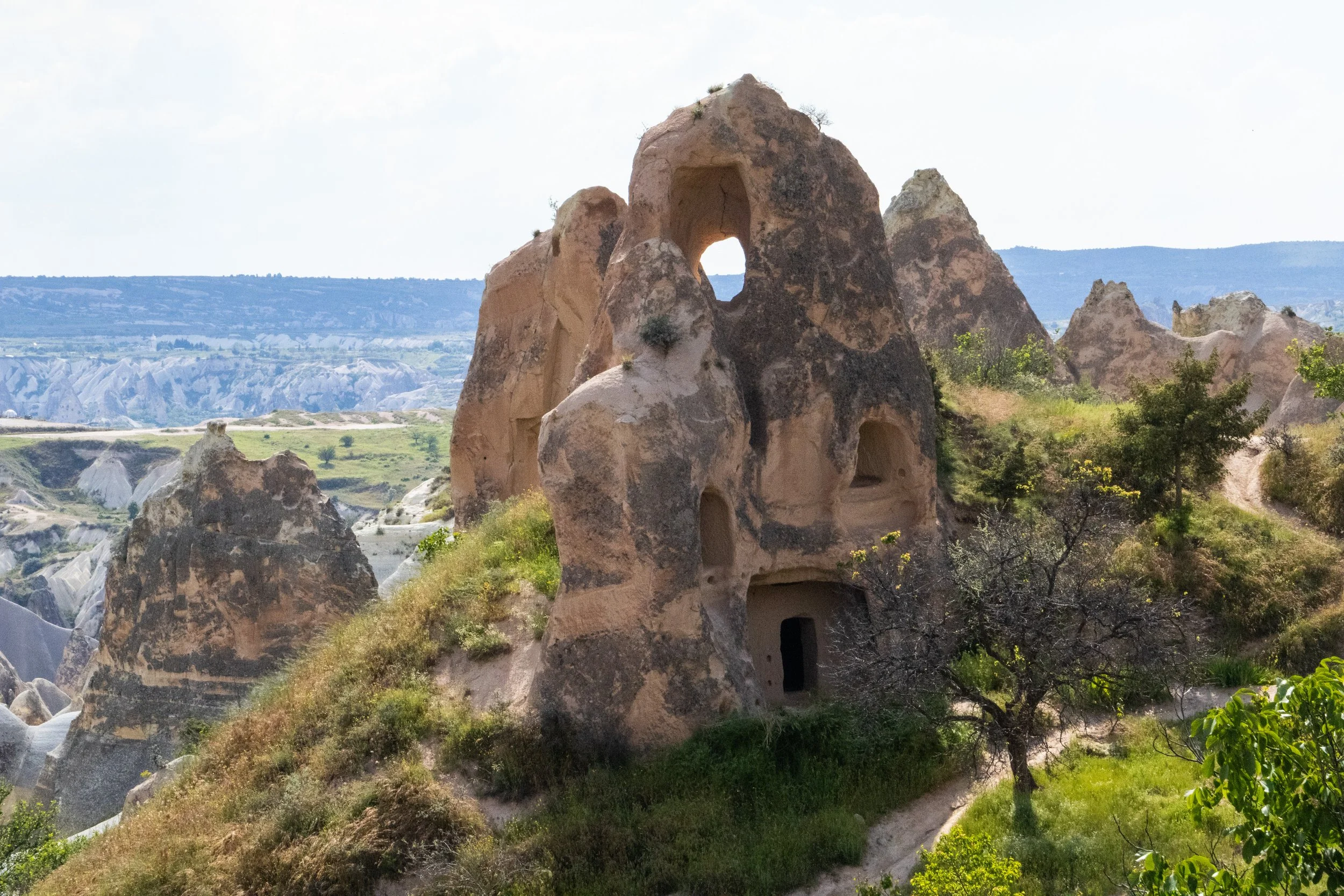
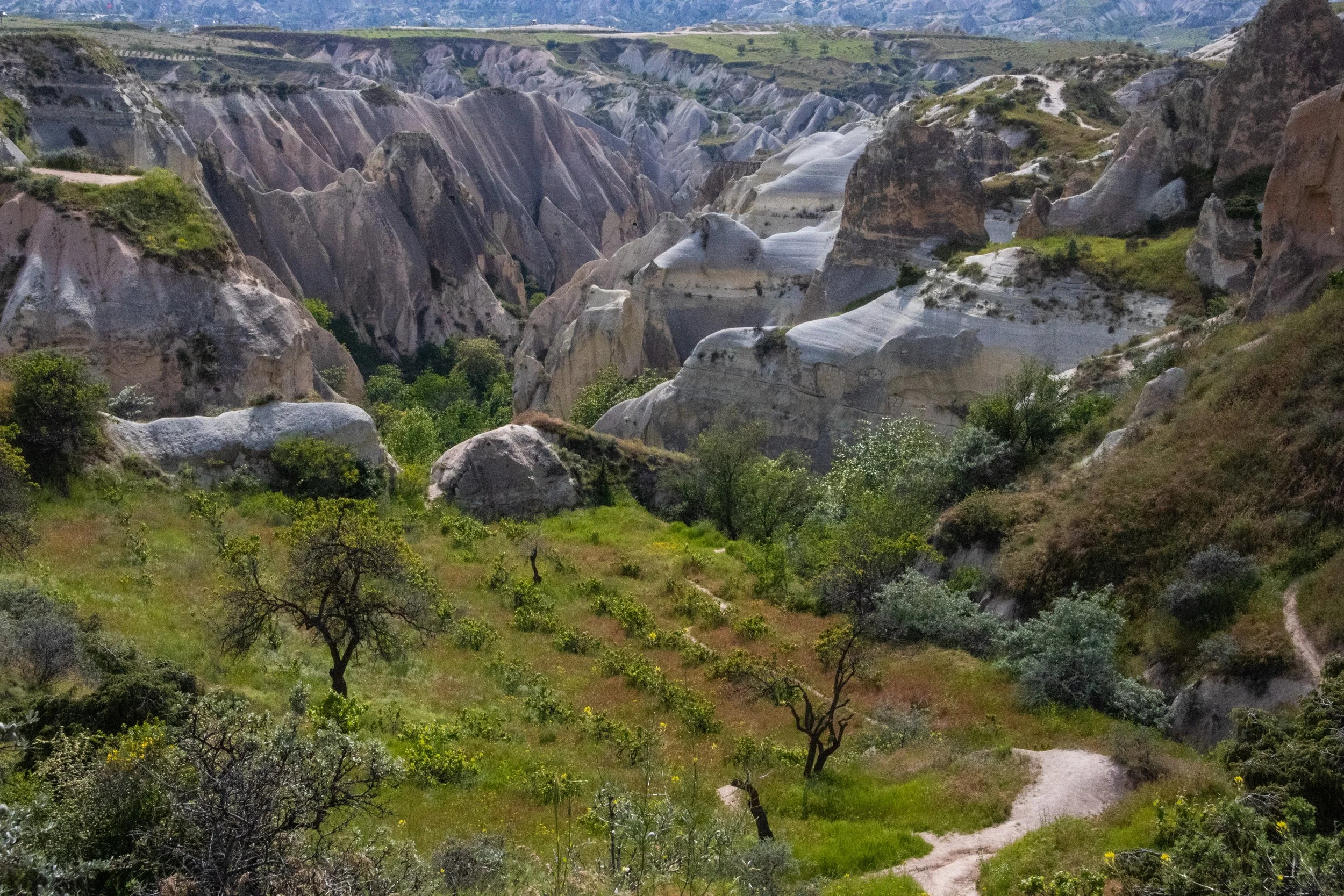
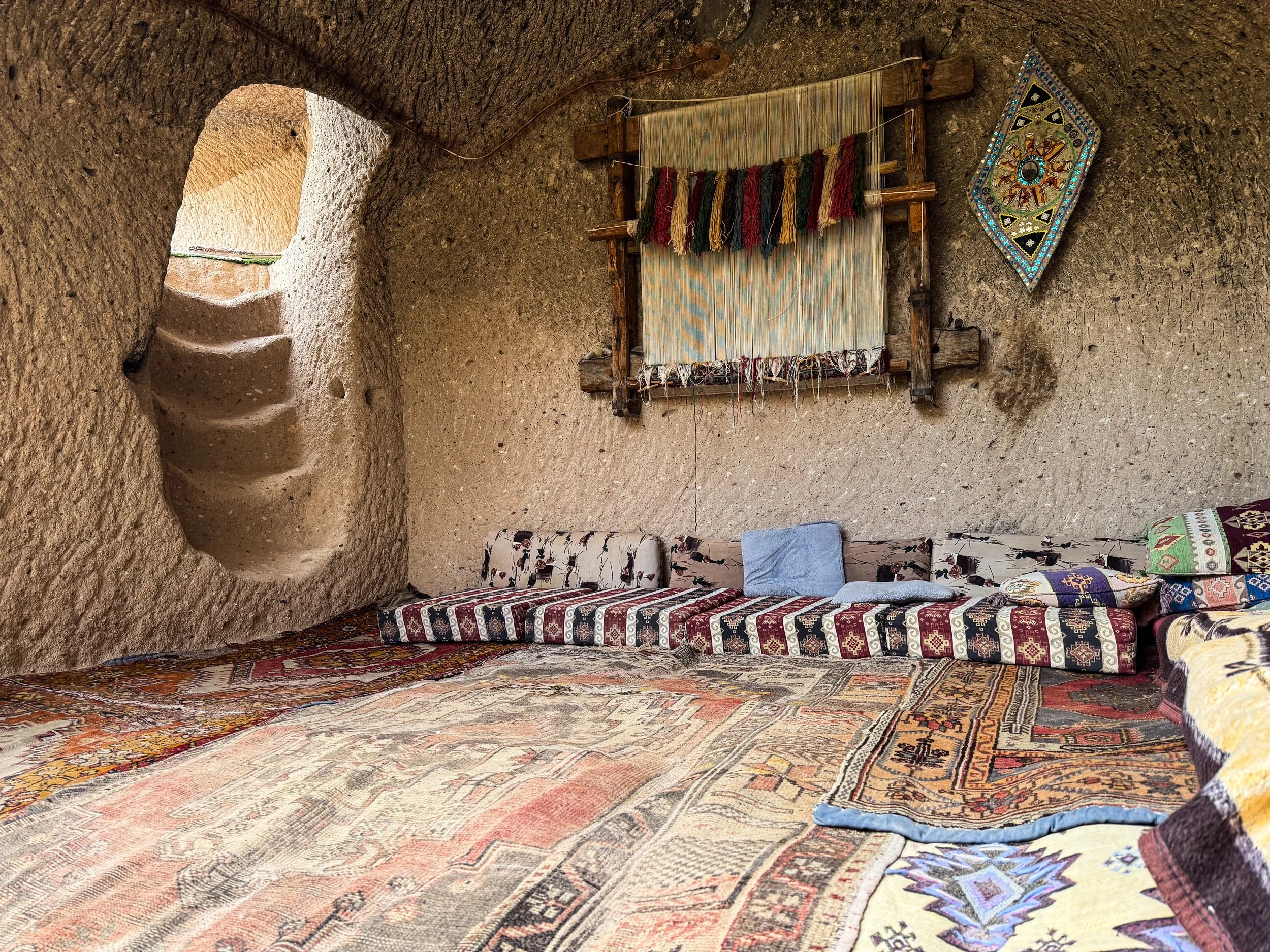
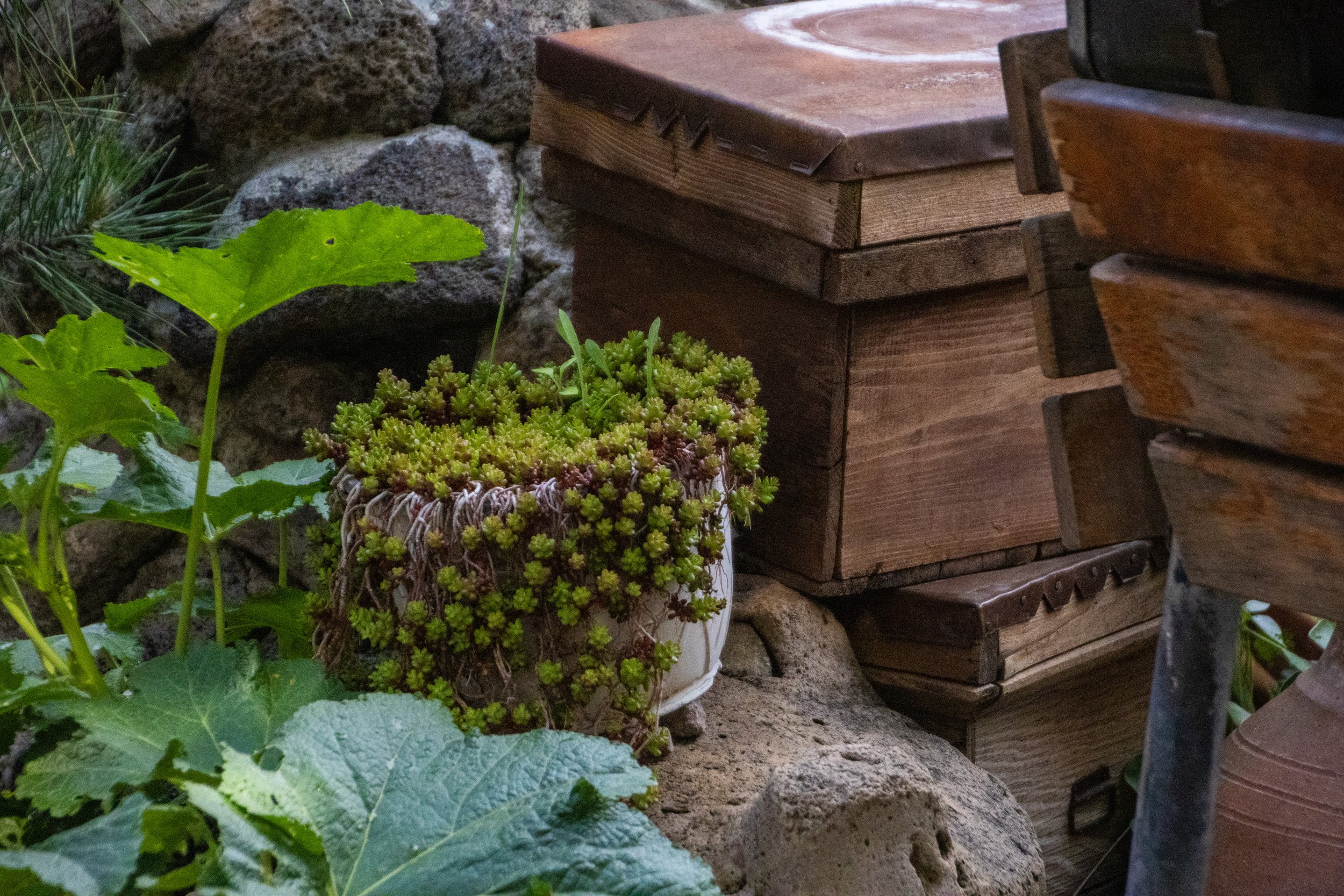
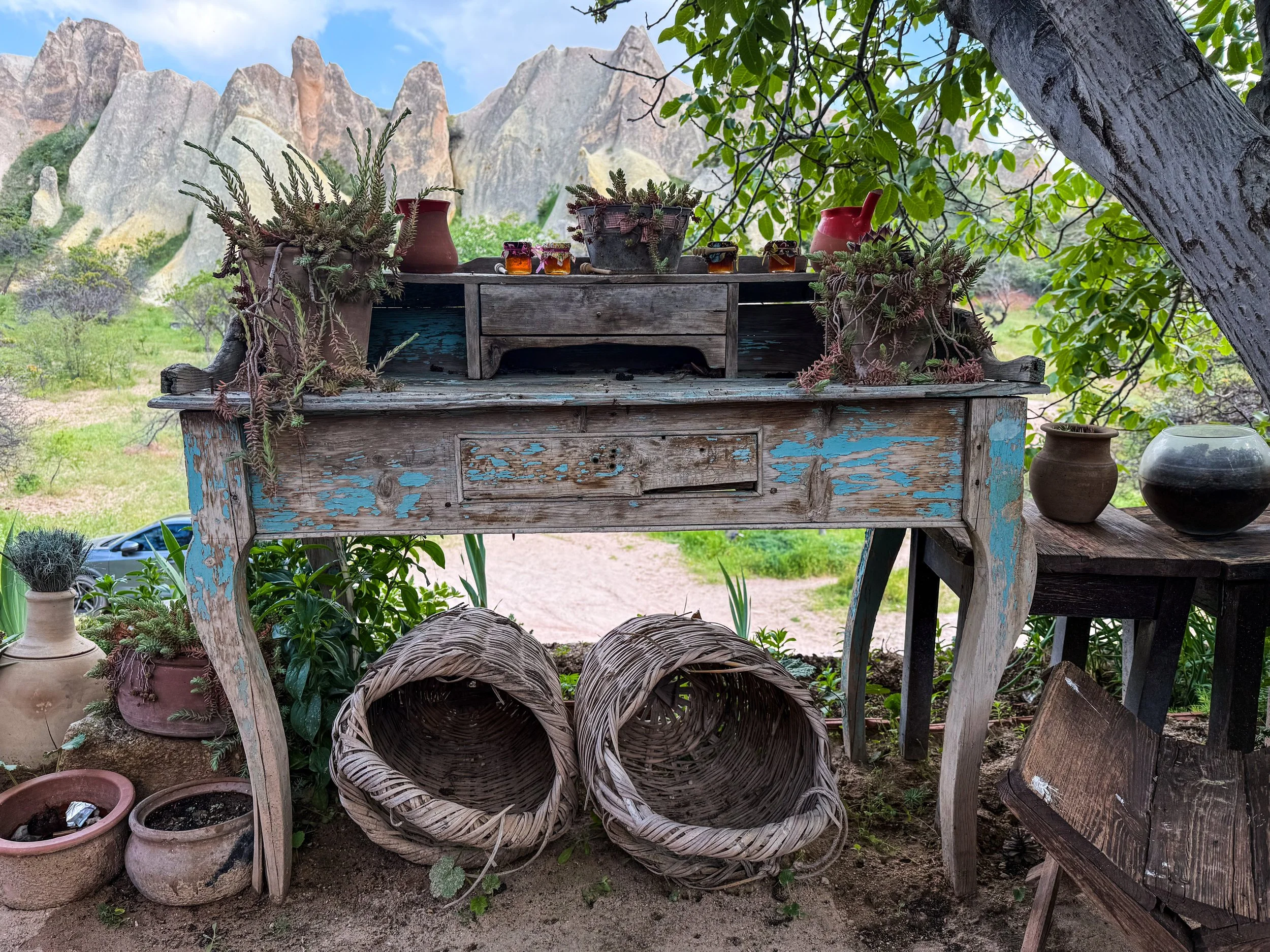
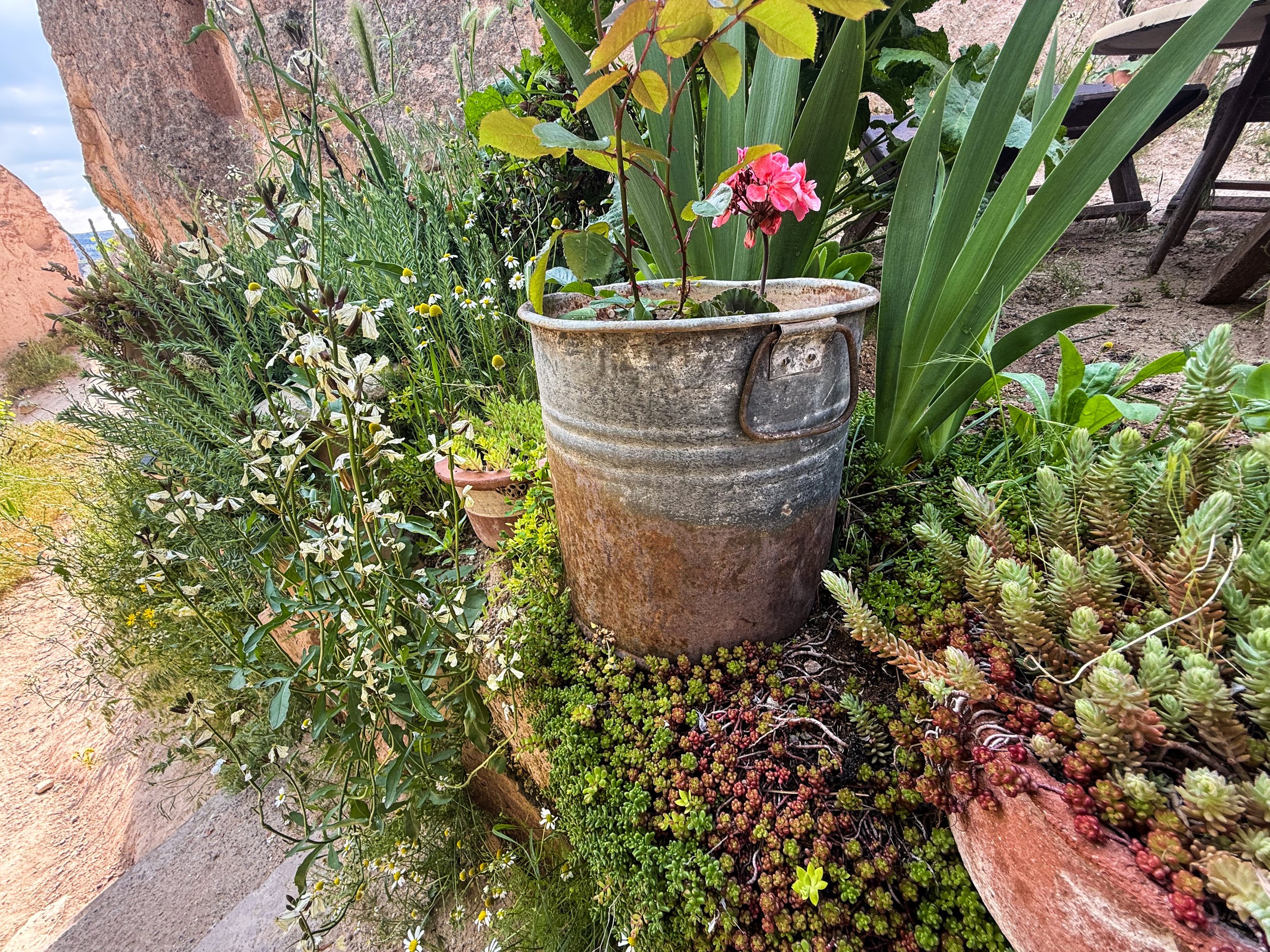
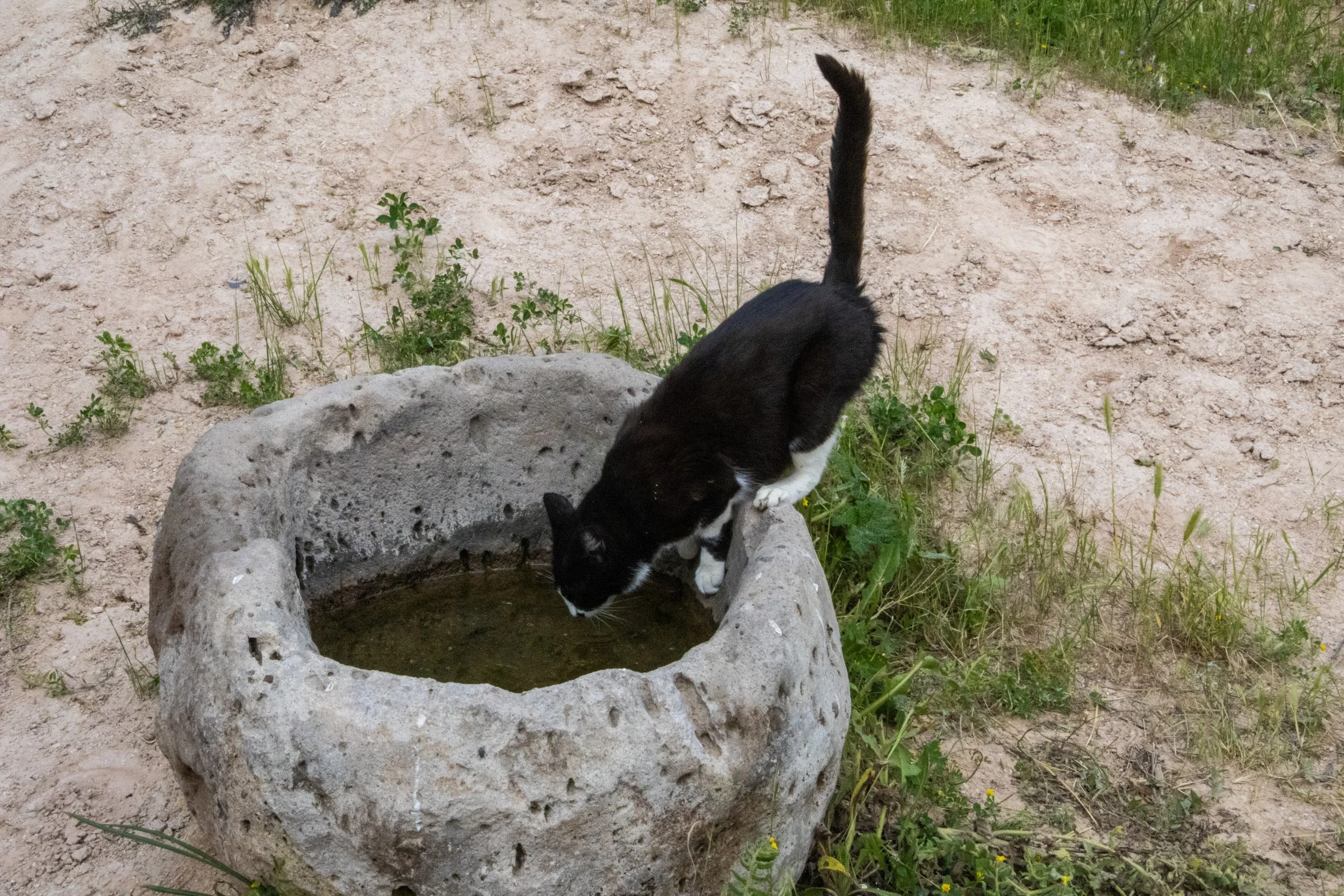
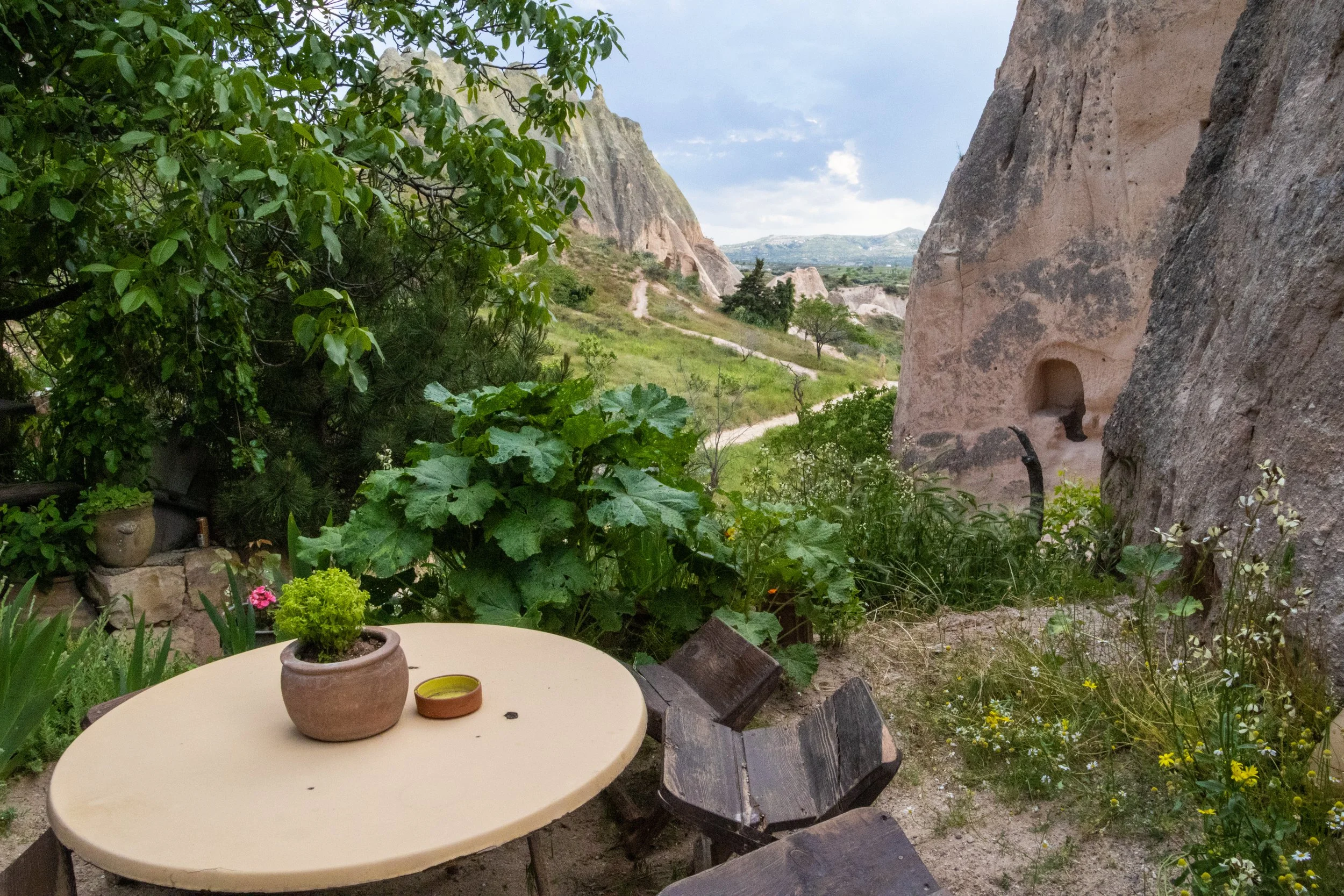
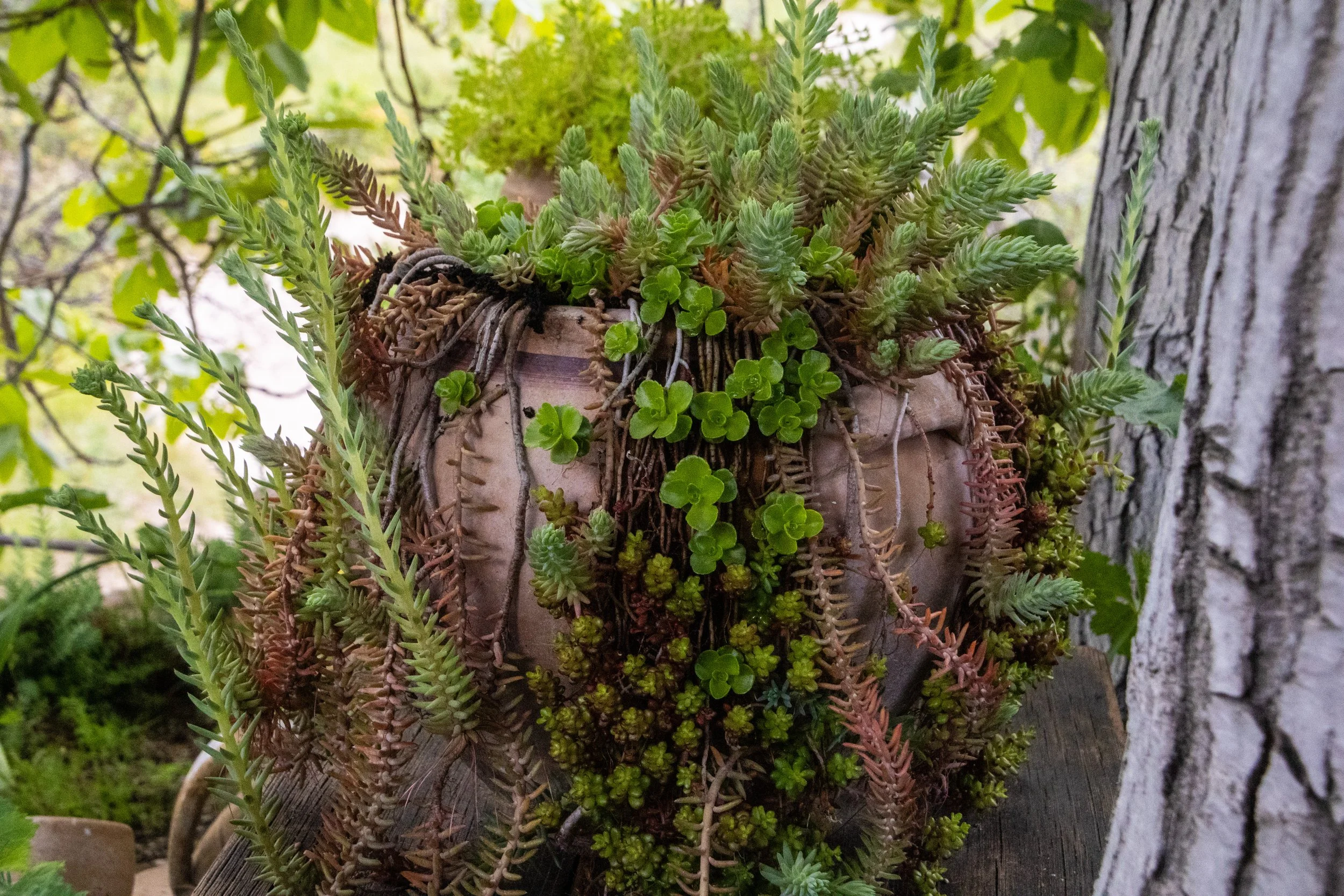
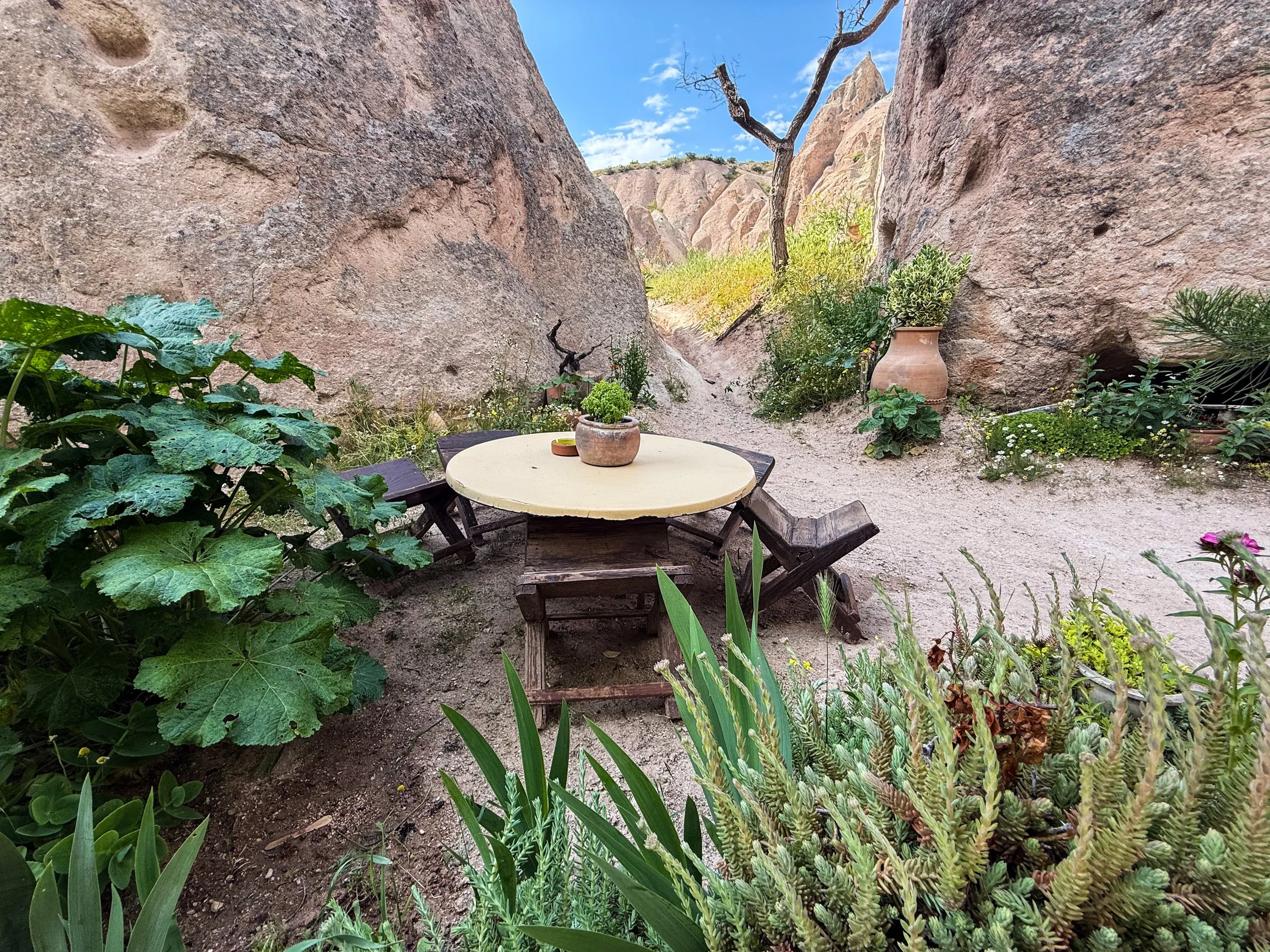
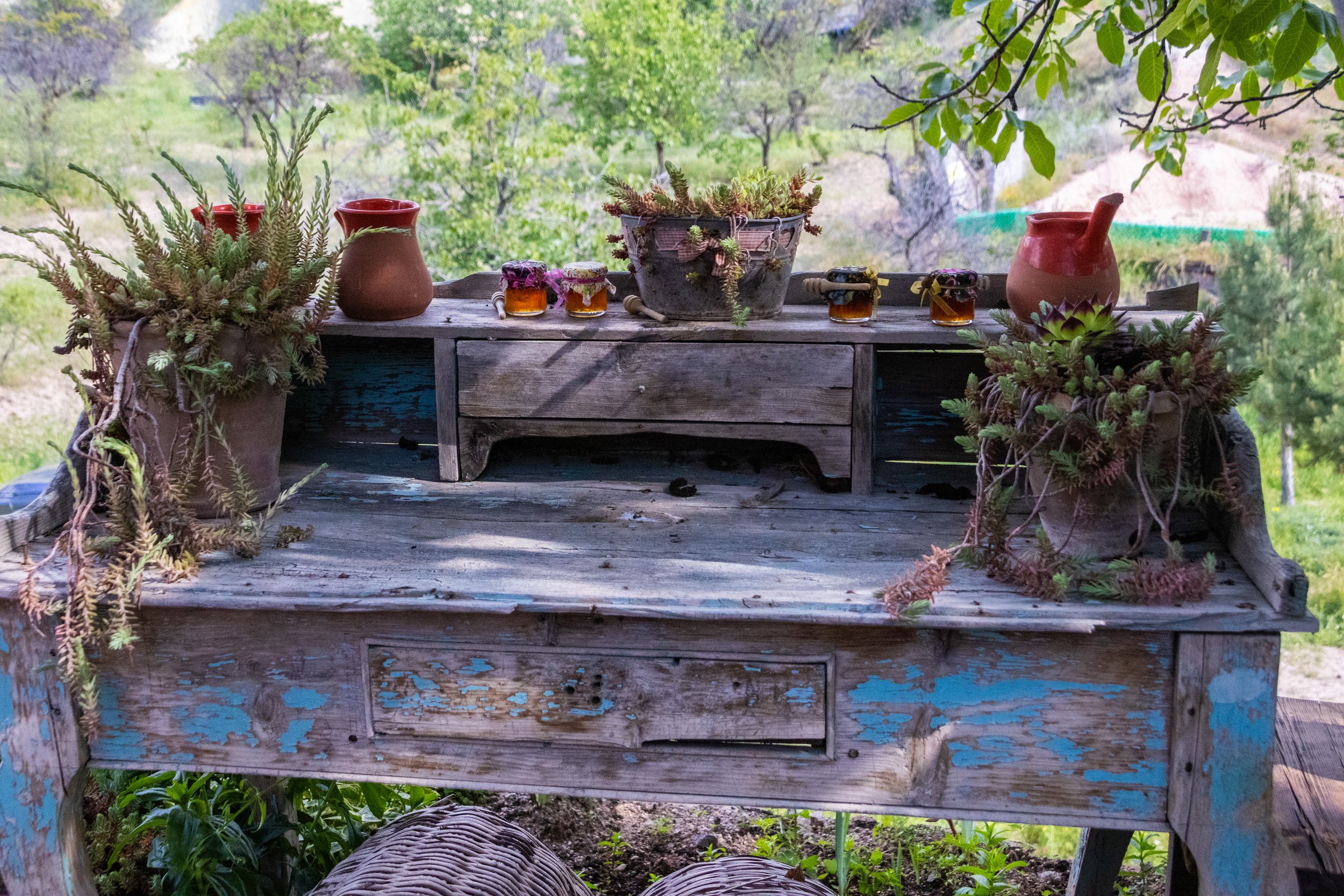
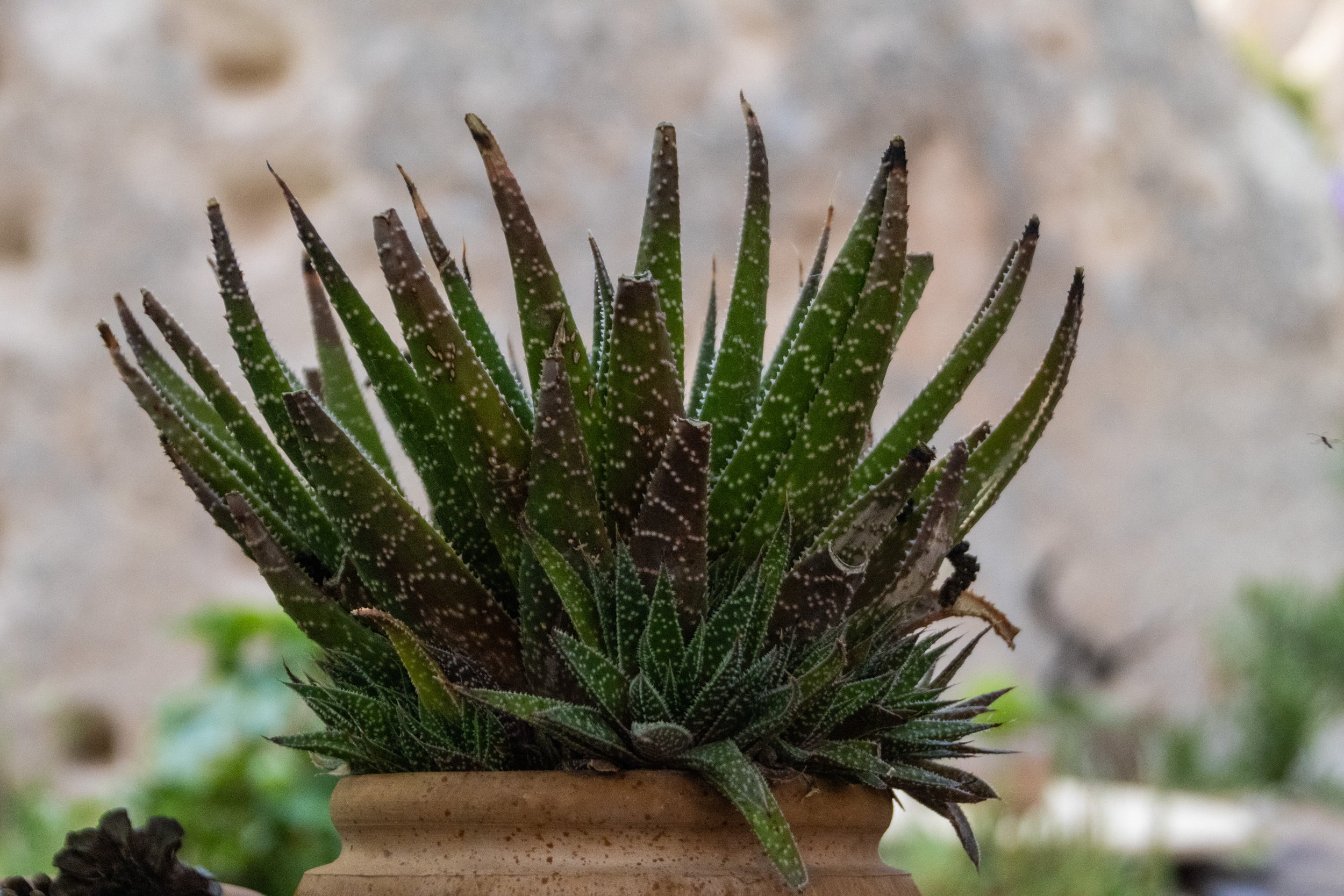
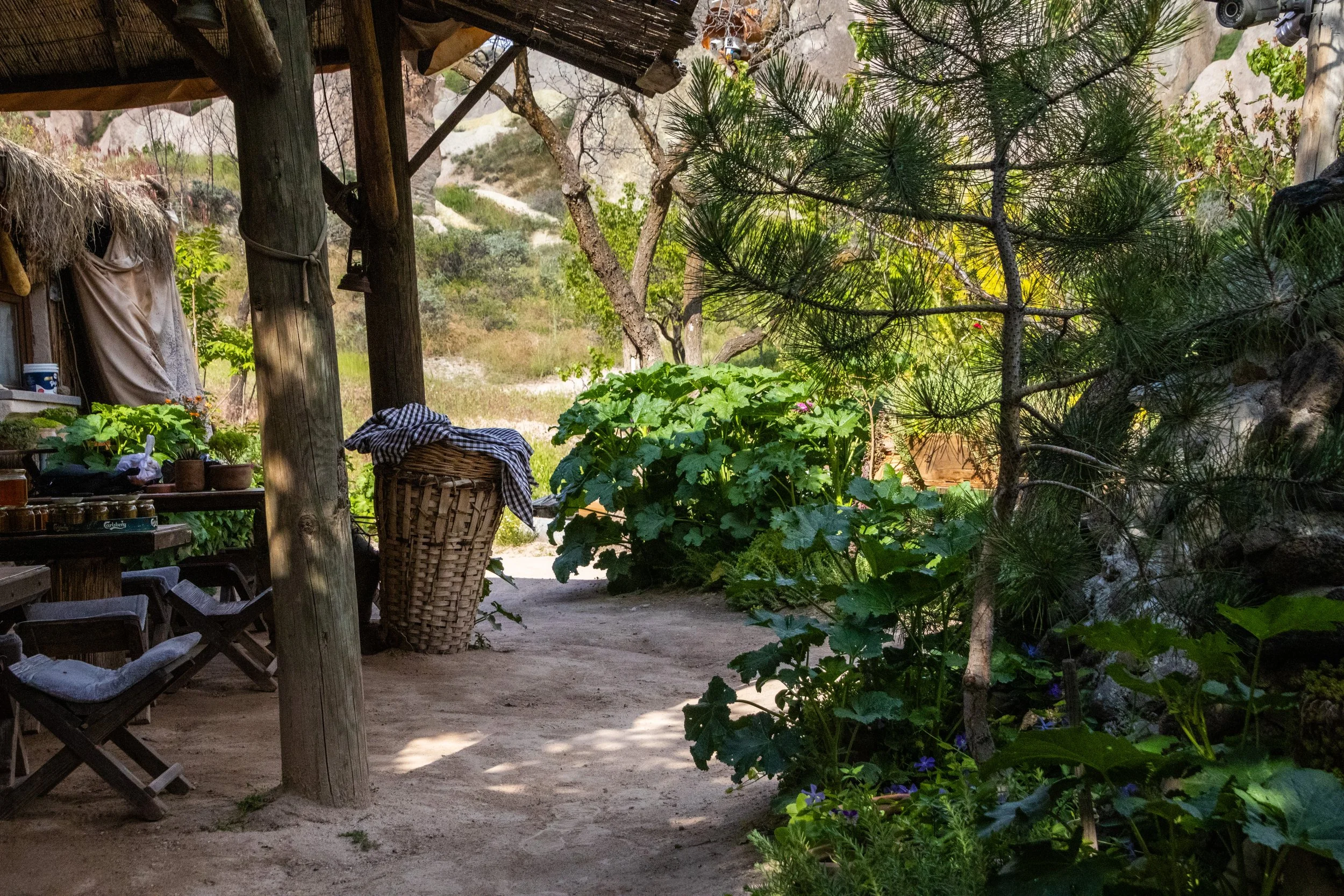
We weren’t following any particular path, but we had a general sense of direction and no aspirations to walk far enough that there would be a danger of getting lost. But we did have 1 way-point in mind: the house we had seen from the ridge overhead. Before we completed our loop around this valley, we found this house, and with it, an incredible little oasis! Nestled amongst the fairy chimneys, this was not just a house, but also a café! There was a covered area with a few picnic-bench style tables. Next to this little café, there were also a few living spaces carved into the rock of the fairy chimneys, and they appeared to be in active use. Indeed, instead of dirty, bare-rock floors, we found Turkish rugs, pillows, and all sorts of cozy items to make these holes in the rock into typical Turkish living rooms. In one room only accessible via a small wooden ladder, a man was taking a nap. He actually looked extremely cozy; like, enviably cozy. This little nook would have been an amazing spot for a nap, enjoying both the shade and the dry, afternoon heat. To make the environment even more welcoming, every available space was bursting with greenery, from potted succulents on the tables to small trees. We ordered a couple of drinks from the café and sat down to enjoy the ambience for a while.
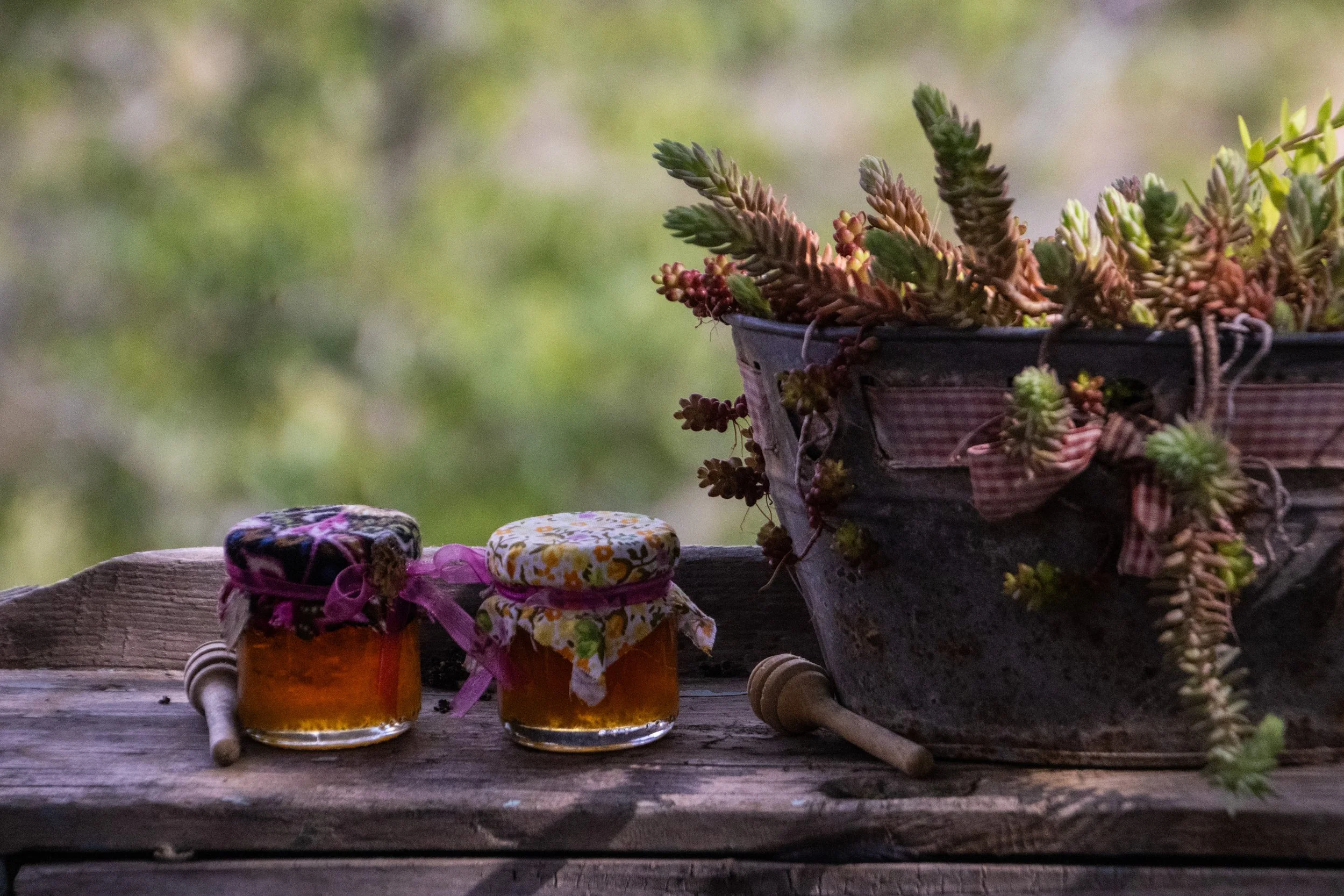
Horseback Riding @Sunrise
Now it’s time for our first sunrise activity: horse-back riding.
Almost everything in Cappadocia is best done at sunrise or sunset… which is annoying, because what are you supposed to do with your days? Inevitably, you’re pushed into an odd sleep schedule of waking up at ~4am to go do a sunrise activity, going back to sleep ahead of the peak afternoon heat, and then mobilizing again for a sunset activity. But there was a finite number of times I wanted to wake up that early on this trip. This was one of them. It was indeed the first of two times that rose from the dead for a sunrise activity.
We rode horses through the Red Valley. My horse was a bit of handful… it was really a battle of wills to get him to follow the herd. At one point, out of nowhere, he began running full speed down a narrow path. I managed to reign him in relatively quickly… but I’m not going to lie to you, it was scary! I’m a city boy; being around horses is not my natural habitat. I’ve ridden horses before, but this was the first time I’d had any issues, and it definitely rattled me.
Thankfully, there was a break in the middle of the trip where I could grab a coffee, stretch my legs, and get ready for what was sure to be a long, unpleasant journey back to the ranch, for both me and my horse. There were no further issues, but I was glad when it was over. 😅
To be fair to the tour operator, nobody else had any issues. But I was also annoyed that they were so pushy about leaving them Google reviews. The guide literally looked over our shoulders while we gave him 5 stars. I found it a bit unprofessional, so I later deleted my review, which had been somewhat coerced. But this intrusive guide was not alone; on this particular trip to Türkiye, it seemed like everybody I interacted with—from Istanbul to Uçhisar—was determined to force me give them a Google rating right in front of them. It’s like they’re all getting served the same marketing content on TikTok or something. But it backfired, because the harder they pushed me to write them reviews, the more determined I was not to. I’m difficult like that. 😂
This was not the case in my previous visits to Türkiye, the most recent of which was less than a year ago! My hotel in Istanbul actually texted me a few times on WhatsApp to rate them, so in a moment of boredom a few weeks later, I gave them an honest review, which landed at 4 stars. That seems pretty good, right? Apparently not, because within just a few minutes, I’d received a sad text message asking why it hadn’t been 5 stars. SIGH!
Anyway… what were we talking about? 😂 JK.
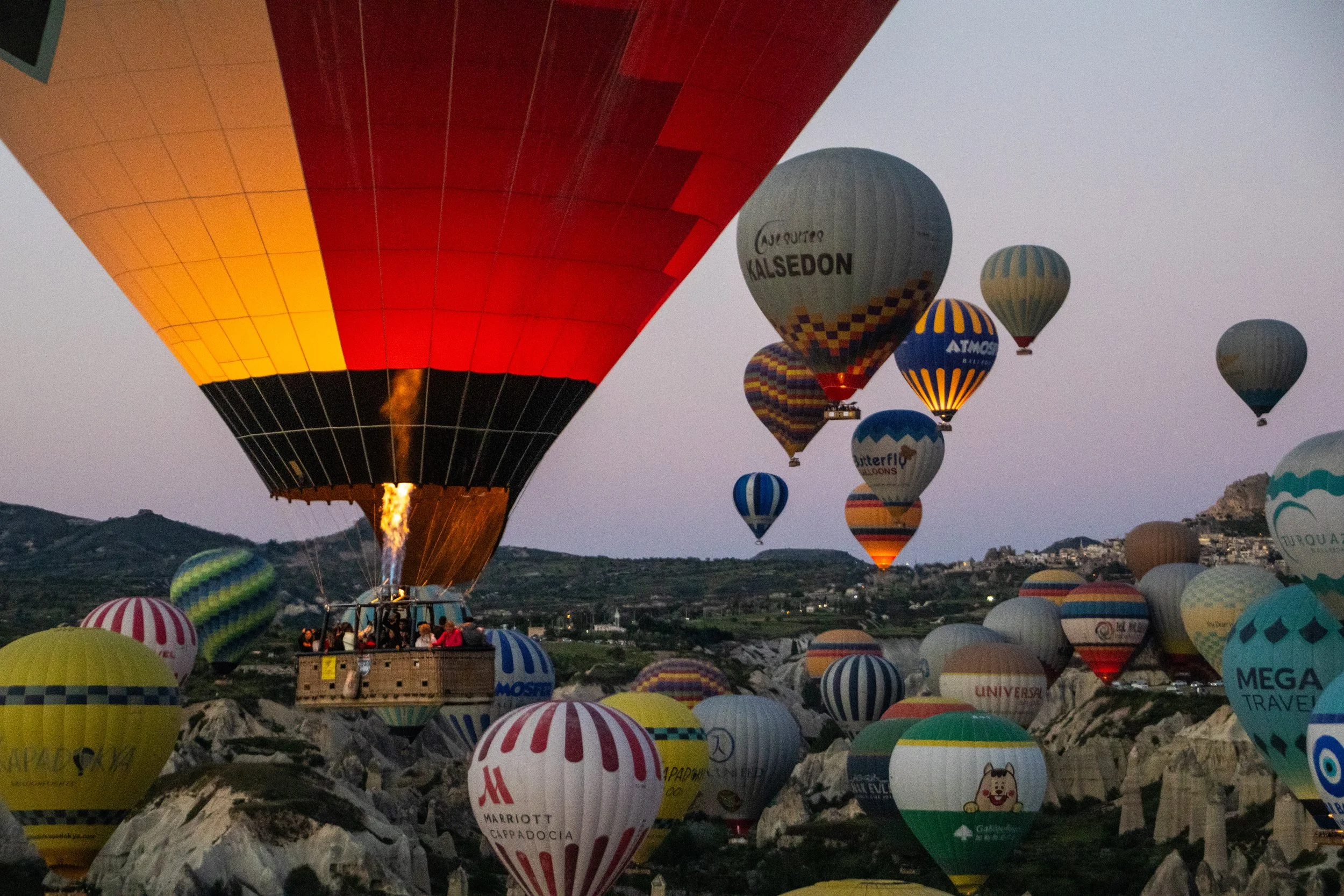
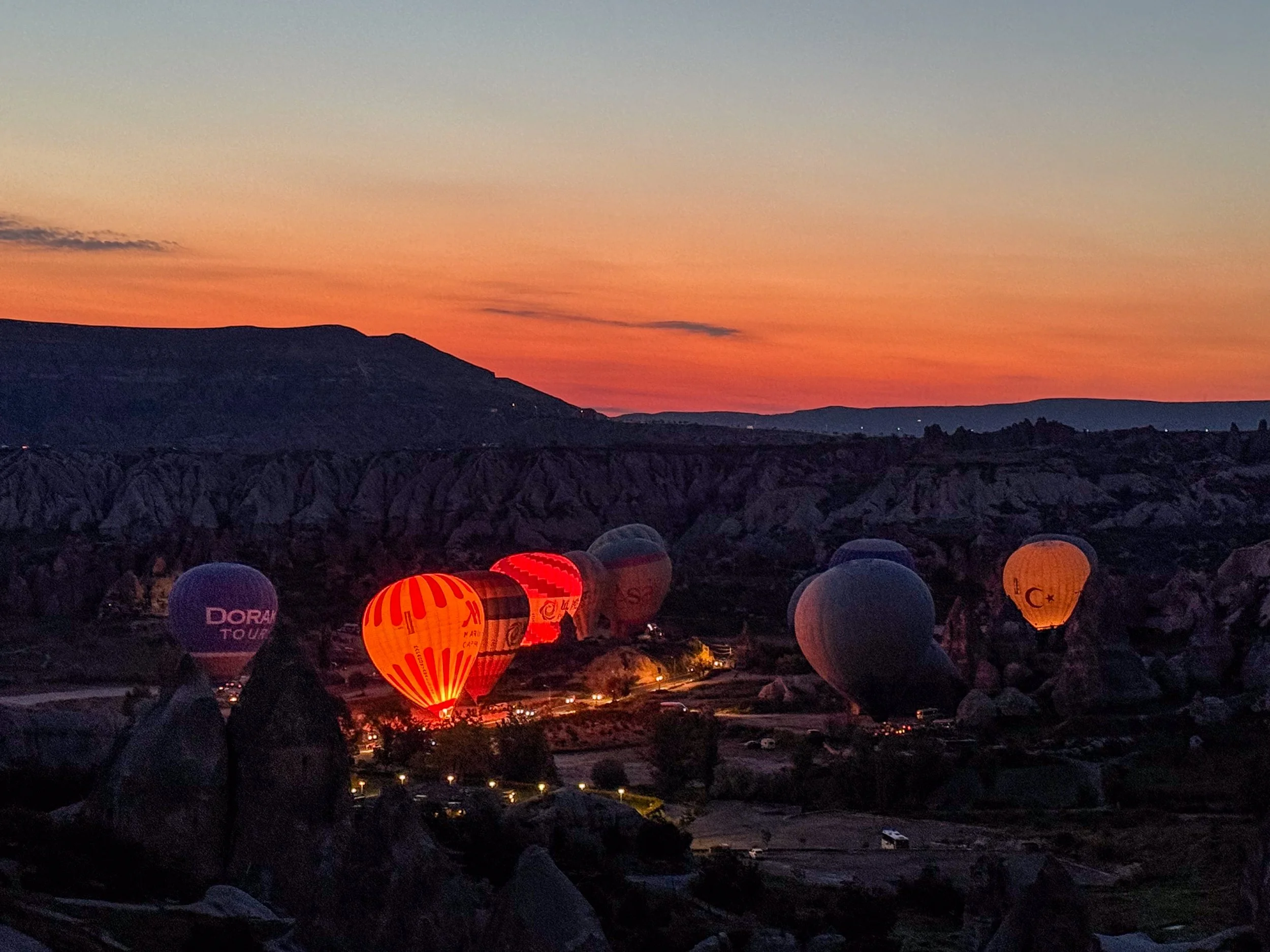
If you’re into horses, I’d still recommend this as an activity, but horseback riding, like nearly everything else one might do at sunrise in Cappadocia, is really only about one thing: the hot air balloons. These brought the horseback riding experience to another level.
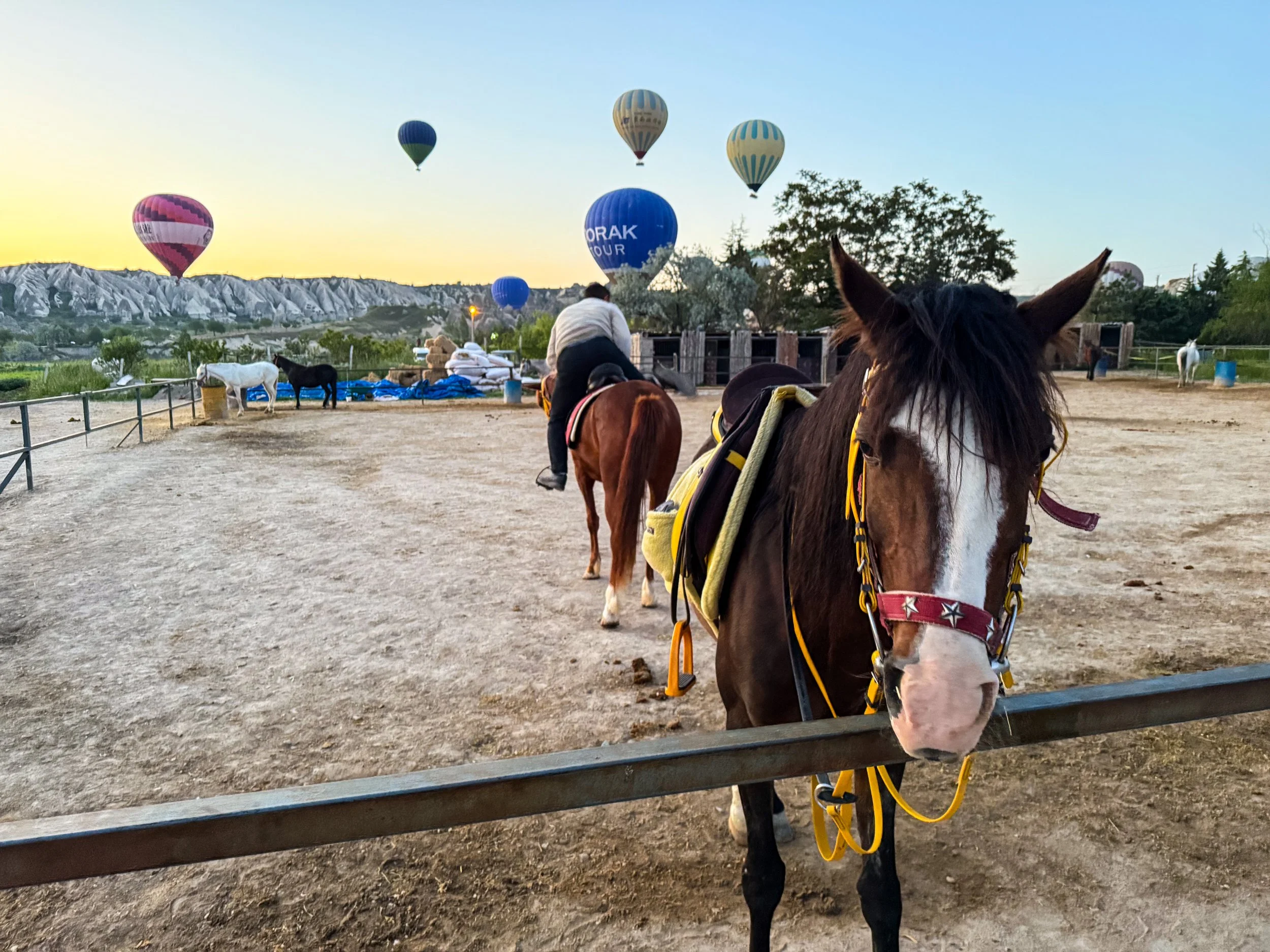
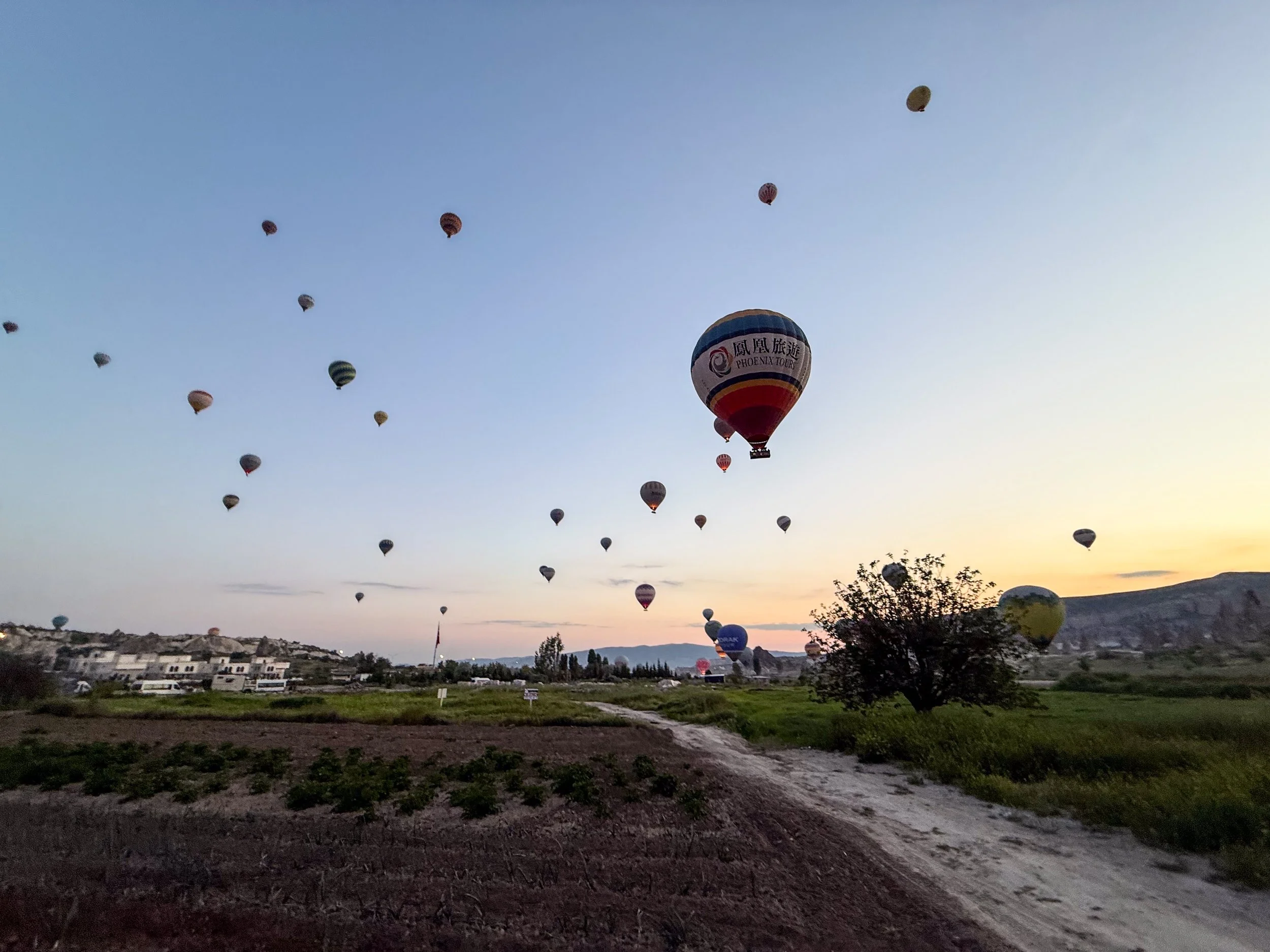
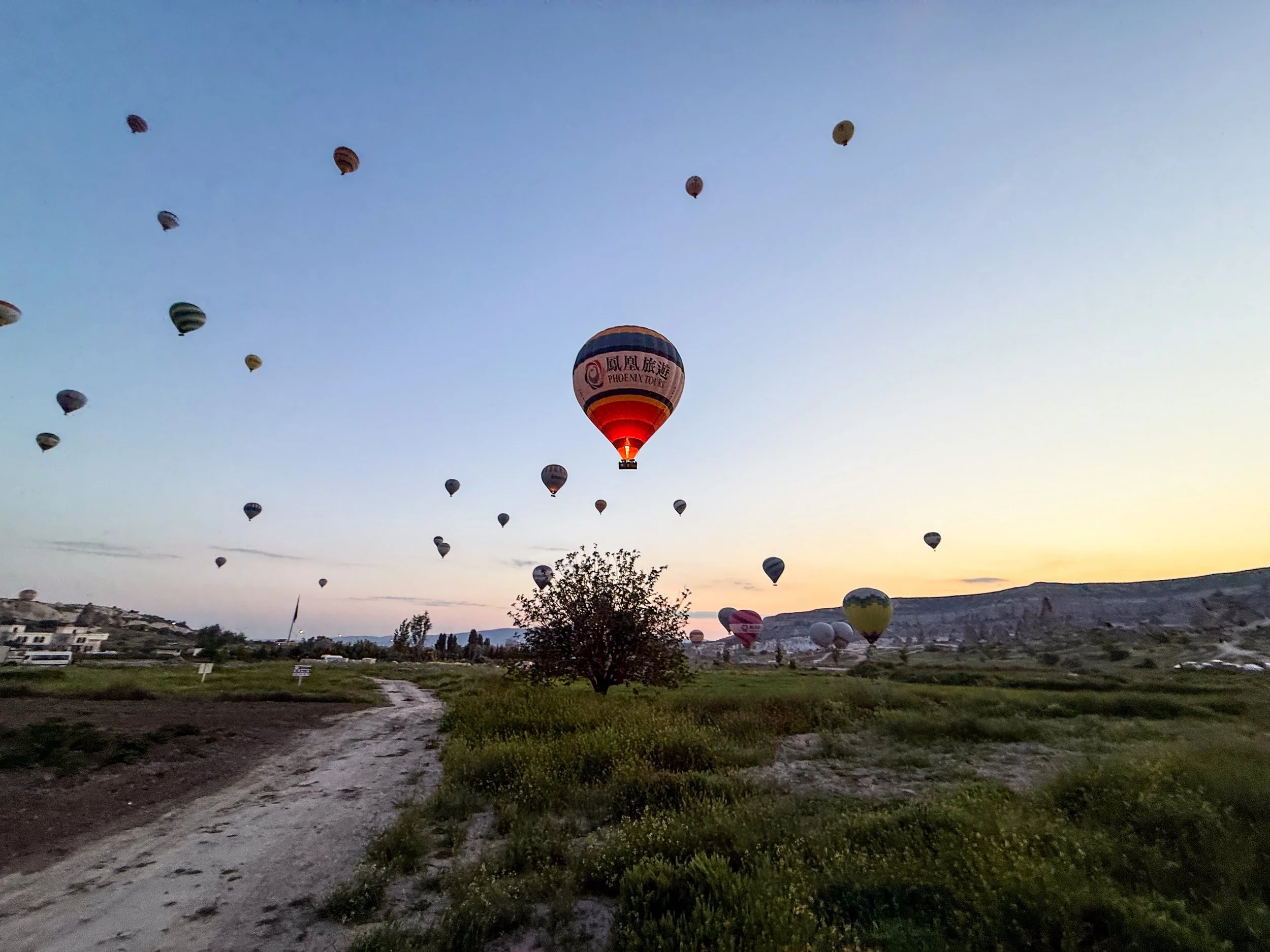
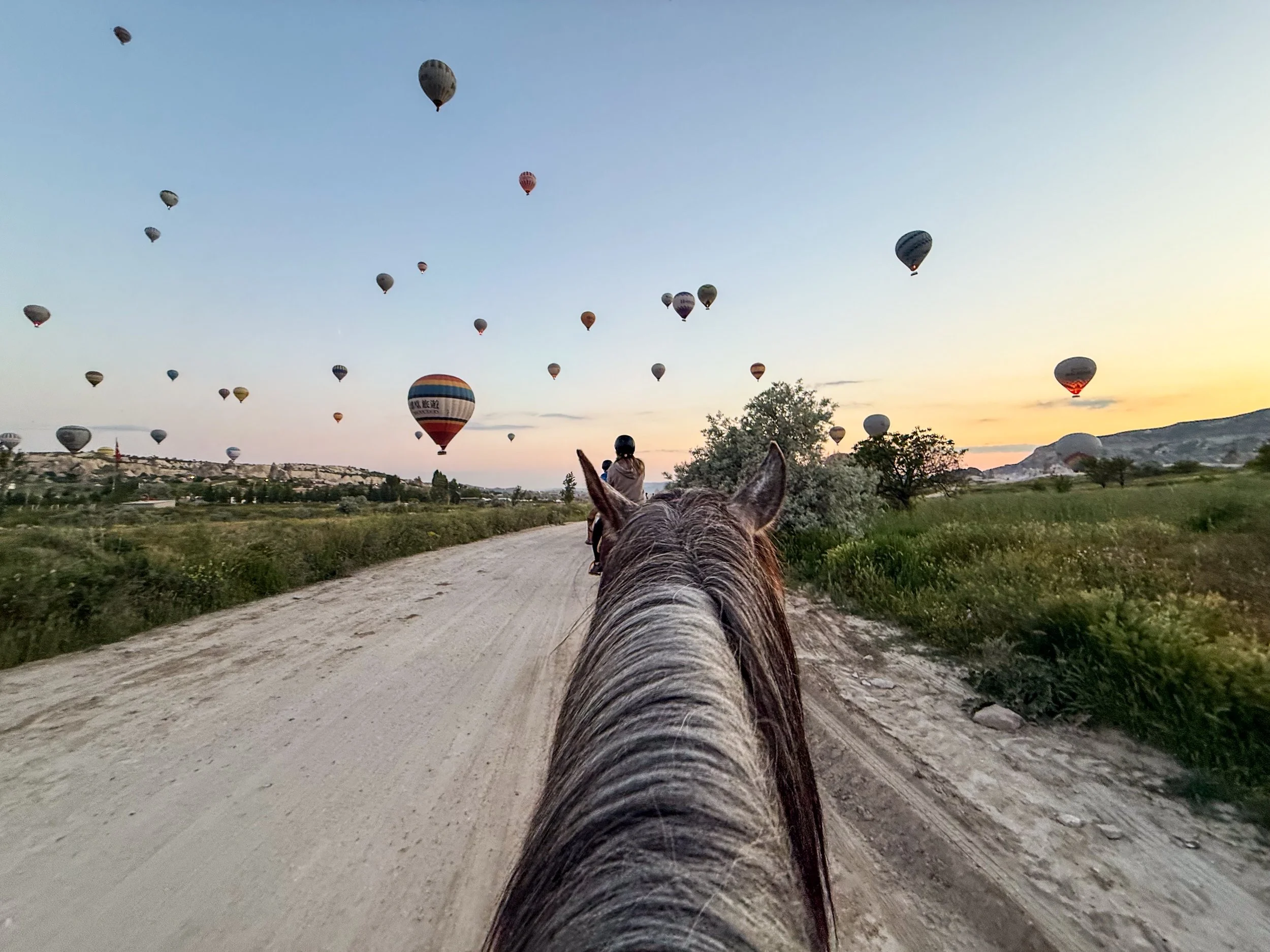
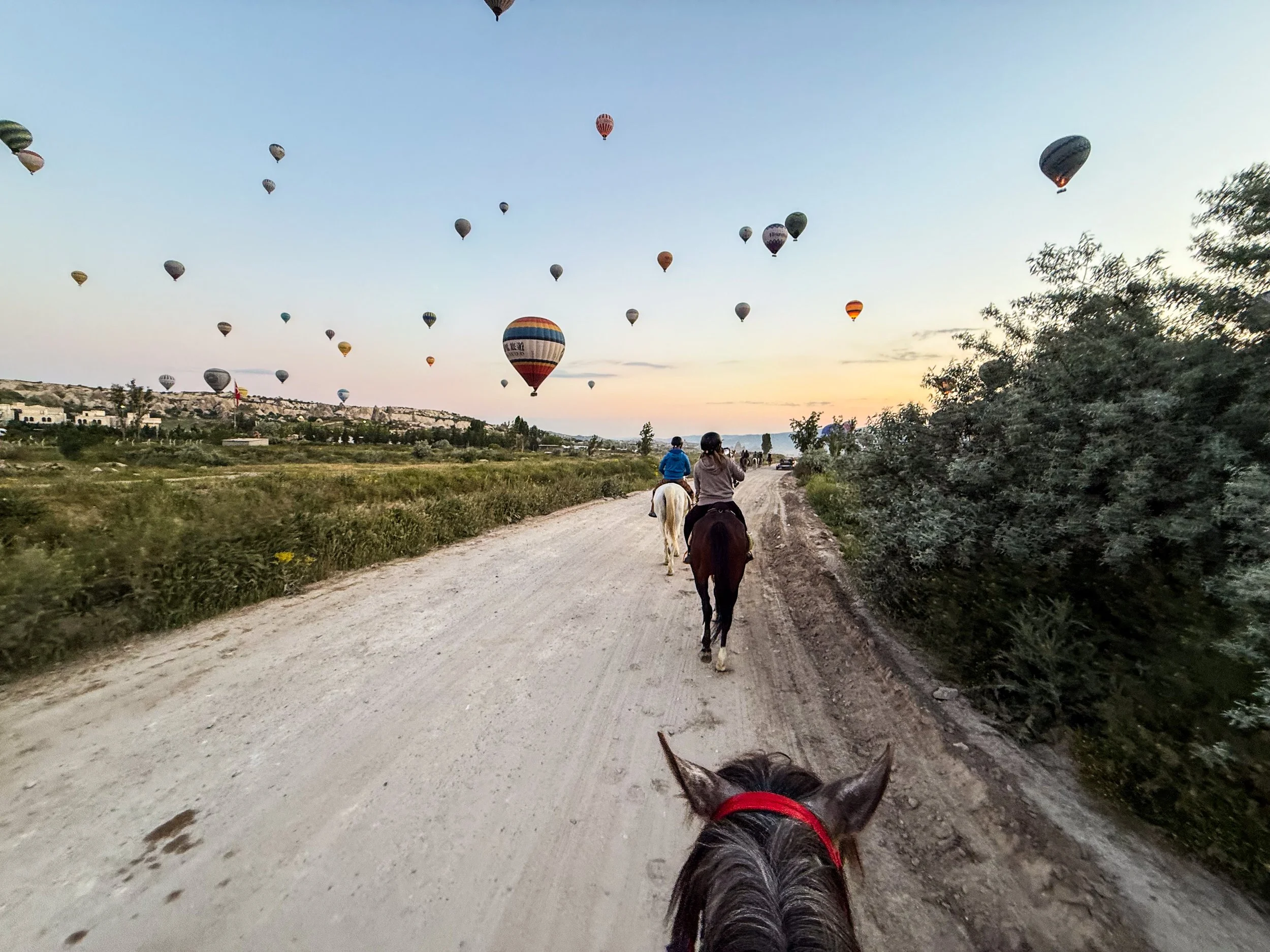
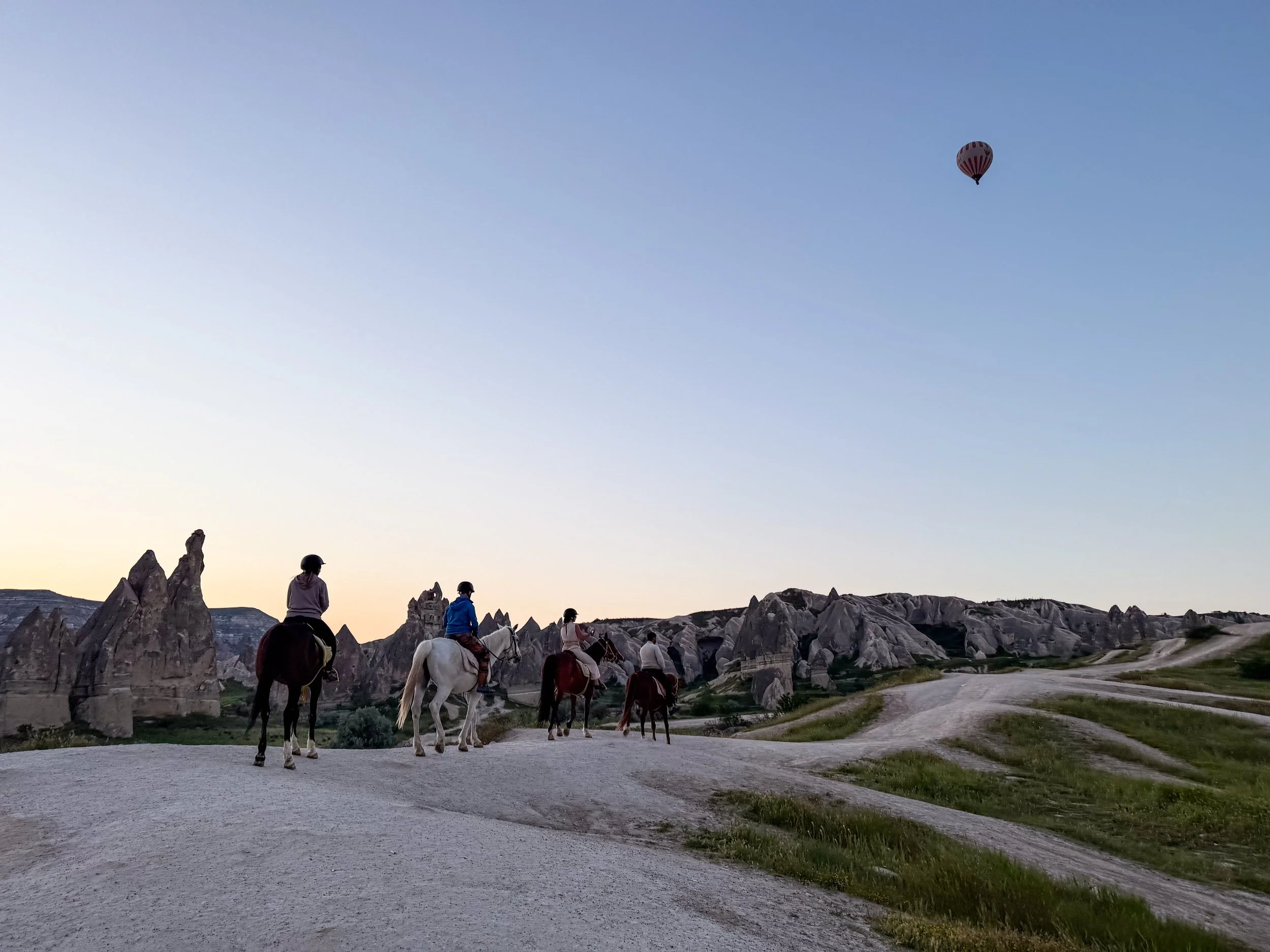
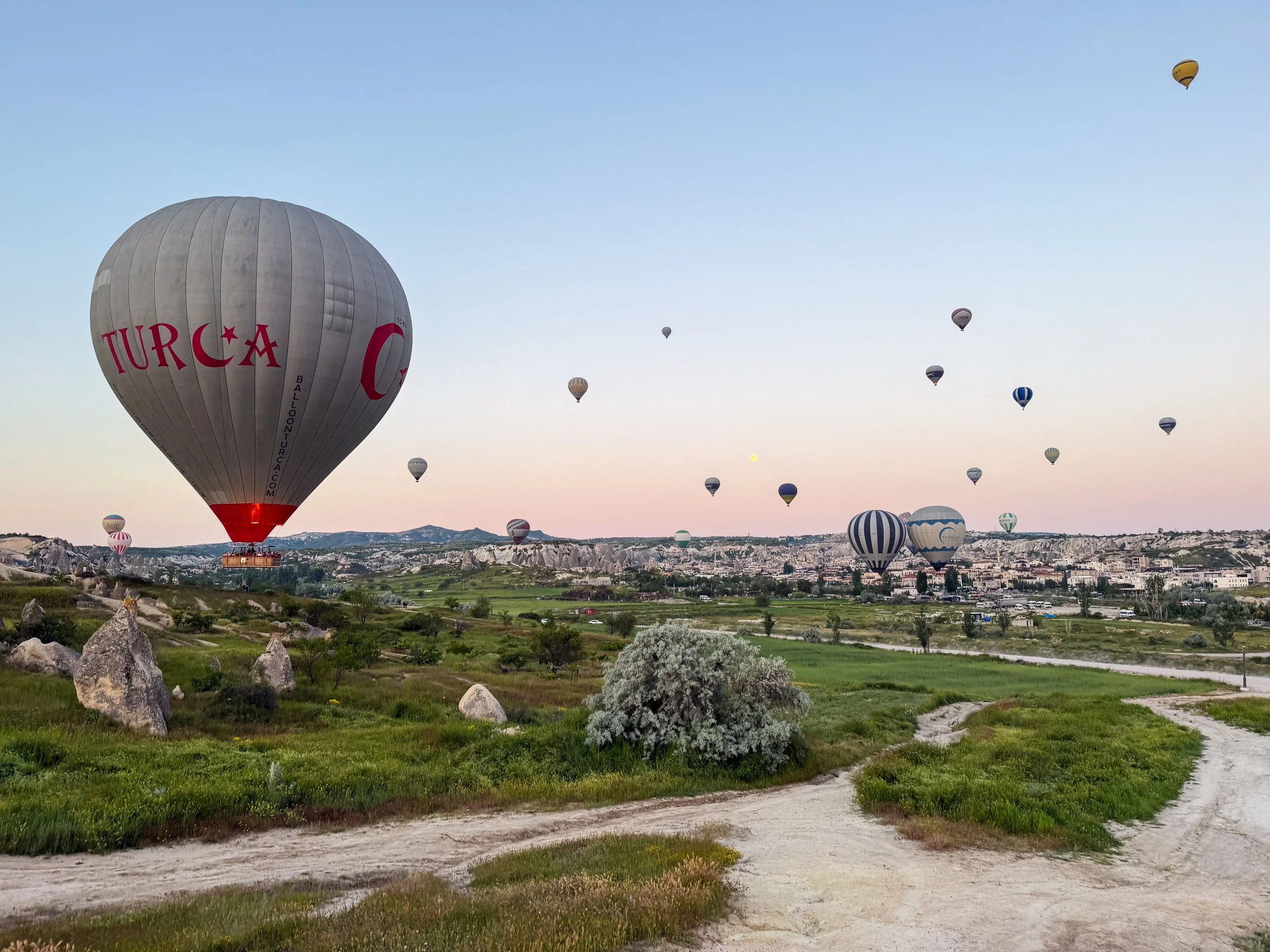
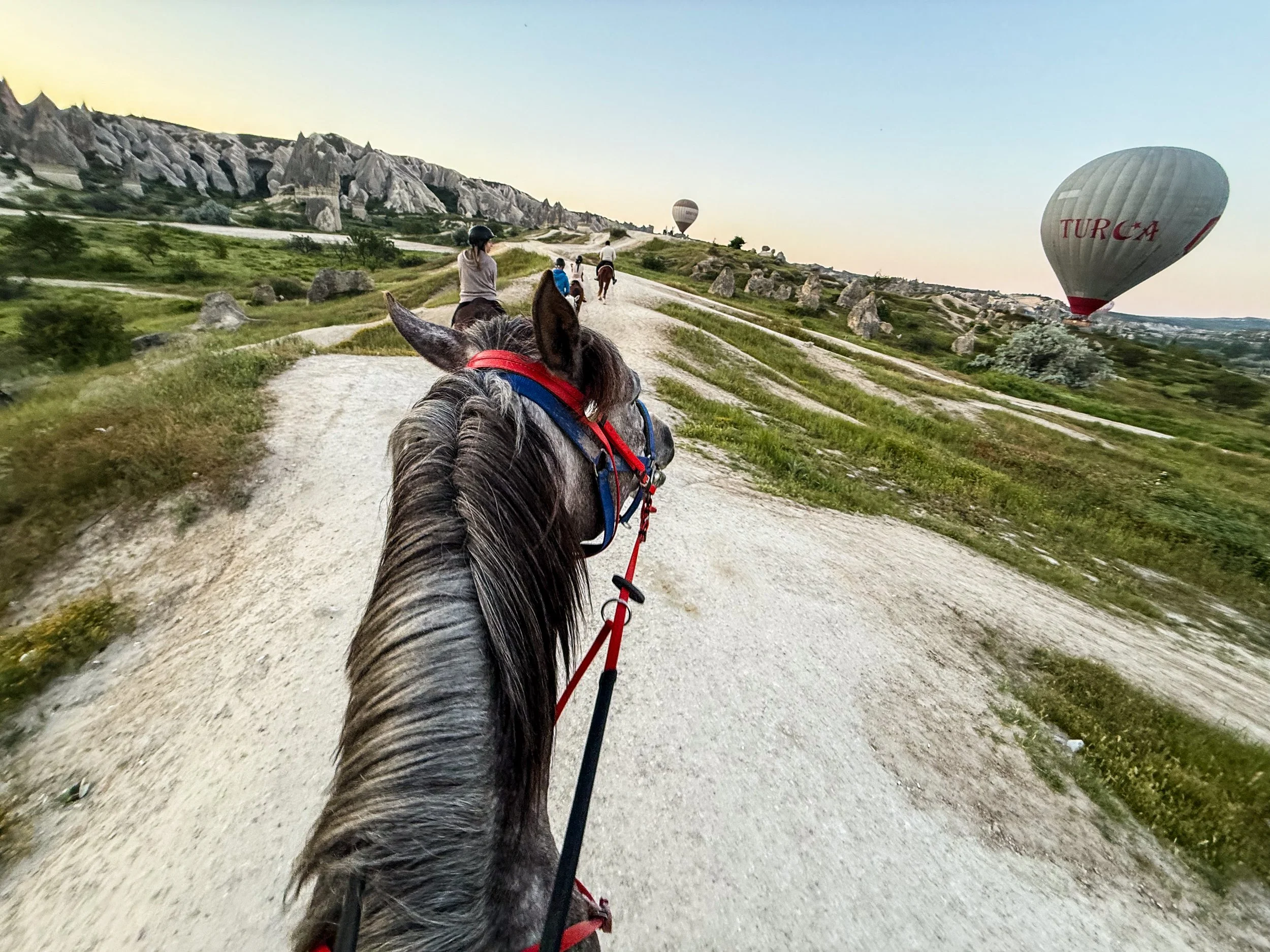
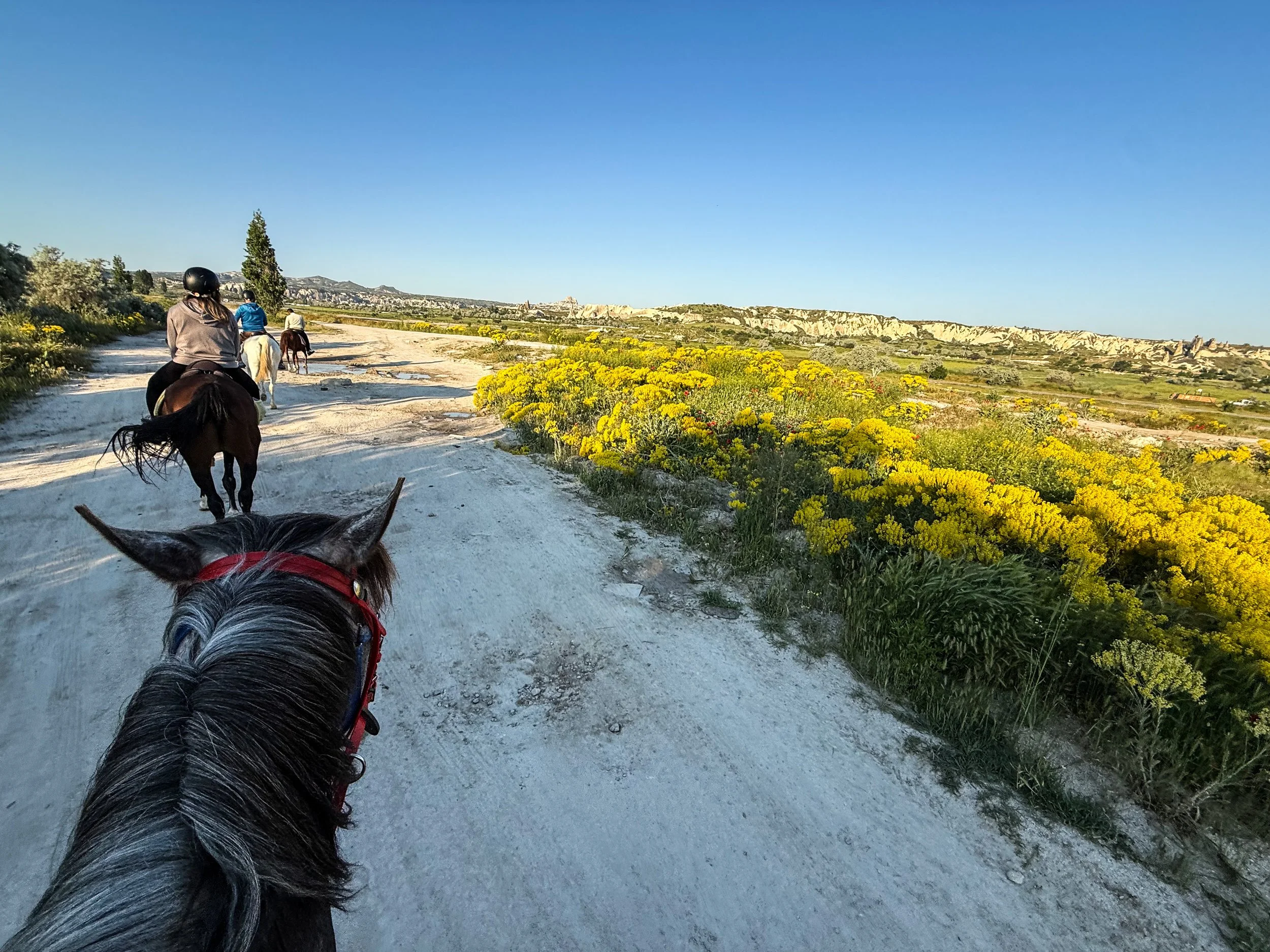
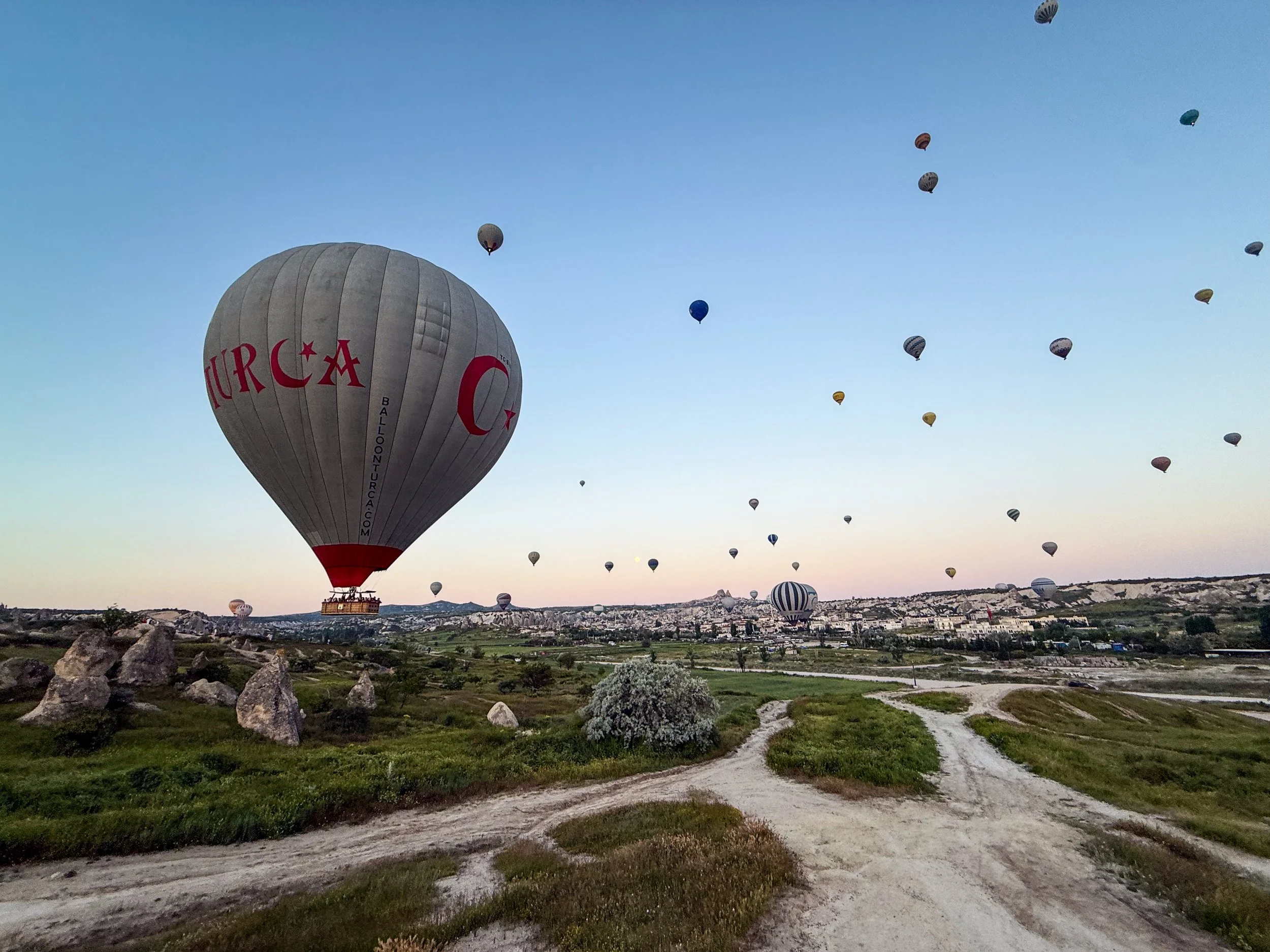
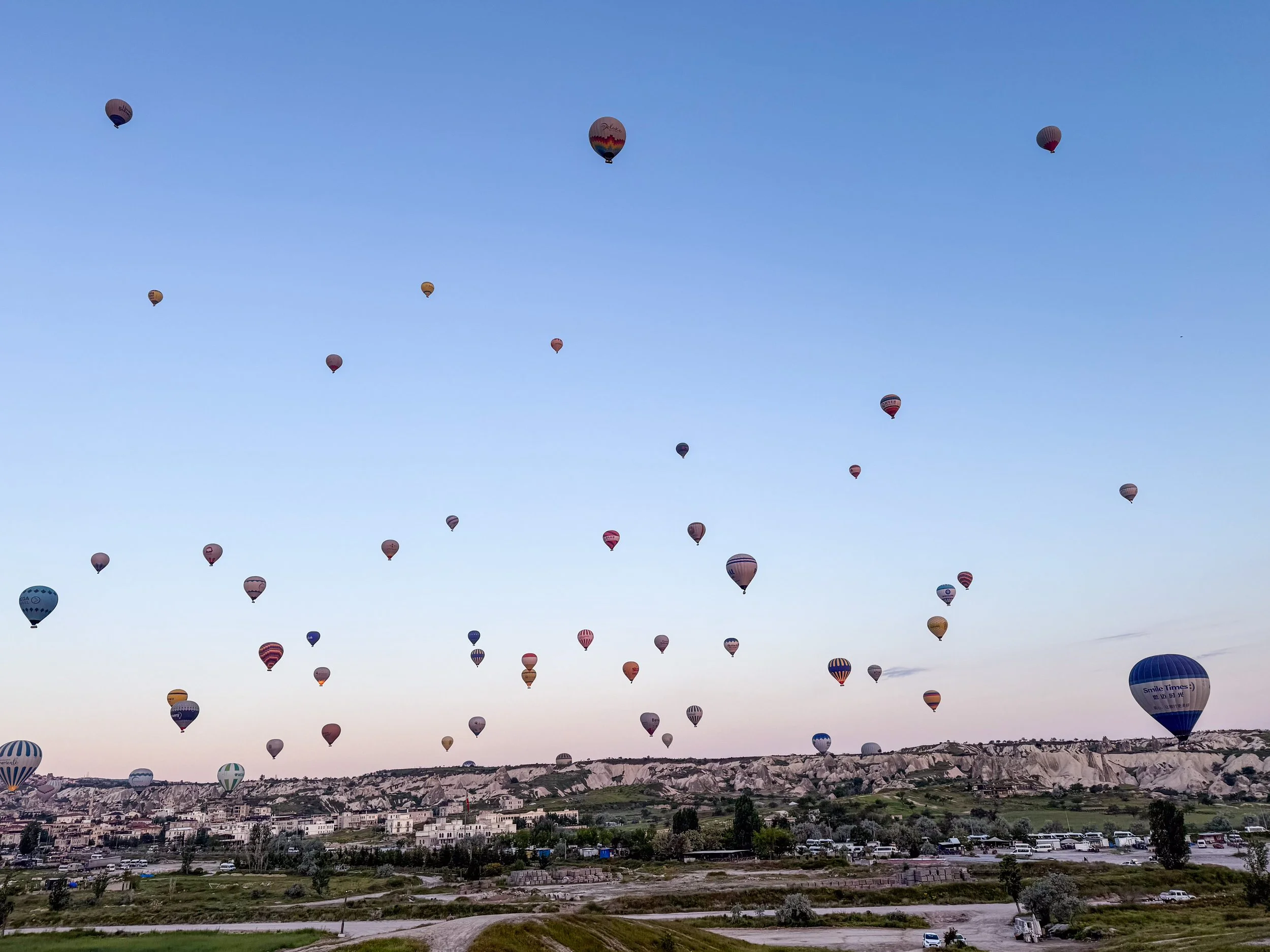
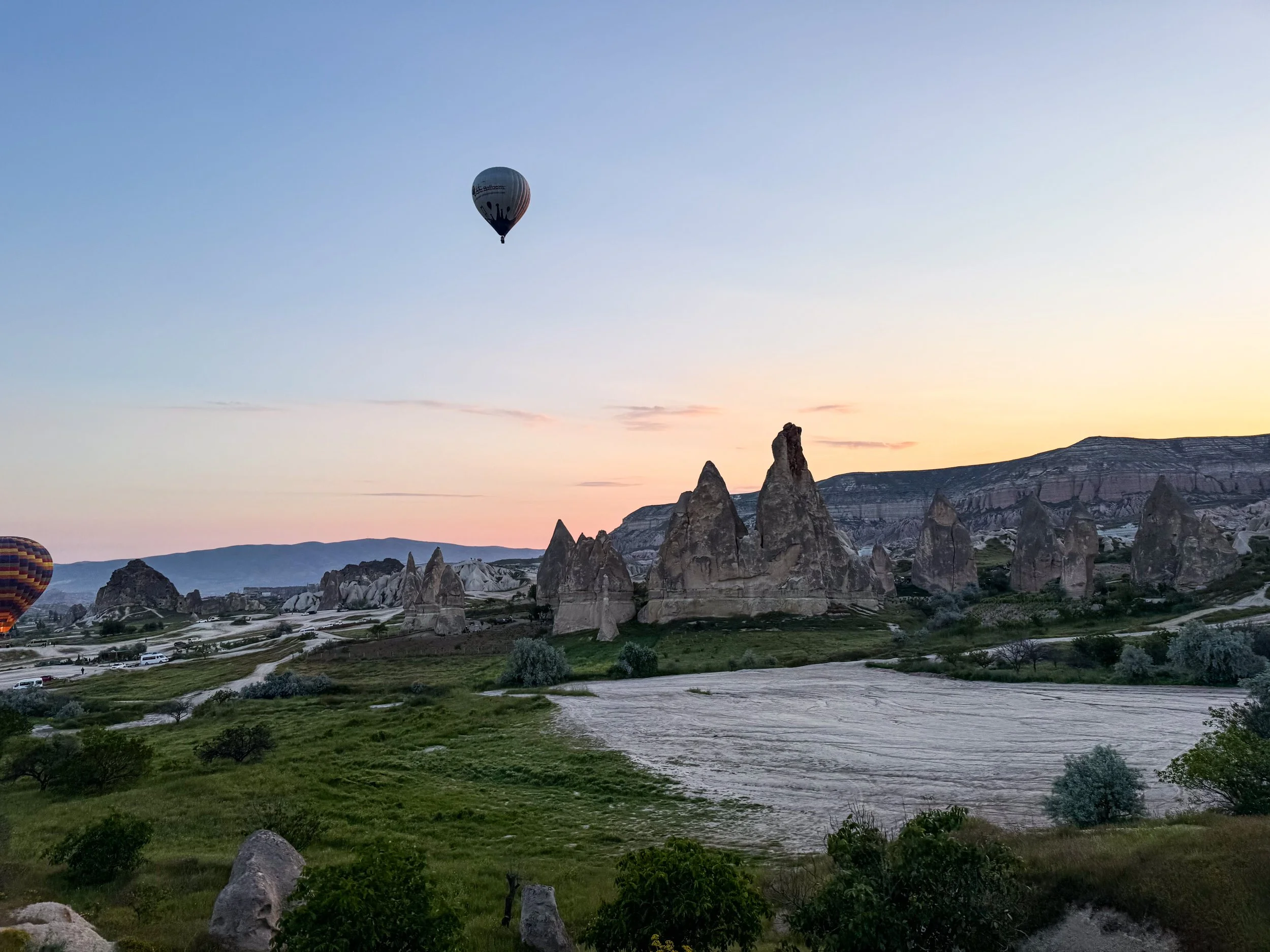
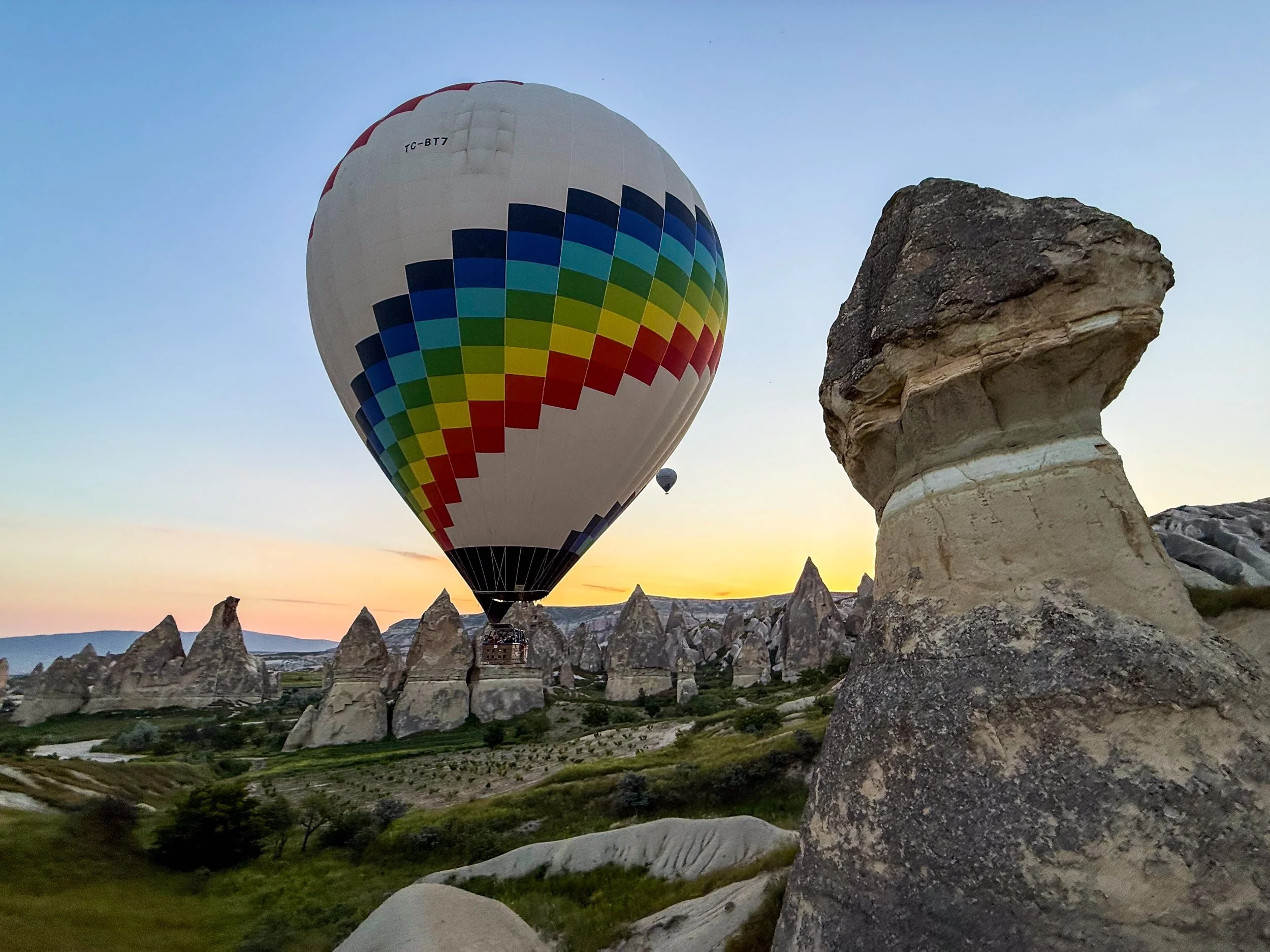
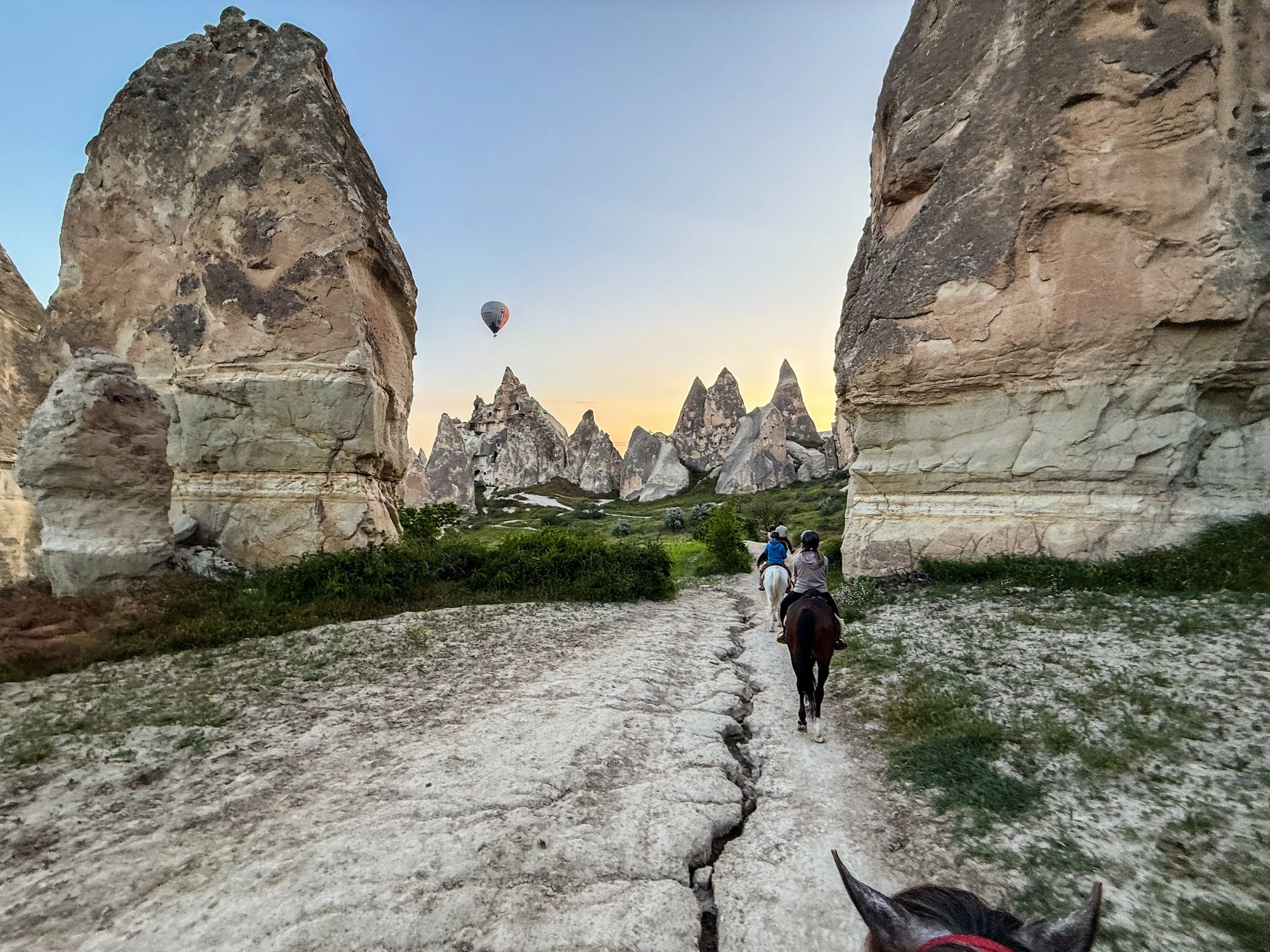
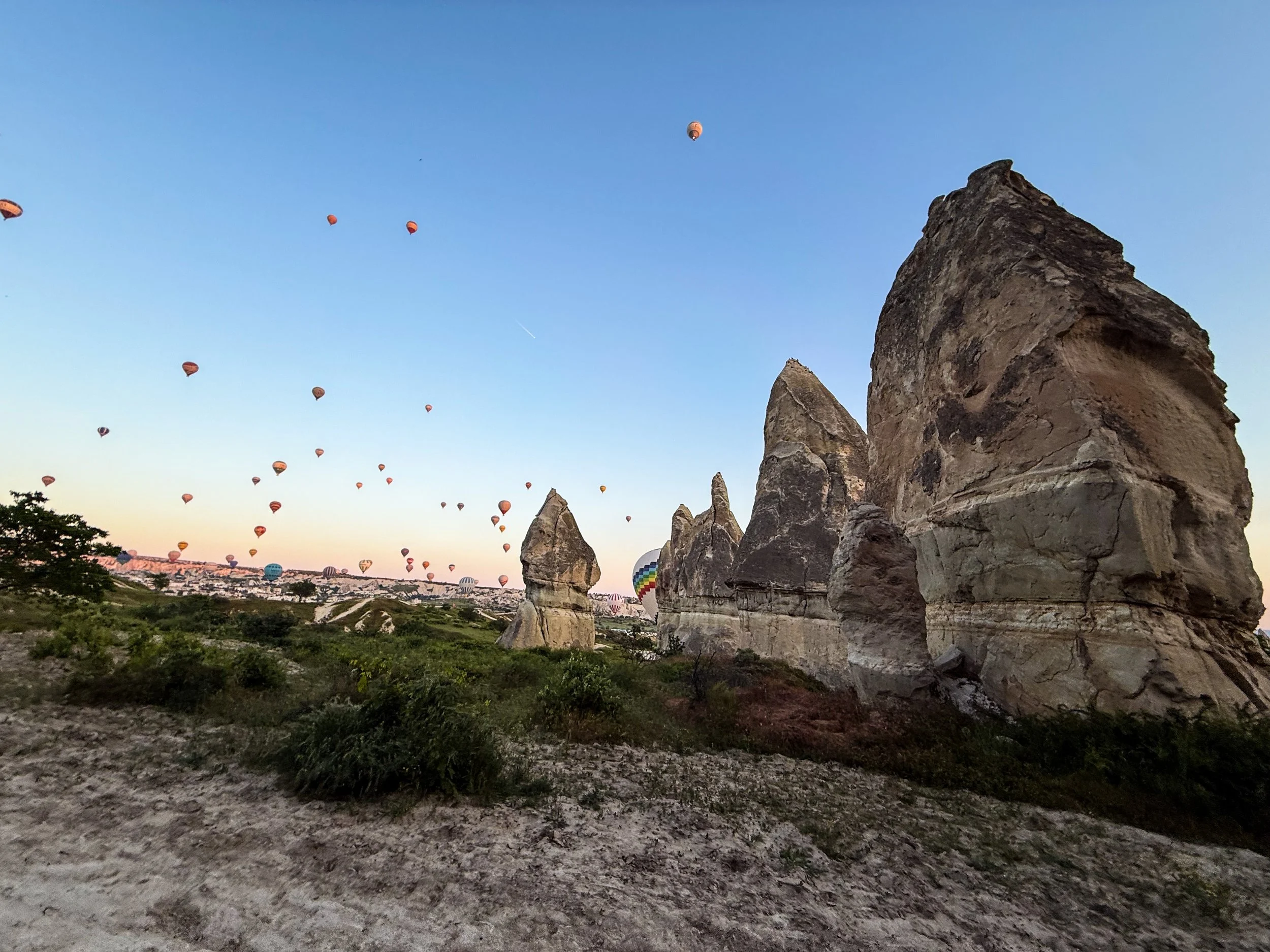
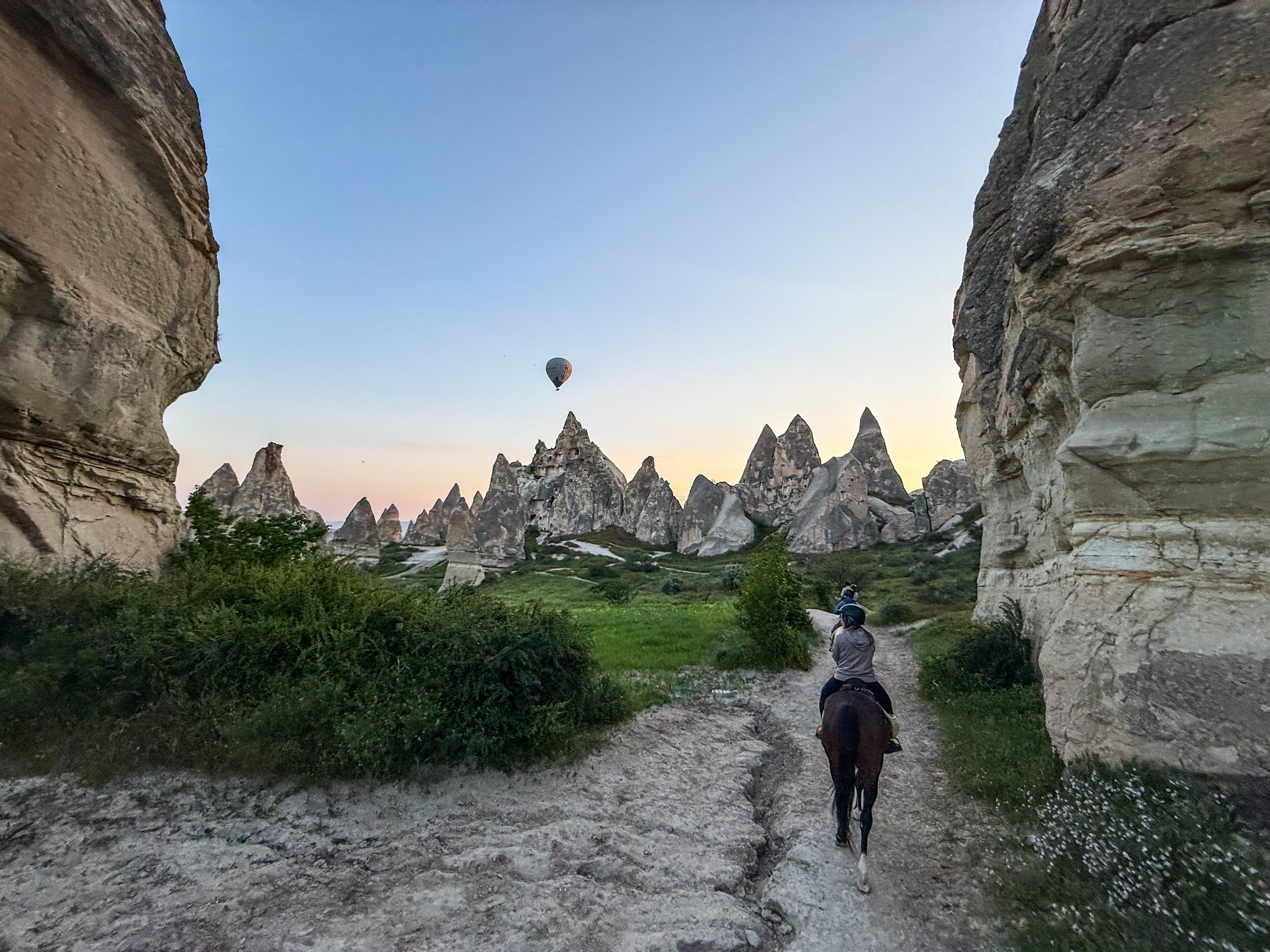
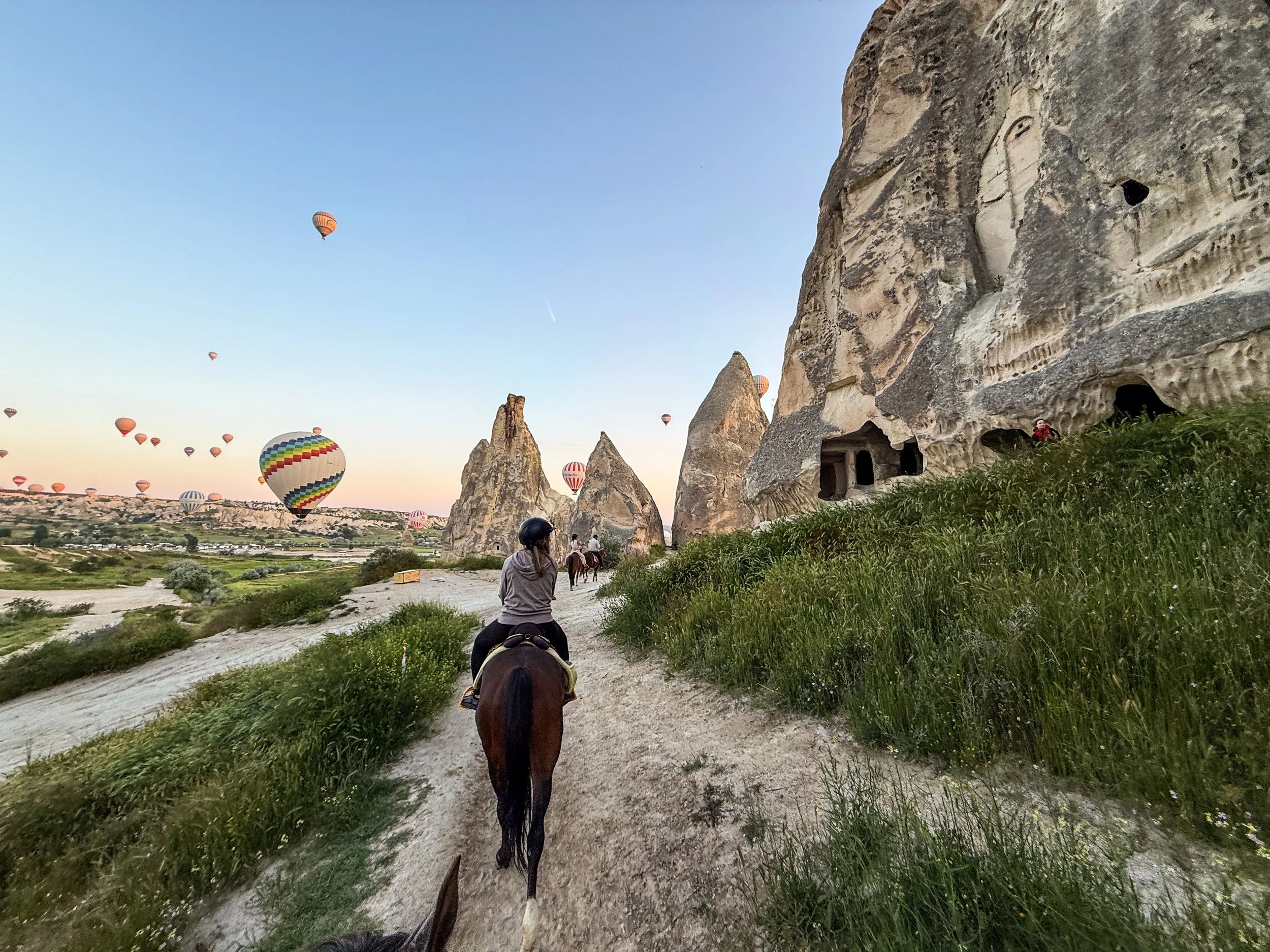
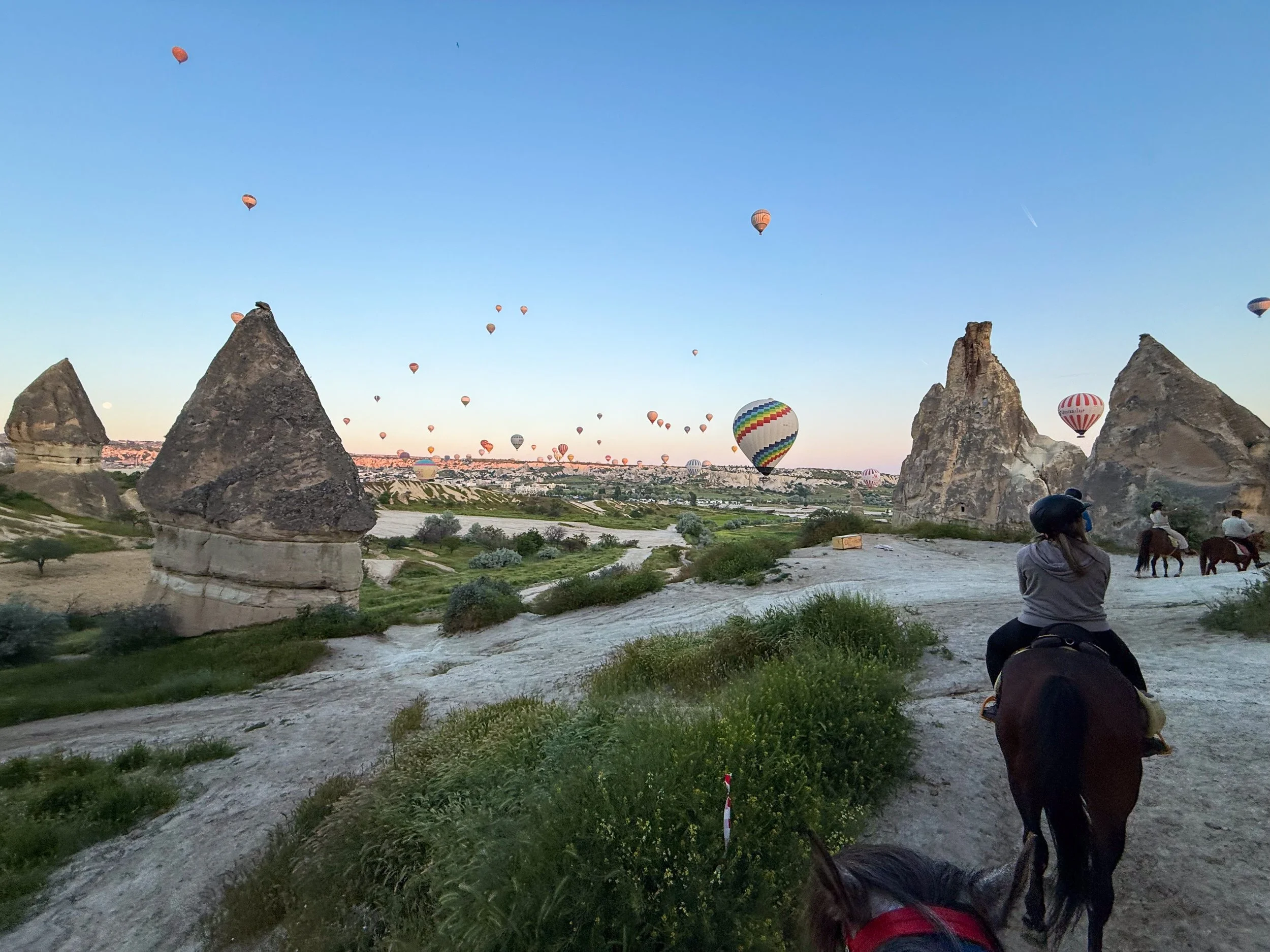
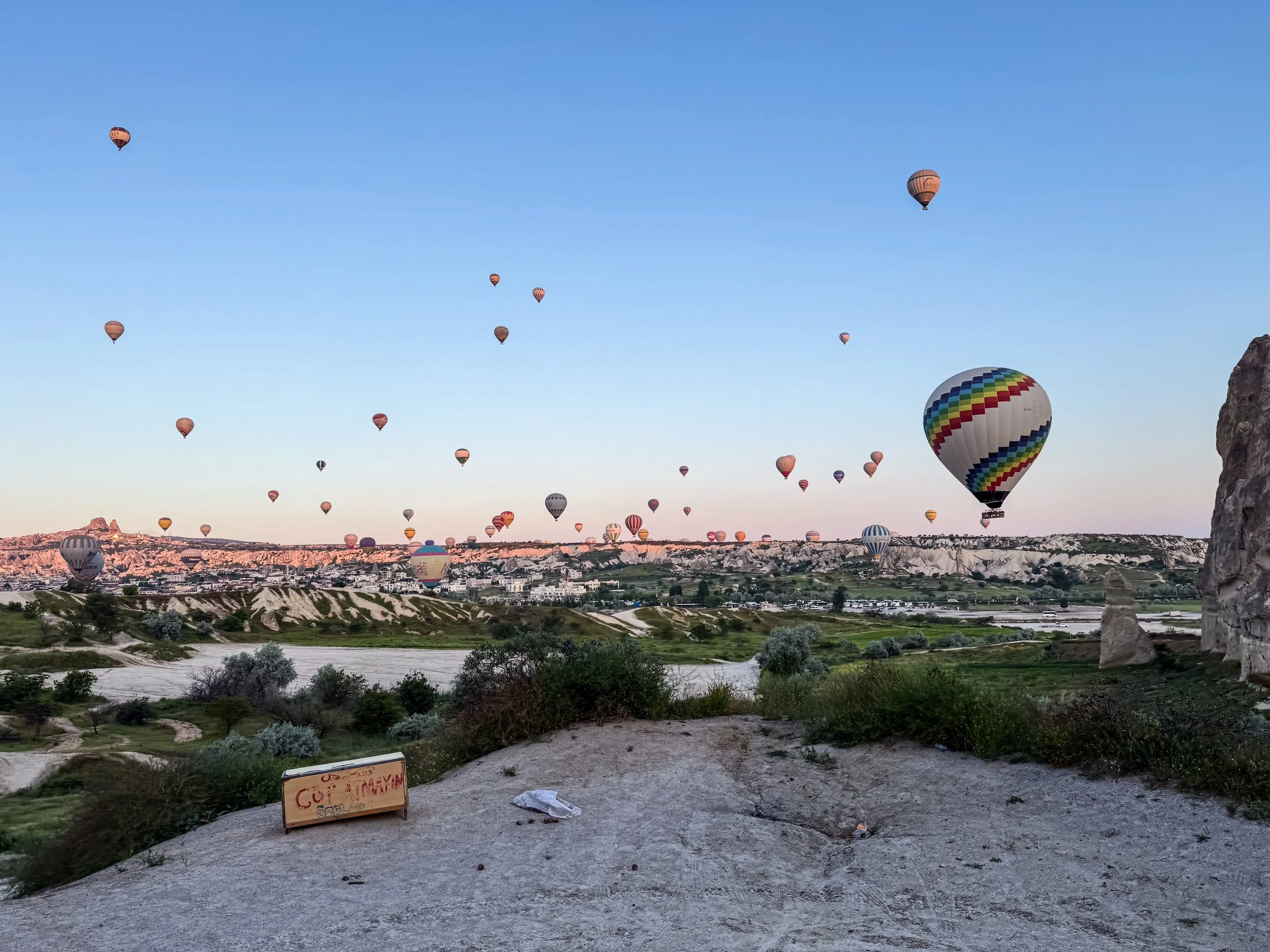
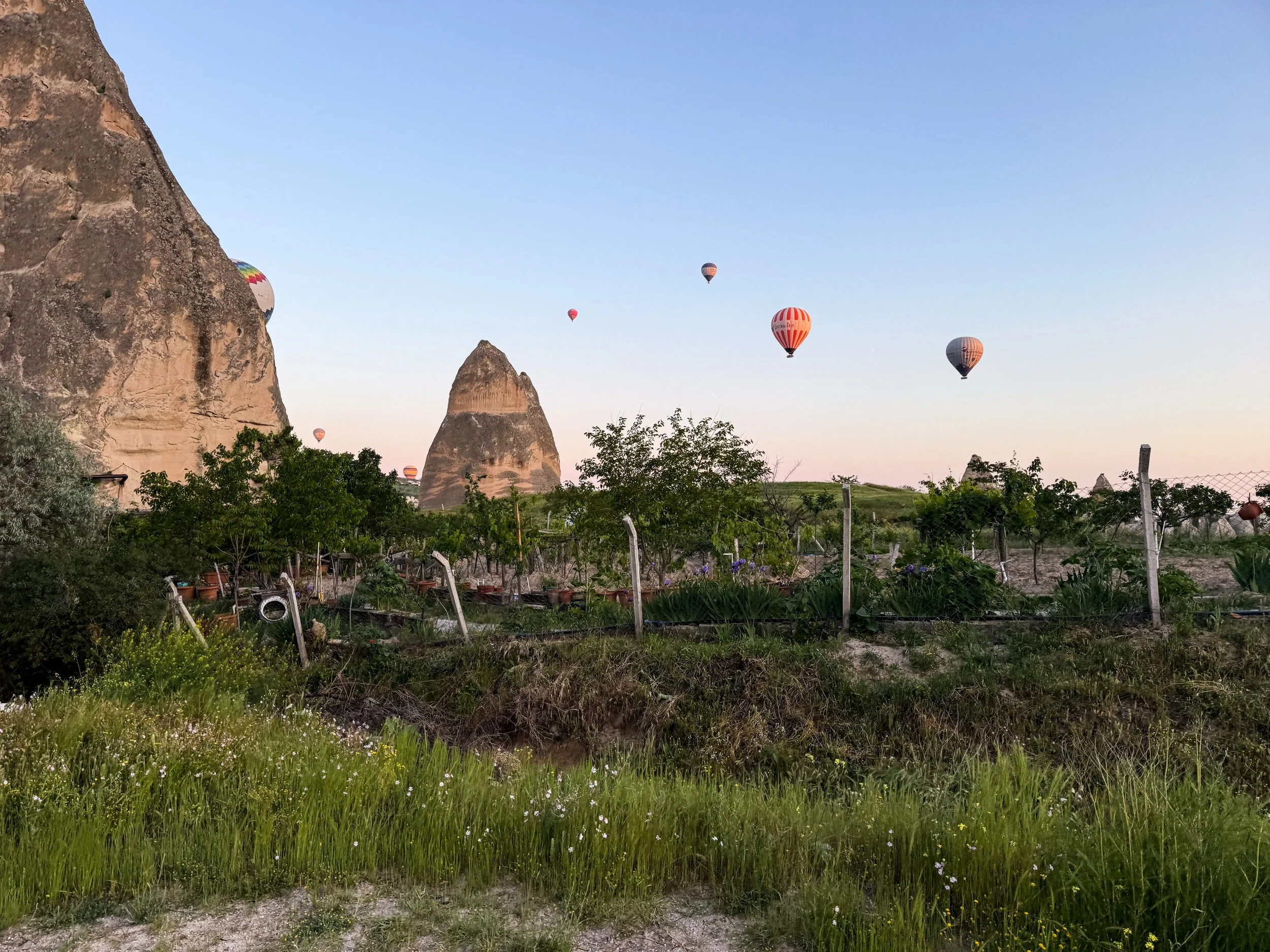
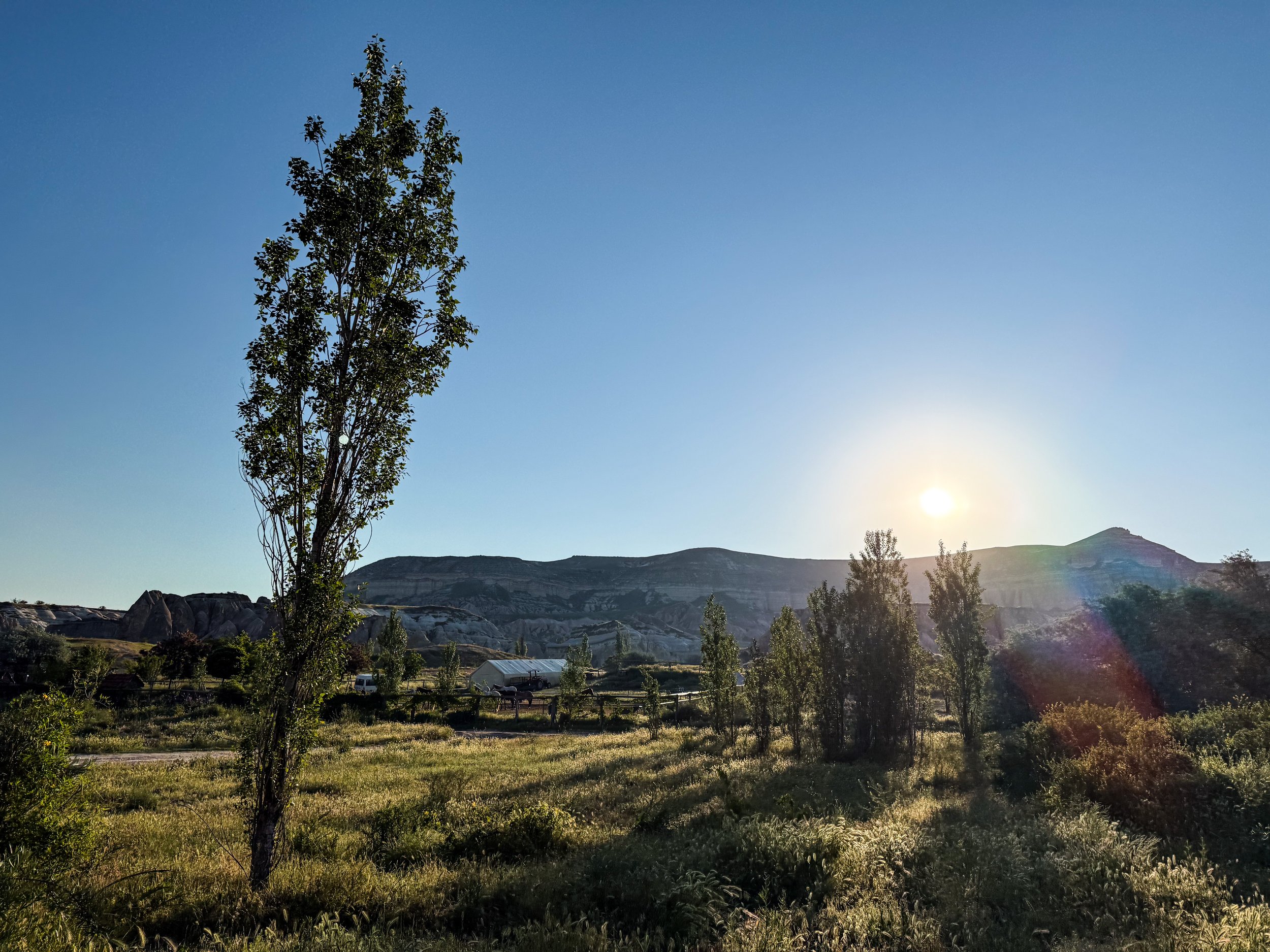
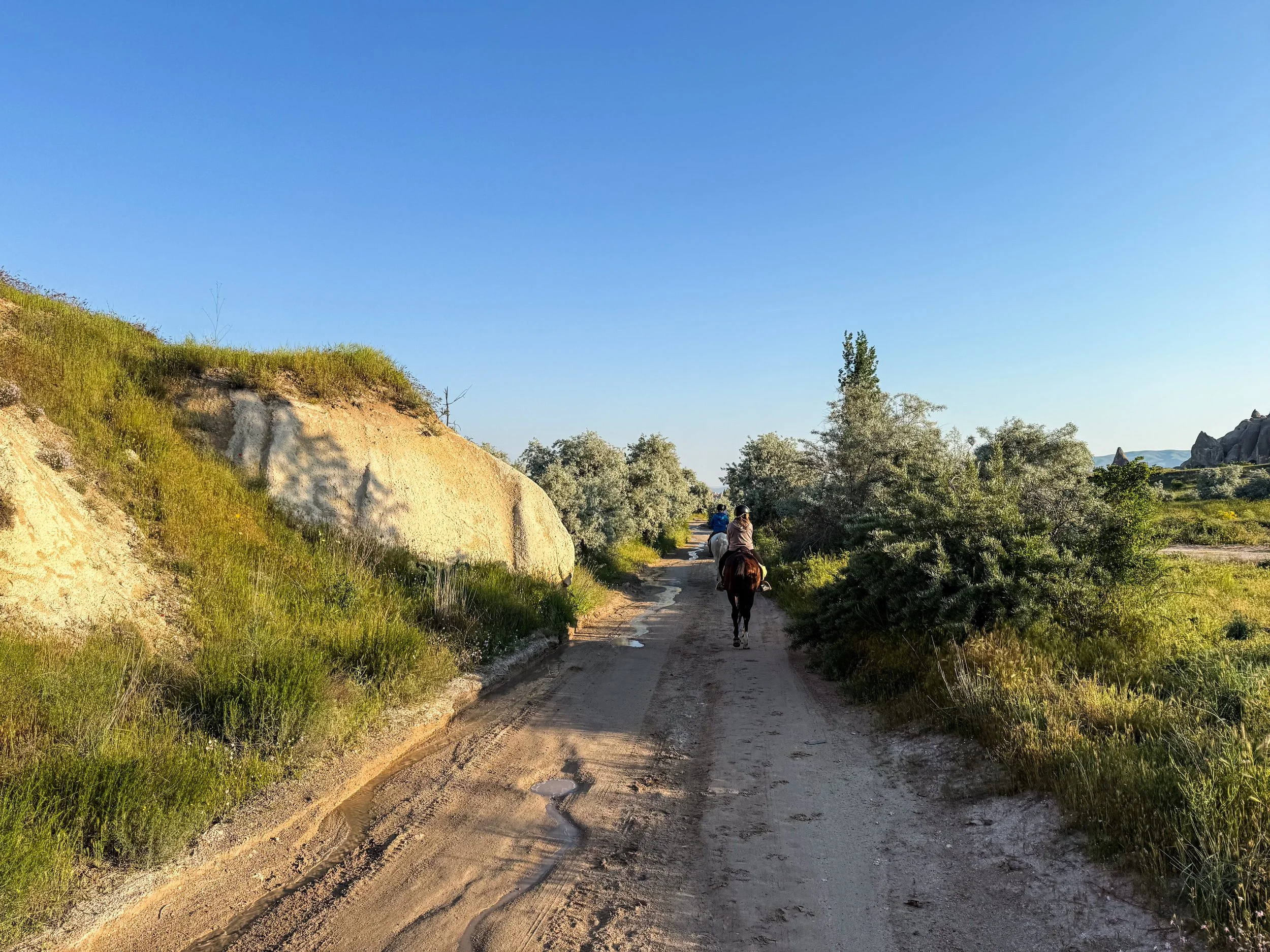
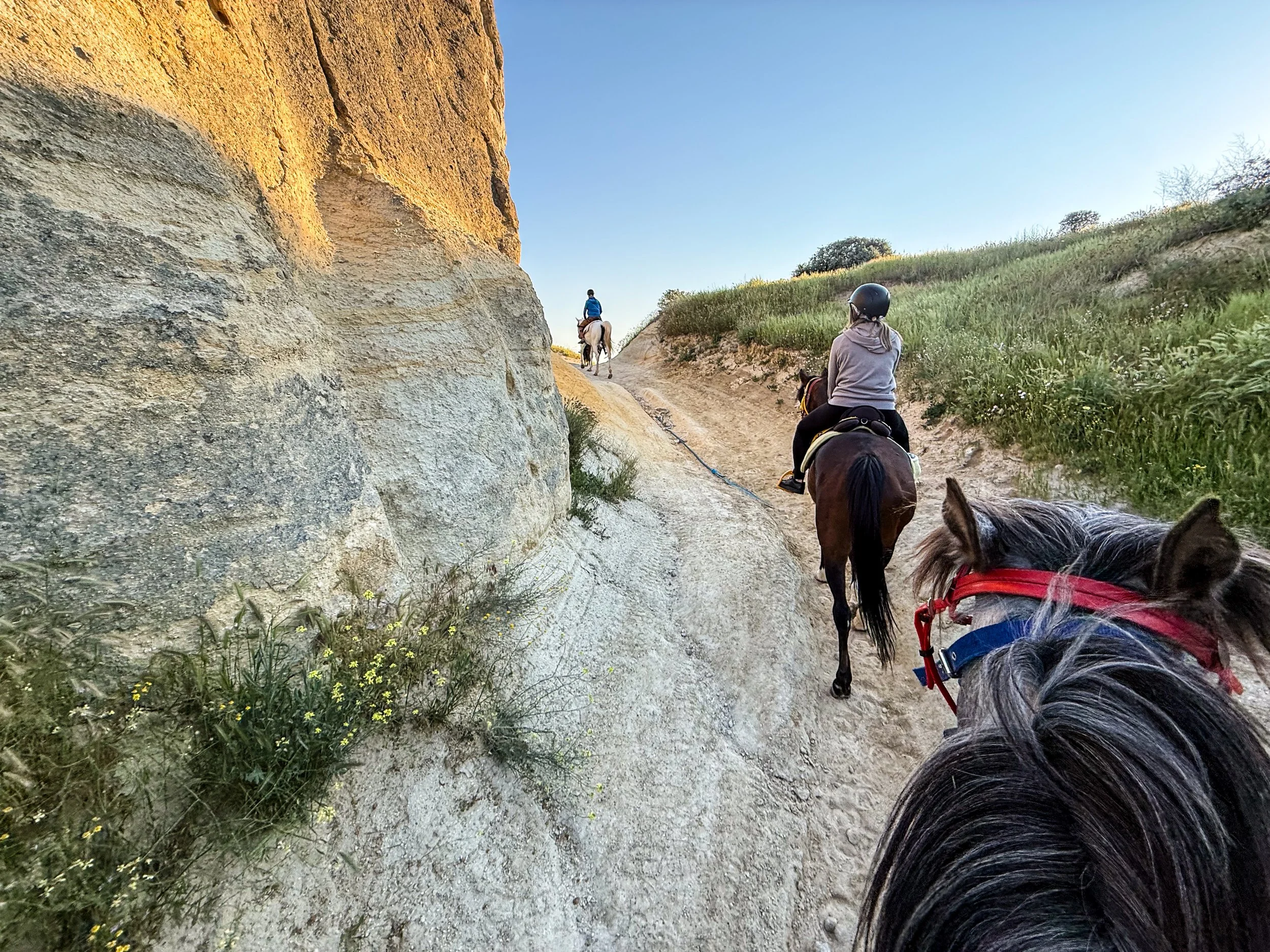
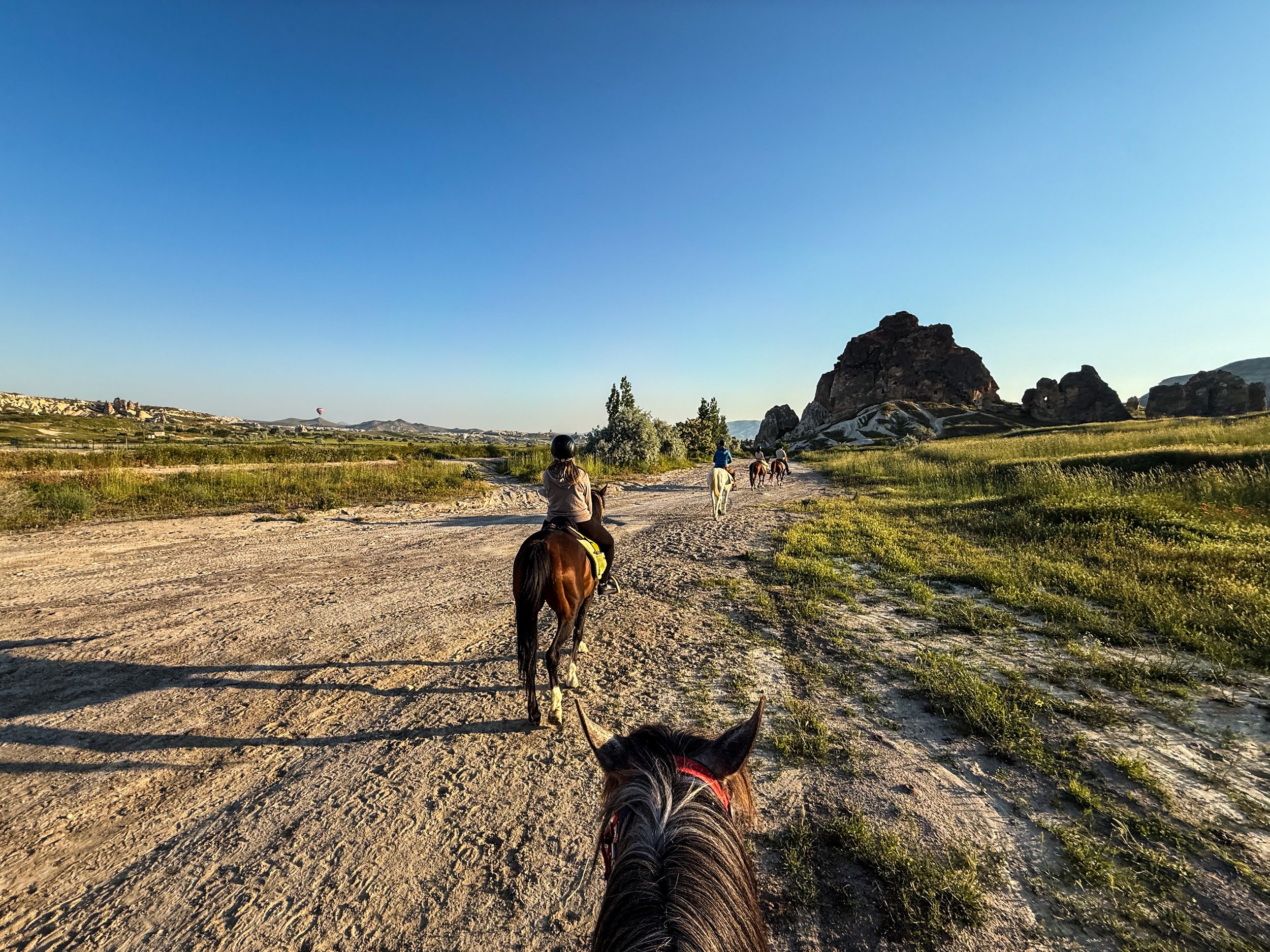
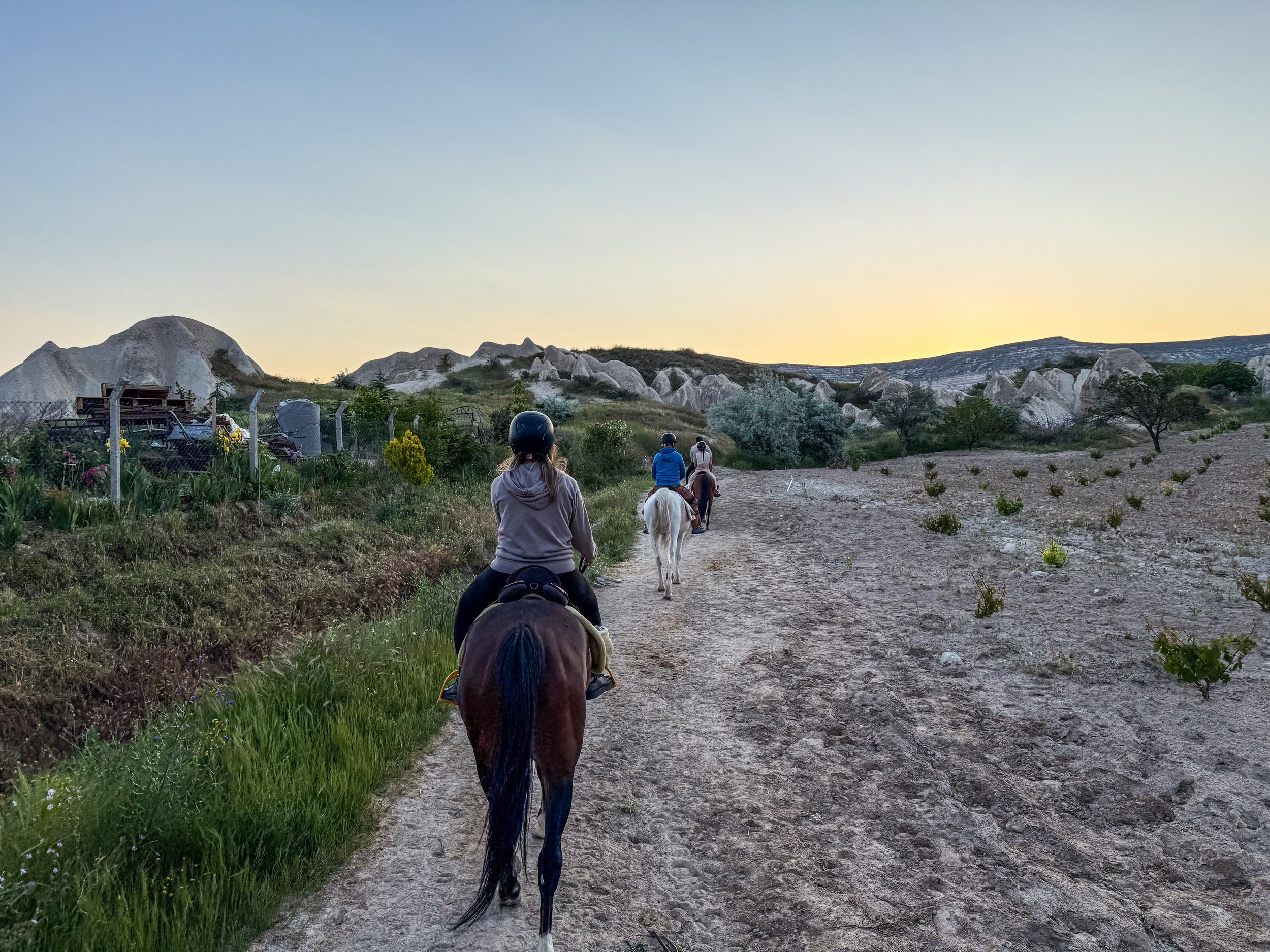
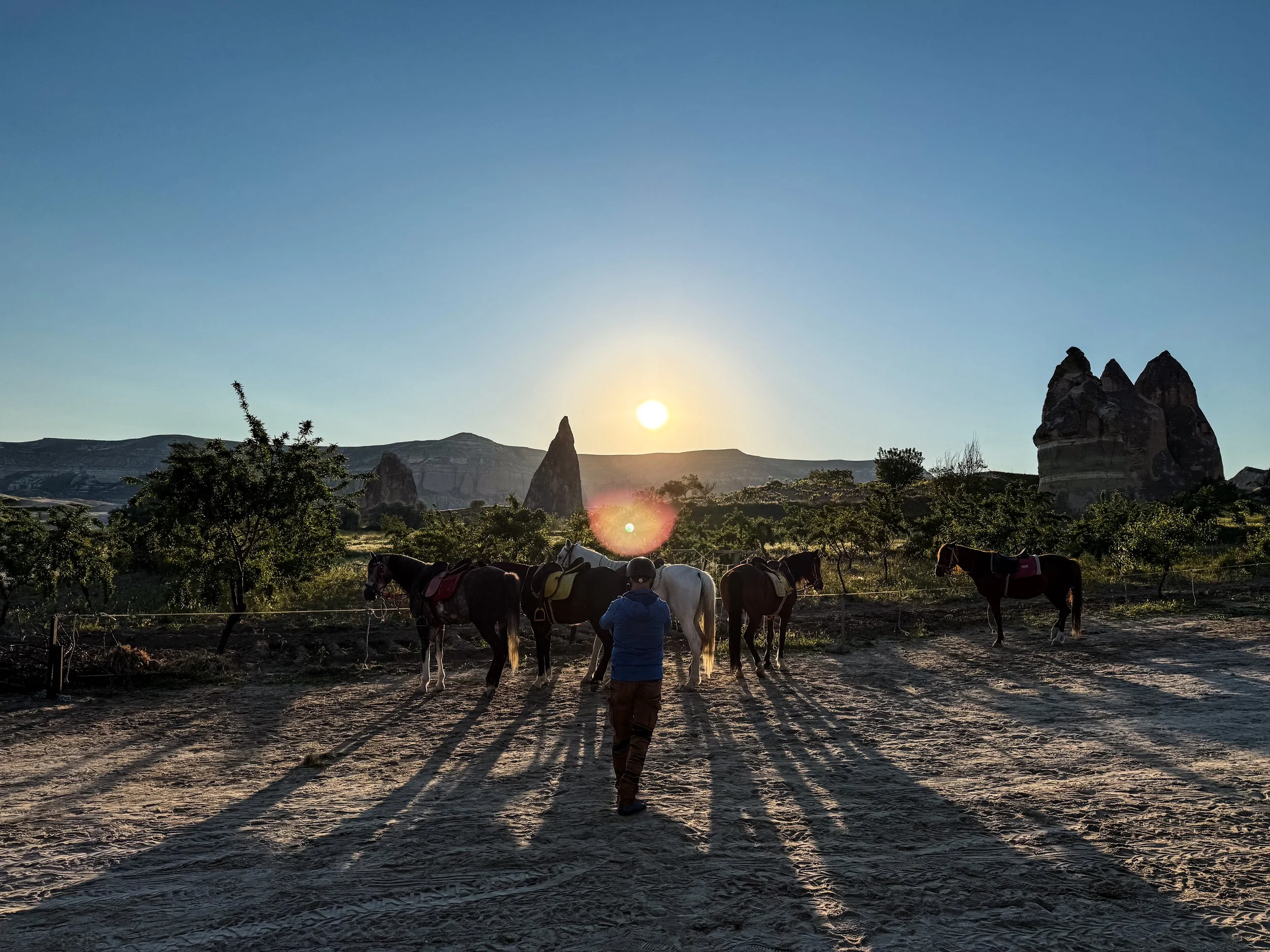
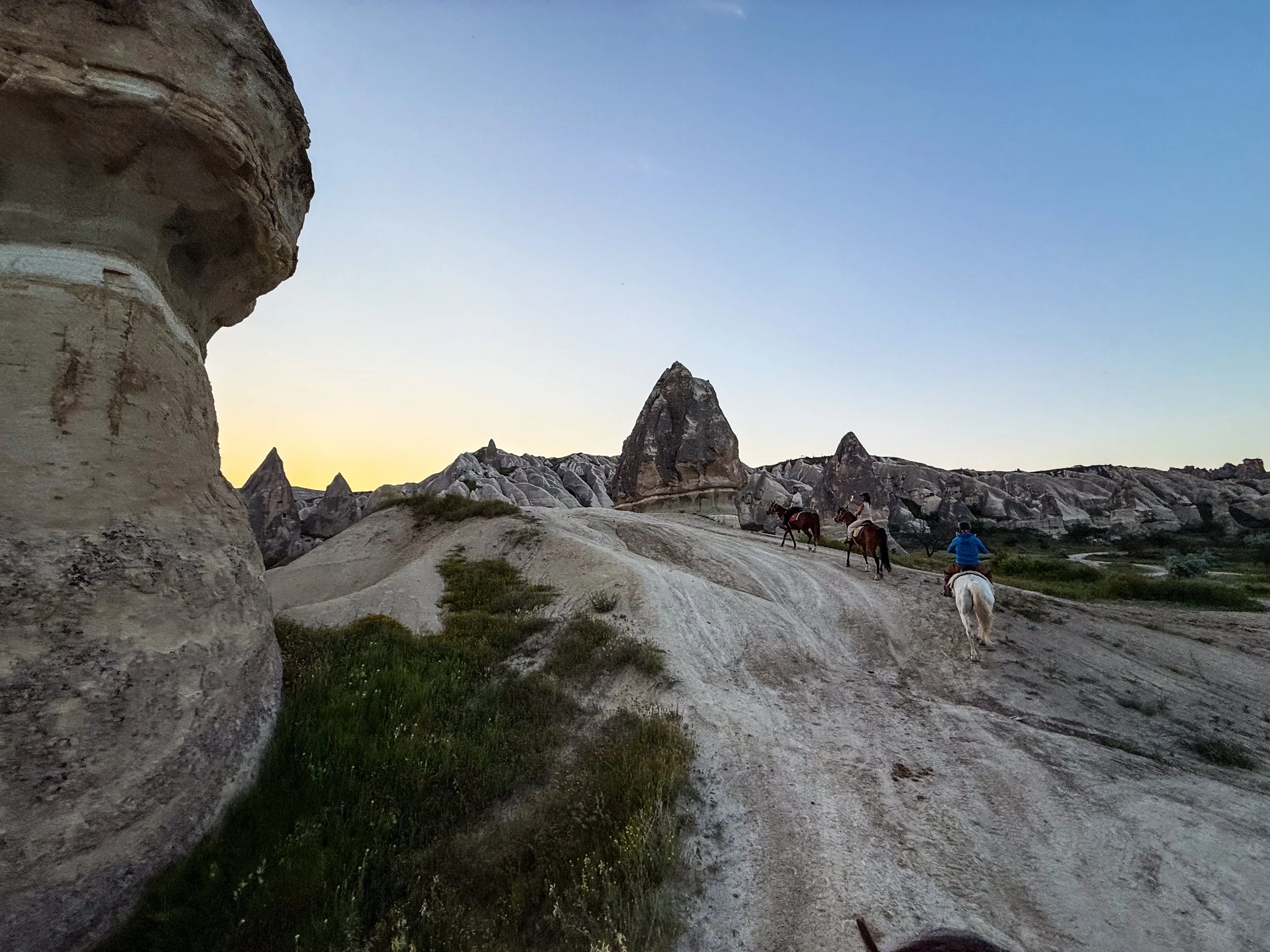
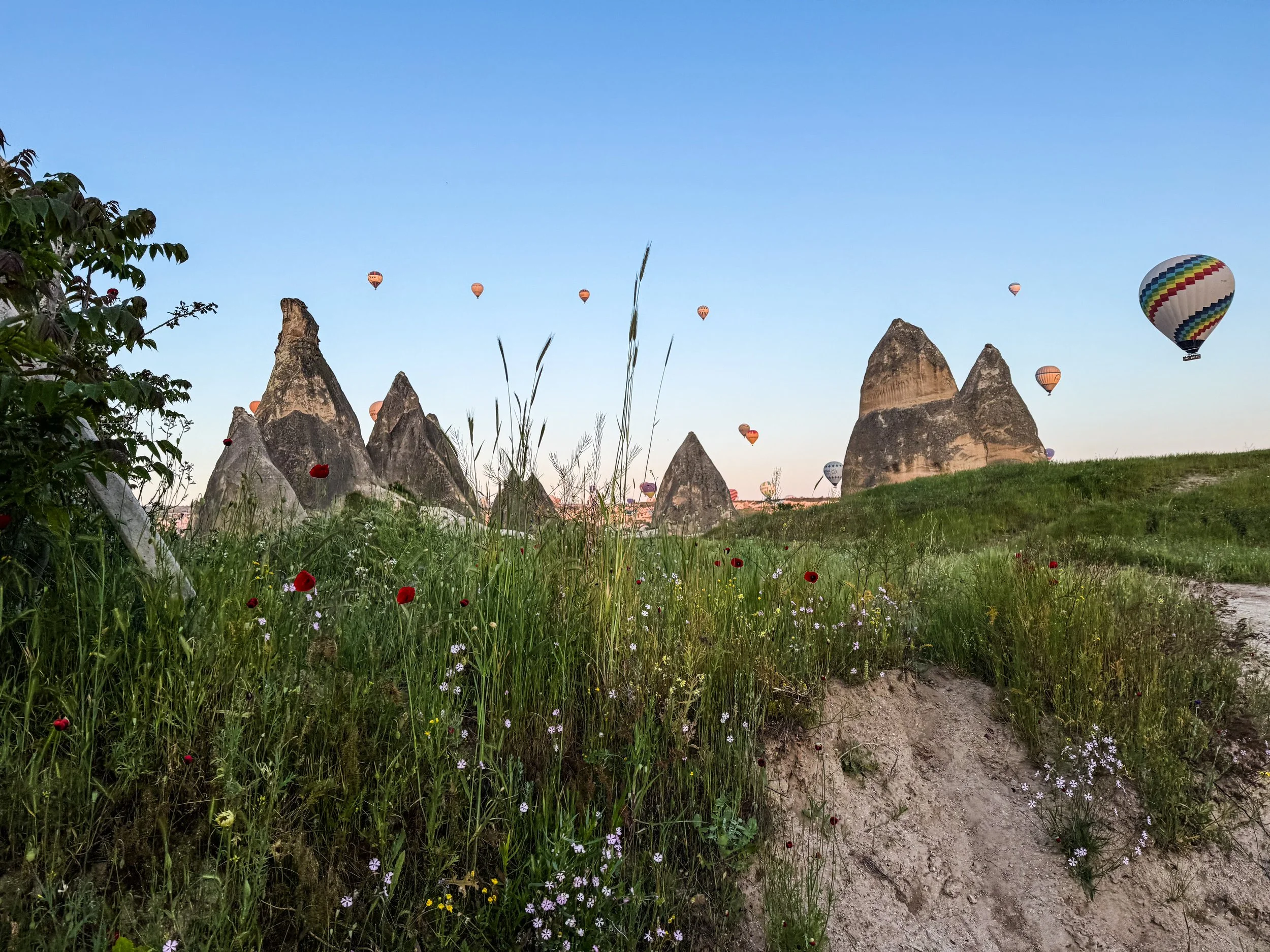
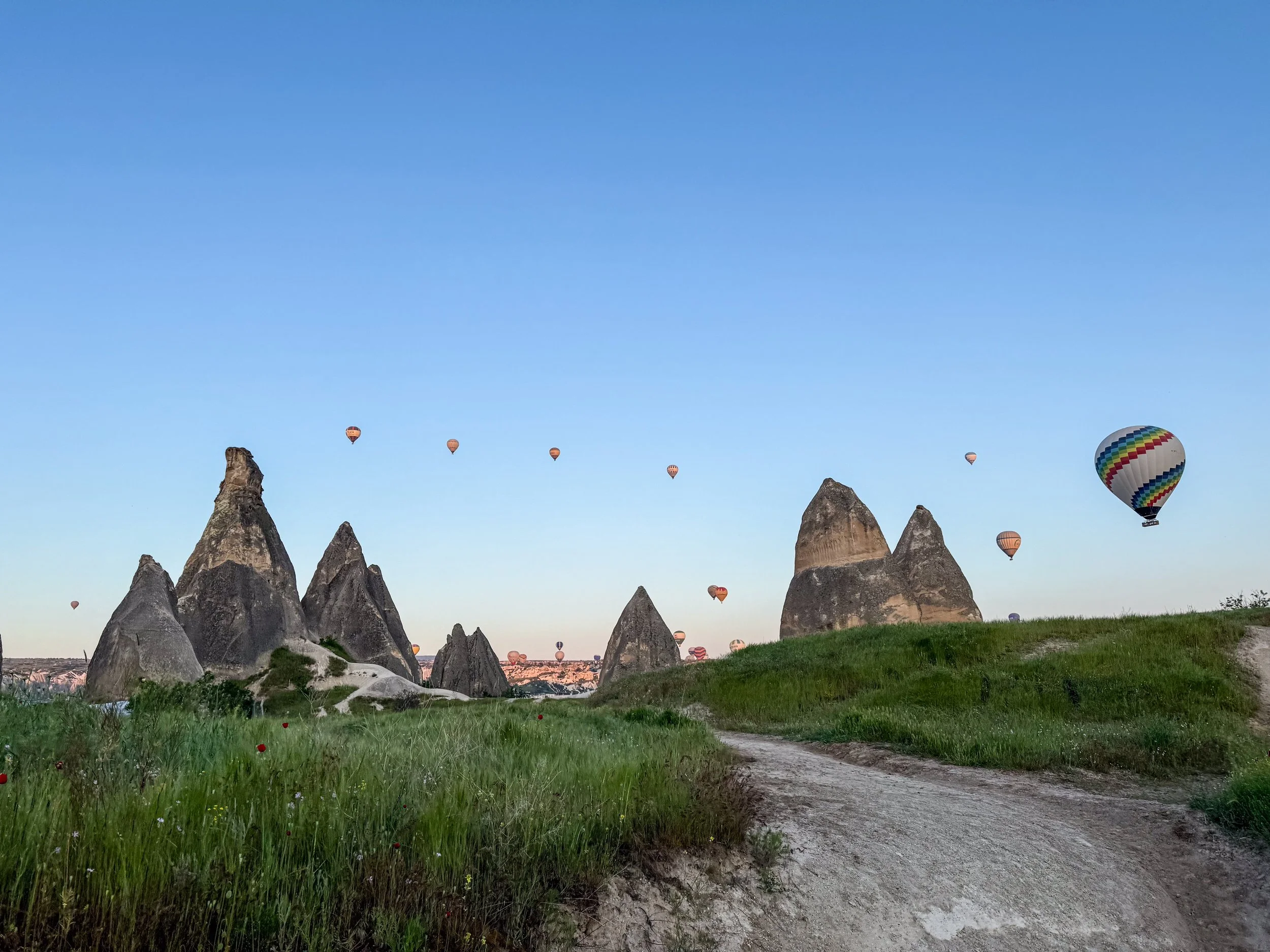
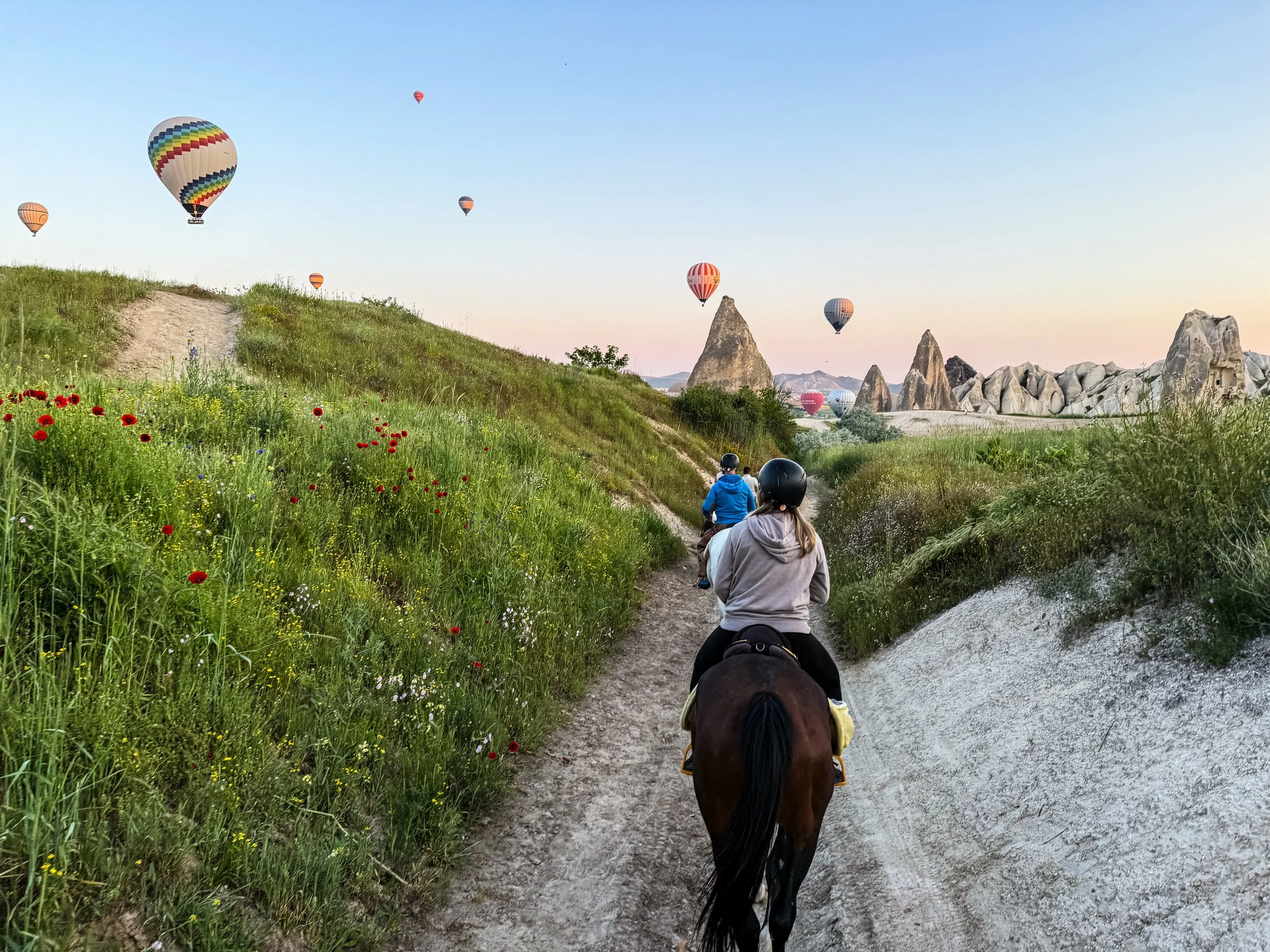
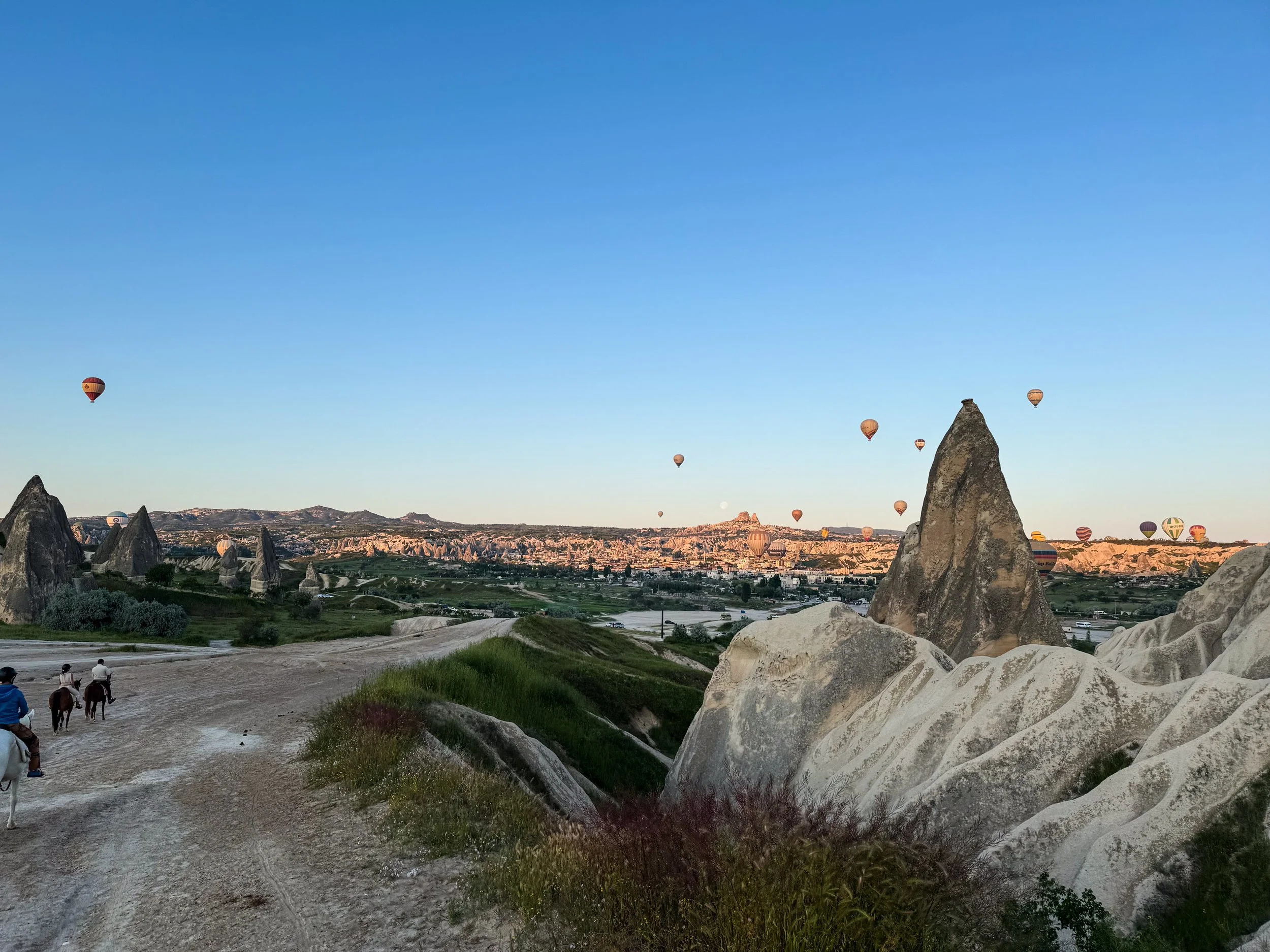
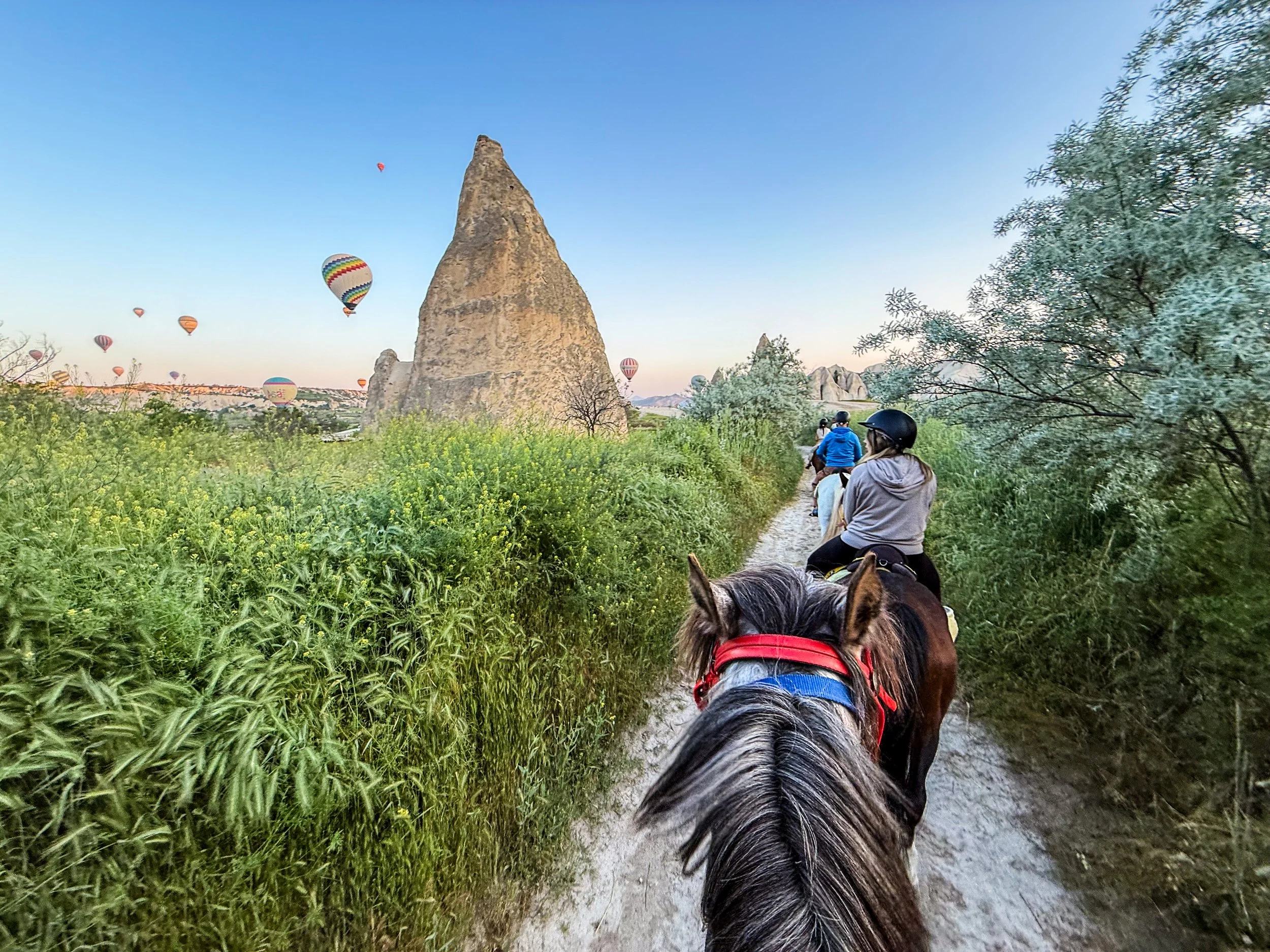
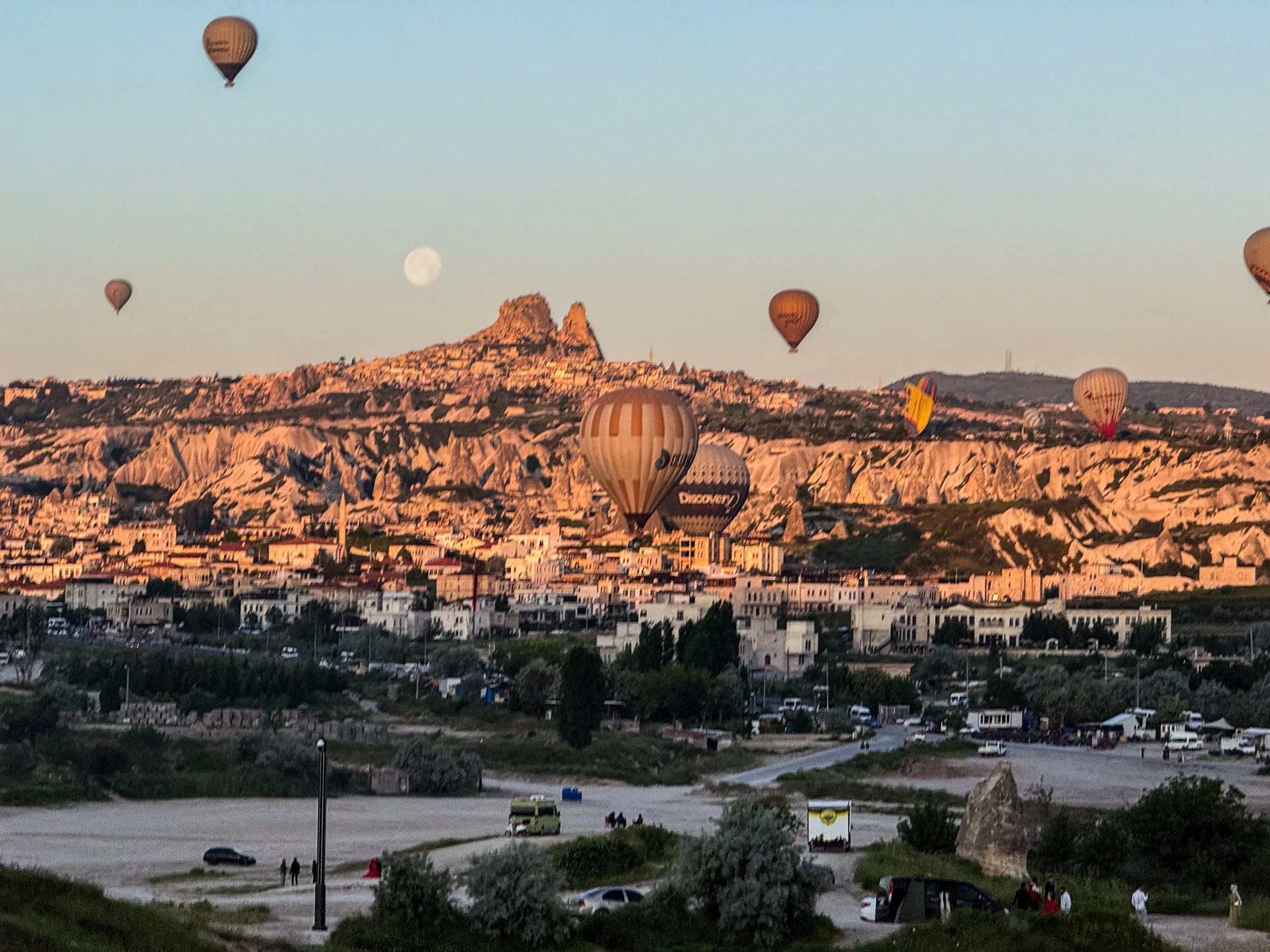
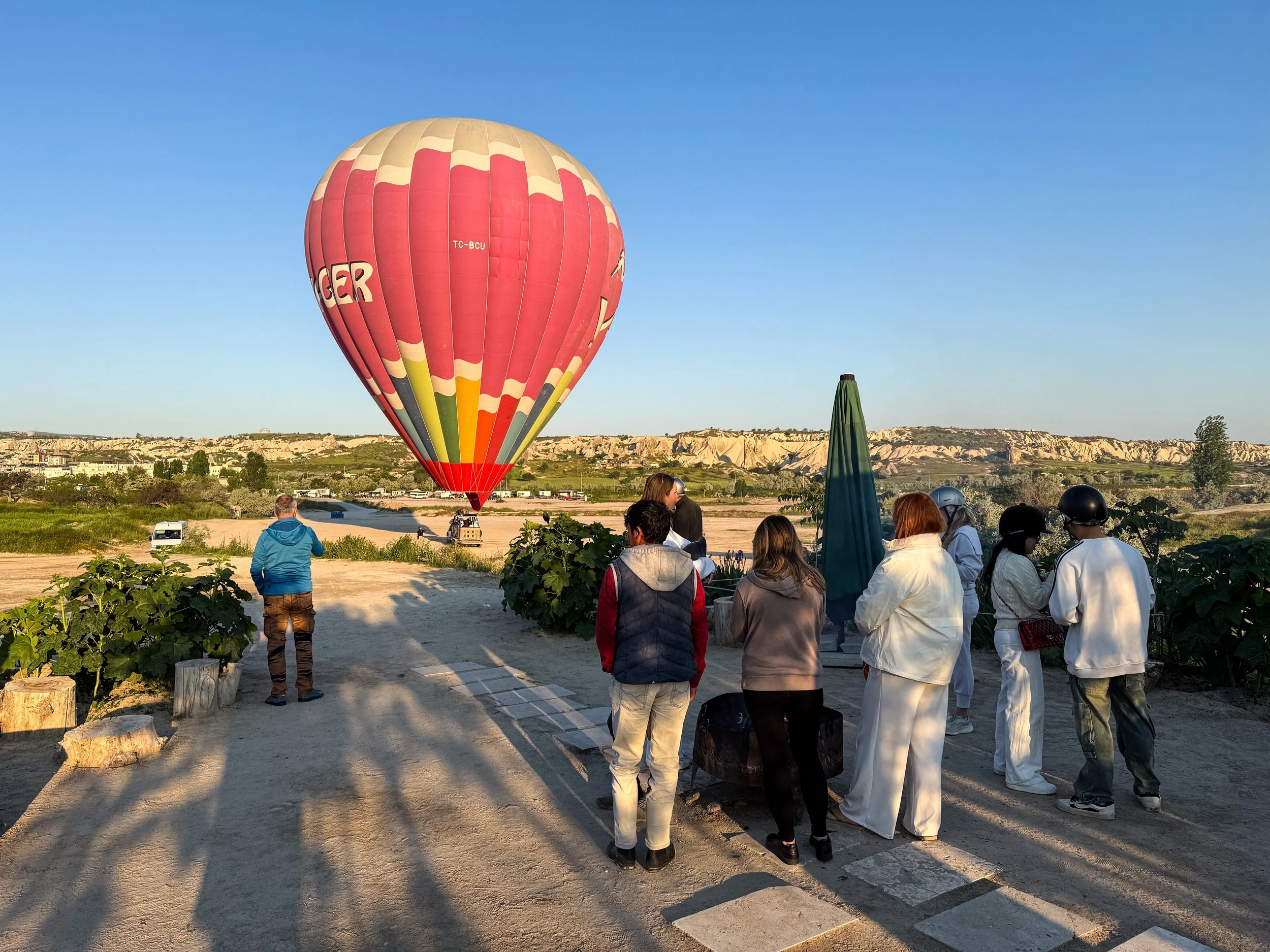
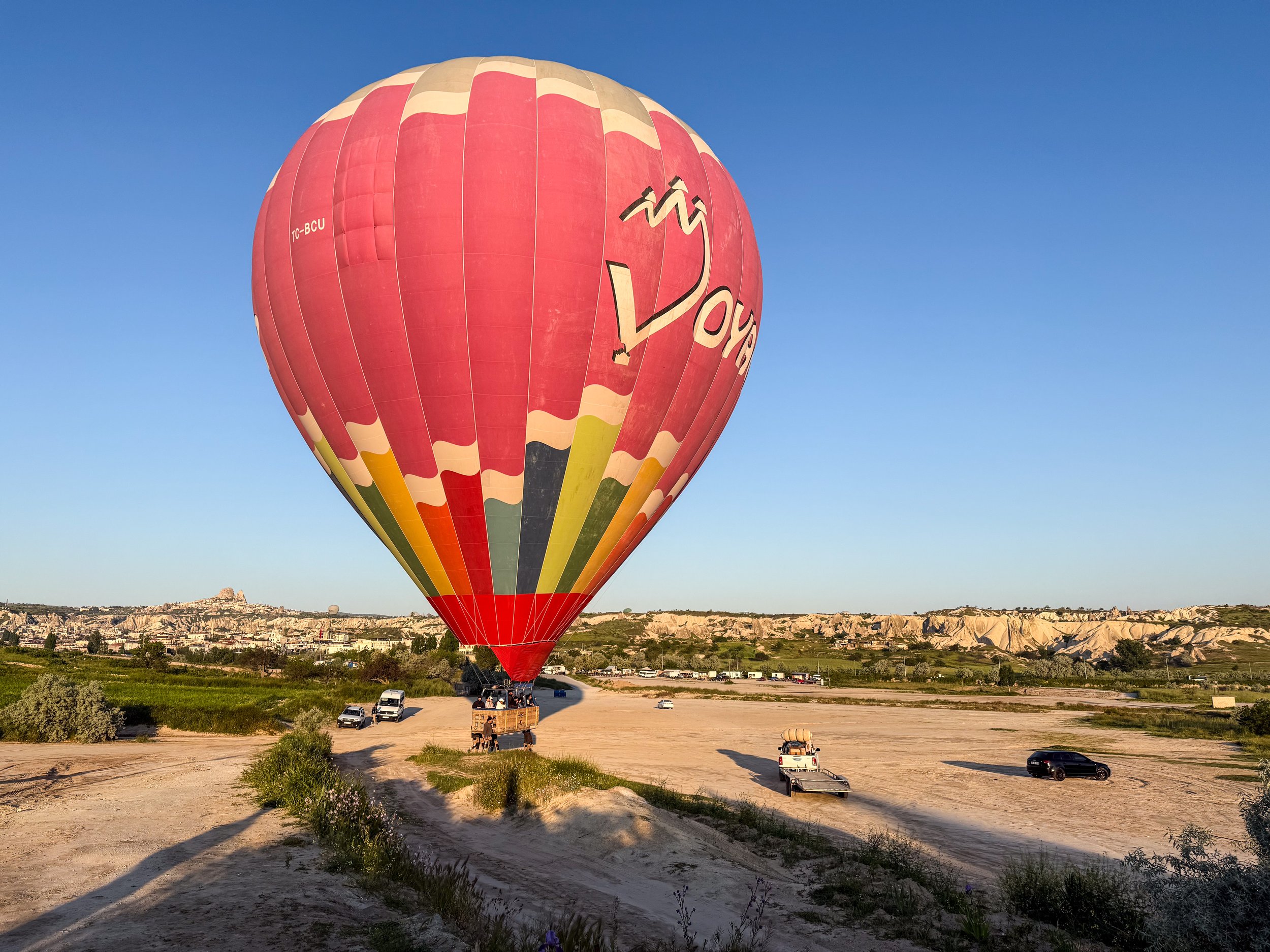
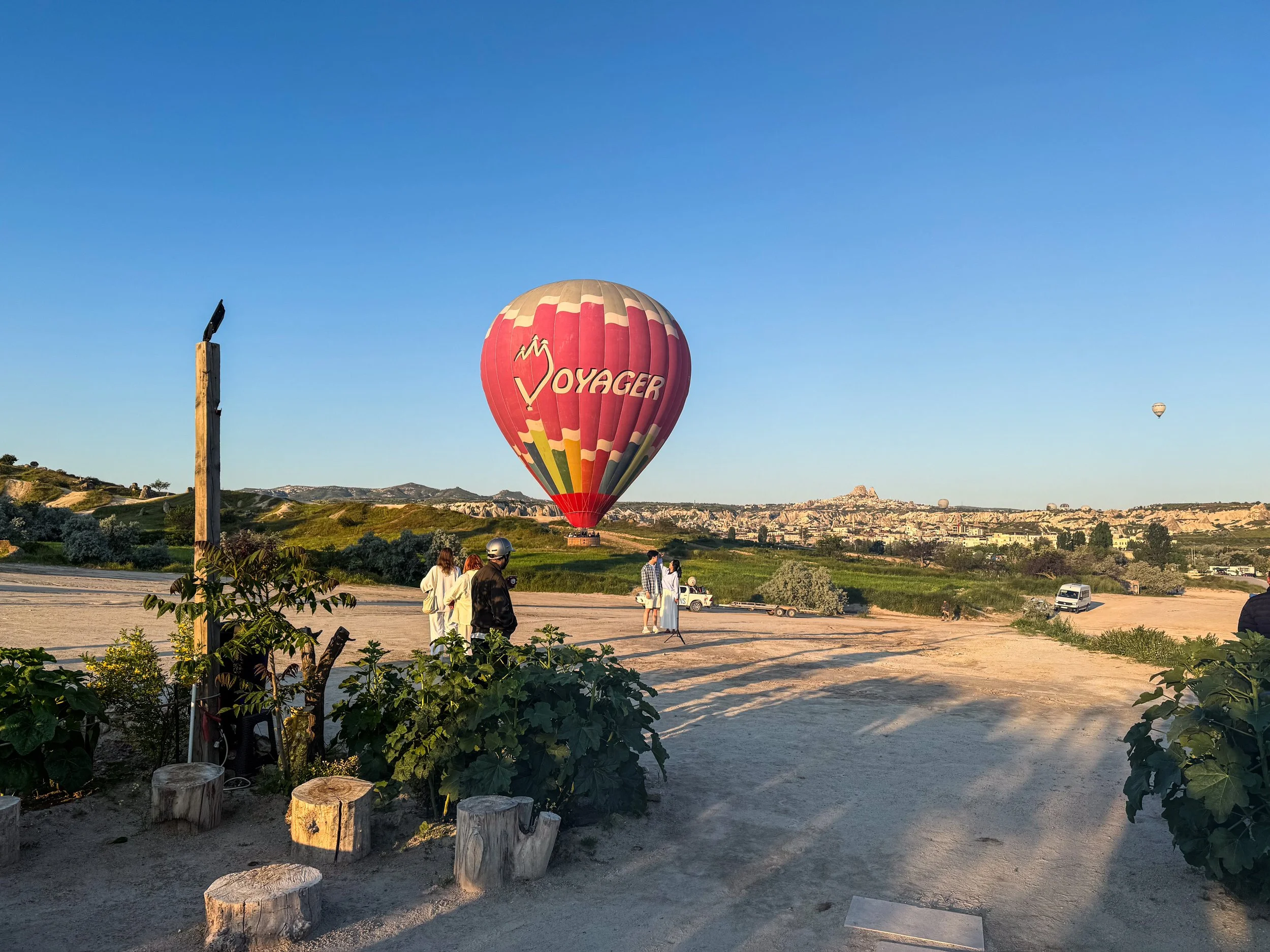
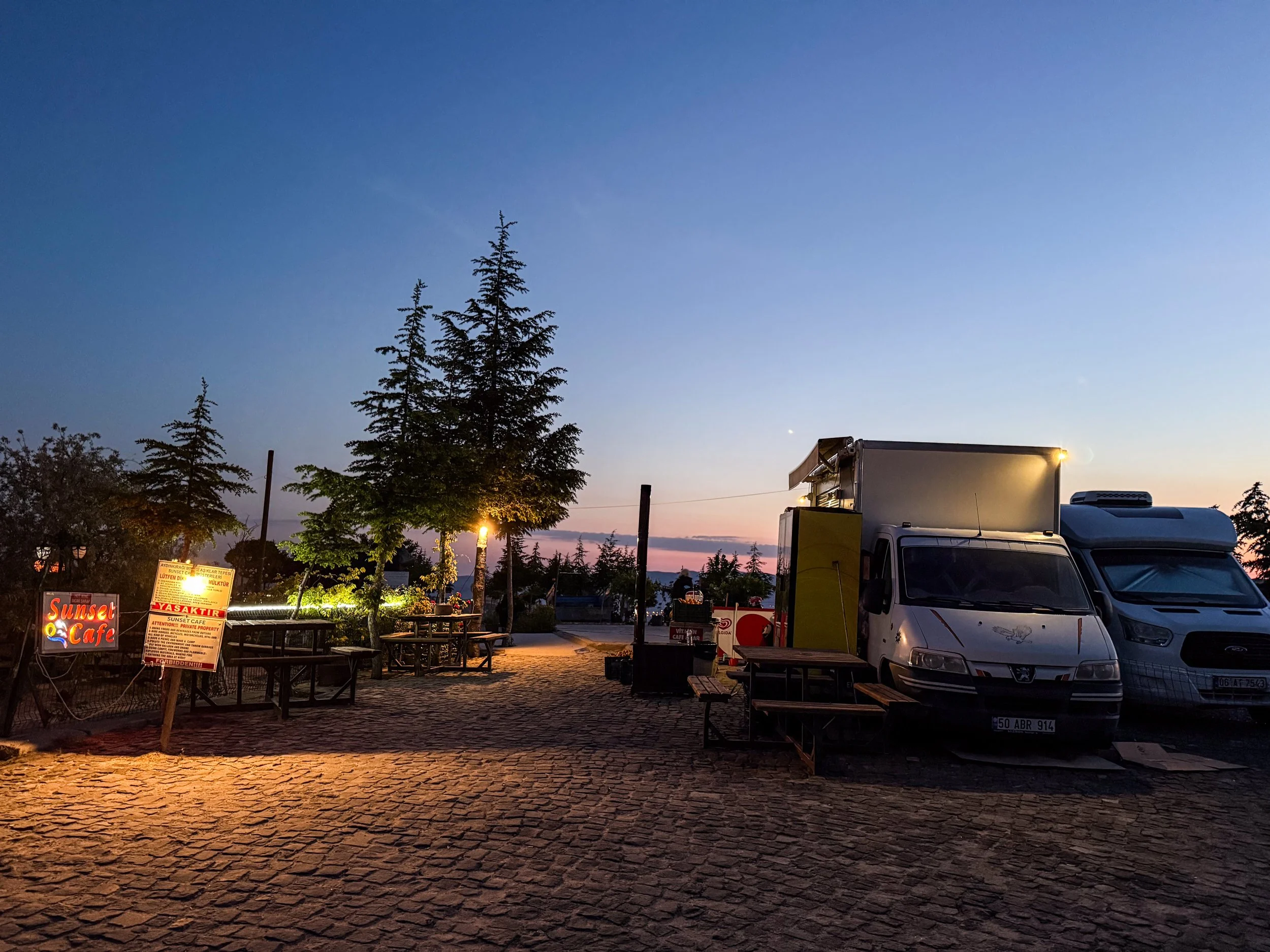
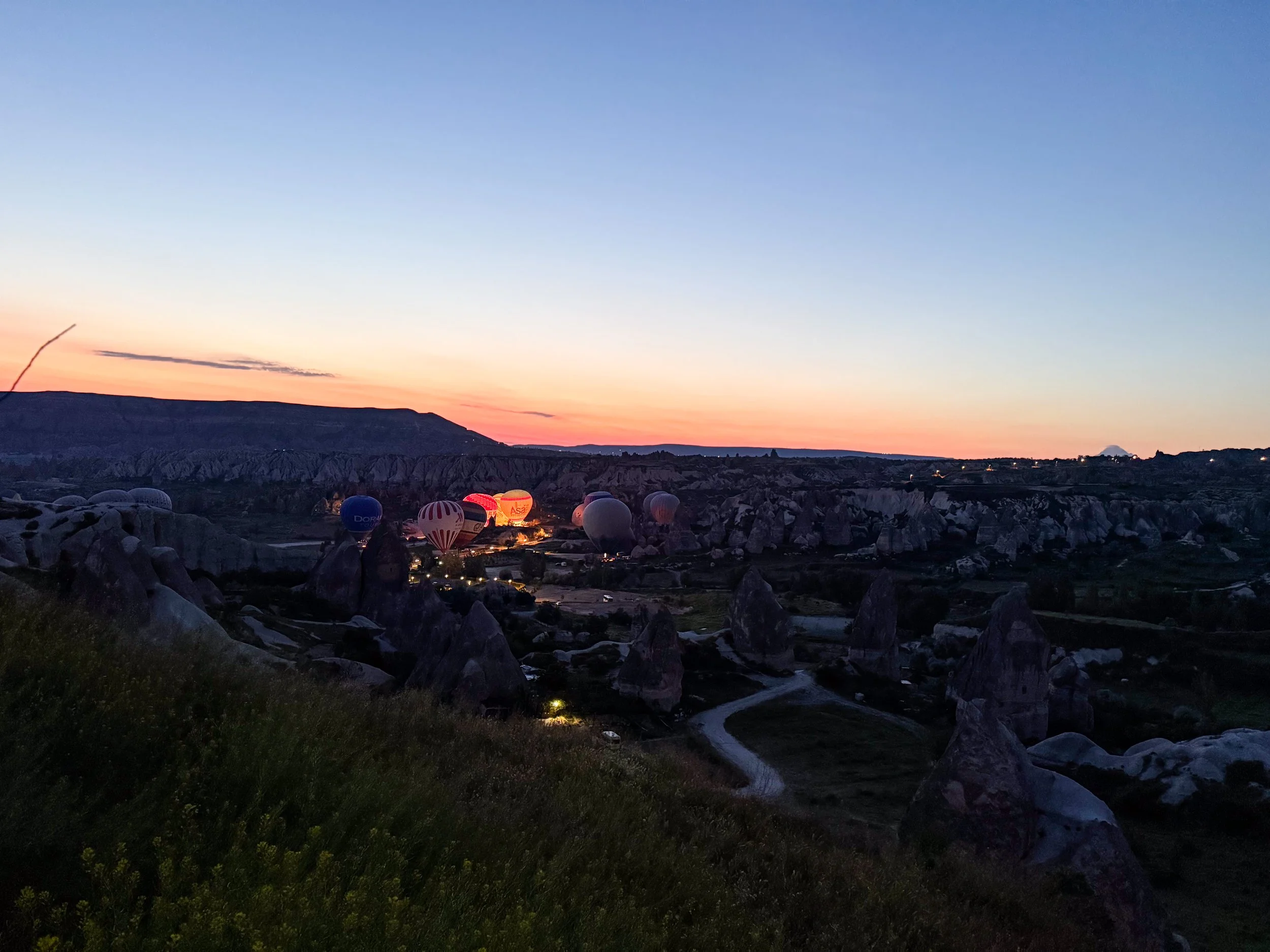
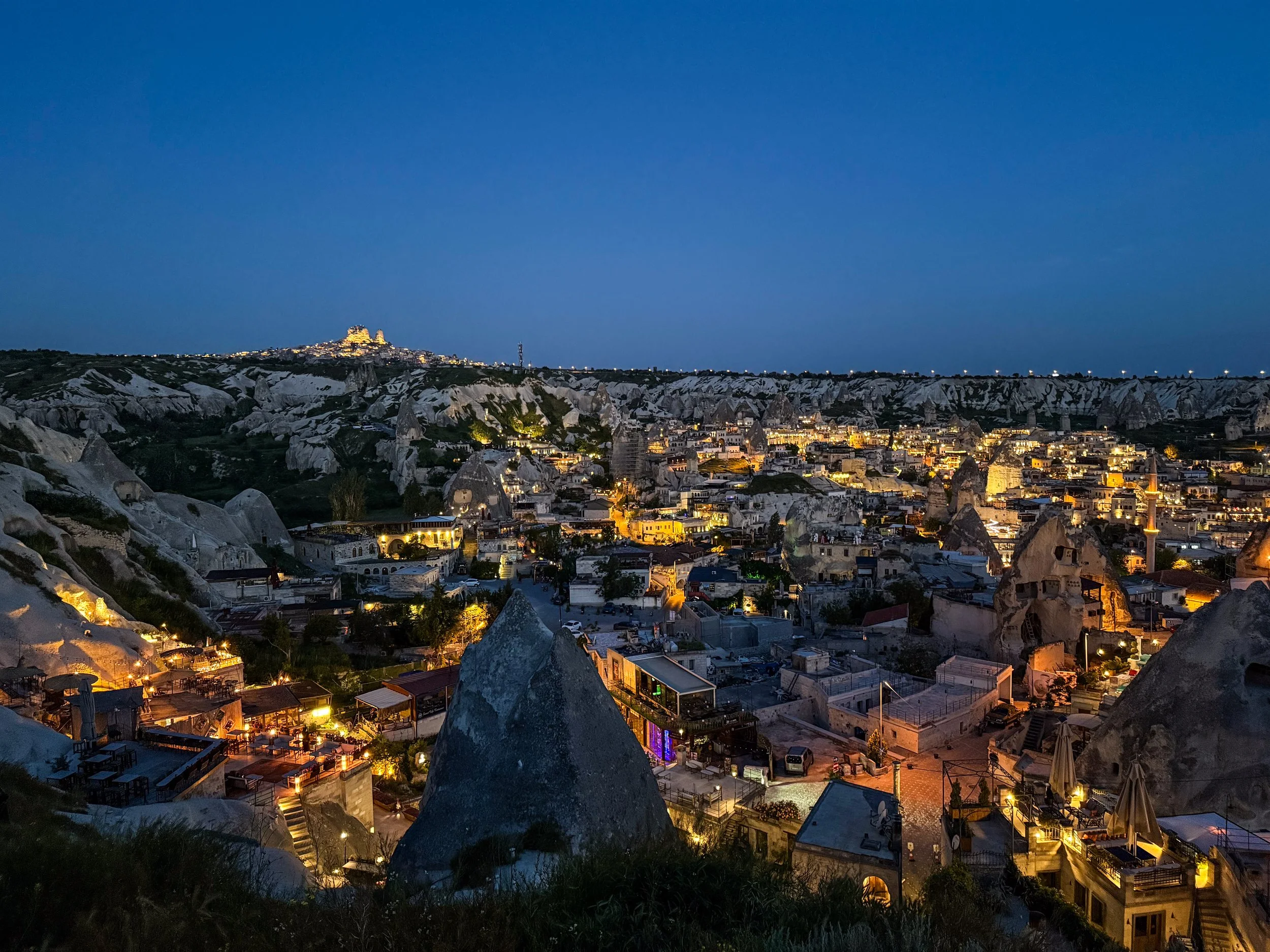
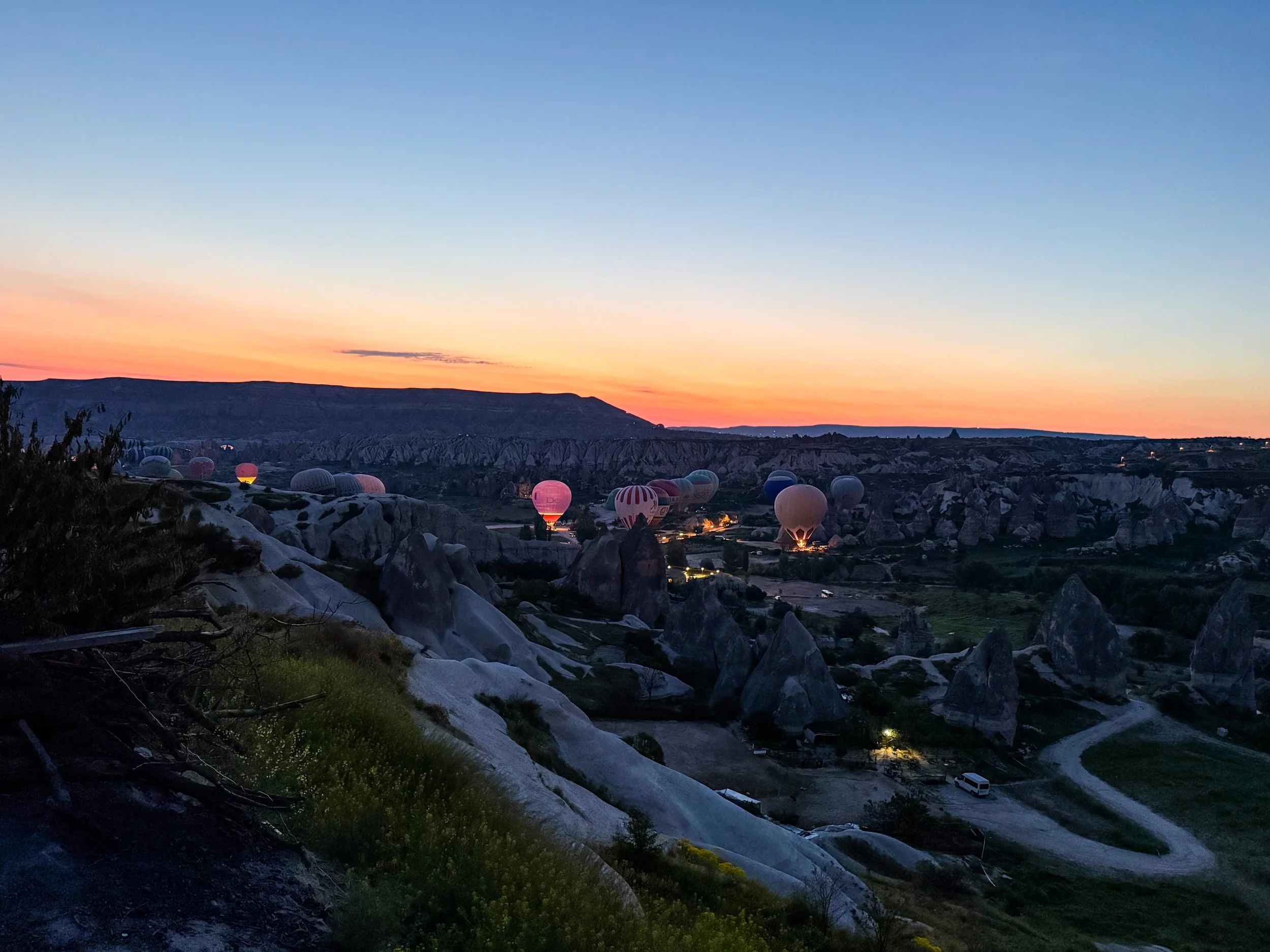
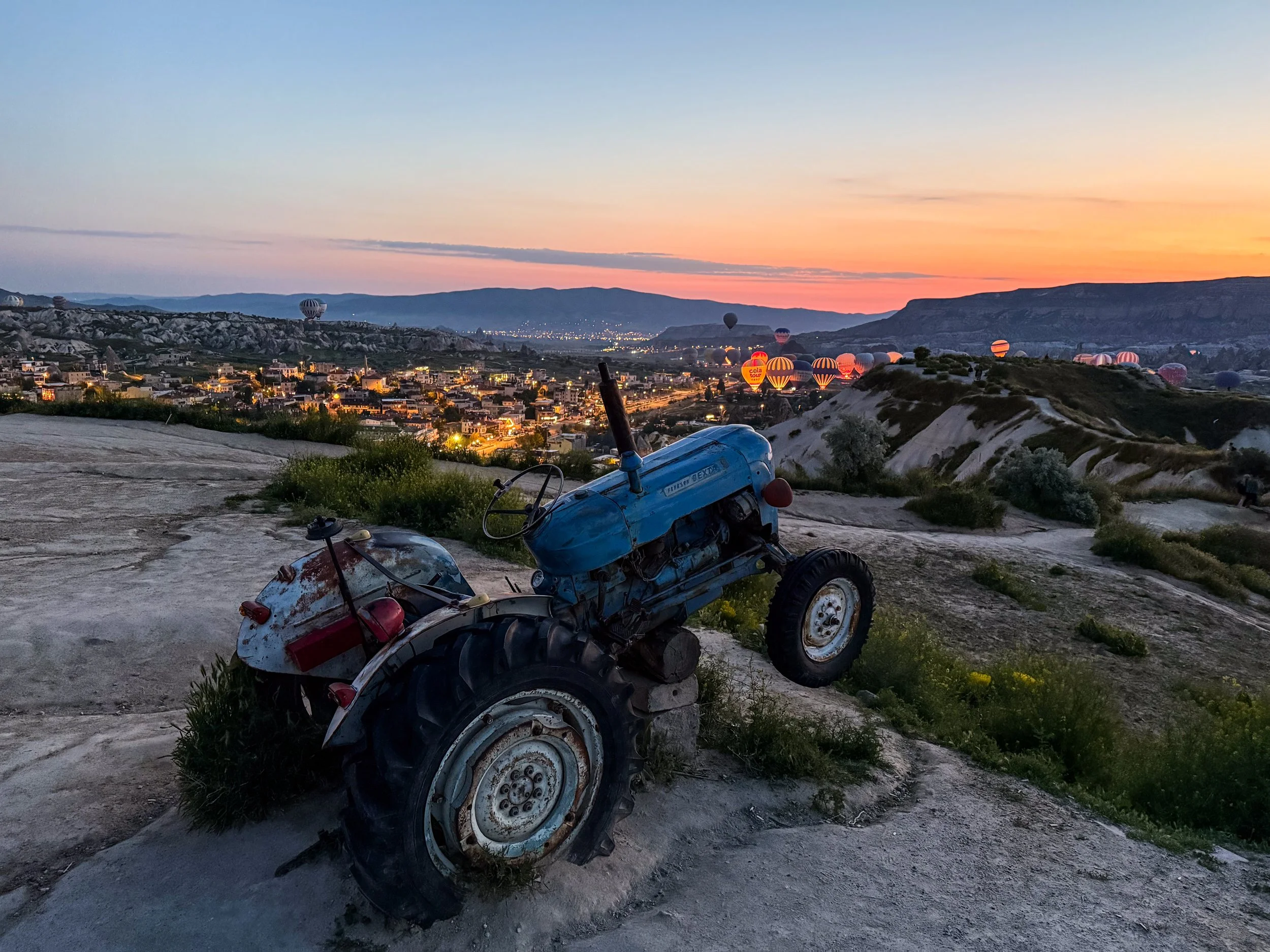
Ironically, I think the coolest part of the horse-back riding (for me) was the view from where we parked our car that morning. In order to make our rendezvous with the tour company, we parked at a high point overlooking the town of Göreme. Looking down over the valley, the balloons operators were already underway in the beautiful early morning light. Check out these views…
THE MAIN EVENT:
Hot Air Balloons @Sunrise!
THIS was the one thing that I really wanted to do in Cappadocia. I’d been seeing pictures of the balloon rides here for ages, and it looked unreal. Could it live up to the hype? Well, now that I’ve done it, I actually don’t think it has enough hype. This was one of the most incredible things I’ve ever experienced.
But, I was a bit scared. I’d never done this before and… when you really consider what’s happening in a hot air balloon… it seems like it should be quite dangerous, right?? As it would turn out, I wasn’t even strapped into the basket! Also, did you know that hot air balloons can’t steer? The pilot of a hot air balloon can move vertically, but not horizontally. Horizontal movement depends on the wind. A skilled pilot can sometimes find their way up or down to a favorable wind current… but after that, it’s in Allah’s hands! Remember that hot air balloon that came down right in front of our jeep, in the exact middle of the road in Kenya?? I sure do…
Here’s how hot air balloons work: heated air is less dense than cool air, so an injection of hot air will make the balloon rise, and letting hot air out will make the balloon descend. So, above the basket, there’s a massive burner that shoots flames vertically up into the balloon. And, at the top of the balloon, there is a small hole that the driver can open and close to let out hot air when they want to go down. Add all that up… and I wasn’t feeling too good about this. BUT, in 2025, an estimated 750,000 people did hot air balloon rides in Cappadocia, and every single one of them was fine. So, it was time to face my fears on this one. Still, I wasn’t about to skimp on the tour operator. The thing I always tell people about Türkiye is that if you’re looking for a bargain, you’ll definitely find one; but do you actually want one? In some cases, the answer is a resounding “no.” This was one of those cases. I did the research, and landed on a well-reputed tour operator called Discovery Balloons, who I will very happily provide with a 5-star rating on Google. They were professional, fun, and always made me feel safe. Or, you know, a safe as was going to be possible. 😂
Word to the wise: If you are going to be in Cappadocia for more than 1 day, be sure to schedule your hot air balloon ride for day 1! That way, if the flight is called off for inclement weather, you can try again the next day.
In Cappadocia balloon operations are regulated by Türkiye's Directorate General of Civil Aviation (Sivil Havacılık Genel Müdürlüğü, or SHGM). Each morning, they will give either a red, orange, or green signal to balloon operators. Anything less than a green signal means the balloon ride cannot proceed. But this ruling is not issued until about ~30 minutes before take-off. That means that you will be there, at 4:30 in the morning, standing next to a half-inflated balloon, when the decision is made to cancel the flight. That must be heart-breaking, but on the bright side, this is how you know you’ll be safe: if there’s any risk, they don’t go up.
Sunrise is ideal not just because the light is beautiful, but also because the atmosphere has cooled overnight. As the day progresses and the sun warms the ground, rising pockets of warm air make the atmospheric conditions less predictable and more turbulent, complicating balloon control. So, the chances of a green signal are best at sunrise, but the odds will never be 100%.
So, all that said, let’s cut-scene to a cold van full of strangers from all different corners of the earth sitting in a dirt parking lot at ~4:30-ish in the morning. We were waiting for the official “green signal”. However, while we were waiting, the balloons around us were actively being inflated, which was an incredible sight unto itself…
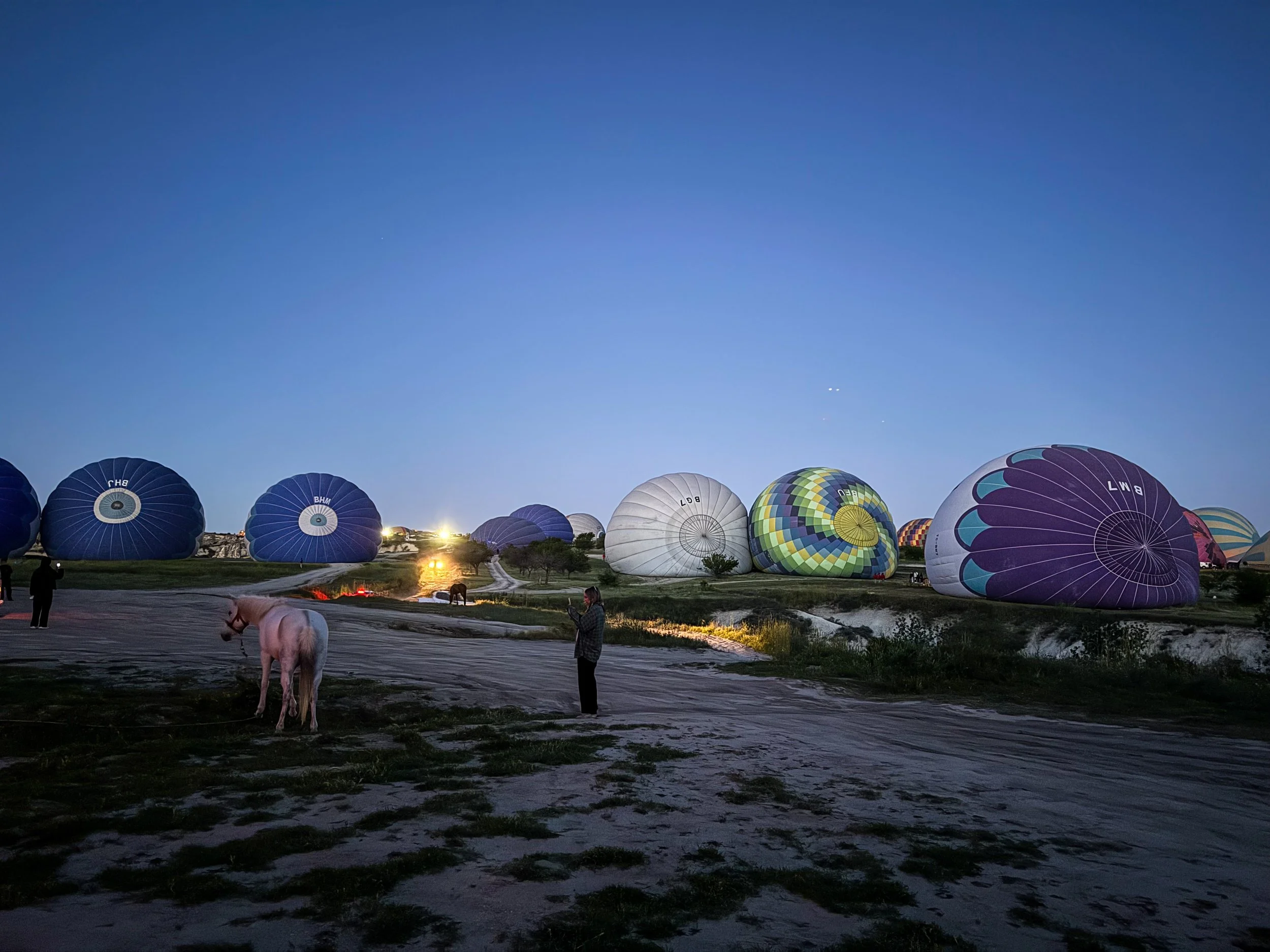
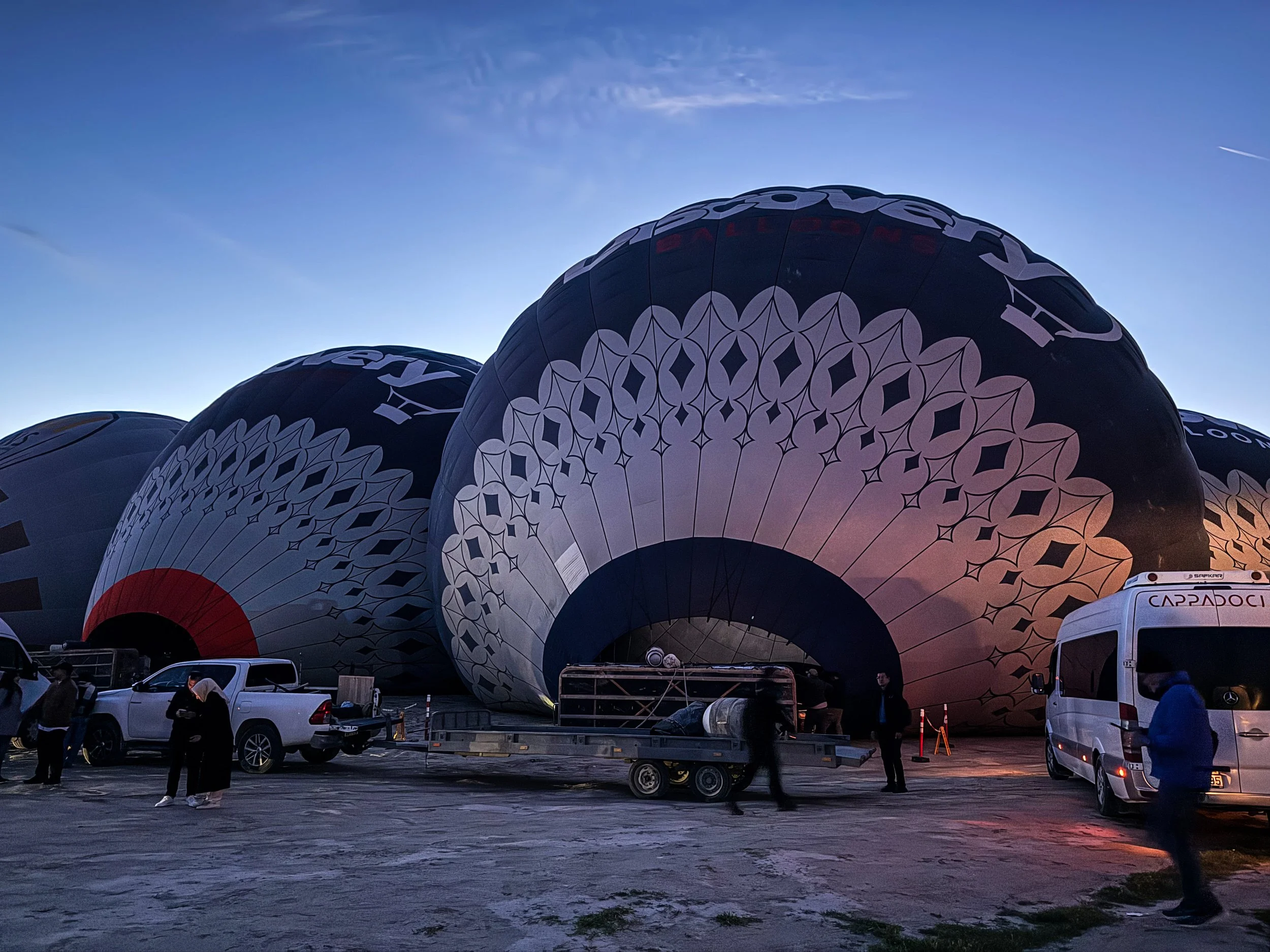
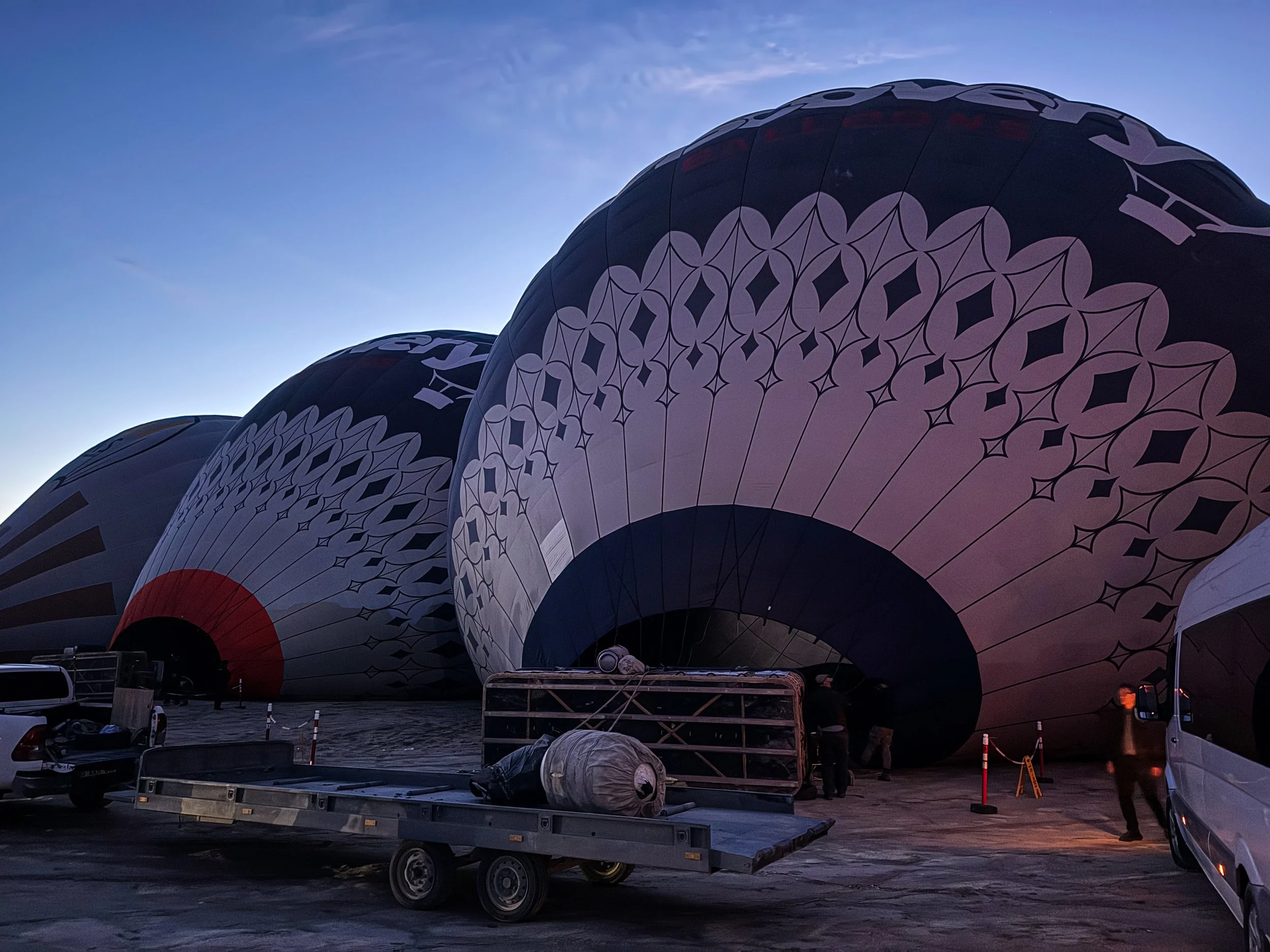
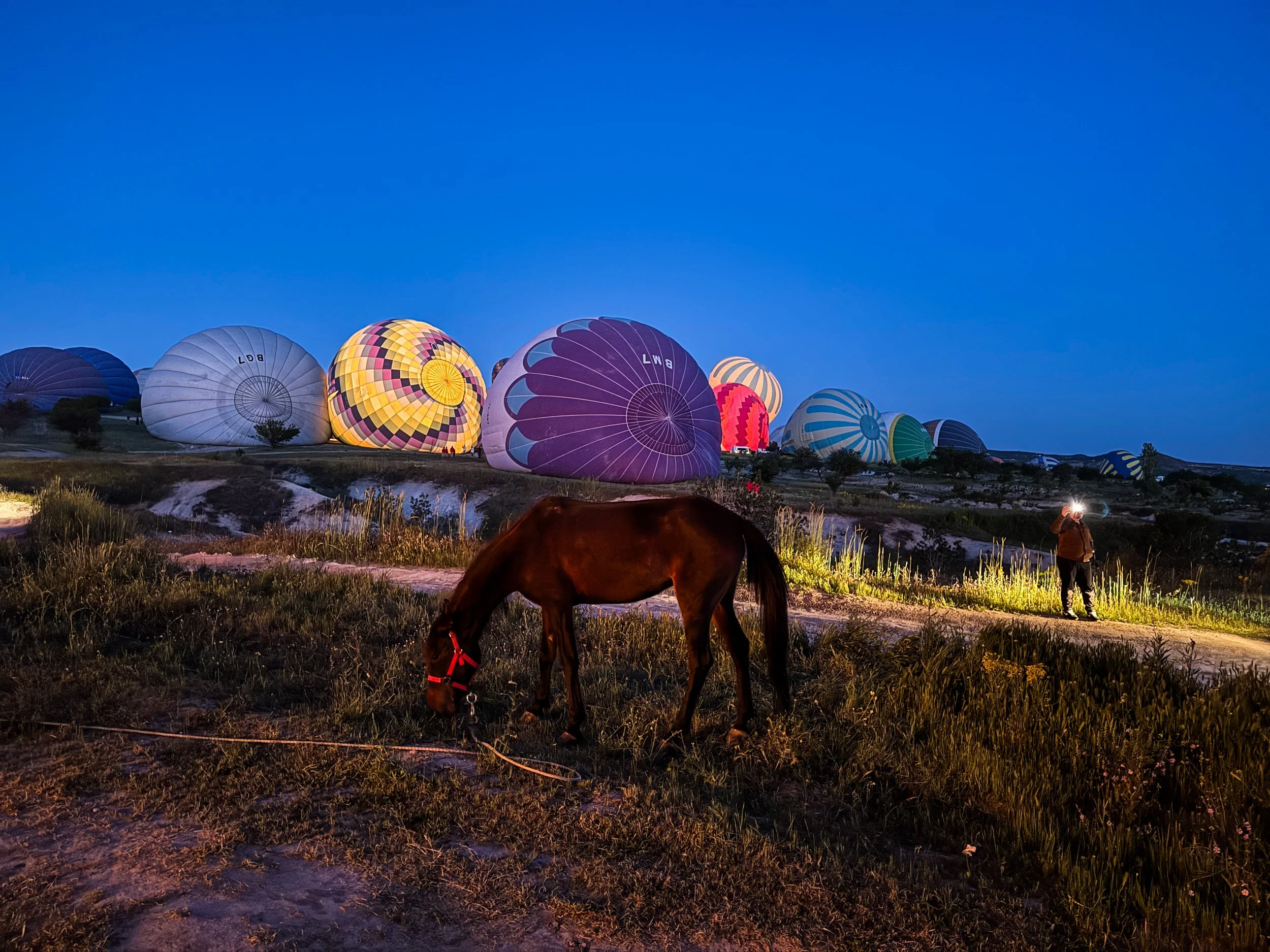
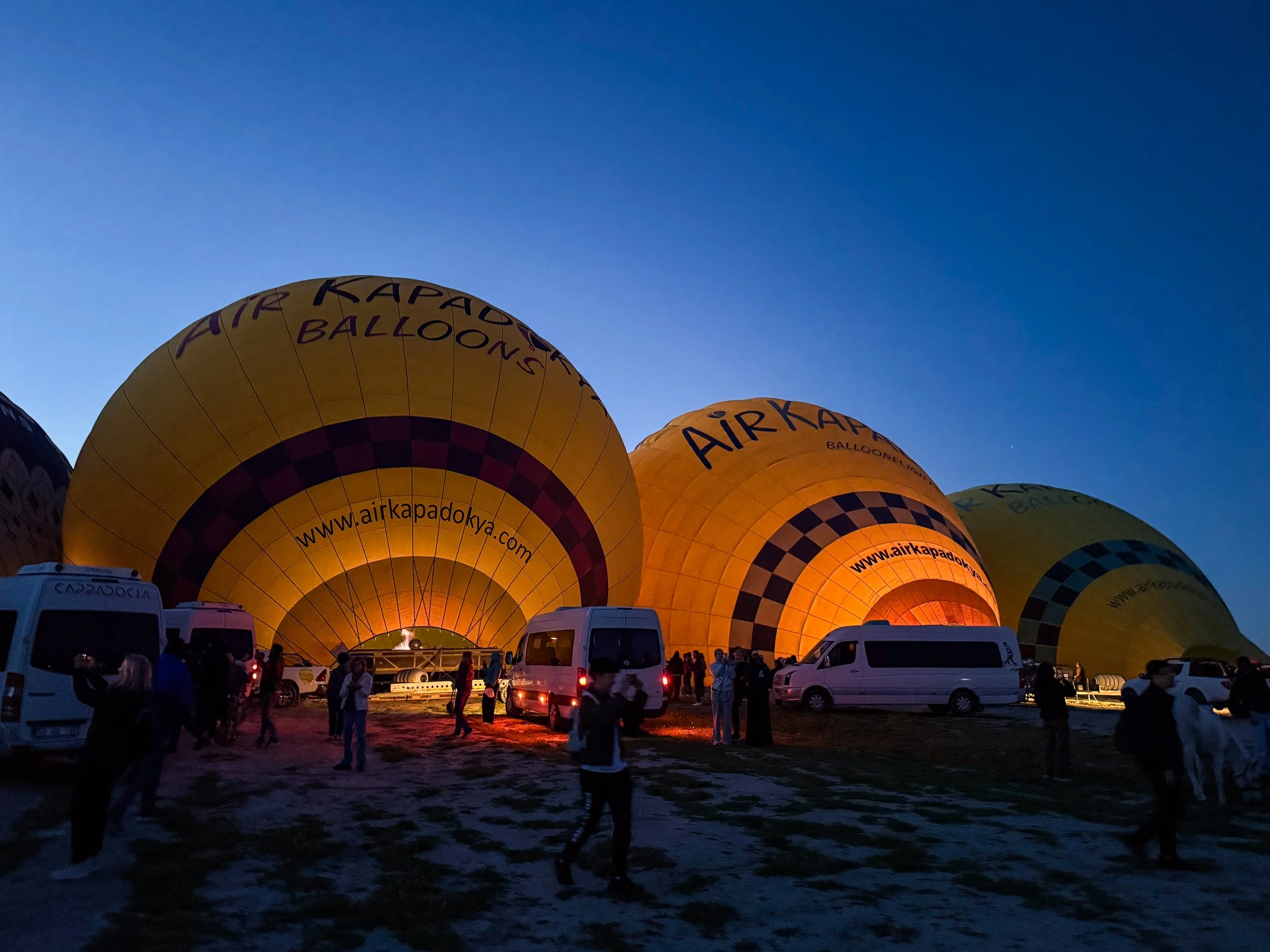
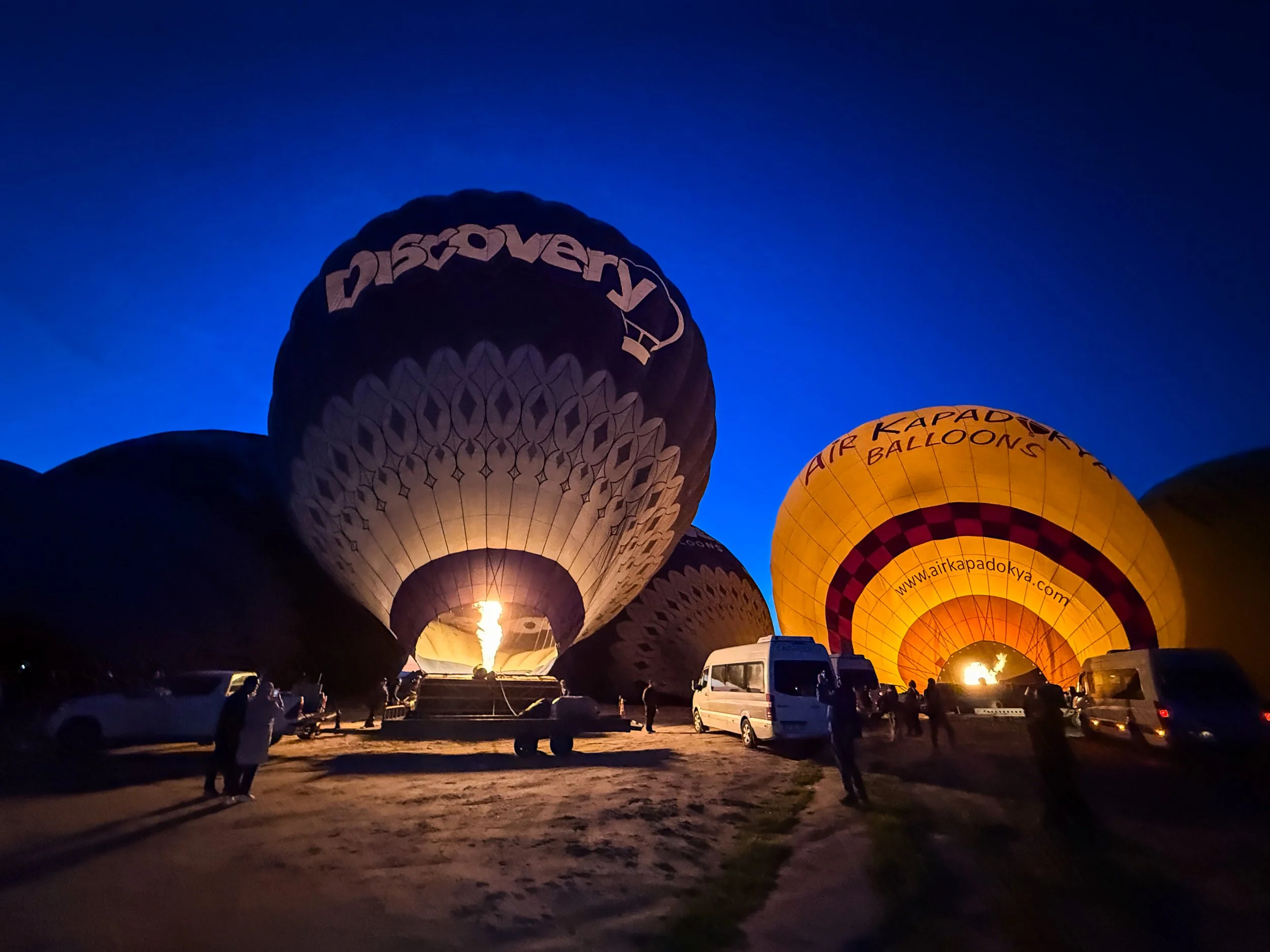
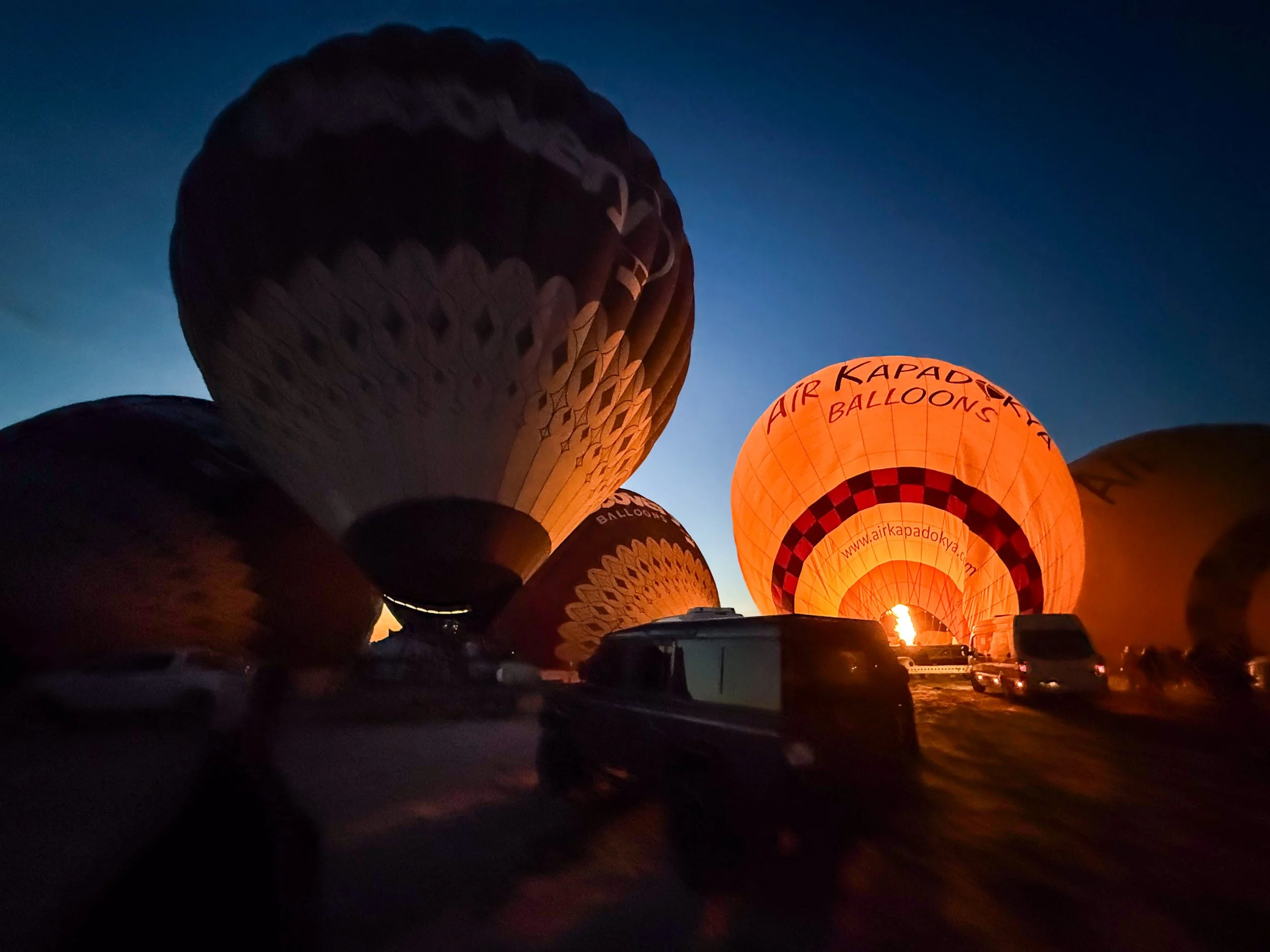
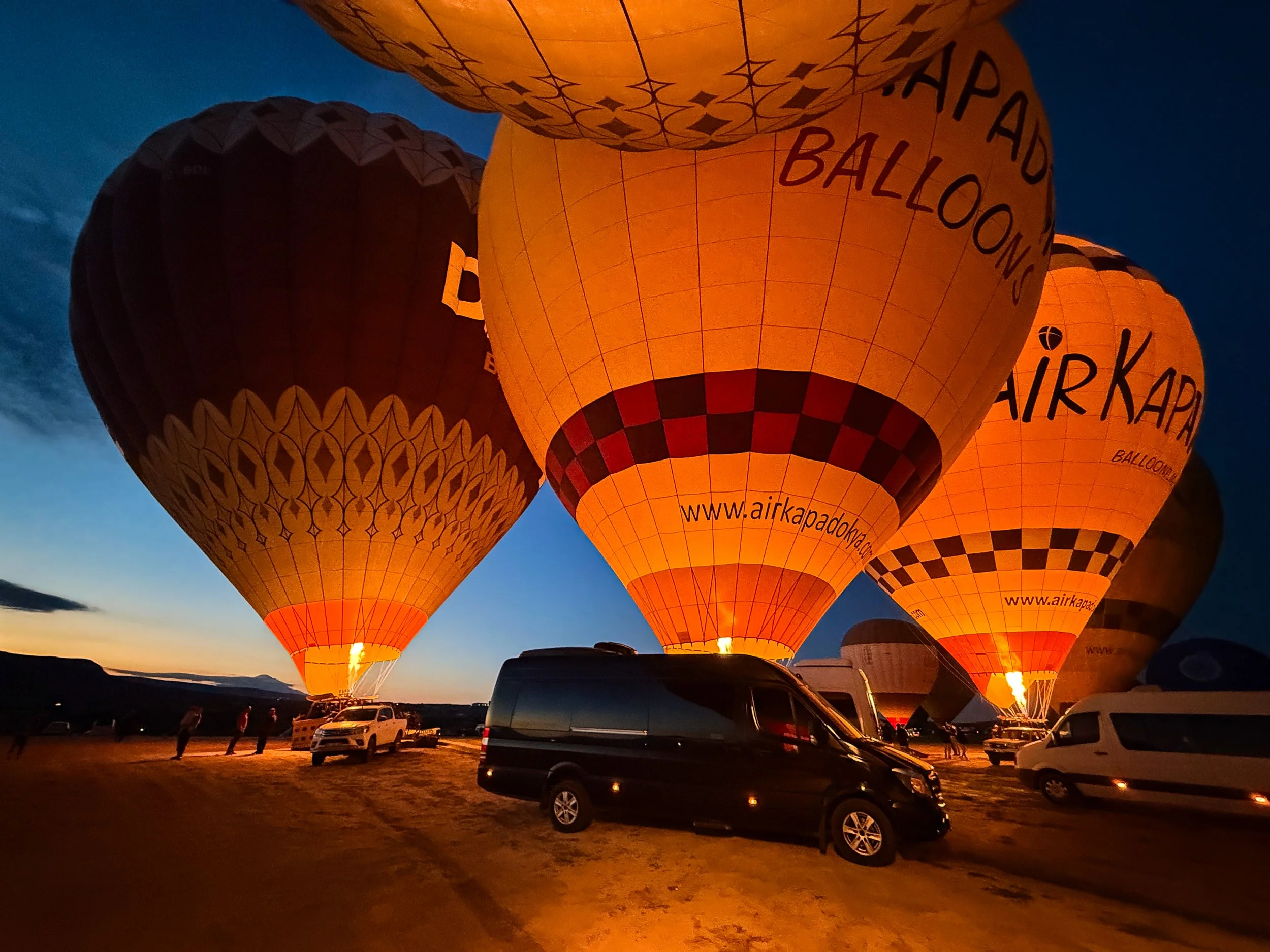
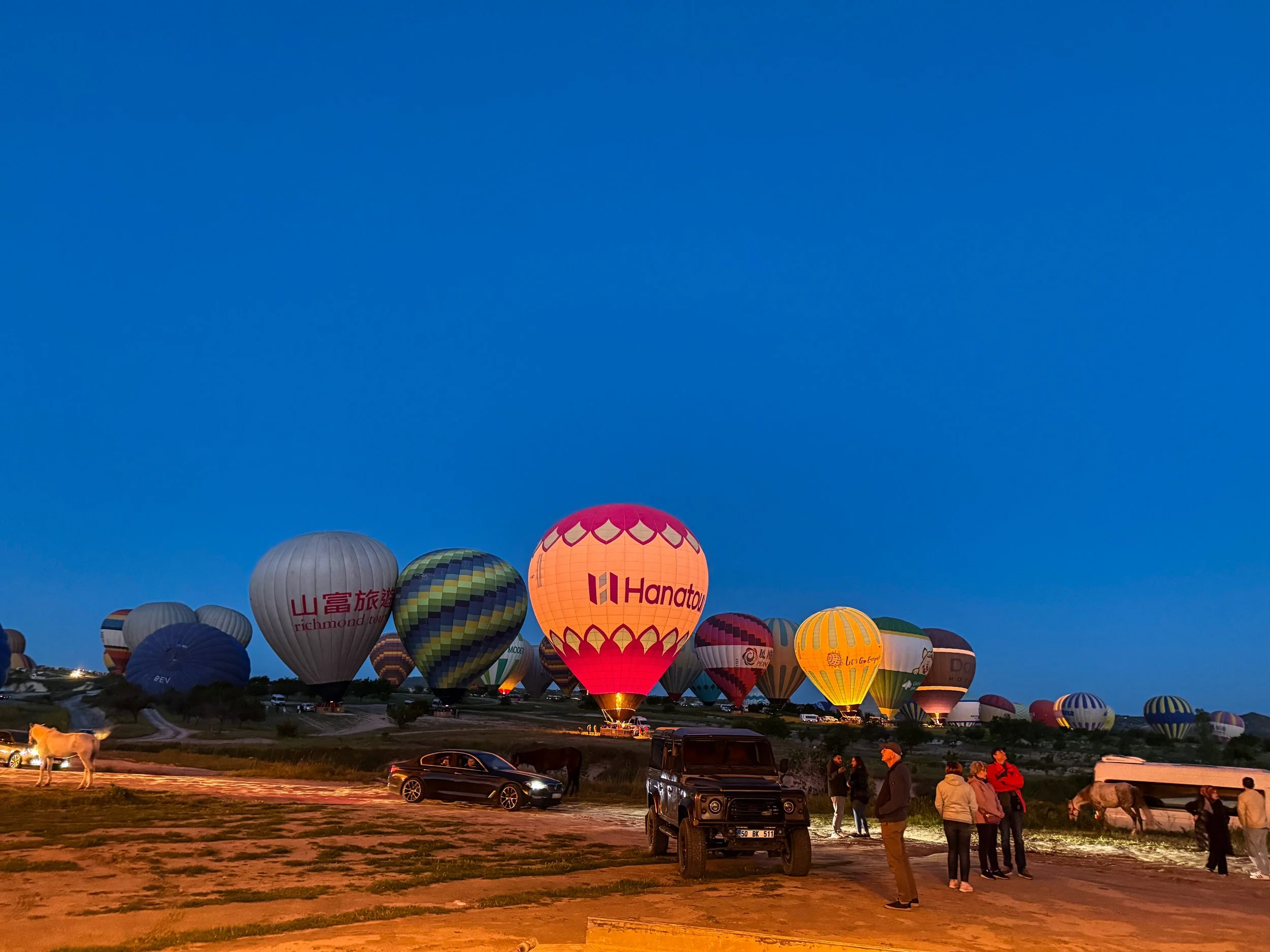
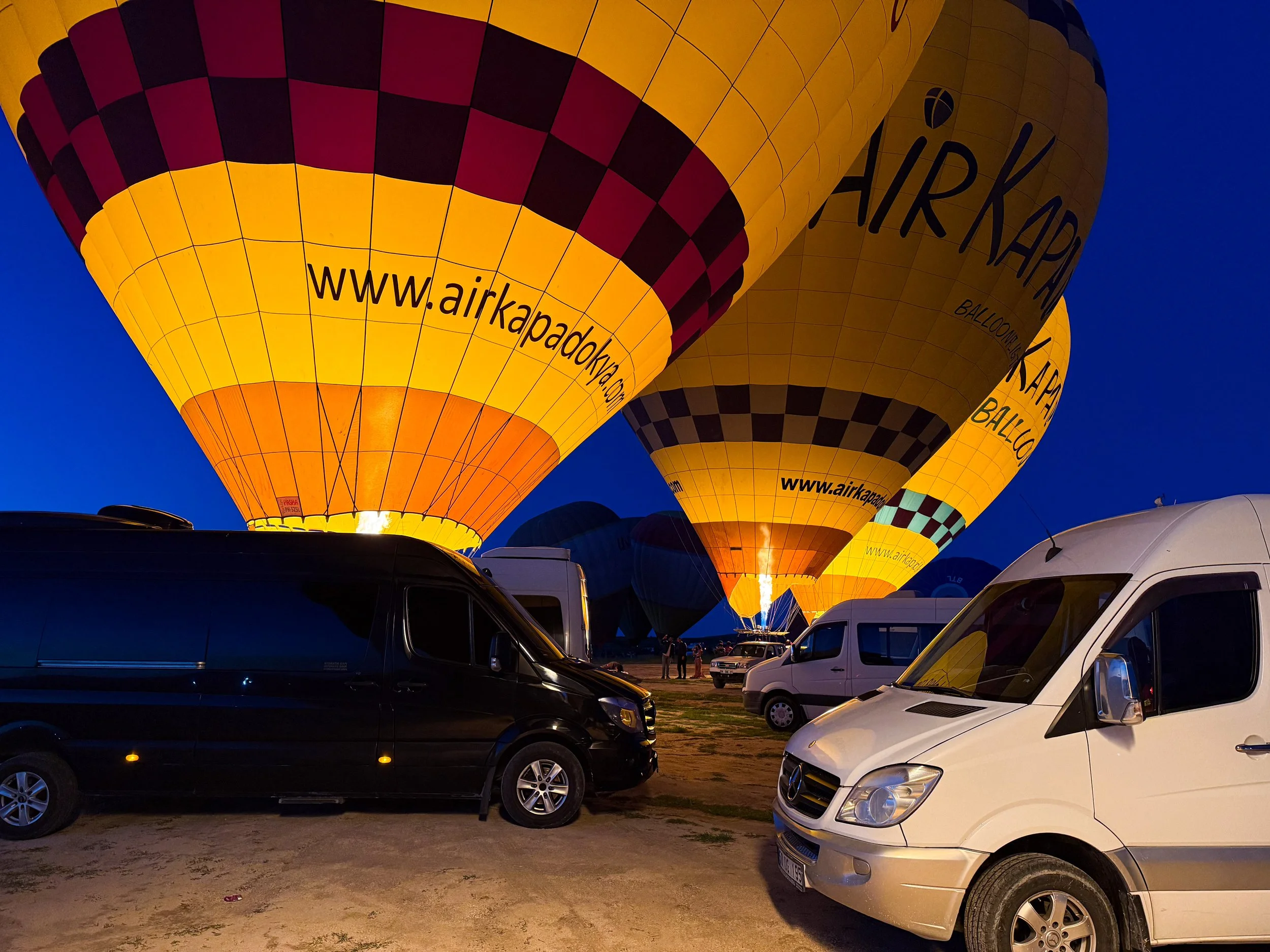
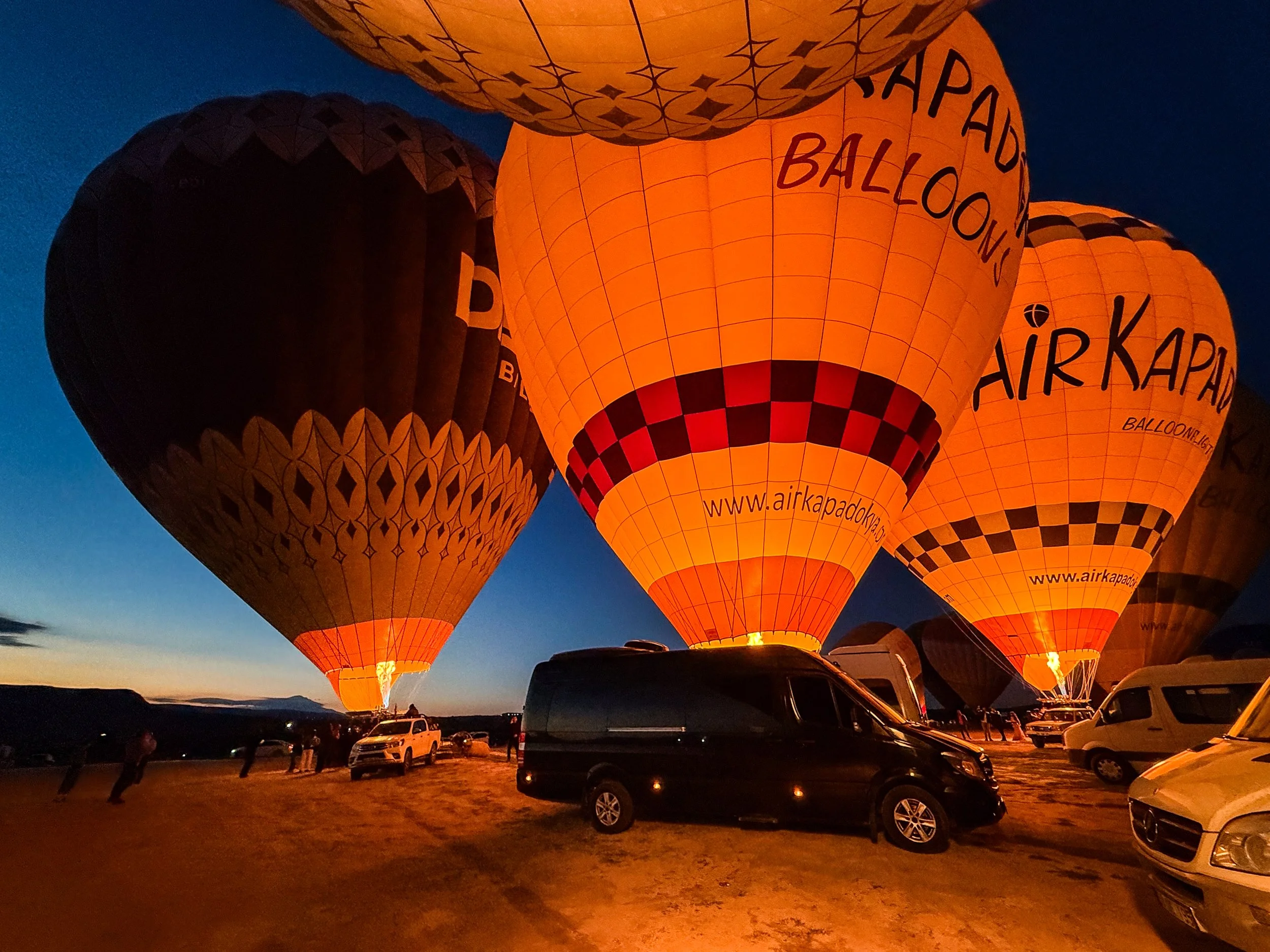
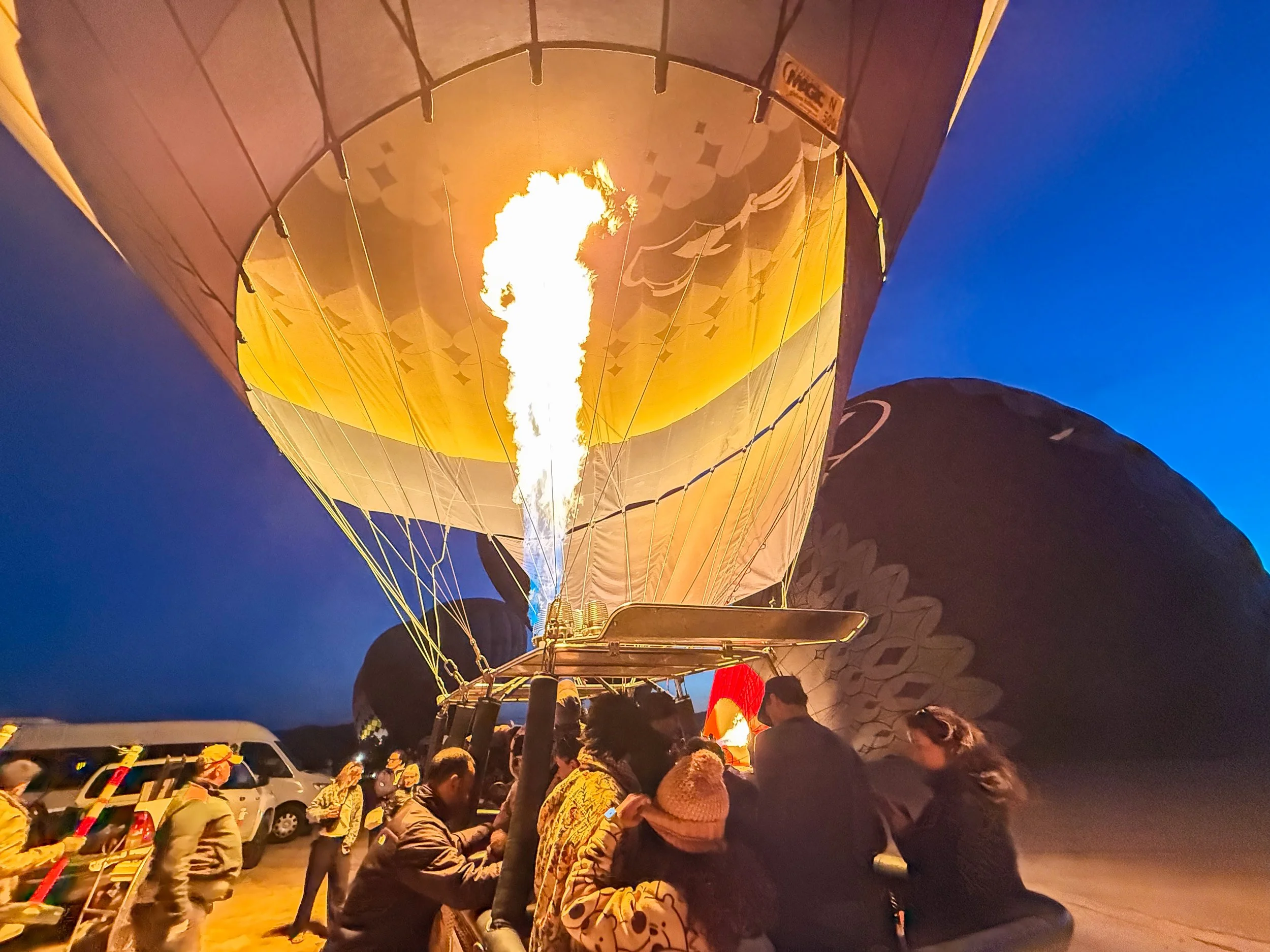
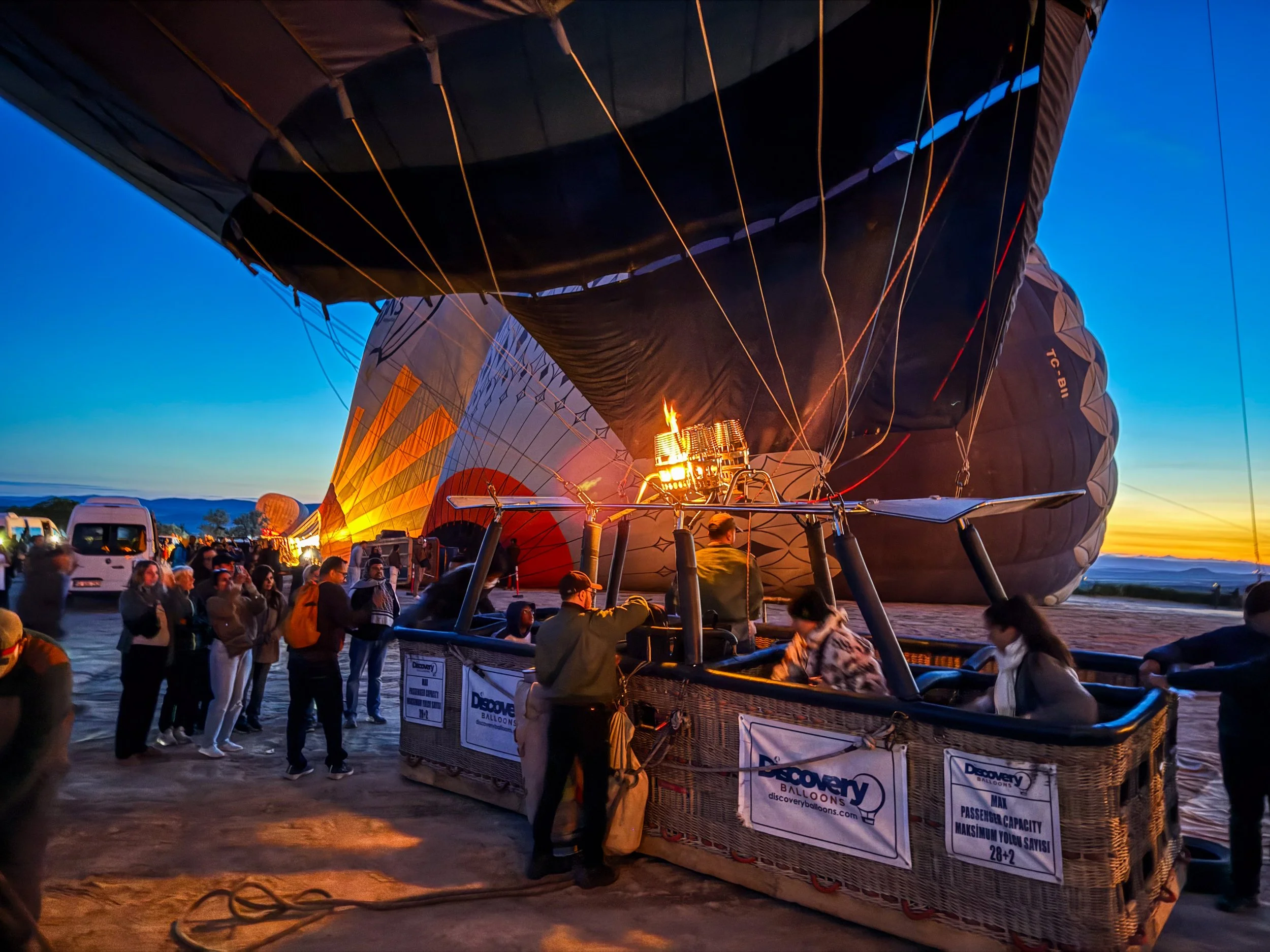
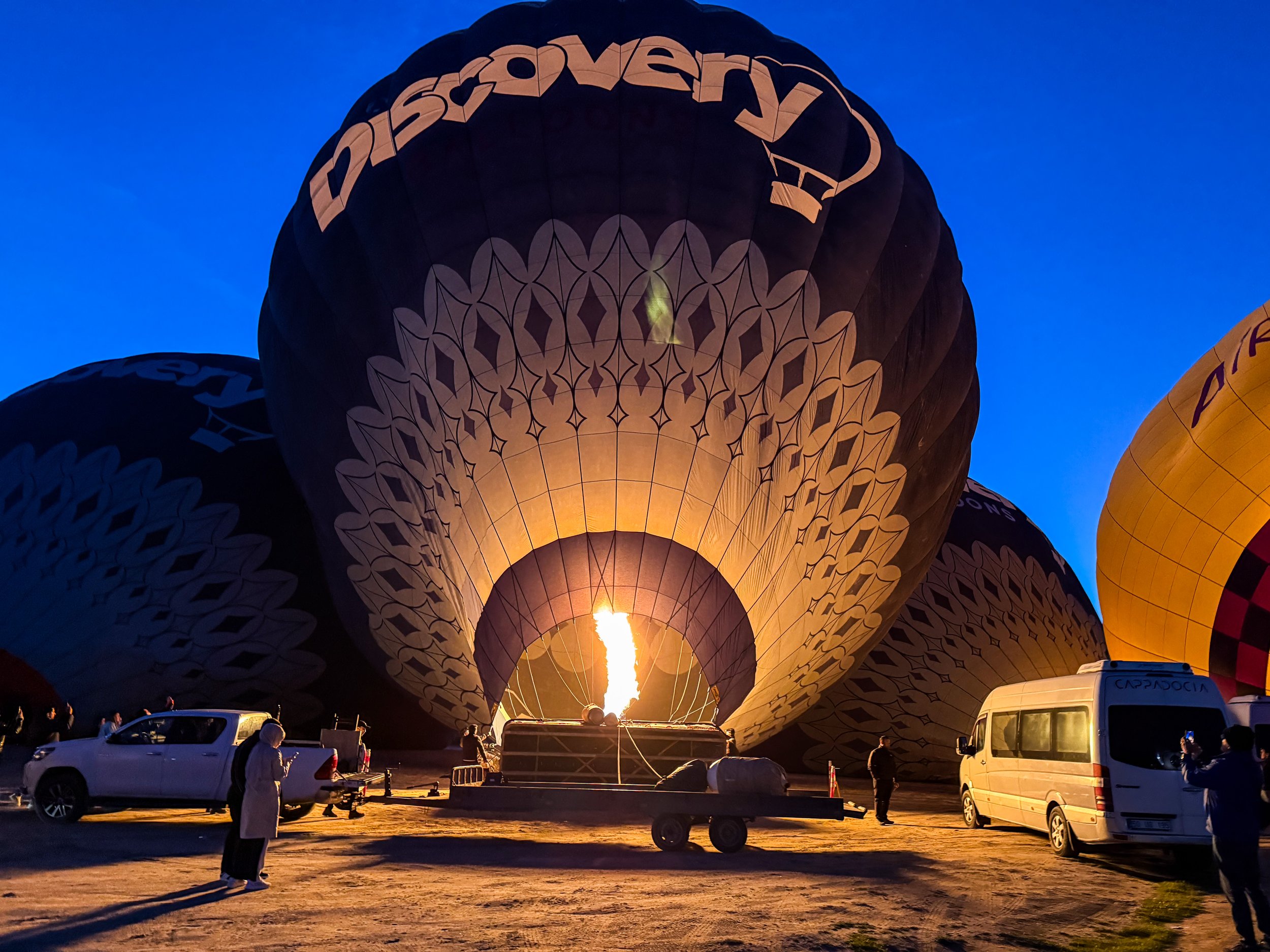
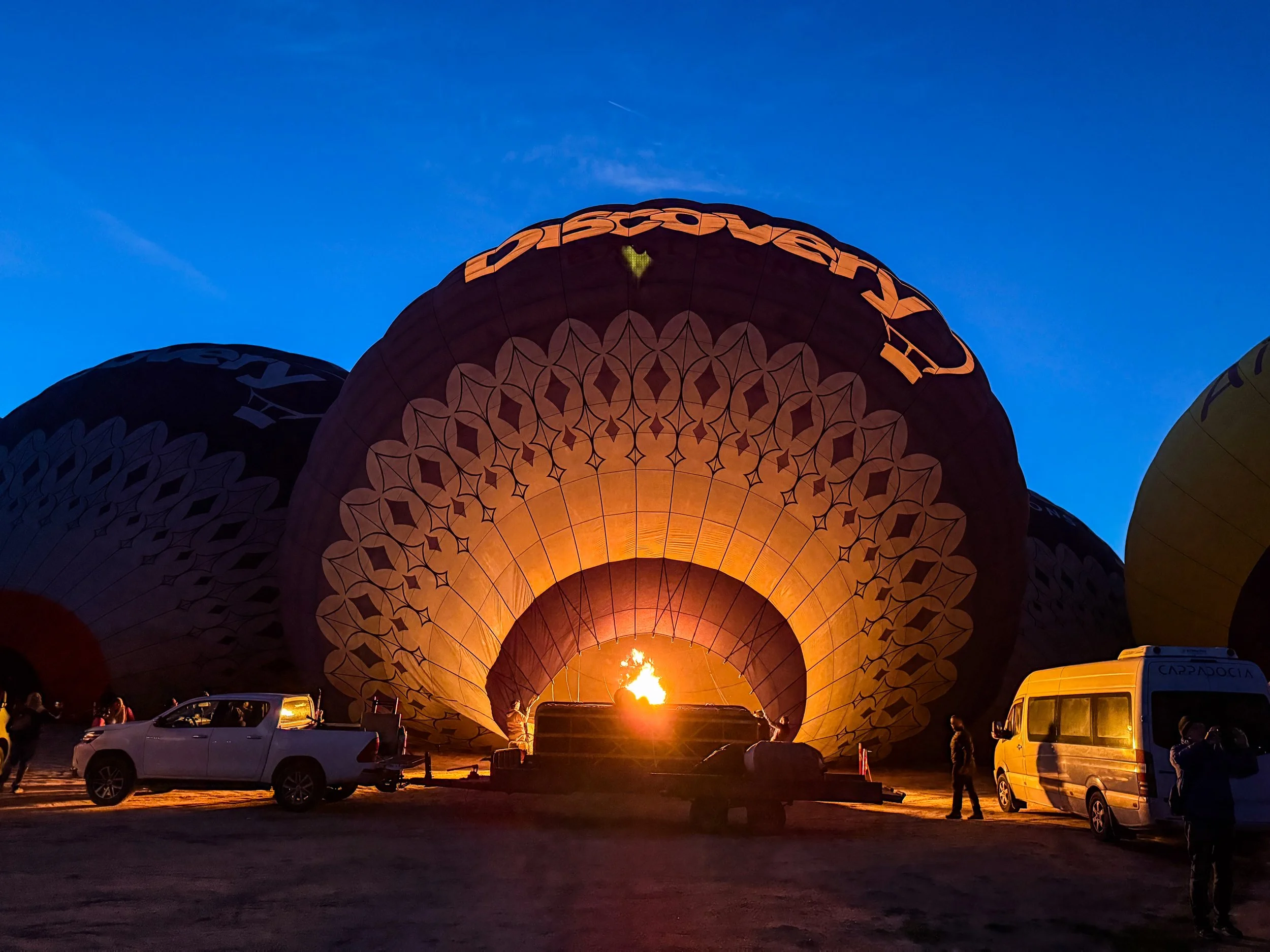
Back to the van: waking up this early, most of us were half asleep… except for a loud family of Italians, who—despite spreading out across multiple rows of the bus—were engaged in a loud, never-ending conversation about food. [Translated from Italian] they were talking about how different types of pasta pair with different types of cheeses. I am Italian(ish) myself, but even I didn’t know there were THIS MANY types of pastas and cheeses in the world. And just when you thought they’d gotten bored of the topic, one of them would have a bolt of inspiration and yell out something like “FARFALLE con PECORINO!”, and would be greeted by a chorus of theatrical noises and approving hand gestures.

At 4:30am, this family barely even felt real; they were like cartoon characters, caricaturing actual Italians. I was oscillating between annoyed and amused when, at long last, we were given the green signal! 🟢🔥🎈
After securing a nice corner spot in the basket, I realized that my camera needed a battery change. I ducked down to quickly hot-swap a fresh battery into the camera just as the balloon lifted off the ground. It took me about 15 seconds to make the switch, at which point I resurfaced to discover that we were already SO. HIGH. UP. I felt ice shoot through my veins as my toes involuntarily curled into the bottom of the basket. At this point we were at least 1,000 meters (3,300 feet) high—probably more!—and it had happened so quickly and smoothly that I hadn’t even realized it. To keep myself from panicking, I focused on taking pictures, and I took them OUT, not DOWN. 😨
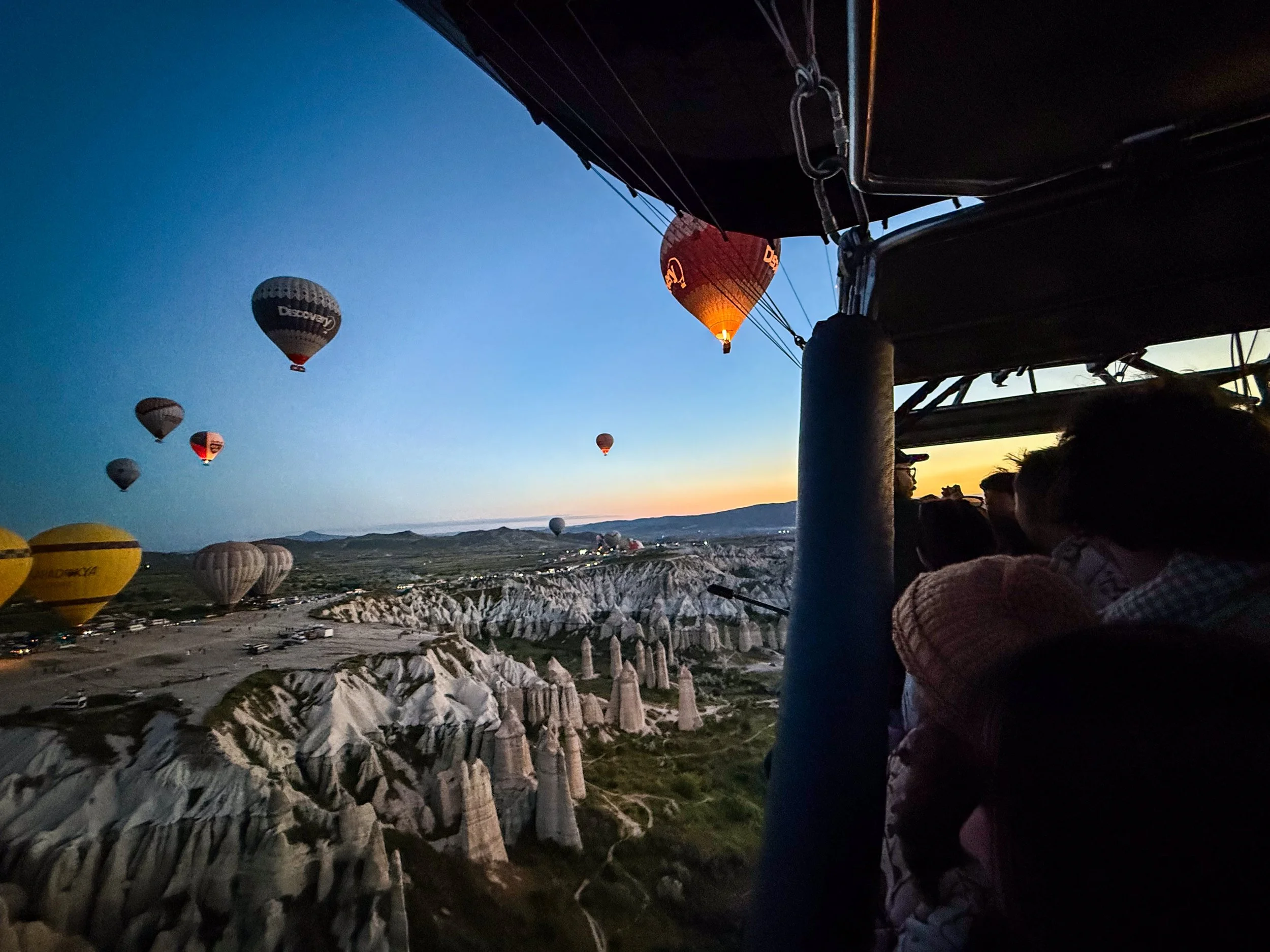
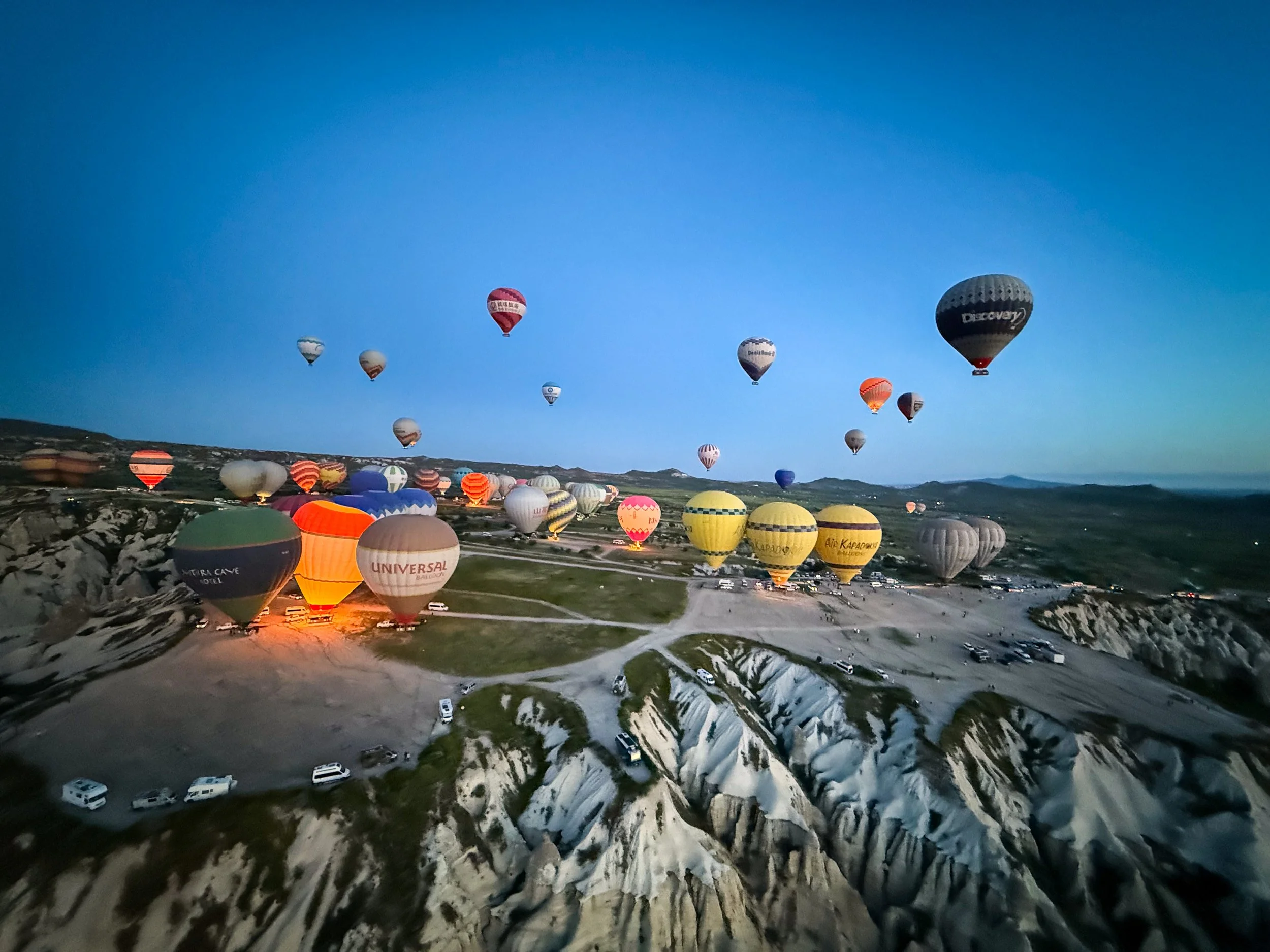
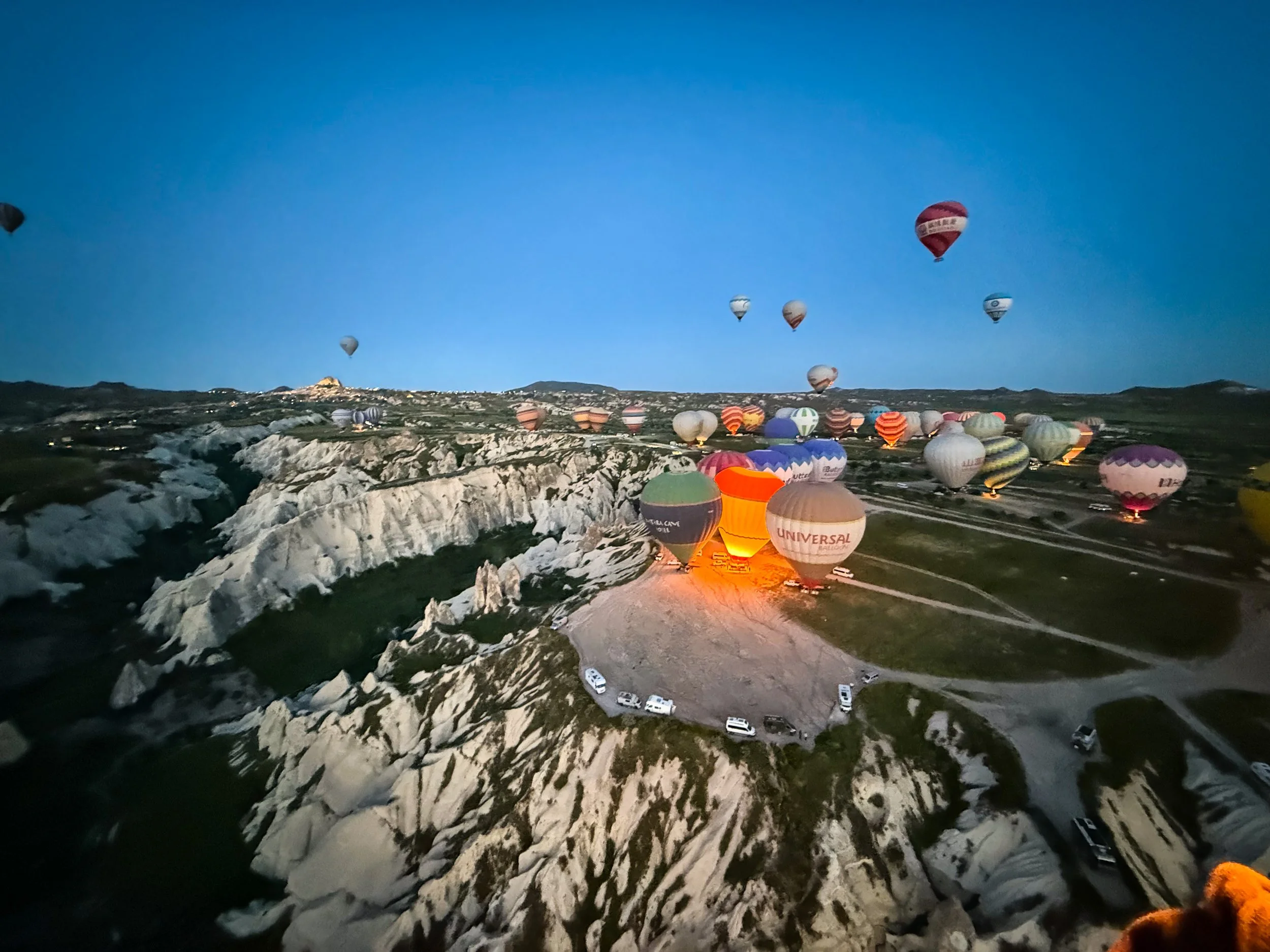
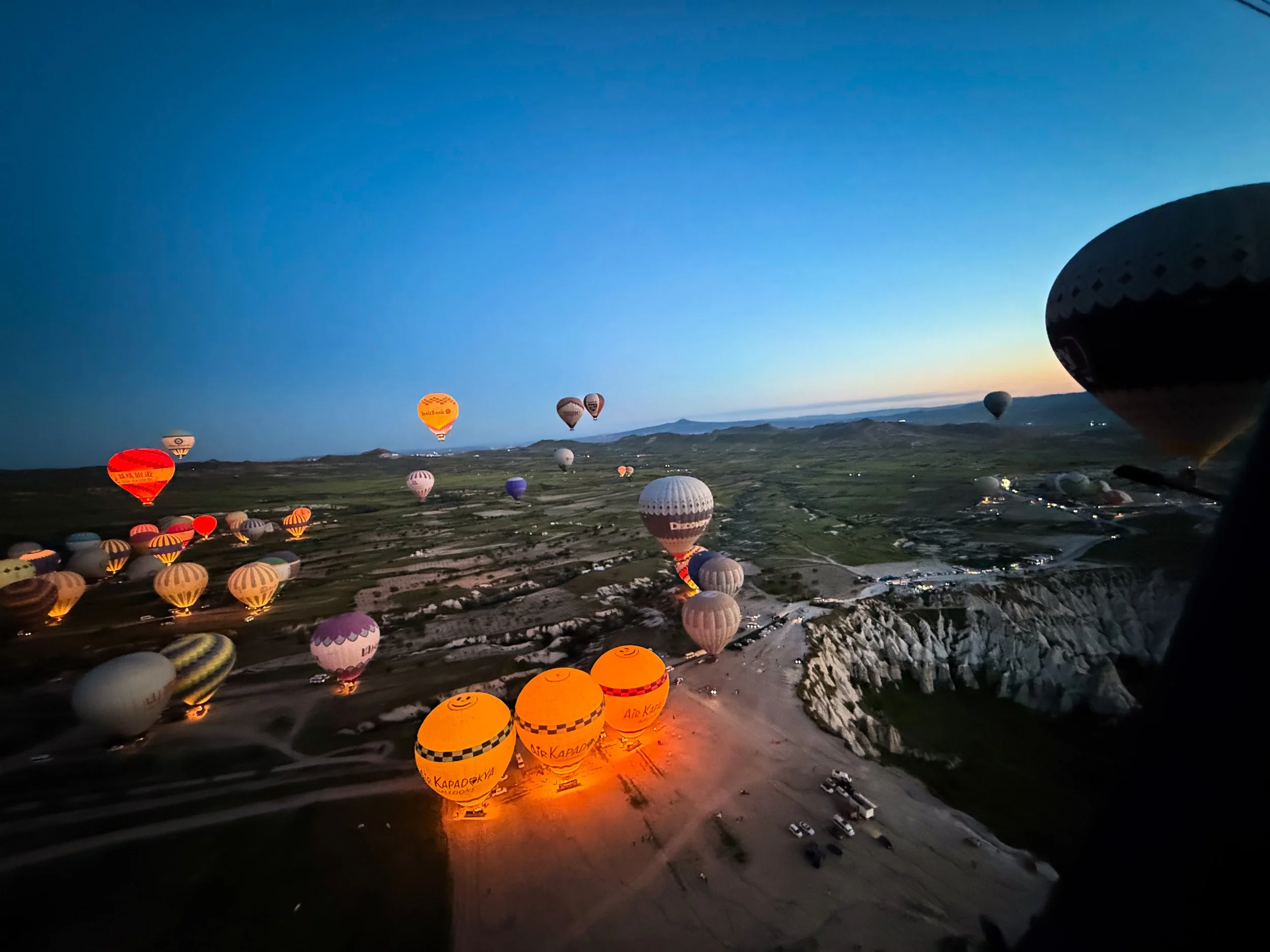
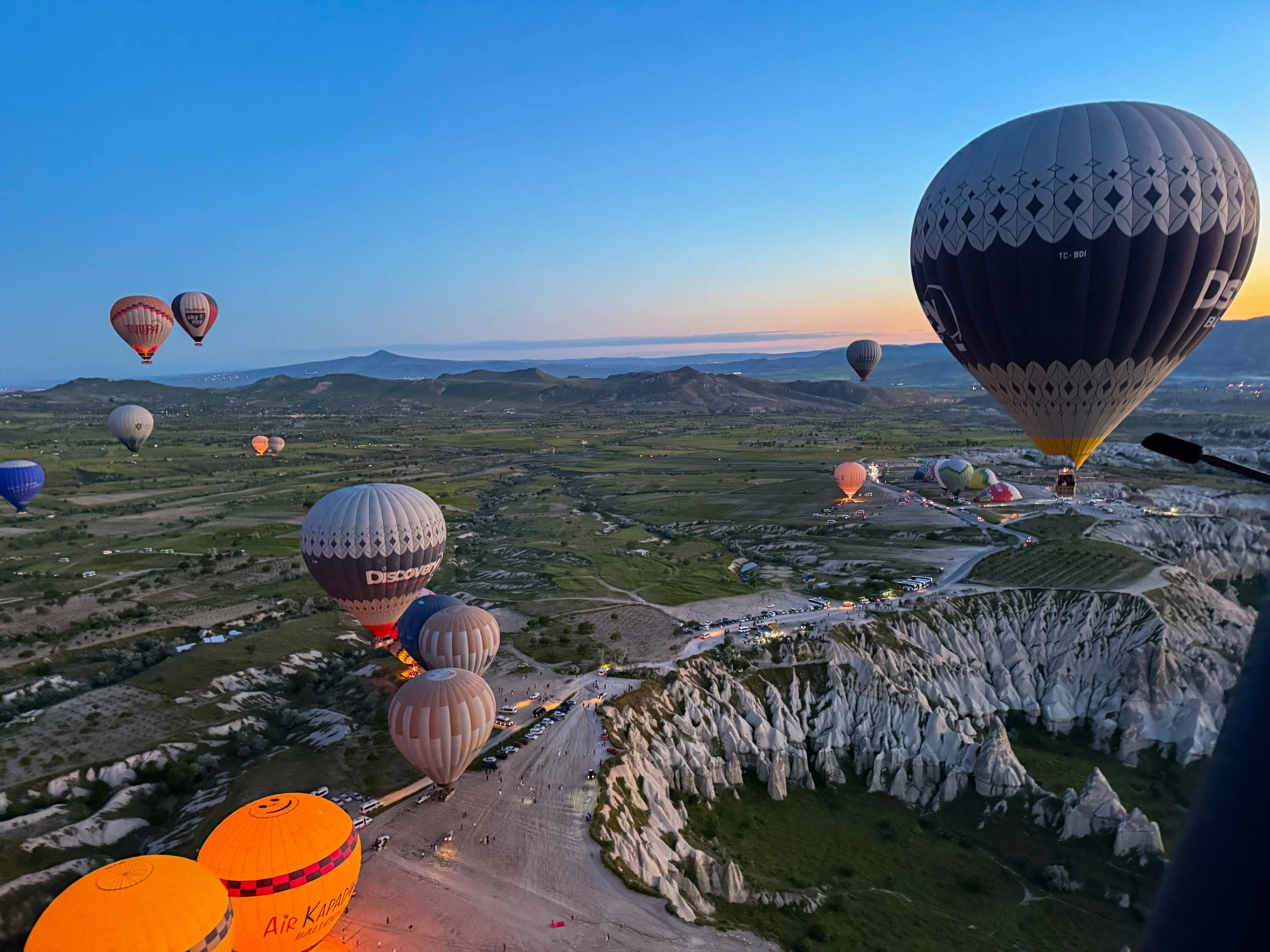
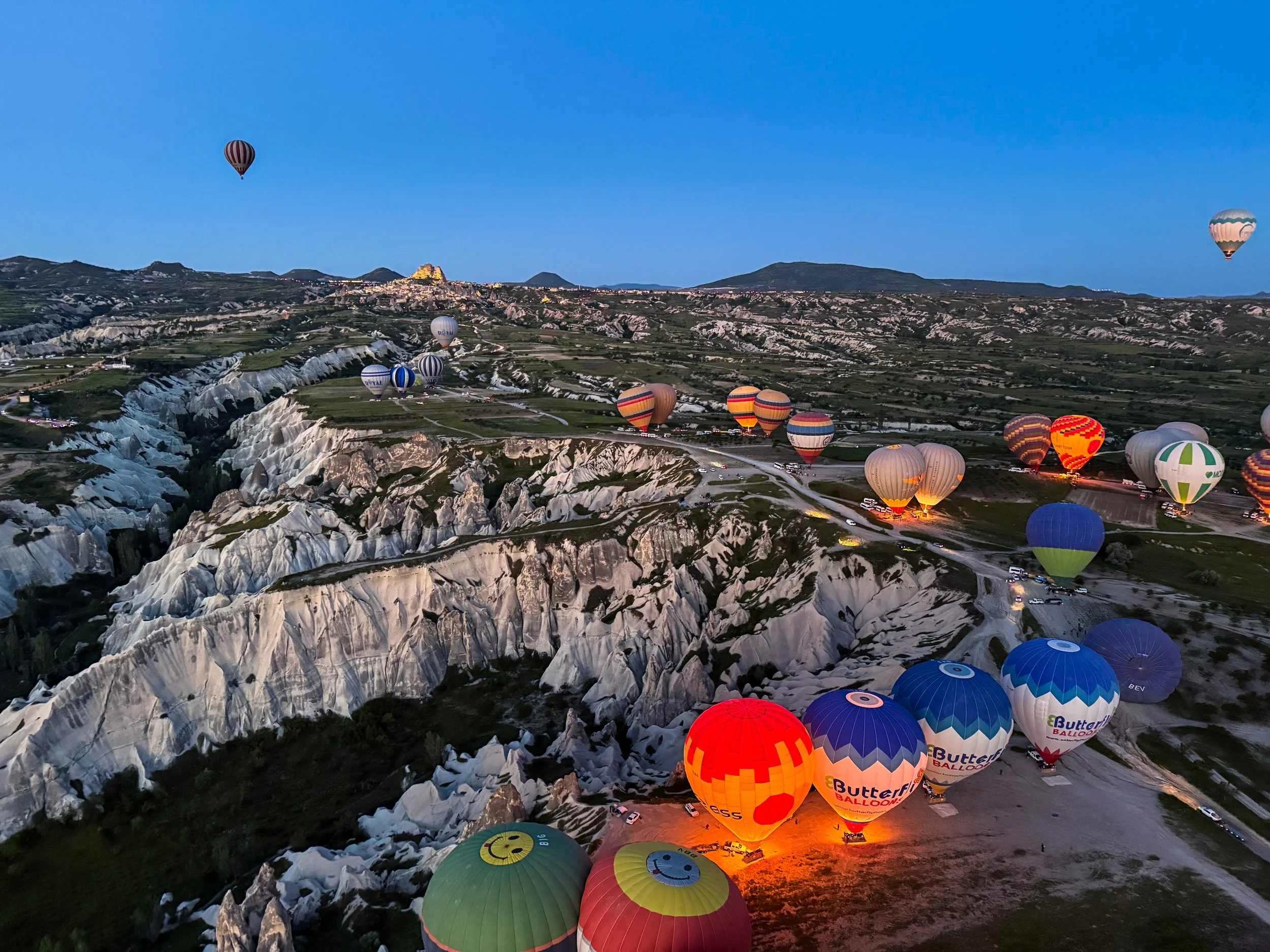
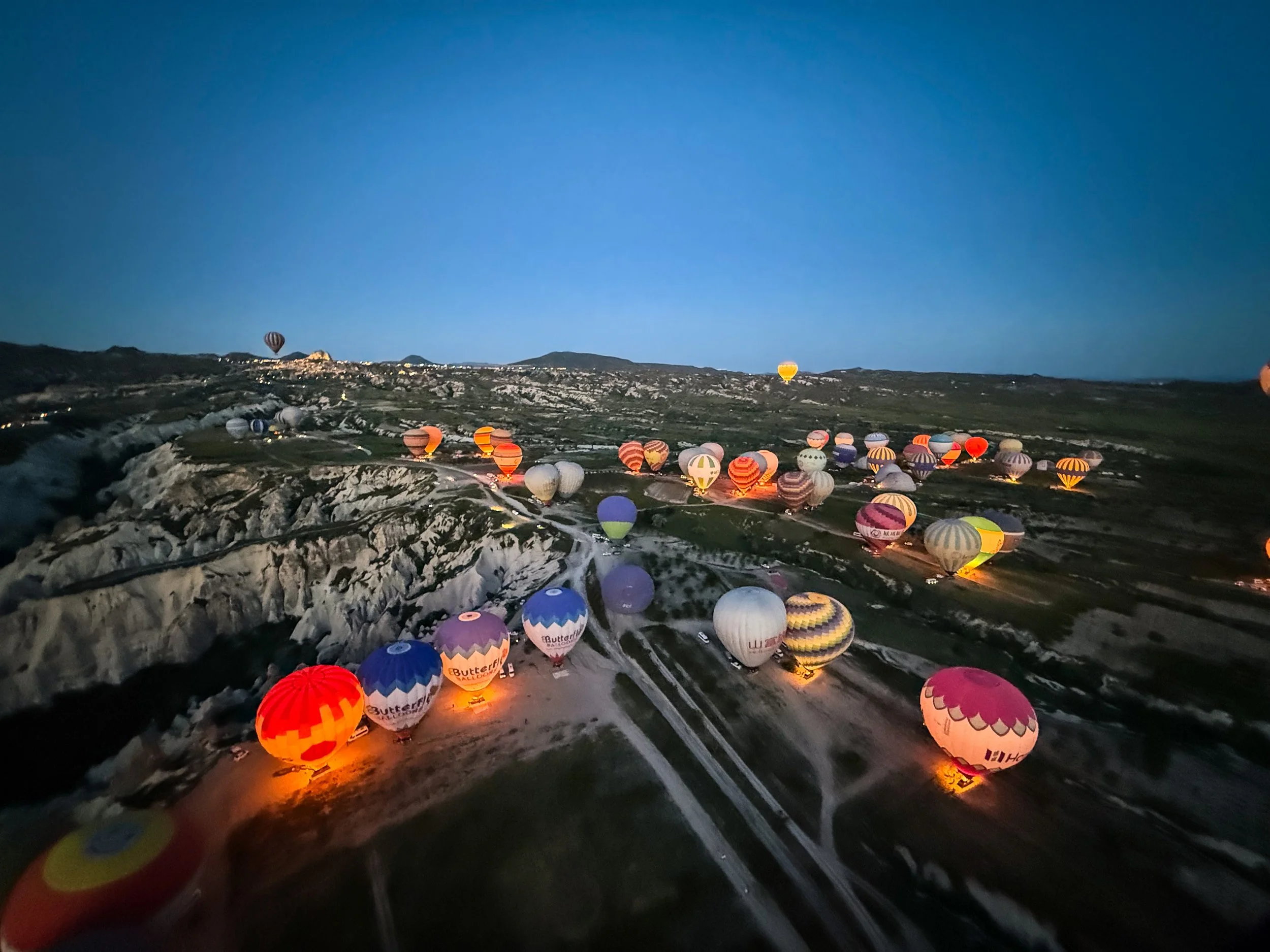
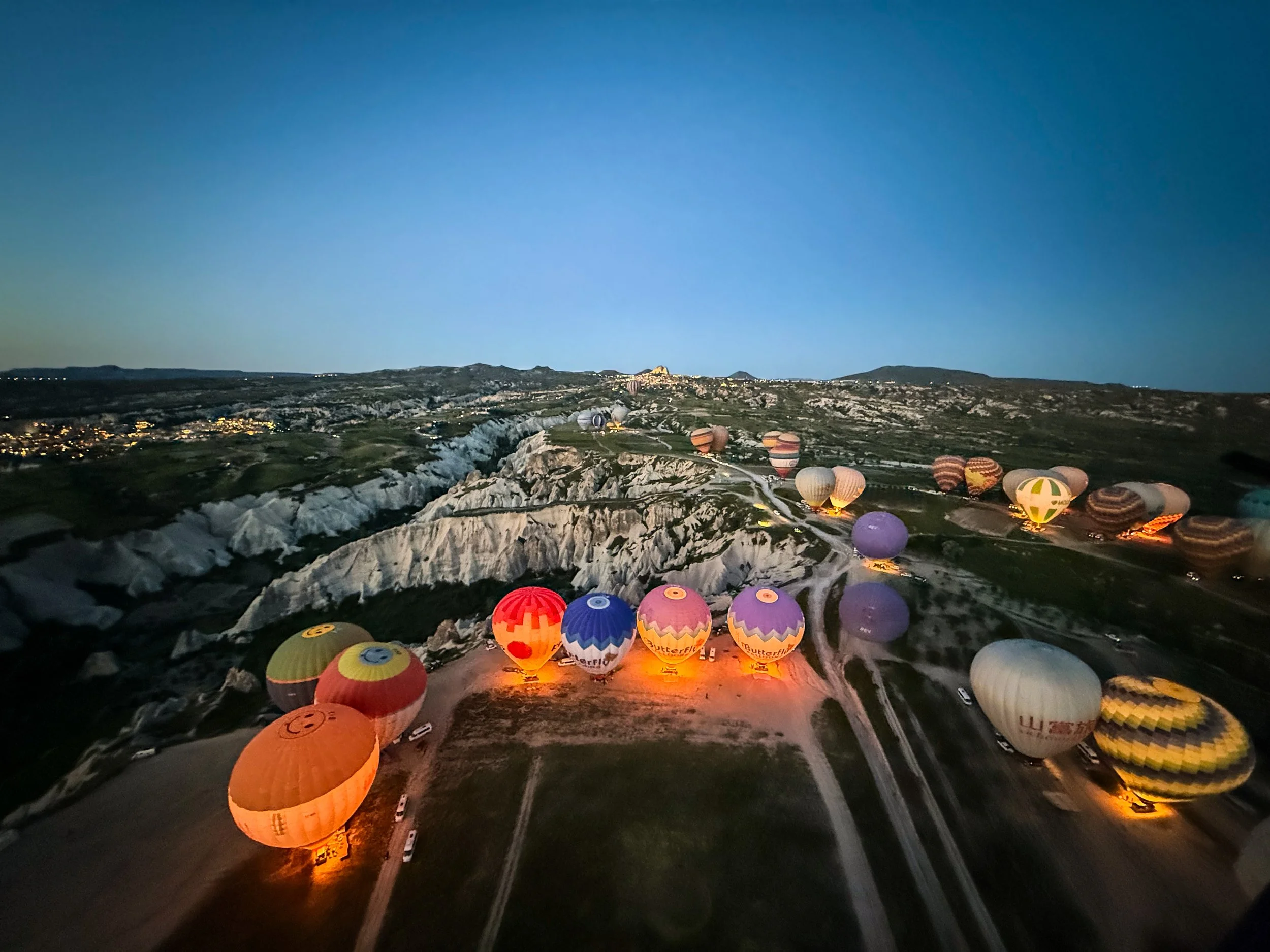
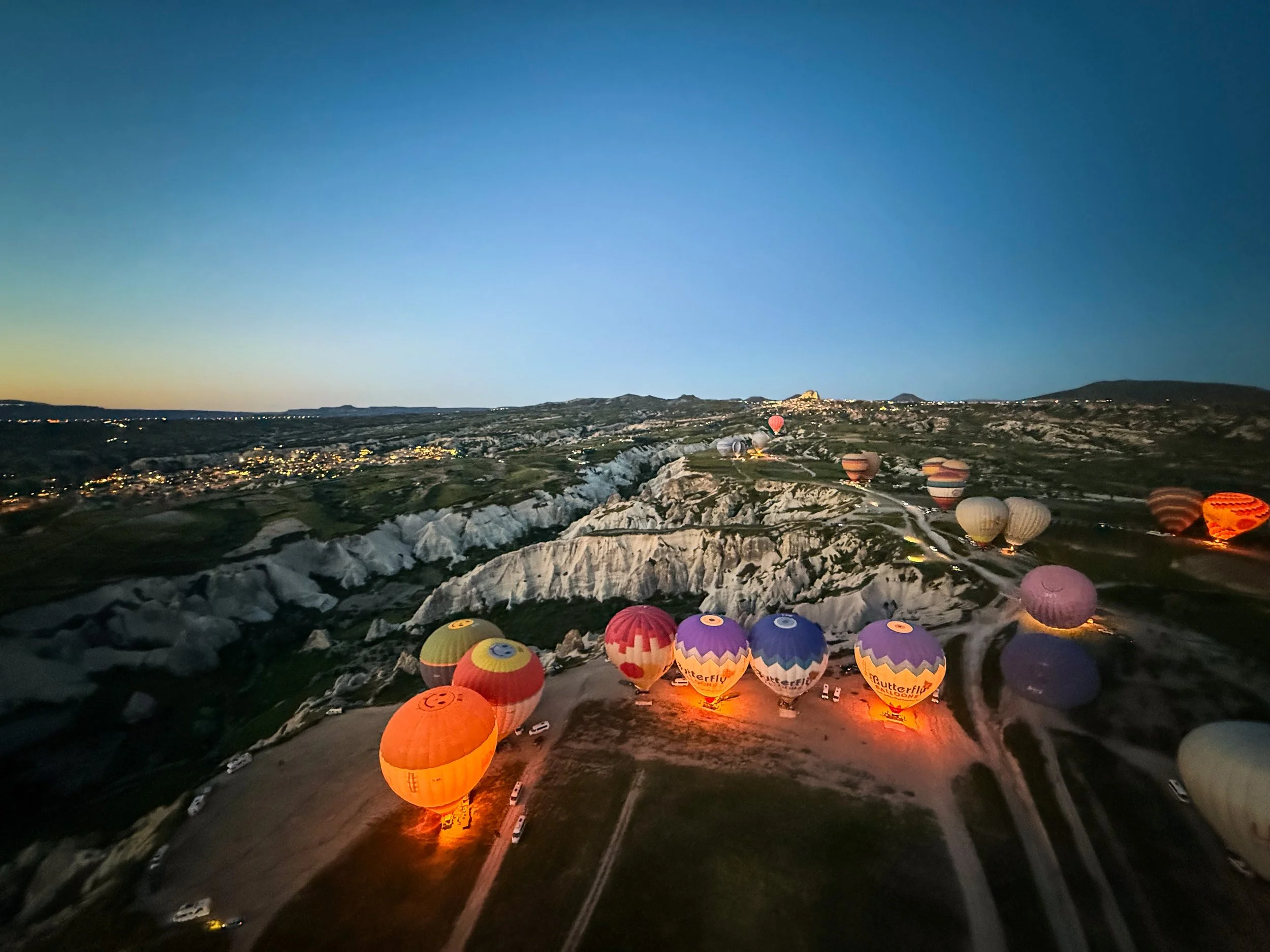
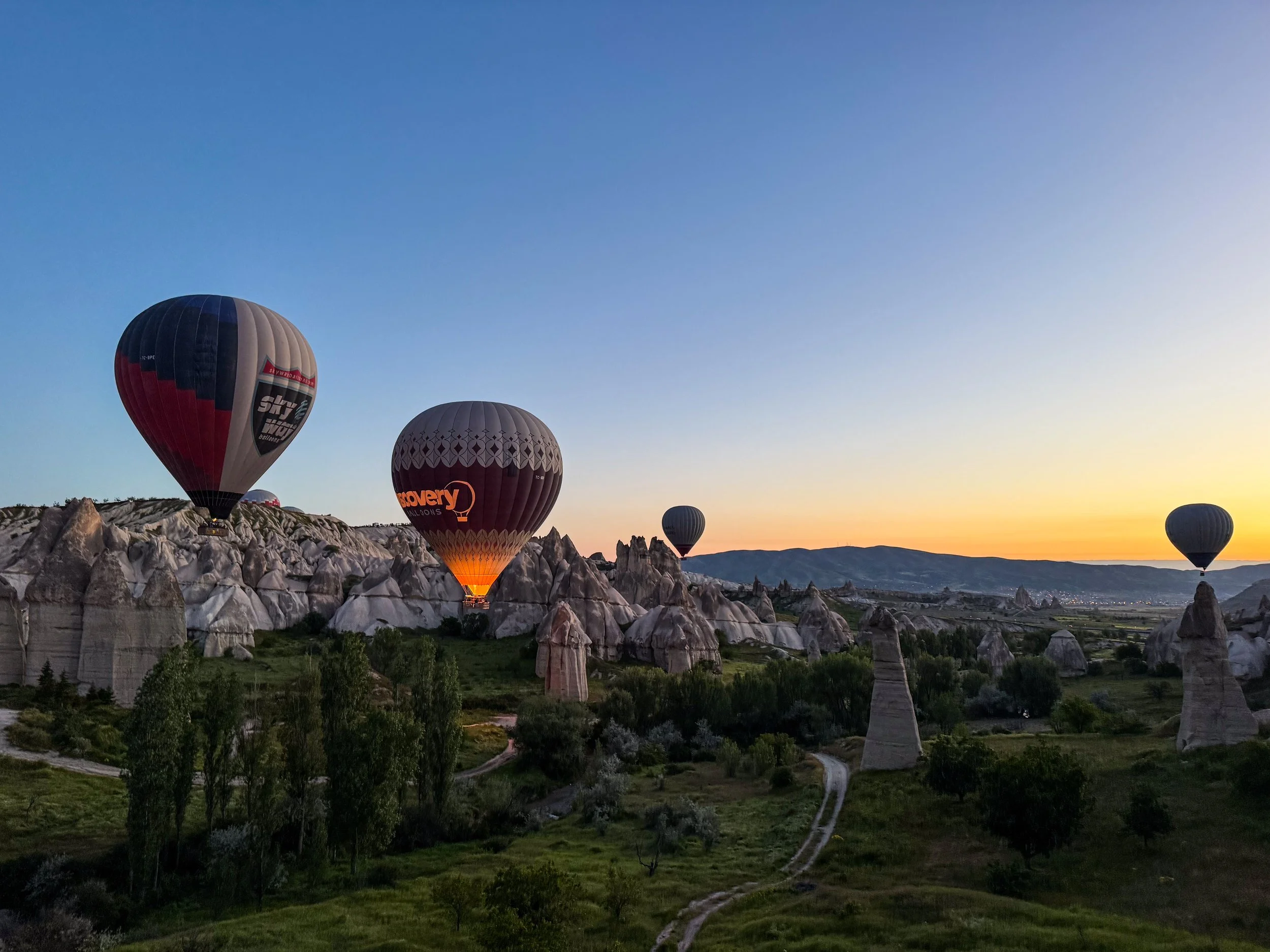
After my initial shock at our height, the balloon soon lowered in altitude so we could float just above the landscape. I was shocked at the density of balloons floating around us. As the gentle breeze carried us silently over the stunning landscape below, there were moments when our balloon actually bumped up against other balloons around it. And when I say silent, I mean SILENT. Zero noise except for the occasional but brief roar of a burner shooting balls of flame up into the balloon, illuminating the entire balloon like a giant Christmas decoration. Honestly, floating amidst these balloons was so cool that there were moments when I stopped even noticing the landscape. And with the balloons at a more modest height, I quickly moved from fear to fascination. We floated quite a ways, over some incredible and varied landscape. And, at sun rise, the changing light made every single moment of this trip incredible. This was undoubtedly one of the coolest experiences of my life. I would happily get in a hot air balloon again. Here’s a LONG gallery of pictures that I took during this flight.
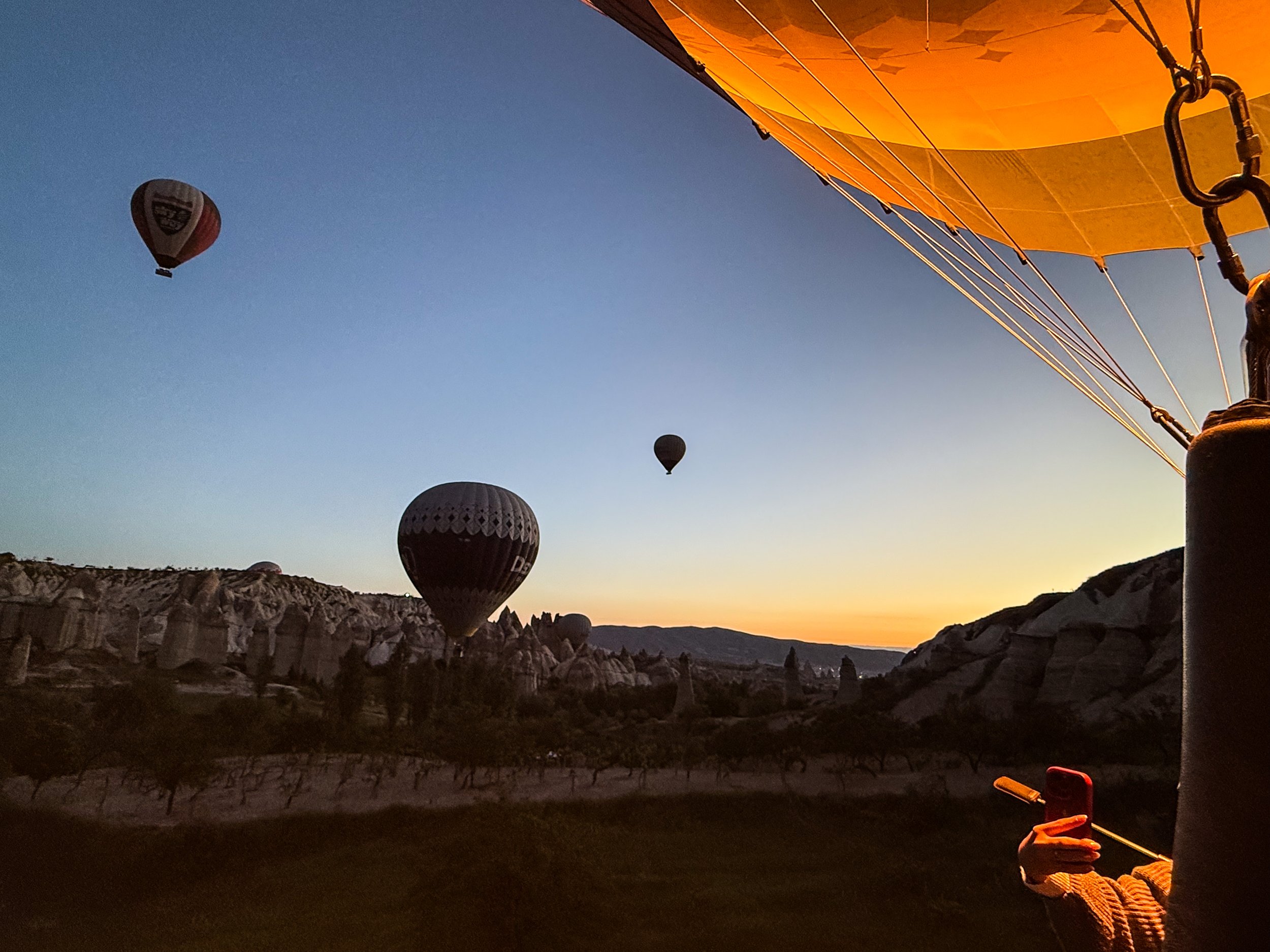
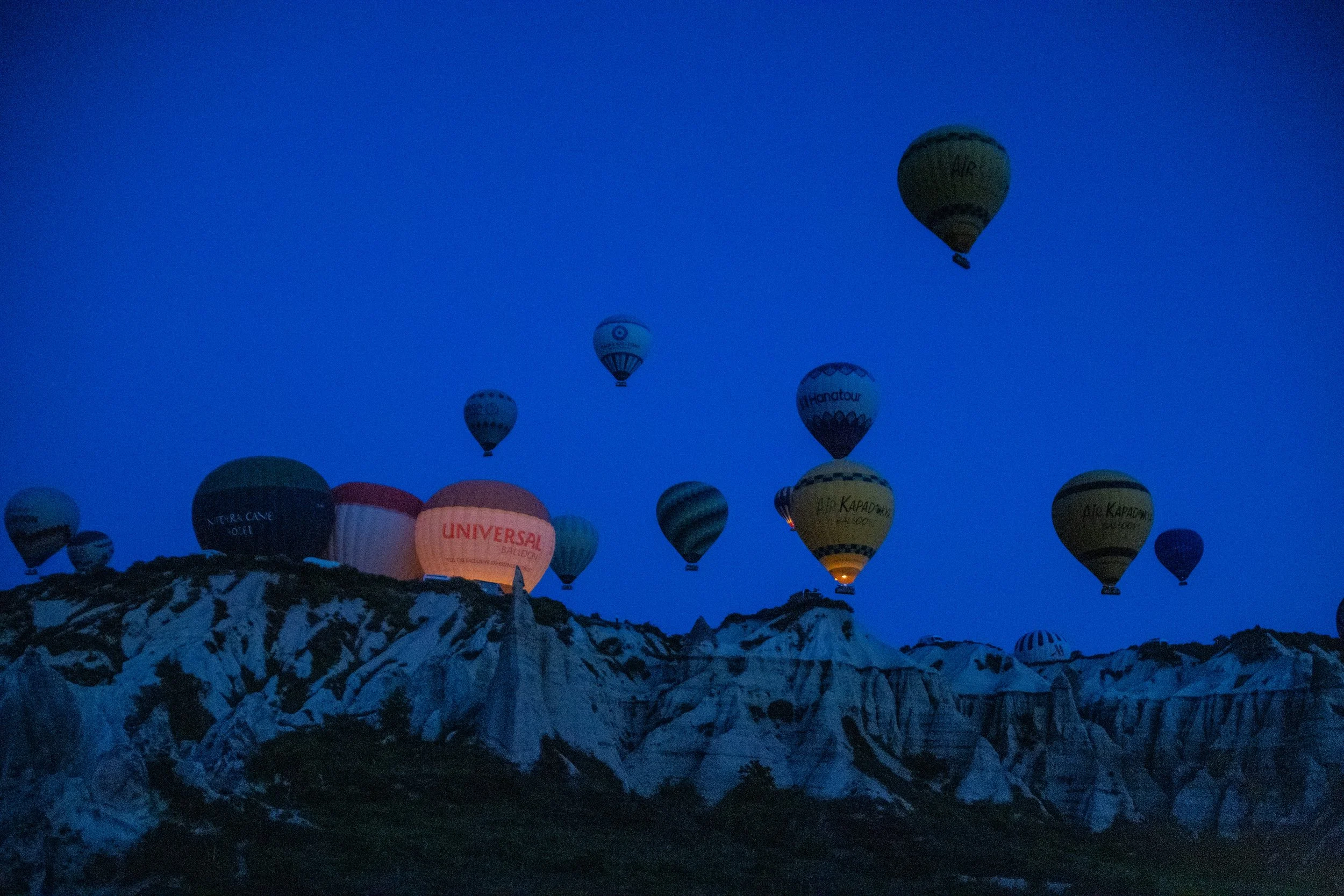
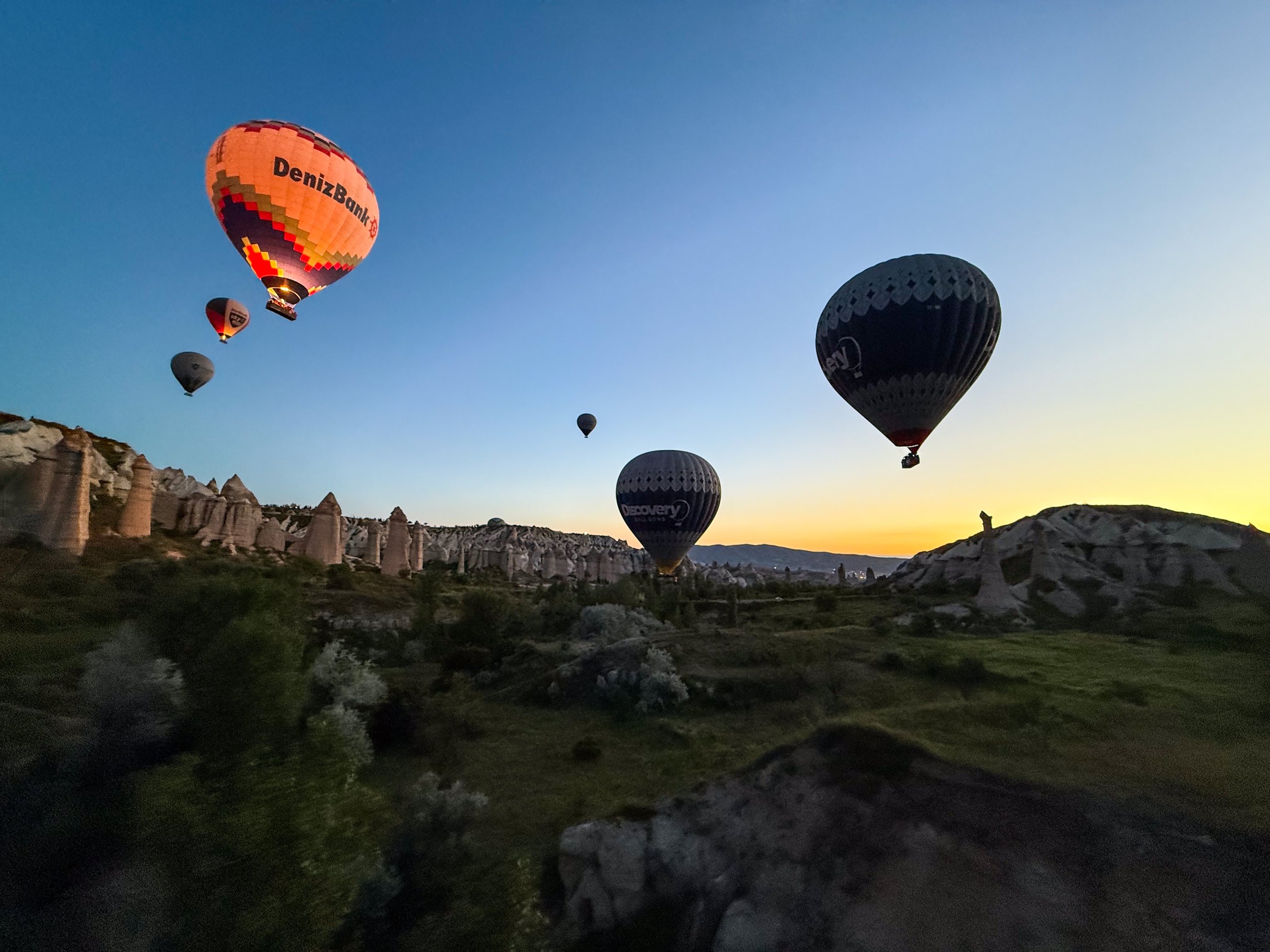
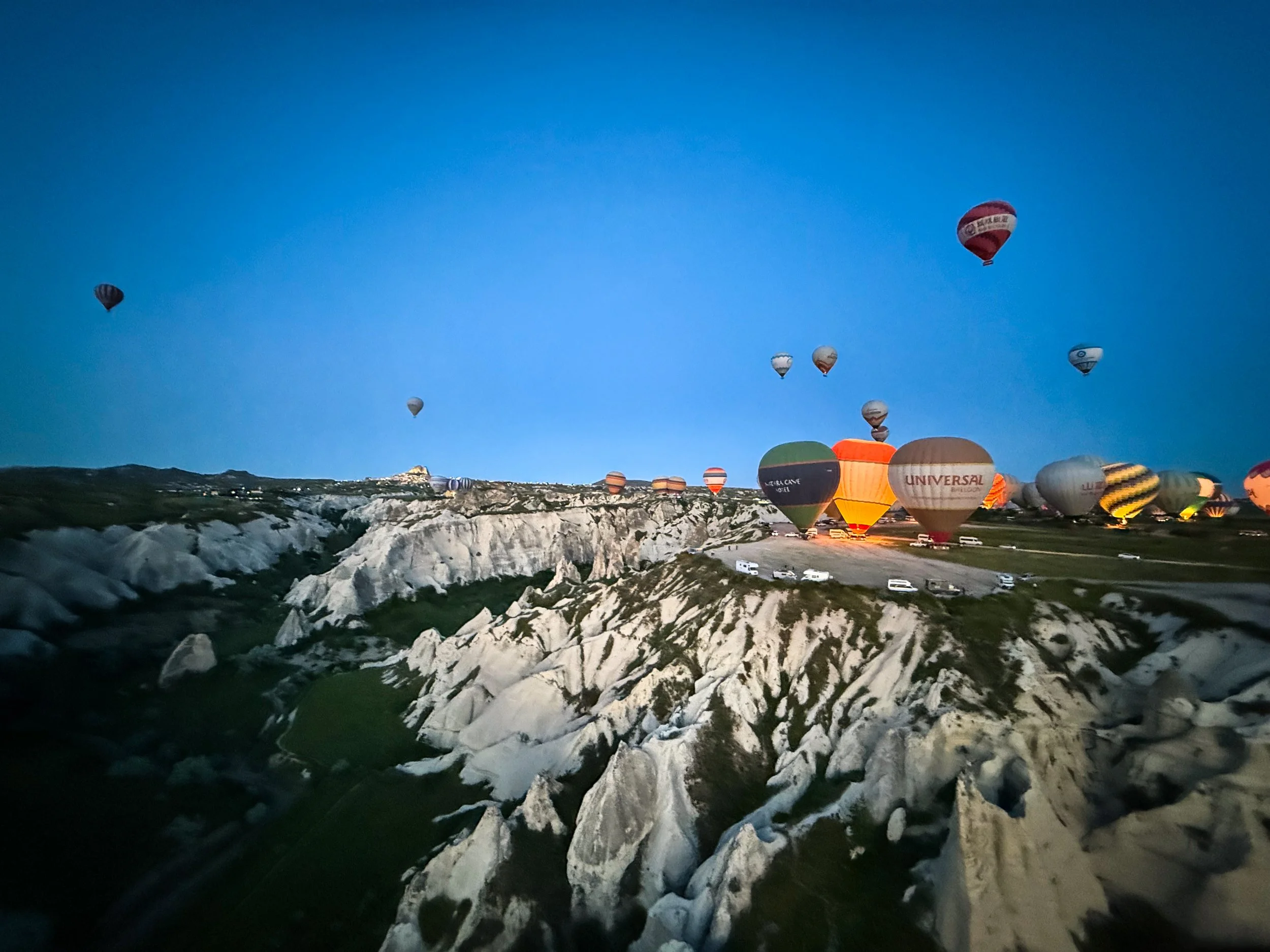
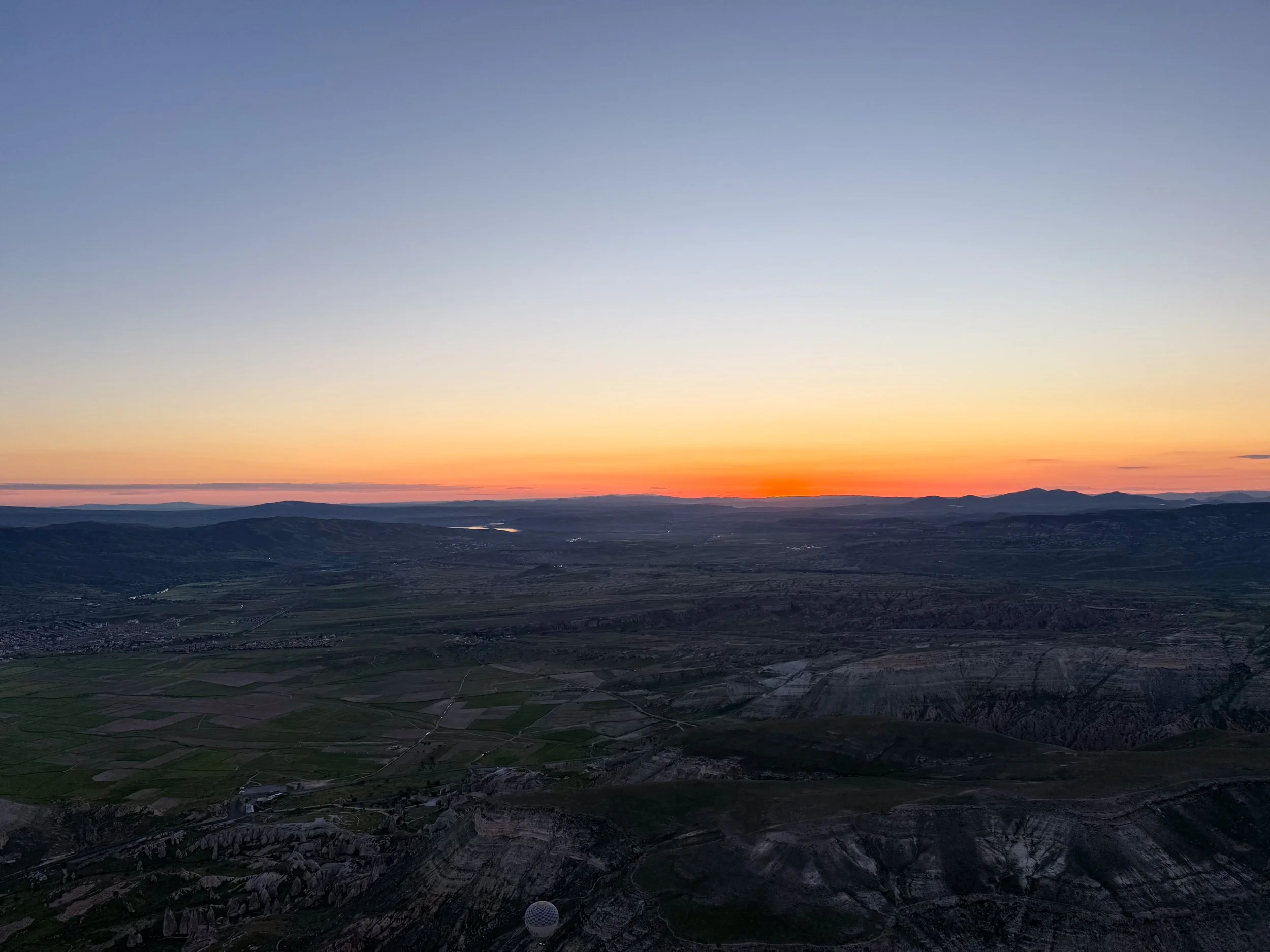
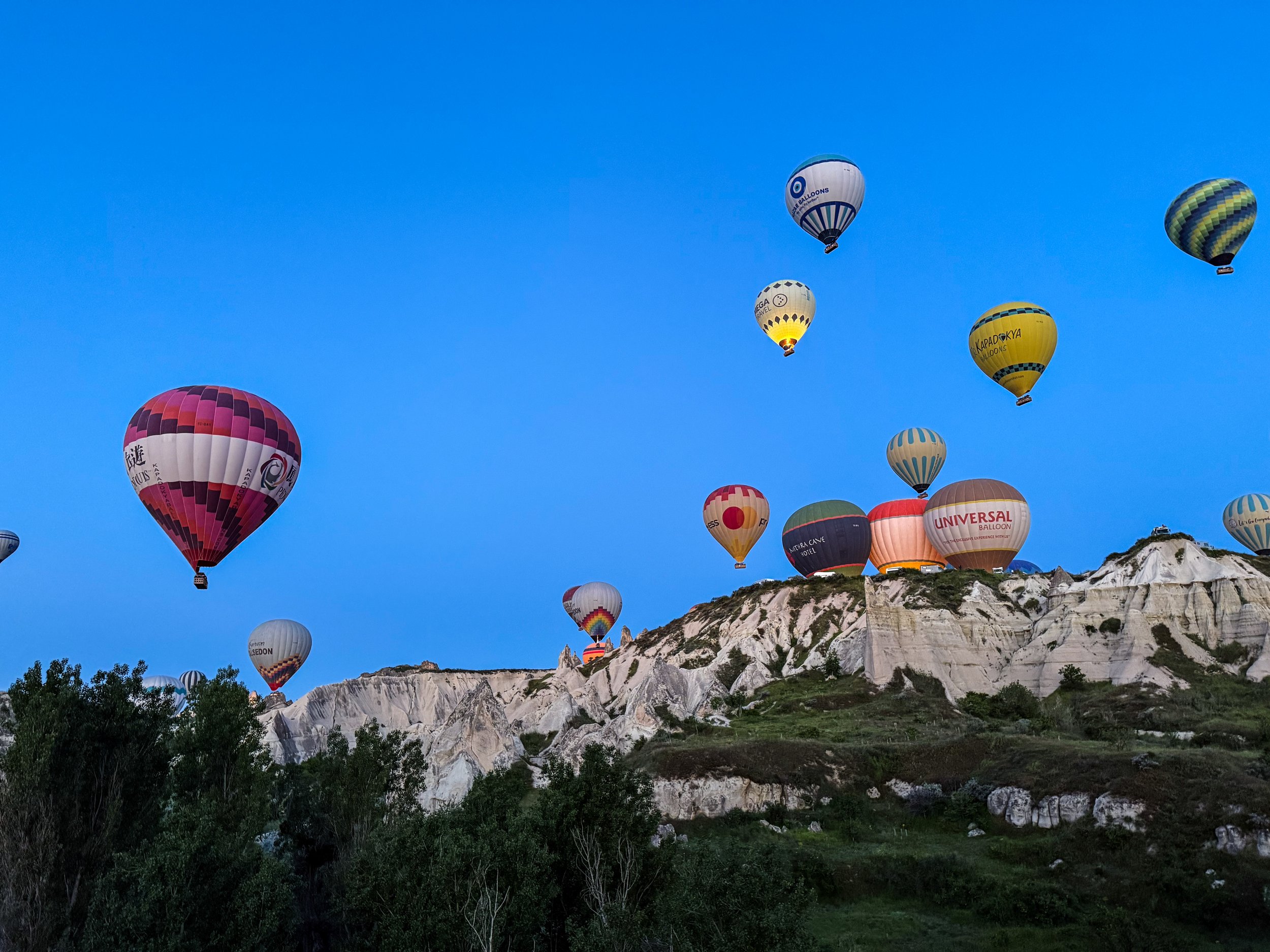
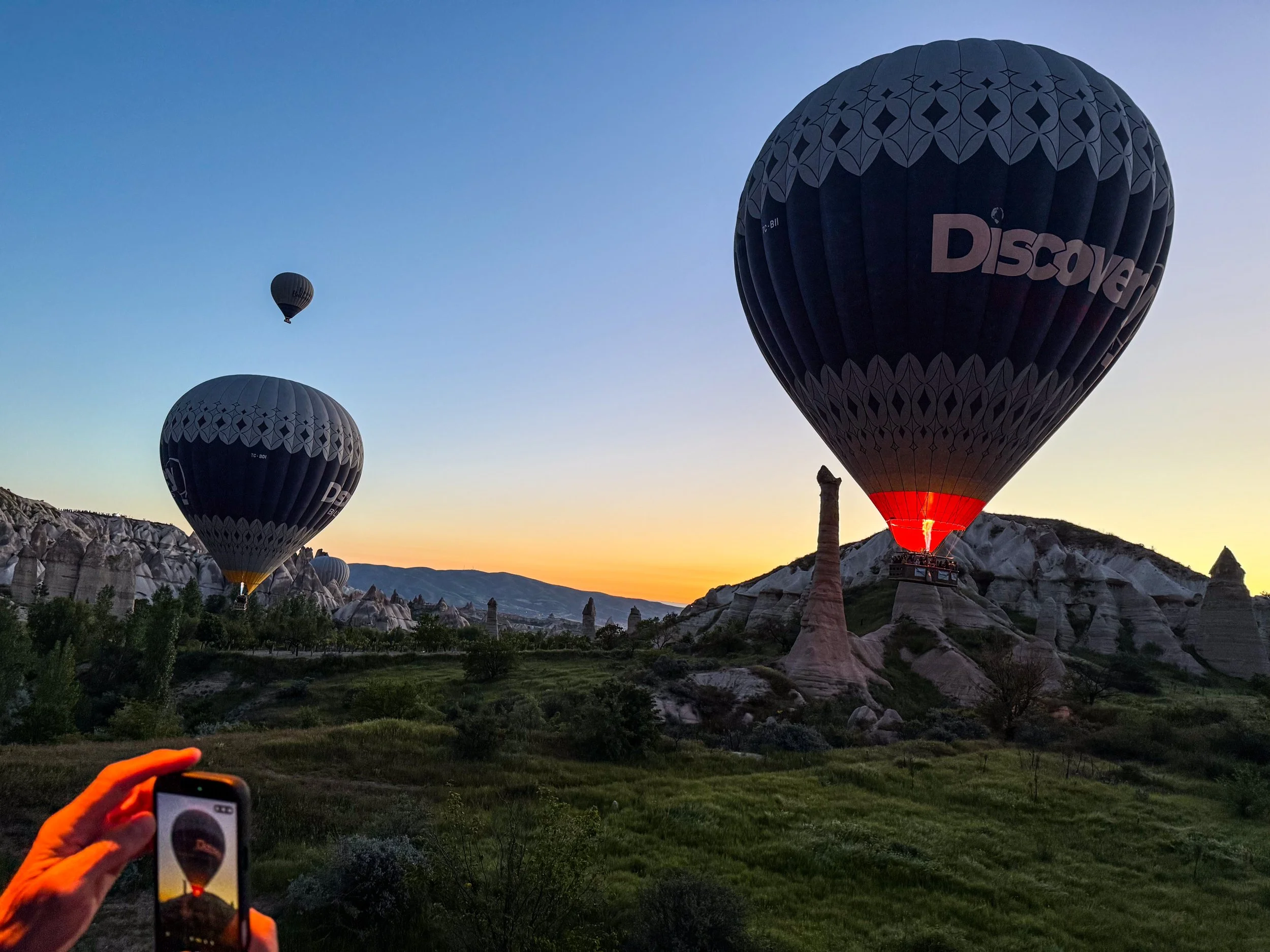
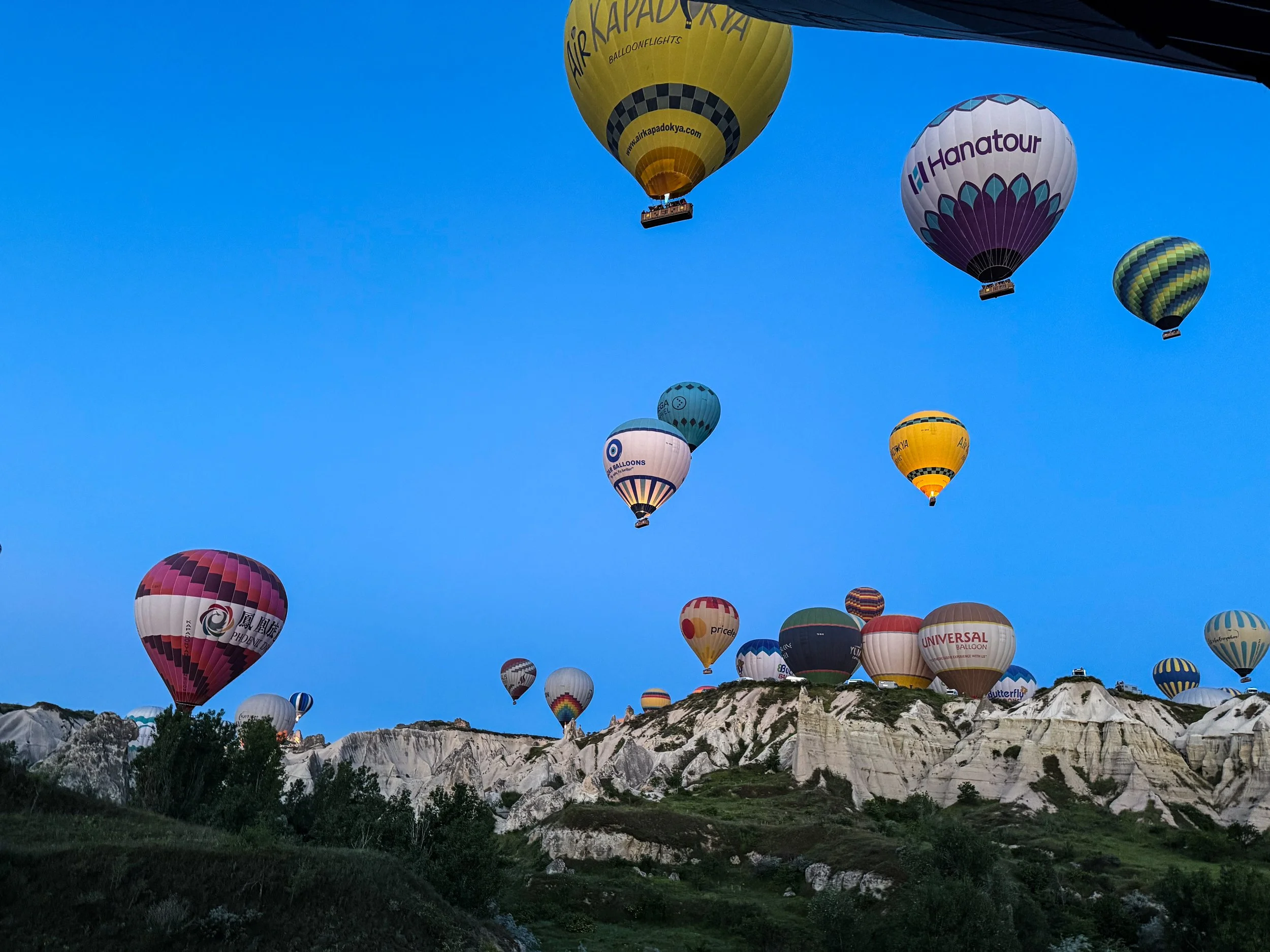
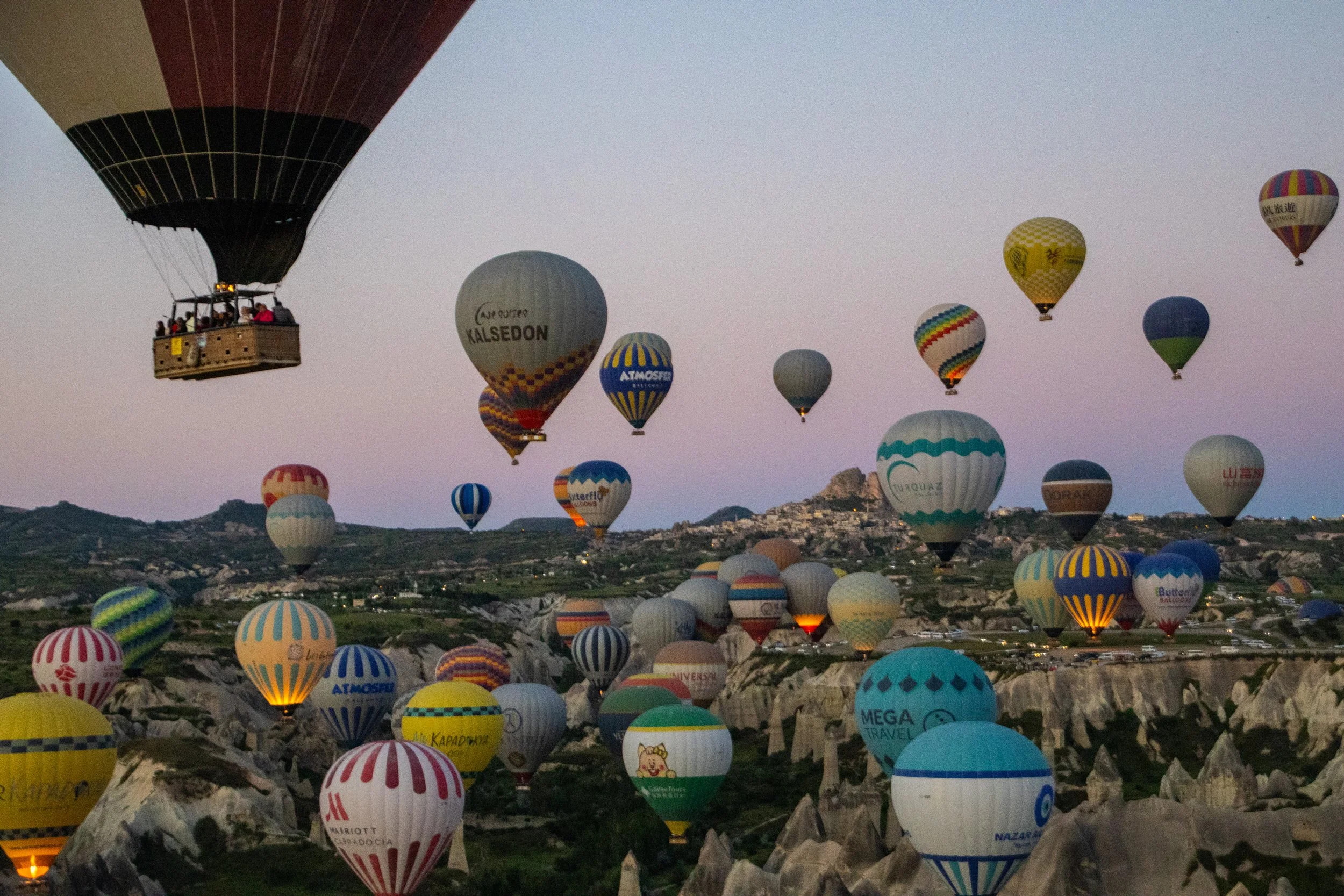
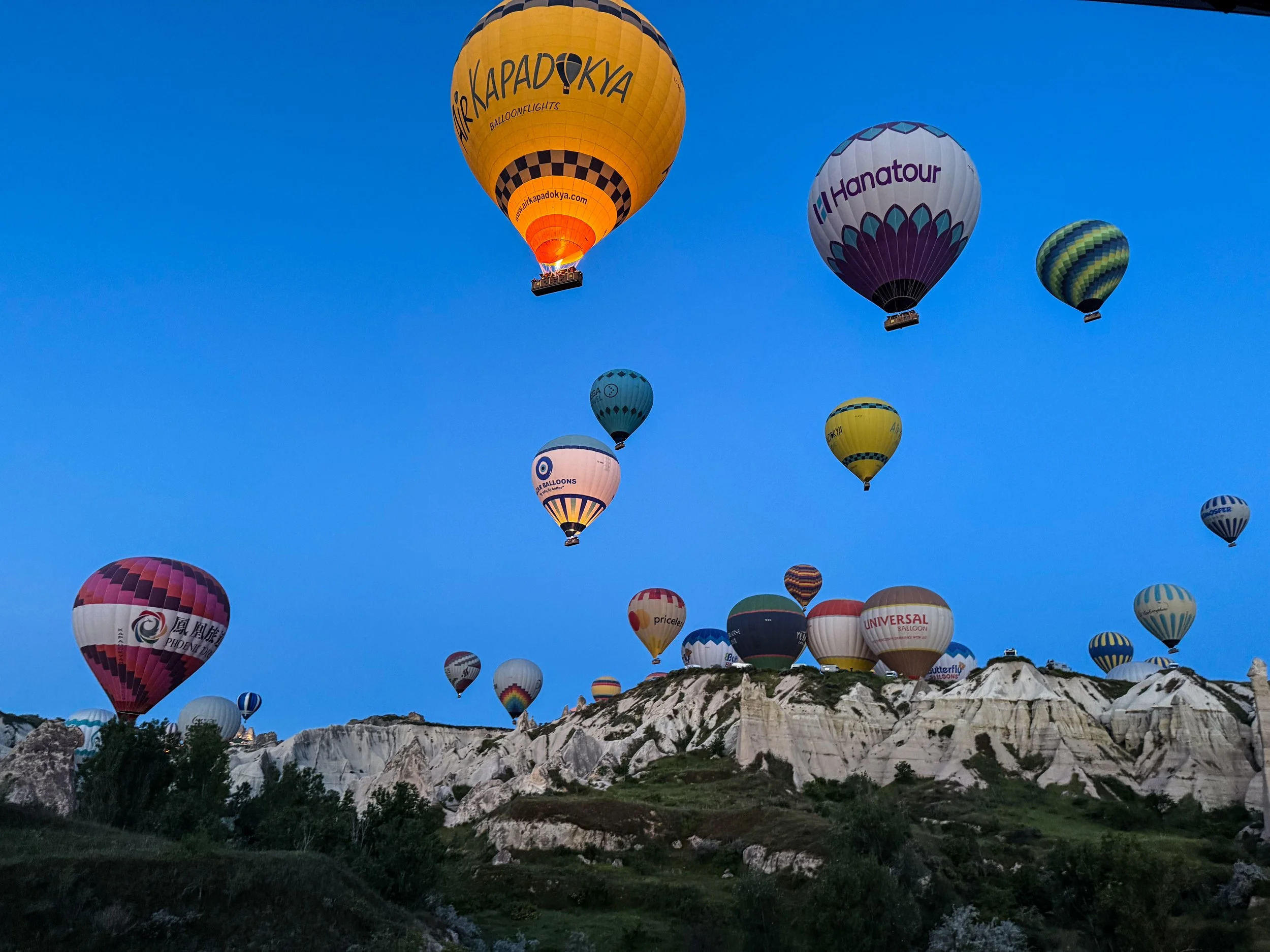
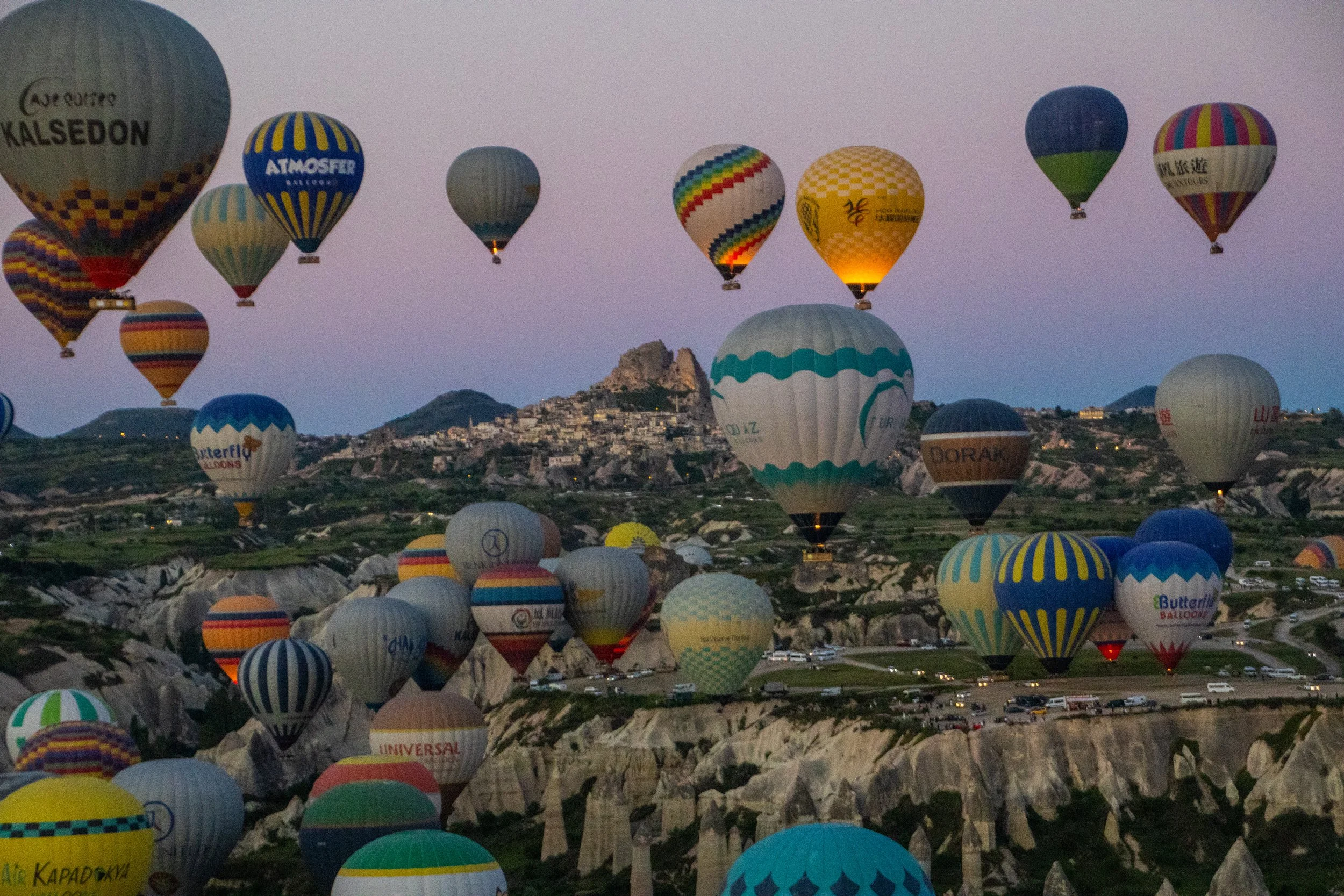
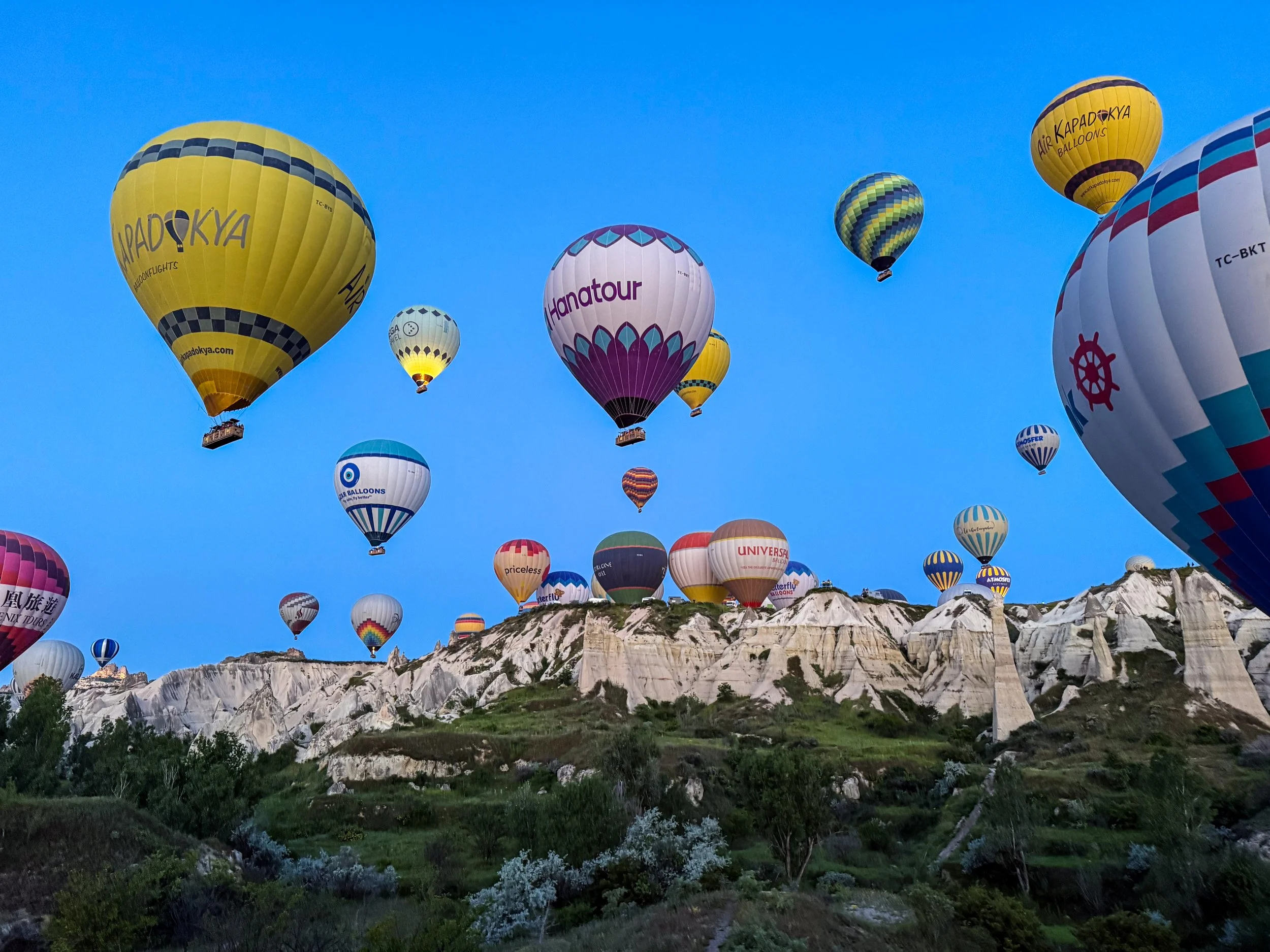
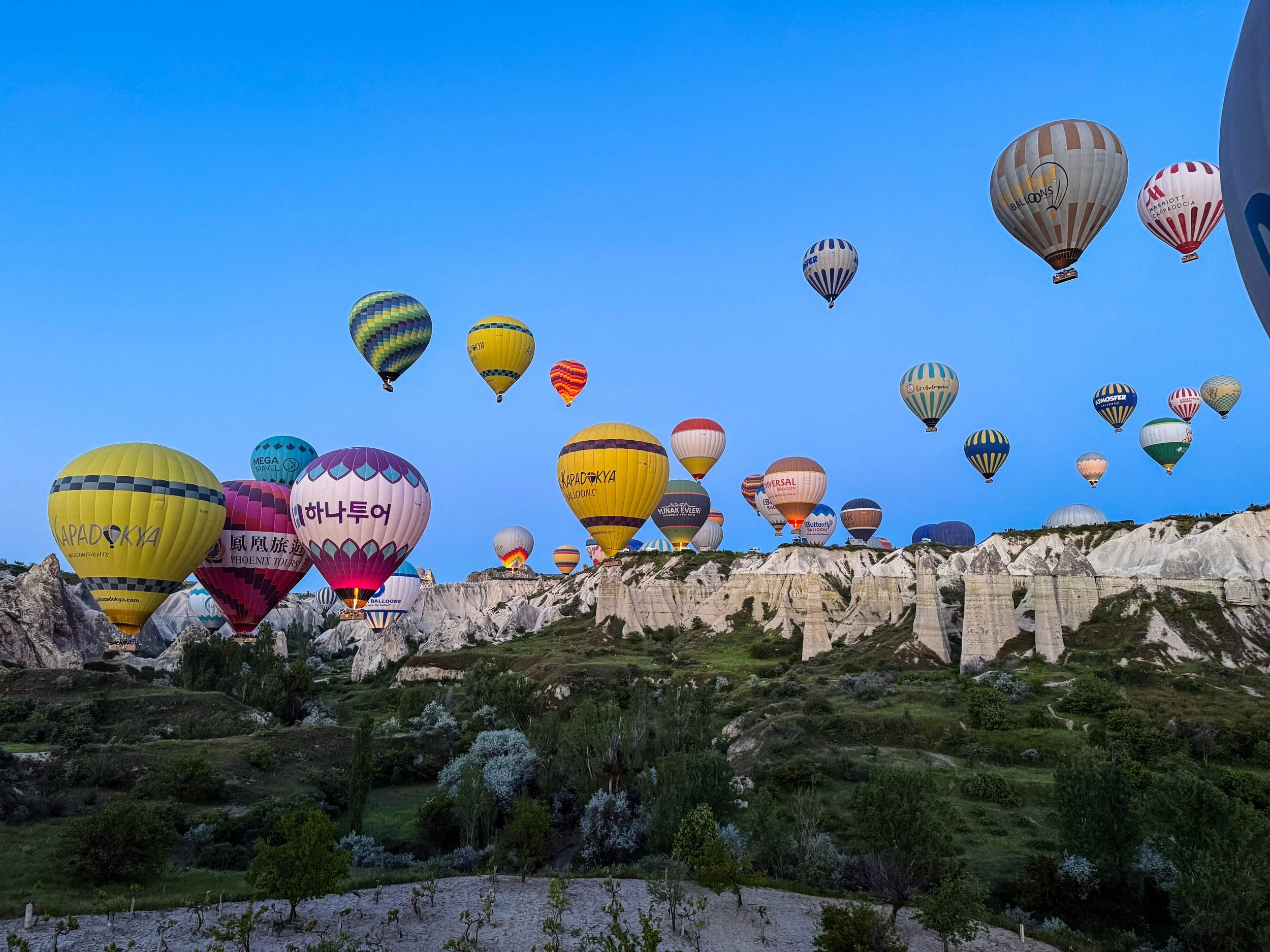
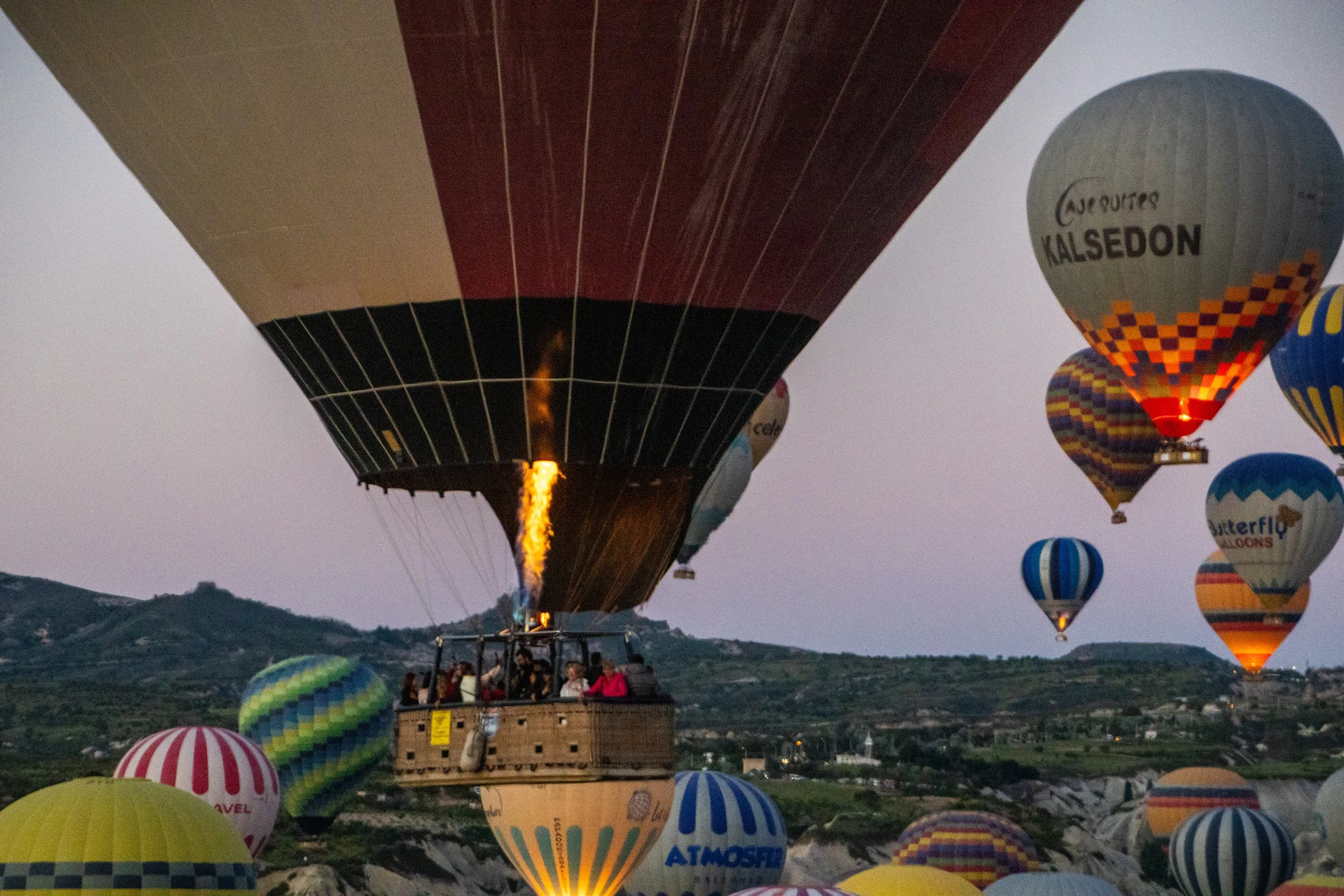
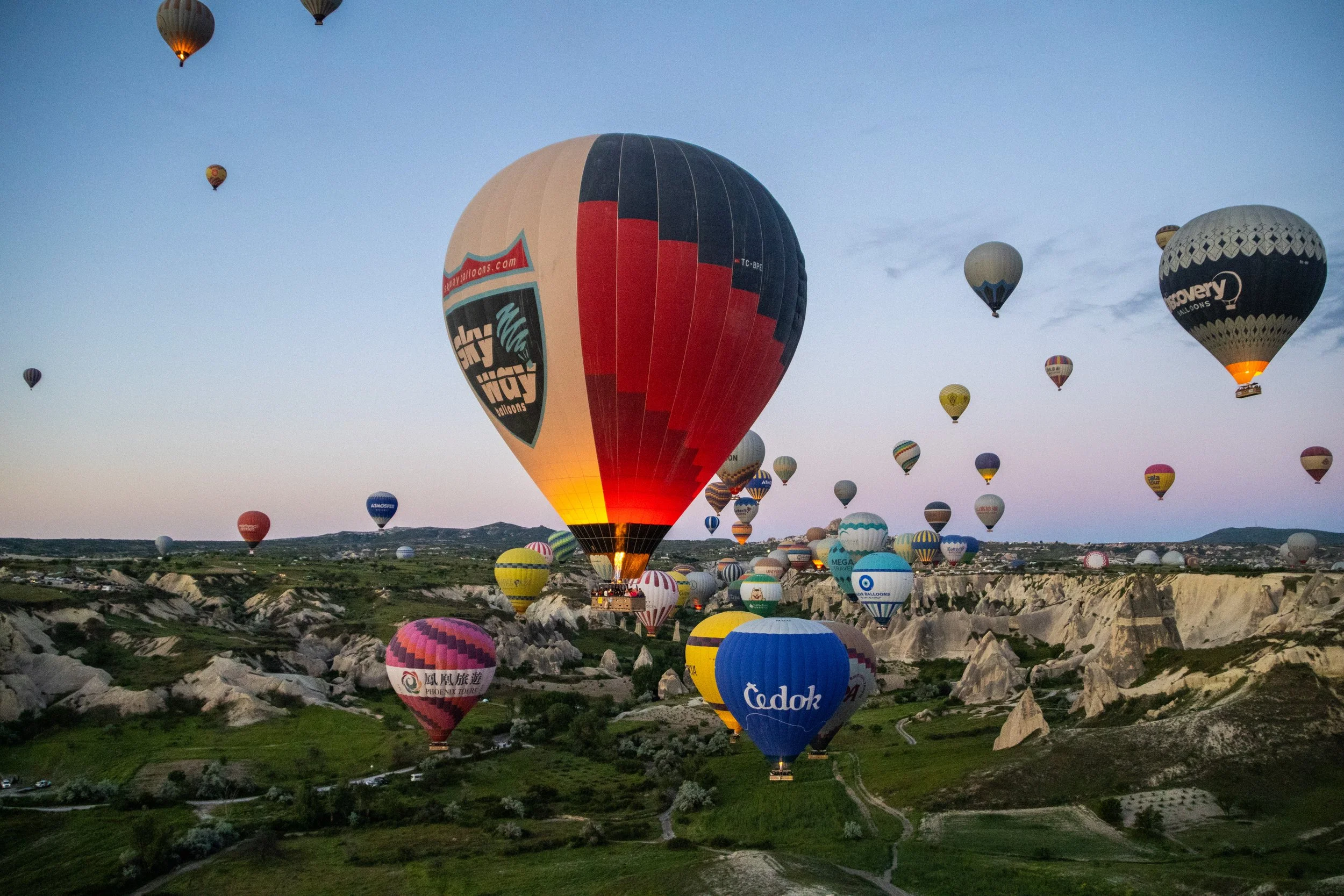
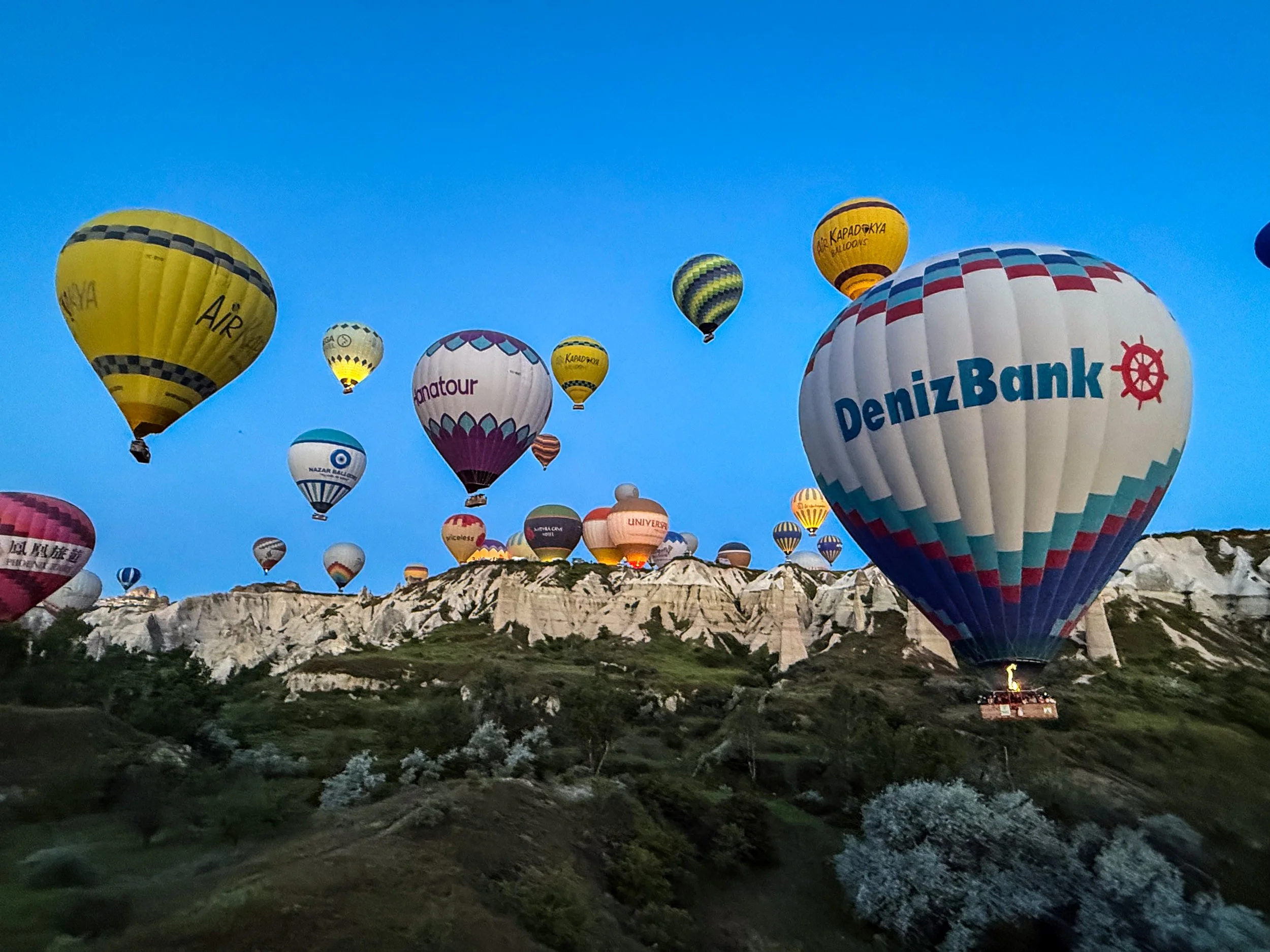
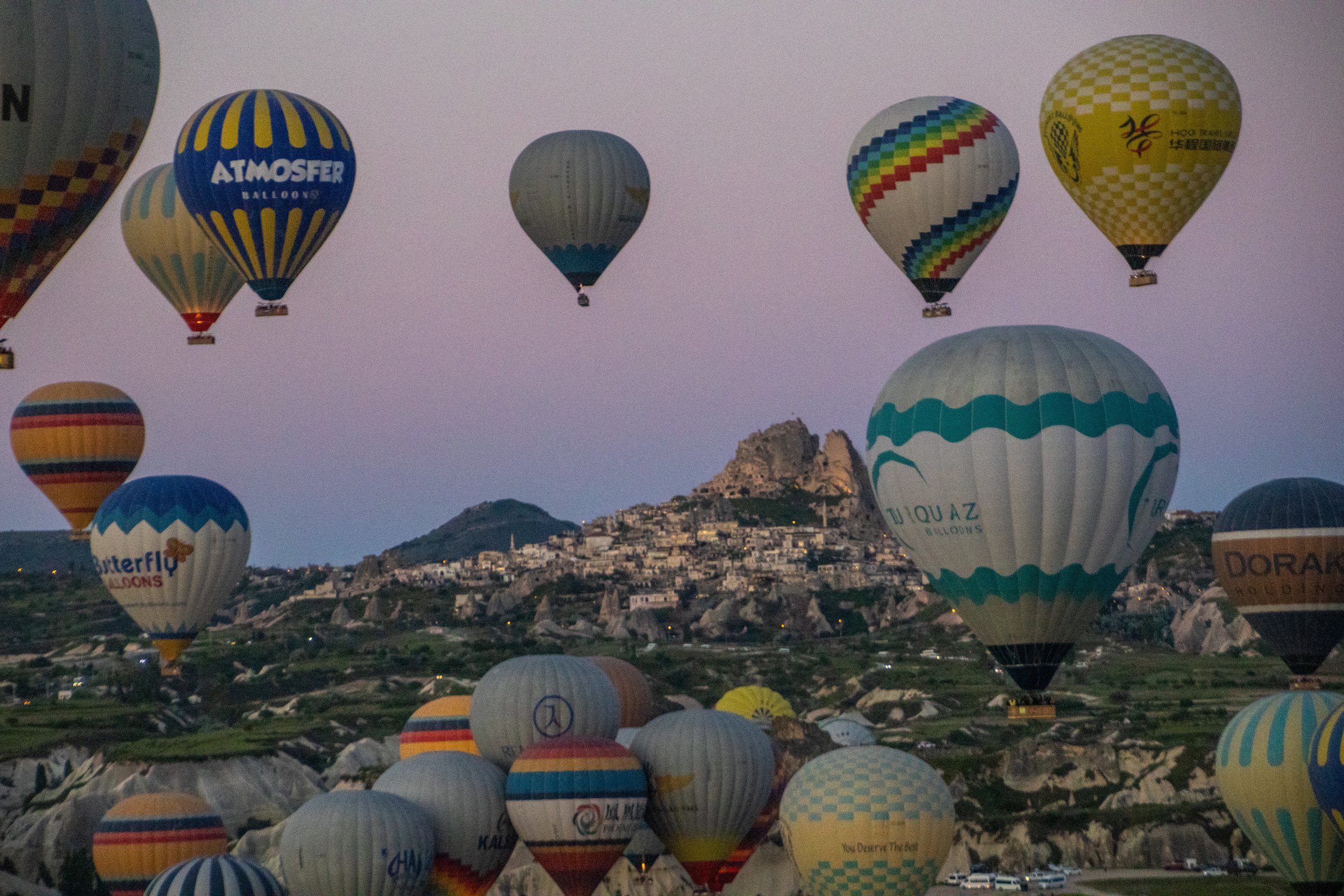
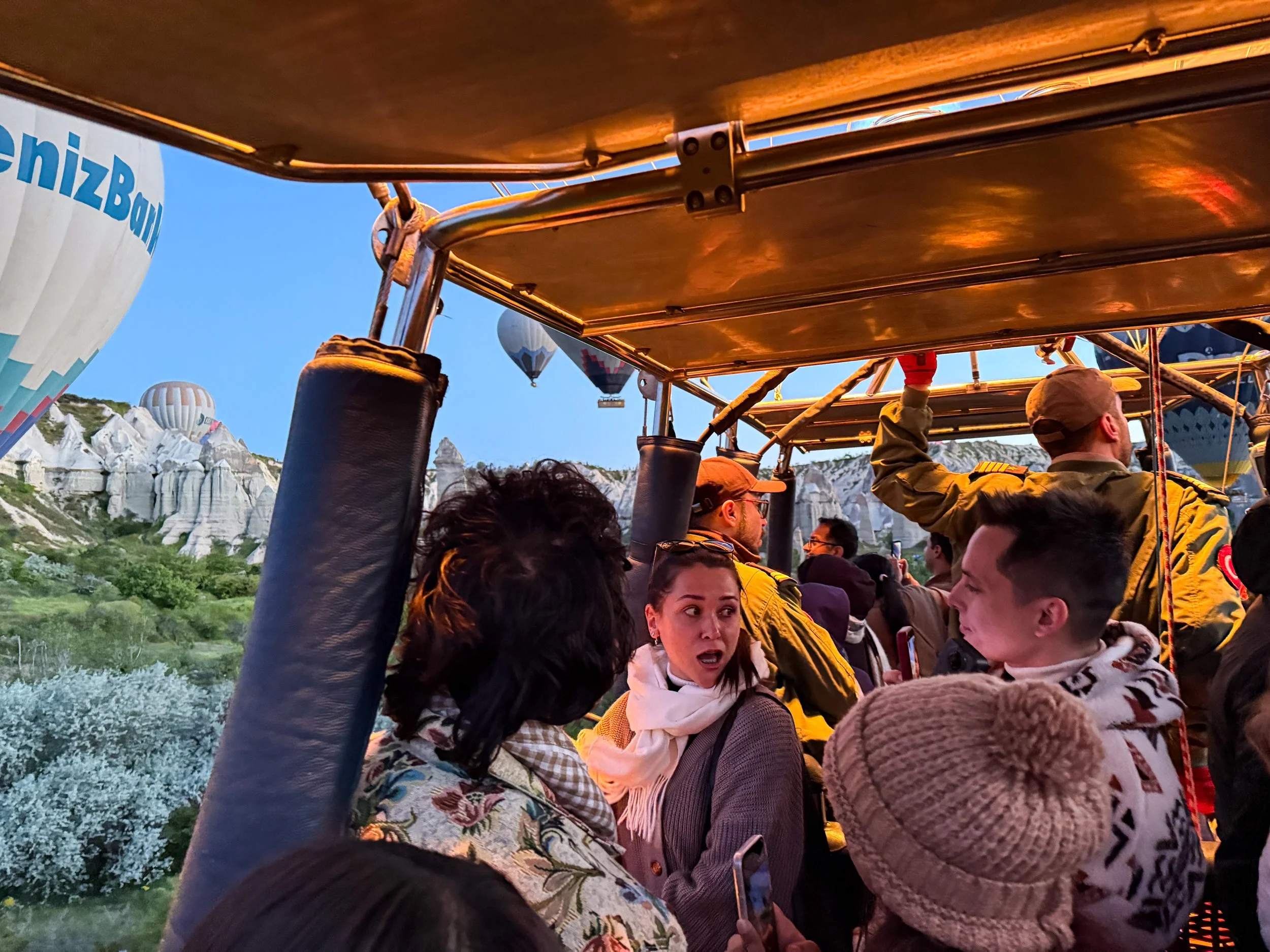
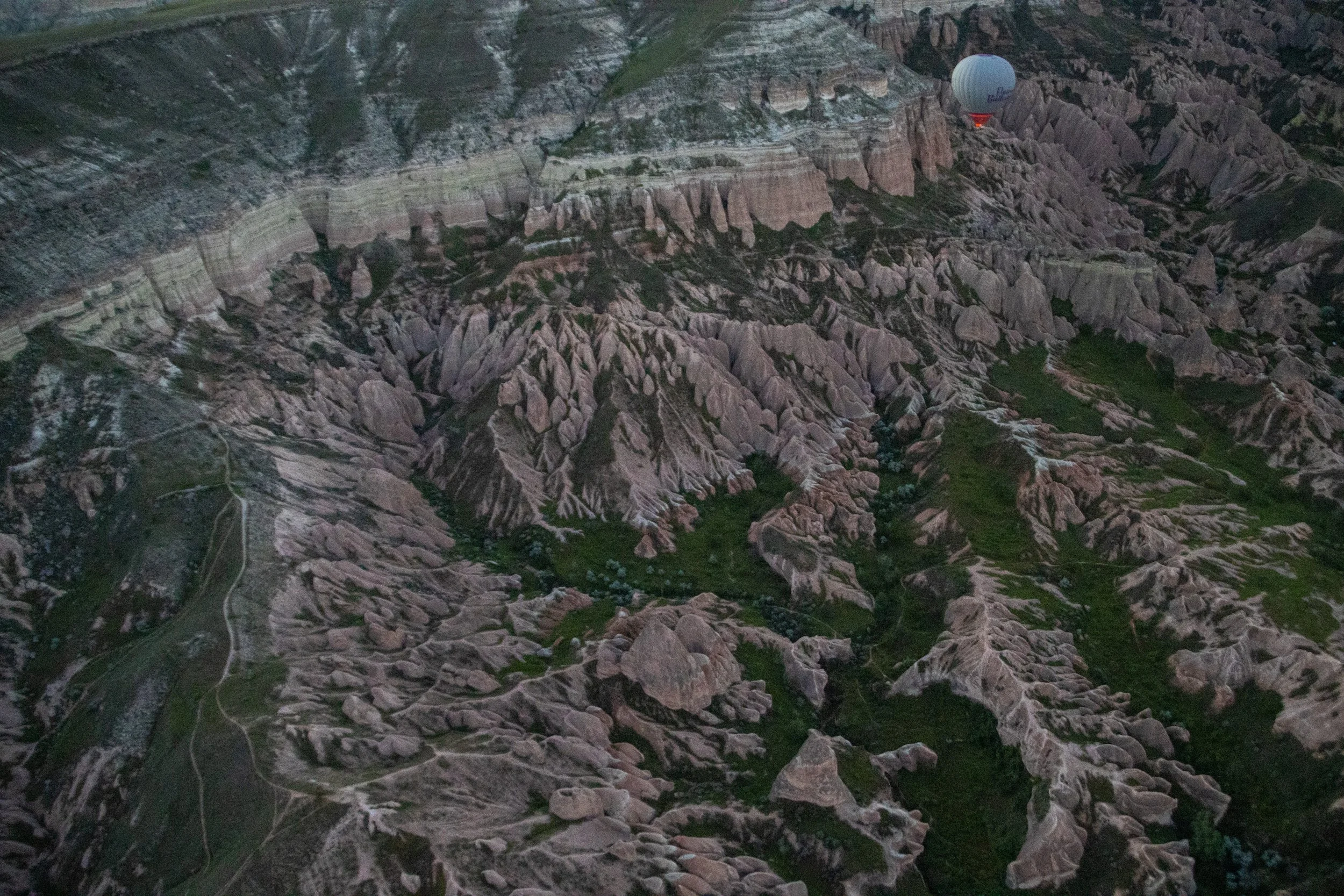
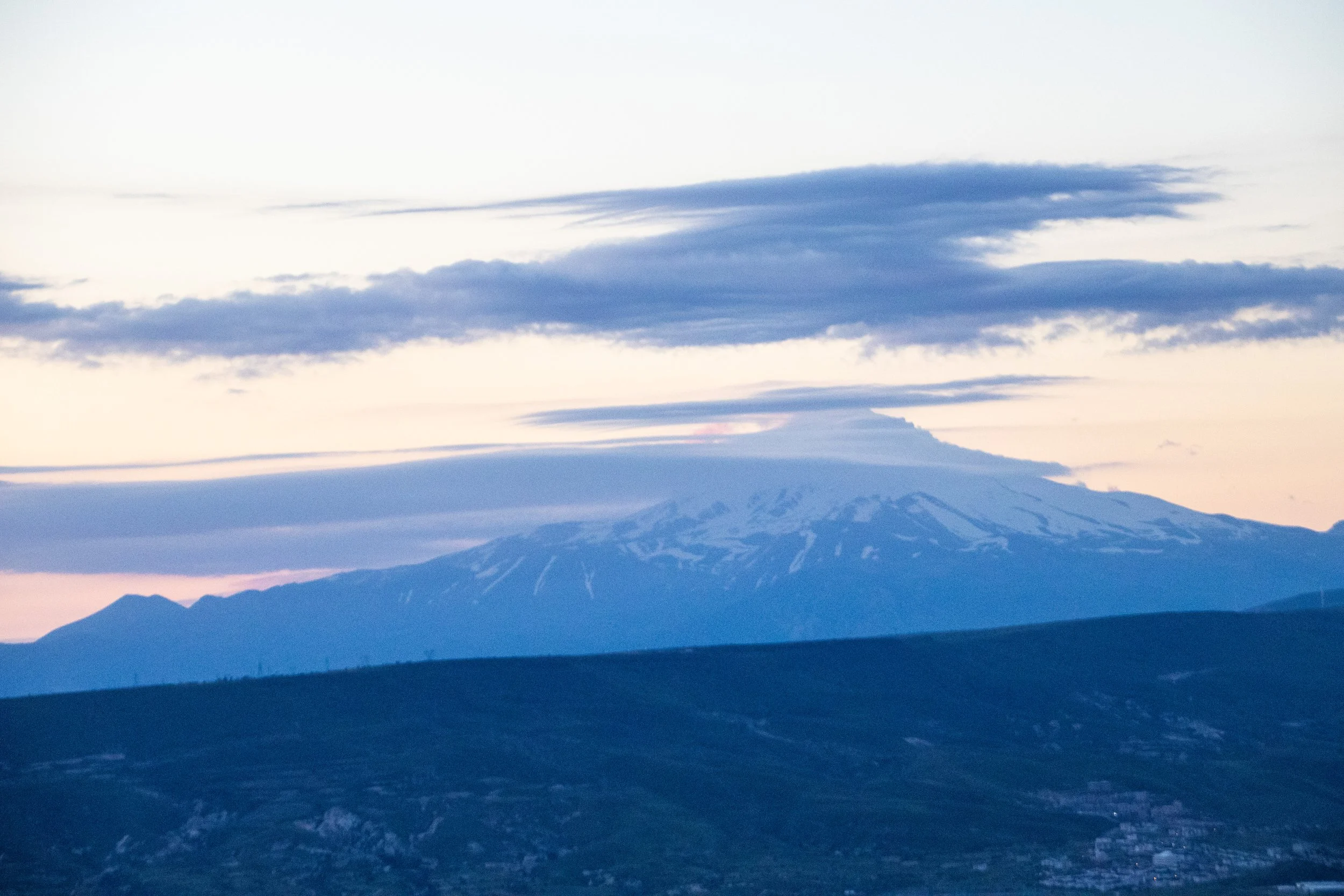
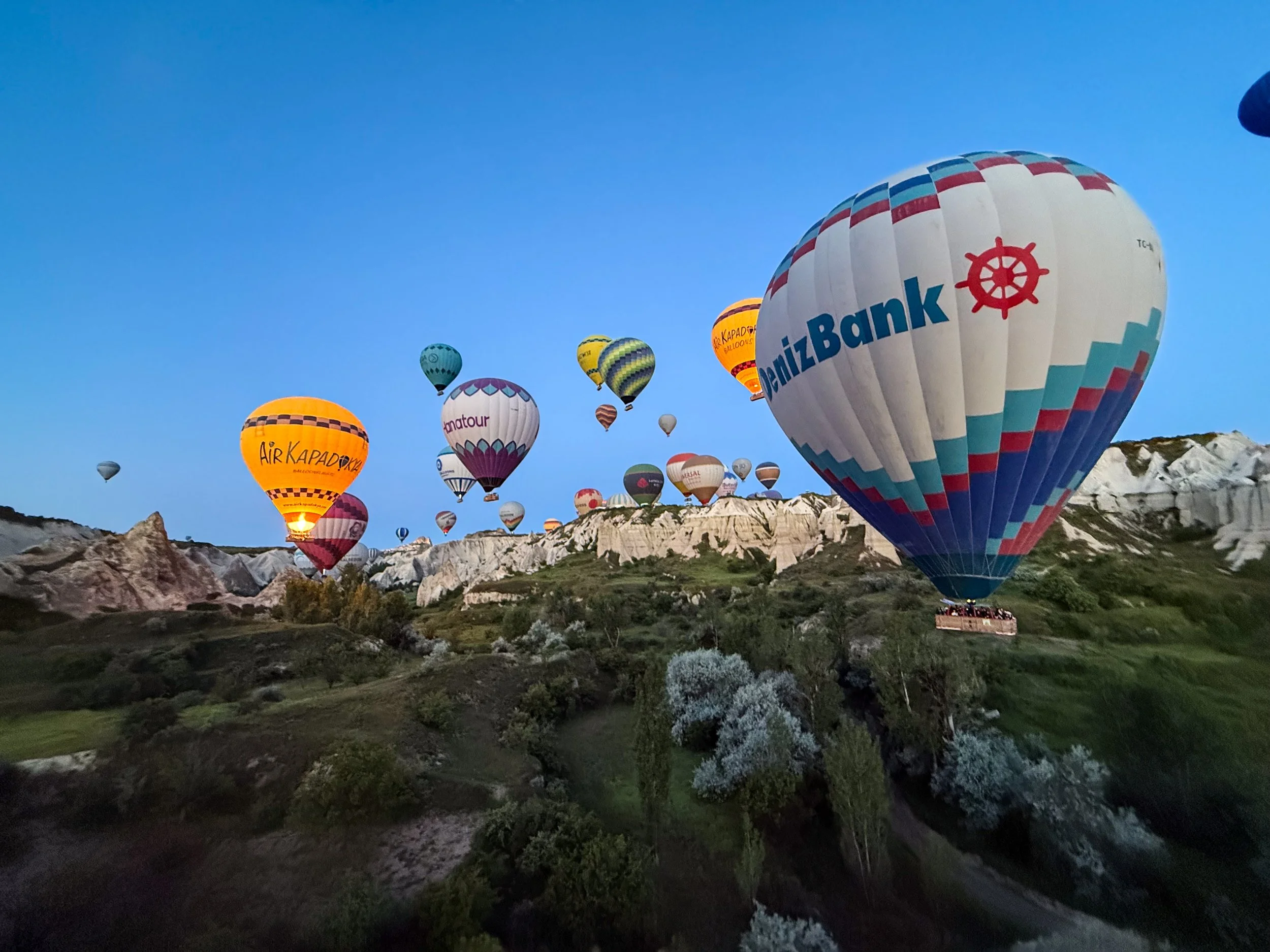
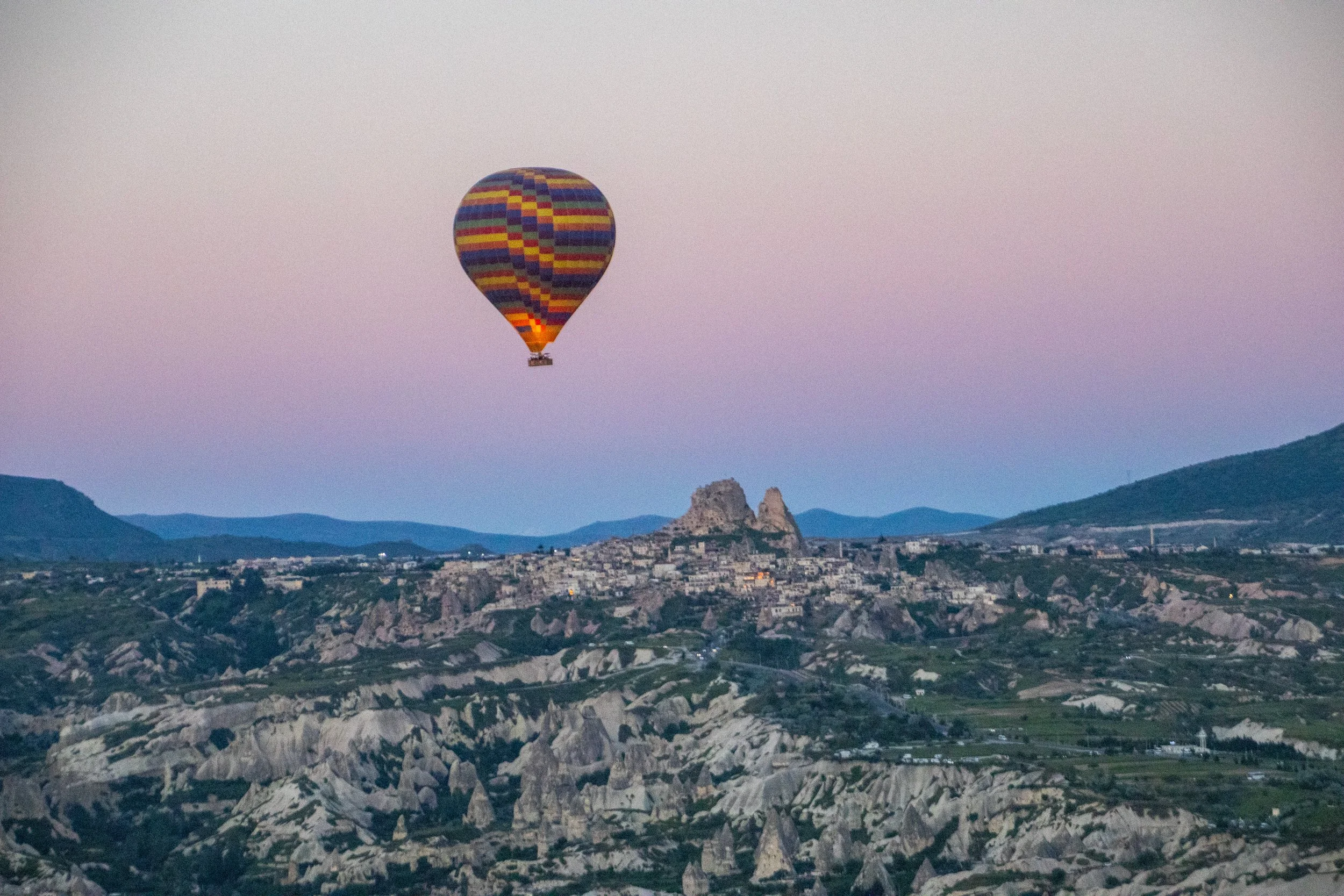
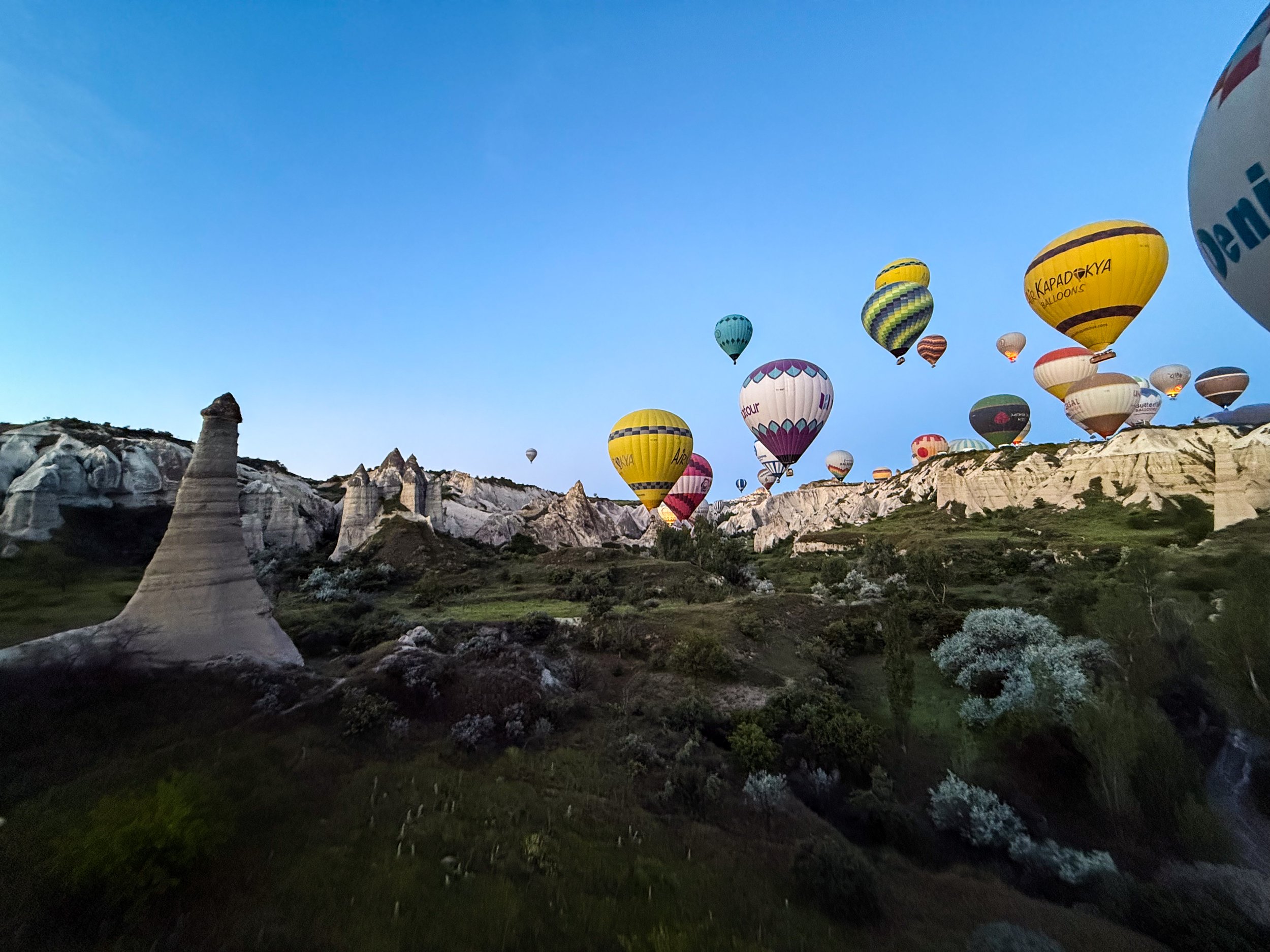
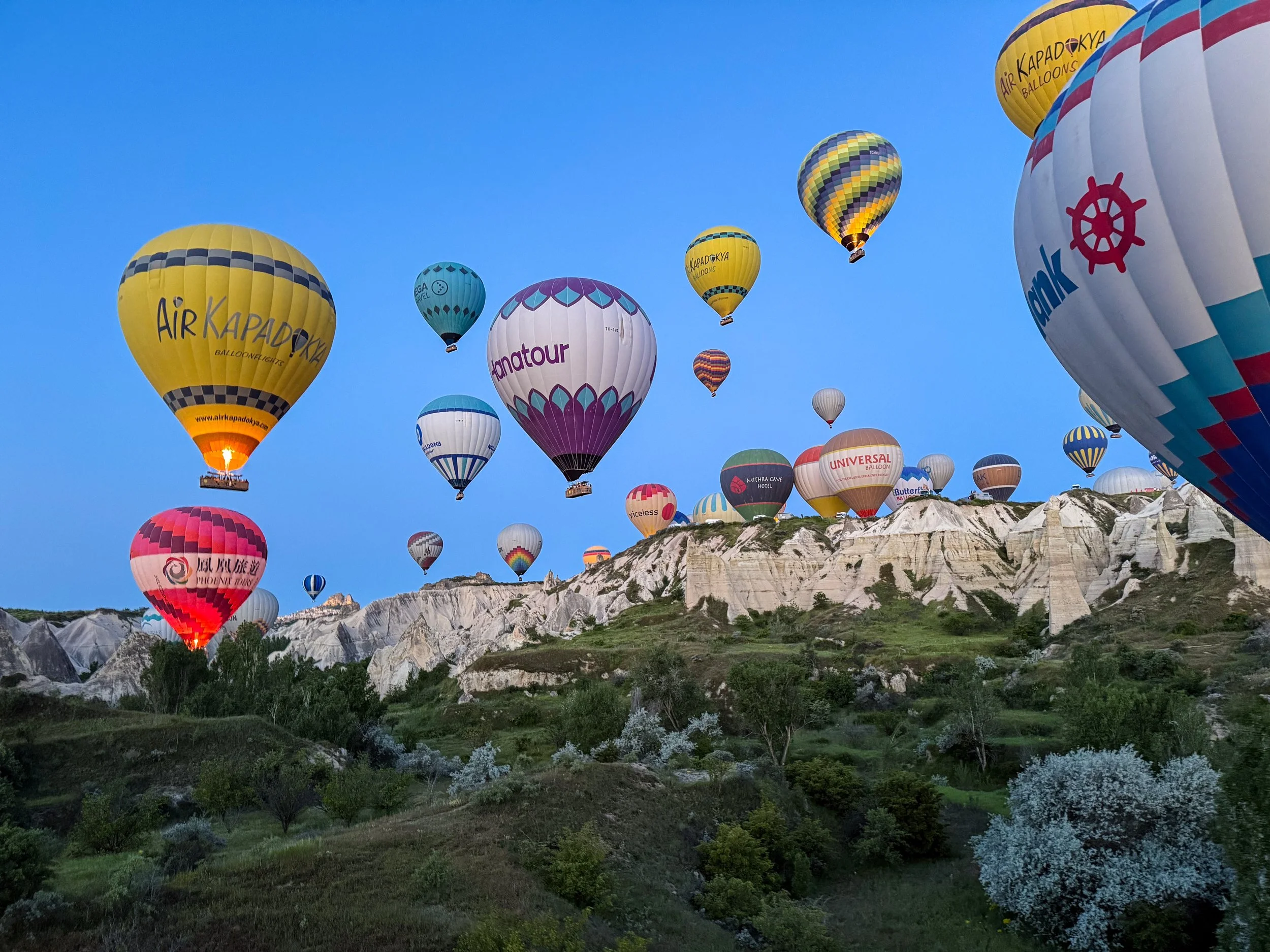
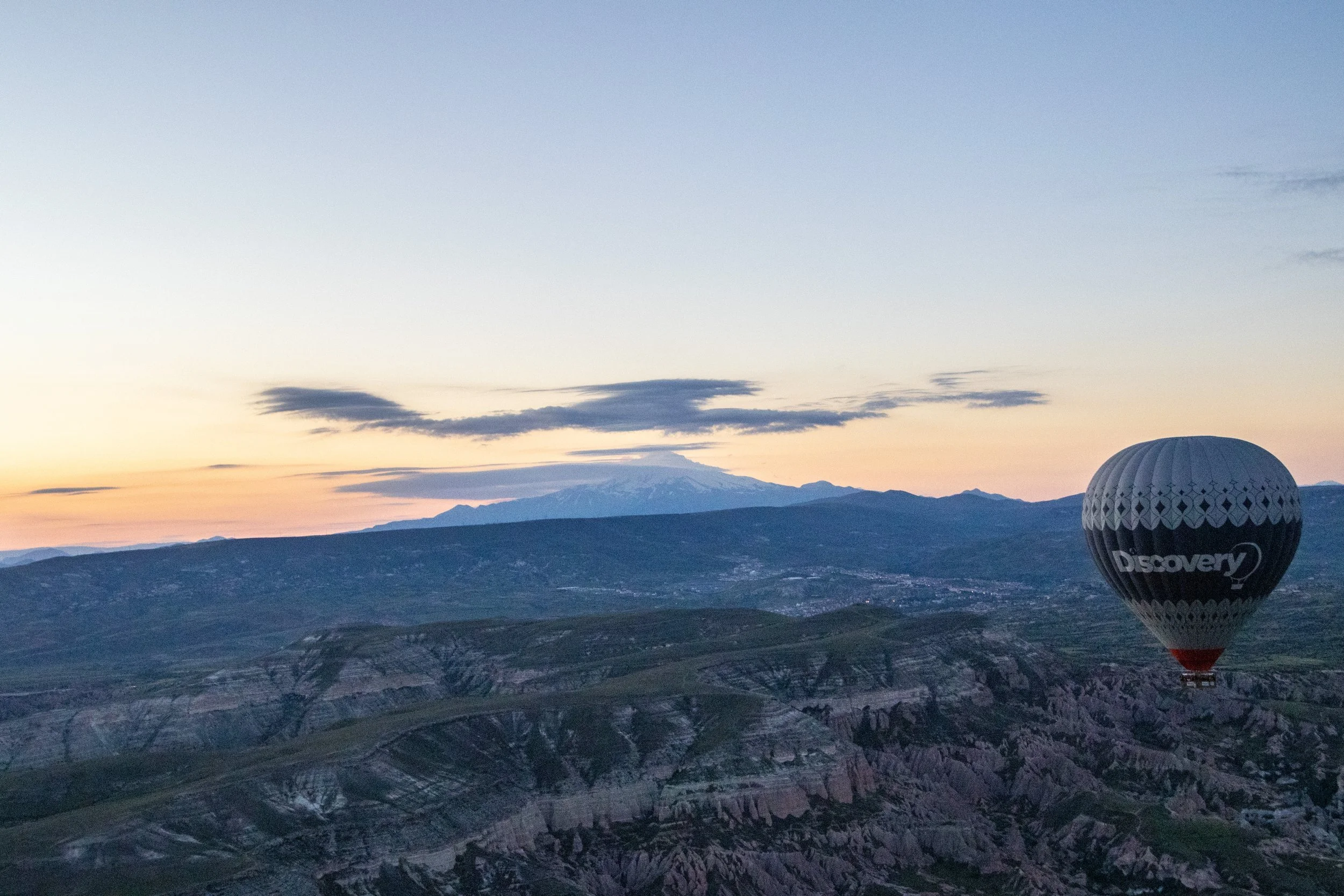
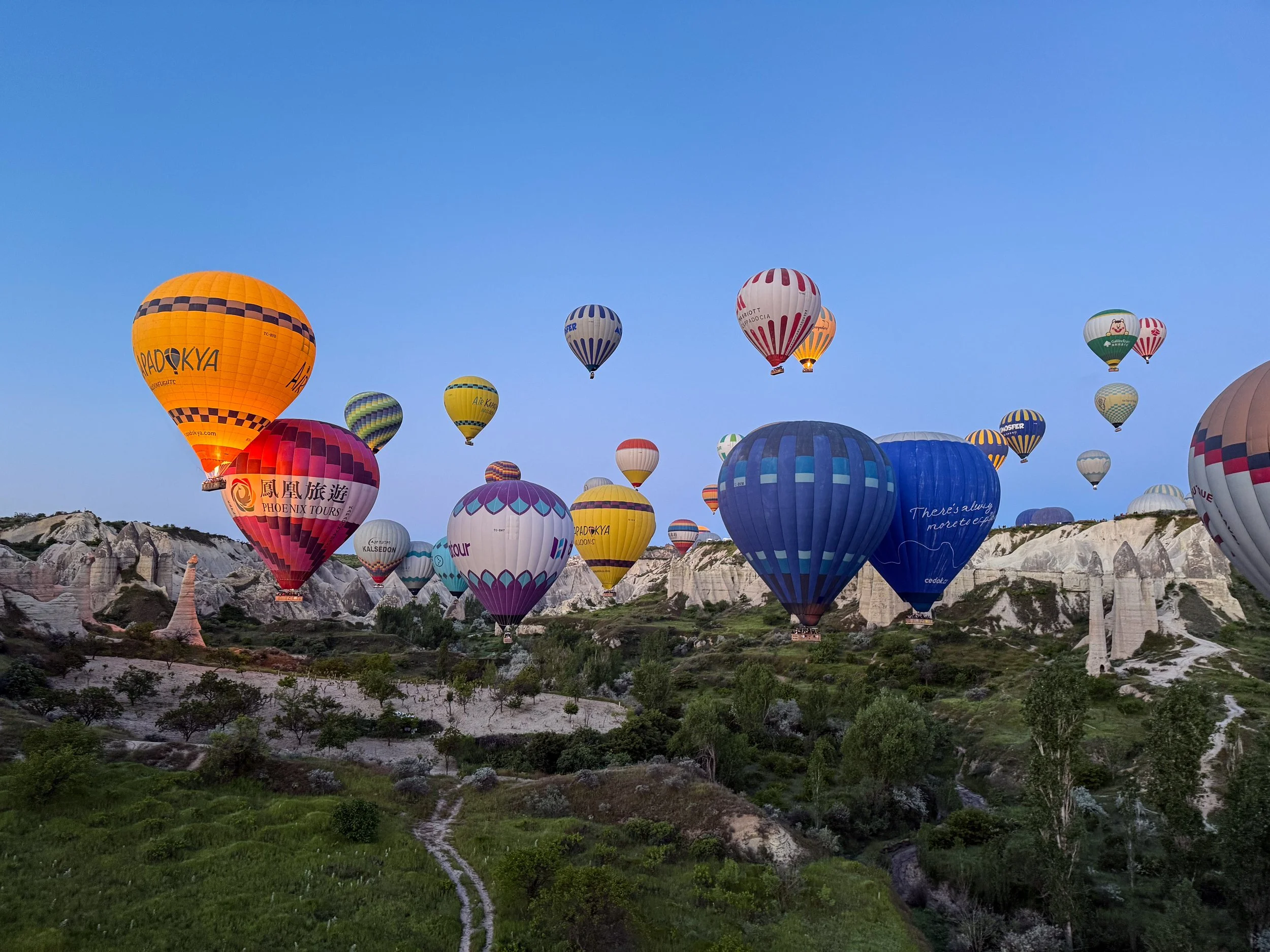
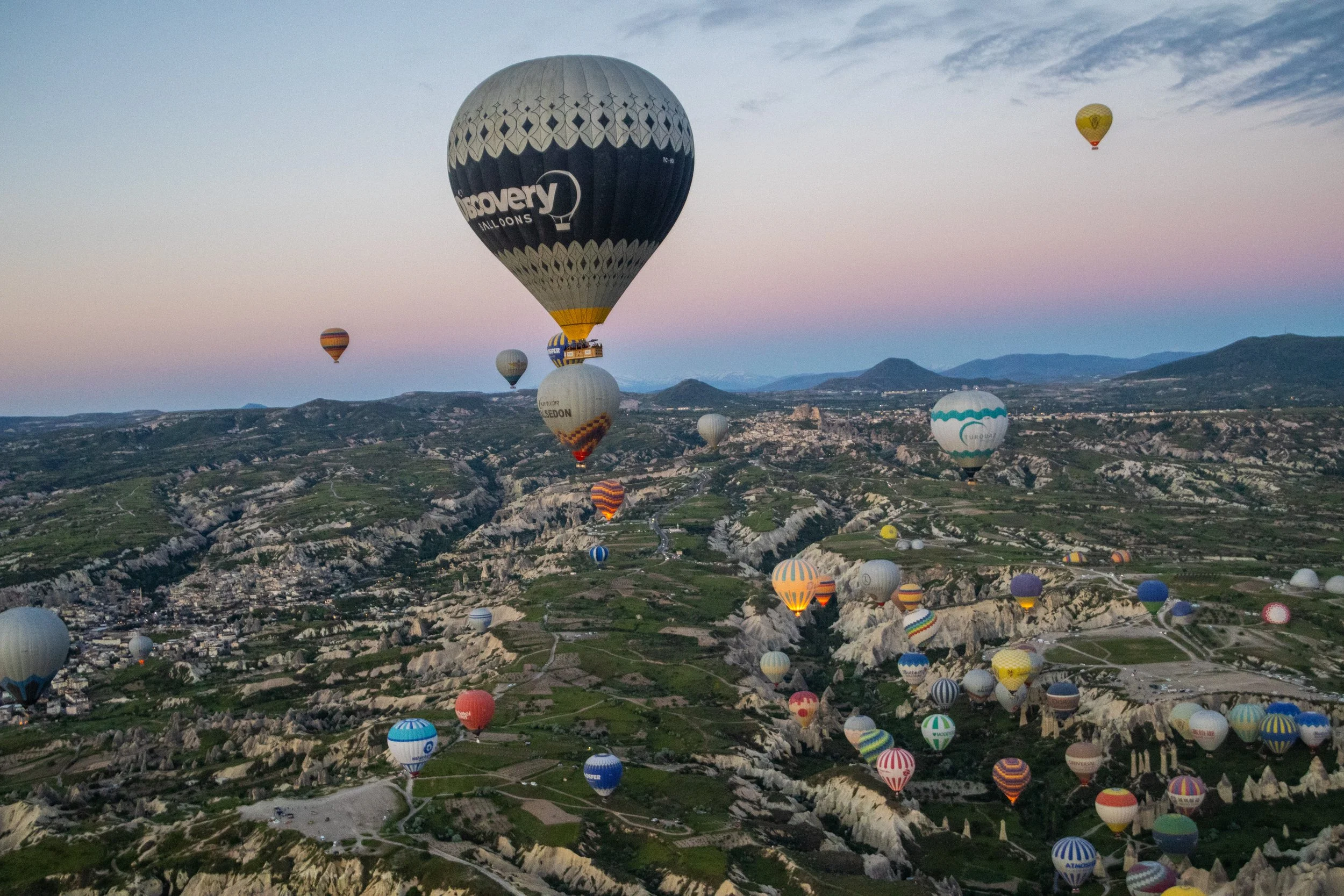
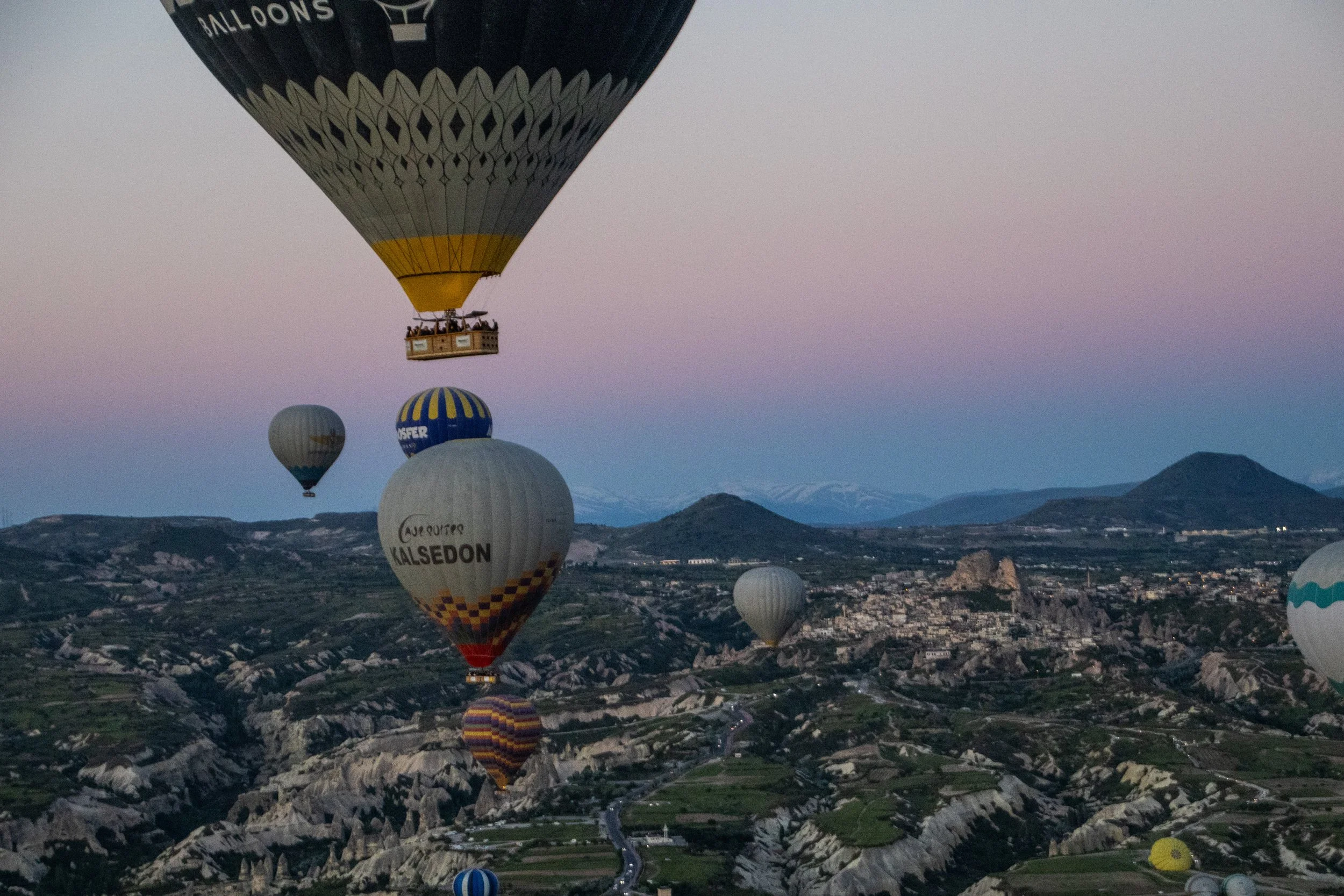
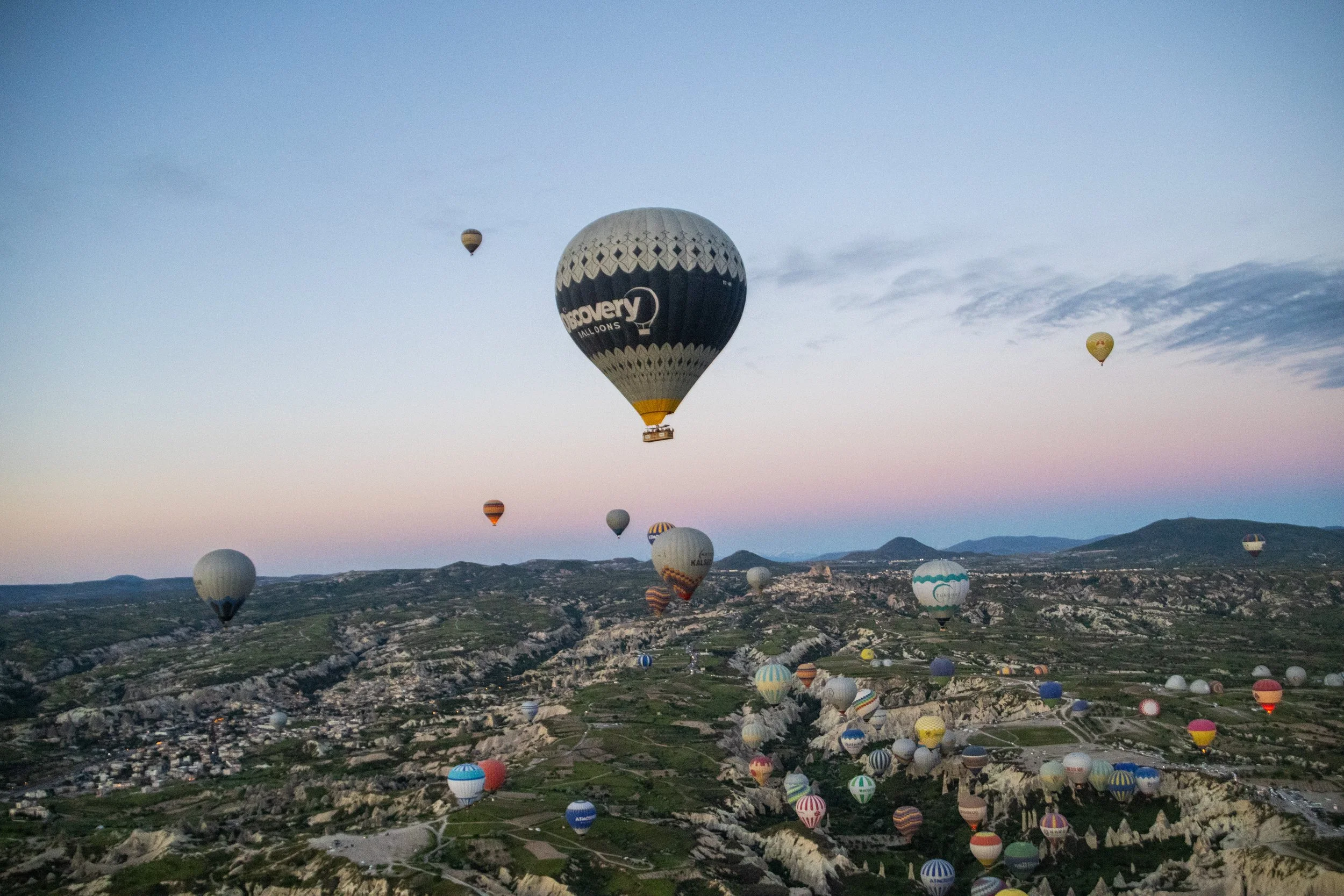
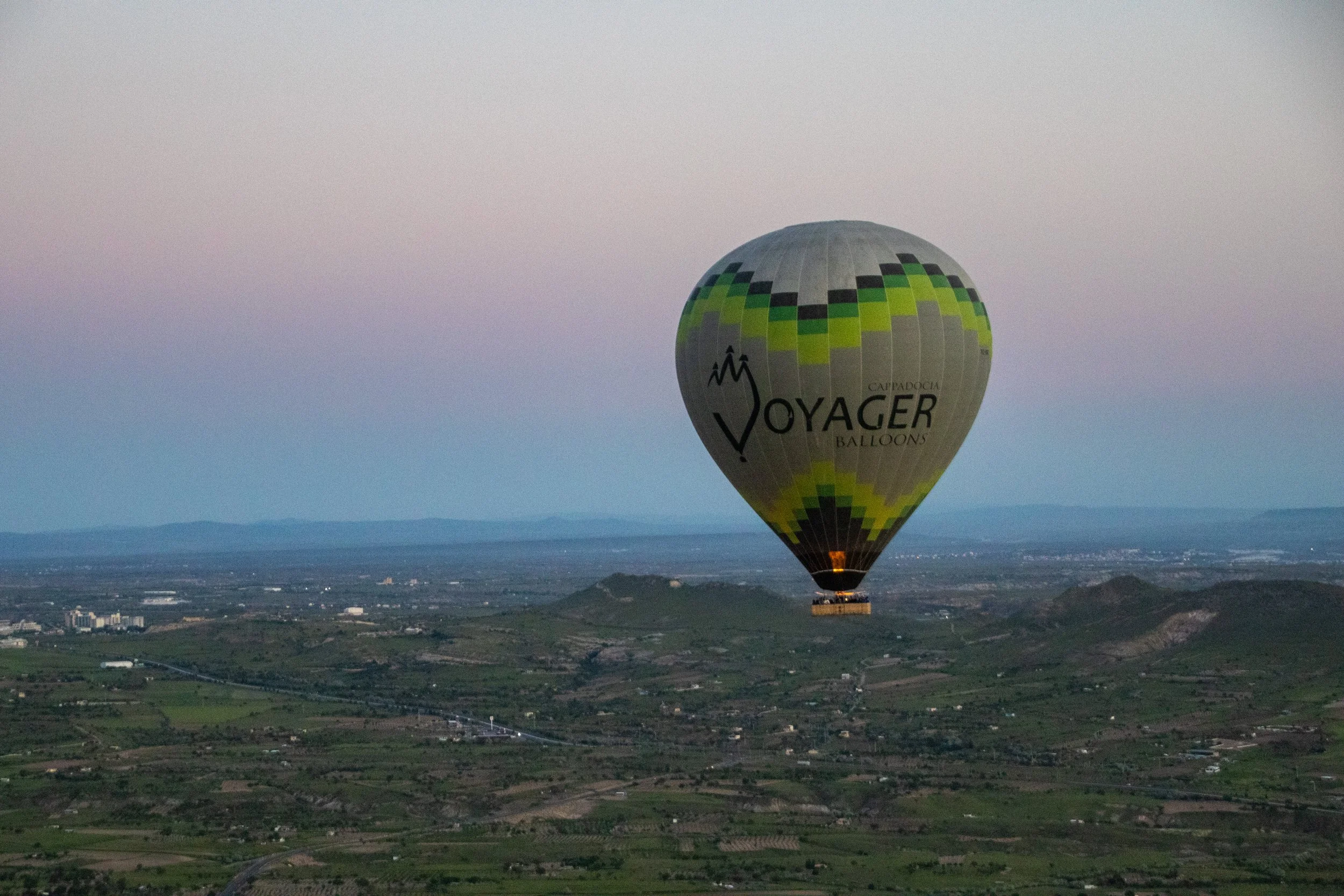
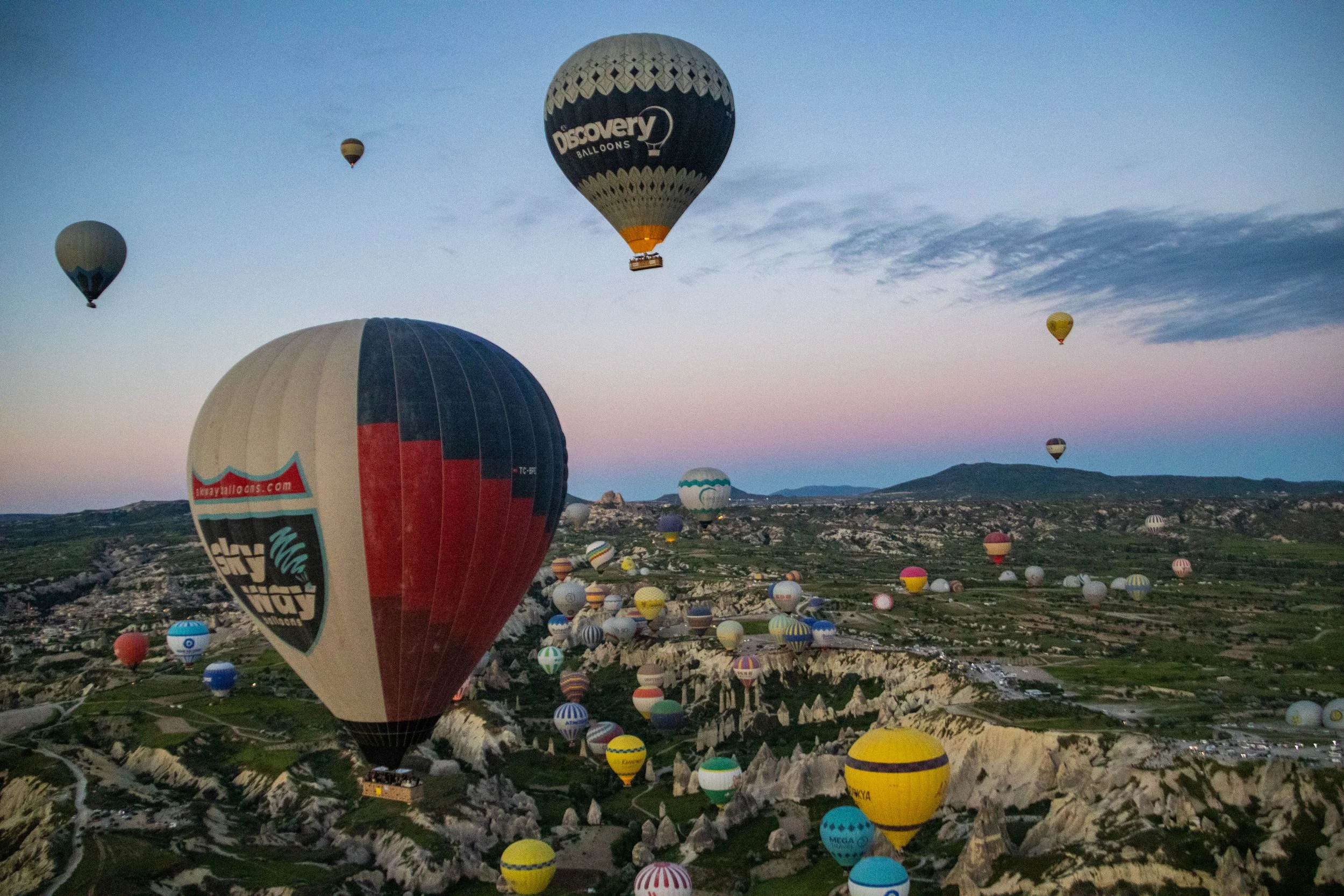
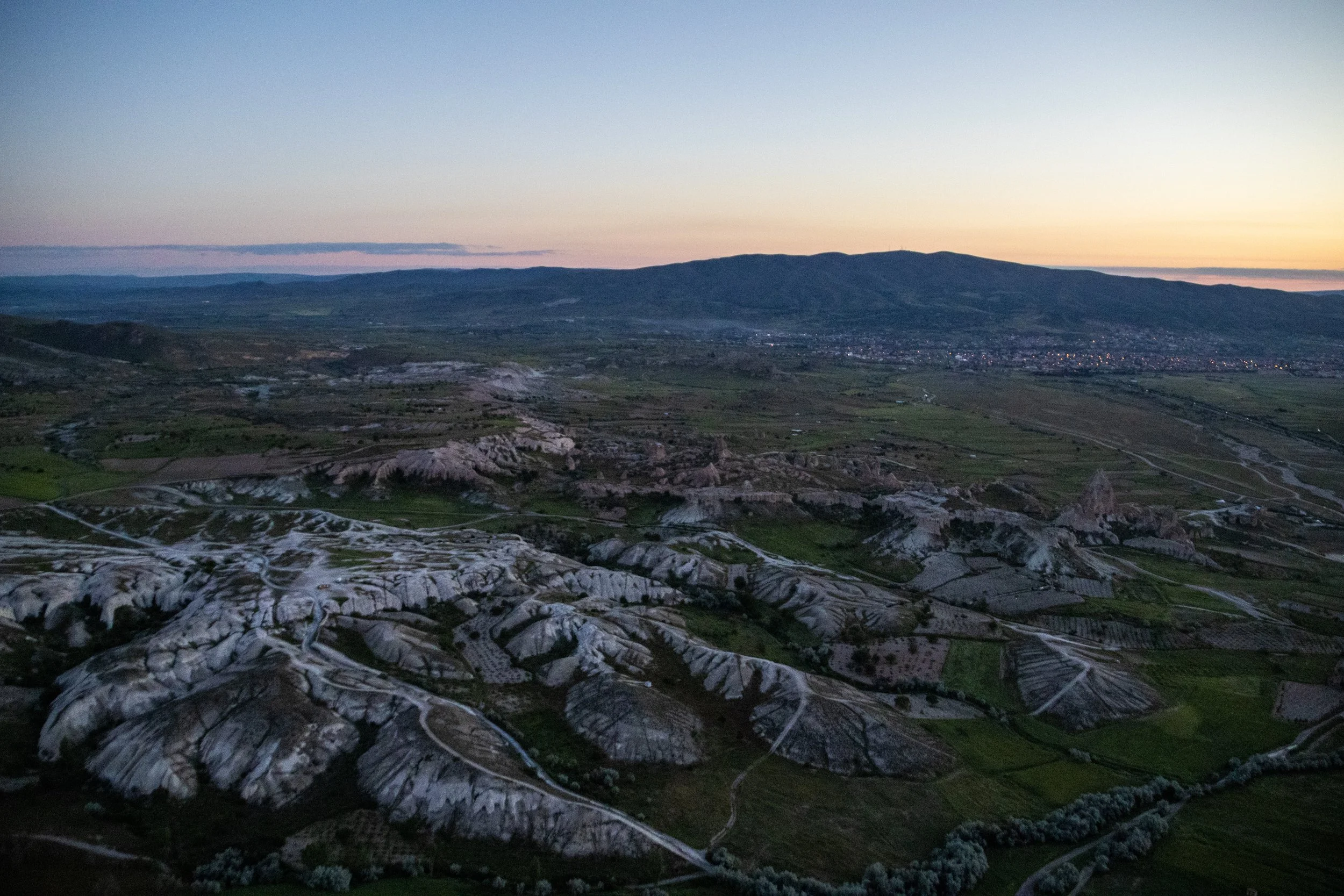
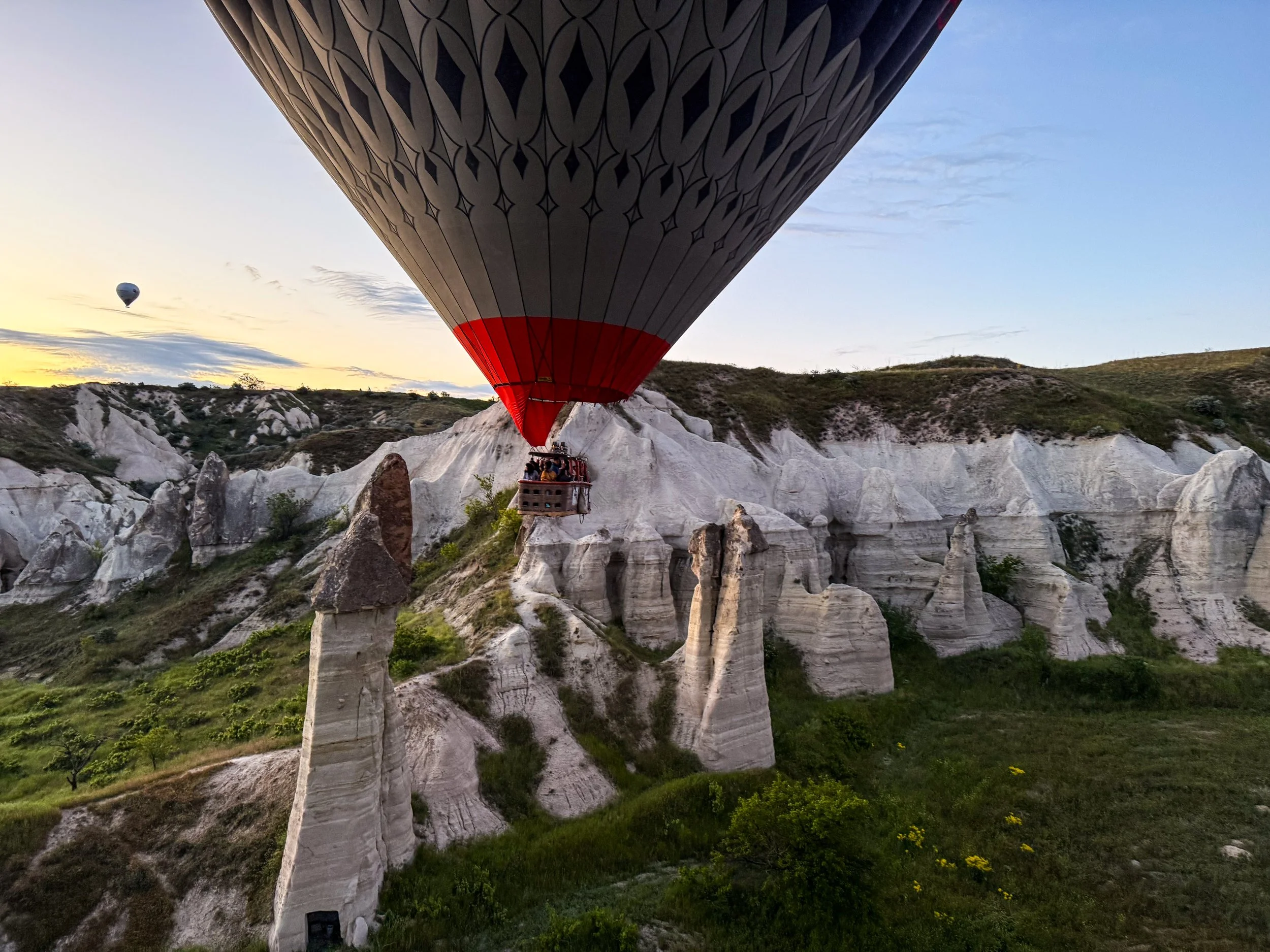
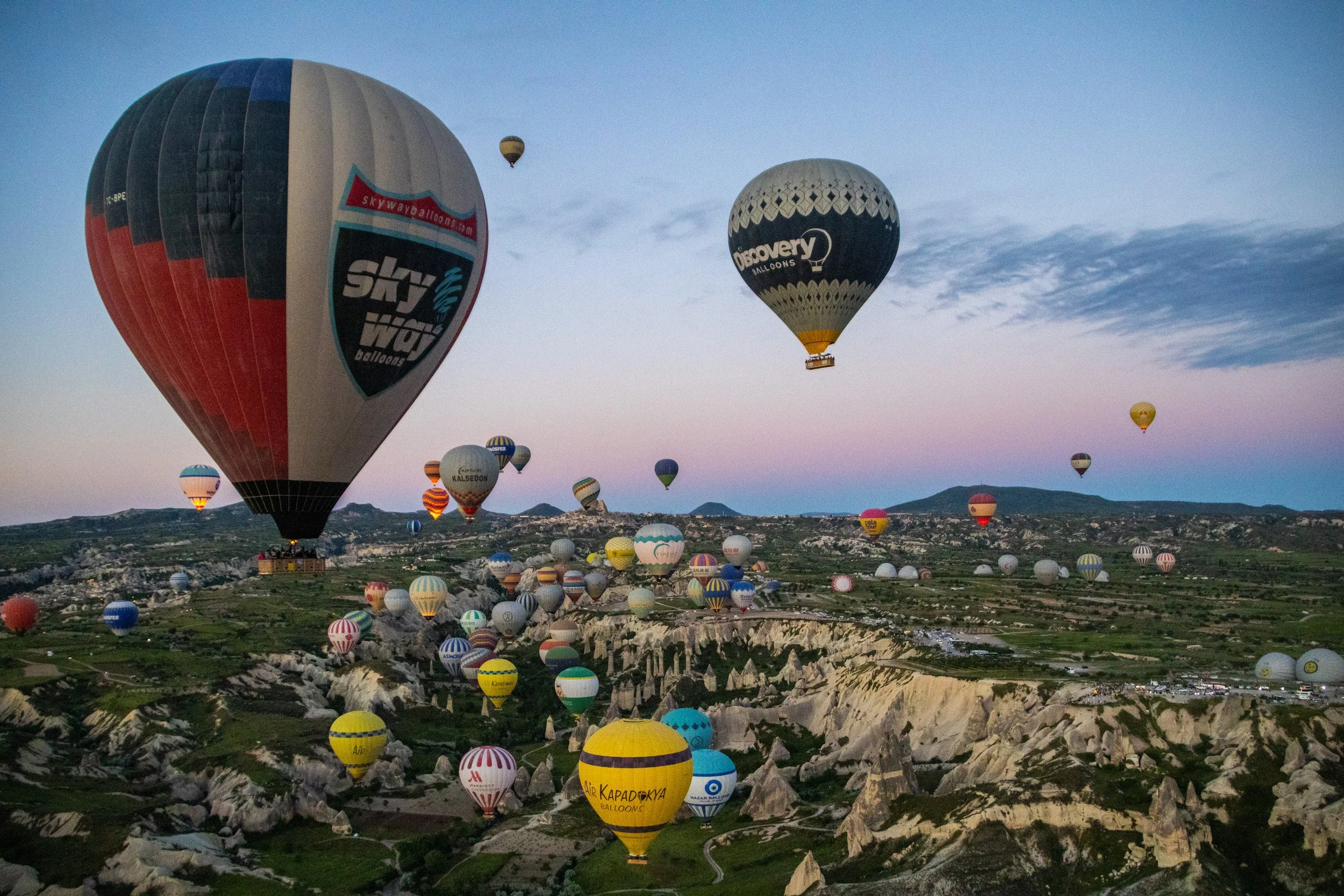
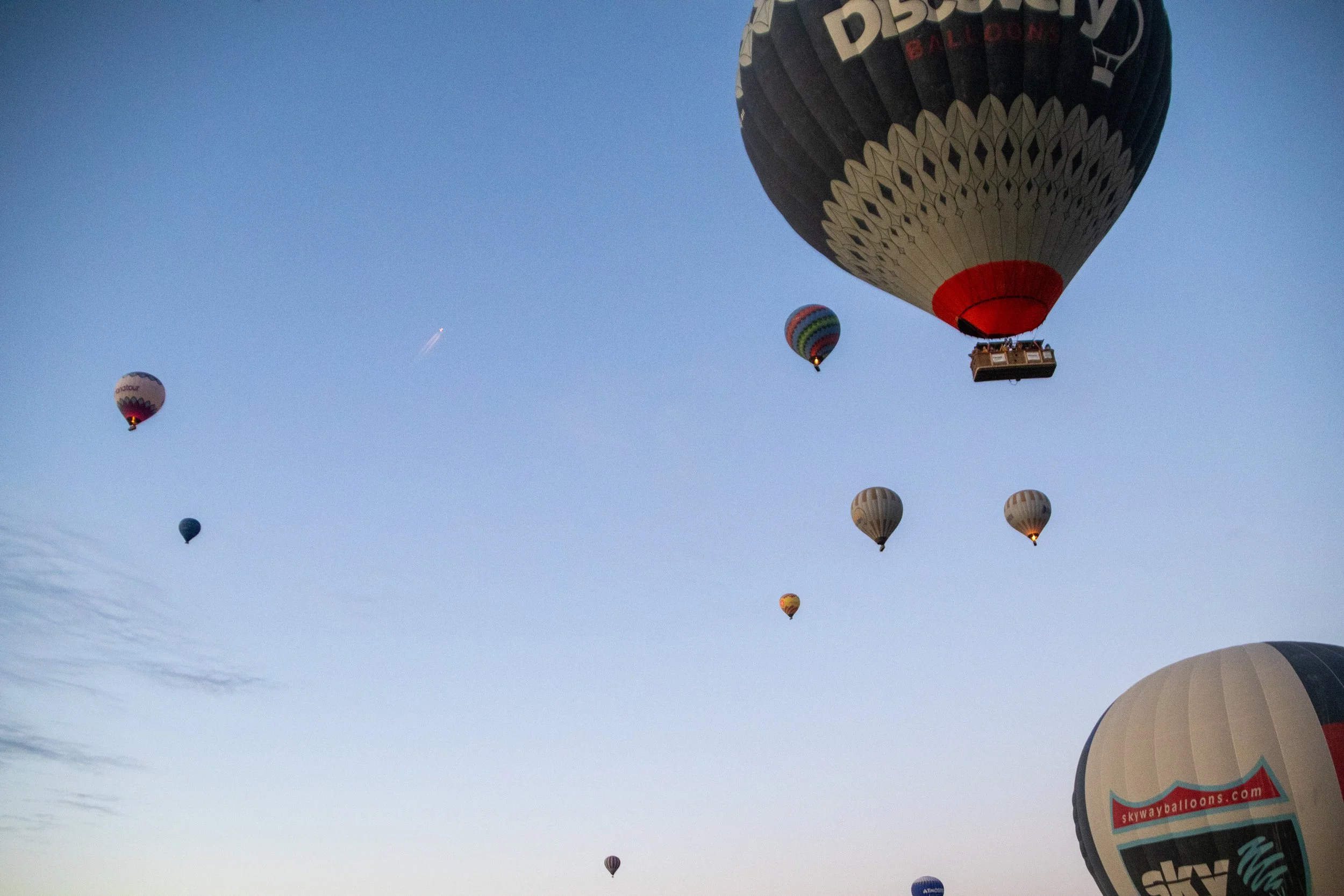
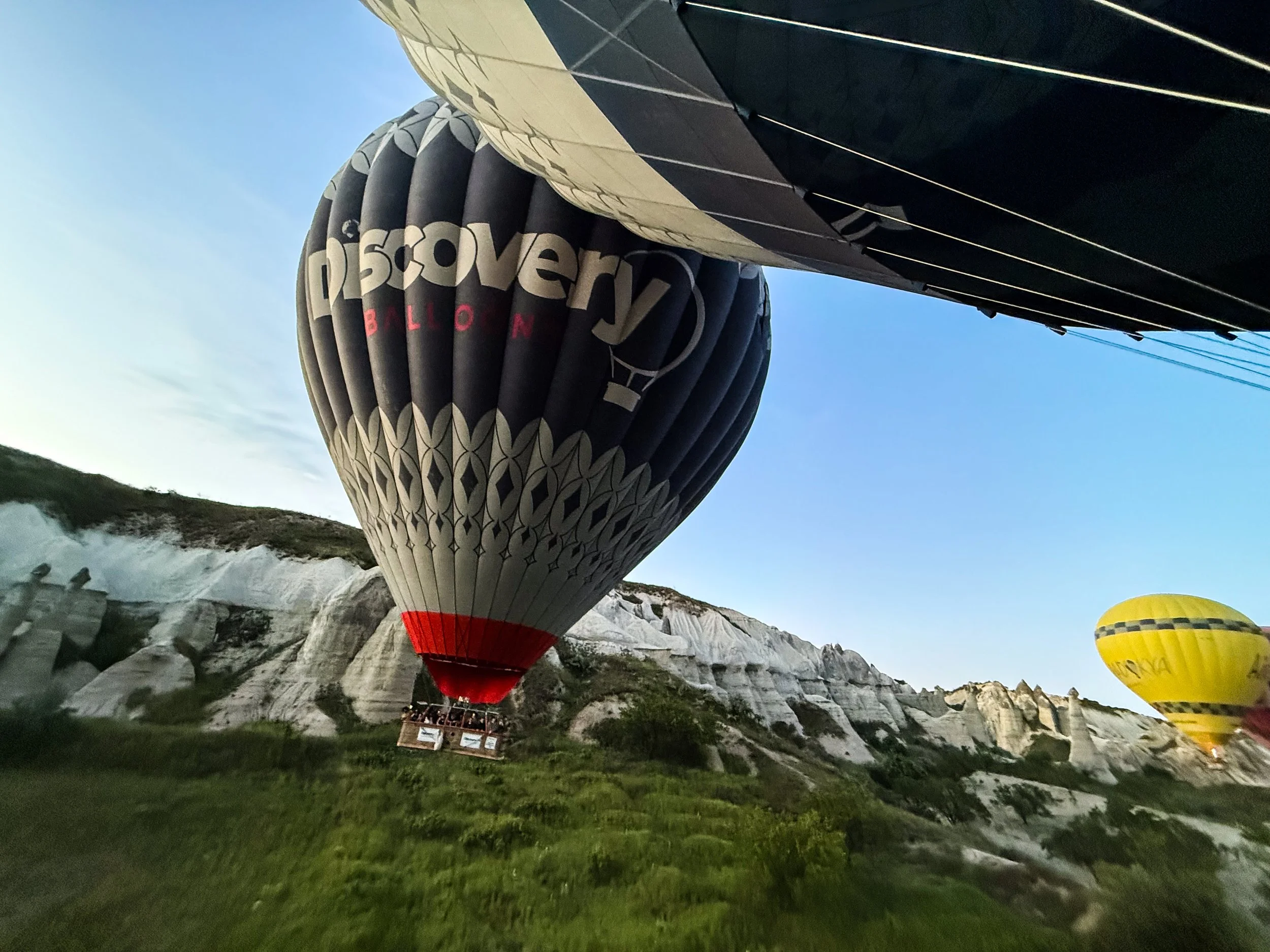
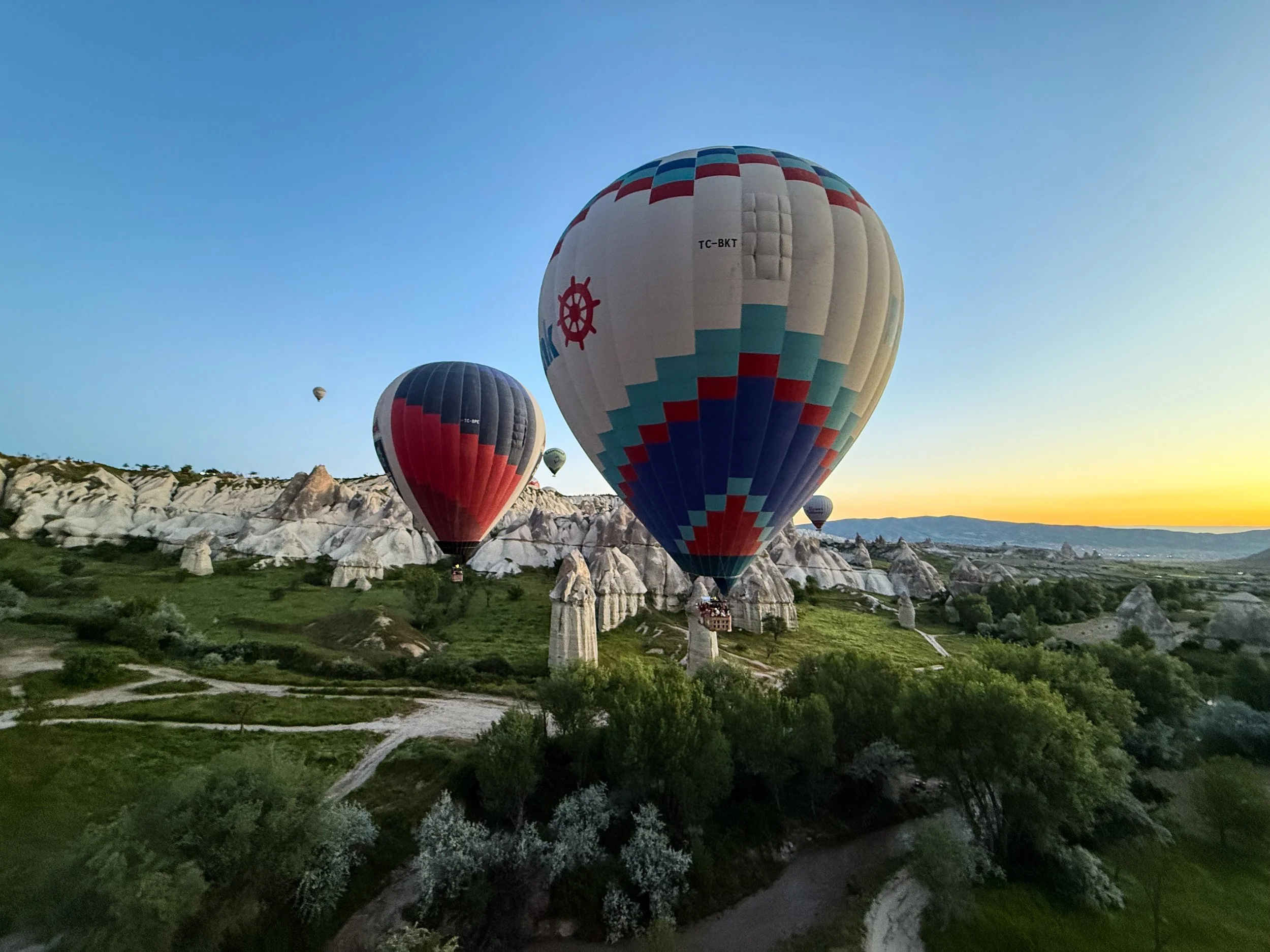
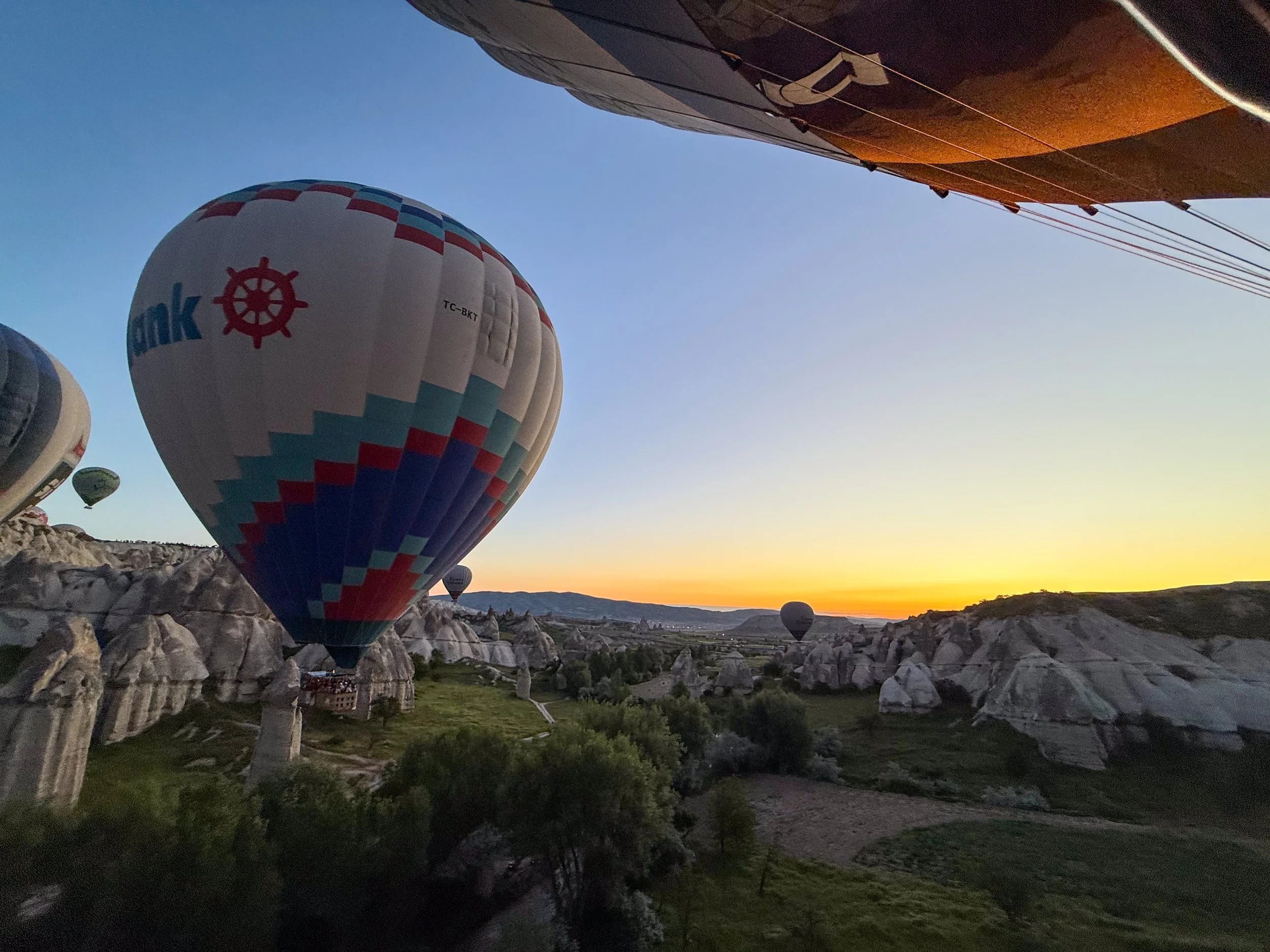
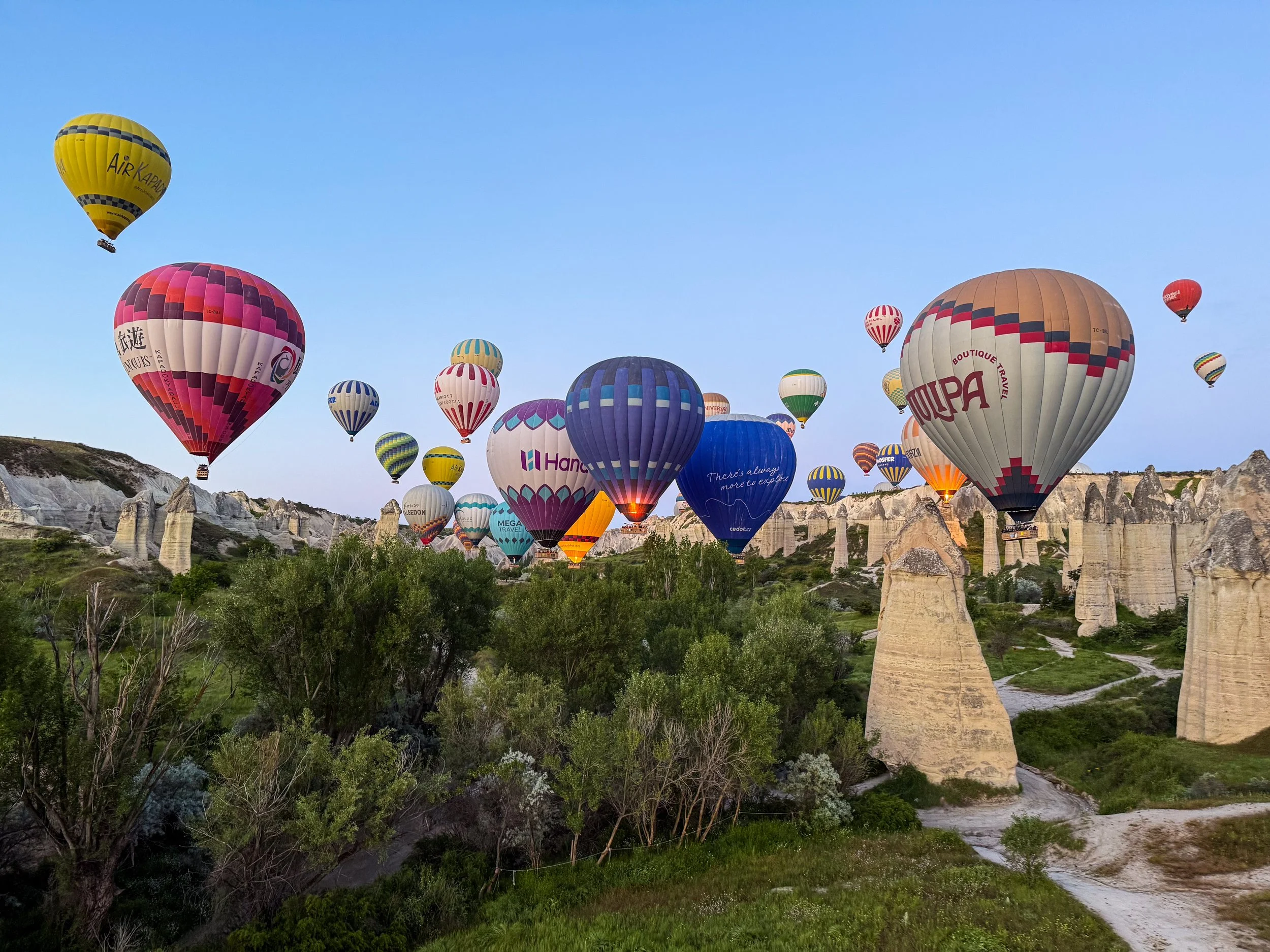
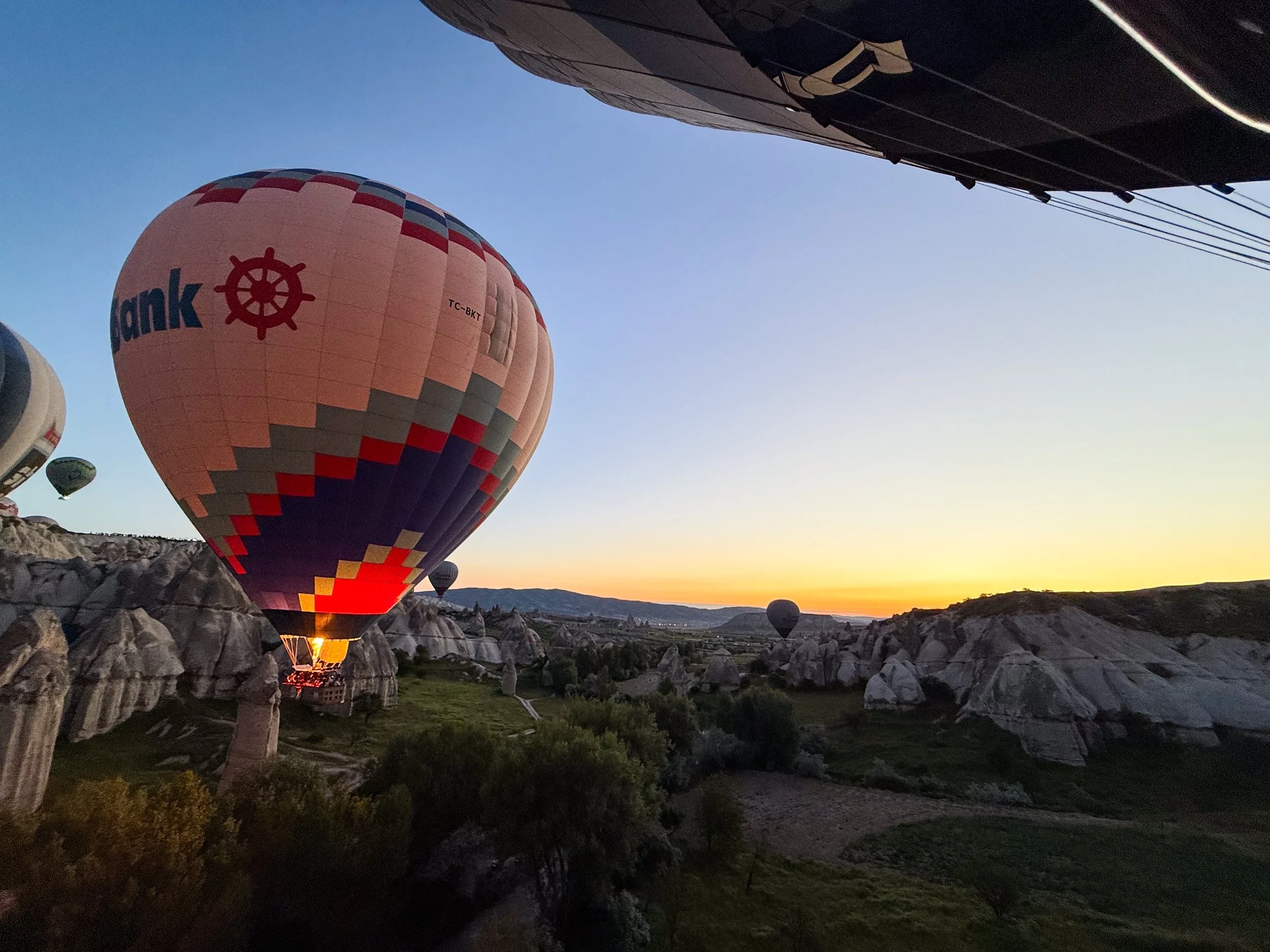
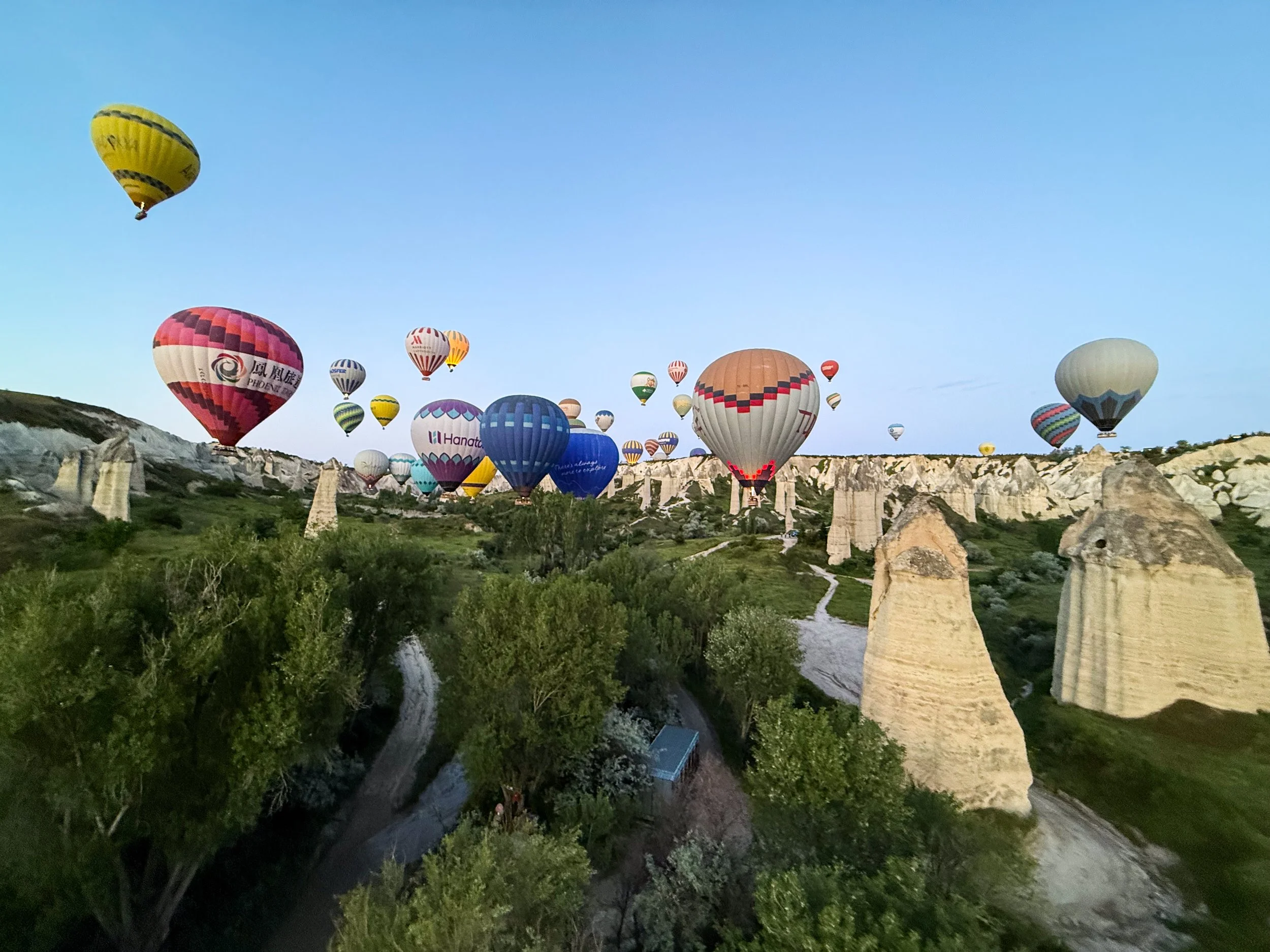
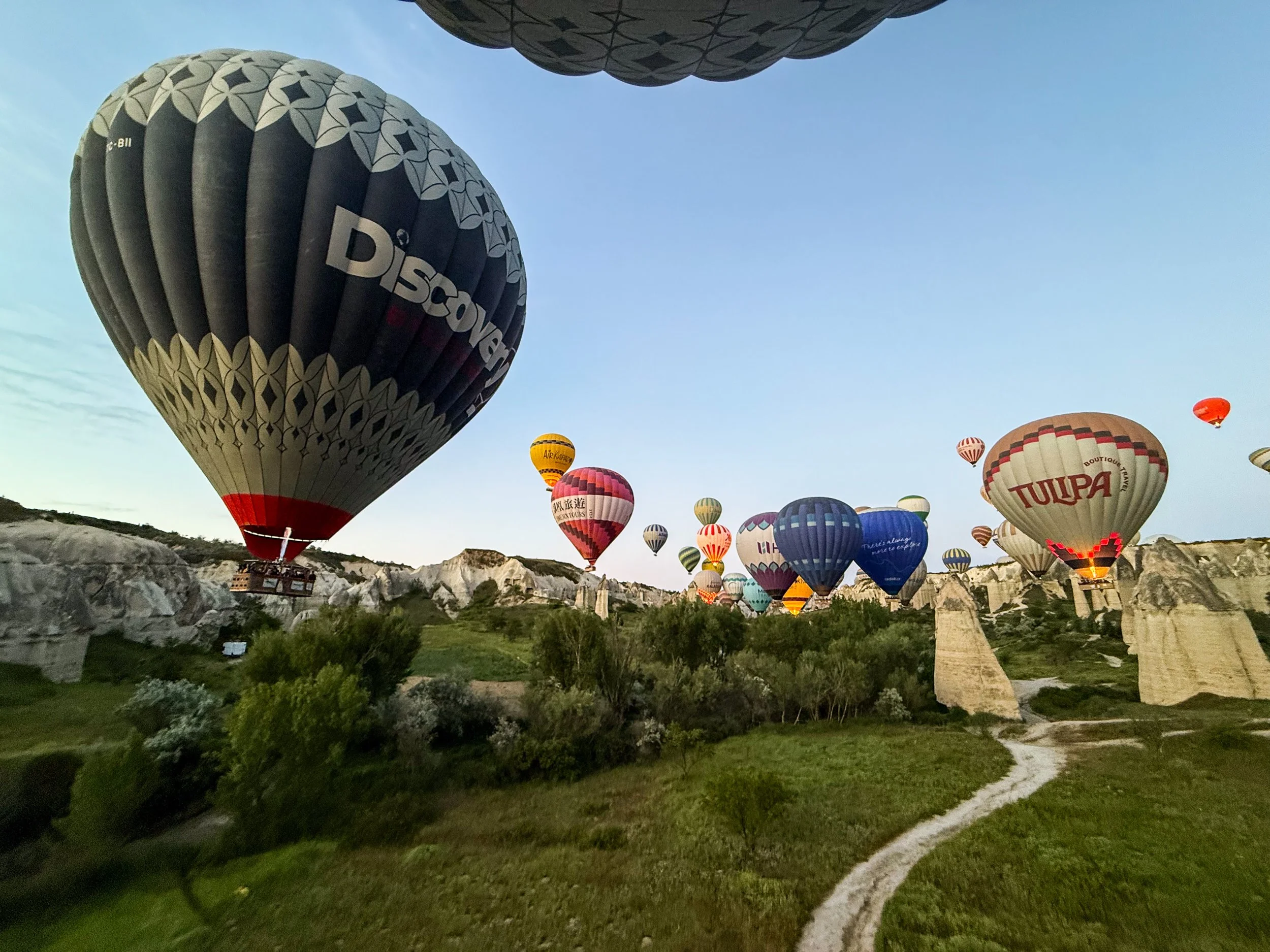
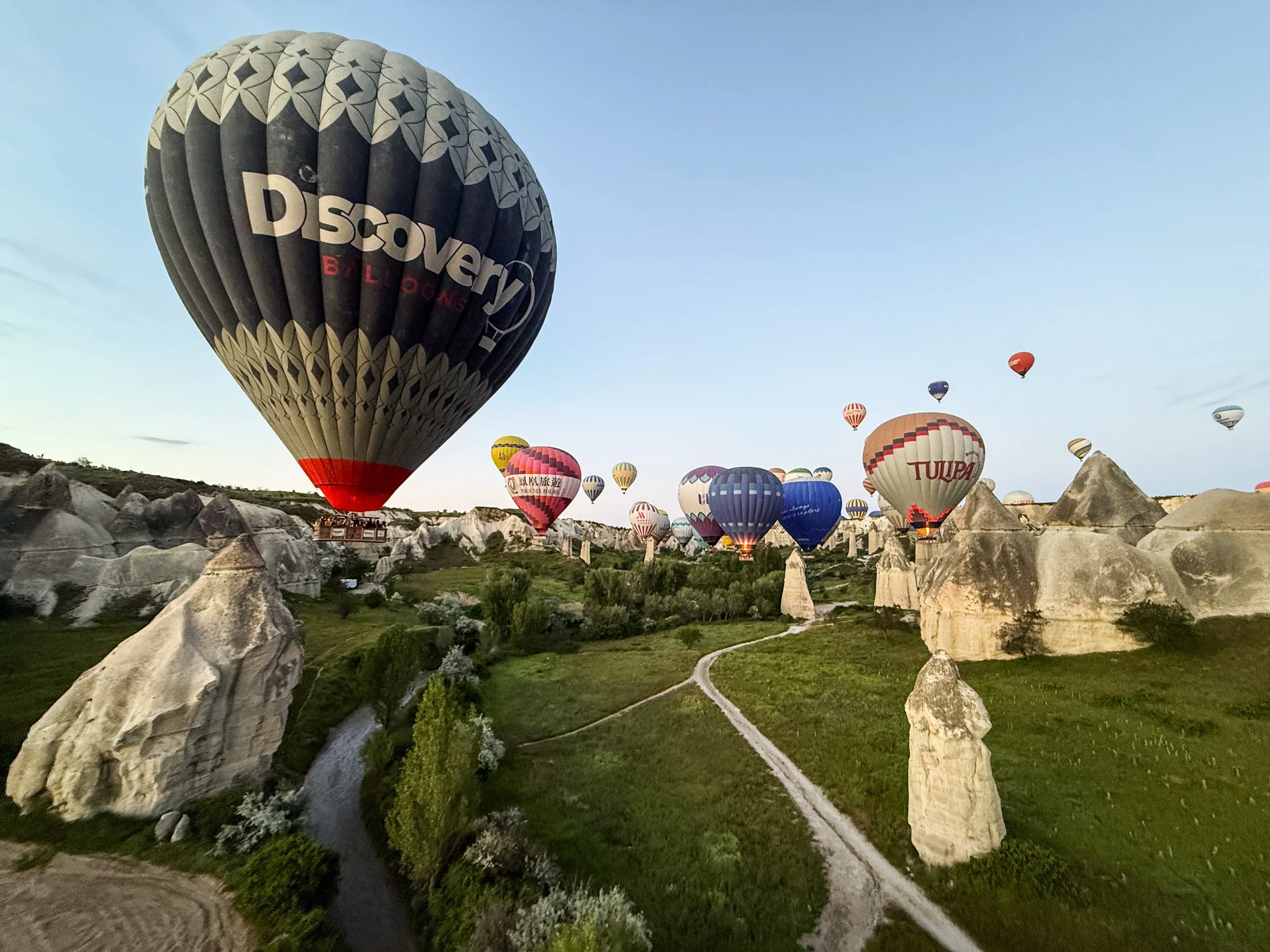
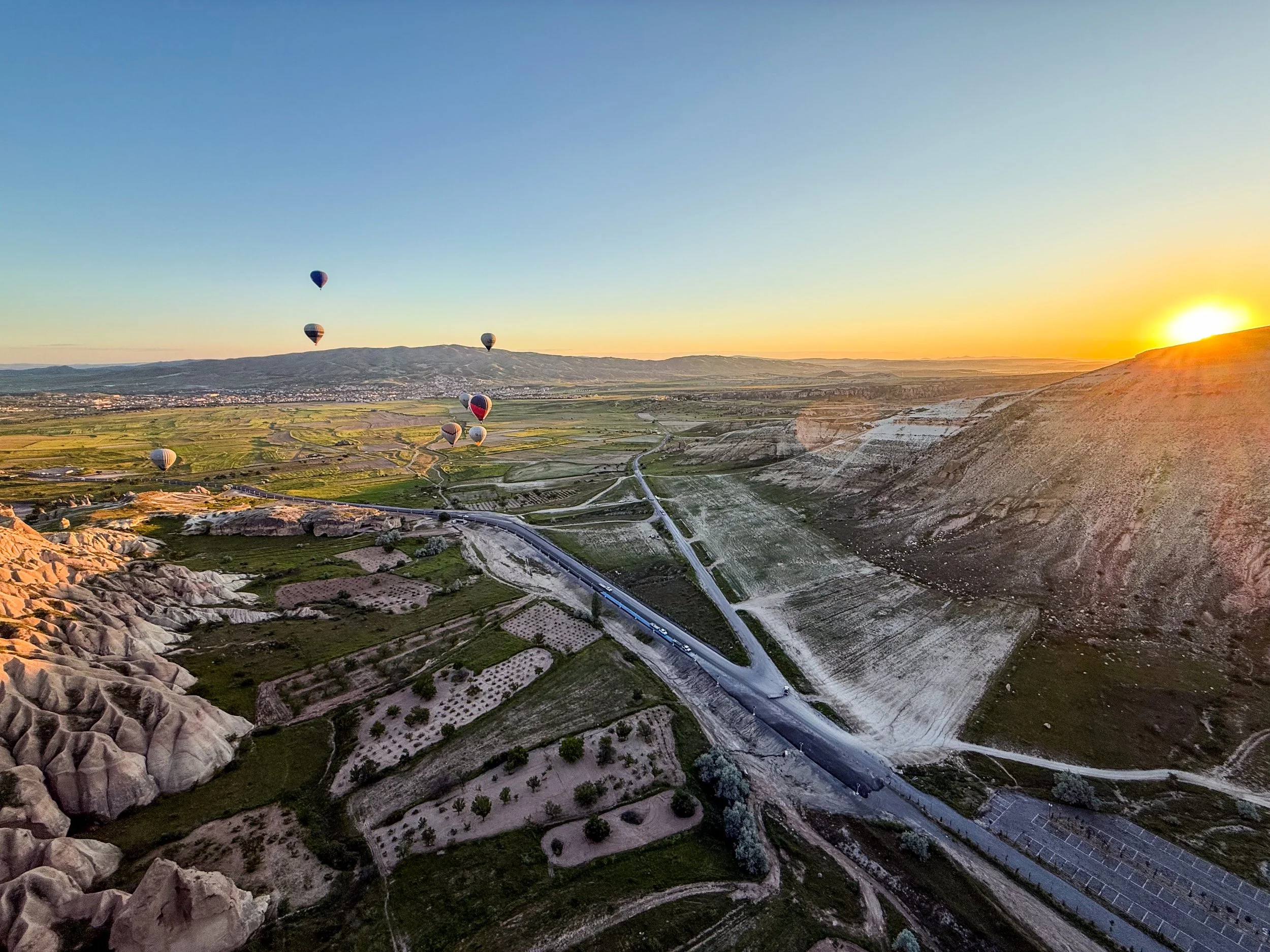
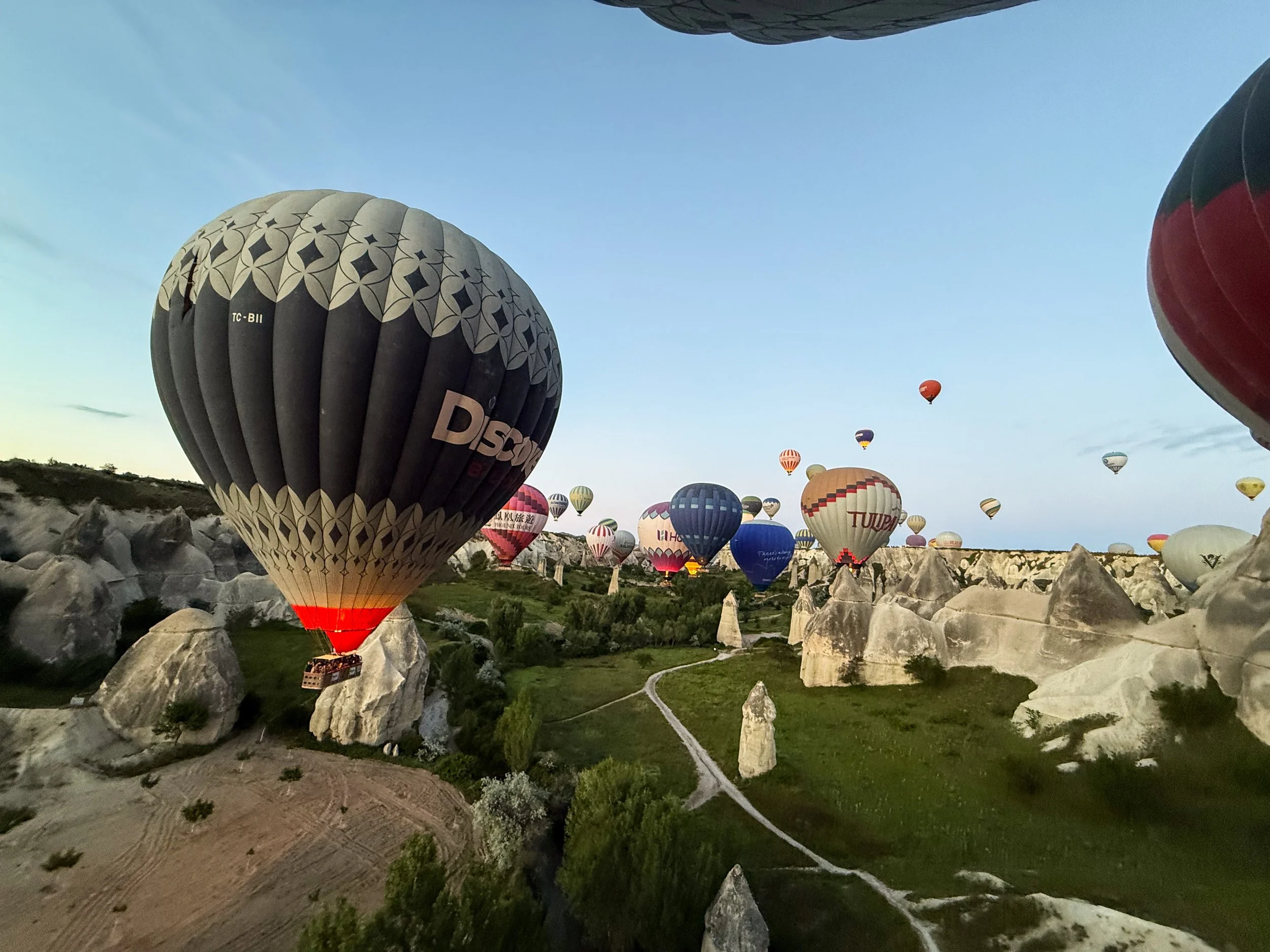
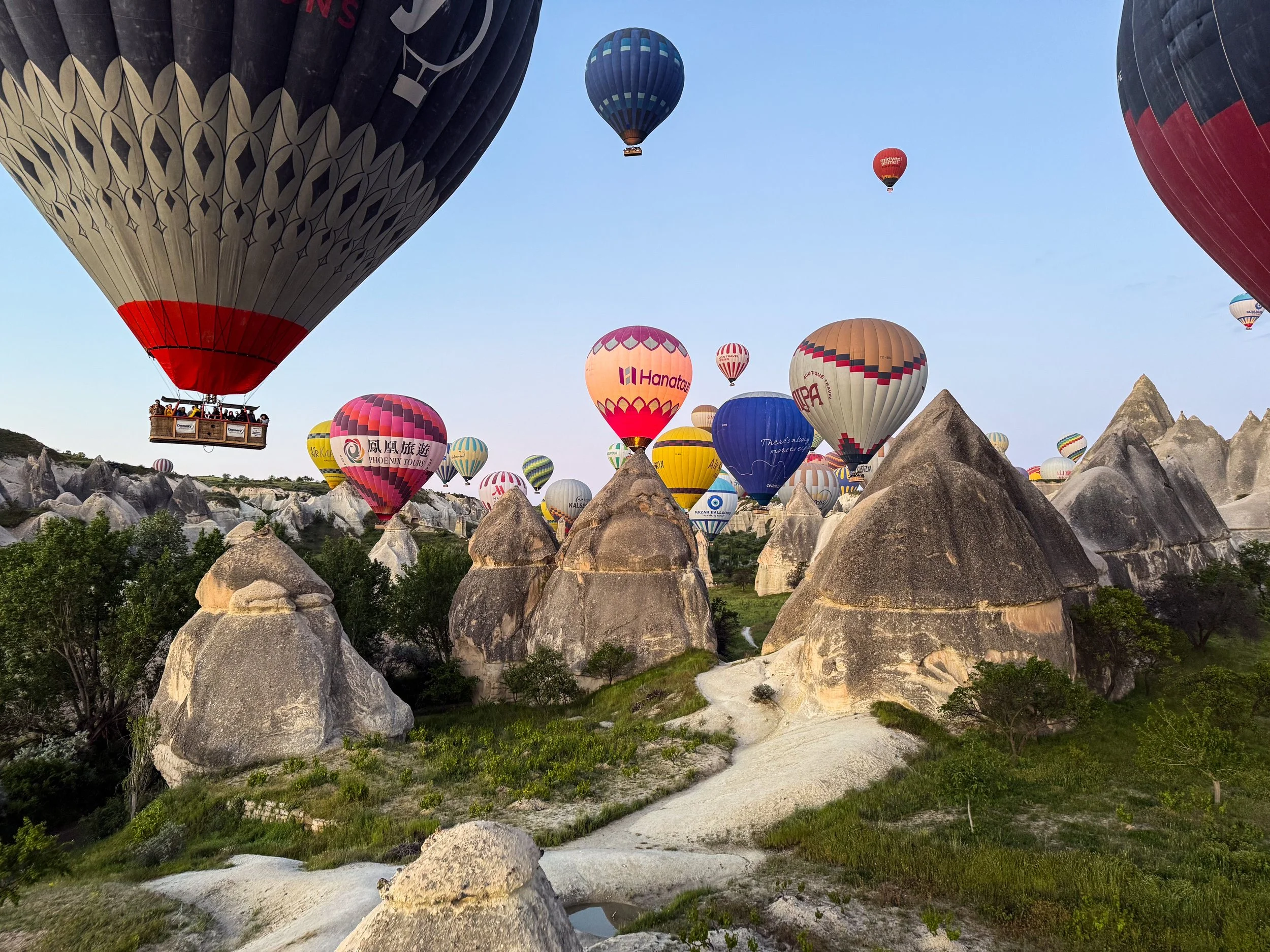
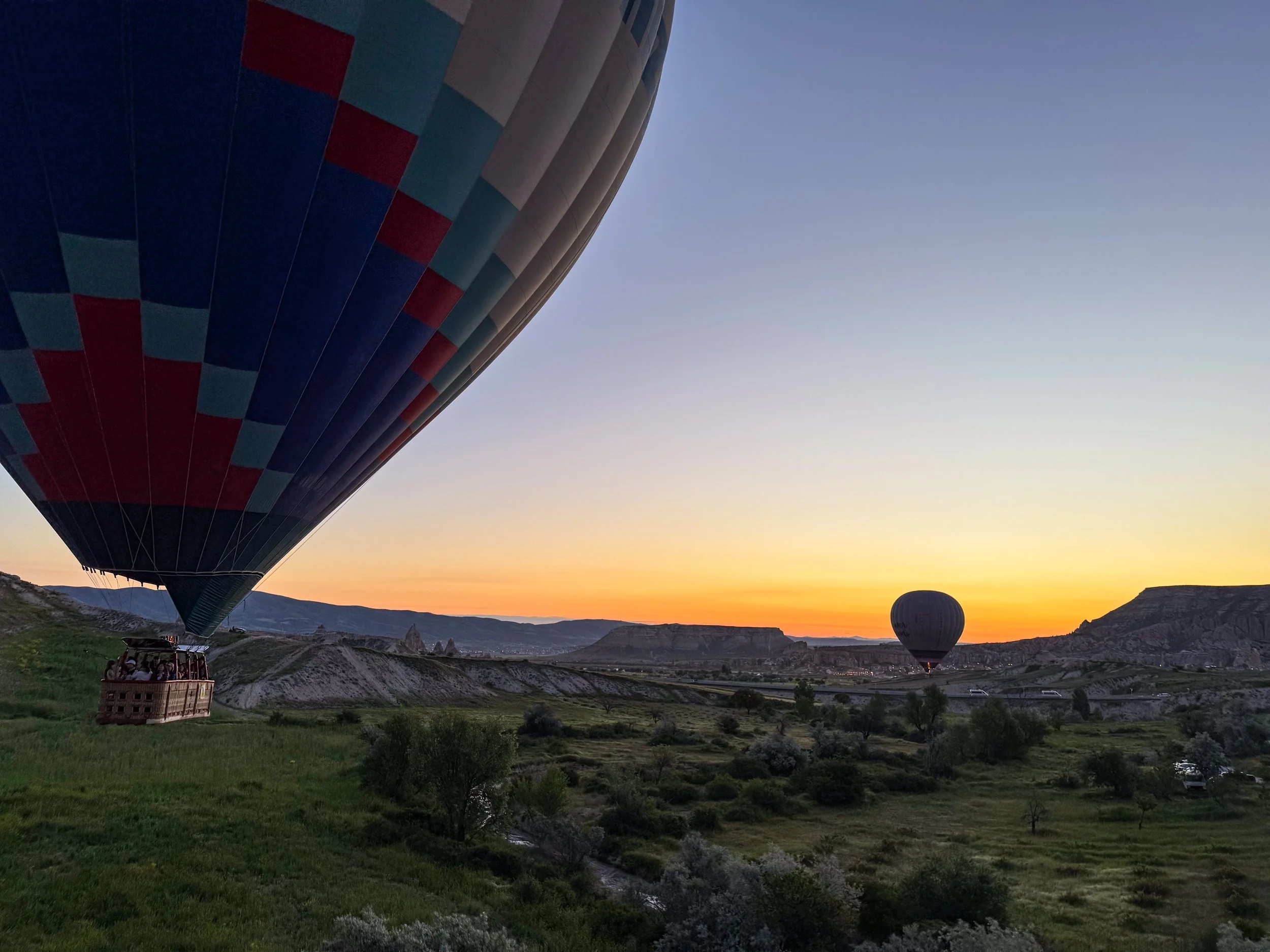
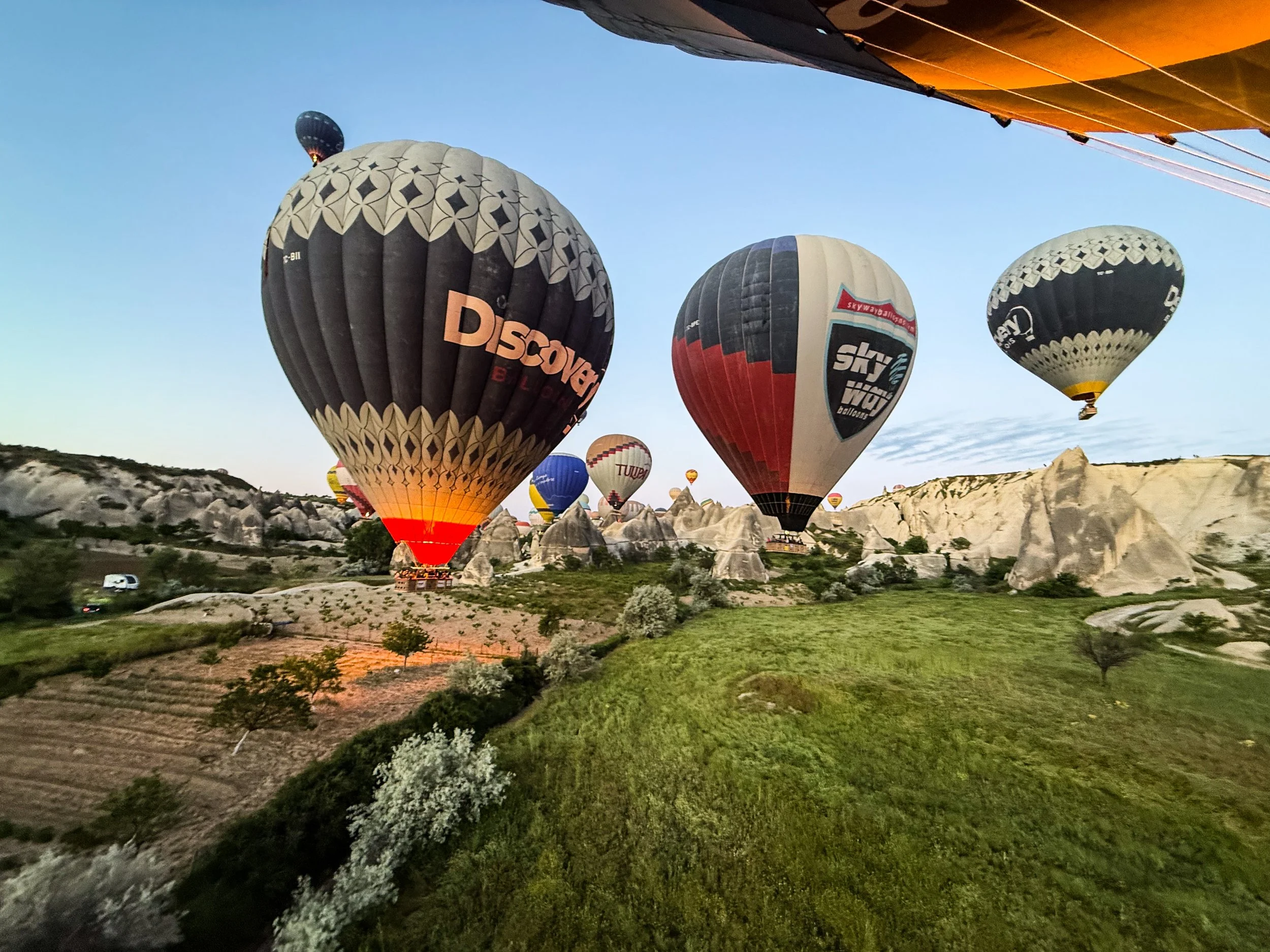
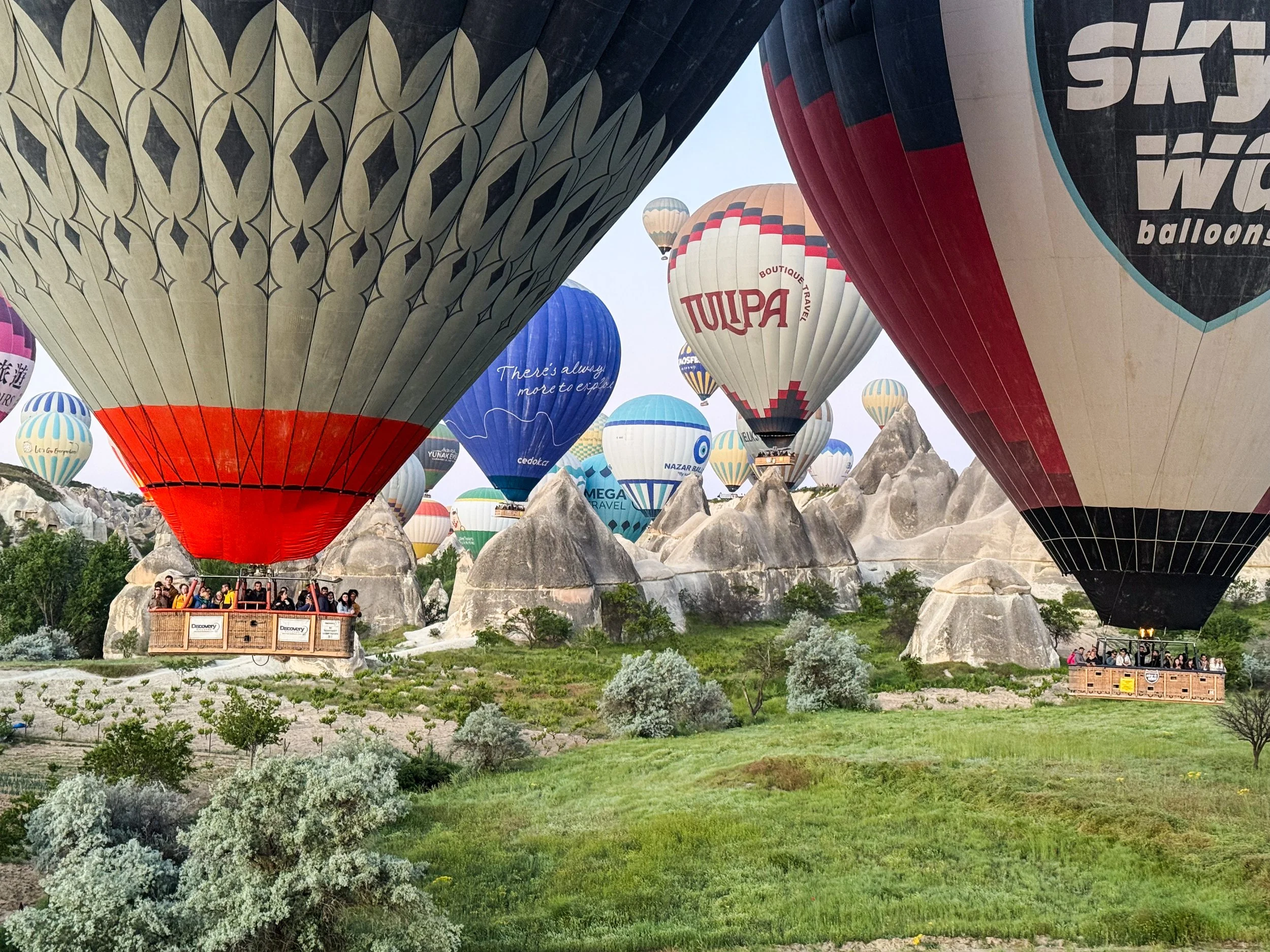
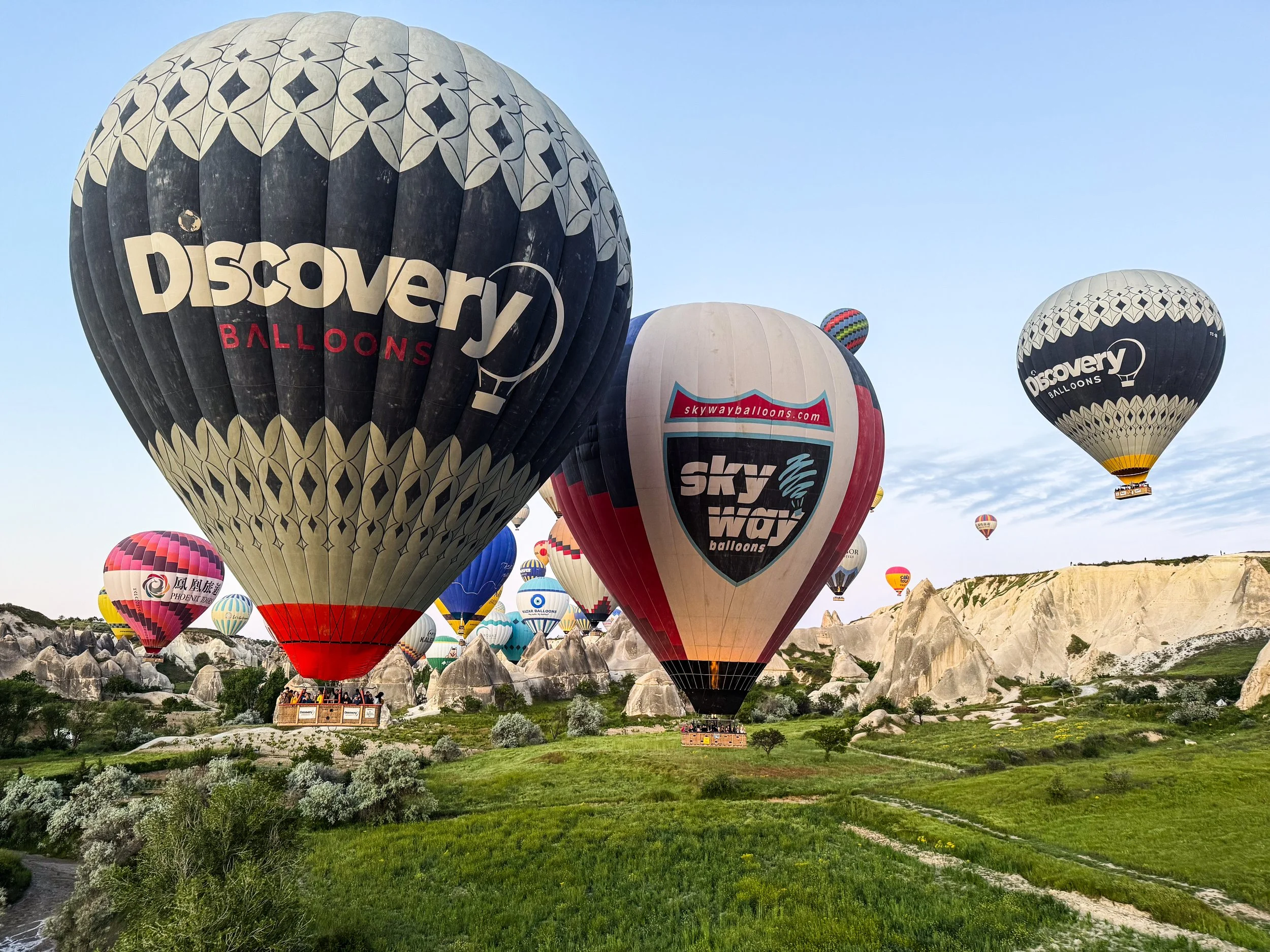
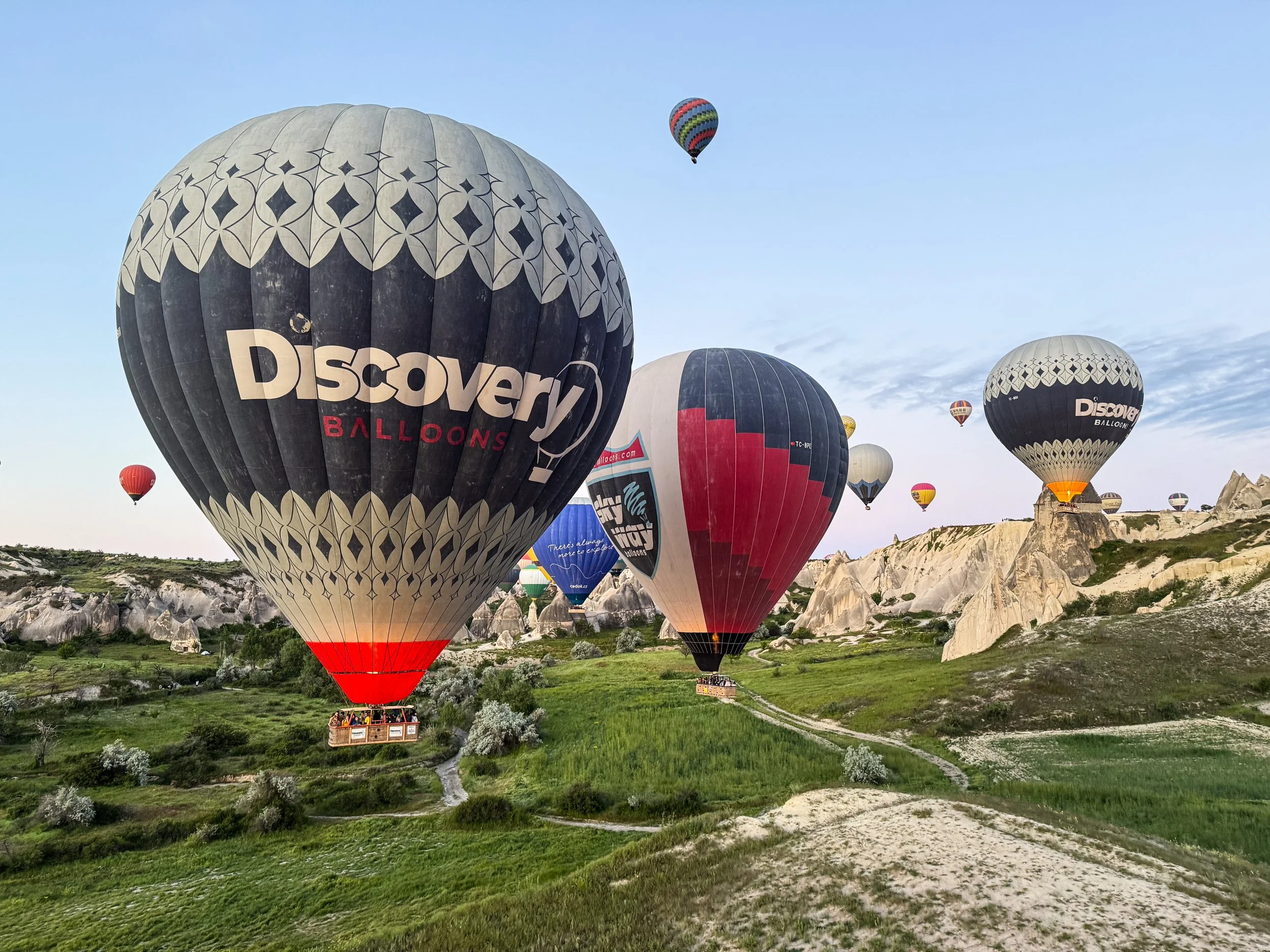
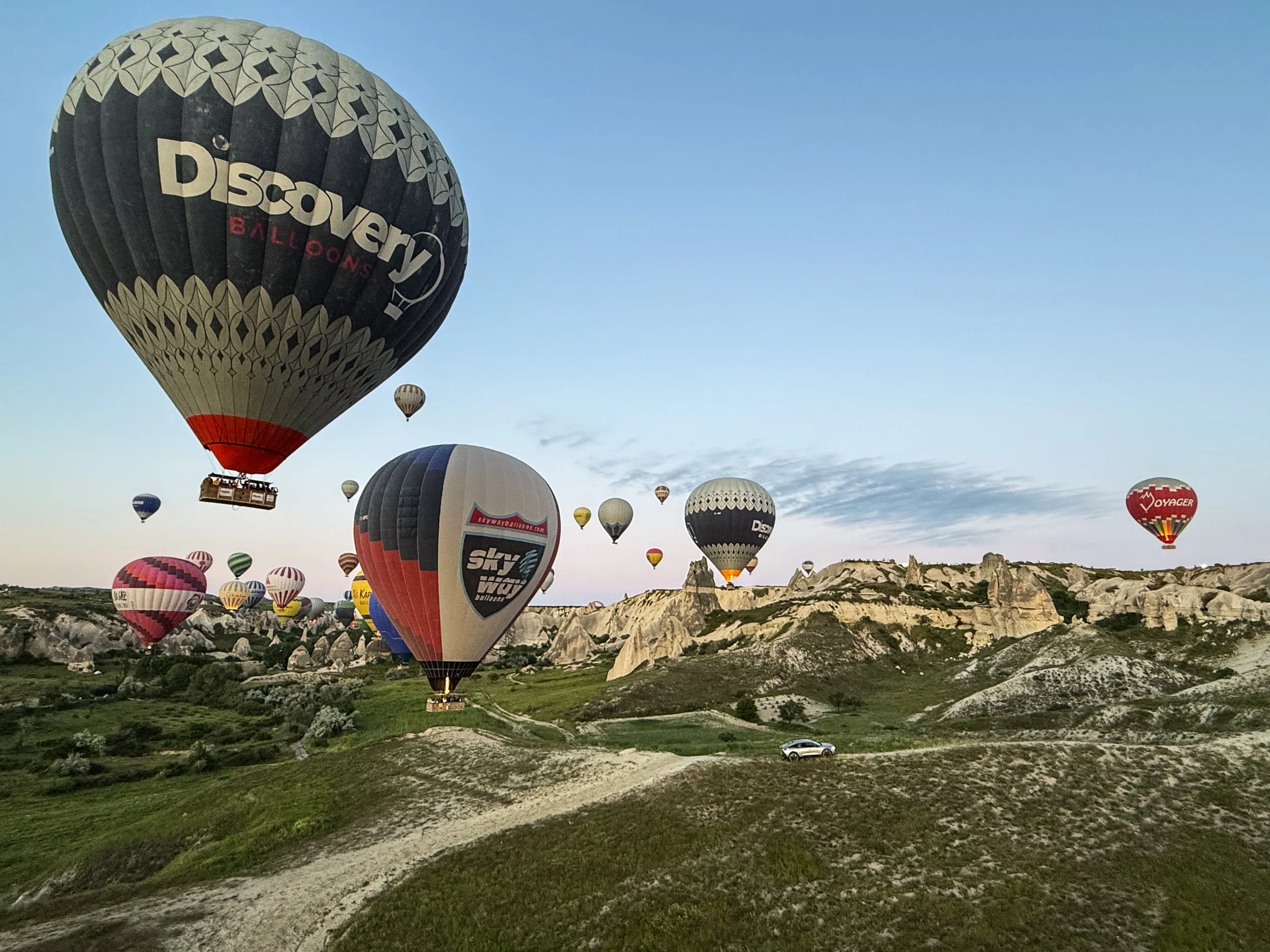
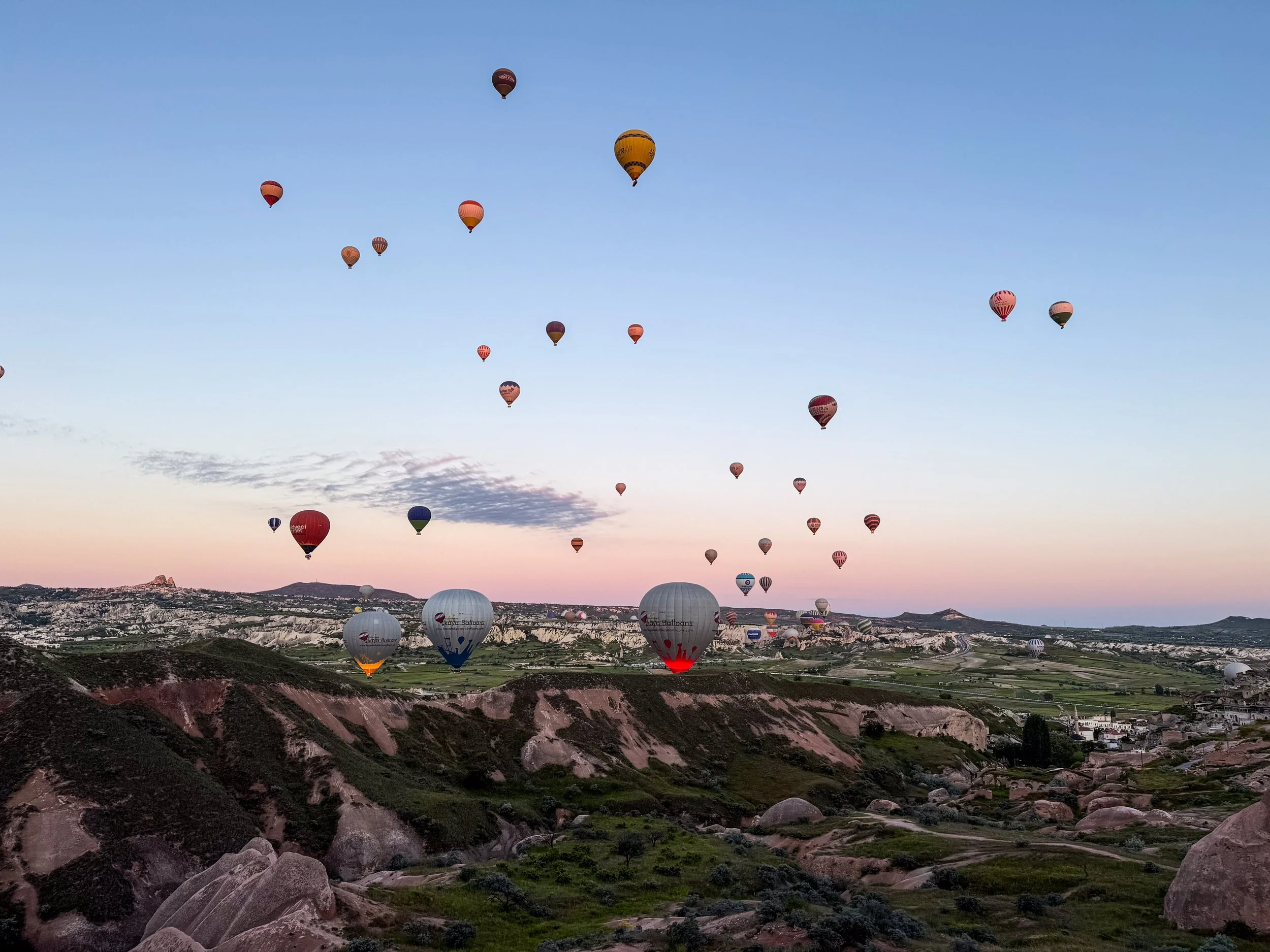
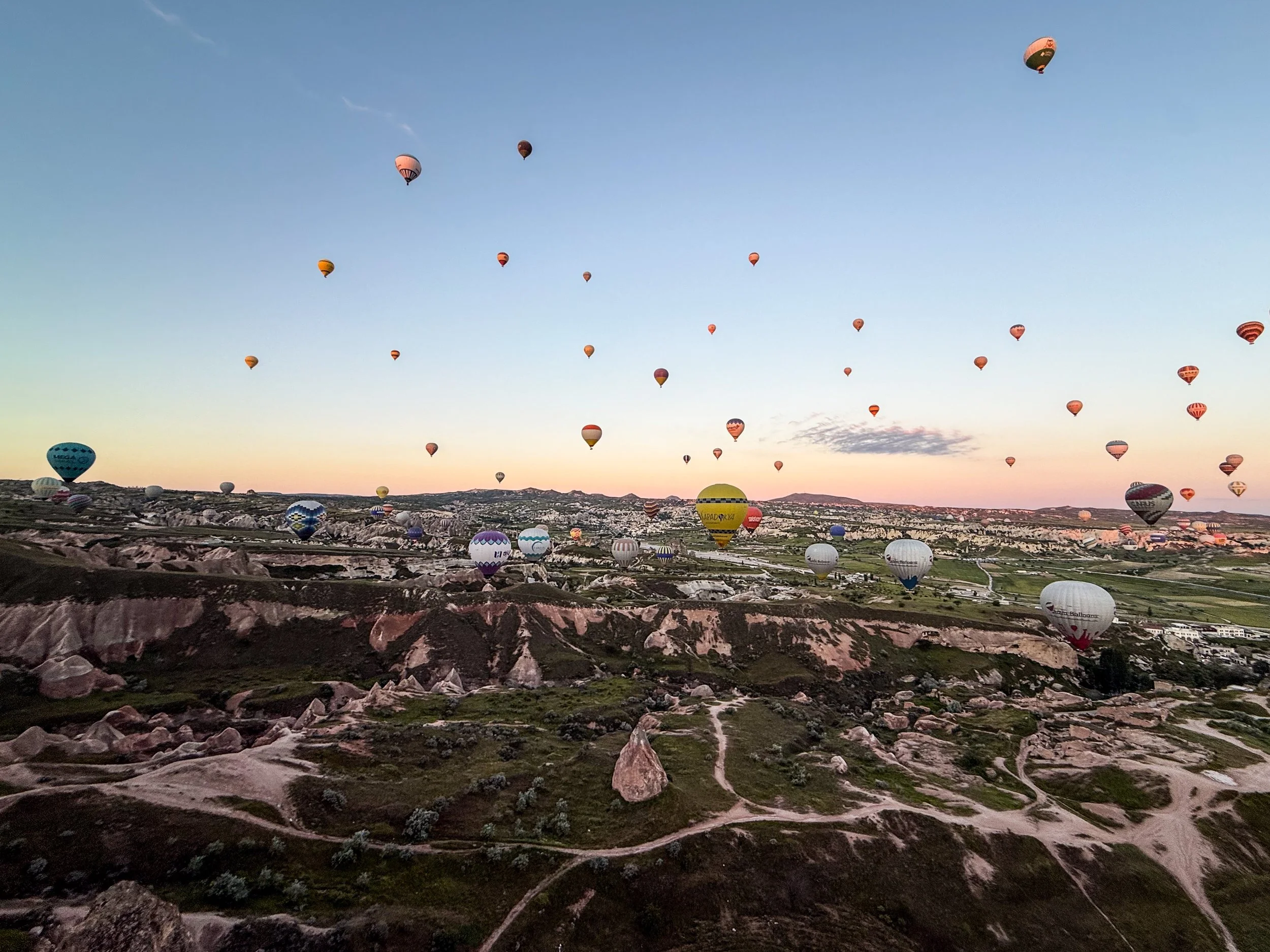
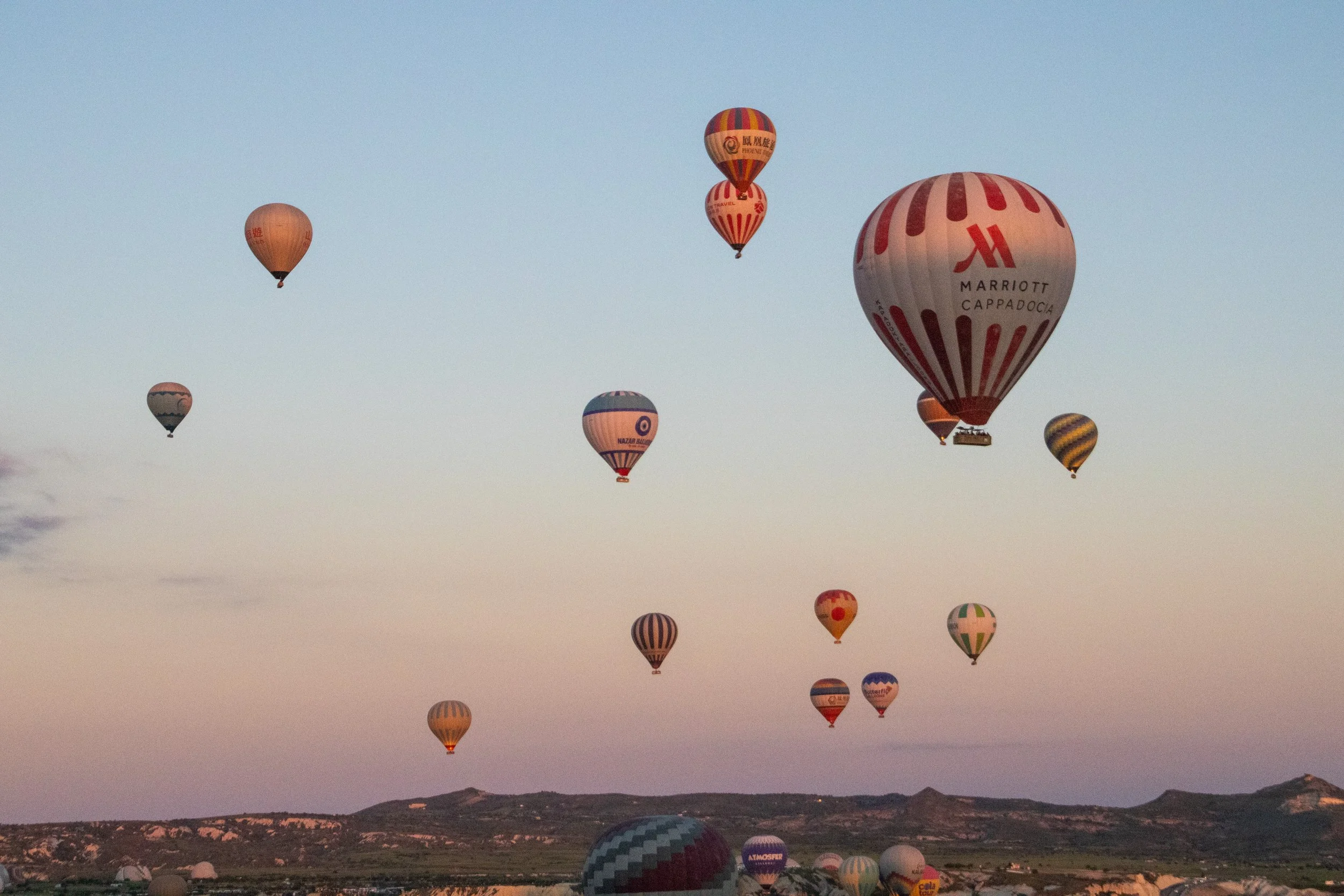
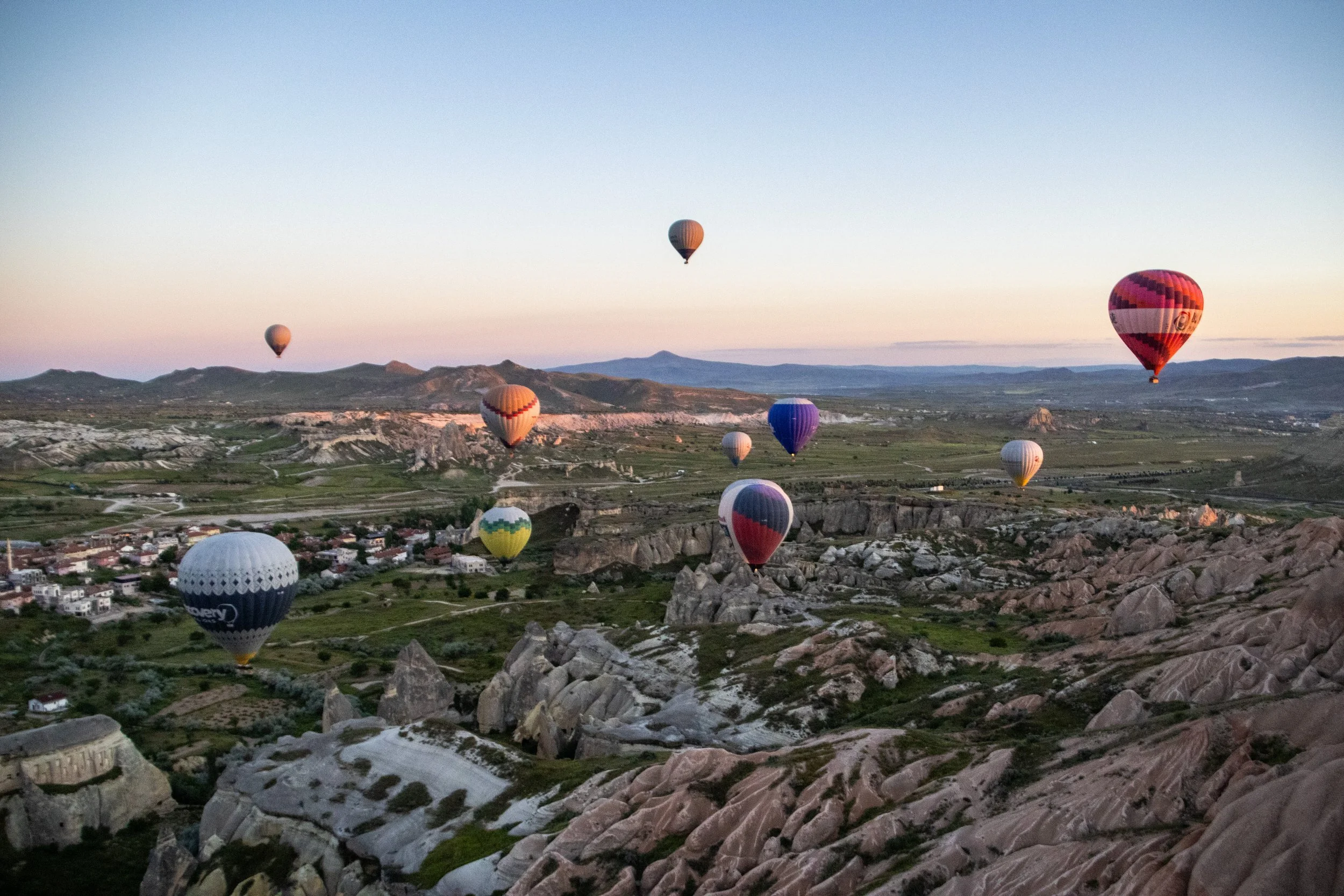
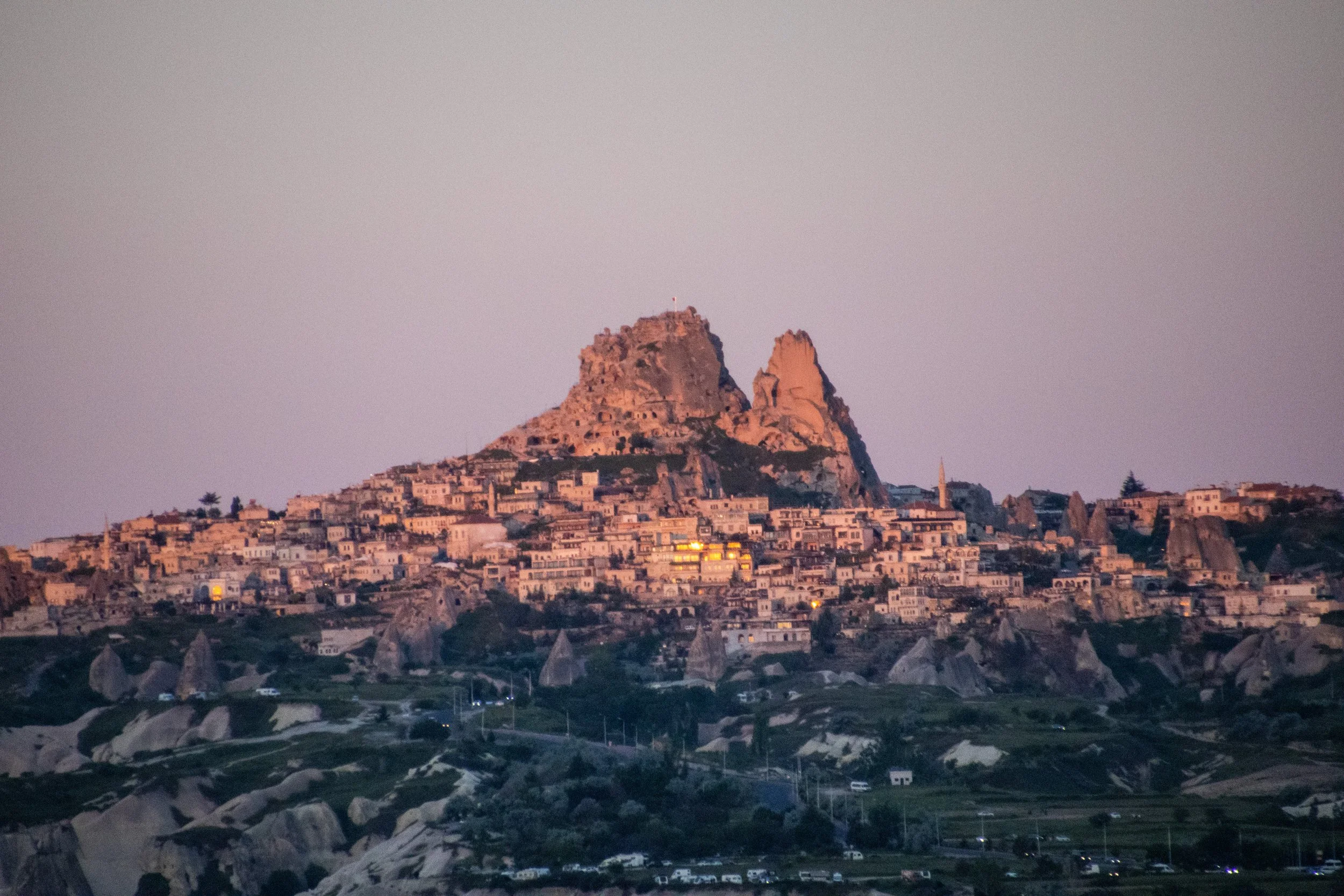
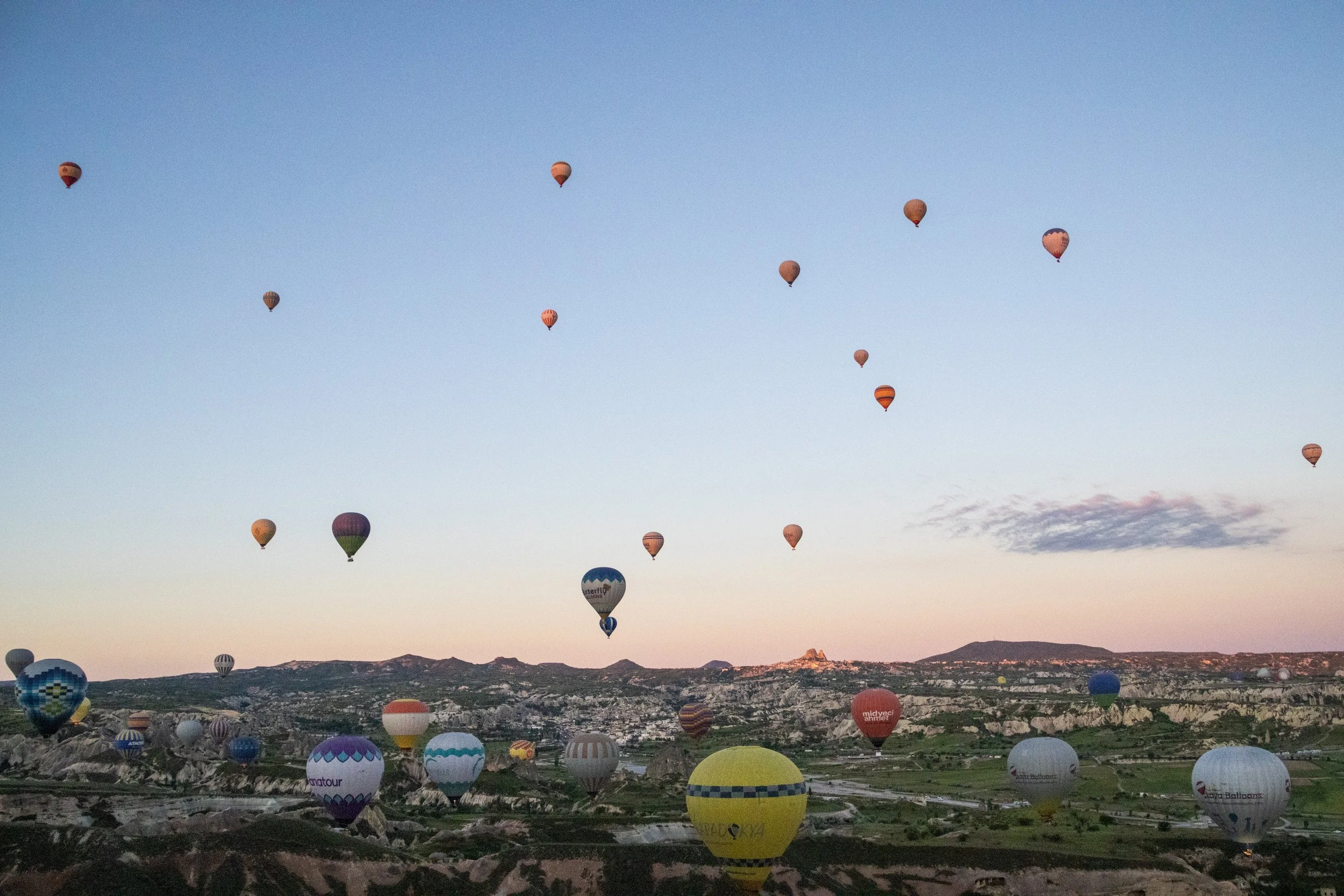
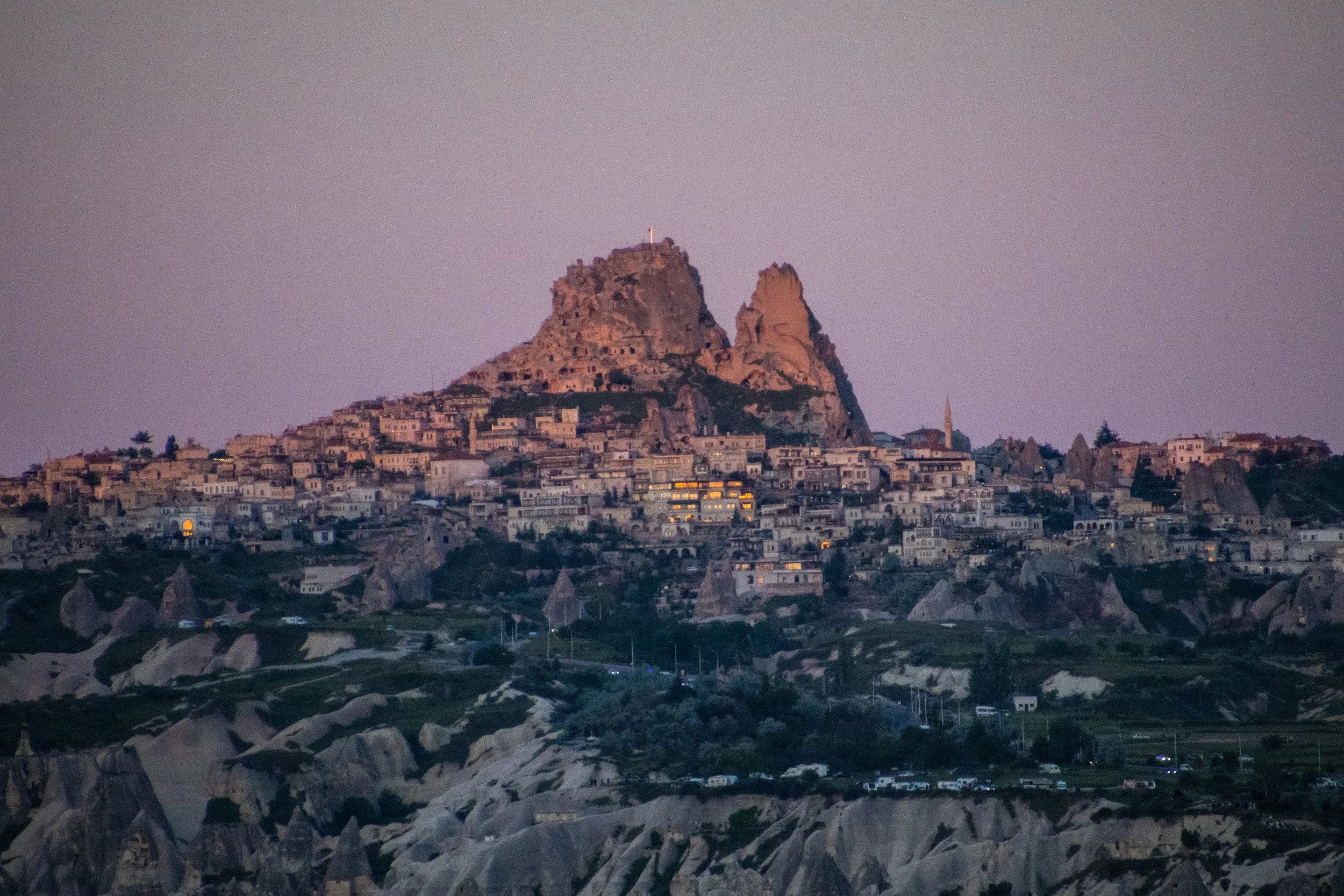
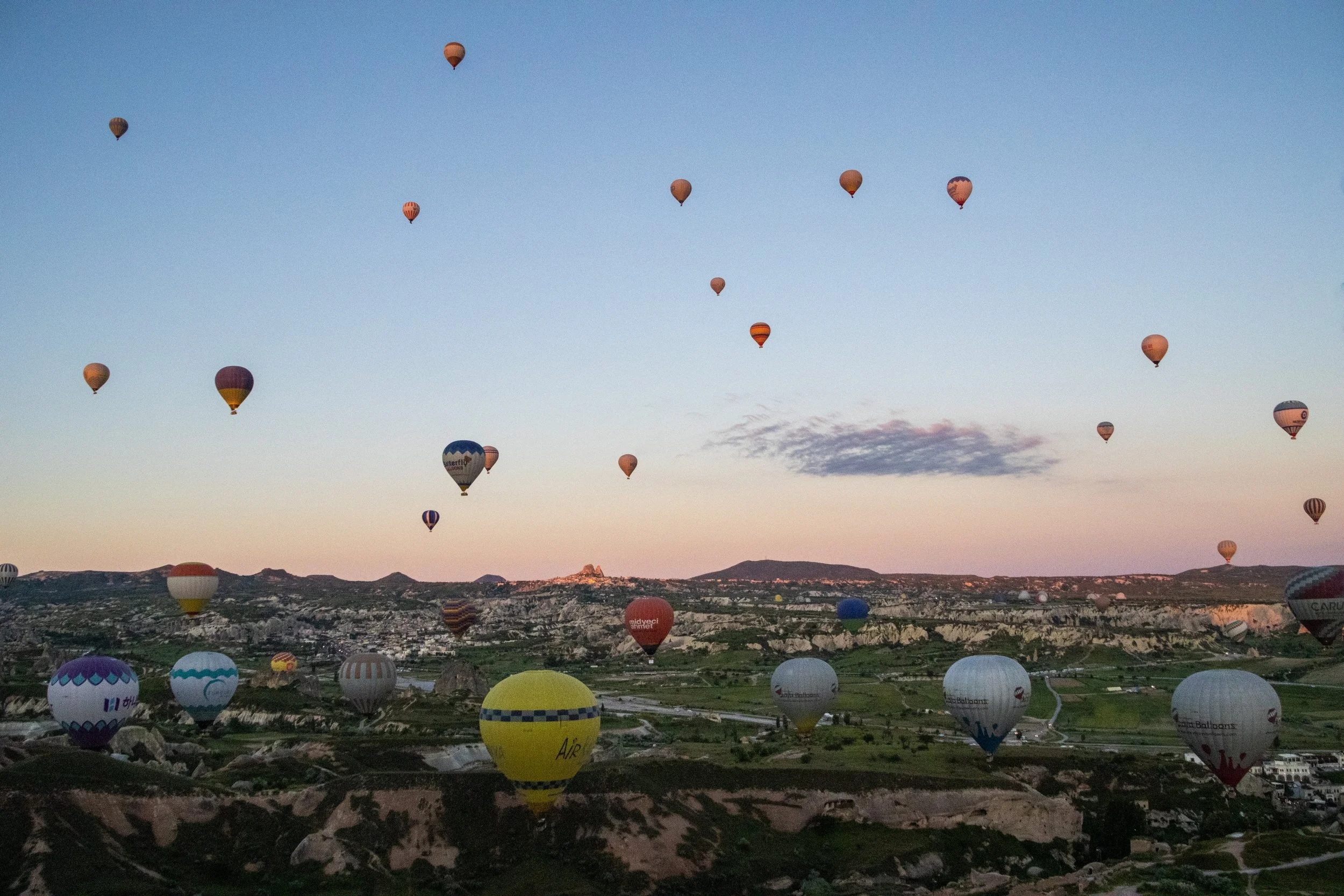
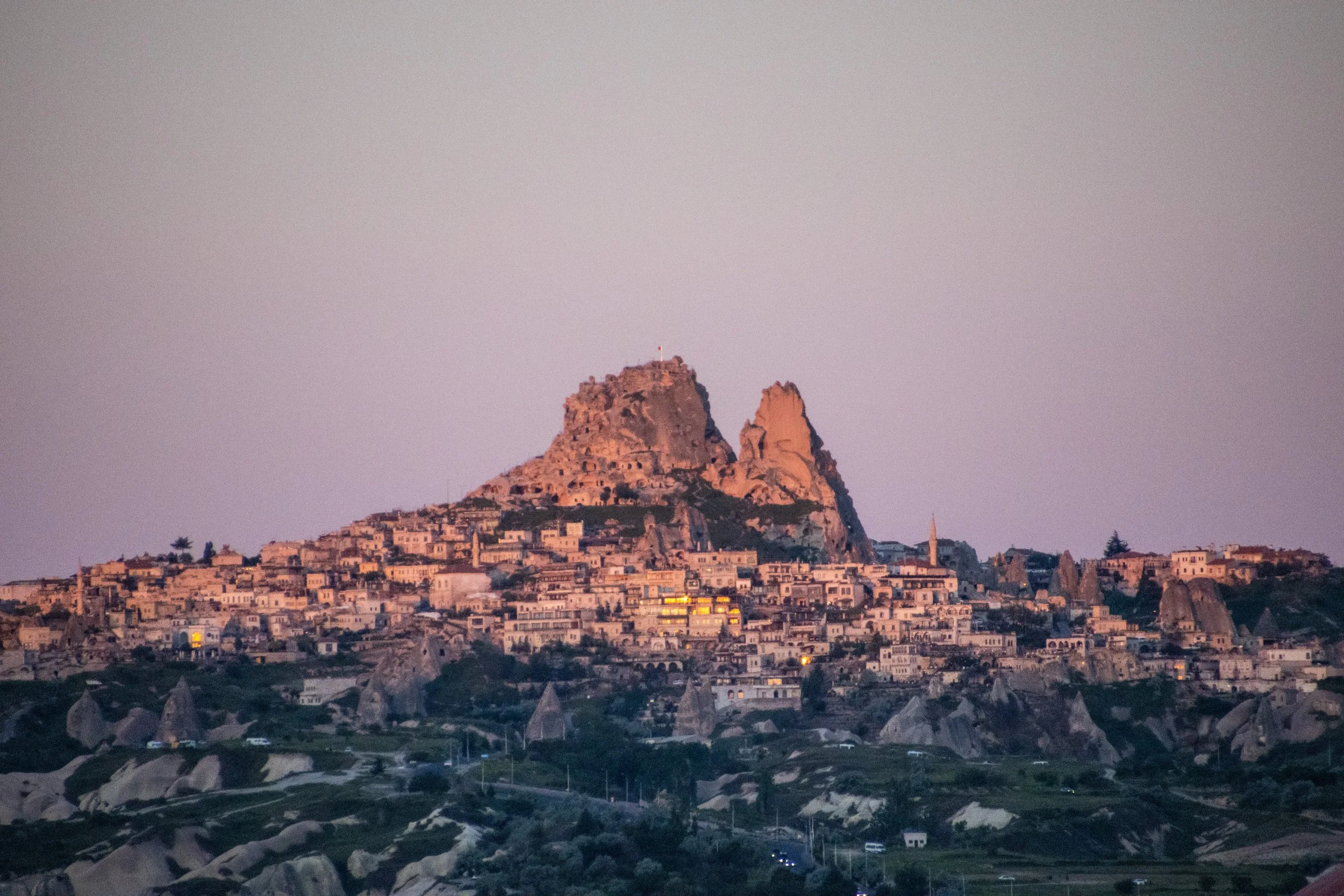
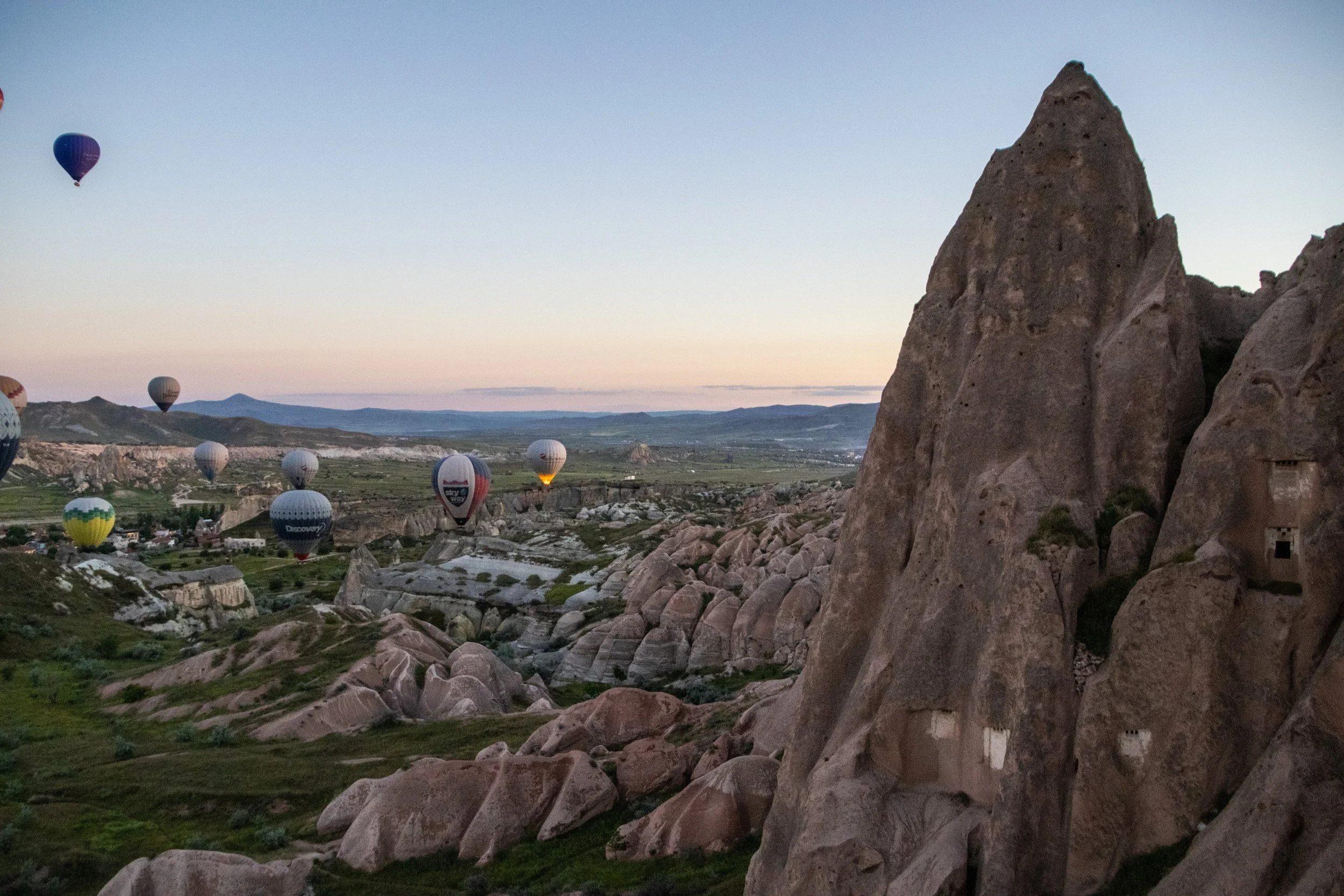
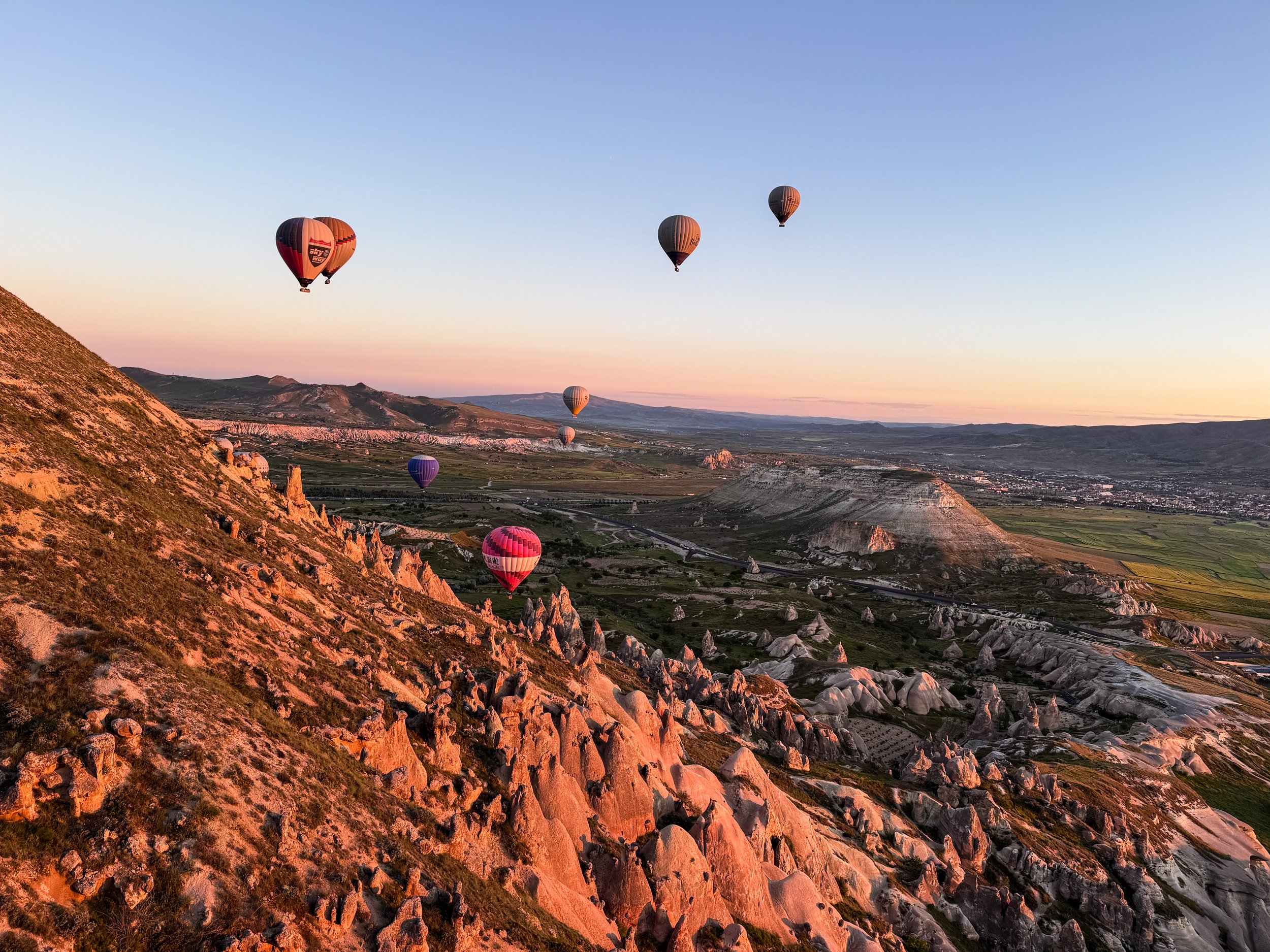
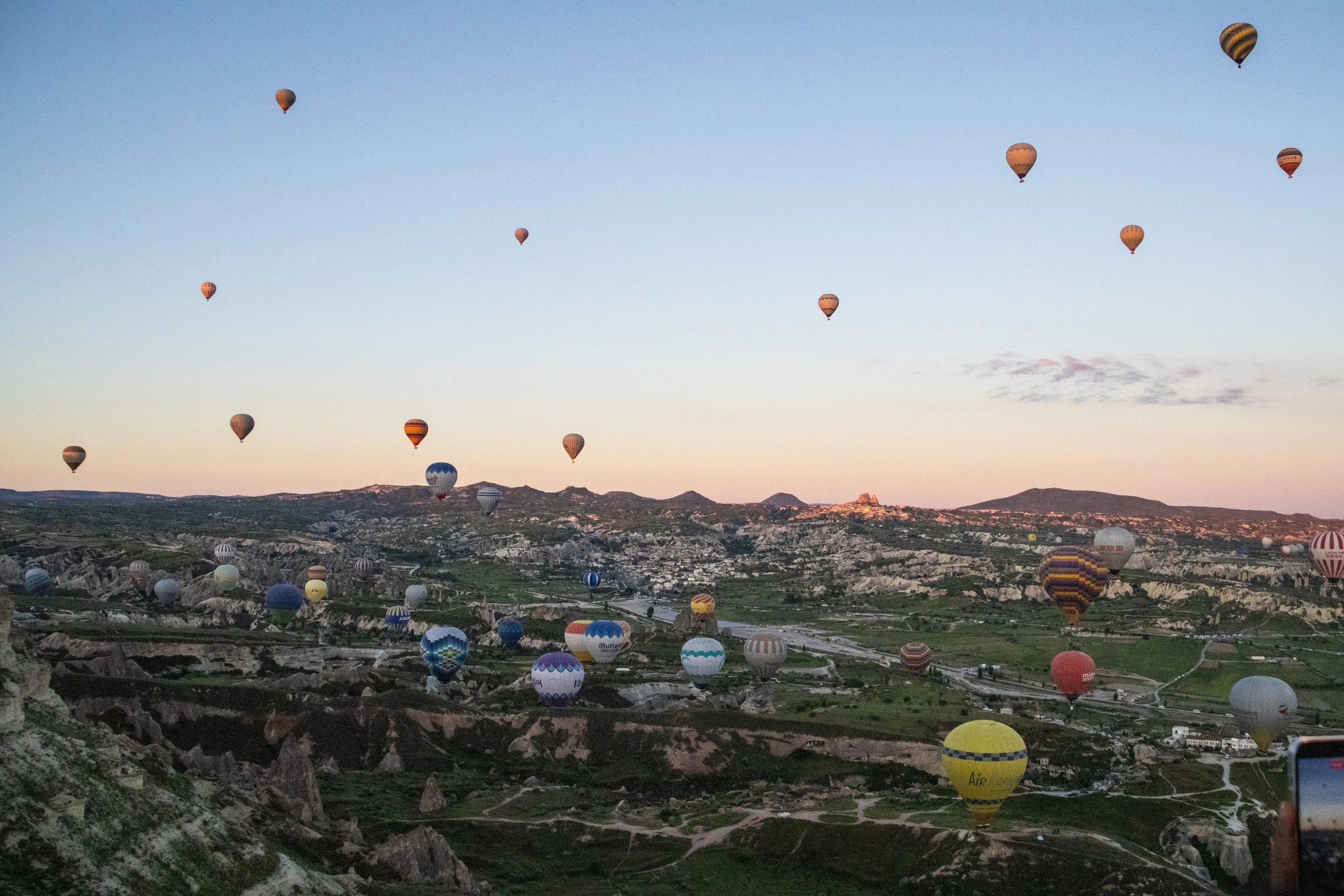
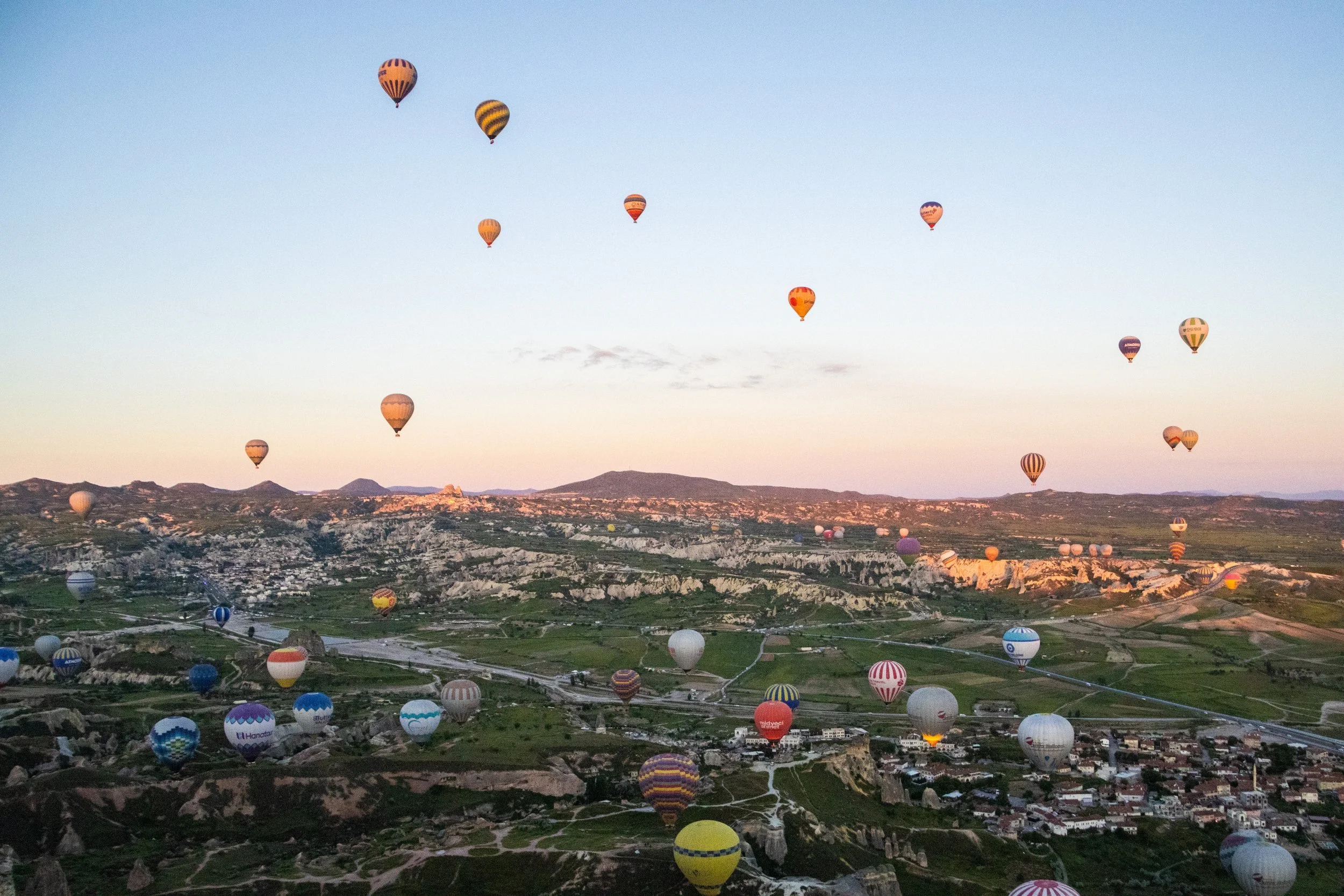
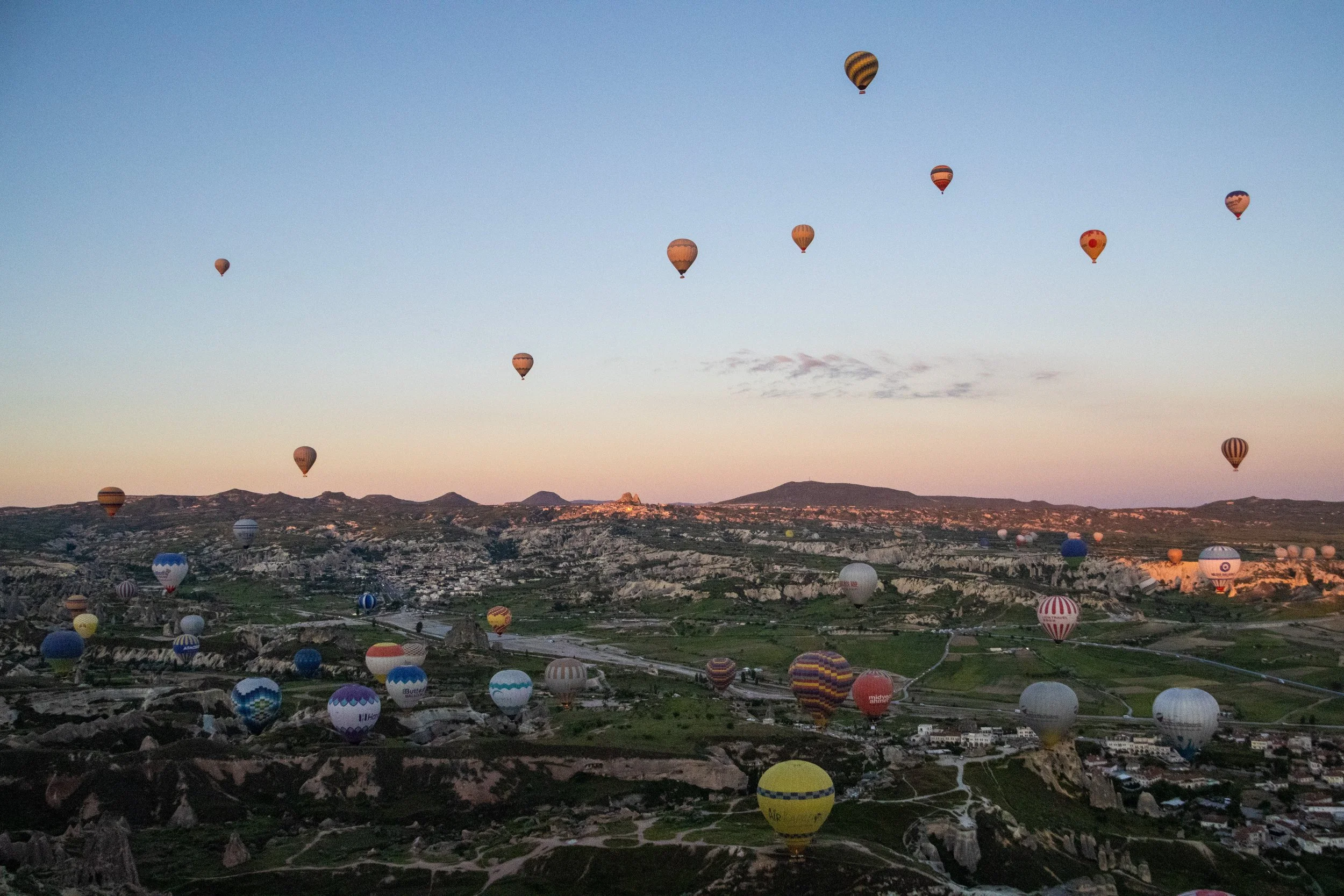
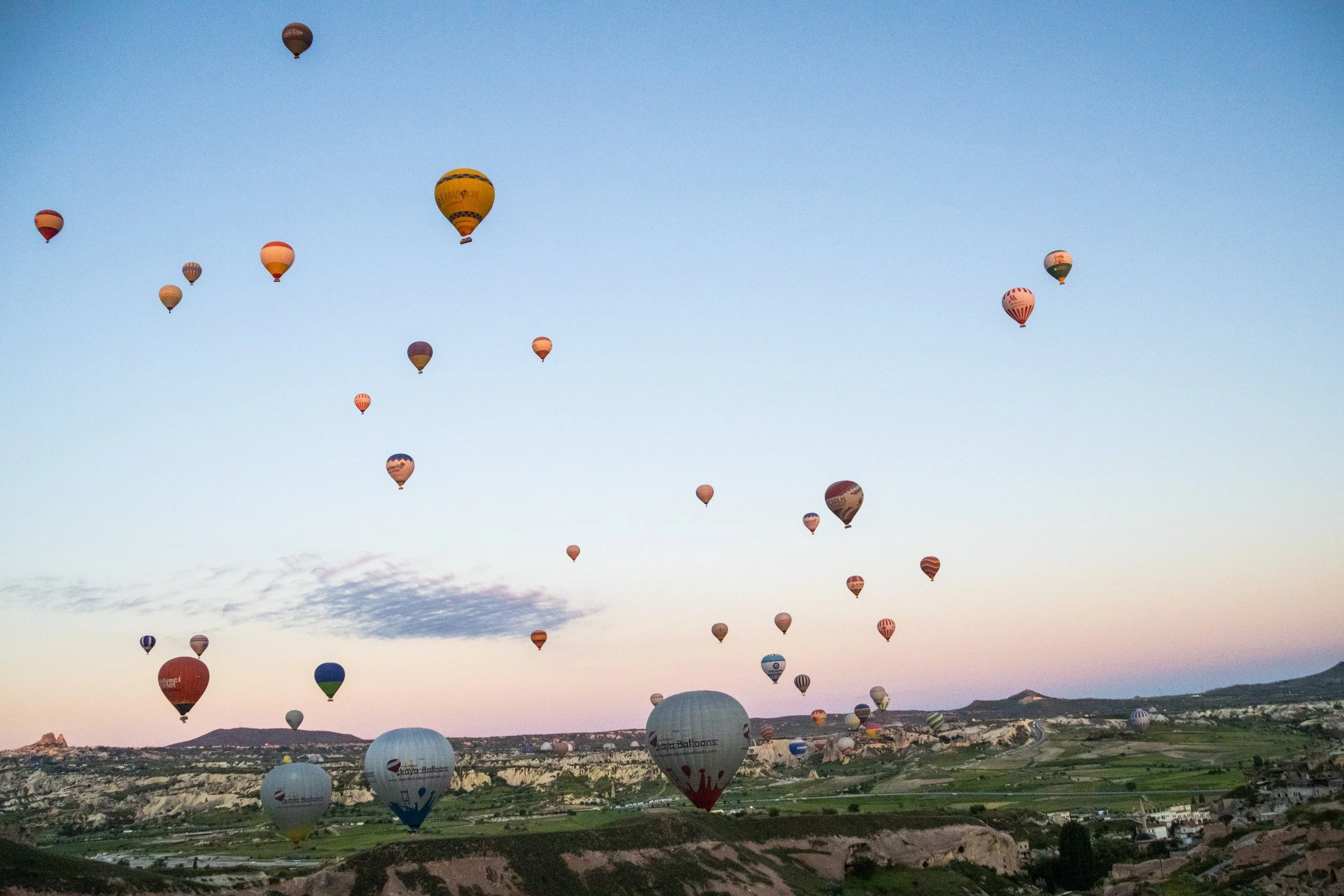
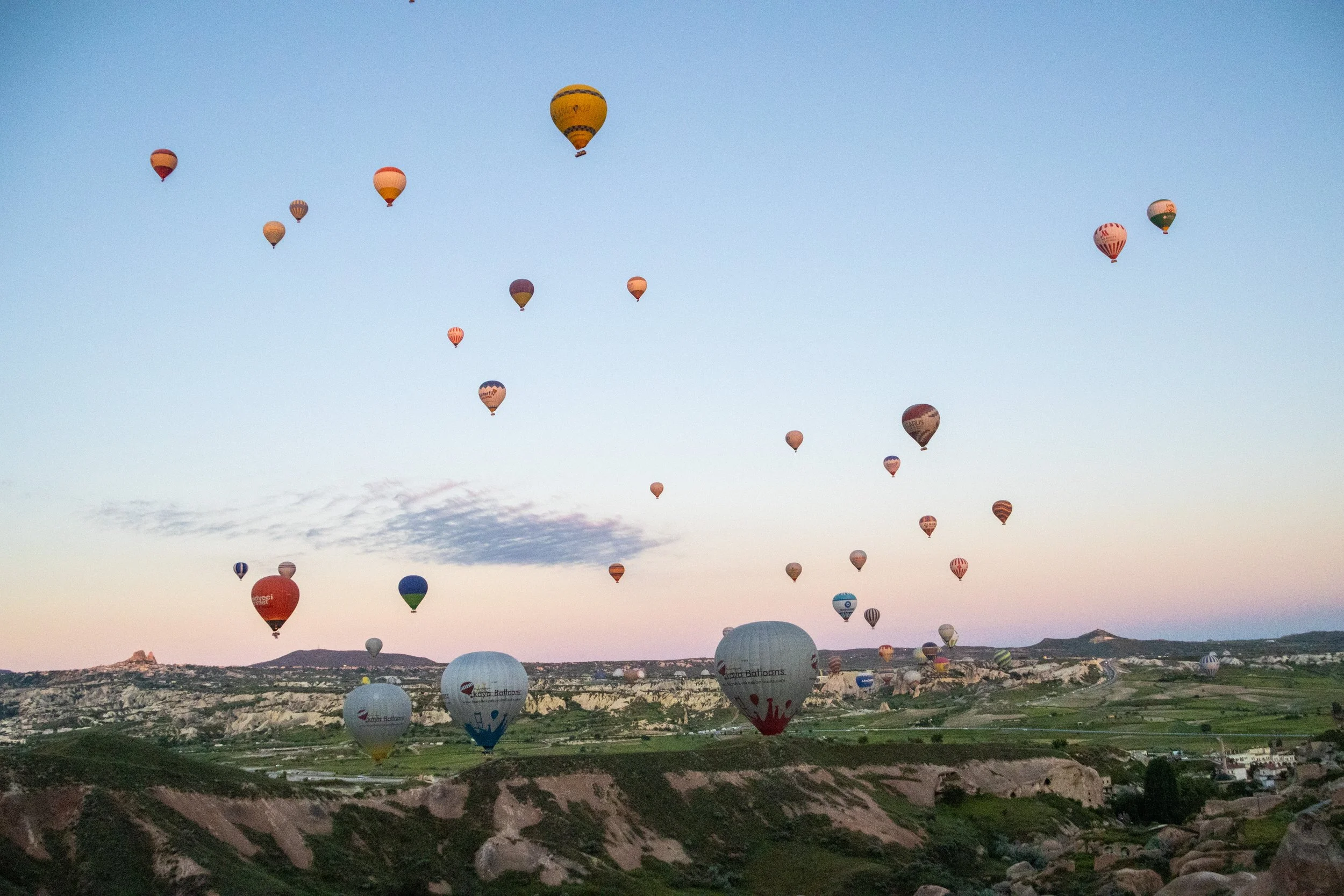
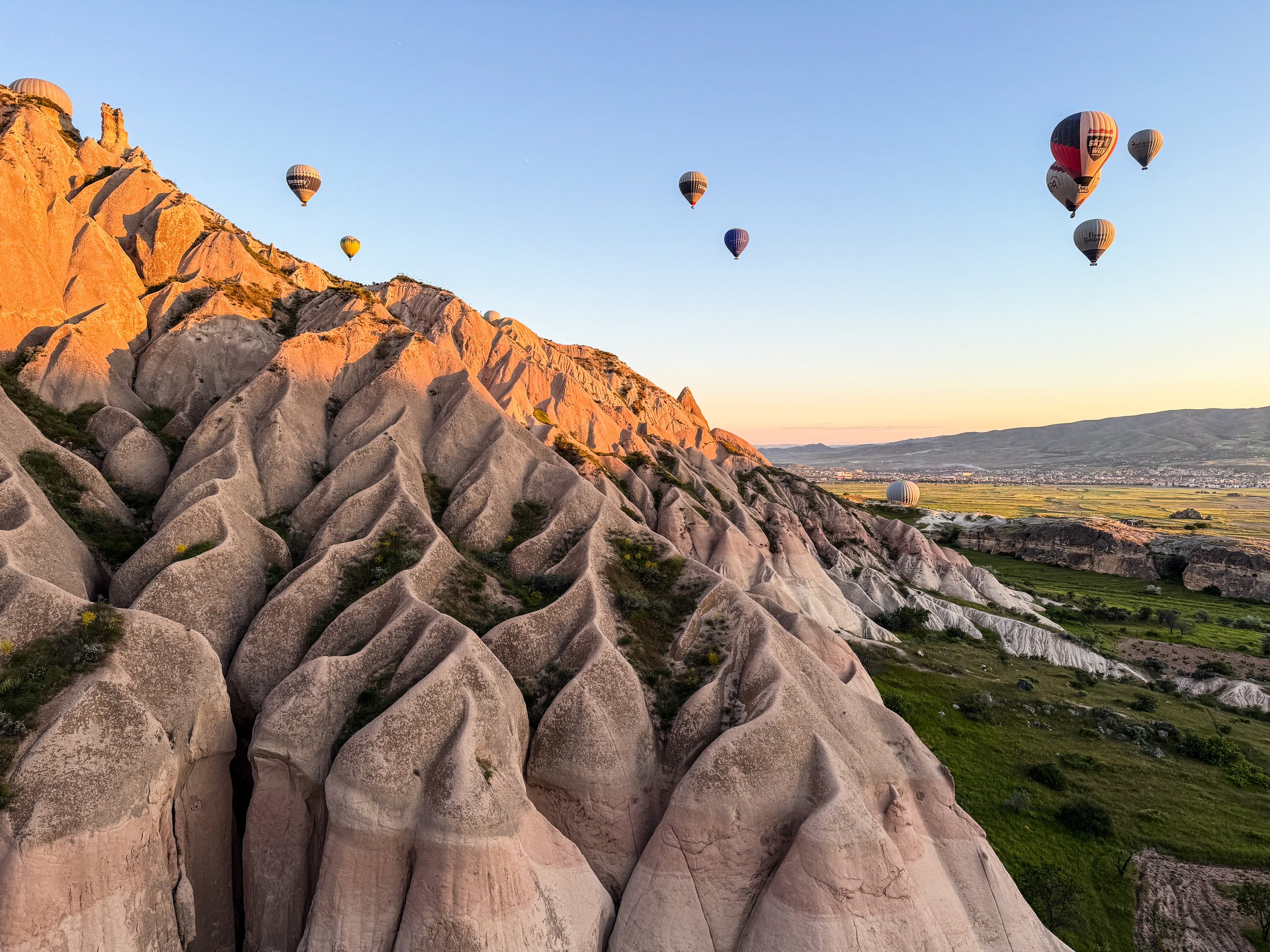
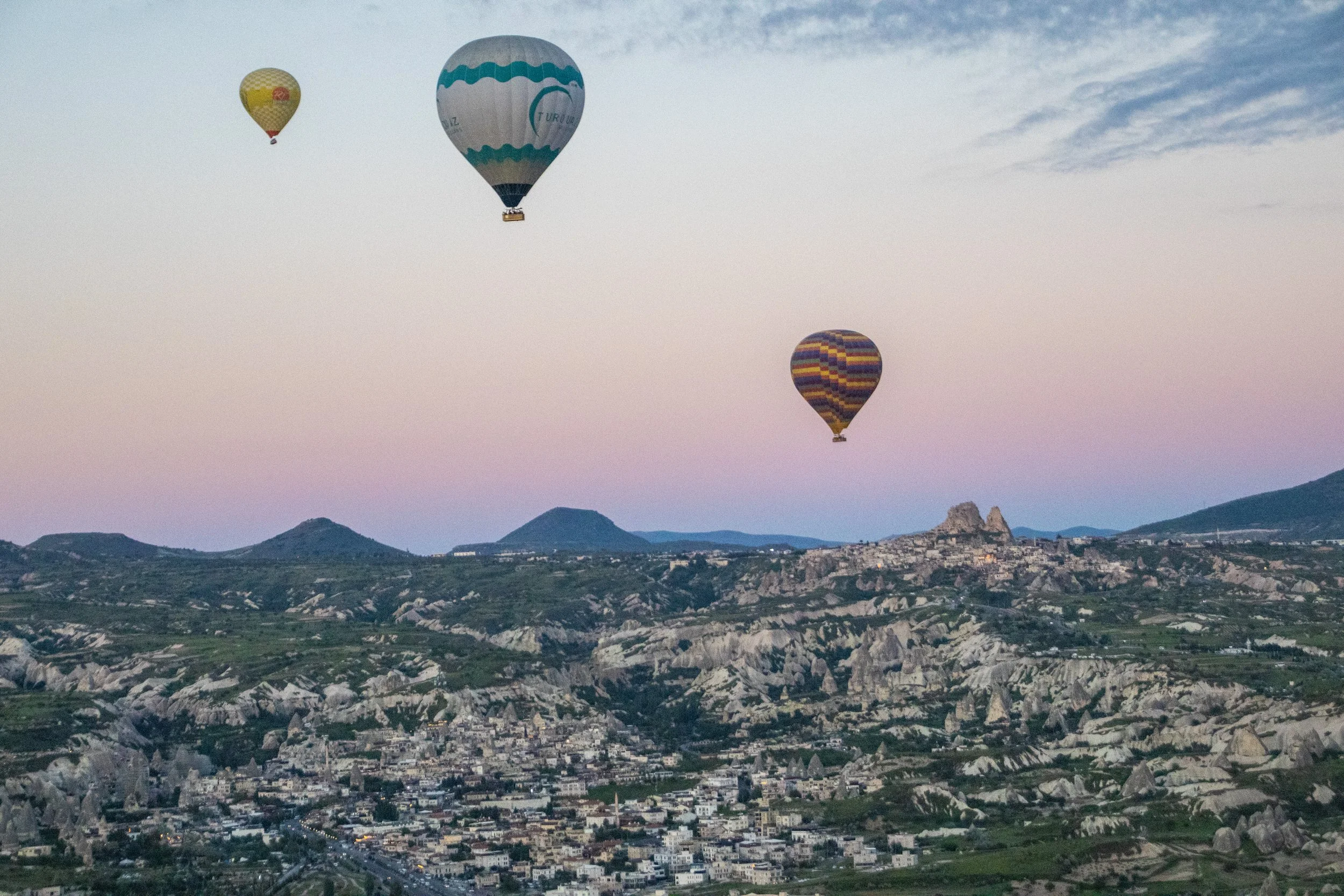
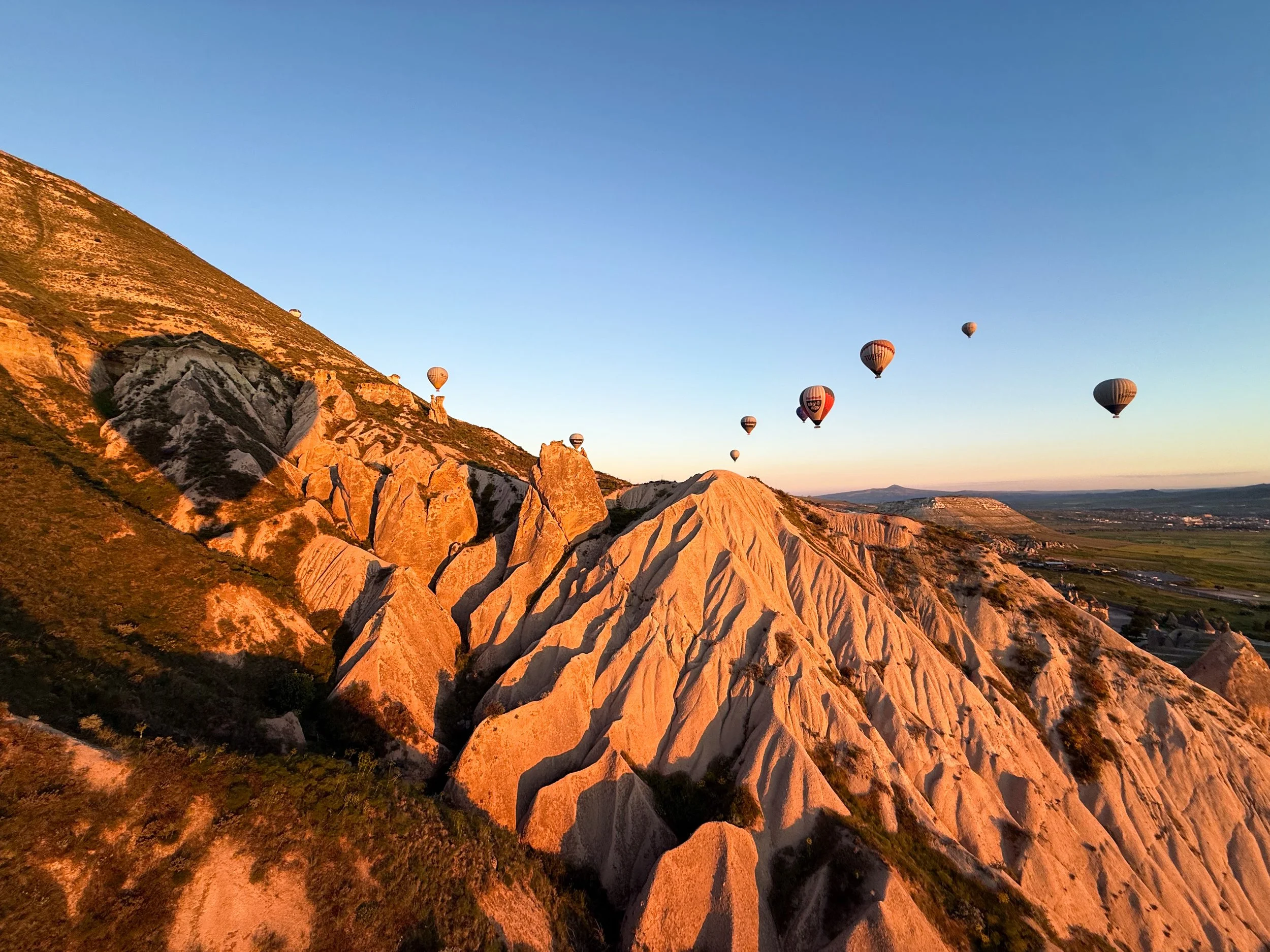
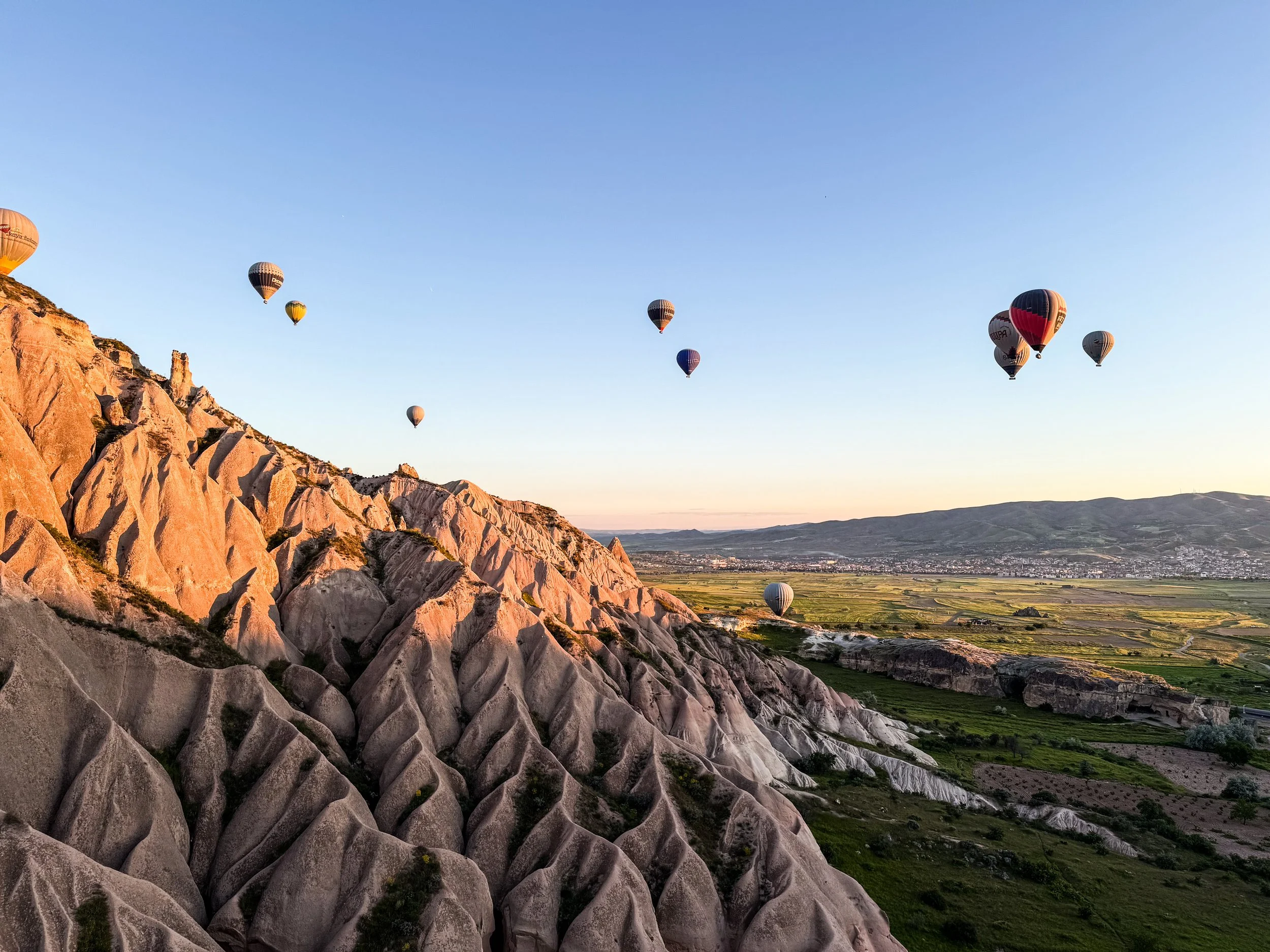
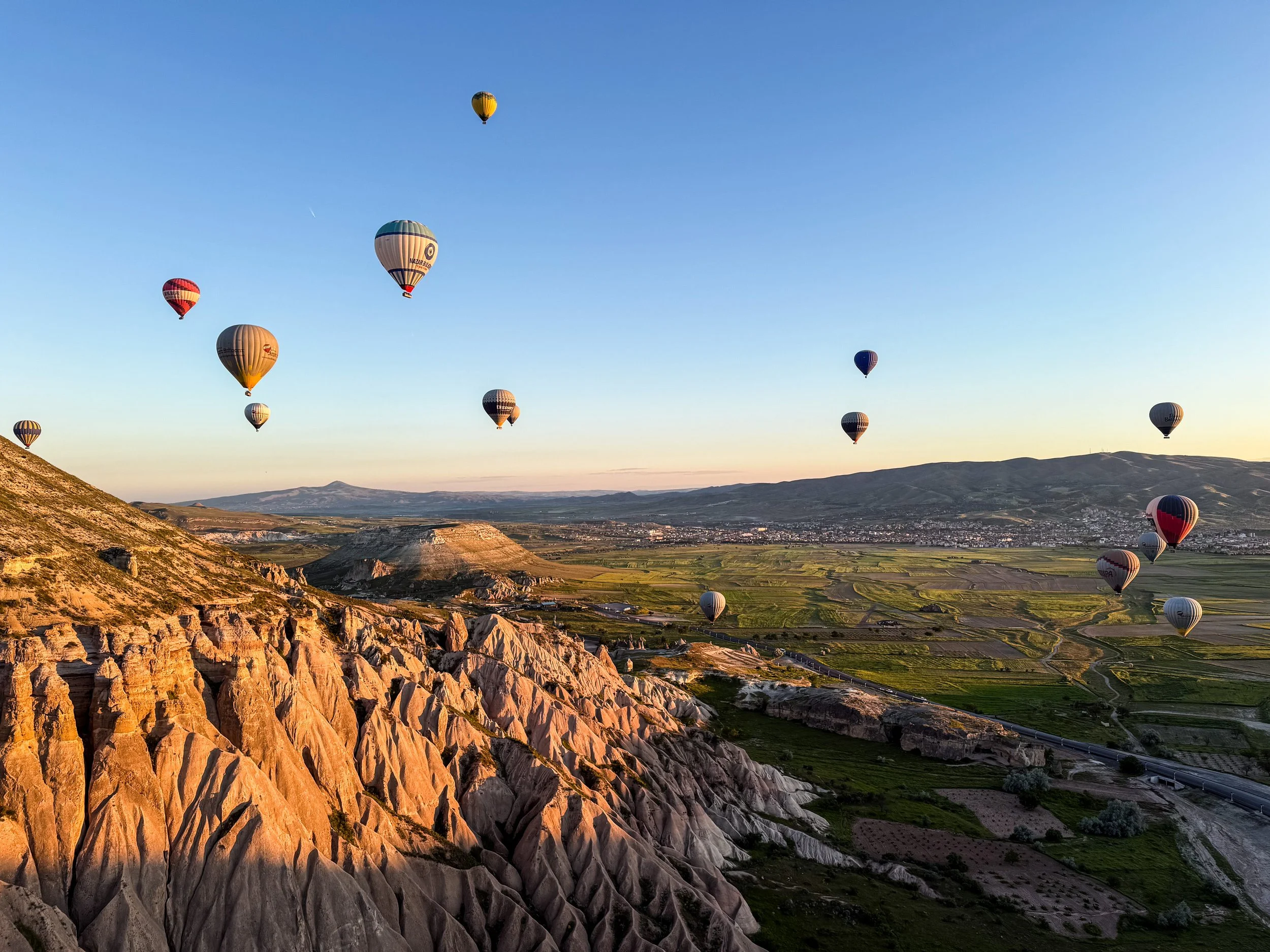
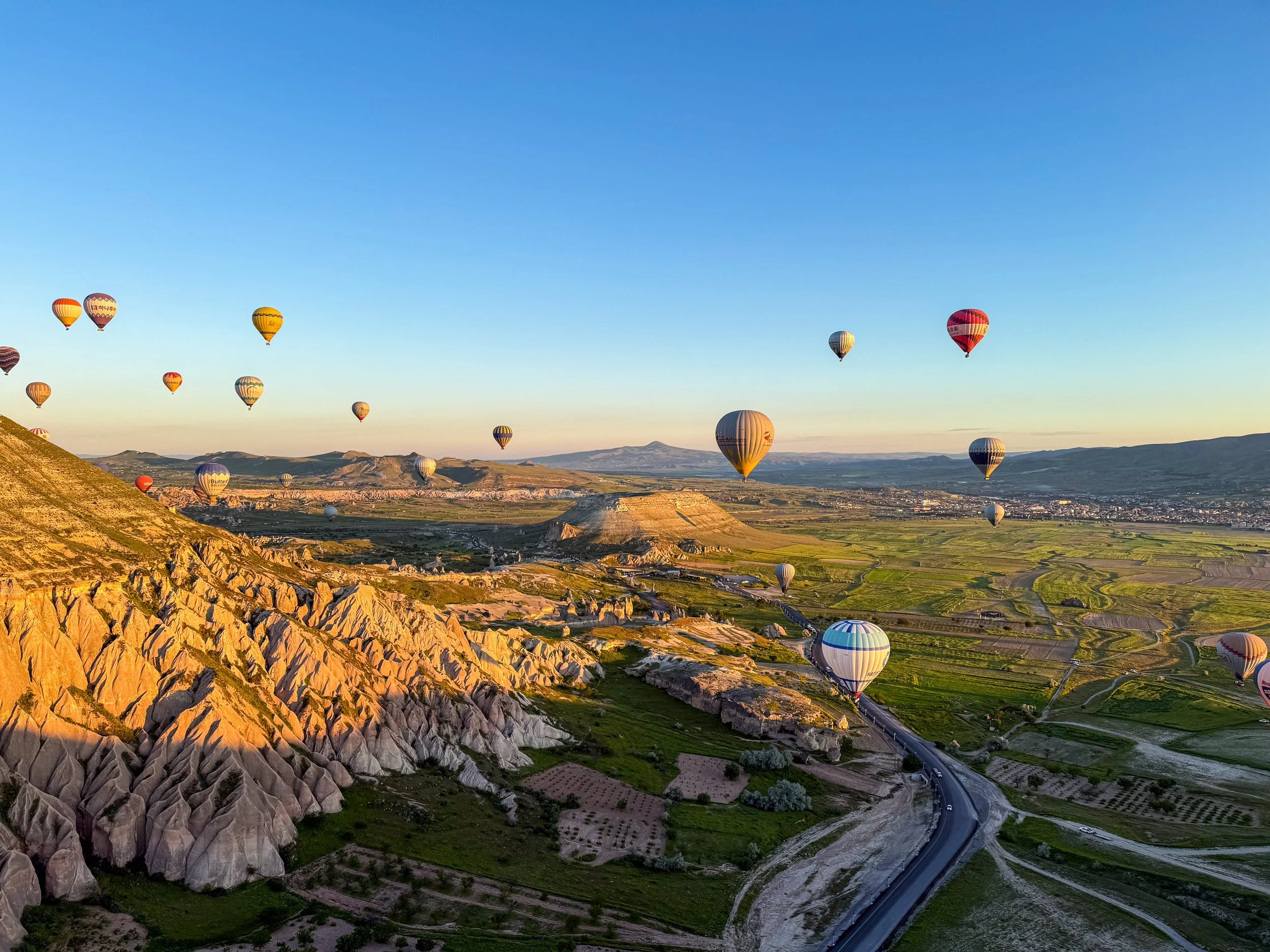
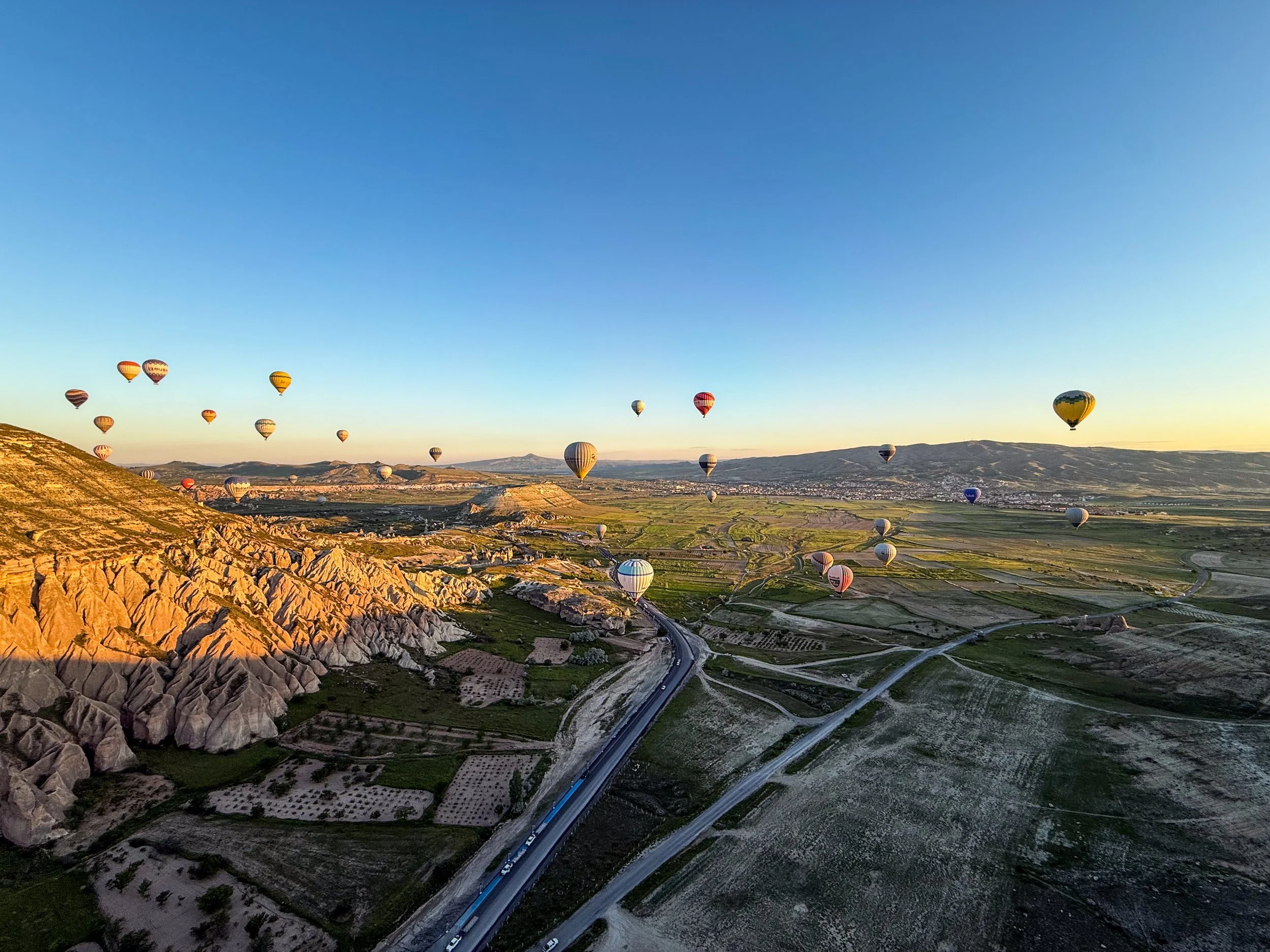
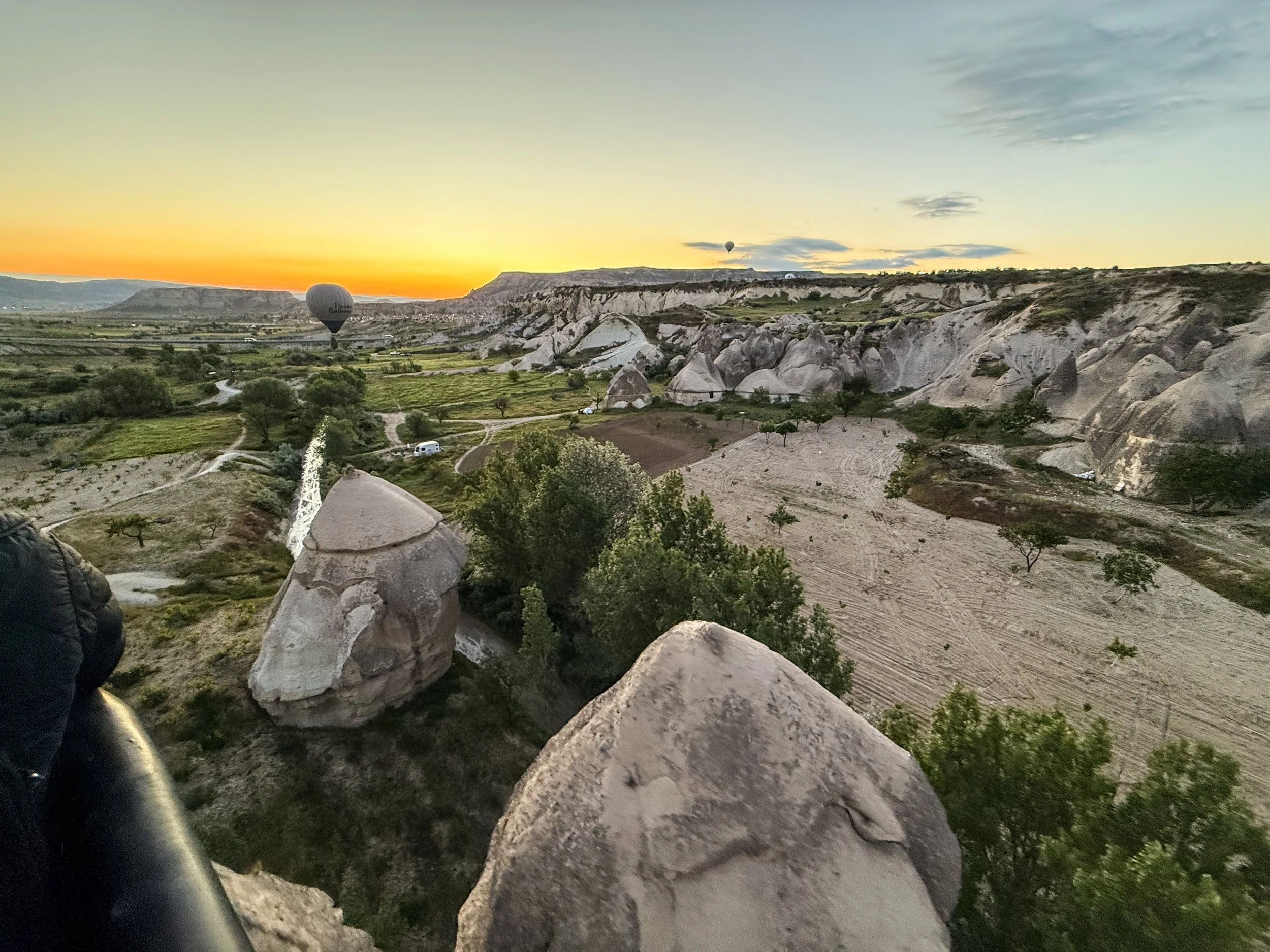
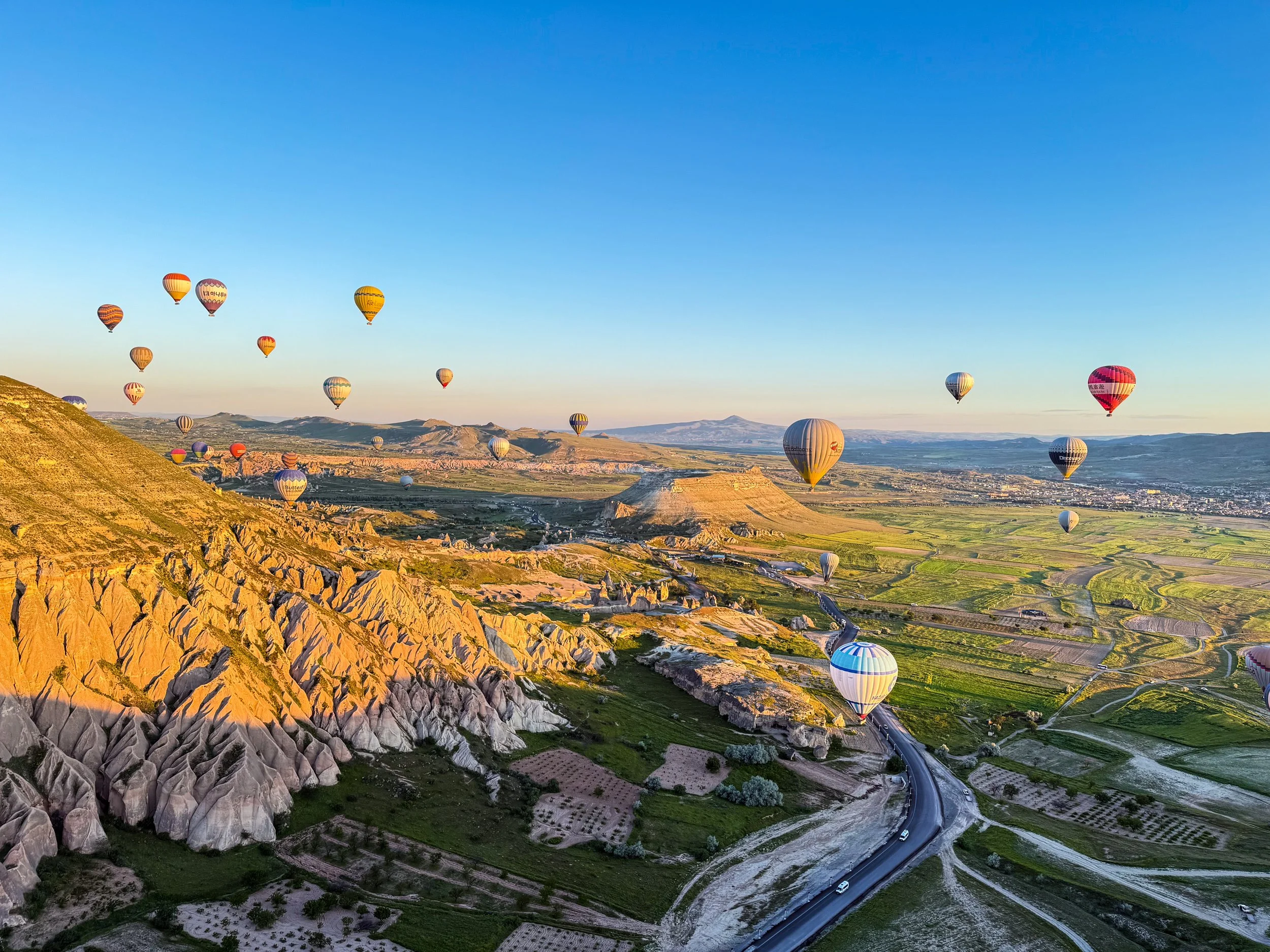
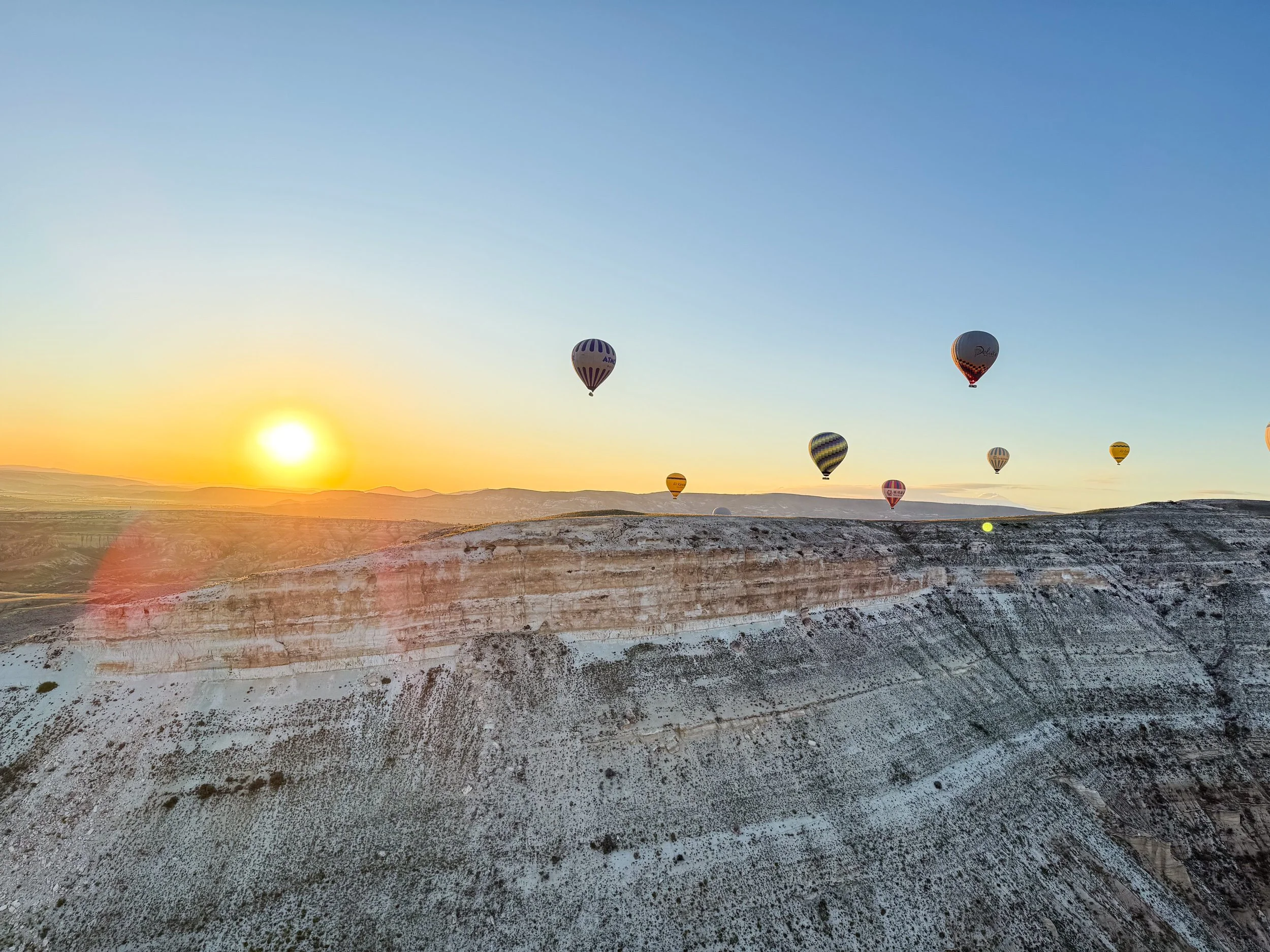
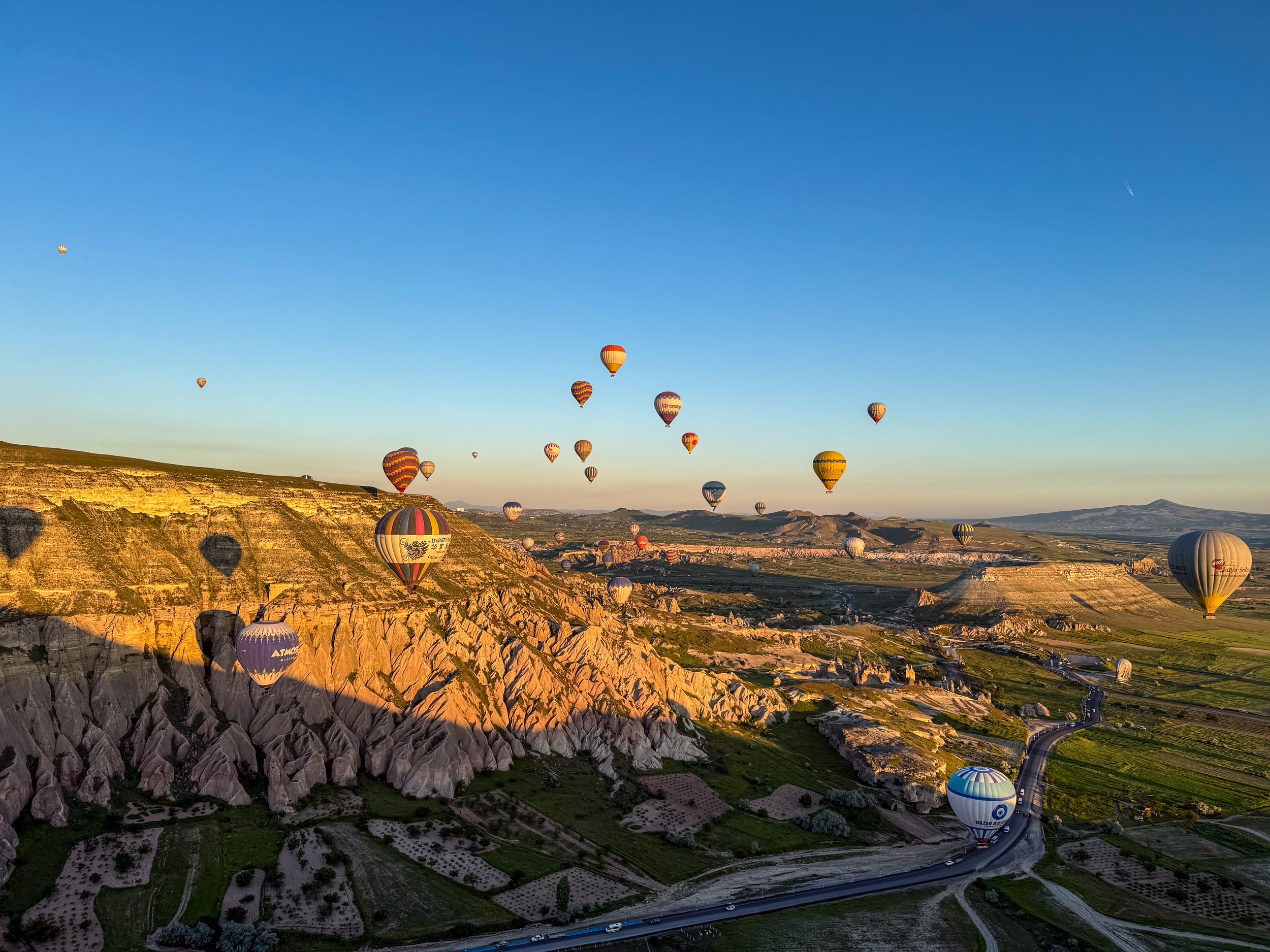
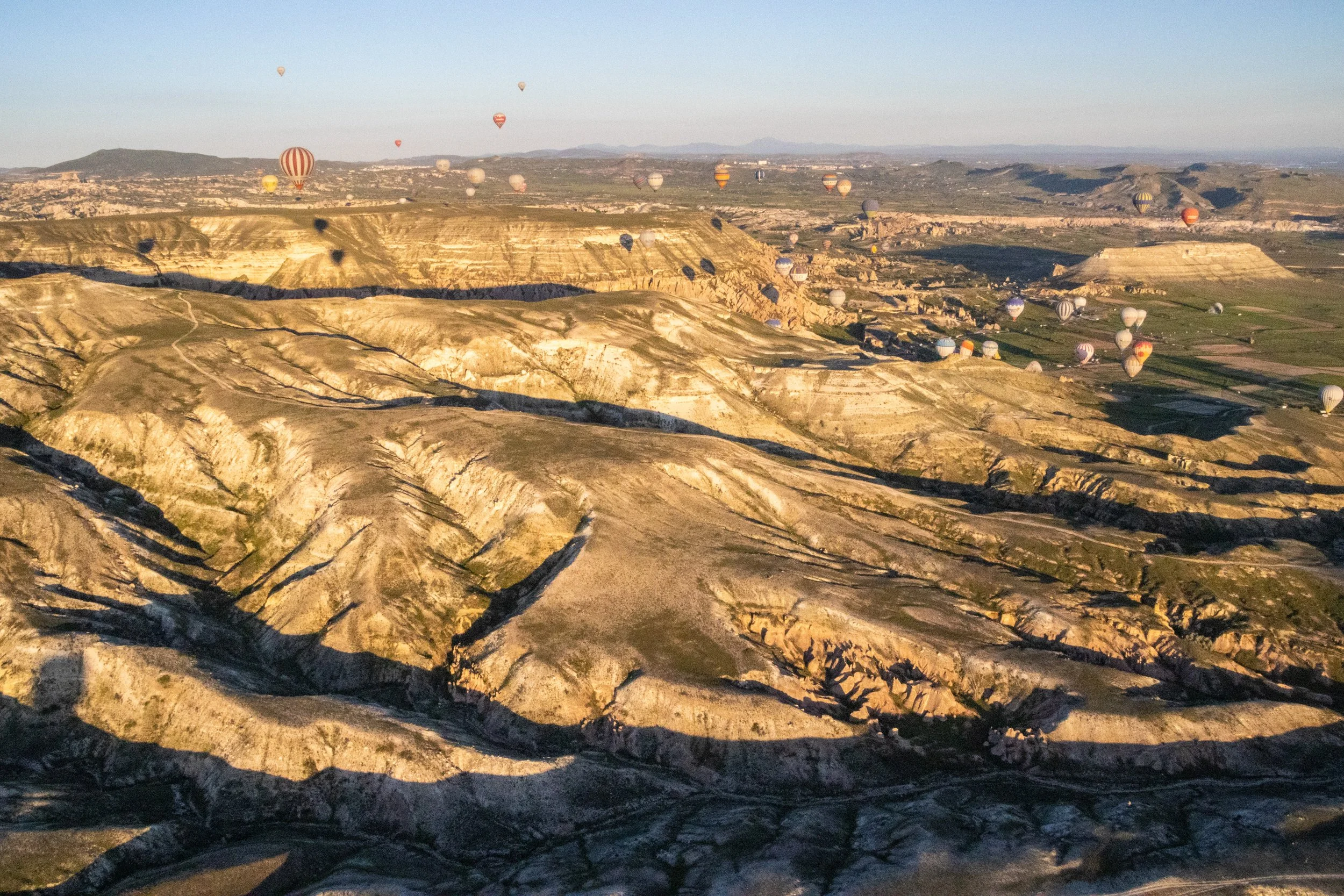
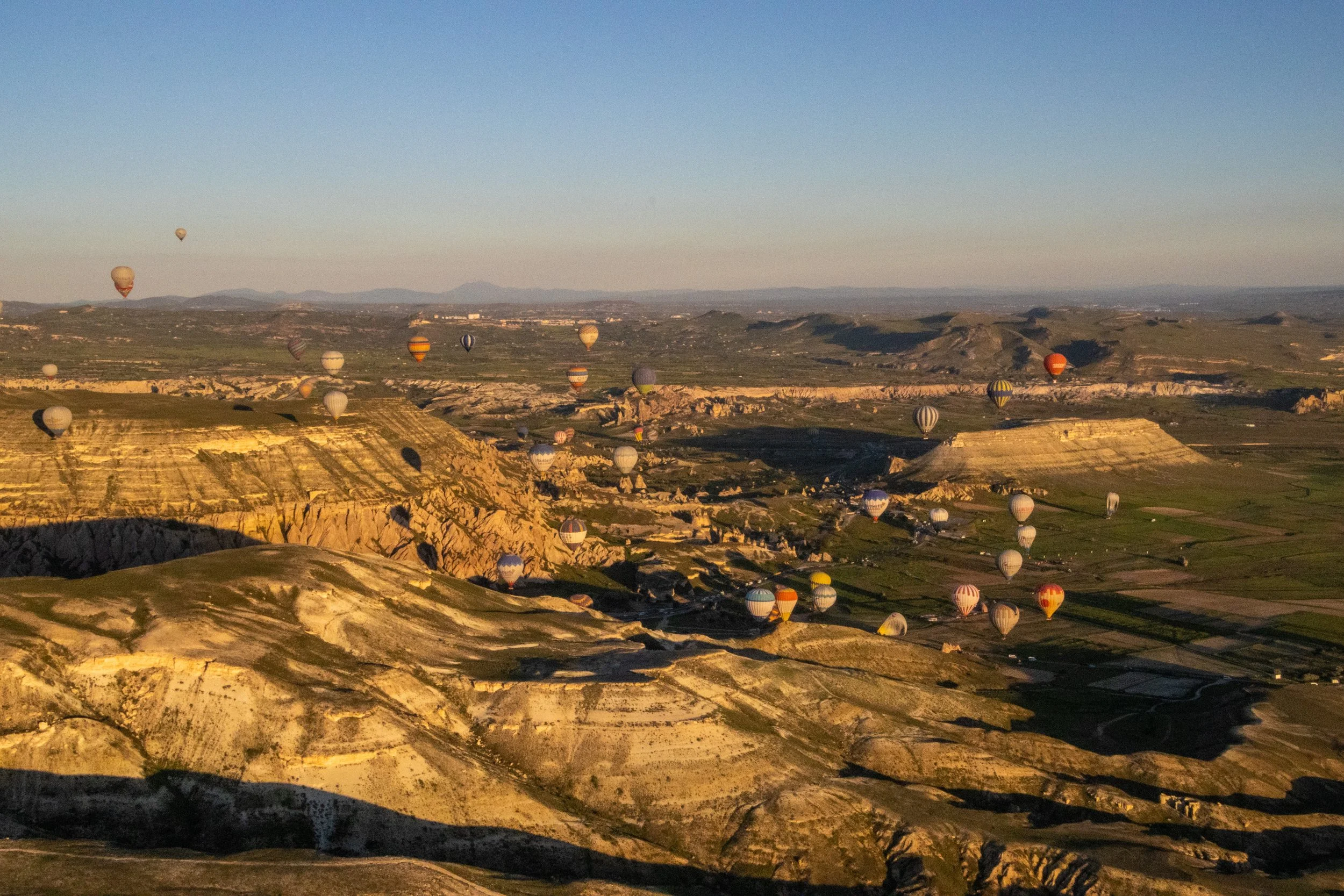
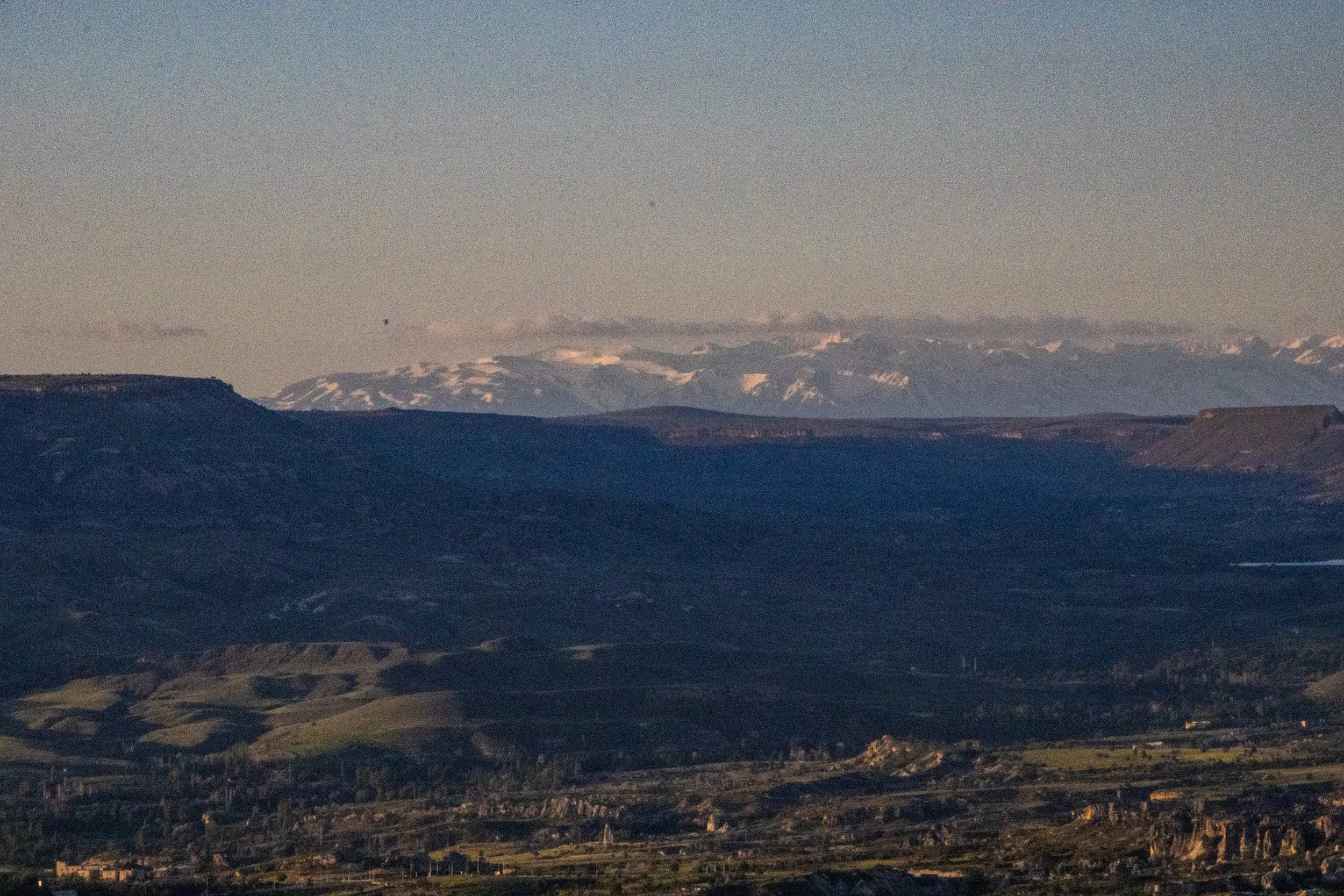
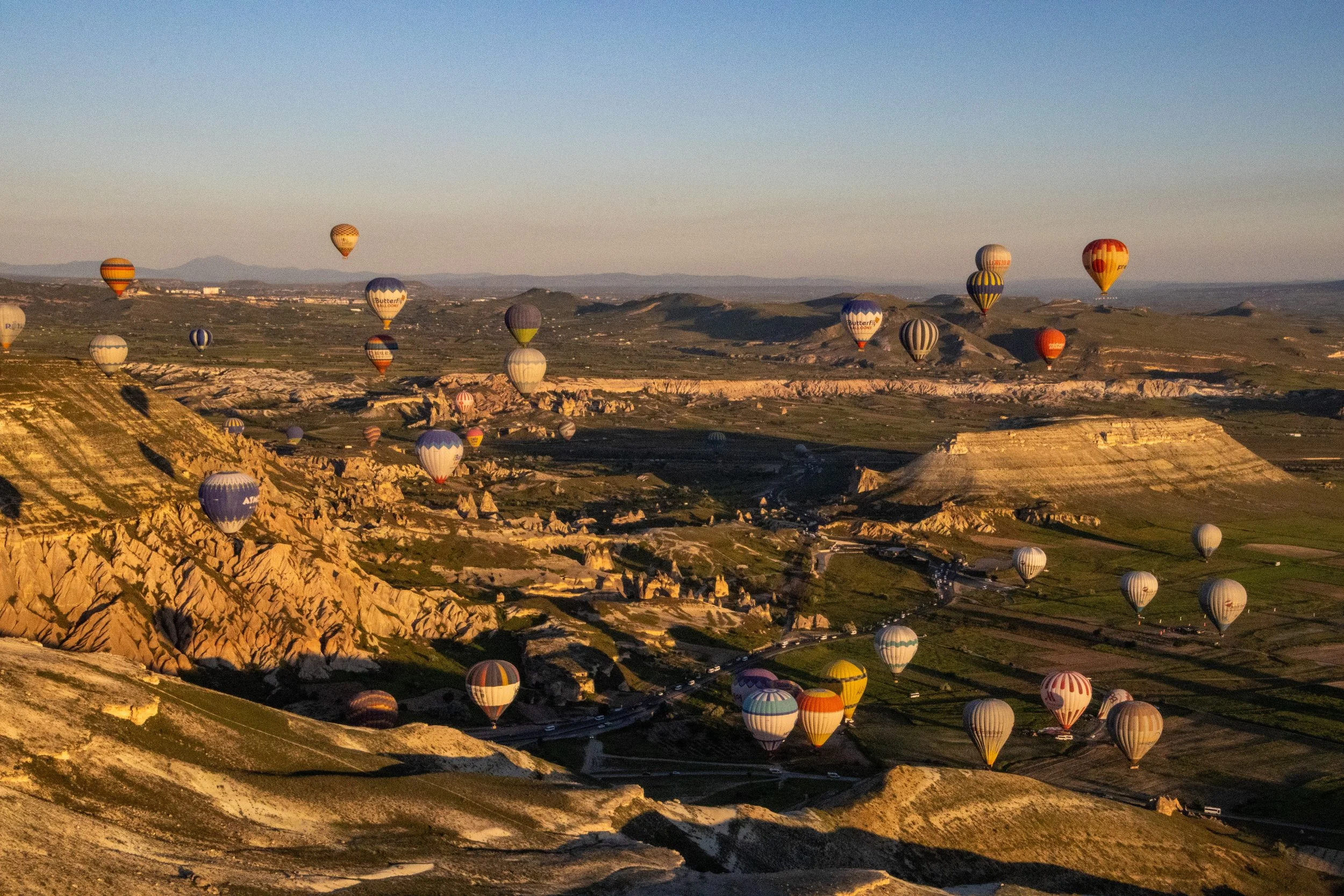
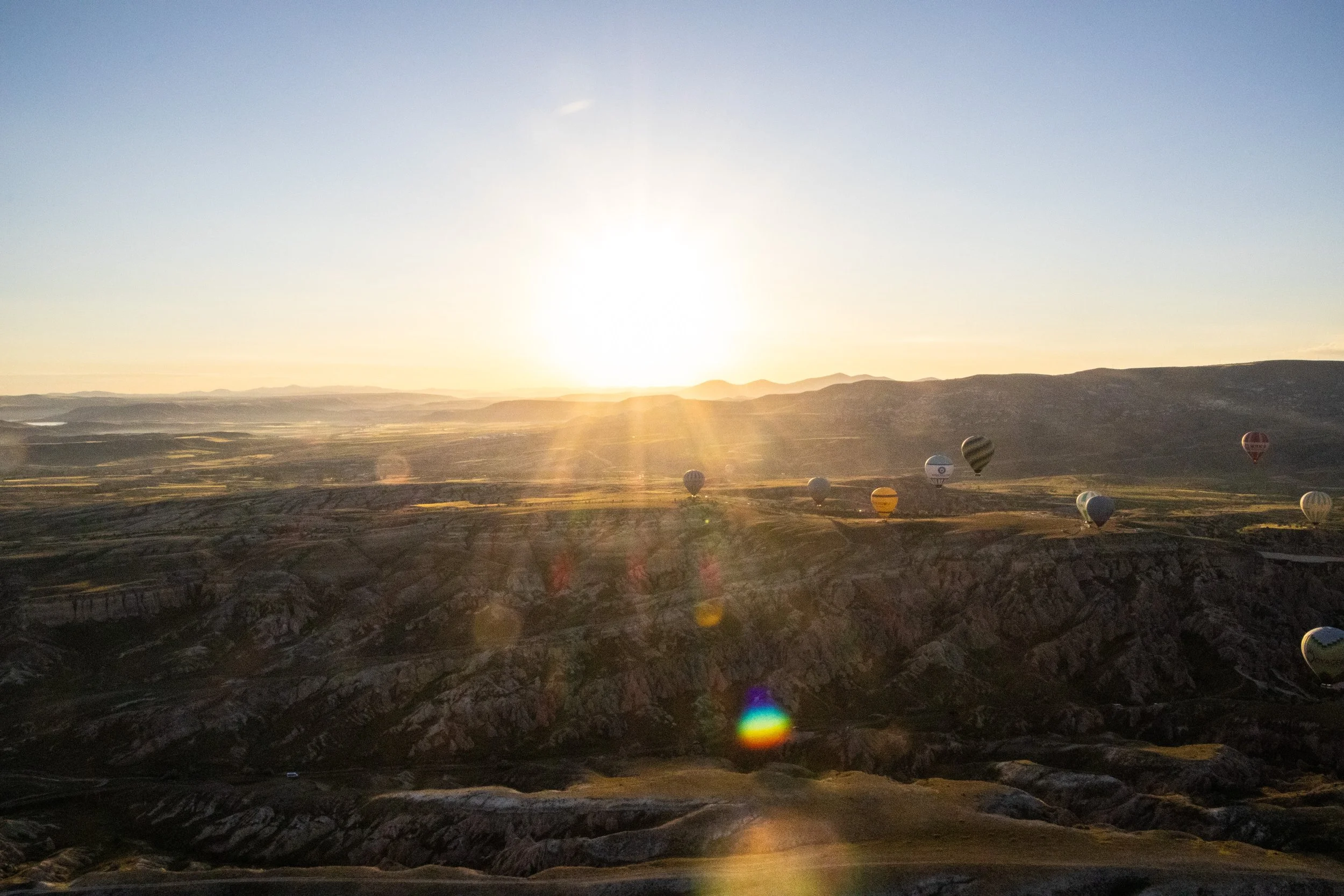
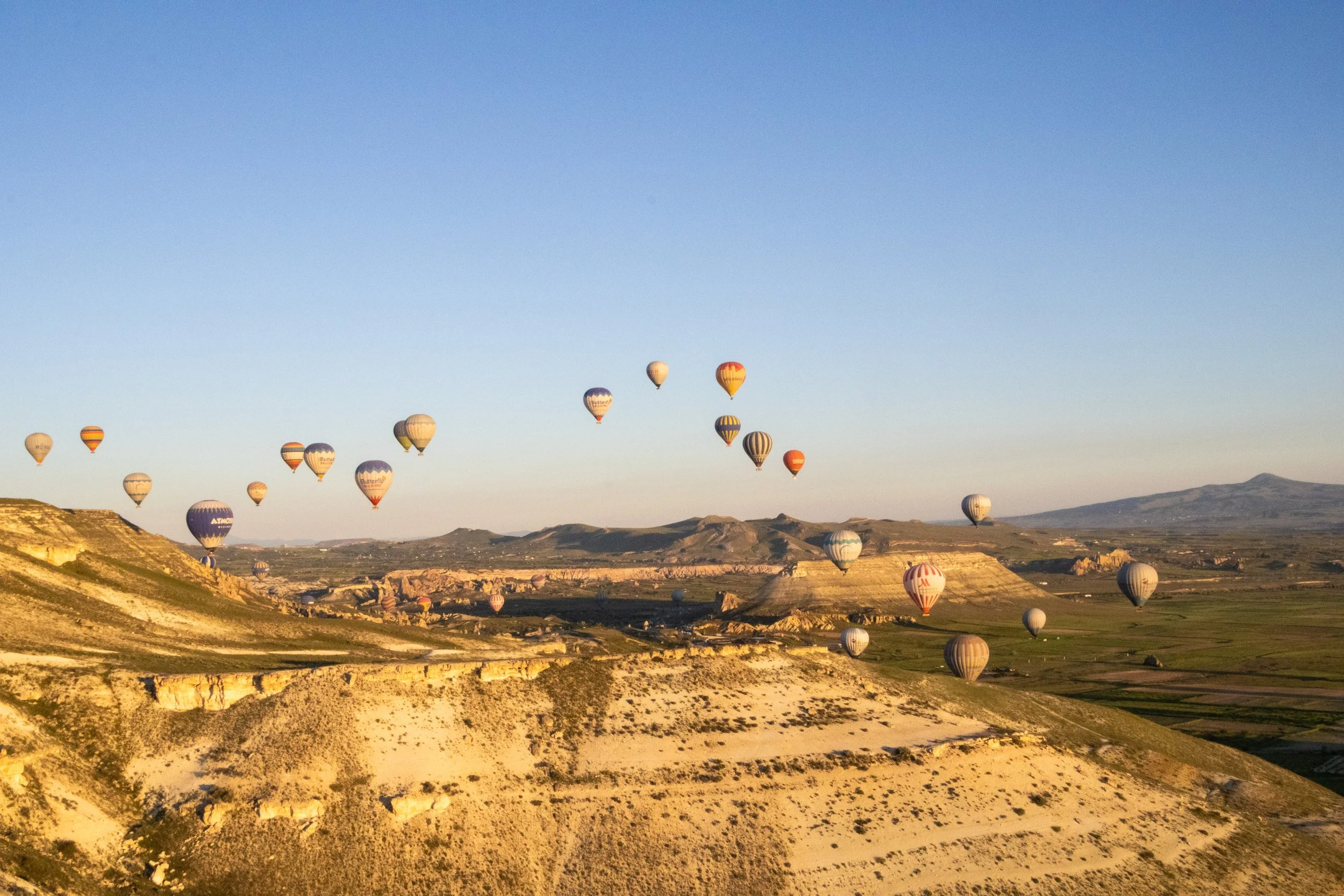
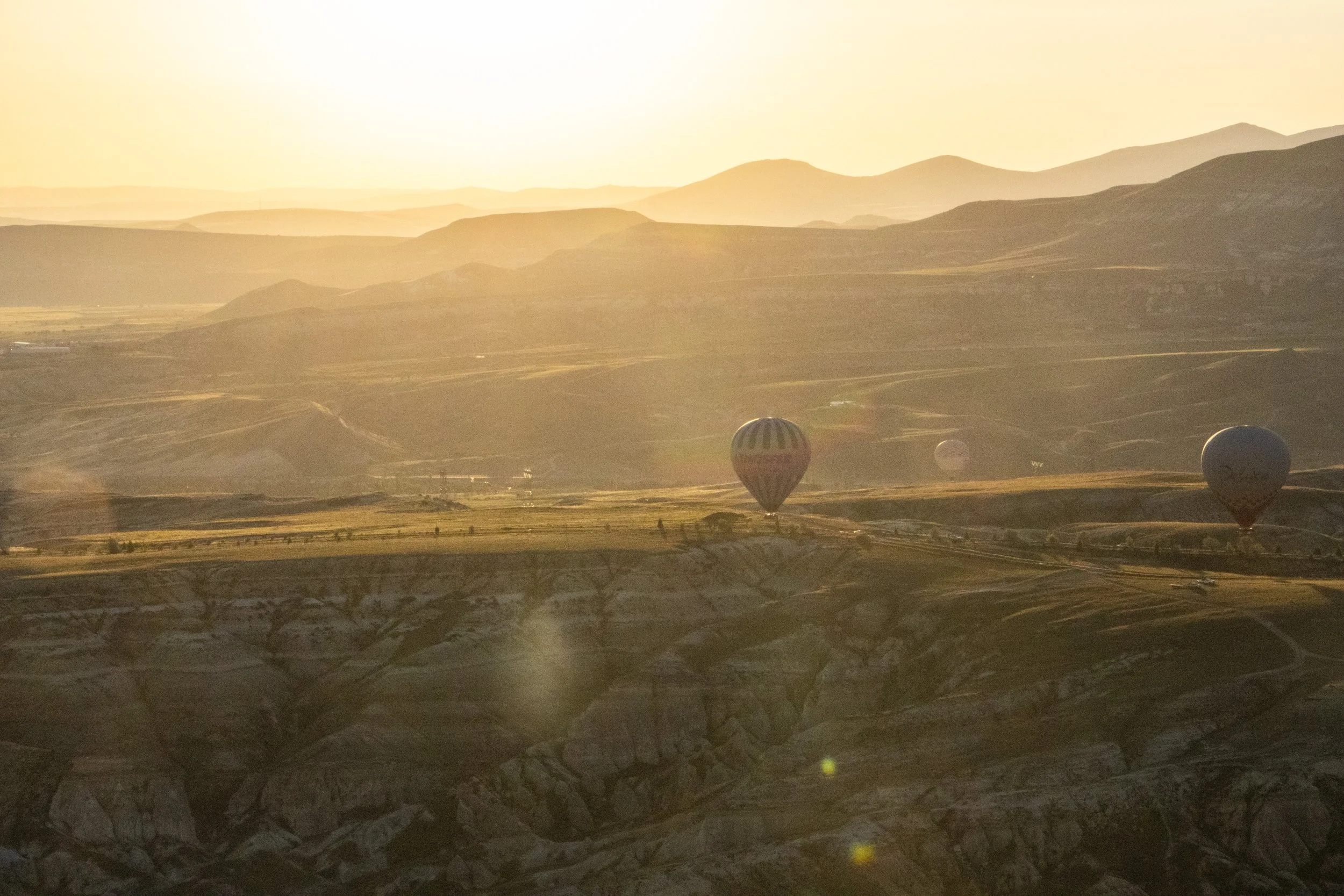
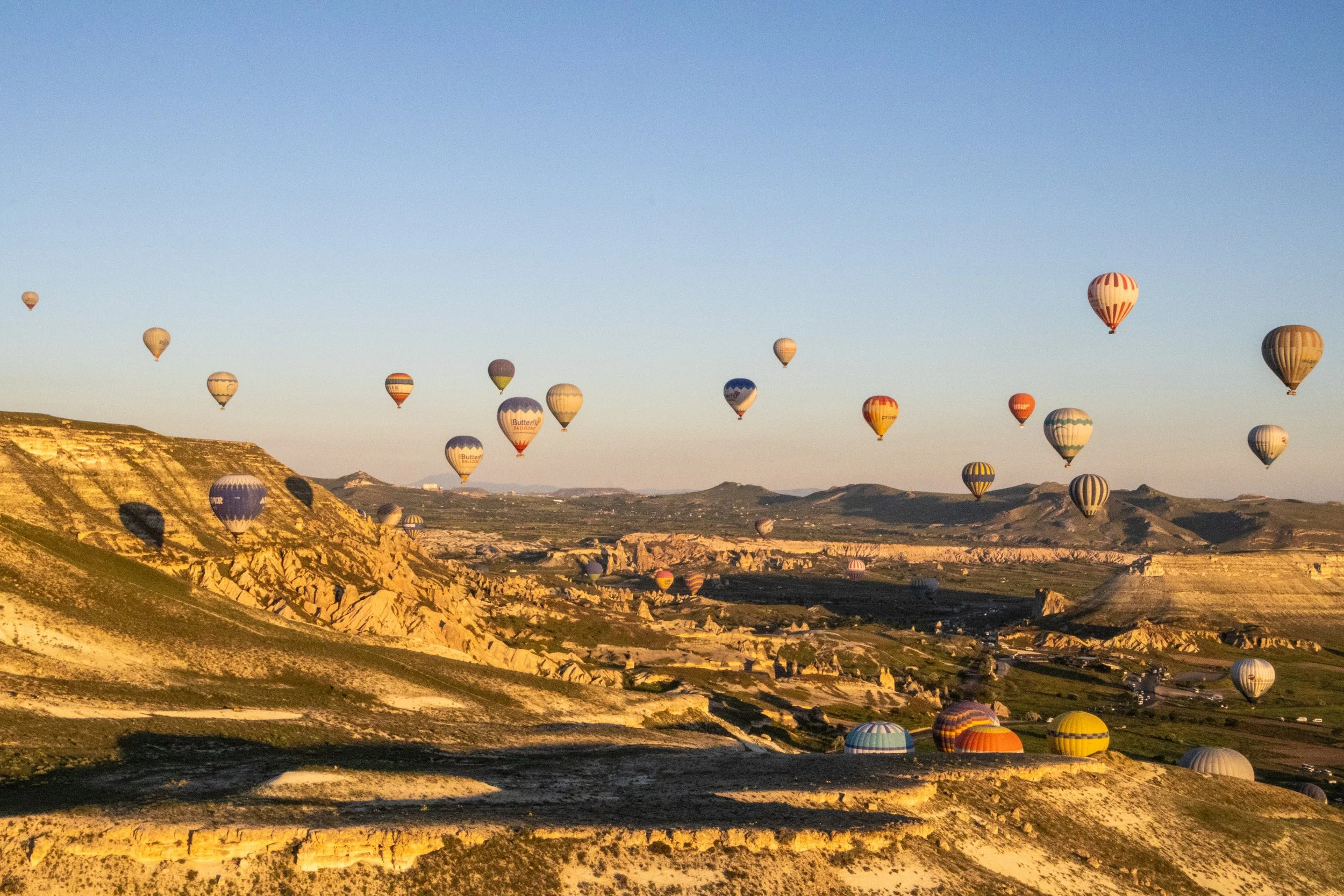
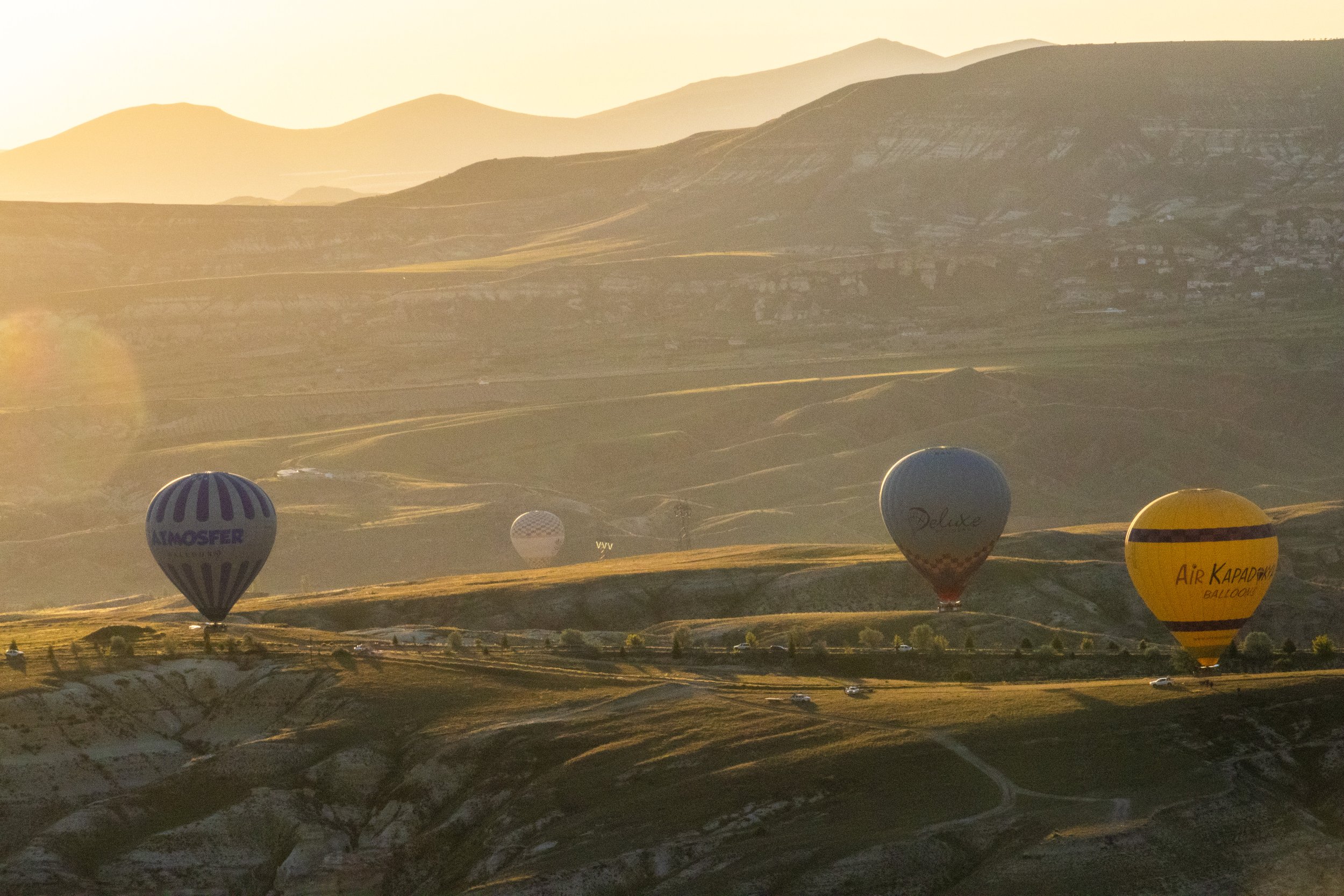
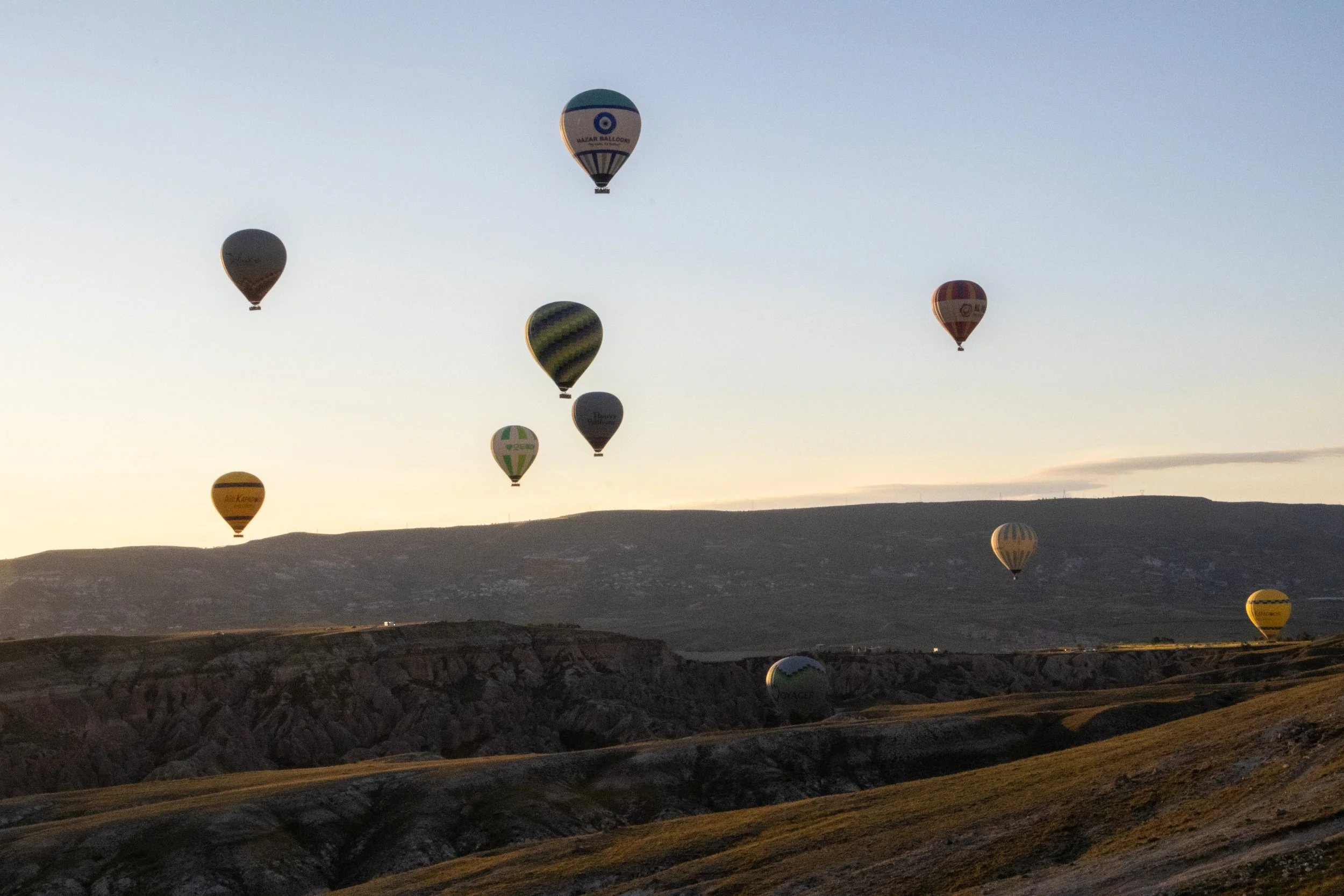
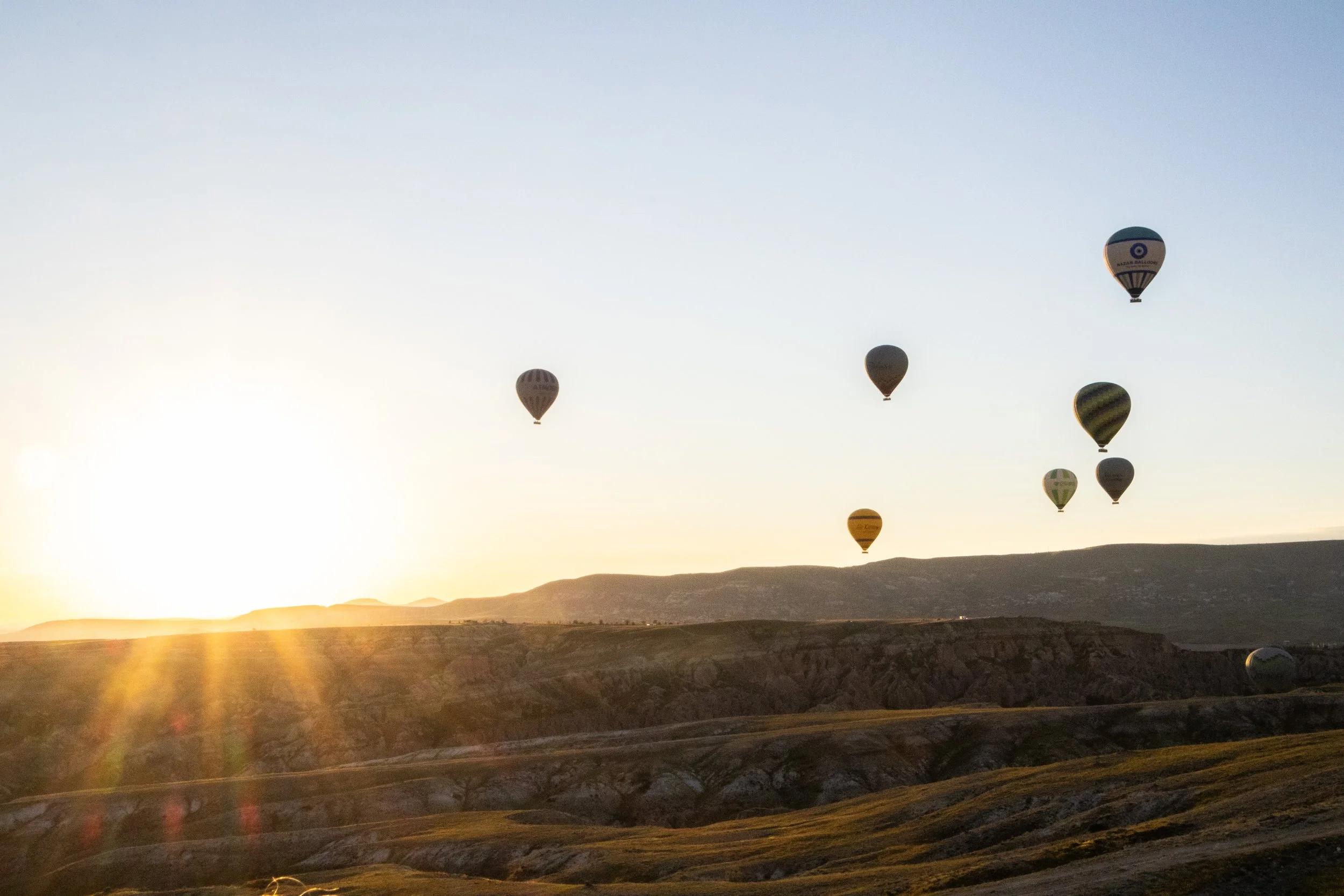
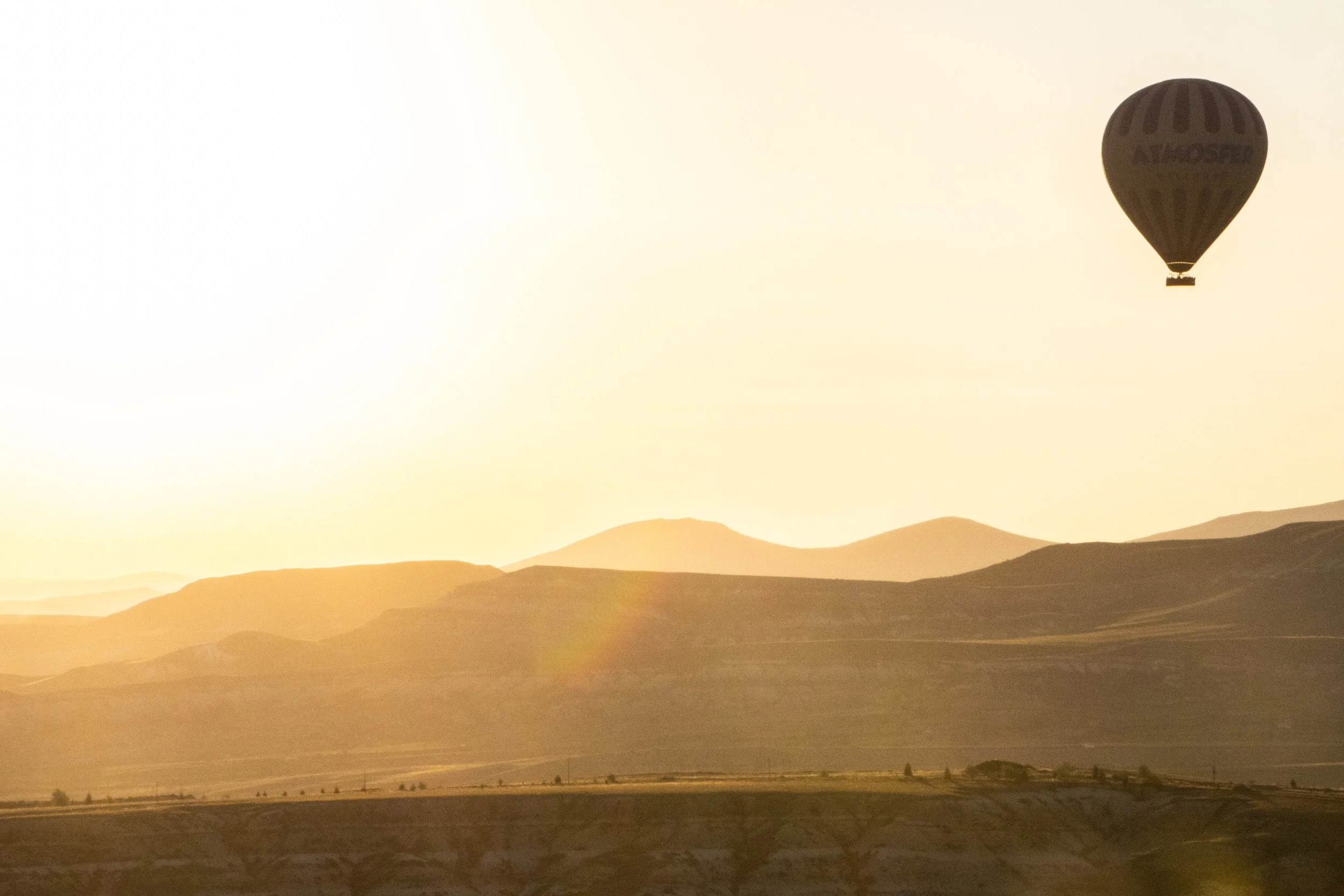
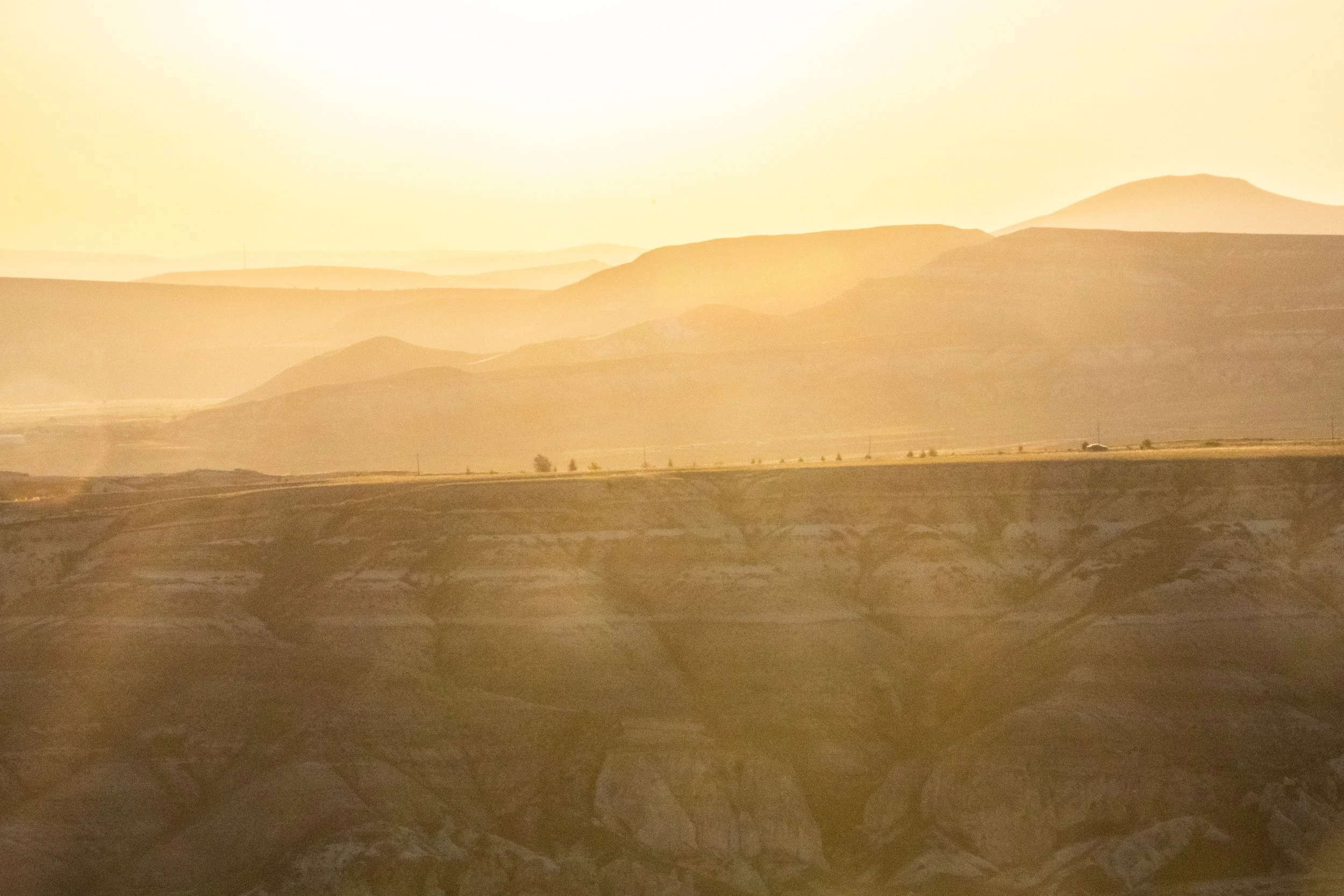
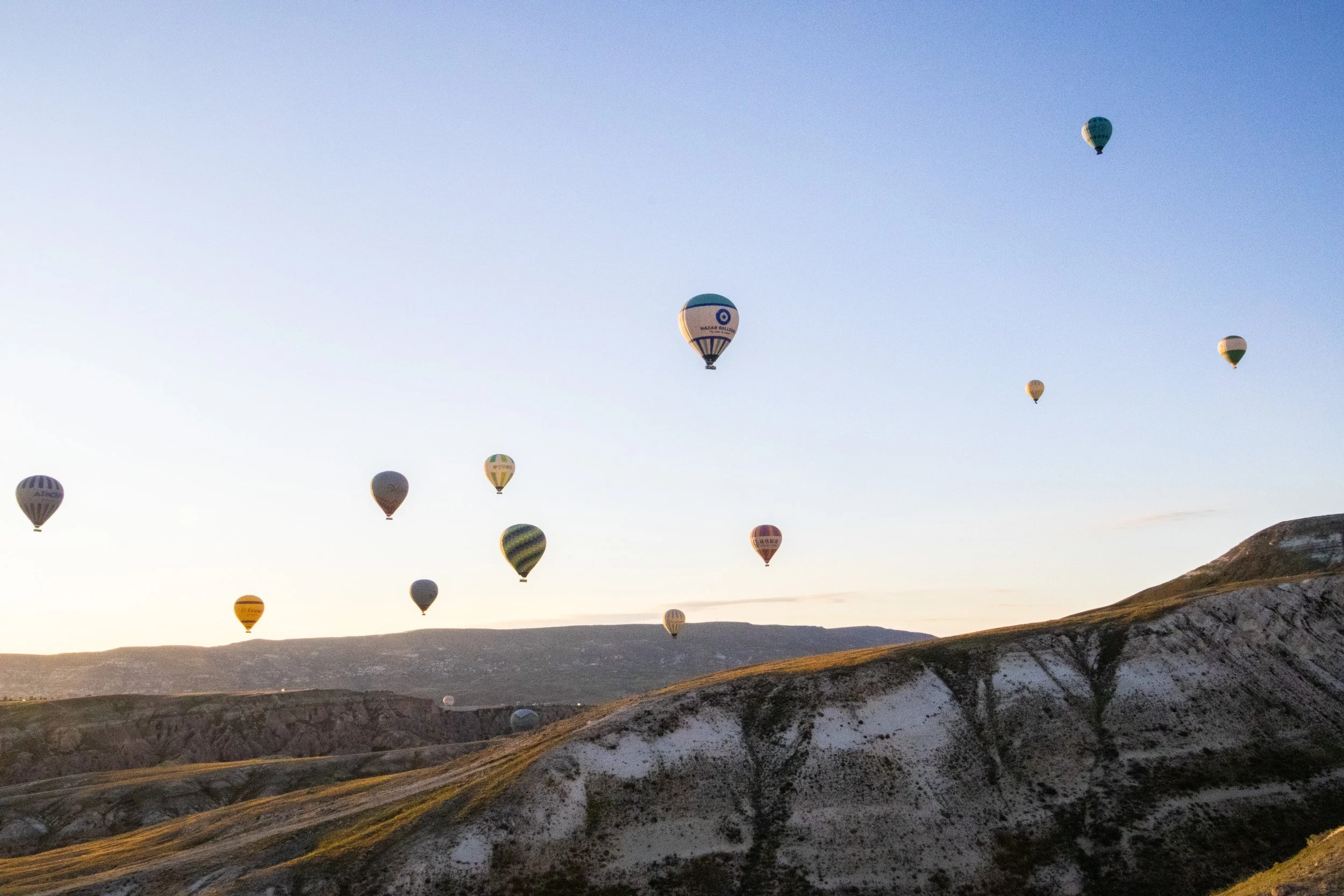
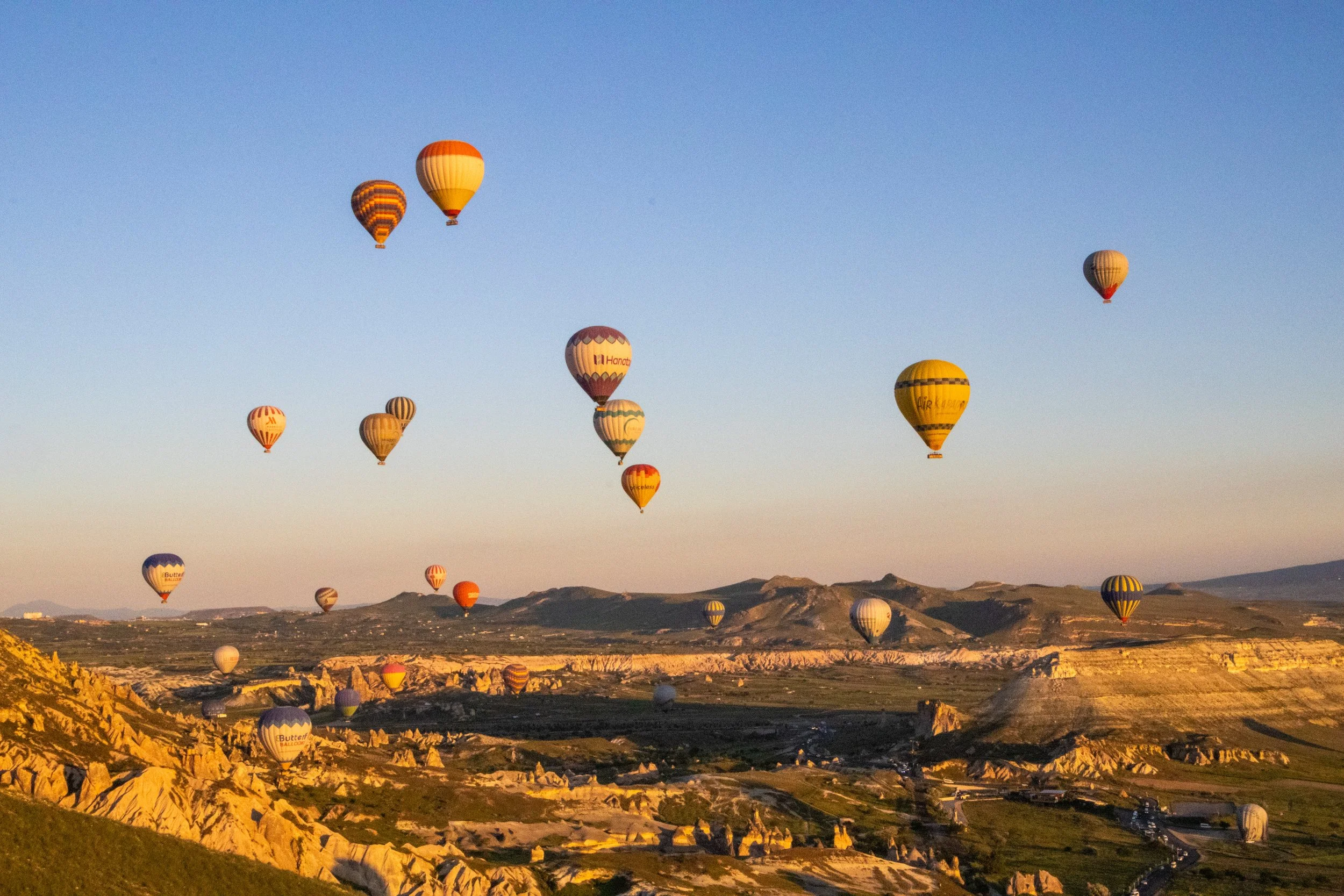
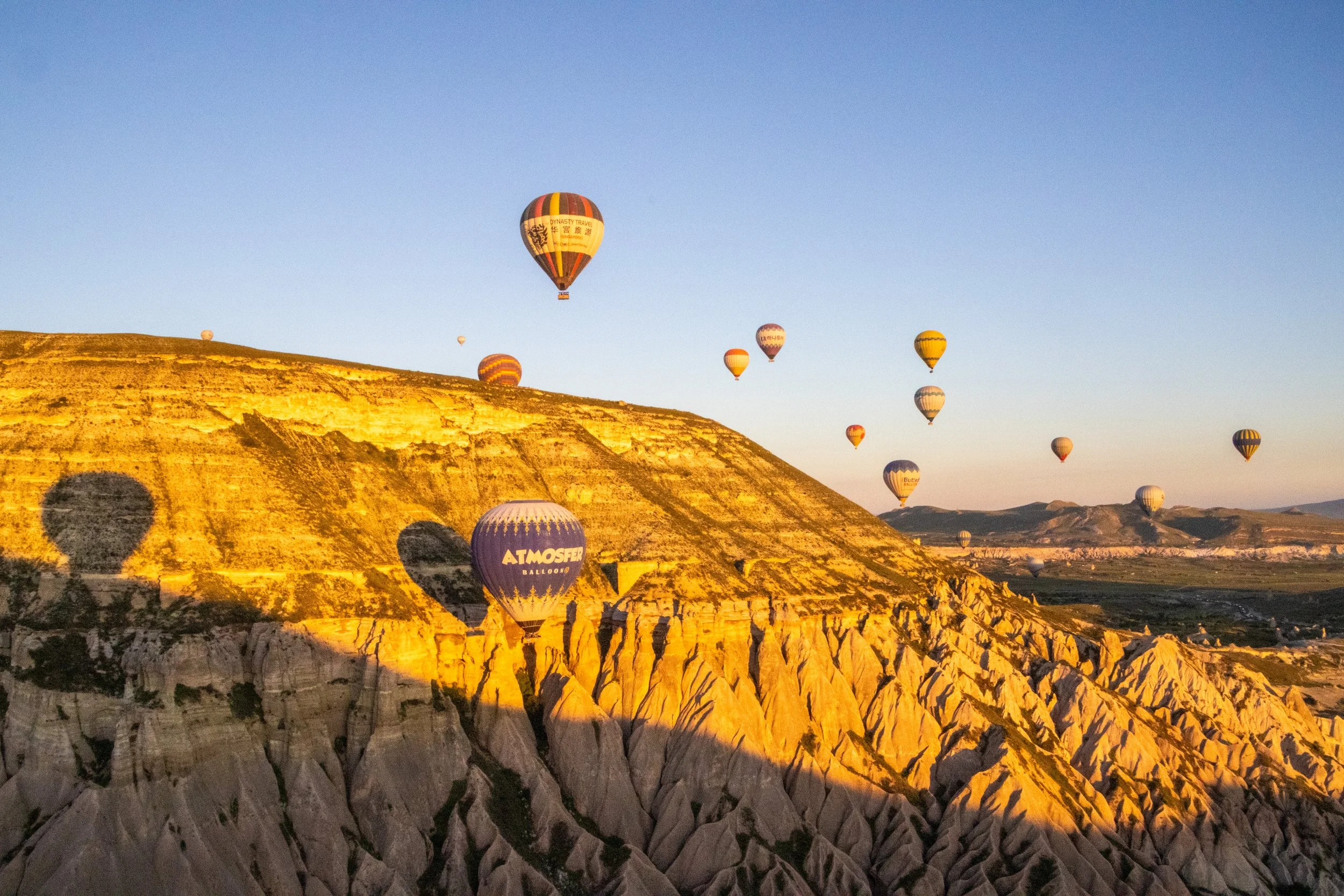
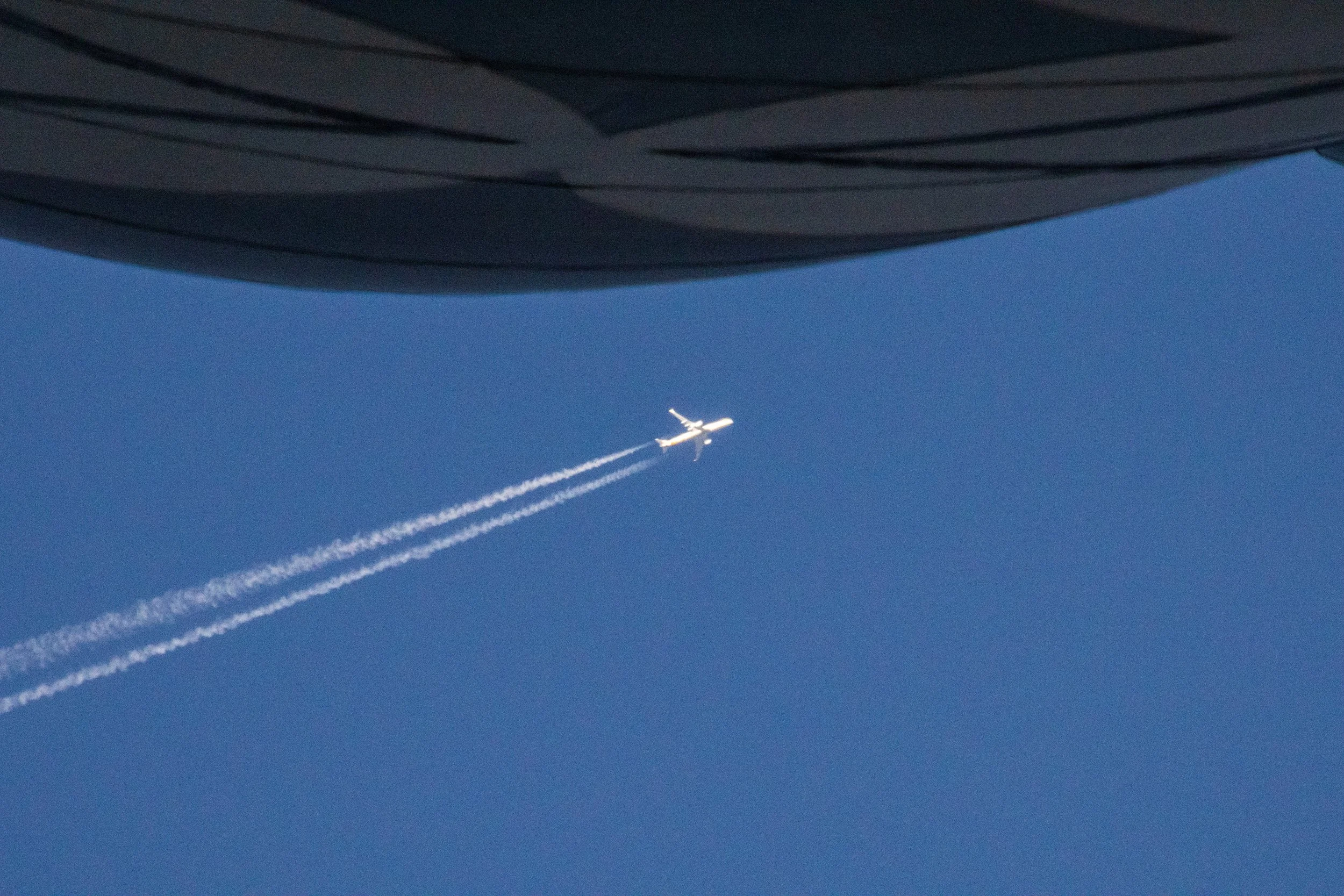
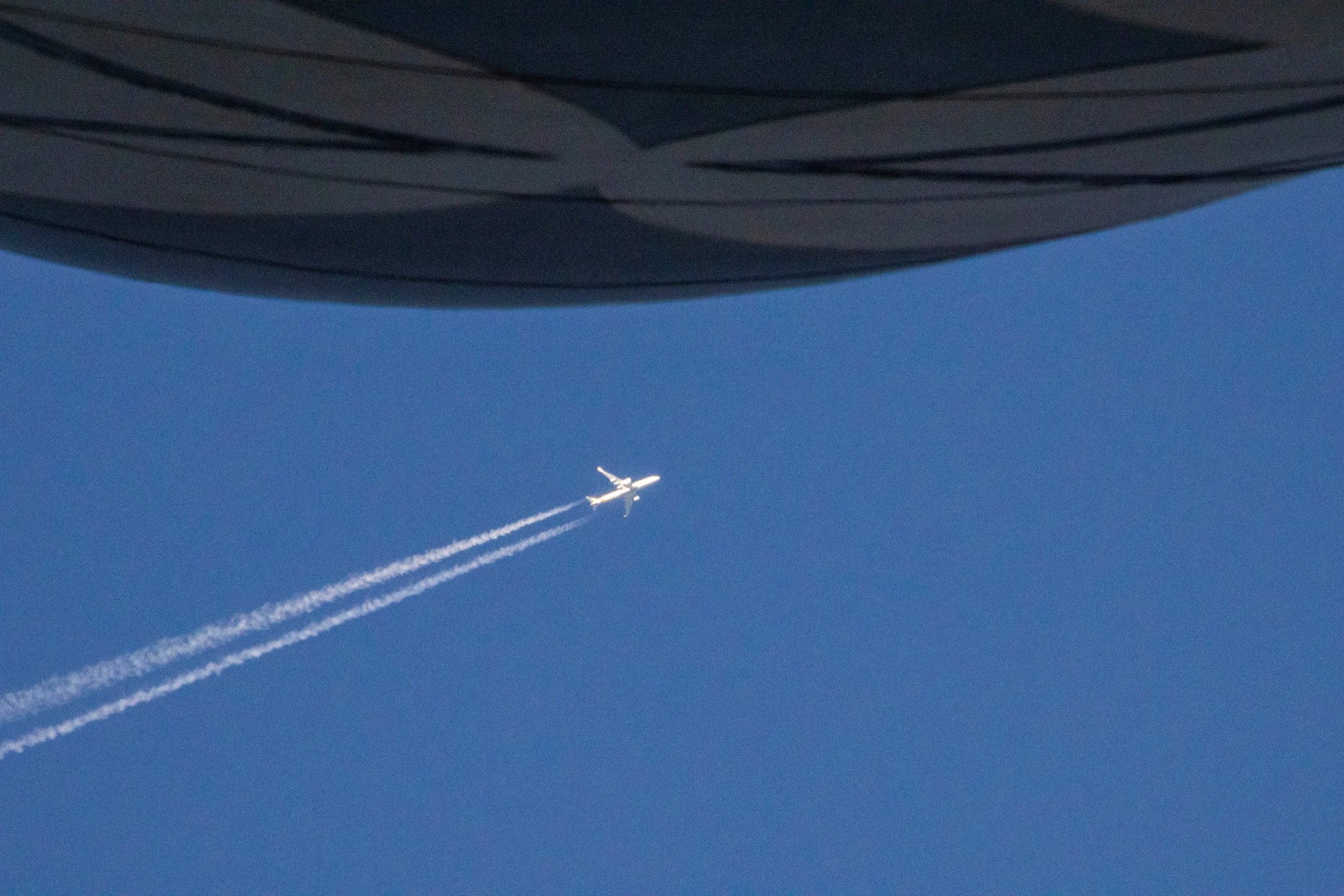
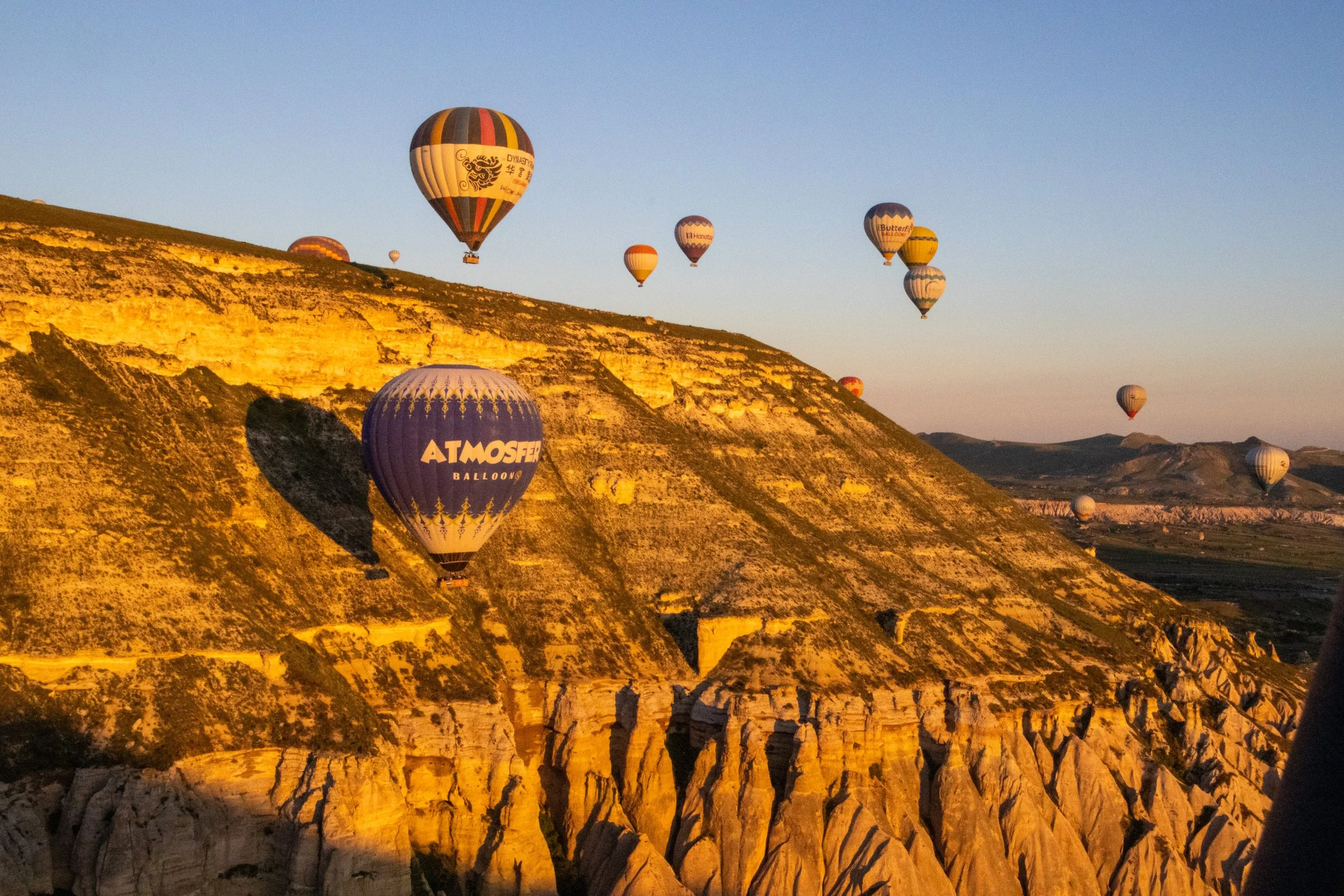
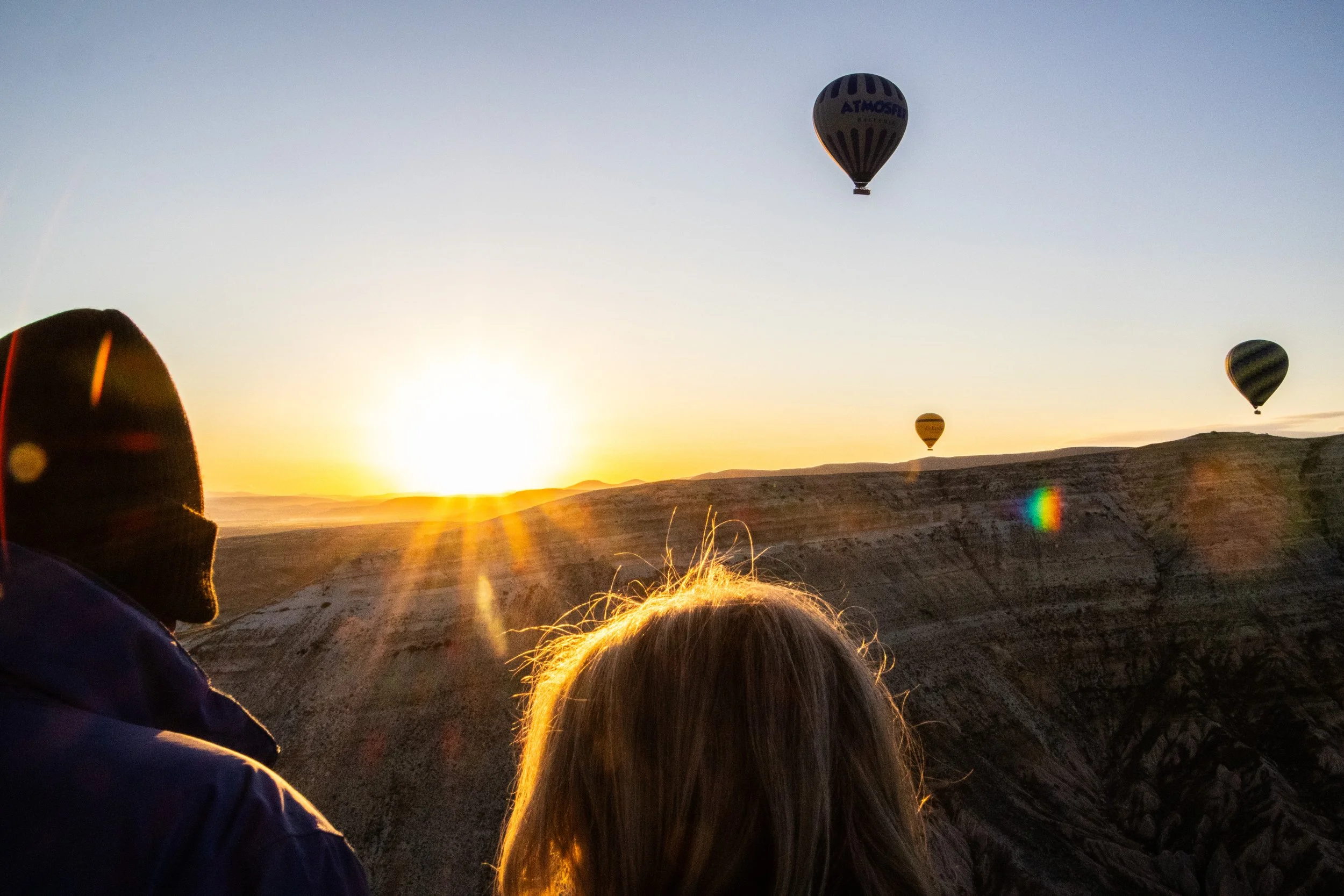
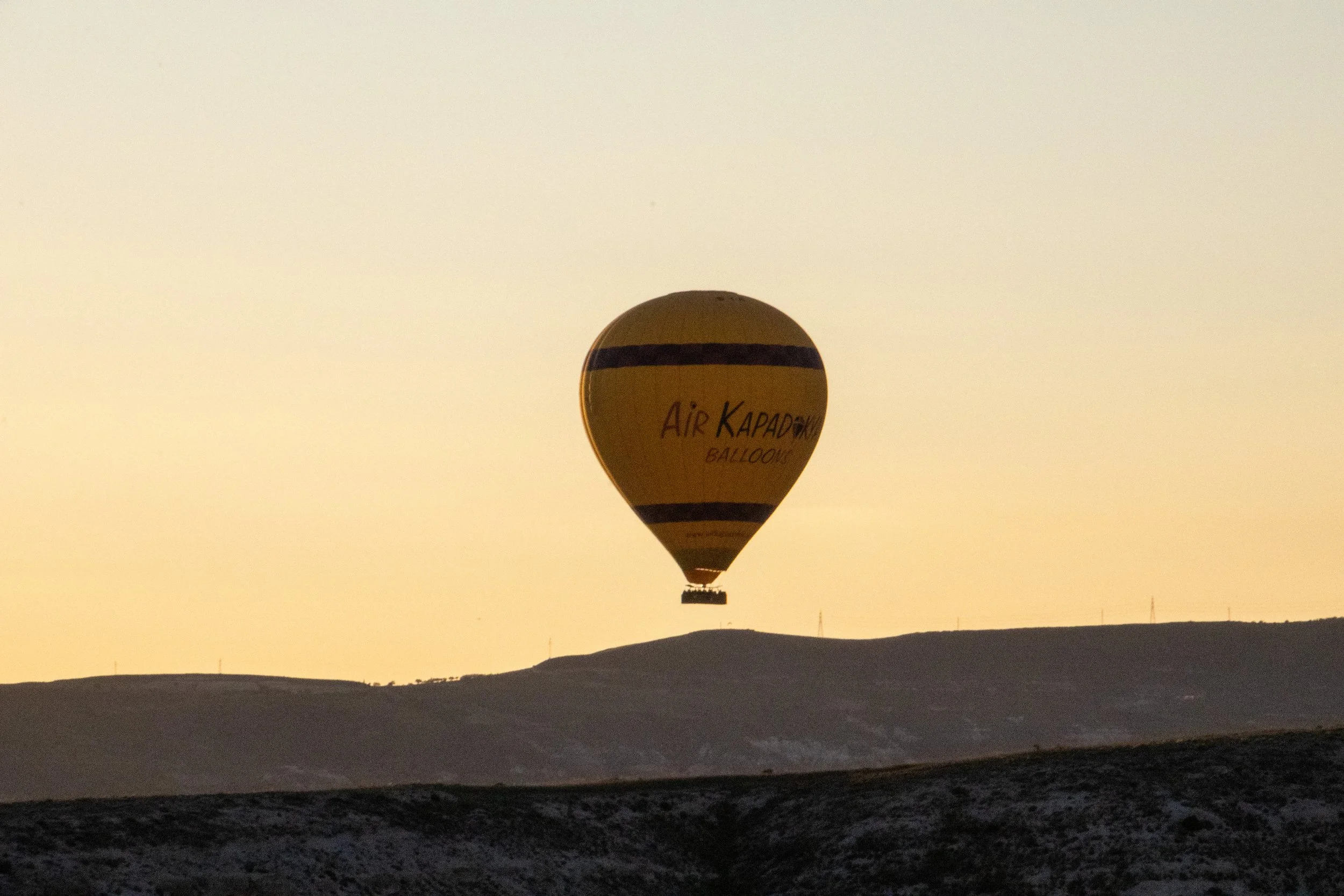
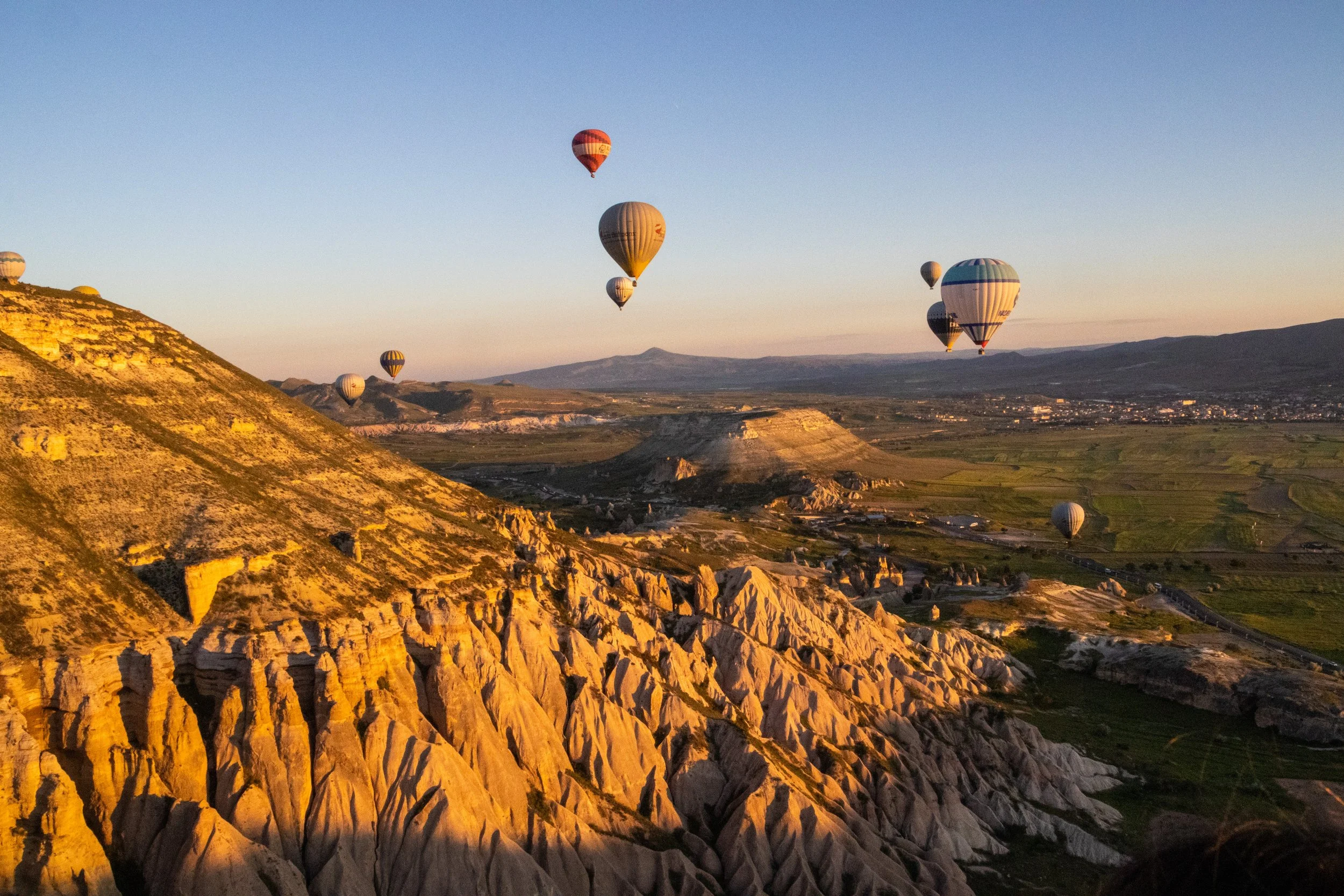
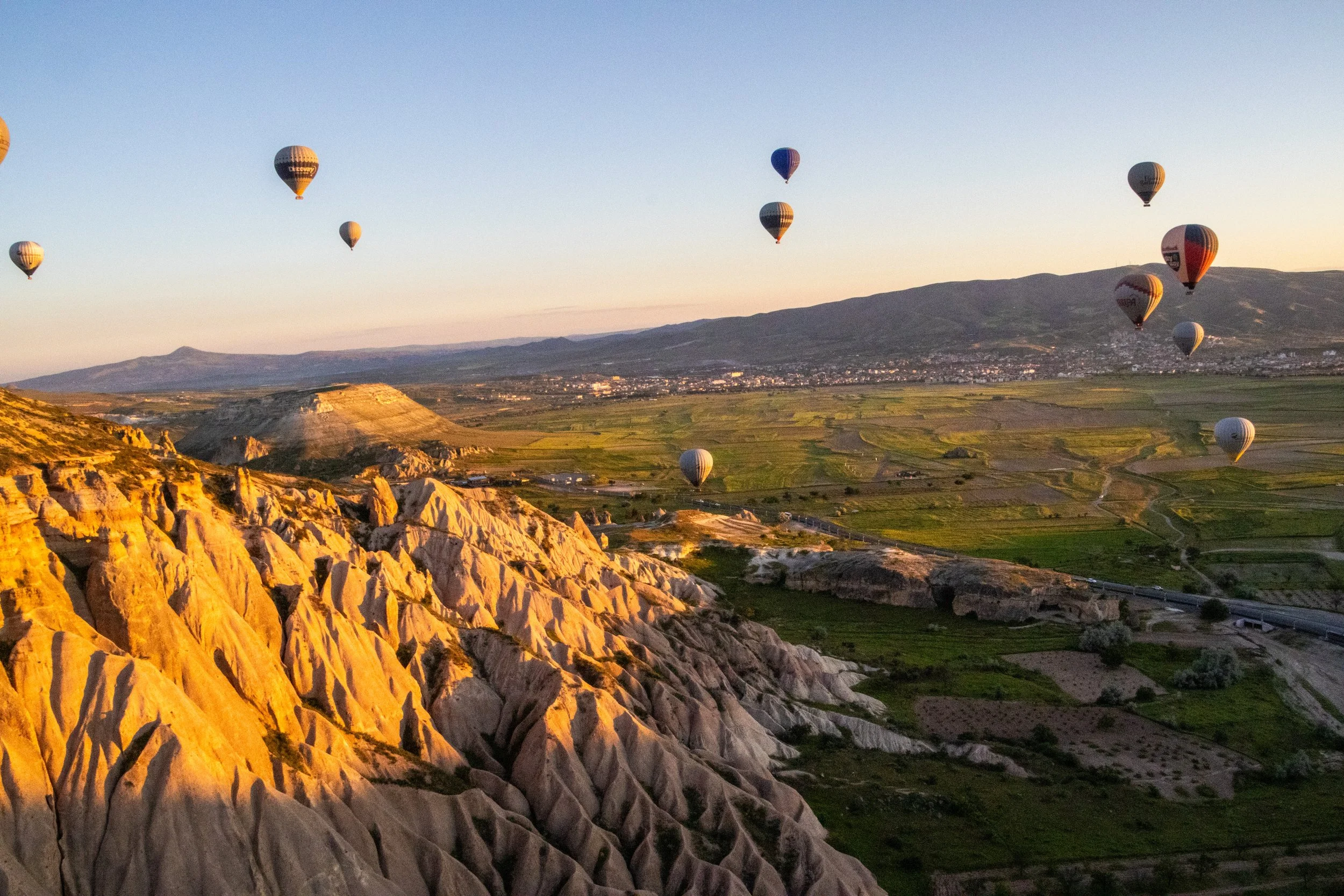
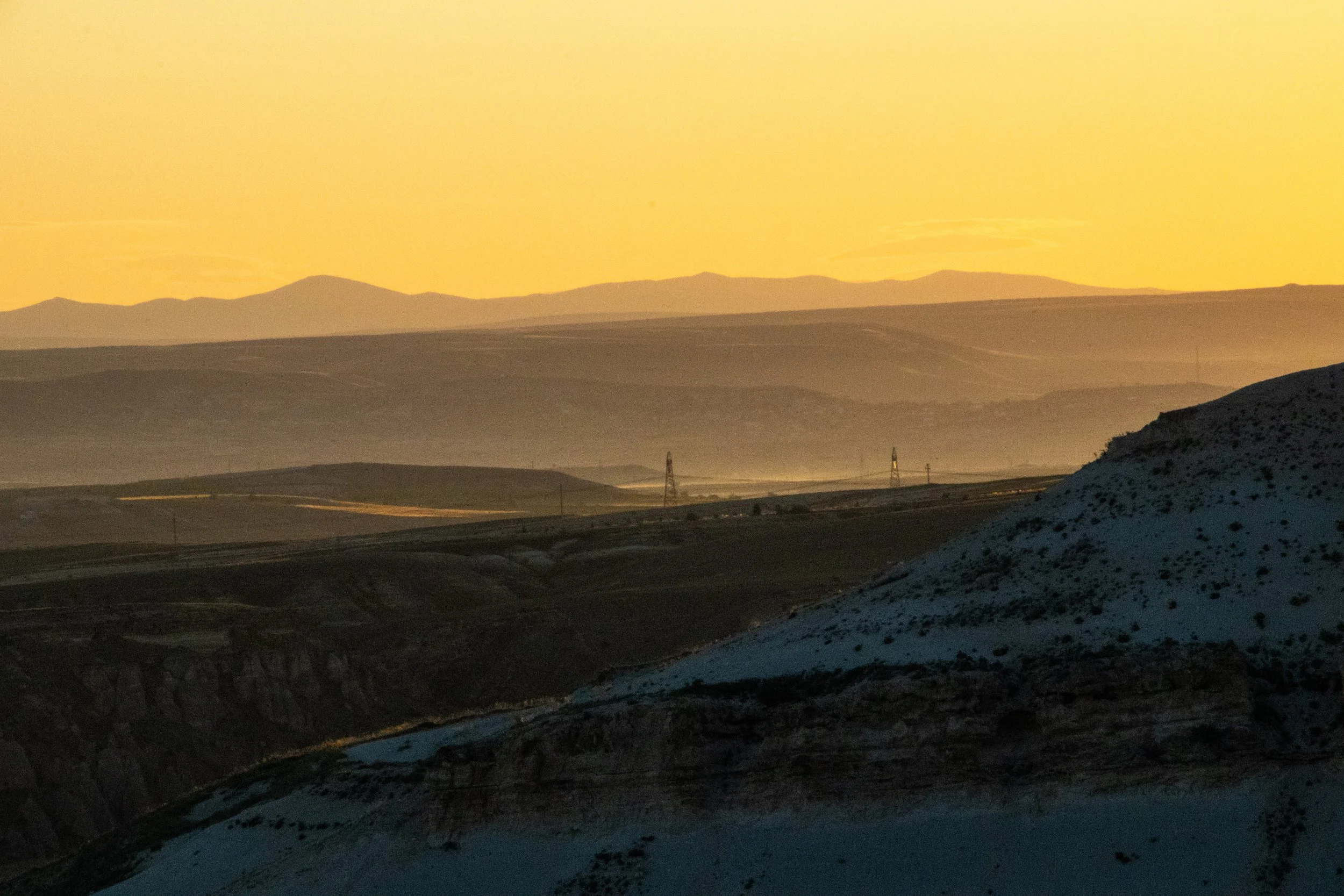
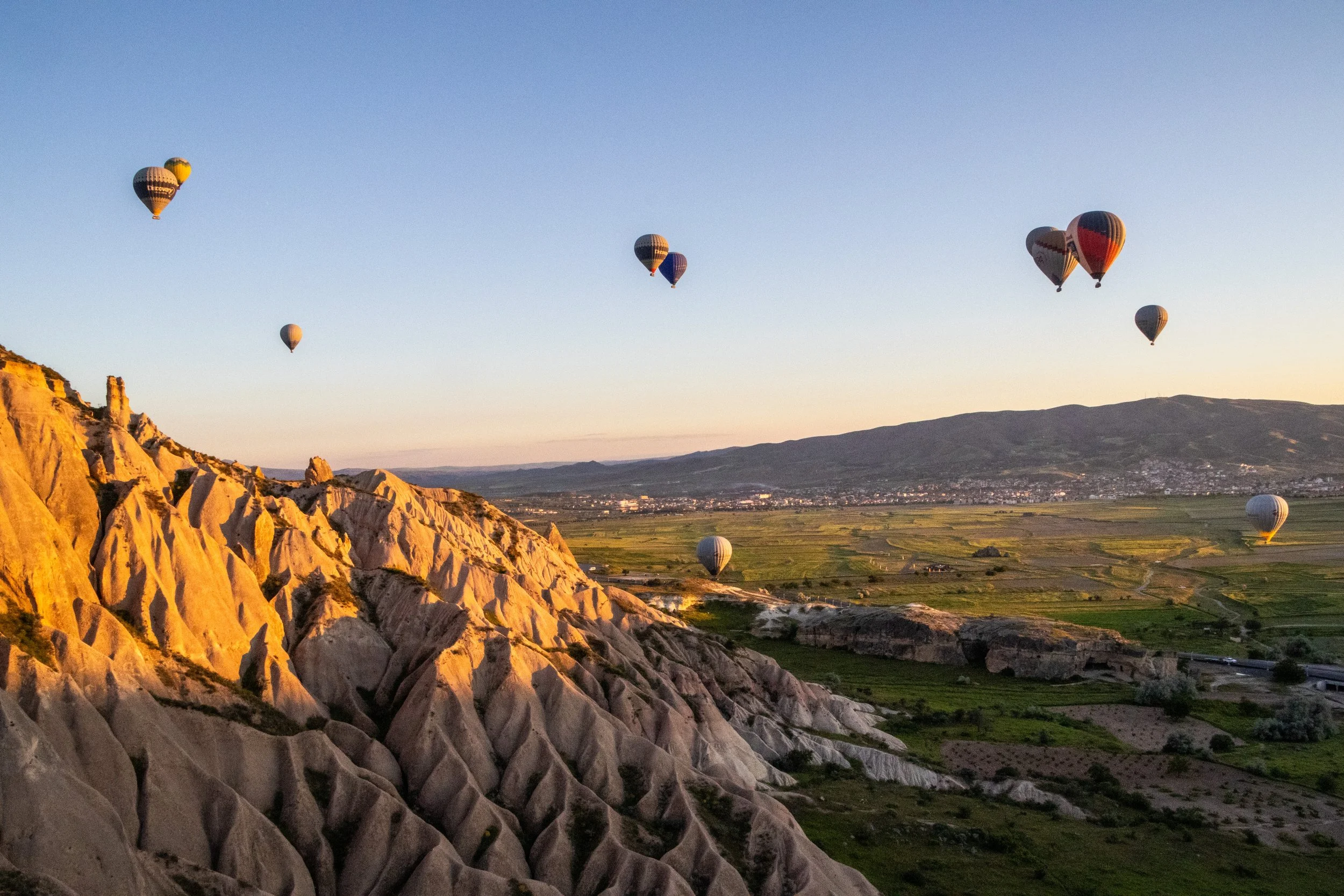
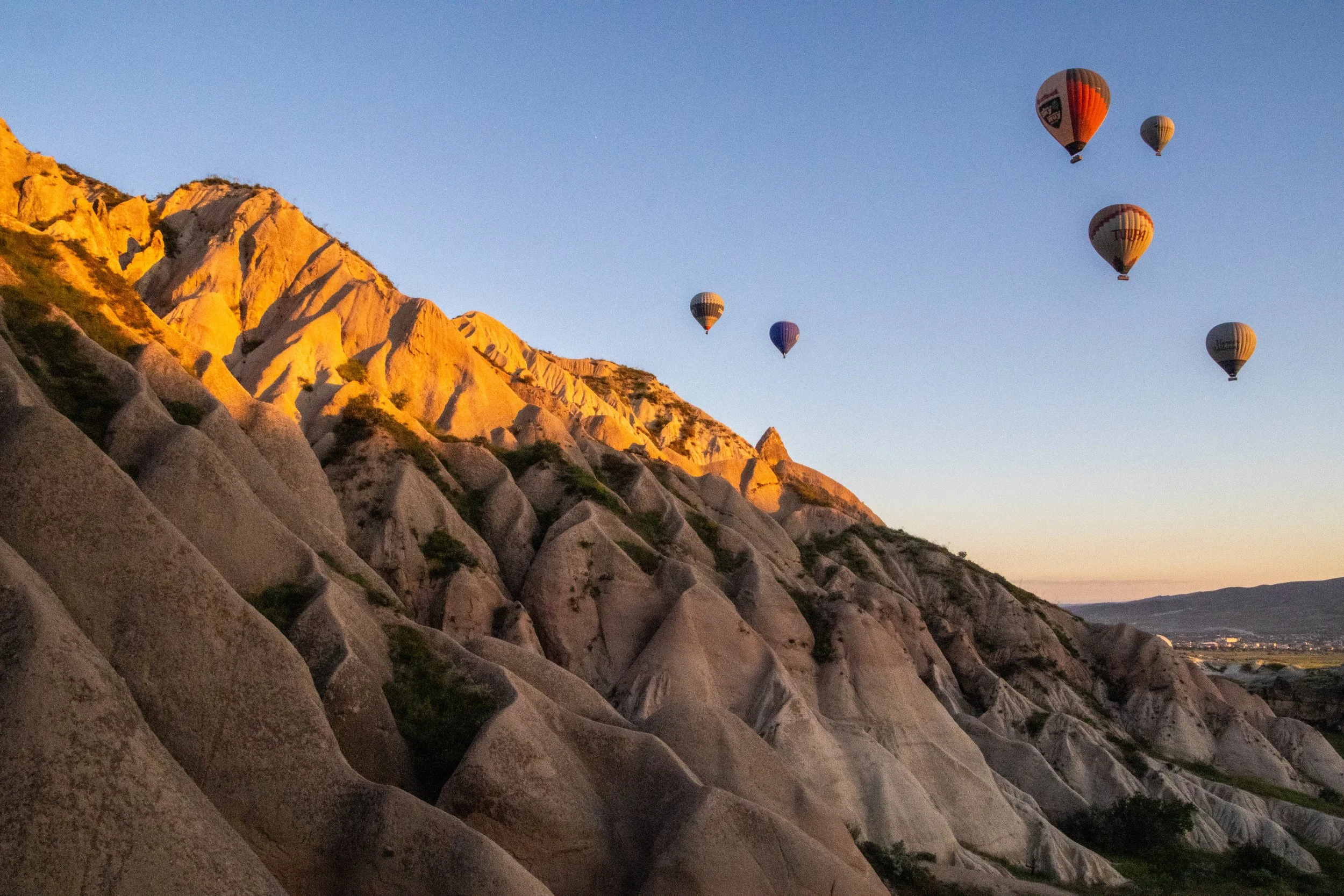
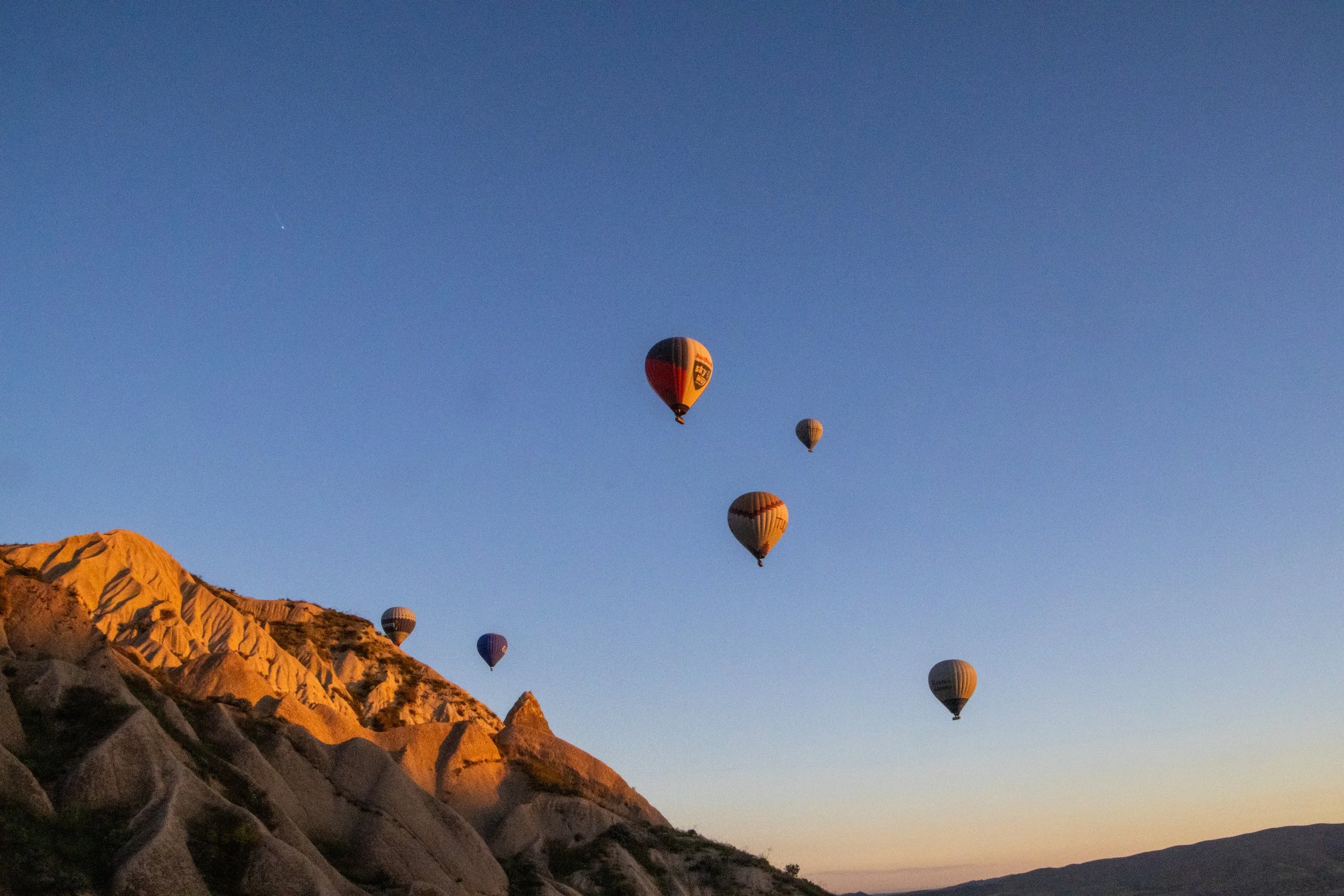
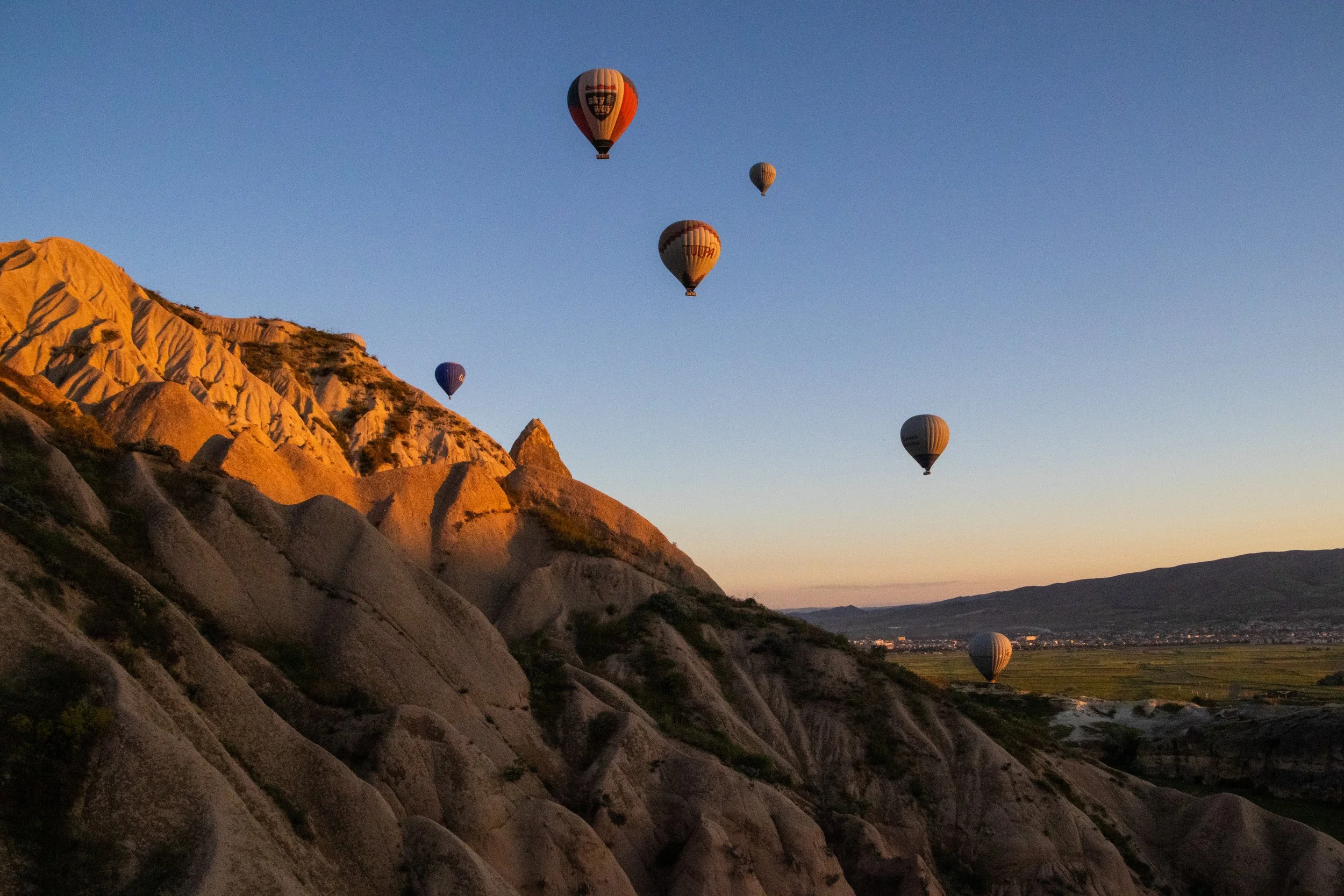
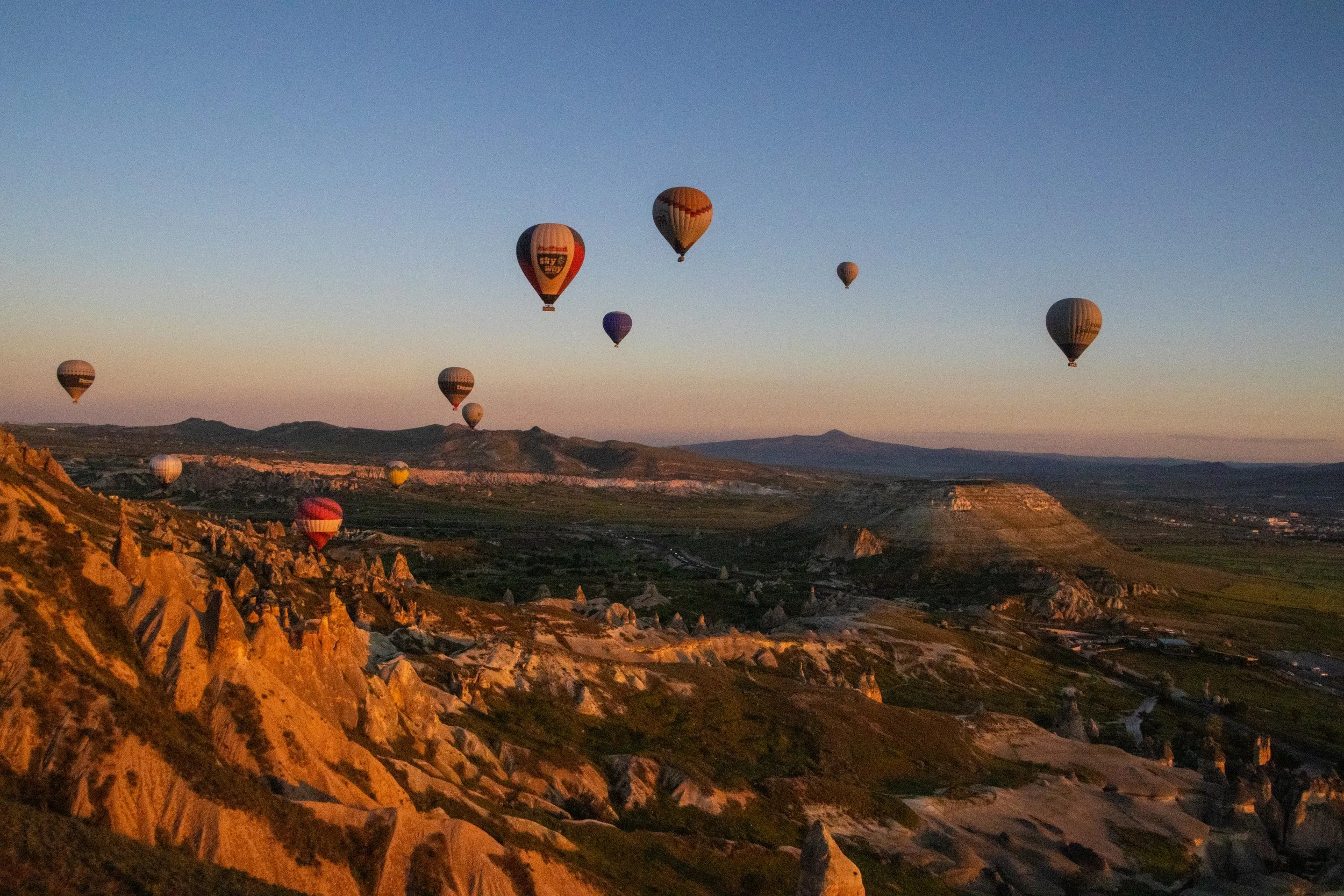
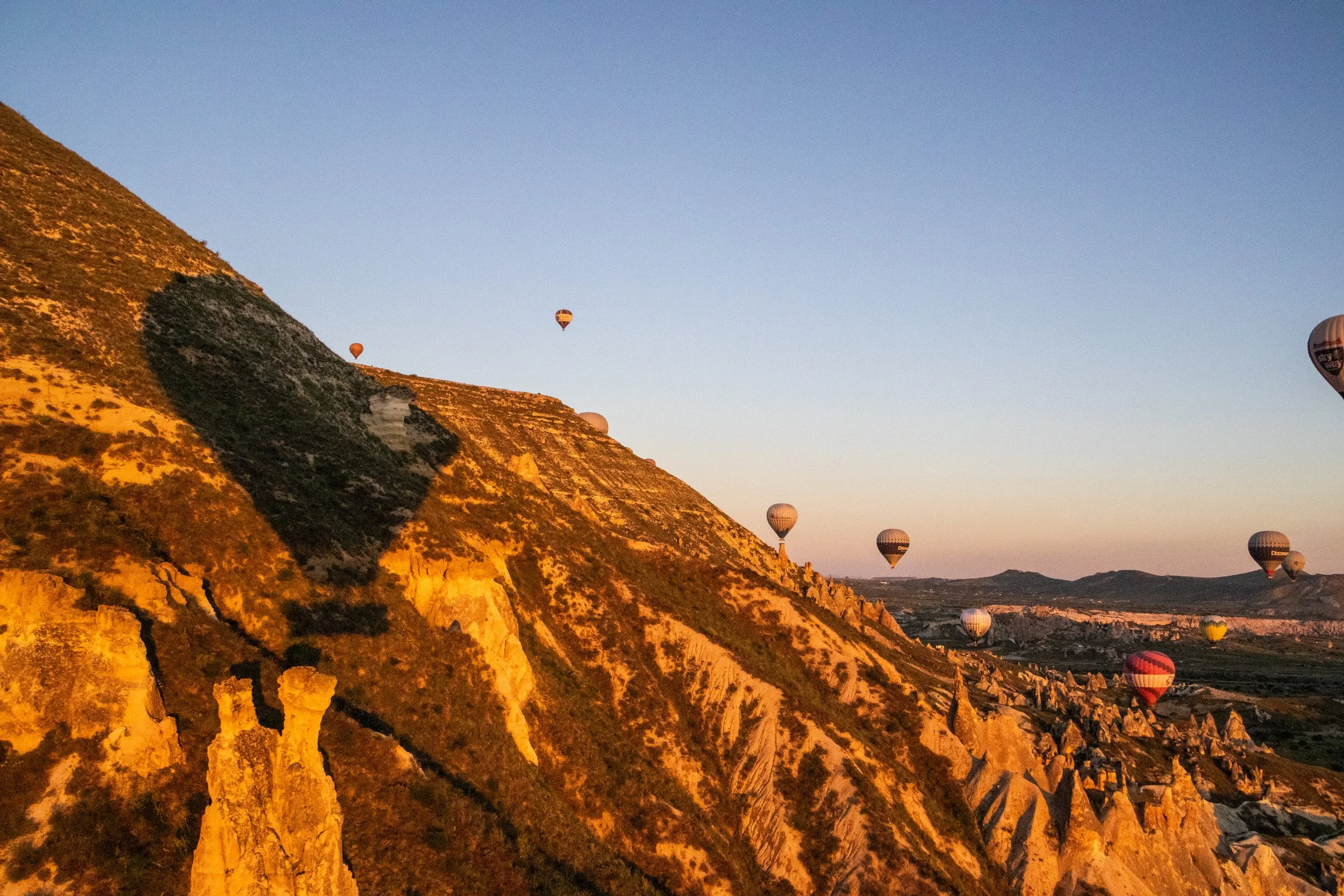
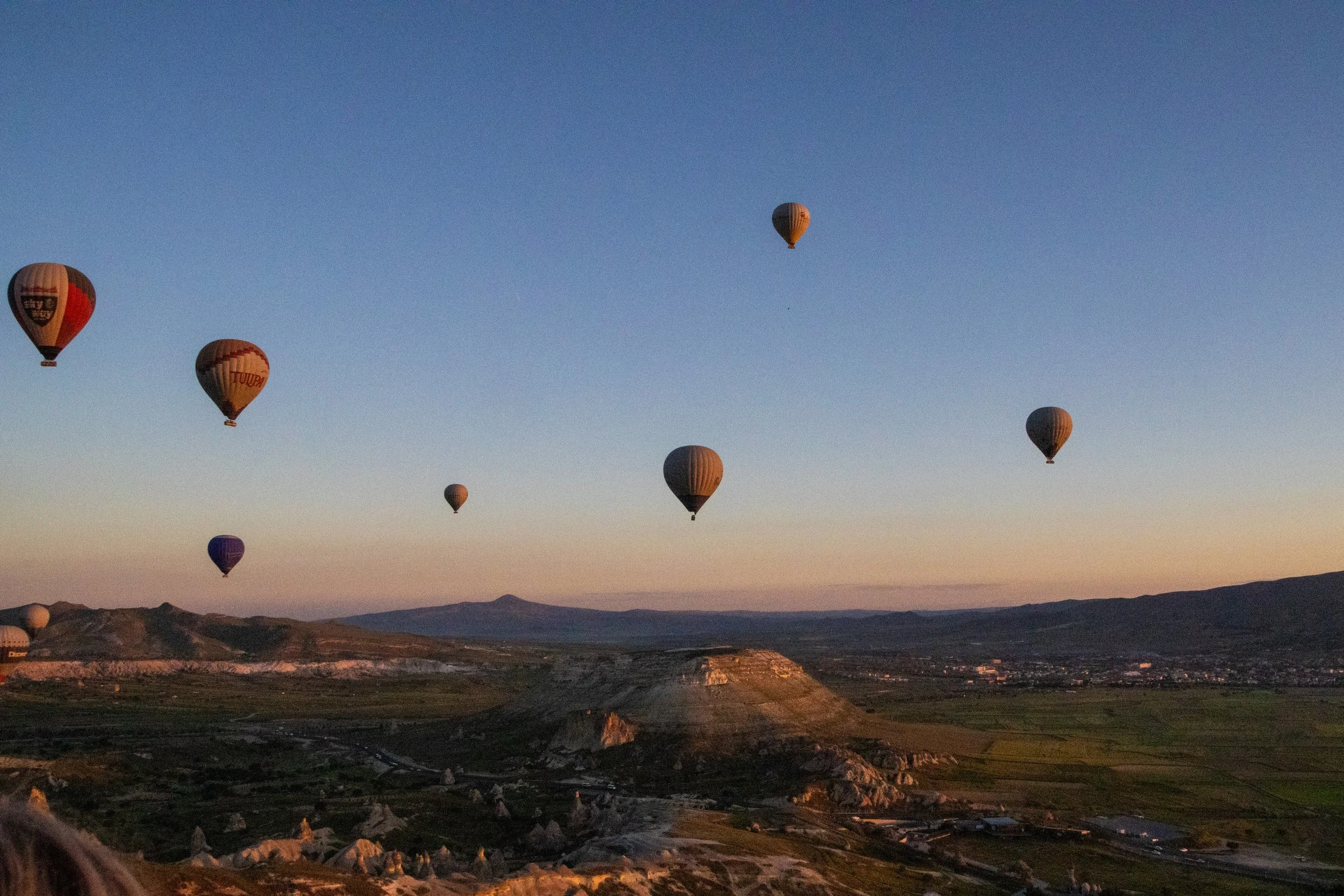
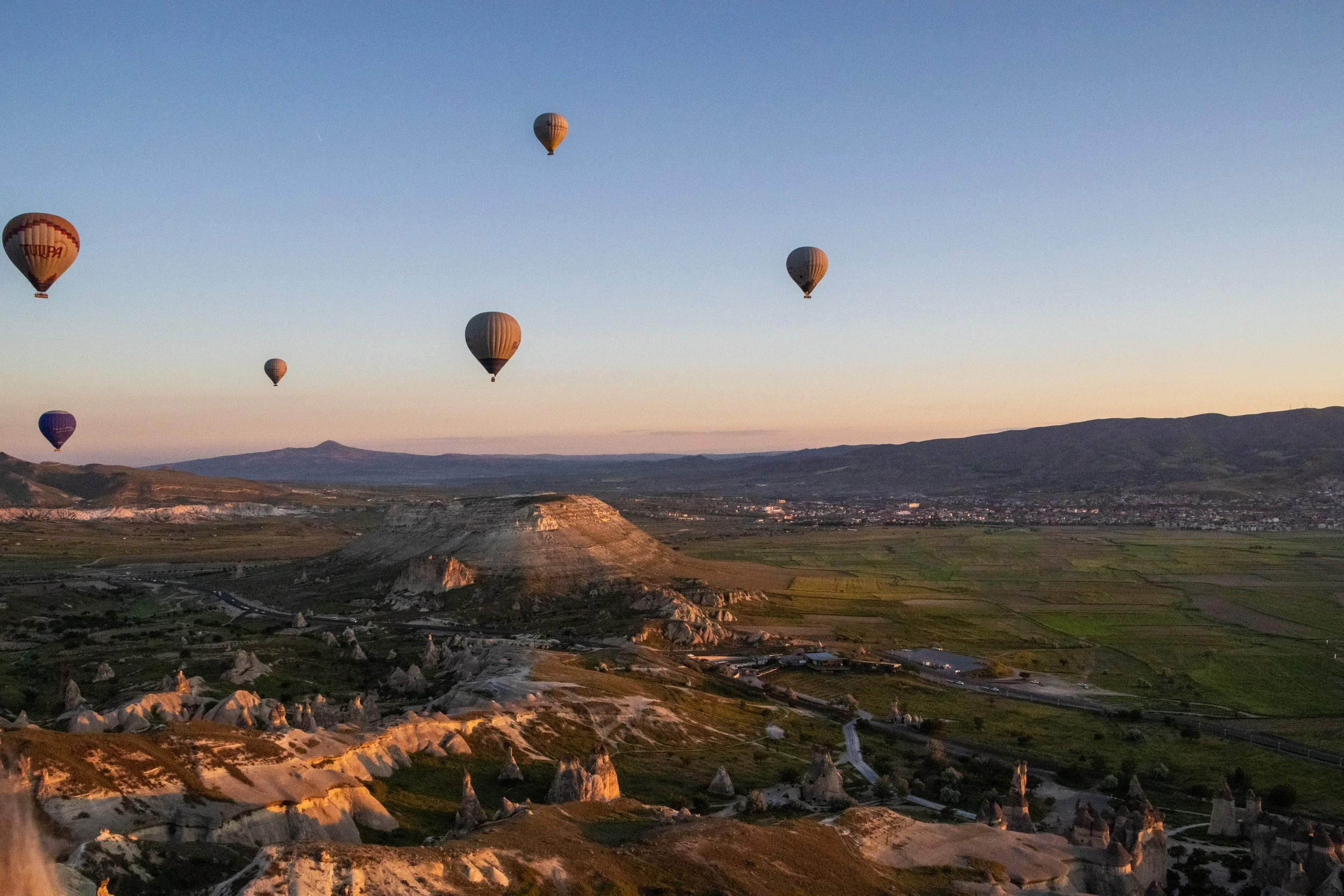
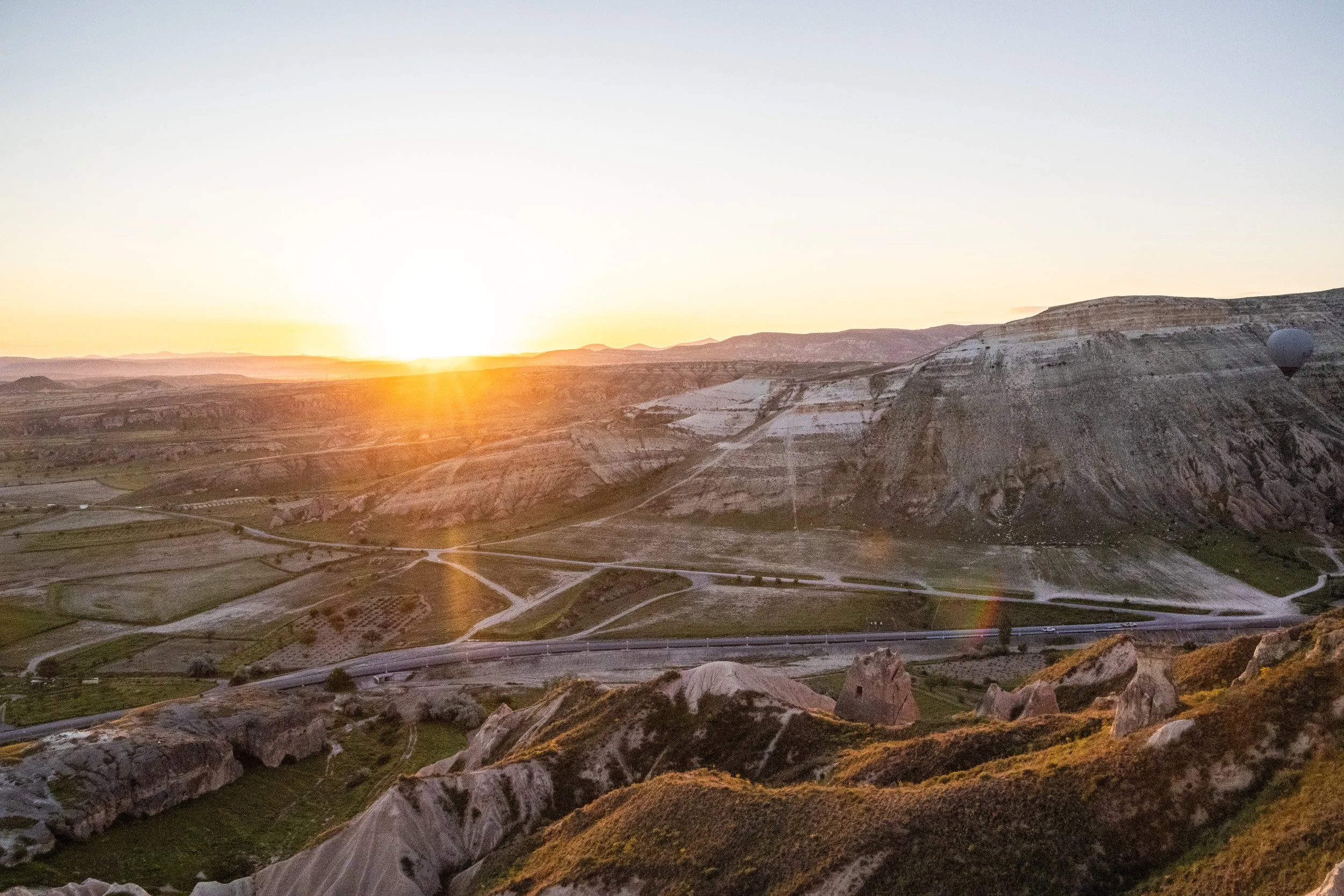
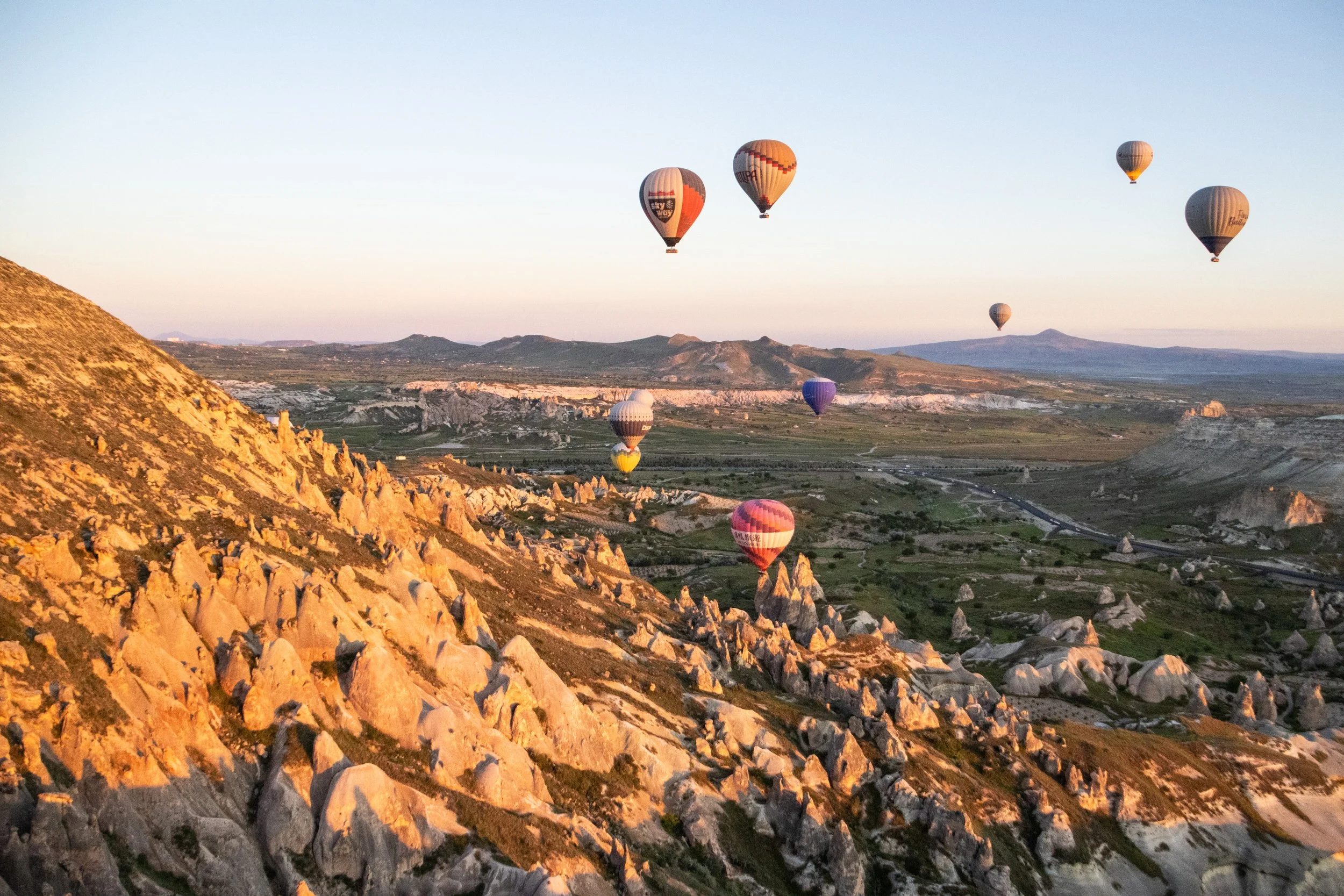
But pictures alone do not do this justice. I don’t make videos very regularly anymore, but I came out of videography retirement for Cappadocia. Clearly my pictures are better than my videos, but I hope this gives you a little taste of the experience.
BEHOLD! THE VIDEO:
I played with the chronology of events a bit in the video, but I think it’s a better watch this way.
Anyway, when the balloon ride was over, we came to a point where we were very low, drifting slowly over a grassy plain. A pickup truck with a trailer in tow sped along underneath us, and the driver of the truck somehow managed to coordinate with the pilot of the balloon so that the balloon touched down exactly in the trailer, even as both the balloon and trailer were in motion. I was very impressed. So, I hope that is reassuring: these pilots know exactly what they are doing!
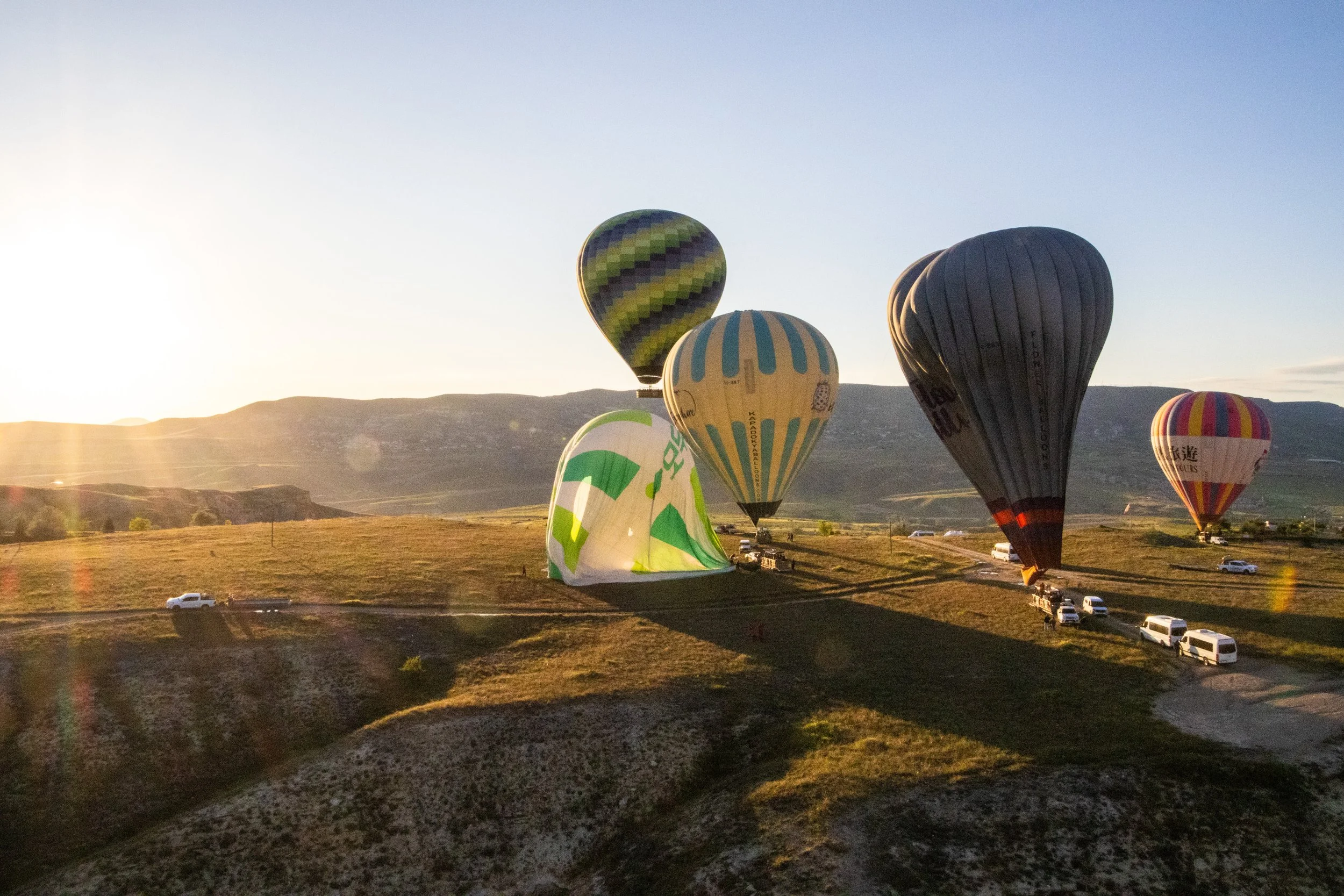
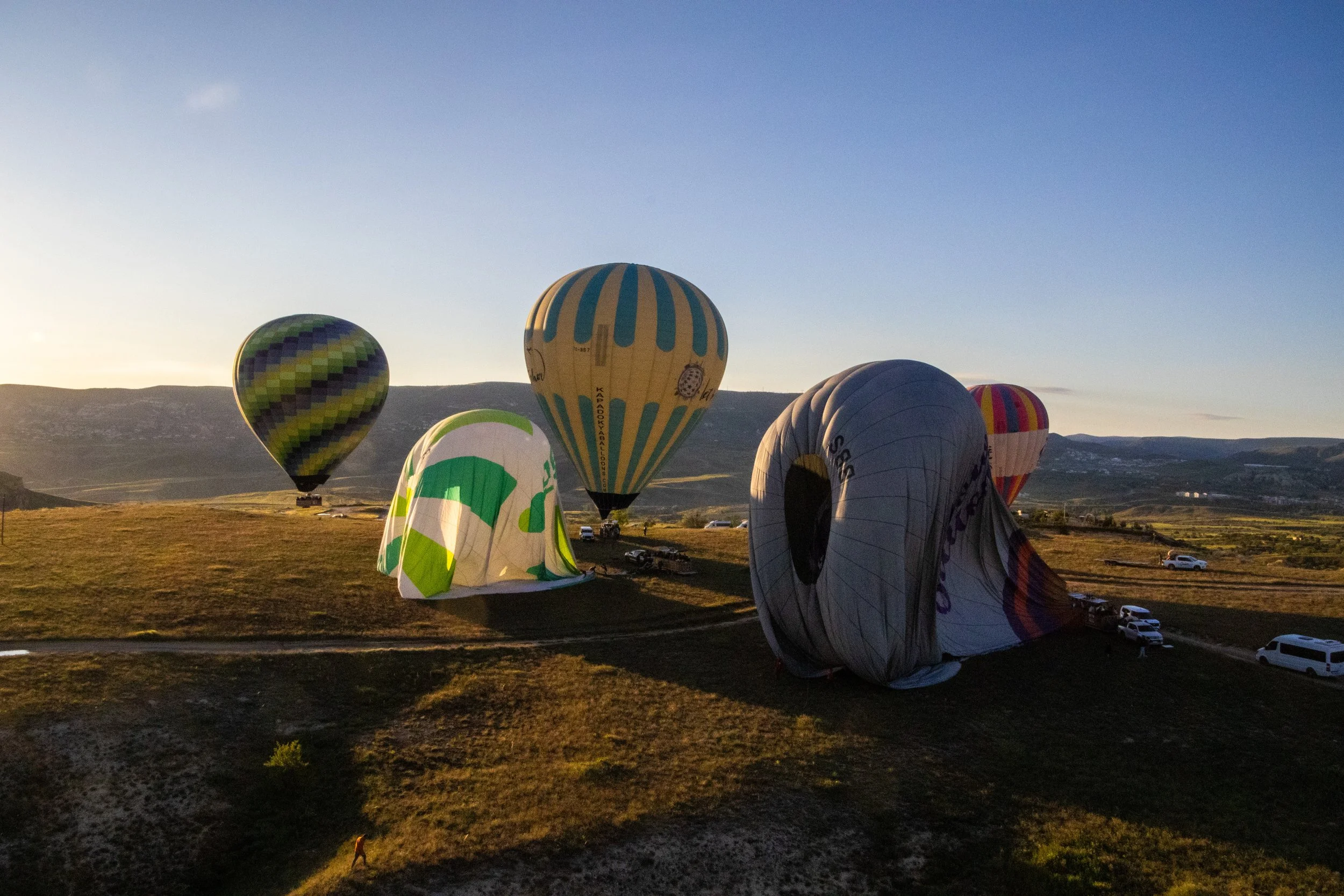
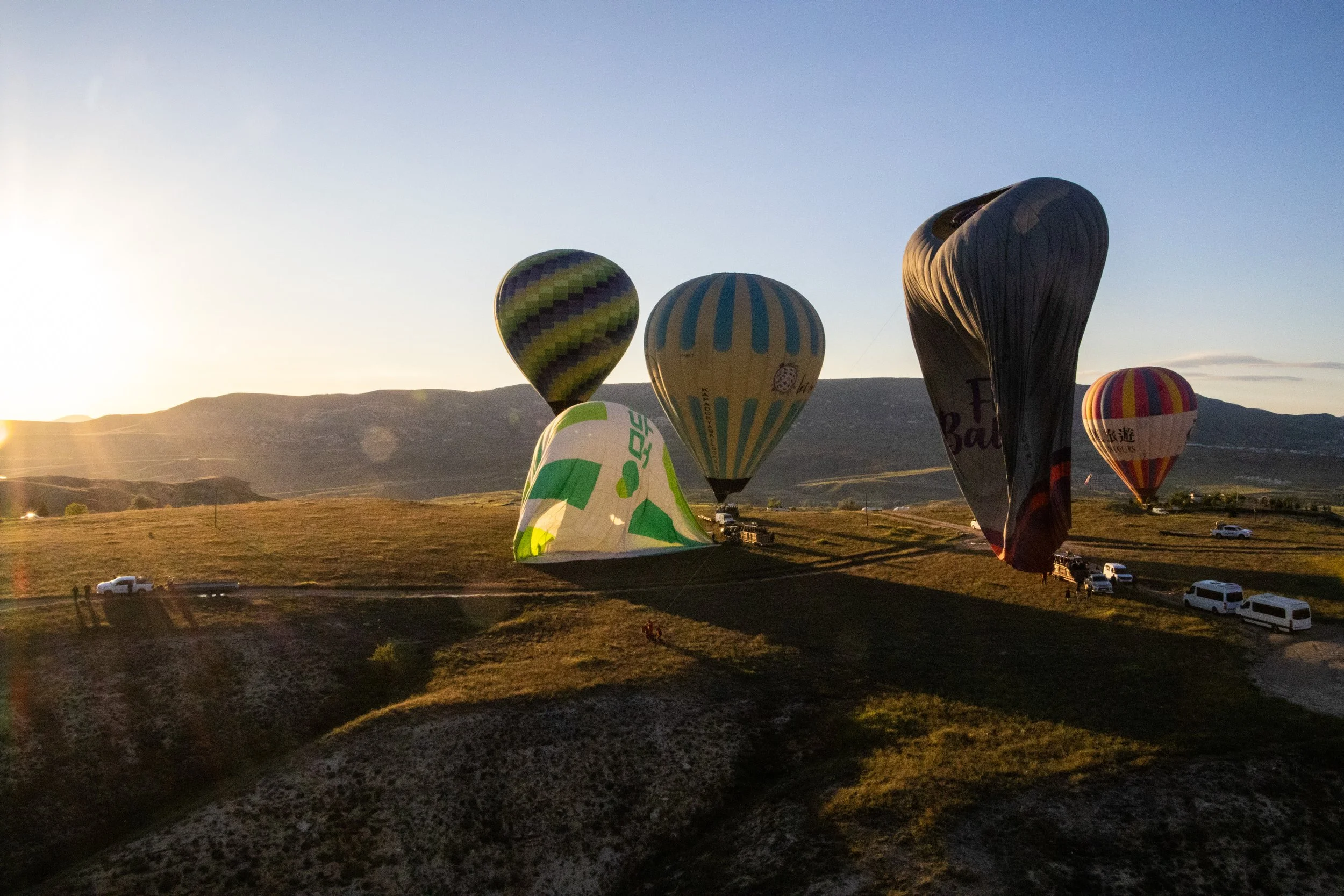
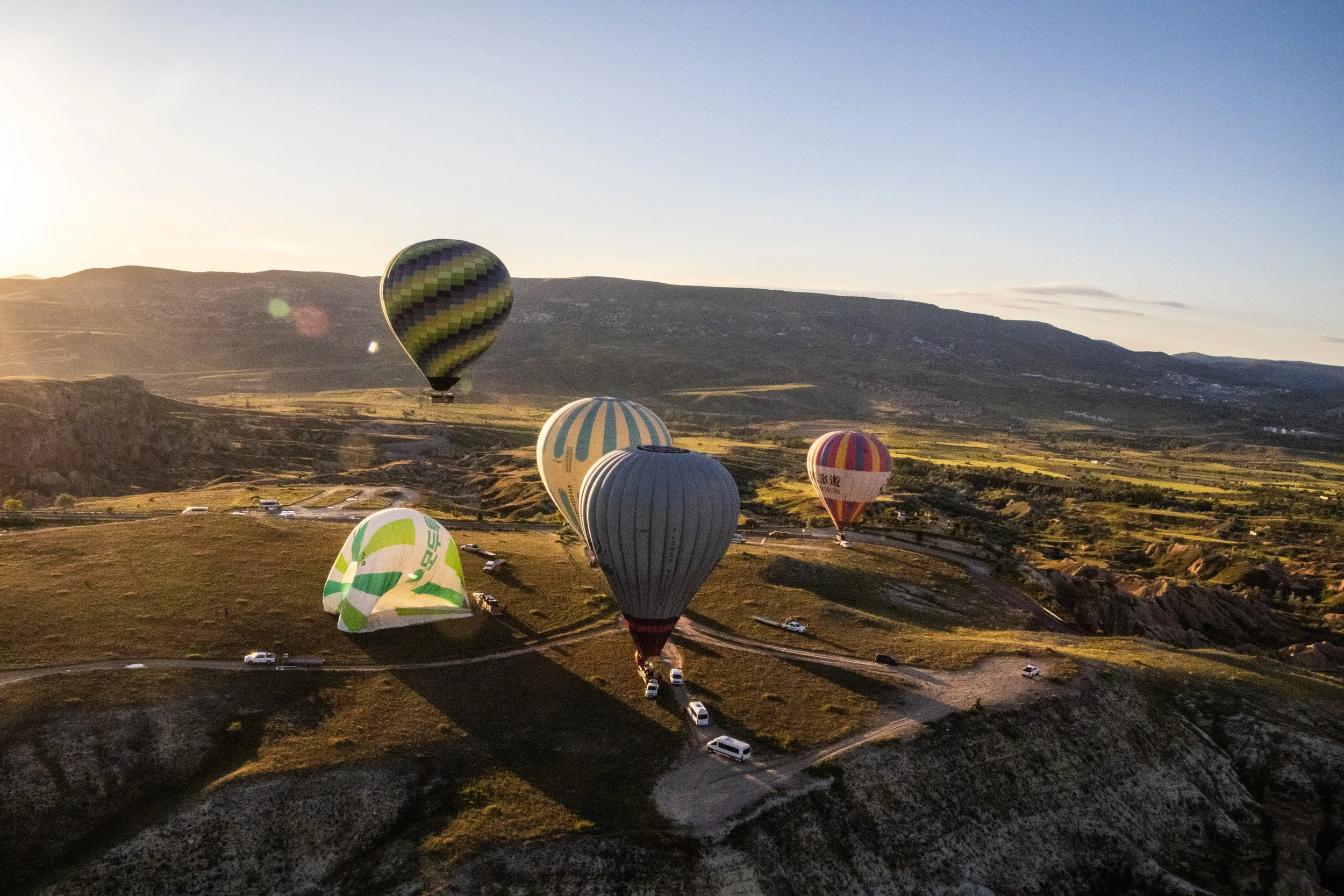
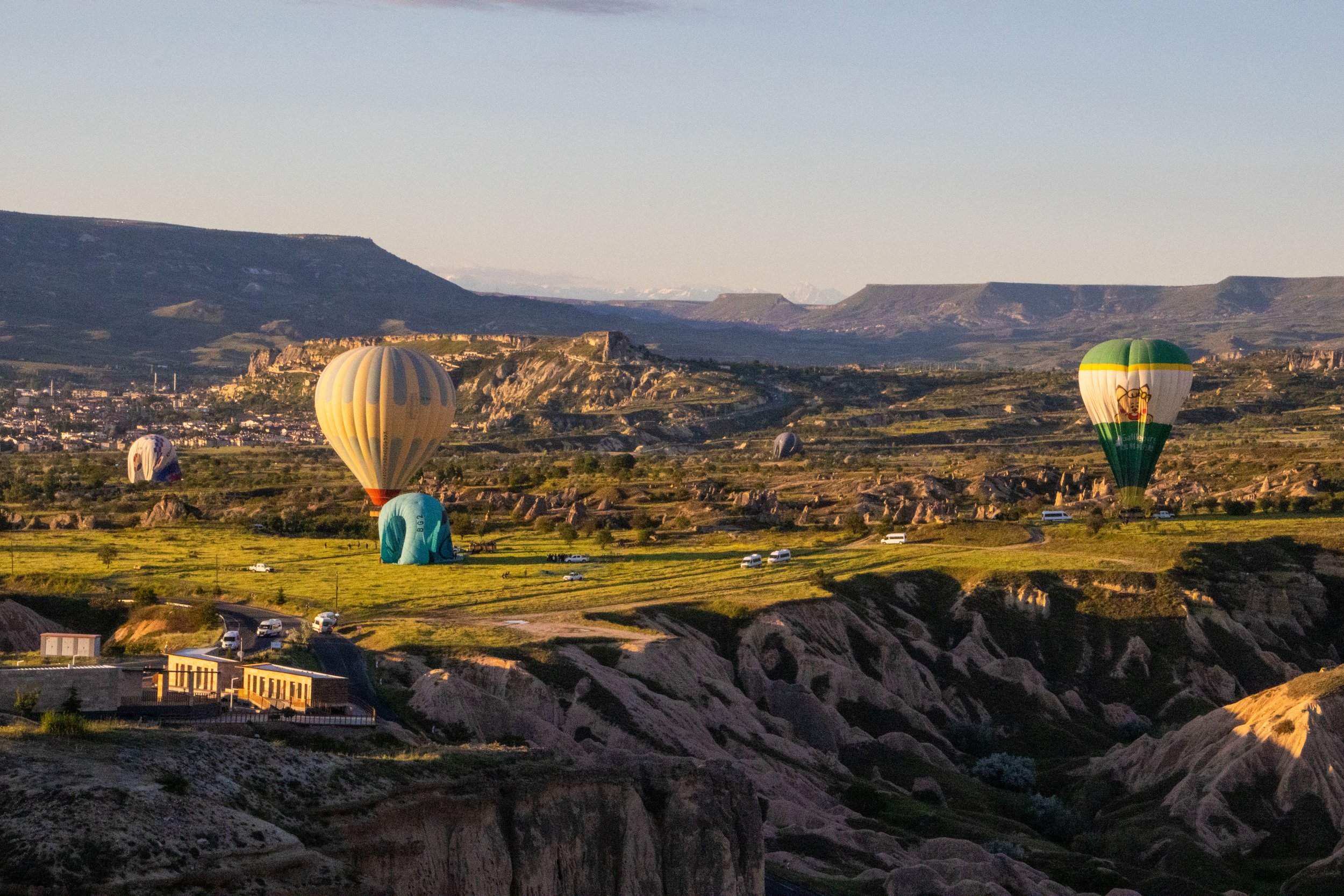
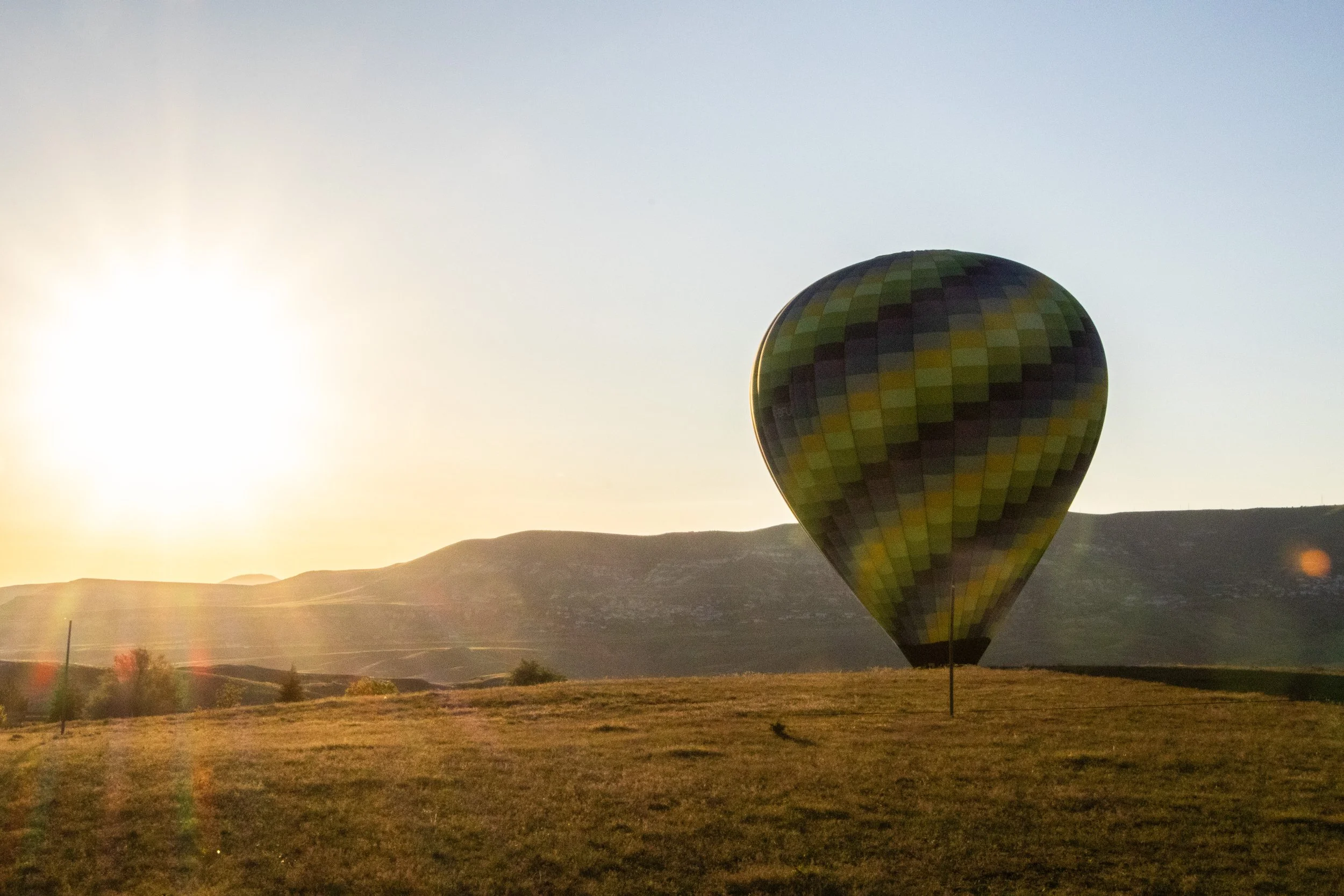
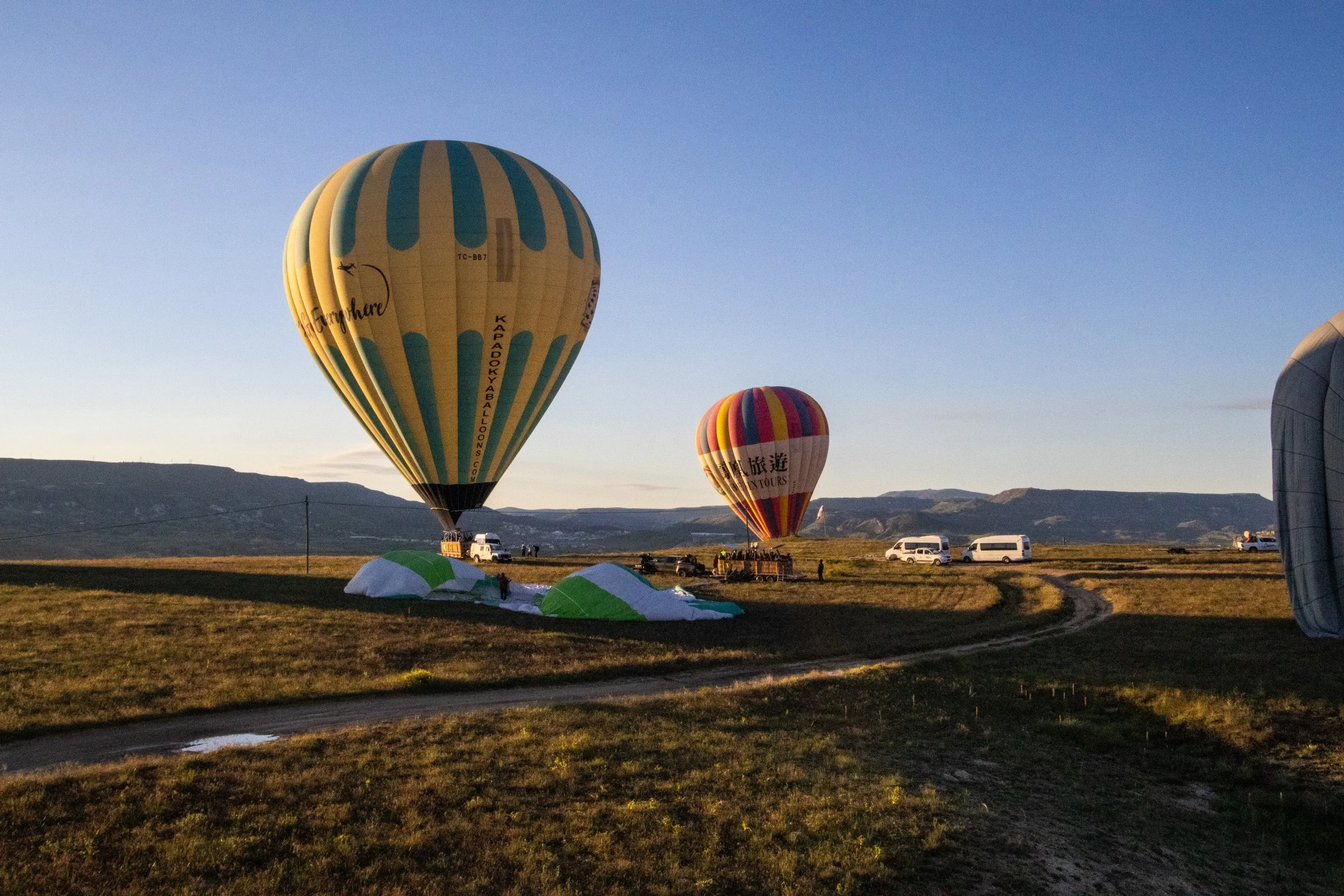
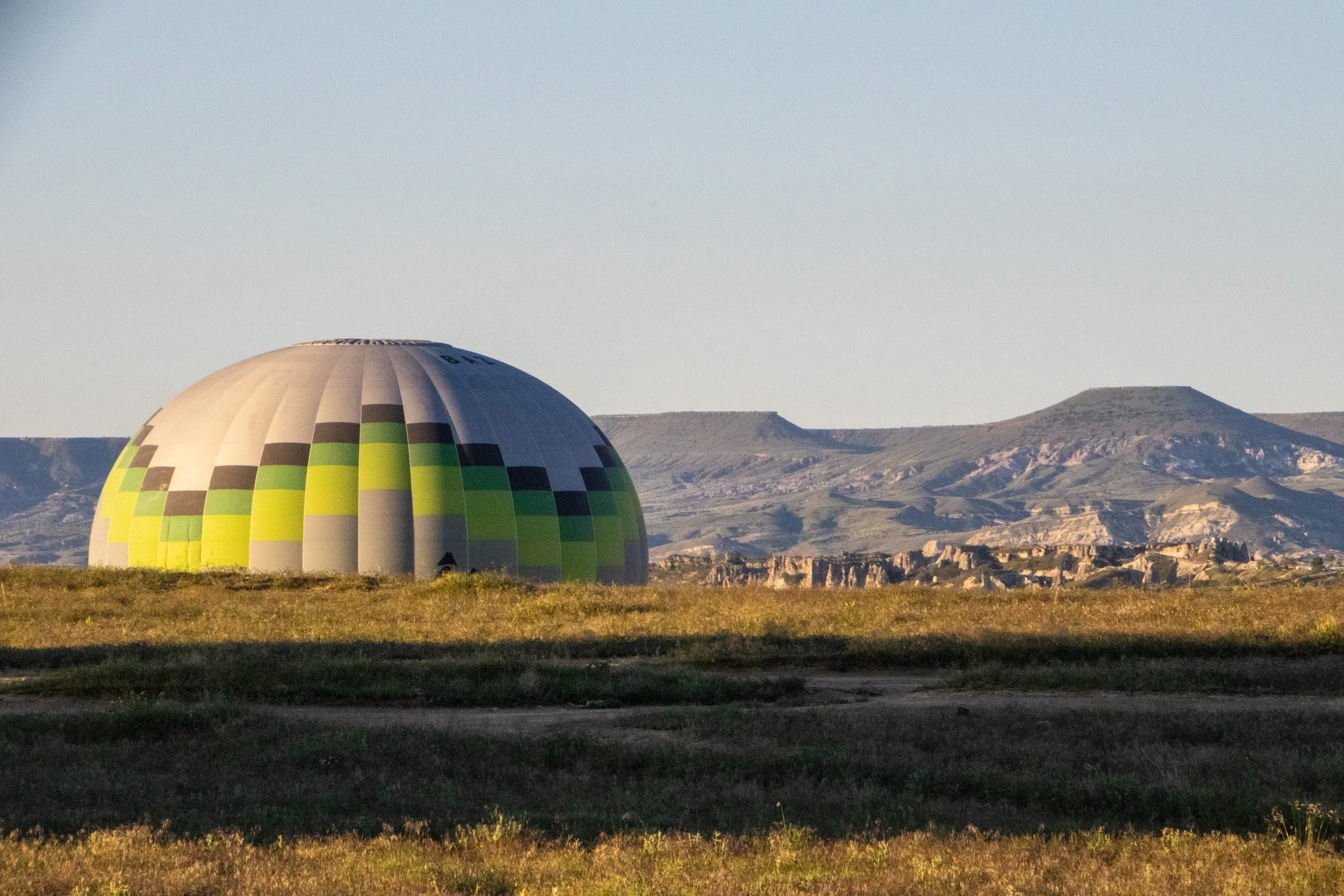
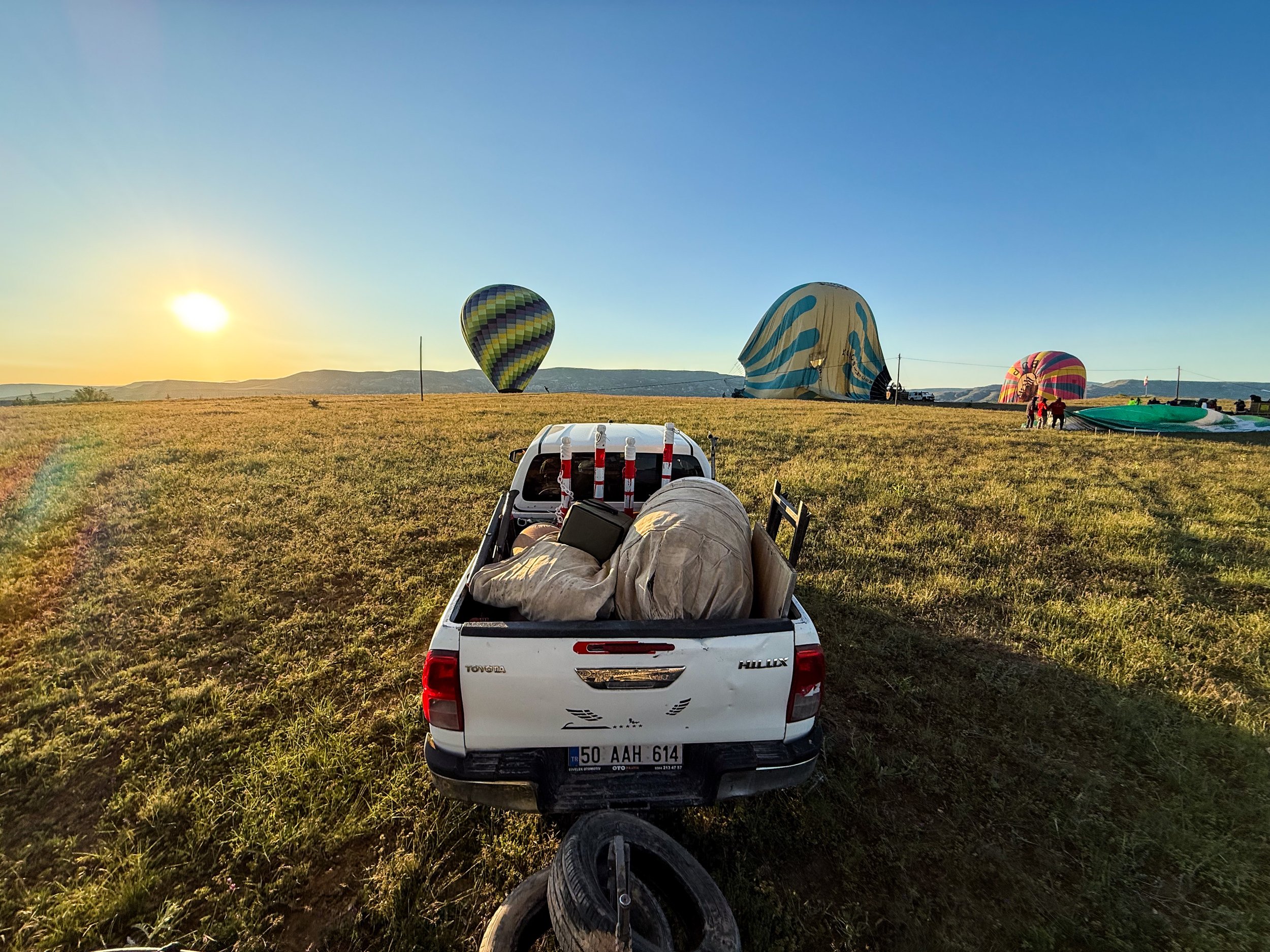
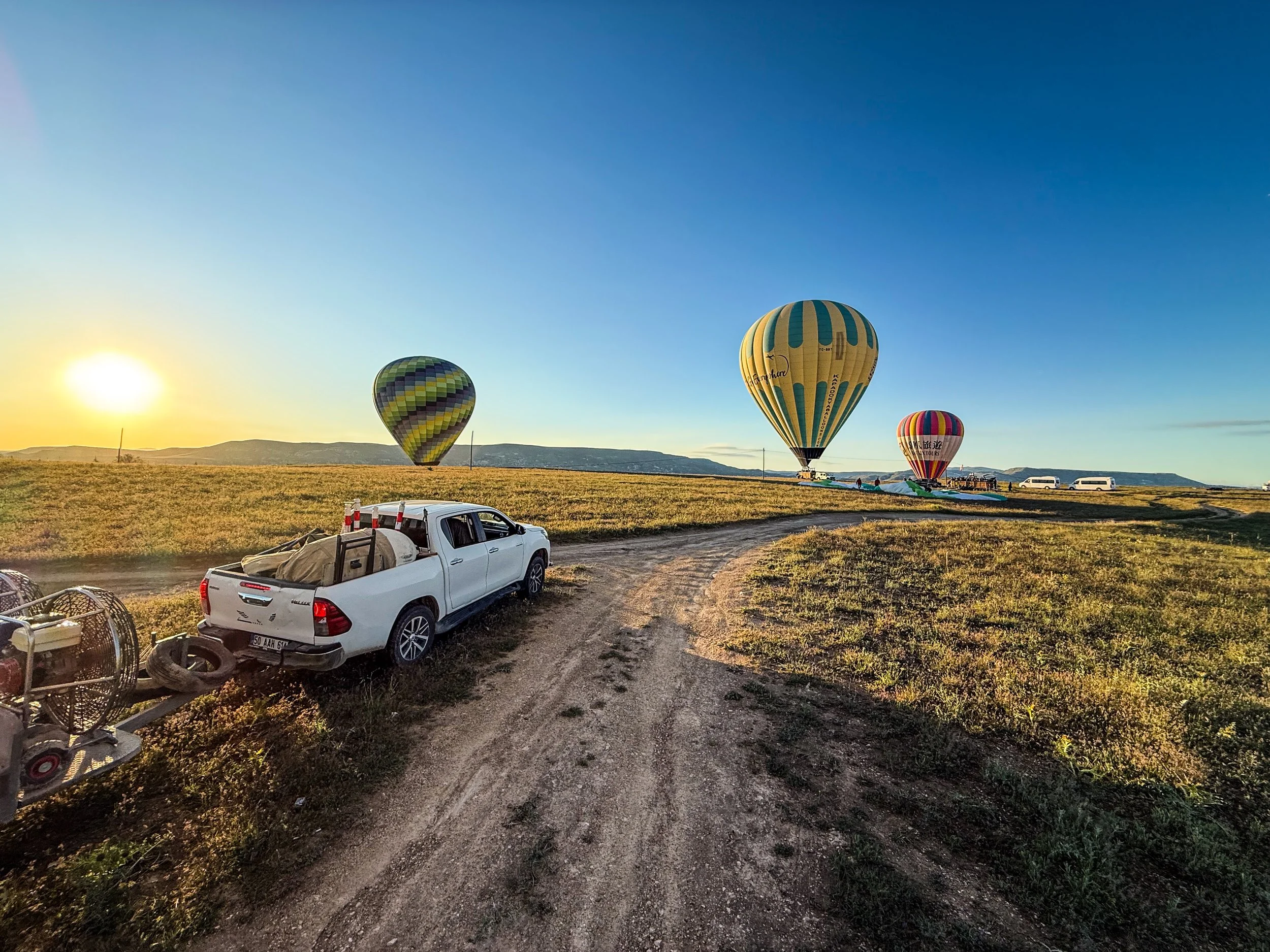
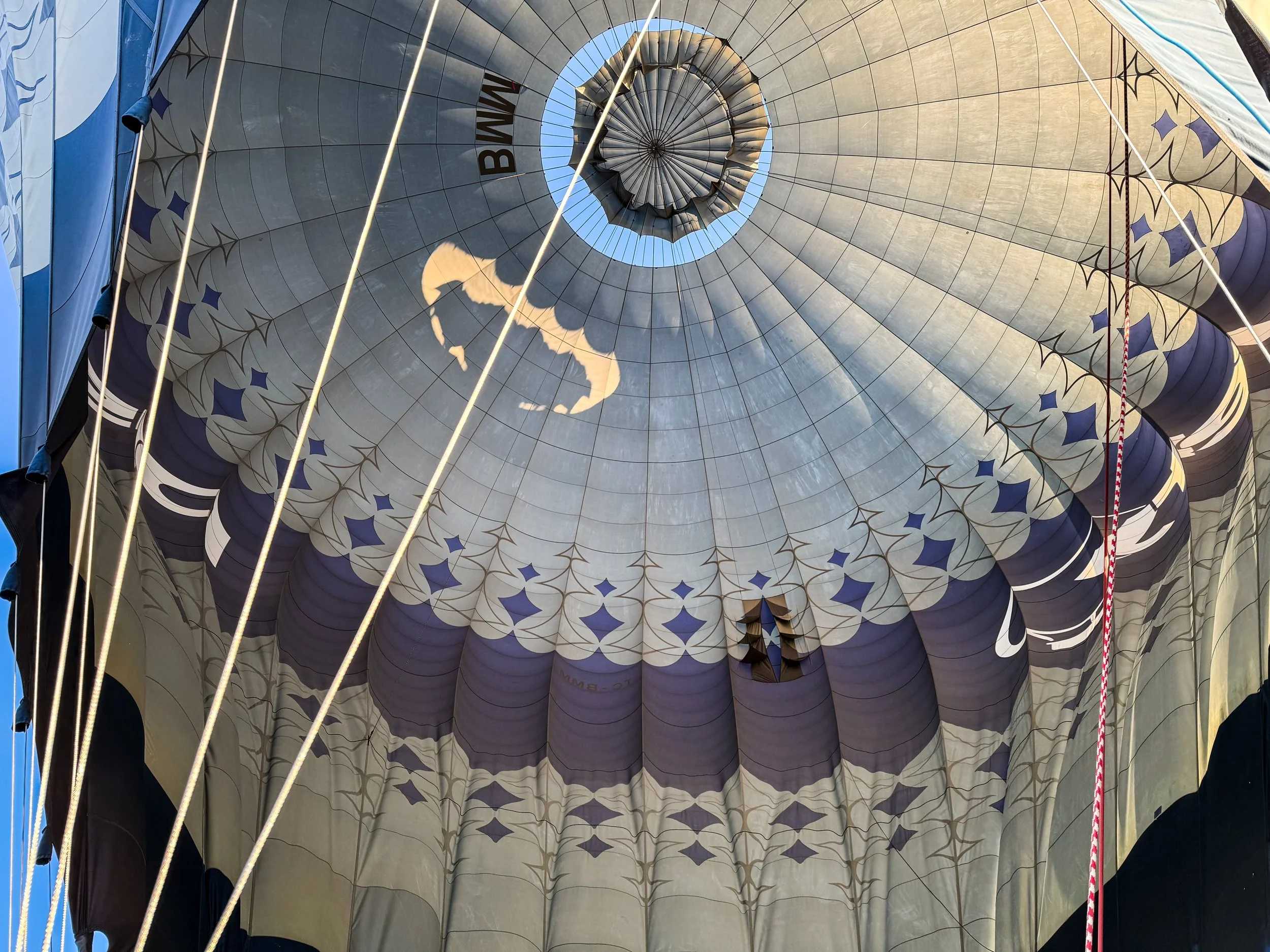
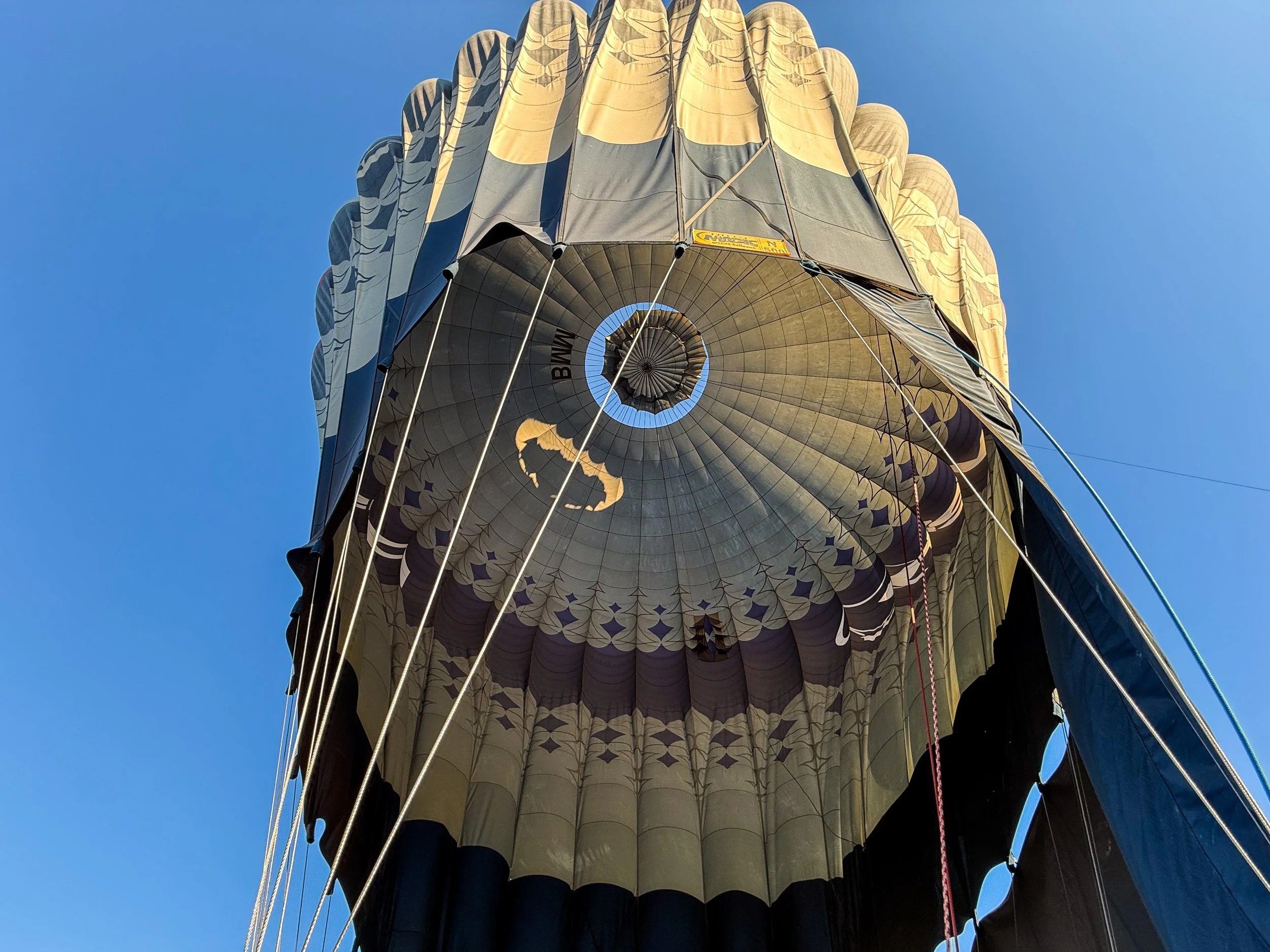
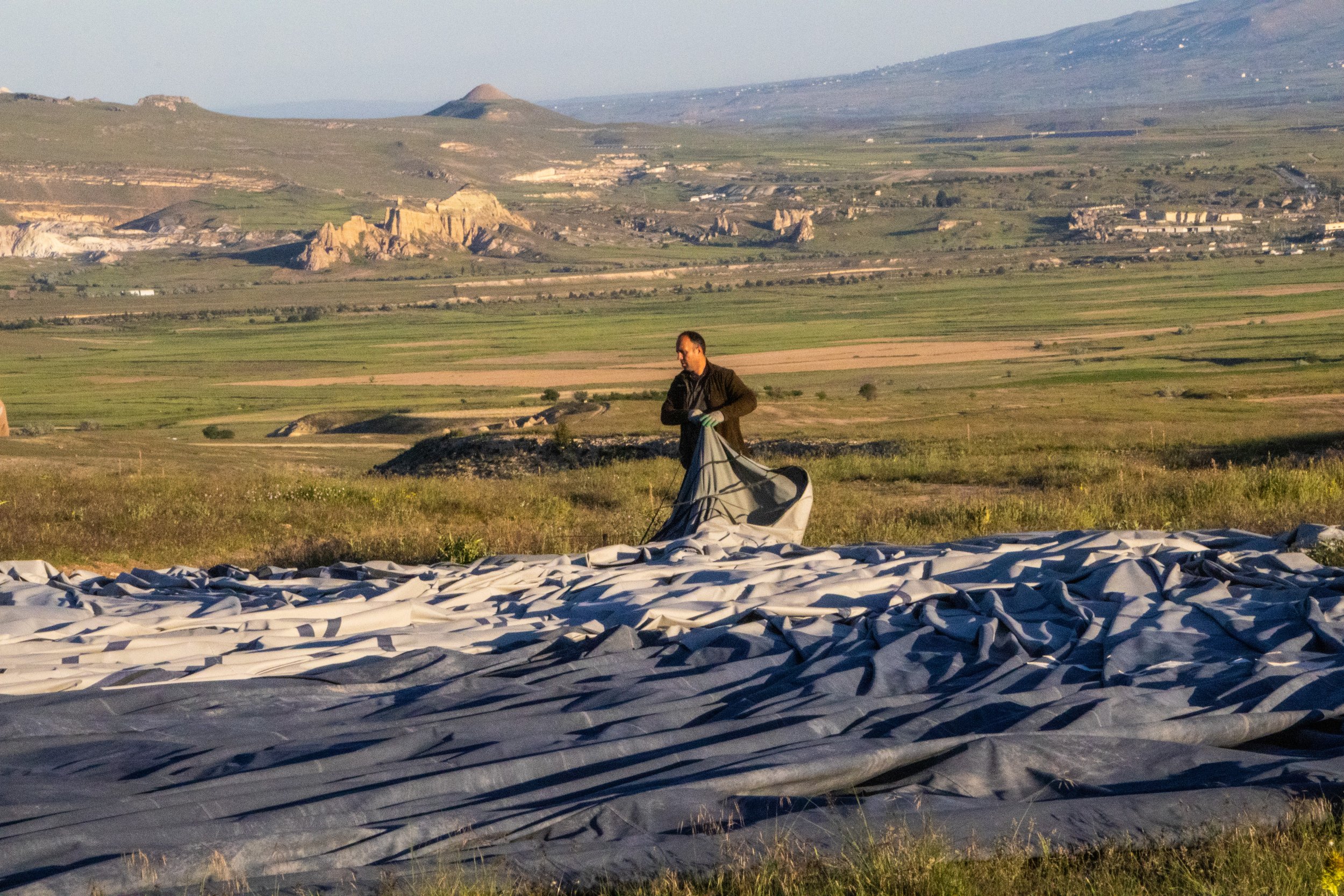
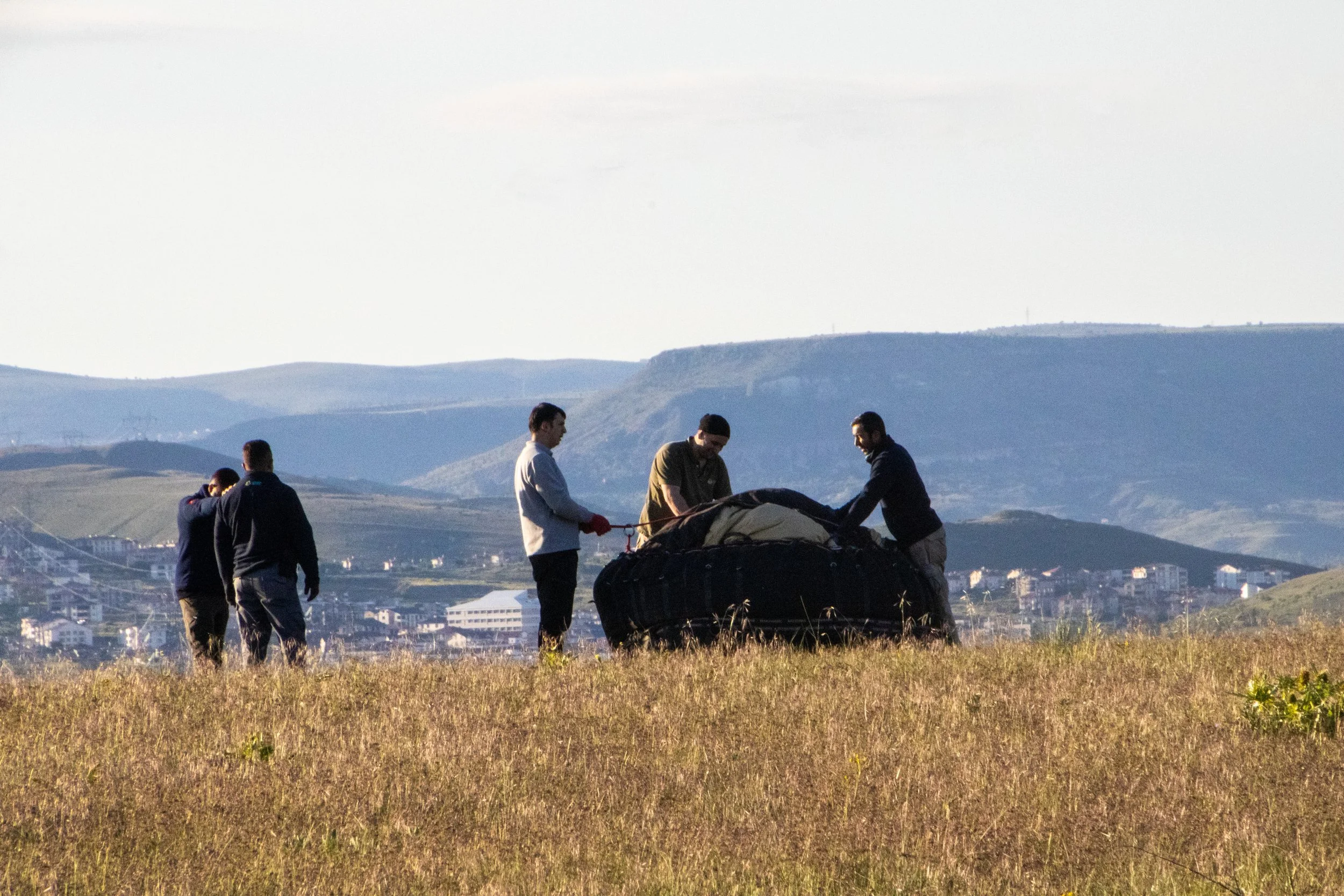
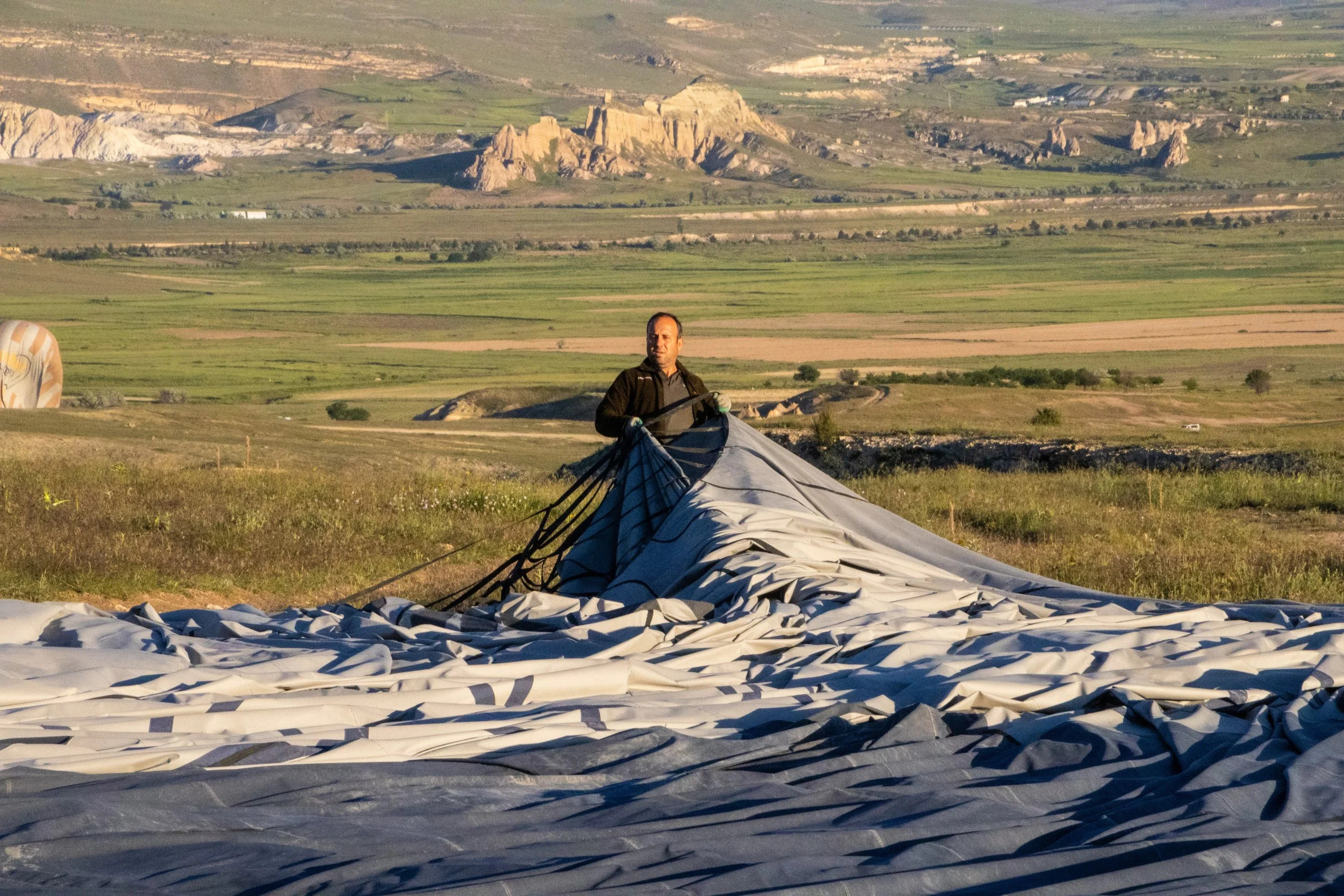
While a team of men worked to deflate and stow the balloon in the field behind us, our pilots popped a few bottles of champagne to celebrate the end of the trip. If they hadn’t already won me over (they had), then this would definitely have done the trick.
10/10 - I cannot recommend this highly enough! It’s been an really fun escape from my day-to-day life just to put this article together because I’ve had the opportunity to reflect on this experience so much.
ALAS, now it’s time to move on from this series in Türkiye, but I have absolutely no doubt that I’ll be back in this wonderful country very soon. For now, it’s time head back to London for a couple of articles that promise to be extremely interesting… and then, it’s time for the big trip to a far away new country. Lots in the queue, stay tuned!

I realized in writing this article that I was a bit fuzzy on what the word “Anatolian” actually means. I’ll admit it! So, here’s a quick clarification: while the region known as “Anatolia” has basically the same boundaries as modern day Türkiye, the name “Türkiye” is derived from Turkish ethnic and cultural identity. Anatolia had been a hotbed of civilization for eons before the Turks showed up. To give a few examples, people groups such as the Hittites, Luwians, Phrygians, Lydians, Romans—and, approaching groups more relevant to the 21st century now—Persians, Greeks, Armenians, and Kurds ALL fall under the “Anatolian” umbrella, in part or in full. That’s why you’ll hear historians say things like “ancient Anatolian civilizations” rather than “ancient Turkish civilizations.” The Turks are the new kids on the block.