🇹🇷 Türkiye Blog Index 🇹🇷
I realized in writing this article that I was a bit fuzzy on what the word “Anatolian” actually means. I’ll admit it! So, here’s a quick clarification: while the region known as “Anatolia” has basically the same boundaries as modern day Türkiye, the name “Türkiye” is derived from Turkish ethnic and cultural identity. Anatolia had been a hotbed of civilization for eons before the Turks showed up. To give a few examples, people groups such as the Hittites, Luwians, Phrygians, Lydians, Romans—and, approaching groups more relevant to the 21st century now—Persians, Greeks, Armenians, and Kurds ALL fall under the “Anatolian” umbrella, in part or in full. That’s why you’ll hear historians say things like “ancient Anatolian civilizations” rather than “ancient Turkish civilizations.” The Turks are the new kids on the block.
Istanbul has a chain of islands just off the coast that contain full-on neighborhoods. The Princes’ Islands are a chain of 9 islands just off the coast of Istanbul in the Sea of Marmara, but only 4 of them have substantial populations: Büyükada, Heybeliada, Burgazada and Kınalıada. Combined, they constitute the Adalar district of Istanbul. This is an interesting area to explore not only for the scenery, but because these islands embody and preserve the diversity of Istanbul in some fascinating ways.
Istanbul’s mild climate, abundant food waste, and endless dense, low-rise neighborhoods with leafy courtyards, shops, and waterfronts makes a perfect habitat for cats. The more I think about this, this would be the IDEAL setting for a Pixar movie about cats. Can we make that happen please? The writers wouldn’t even need to start from scratch, because cats here are already being actively personified, with some real instances of cats becoming famous throughout the city and beyond!
The first time I came to Istanbul—which was 10 years ago now!—I spent most of my time in Kadiköy. In the crisp autumn air, fresh off months spent backpacking through the sweat and humidity of South Asia, I was absolutely charmed by this place! It caught me completely by surprise; I didn’t want to leave! The streets were bustling with cool-looking young people, there was an amazing coffee shop on every corner, and the steep, narrow streets provided a treasure-trove of urban ocean views, similar to those of San Francisco or Stockholm.
This time around, I visited during the summer months, and Kadiköy felt different. I think both of us had changed a bit over the past decade; I’d be lying if I told you it felt familiar. Nevertheless, I retained some conceptual familiarity with this place. Far from the touristy bustle of Galata, Karaköy, and Taksim over on the “European Side,” decidedly more humble than the Westernized glamor of Bebek and Nisantası, and much softer than its hardline conservative neighbor, Üsküdar, Kadiköy managed to feel at once both comfortable and local. It’s likely still too Western to truly be considered representative of Türkiye or even Istanbul as whole… but this is where a more local and authentic version of Istanbul feels accessible to me.
So let’s breakdown both Kadiköy and Moda; they aren’t exactly the same place.
In positioning Üsküdar right after Bebek in this series, I’m hoping to give you a bit of whiplash. If you’re not reading these in chronological order, I’ll fill you in: Bebek is an affluent, socially progressive community on the northern (European) banks of the Bosphorus. There’s a gorgeous promenade where you can walk along the banks of the Bosphorus amongst fashionable people who seem—at first glance—to be quite Western! But make no mistake: Türkiye is not the West. Places like Istanbul can be confusing, because they often present as very European, but if you dive just a bit below the surface, you’ll discover a world that is quite unfamiliar to Westerners. This is a complicated place, because it contains both realities in parallel. We’re going to use Üsküdar as a vehicle to explore the more culturally conservative side of Istanbul.
Today we’ll explore few key areas from what is locally known simply as “The European Side”. Istanbul straddles a natural strait called the Bosphorus, which is the official boundary between Europe and Asia. The “European Side” of Istanbul—which is divided into two parts by an offshoot waterway of the Bosphorus called the “Golden Horn”—is decidedly more touristy than its Asian neighbor. The two pieces of the European Side that sit on either side of the Golden Horn are the Historic Peninsula (also call the “Fatih” or Old City) to the south, and Galata–Beyoglu to the north.
Turkish Millennials. This is a demographic that I really admire. They are living through a turbulent time in history. On October 10th of this year 2 bombs exploded in Turkey’s capital, Ankara, killing 102 and injuring another 400. Even though Turkey sits just on the precipice of the West, so close yet so far from getting the same kind of international attention that Paris does for these sorts of tragedies, this event was nothing more than a blip on the radar of western media. Alas, we watch this sort of bloodshed happen in the Muslim world and complacently think “well… I guess that’s just how it is over there.” I’m guilty of thinking like this as much as any of us. But you know who doesn’t think this way? Young people in Turkey.
Istanbul, formerly Constantinople, formerly Byzantium, is arguably one of the most historically important cities in the world. As such, it is a city with some serious history, to say the least. Over the course of the last 2 millennia, Istanbul served as the capital city for the Byzantine, Latin, Roman, and Ottoman Empires. Indeed, the city has always been of extreme strategic importance for the politics of the region. It has been a major hub of the ancient Silk Road, Eurasian rail networks, and sea trade between the Mediterranean and Black Seas.
It should come as no surprise then that Istanbul is also one of the largest cities in the world. Istanbul’s metro area houses about 14 million people, making it one of the world’s most populous cities. Istanbul proper ranks 5th in the world and 1st in Europe, although the jury is still out on weather or not Istanbul really is part of Europe at all.
🇹🇷 Peter’s Map of Türkiye 🇹🇷
Featuring only locations covered in Peter's Big Adventure
📸 Photos From Türkiye 👀
Turkish Lofi Girl 🇹🇷 ✍🏼
This is a deep cut from the Internet, but I love seeing the Lofi Girl art translated to the backdrop of different countries. Even though I’m not really into anime (except for Miyazaki movies, obvs), there are very few things that make me more comfortable with the idea of traveling somewhere new than these illustrations. Here are some artist renderings of Turkish Lofi Girl that I liked. Left to right, credit for these illustrations goes to /u/elderbay + /u/TheFurKhaaN.
🌍 Related Countries 🌏
The most under-rated country in North Africa
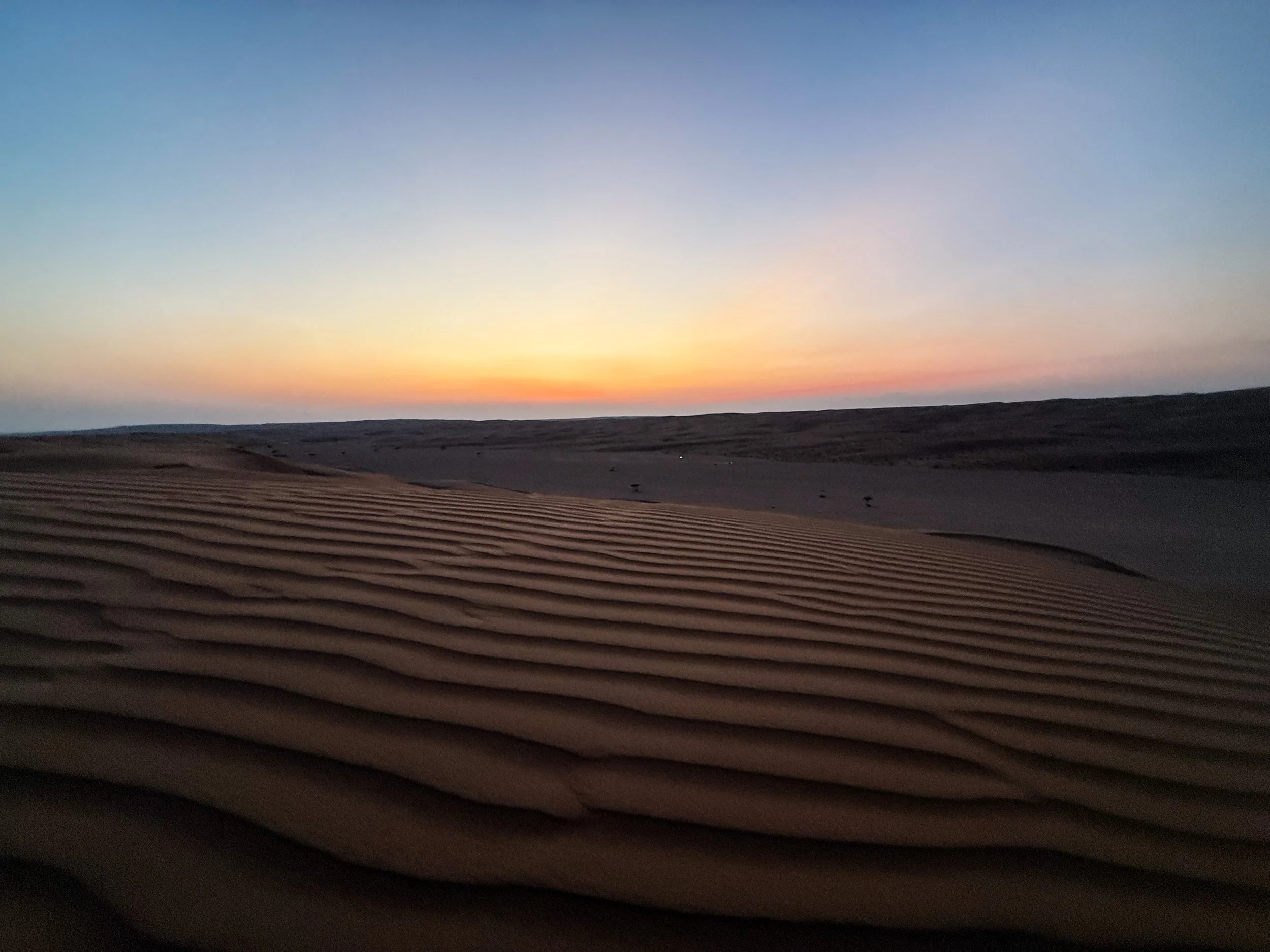
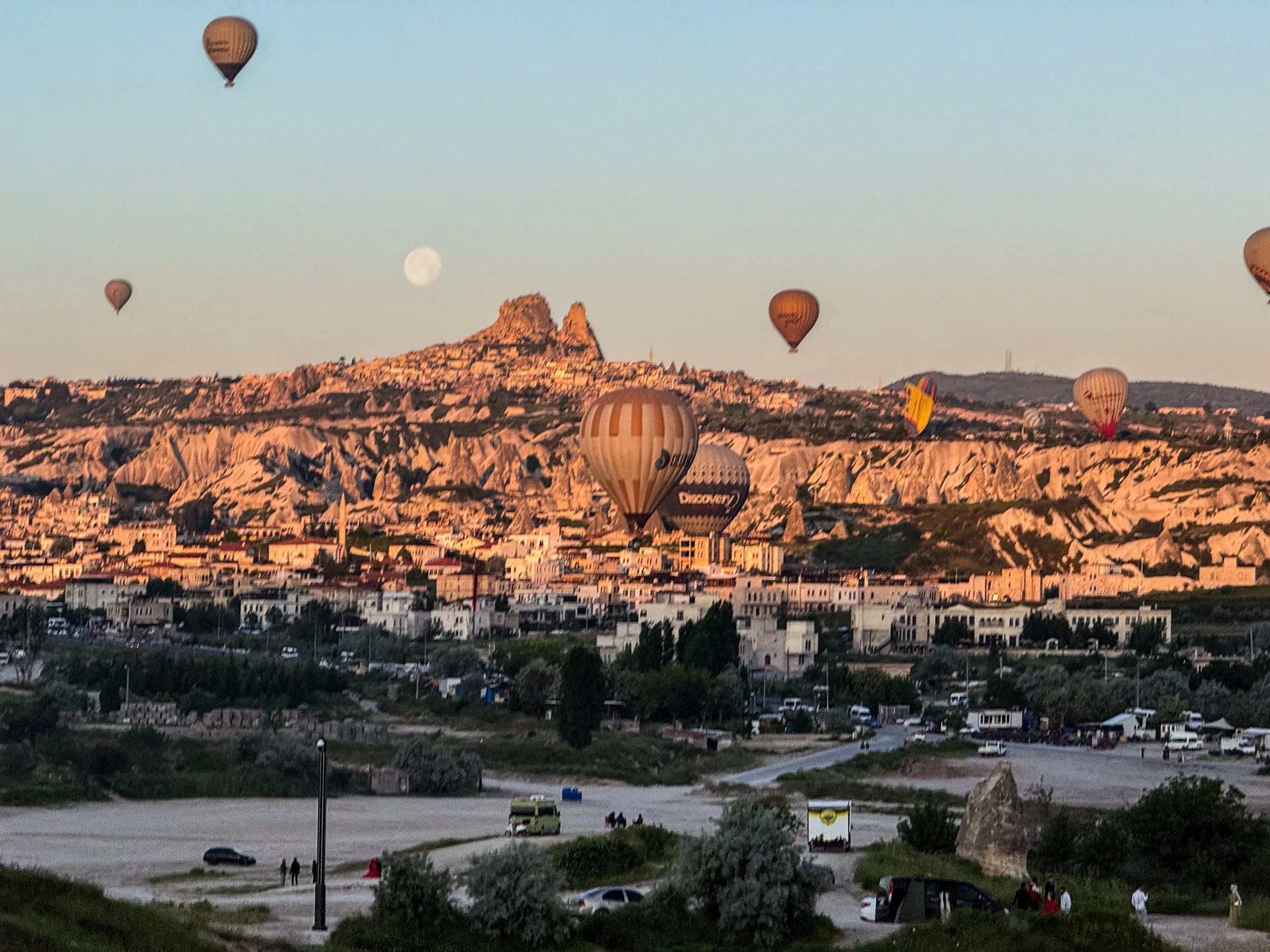
Here’s how hot air balloons work: heated air is less dense than cool air, so an injection of hot air will make the balloon rise, and letting hot air out will make the balloon descend. So, above the basket, there’s a massive burner that shoots flames vertically up into the balloon. And, at the top of the balloon, there is a small hole that the driver can open and close to let out hot air when they want to go down. Add all that up… and I wasn’t feeling too good about this. BUT, in 2025, an estimated 750,000 people did hot air balloon rides in Cappadocia, and every single one of them was fine. So, it was time to face my fears on this one.