
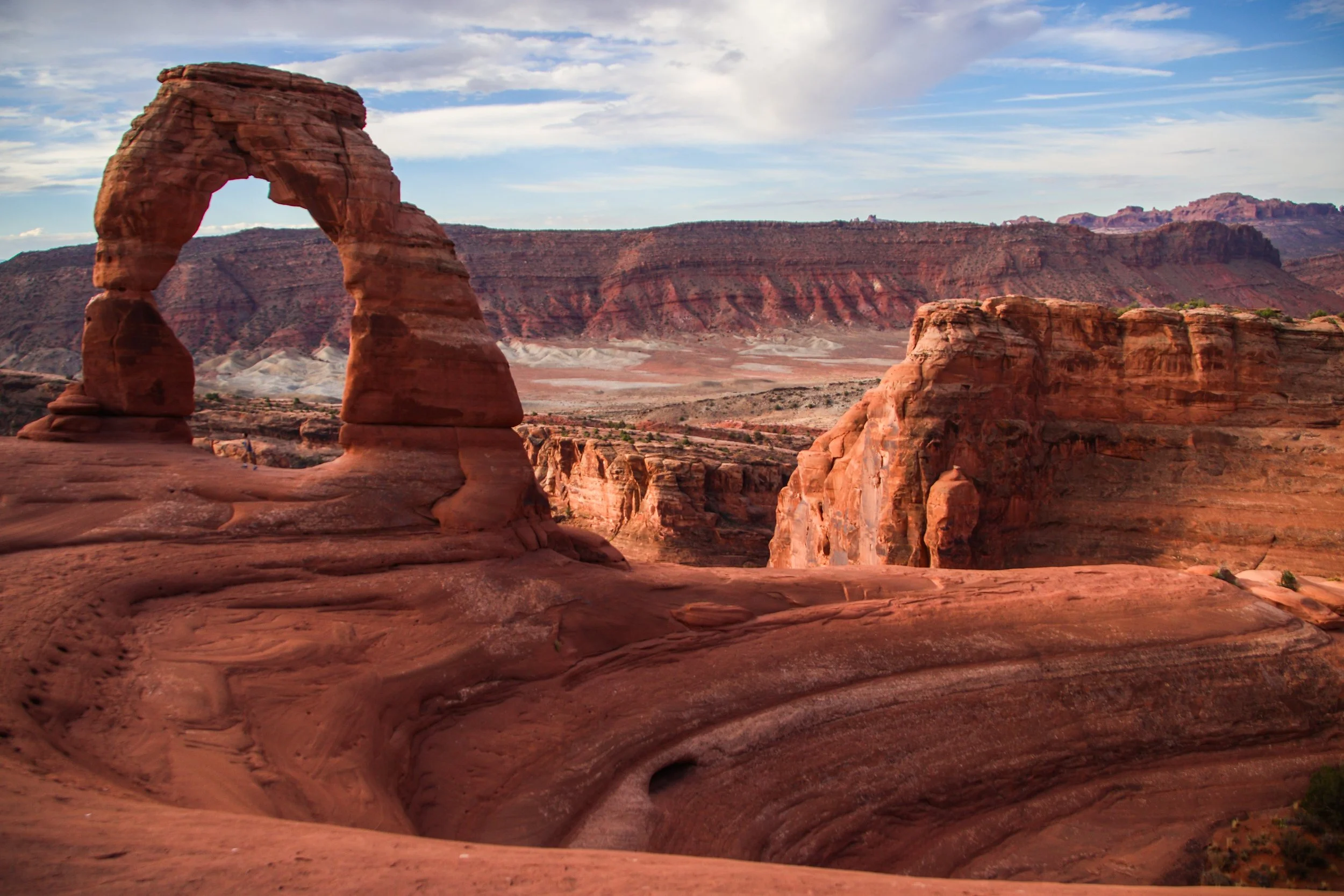
In the last couple of articles, we started in Grand Junction, Colorado where we explored the Colorado National Monument, and then drove the scenic Highway 128 along the Colorado River through Eastern Utah into Moab. There has been a ton of natural beauty along the way… but THIS is the reason I came all this way. This is one of the most stunning landscapes on planet earth. Are you ready?
Arches National Park
Welcome to Arches National Park.
I don’t think I’ll be spoiling any sort of surprise when I tell you that it’s famous for…

…ARCHES! This is a high-altitude landscape that contains within its numerous already-beautiful rock formations lots of giant stone arches. How did they get here? Well, ~70-30 million years ago, the Colorado Plateau rose up thousands of feet, draining the shallow inland sea that had previously been here. And it did so without folding much, which left the original horizontal rock layers exposed. The sea had left a warped, cracked landscape of sandstone and shale. Over time, these cracks widened into sandstone walls called “fins”, which you will still see dotting the landscape today. Then, over millions of years, wind, rain, and an endless cycle of freezing and thawing every year began to carve openings in the fins, some of which eventually became stand-alone ✨arches.✨
These arches are temporary rock formations that will eventually collapse. In fact, one of them, locally known as “Wall Arch”, collapsed in 2008. There was no earth quake, no storm, nothing. It just collapsed one night in August. However, you’ll also see the beginnings of new arches in cliff faces everywhere around the park. Reaching “arch status” takes many millennia, so anything that is “in progress” right now will likely evolve very little within our lifetimes, but it’s very interesting to see the process. And, that aside, at this exact moment in time, there are still some very beautiful arches that are sitting quietly out here just waiting for you to come see them. You’d better go see them while they last!
This place became a National Park in 1971, but it was already designated as a National Monument in 1929 (about 6 months before the roaring 20s gave way to the Great Depression). But, of course, Native American tribes had occupied this land for many thousands of years before we came along, including the Anasazi, Paiute, Ute, and Fremont peoples. We’ll circle back to them later, but for now let’s forget about humans. On the geological timescale that produced Arches, humans are just a blip on the radar.
Sunrise @Delicate Arche
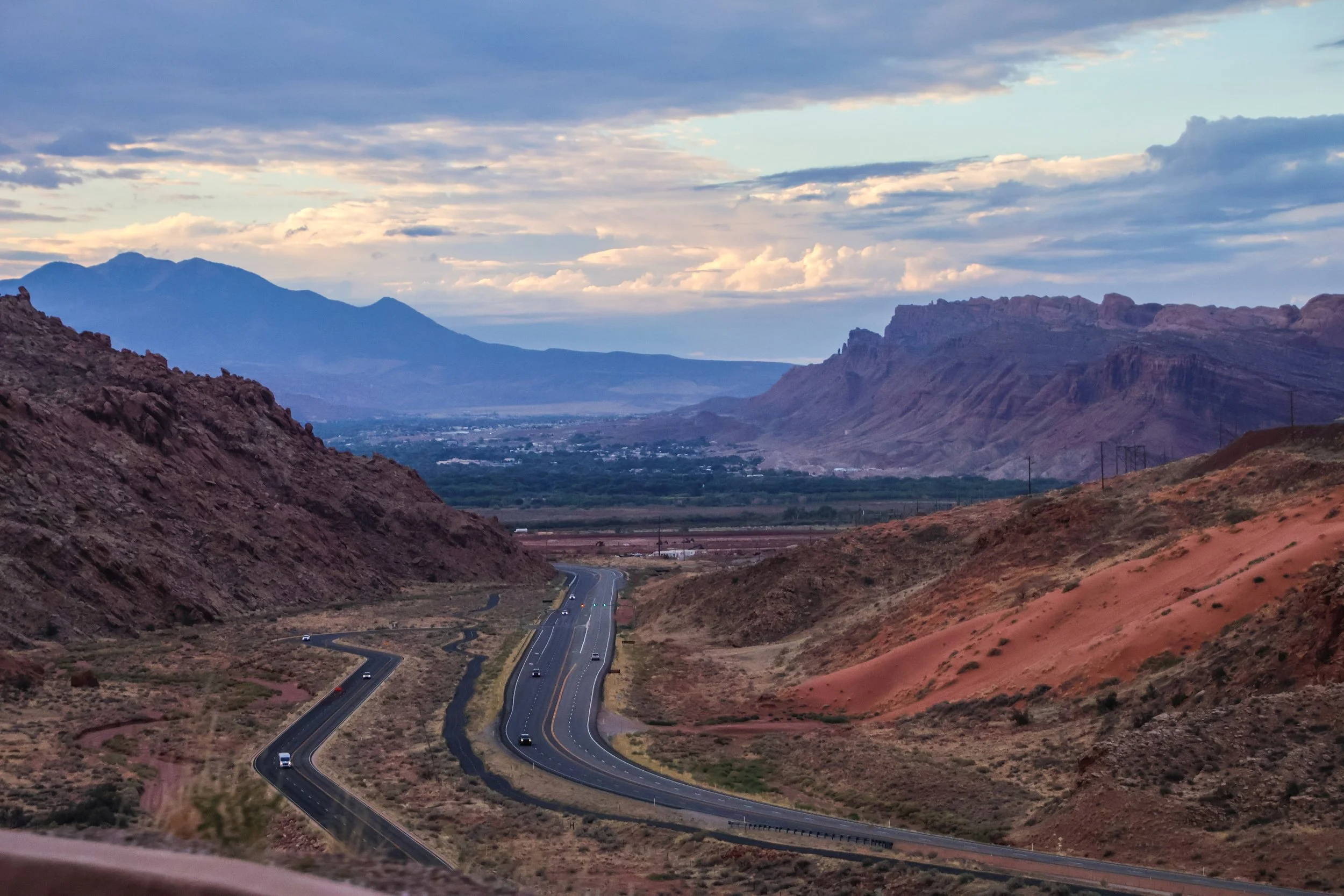
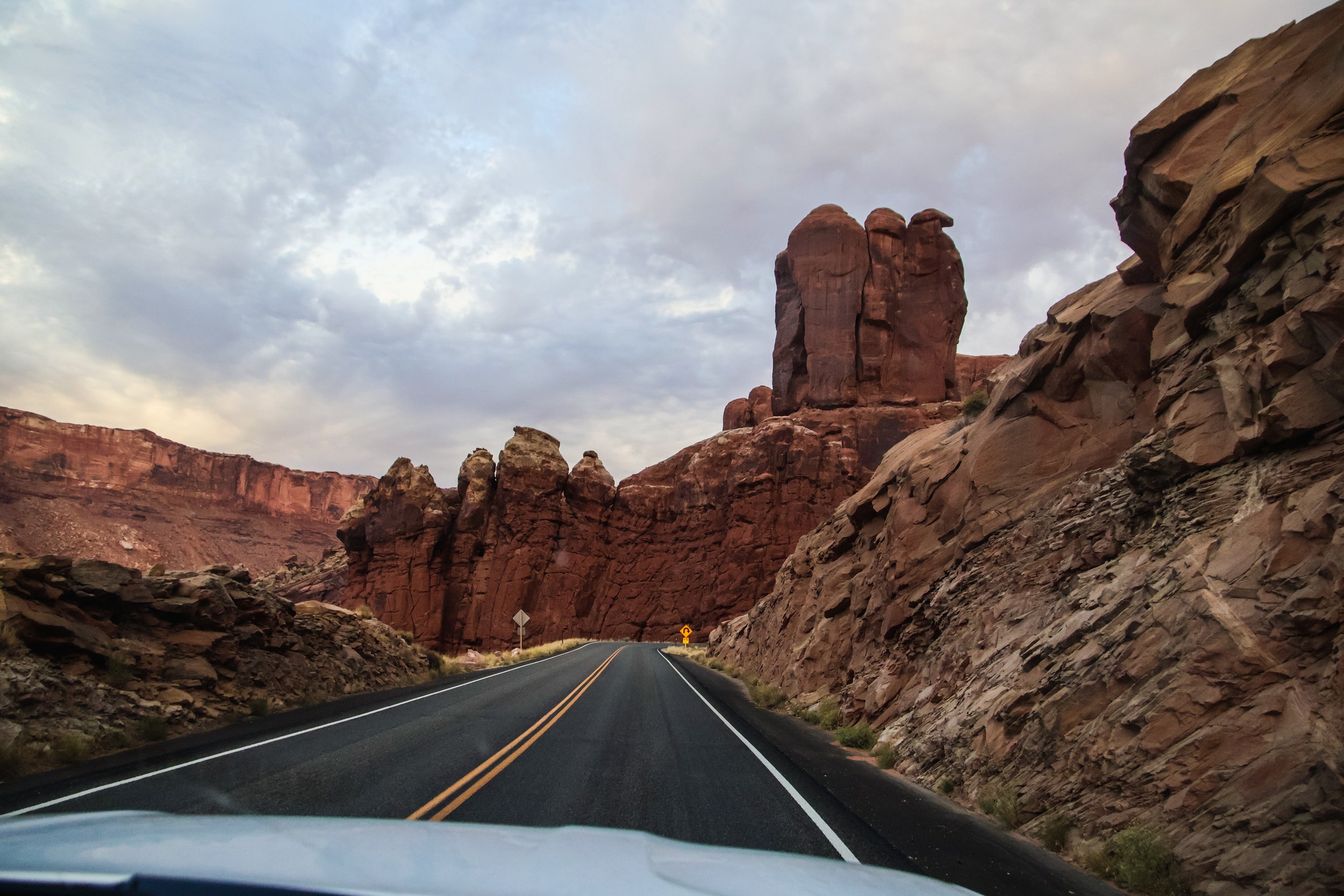
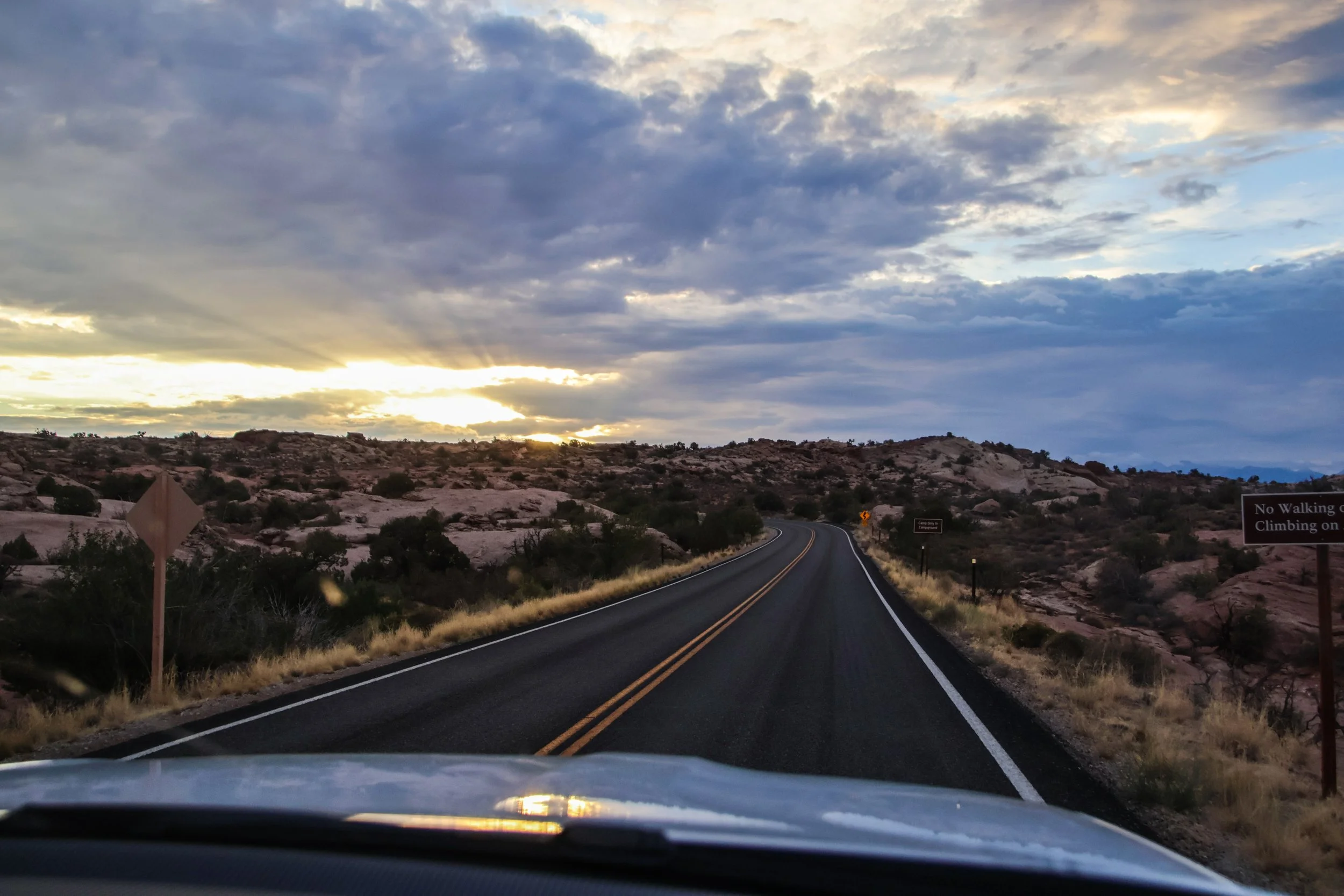
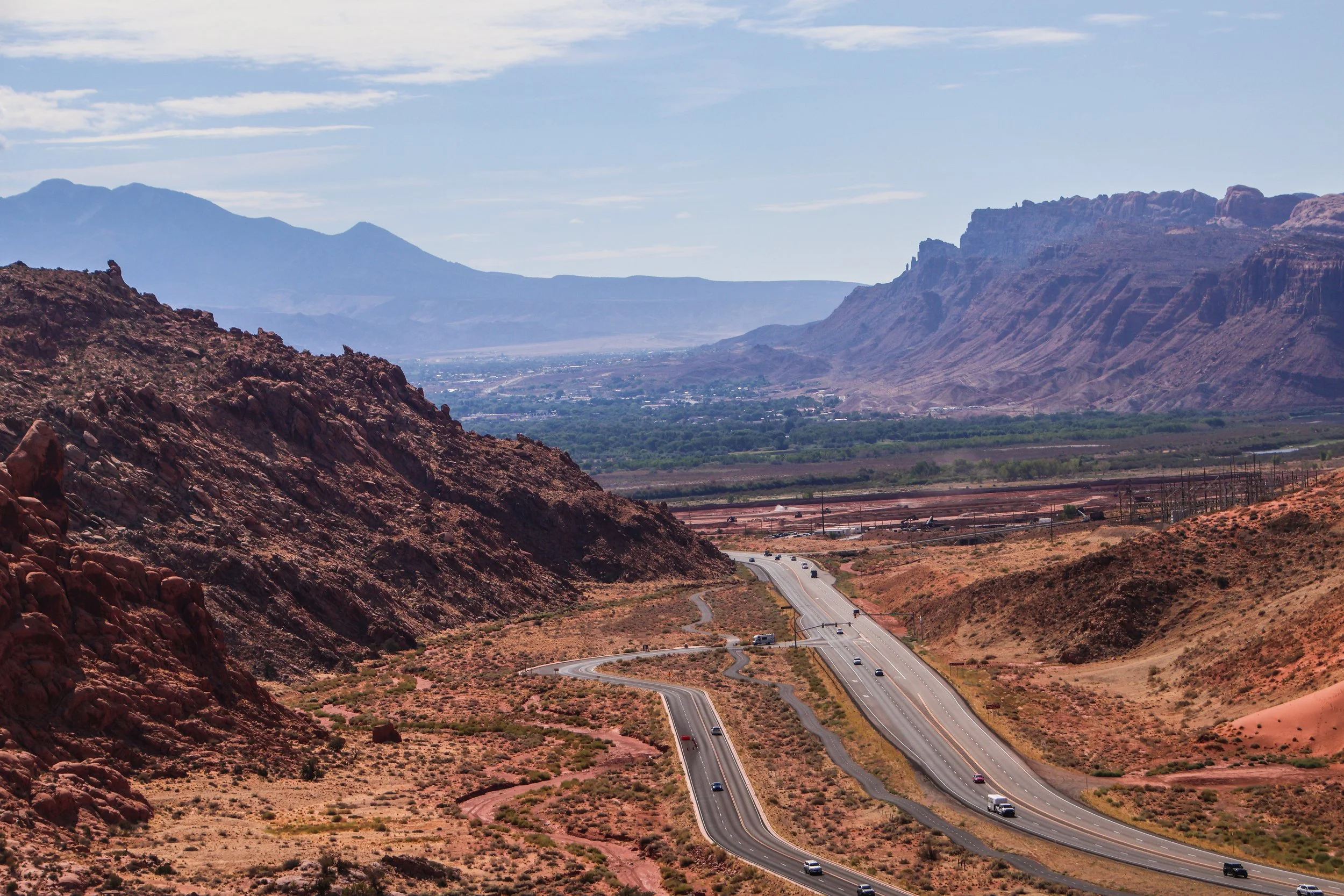
There are lots of famous rock formations in Arches National Park, but the most famous of them all is called “Delicate Arch”. We wanted to get there early in the day and experience sunrise within the park, which meant that we have to get moving at the butt-crack of dawn. In the gentle early morning light, our rental car carried us out of Moab and up a steep switch-back road into the park. Mind you that Moab is already ~4,025 ft (1,227 m) above sea-level. Arches actually gets as high as ~5,653 ft (~1,723 m) above sea-level, and—despite being only ~5 miles (8 km) away from downtown Moab—is usually 5–10°F (~3-6° C) colder. That being said, both Moab and Arches get HOT in the summer. The record high in Moab was 114°F (~46°C), and summer highs frequently exceed in 100°F (38°C) within Arches. So, heat is a hazard here! Consequently, sunrise/sunset exploration tends to be preferred, with many visitors retreating to Moab for a nice air-conditioned siesta in the middle of the day.
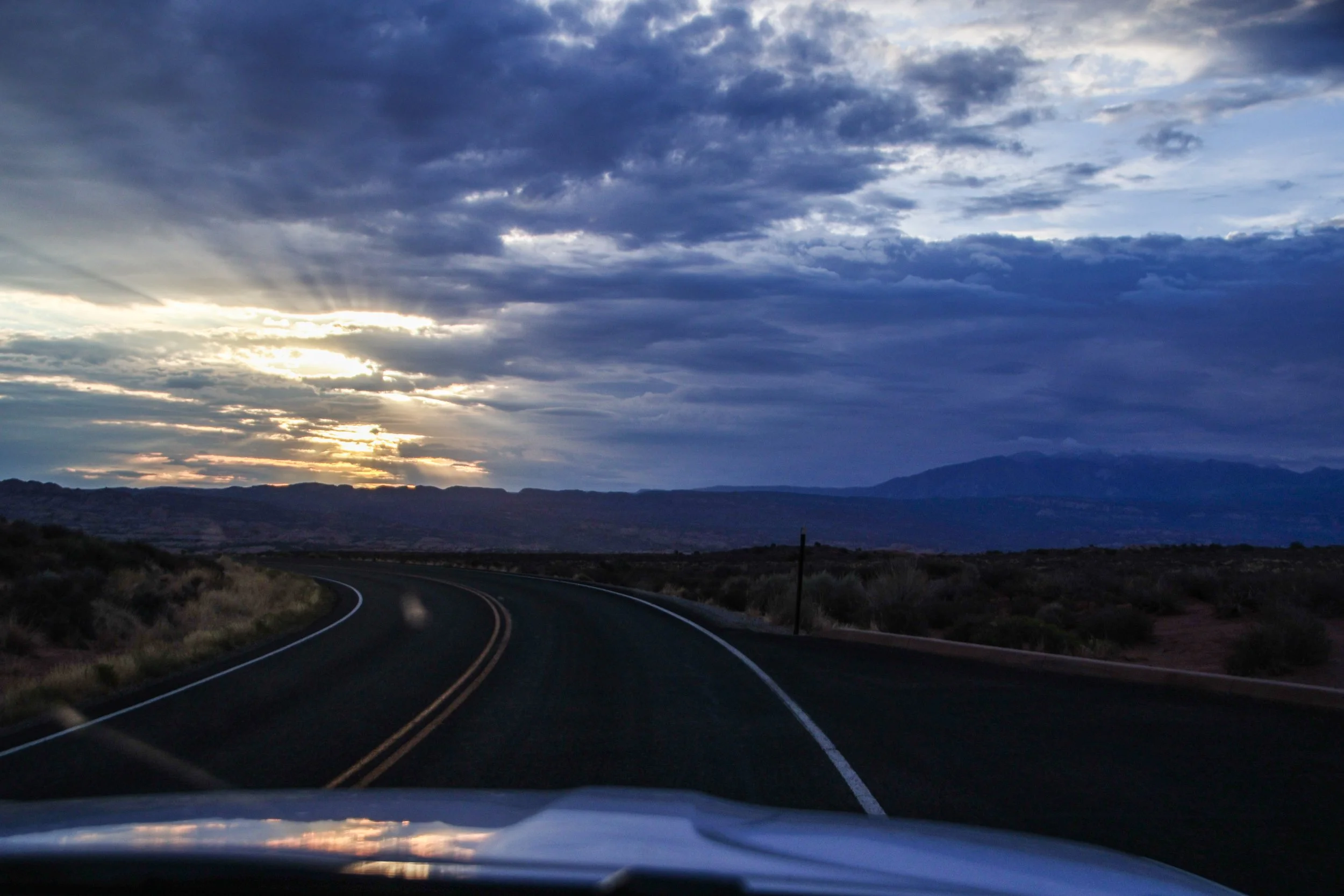
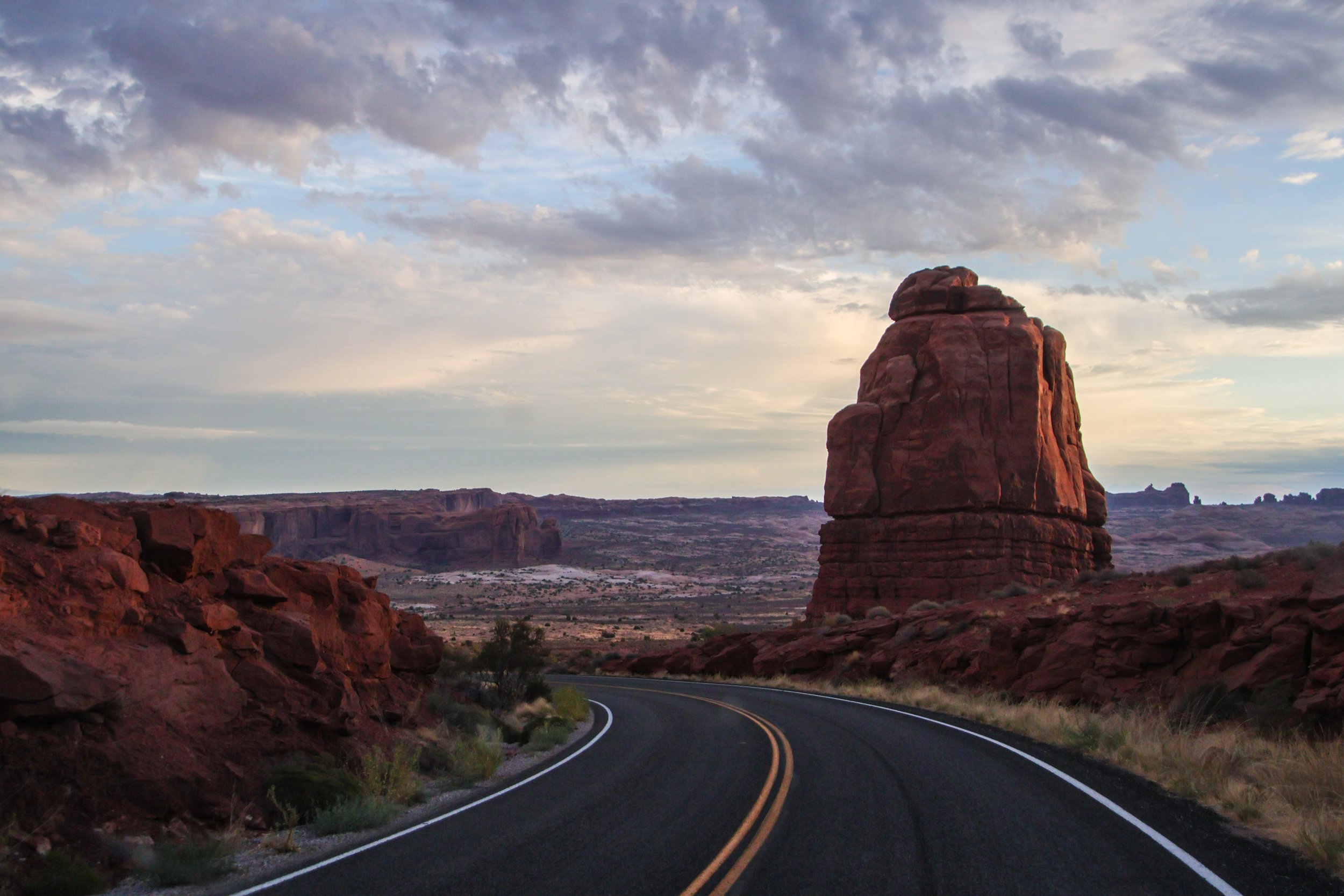
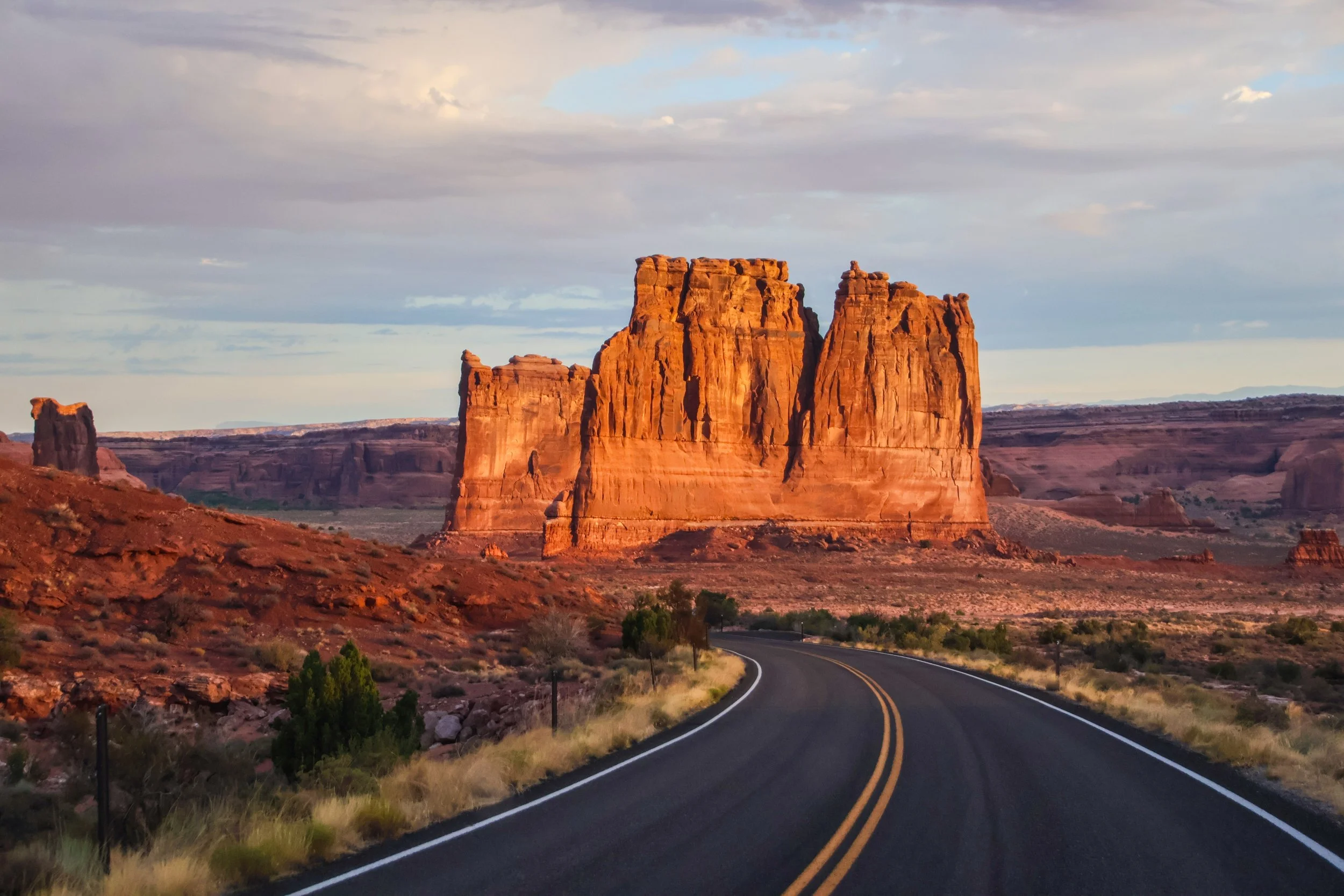
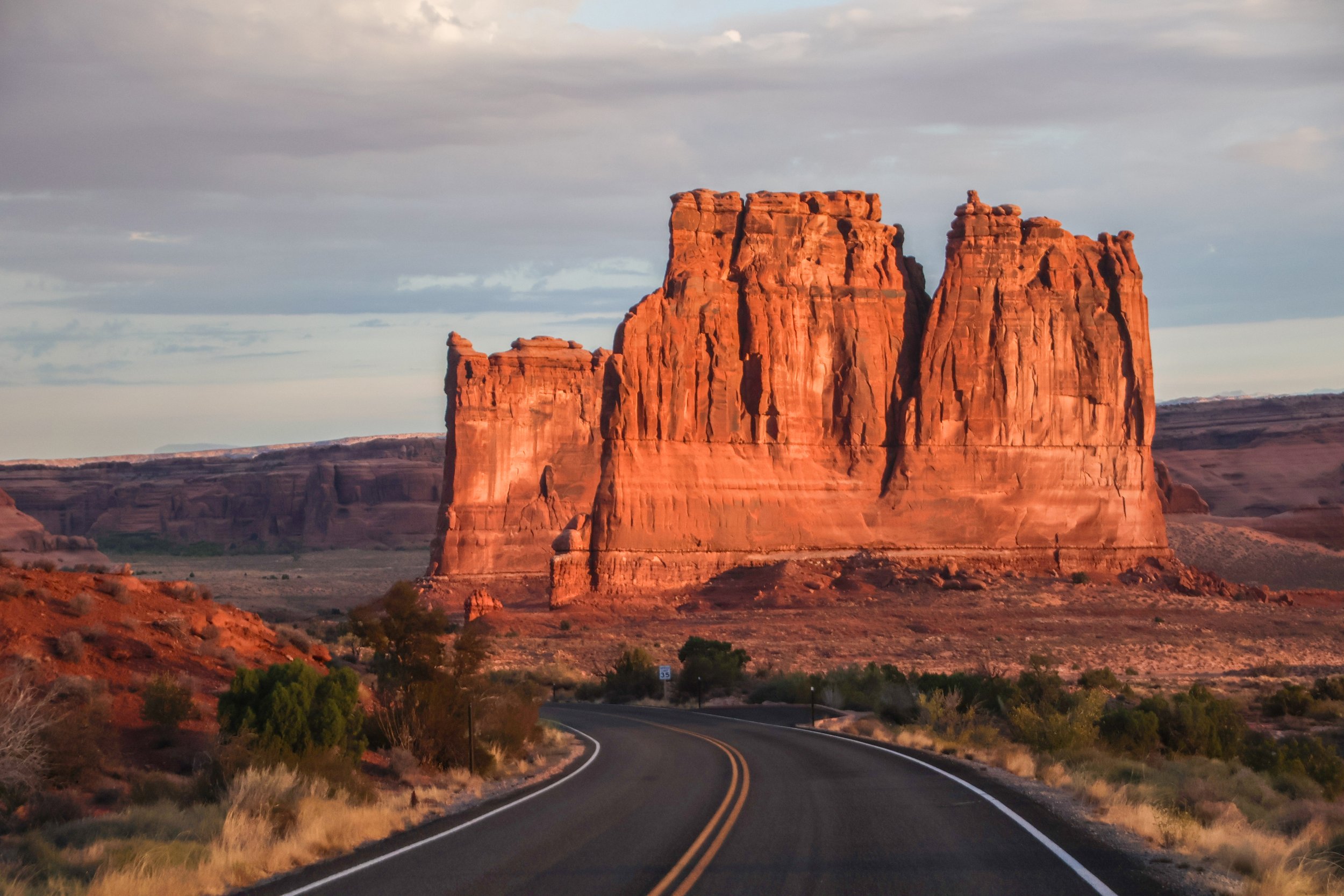
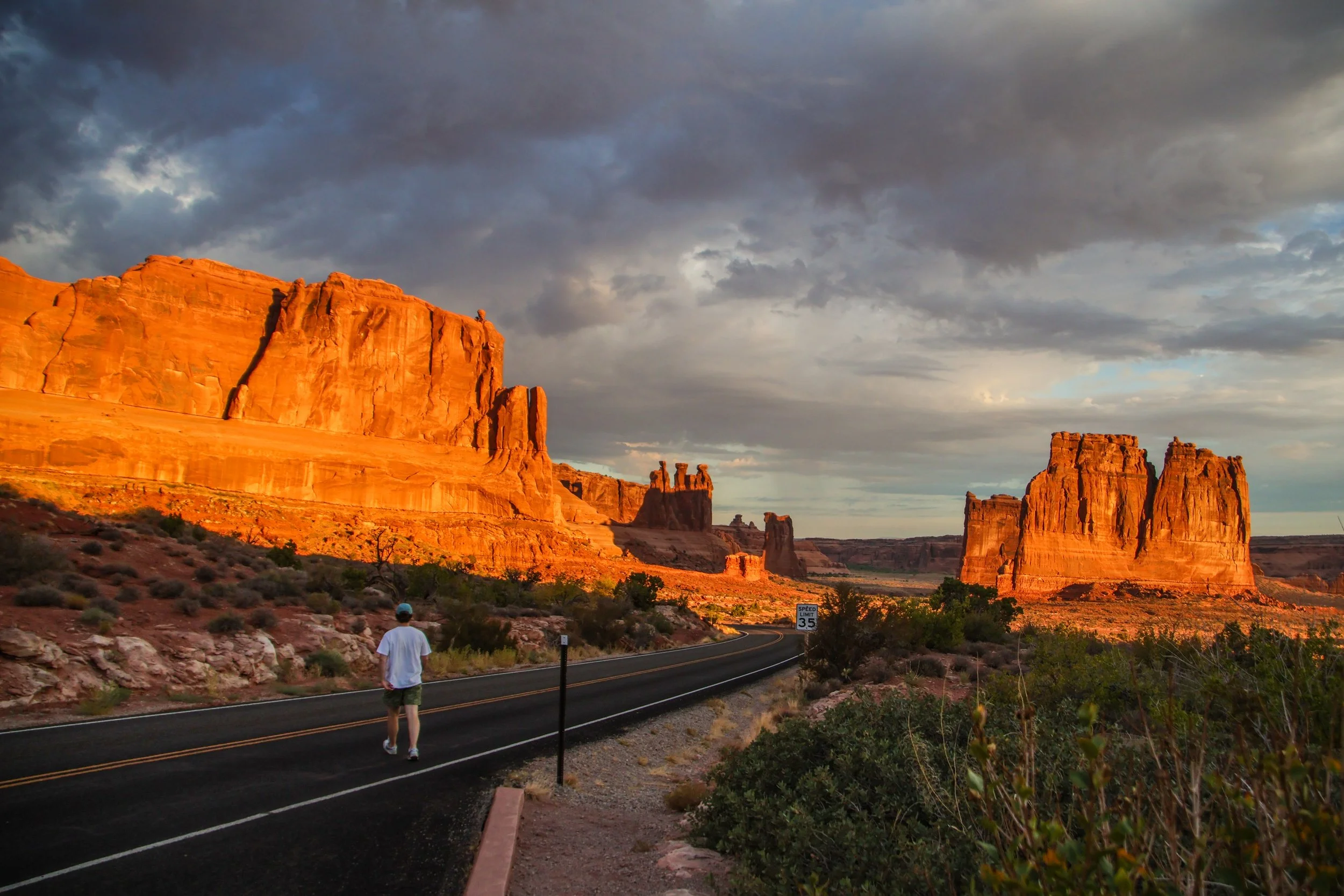
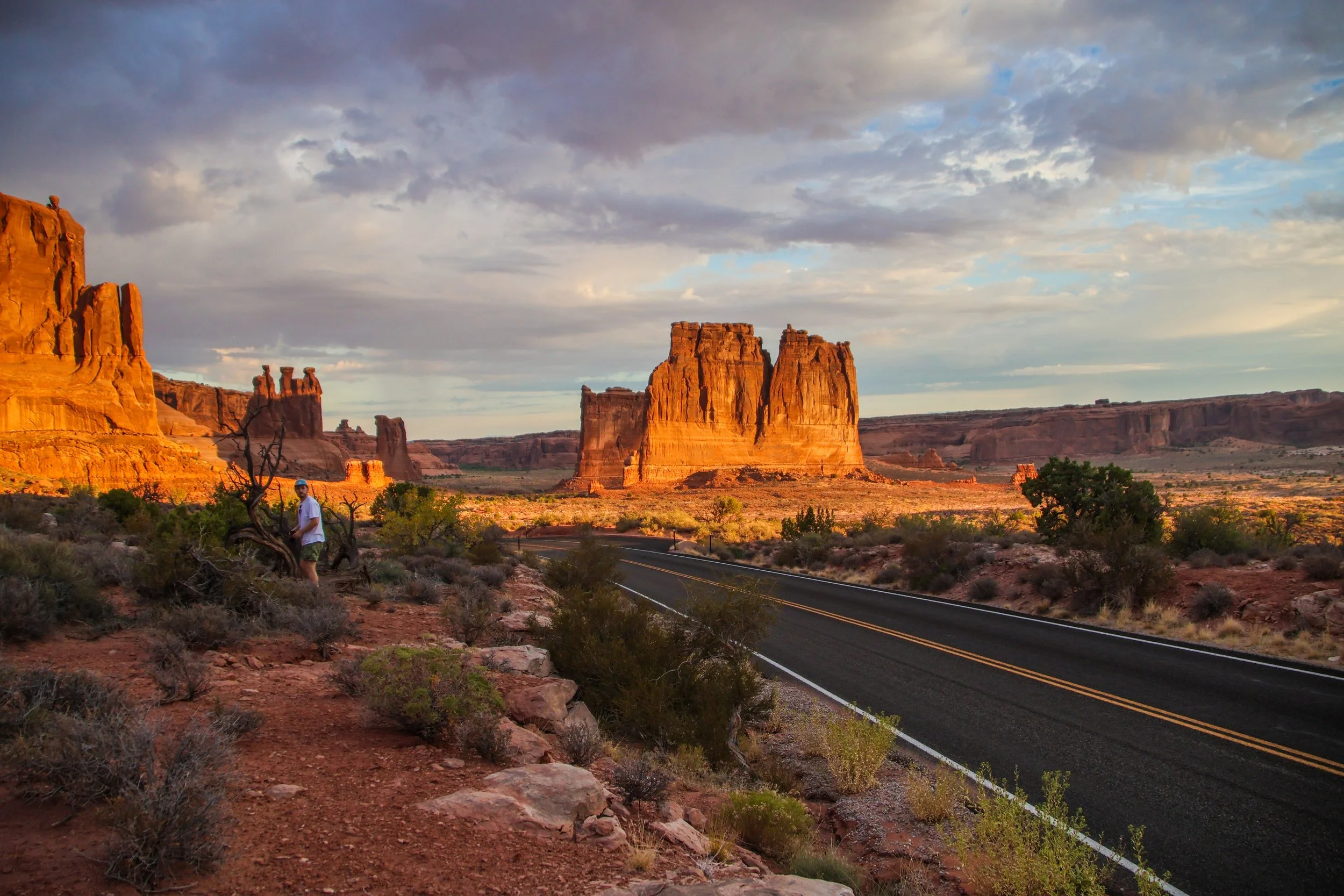
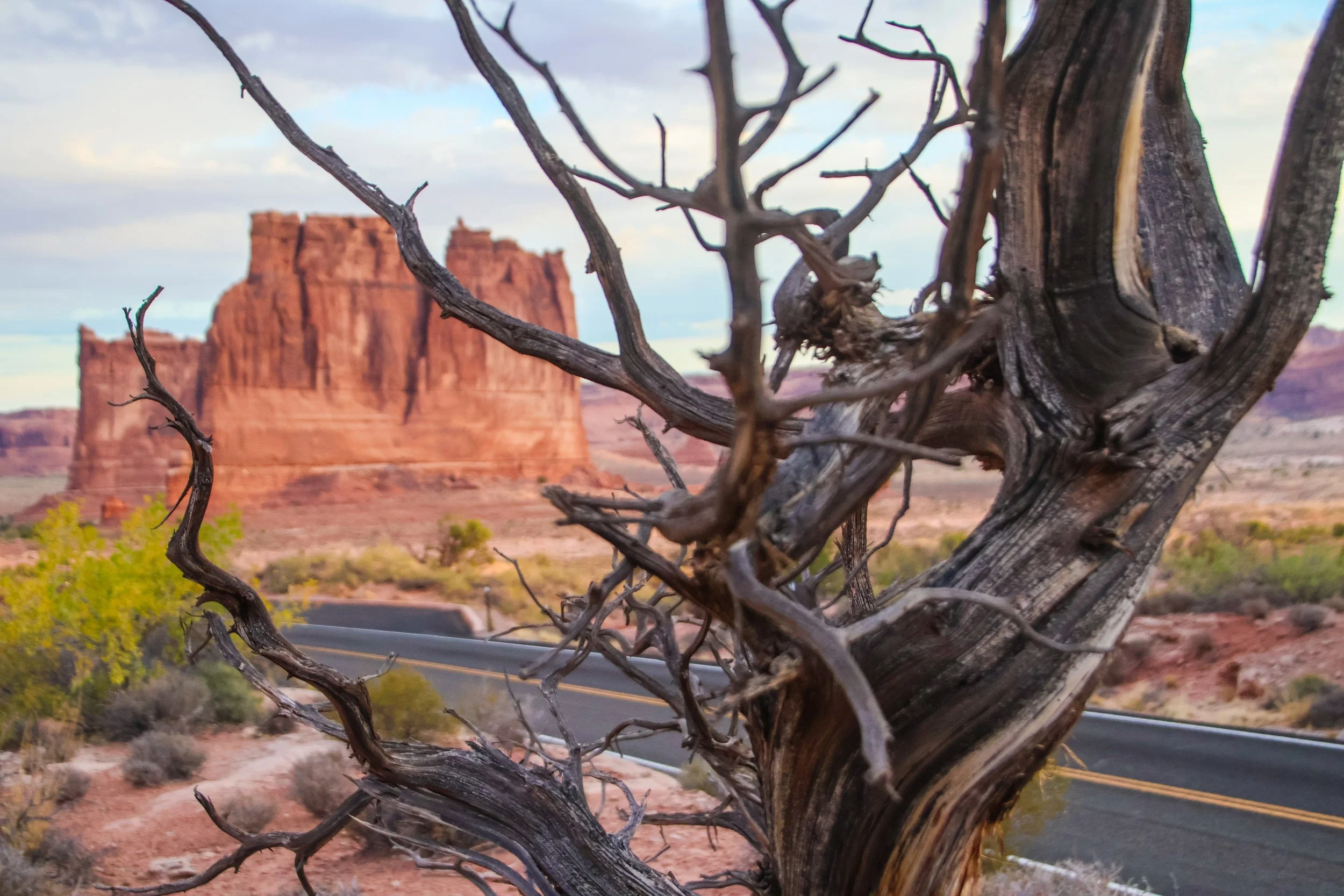
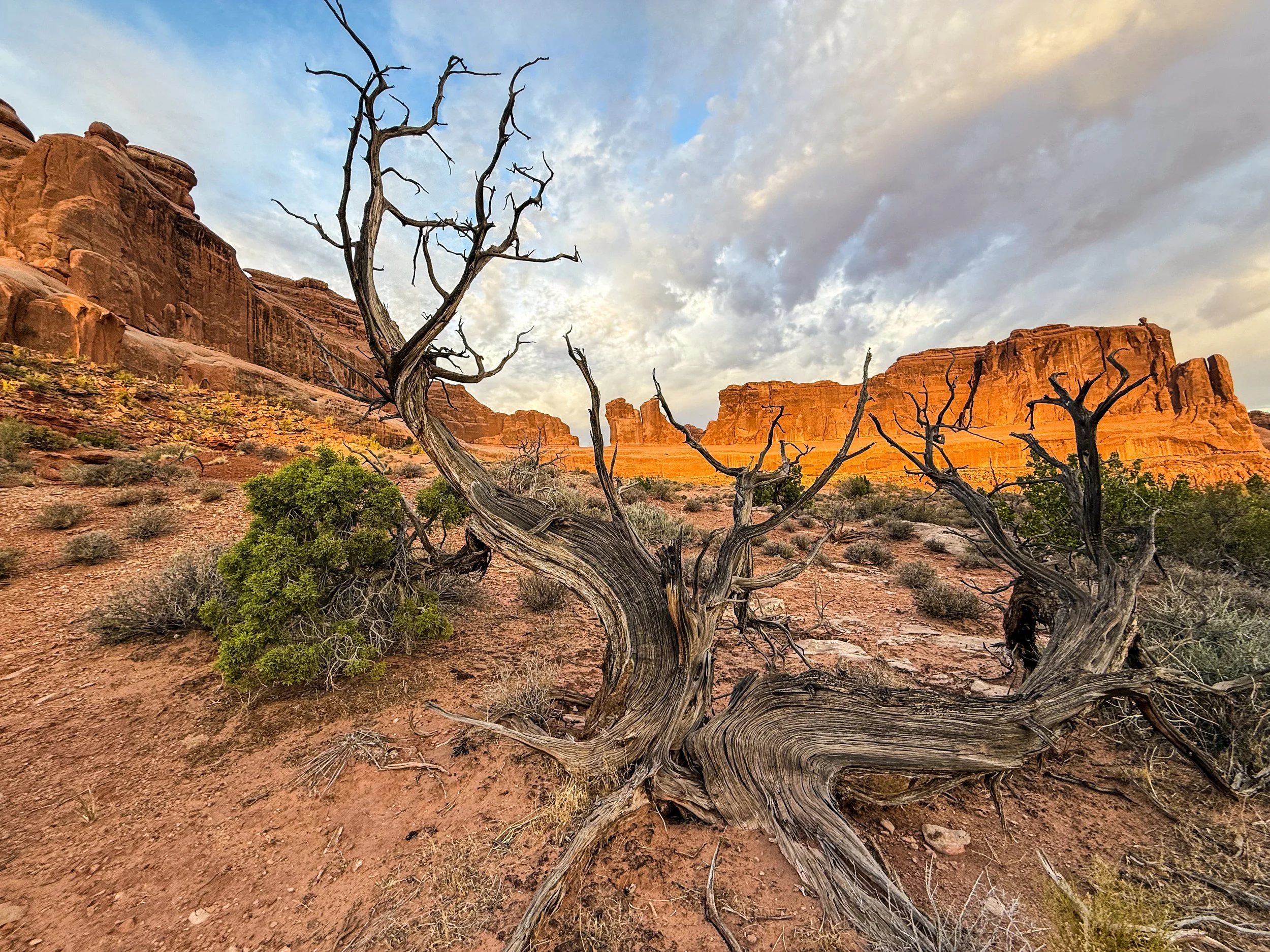
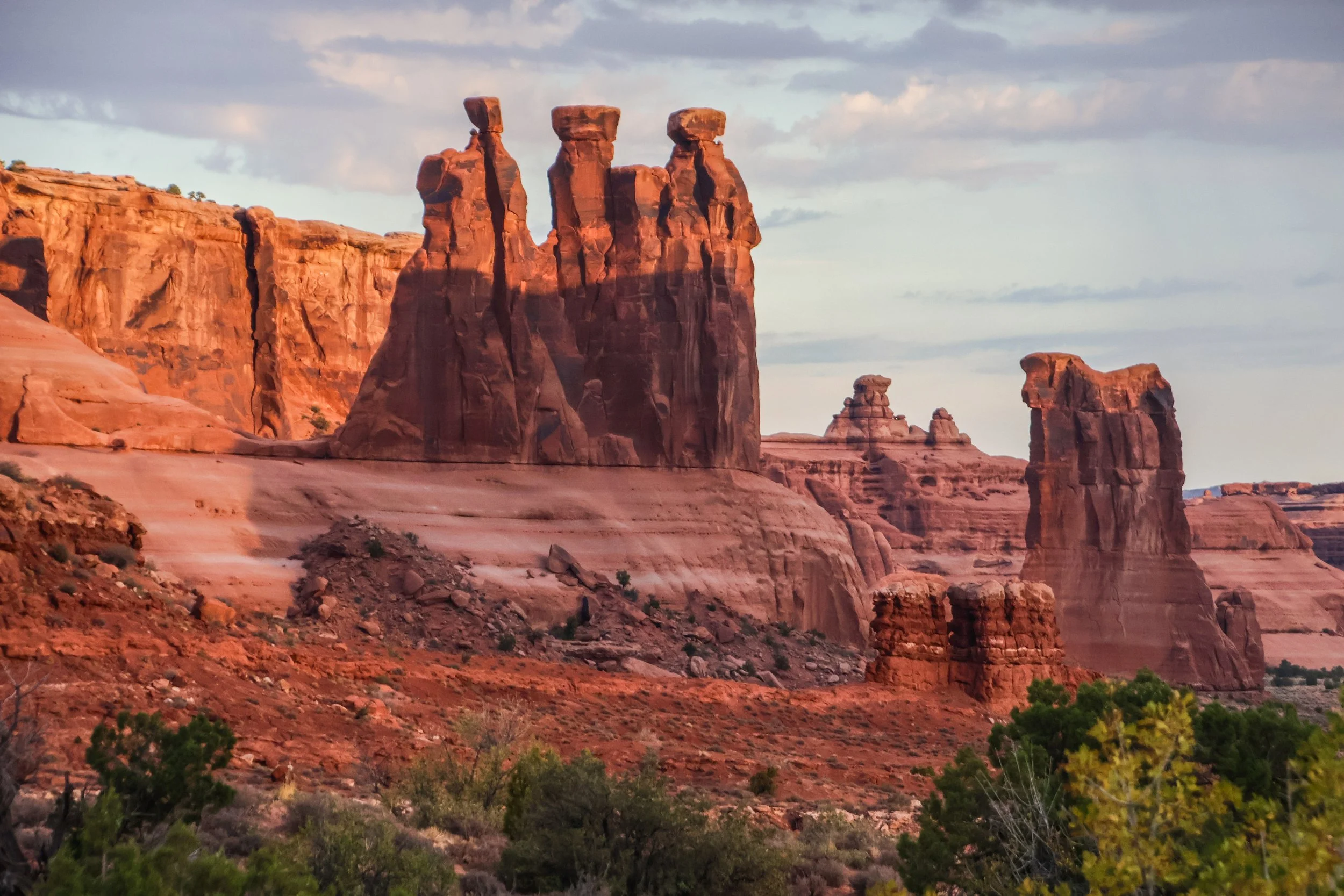
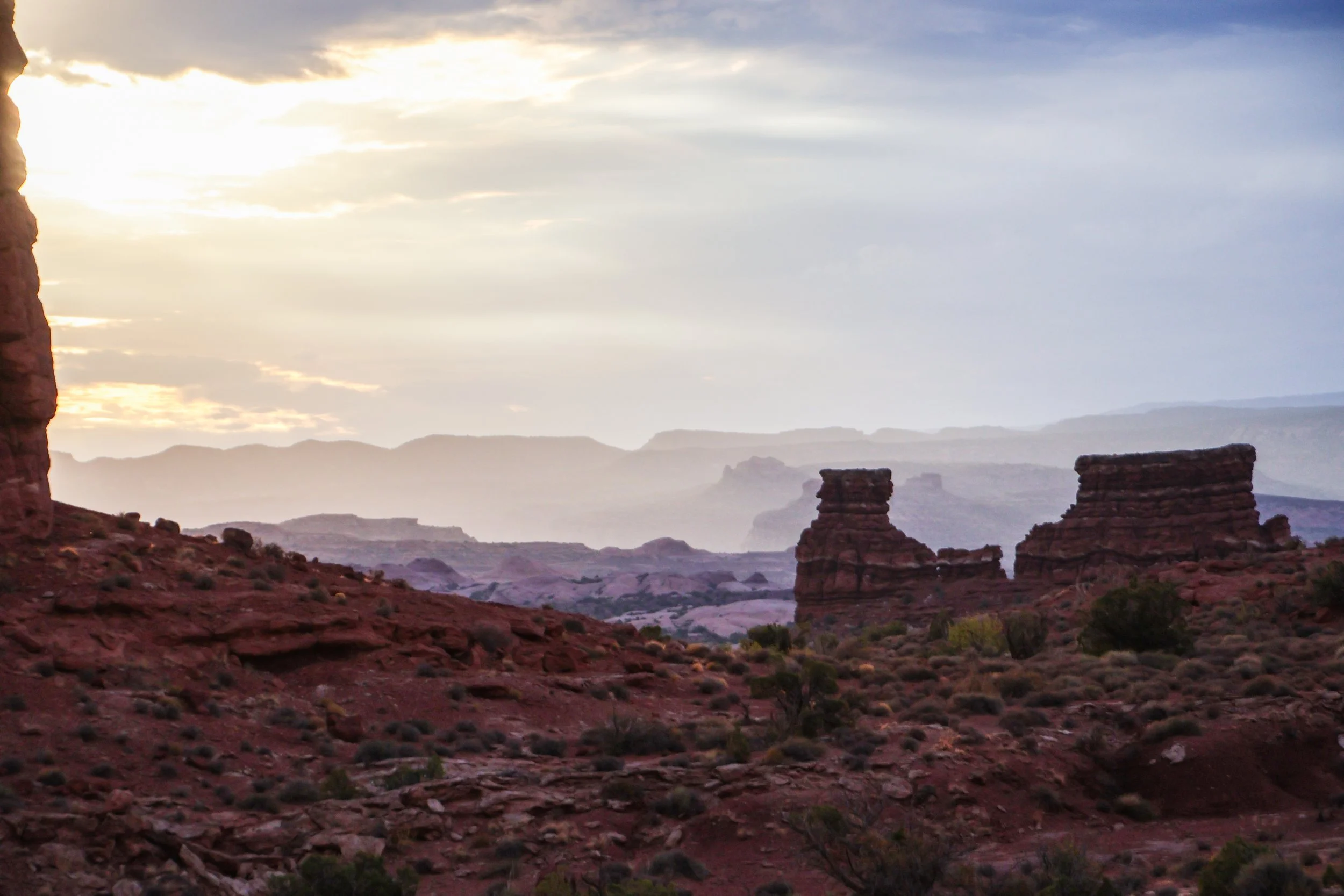
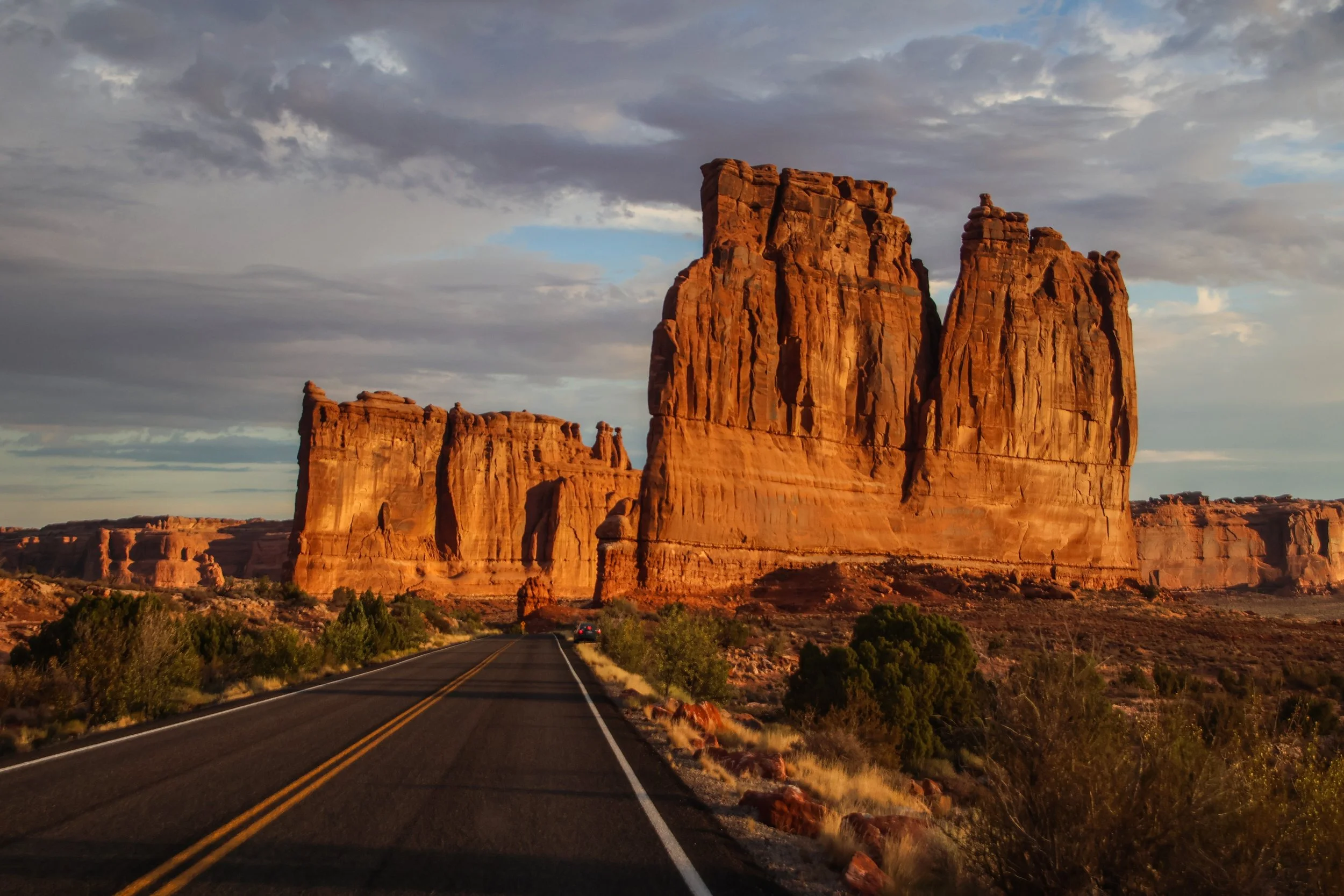
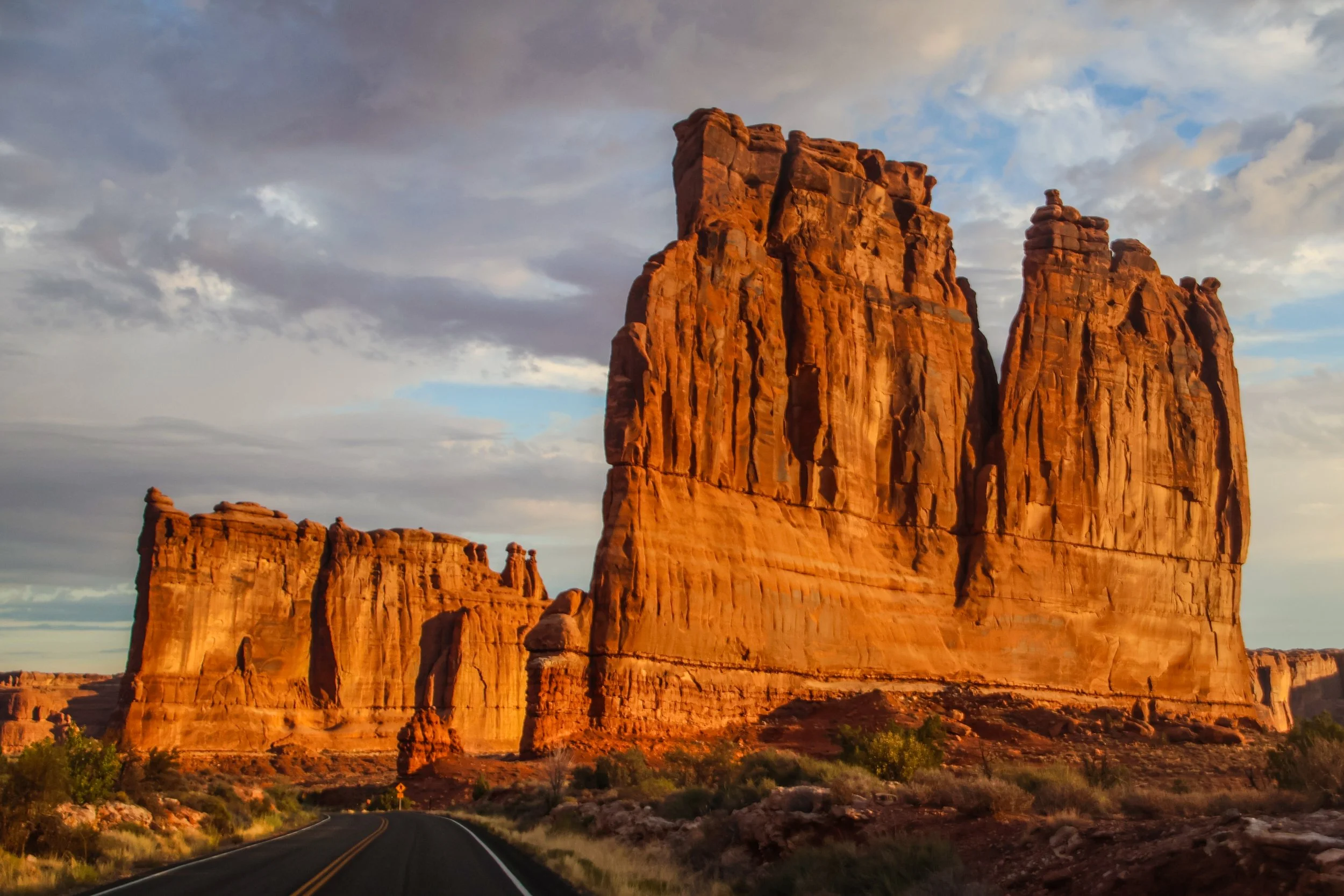
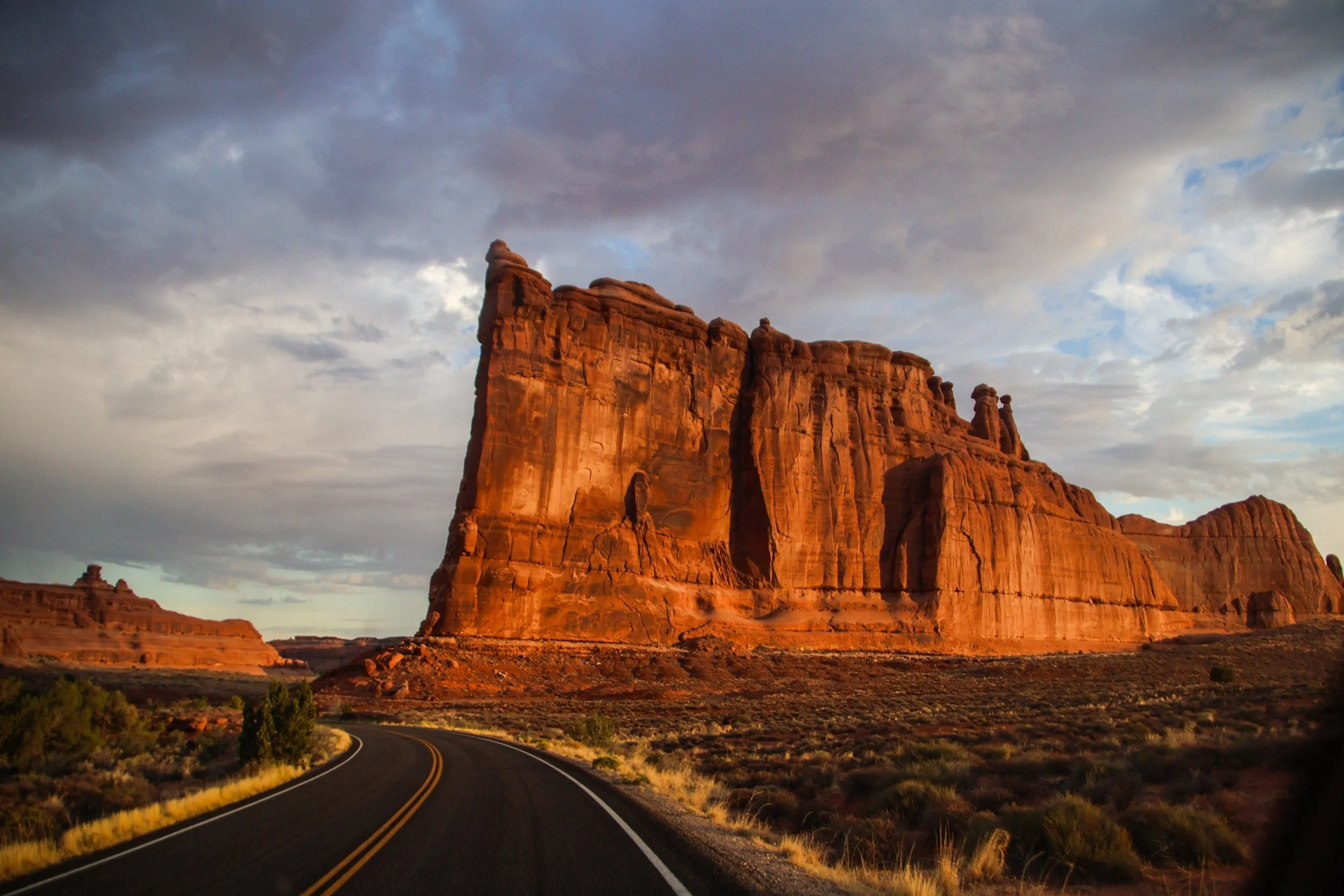
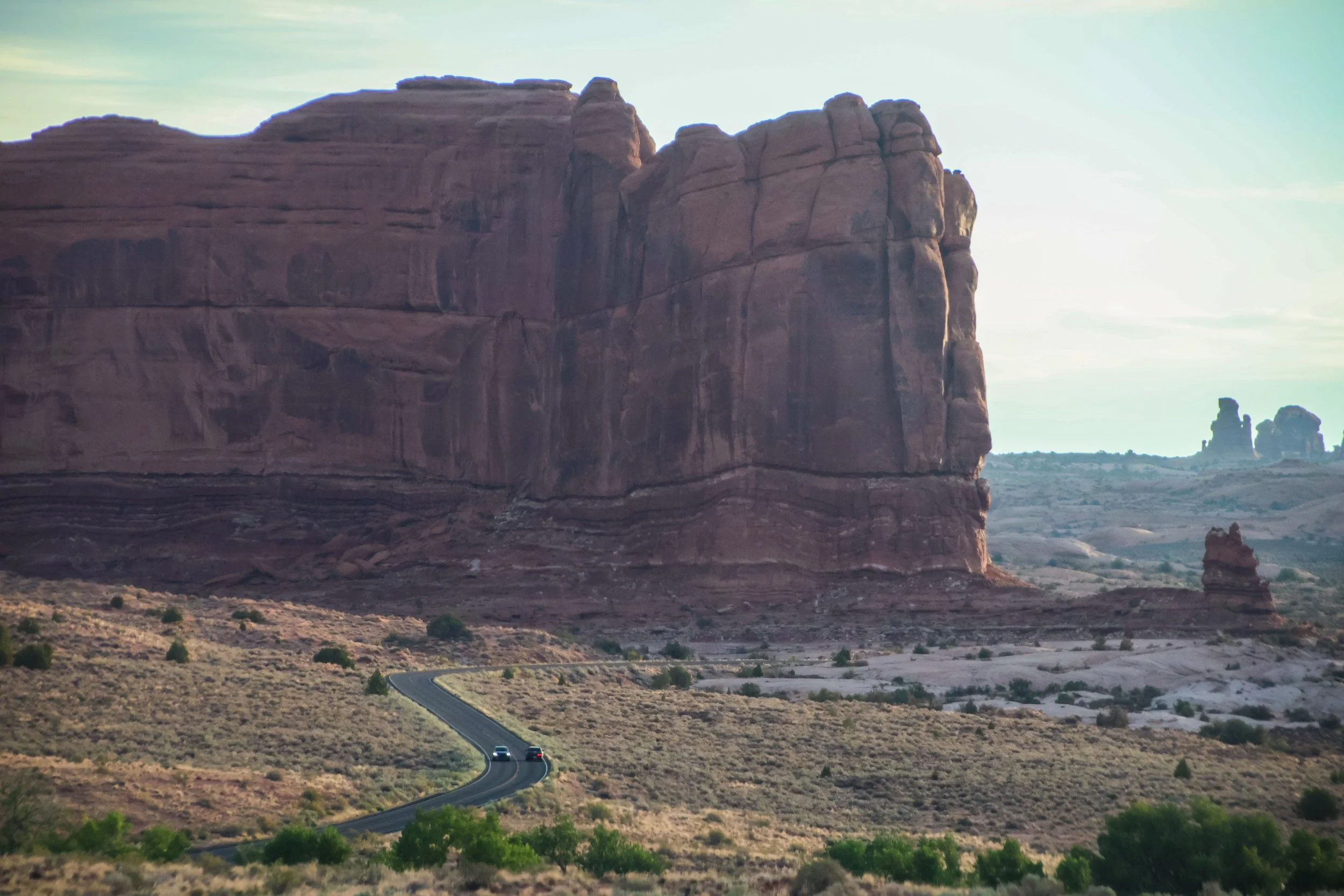
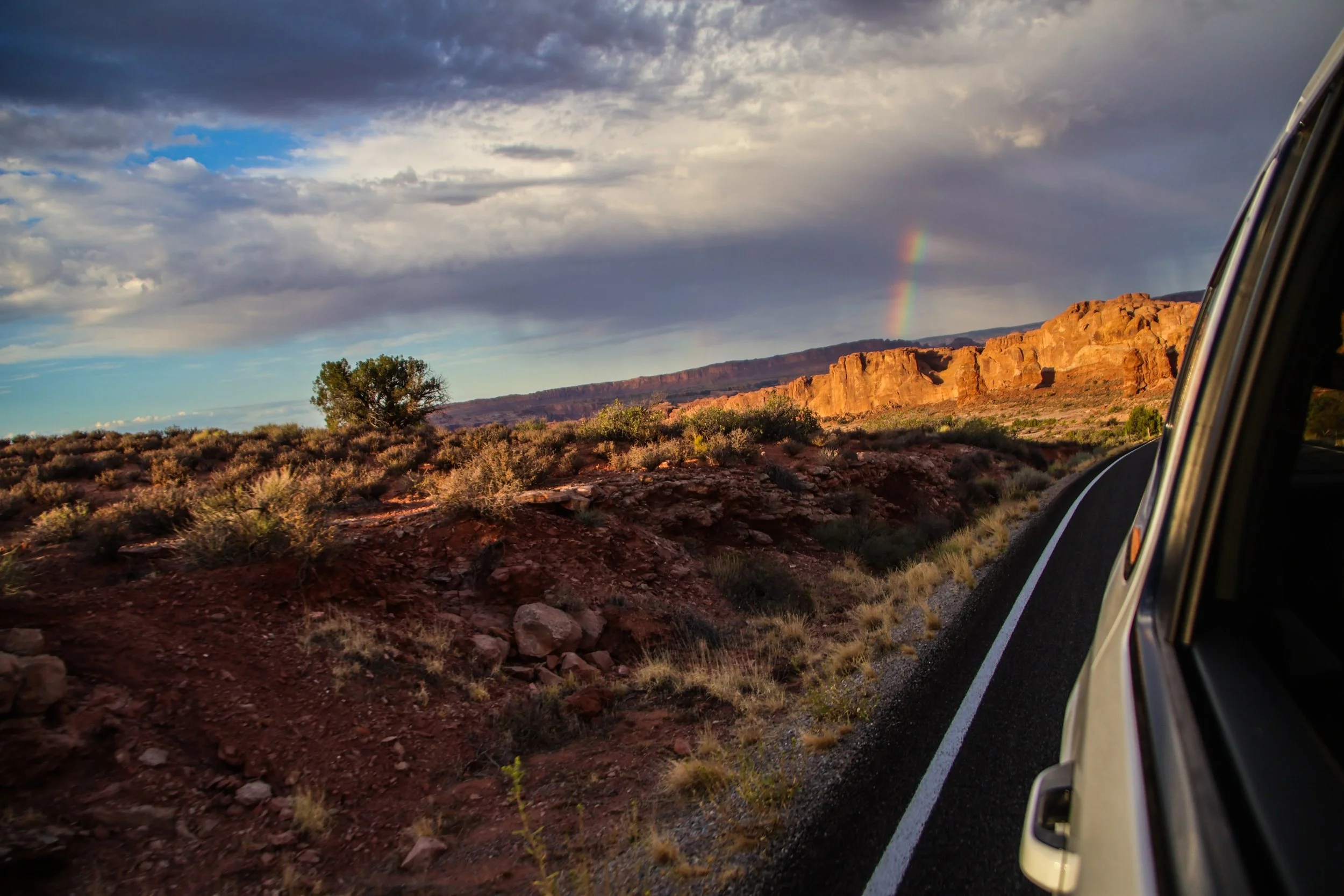
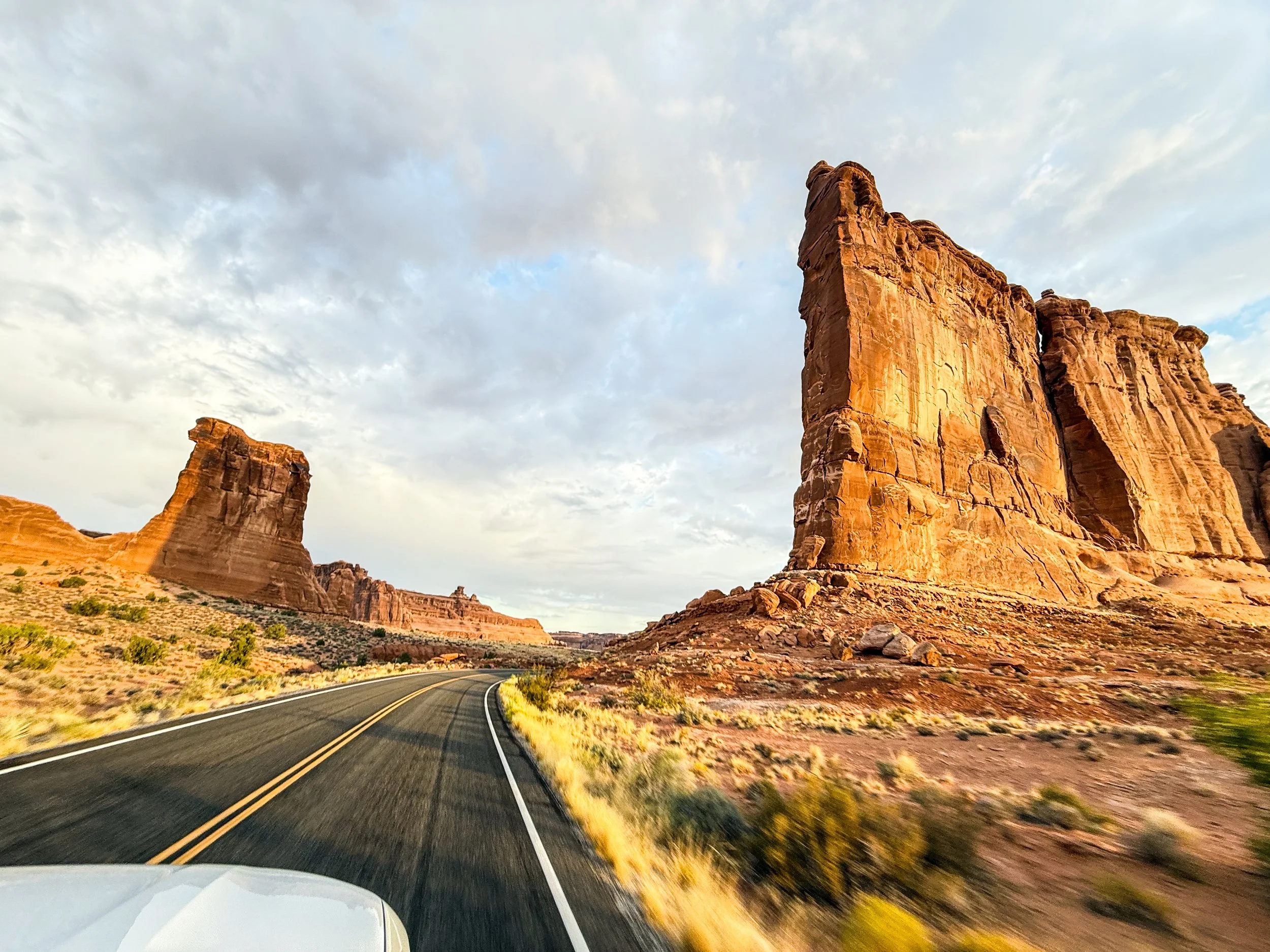
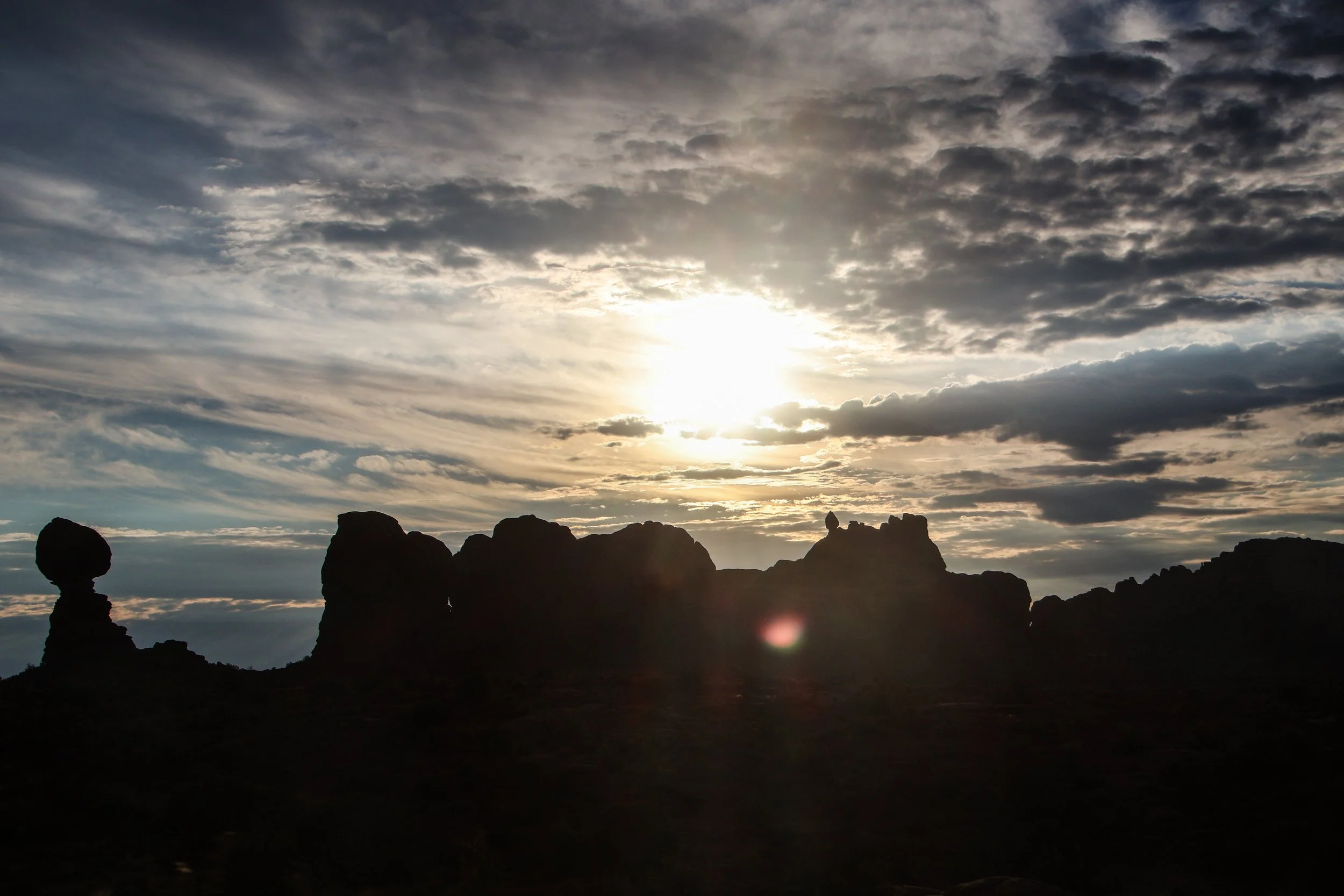
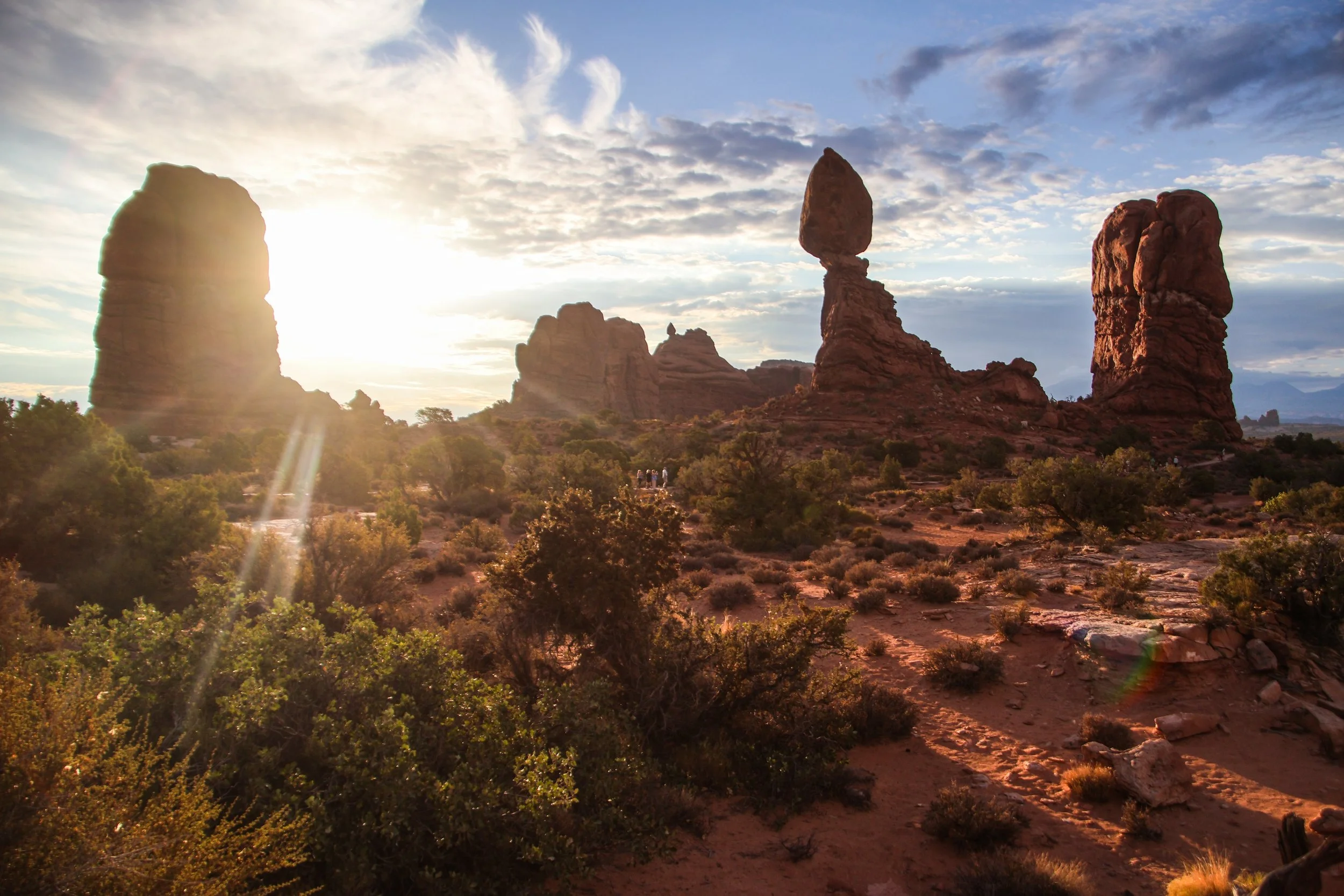
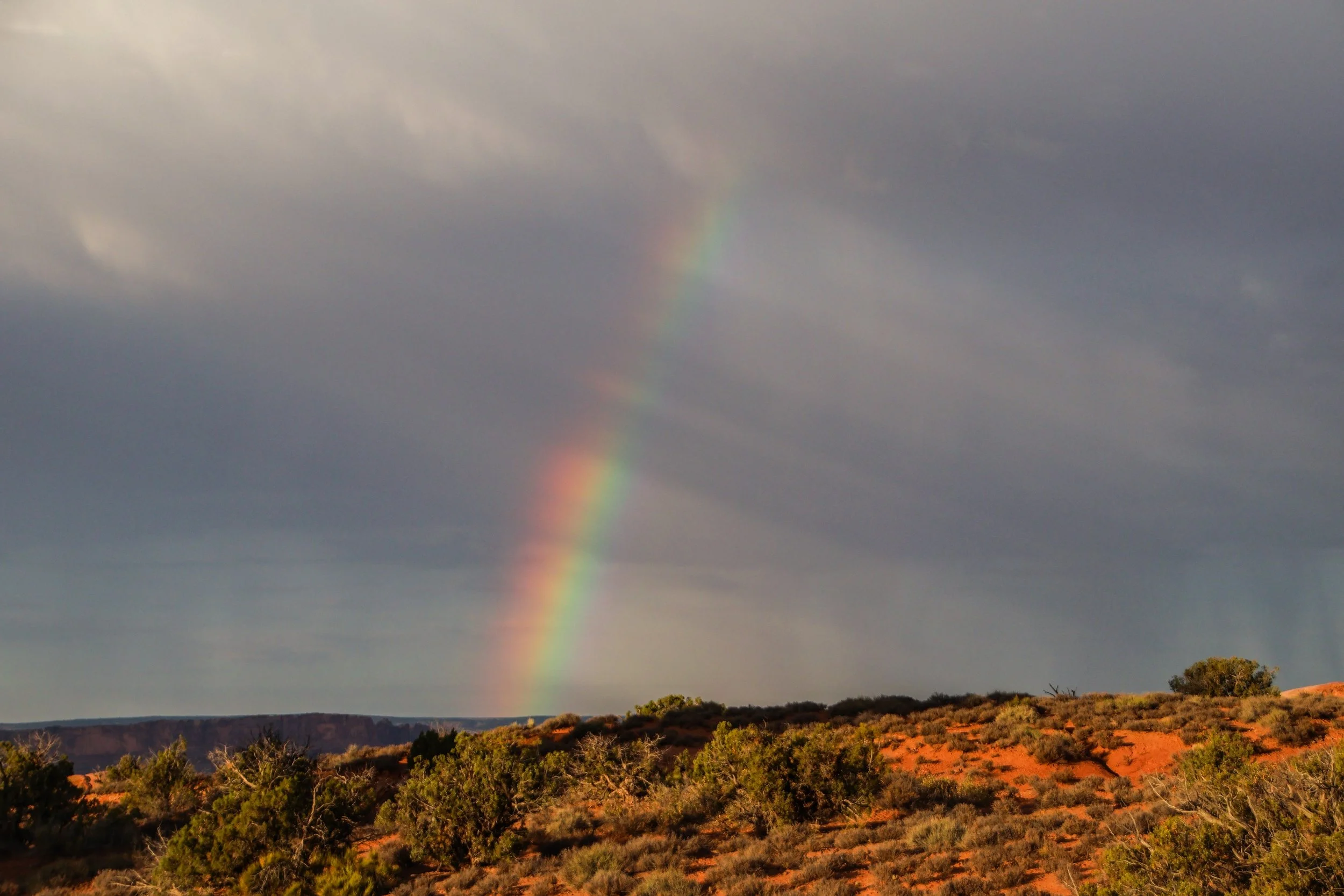
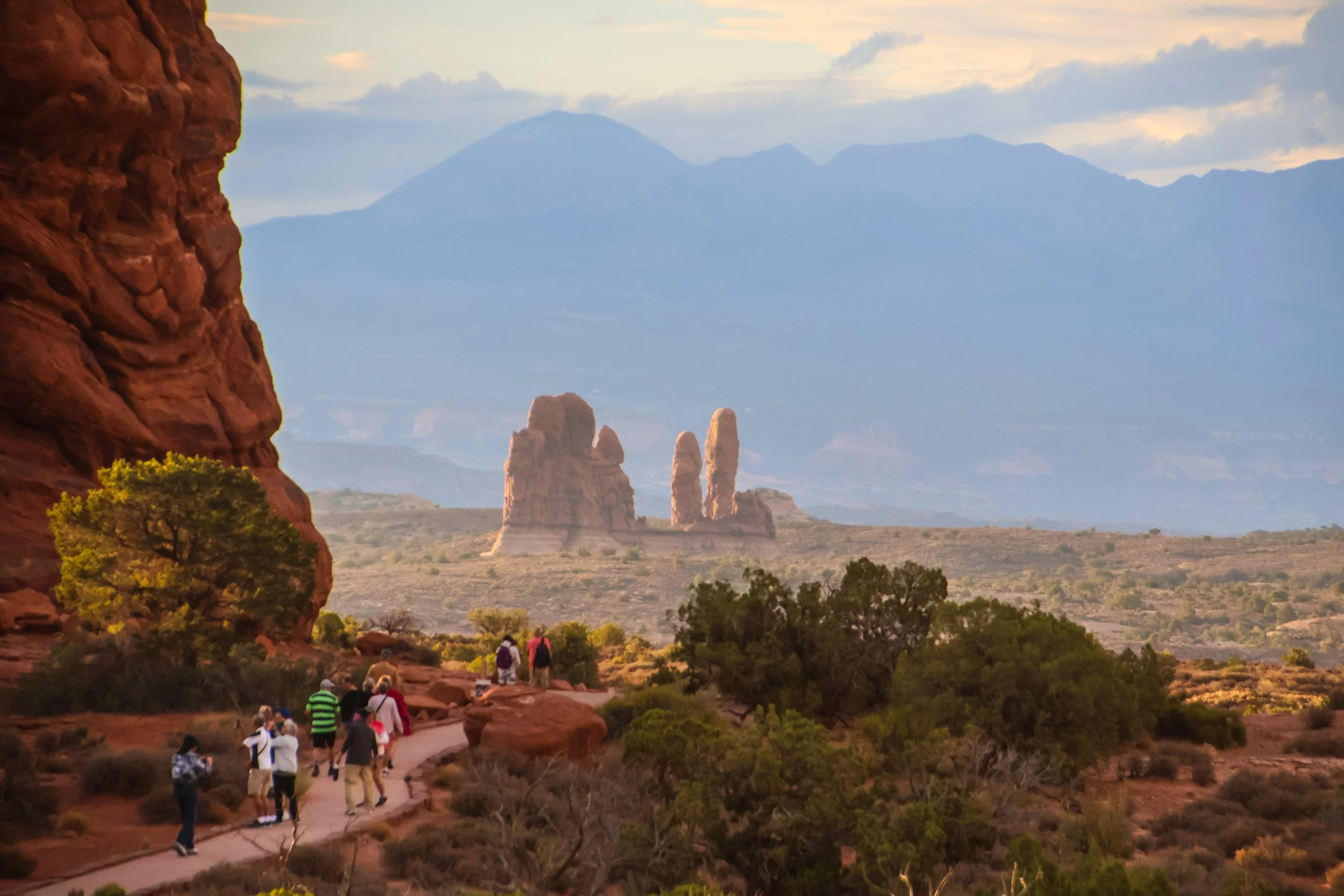
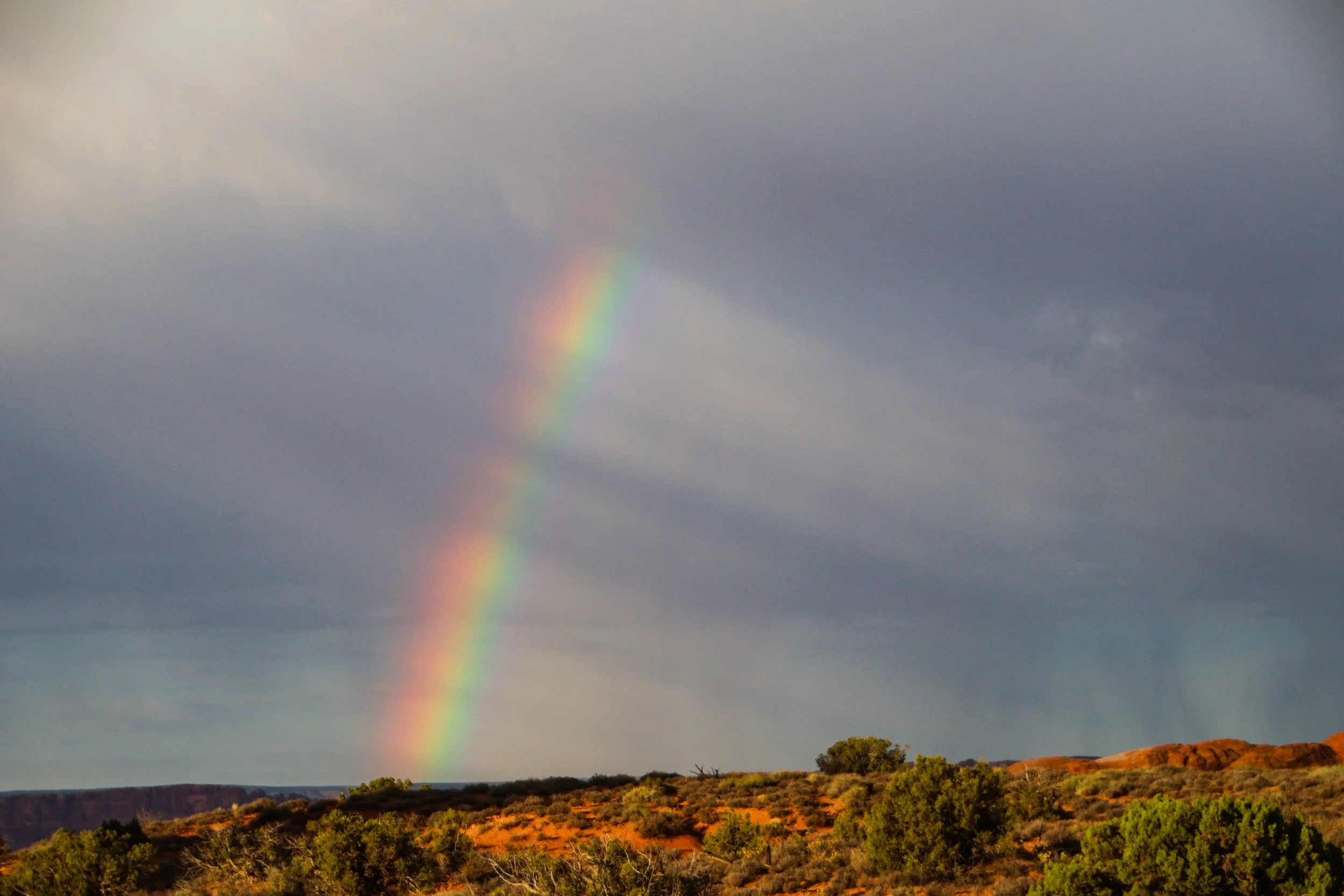
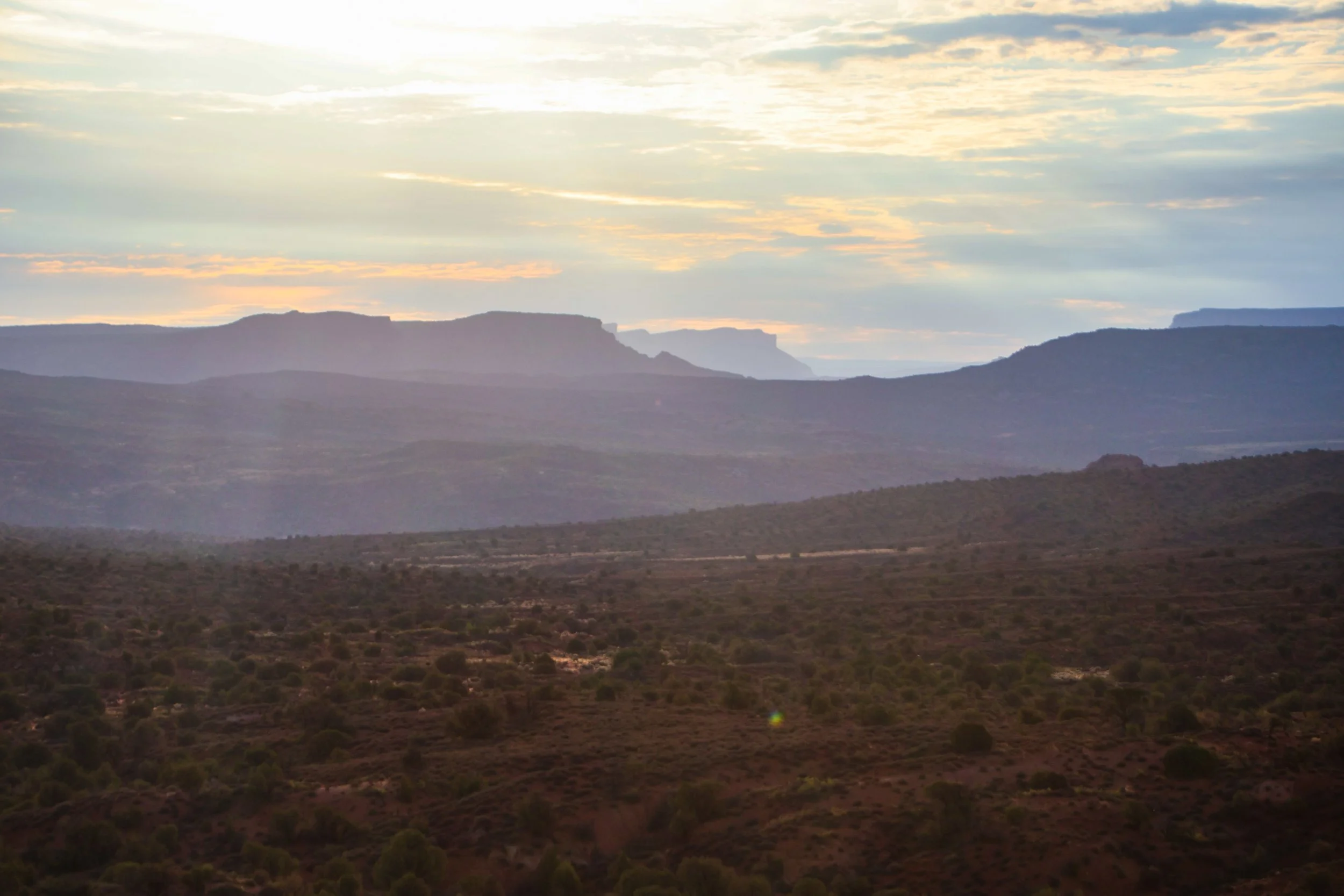
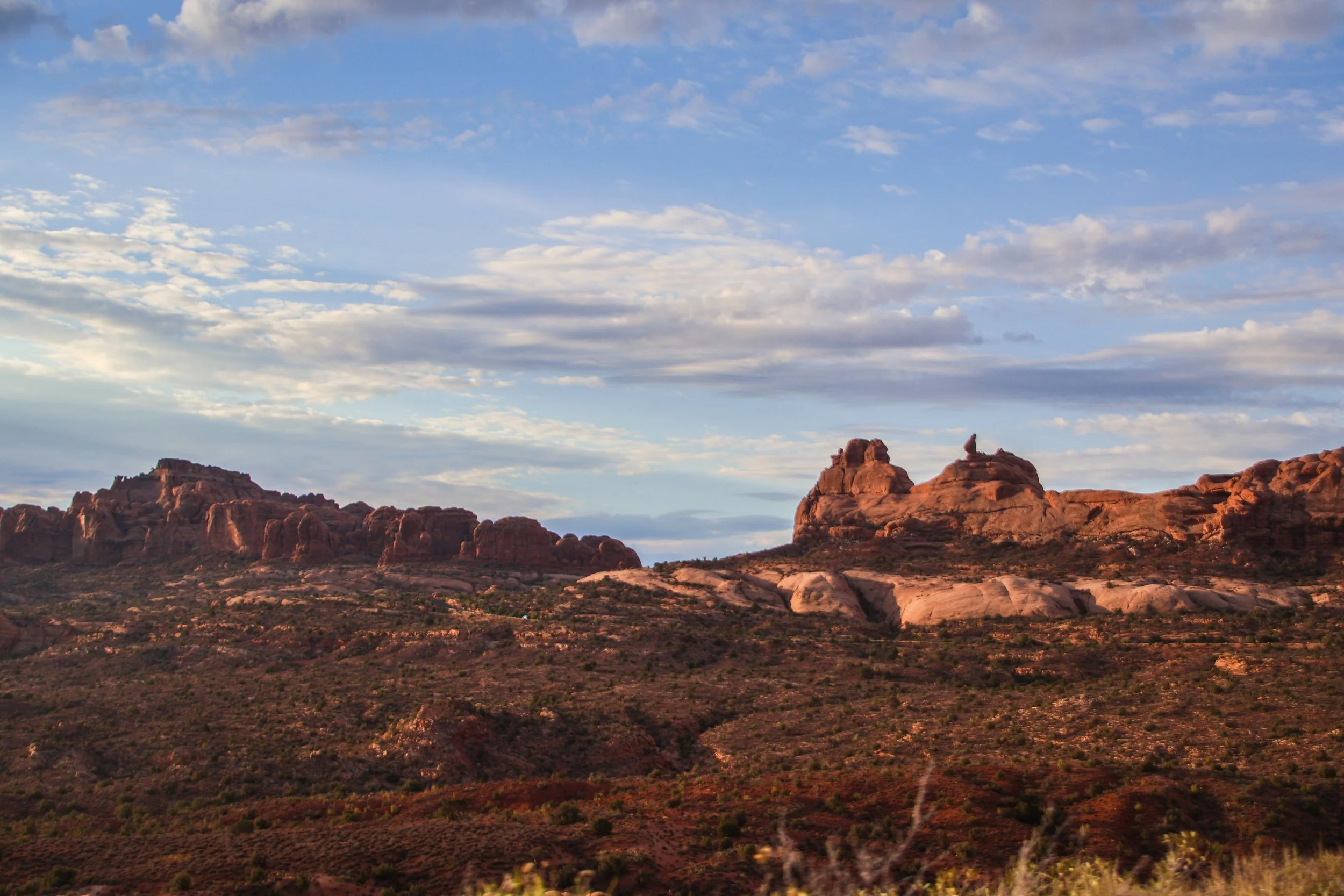
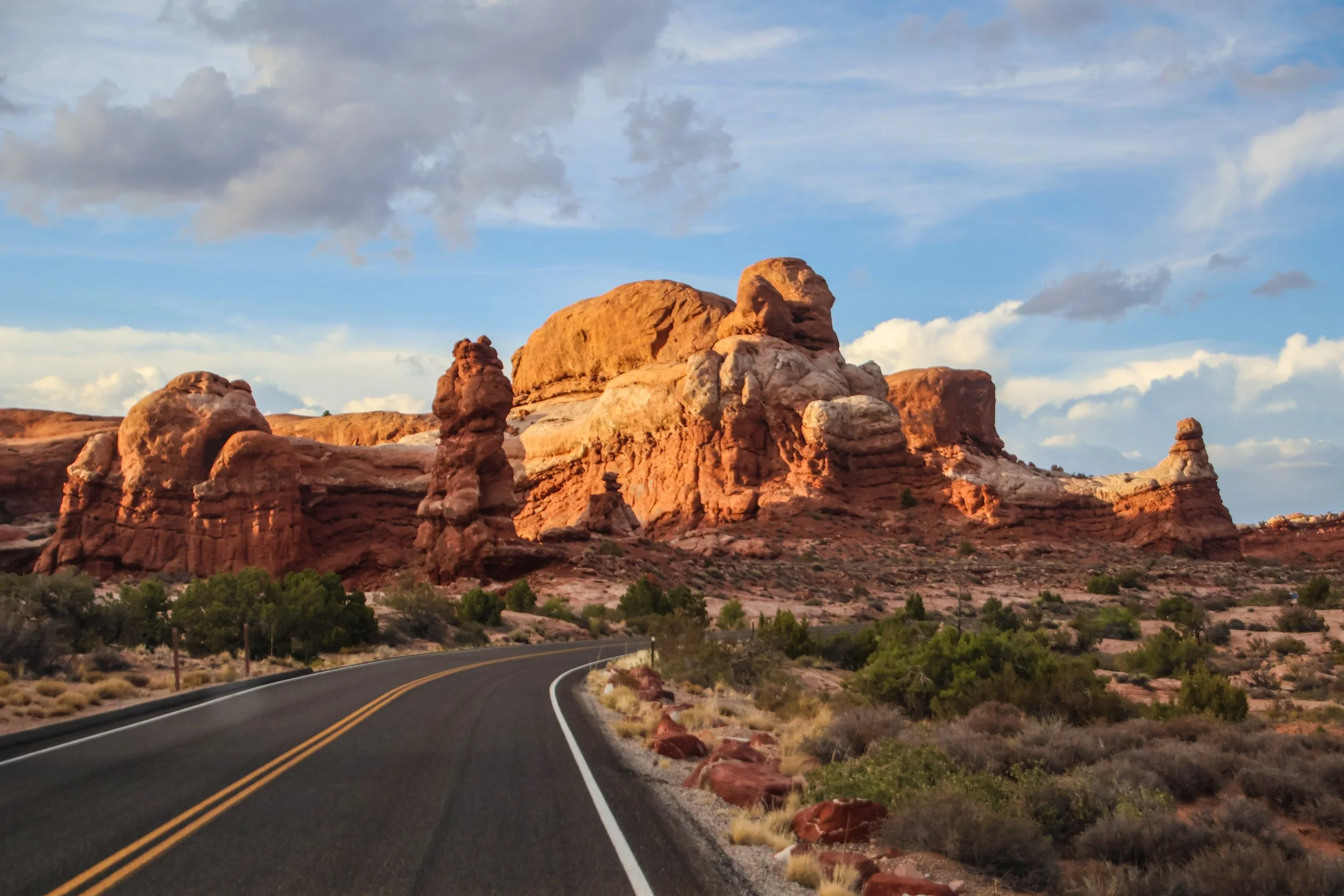
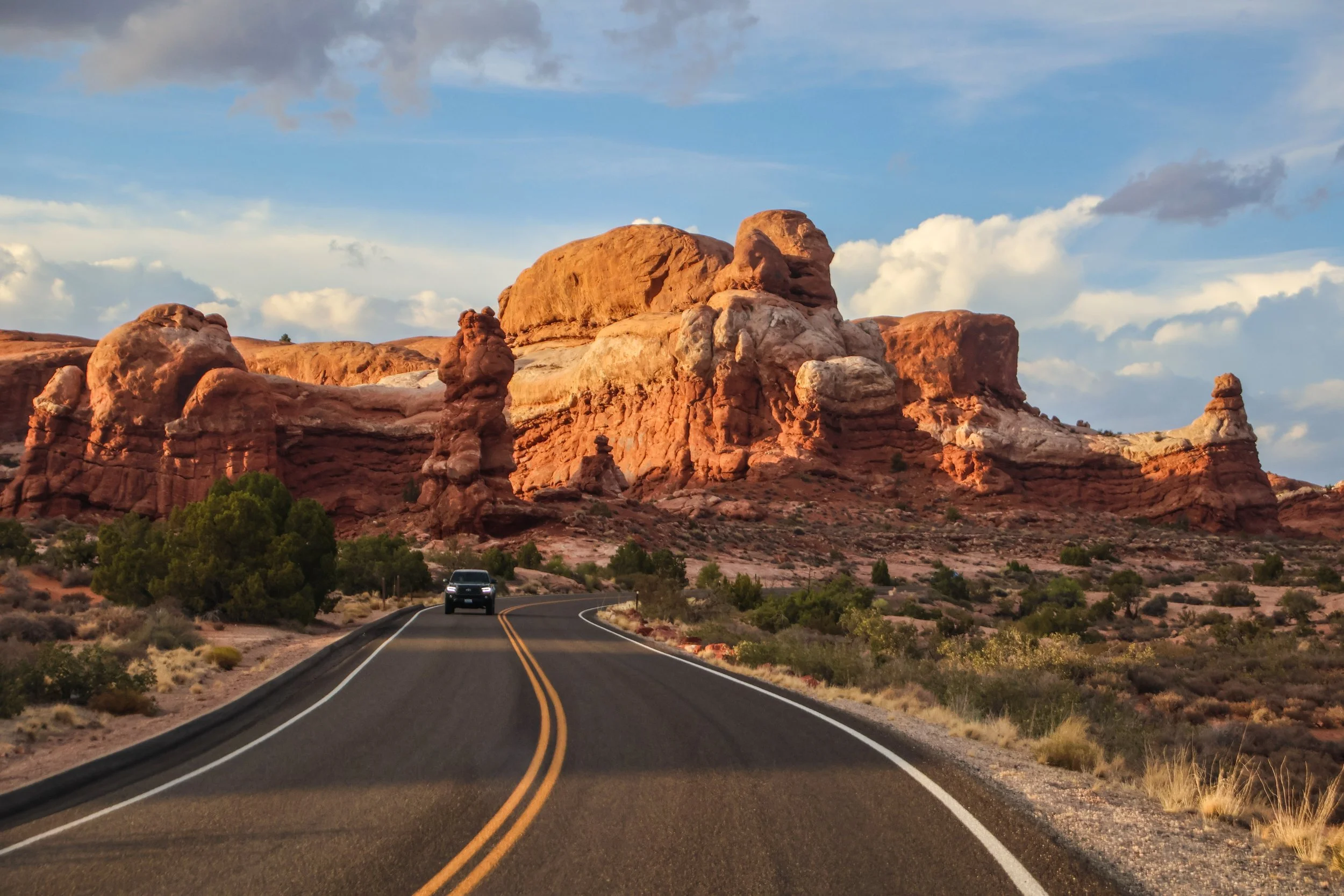
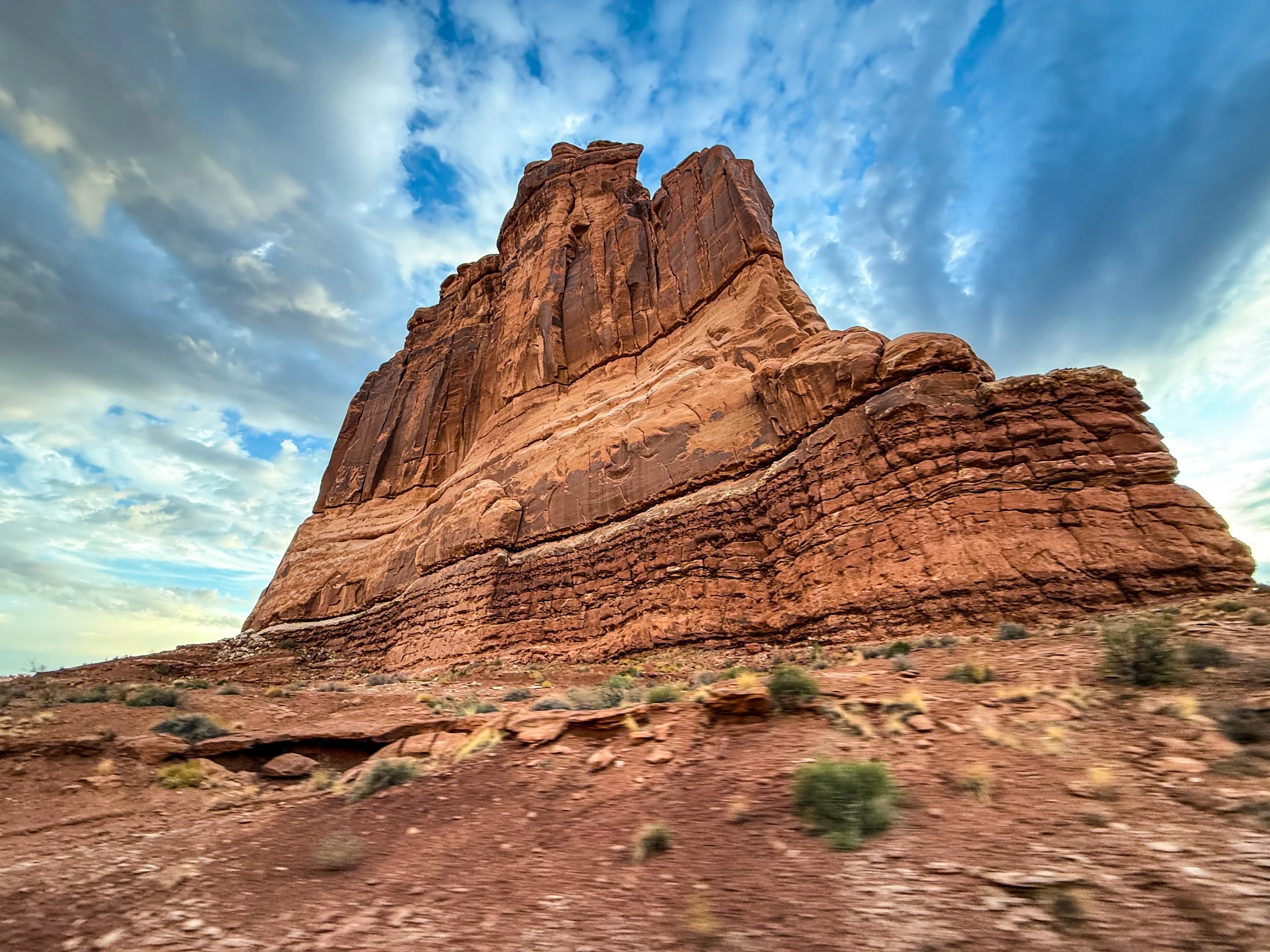
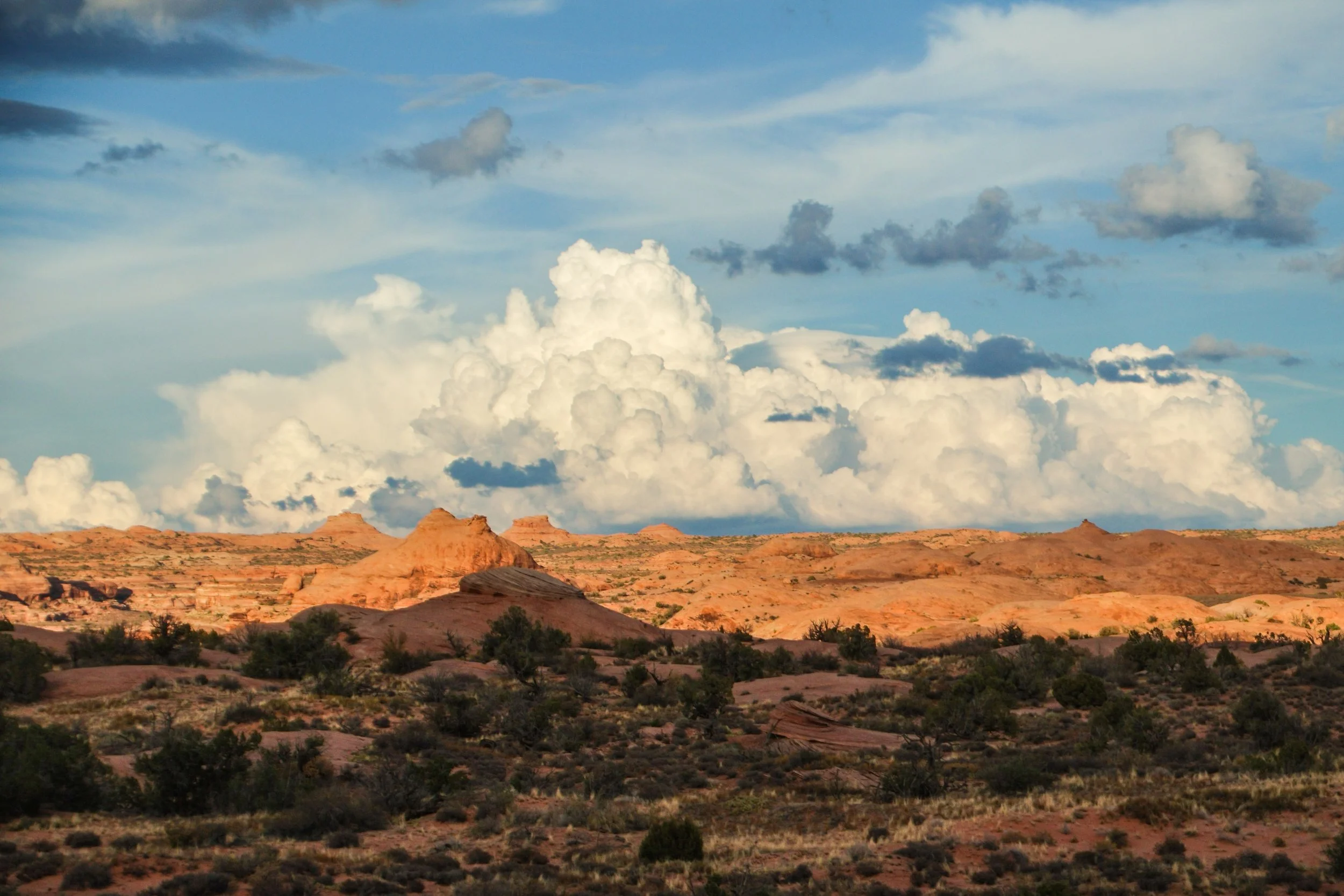
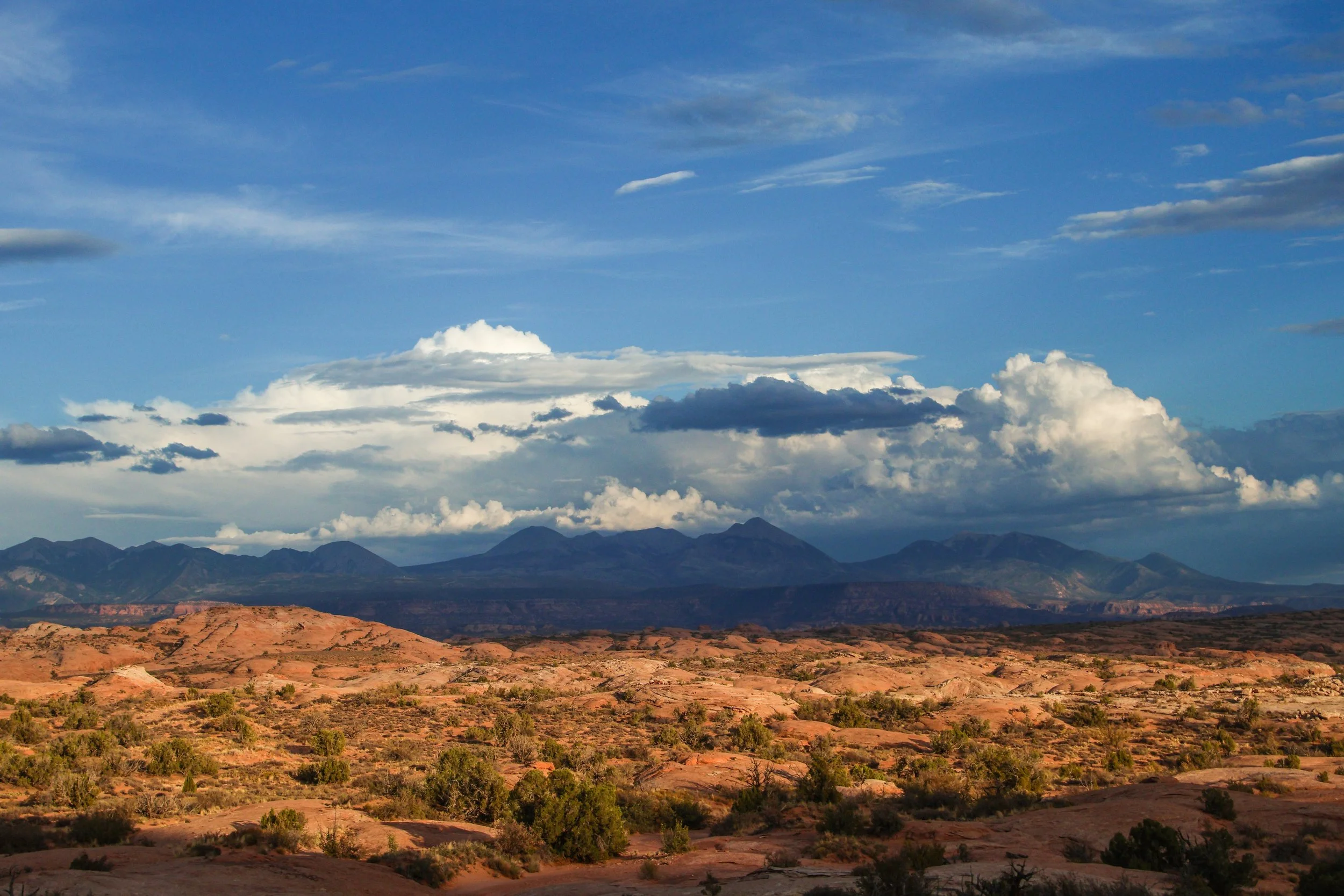
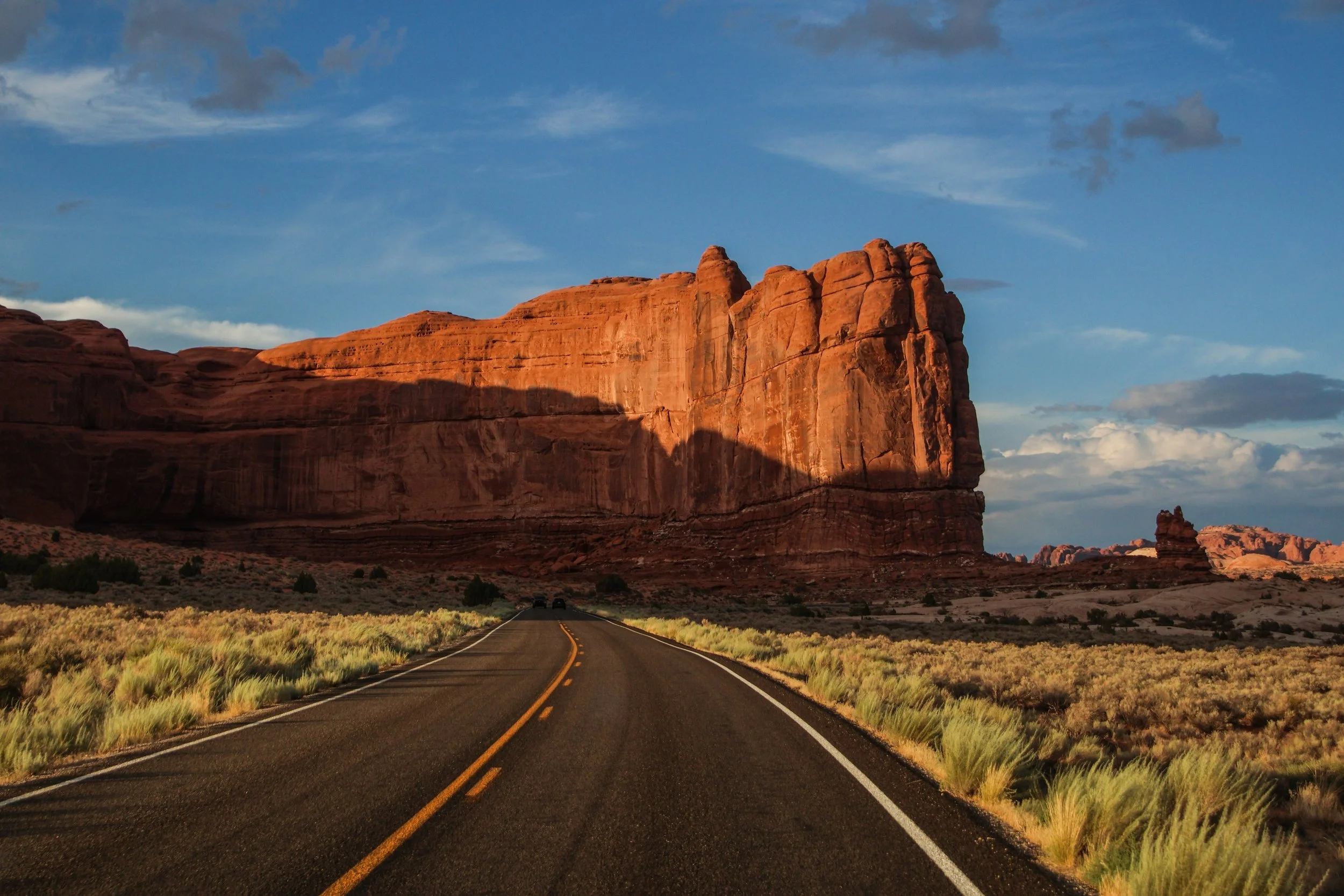
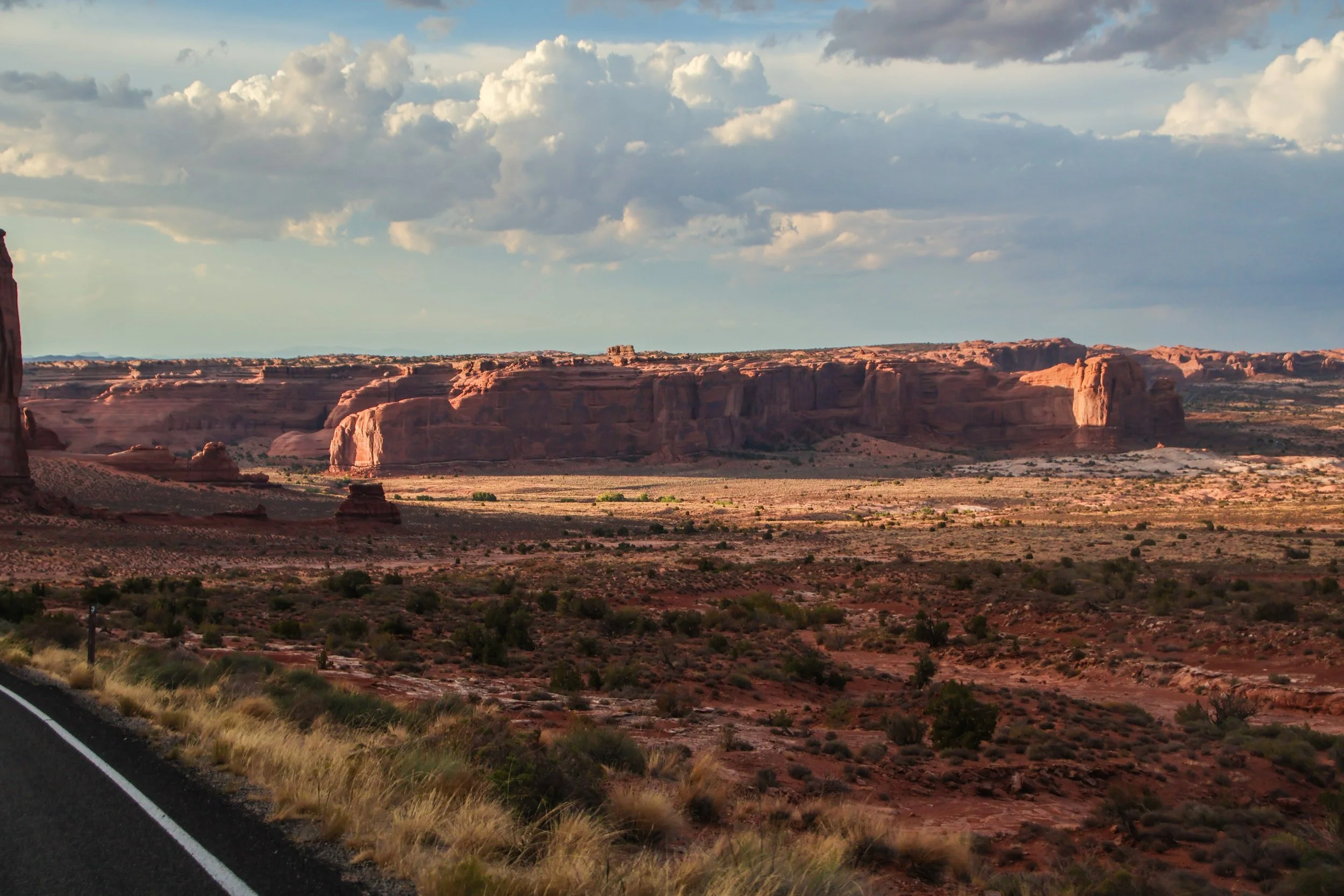
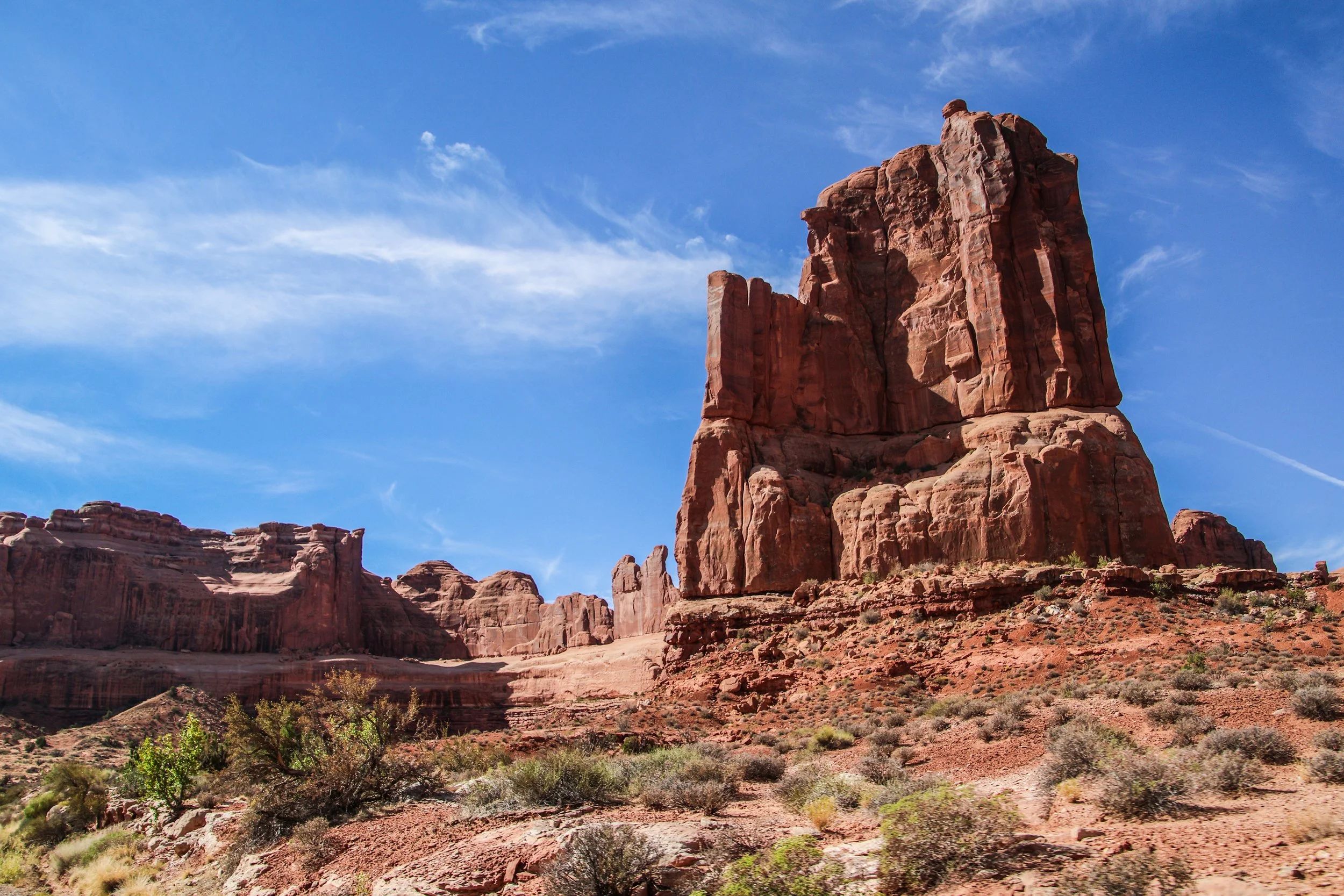
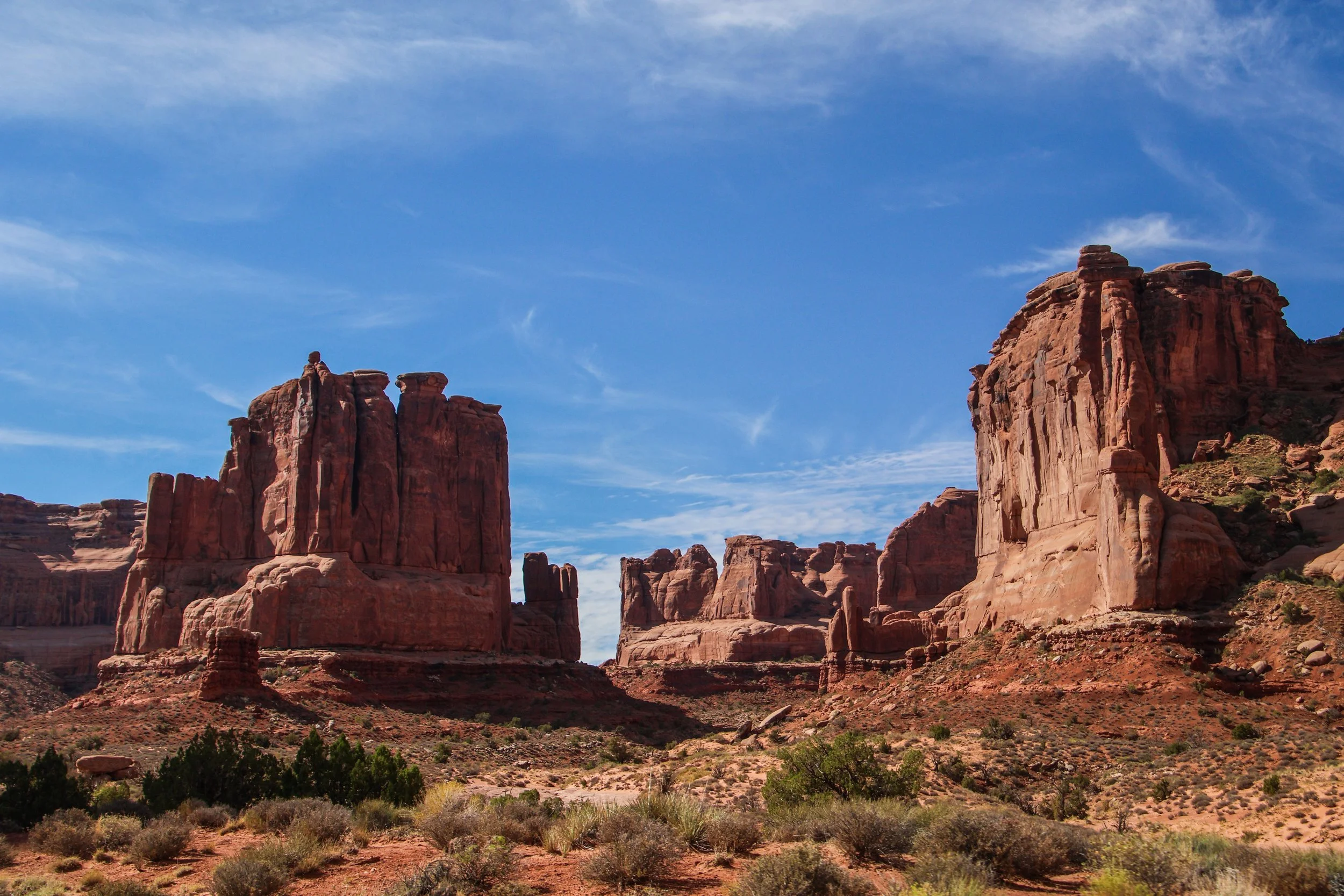
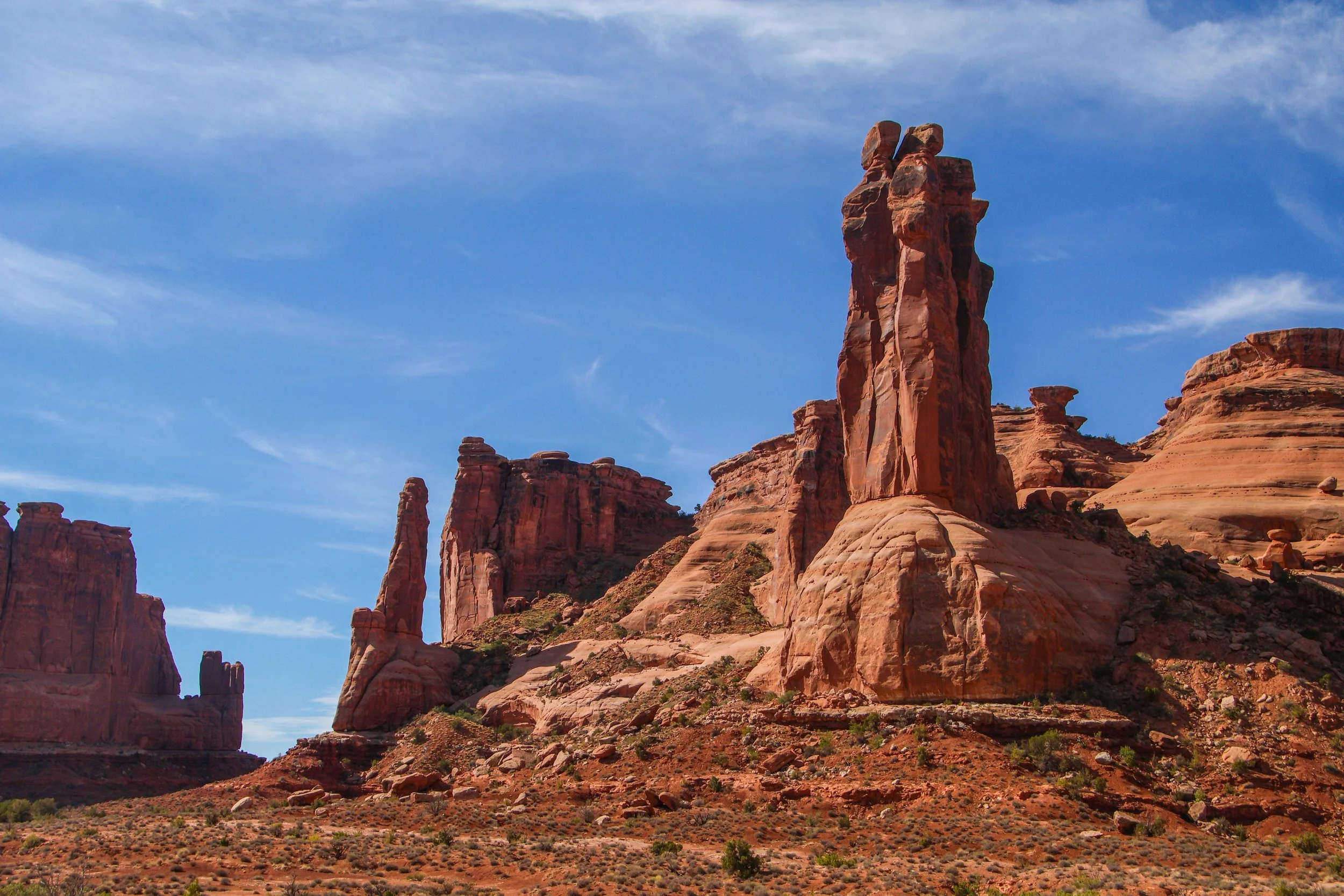
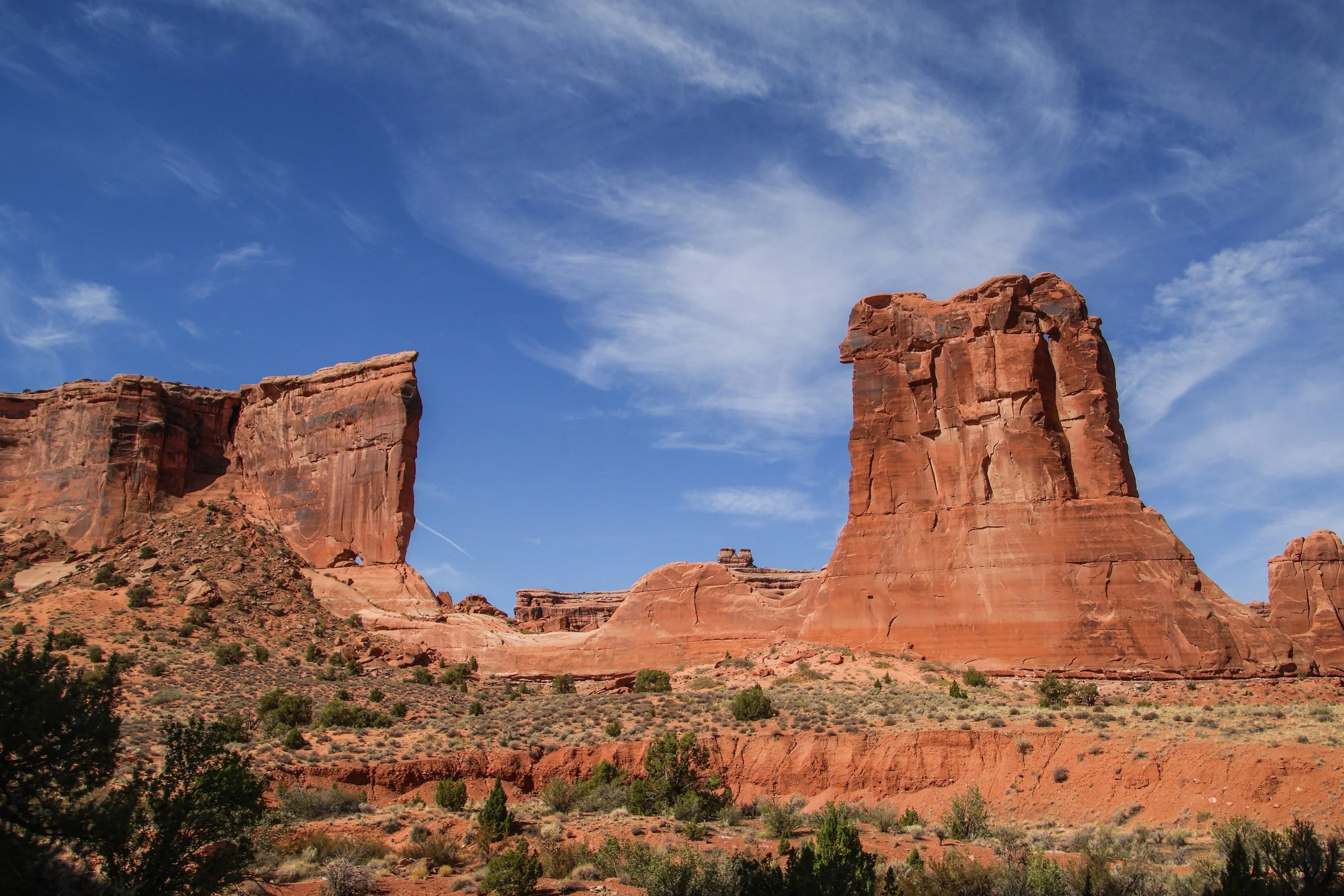
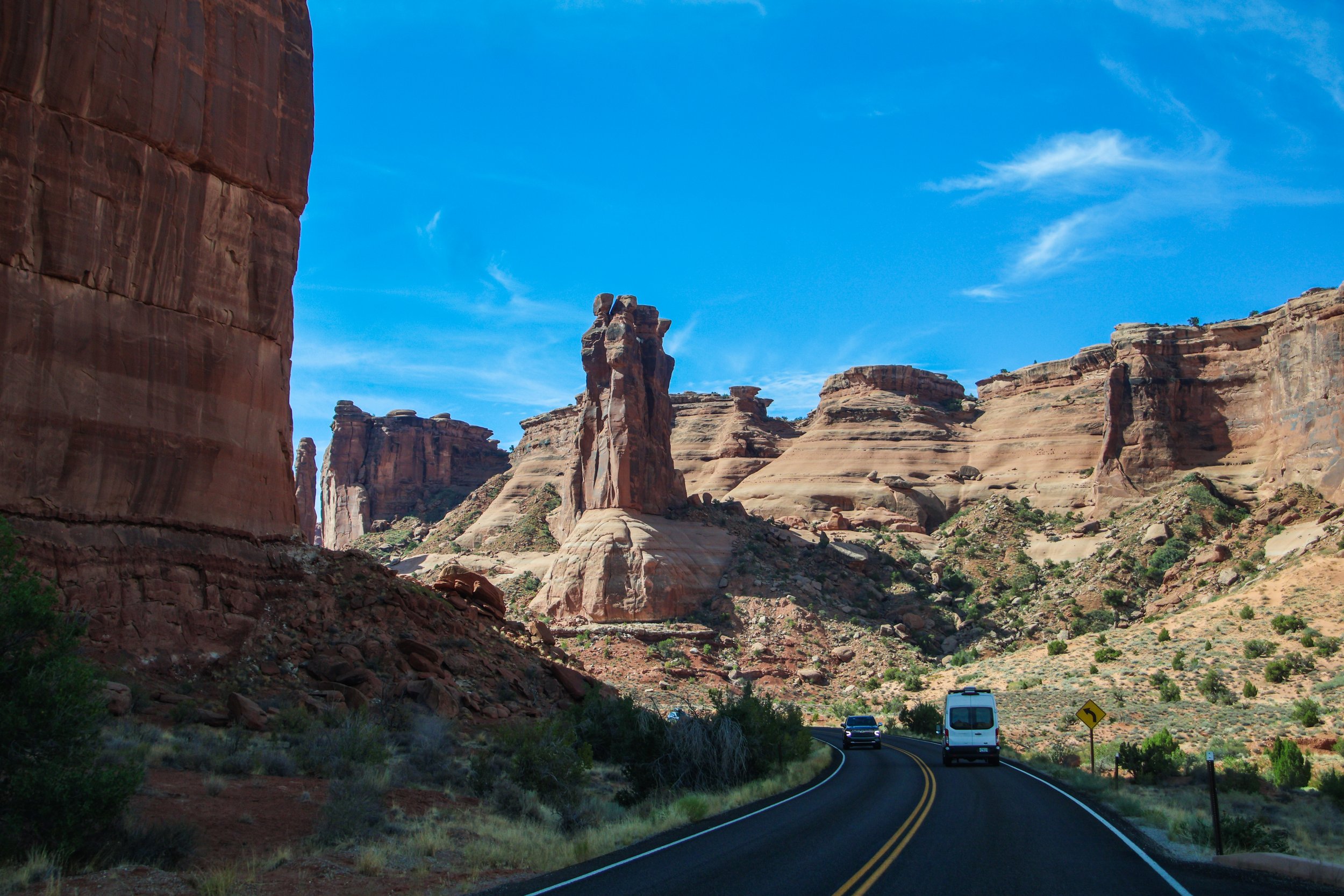
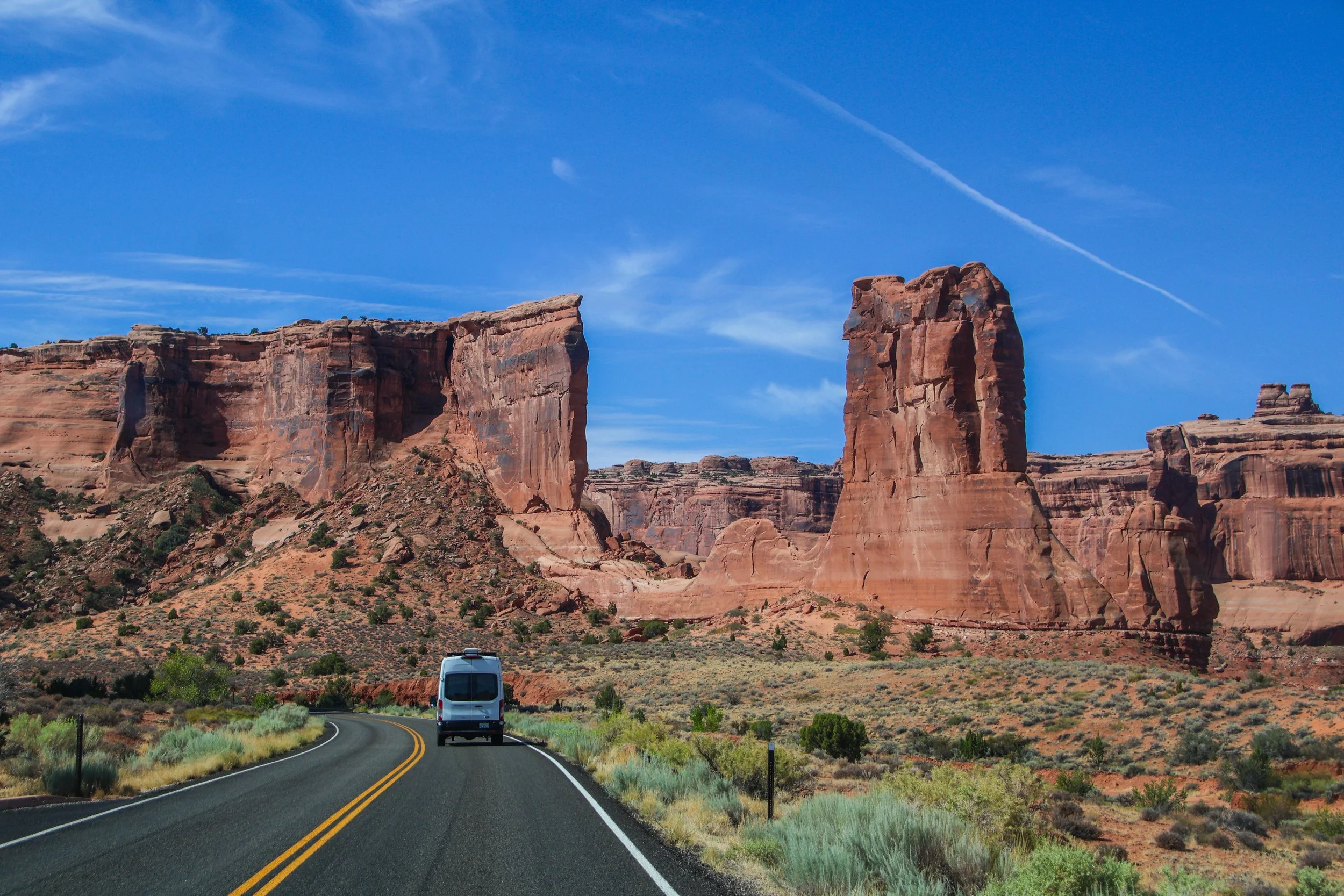
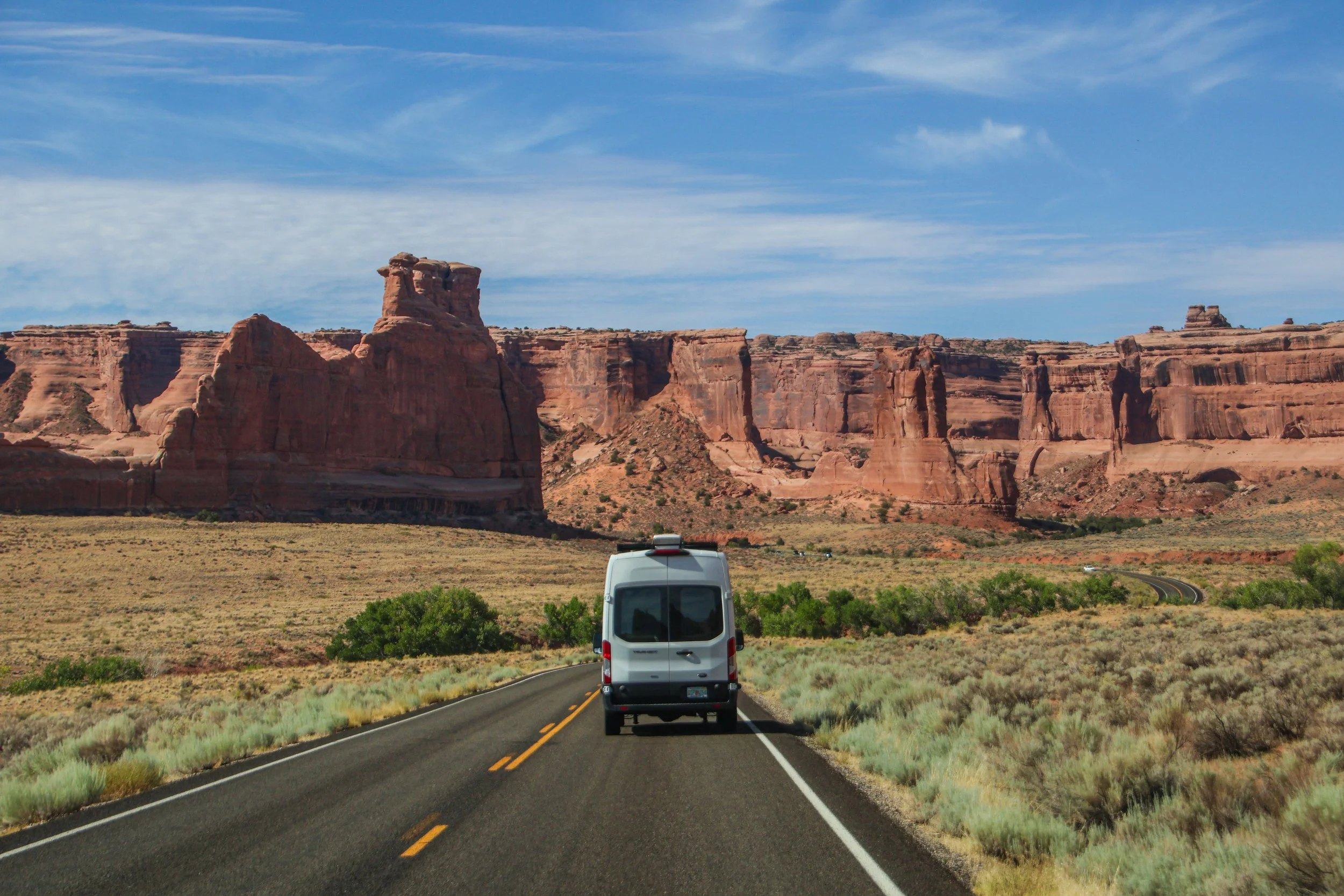
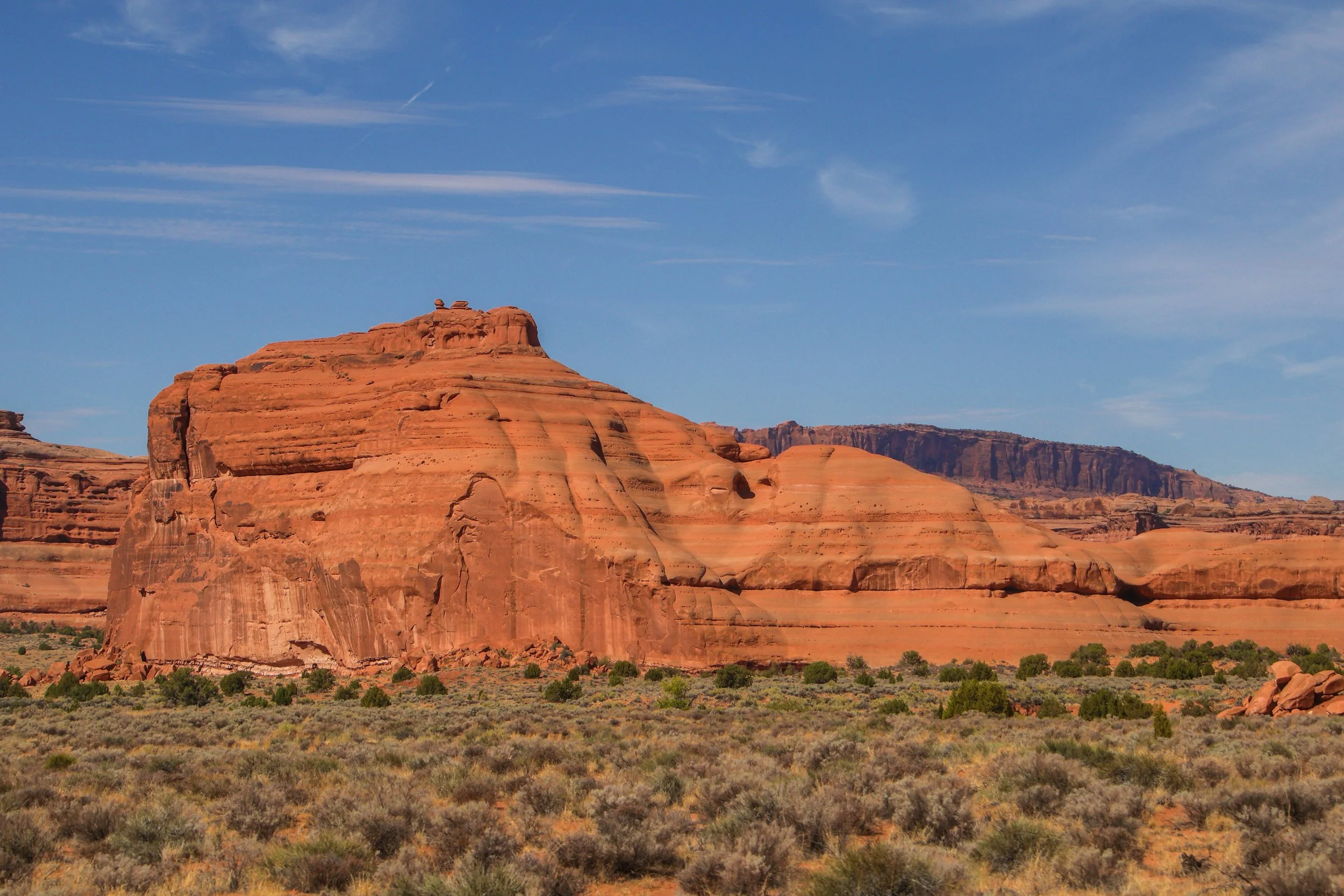
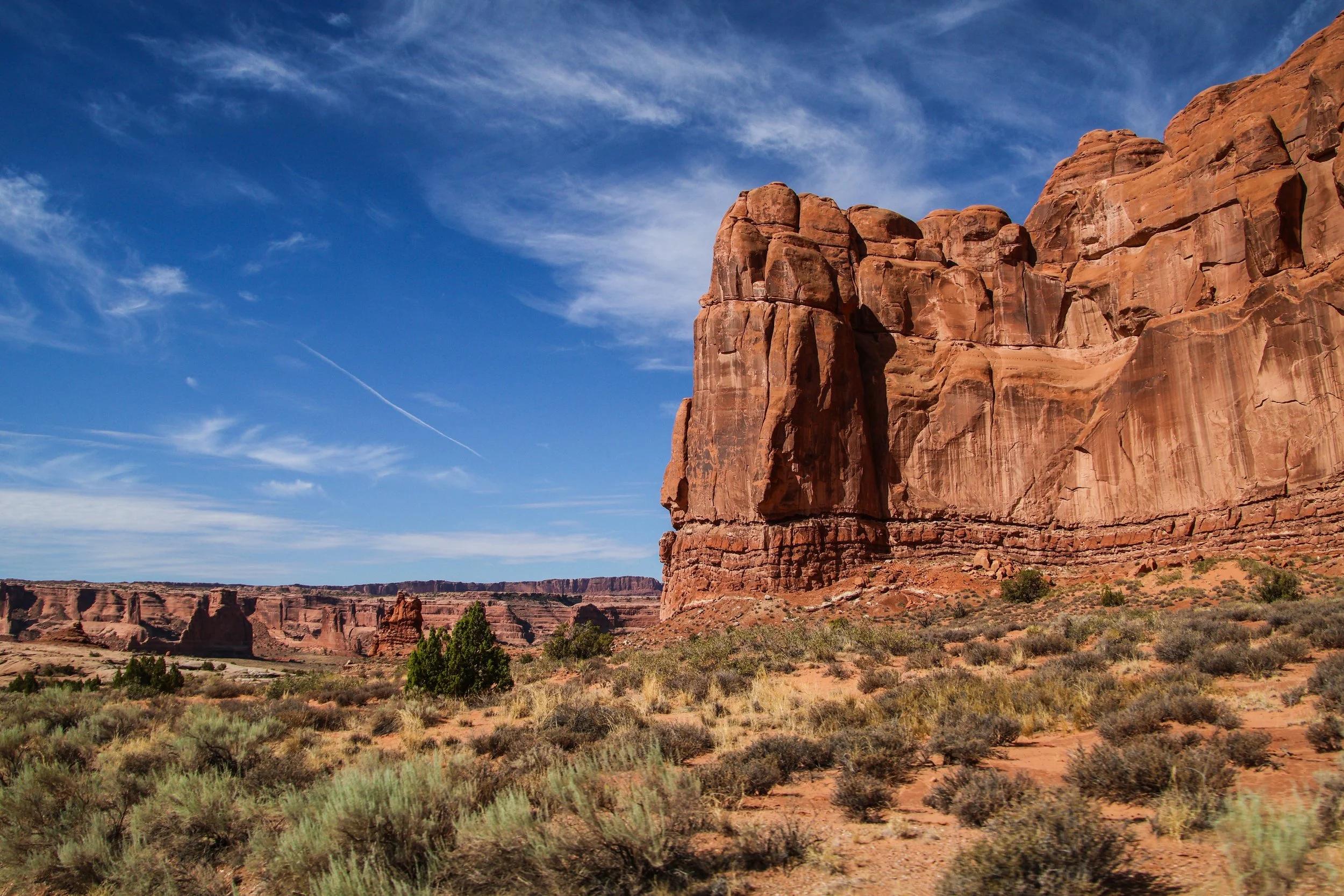
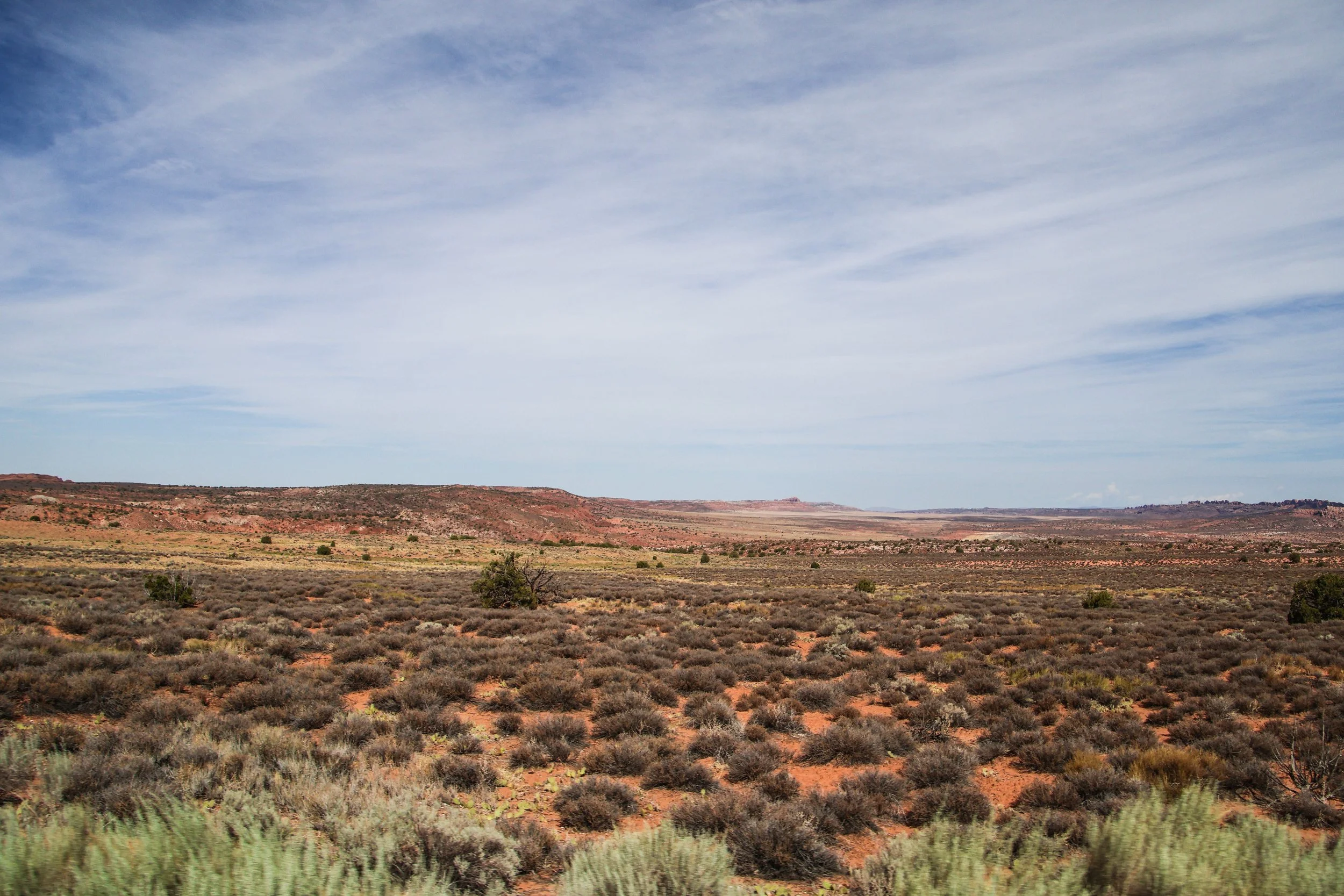
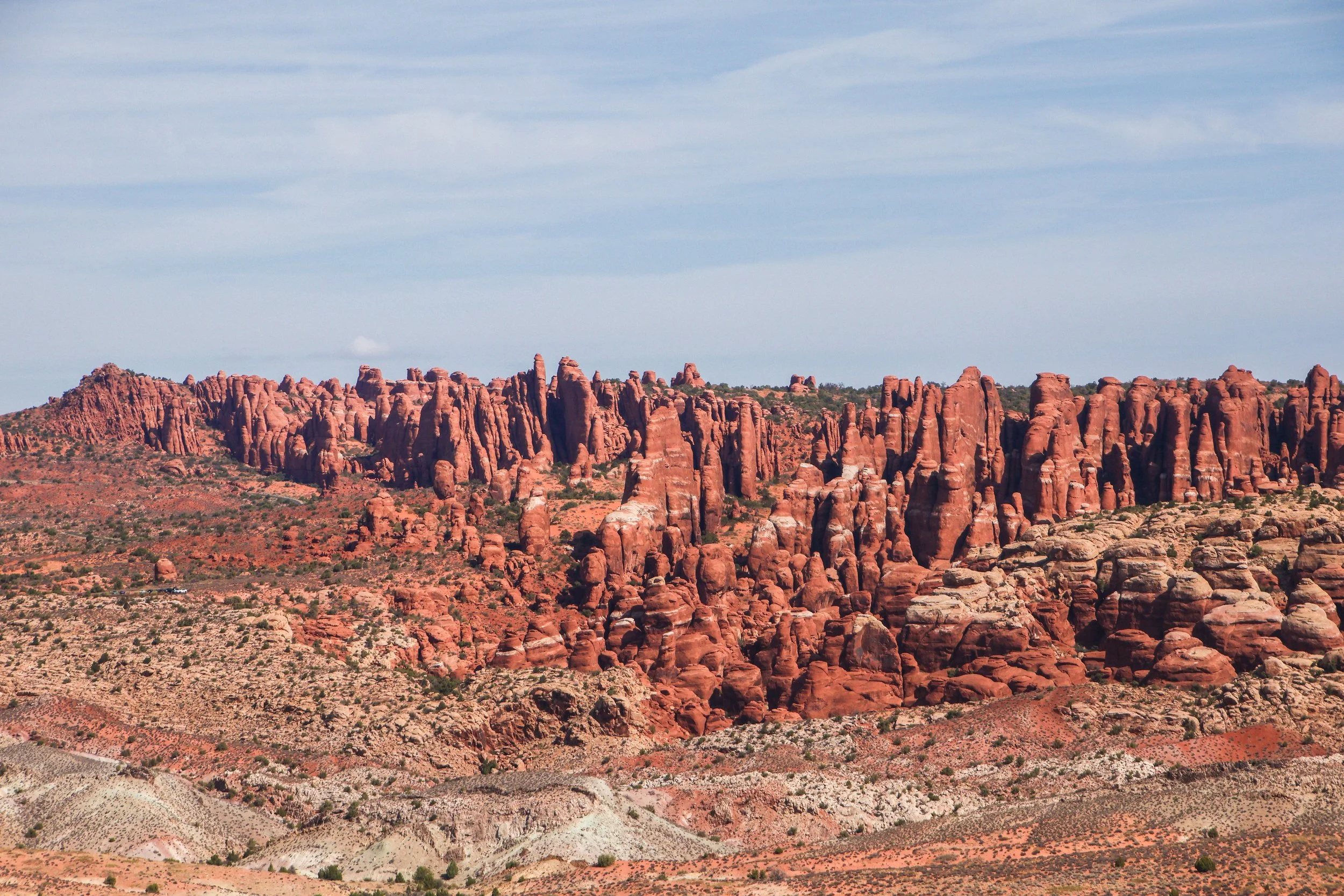
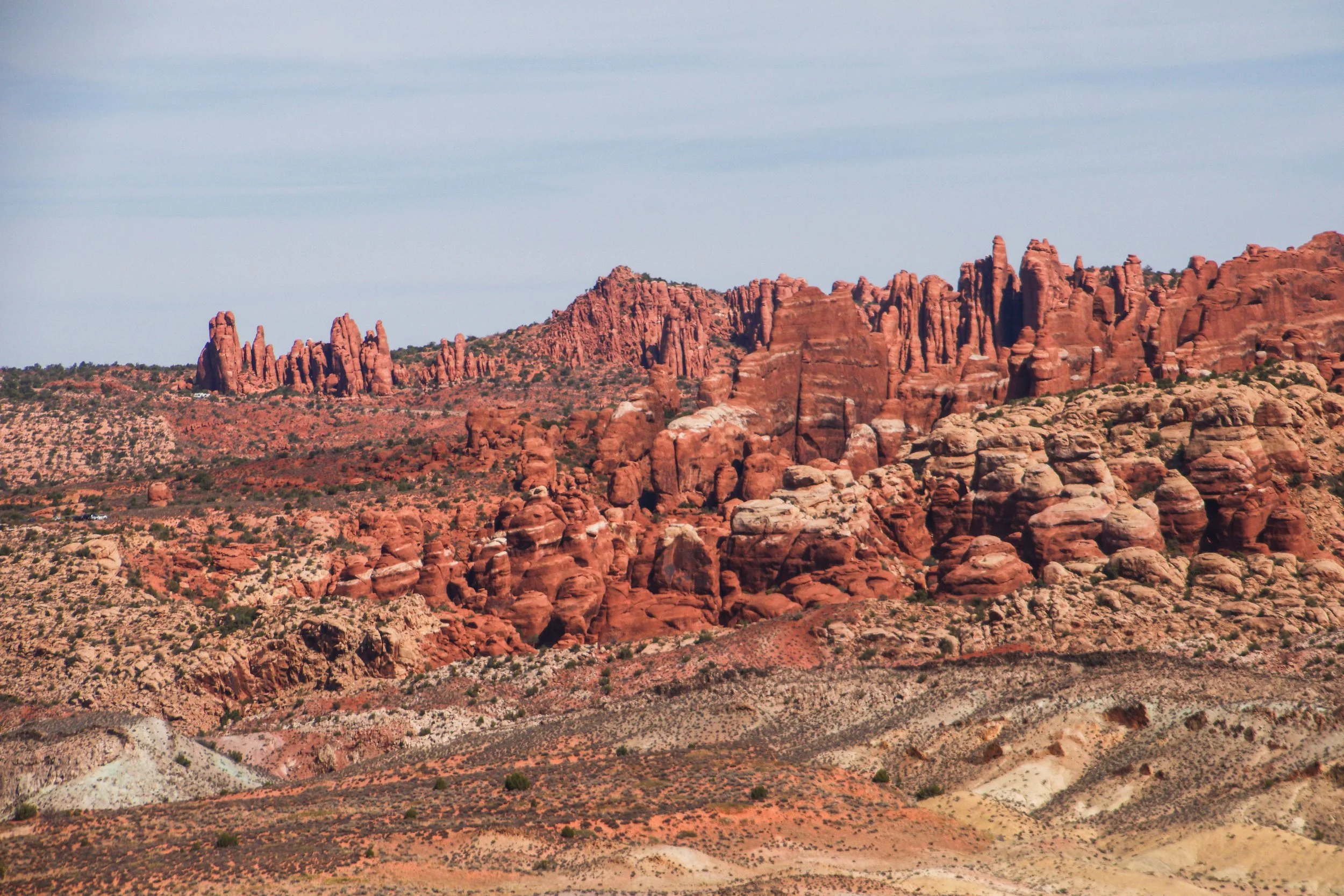
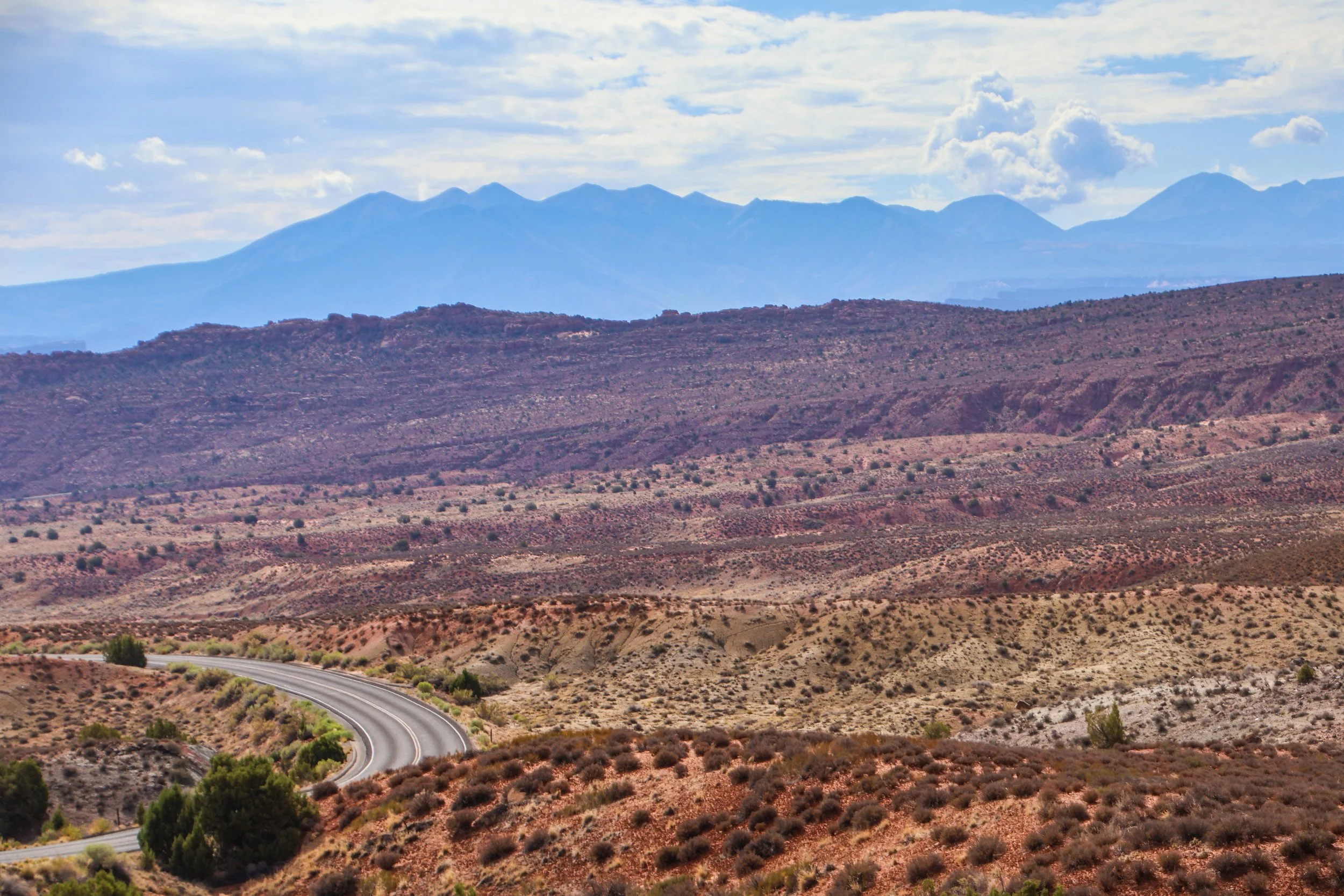
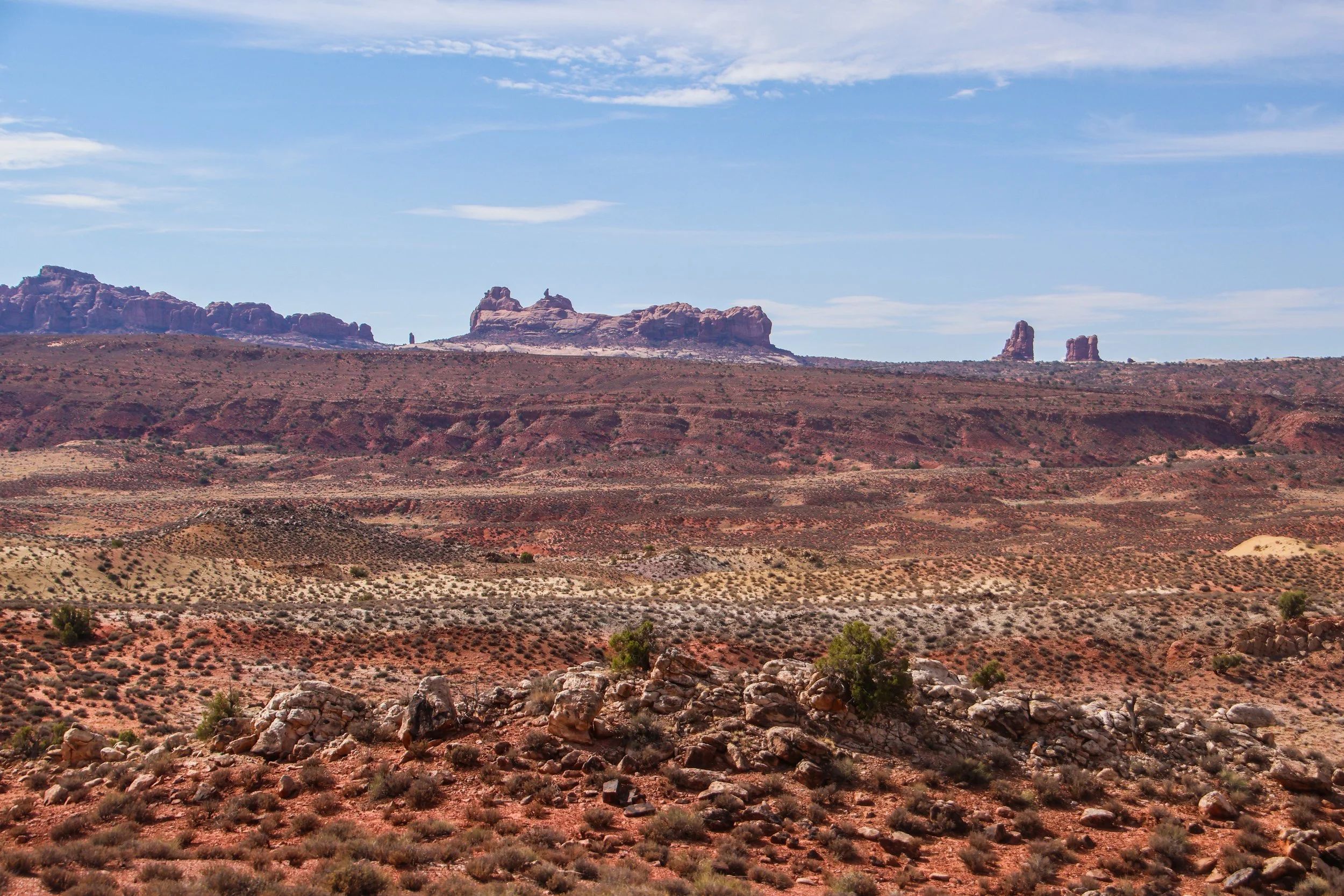
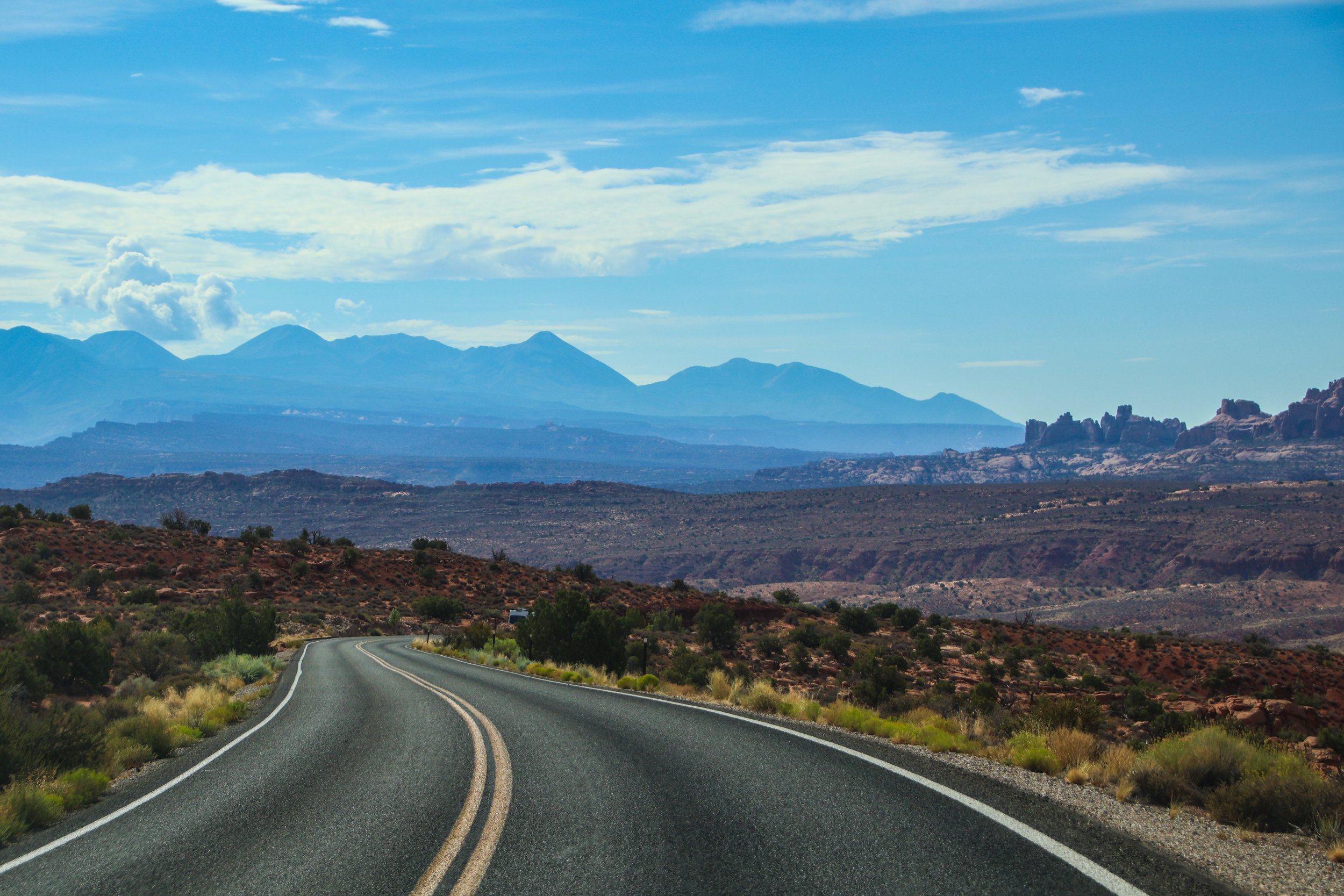
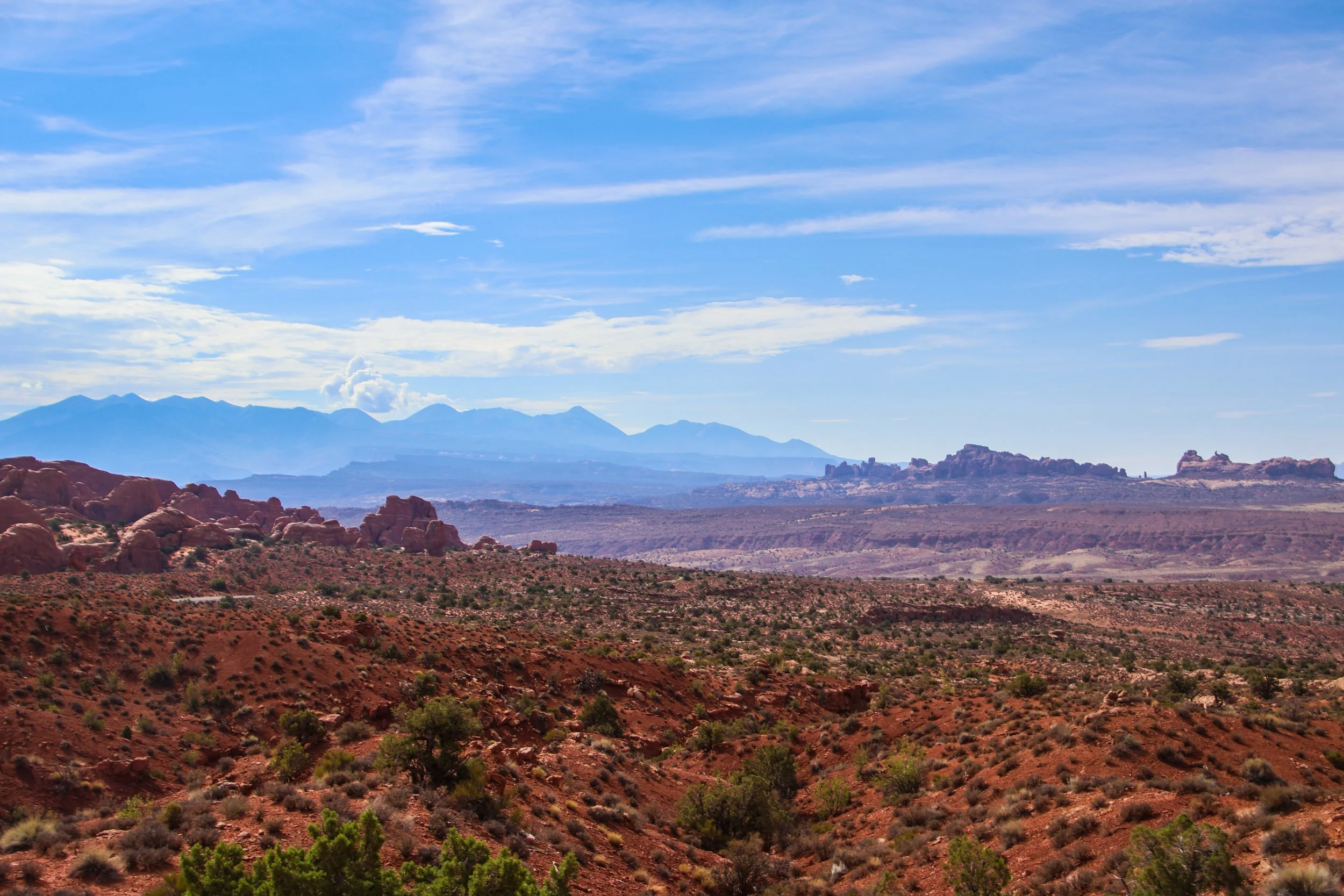
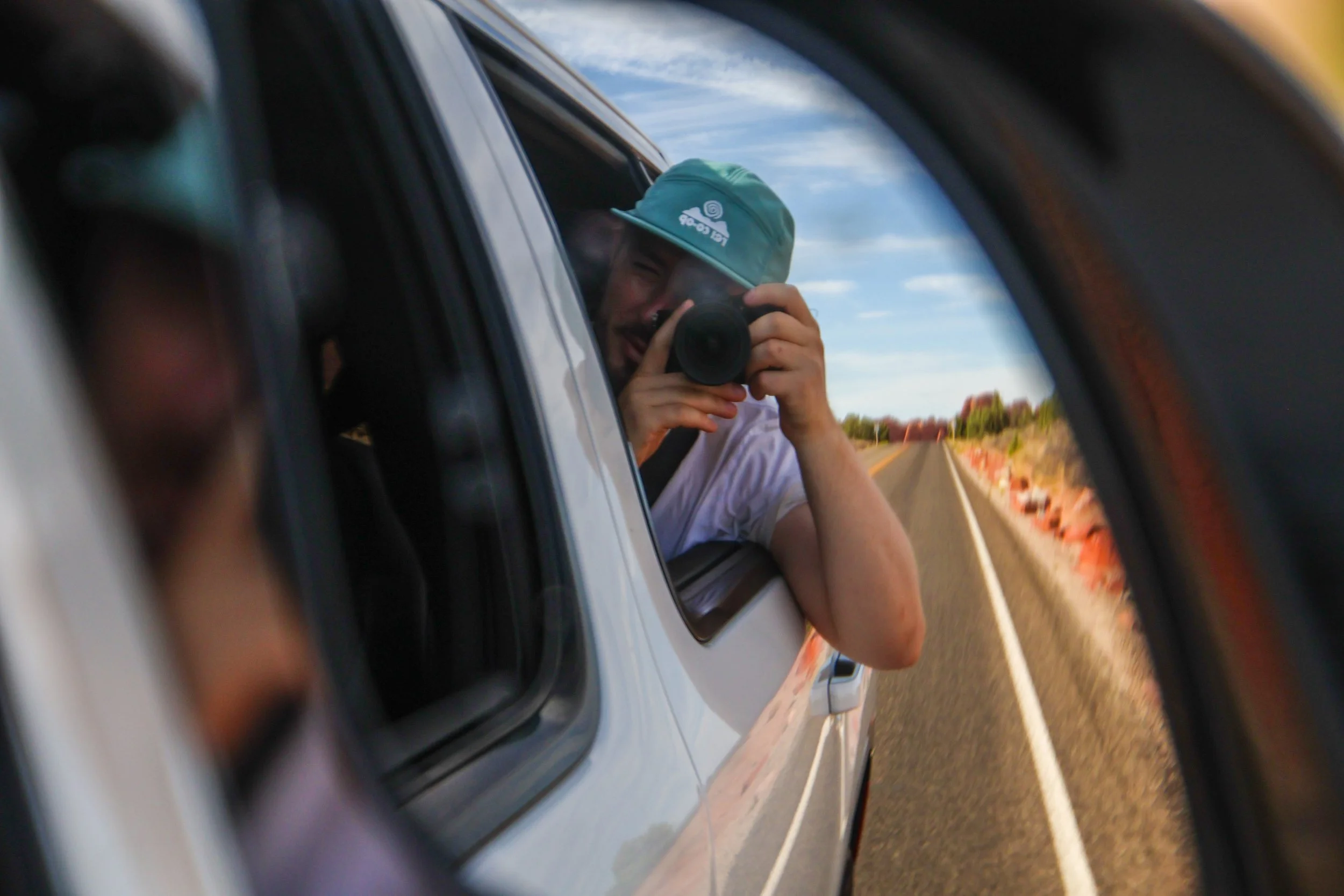
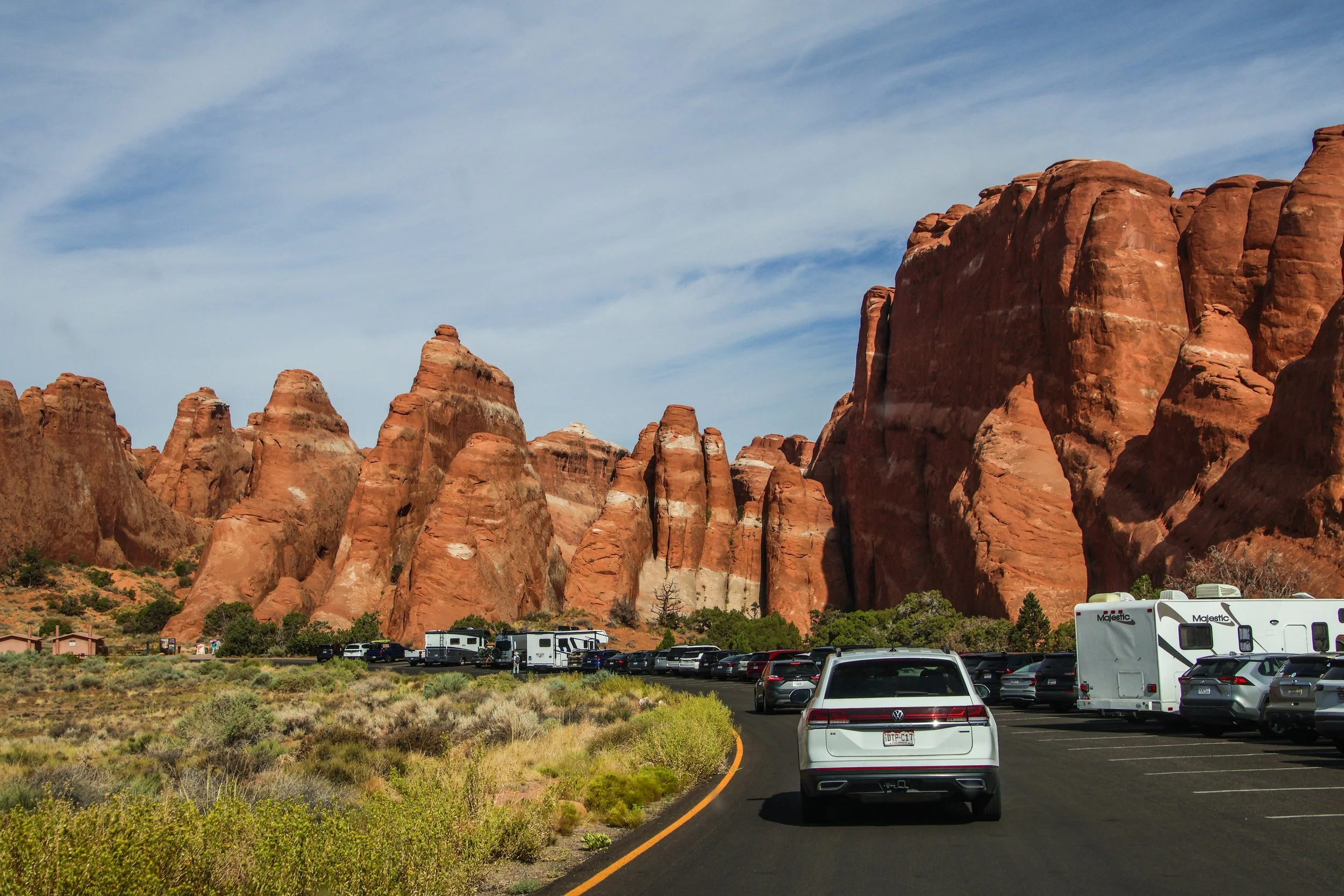
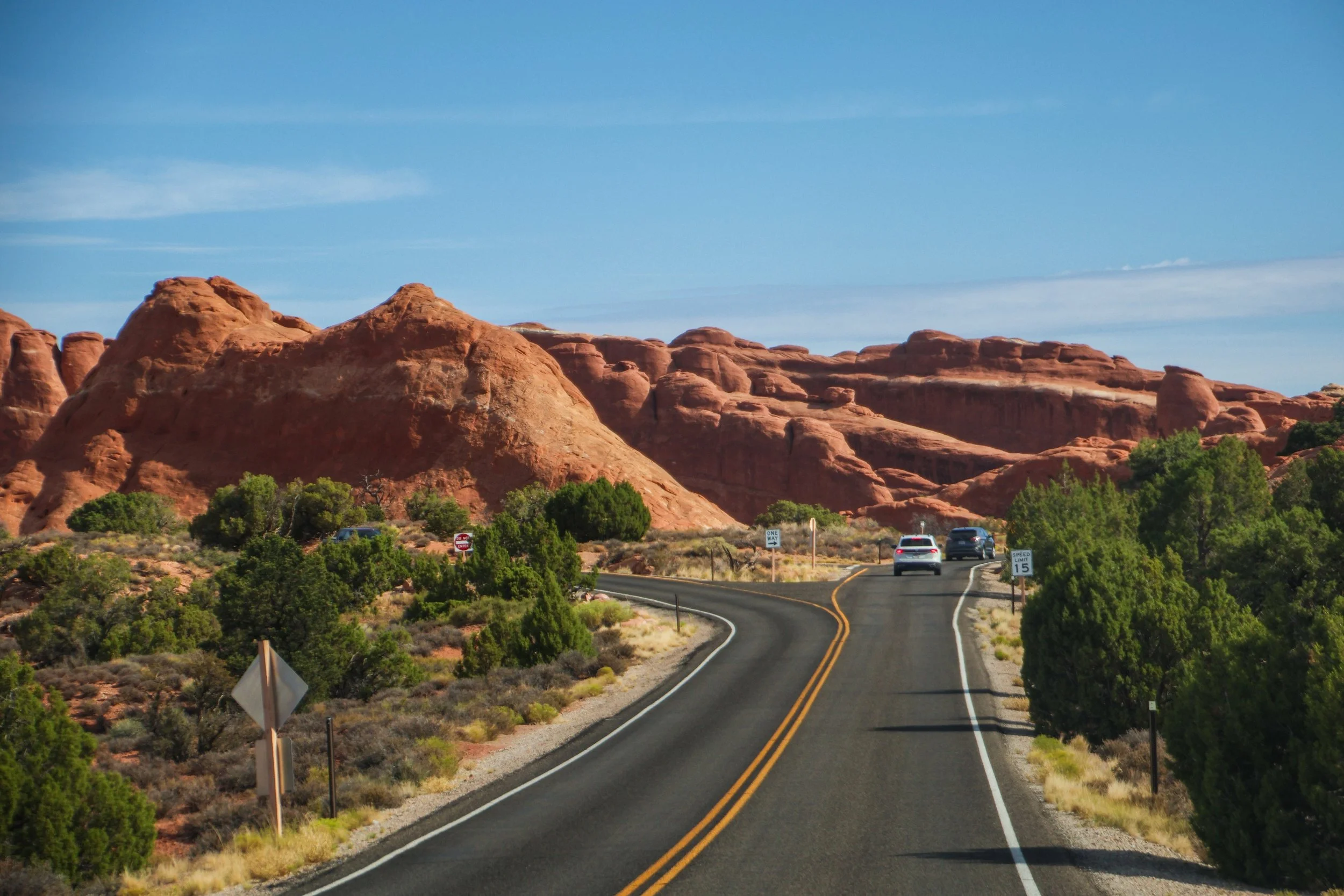
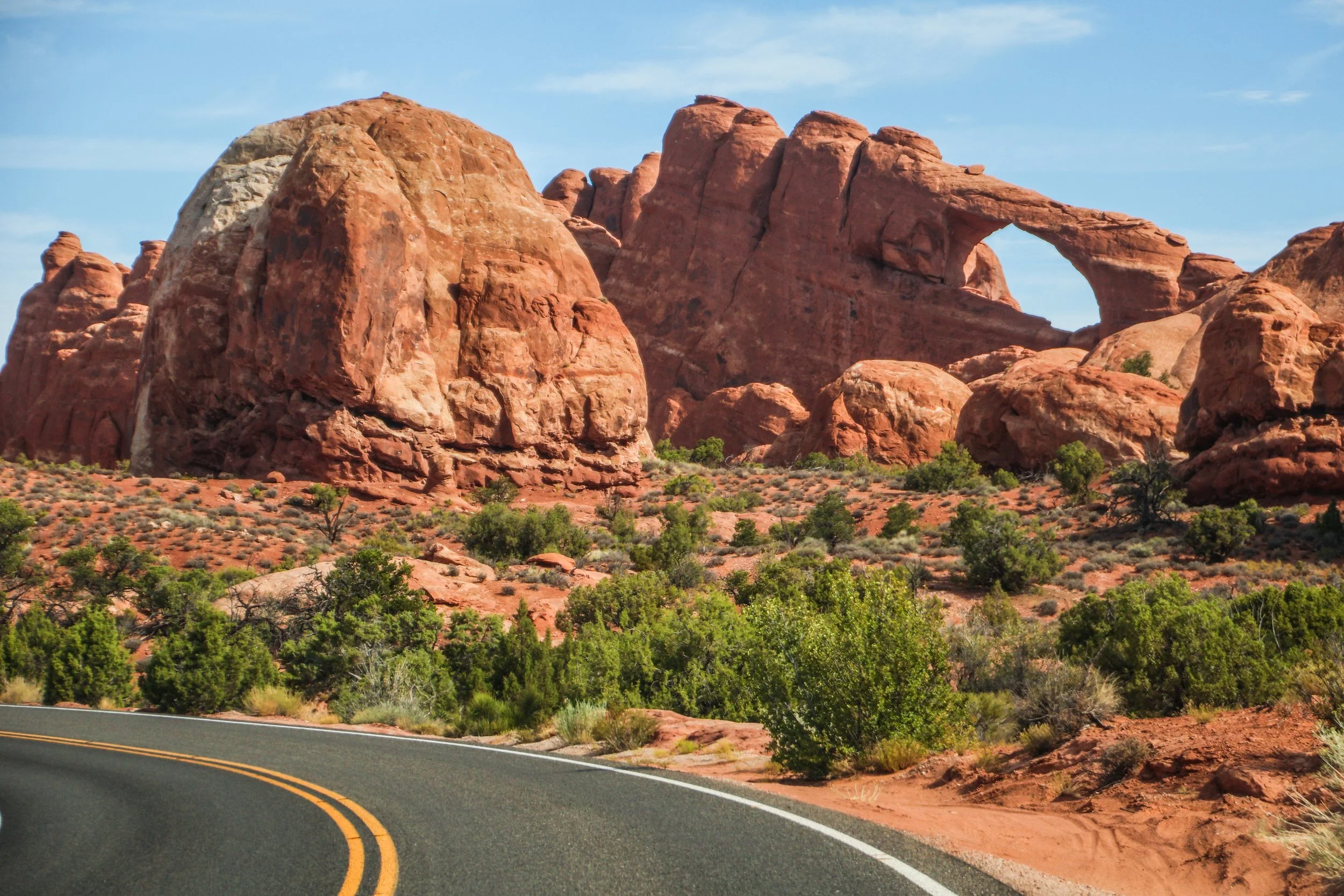
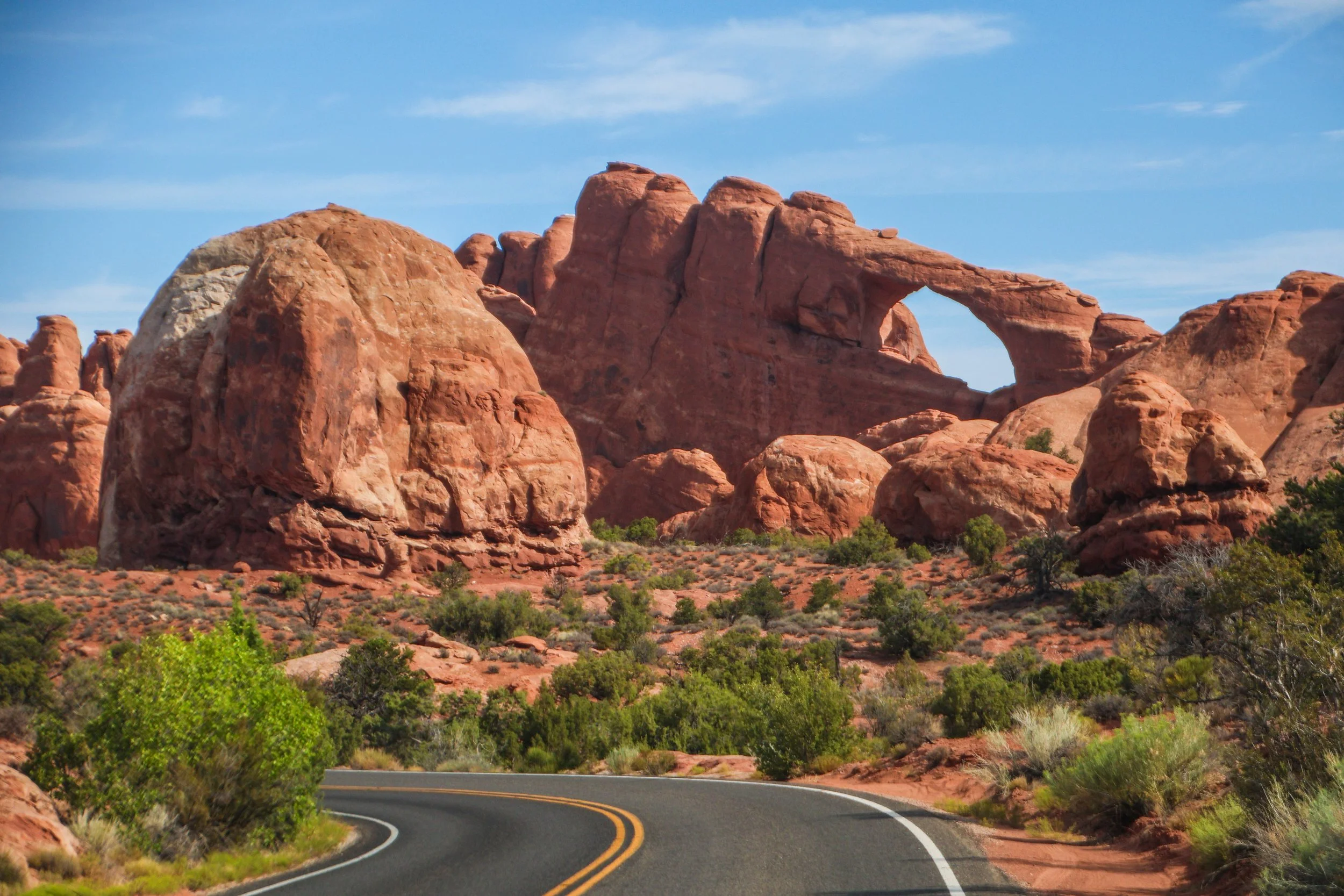
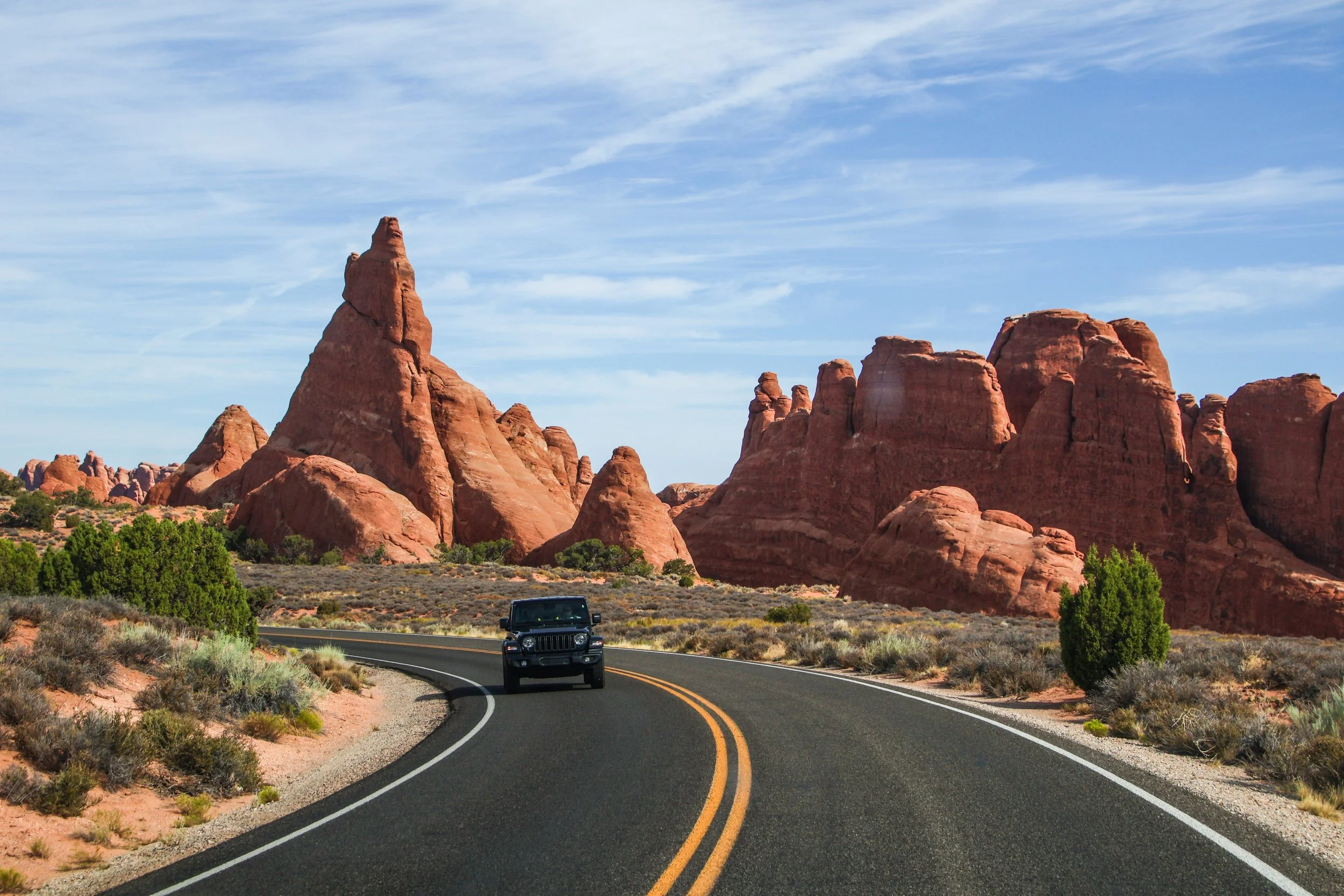
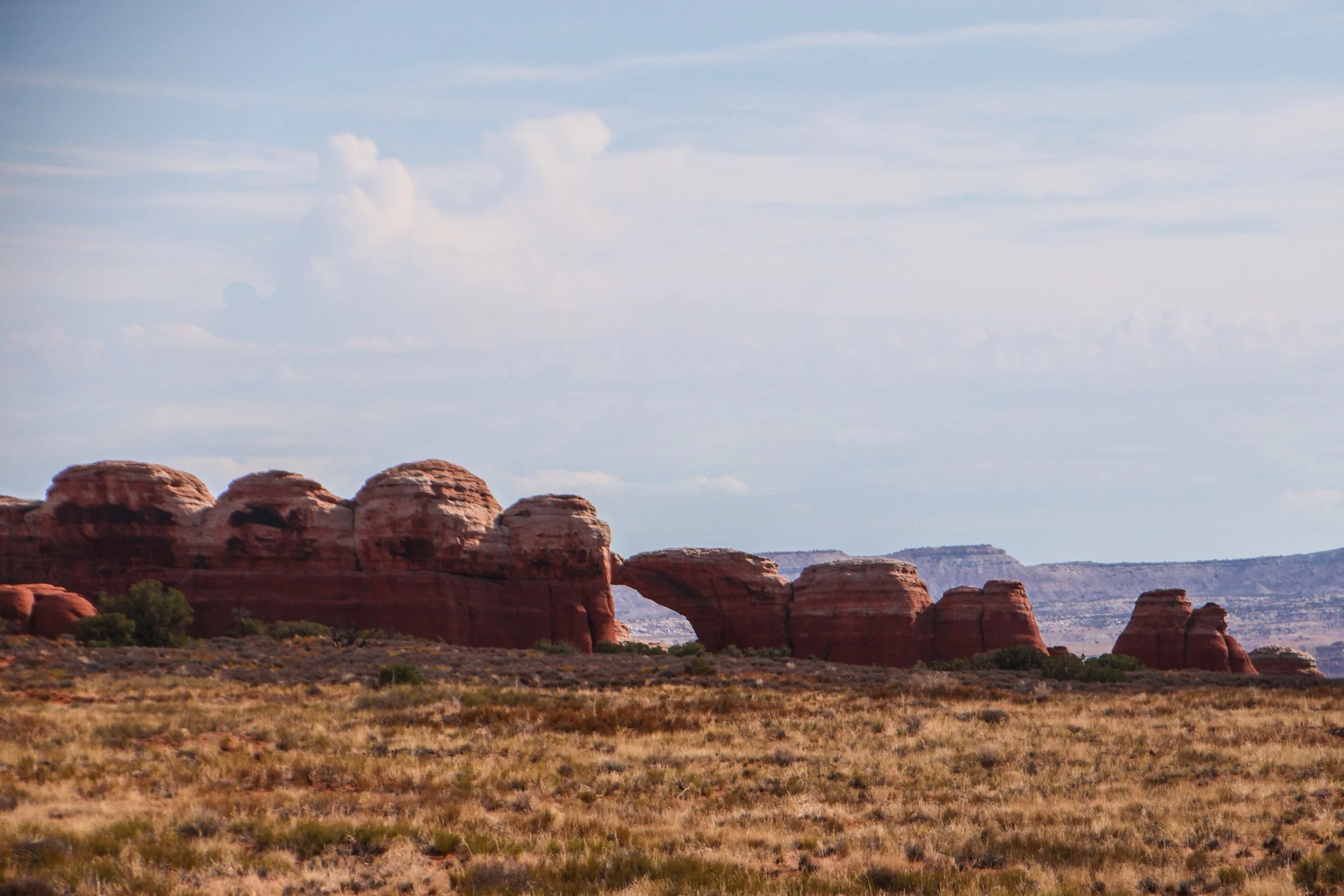
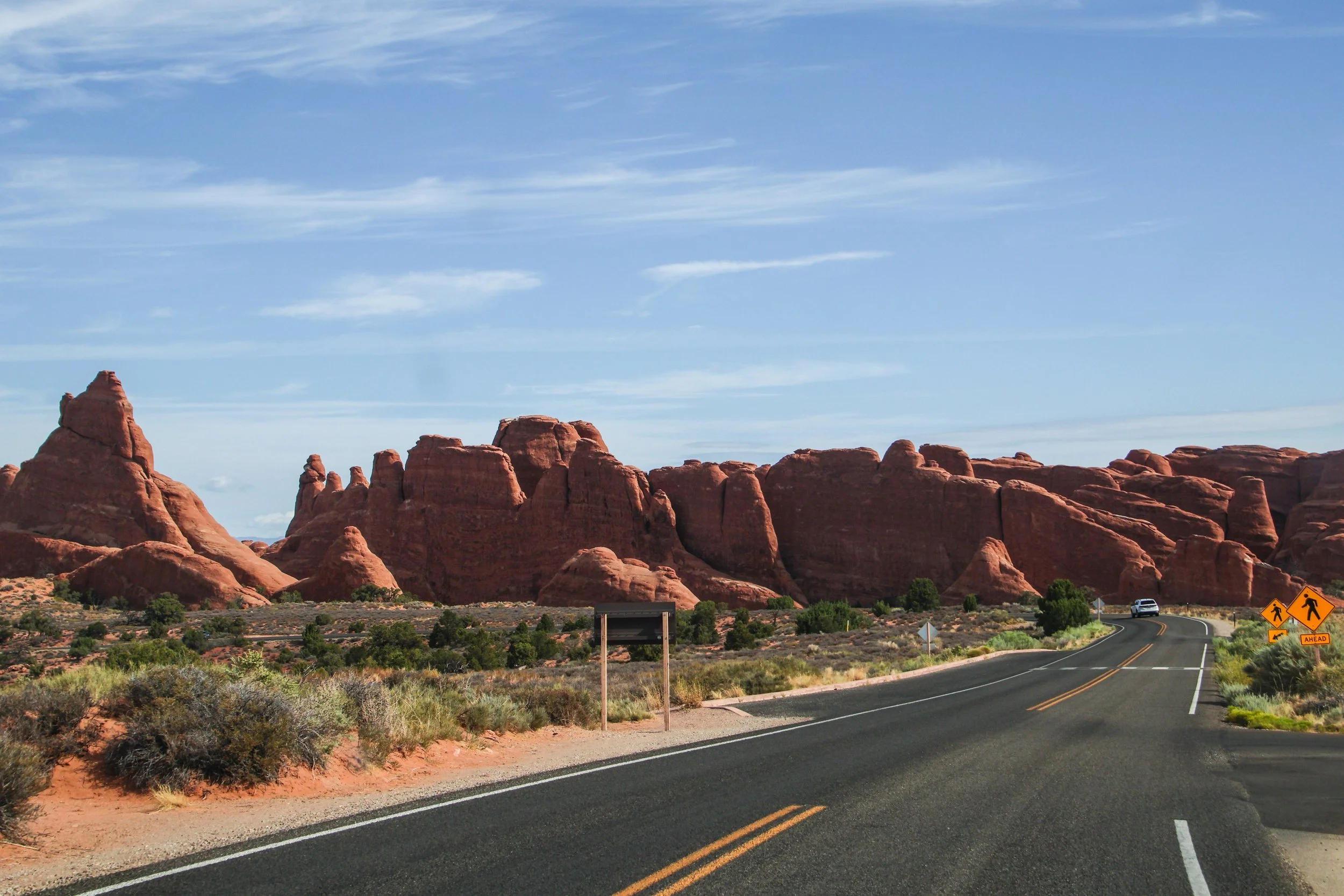
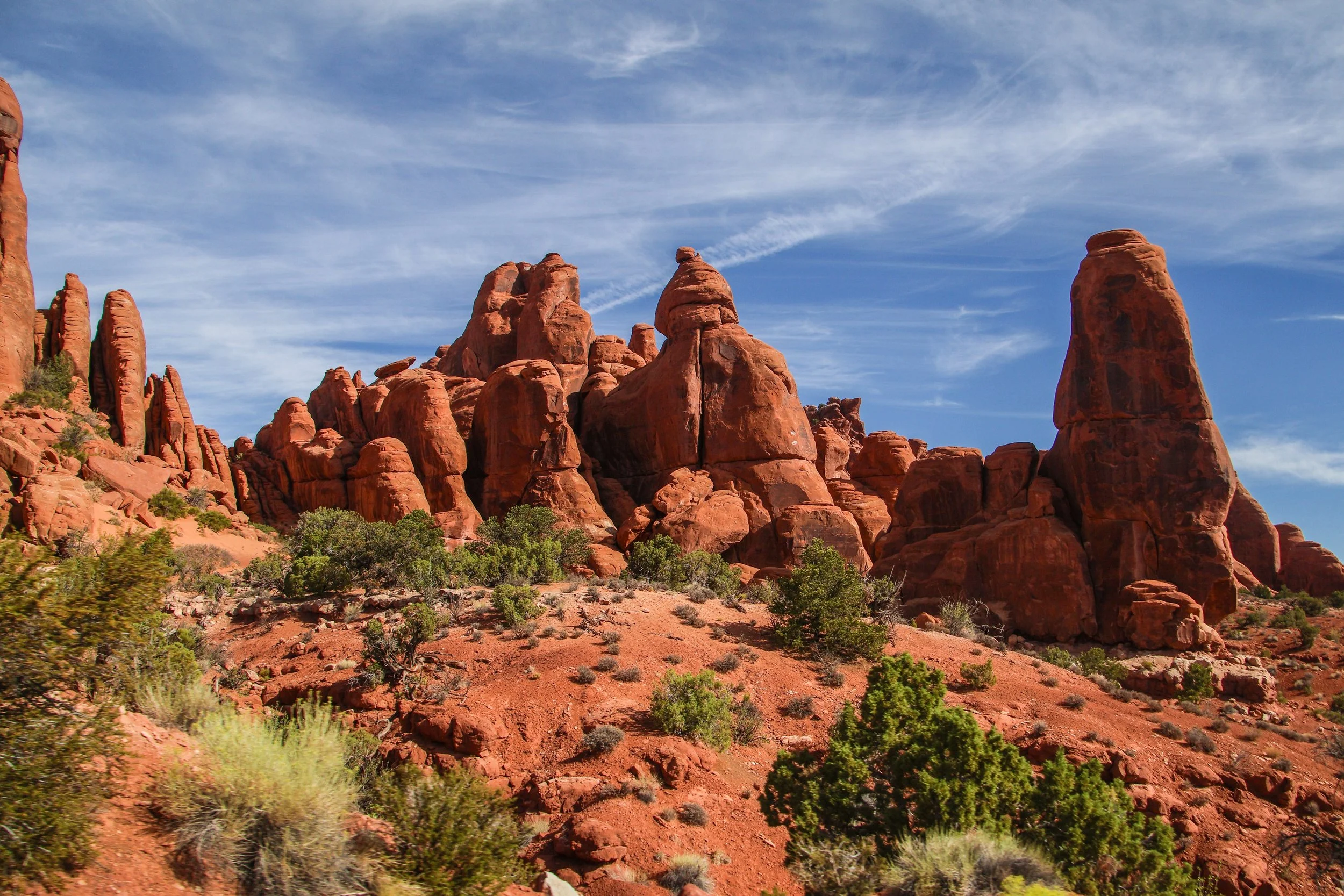
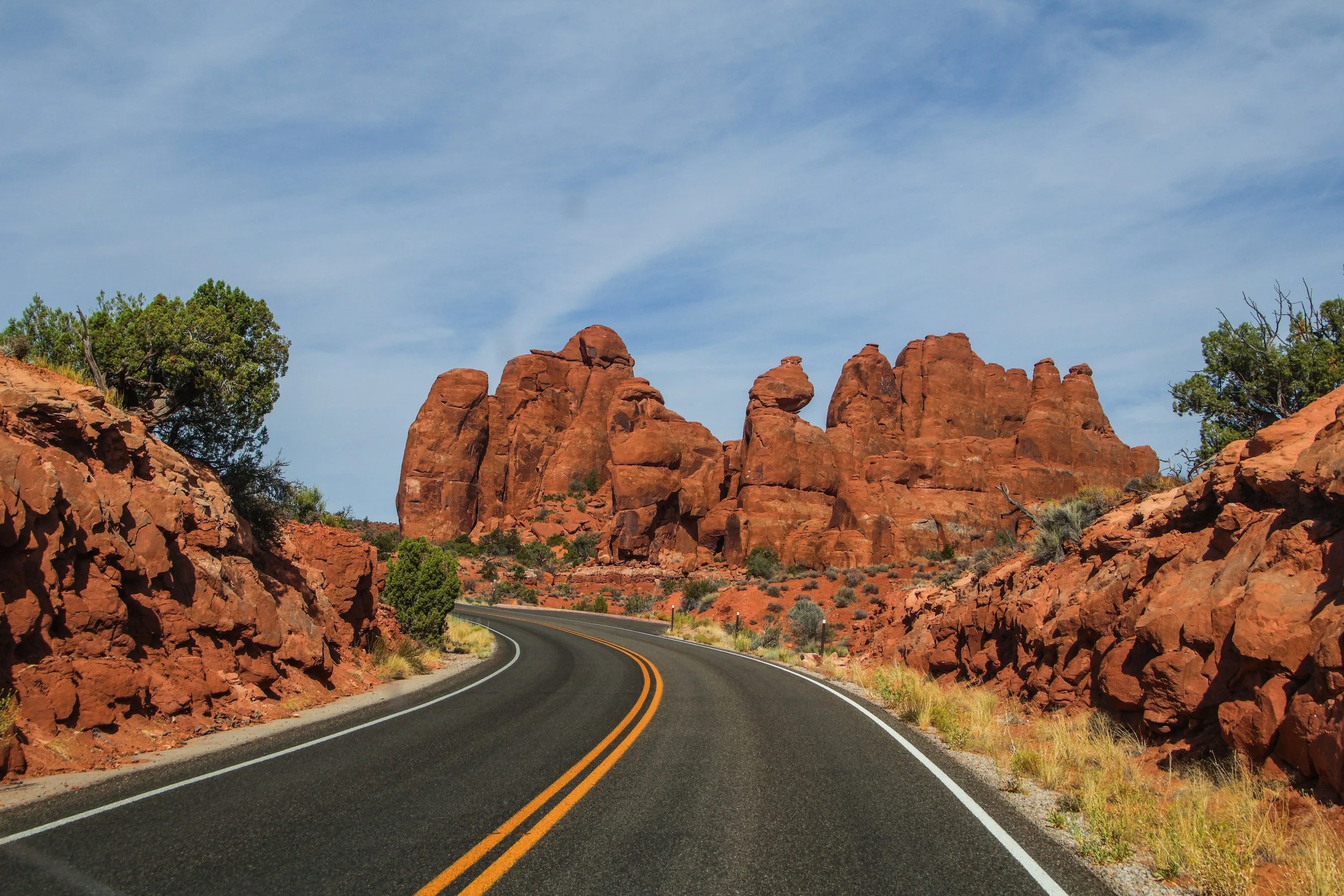
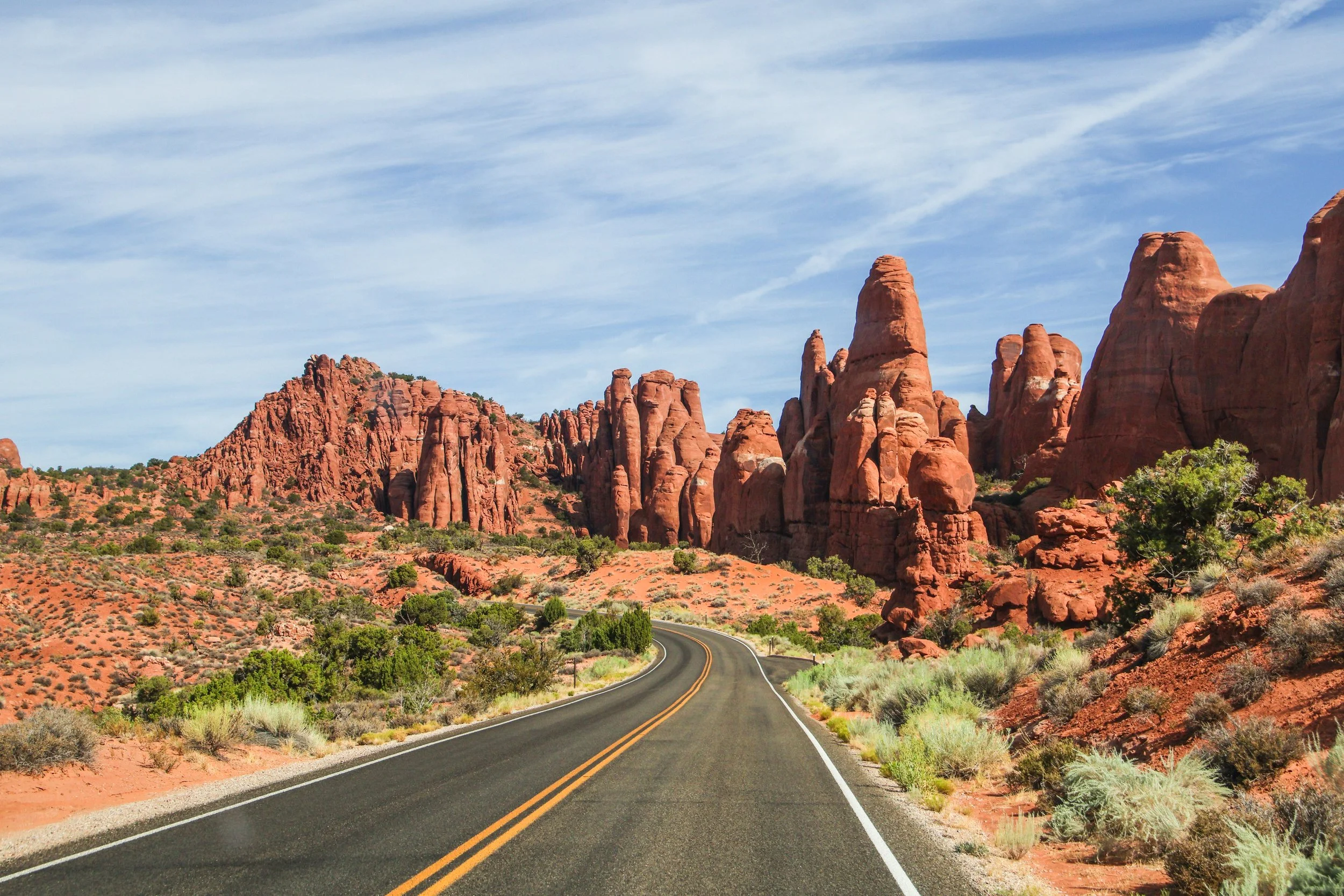
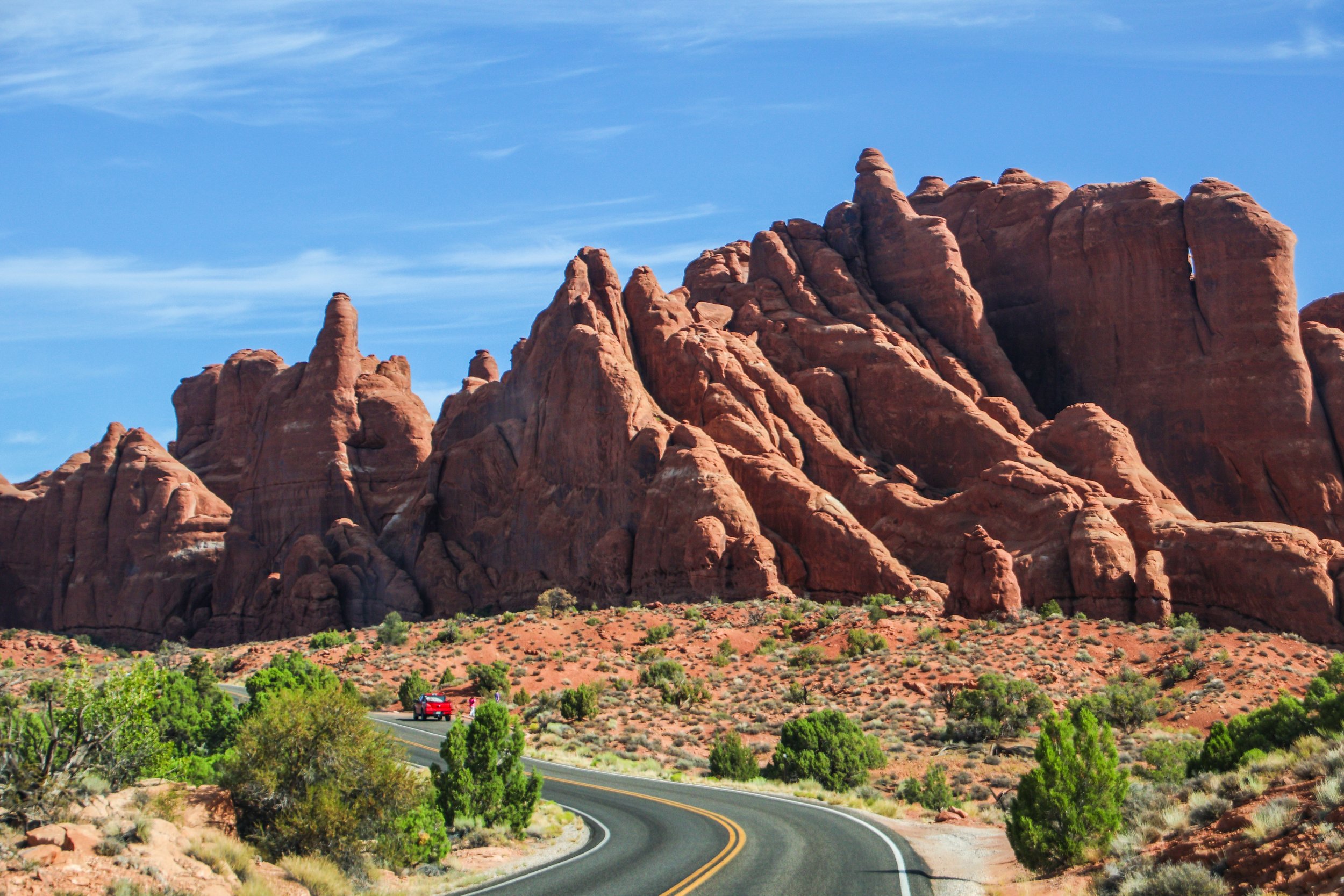
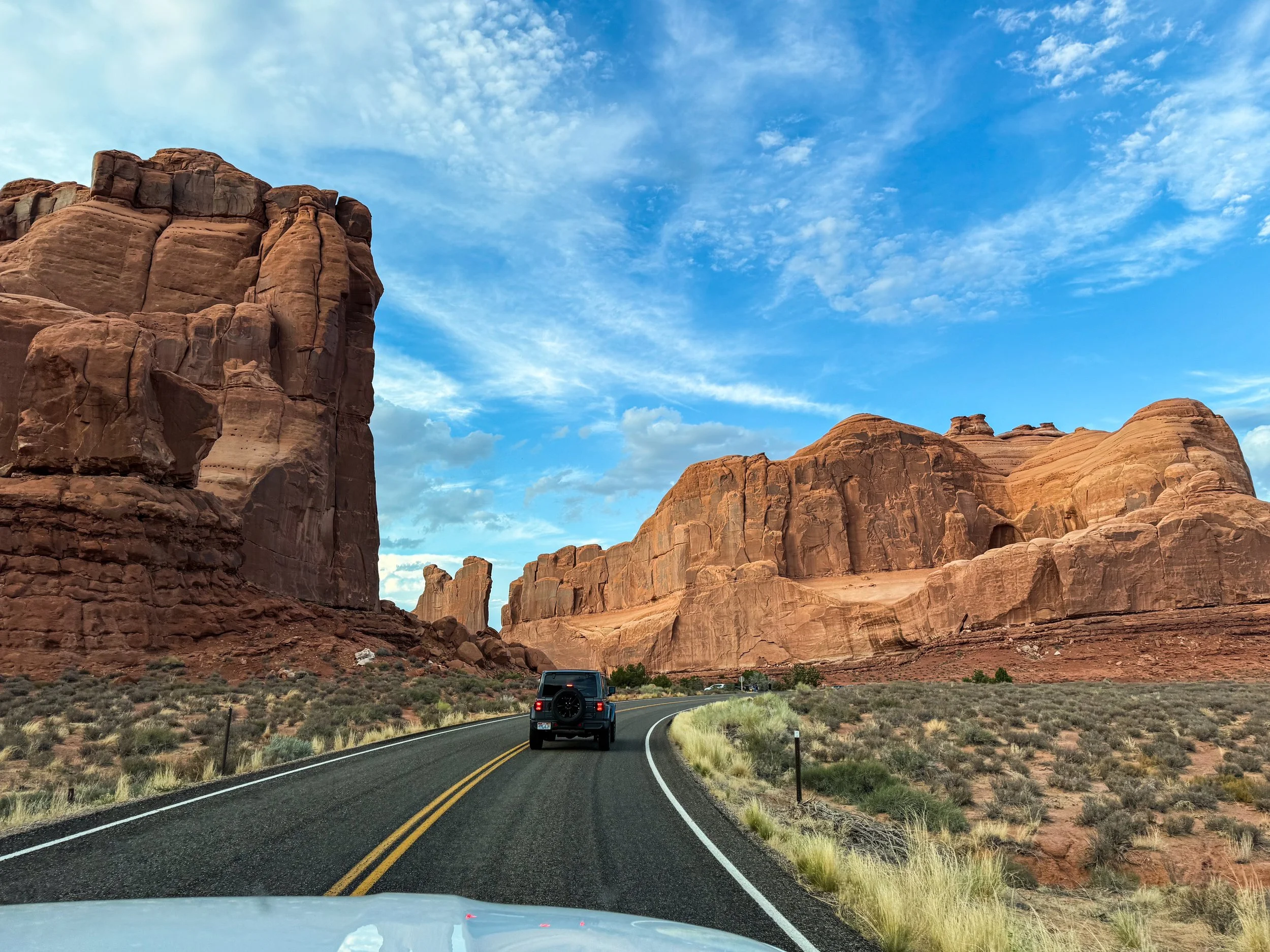
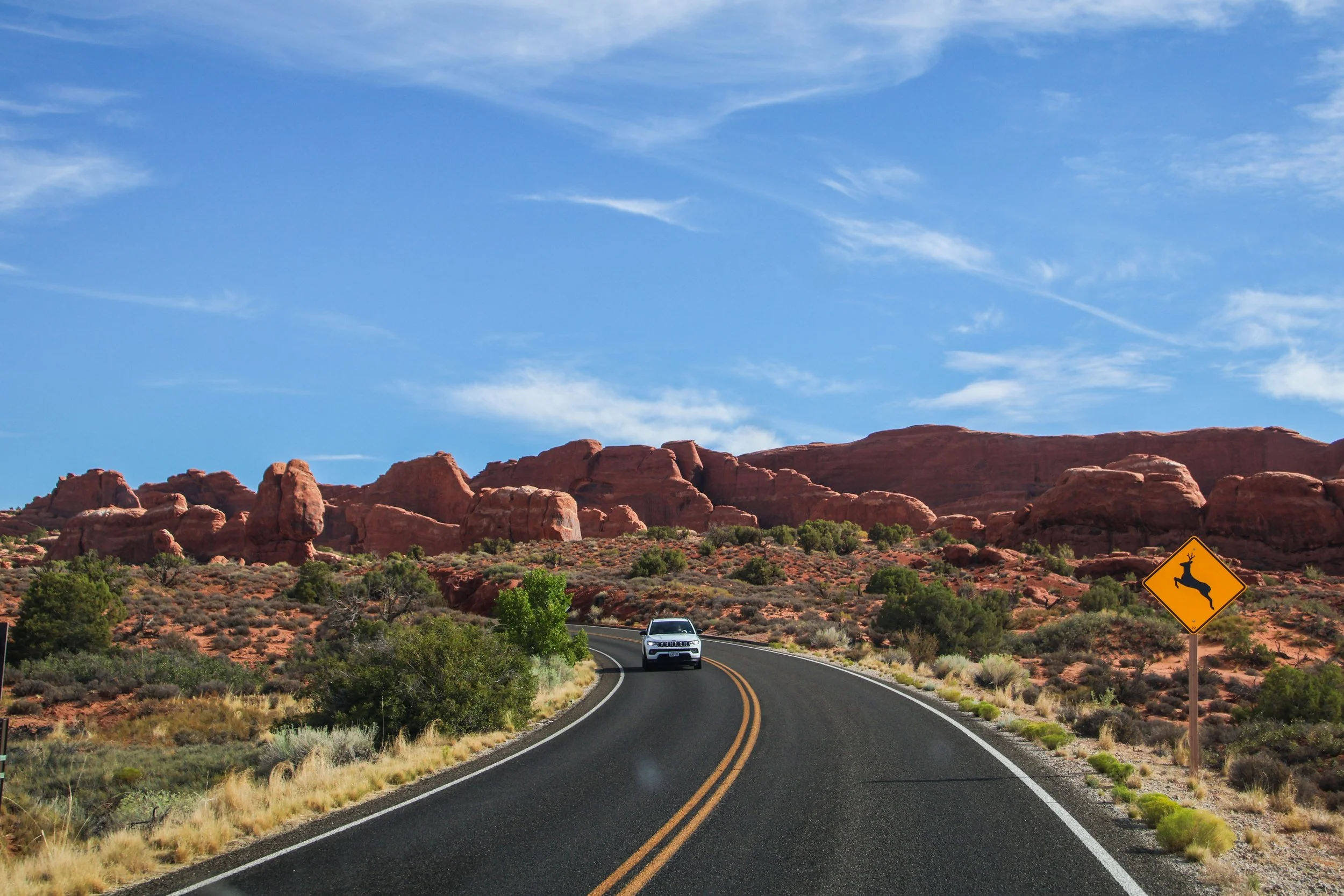
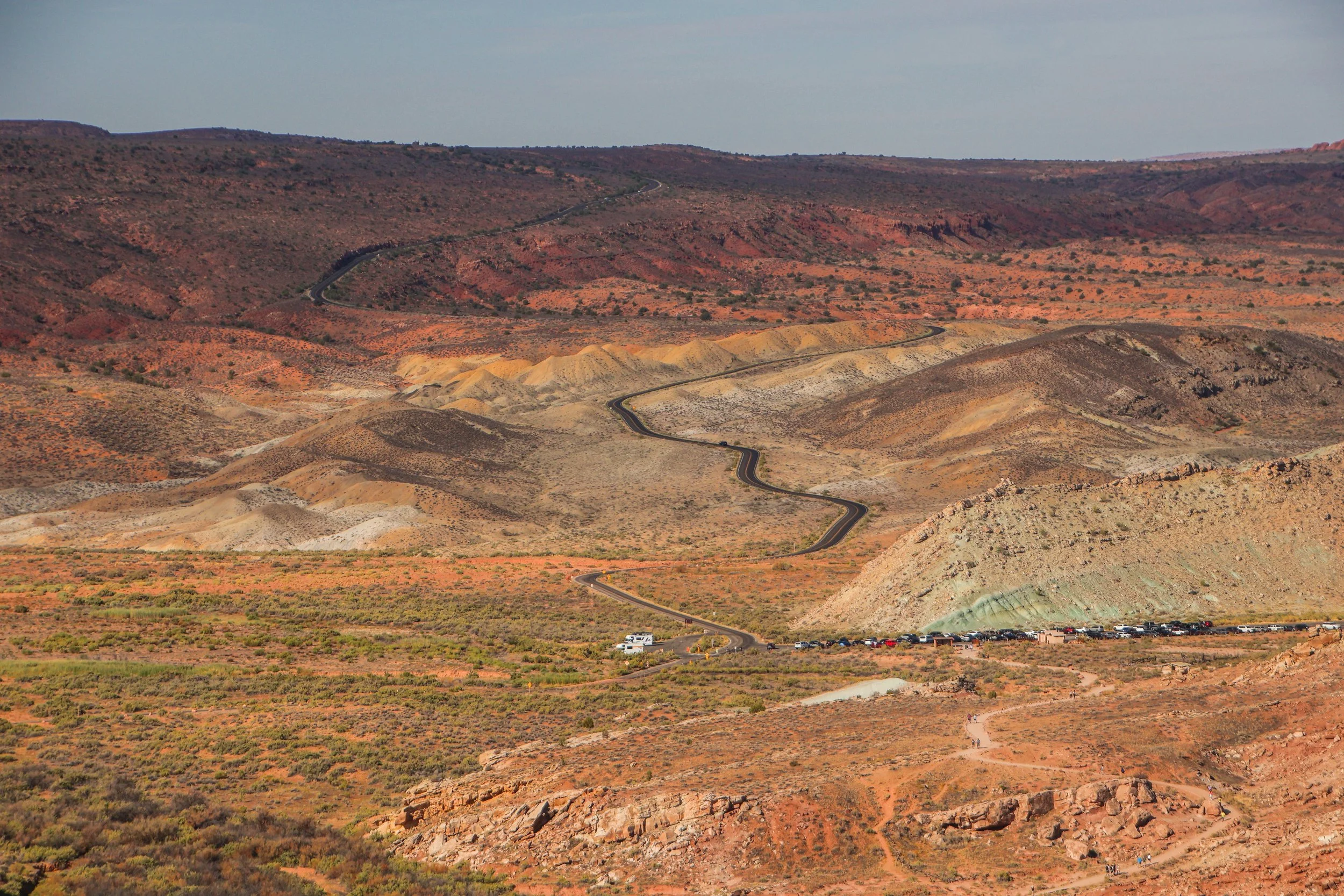
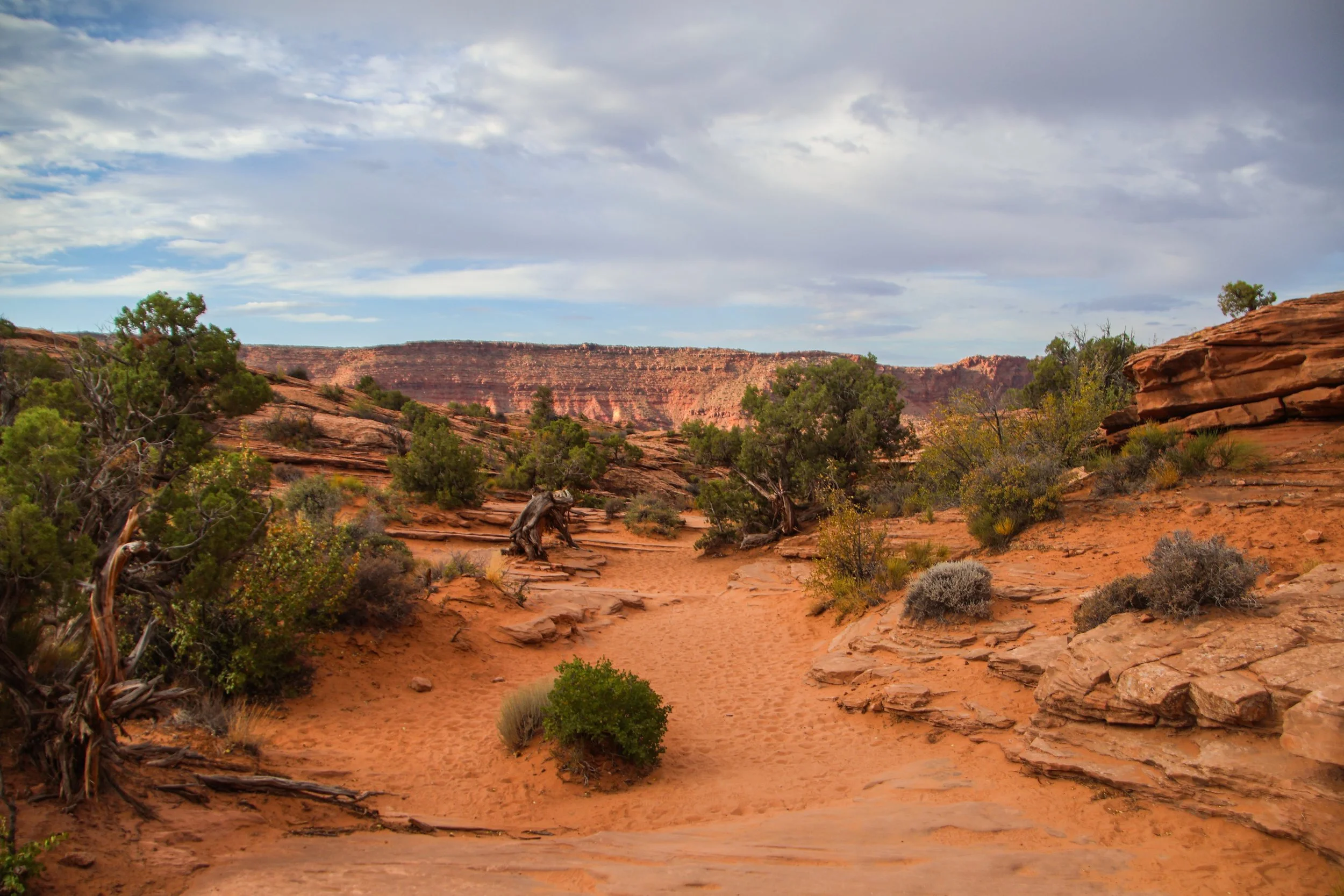
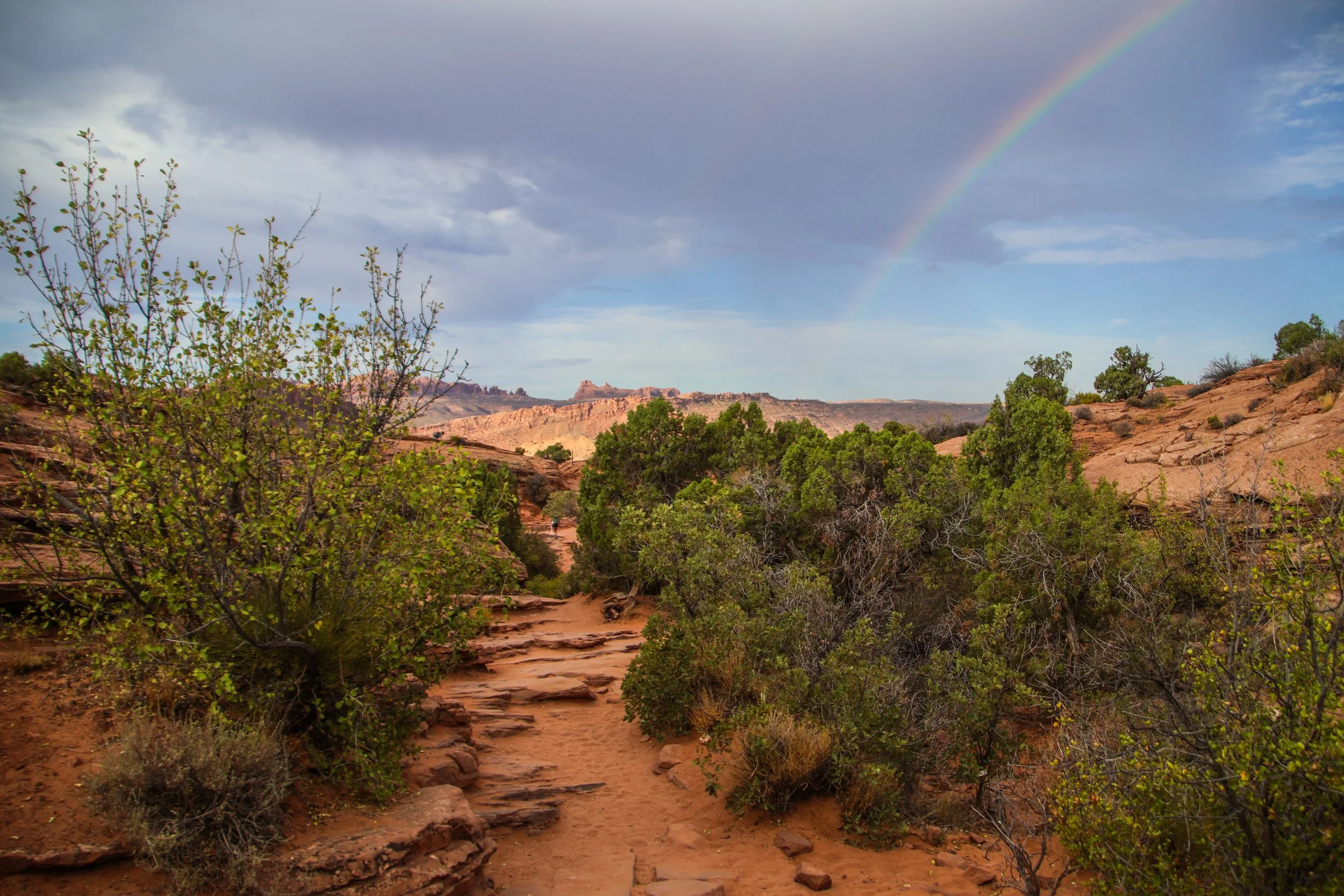
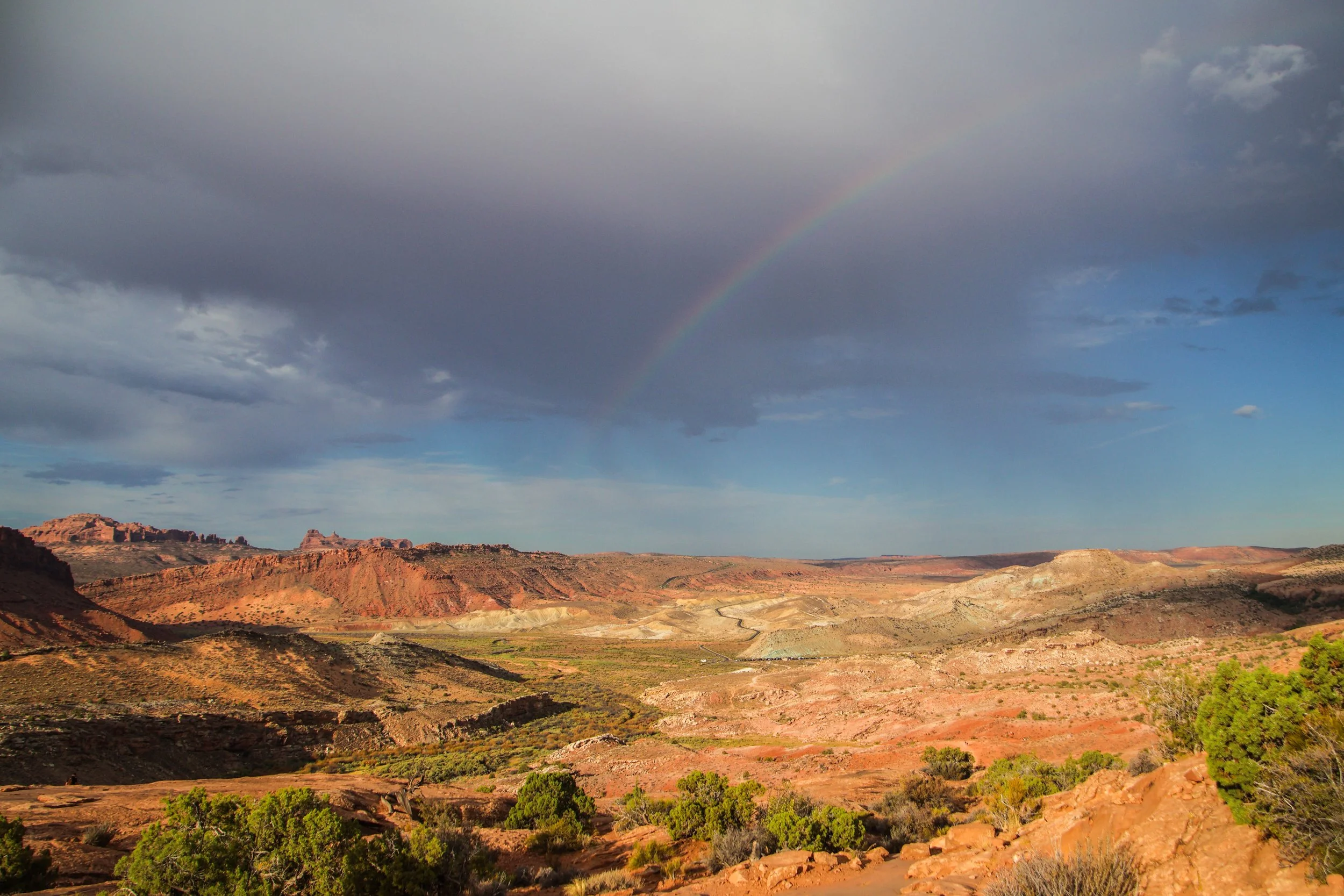
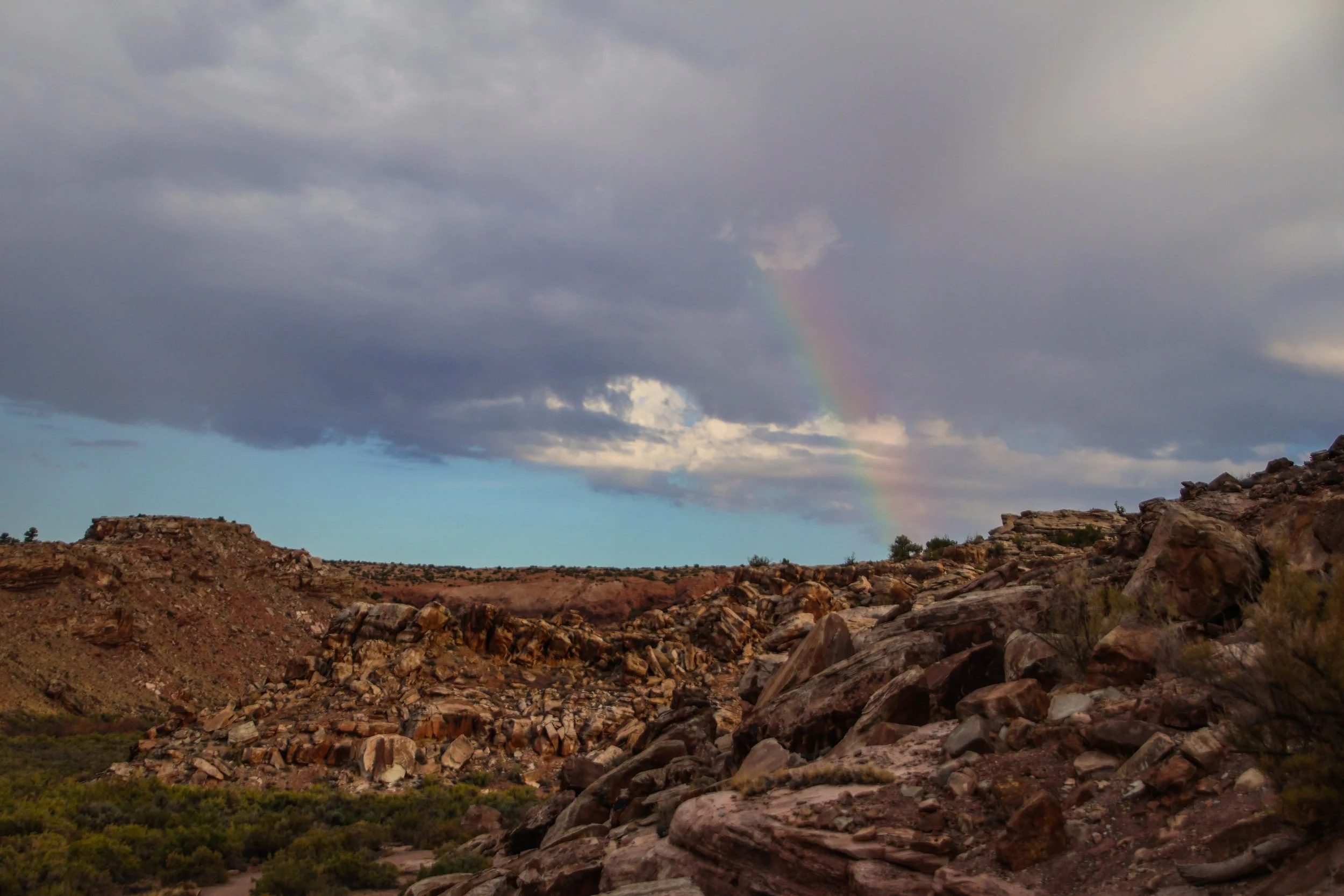
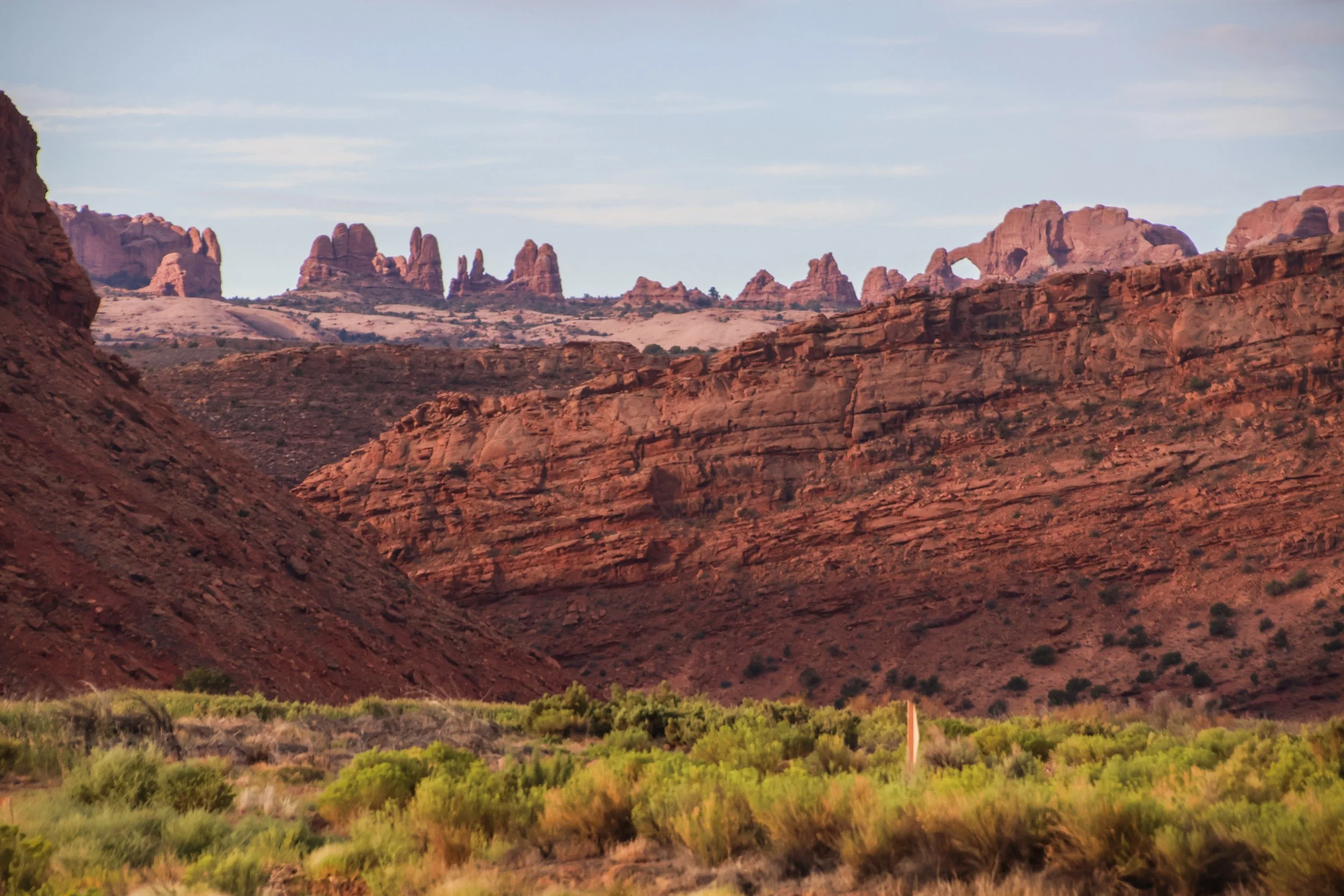
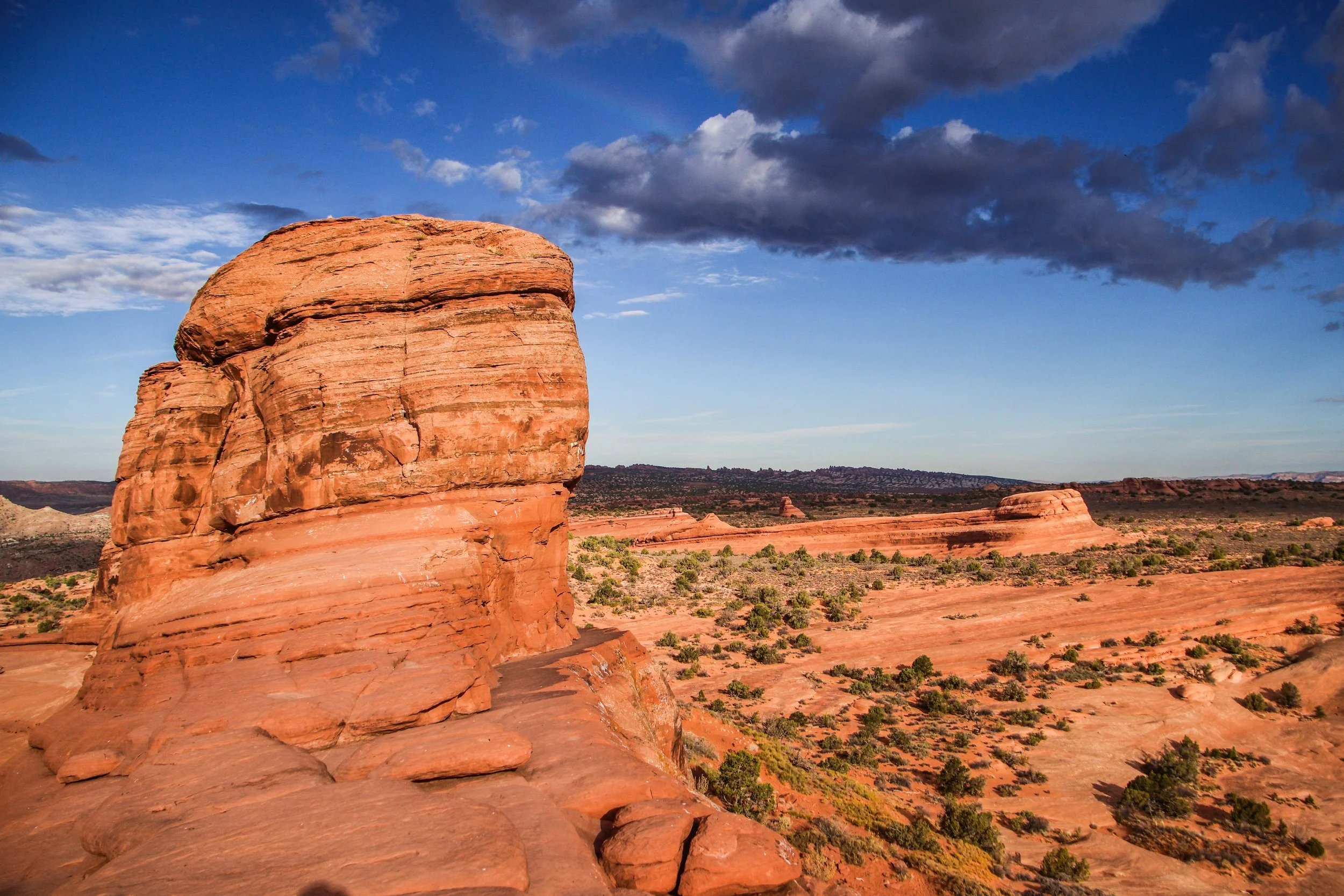
So, we reached the top of this switch-back road at the park entrance, and I was immediately FLOORED by how beautiful it was. We were making a lot of stops along the side of the road to take pictures of the massive rock formations we passed, illuminated in the early morning light. We also saw some arches in the distance, and even caught an incredible rainbow! Check this out…
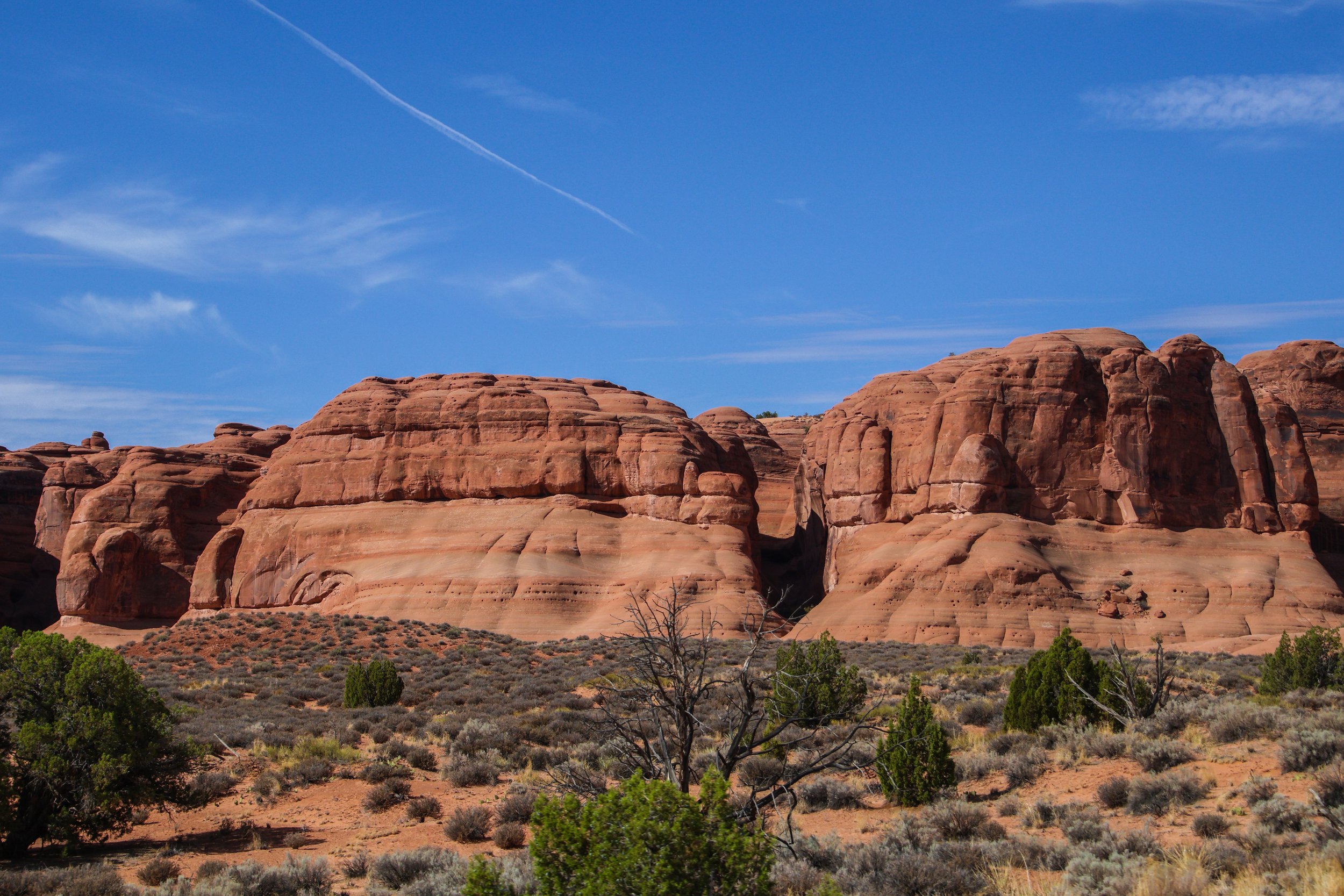
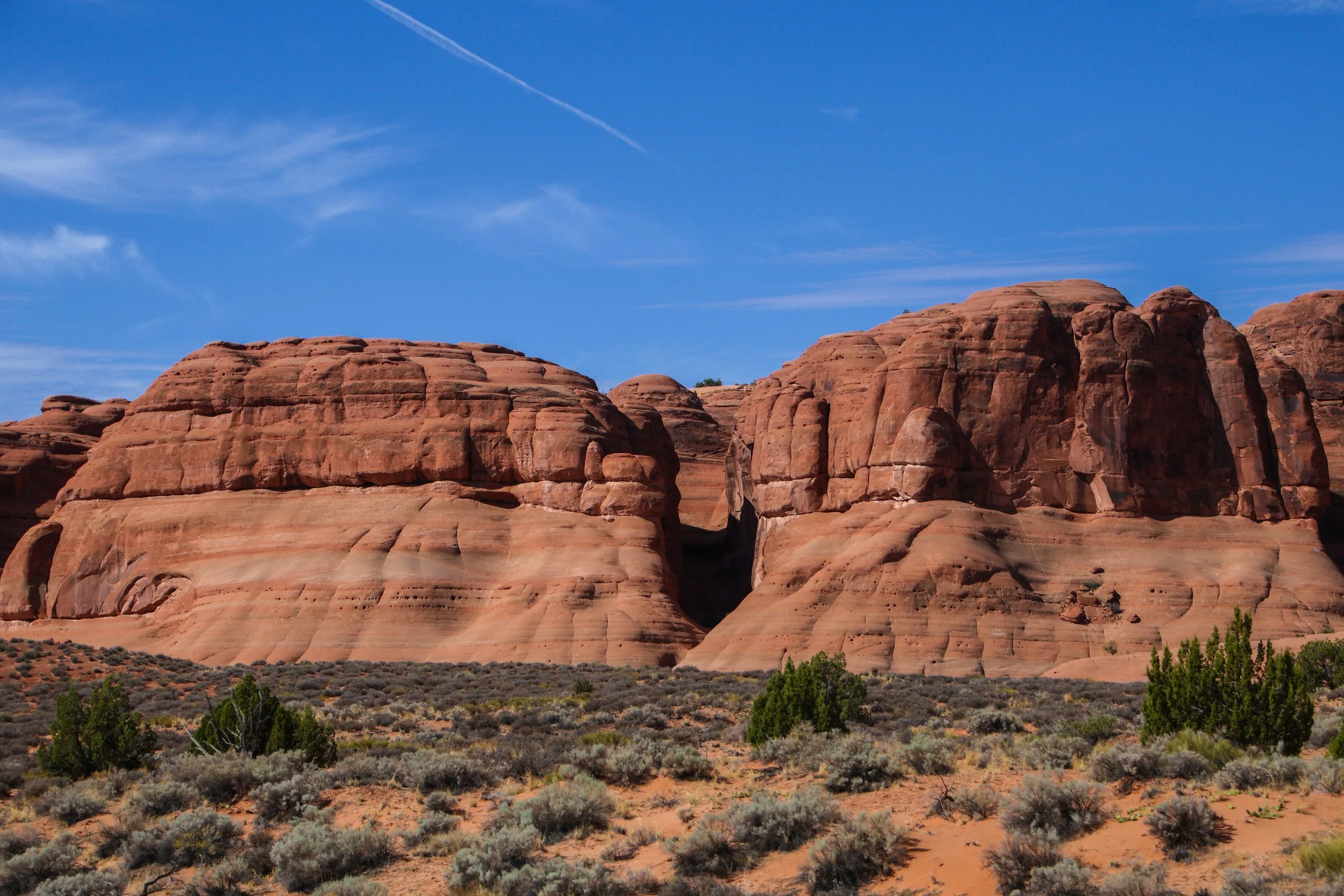
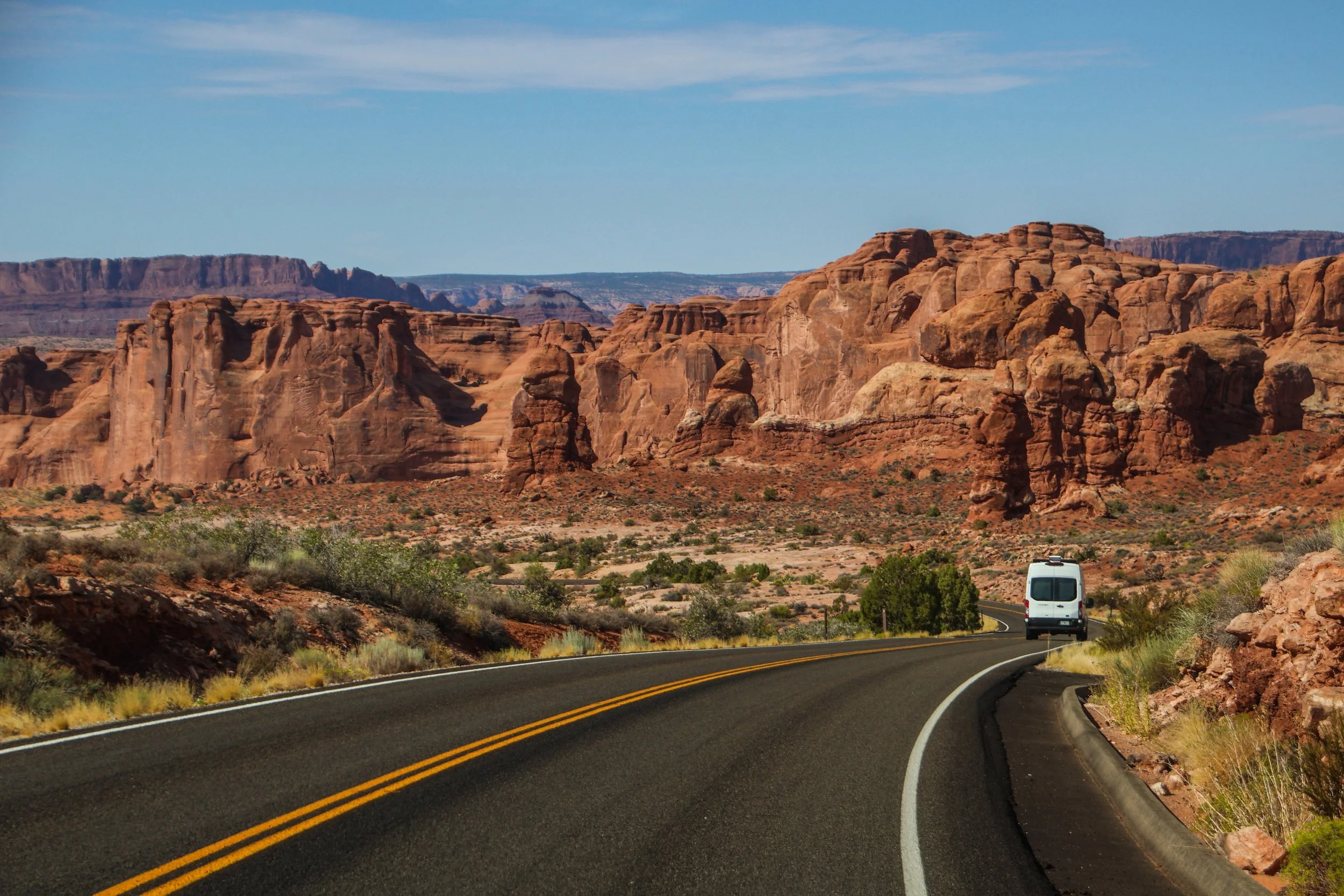
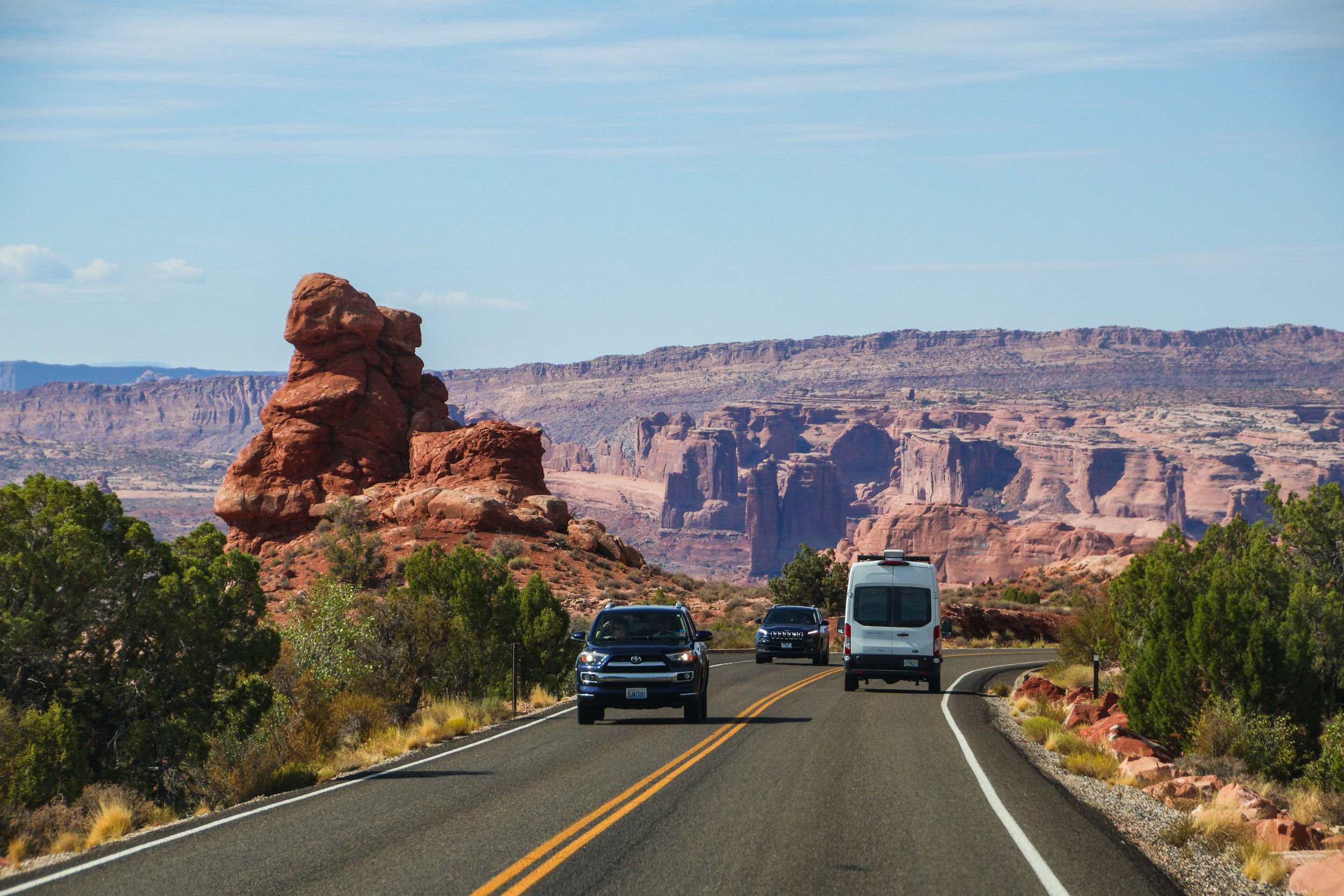

Hiking to Delicate Arch
Not including all these stops for photographs, it was a 30-ish minute drive to the trailhead for Delicate Arch. And, from there, the trail would be 3.0 miles (4.8 km) round-trip, with an elevation gain of ~480 feet (146 m). It’s not too difficult… so long as it’s not extremely hot, hence the early start. Here it is on AllTrails for the hardcore hikers out there…
By the end of this hike, the heat was starting to be quite intense. This visit was during the summer, which—because of the heat–is the off-season for tourism here. That means that the photos you are about to see feature less crowded trails than what is typical, but we were never alone on this hike. There were other hikers, but not so many that it was ever annoying.
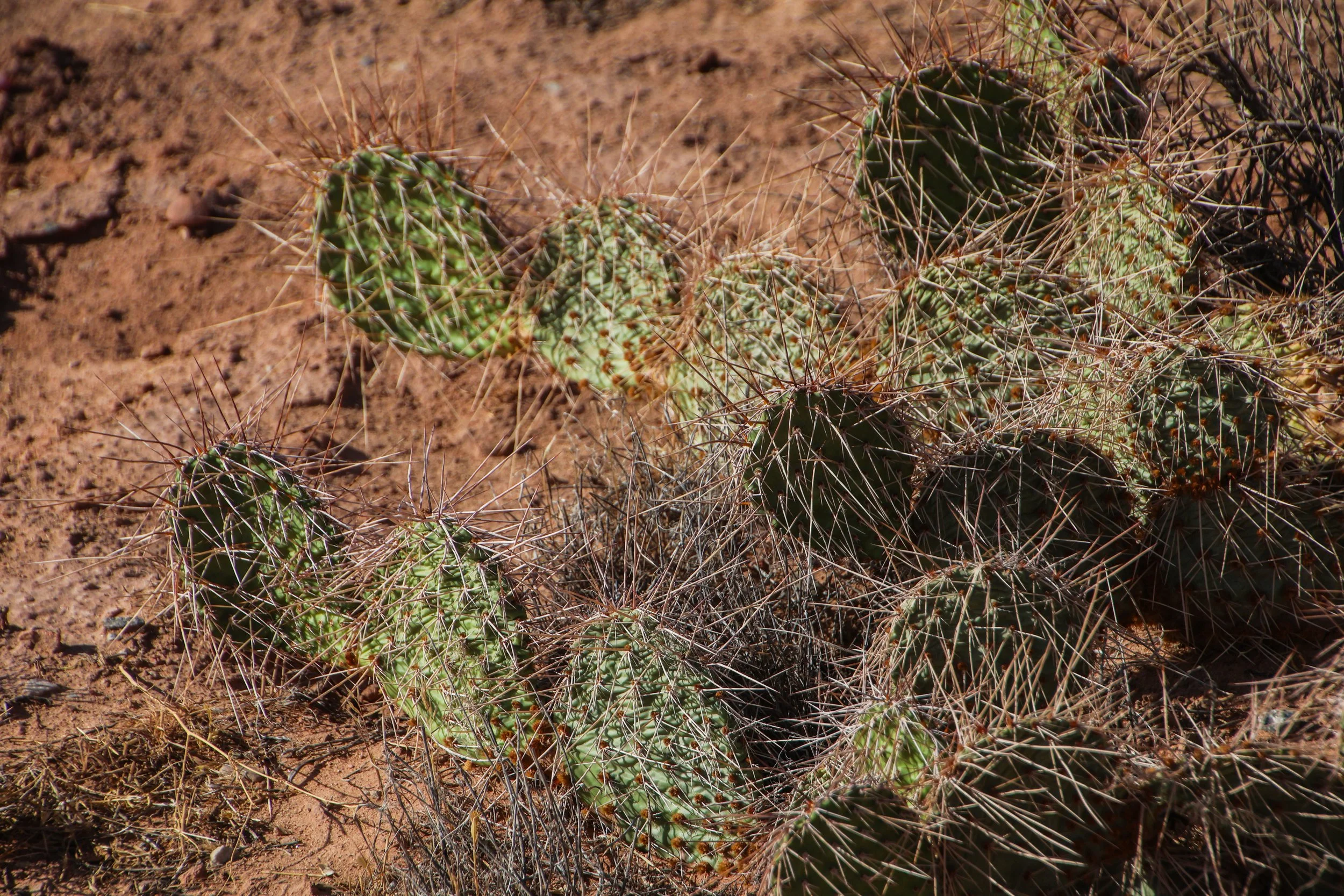
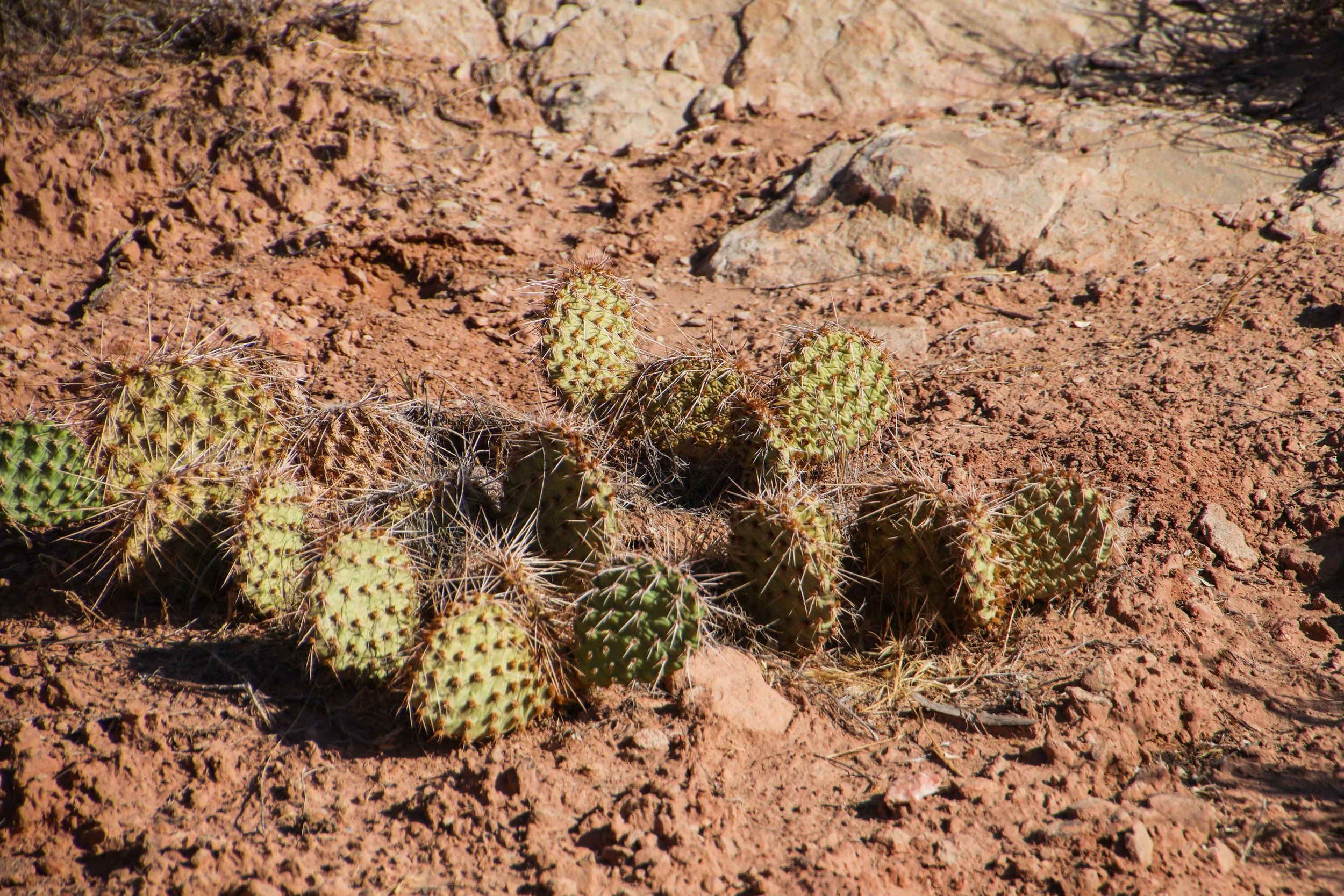
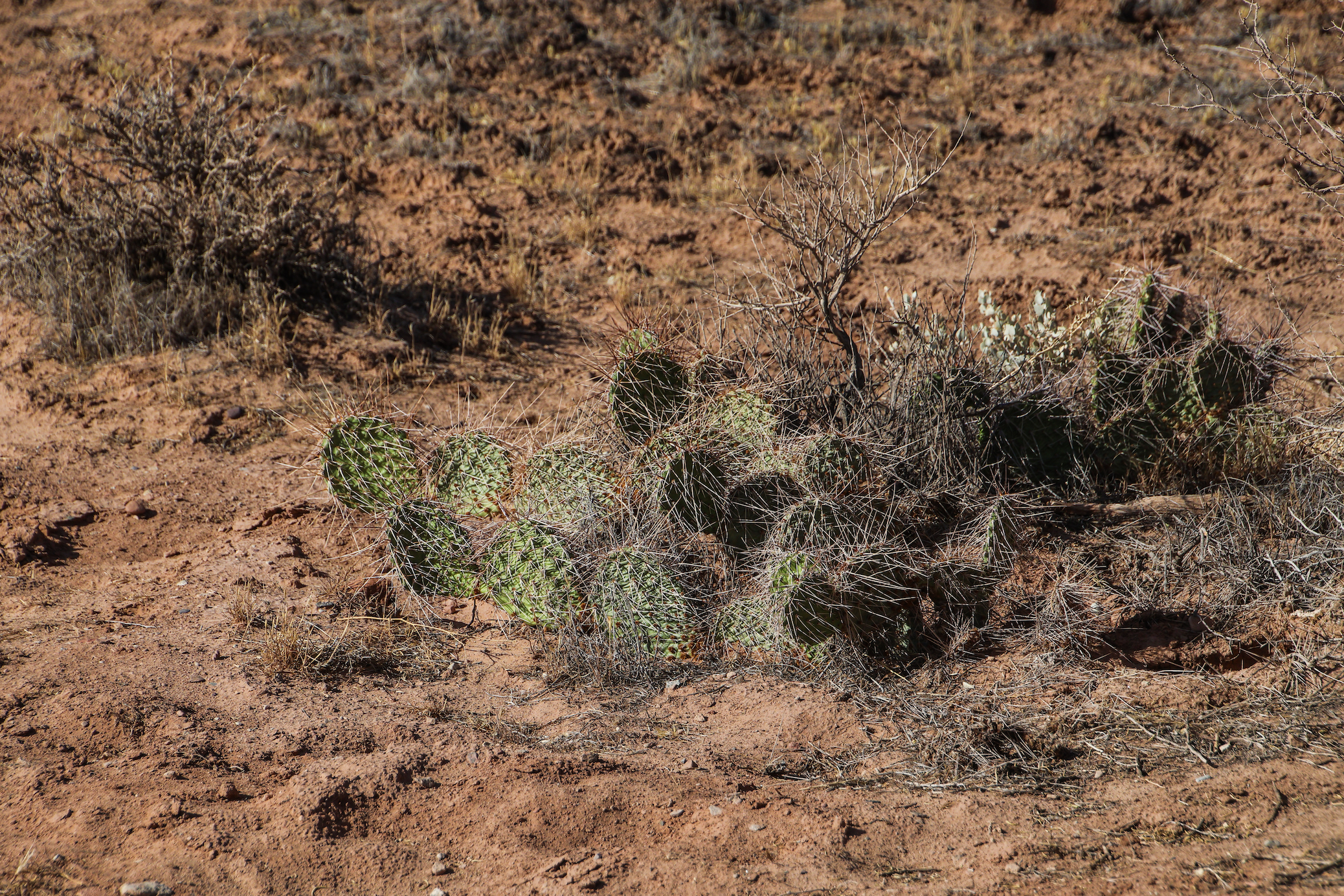
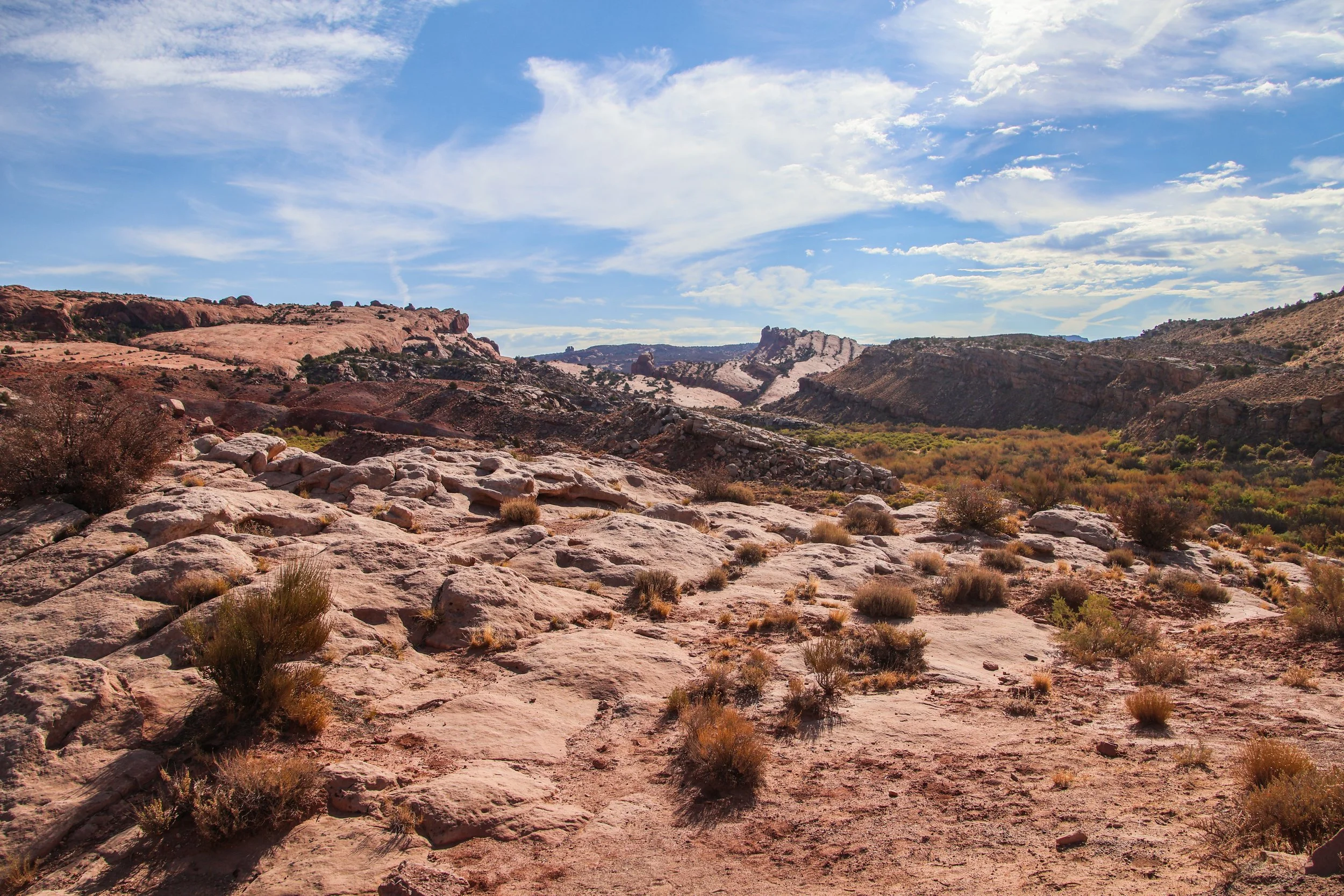
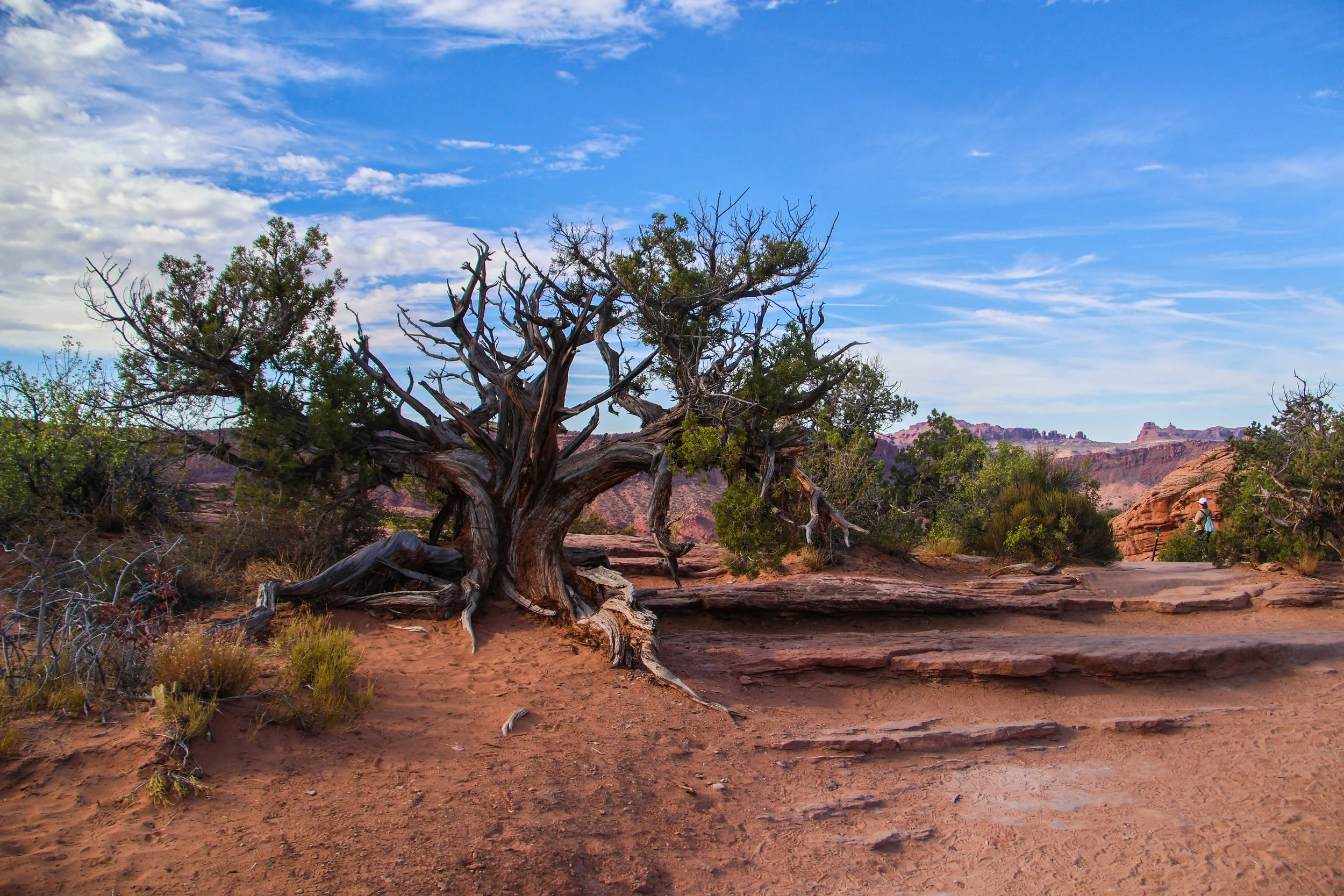
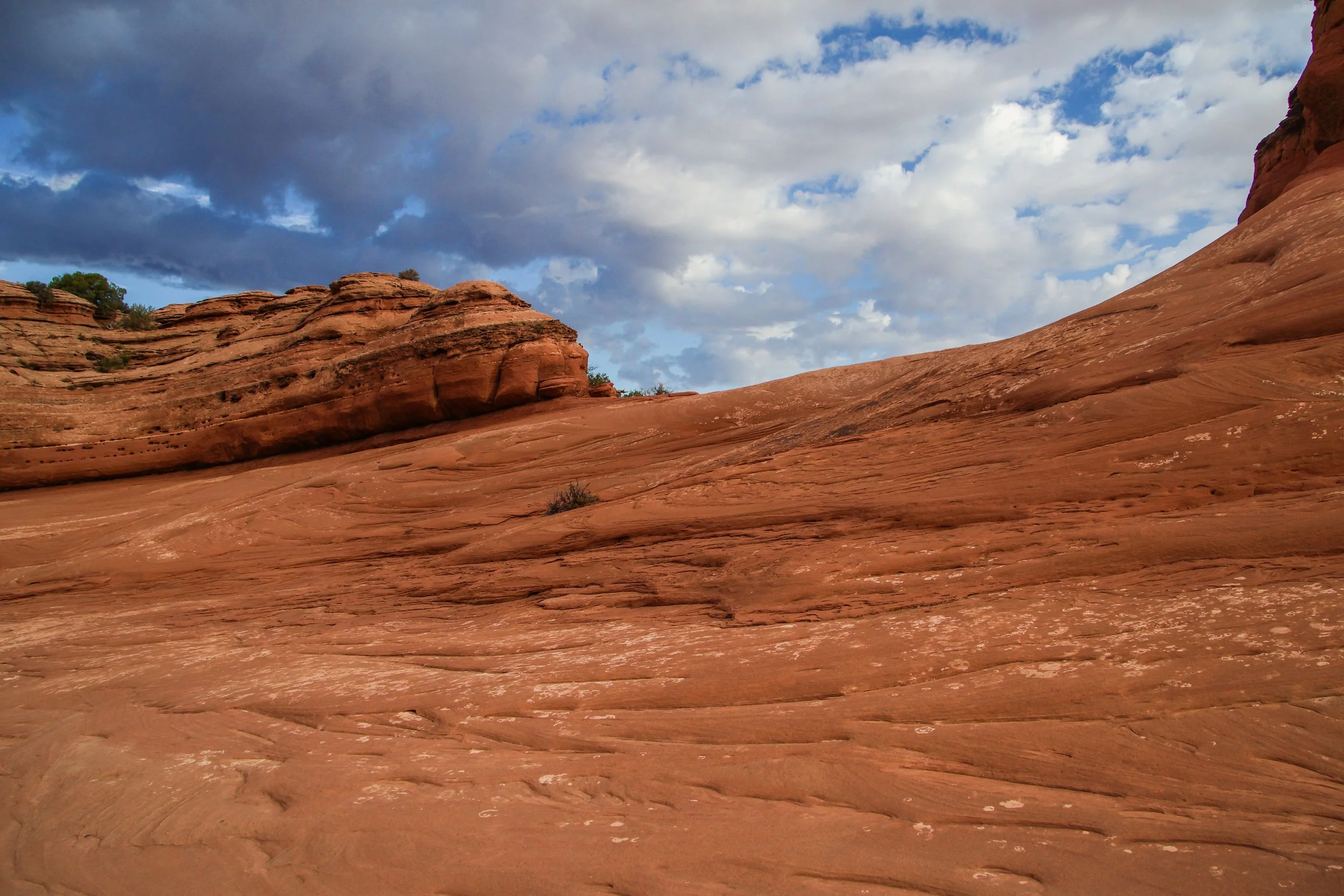
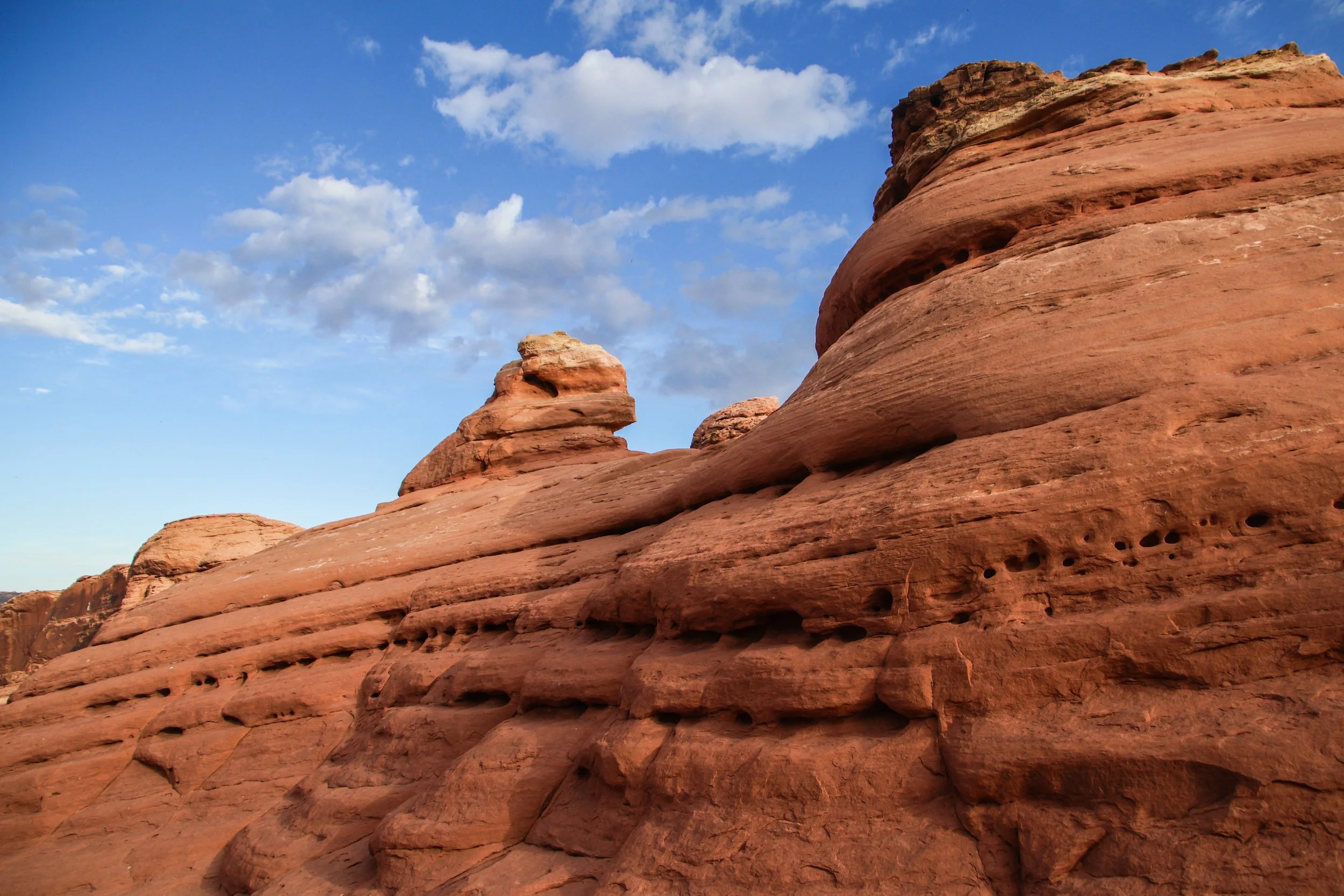
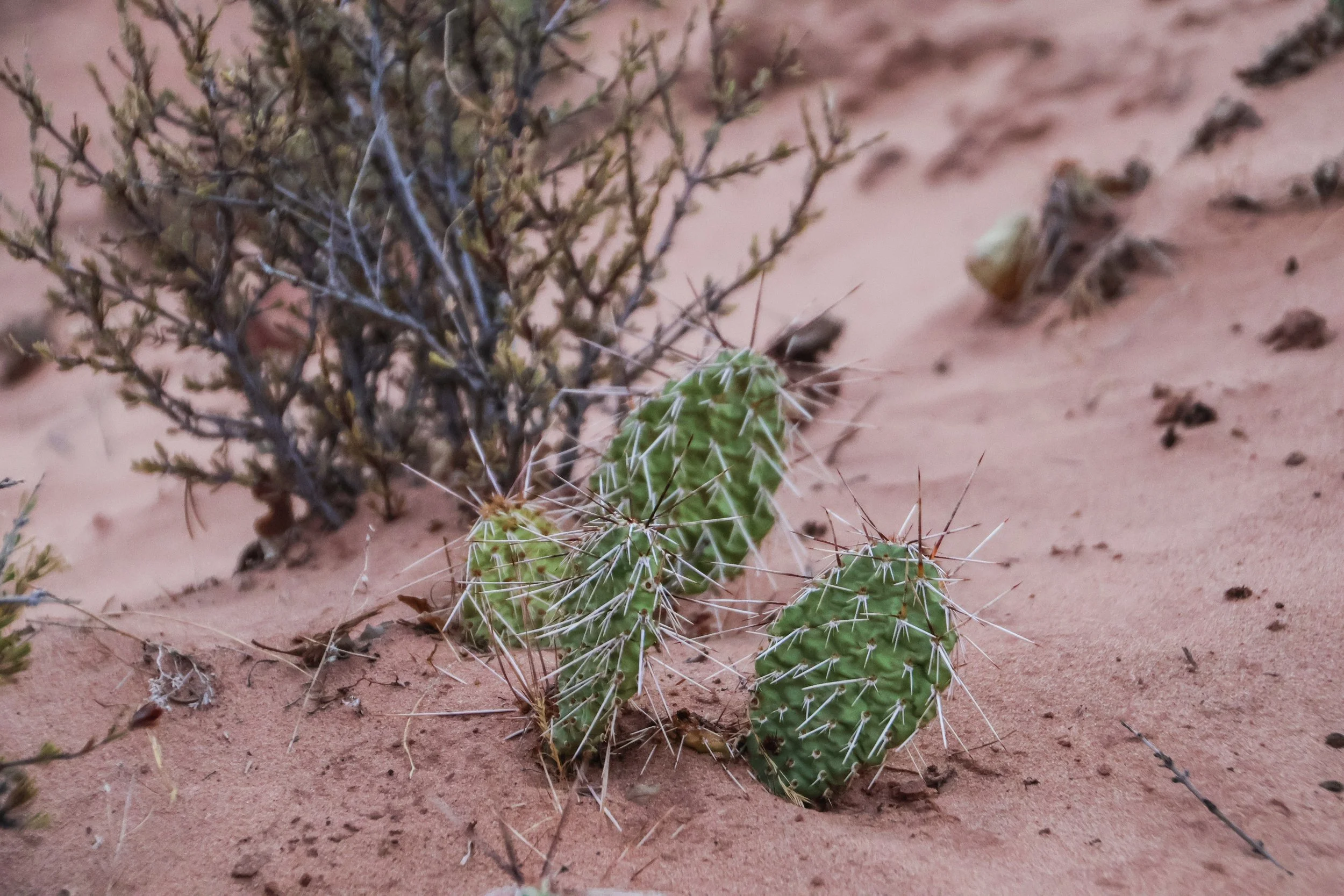
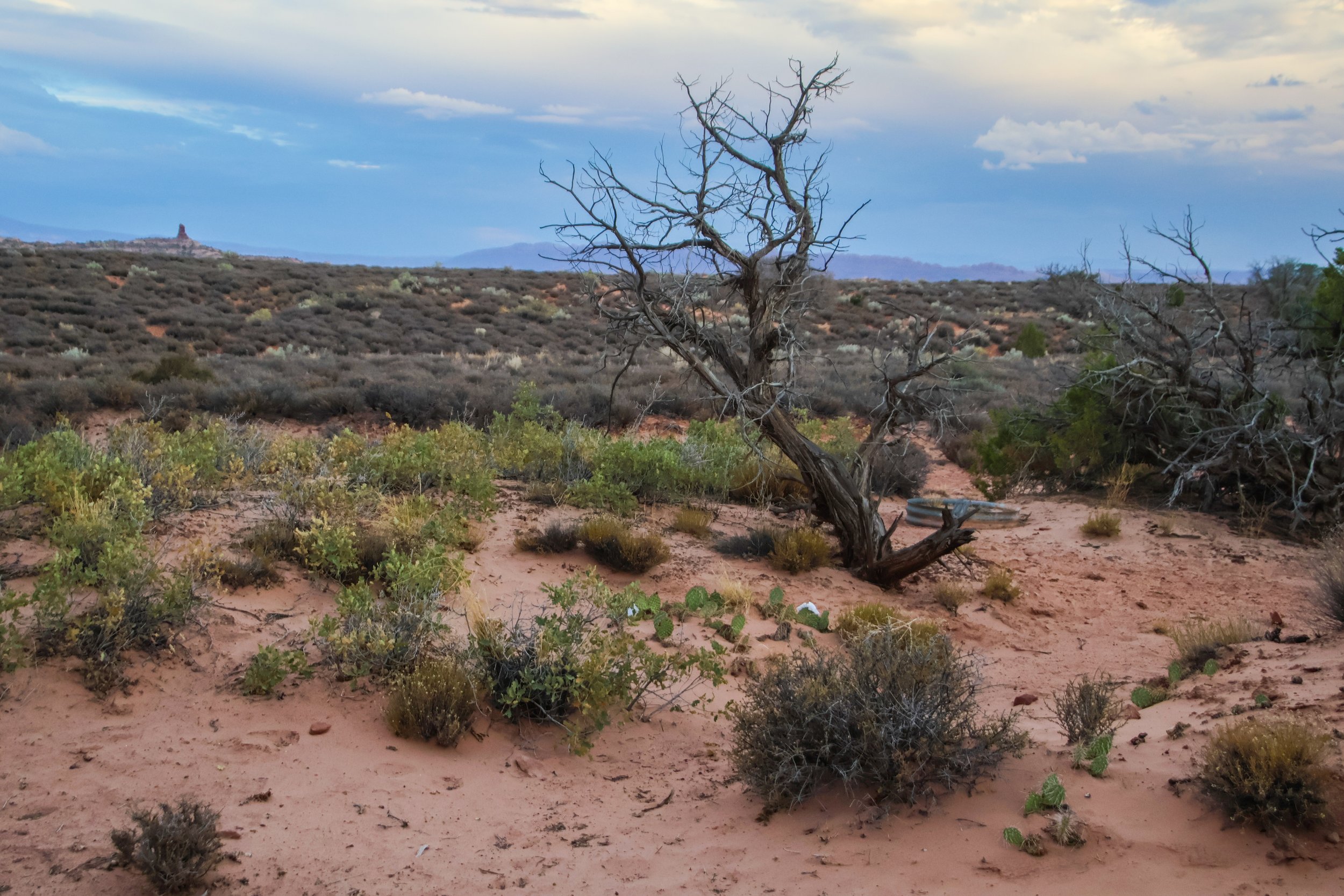
Although the jagged rocks and the cacti might give an impression of a place that is altogether unfriendly to human visitors, the majority of this hike is actually smooth sand and slickrock. Yes, that is one word: slickrock. It means smooth, wind-polished rock. To give you an idea of exactly HOW smooth… my brother did this hike alongside me in bare feet. 🦶🏻 I don’t know if I’d recommend that… but I will say that the ground out here felt surprisingly forgiving beneath my feet. Have you ever been somewhere and felt like it was just too perfect? Like the world is a playground made for your comfort? I felt that way on this trail at times. However, that feeling burned away pretty quickly as the mid-day sun rose higher in the sky, but for the early portions of this hike, when we were still cool and comfortable, it all felt a bit too good to be true.
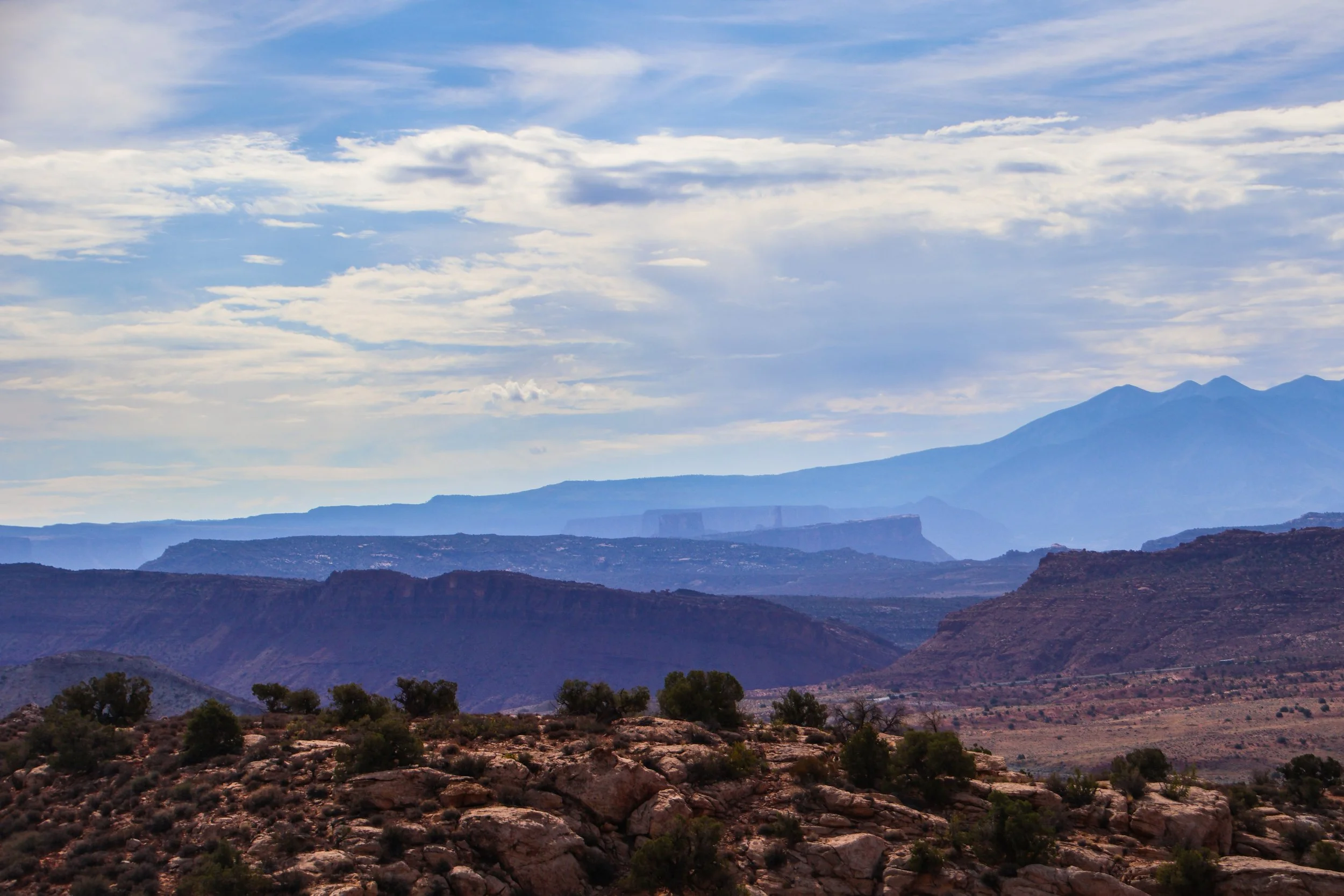
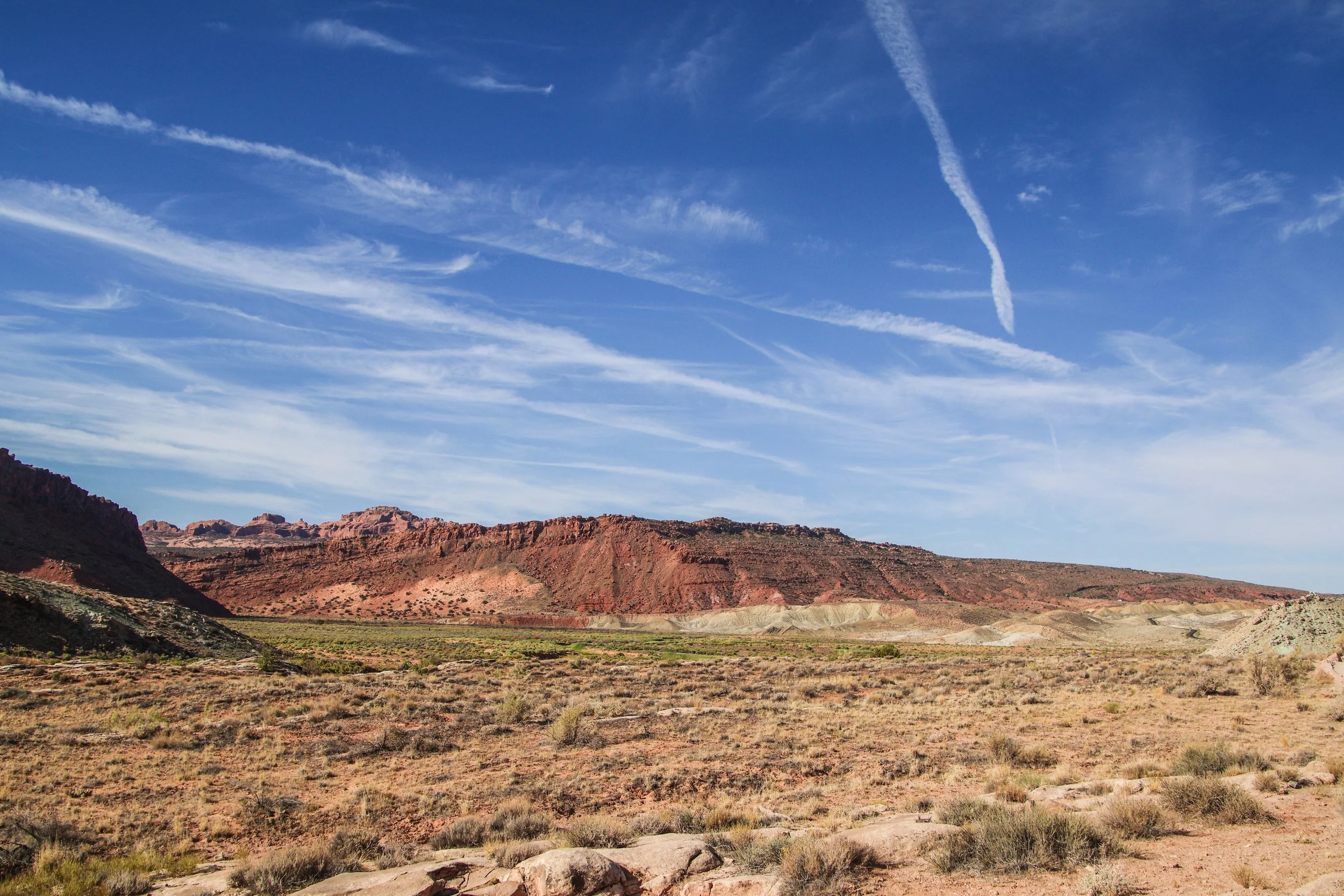
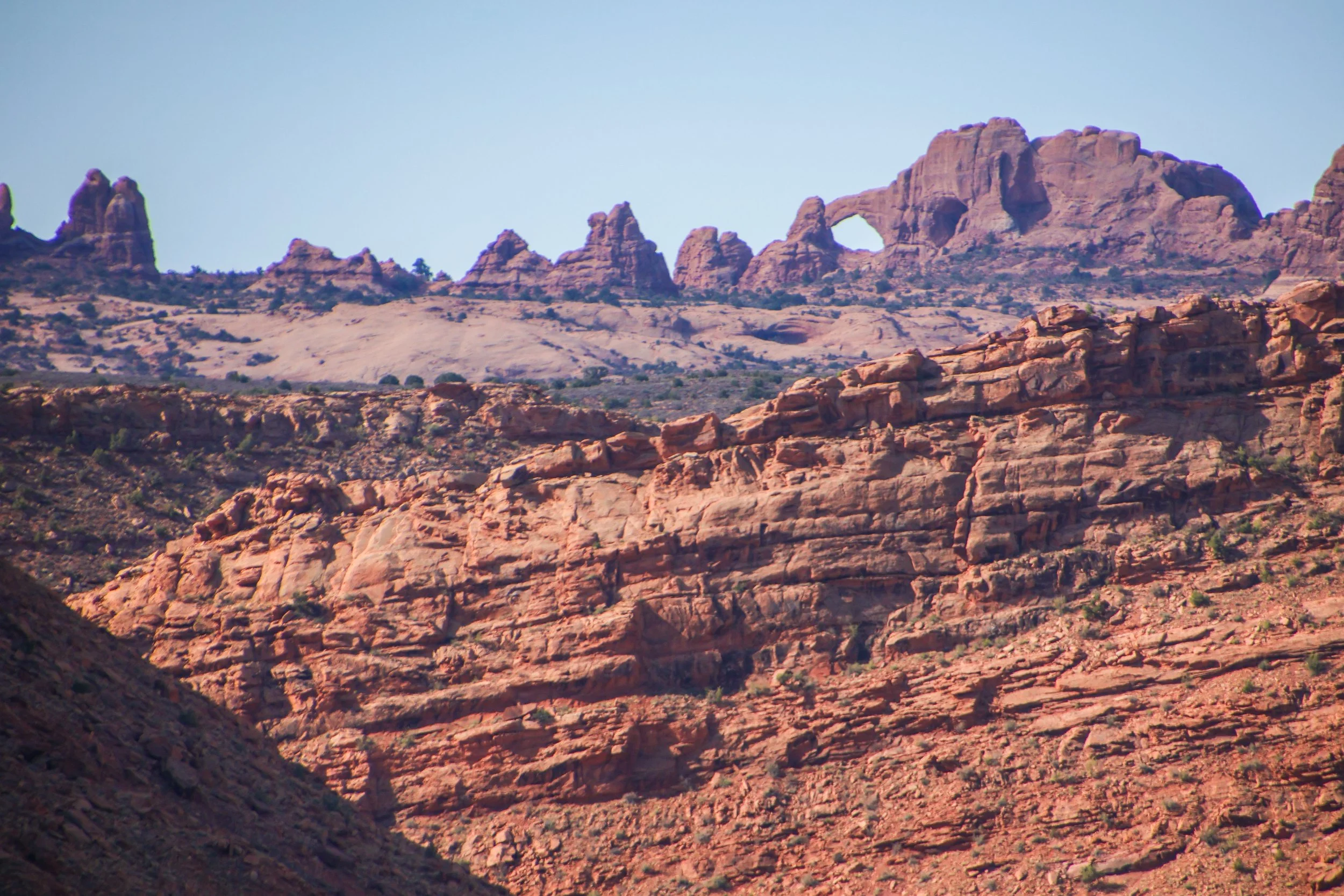
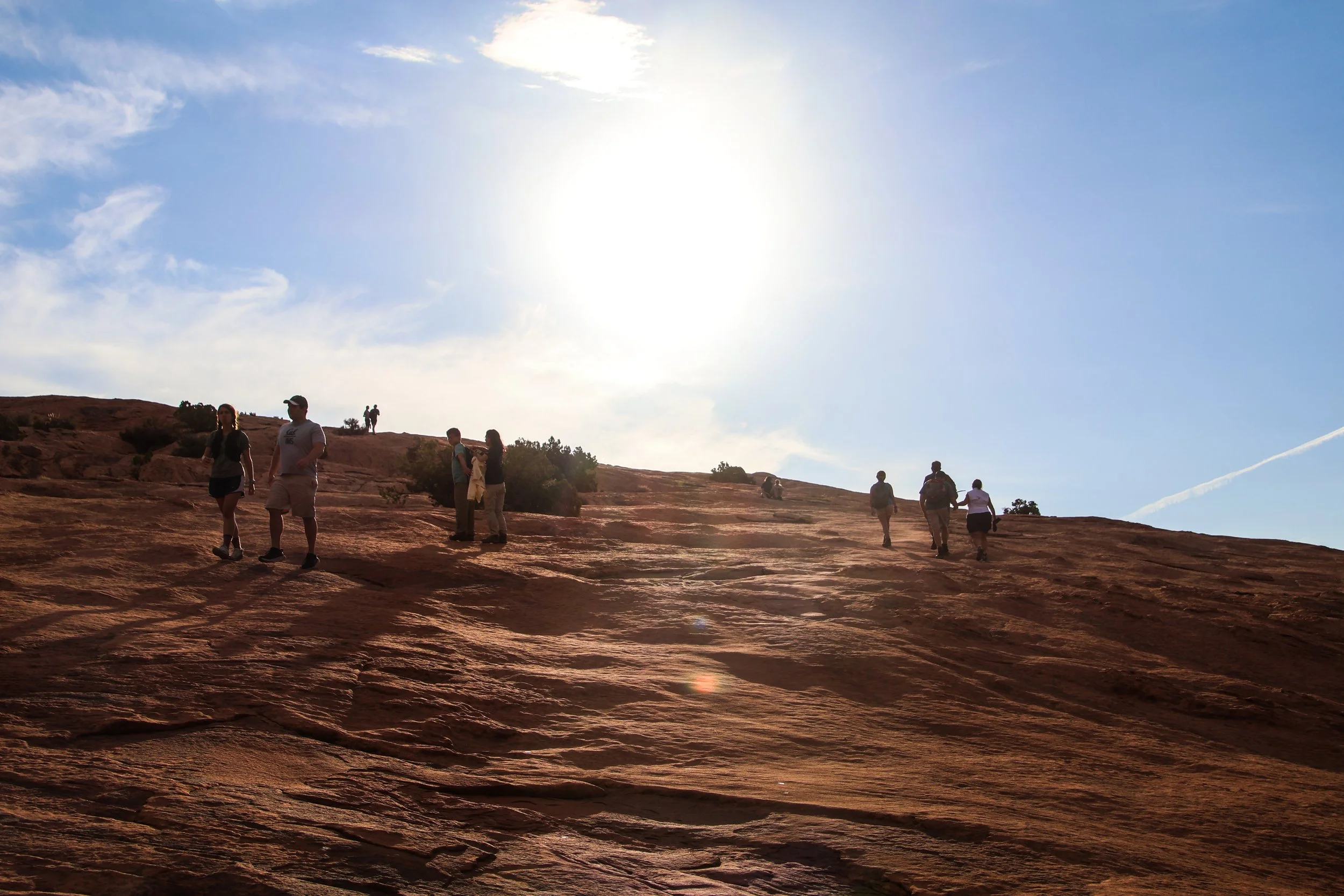
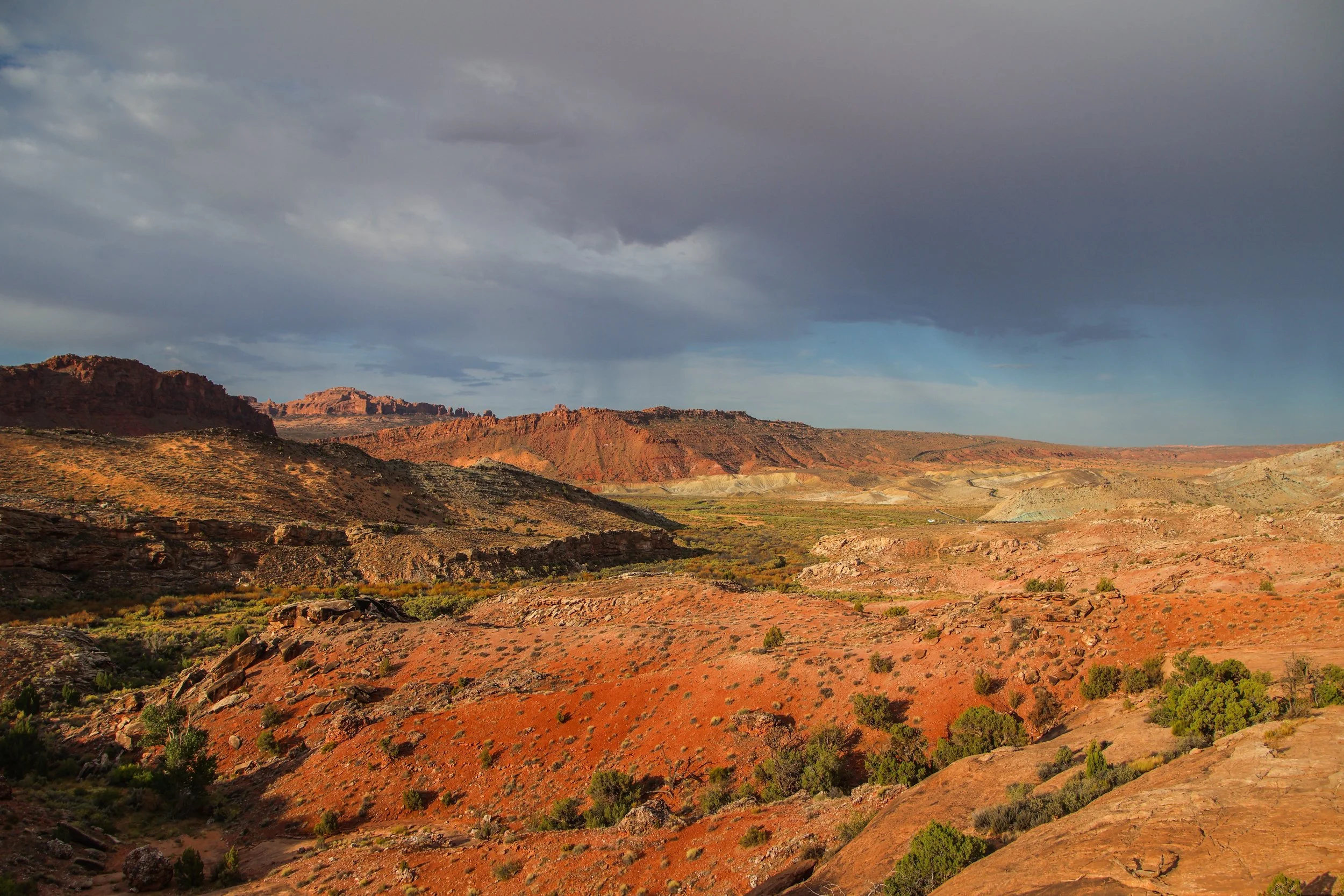
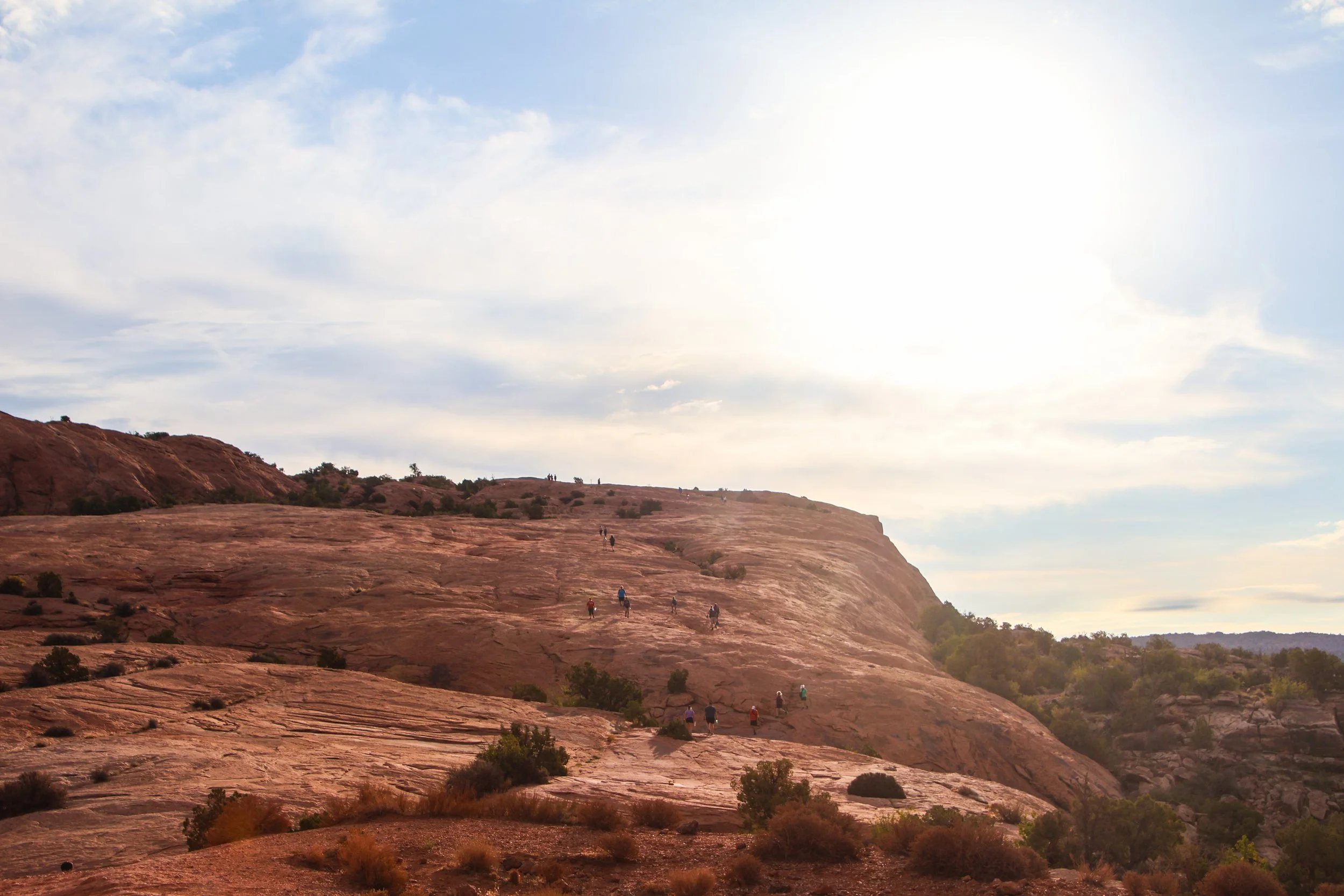
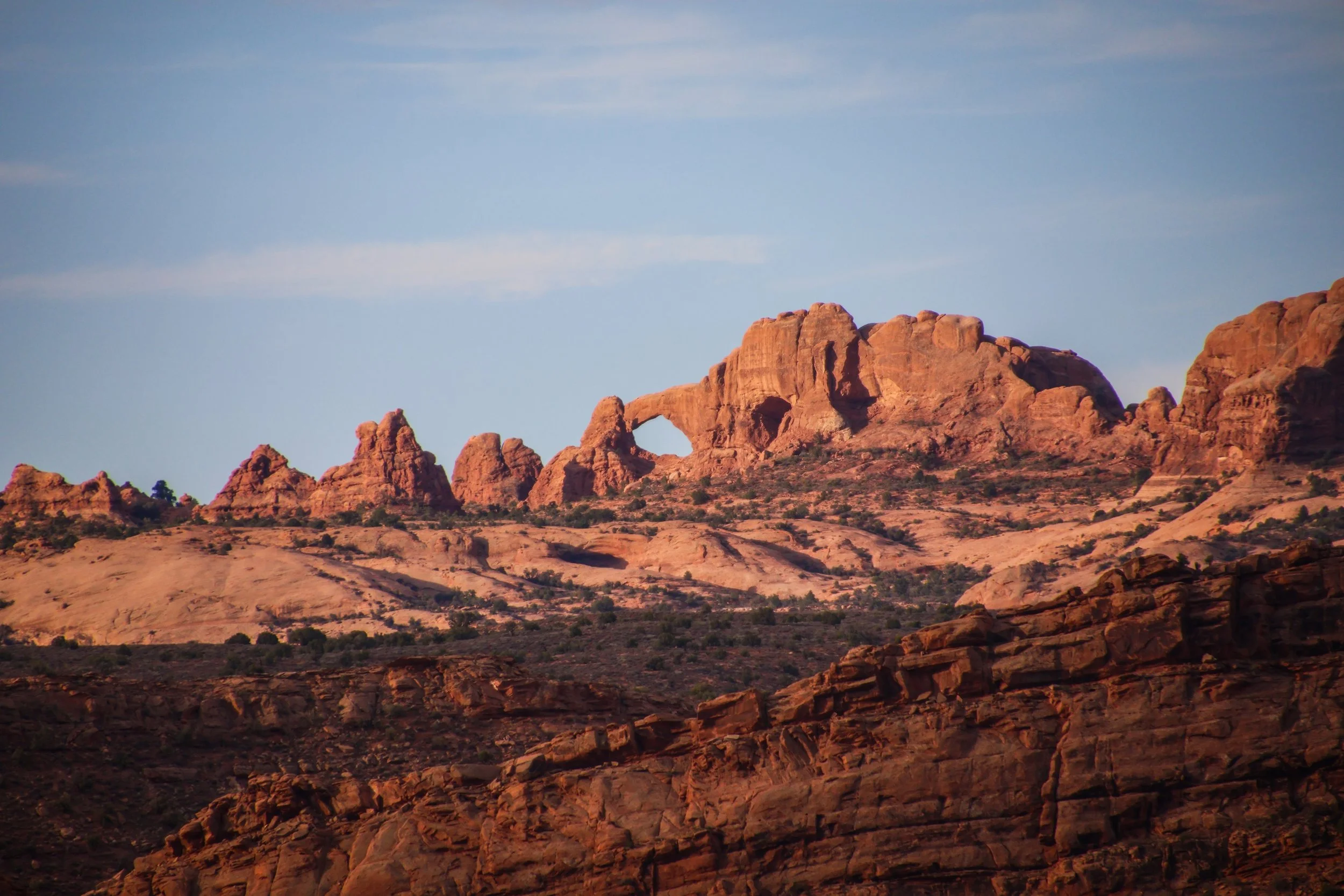
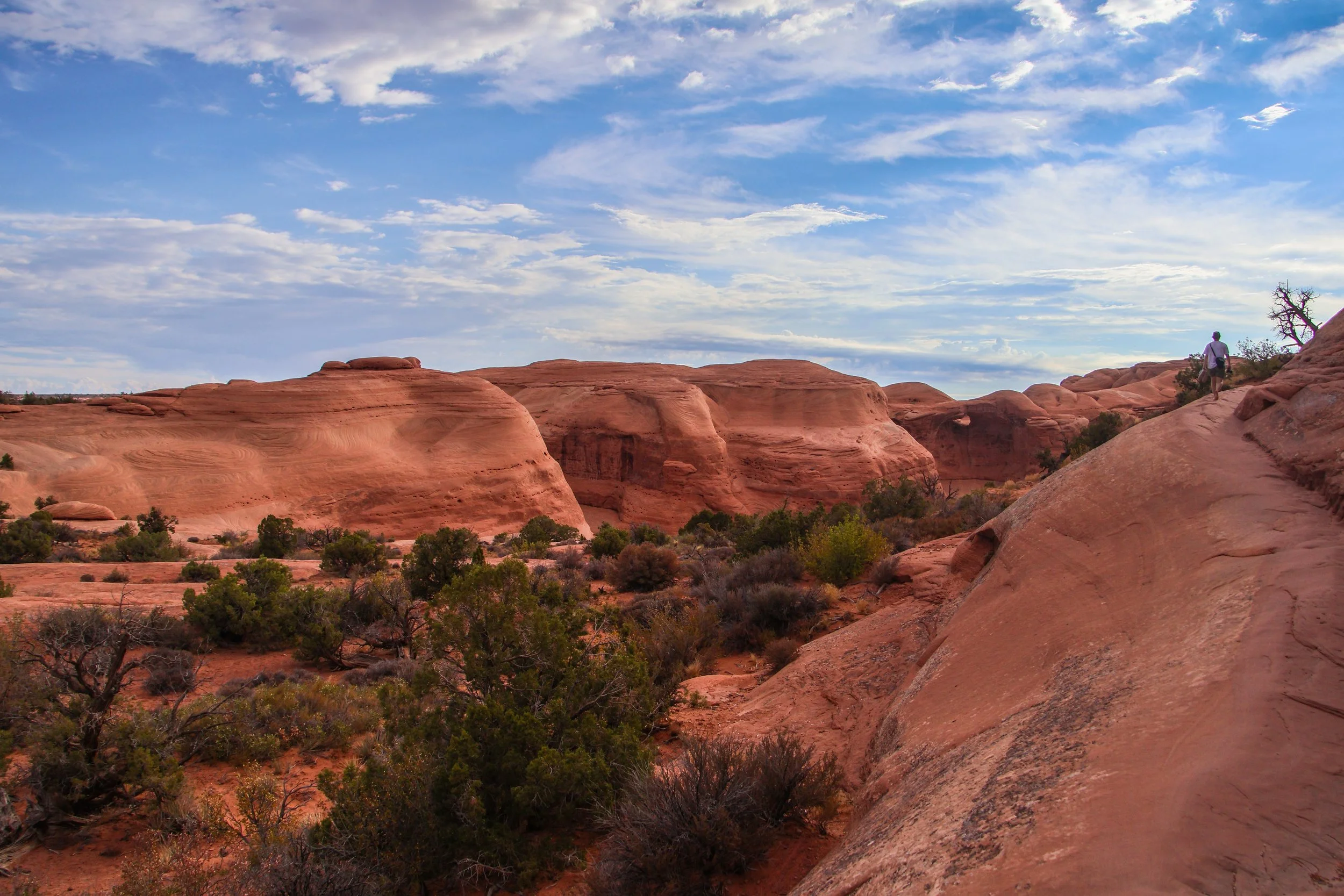
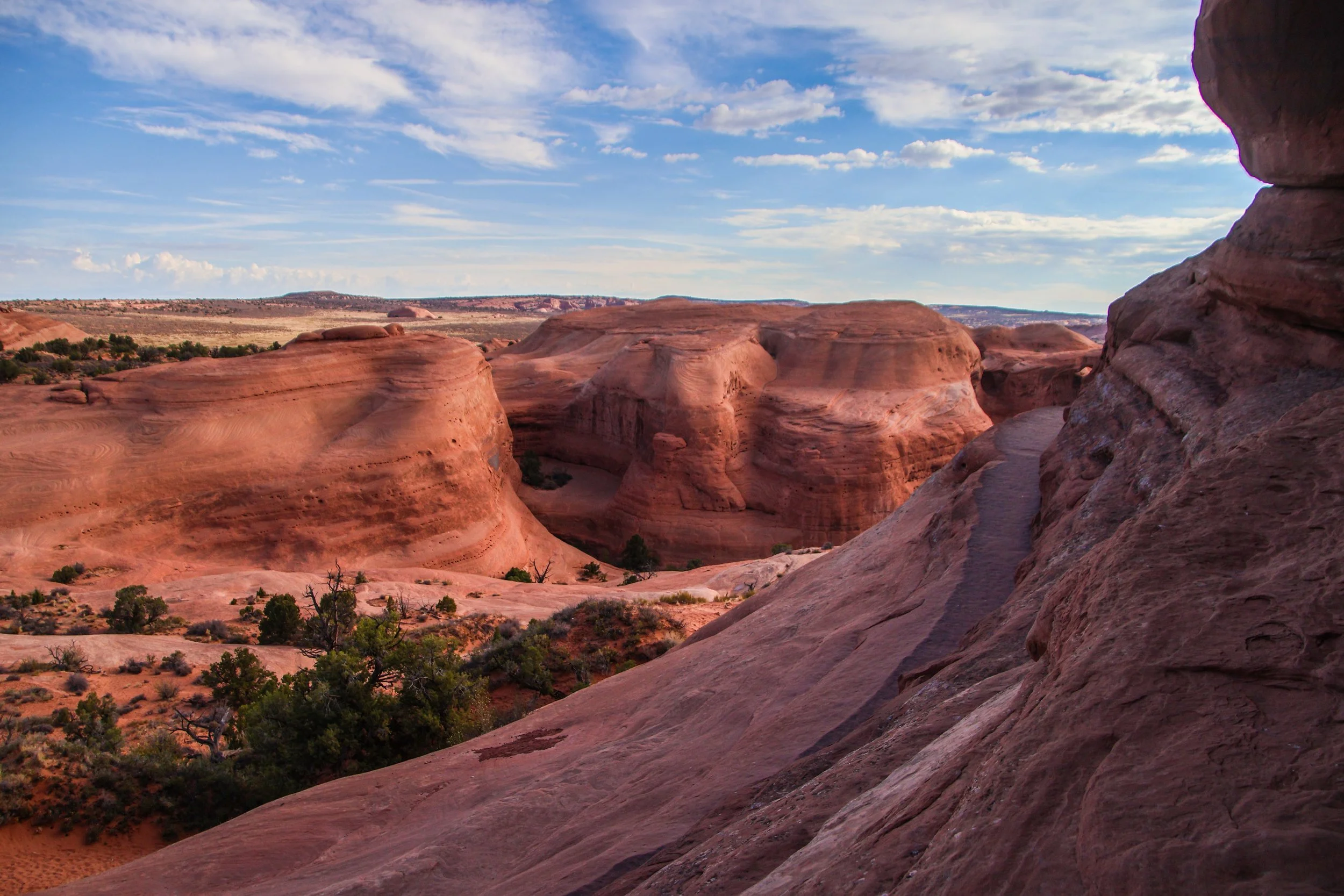
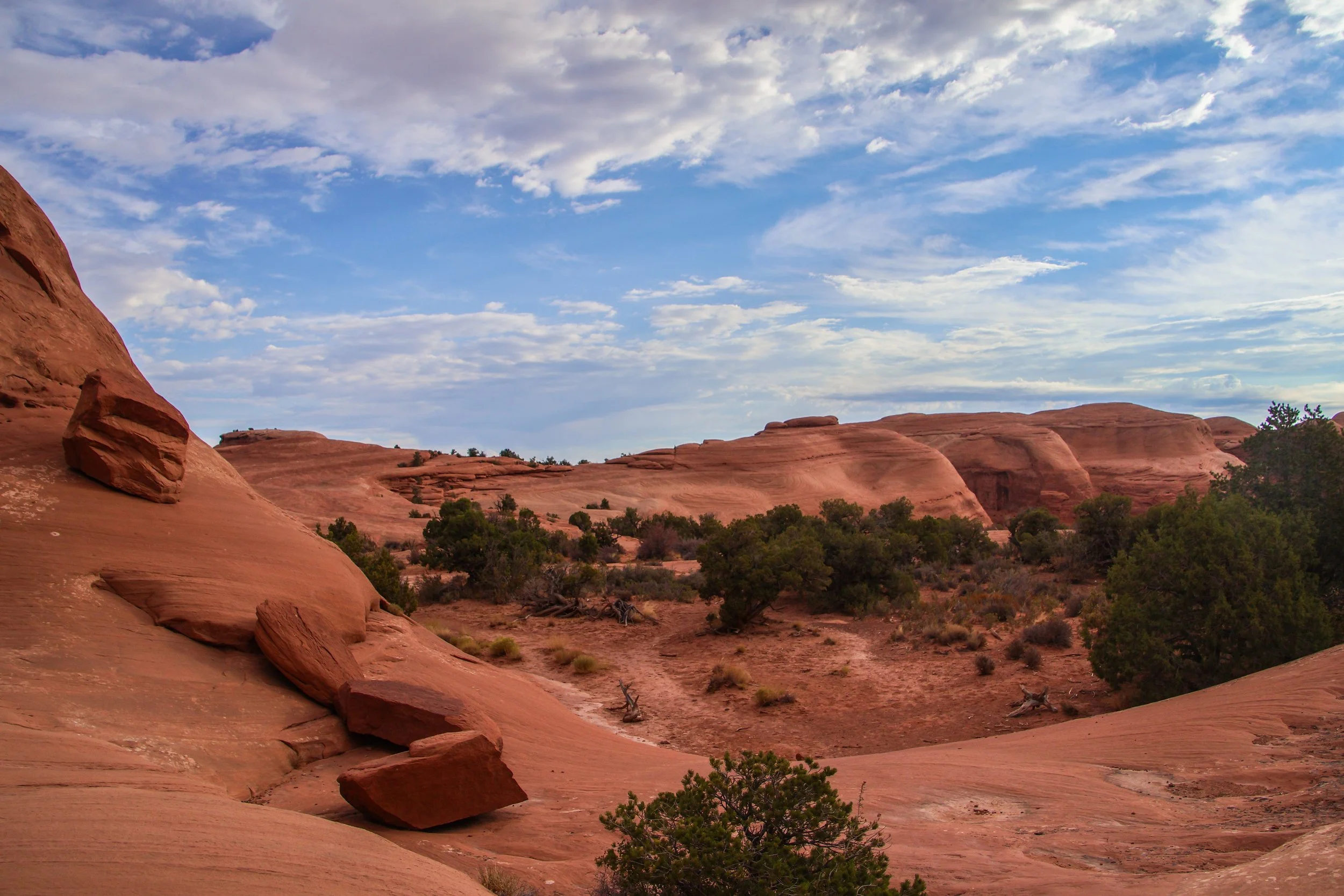
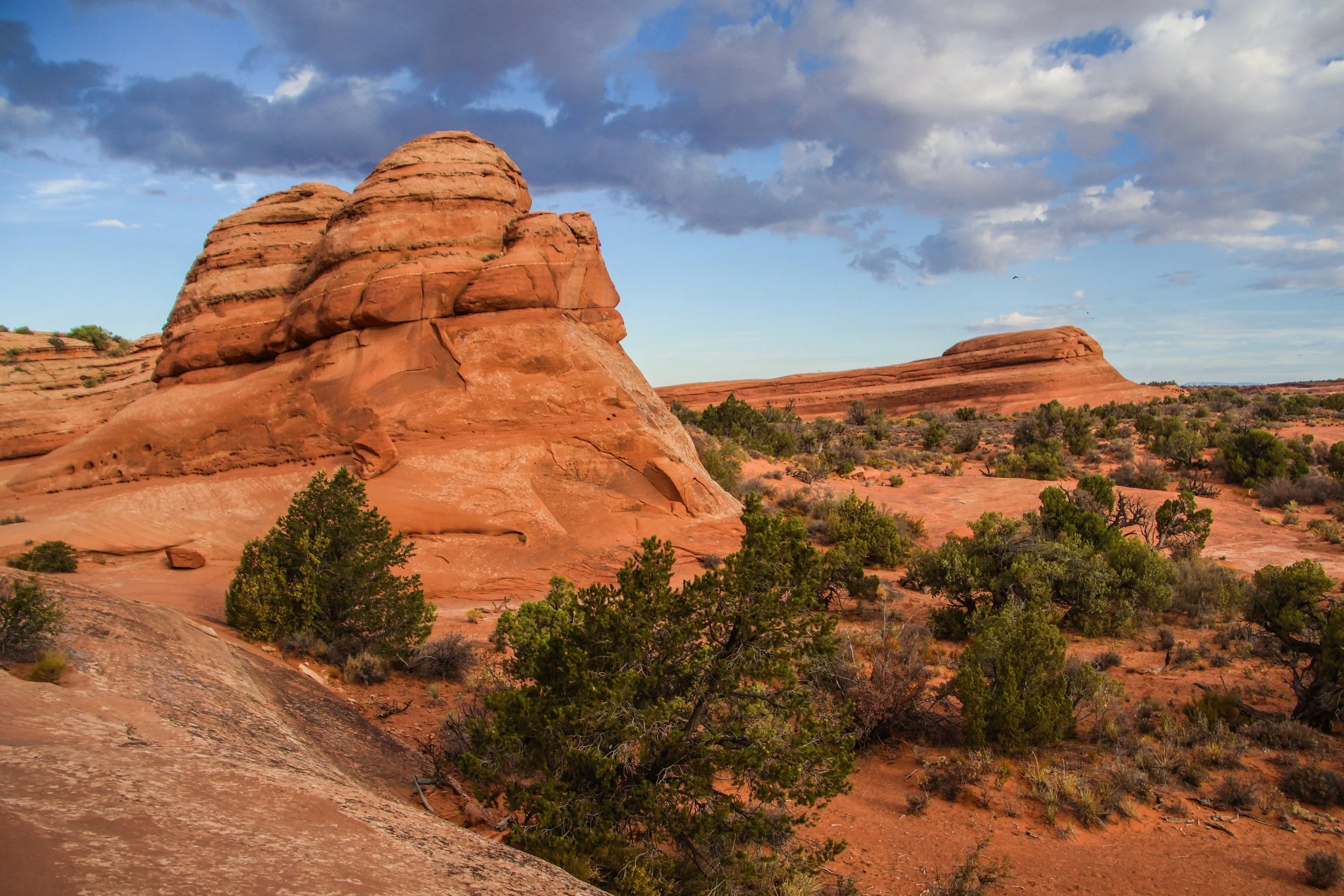
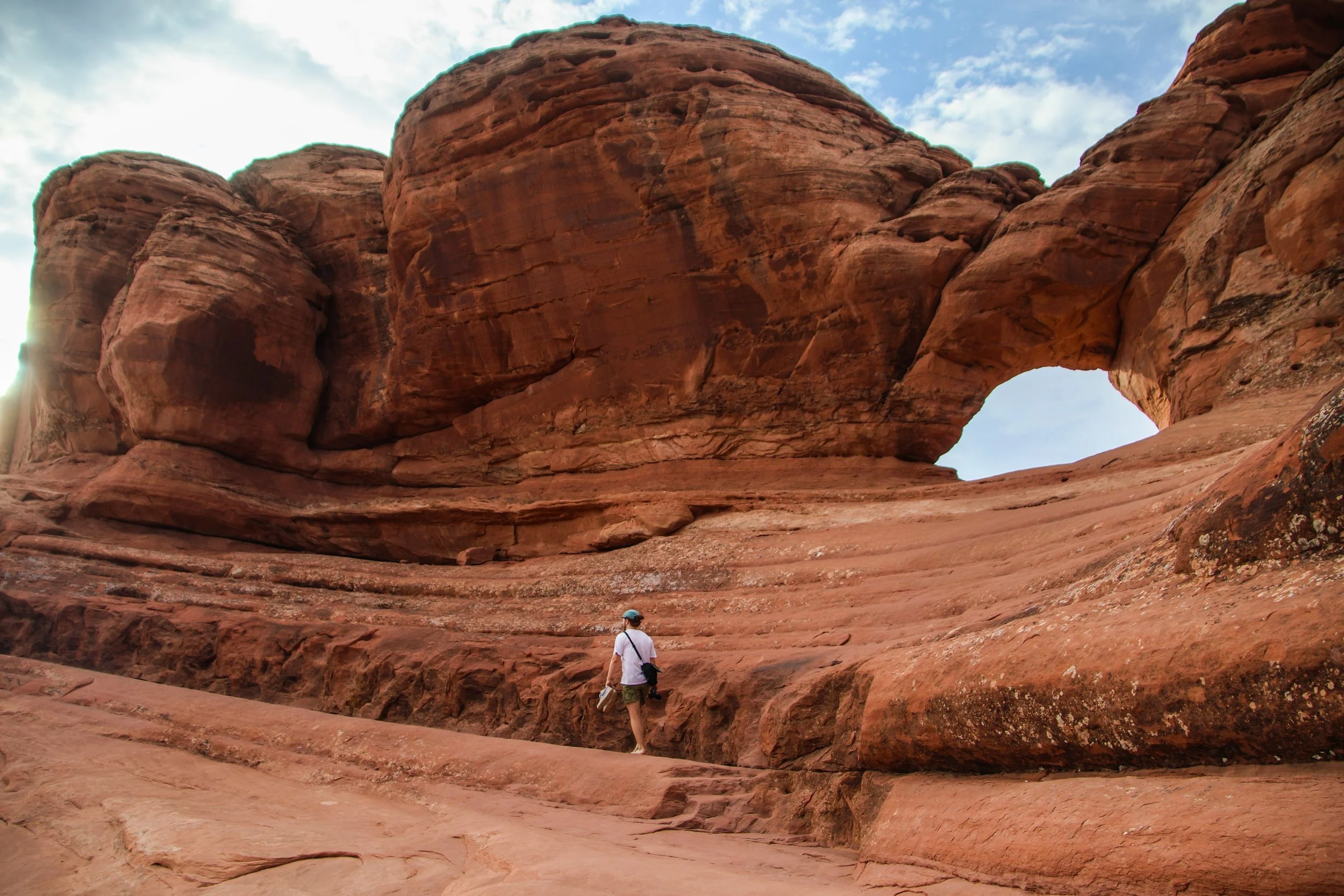
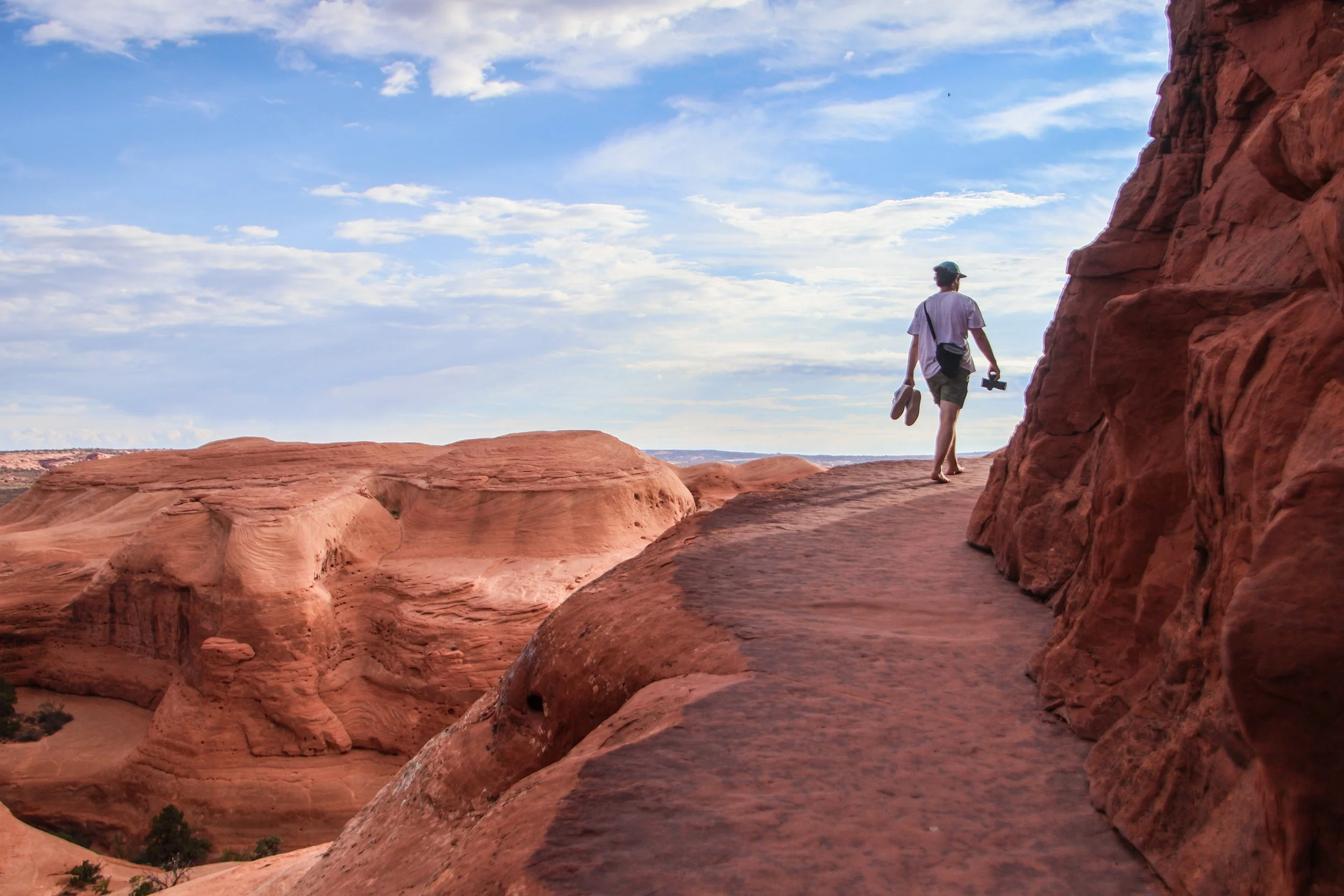
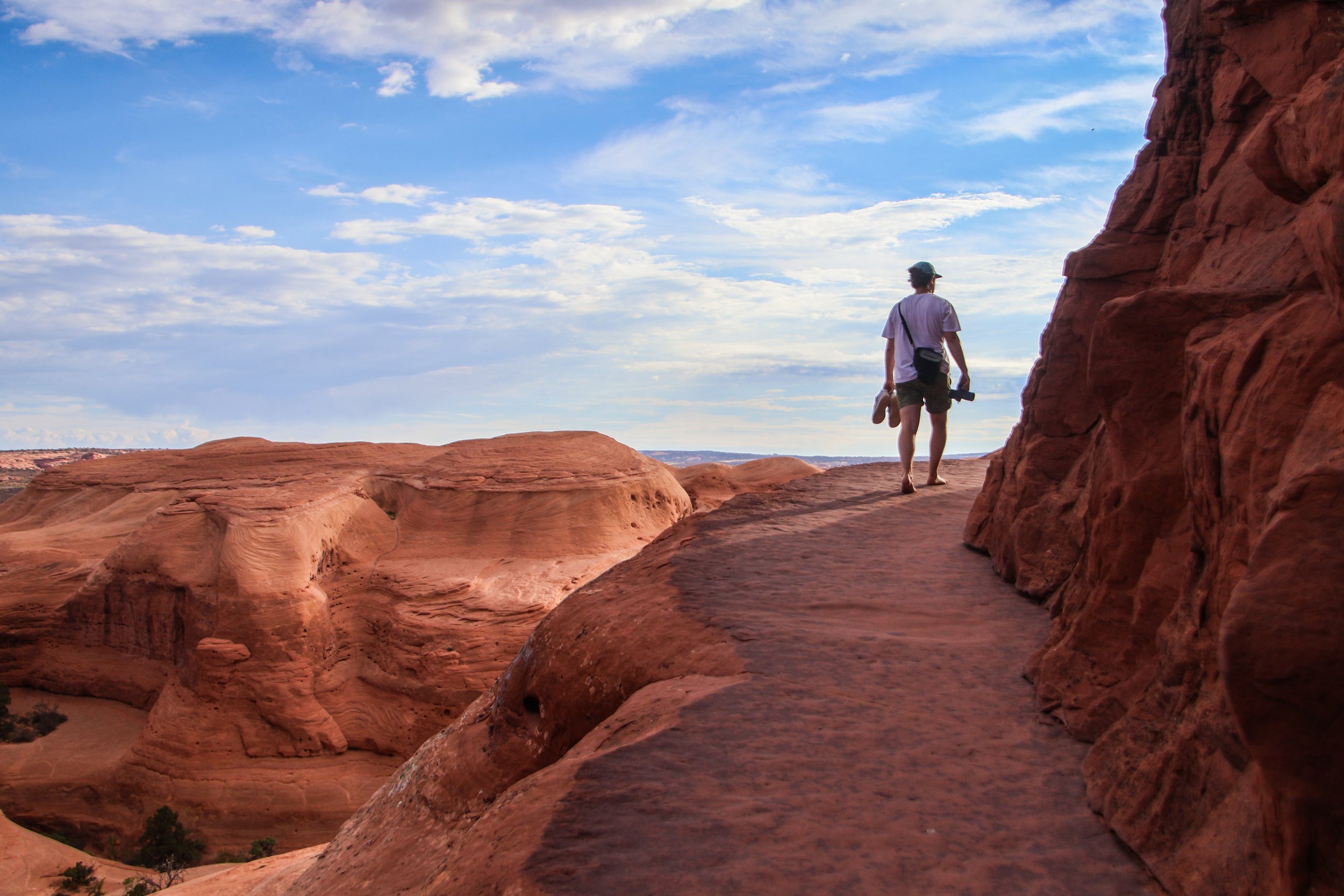
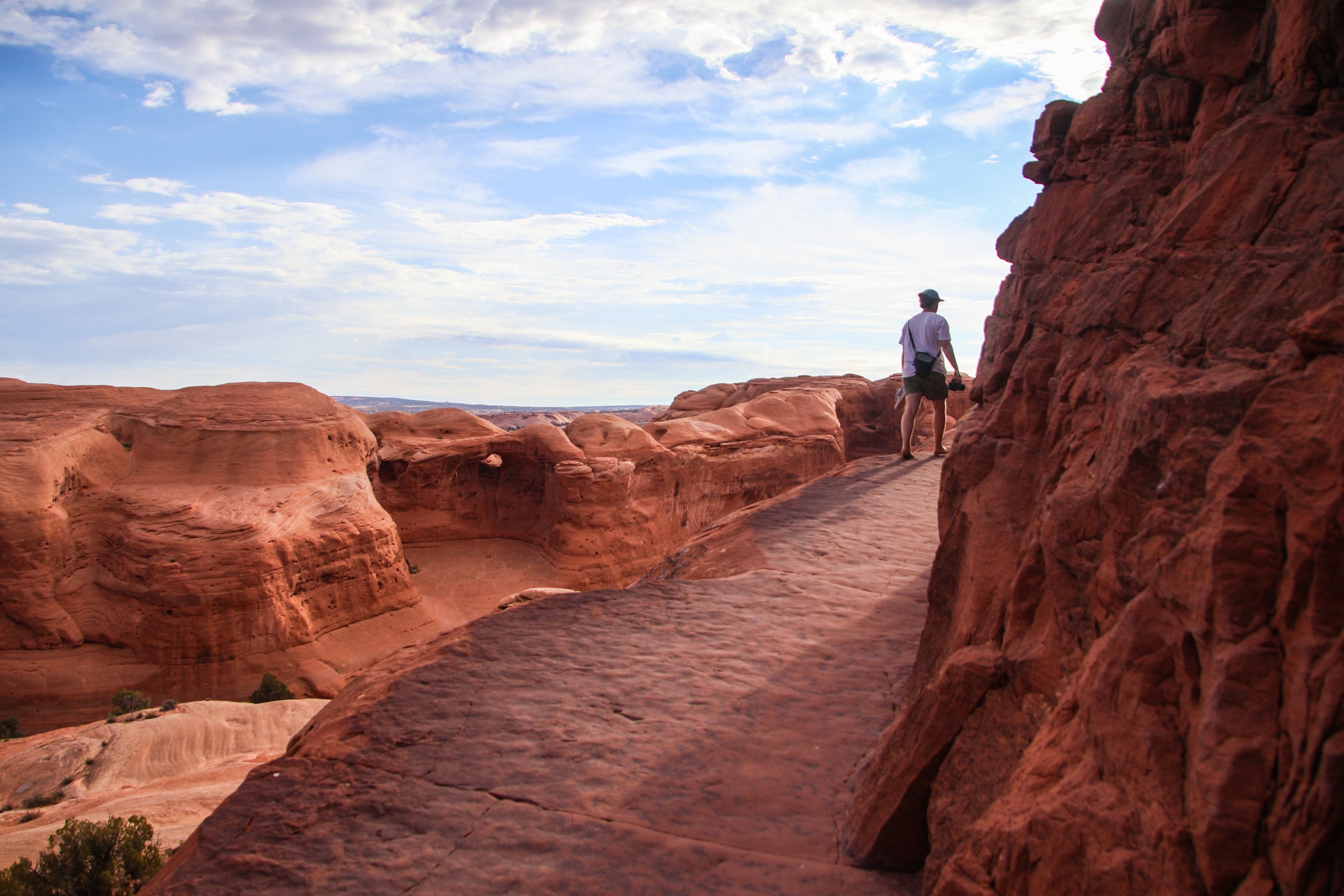
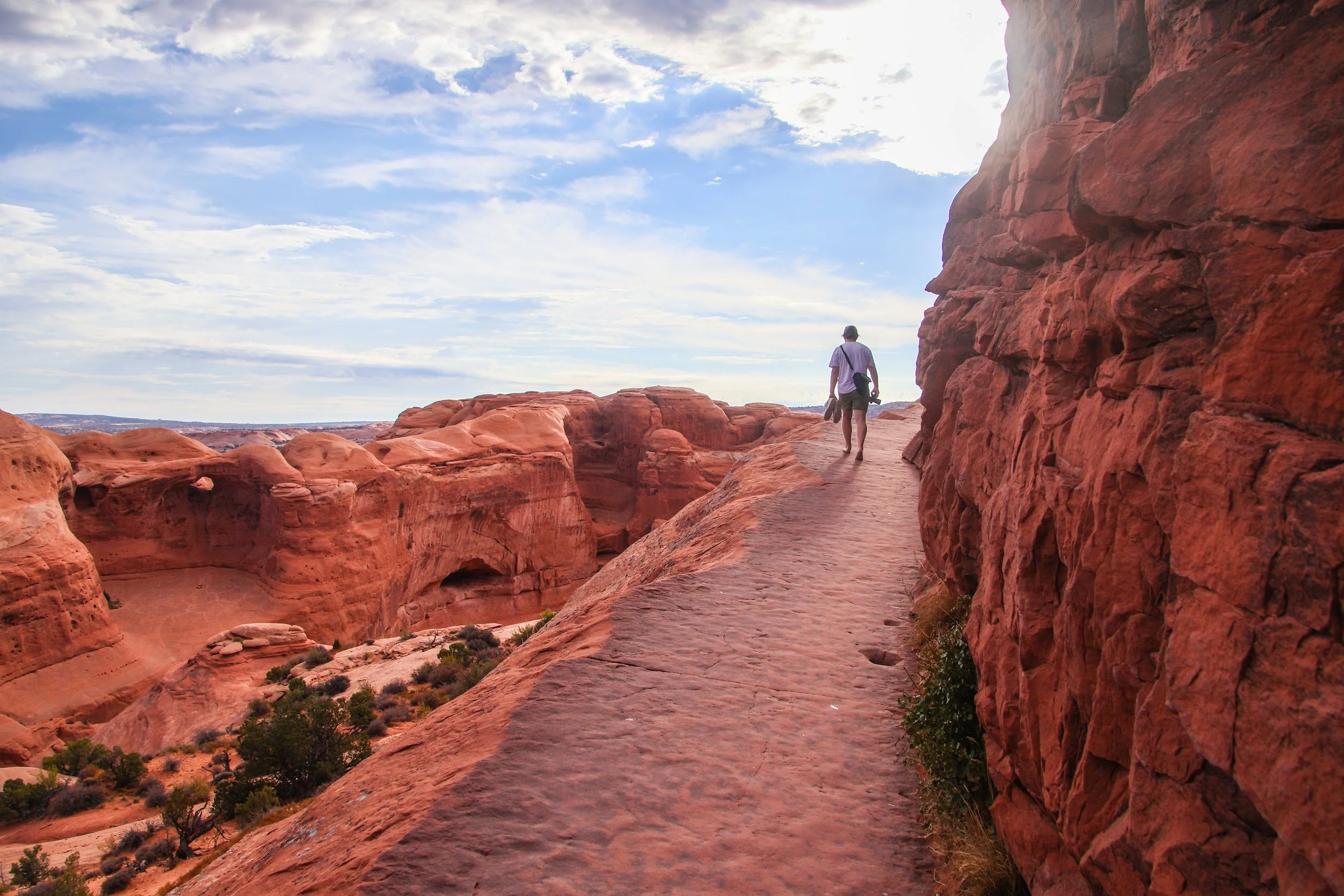
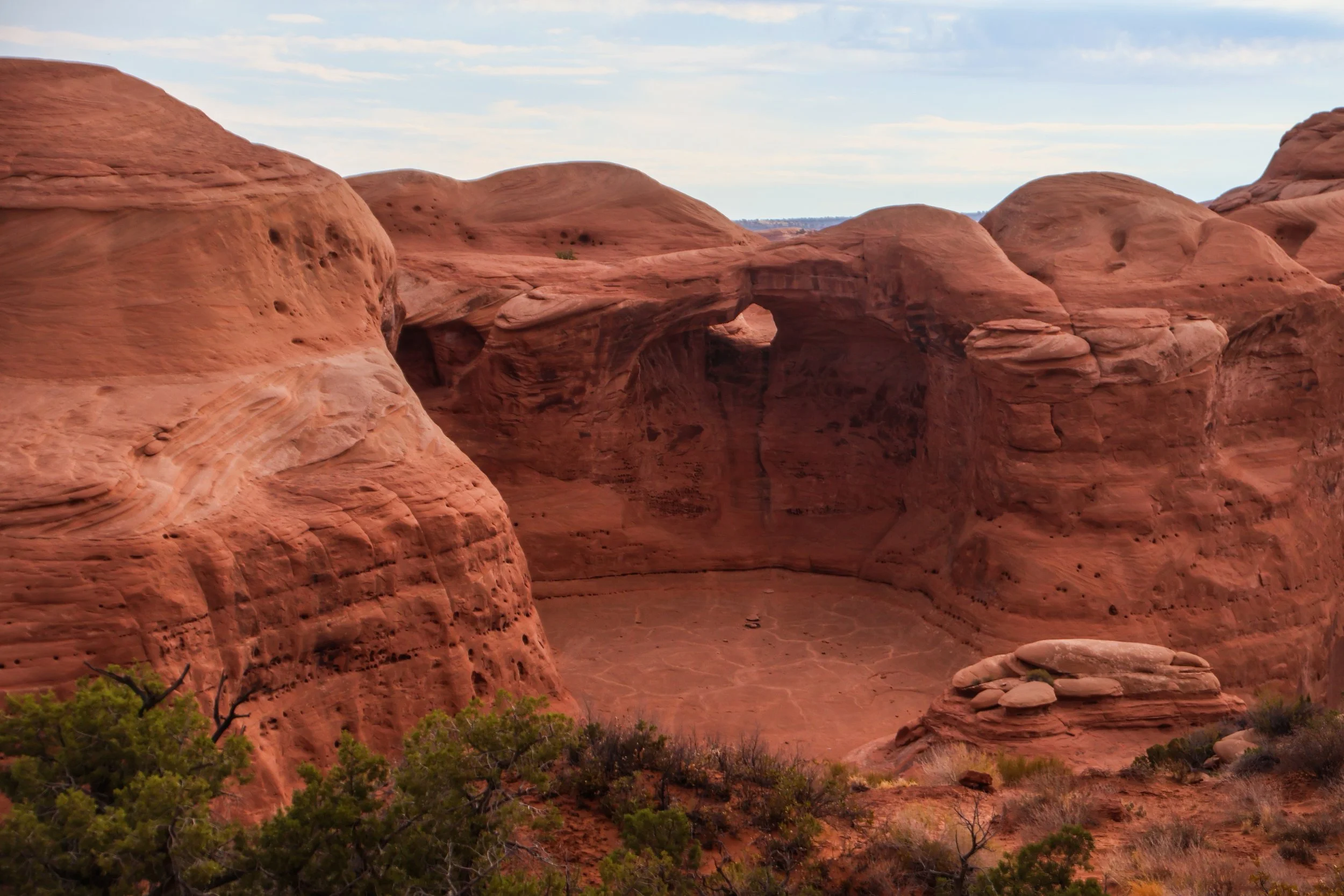
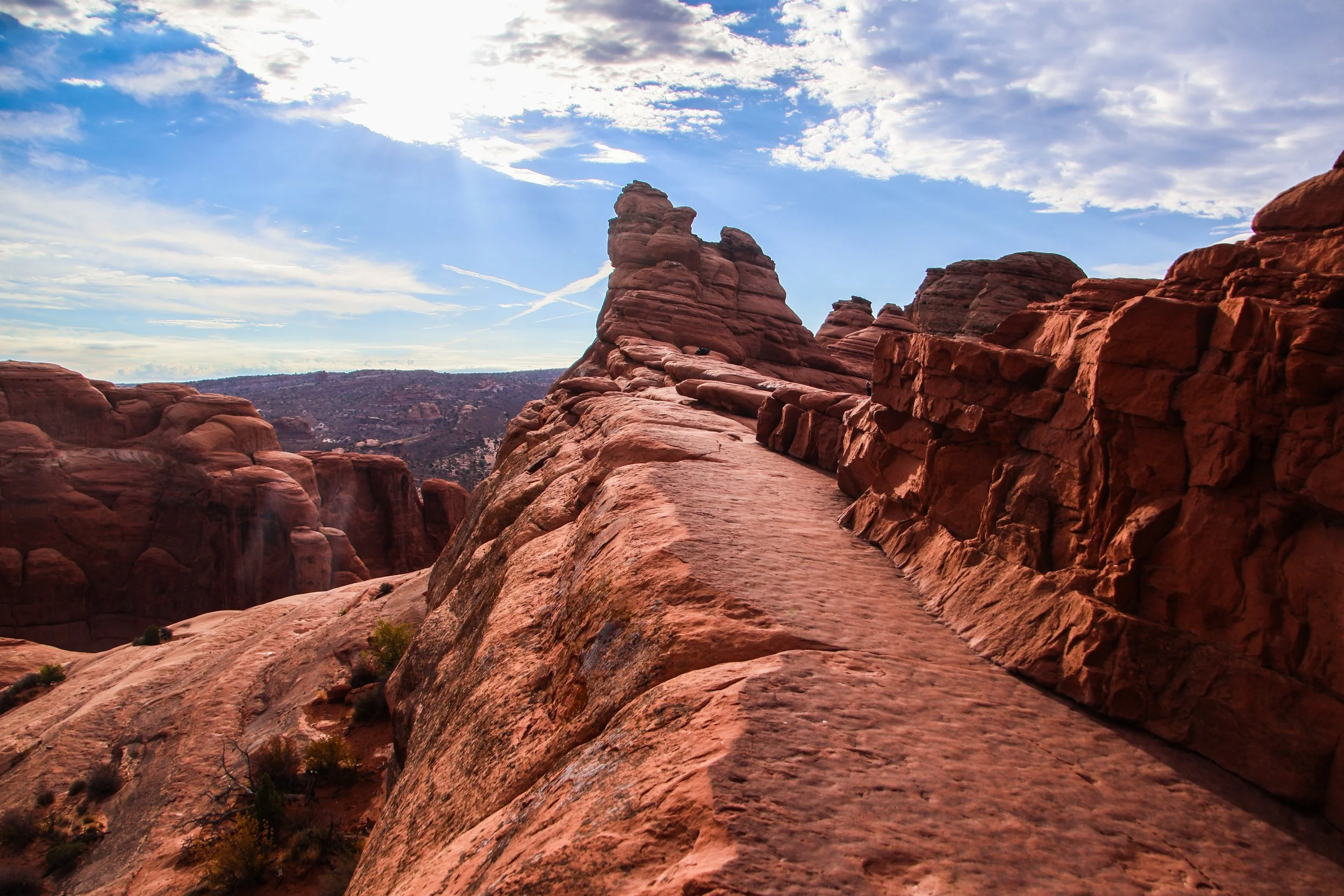
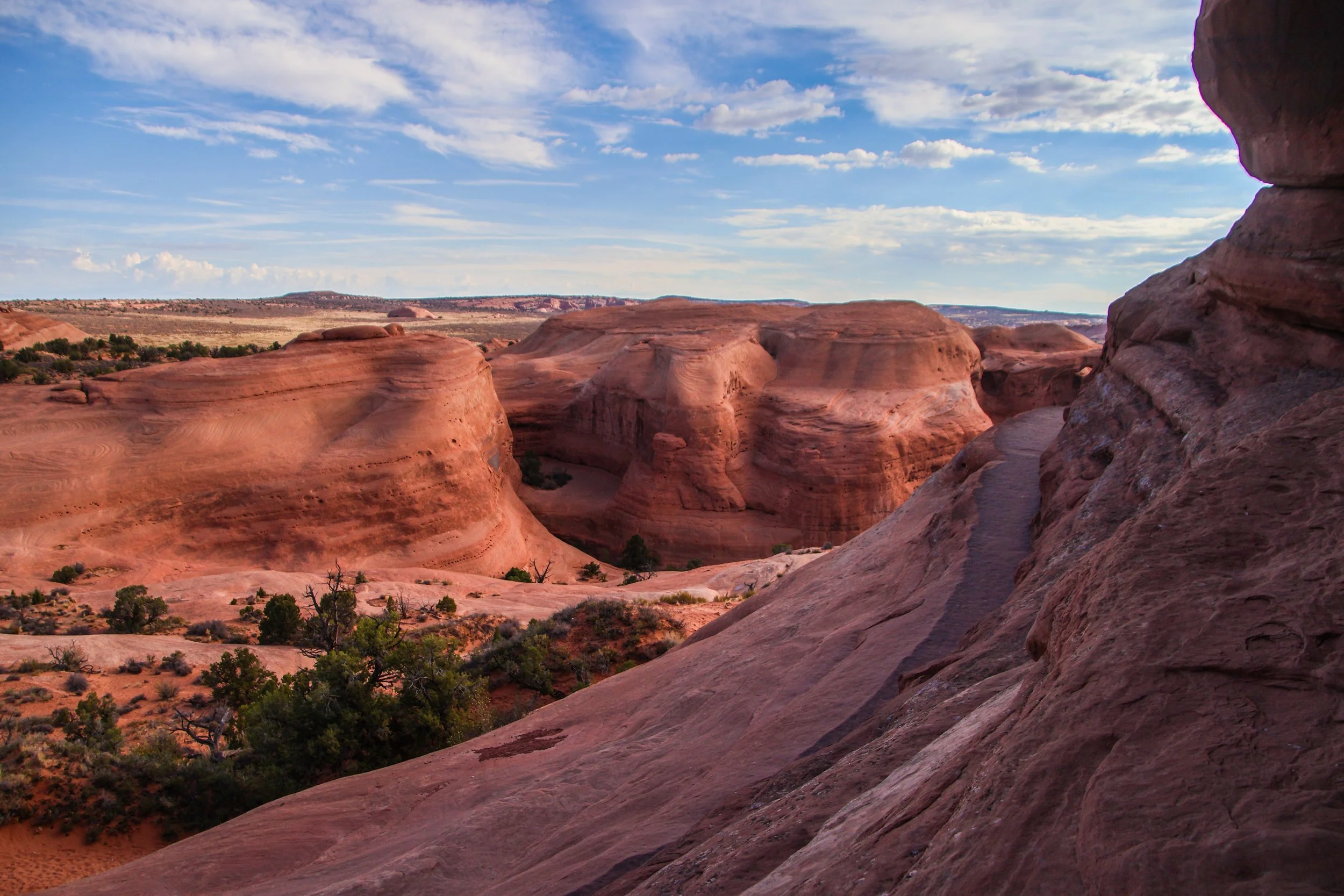
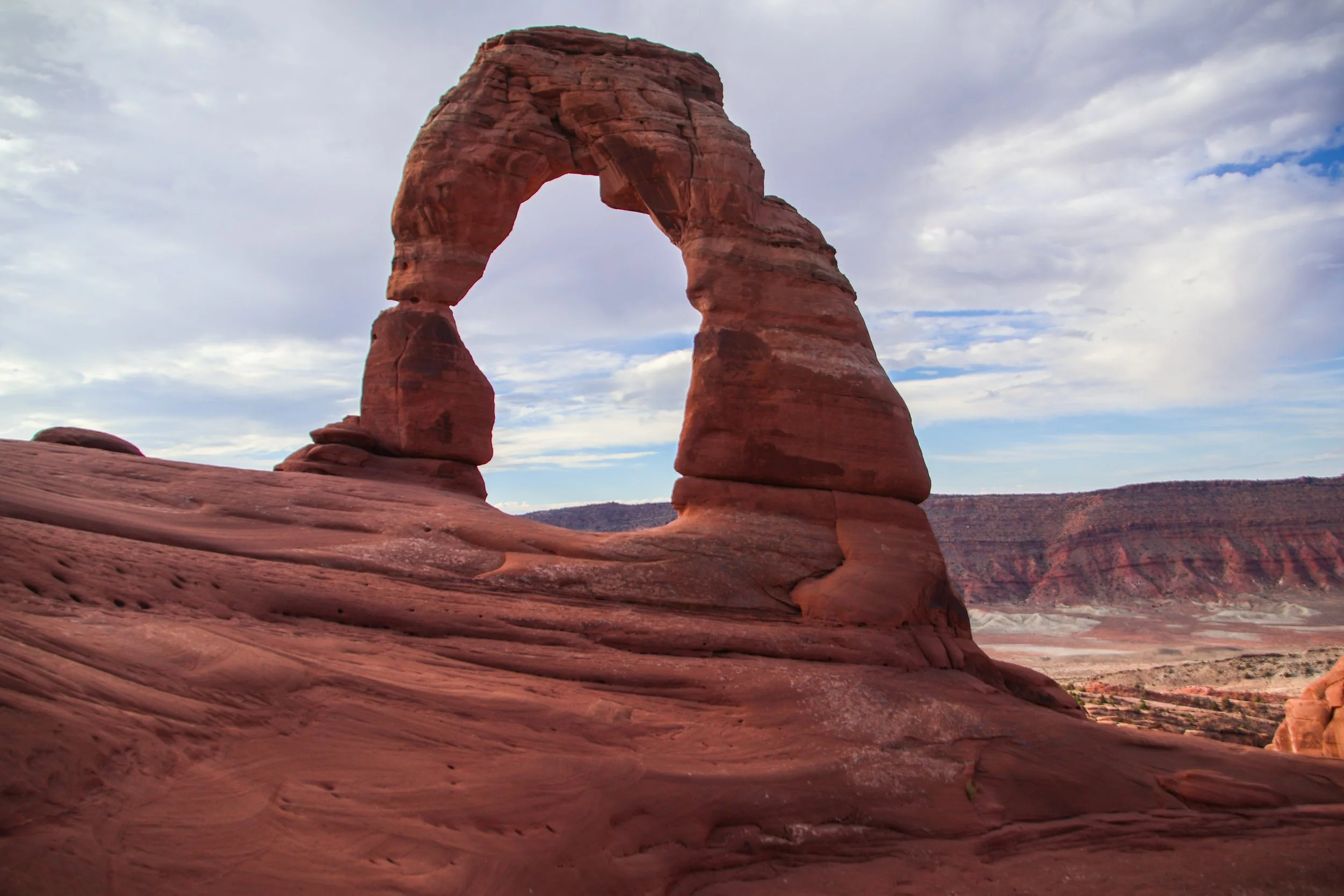
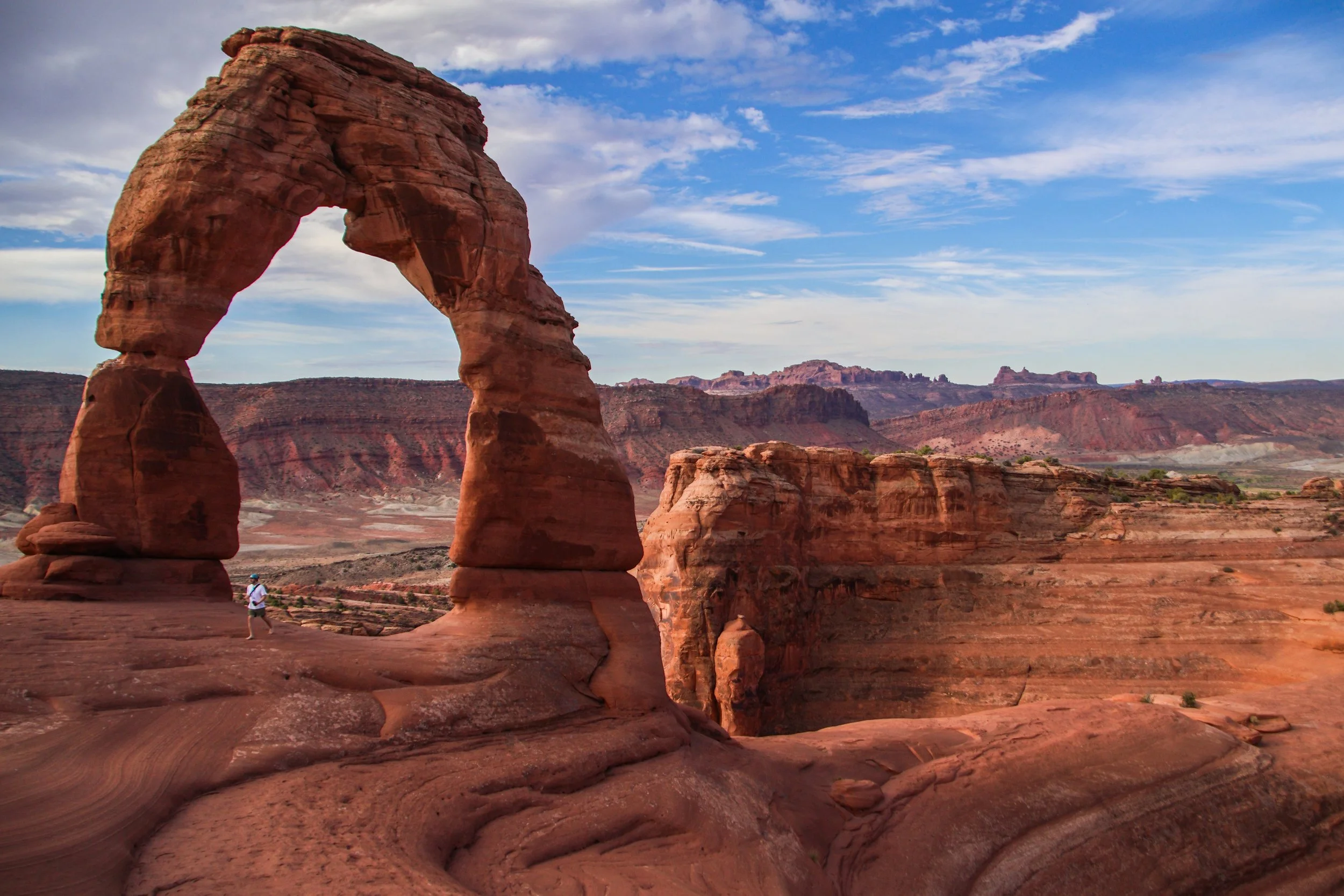
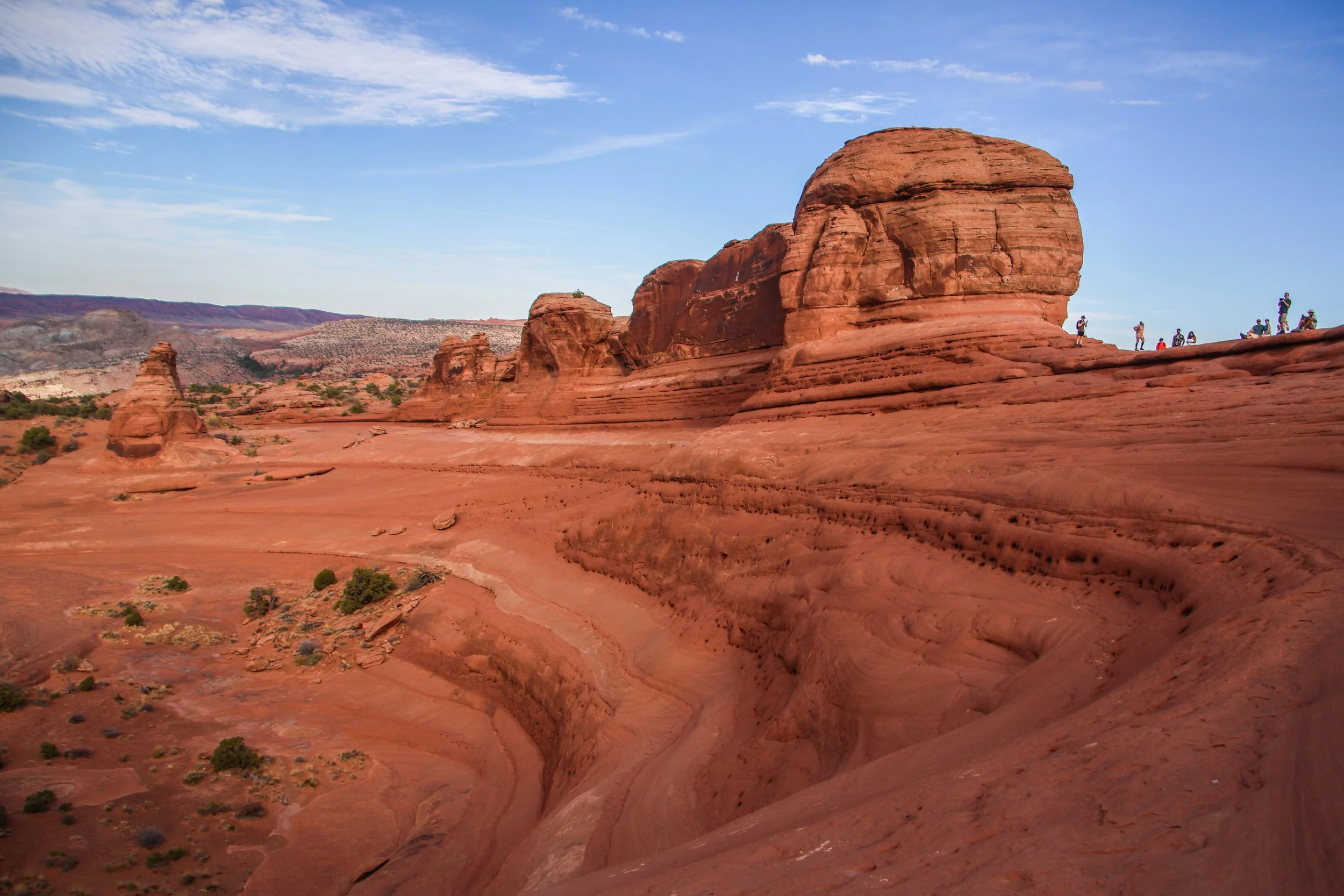
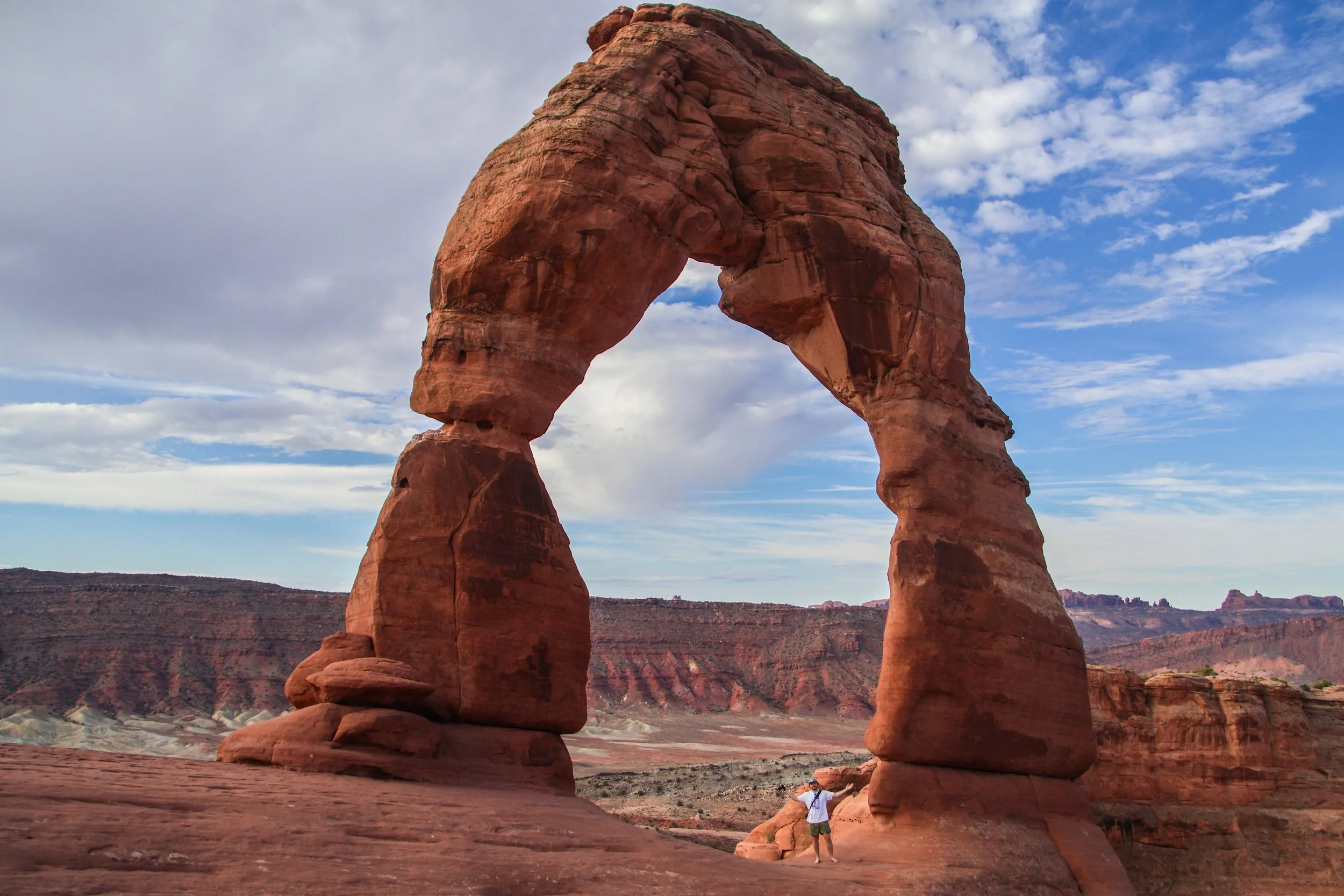
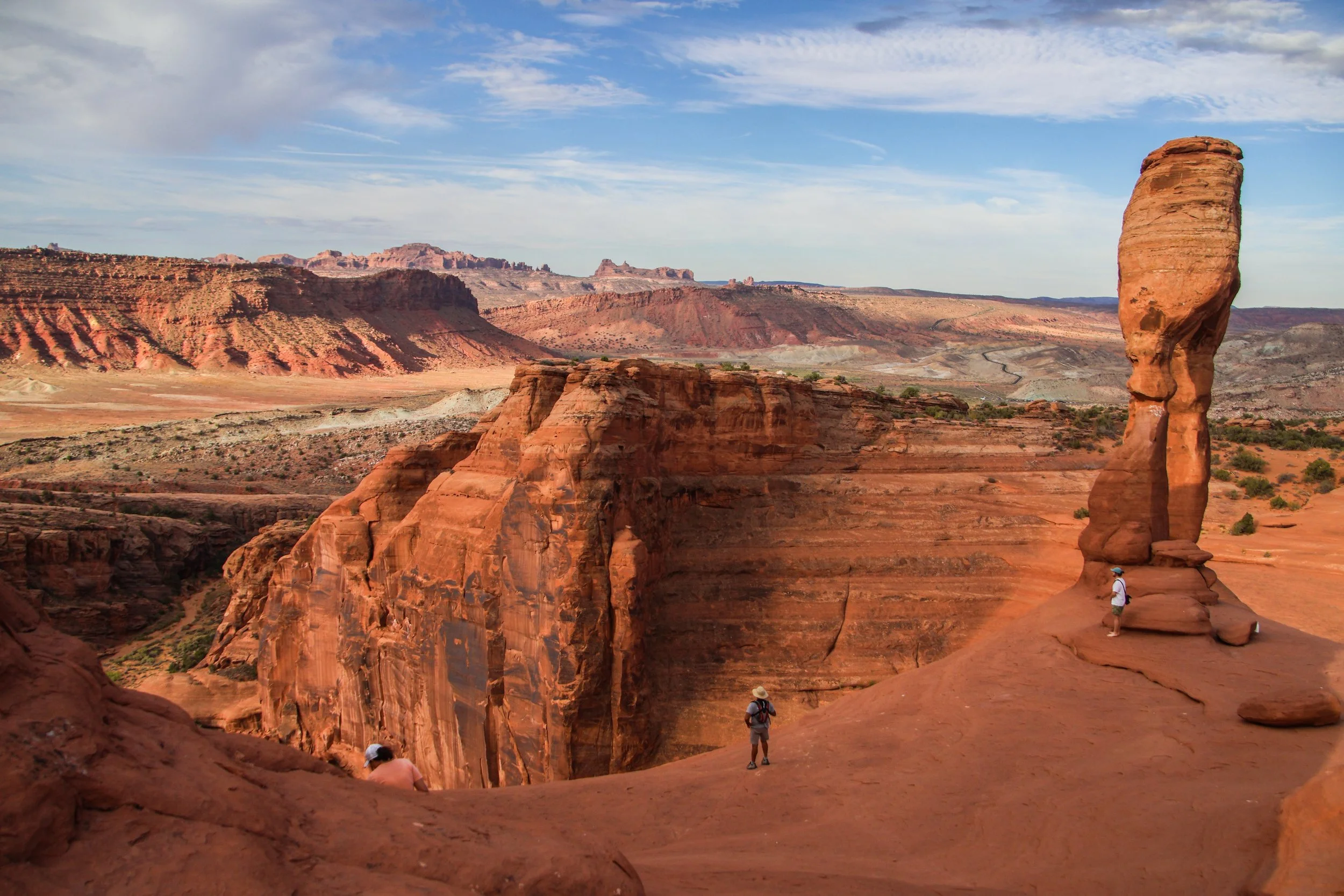
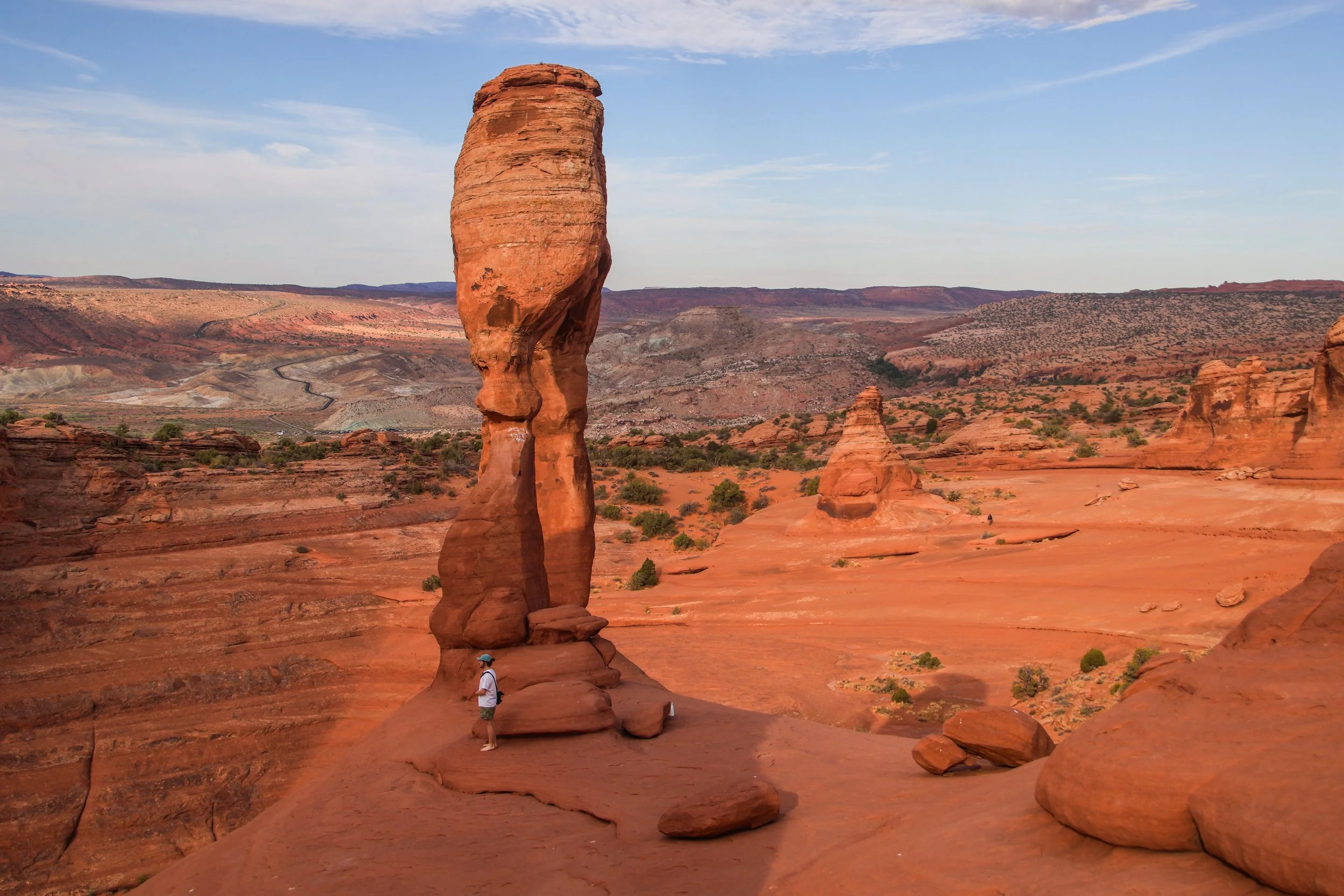
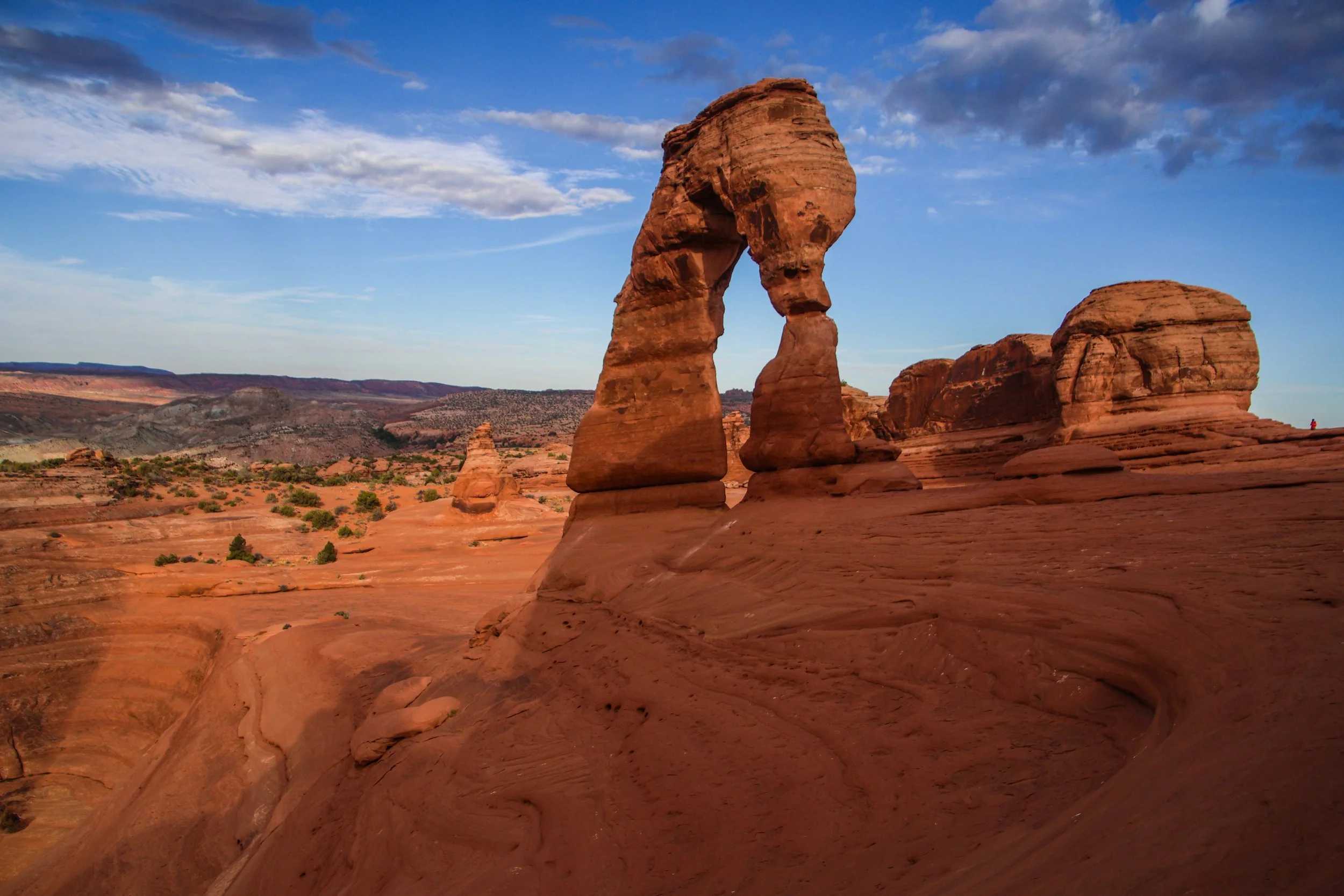
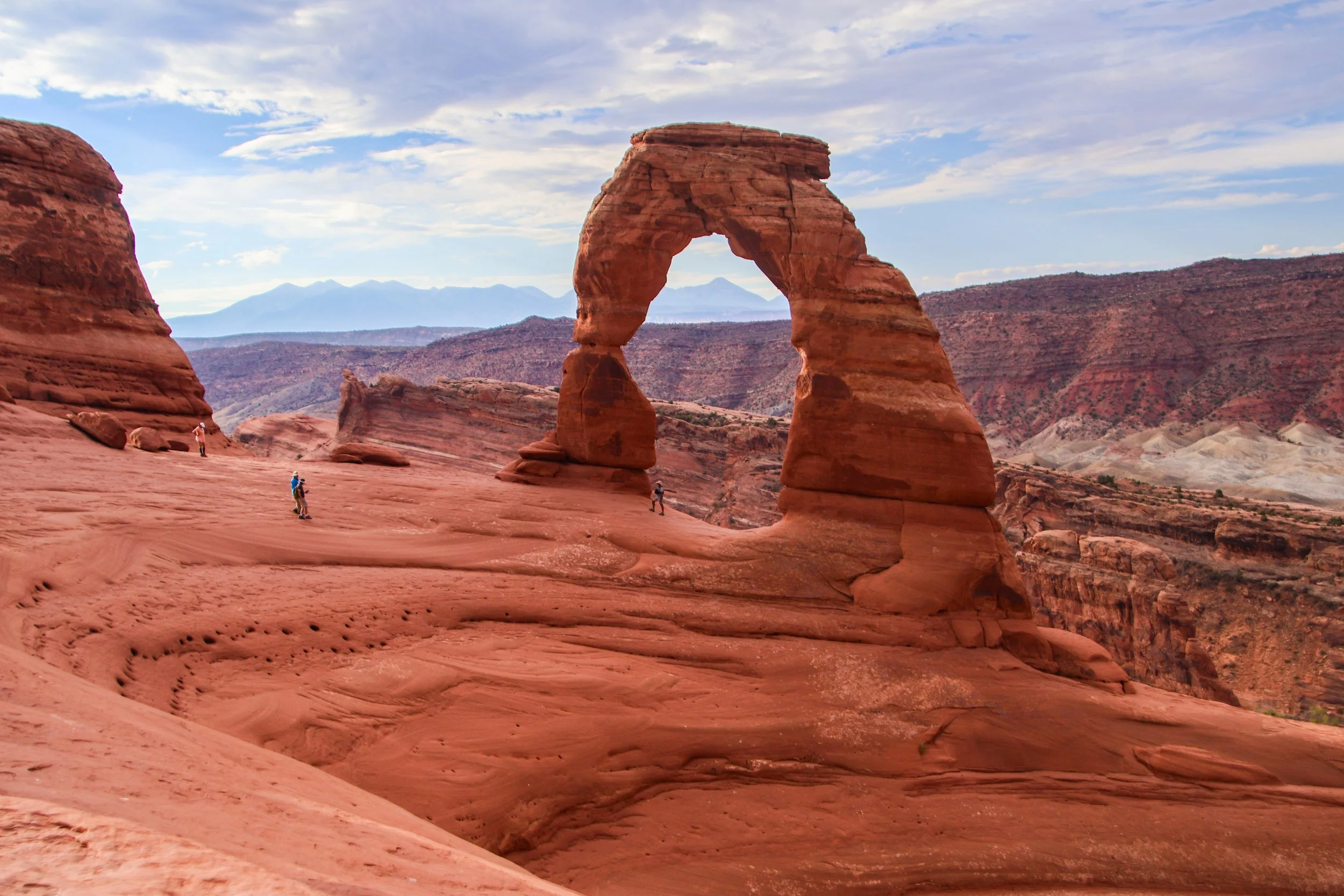
Finally, the moment came that we laid eyes on the legendary Delicate Arch. I could feel that I was close to it as I rounded the last bend in the trail; this path has a very climactic finish! Since you know the improbable story of how arches like this one formed, I’m just going to let you look at it. But a few things I’ll highlight before you jump into the gallery below:
This arch is MASSIVE; be mindful to look at the people underneath the arch for scale
The arch sits atop a giant slickrock bowl, the sides of which are extremely steep; visitors have free rein to climb anywhere they’d like! I shimmied down into this bowl quite a ways, but before I did so…
I also took off my shoes! The rocks here are so unambiguously smooth that I felt very safe doing it, and it actually made it a lot easier to unleash my inner-monkey and climb around on this natural playground.
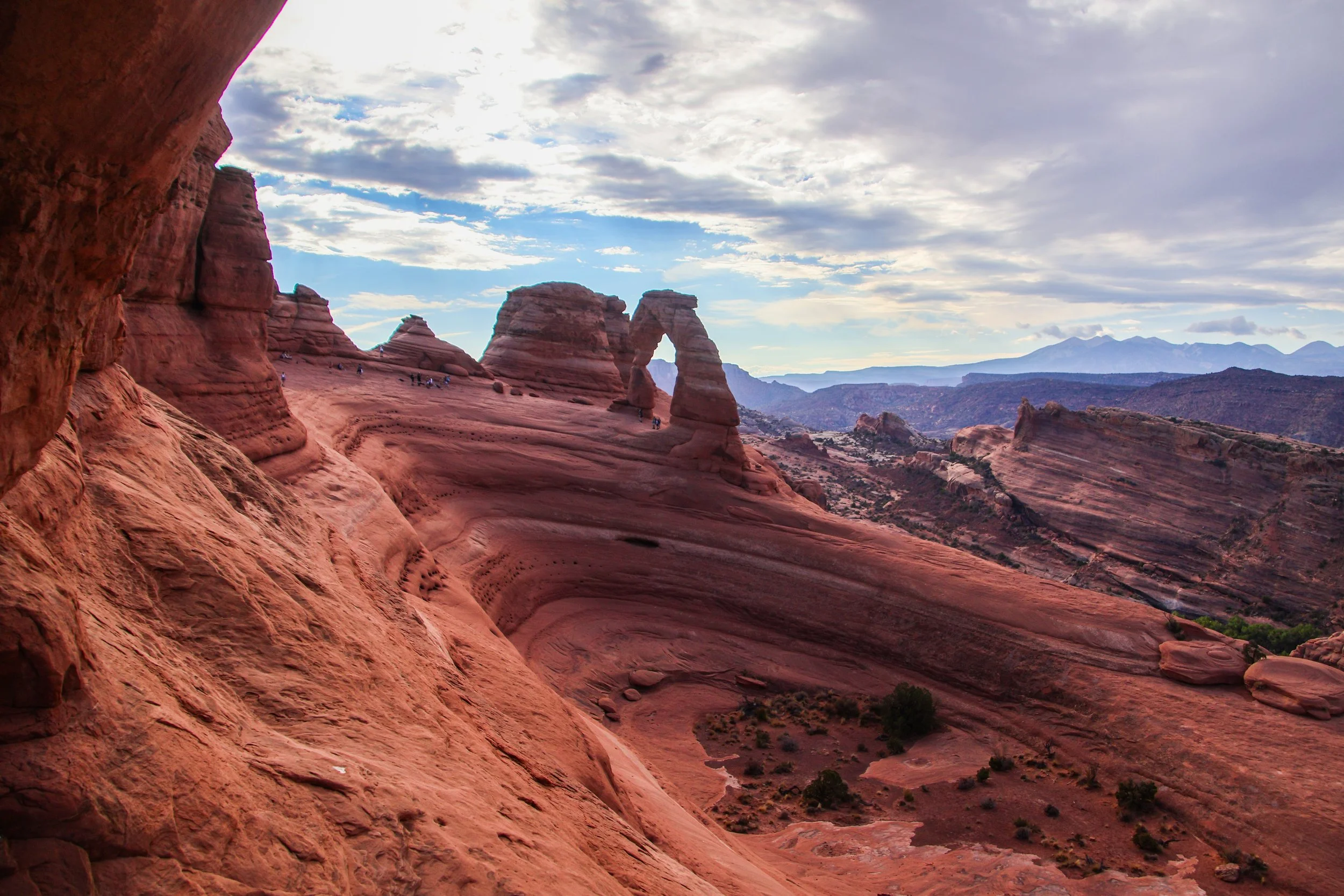
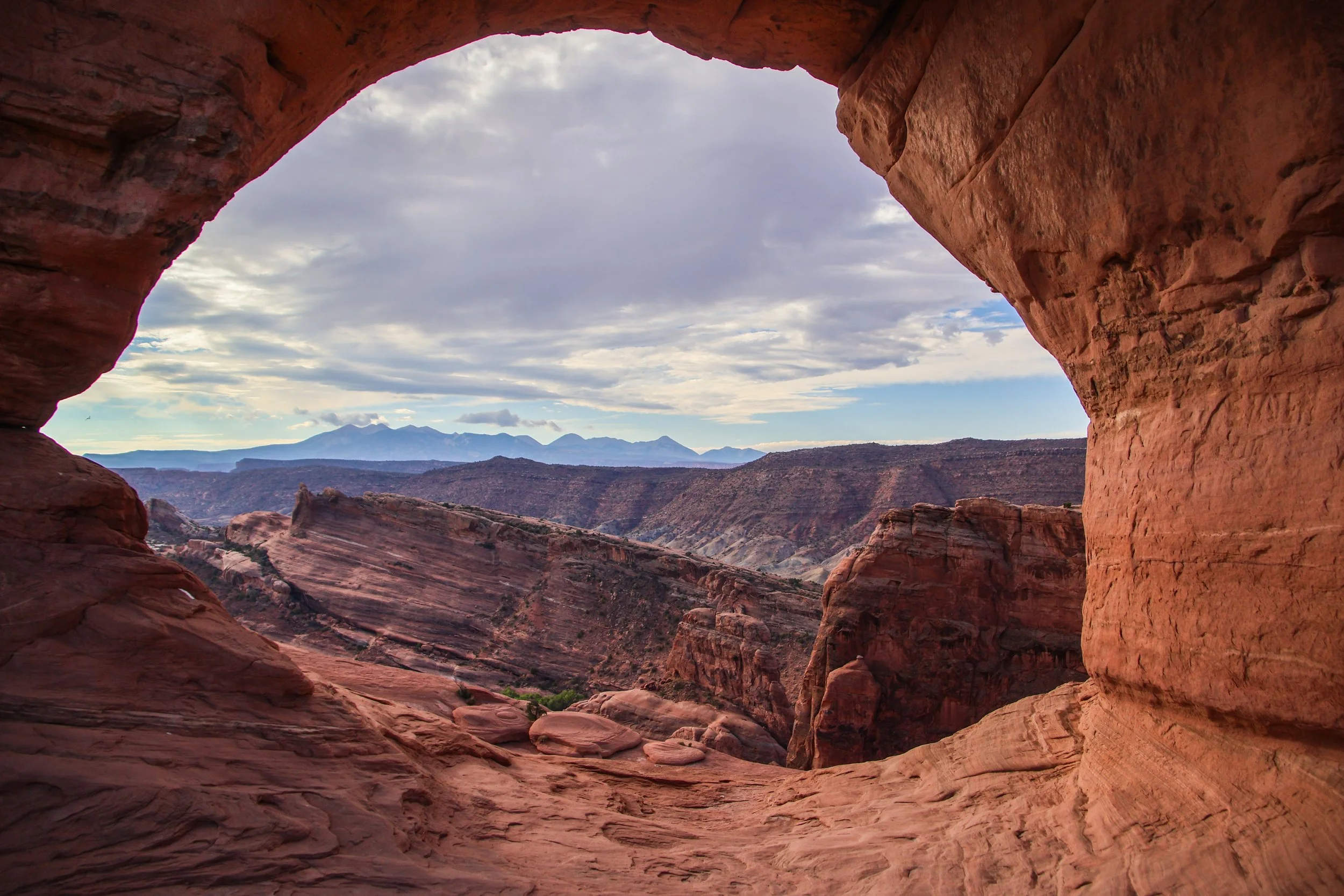
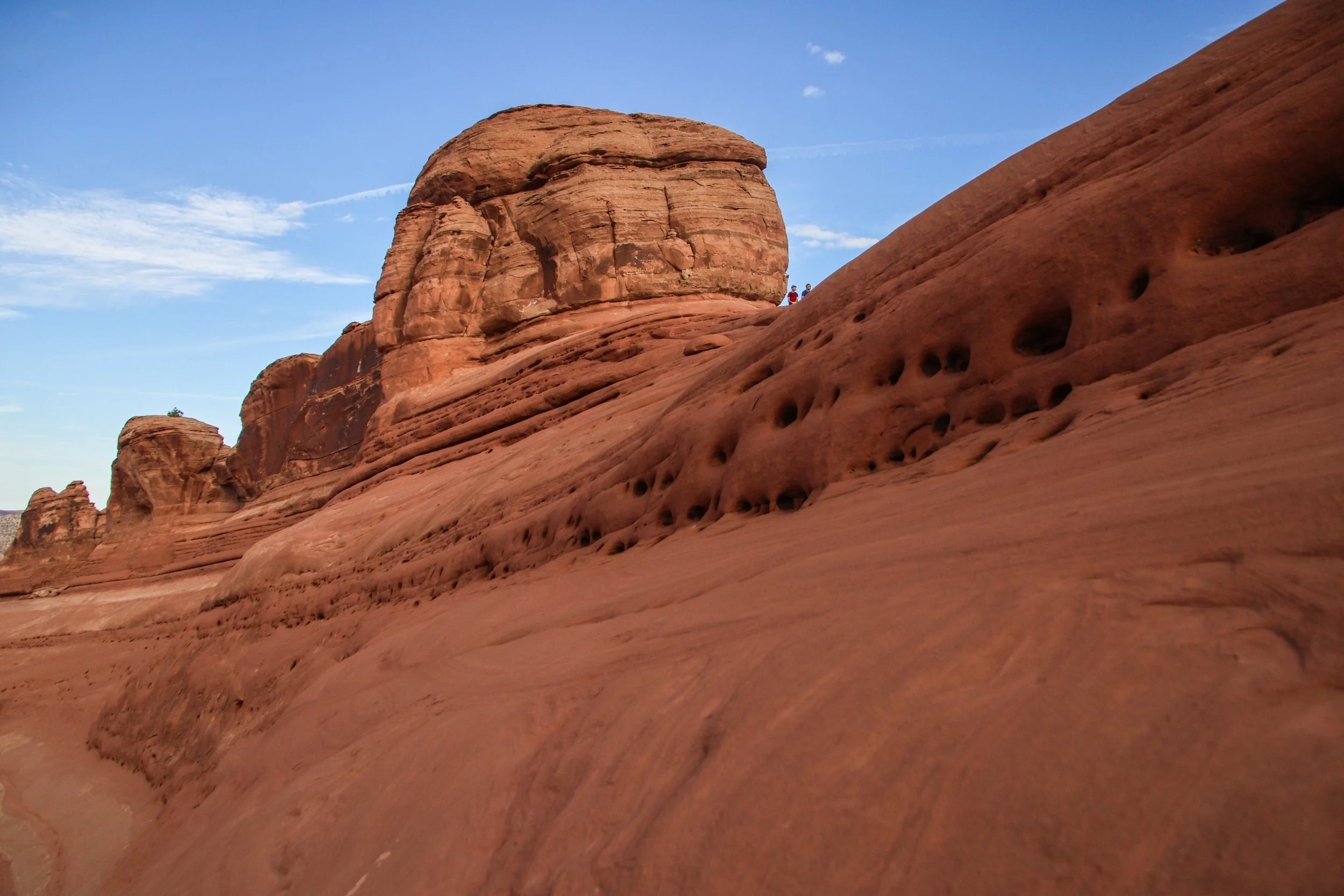
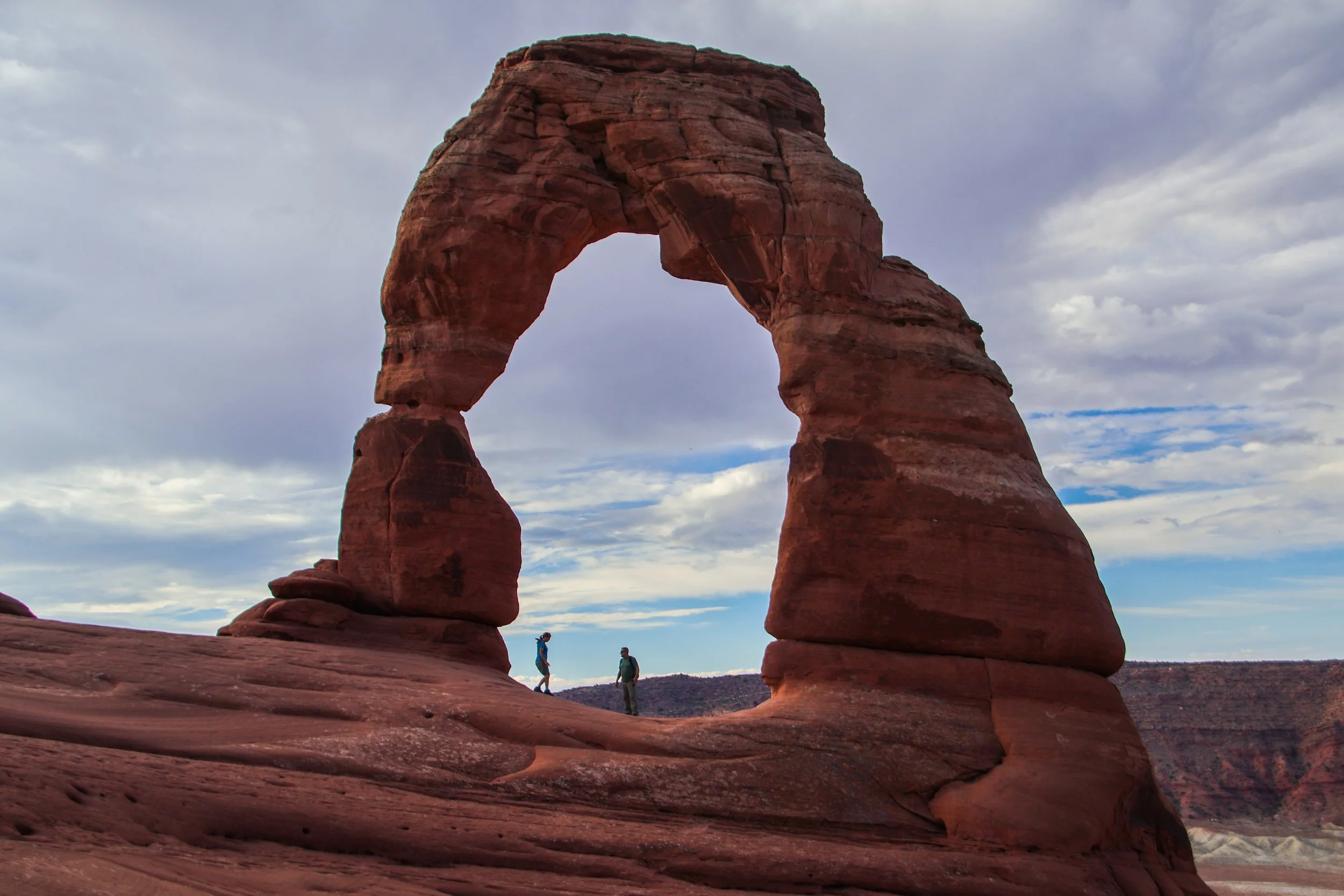
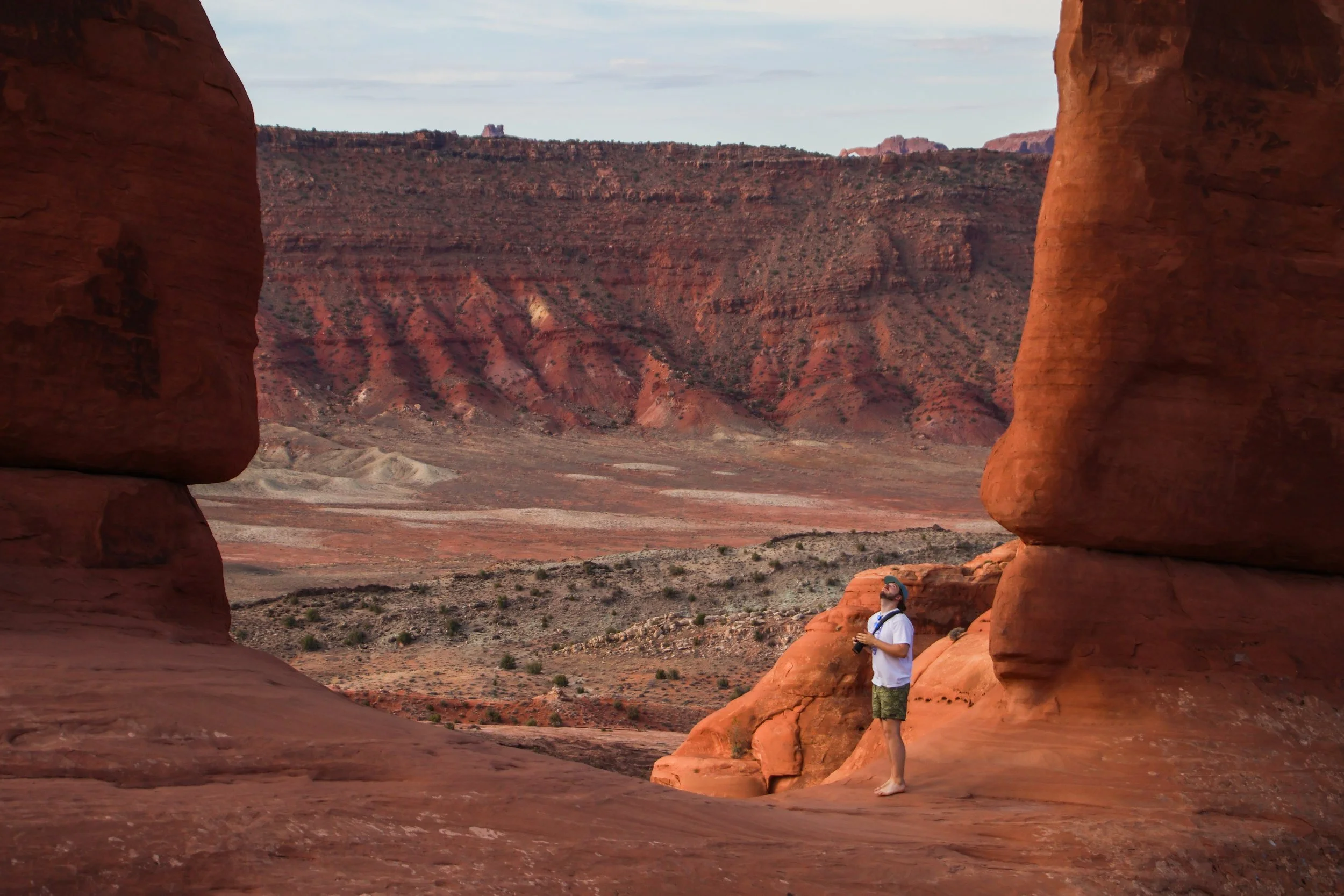
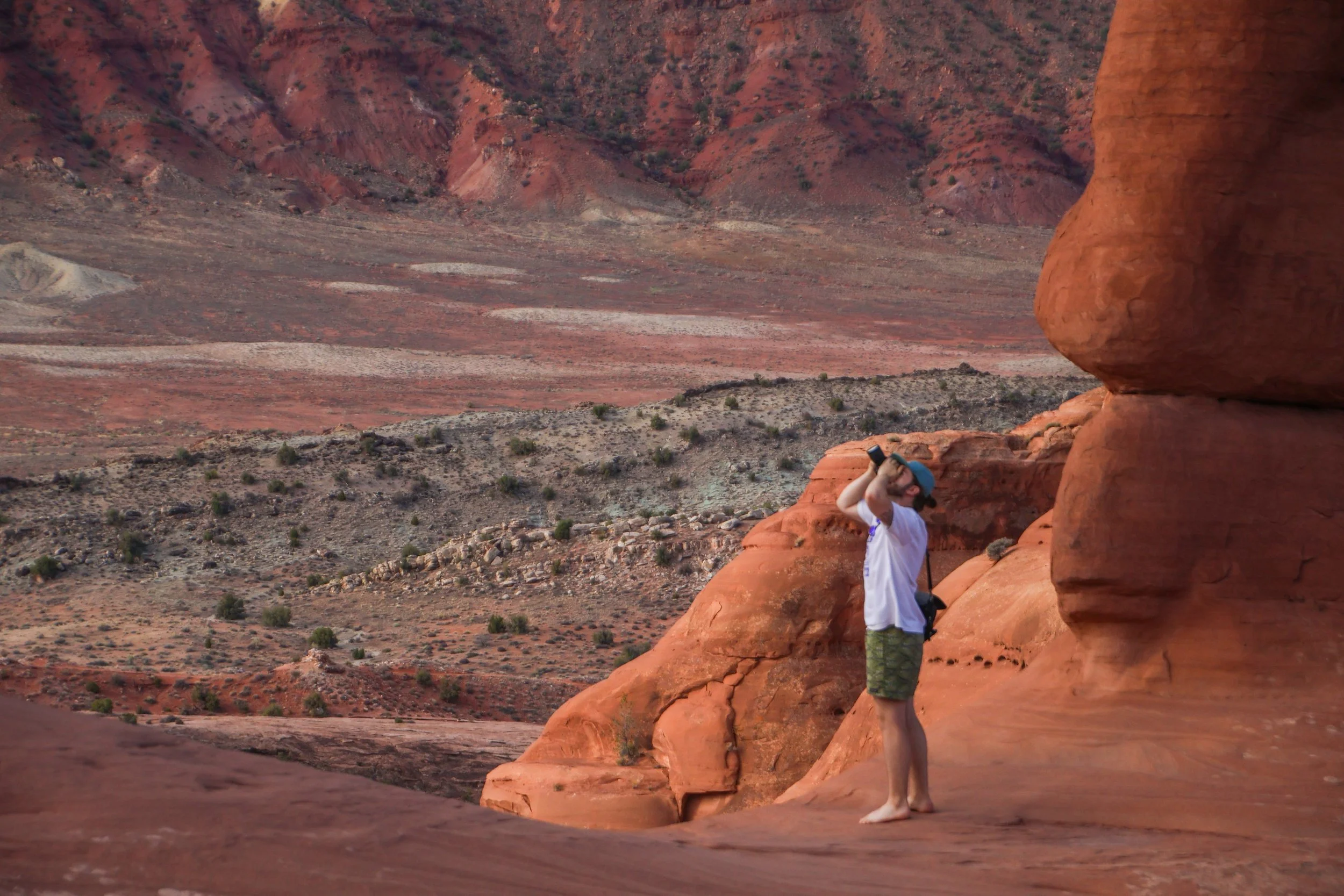
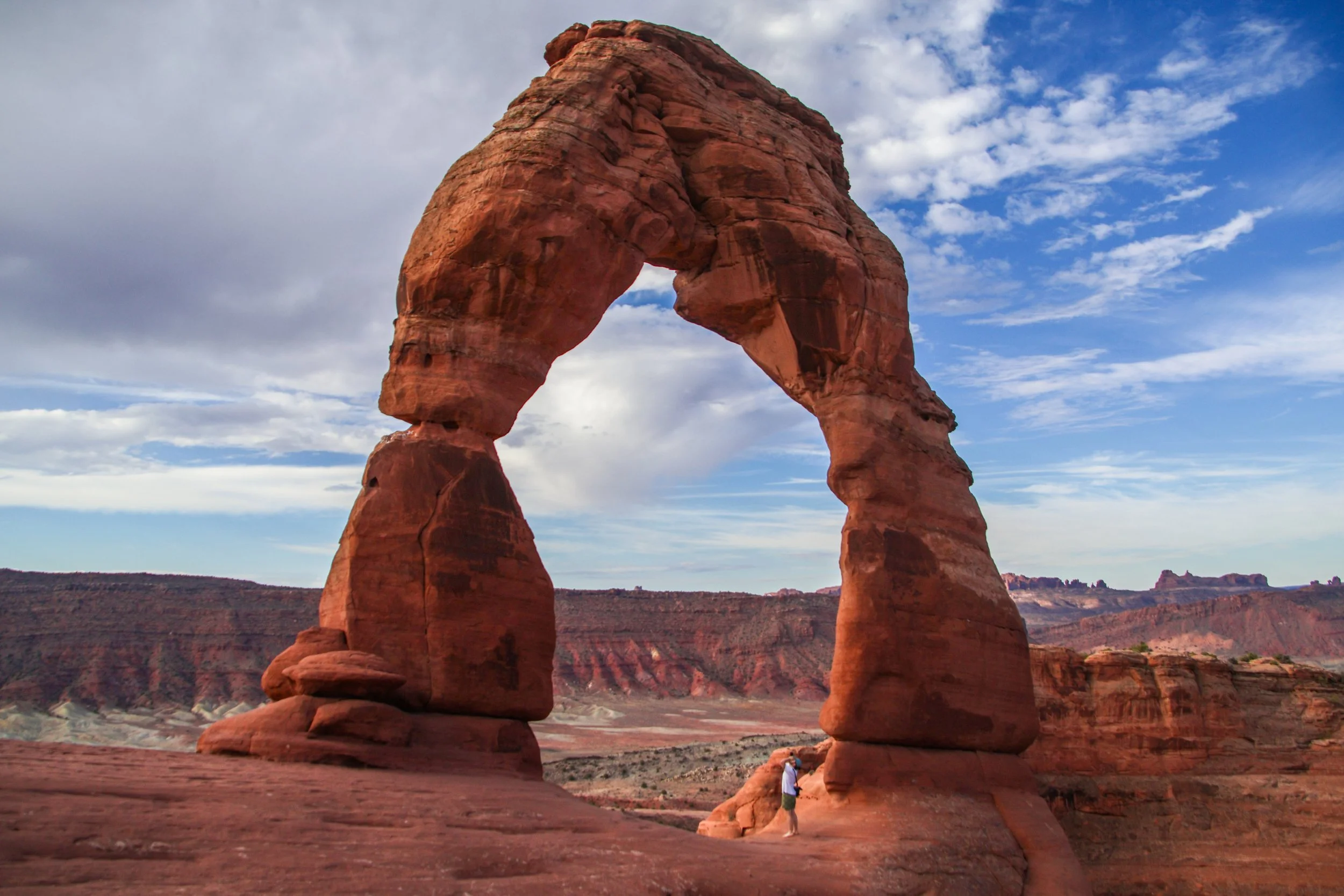
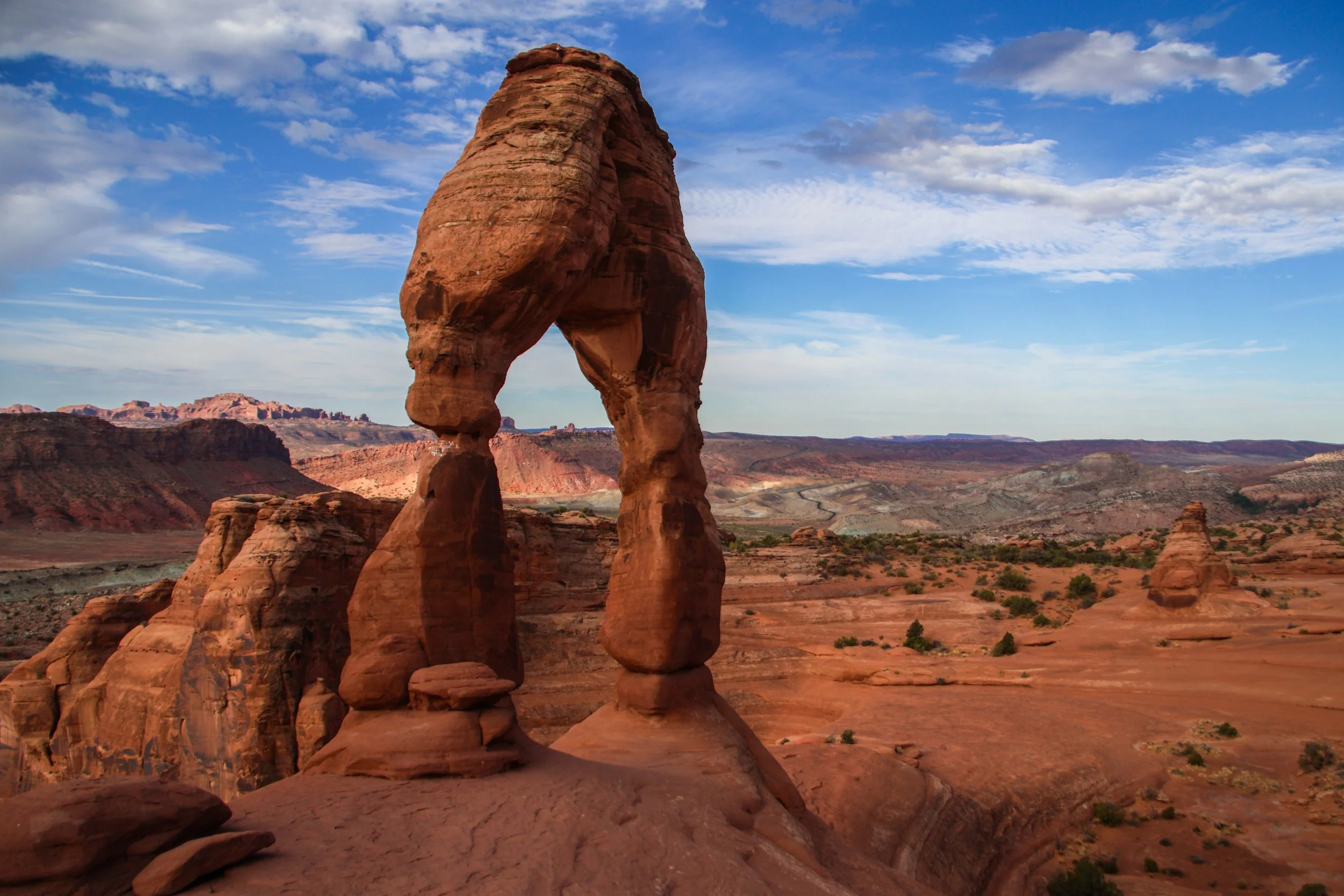
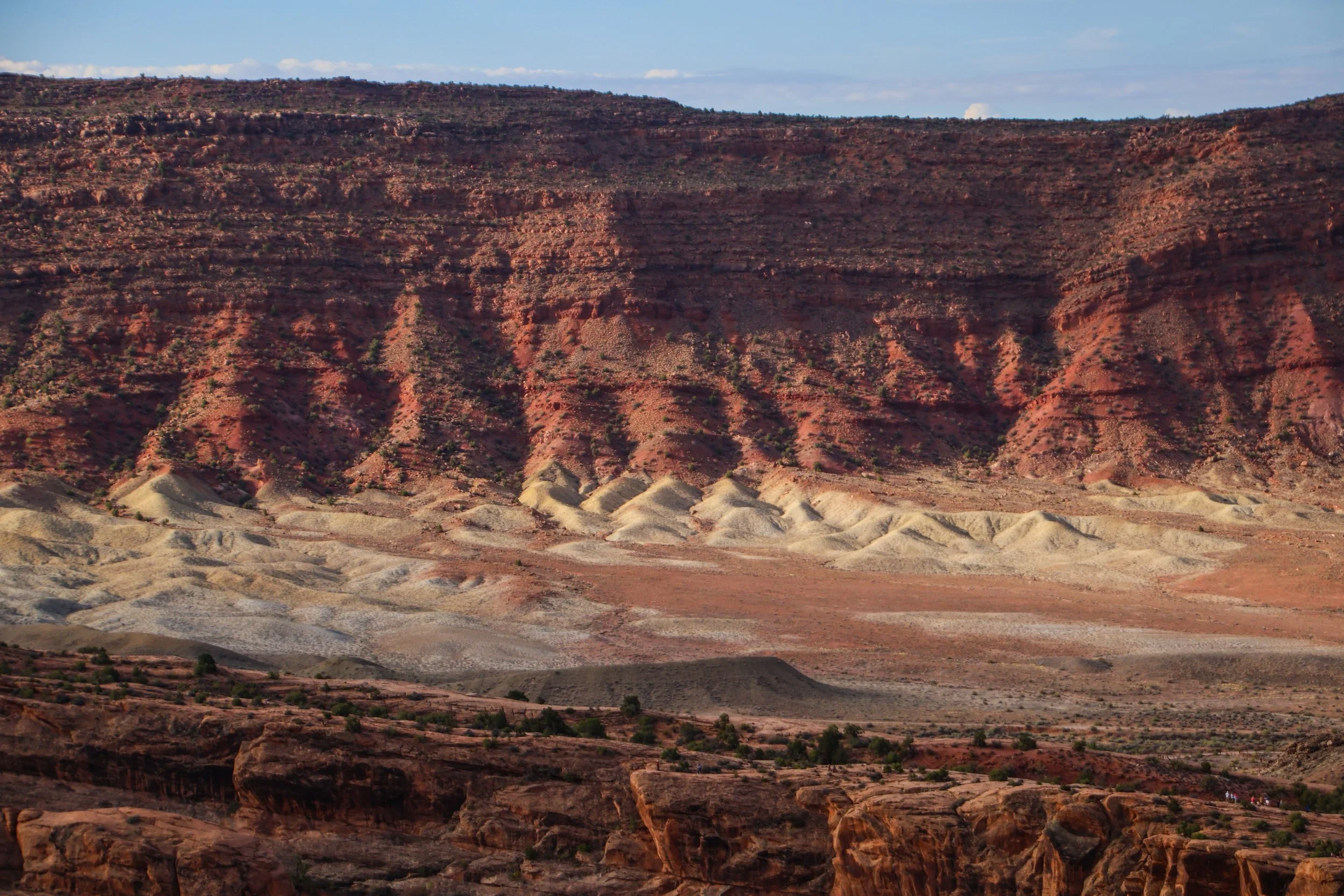
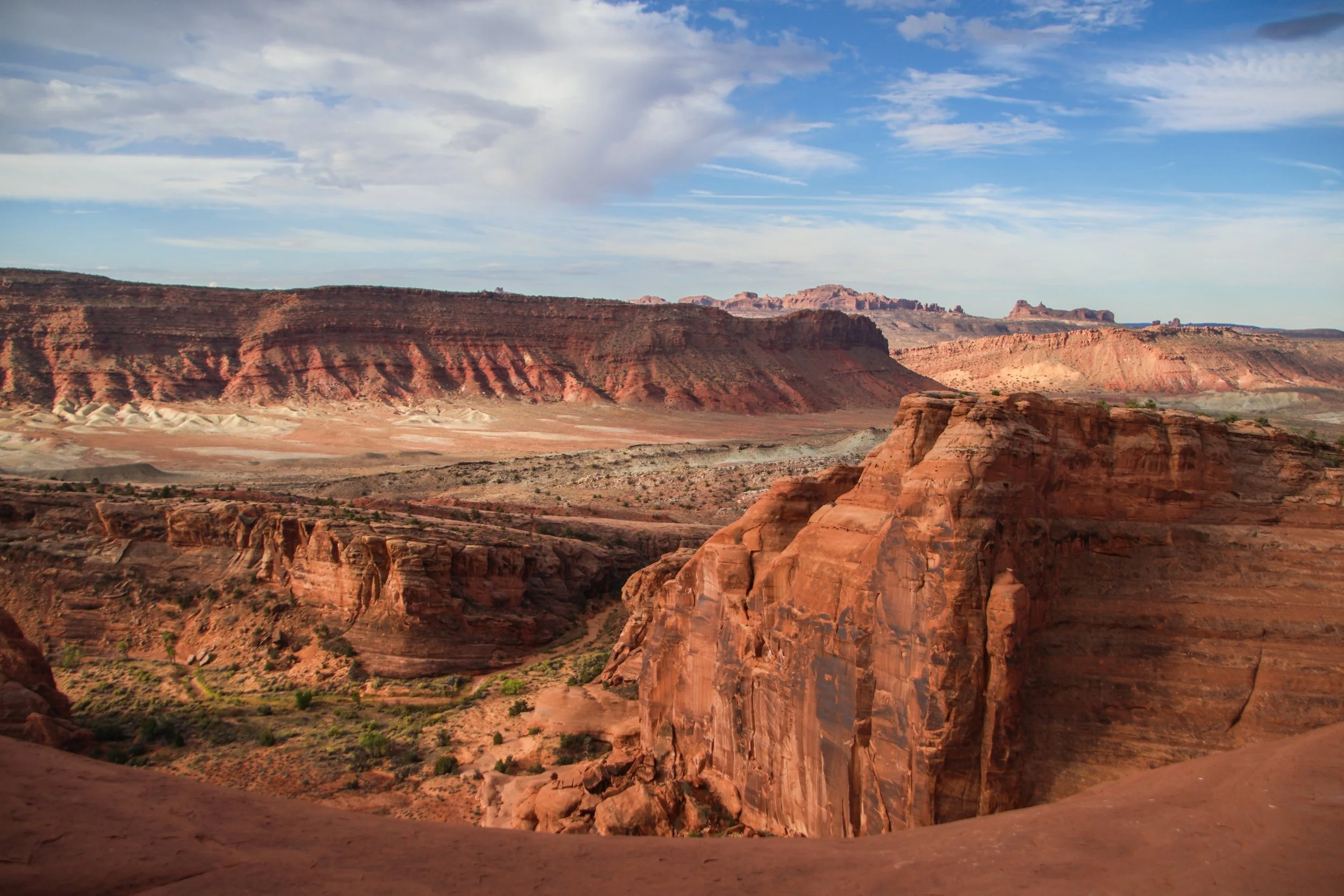
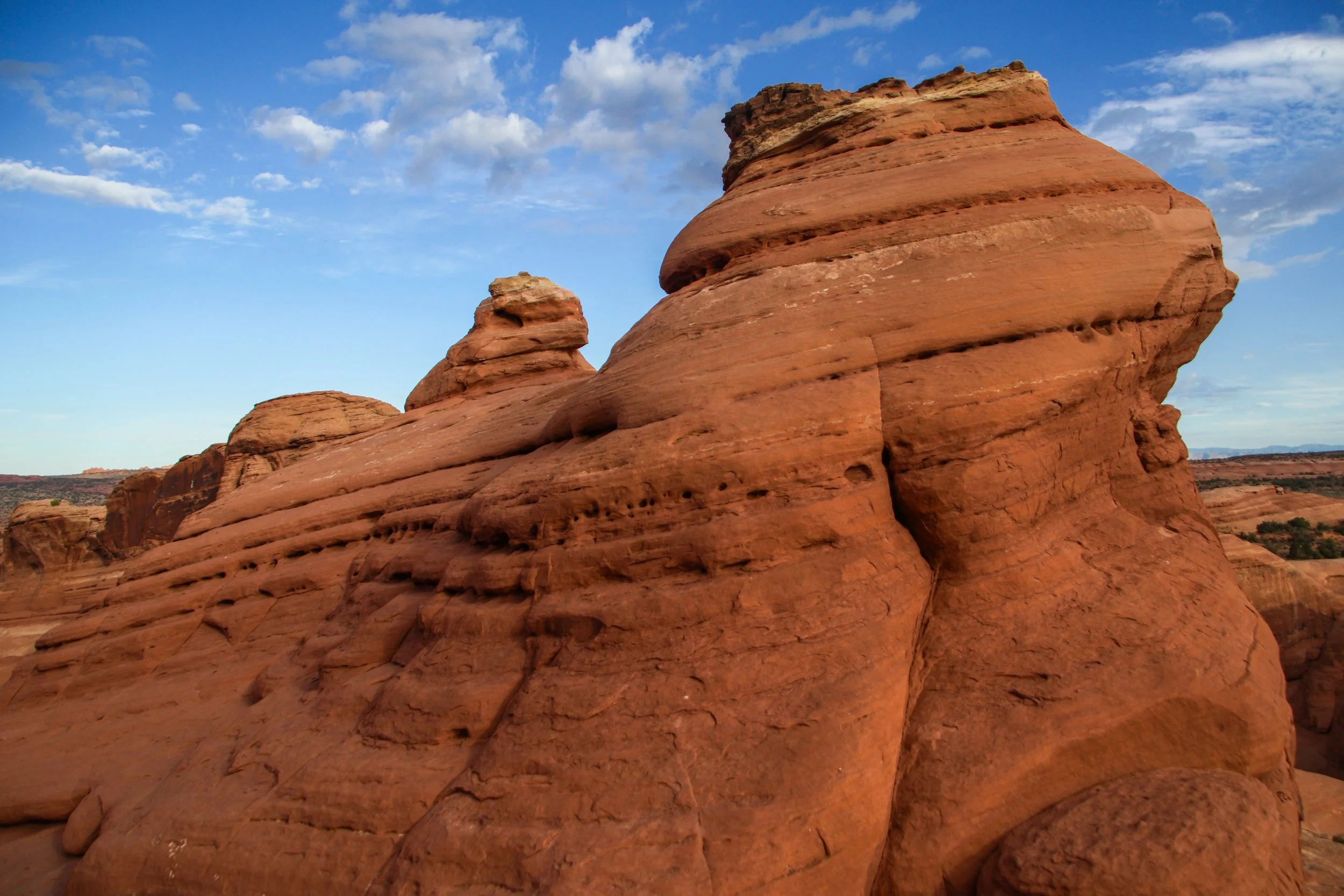
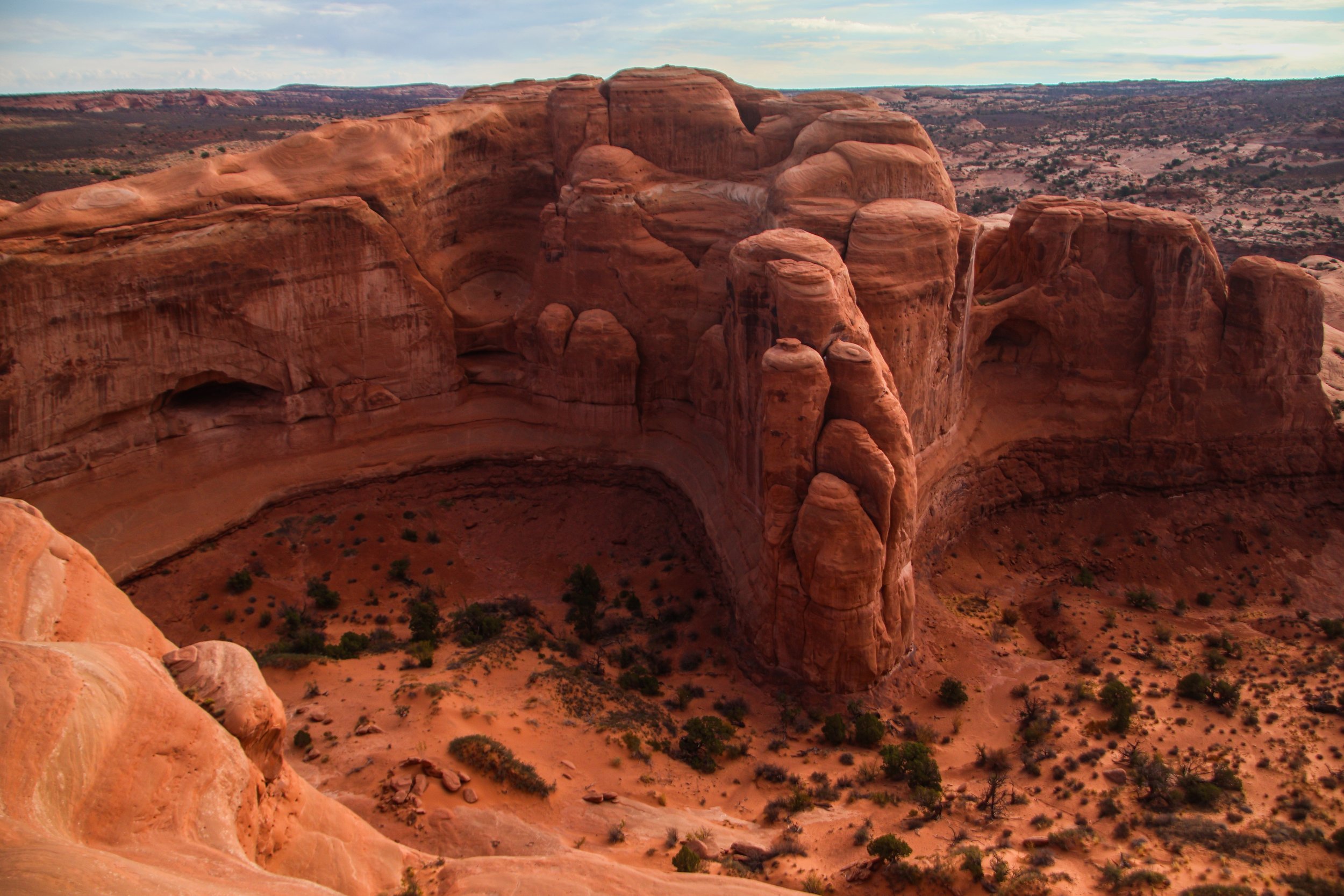
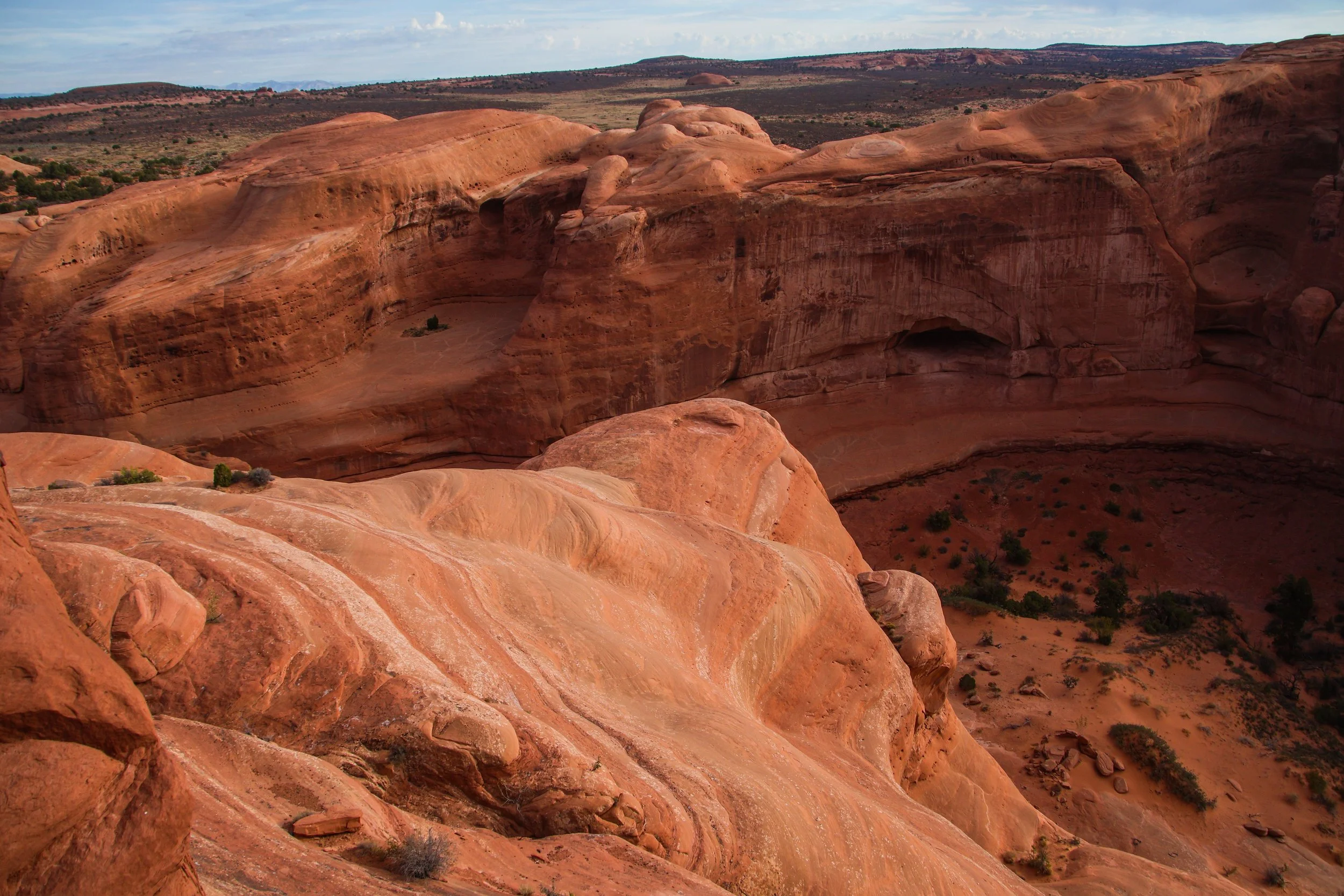
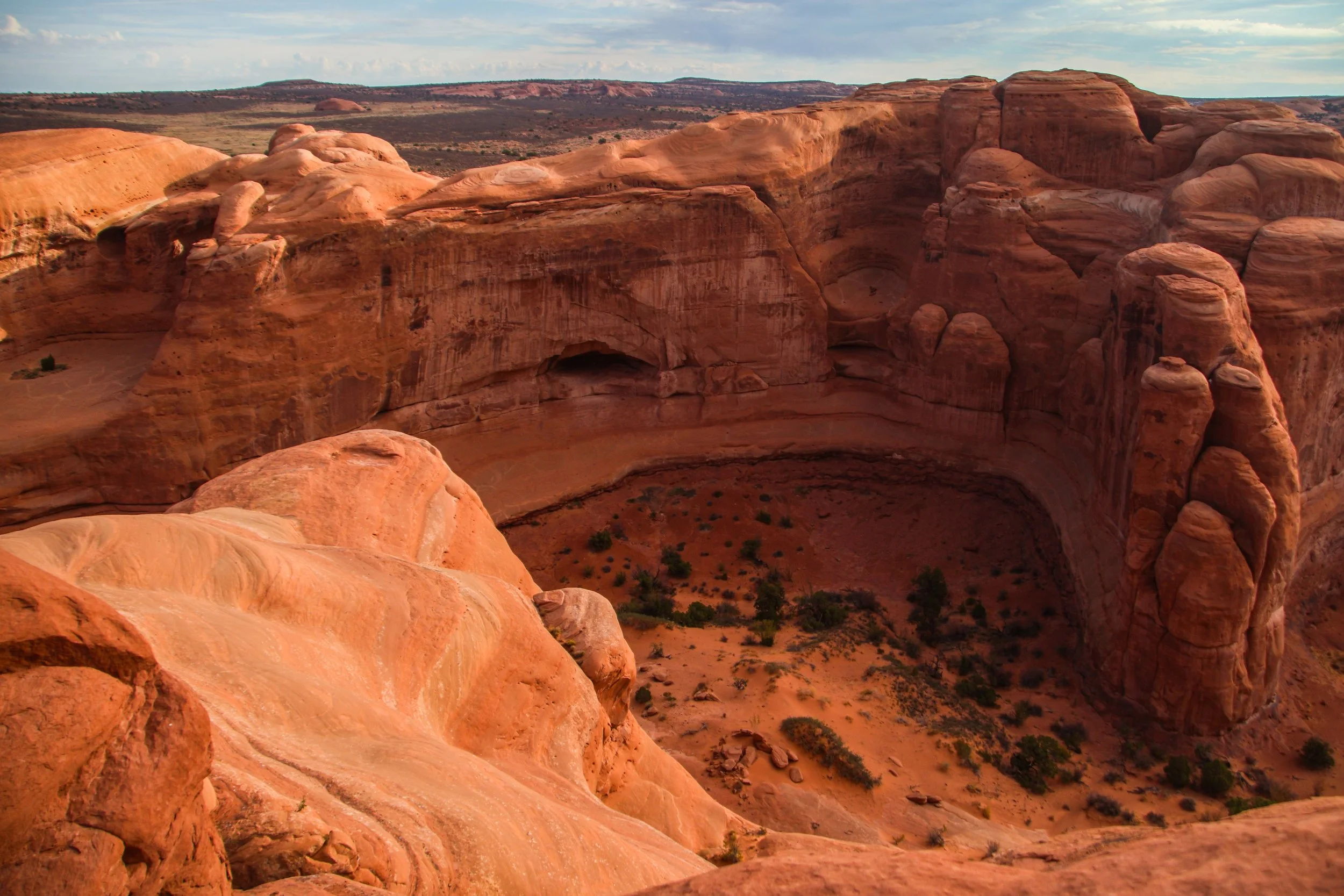
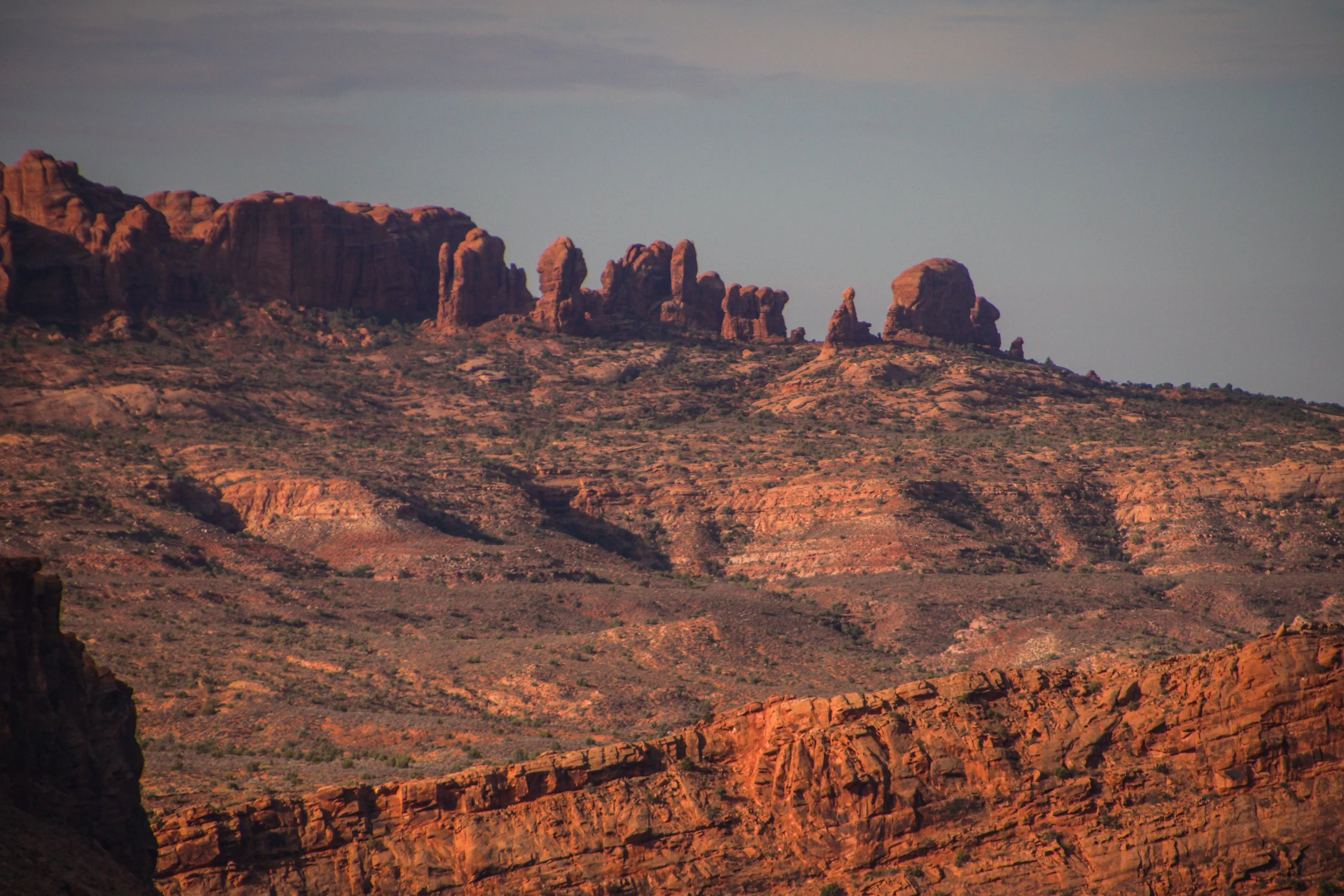
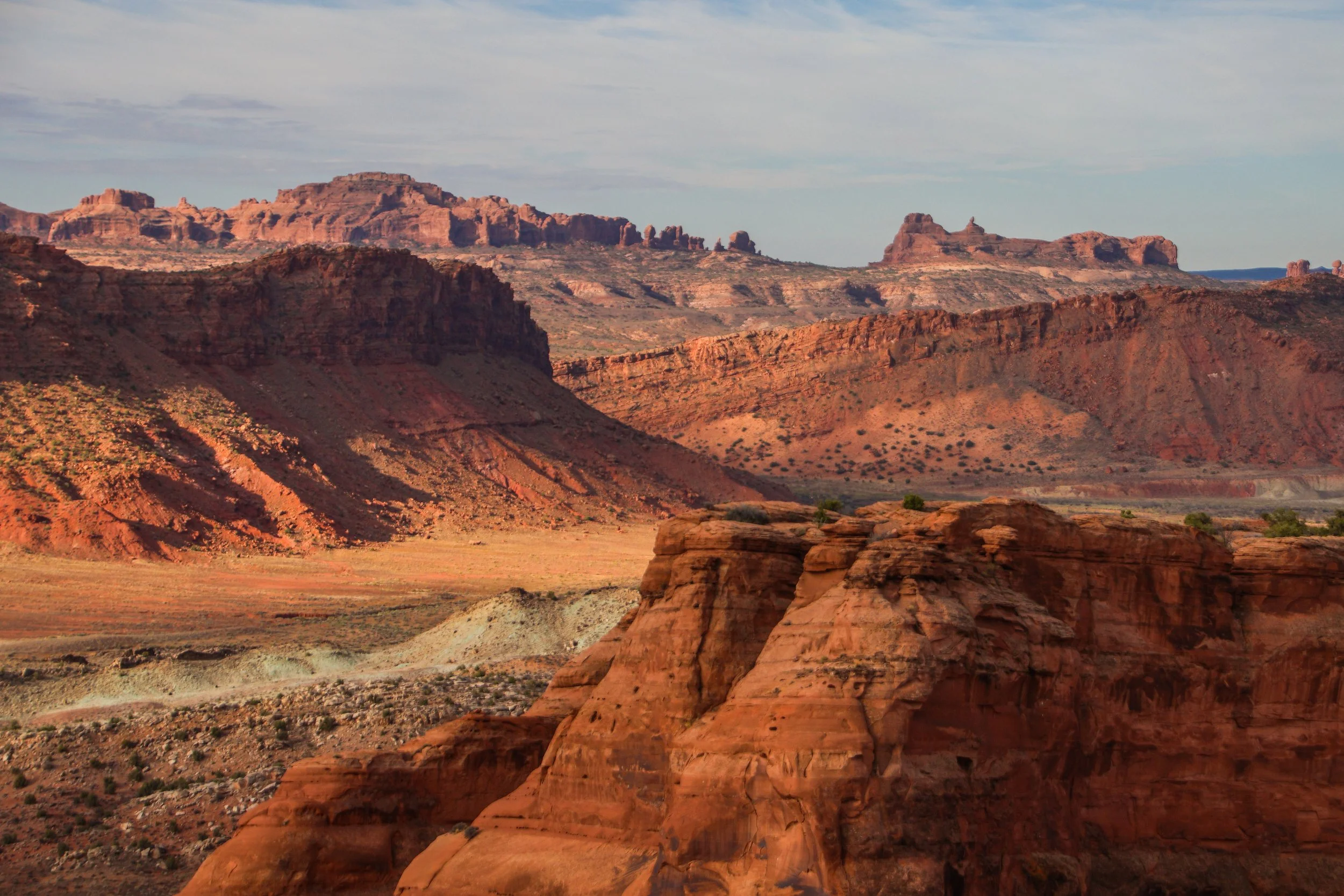
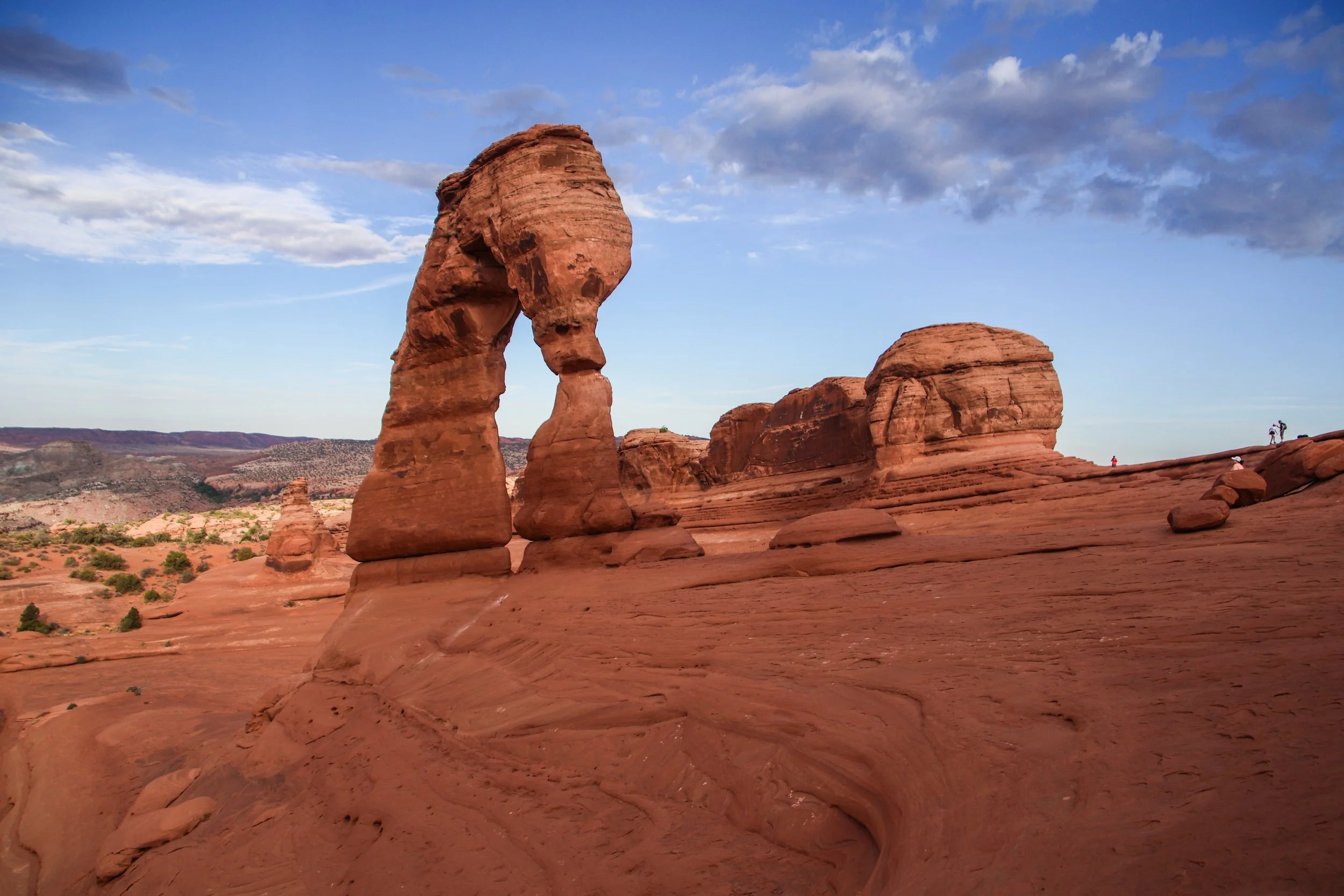
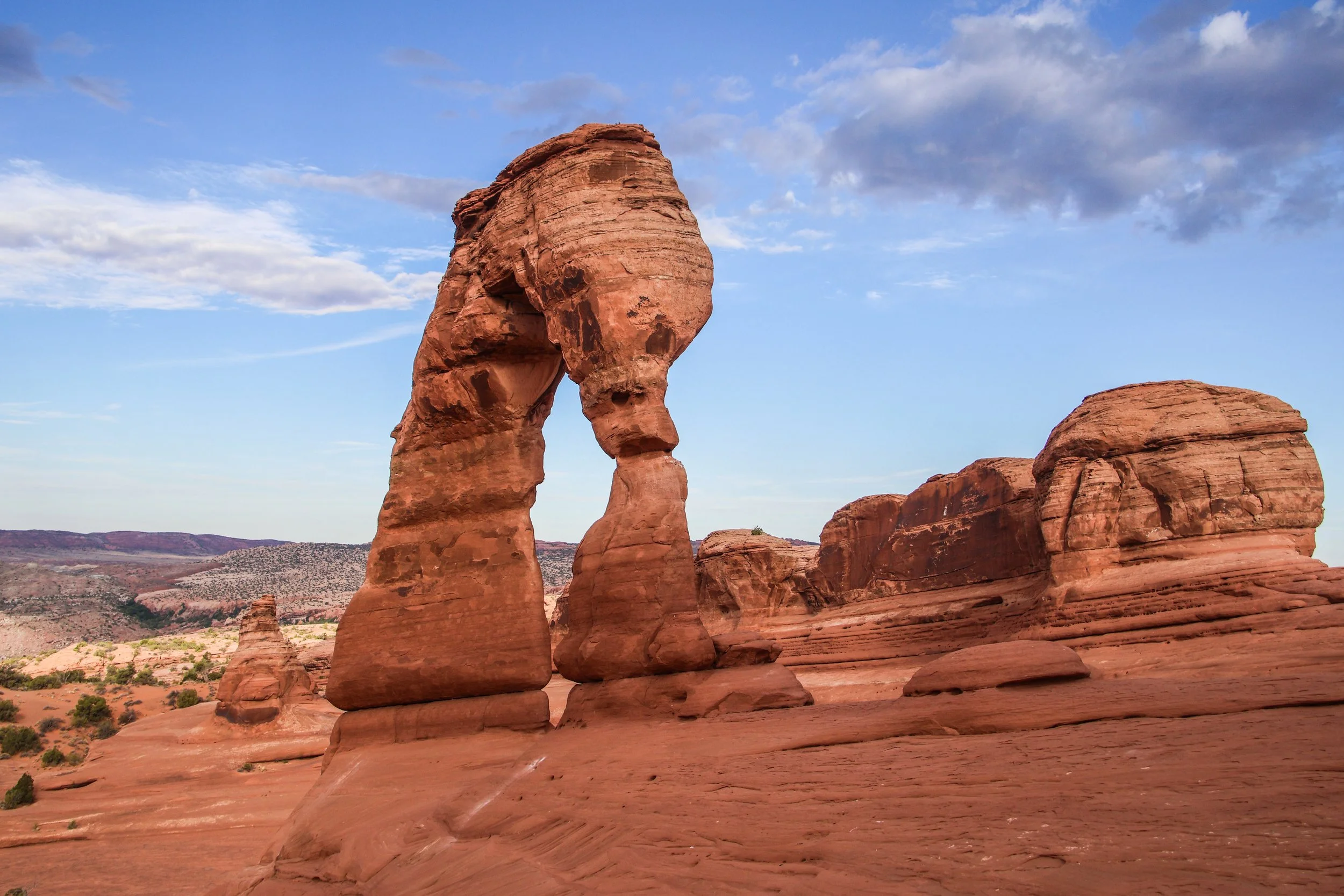

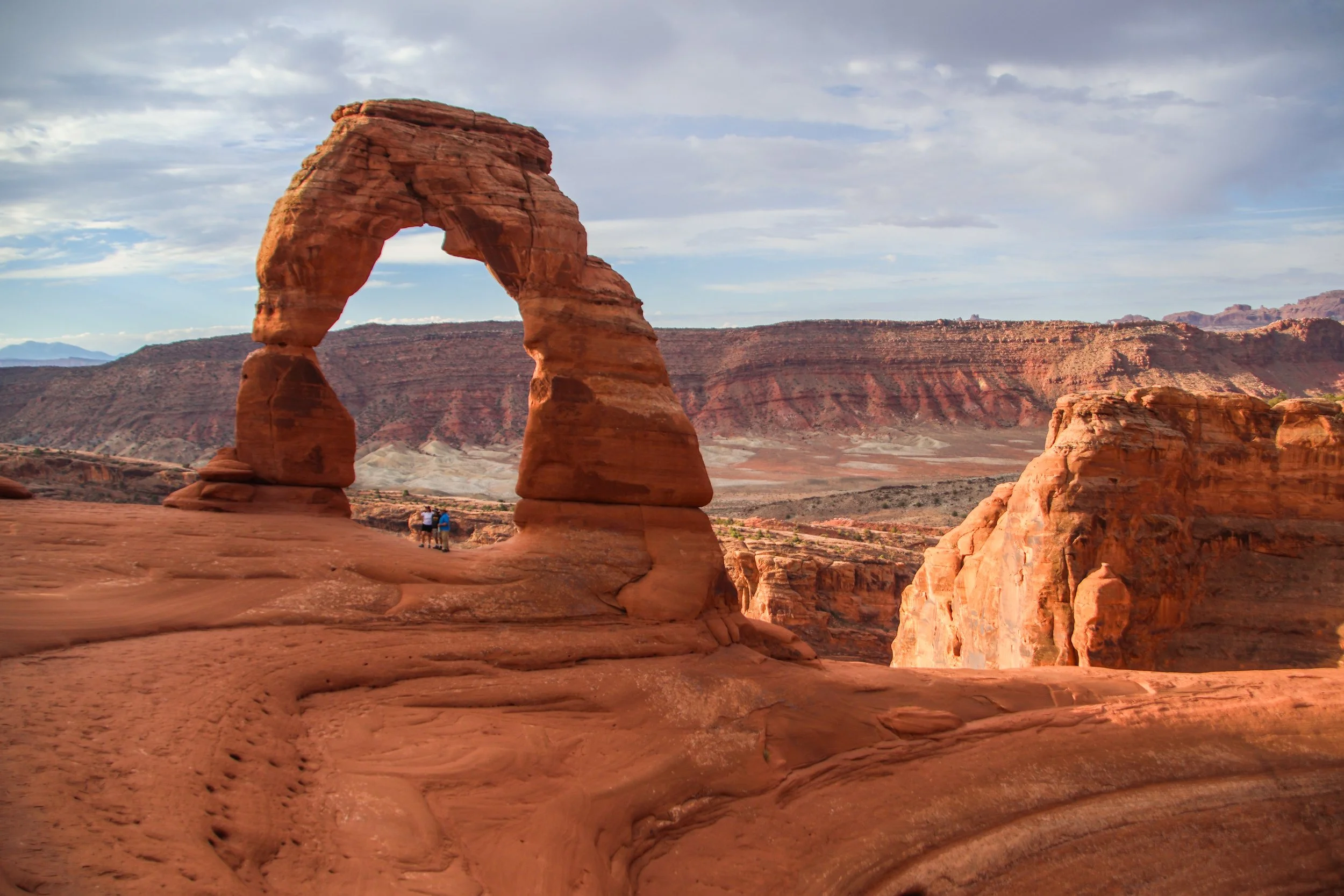
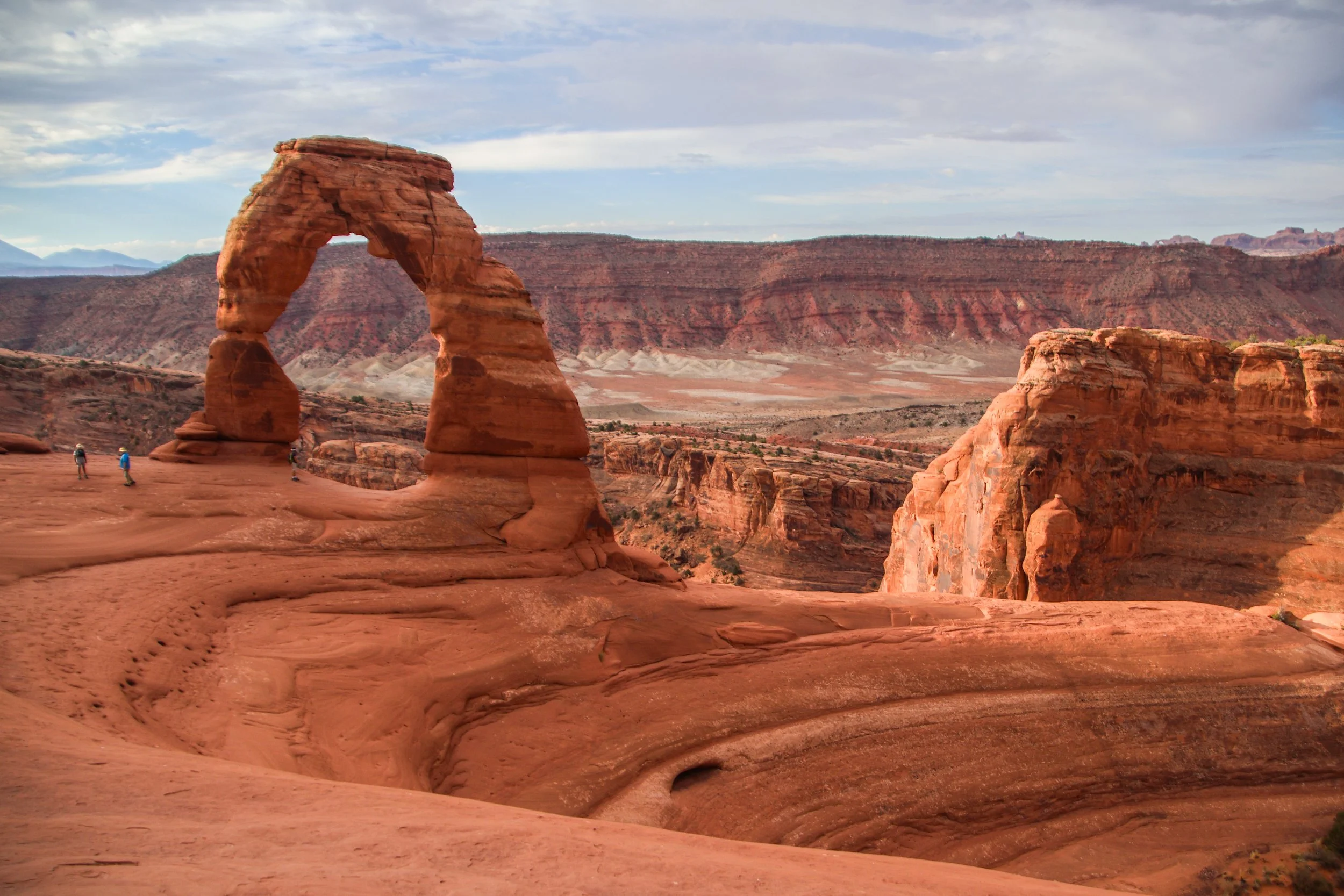
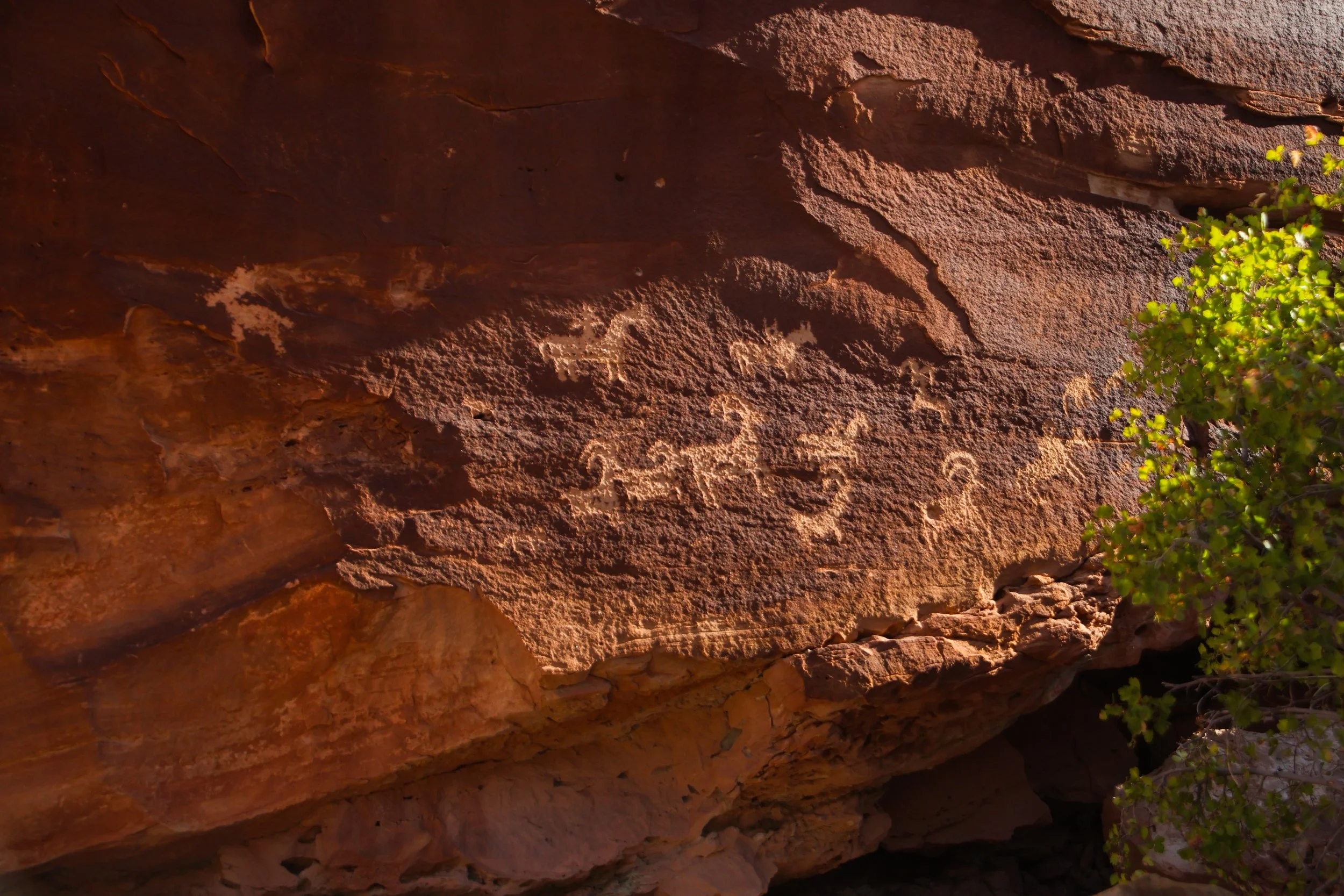
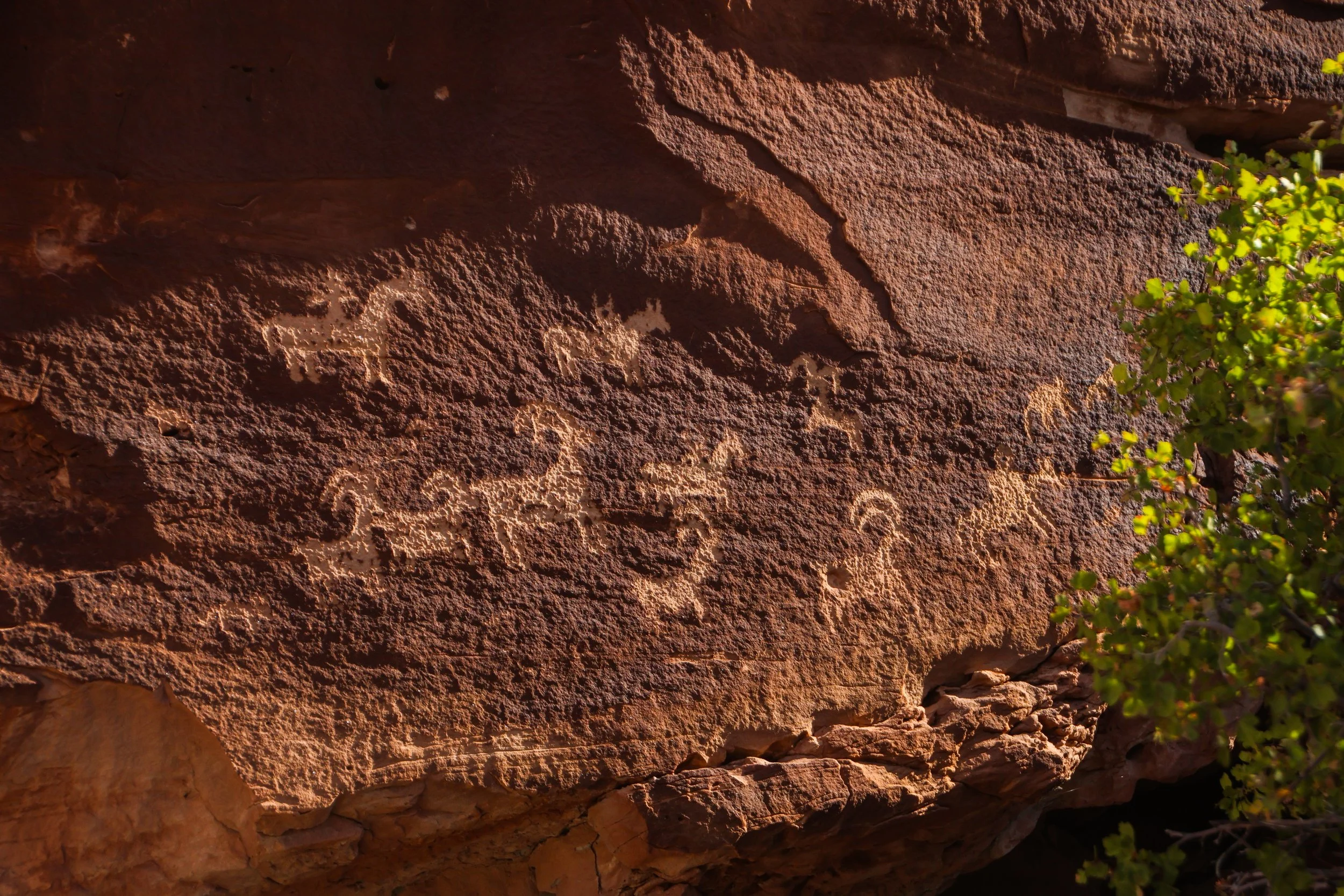
On the hike back, we took a short diversion to see Native American petroglyphs carved into the side of rocks. Although this area had been inhabited for a few thousand years at least, these particular carvings are relatively recently, having been carved by the Ute tribe, likely between 1650 and 1850. This tribe was forcibly removed by the American government in the late 1800s, which was both tragic and unjust—*deep breath*—but I’m not going down that rabbit hole right now. Instead, I just want to reflect on what it must have been like for the native peoples who lived here 1,000+ years ago, before the first Europeans set first on this continent. This place is so far from water… without even horses to travel around on (which were actually introduced by the Europeans much later) it’s hard to imagine that peoples living here would ever see the ocean with their own eyes. This desert was their entire world, and they would have had very little knowledge of what lay beyond. It’s a fascinating reality to contemplate…
Sunset & Stargazing @Balanced Rock
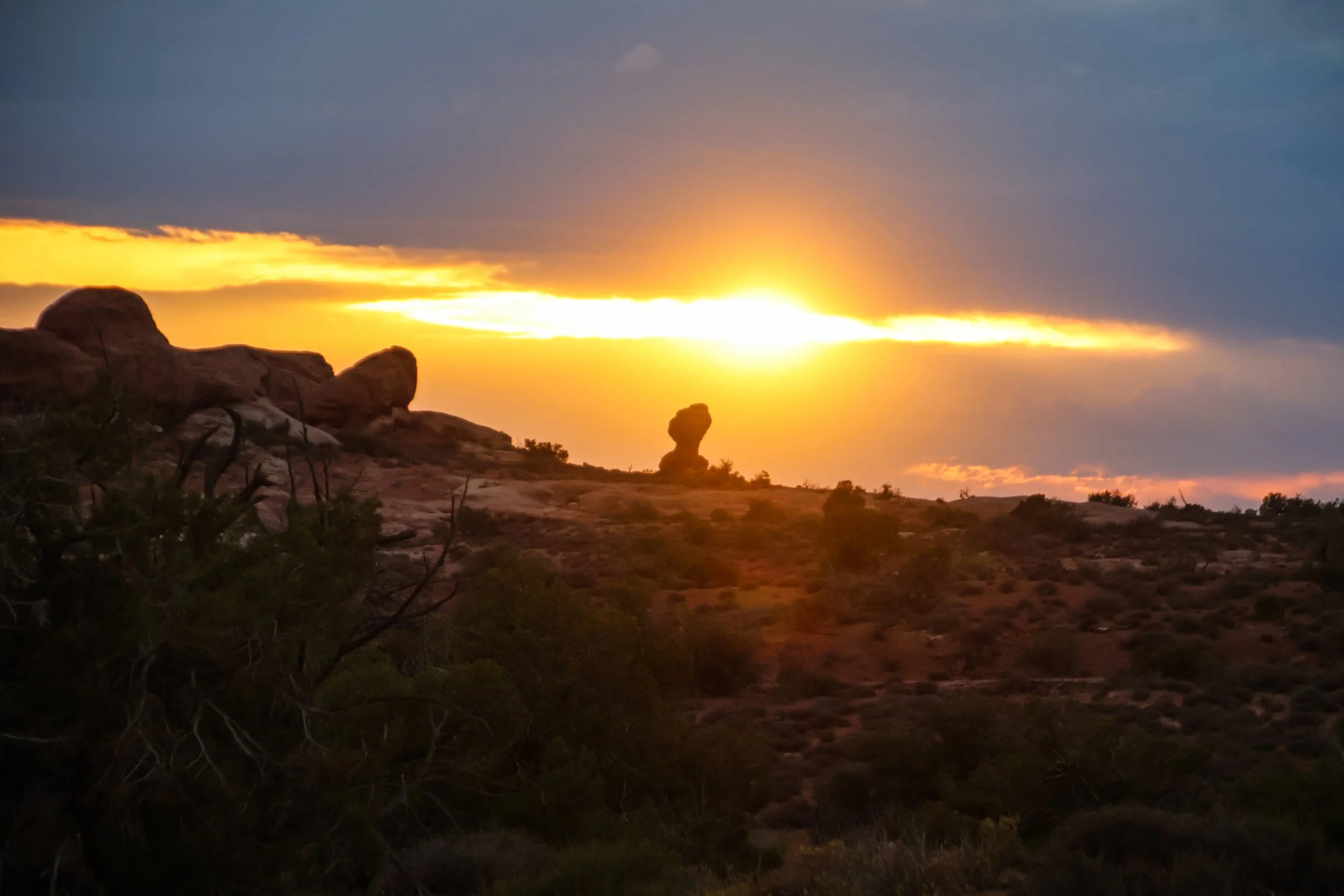
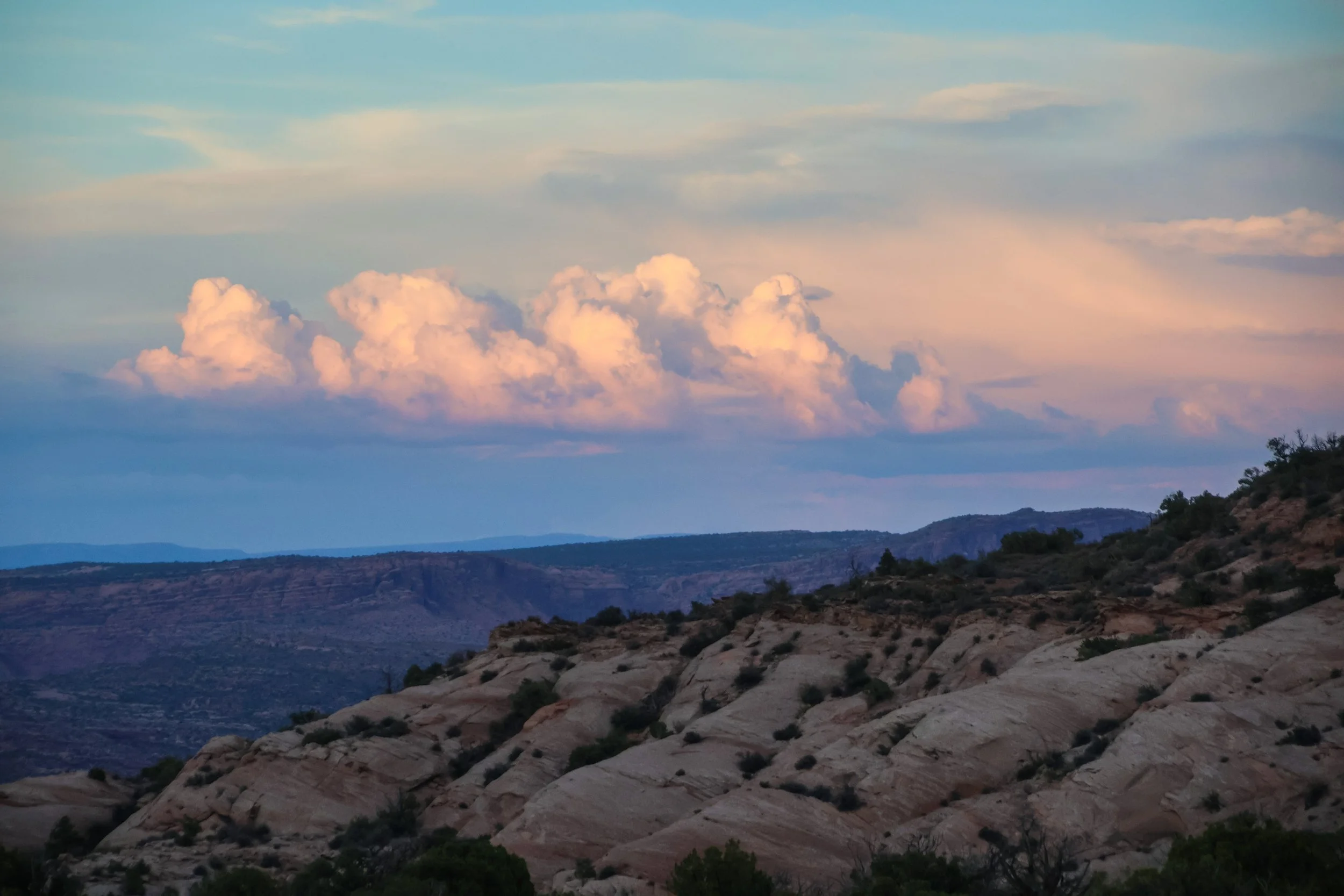
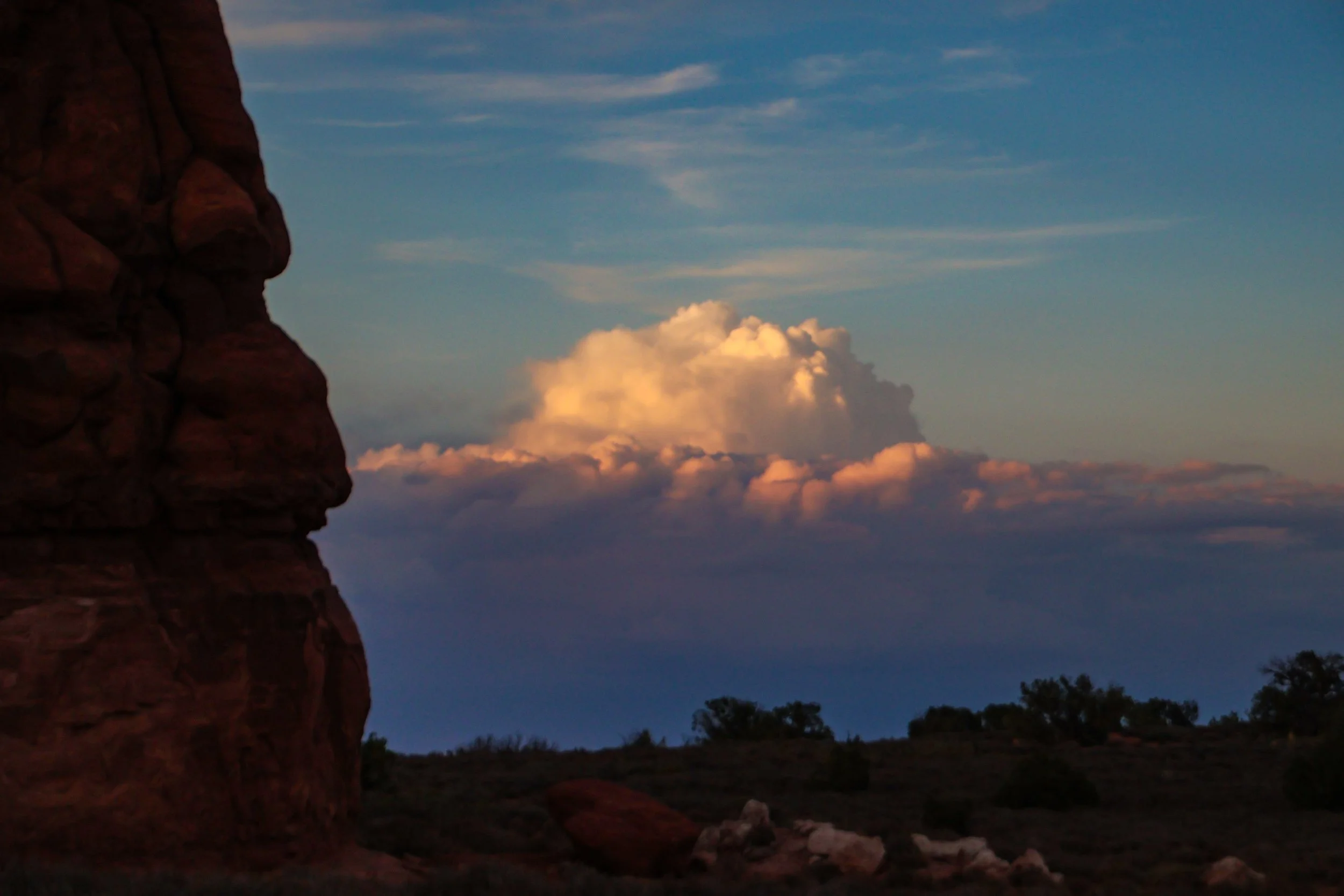
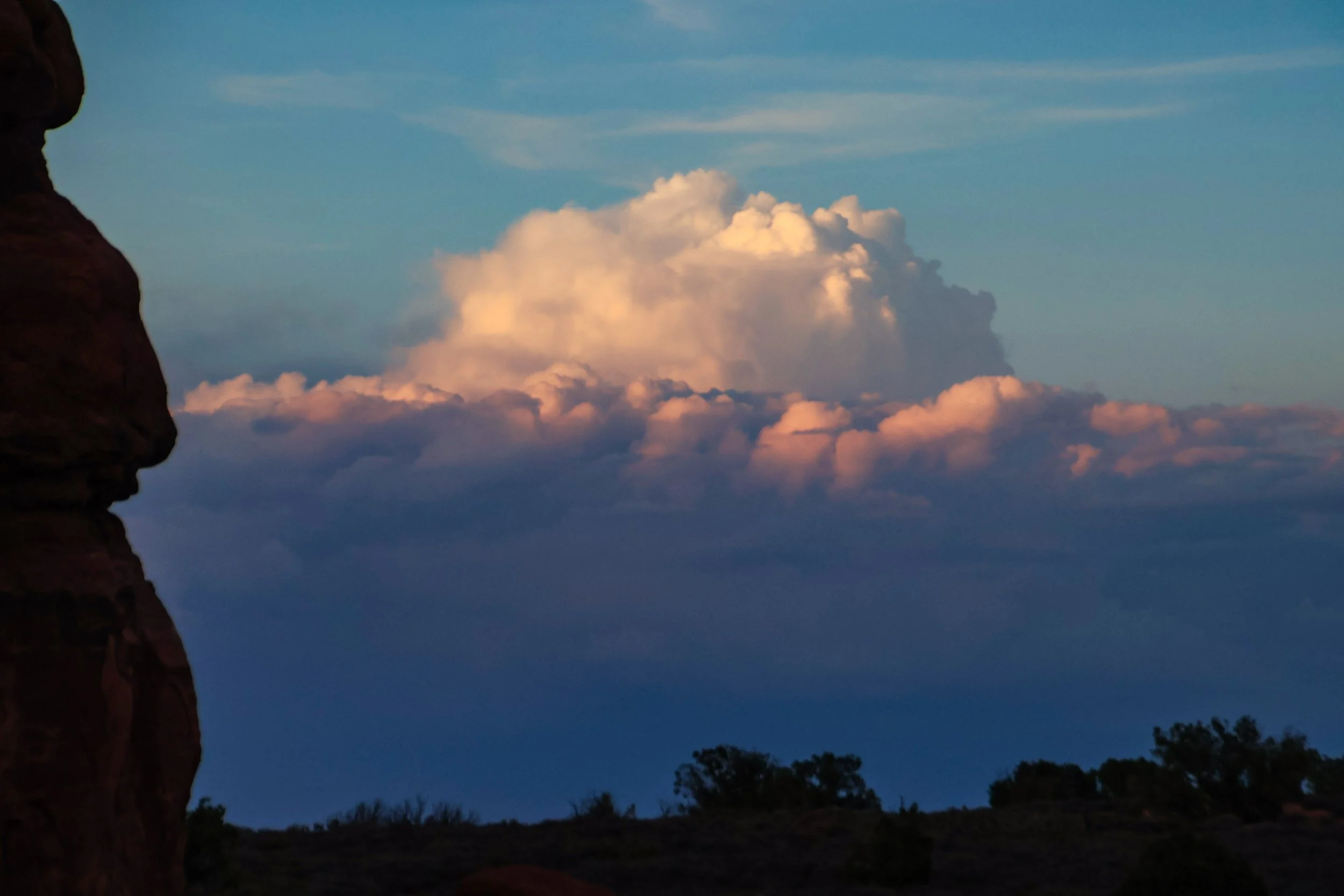
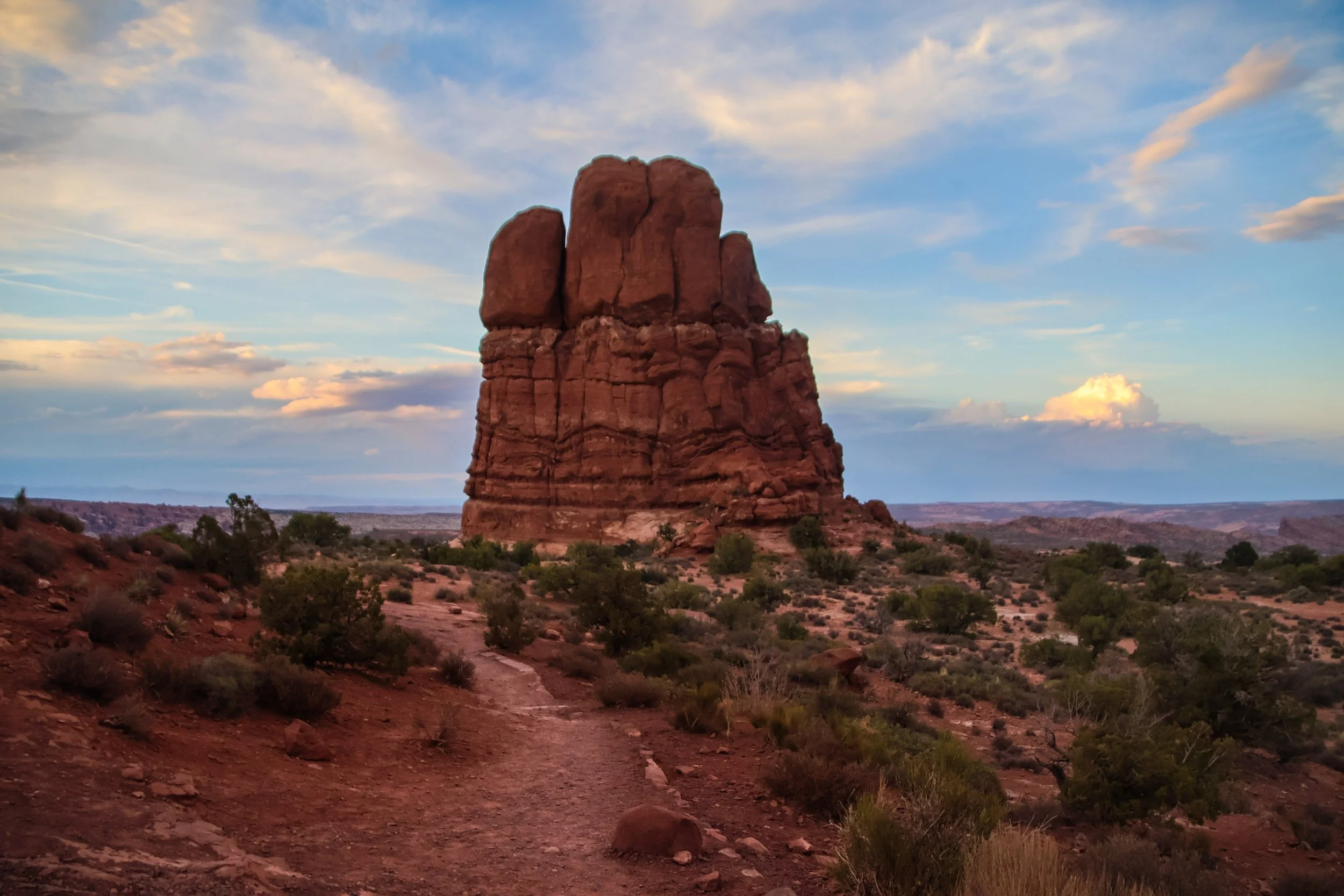
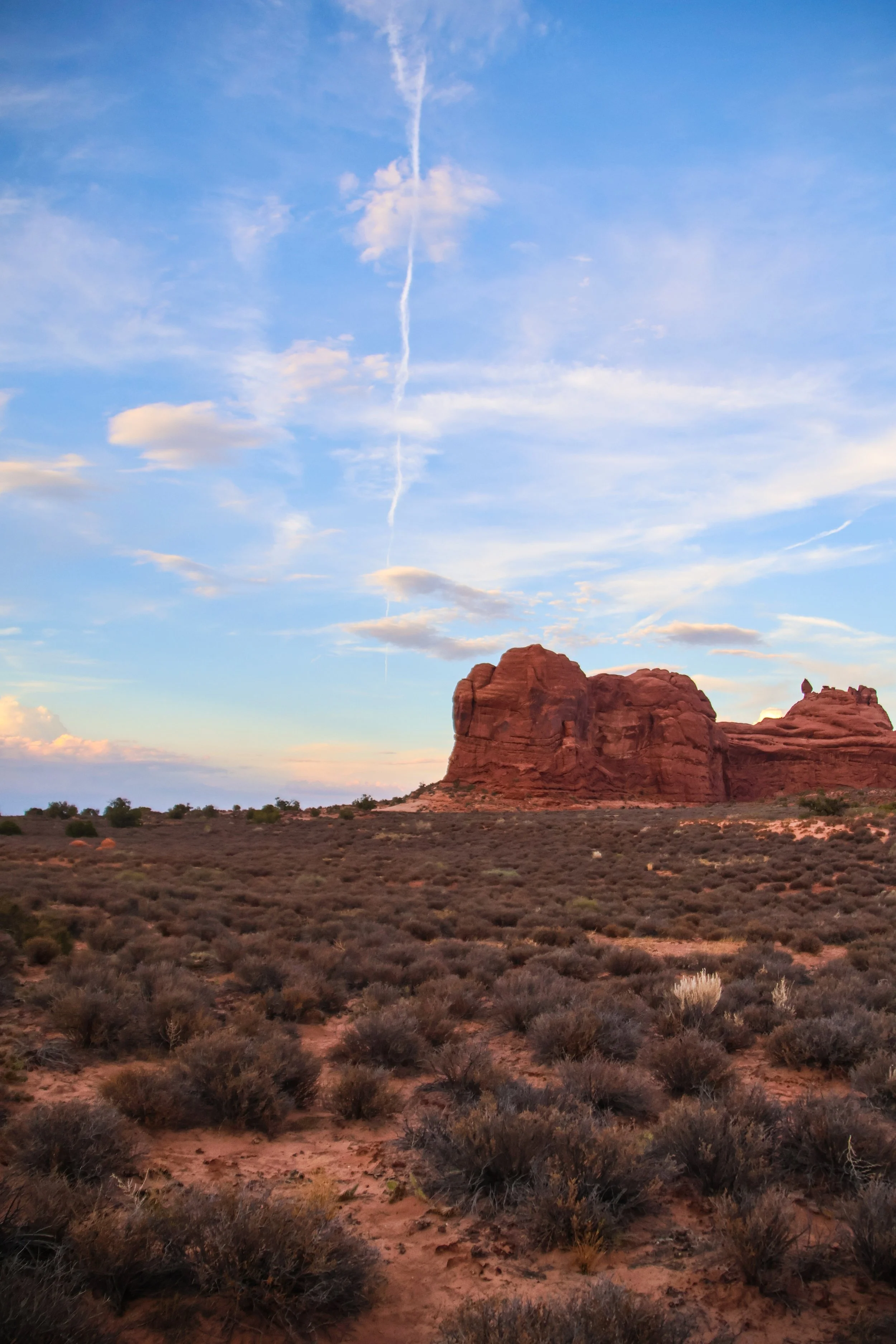
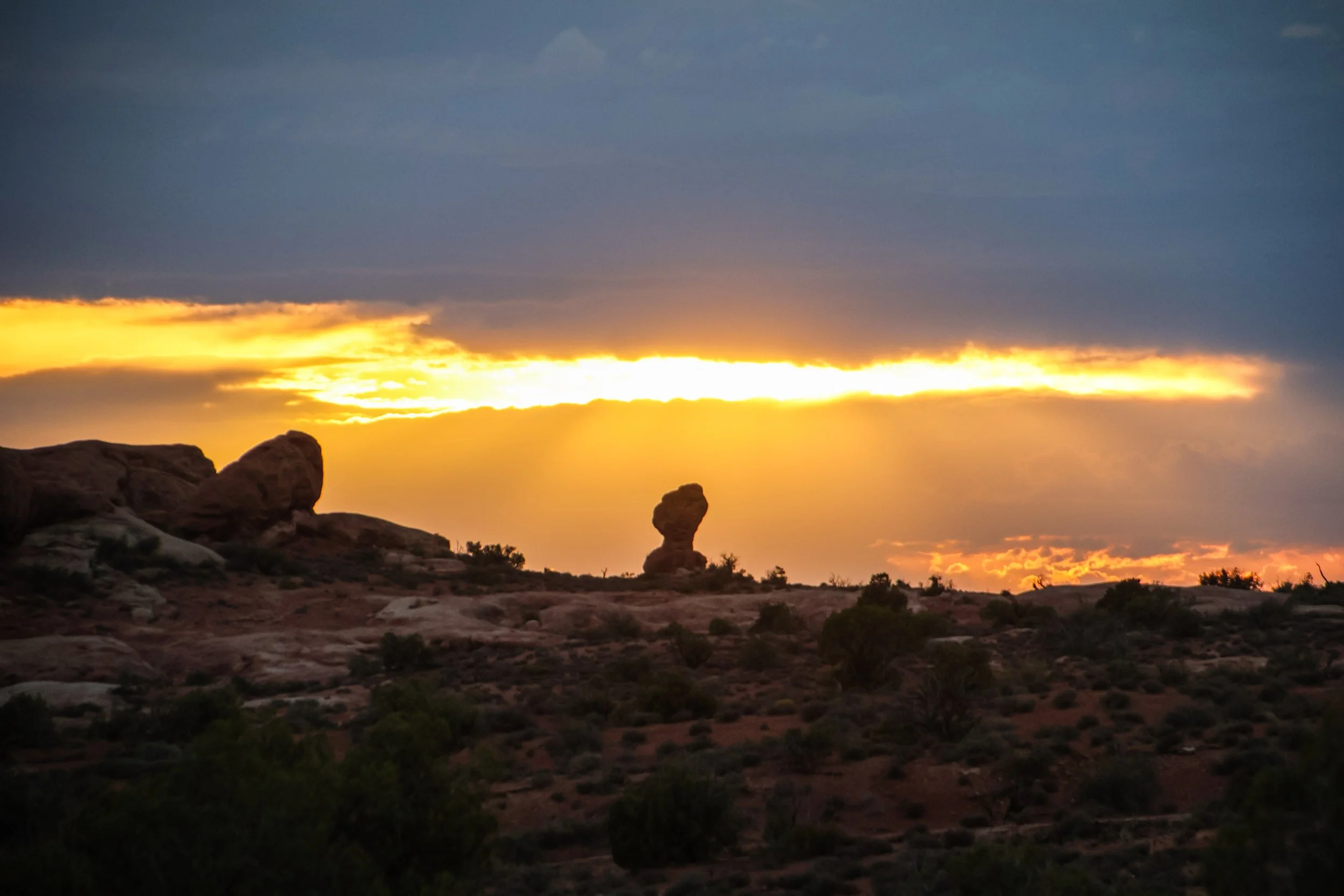
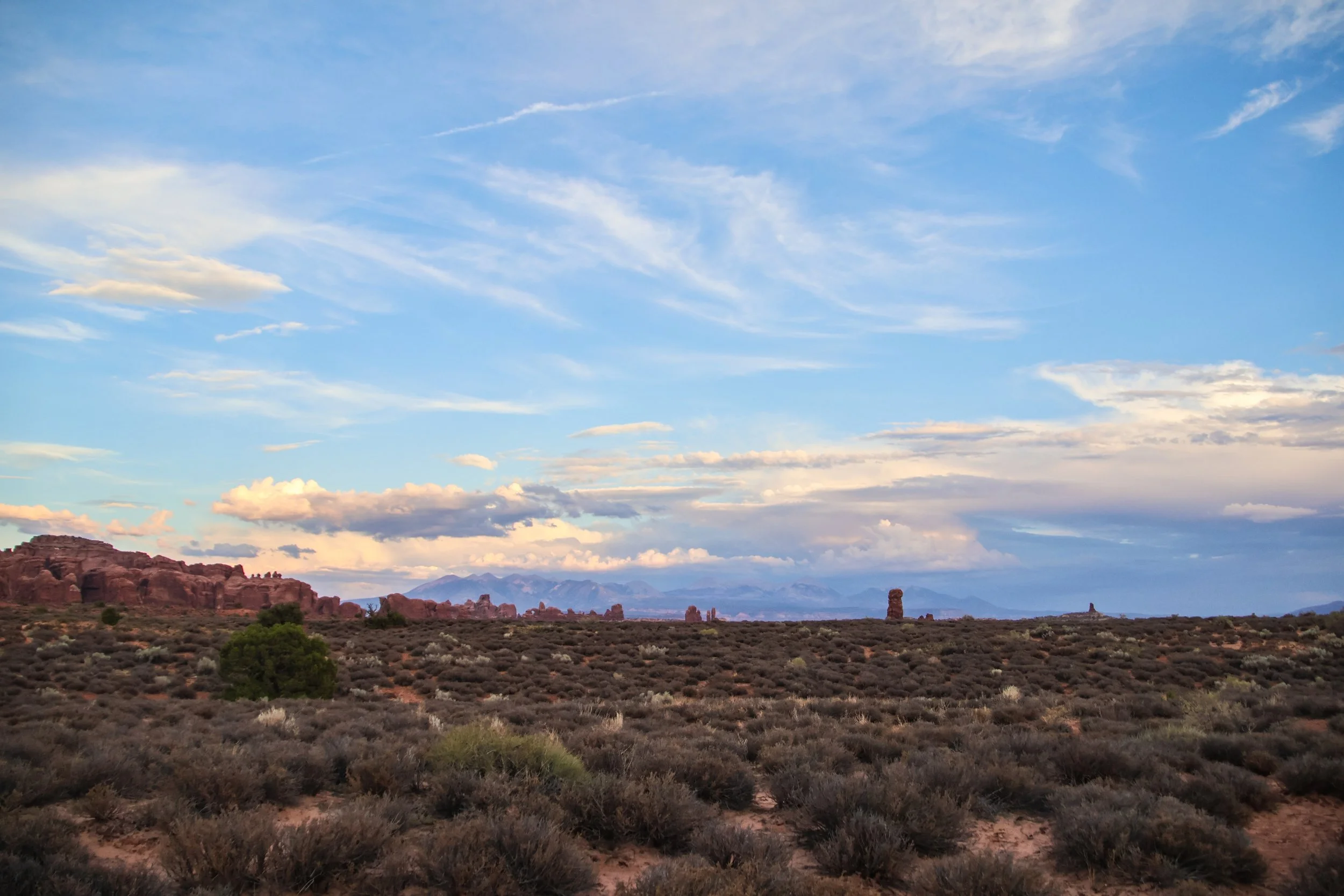
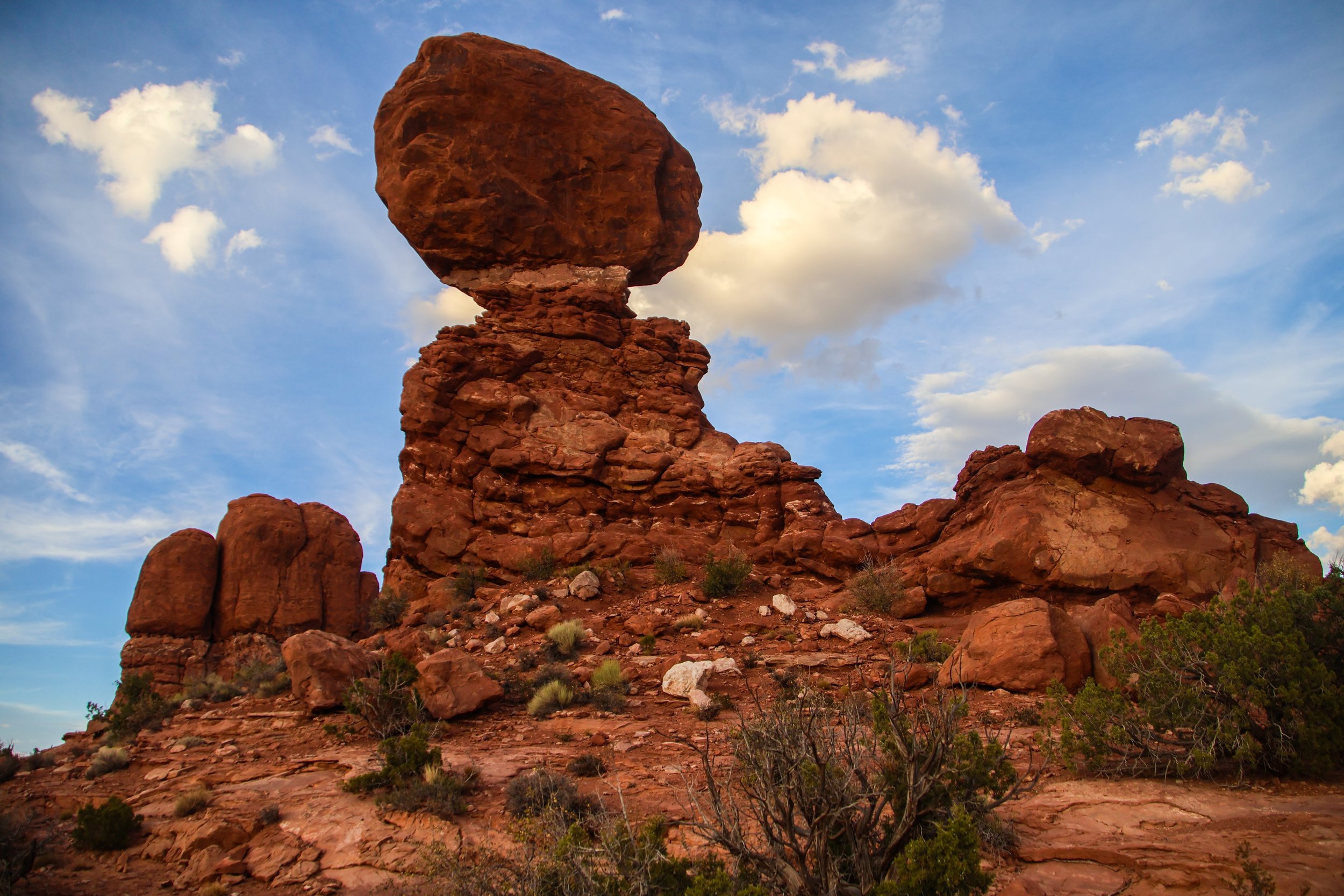
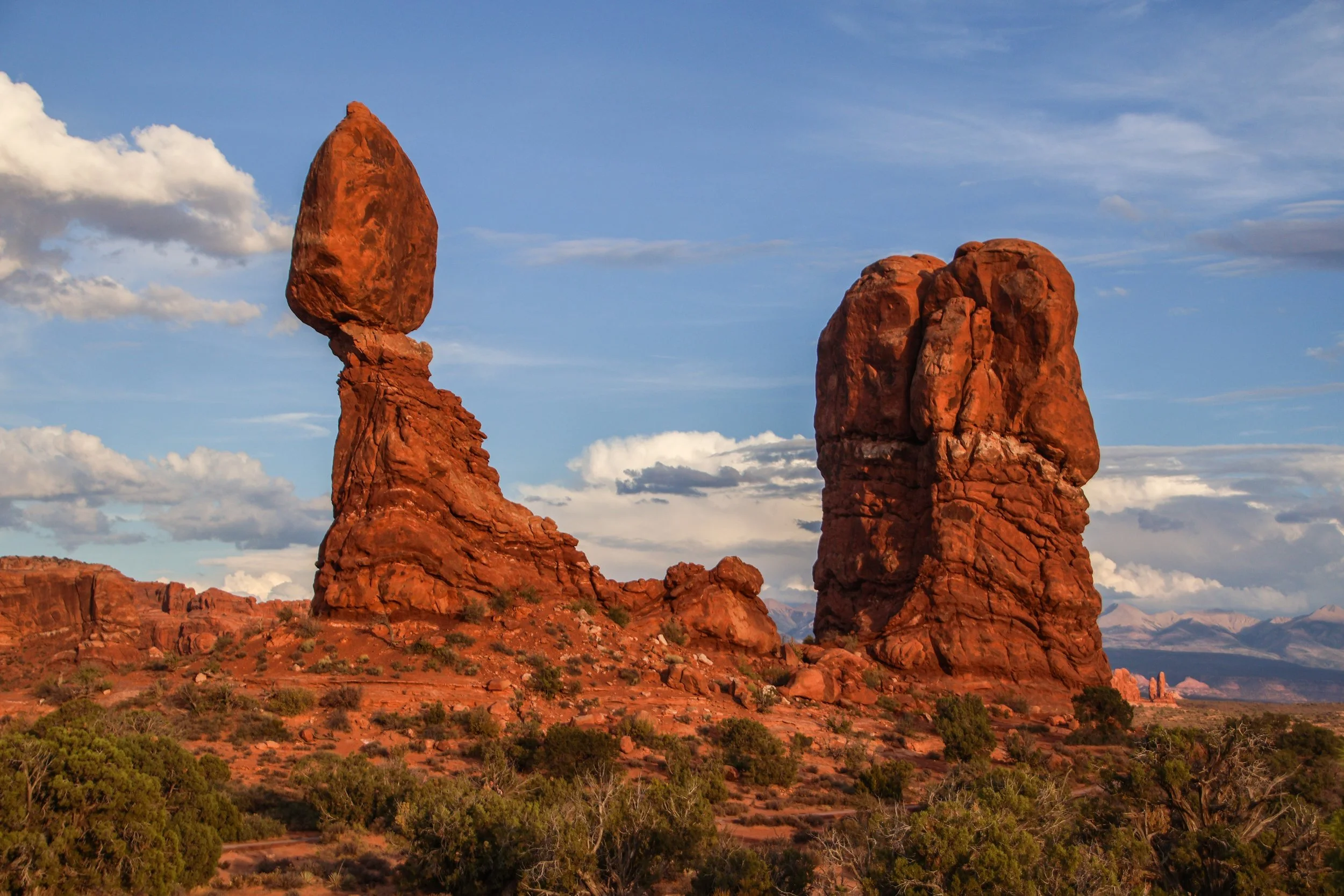
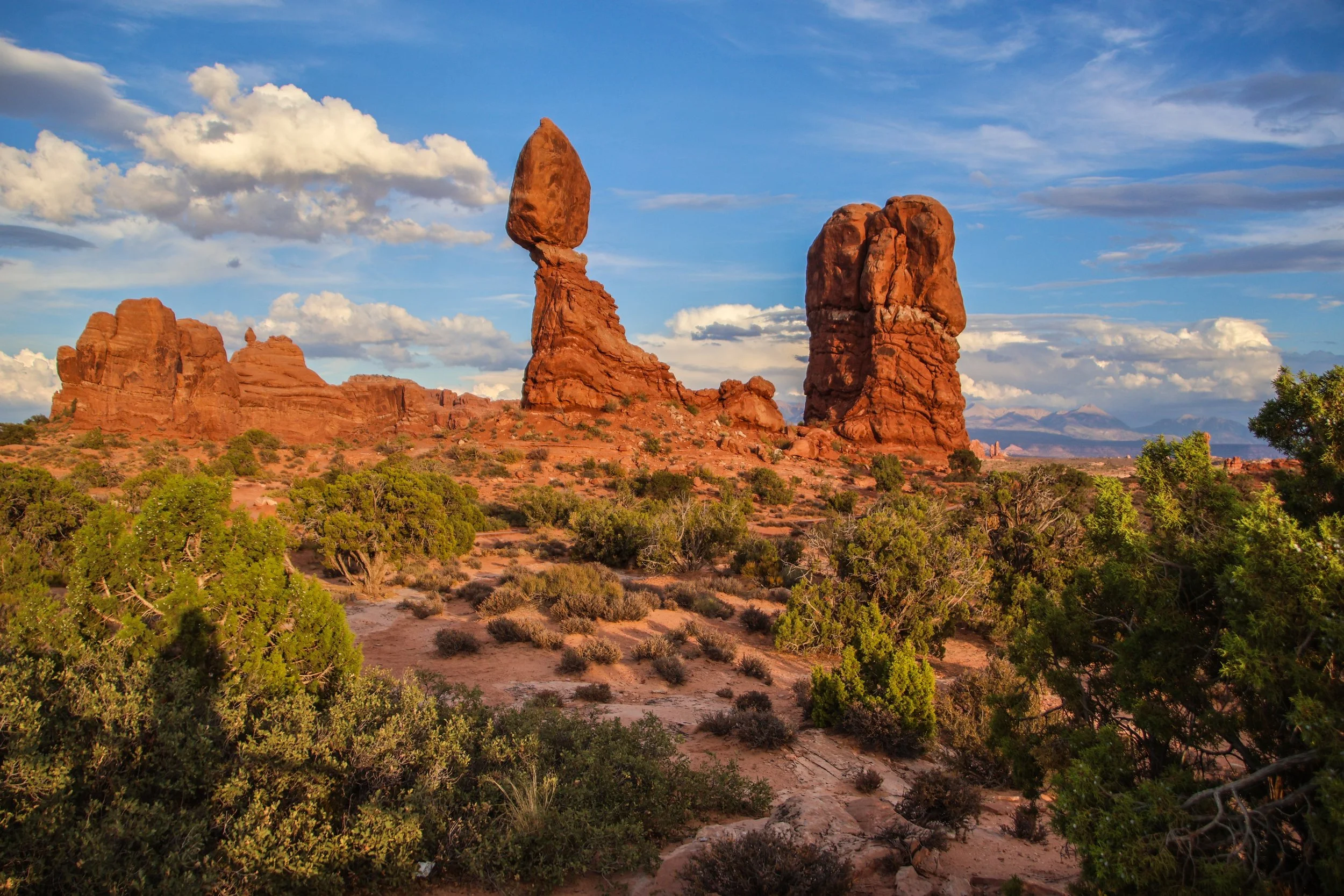
Here’s something cool about Arches National Park: it never closes! You can wander around up here to your heart’s content, even in the wee hours of the night. Which, again, makes it feel like a giant playground to me! Of course, we had to come back out to catch the sunset and do my sad, bi-annual attempt at astrophotography. This, as always, was aided by my kid brother, who has gotten alarmingly good at this after many nights in the Oregon wilderness sleeping in his car. So we drove out to a rock formation called Balanced Rock and set up shop. Here are some of the scenes as the sun slid slowly toward the horizon line…
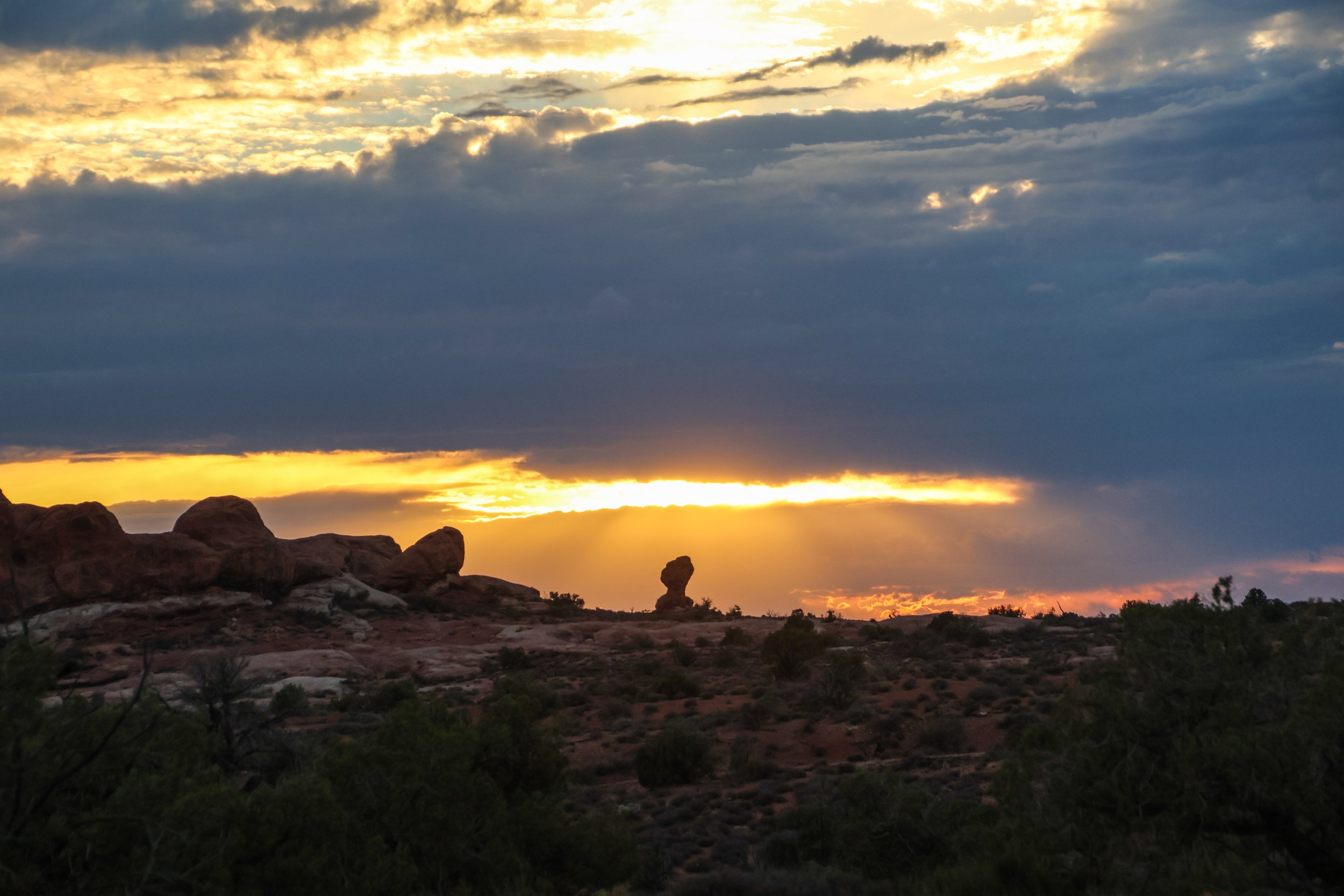
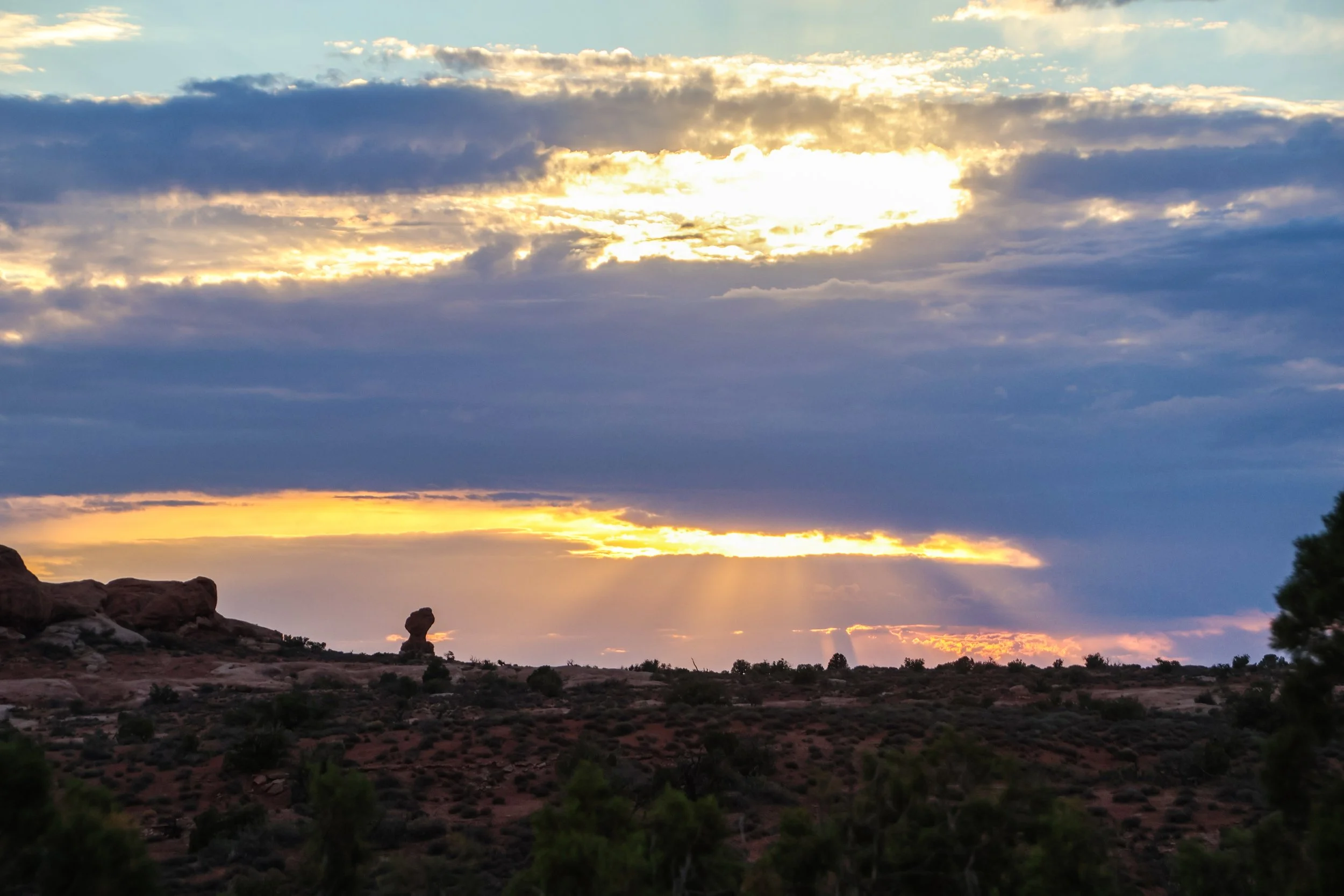
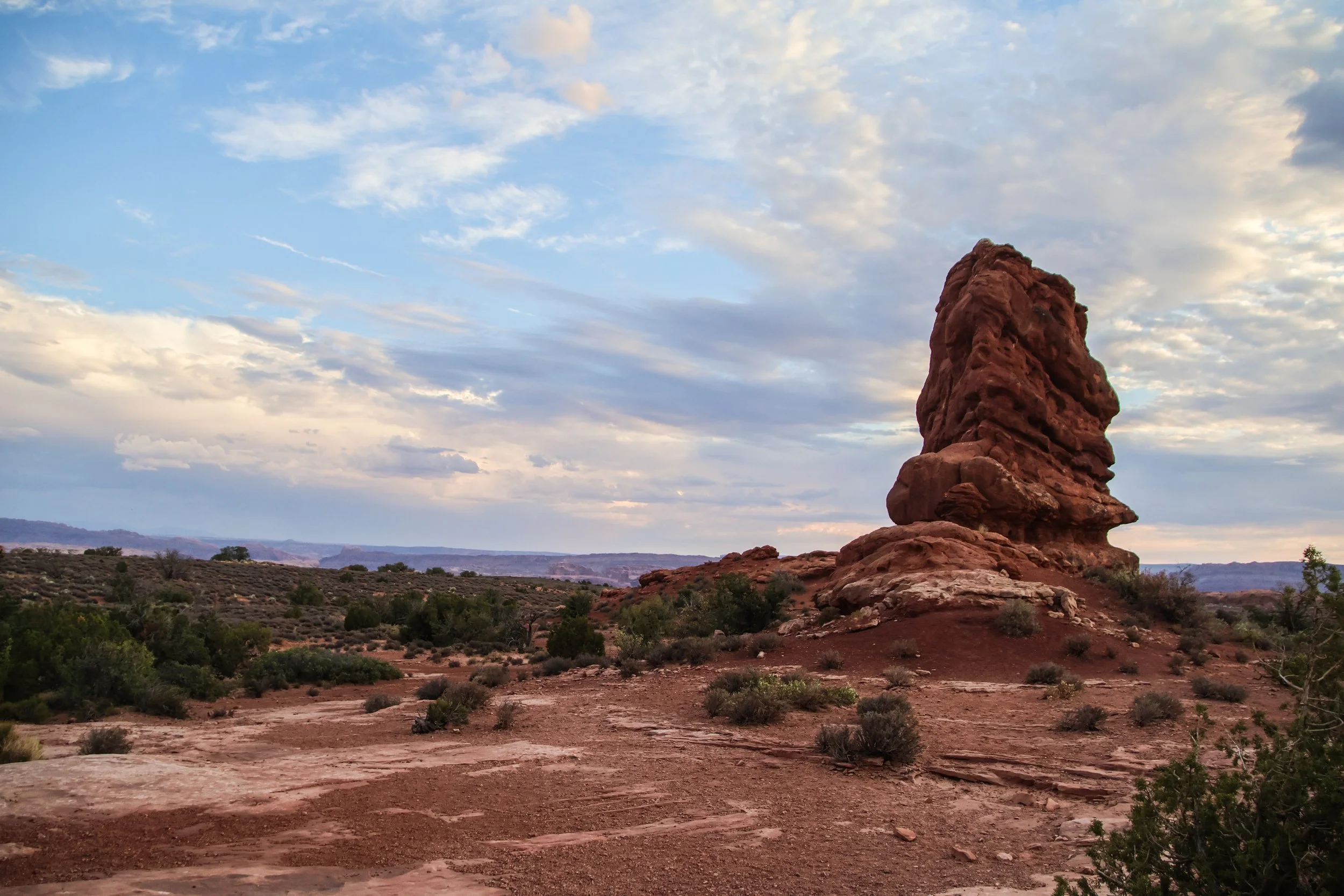
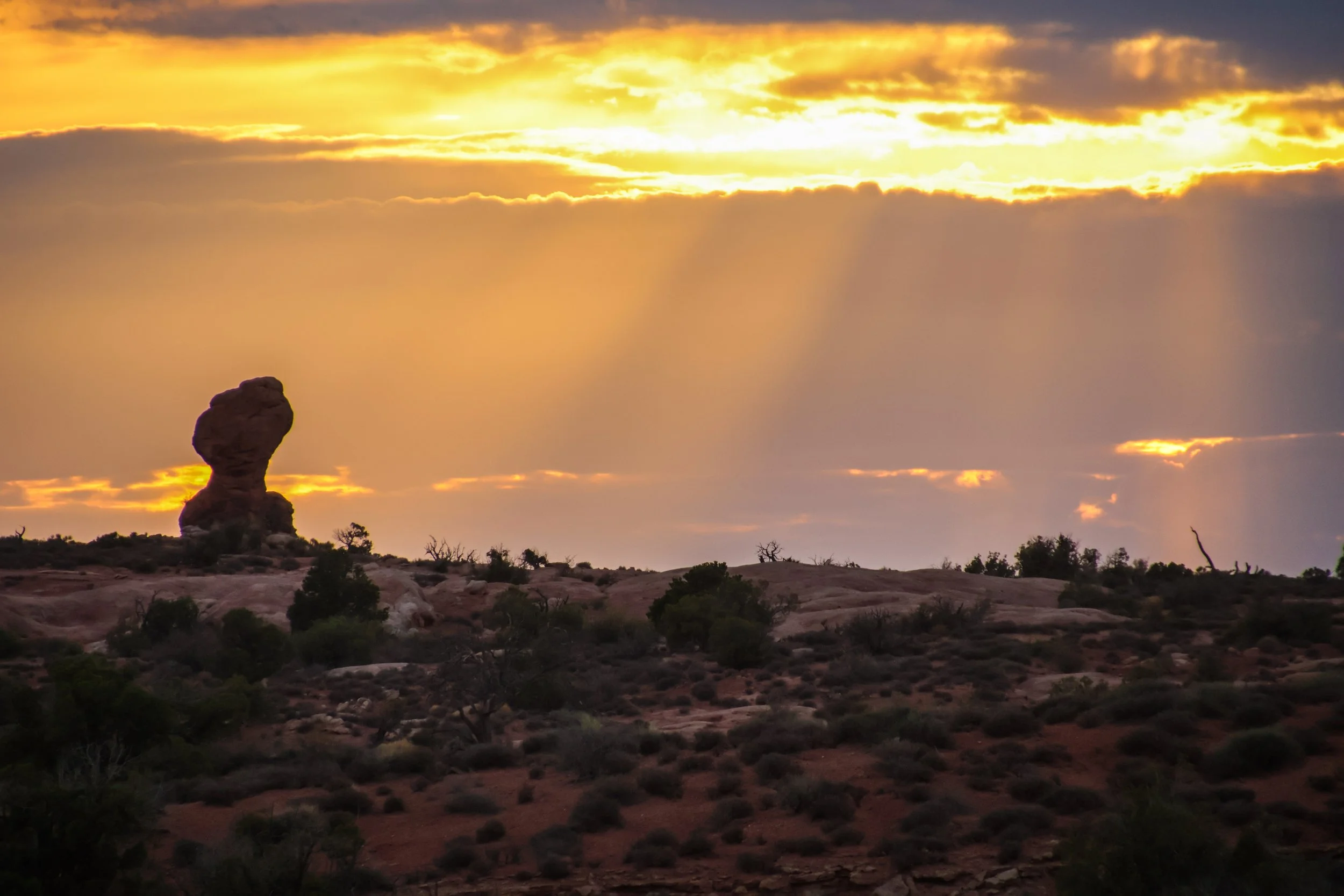
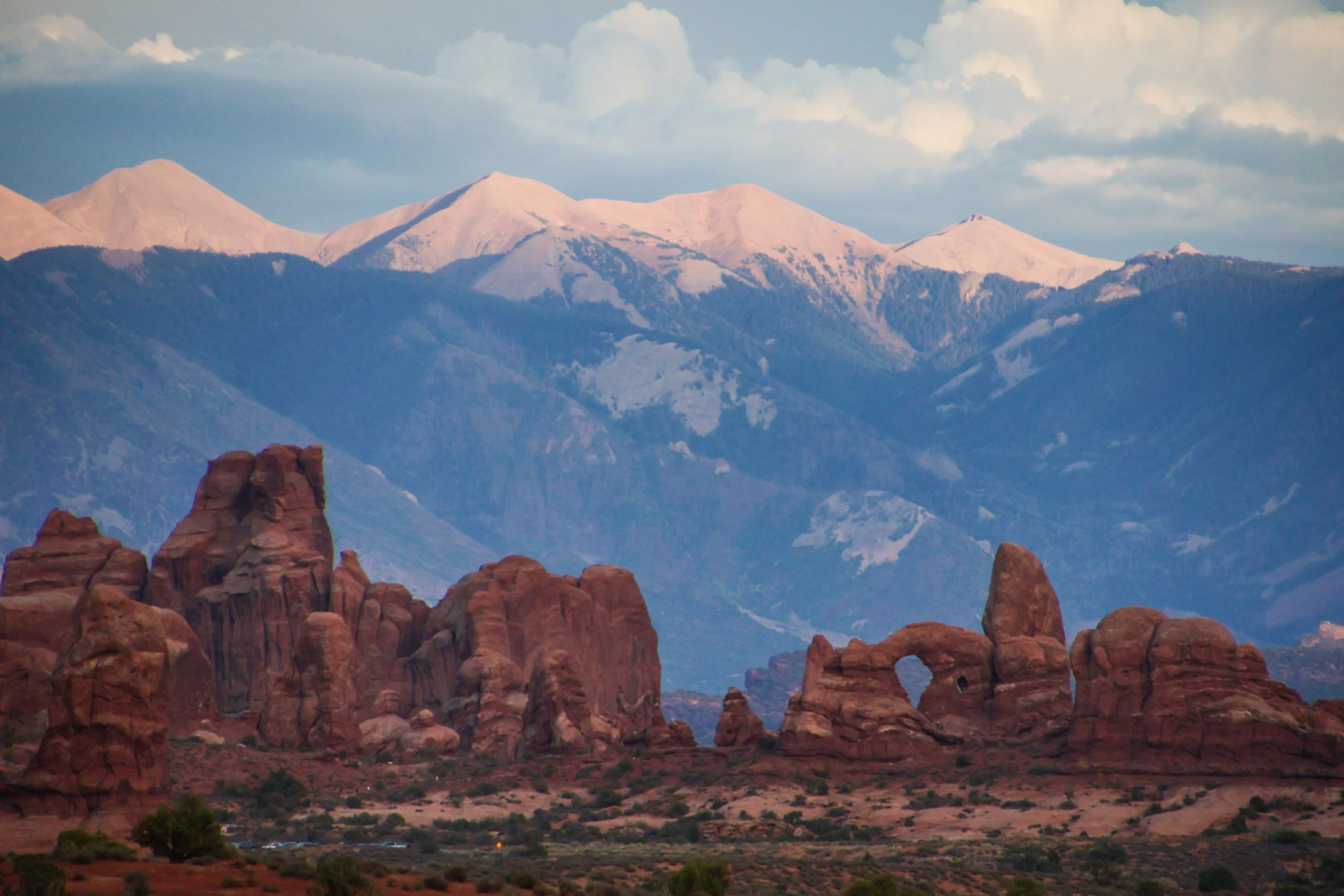
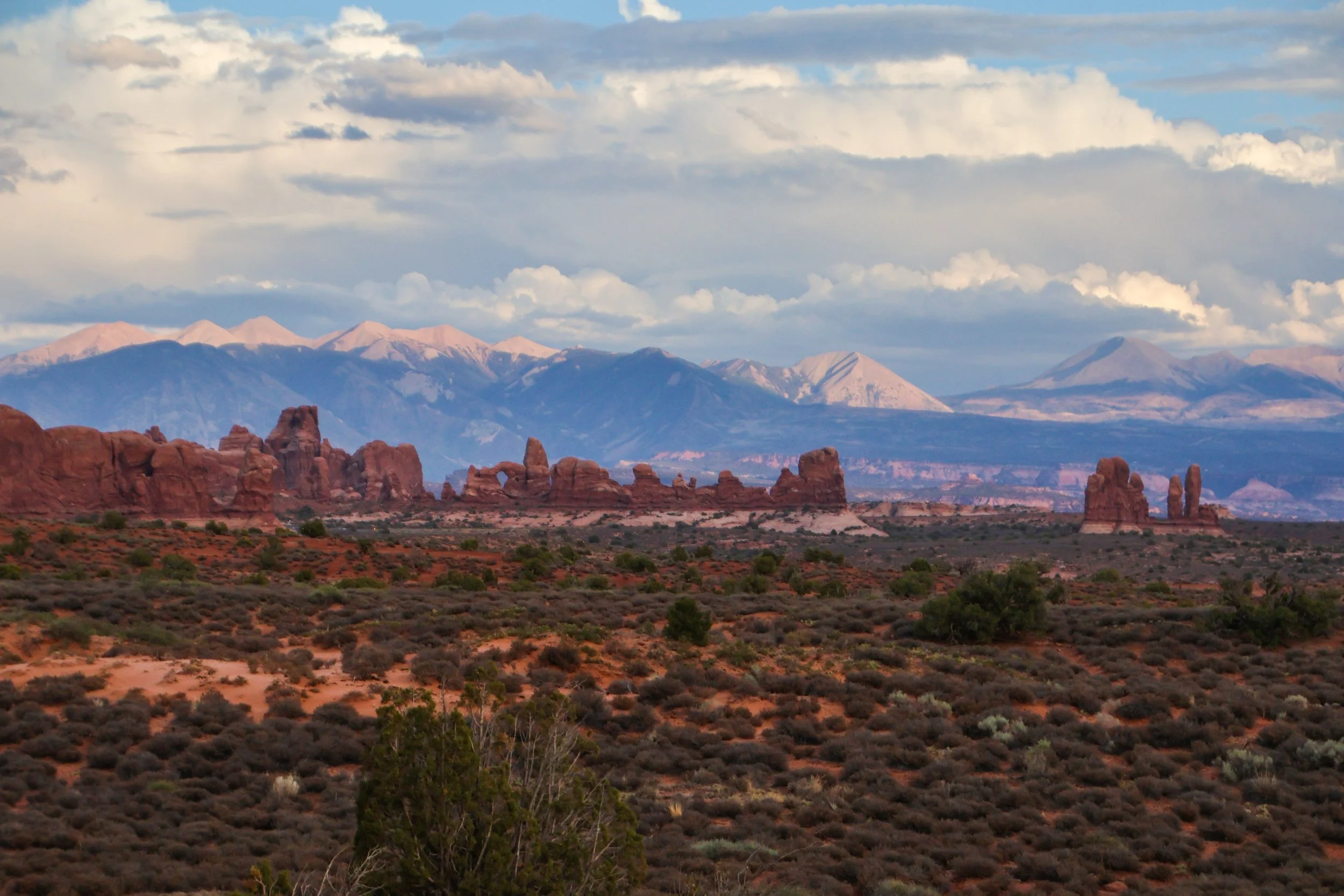
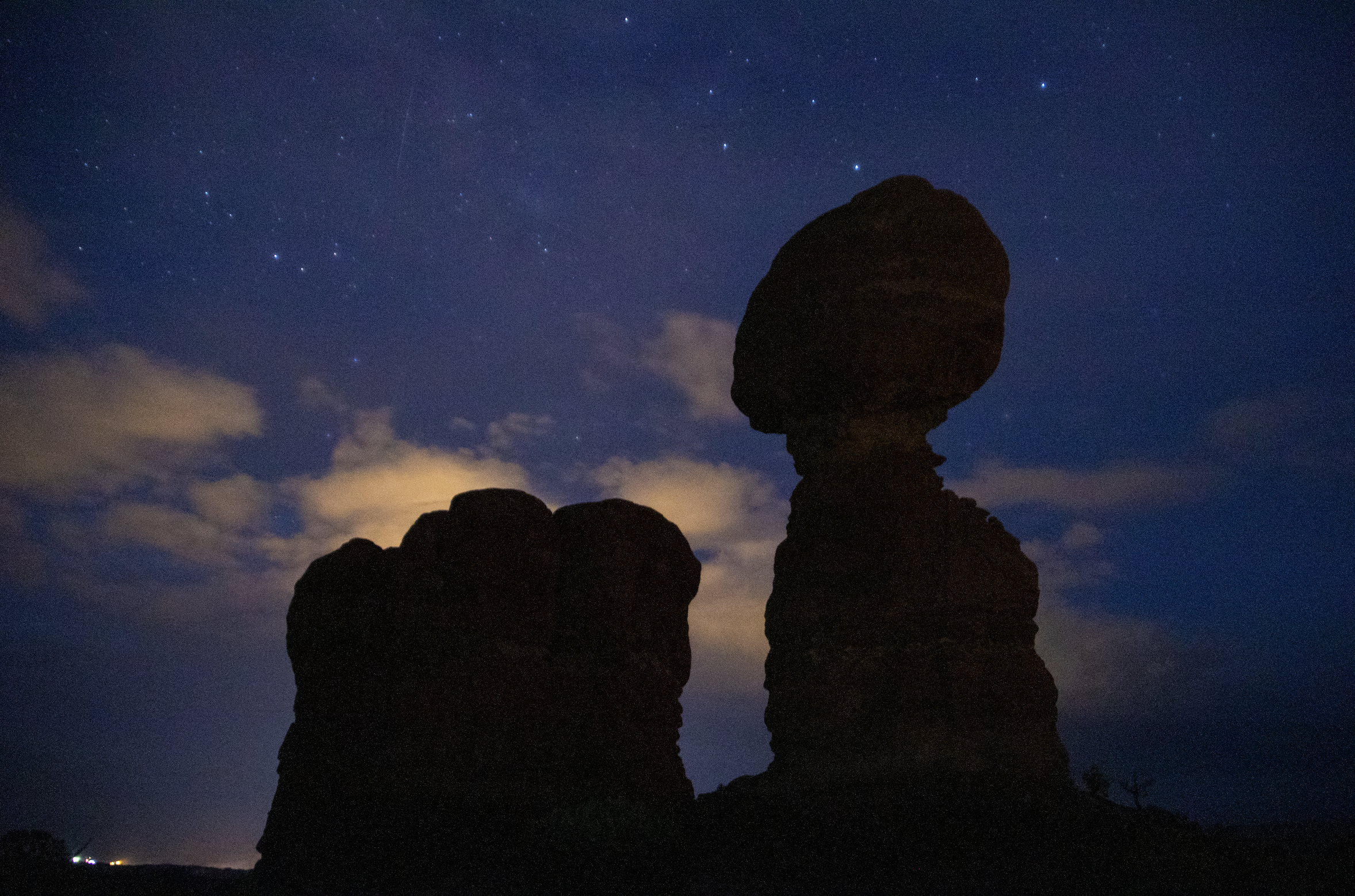
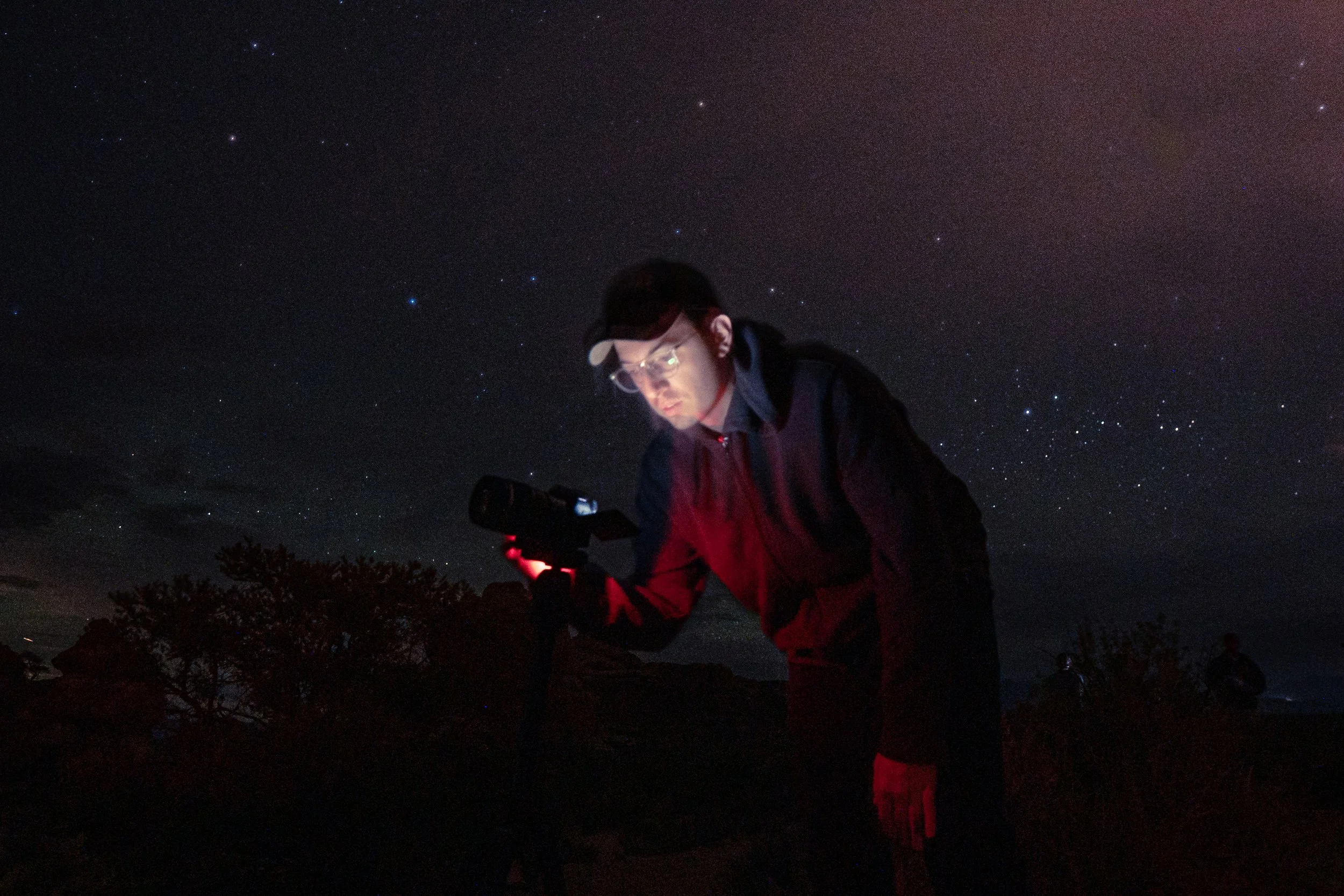
Finally, it was night. Time to bust out the ol’ tripod and start switching the camera settings over to long-exposure. We were out here during a new moon, which is the lunar phase when the moon is not visible in the night sky. This creates the darkest skies, and thus the perfect opportunity for astrophotography. The lunar calendar may or may not have played a part in my original pitch of this trip to my brother (astrophotography guru). A new moon in Arches National Park? What astrophotographer would pass that up?
So, the goal WOULD HAVE BEEN to shoot the rock formations and the starry night sky behind them separately, and then composite them together so that both the foreground and the starry background can be clearly visible… but this proved impossible for 2 reasons. First, the weather, as you can see, was quite overcast; the fast-moving cloud cover made for interesting shots, but limited light and prevented the night sky from ever being fully visible. Second, there was a road nearby that cut through the center of the park. In this kind of darkness, car headlights from miles away could light up the rocks, and with a car driving by perhaps once every 60 seconds, it was tough to get an exposure that did not catch some glimmer of car headlights at the top of Balanced Rock.
In the end, these photos looked better as they were rather than composited. I personally think they are still very cool, but they are definitely not perfect from a technical perspective. The fact that I don’t have the right lens for this doesn’t help either. But I did my best. In the gallery below, take note of the the unnaturally straight lines of tightly packed stars: this is Starlink. In real life, those lines go shooting through the sky quite quickly. Sitting here in the nothingness of the desert, it’s incredible consider that the same species that only a few centuries ago created those petroglyphs on the nearby rock… can now do THIS.
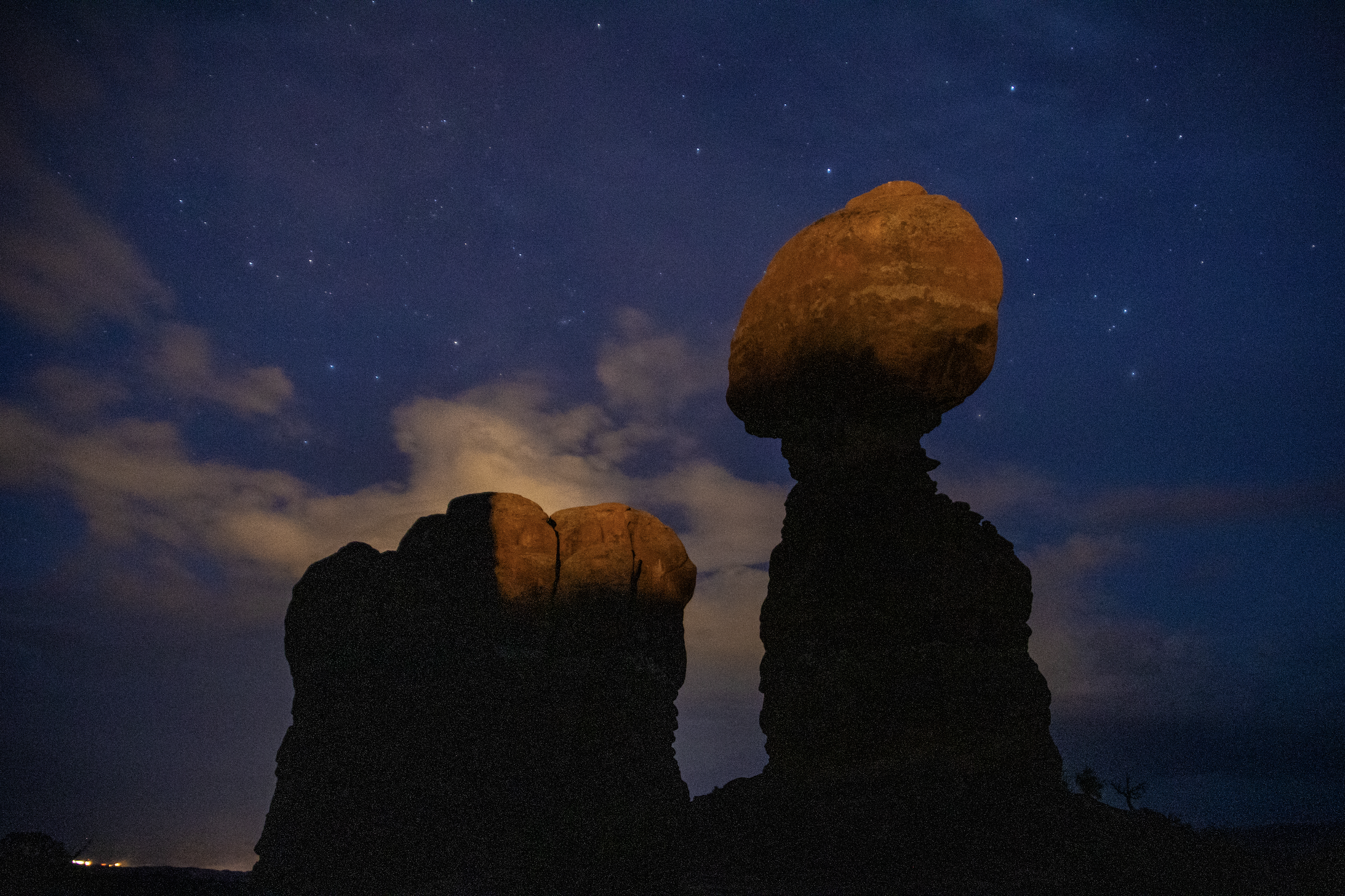
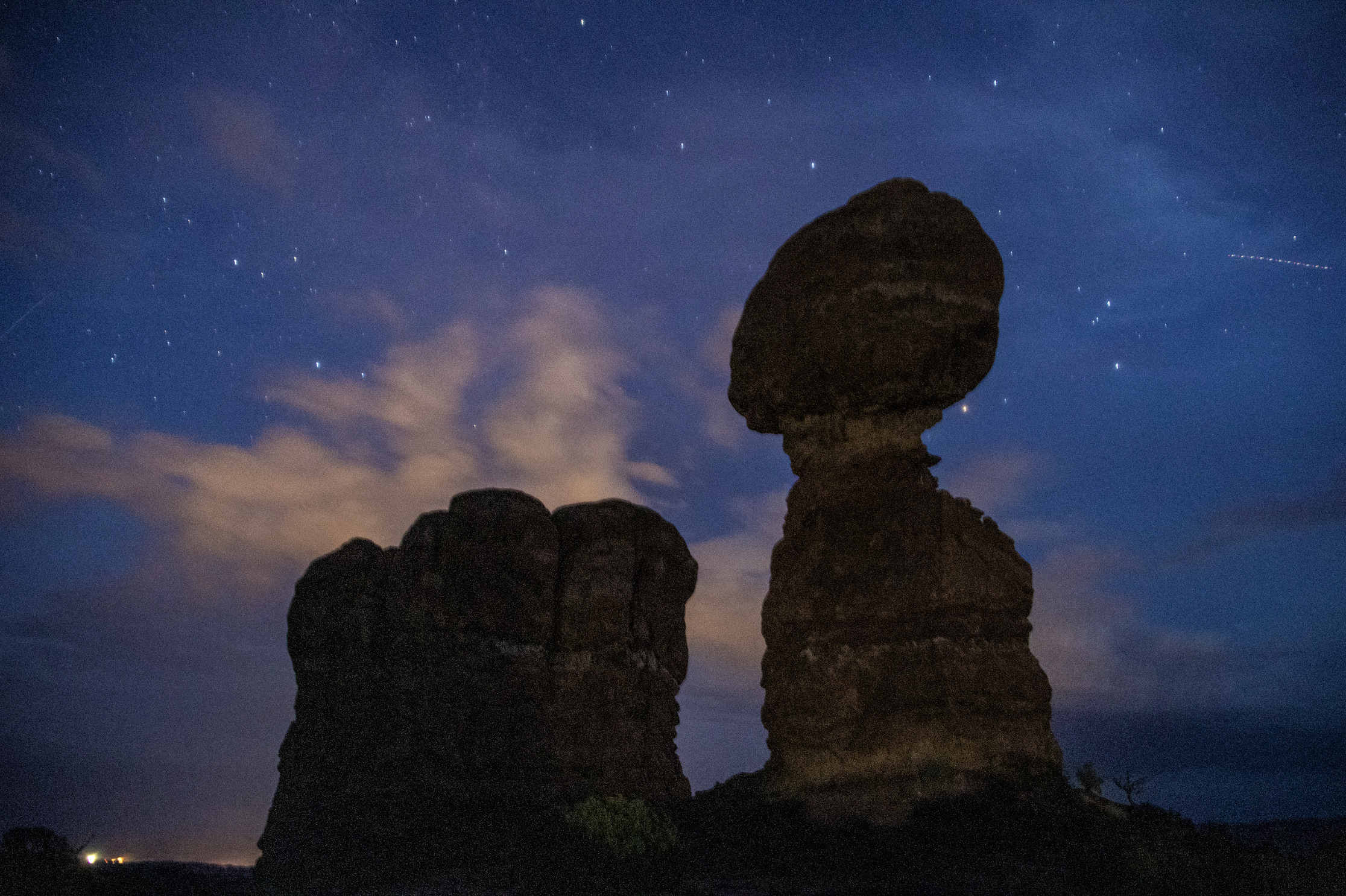
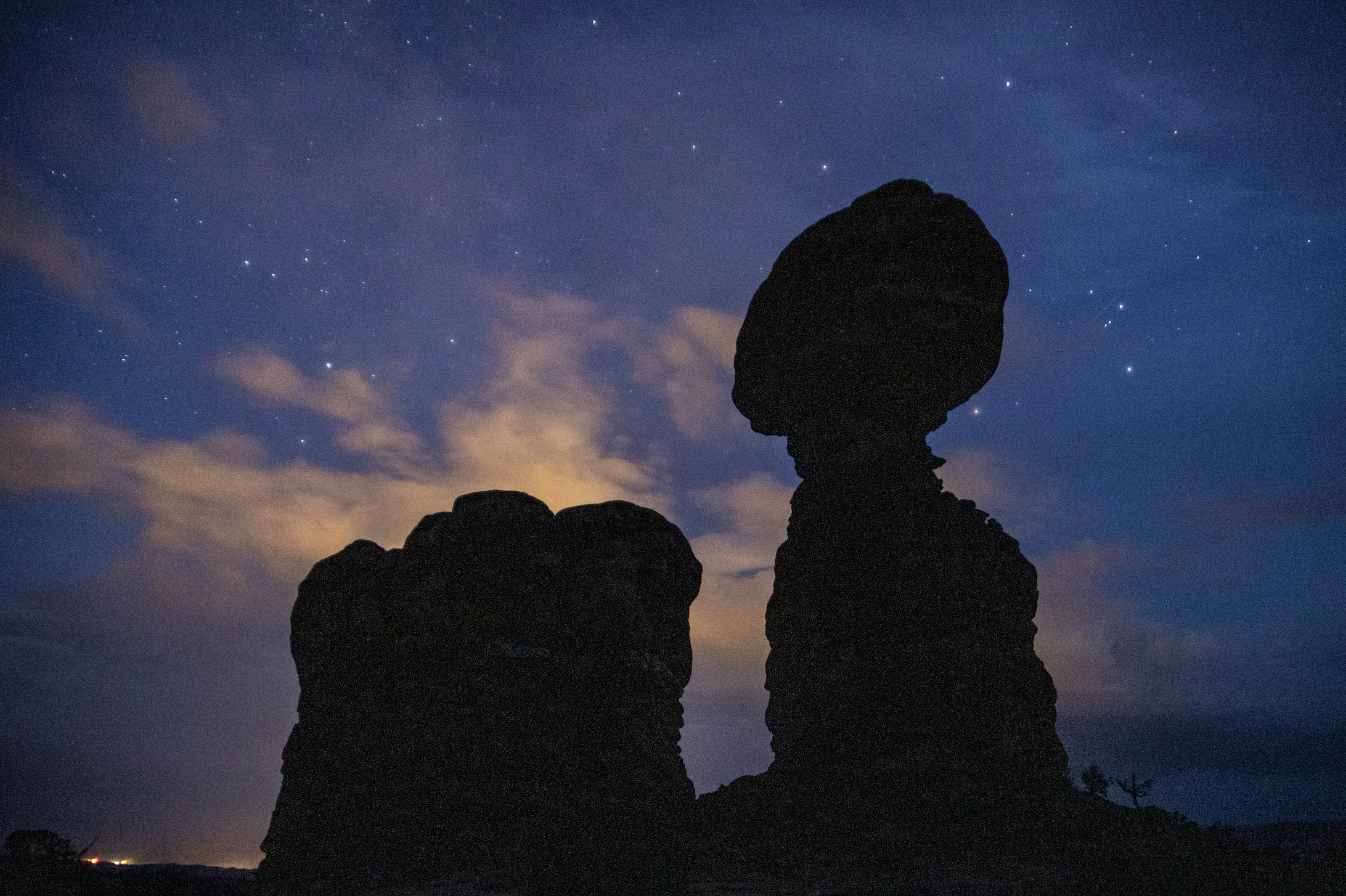
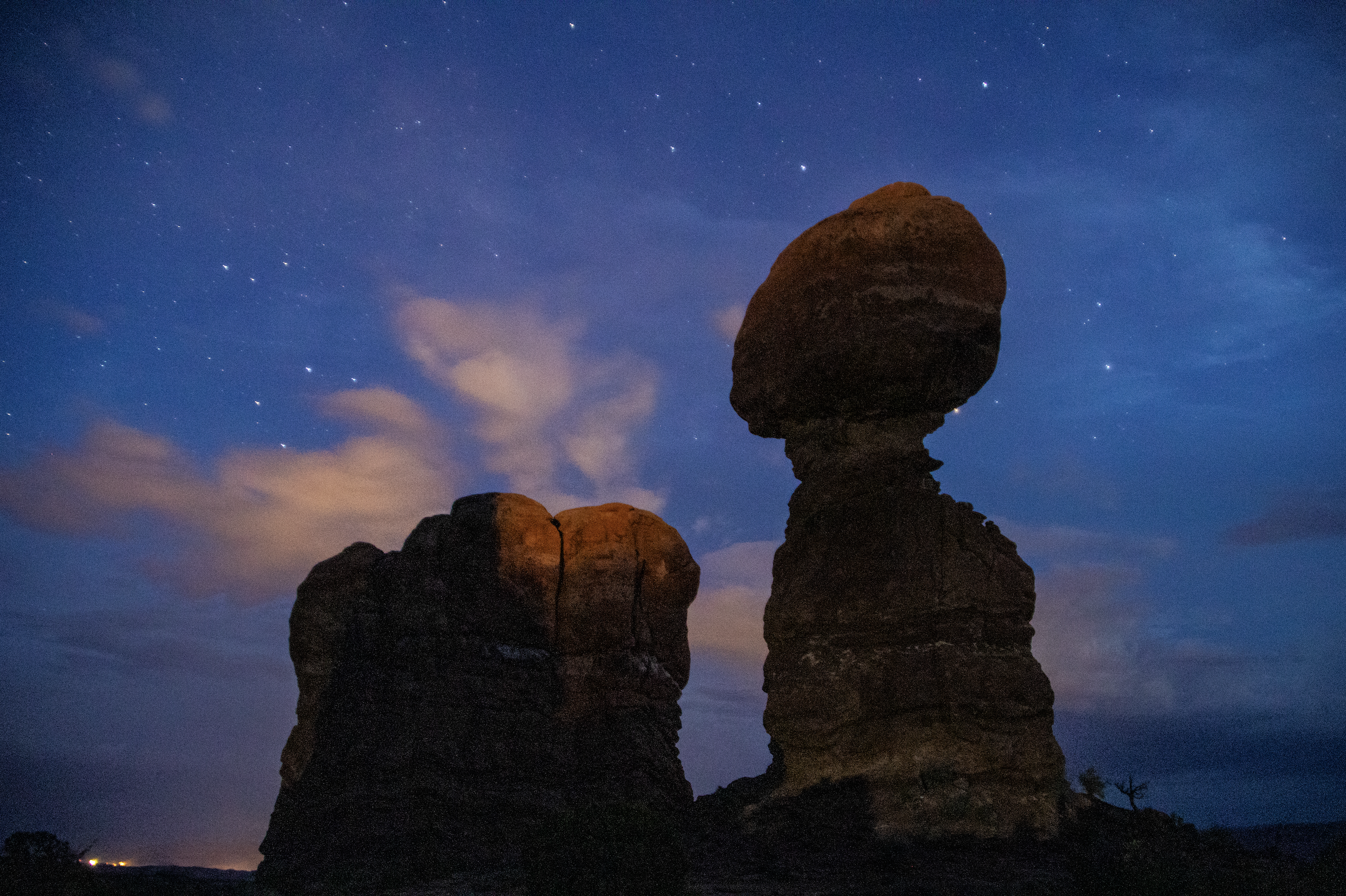
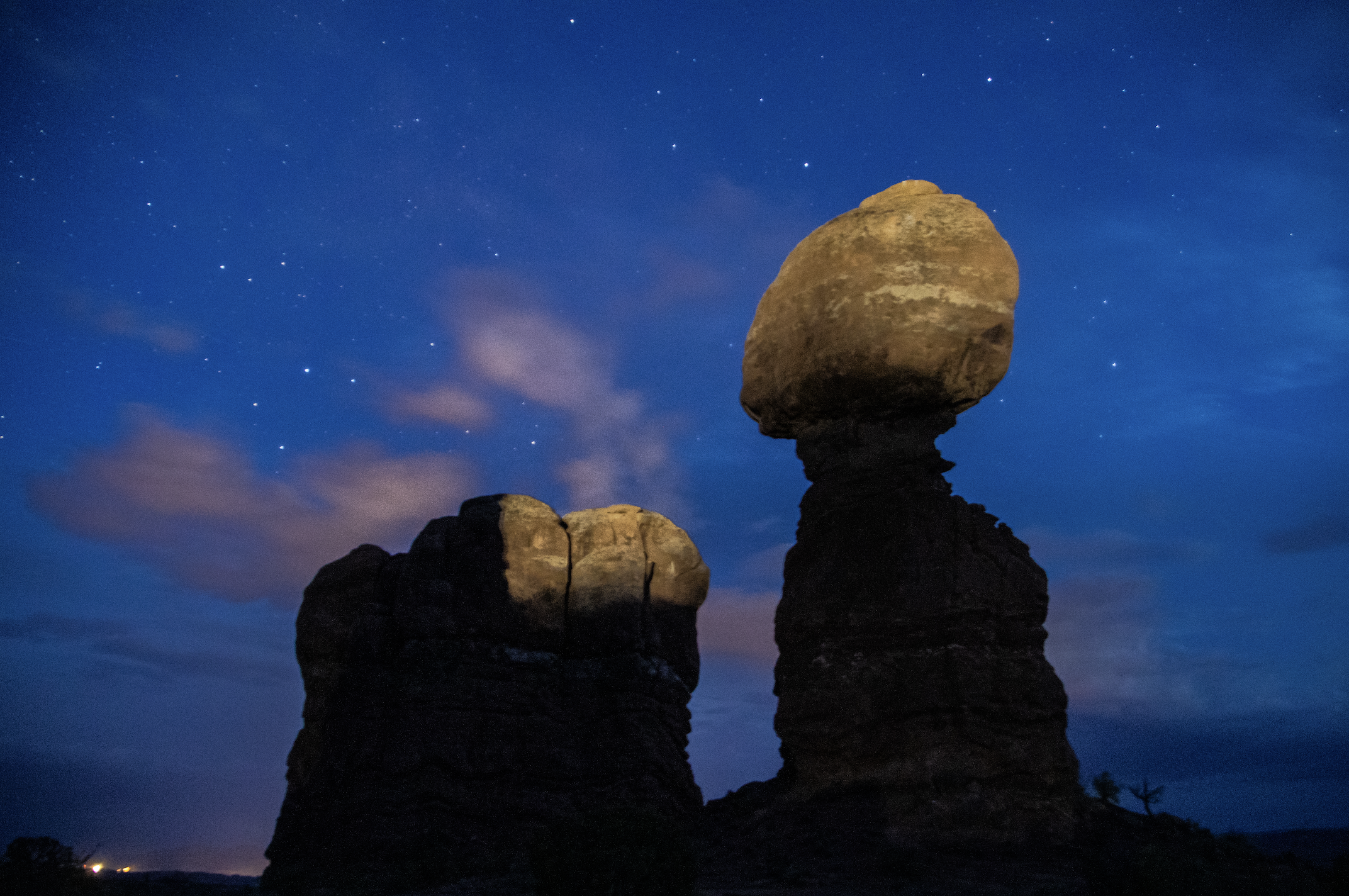
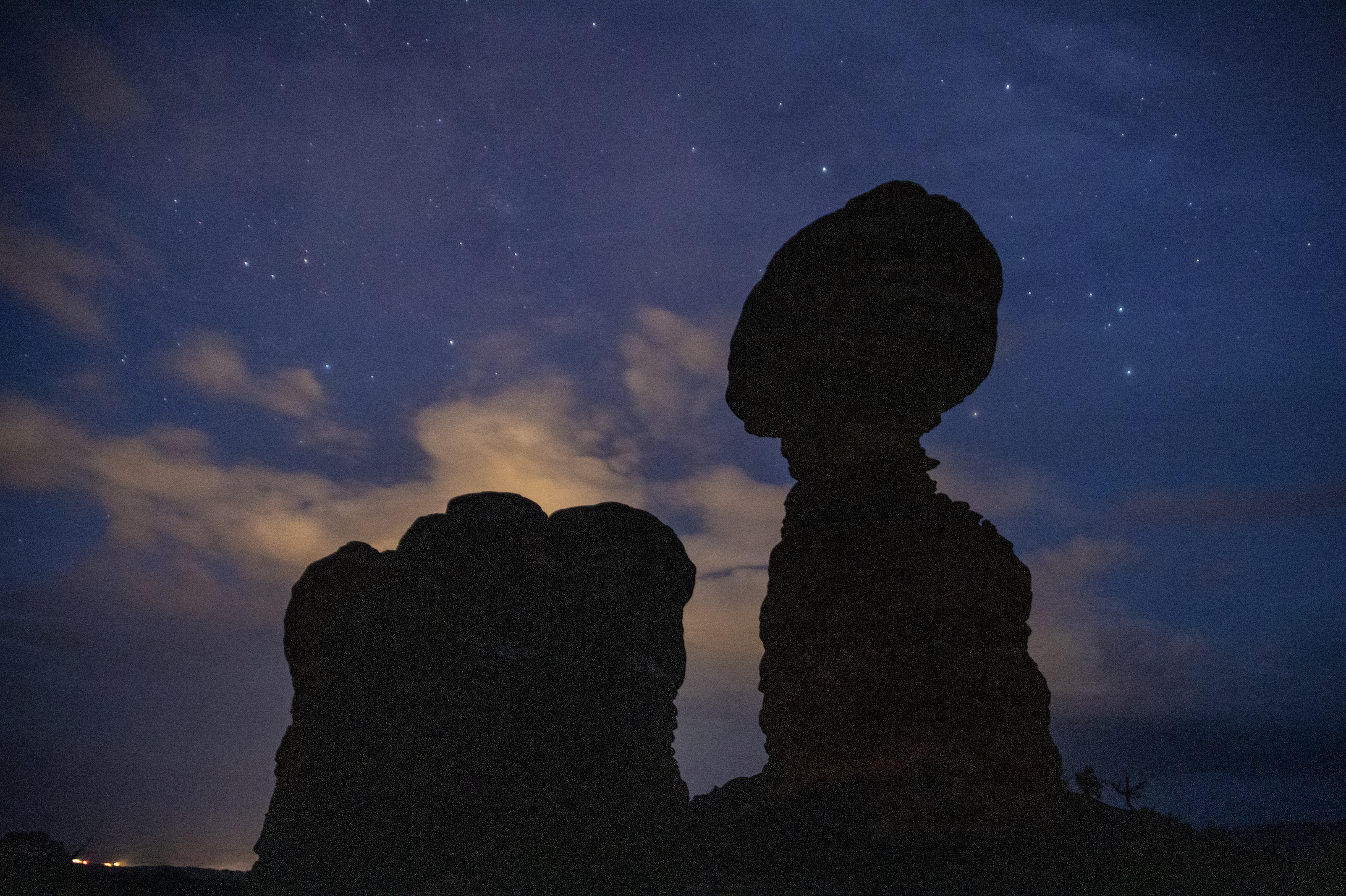
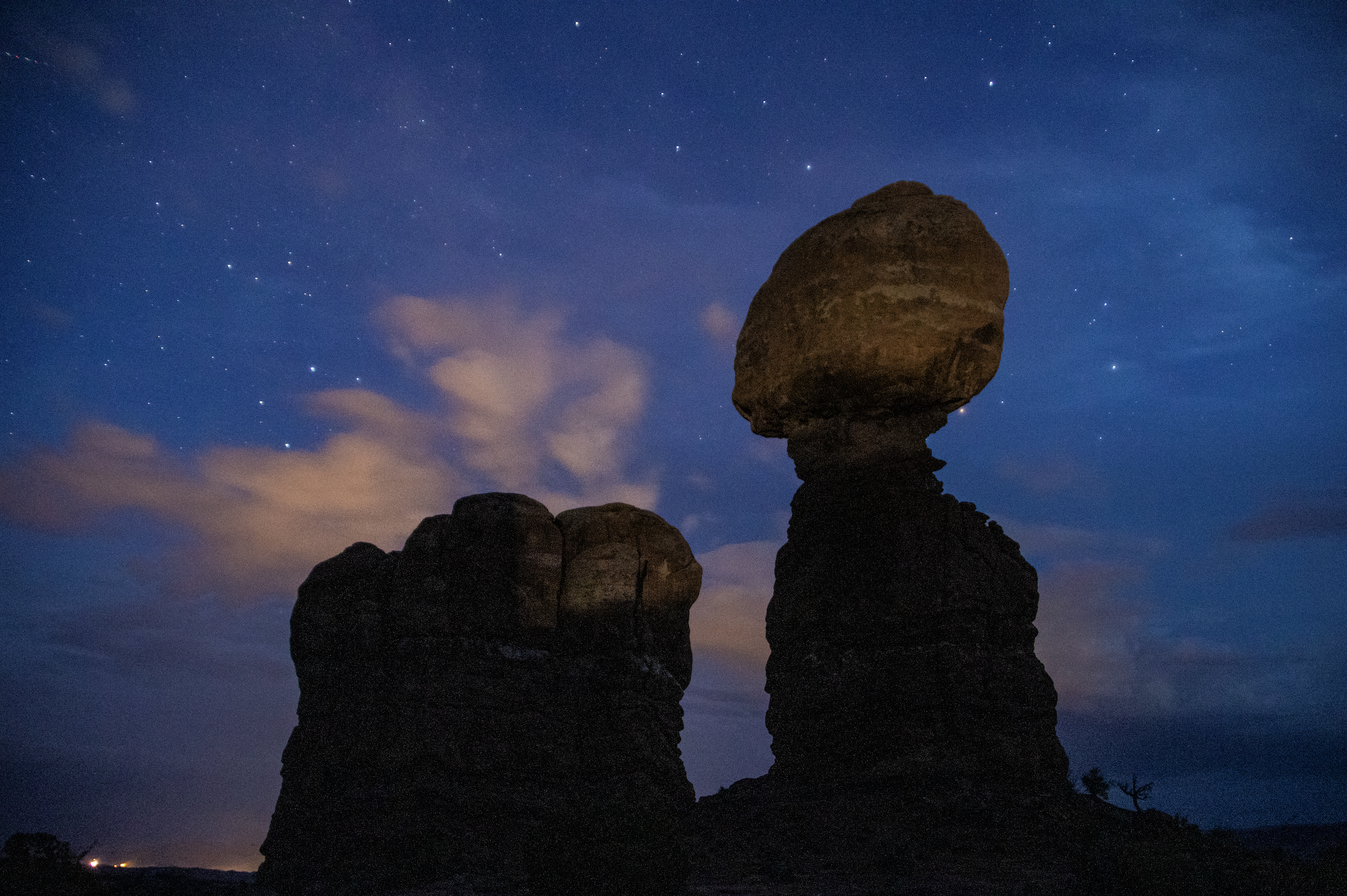
There were a couple of other astrophotographers shooting nearby. We chatted in the darkness periodically, coordinating our lighting equipment with each other and swapping ideas for how to improve our shots. But mostly—while we weren’t fiddling with our camera equipment—we were quietly taking in the view.
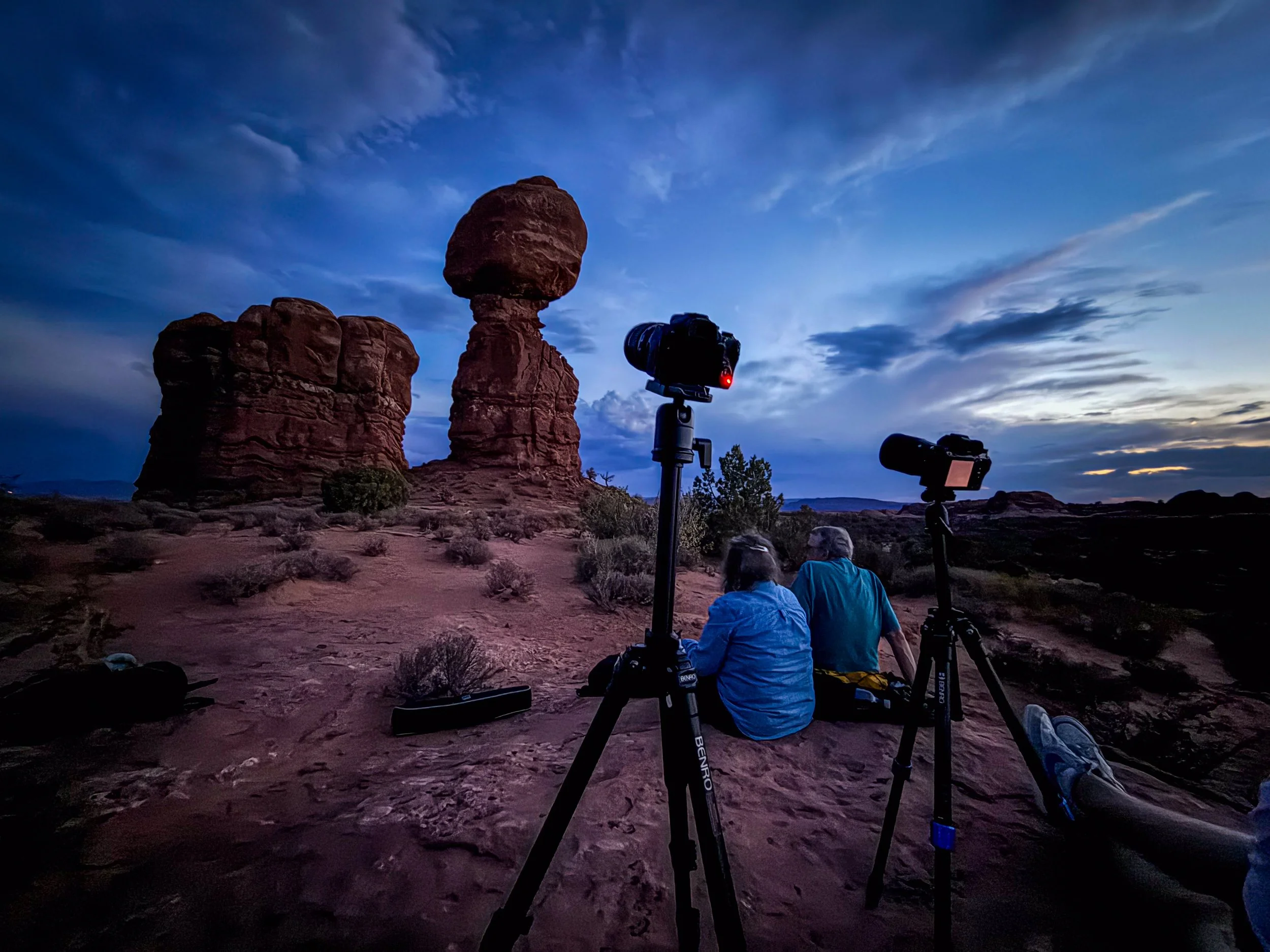
Fun fact, this is where the photo of me in the “About The Author” section below came from. 💅🏻
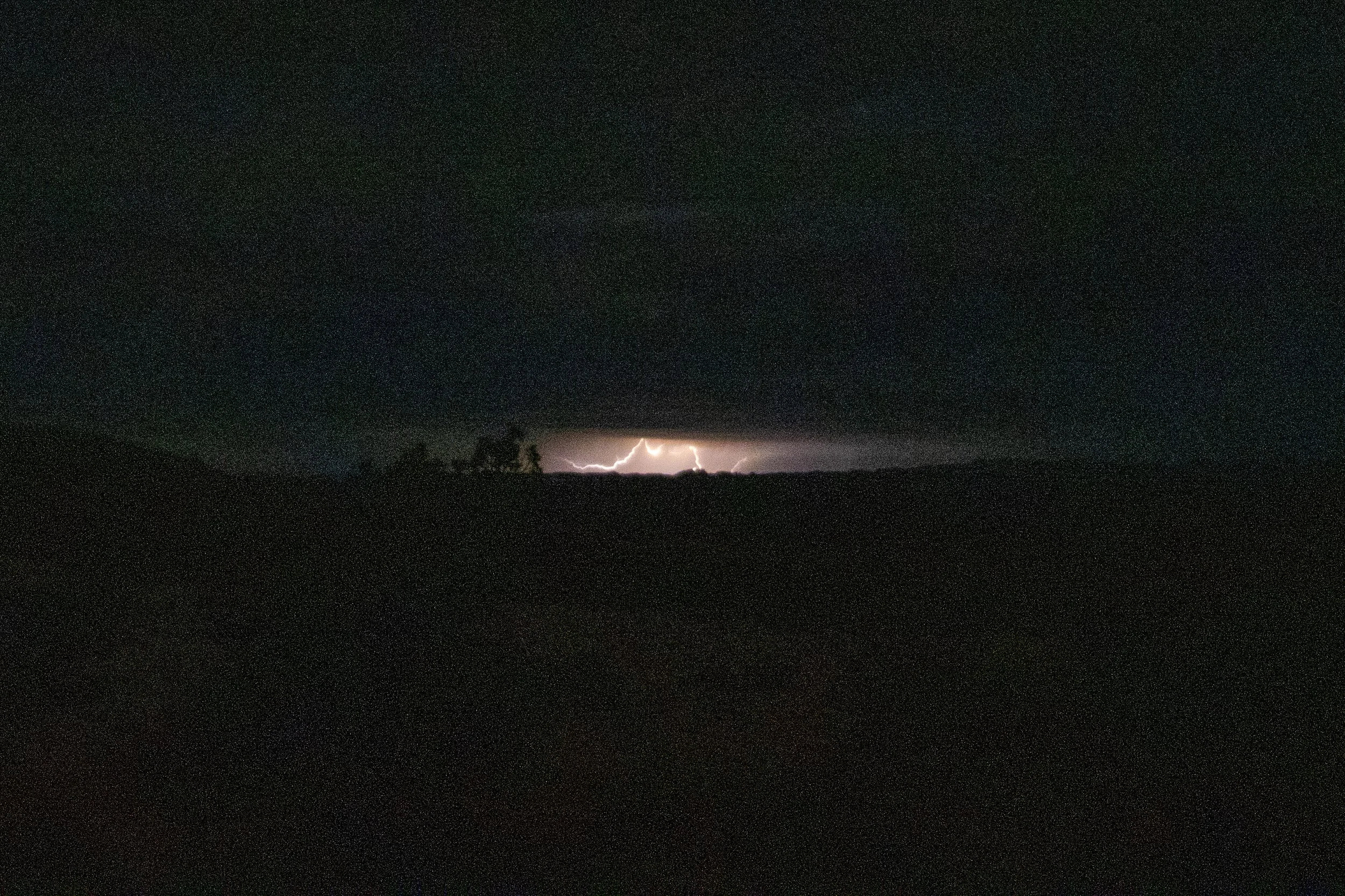
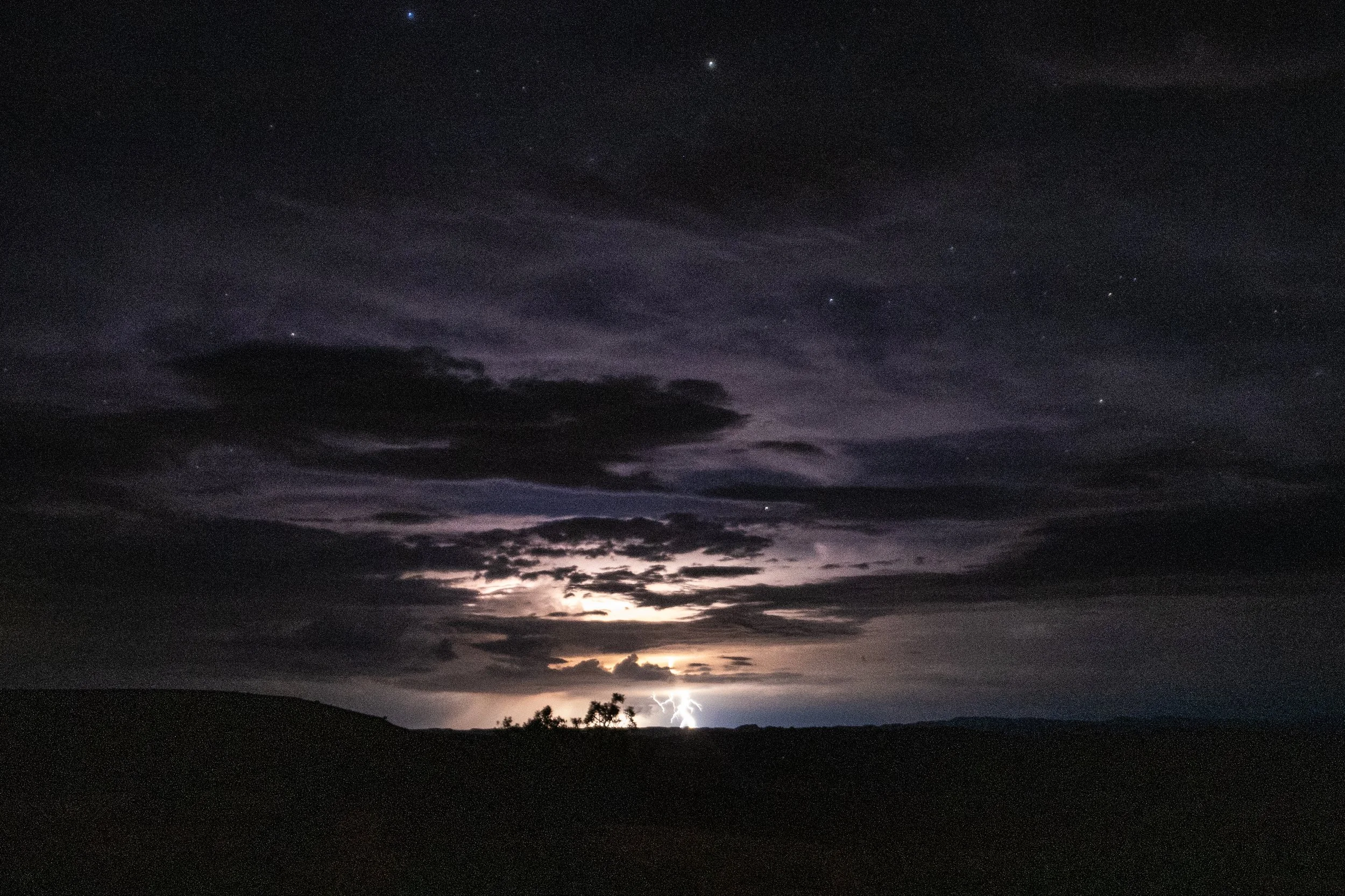
Anyway, after a while of waiting for the headlights to subside, the weather finally started to look a bit too menacing to maintain hope. The cloud cover, which had started as an annoyance, was now producing thunder and lightening off in the distance. Lightening had been flashing silently the whole time, but as time wore on it increased in frequency to perhaps once every 45-60 seconds, and the wind picked speed up to such an extent that sand was now stinging my skin.
Our plan had originally been to burn the midnight oil and re-hike the trail to Delicate Arch to attempt some photographs of the arch under the stars. But, in these weather conditions, we knew it wasn’t going to be a fruitful expedition. And, photography aside, if a storm moved in, it could be dangerous as well. The wind was already blowing uncomfortably fast out here.
So, instead of Delicate Arch, we spent the remainder of our shorter-than-planned night trying to capture the flashes of lightening off in the distance. This type of low-light astrophotography is actually really tricky from a technical perspective, so after a long while (collectively) of waiting for lightening to strike, and a great many attempts at capturing, here are the best shots I managed to get. I preset to you, lightening in a bottle:
Arches is a really special place. I would come back here in a heartbeat. I feel lucky that I even got to see it in the first place.
There are actually lots of rock formations that I still have left to see here! But alas, we’re moving on to yet another national park in the next article: Canyonlands.
So, let me leave you with the perfect soundtrack for driving through red-rock country. I’m pretty sure the first time I heard this song (100 years ago now), I was immediately transported to this part of the world. I hadn’t been to Arches yet, but I’d seen the red rocks out West… and I hope you will agree that this track is very fitting. Enjoy.
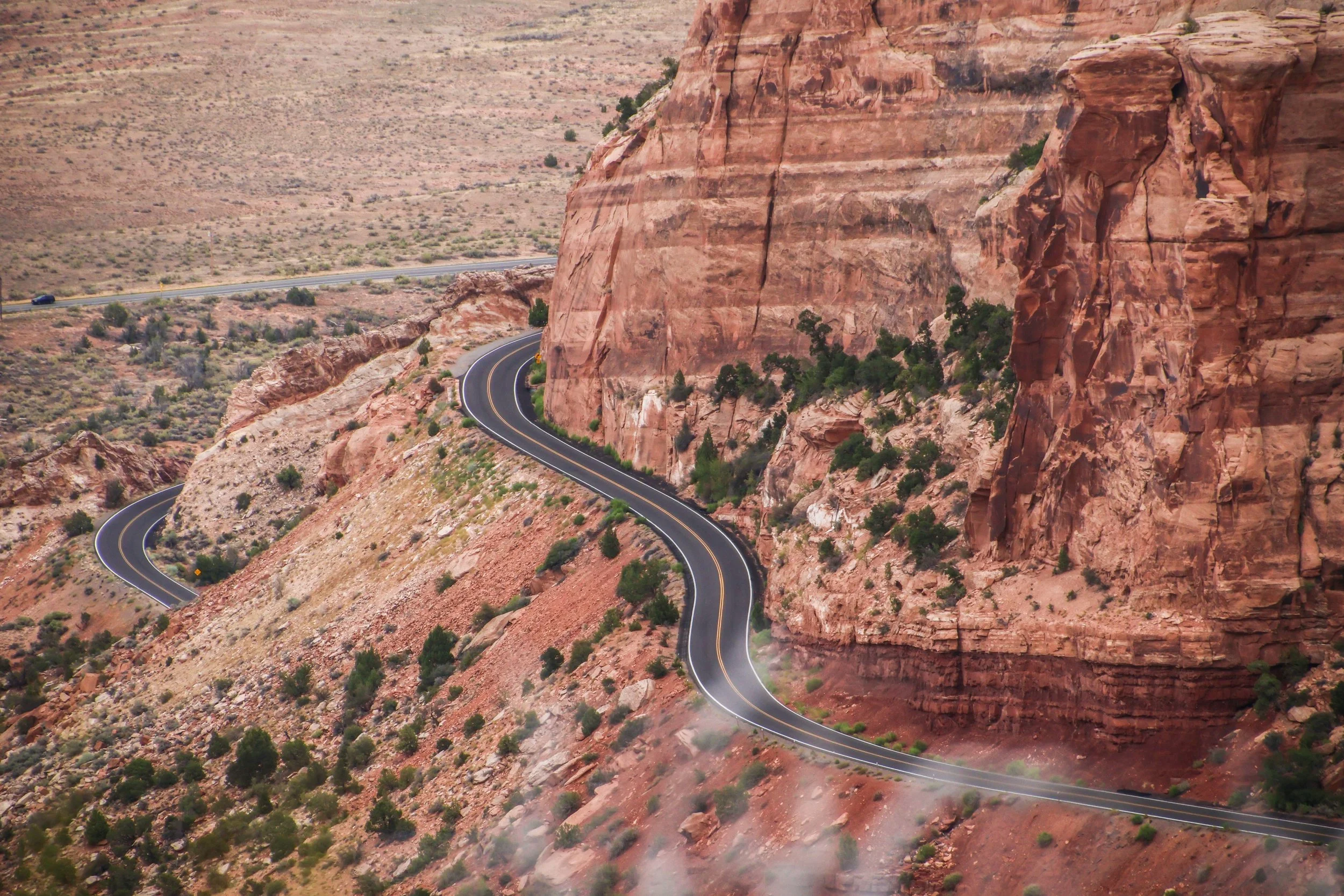



The road you are about to see was an important regional access point long before Moab was ✨M0aB✨—it was (and still is) important for ranching and river access. AND, it was apparently an important area for Uranium mining in the mid-1900s. But the human element of this road is really besides the point; unlike the rigid grid systems you will find in a lot of US infrastructure, this road works with nature, snaking through this canyon, following the river wherever it goes. In this sort of geography, you’d really have no choice but to build this road this way. That’s one of the magical things about traveling out west: the natural features become far too big for humans to tame.