
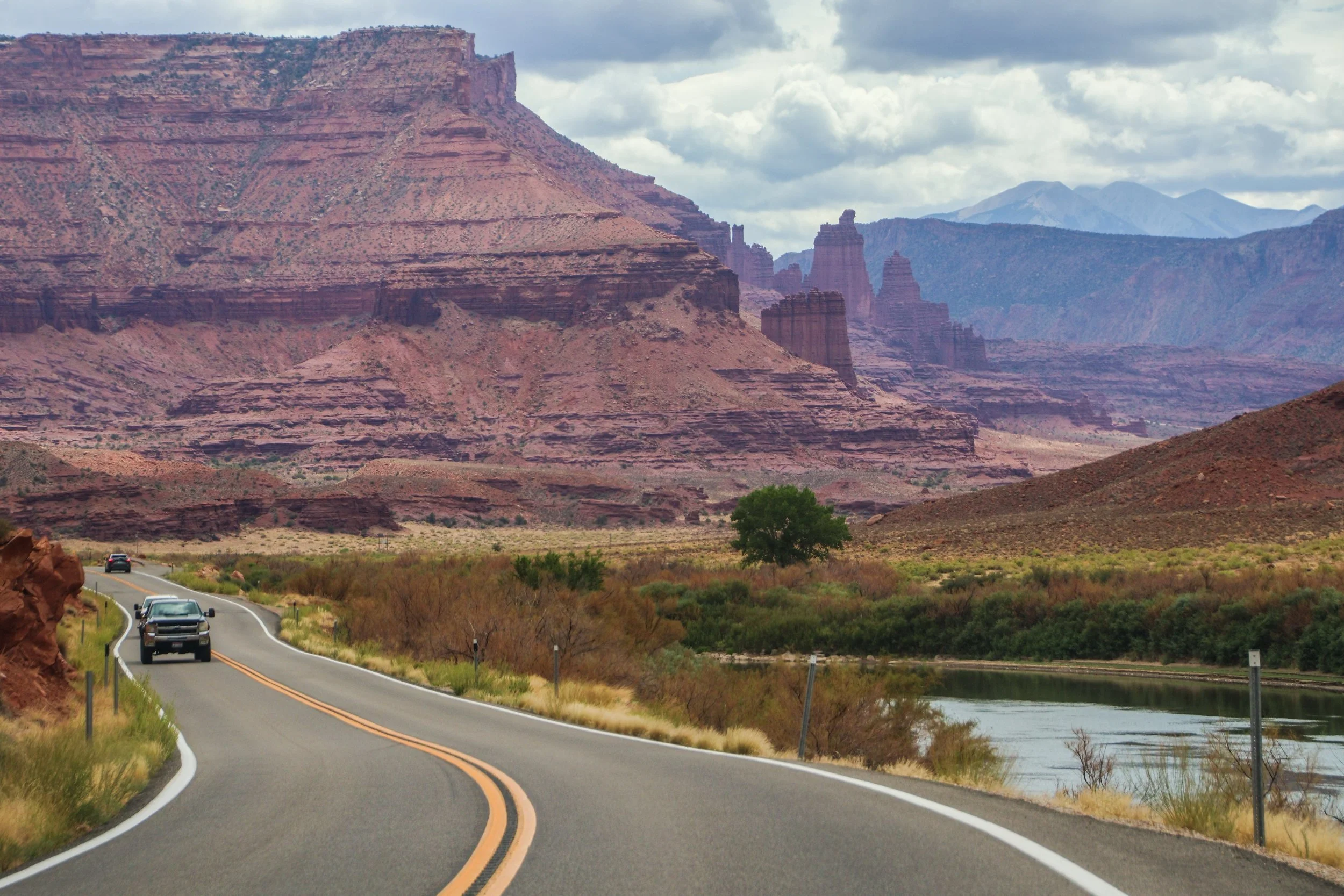
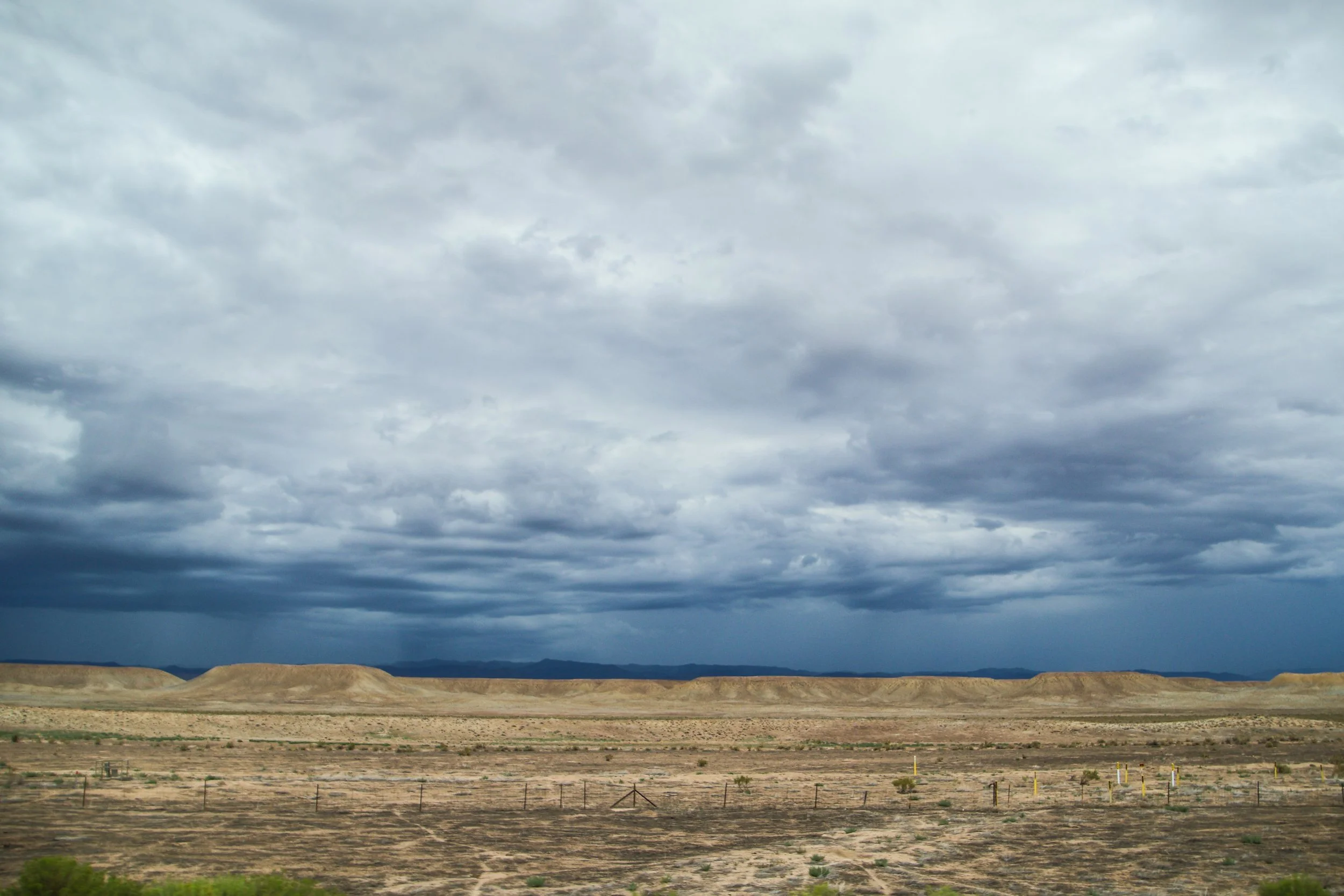
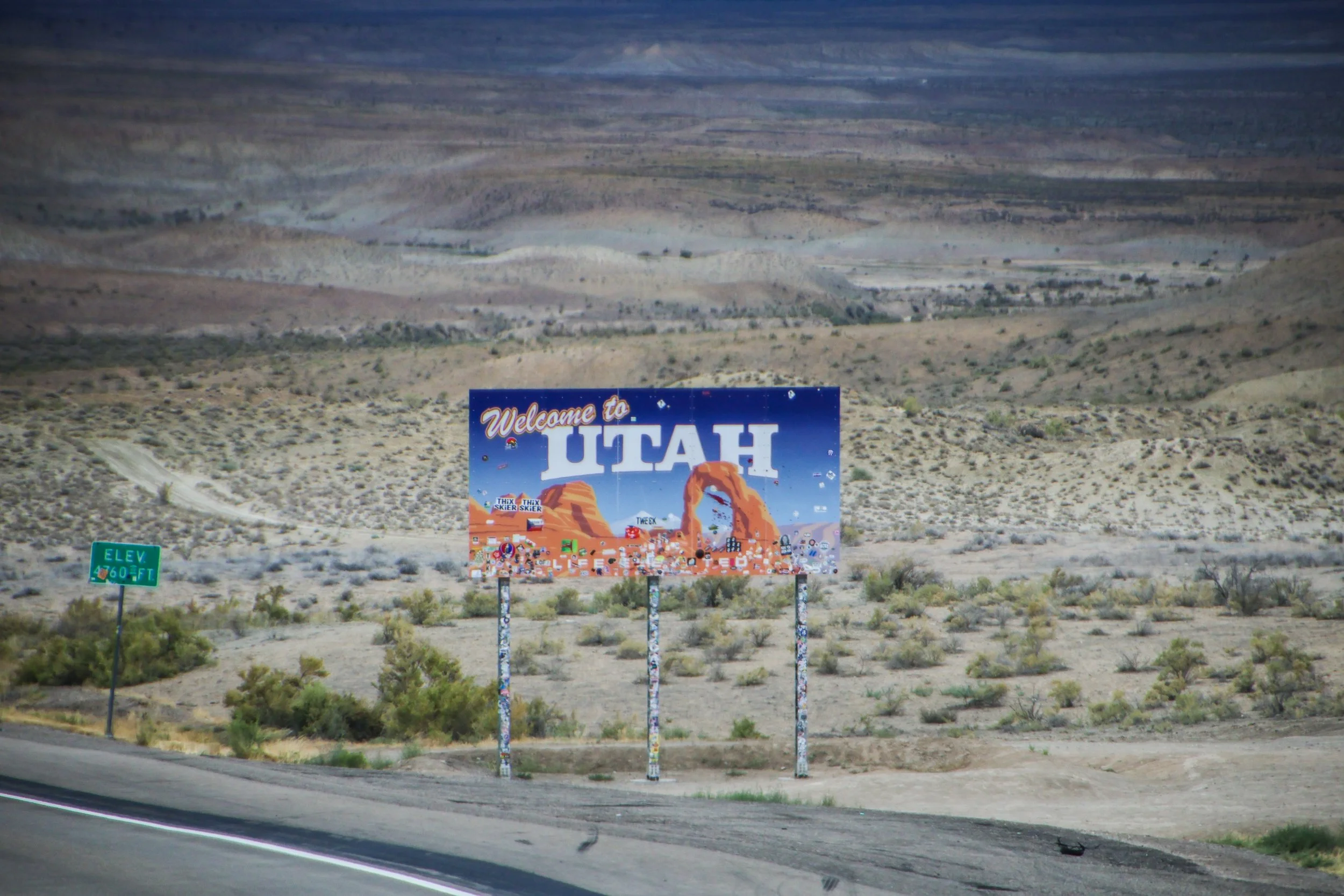
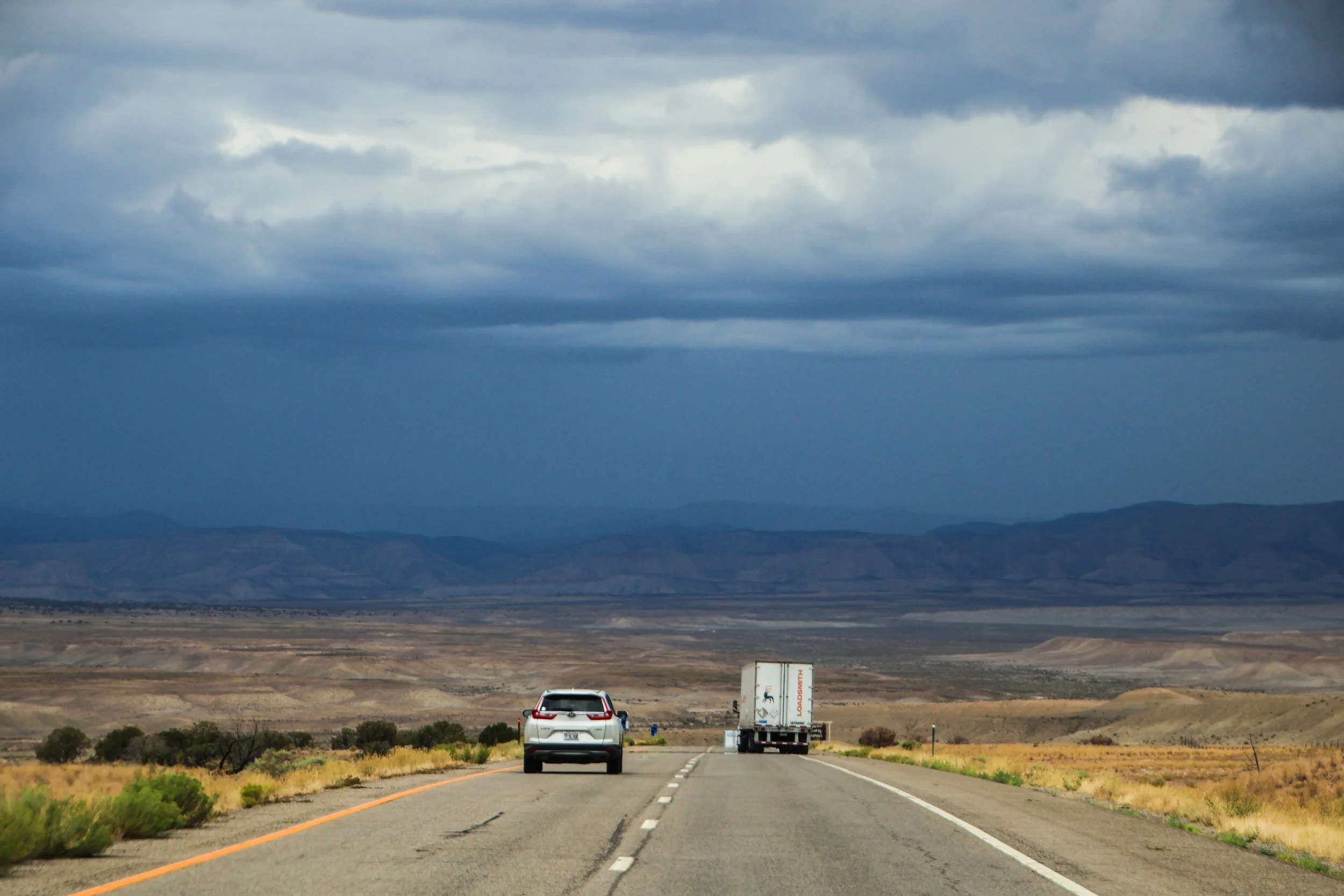
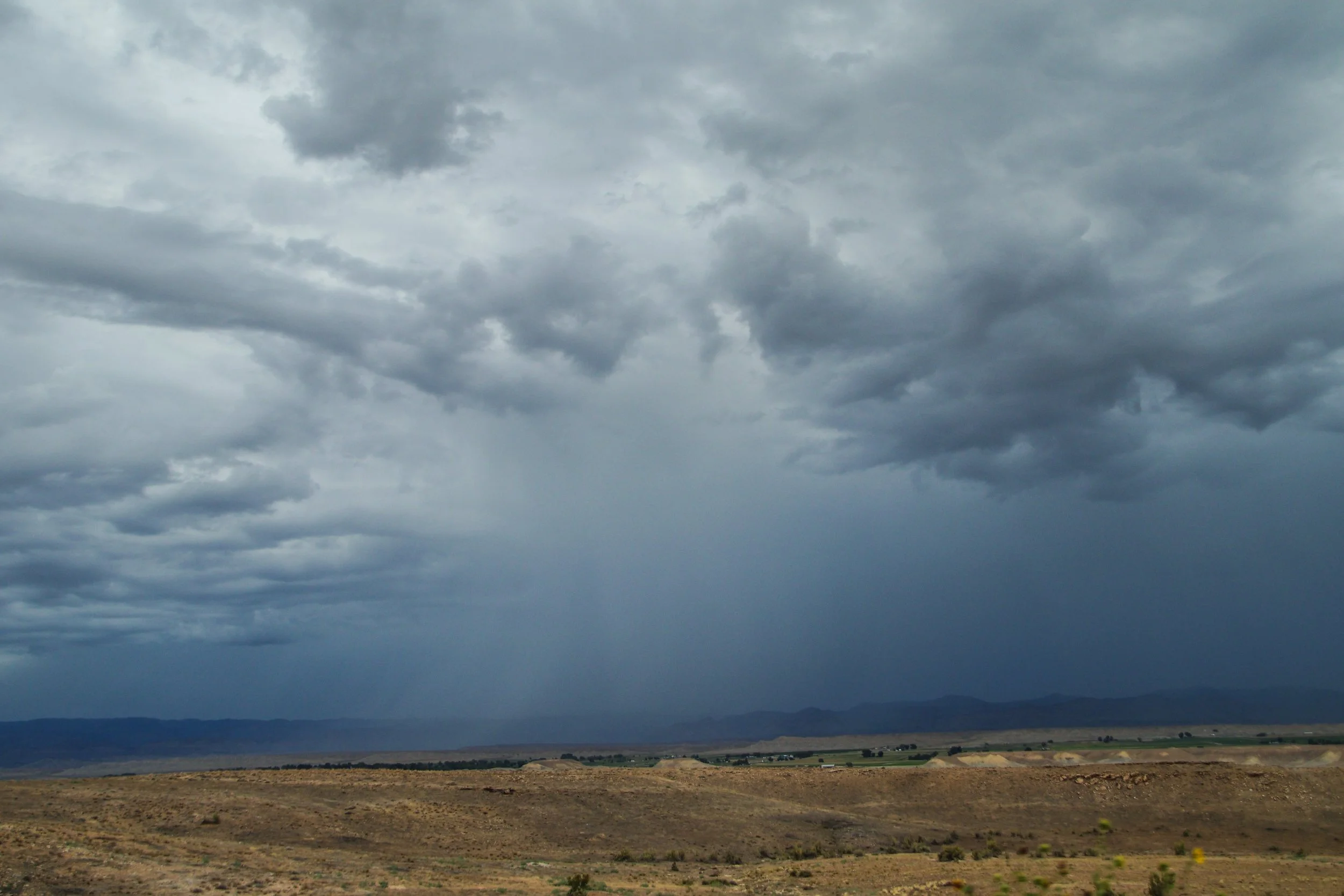
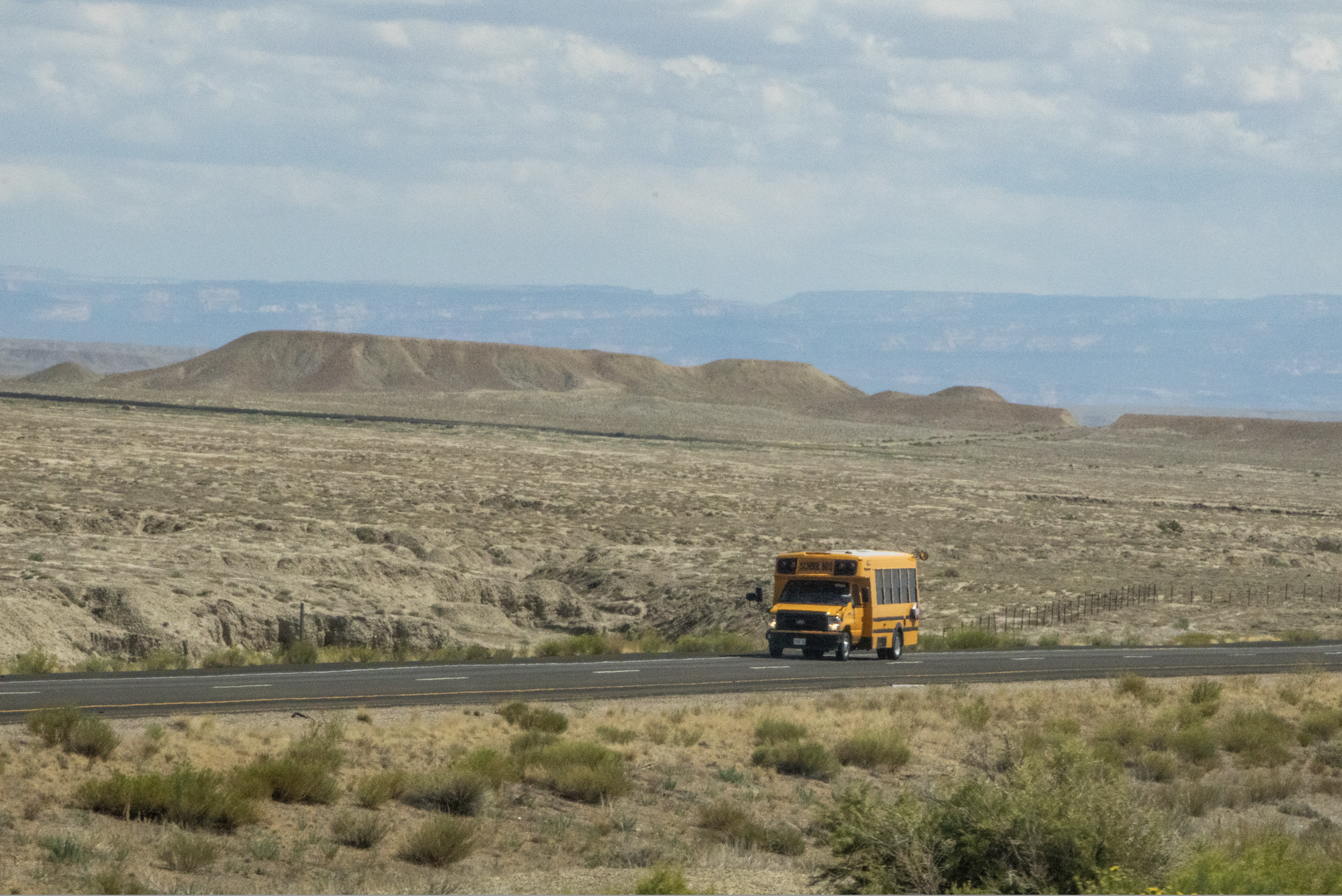
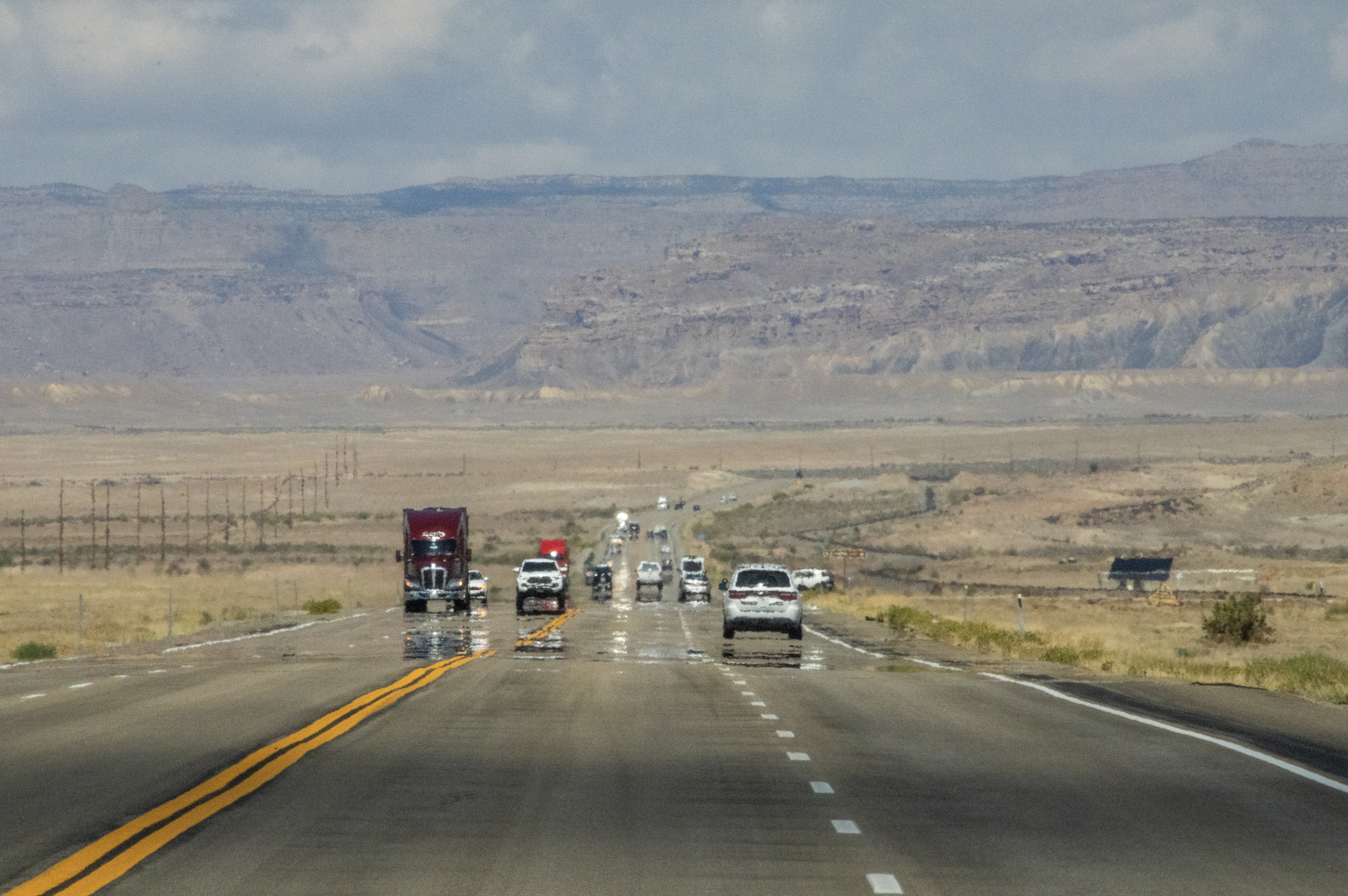
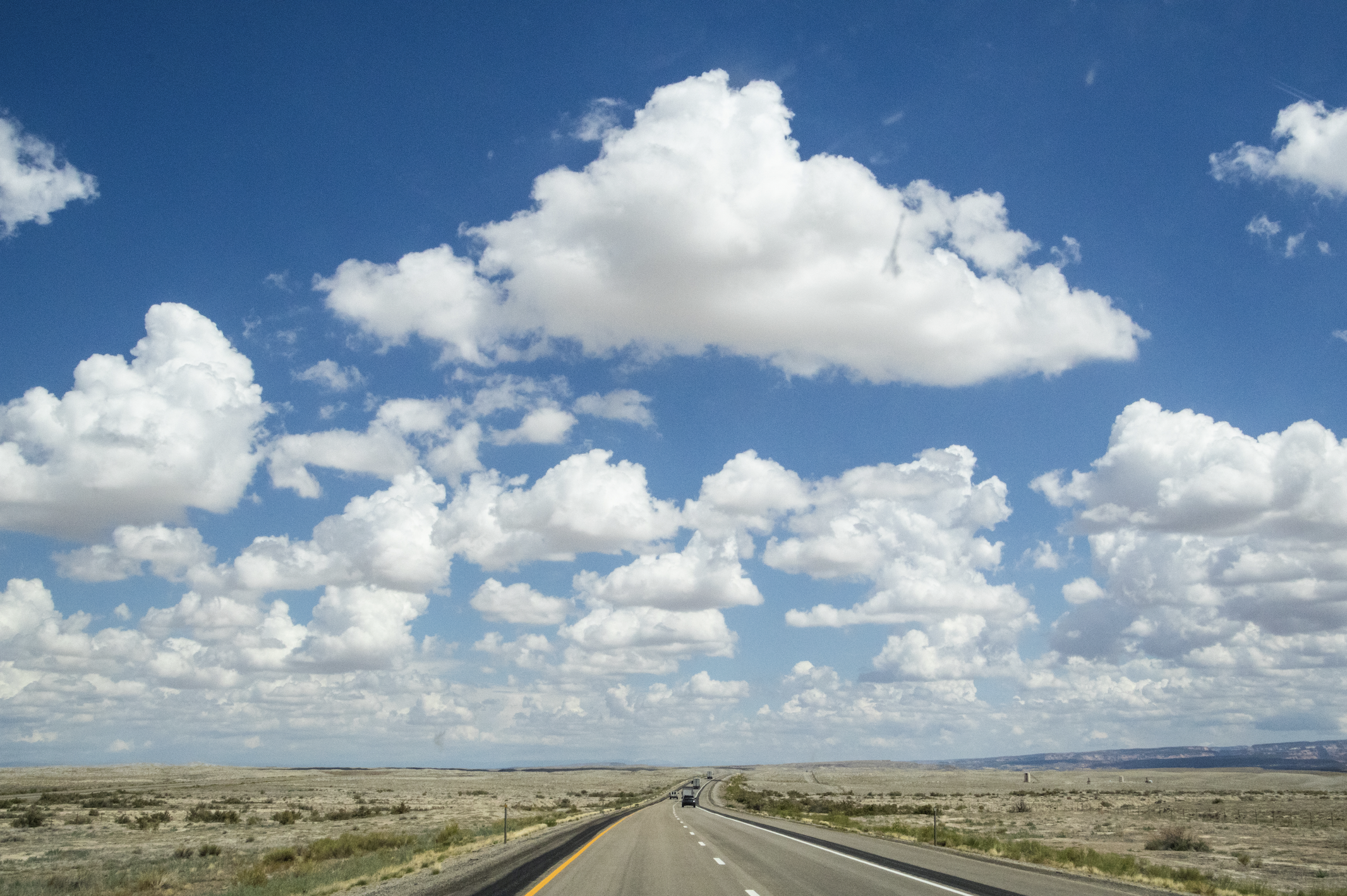
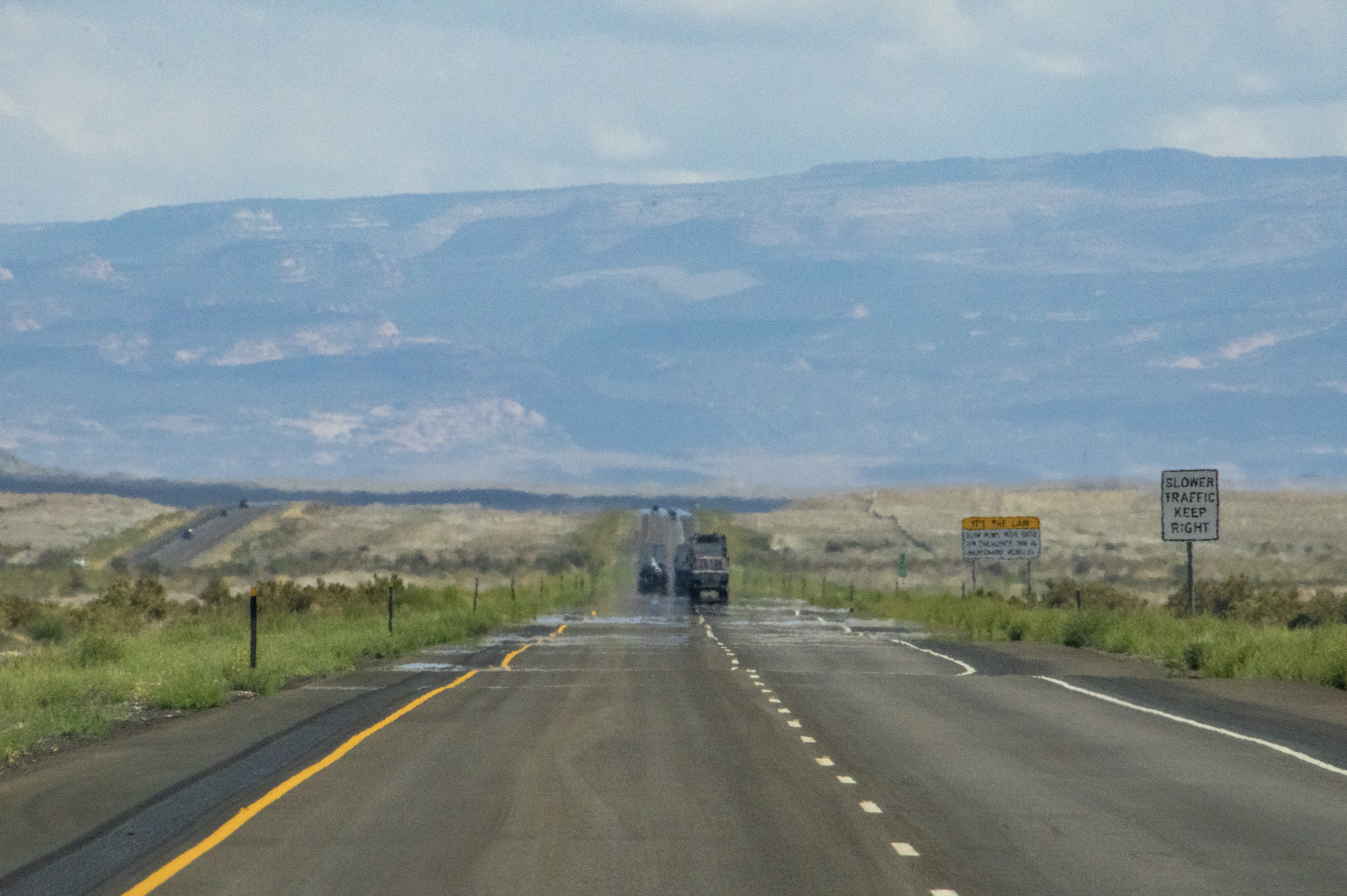
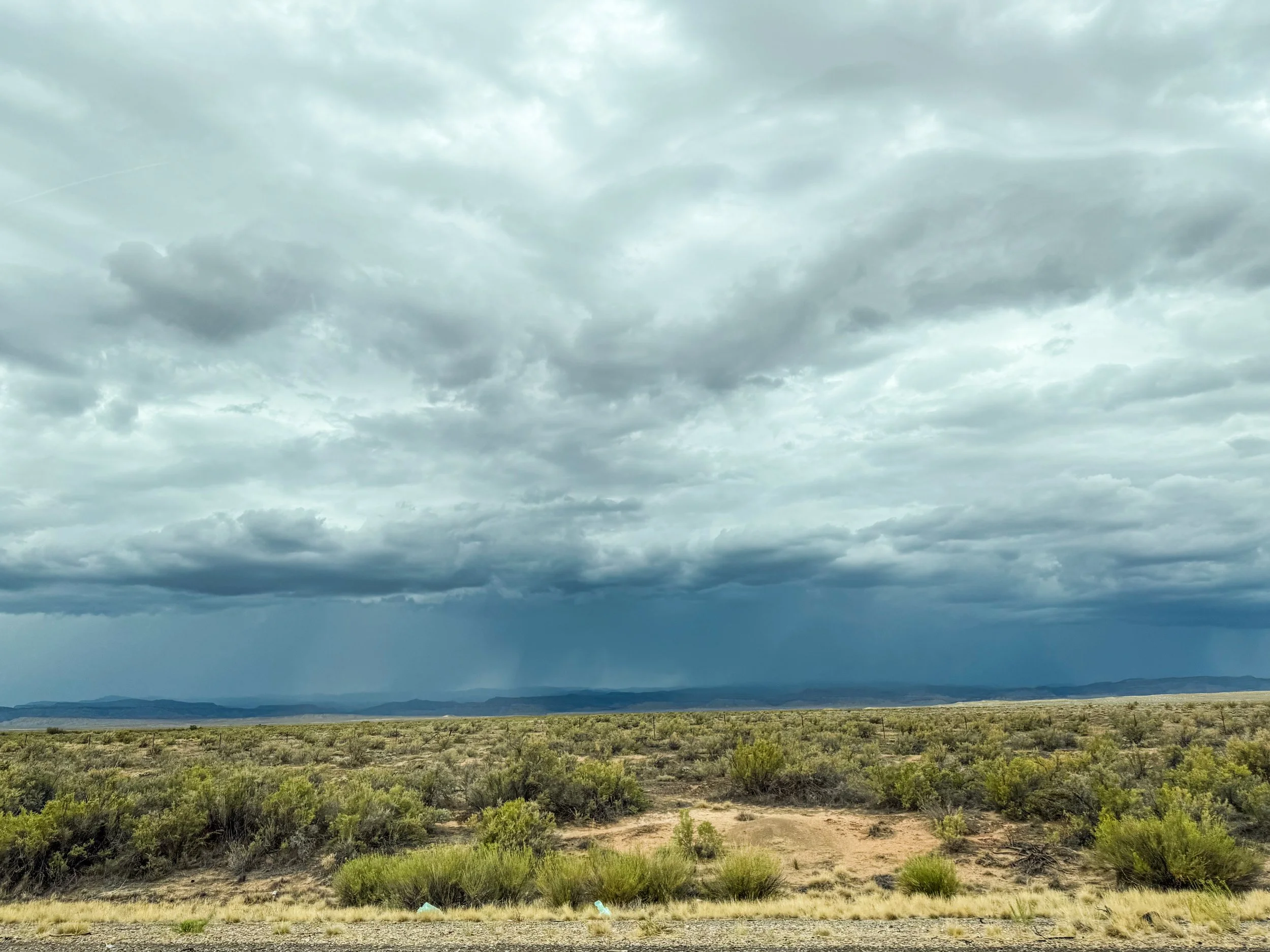
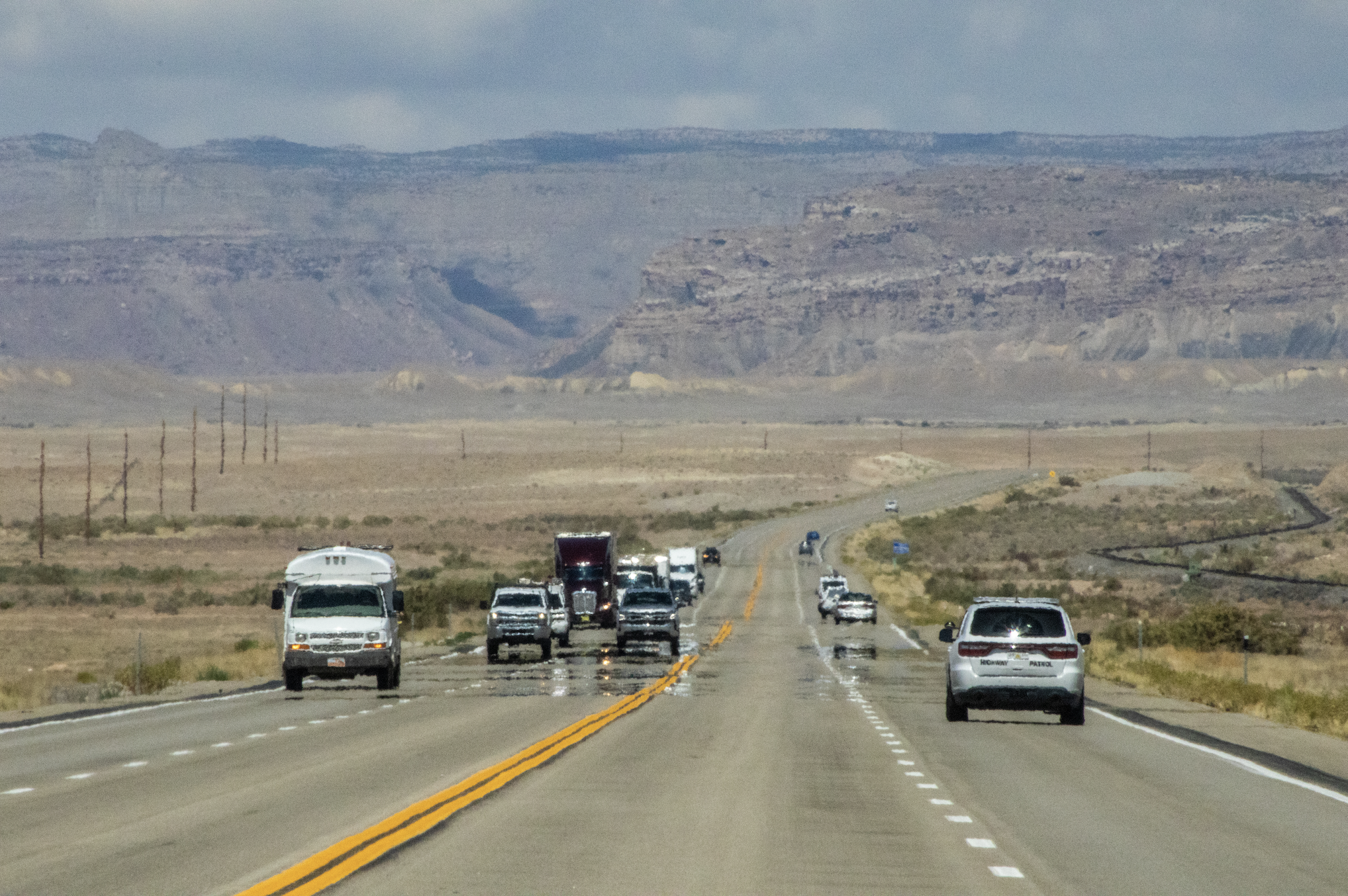
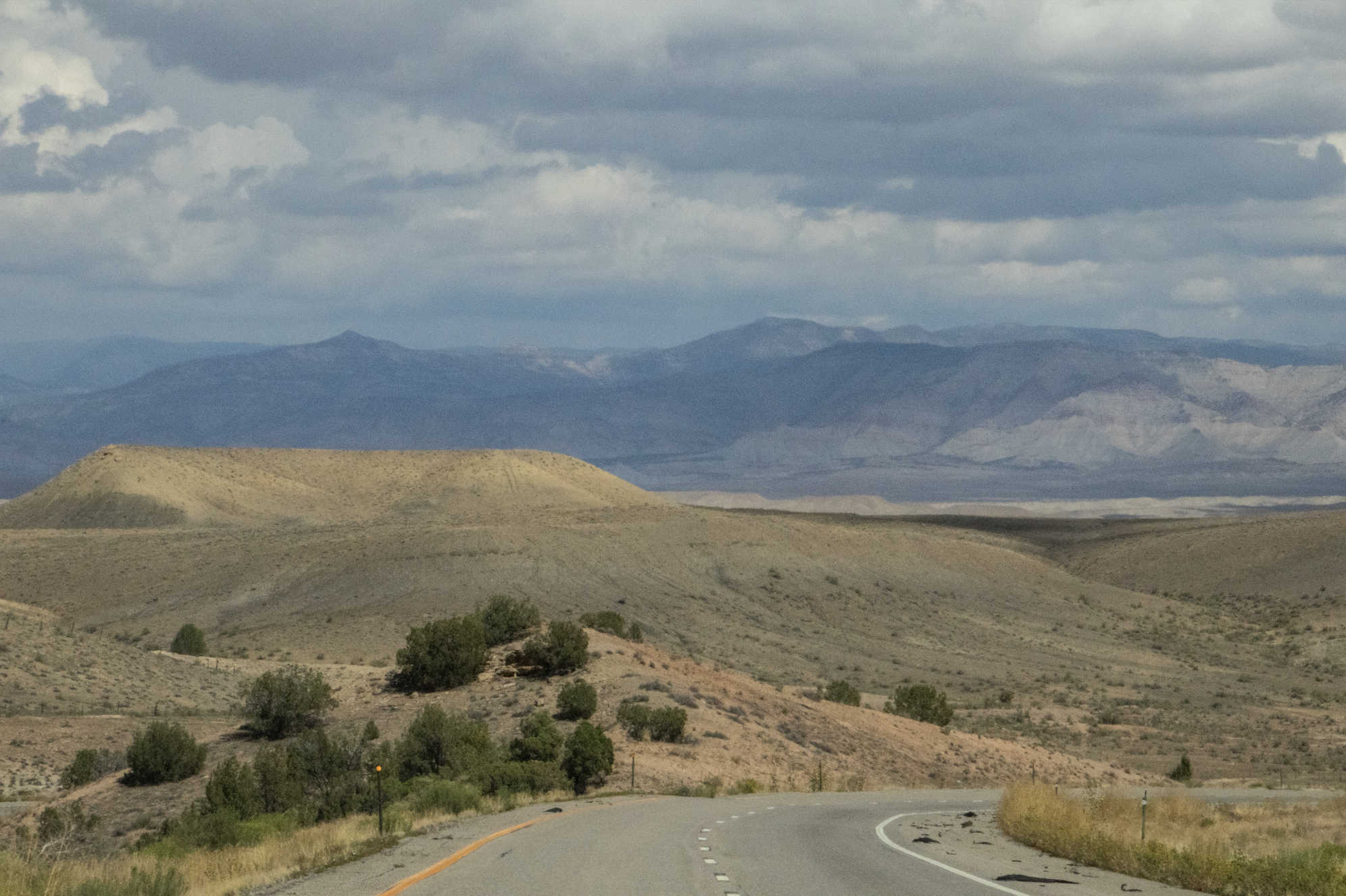
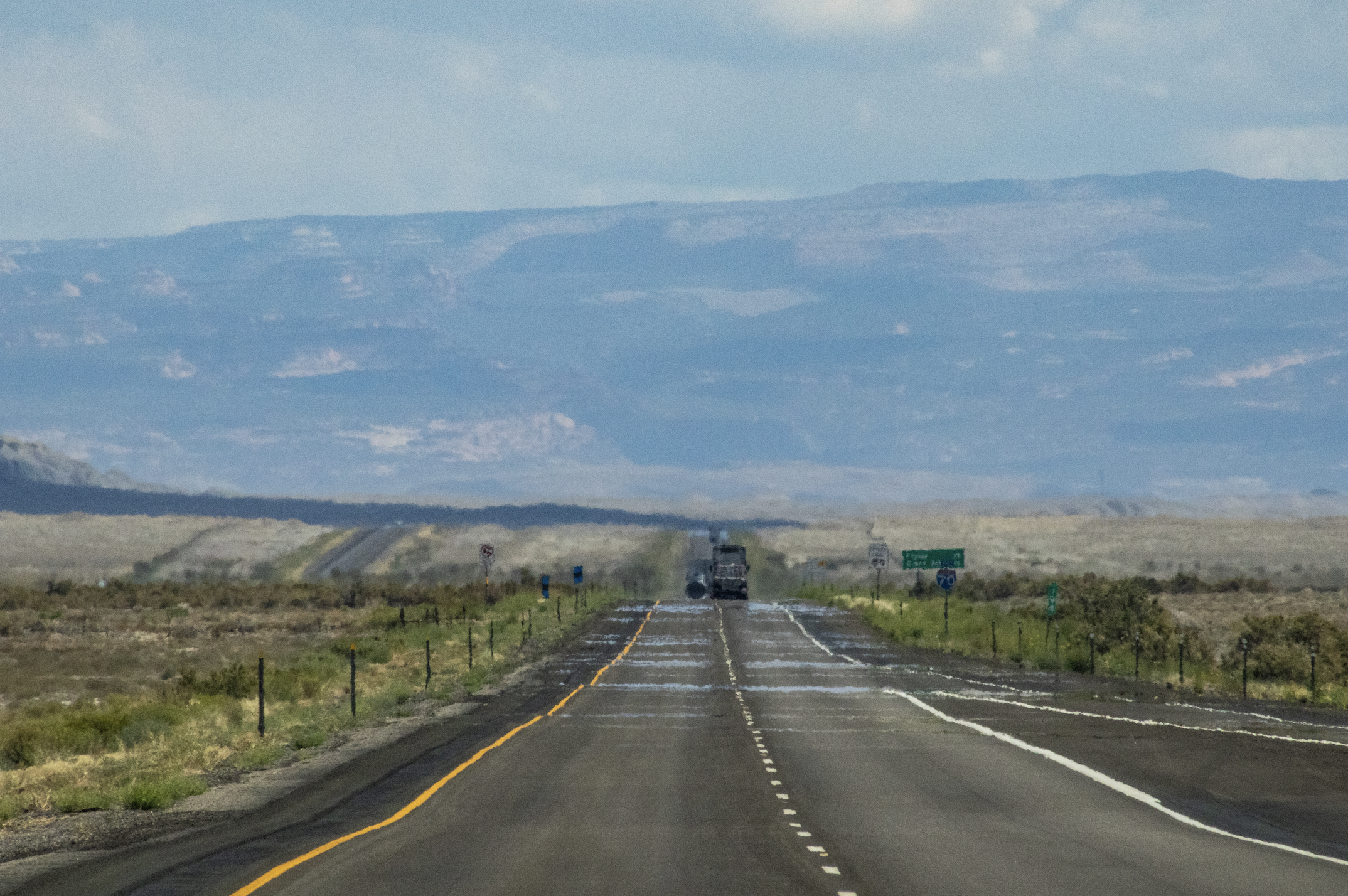
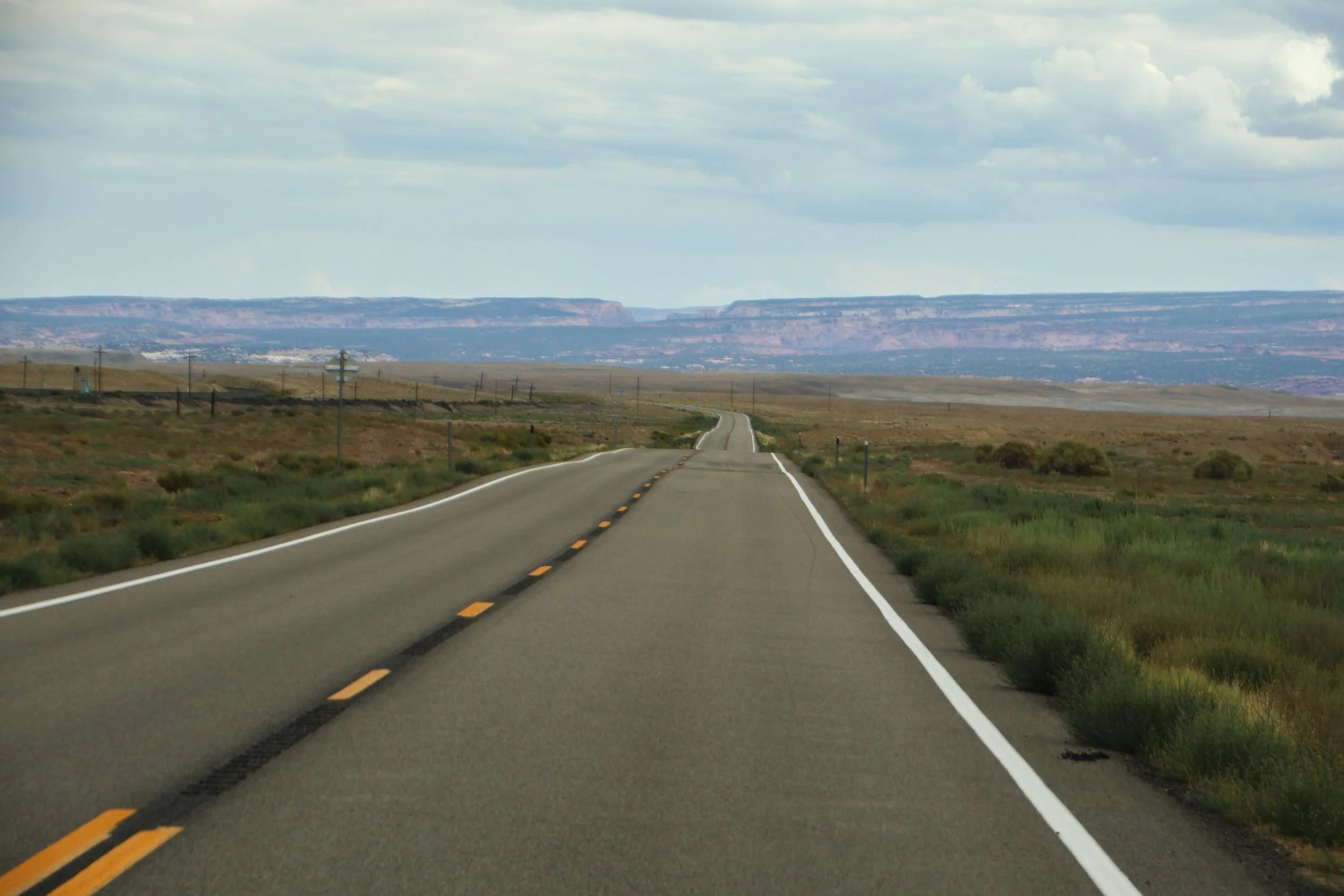
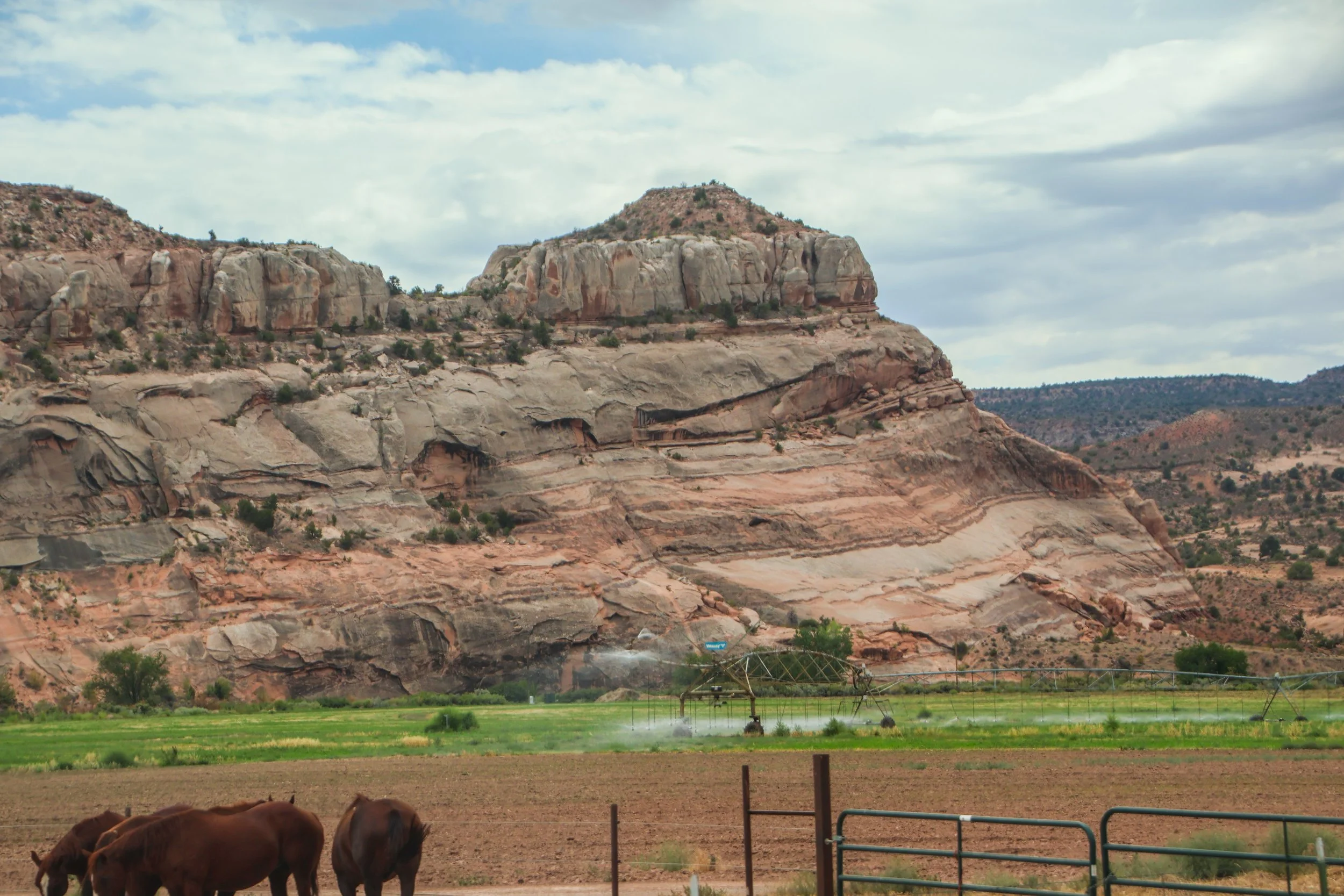
We’re leaving Colorado and driving west, out in the wastes. If you thought Western Colorado was barren, wait until we get across the Utah border. There is NOTHING in Eastern Utah.
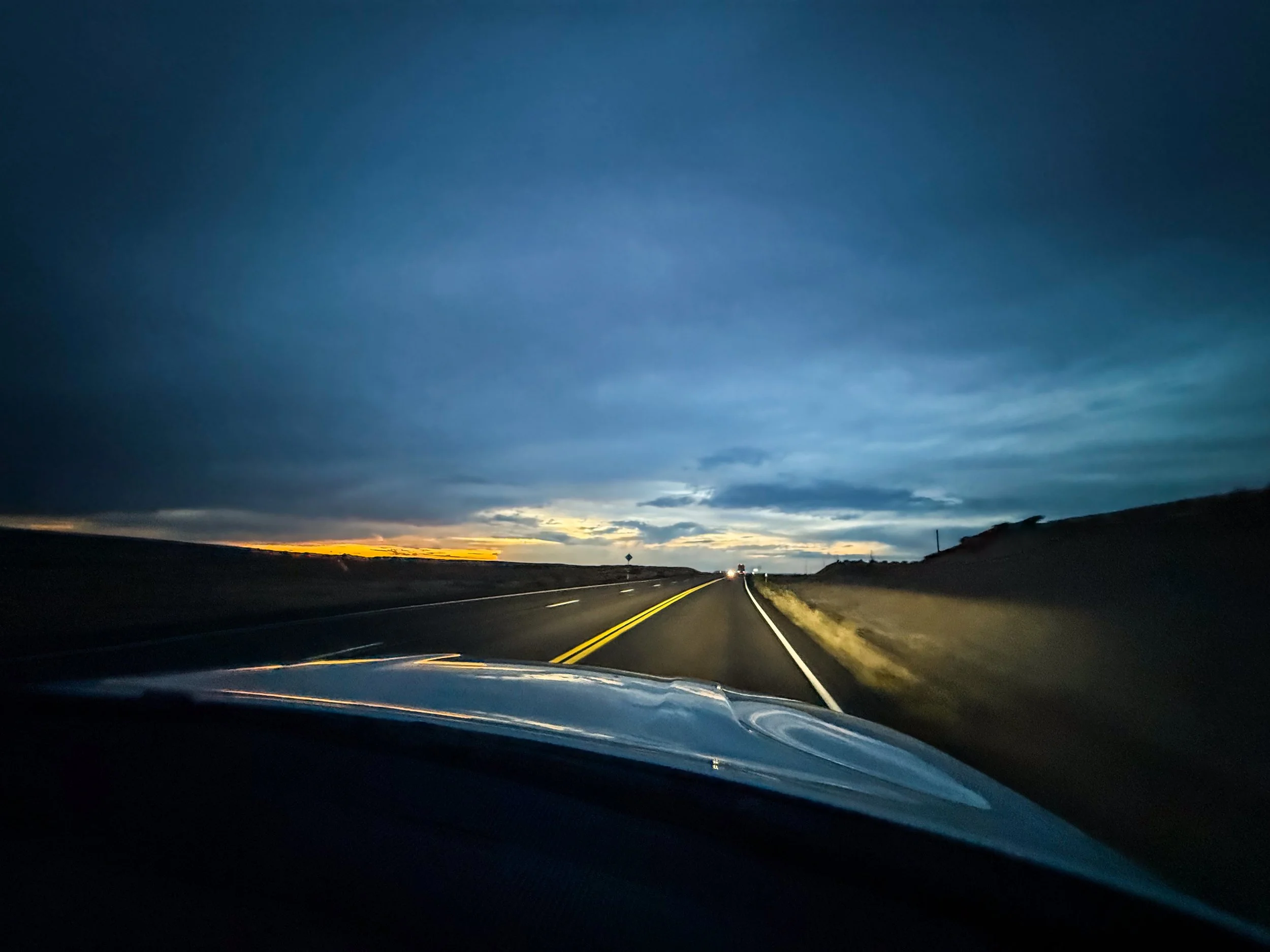
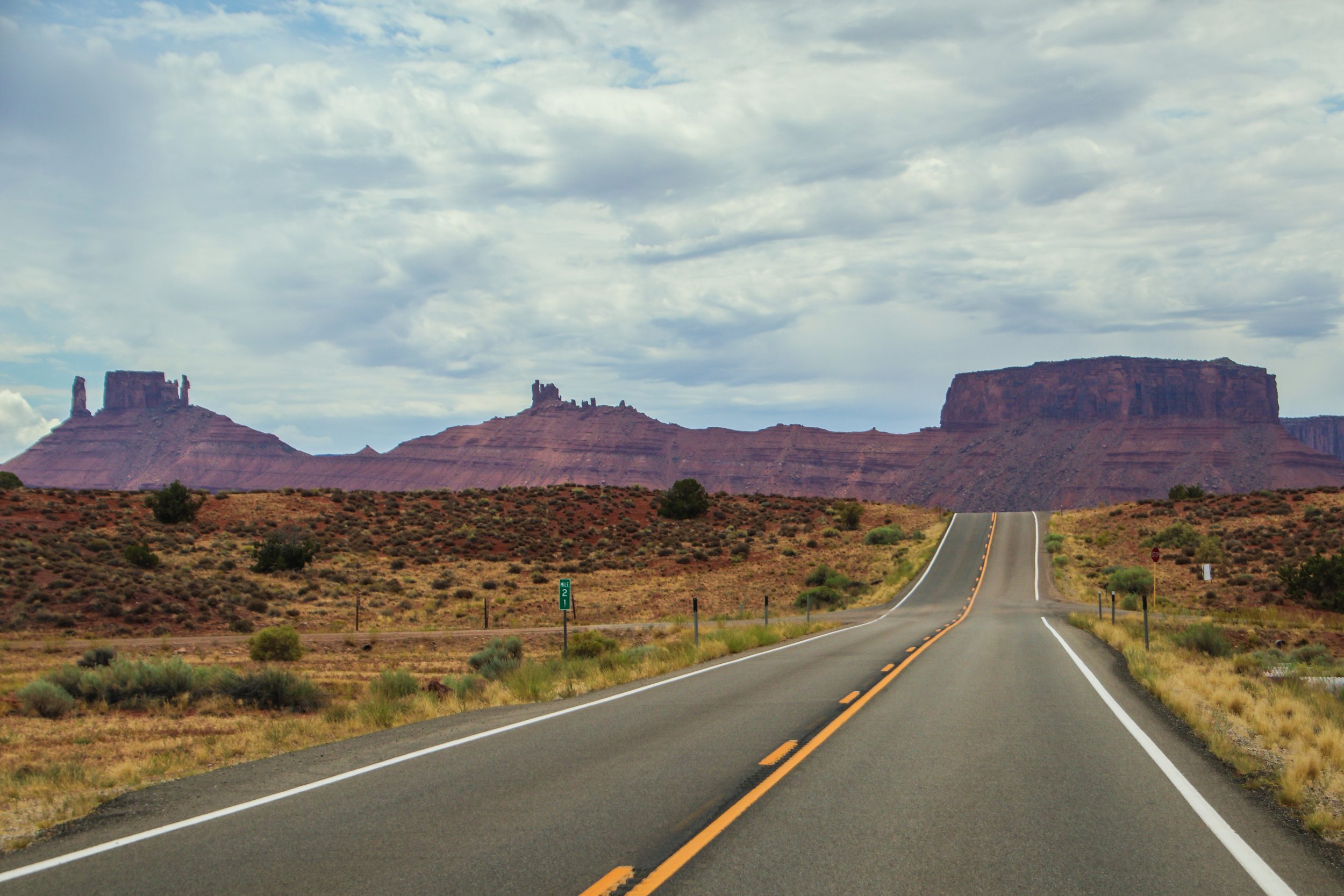
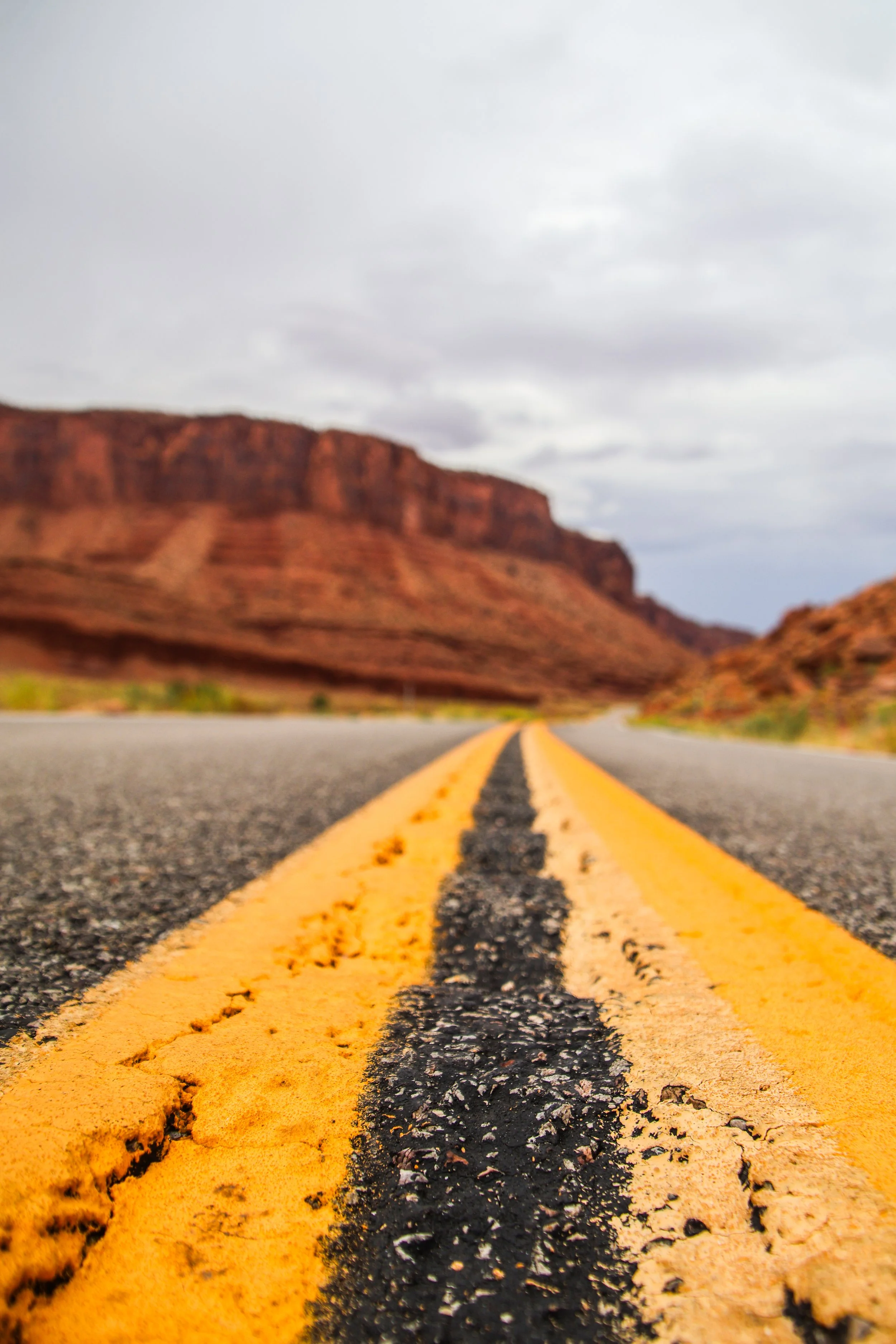
I actually did the drive back and forth across this border more than once on this trip, both by day and by night, and the absolute desolation here… it was beautiful each time. This empty stretch of desert plateau is the sort of natural boundary where you might expect to find a border between two states, as it may have naturally served as a buffer between two early settlements… but my research tells me that this border is actually located here by complete coincidence. It was apparently just an arbitrary line drawn on a map by politically minded surveyors in 1876. Anyway, take a look at this stretch of highway:
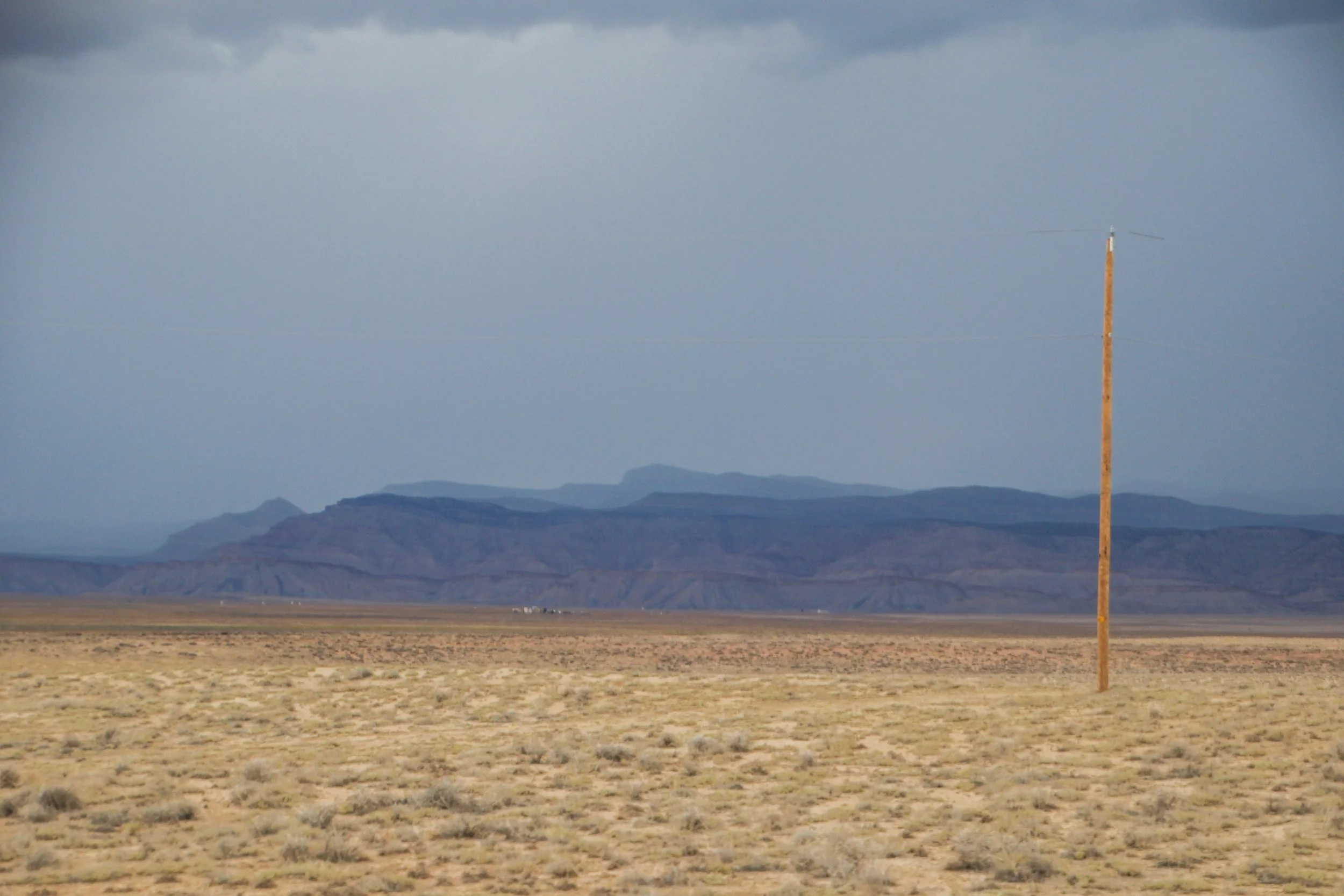
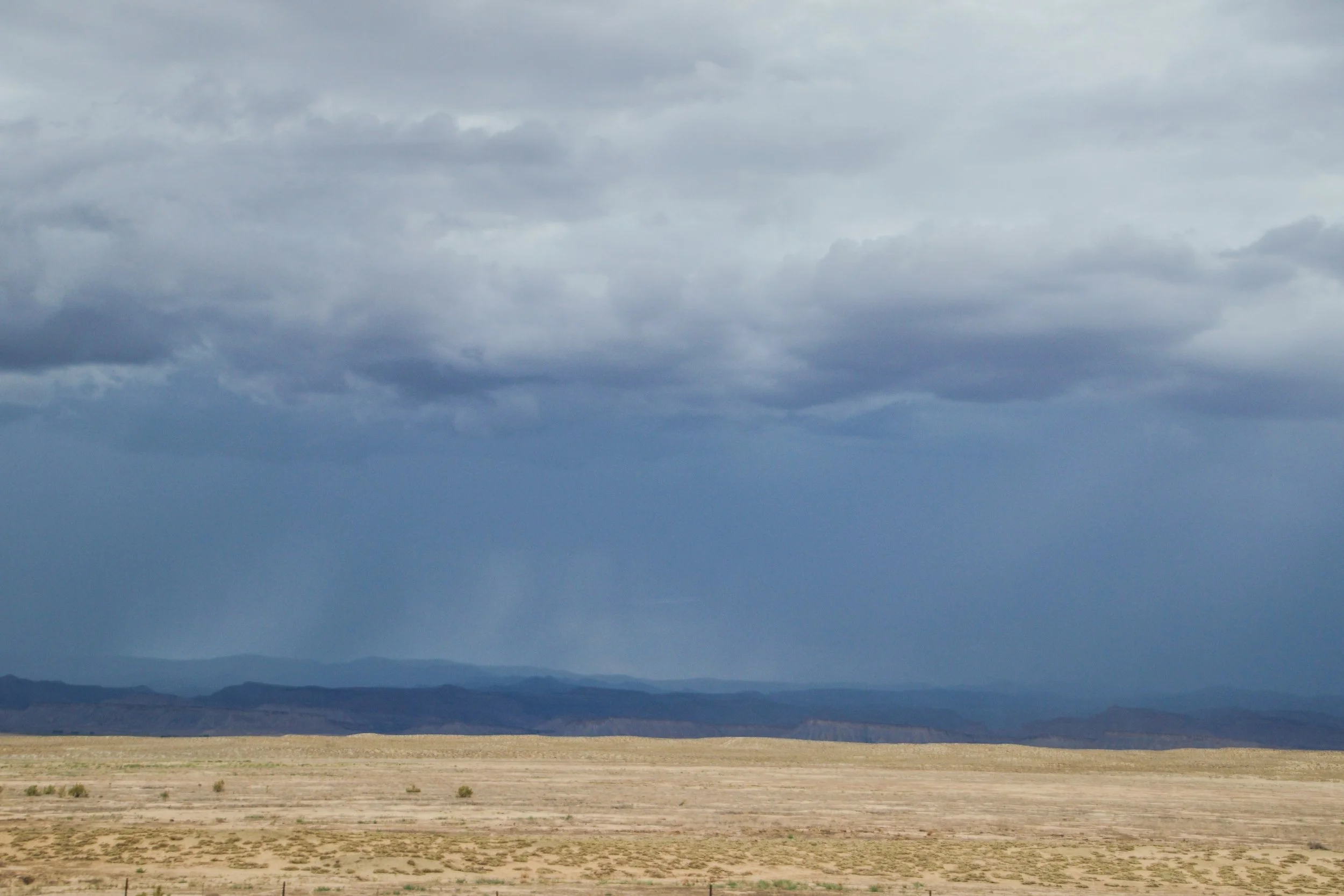
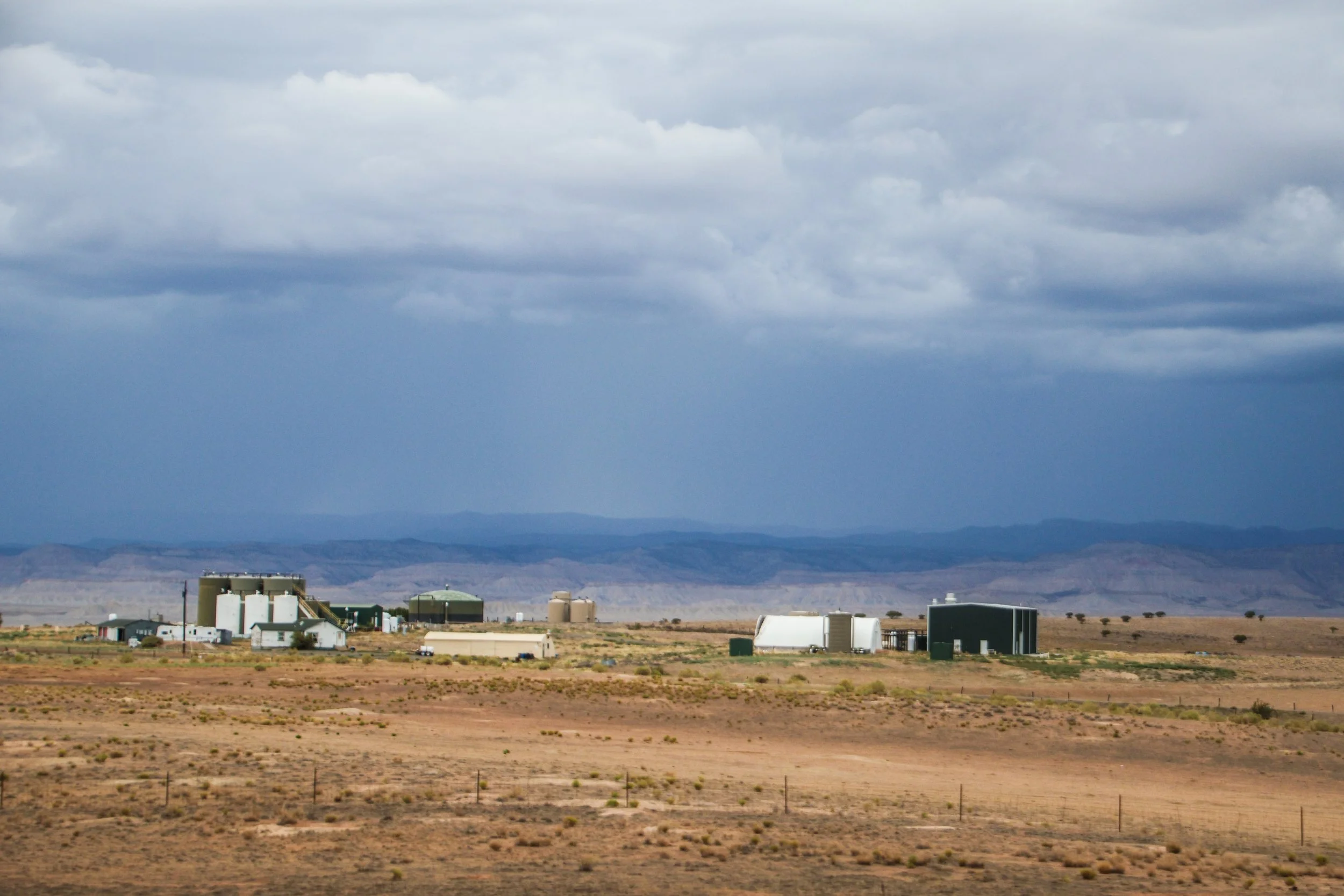
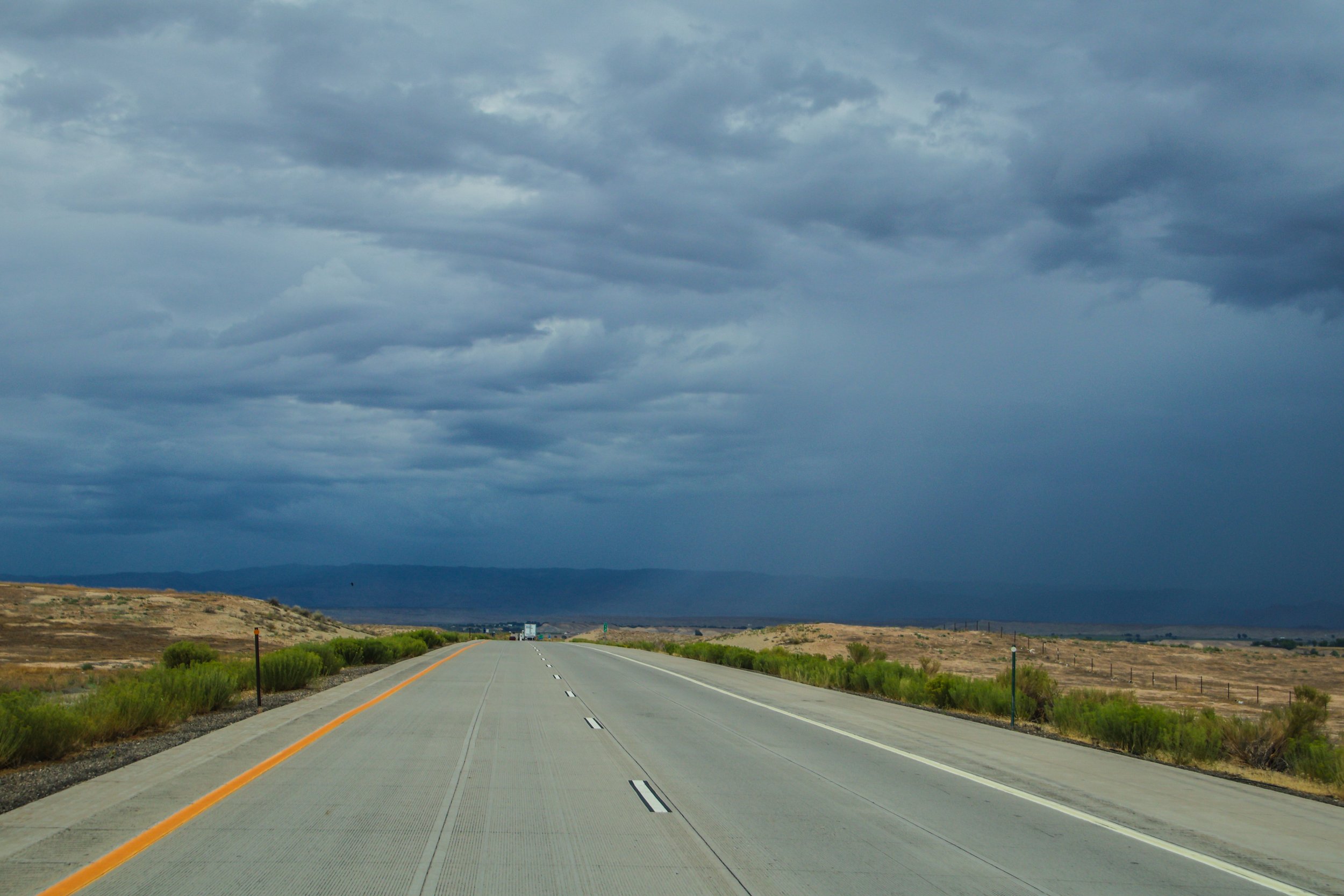
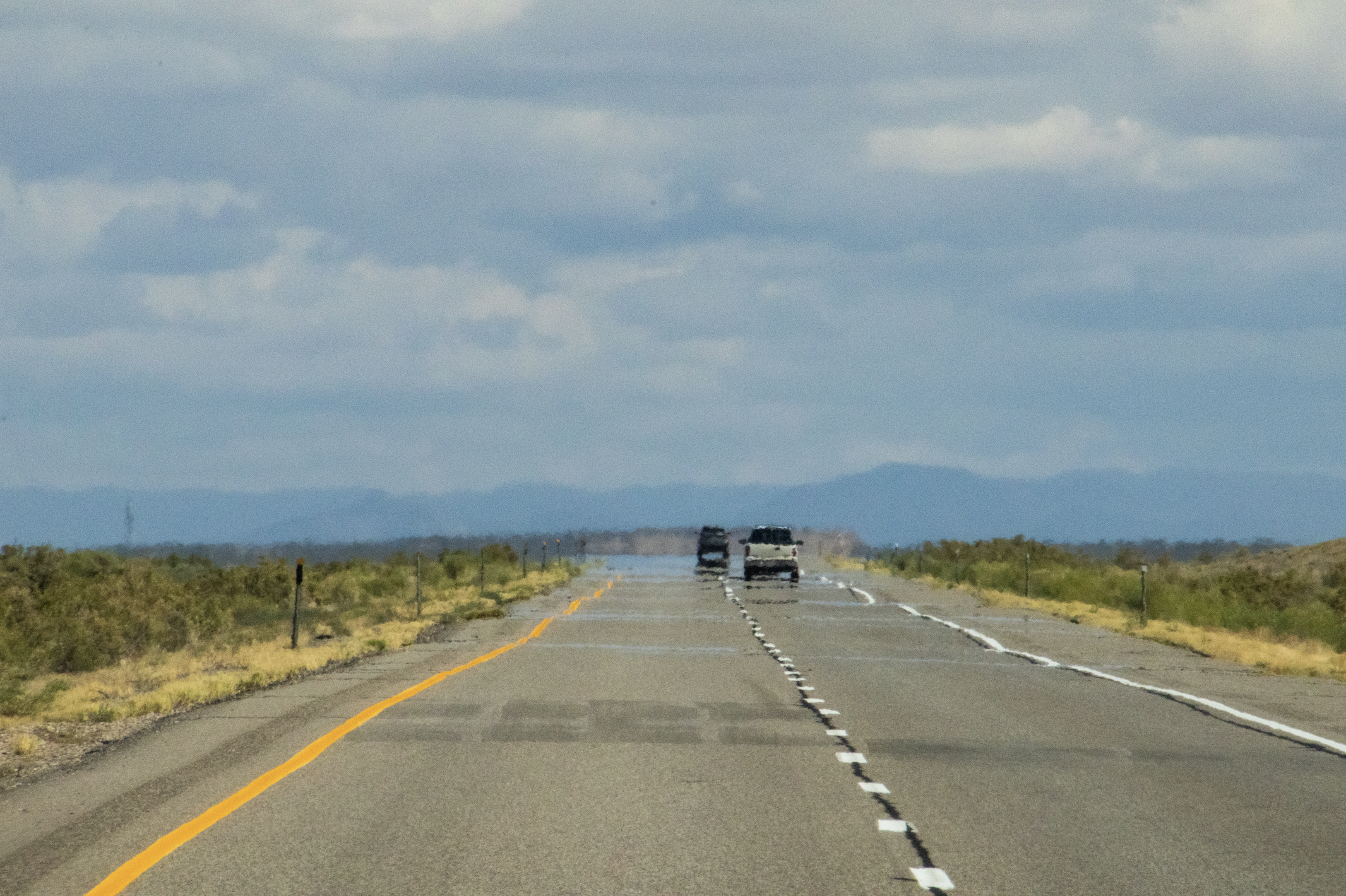
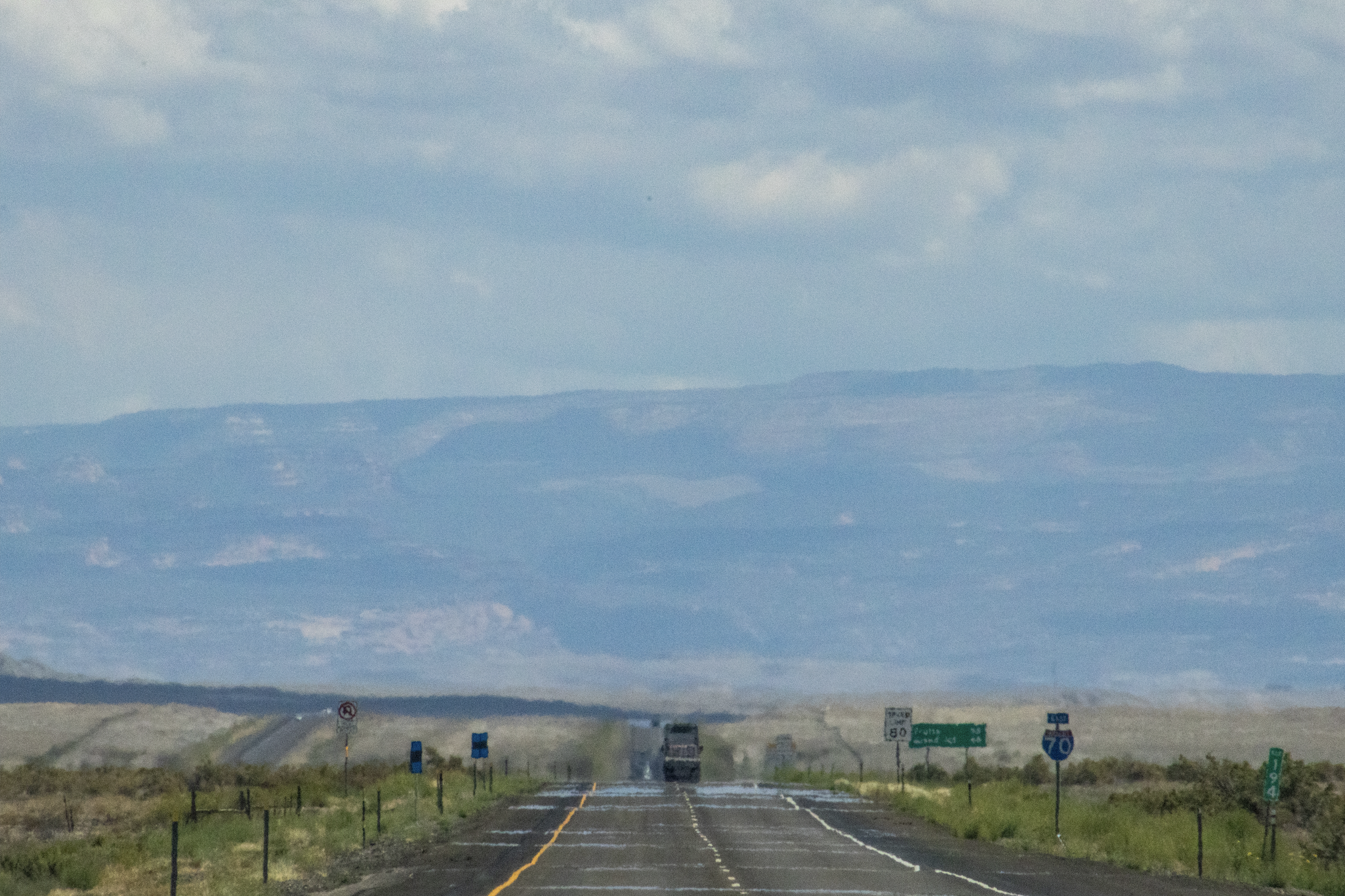
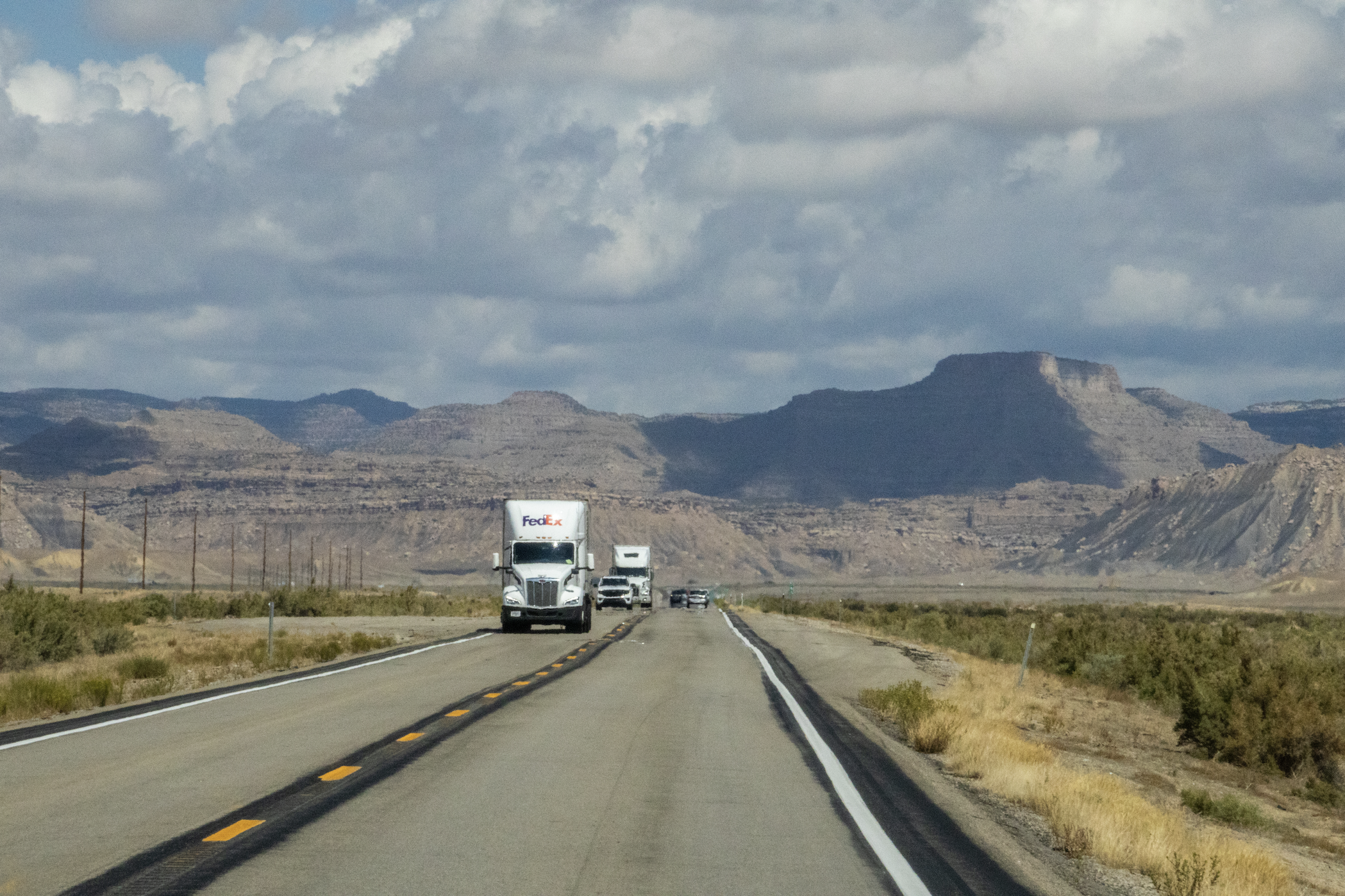
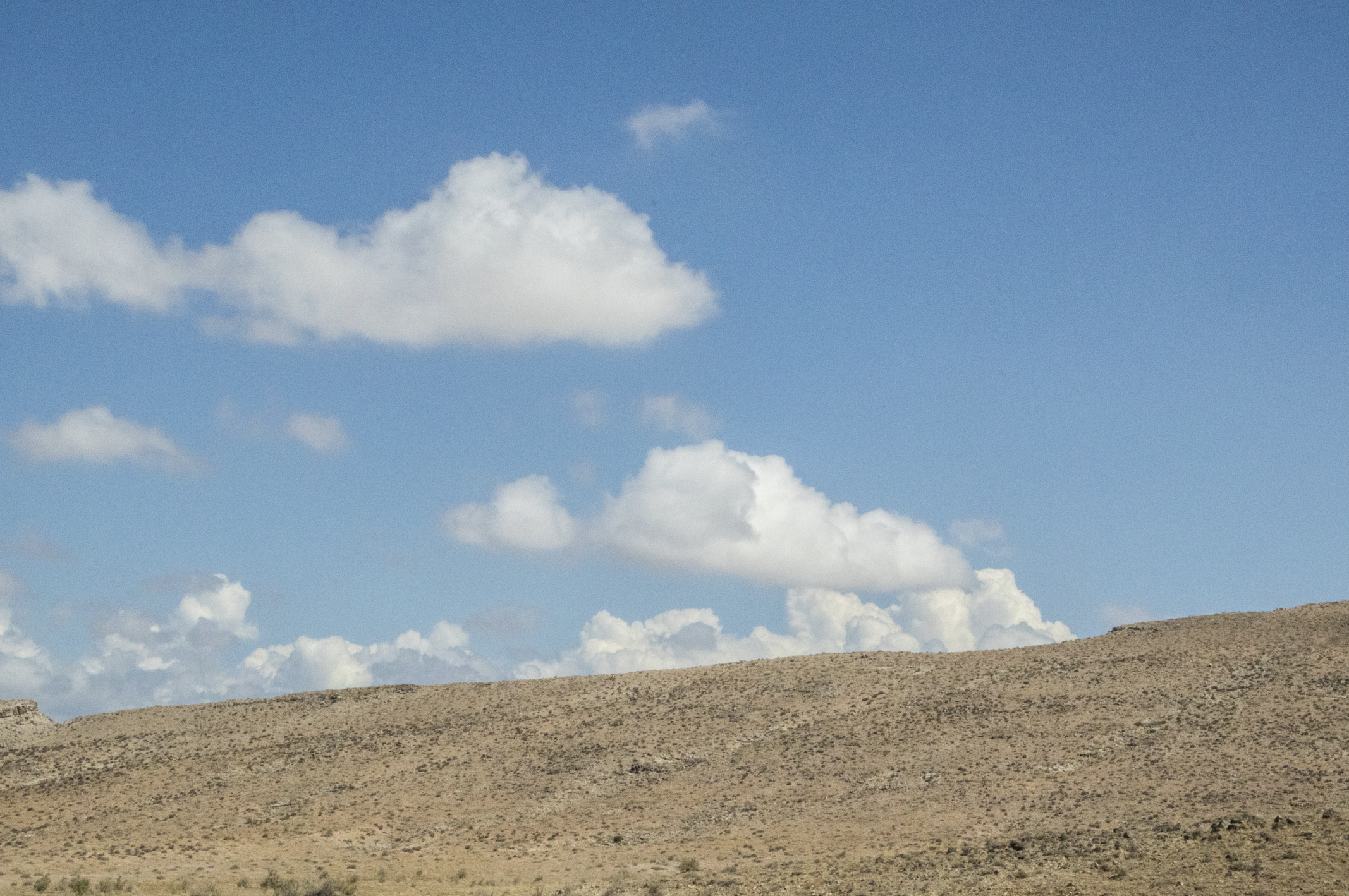
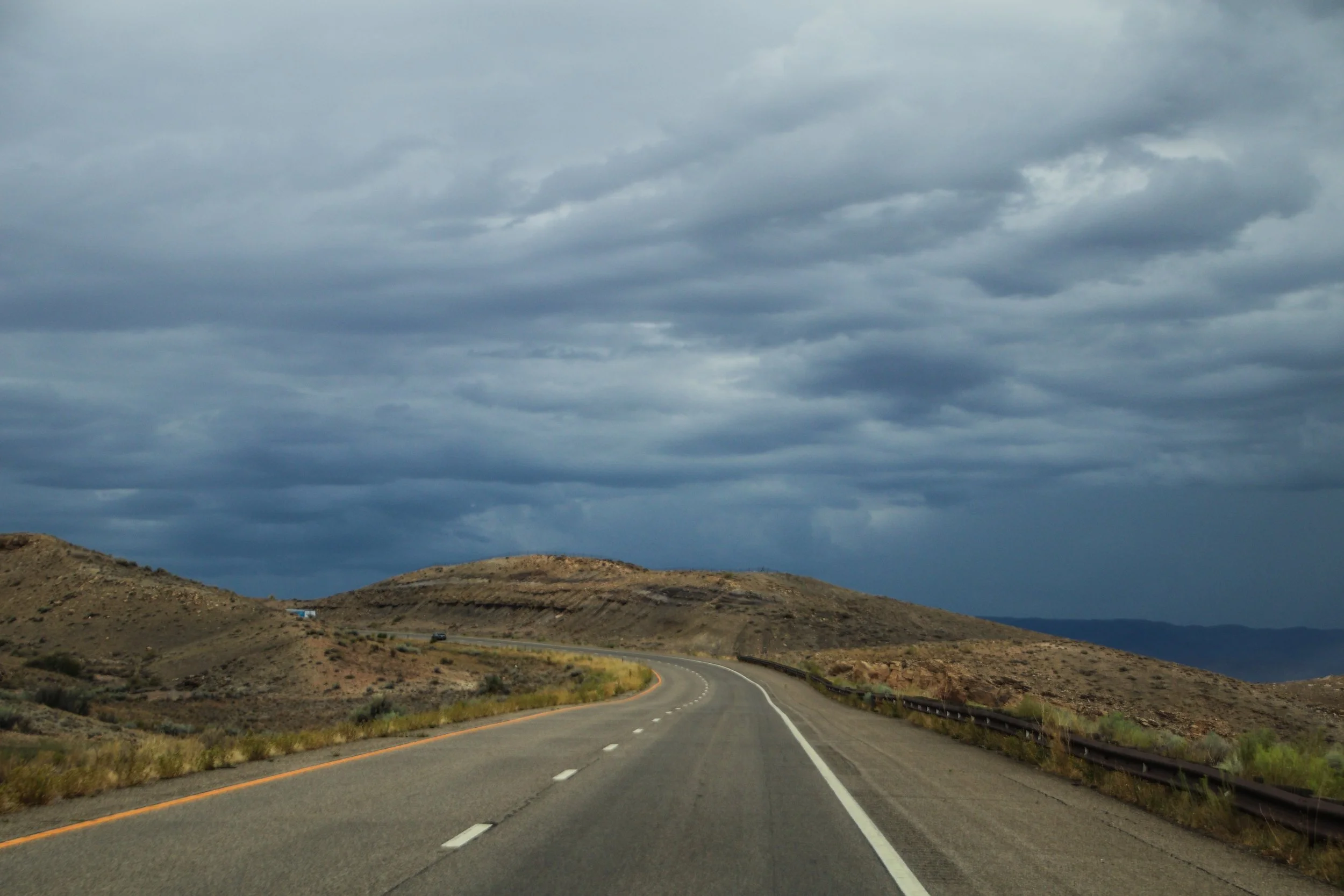
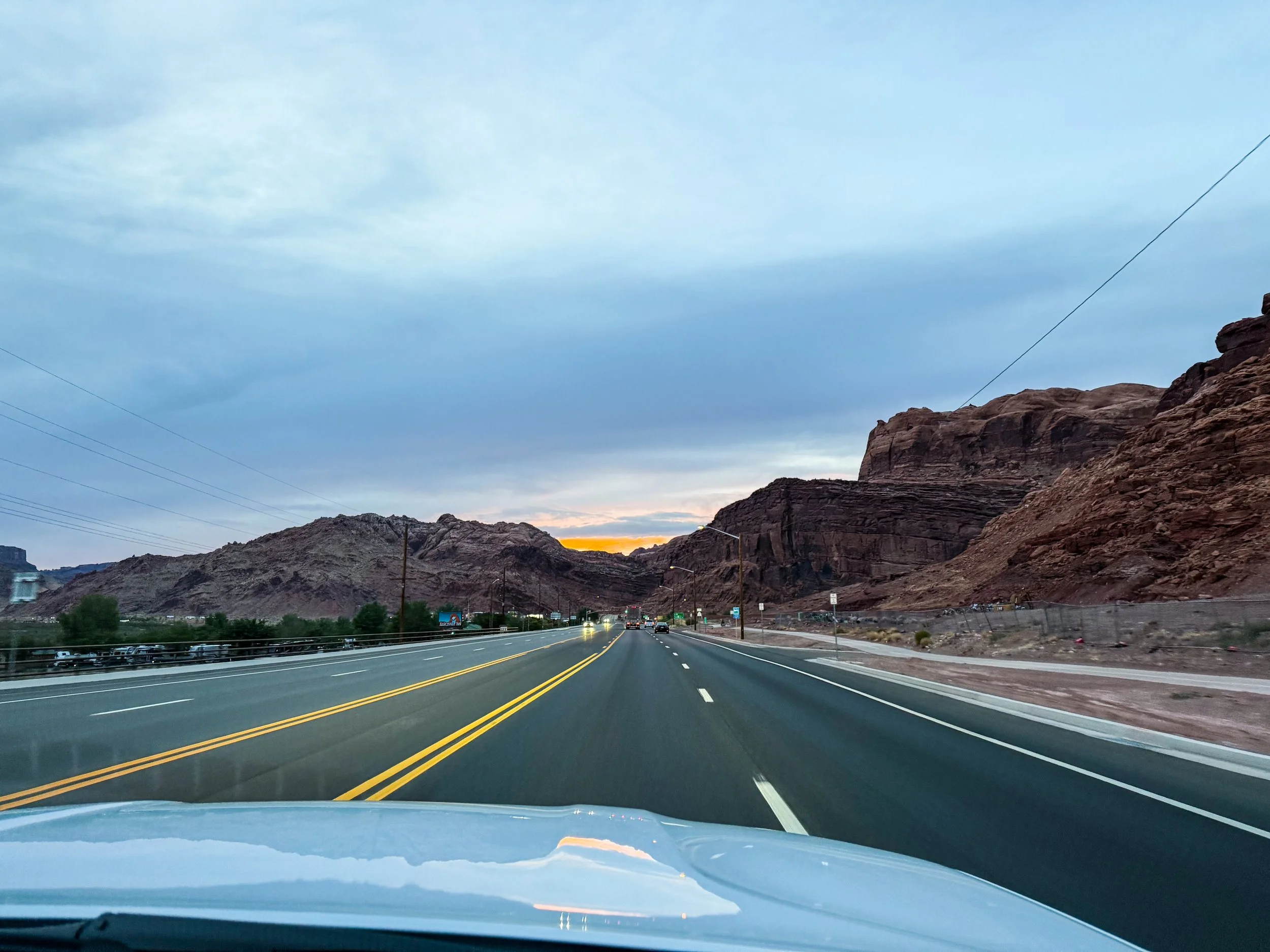
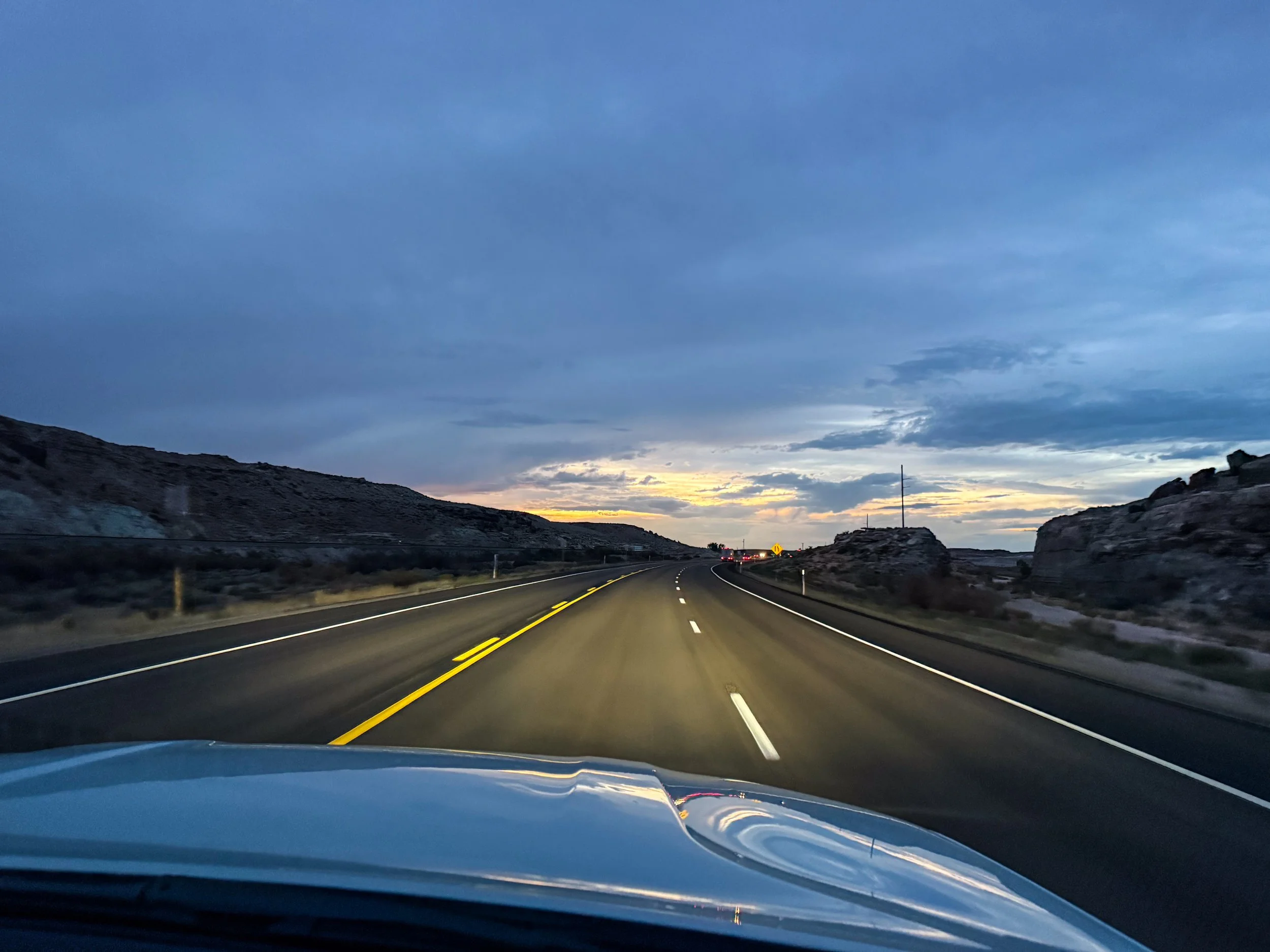
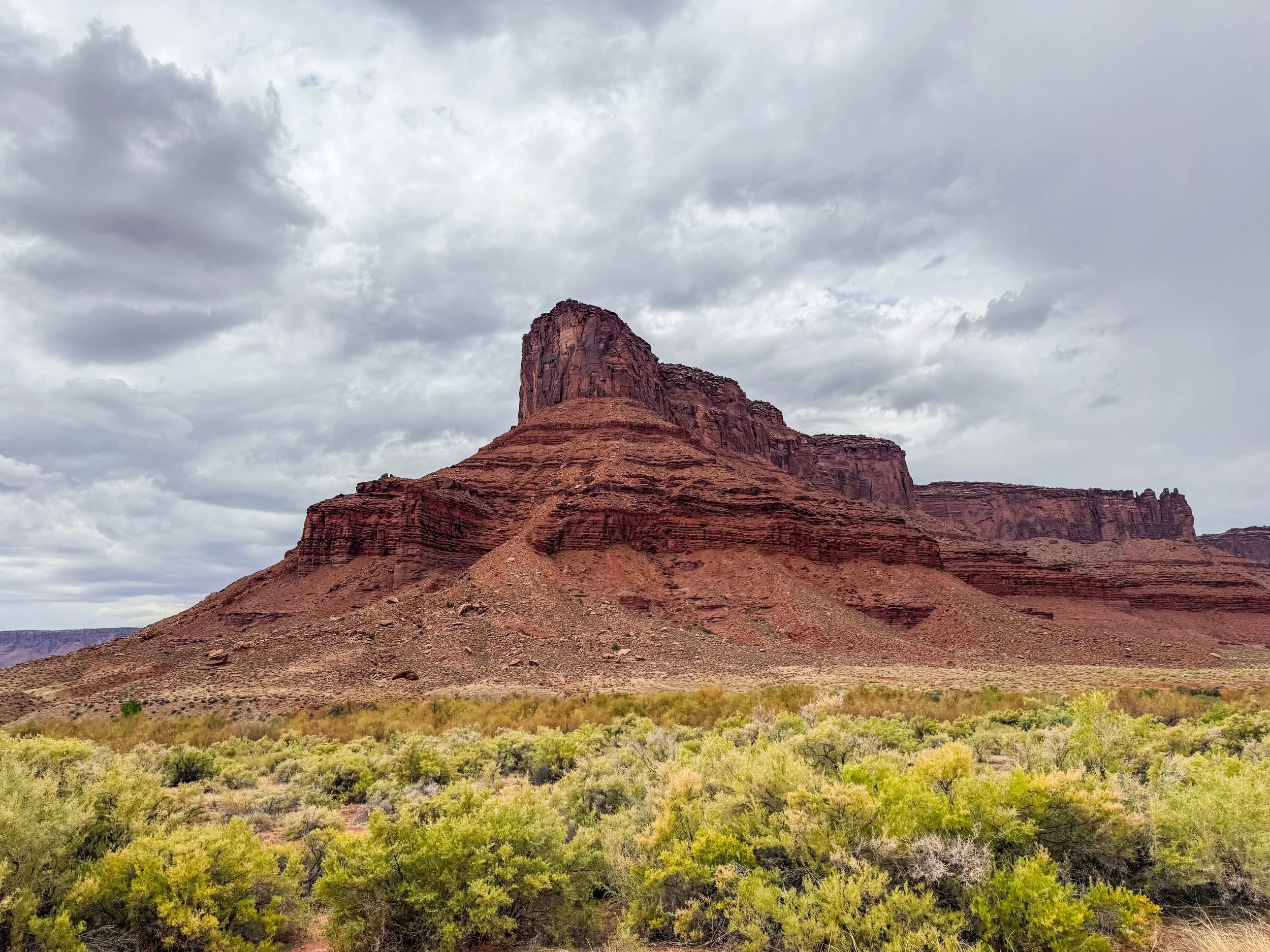
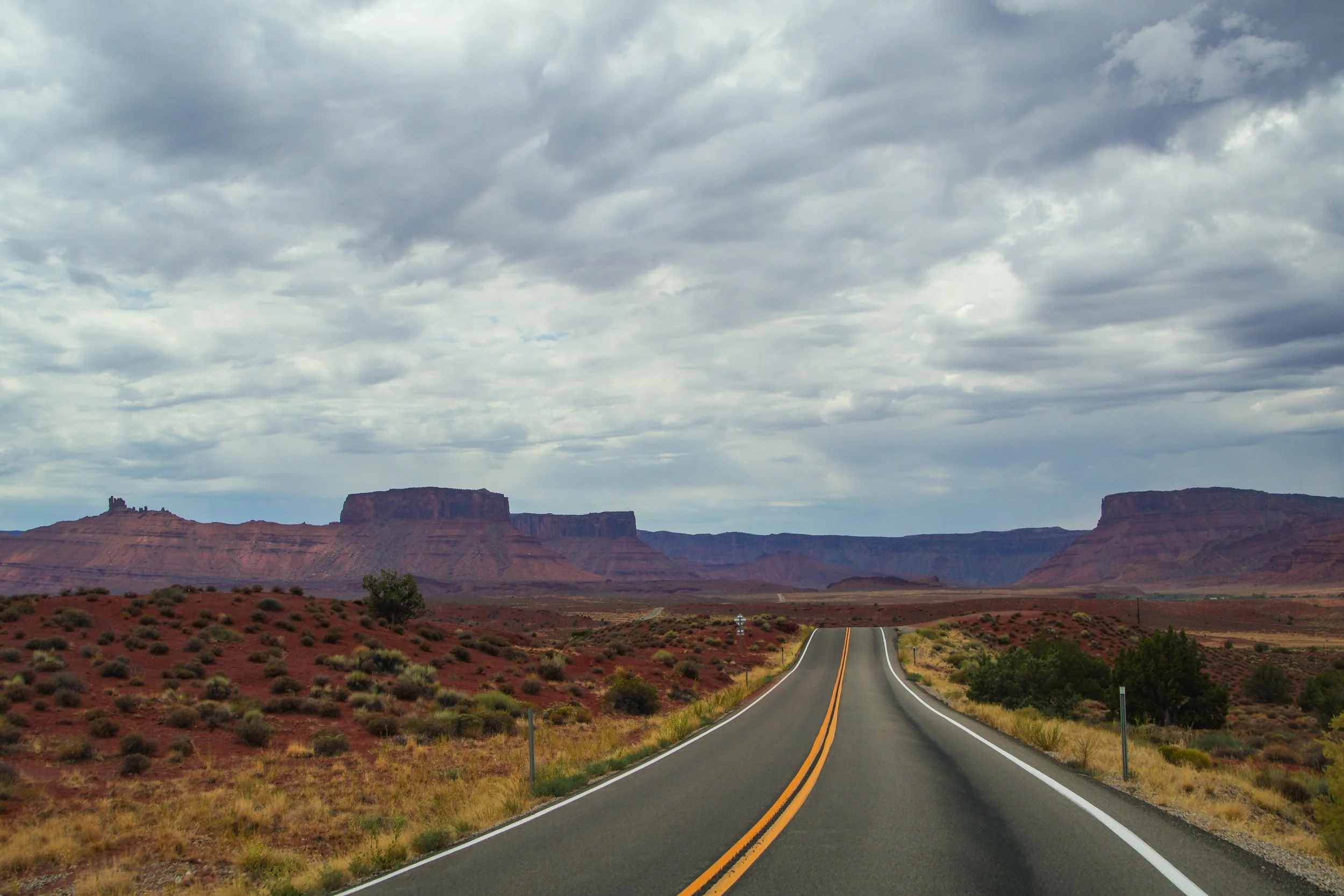
But where it gets really beautiful is when you pull off the main highway and do the drive westward into Moab via Highway 128, which runs along the Colorado River. This is known to be one of the most stunning drives in the continental United States. Today we’re going to do that drive—stopping for pictures along the way where the opportunity and urges overlap—and then explore Moab. This is our gateway into Eastern Utah. Here’s the map and a few pictures taken as we approached the top of this route:
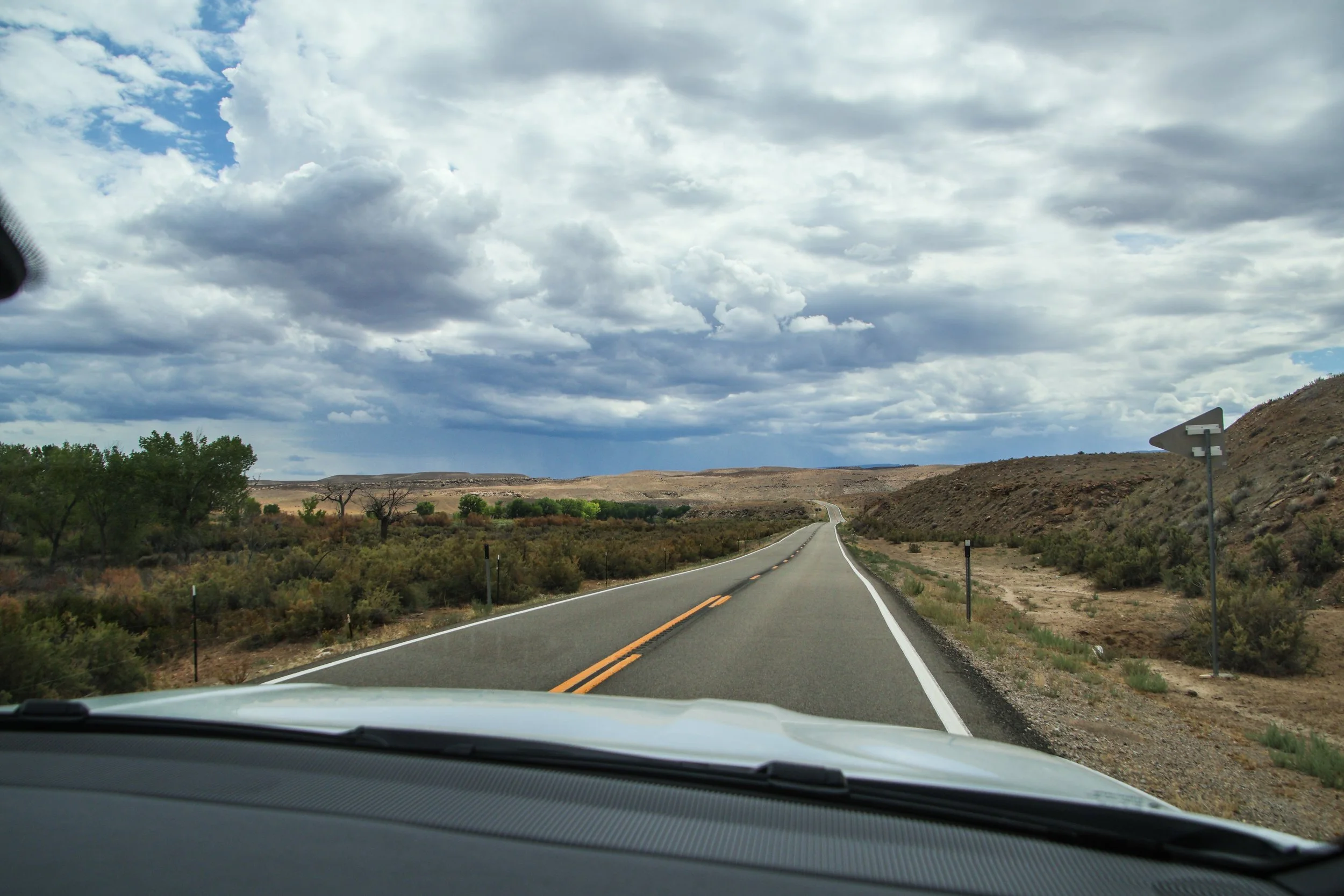
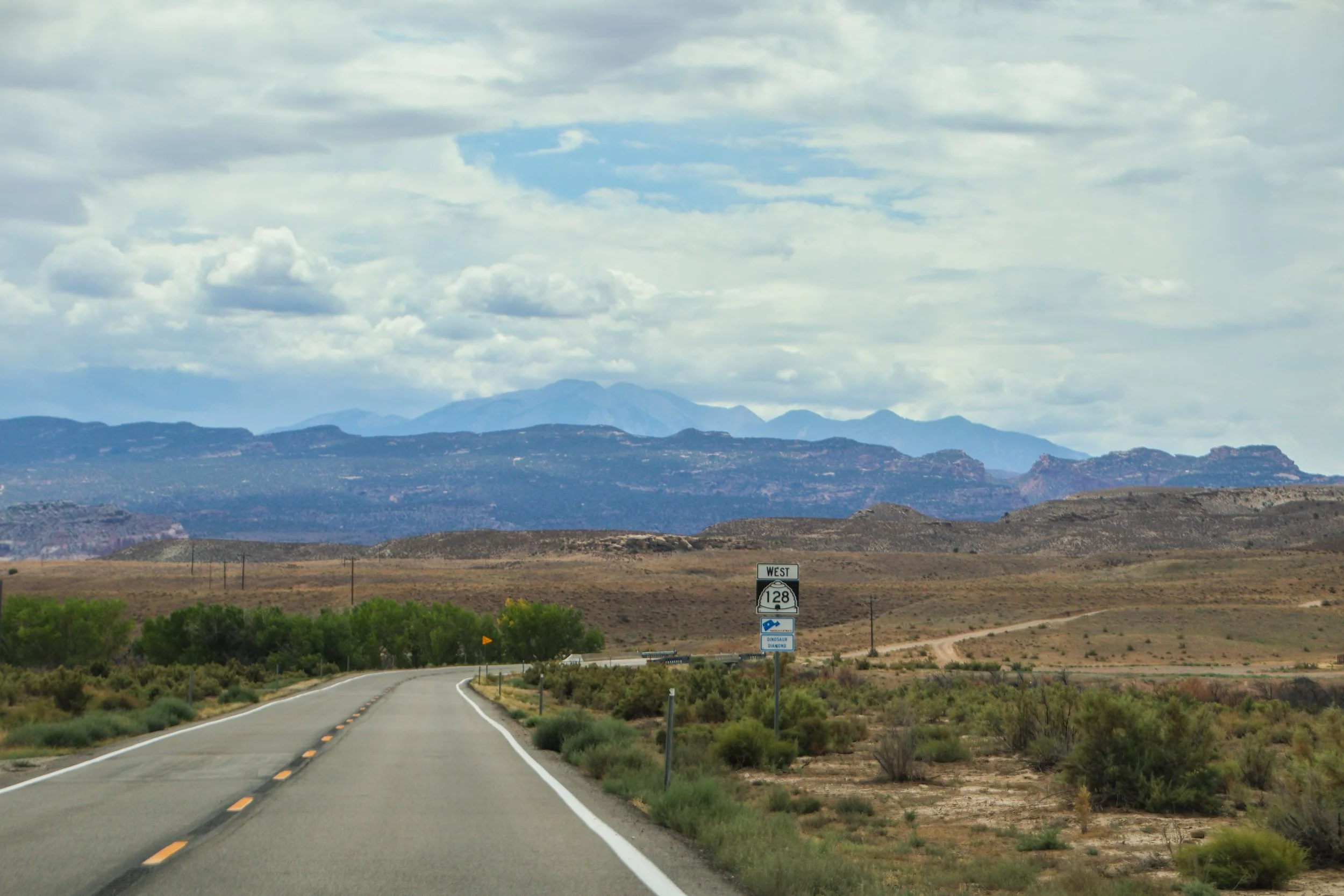
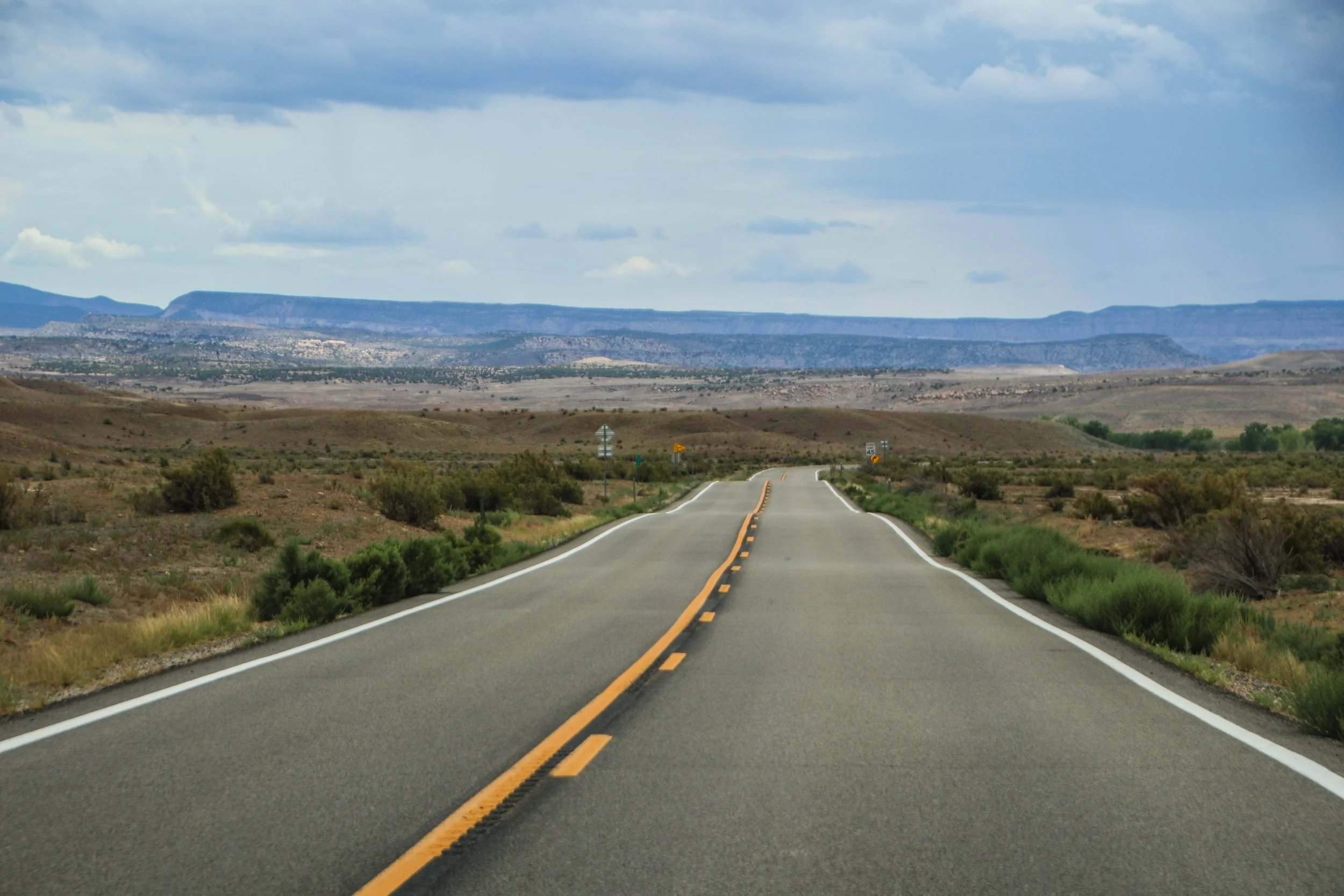
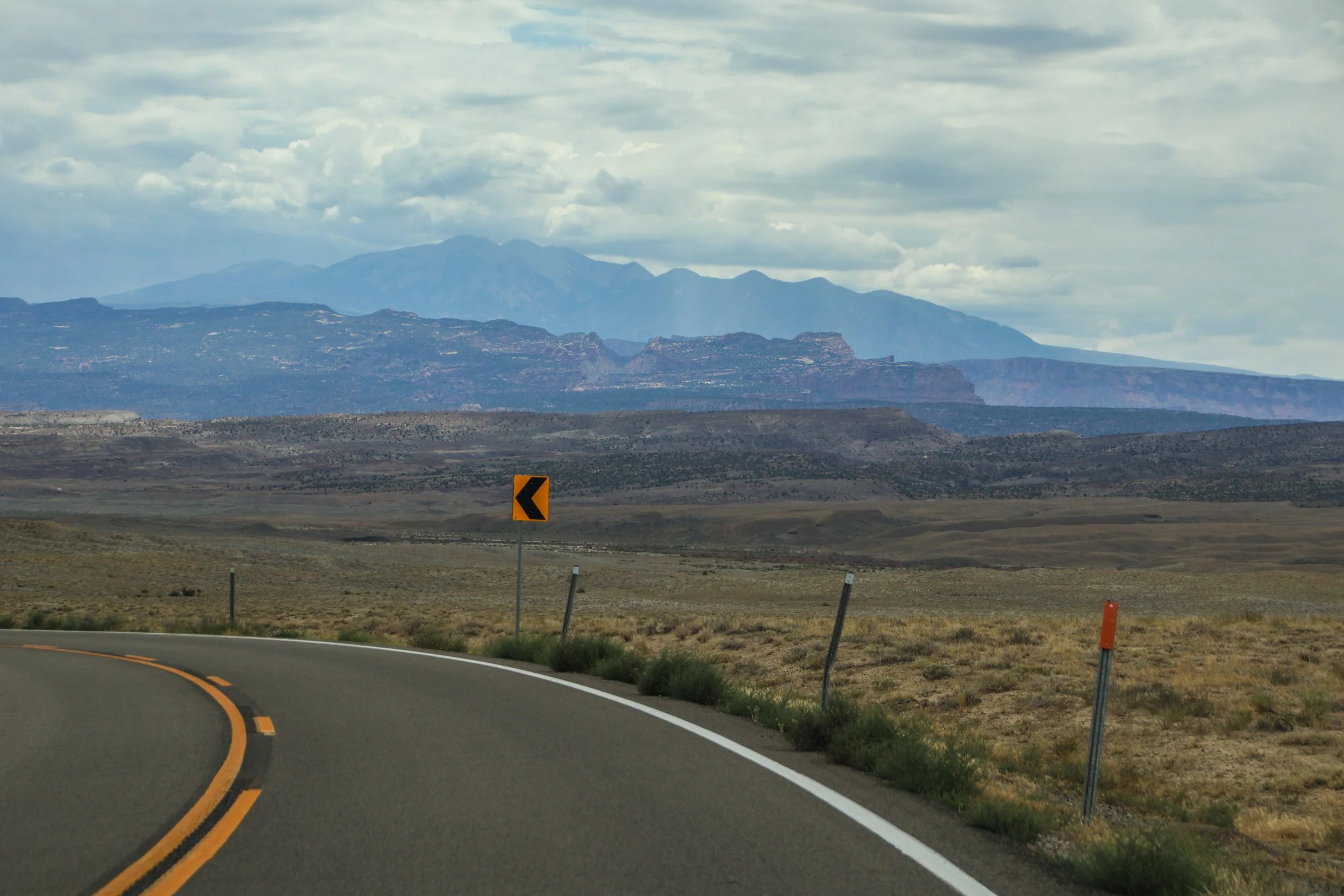
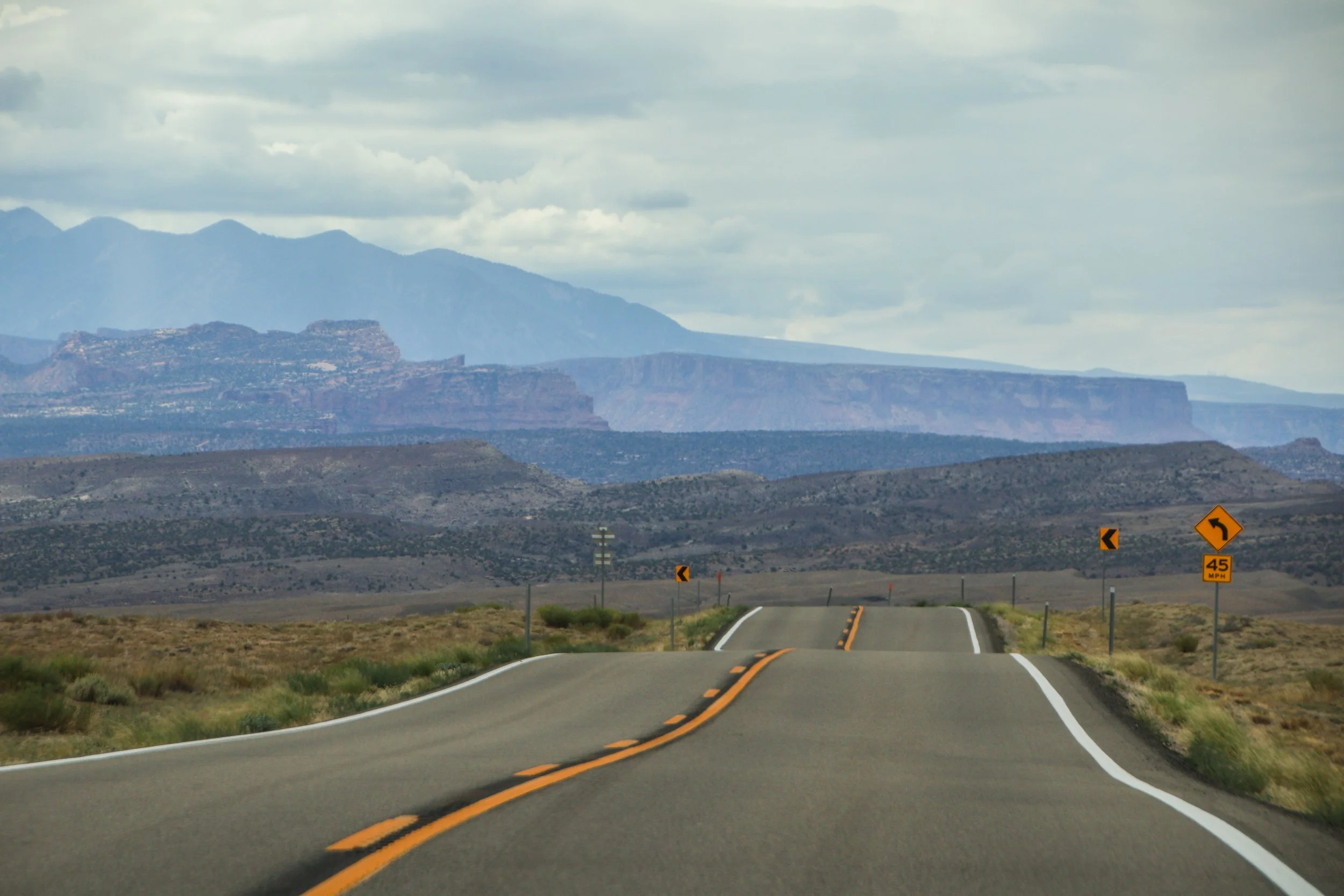
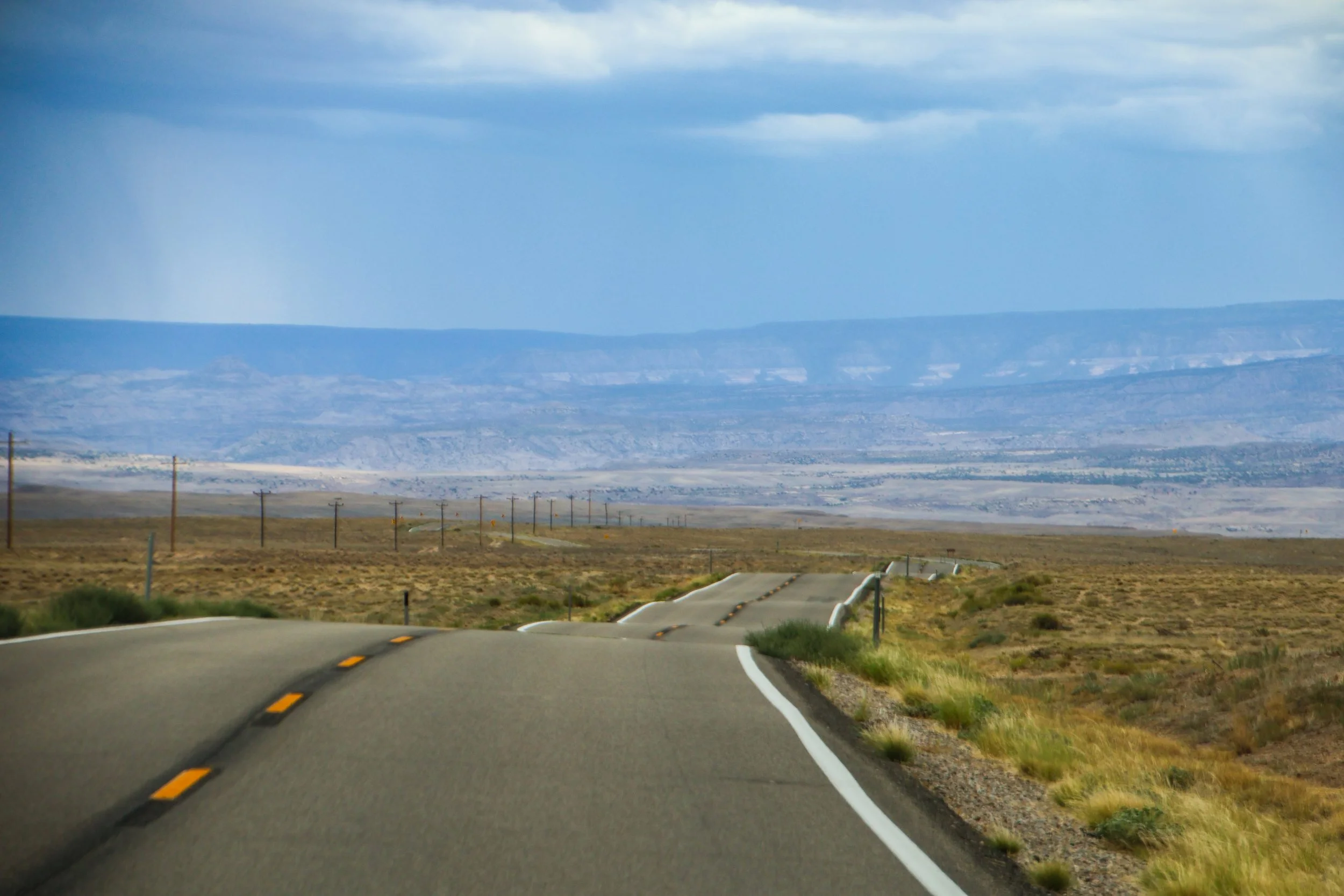
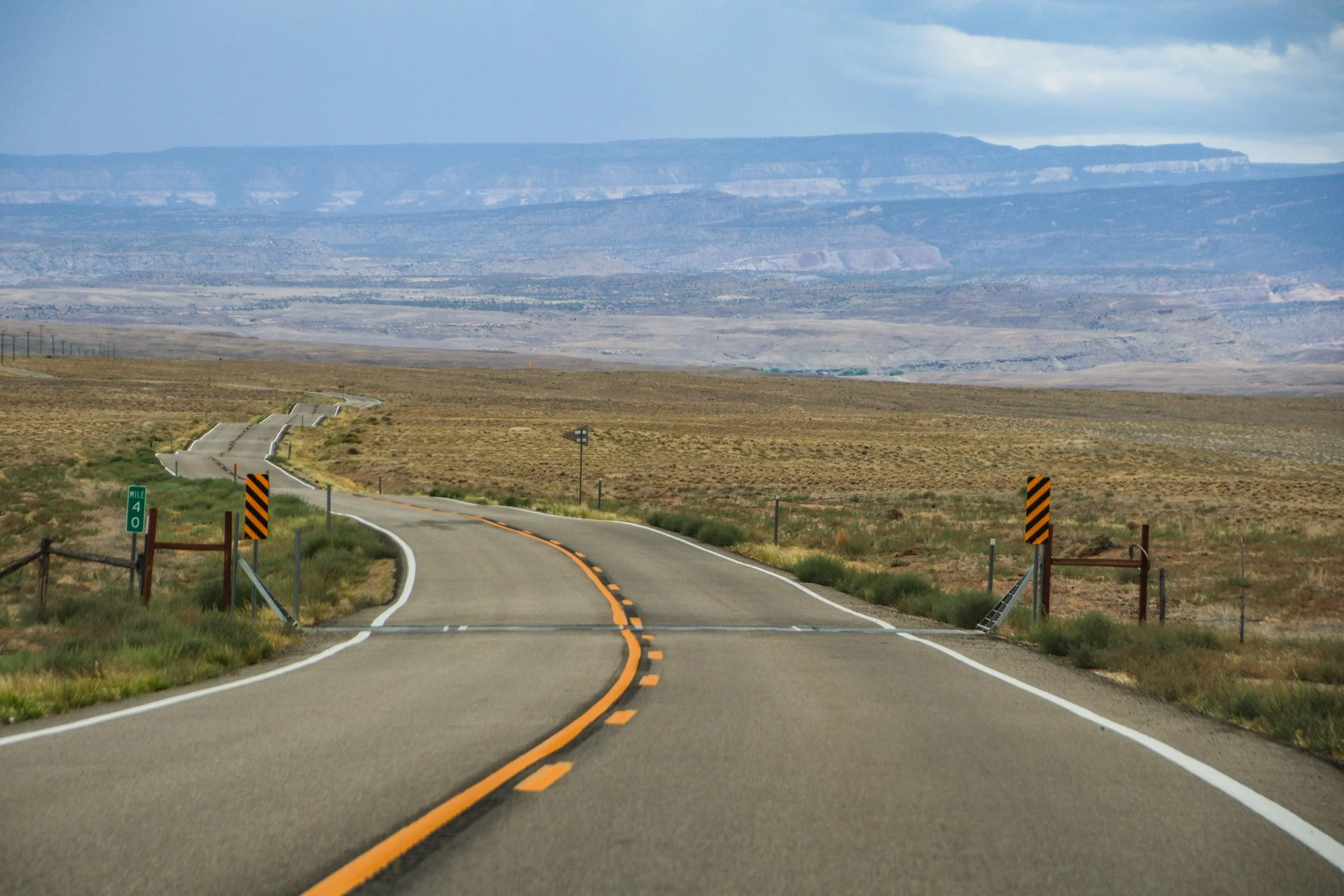
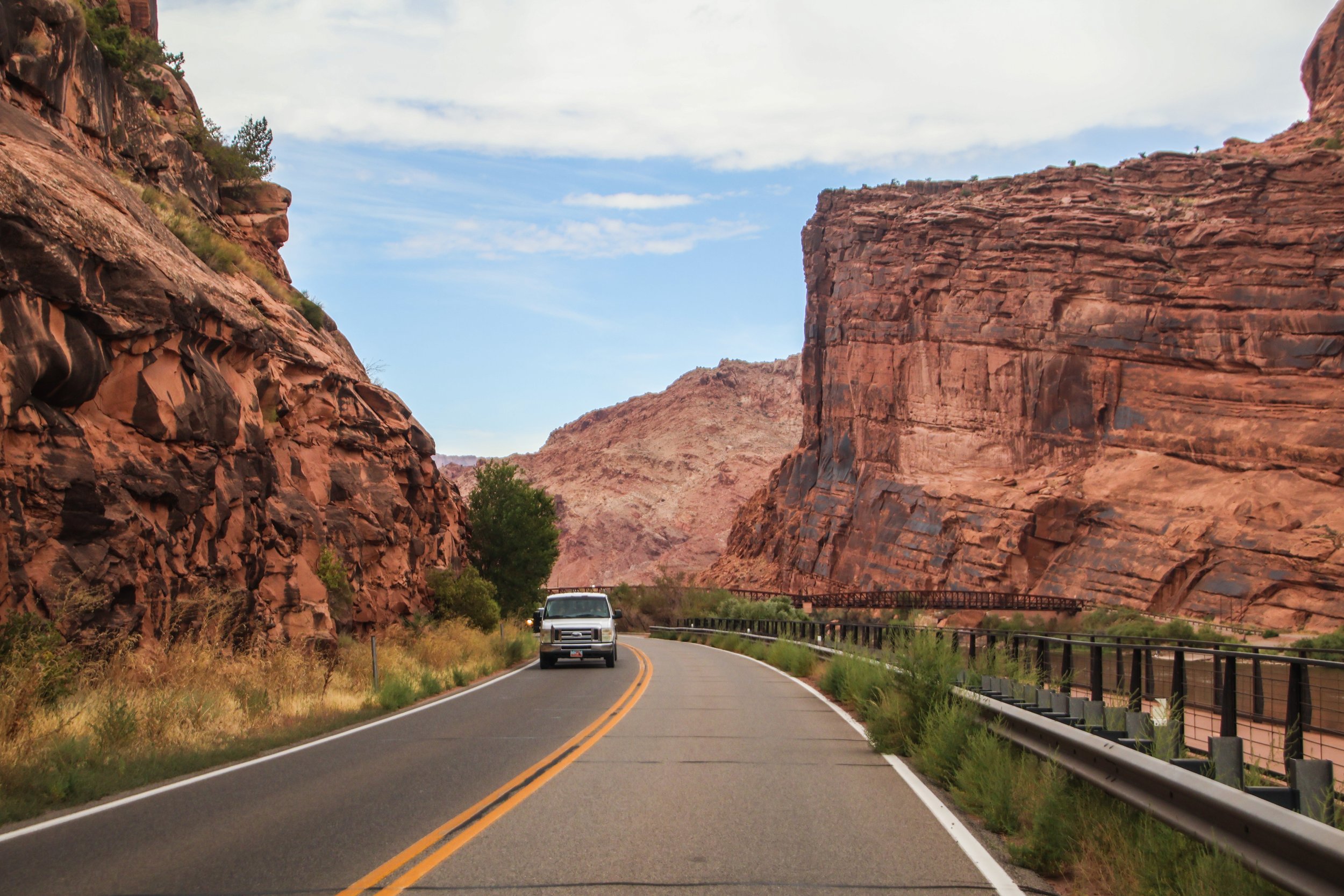
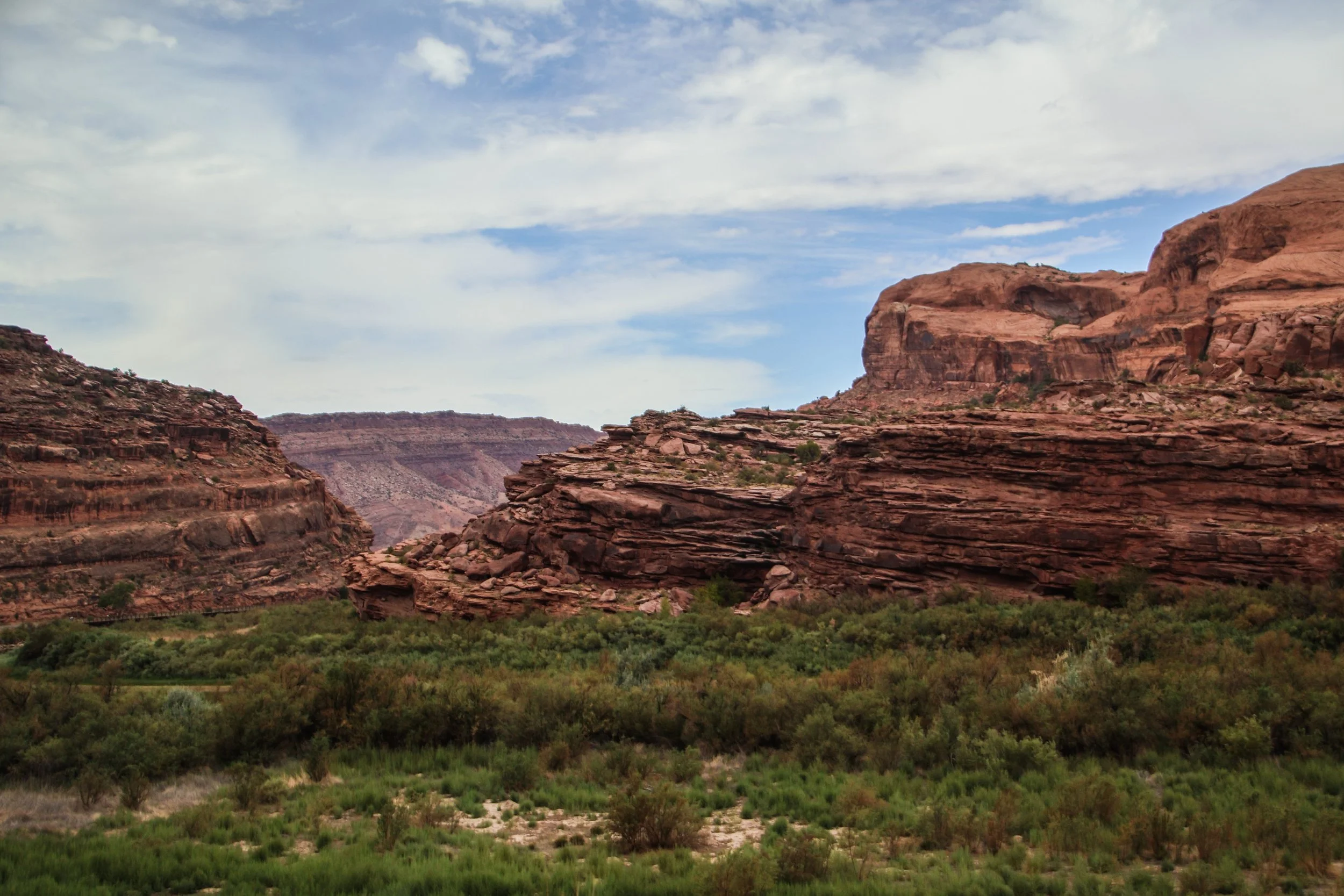
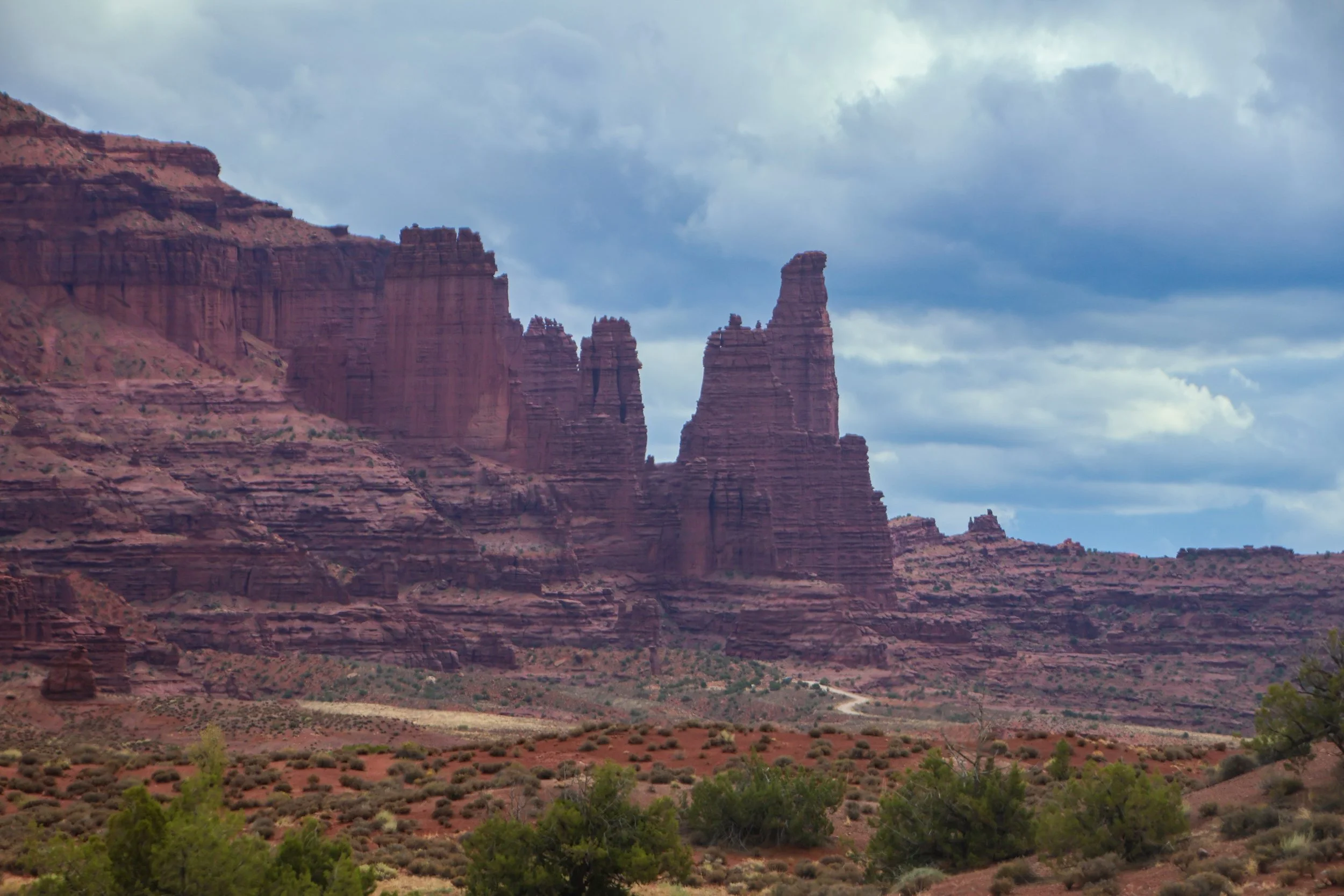
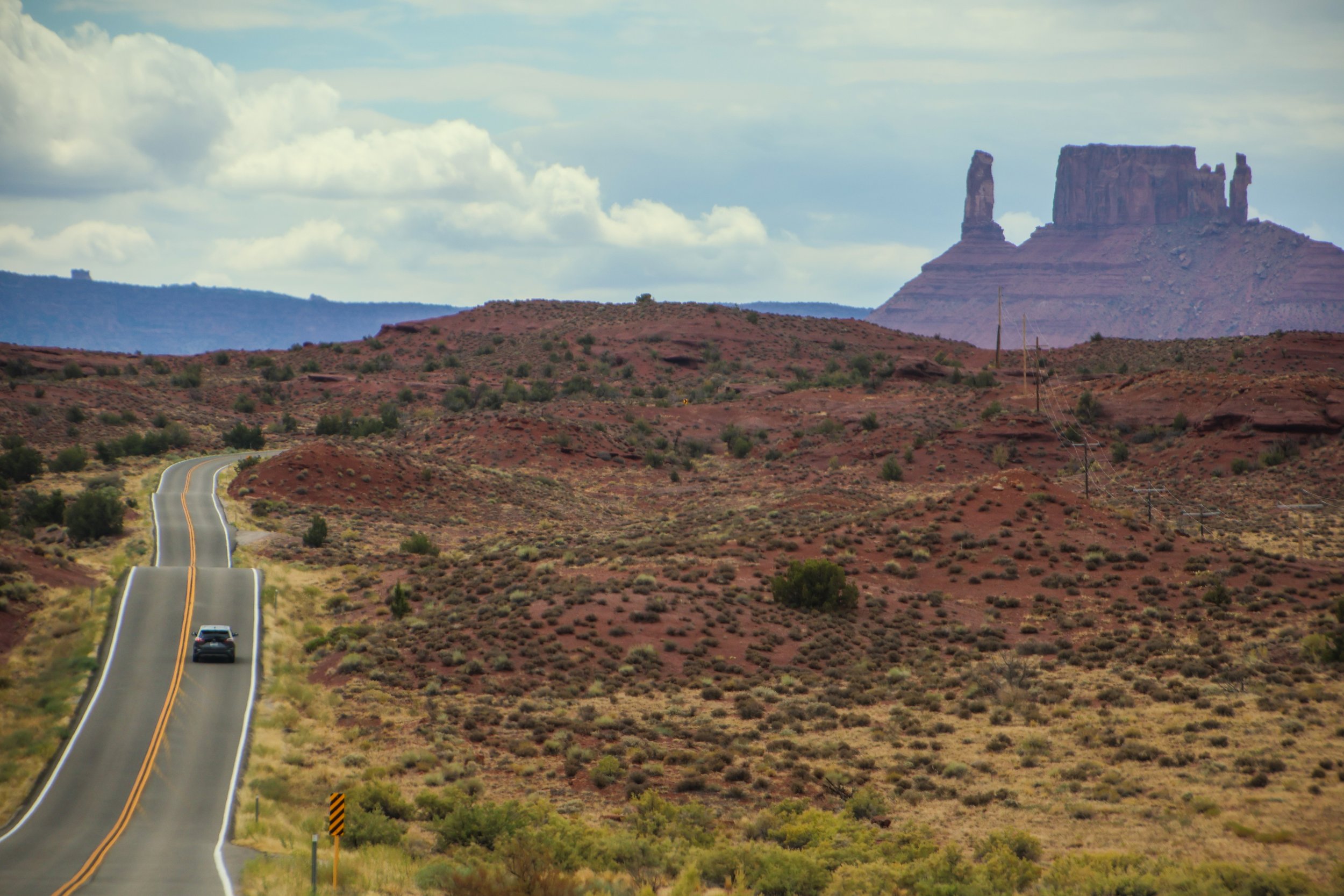
The road you are about to see was an important regional access point long before Moab was ✨M0aB✨—it was (and still is) important for ranching and river access. AND, it was apparently an important area for Uranium mining in the mid-1900s. But the human element of this road is really besides the point; unlike the rigid grid systems you will find in a lot of US infrastructure, this road works with nature, snaking through this canyon, following the river wherever it goes. In this sort of geography, you’d really have no choice but to build this road this way. That’s one of the magical things about traveling out west: the natural features become far too big for humans to tame. It really pulls me out of my internet-connected anxiety cloud and grounds me. This canyon was carved over millions of years and you can see the geological history play out in the faces of the cliffs towering over the river on either side. We are really just a blip on the timeline of plant earth.
Anyway, after the “Subscribe To This Blog” box (which you should totally do btw), you’ll find a gallery of images from this road. And remember, the Colorado River is the same river that carved the Grand Canyon in Arizona. So if you were to float downstream from here, eventually you’d be at the bottom of the Grand Canyon.
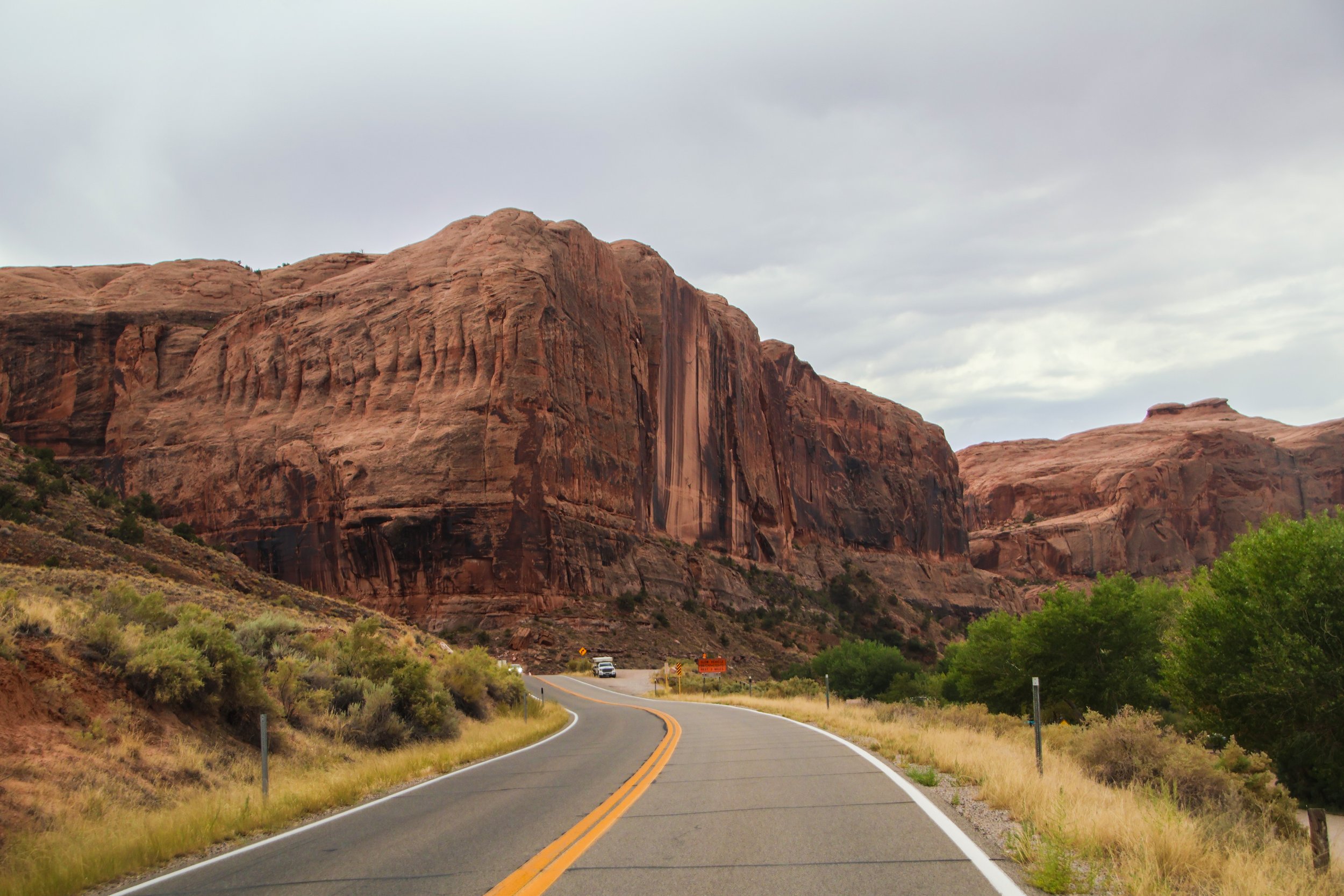
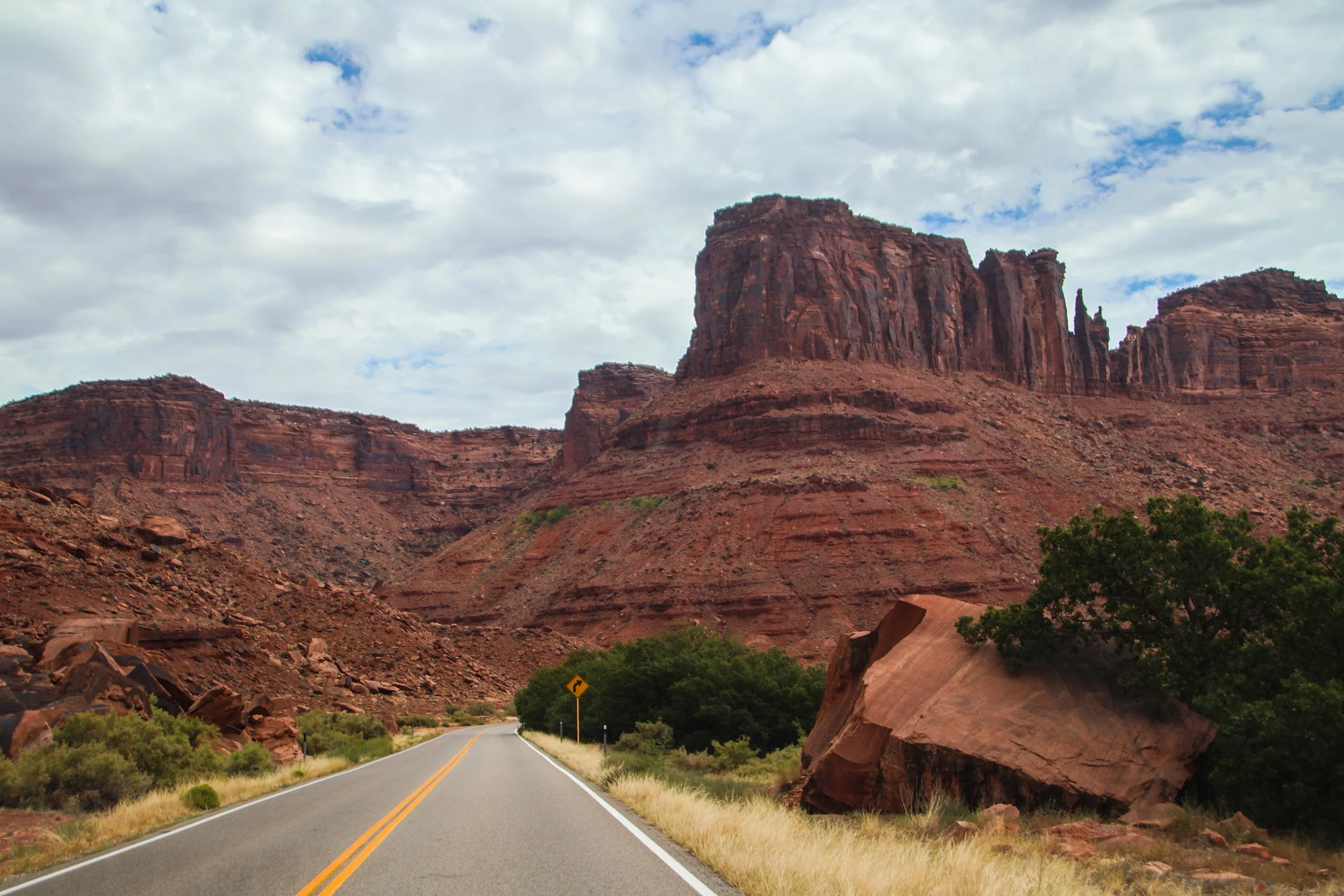
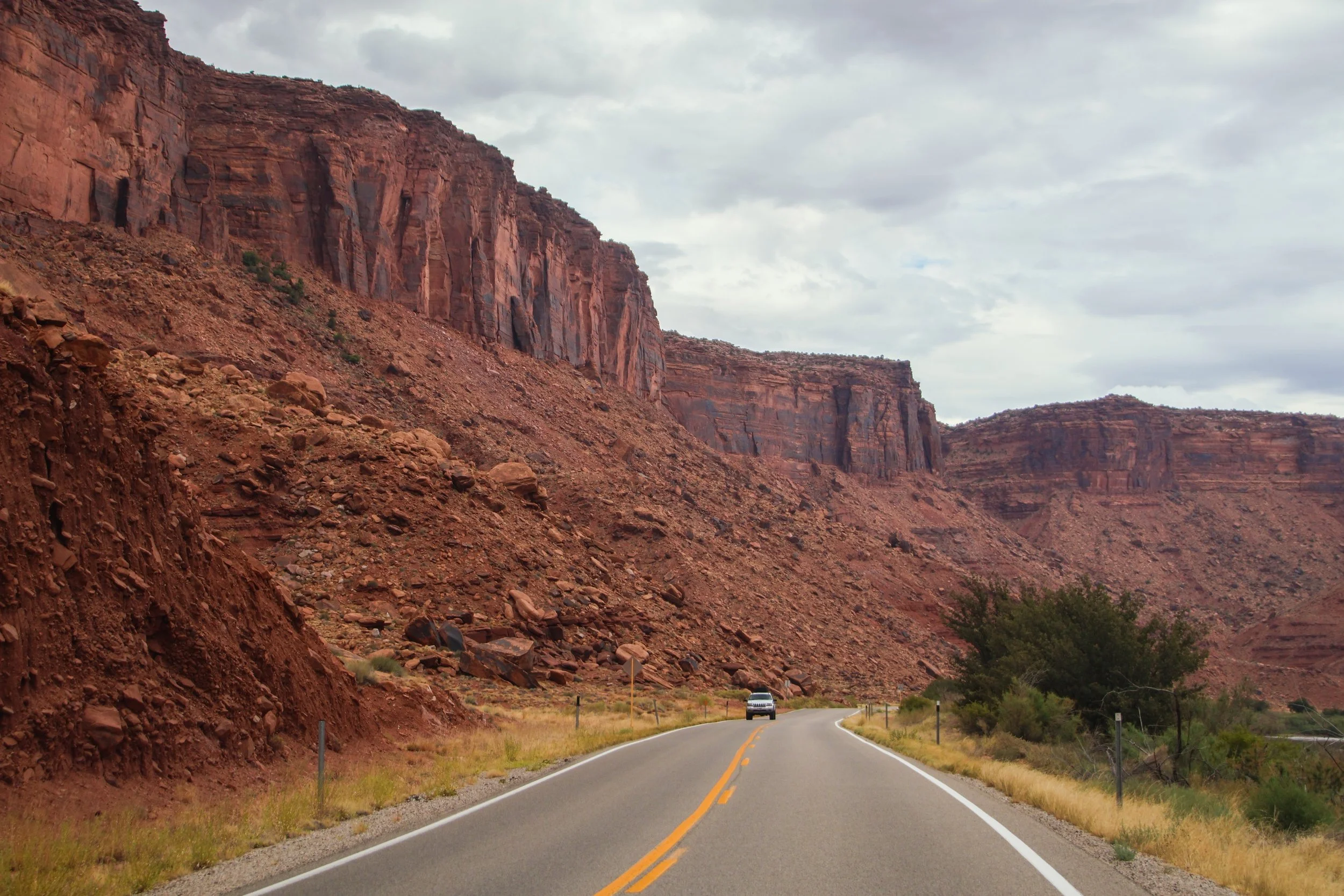
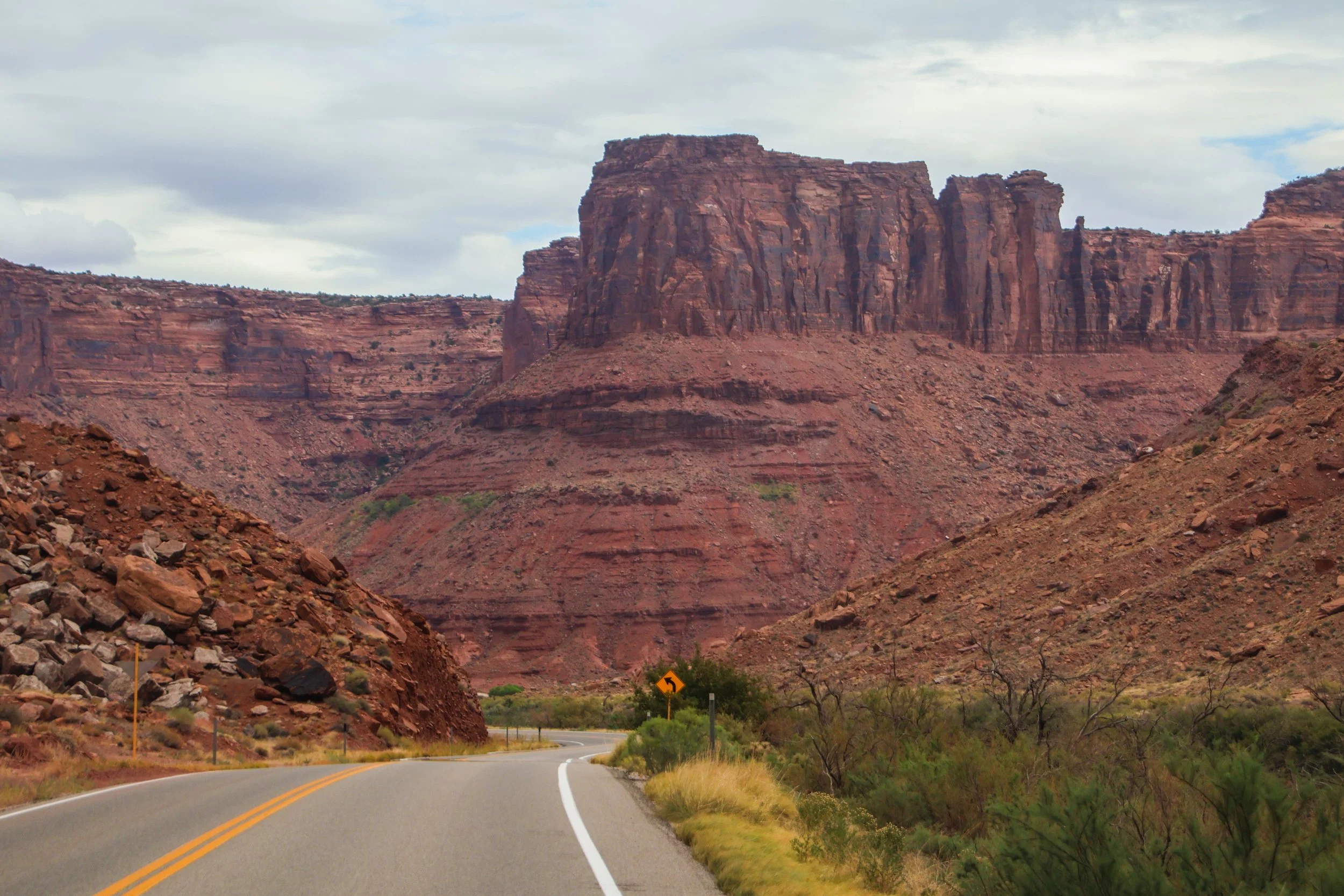
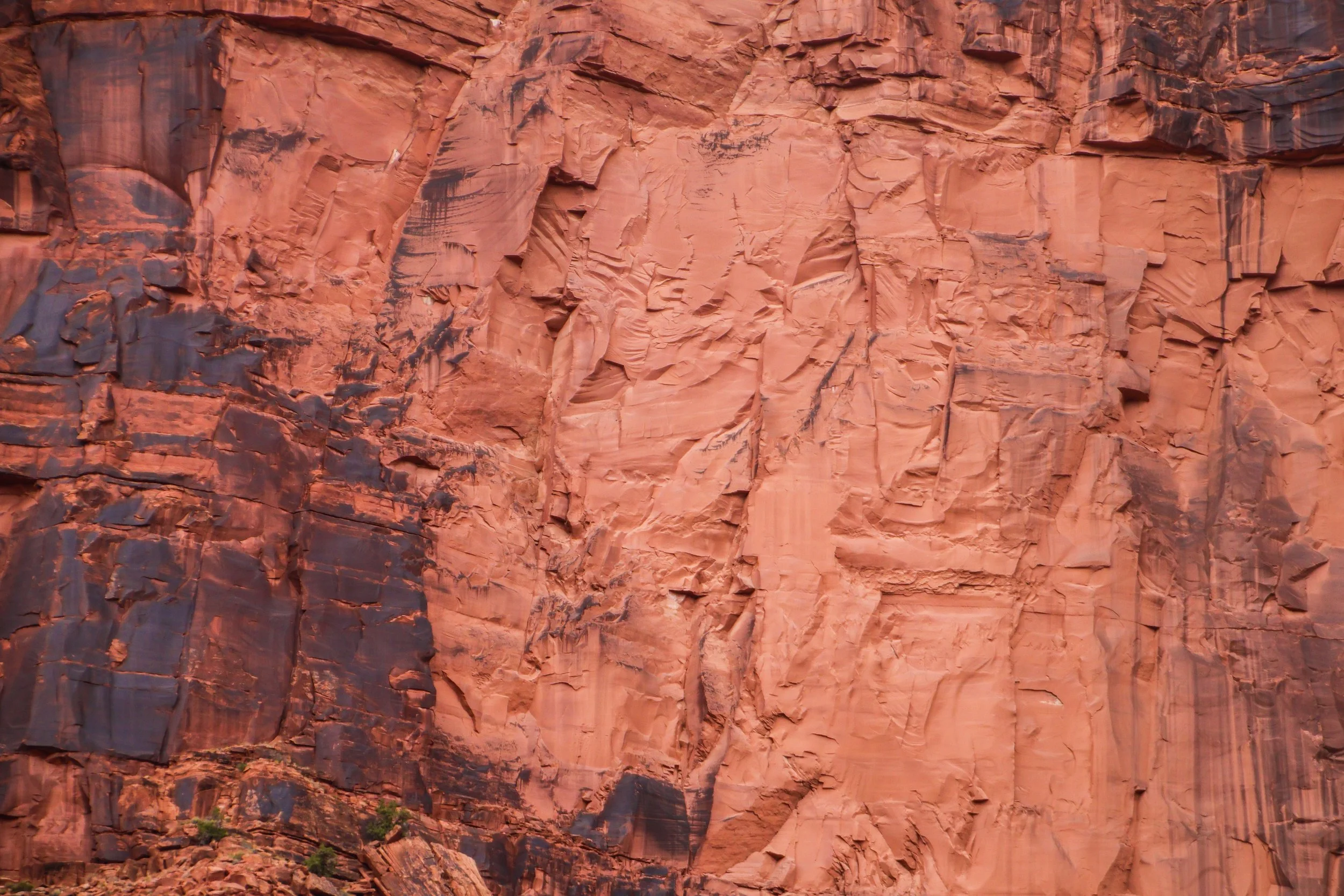
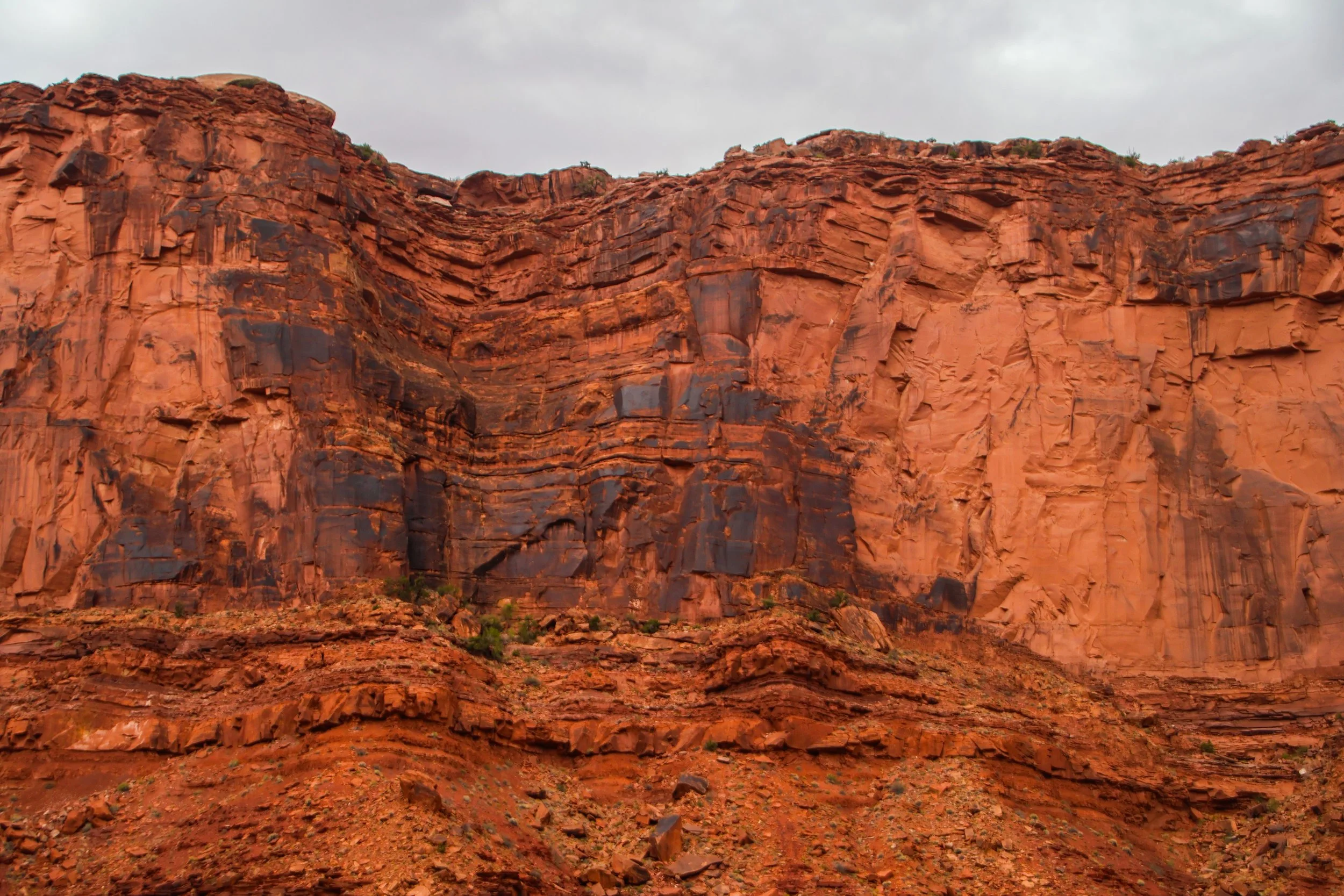
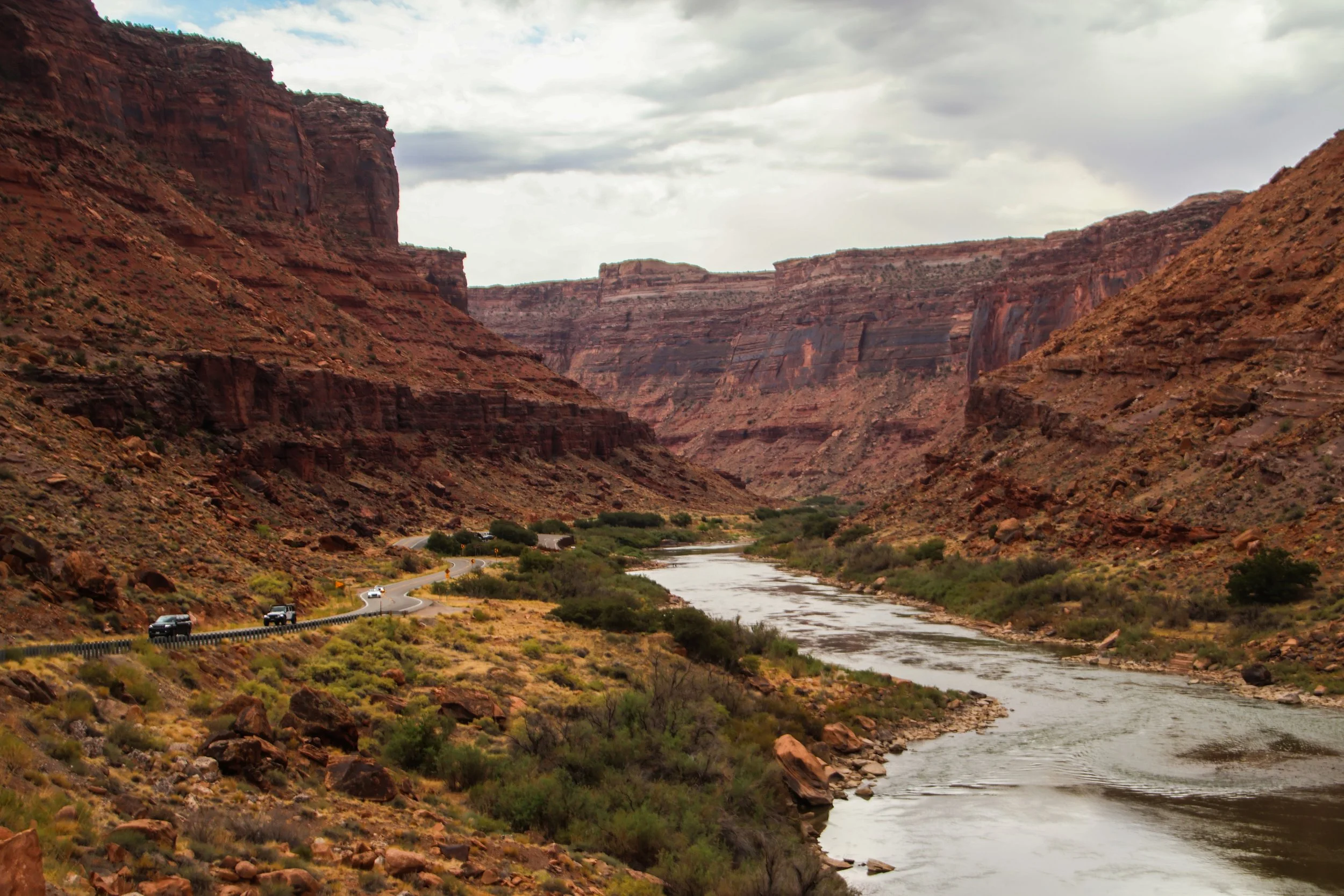
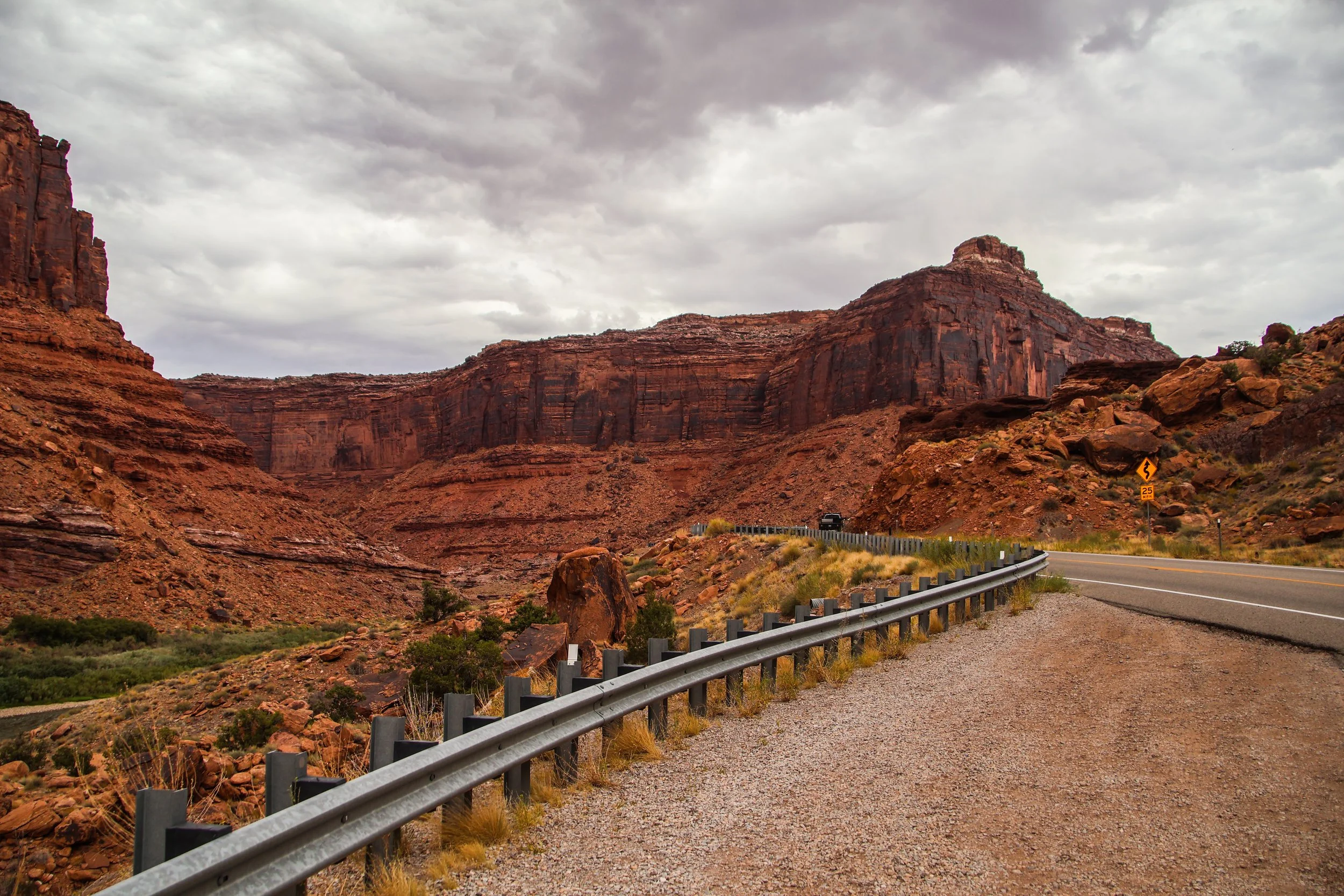
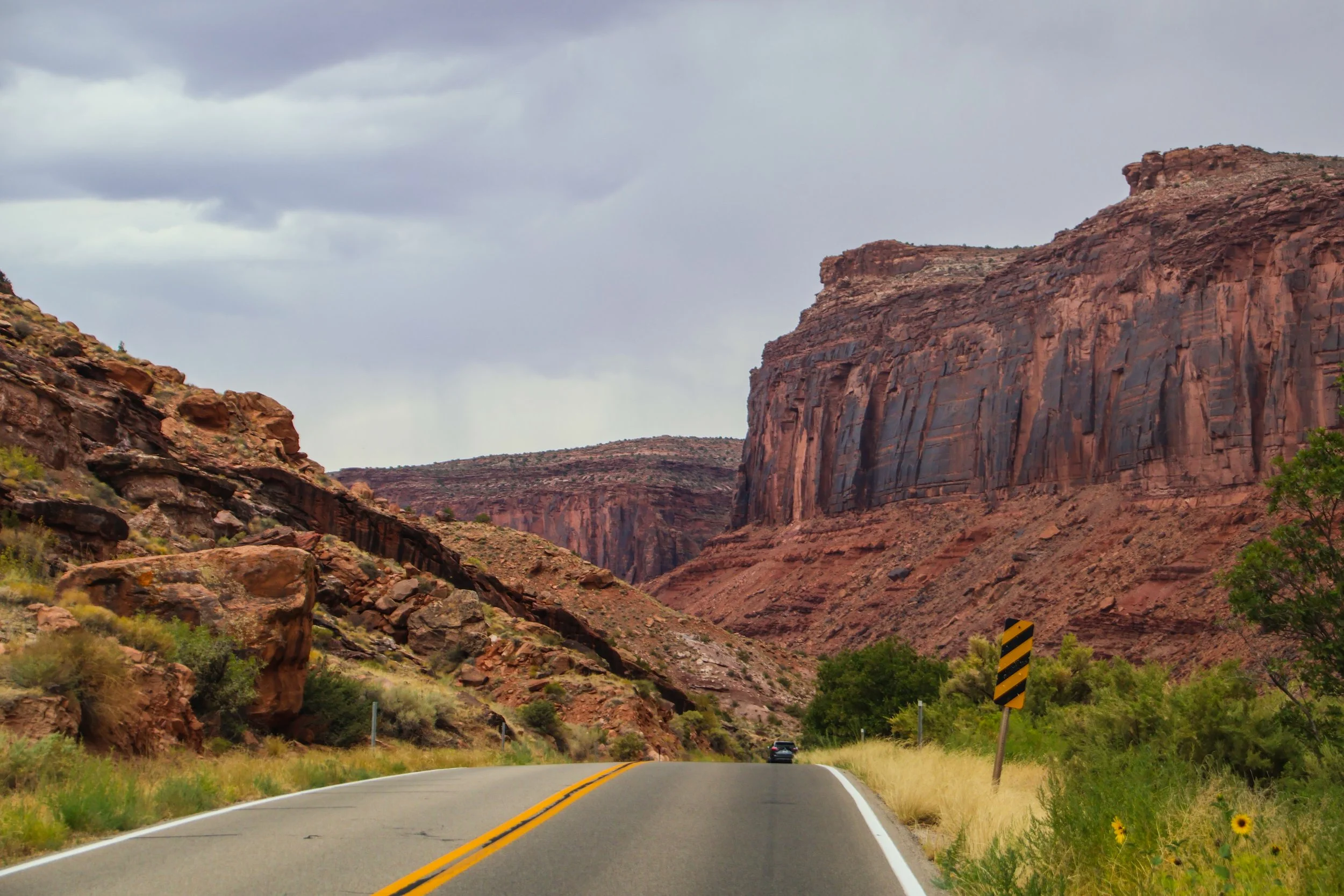
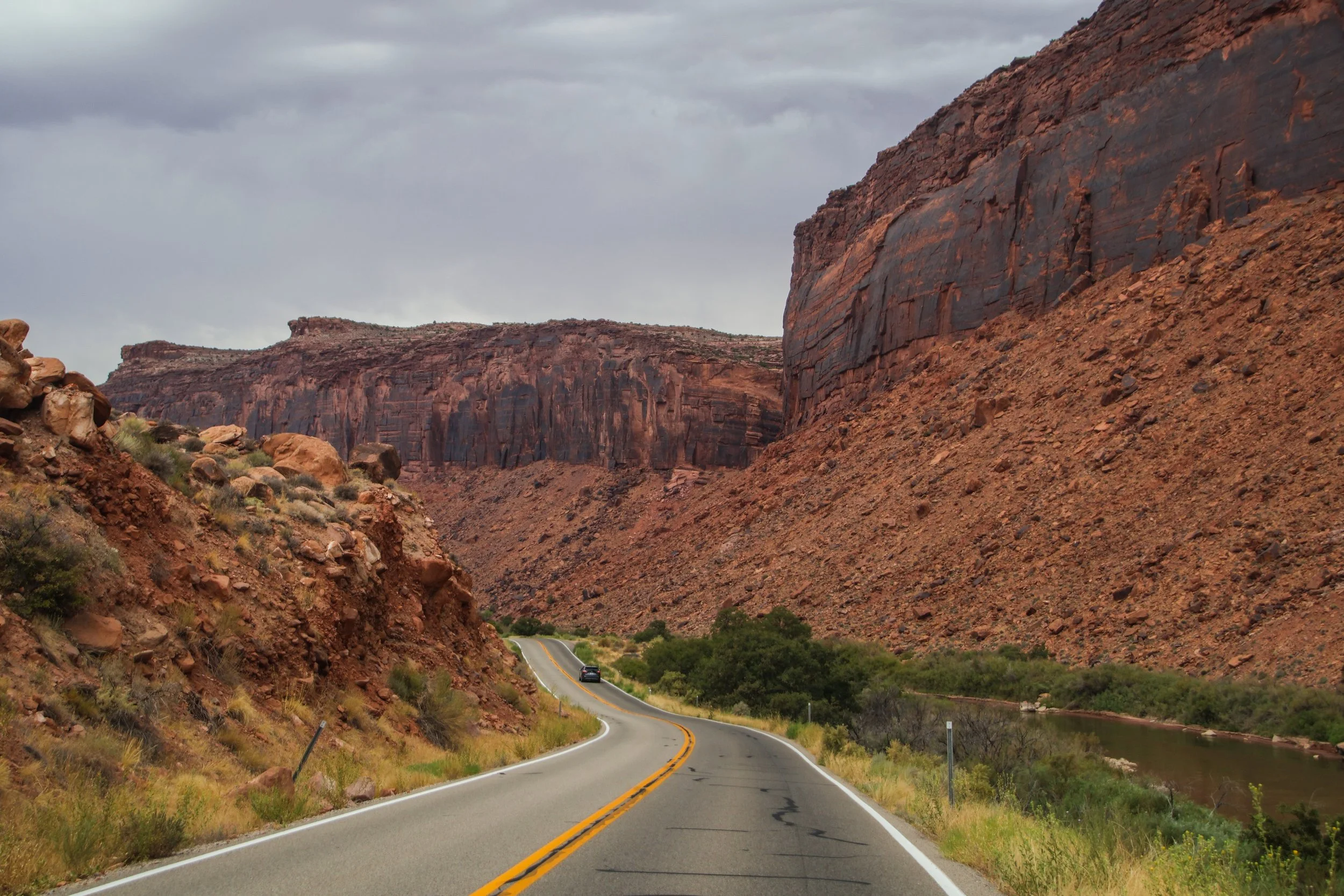
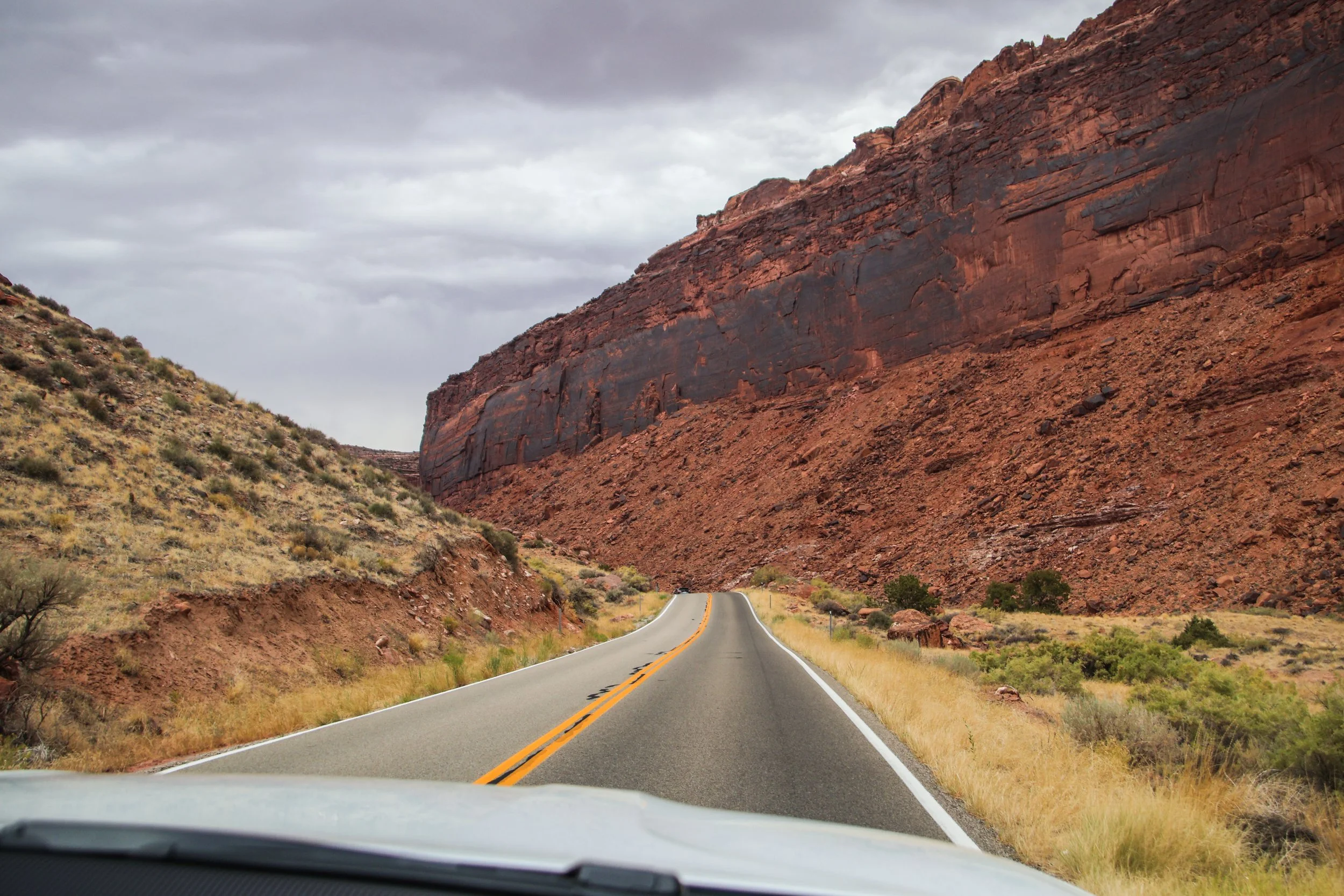
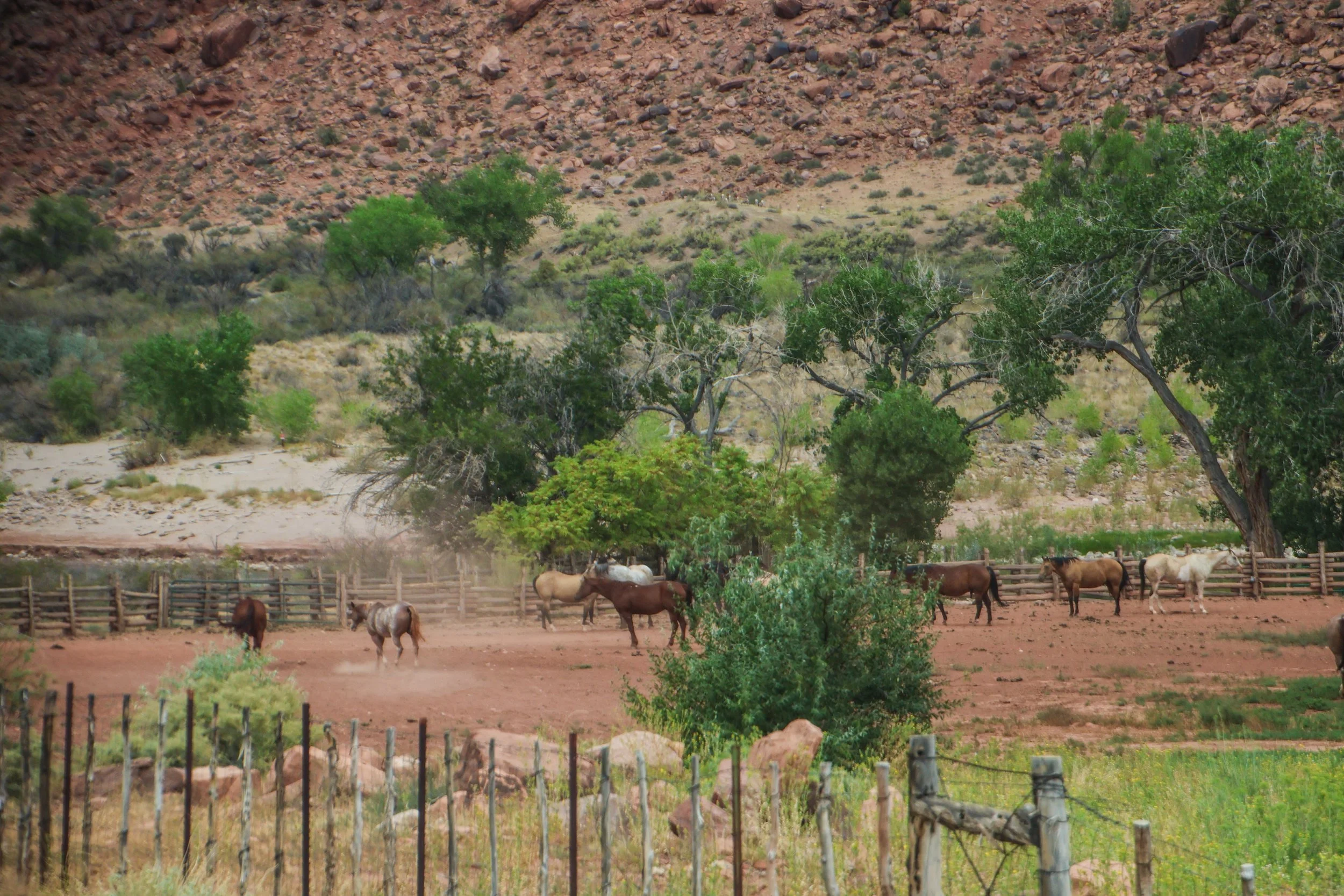
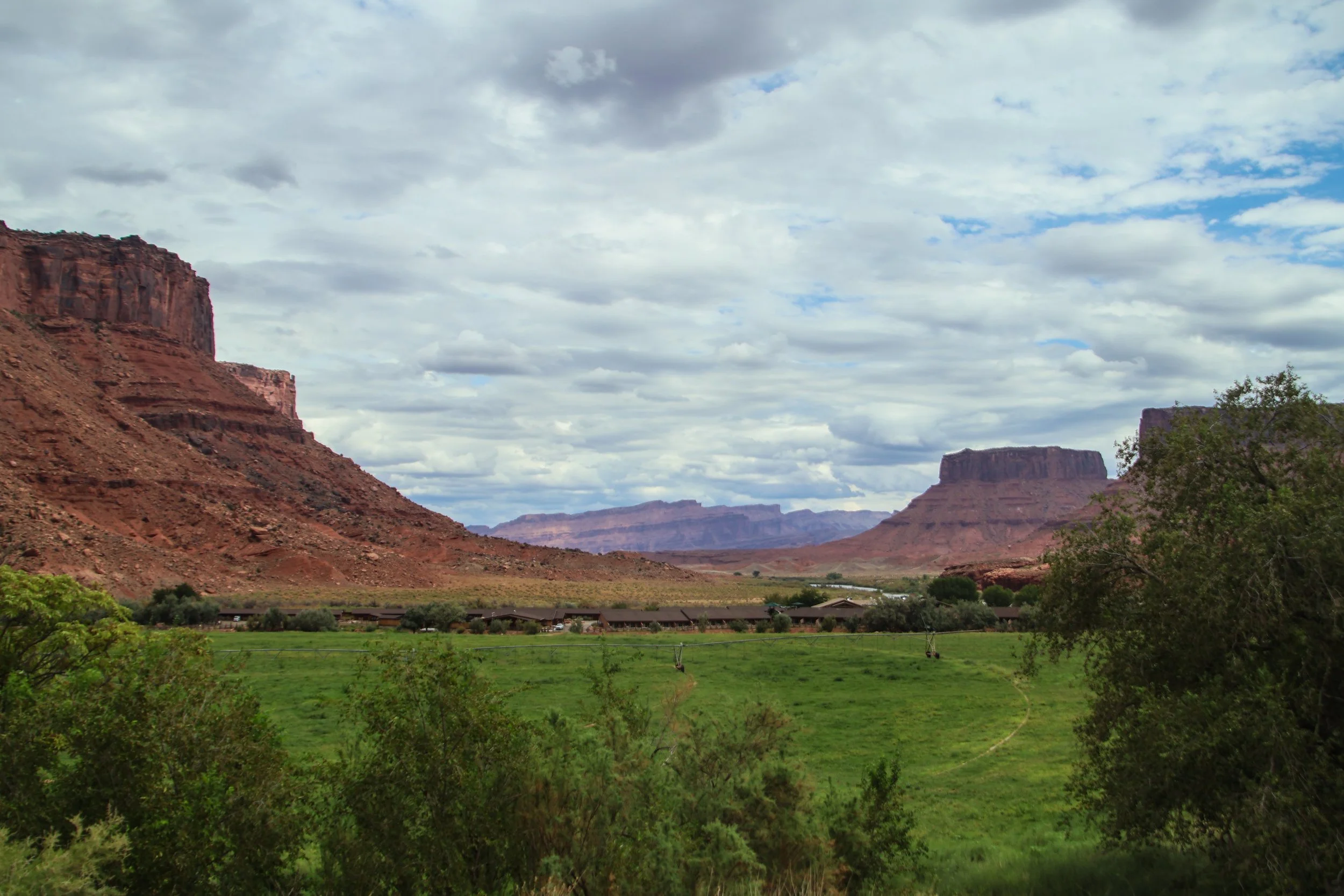
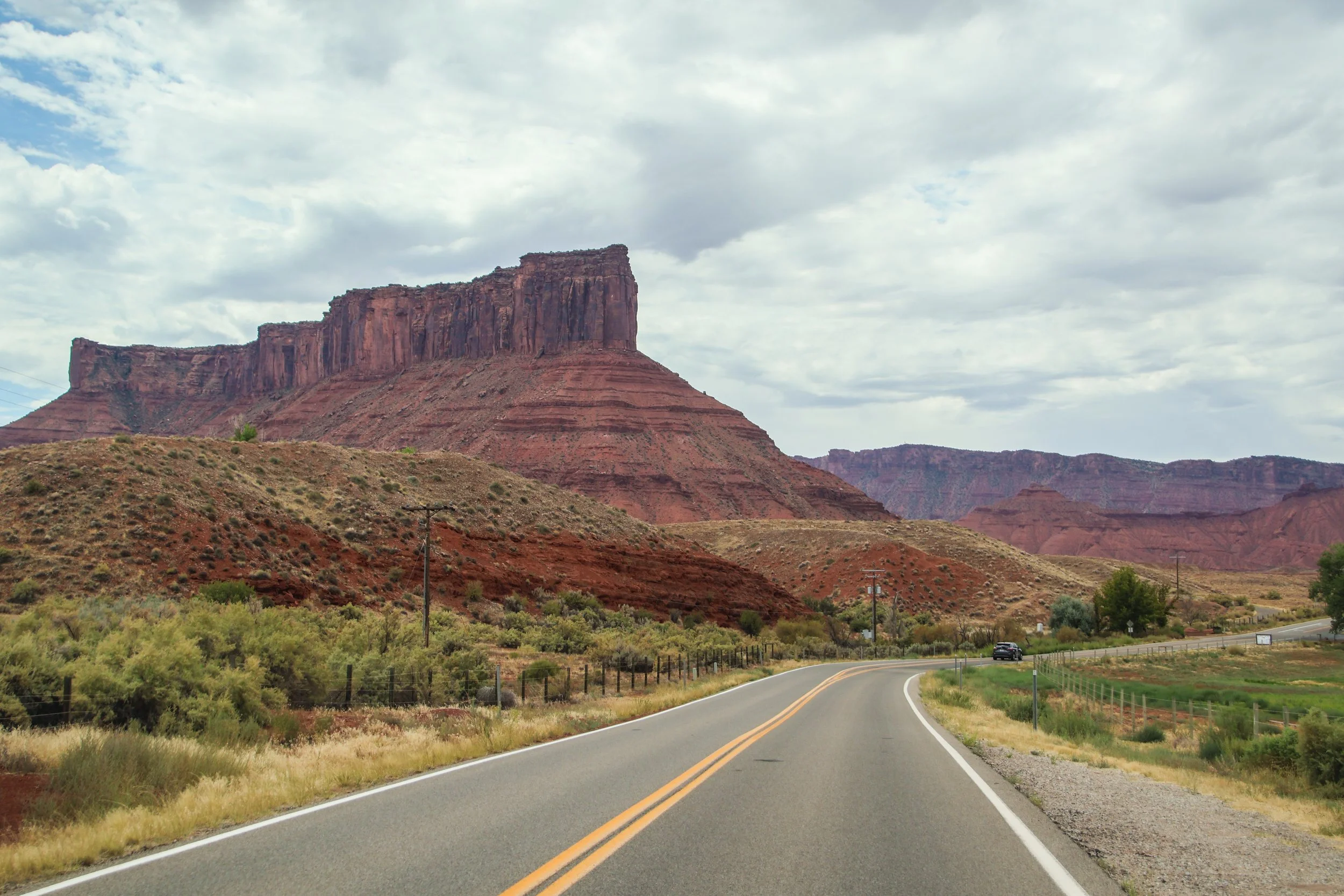
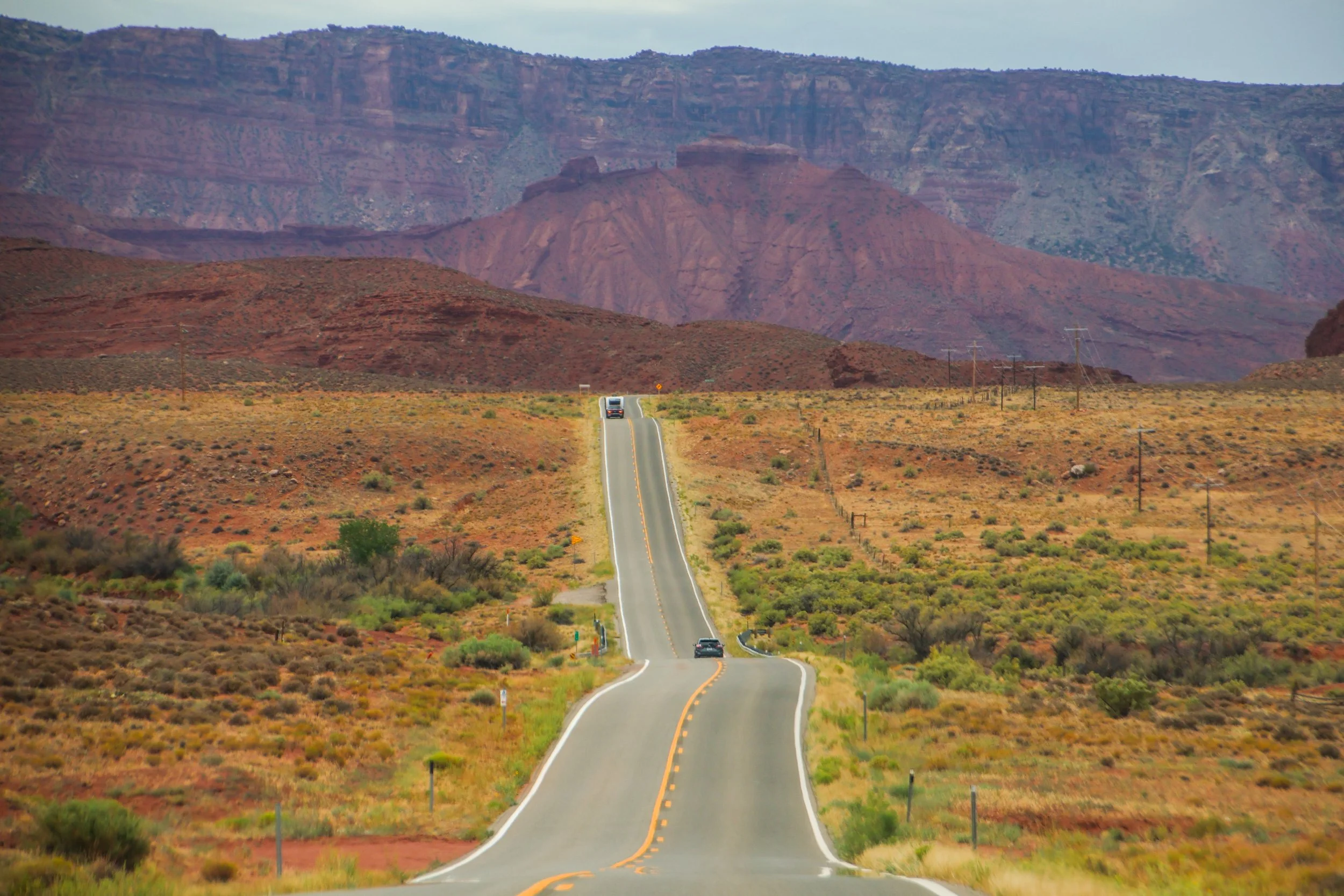
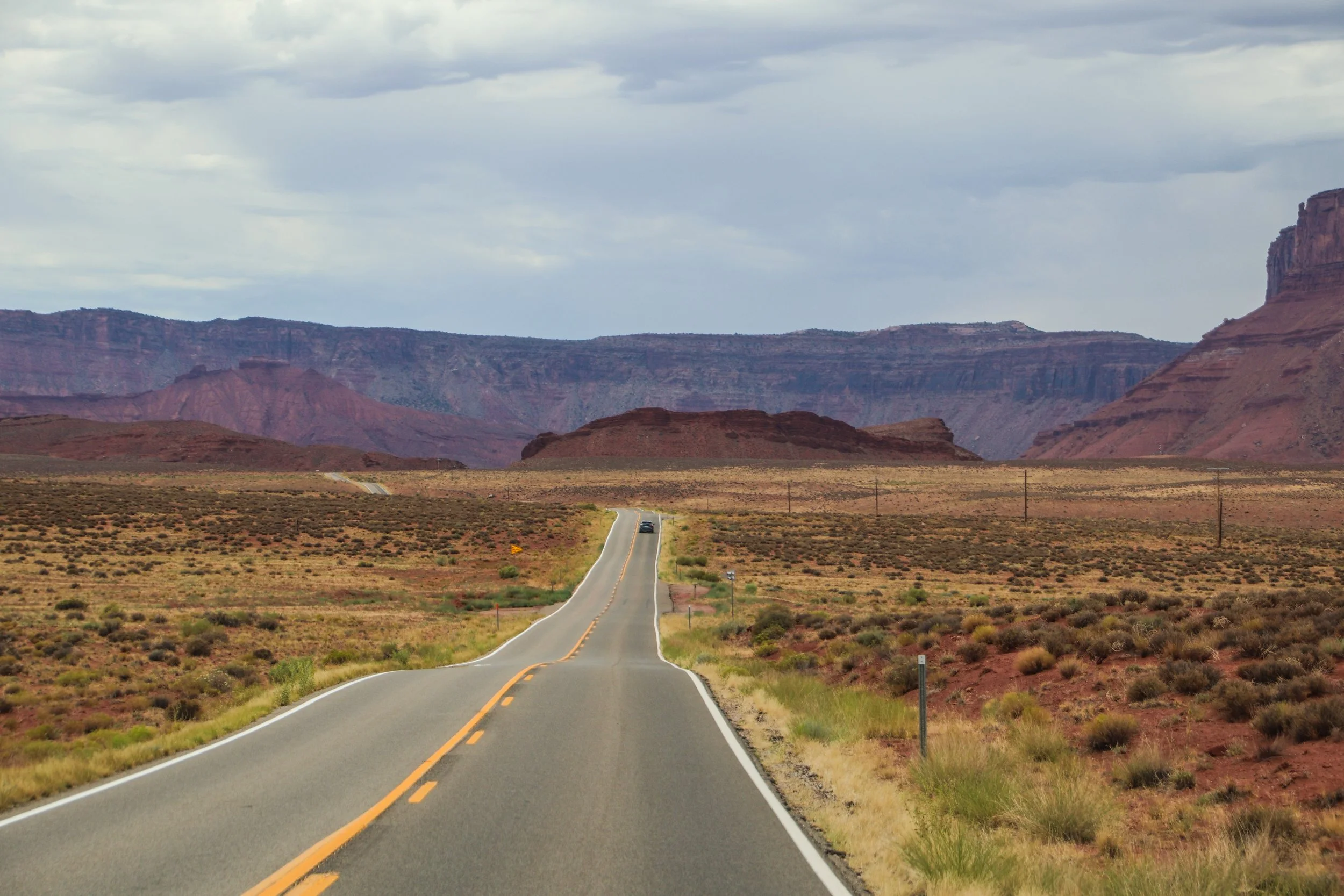
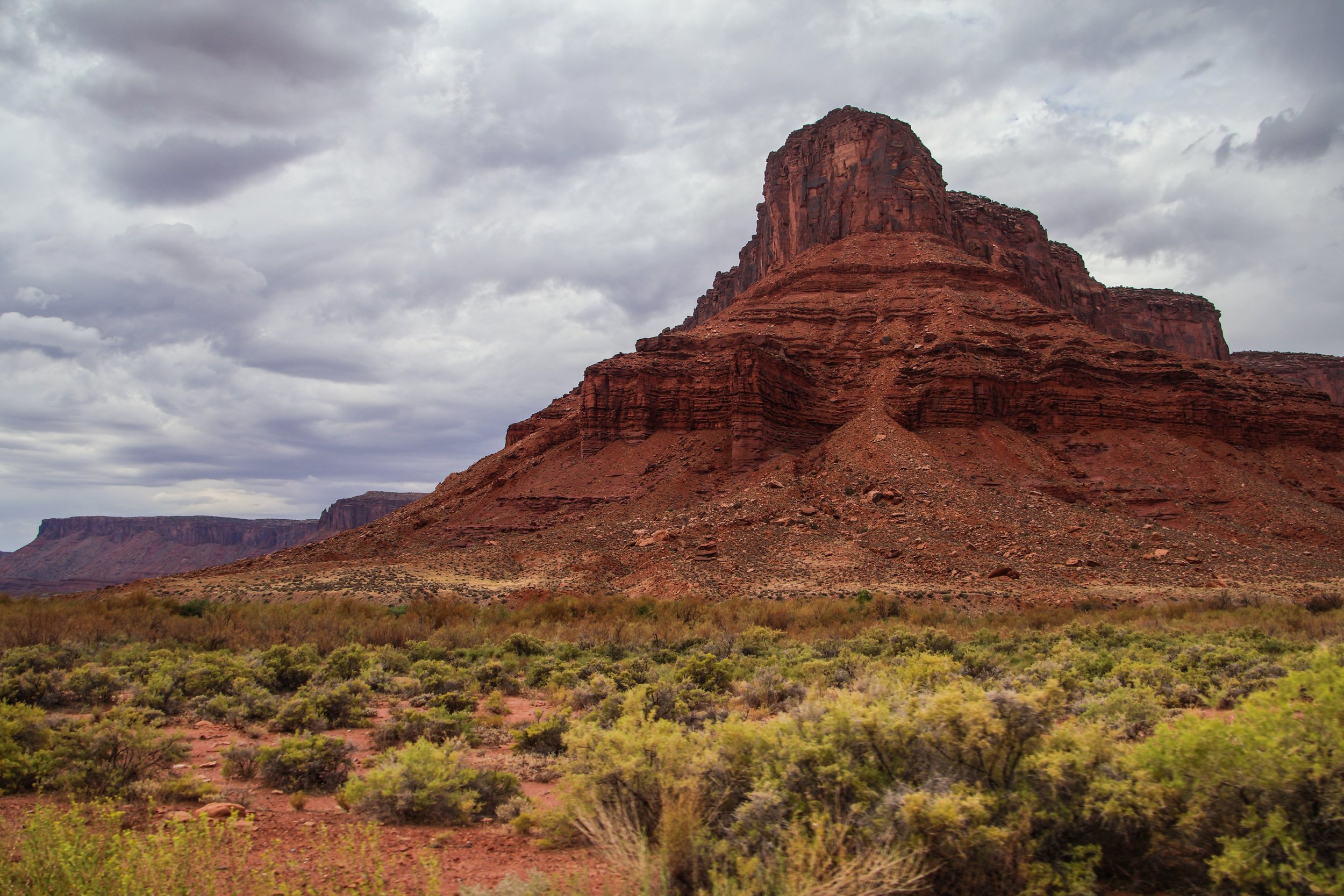
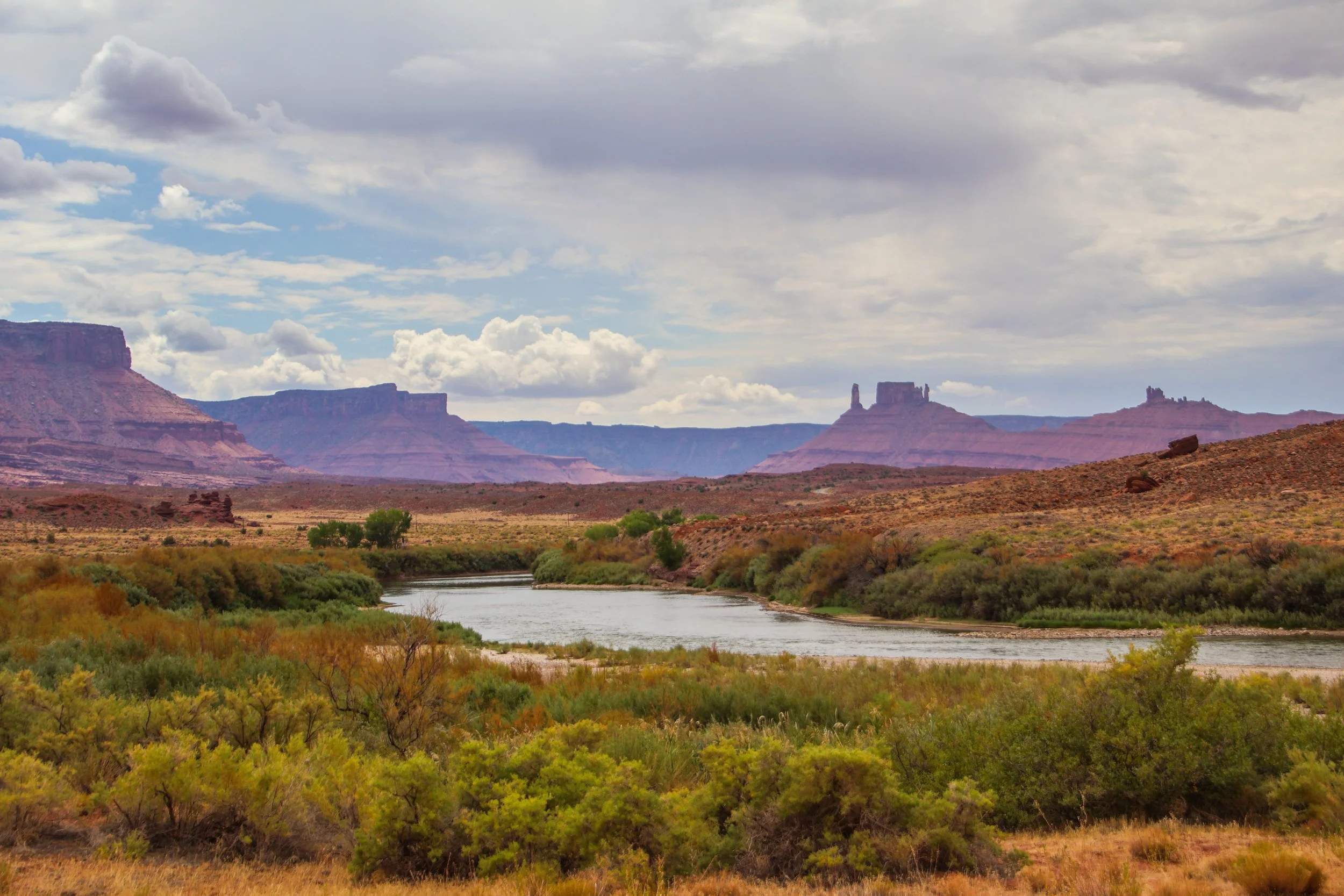
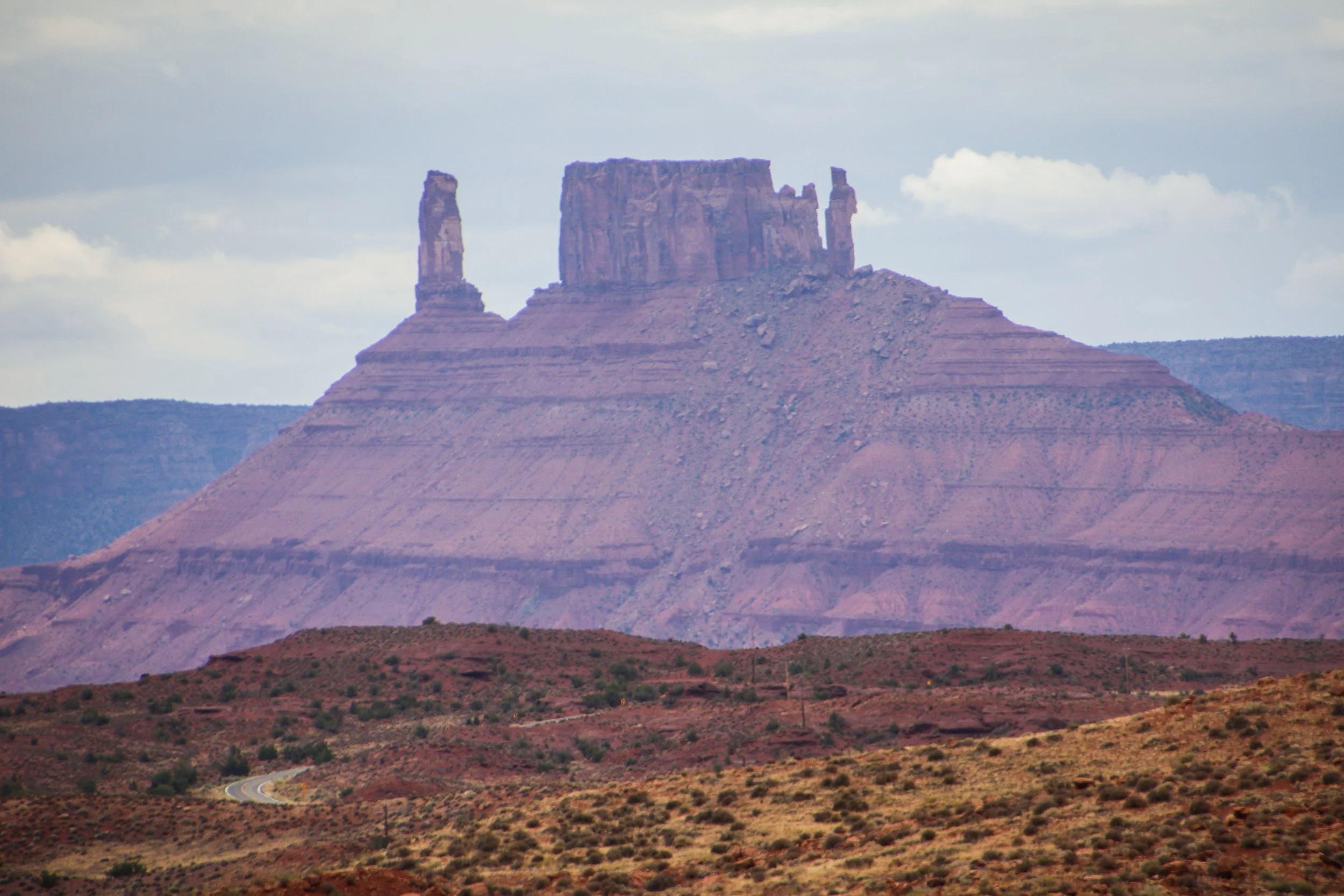
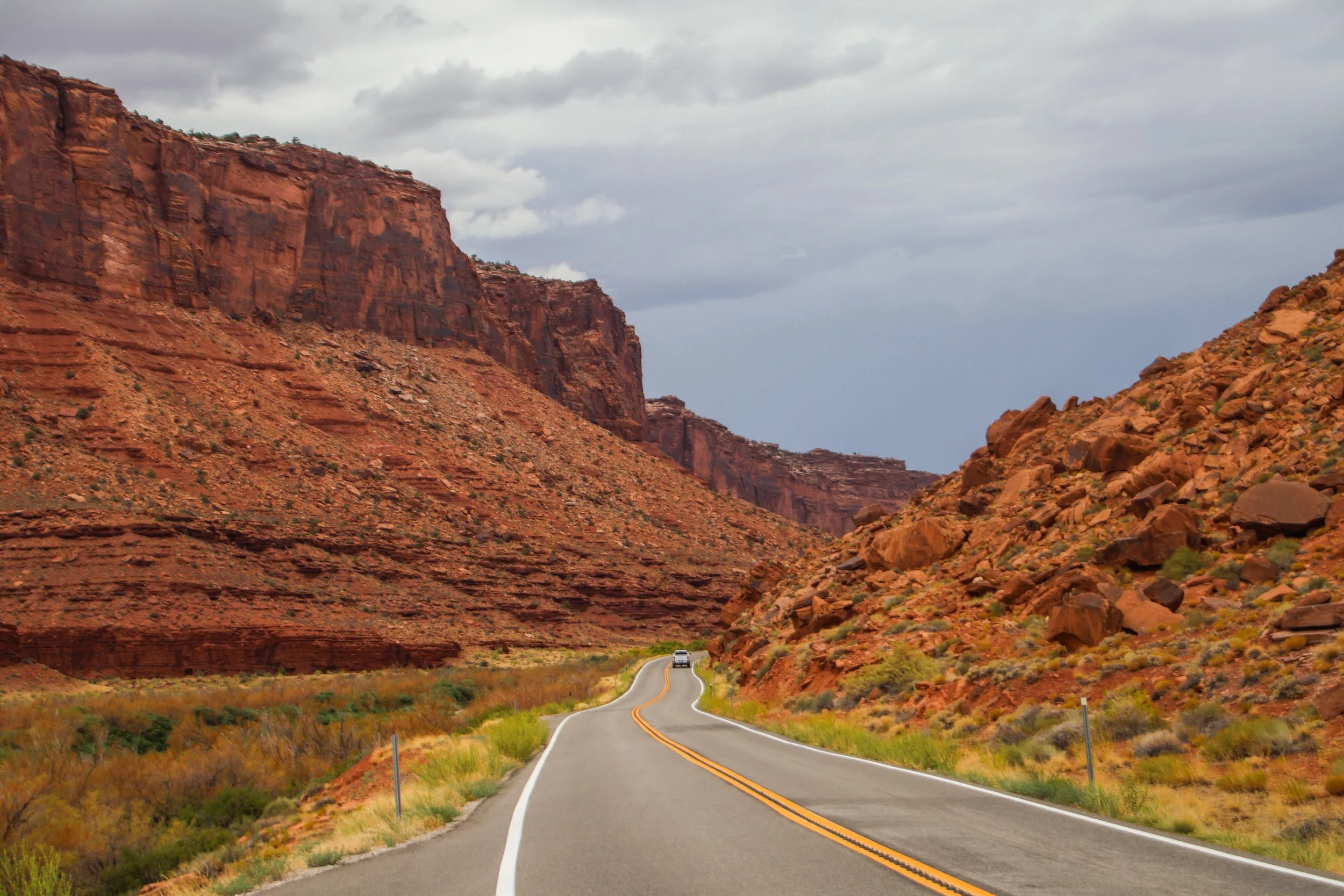
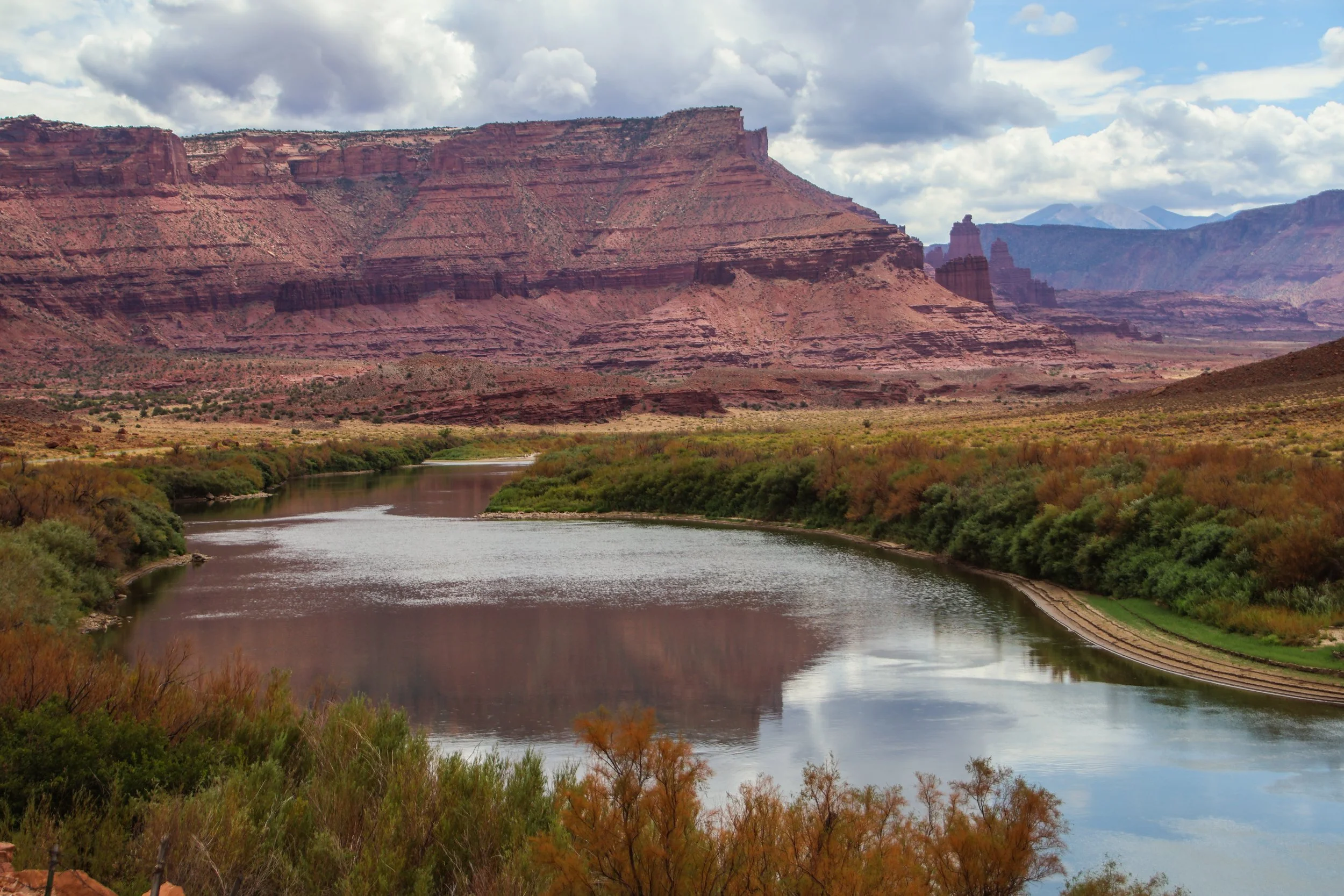
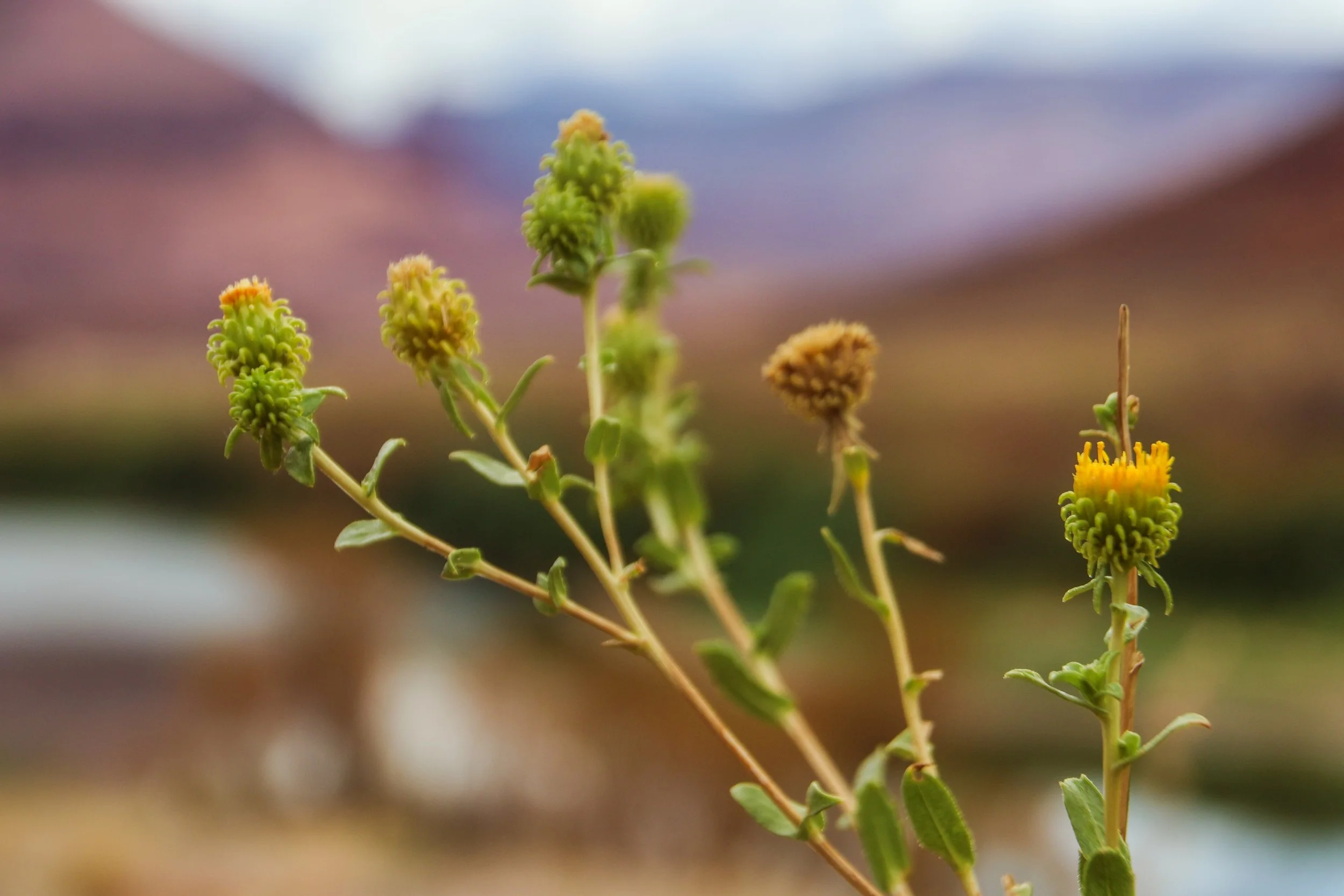
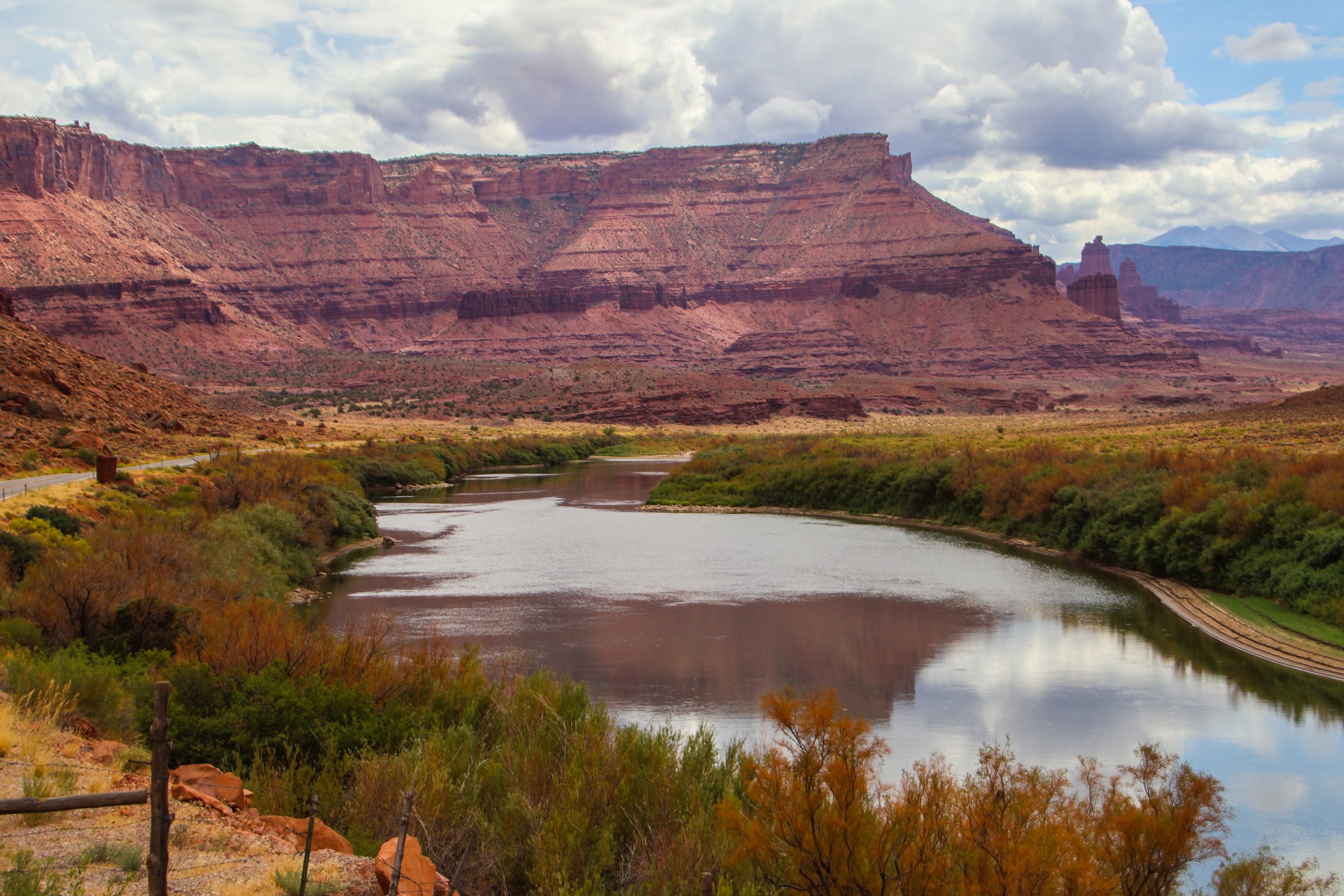
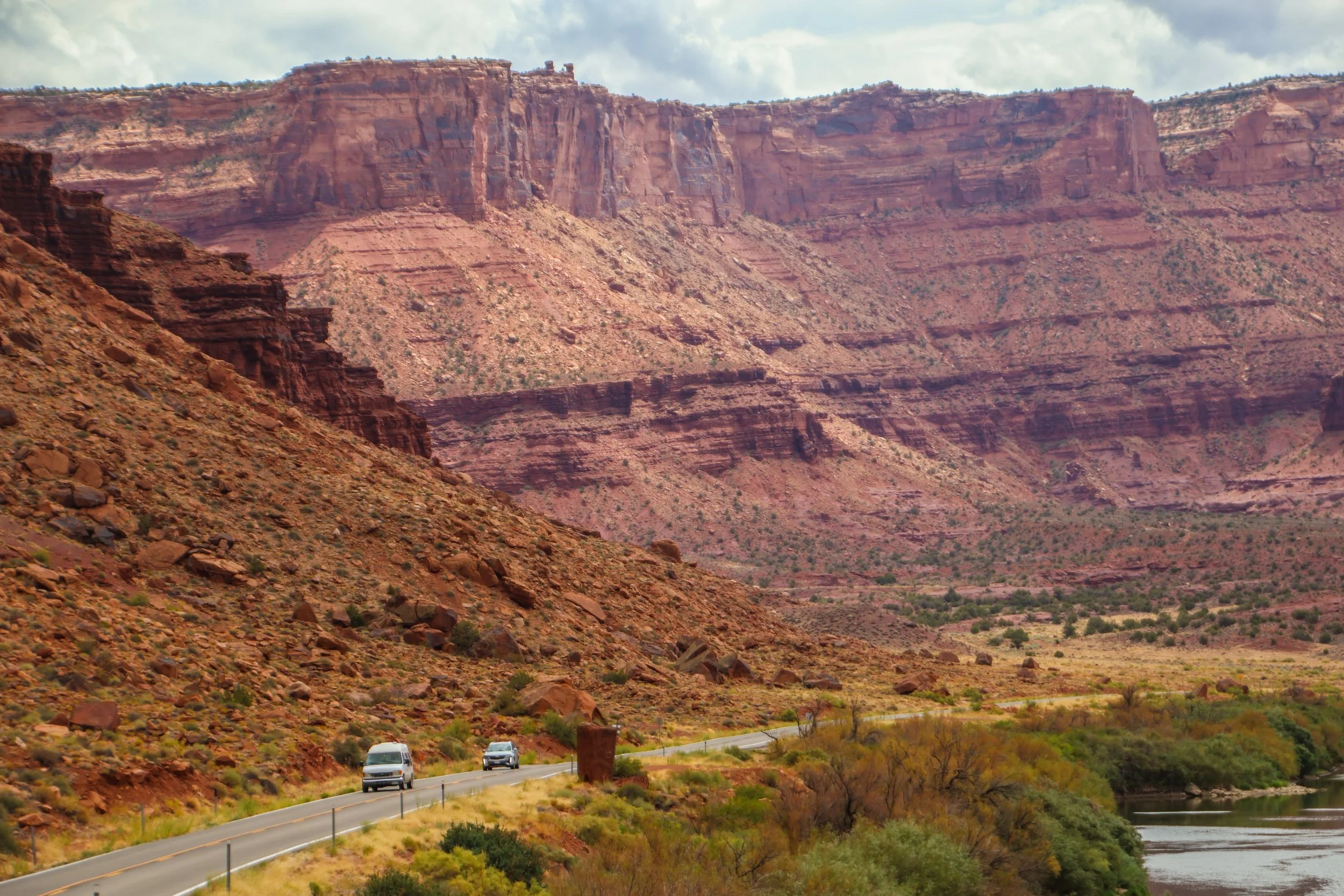
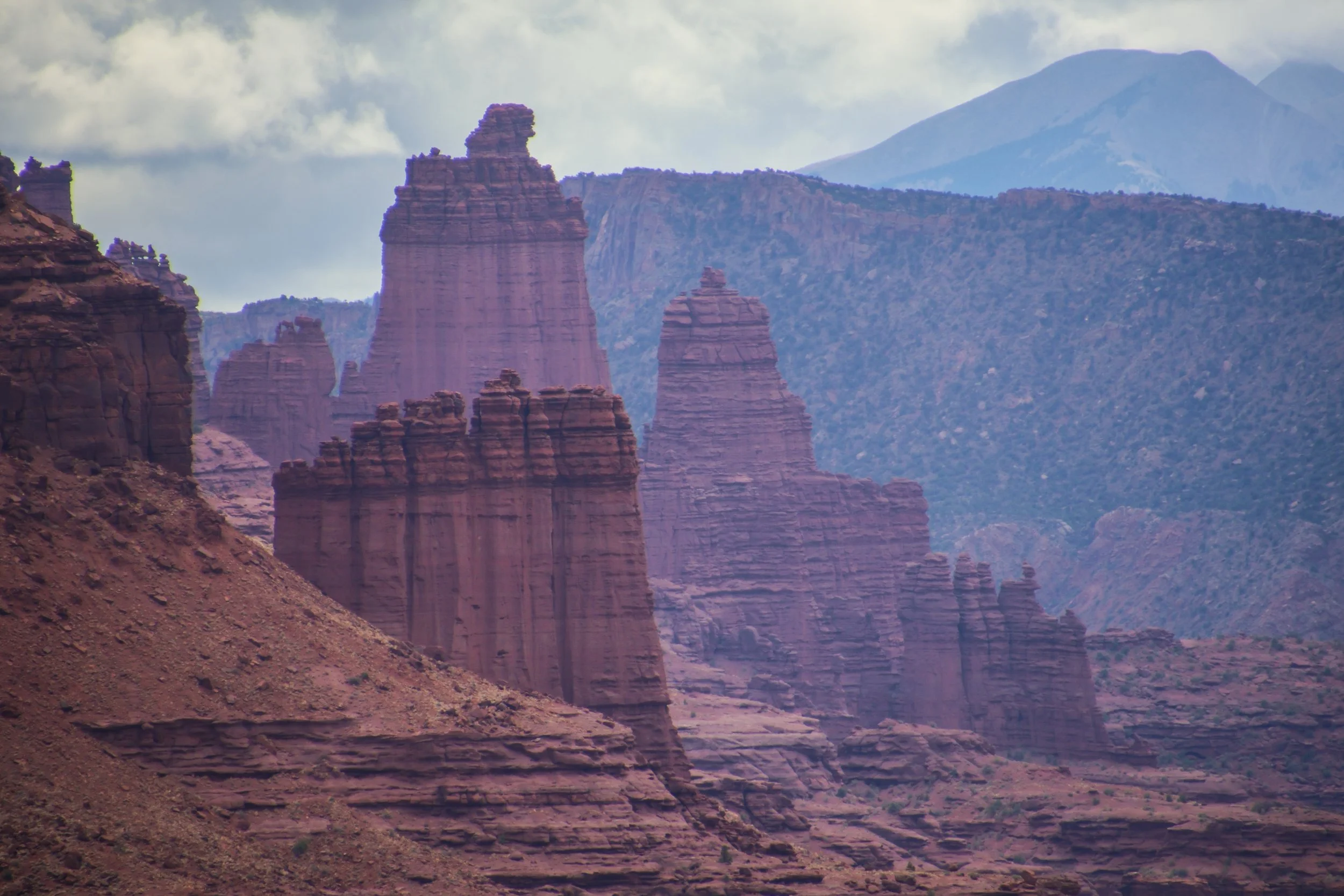
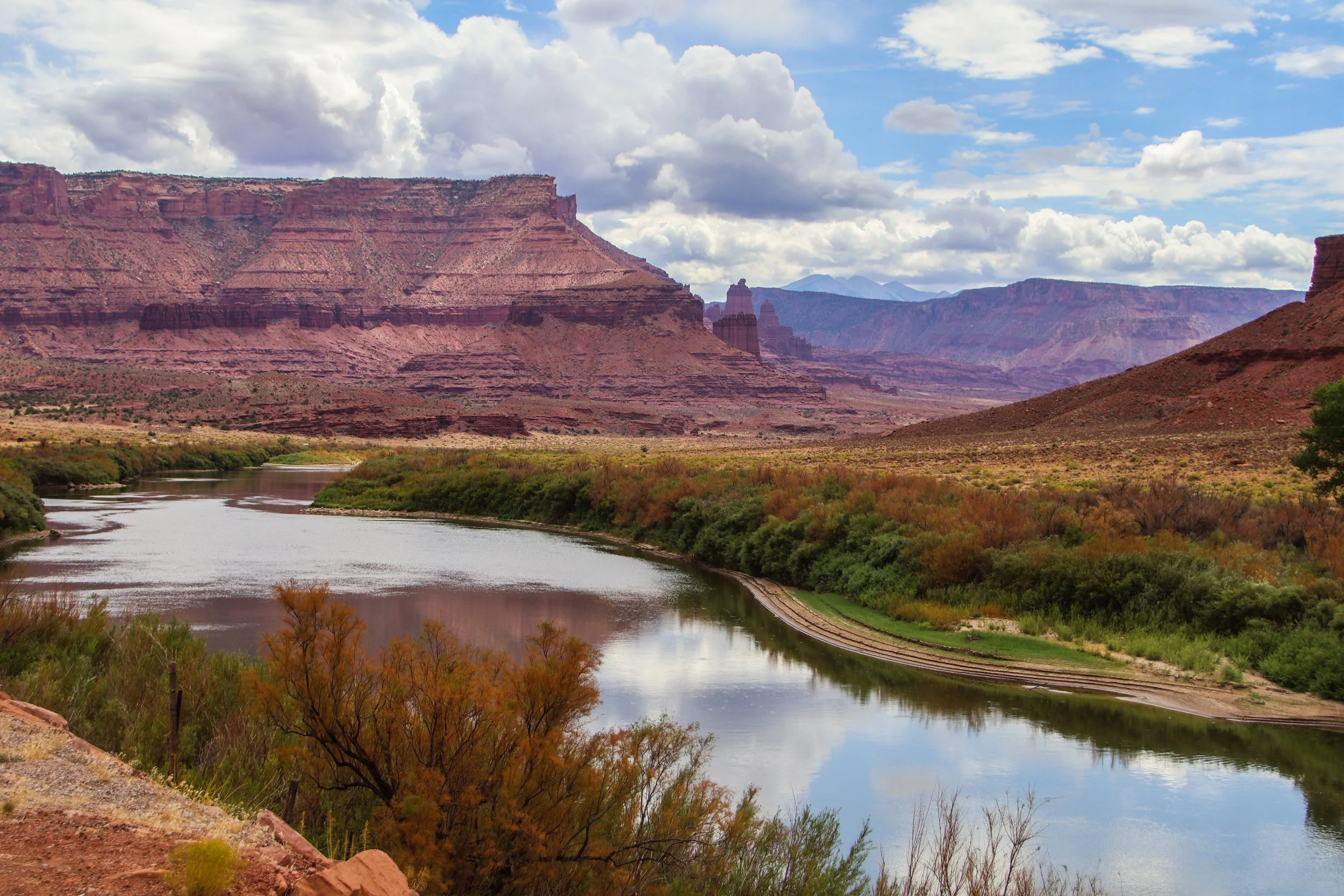
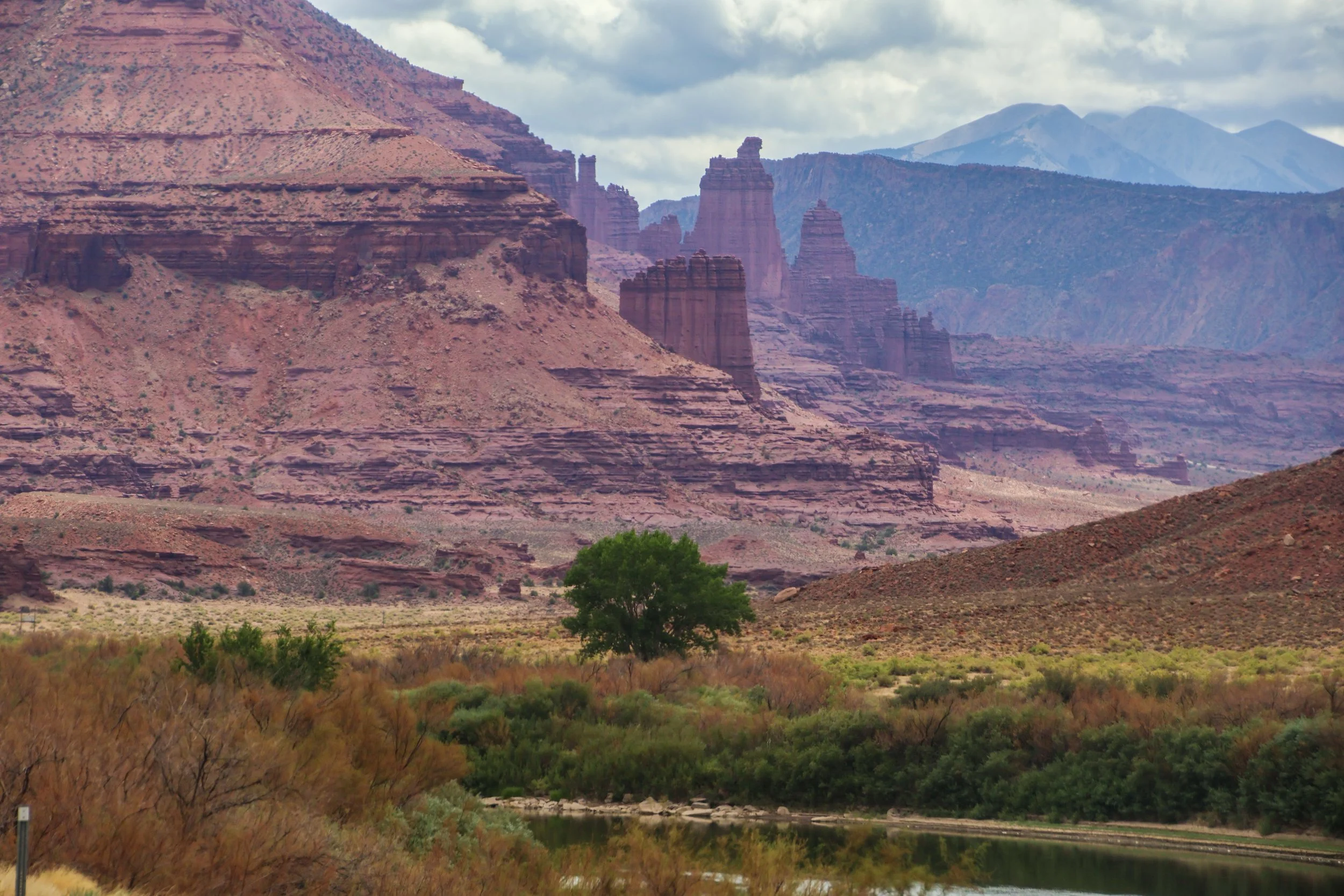
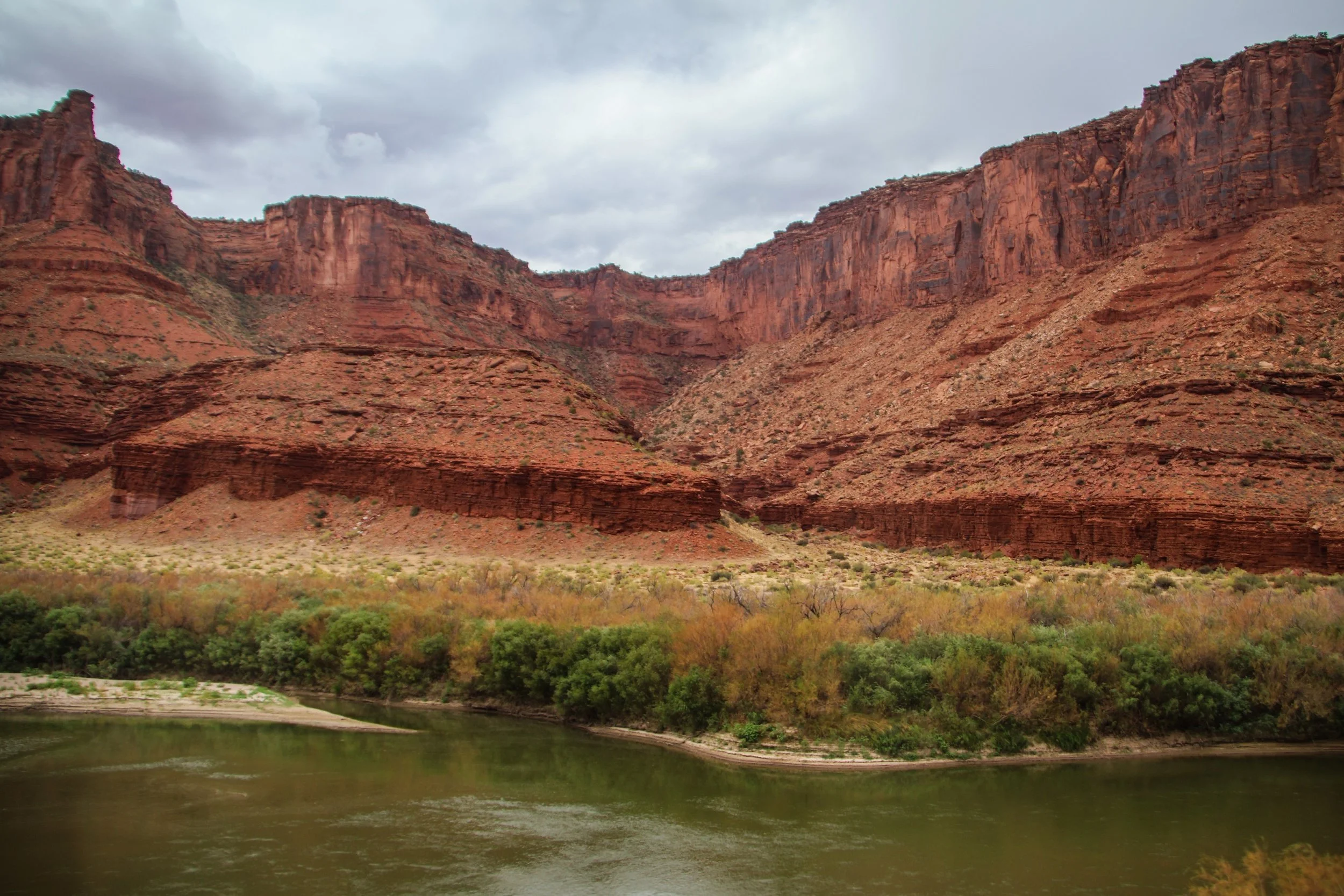
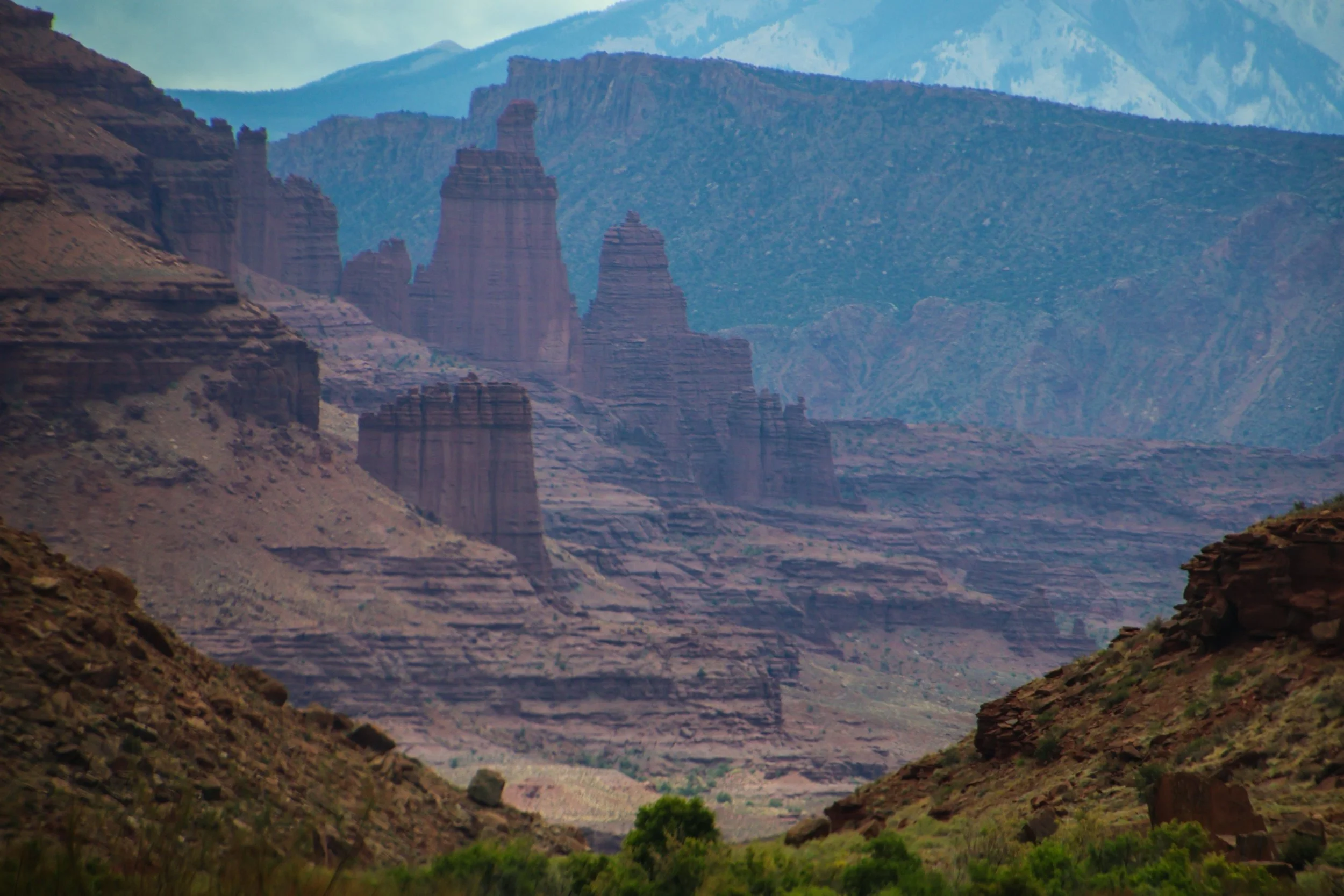
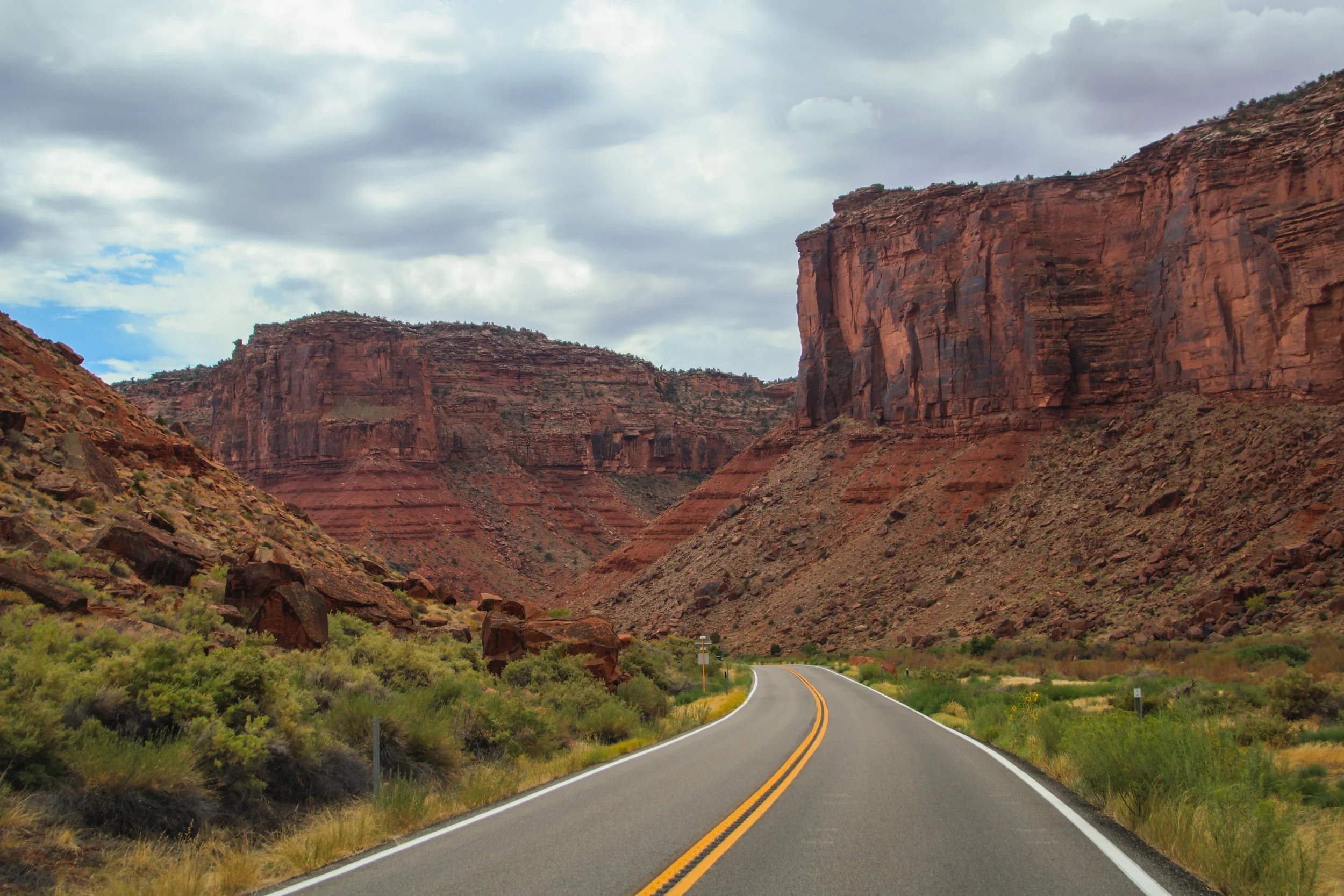
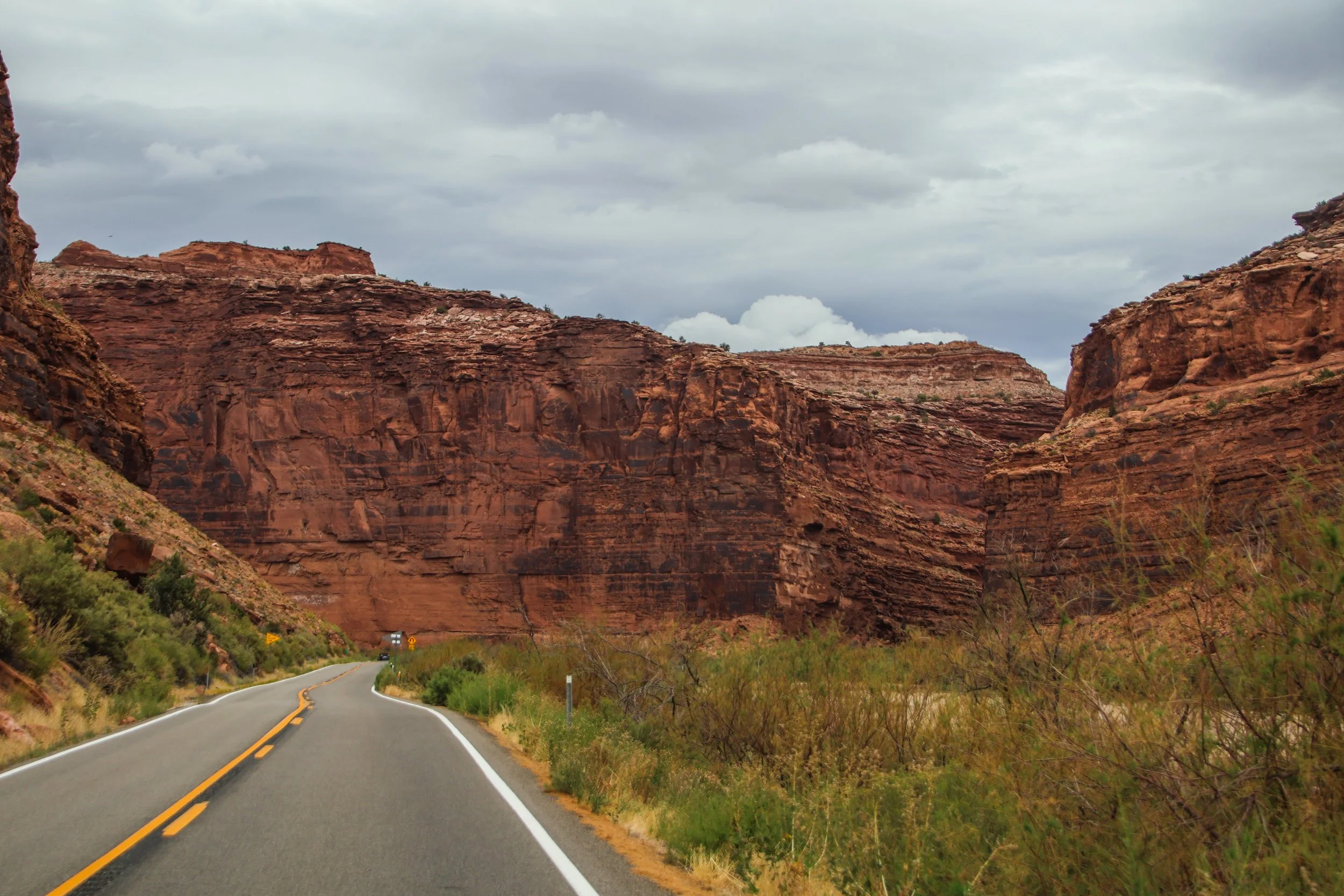
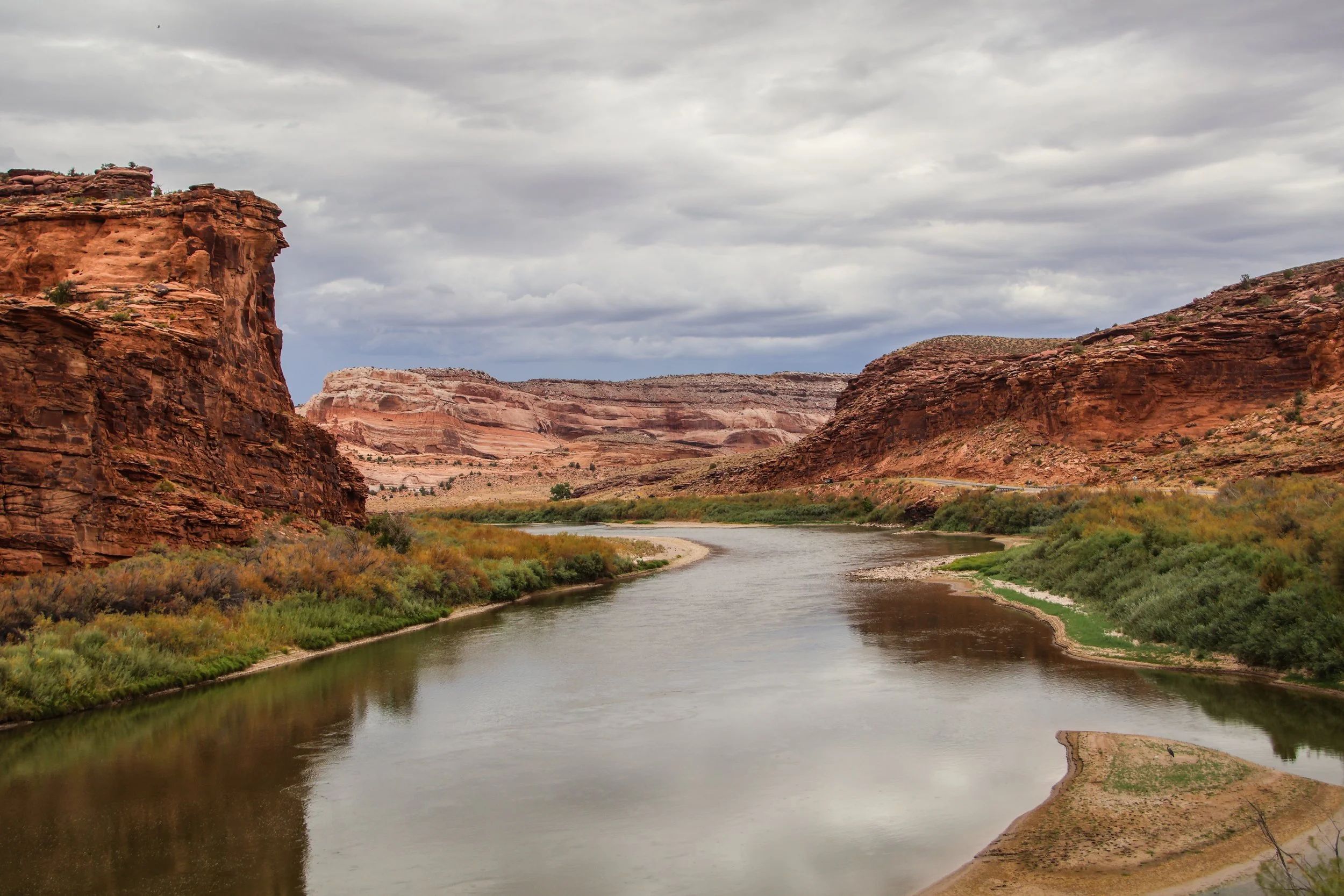
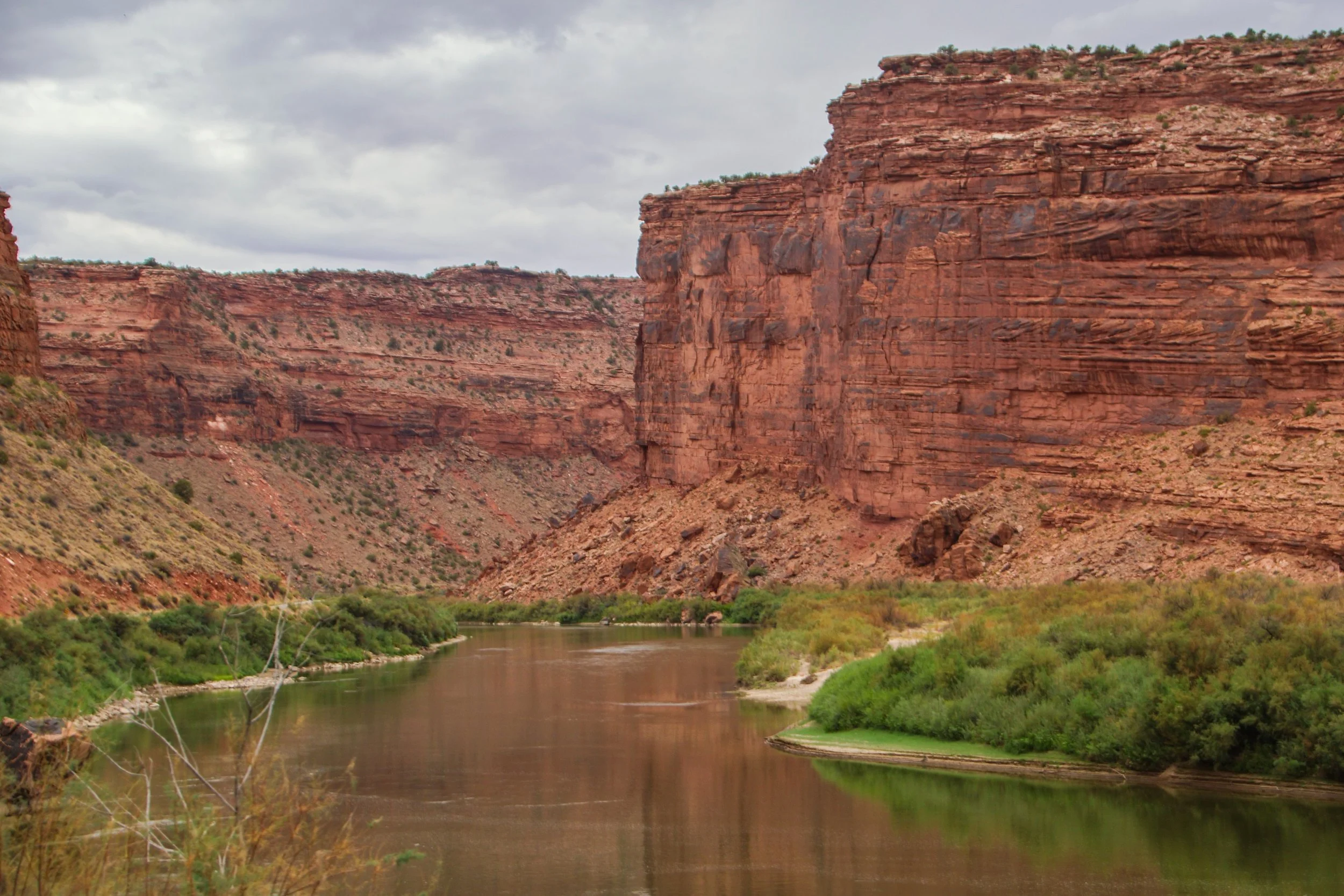
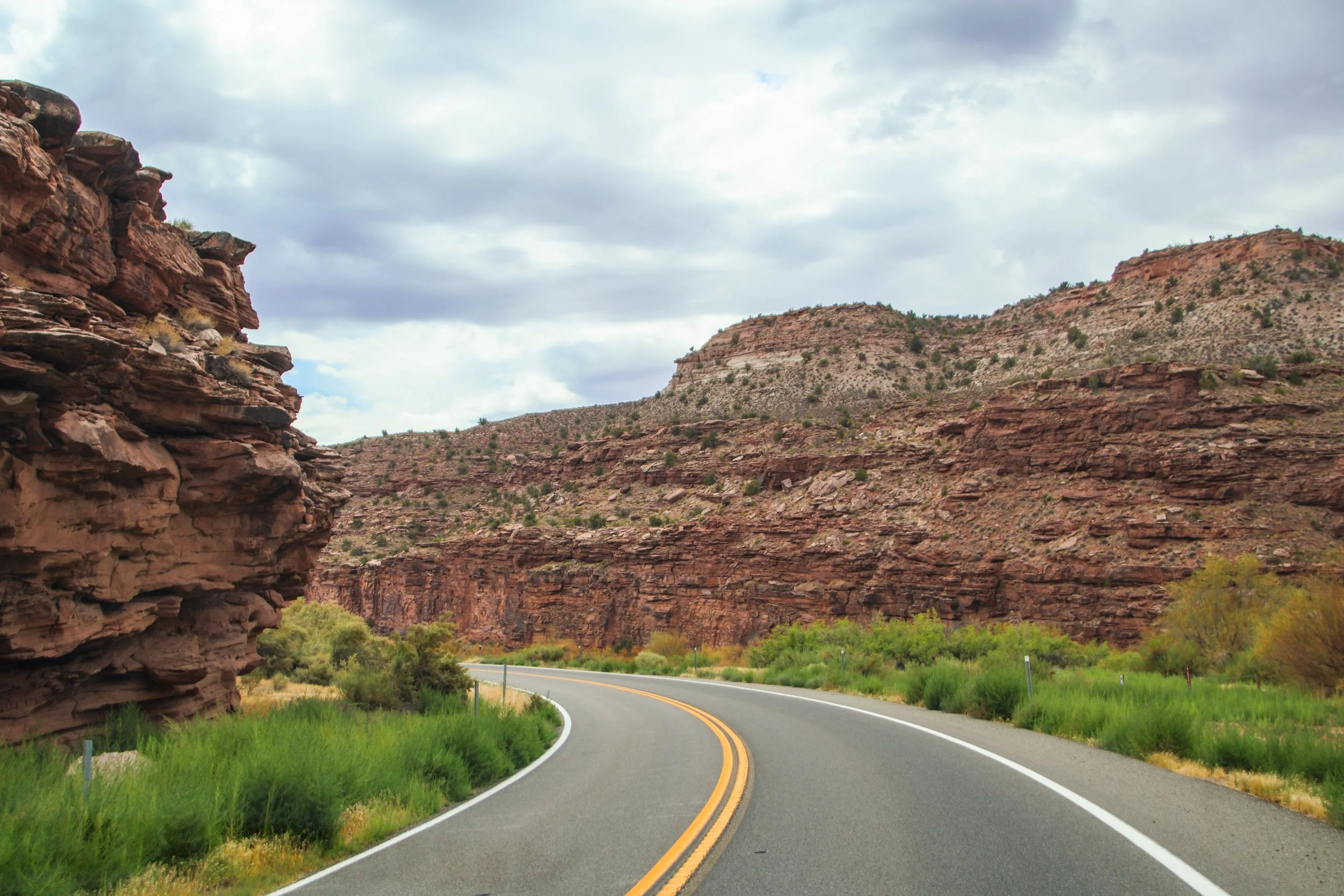
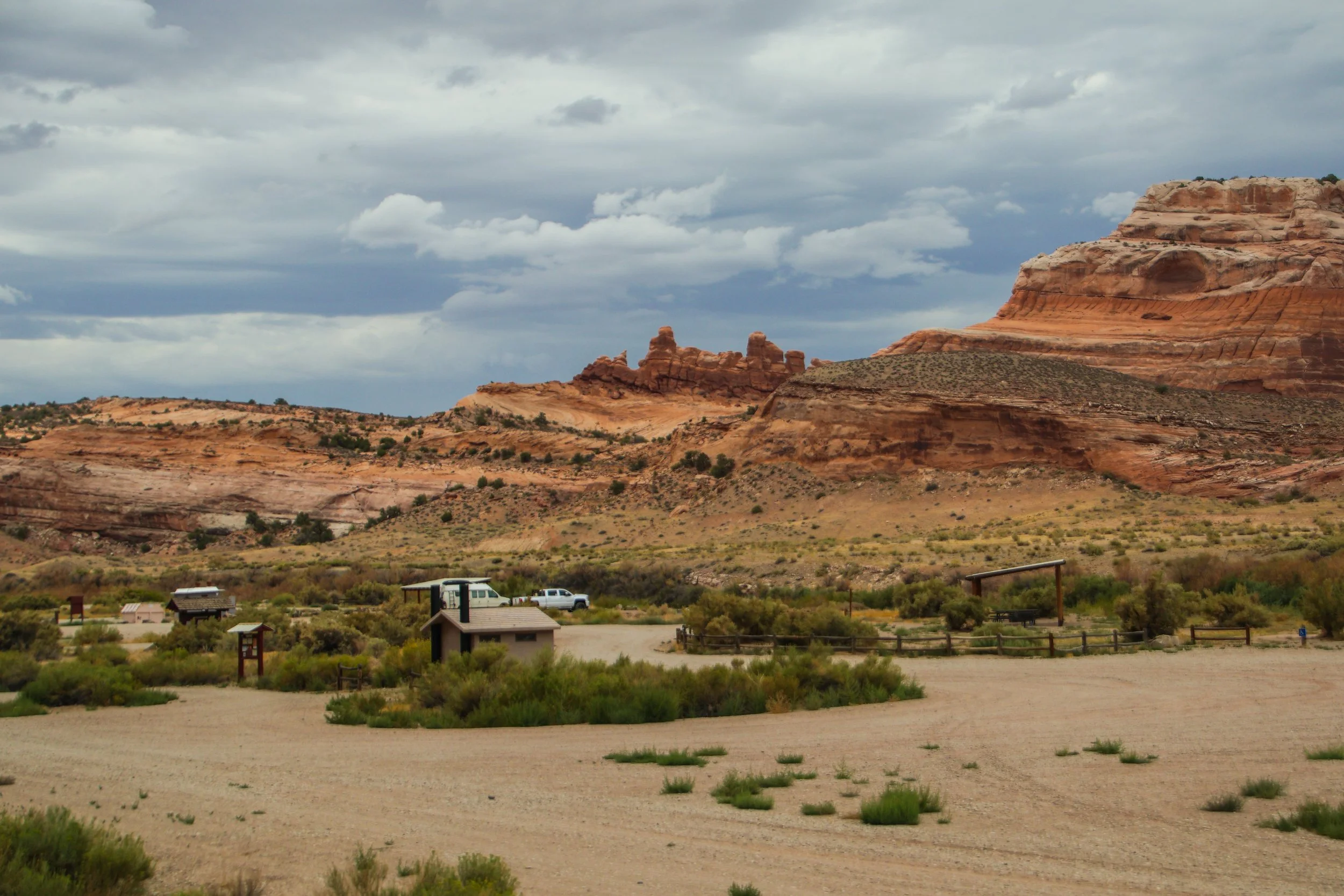
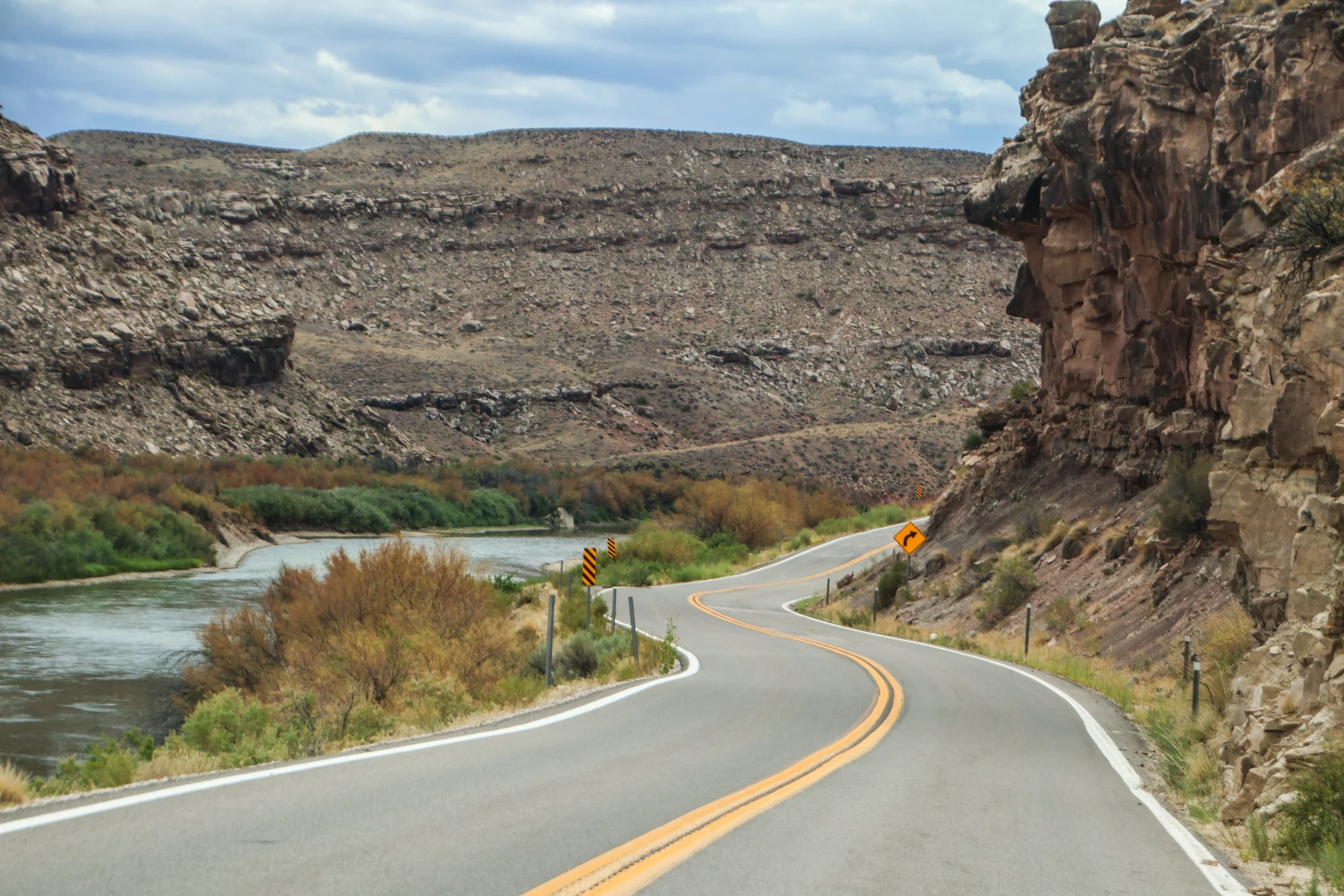
At the end of this drive, the walls of this canyon fall away quite abruptly, and suddenly you’ll find yourself in Moab! This will be our base of operations for the next couple of articles, but it is also somewhat notable unto itself. So let’s spend a bit of time exploring this little town, shall we?
Moab, Utah: Original RED-ROCK Kitsch
WELCOME TO MOAB!
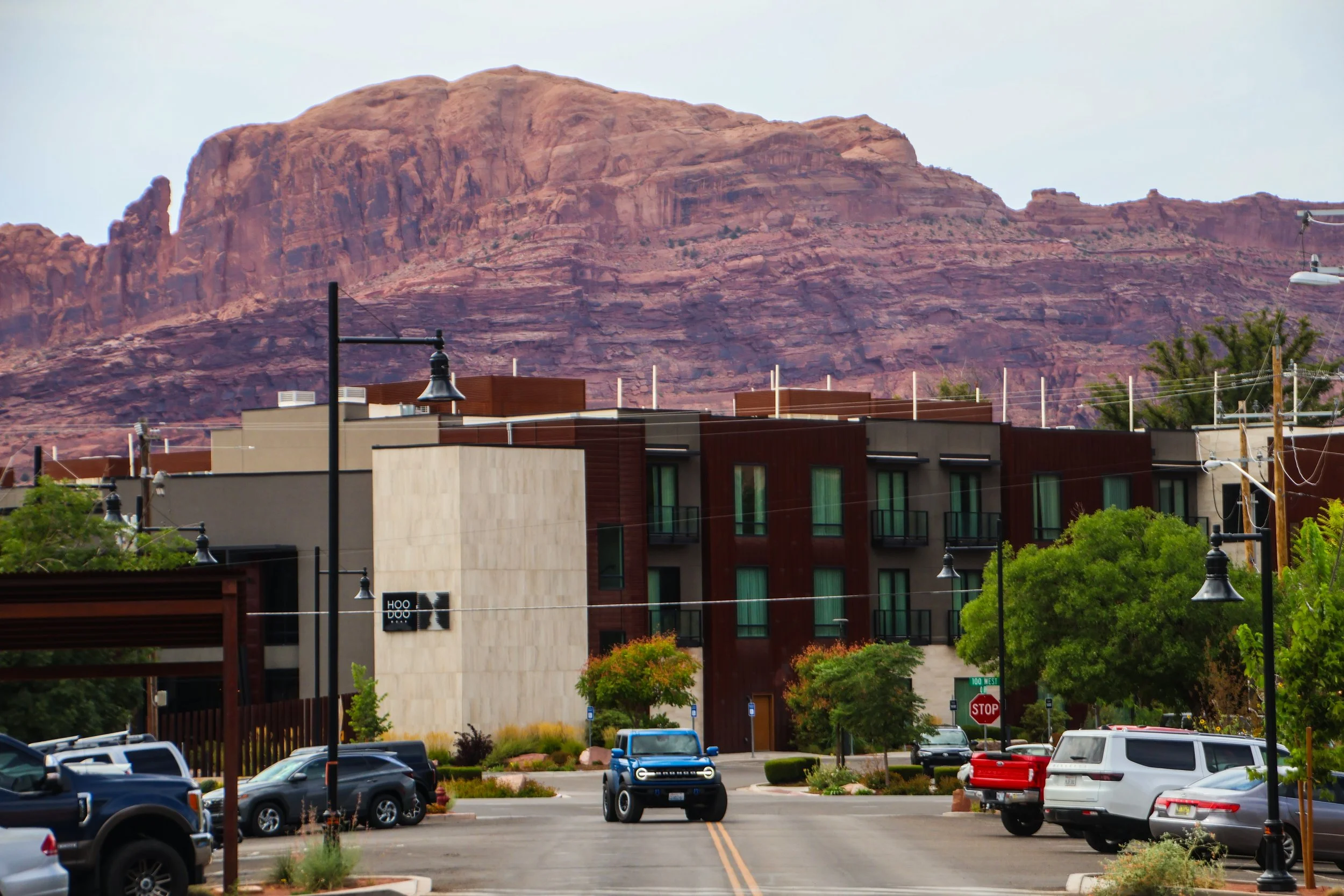
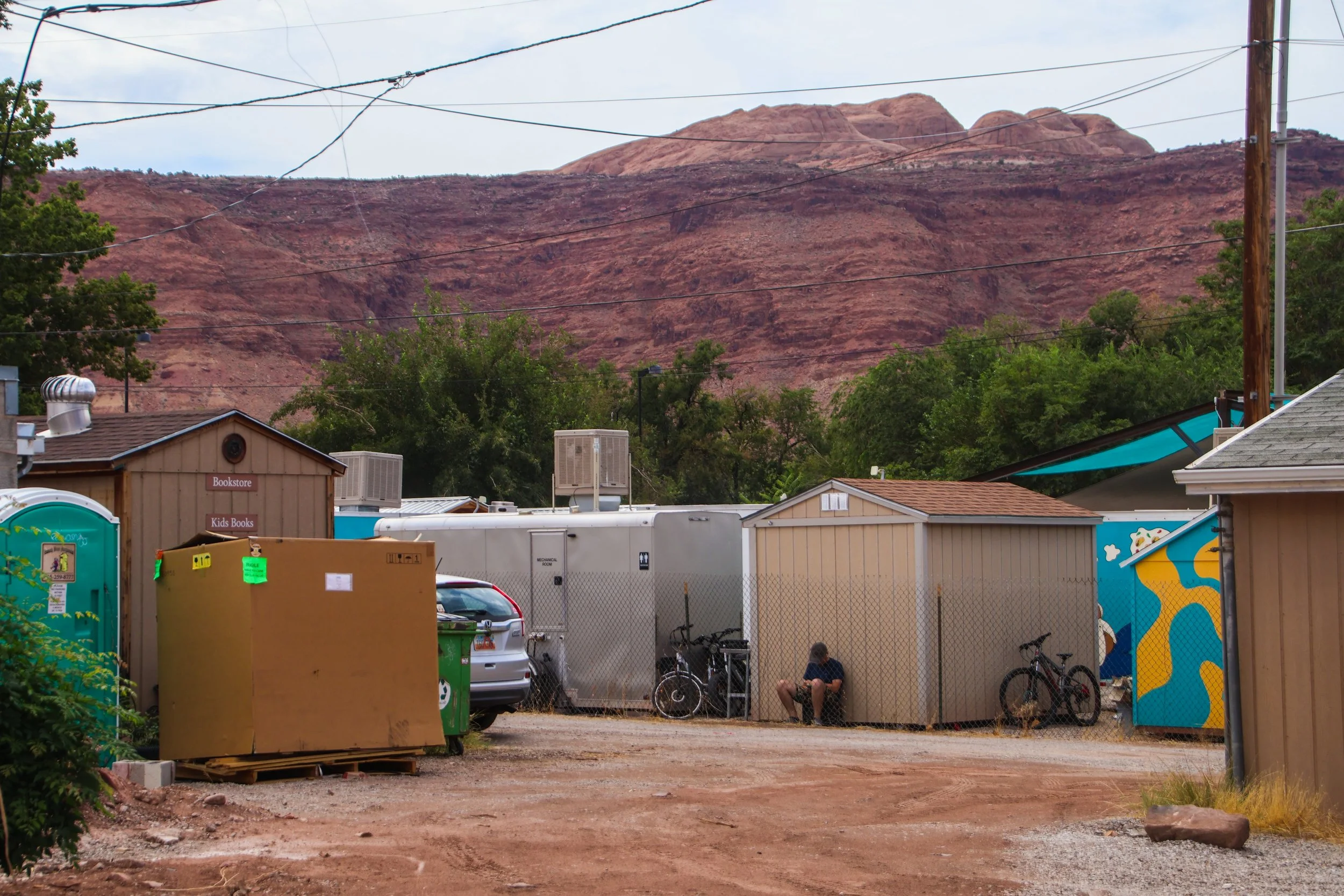
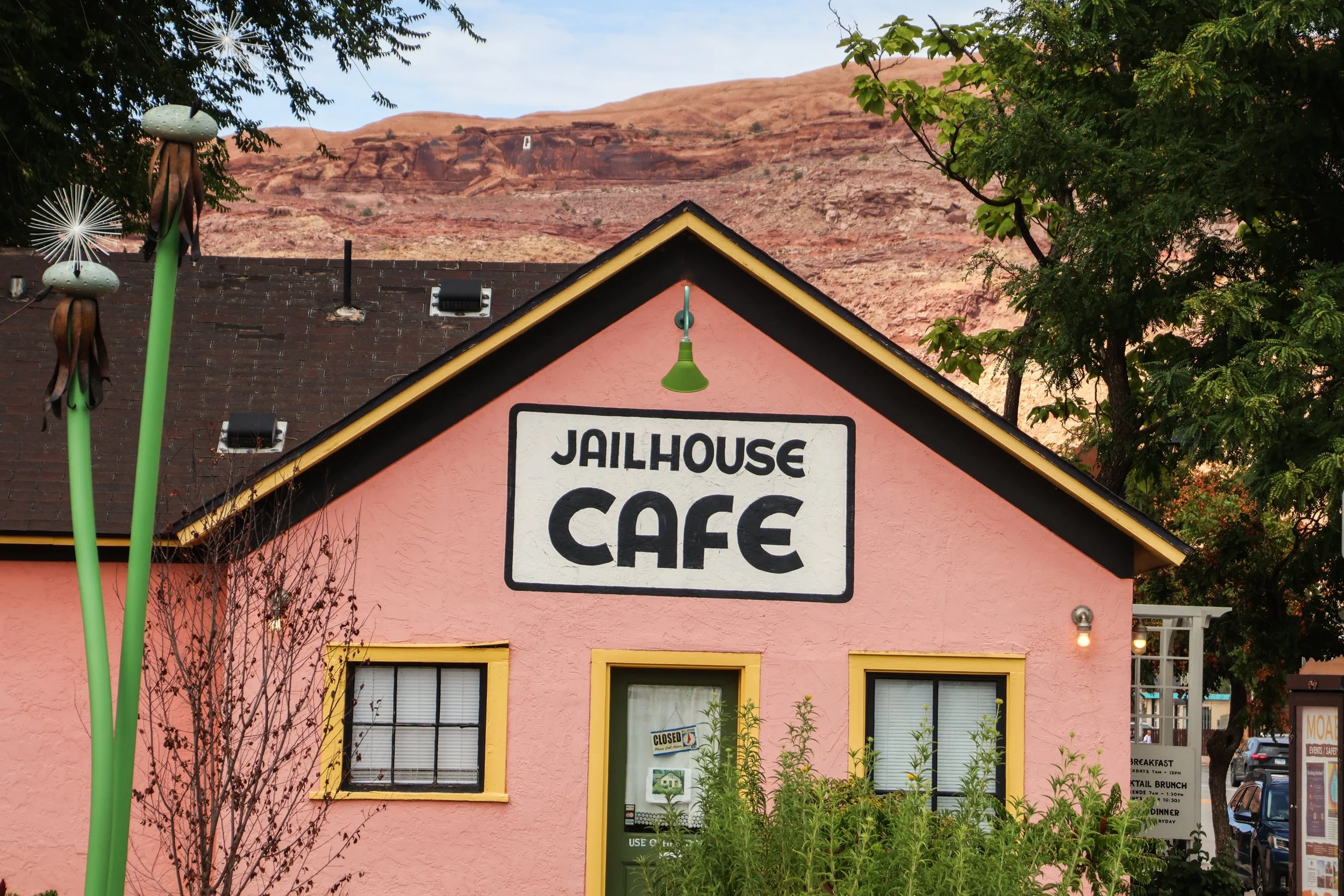
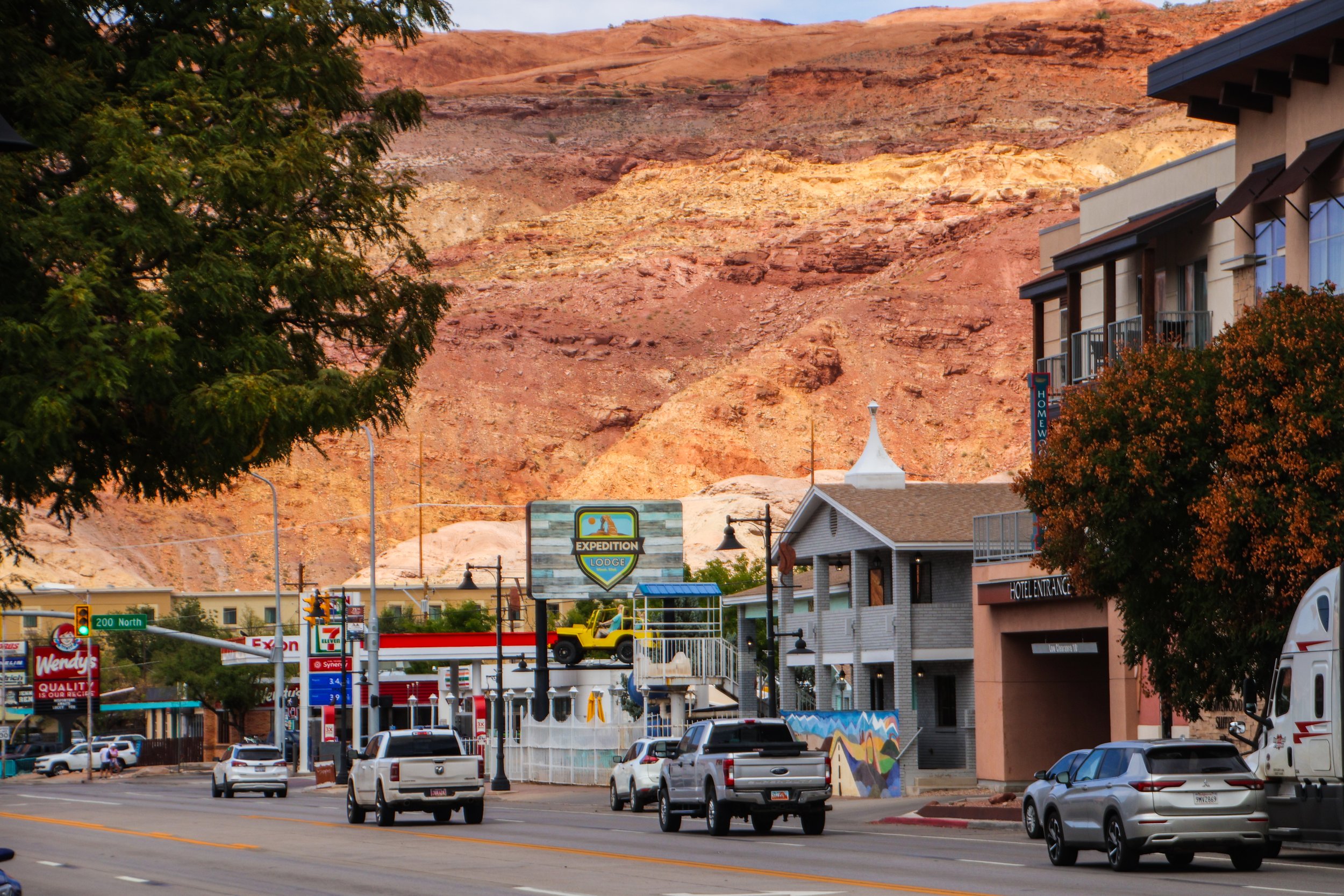
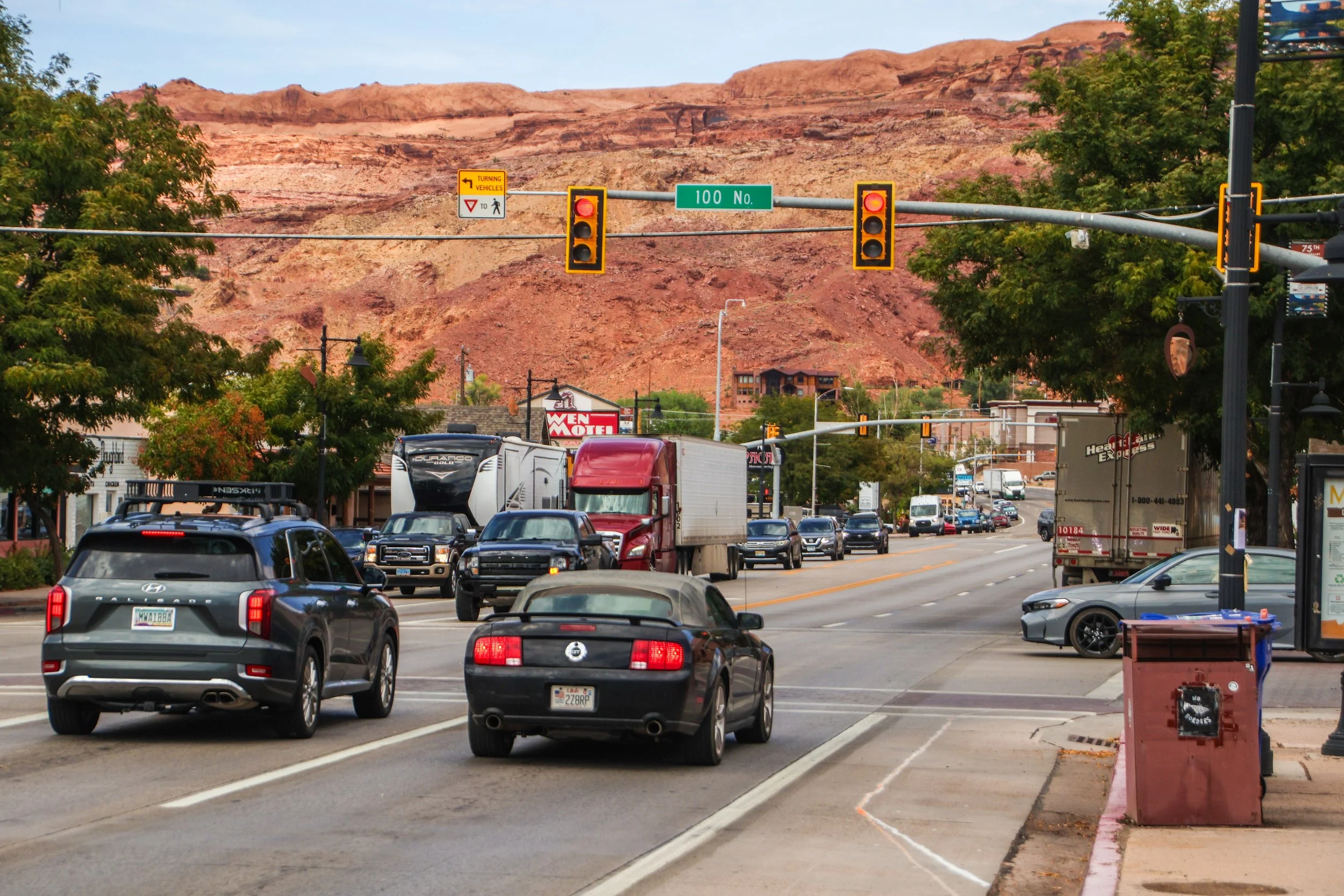
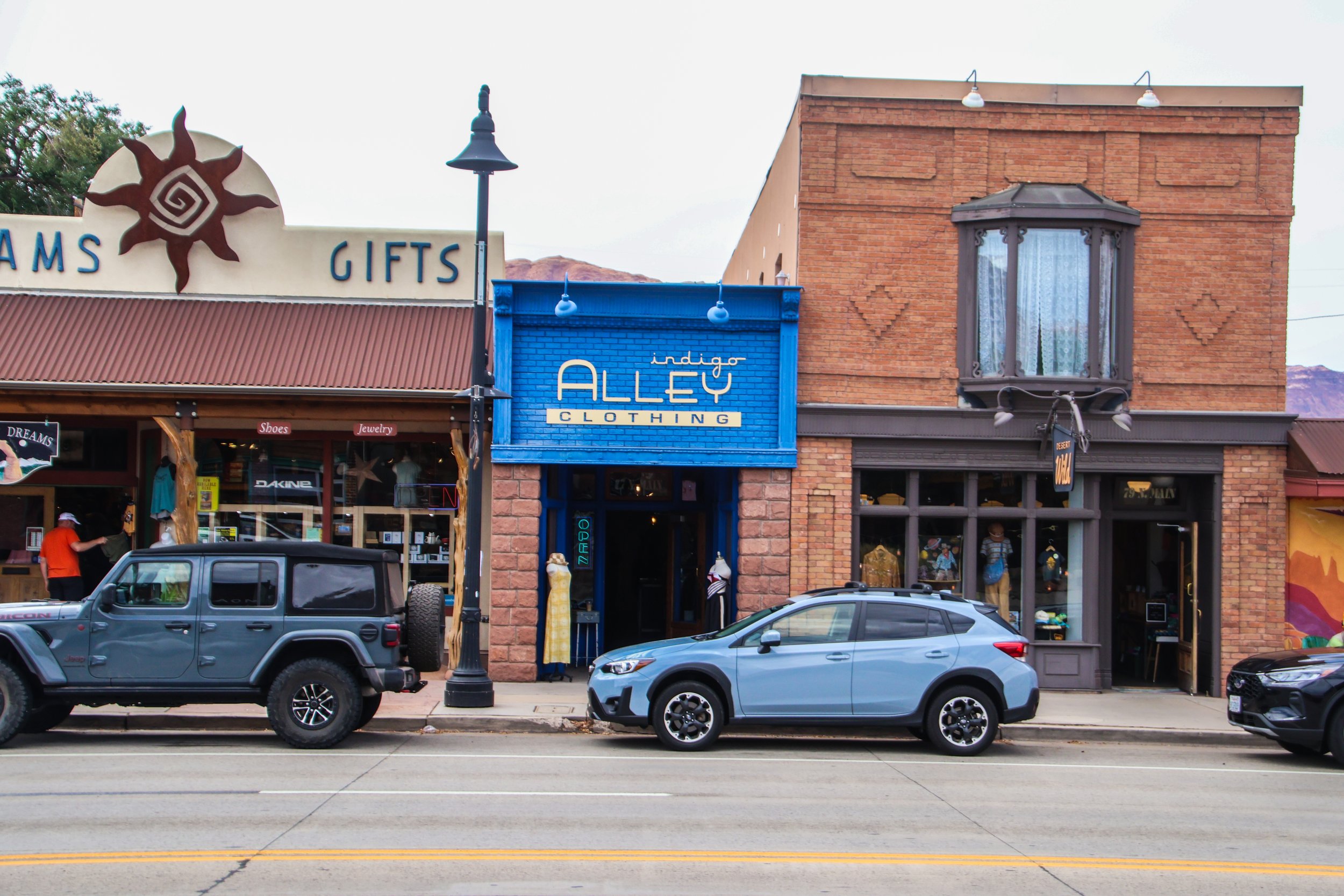
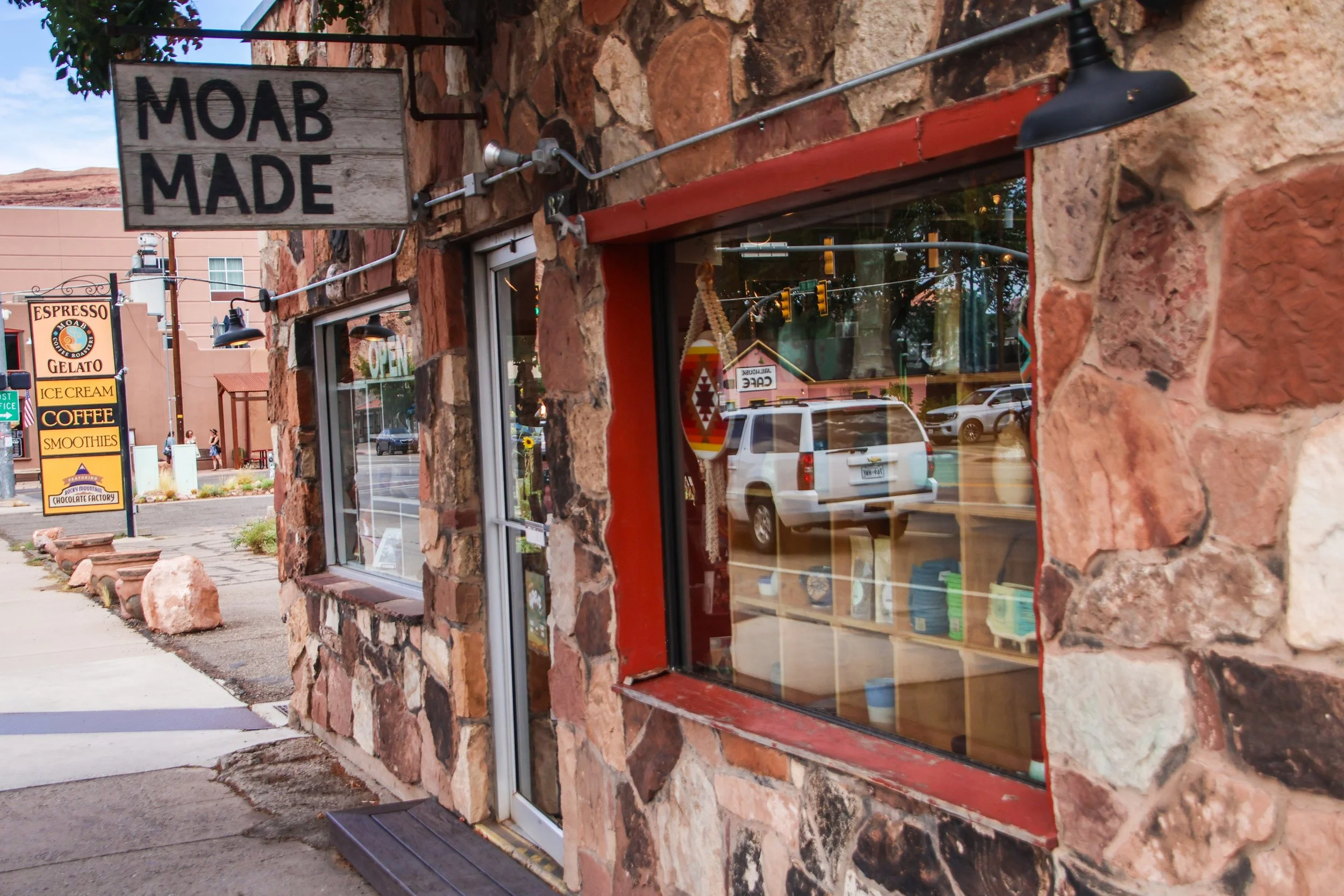
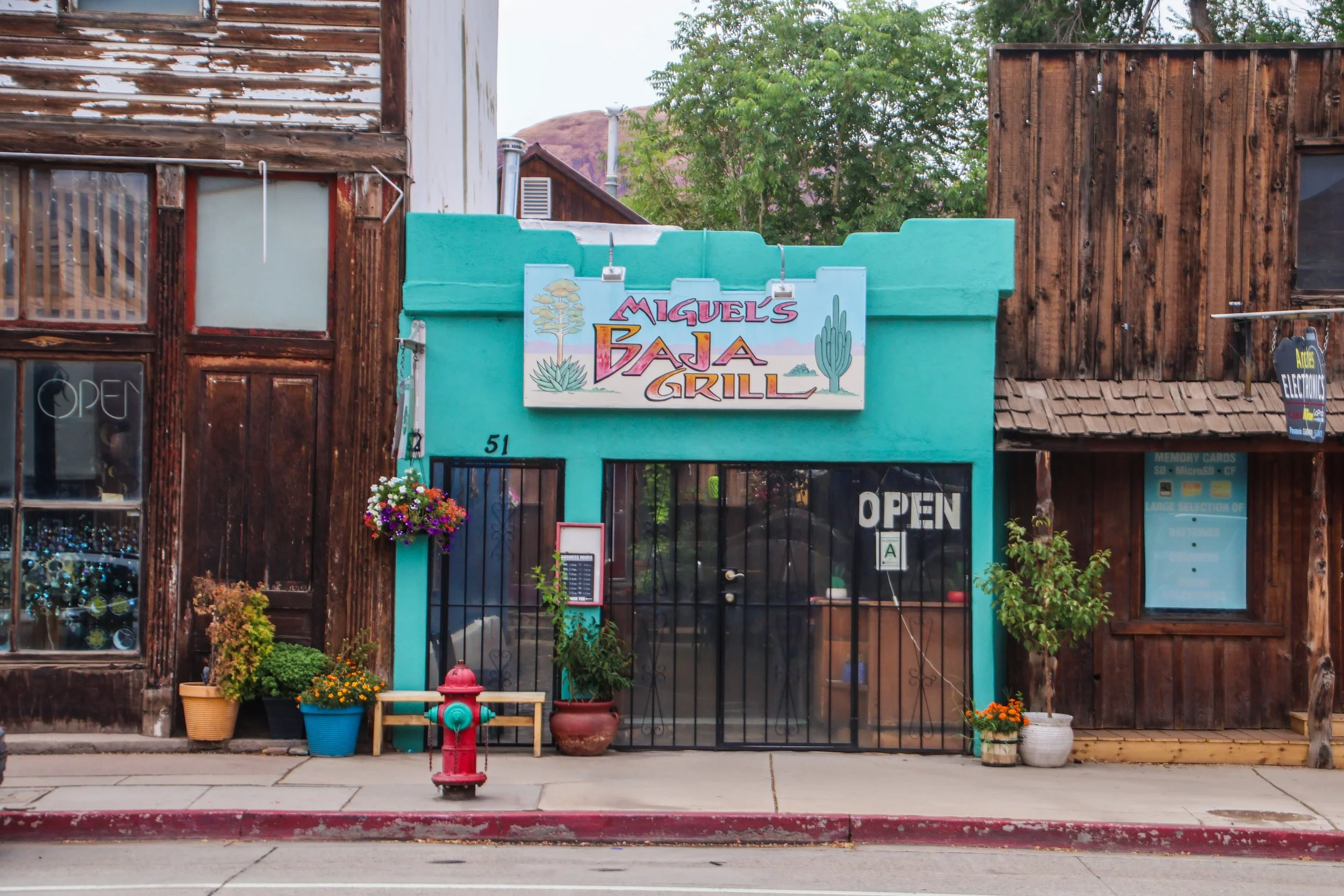
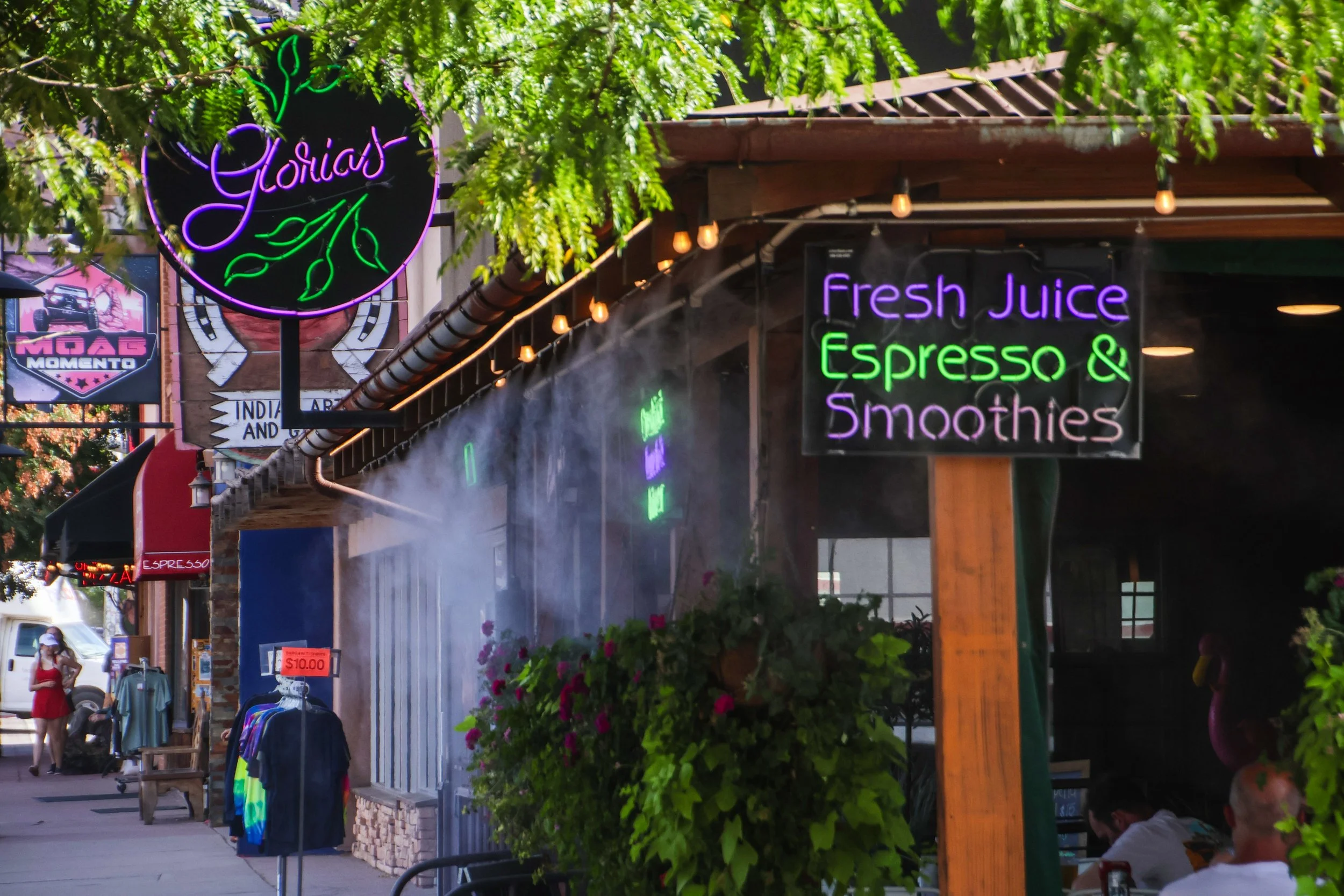
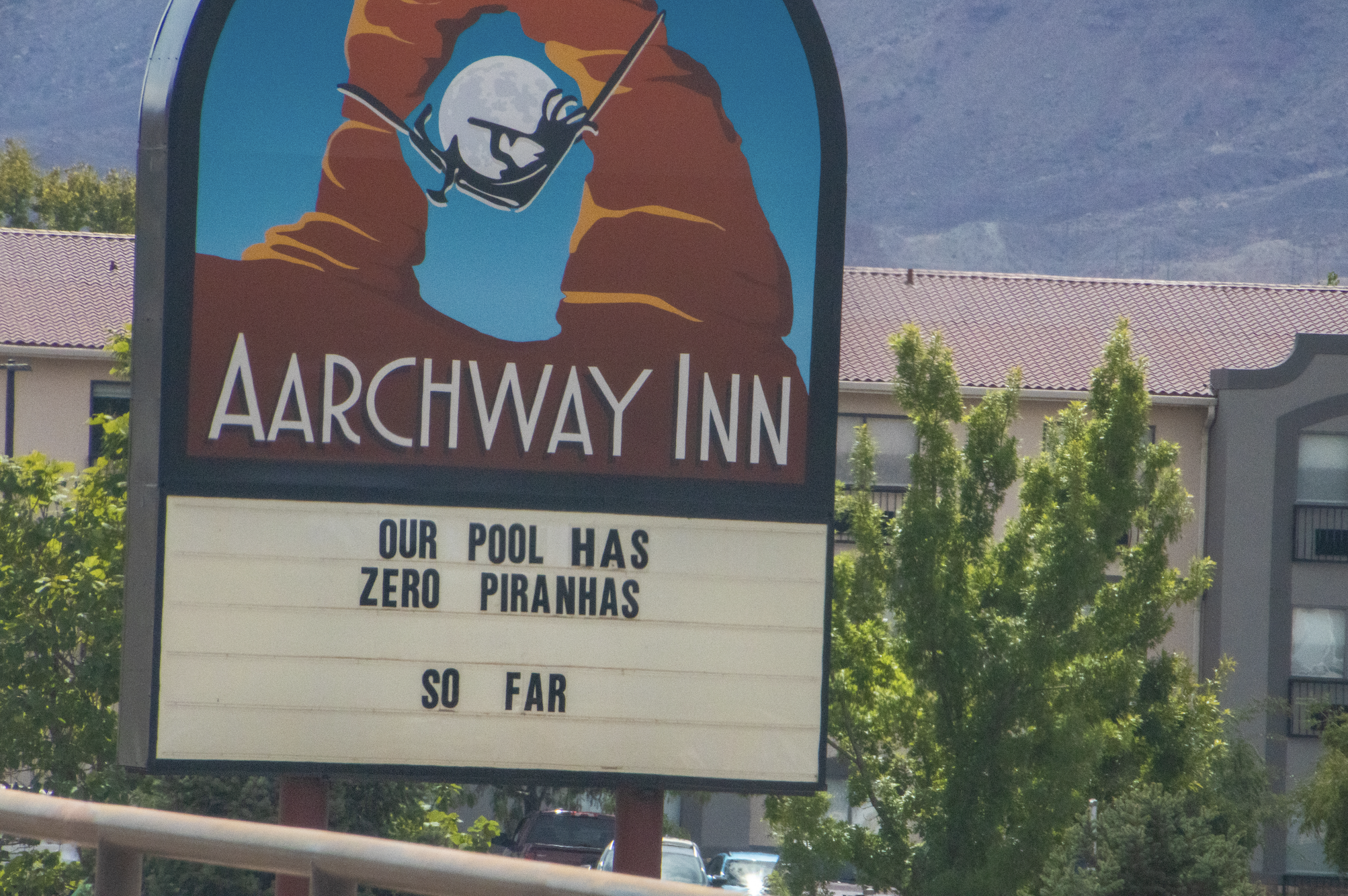
I’m guessing “Moab” is a name that you’ve heard before. It’s one of America’s most well-known “wild west” towns, and is famous for being a gateway to some of the most incredible natural beauty America has to offer. At the dawn of the modern era, my understanding is that this was a rough-and-tumble desert outpost full of bikers, truckers, and outdoorsmen covered in mud from the day’s adventures. I can imagine it would have made for a fun night at a dive bar! But today—like the smooth red rocks surrounding it—many of its rough edges have been worn away with time. It’s now got a few high-end places to stay, and a couple of surprisingly fancy restaurants, but the majority of Moab is motels, diners, bars, outdoor outfitters, and kitschy souvenir shops.
I want to pause for a moment on the “kitsch” element of Moab. Here’s Google’s “AI Overview” of the concept:
“Originating from German for "trash", Kitsch refers to art, objects, or design considered to be in poor taste due to being gaudy, overly sentimental, or cheap, but often appreciated ironically or for its nostalgic value. It describes things like ceramic figurines, cheesy movies, or kitschy decorations (plastic flamingos, fuzzy dice) that appeal to popular taste but lack high artistic merit, yet can be enjoyed for their superficiality or humor.”
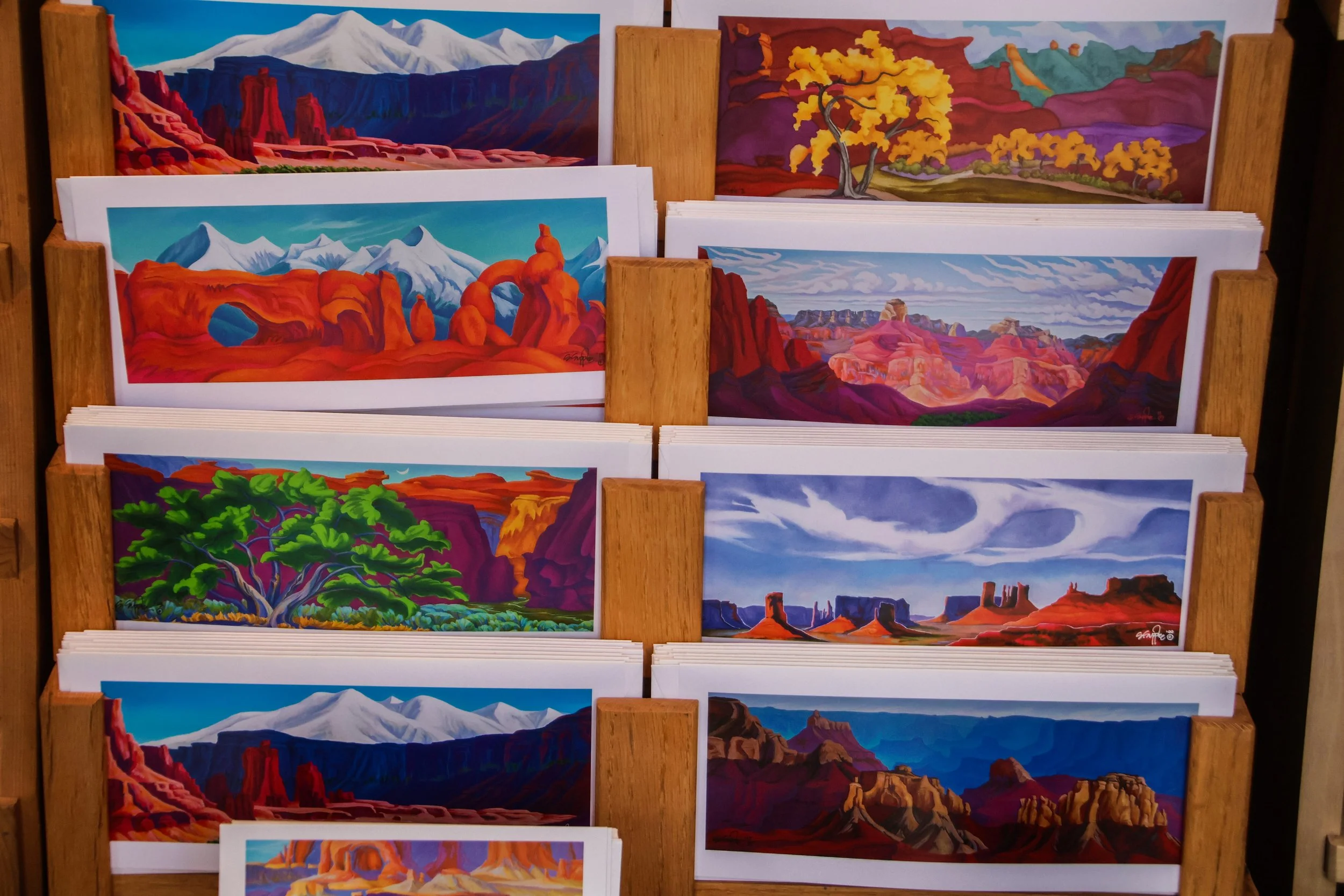
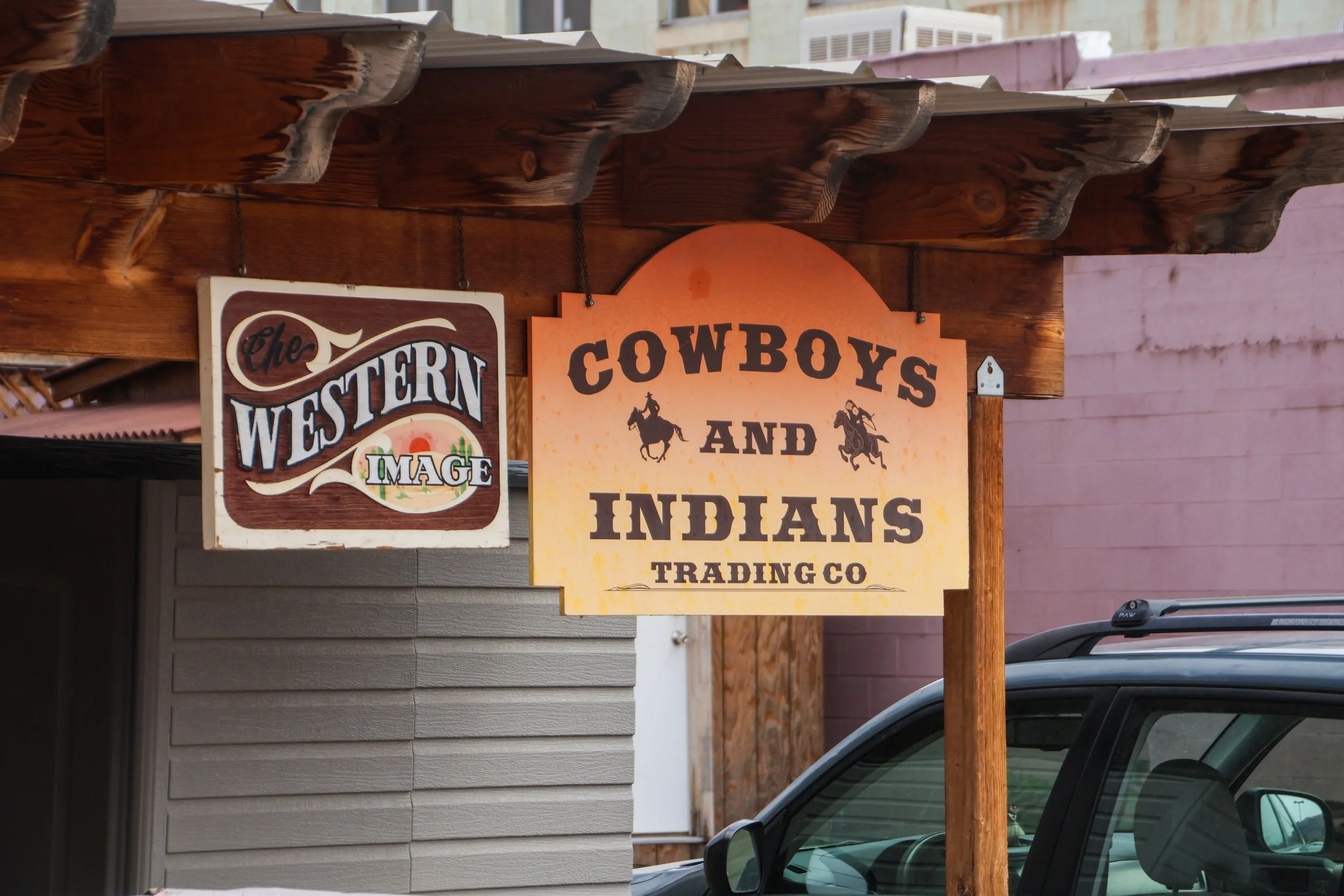
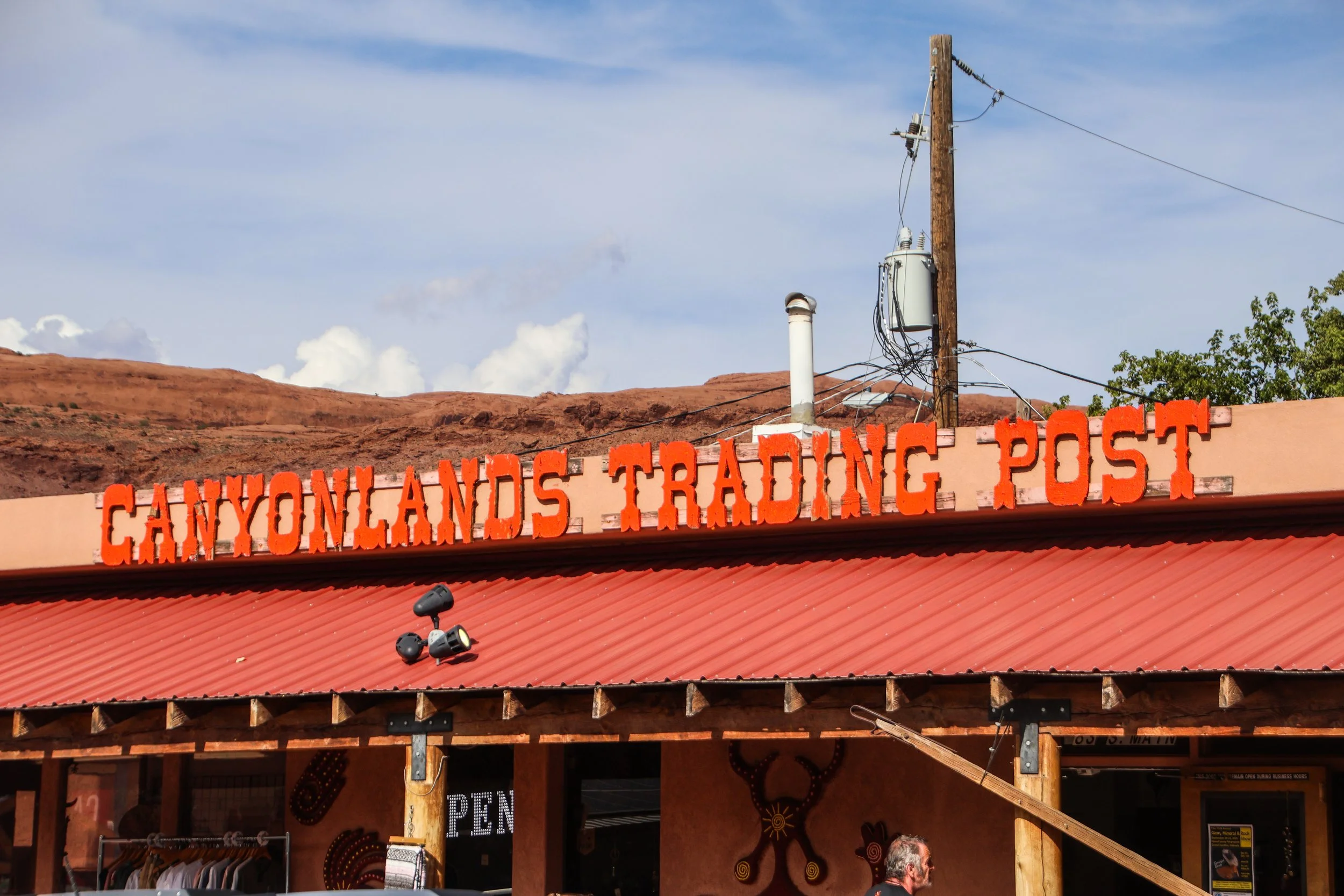
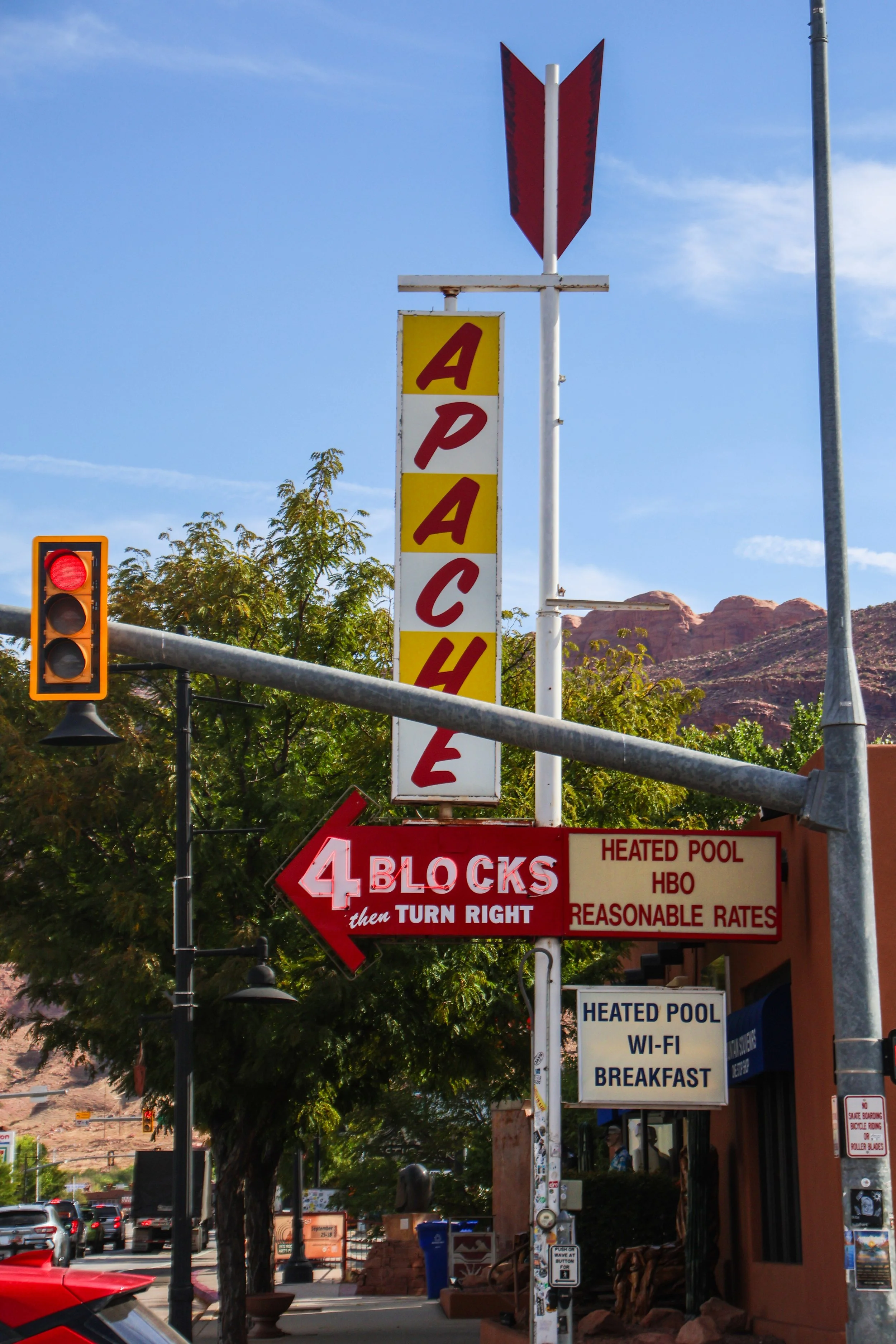
Yes, the souvenir shops in Moab are mostly full of objects that are undoubtedly in poor taste. I’m talking about lame “MOAB” t-shirts, knock-off Native American dream catchers, colorful productized geodes, cheap magnets, out-of-season Christmas ornaments, and all sorts of other cheap southwest-themed knick-knacks. The kind of thing that you’d find in a random bin at a Des Moines estate sale—presumably mementos that meant something to somebody (not you) at some point—and glance right over. Out of context, not great. HOWEVER, when it comes to the American Southwest, “kitsch” takes on an interesting authenticity. It seems to me that the 1950s were pretty much the dawn of time for mass tourism in this part of the world, and with little else to be productized and sold out here in the wastes, kitsch became the norm. Think Wes Anderson’s “Asteroid City” vibes.
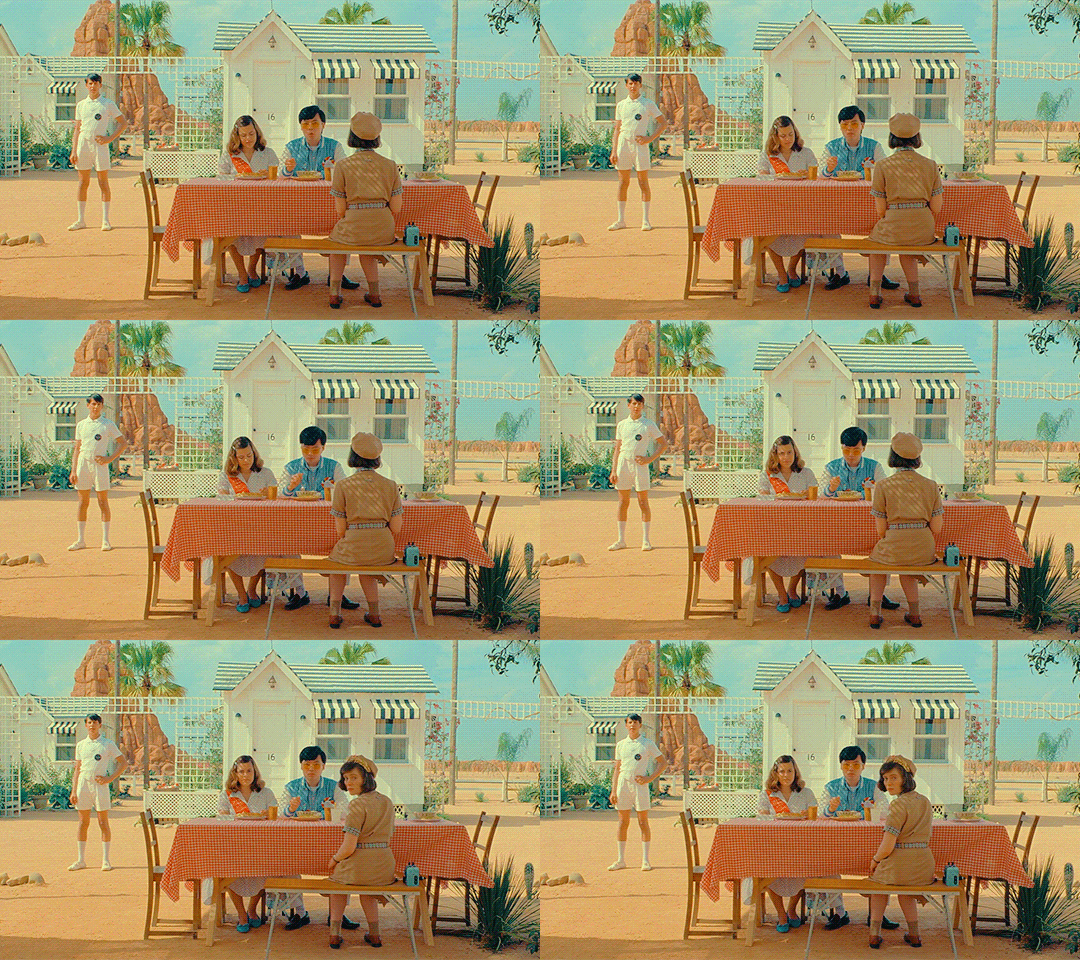
Accordingly, this region became one of the few places on Earth where “kitsch” could overlap with “classic” or “authentic” on the Venn diagram of souvenir adjectives. I was here with my brother and we had discussed this at length as we meandered through the cheap tourist shops on the main drag. So, if you’re in Moab (or anywhere else in the American Southwest), take the opportunity to accept kitsch into your heart.
But wait; why Moab? There are tons of other tiny little towns sprinkled around out here. Sure, Moab is right next to Arches National Park, but it also dates back much farther than the founding of the park, or the dawn of mass tourism out here. For references, Arches was not established until 1971, whereas Moab was founded in 1855. How is it that this town specifically became so established?
Well, you may have noticed that, for damn-near all of that Highway 128 drive, we were following the Colorado river at the bottom of a deep canyon, and the surrounding train was basically impassable. Moab, as it turns out, is one of the only places that you can cross the Colorado River without having to scale a sheer cliff face on either side. To early traffic headed westward across this part of the country, this was like a massive wall, and Moab was the hole in the wall. As such, it was a big way-point for traveling across the west. So there’s a steady flow of long-haul trucking that drives through to this day! And, interestingly, this also forces a lot of drug trafficking through Moab as well, which has produced some crazy stories over the years. We heard 2nd-hand from a local here that the local sherif said that 95% of people who drive through Moab will wave at him as they drive past. So, to catch the drug runners, he would just sit at an intersection and look for drivers that avoid eye contact. No idea if this is still true, but it made me laugh. 😂

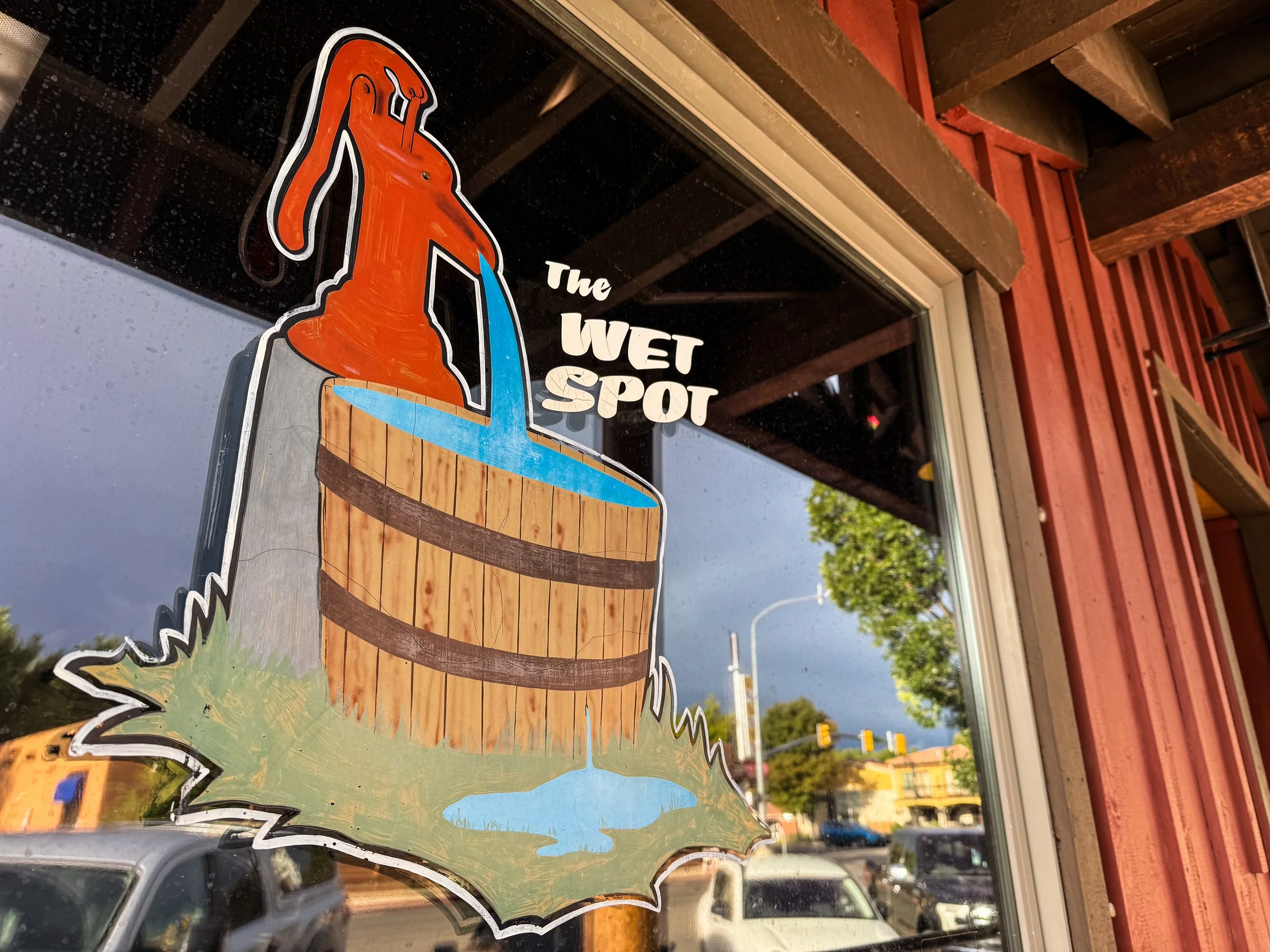
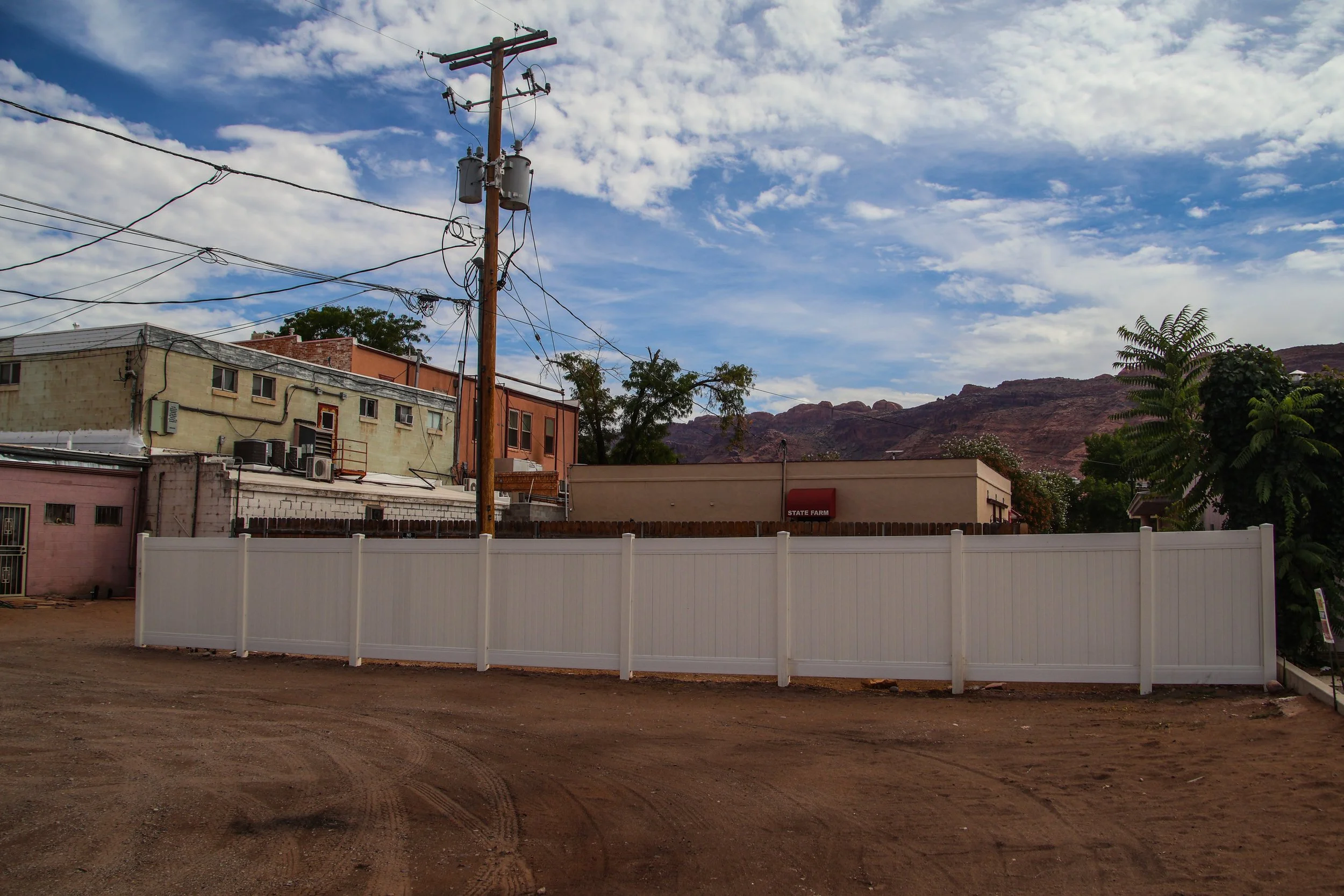
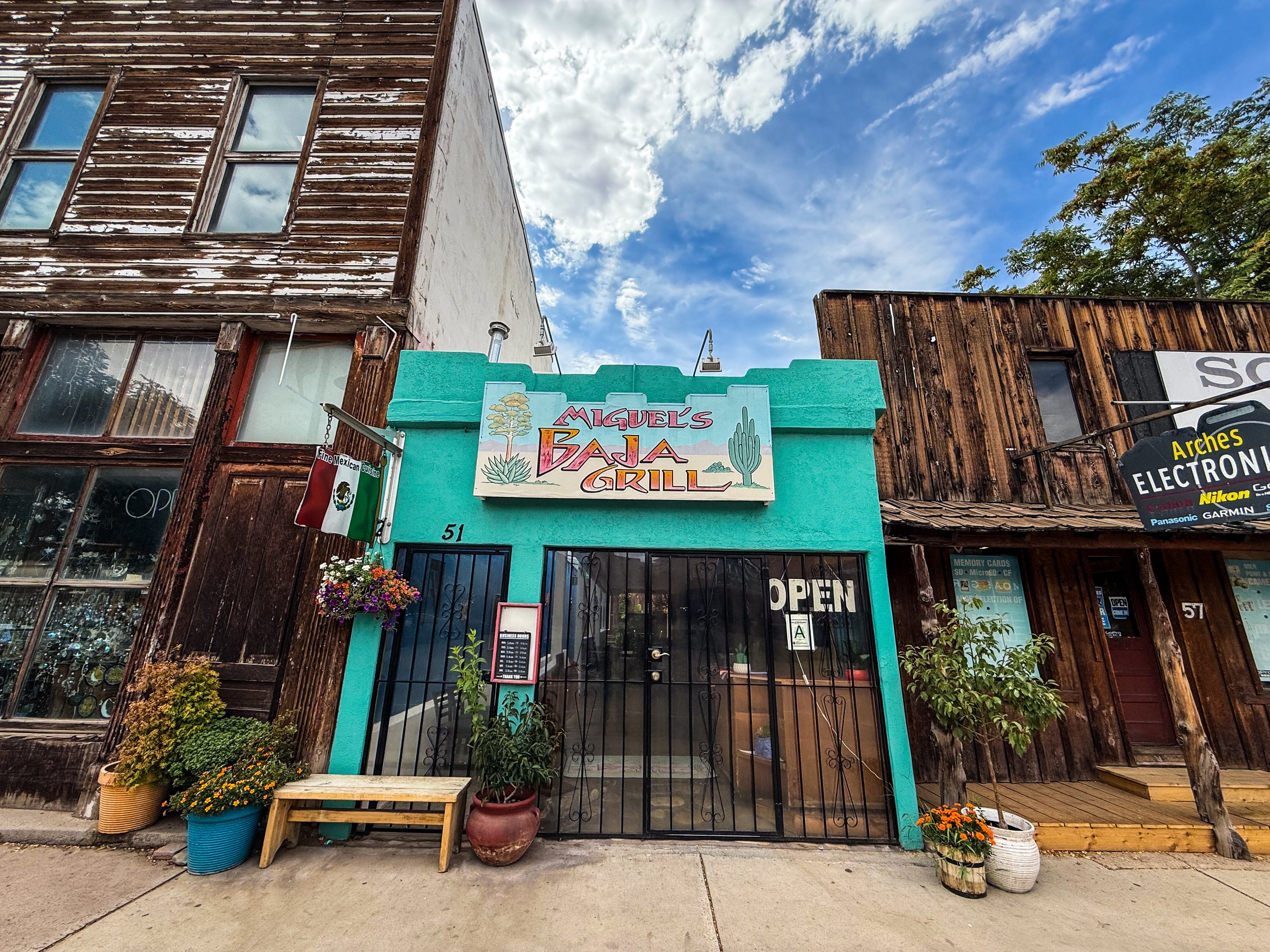
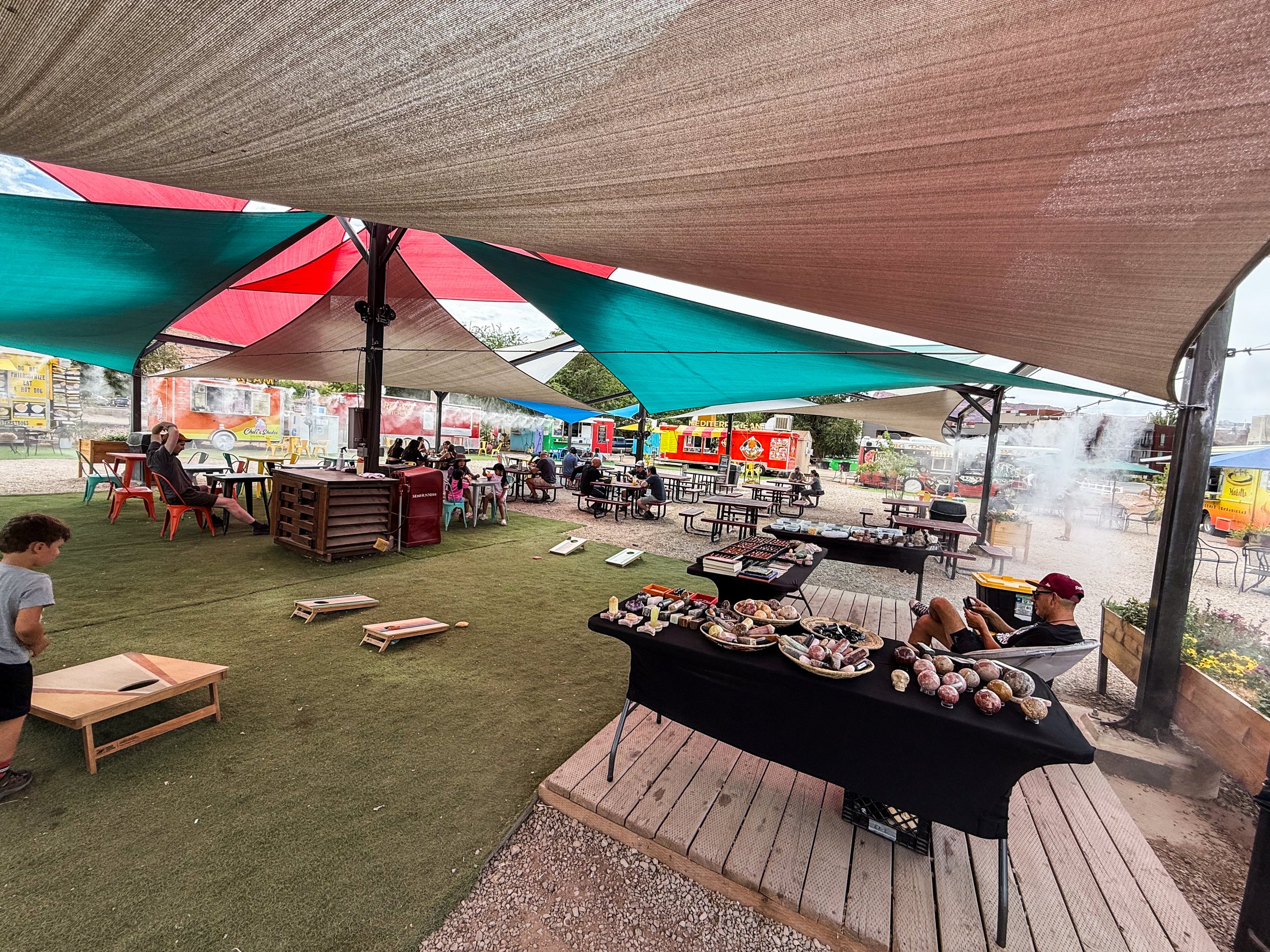
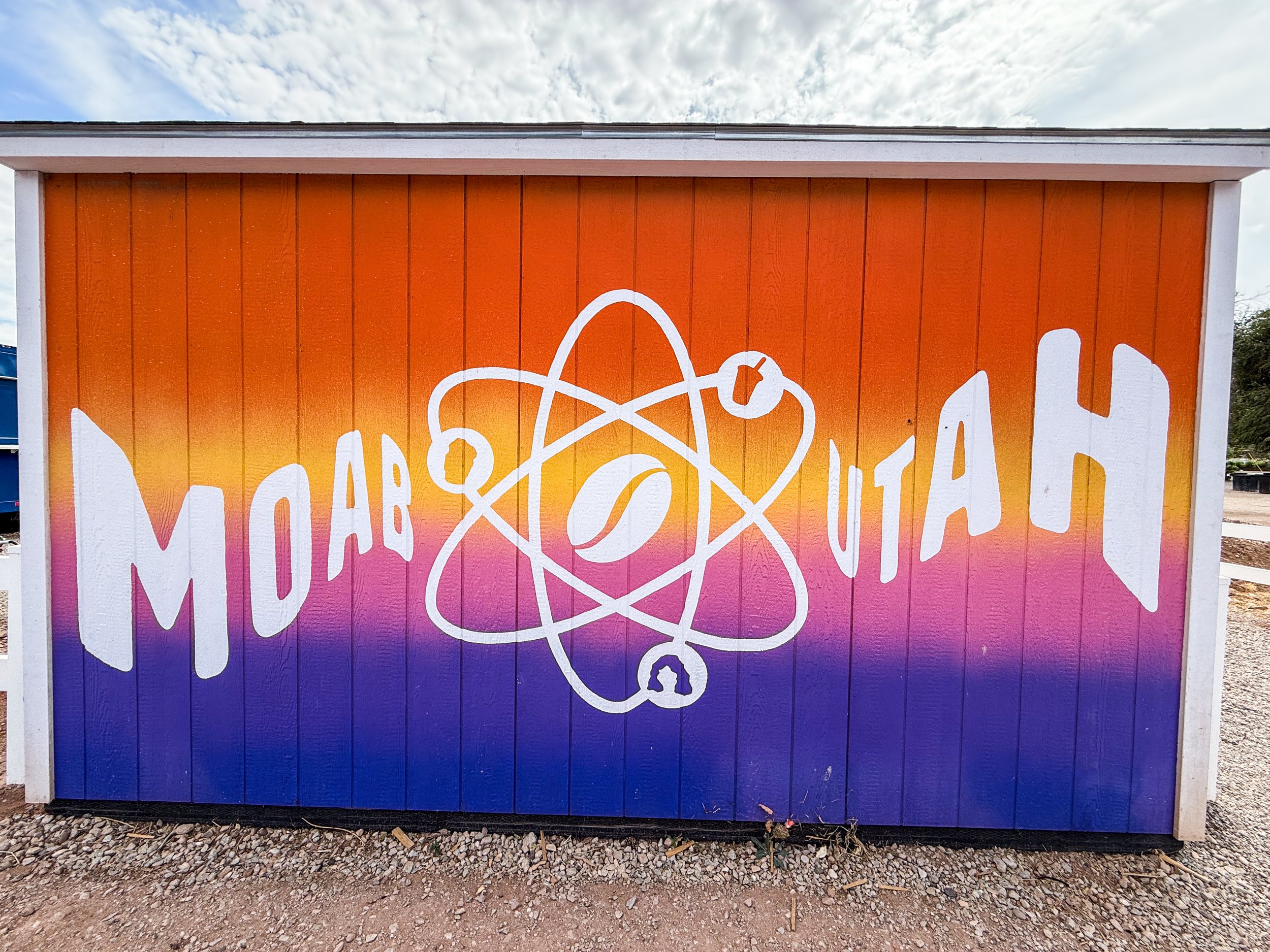
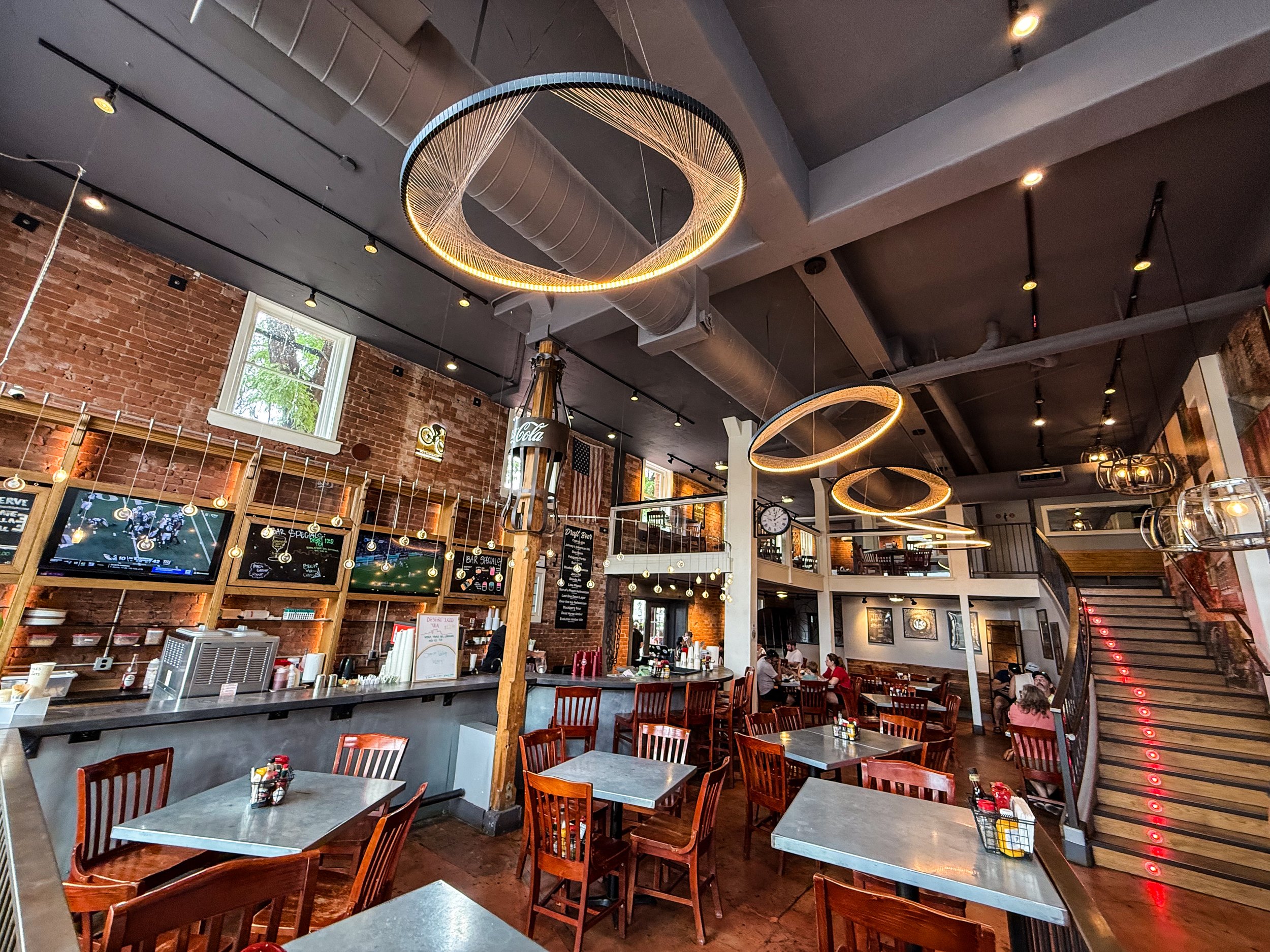
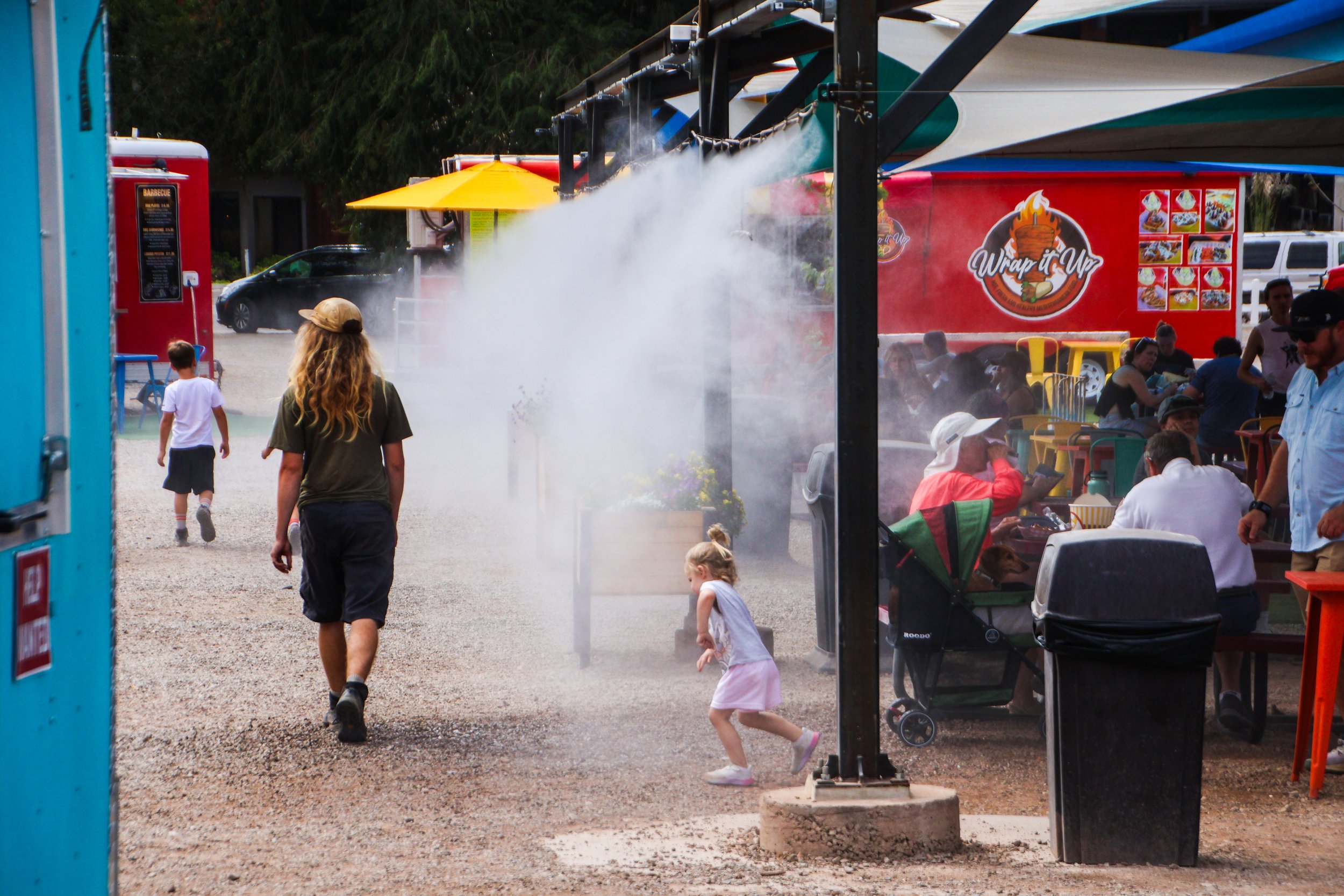
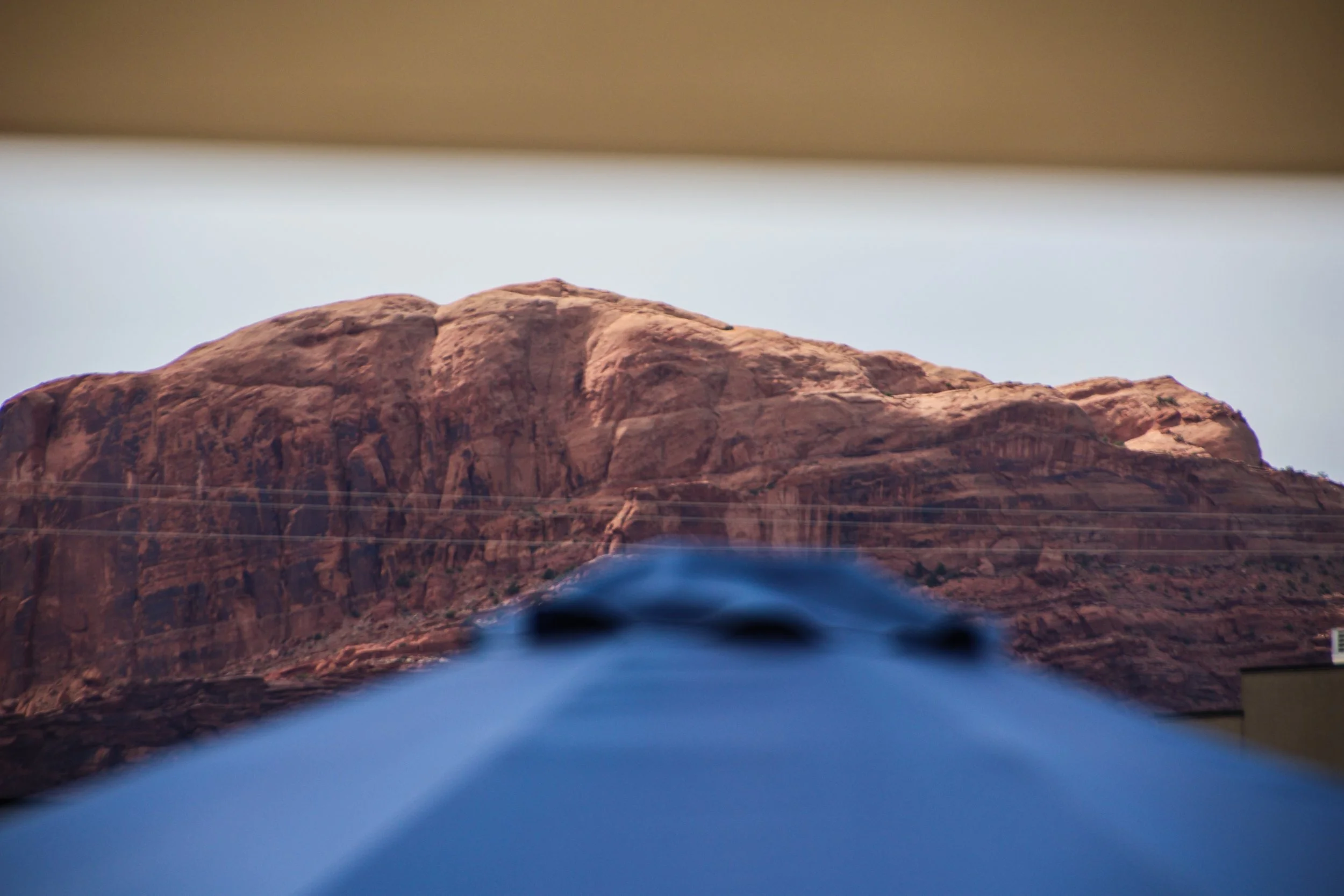
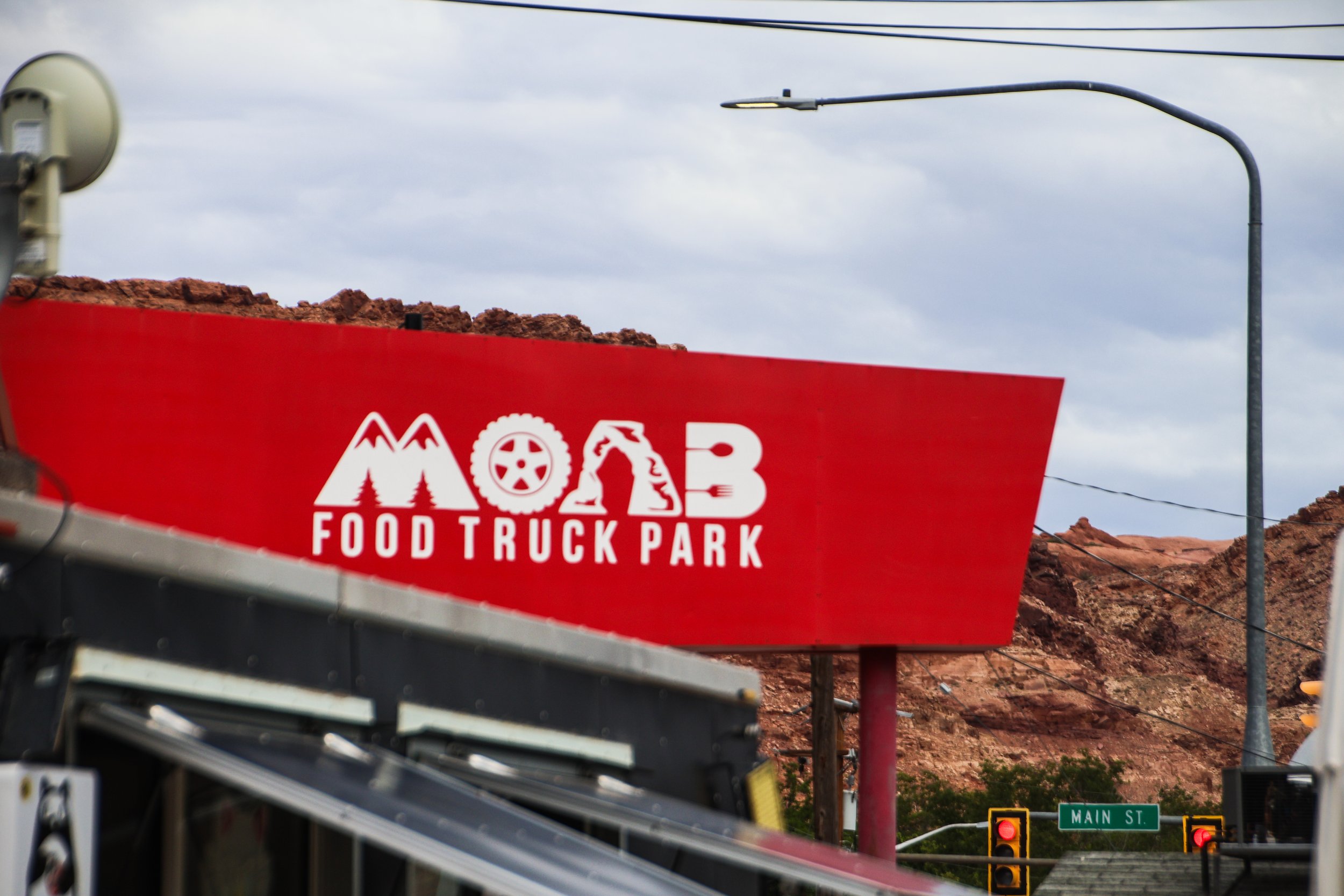
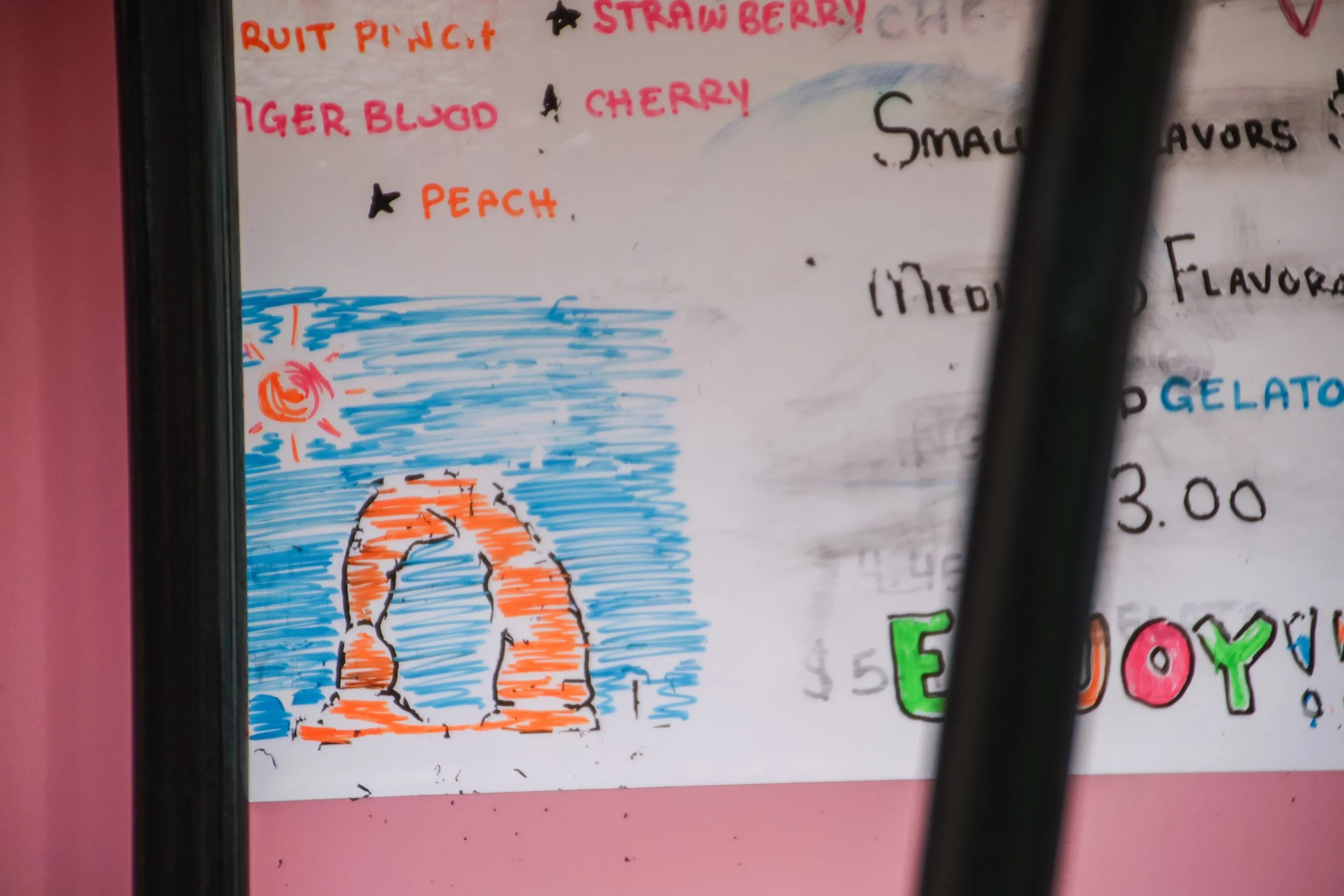
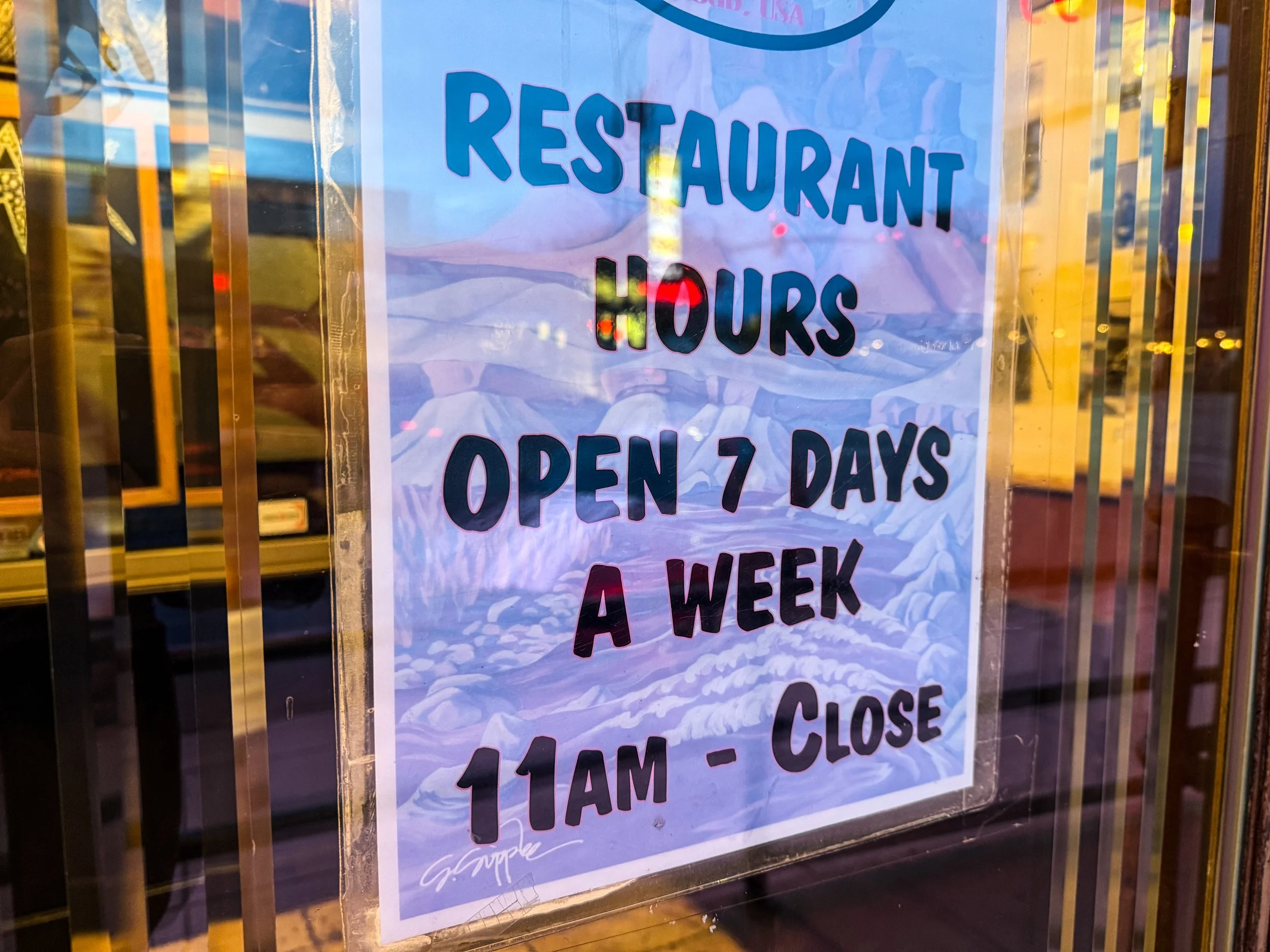
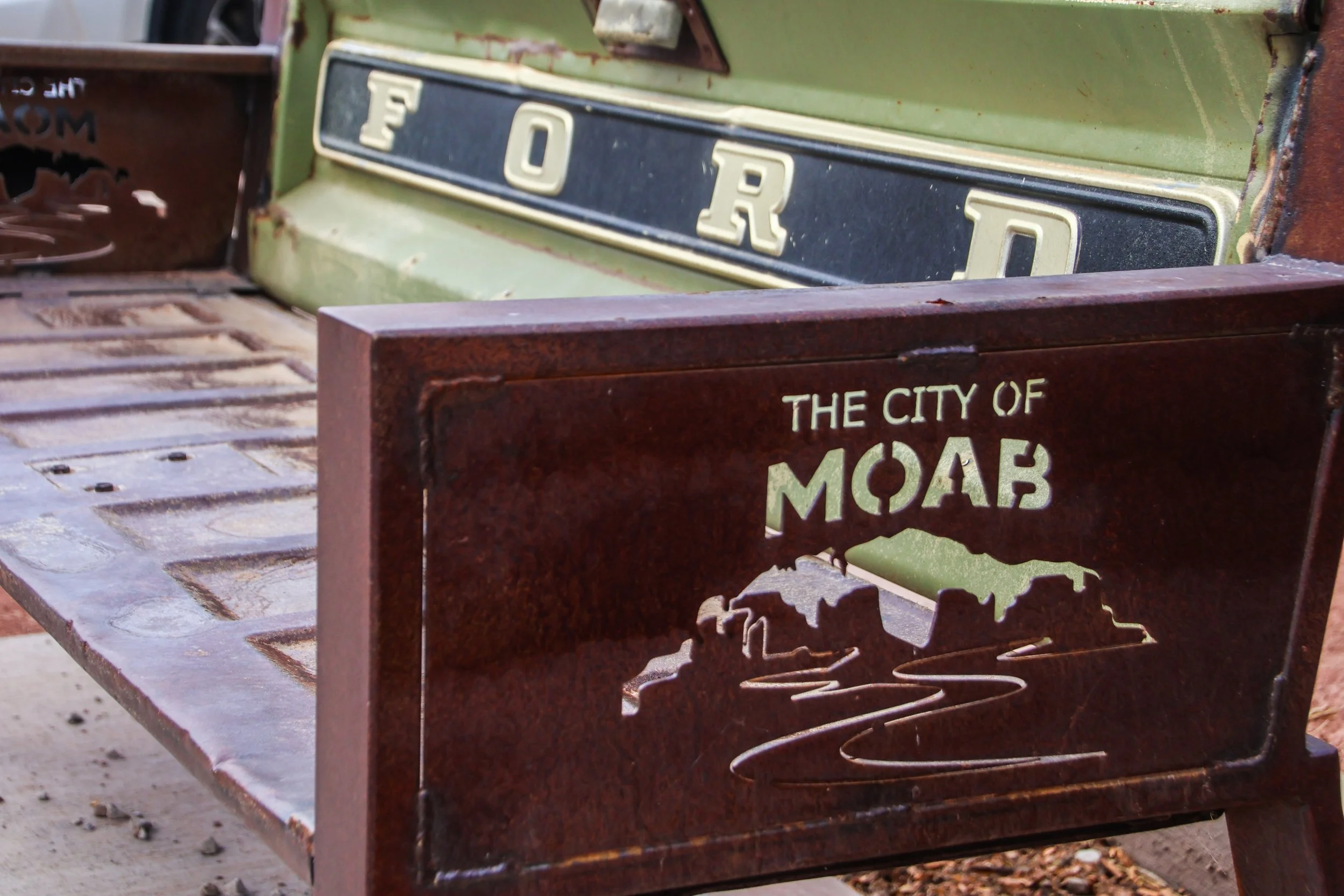
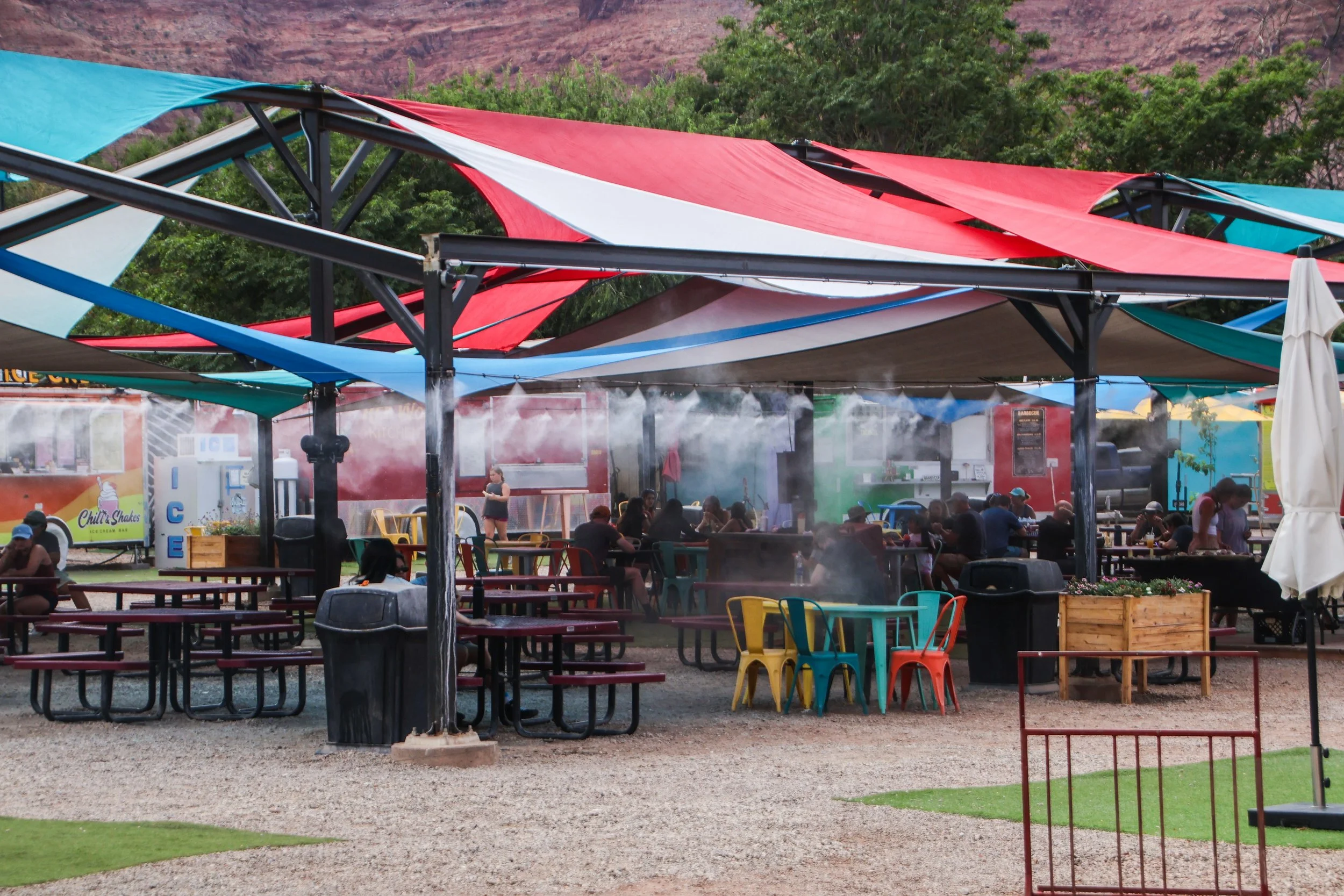
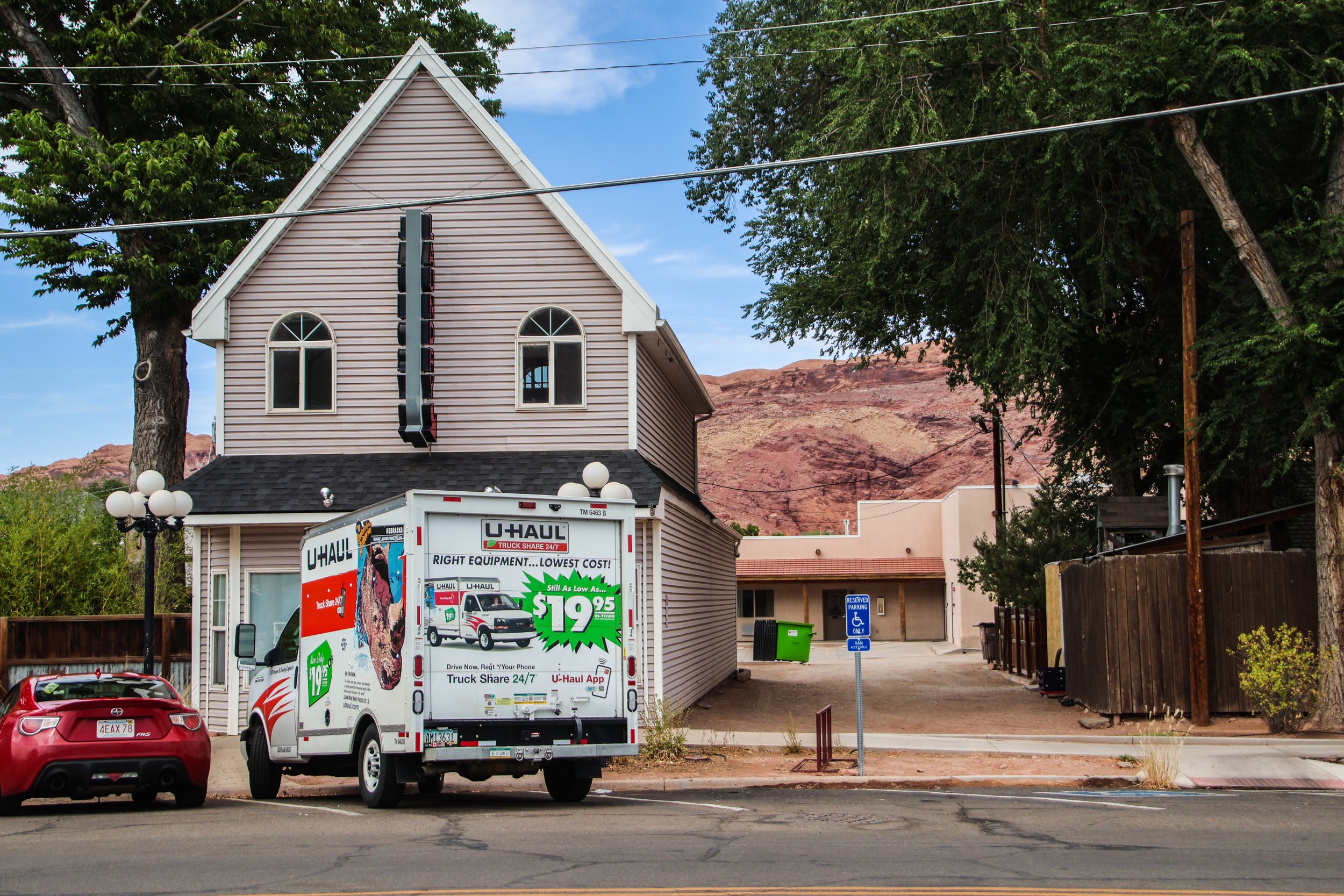
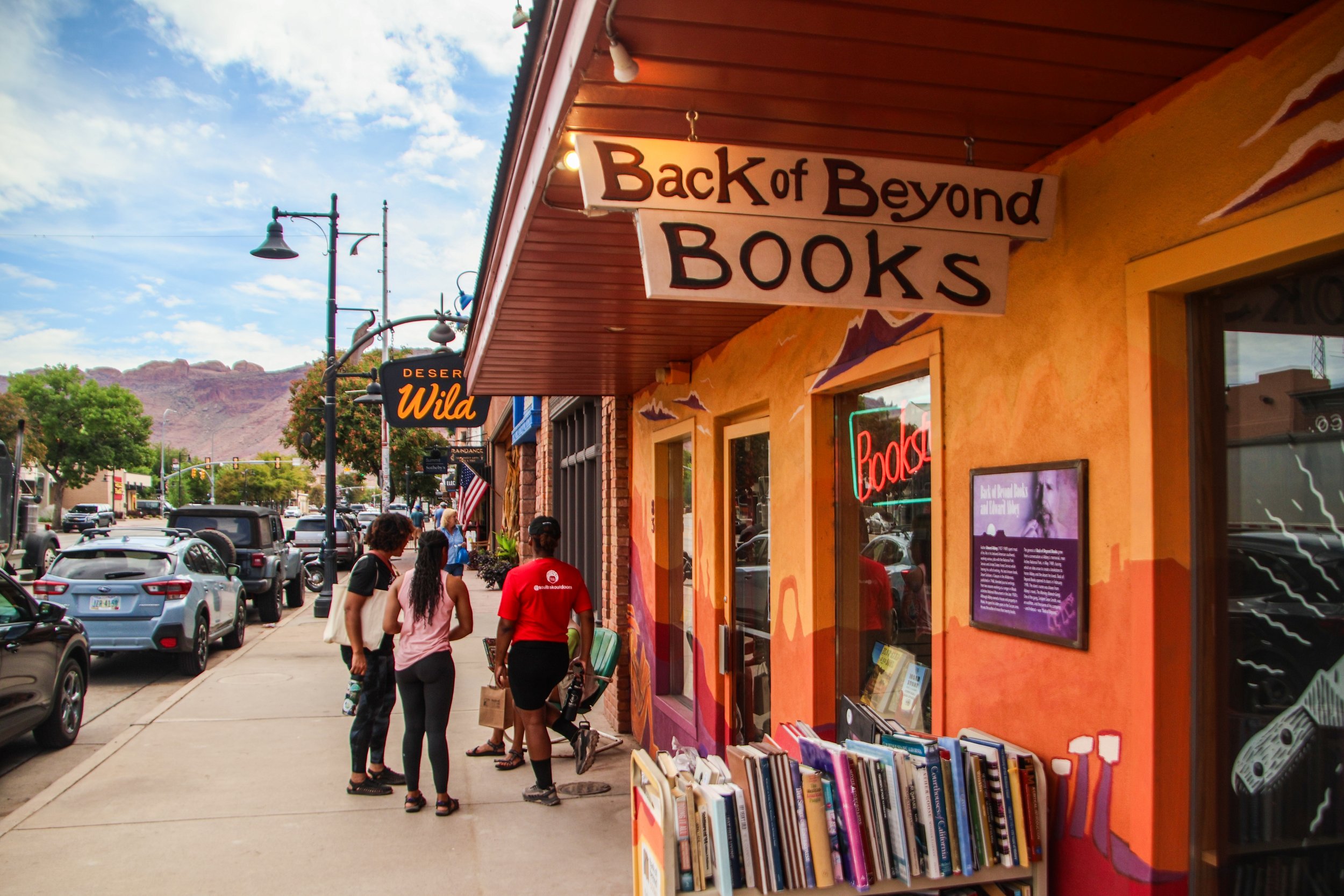
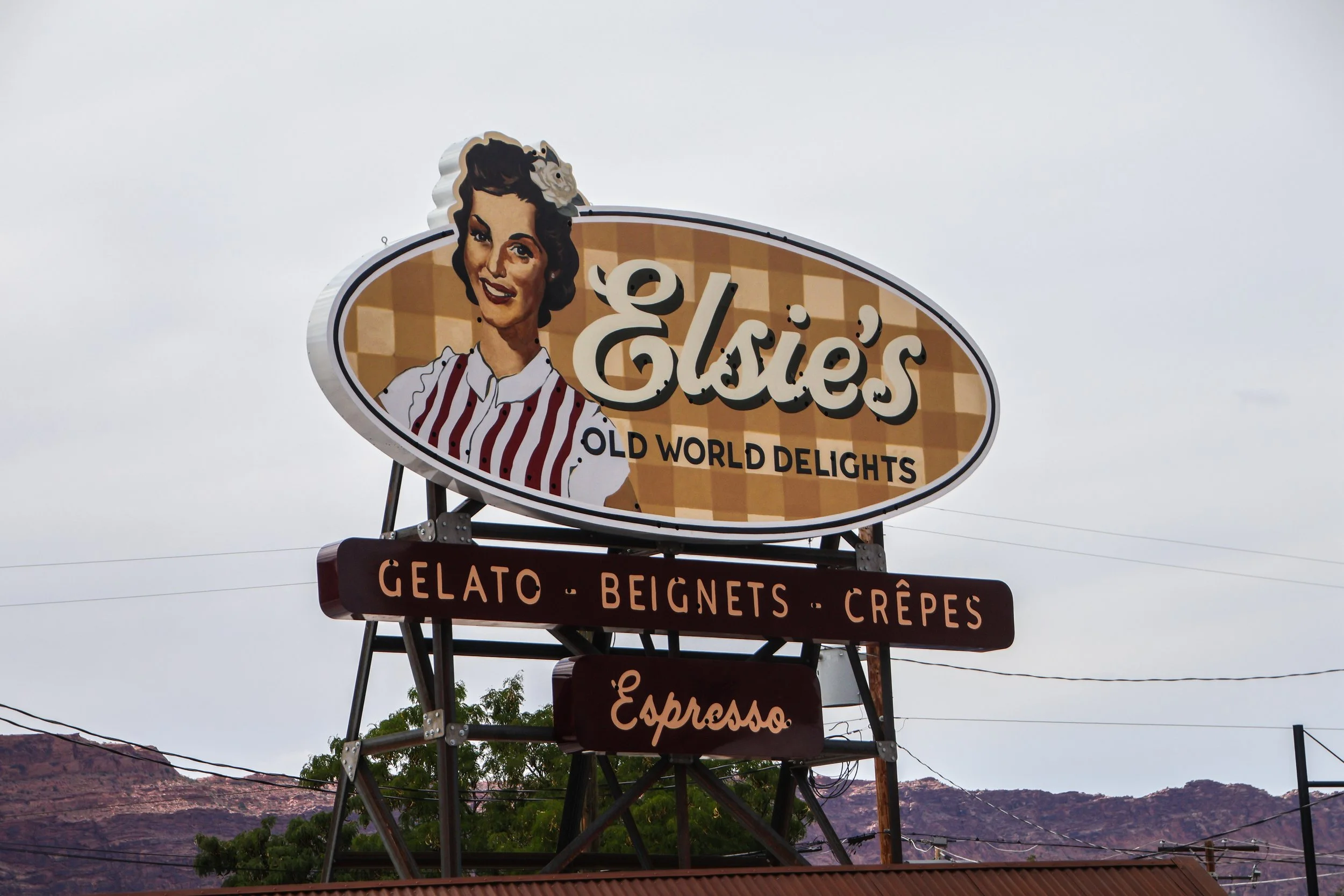
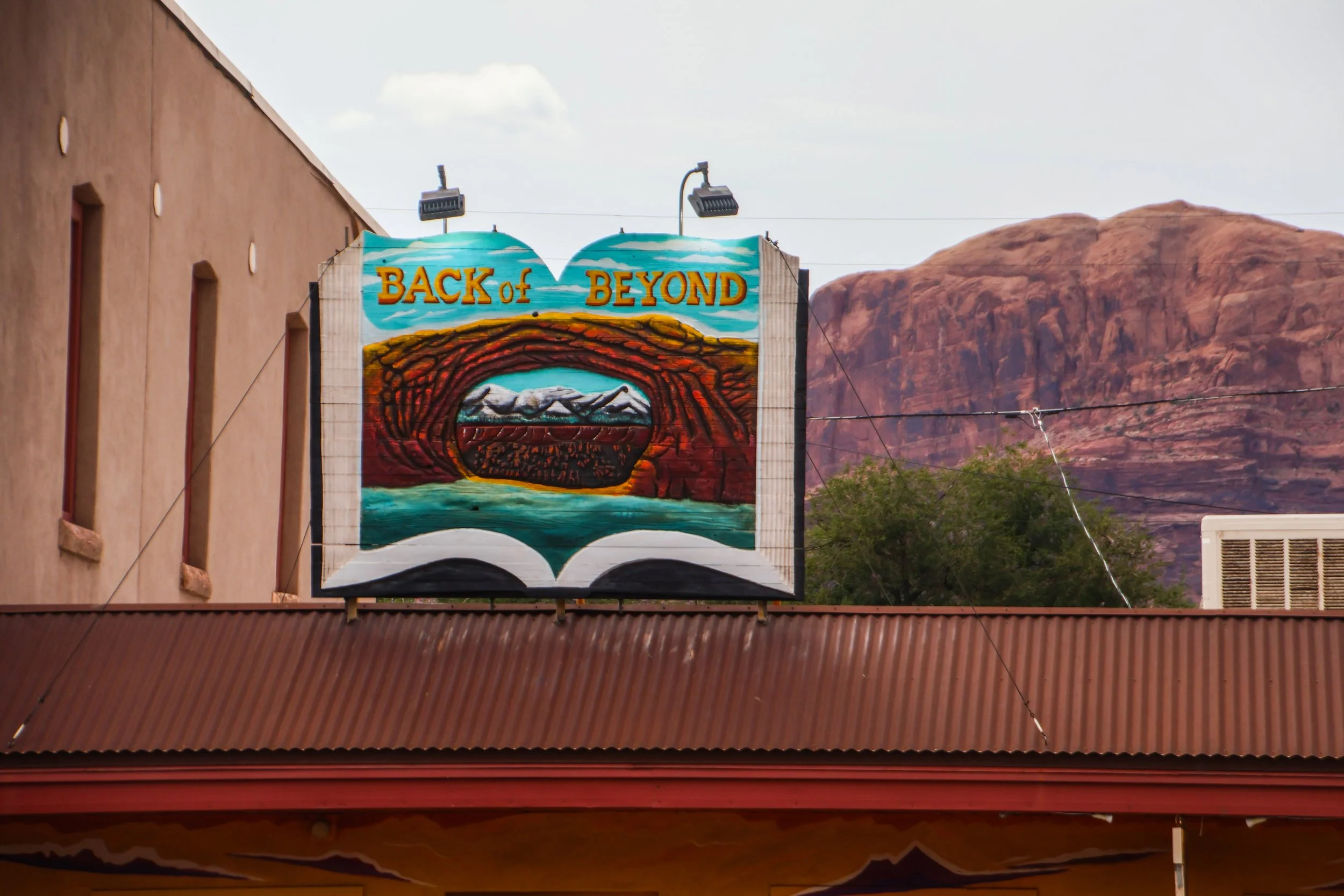
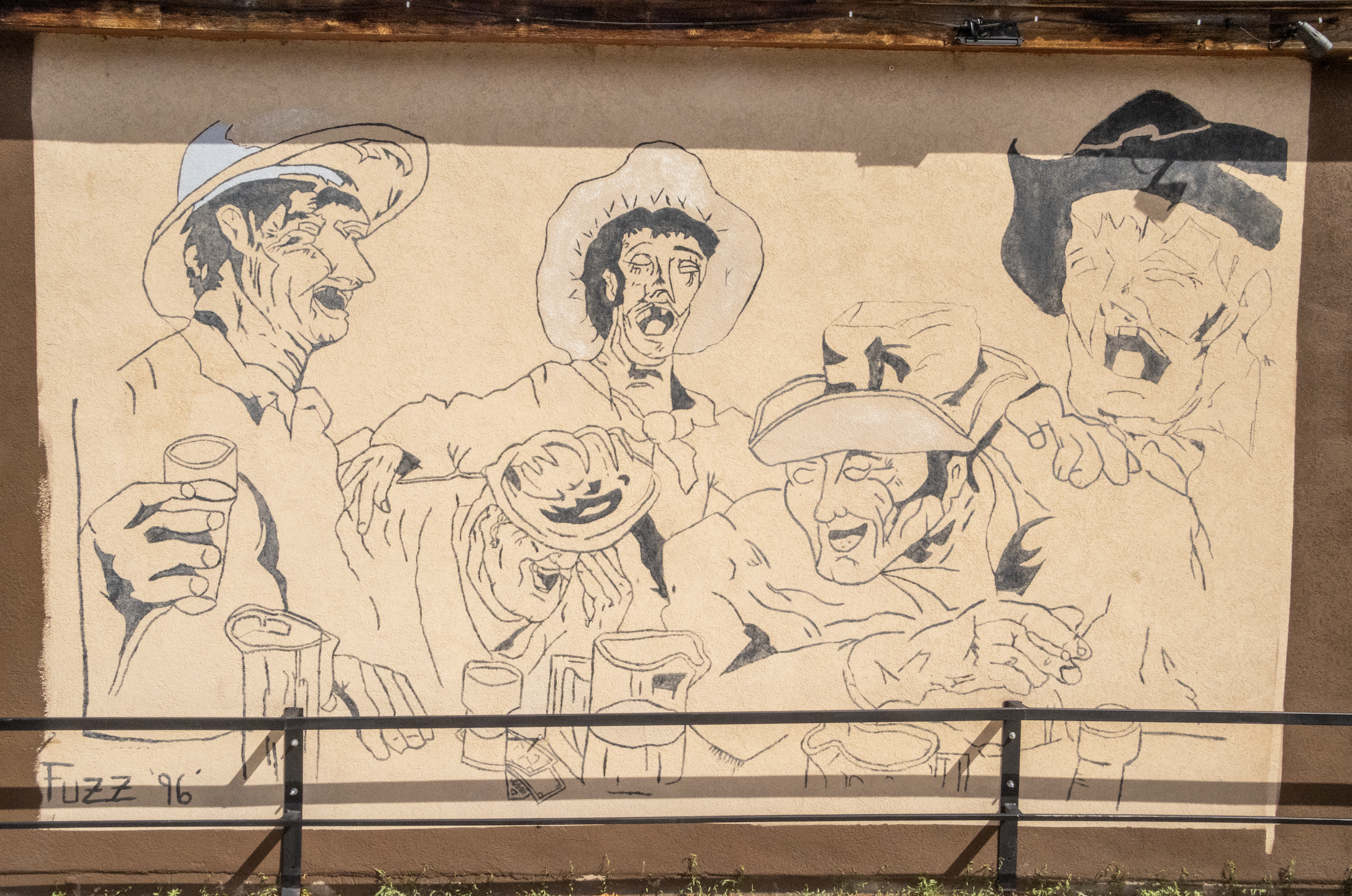
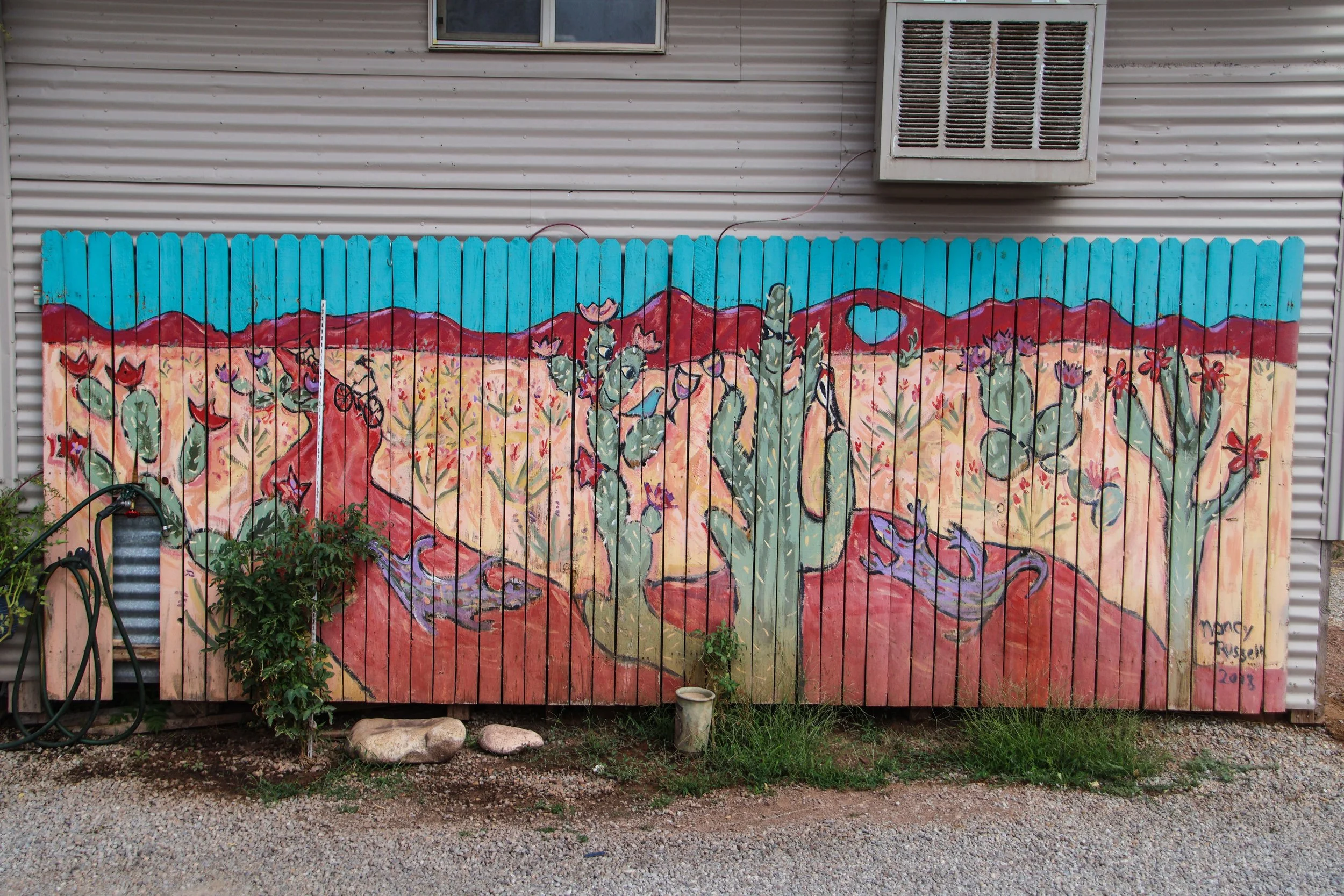
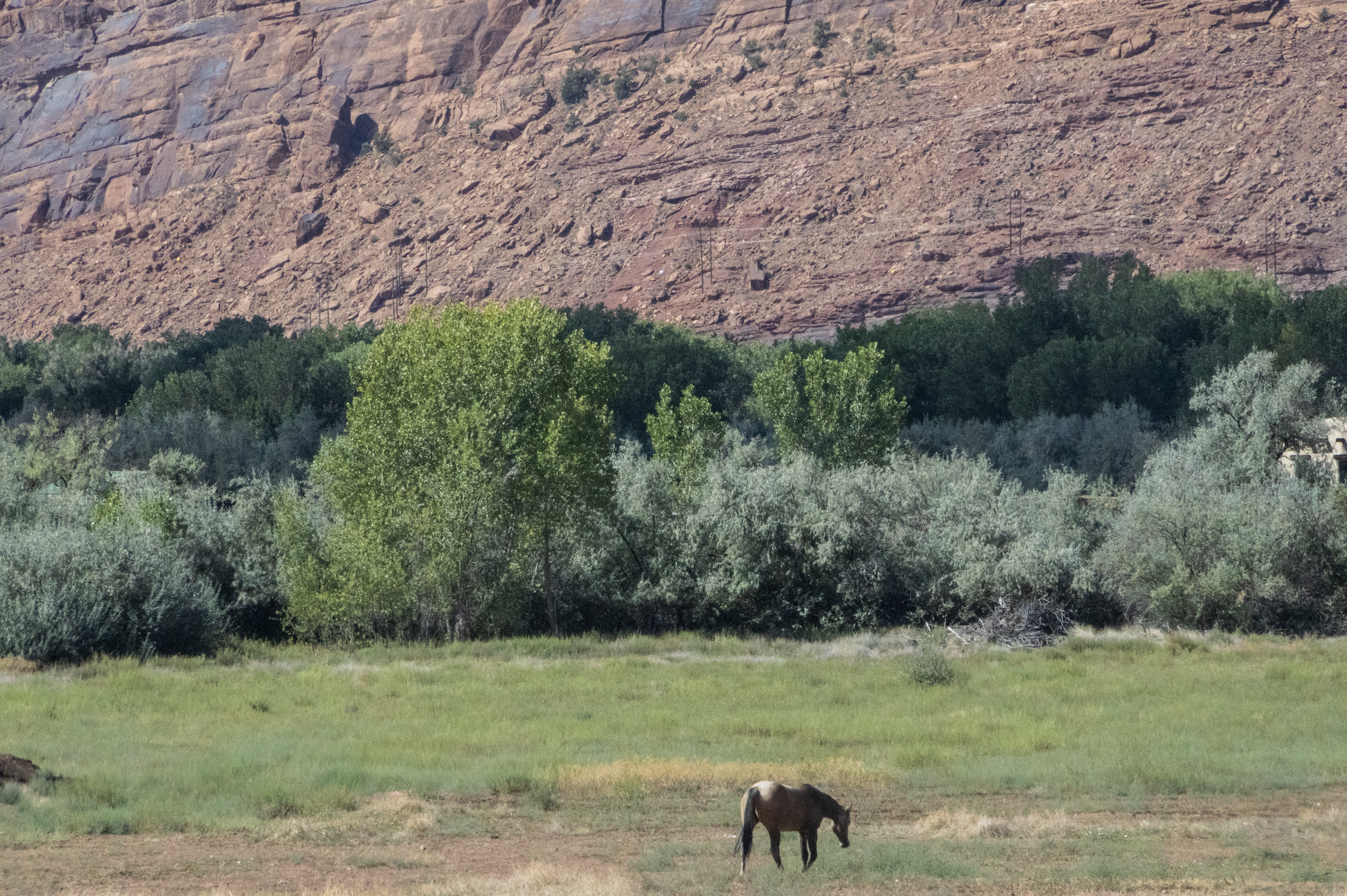
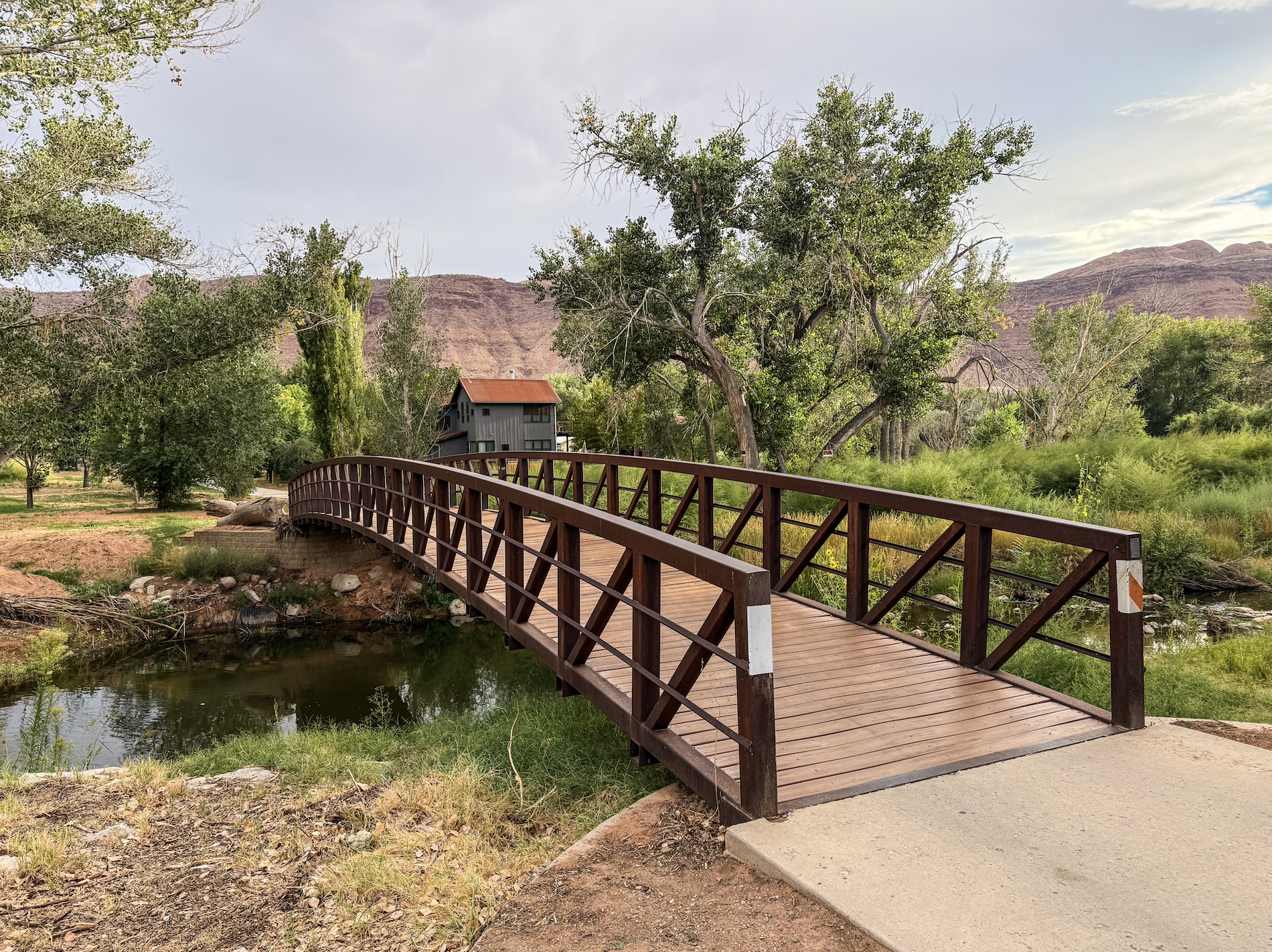
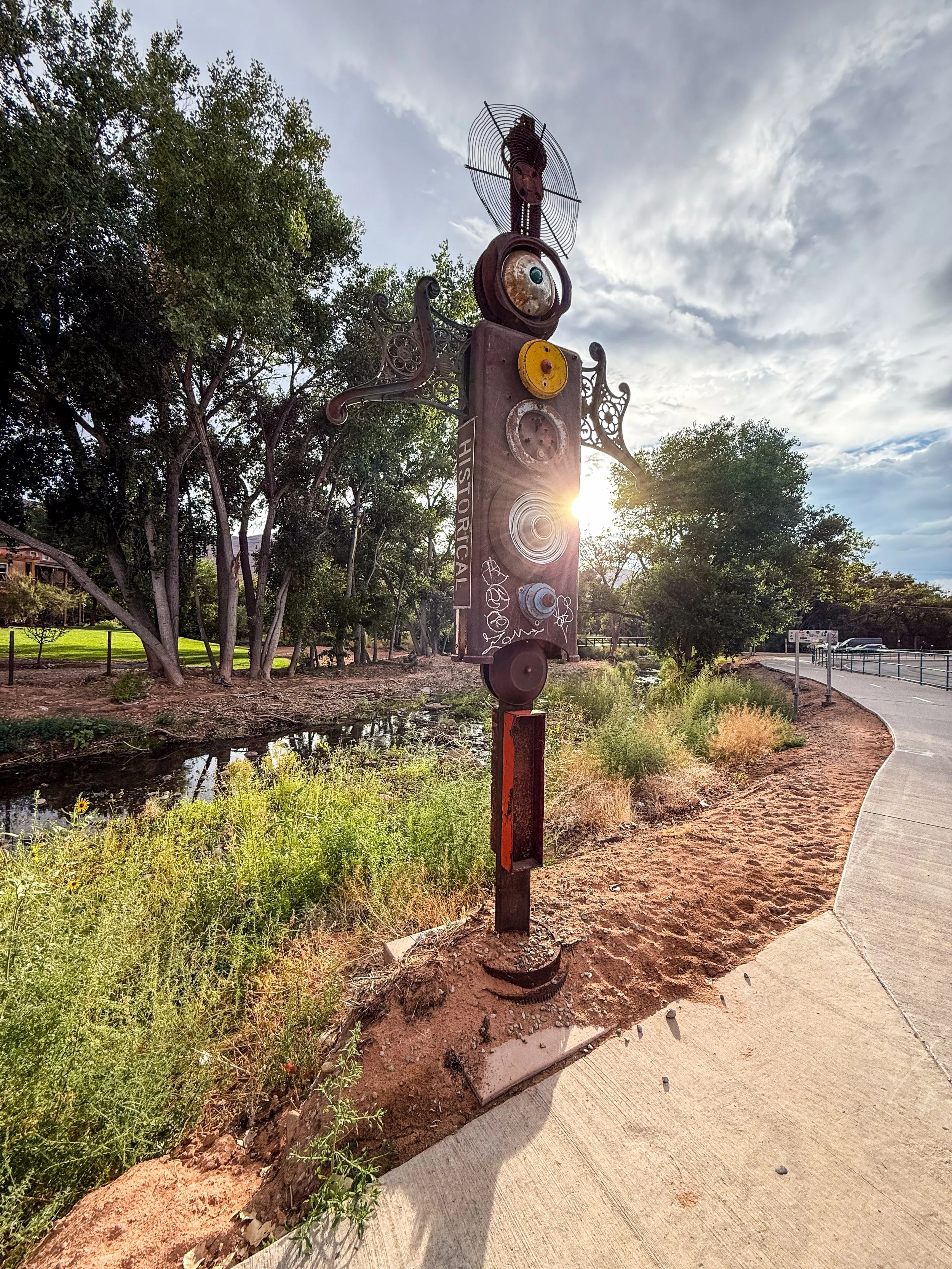
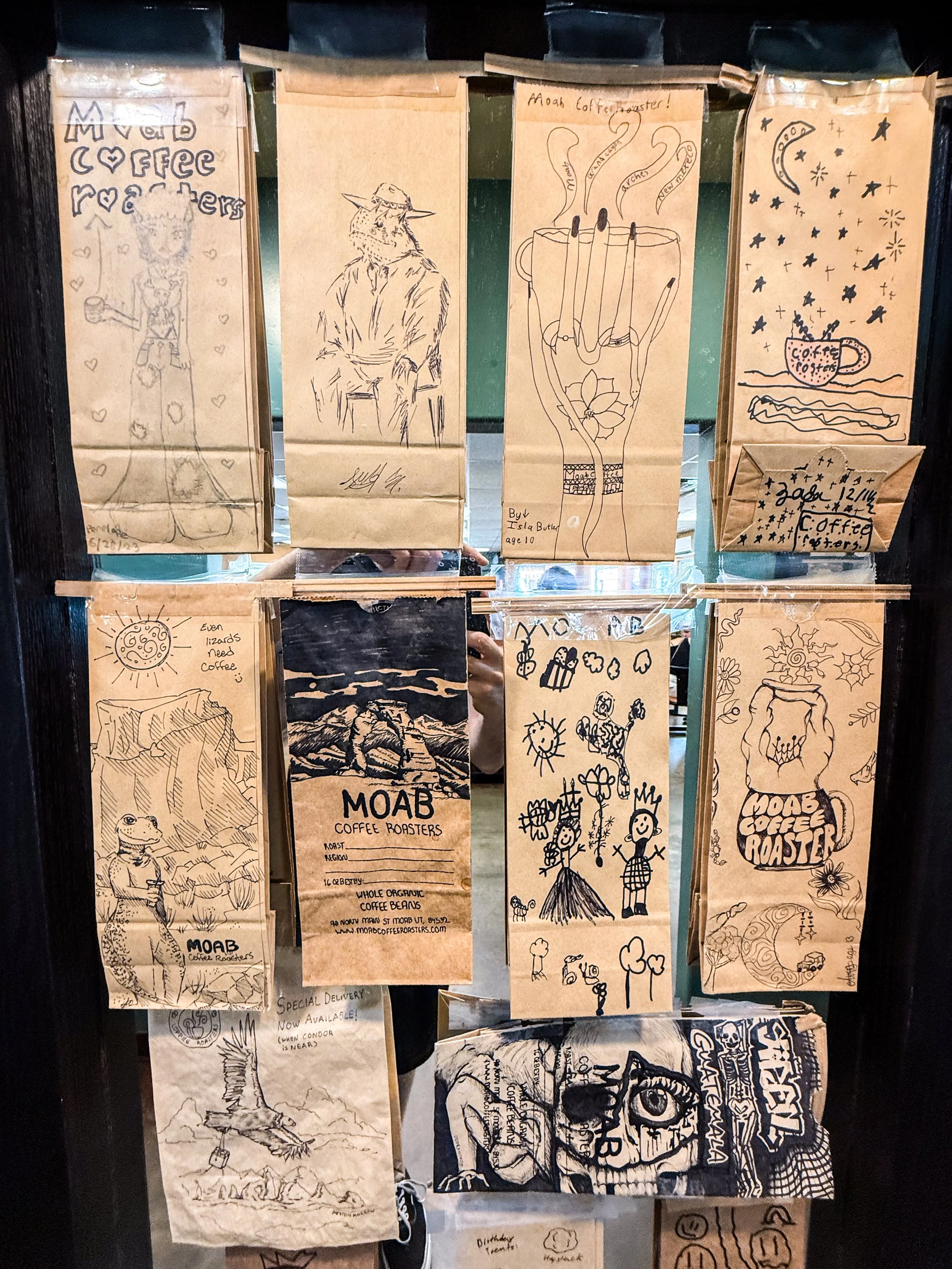
Anyway, Moab itself is definitely NOT why we came all the way out here, so let me show you this funky little town, and then we’ll jump out into nature in the next articles. As you can tell from the gallery below, there are still some rough edges (e.g. the bar called “The Wet Spot” 🤦🏻♂️), but there’s also a fun outdoorsy, hippie, camping overlay that makes this place fun for a couple of nights.
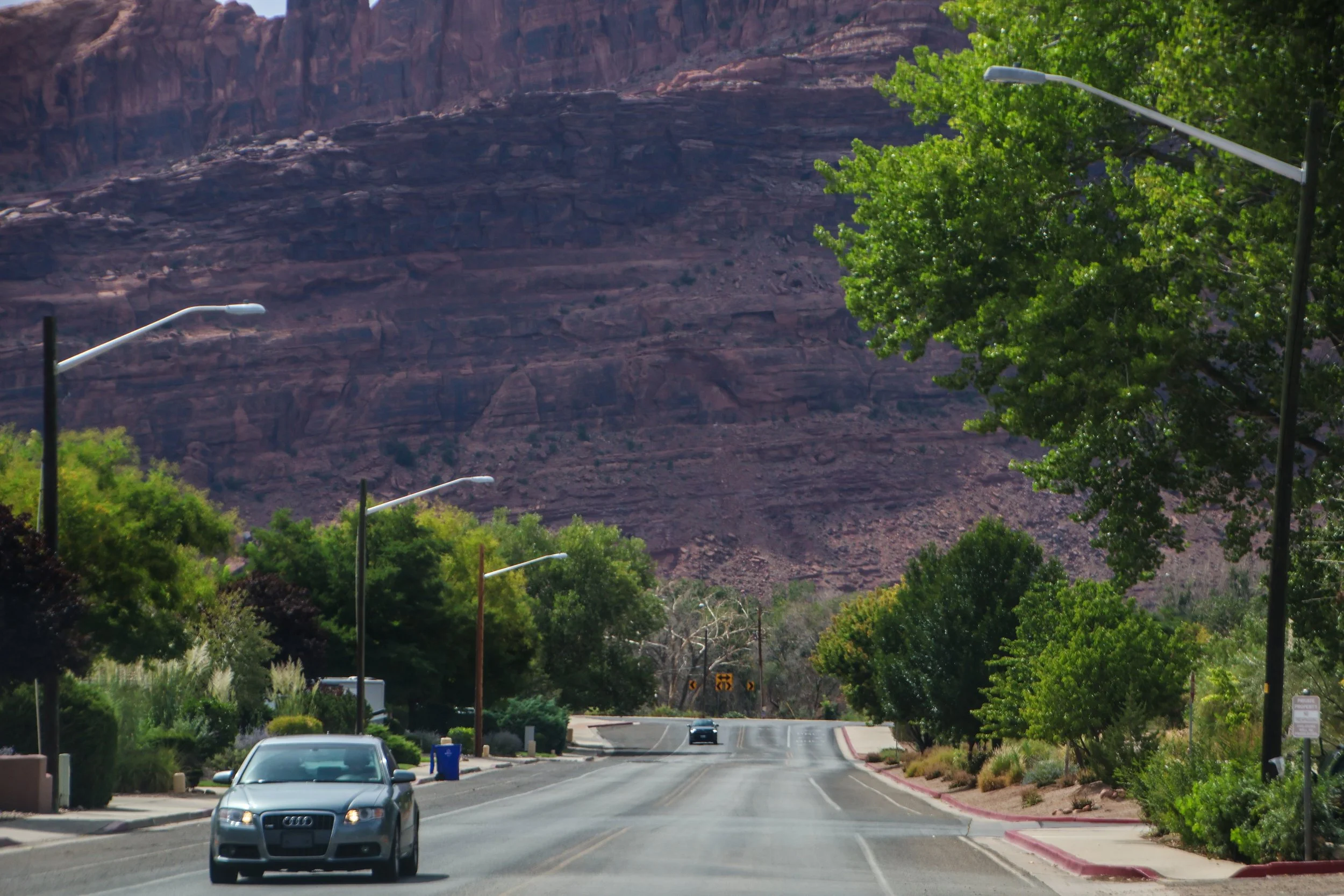
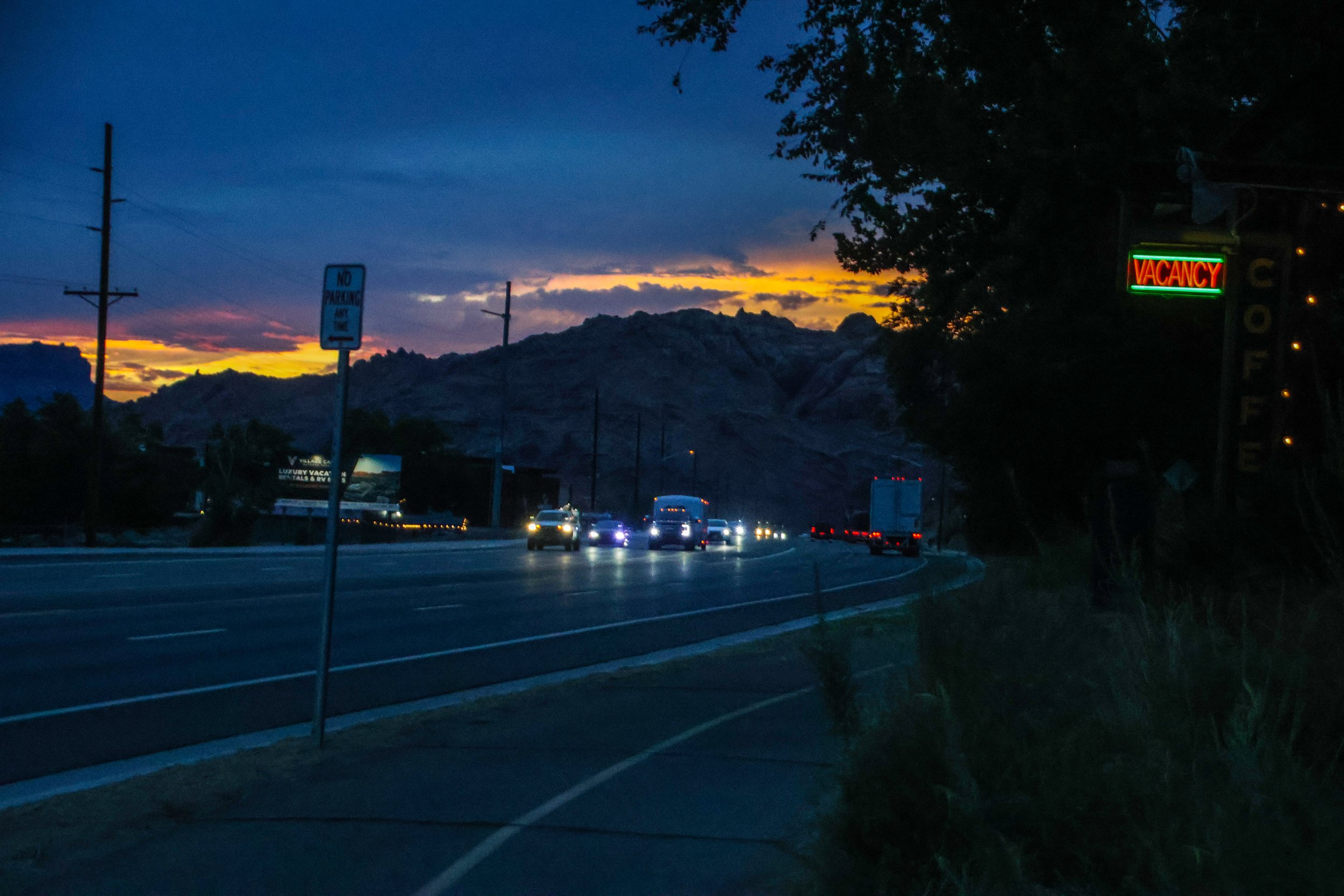
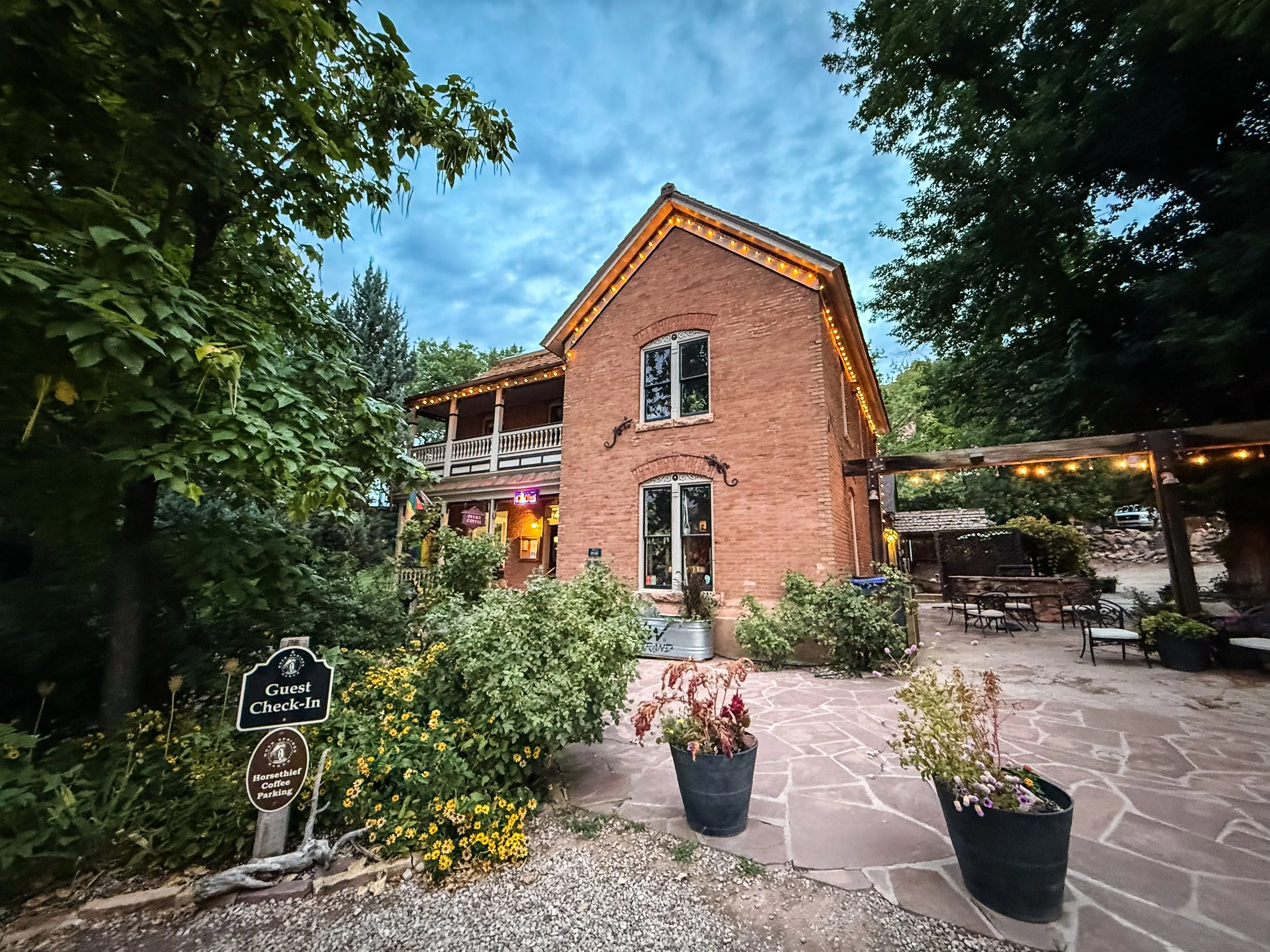

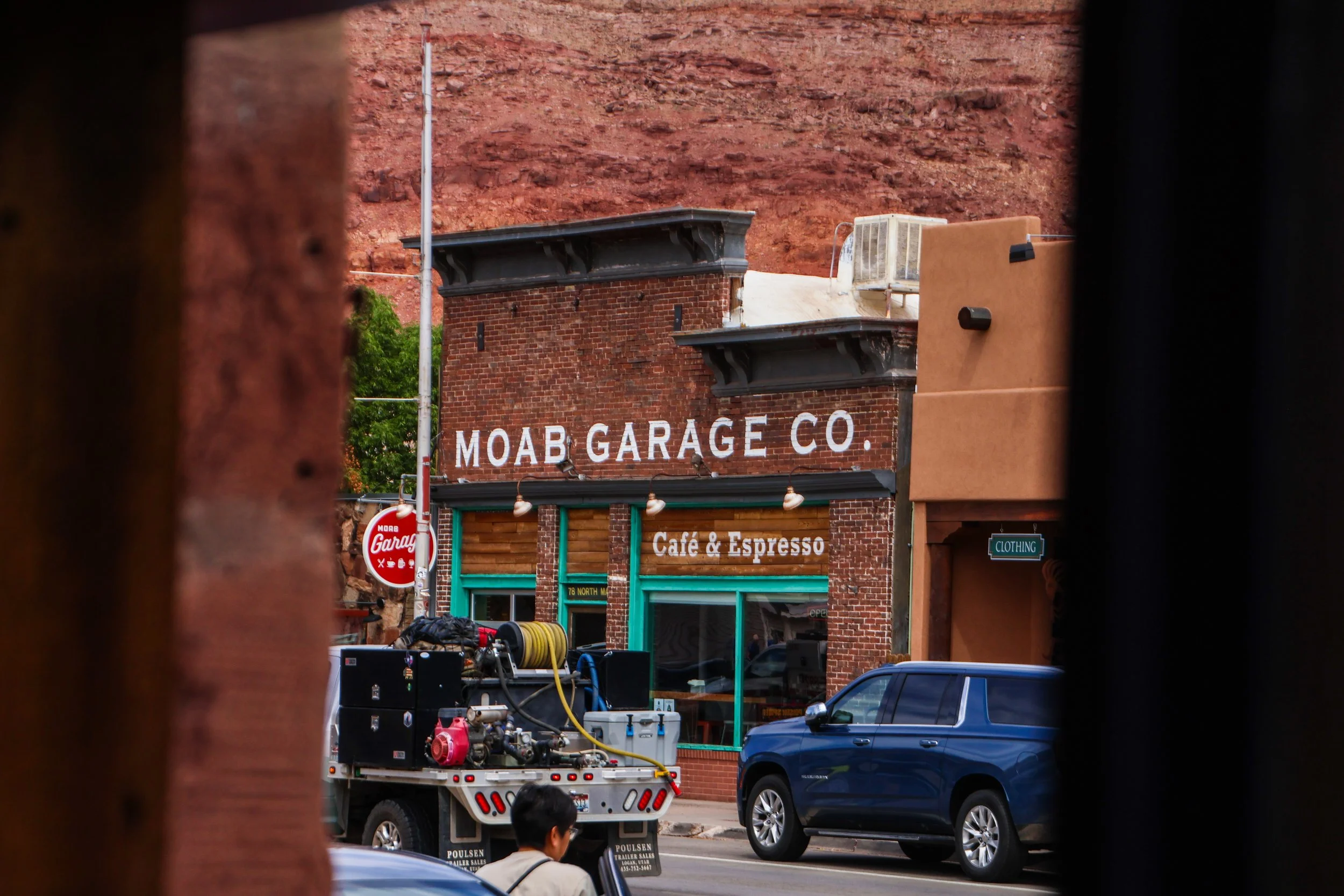
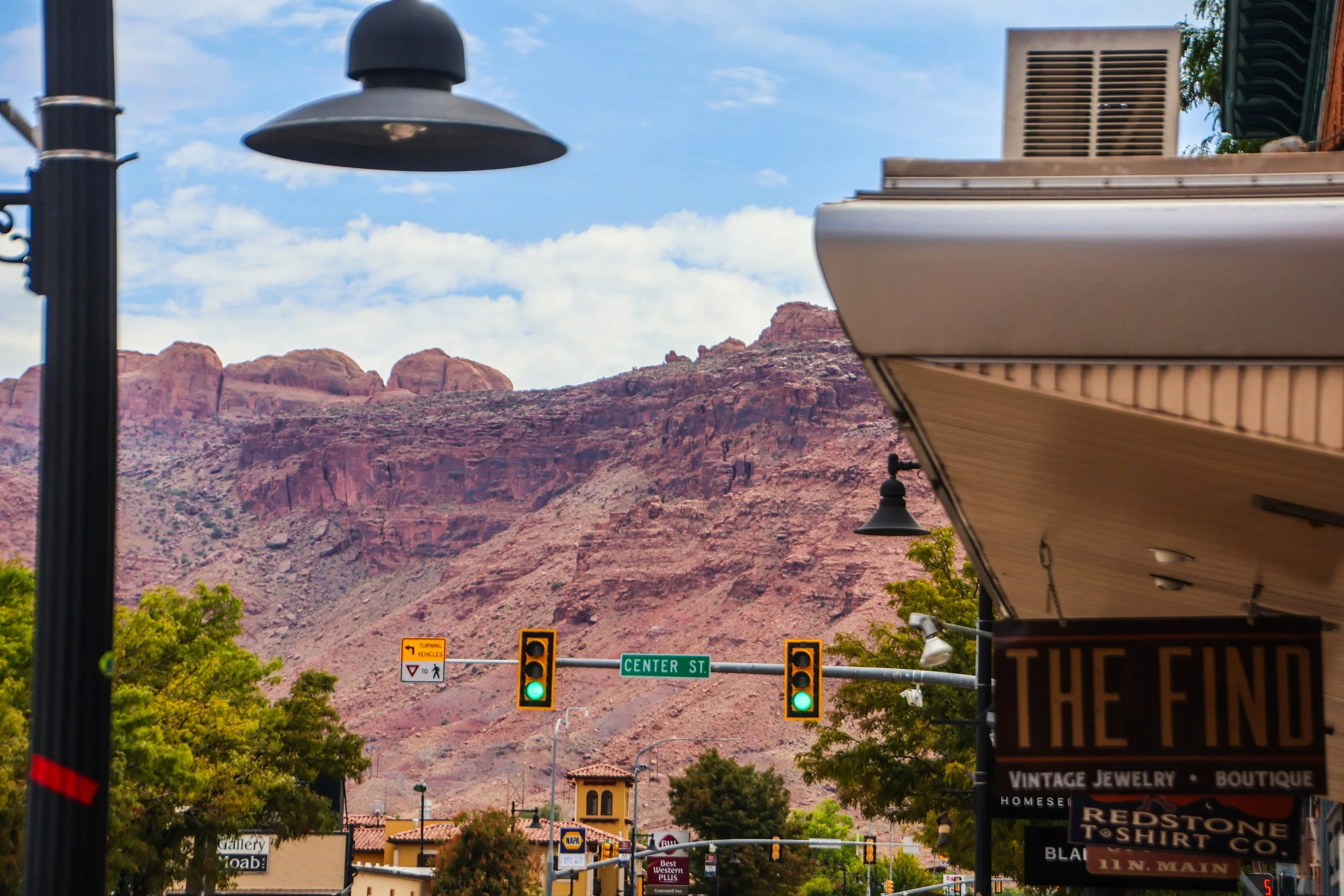
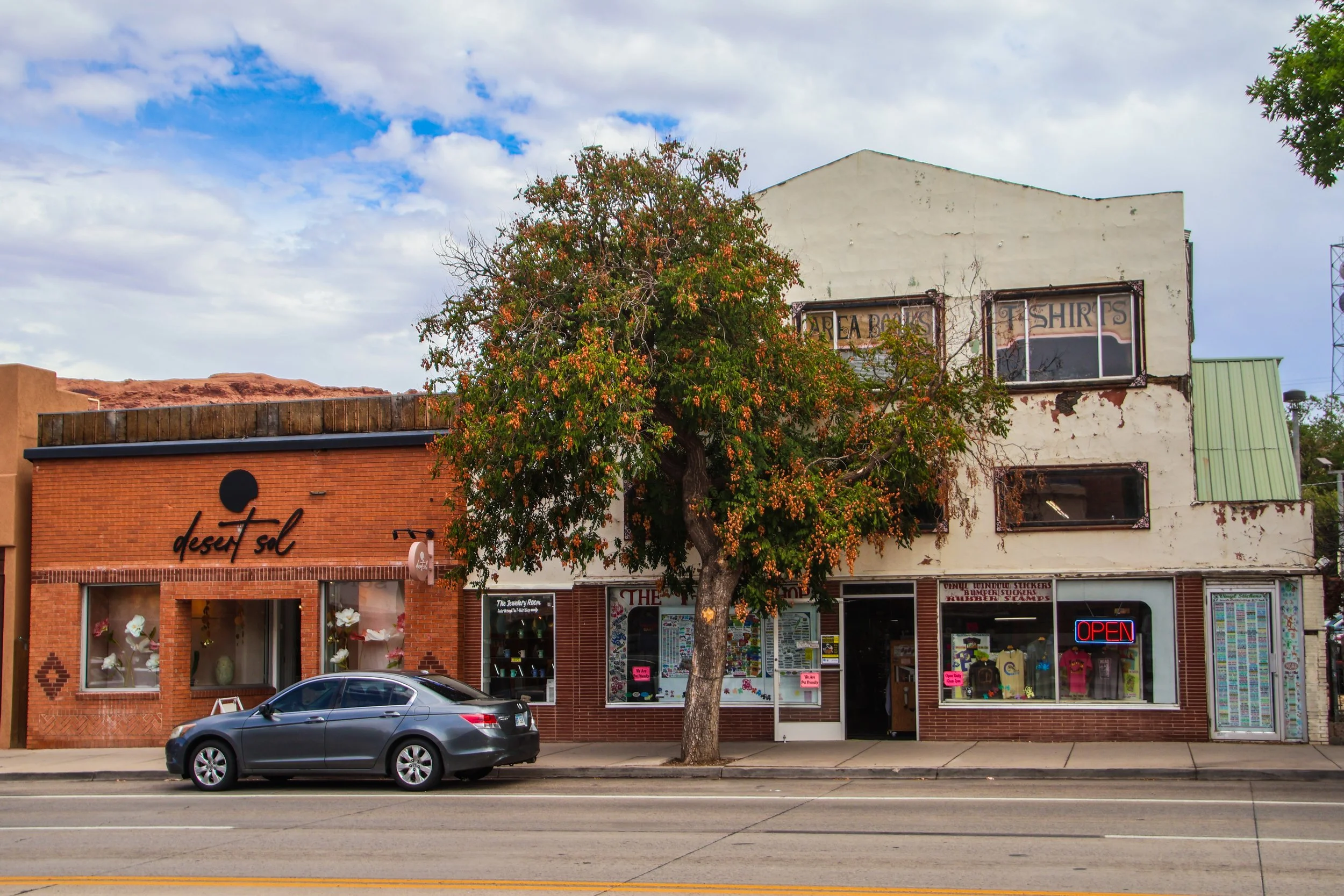
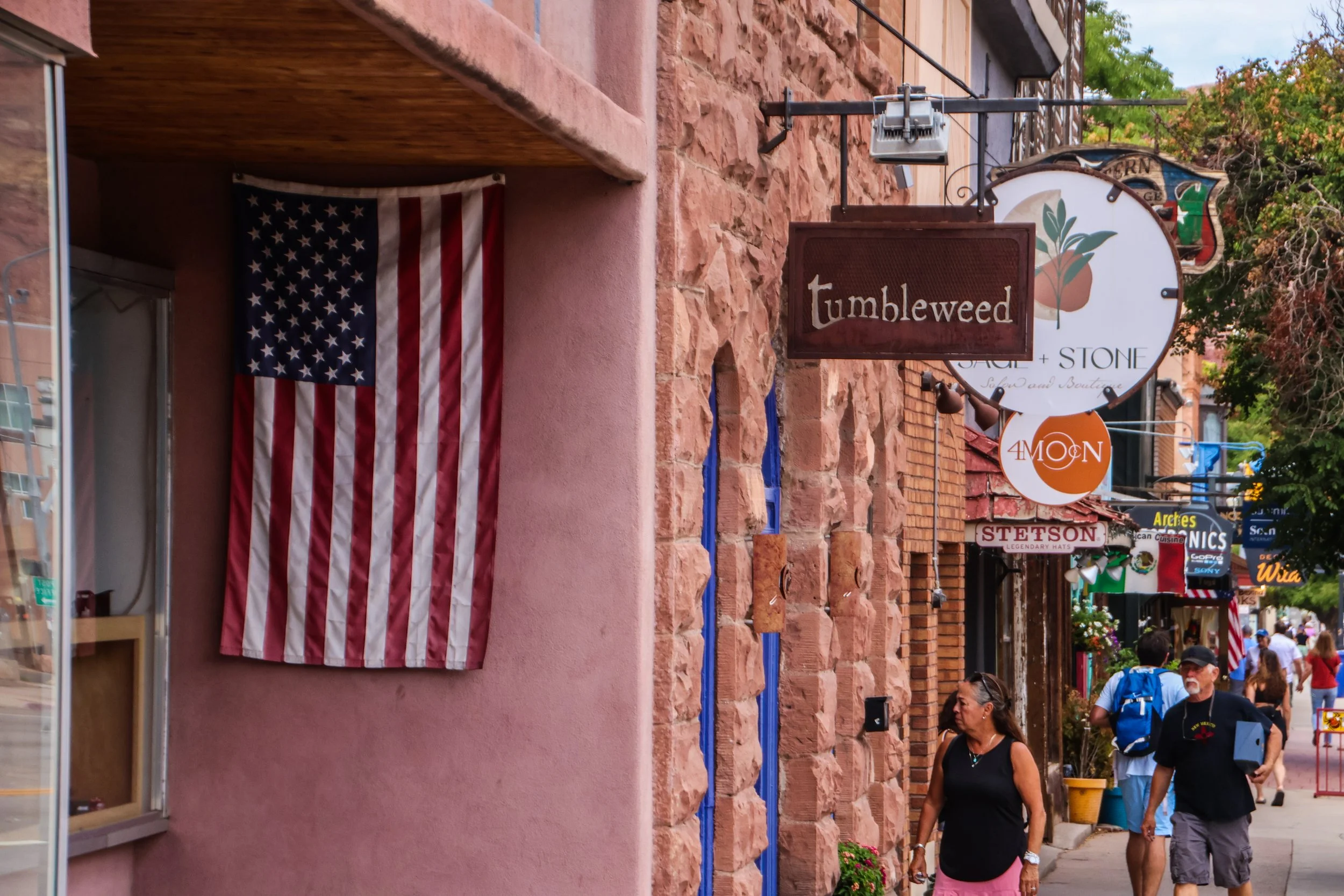
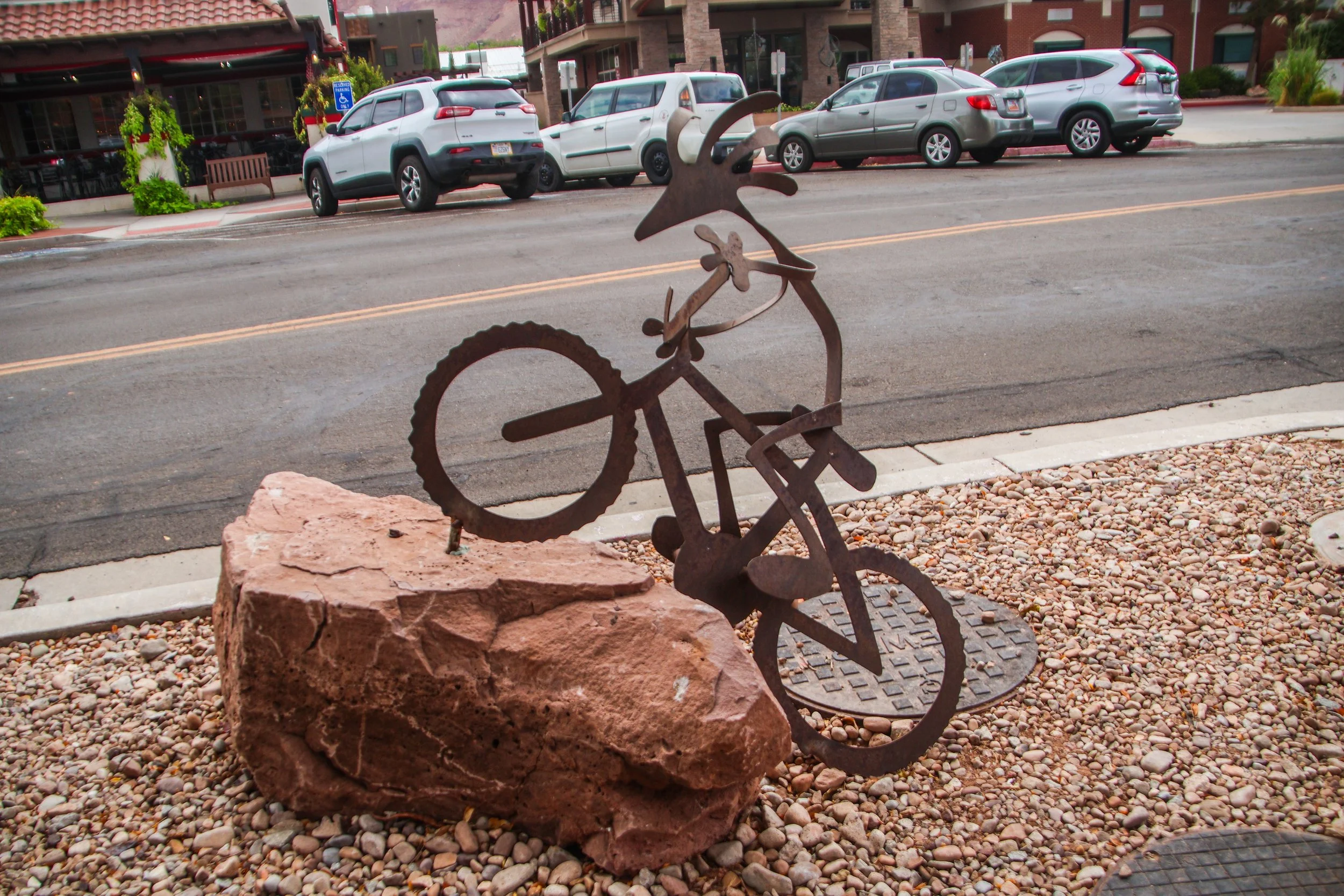
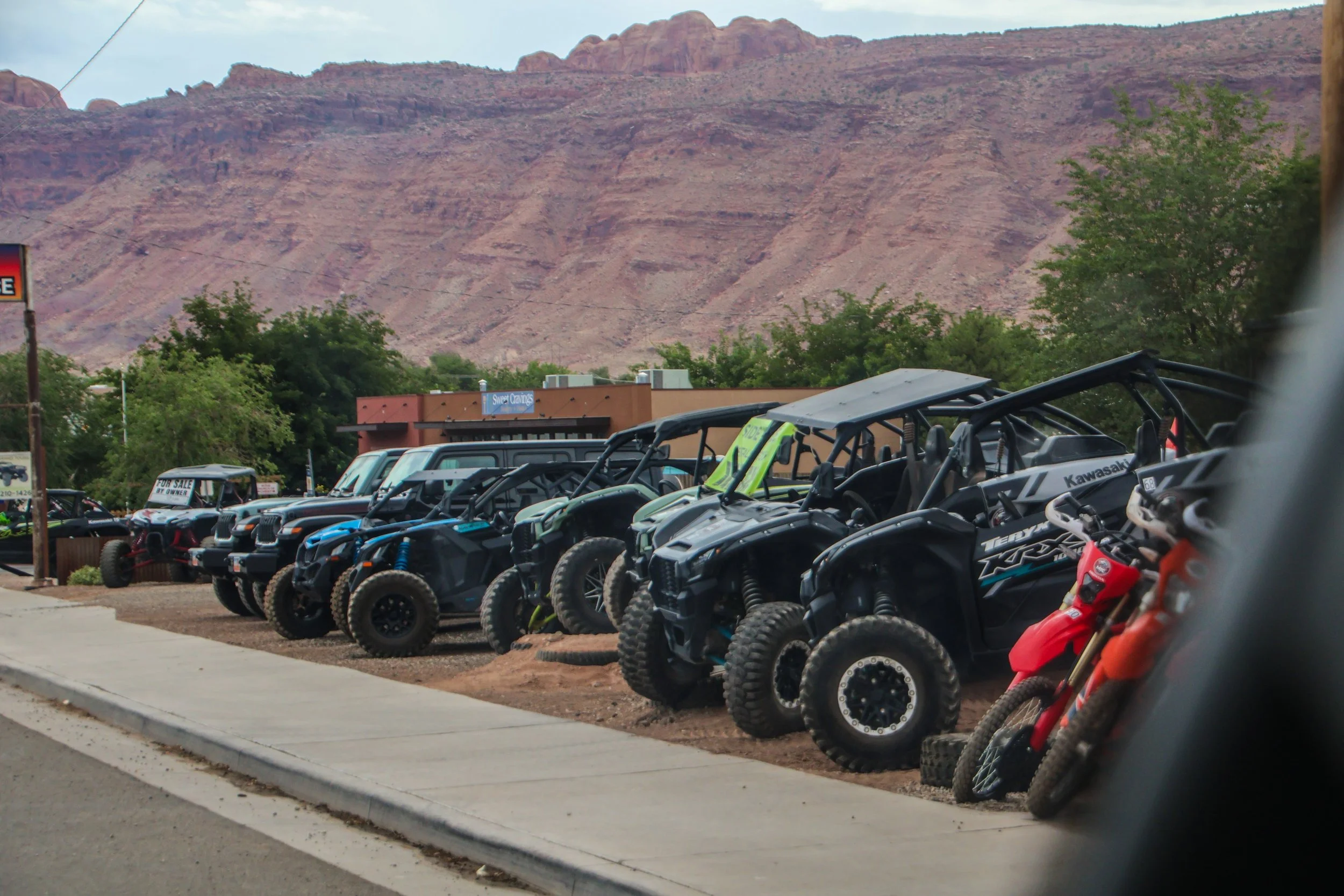
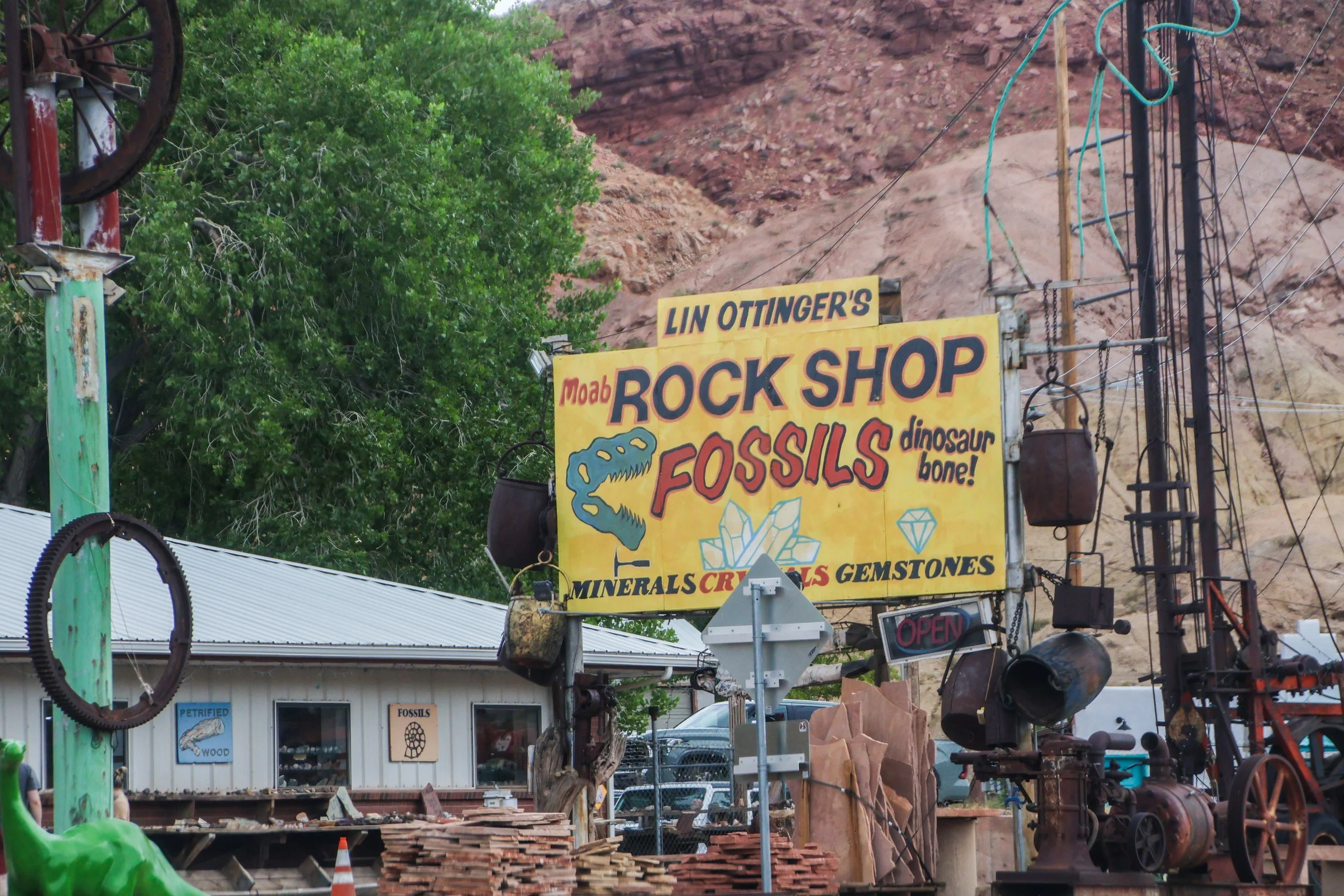


Up next, we’re getting out of Moab into some of the most other-worldly landscapes that this planet has to offer. Stay tuned for Arches National Park, Canyonlands National Park, and Dead Horse Point State Park.


Colorado National Monument isn’t a single landmark, but a large area of landscape, which includes massive rock formations, deep canyons, and rugged plateaus, all of which were carved over millions of years by wind and water. The primary thing to do here is the Rim Rock Drive, which is a 23-mile-long paved road that brings you past a great many breathtaking views over dramatic sheer cliffs and expansive valleys. There are lots of places to stop along the way, many of which have their own hiking trails and camp sites. Today, we’re going to drive the Rim Rock Road.