

🇮🇹 Italy Blog Index 🇮🇹
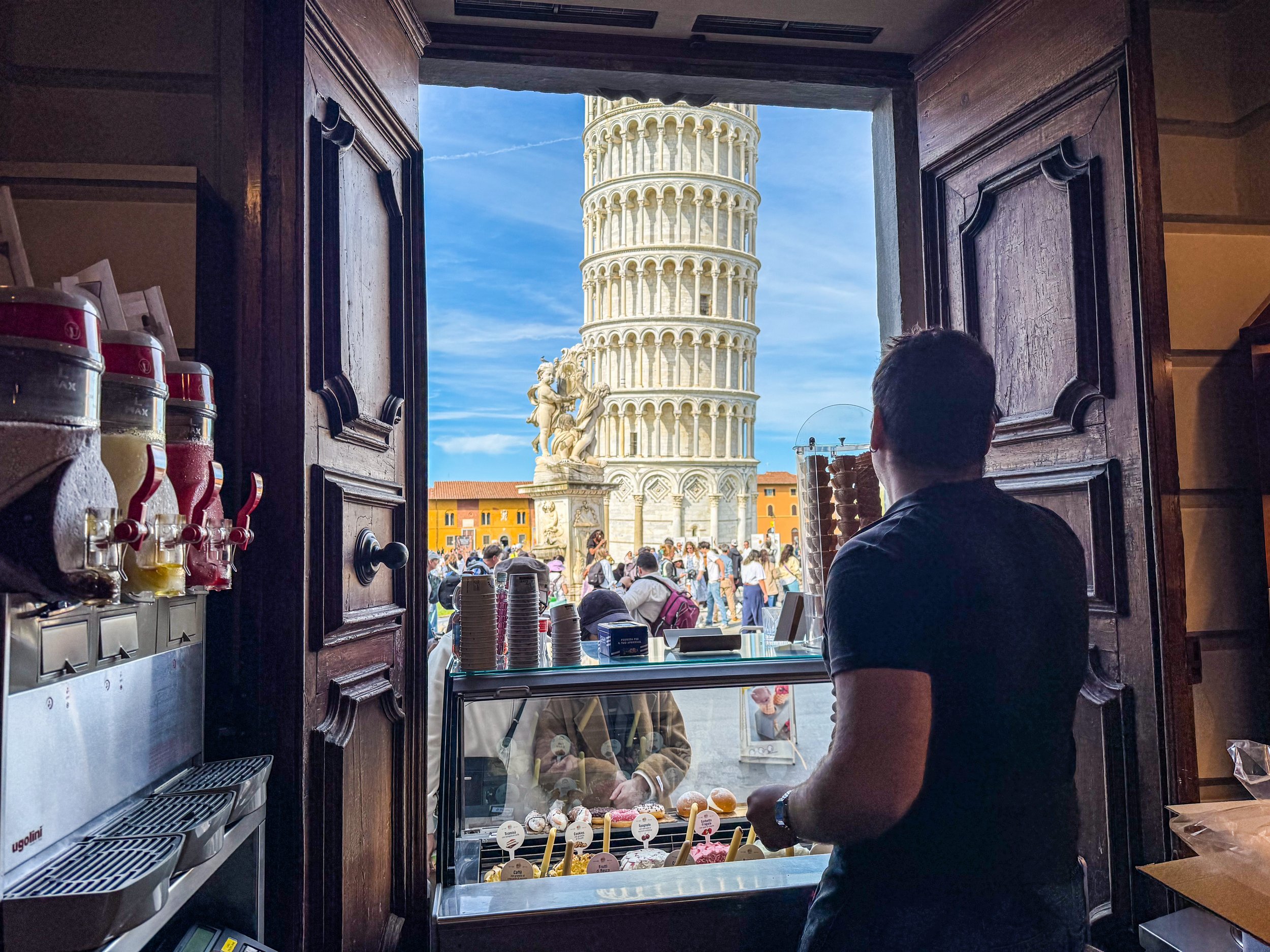
I doubt you will be surprised to learn that the Leaning Tower of Pisa was actually not supposed to lean. In 1173, when work began on this structure, the intention was for it to just be your typical free-standing bell tower. Although I should acknowledge that there was really nothing “typical” about this in the 1100s; Italy was leaps and bounds ahead of (most of) the rest of the world, which is part of what makes these sites so incredible. Anyway, construction took about 200 years, including an almost 100-year-long pause due to wars and political instability. It was officially finished in 1372.
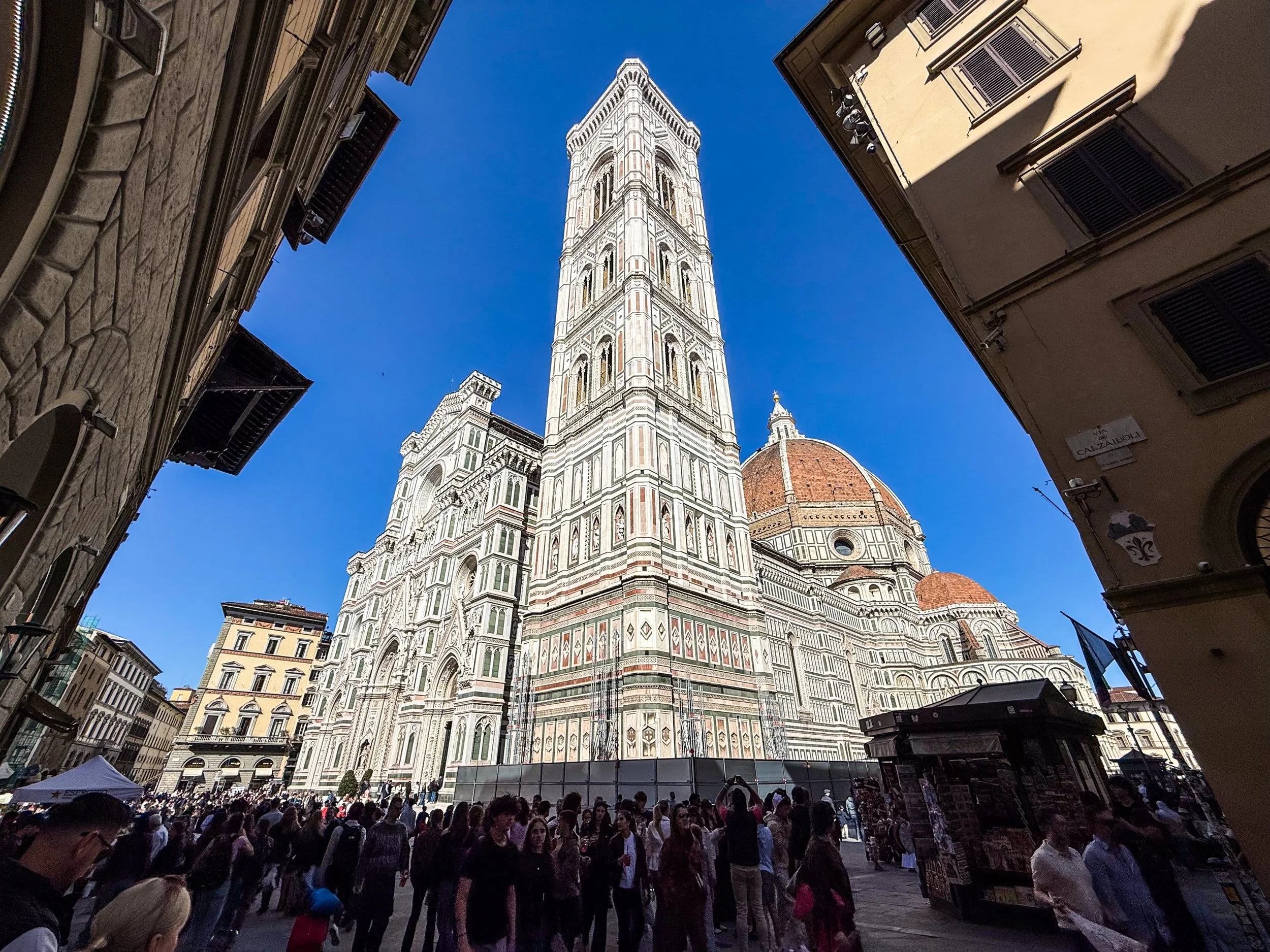
Although Florence was founded under the Romans in 59 BC, its meteoric rise did not begin until about ~1,000 AD. The intervening years saw Florence weather Gothic invasions, Byzantine rule, Lombard control, Frankish conquest under Charlemagne. A thousand years of the same struggle for incremental gains that most every city in the world was experiencing, until Florence’s petri dish yielded something entirely unique. Going into the 1400s, Florence had a unique combination of enormous private wealth, political competition, educated merchants, civic pride, and intense rivalry among wealthy families. You might assume that they the powers that be would opt to duke out their competitions in war, business, and industry (and there was certainly some of this), but the Florentine elite chose a new arena for competition: the arts. You may have heard of the Medici? This was one of those wealthy families that is famously supported some of the artists that would establish Florence as a cultural juggernaut and kick-start the Renaissance. They even have their own Netflix show now.
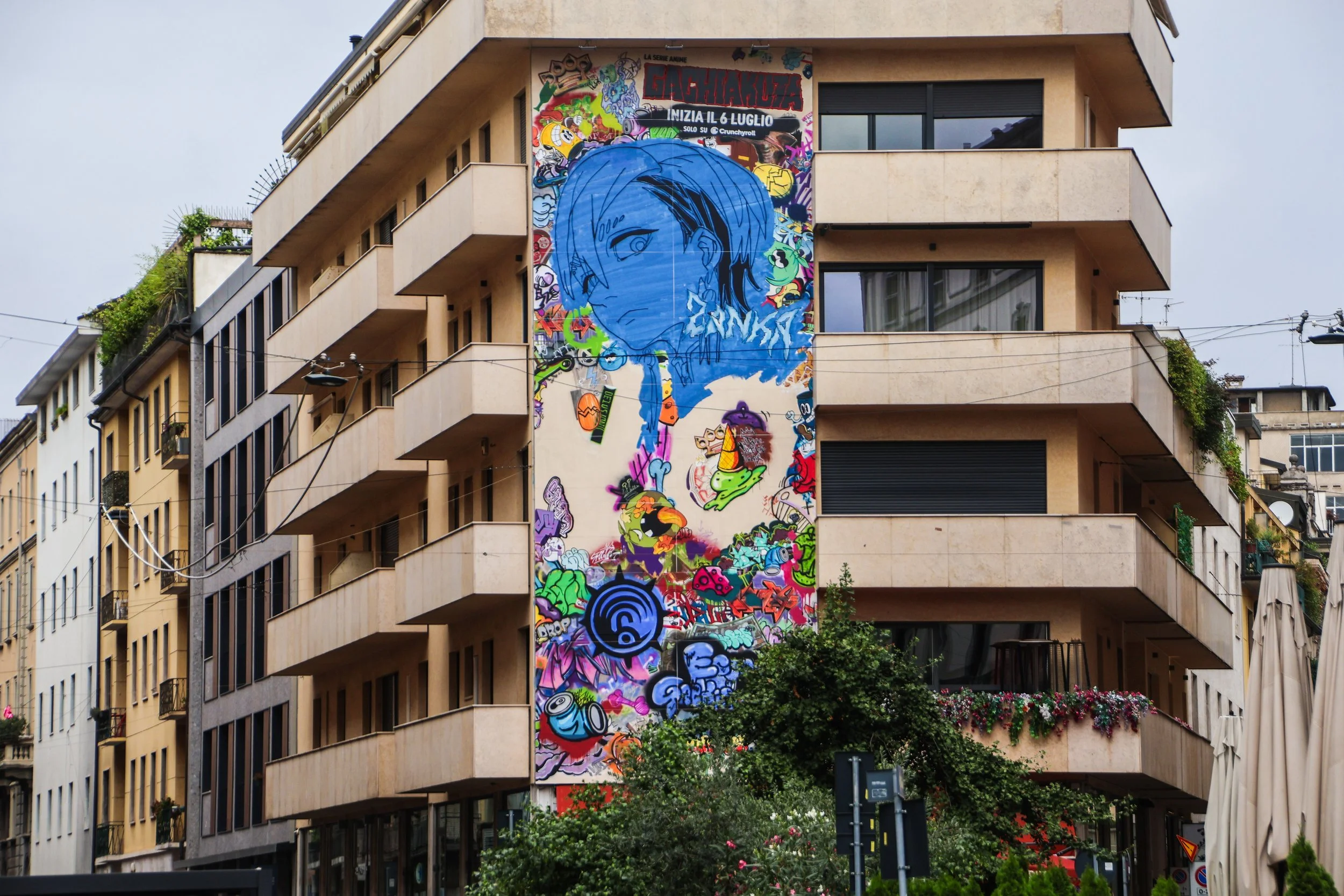
And we’re closing our time in Milano with a street art feature! On this trip I did not find nearly the quantity that I have in some of the other articles on street art, but the quality of what I did find was high enough that I decided these murals deserved their own space. That being said, the mural map of Milan that I found on streetartcities.com suggests I may have missed some really good ones along the way, but that’s okay. I’ll be back!

During my first visit to Milan, I had the great privilege of locals taking me under their wing, which is always a game-changer when exploring a new place. Dropping into communities that already exist and riding the coattails of their intuitive understanding of their home really gives you a feel for what life in a place is really like—but it also relieves you of having to think about where exactly you are in the city at any given moment. As a result, you’ll walk away with a strong emotional bond to a city, but not much concrete information about it. That was my challenge in returning to Milan. So I did the legwork of sifting through exactly where I was during my first visit to Milan, and came up withe two neighborhoods that made the biggest impression on me. They were Brera and Navigli. Let’s jump in.

Milan (or, in Italian, Milano) is not a city that is known for its beauty—at least not within Italy. But I never thought this was fair. Yes, Milan prioritizes function over form, and is more of an industrial hub than any other city in Italy… but the rest of Italy sets an extremely high bar for what it means to be a ~beautiful city. In most other countries, this would be considered an absolutely gorgeous city, but when you’re competing with Rome, Florence, and Venice… yeah, it’s going to be a losing battle. But comparison is the thief of joy, and Milan is still quite beautiful in its own rite! More to the point; it will give you a better window into what everyday life looks like for Italians much better than Venice or Florence ever could. This is real life, and—to me—real life in Milan looks pretty damn good.
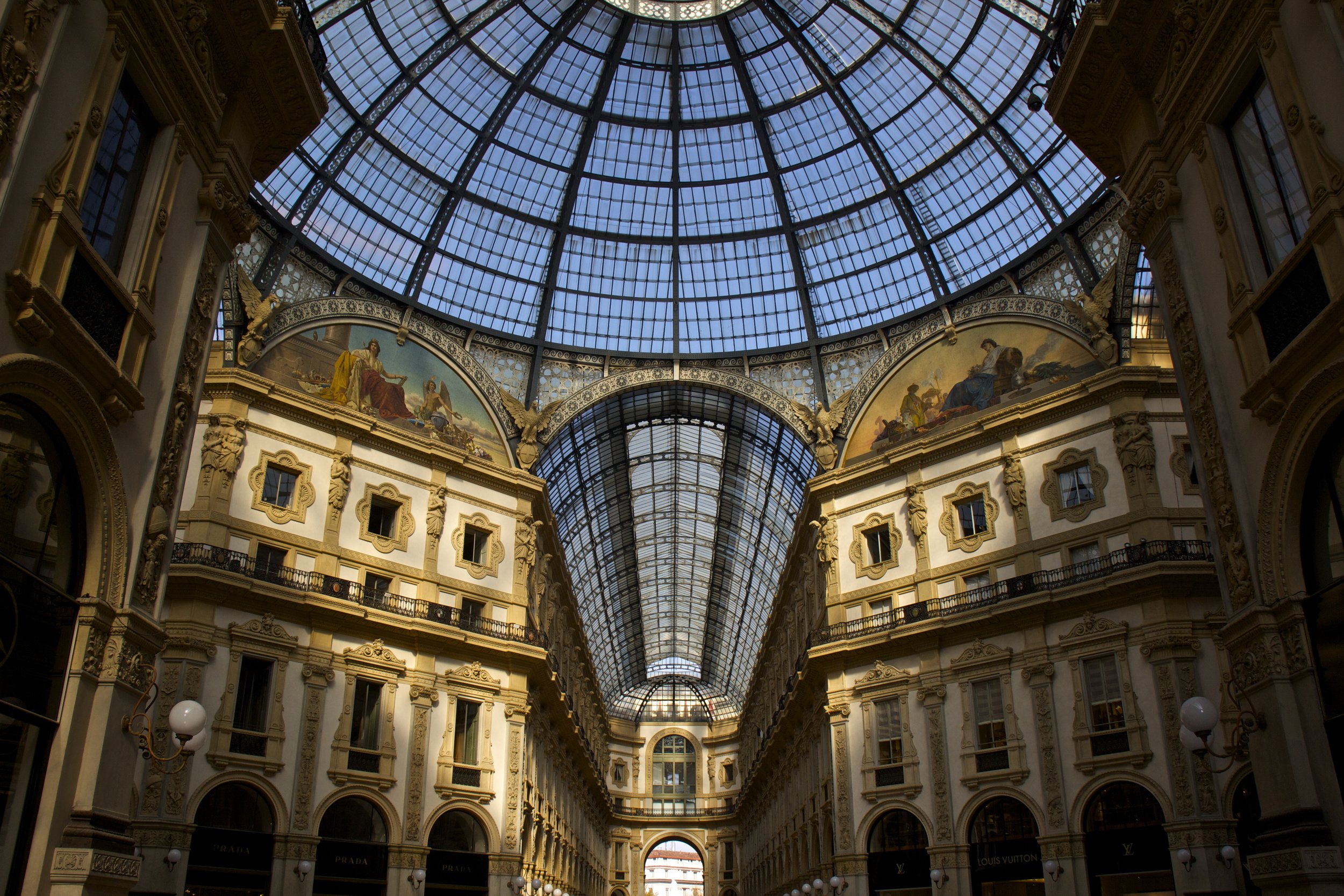
Duomo di Milano is arguably the center piece of Milan, and the plaza bearing its name—Piazza del Duomo—sits at the center of “Central Milan”. We’ll branch out to other parts of the city in forthcoming articles, but today, we’re only going to focus on the comings and goings of this little area.
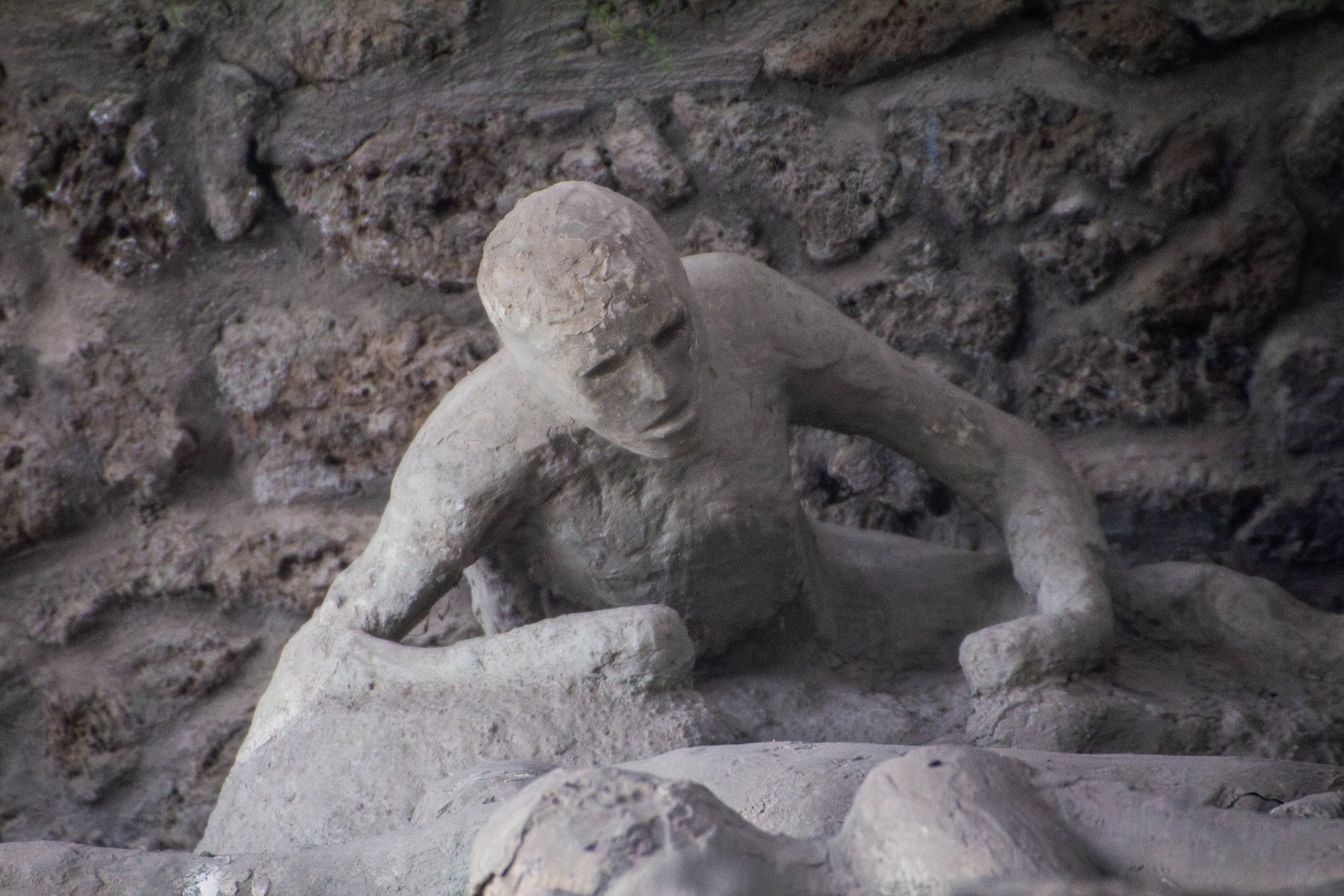
The Greeks really started to invest in and expand Pompeii around 450 BC, but a couple of centuries later, it would ultimately pass into the control of the Roman Empire. By the year 78 AD, it was a large, affluent, well-to-do town in the Roman Empire, which was already more than 3x older than the modern-day United States.
Oh yeah, and it also sat right next to a giant volcano called Mount Vesuvius.
In 79 AD, Vesuvius erupted, releasing approximately 100,000x the energy of the atomics bombs that were dropped on Hiroshima and Nagasaki during WWII COMBINED. At this point in history, the Bay of Naples was already a densely populated area, which made this one of the deadliest eruptions in history. Pompeii, as well as a few other towns in the area, such as Herculaneum, were pretty much wiped off the map, their inhabitants burned and/or suffocated by the violent pyroclastic flows.

Naples takes its calcio (football a.k.a. soccer) seriously. Support for Napoli is almost a religious belief here, and the fact that images of Maradona (the most famous Napoli player ever) outnumber images of Jesus in the streets of Naples can serve as proof of that. But it’s not just Maradona; there are images of the Napoli logo and Napoli players everywhere around Naples.

We’re back with another article set in urban Naples, AND the 2nd-ever showcase of Italian street art! The first took place in Sicily a few years ago, but Naples absolutely crushed Sicily in terms of street art.
Being in beautiful old cities—like those found in Italy—often means less murals. This is because these cities are dense, beautiful, and well-kept—so there’s no empty surfaces for street art. As such, I haven’t yet seen much street art in Northern Italy. However, Southern Italy—being the poorer half of the country—provides a bit more empty space for murals. And Napoli’s unique blend of rich culture and poor economics creates the perfect conditions for Italy the flex its artistic muscles in grittier and more contemporary ways.

Off the Sorrento Peninsula, in the Bay of Naples and the Tyrrhenian Sea, sits the tiny, beautiful island of Capri It may seem like the conversion of places into ~tourist destinations~ is something of a recent phenomenon—like in the last 70 years or so—but there are some places in this world that have attracted tourists for much, MUCH longer.
Capri is one of those places.
In fact, it was functioning as a vacation destination as far back as the ROMAN EMPIRE, likely before the birth of Christ. We actually don’t even know the origin of the name “Capri.” This idyllic isle just is. It’s eternal; immortal. And it’s also one of the rare places in the world where tourism cannot possibly cheapen the destination; it IS the destination.

Naples is the capital of the Italian region of Campania and the 3rd largest city in Italy in terms of population, behind only Roma and Milan. Naples proper has a population of ~909,000 people, and a metro area population of ~3.1 million people, although that figure has been on the decline in recent years. However, the UN projects that starting this year the population is expected to enter a new period of growth. So, the punchline is, Naples is a big city. Especially in the context of Italy. Honestly, I would have guessed that the population would be more than this. It feels quite overwhelming when you’re in the middle of it.

Are you a "glass half full" or a "glass half empty" kind of person?
I think that your opinion on Sicily will pretty much answer that question for you. I like to think of myself as somebody who is able to look on the bright side of things, and to me, Sicily was beautiful. However, it was definitely also quite gritty. Today, we’re going to take a deep dive into all that garbage and graffiti and browse though some of my favorite examples of Sicilian street art.

Seriously, nothing can prepare you for how creepy this place is... but I'm getting ahead of myself.
I'll start from the beginning. The Capuchin Catacombs are always placed highly on people's lists of things to do and see in Palermo, and it's easy to see why. It's just SO outrageous! Before we dive into this article, I've got some serious explaining to do, because you are sure to have questions. I know that for me, the biggest question I had in all of this was just "why." Why does this place exist?
Buckle in, kids!

In the last article, we covered a lot of ground. I was a little out of breath by the time I finished writing it! But Palermo deserves to have some serious time spent, just taking it in, exploring. So now that you've been brought fully up to speed on the many historic layers of this city, I want to take a deep dive with you and just get out on the streets of Palermo.
Are you ready for a big dose of Sicily’s capital city?

Prior to actually coming here, I had heard mostly negative reviews of Palermo. After traveling through the rest of Italy, people love to dish about how dirty Palermo is. And Bourdain's episode on Sicily painted Palermo with similarly discouraging colors. People also brought up the Mafia a lot when discussing Palermo, alluding to connections between the systemic corruption of government and the poor up-keep of the streets. A few weeks out, I was sort of expecting Palermo to be a dump, but then I had an Italian friend rave about how much she loves this city, describing it as 'decaying and decadent.' This put my expectations on par with Havana, Cuba, and that made me really excited!

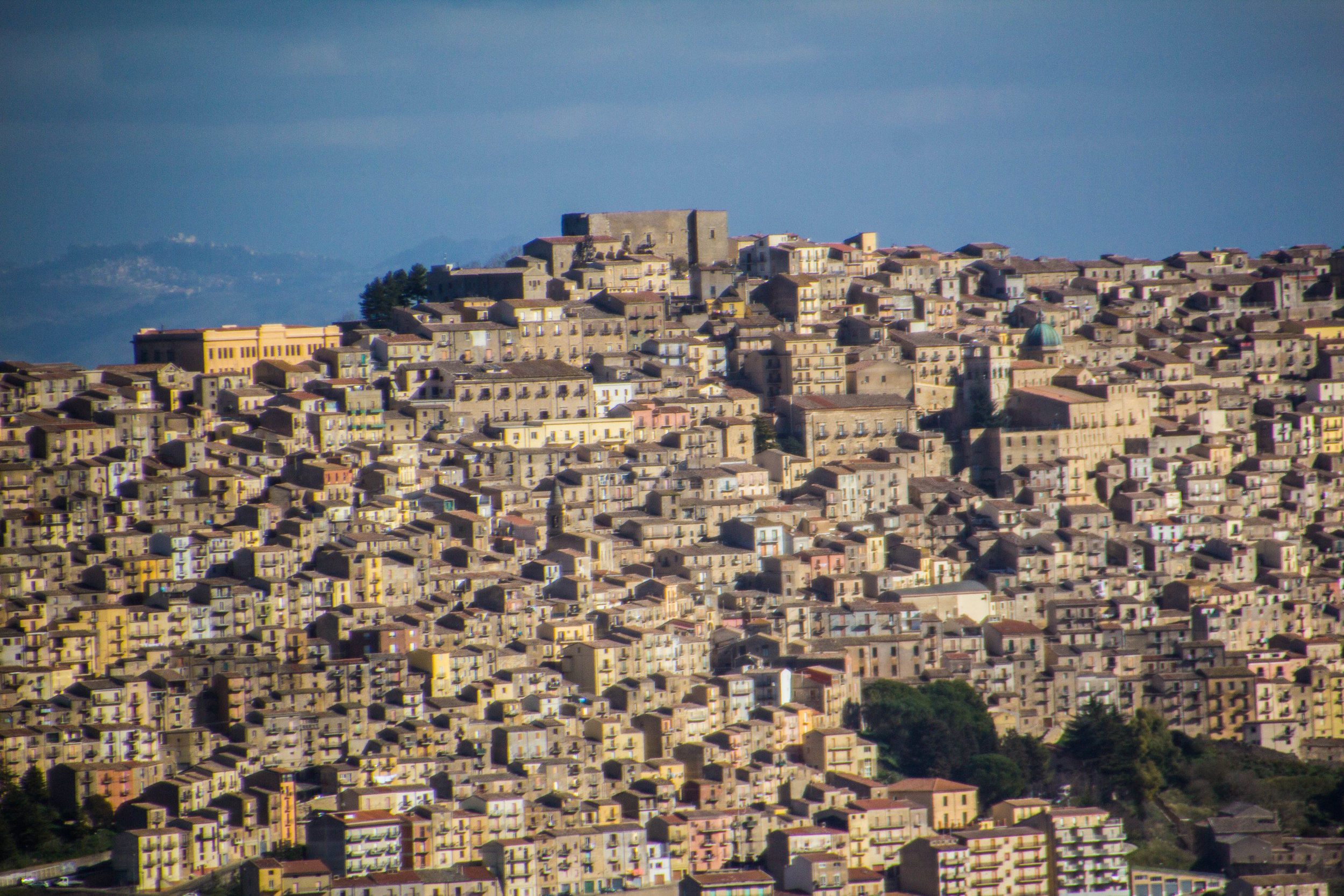
I should start by telling you that Gangi (pronounced "gan-chee") isn't *technically* a ghost town. It's actually trying REALLY hard not to be. In an effort to revitalize this town, the mayor of Gangi decided to start selling the vacant houses to outside investors for €1.00 a piece. This insane bargain comes with 1 string attached: that you will spend no less than 35,000 EUR (43,212-ish USD) to fix up the house within 5 years. Yes, this is 100% true, and if you want to, you really could buy one of these houses right now. Mull it over as you read this article.

Just south of Messina, this gorgeous Sicilian town sits on the edge of a mountain, looking out over the Ionian Sea towards Calabria. It's population is just over 11,000, but it gets vastly more tourists every month. Indeed, Taormina has been a fashionable travel destination for a few hundred years now. Yes, you read that right—we're talking centuries of tourism here.

Just 2 hours south from Catania, down the eastern coast of Sicily, sits a the city of Siracusa (a.k.a. Syracuse). You may recognize this name from history books about the very distant past. Syracuse makes appearances in tales and legends that stemmed from a great many famous Empires over the course of Mediterranean history, most notably the Greeks, Romans, and Byzantines. Oh, and it makes a cameo appearance in the Bible. It was described by early Roman officials as "the greatest Greek city and the most beautiful of them all."
Suffice to say, this place has some serious history behind it. Are you ready to see what’s going on in 2018?

If you want to come here, it's very important that you know that this happens exactly at sunrise. If you really want to catch this place in action, it's best to get there before 7:00am. The first time I attempted to come here, I slept in and showed up at 7:45-ish, and it was mostly over. I got some decent pictures, but it was clear that things were winding down. It was frustrating. The next day I set my alarm for the TRUE butt-crack of dawn, and got here before the sun rose.

Catania is the second largest city in Sicily. The population of Catania proper is about 320,000, but there are a combined 1.1 million people who live in the metro area. In Italy overall, Catania is the 10th biggest city, and the 7th largest metro area. This is a major population center for Sicily, second only to Palermo, which will be our last stop on this trip. Catania is not the most well-known place, but it's definitely not small either. It's actually really big, especially by Sicilian standards. But Catania's burgeoning population should be surprising. This isn't exactly prime real estate.
Why? Because of Mount Etna.

We arrived at the foot of Via della Conciliazione in later afternoon. The sky was gray, and the air held a cold moisture. We followed the masses of people up the road towards the giant stone gates. On either side of these gates, giant Roman columns stretched off endlessly. These marked the border between Italy and Vatican City. Perched on either side of the entrance were Italian military outposts manned by heavily armed but very bored-looking soldiers.
Crossing into Piazza San Pietro, though an international boundary, was decidedly anti-climactic. However, what we found on the other side of this plaza blew us away.

It was a long and unfortunate series of circumstances that delayed our flight from New York to Algiers for 2 full days, but they say that when God closes a door, he opens a window. And for us, this window came in the form of a extremely long layover in Rome. This would give us just enough time to sneak out of the airport to go into the city, so that's exactly what we did.
Even if you know Rome only by reputation, you can probably guess that it's far too big a city to see in a single day, so we decided to break off a single bite-sized piece: a neighborhood called Trastevere.

Travel plans! This time we'll be exploring Sicily, as well as the North African nations of Algeria and Tunisa. We will also be stopping through one other mystery Mediterranean location, which will be revealed shortly. In the coming articles, you can expect to hear about cities like Algiers, Tunis, Catania, Syracuse, and Palermo, among others.
LET'S DO THIS!

This is Part 2 of my time sneaking around Venice, seeing everything this amazing city has to offer, and spending as little money as possible in the process. Here we'll go through extensive photo galleries, which stretch well into night time on the canals, as well as meet the infamous Plague Doctor.

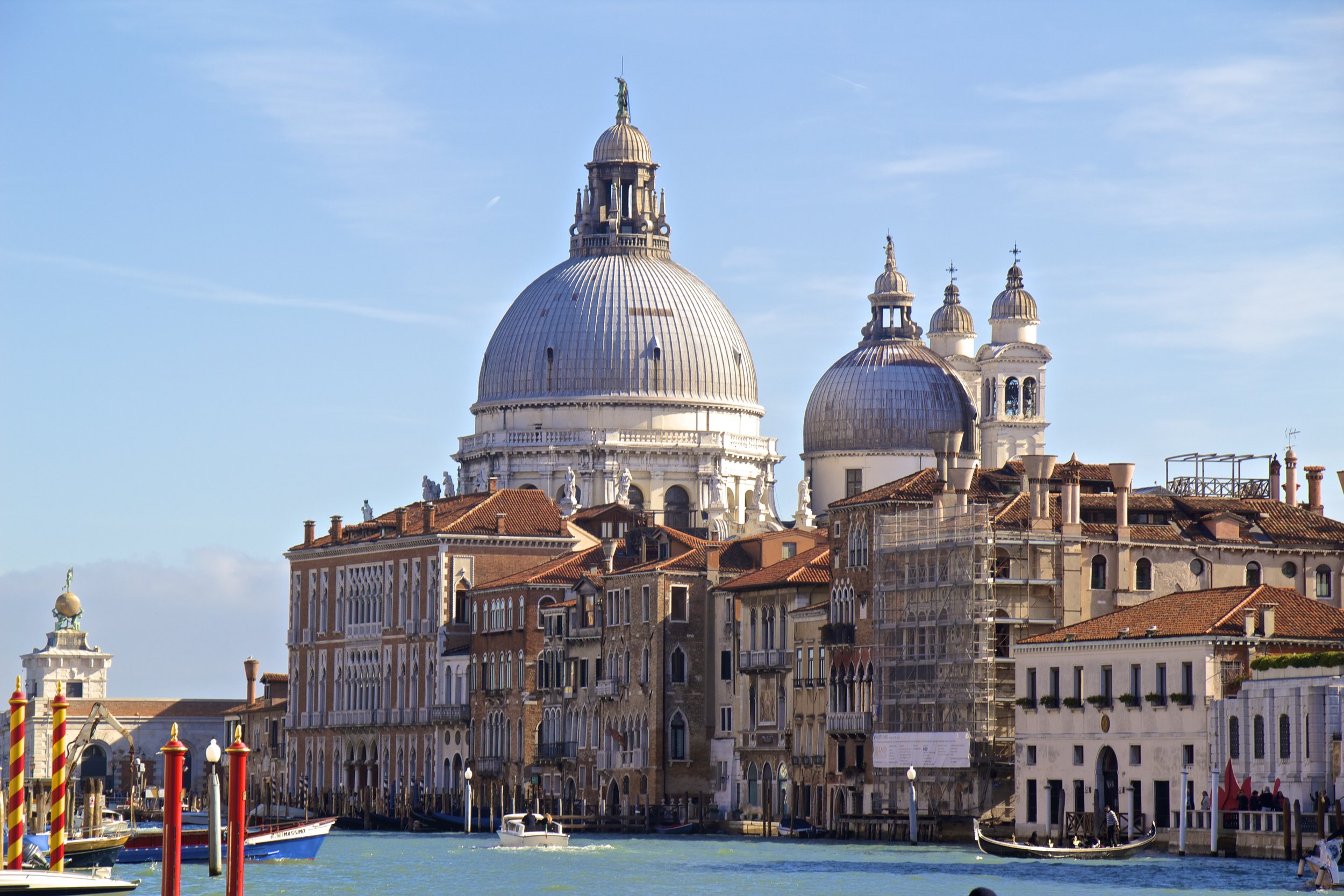
With it's legendary boats and canals, few other destinations possess the same fabled mystique as this fairy-tale city. Once a powerful autonomous kingdom in its own rite, Venice is composed of 118 small islands off the coast of Northeastern Italy. Before Venice was ~*Venice*~, these islands were nothing but swampy lagoons. These lagoons are thought to have been settled by Roman refugees who were fleeing invasions of the Germanic and Hun empires. There is no surviving historical record to give us any insight into Venice's formal founding, but some ancient Roman documents place these refugee fishermen here as early as the 1st century A.D. According to tradition though, the first church of Venice was officially established in 421 A.D., so that is the historically accepted year of Venice's founding.

I arrived in Italy pretty directionless, so their vivid descriptions of discovering beautiful seaside towns along the Italian Riviera that were completely void of tourists were enough to sell me. Of course, that was the 1980s, and today it isn't quite the same, but Cinque Terre is still incredible.
Buckle in.

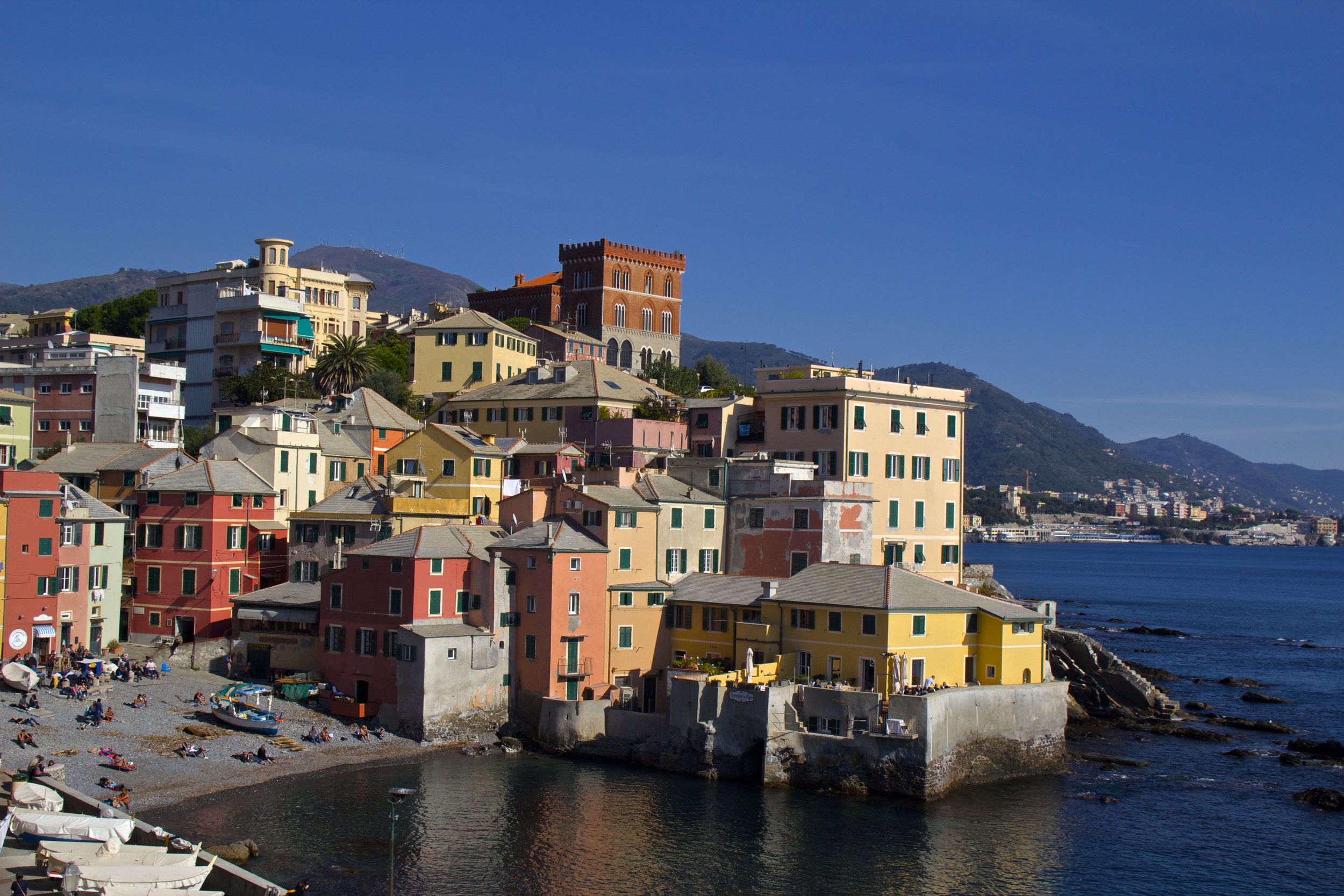
With places like Florence and Rome literally at my fingertips, it might be considered an odd move to choose to visit Genoa instead. Genoa had always fascinated me though. Nobody ever talks about it, but, if Google Images was to be believed, it's a gorgeous seaside city! Let's check it out...

The World Expo, or World’s Fair, is kind of like the Olympics for culture and development. It happens every 2 or 3 years, each time in a different city. The first World Expo was held in London in 1851, and since then it has been hosted be cities all over the world from Japan, to Brazil, to the good ole’ U.S.A. The next one is scheduled to be held in Astana, Kazakhstan in 2017. After that will be Dubai, U.A.E. in 2020. Every Expo has a different theme showcasing a different cultural facet or scientific frontier. The Milan Expo was about food, and I did not hate it. I actually can't think of anything I'd rather it have been about.
I flew into the airport of a city called Bergamo. From there, despite having the passport stamps to prove that I had been to hell and back, I breezed through customs. I changed my money and took a bus into Milan called Terra Vision. The bus took about 1 hour to reach Milan’s Stazione Centrale (Central Station) and cost 5.00 EUR (5.32 USD).
🇮🇹 Peter’s Map of Italy 🇮🇹
Featuring only locations covered in Peter's Big Adventure
📸 Sneak-Peek Of Italy 👀


Italian Lofi Girl 🇮🇹 ✍🏼
This is a deep cut from the Internet, but I love seeing the Lofi Girl art translated to the backdrop of different countries. Even though I’m not really into anime (except for Miyazaki movies, obvs), there are very few things that make me more comfortable with the idea of traveling somewhere new than these illustrations. Here is an artist rendering of Italian Lofi Girl that I liked.
Credit for this picture goes to Andrea Piuma (u/freak-000).


“Cinque Terre” literally translates to 5 lands, and indeed, it is not 1 place, but 5 places. It is a collection of 5 historic towns dotting the rugged, mountainous Mediterranean coastline between La Spezia and Genoa. These towns emerged between 1000 and 1200 AD, and—in their prime—were able to flourish because they combined fishing, boat building, agriculture, and maritime trade. You’ll hear them referred to just as “fishing villages” but that is only part of the story. Agriculture is also massively important to the appearance of these towns even today. The main staple of these towns, in additional to olives, was wine.