
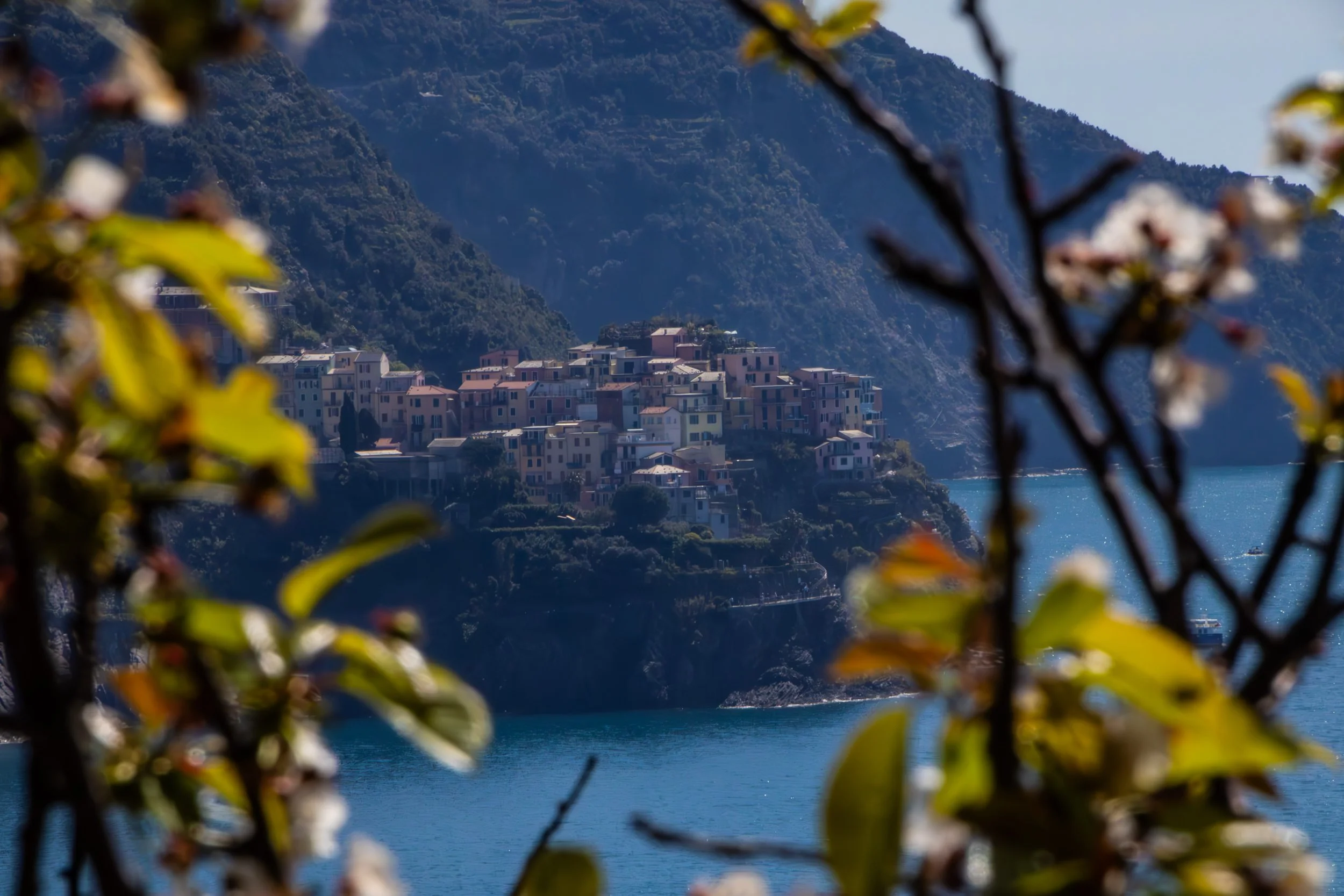
We’re finishing this min-series in Italy with a repeat of one of the most beautiful places I’ve ever seen: Cinque Terre. Yes, I wrote about this place in 2015 in the article “Peter Goes 4 for 5 in Cinque Terre”. But don’t worry; I wouldn’t be writing about it a 2nd time if I didn’t have something new to offer. The new elements here will be as follows:
As the previous article’s title suggests, there was 1 town that I missed last time: Corniglia
We’re also going to visit nearby port city of La Spezia
Last time I visited was in 2015, when this blog was just a baby, so this article will (hopefully) be of a higher quality and (hopefully) feature a better collection of photographs.
Also, it can be interesting to see how these places change from one decade to the next.
Cool? Cool.
Prologue: La Spezia
The first time I came to Cinque Terre, I stayed in Genoa. It was a bit of a haul to get back and forth from Cinque Terre, but oh my gosh… Genoa is GORGEOUS. It’s one of my favorite Italian cities. So I was interested to visit La Spezia too. If Cinque Terre and Genoa were any indicator, La Spezia would be amazing too, right?
Wrong.
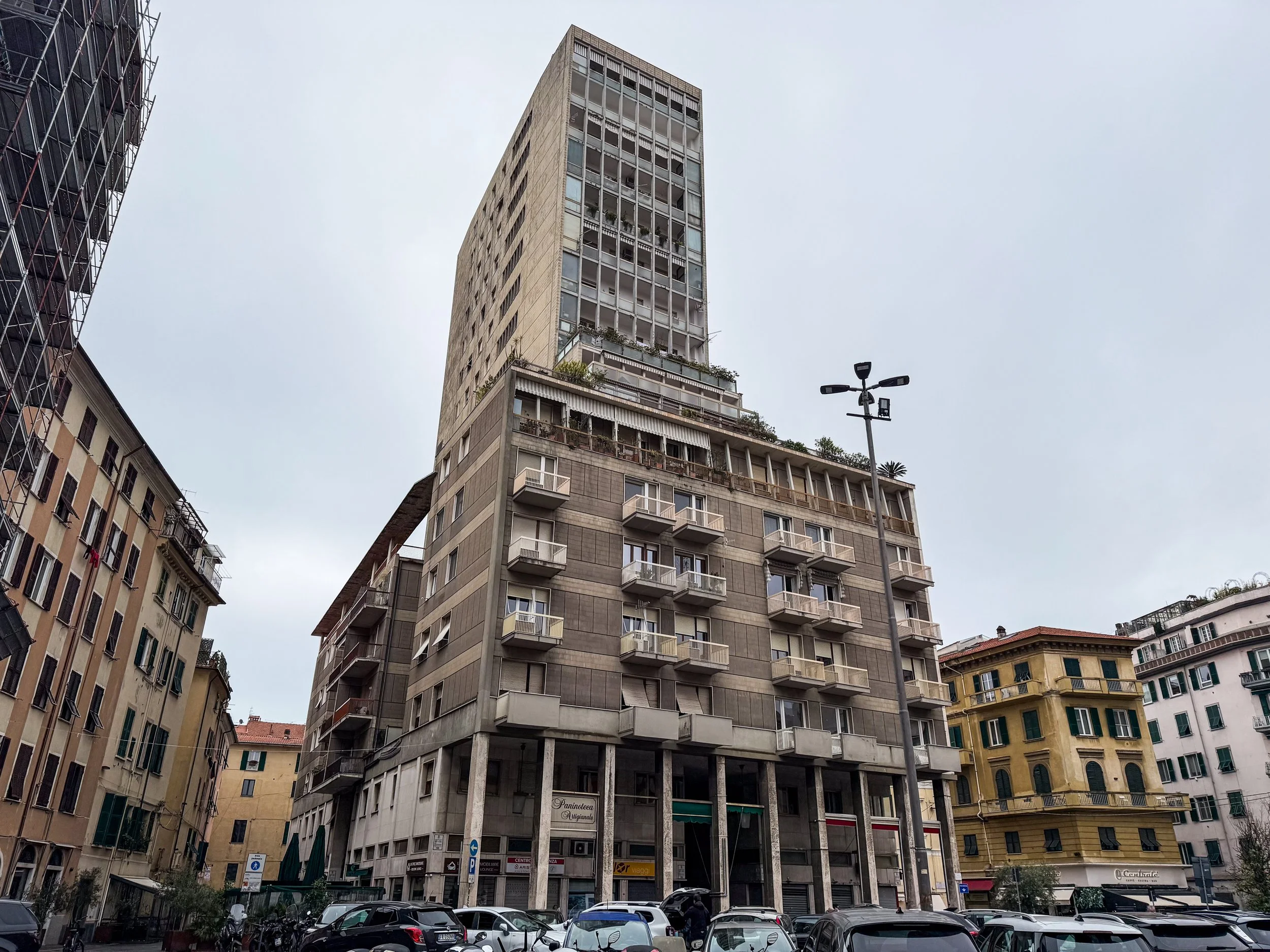
This is not intended to besmirch the name of La Spezia at all; I think that even the proudest resident would tell you that it is not particularly scenic compared to its neighbors. The history here is very different. For most of history, there wasn’t much happening here; it was a small fishing town. However, shortly after the unification of Italy, it was recognized as having one of the best natural harbors not just in Italy, but in the entire Mediterranean. Therefore, in the 1860s, Italy built one of Europe’s largest naval arsenals here. This completely transformed the city over an extremely short time, as thousands of workers, engineers, officers, civil servants, and their families moved in. In short, this is a bit of a military town.
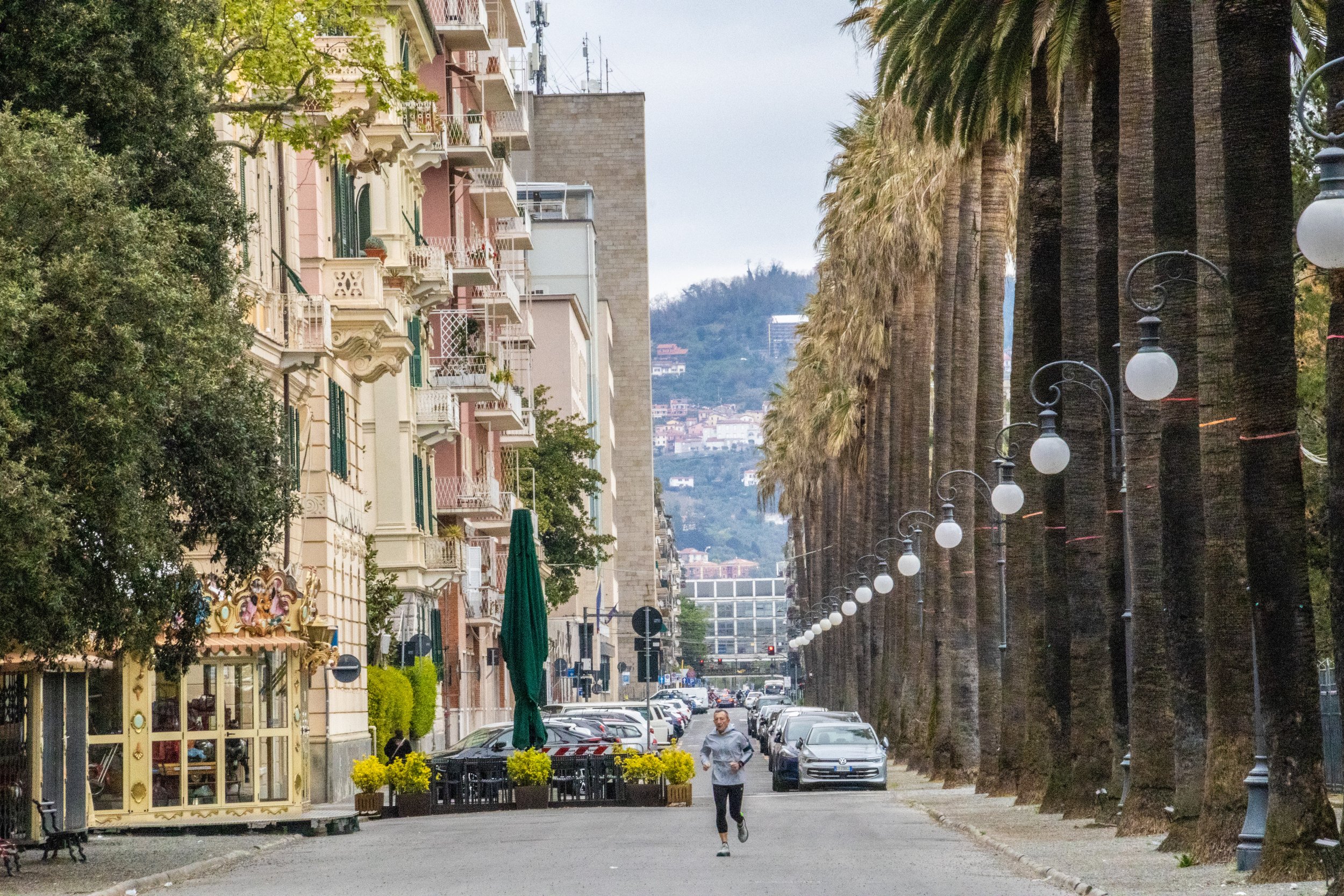
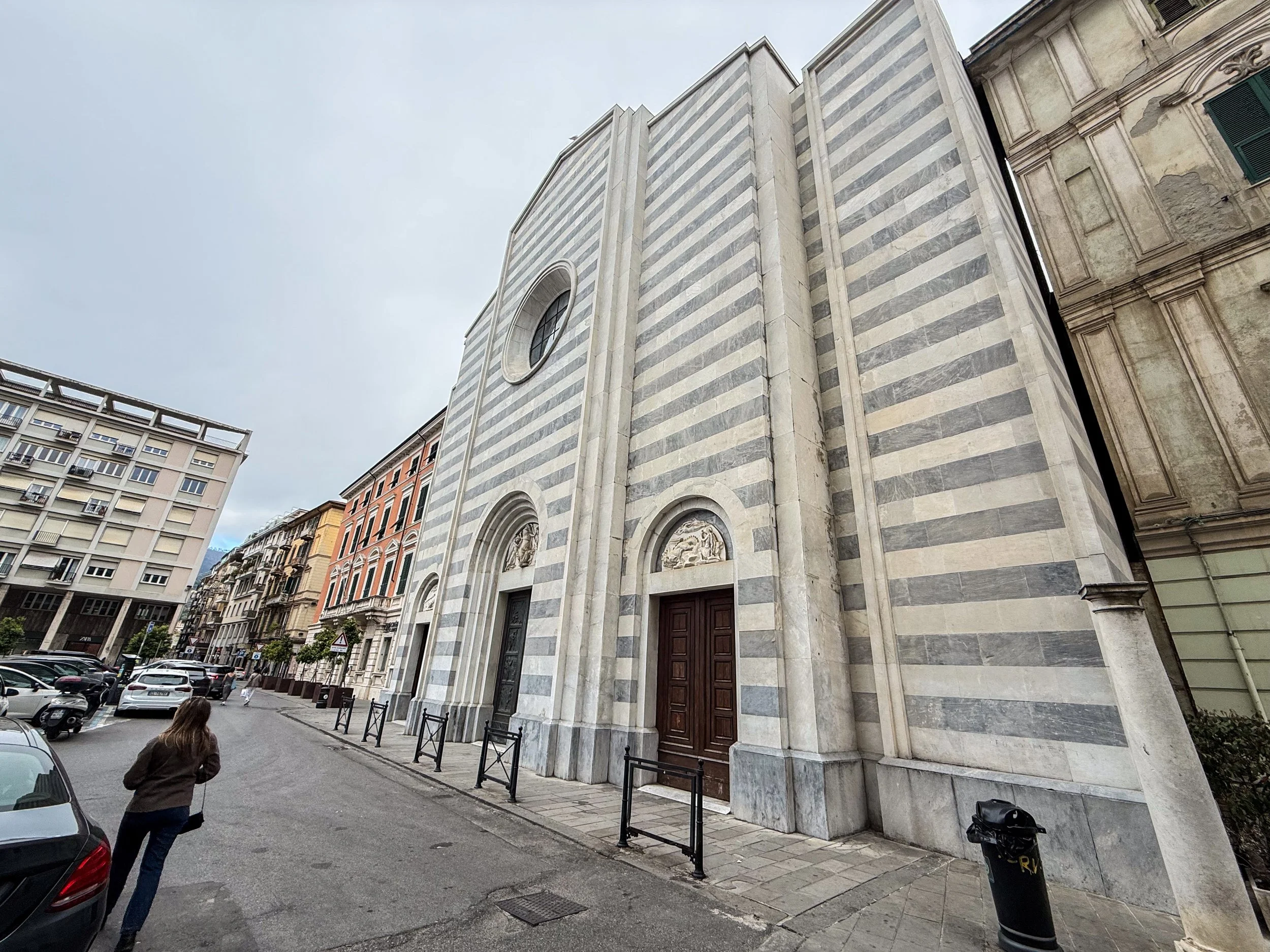
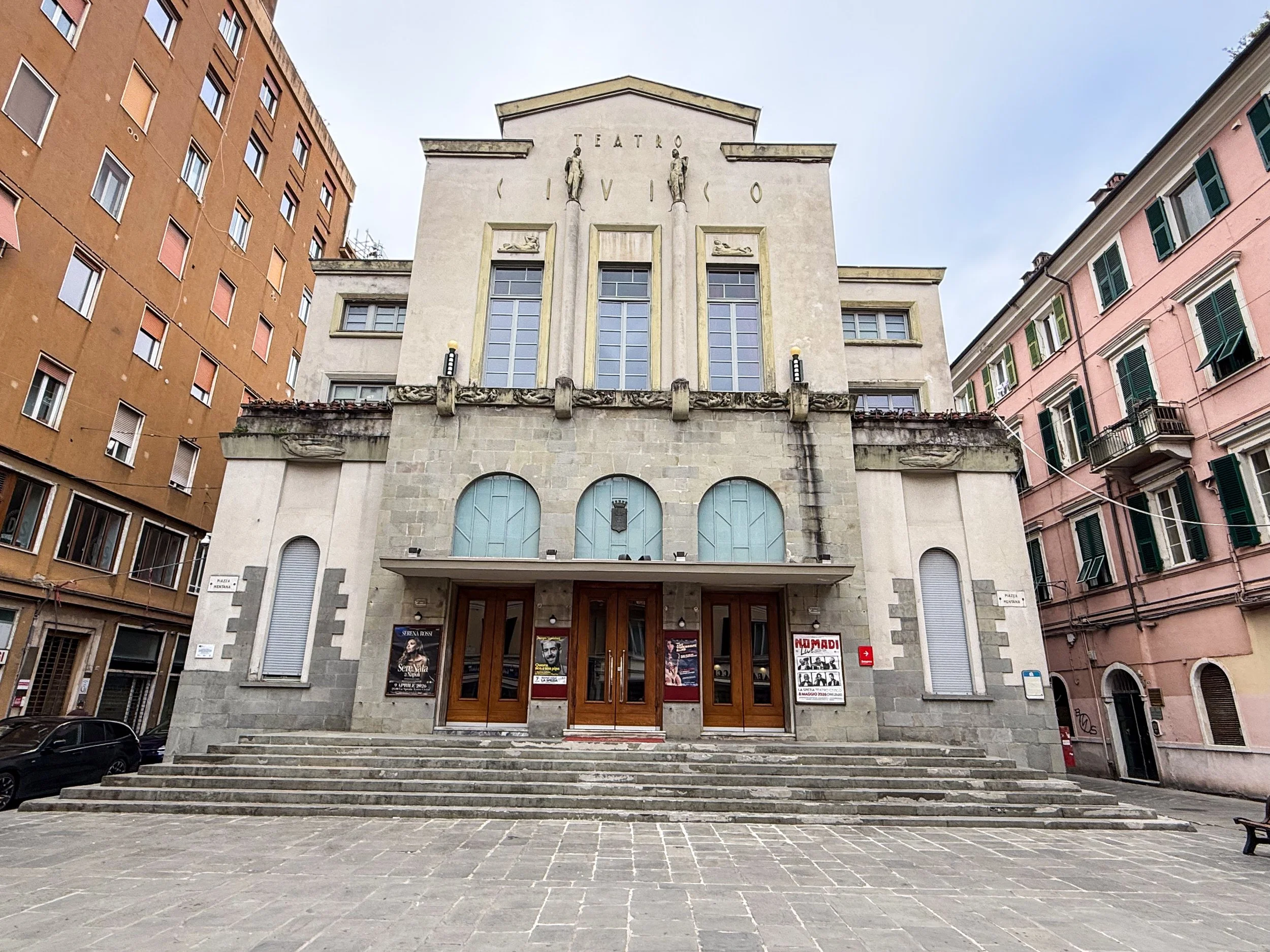
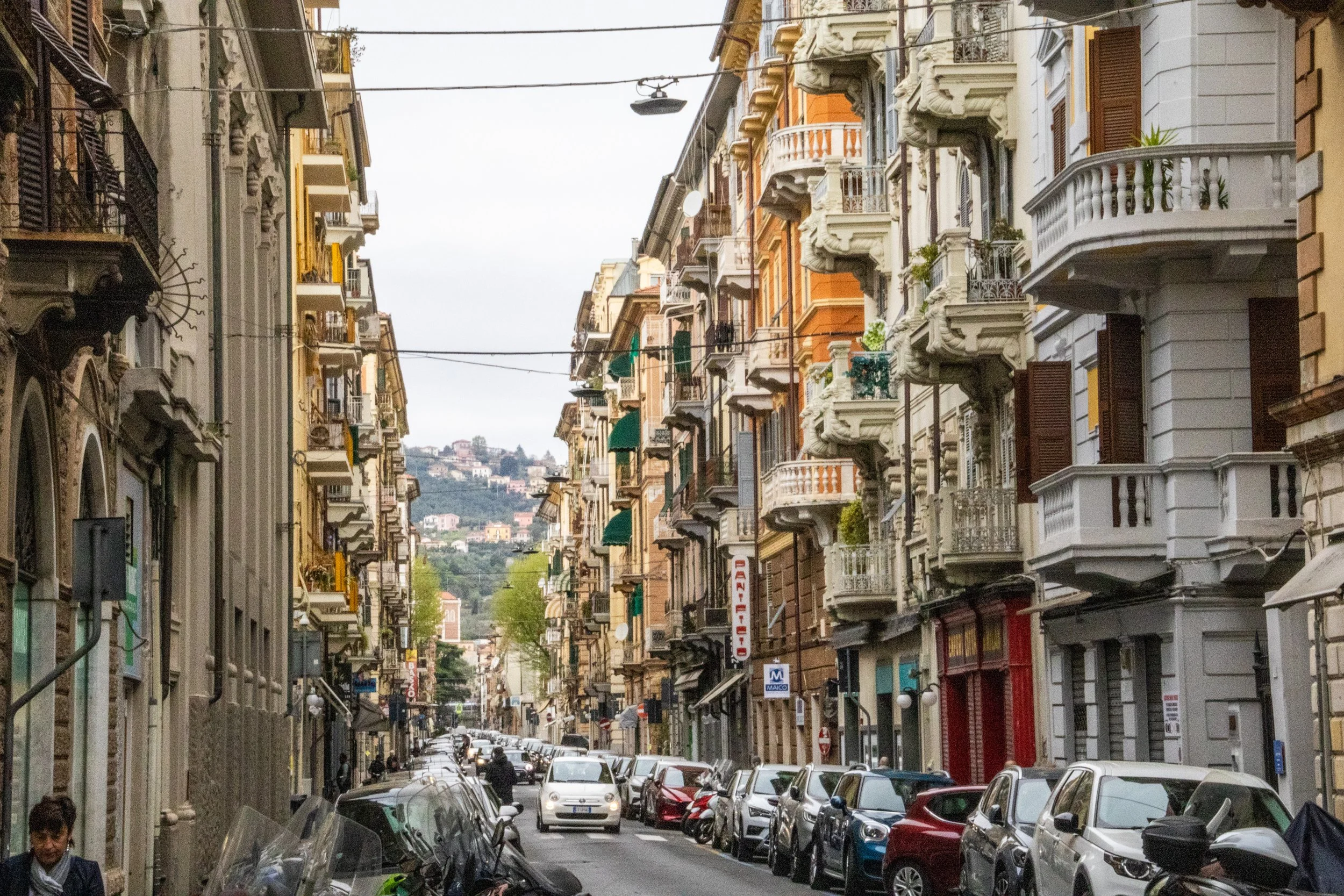
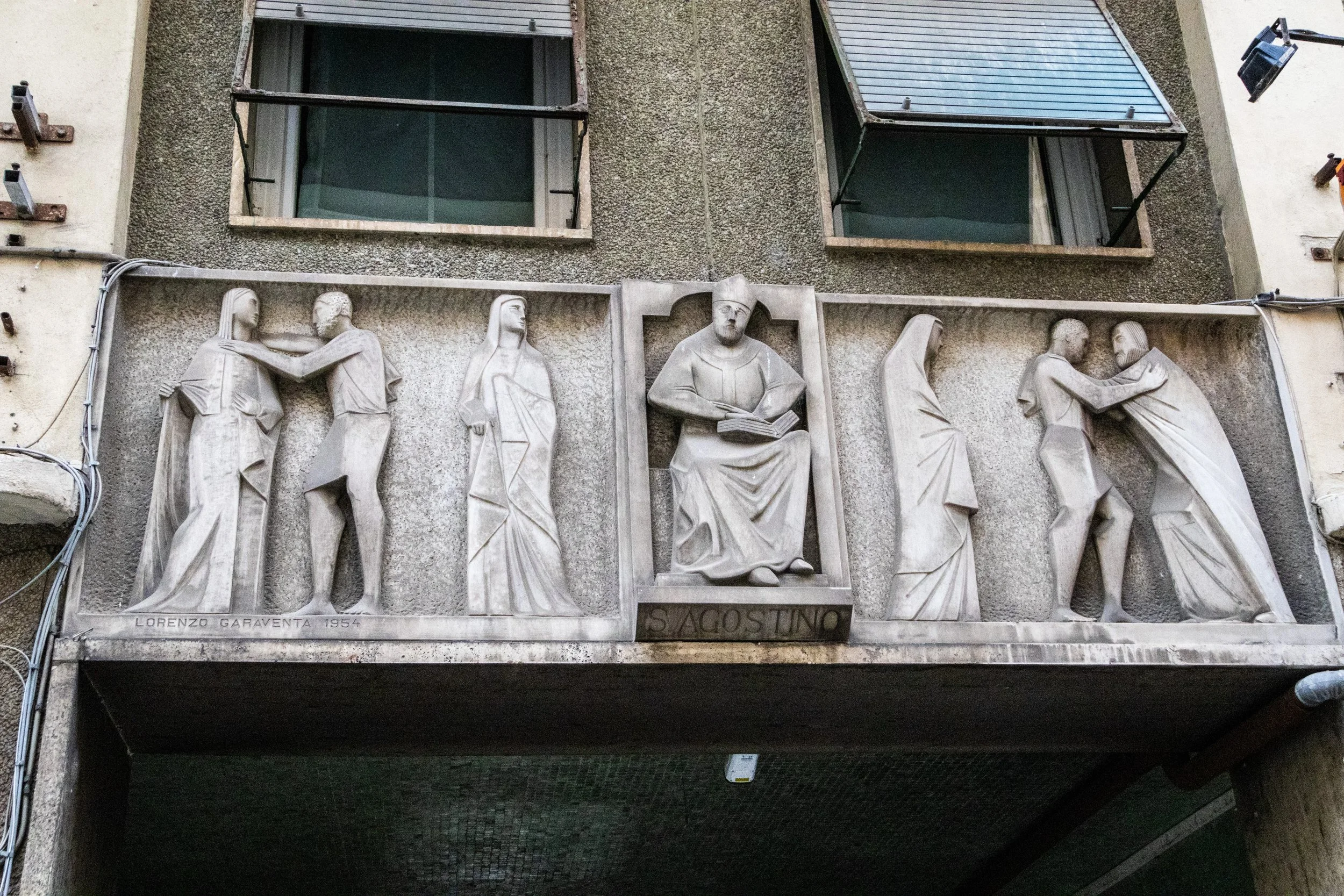
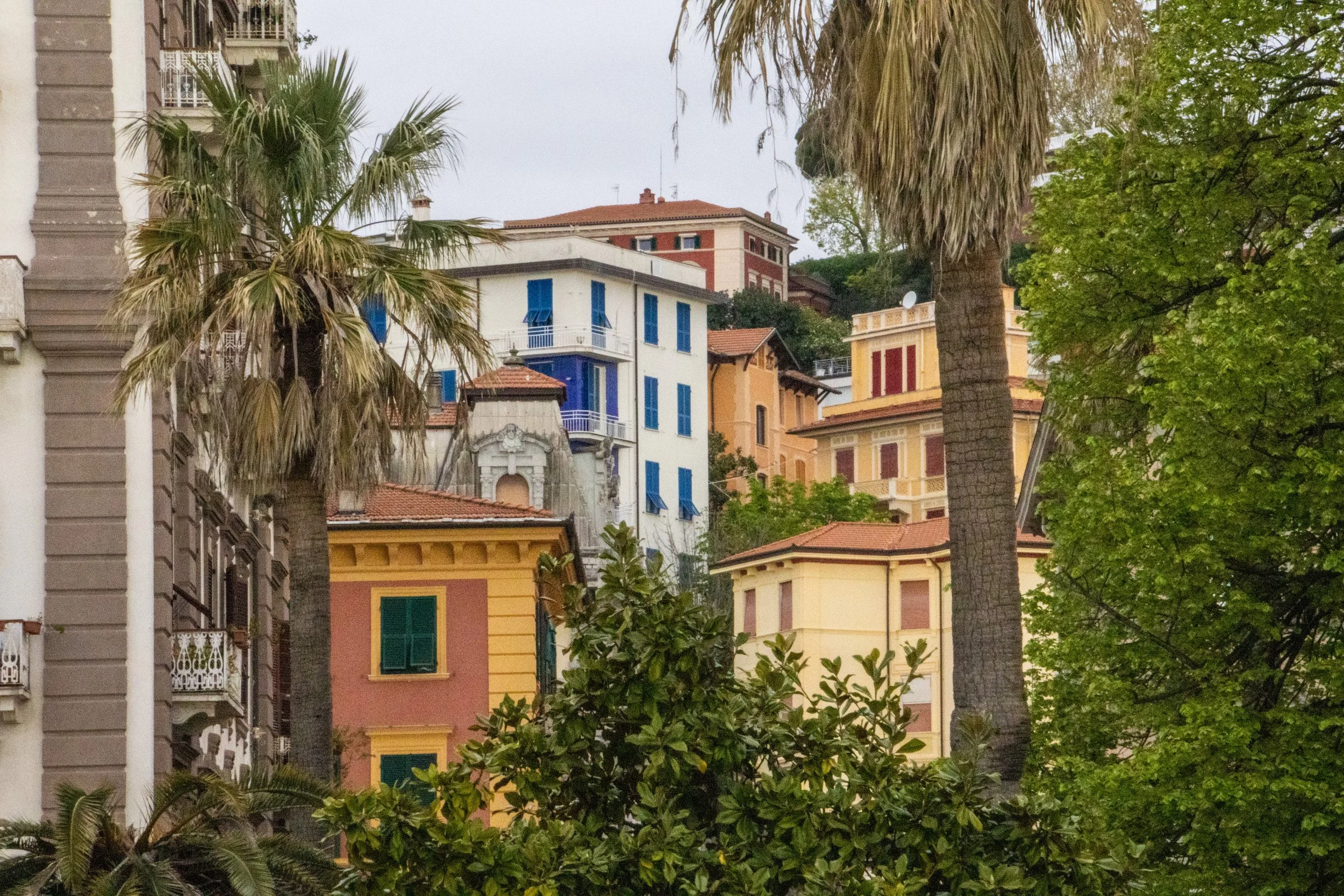
As part of this, the map was basically redrawn mostly on a very strict grid system. It was a marriage of military pomp and precision with a newly formed unified Italian identity. For La Spezia, that meant broad boulevards, formal squares, and straight streets (a contrast from the winding medieval street plans of nearby cities like Genoa. As La Spezia entered the 20th century, the architecture began to lean toward Italian Rationalism, which has a brutalist feel to it because of the straight lines, pale stone, symmetry, and minimal ornamentation. Mixed into this there were a couple of austere busts of historical figures that all seemed to conjure images of fascist-era imagery of Mussolini. As we walked through this surprisingly modern city, I laughed that the vibe here was “neo-fascist chic”. I felt vindicated when I learned that, indeed, this city had seen heavy investment during the fascist-era leading up to WWII because of its military significance. However, for this same reason, it was also bombed heavily during the war, which explains the prevalence of ugly buildings constructed from the 1950s-1970s that prioritized function over form. This was probably the final nail in the coffin of La Spezia being a “beautiful” place… but that did not mean it was devoid of interest. Here are a few things I enjoyed here…
First, it’s Italy, so the vibes are amazing. I love the culture, the language, the people, the food, the cafes… there’s almost nowhere in this country I’ve yet found yet that I’ve actually disliked. If you’ve got limited time, would I recommend that you visit La Spezia? No. But I still enjoyed it.
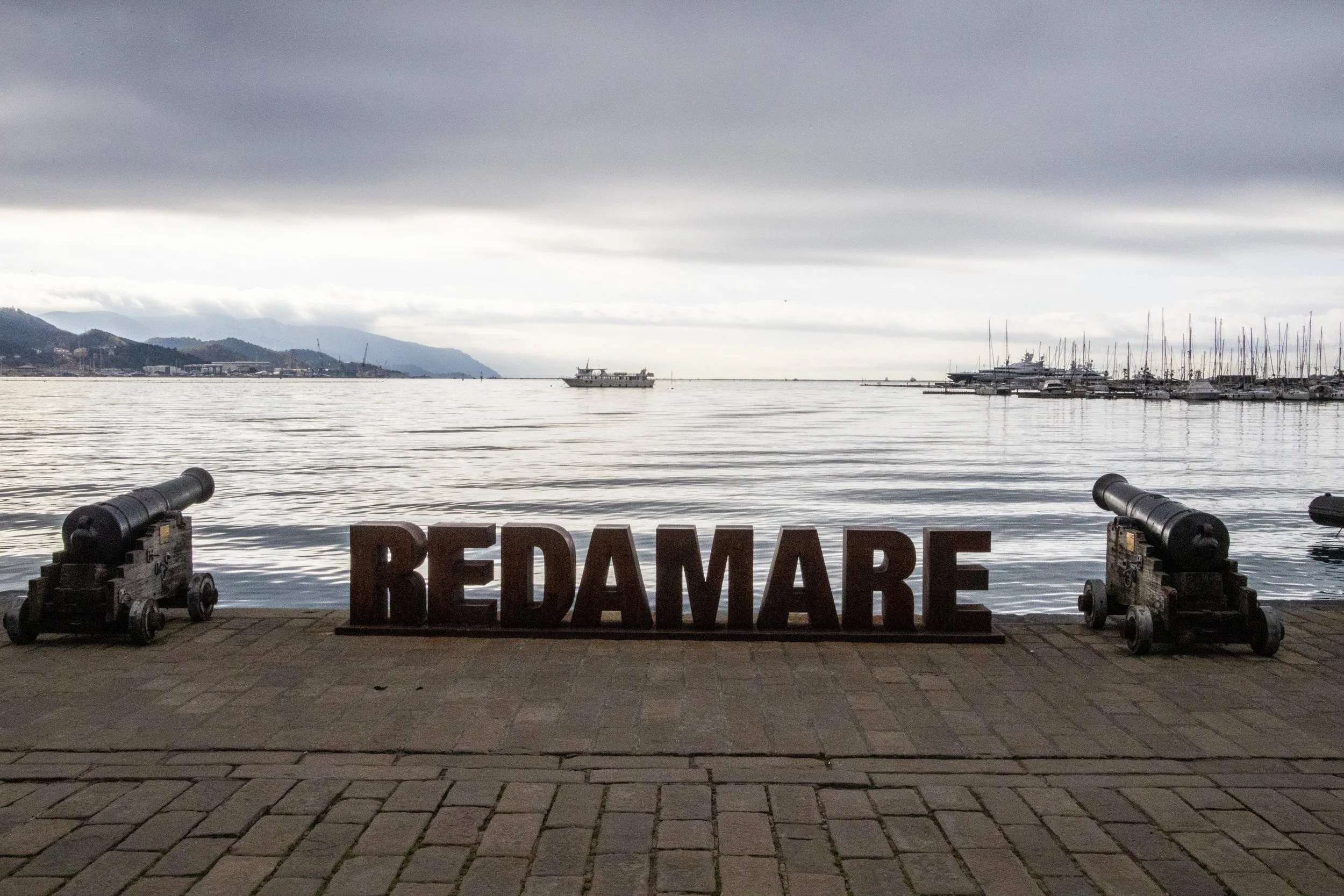
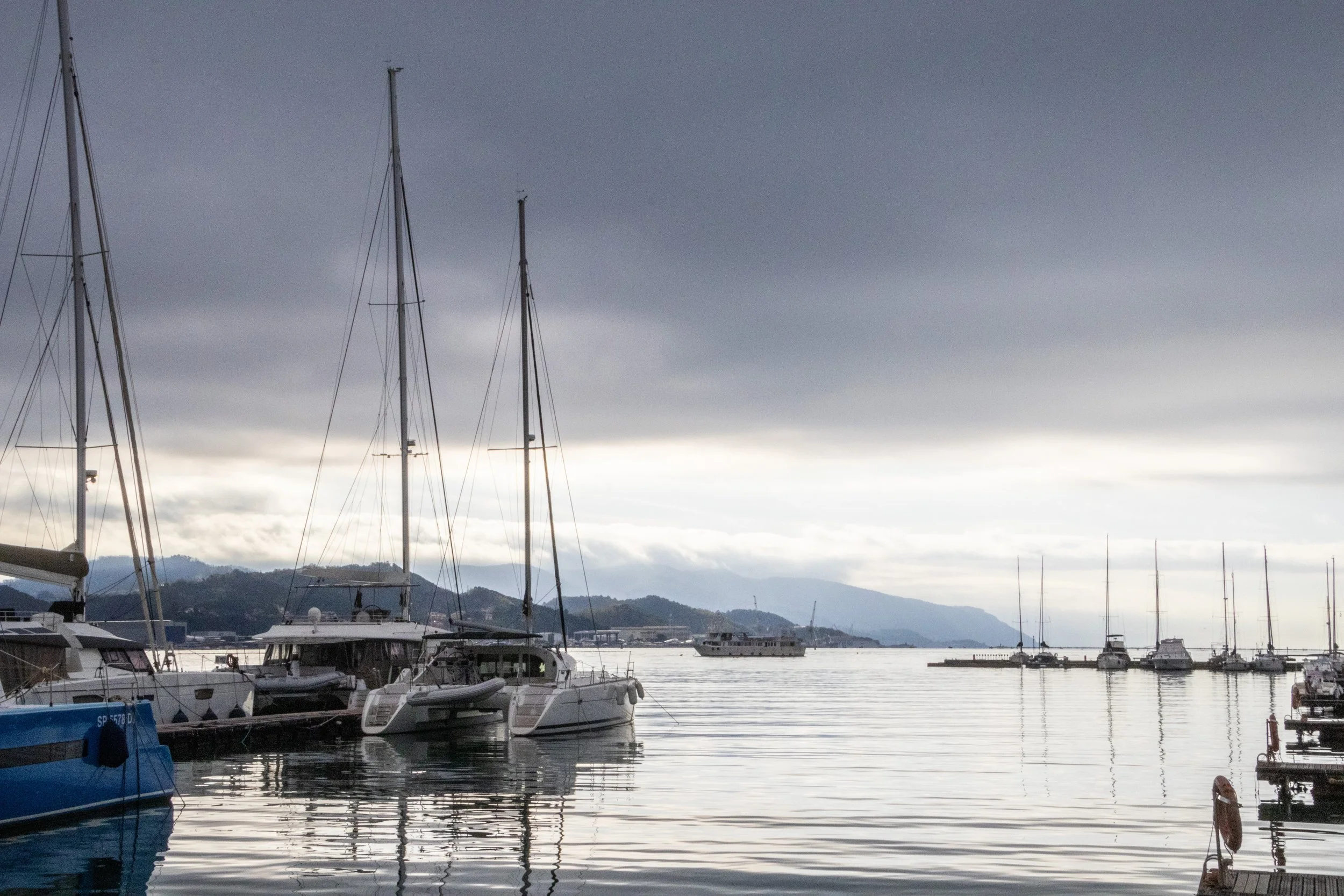
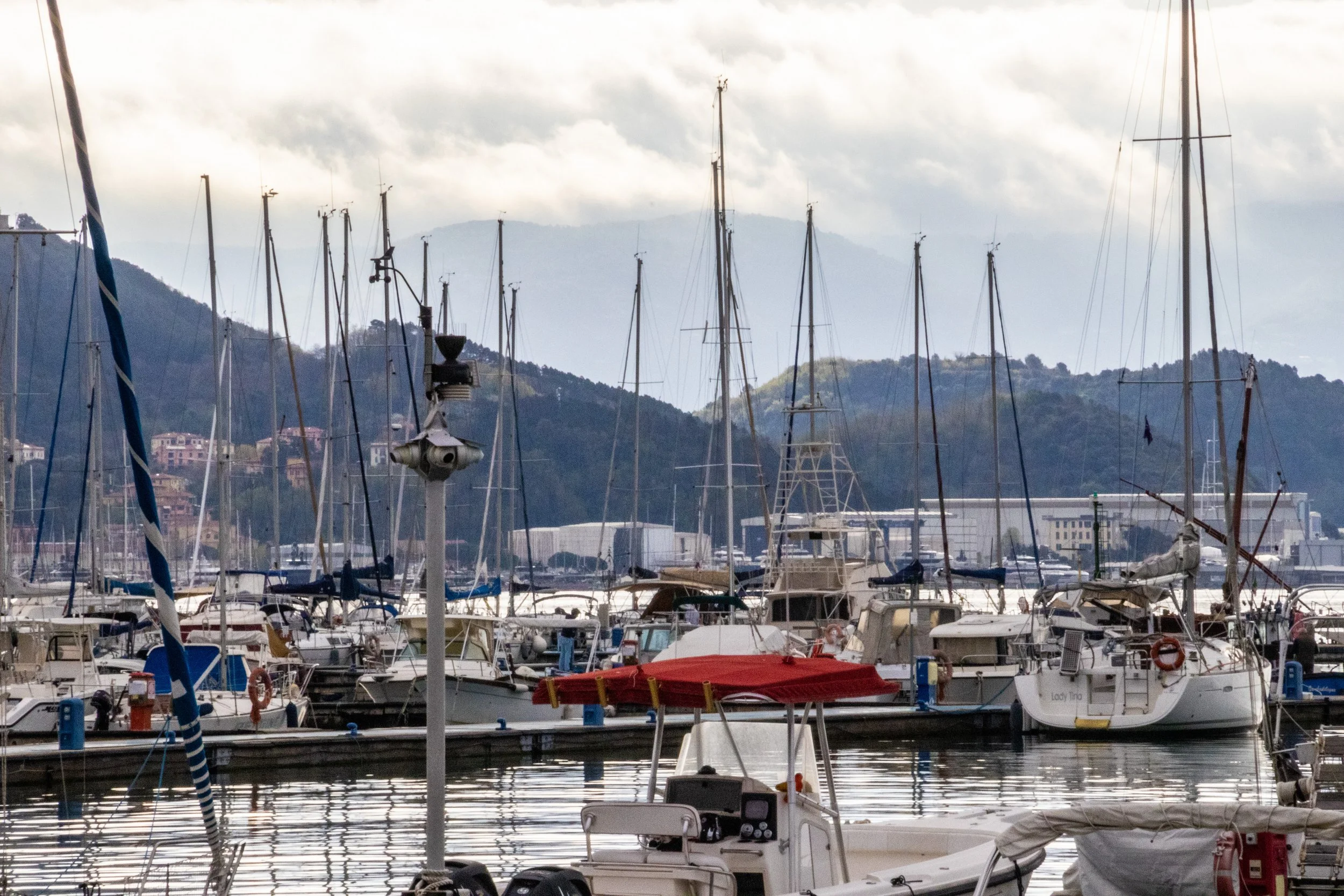
Second, walking the harbor front was quite nice. The natural landscape that surrounds this is beautiful, so the backdrop is always great.
Third, the fascist-era brutalism/rationalism captures an important chapter of Italian history that I don’t tend to see on display very often in my travels around this country. It’s cool in its own dystopian, cautionary-tale sort of way.
Finally, it’s got some interesting WWII history. One moving little-known fact is that after the war (1945-1948), more than 23,000 Holocaust survivors departed clandestinely from La Spezia for British-controlled Palestine. As a result, La Spezia became known as the "Gateway to Zion" in the newly formed Israel.
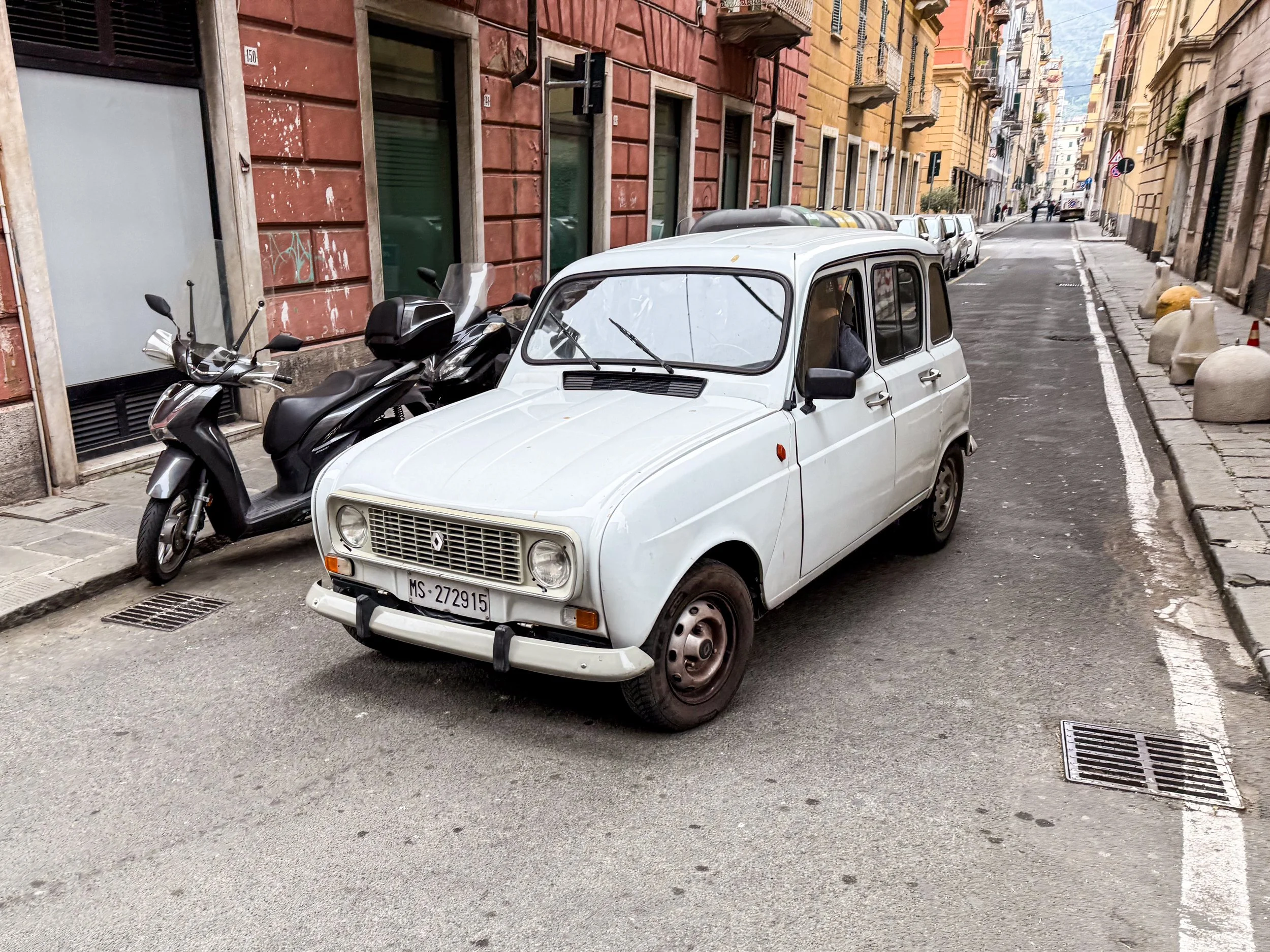
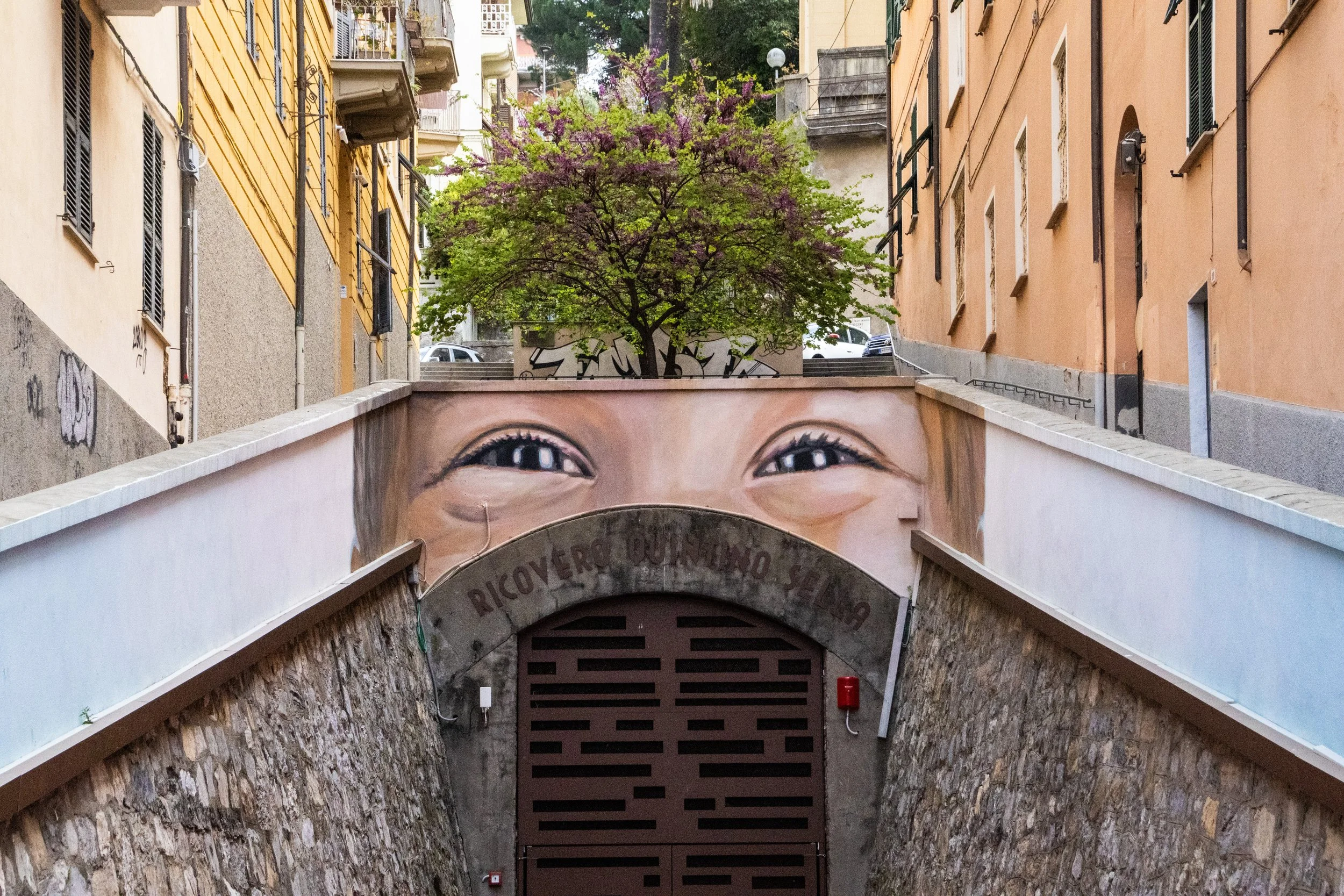
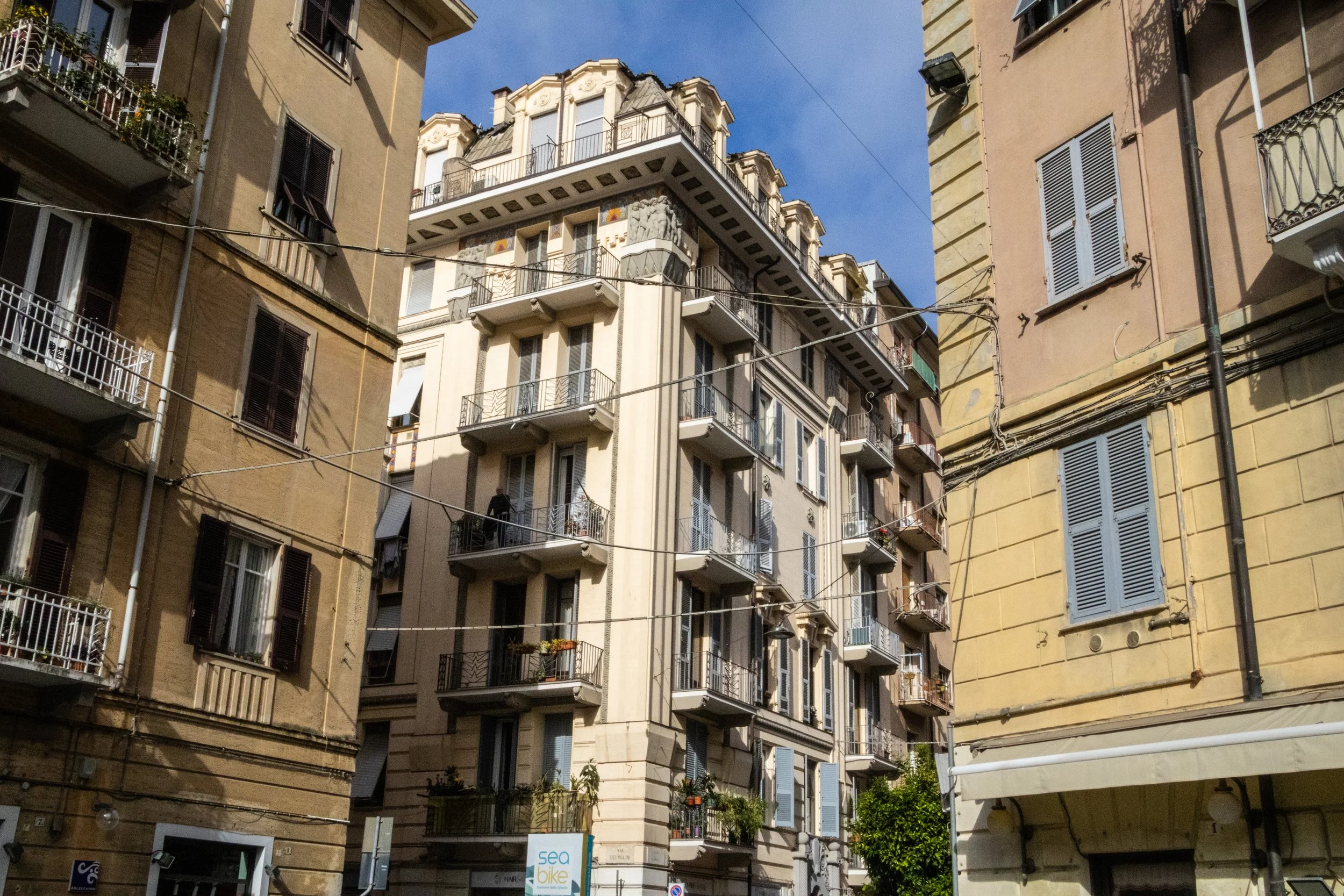
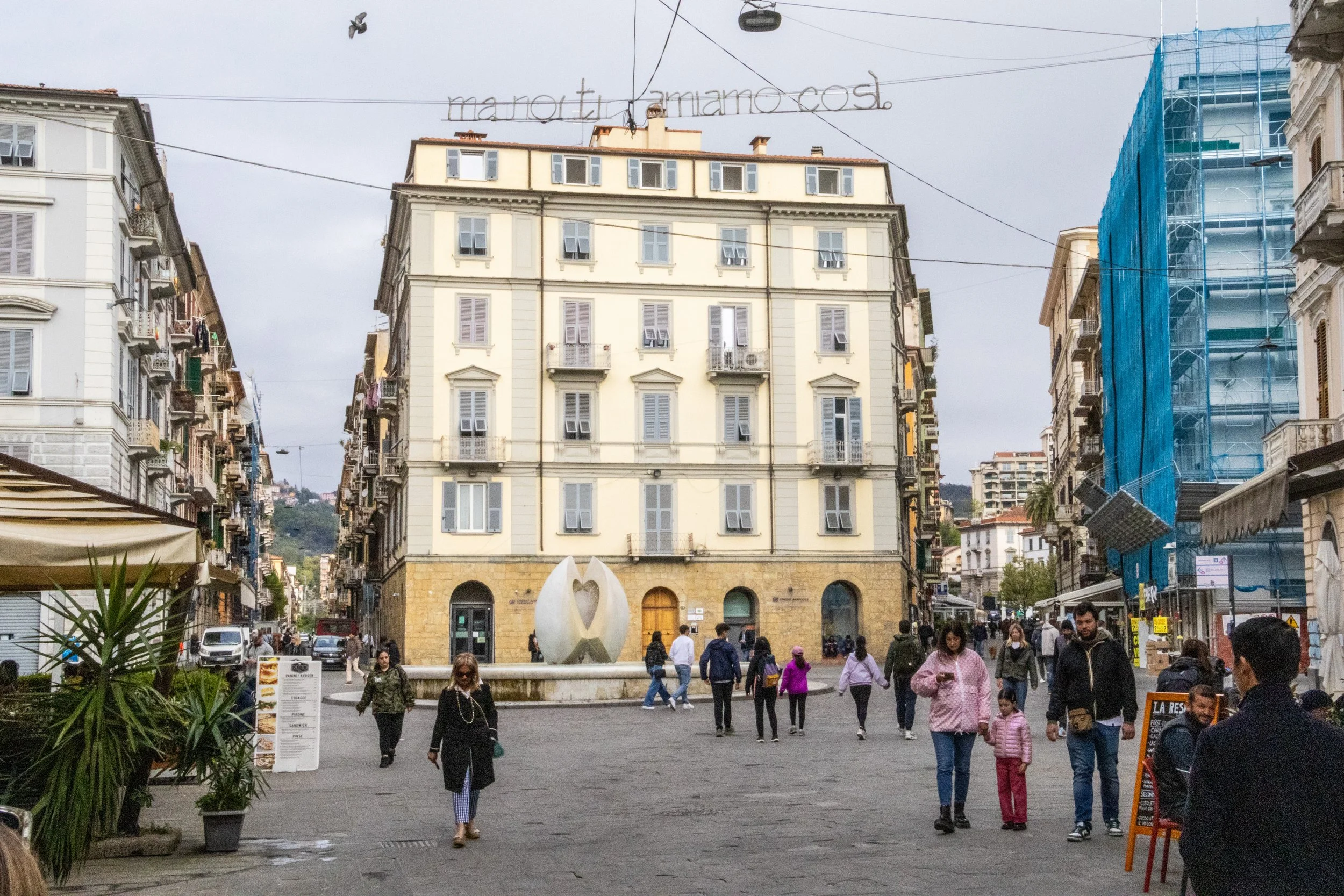
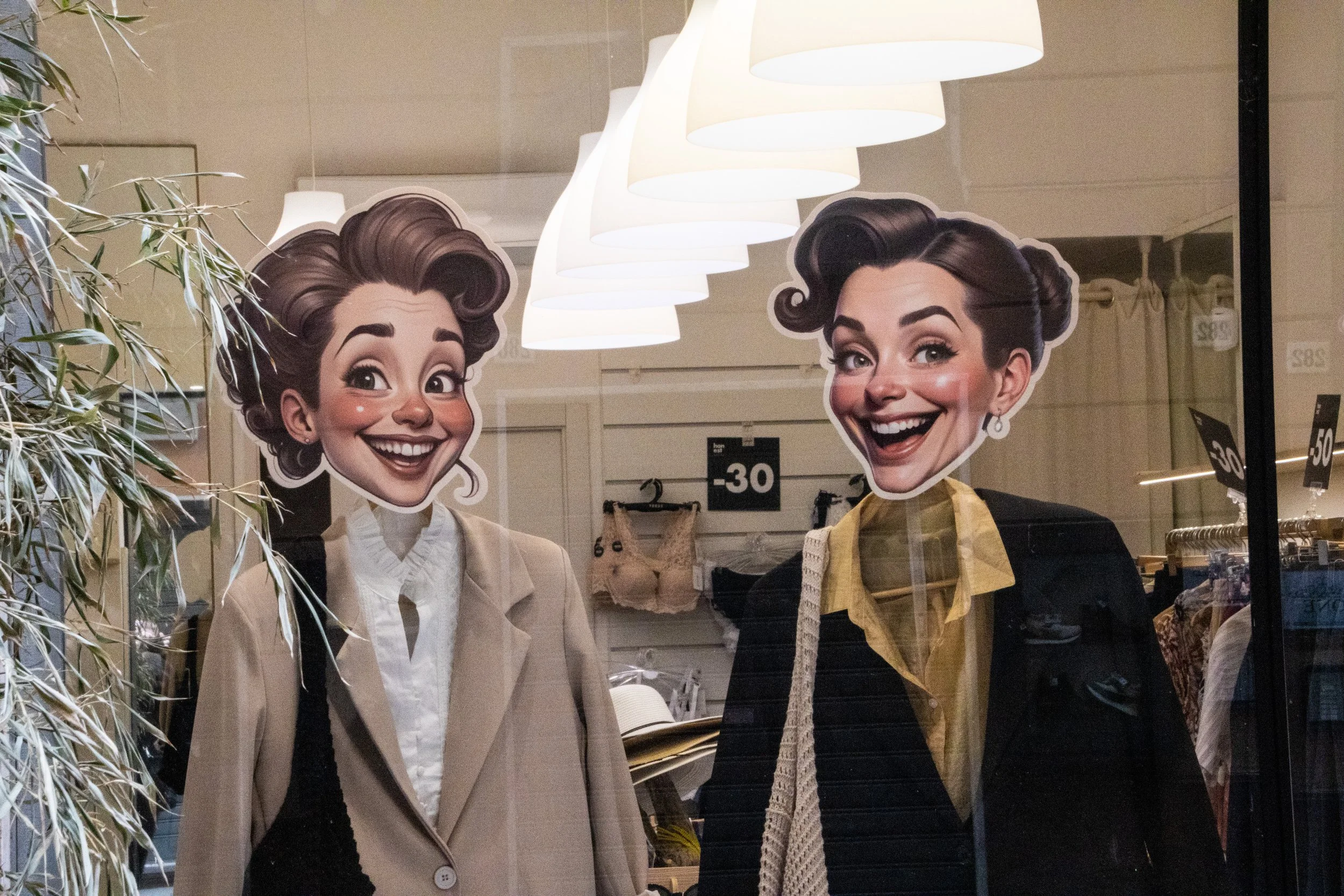
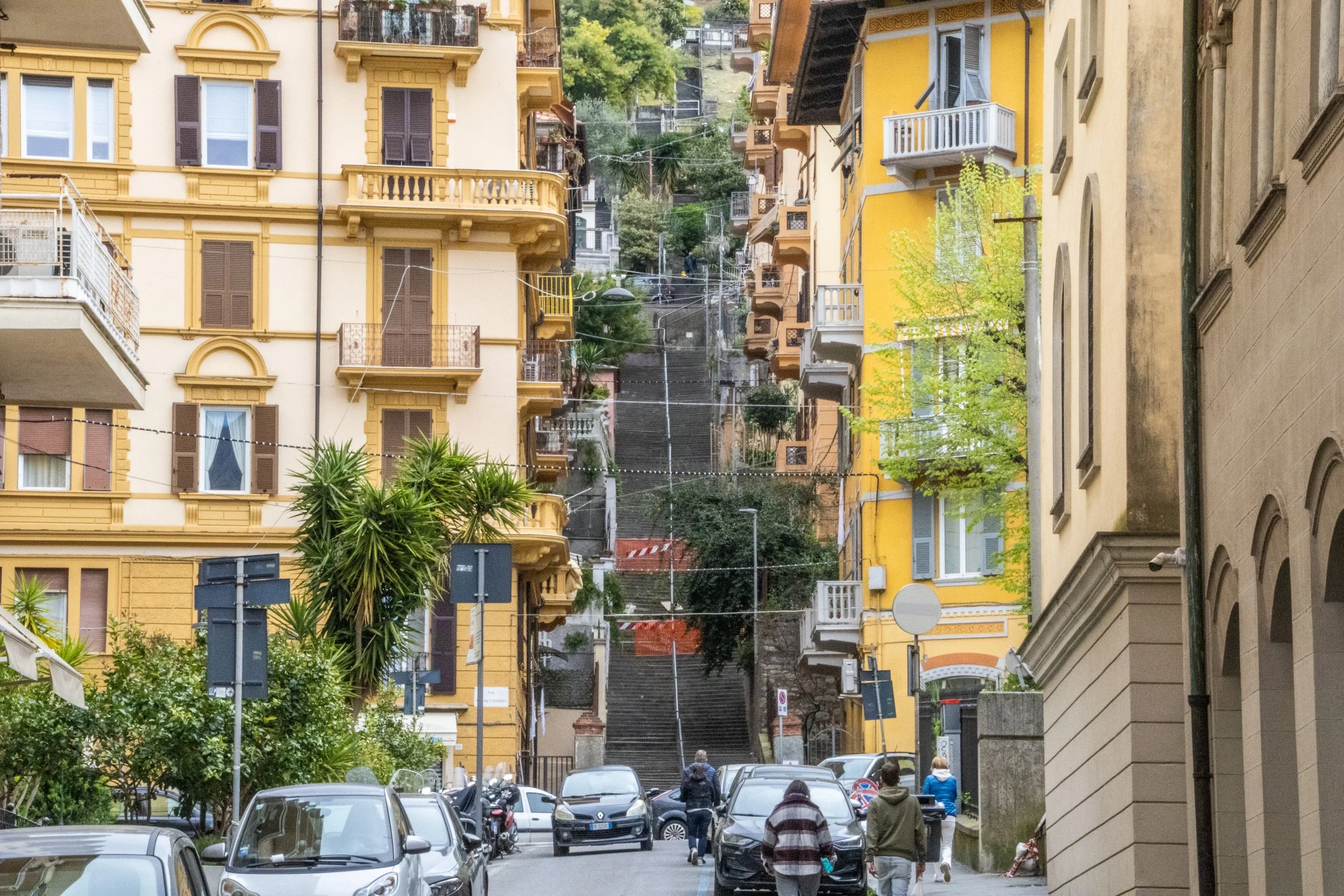
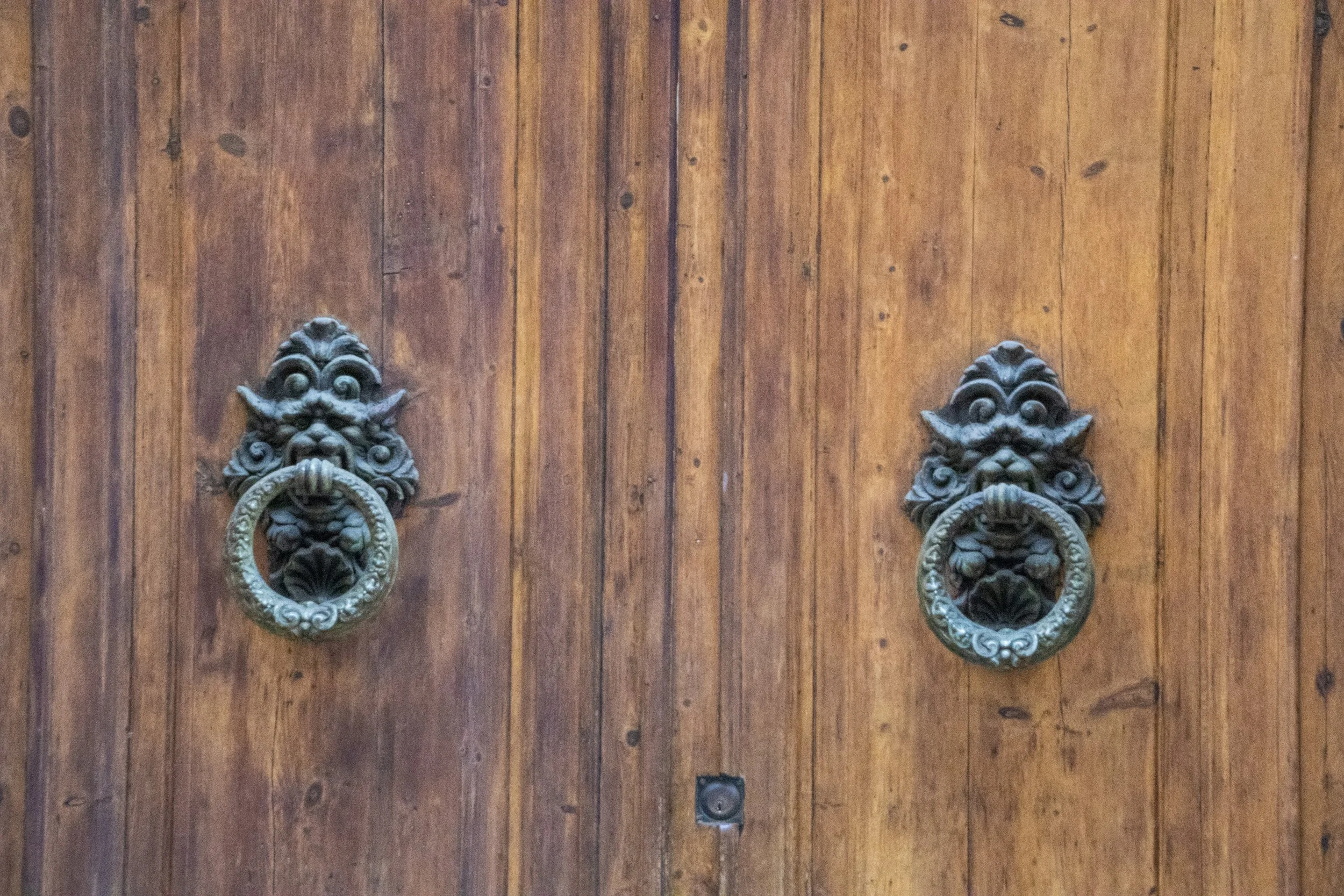
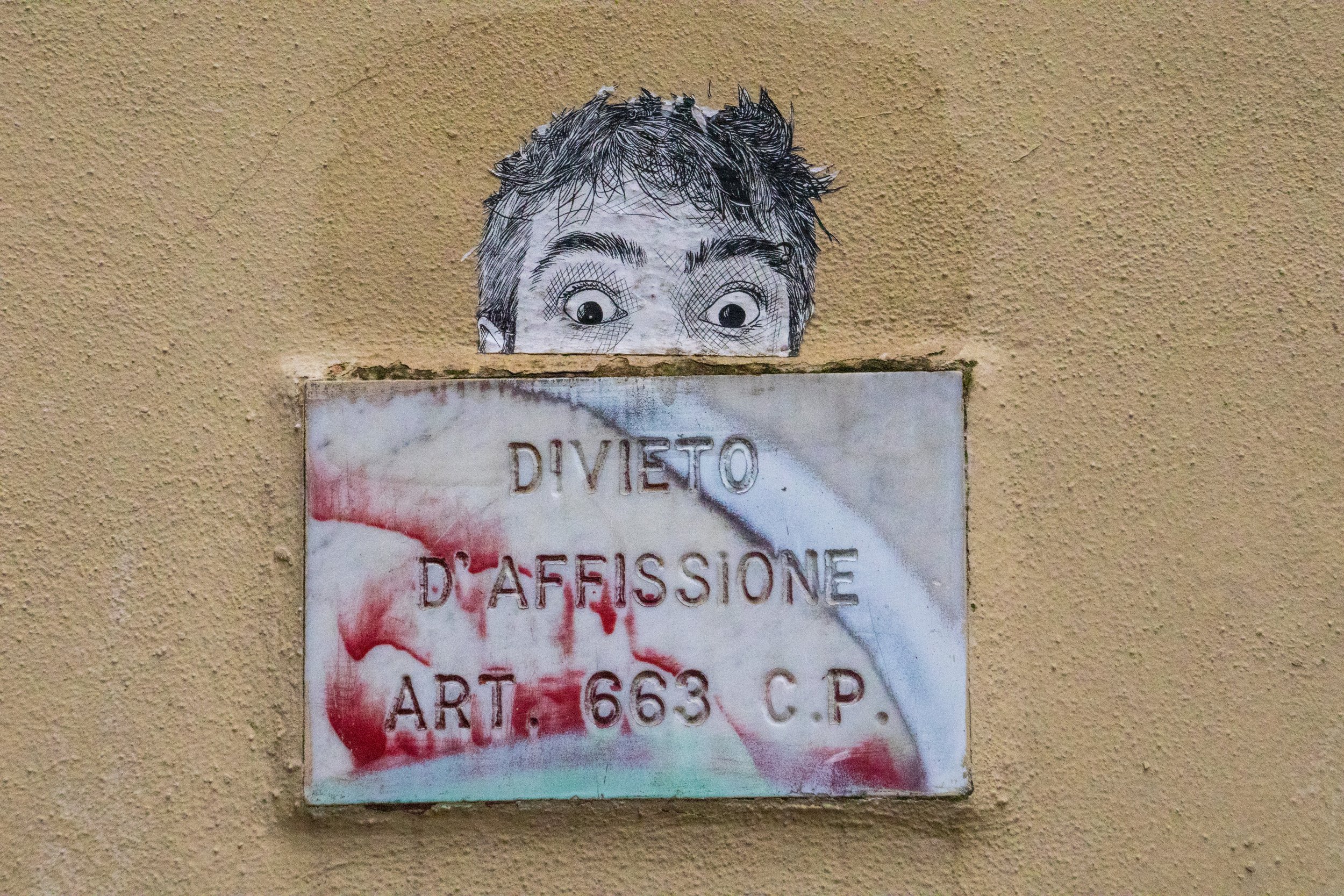
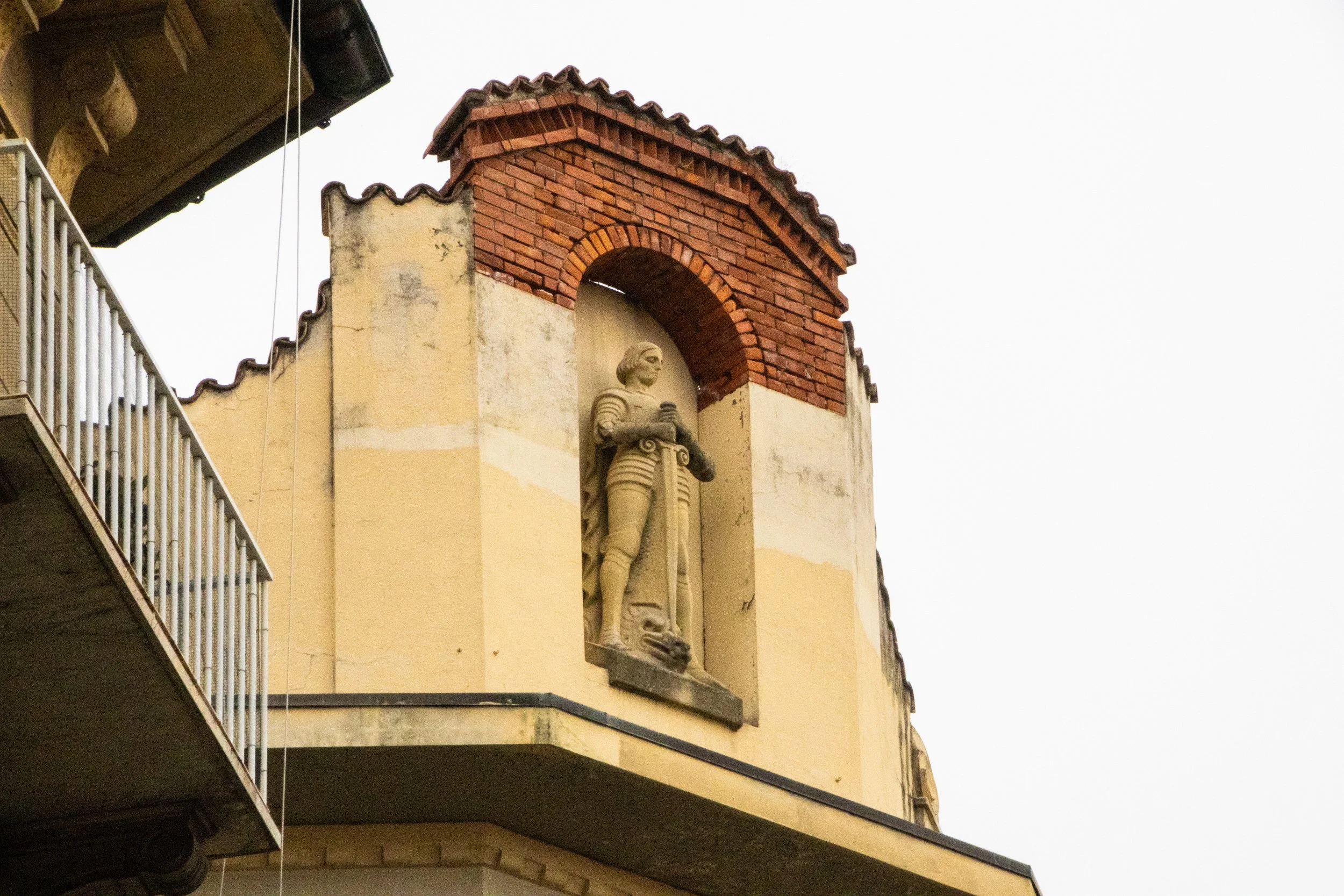
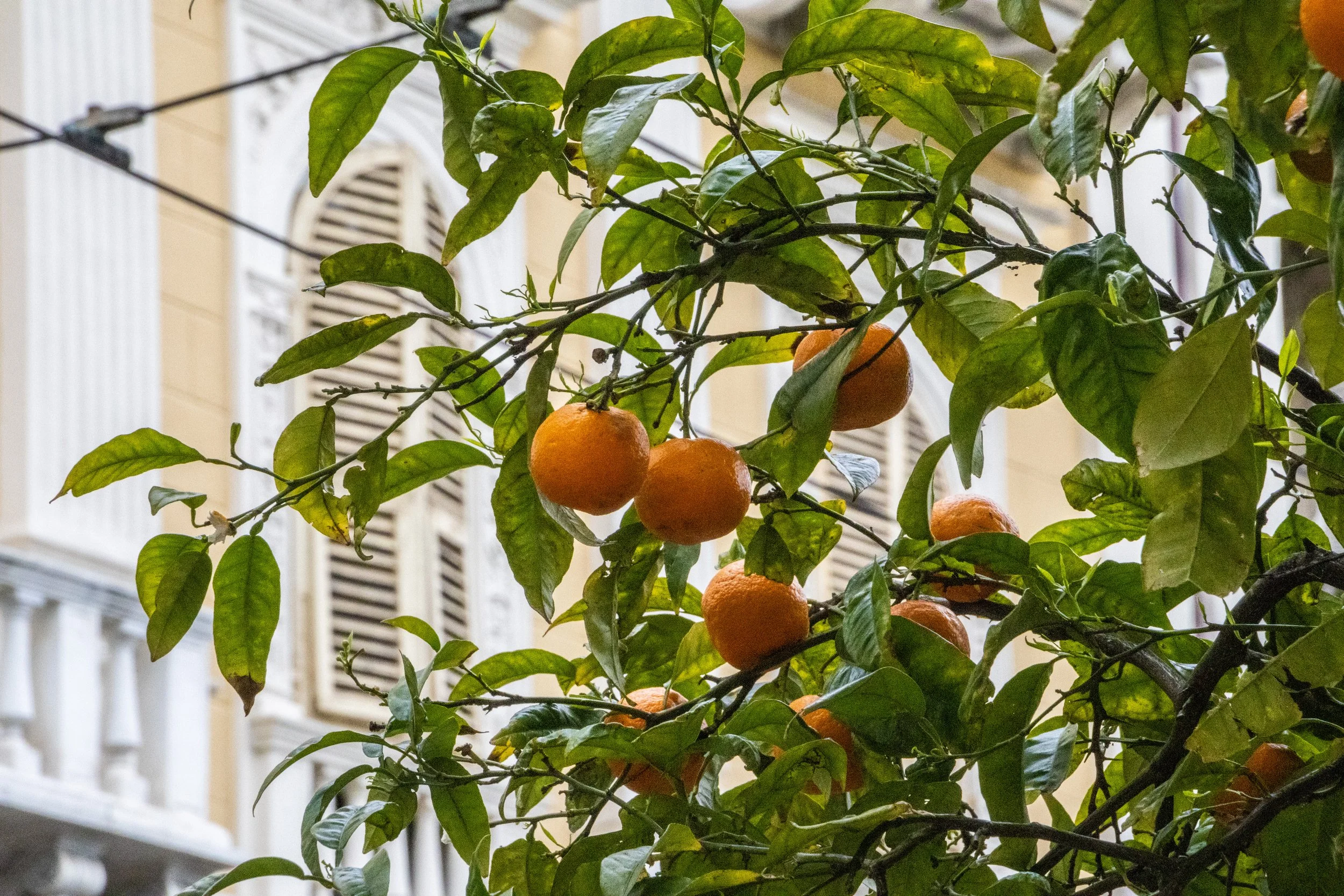
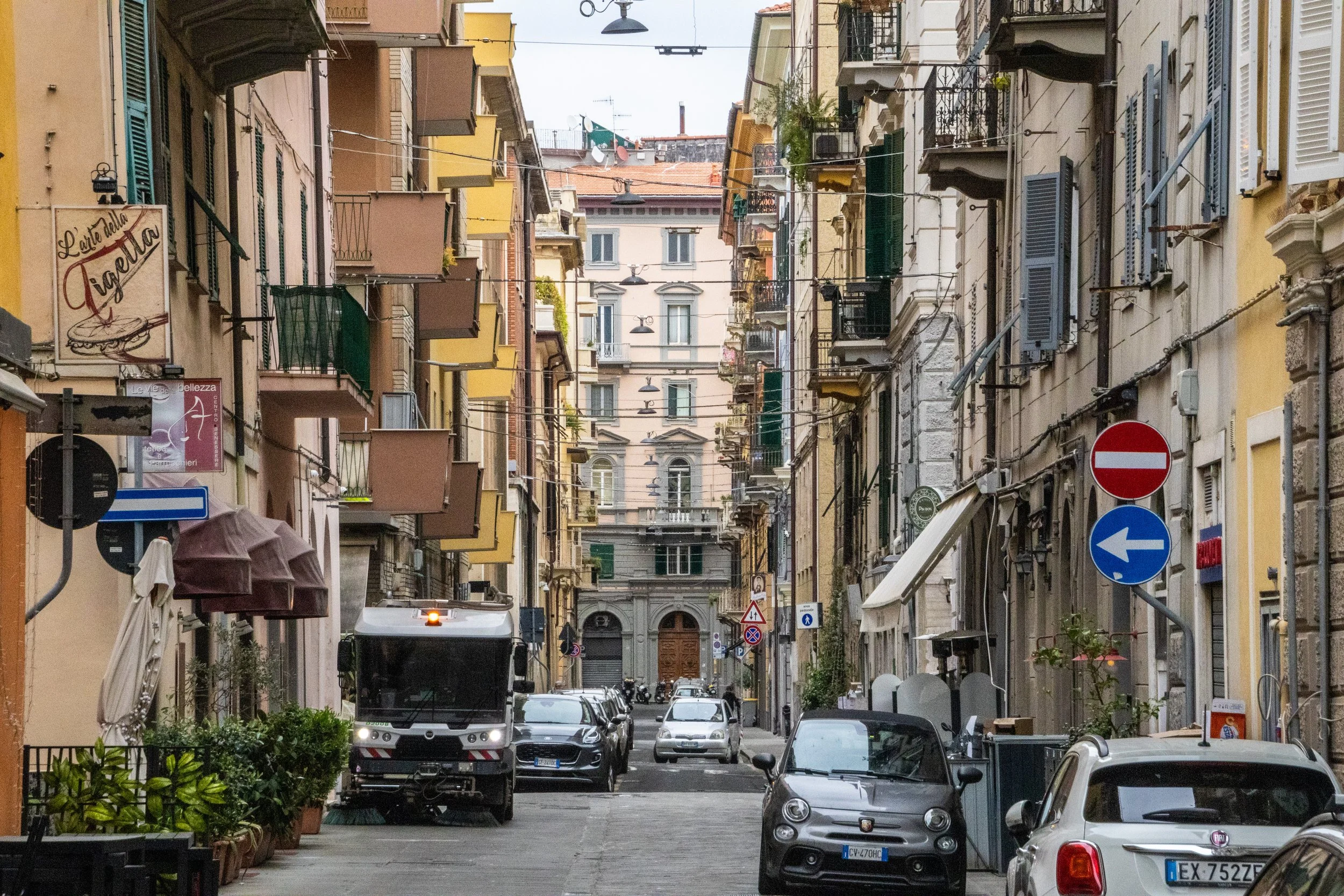
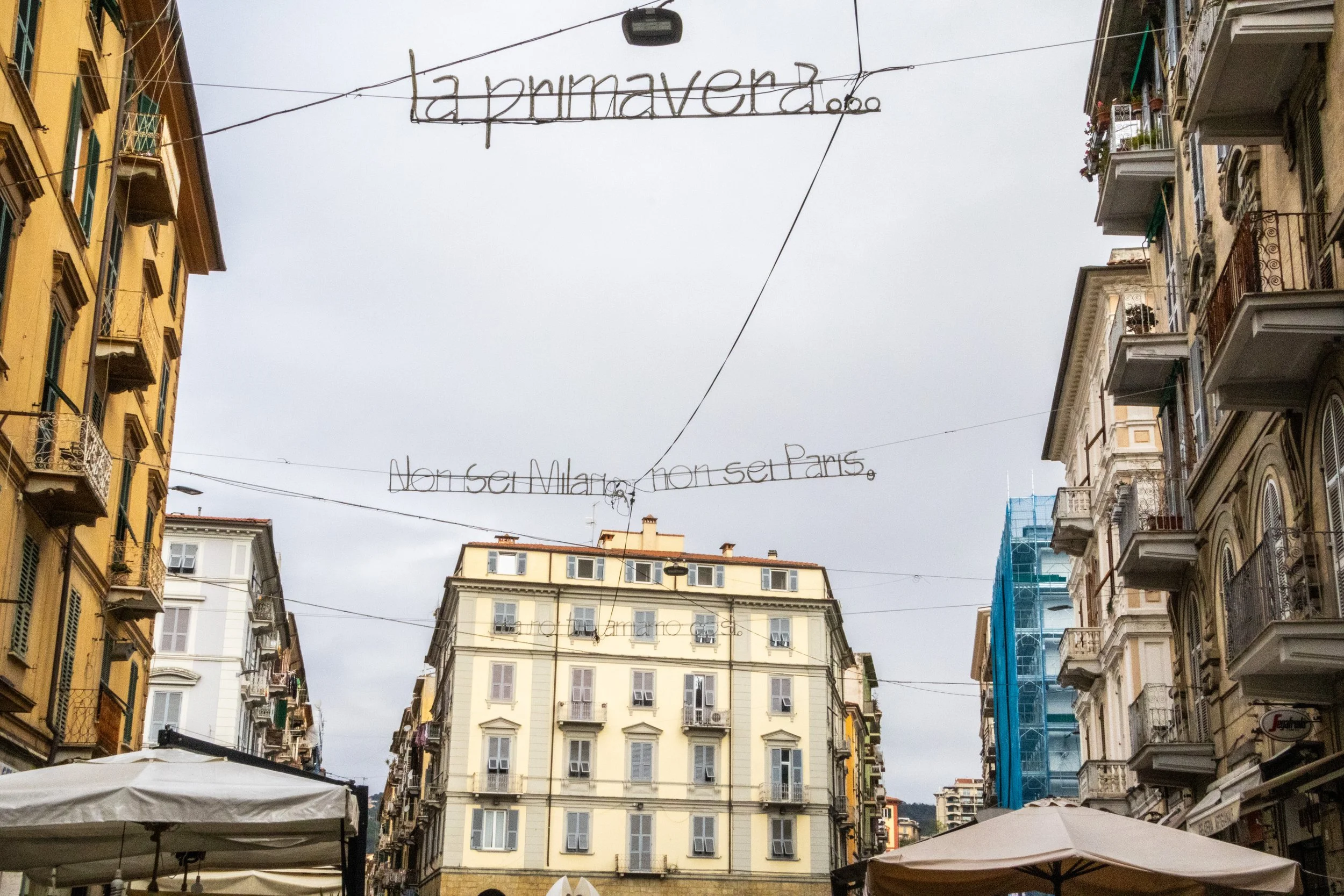
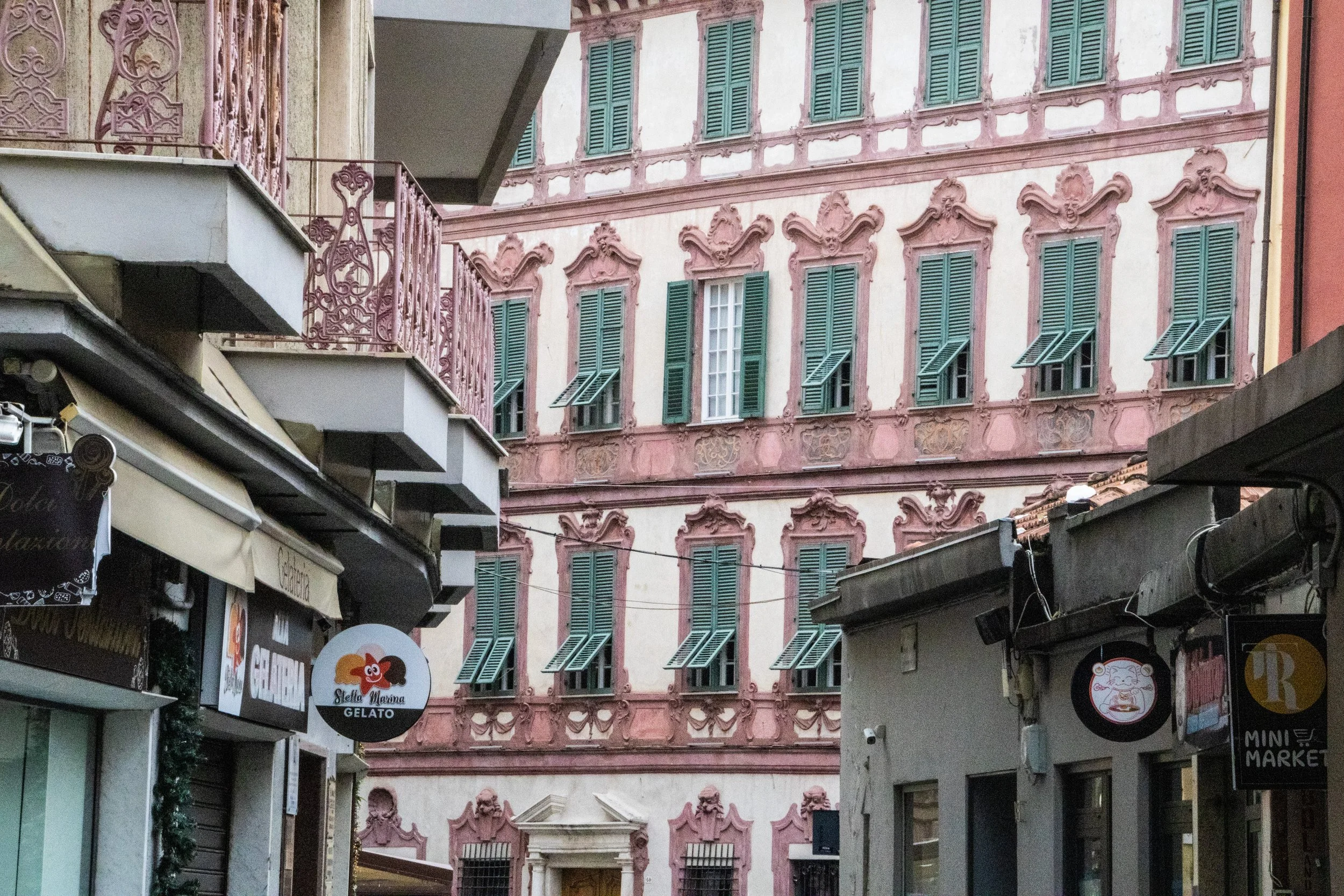
Here are some pictures from around La Spezia. It’s practically on top of Cinque Terre, so it’s a common stop-over, but I don’t see it covered on many travel blogs.
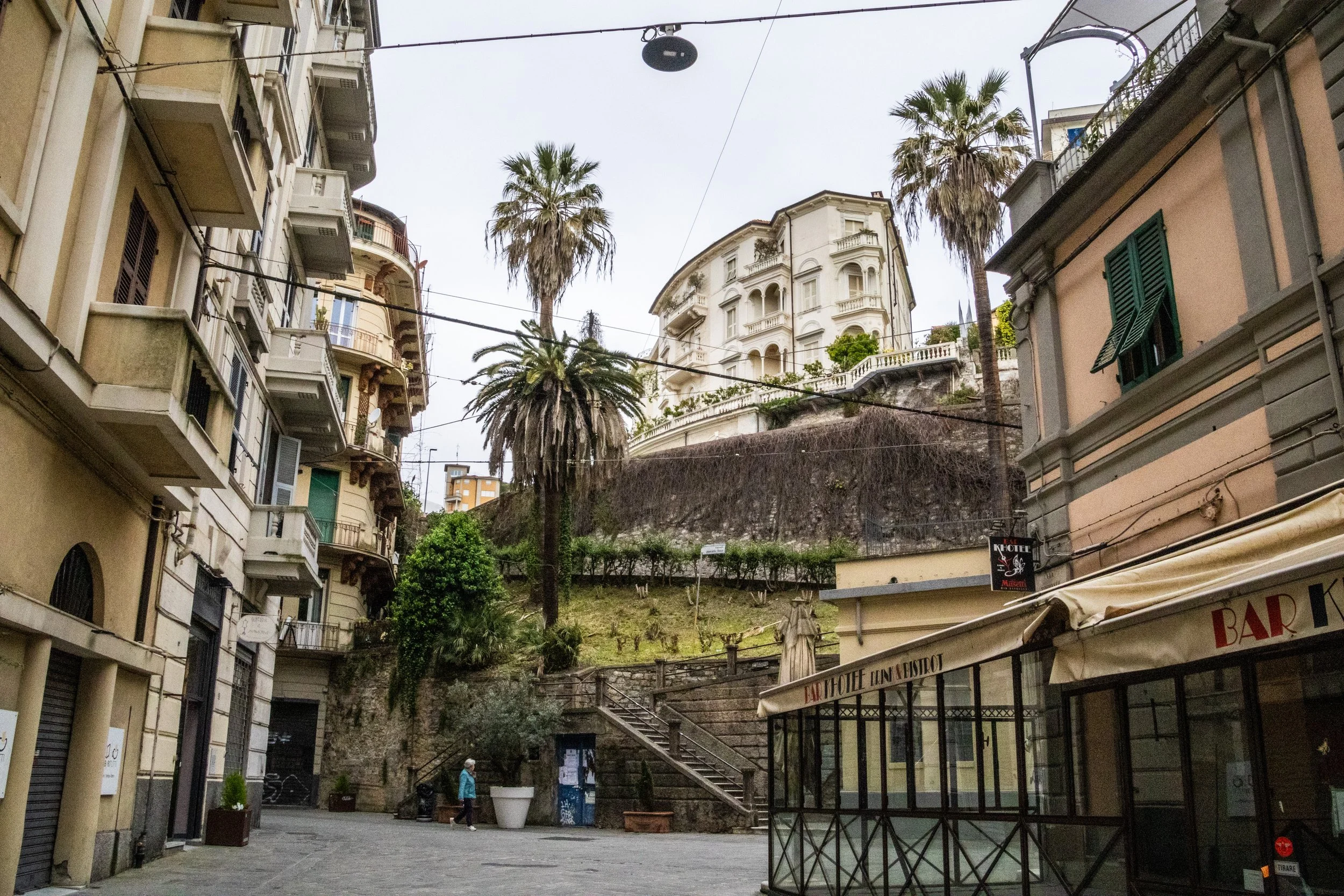
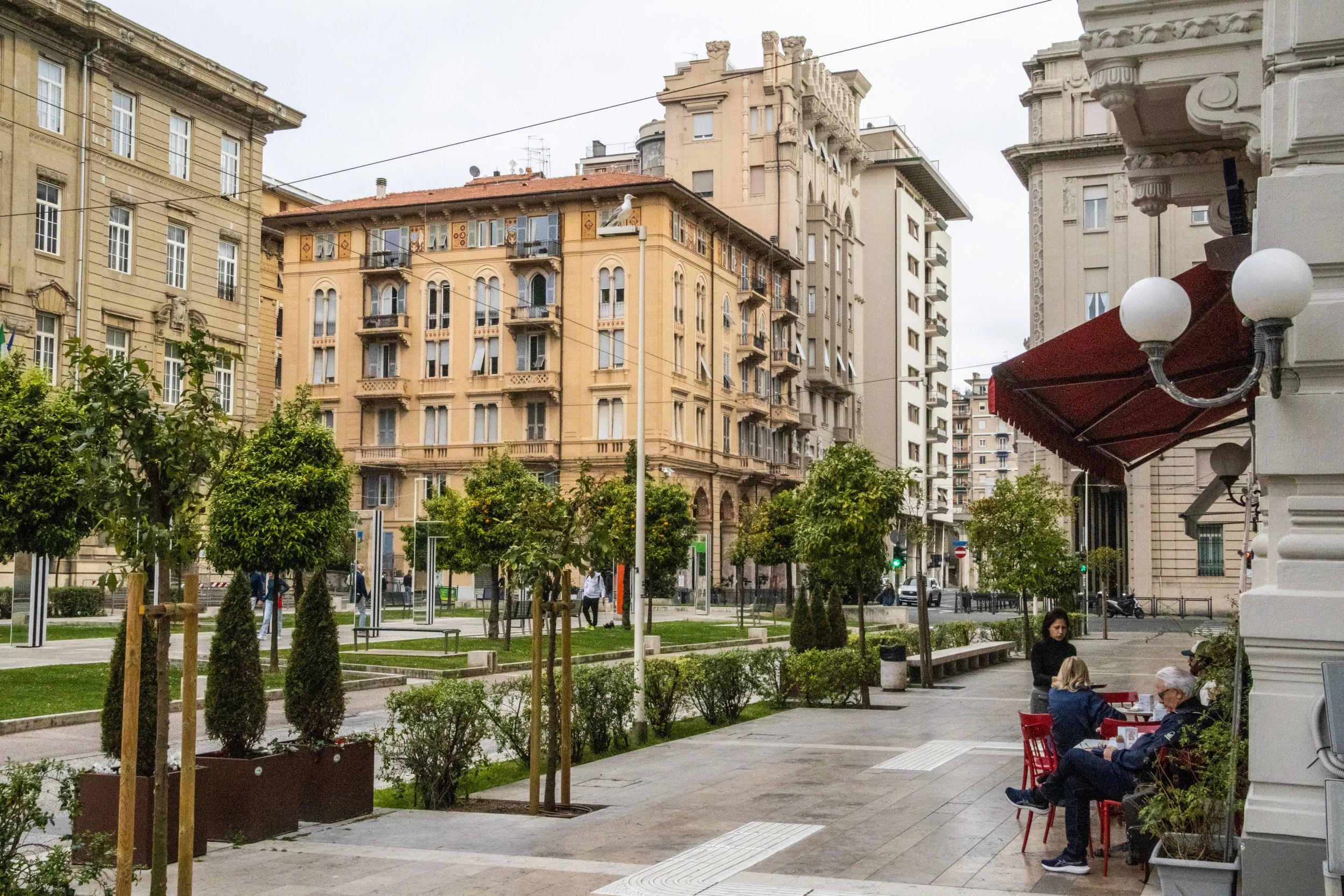
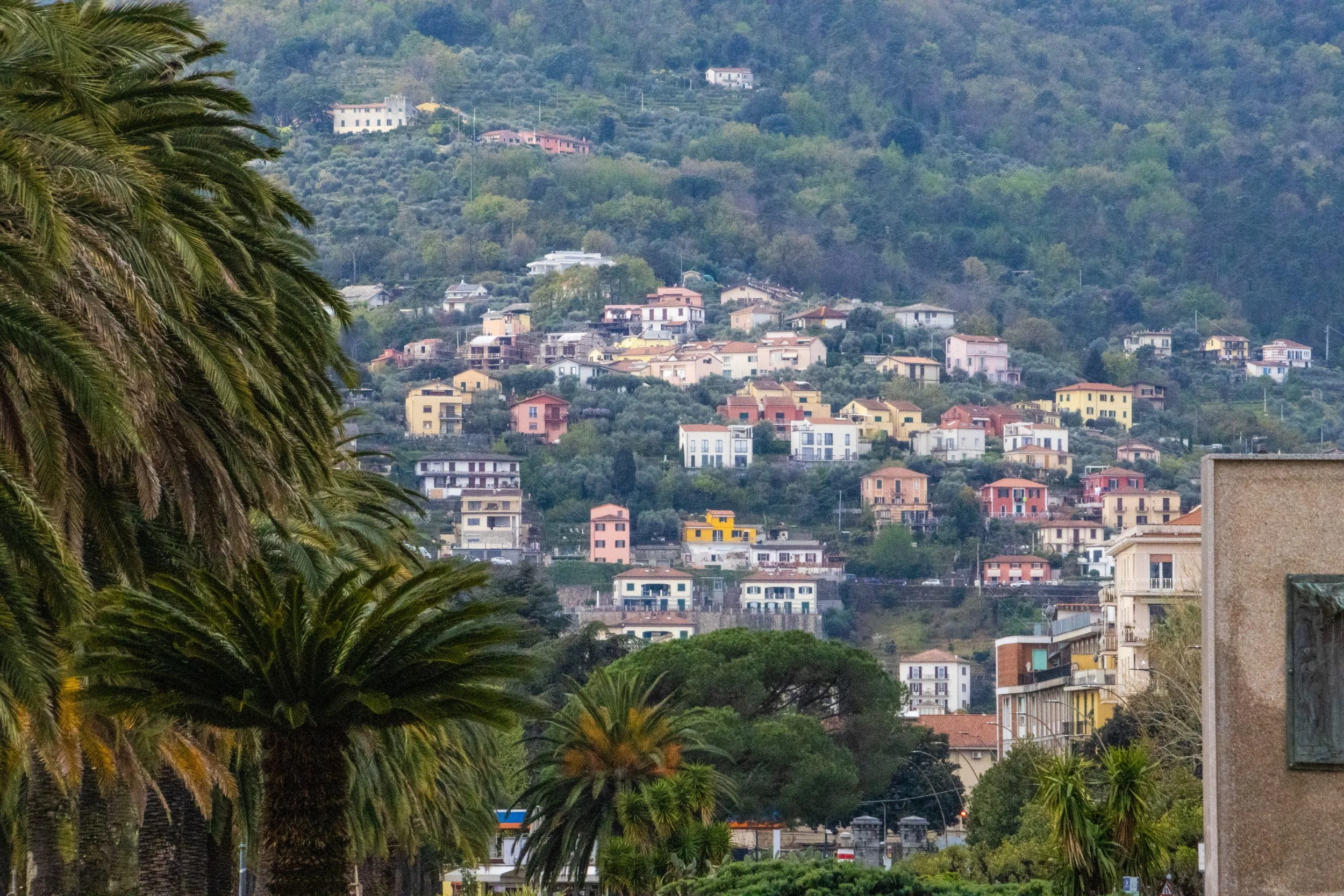
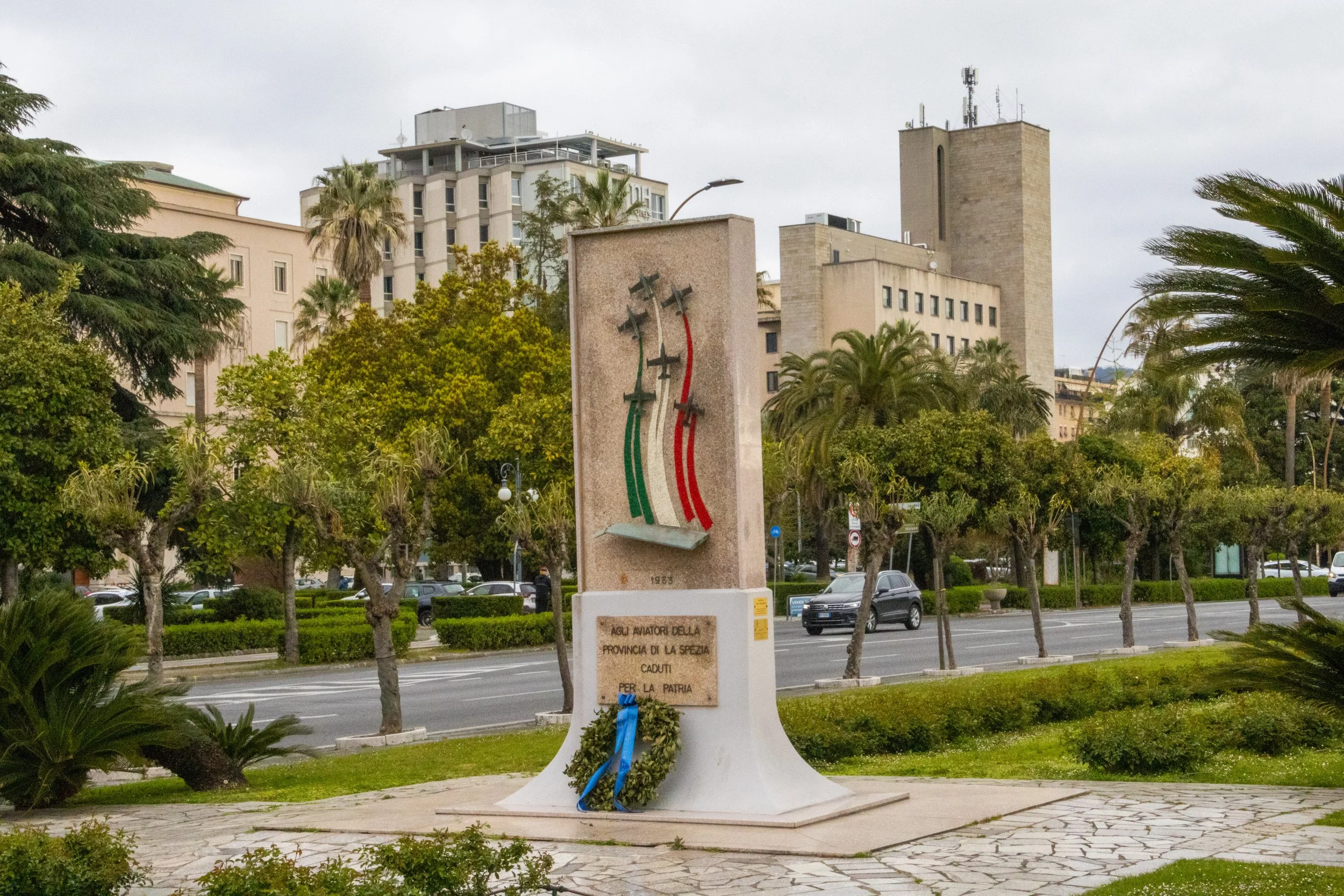
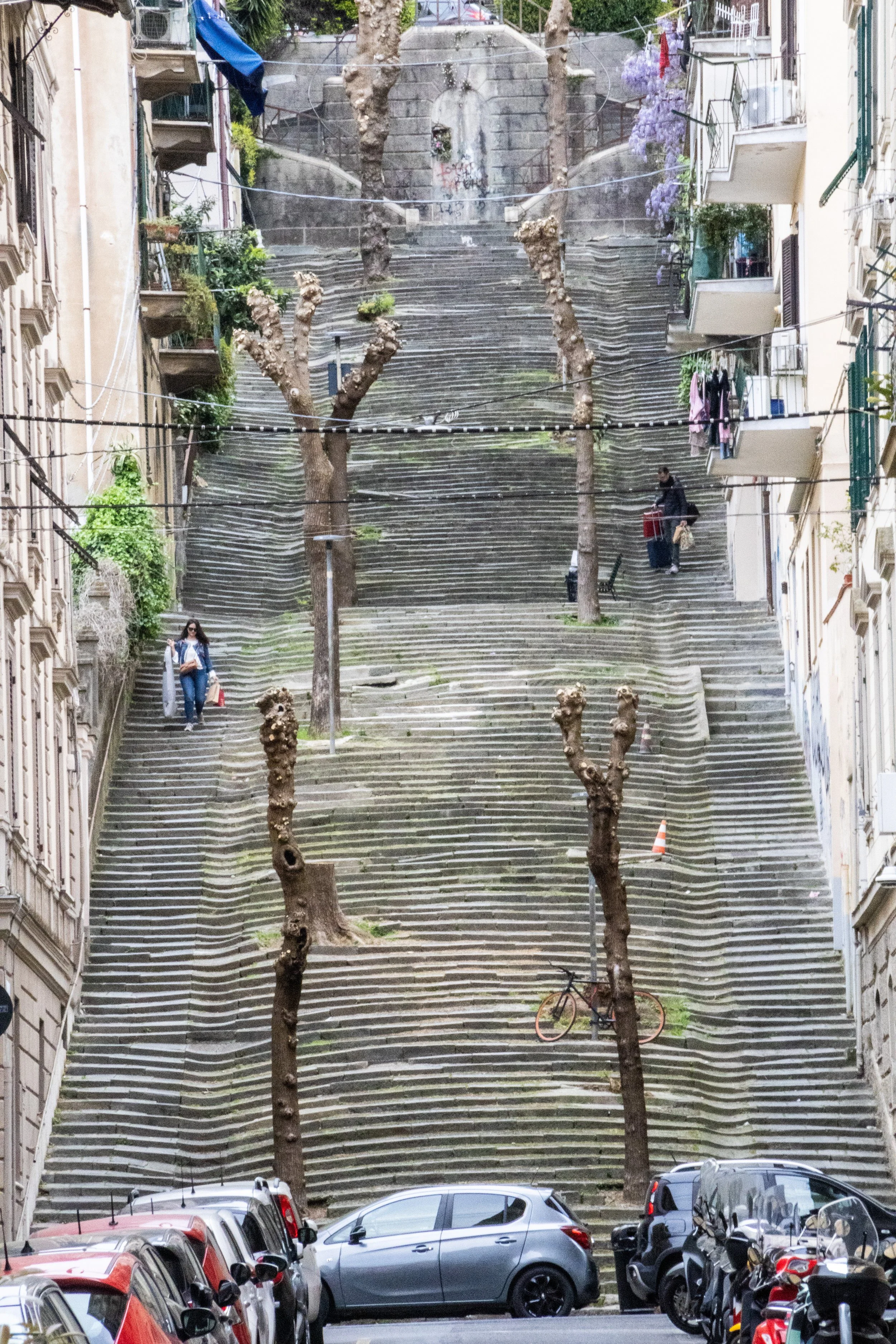
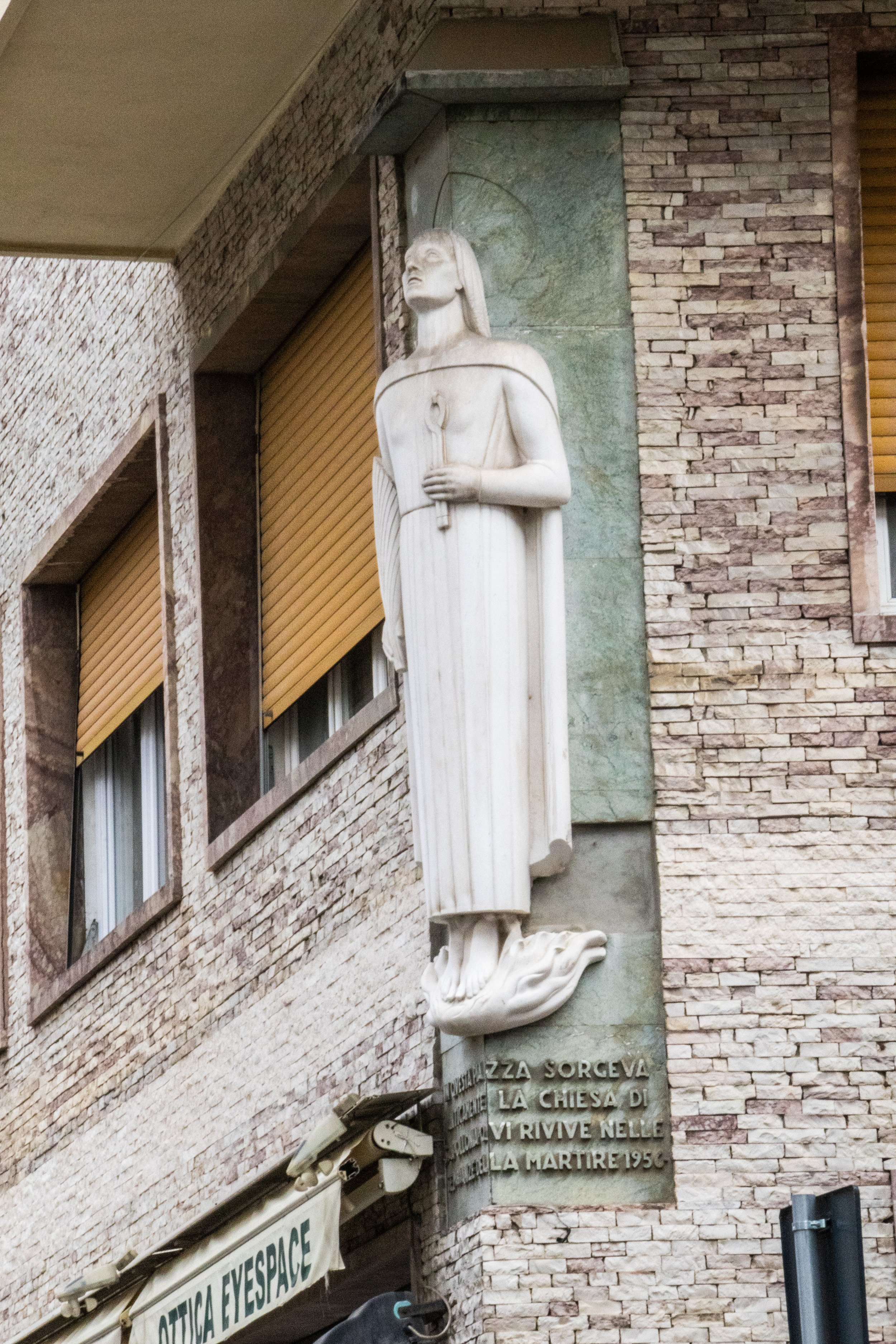
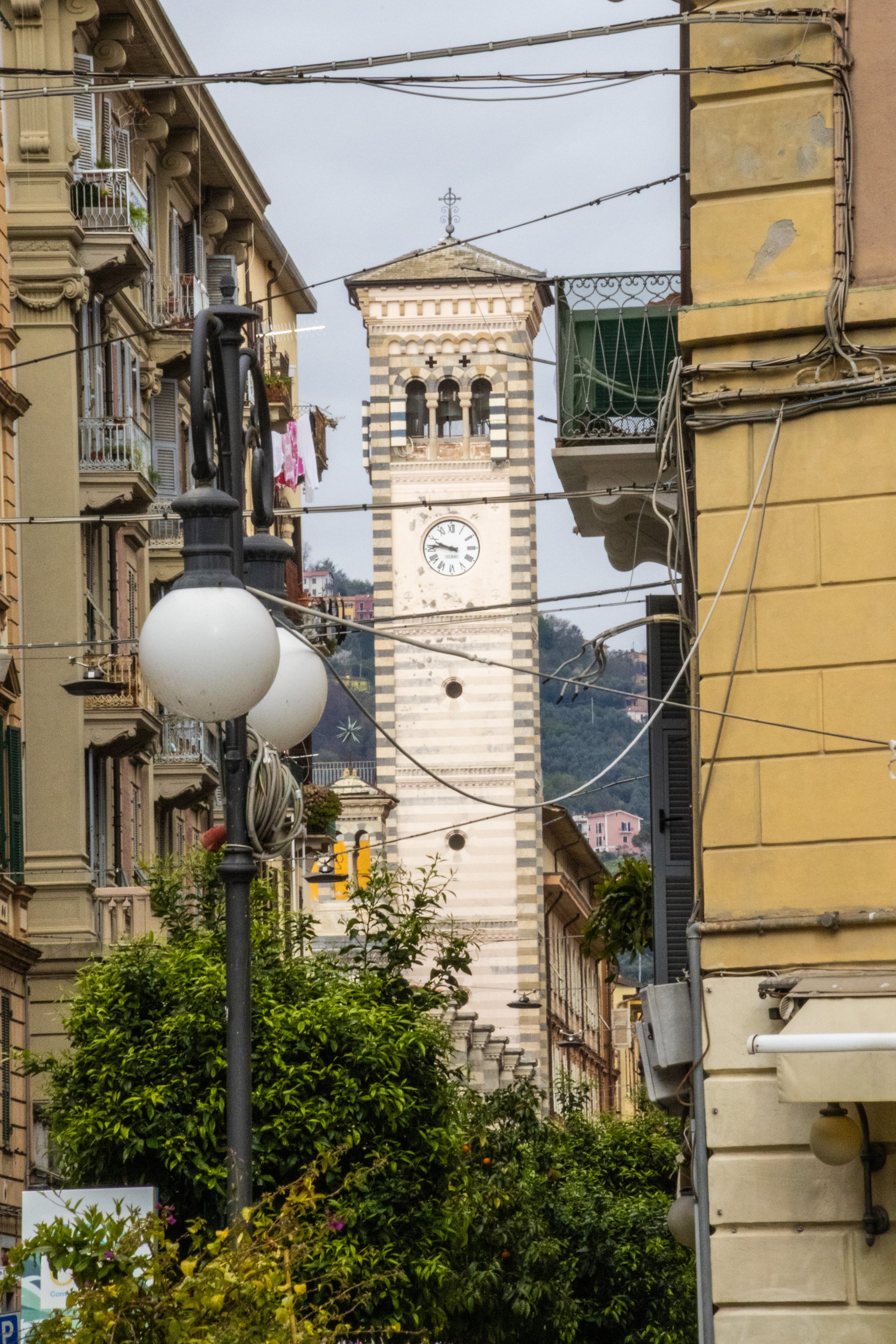
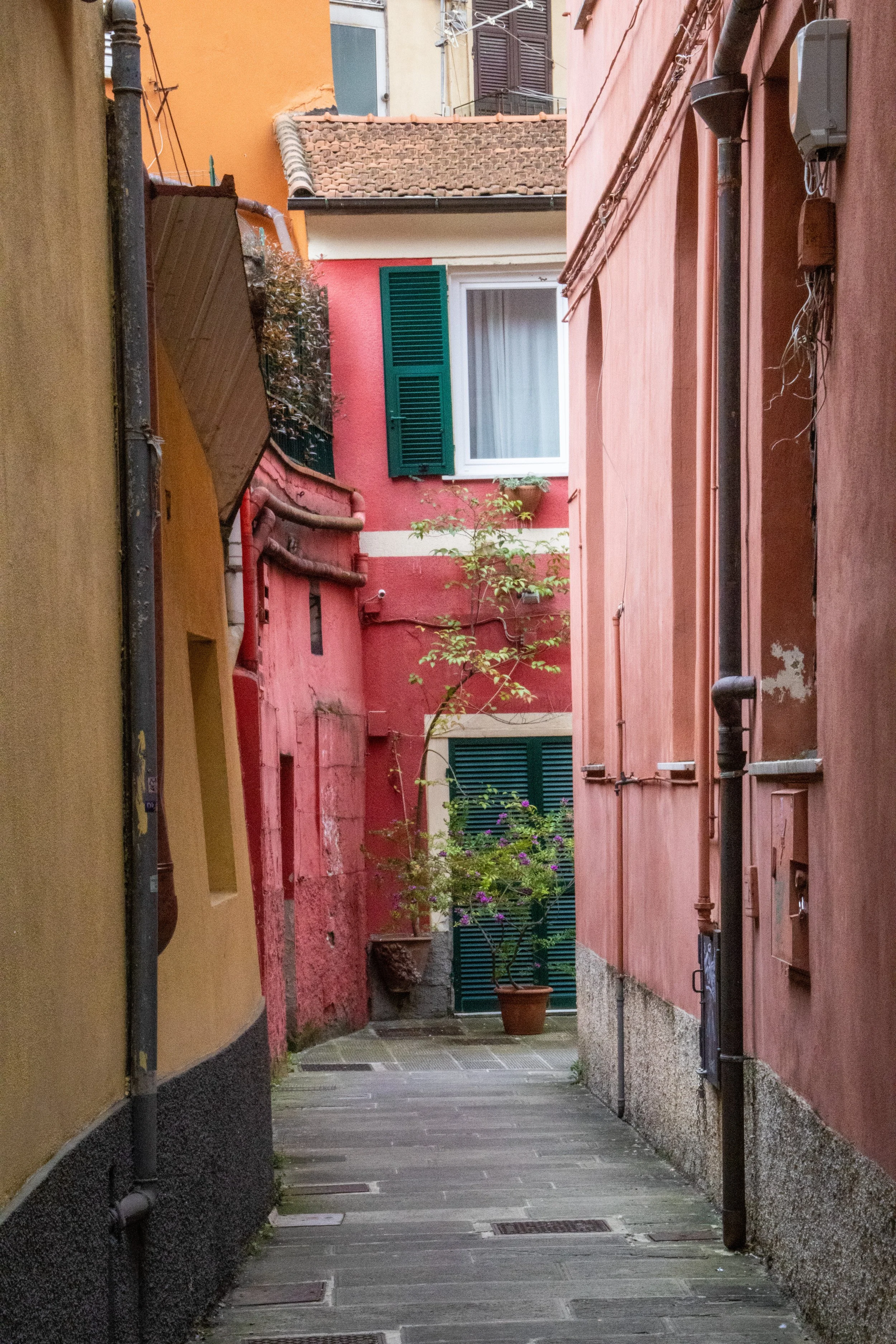
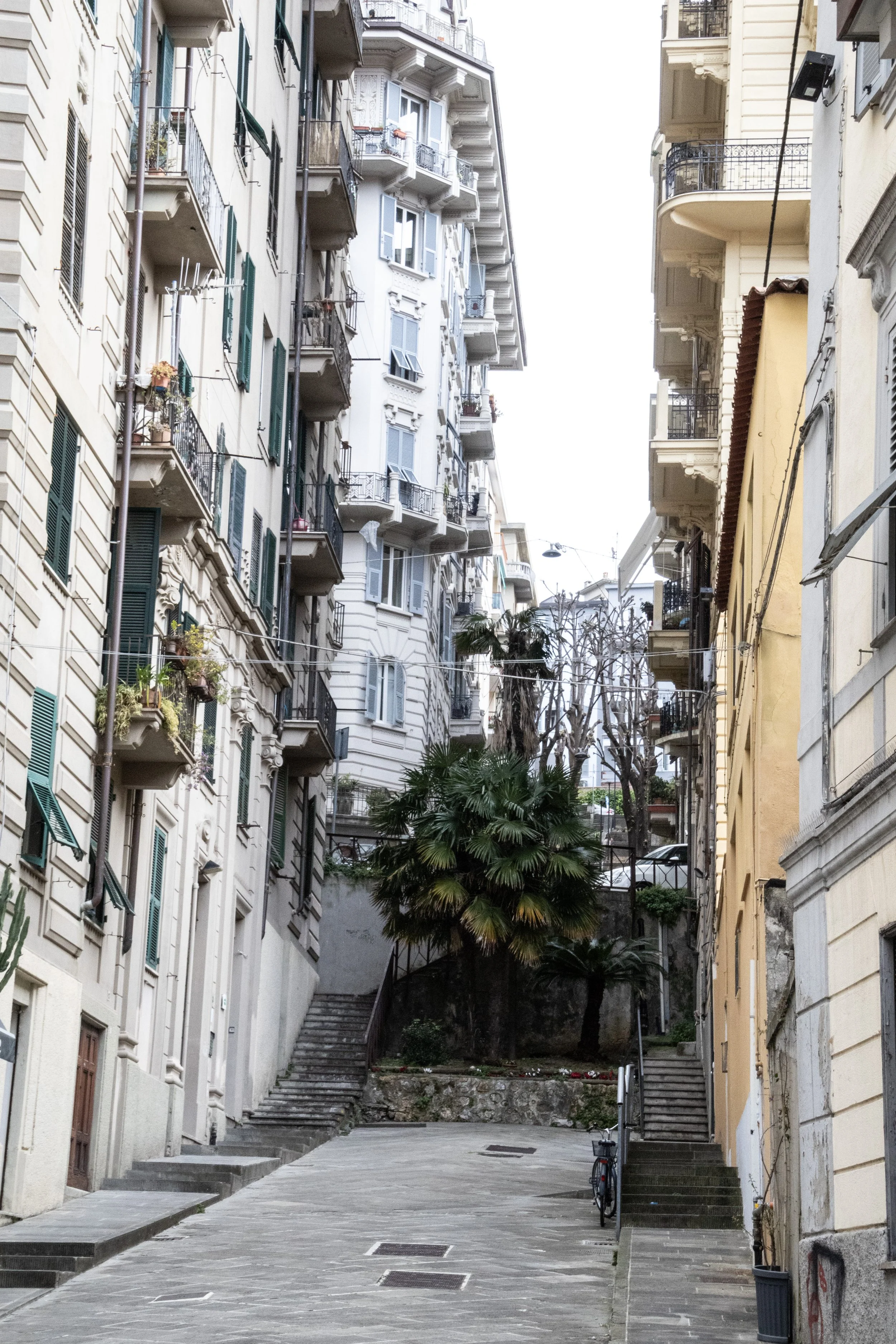
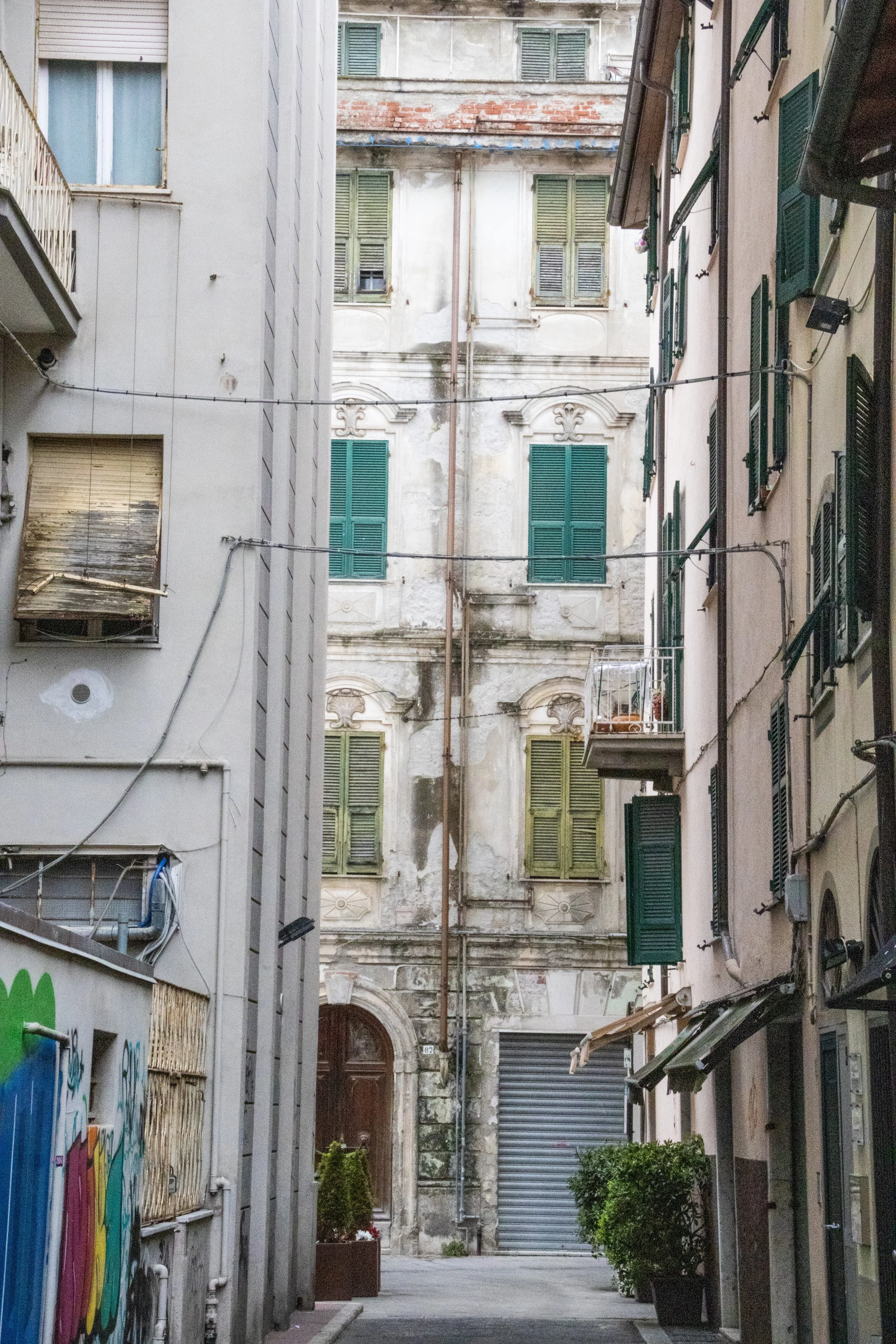
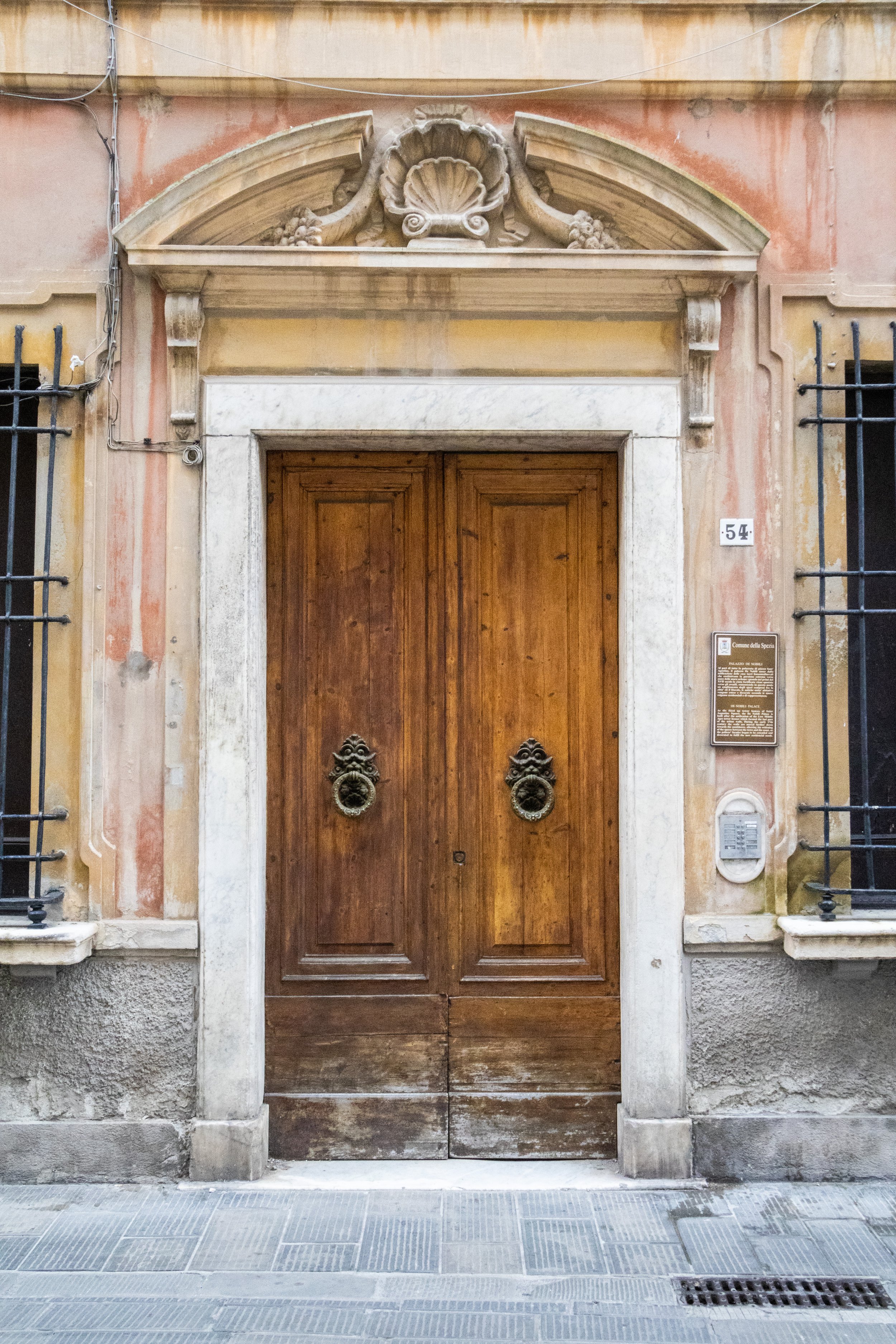
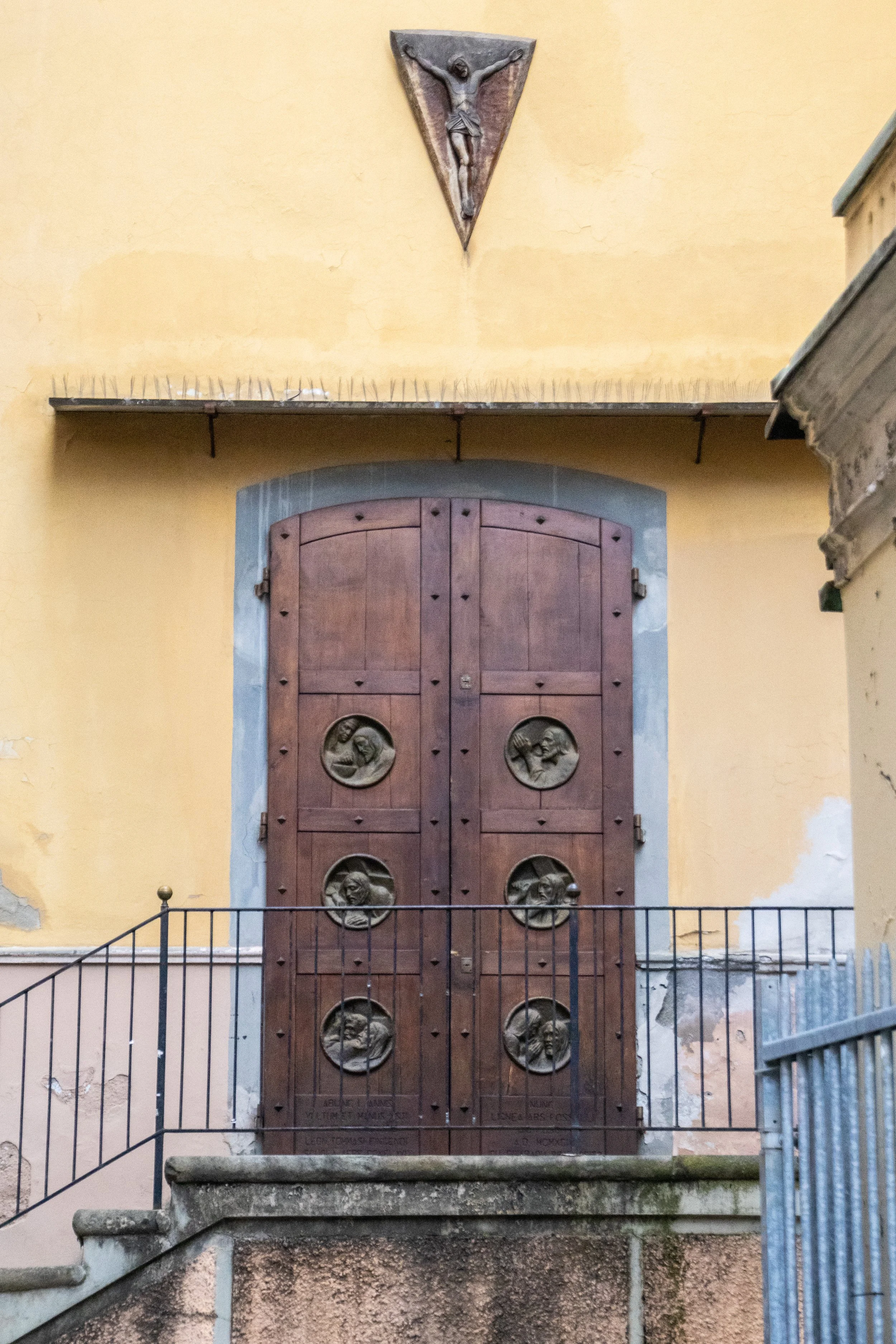
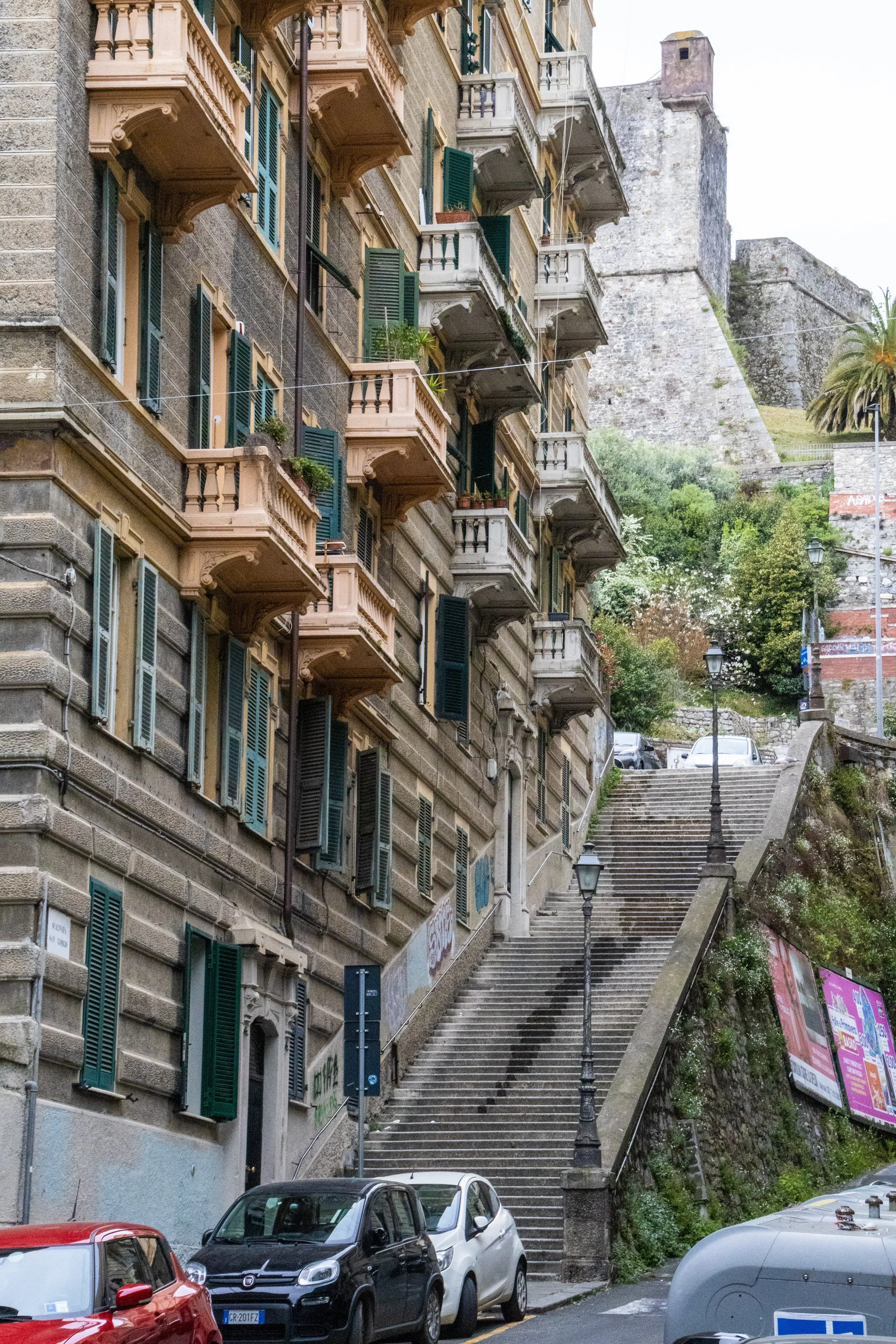
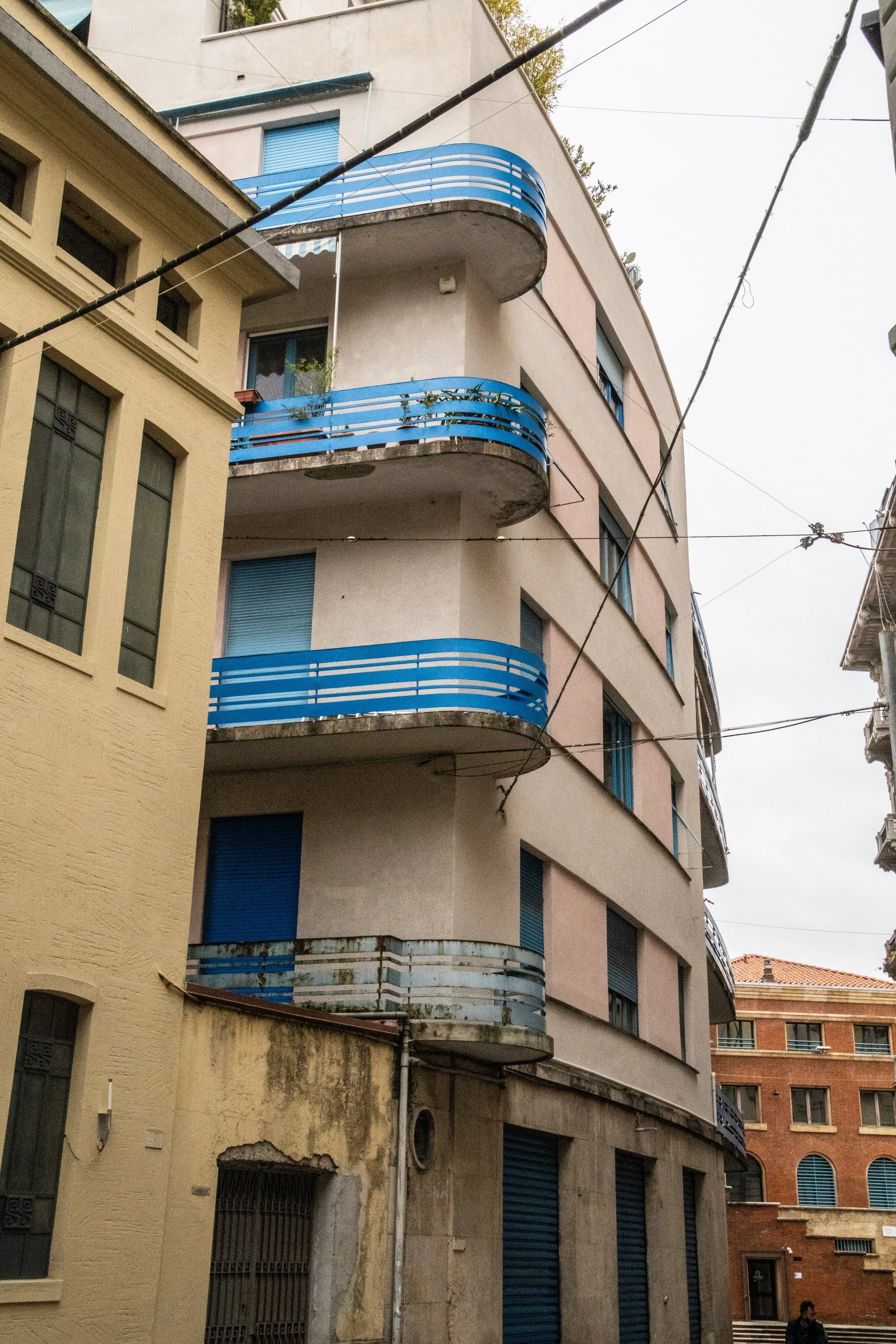
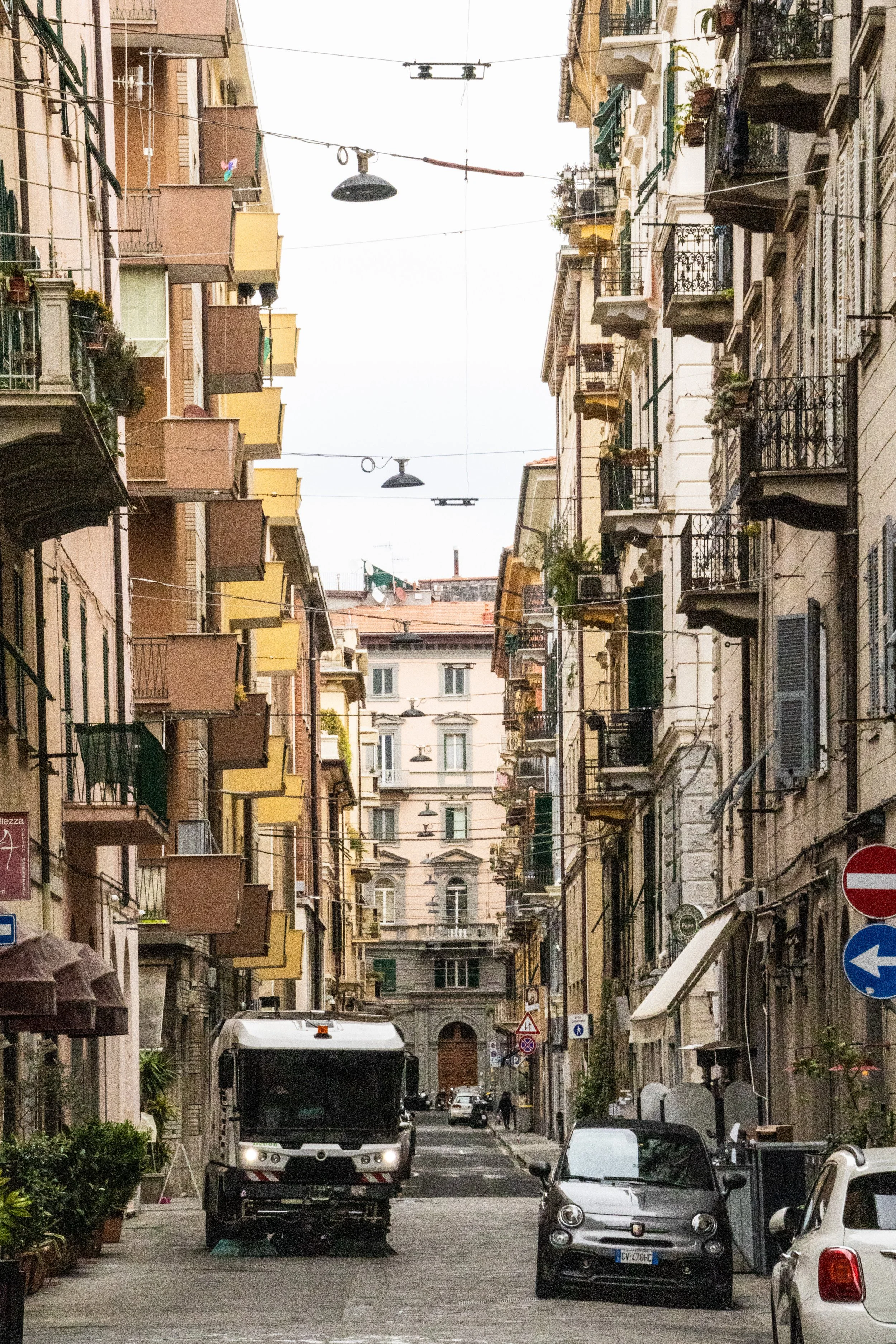
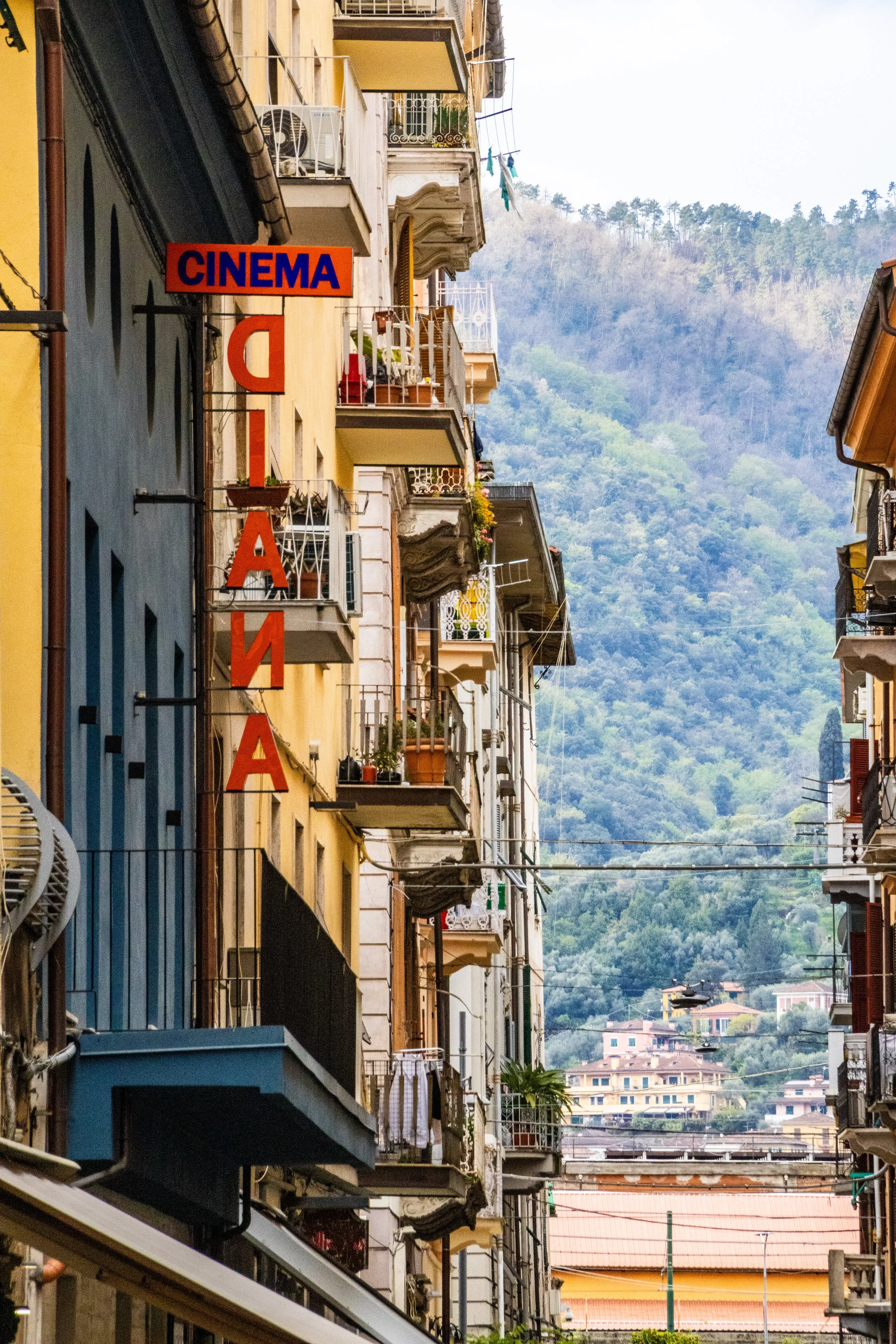
Cinque Terre
And now, we leave the real world and enter a post-card.
“Cinque Terre” literally translates to 5 lands, and indeed, it is not 1 place, but 5 places. It is a collection of 5 historic towns dotting the rugged, mountainous Mediterranean coastline between La Spezia and Genoa. Here they are on the map for you…
These towns emerged between 1000 and 1200 AD, and—in their prime—were able to flourish because they combined fishing, boat building, agriculture, and maritime trade. You’ll hear them referred to just as “fishing villages” but that is only part of the story. Agriculture is also massively important to the appearance of these towns even today. The main staple of these towns, in additional to olives, was wine. The mountainous landscape around these villages has been engineered over many centuries to turn every available piece of space into perfectly terraced vineyards, reminiscent of the steep, sloping rice paddies of northern Vietnam.
One crazy fact is that terraced vineyards and walking paths of the Cinque Terre have roughly ~6,000–7,000 km (3,700–4,300 miles) of dry-stone walls that were built over the centuries; that’s longer than the Great Wall of China if laid out end-to-end!
Another fact that sort of blew mind was that these villages had basically no connection with mainland Italy for most of their existence. The terrain was too intense. People got from one village to the next on foot or by mule, but if they really needed to travel, that trip would have to begin by boat. When the Italian railway finally reached these villages on the route between Genoa and La Spezia in the 1870s, it ironically prompted a large de-population event as most young people left for jobs in cities. The Cinque Terre were hardly the only villages affected by this trend, but I’m willing to bet that there were among the most beautiful.
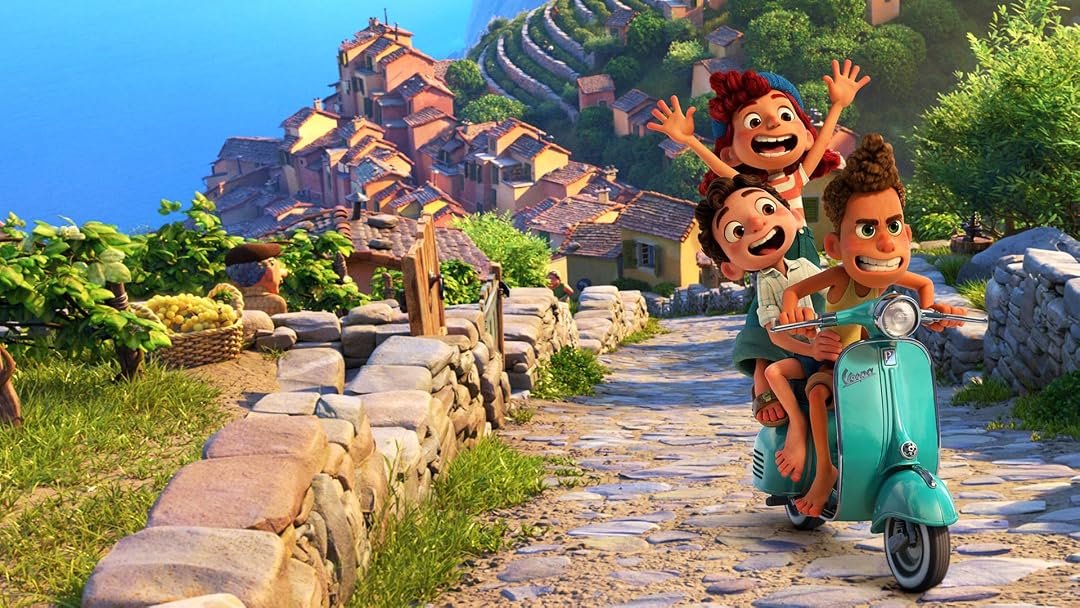
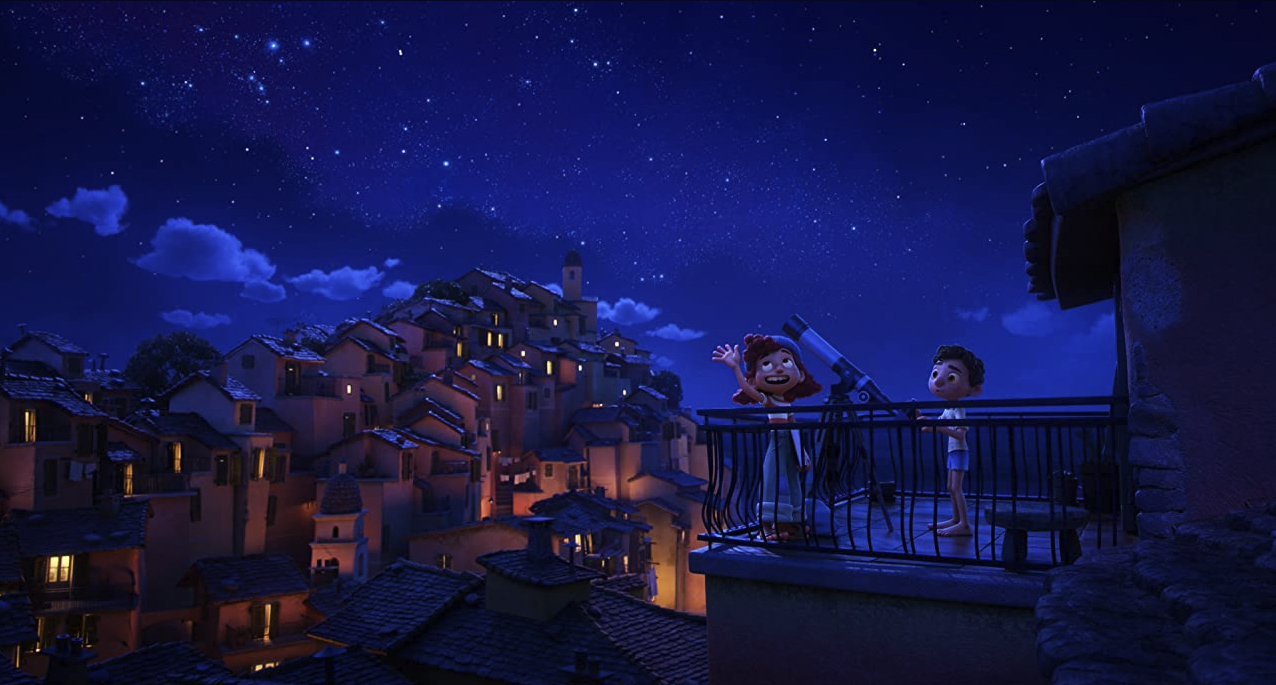
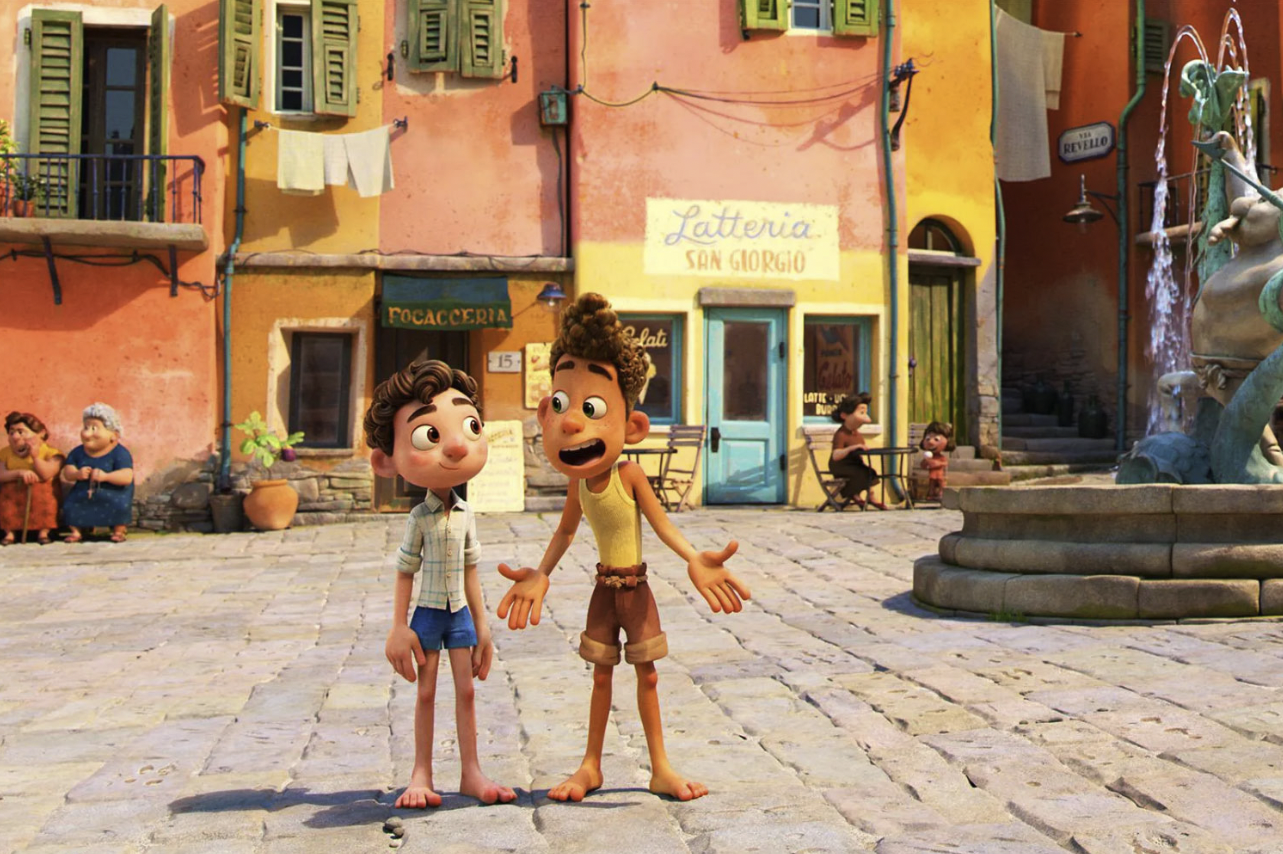
These villages—now supporting only fractions of their 1870s populations—remained largely unknown until they became a tourist destination ~100 years later, in the 1970s. Today, there are about ~3,500–4,000 permanent residents that live across all 5 towns, but they receive a combined ~4 million visitors each year. So, they can be crowded (as you will see), but absolutely magical. They are SO idyllic in fact, that Pixar recently released a movie inspired by this area. Did you ever see the movie ‘Luca’? Portorosso, the fictional town that serves as the setting for this movie, is very clearly a combination of a few different towns along this coastline. In fact, the film references Genoa explicitly as the nearby “big city” and [SPOILER] there is even a sad scene where some of the young people get on a Genoa-bound train leaving their hometown behind. Here are a few freeze frames of the movie. Perhaps you will notice the resemblance as we move through this article.
Corniglia: My White Whale
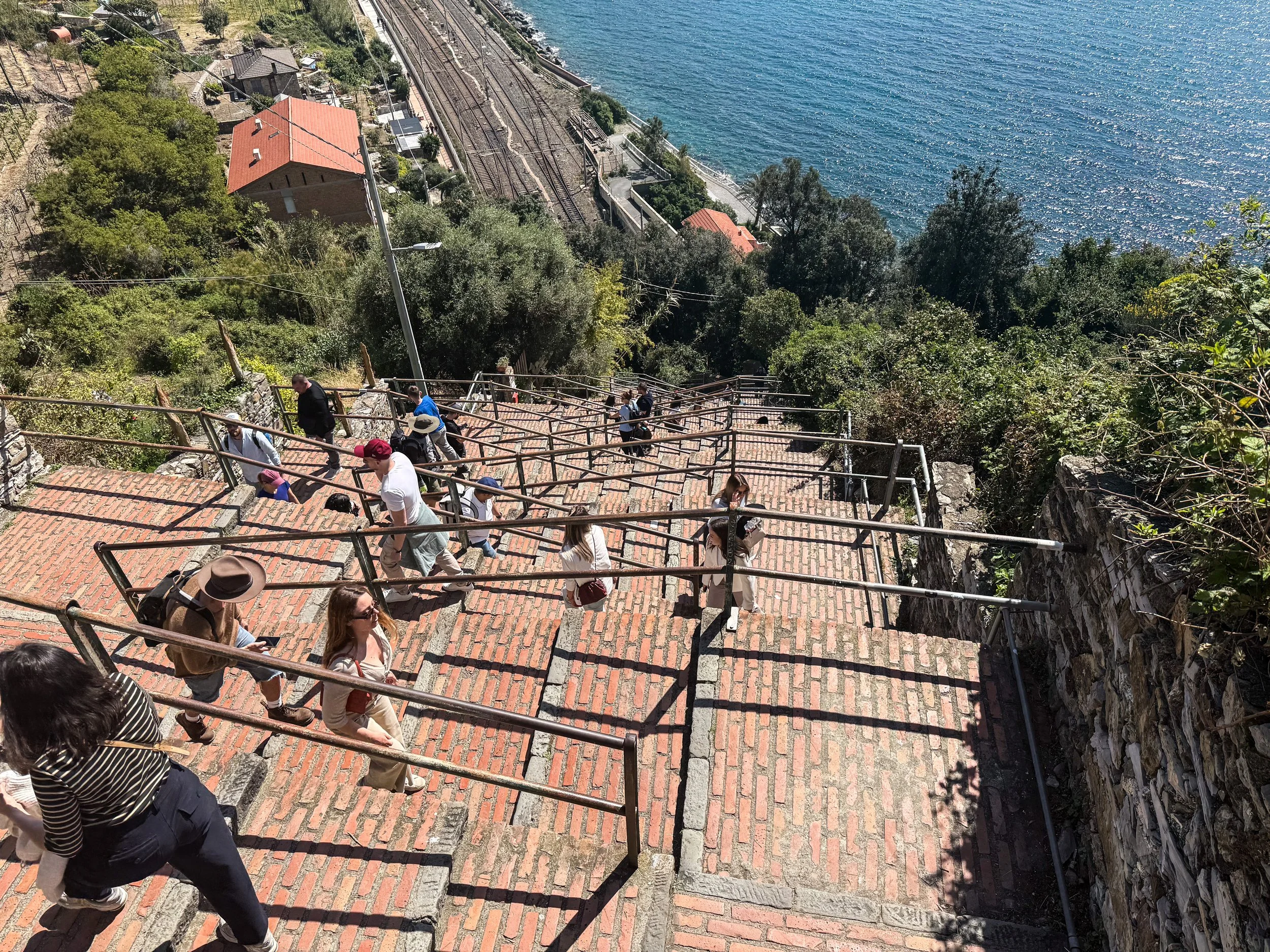
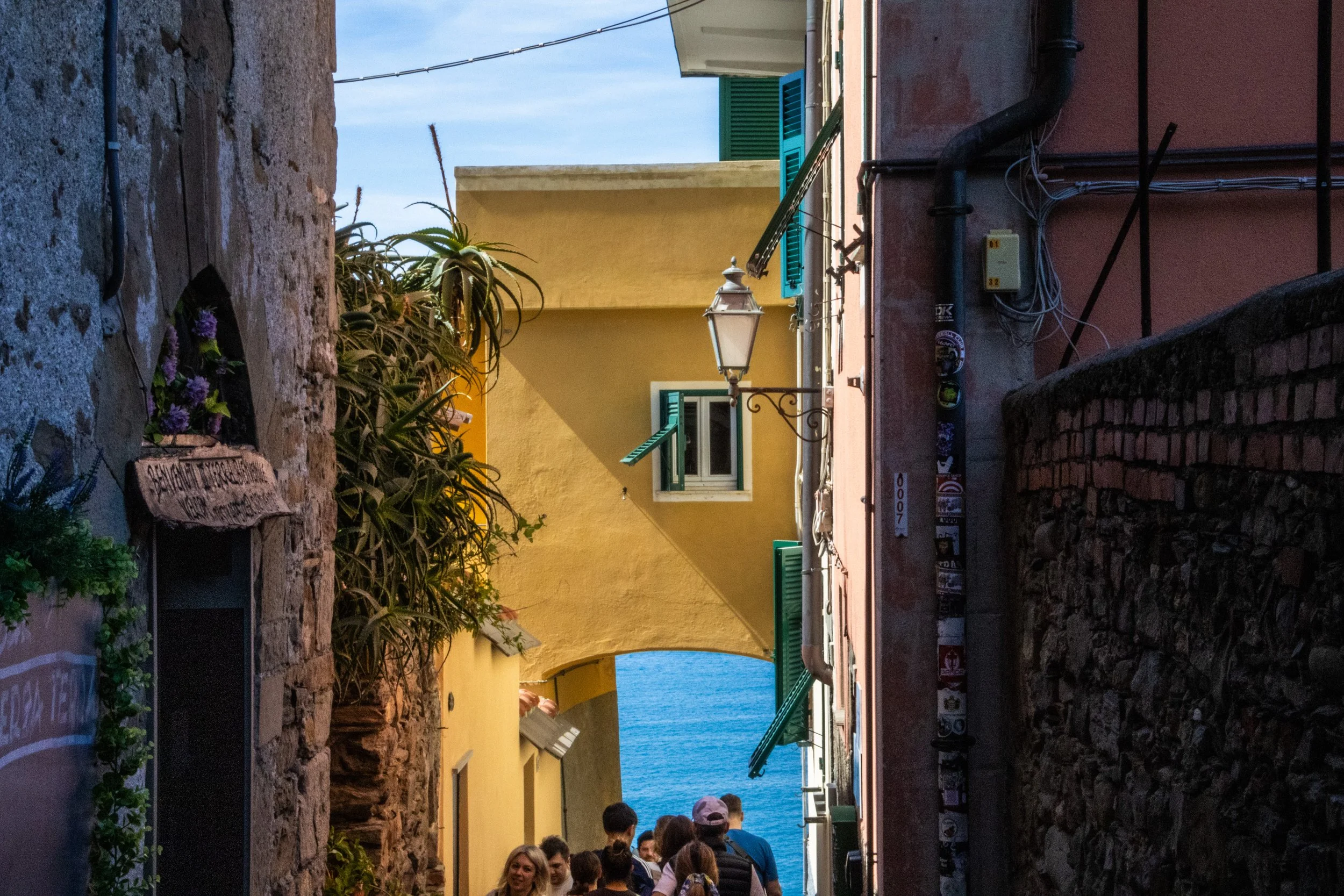
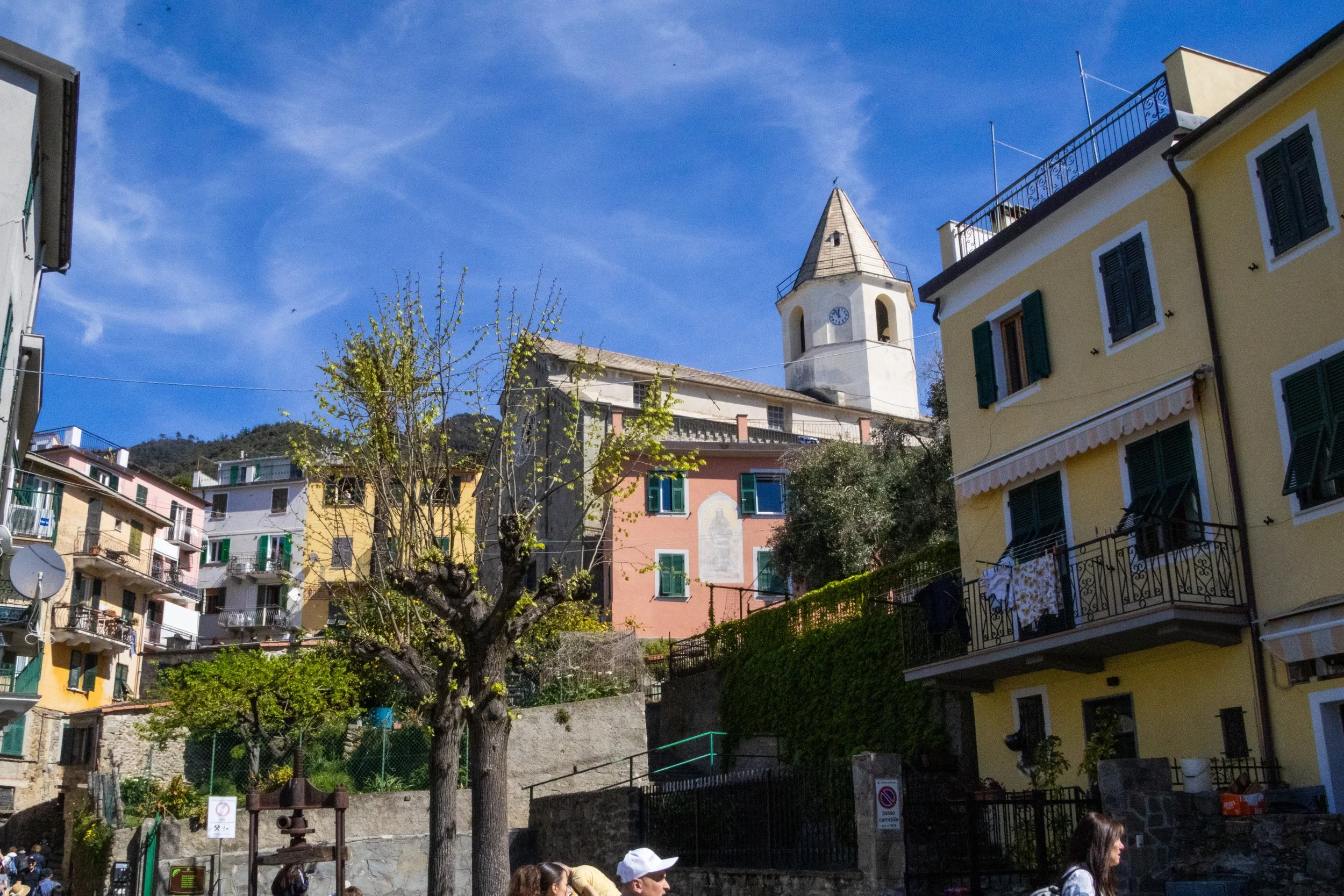
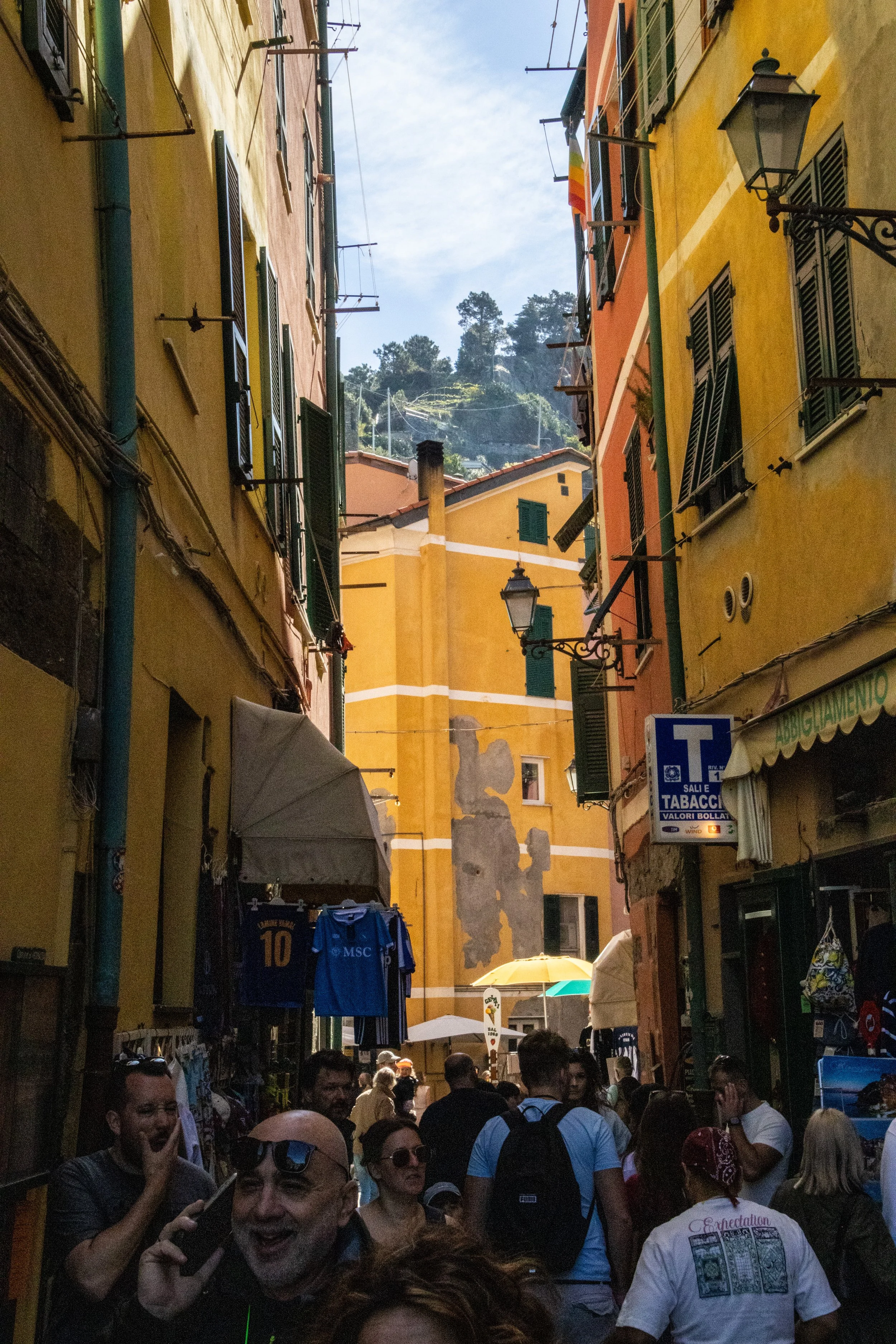
Last time I was here, I visited every village except for this one. So I was determined to finally check it off the list this time around. In the time between my last visit and this one, I’d learned that Corniglia gets far fewer visitors than the other towns. I didn’t understand why… until we got out of train station were confront with a never-ending staircase leading up the side of the mountain. “Oh, that’s why.”
Corniglia is many things, but a fishing village is not one of them. Perched on a ledge 100 meters (330 feet) above the Mediterranean below, this is a village that specialized more in olives and wine. However, it was known since Roman times, so it is likely the oldest continuously inhabited site out of the 5 towns.
To be honest, while this town was beautiful, I was frustrated by the tight angles. I could never see the entire town all at once! There was a stunning picture I’d seen of Corniglia in multiple places which looked down at the town from above… but after hiking up here from sea level, the prospect of braving the mid-day sun for a scavenger hunt that would lead us even farther up the mountain was not attractive. On top of that, I’d learned that I probably wouldn’t be able to get up there even if I tried because you have to buy a separate pass if you want to hike from town to town. We’d bought the all-day train pass, but to hike the trails, there was a different ticket. Looking up the mountain from Corniglia, I could see other colorful towns dotting the landscape that were not on my radar at all… maybe I should consider hiking next time!
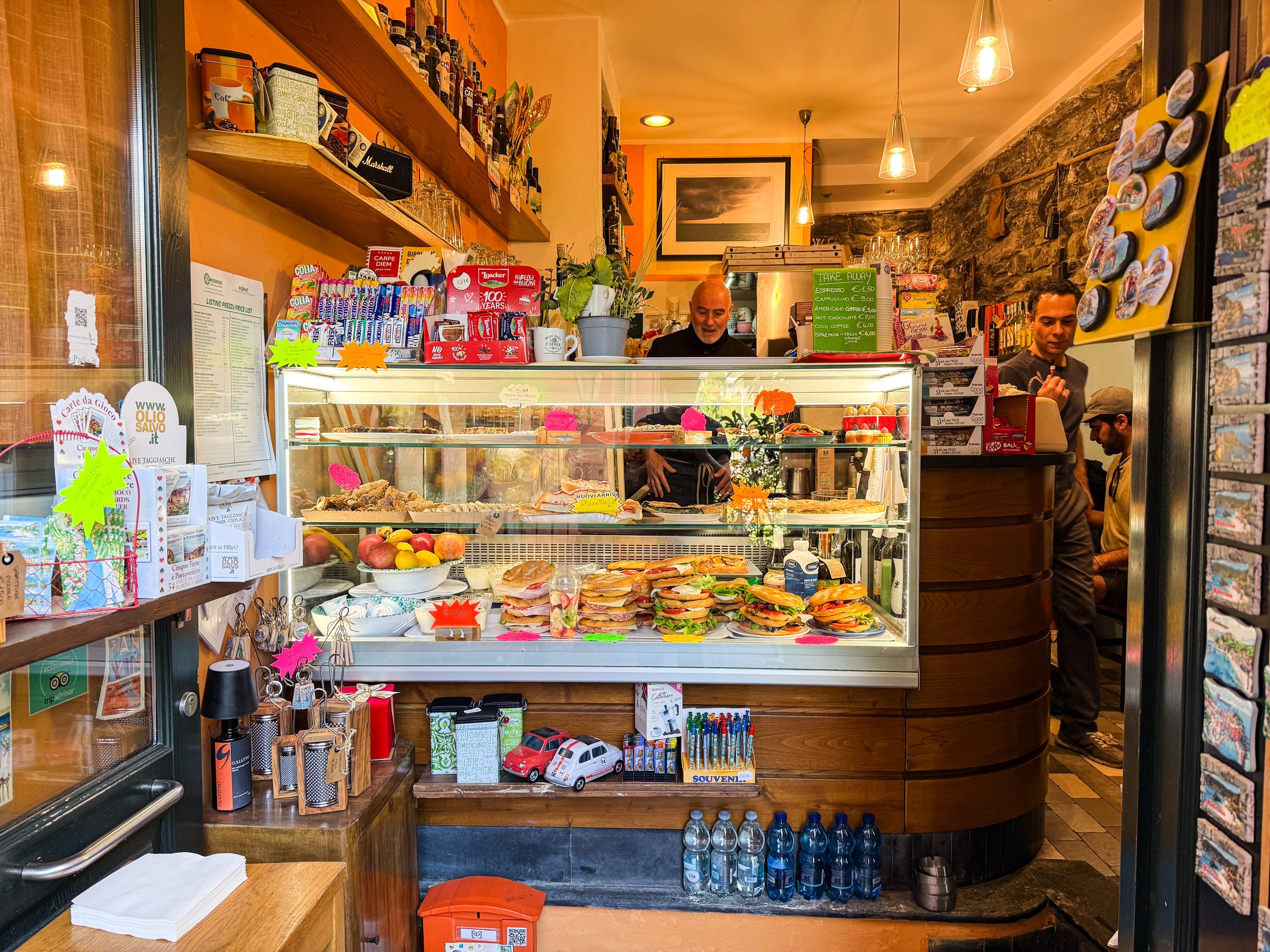
Oh well. We enjoyed the town all the same, stopping in the main square for a coffee and a sparkling water. Did you know that sparkling water occurs naturally in Italy? This blew my mind.
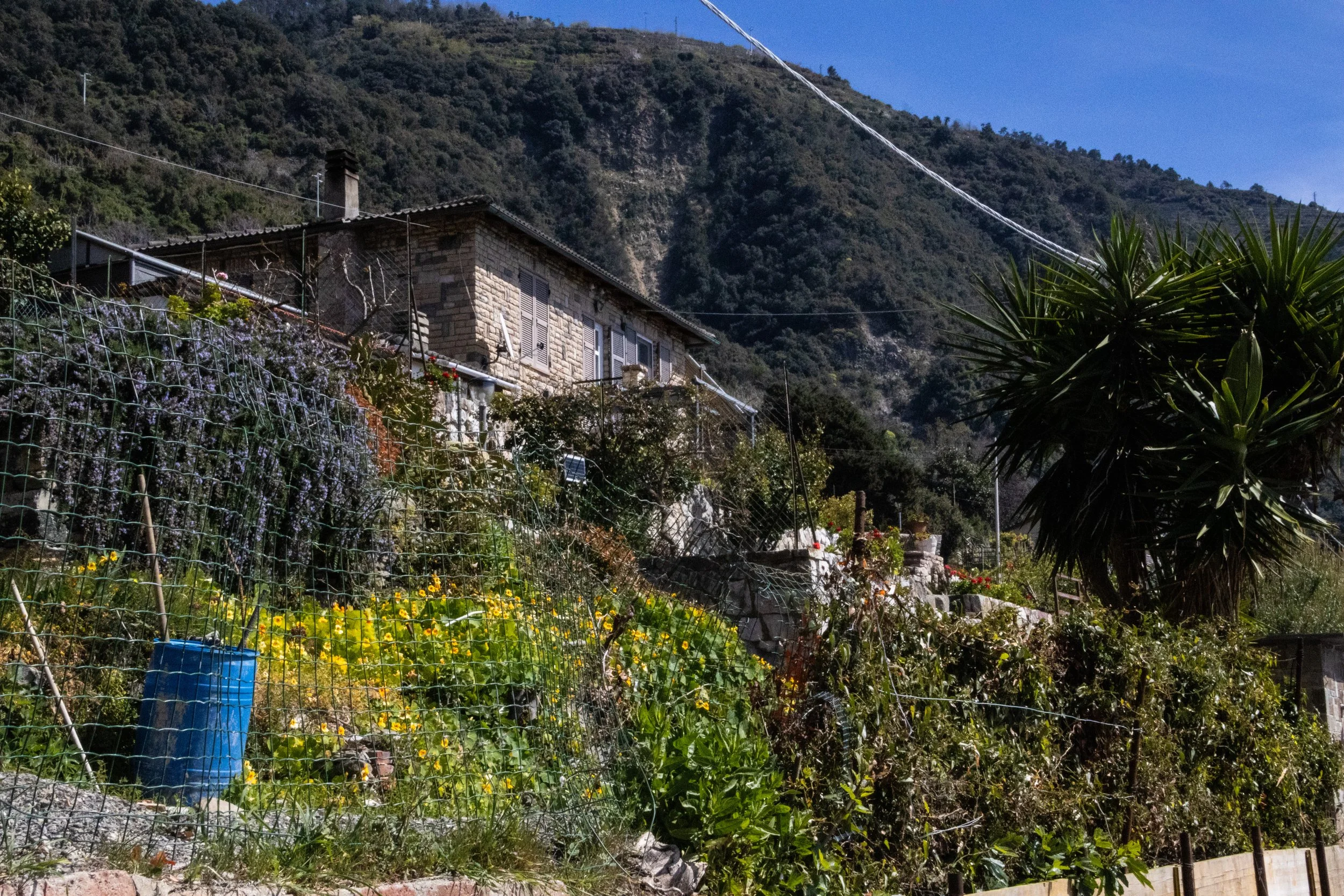
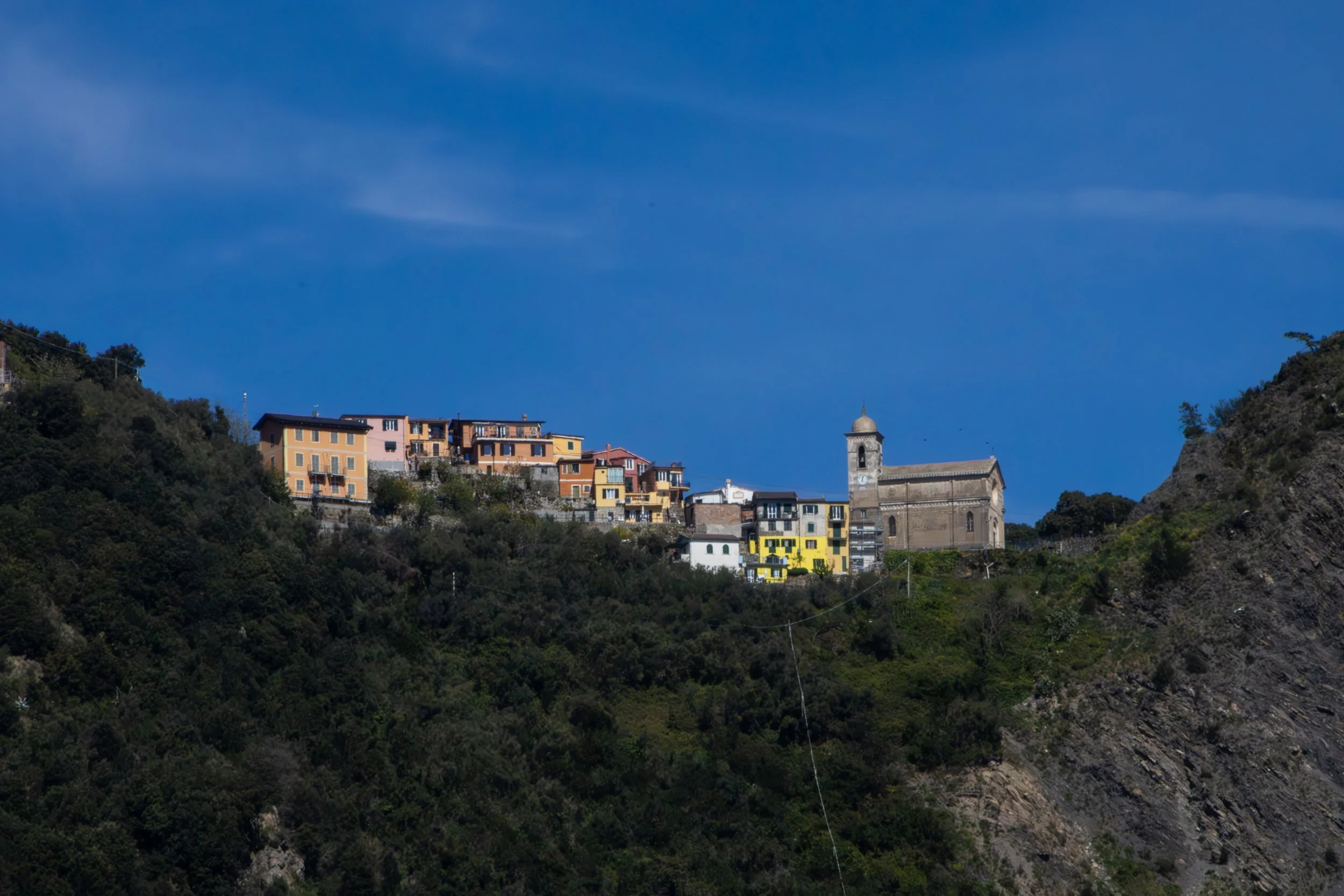
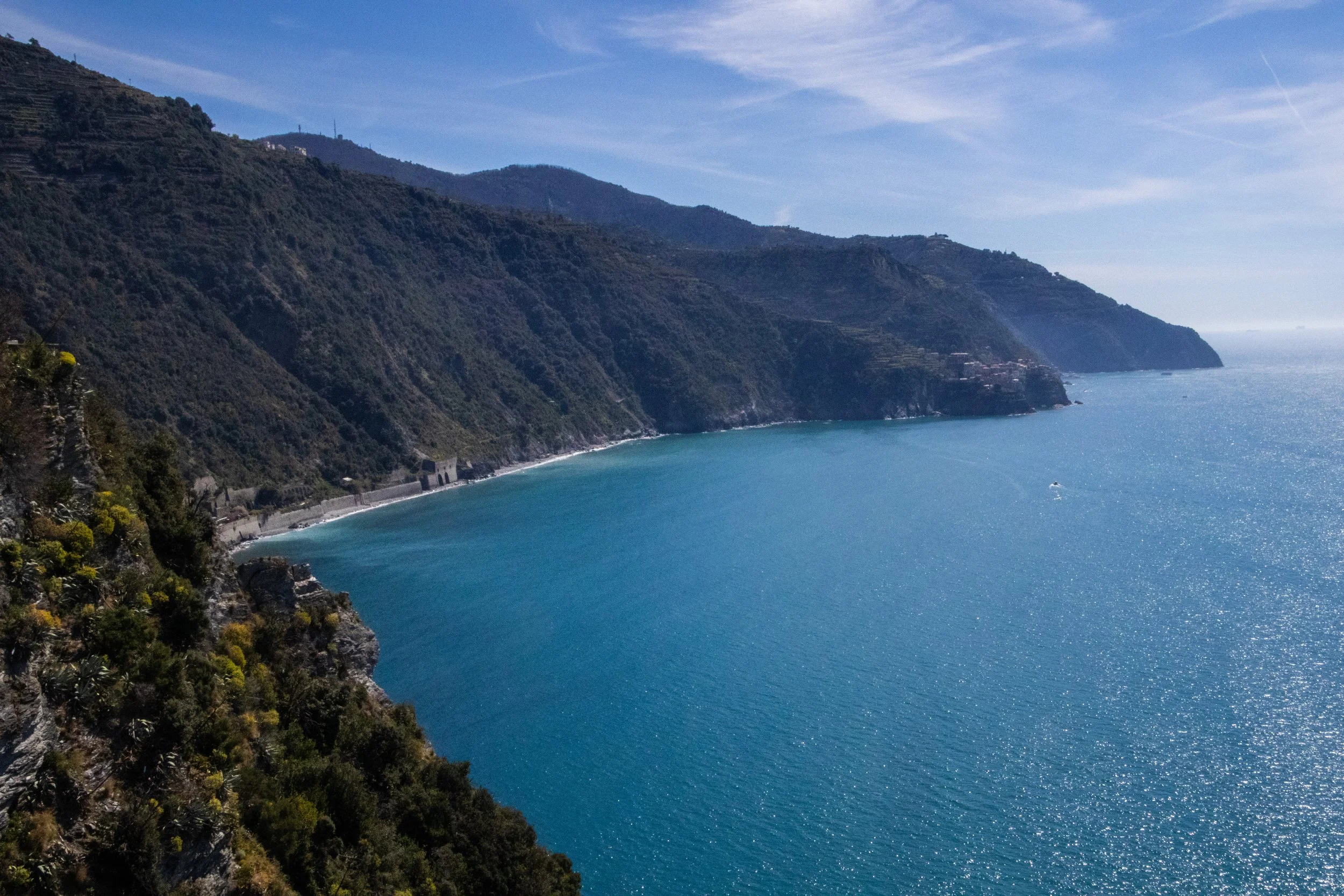
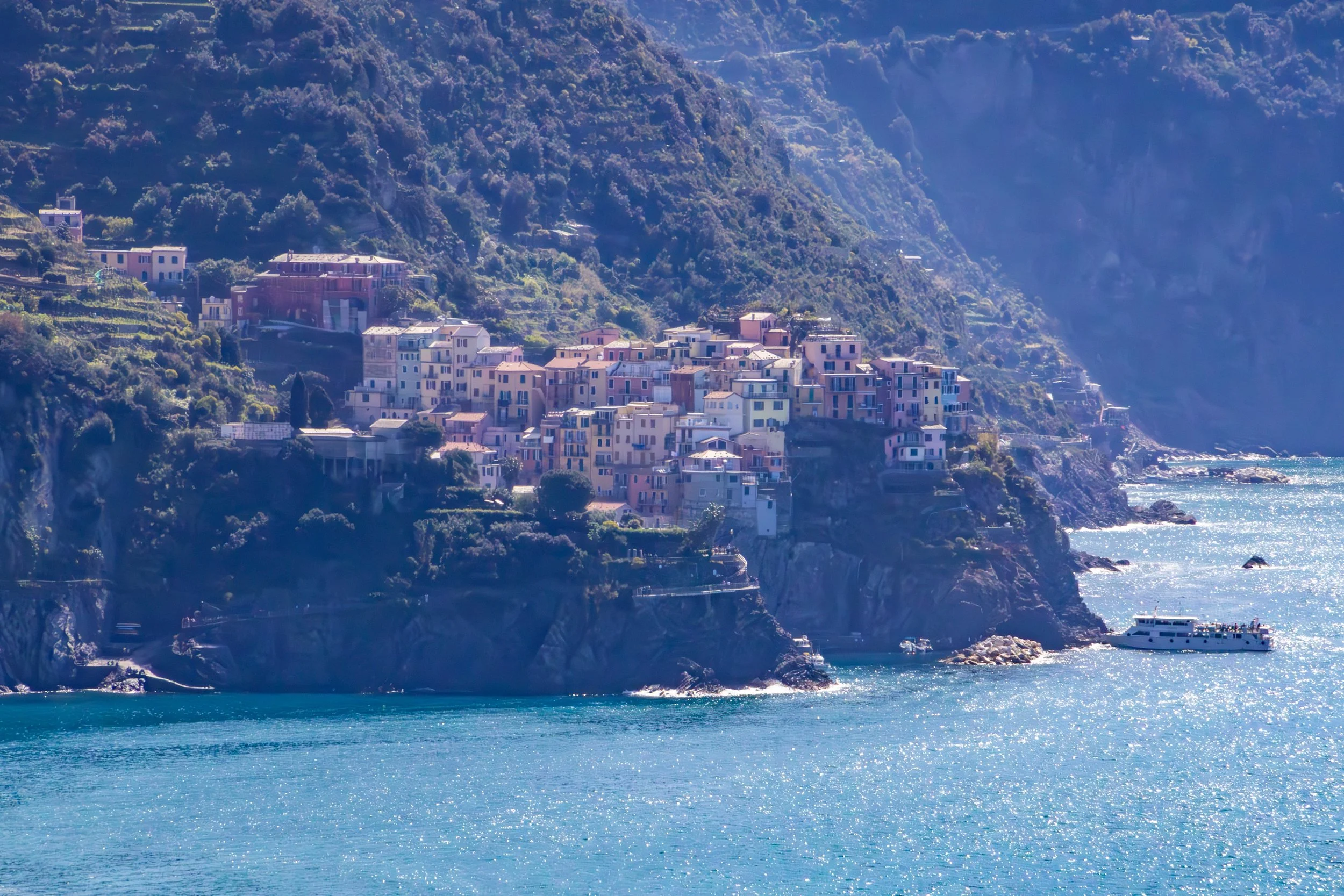
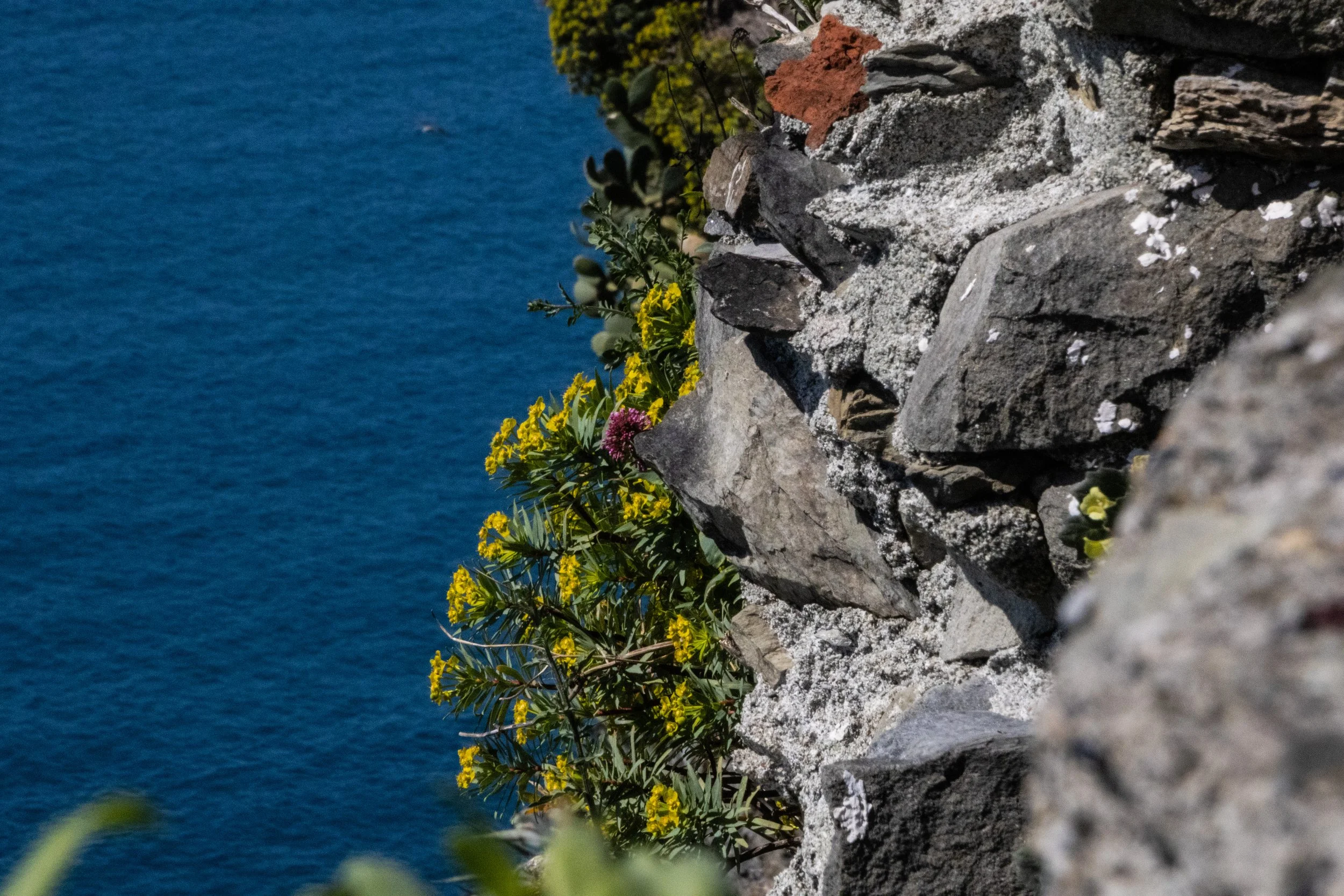
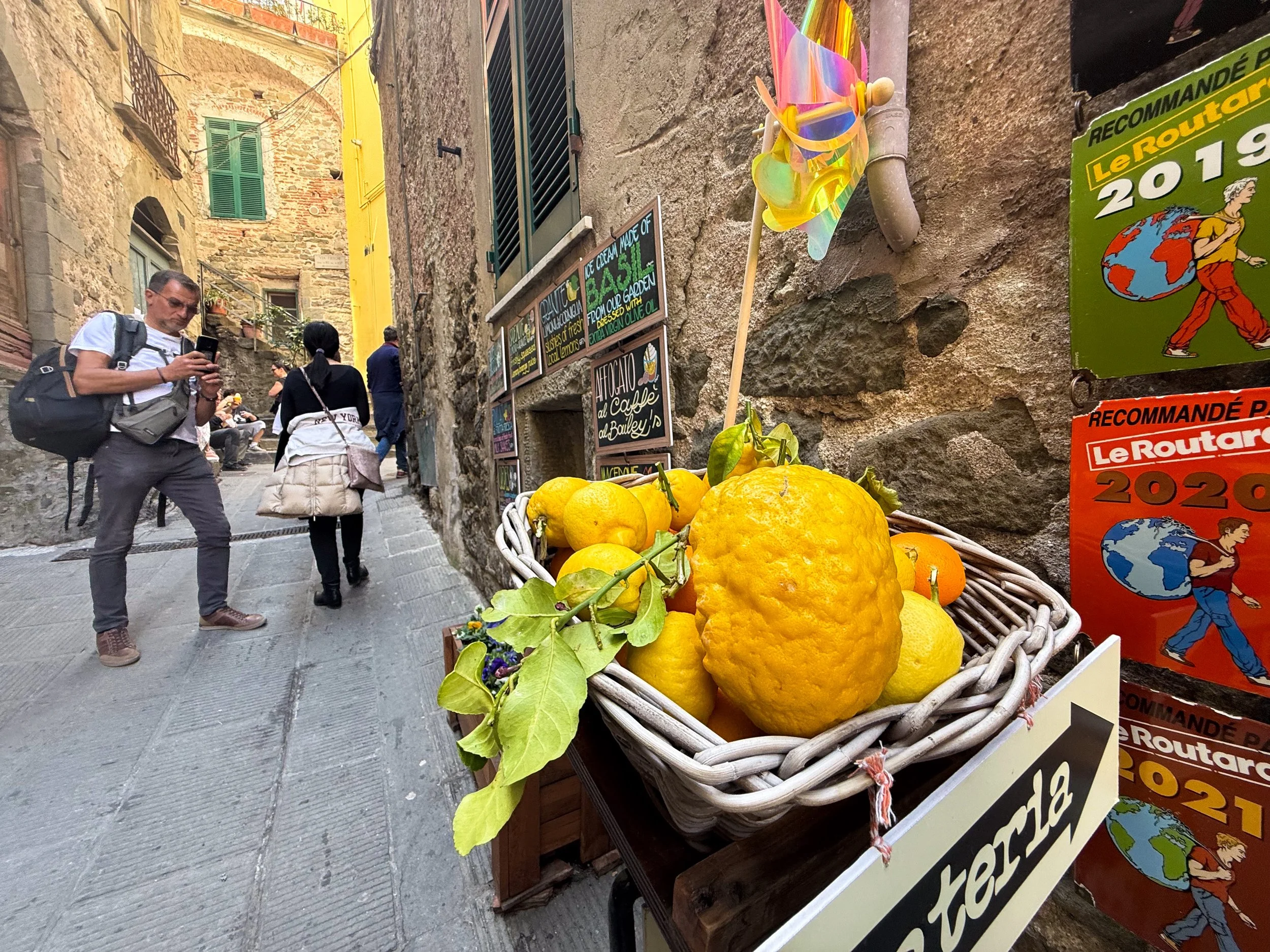
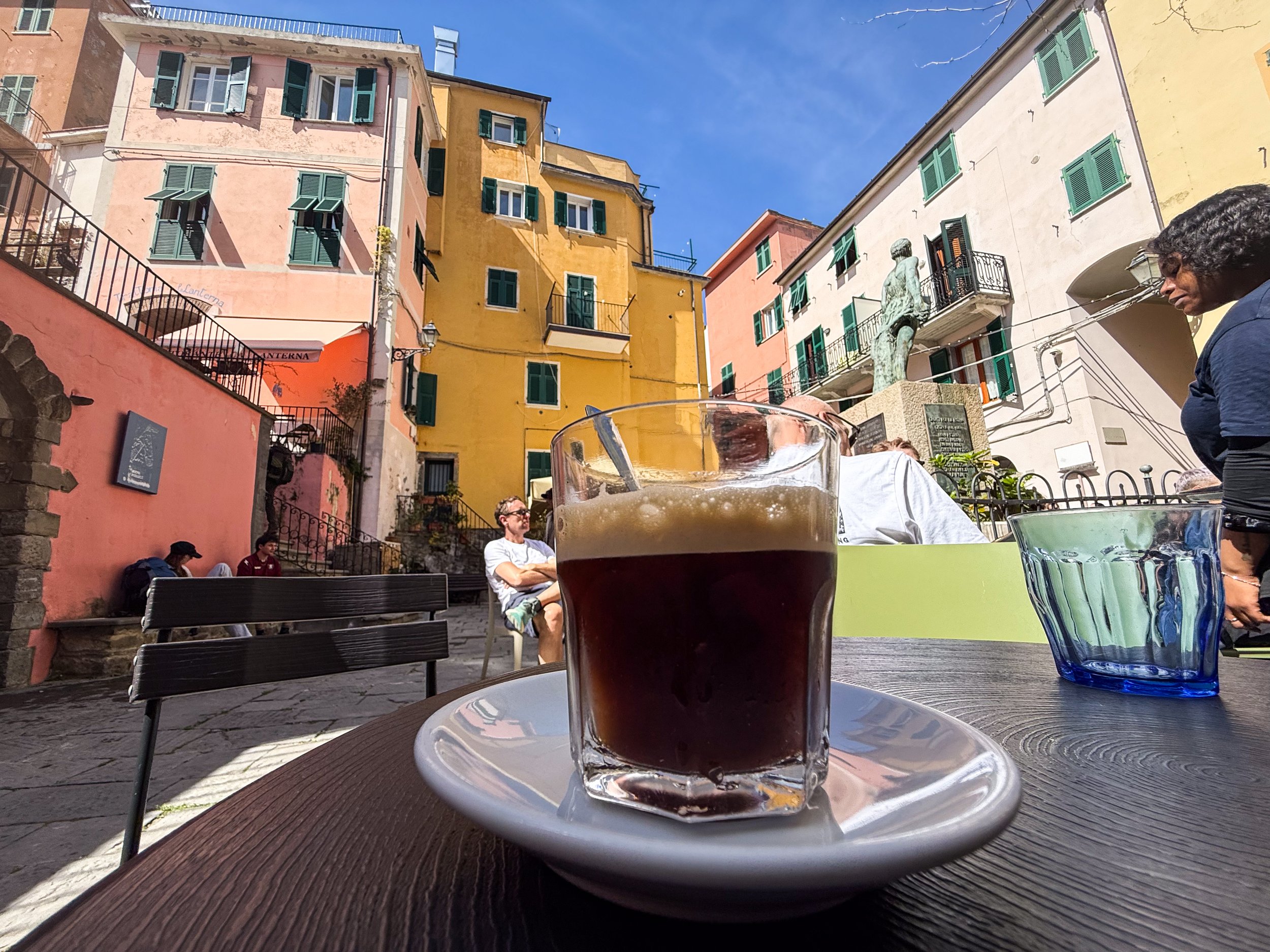
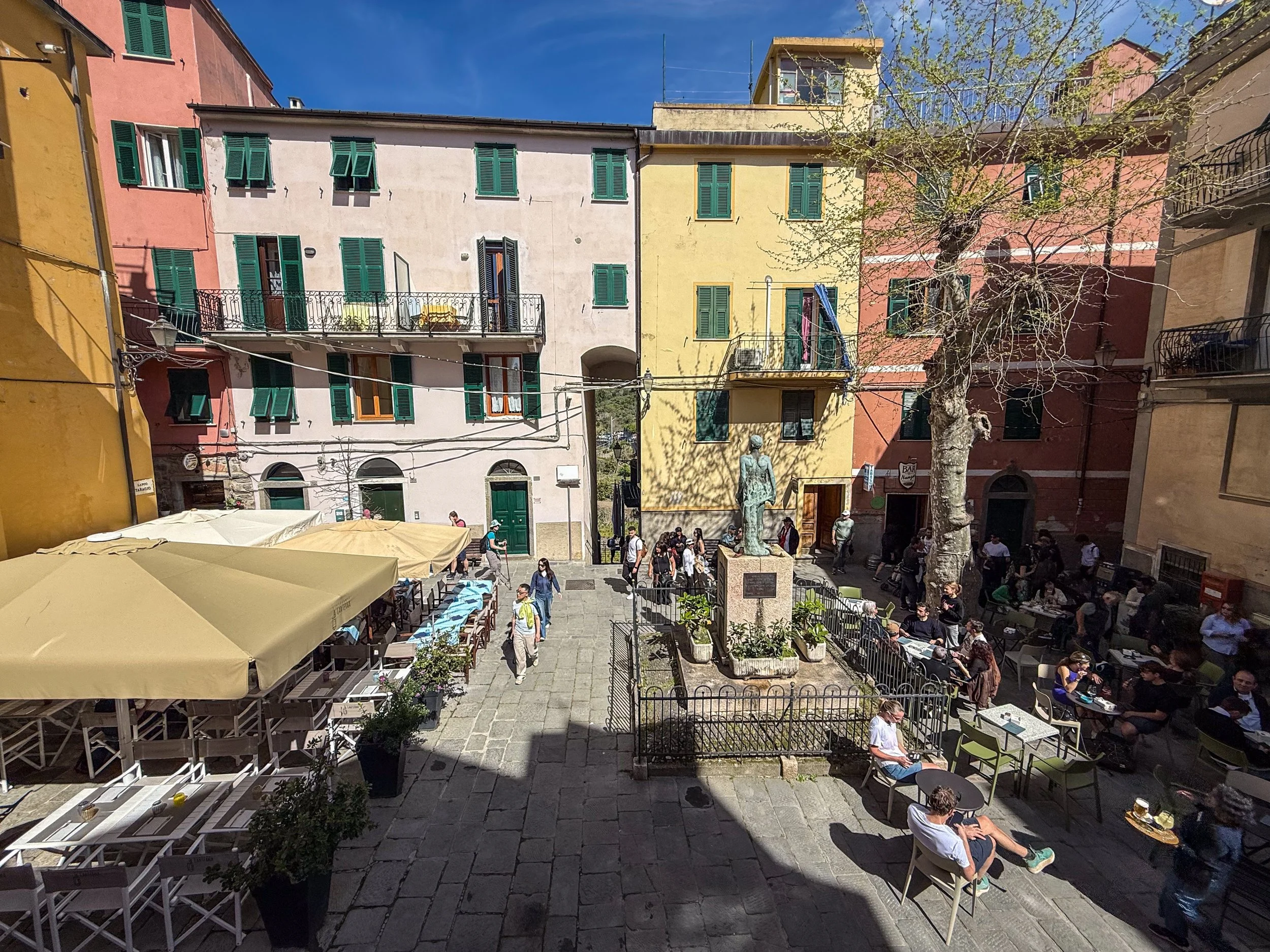
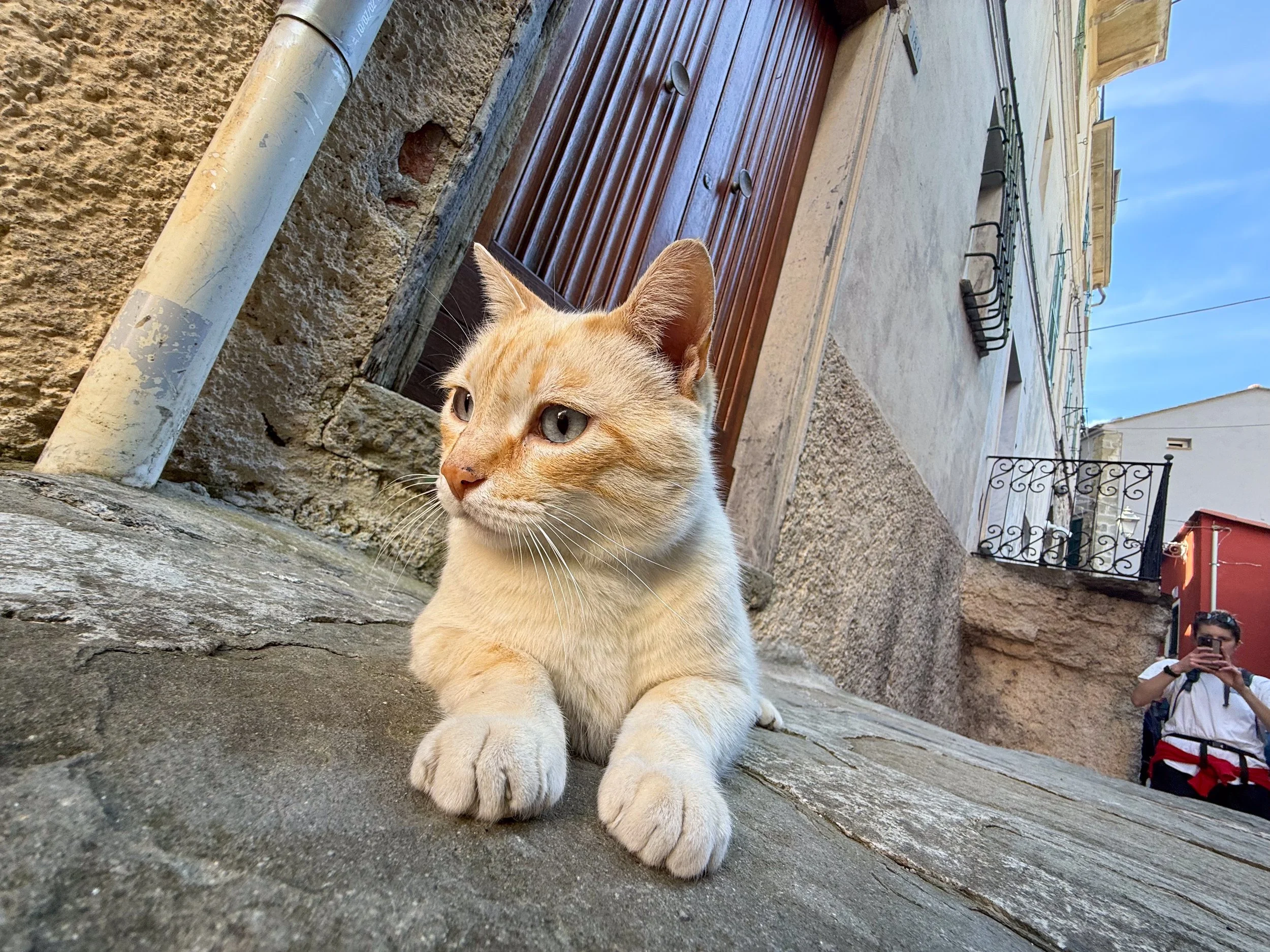
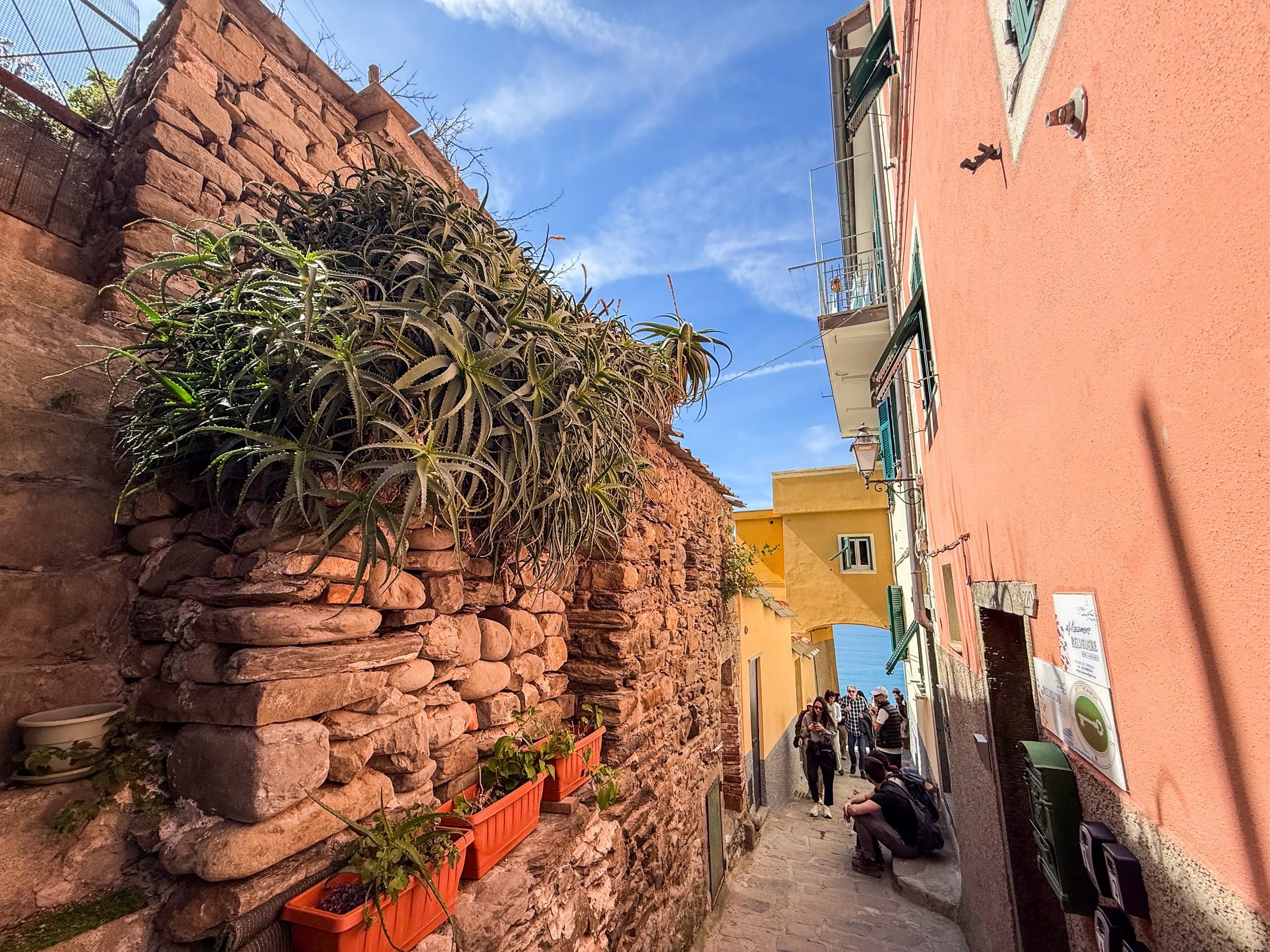
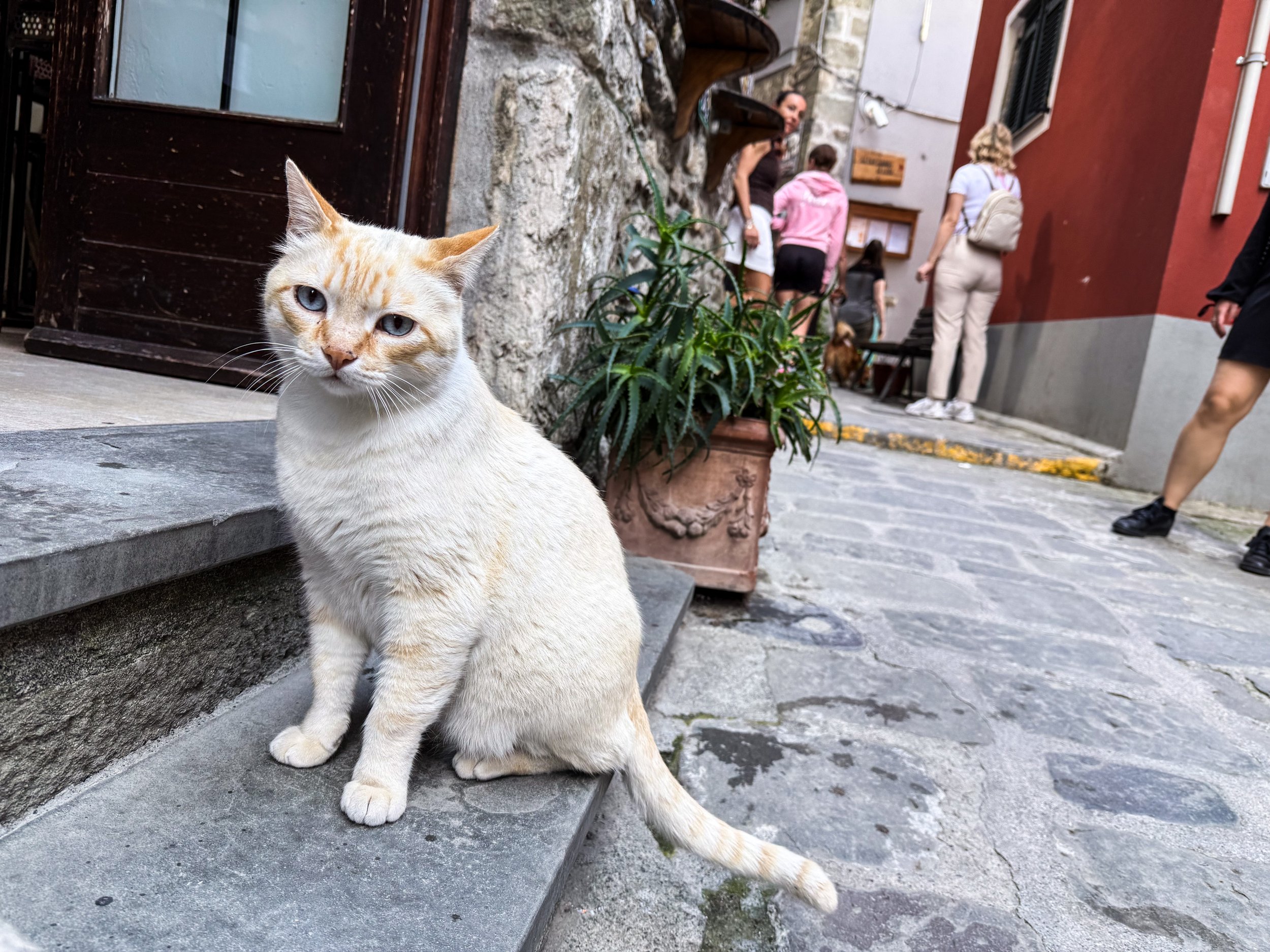
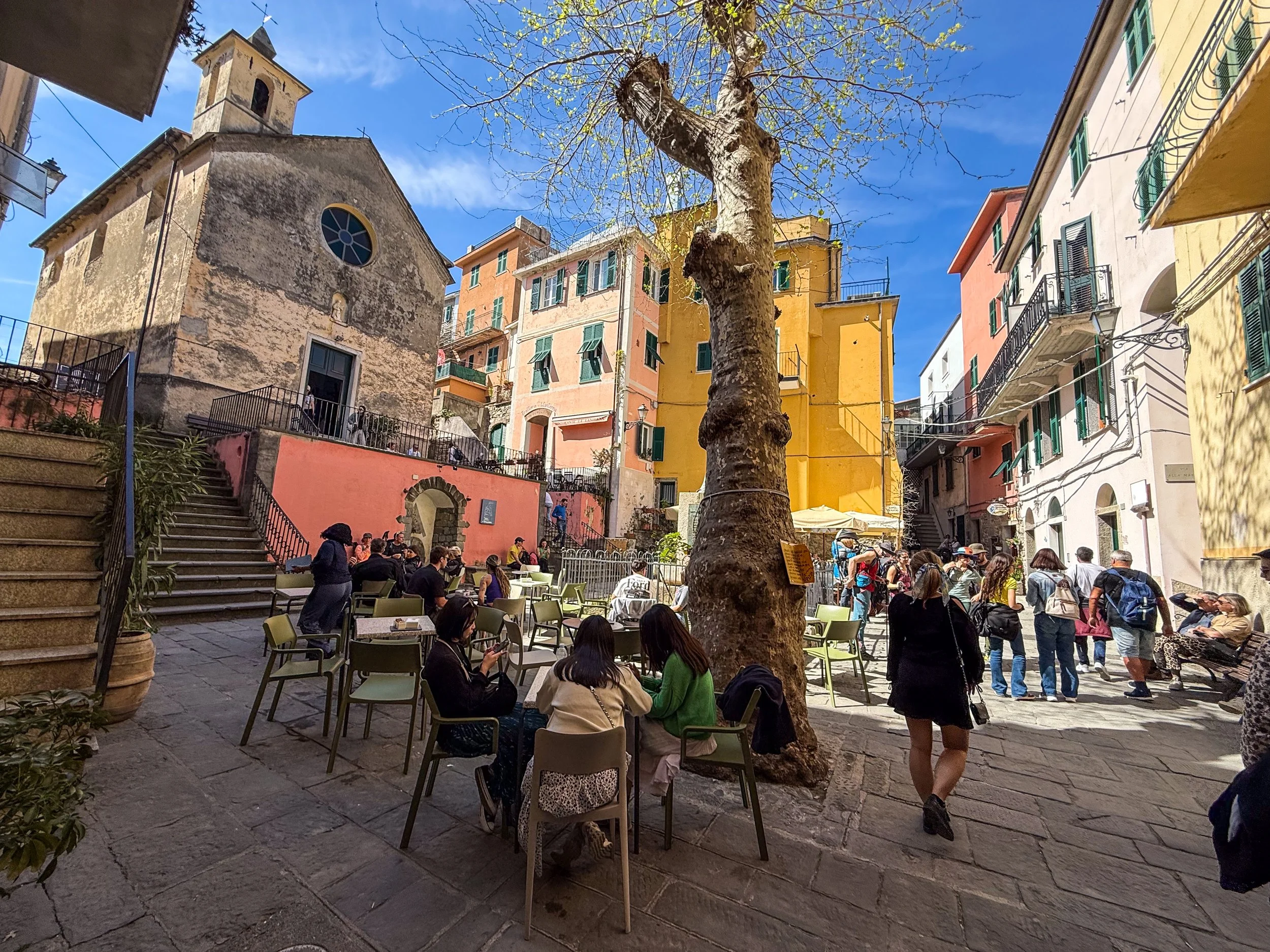
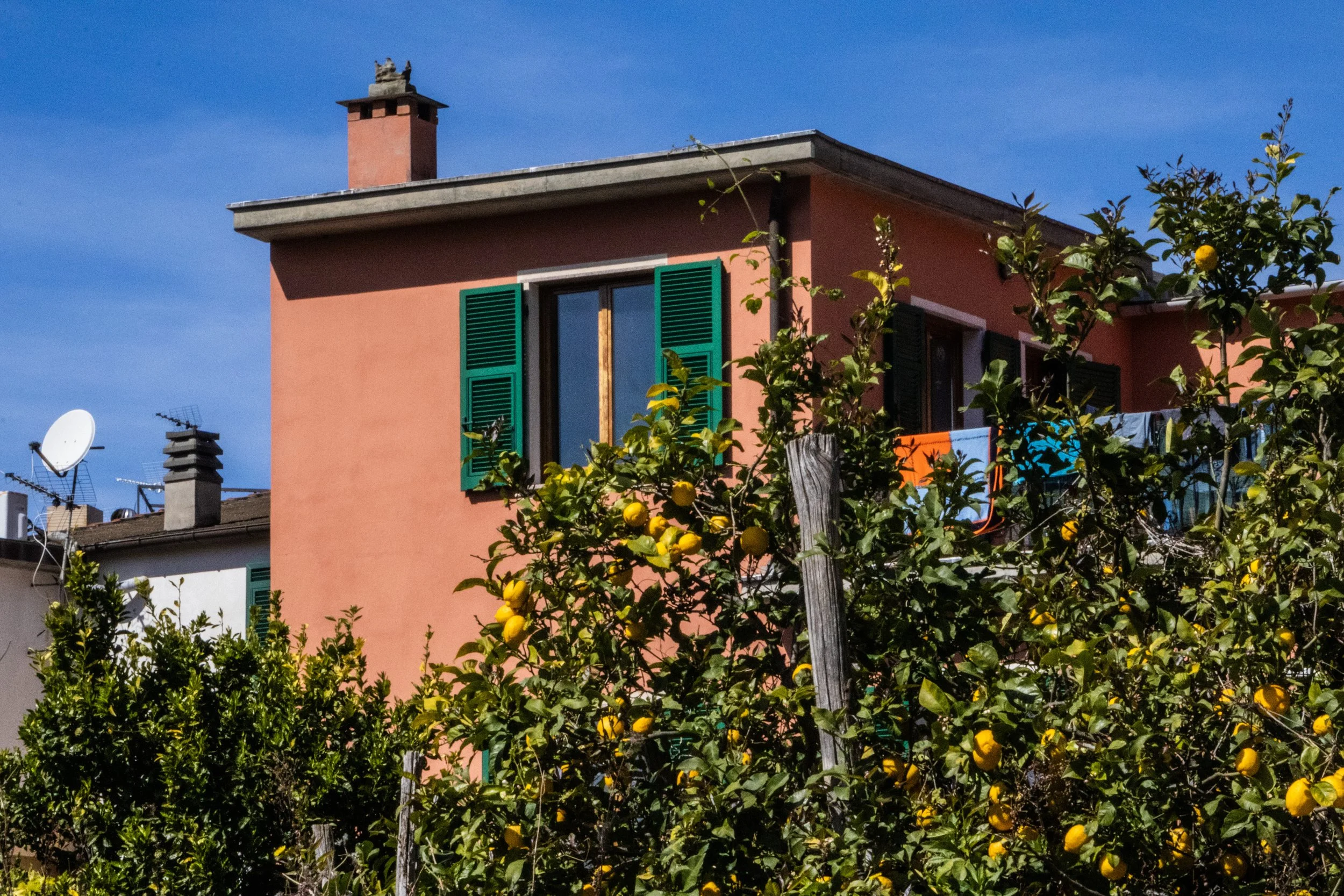
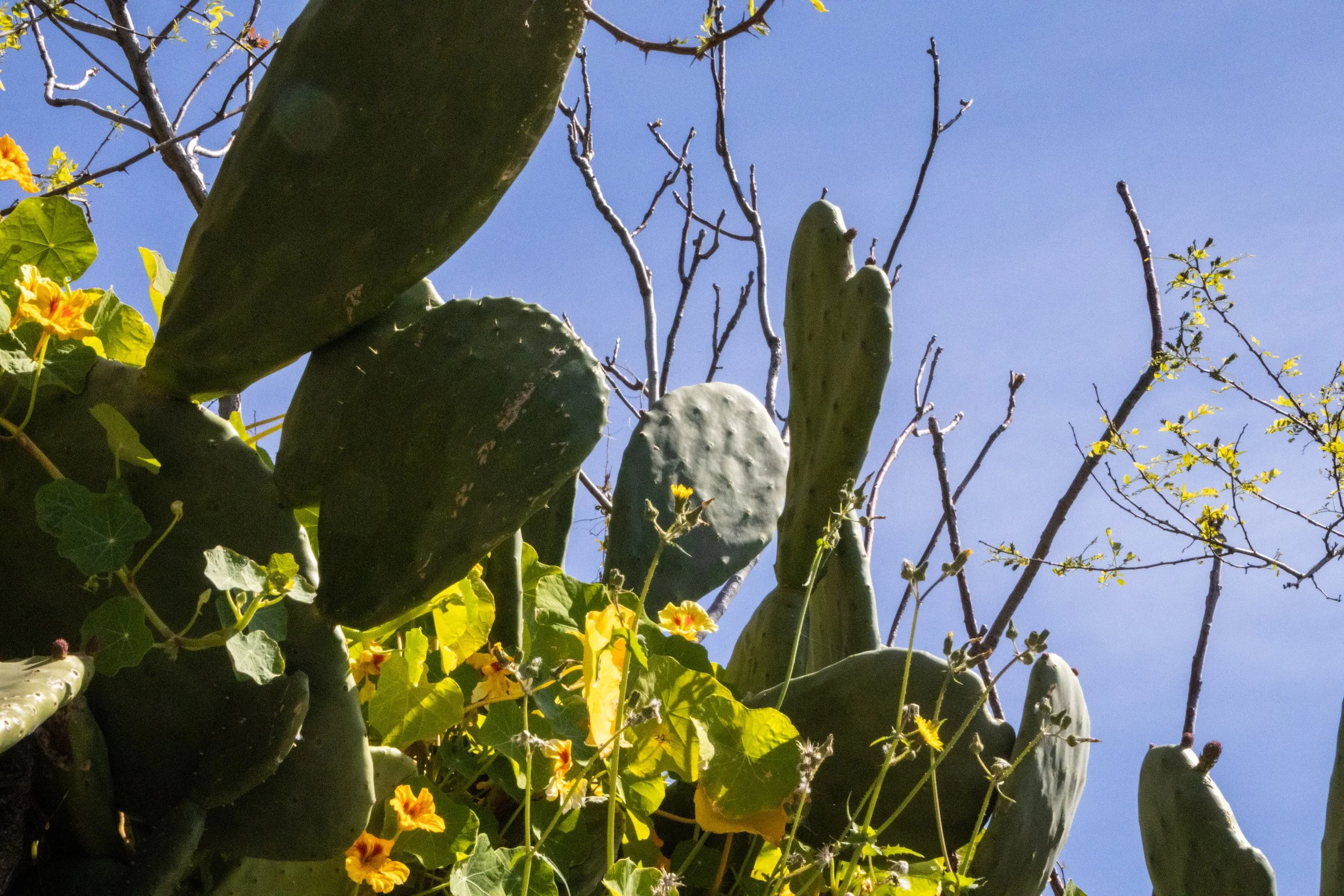
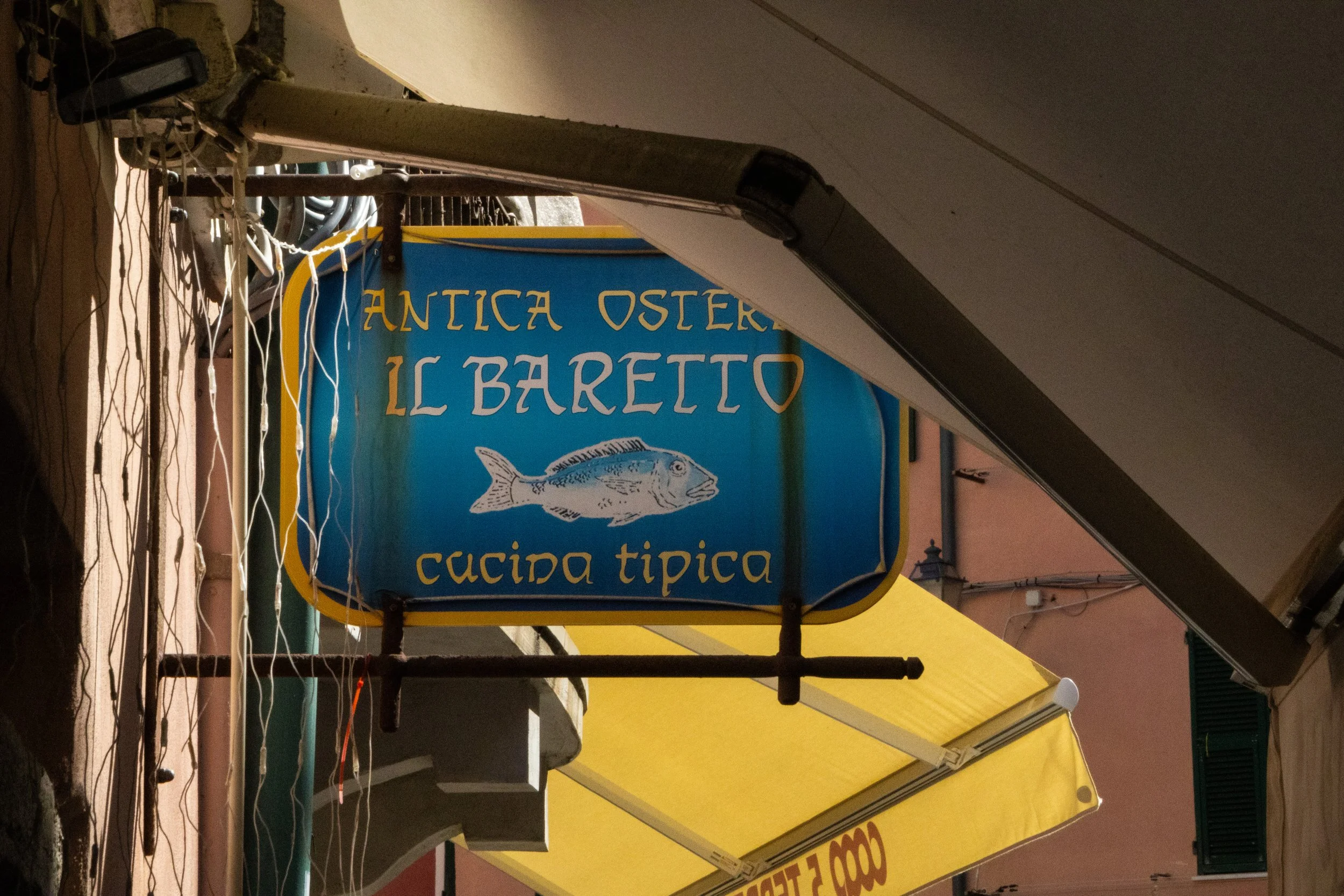
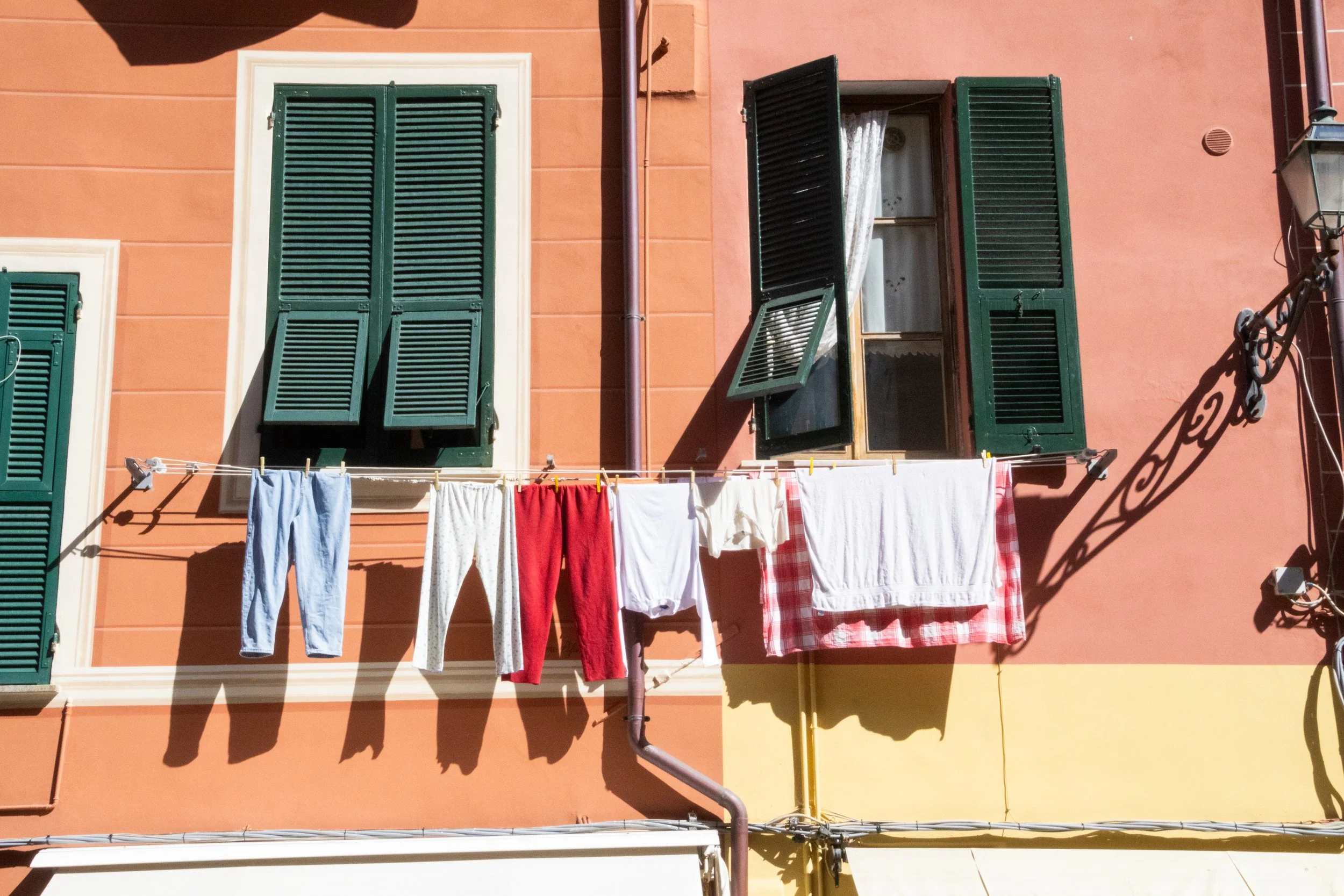
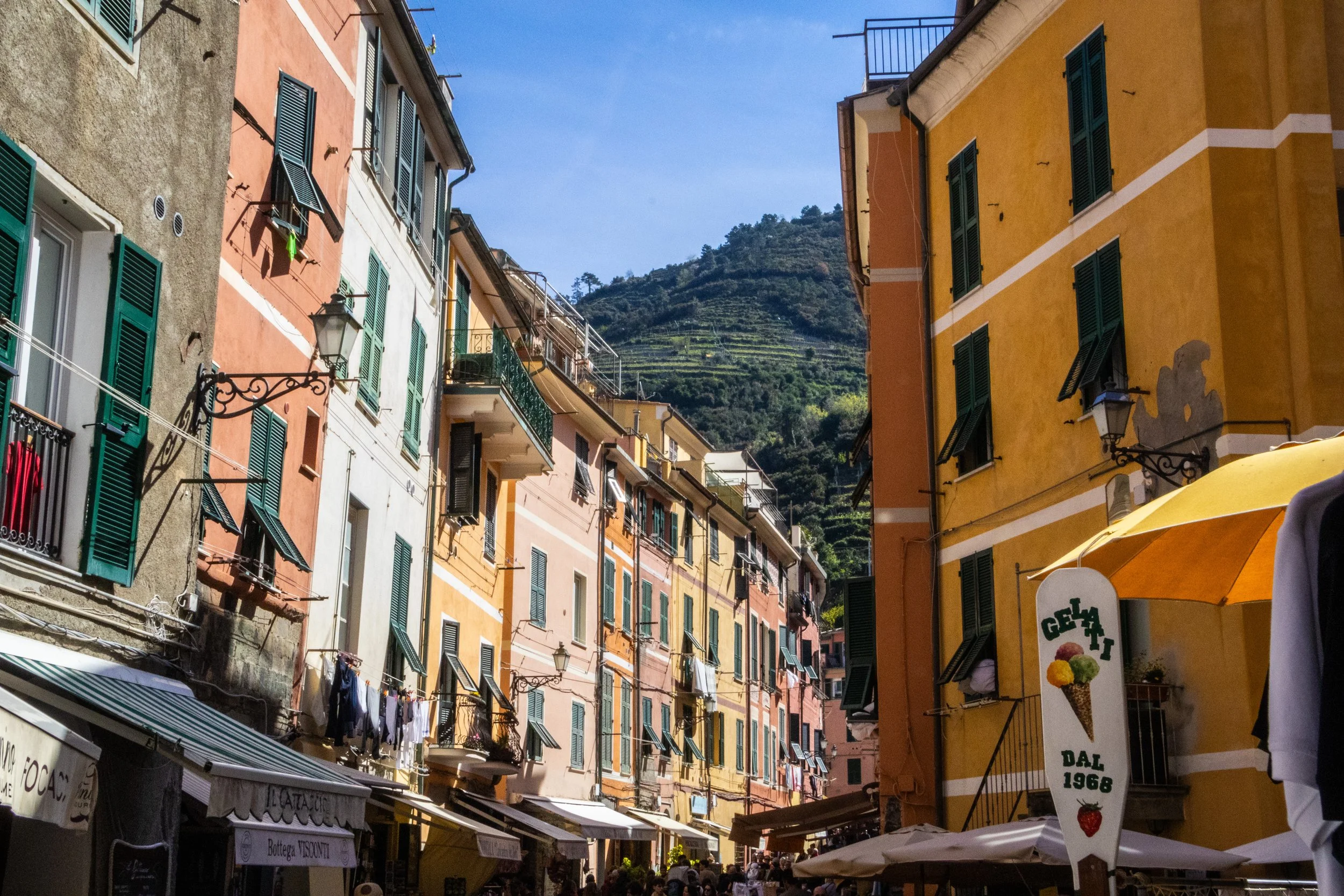
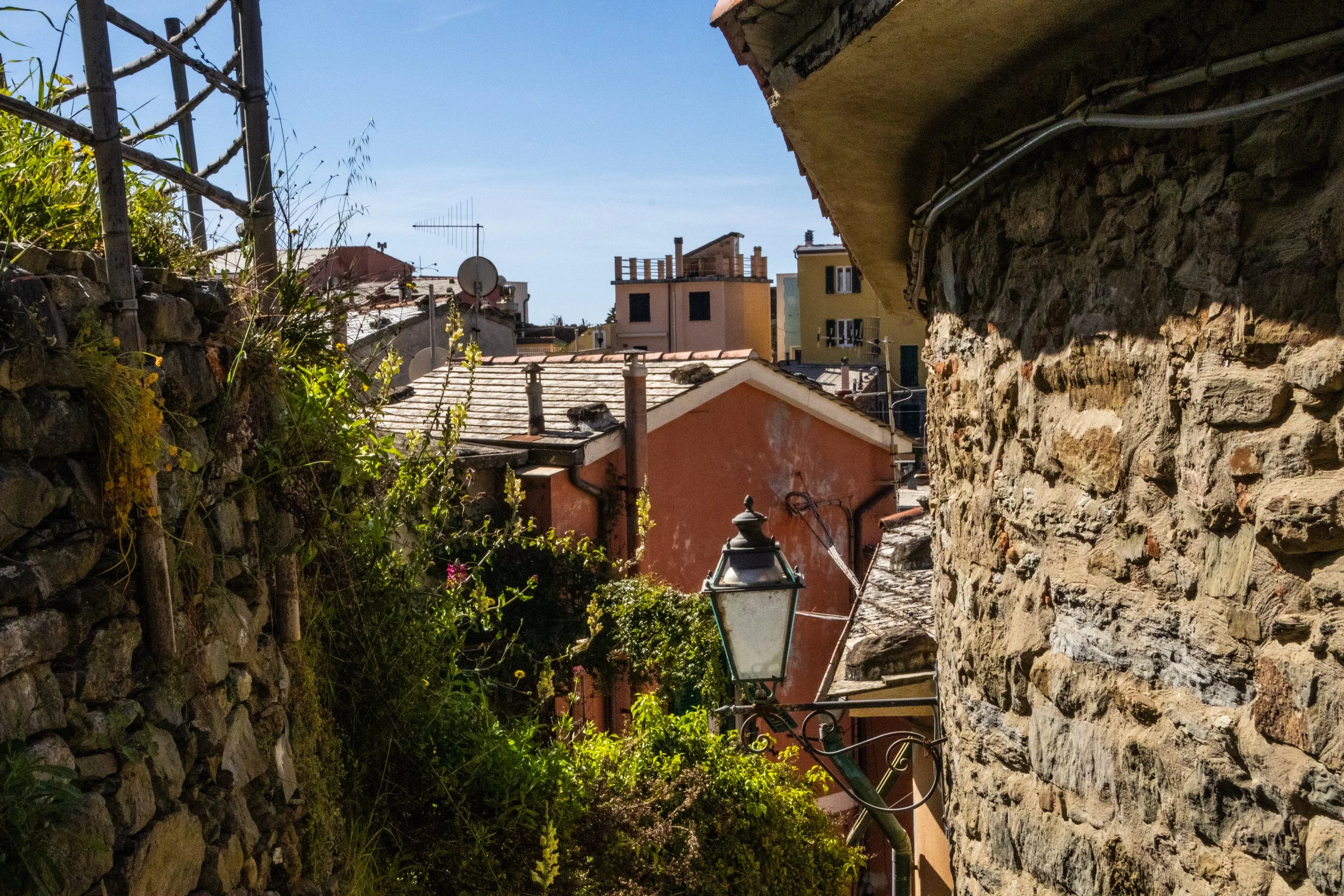
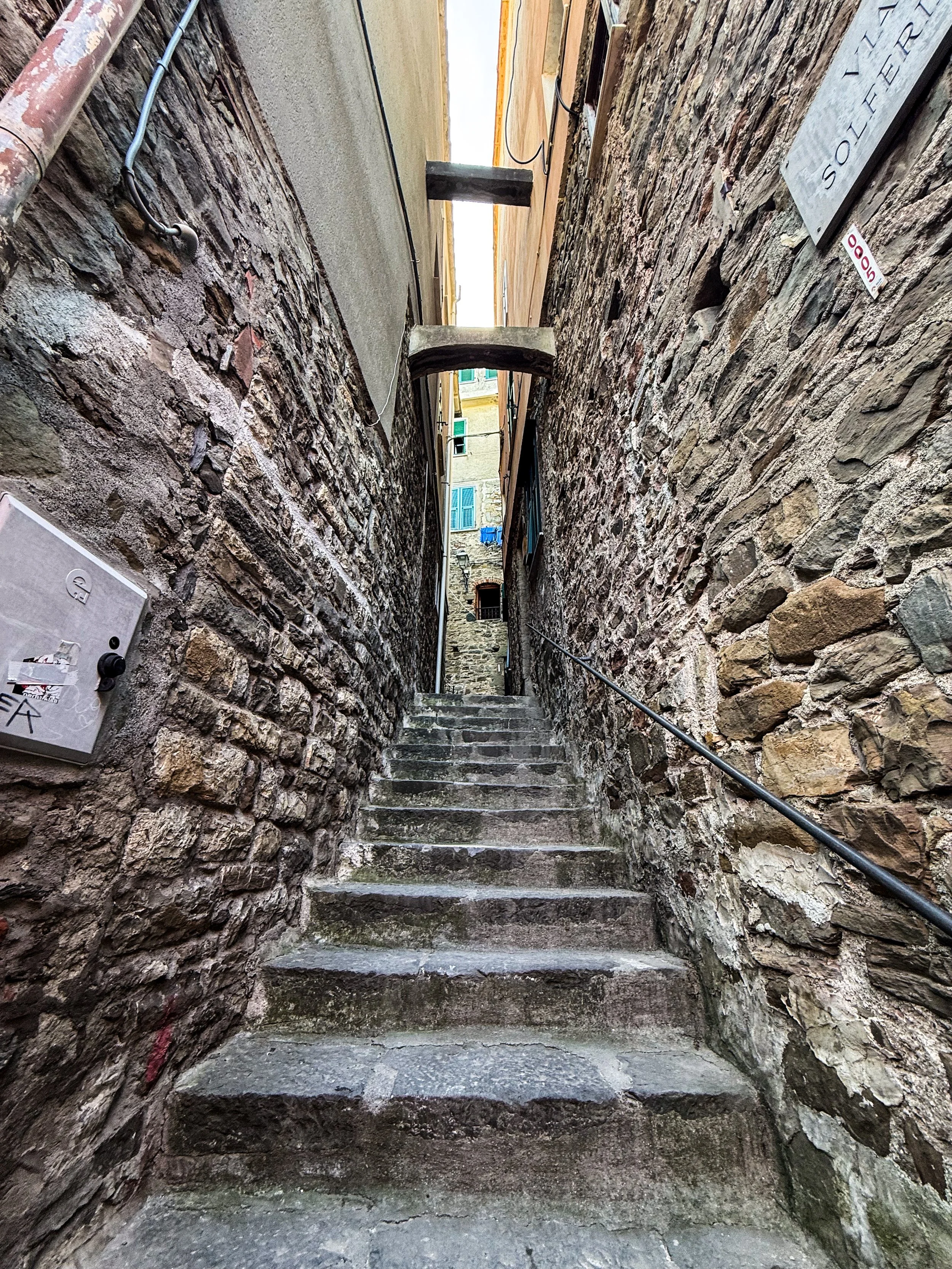
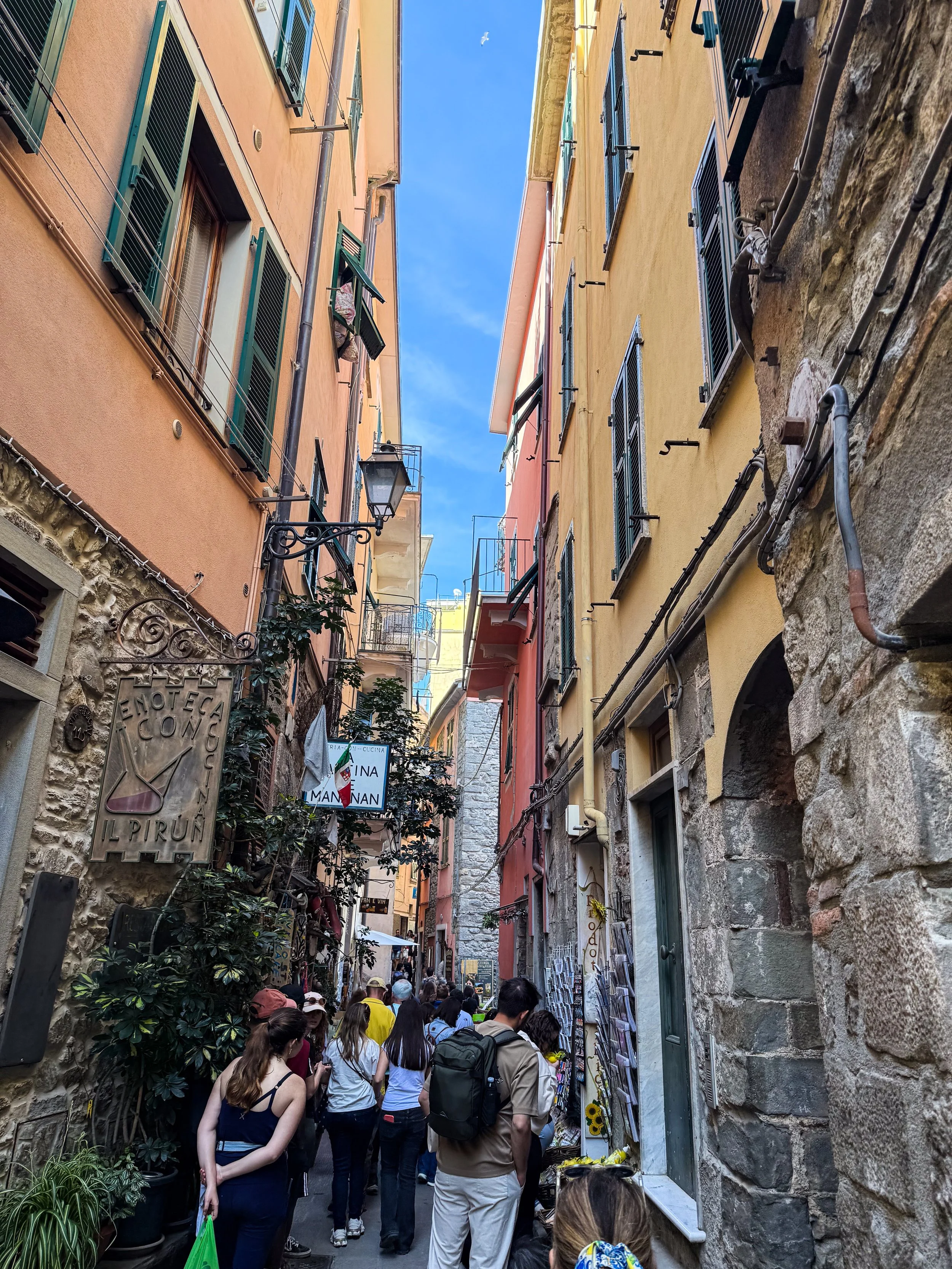
Up next, we’re going to speed through the towns that got more thorough coverage last time around, starting with……(drum roll)…
Vernazza
Okay, this where my feelings on these hiking paths went from “oh, that might have been cool” to fully blown FOMO. I really must come back and do the full hike. I don’t remember having such a strong urge to hike since driving past all the villages between Mestia and Ushguli in Georgia’s Caucasus mountains.
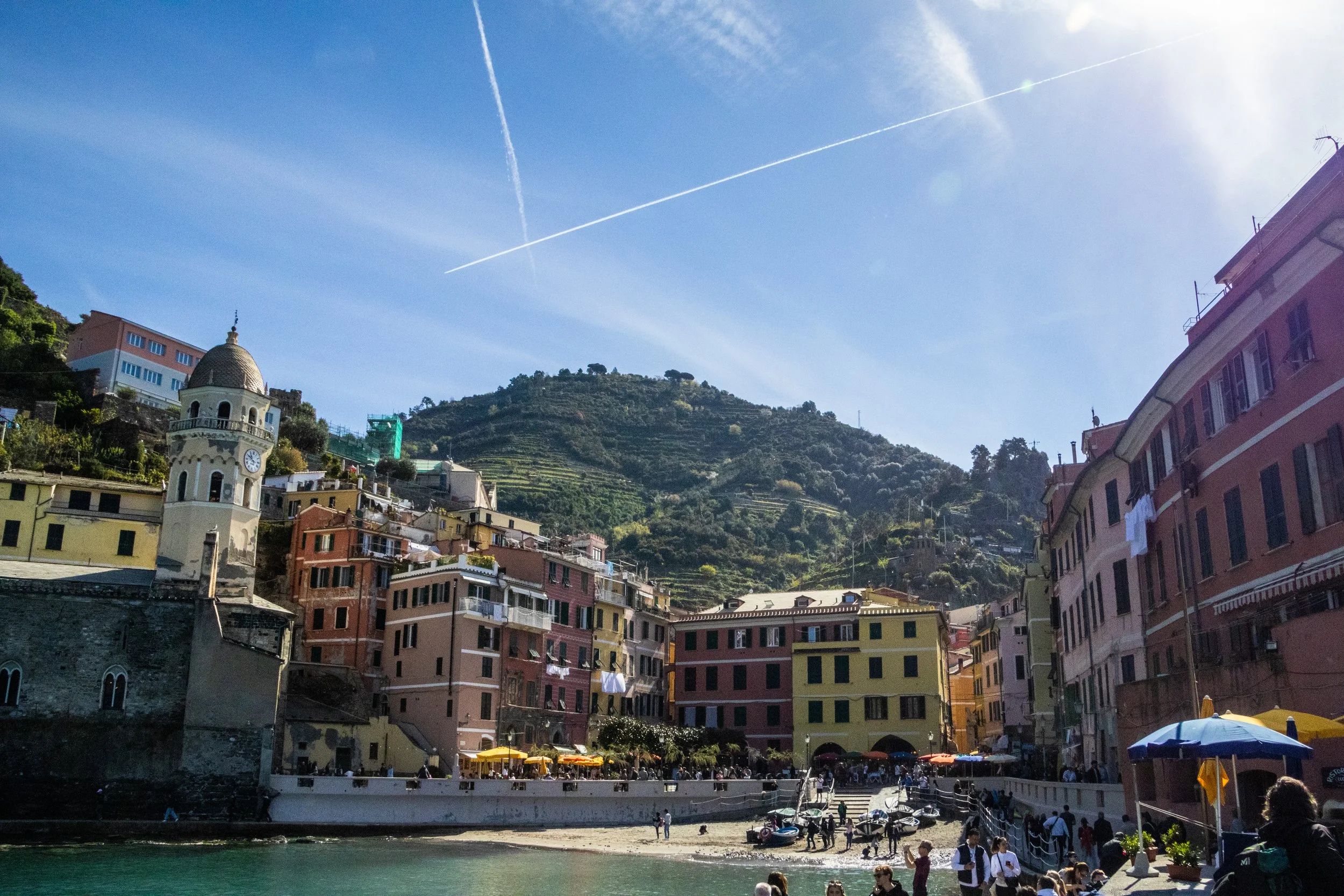
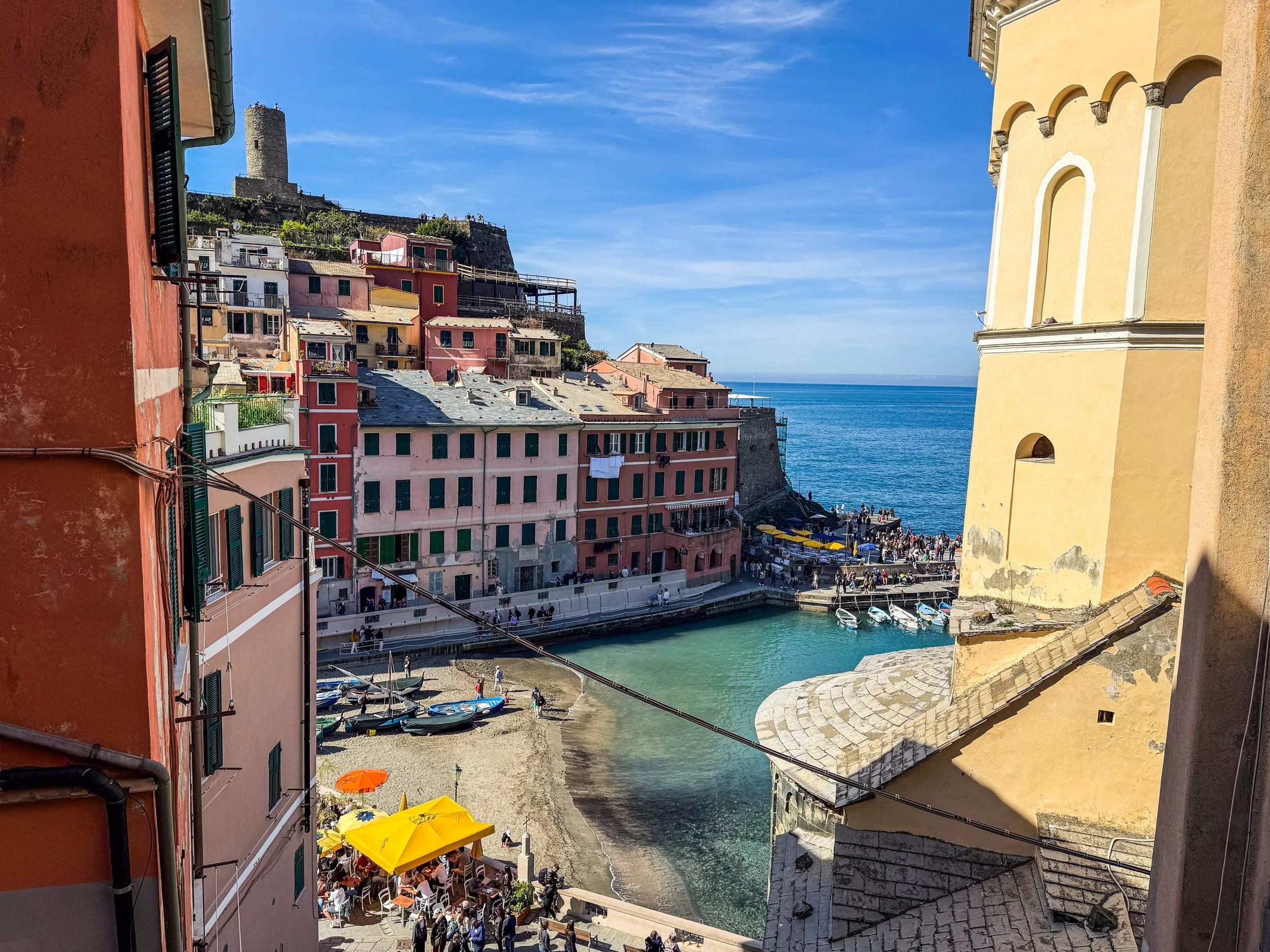
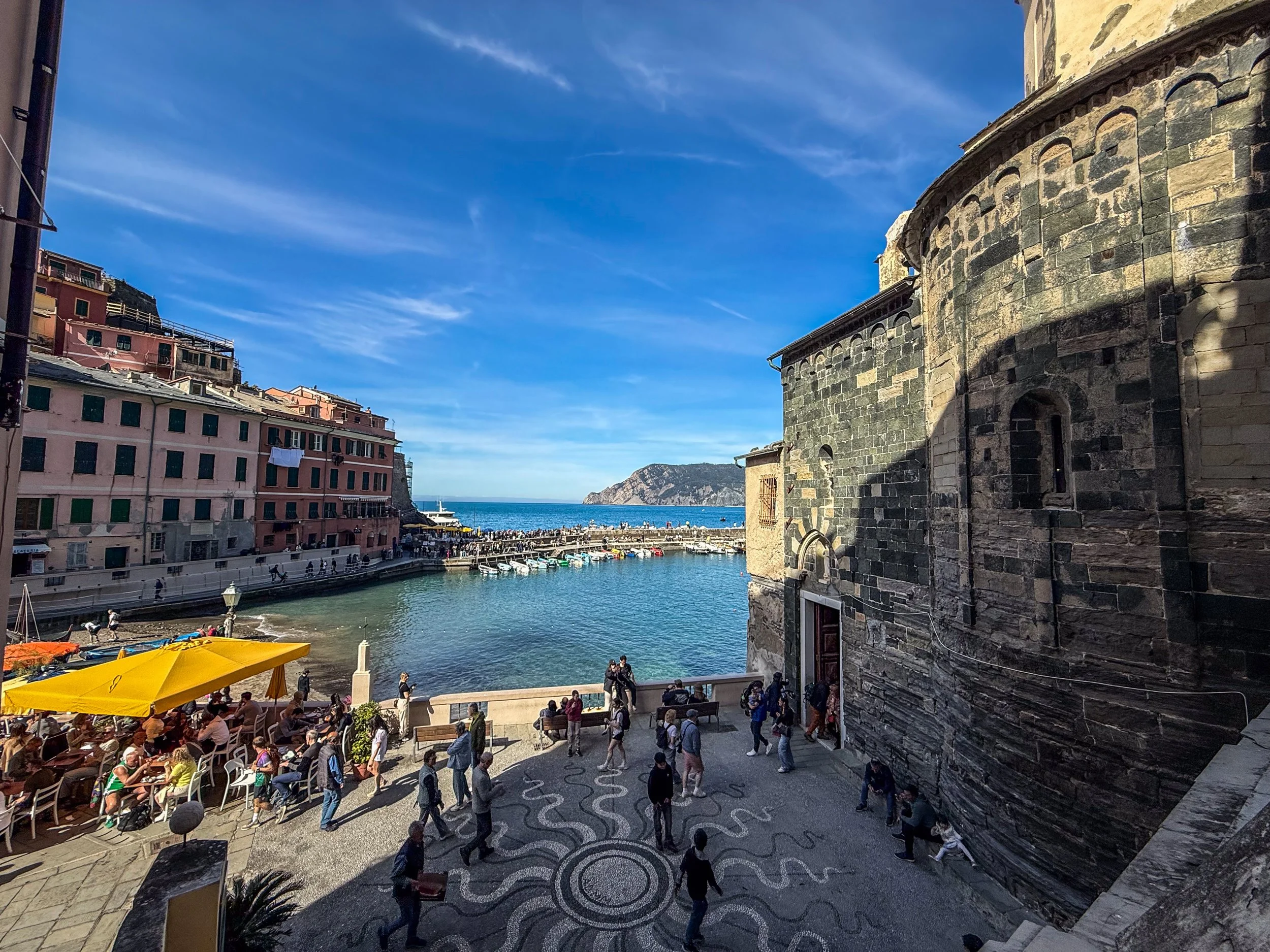
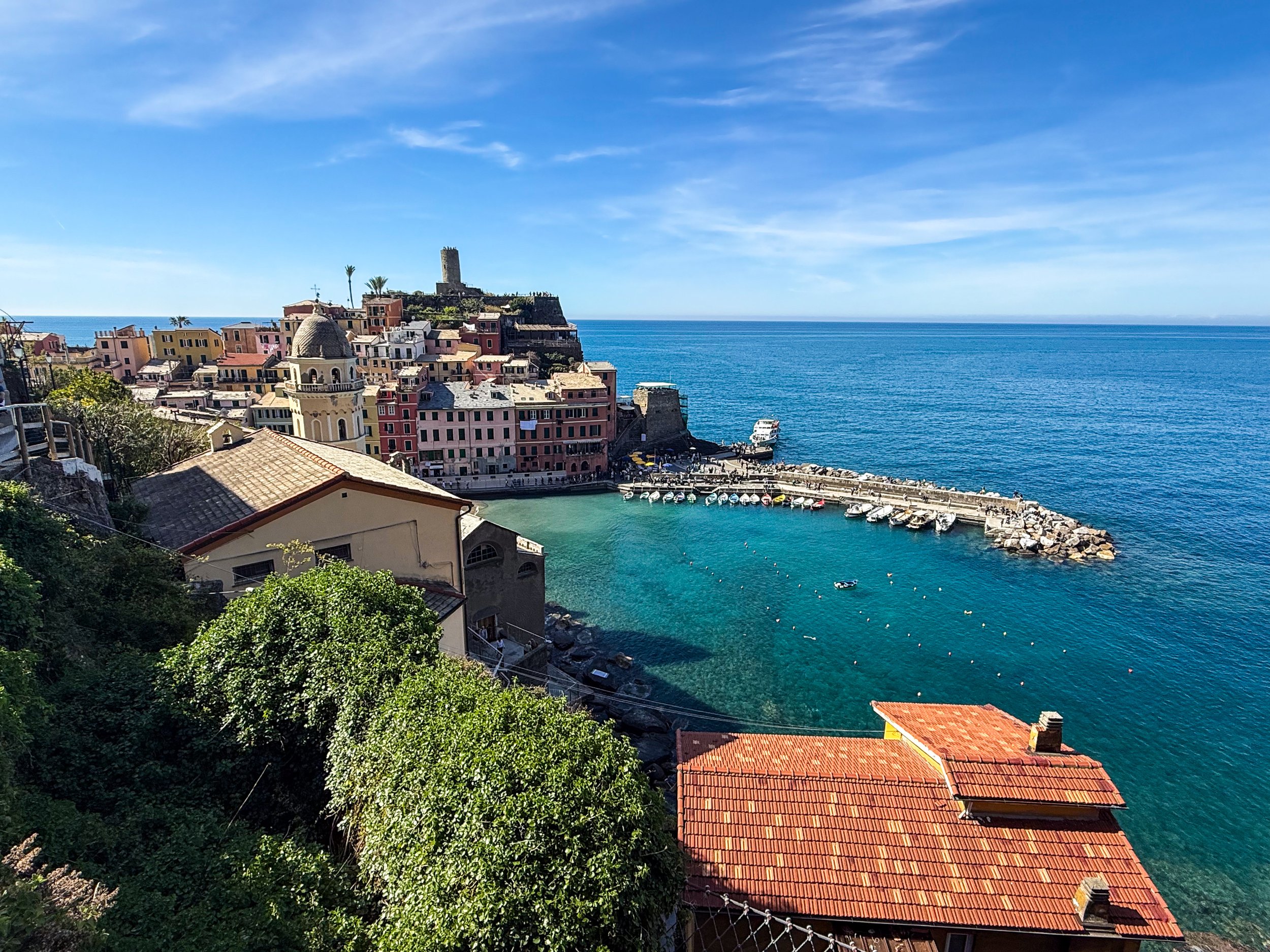
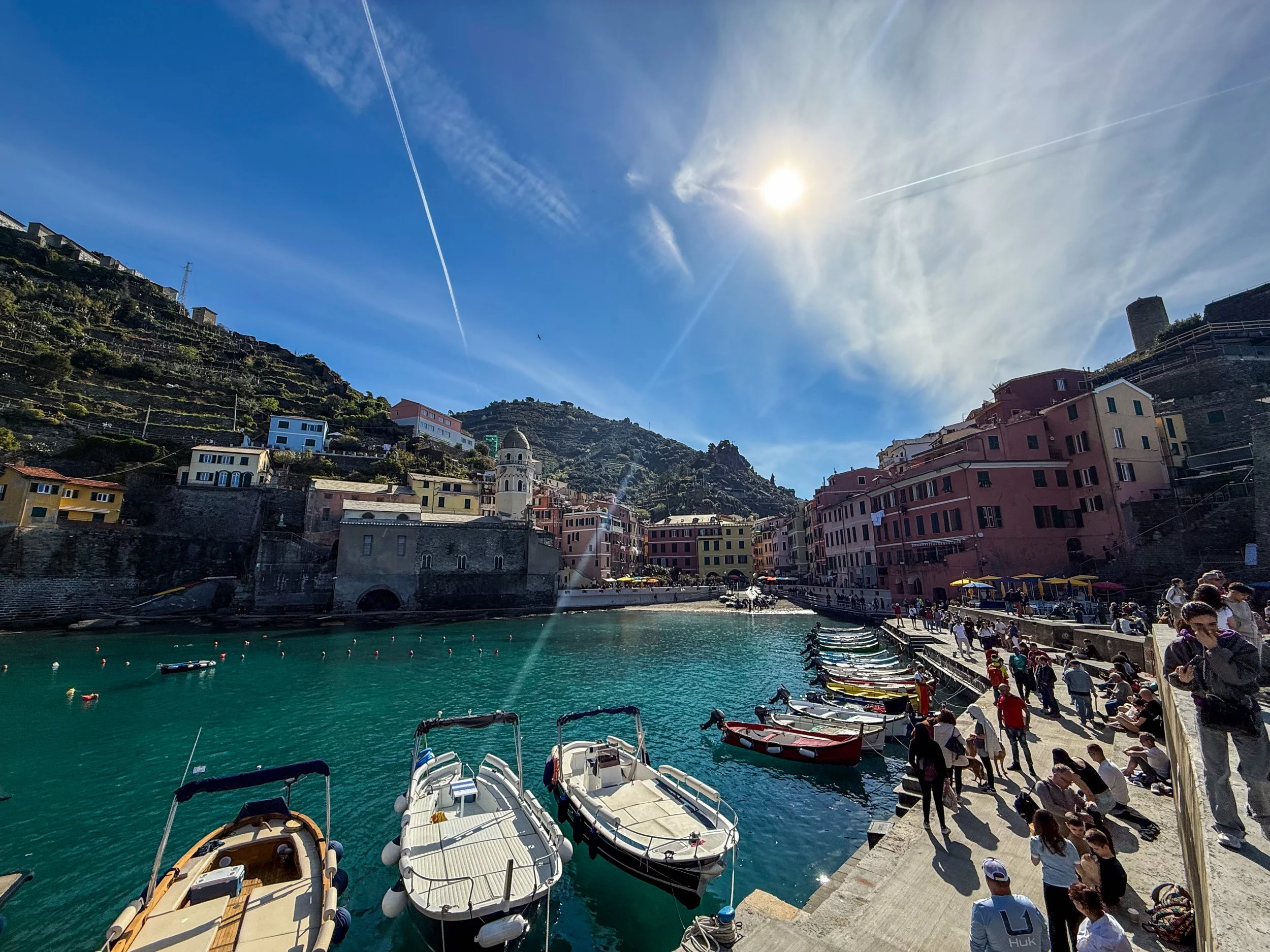
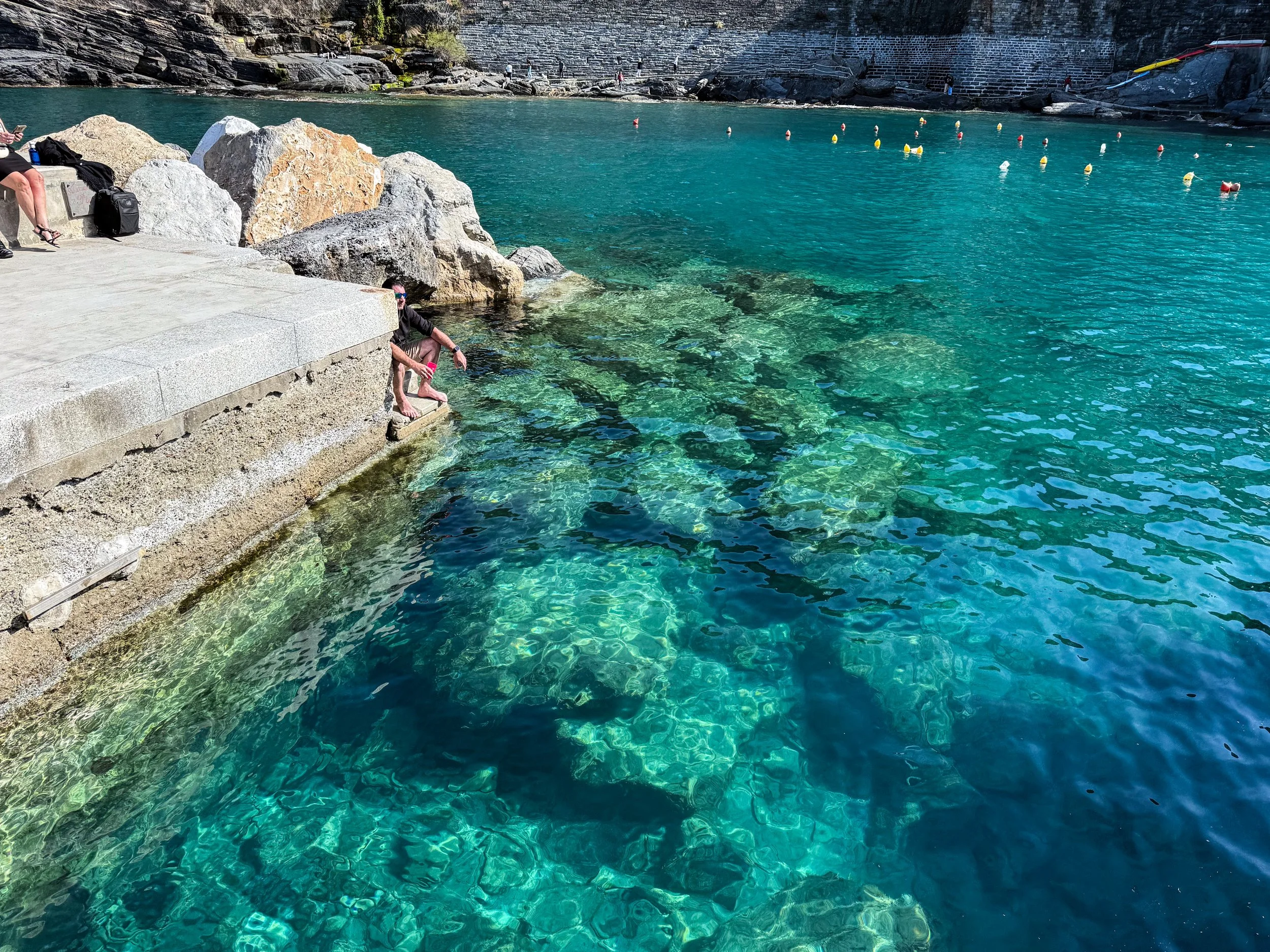
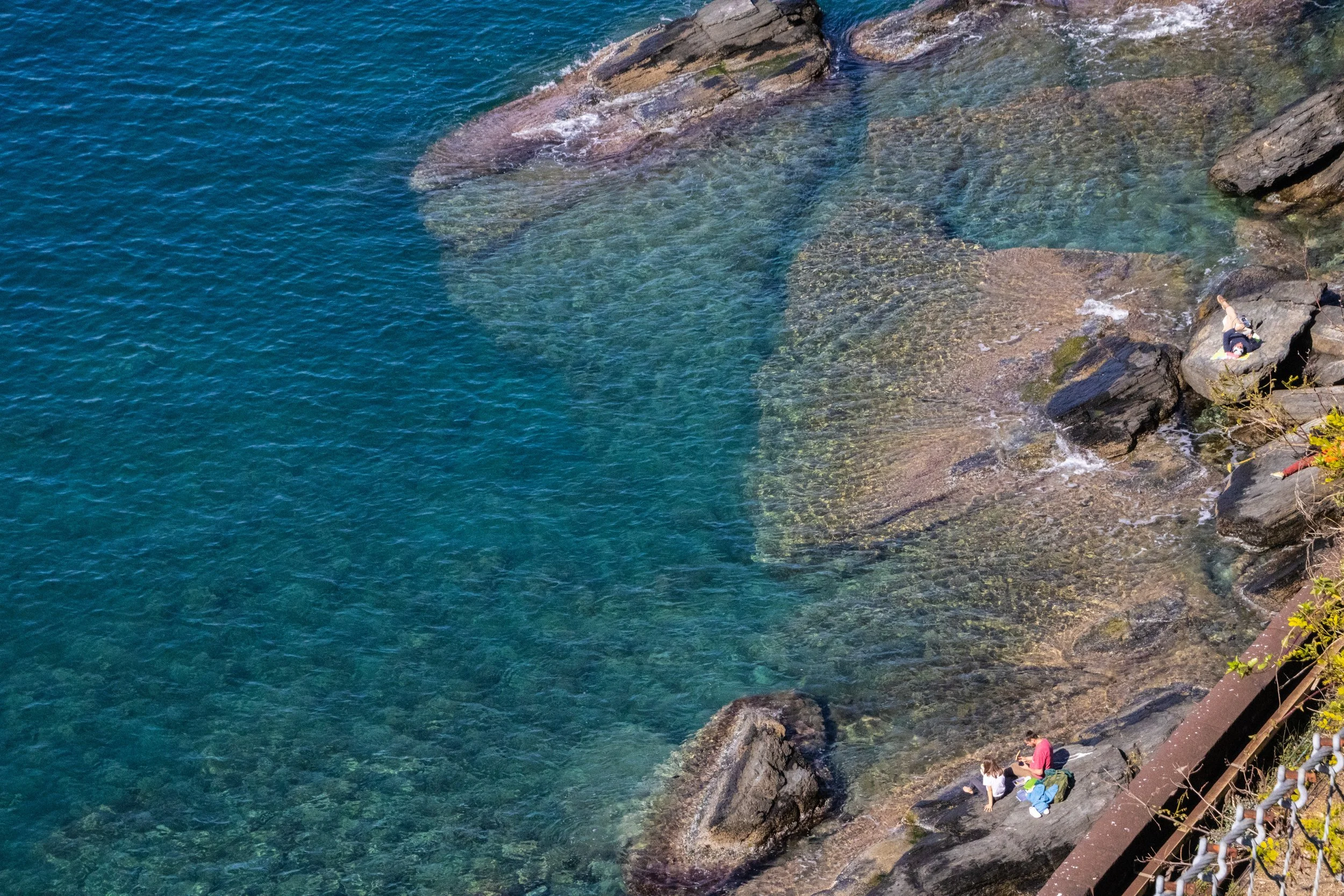
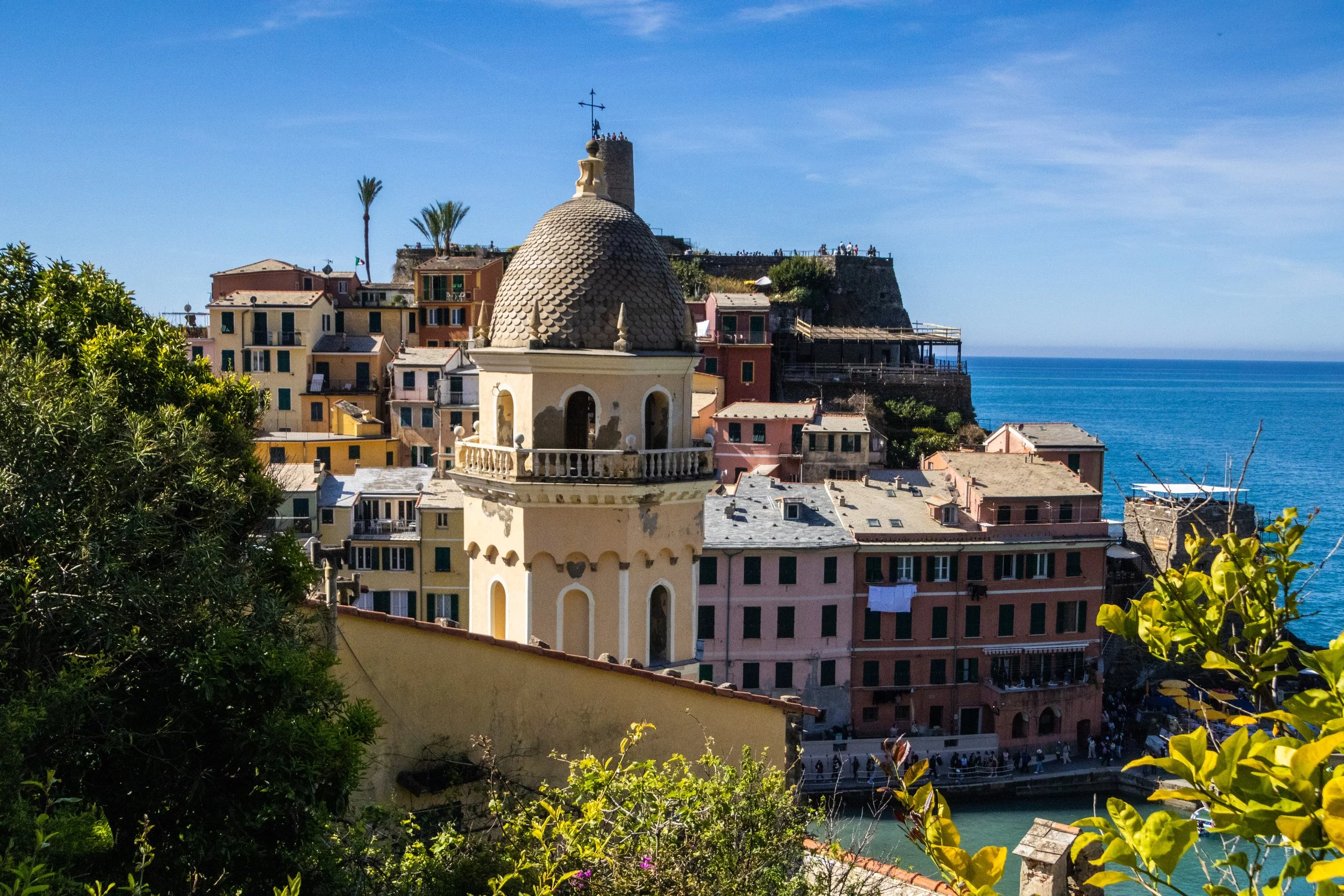
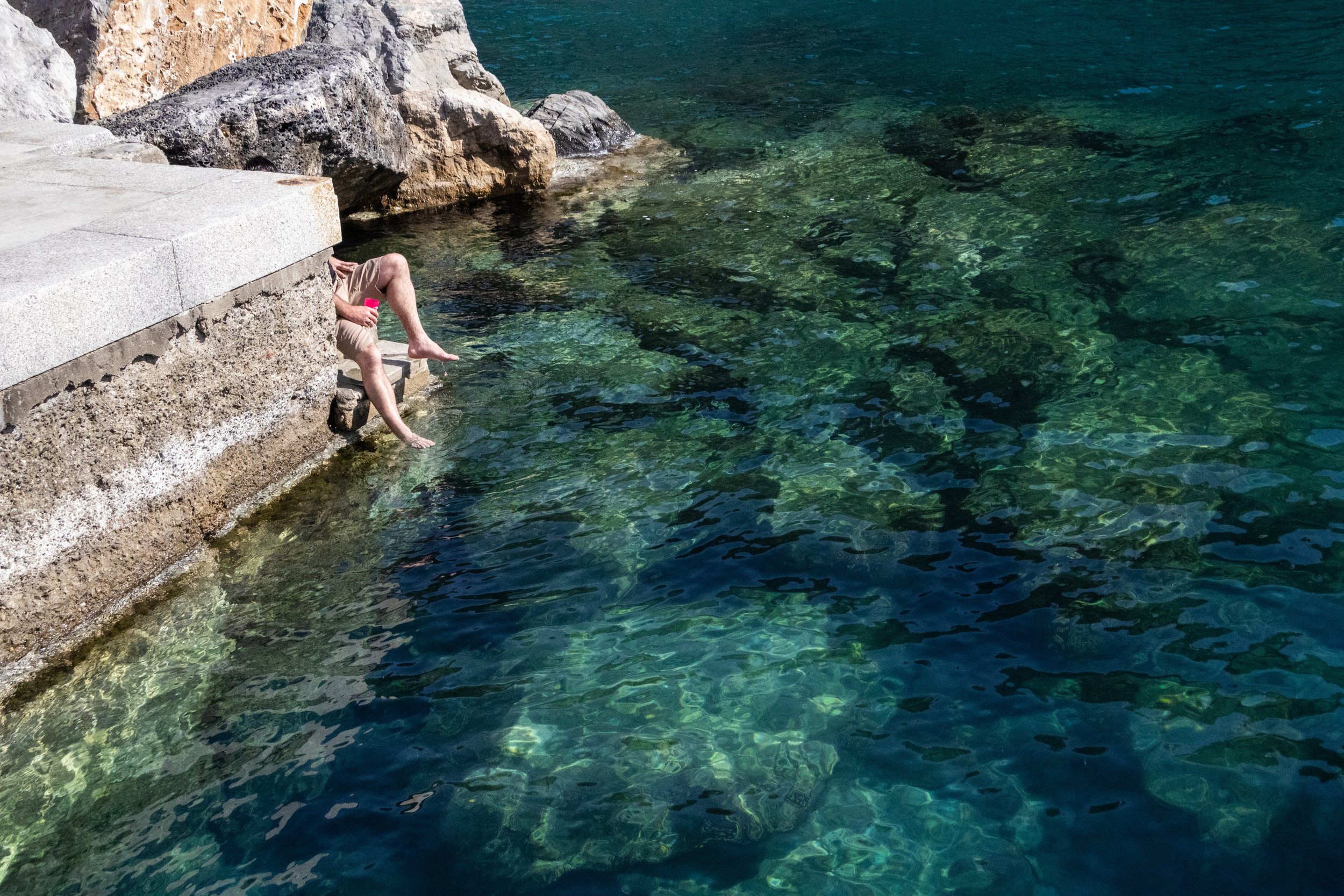
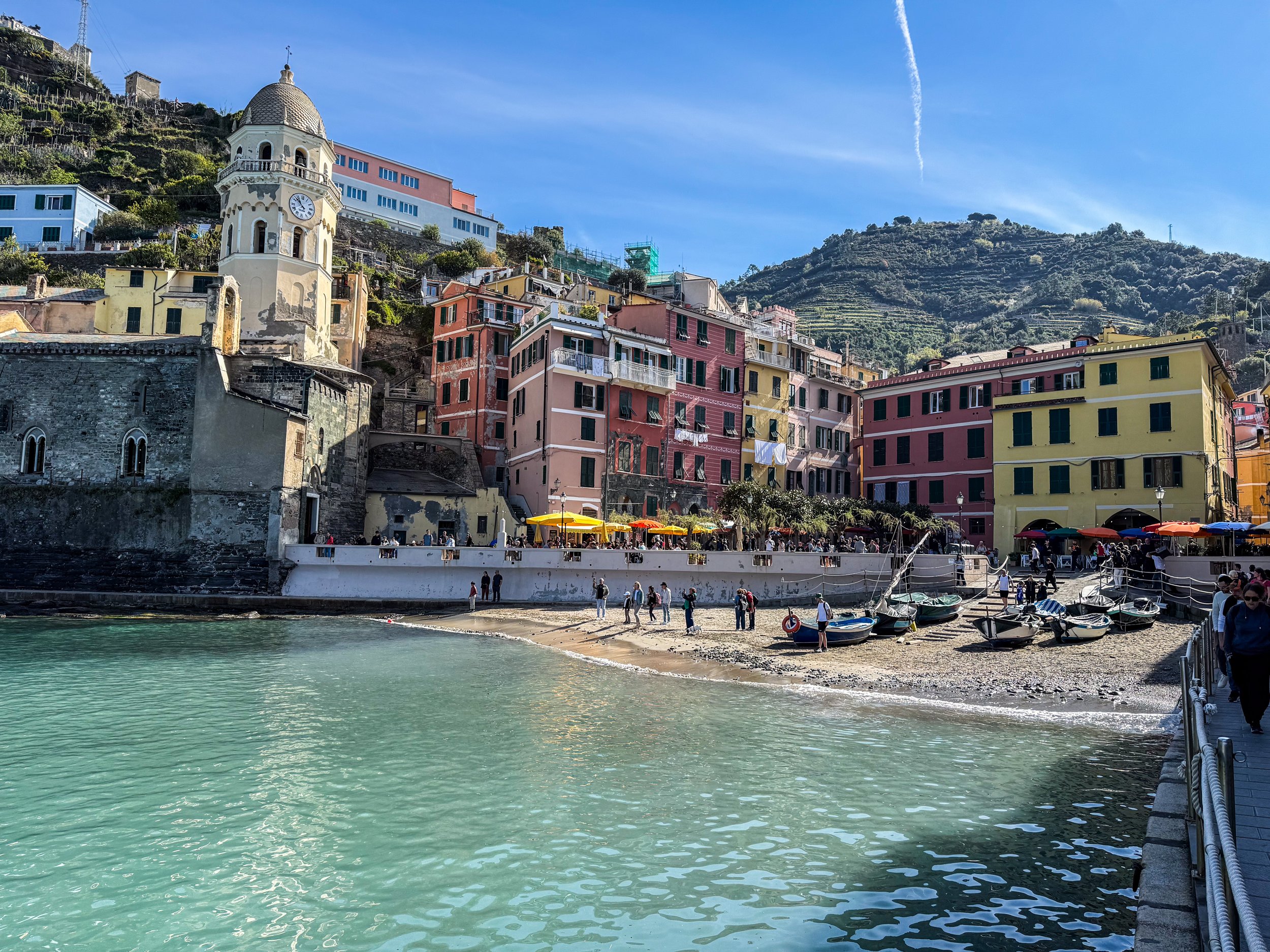
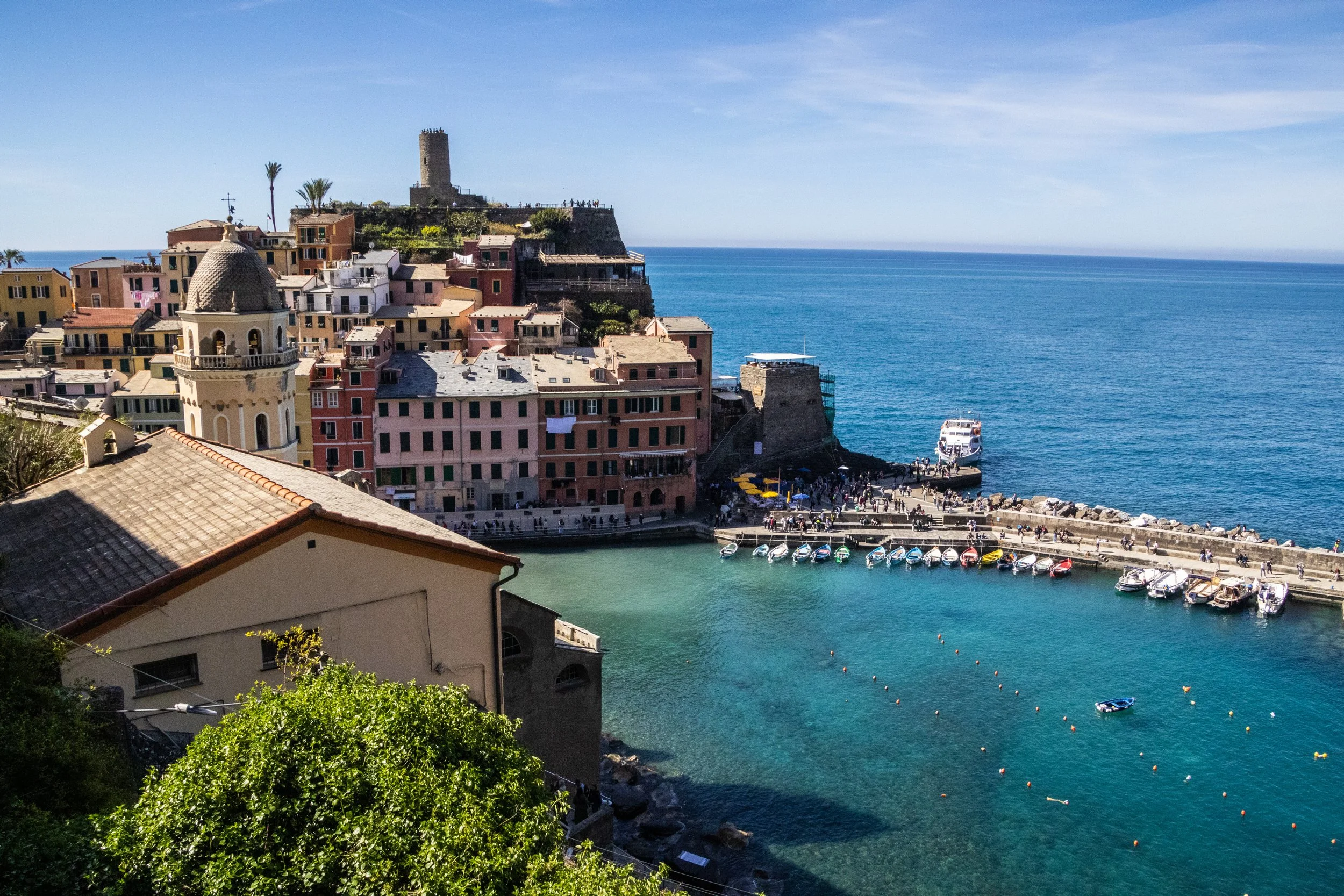
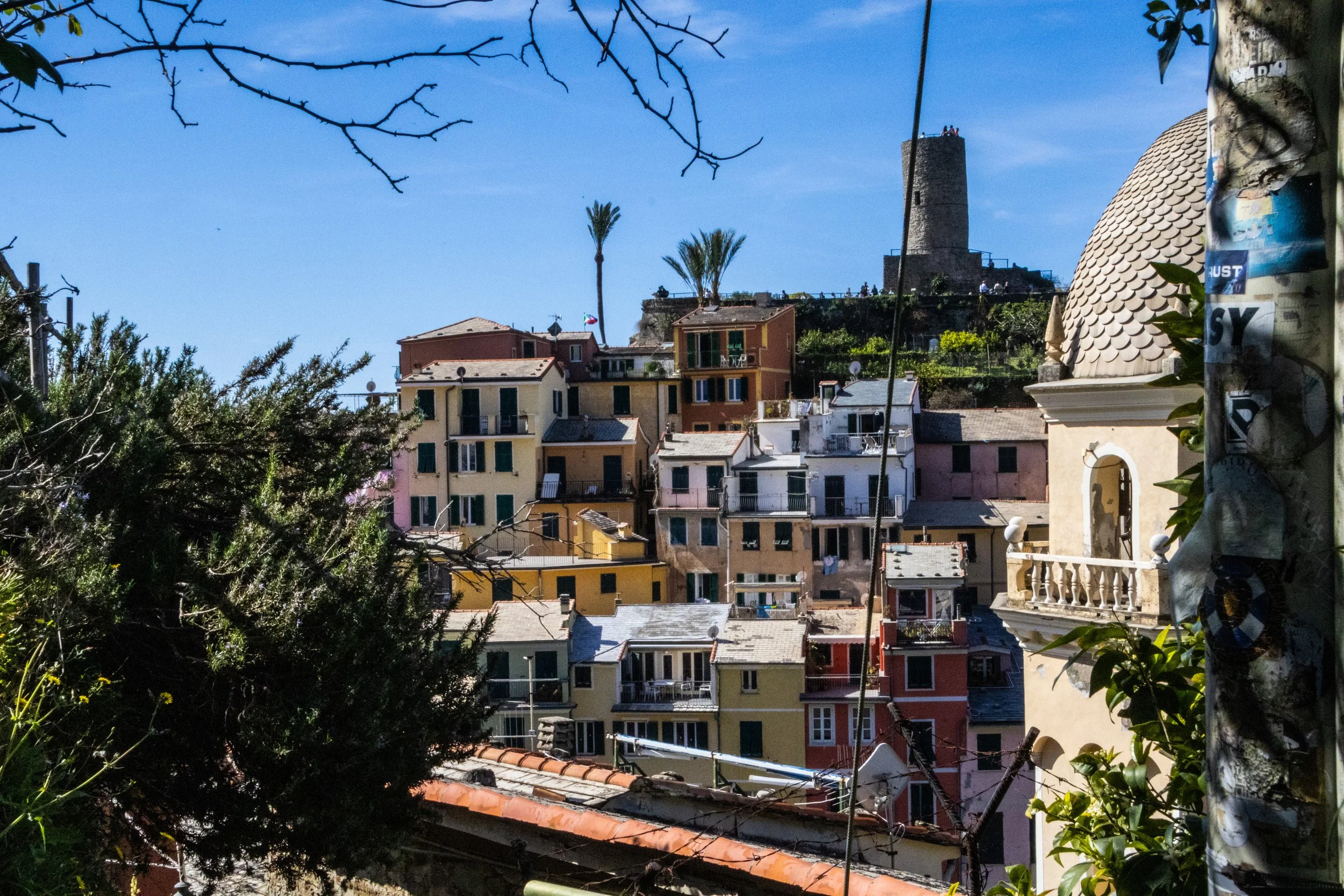
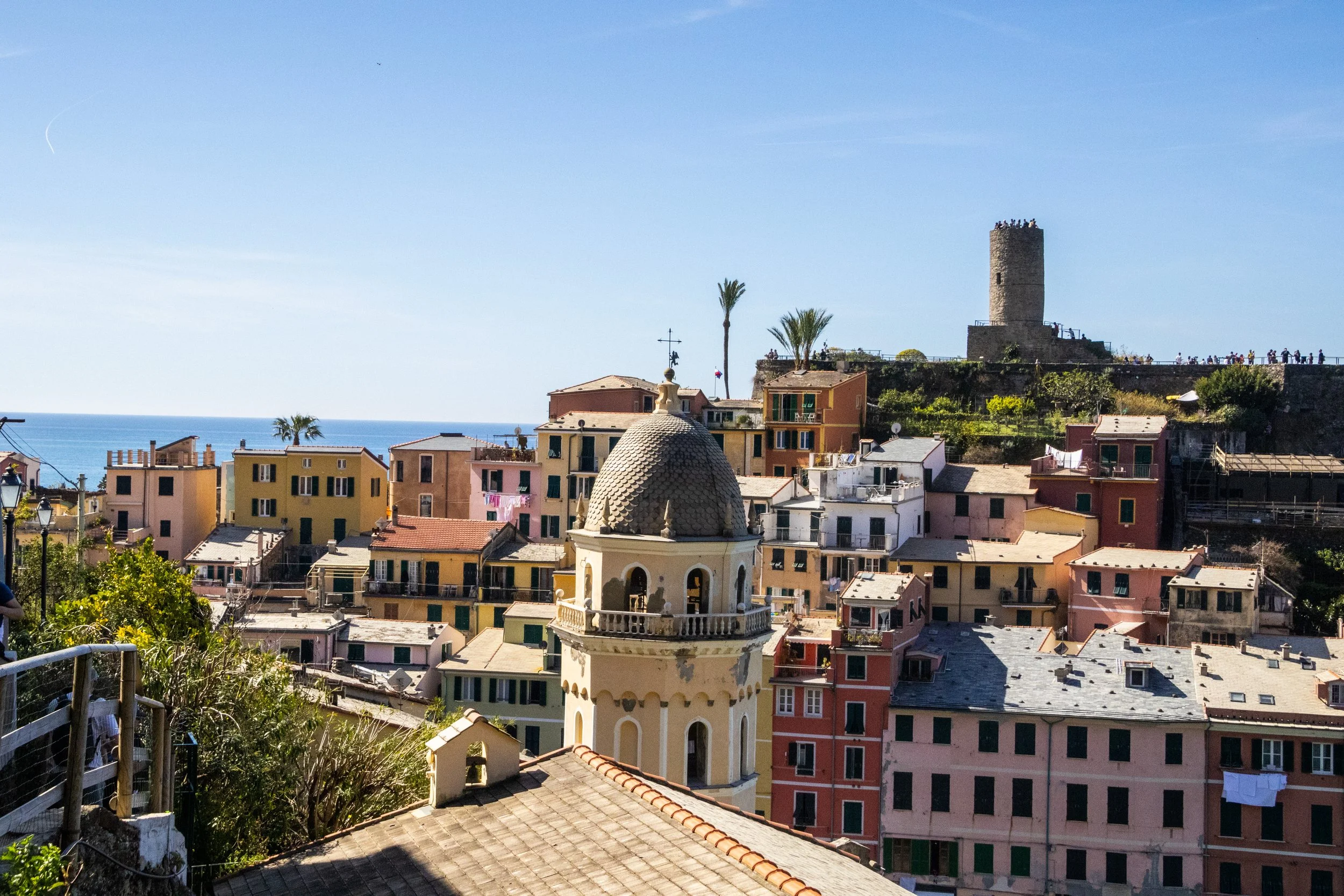
You see, Vernazza was another town where the most iconic photo of it is actually from above. But I’d only come to discover this after my previous visit. So, this time, I arrived determined to hunt down that perfect photo location. I followed my nose up a narrow, winding path only to run into a man whose entire job was to prevent non-ticket holders from accessing the path. I spoke to him and let us pass, but we were not so lucky with the 2nd checkpoint. Regardless, seeing the teal blue water of Vernazza’s harbor from even a slightly more elevated view point was gorgeous. These towns are the stuff of paradise!
Fun fact: the harbor in of the fictional Portorosso in Luca is clearly modelled quite explicitly after Vernazza. You’ll have to go watch that movie after you finish reading this article!
Manarola
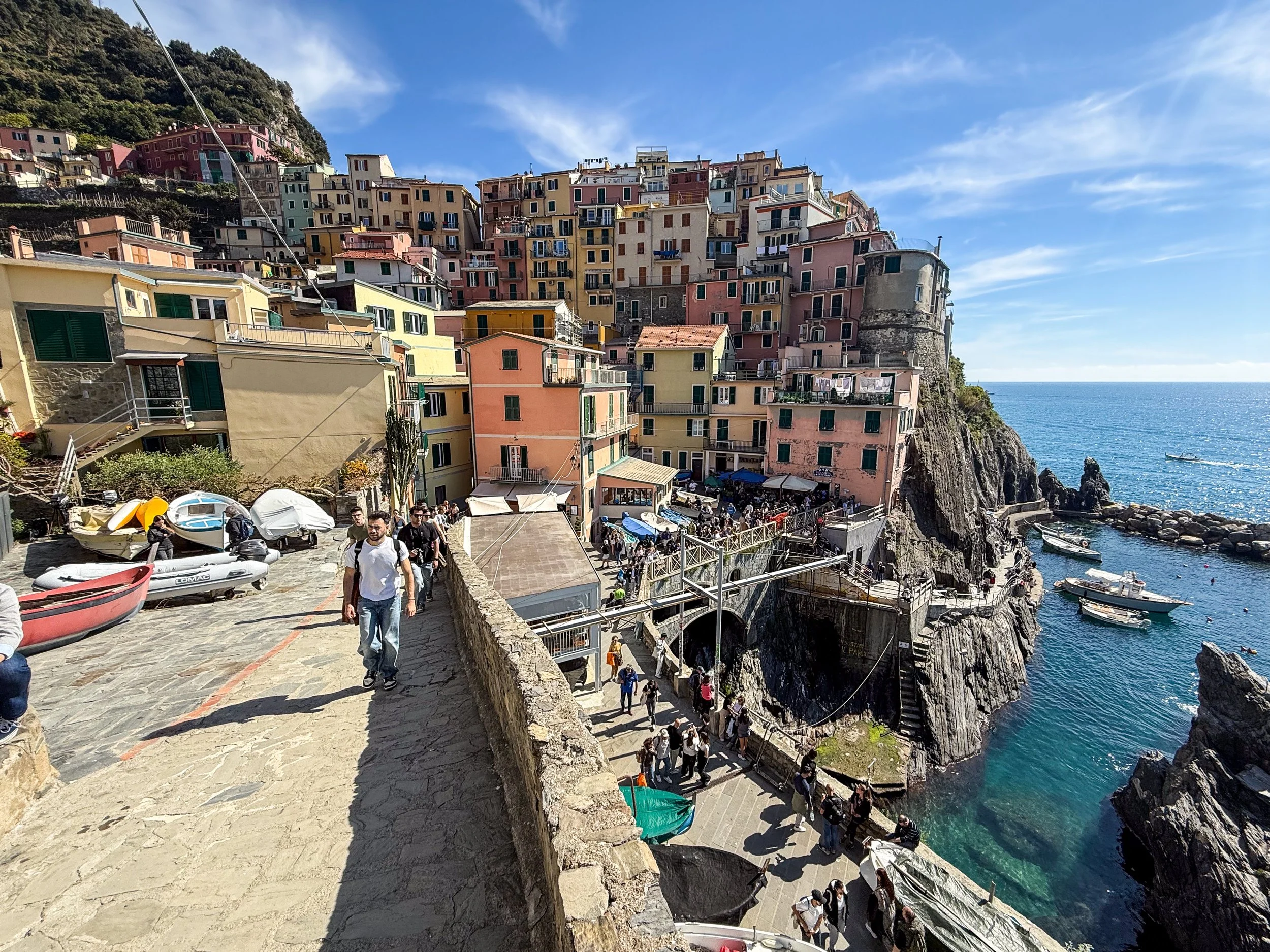
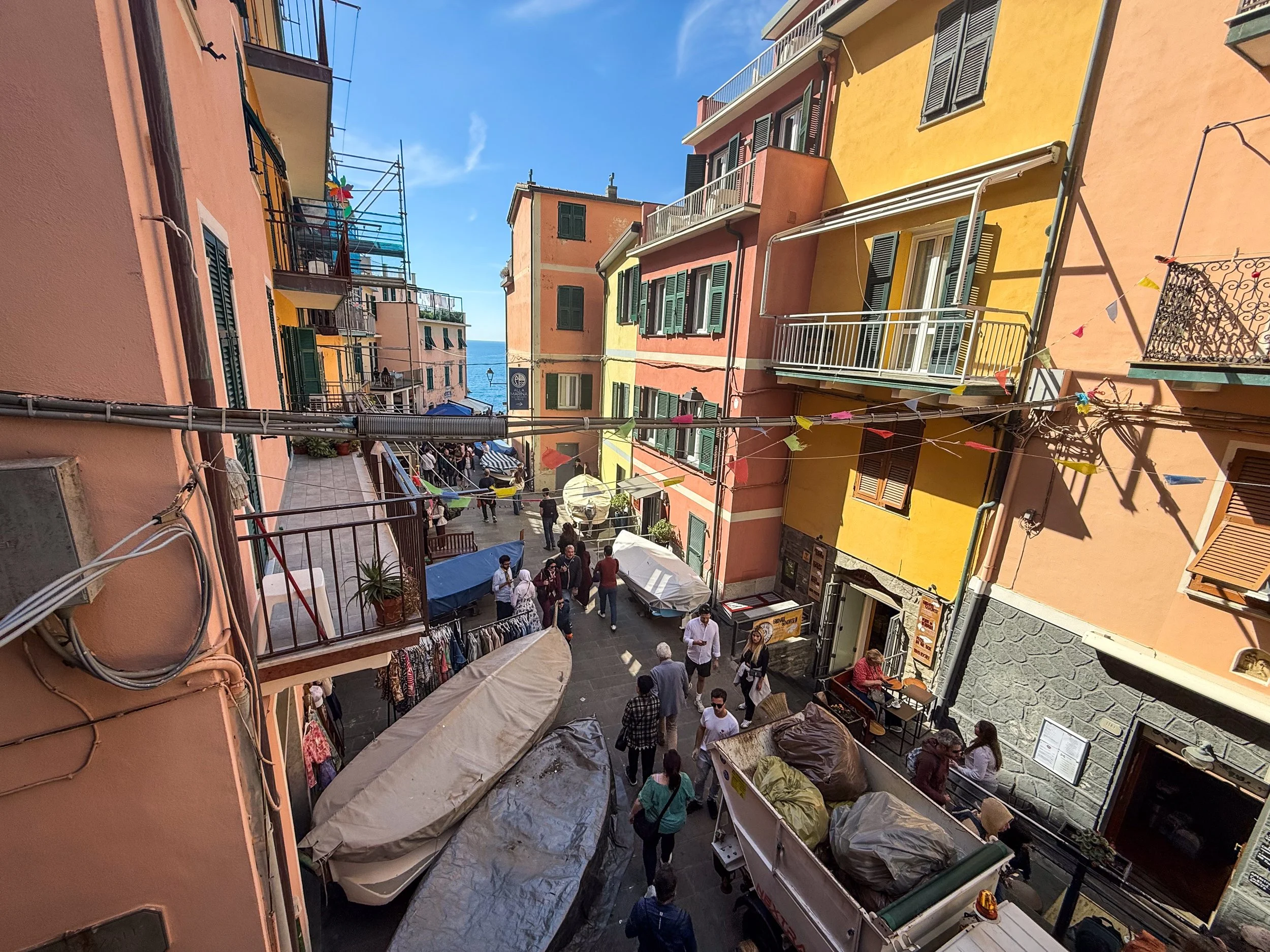
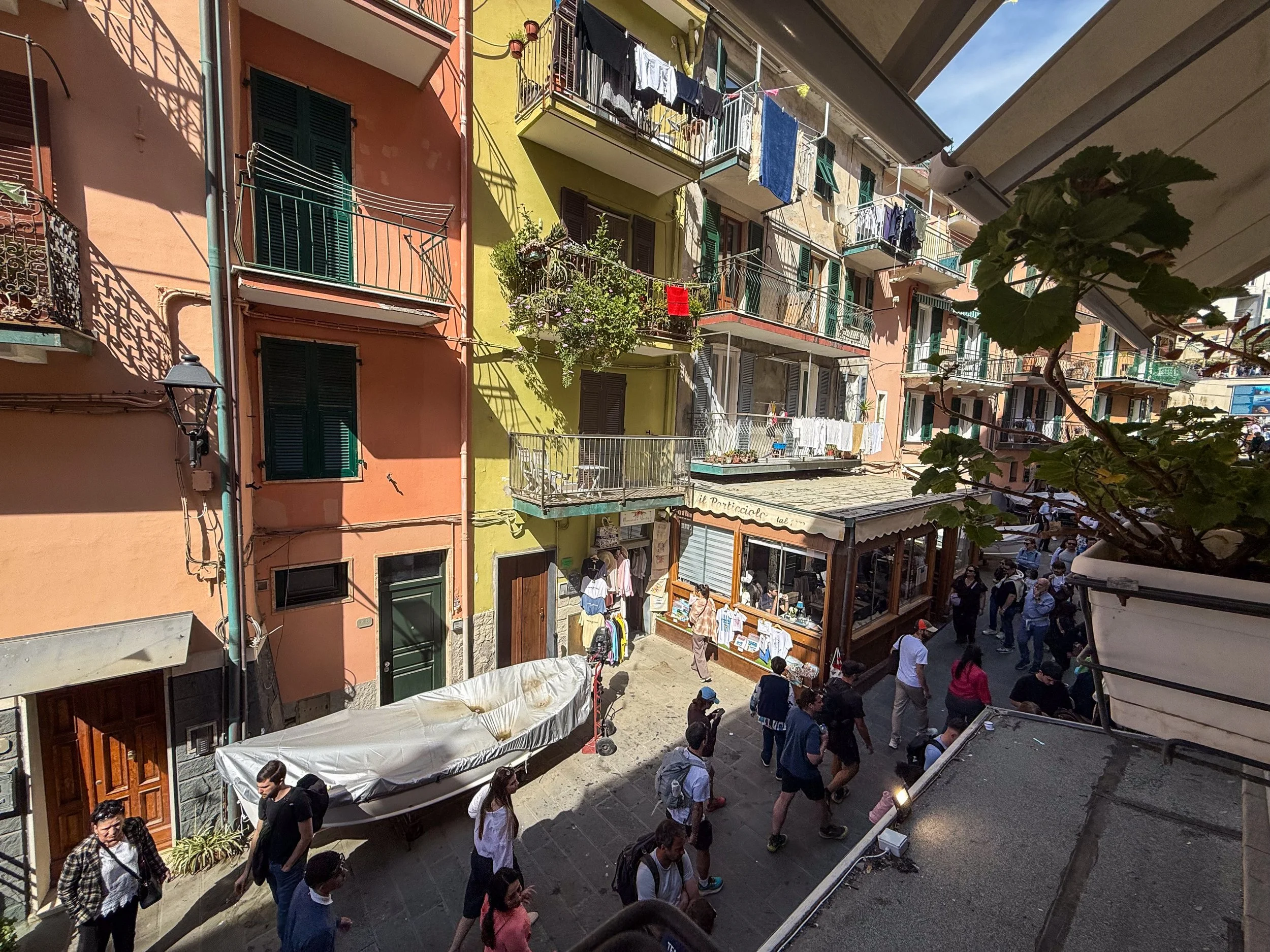
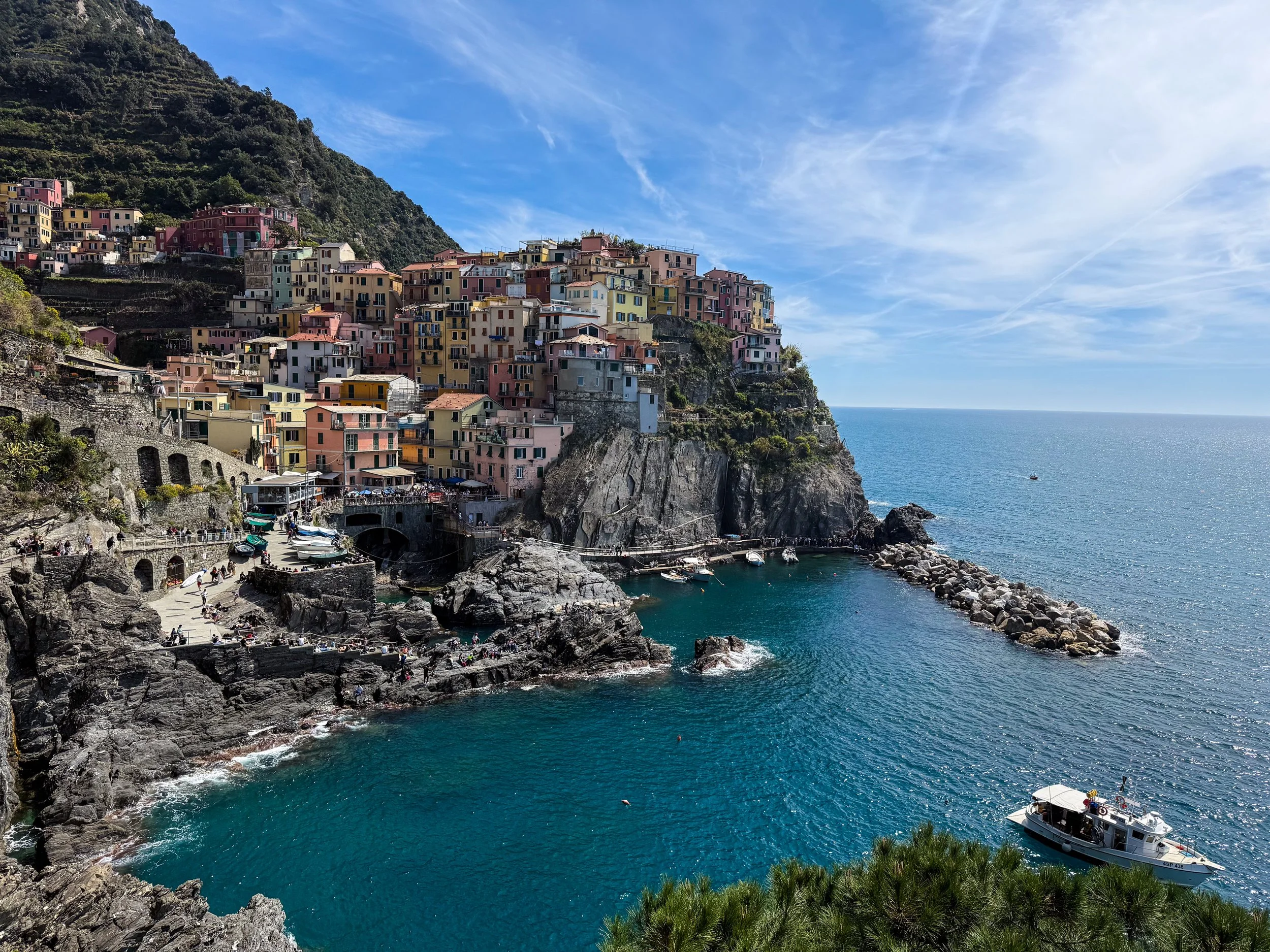
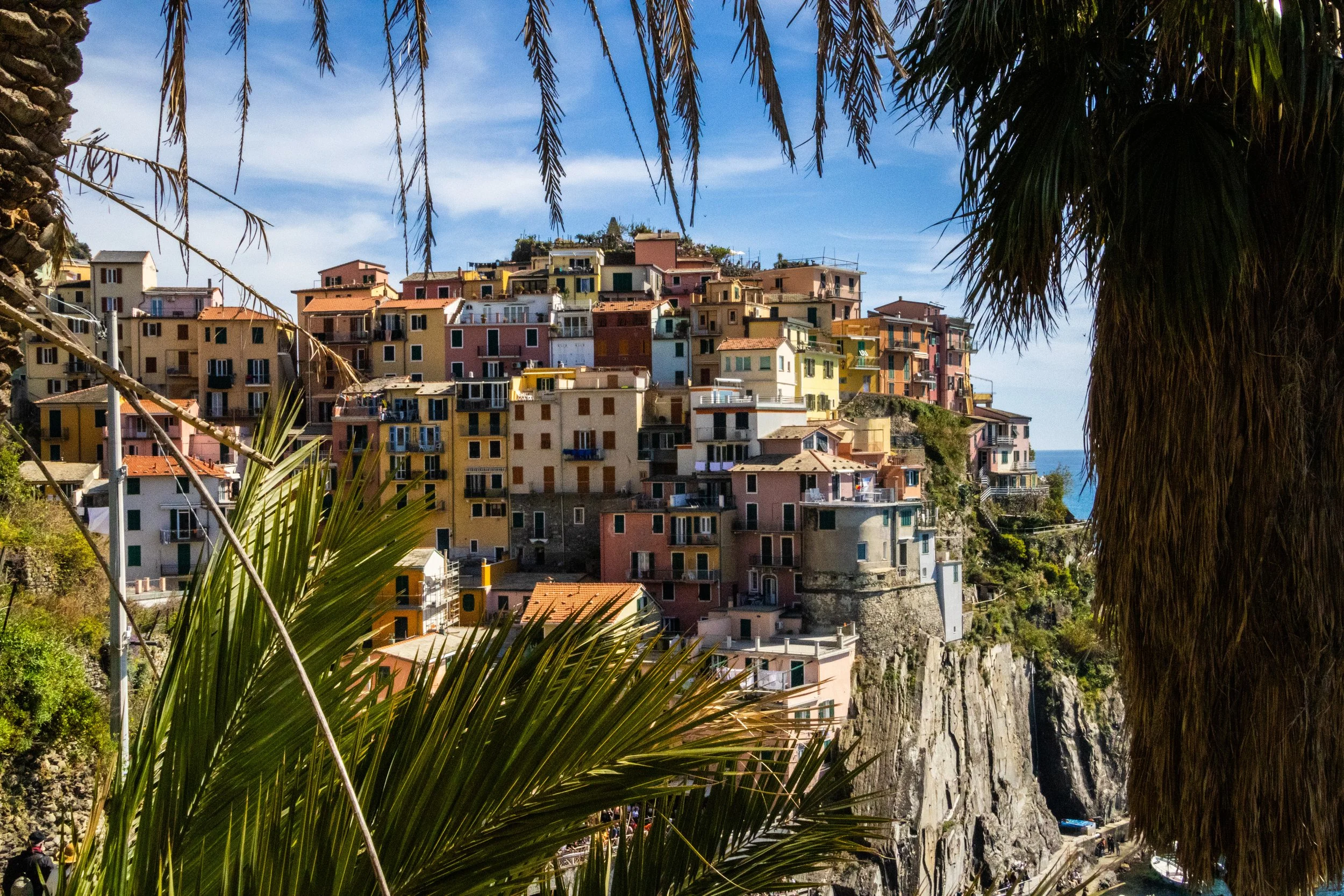
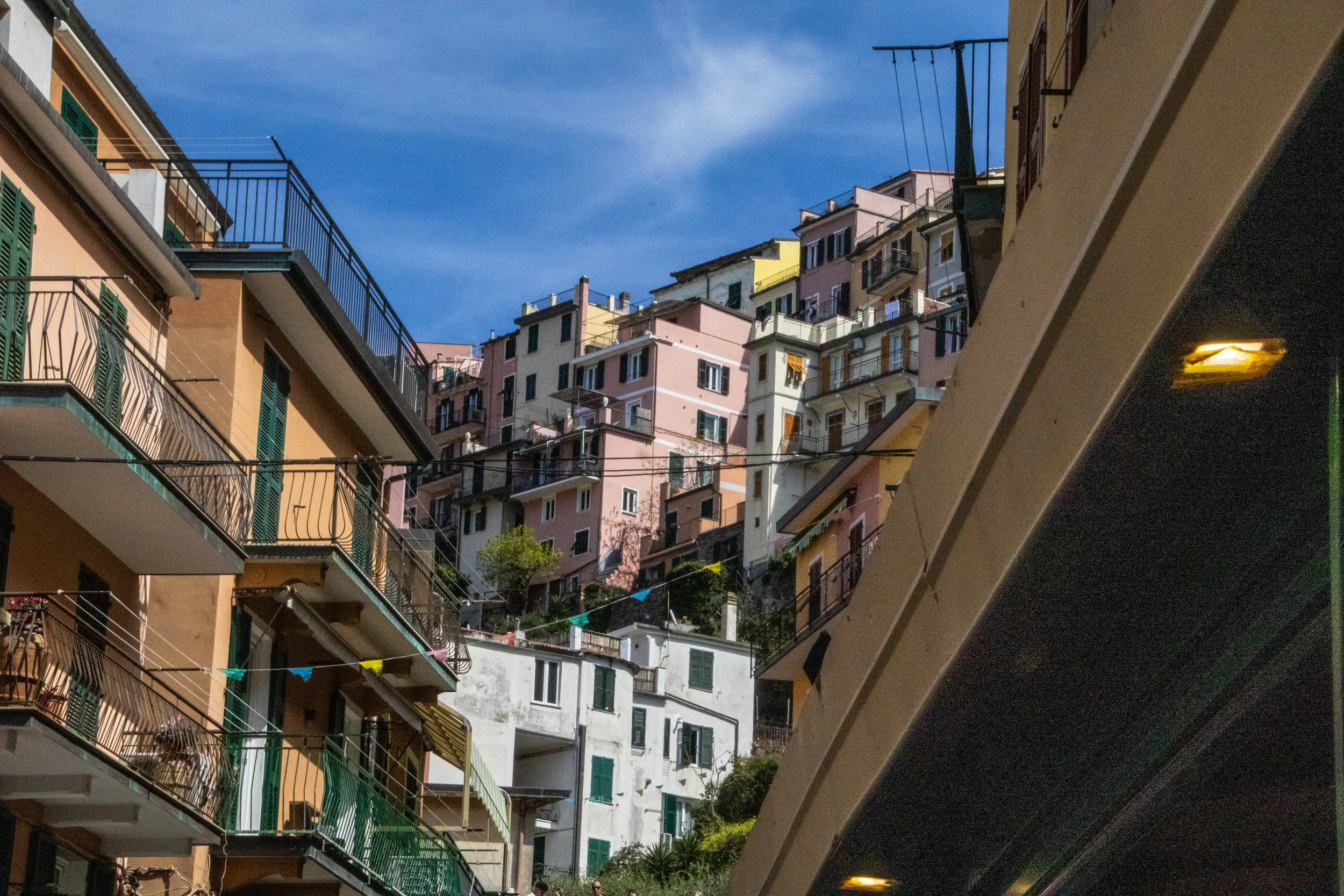
As you may recalled, I loved Manarola so much last time that I stayed here for hours to catch the sunset, which resulted in a photograph that is one of my favorites of Italy I’ve ever taken still to this day. So I won’t re-hash this town too much. One disappointing change from last time is that the cemetery on the top of the hill was chained shut this time around. It seems the boundaries between what is accessible to tourists vs. locals are becoming “harder” … or maybe I was just lucky last time.
Anyway, here’s a few 2026 snaps from Manarola:
Riomaggiore
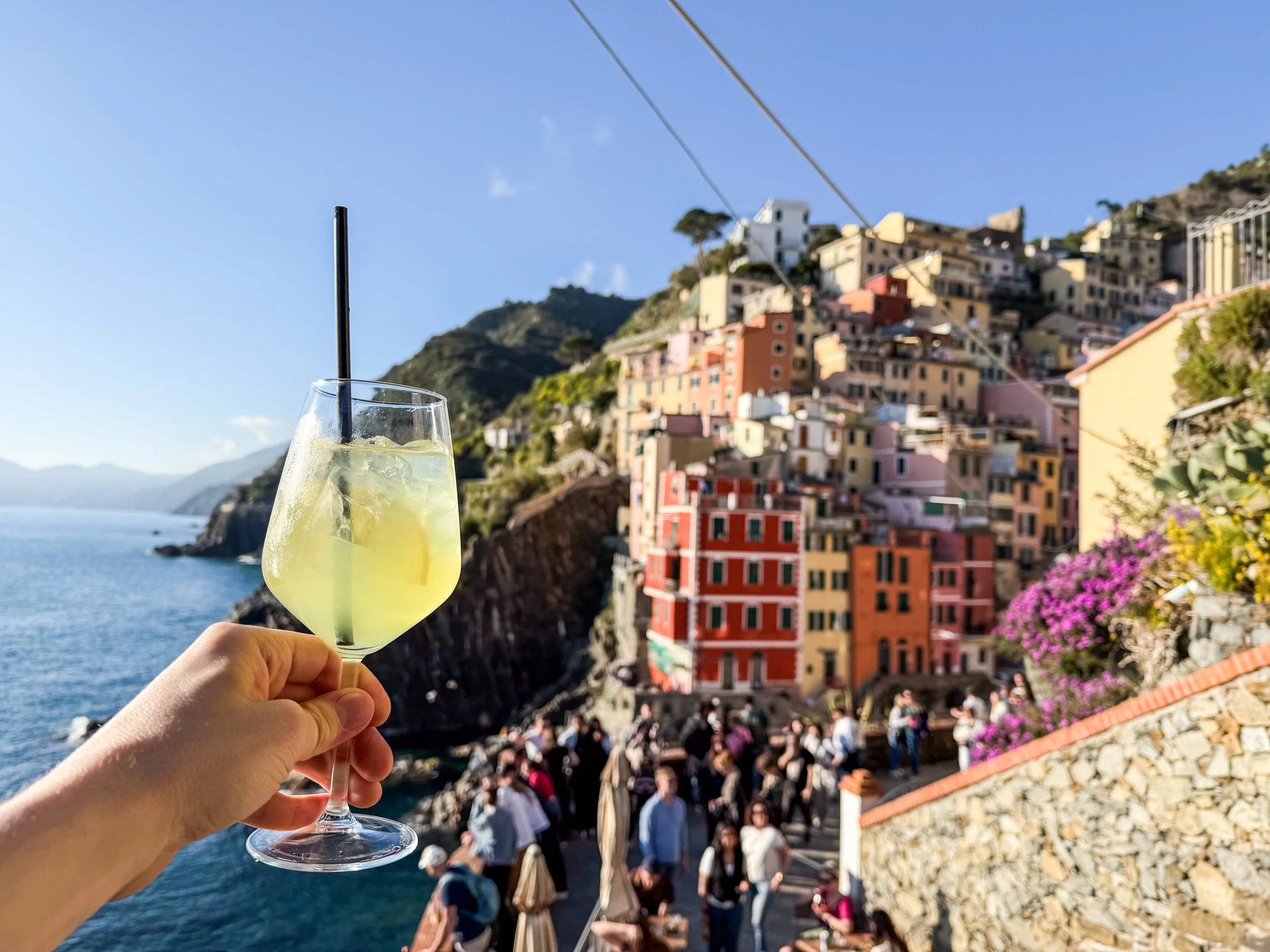
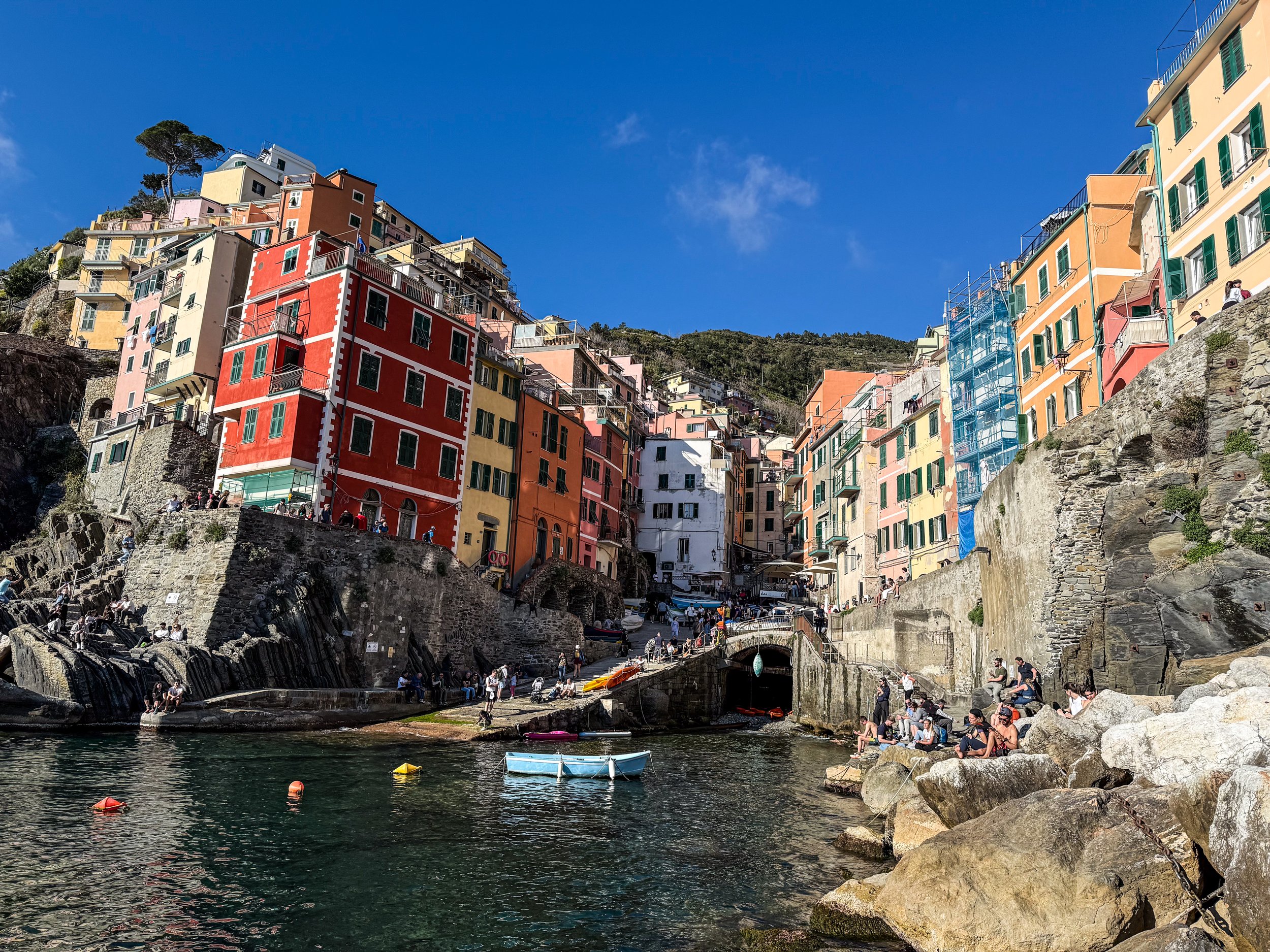
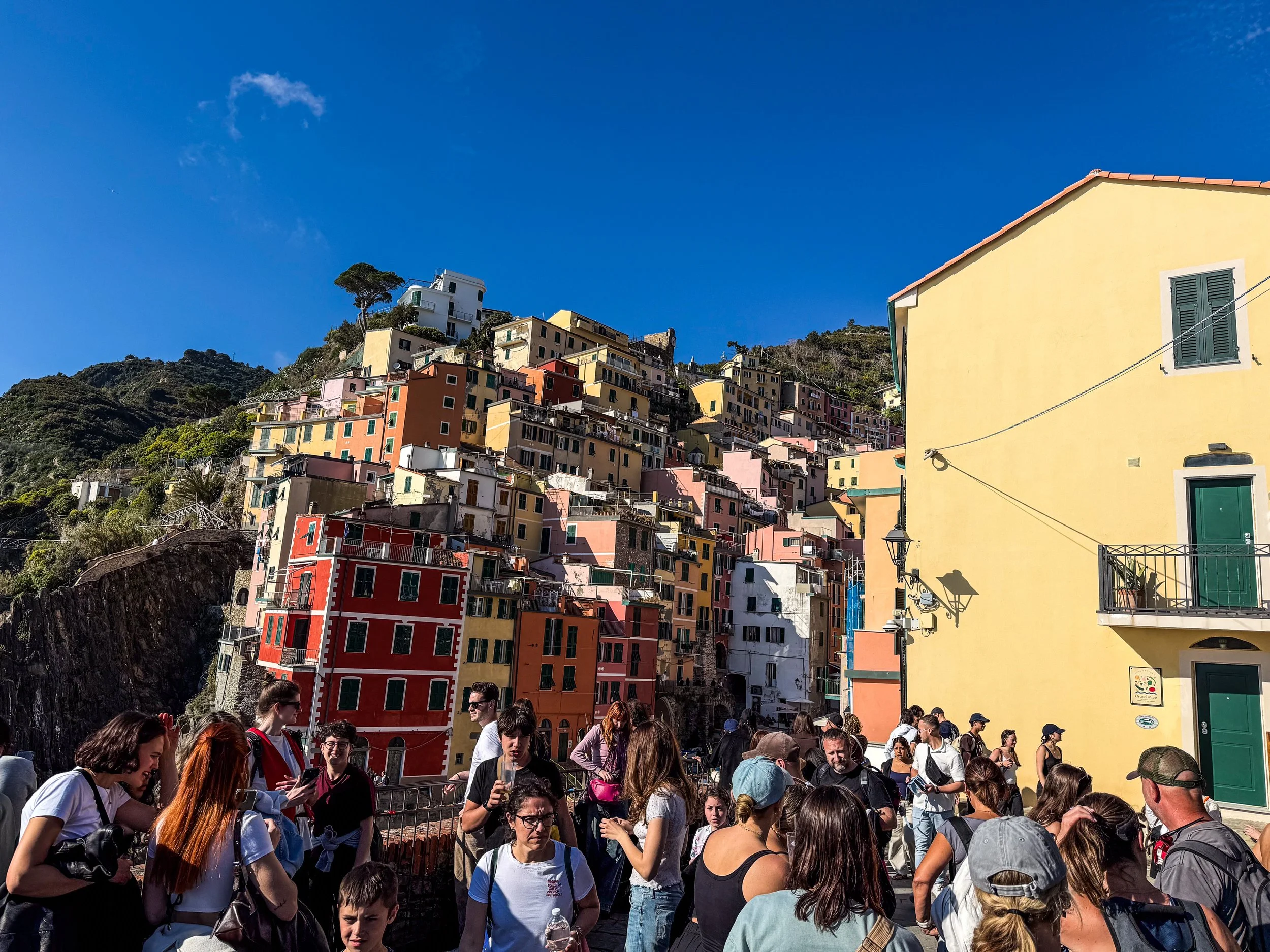
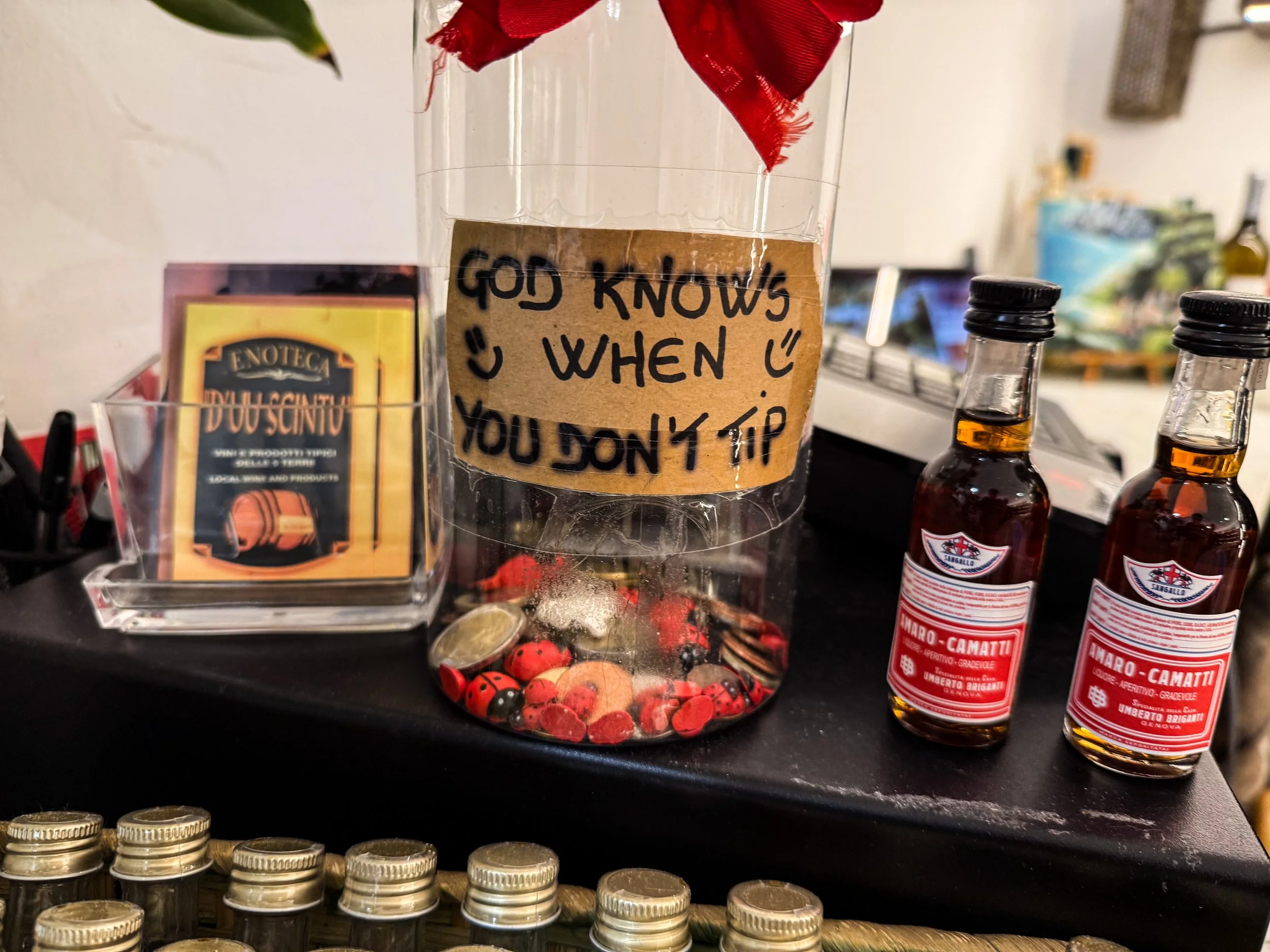
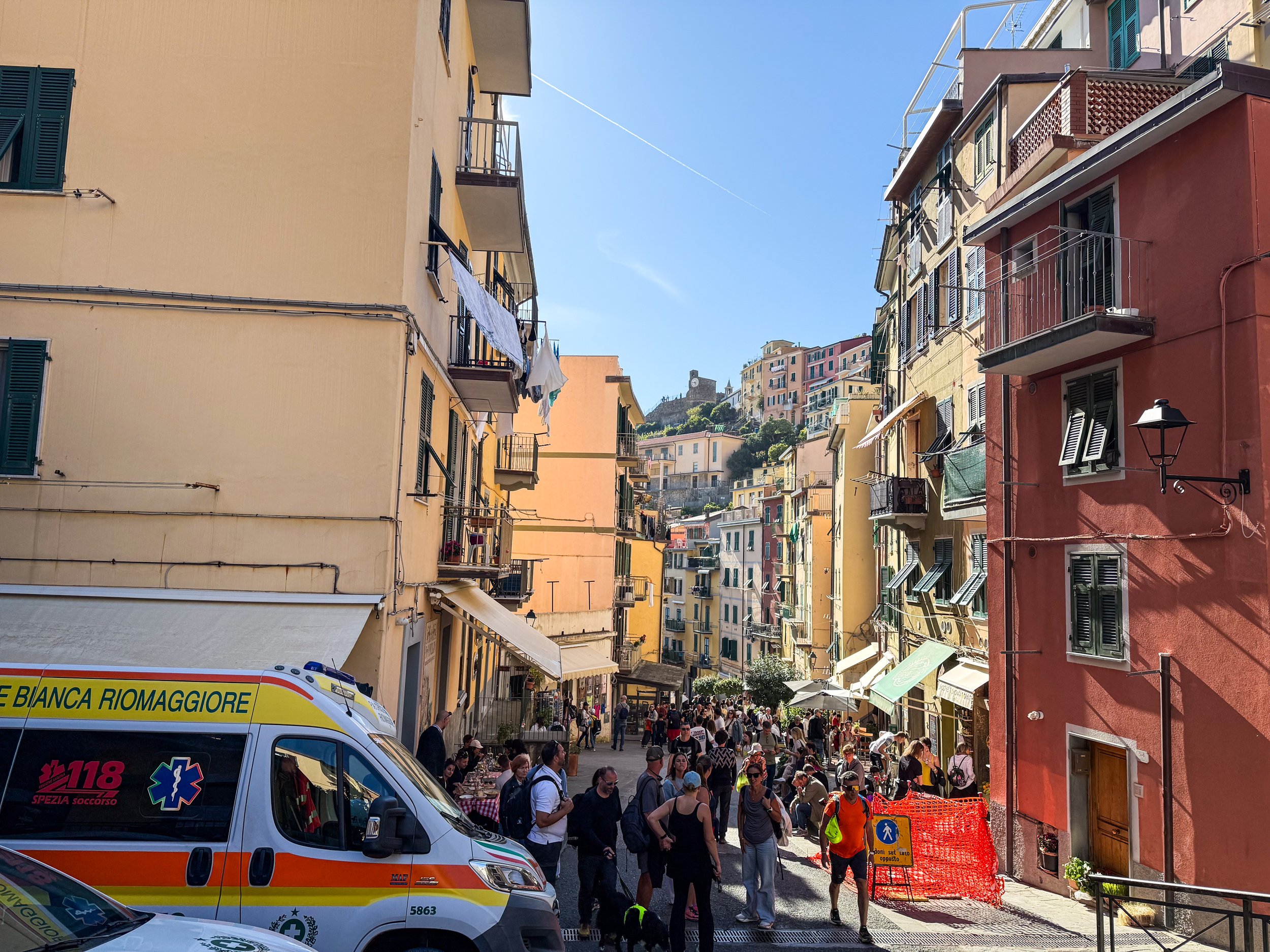
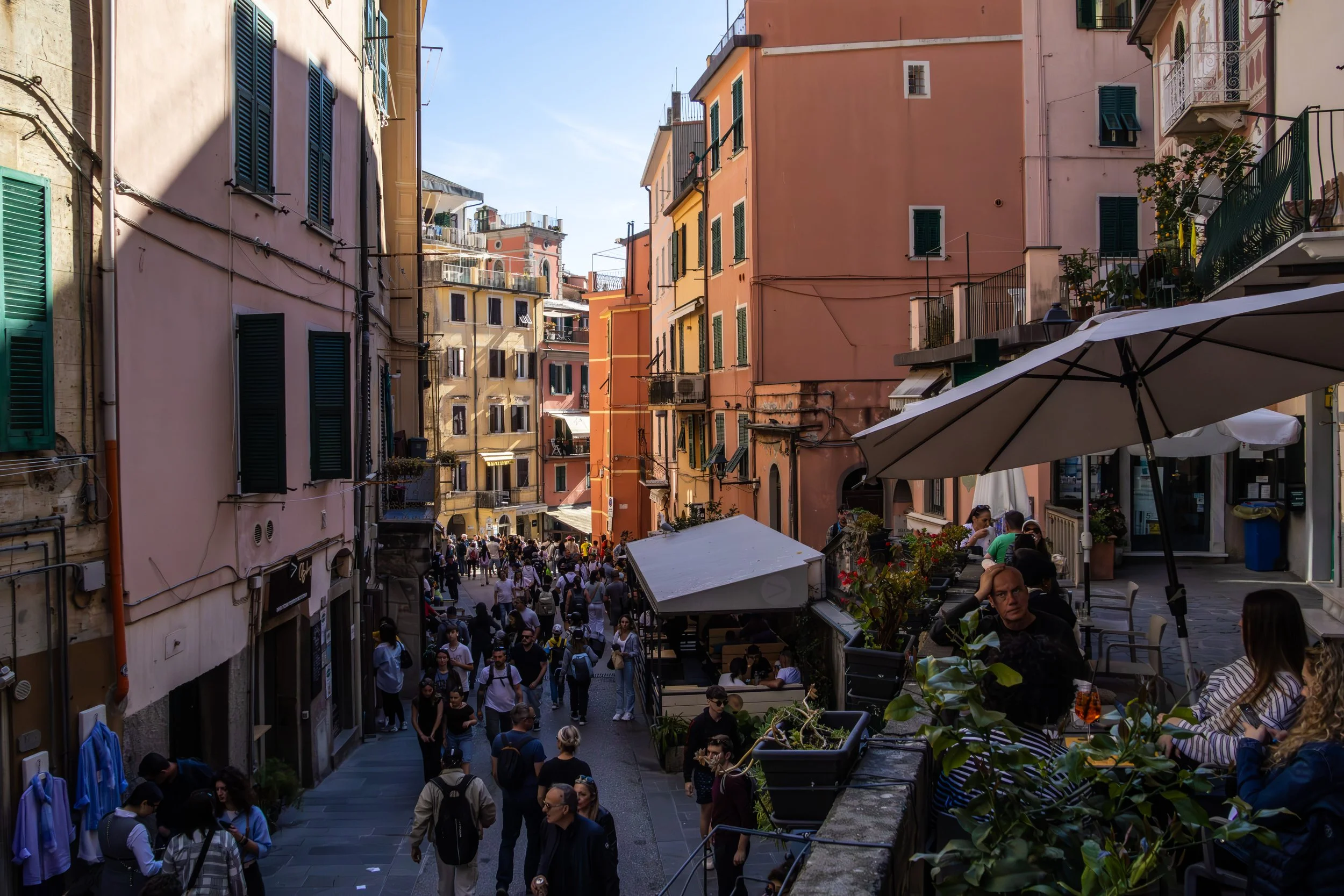
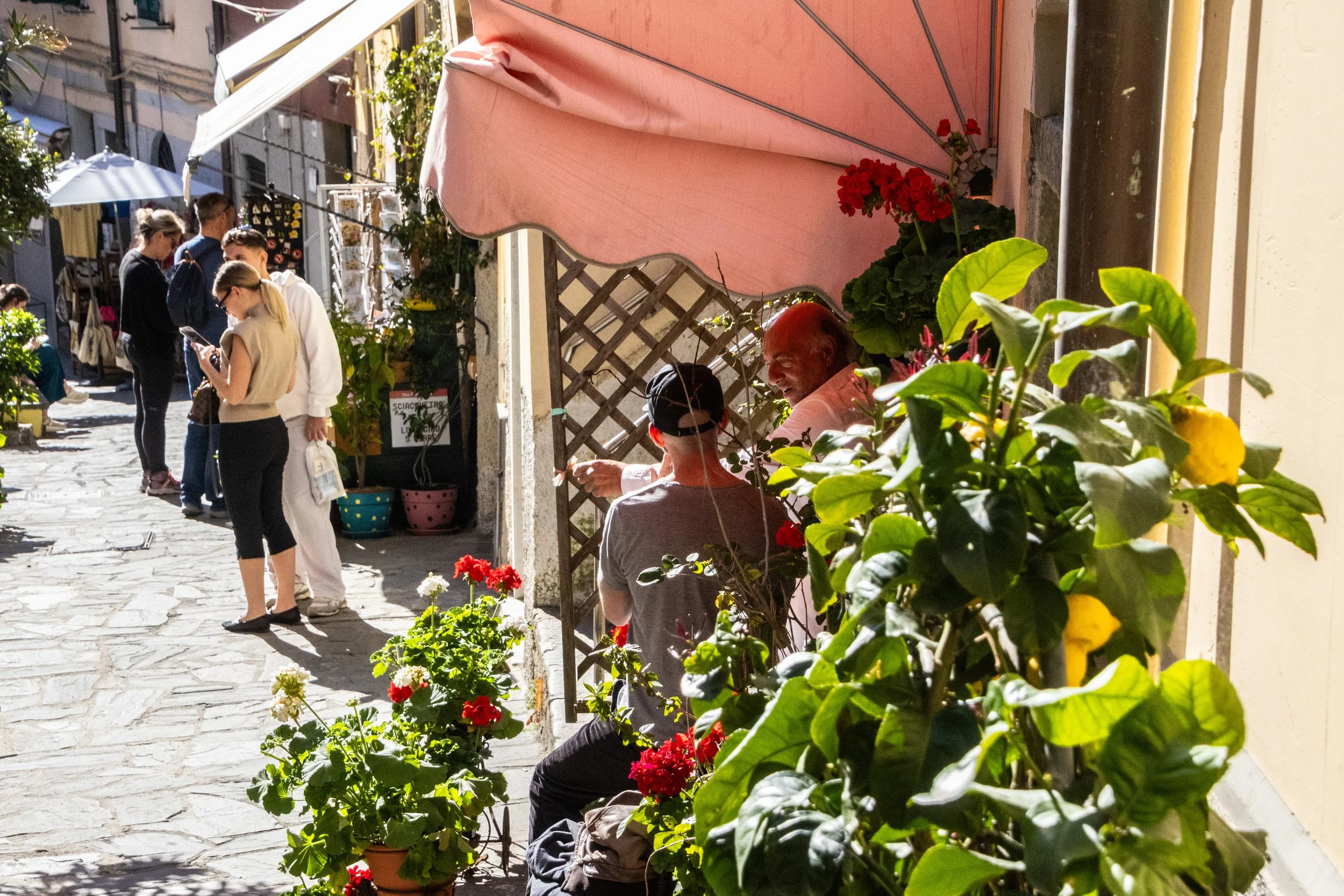
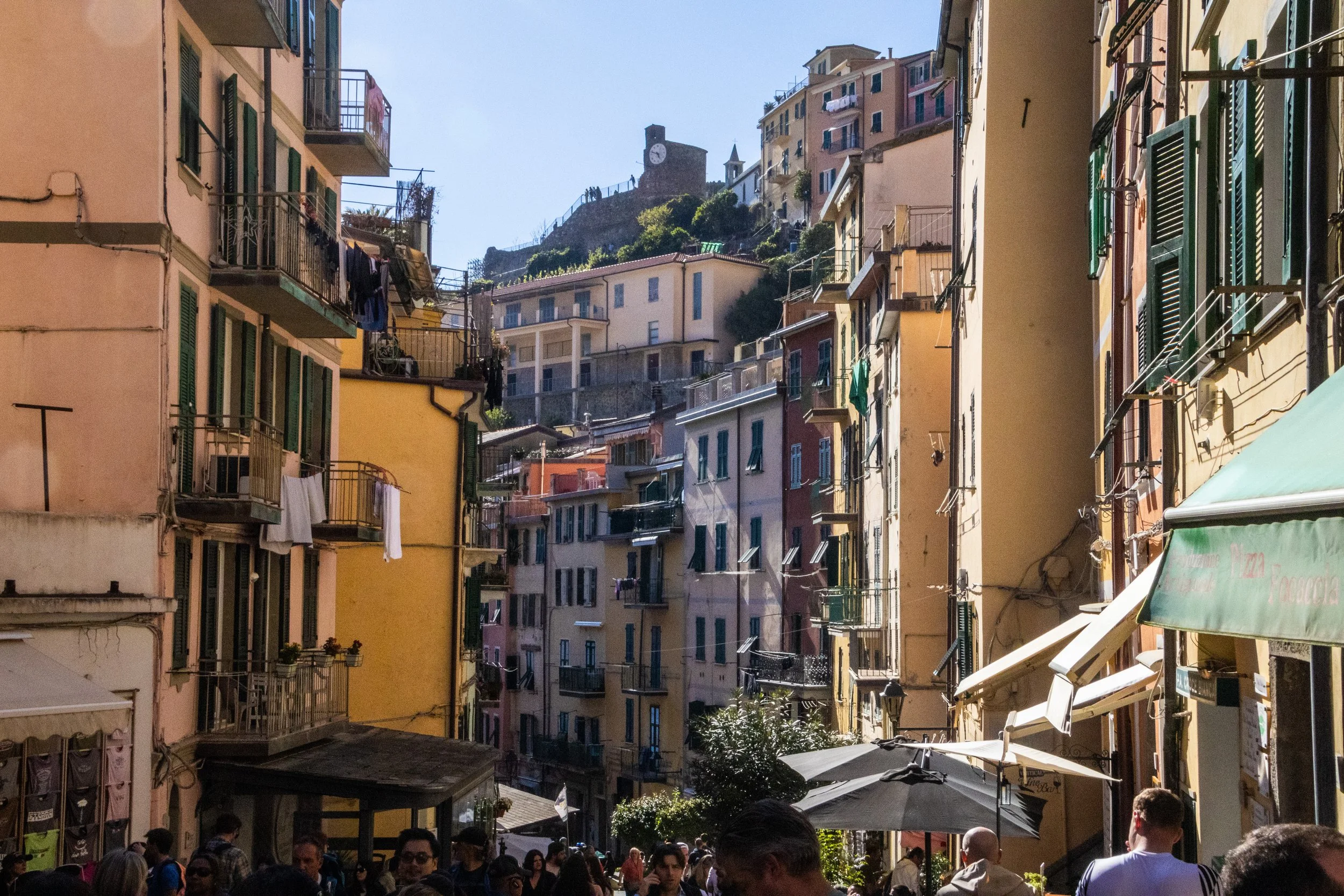
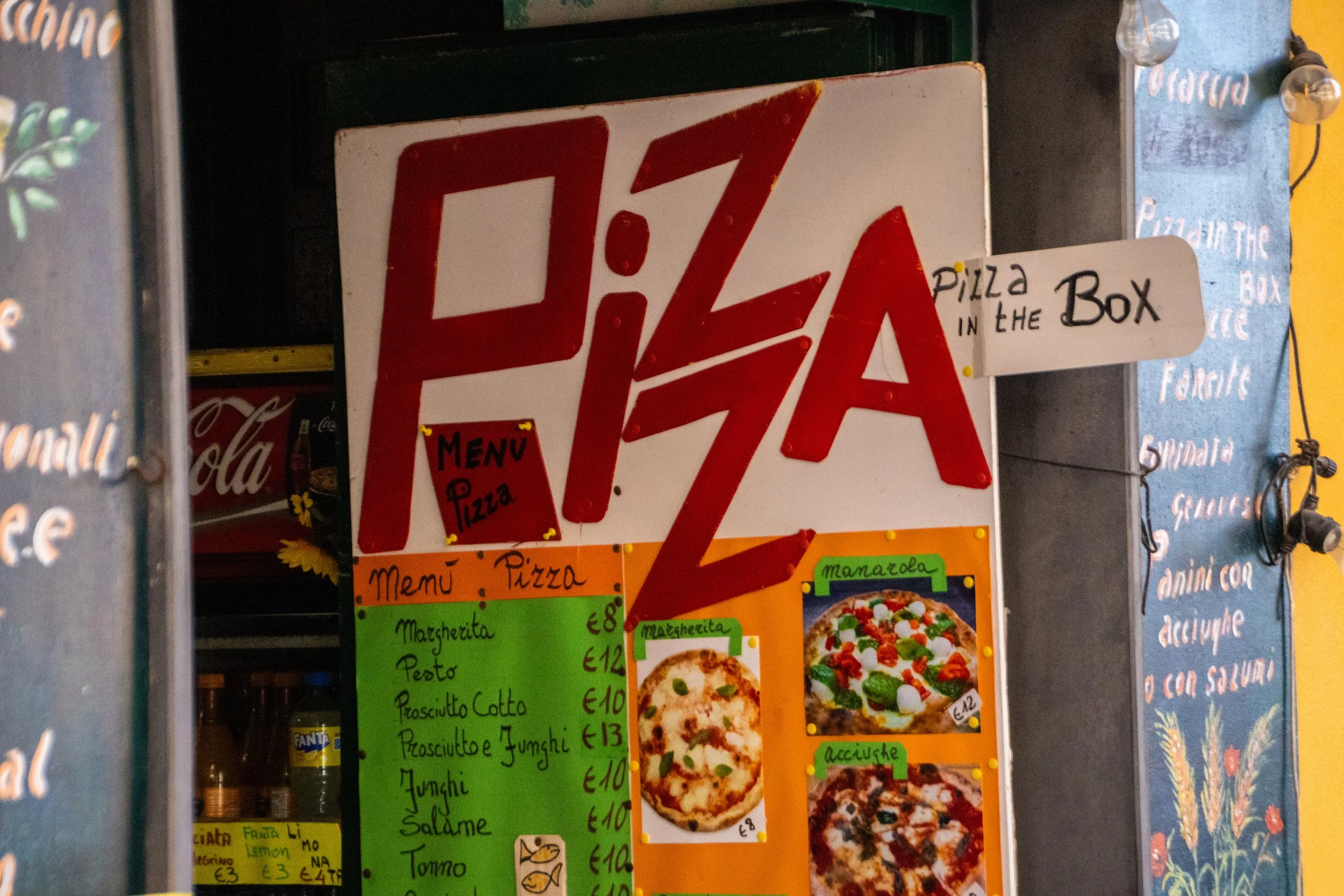
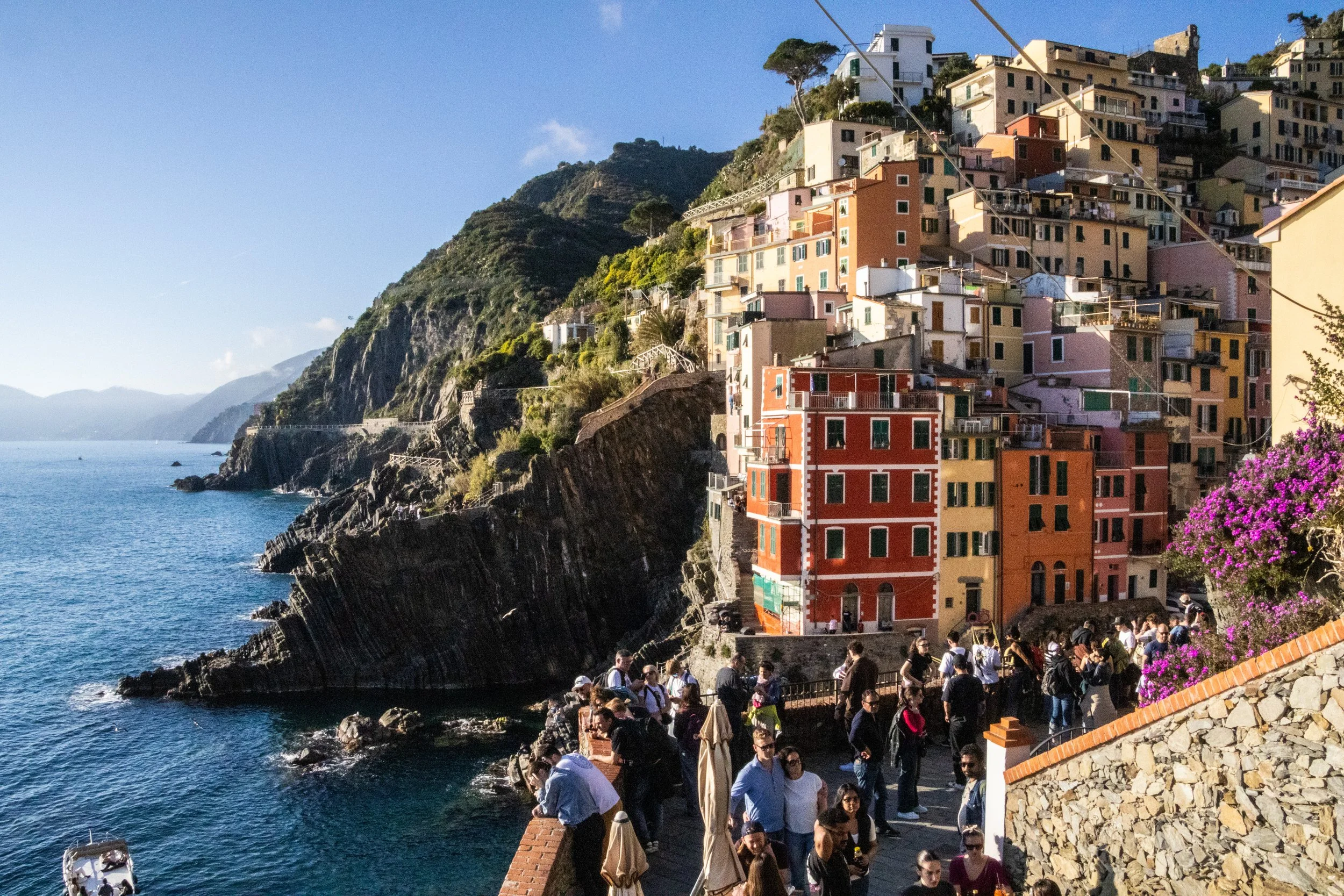
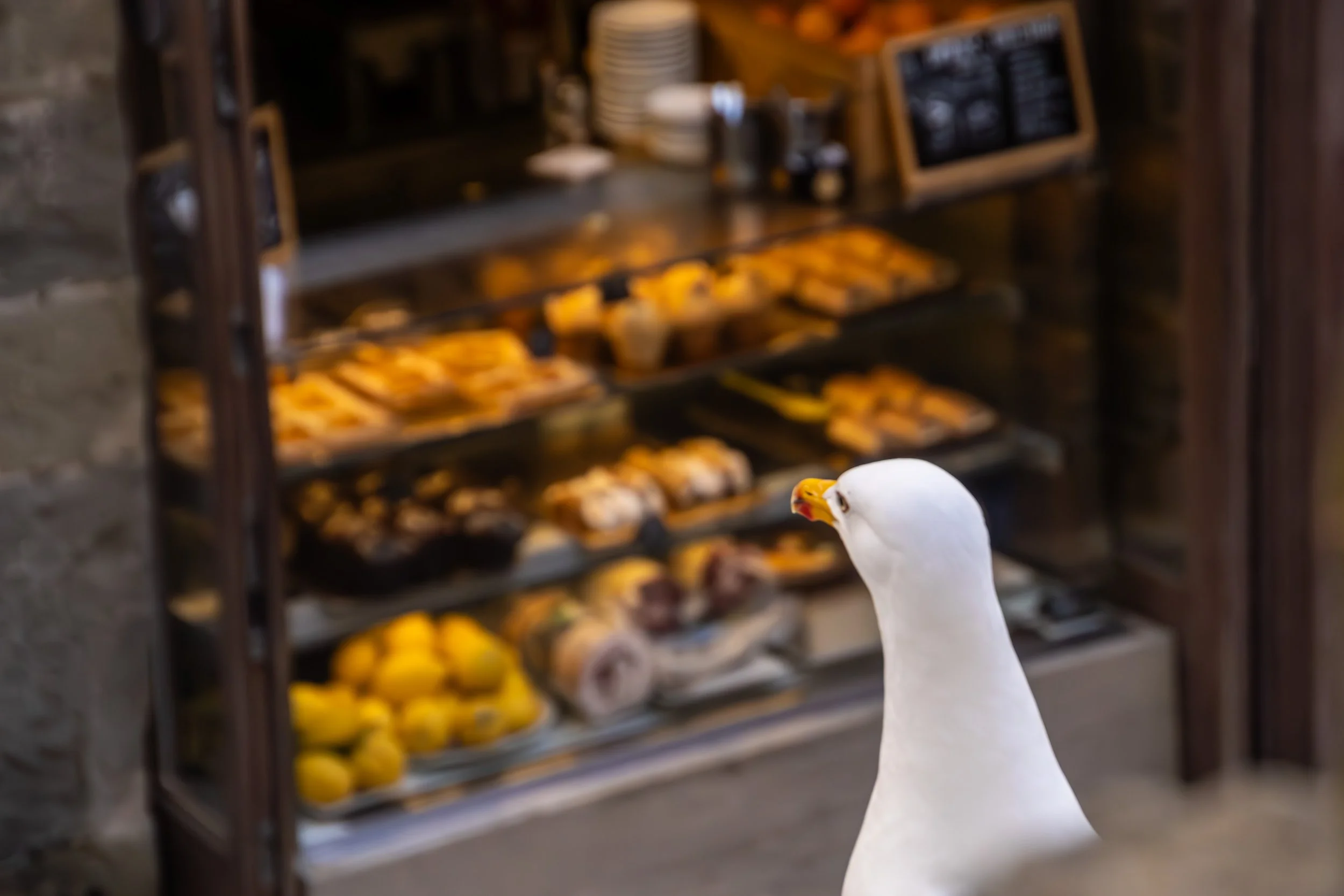
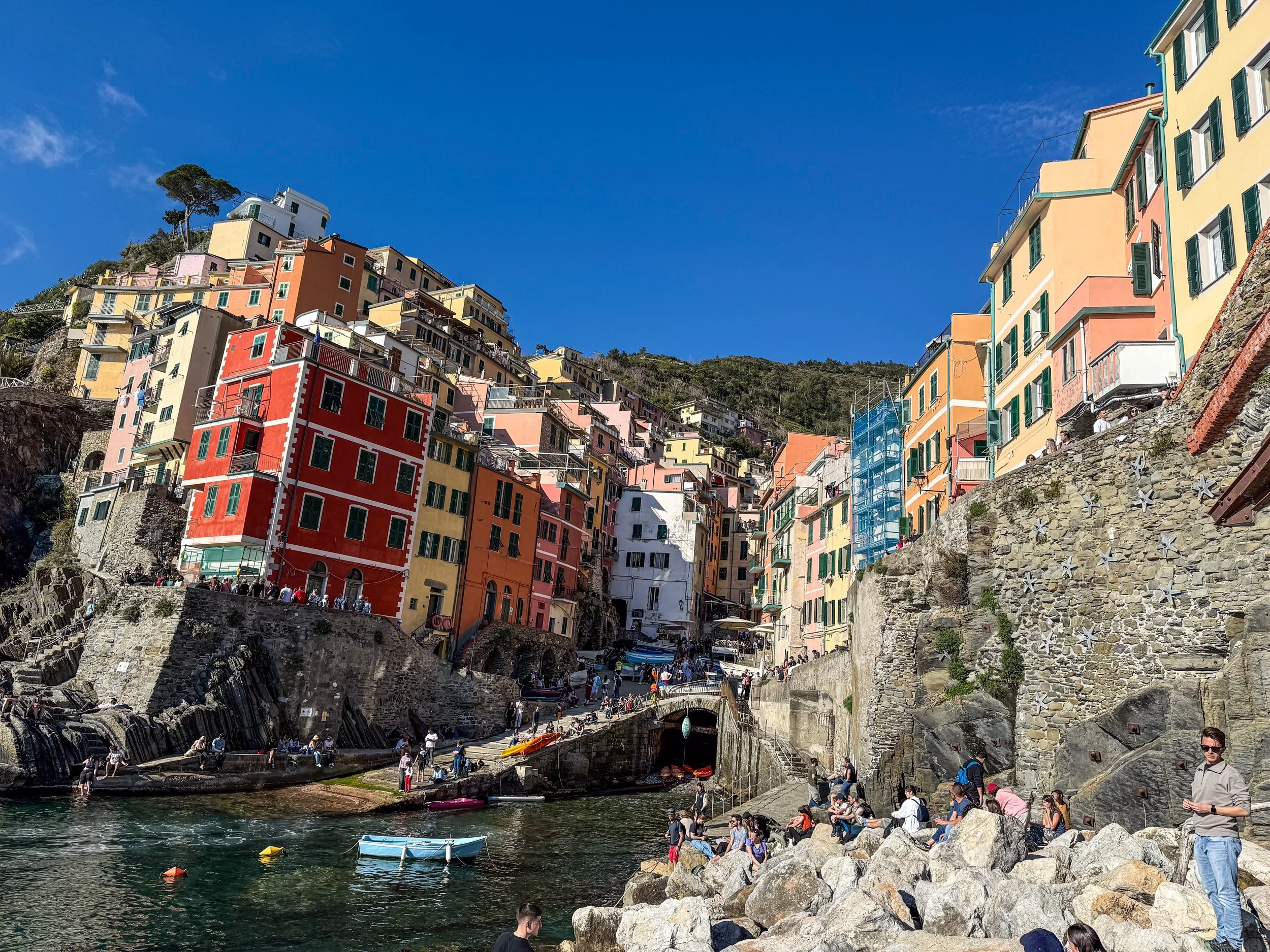
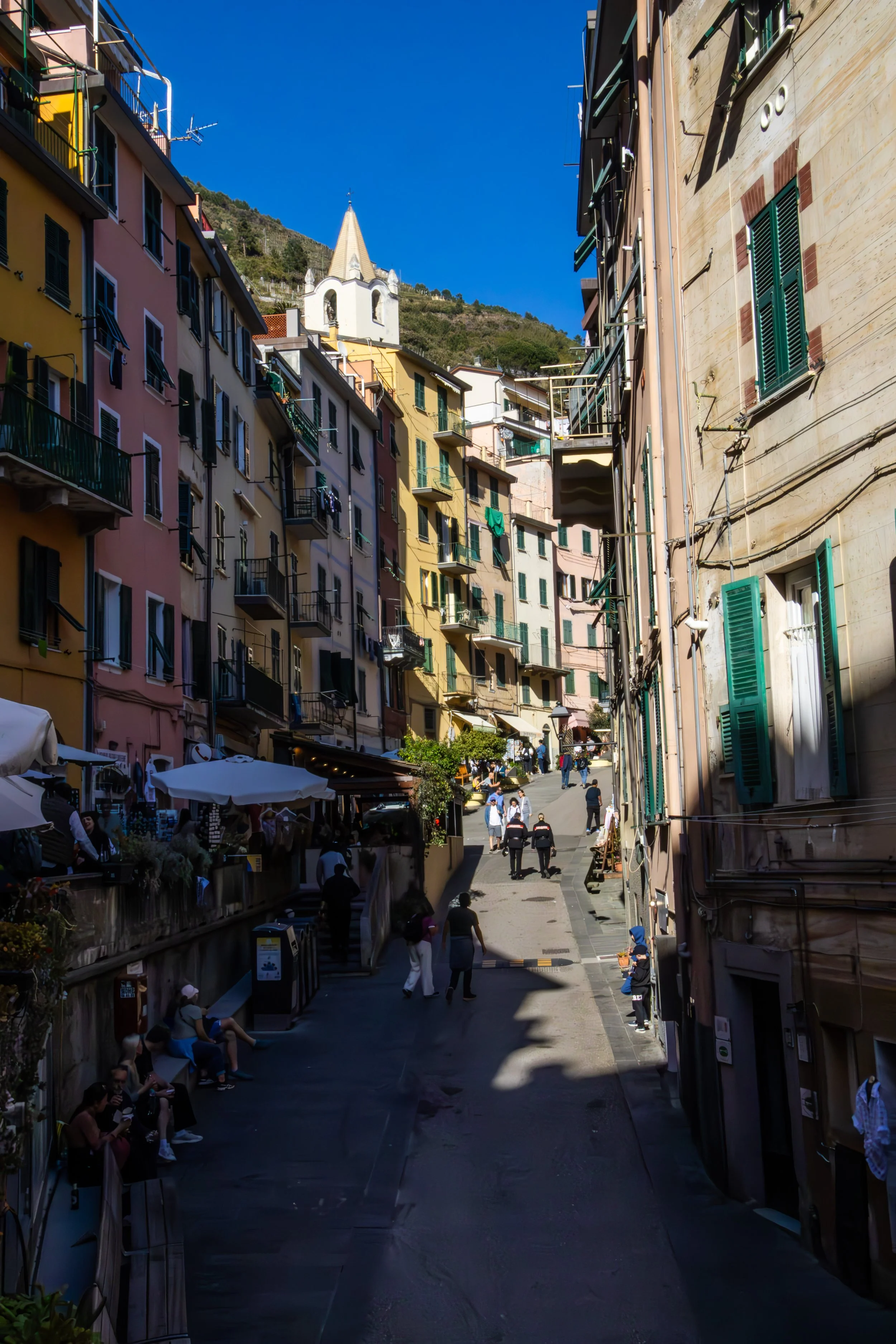
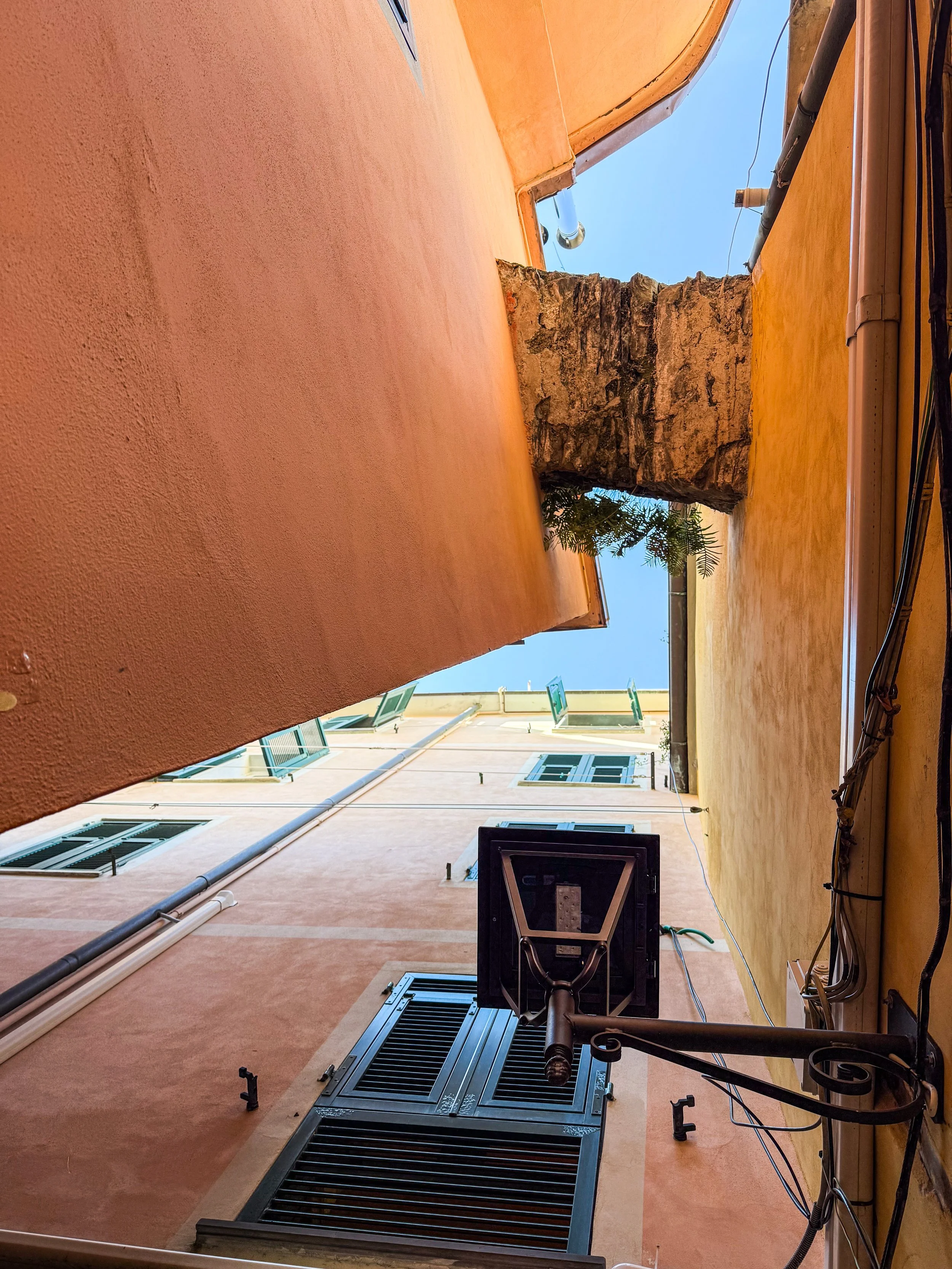
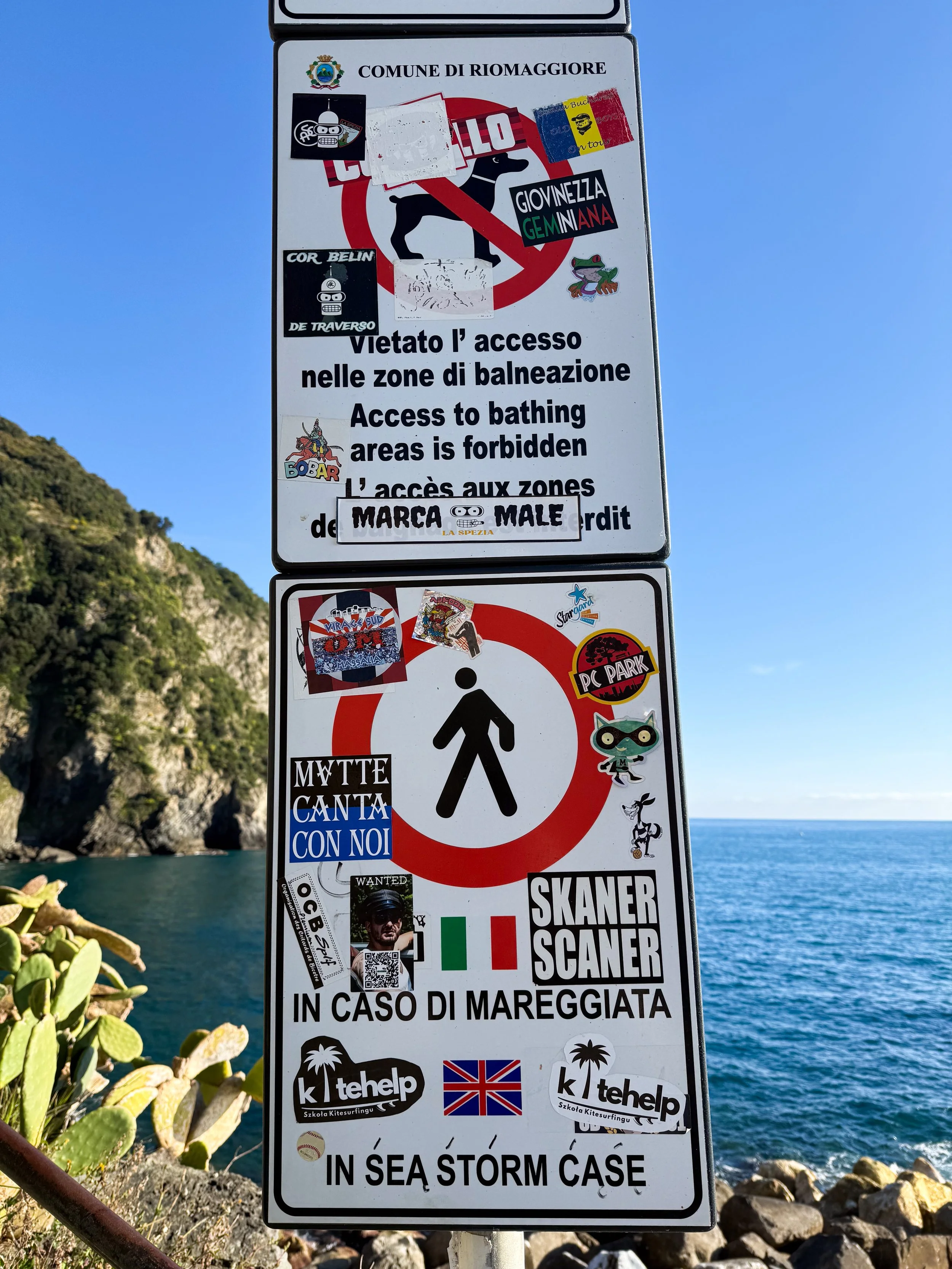
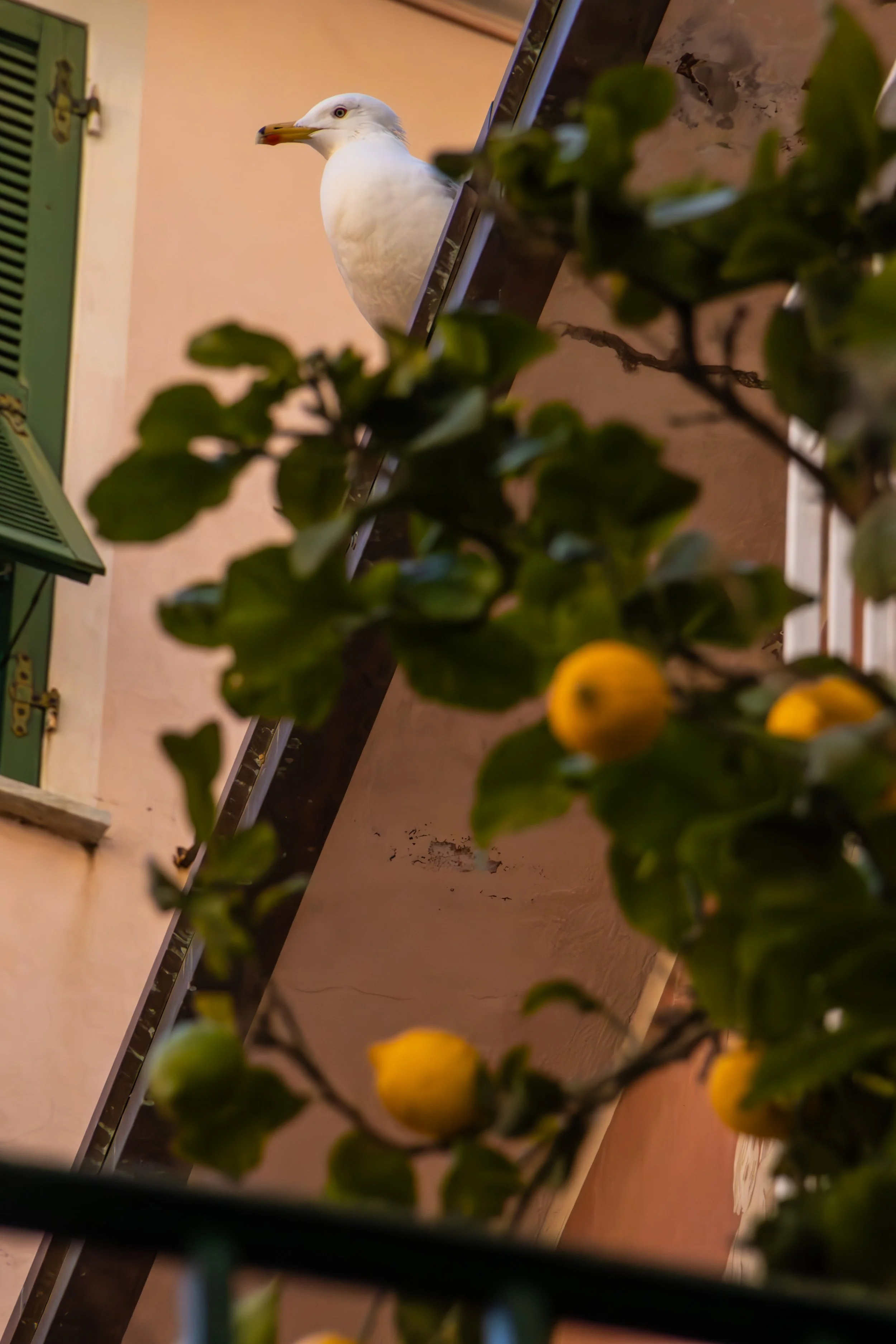
This is another town that I covered extensively last time, although I do think my photographs from this visit are much better than before. It’s nice to know that I’m improving with time! Please appreciate the photograph of that seagull absolutely lusting after the baked goods across the street. I was amused by that little moment.
Monterosso al Mare
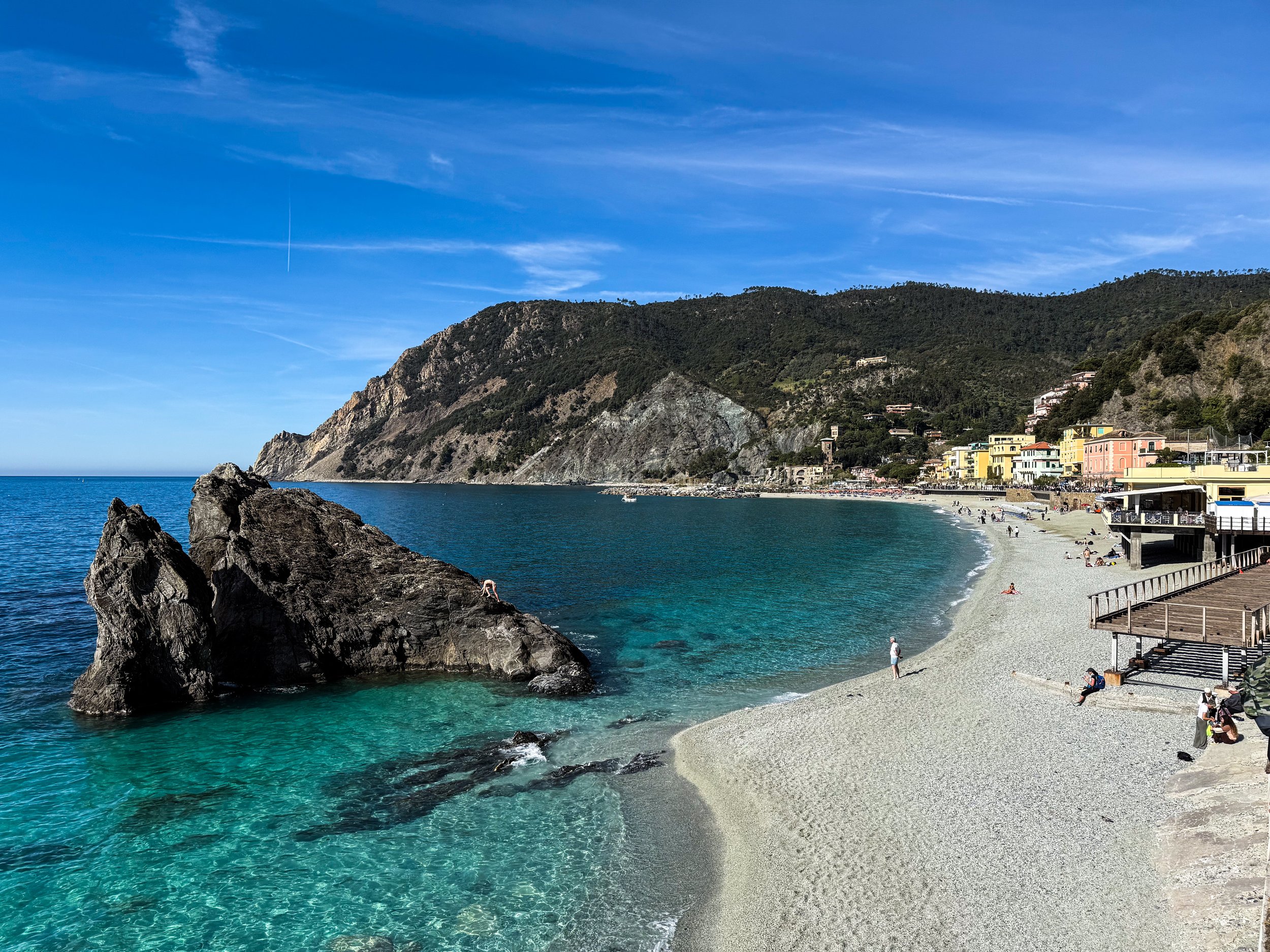
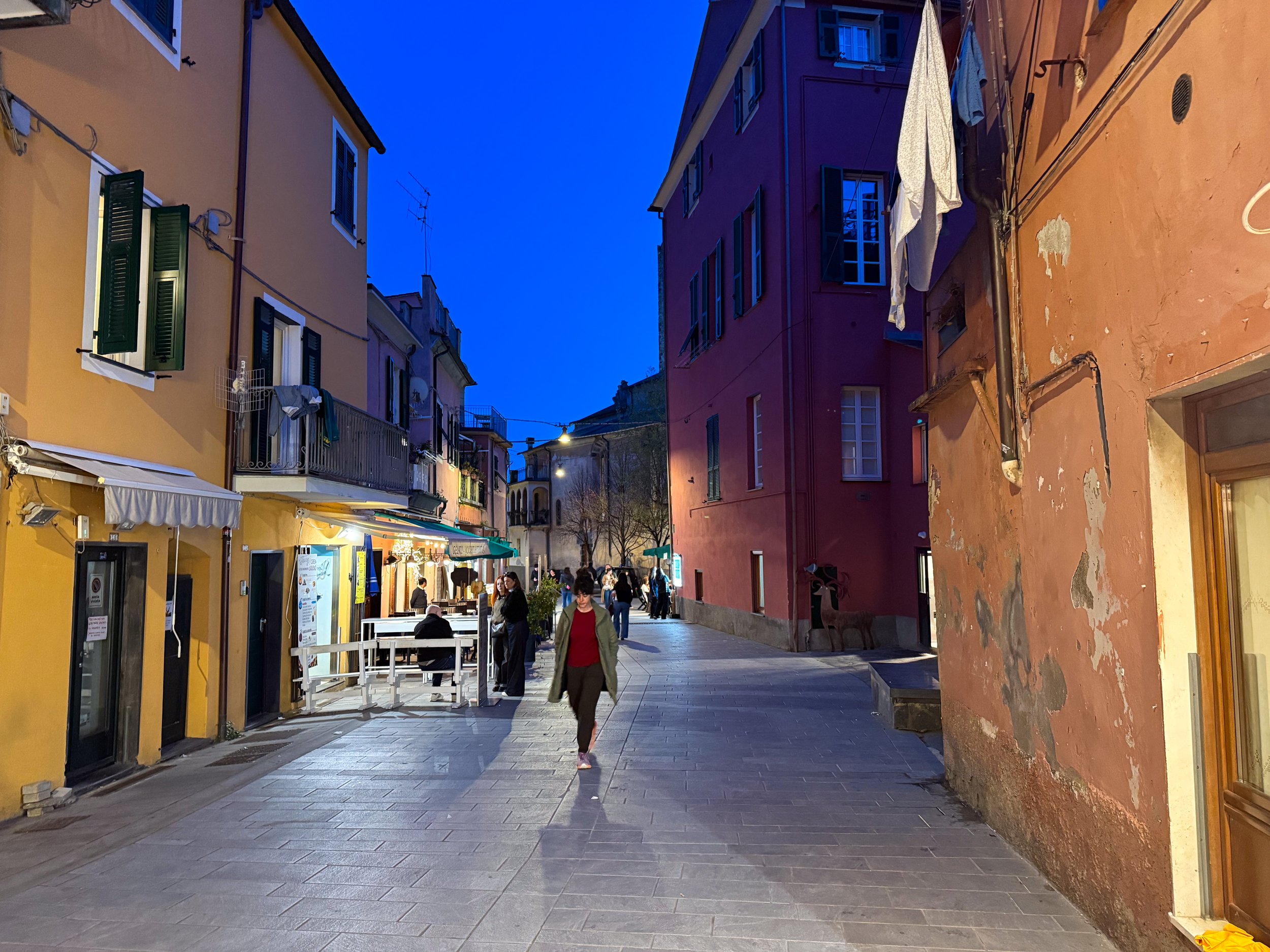
Last time I was in the Cinque Terre, my day started and ended back in Genoa. But this time, we elected to stay overnight in one of the towns. And, to me, the choice of which town was clear: Monterosso al Mare. It’s the largest (and therefore has the most to explore), and it’s got an actual beach! The other Cinque Terre towns seem to defy physics the way that they are built into sheer rock faces, but this town actually sits at the mouth of a stream that flows into the ocean (the Buranco), so the terrain was worn away over time to make a large enough break in the mountains for an actual town to fit into. As a result, Monterosso has the largest year-round population (around 1,300–1,500 people), although it swell substantially in the summer months. Accordingly, it also still functions as a real community with schools, local services, and residents whose families have lived there for generations. Of course, its economy has shifted almost entirely toward tourism, but small-scale fishing and viticulture continue here even to this day.
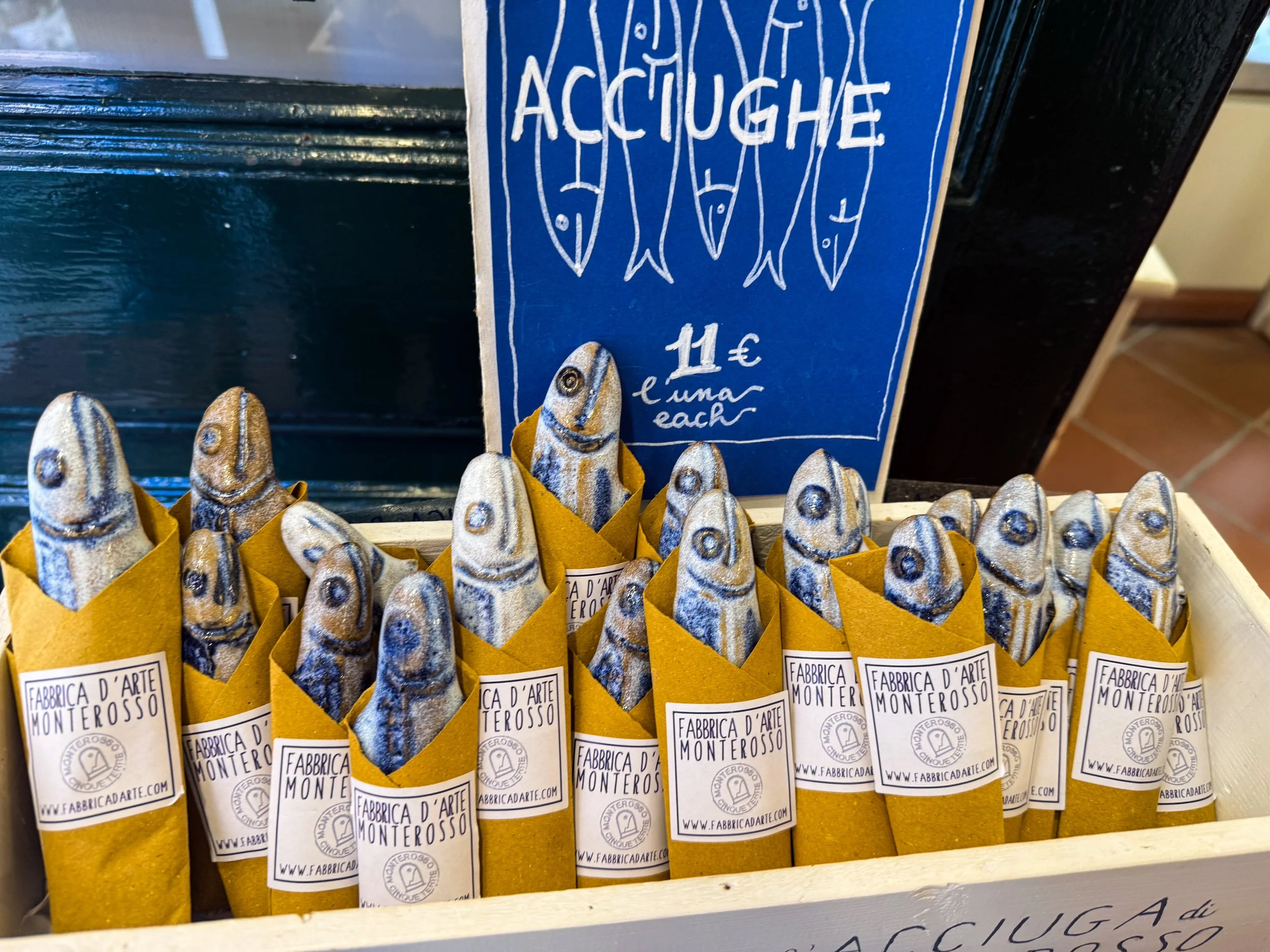
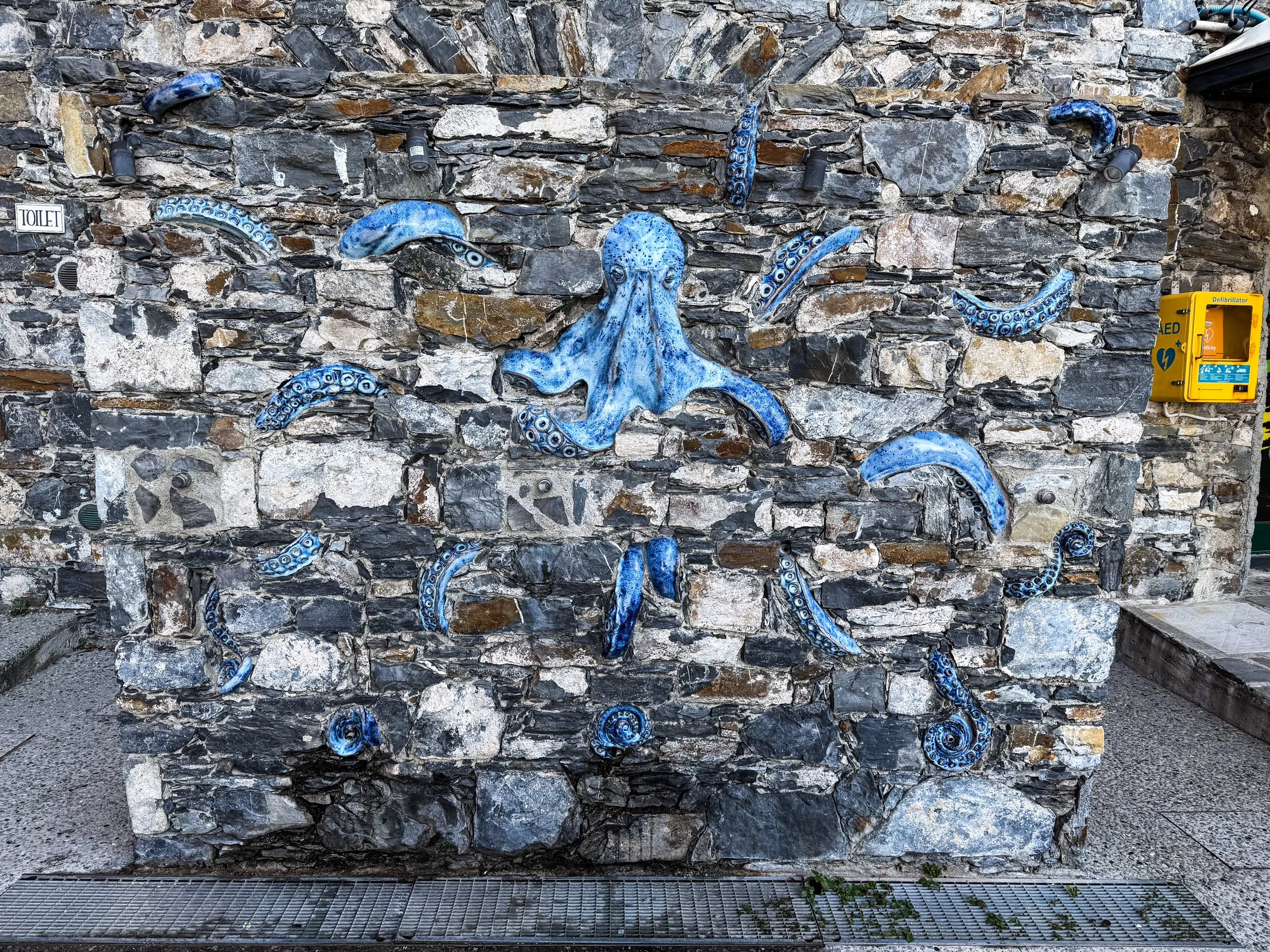
Here are few pictures under the mid-day sun in Monterosso. Would you just look at the colors of the water?? Also, I am happy to report that I now have one of these ceramic anchovies in my kitchen back in London.
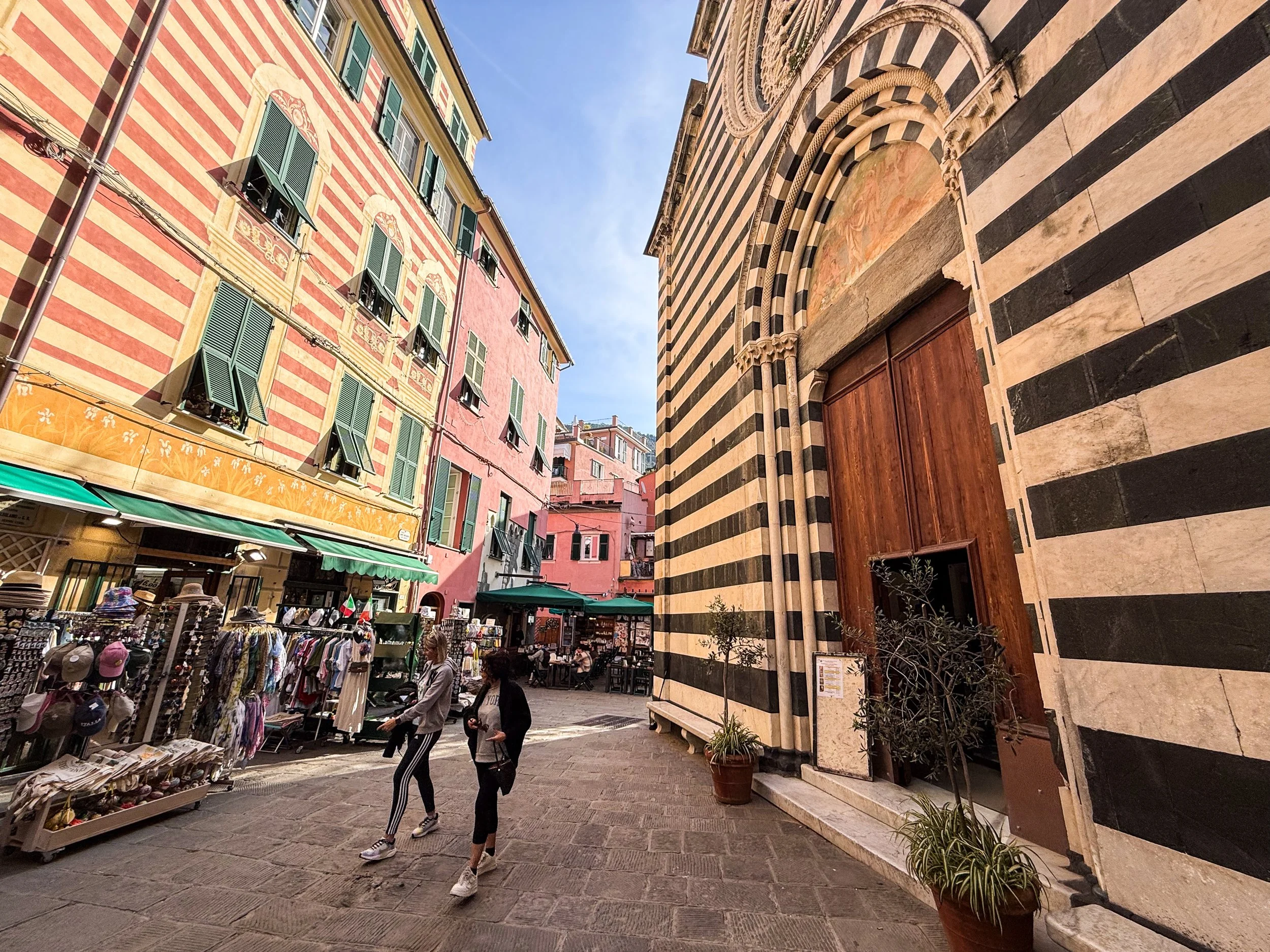
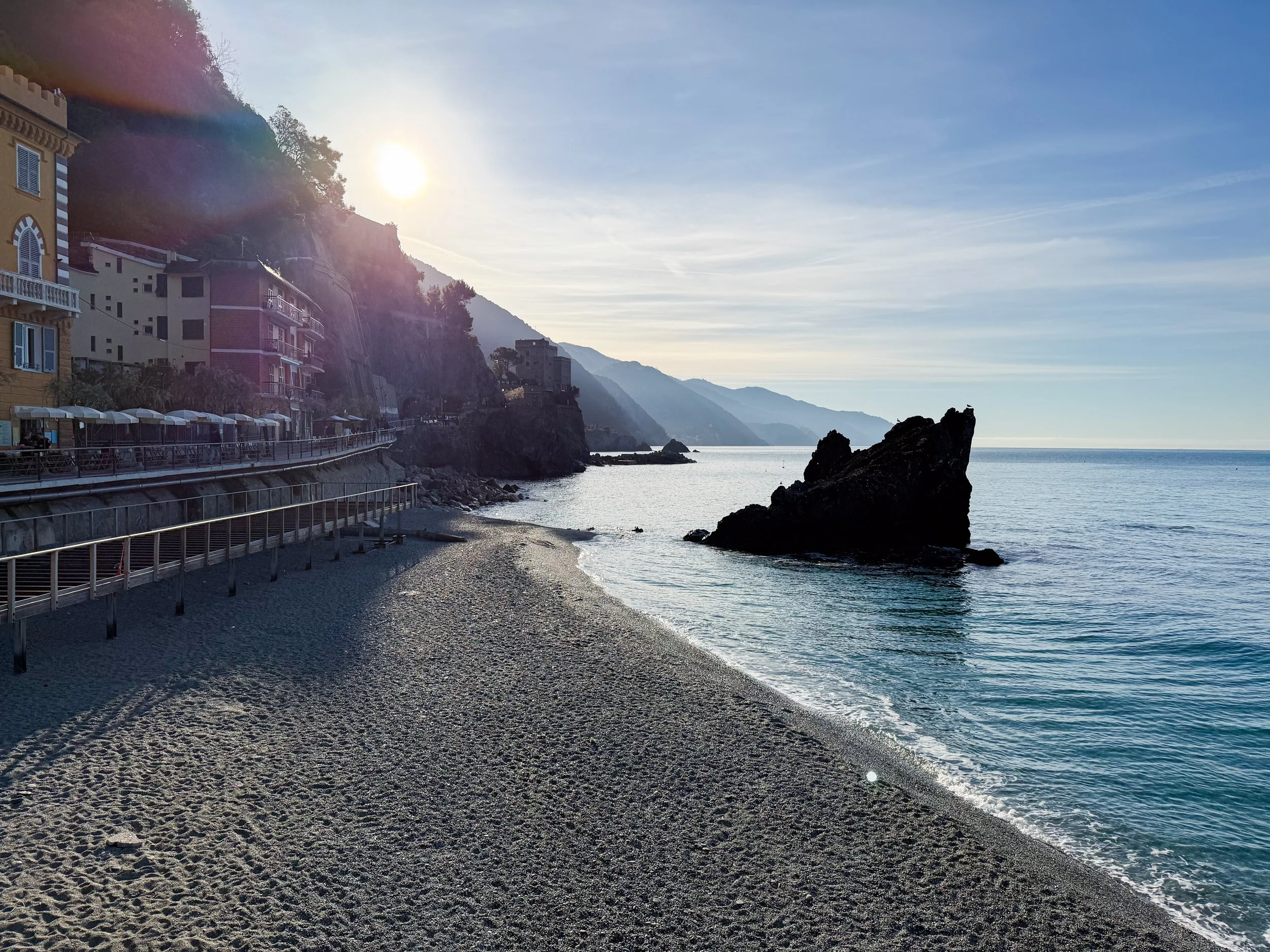
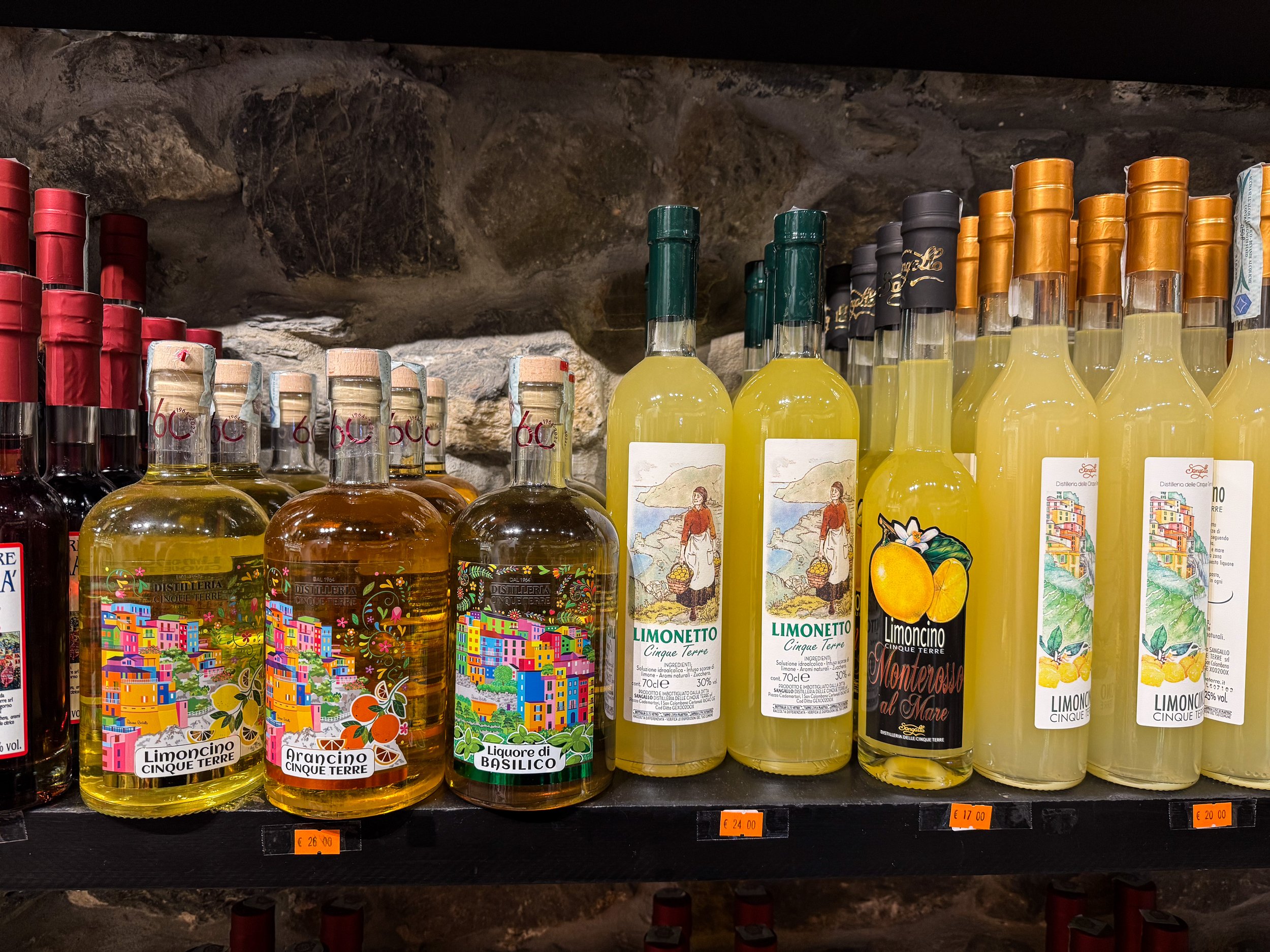
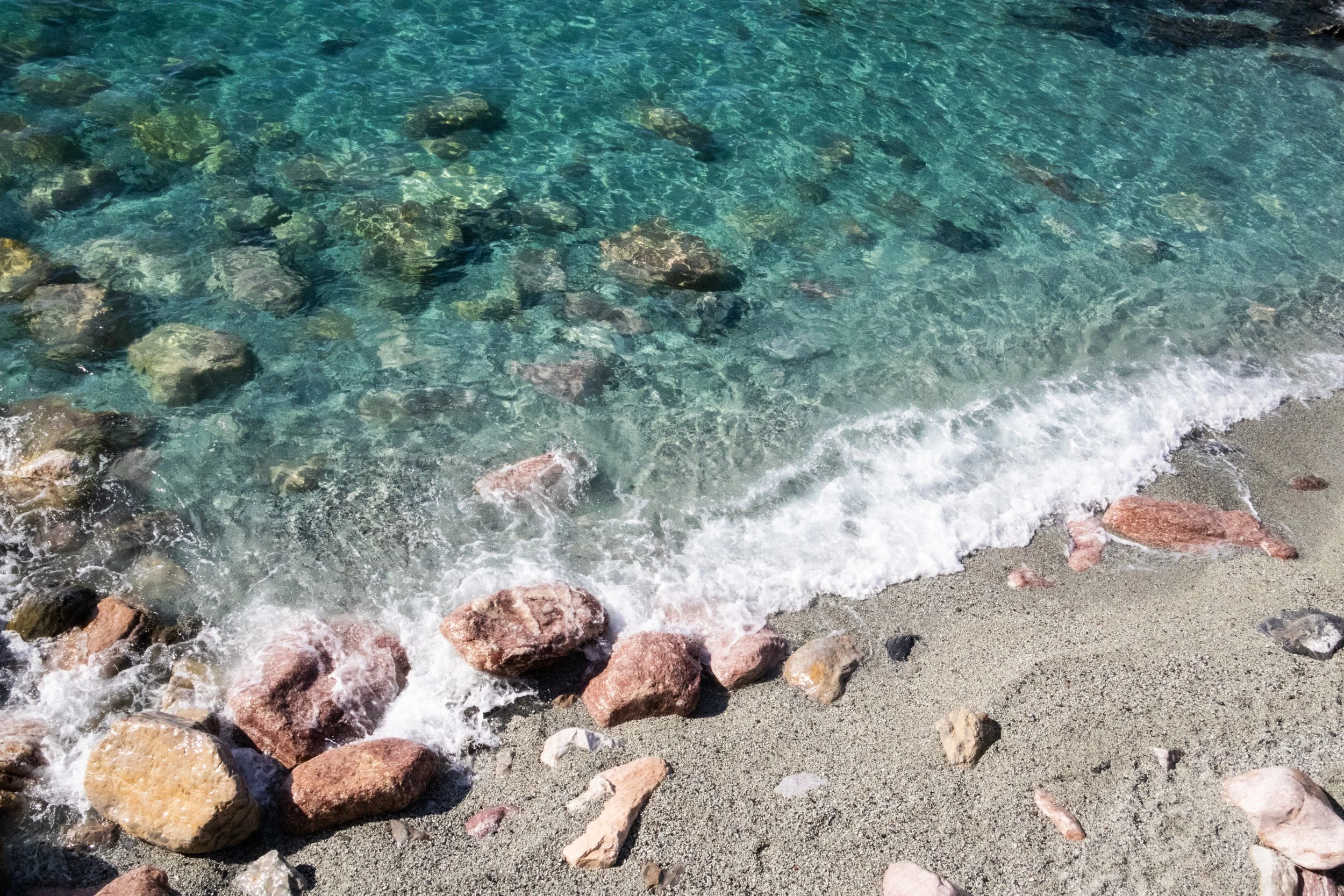
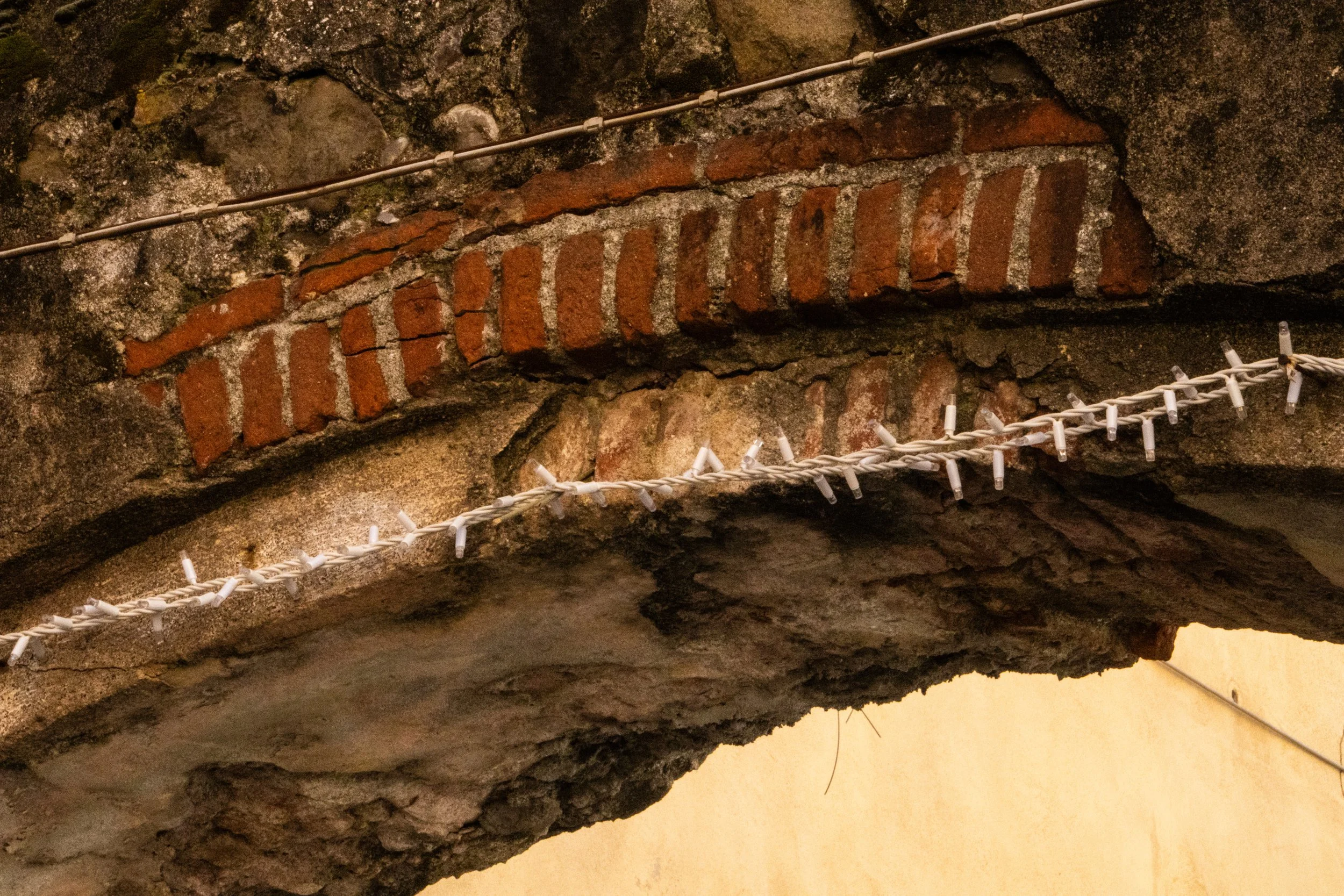
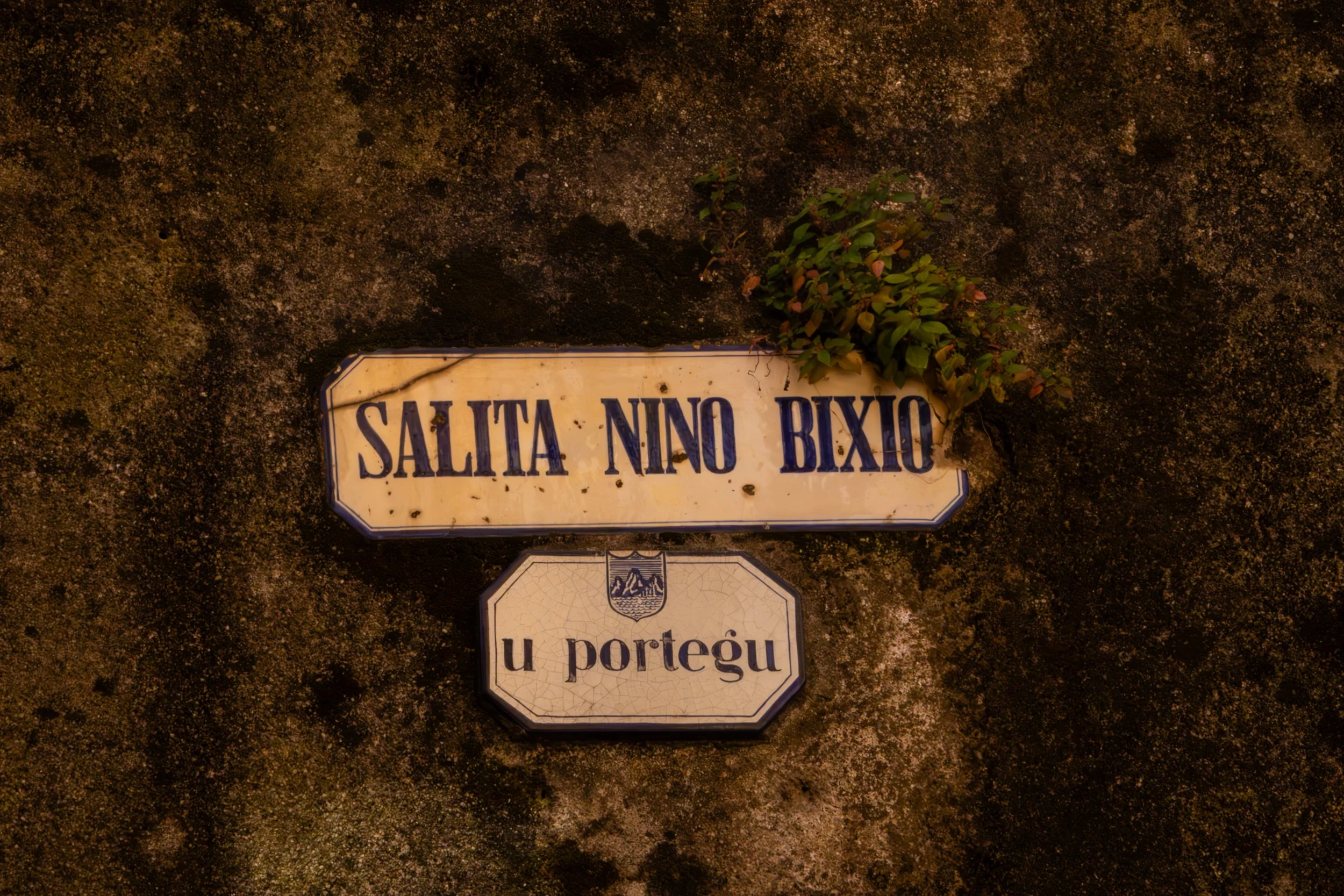
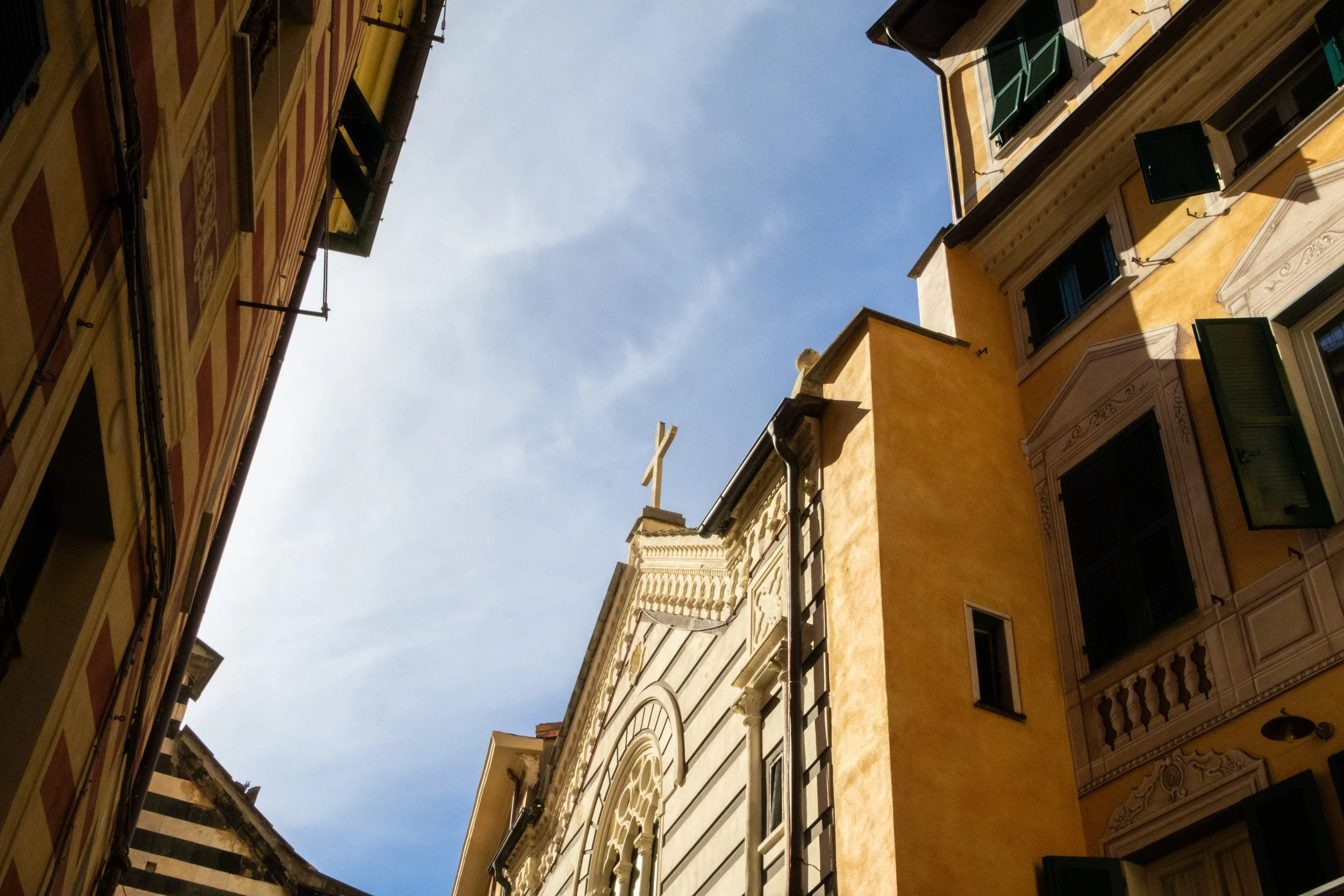
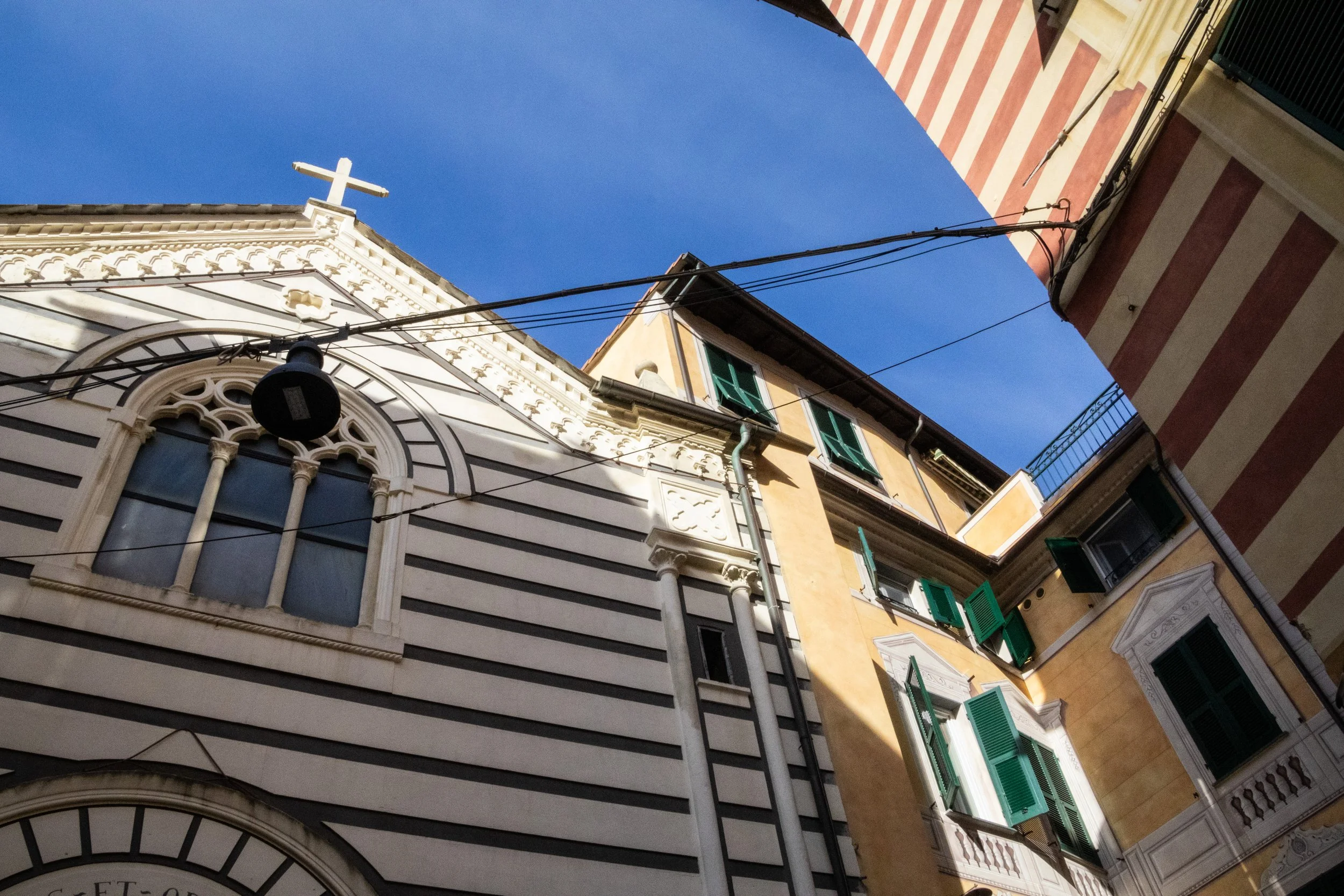
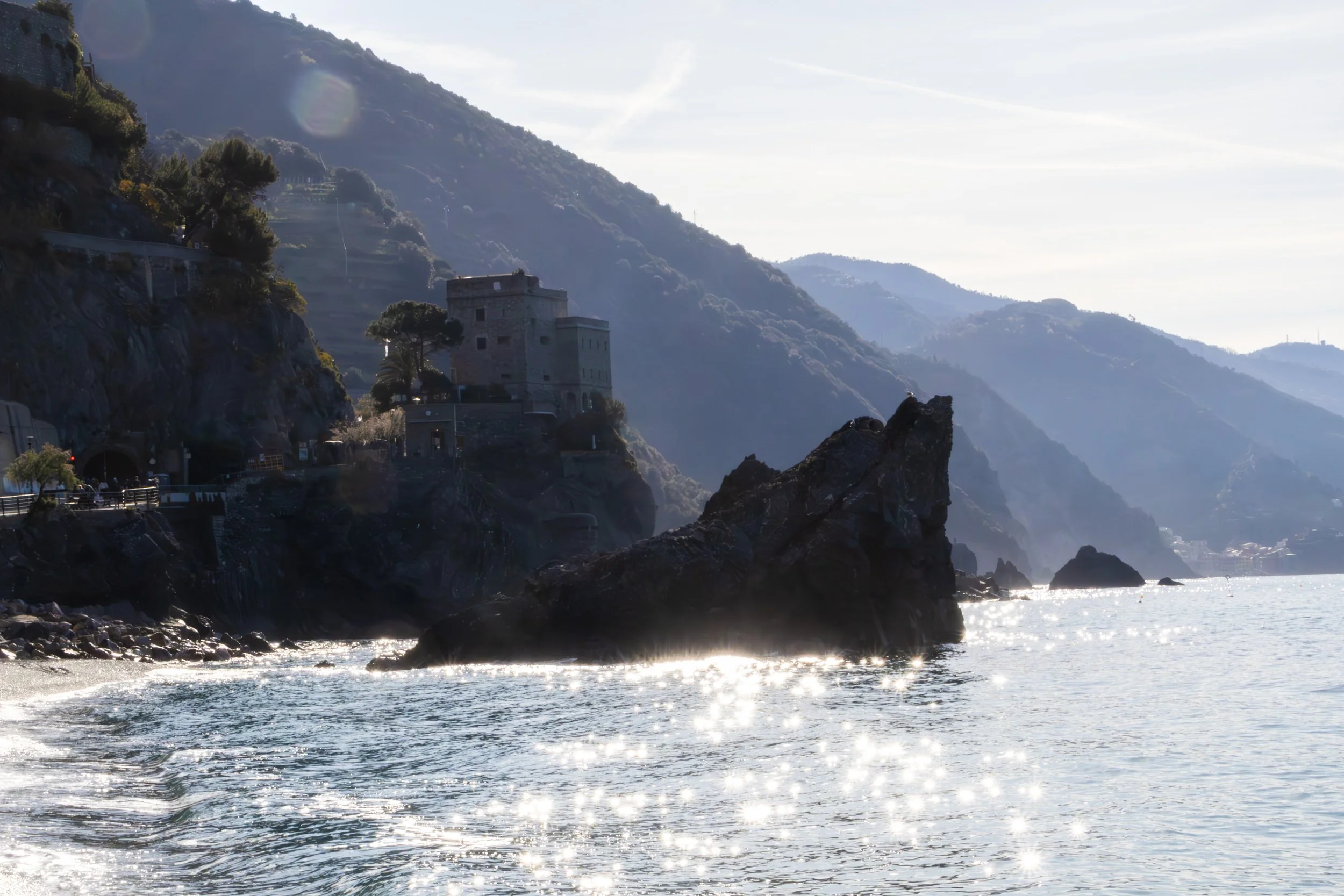
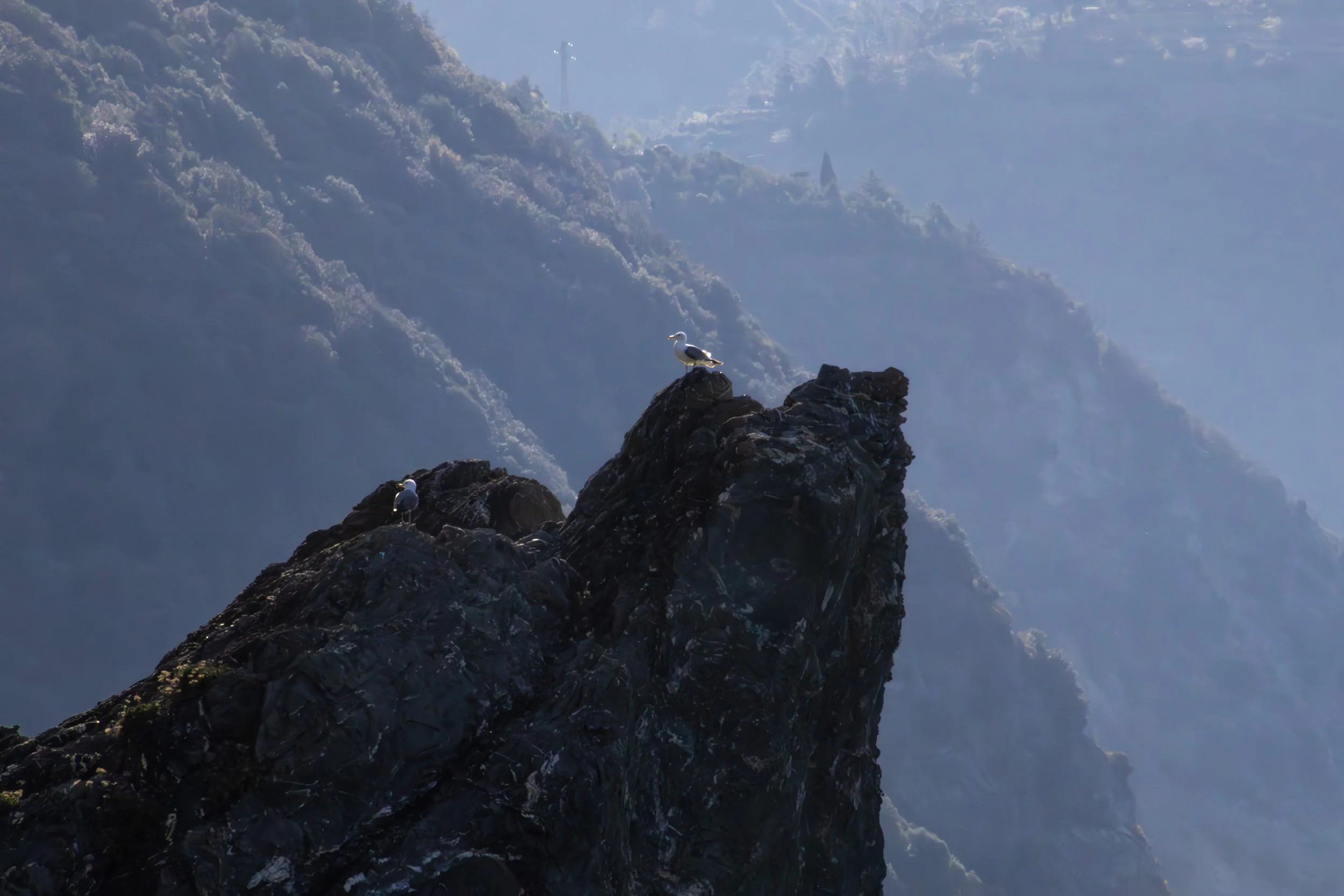
Since we spent so much time in Monterosso, I want to dig a bit deeper into what life was like here before the railroad disrupted things and paved the way for it to be a tourist town. There were many centuries where Monterosso was just a small Ligurian town, most likely unaware of how incredibly gorgeous it was because its residents didn’t have much basis for comparison.
It would have emerged in the early 1000s, meaning that much of its 'golden age’ was during the medieval period. Here’s what life would have looked like back then, year by year. Back then, a typical family might have some combination of a small fishing boat, vineyard terraces in the hill, olive trees, lemon trees, chickens/goats, and perhaps some seasonal work carrying goods by mule.
The rhythm of life would generally follow the seasons.
In the spring, boats would need to be repaired in advance of the summer, the vines would be pruned, and new crops of vegetables would be planted.
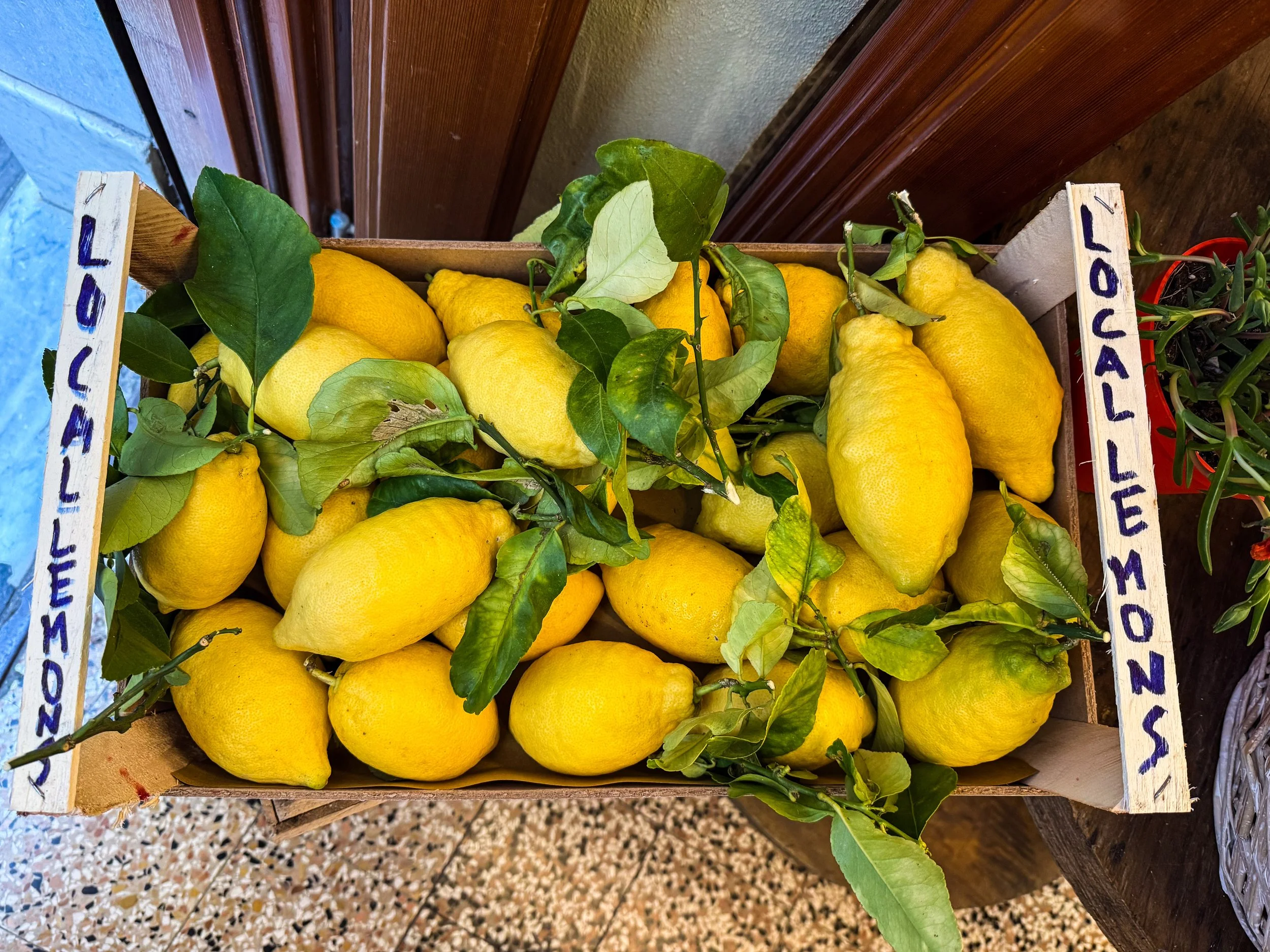
When summer came, there would be extensive fishing along the Ligurian coast. Of all the fish they would haul in, the Acciuga di Monterosso (Monterosso anchovy) is perhaps the most iconic. These anchovies are considered to be one of Italy's finest because the fish are caught locally and traditionally preserved in salt. They are prized for being smaller, more delicate, and less intensely salty than mass-produced anchovies. The summer was also a time for the harvesting of lemons and general maintenance on the terraces that houses the vineyards. The lemons have a very strong association with Monterosso, as the climate is really perfect for them to flourish. As a result, you’ll find lemon-flavored everything being sold her, from gelato to limoncello to jams.
In the fall, it was time to harvest the grapes. These terraces were built so steeply into the surrounding mountainsides (we’re talking ~40-60° upward angles) that even today there is no piece of machinery that can do this job. It is still done by hand just like it was many centuries ago. Families would have worked together, ultimately shipping much of the wine off to Genoa. Even today, this region is still famous for its production of the dessert wine, Sciacchetrà.
Finally, in the winter, it was time for repairs of boats, fishing nets and the stones walls that held the terraces together (and, fun fact, prevented mudslides). This general maintenance would stretch into the spring, as summer was the ‘deadline’. In the winter they also pressed olive oil. Since almost no job was done year-round, almost nobody would have speacialized in just one occupation.
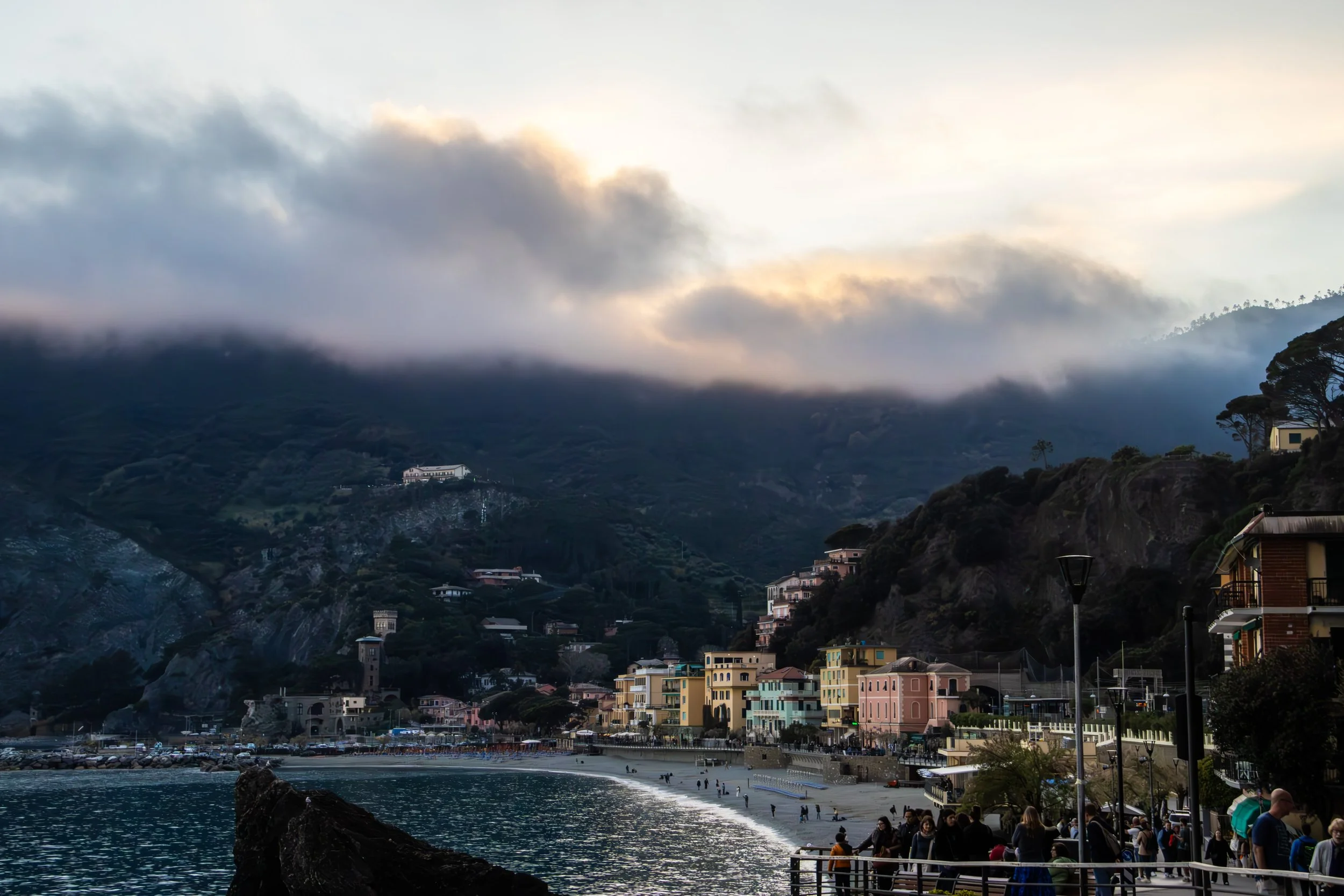
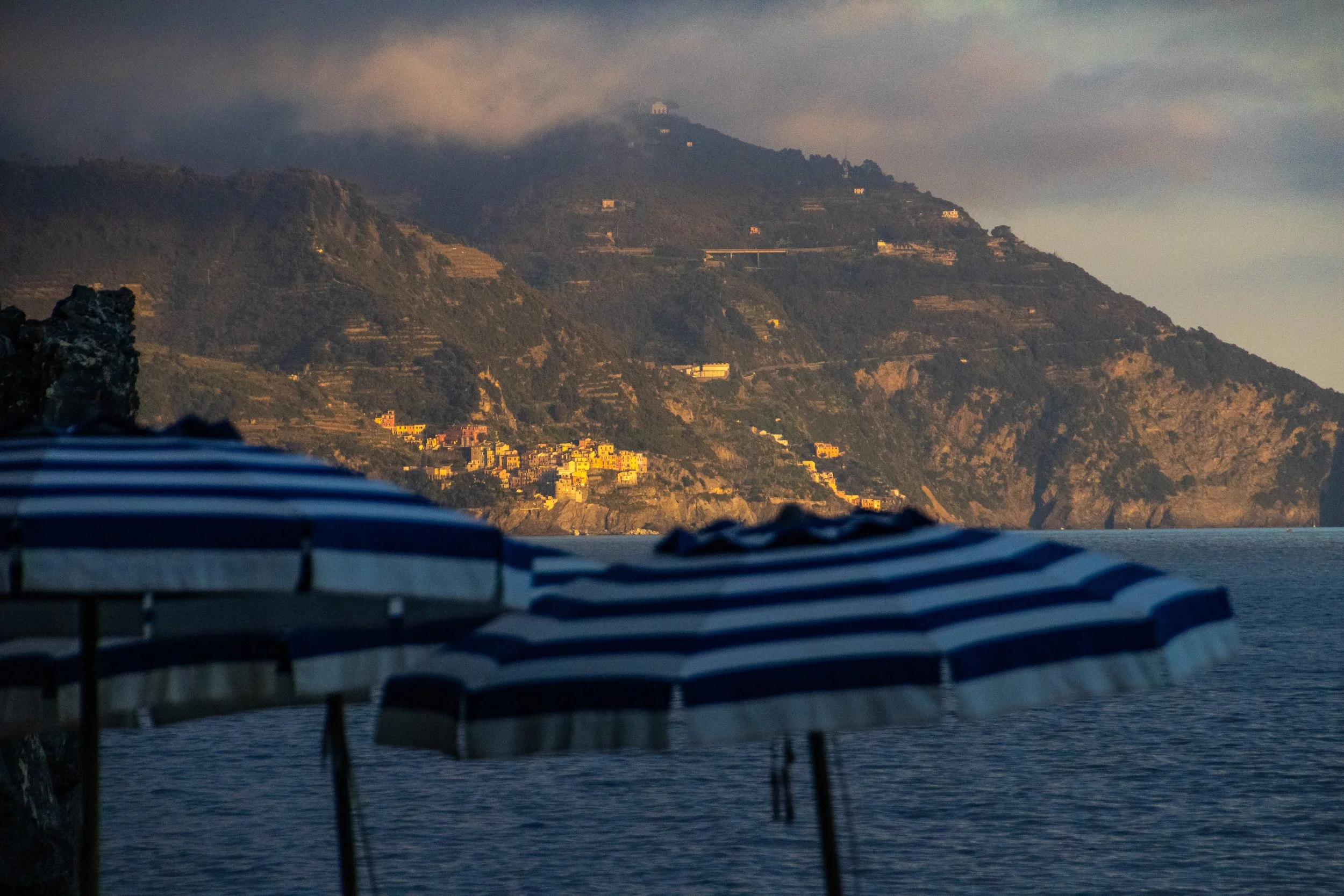
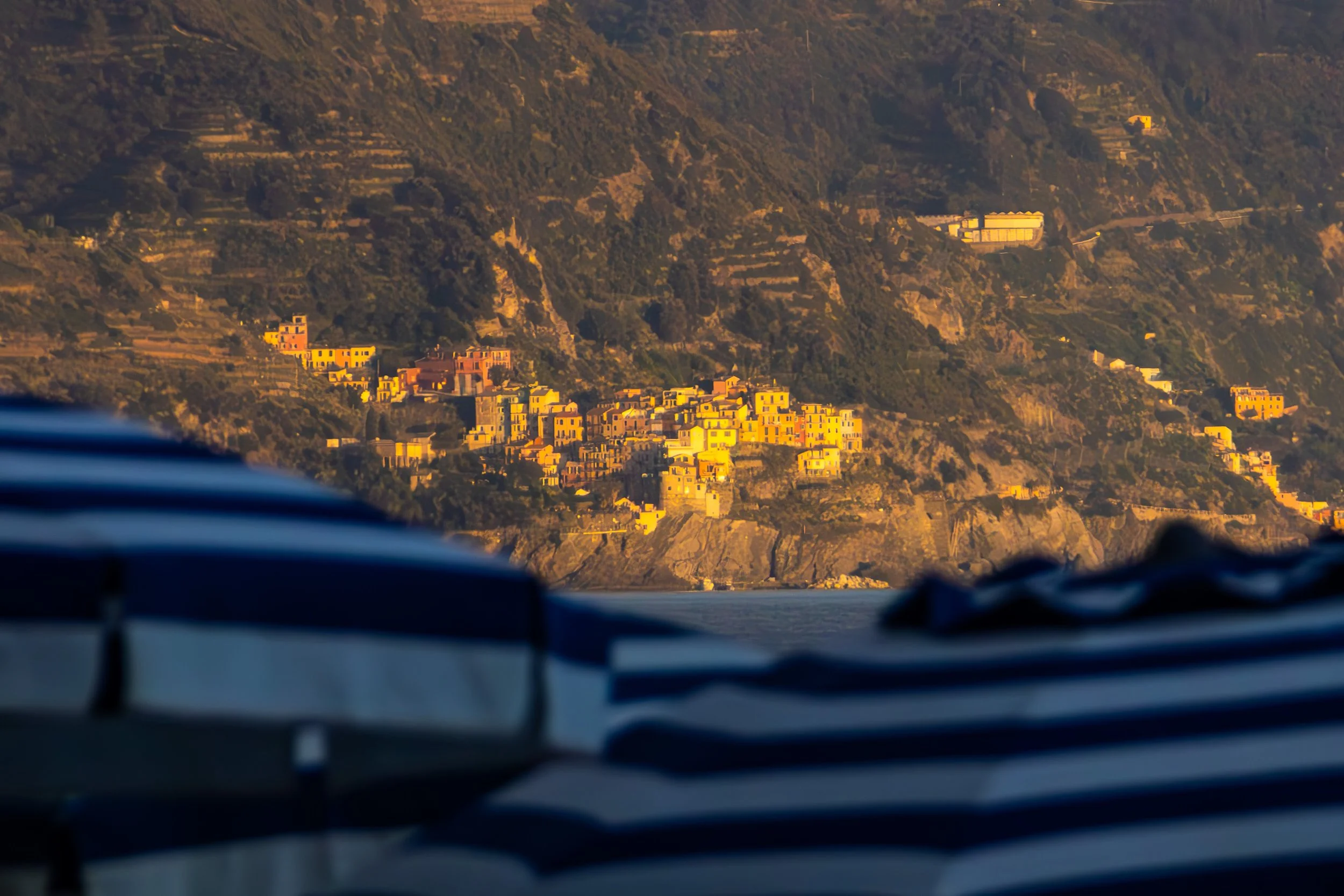
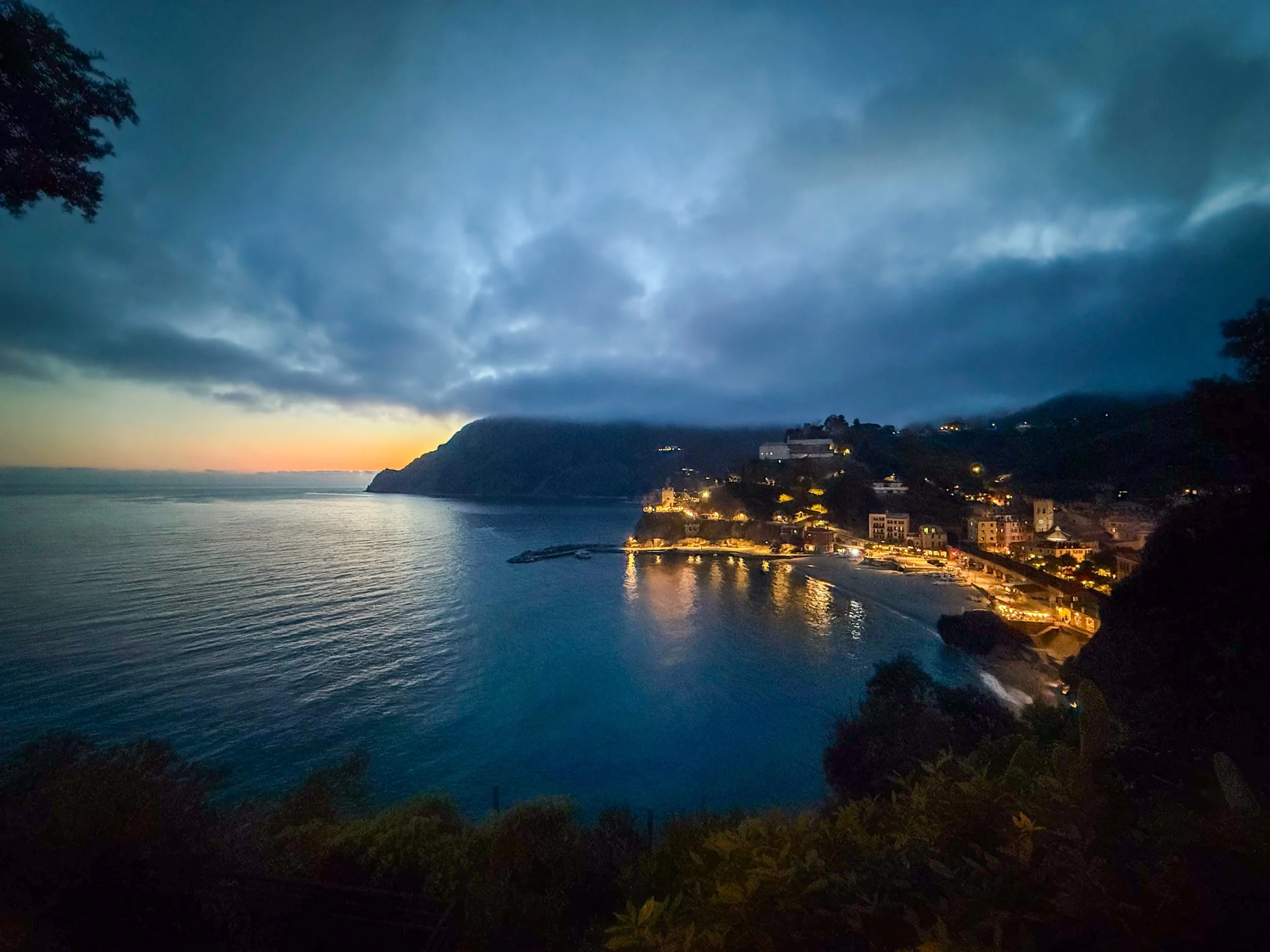
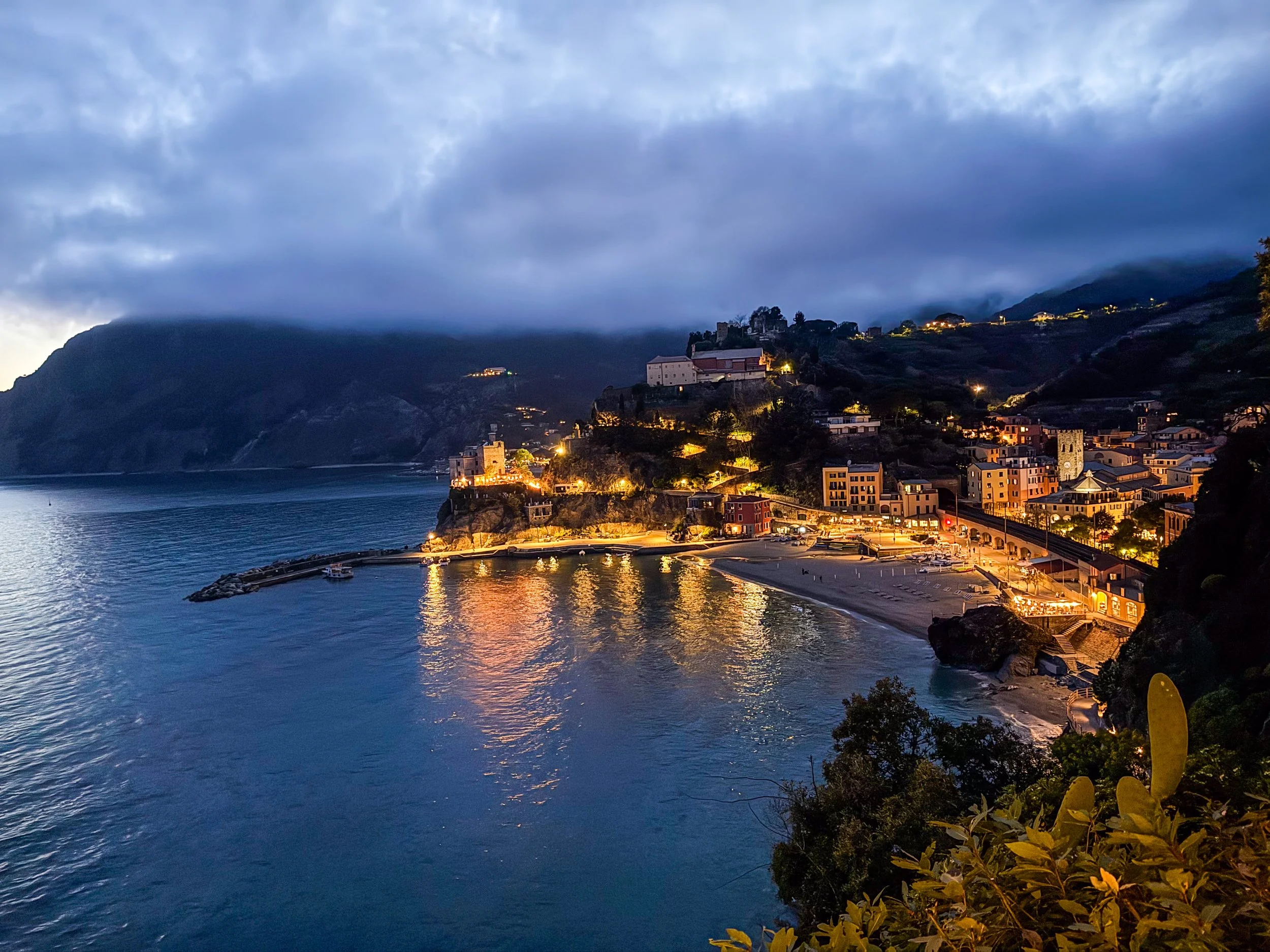
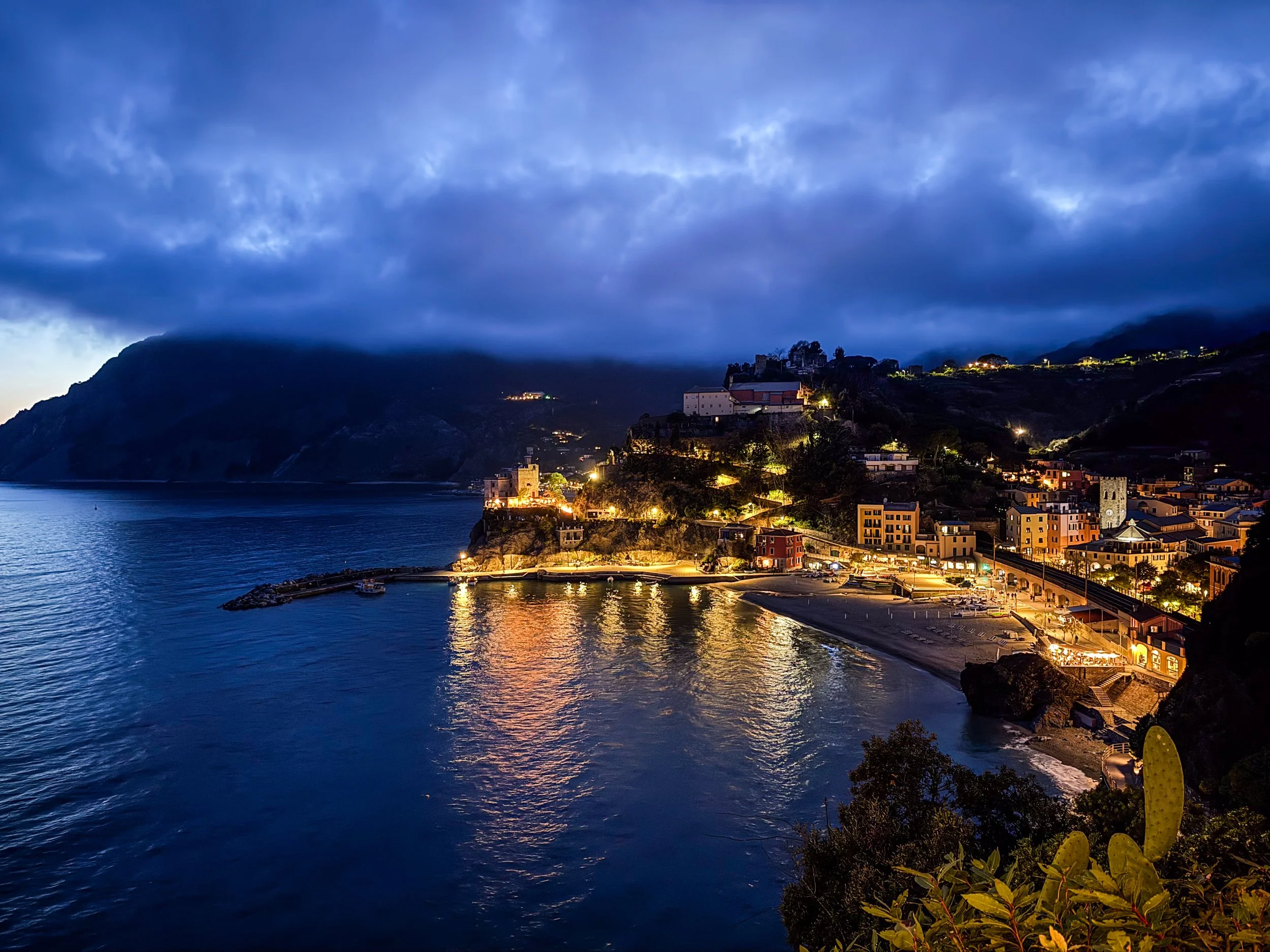
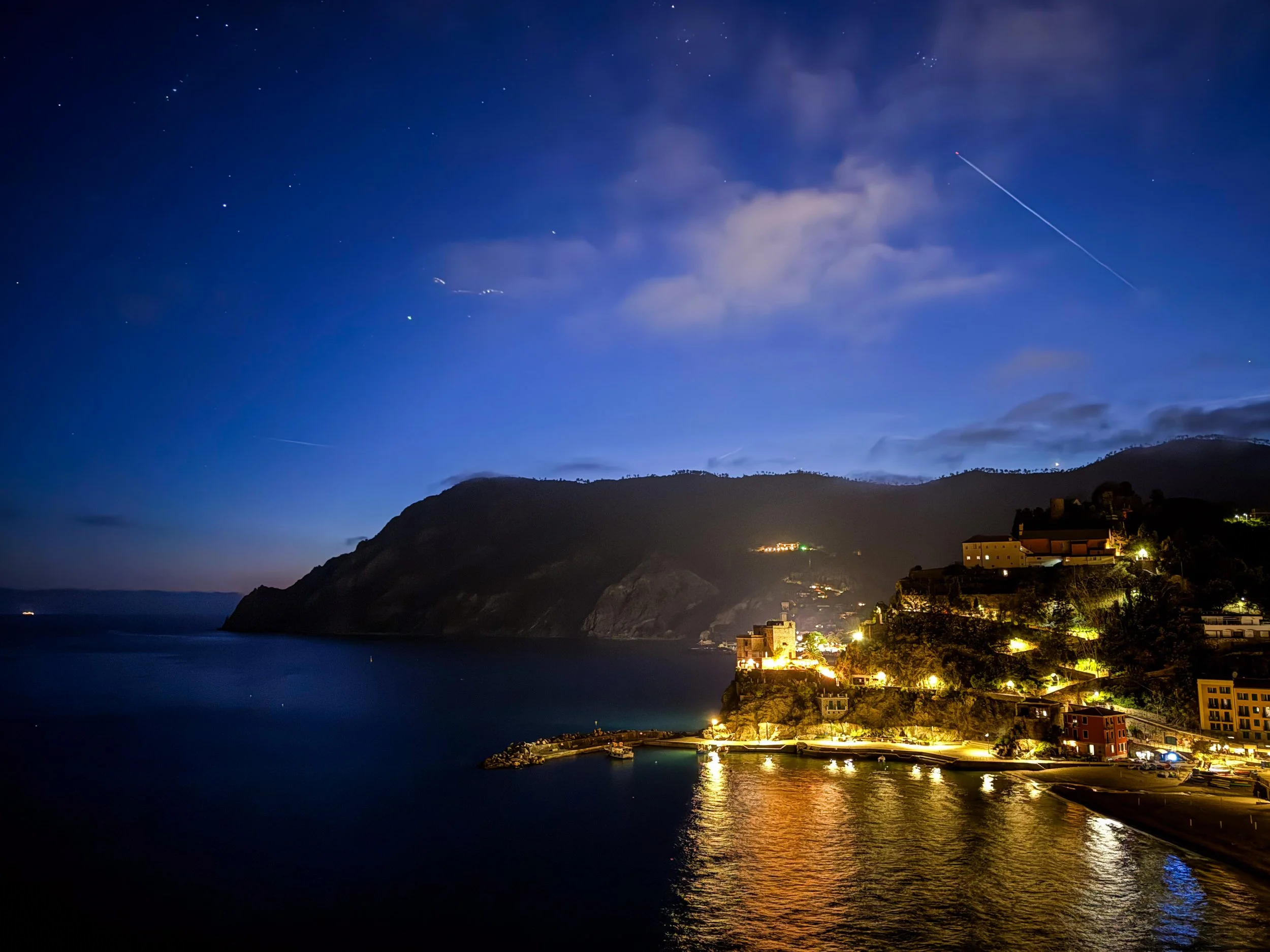
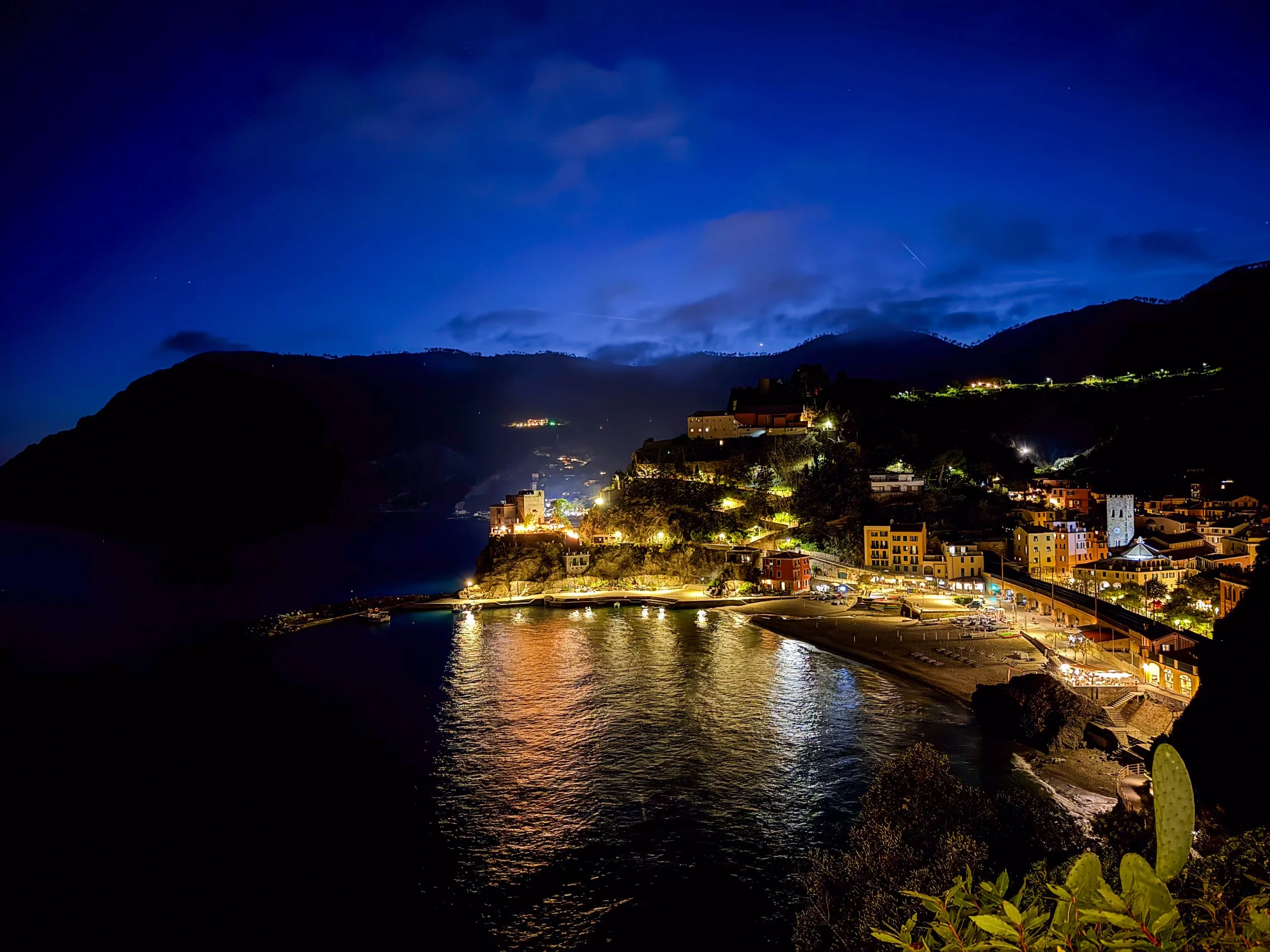
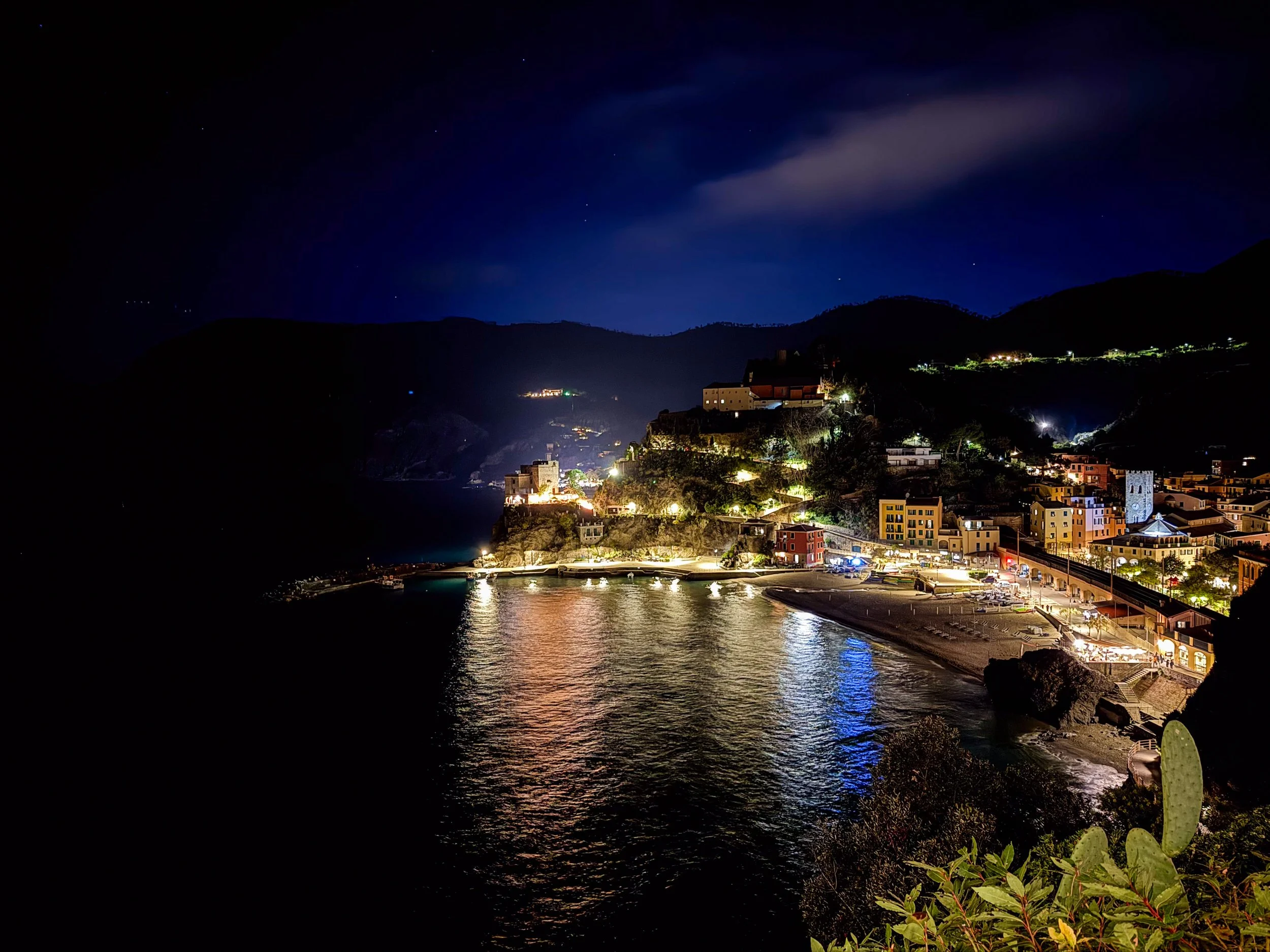
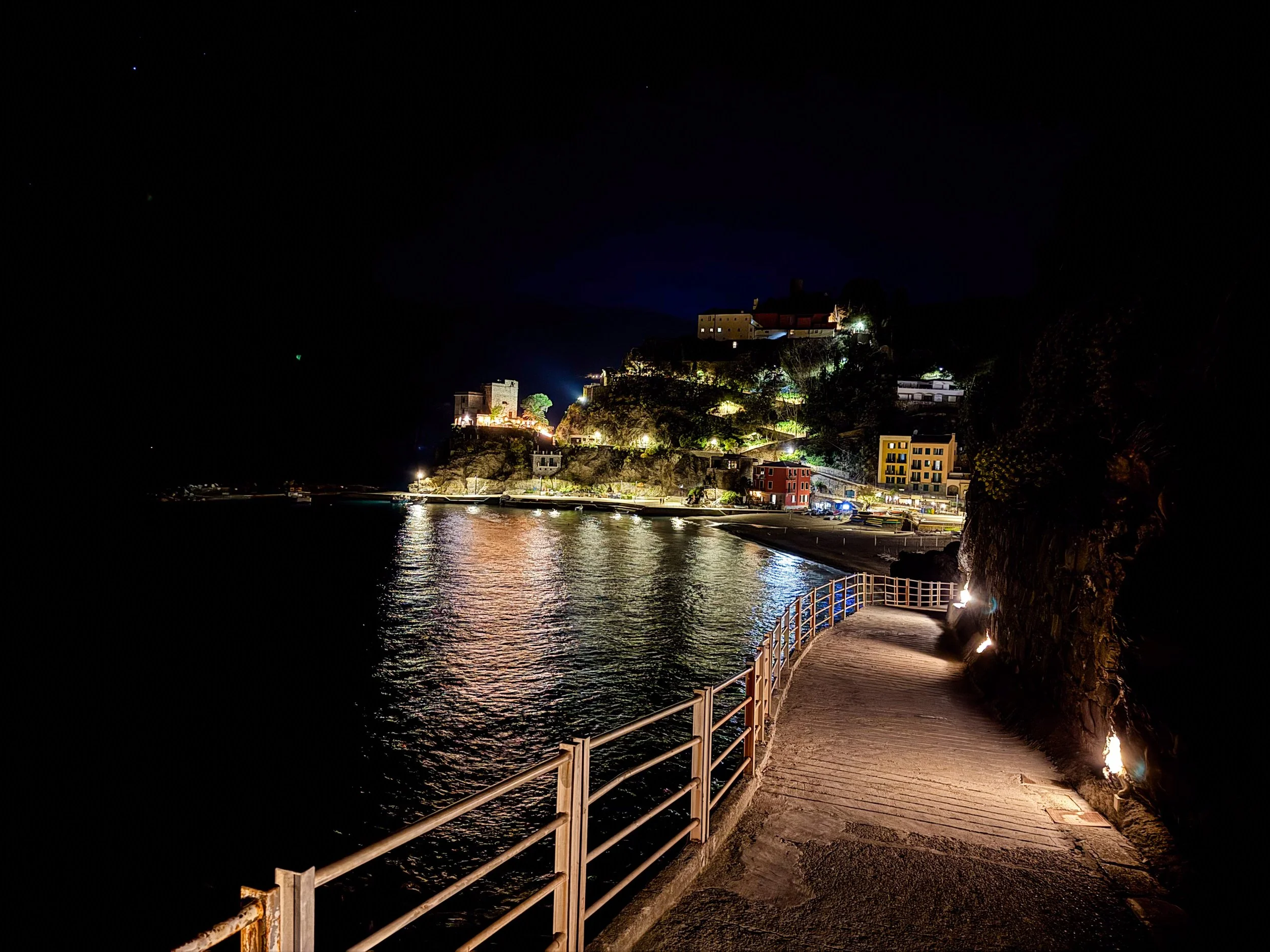
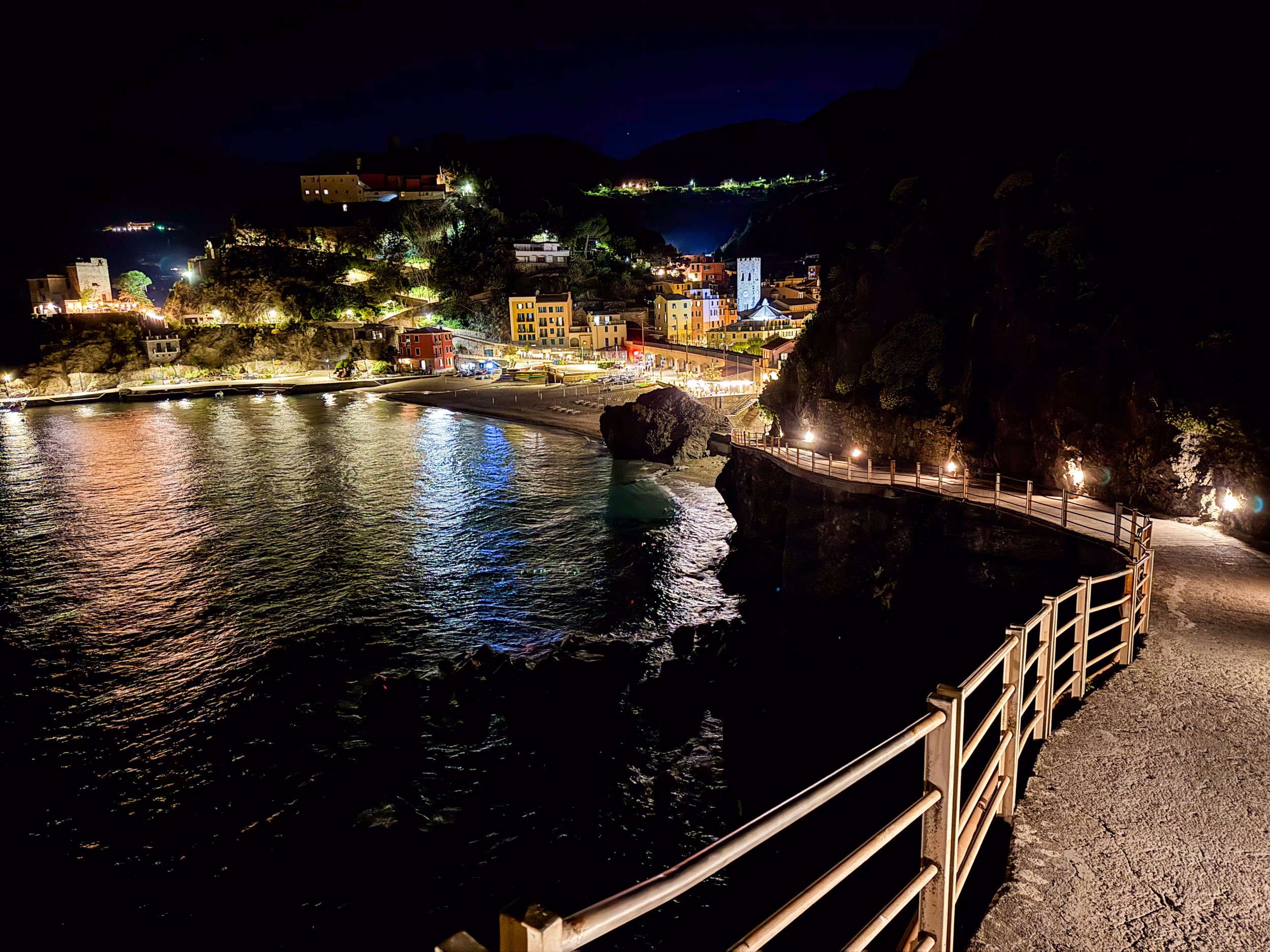
So, back to the 21st century now. Here are a few photographs during sunset. The large stone fortress you’ll see here is an echo of a time long ago when pirates used to patrol these coastlines. Today it’s a beautiful restaurant. The construction site you’ll see at the top of the gallery covering parts of the beach was not here back in 2015… that was one development that I was not happy about. But you can see what this place used to look like in the previous article. The photographs of Monterosso in that article are also nice because the beach is covered in the classic Italian beach umbrellas. I think our visit this time was a bit too early in the spring for that.
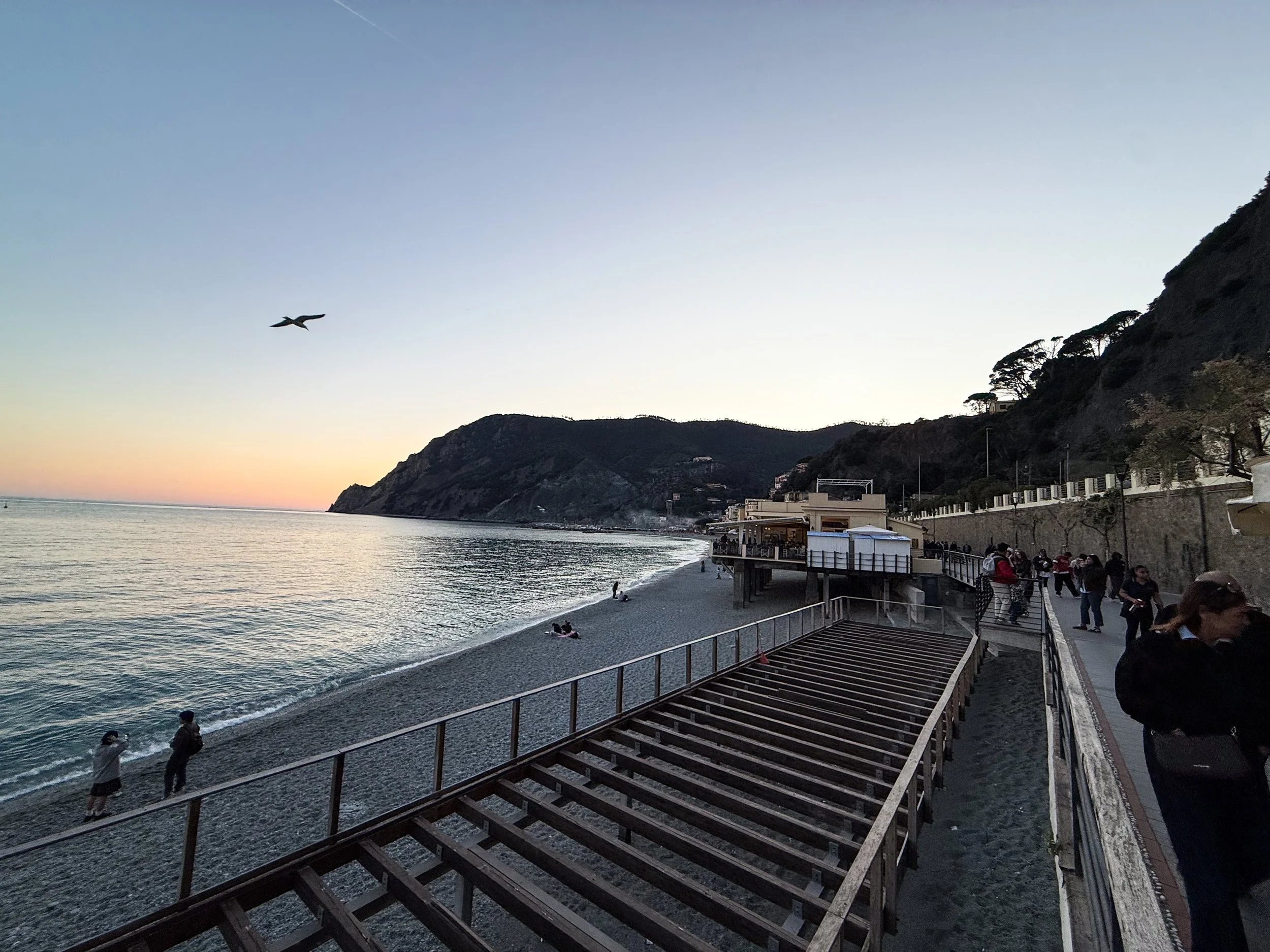
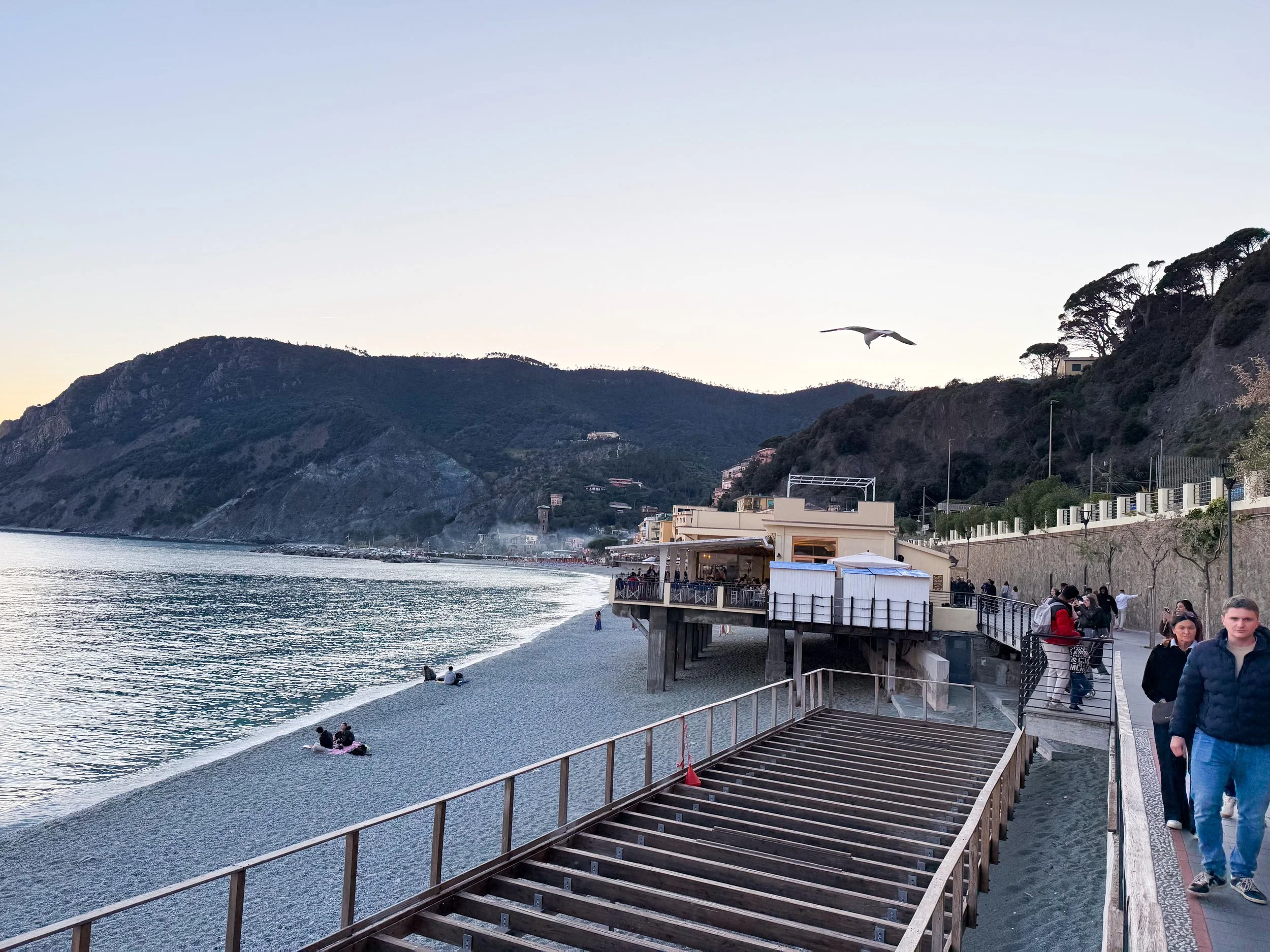
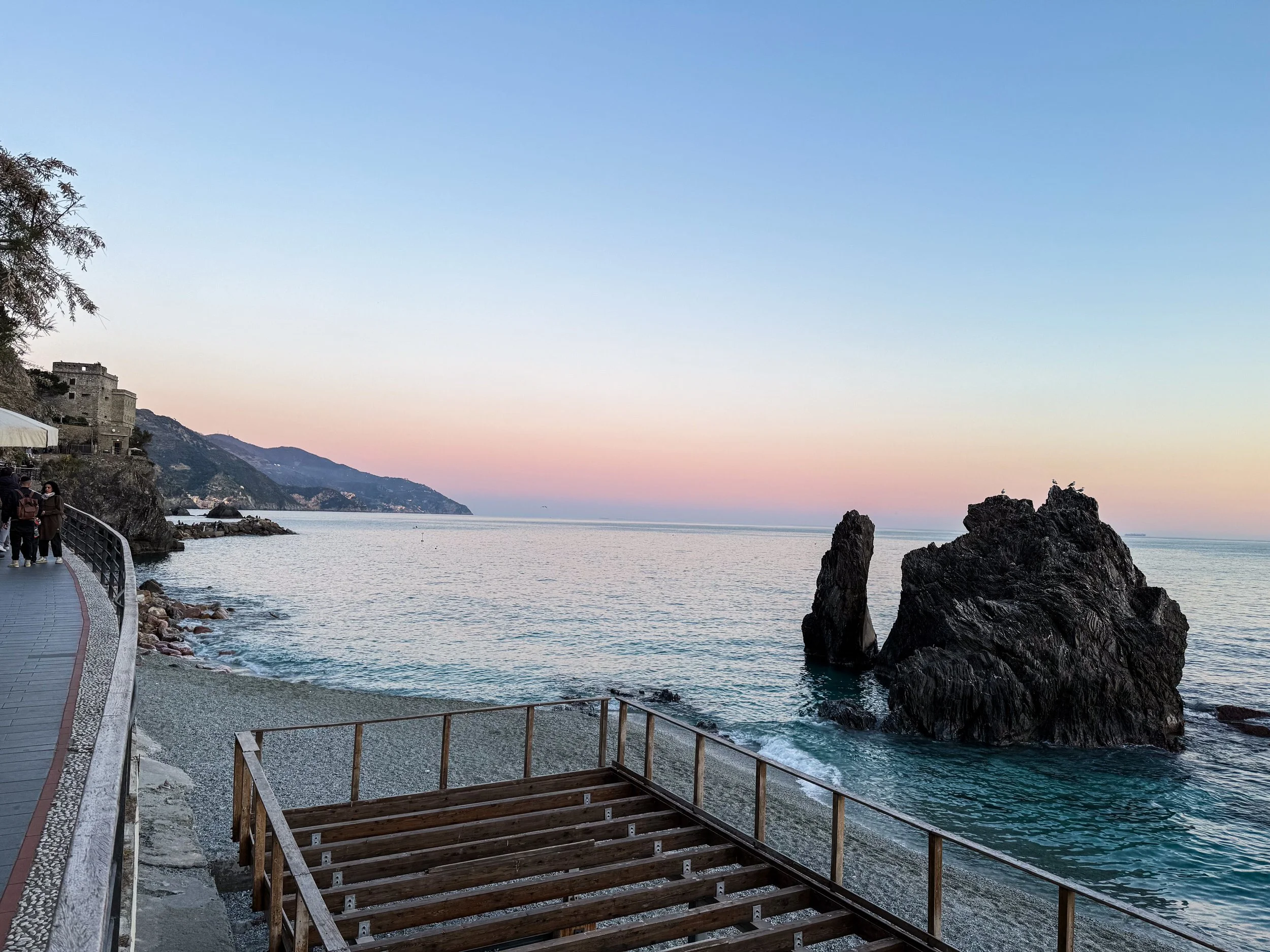
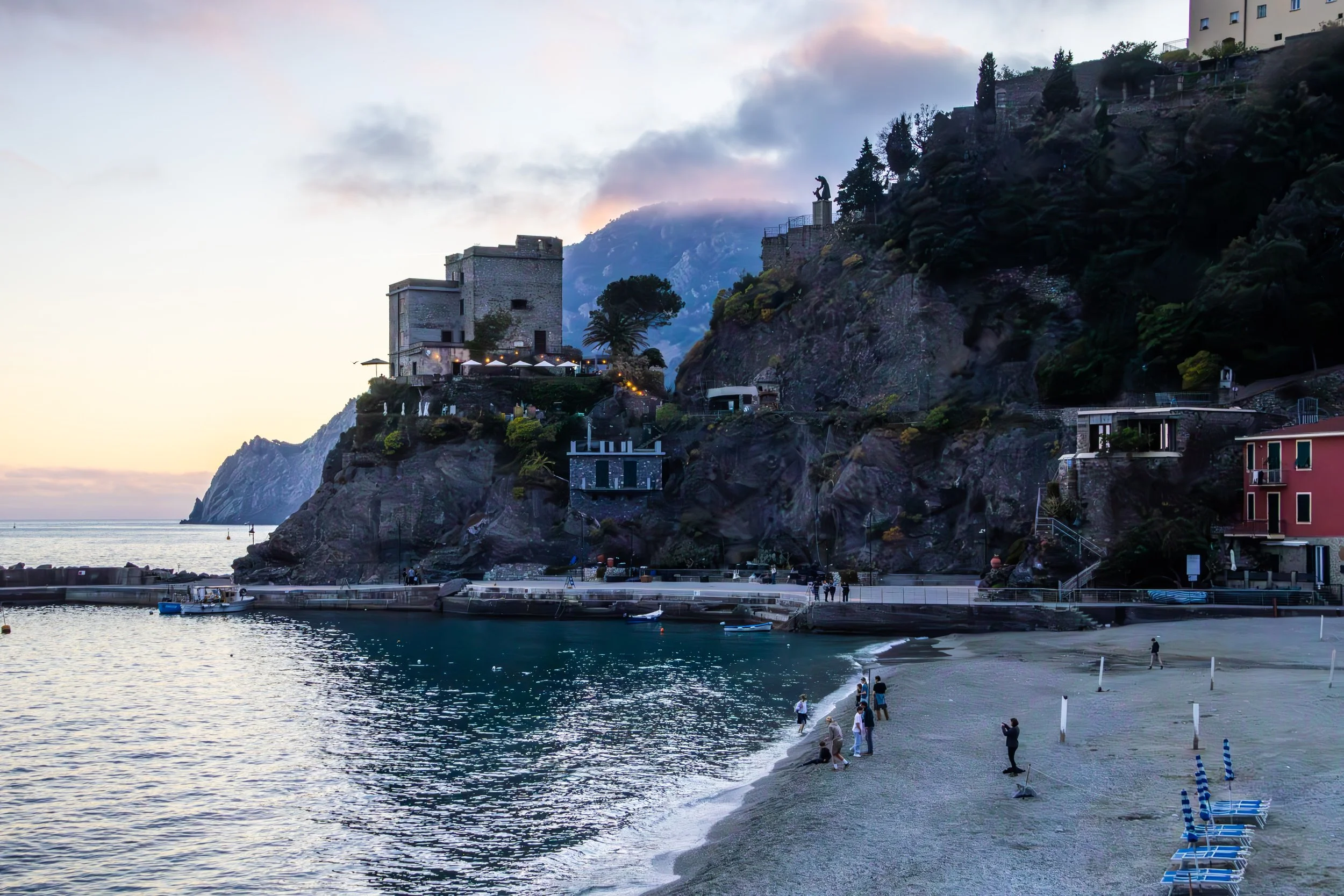
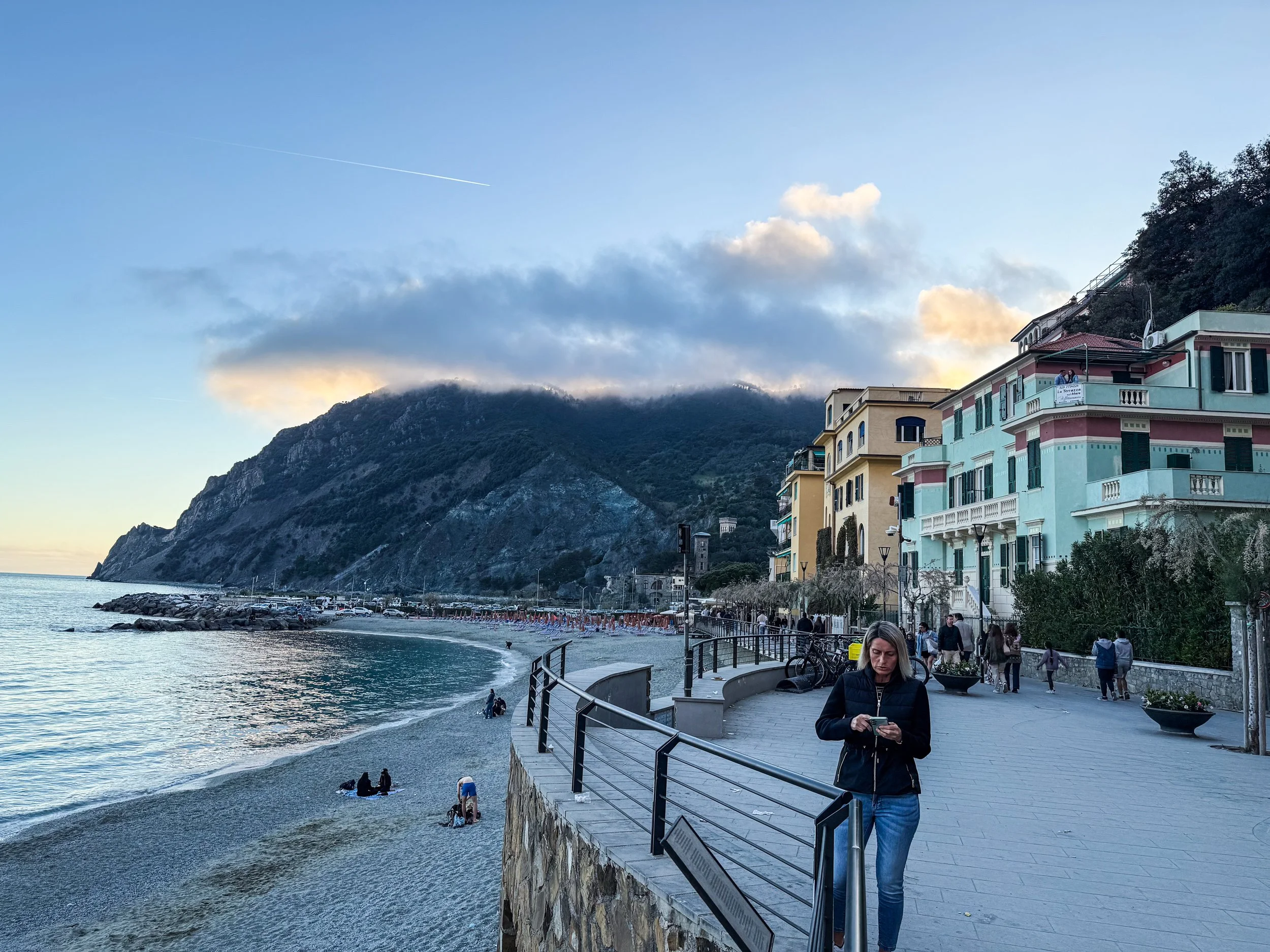
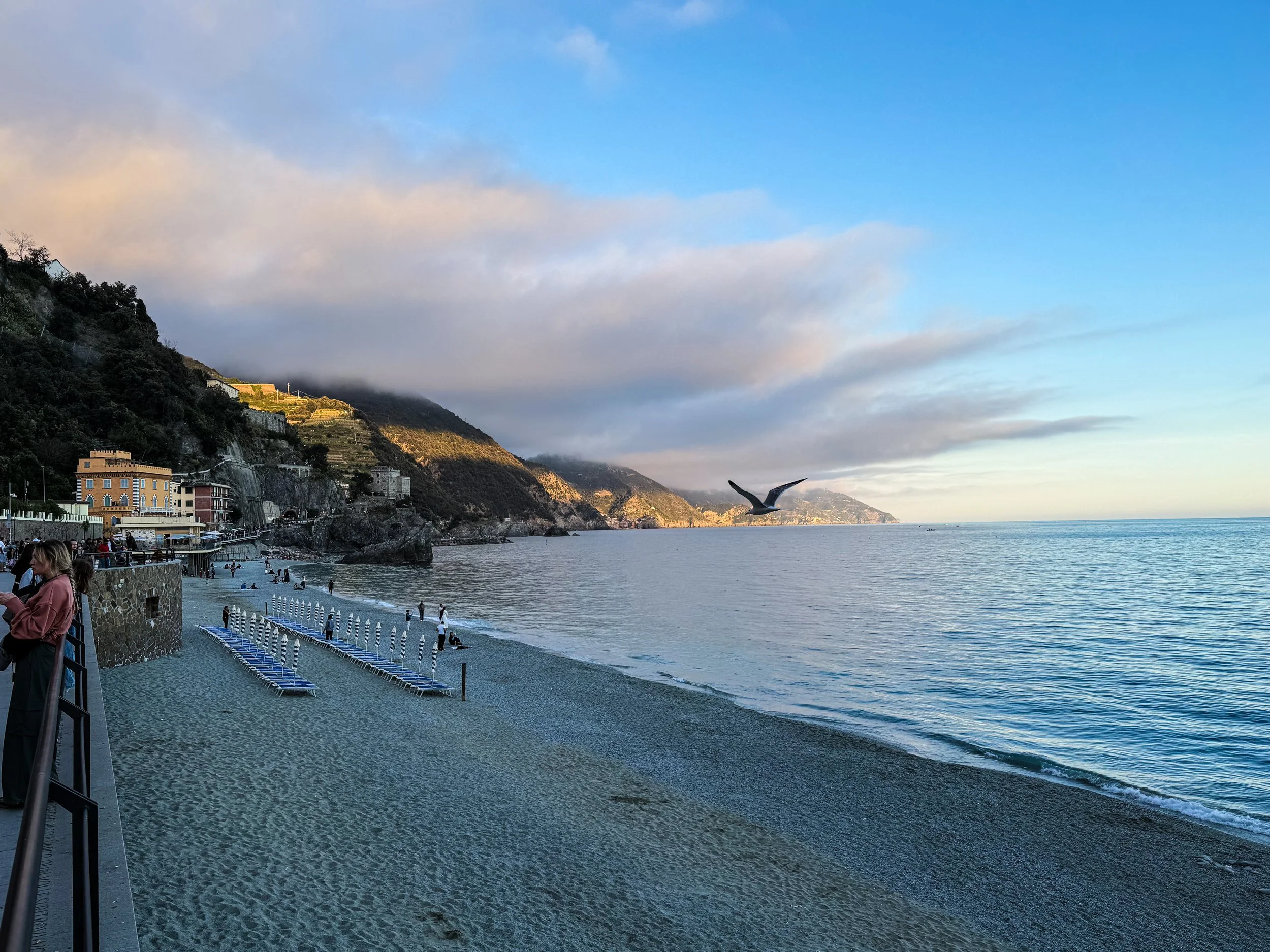
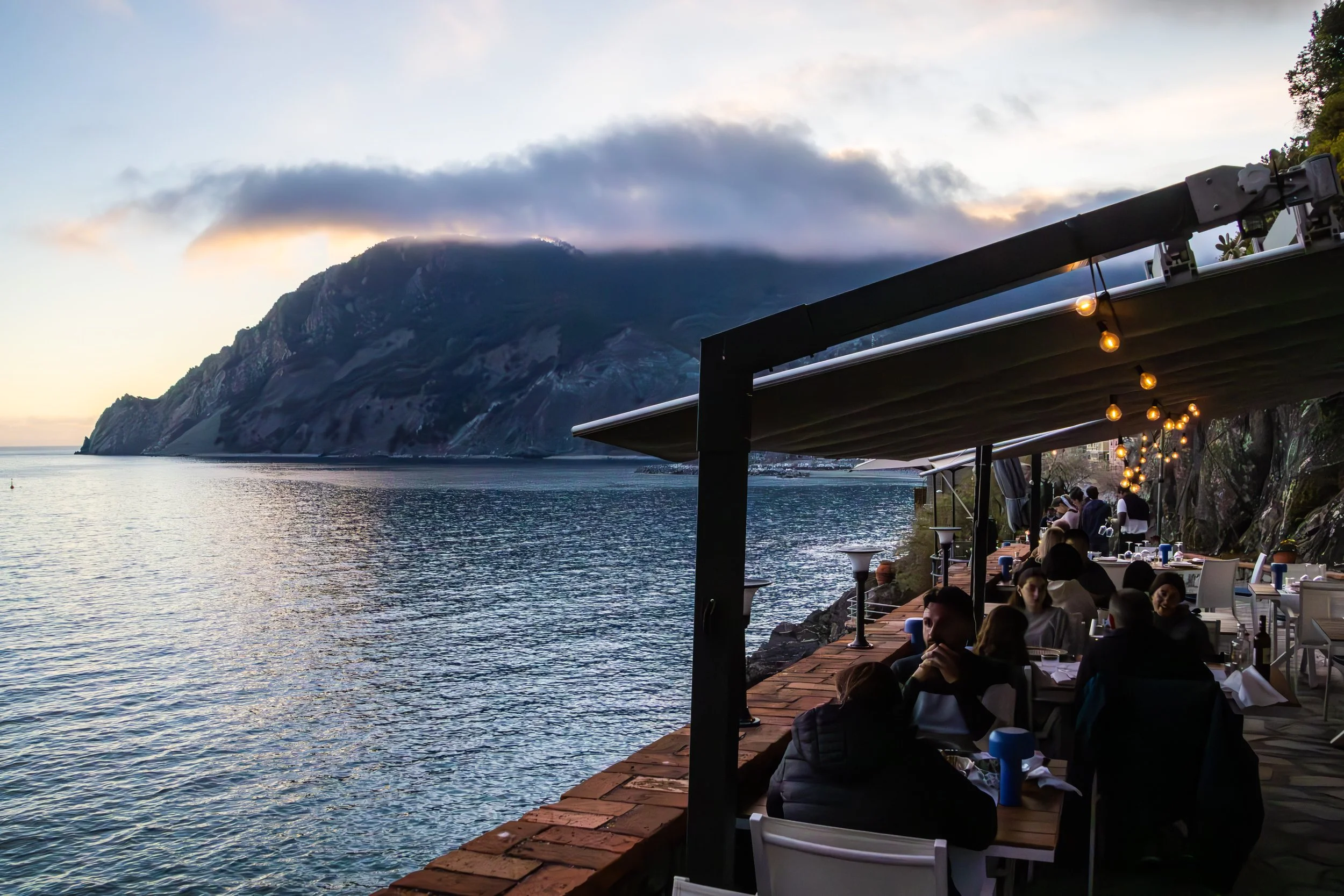
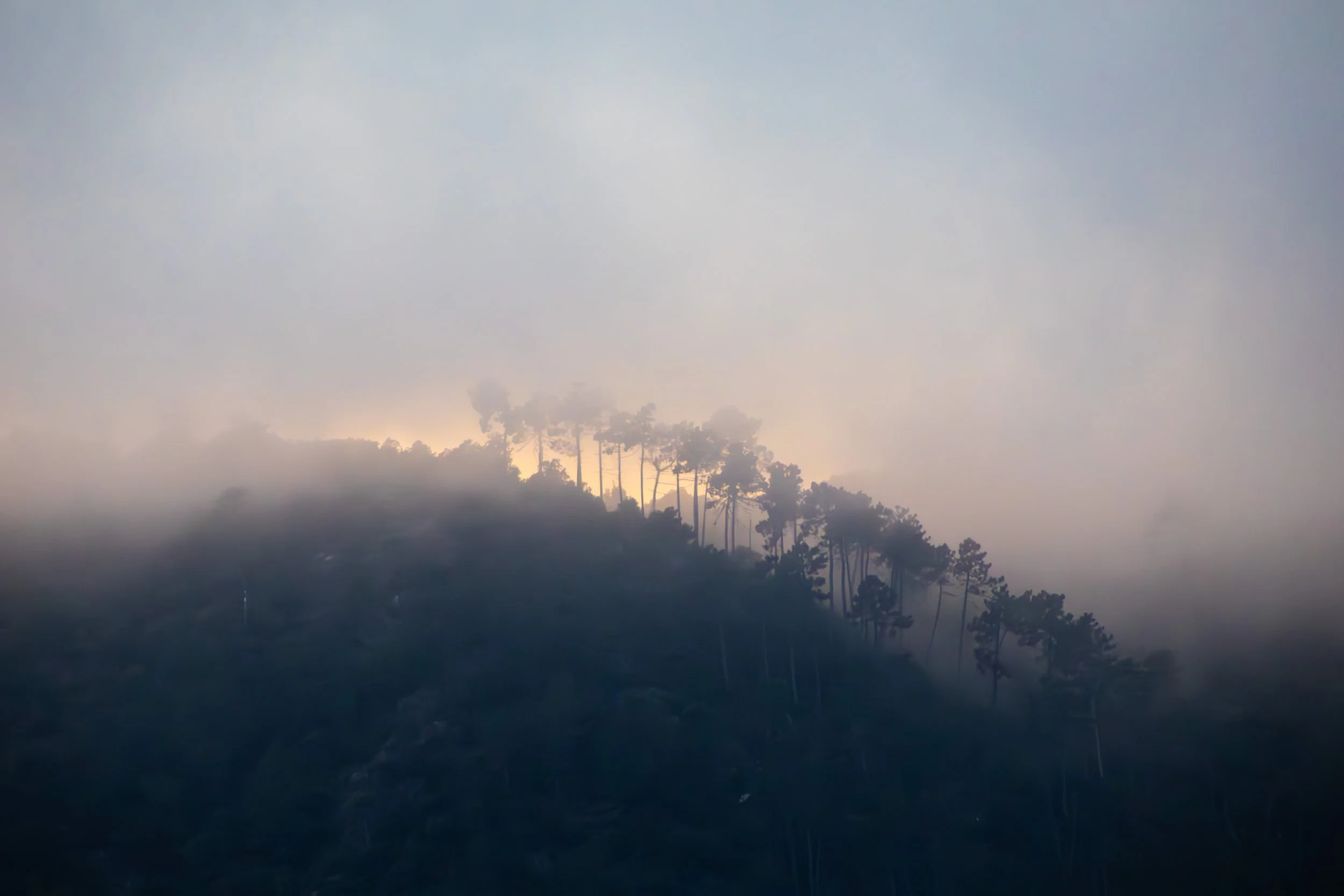
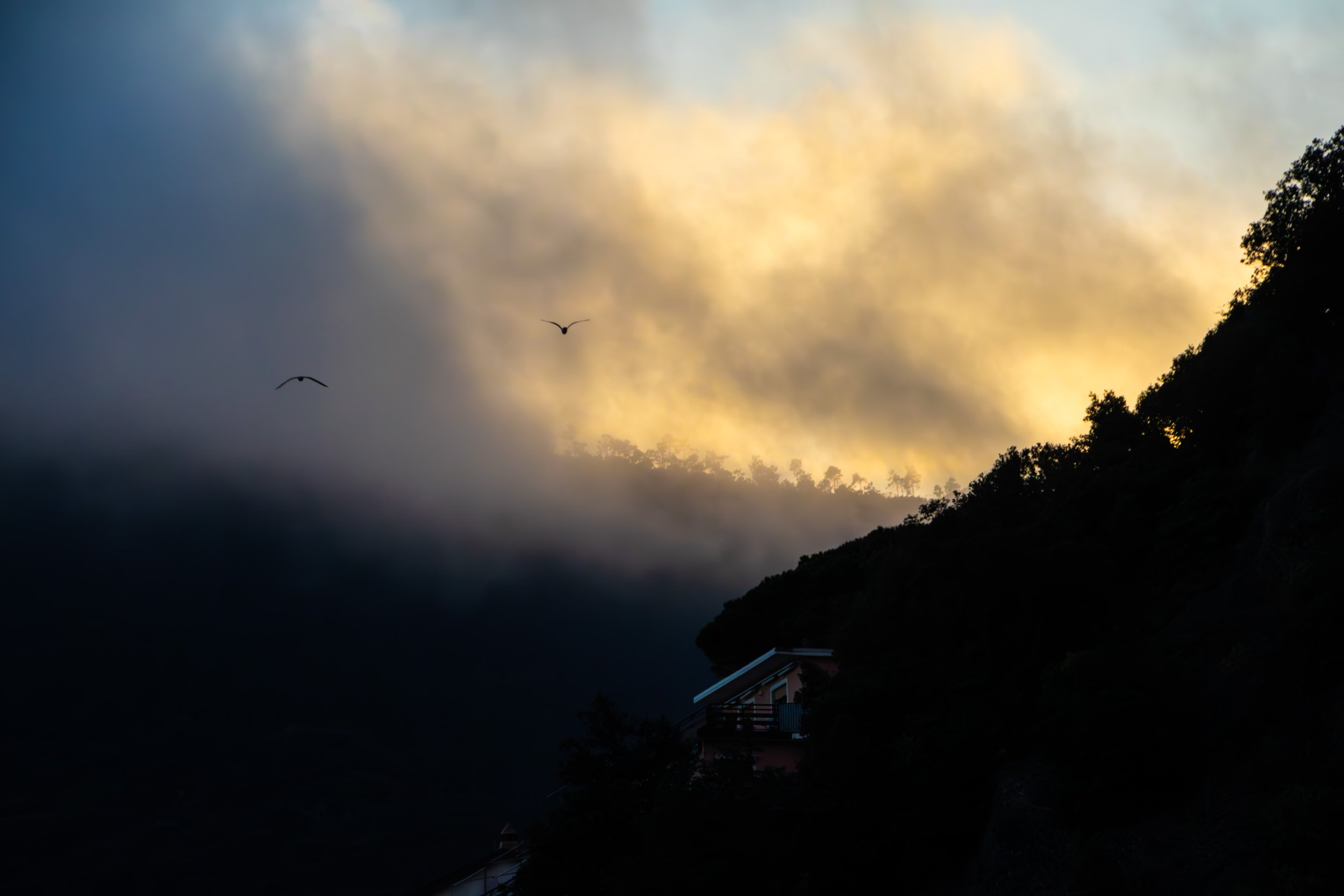
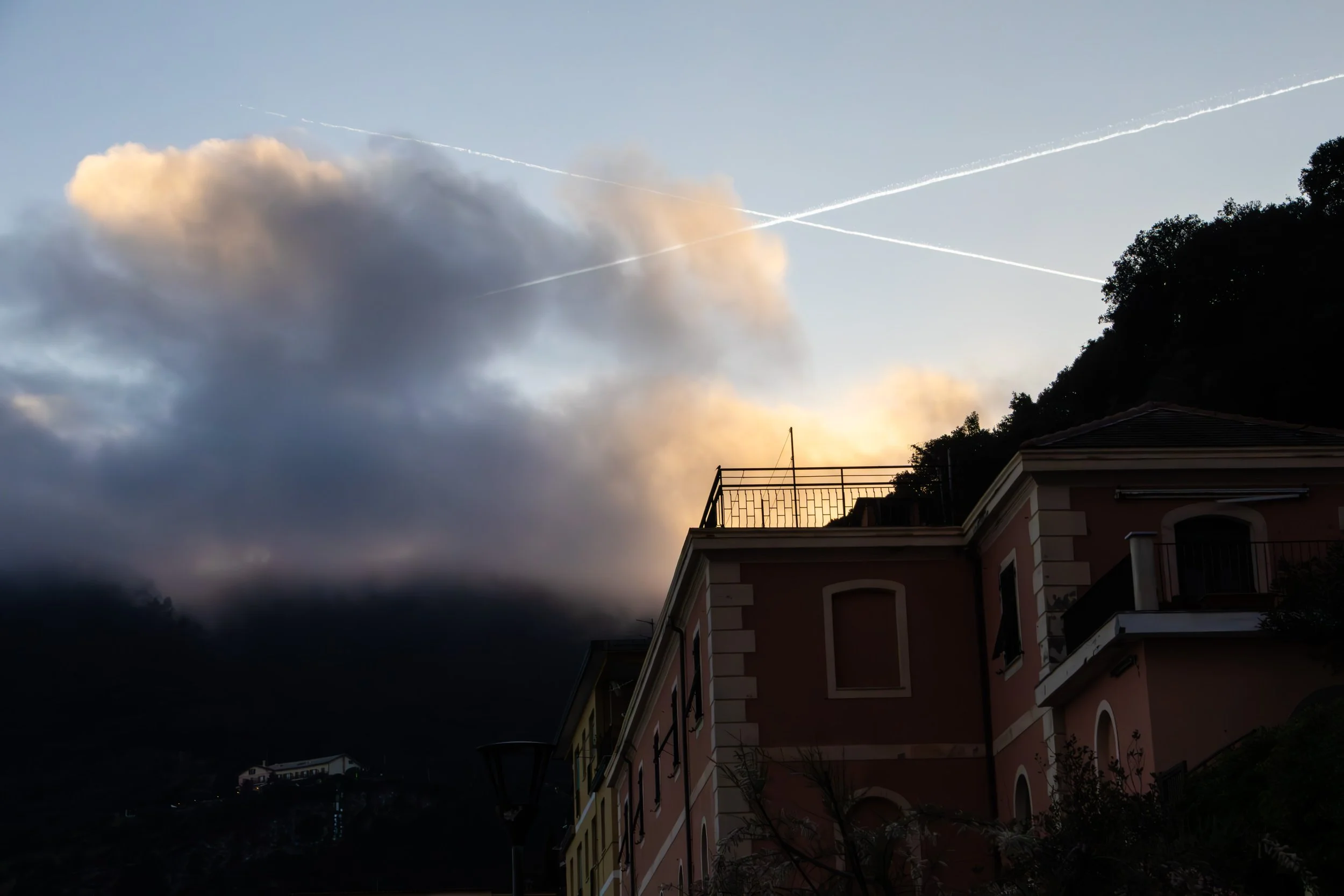
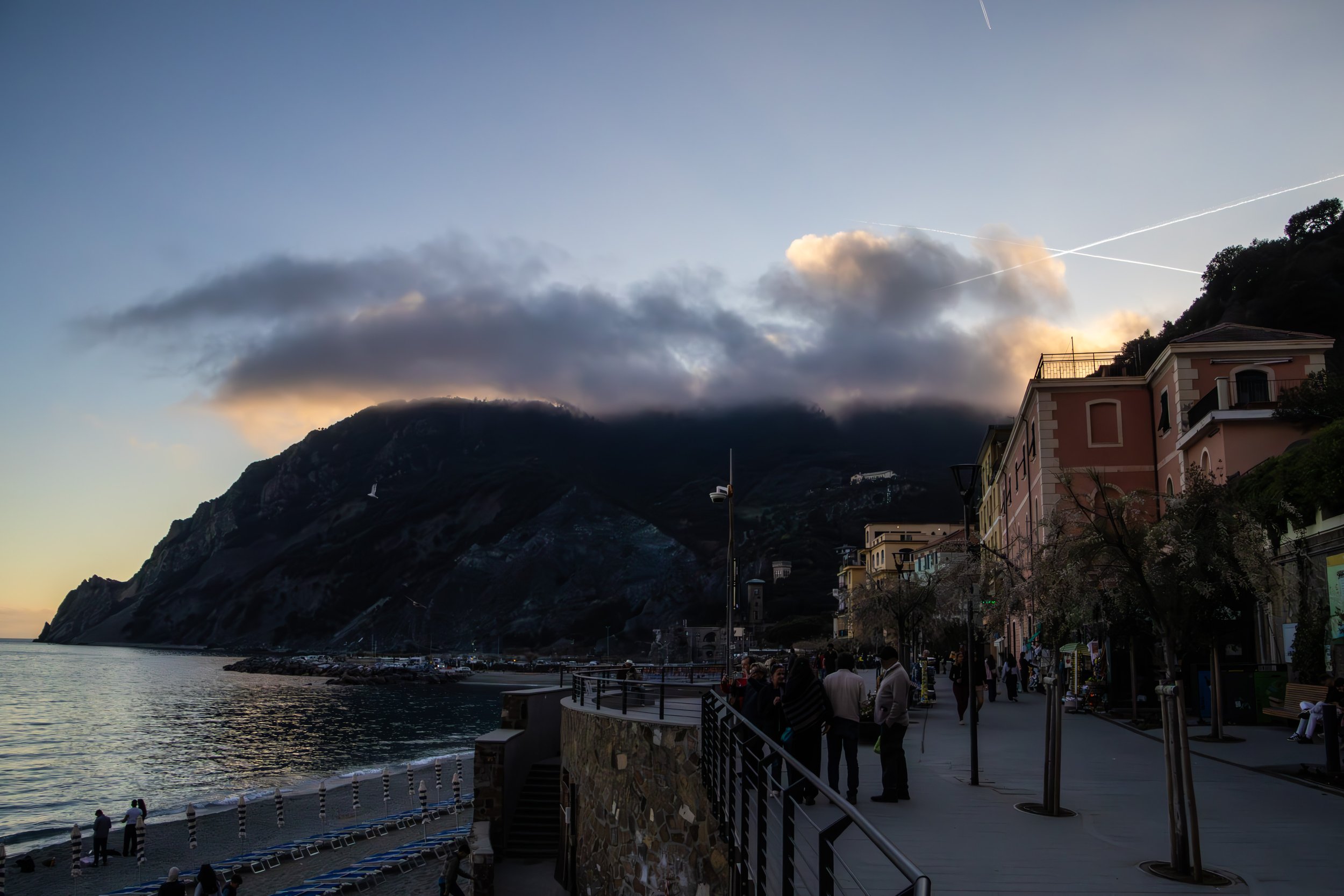
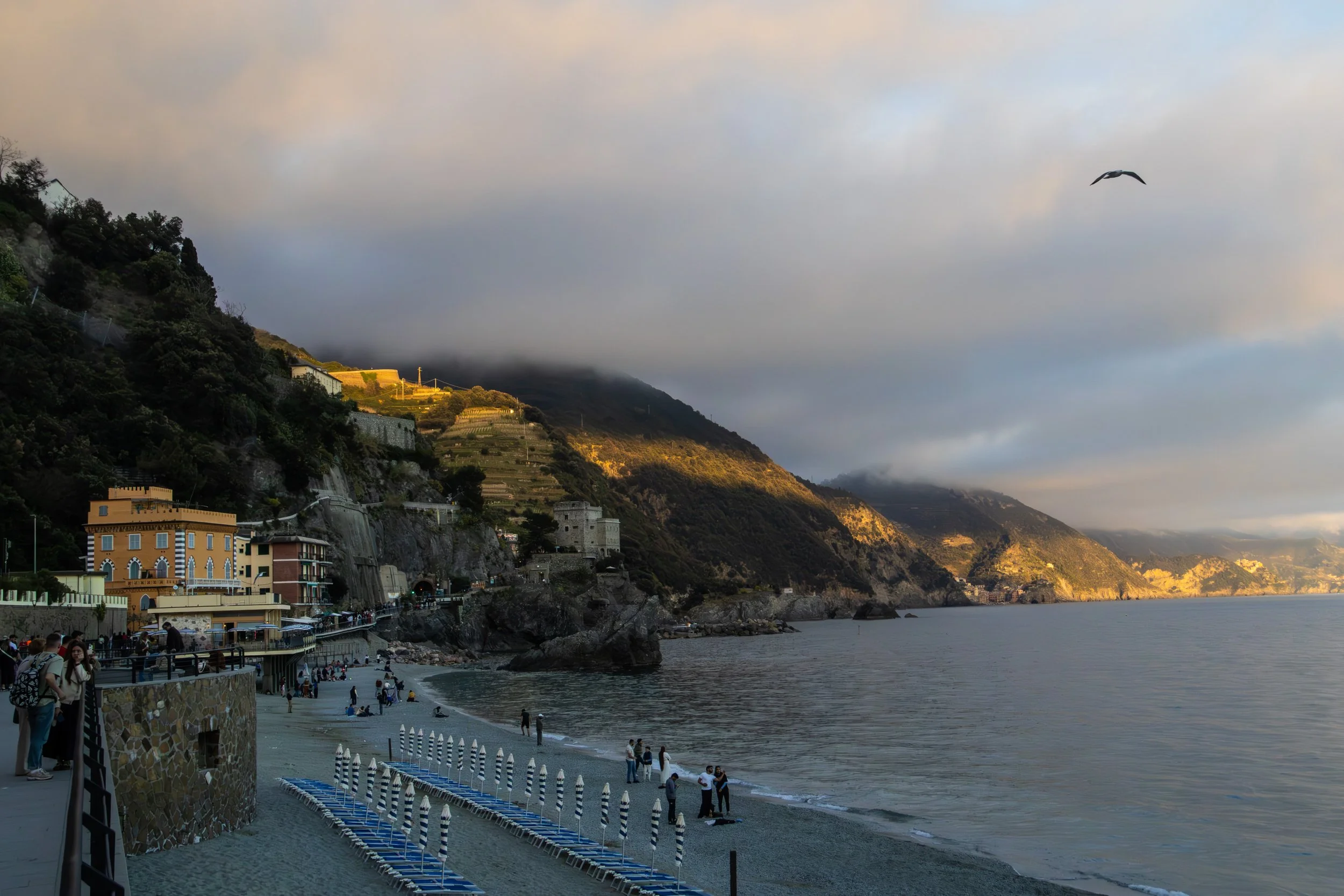
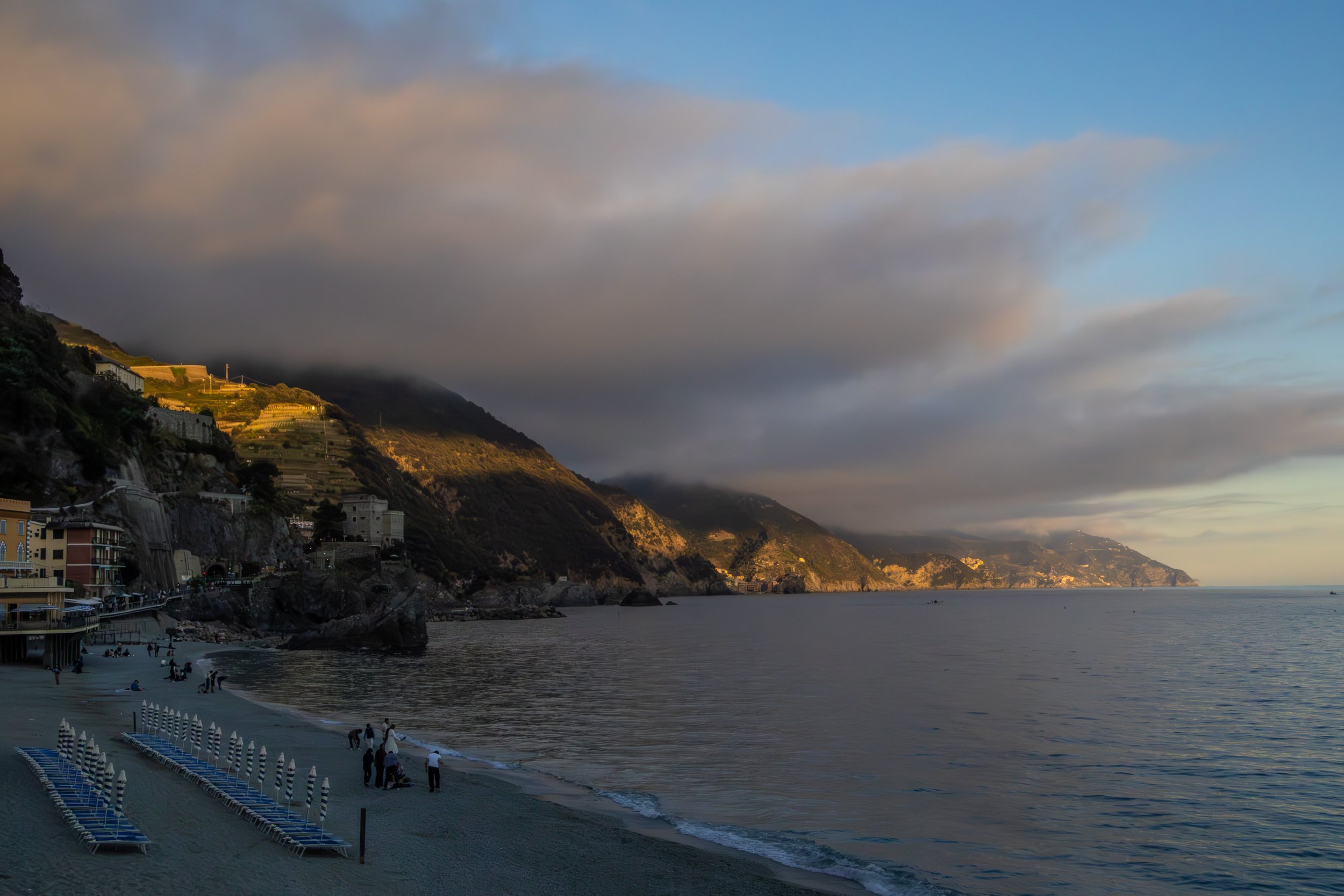
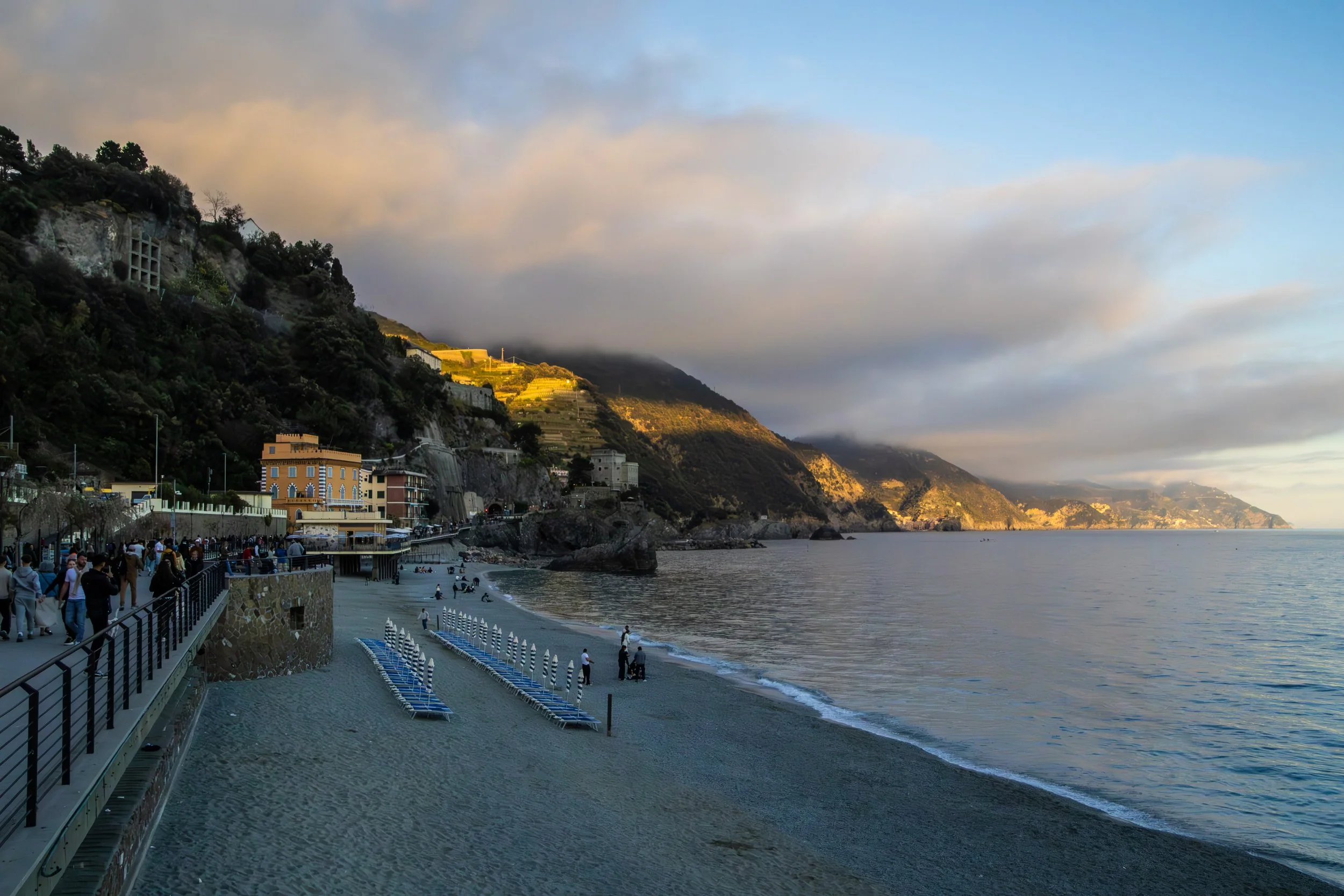
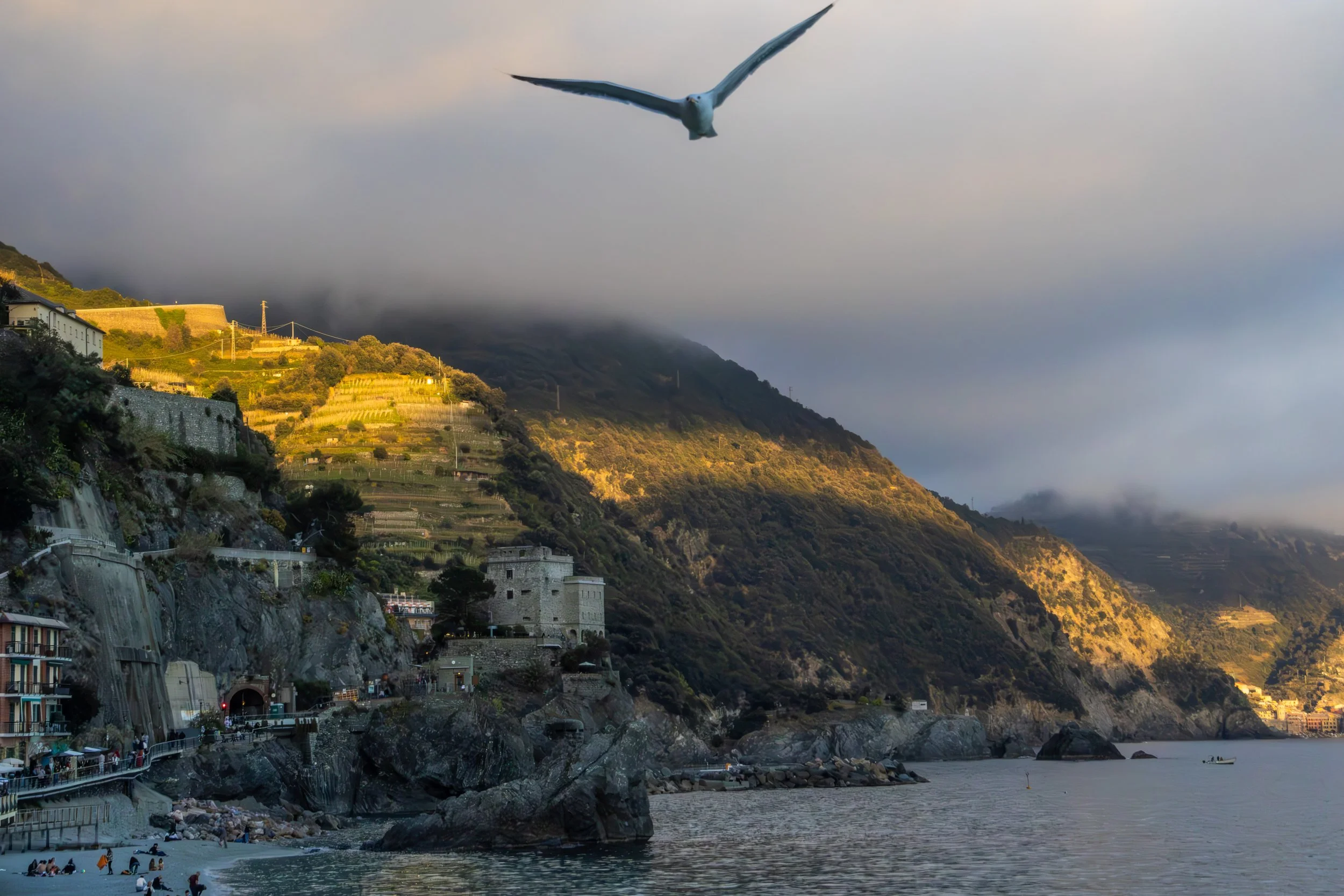
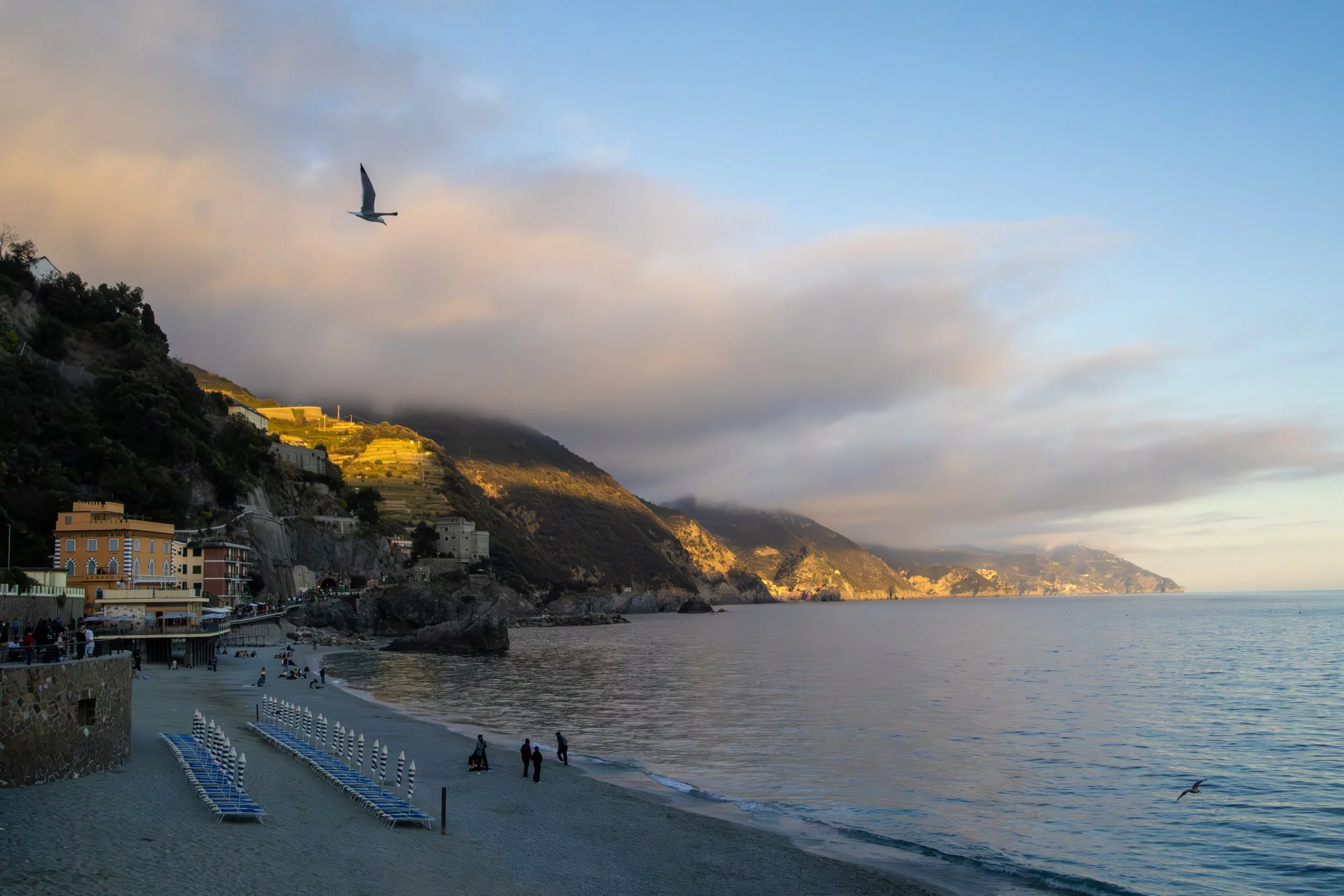
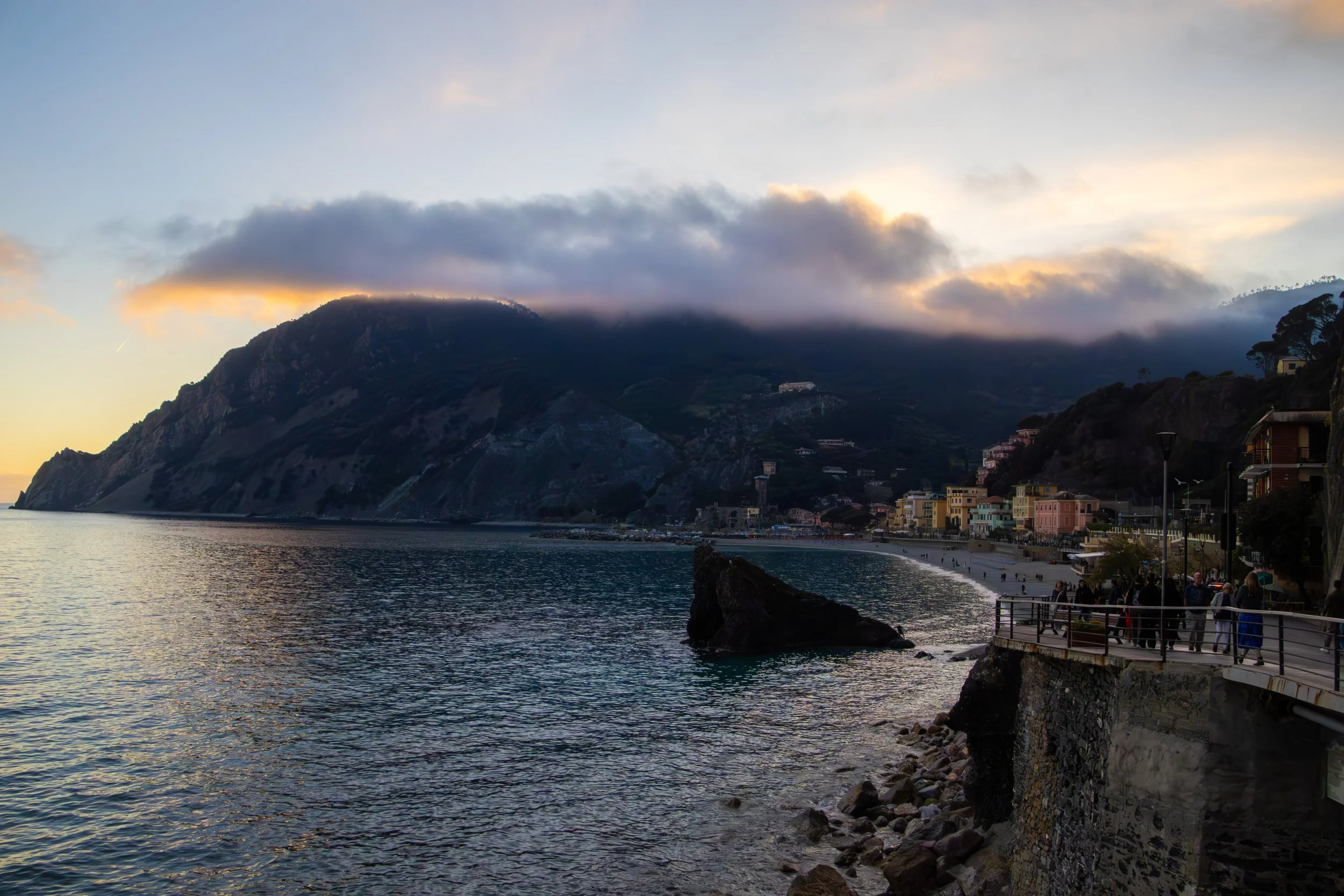
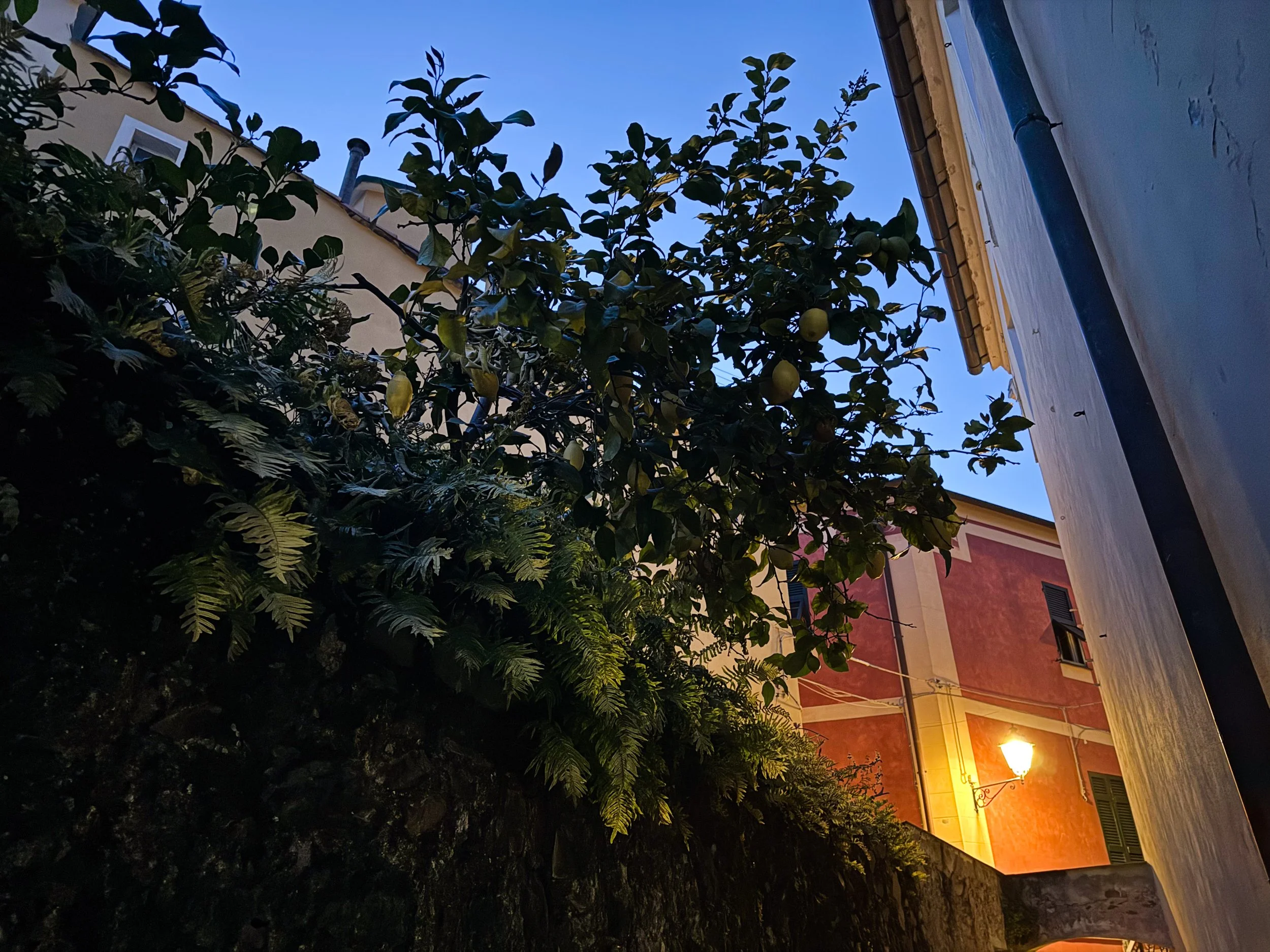
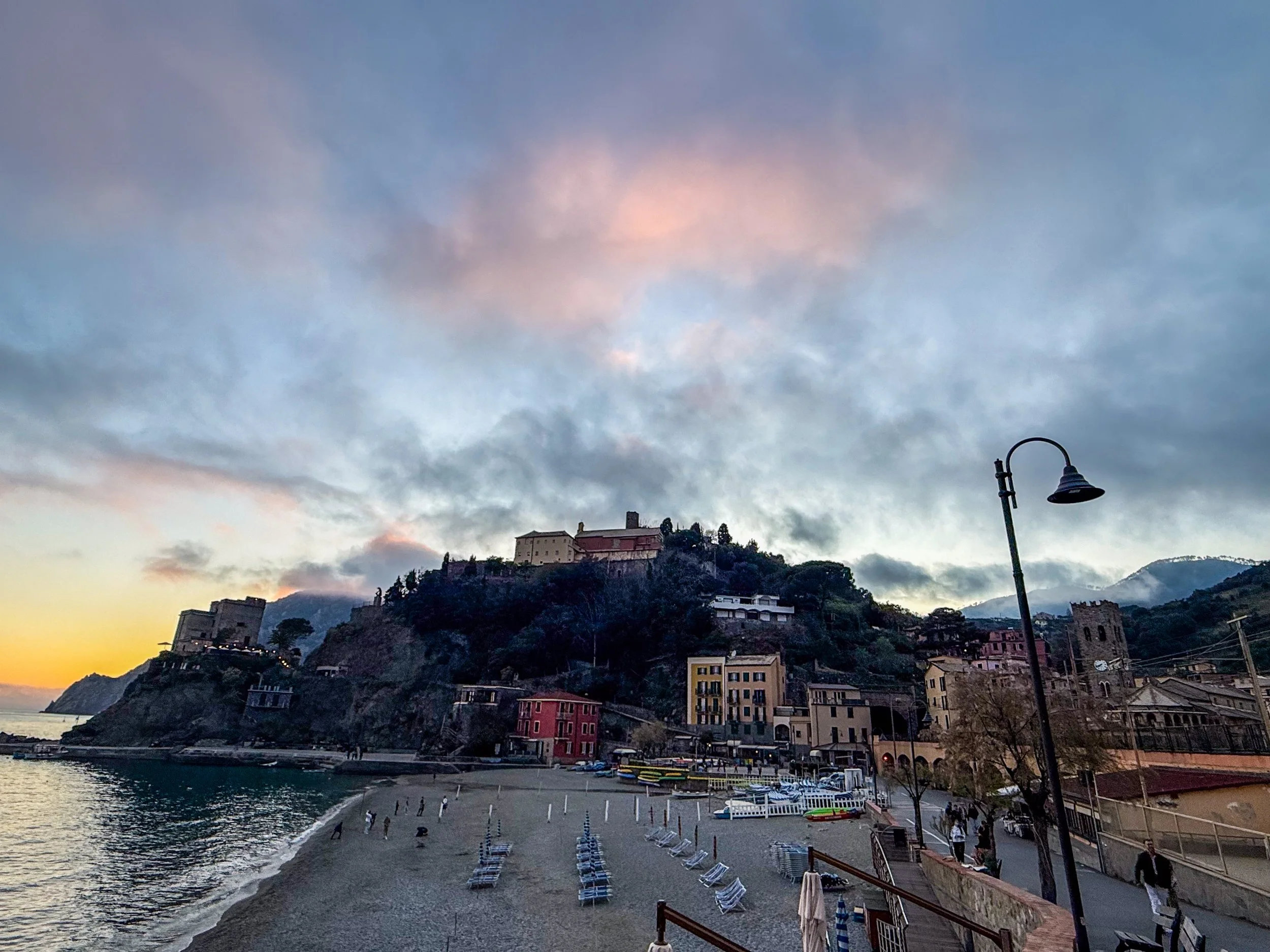
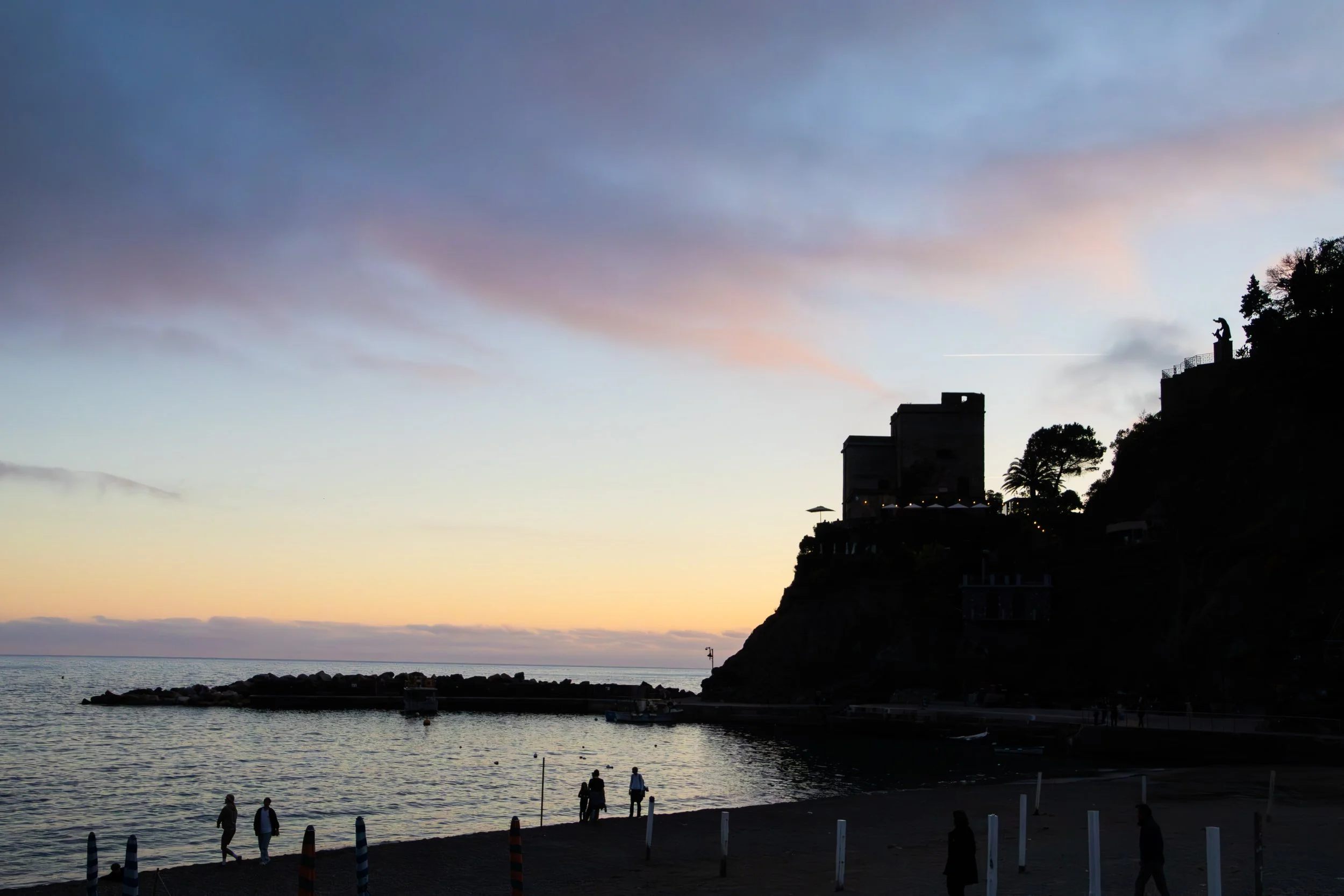
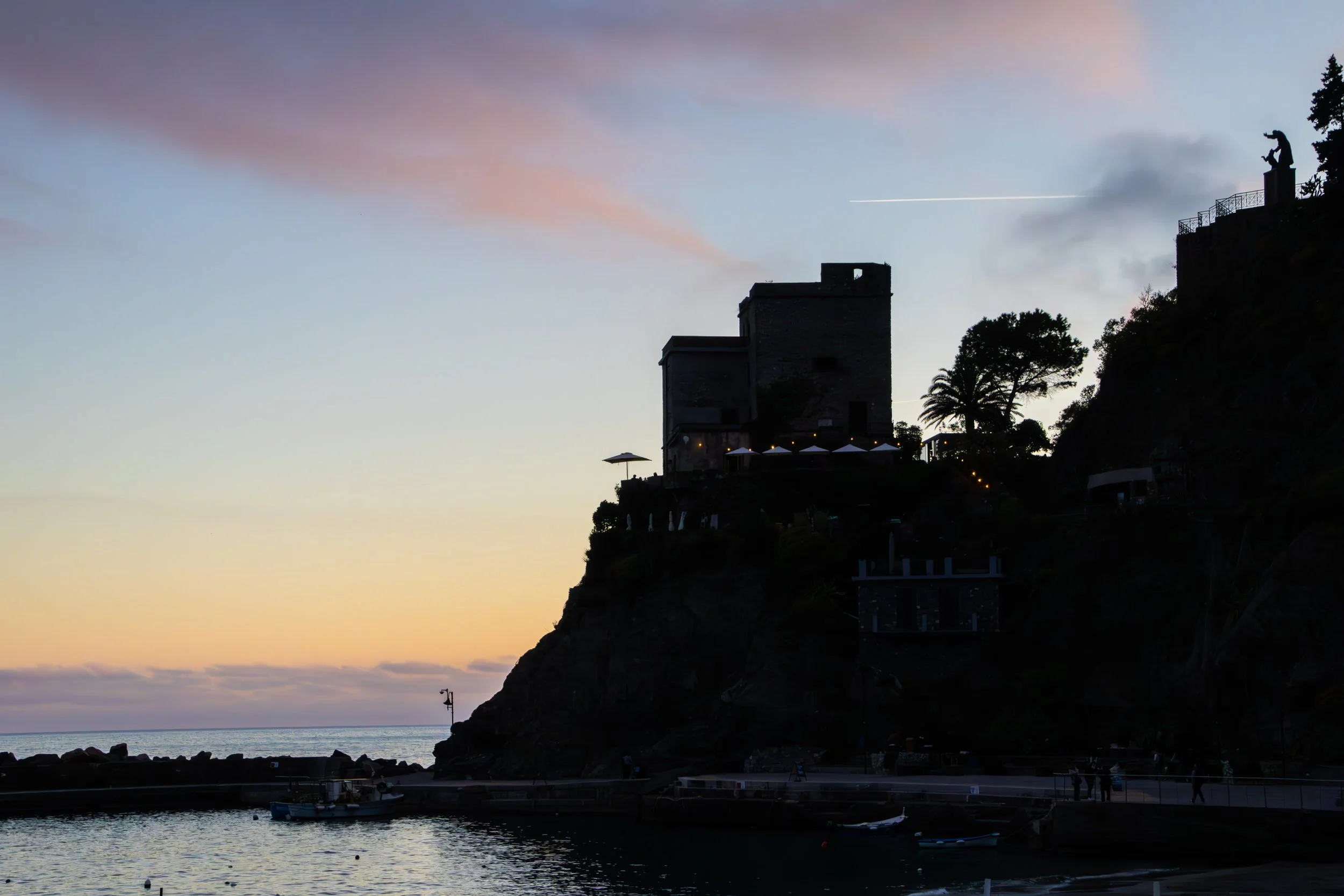
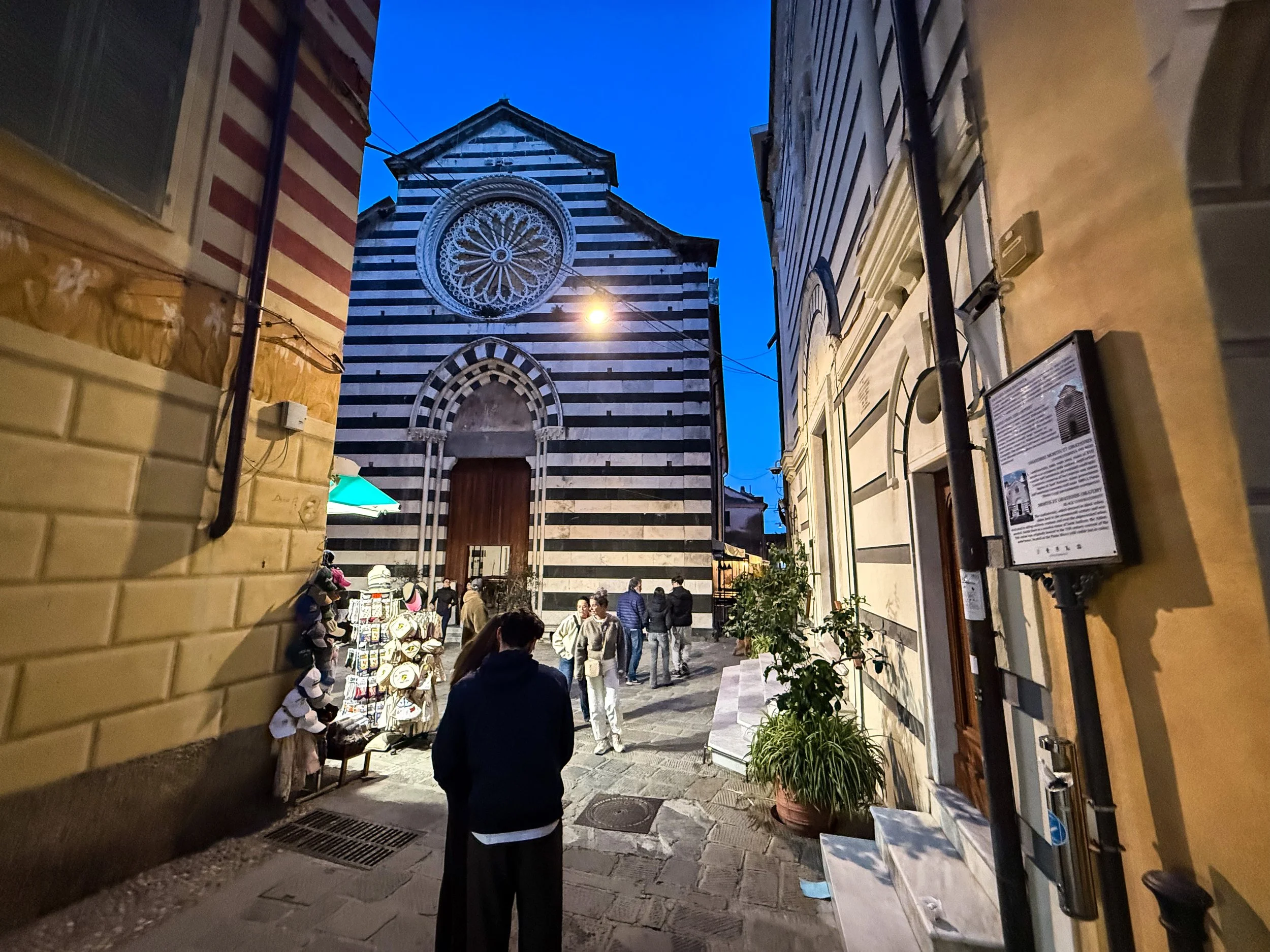
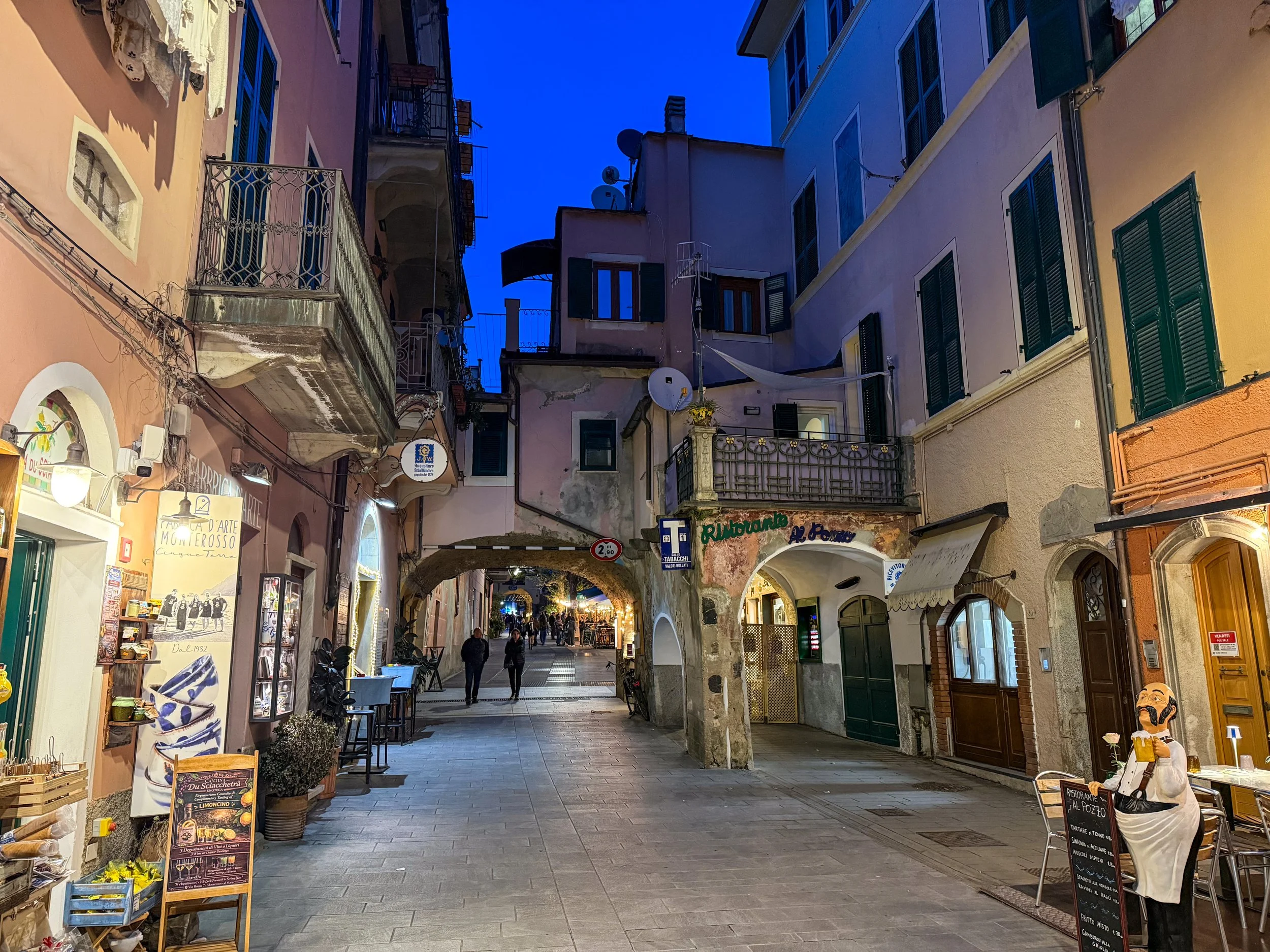
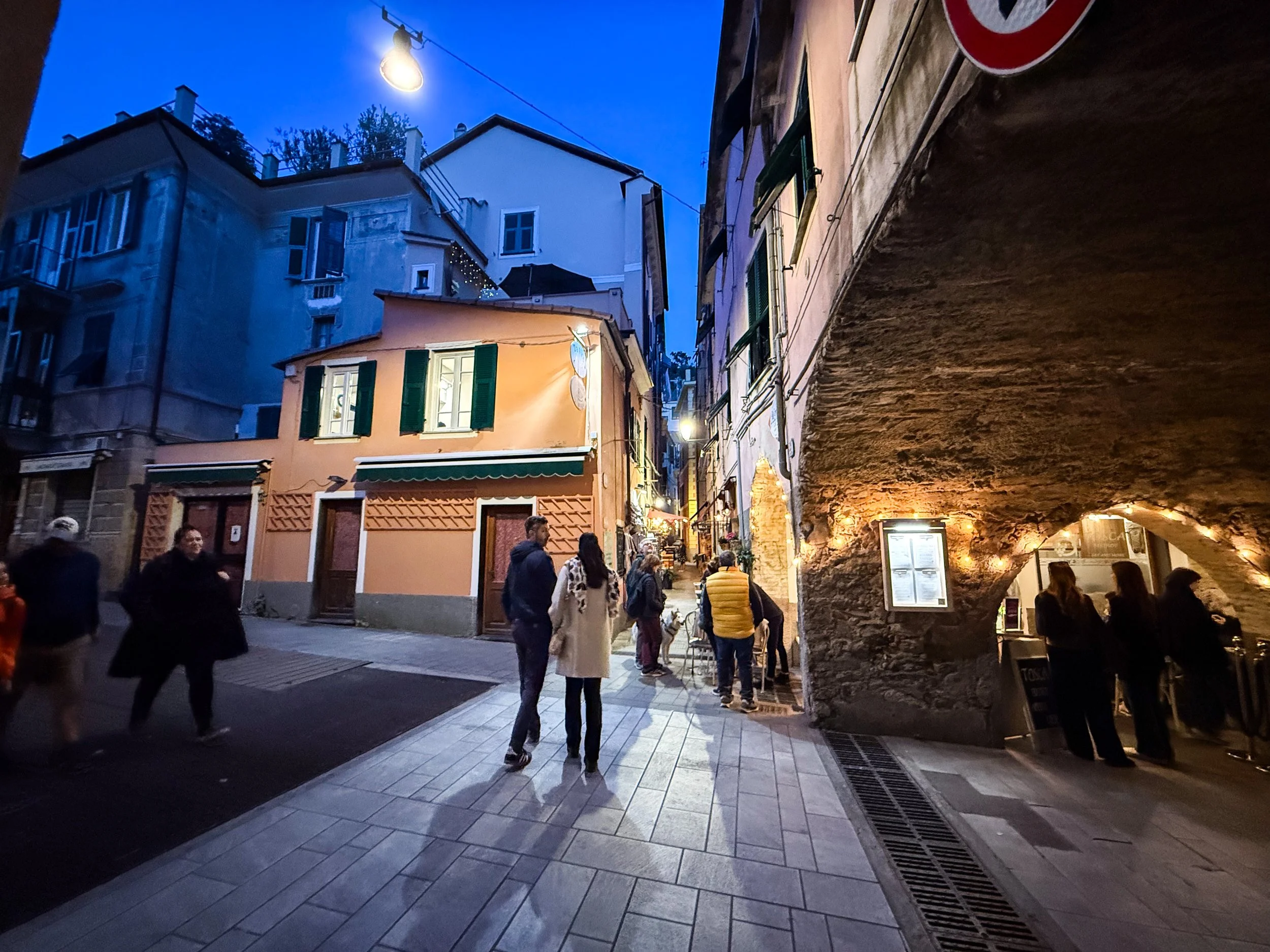
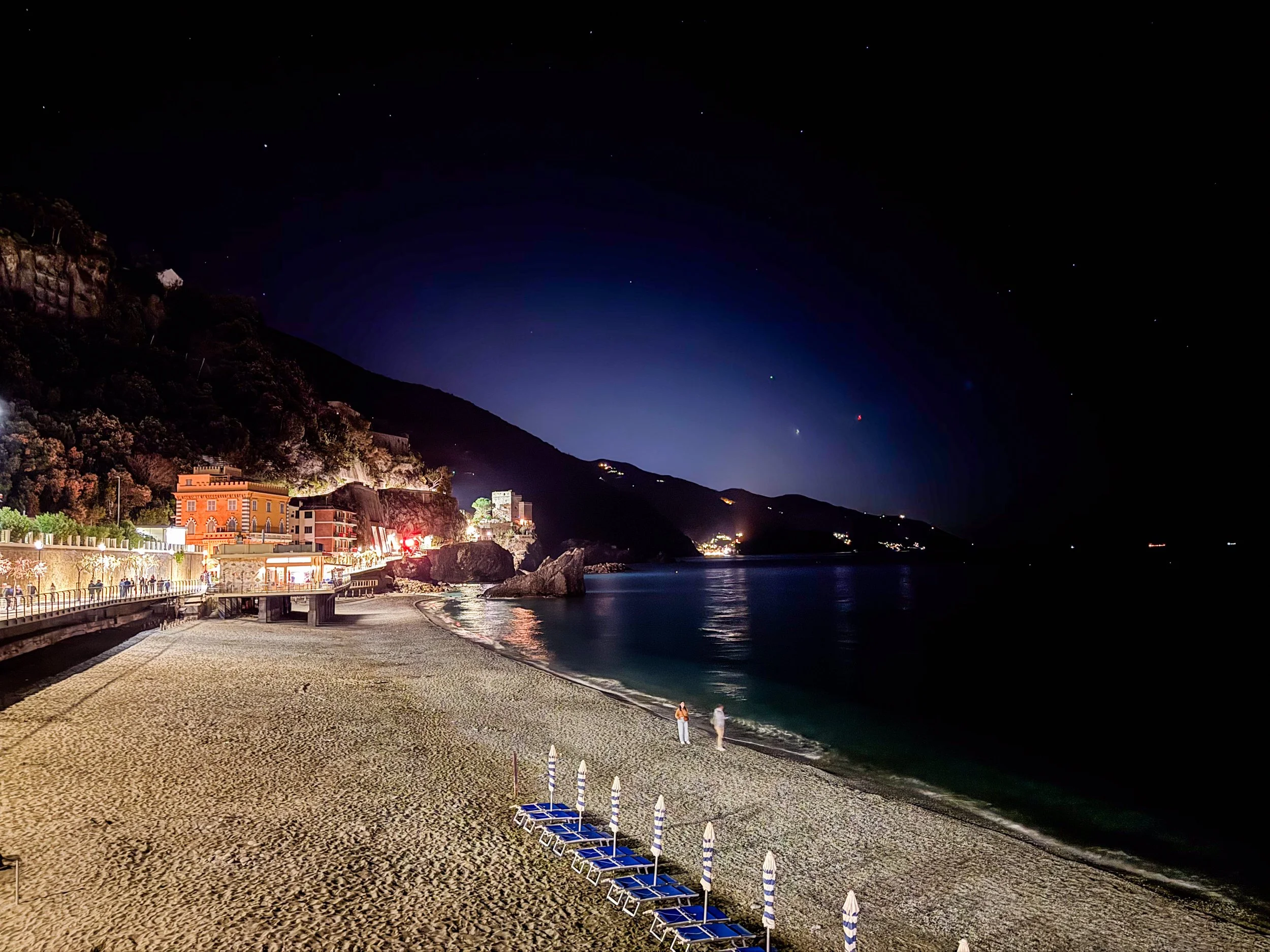
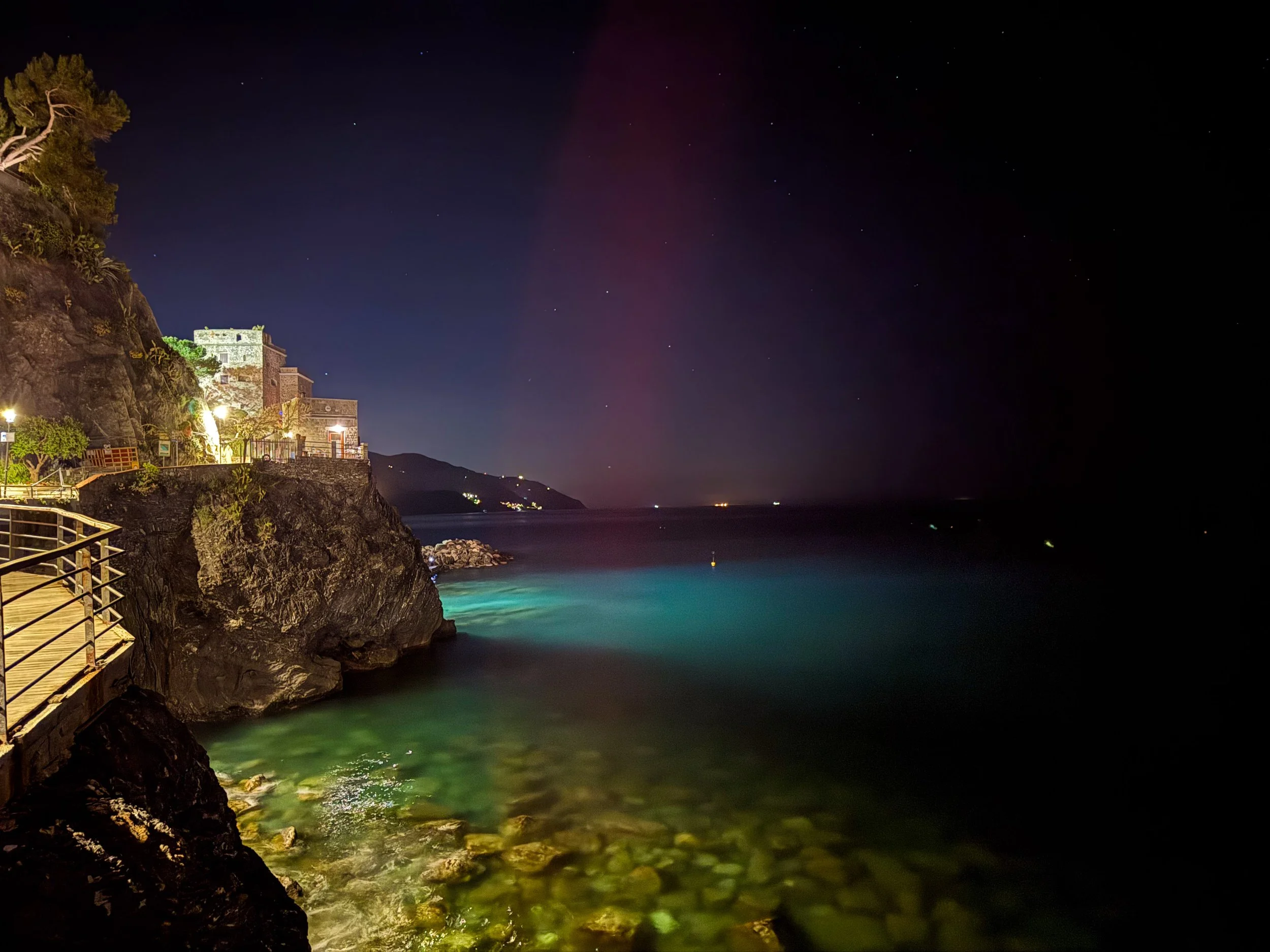
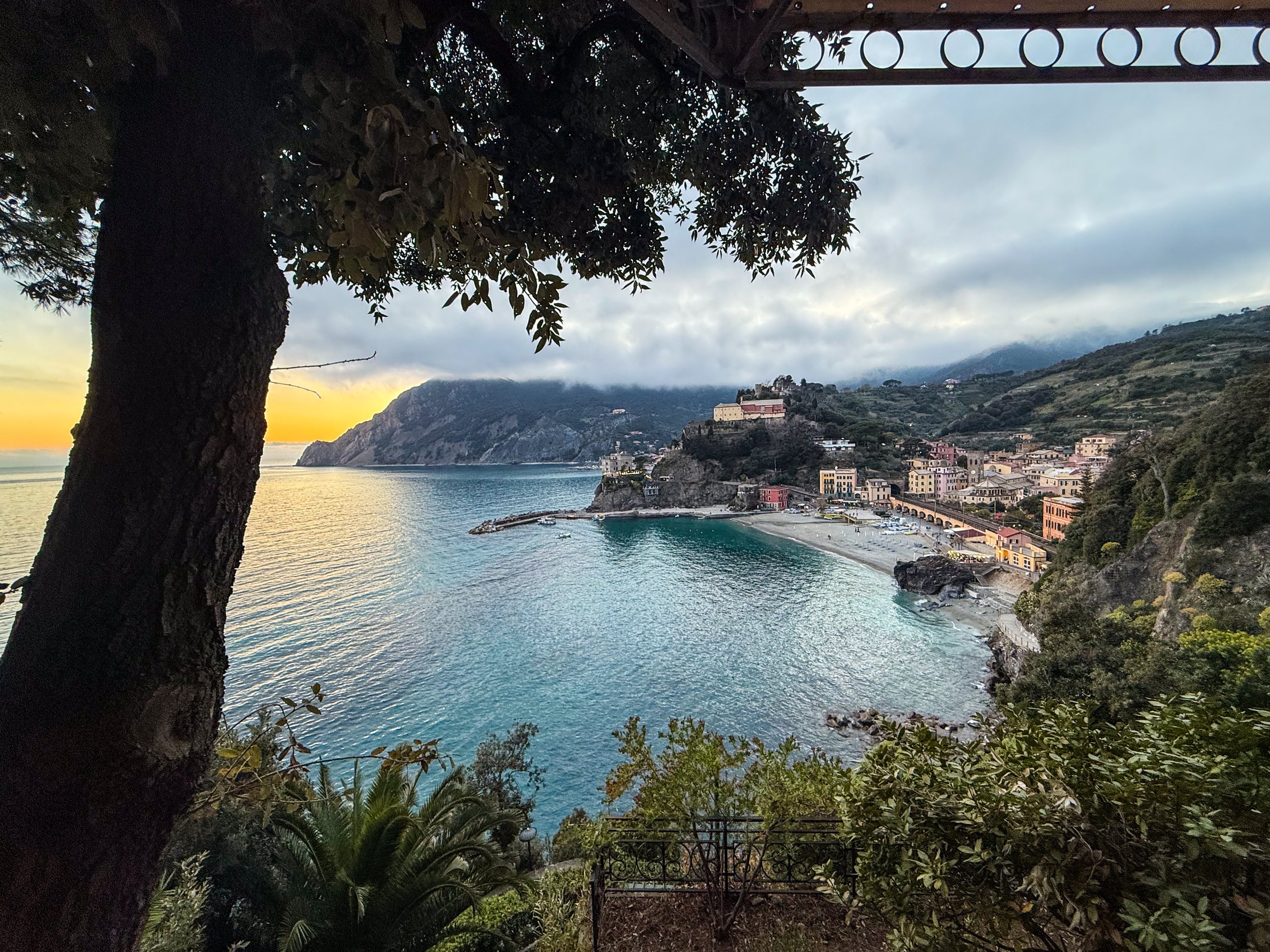
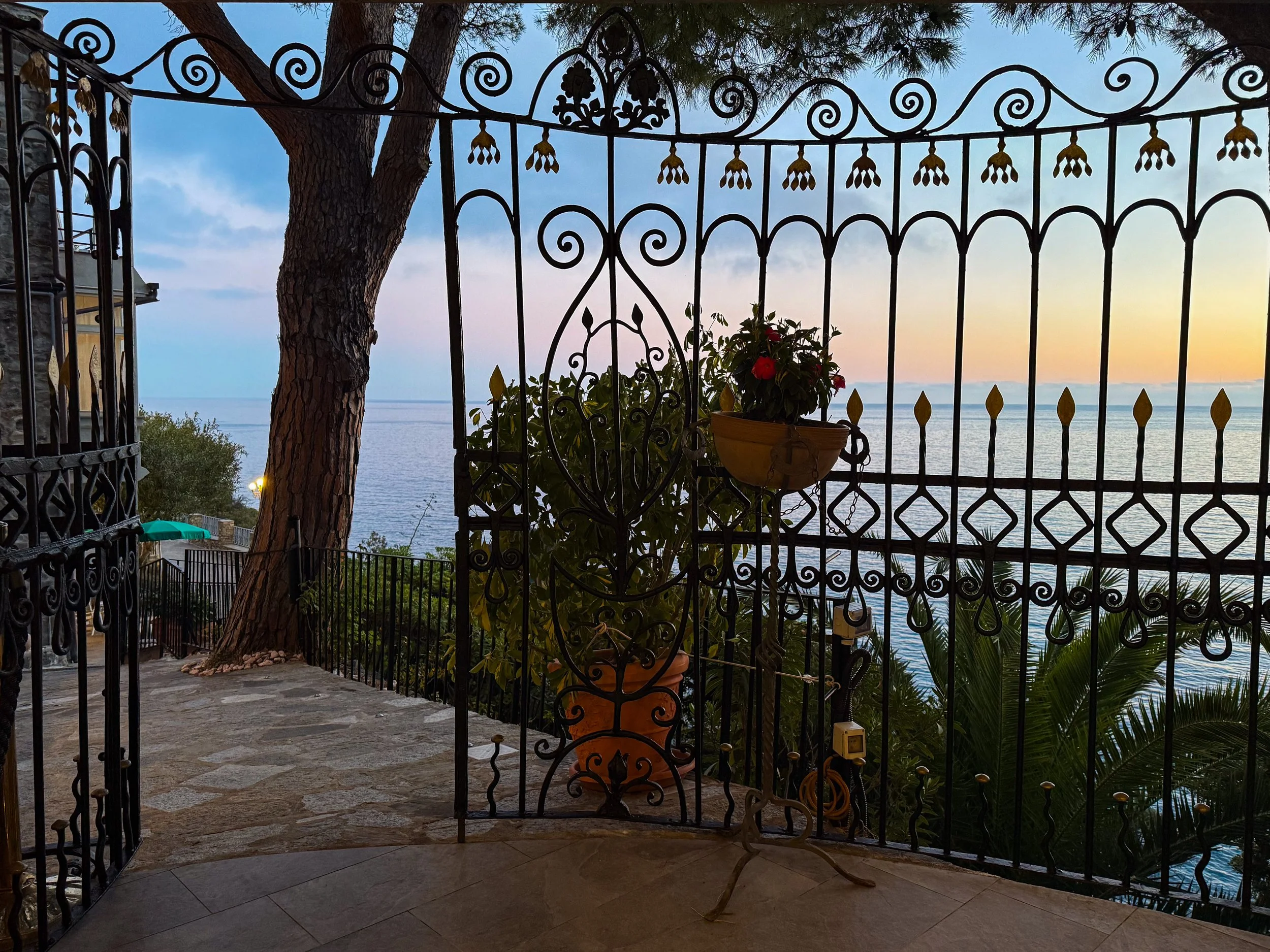
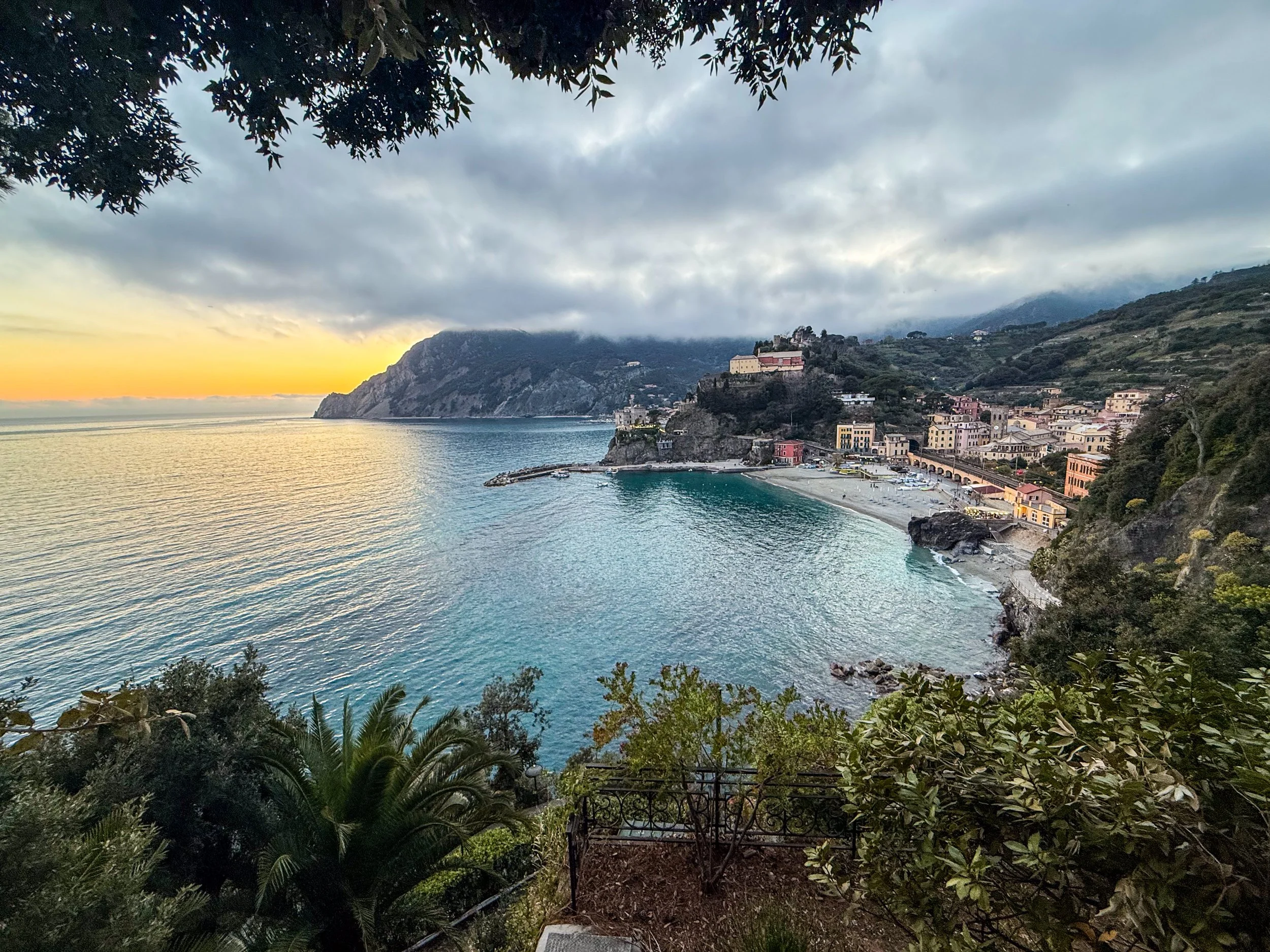
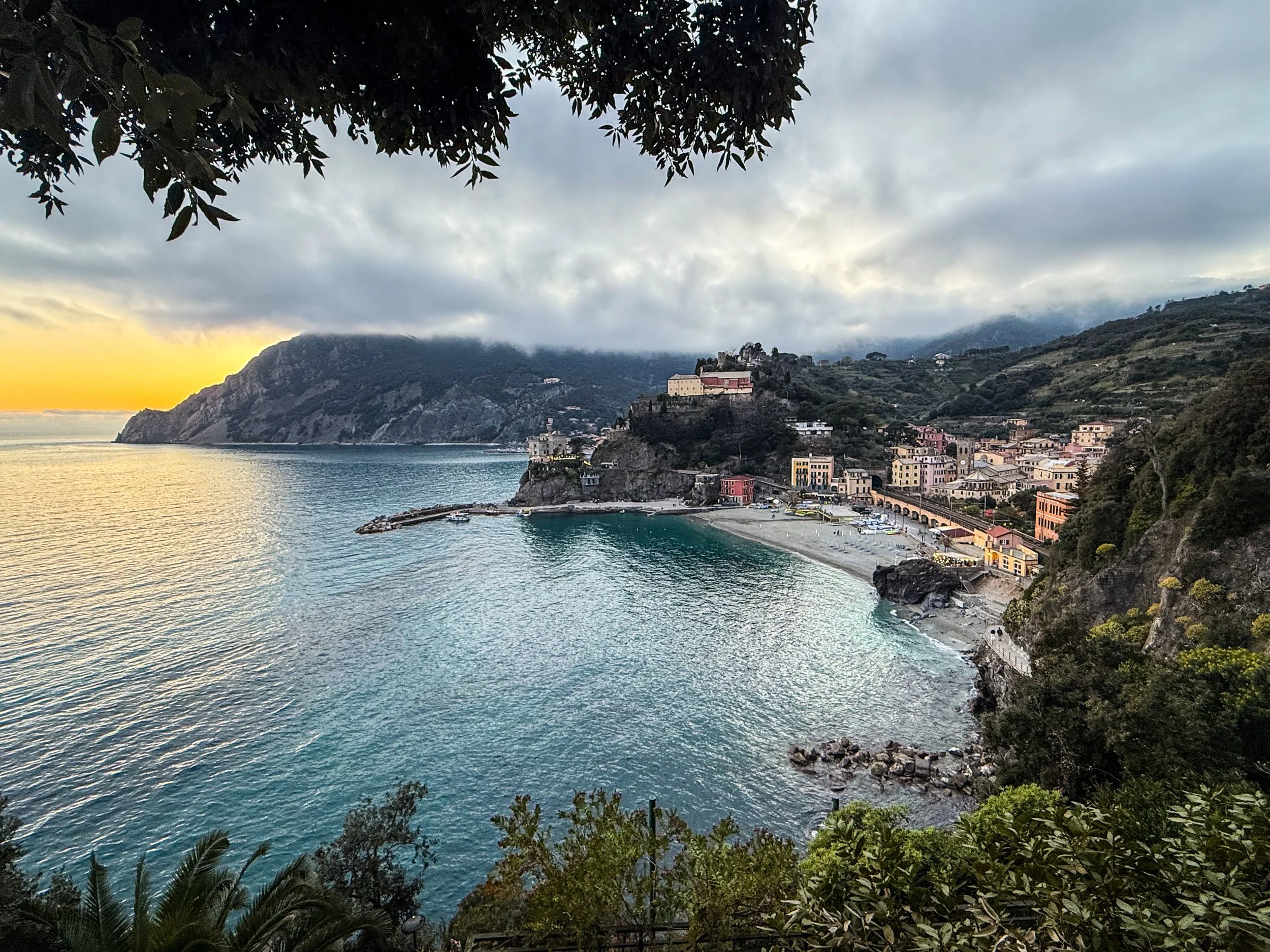
Finally, if you want the ULTIMATE Ligurian sunset dinner, I’d highly recommend Ristorante La Terrazza which is part of a very nice hotel called Hotel Porto Roca. We came up this road out of pure curiosity, having no idea that there was a restaurant up here, so I was feeling very lucky as I was being served Sciacchetrà over this view. This was one of those dinners that really makes you appreciate the good fortune that lead you here. ❤️🍋🇮🇹
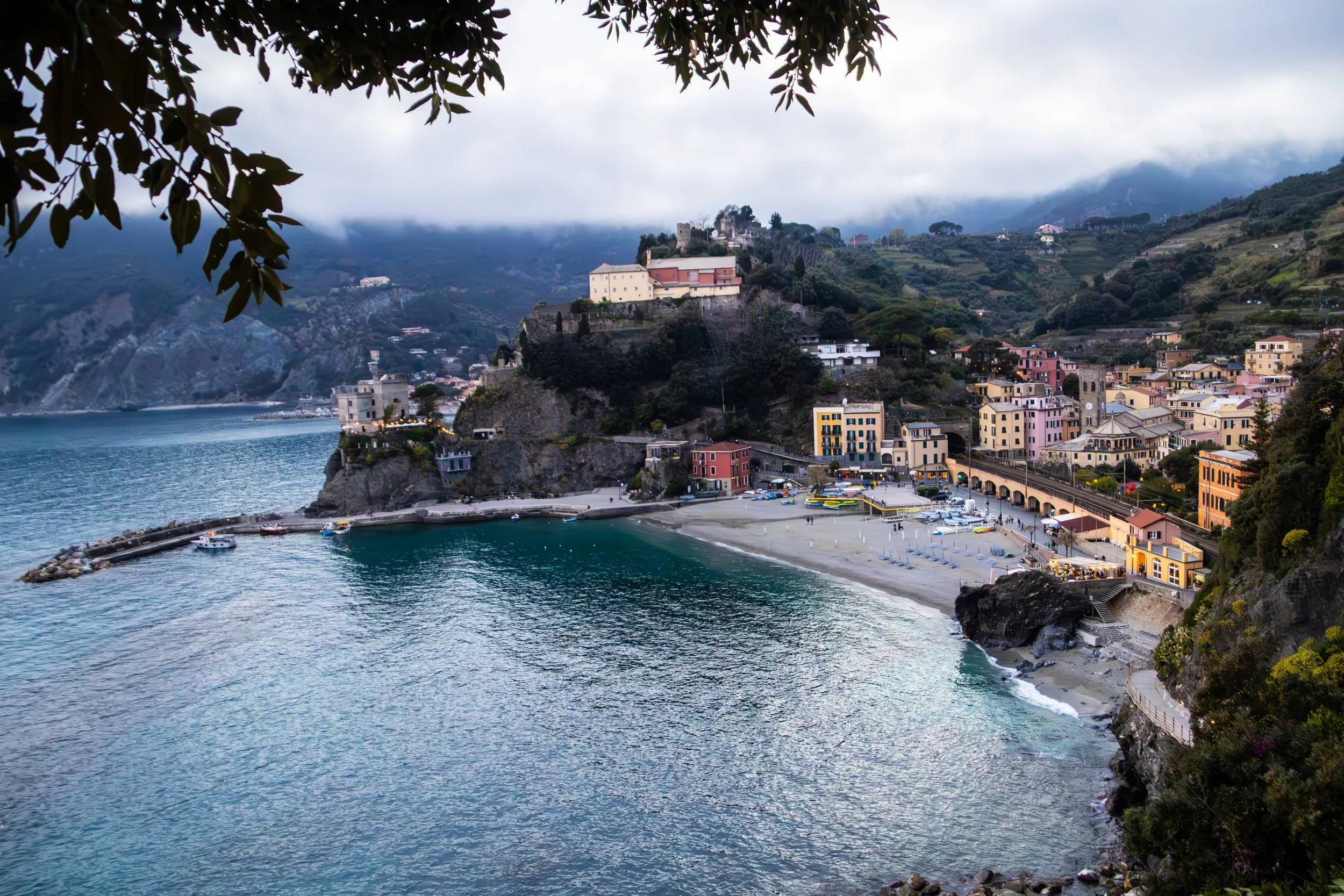
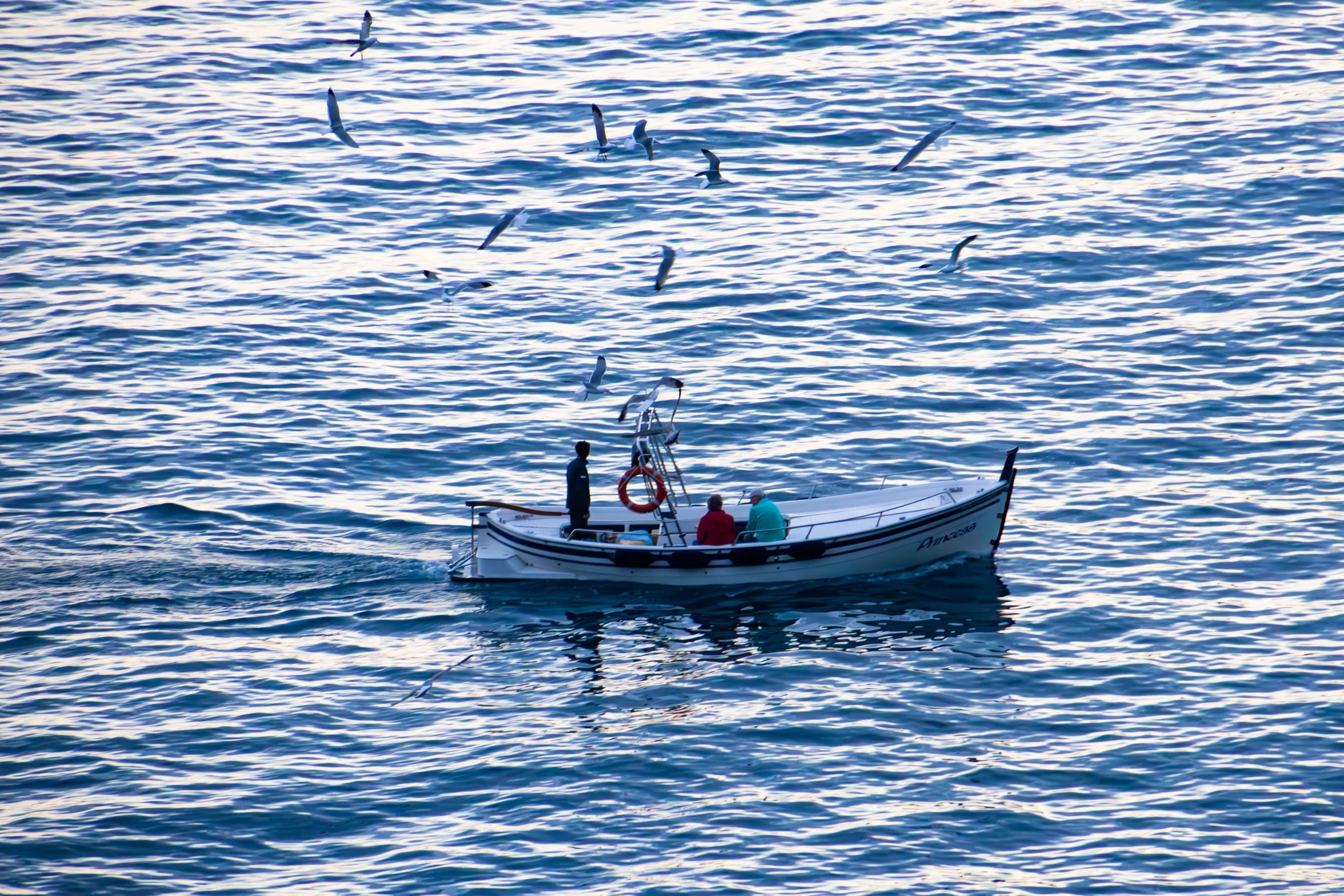
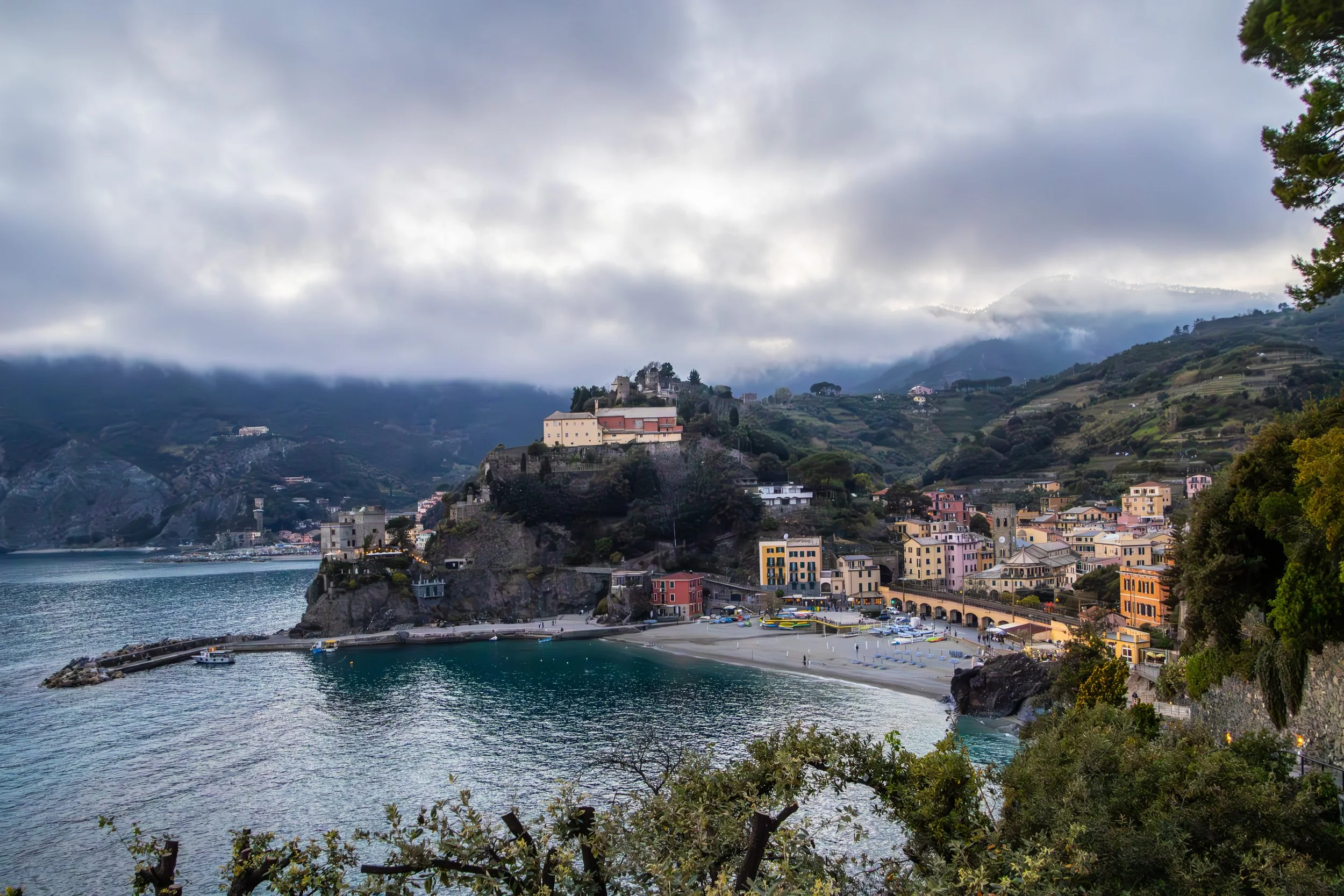
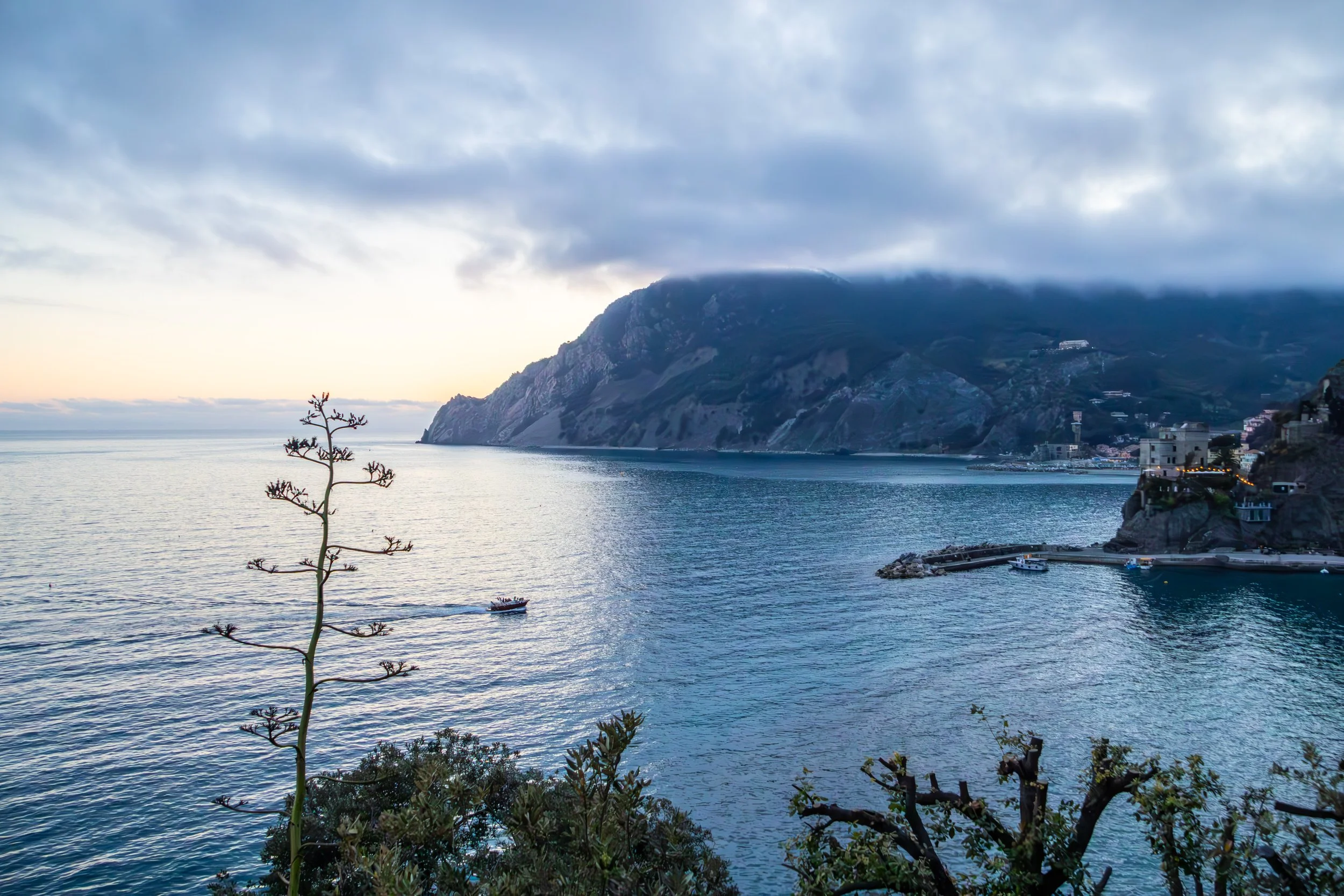
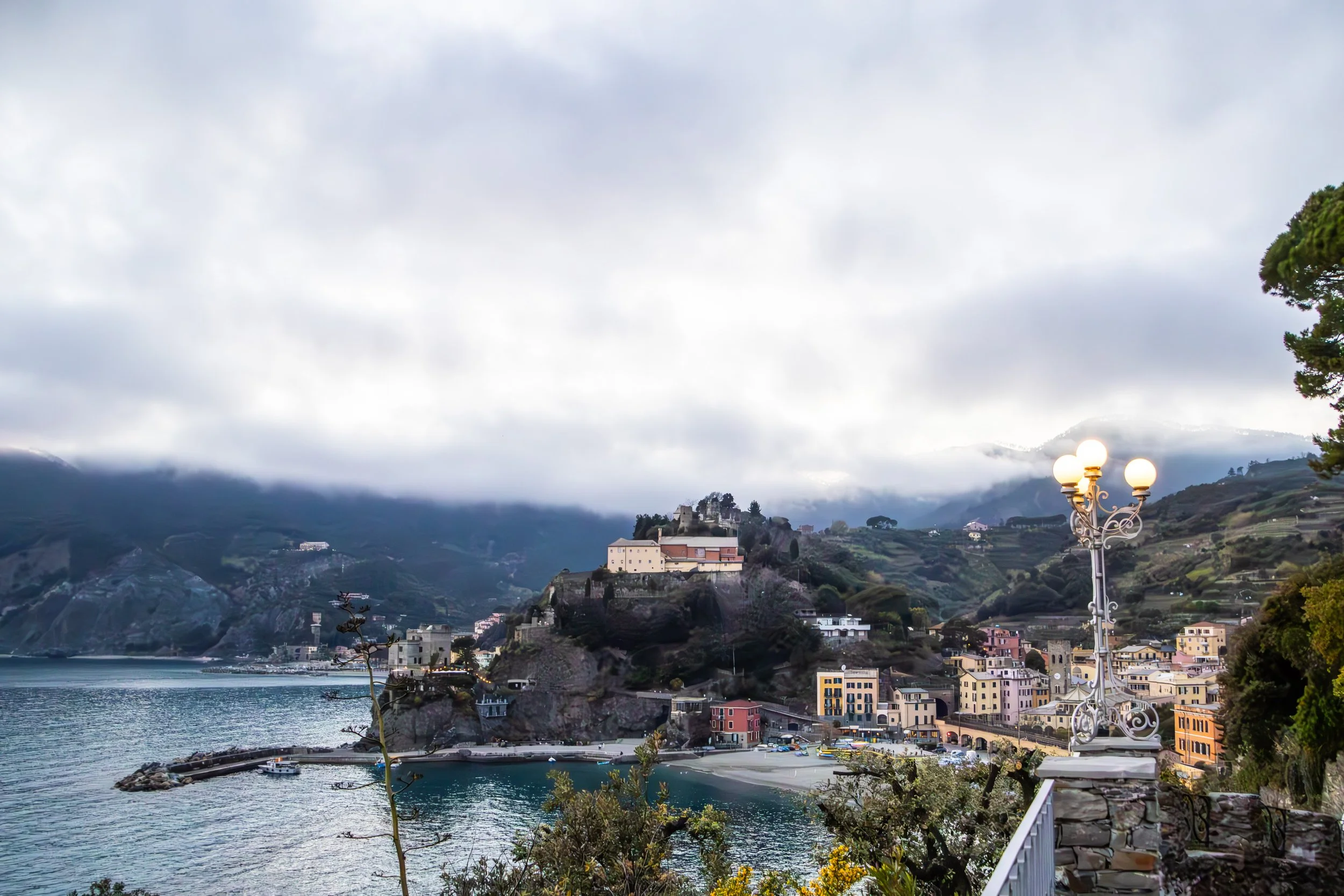
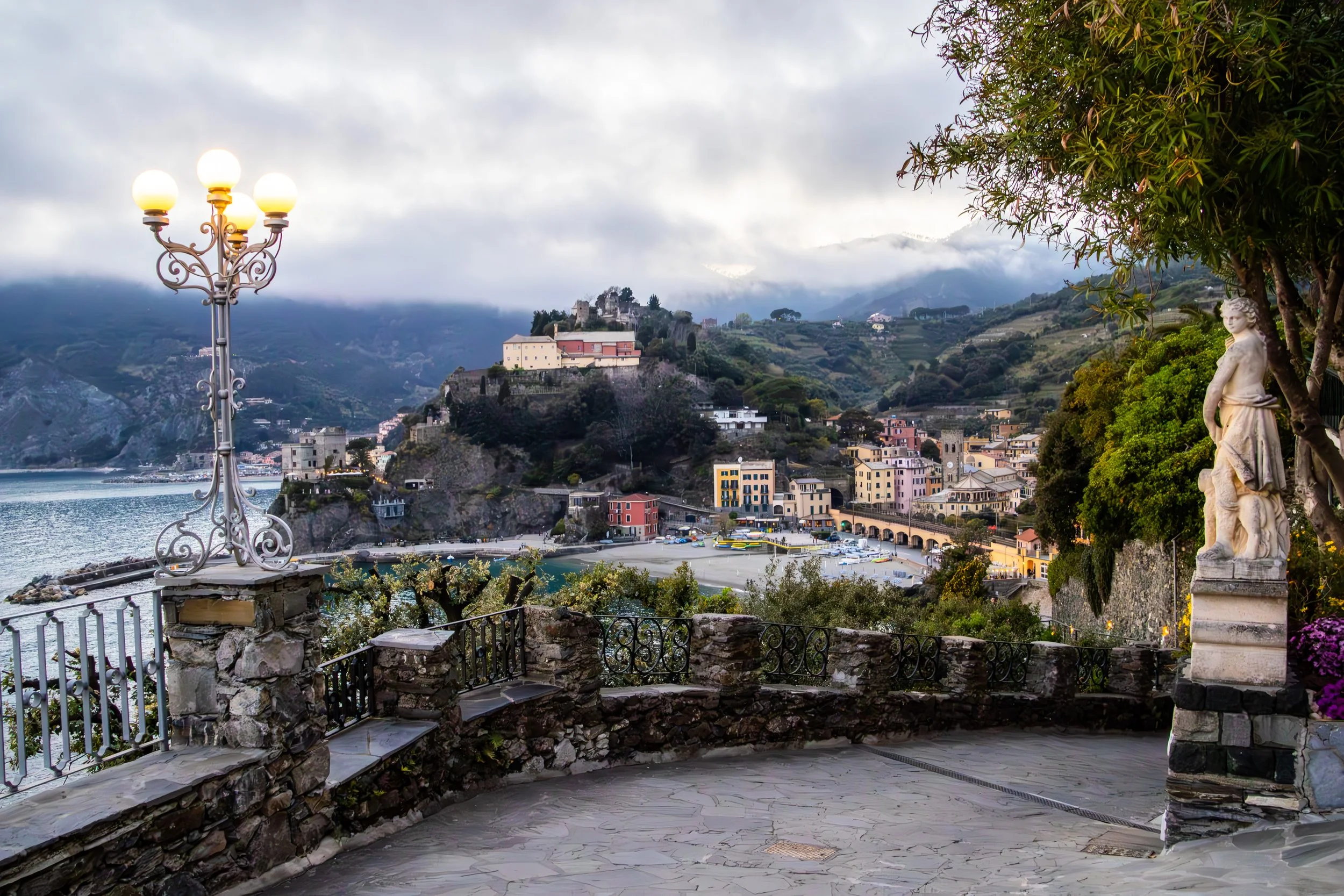
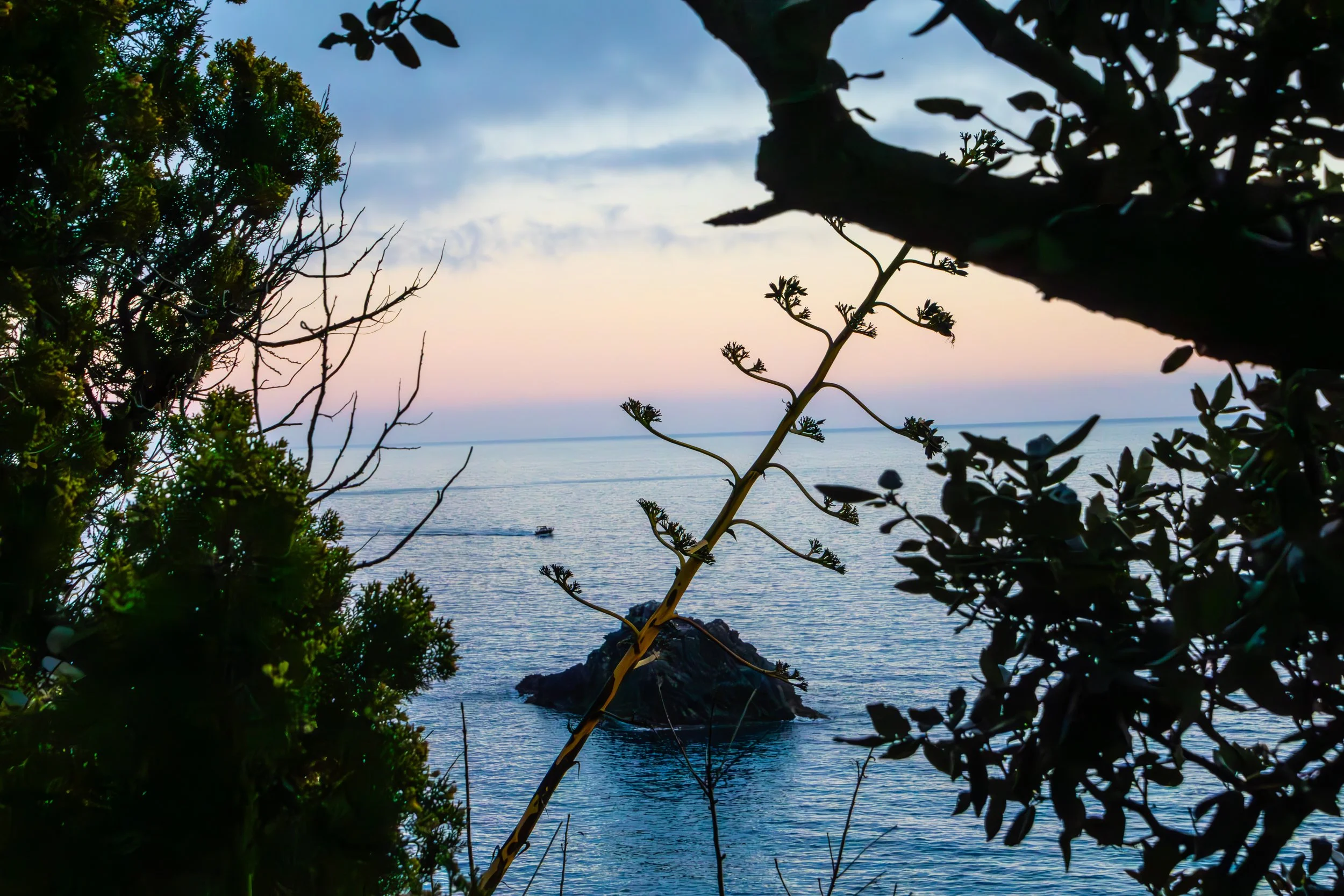
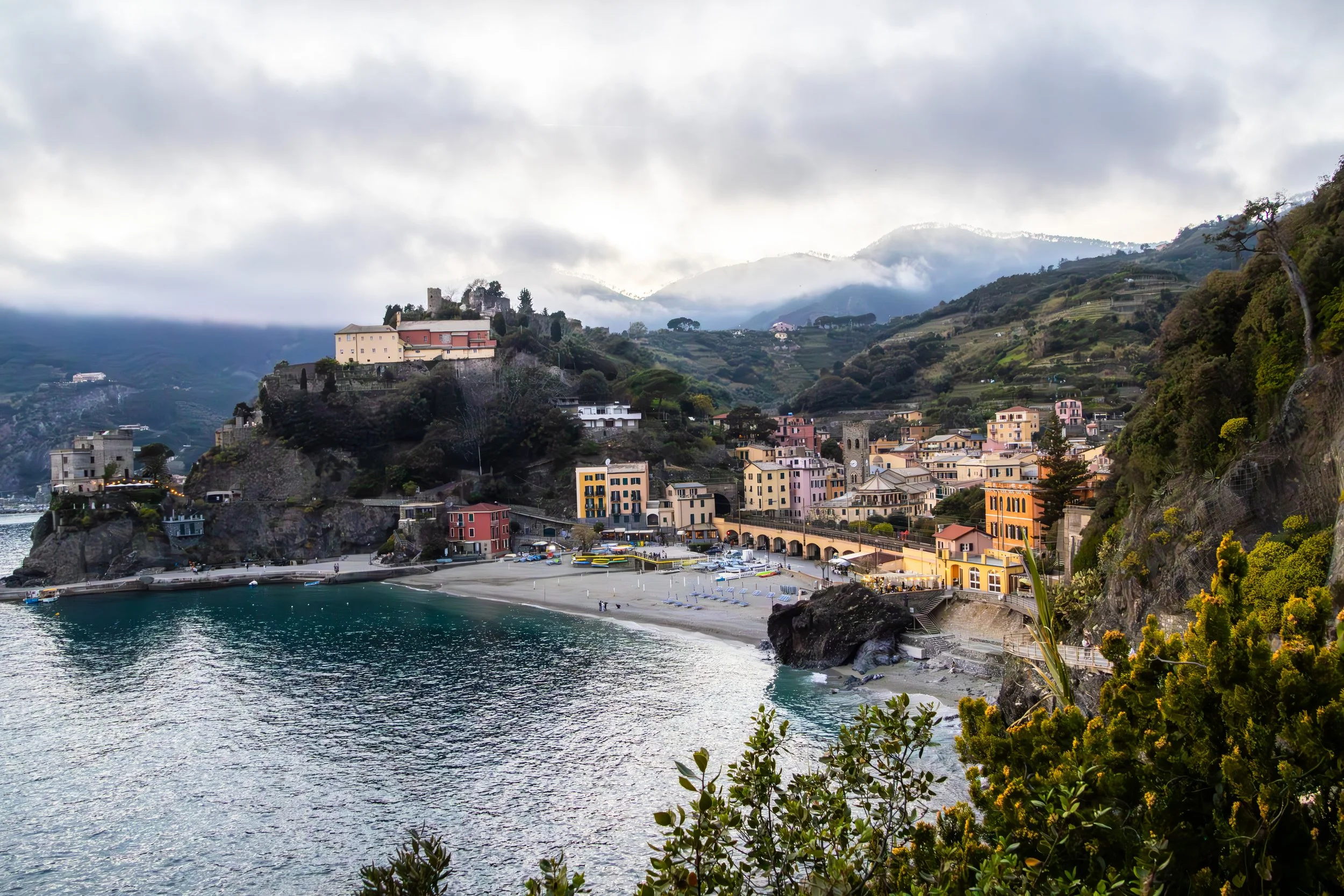
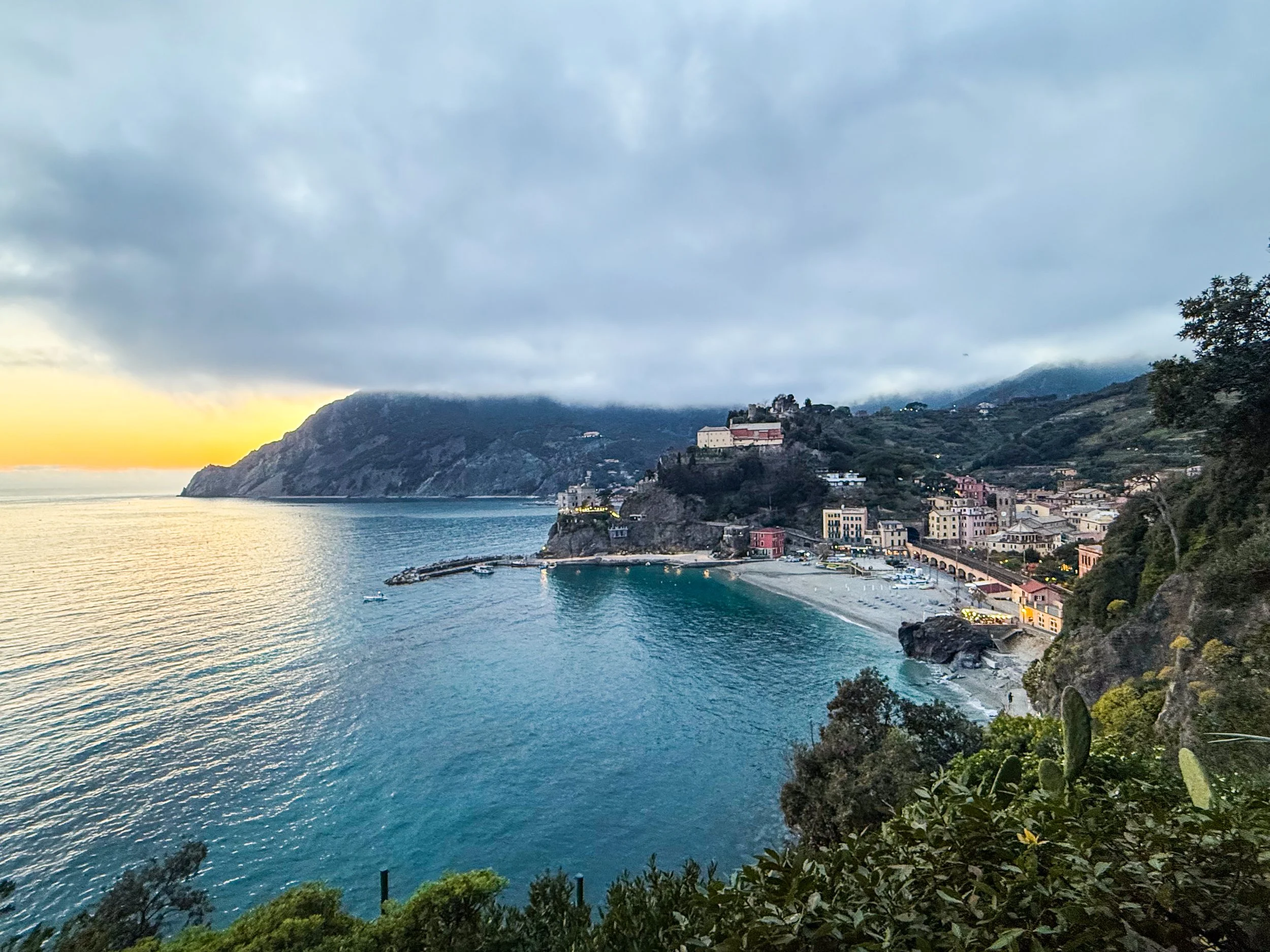
That’s it for Italy this time around! I’ll certainly be back in the future, but for now it’s time to move on. I’ve been doing a lot of travel lately so there are already multiple more series from different countries in the queue. Up next we’ll be exploring the south coast of England, and then we’ll be jetting off to Spain. Stay tuned!



Although Florence was founded under the Romans in 59 BC, its meteoric rise did not begin until about ~1,000 AD. The intervening years saw Florence weather Gothic invasions, Byzantine rule, Lombard control, Frankish conquest under Charlemagne. A thousand years of the same struggle for incremental gains that most every city in the world was experiencing, until Florence’s petri dish yielded something entirely unique. Going into the 1400s, Florence had a unique combination of enormous private wealth, political competition, educated merchants, civic pride, and intense rivalry among wealthy families. You might assume that they the powers that be would opt to duke out their competitions in war, business, and industry (and there was certainly some of this), but the Florentine elite chose a new arena for competition: the arts. You may have heard of the Medici? This was one of those wealthy families that is famously supported some of the artists that would establish Florence as a cultural juggernaut and kick-start the Renaissance. They even have their own Netflix show now.