
Who here has discovered the magic and fun of Google Earth? 🙋🏻♂️
Personally, I have spent lots of time in the past just zooming into the empty places on Google Earth and Google Maps satellite view to see what the hell is happening there. And the Arabian Peninsula has a LOT of empty space. If you’ve been reading since the beginning of this series on Oman, you know that this country is mostly quite empty! Here’s a glimpse of what you’ll see when you look at the Google Earth satellite view…
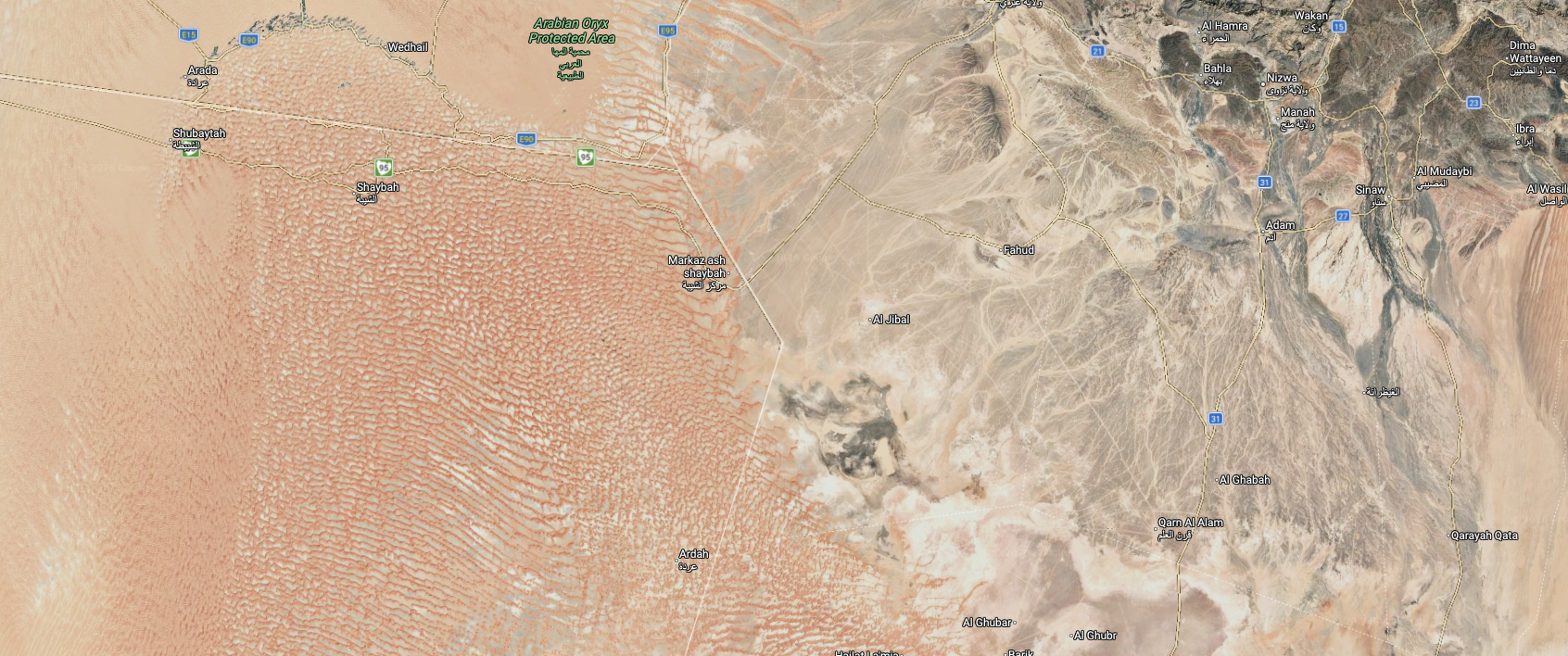
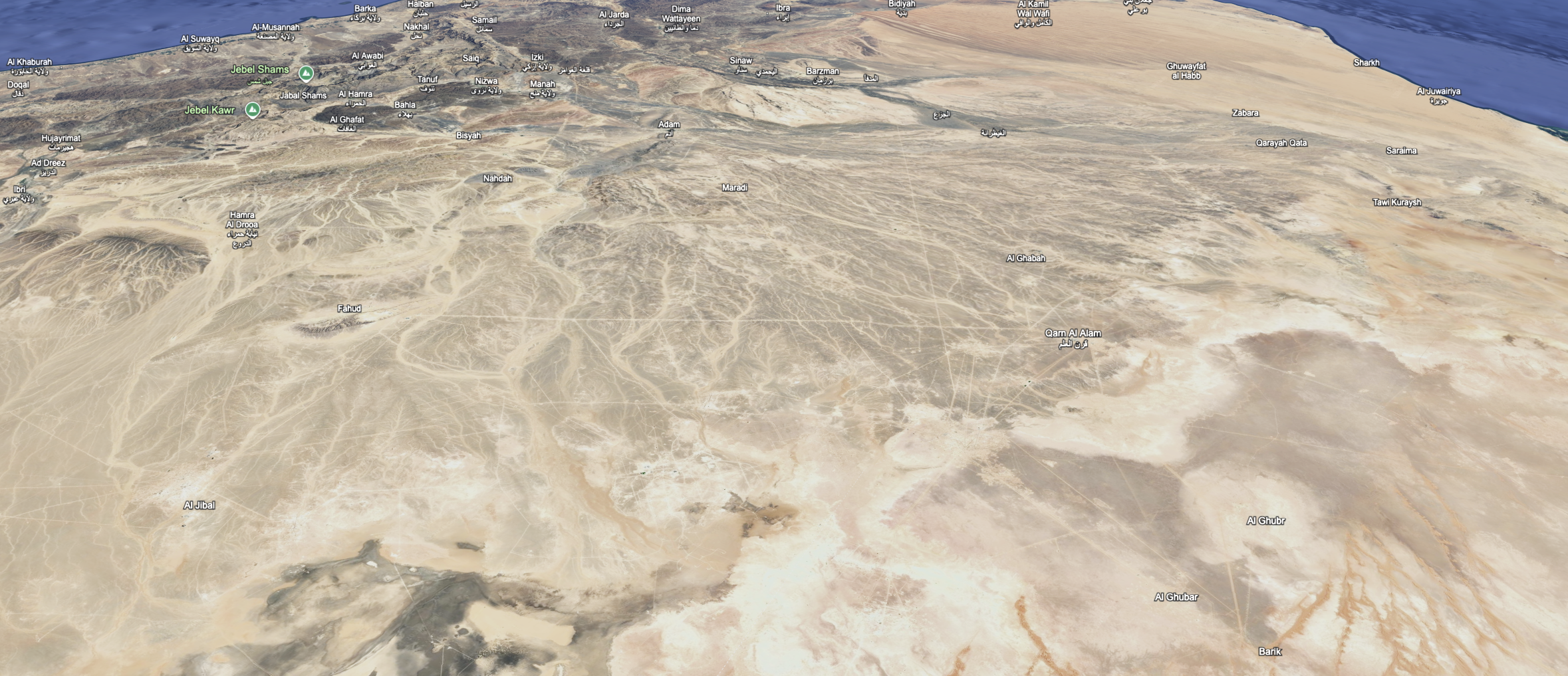
So, is all this space really just EMPTY?
Zoom in a bit further on Google Earth, and Oman will begin to look more like a piece of abstract art, or satellite images taken of the surface of an alien planet rather than a place on Earth that is within our reach. The farther in I zoomed and the more I explored this miraculous piece of software, the more I came to the unsatisfying, slightly unnerving conclusion that… yes… all this space really IS just empty…
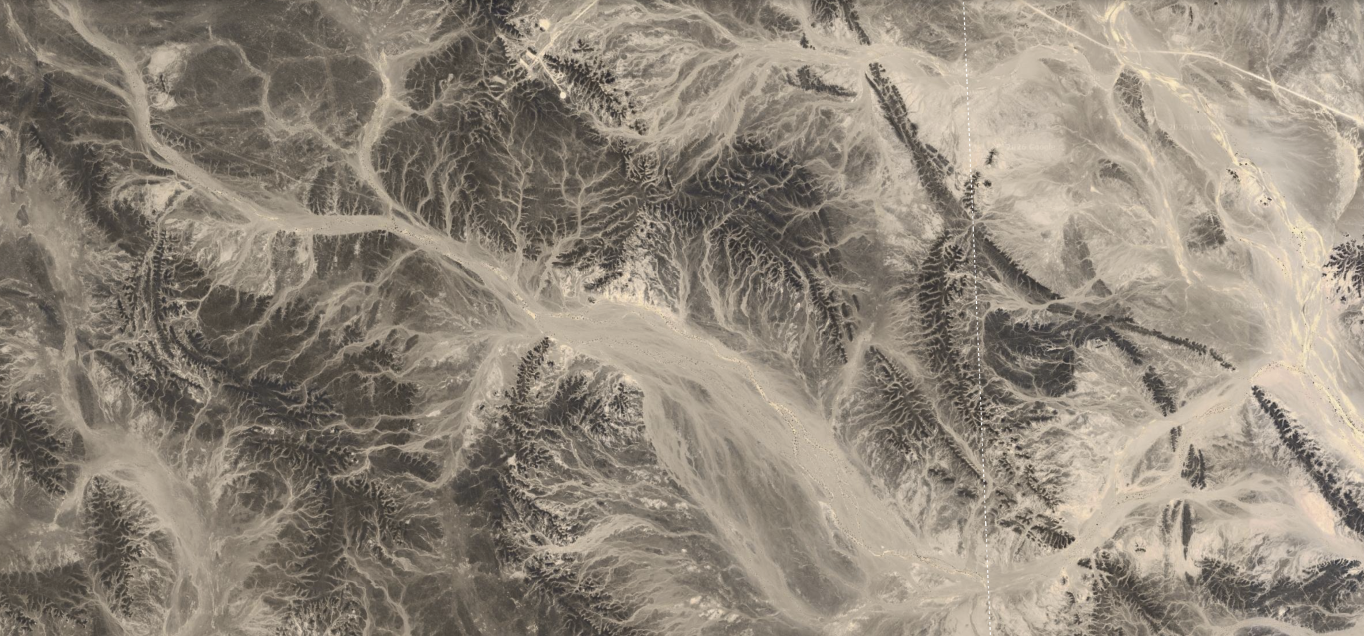
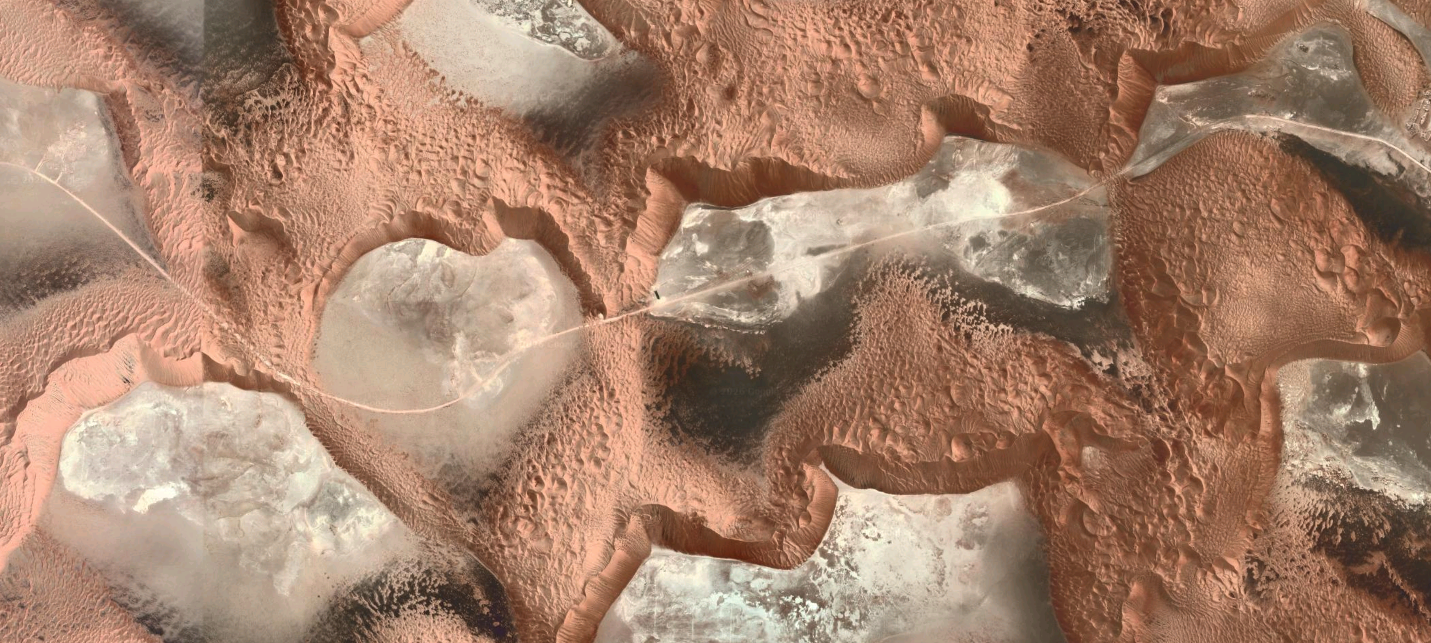
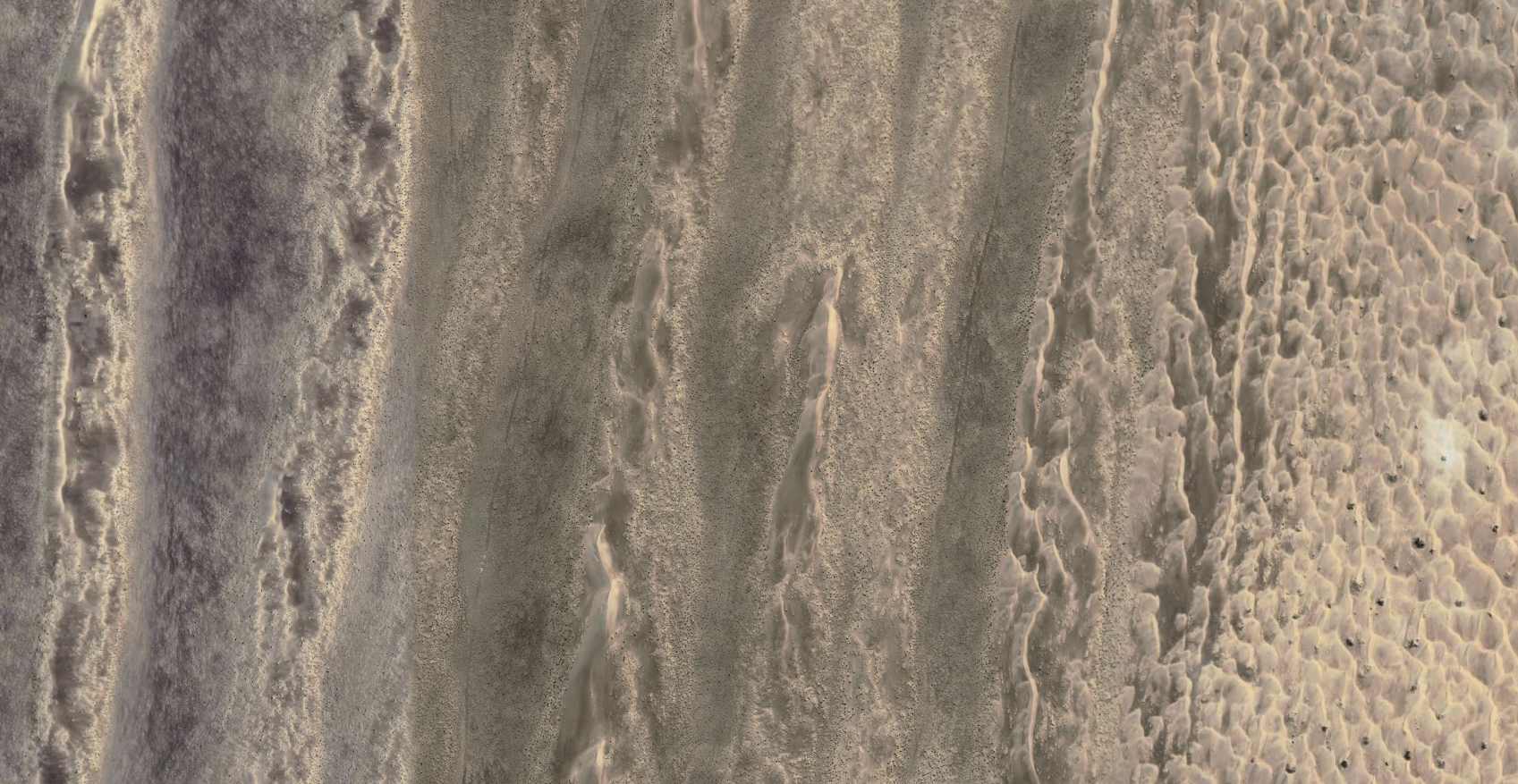
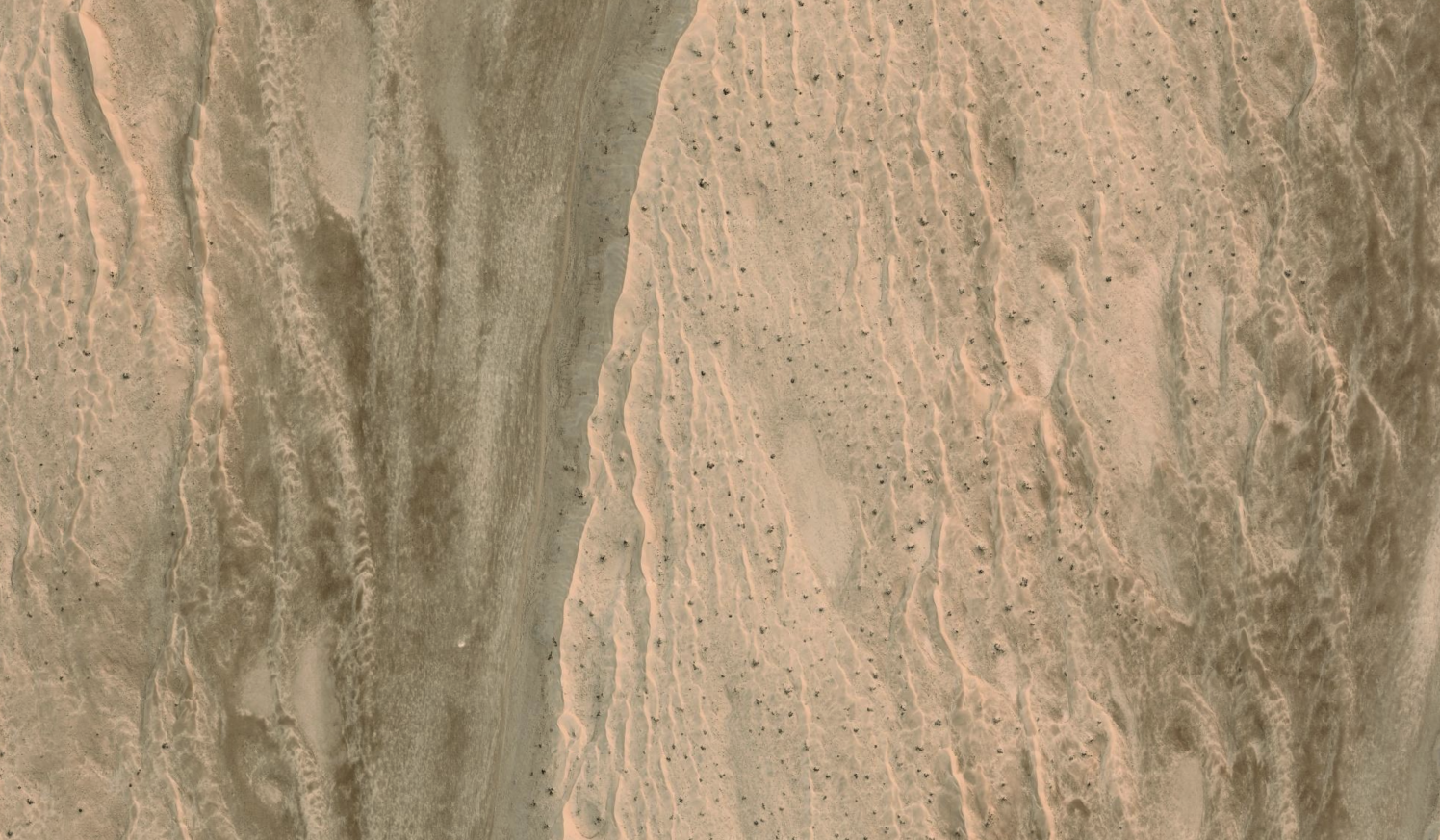
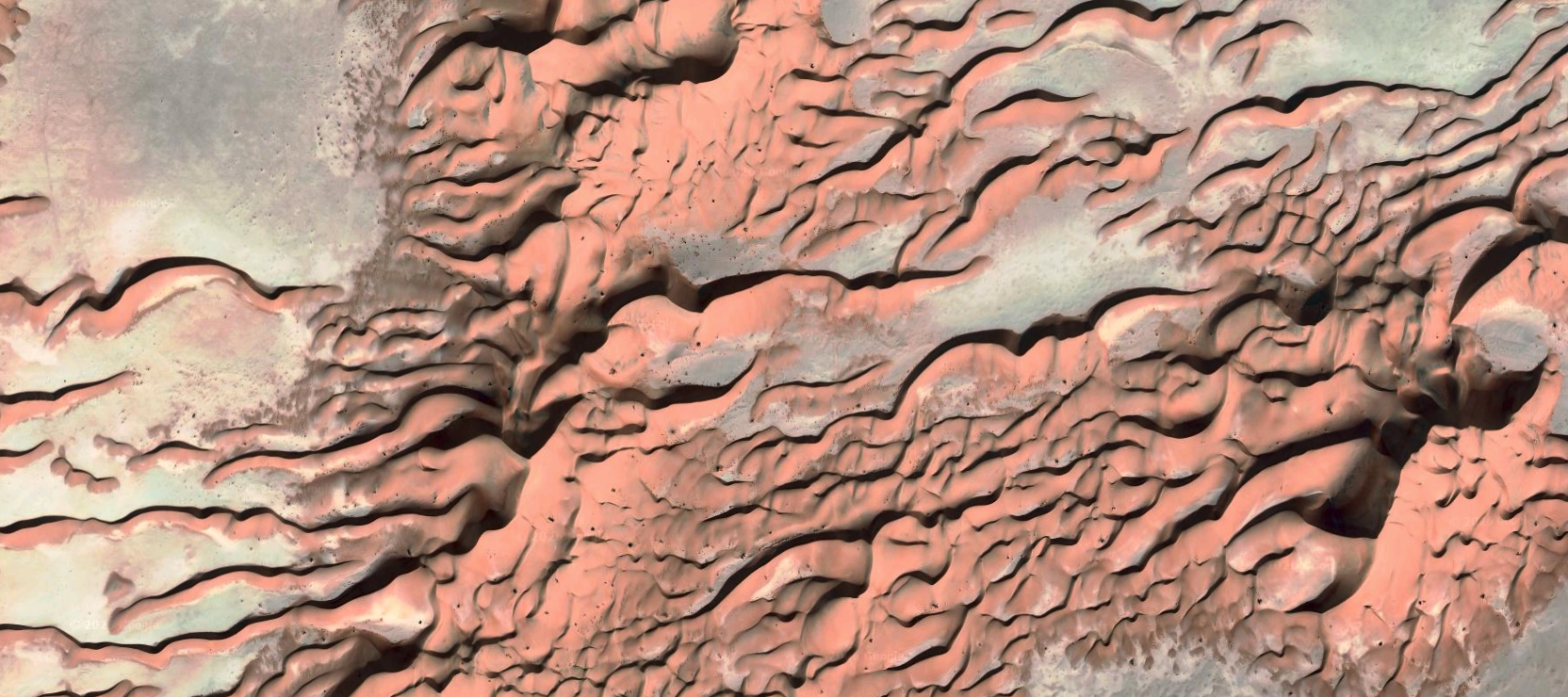
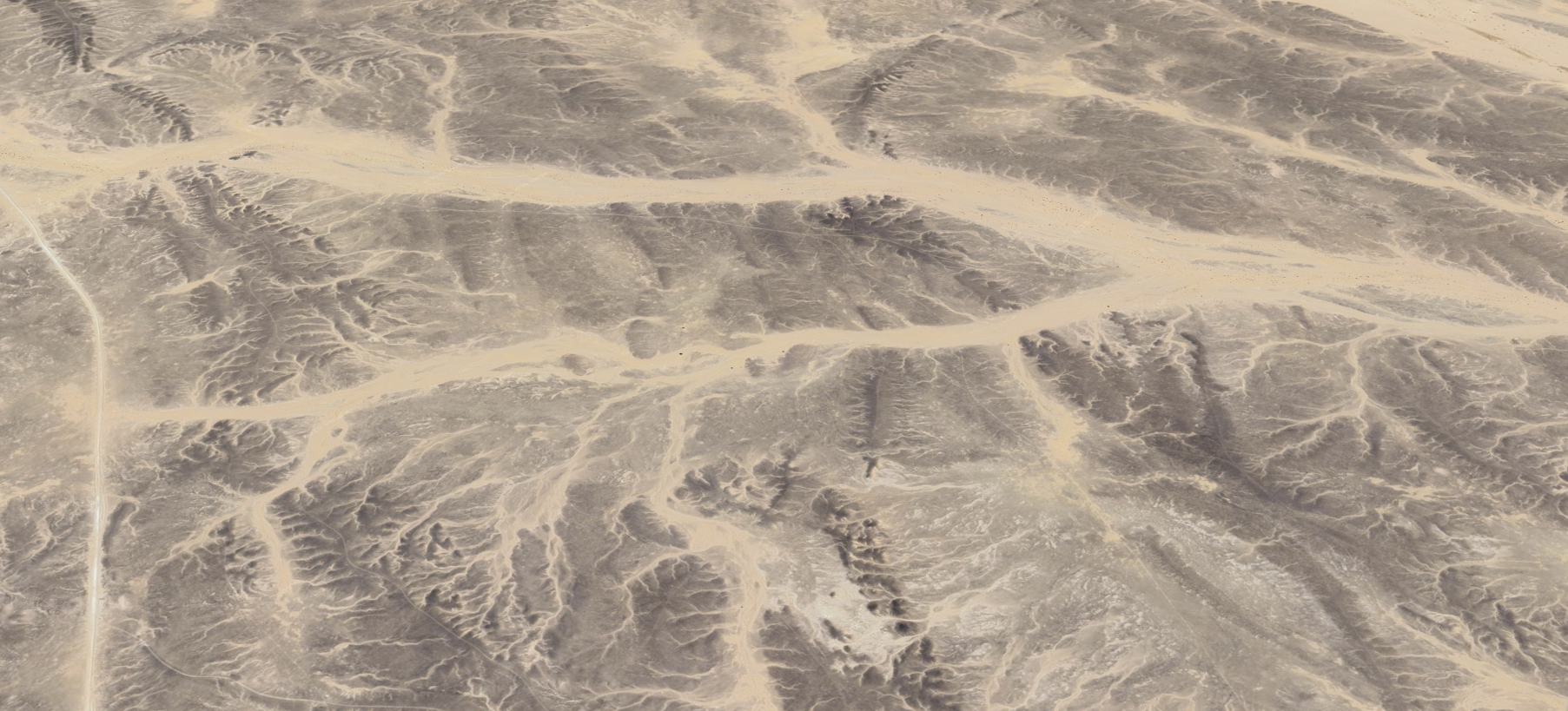
This is the final article in this series in Oman, and in it, we’re going to go right into the middle of all this emptiness.
It seems to me that there are two elements required for the prototypical Arabian desert experience. Or, at least what I’d imagined the prototypical experience to be from afar. First (of course) is the desert itself, preferably with giant rolling sand dunes as far as the eye can see… and the second, is a desert oasis.
The sand dunes we will get to later, but first, our oasis: Wadi Bani Khalid.
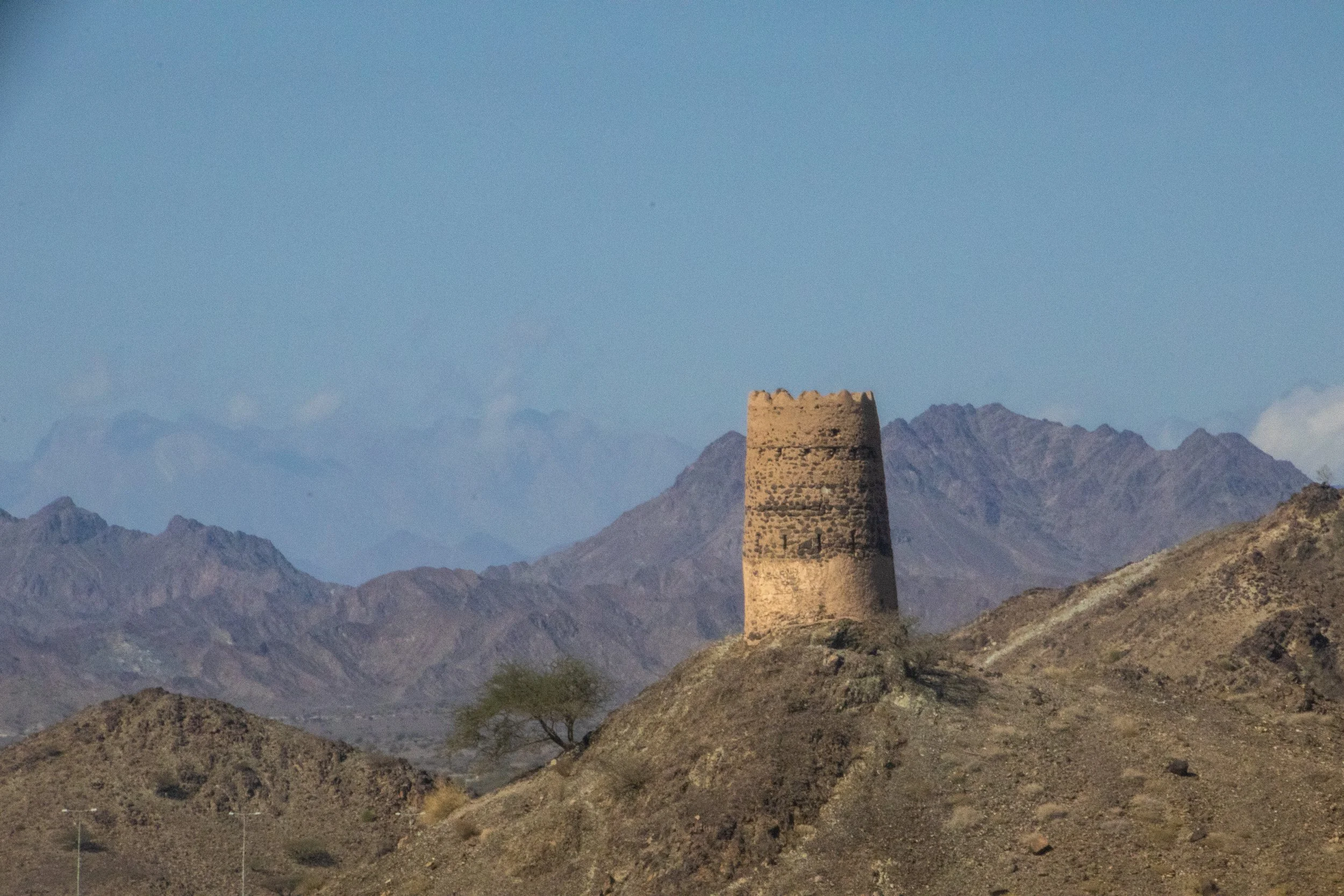
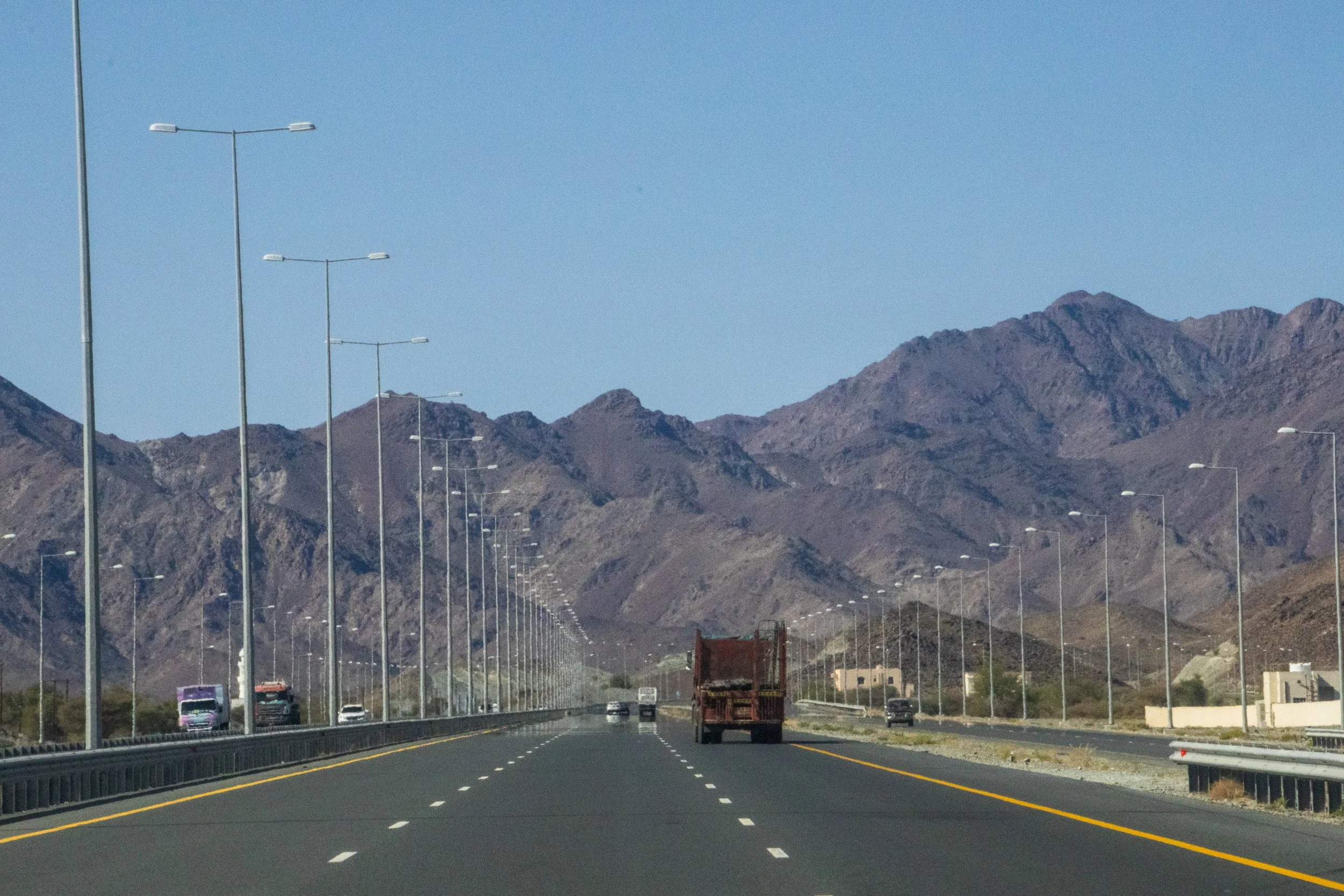
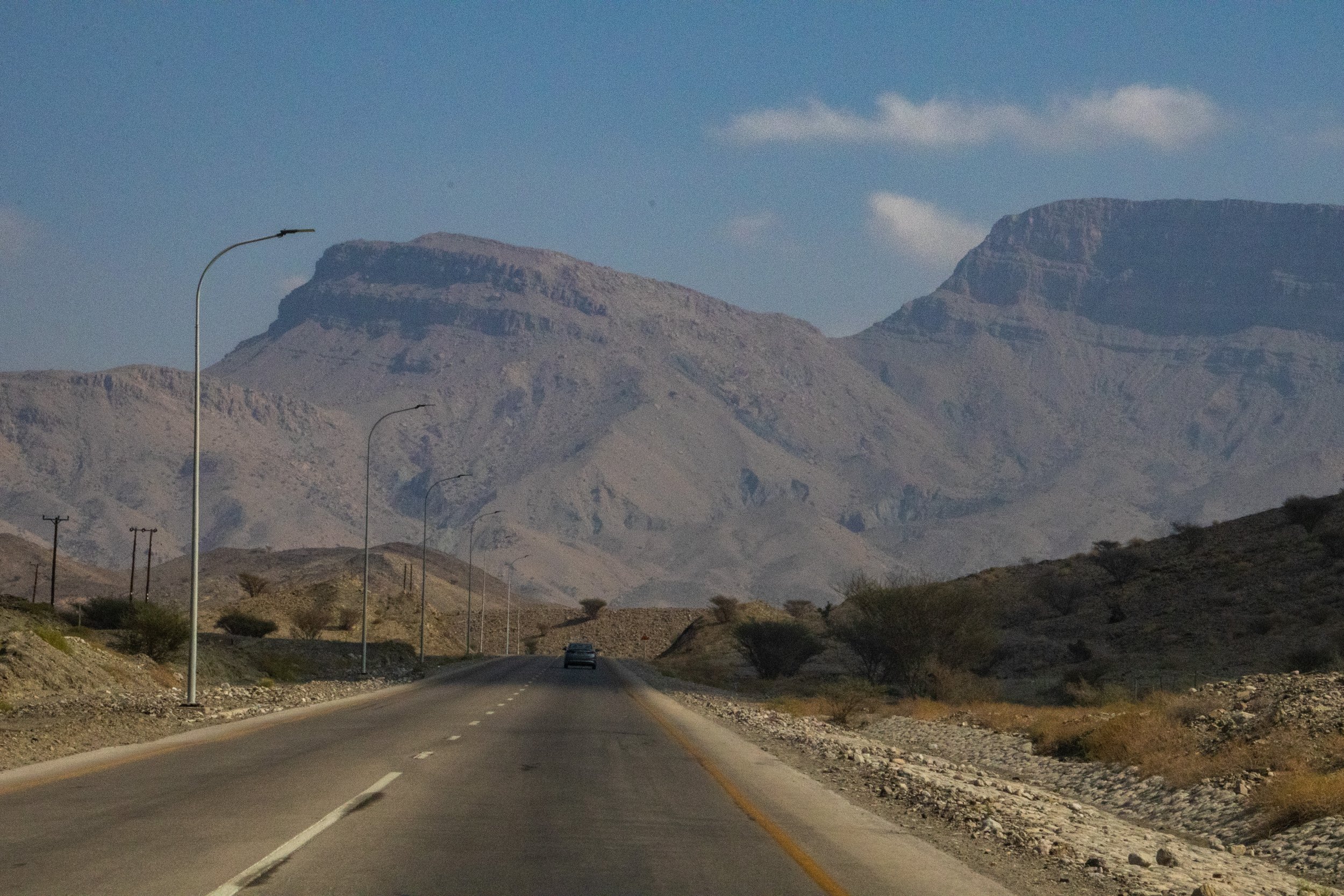
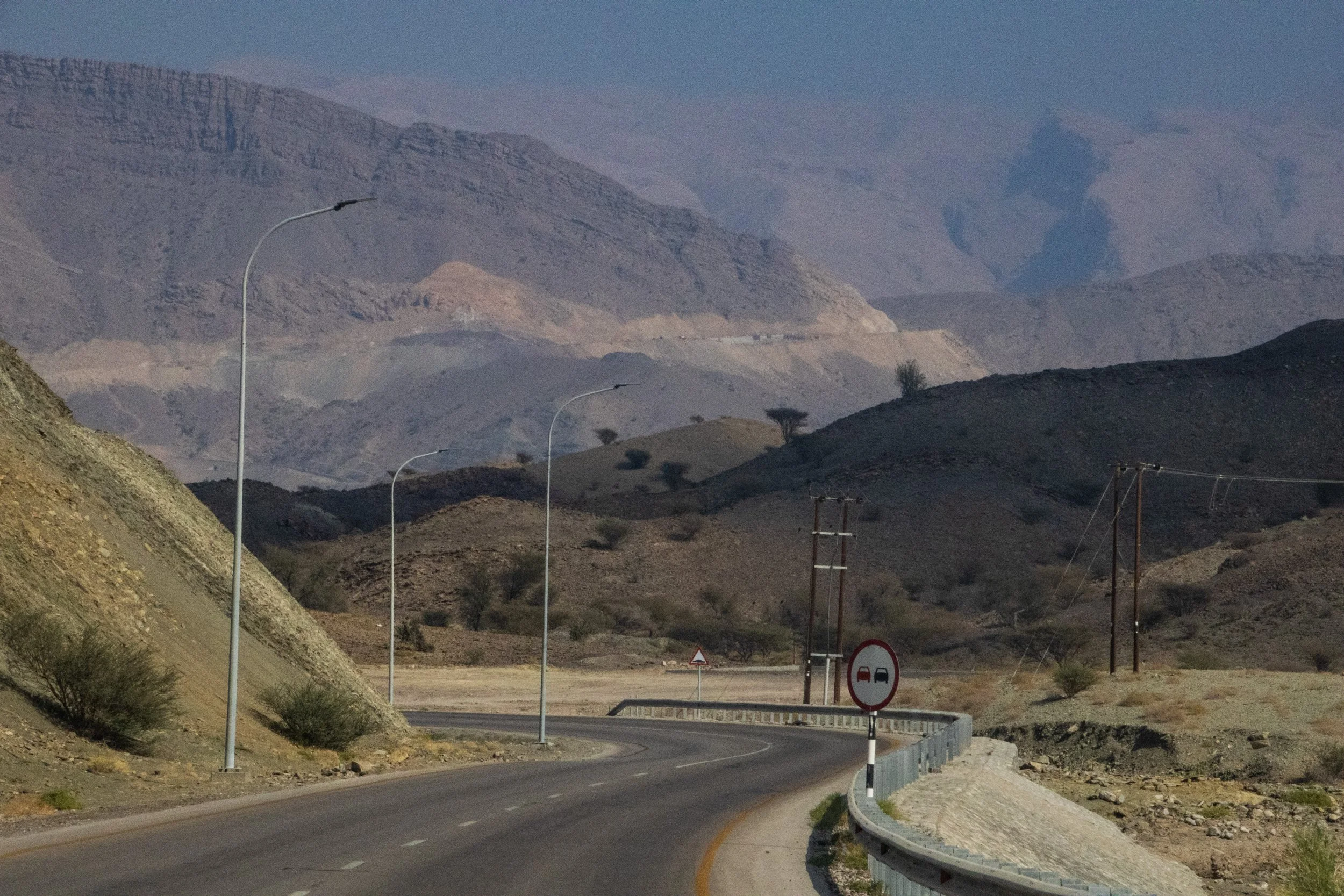
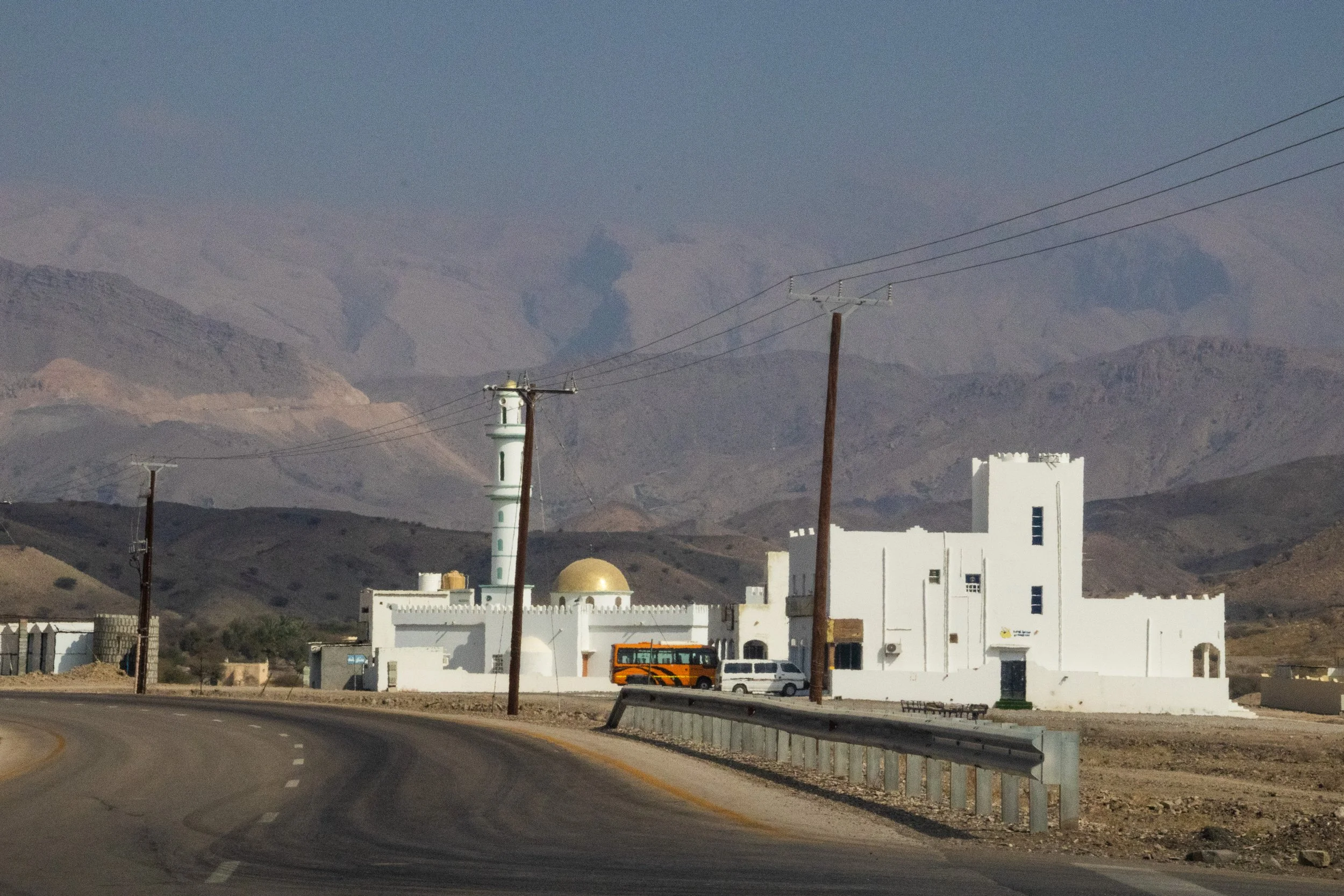
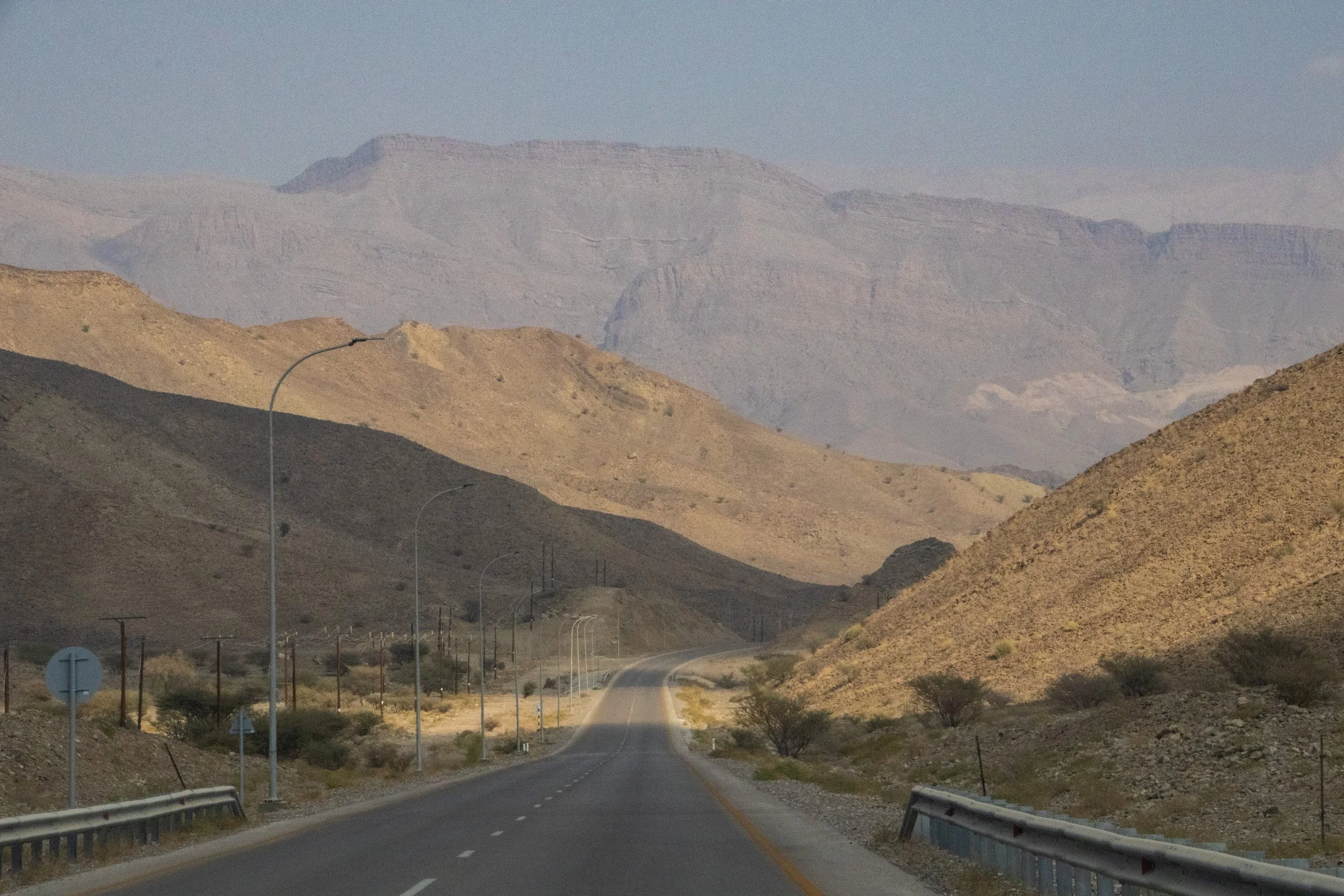
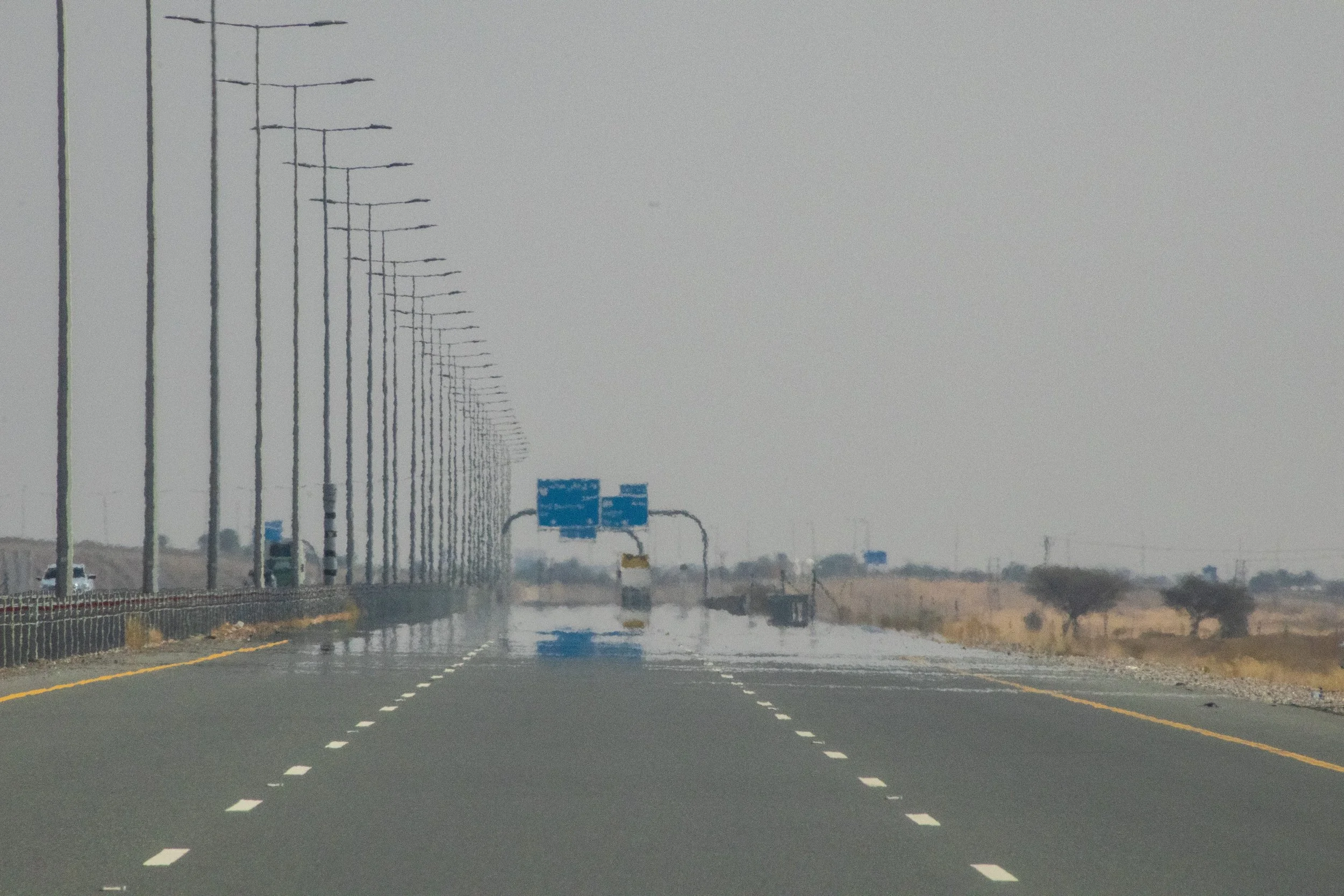
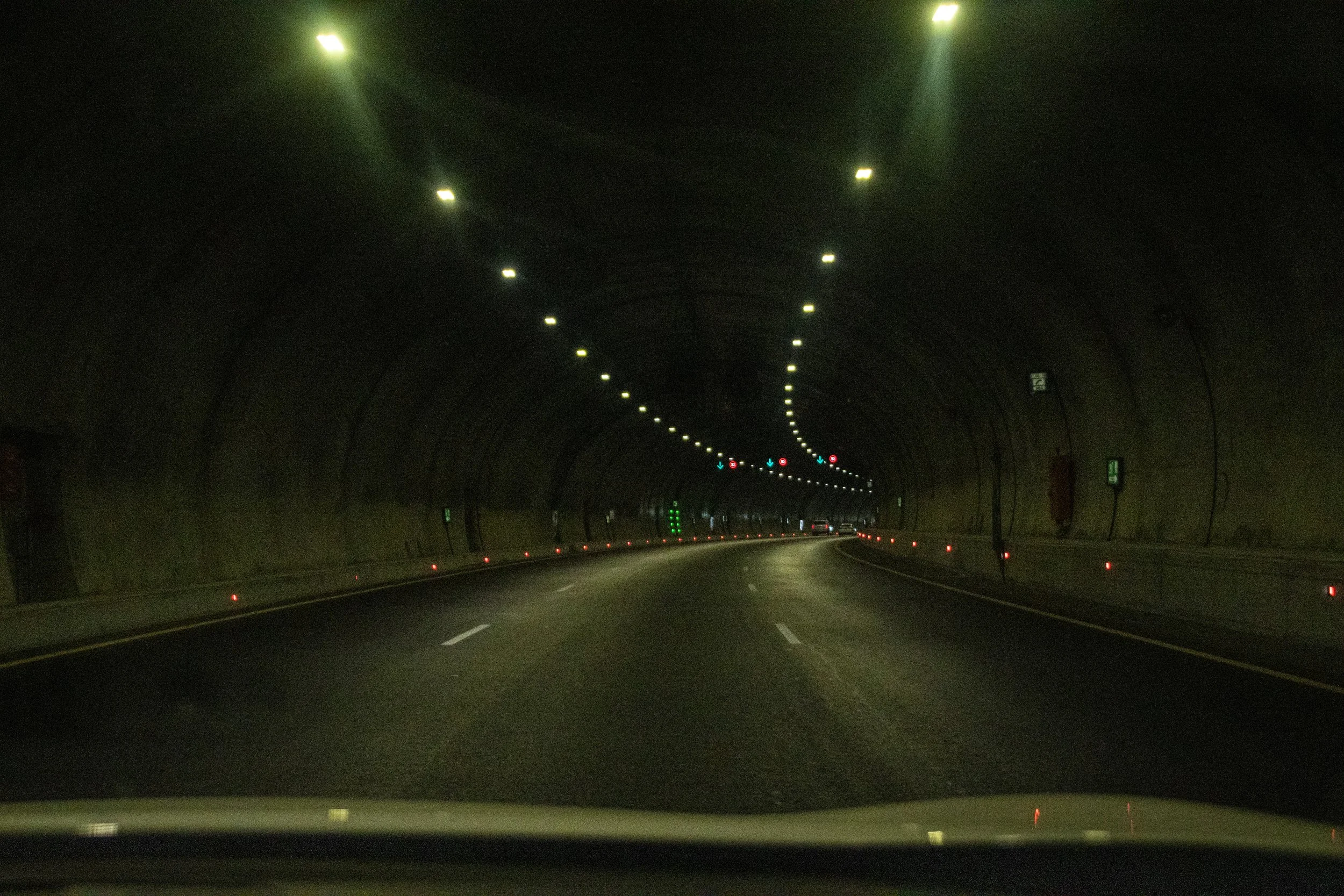
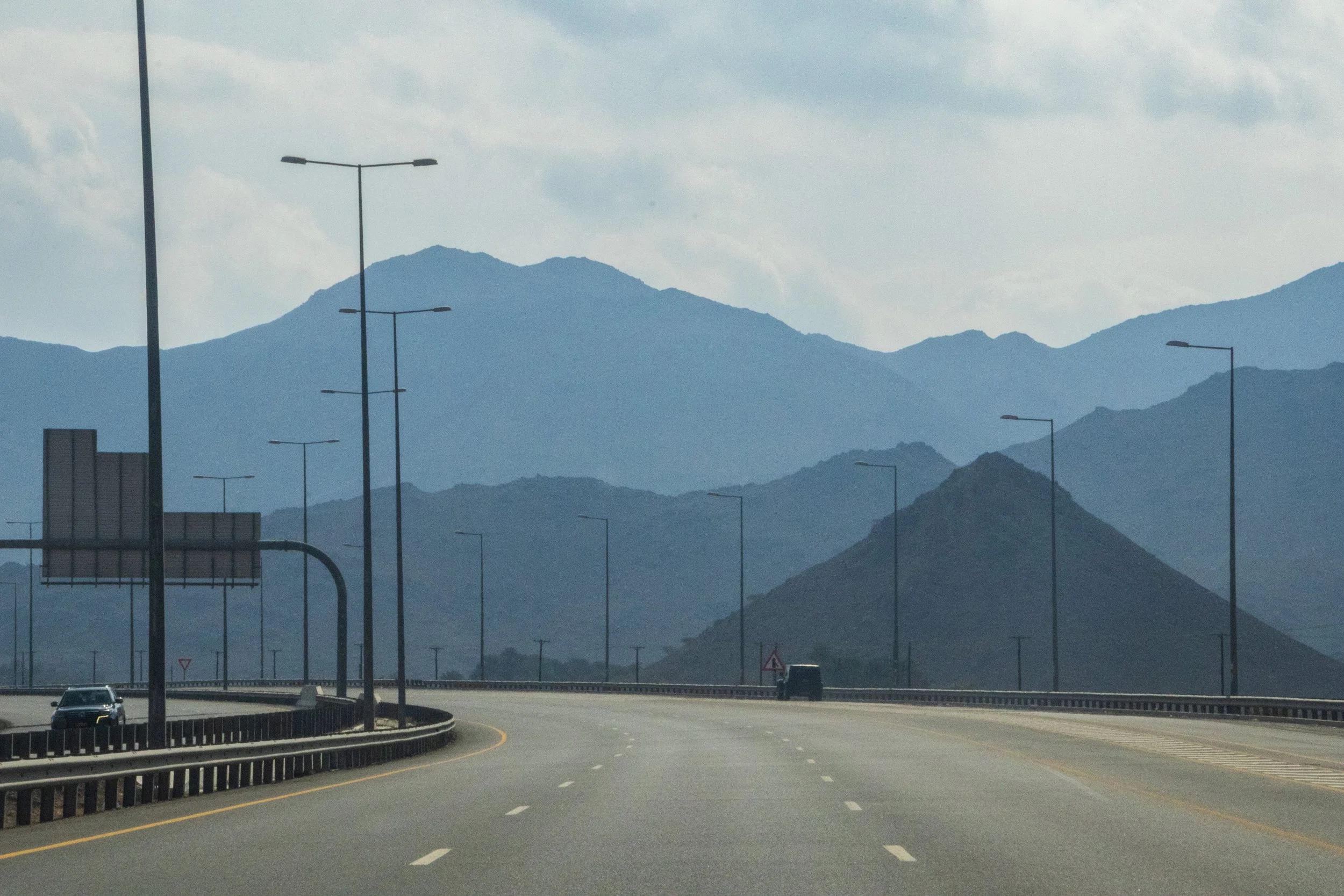
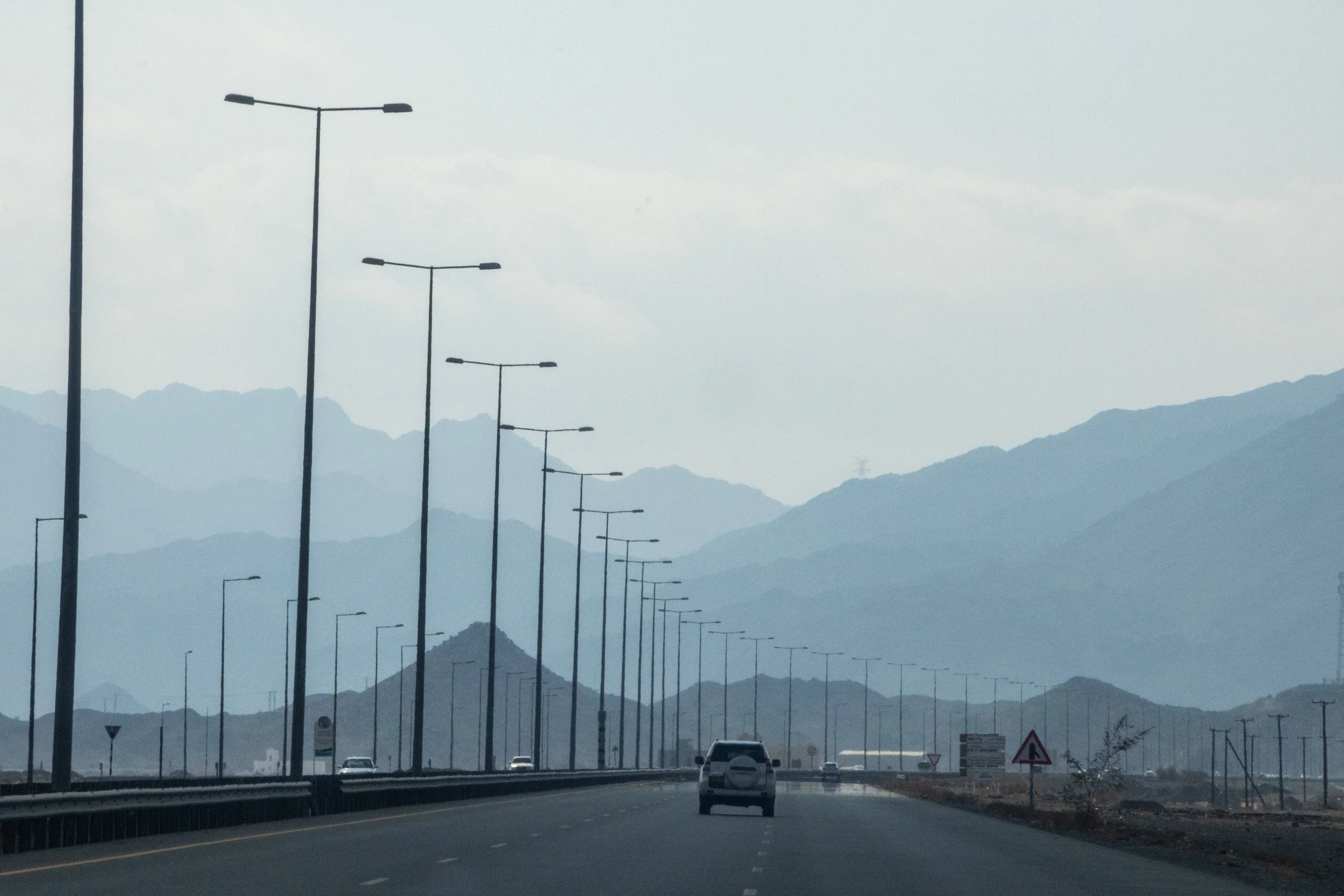
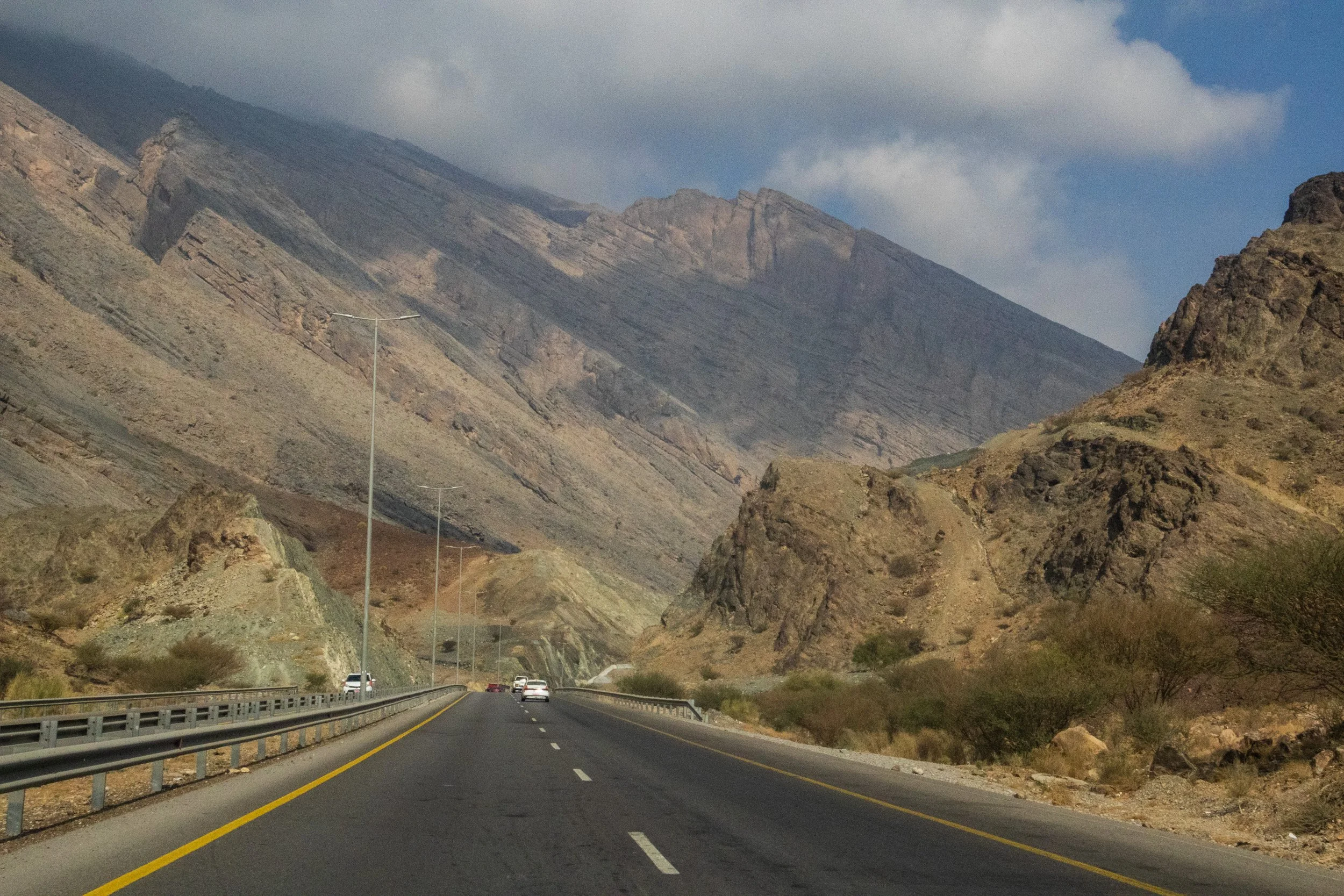
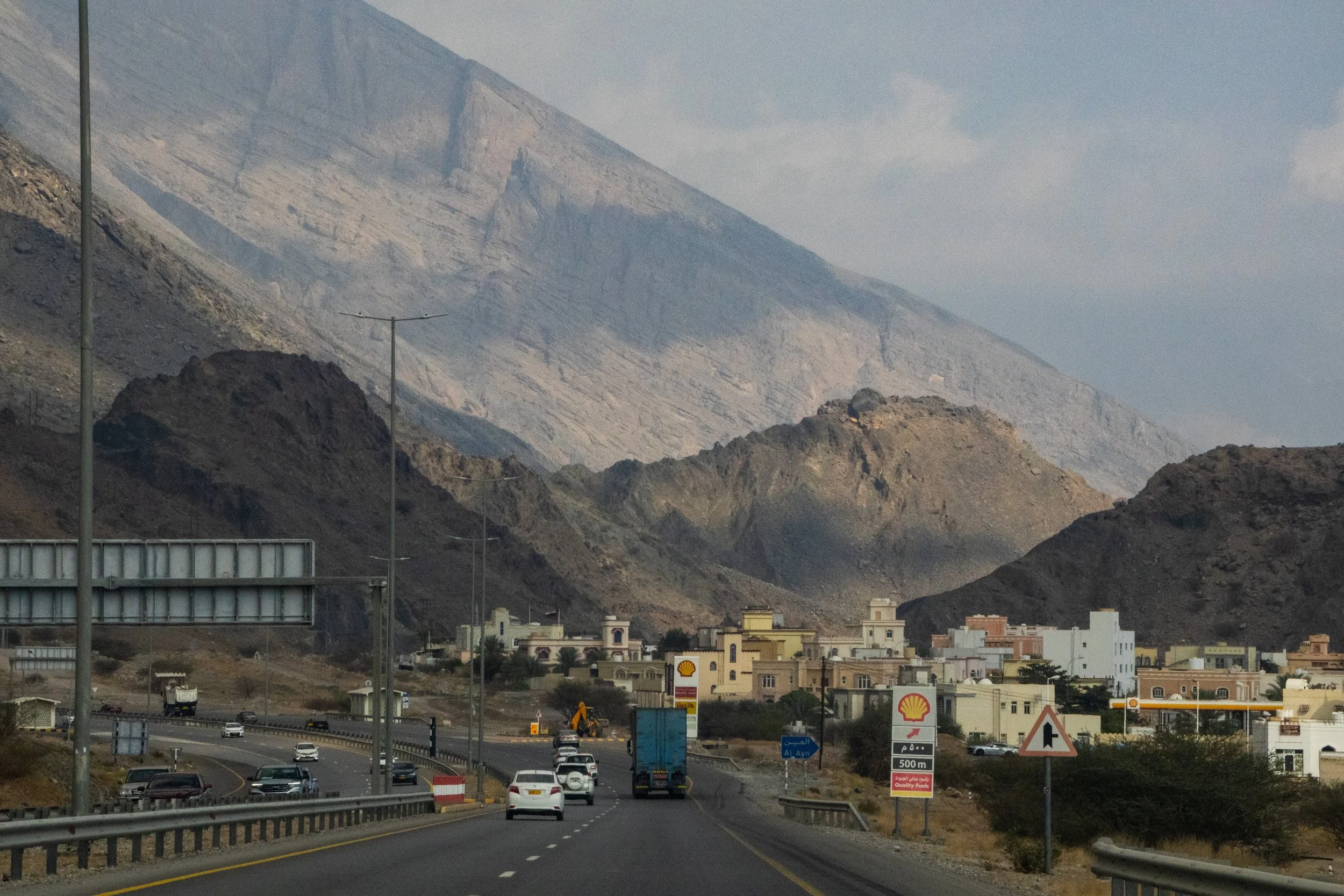
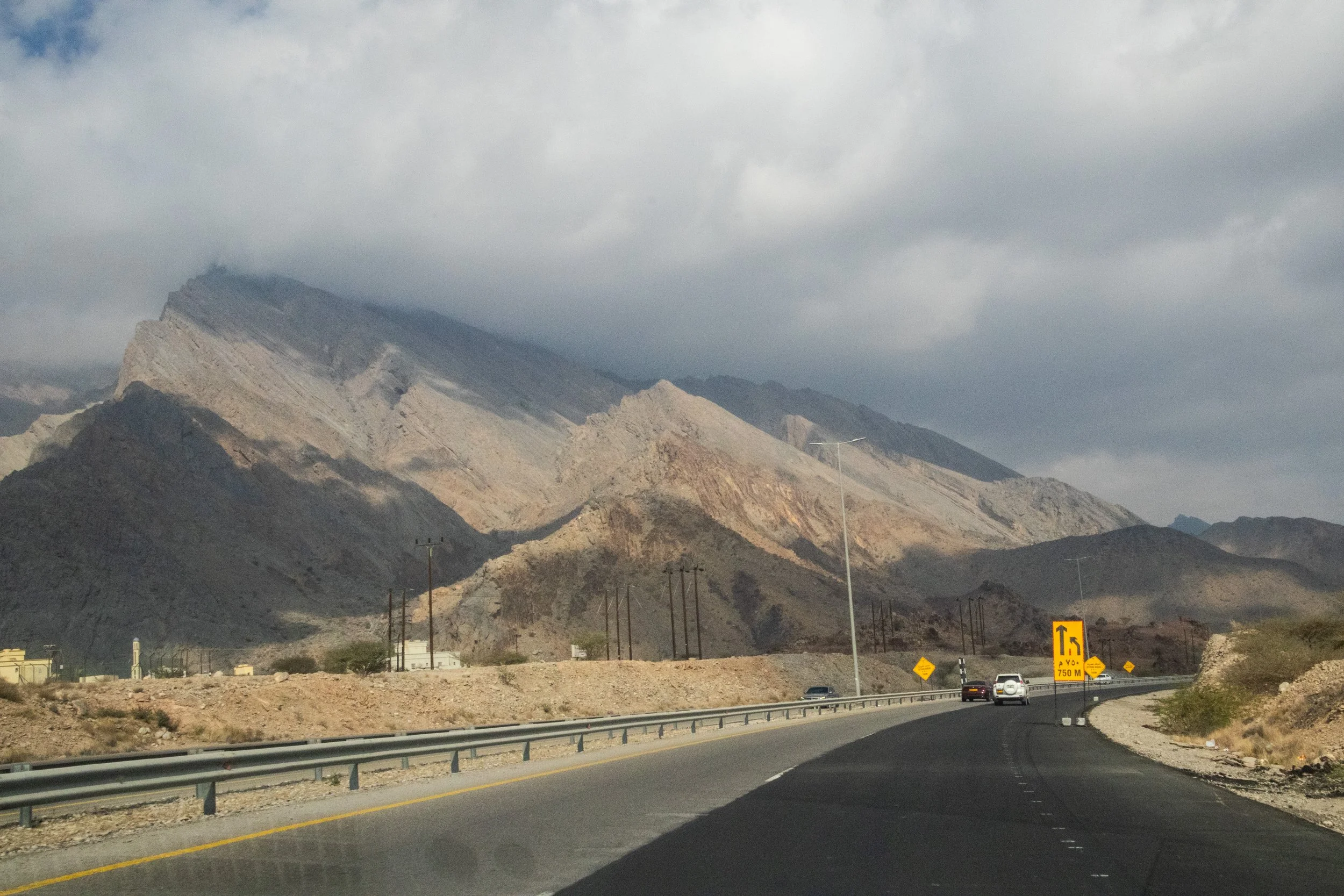
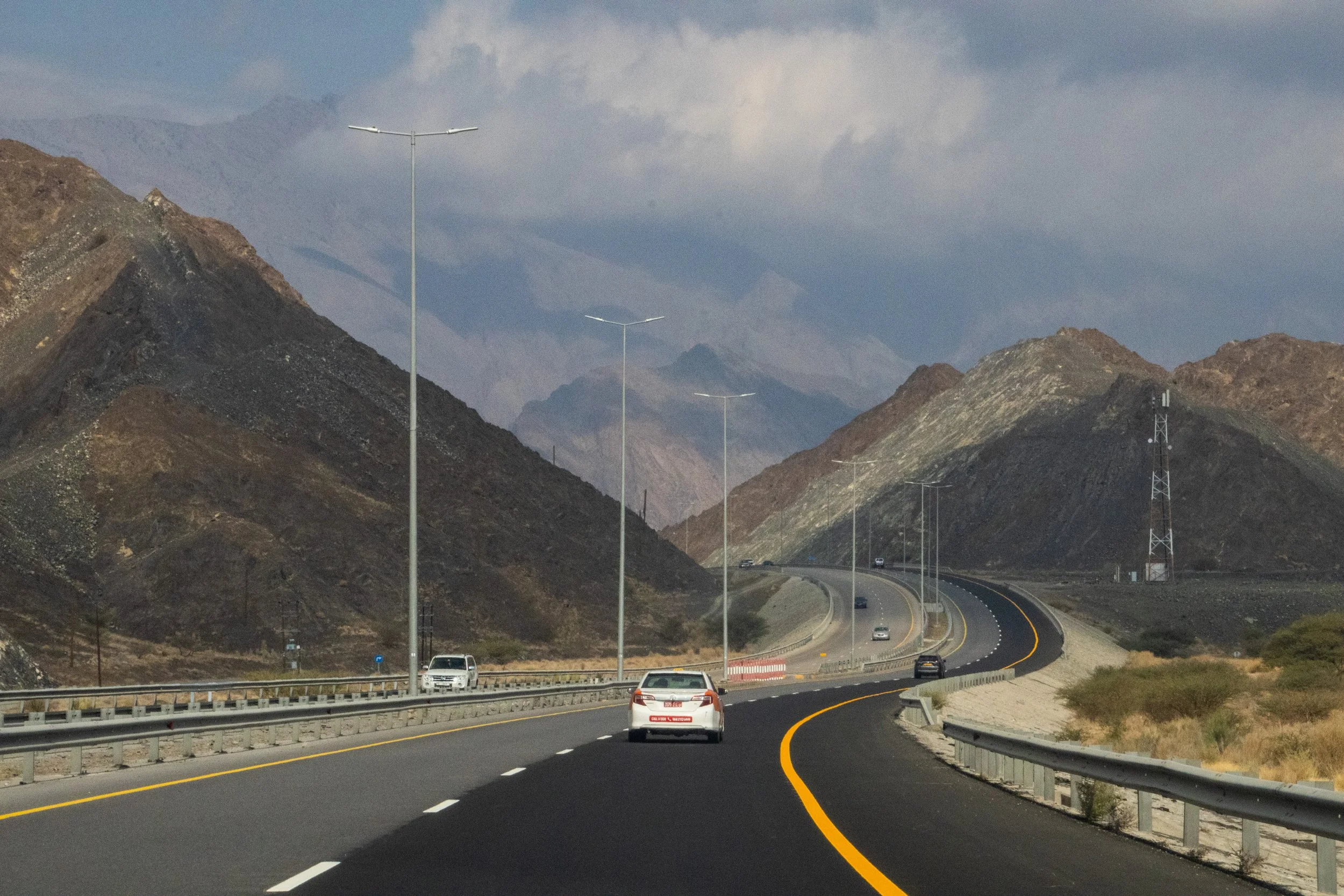
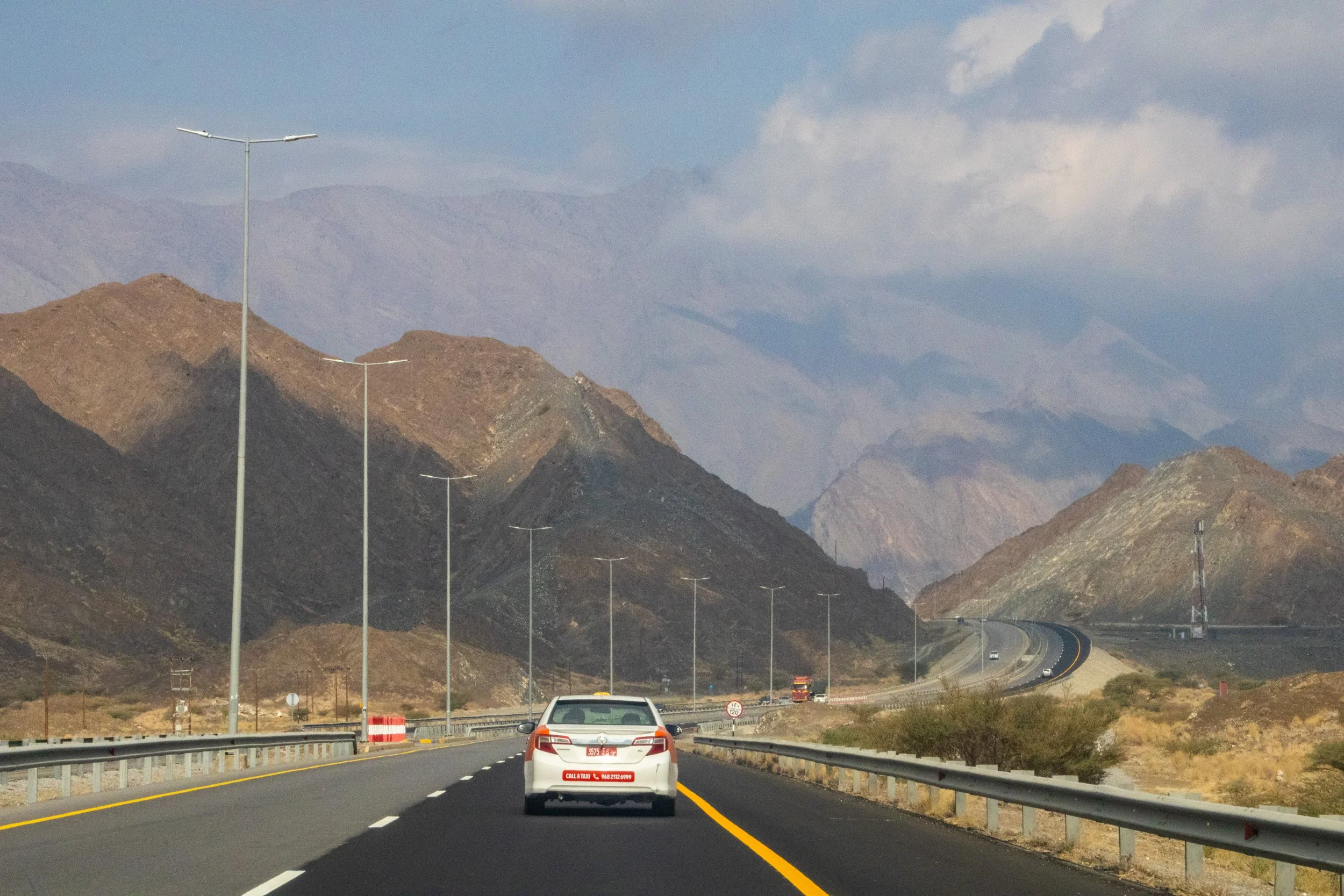
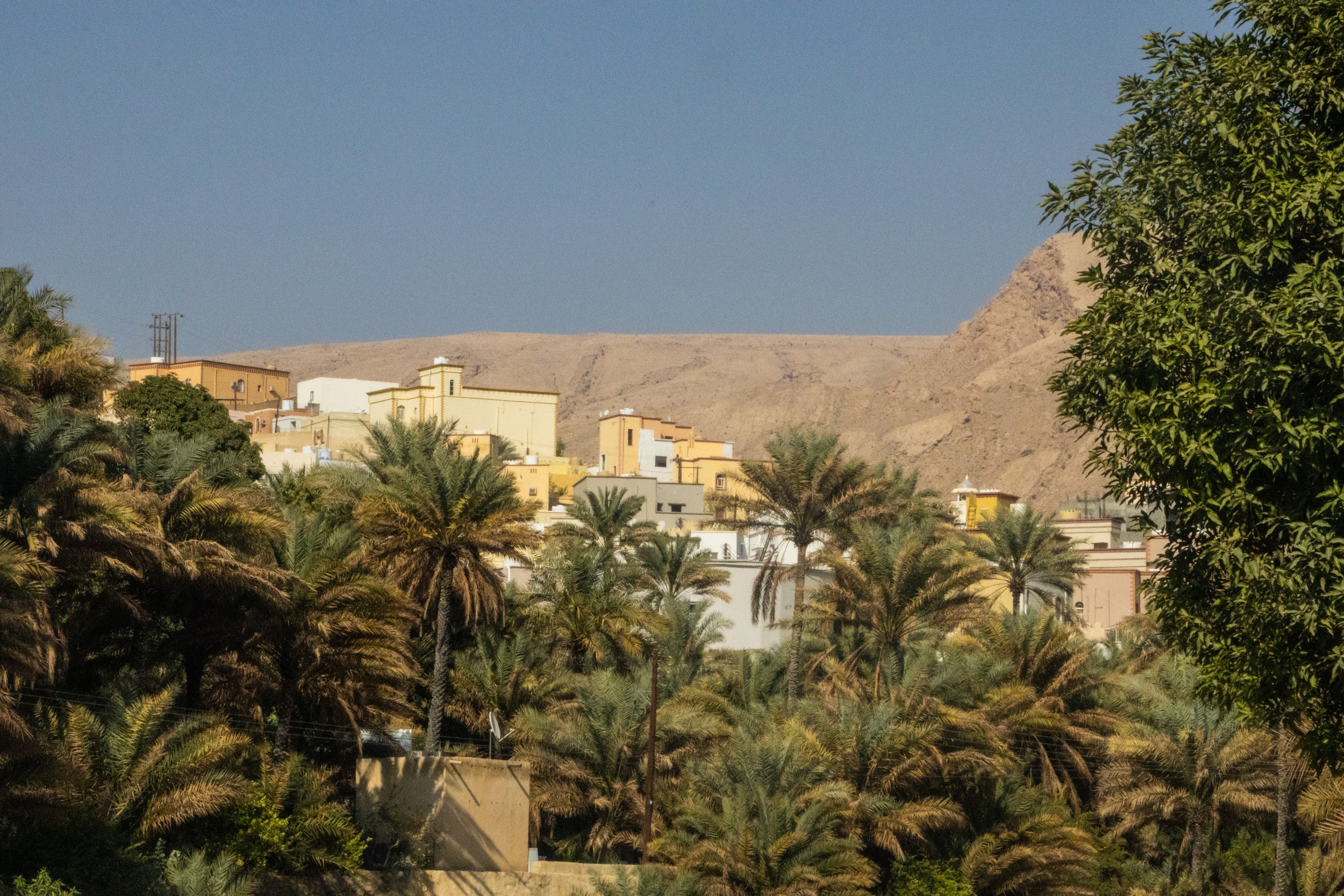
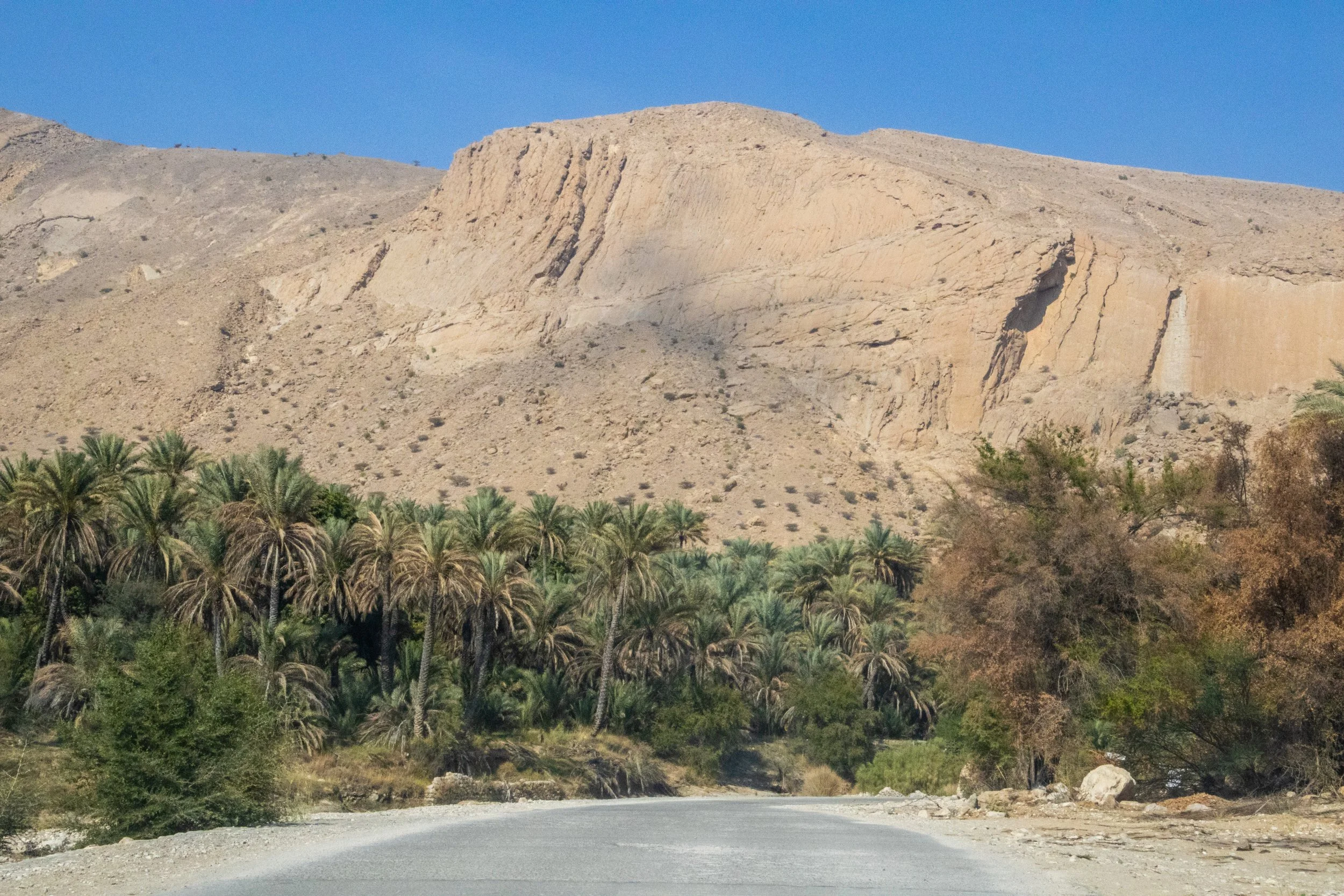
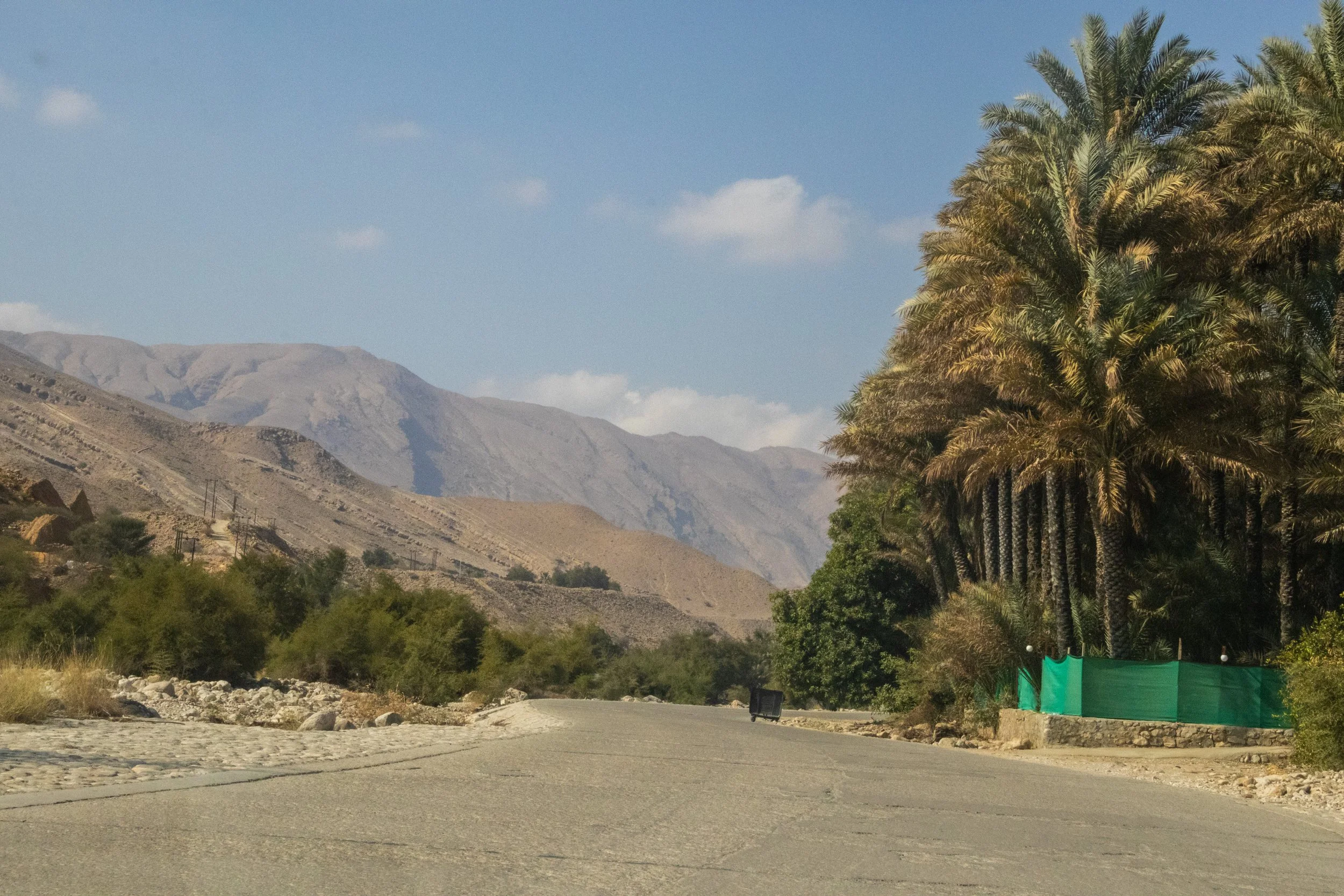
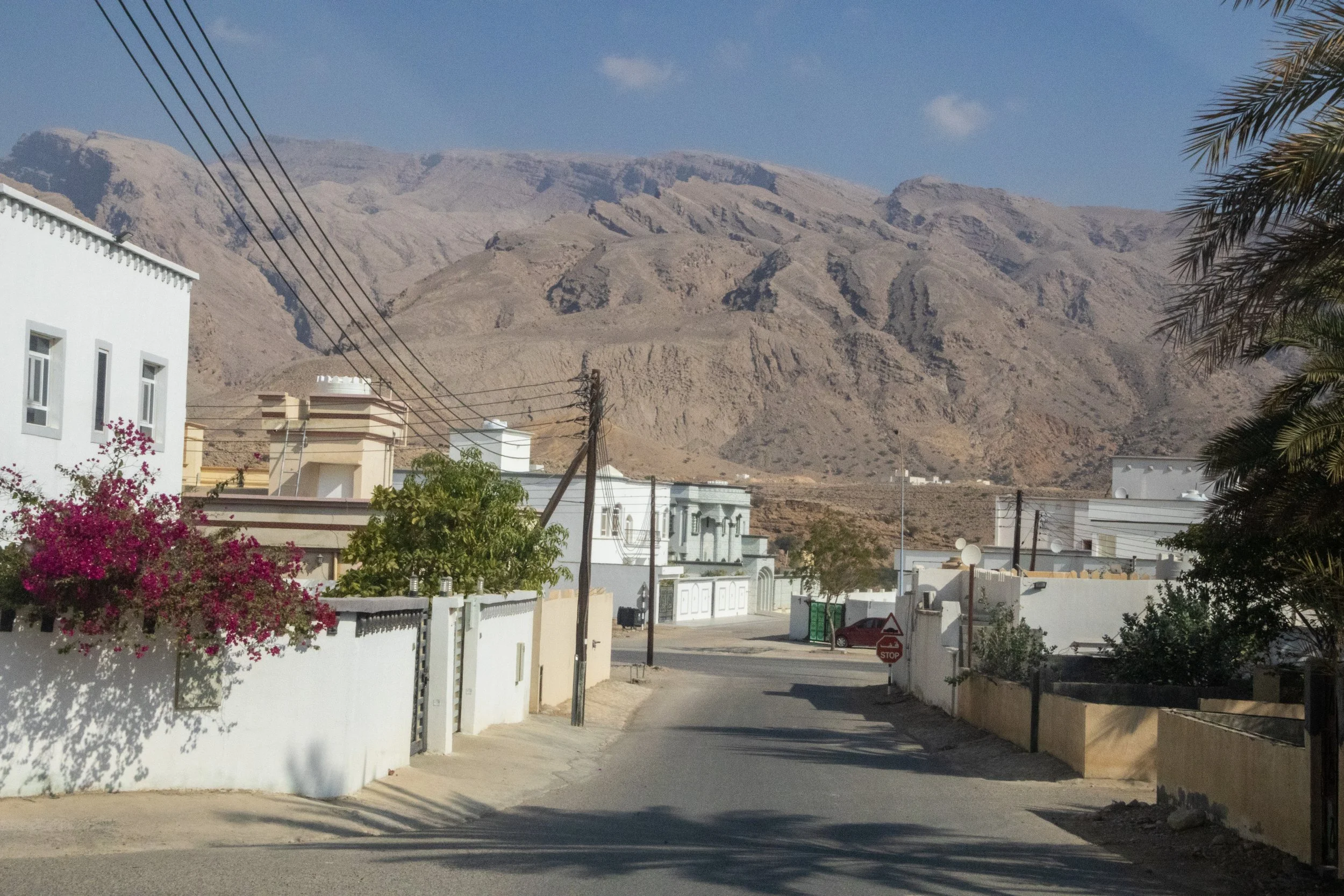
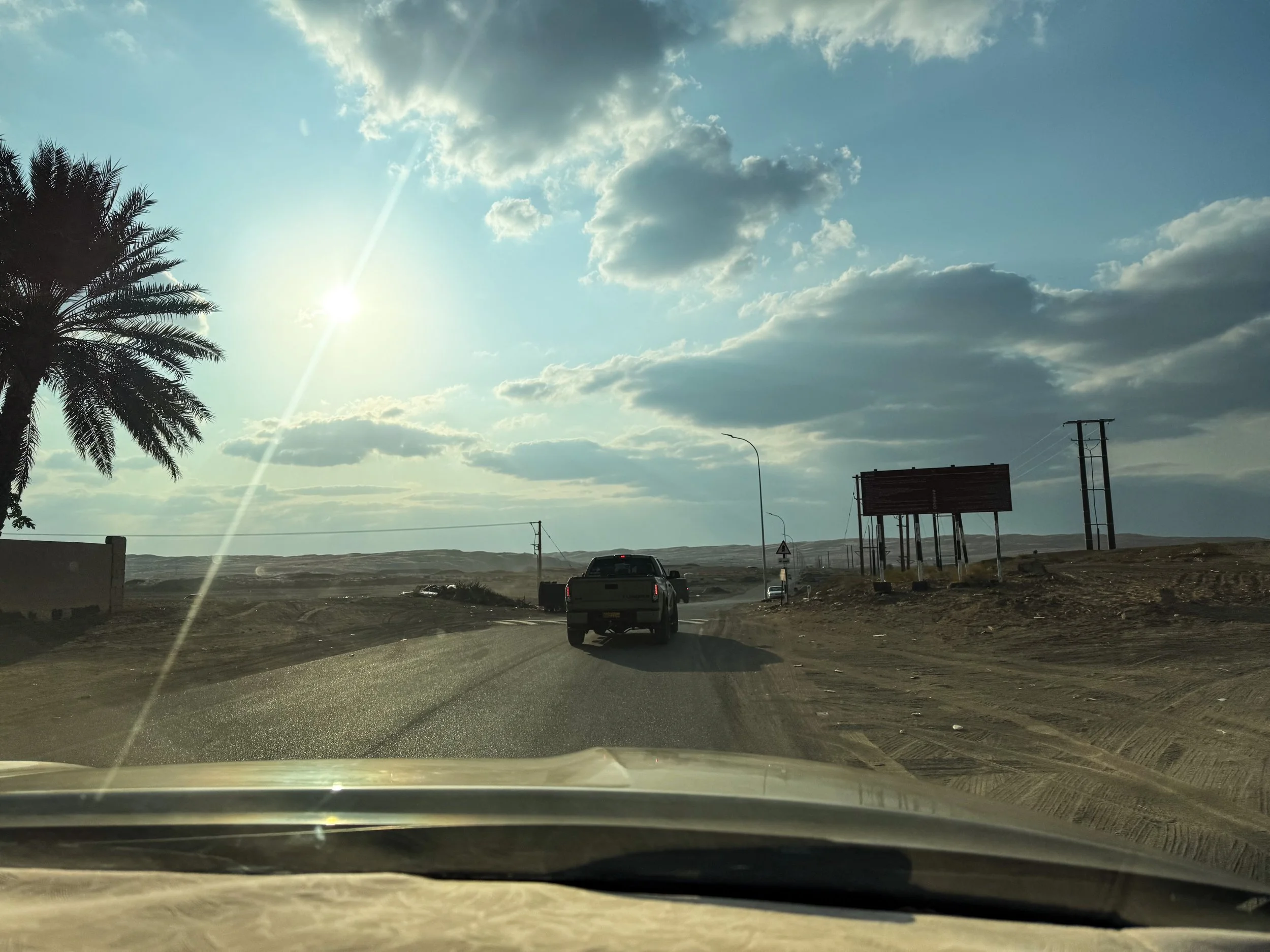
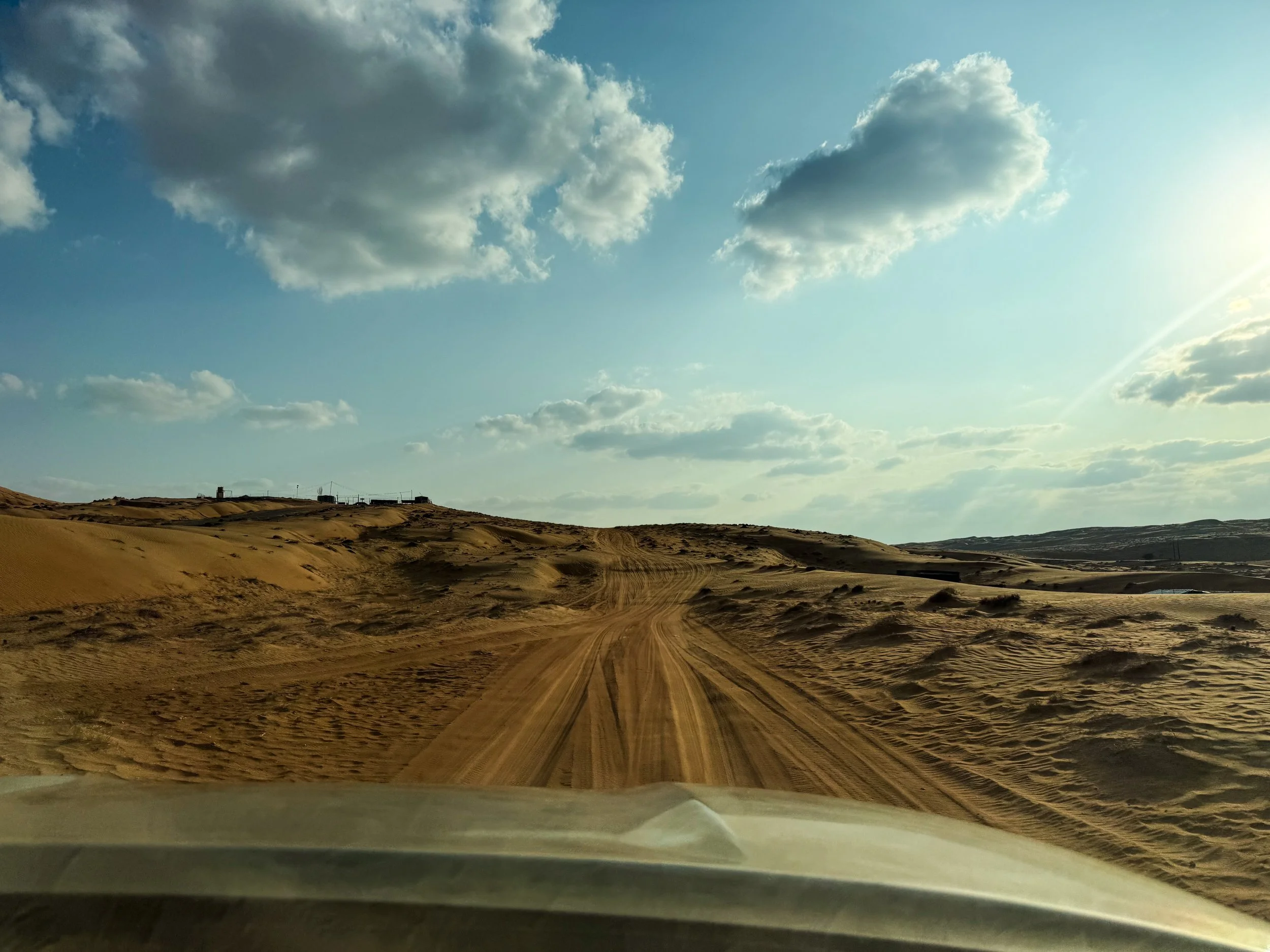
Here are some snaps from out the window of the car in our long drives across the endless wastes to get to and from the destinations in this article. As you can see, Oman is quite mountainous. These are the Al Hajar mountains in the north of Oman. It is here that we will find our oasis.
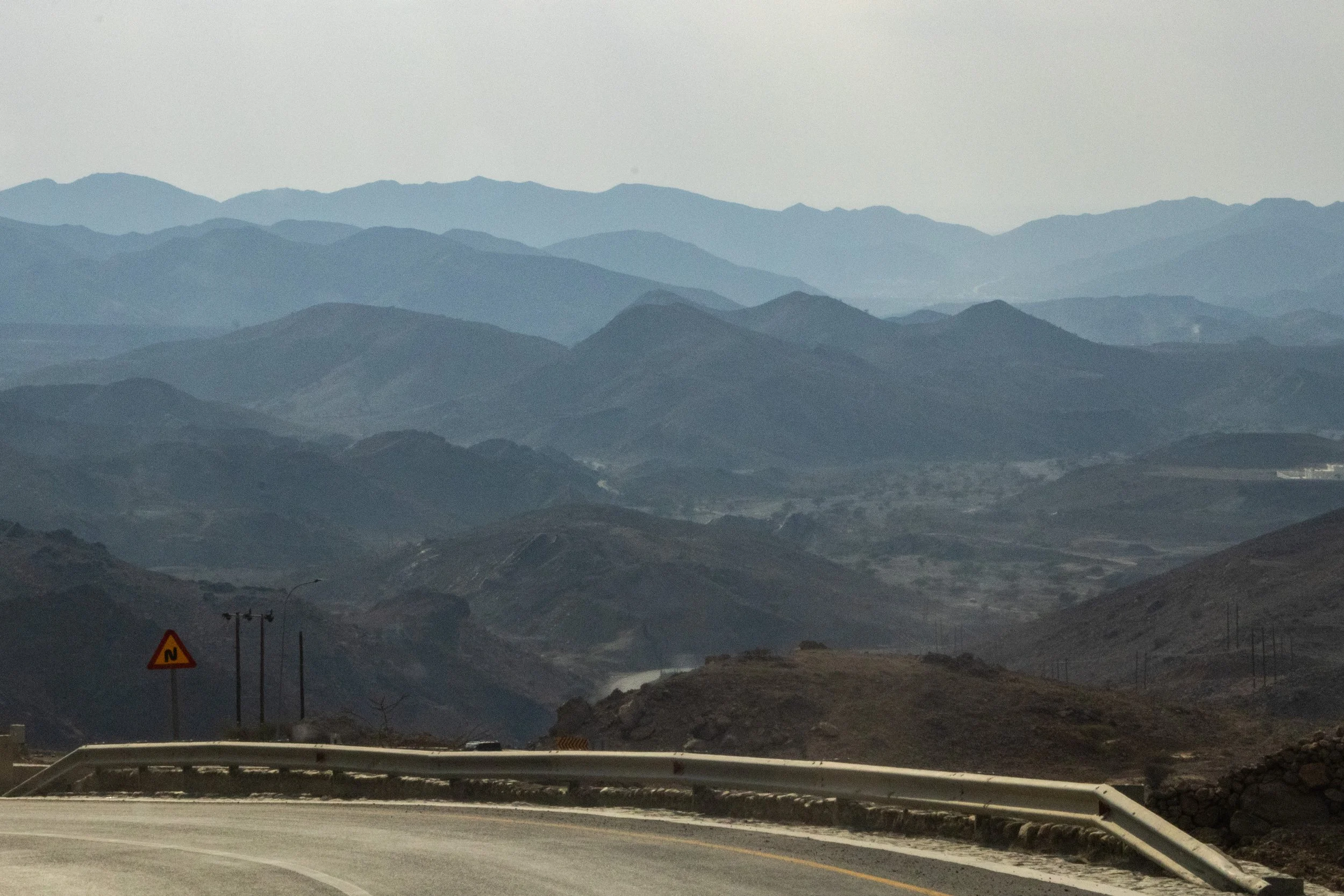
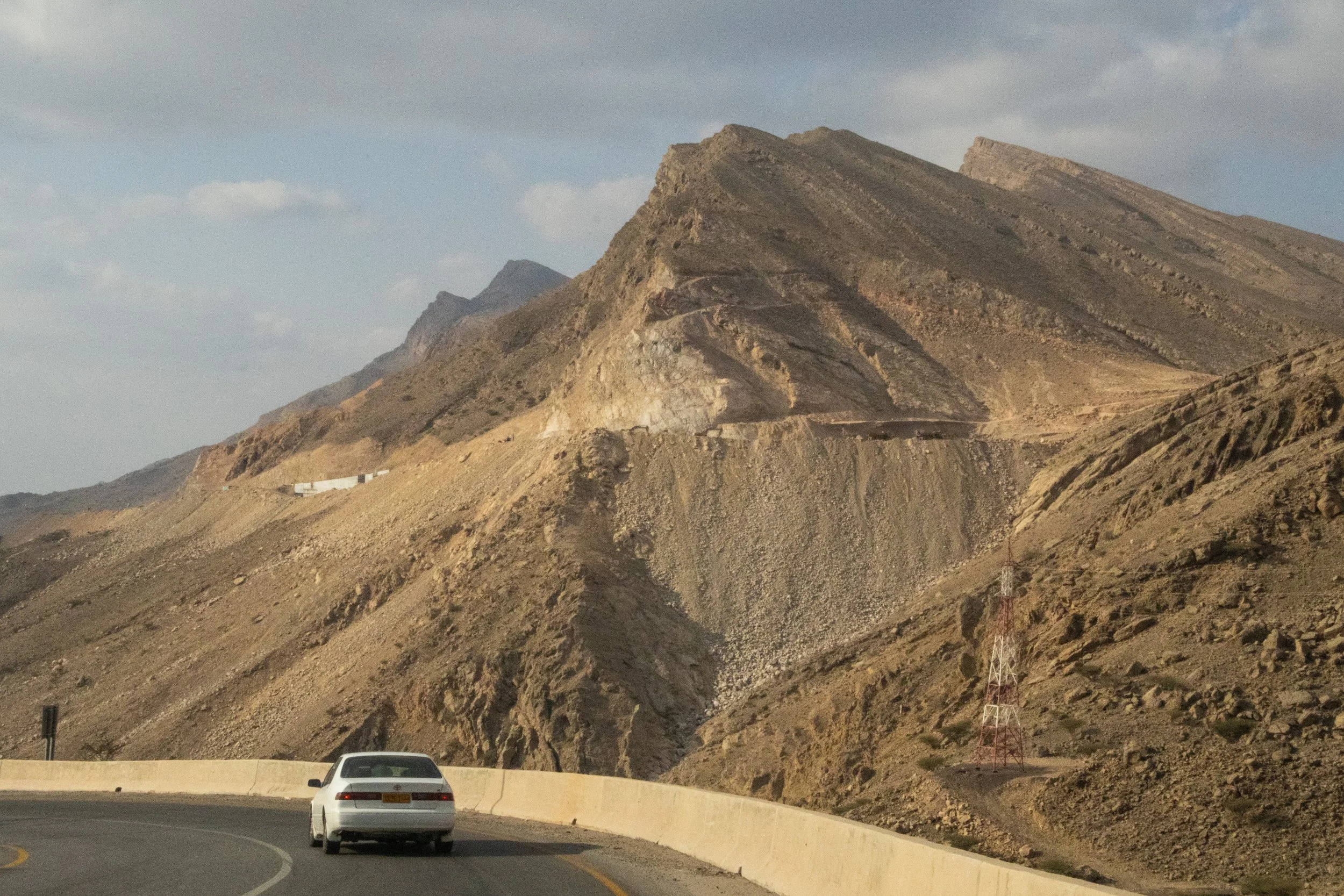
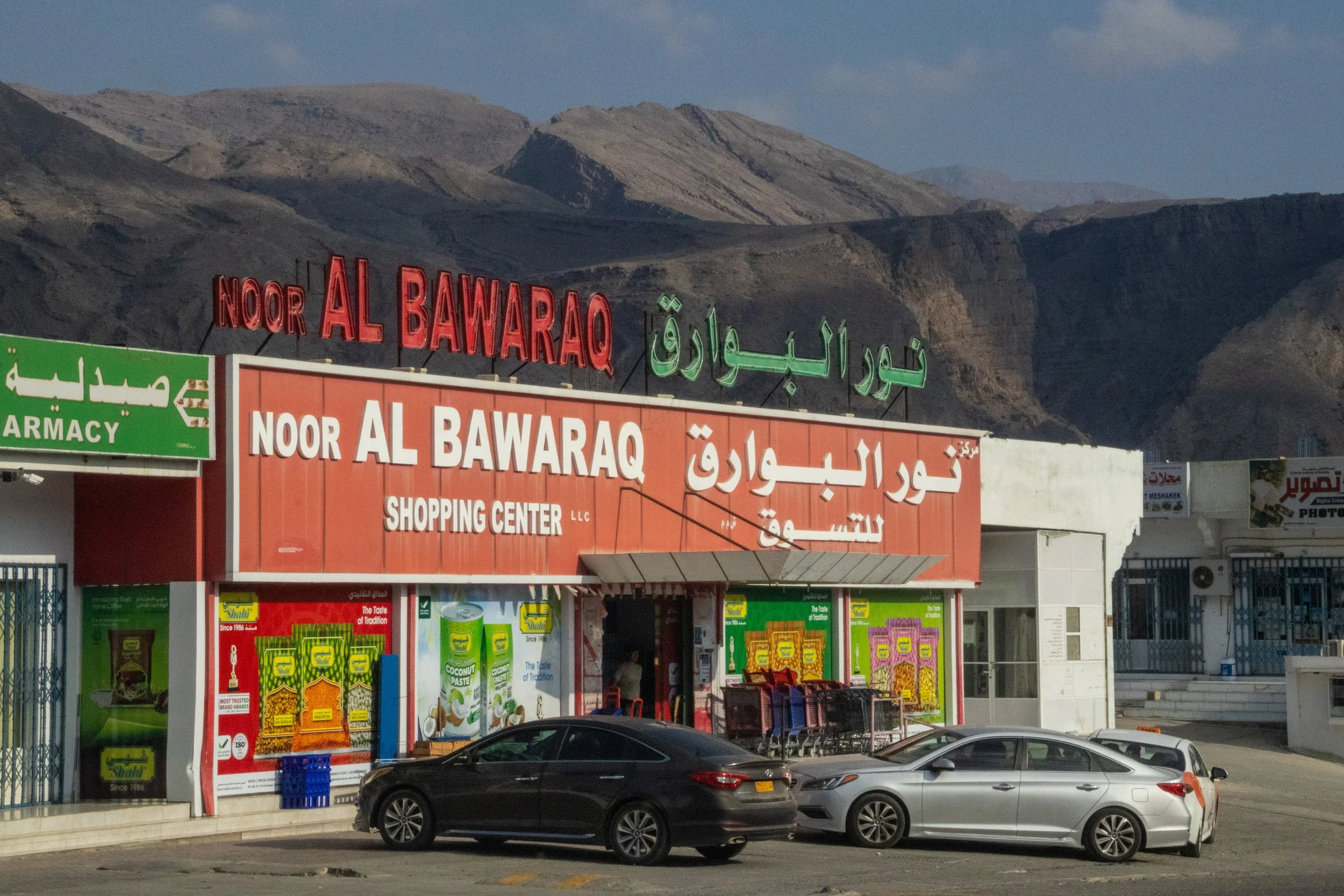
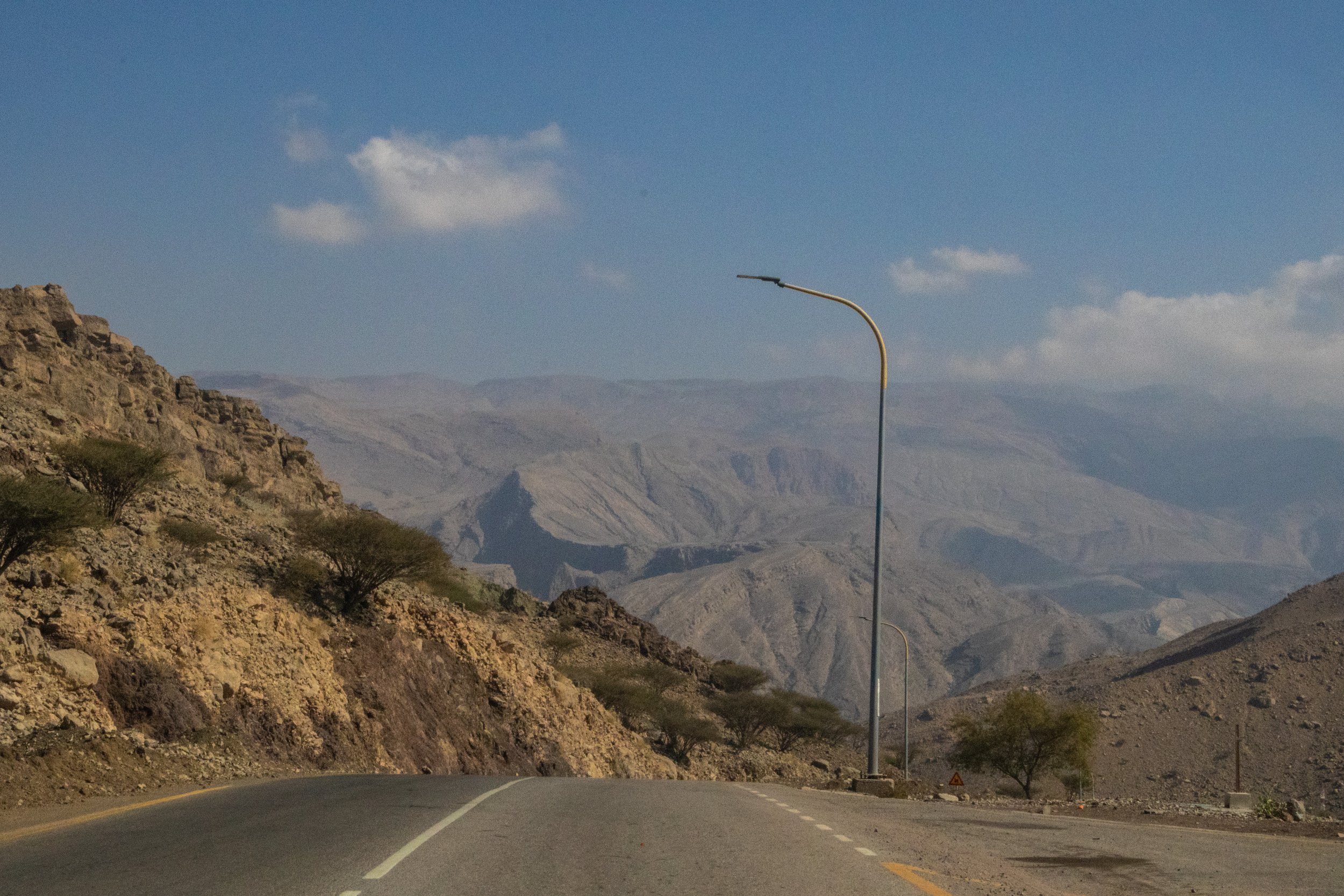
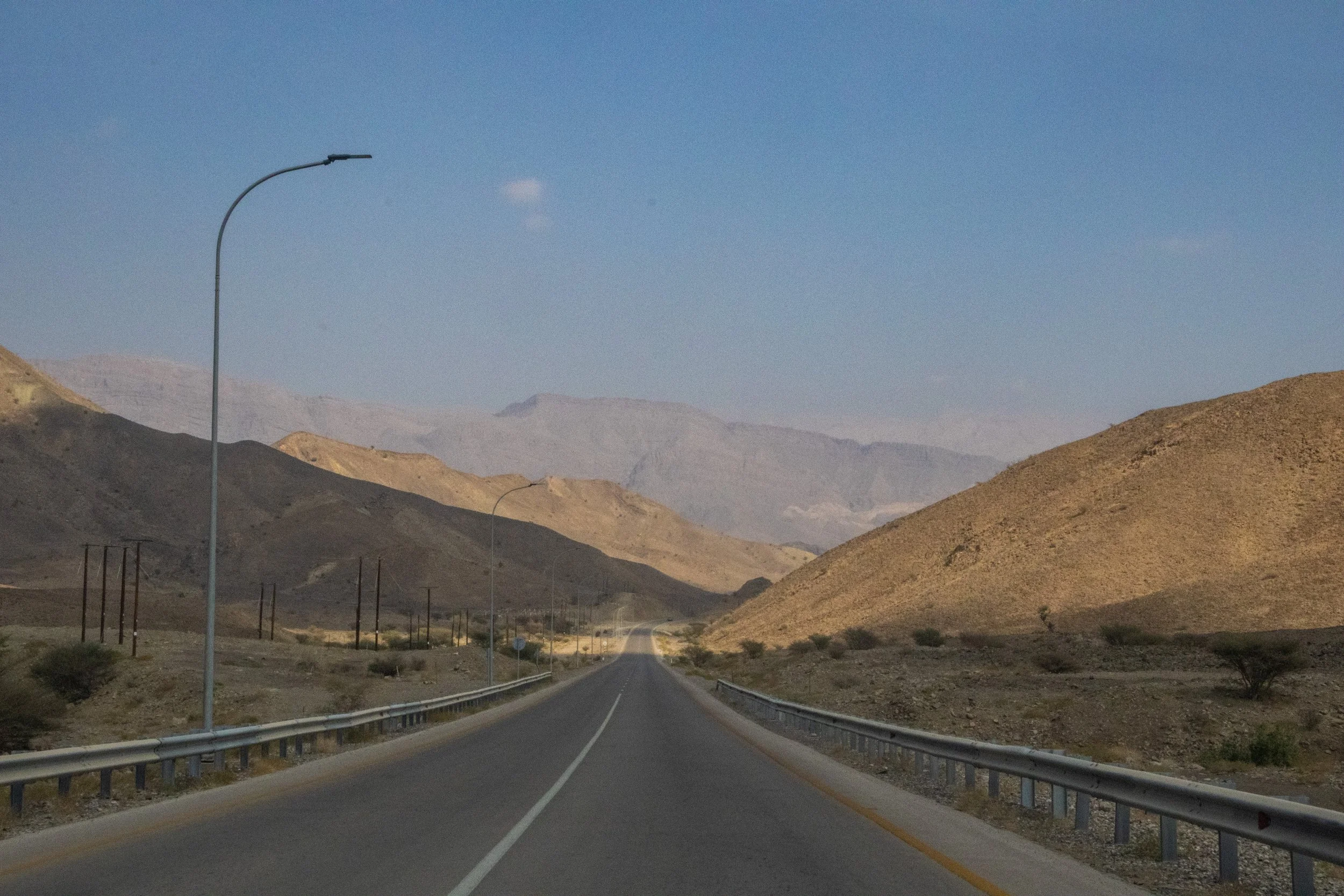
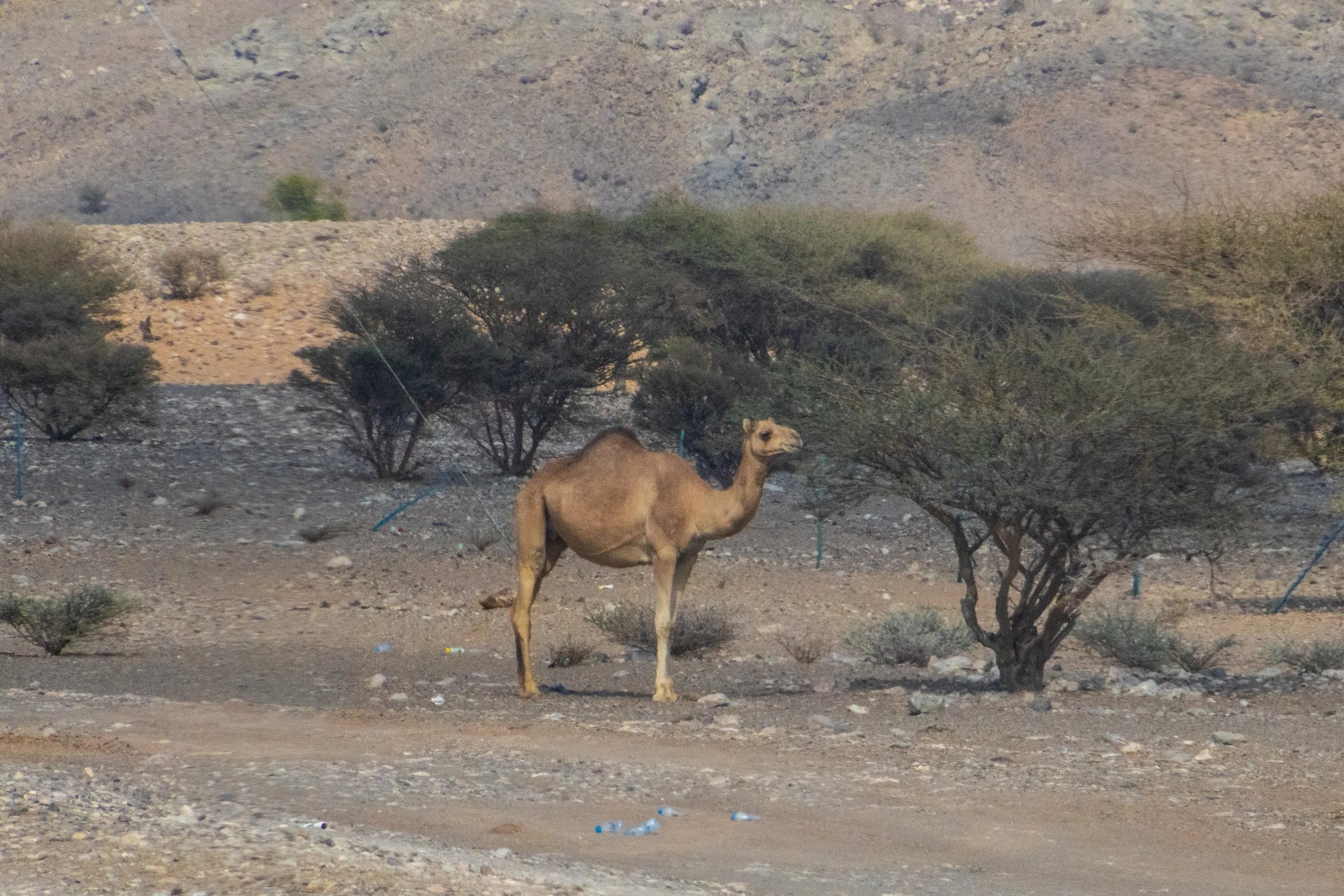
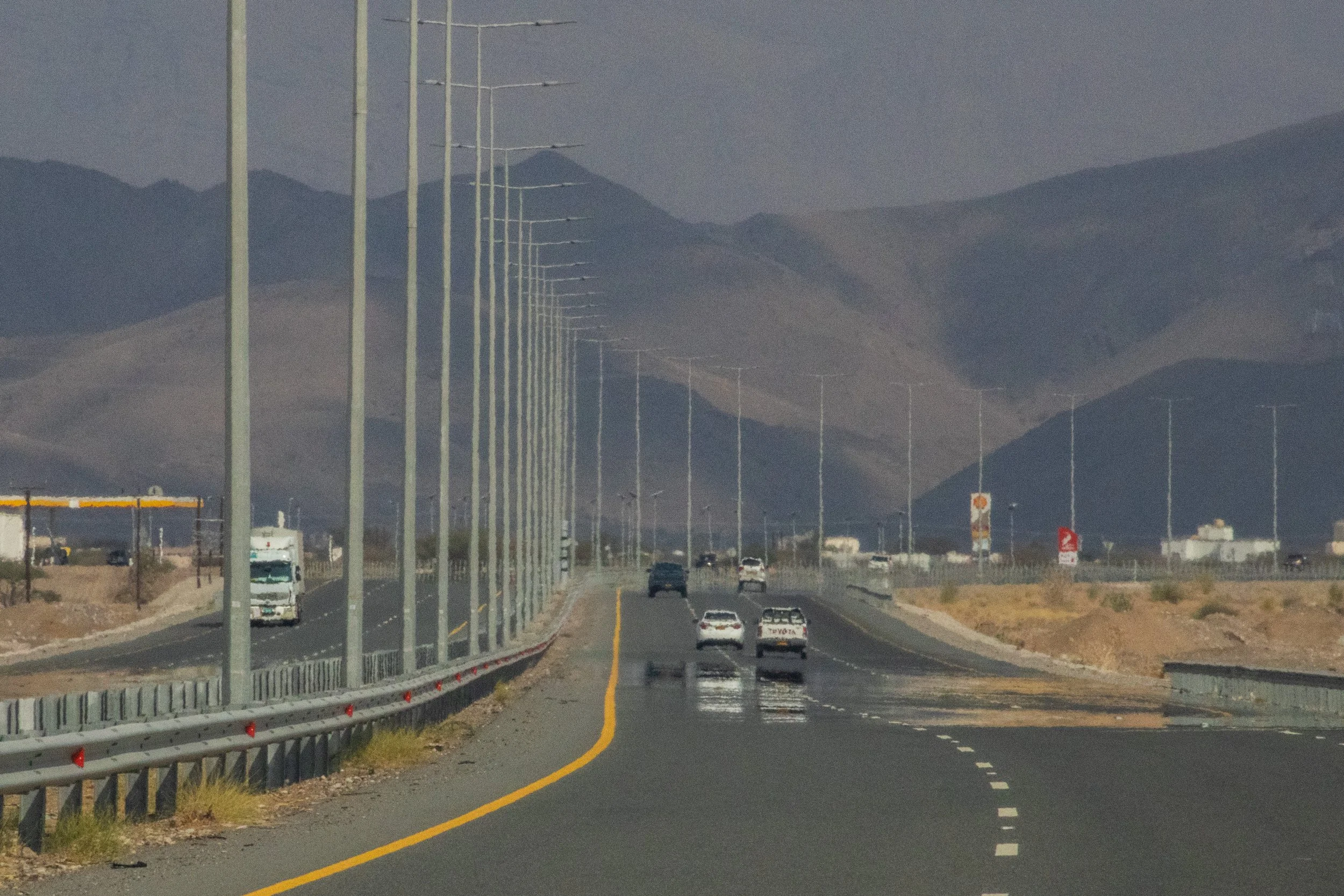
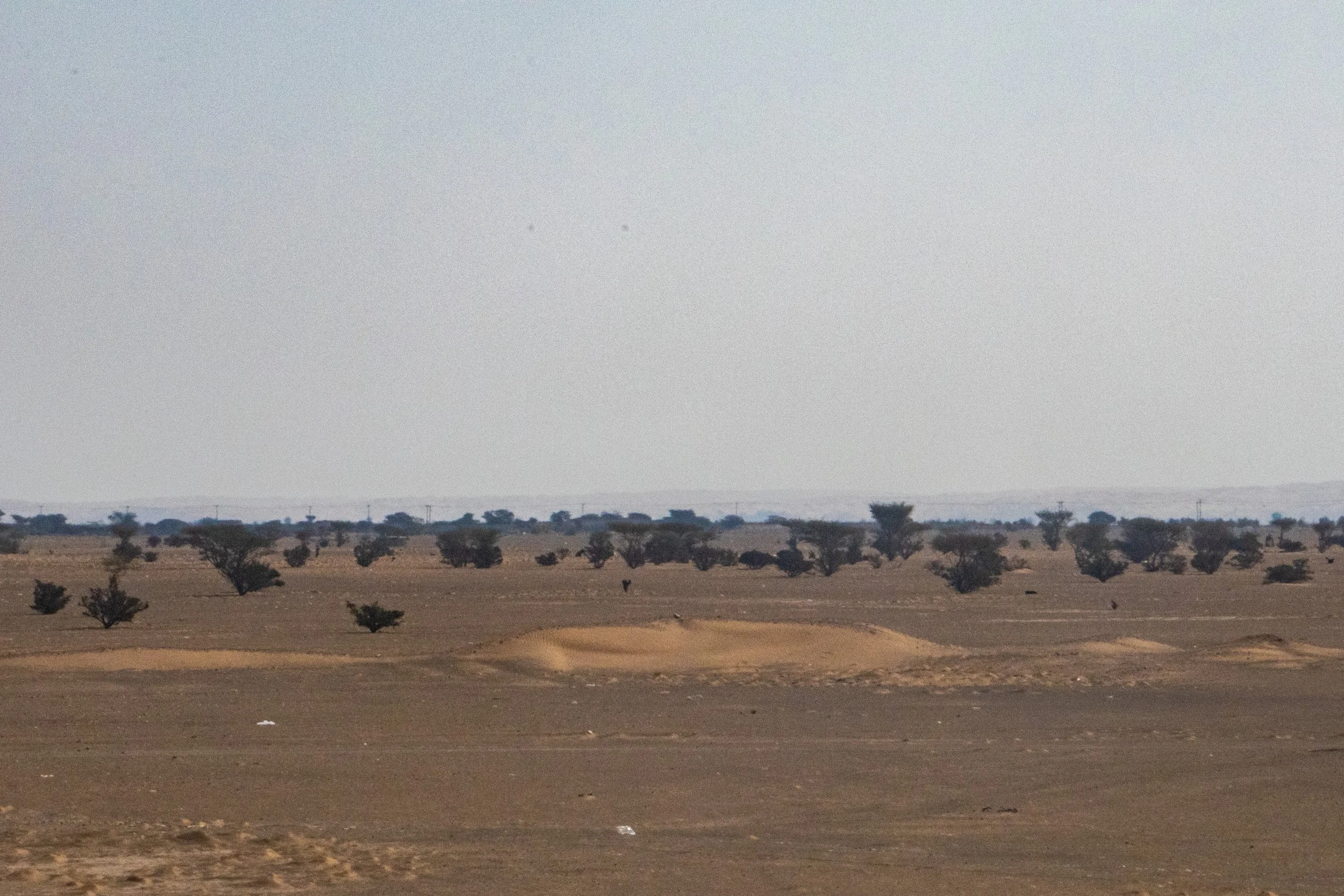
Wadi Bani Khalid
Okay so Wadi Bani Khalid is not technically an oasis. It’s a wadi.
An oasis is a fertile spot in a desert where water is consistently present. A wadi is a valley or riverbed that has water, but typically the presence of this water is seasonal. Wadi Bani Khalid, as you will see, is indeed in a valley/riverbed… but there is water here year-round. I think that makes it a bit difficult to categorize from a technical perspective, but let’s be real: it’s water and palm trees in the middle of the desert… close enough.
So here’s our destination on the map!
First, I want to show you how sudden and dramatic the change is when you enter an oasis in the desert. You saw all of the pictures of our drive through this arid, inhospitable wasteland above. But as soon as water is introduced, everything changes. You will see lush, dense groves of palm trees appearing as an unexpected green accent in the sea of earthy sand and rock tones. This is typical in deserts; where there is water, there is suddenly greenery. We saw the same kind of thing (minus the palm trees) earlier this year when we drove along the Colorado River into Moab, Utah. And just like Moab is a desert town that developed thanks to a river, out here in the Arabian desert, where there is water, there are people. Around the same time you start seeing greenery, you will also start seeing homes and even small towns pop up.
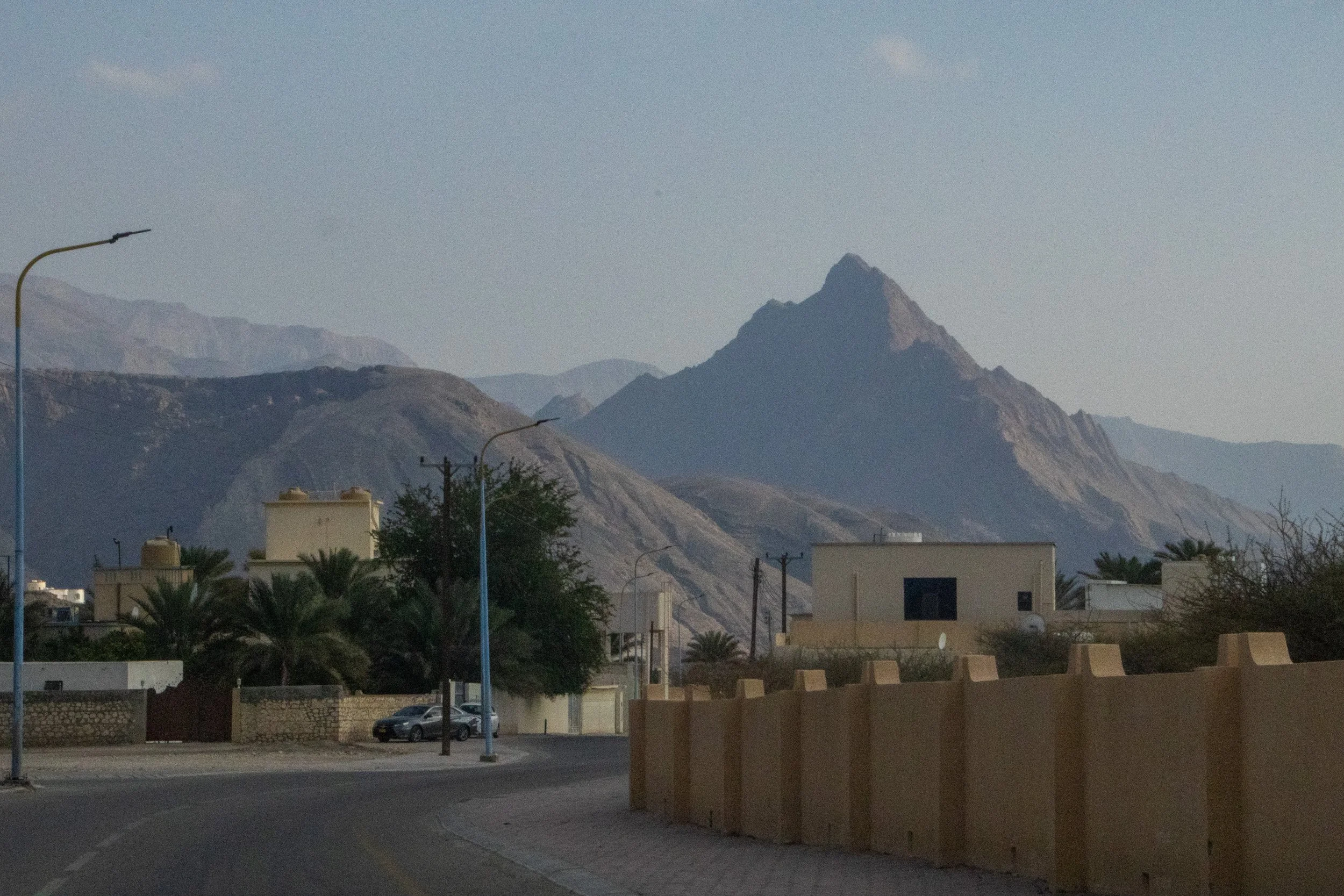
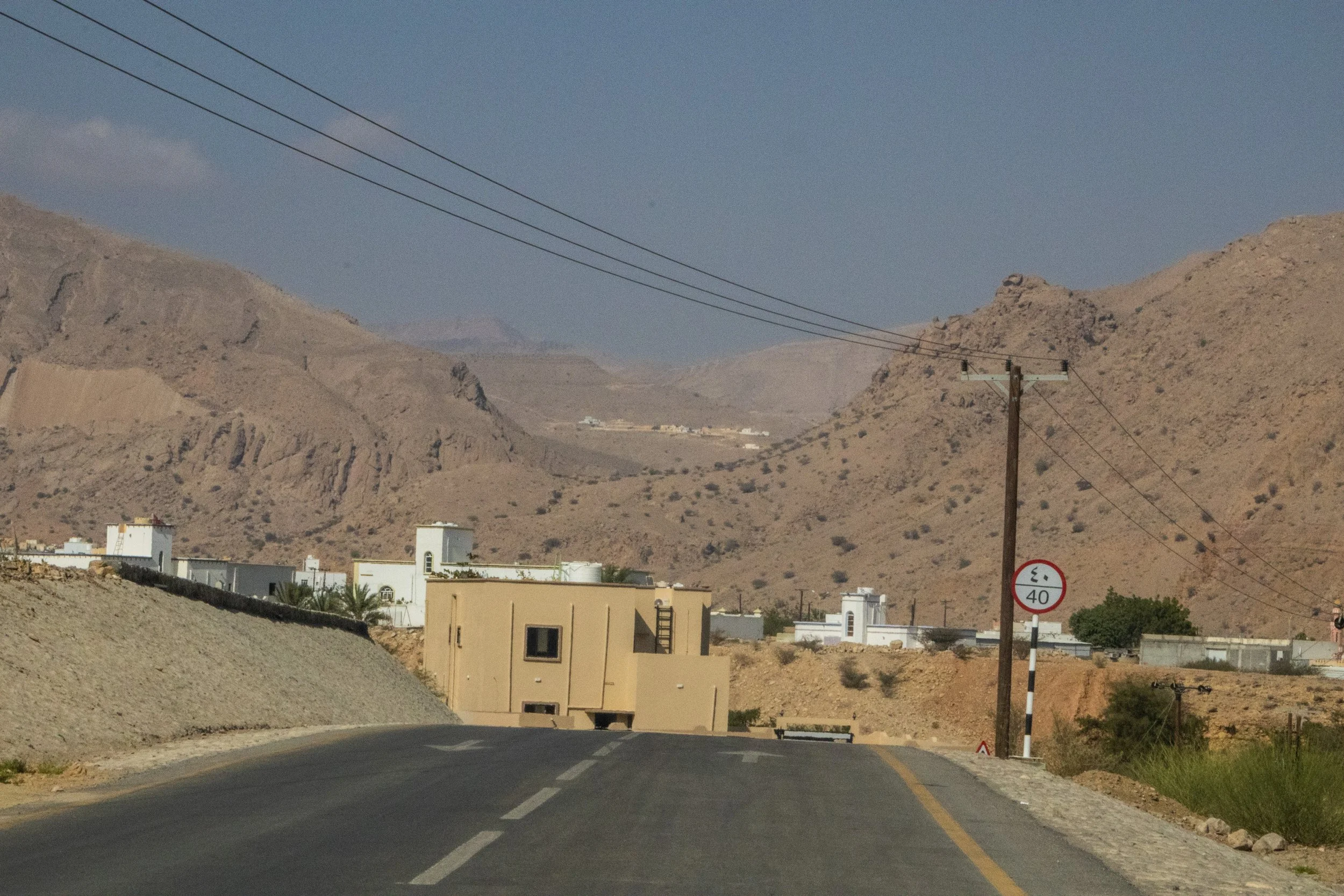
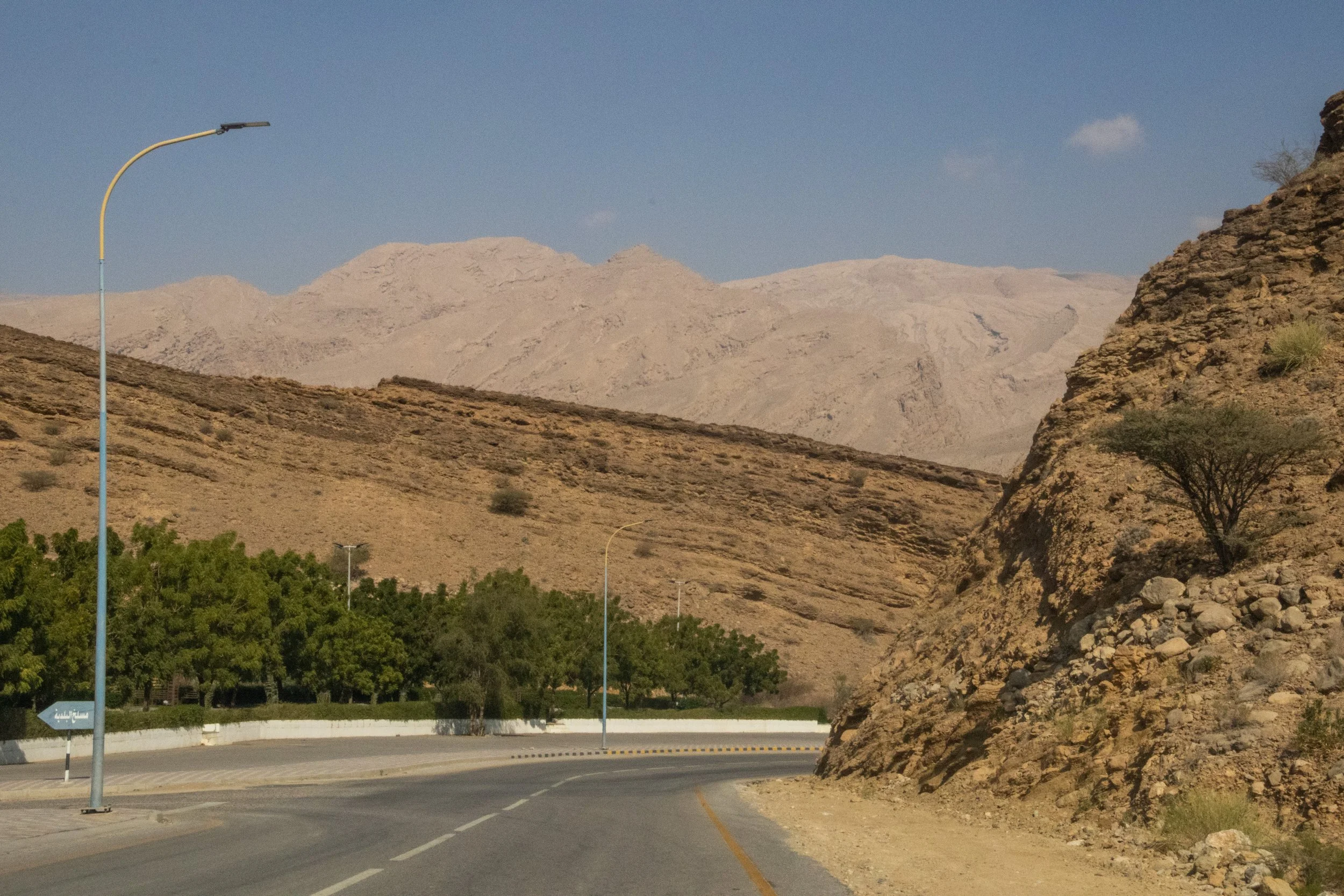
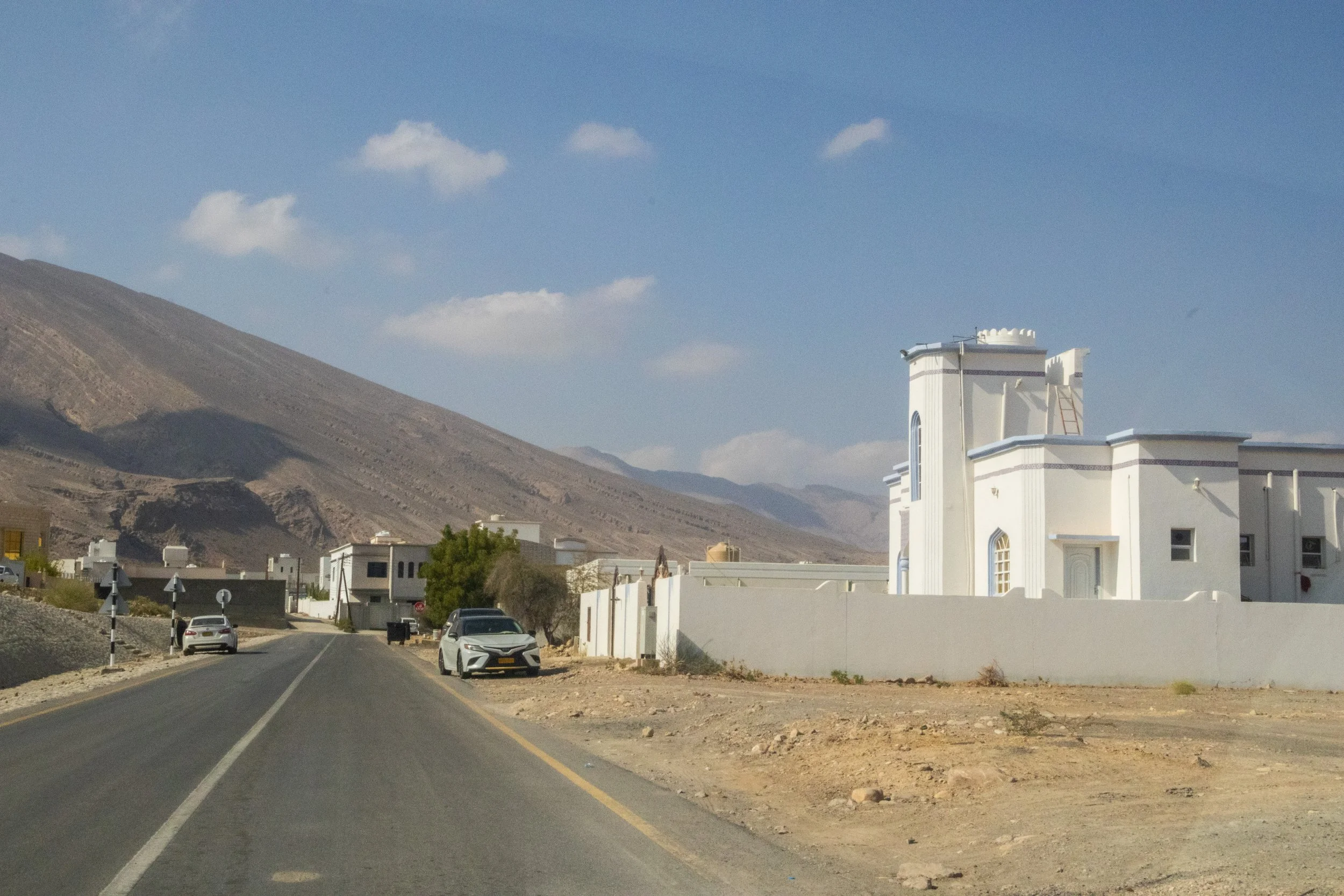
Oman really has excellent roads. Remember how, back in Muscat, I said that Oman only had 9 miles of paved road as recently as the 1970s? Well they have really done an incredible job building out a network of beautiful, smooth highways since then. Our drive up to Wadi Bani Khalid stands out to me because of the brutal landscape. You see, Wadi Bani Khalid is in the Al Hajar mountain range, so we had to drive over a few massive mountain ridges to get here. The terrain was treacherous and the sun was punishing… building these roads out here must have been an absolute feat of strength! And it should not go unsaid that Oman, like most of its Gulf neighbors, managed to build this sort of infrastructure via imported laborers, mostly from India, Pakistan and Bangladesh, who likely worked in extremely rough conditions. My hat is off to these men.
Still, despite this excellent highway system, we would often find ourselves driving through tiny little towns on much older roads, barely wide enough for our giant SUV to fit through. The most memorable instance of this came during our drive to Wadi Bani Khalid when our GPS took us to the wrong place. Off a random little turn-off, the pavement ended and we were directed up a narrow palm-covered alleyway. As we approached the entrance, a car pulled out that looked to be full of Indian tourists. From his car to ours, the man behind the wheel made eye contact with us and wagged his finger at us…

We should have taken the hint! 30 minutes later, after a very stressful ordeal wherein we drove all the way into this town, hit a dead-end, and had to have locals help us turn our boat-of-a-car around so we could get out, only to then get stuck again because more SUVs full of lost tourists had entered this narrow road… we too emerged from this road, doing our own finger wag at the next approaching car. 😂
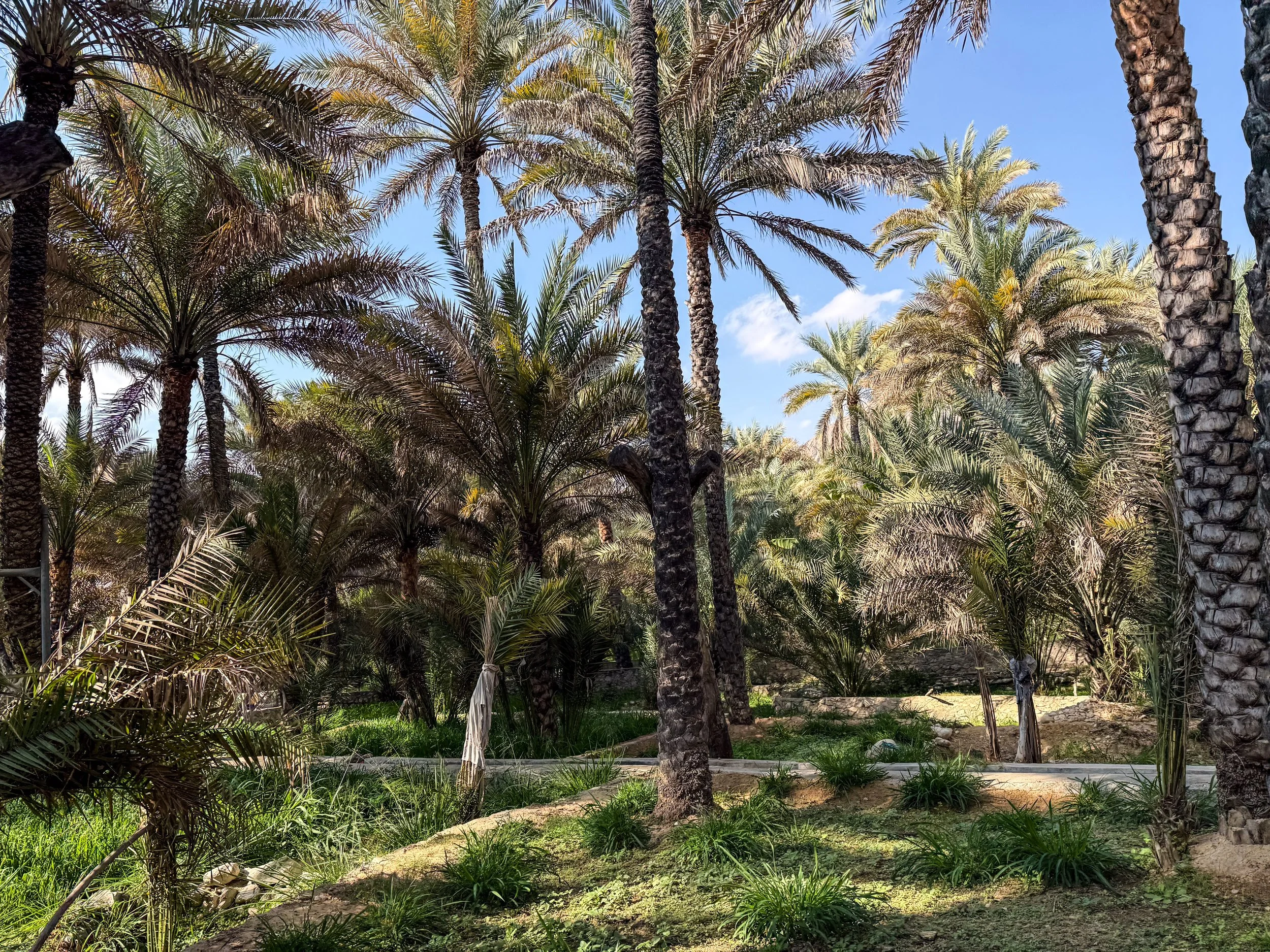
However, it was a very interesting little detour. This whole area had clearly been irrigated very intentionally, because we had instantly gone from a desert to a jungle. There was bright green grass and palm trees in every direction as far as we could see, clearly enabling some level of agriculture. Despite the stress, I am really happy that I got to see this isolated little settlement, and very grateful that its residents were so helpful in getting us turned around. I’m sure we were neither the first nor last people they would help that day. It was probably super annoying for them.
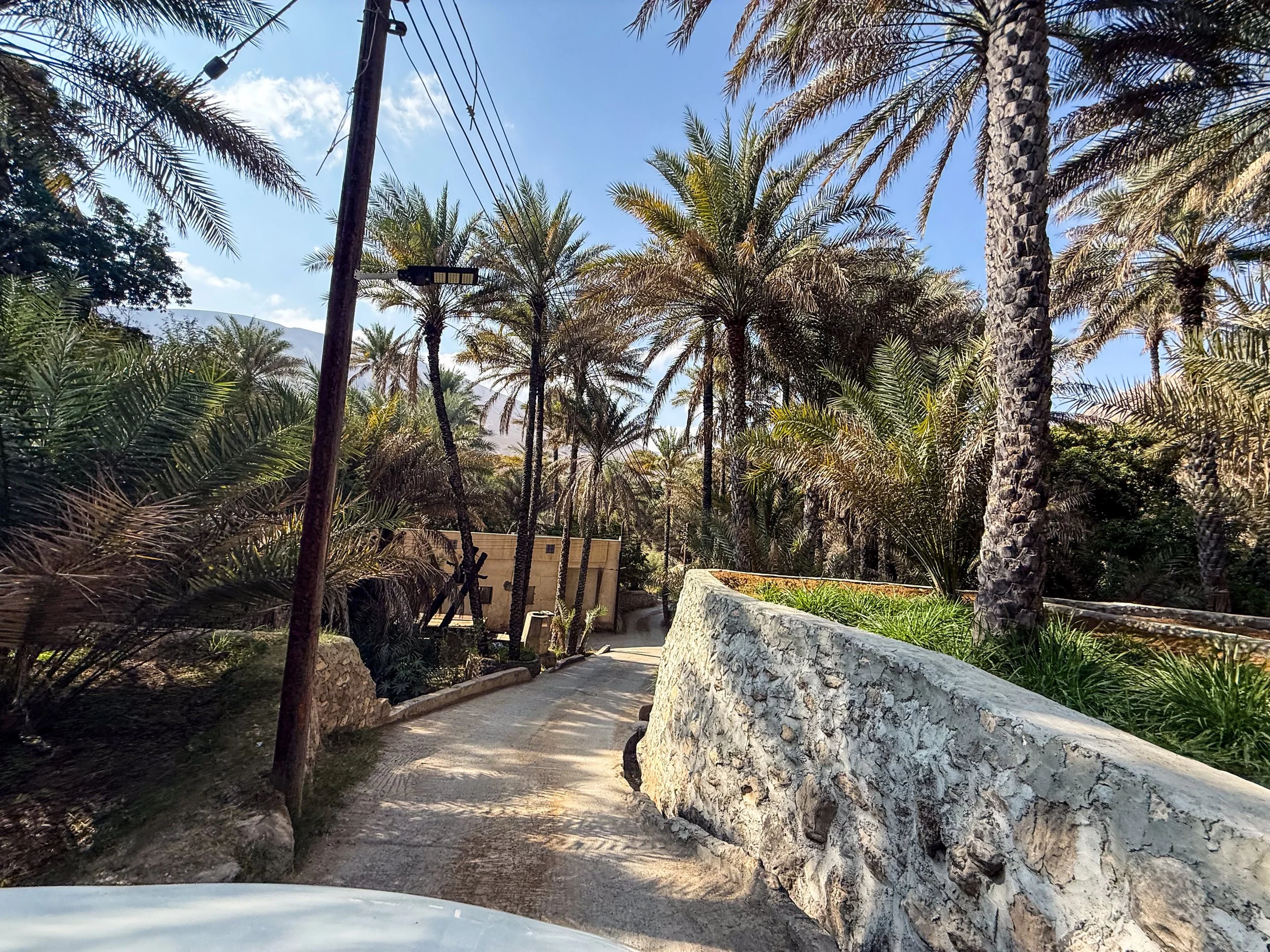
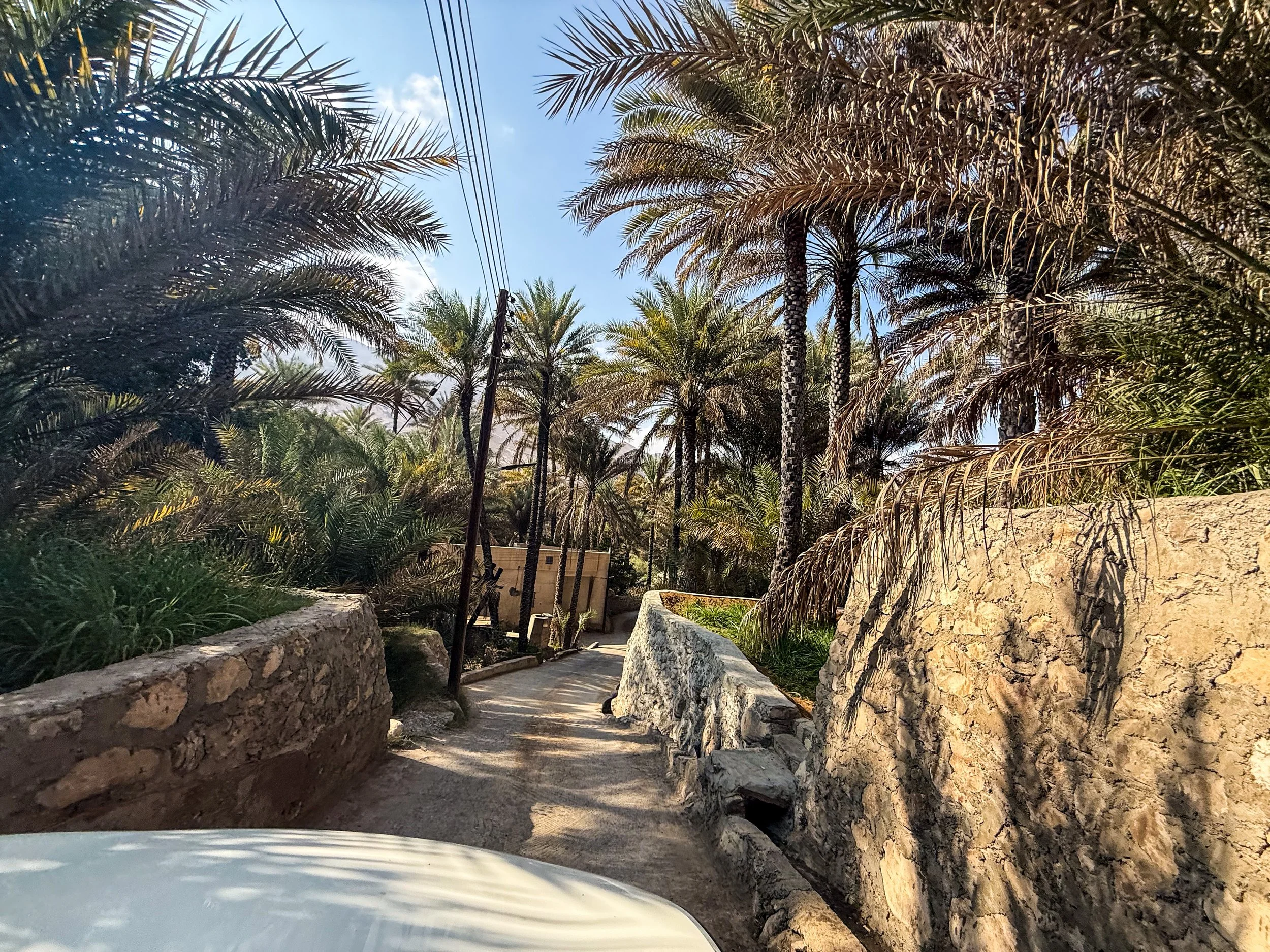
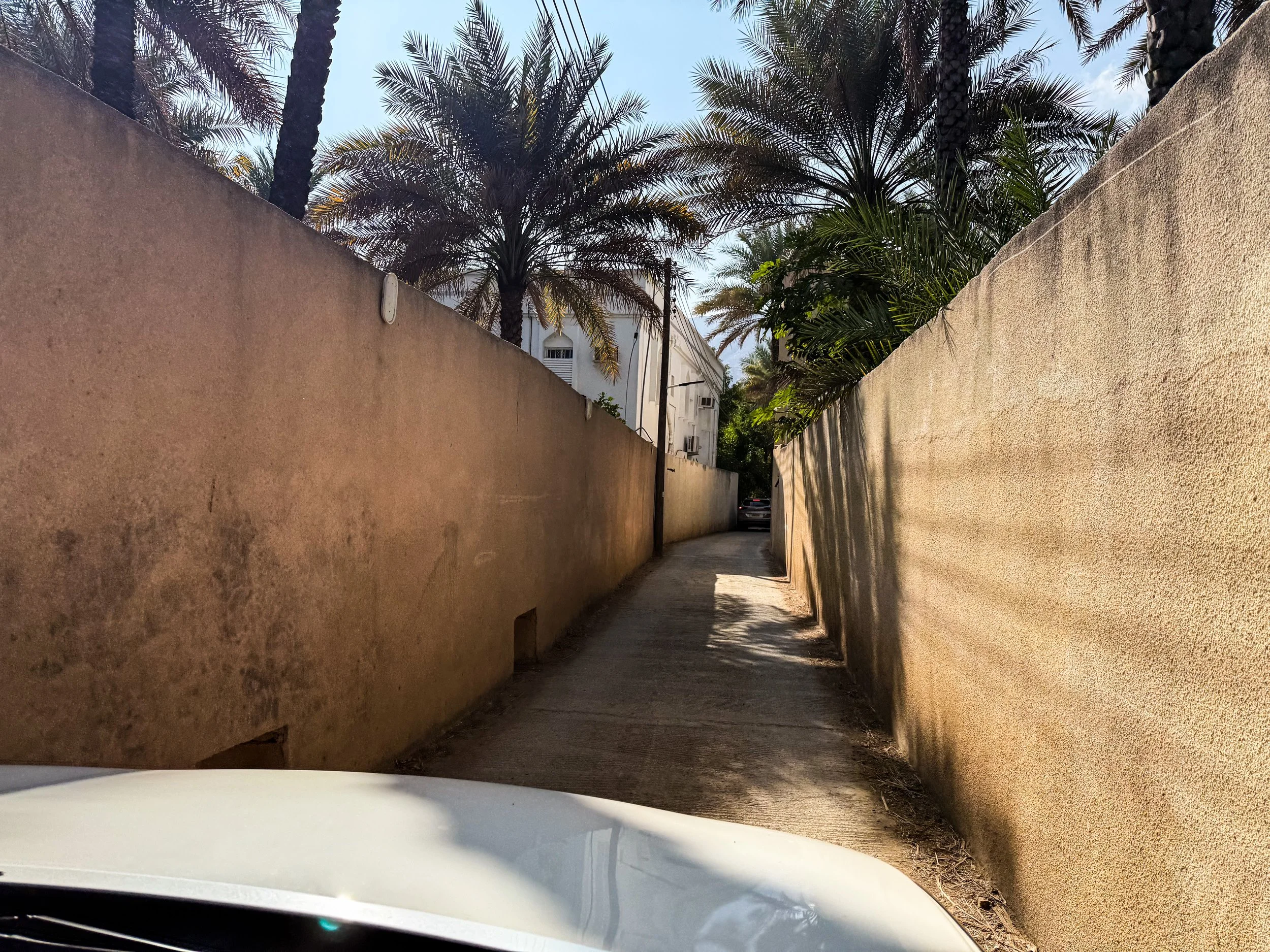
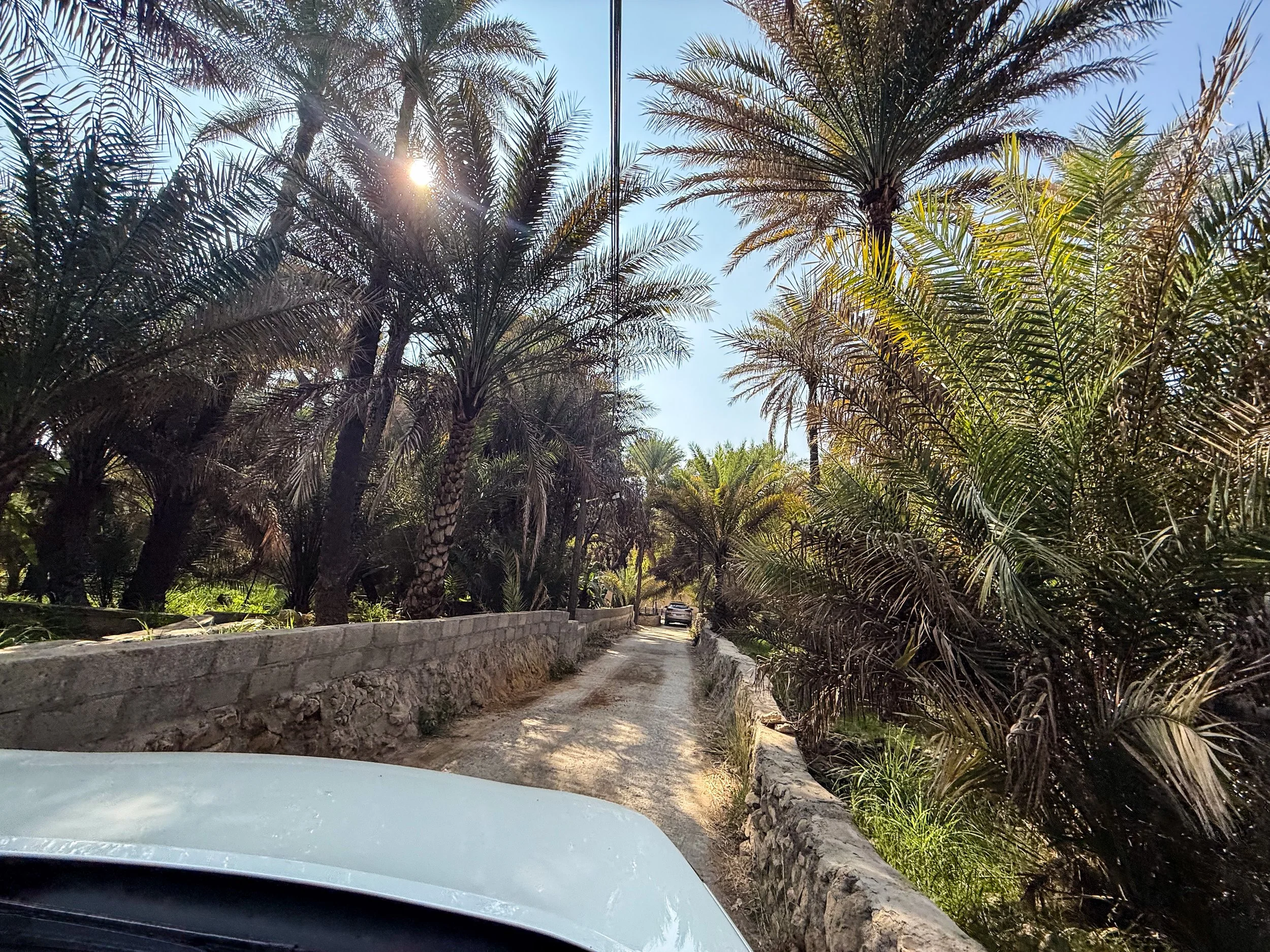
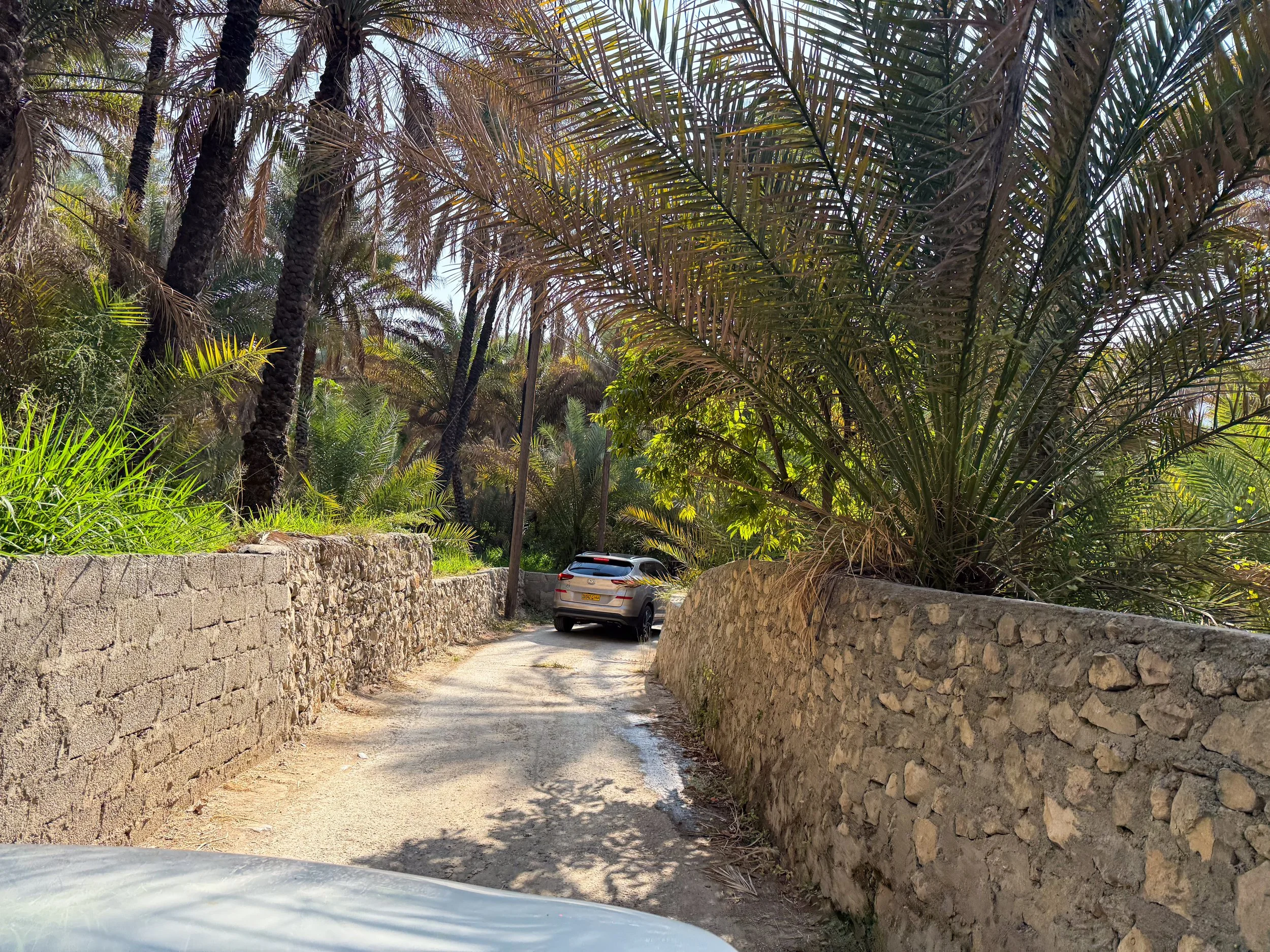
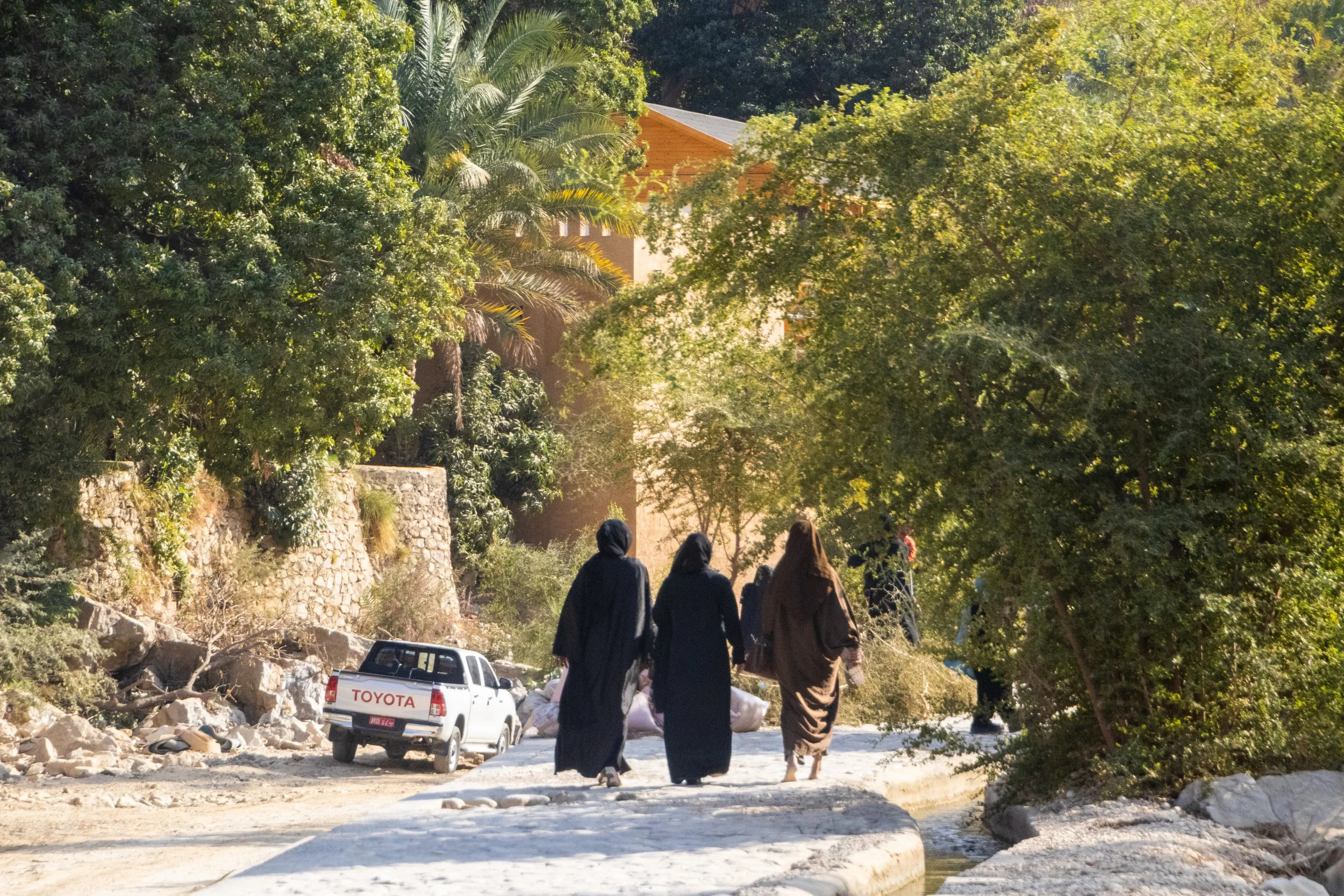
Just a few minutes down the road we came to another town that was a shining case-study for desert irrigation, and eventually found the parking lot of this mysterious wadi. We walked through a narrow, palm-lined valley, looking up at house perched precariously on the cliffs on either side of us.
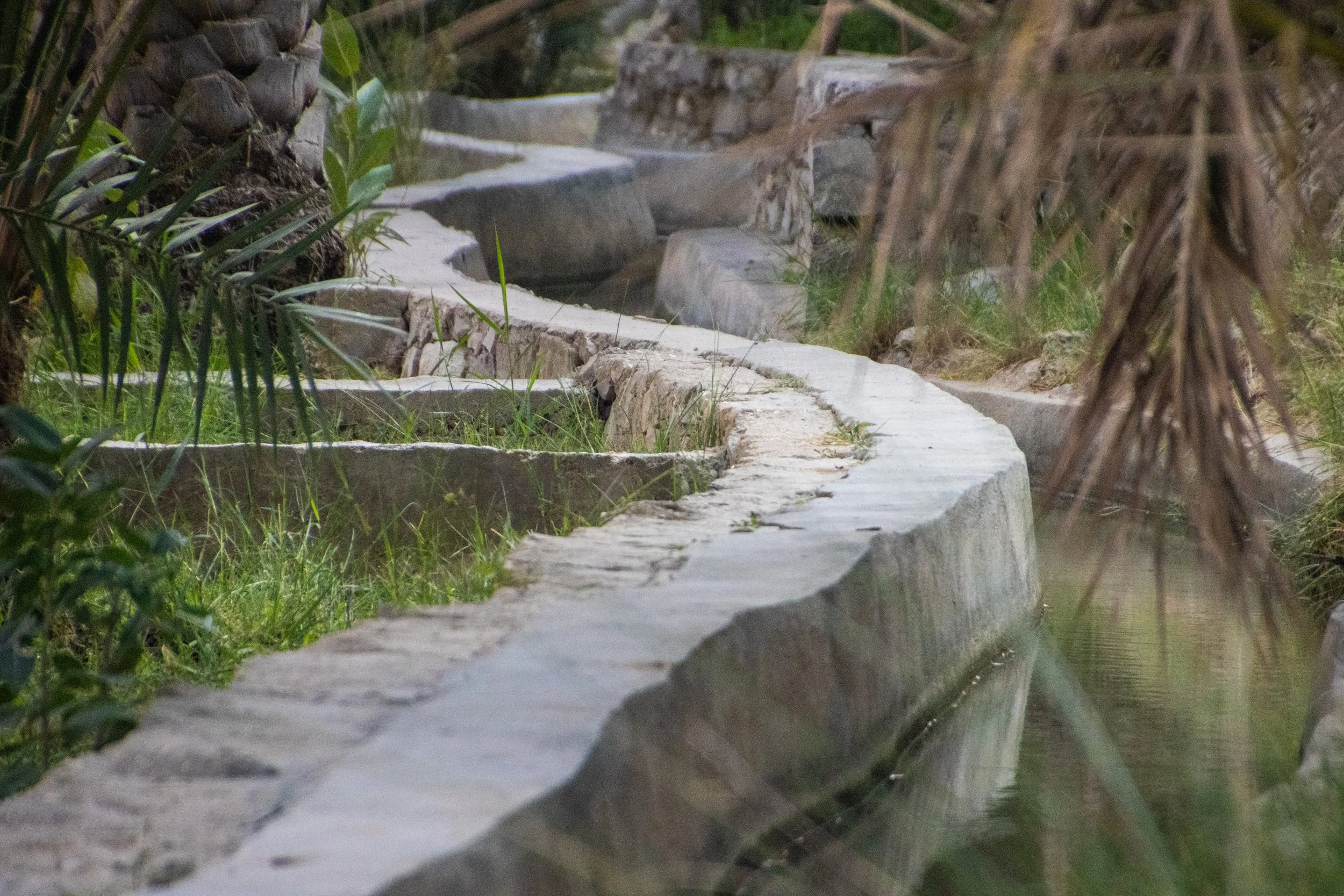
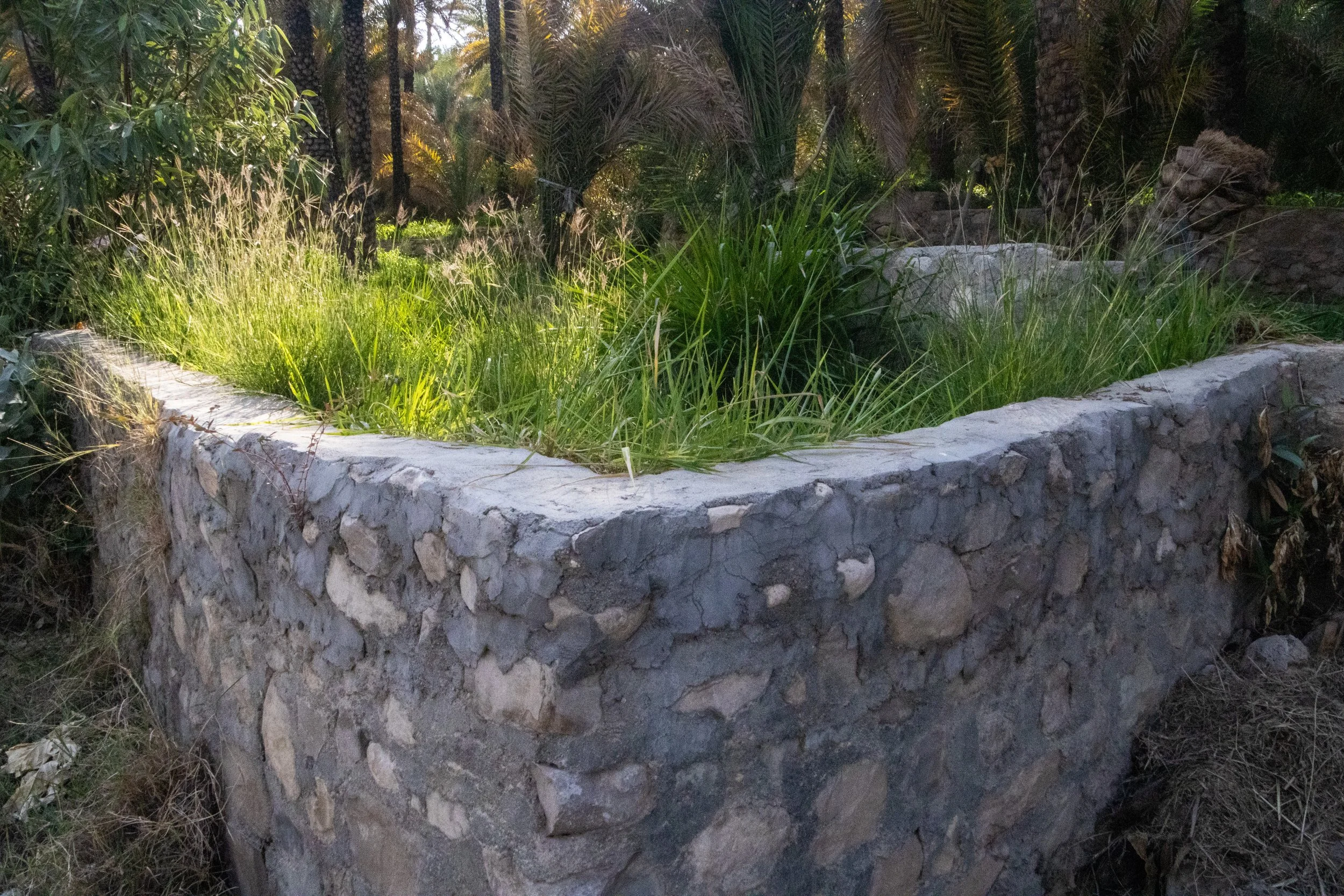
Being on foot down here, the irrigation systems were clearly visible and open to our exploration. Walls of brick and concrete contained bright green agricultural fields. Between the walk-ways and these fields, open-topped man-made streams flowed freely. It reminded me of the irrigation systems I’d seen in Leh and Turtuk in India’s water-challenged Kashmir/Himalayas years ago. However, in the research I did after the fact, I came to learn that this is actually the same type of irrigation system that had empowered Bahla Fortress (in the previous article) all those many years ago! This type of irrigation system is called a falaj. FYI, the plural of that word is aflaj. #research
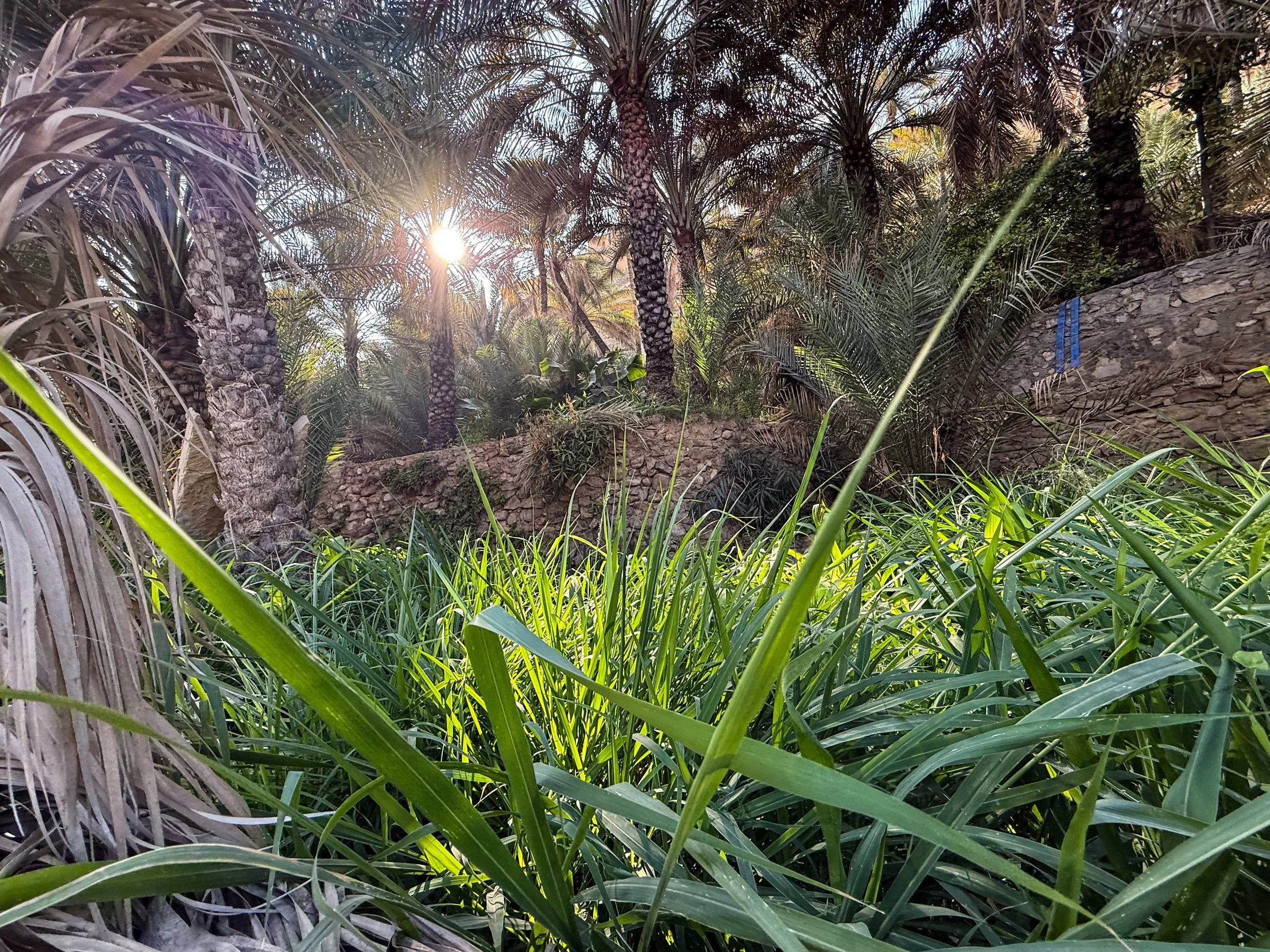
This is an ancient irrigation technique in use all across Oman that is actually many thousands of years old, putting them among the oldest continuously operating water management systems on Earth. There are actually aflaj that have been in continuous operation for more than 2,000 years in Oman! The slow, controlled flow keeps the soil moist in an otherwise dry environment. Water is carefully shared among farmers, with the flow typically divided using small gates or channels to prevent conflict and ensure fair use in water-scarce regions. It is this system that makes the area around Wadi Bani Khalid feel so green! I’m sure there was always some greenery here, but the Omanis have harnessed and rationed these scarce resources in such a way that the entire valley is now full of green! Indeed, Wadi Bani Khalid supports productive farmland that has enabled stable long-term communities to find a home out here in the wastes.
Anyway, here’s some of the irrigation powered greenery for you, and we haven’t even gotten to the wadi yet!
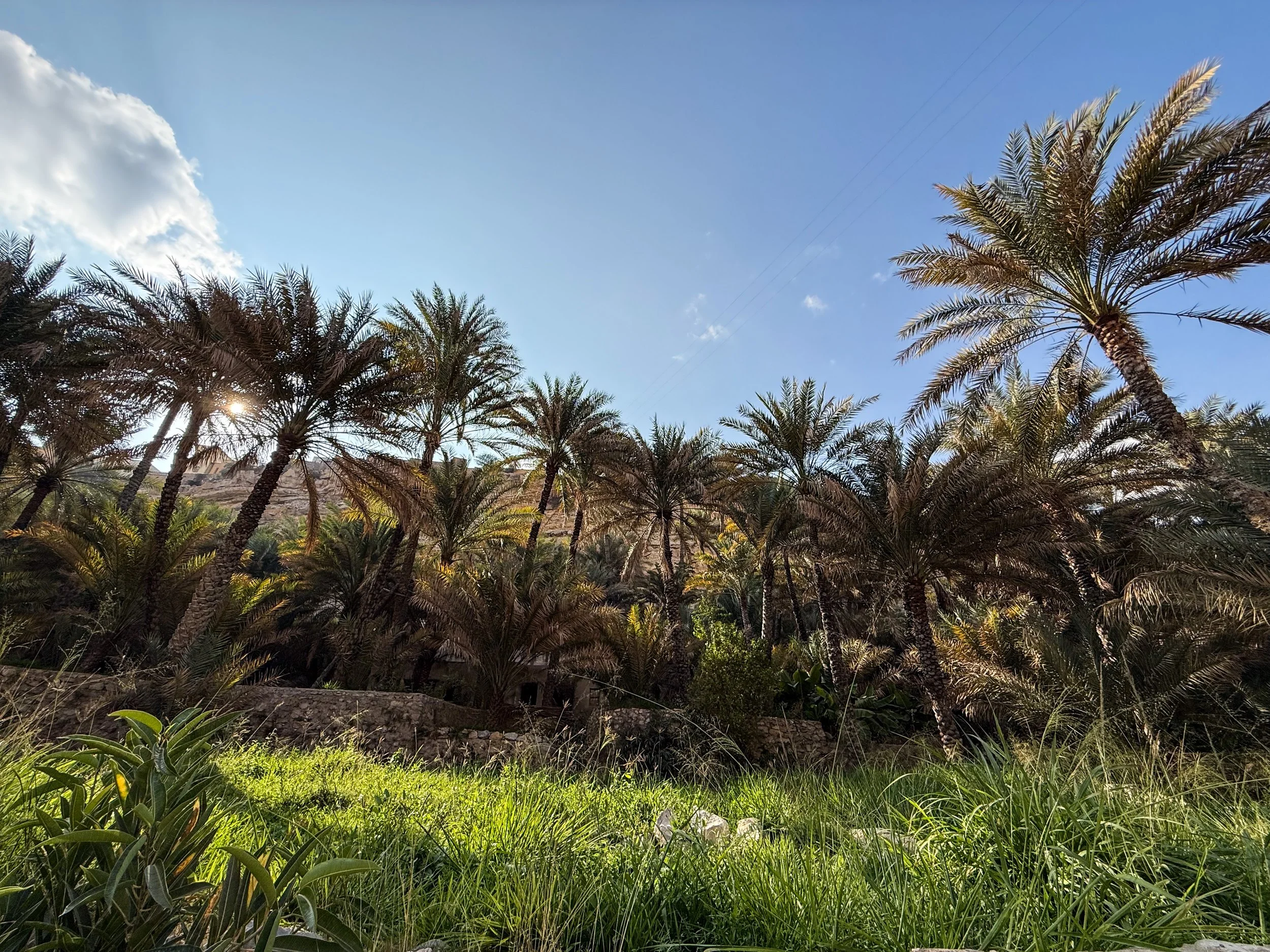
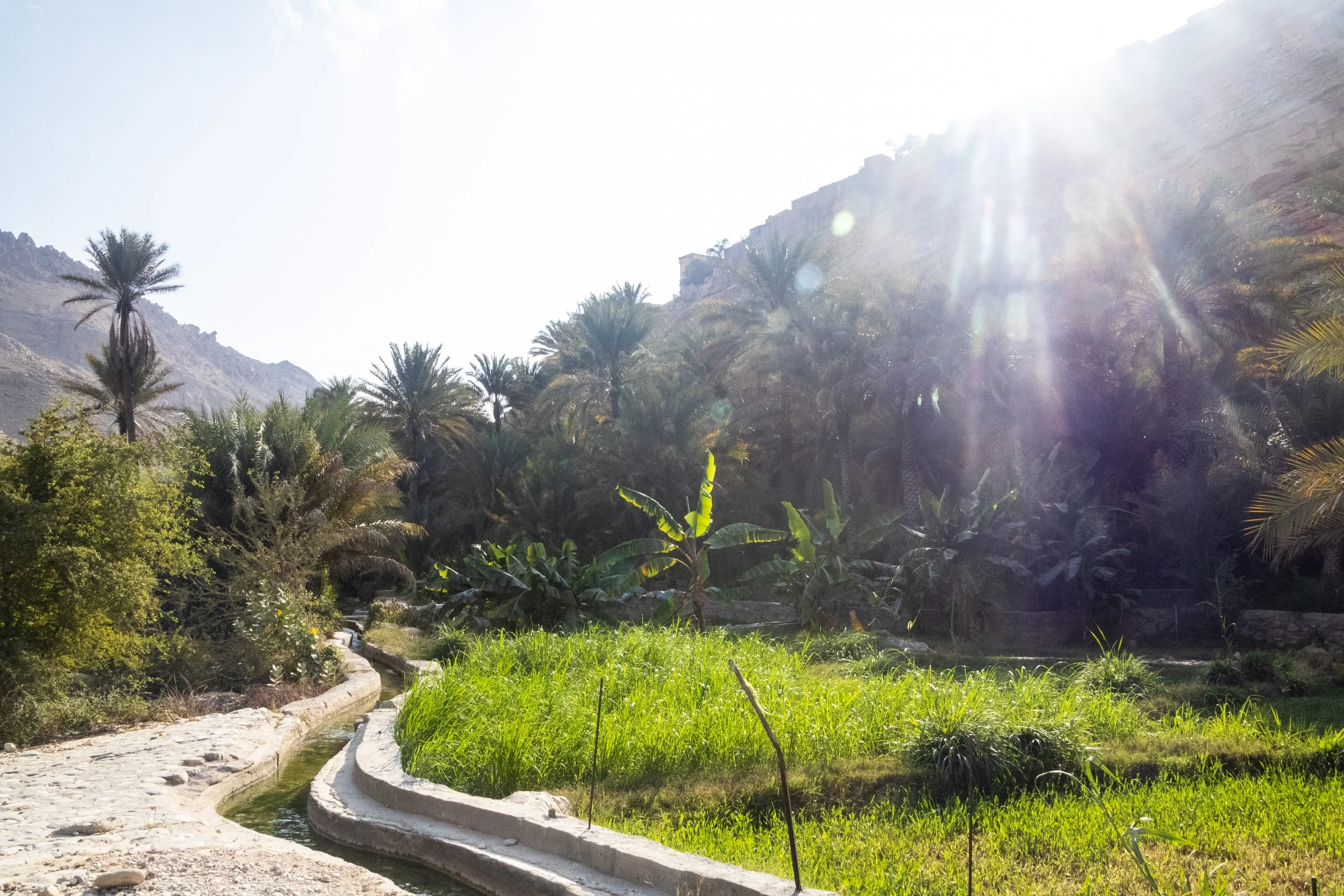
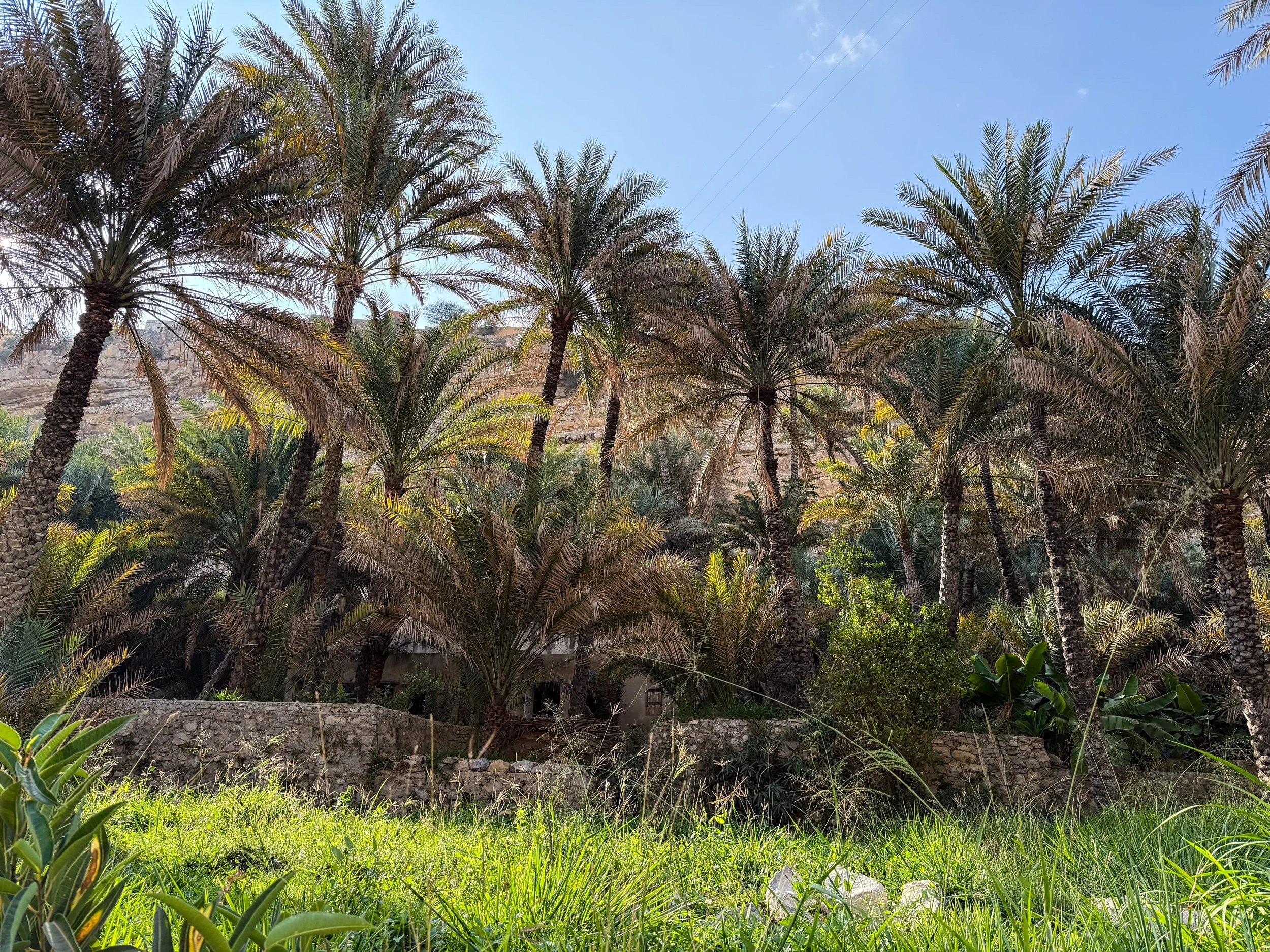
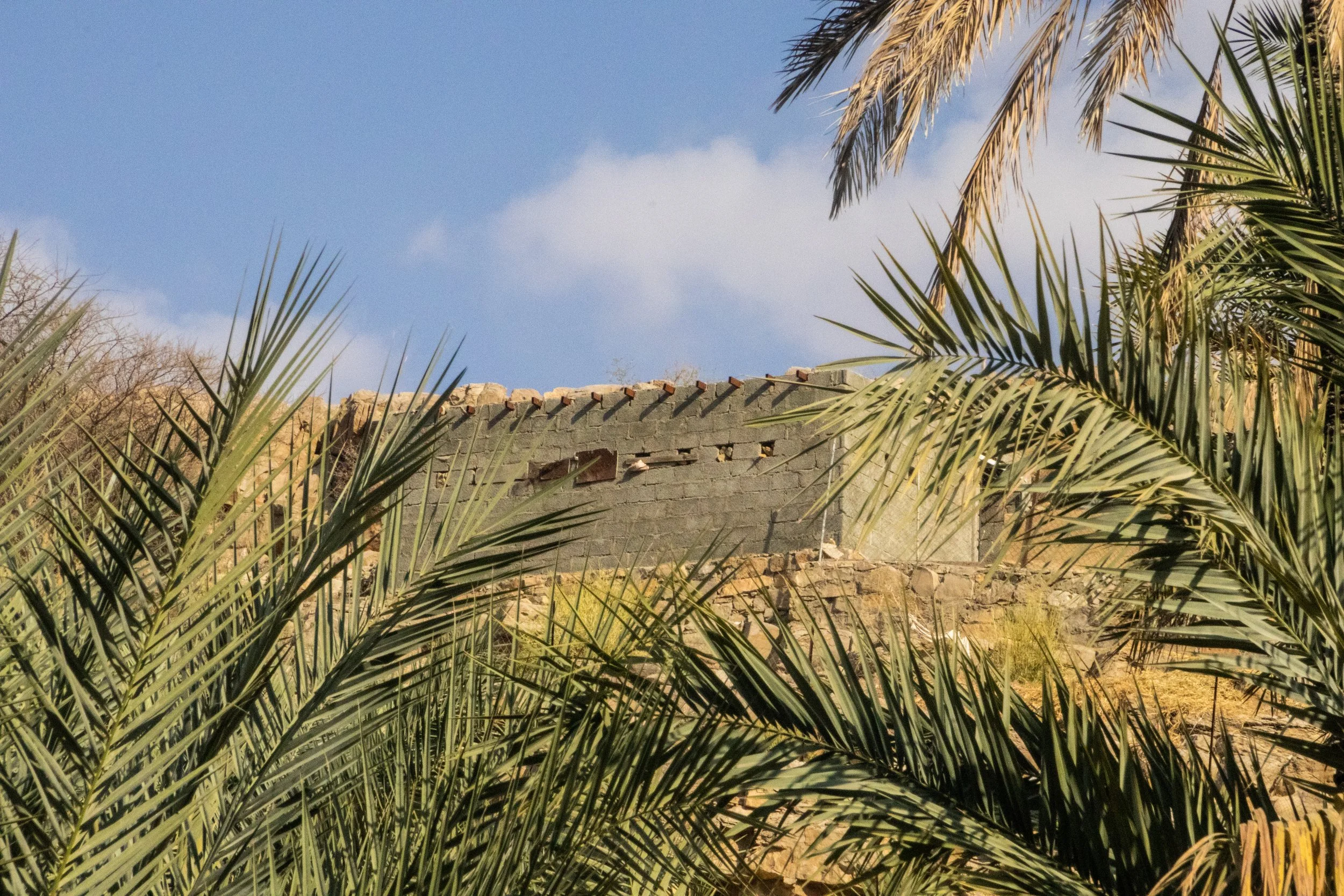
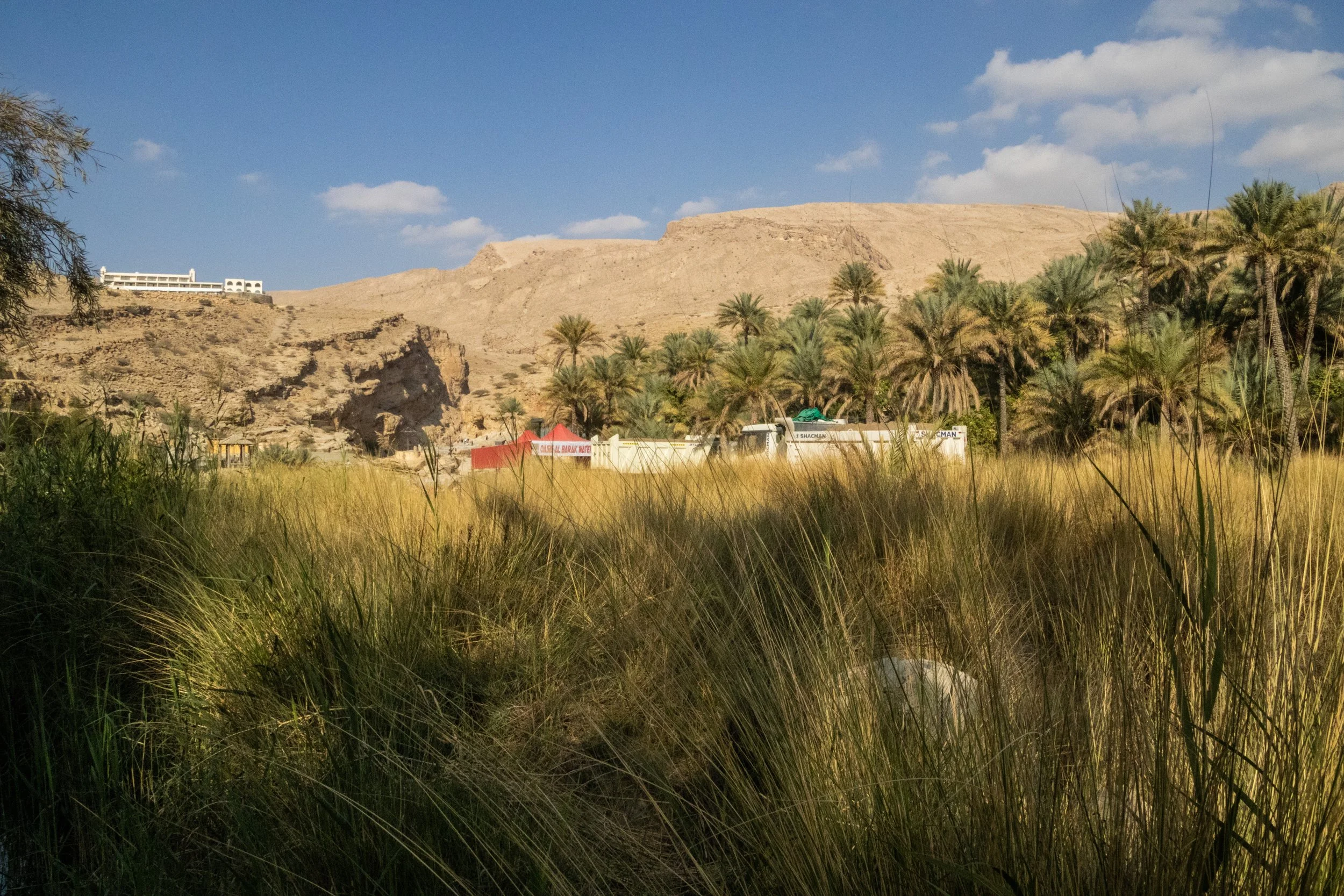
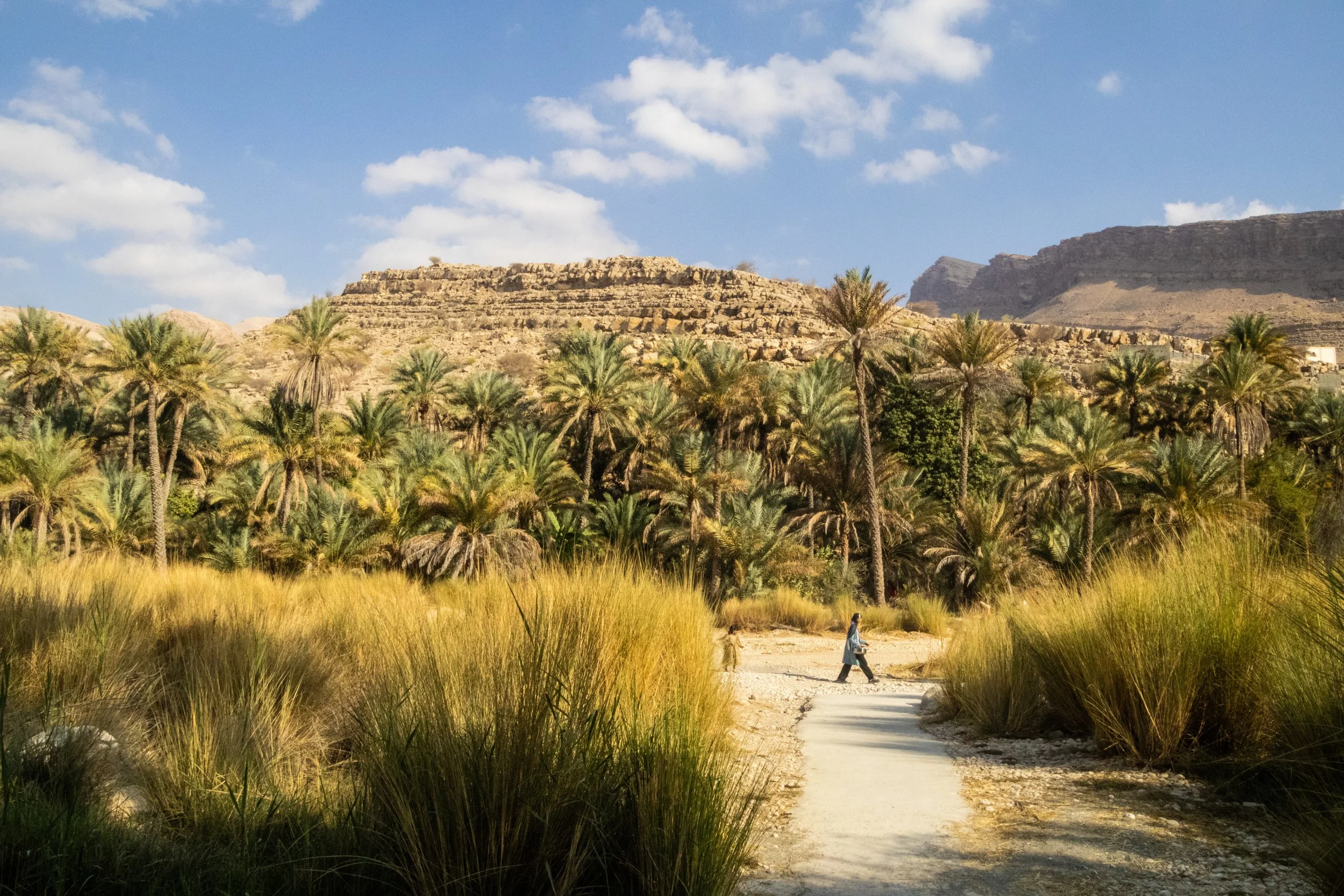
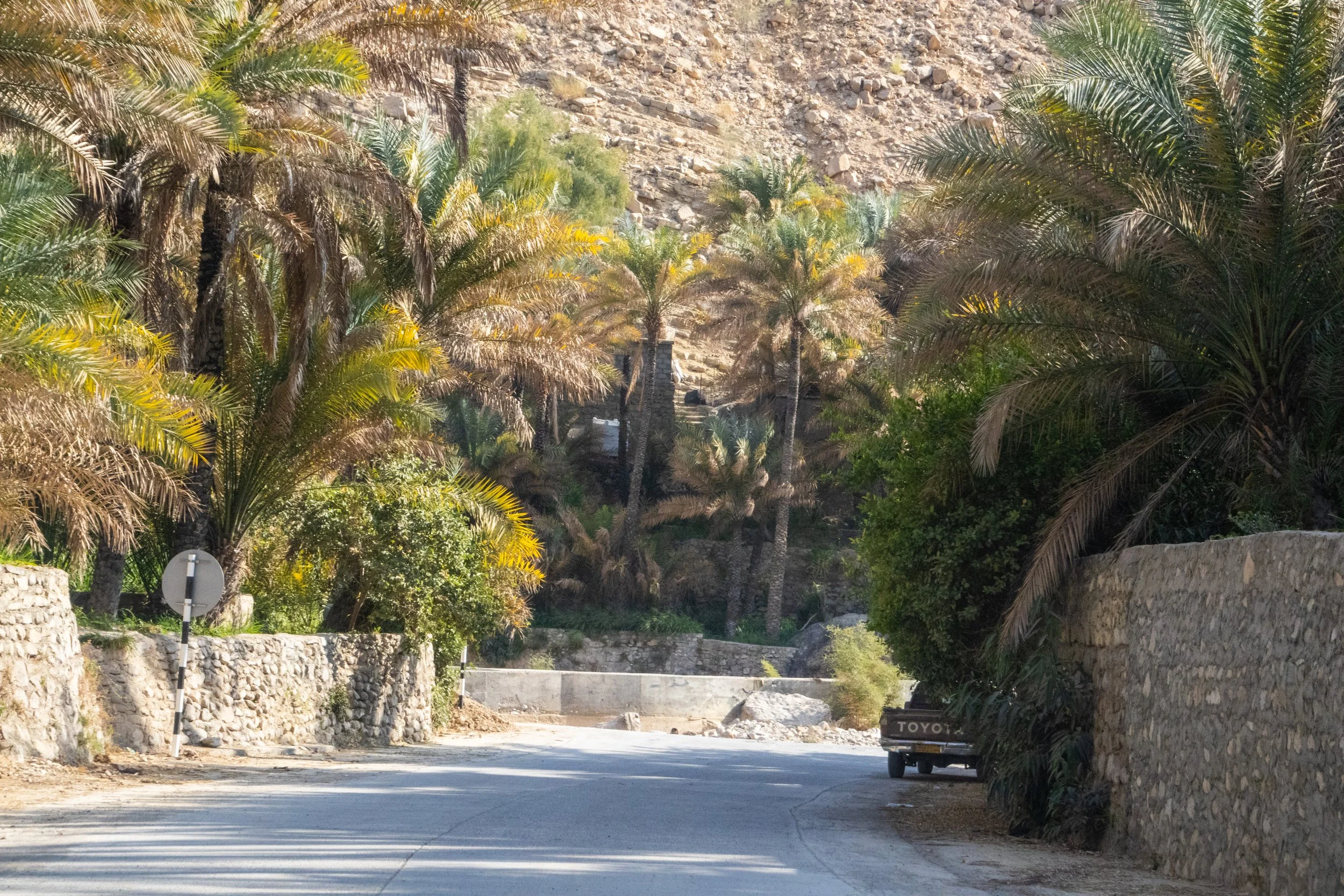
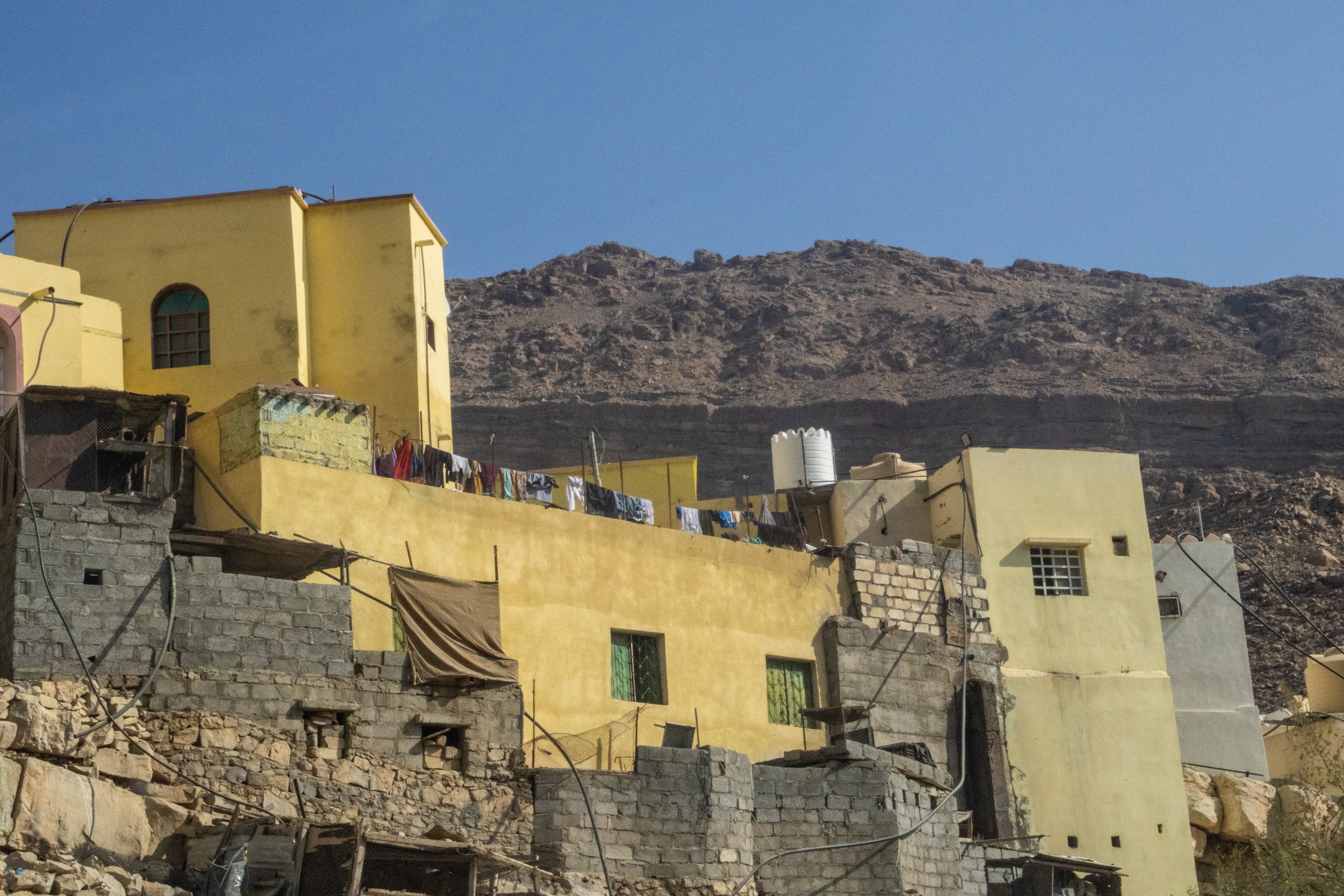
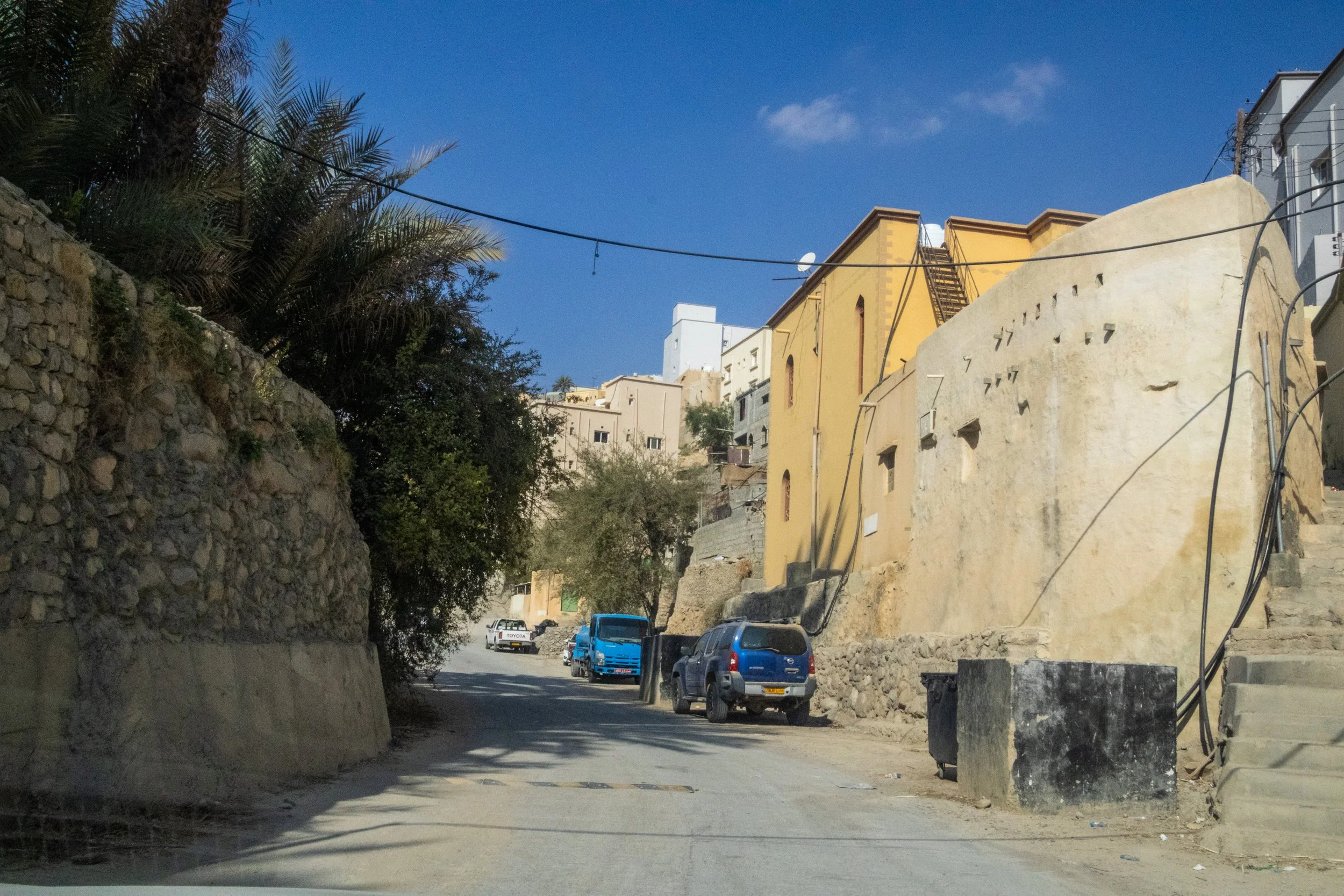
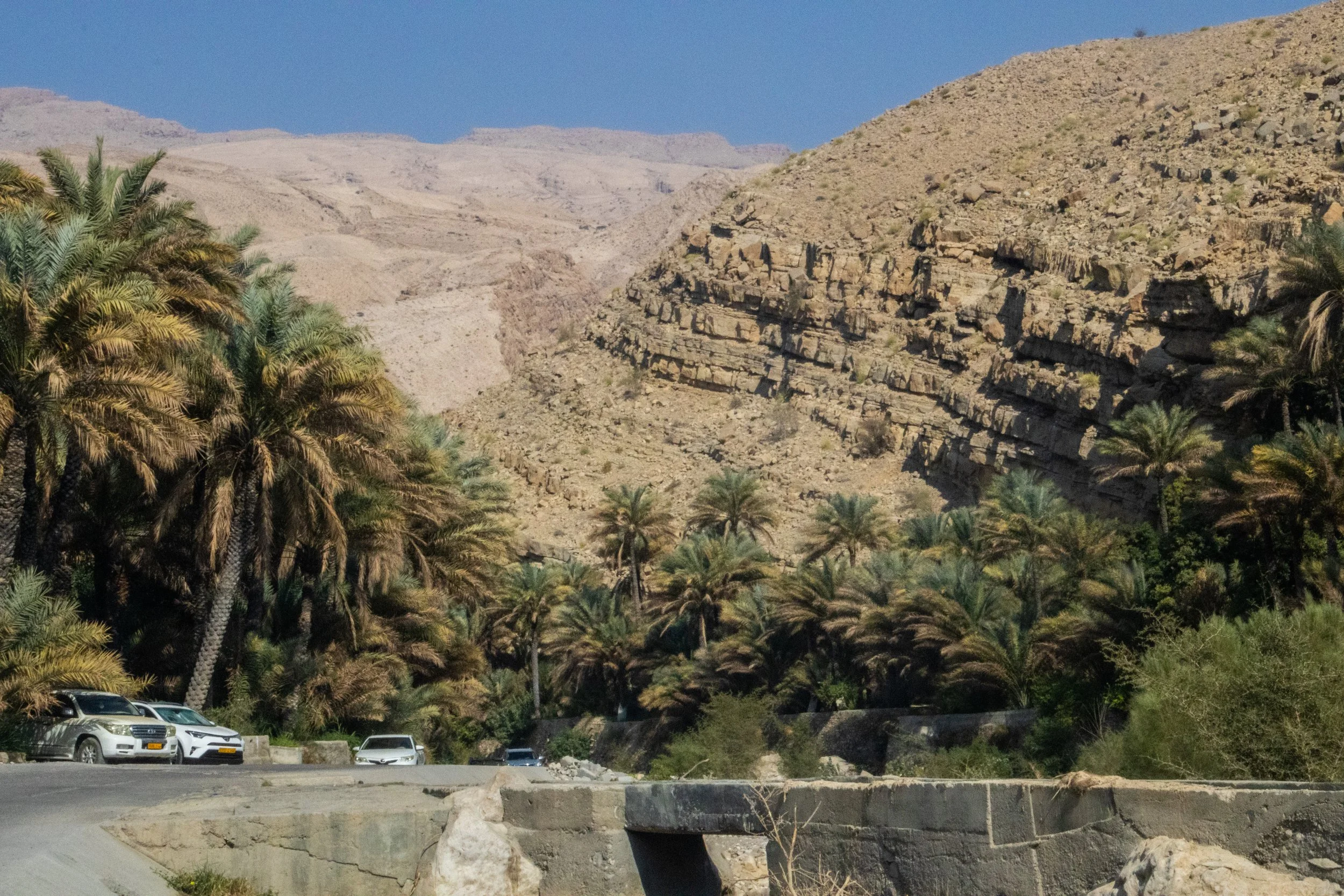
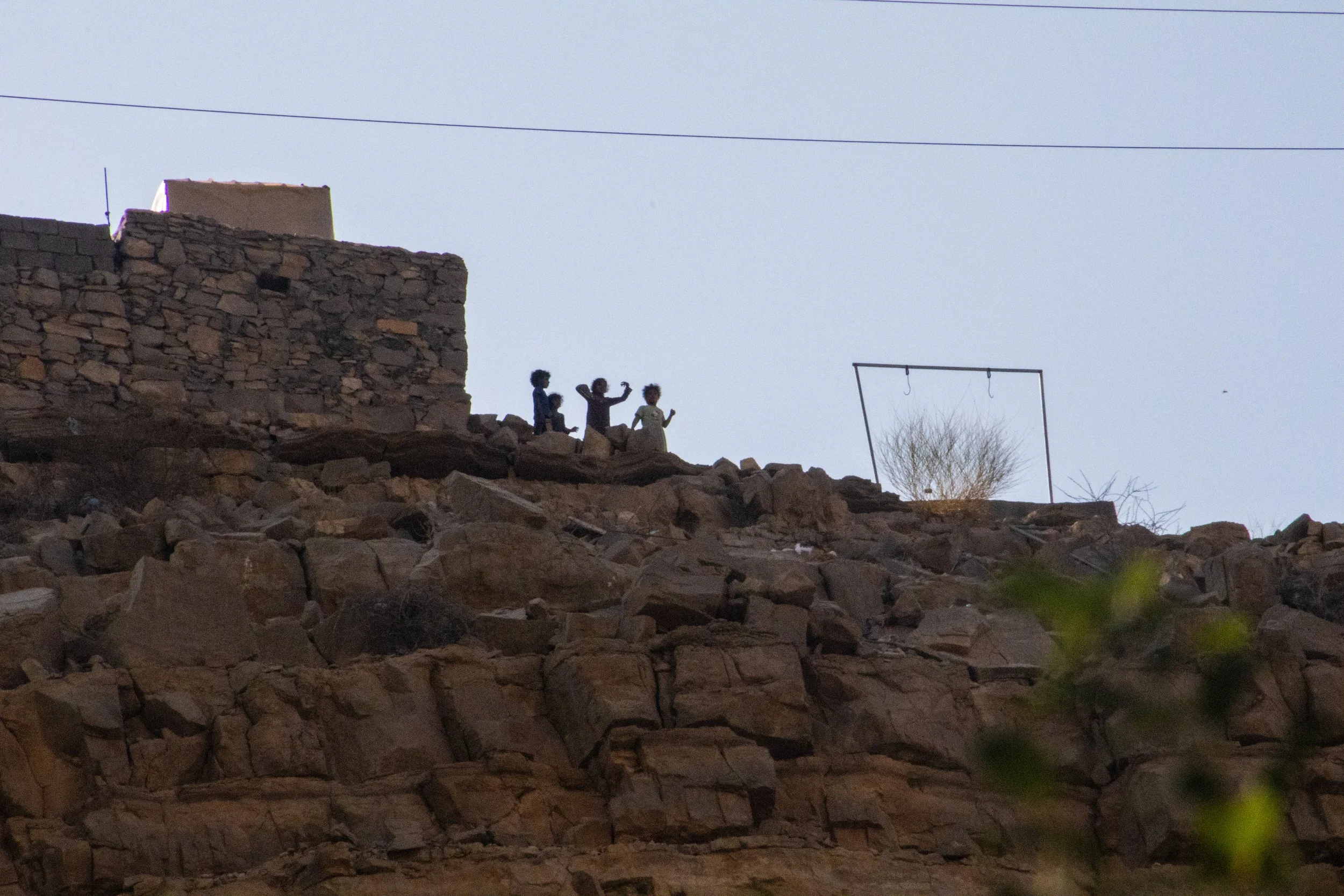
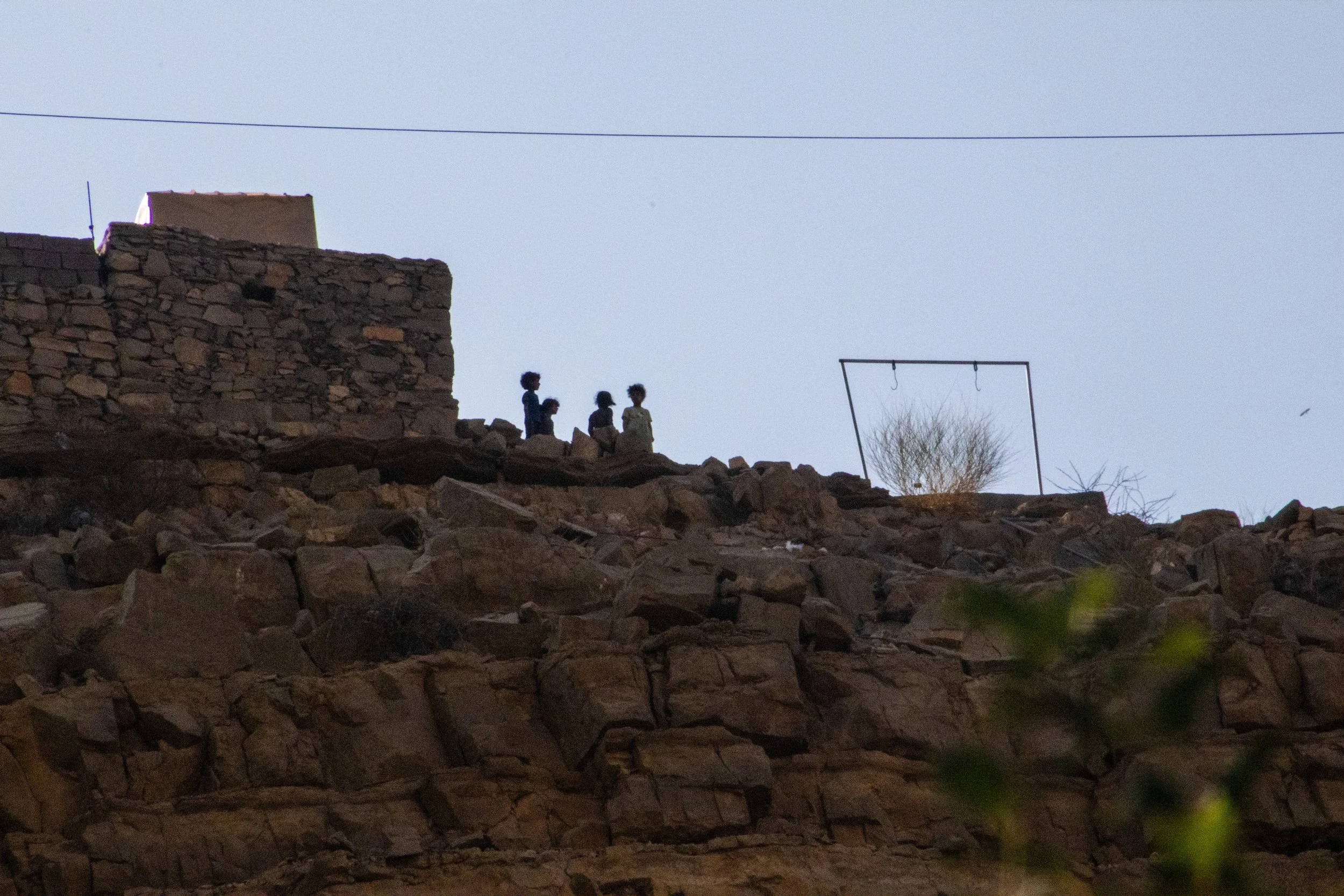
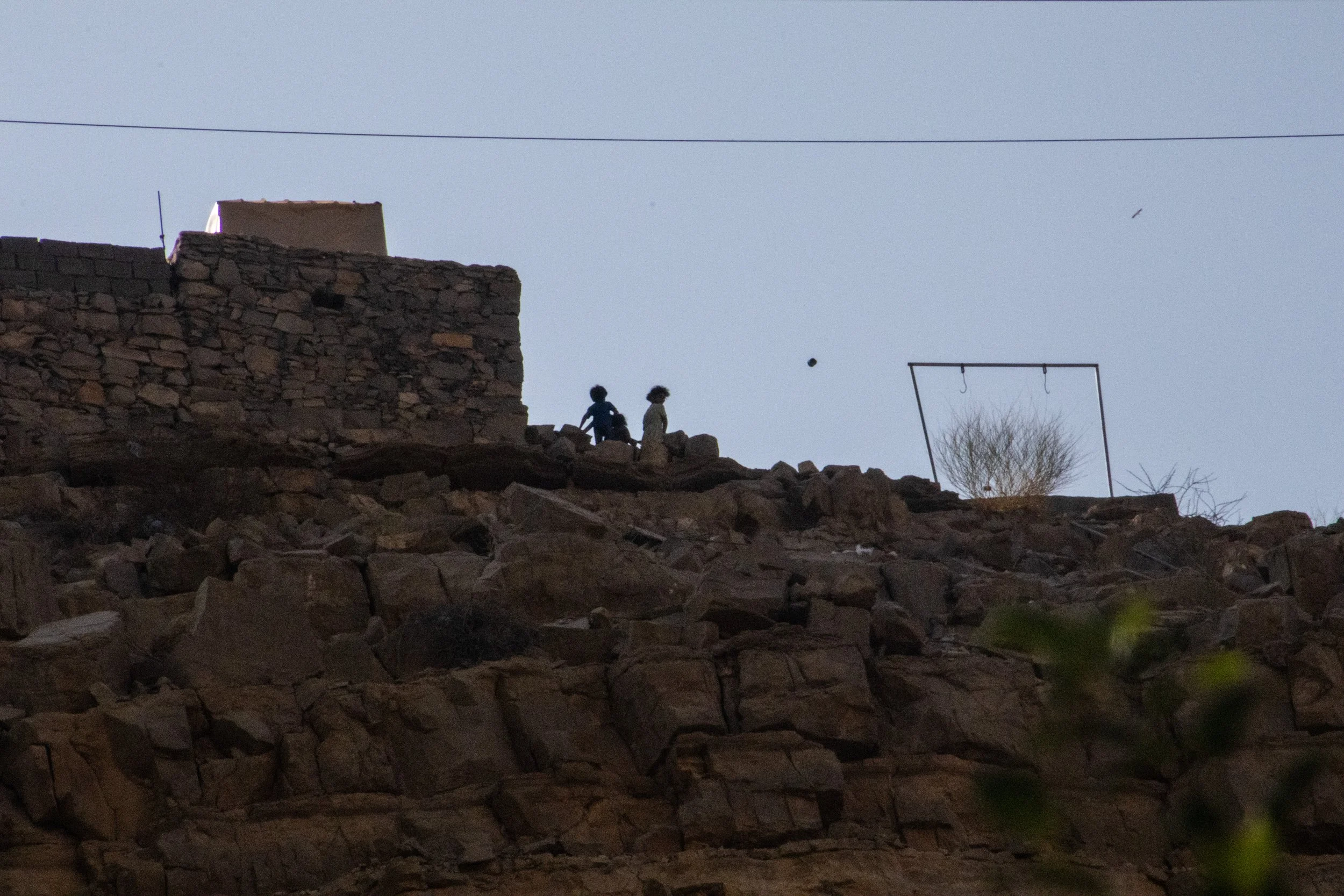
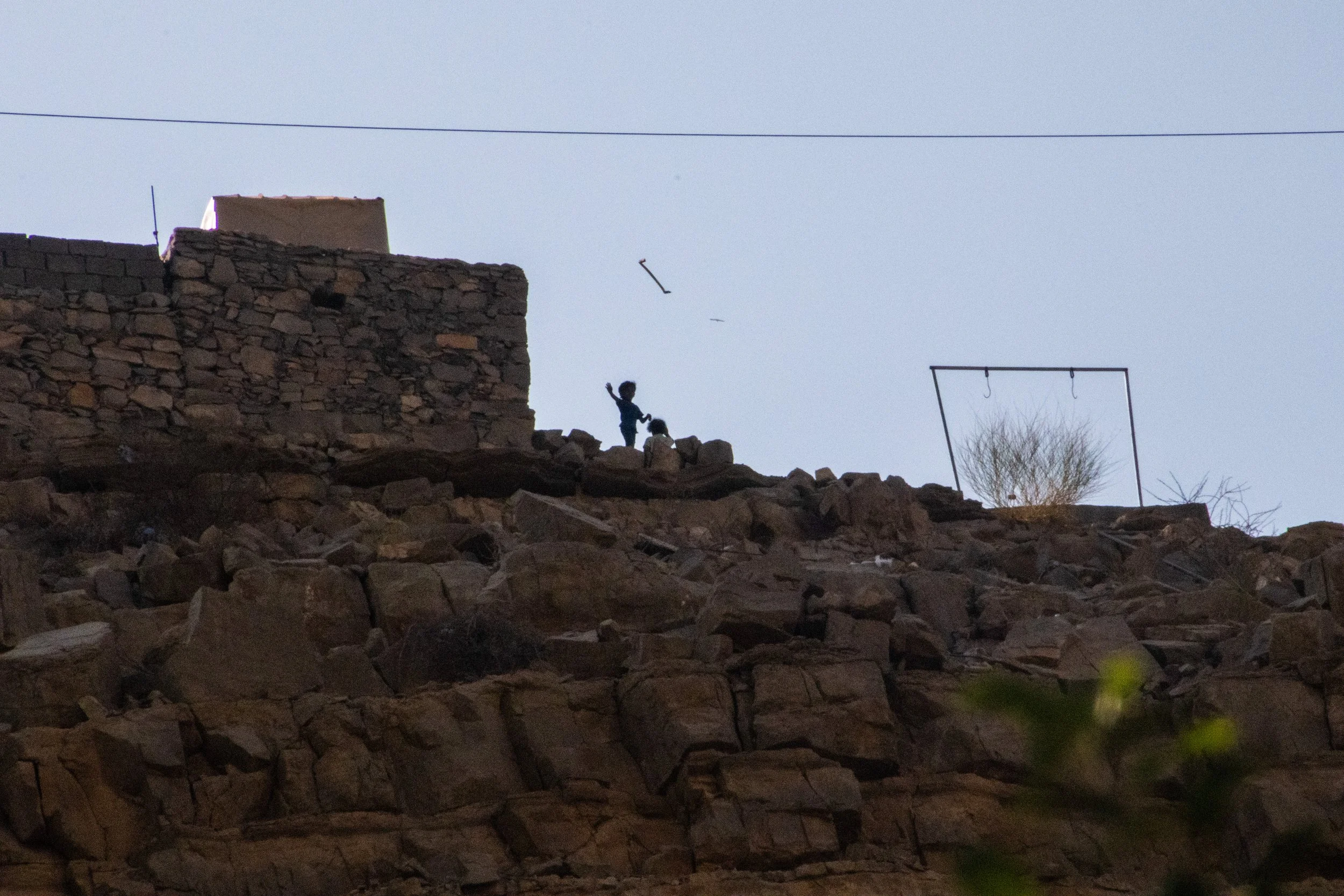
From a cliff towering over us, we heard some commotion. I looked up to see a group of children yelling down at use and throwing things. I had to make the attempt for the picture; by the looks of it, these little rascals were throwing rocks and metal bars! They’re just lucky I didn’t rat them out to their mom. 👀
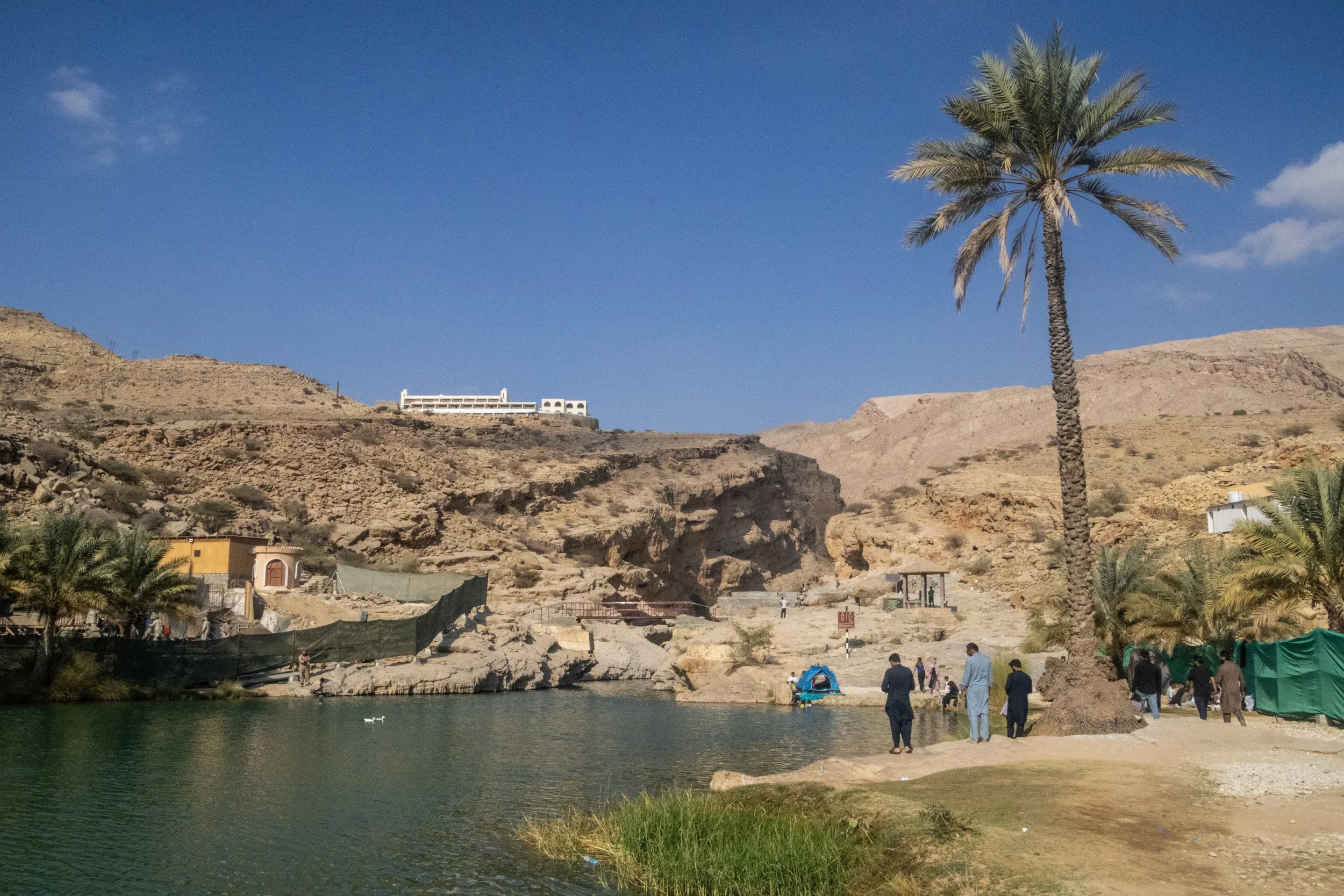
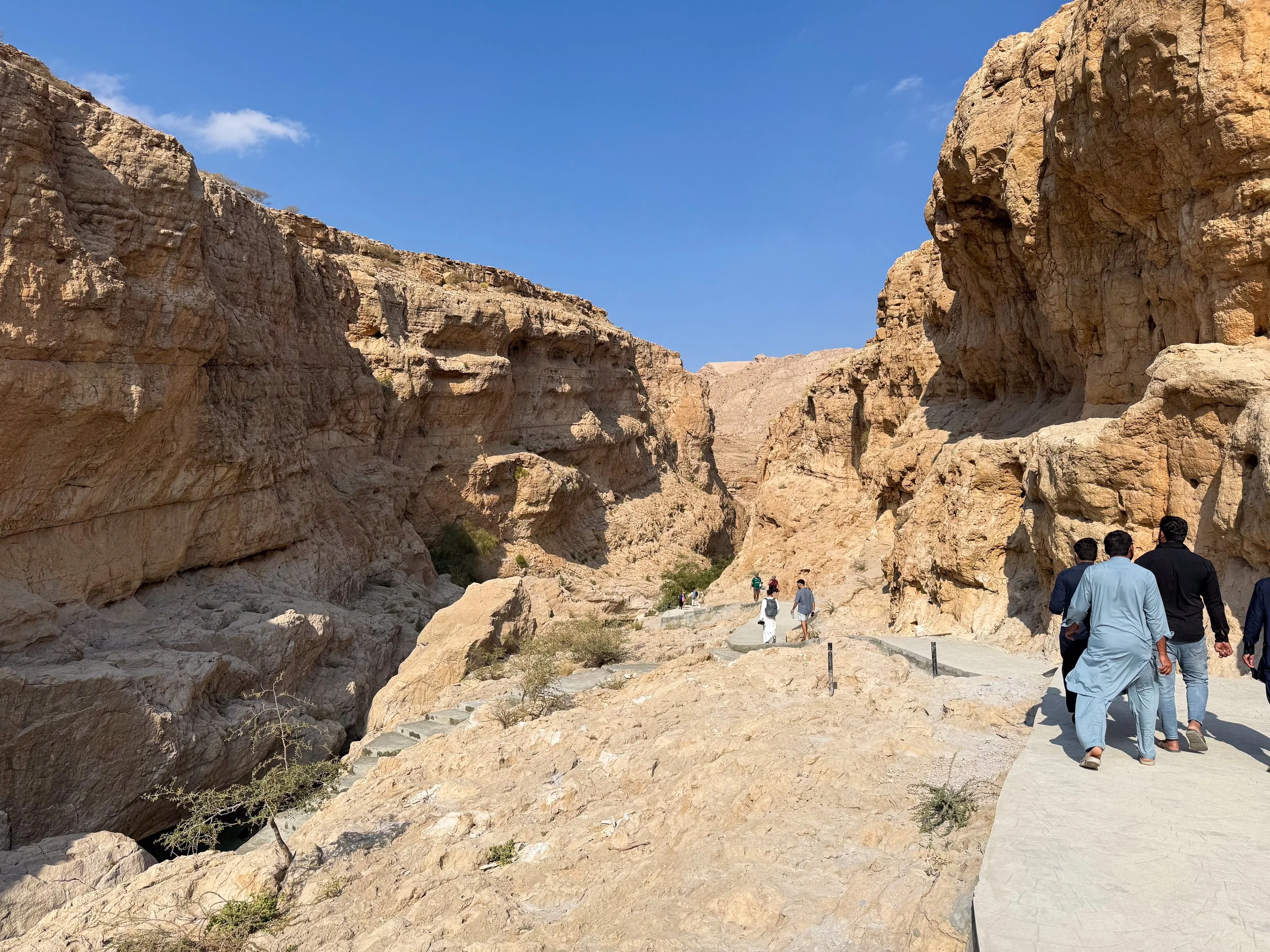
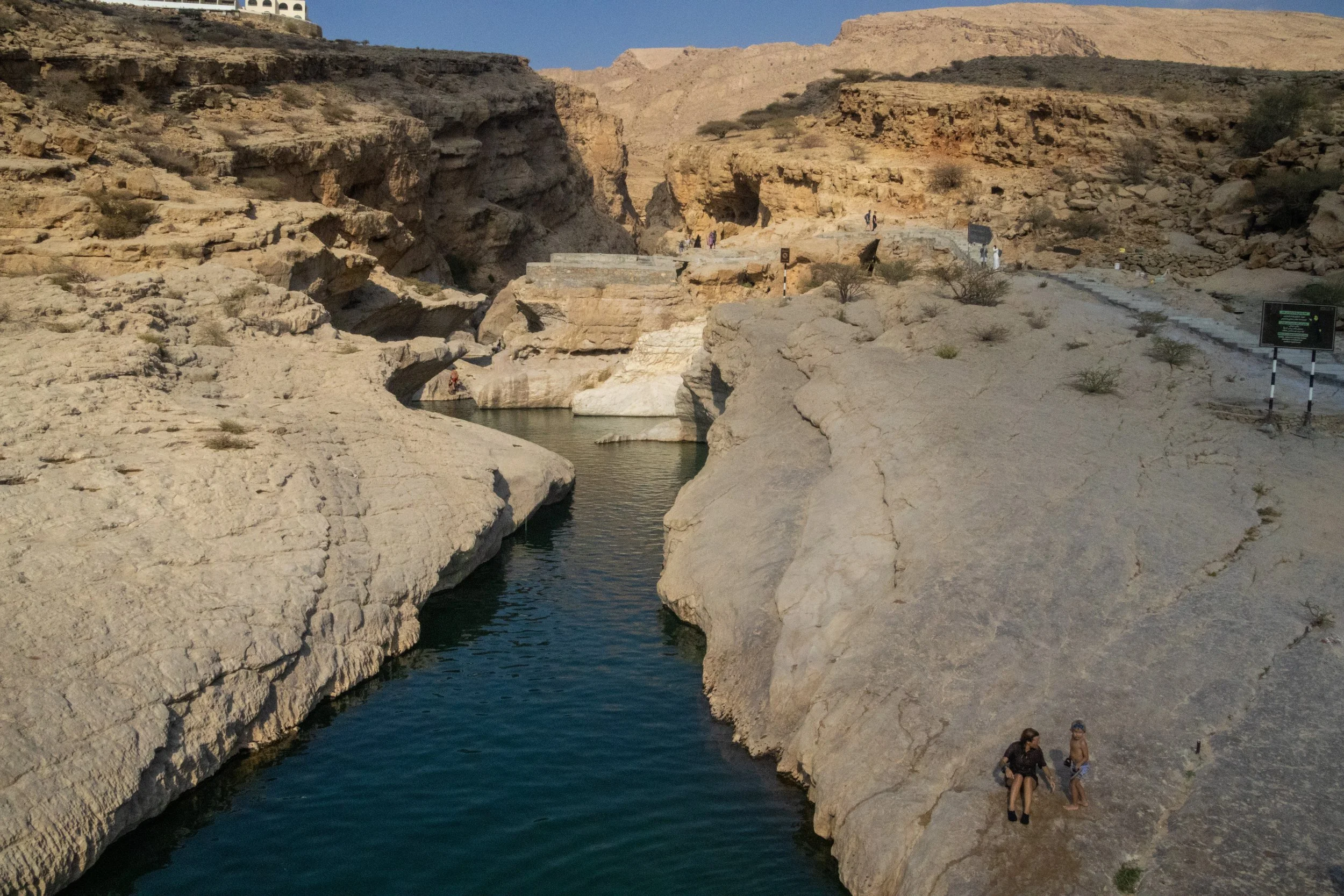
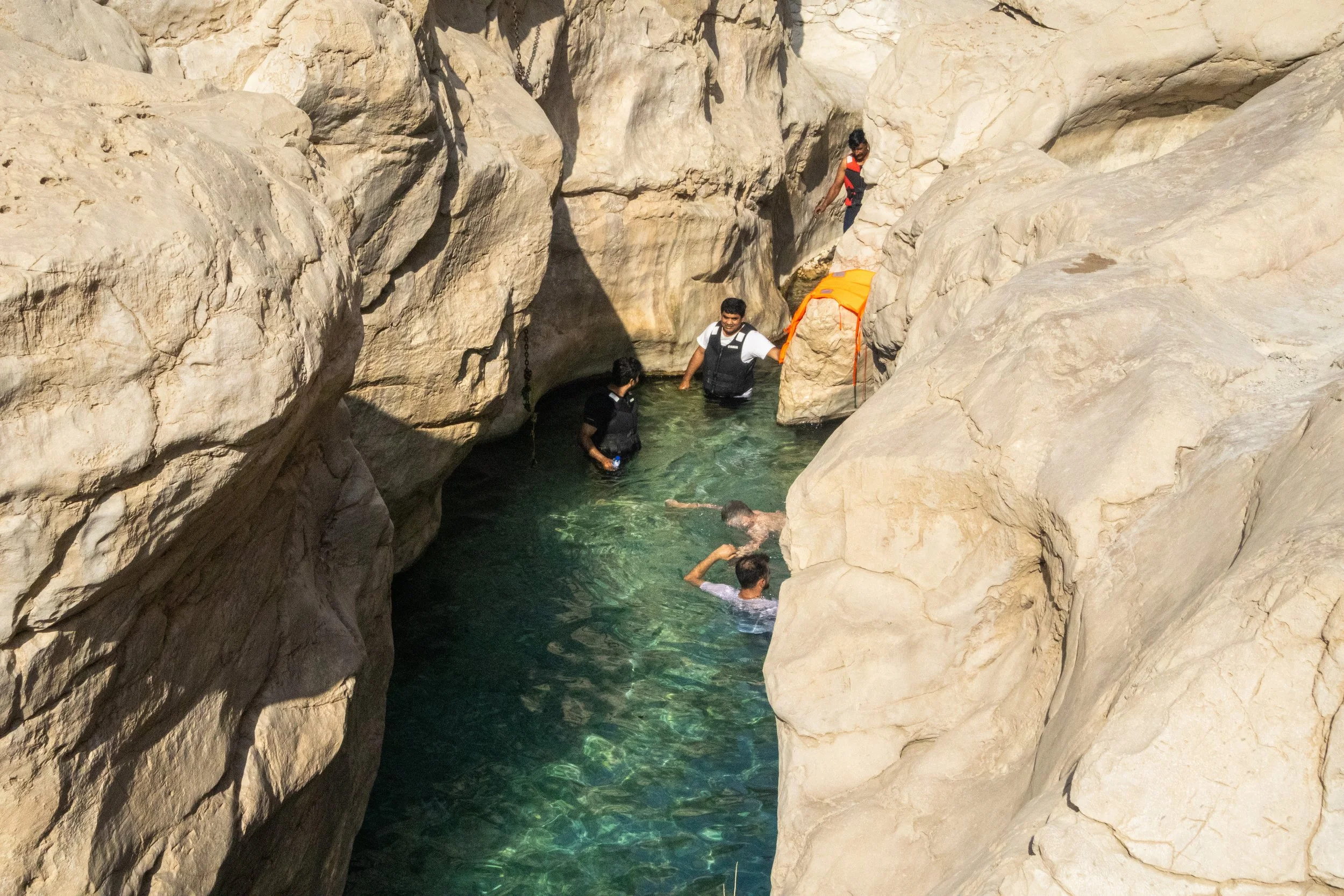
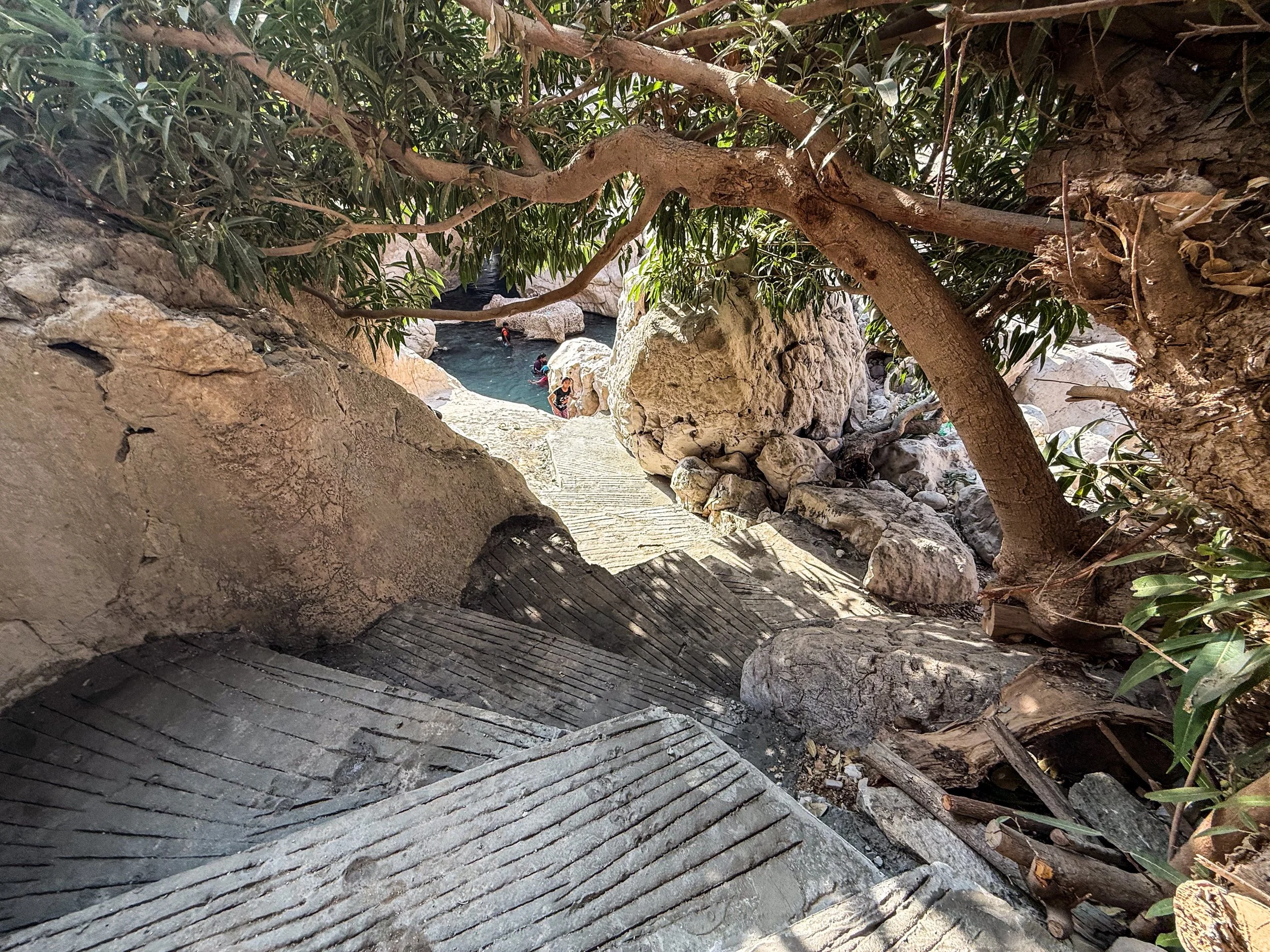
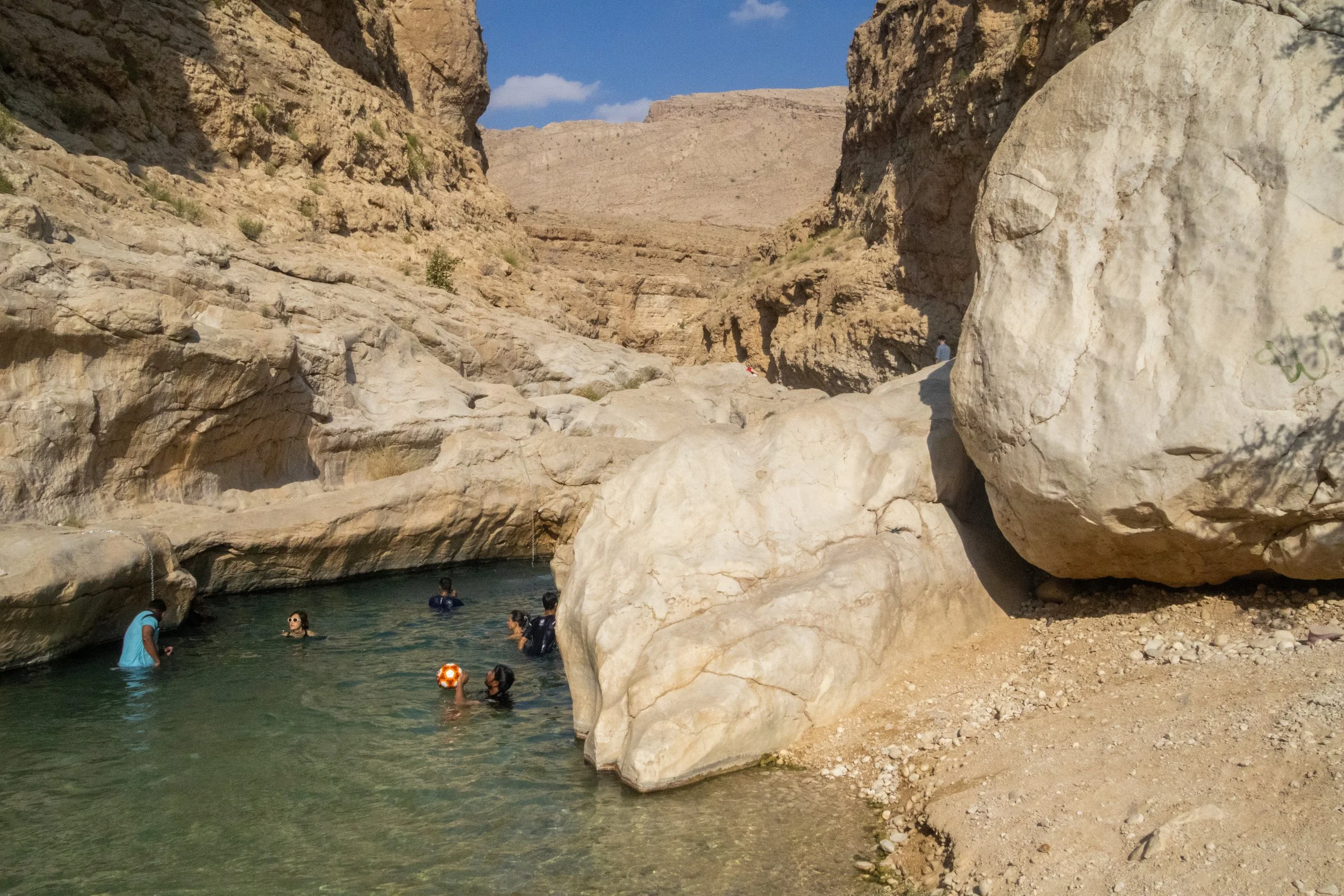
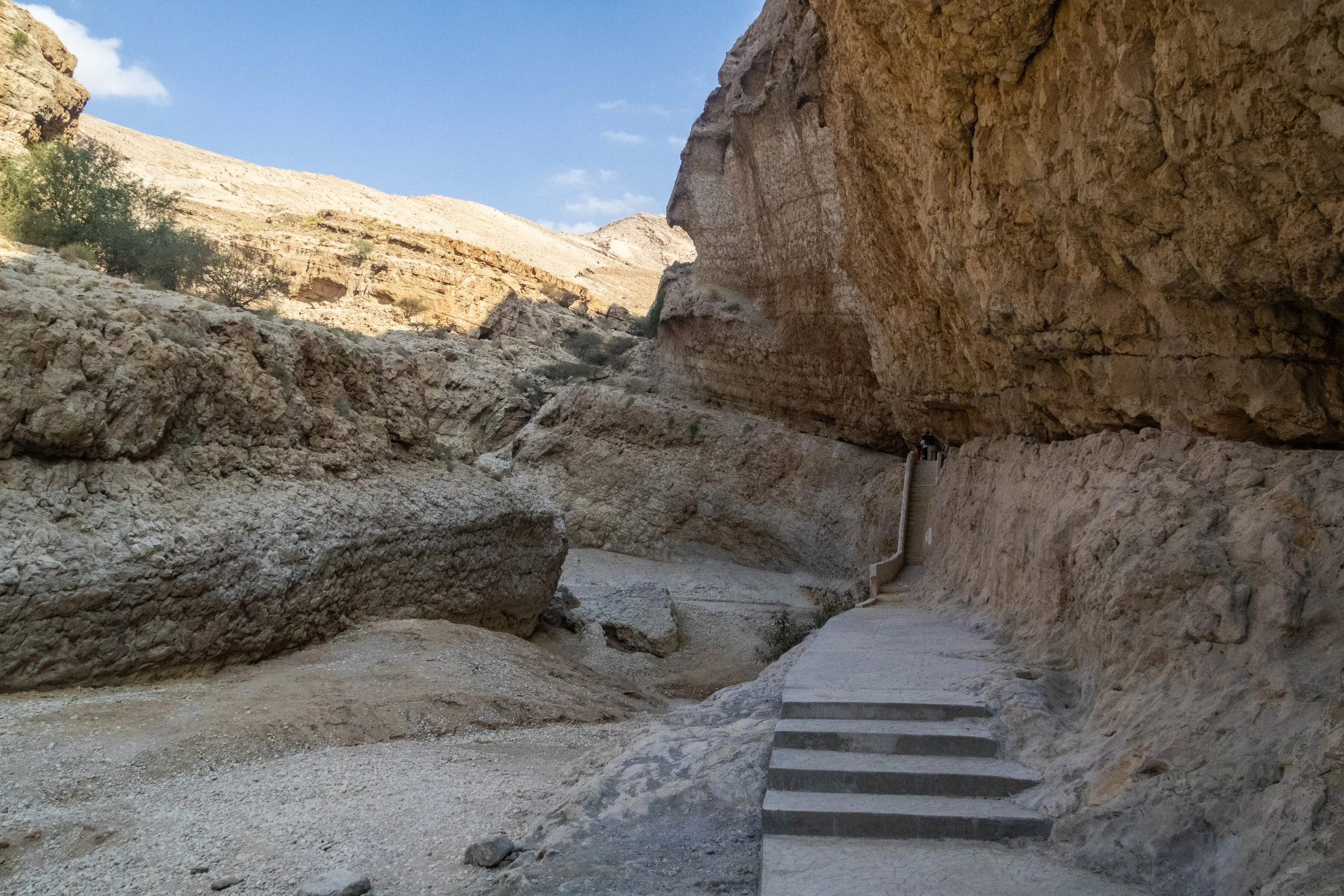
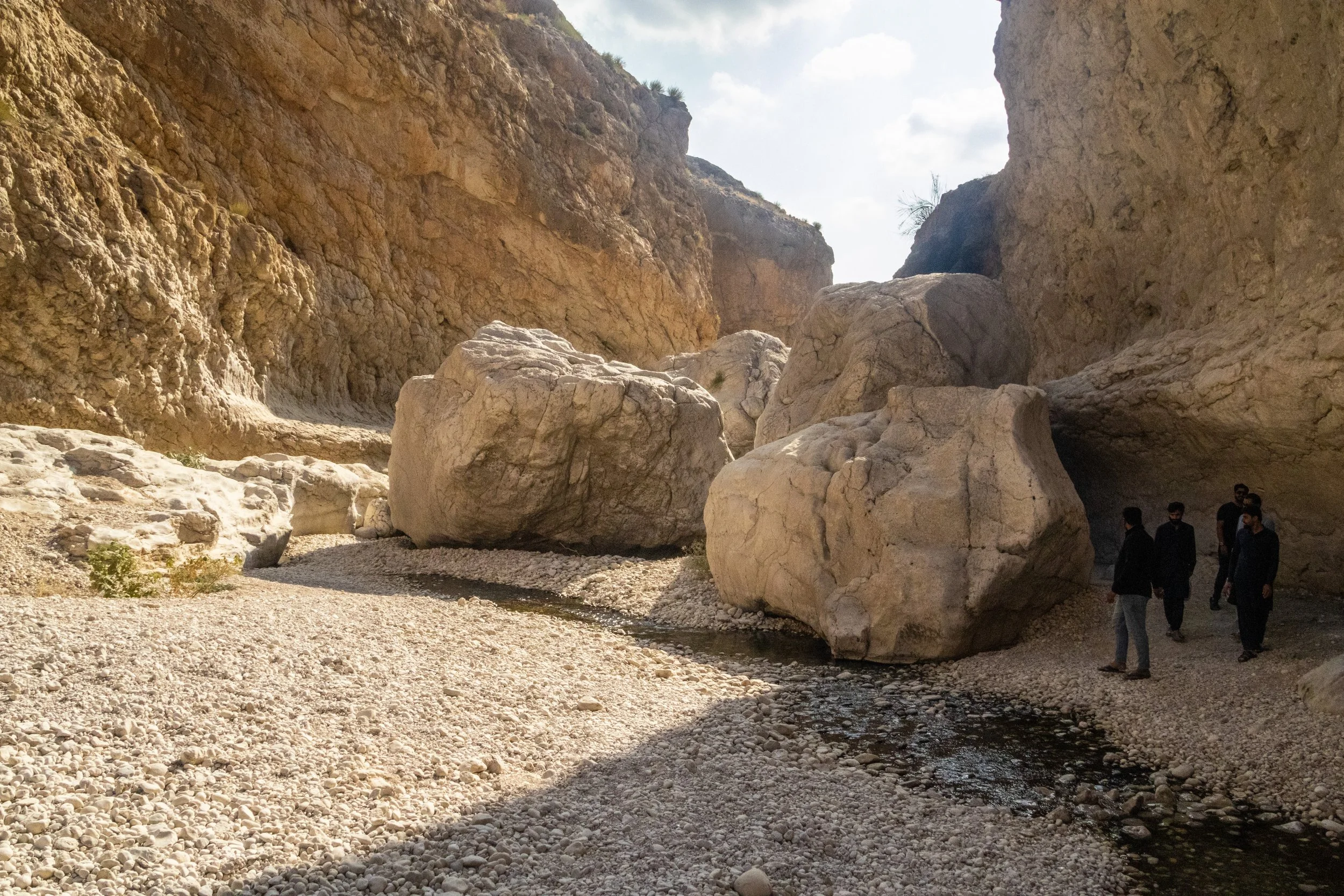
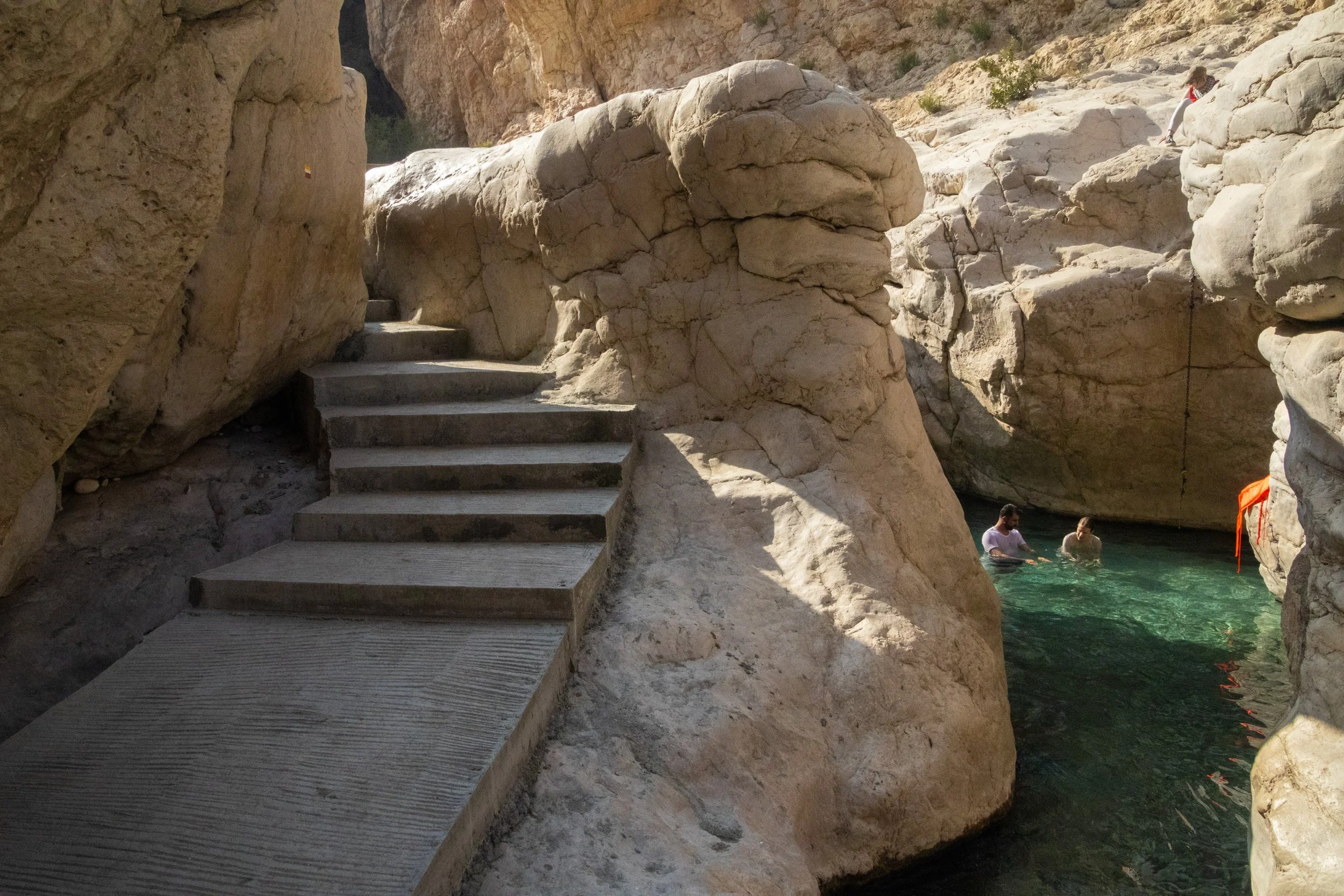
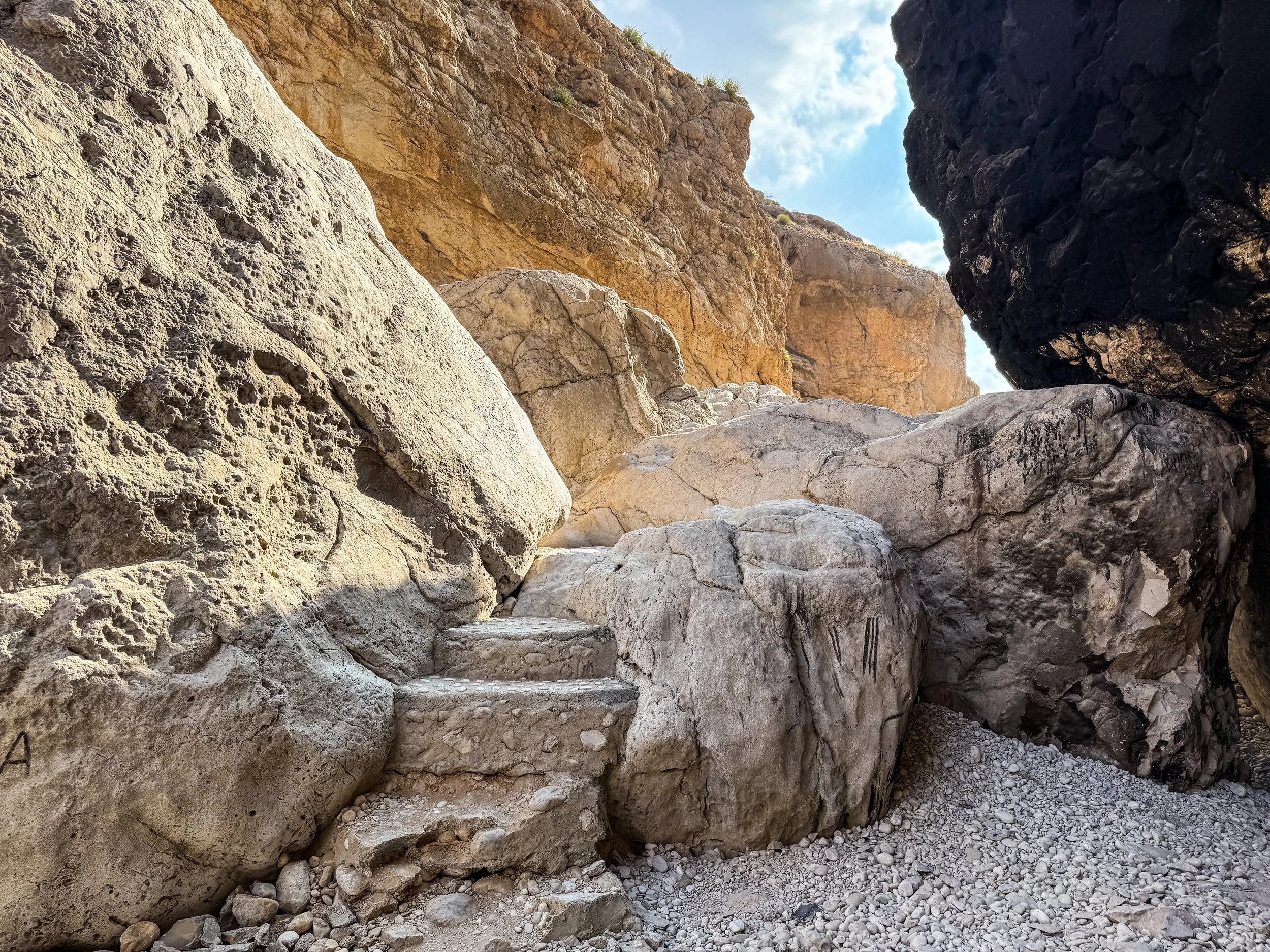
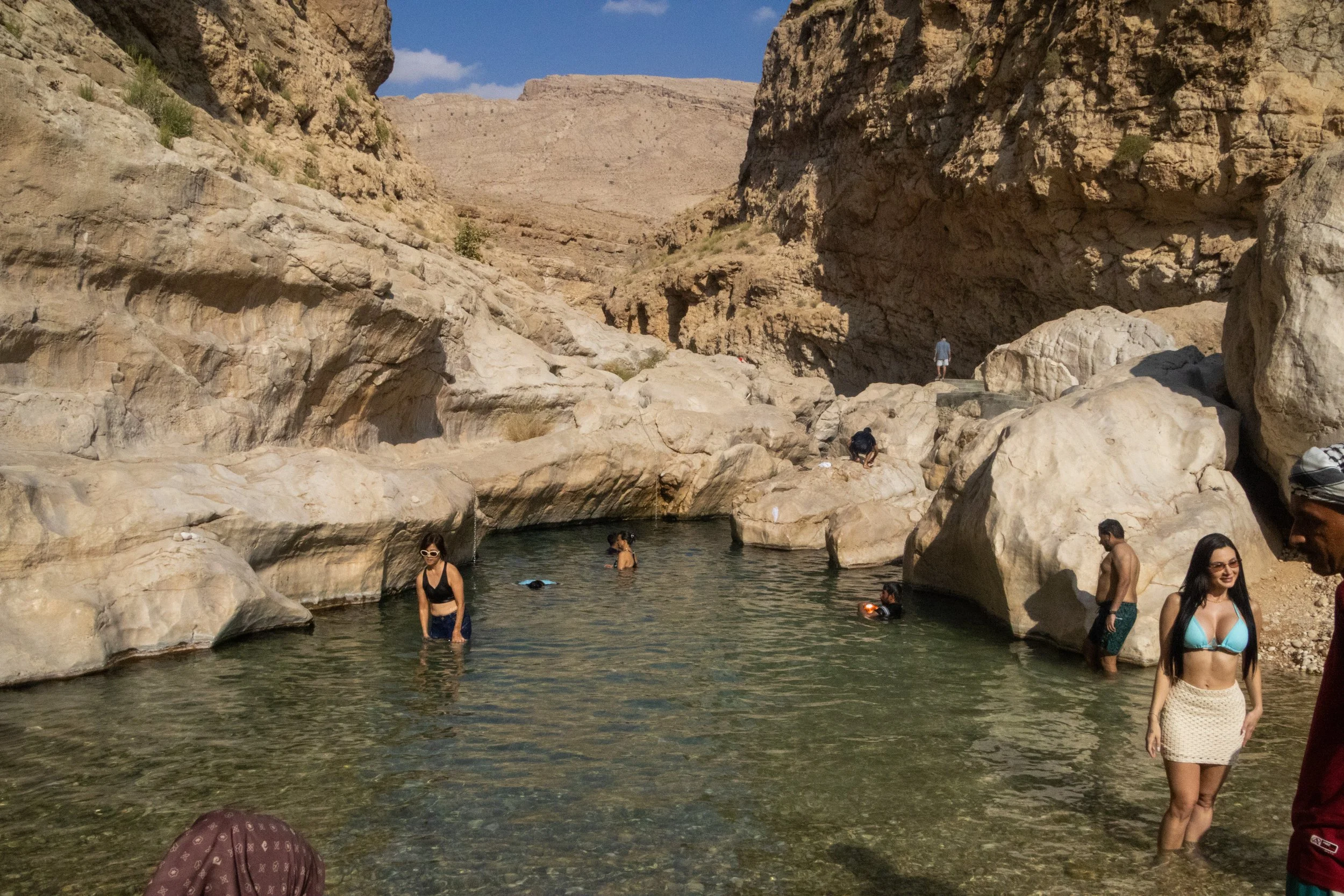
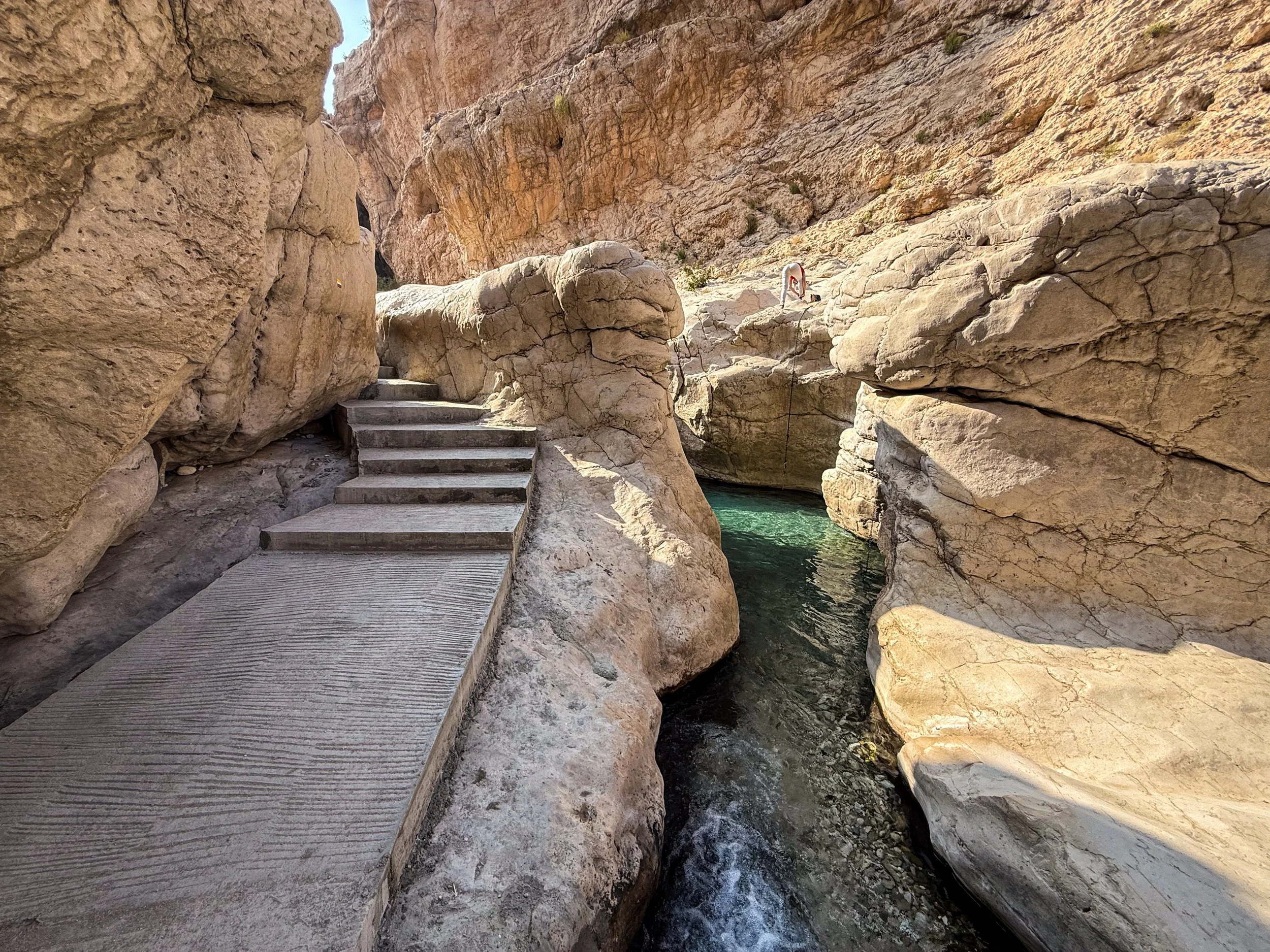
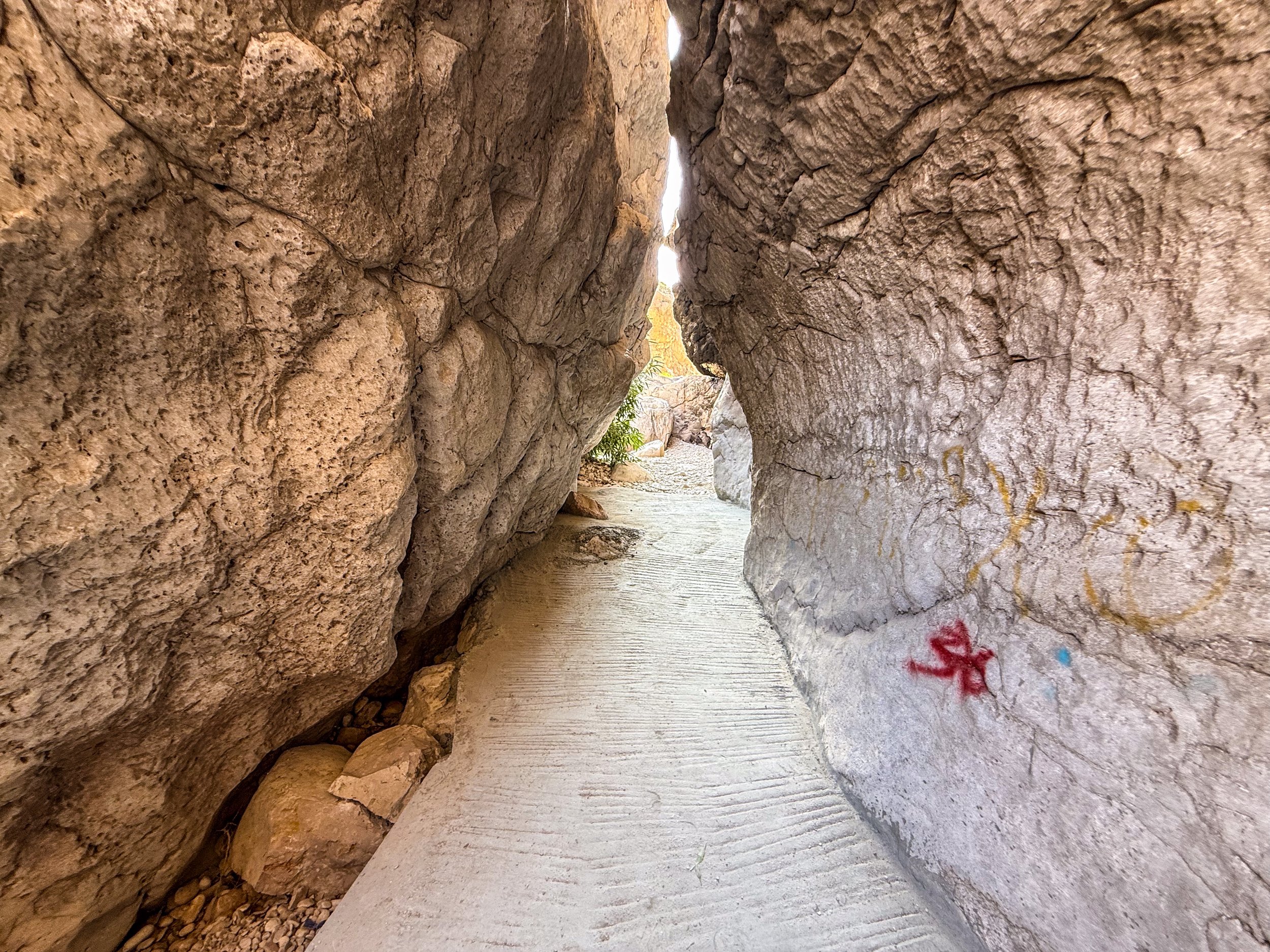
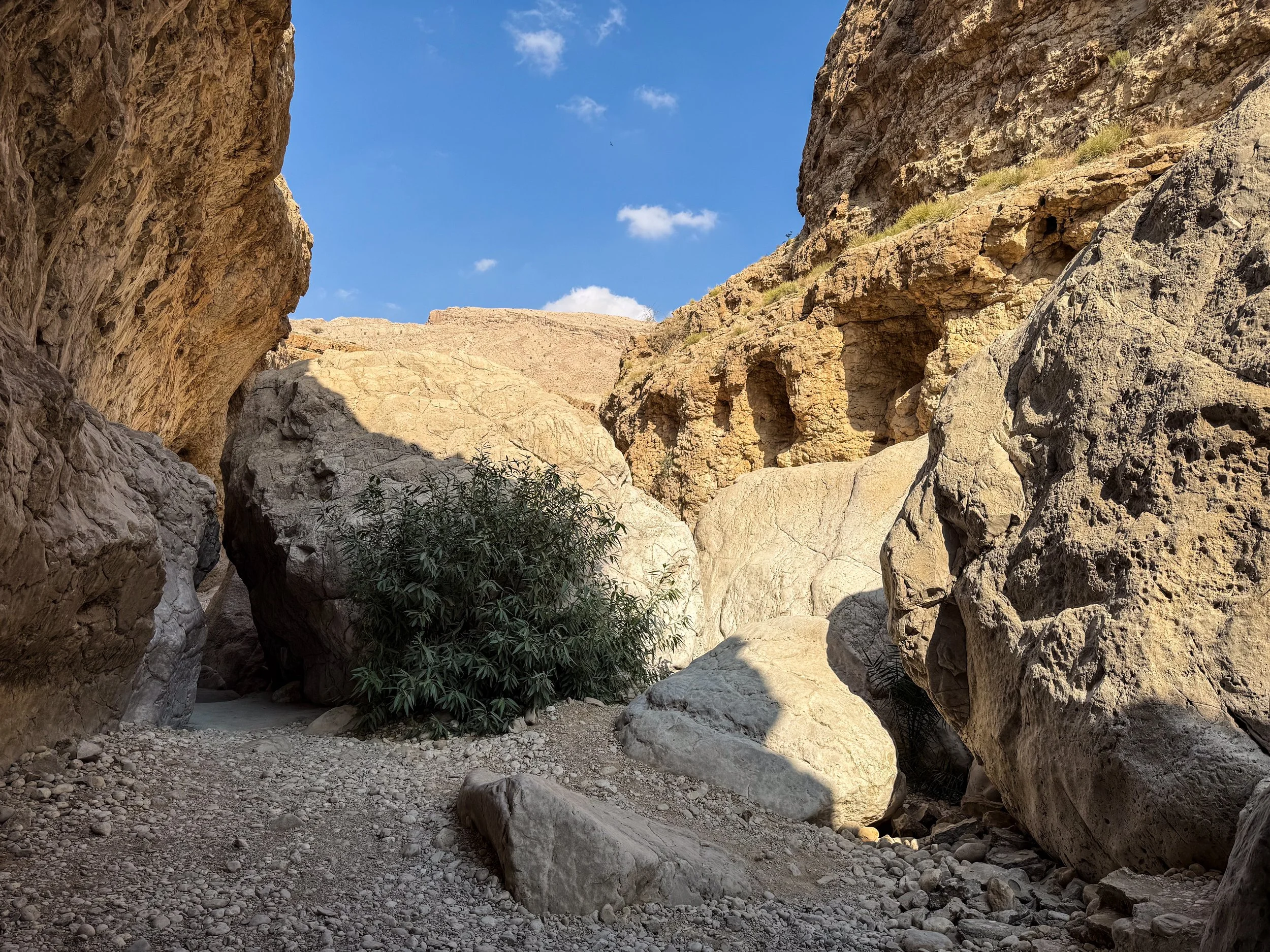
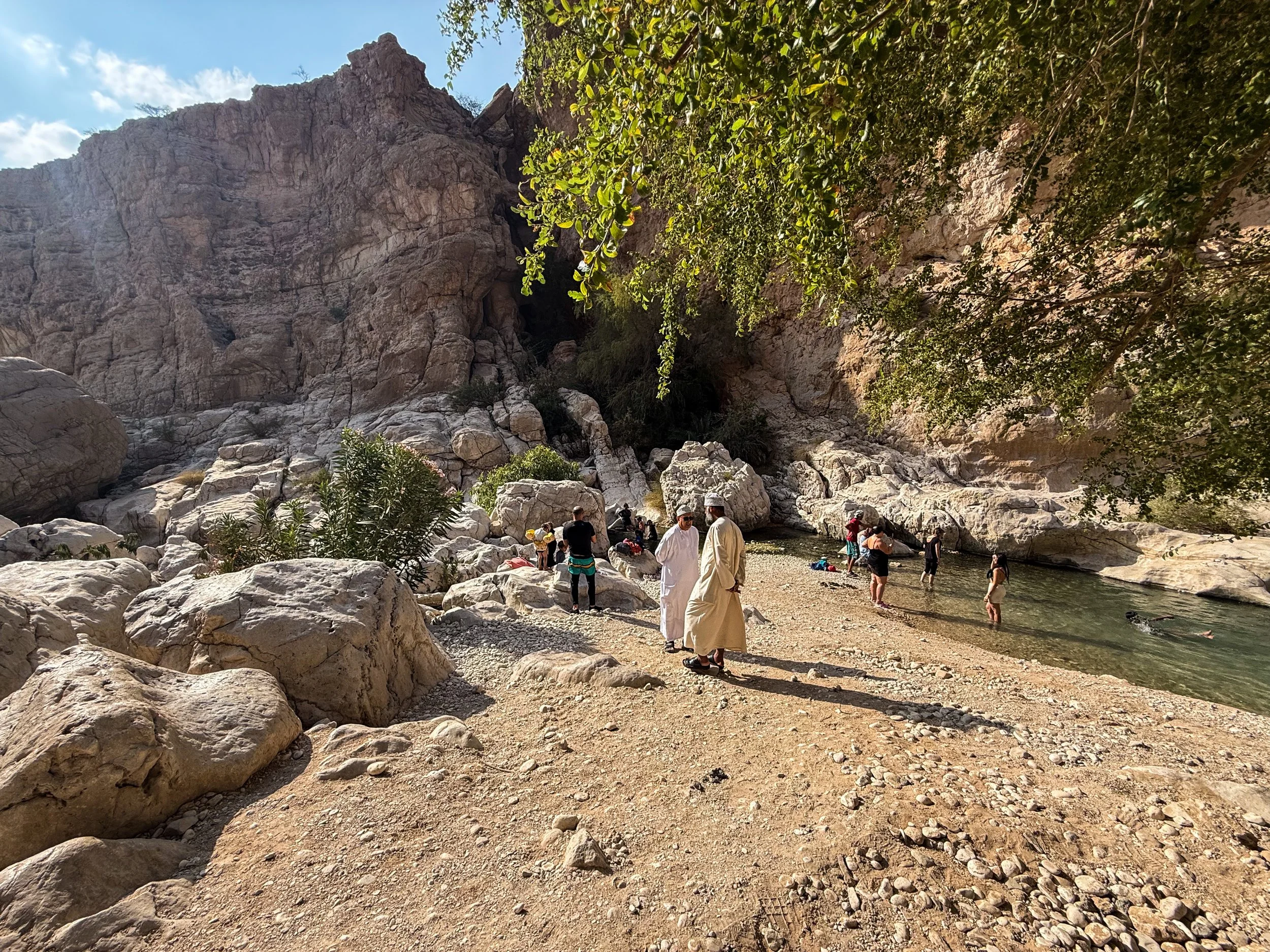
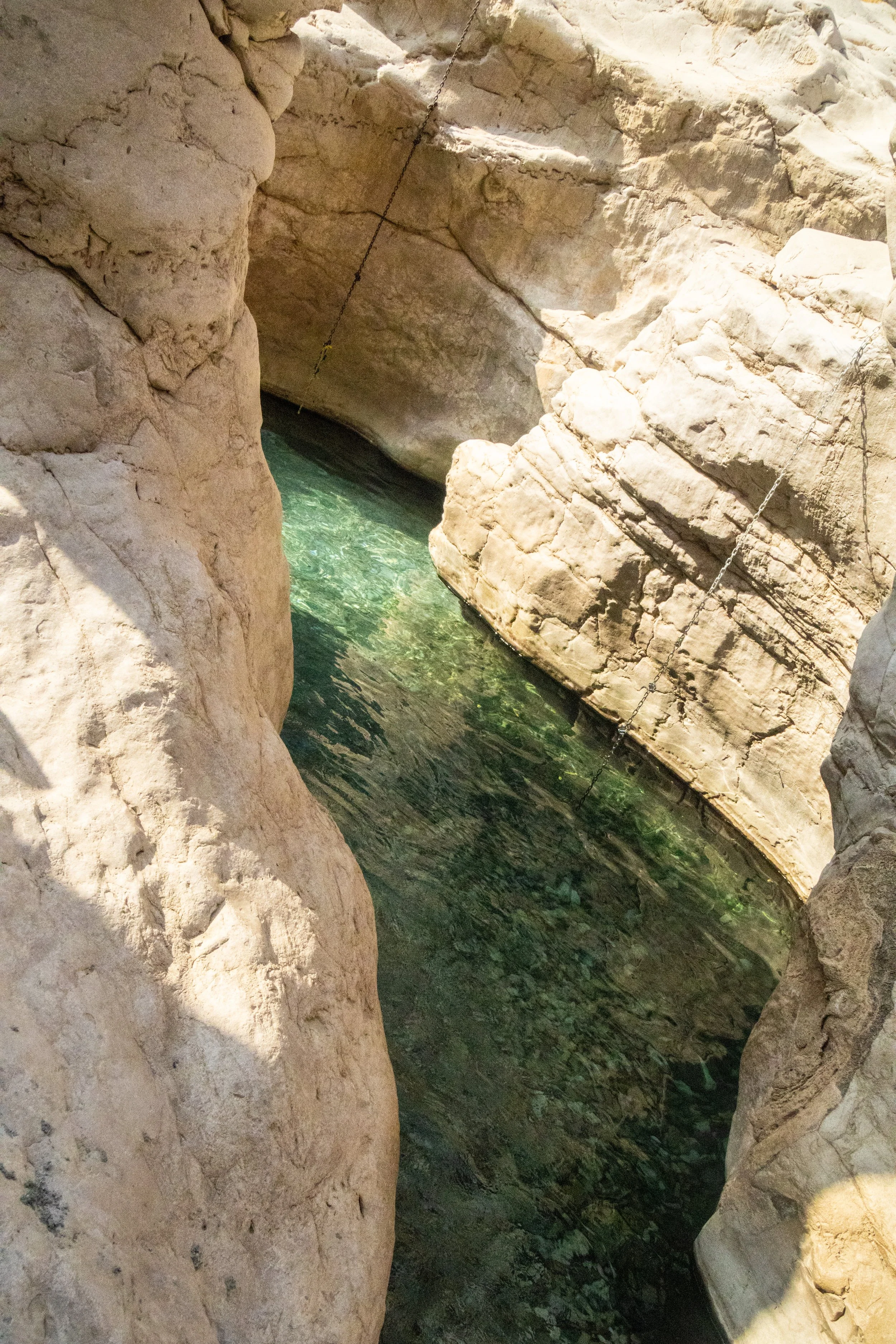
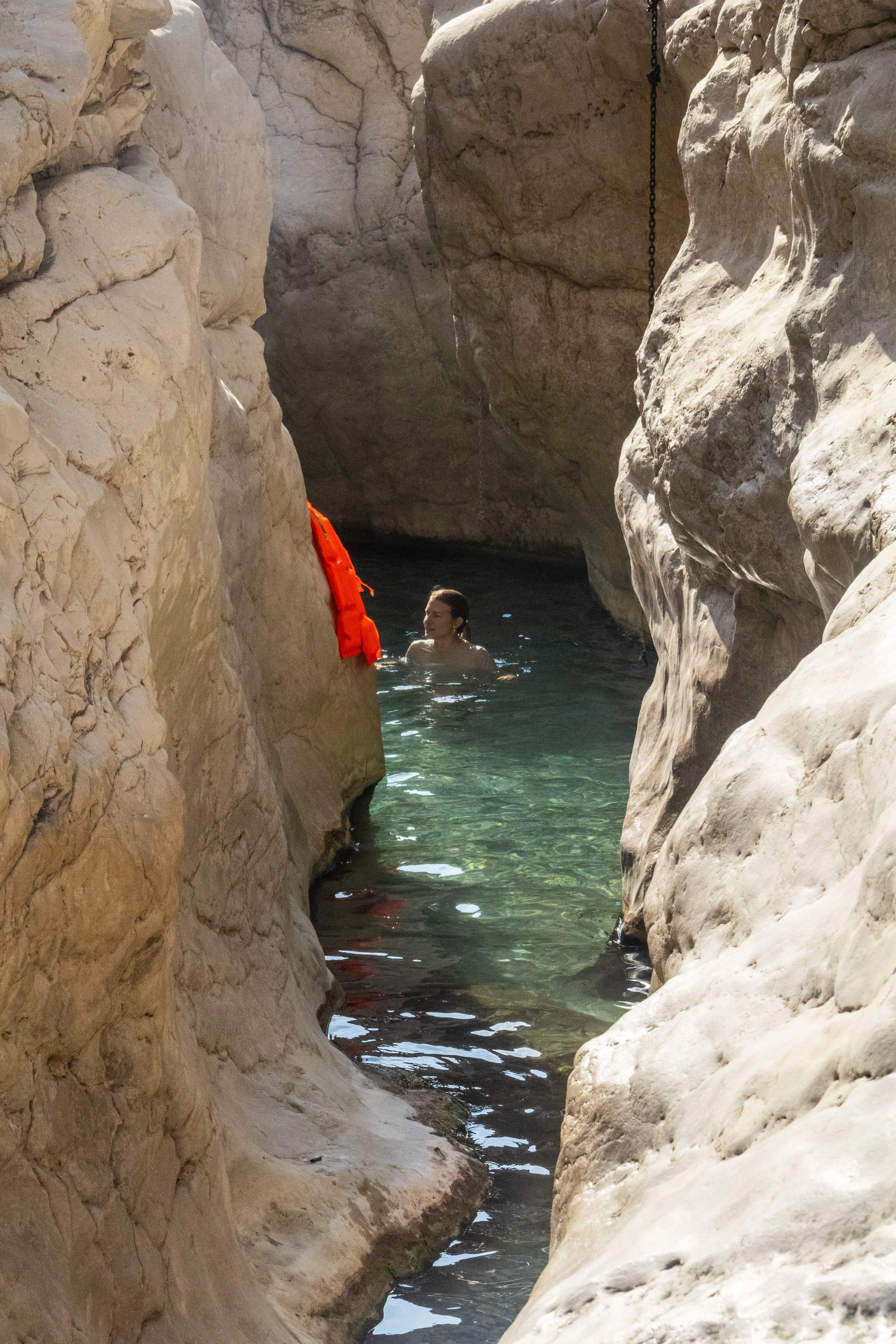
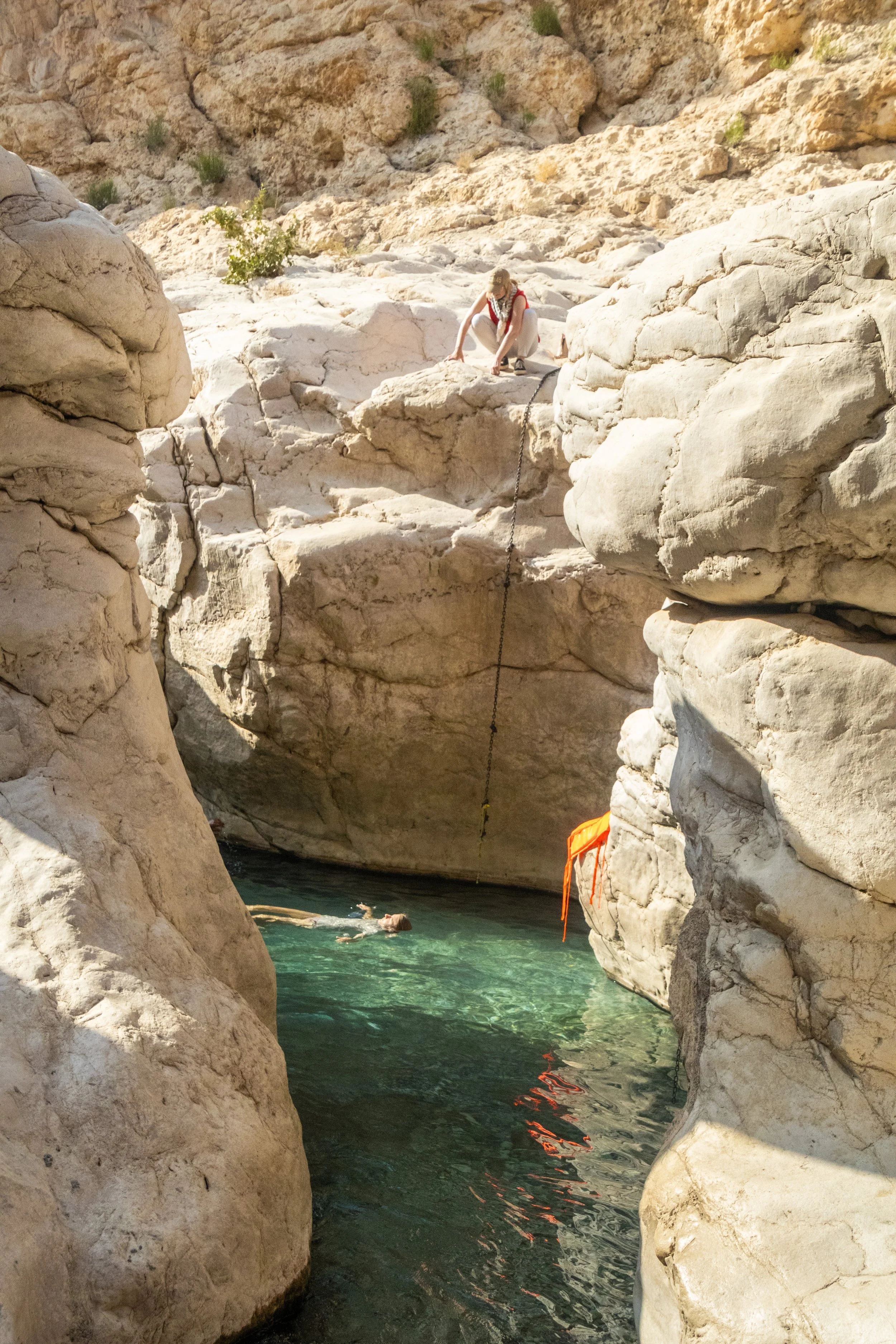
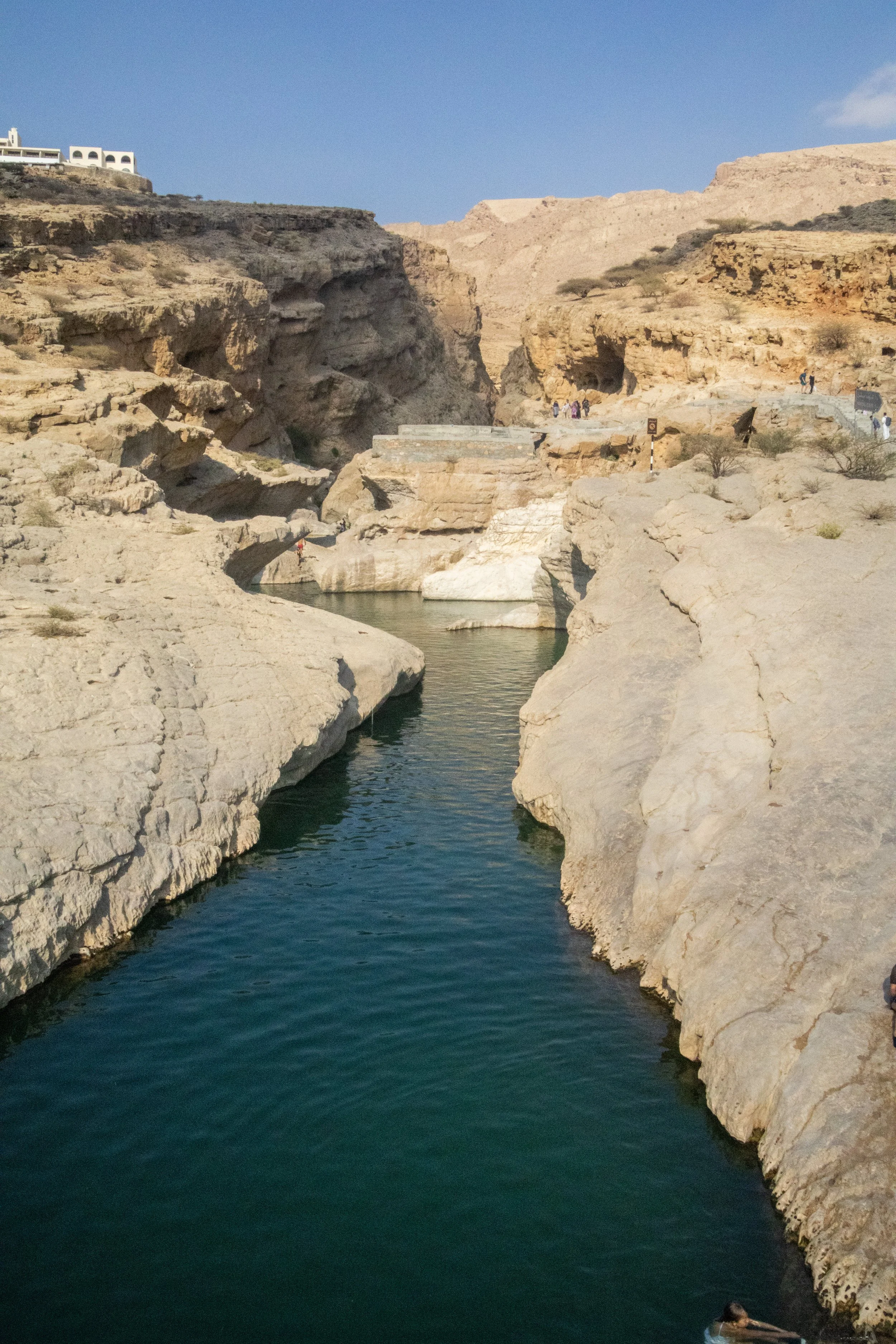
Ok, FINALLY, we are arriving at the actual wadi. The valley opened up to reveal a large pond full of clear, green-ish water. It wasn’t a ton of water, but out here in the desert, it might as well have been sea world! This water seemed to be flowing out of a narrow canyon on the far side of the pond, so we naturally decided to walk up-stream. I was actually shocked at how far this little canyon went! At times it was nothing more than a giant crevice in-between mountains, but there was always a narrow stripe of teal-blue water that ran through its basin. When the sun hit the water, it sent shimmering reflections bouncing across the rocks around it… it was gorgeous.
And you can swim in this water! There were people from all walks of life that were stripping down to their swimsuits and jumping in! At the start of the day I’d intended to join them… but finding this place had taken a lot longer than we’d expected, and our wrong-turn early had cost us some additional time. Unfortunately, we had arranged a pick-up for our next destination at a random petrol station more than an hour away, so we didn’t get much time here.
Word to the wise: devote a whole day to seeing a couple of Oman’s wadis. I think my biggest regret of the trip was that I didn’t have more time here.
Into the Arabian Desert: Wahiba Sands
It’s time to go out into the dunes.
For this, we would have to drive south, out of the Al Hajar mountains, into subregion of the Arabian desert known as Sharqiya Sands or Wahiba Sands, depending on who you’re talking to. These names refer to the exact same place, but the former is the modern official name, whereas the latter is an older, more traditional name.
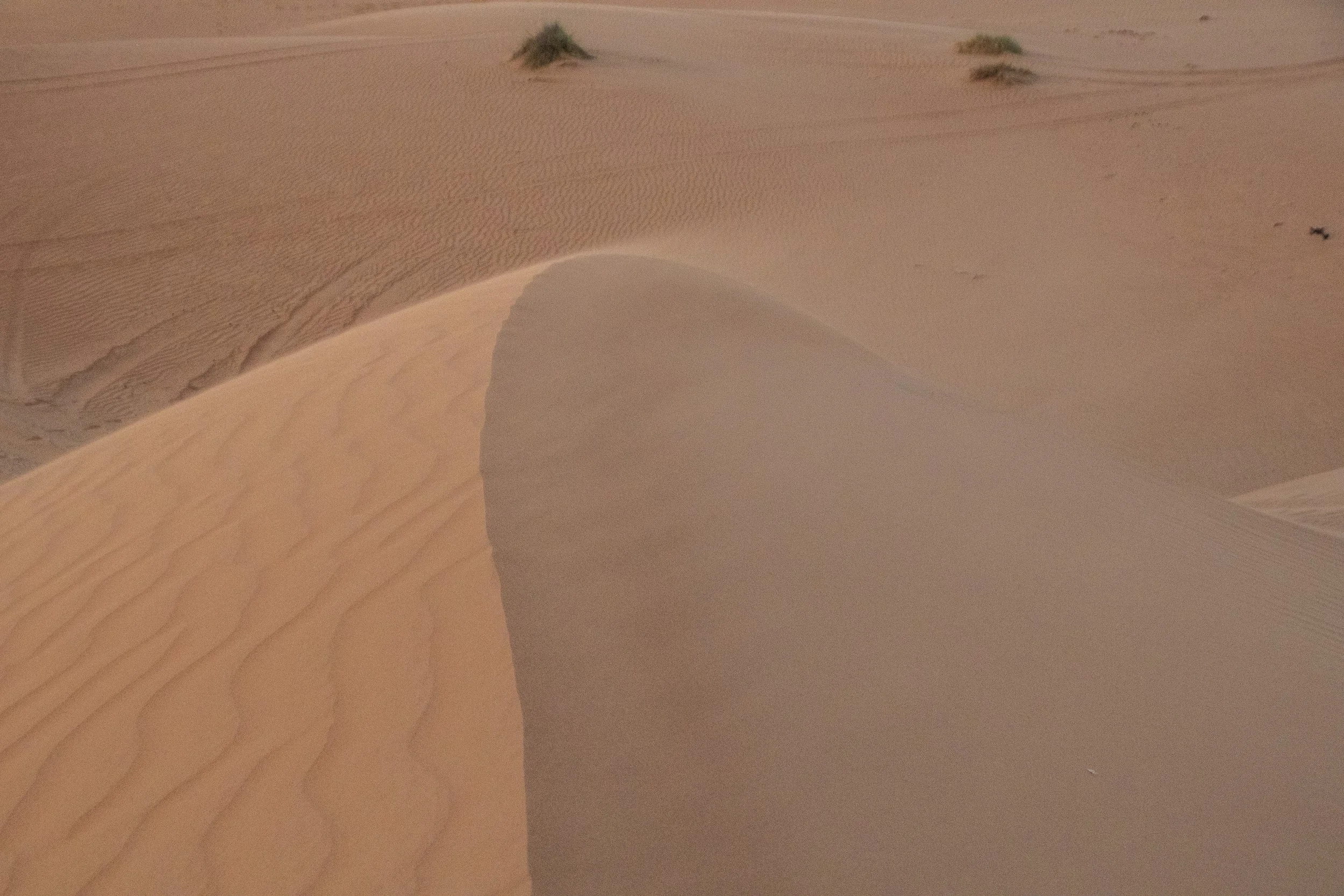
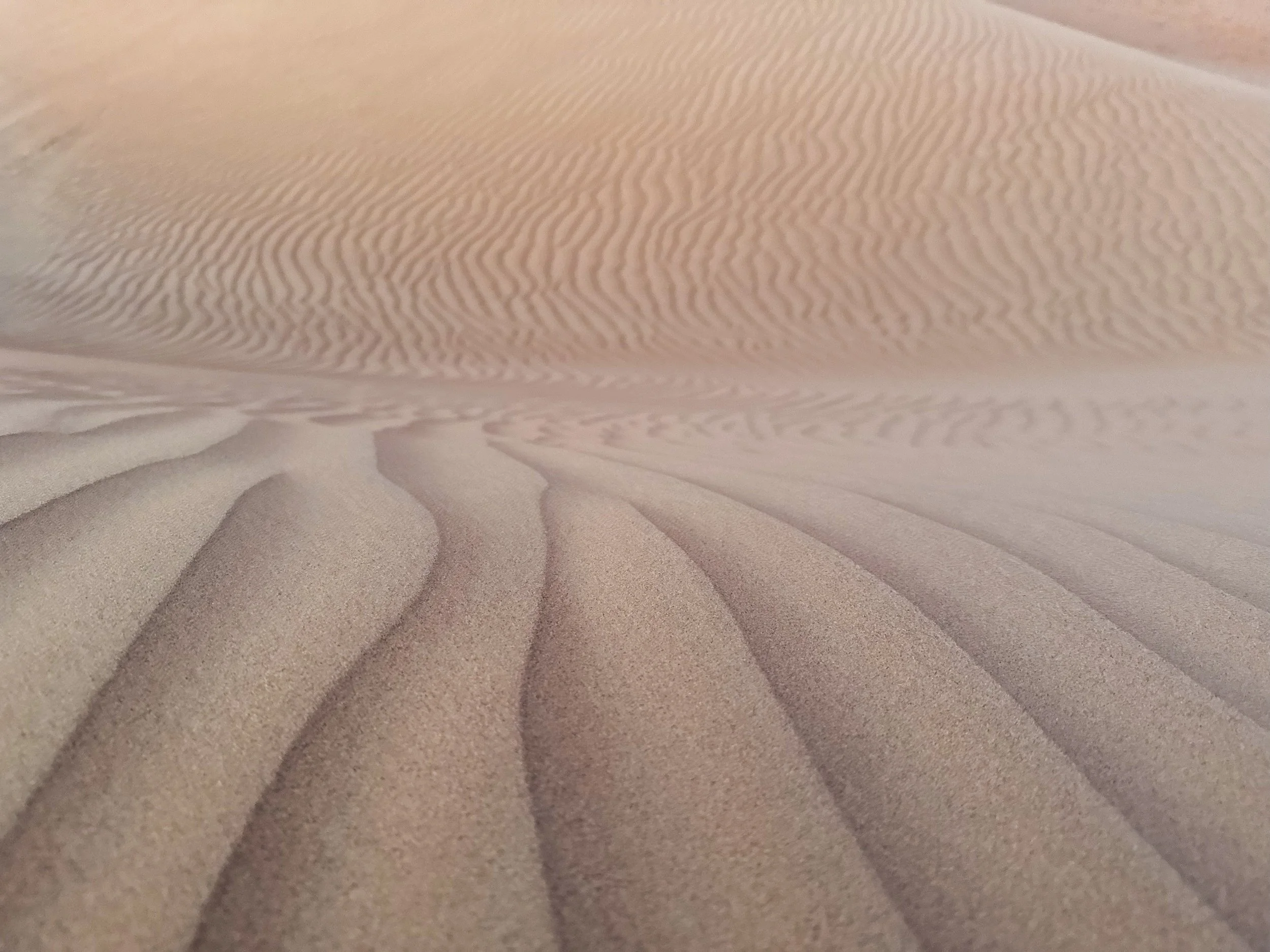
From Saudi, to the UAE, to Yemen, to Oman, there are lots of sub-regions of the Arabian Desert, which have emerged over time based on a combination of local tradition, geographical features, and scientific classification. The geography of this particular corner of the desert is largely dominated by long, parallel dunes (also called longitudinal dunes). A single dune can stretch from 5–20+ km (3–12+ miles) in length. And, in terms of height, they can reach 100 meters high (330 feet). To put that into perspective, that could be roughly equivalent to a 30-storey building!
However, as insane as that may sound—a sand dune as tall as a 30-storey building—there are other parts of the Arabian desert where dunes can reach the height of skyscrapers at 90+ storeys tall. These would mostly be found in an area farther inland called “The Empty Quarter”, which sits mostly in Saudi Arabia but also crosses into Oman and Yemen.
So, how does one access the vast expanses of this desert? We opted to book a room at Sama al Wasil Desert Camp. Here’s a screenshot of it from Google Earth. I literally had to count dunes to track this down 😂
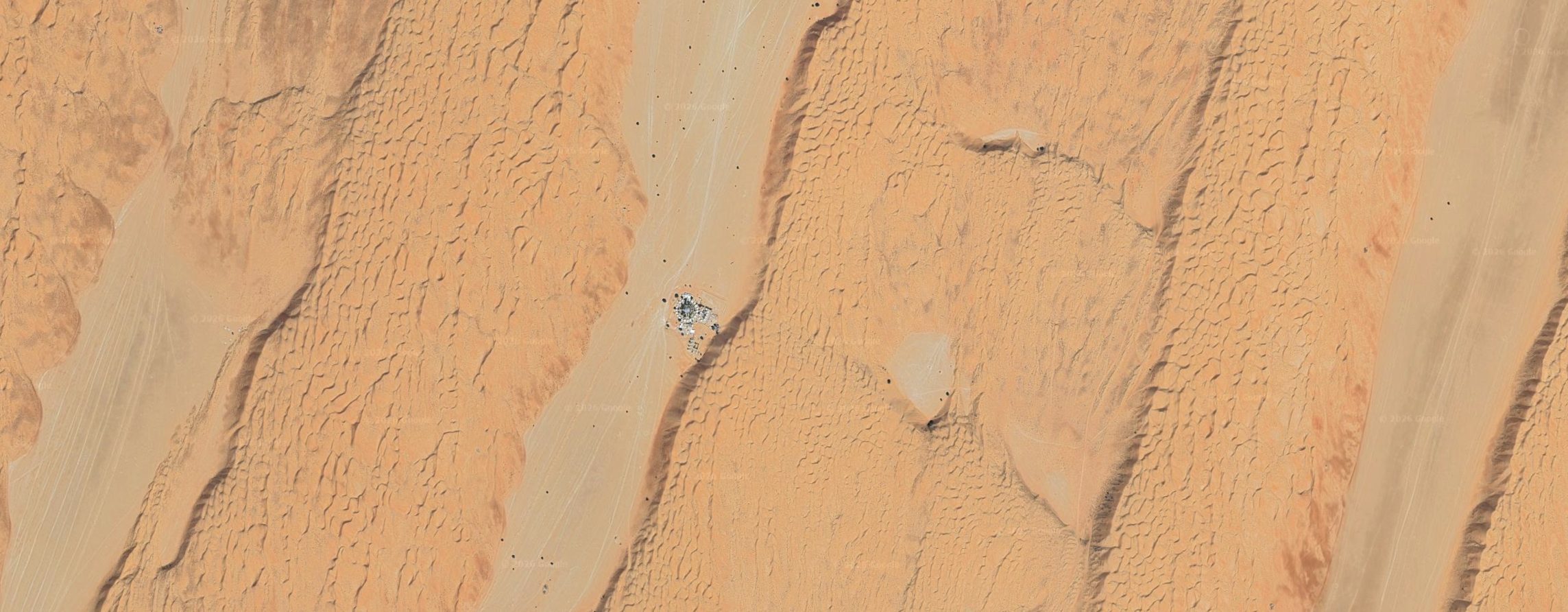
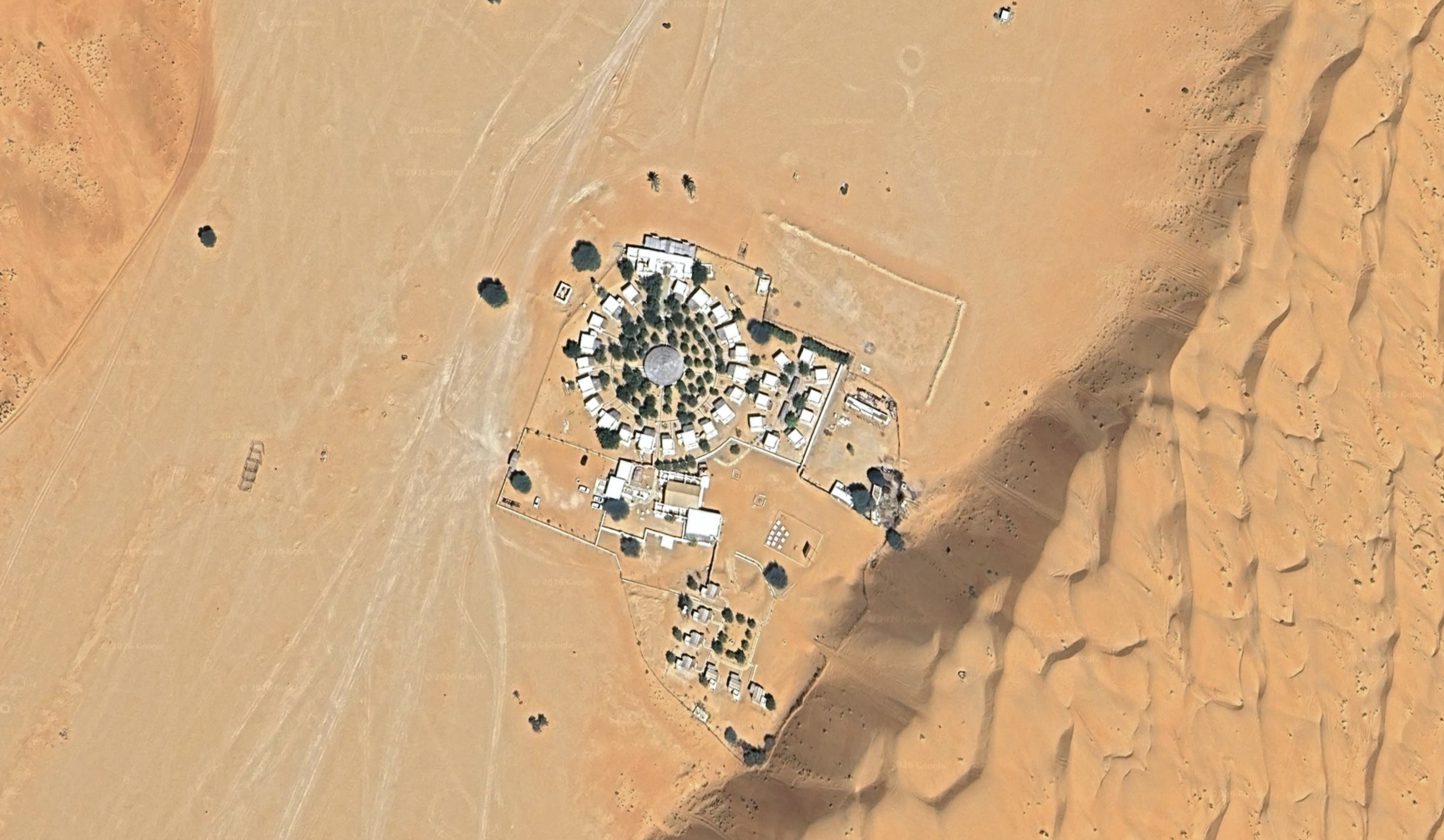
You may notice that this place is not serviced by any road. So, how does one actually reach Sama al Wasil Desert Camp?
Well, if you look at the satellite imagery, you will see well-trodden paths where all-terrain vehicles have driven past. There is no road here, but—incredibly—many of these routes are actually available on Google Maps street view! Technology FTW! Earth is getting a bit smaller every single day. So, in theory, we could have just driven our SUV up into the dunes and made our way to this campsite… but I had concerns. 😂
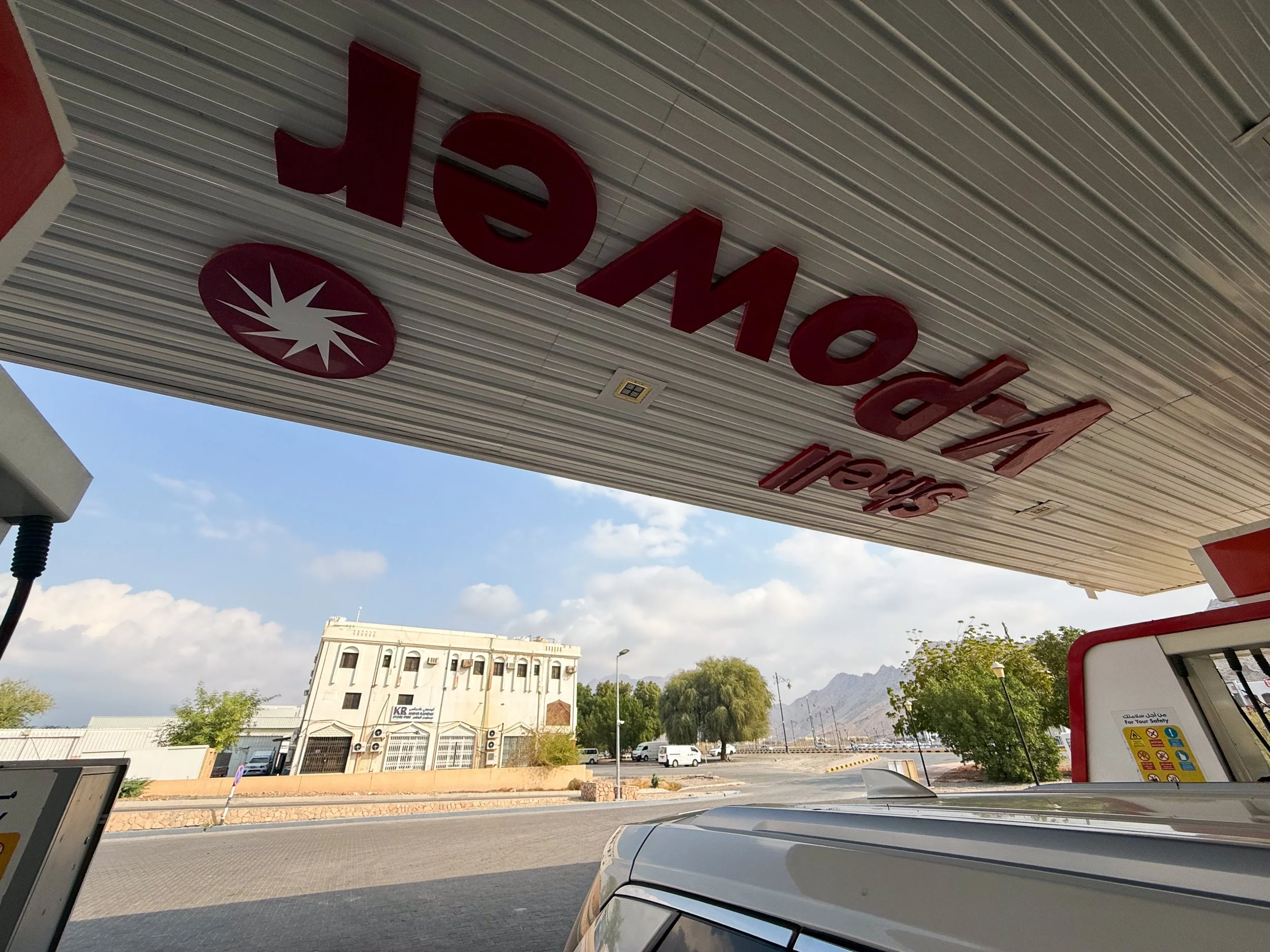
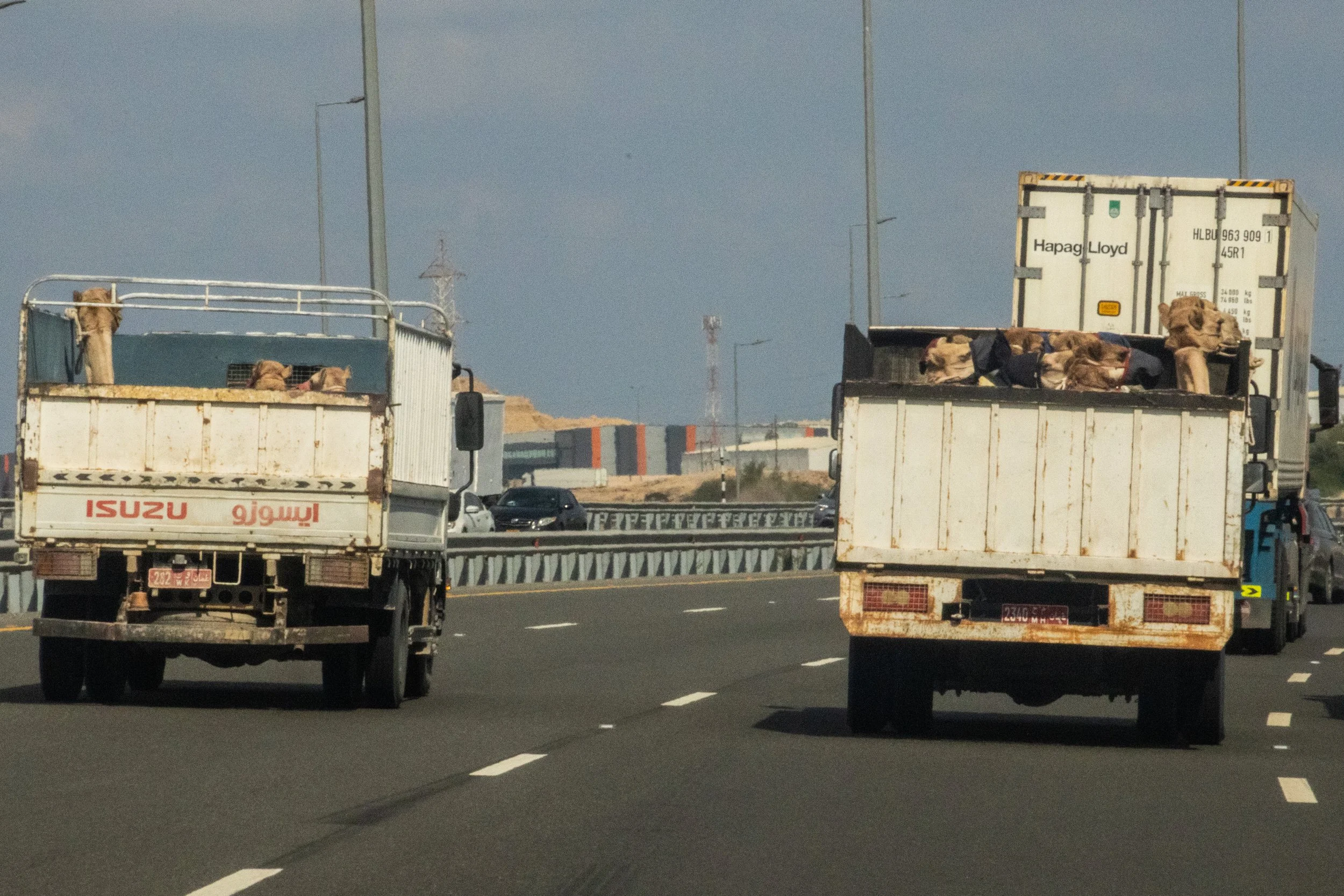
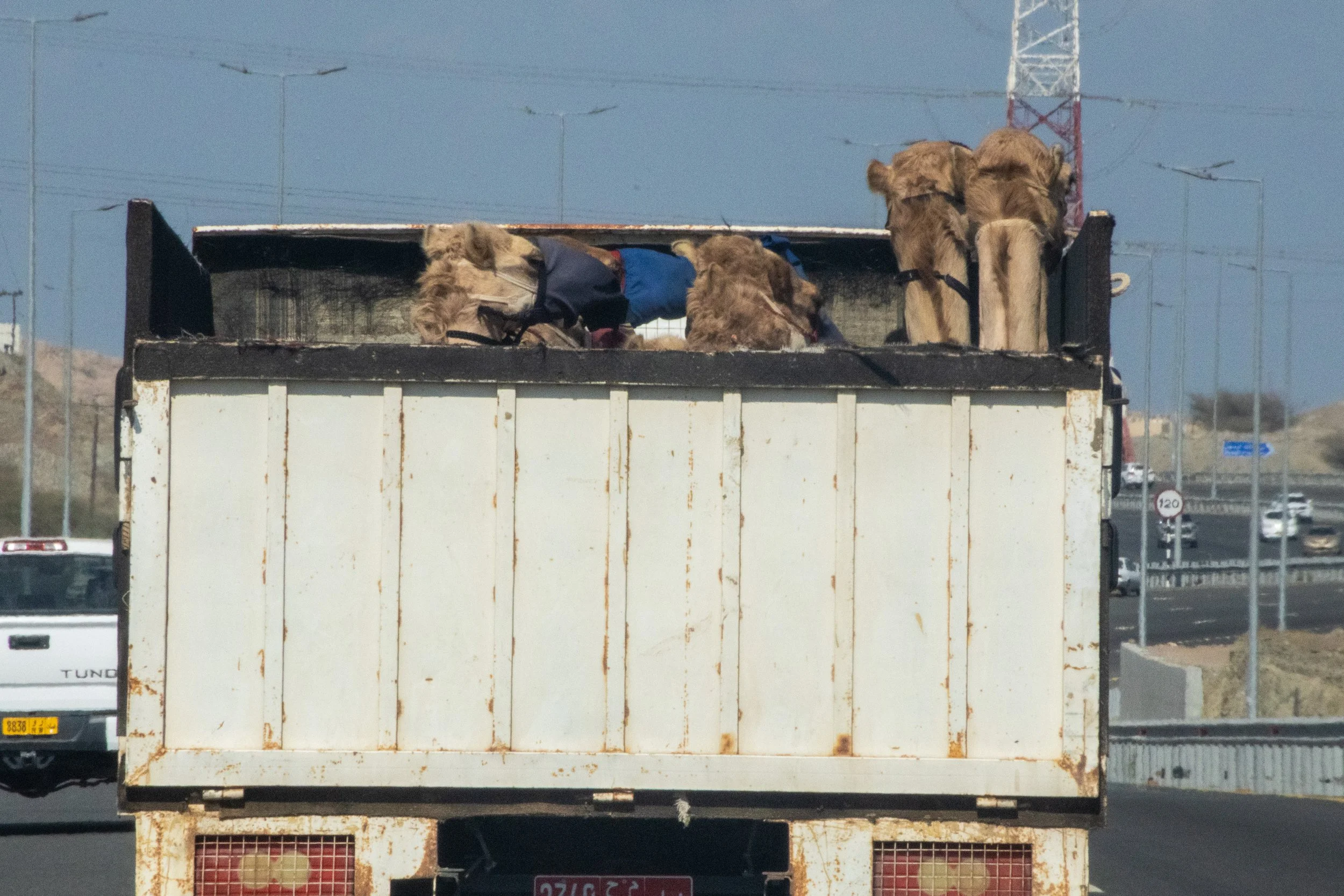
We worked with the people at Sama al Wasil Desert Camp to have somebody pick us up outside of the dunes and drive us in from a pre-agreed rendezvous point. That rendezvous point turned out to be a gas station in the middle of nowhere, so off we drove, into the haze! Along the way we saw a LOT more camels riding in the back of trucks. And when we finally arrived at this little petrol station, one of these camel-bearing trucks happened to be gassing up next to us! I had to approach to see exactly what was going on in the bed of this truck… the heads of these camels always look so blissfully, hilariously nonchalant when you see them poking out from these trucks. I was half-surprised to see the elaborate system of ropes that kept this camel fastened to the truck bed. I guess even camels need to buckle up!
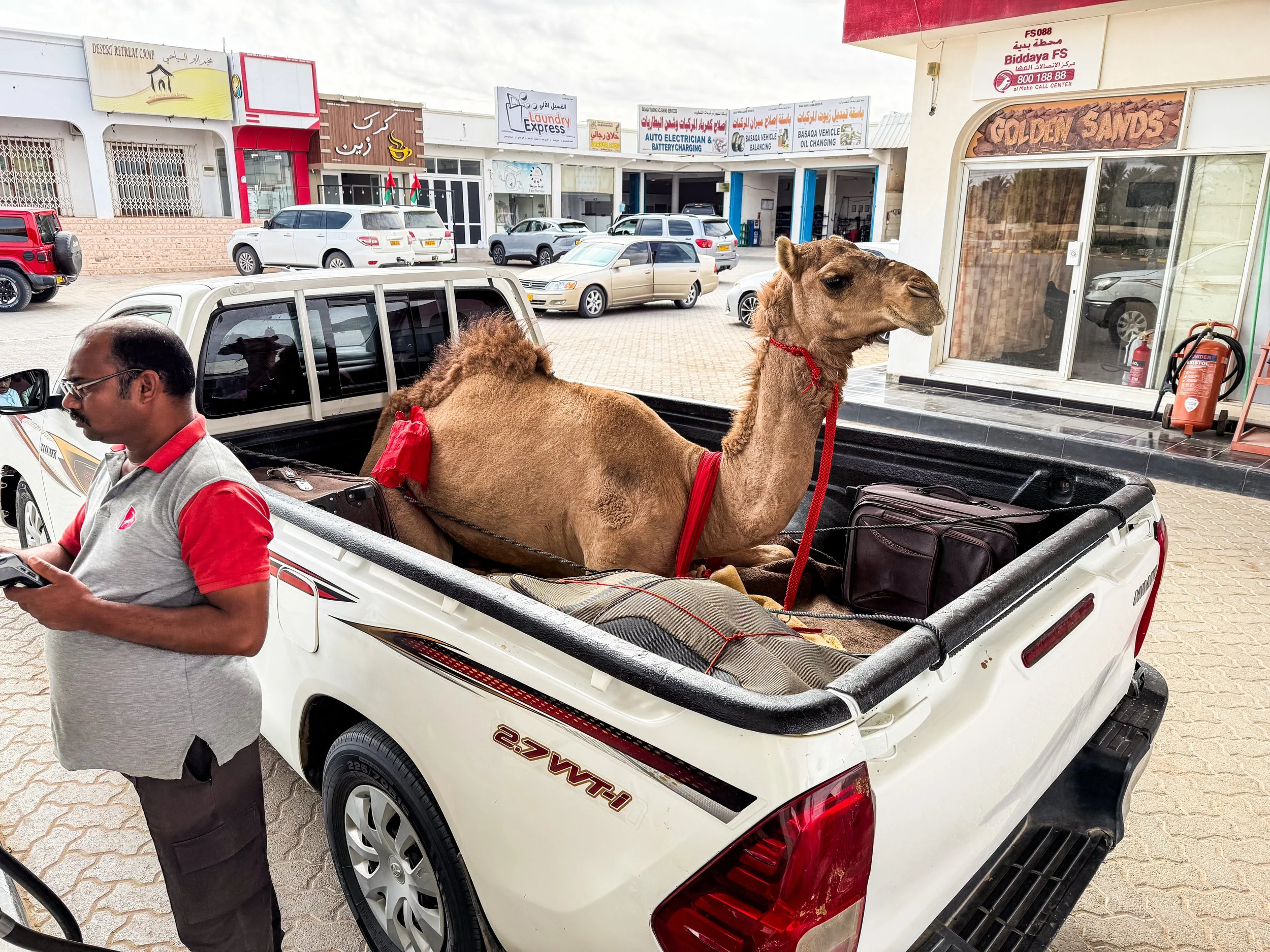
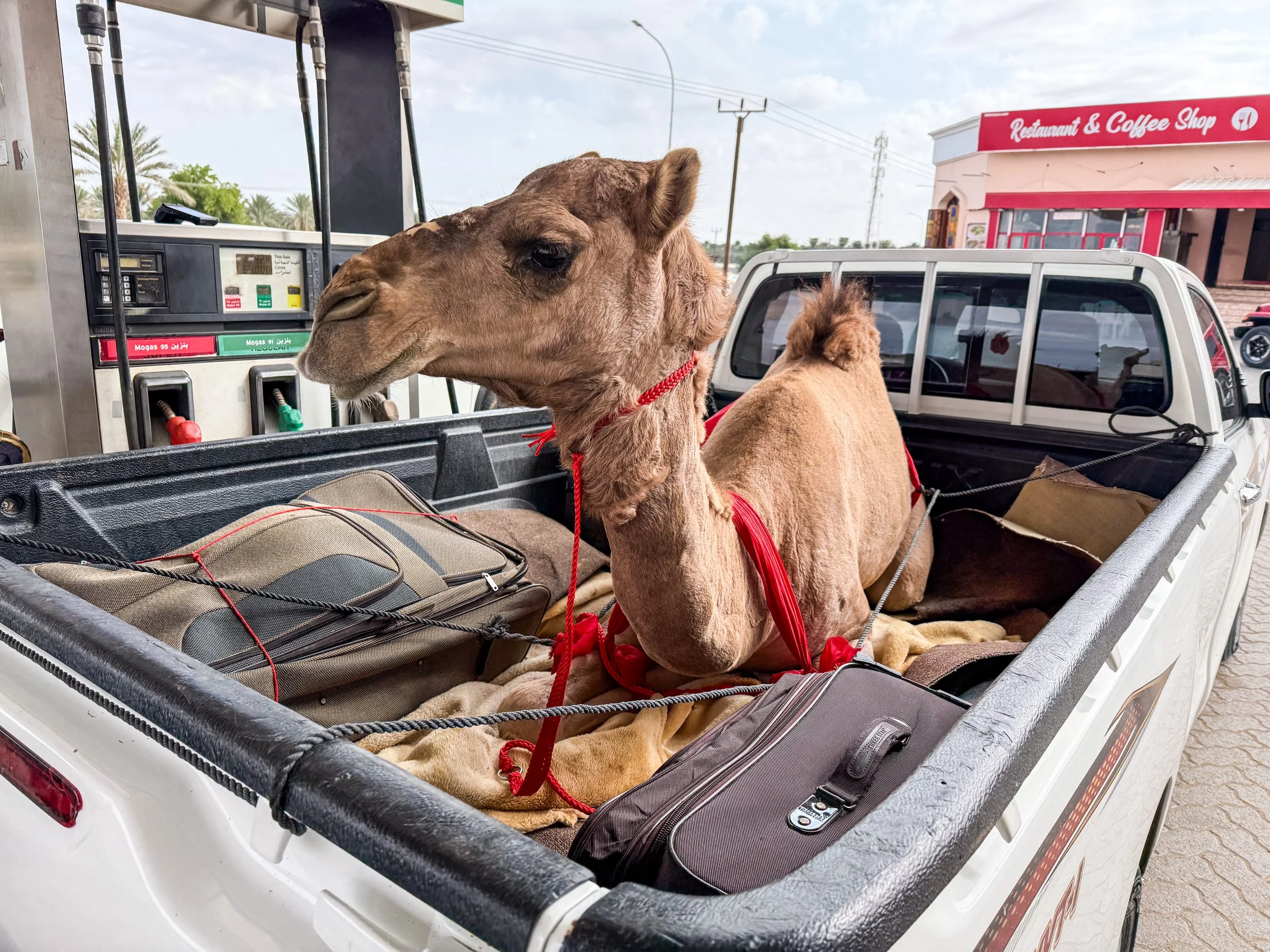
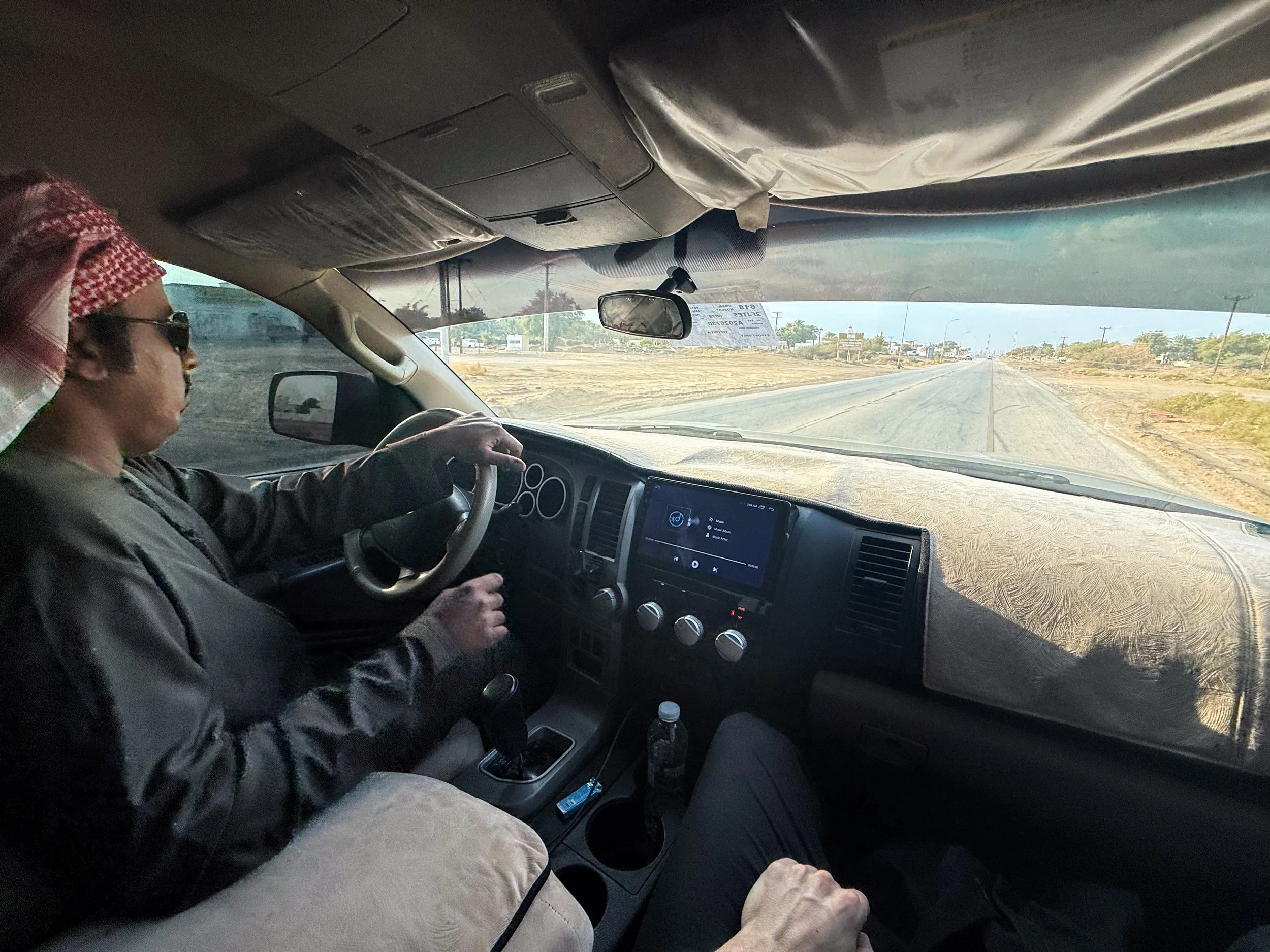
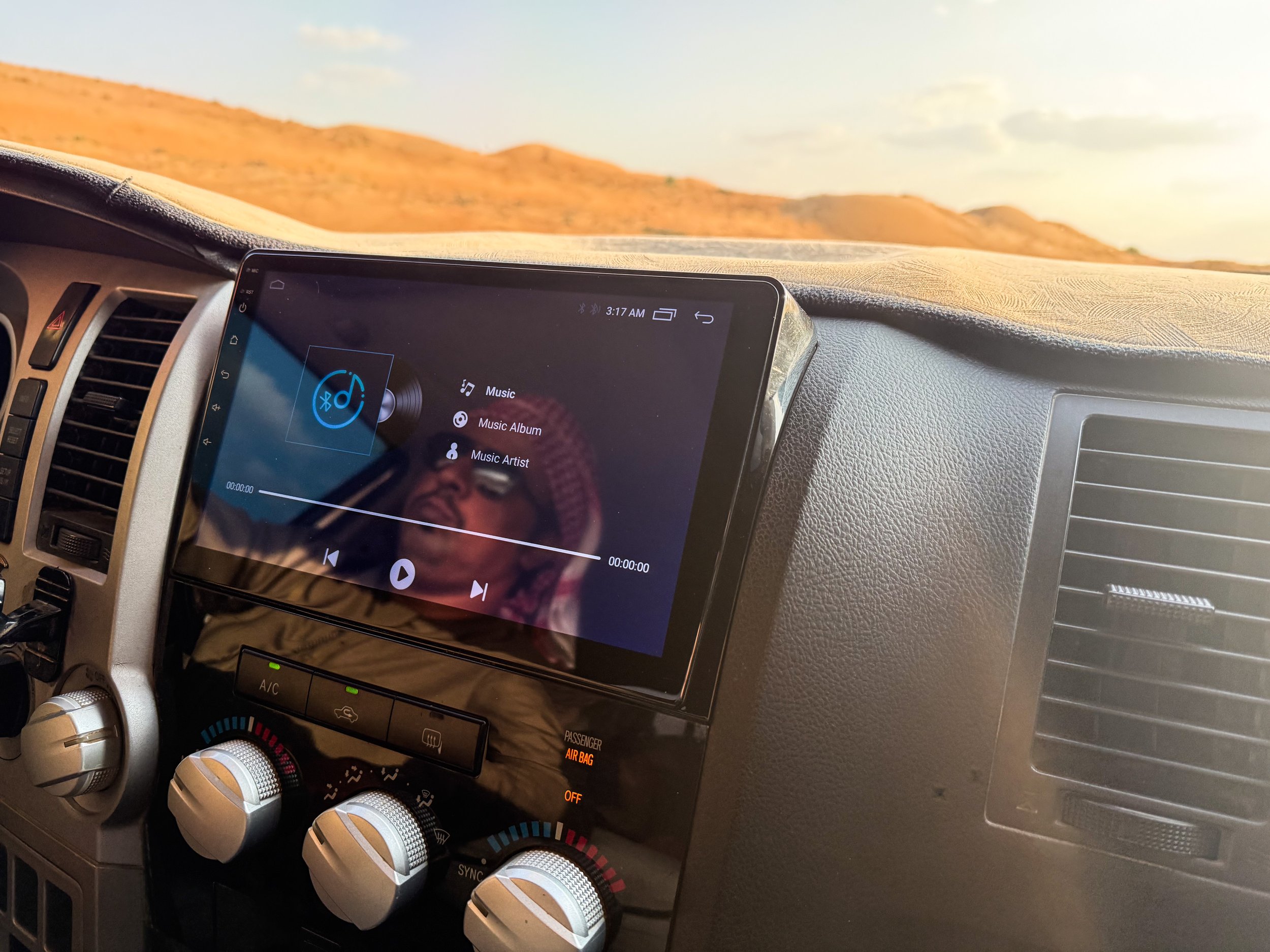
I’d been in touch with our driver on WhatsApp, so we were able to connect at this station without too much effort. He was tall, with a set of aviator sunglasses and a mustache. He wore a long, ankle-length robe called a dishdasha and a type of turban called a massar. We loaded into his massive truck with tinted windows and we were off.
We’d been driving into the wastes for some time, when I noticed a tall ridge in the distance. It looked like the rocky spine of a small mountain range, but the clean abruptness of how quickly it rose out of the ground was unusual. It felt more like our boat was approaching a giant wave. This wall, I would realize, was the start of the dunes. As we approach the foot of these dunes, I was craning my neck to see the top of them. I’d expected that the terrain would naturally evolve as we drove, but when we arrived at the base of these dunes, it was literally a 30-storey-tall pile of sand sitting on the ground that extended in a straight line as far as the eye could see in both directions. There was a very clear “moment of entry” into the dunes, which came in the form of steep, sandy slope wide enough for a car to drive up. In terms of grade, the slope of this road was probably 15-20°.
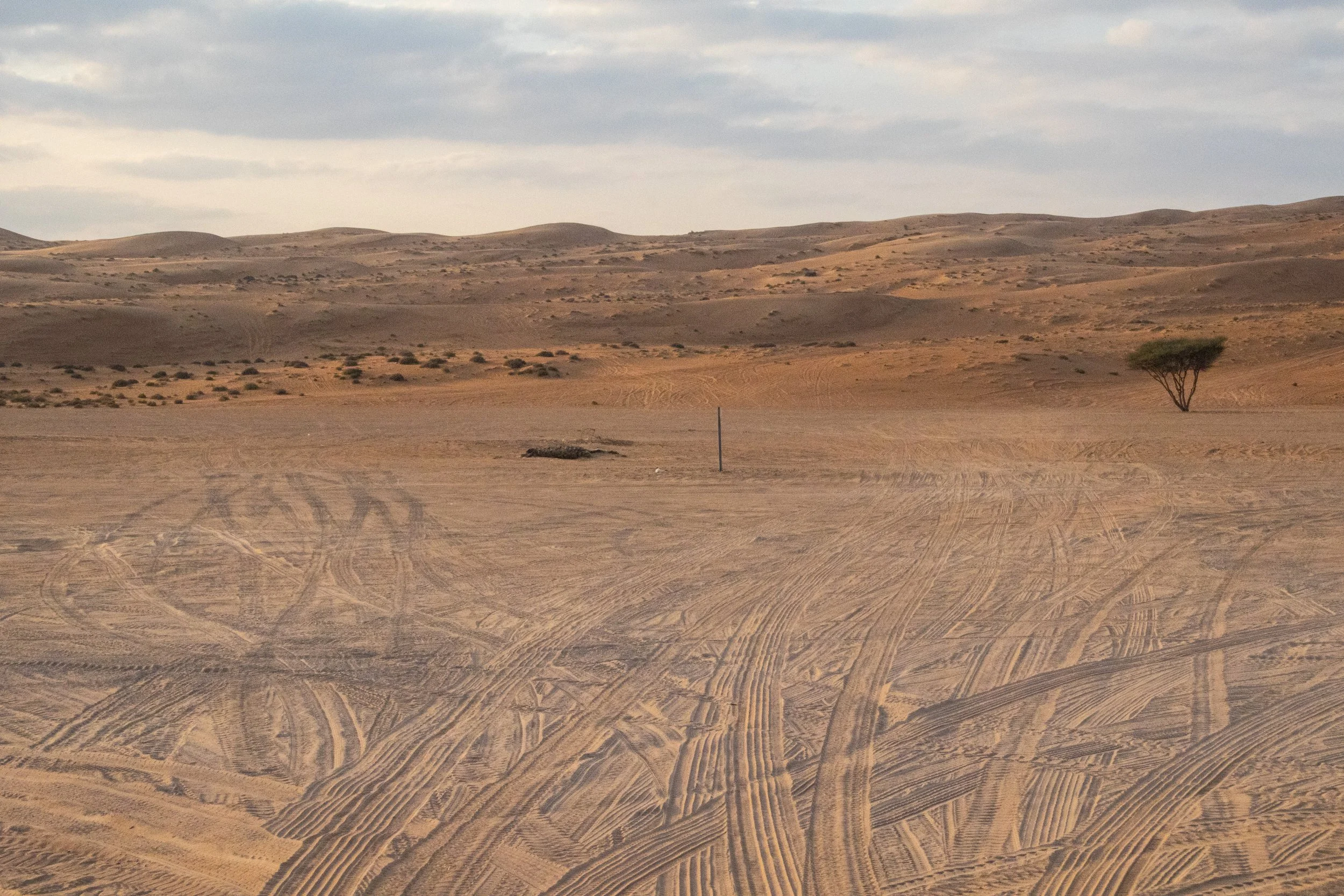
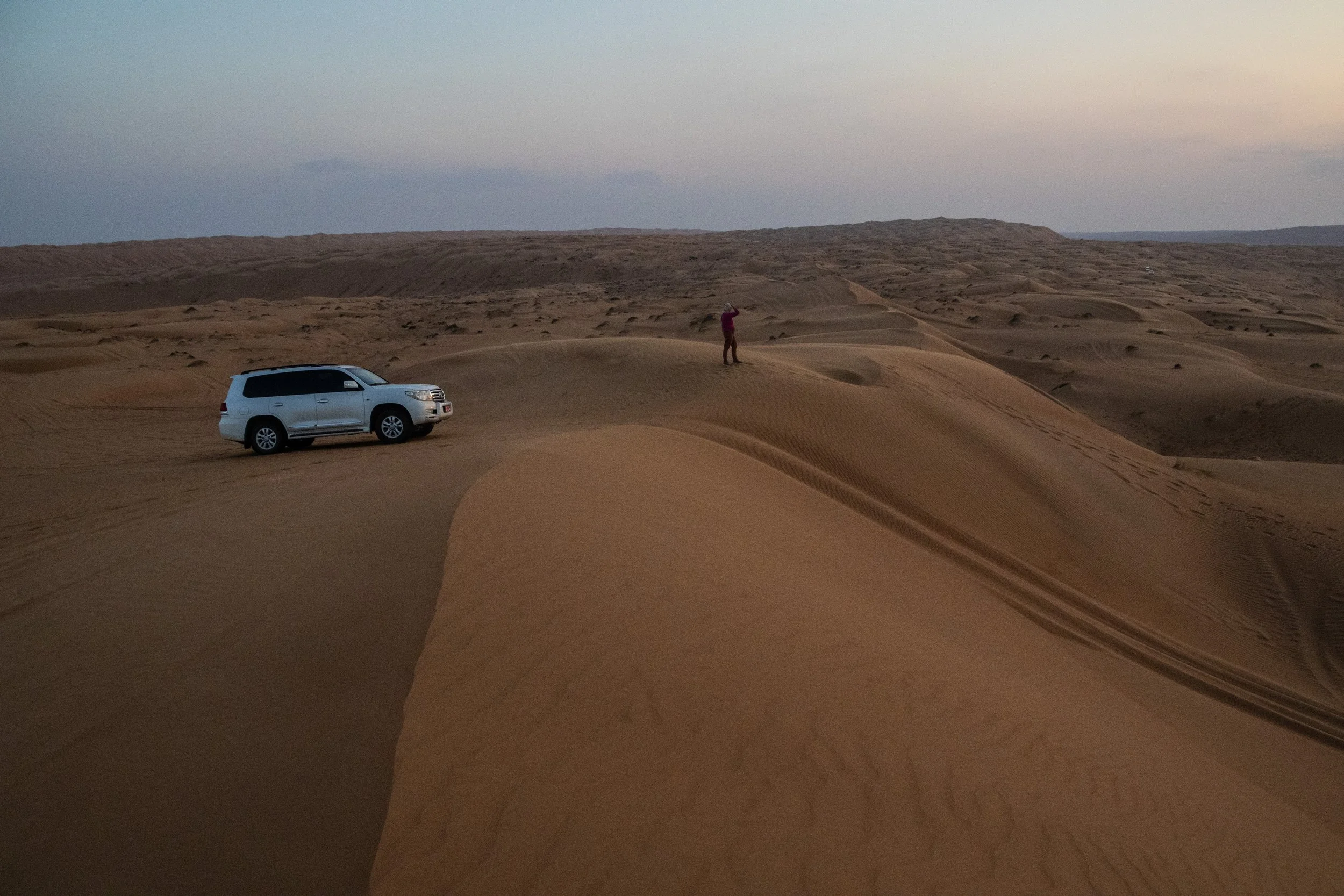
When we reached the top, everything we’d known of Oman up to this point faded into the haze behind us, replaced with nothing but sand as far as the eye could see. Our driver had us moving FAST through an endless valley between two dunes. Even at our high rate of speed, we were driving into the desert for a solid 25 minutes before we finally arrived at our camp. Initially, there was only 1 set of tire tracks to follow, but as we moved farther into the dunes, there were more and more forks in the road. I decided that, even if our car had been able to handle this, there was a good chance of us getting lost out here, so I was very happy with our decision to shell out a bit of cash for this ride into the dunes.
We gave ourselves a 1 day and 1 night out in these dunes… that should be enough, right? What does one even do out here? This was not a question that I had a solid answer to when I arrived. But there was, of course, a long list of activities that our “hotel” could arrange for us, which included ATV rides and going up in a hot air balloon over the desert. However, our picks were as follows…
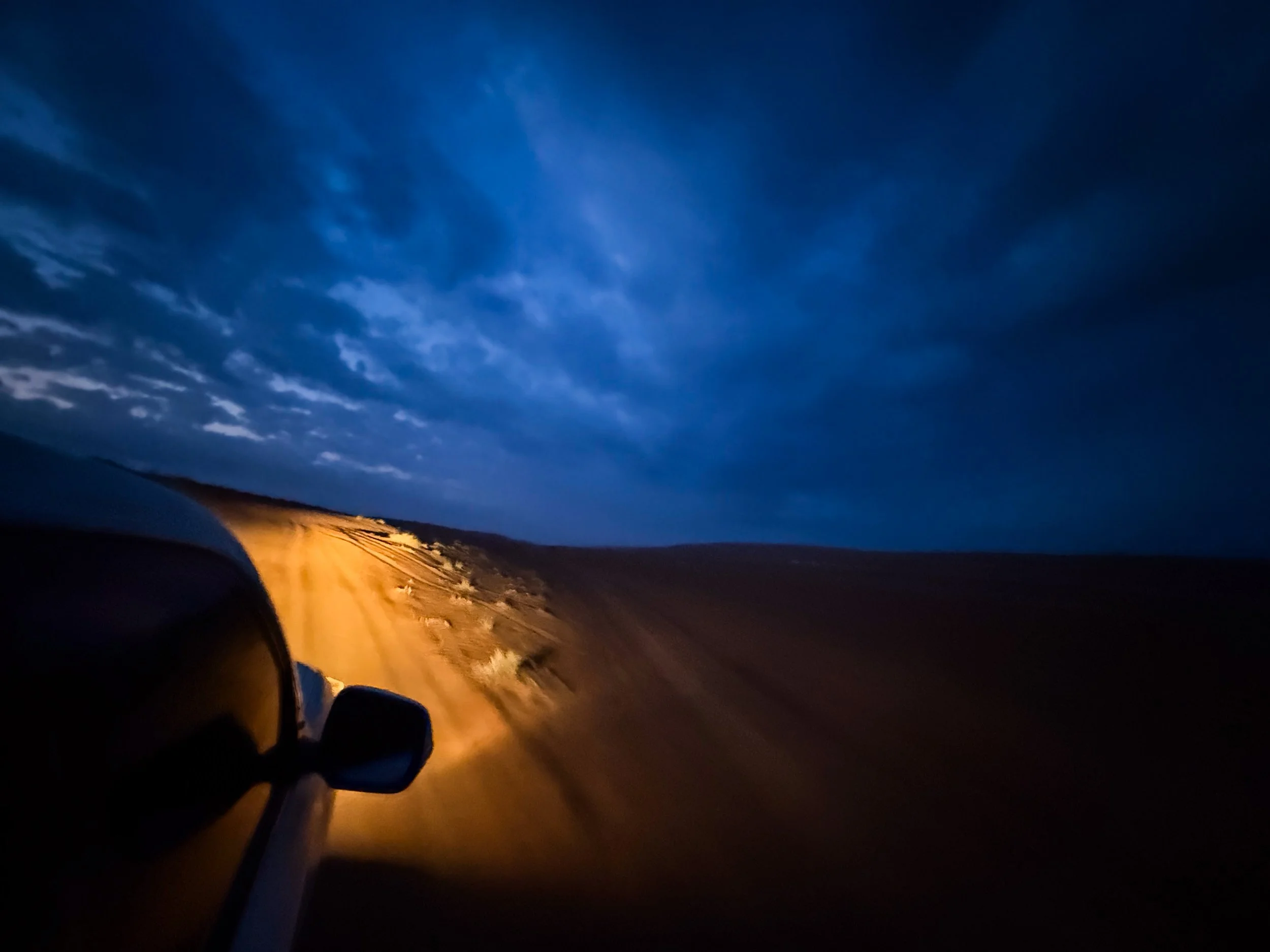
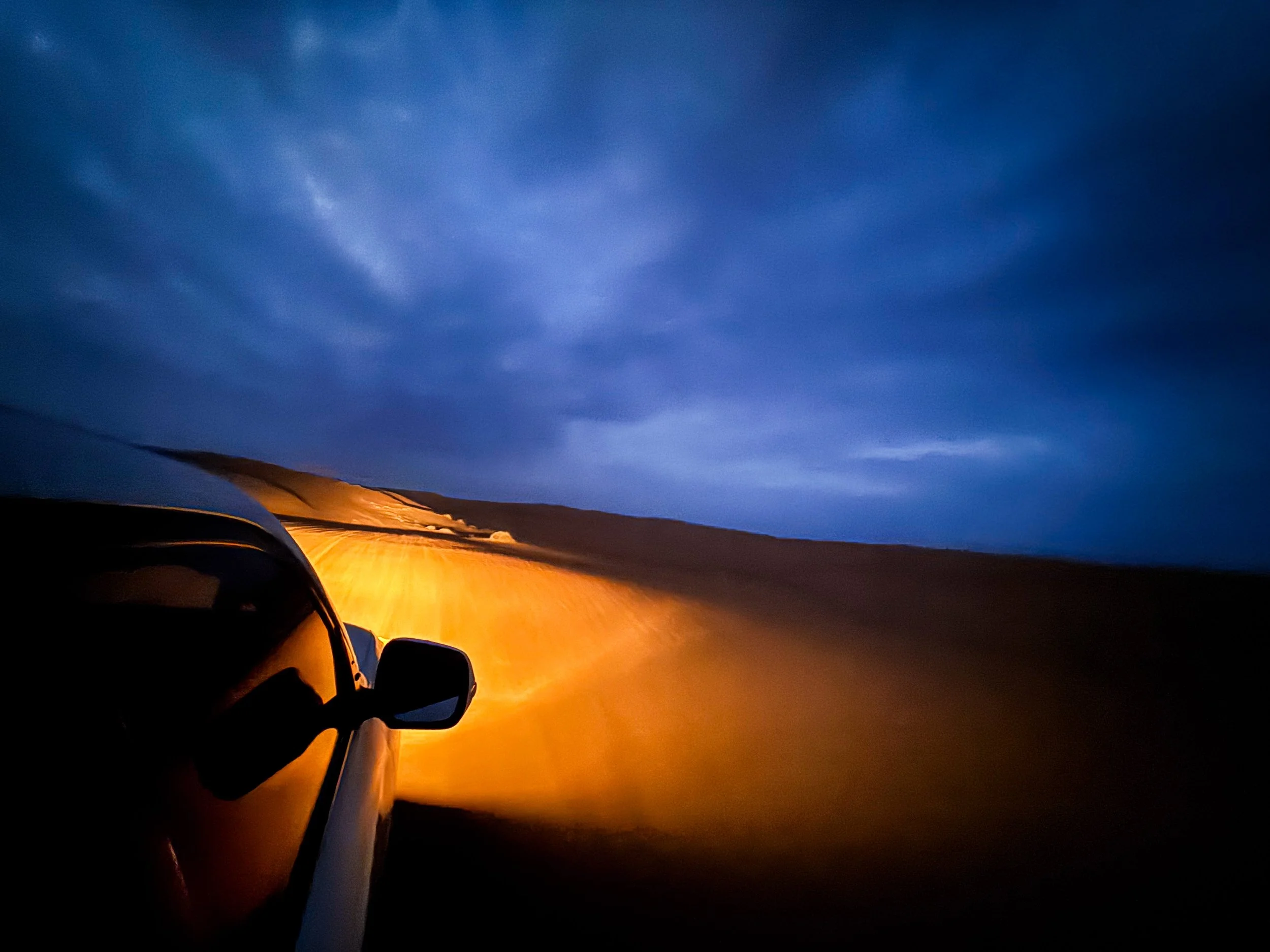
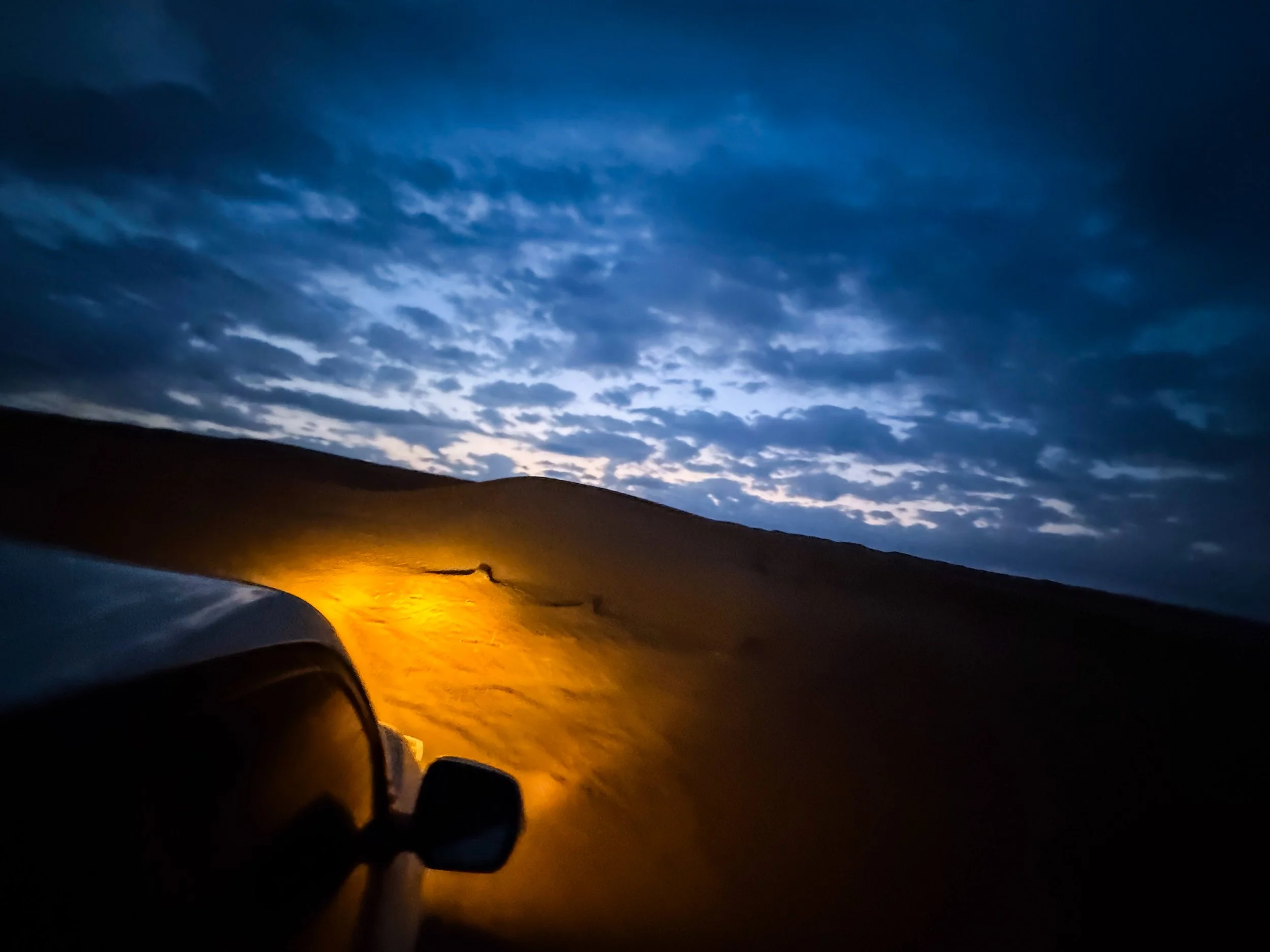
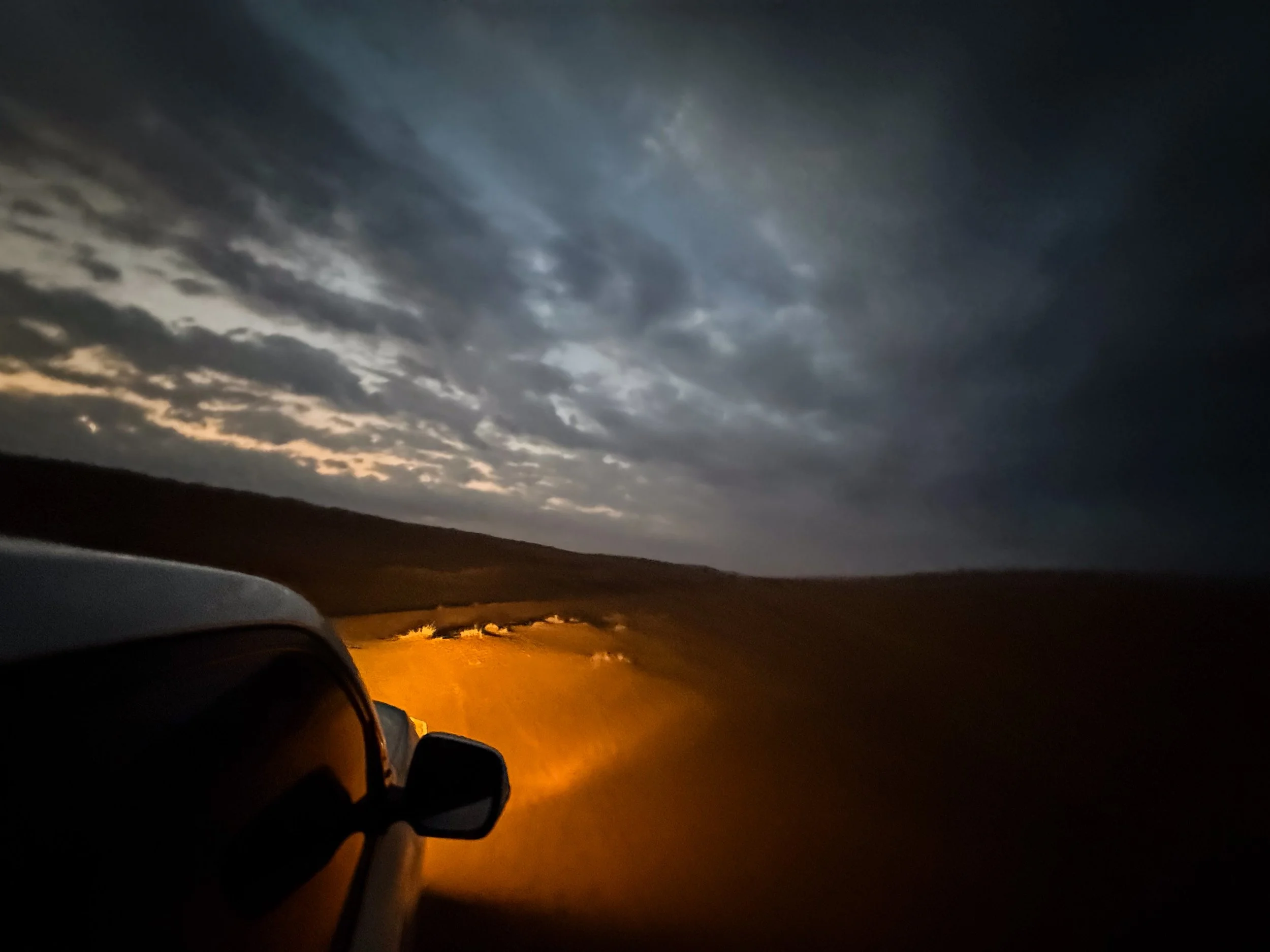
Sunrise Dune-bashing
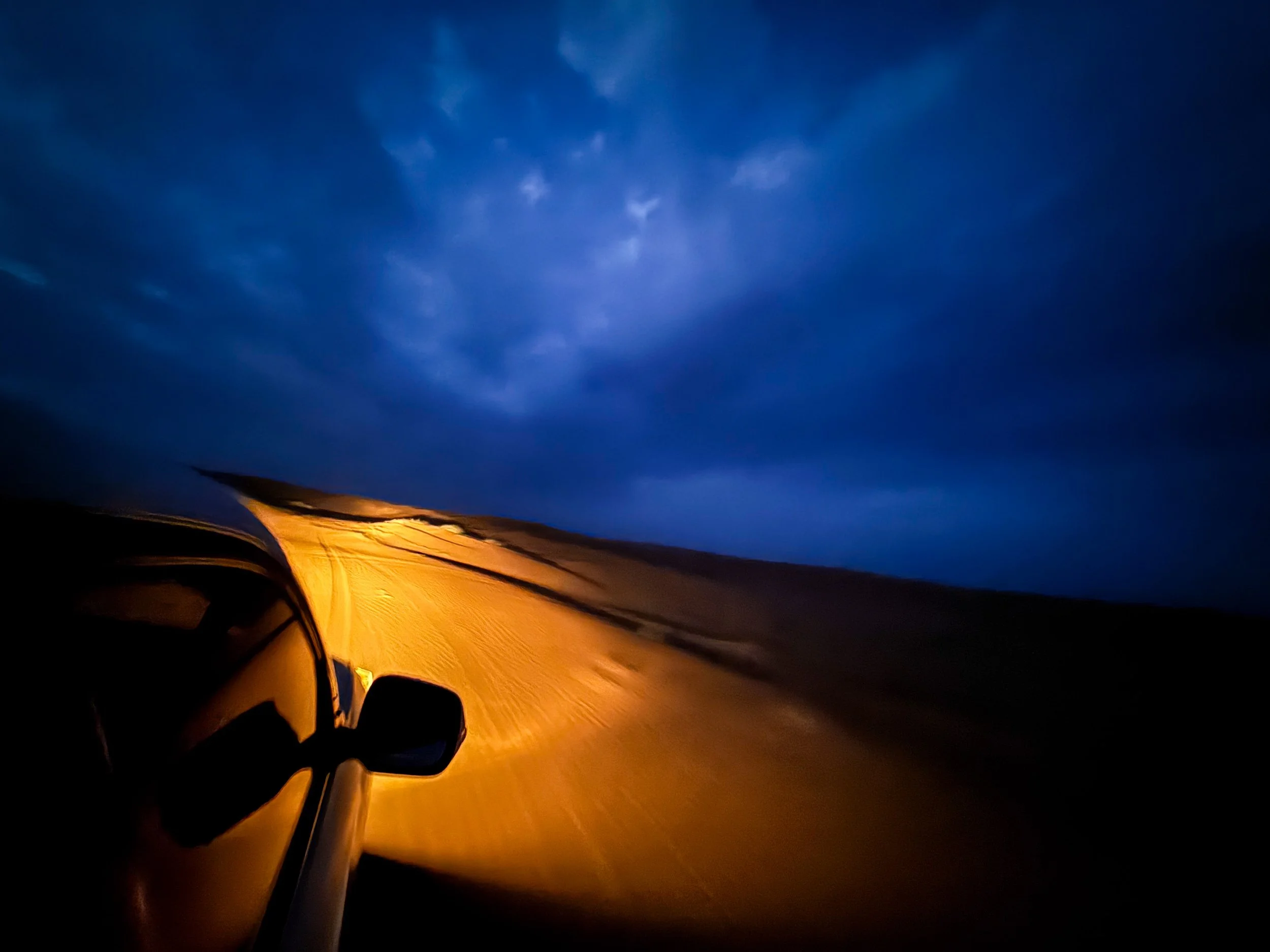
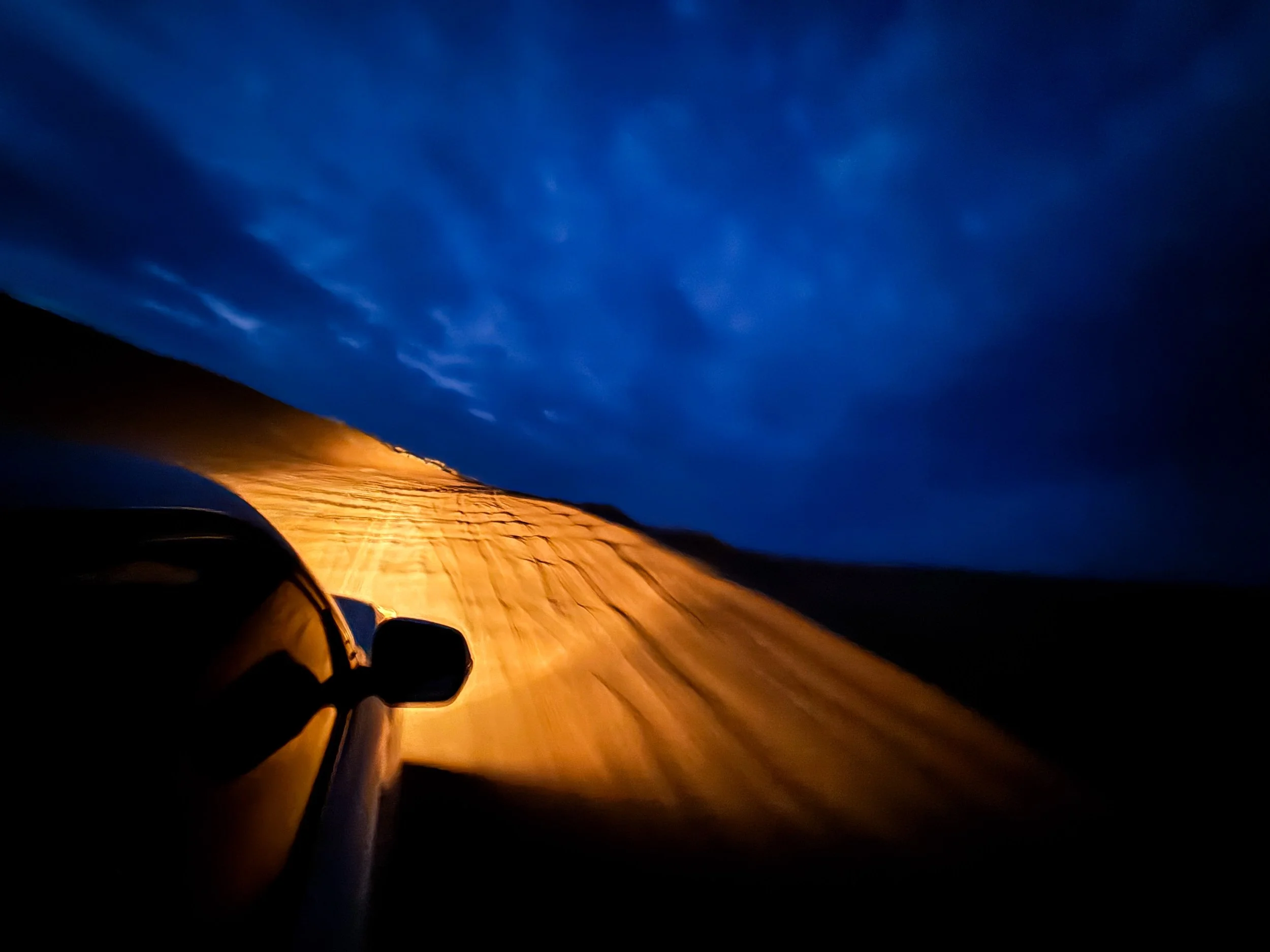
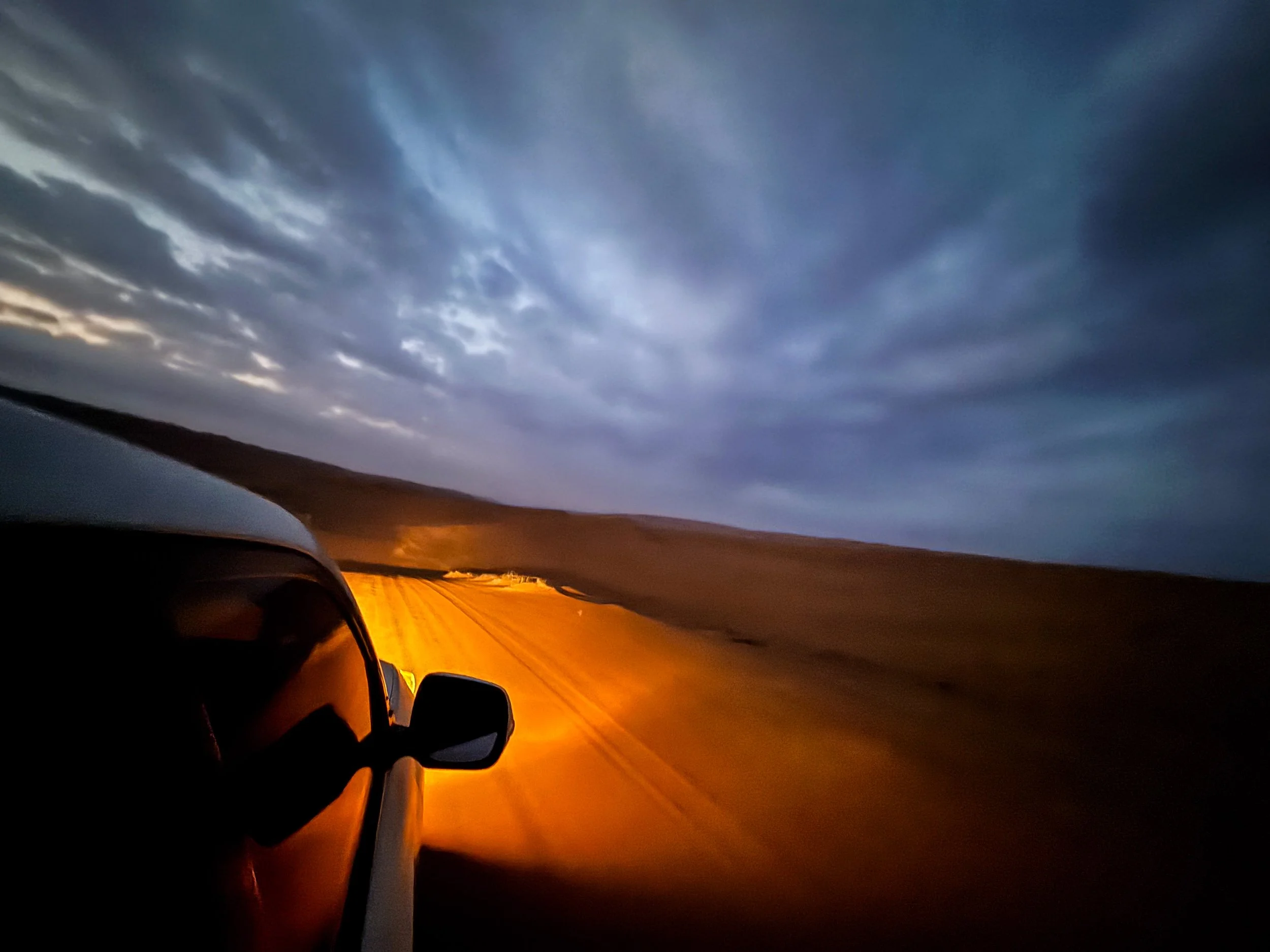
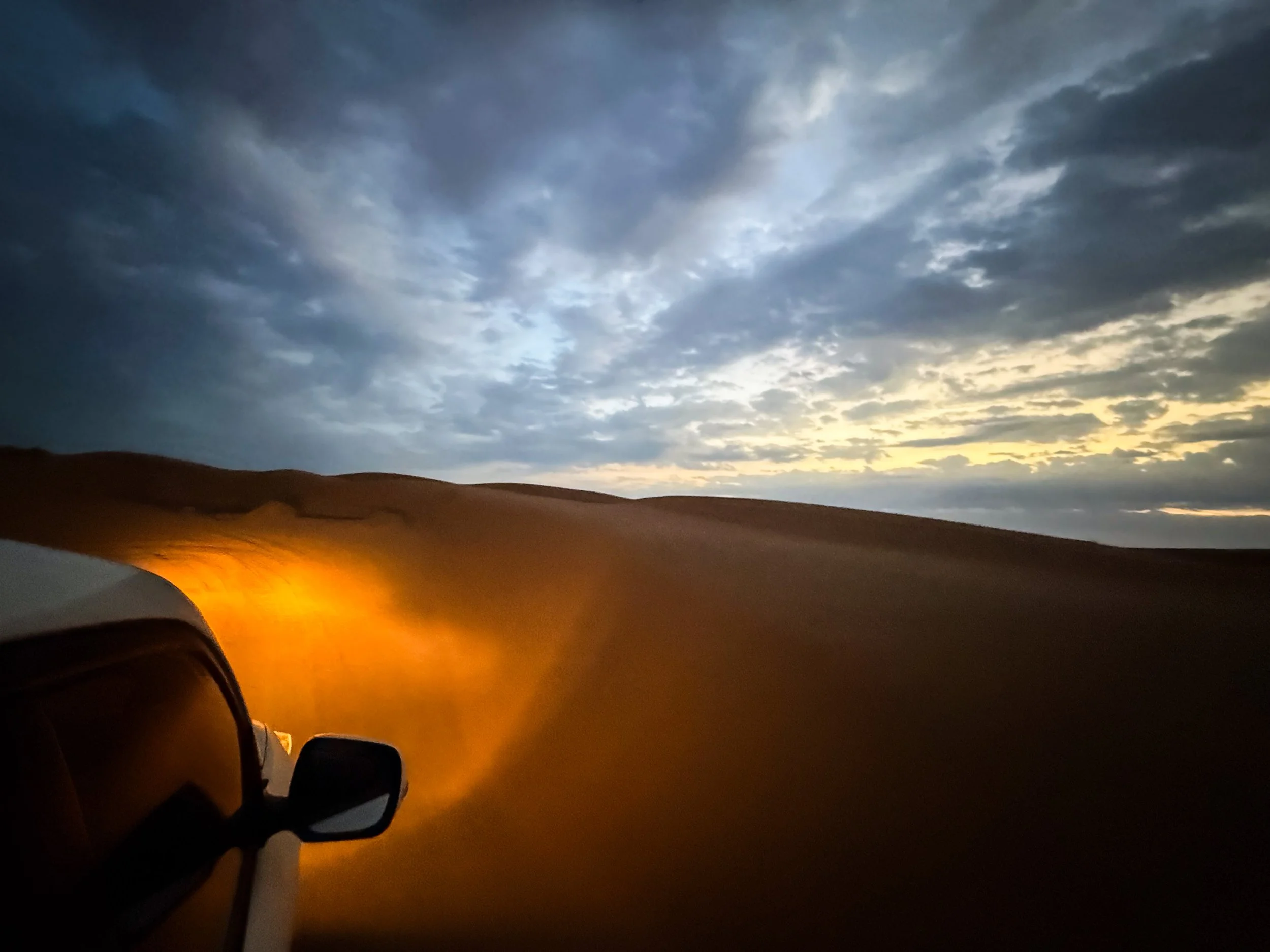
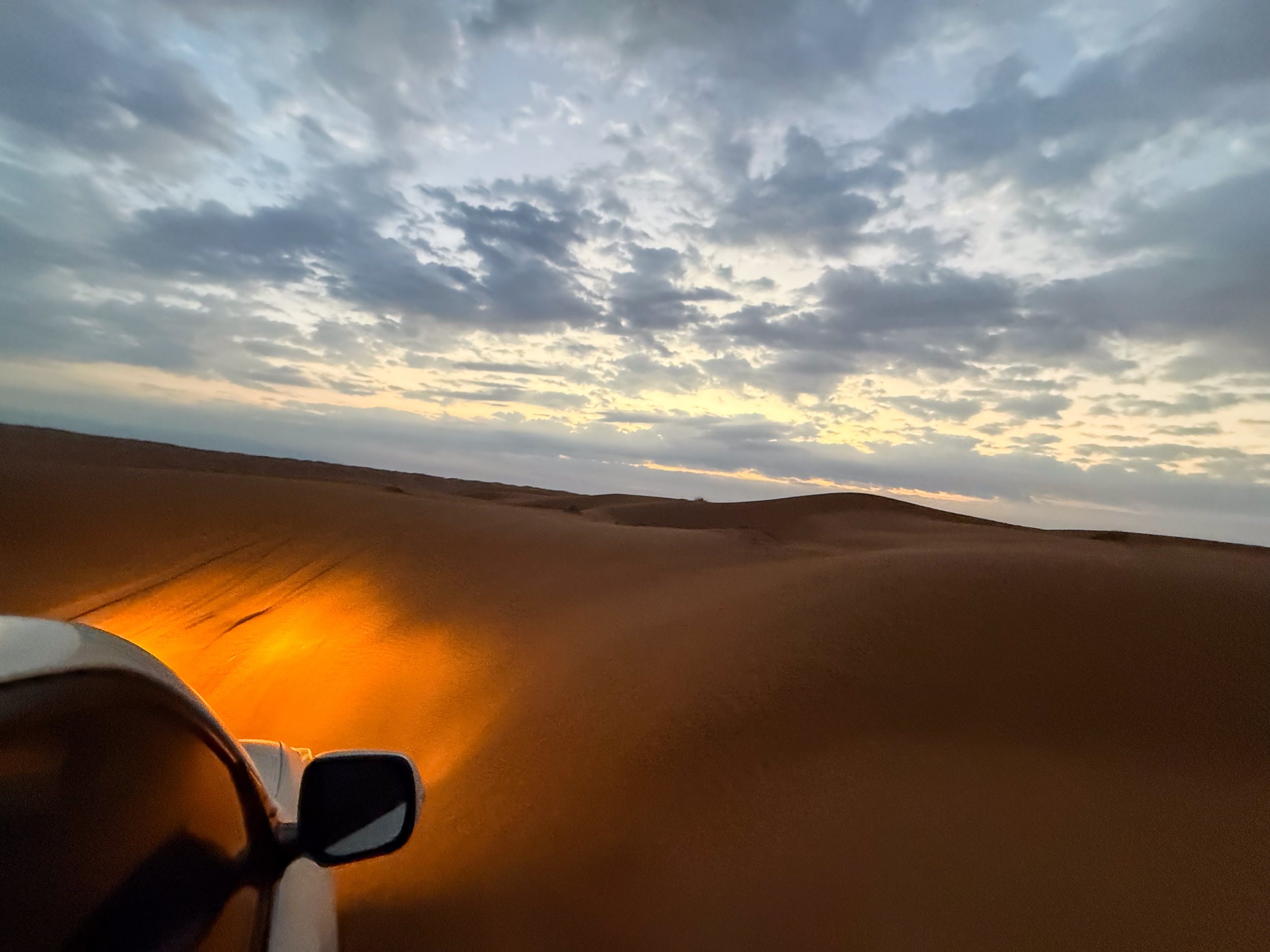
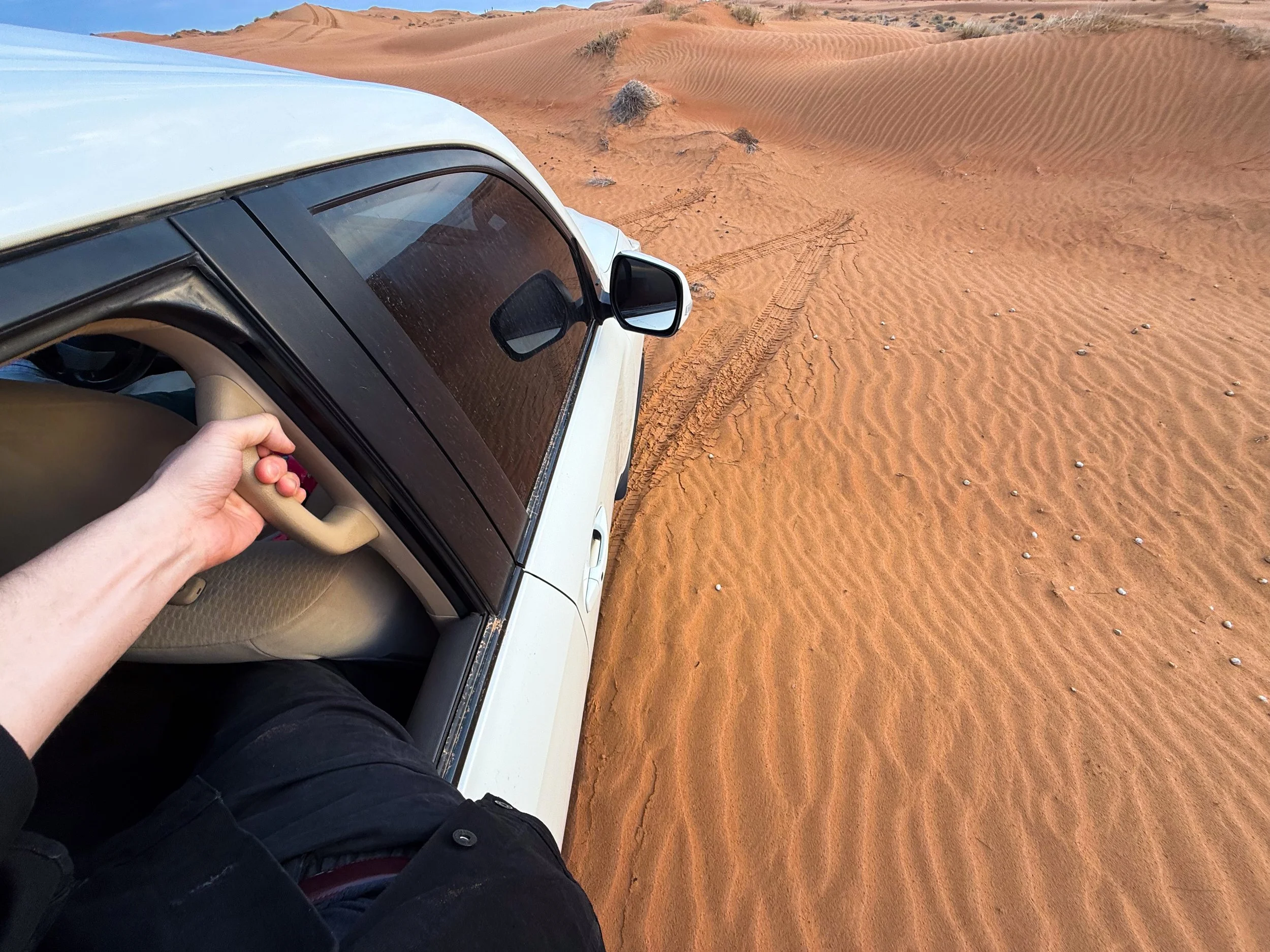
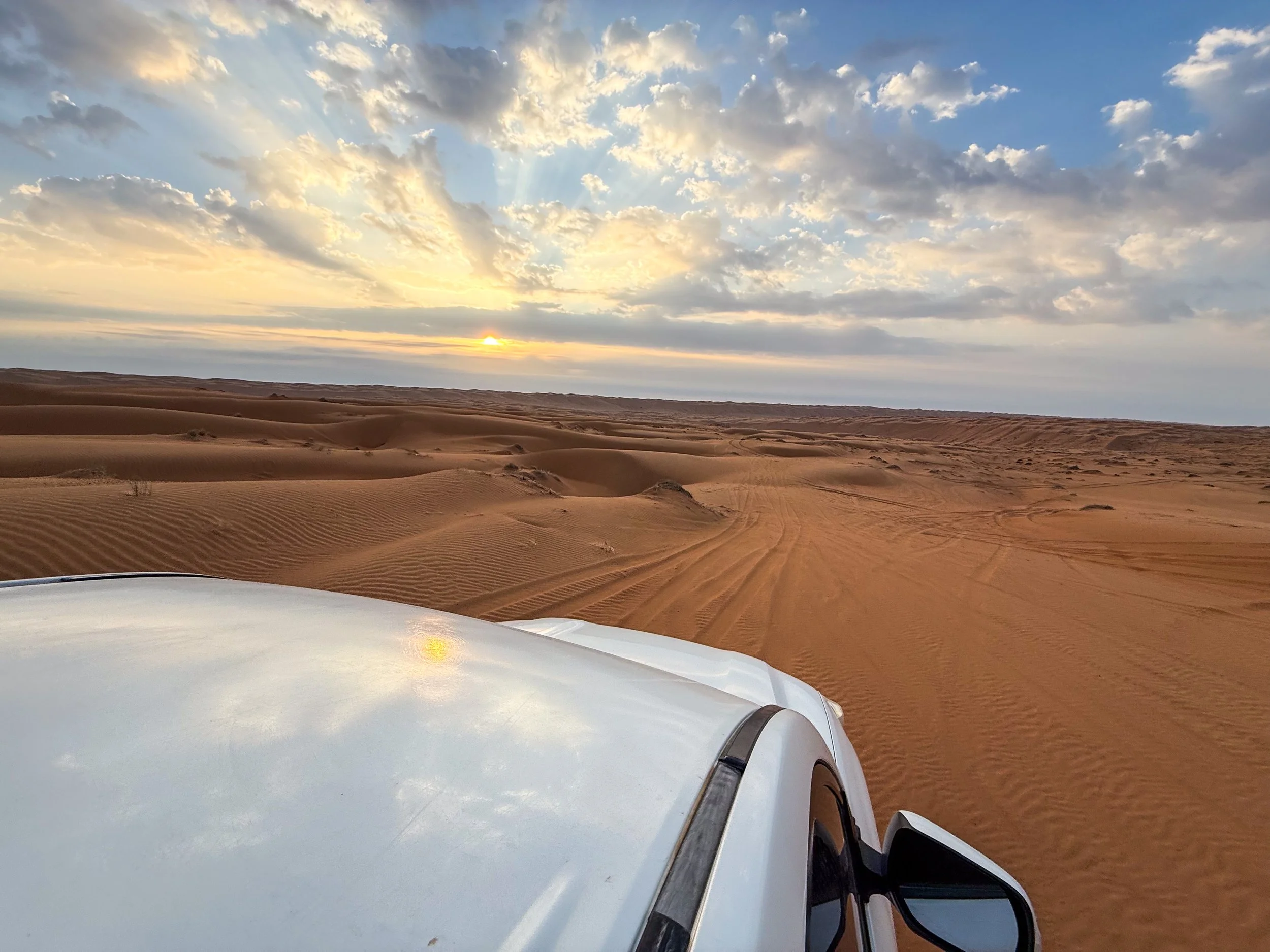
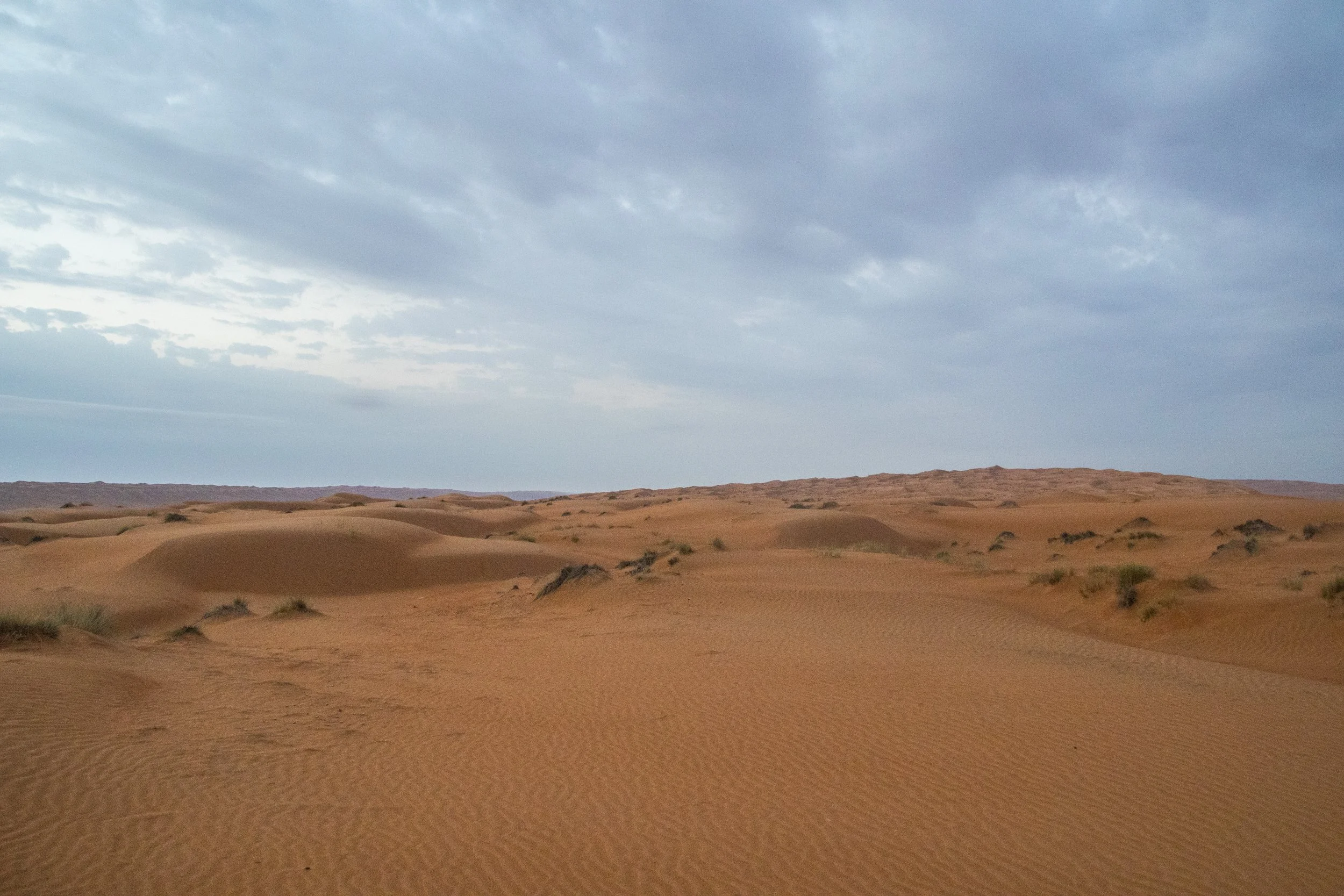
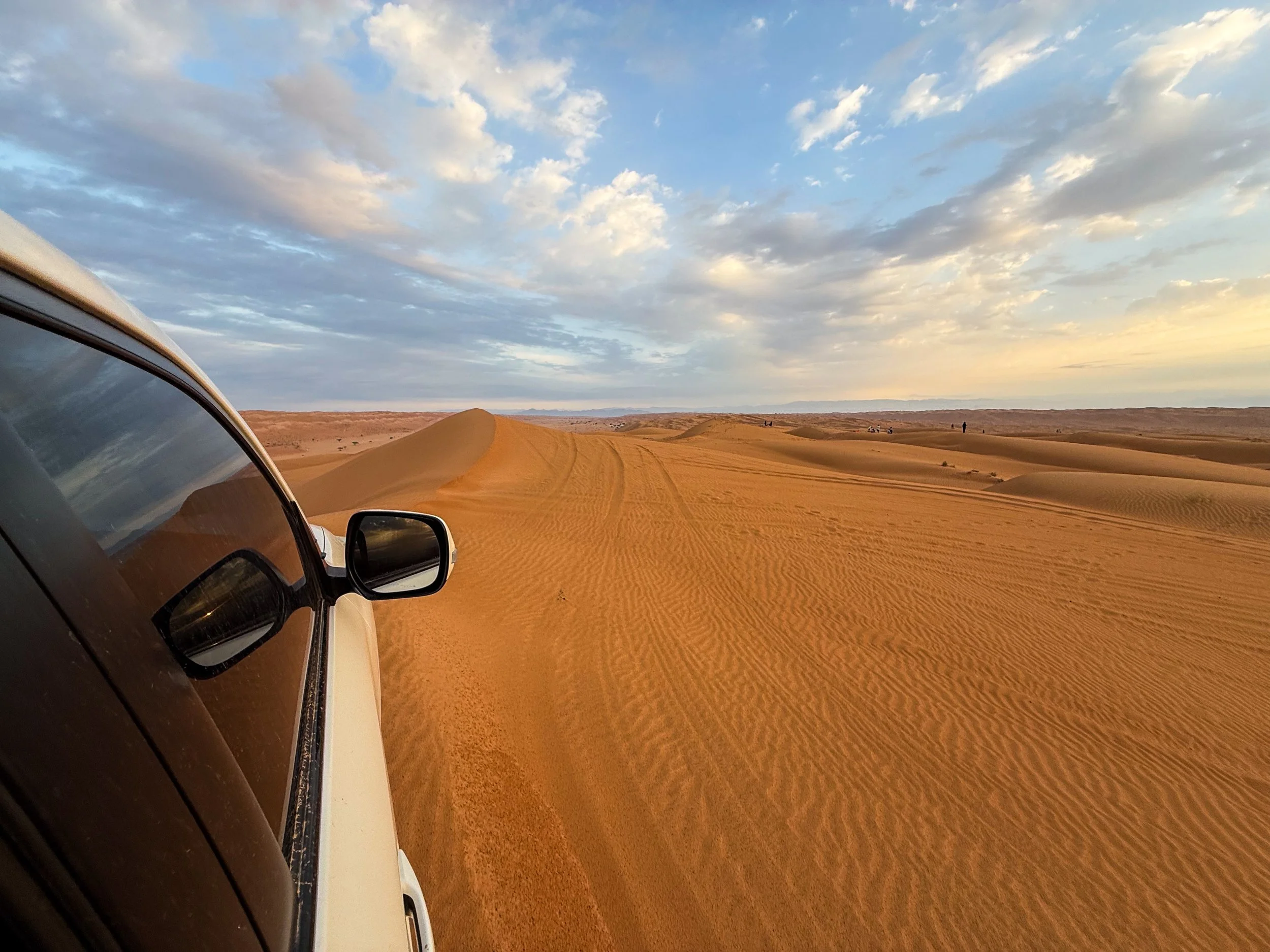
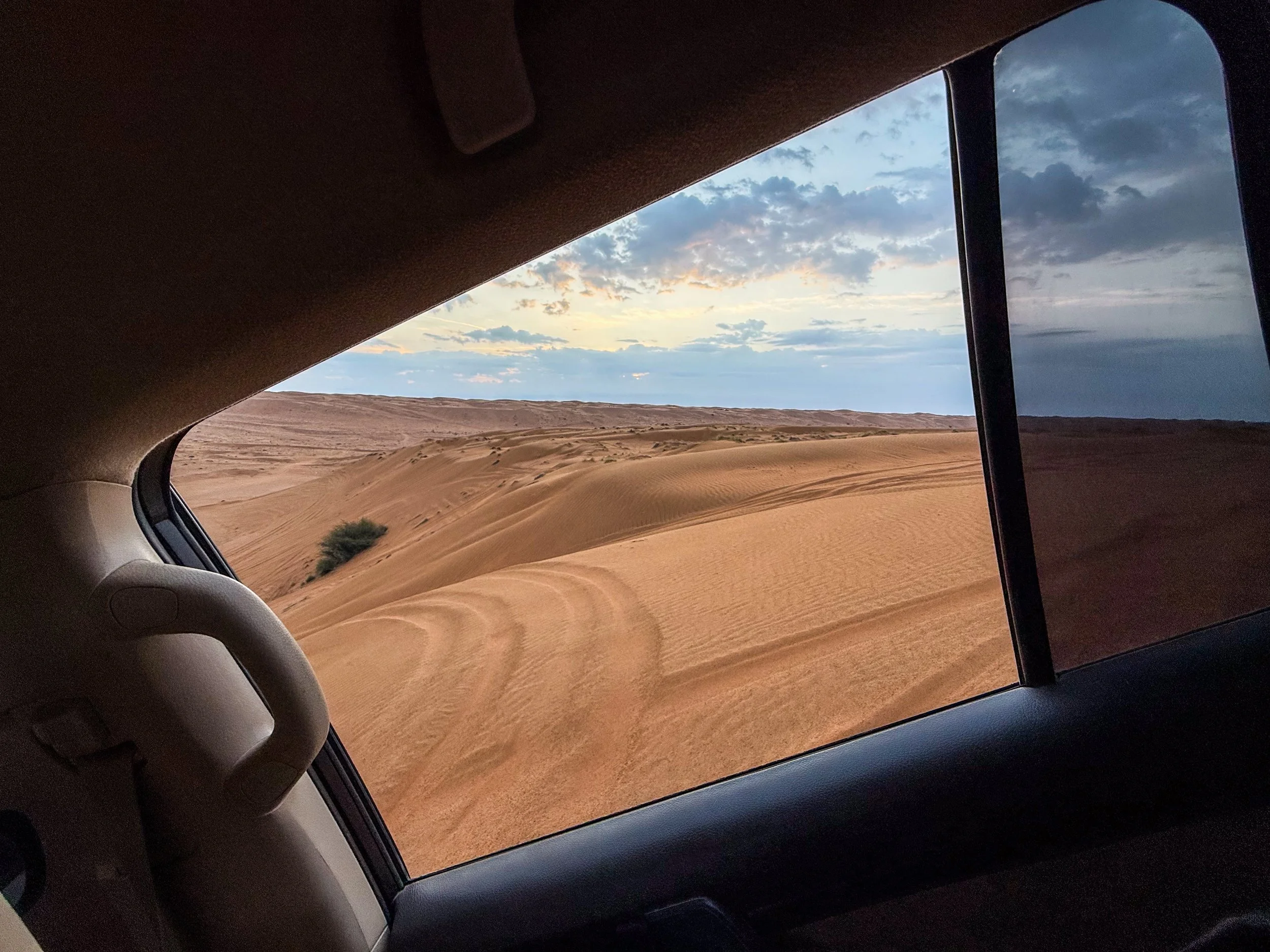
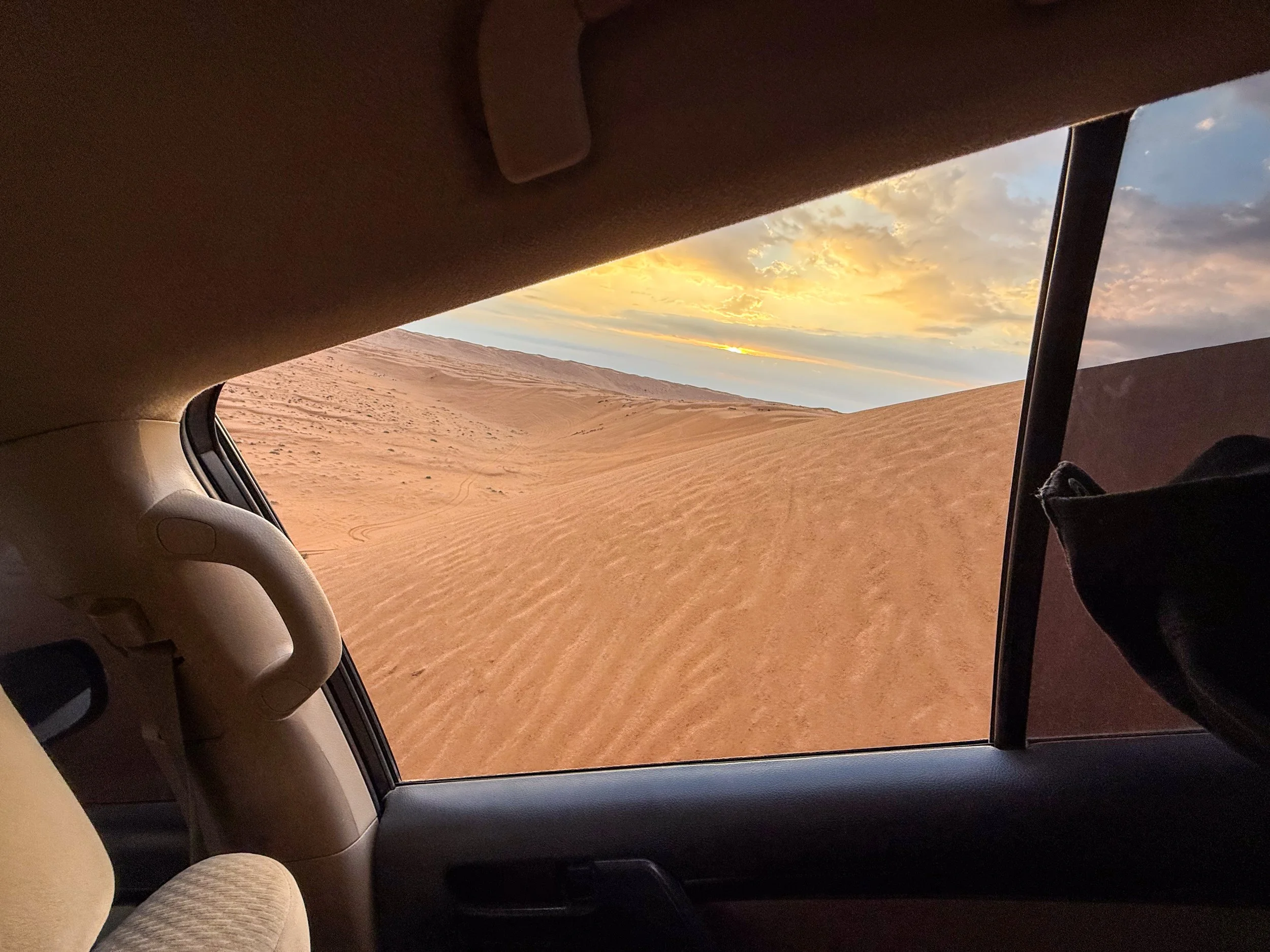
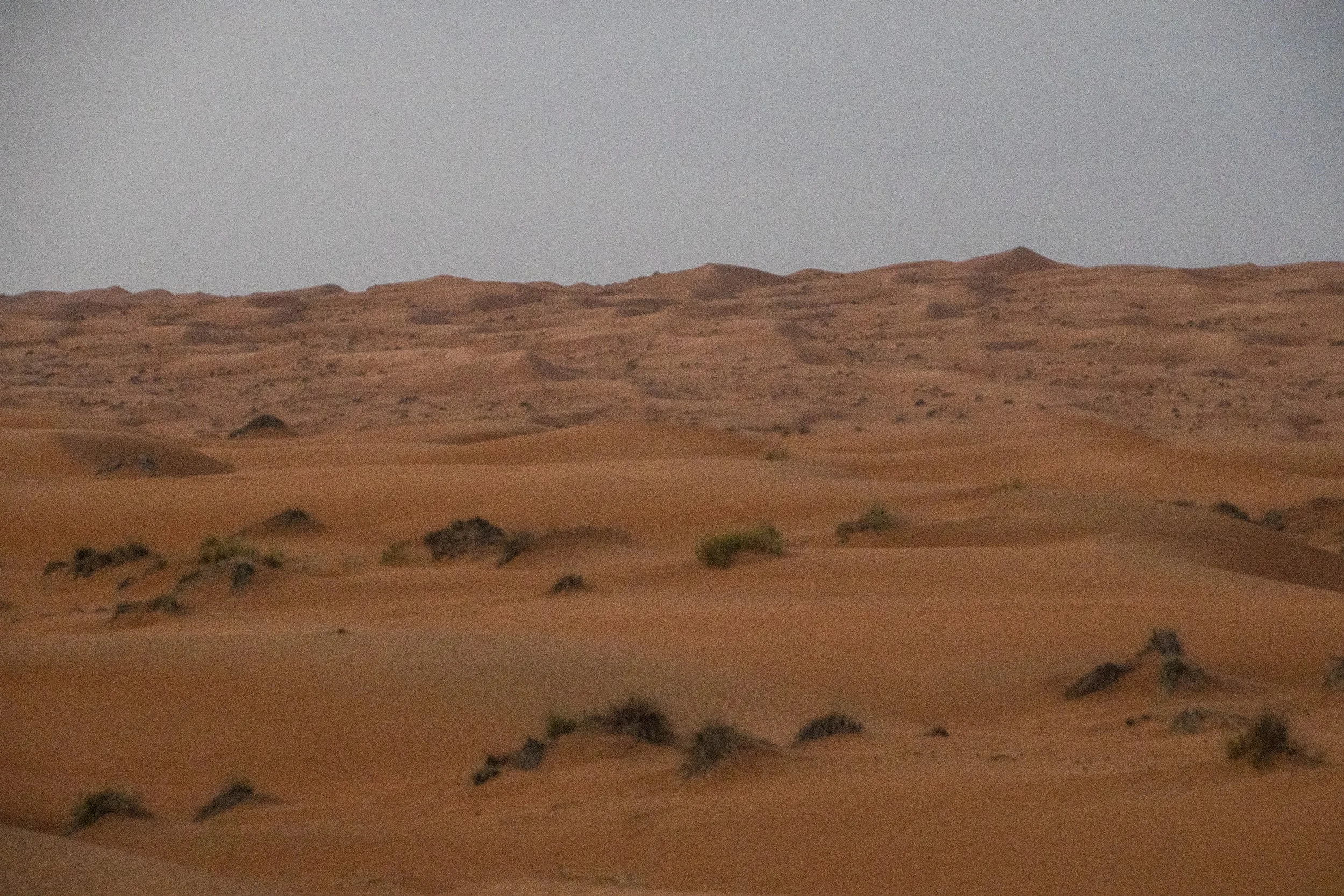
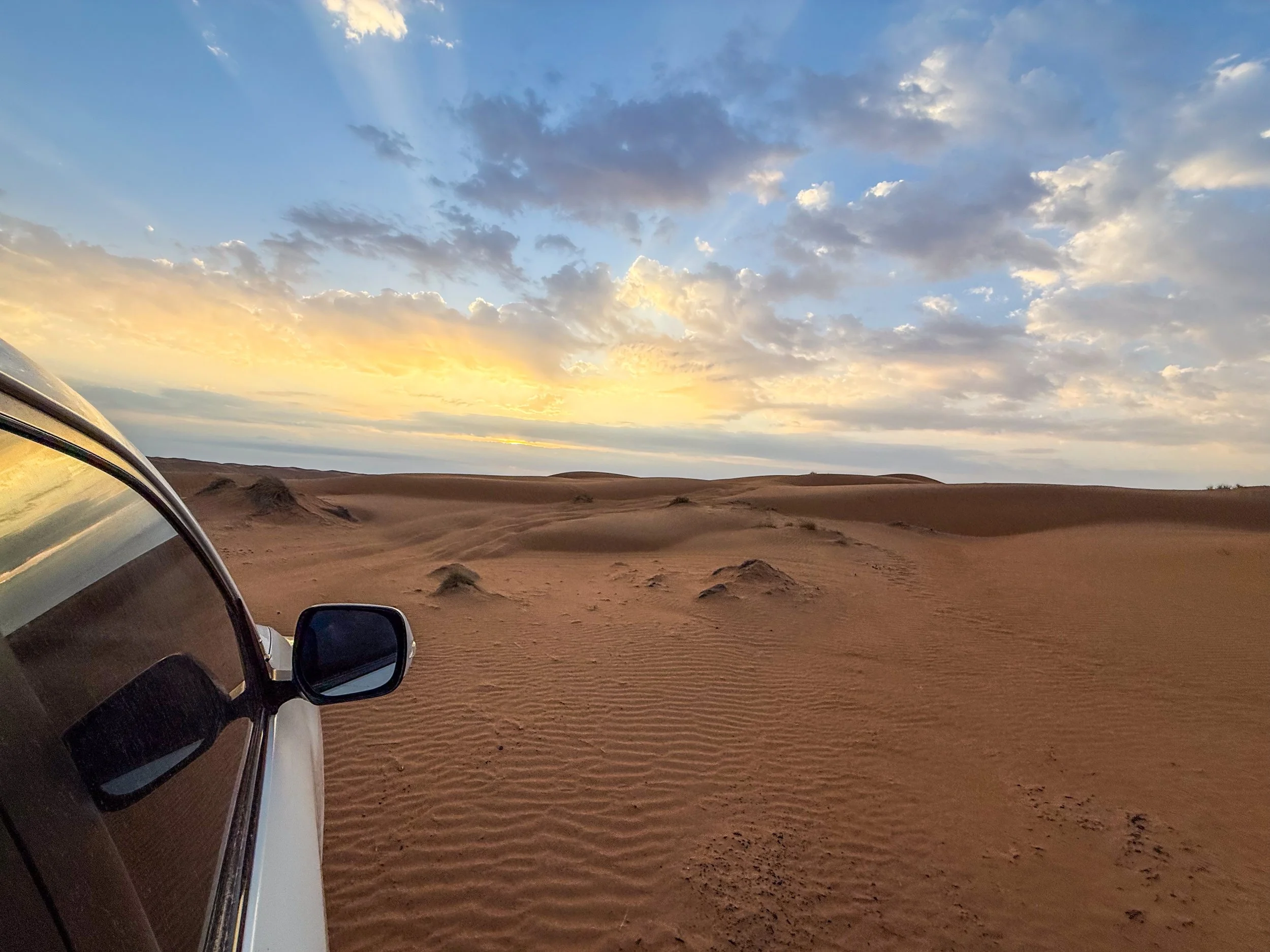
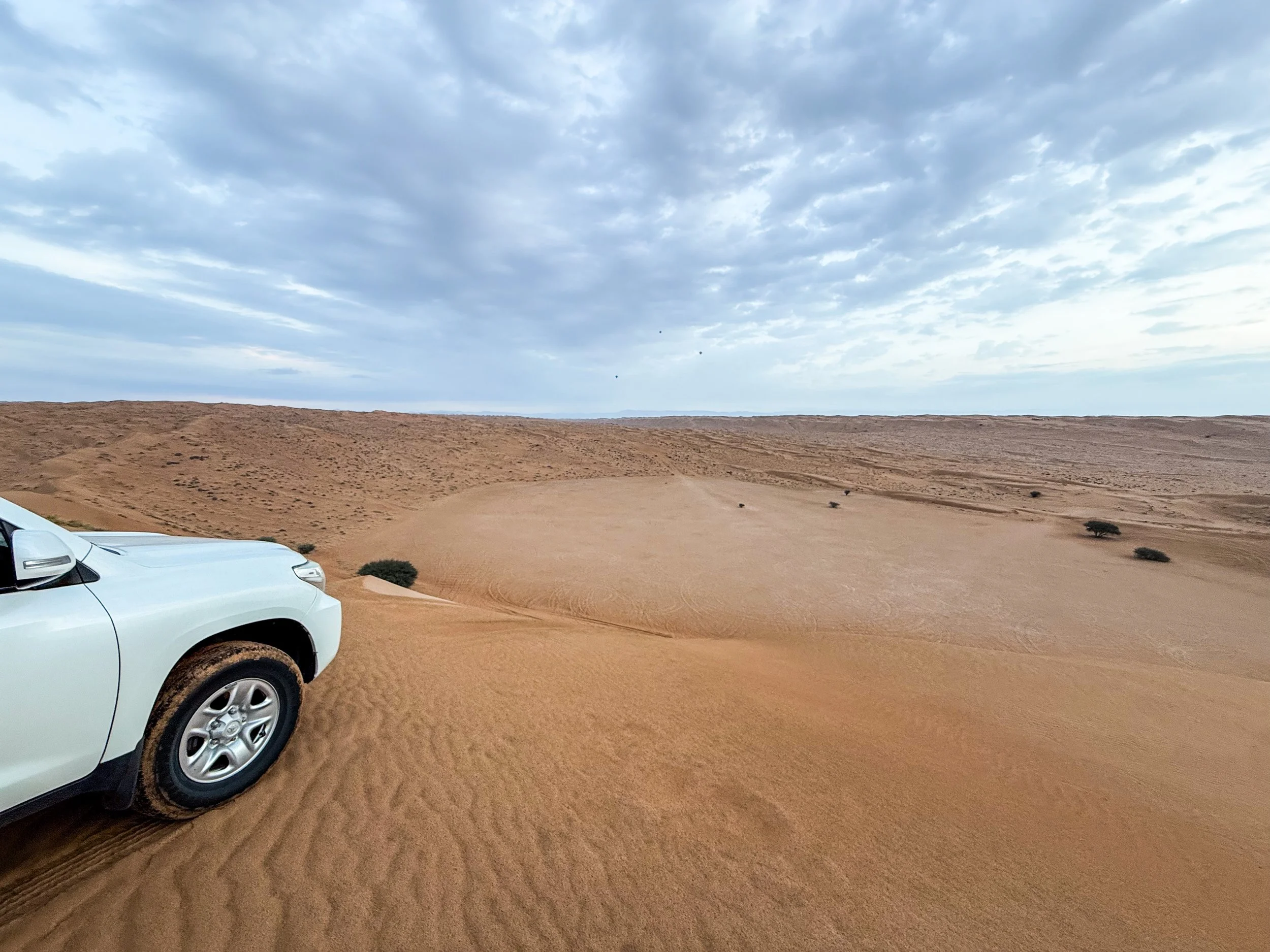
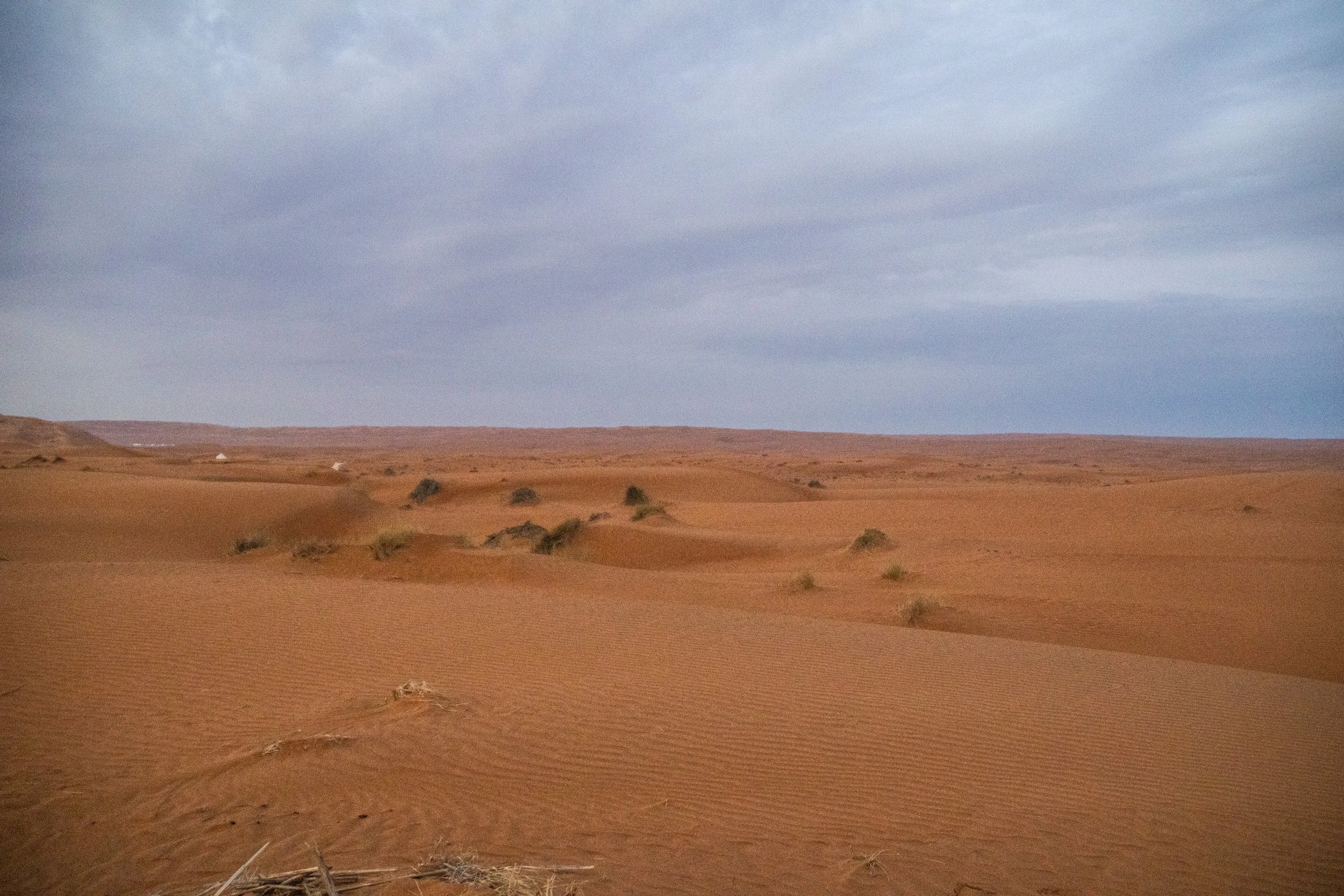
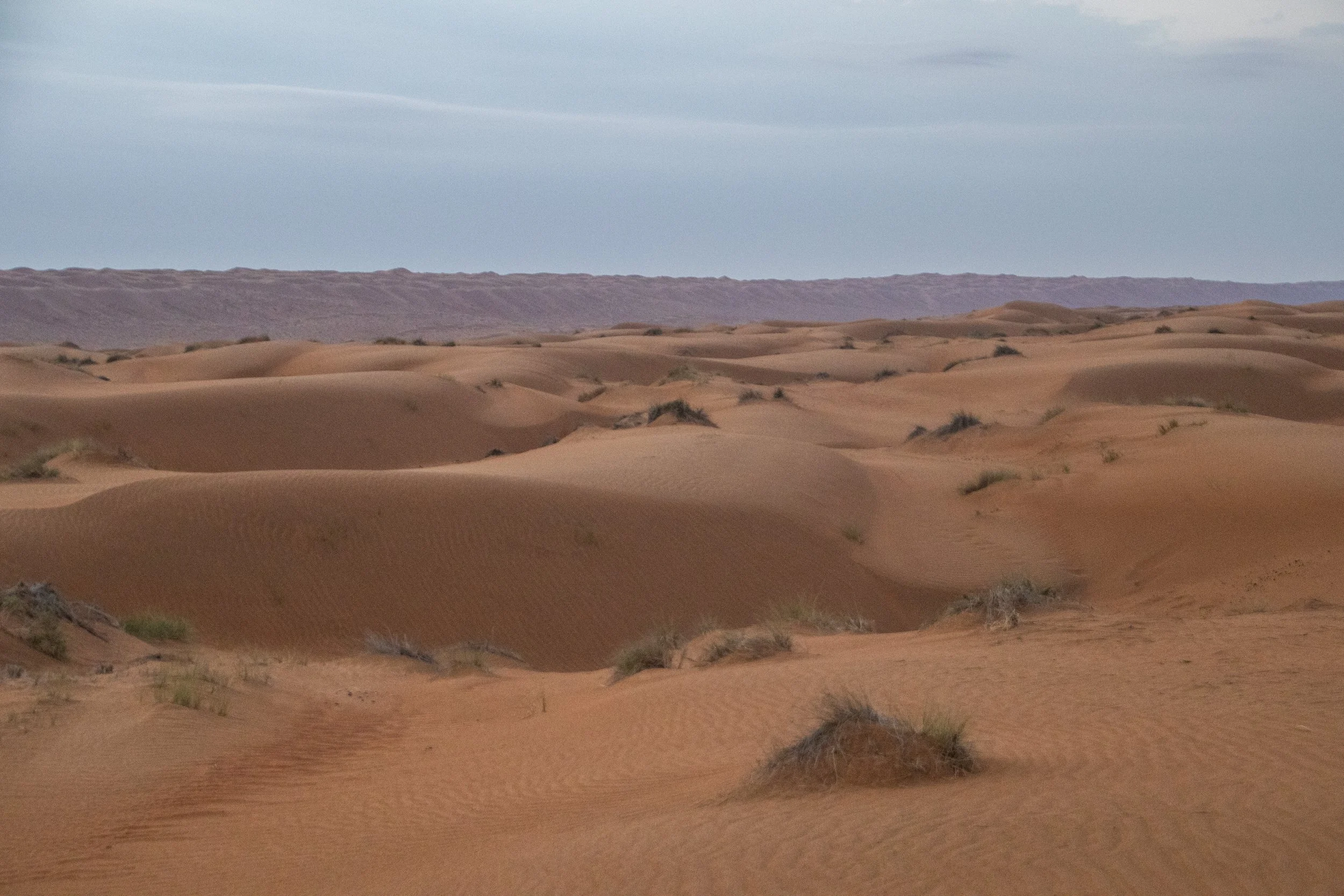
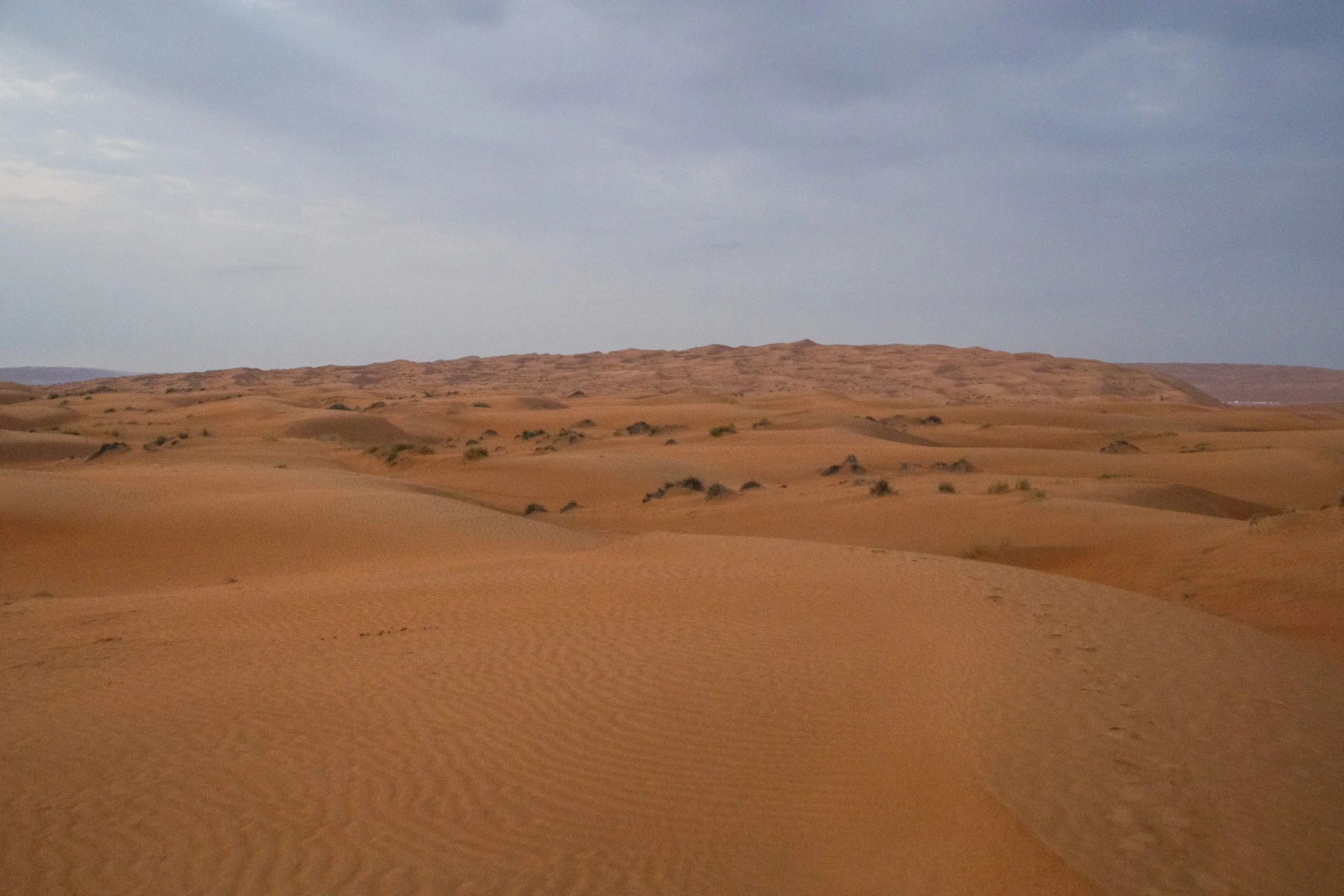
The first time I’d ever heard the phrase “dune-bashing” was during my research for this trip… but I would come to learn that, in the Gulf States at least, this is well-known term. Everybody knows what dune-bashing is, and has probably done it once or twice themselves. Basically, you get into an all-terrain SUV with special tires, and a driver takes up up into the dunes for some ‘rough riding’. It doesn’t seem like it would be all that exciting at first glance, but if nothing else, perhaps a good way to see the desert around you. However, you don’t realize how massive these dunes are, nor how steep they can get, until your car is literally teetering on the edge of one; on the edge of a 30-storey building! Then the driver will simply drive down the side of the dune; it’s not far off from the experience of being on a roller coaster, albeit, a bit slower. Once we’d done it a couple of times, we’d gotten more comfortable with the experience and were hanging most of our bodies out of the windows as the car tipped over the crests of these dunes. It was always a smooth ride to the bottom, and from that aerial vantage point, I could see that the driver was often not even spinning the car’s wheels in descent; the car was literally just sliding.
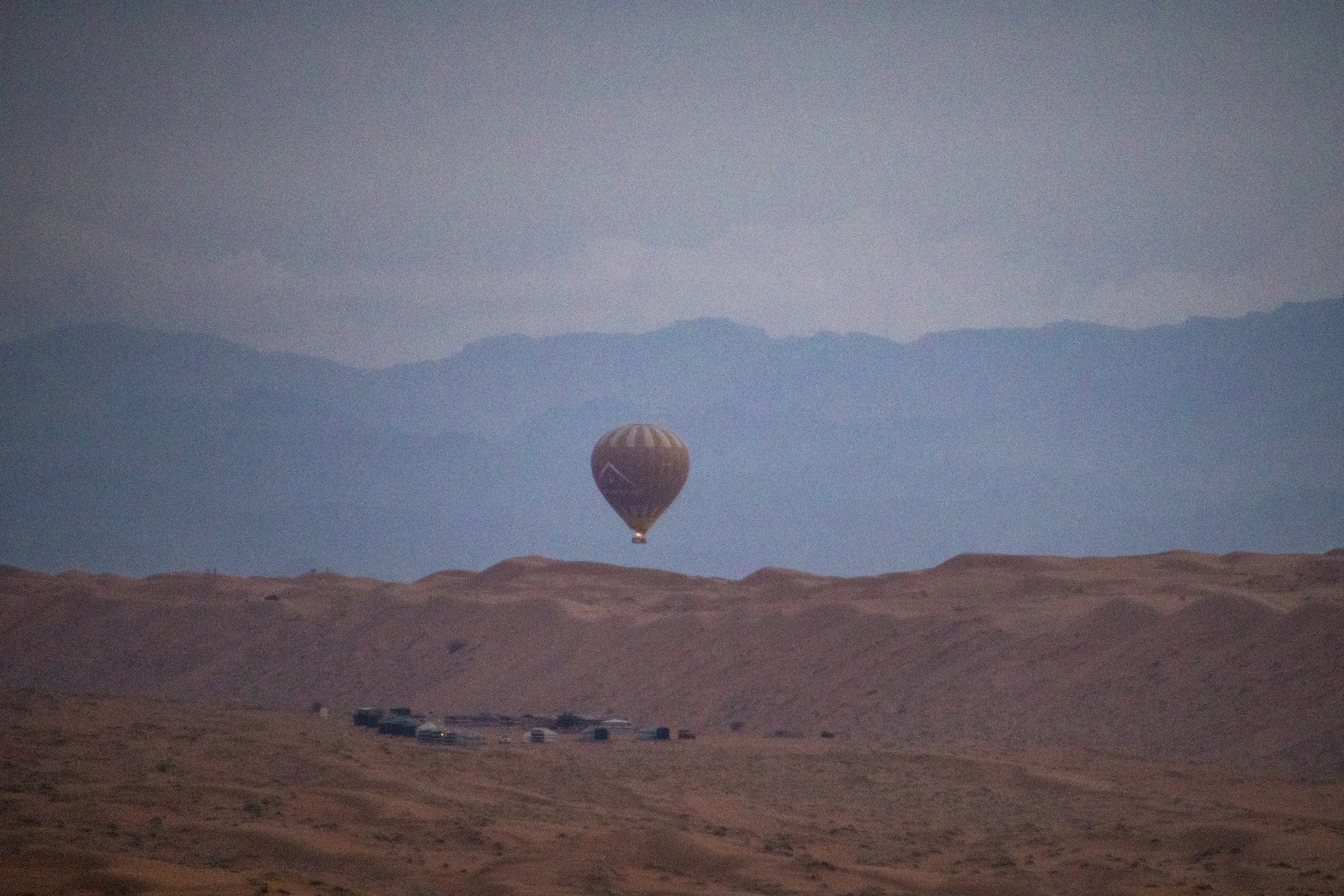
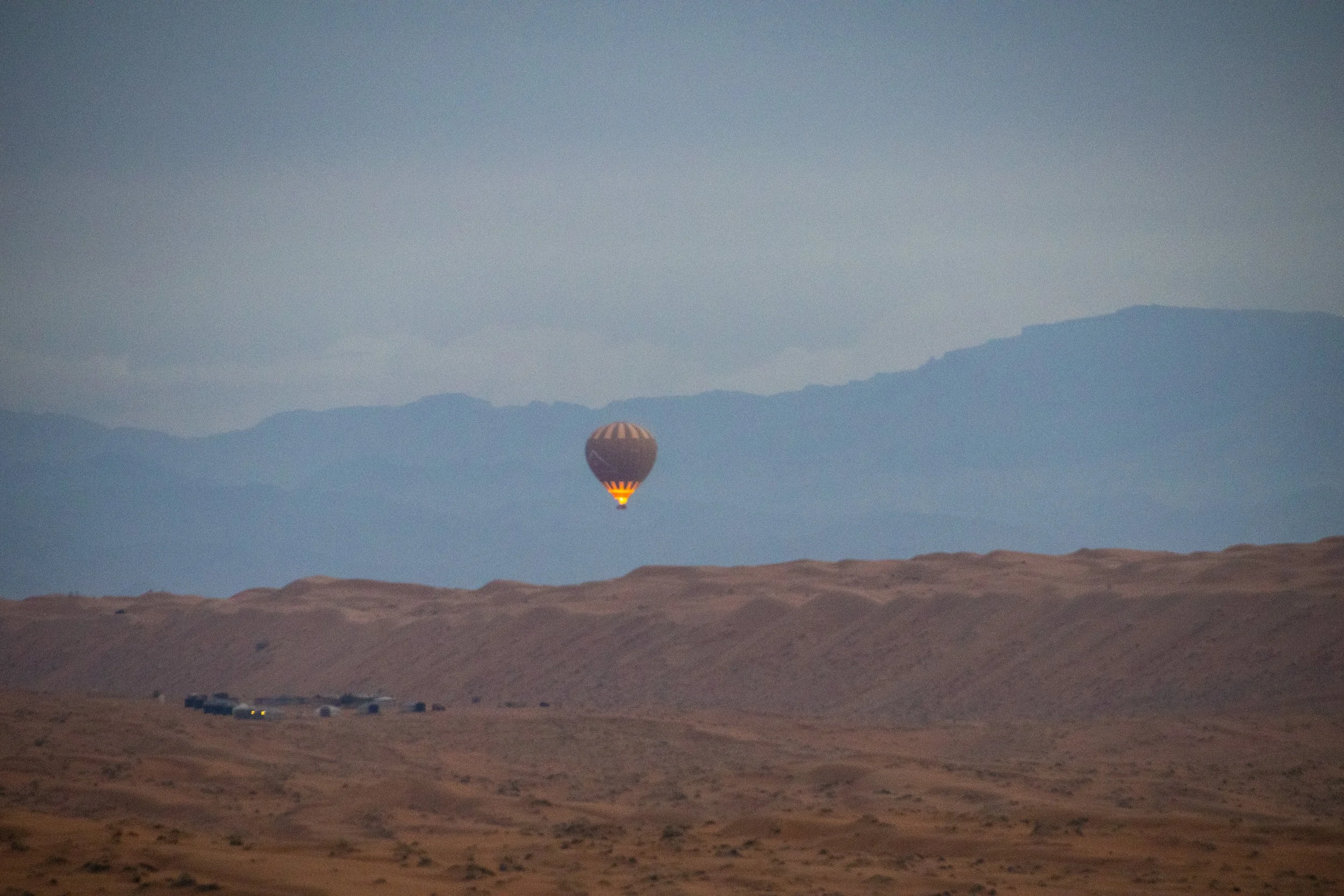
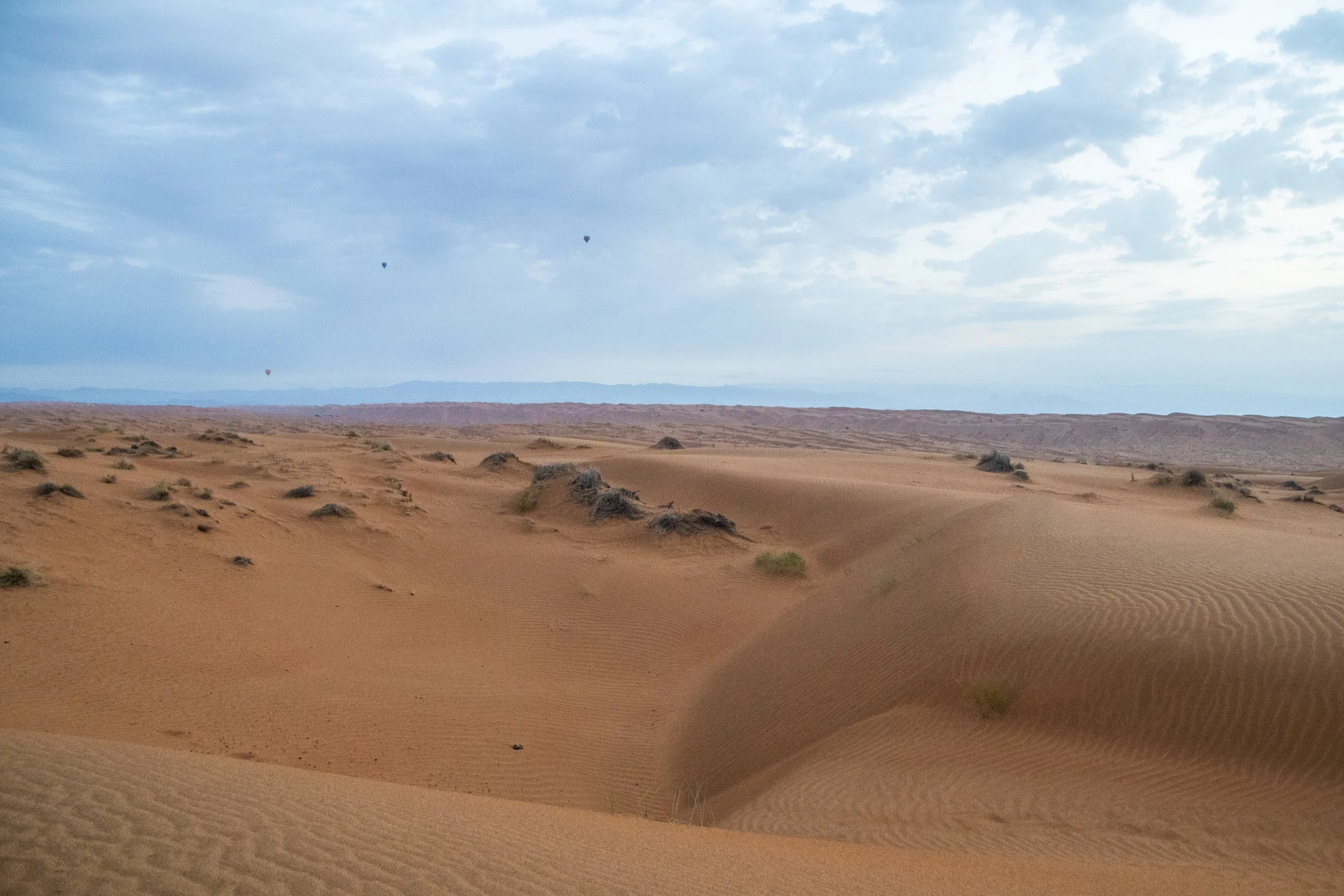
We did this at sunrise, so when we set out, it was still dark outside. It was a hazy sunrise, accented by hot air balloons gently rising in the distance. Once it was light enough to afford a reasonable level of visibility, the car stopped to let us explore on foot a bit. I didn’t take long for us to lose sight of the car and feel completely isolated in the midst of these dunes… it’s easy to see how people can get lost out here. But the guy driving our car explained that he was raised here and knew his way around these dunes like the back of his hand. It’s incredible how humans can adapt to these sorts of extreme environments.
Sunset Camel Safari
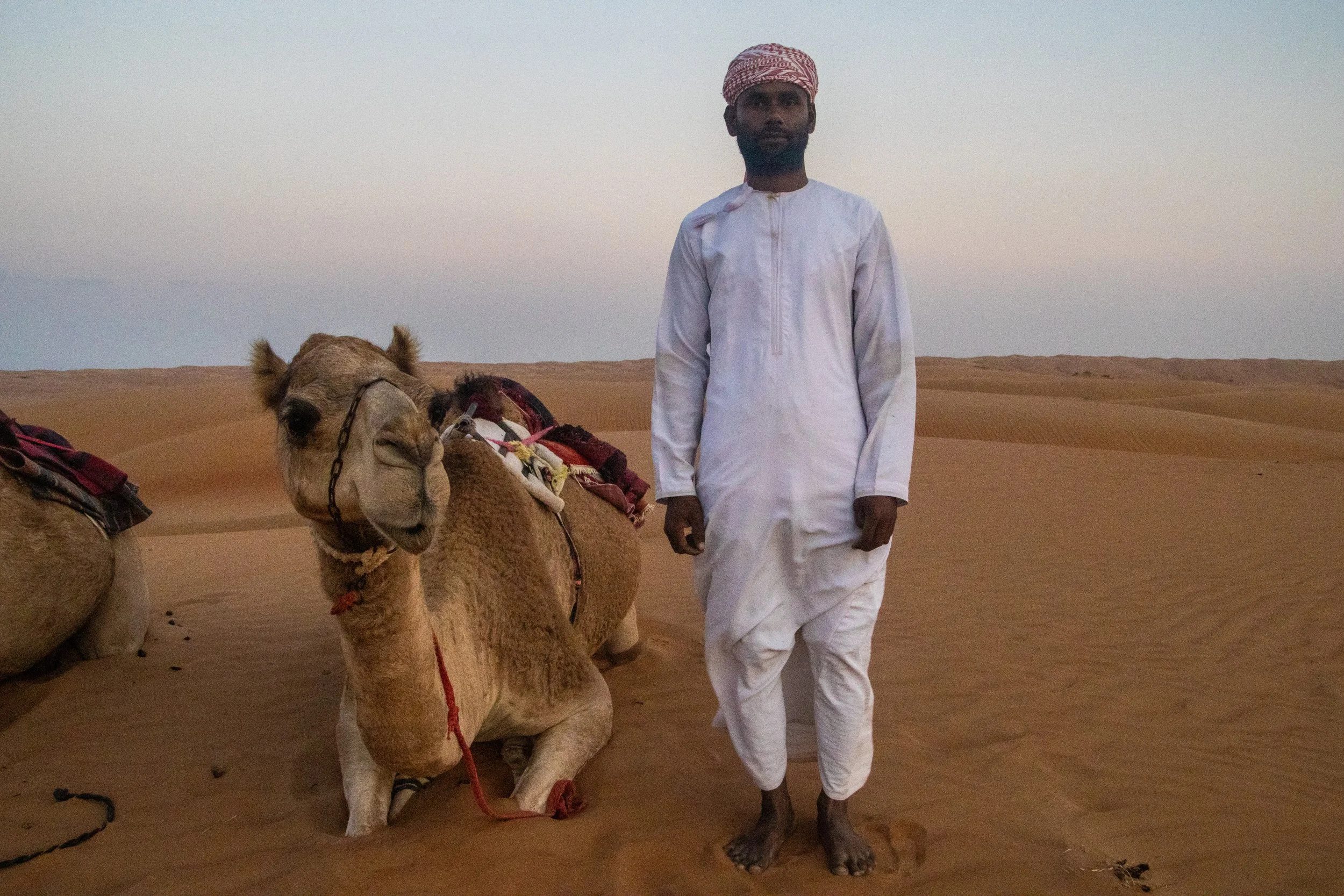
The 2nd activity that we sprang for was (obviously) a camel safari. My sense is that the heat in the desert is so punishing, that the most active times of the day are sunrise and sunset, with a mid-day siesta when the heat is reaching its zenith. So, when sunset arrived, we were introduced to a soft-spoken local guide wearing traditional Omani bedouin garb, who showed us to our camels.
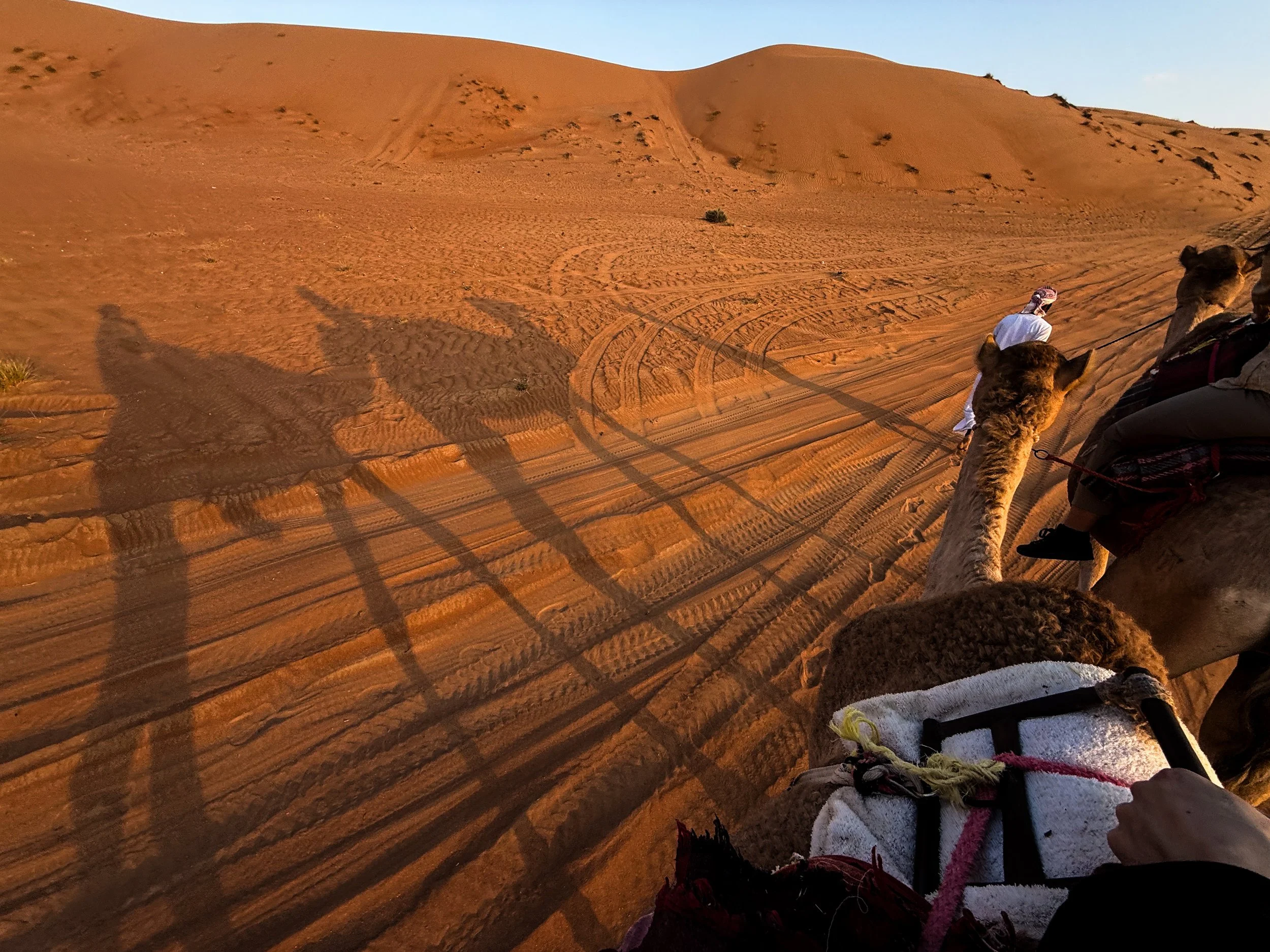
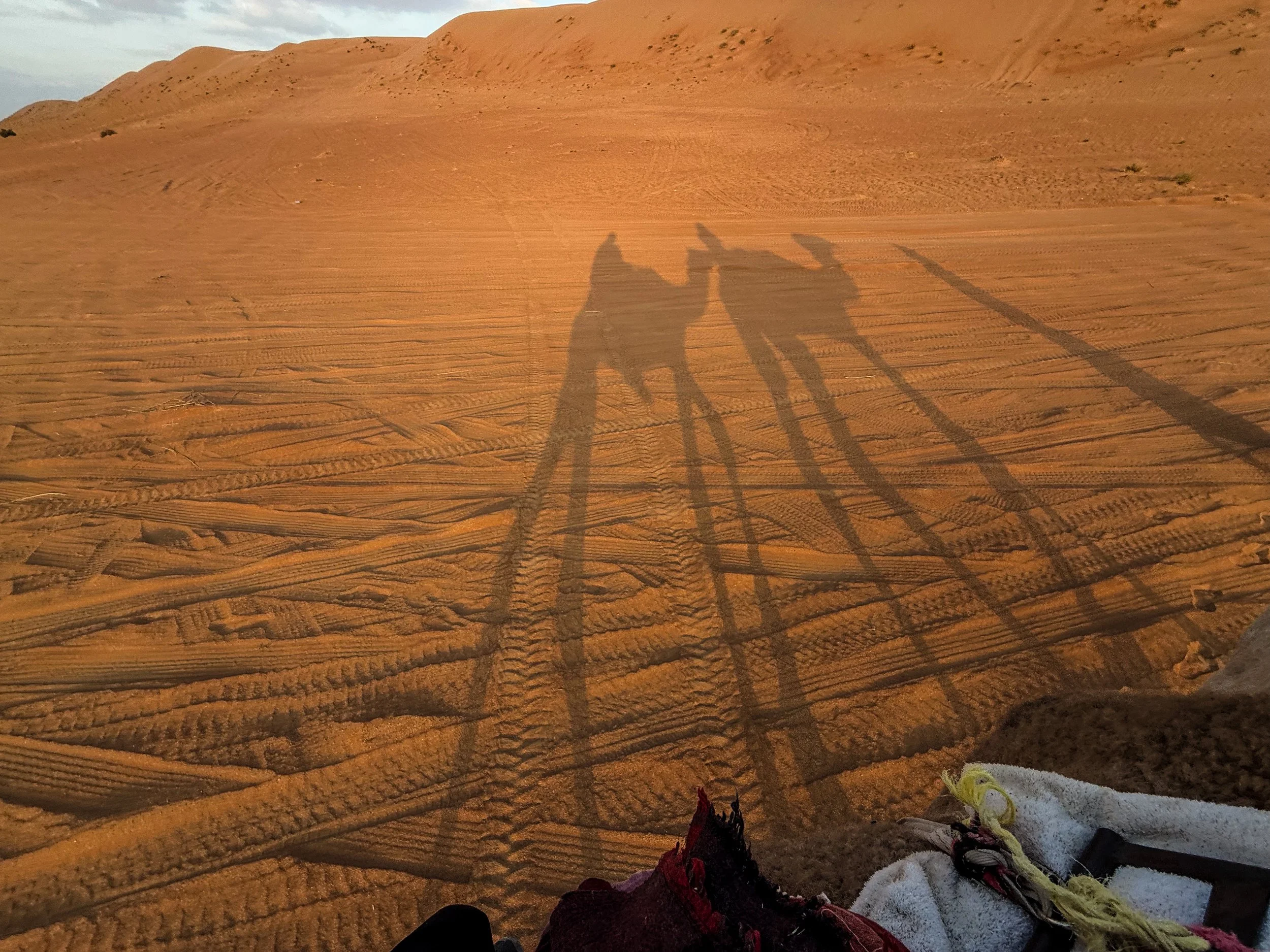
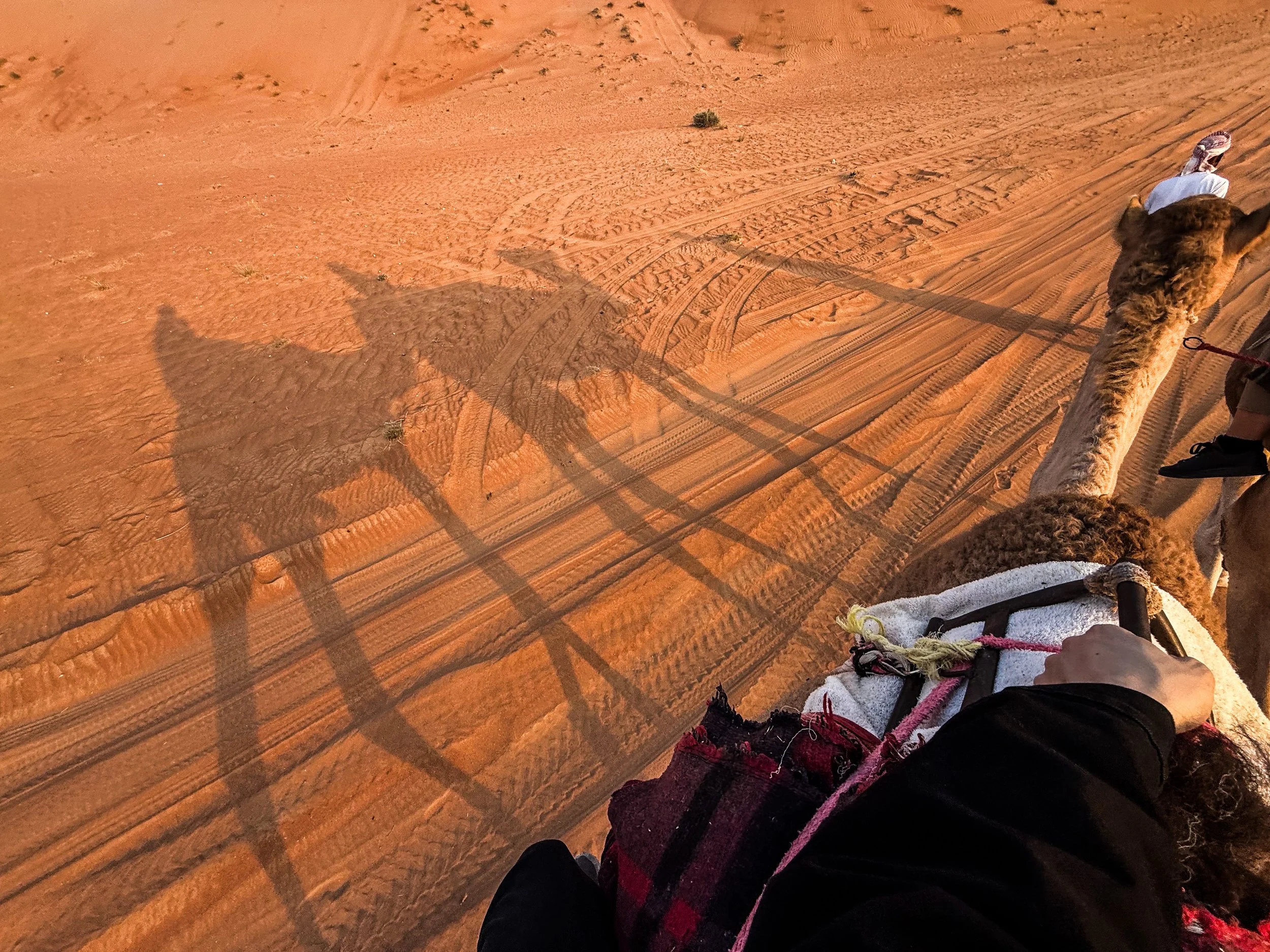
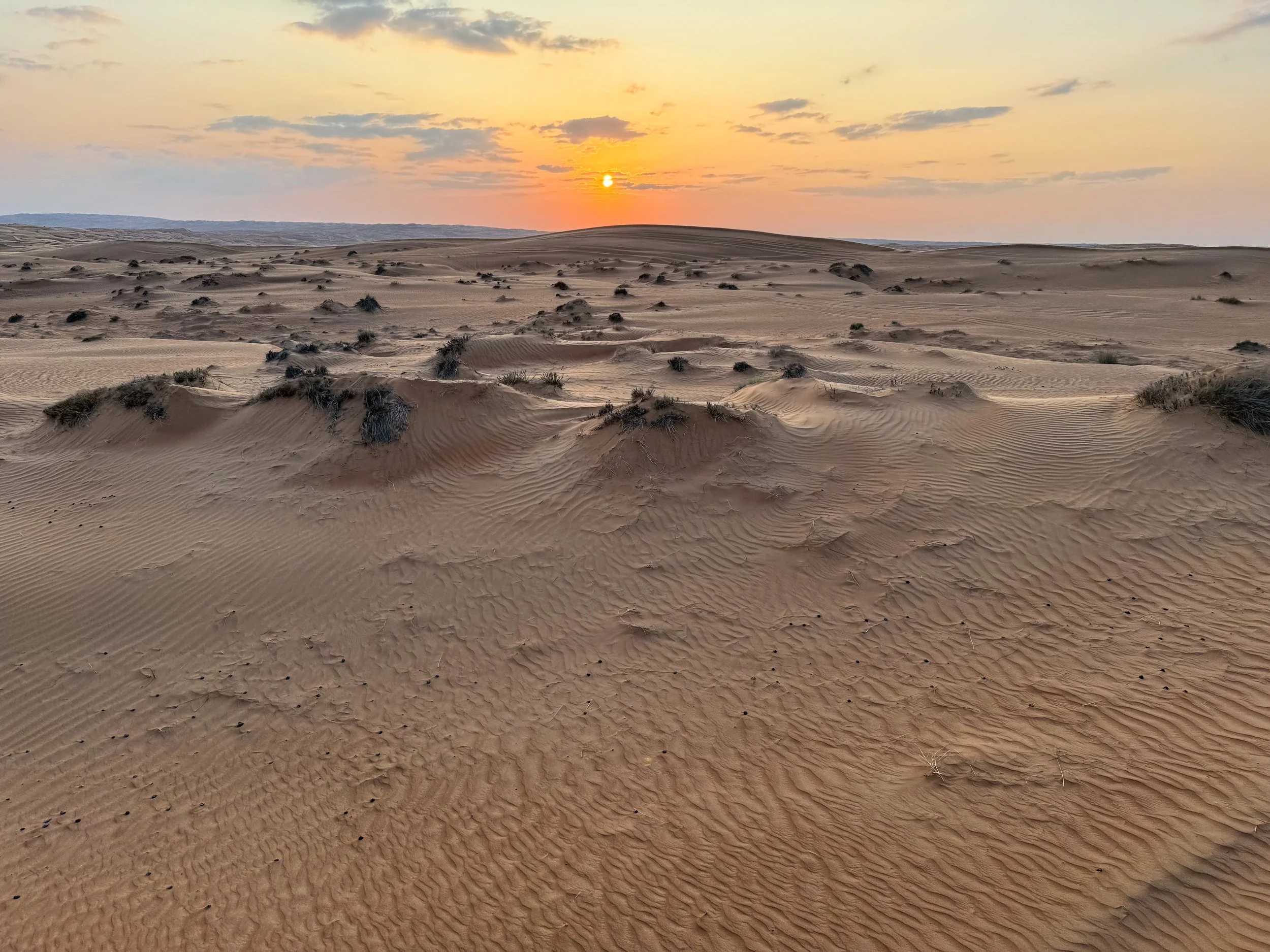
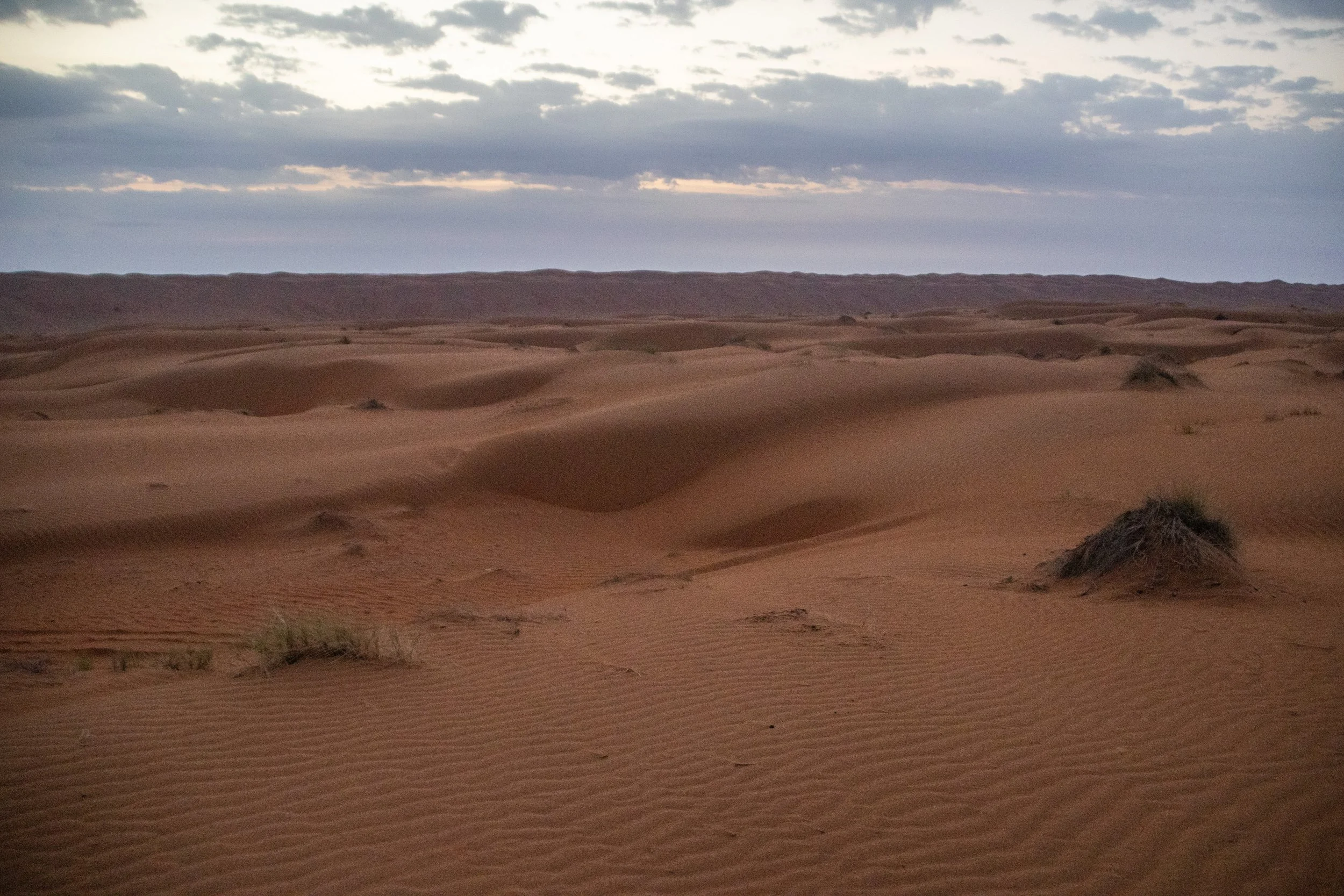
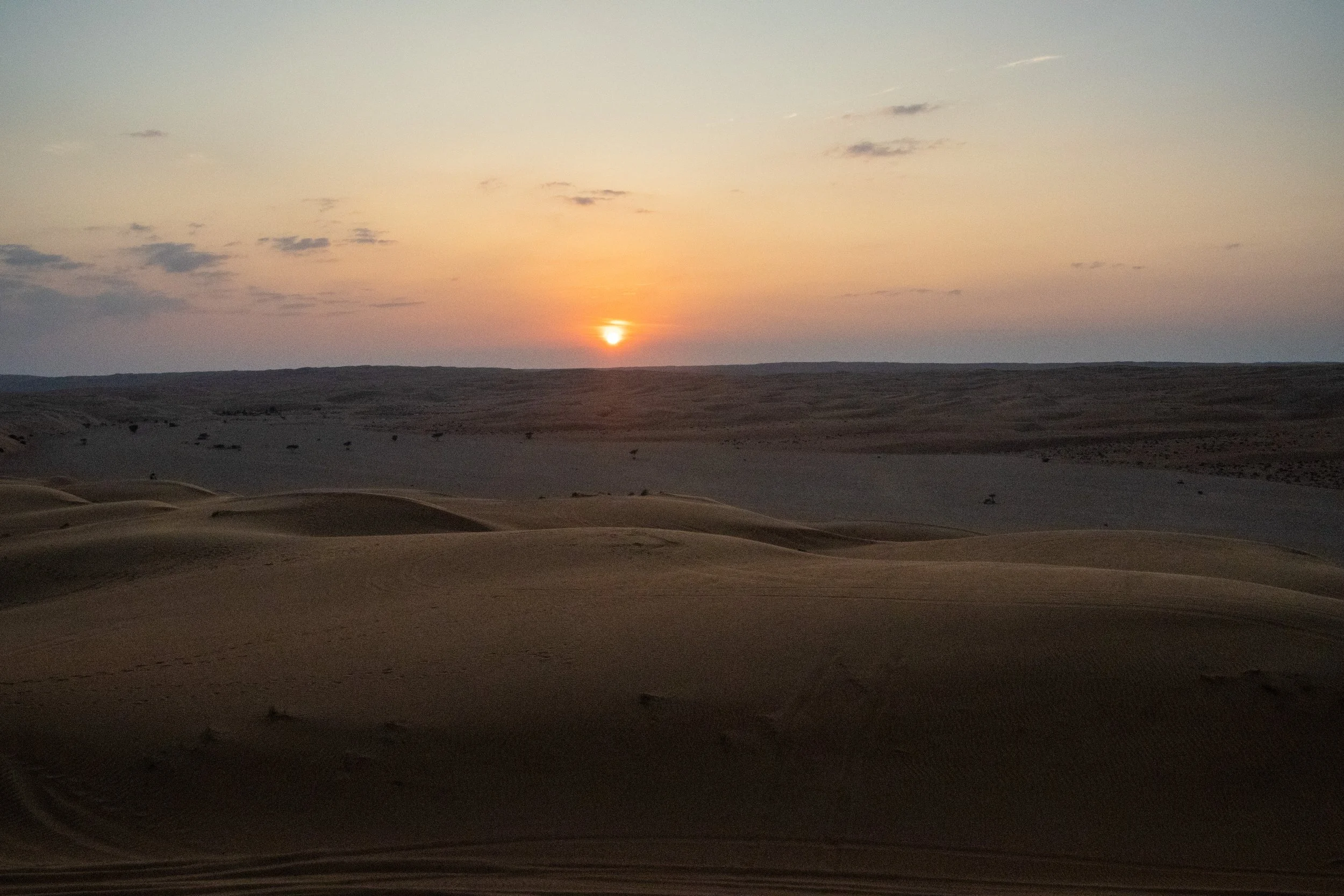
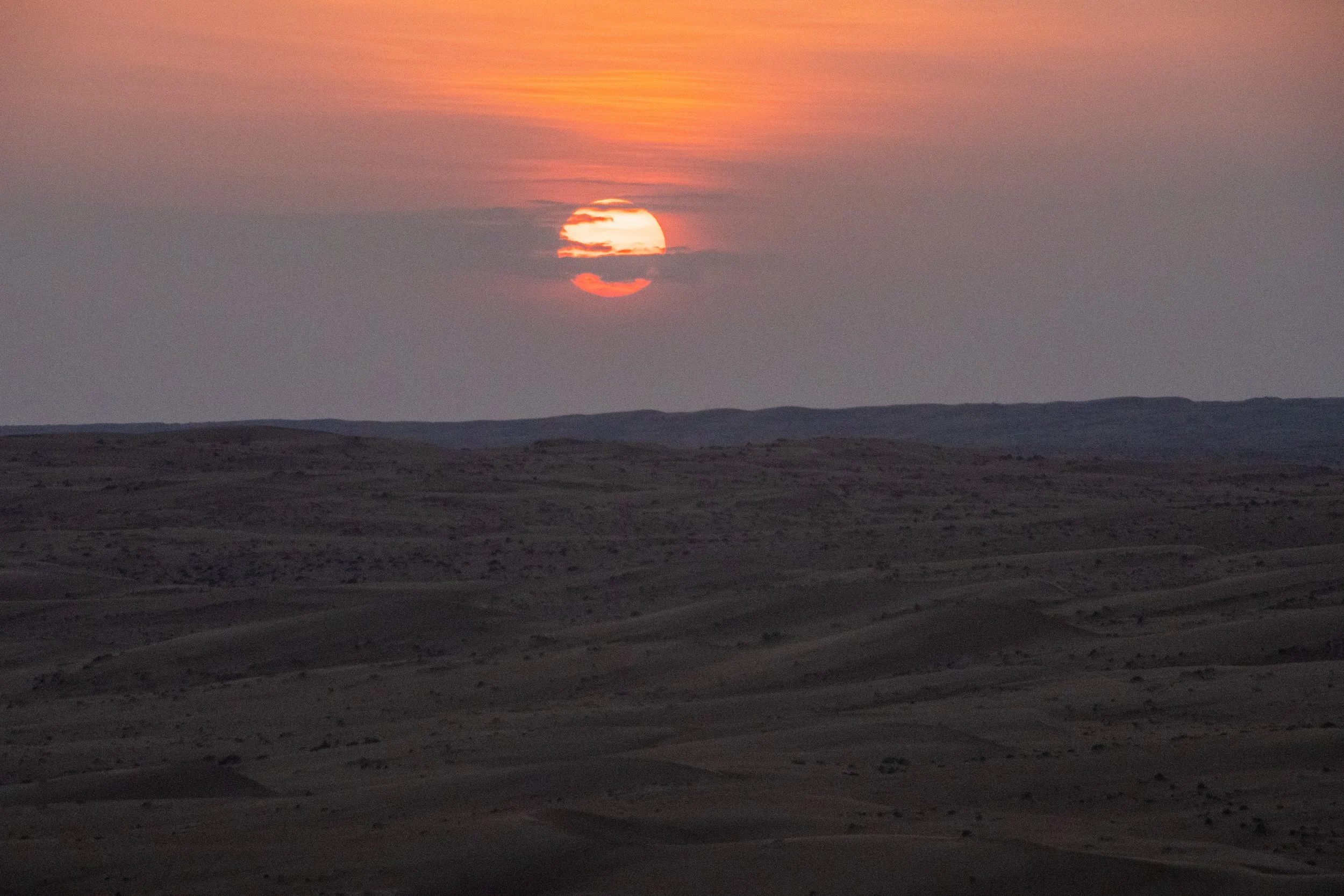
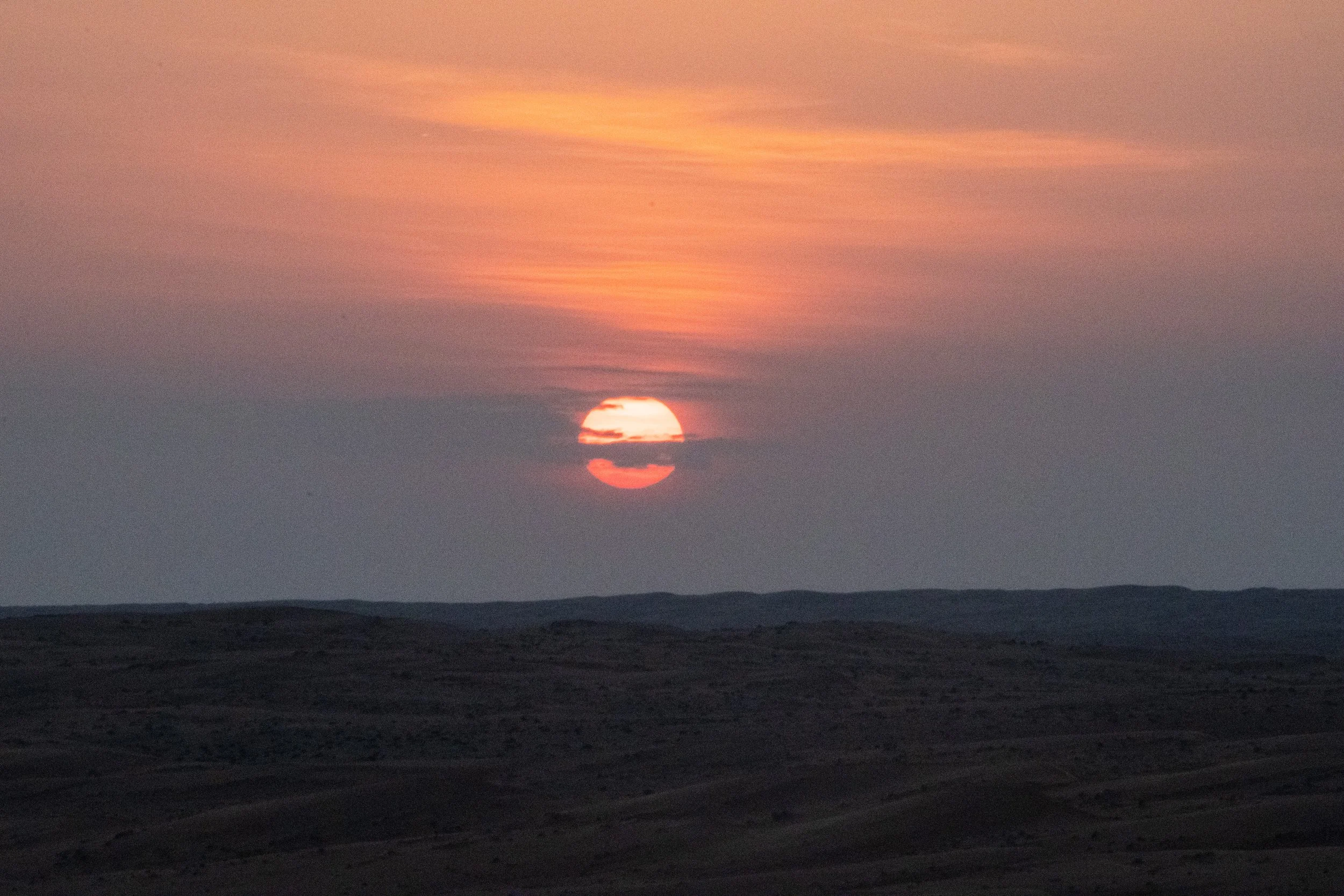
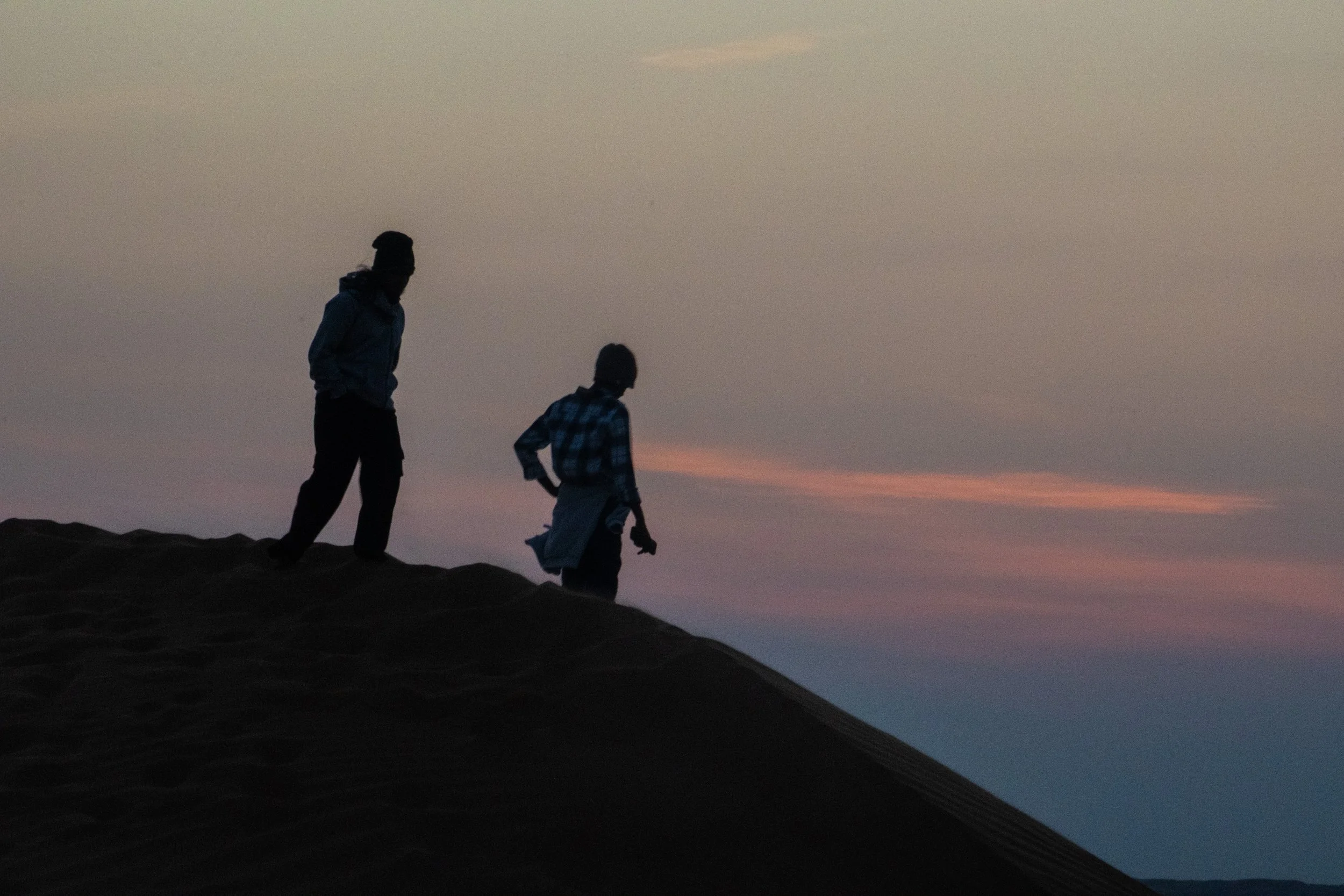
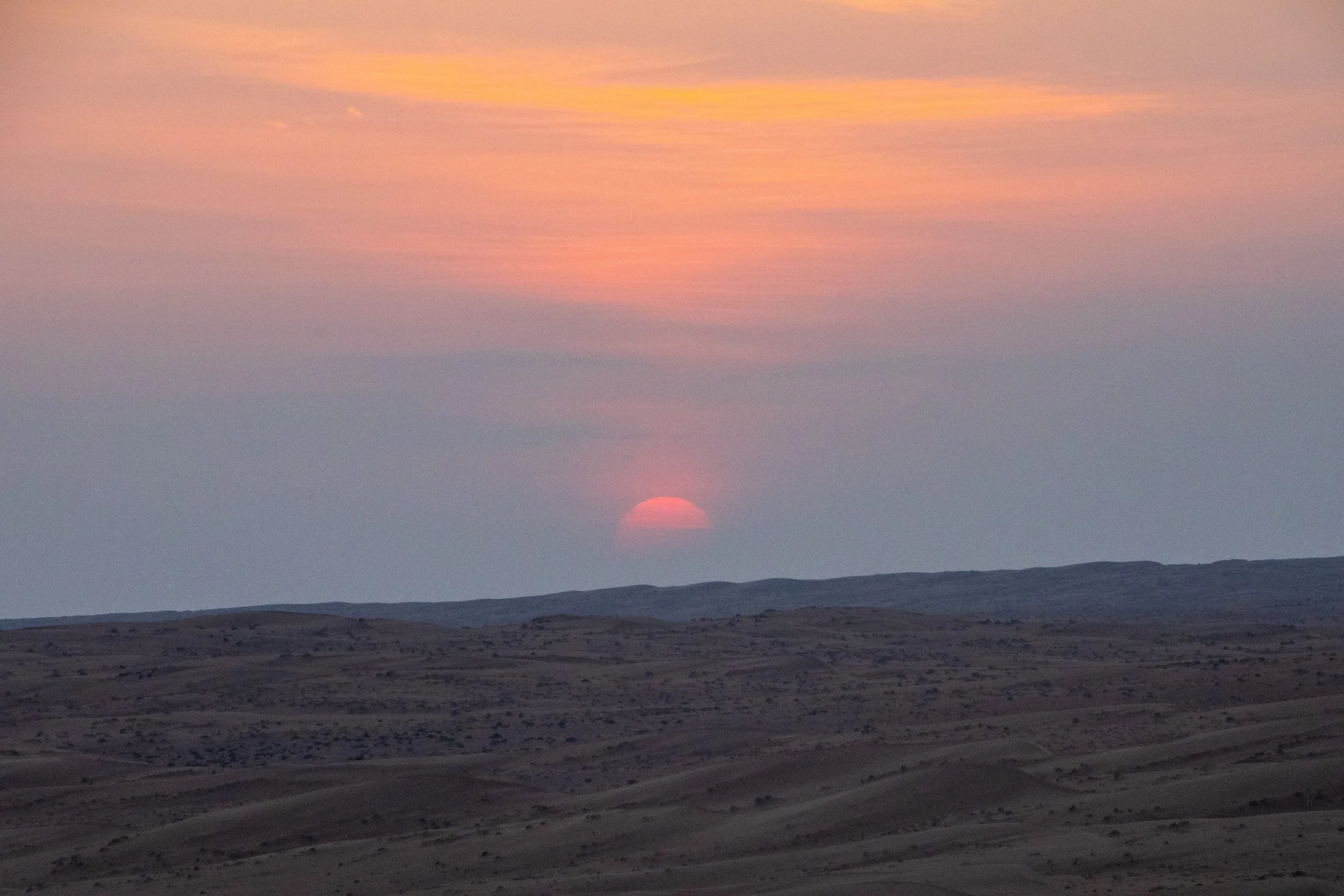
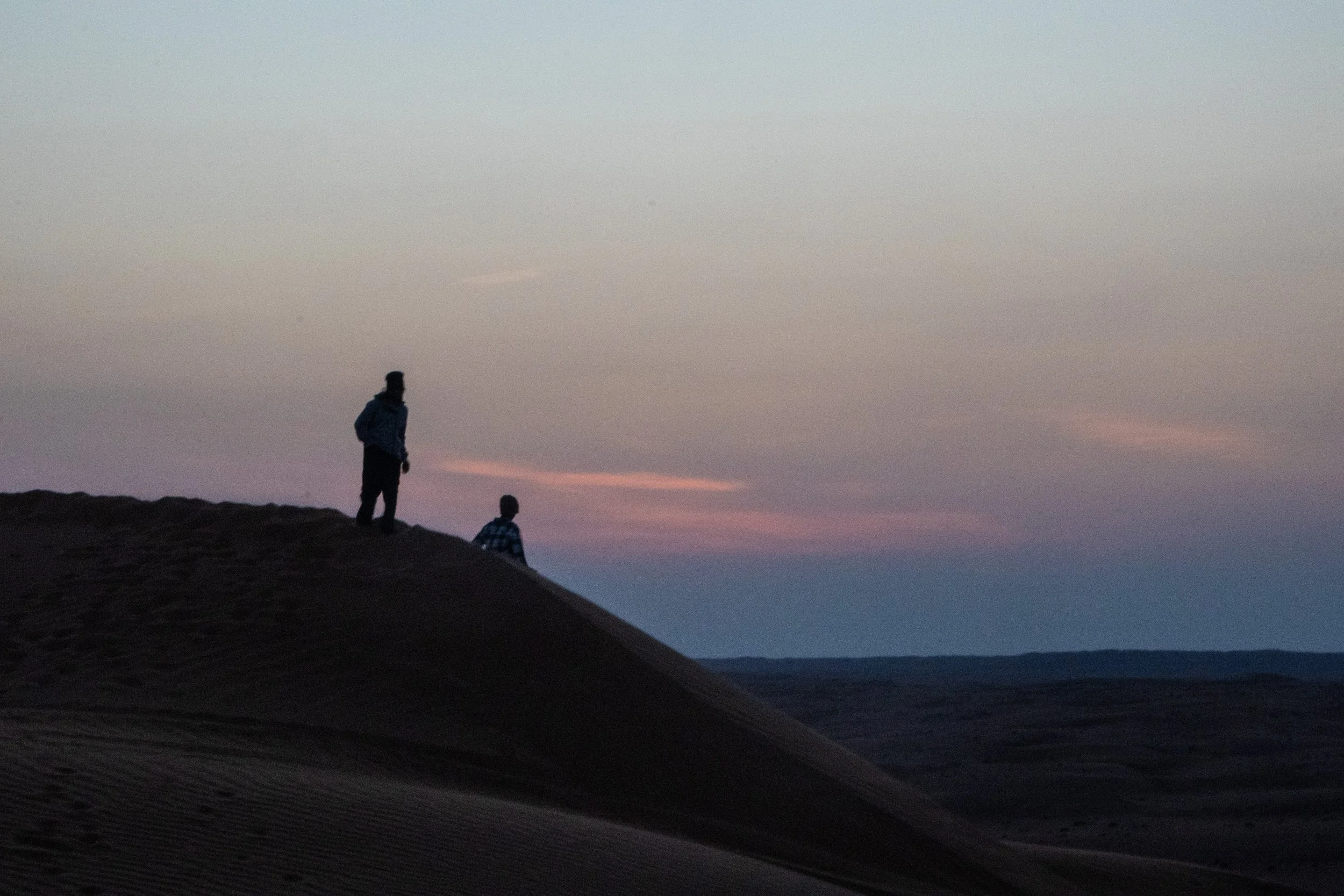
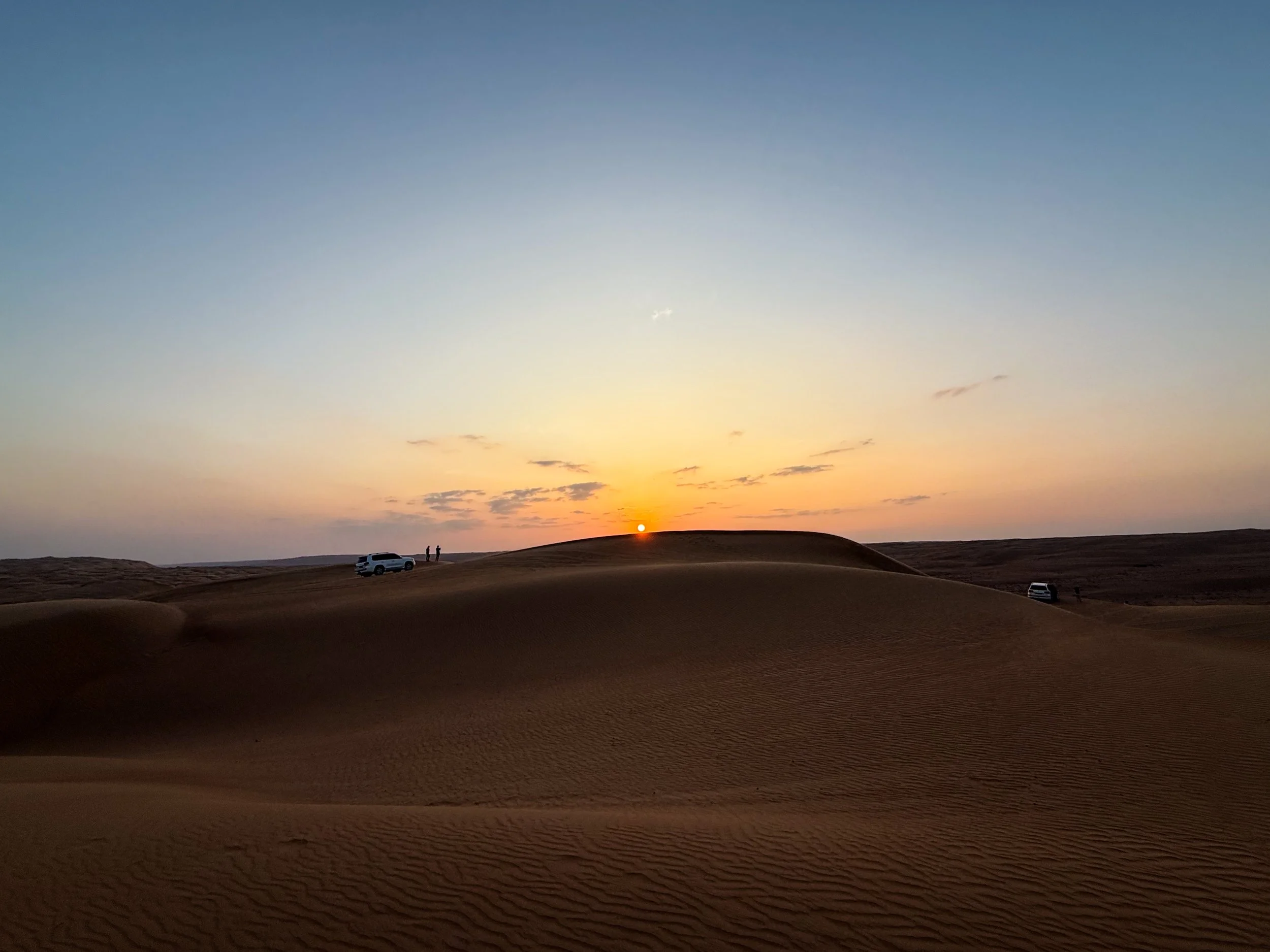
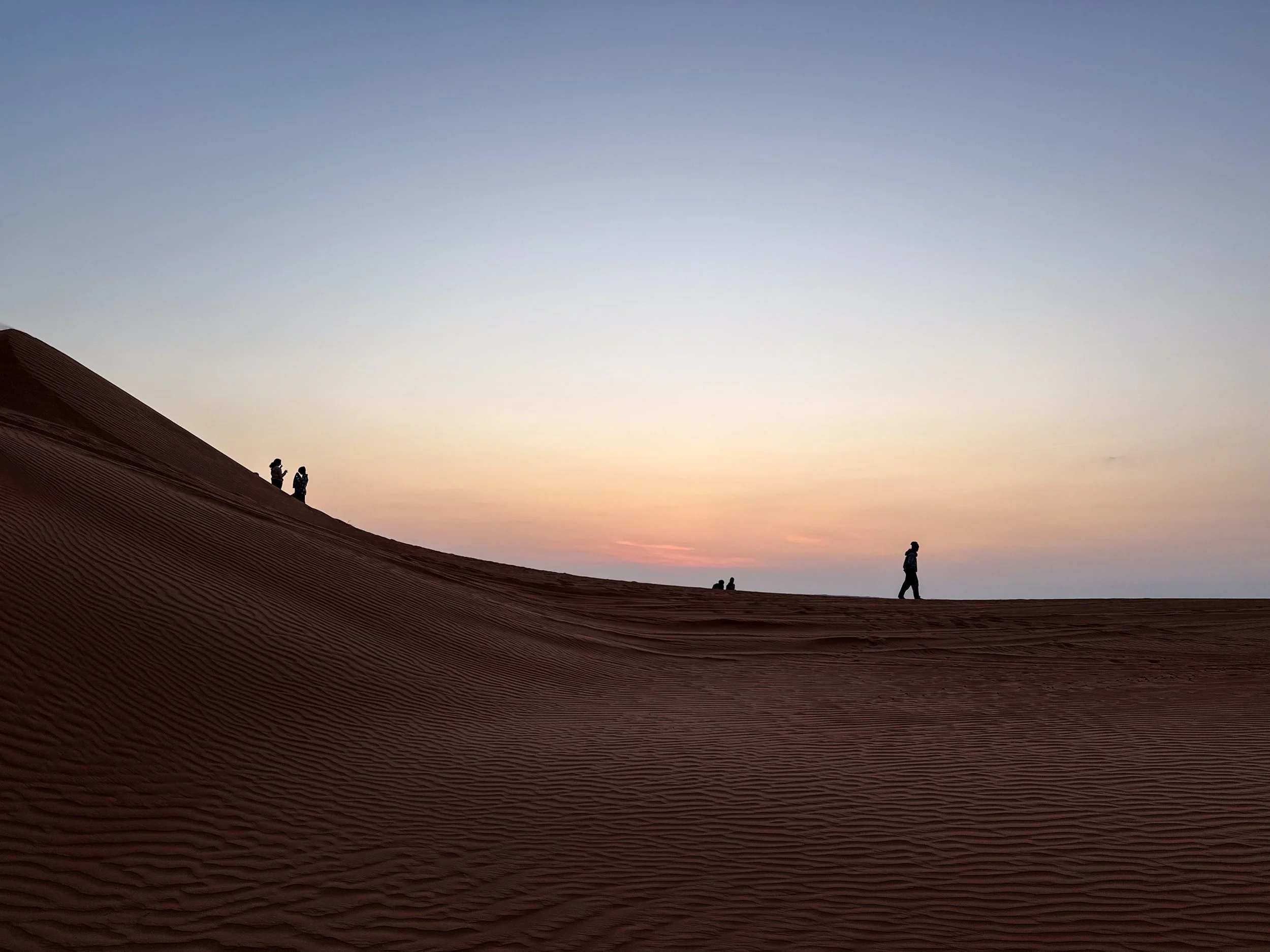
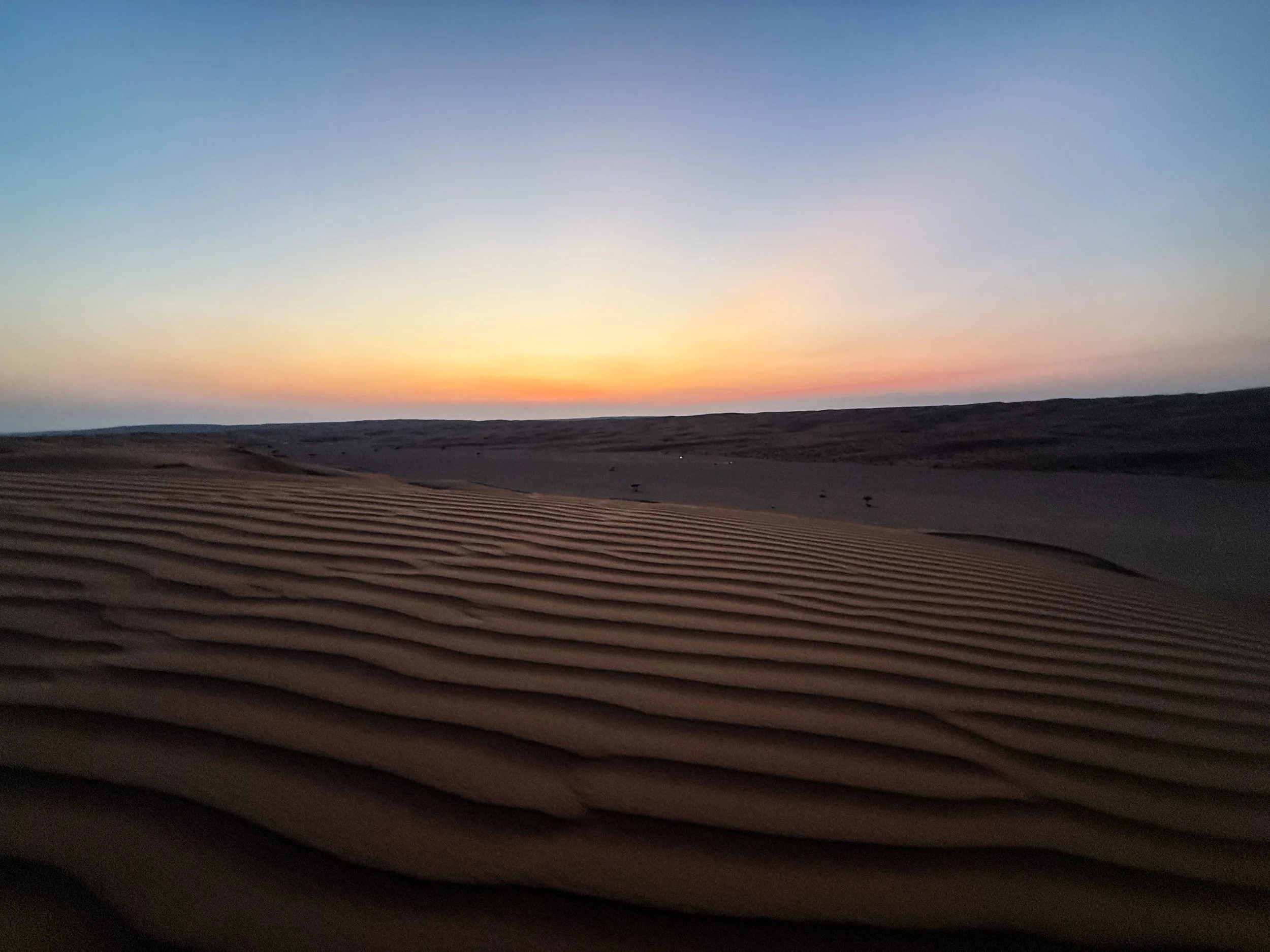
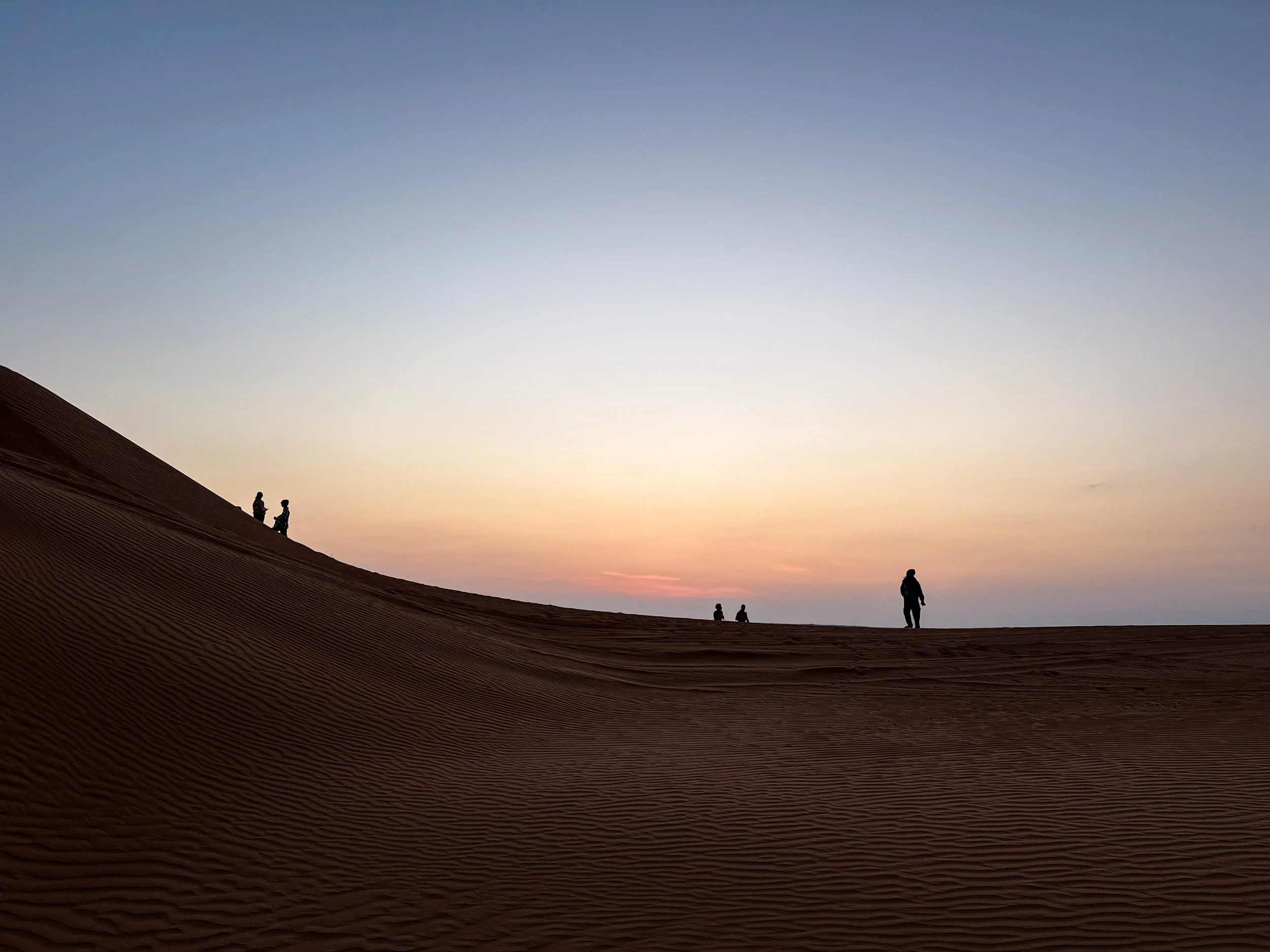
From there, our camels lumbered away from camp, up into the dunes. The setting sun cast surreal, long-legged shadows that obscured our camels to look like Salvador Dalí’s painting, The Elephants. What followed as definitely one of the most stark but beautiful settings I’ve seen in my life. Whereas our sunrise was rather overcast, the skies were clear for sunset. With our camp out of sight, seeing the colors change from the middle of the Arabian desert was really just stunning. There were moments early on when we would cross paths with other visitors, on their own adventures, either on foot or in an SUV, but as the sun set, we walked deeper into the dunes, until it was just us.
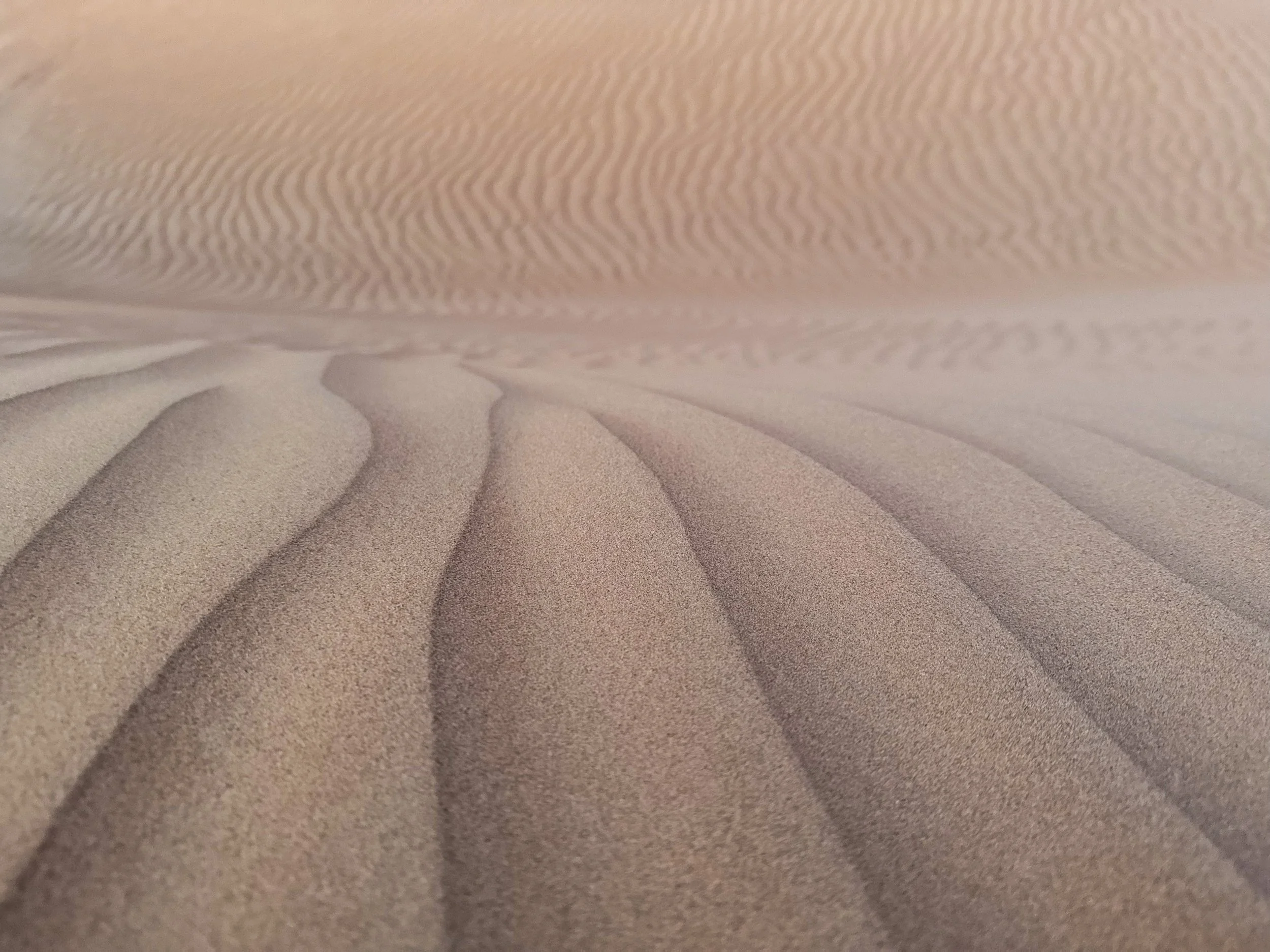
The silence out here…
My frenetic, complicated, convoluted life in London felt a million miles away. To think that this landscape is always sitting here, in eternal silence and humility… I think it’s important to visit places like this often. It provides important perspective. This desert was there before us, it will survive long after us, and even now, in this very moment as you read these words, it is there, as silent, as alien, and as beautiful as ever, providing a quiet, unheeded reminder that there is much more to this world than the bubbles we have constructed for ourselves. I hope I can come be a guest here again more than once before my time runs out.
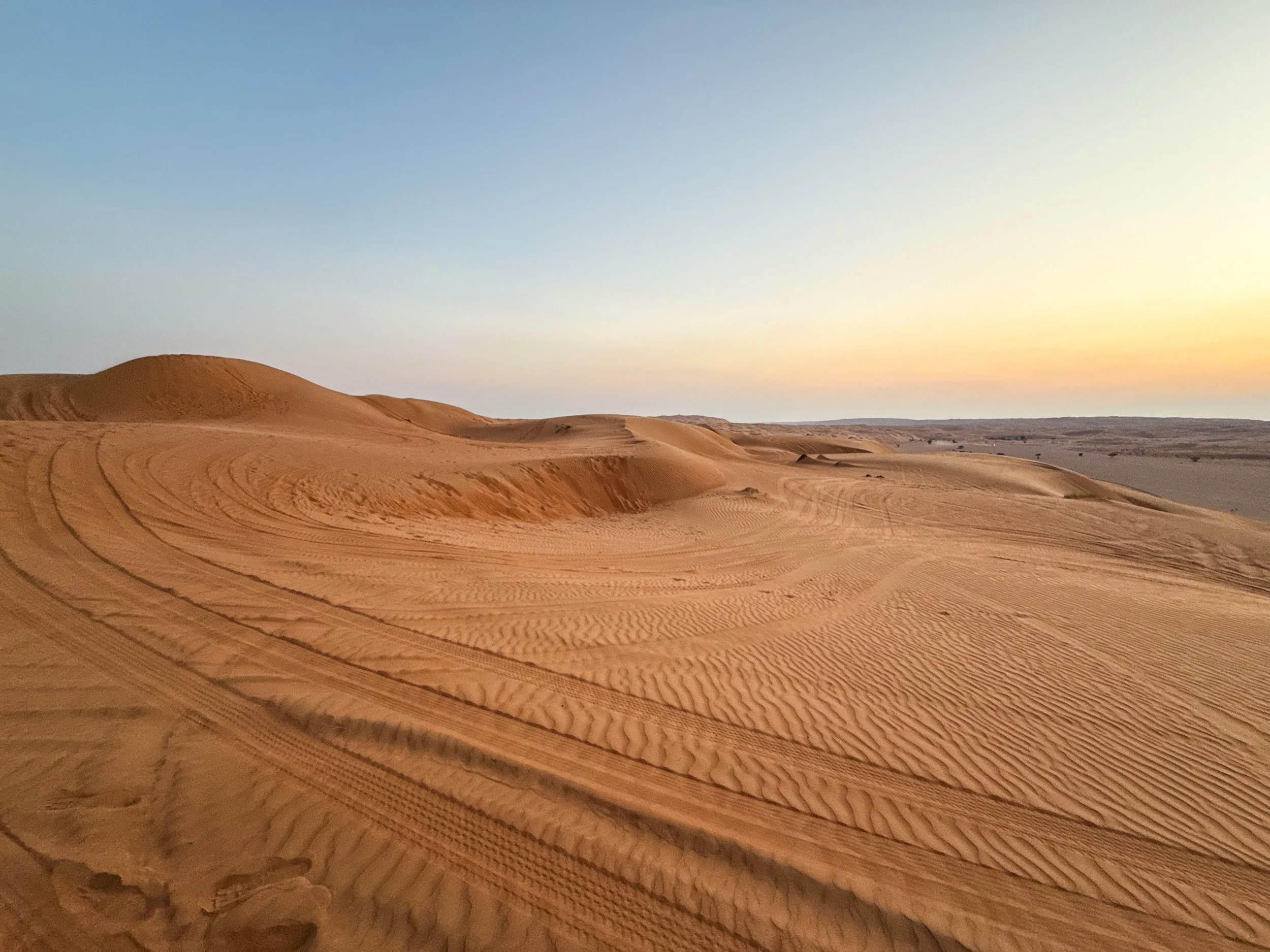
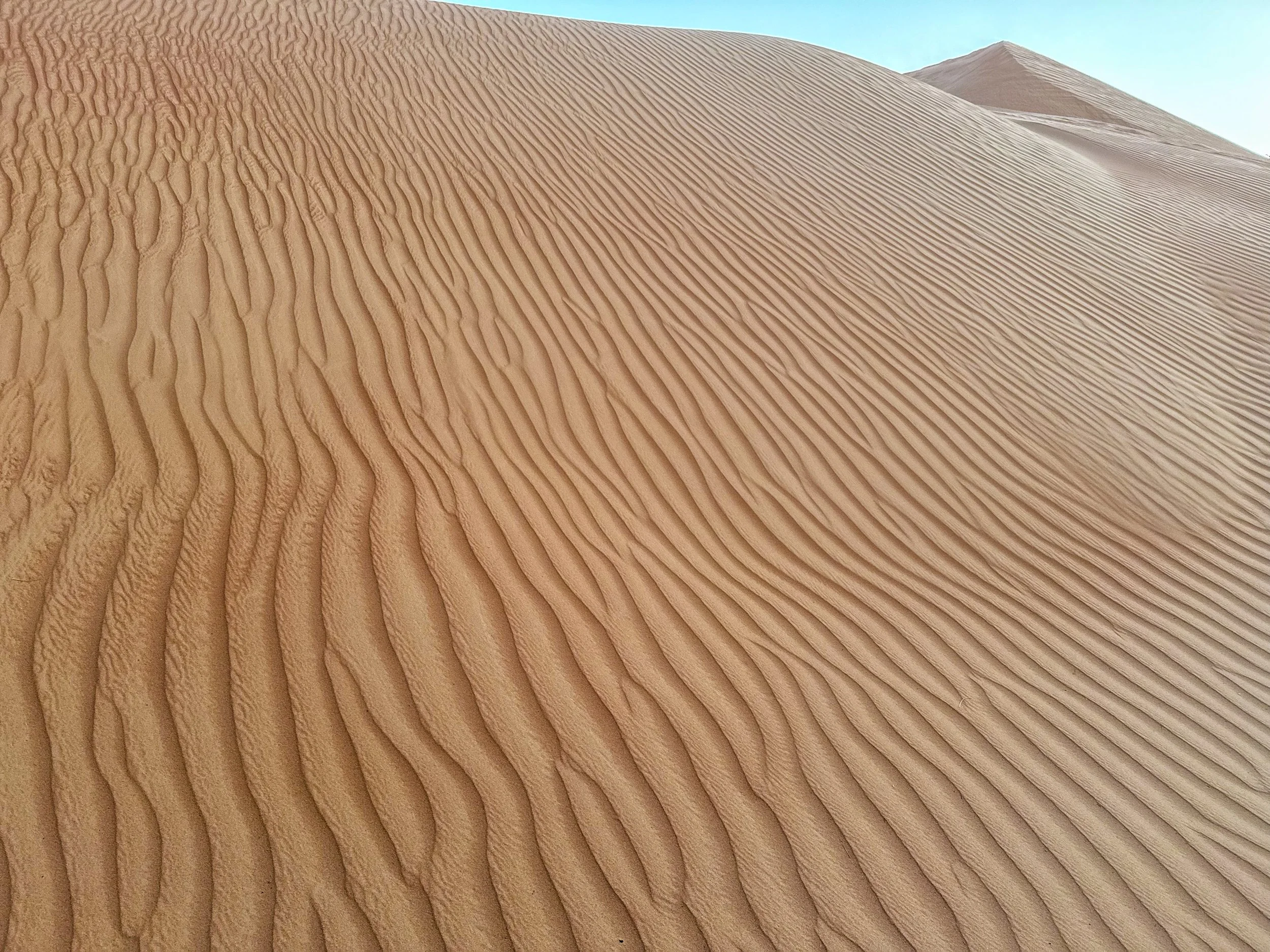
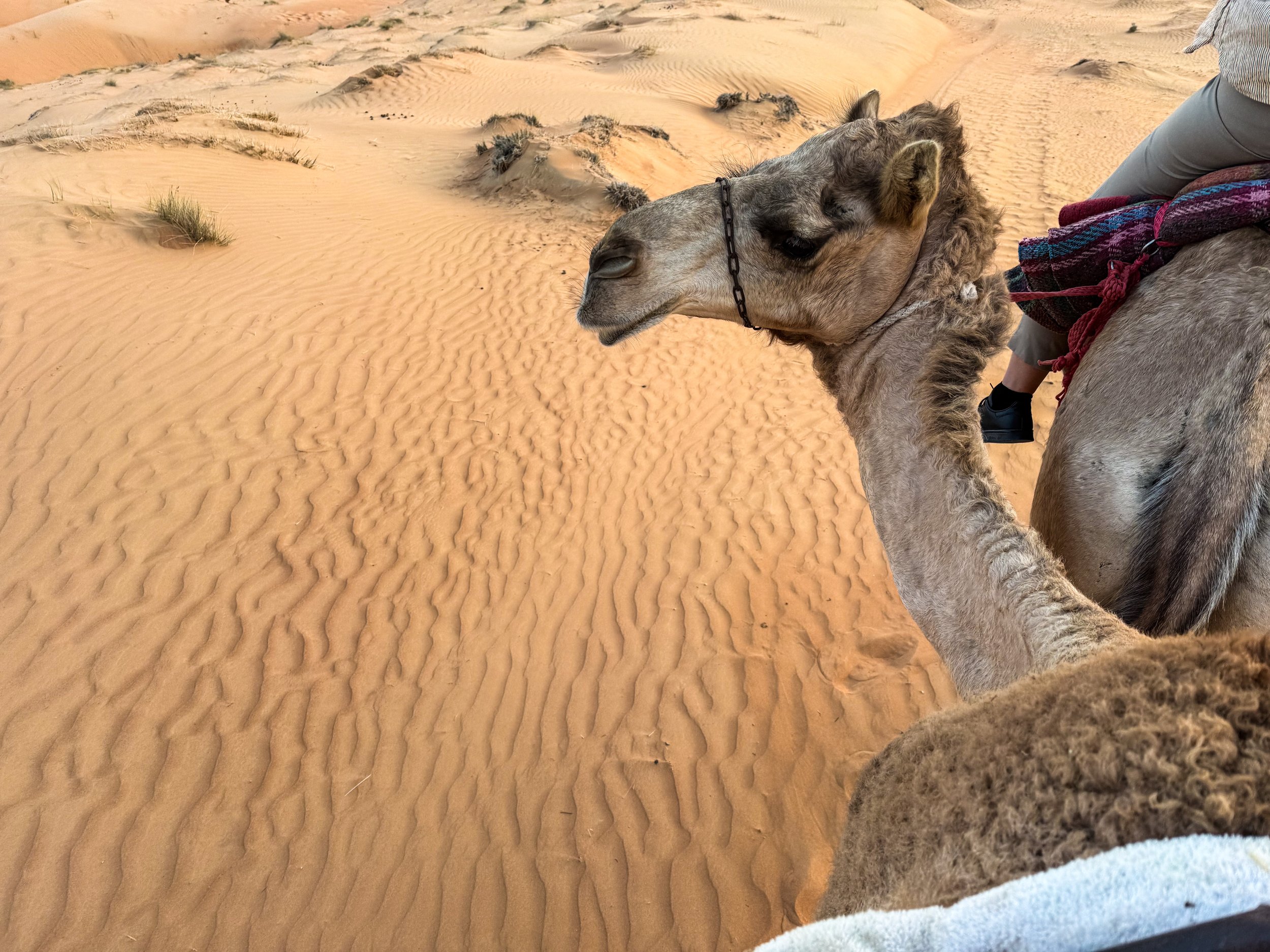
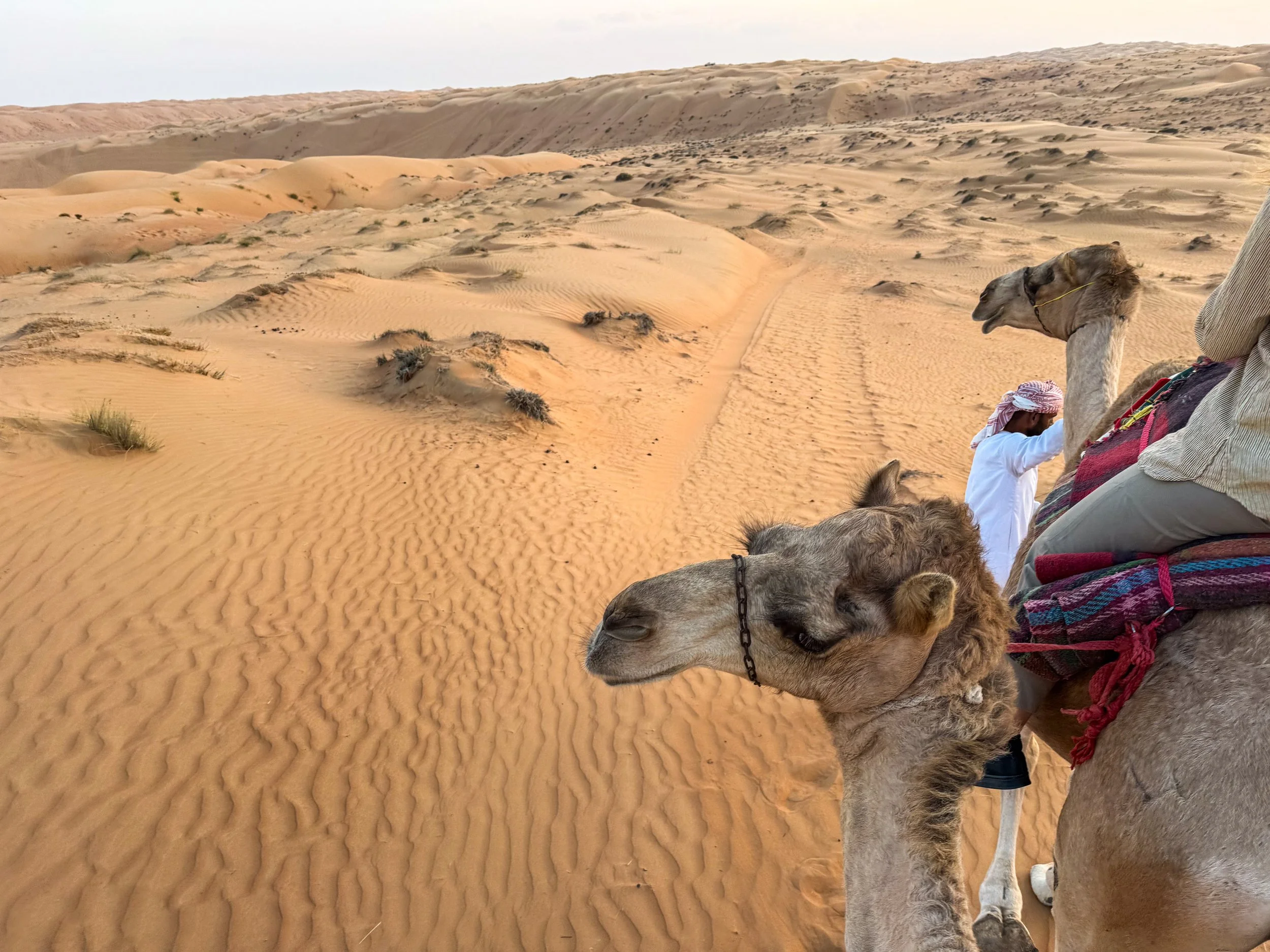
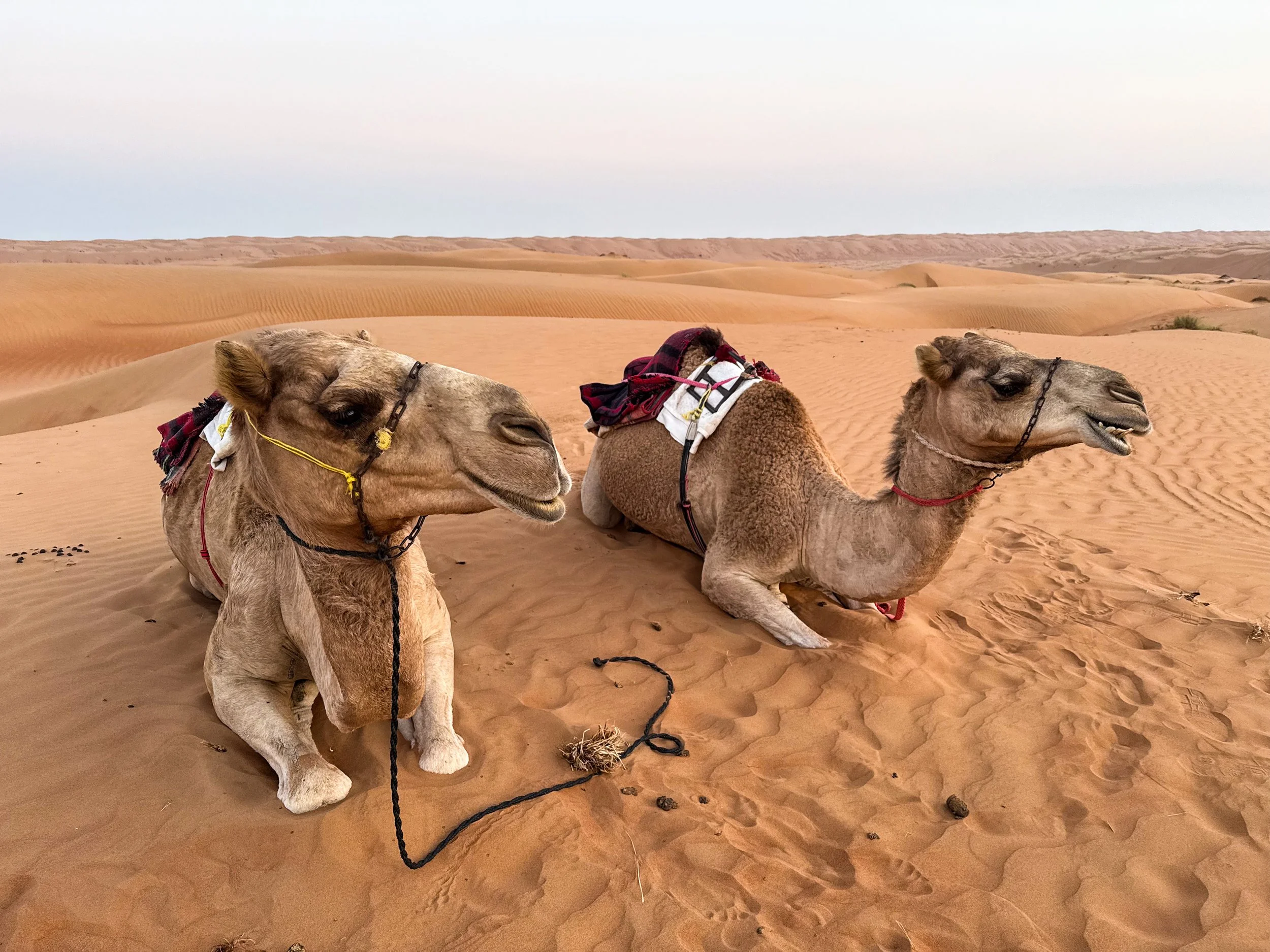
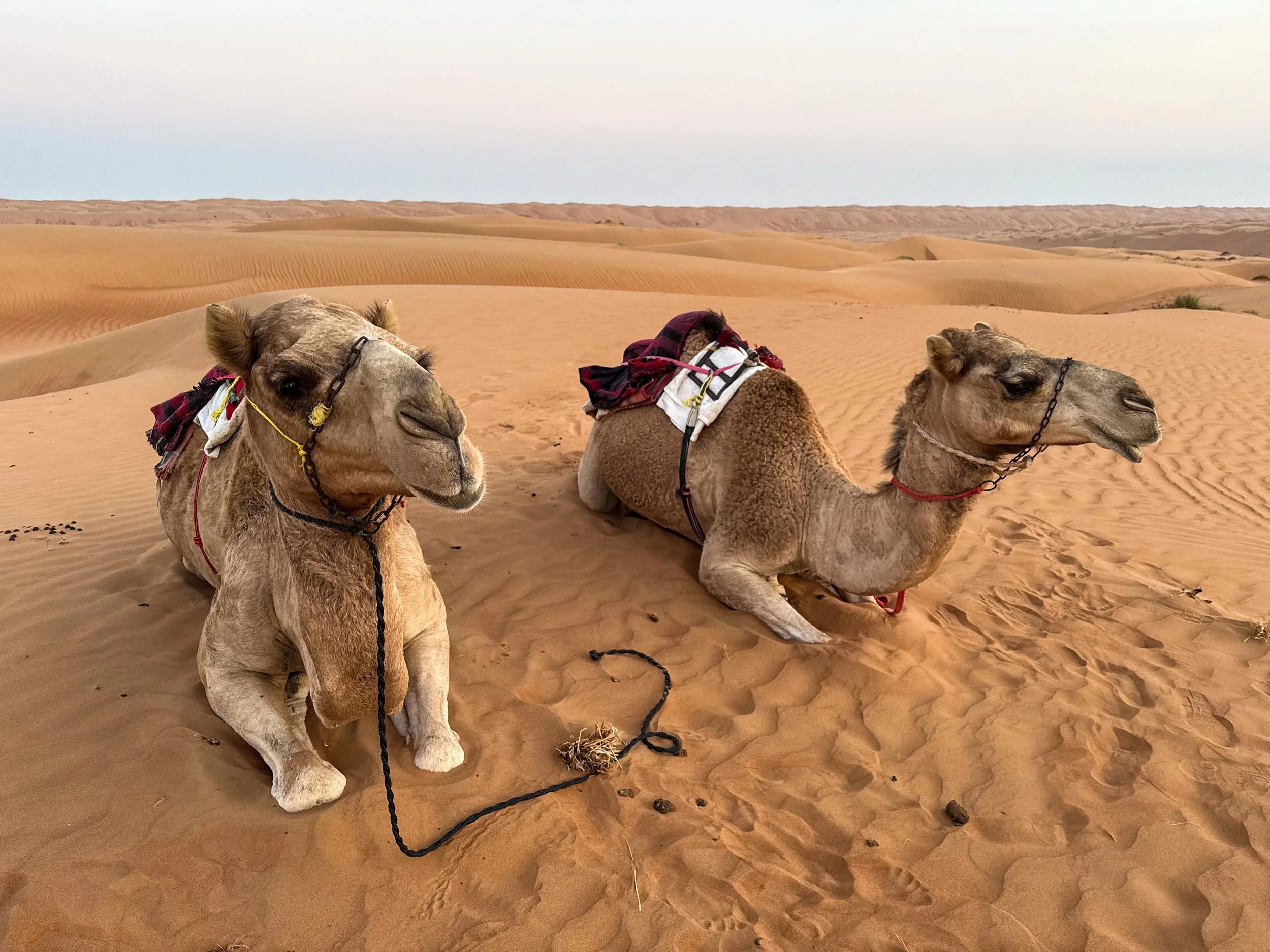
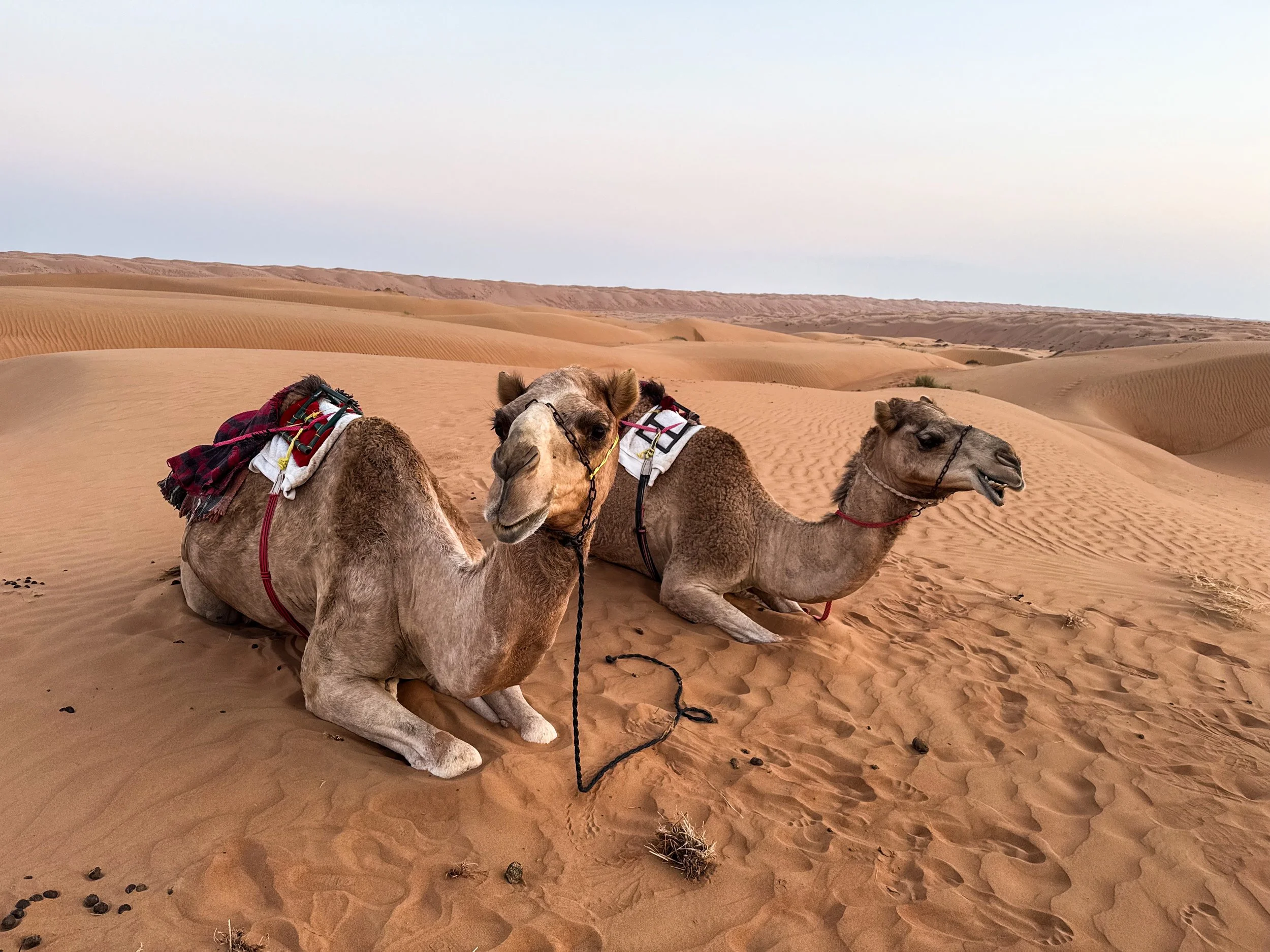
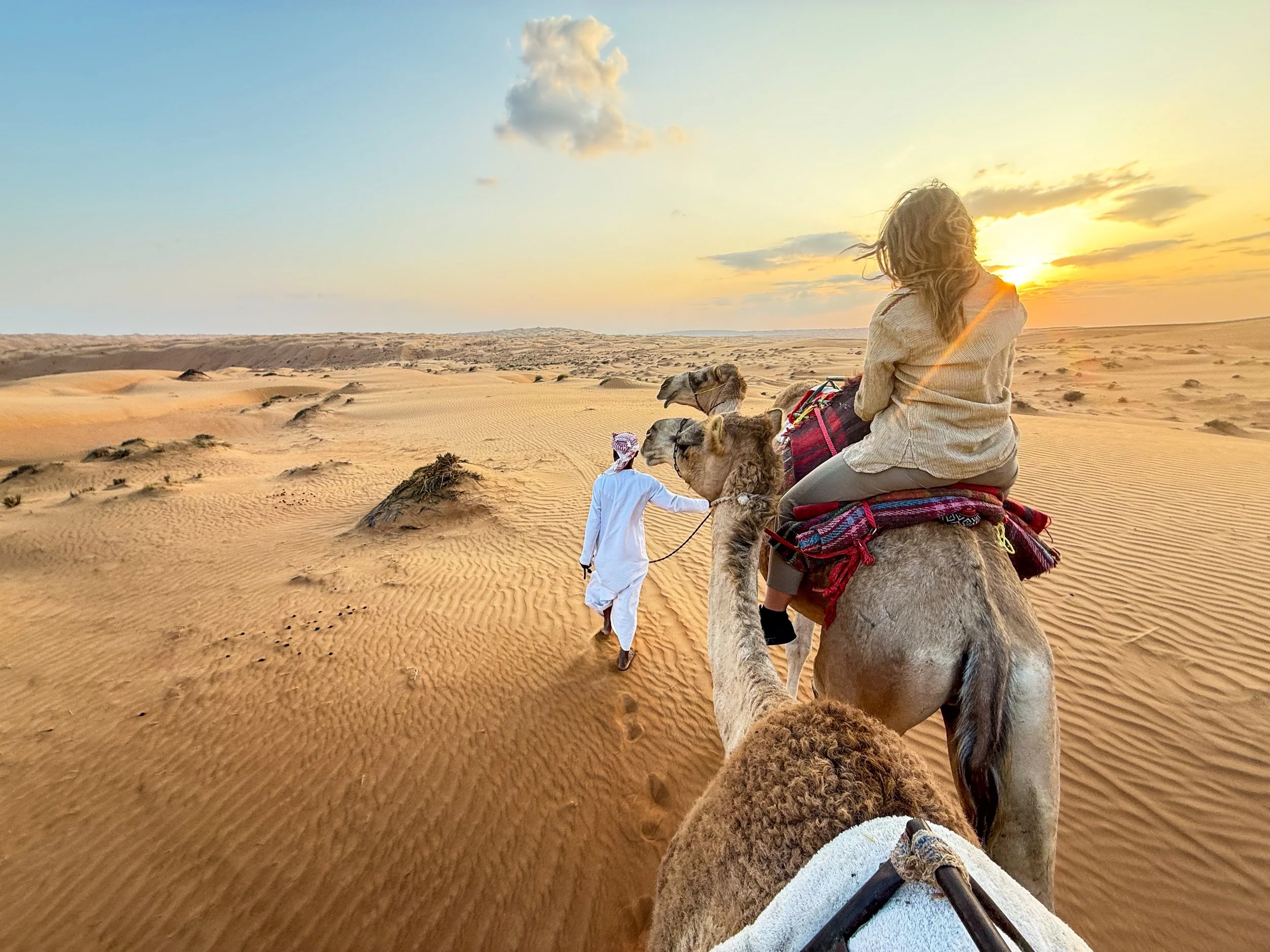
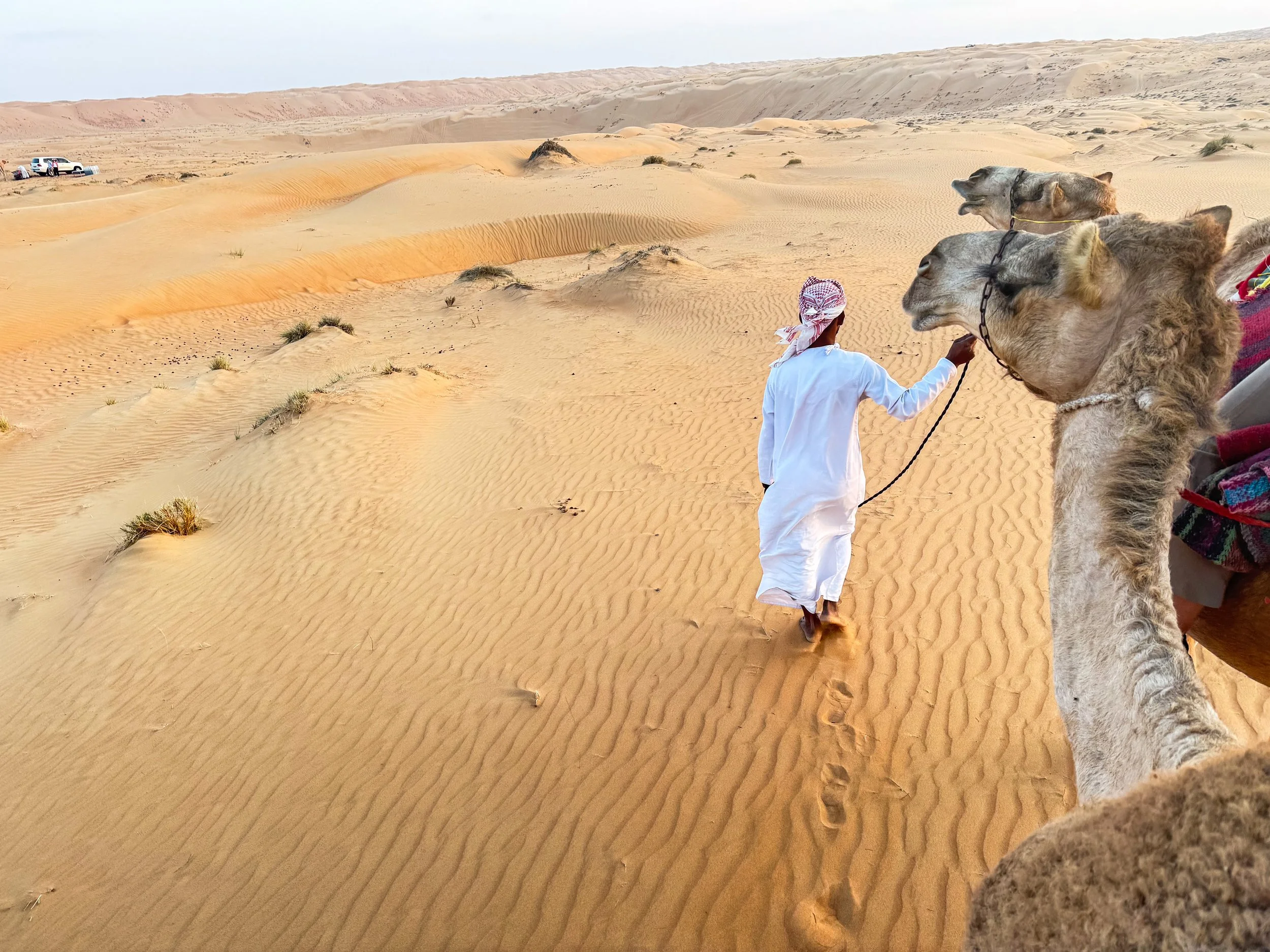
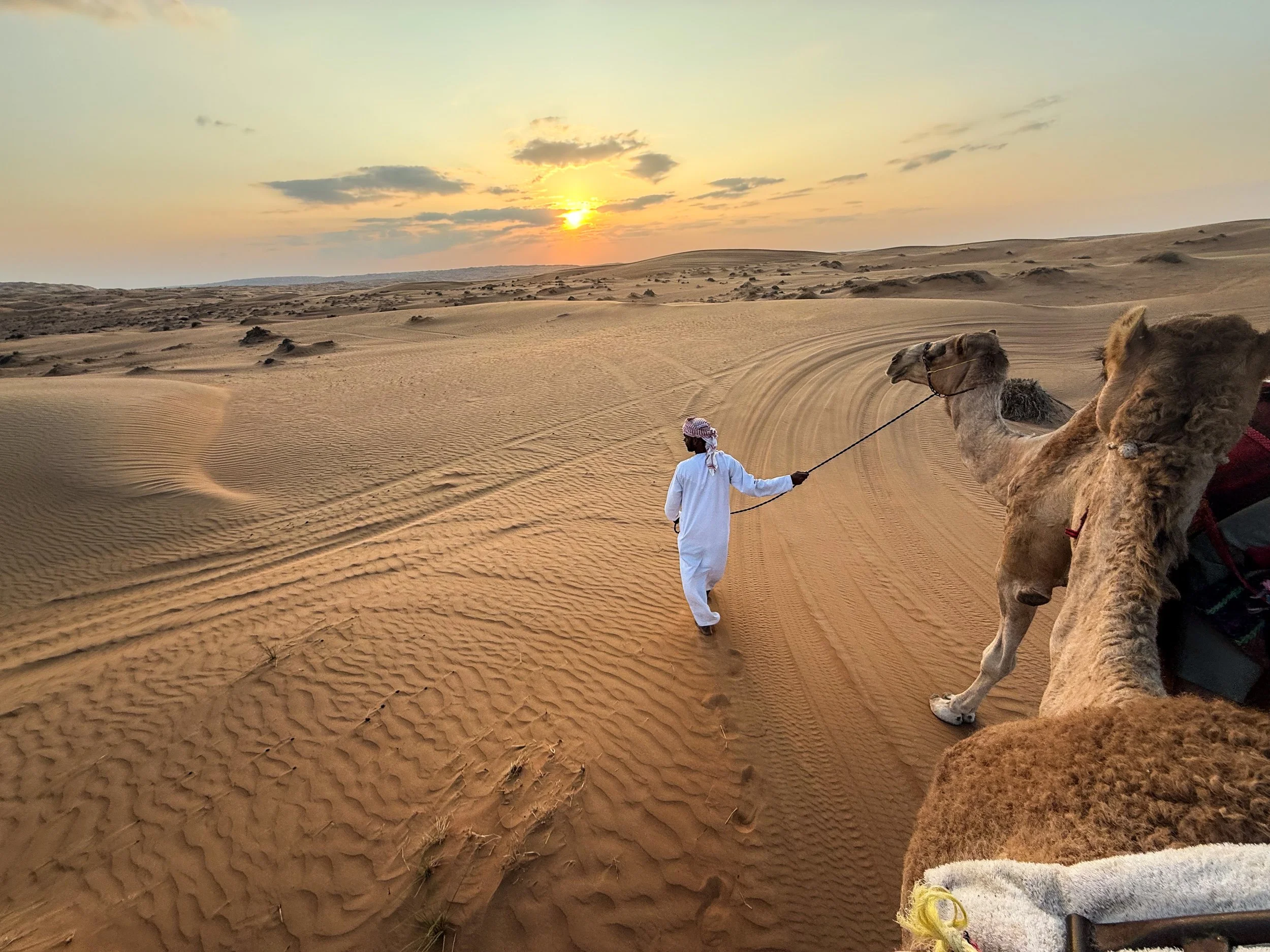
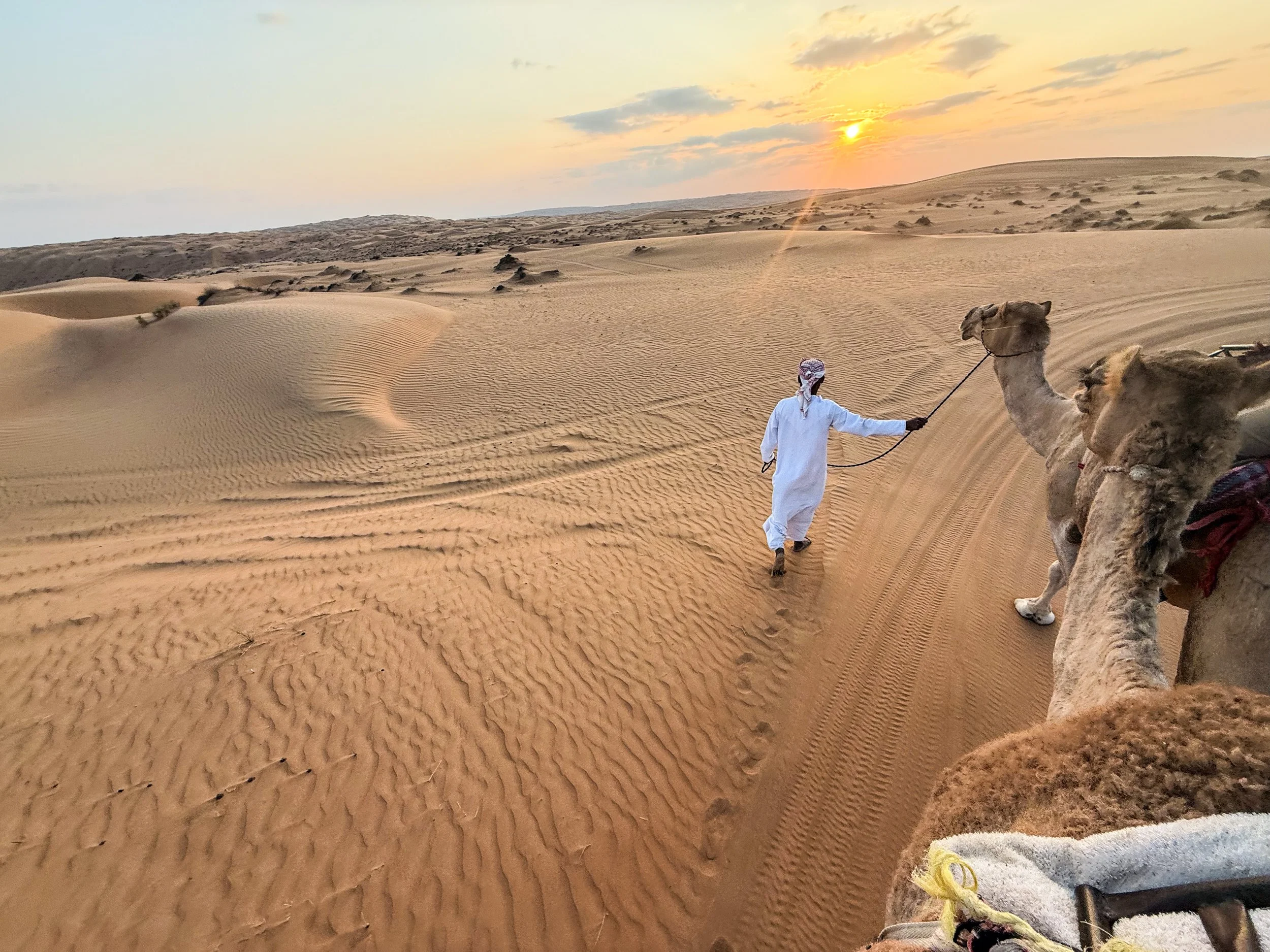
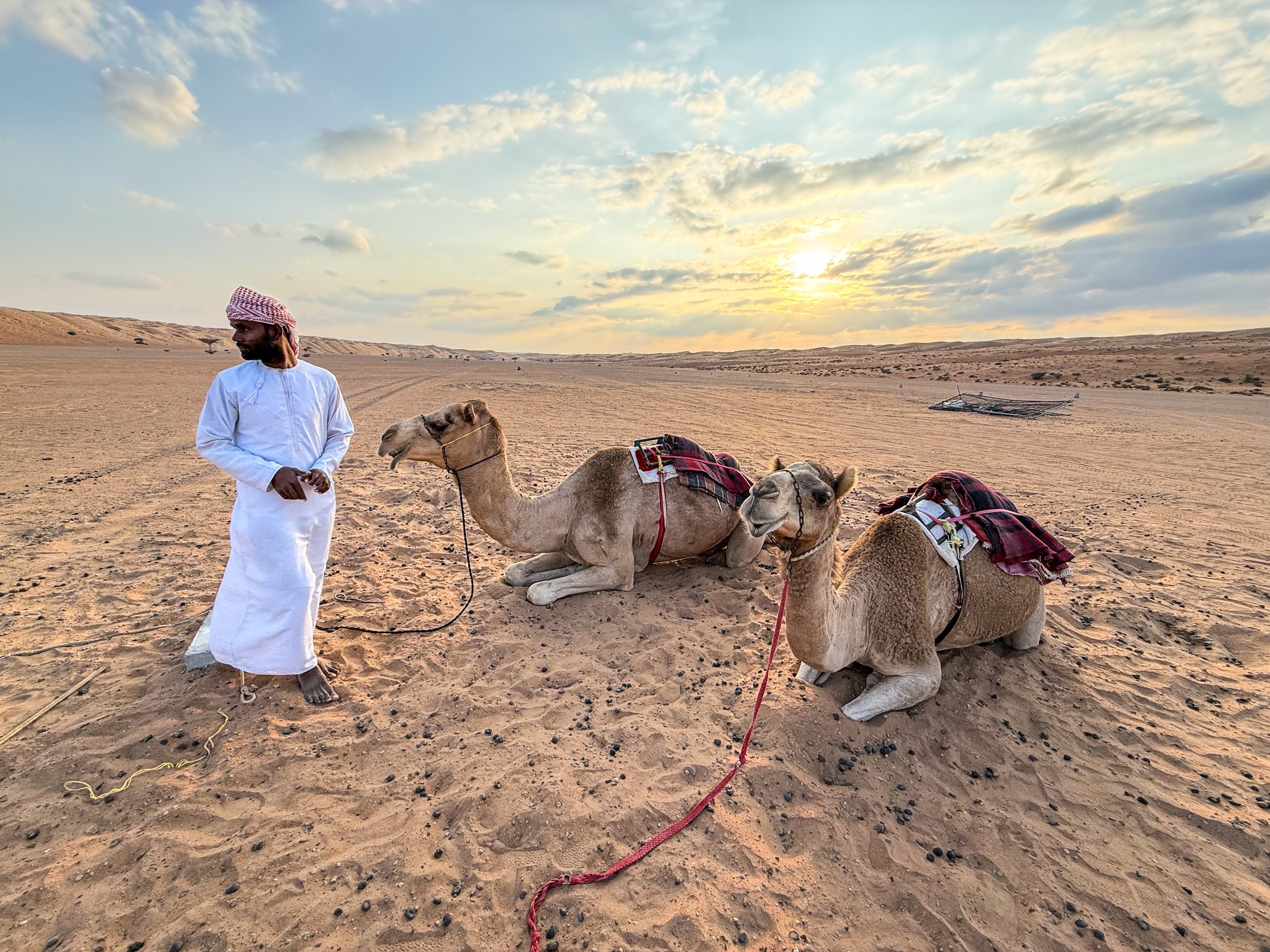
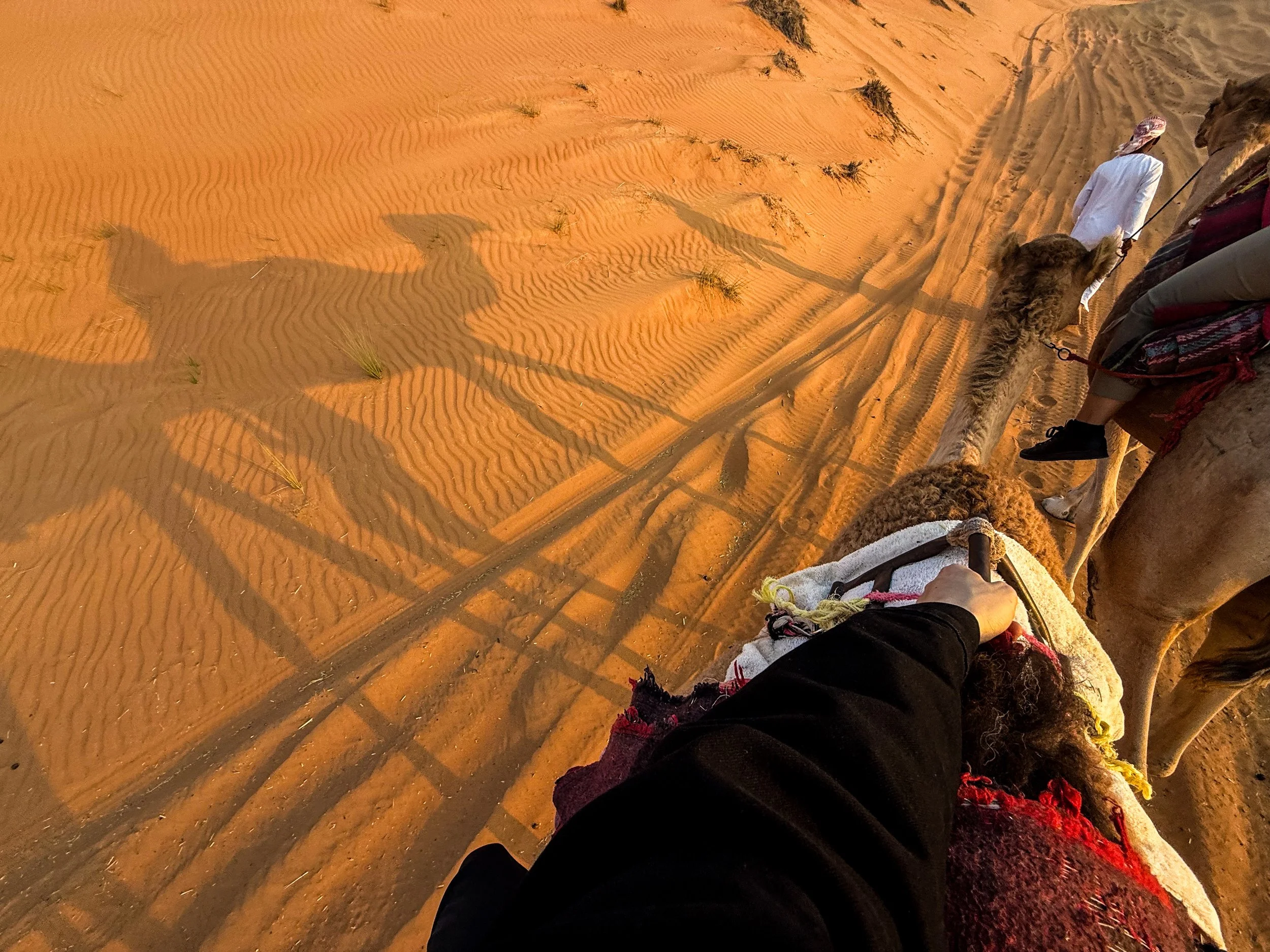
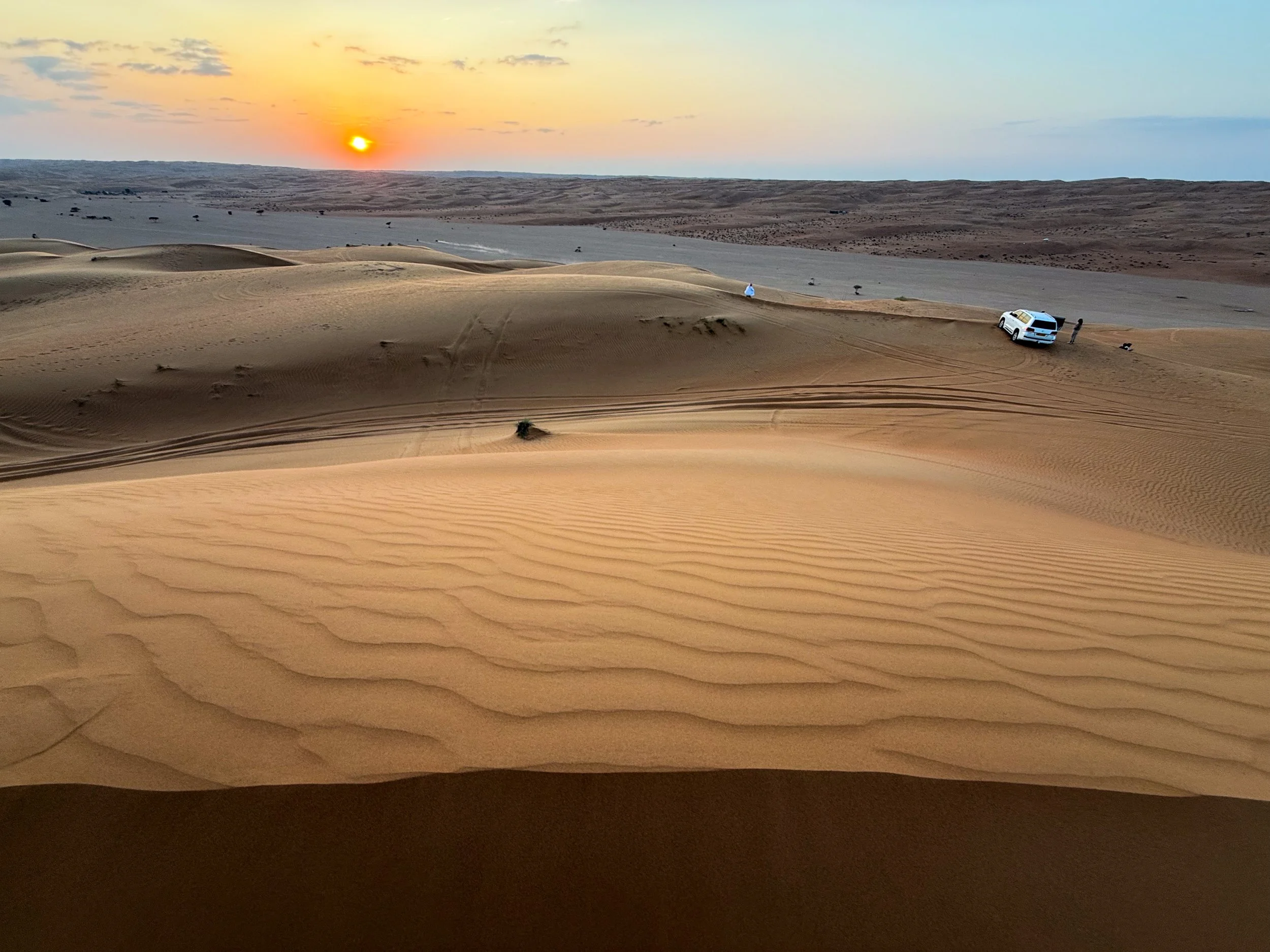
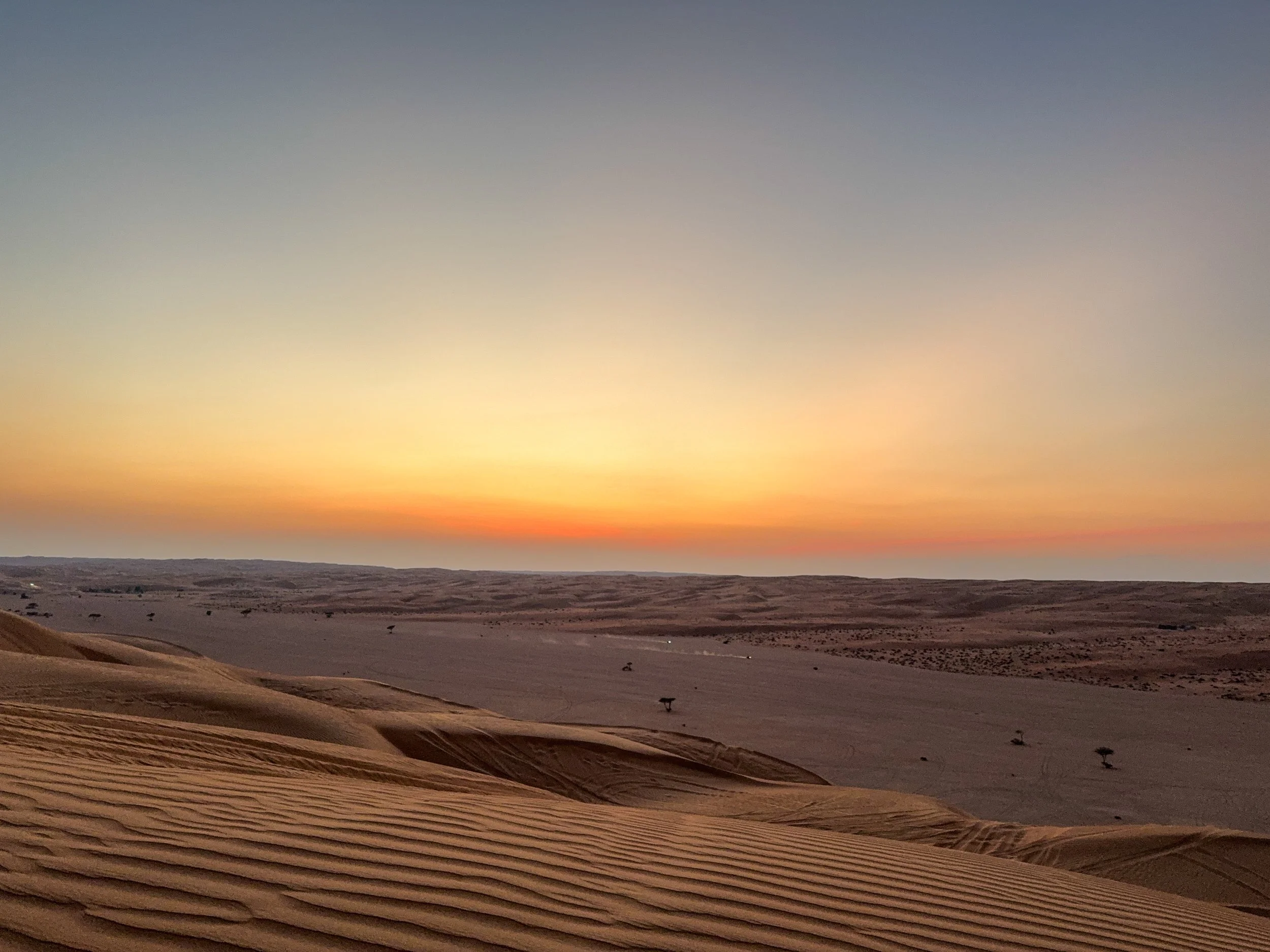
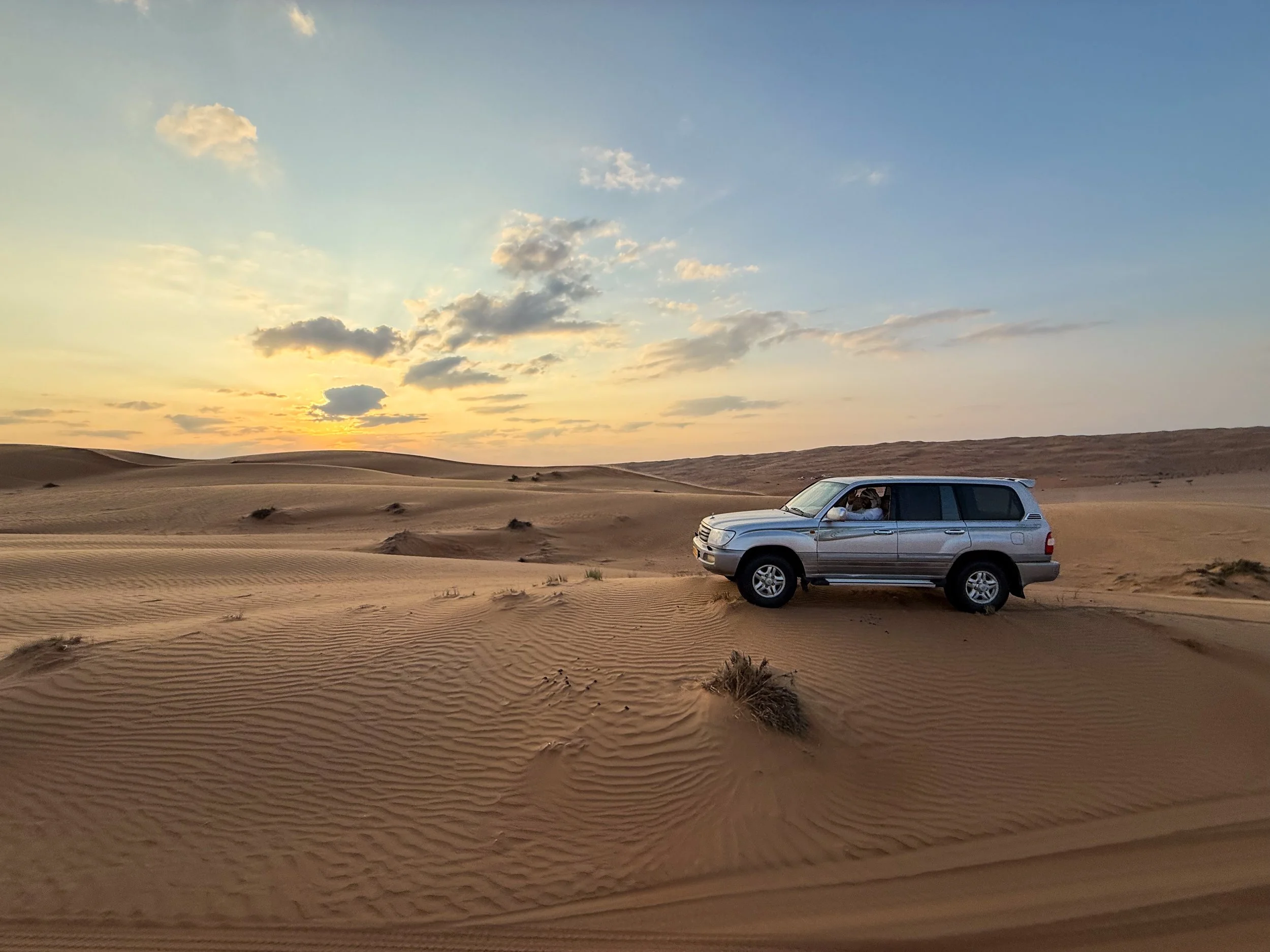
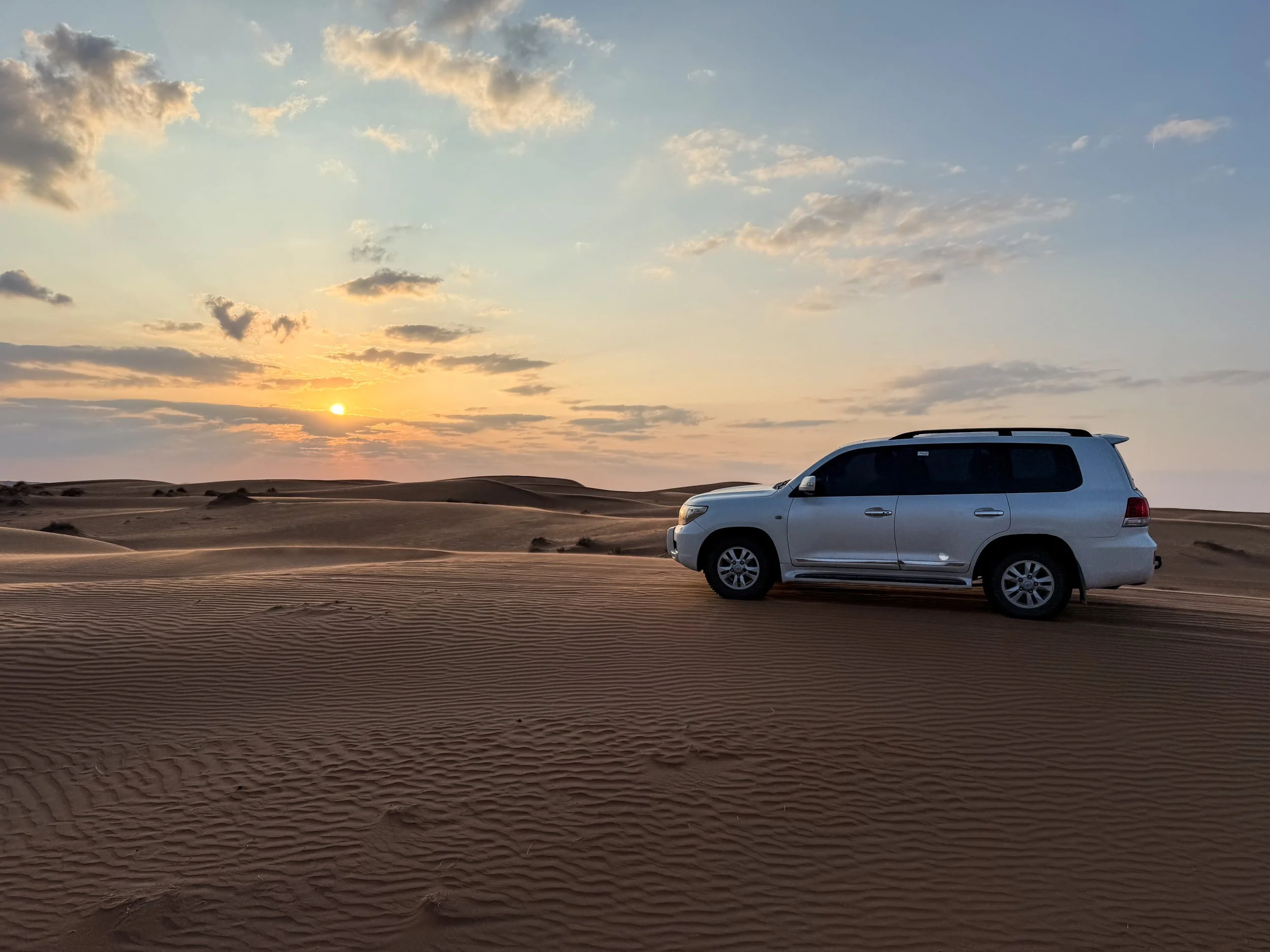
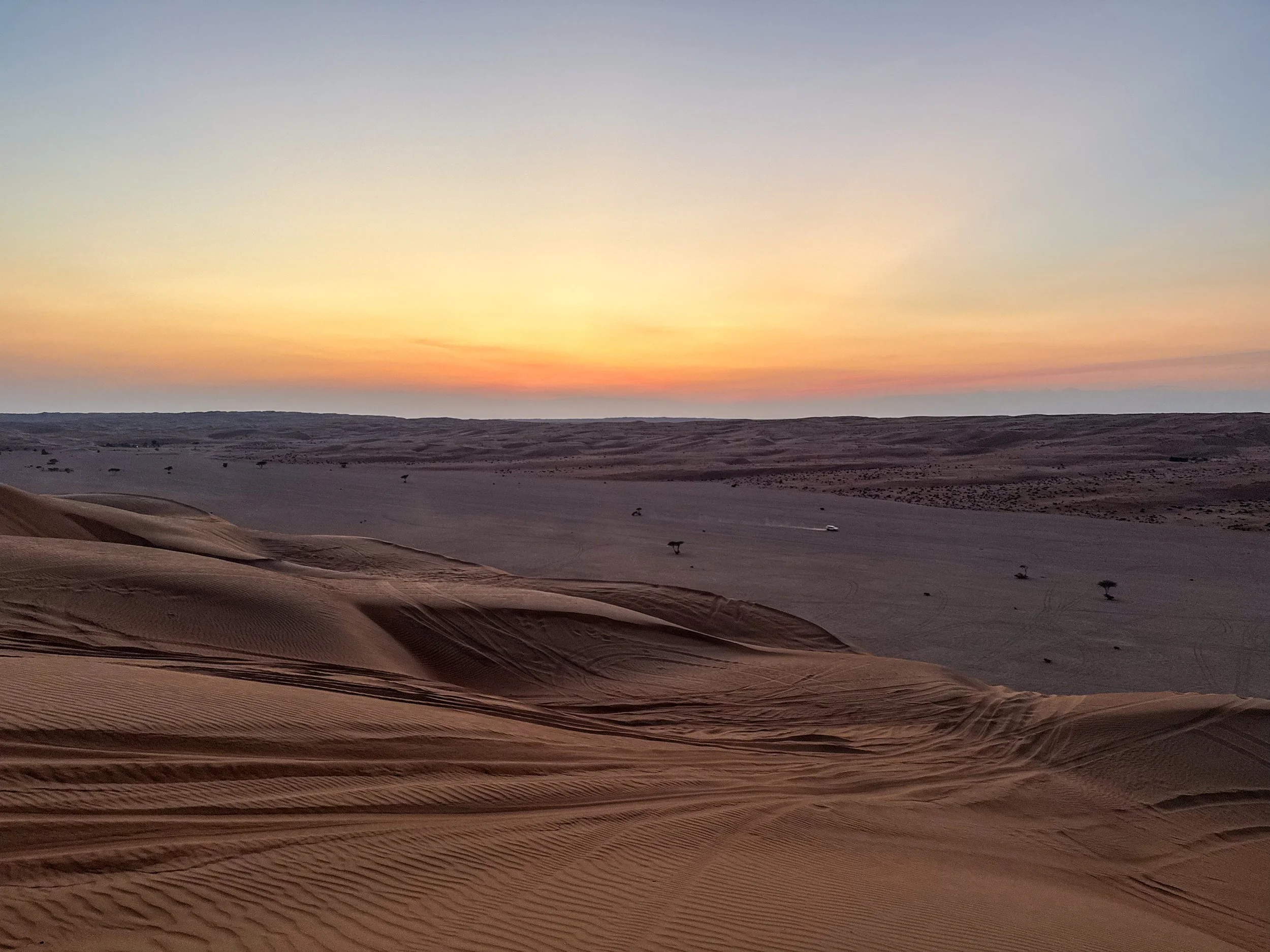
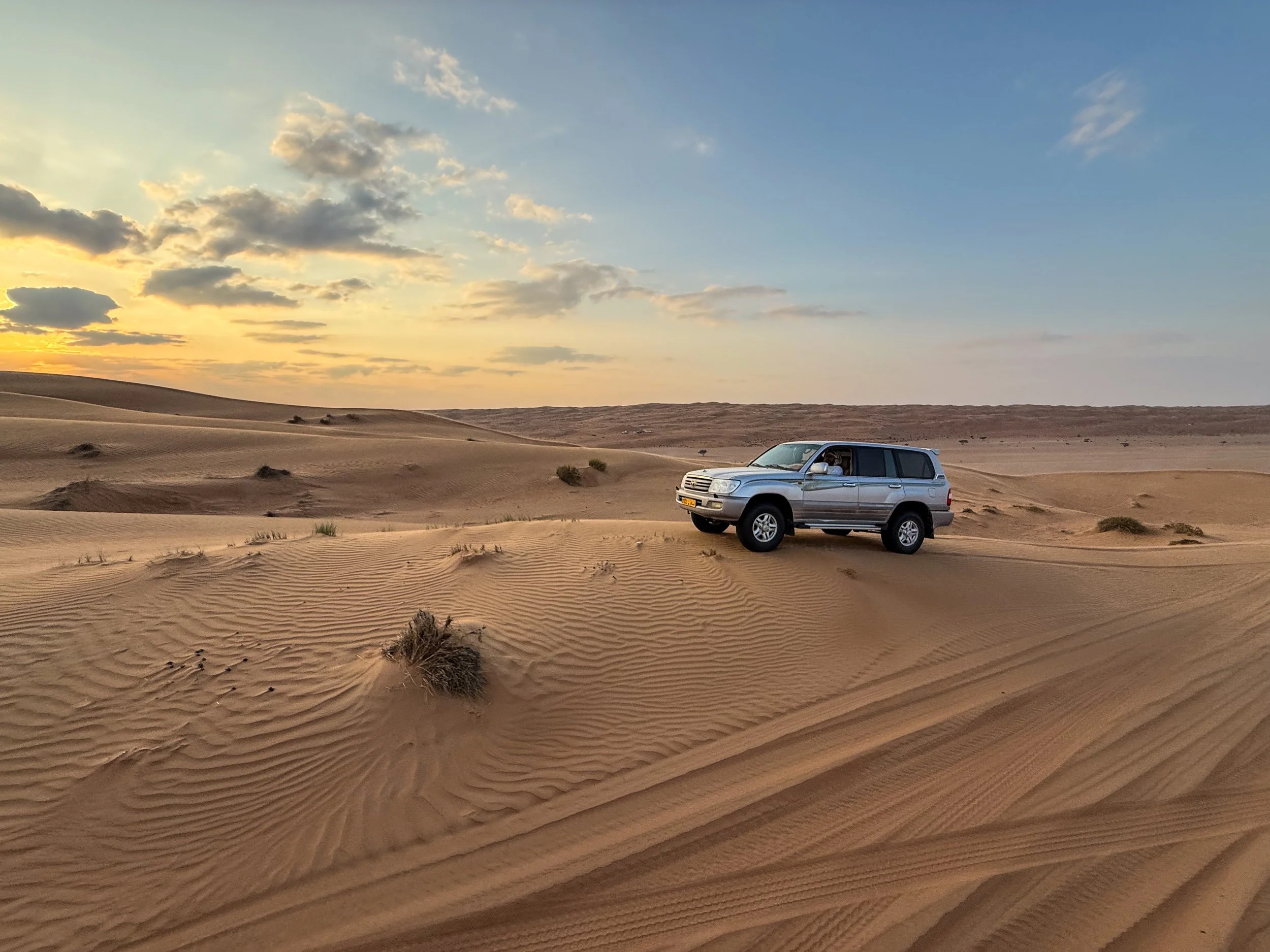
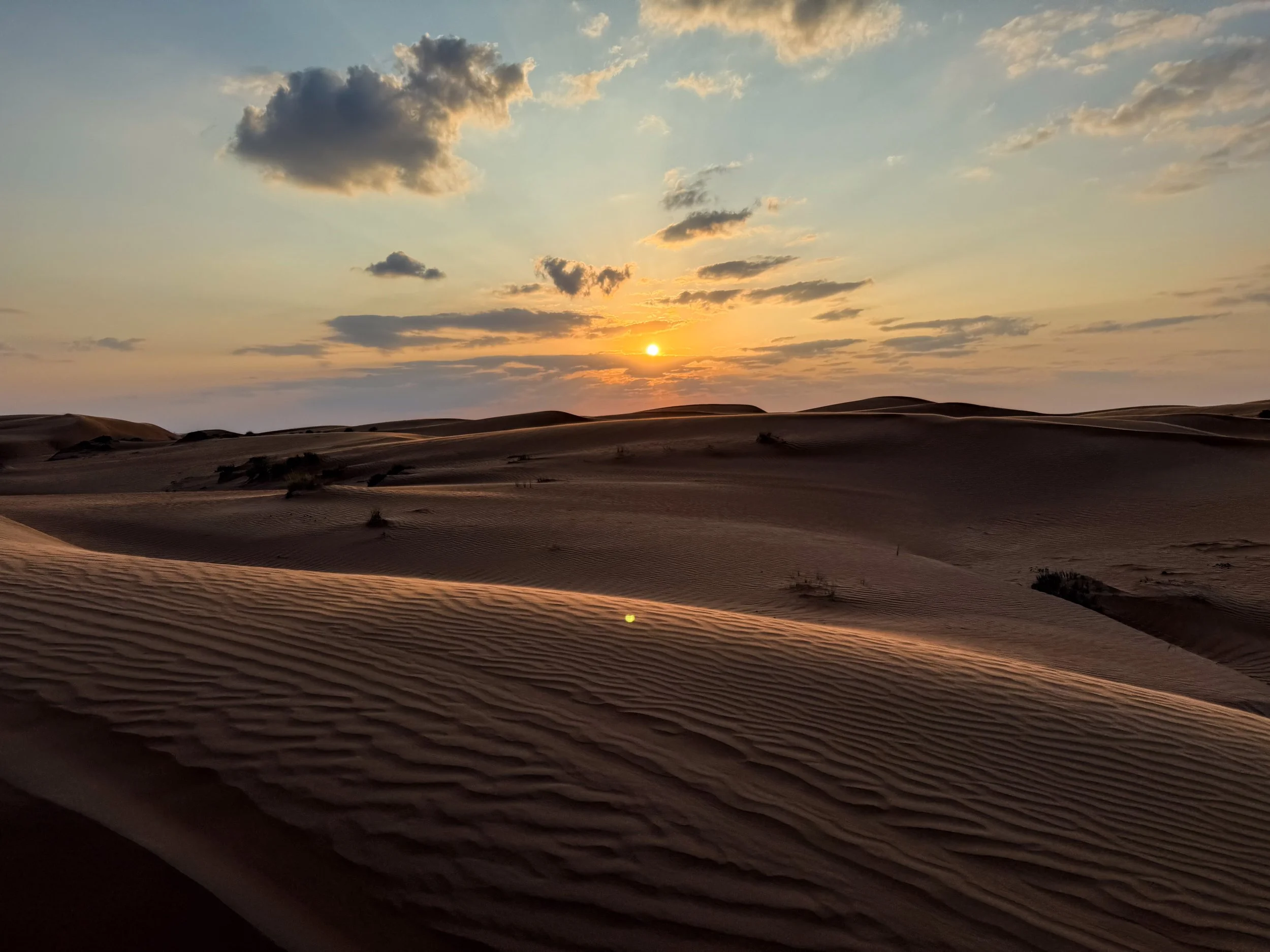
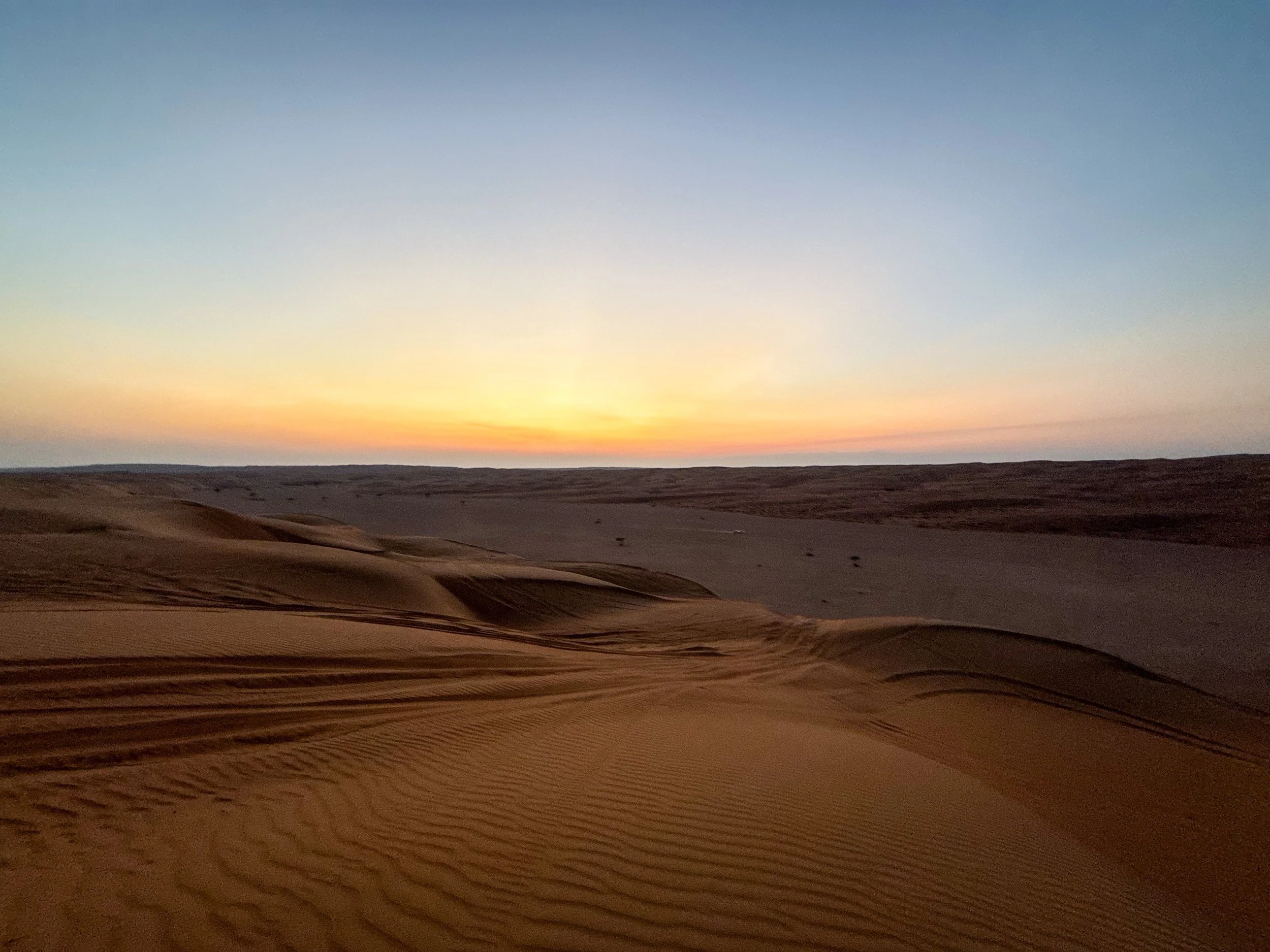
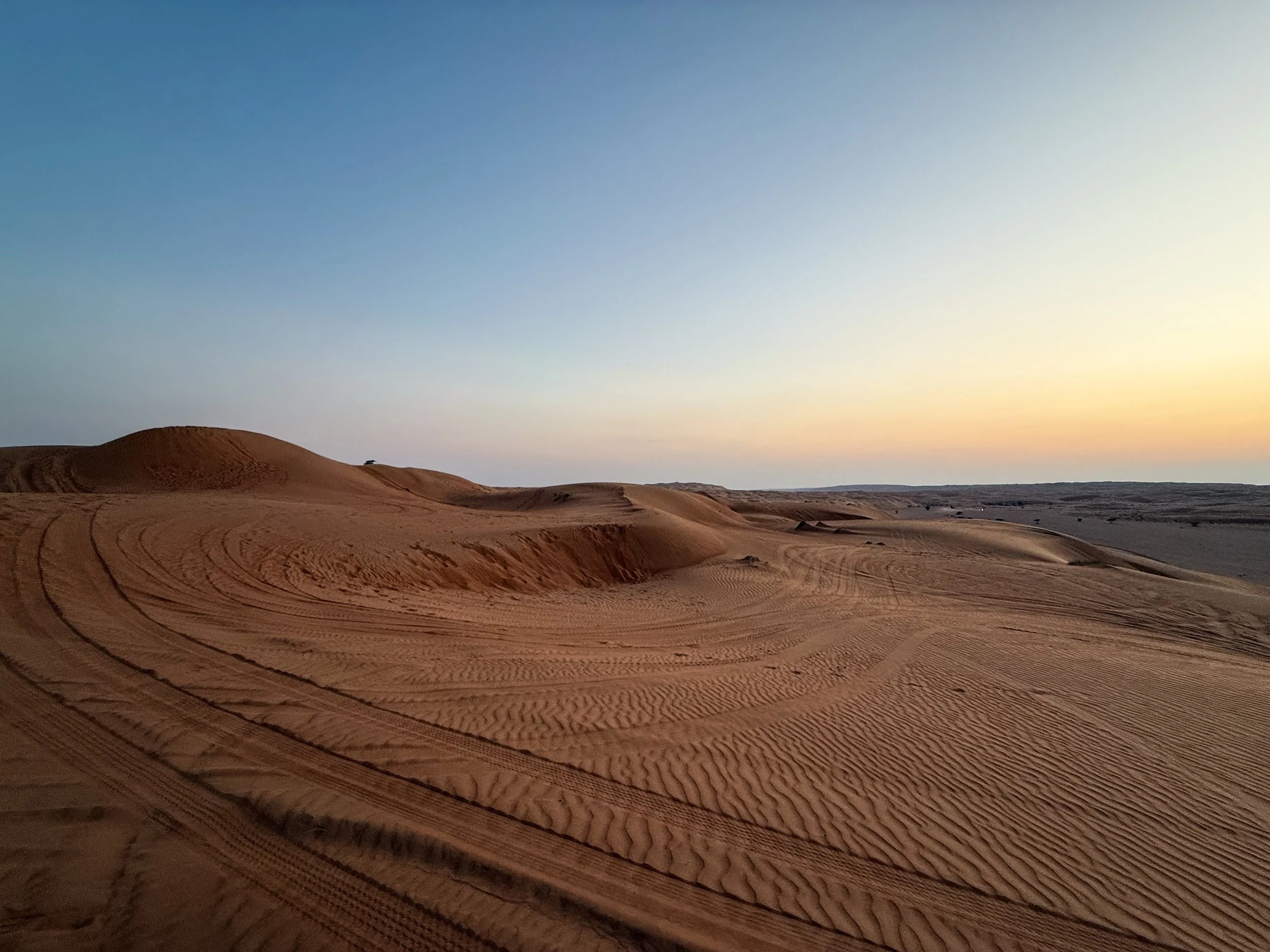
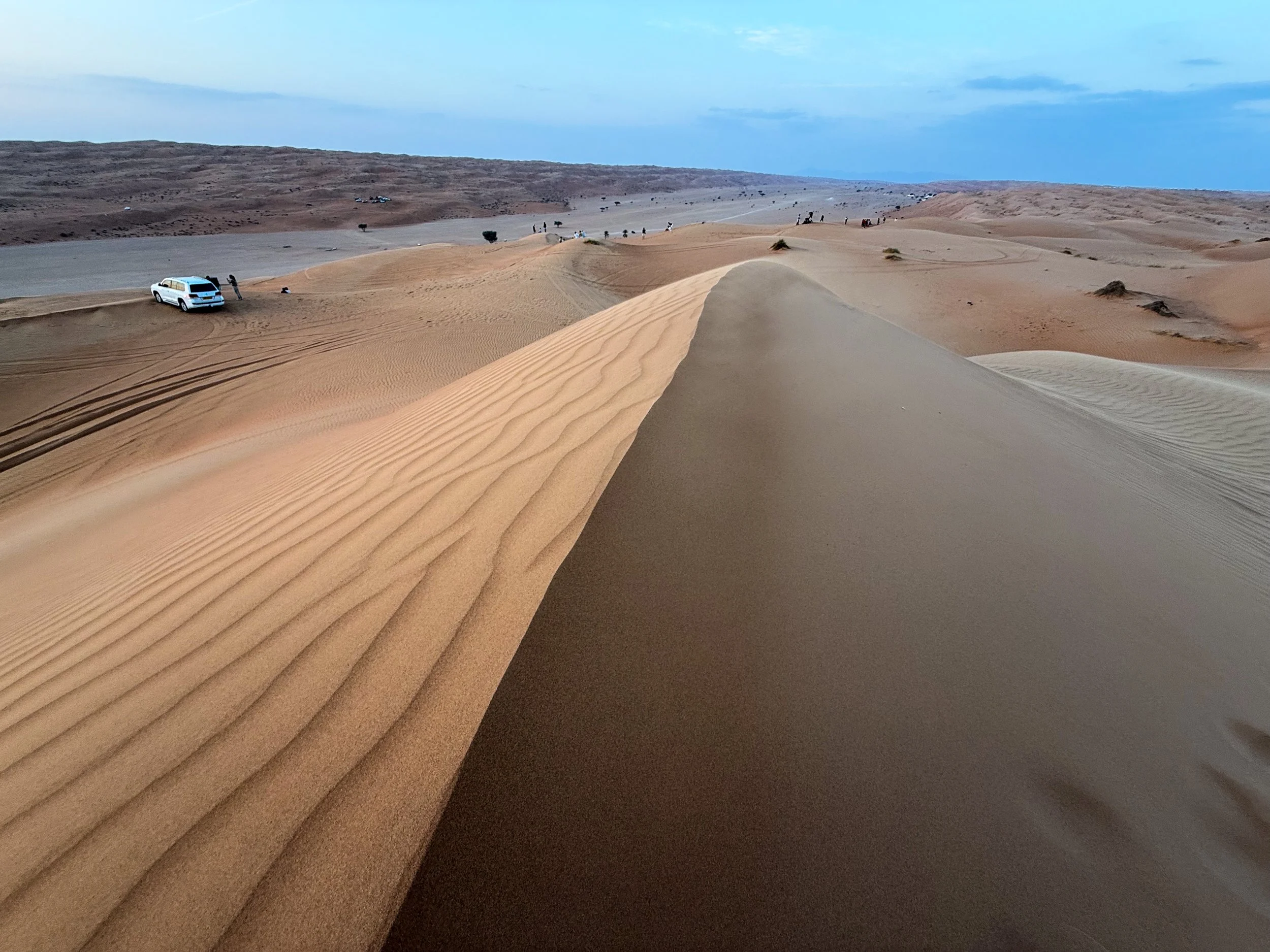
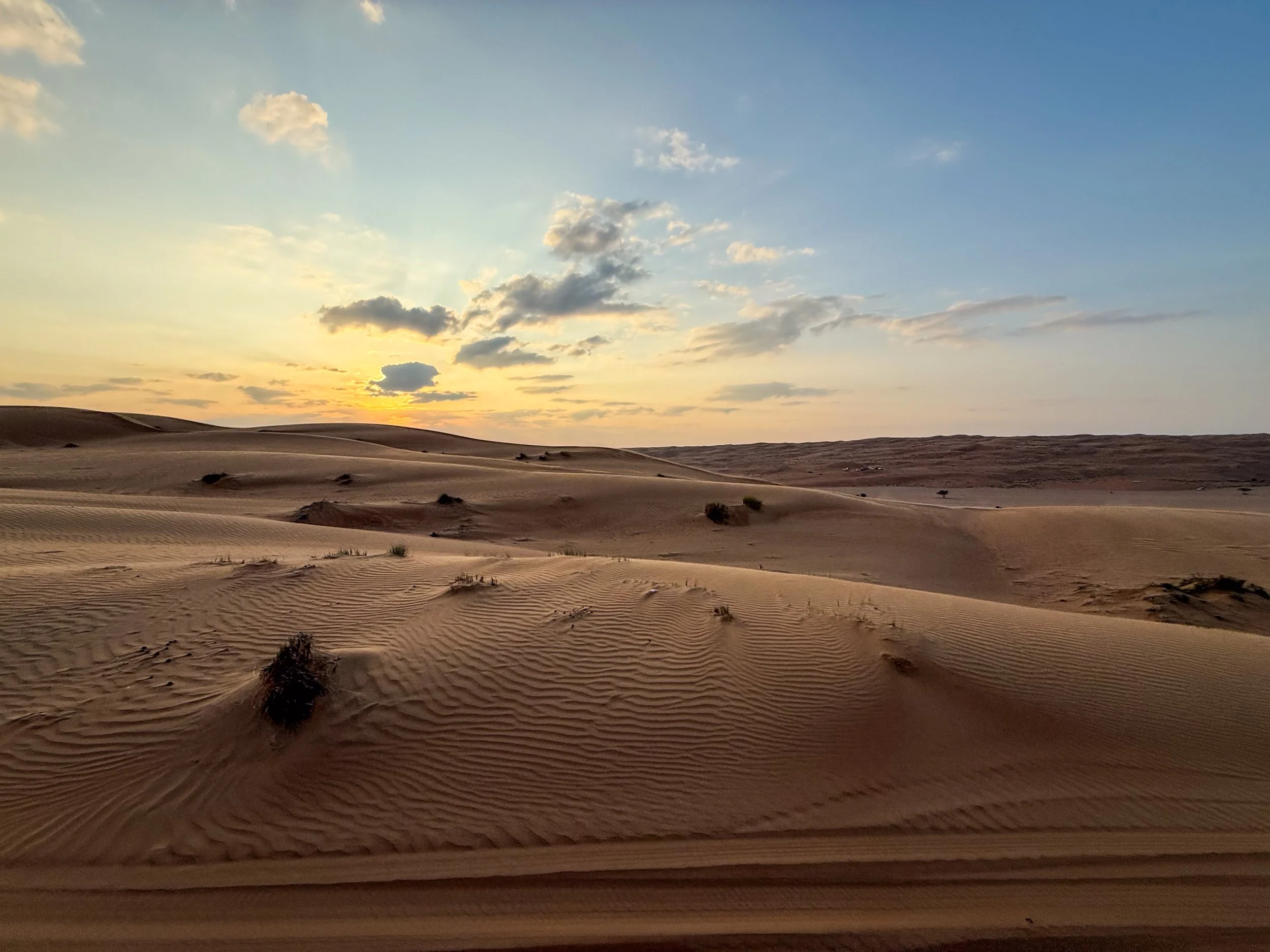
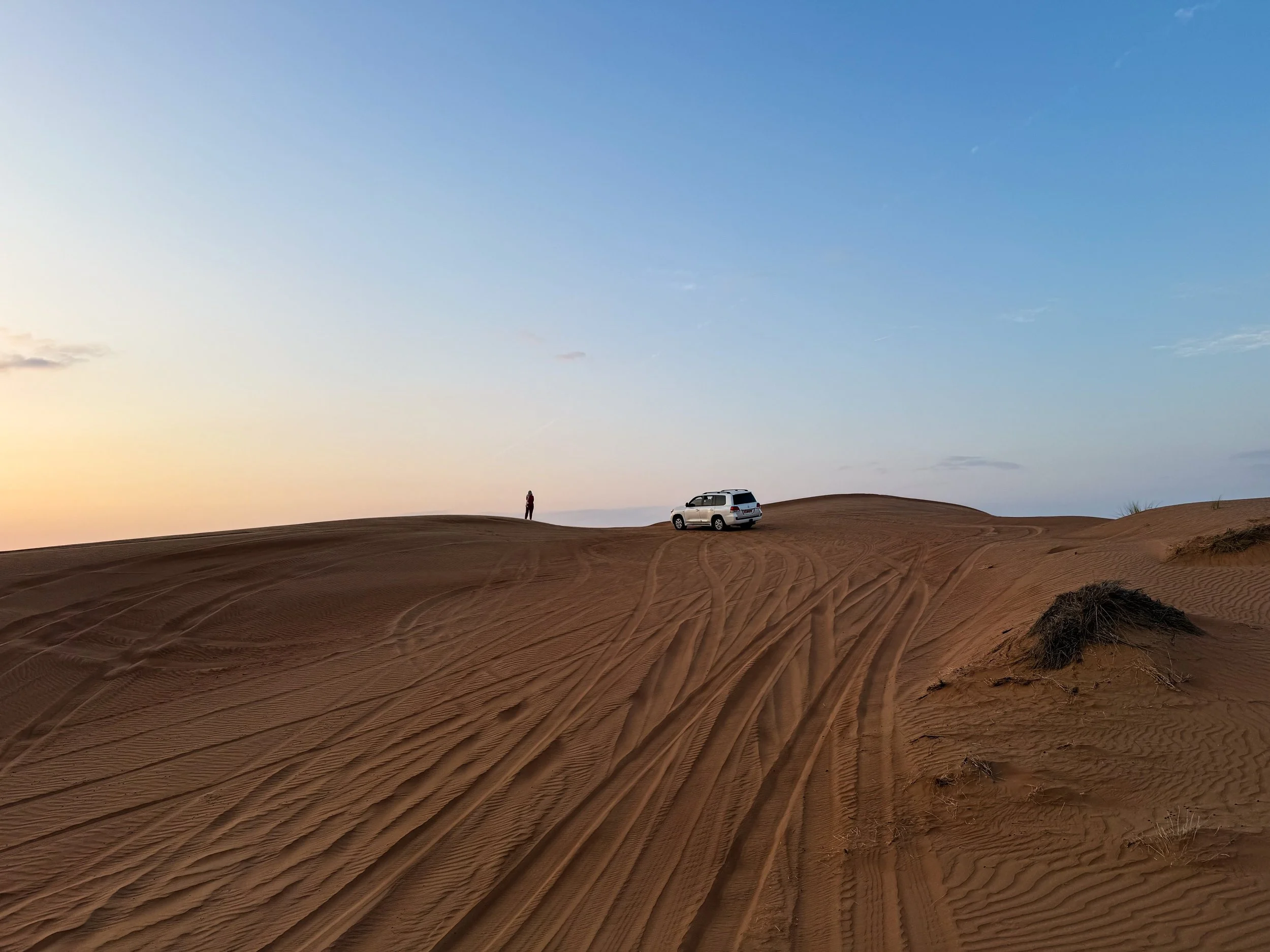
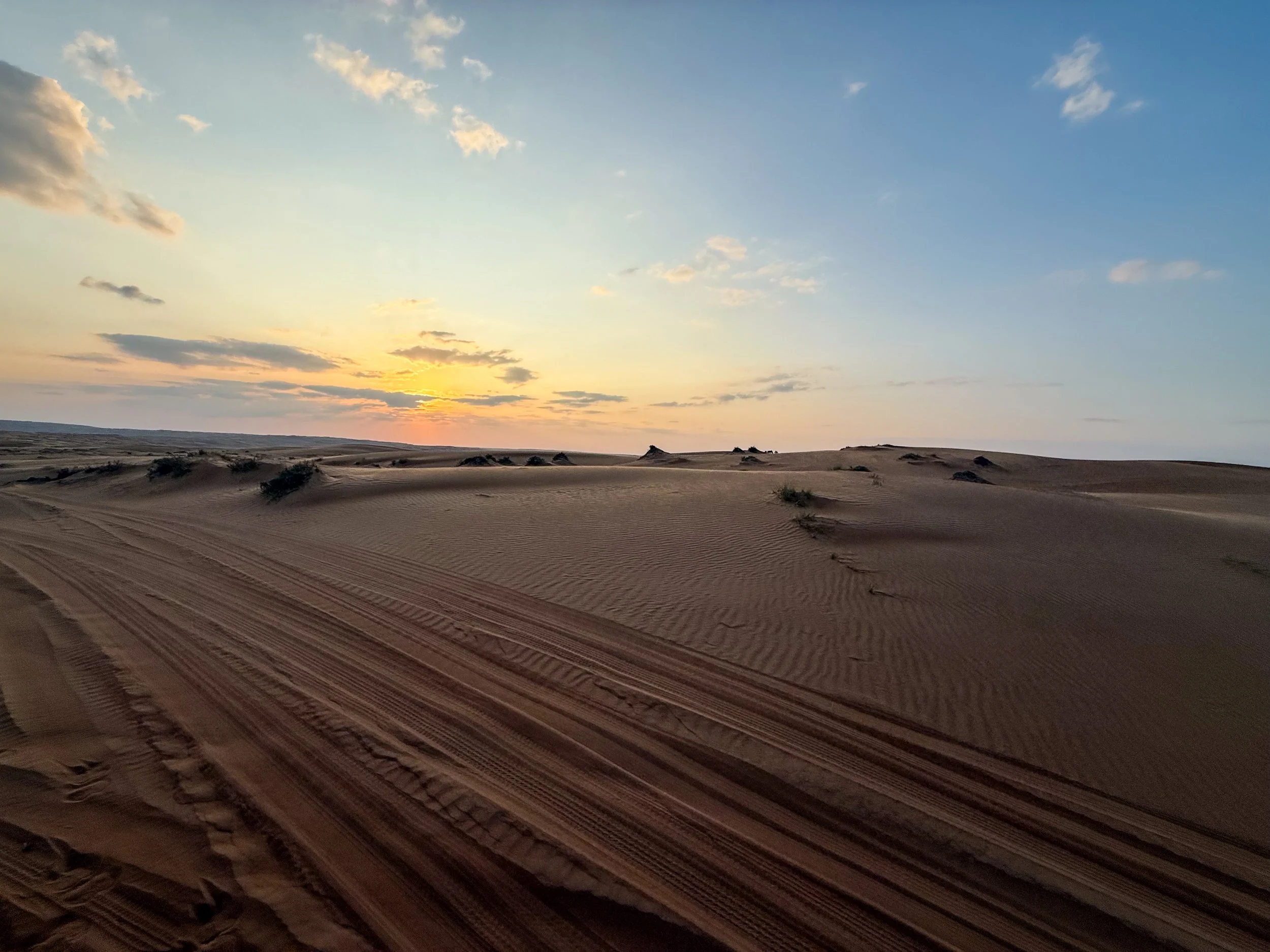
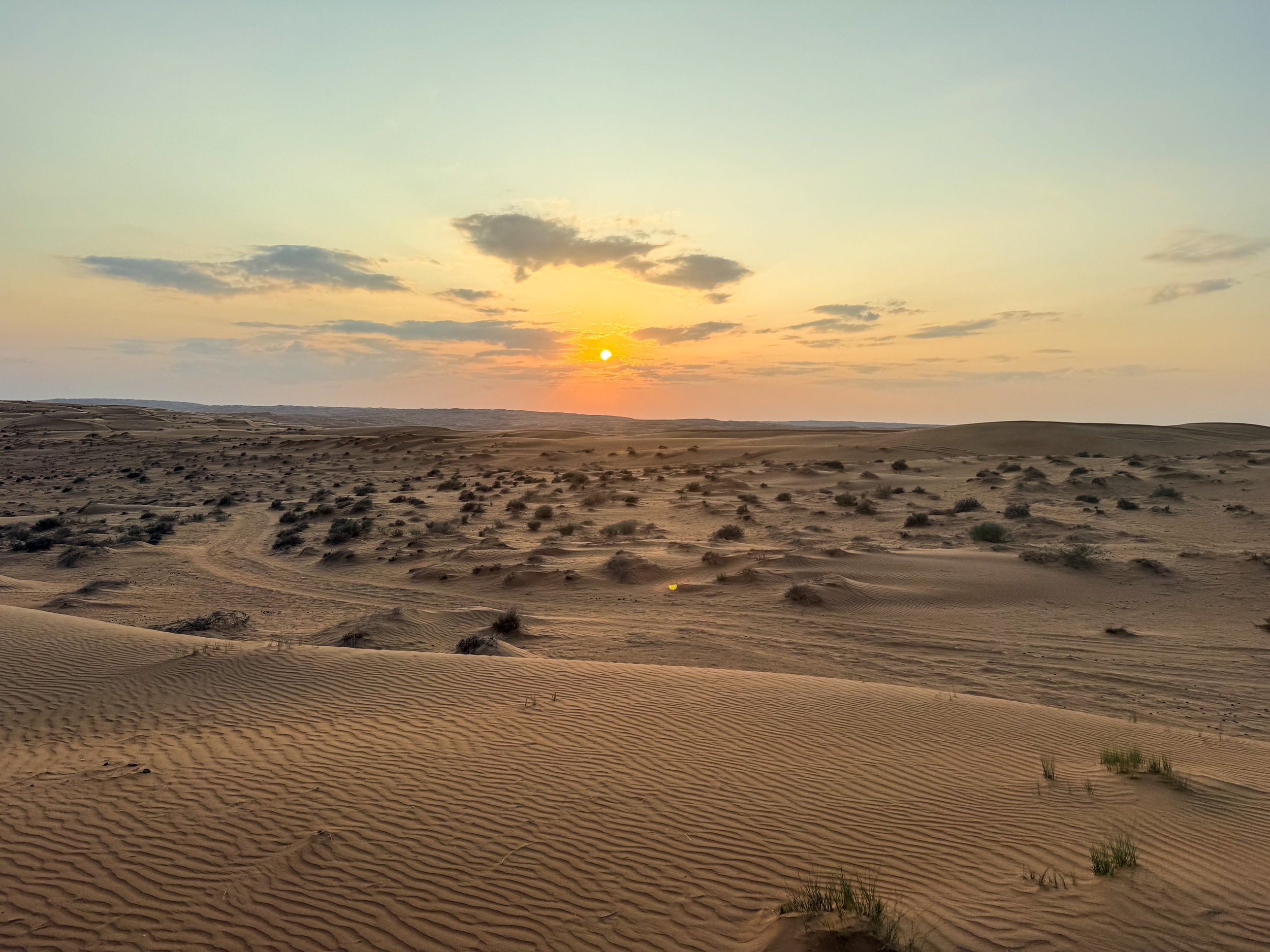
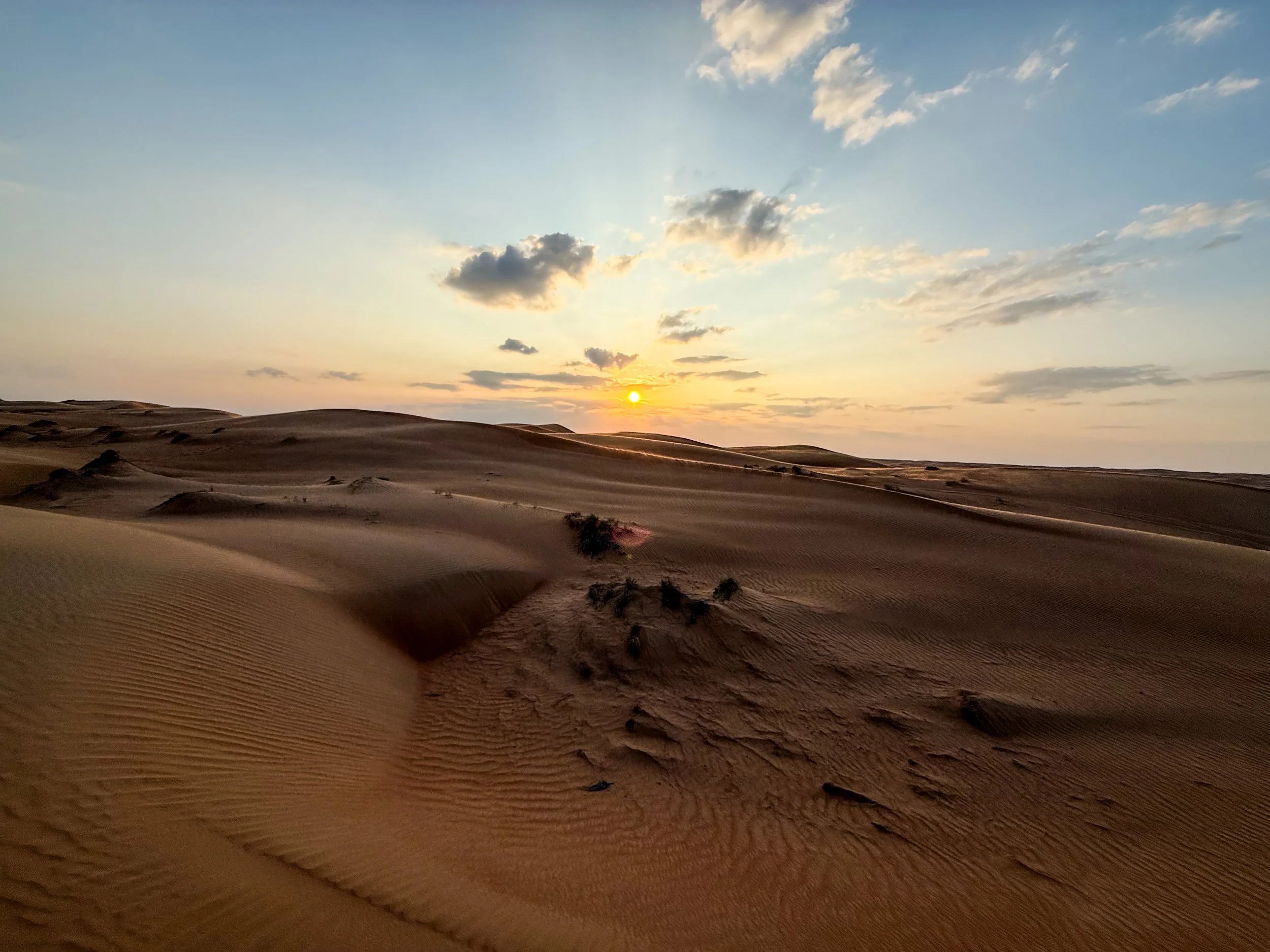
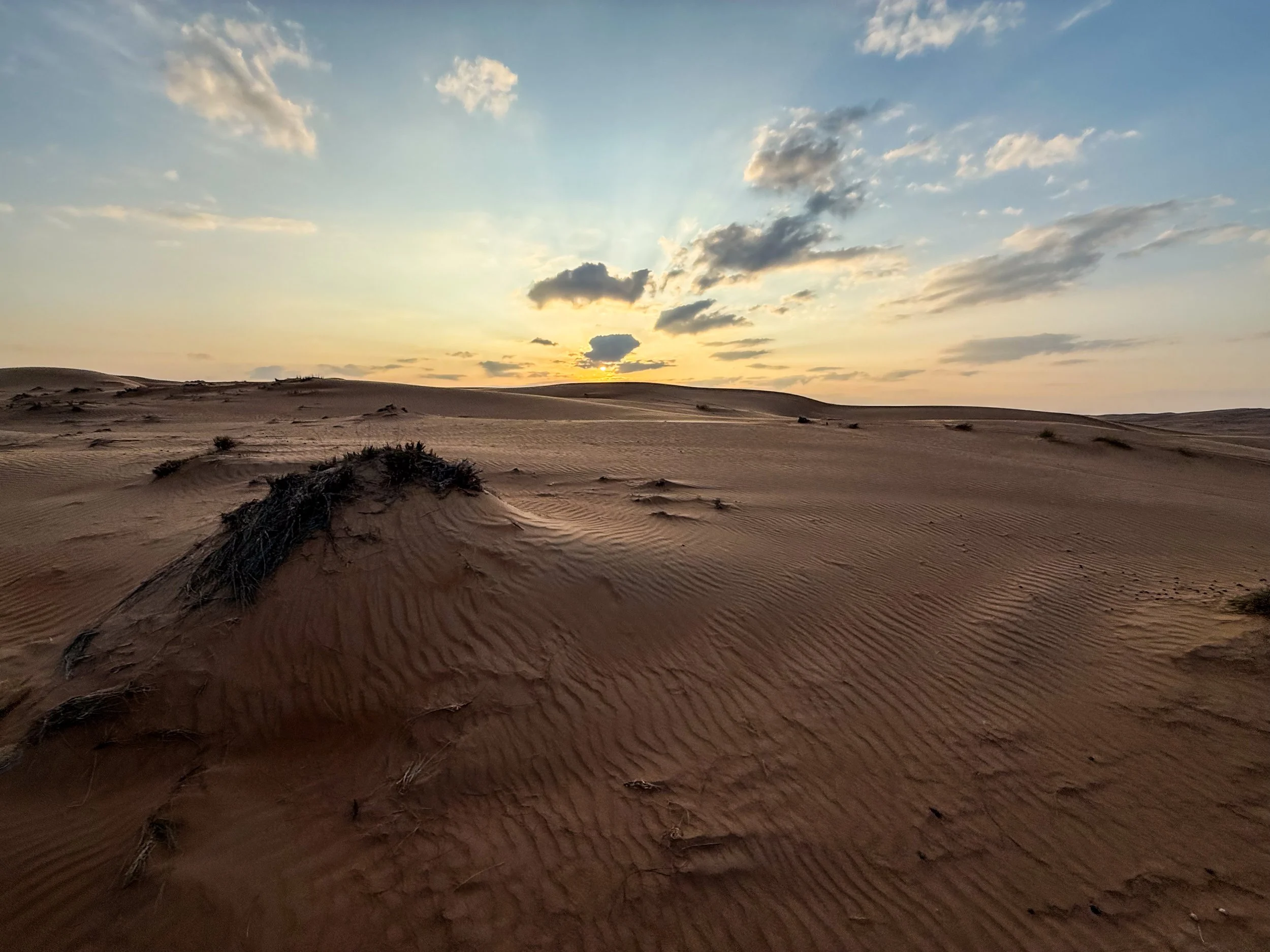
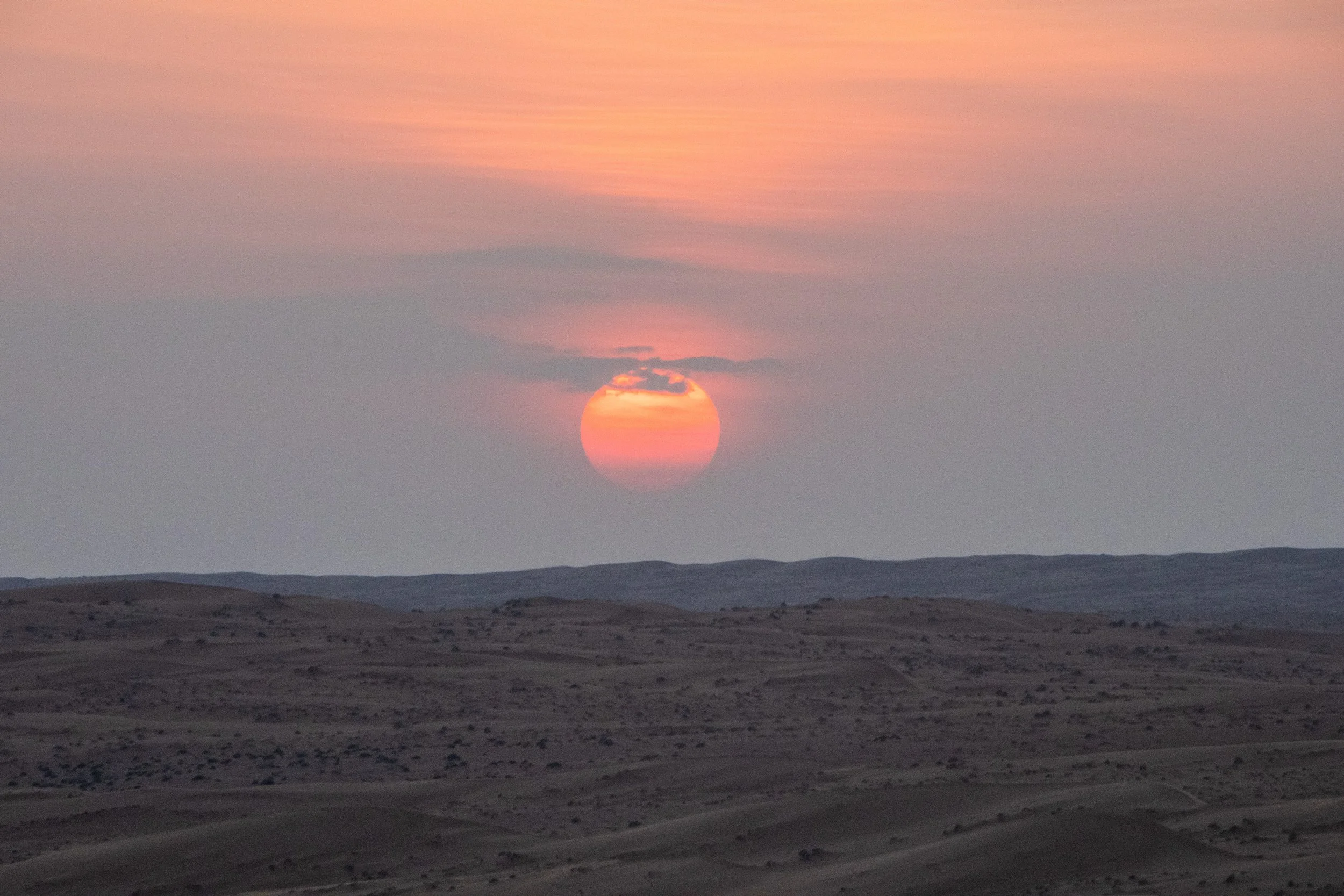
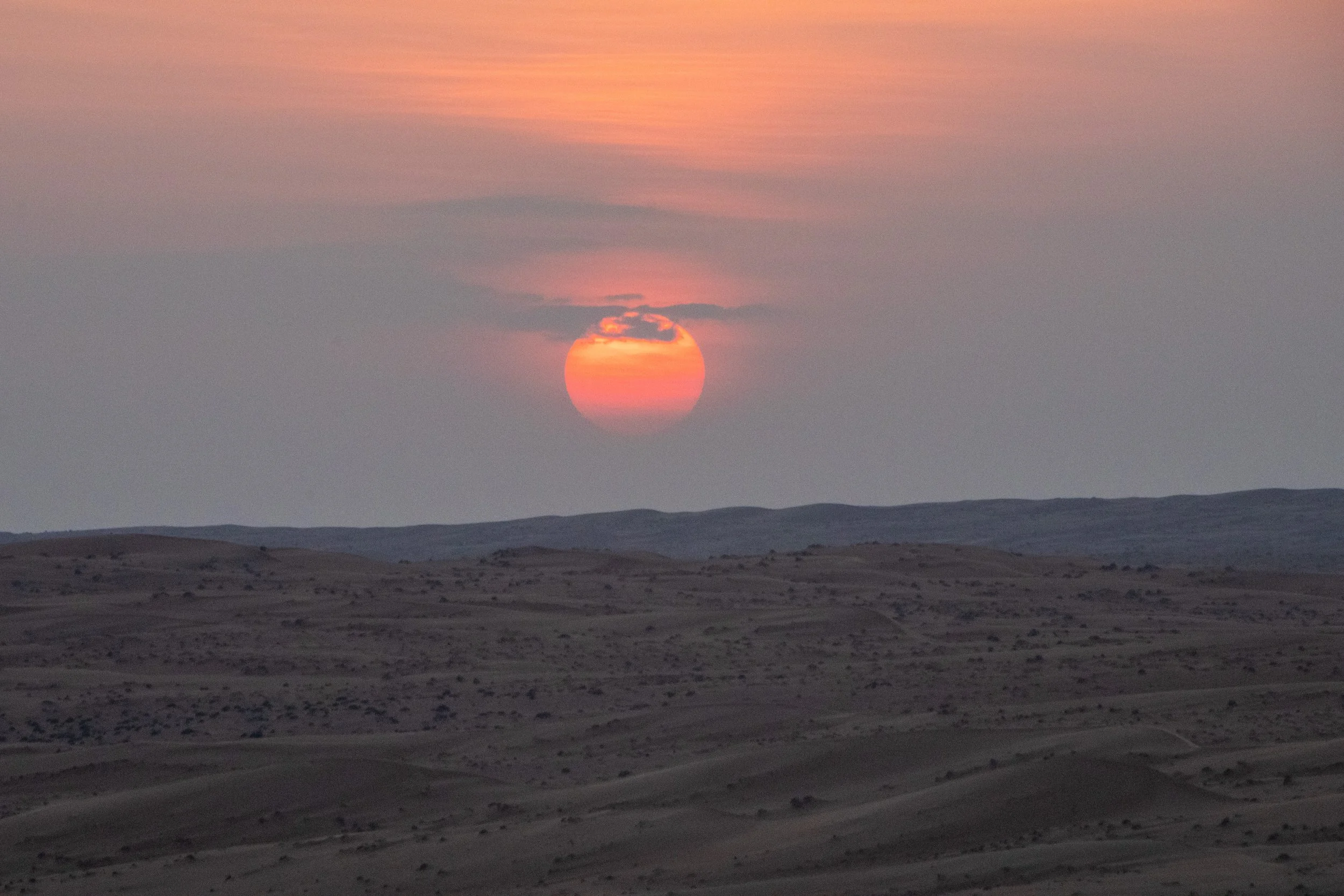
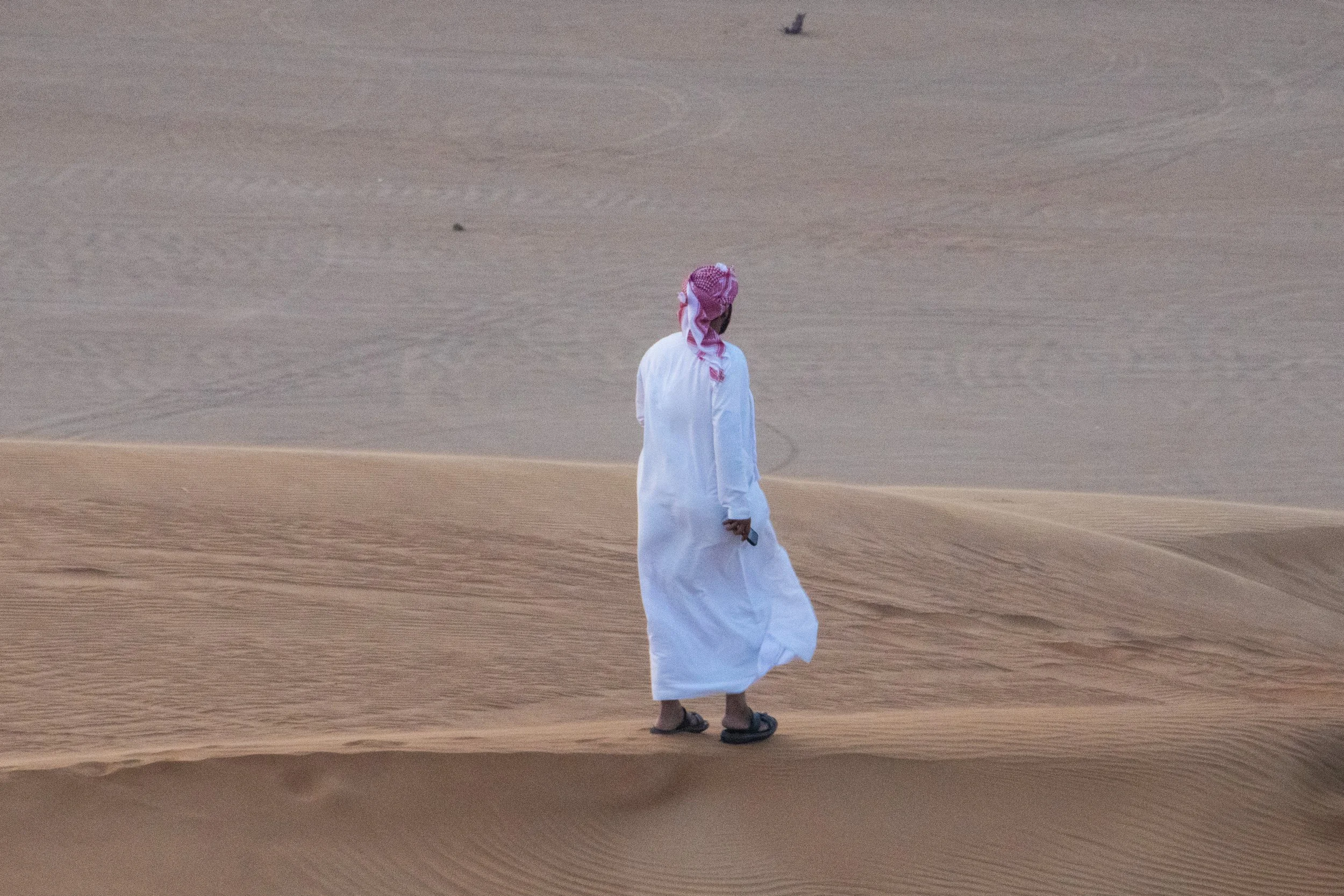
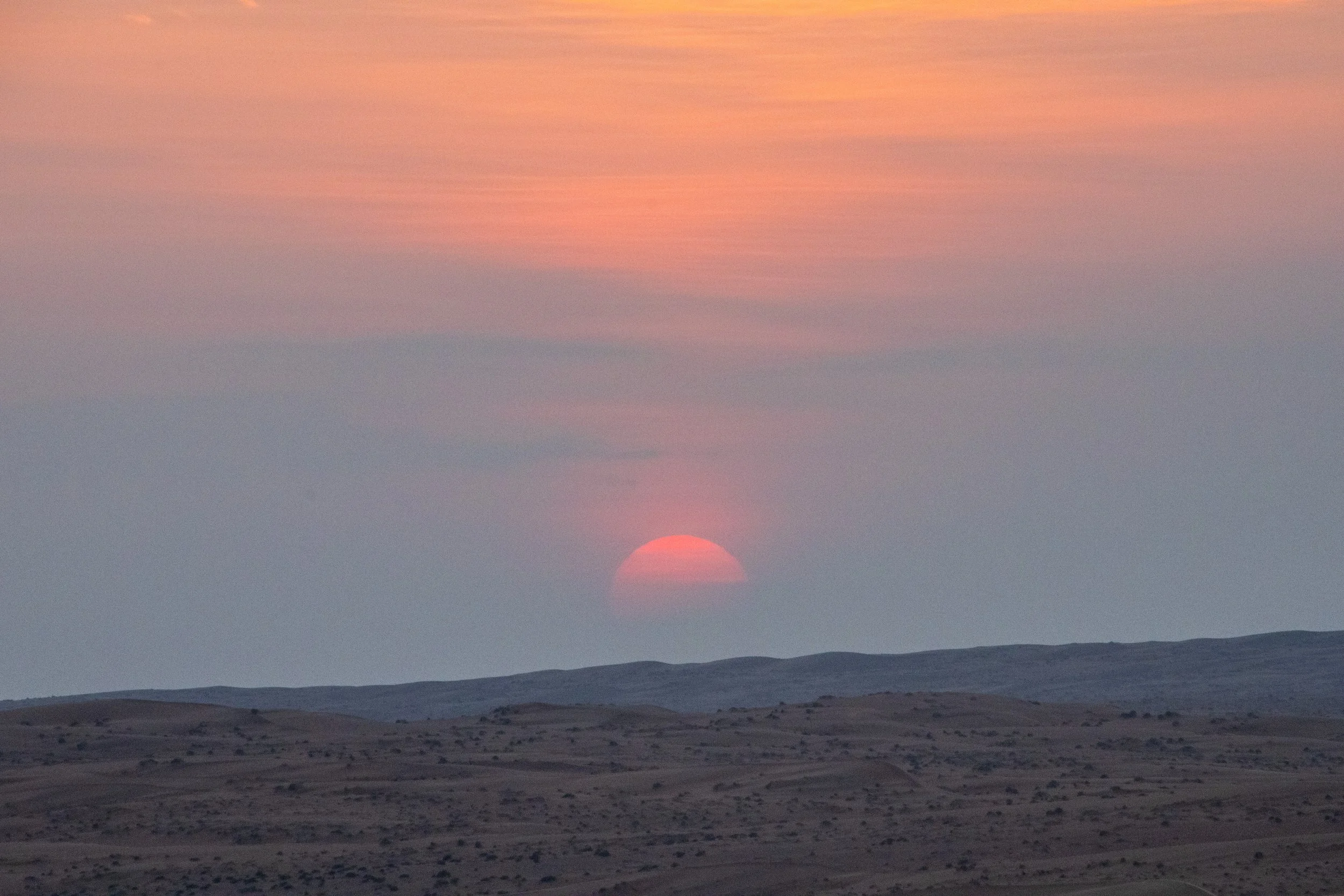
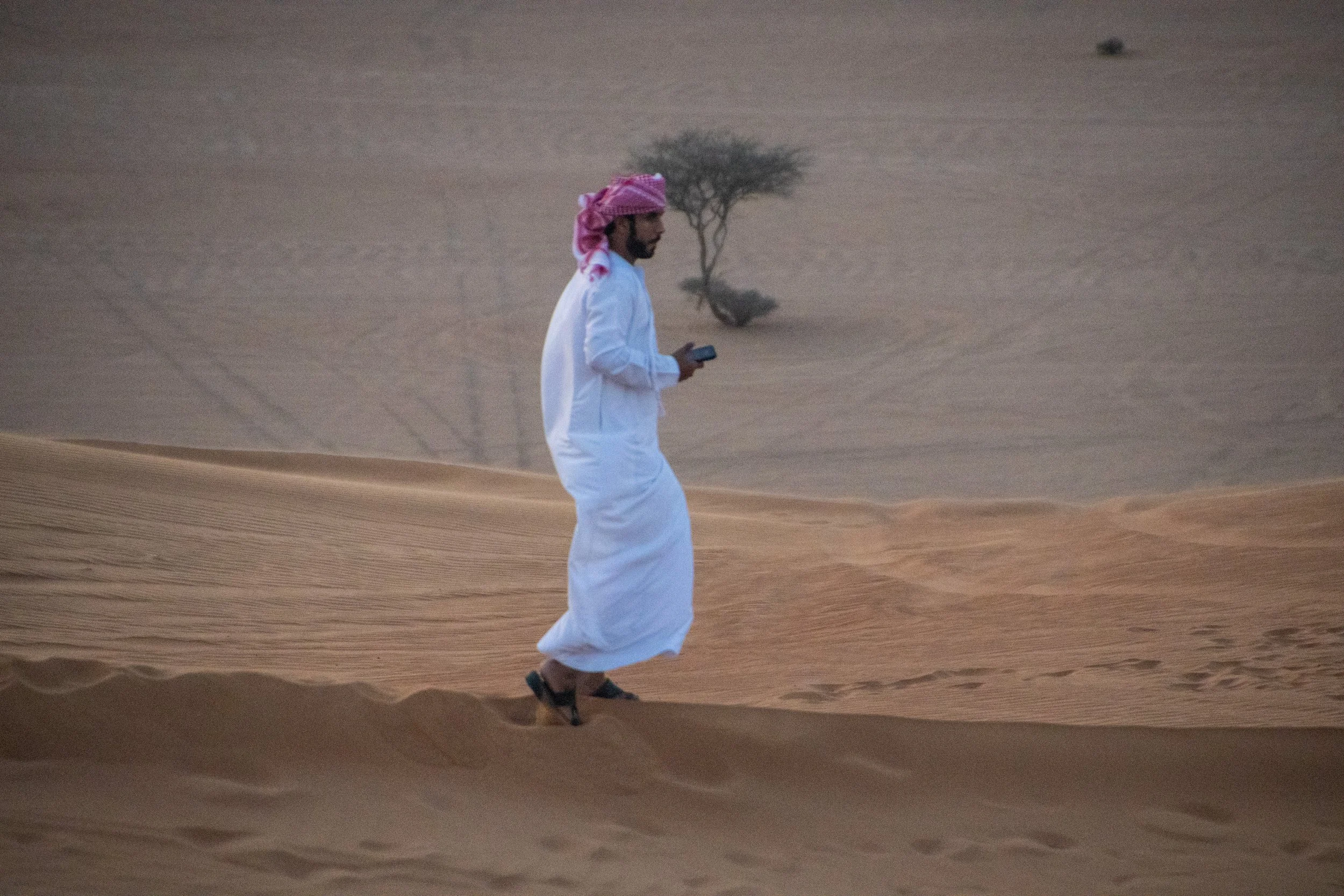
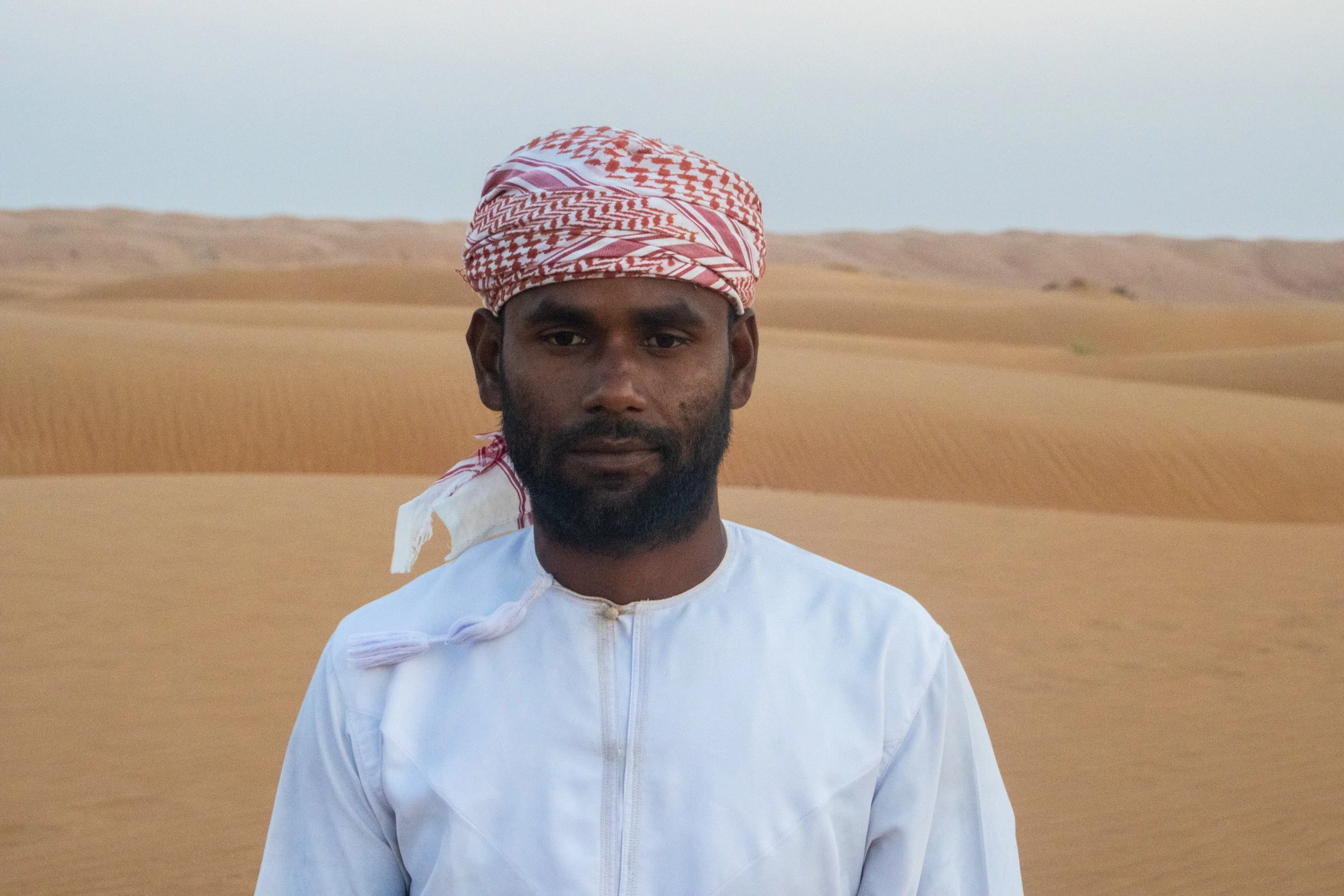
I asked our guide if I could photograph him. He gladly agreed, although I could tell by looking at the results afterward that he was not accustomed to having his photo taken. But here’s a great example of Omani bedouin garb for you! This guy was very kind to us, and the camels were great as well, even though I’m pretty sure I got whiplash in my neck when they knelt down to let me off.
Night in the Dunes
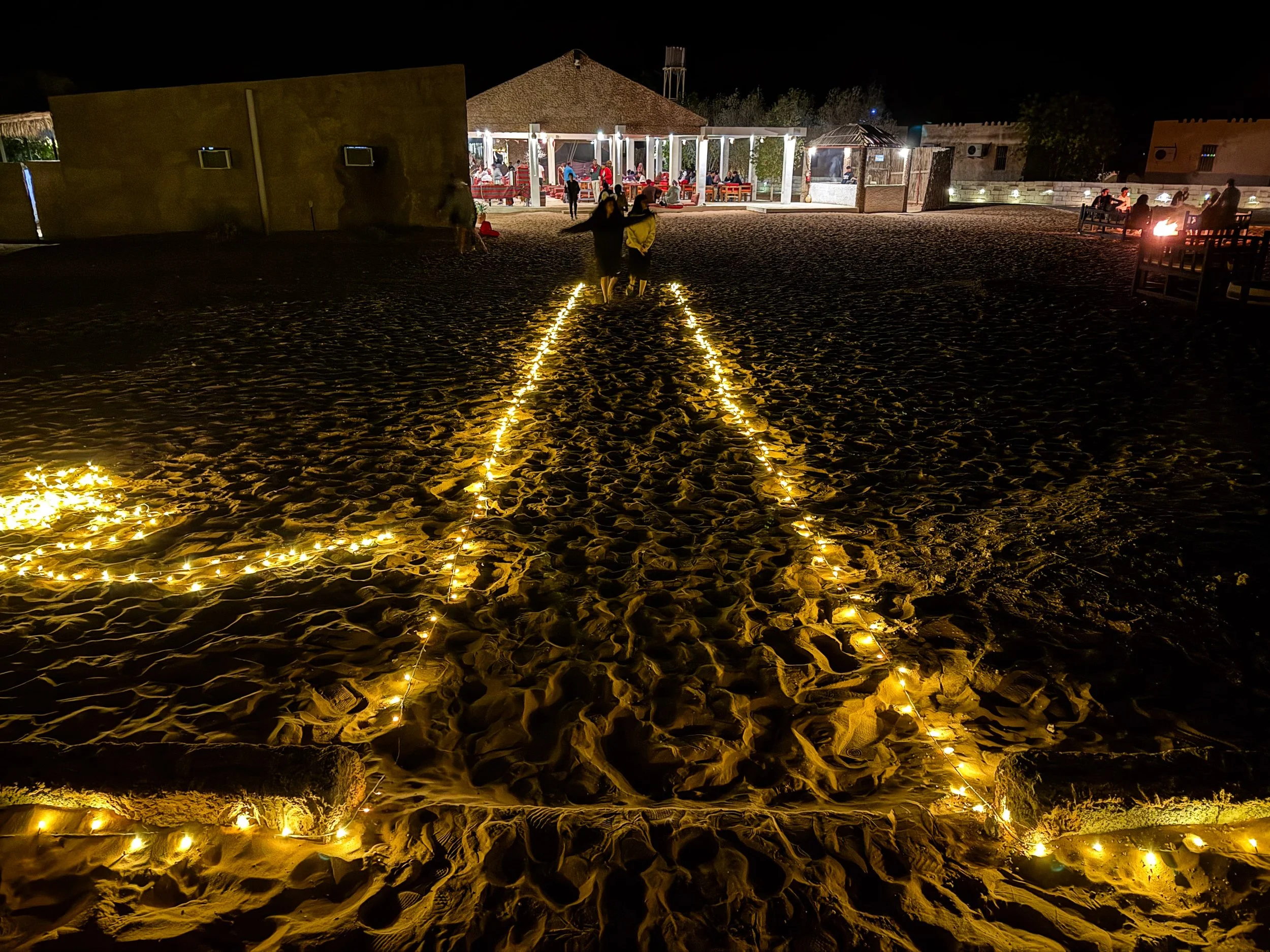
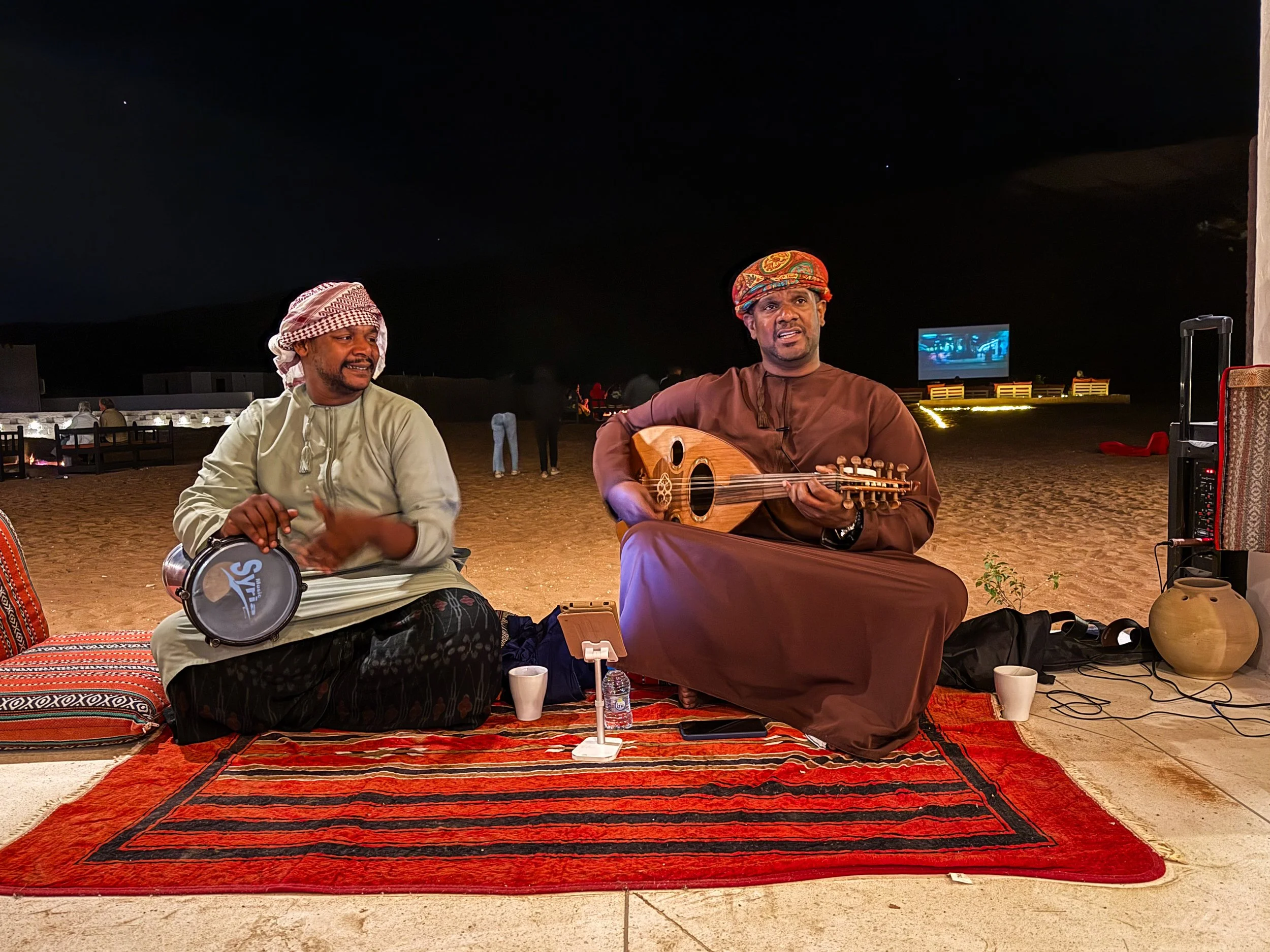
Night fell in the dunes, and we joined the open air cafeteria of a delicious meal of…. camel meat???

Our camels had served us too well. We went for the goat meat instead. 😂
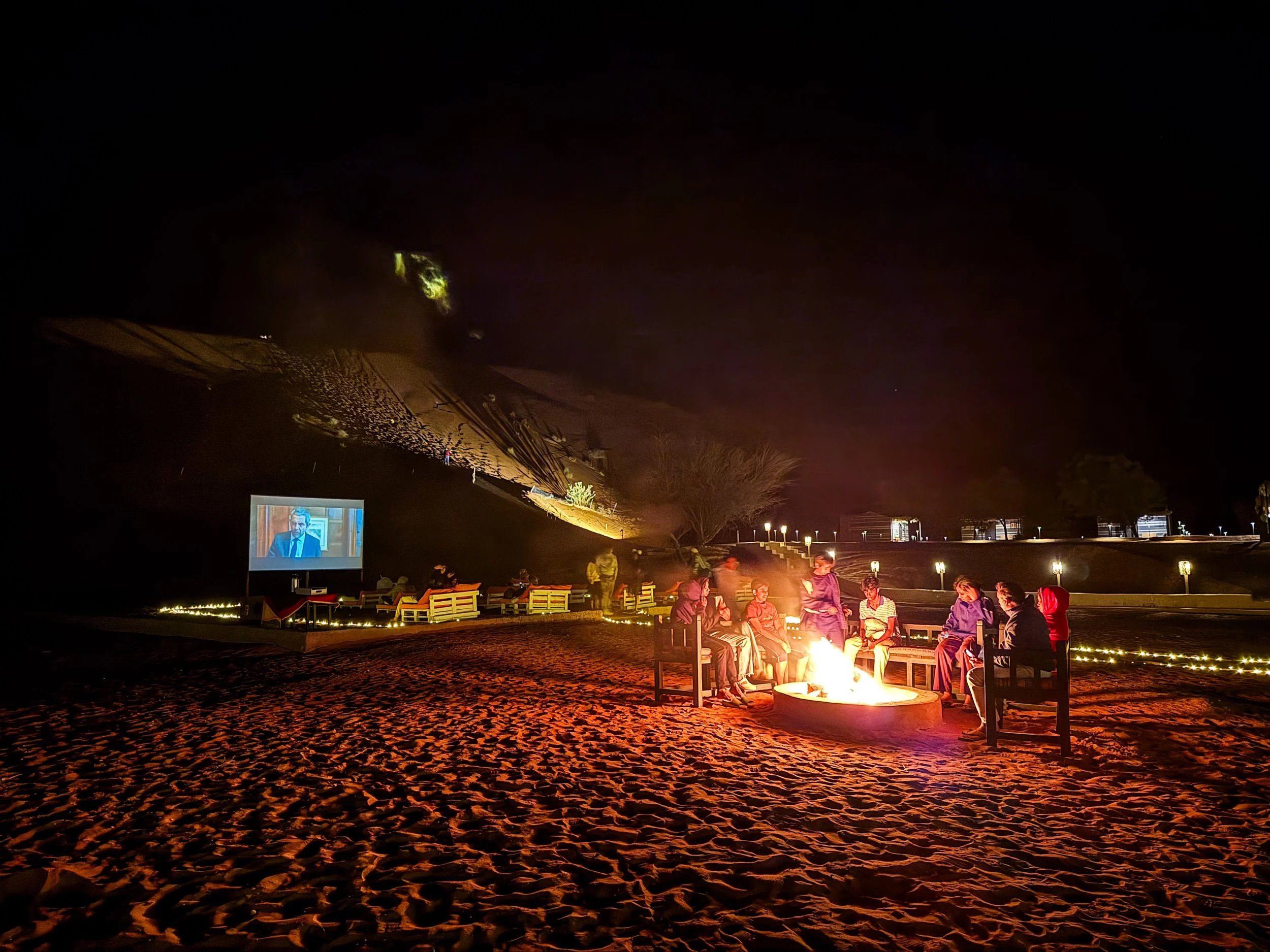
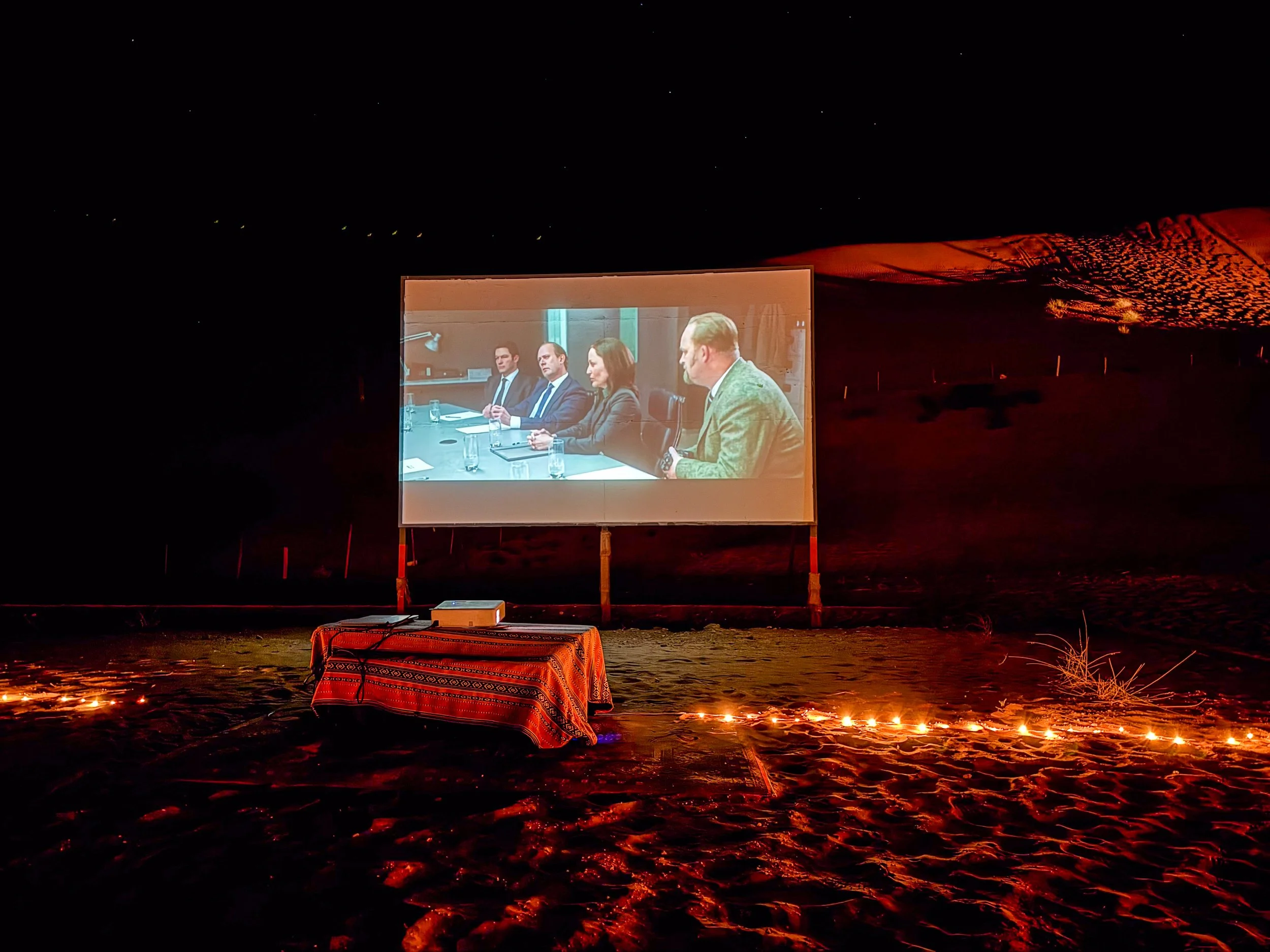
After dinner, movies were being projected onto the a giant screen, with lawn chairs set up like a movie theater. It was extremely cool! First, they showed a kids movie for the families that were staying here. Given that this was less than 10 days before Christmas—a fact that could not have felt more distant from our present reality—they showed the 2018 reboot of The Grinch. Next, for the adults, they showed the 2003 British spy-comedy starring Mr. Bean as a secret agent, Johnny English. “Oh yeah, this movie is set in the place where I live… and I’ll be back there in 72 hours… weird.”
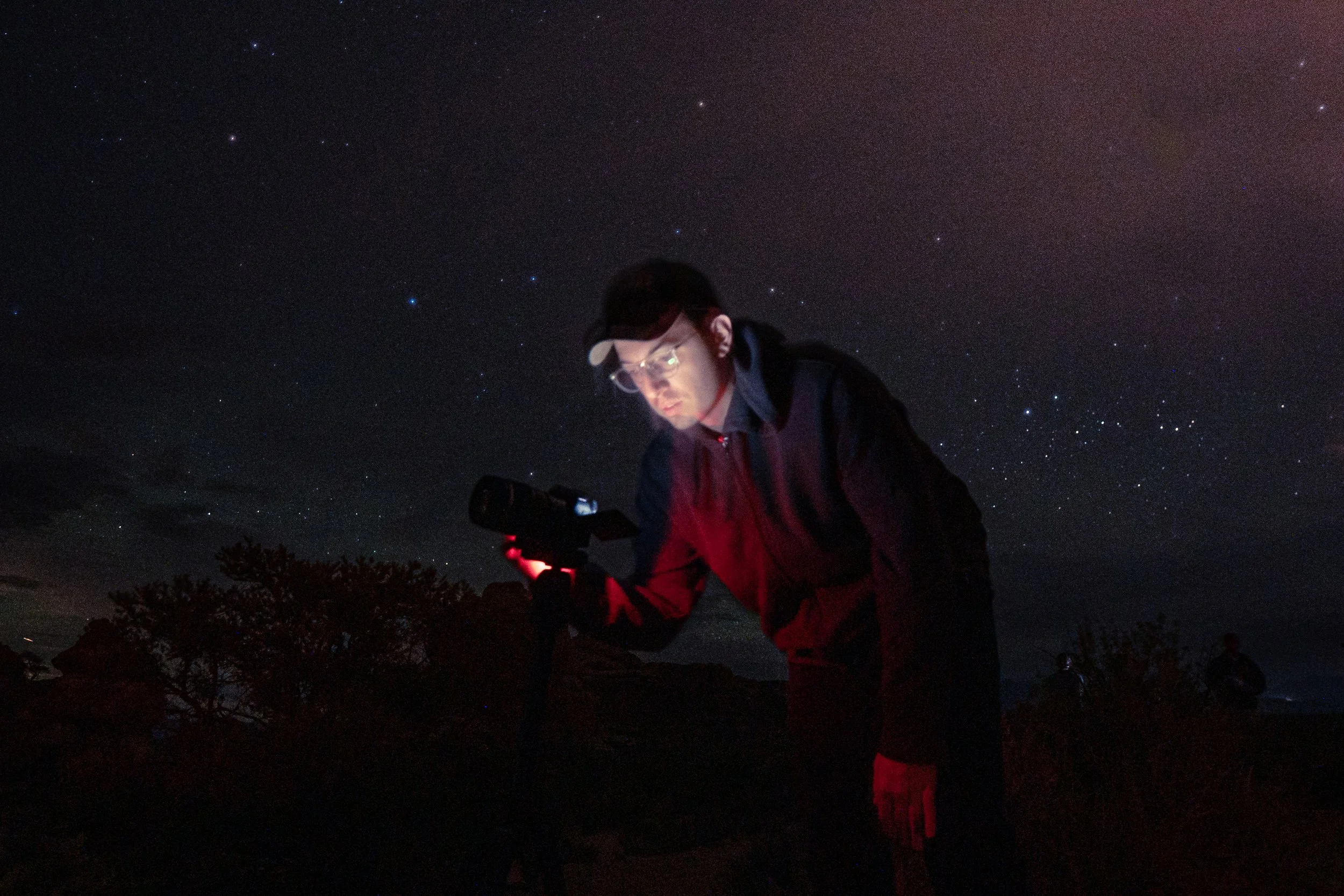
Before bed, we hustled our way up the nearest sand dune—not an easy task!—and walked off into the darkness for a while. There was really nothing holding us back other than common sense. We could have just walked as far out into these dunes as we wanted. There were no fences to hold us back. No authorities to make us turn back. No dangerous animals to beware of, and probably no people either. It was empty, and it was ours if we wanted it! We walked far enough to put a couple of dunes between us and the camp site, and sat in the cold sand for a while, admiring the bright stars overhead.
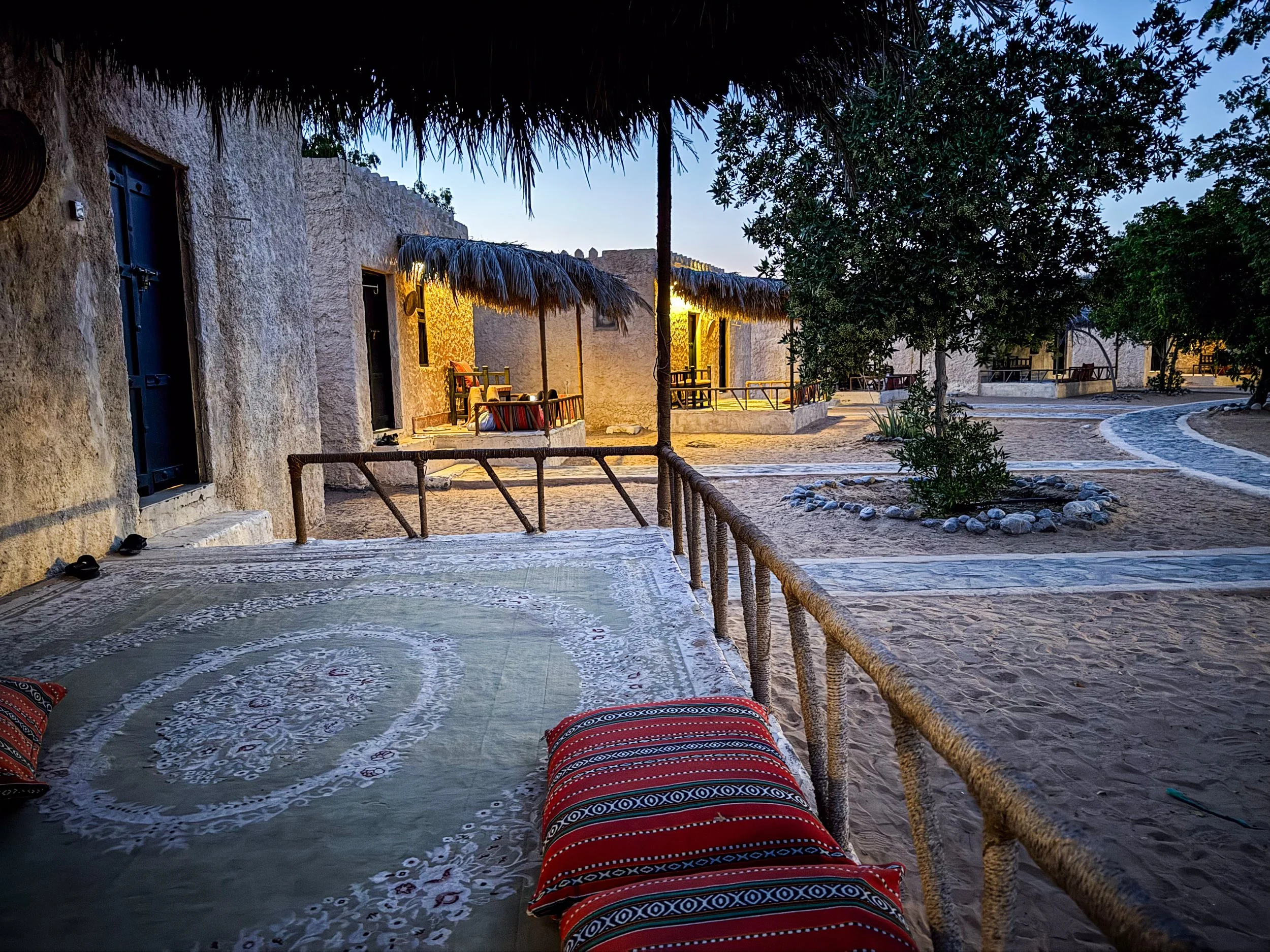
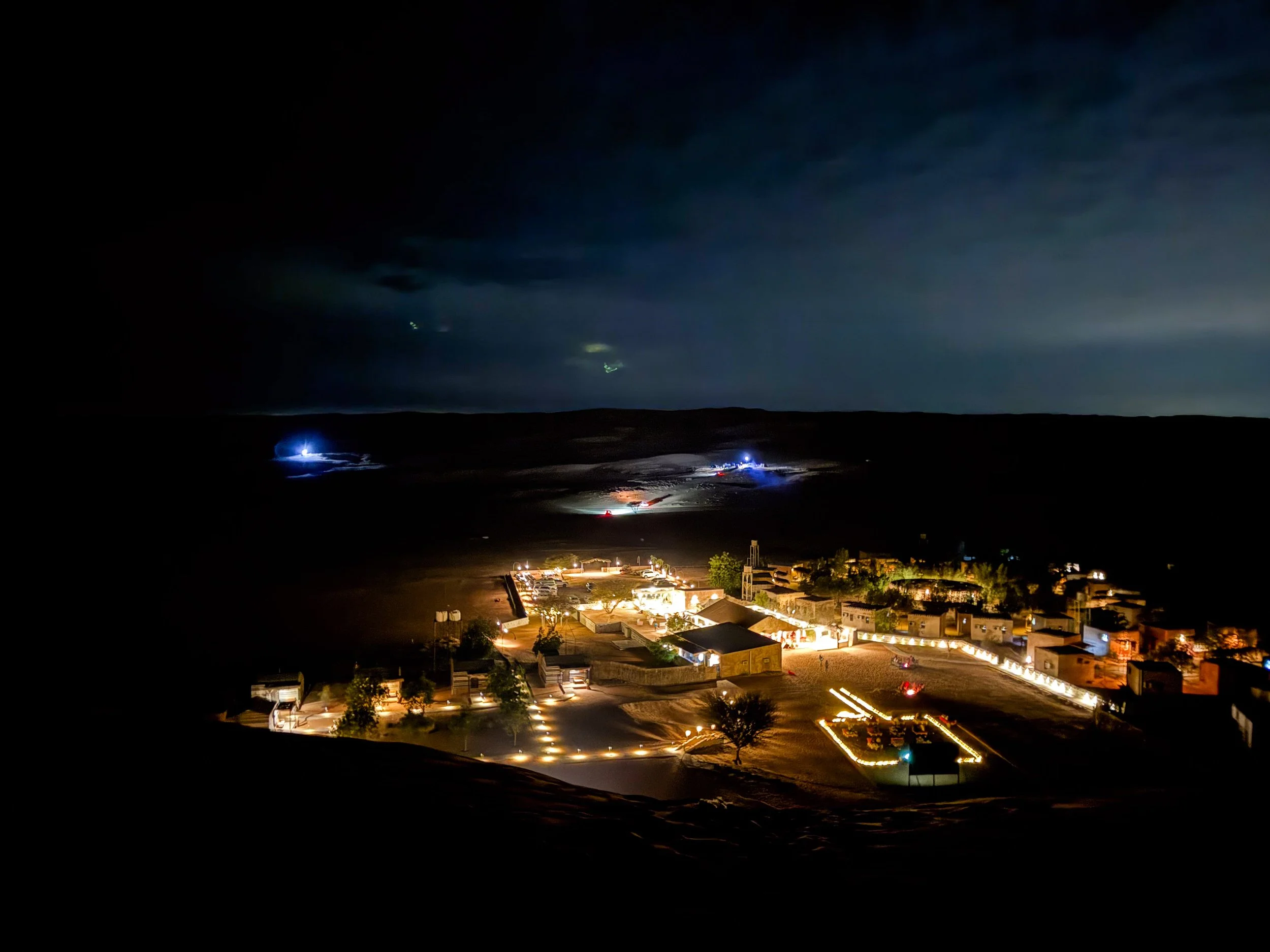
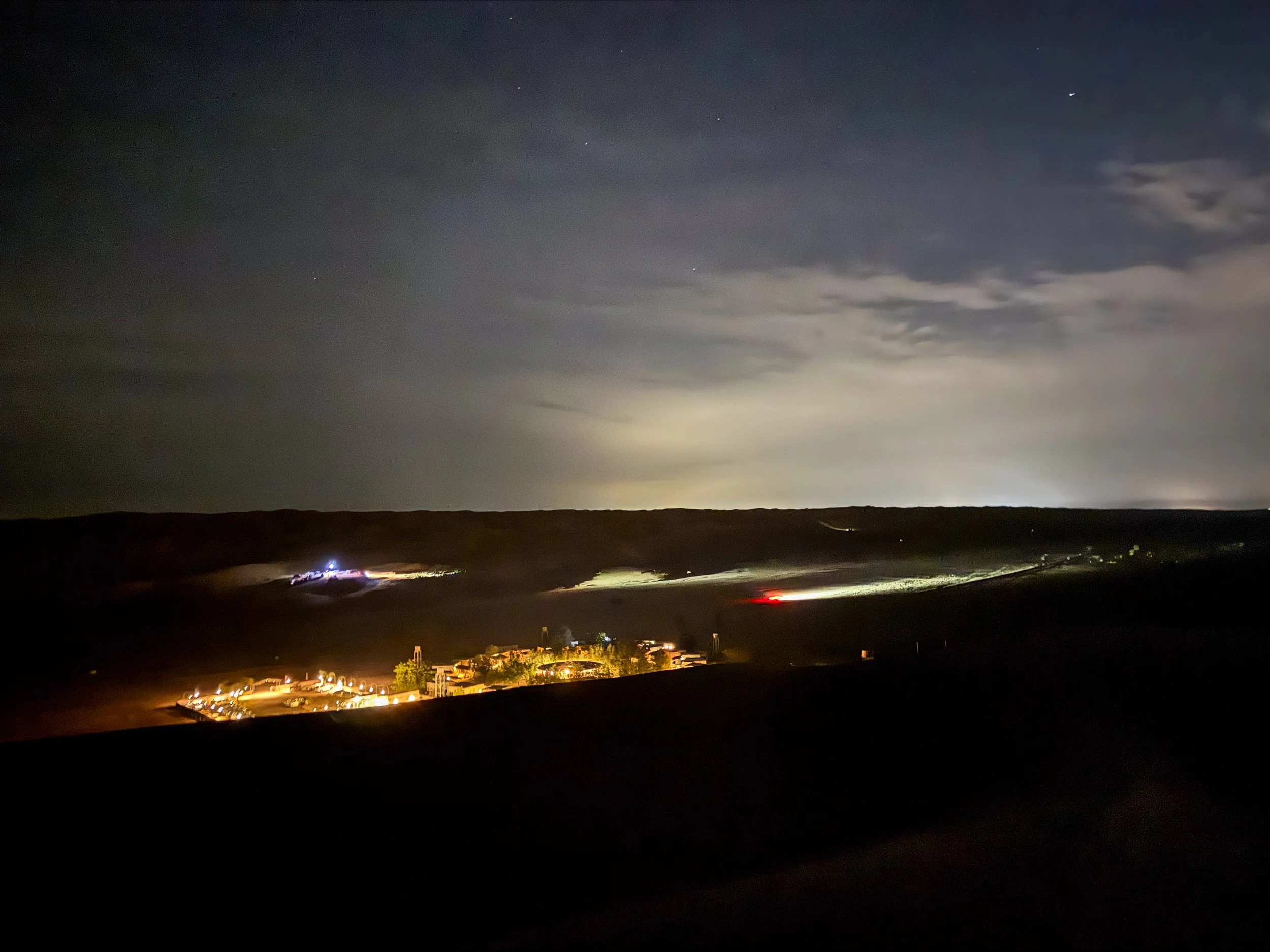
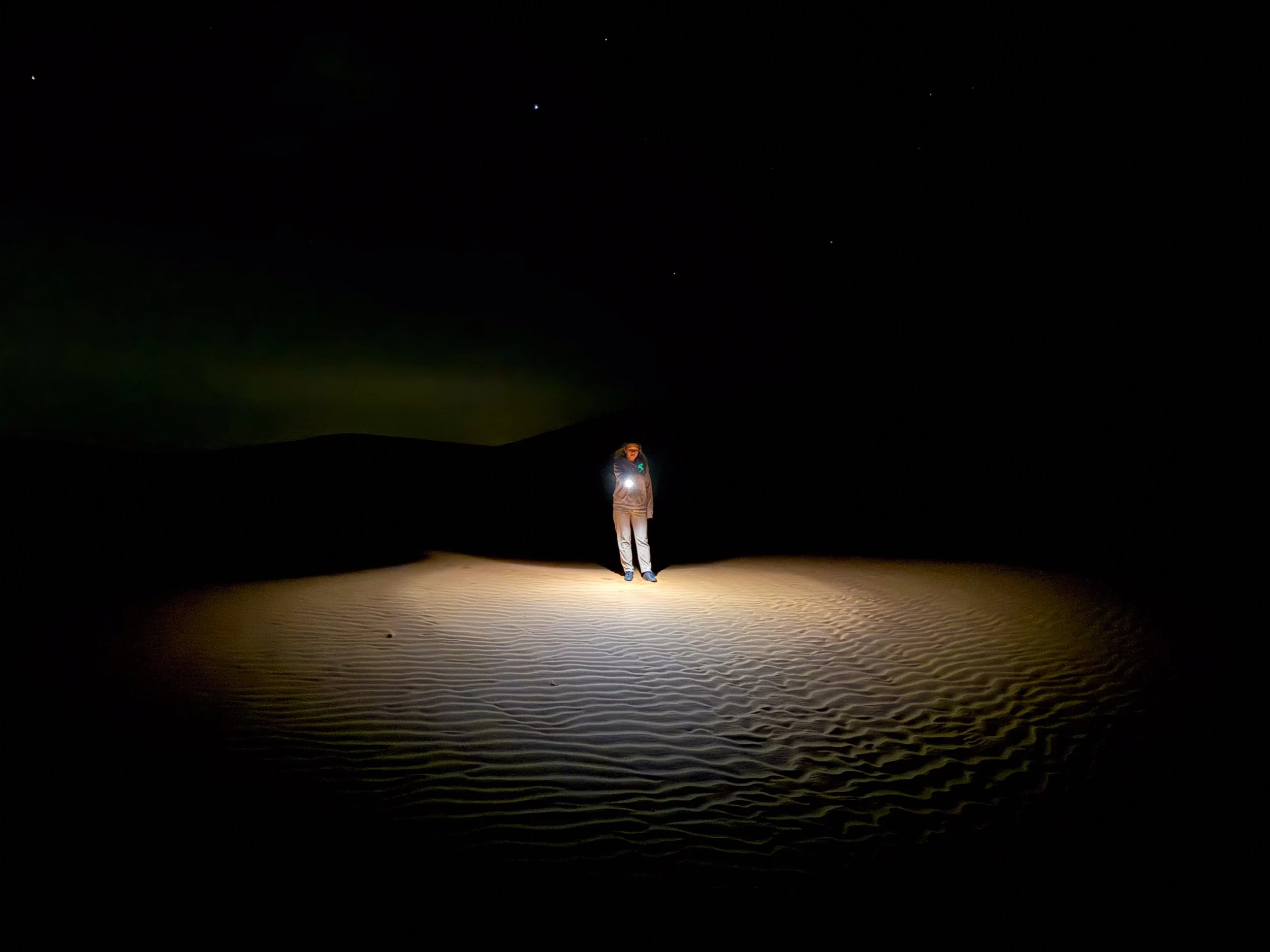
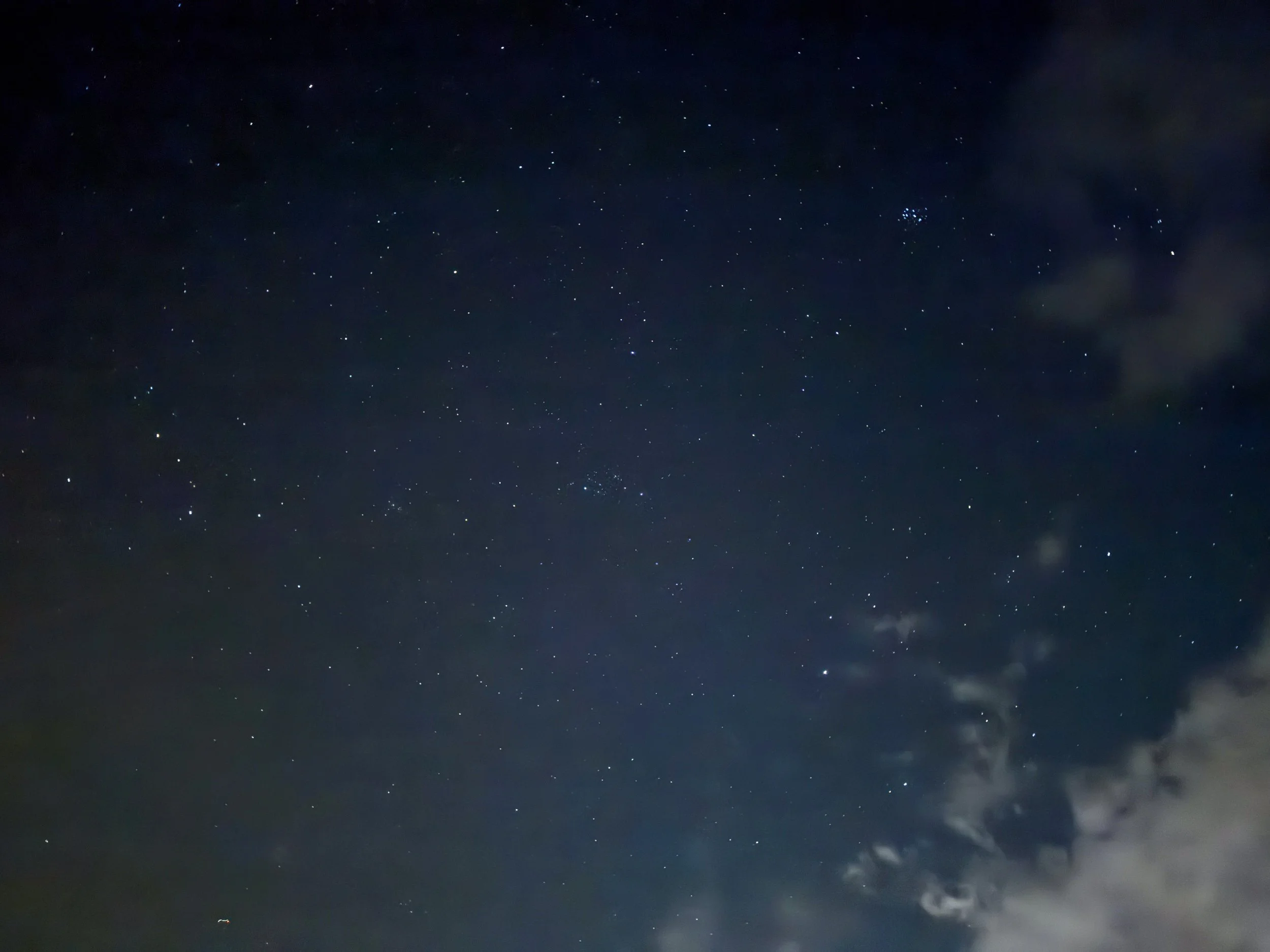
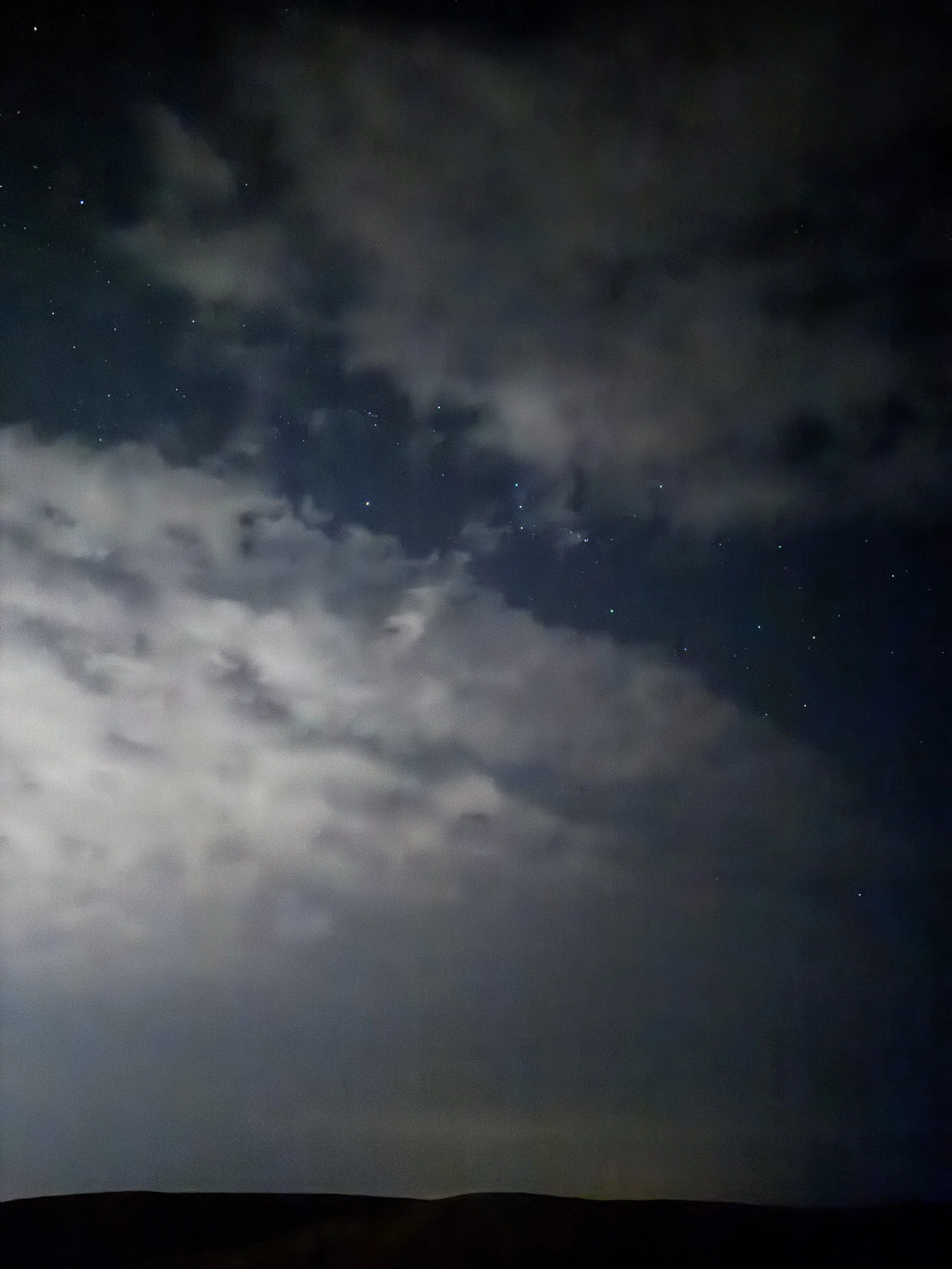
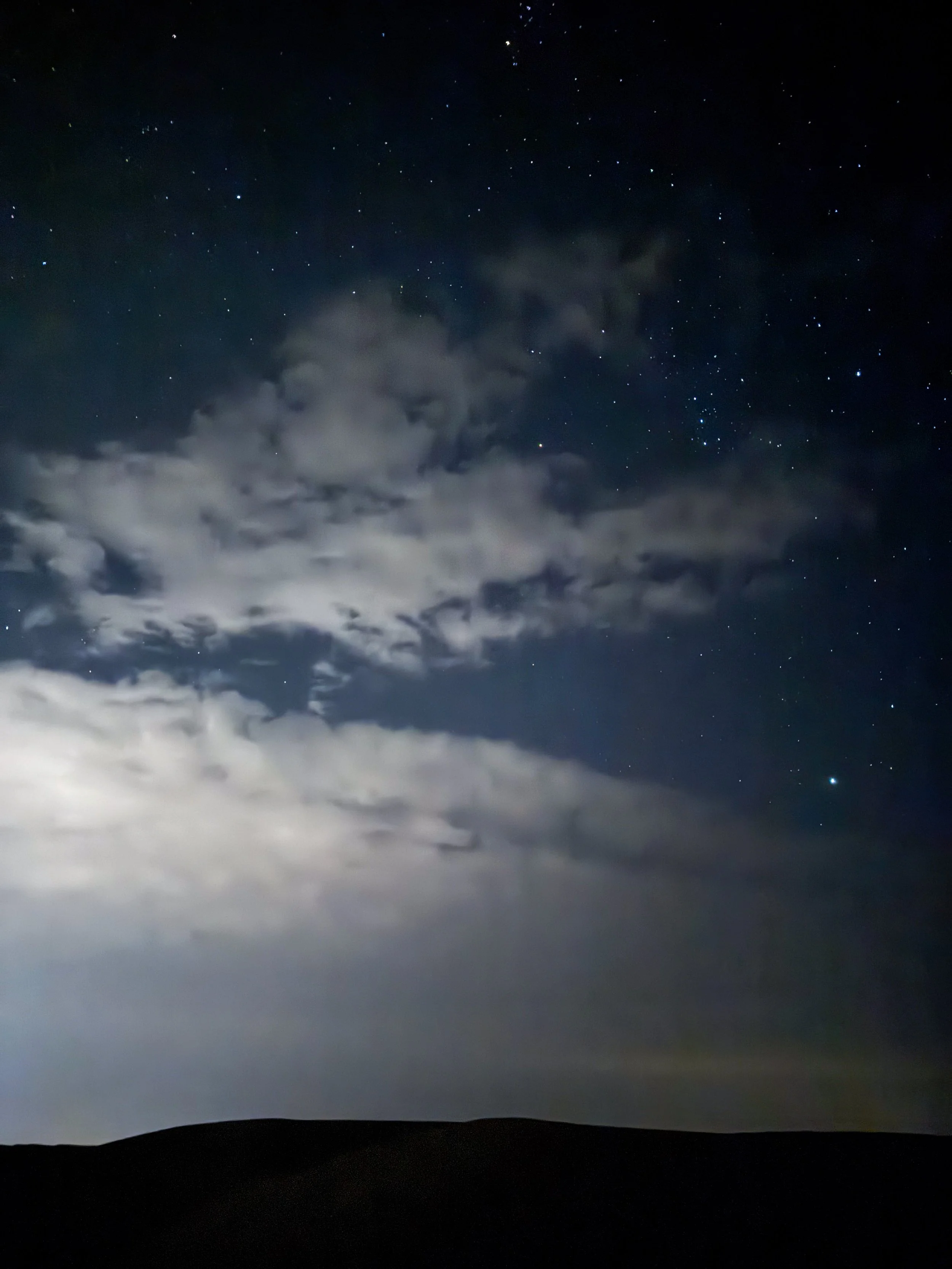
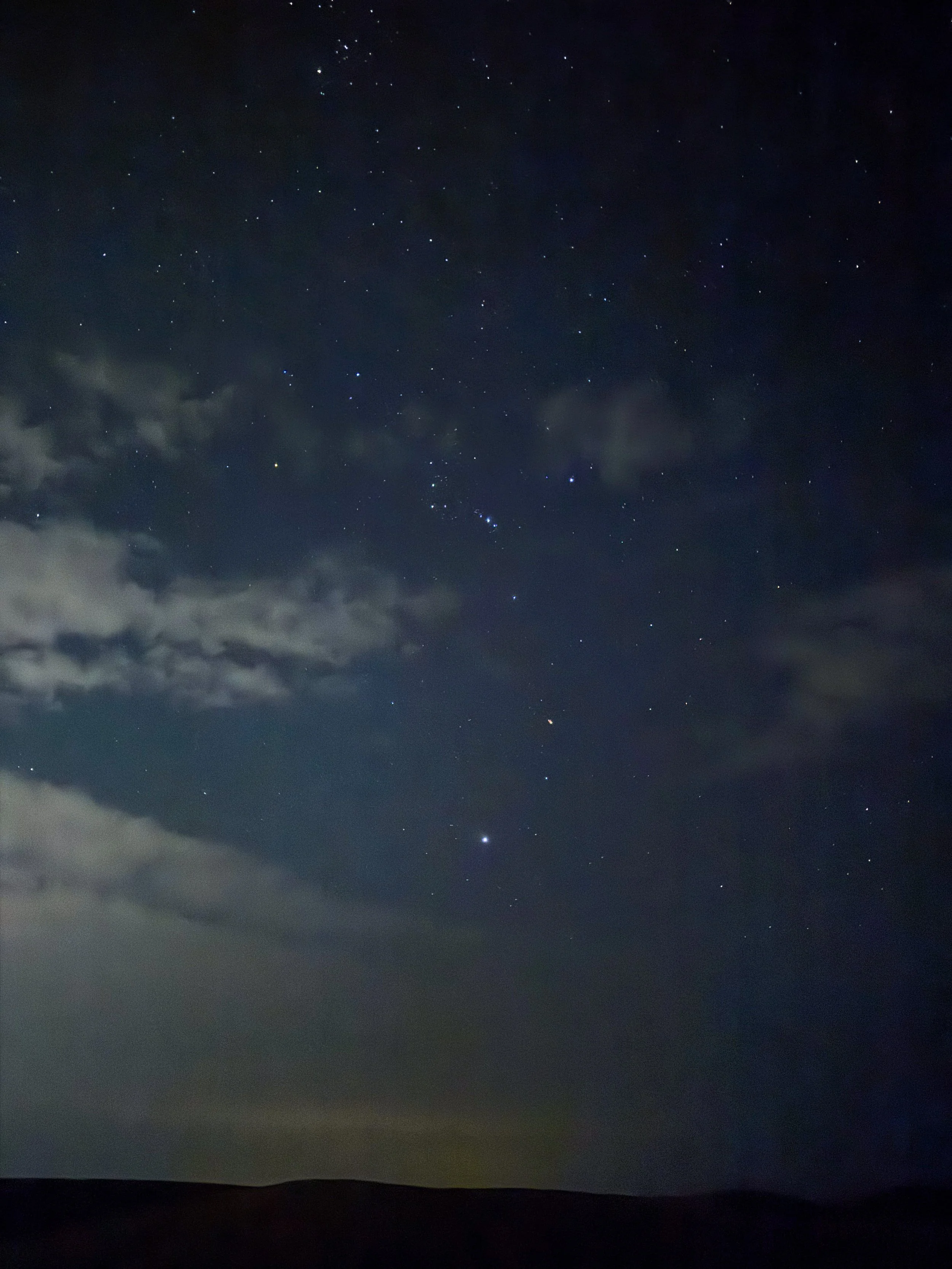
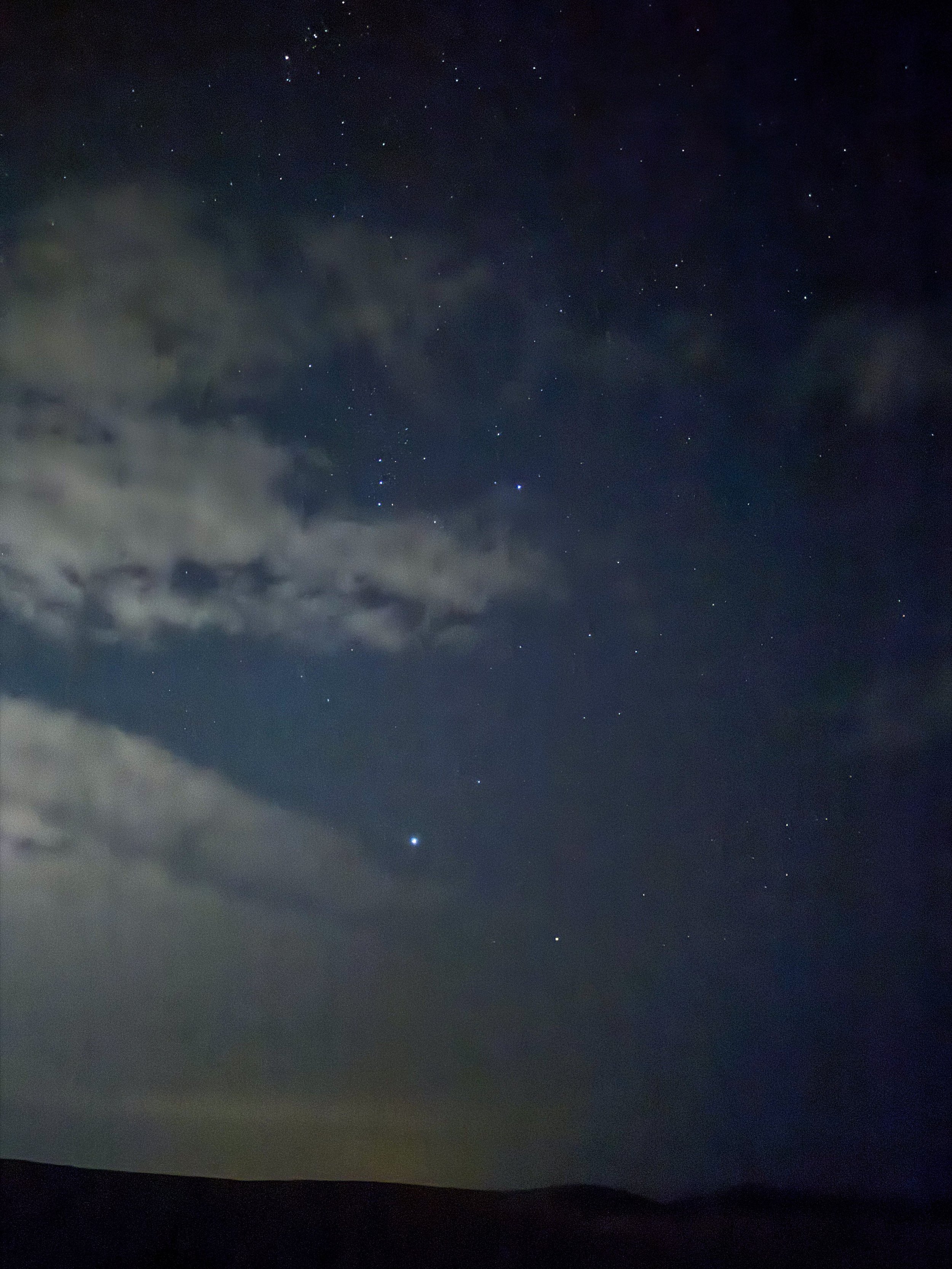
Soon, we’d board a plane that would whisk us many worlds away, back to the cold, European winter.
And soon after that, a conflict between Iran, Israel, and my own country, the US, would begin that would bring a global spotlight onto a little slice of Omani territory known as the Strait of Hormuz. Iran even launched missiles at Oman a few times (so far). The whole world is holding their breath watching this conflict play out… and I’ll bet this desert still feels exactly the same. Silent, peaceful, and transcendently indifferent to pettiness of human conflict.
See ya next time, Oman. ✌️


The theme of today is old Arabian fortresses scattered throughout Oman’s Al Hajar mountains. Oman has a lot of these old relics, and we’re going to be visiting 3 of them. We’ll start with Nakhal Fortress, move on to Bahla Fortress, and finish with Nizwa Fortress, which is actually part of a very cool little town bearing the same name. In the past two articles, there was a LOT of information about Oman and the geopolitical neighborhood it calls home. Admittedly, during these articles I was still getting my feet under me in this new country. But this is where we’re going shift gears from educational exploration to something a bit more fun.
So, go use the bathroom now because it’s about 1 hour from Muscat to Nakhal, and we’re not going to stop until we get there. 👀