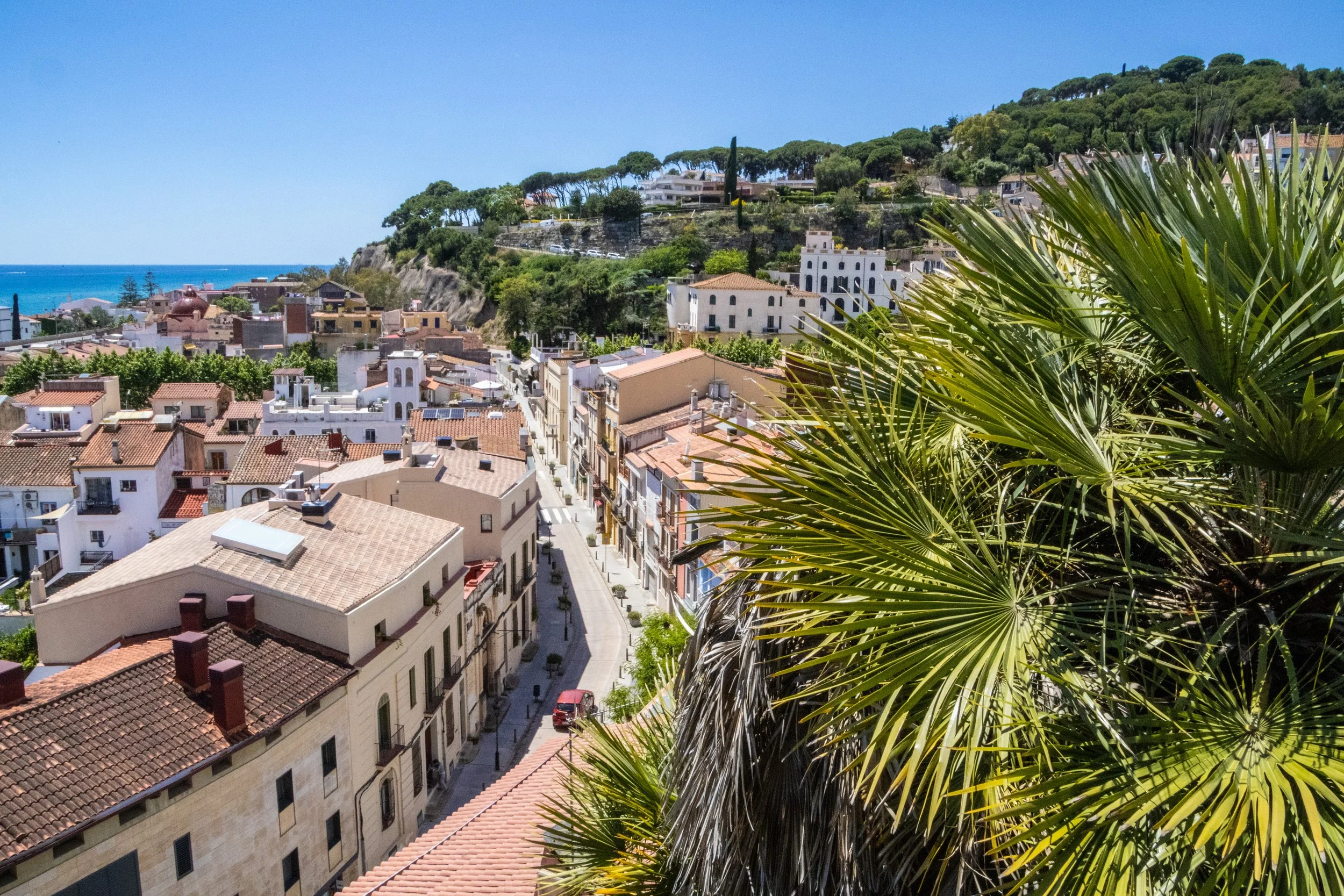
As chance would have it, on a quick errand into town, we’d spotted an old brick tower protruding through the trees off in the distance. We were standing on a ridge when we spotted it, and this was on the ridge opposite us, with a valley in between. THIS, we decided, WAS THE DESTINATION FOR OUR QUEST.
Honestly, if we never found our way up to this tower, that would be fine. But it gave us something to orient ourselves toward. The journey is what counts, right?
Well, the journey did not disappoint!
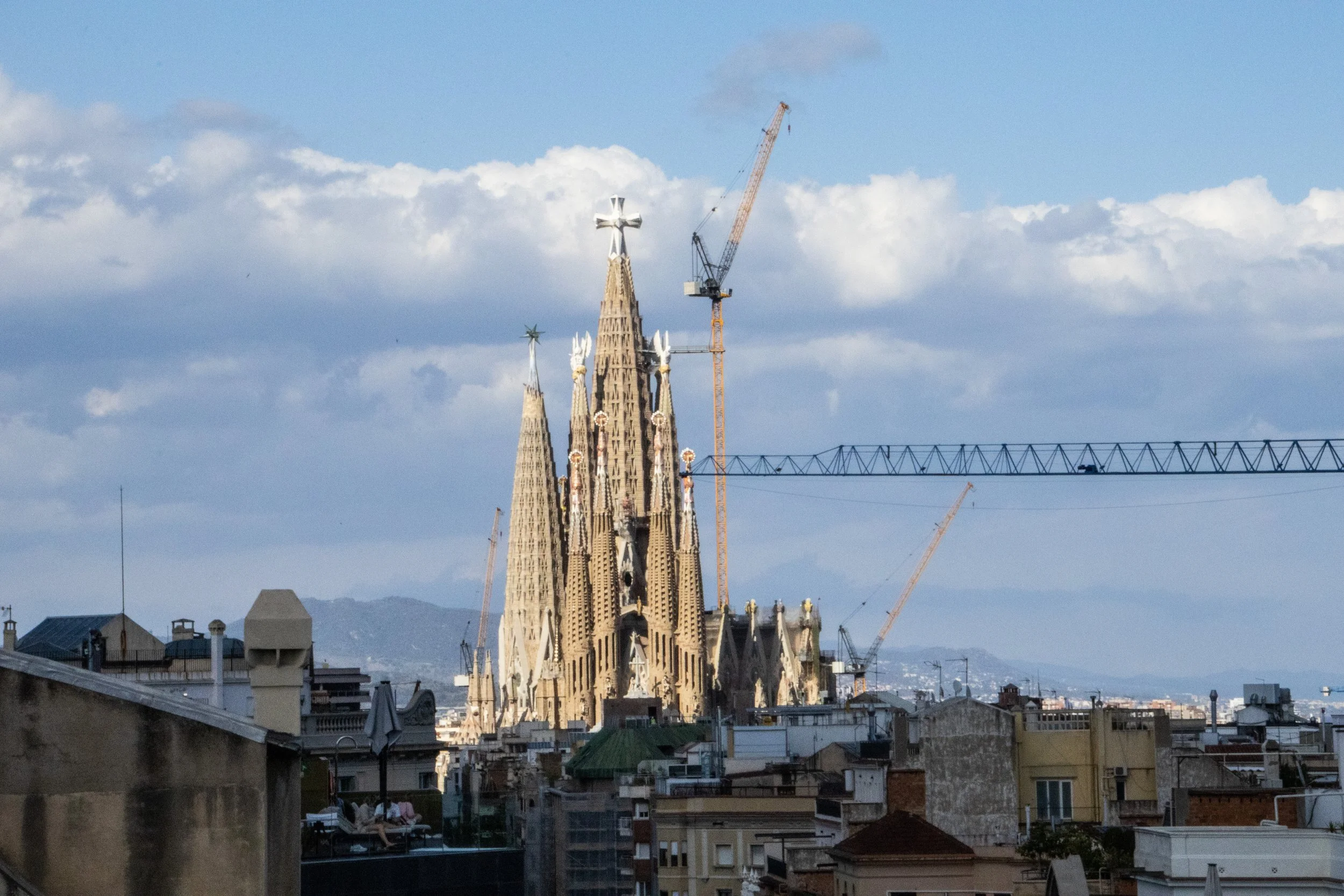
There are few cities on earth—certainly none more notable than Barcelona—whose architectural identities have been shaped so profoundly by just 1 person. Sure, other famous architects have left their mark on some of the other great cities of the world over the years, but none that I can think of whose work has so strongly and completely defined the identity of a single city as Antoni Gaudí for Barcelona. You may never have even heard of Gaudí, but if you know anything about Barcelona, chances are good that when you picture this city, you are picturing something that originated in this guy’s imagination.
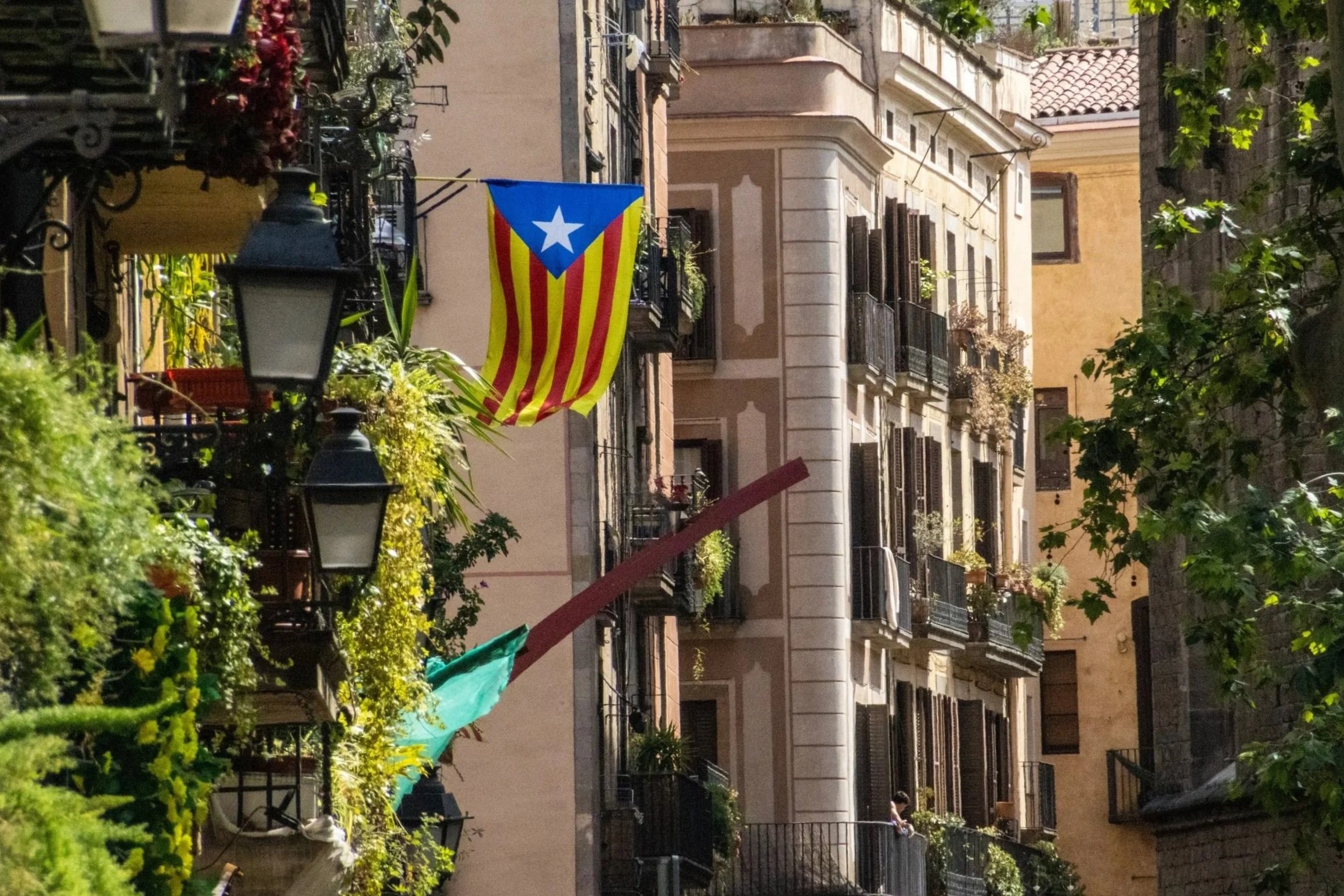
With a metro area population of ~ 5.5 million people, Barcelona is the 2nd largest city in Spain, behind only Madrid. By basically every quantifiable metric— population, economy, political power, etc.—Madrid is the larger city. But when it comes to travel, especially international travel, this relationship reverses. Barcelona is far-and-away the favorite destination for international tourists visiting Spain. And, when you consider the fact that Barcelona also covers a much smaller land area than Madrid, the concentration of international tourists becomes much more intense. Barcelona has indeed struggled to accommodate the levels of tourism it is now receiving, but it’s easy to see why the whole world is so interested in coming here! Sandwiched between the Collserola mountains and the Mediterranean Sea, Barcelona is an absolutely idyllic city. And once you’re in the middle of it, it’s incredible how quickly the Catalan identity eclipses that of Spain.
Hondarribia is a beautiful little town that sits on the Spanish side of the Bidasoa river, which form the border between France and Spain in the Bay of Biscay. The estuary that forms here, where the Bidasoa river meets the Atlantic is called the Bay of Txingudi. So, when you look across the water from Hondarribia, you are looking into France. At the end of this article, we’re going to cross the river (spoiler!), but before we do that, we’ll explore this last outpost of Spanish Basque Country.
The Basques (also known as Euskaldunak) are an ethnic group with their own culture and language whose historical home straddles the Pyrenees mountains, occupying northern Spain and southwestern France.
What makes the Basques so intriguing? Let’s start with language. I’m sure you’ve heard of some of the major language families, such as Romance Languages (e.g. Spanish, French, Italian, Portuguese), Germanic Languages (e.g. English, German, Dutch, Swedish), and Slavic Languages (e.g. Russian, Polish, Czech, Serbian). These are groups of related languages that all evolved from a common ancestral language. In fact, languages all over the world can mostly be grouped into “families”… but Basque (Euskara) doesn’t fit into any of them. It is a language isolate, meaning that is bears no relationship at all to any other surviving language. Its origins are utterly mysterious, and the culture it belongs to… oh boy.
Barcelona is the last Spanish city that is going to be covered in the #ThrowBackThursday series. I came here during my study abroad in 2012, during which I lived in 313 miles inland, in Madrid. Why did I choose to study abroad in Madrid? The short answer is that I didn’t. Madrid was, incredibly, the only study abroad option in the entire world that would count towards both my major and my minor. So if I wanted to go abroad, the choice was already made for me. But, in my mind, Barcelona was “the place to be” in Spain. Ideally, I would have lived in Barcelona.
When I finally arrived in Barcelona, it wasn’t quite what I was expecting…
Situated on the eastern coast of Spain, Valencia is the country's 3rd largest city, behind Madrid and Barcelona. There are roughly 800,000 people who live in Valencia proper and about 1.6 million that live in Valencia's metro area. It is also worth noting that Valencia's harbor is the busiest container port in the Mediterranean and the 5th busiest in Europe. That means that this is a city of economic importance. Stuff happens here.
Today, I’ll be telling you some of what happened to ME (and one very unlucky friend) while I was here.
When I made the move to Madrid in 2012, I hadn't done much research. Upon my arrival, I remember being very surprised at how green and lush the city was. This was not what I expected Spain to look like. I was expecting something a bit more arid, a bit more dry, a bit more brown-ish in color. I'm not sure where these preconceptions originally came from, but now I know that TOLEDO is what I expected Spain to look like. This was the image of Spain that I had in my head.
If you've been a reader for any amount of time, you probably know that I started this website when I moved to Hanoi, Vietnam to work as an English teacher. However, you might NOT know that Hanoi was actually the 2nd time I had lived internationally. The first time was my study abroad, during which I spent a semester living in Madrid, Spain.
This is the first installment of what is going to be a #ThrowBackThursday series. I'll be digging up some choice photos from my time in Europe, re-editing them, and sharing some thoughts and/or stories about each of the places I visited. So let's get to the good stuff!