
An Intro to Antoni Gaudí
There are few cities on earth—certainly none more notable than Barcelona—whose architectural identities have been shaped so profoundly by just 1 person. Sure, other famous architects have left their mark on some of the other great cities of the world over the years, but none that I can think of whose work has so strongly and completely defined the identity of a single city as Antoni Gaudí did for Barcelona. You may never have even heard of Gaudí, but if you know anything about Barcelona, chances are good that when you picture this city, you are picturing something that originated in this guy’s imagination.
Here are a few random examples of Gaudí’s striking, other-worldly handy-work sitting quietly on the streets of Barcelona…
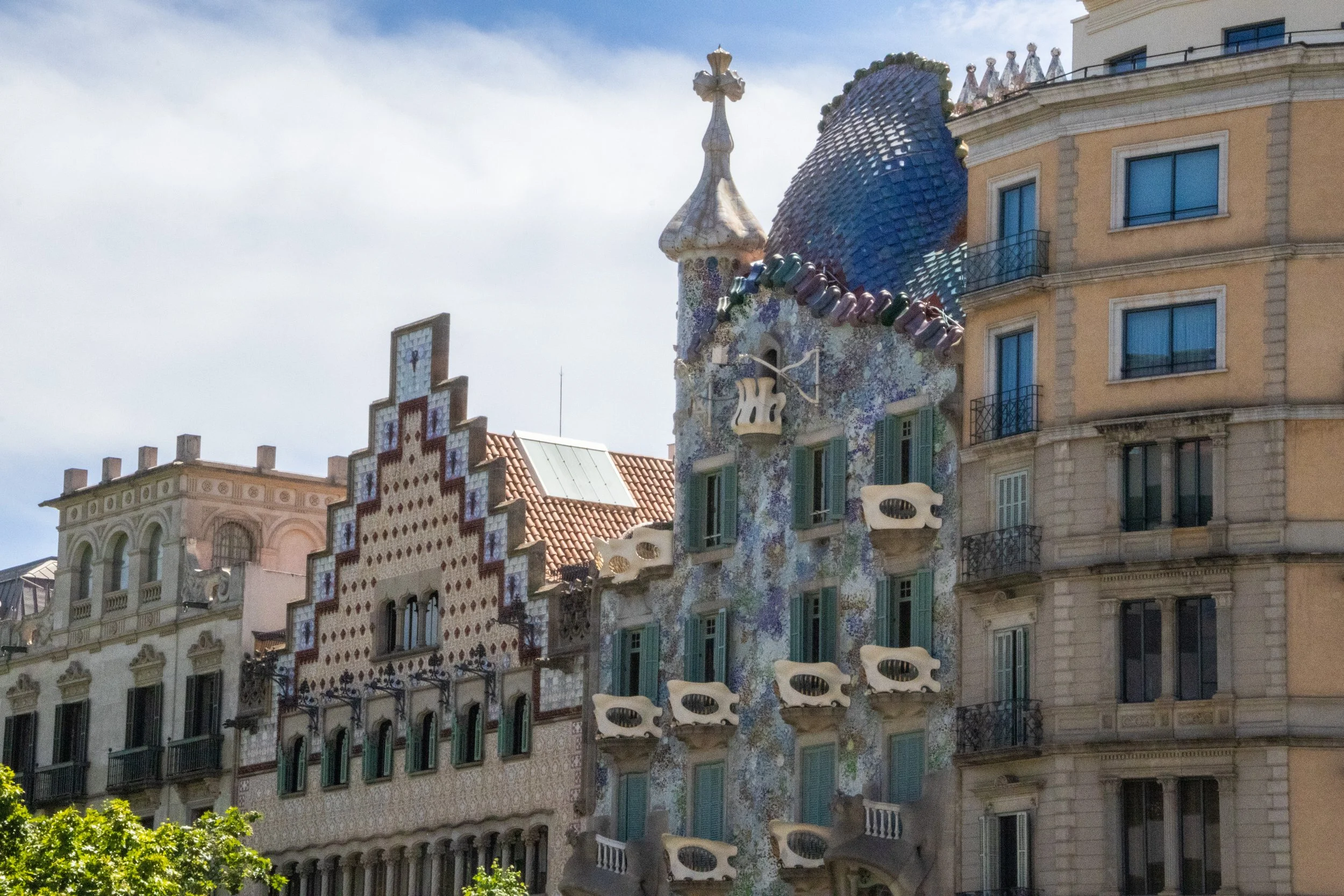
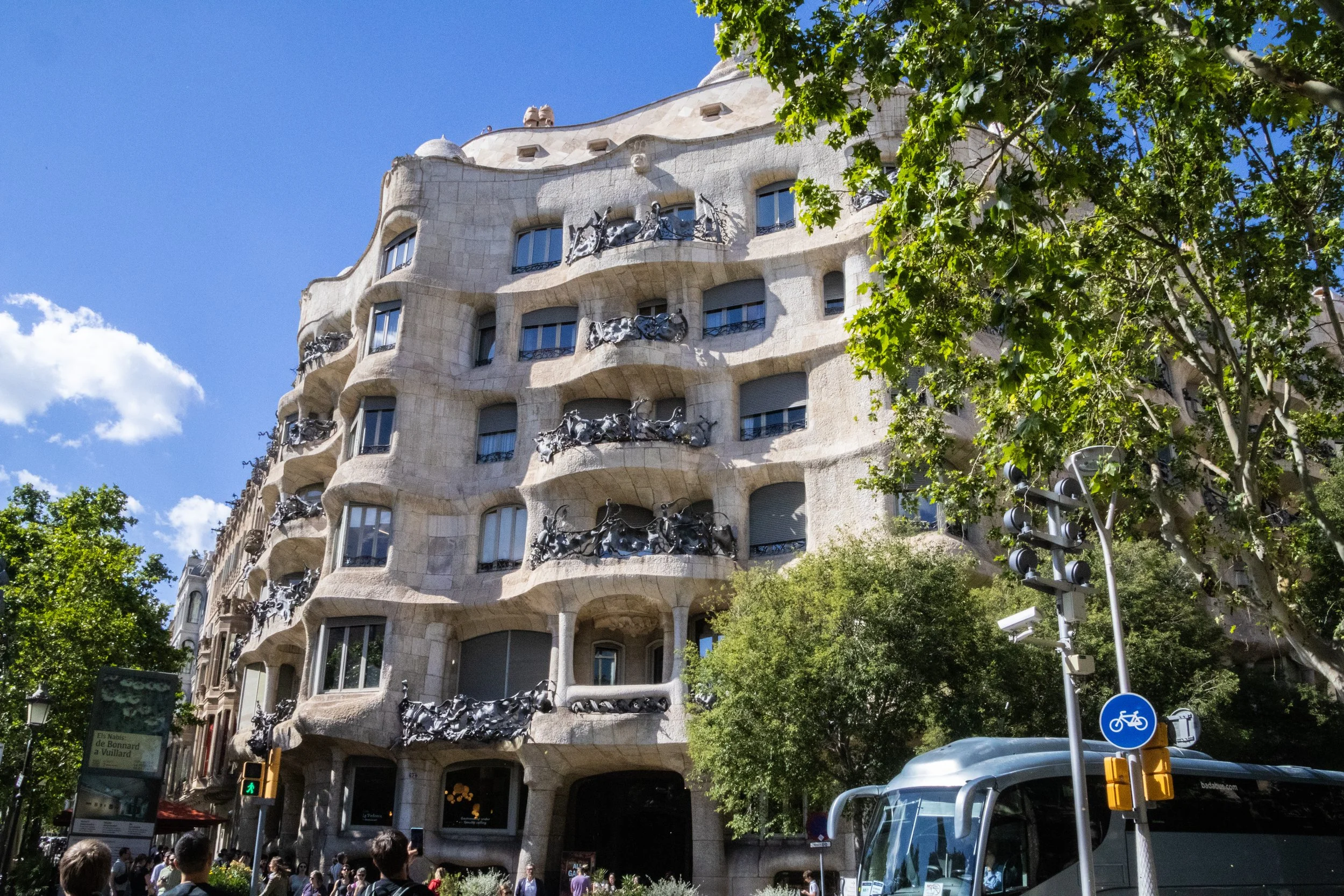
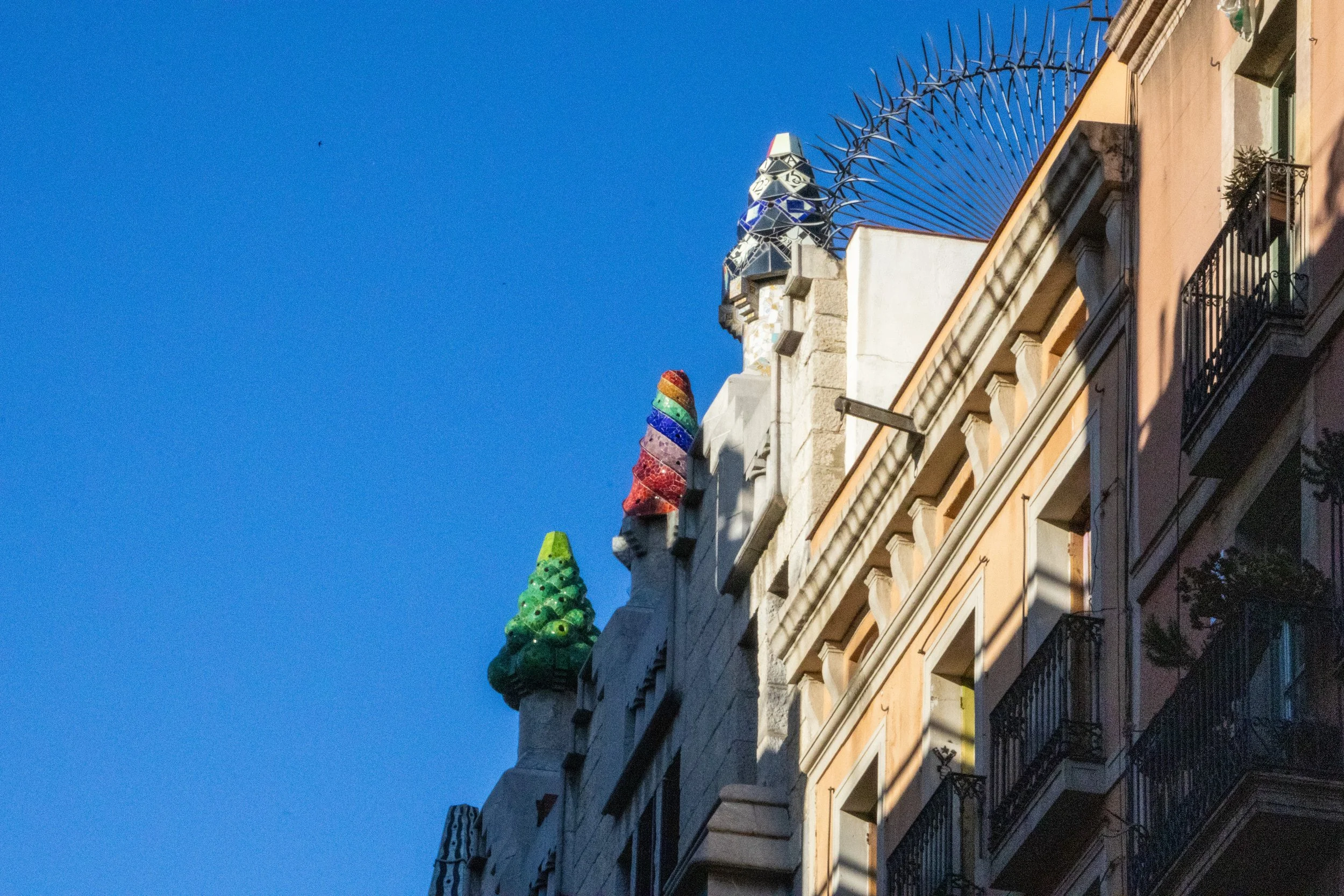
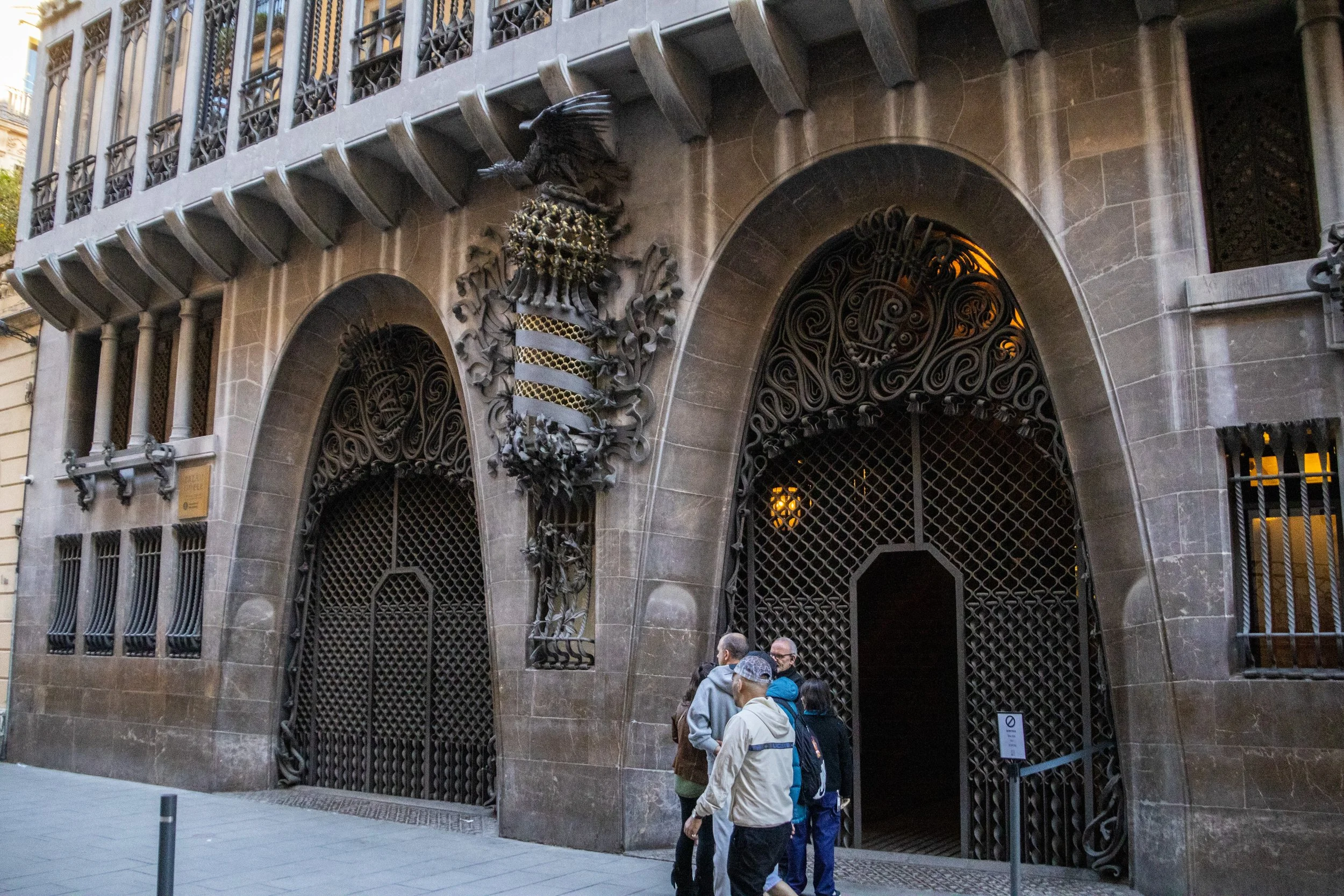
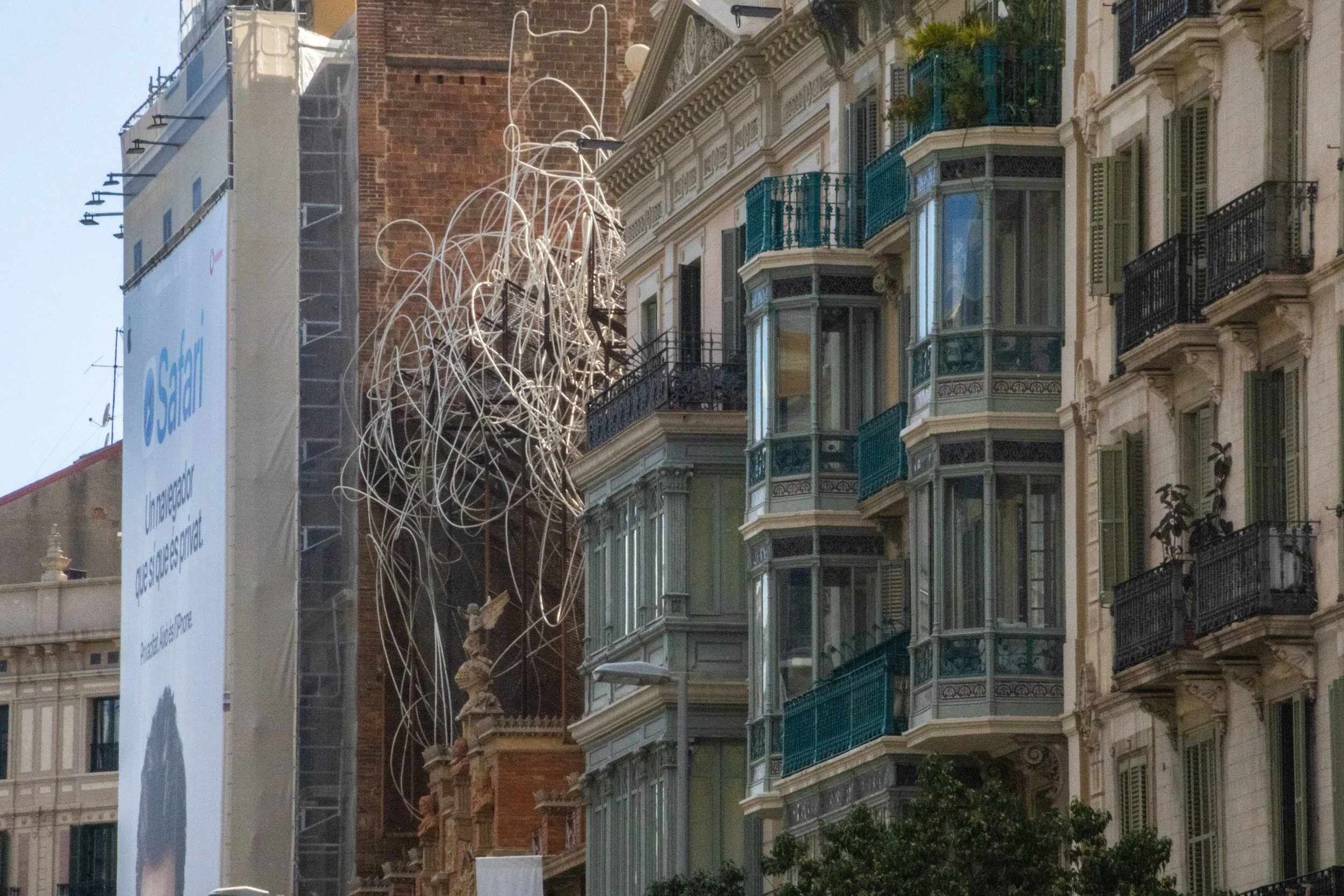
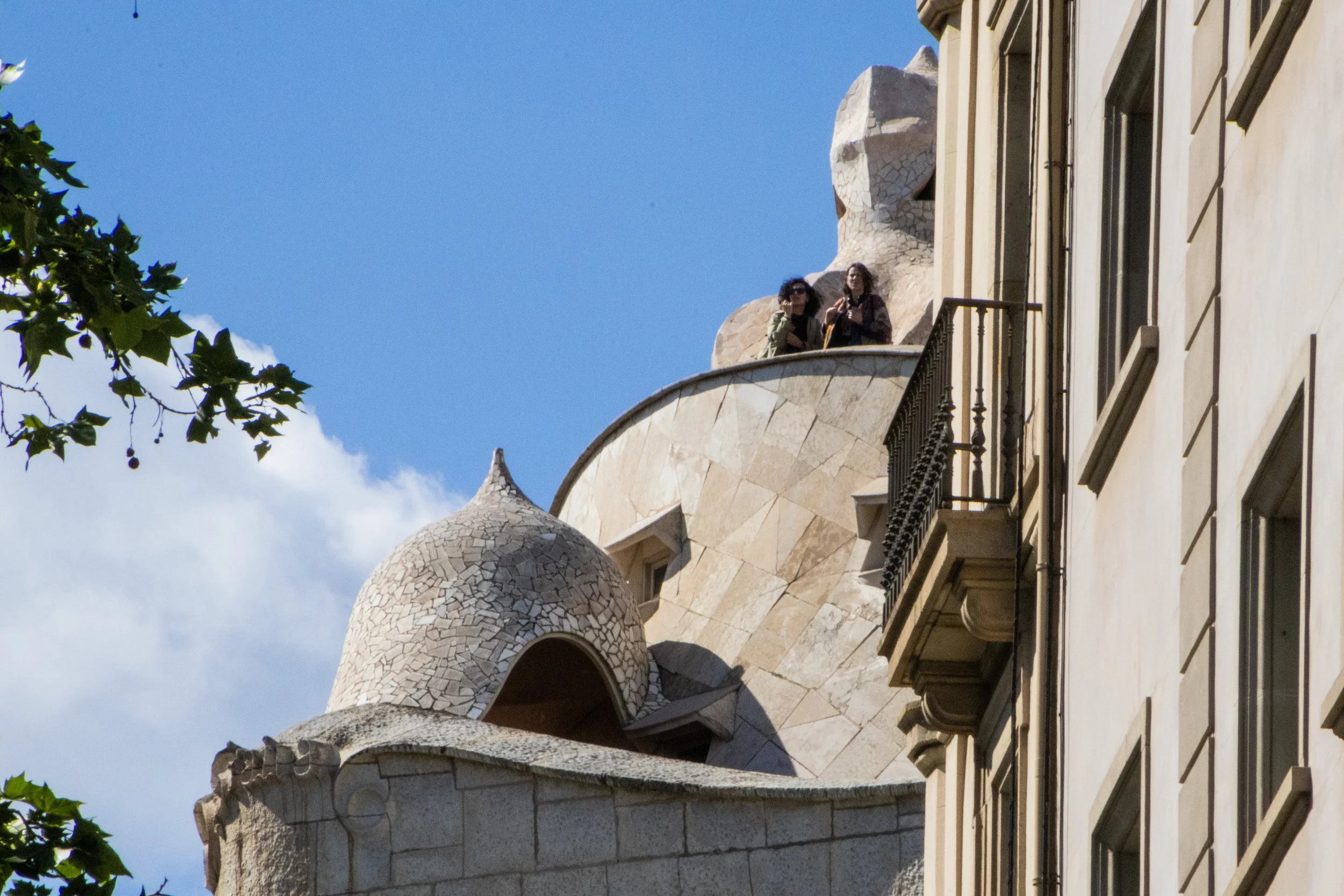
They are cool buildings to walk past, and definitely spark the imagination, but nothing can prepare you for just how insane these places are once you get inside! Today we’re going visit 3 famous examples of the architectural magic that Gaudí brought into this world, but first, let’s get to know the man behind the mask.
Gaudí was born in a small Catalonian town in 1852, and relocated to Barcelona to train as an architect. His career coincided with Barcelona's extraordinary late-19th-century expansion, which we discussed at length in the previous article. Recall that Barcelona found itself in the unusual and unlikely position of needing to build an entire city from scratch all at once, which is why it is now one of the only great European cities with a North American-style grid system for its street plan. This was also the dawn of a new architectural movement in Catalonia called Modernisme, or Catalan Modernism. This was the Catalan counterpart to Art Nouveau, the distinction being a unique connection to Catalan identity, medieval architecture, and craft traditions. So it was a very good time to be an architect in Barcelona!
In the beginning of his career, Gaudí’s work was more historically and traditionally-grounded: Moorish/Mudéjar ornamentation, Gothic architecture, patterned tiles, and elaborate brickwork. But that’s the thing about the great boundary pushers: just as we saw with Picasso in the previous article, before they were innovators, they had first attained a rigorous, world-class mastery of their craft. So, while Gaudí might have initially appeared to some as simply a ‘good architect’ and a product of his time, things get really exciting when he stopped imitating historical forms and began inventing his own architectural language.
We can talk about Gaudí’s unique style as we move through this article and see it first-hand, but to give a quick preview of his most famous works, the ‘crème de la crème’ is definitely the Sagrada Familia. This is probably the most famous landmark in Barcelona of any category. However, Casa Batlló, La Pedrera - Casa Milà, Park Güell, and the Crypt of Colònia Güell are also incredible places. The latter two will not be covered in this article, but I’m sure I’ll be back for them eventually.
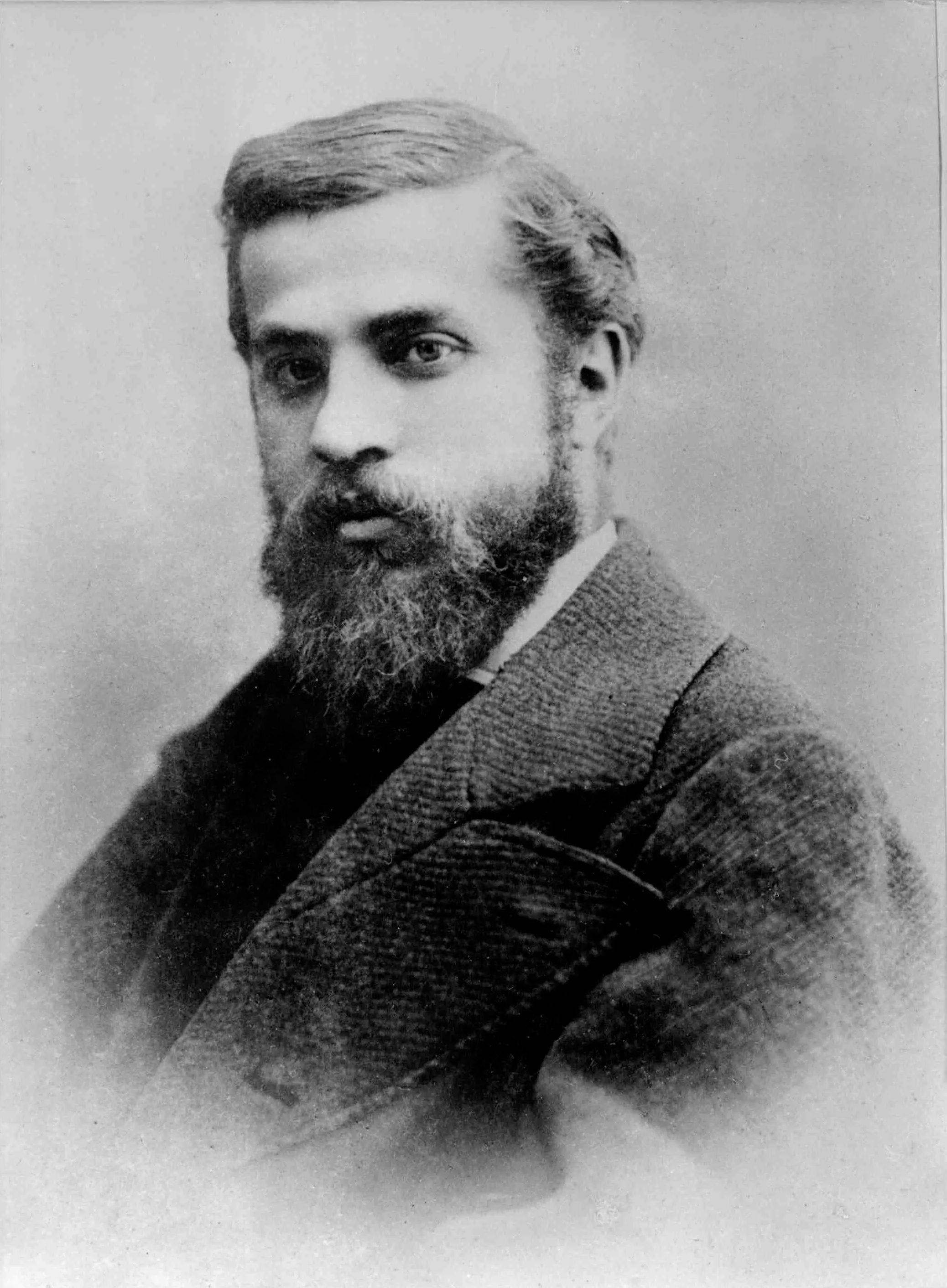
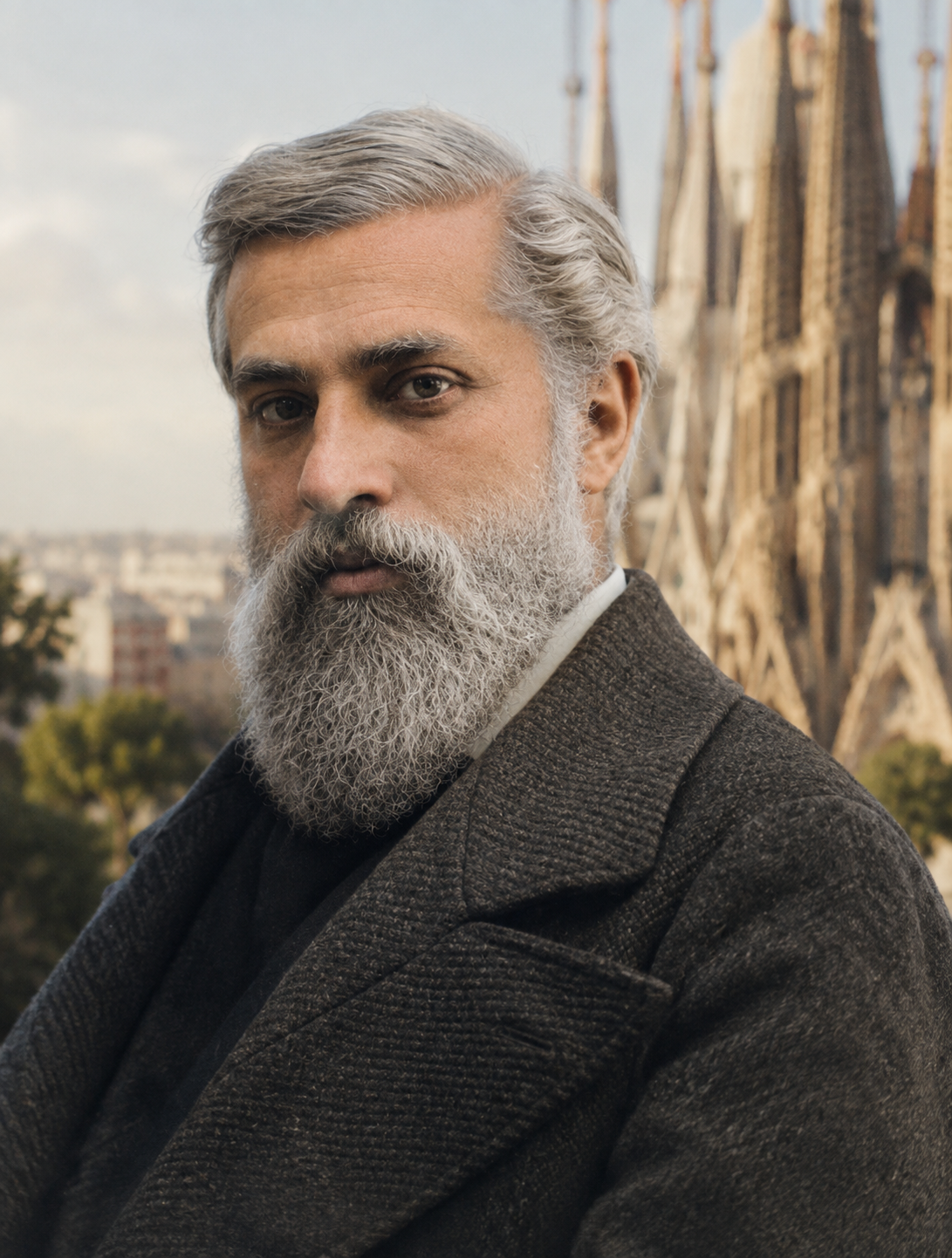
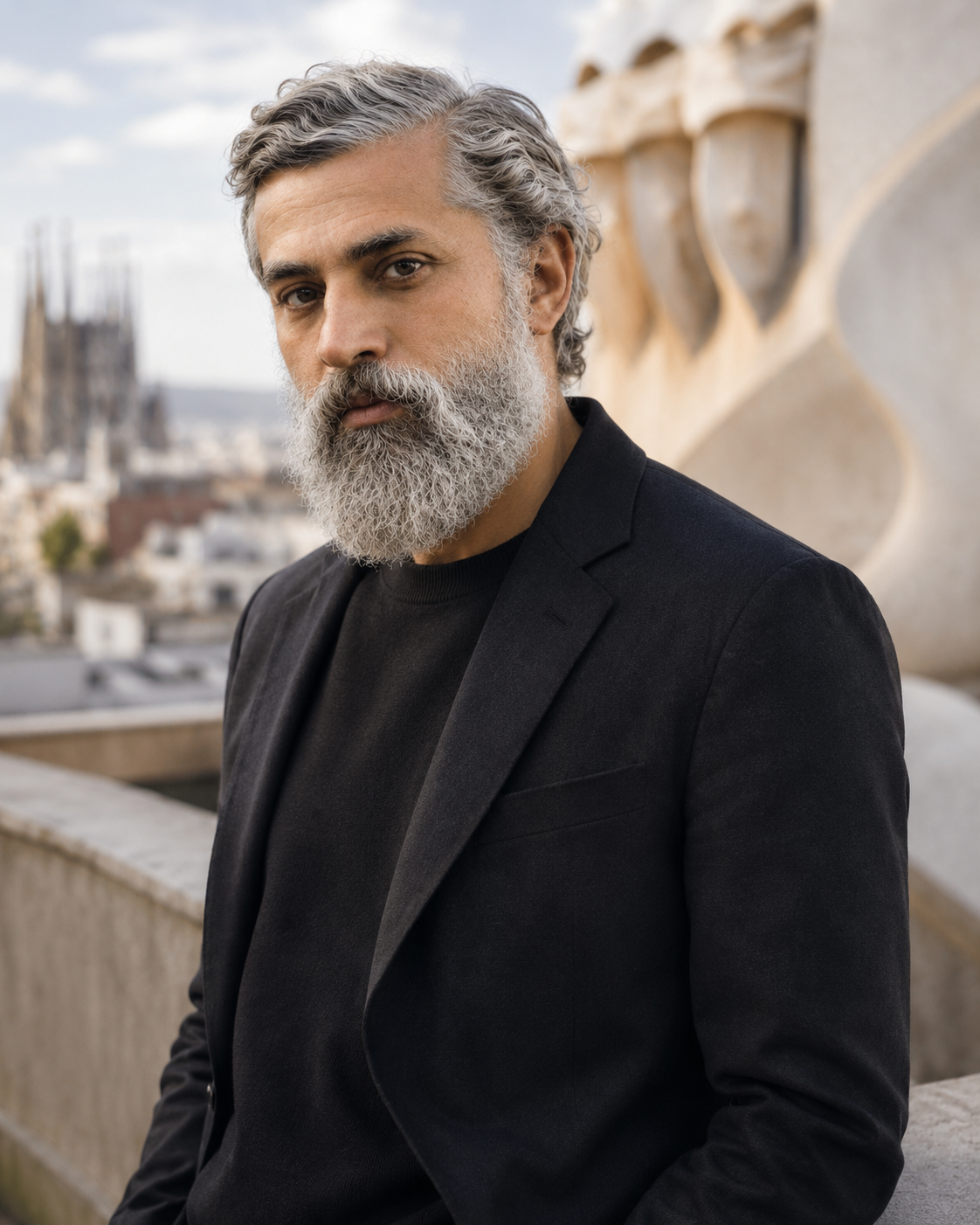
Here’s the most famous Gaudí portrait—the one that is public domain and therefore free to use for random people on the Internet like myself—and a couple of ChatGPT-prompted reworks to bring him into the present day. I need to start doing this with all historical figures I talk about on here; these AI photos are how I picture him now!
Casa Batlló
We’ll start here, because it’s the first thing I remember seeing ‘in the wild’ during my first visit in Barcelona back in 2012. The cost to enter is (brace yourself) €39 per person (if you want to go up to the roof, which you definitely do). There’s also an option where you come here at night for drinks, and everything is lit up for up to €59 per person. These are not cheap tickets.
Casa Batlló—at the time of its original creation—was somebody’s private home. The home belonged to the Batlló family, specifically the wealthy textile industrialist Josep Batlló i Casanovas and his wife Amàlia Godó Belaunzarán, whose family was also associated with a major newspaper at the time. They commissioned Gaudí to remodel and reimagine their home and—from 1904-1906, whilst the project was underway—I’d say he knocked this one out of the park. When it was done, Josep and Amàlia lived their lives in this place, while renting out other apartments in the building to lucky tenants.
So, what does it look like? Obviously the pictures are coming! But I think the most important thing to highlight is the fact that—instead of straight-lined, geometric shapes—he often emulated the more curved, free-flowing architecture found in nature to guide his designs. Think about the anatomy of trees, flowers, animals, or even humans.
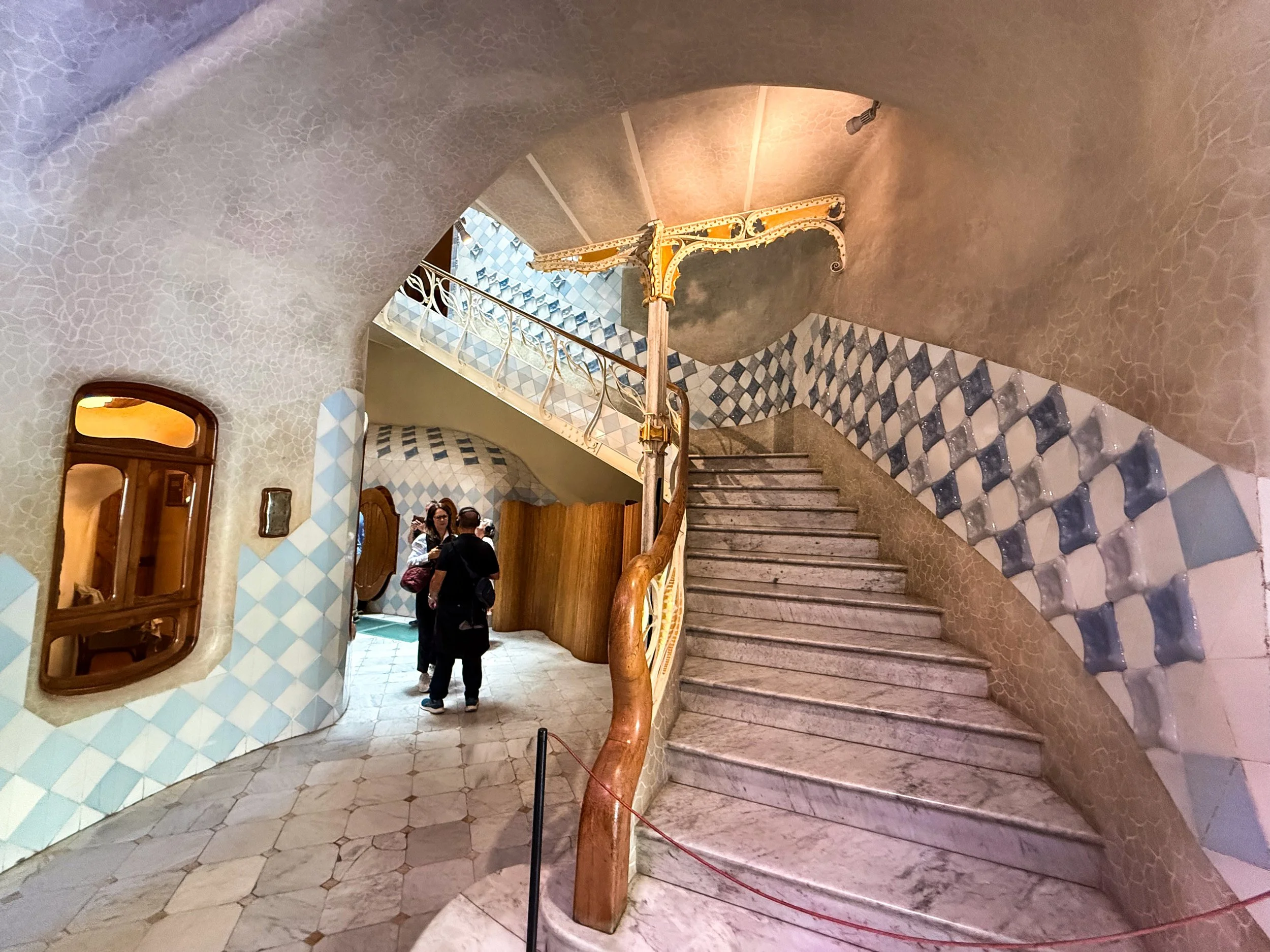
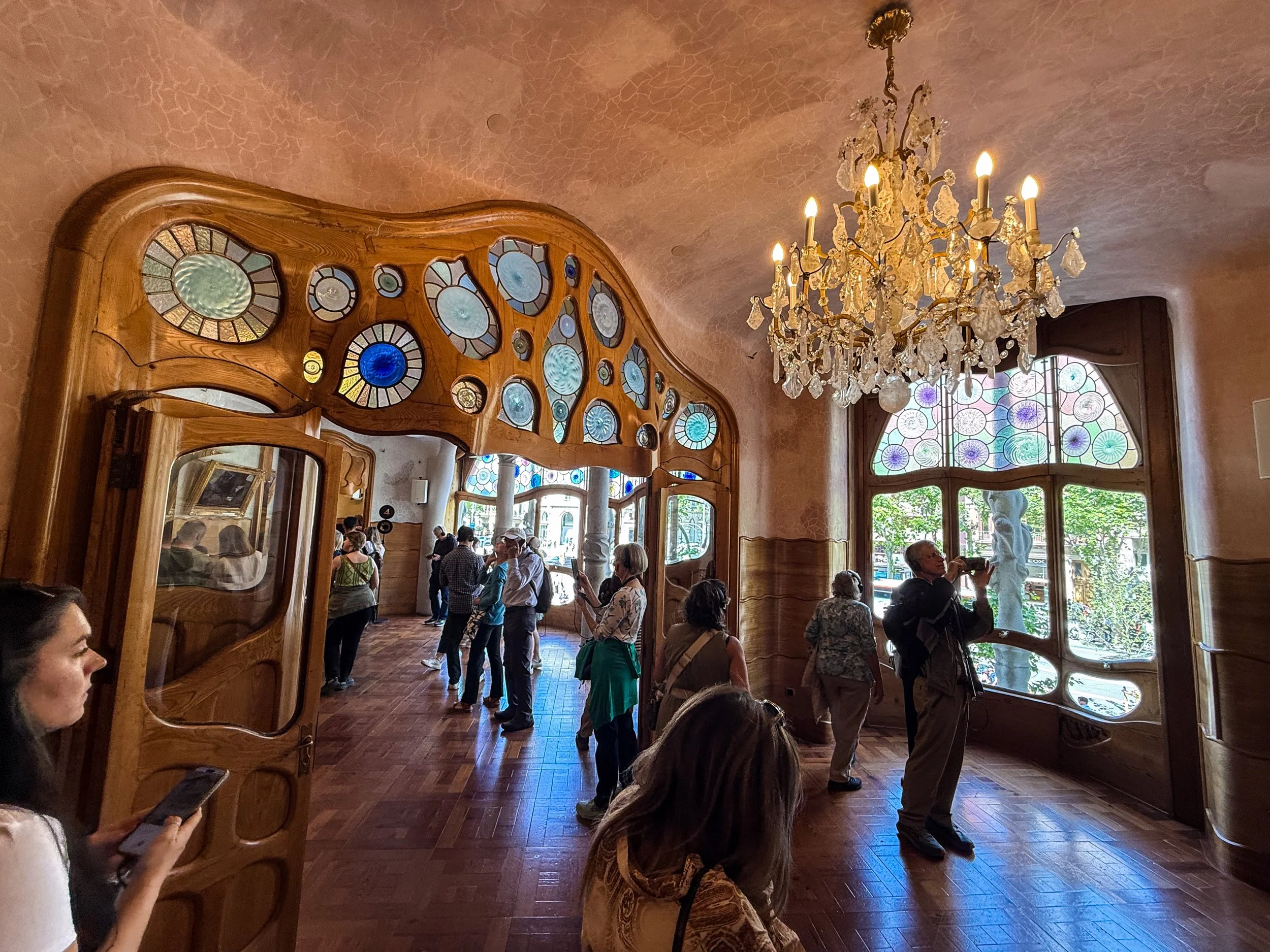
We’ll start inside, where there are almost no straight lines at all. The doors and windows are curved, while the the ceilings spiral in such as way that it looks as though everything was carved by water. The entire building centers around an atrium which is flooded with natural light, revealing a blue tile scheme that ripples upward like bubbles rising to ocean’s surface from deep underwater. Adding to this aquatic angle, the material under the stair handrails in the atrium is a transparent but uneven glass that distorts one’s view of the other side as if they are looking down on something beneath the water from above.
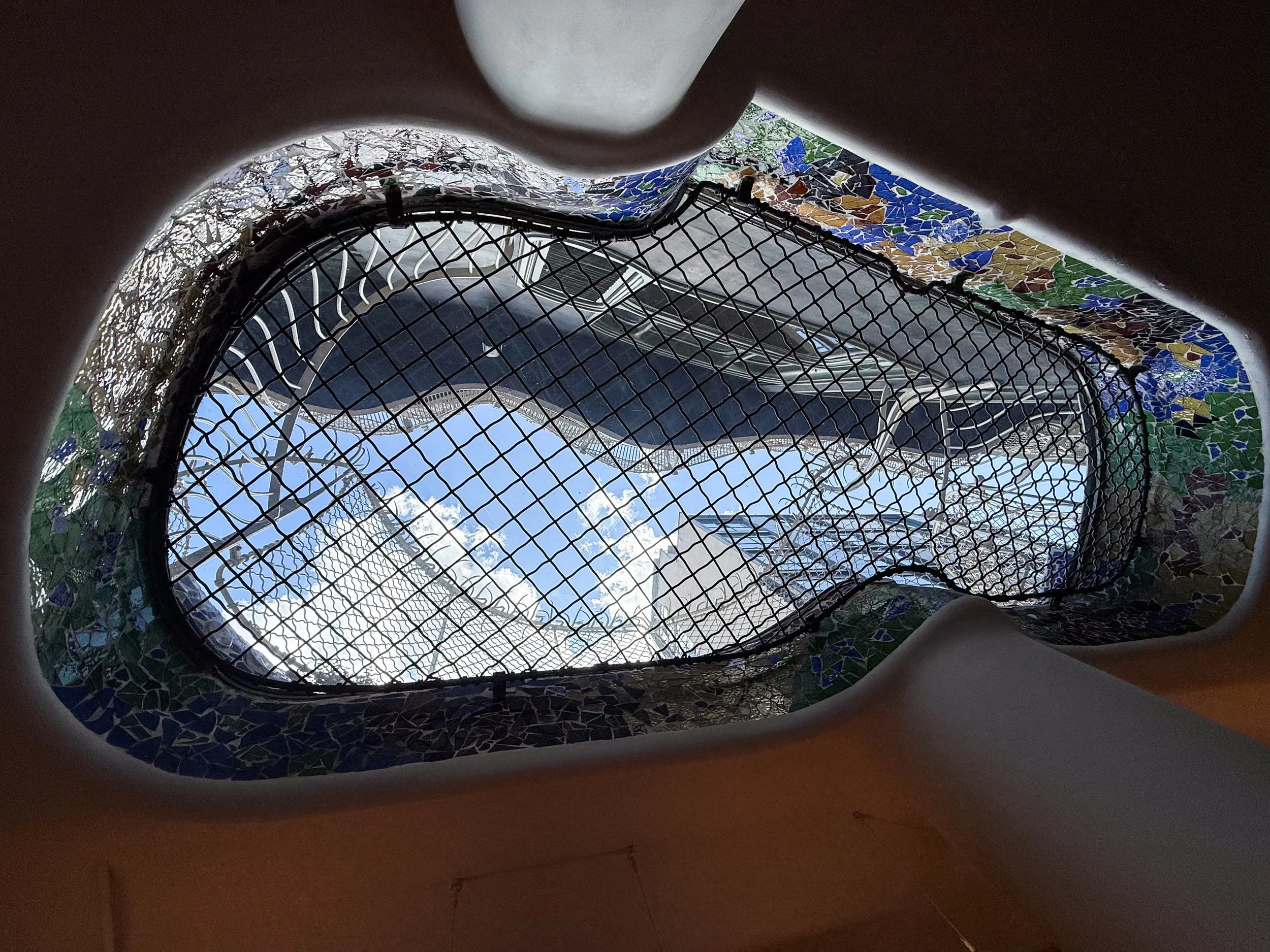
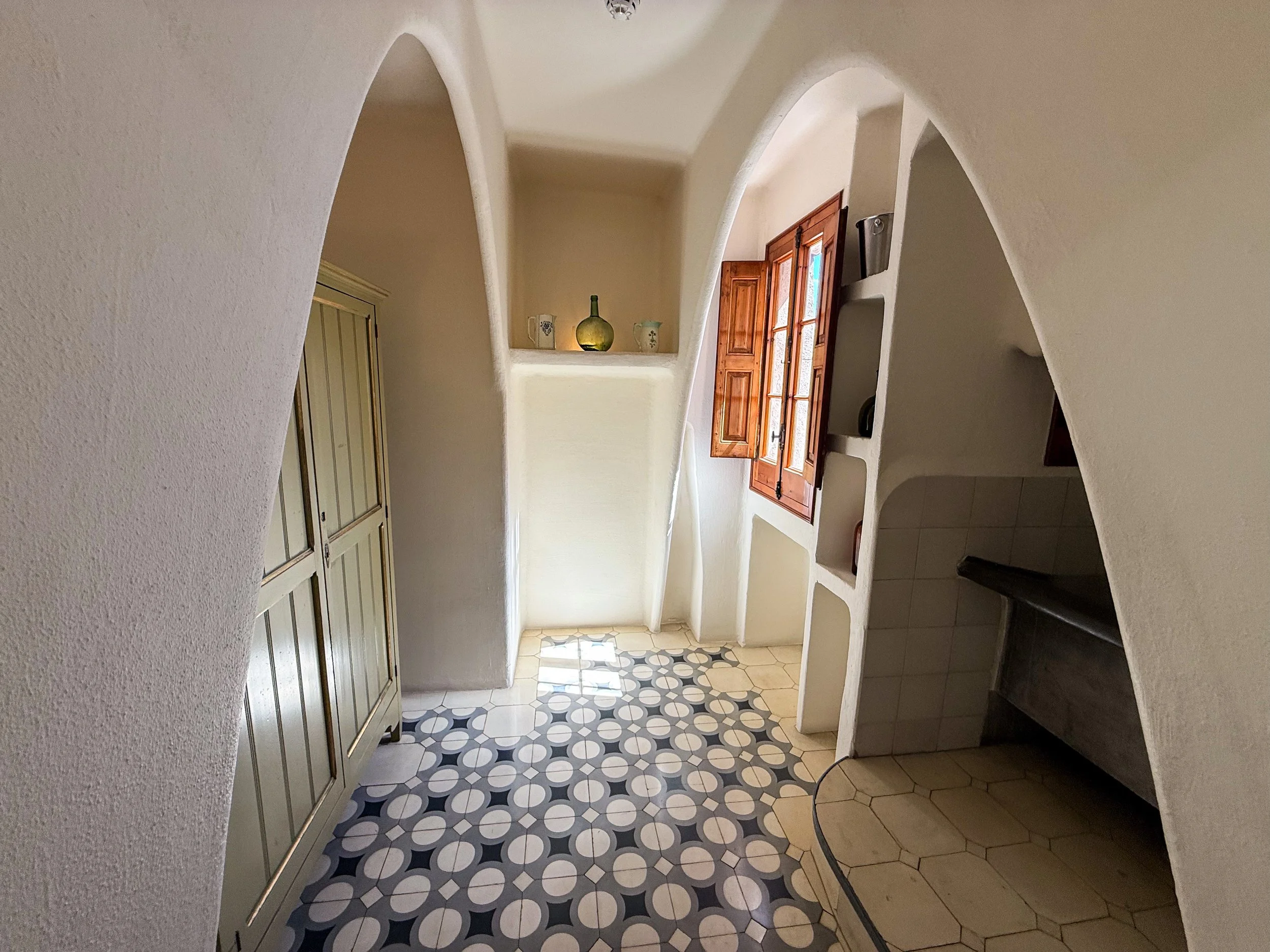
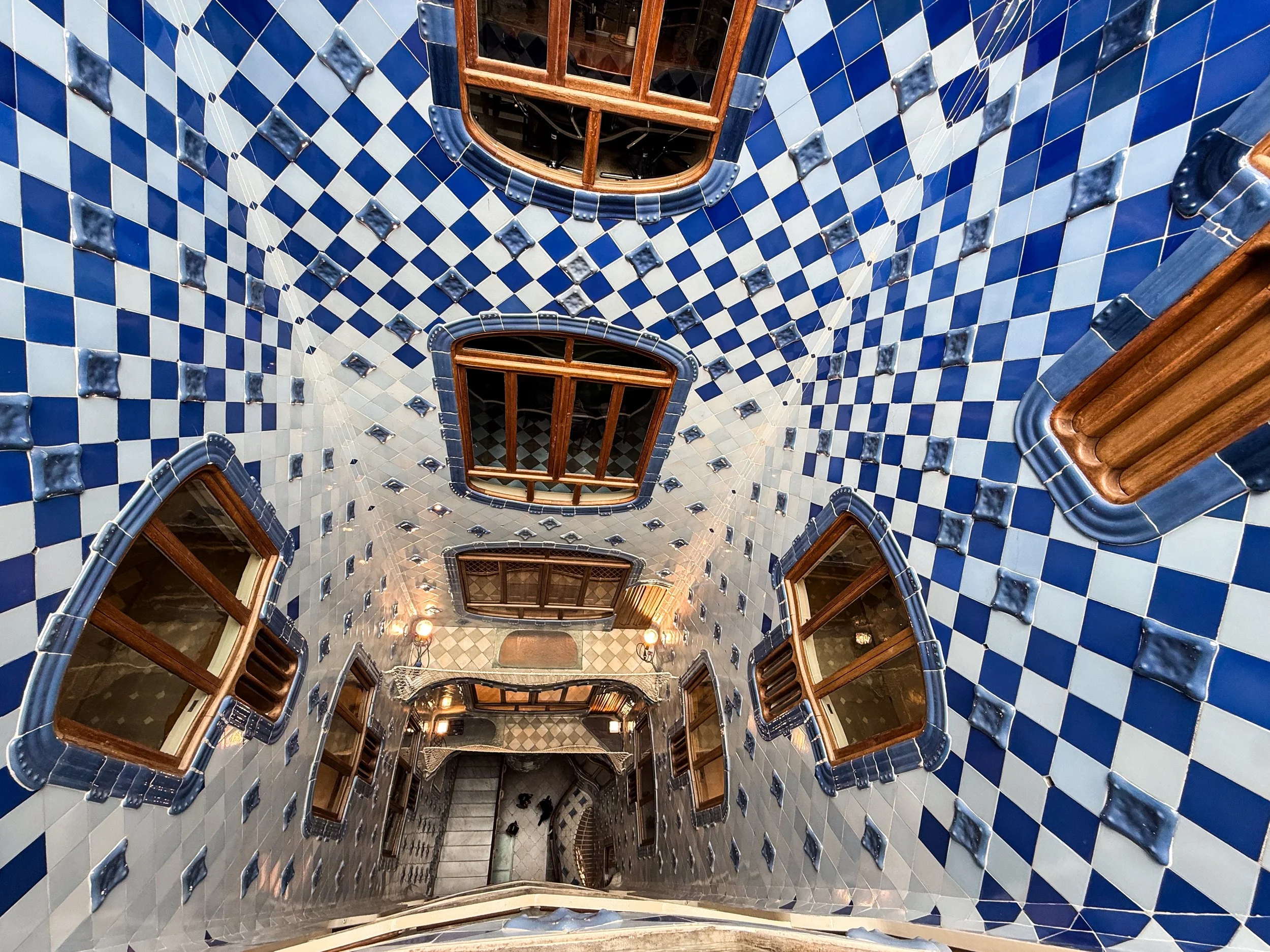
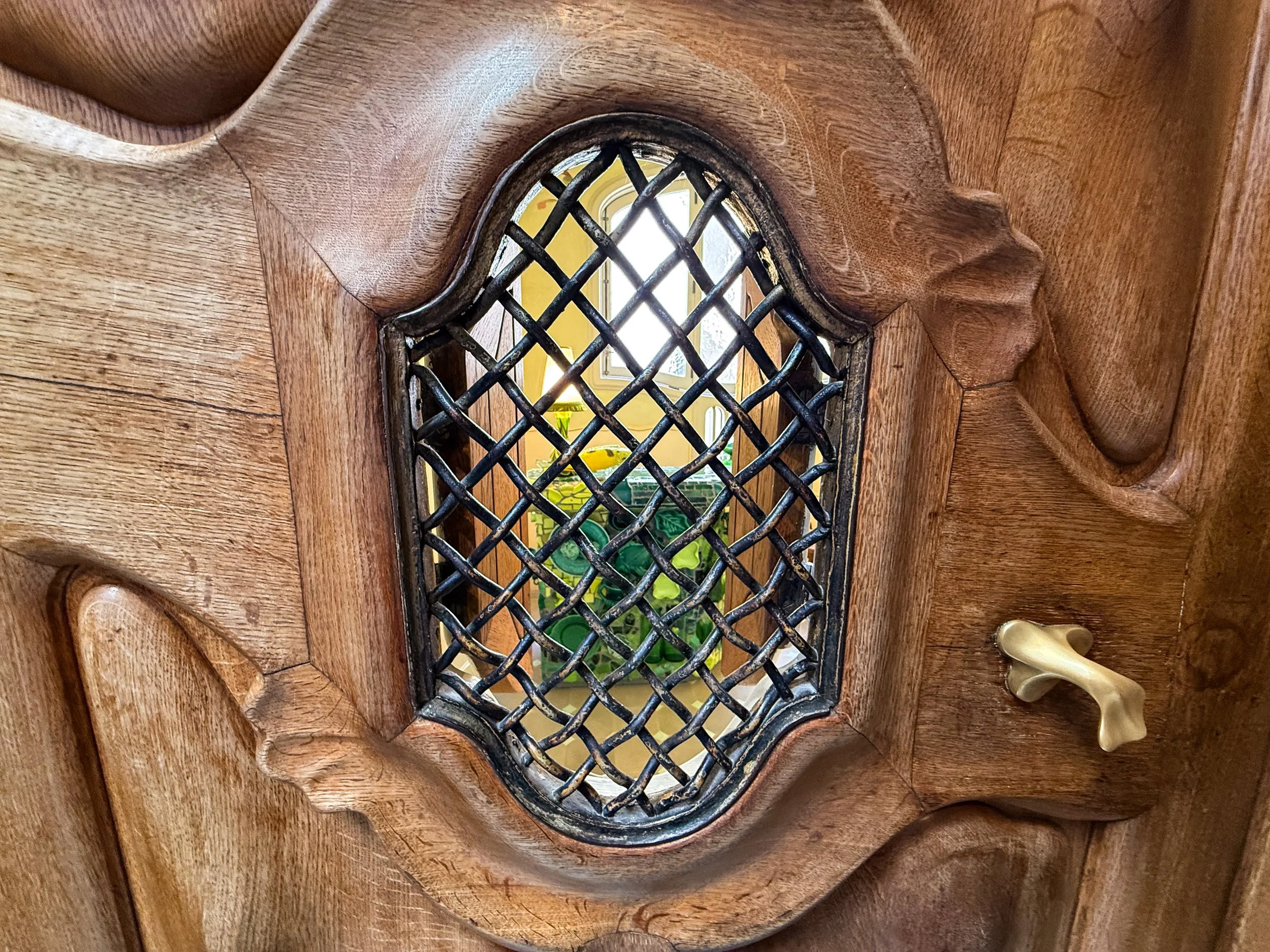
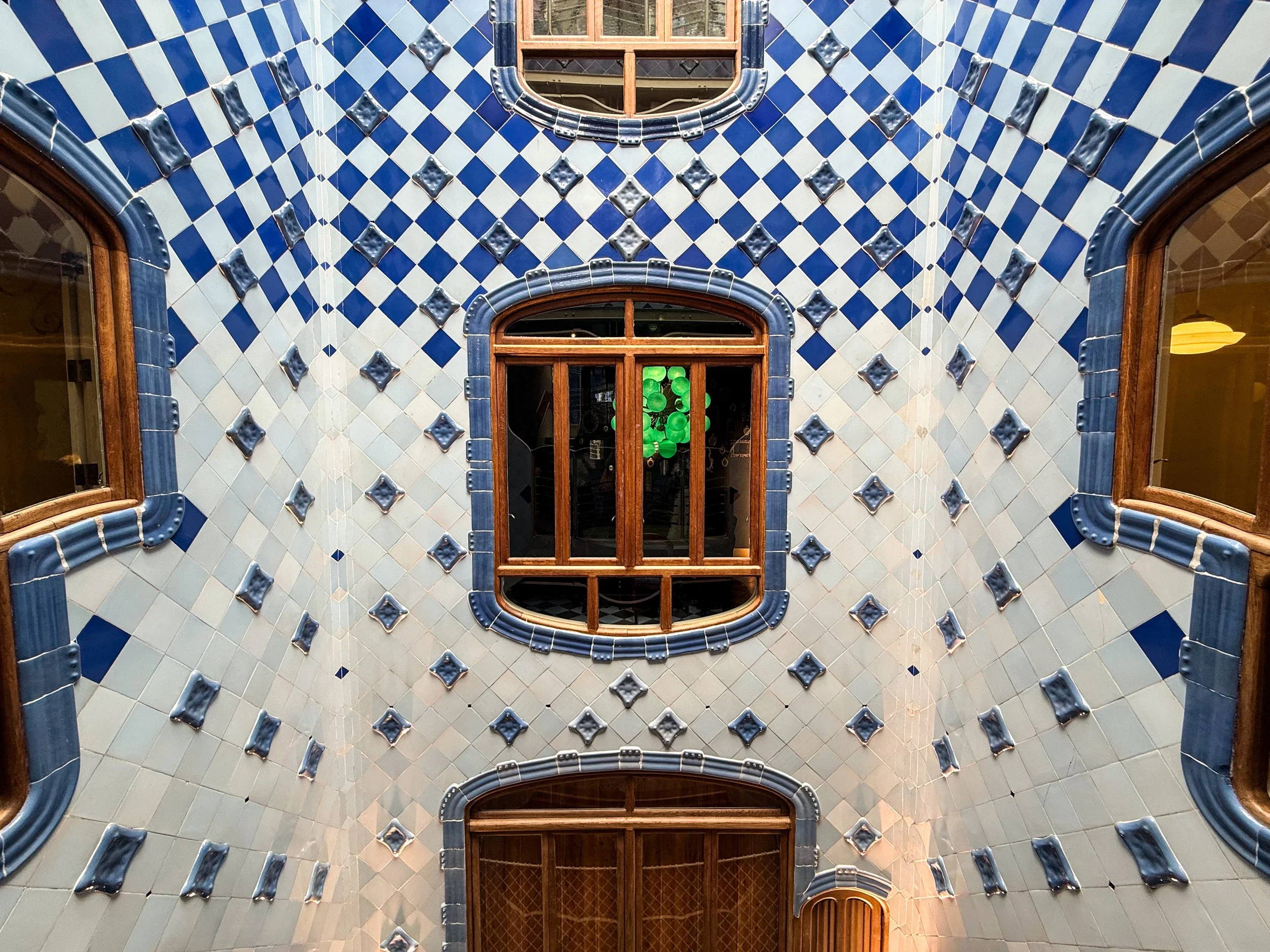
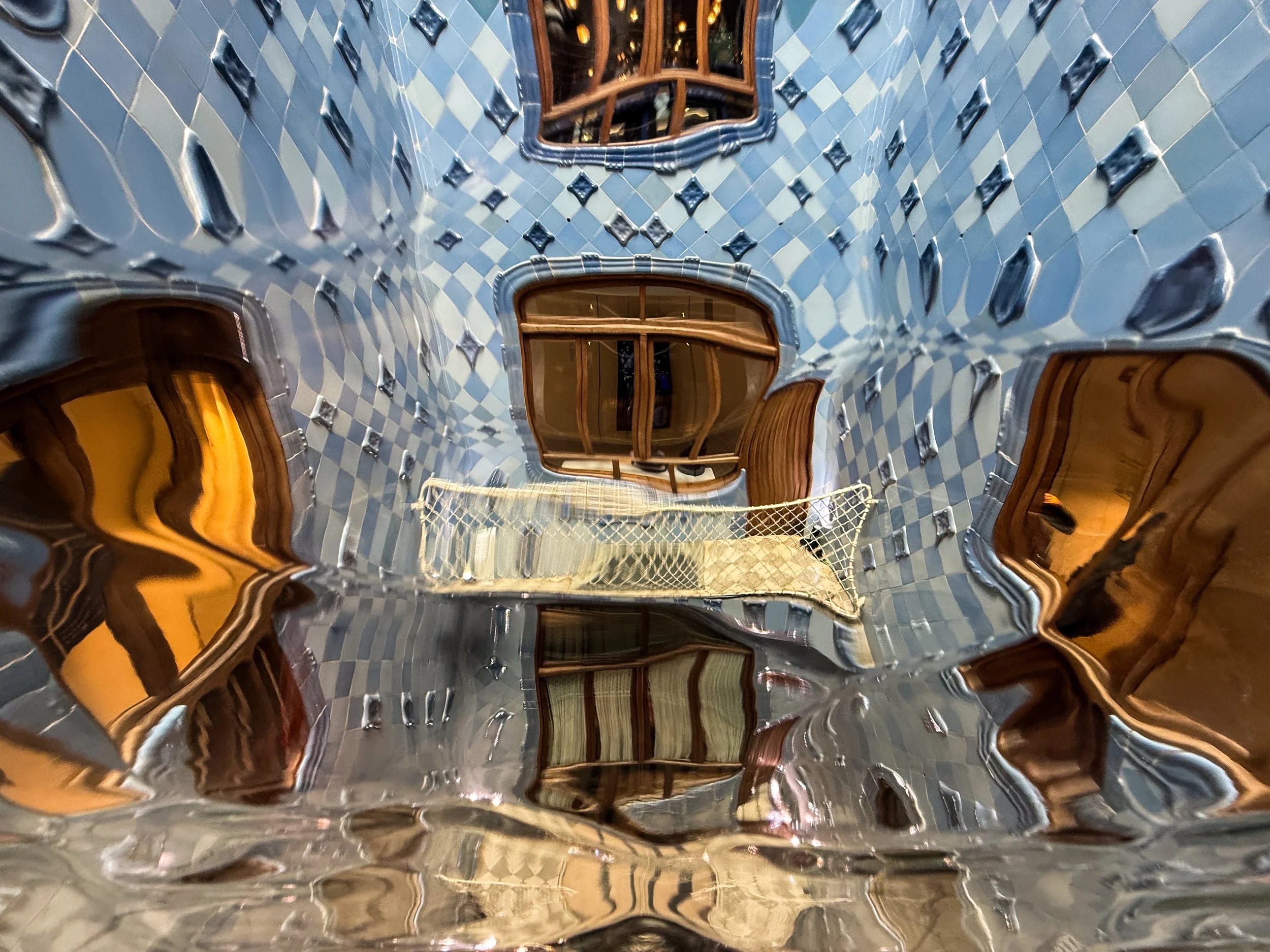
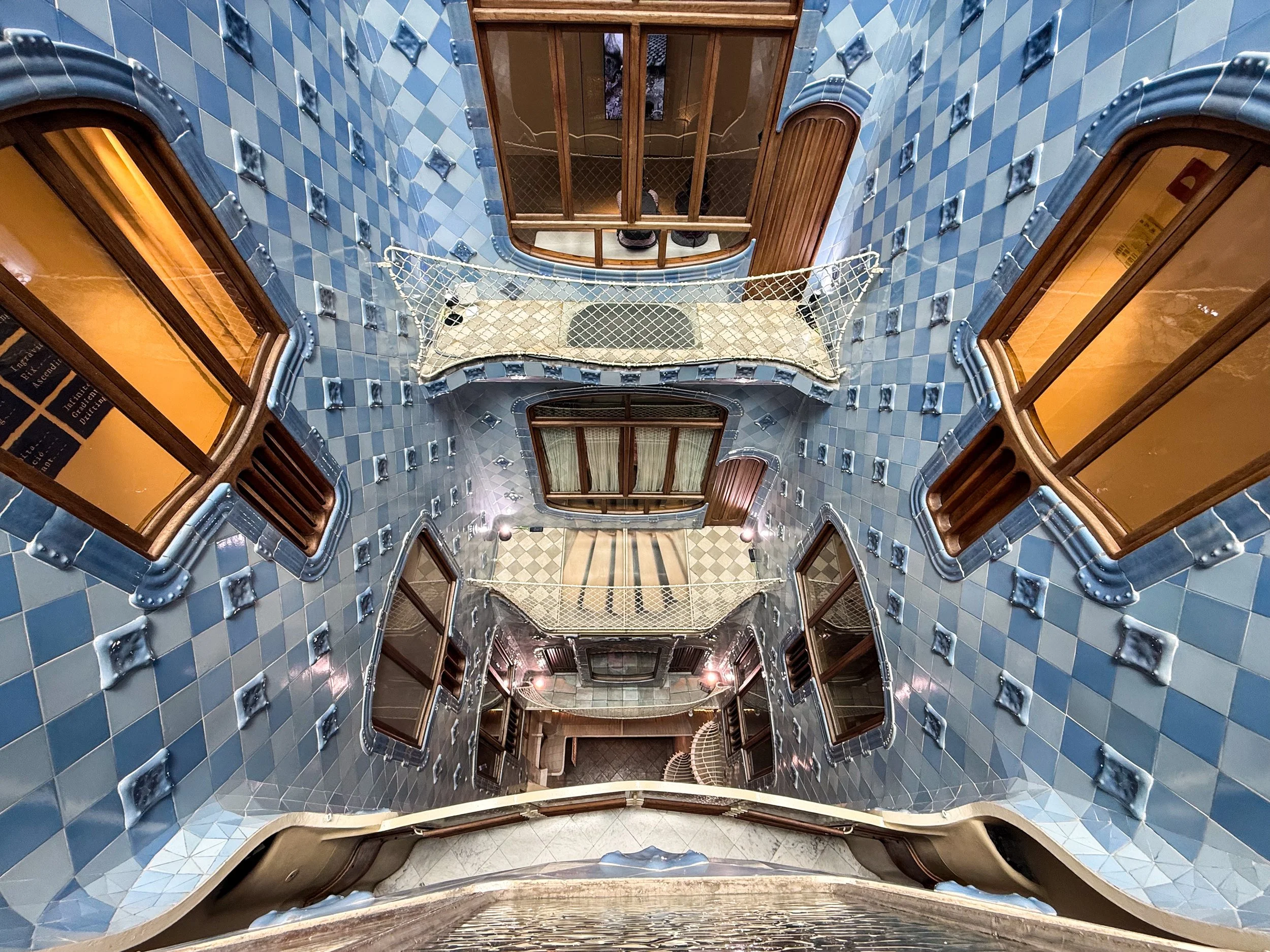
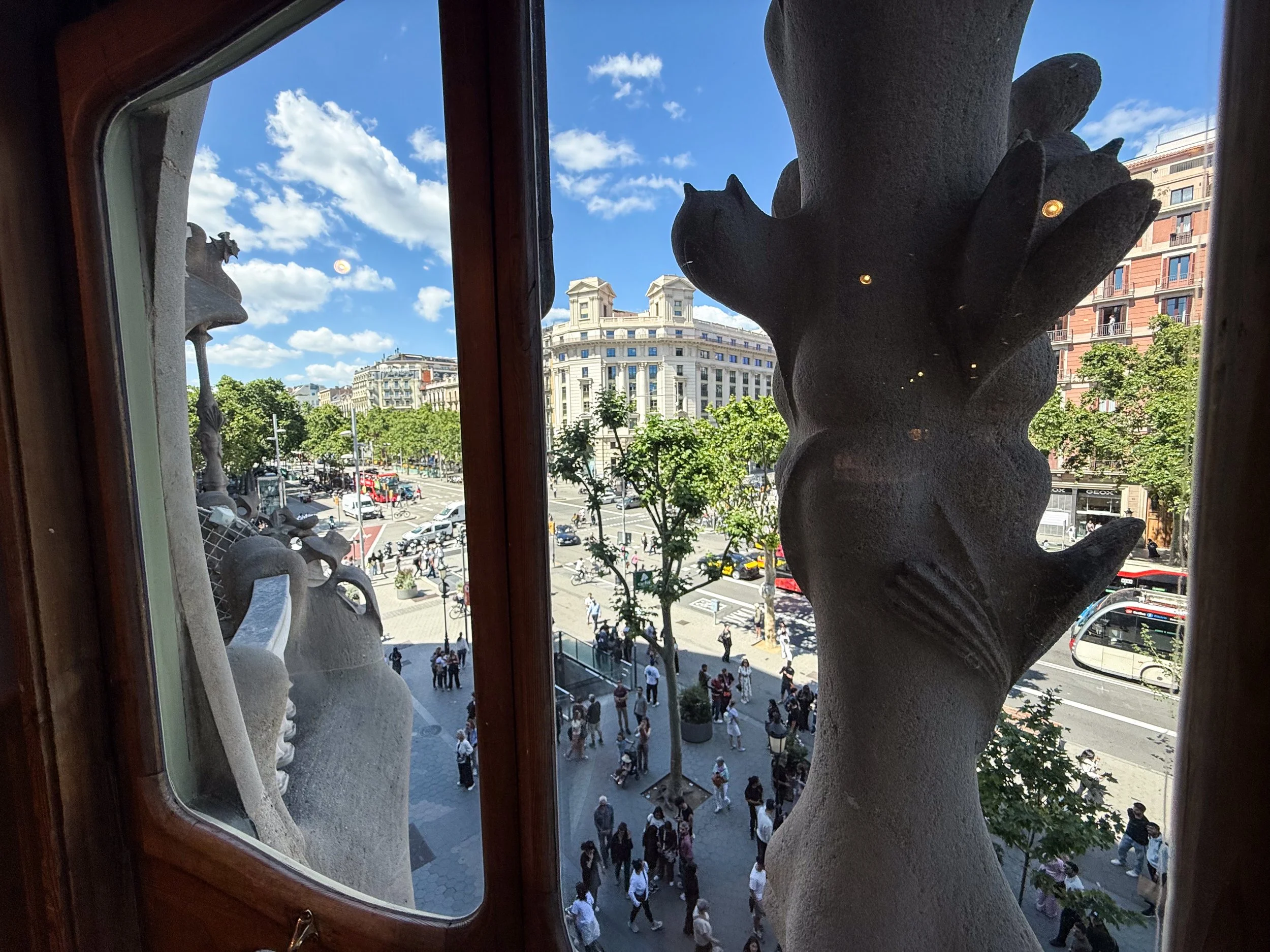
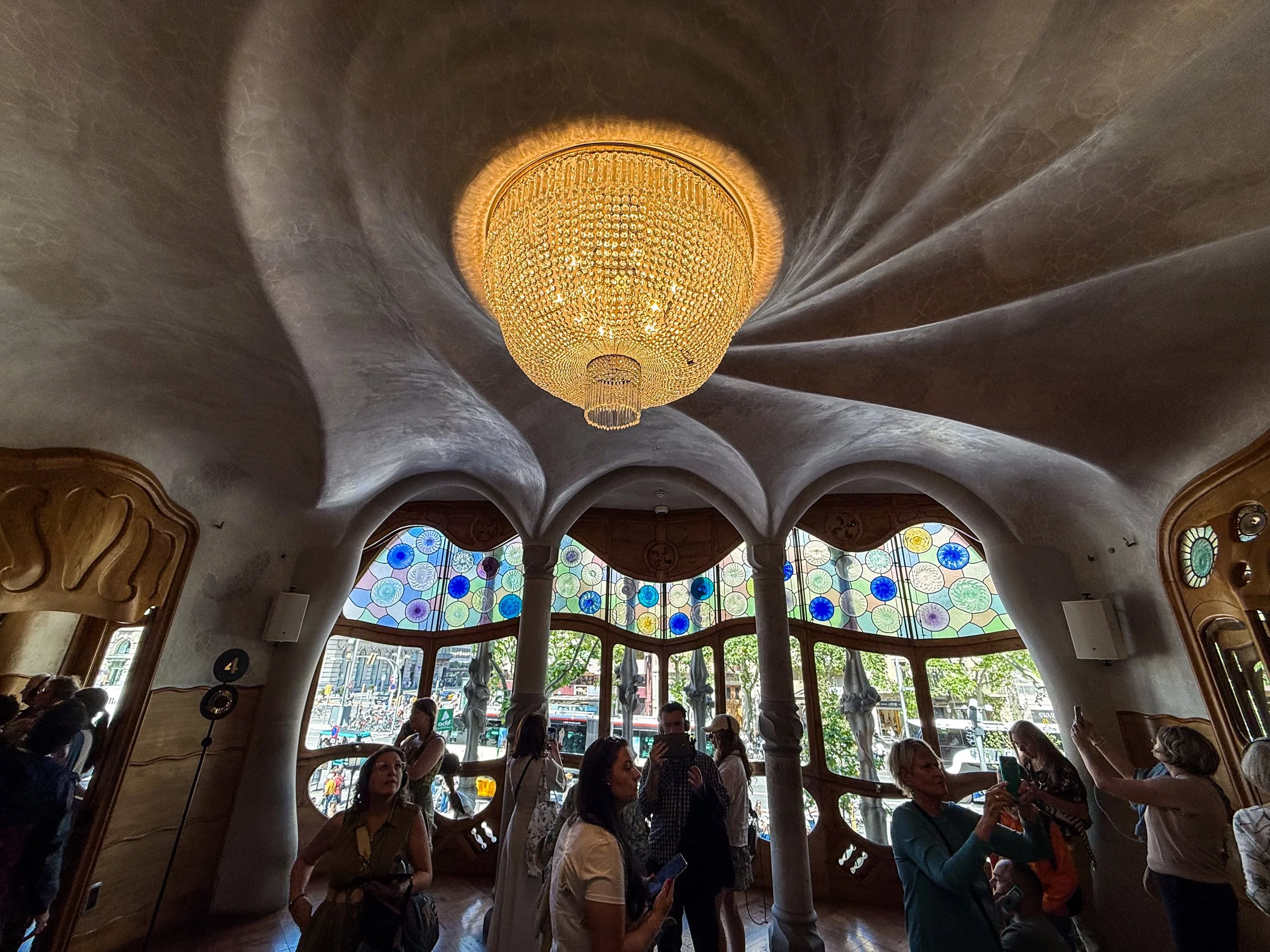
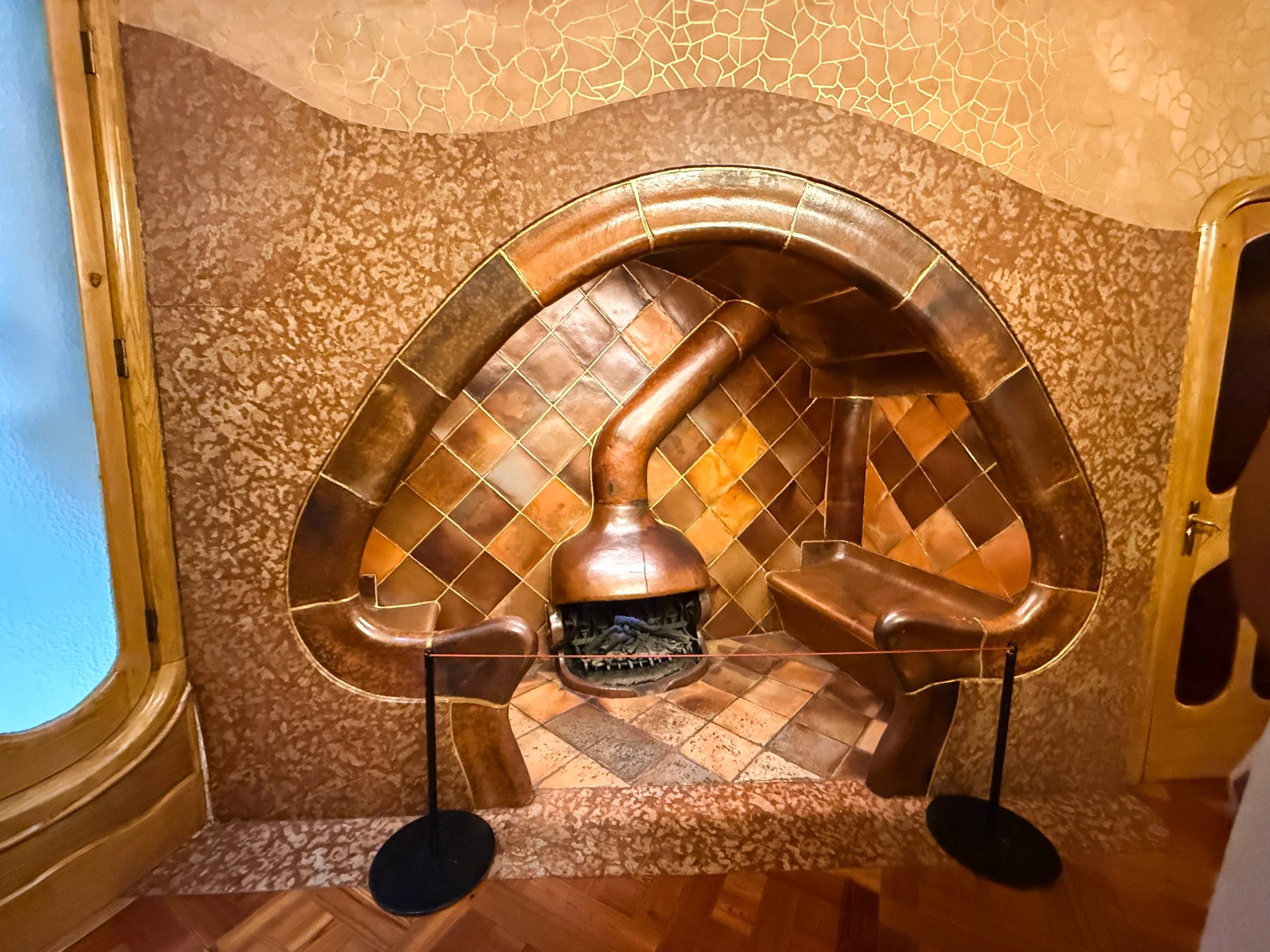
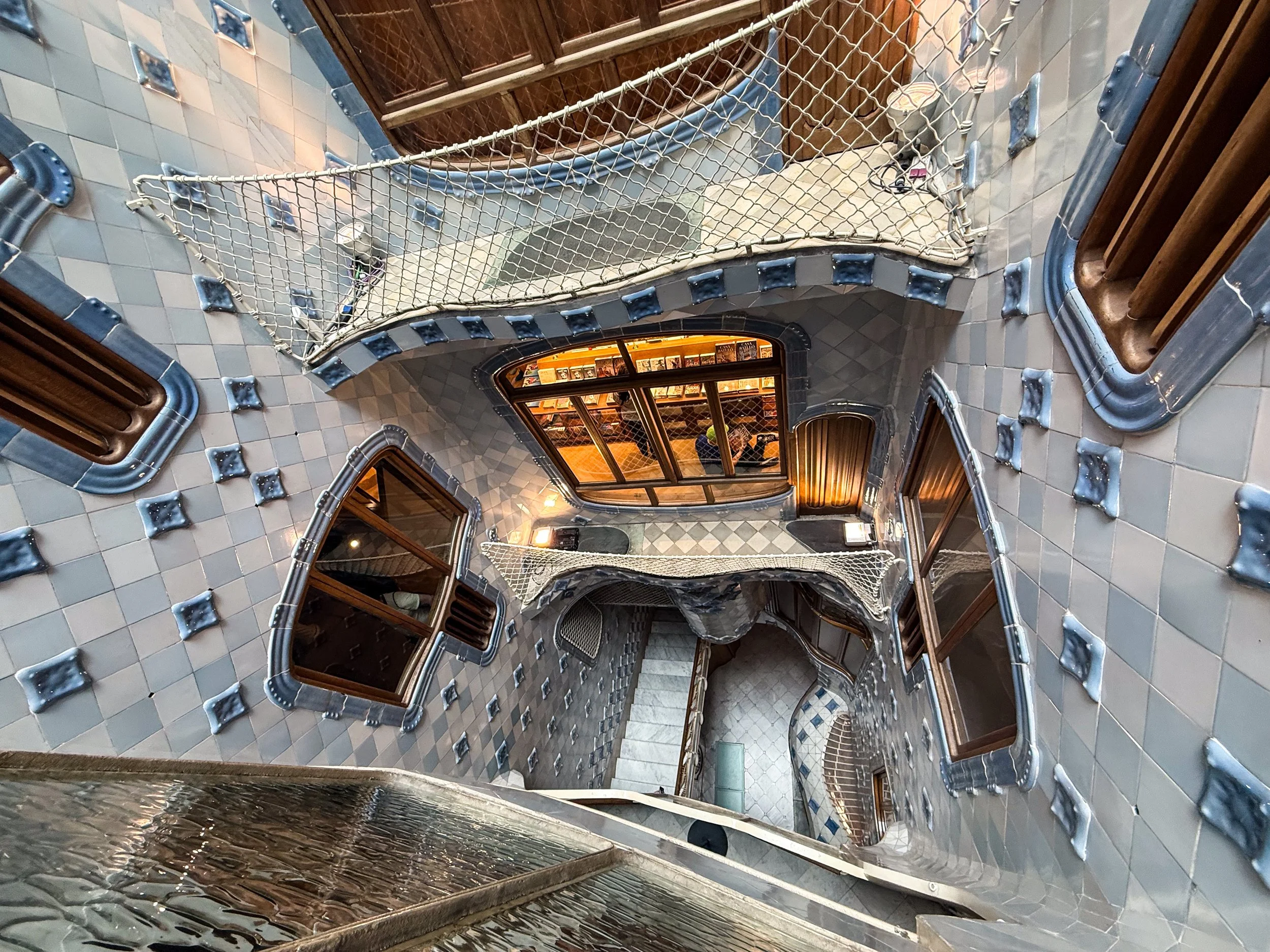
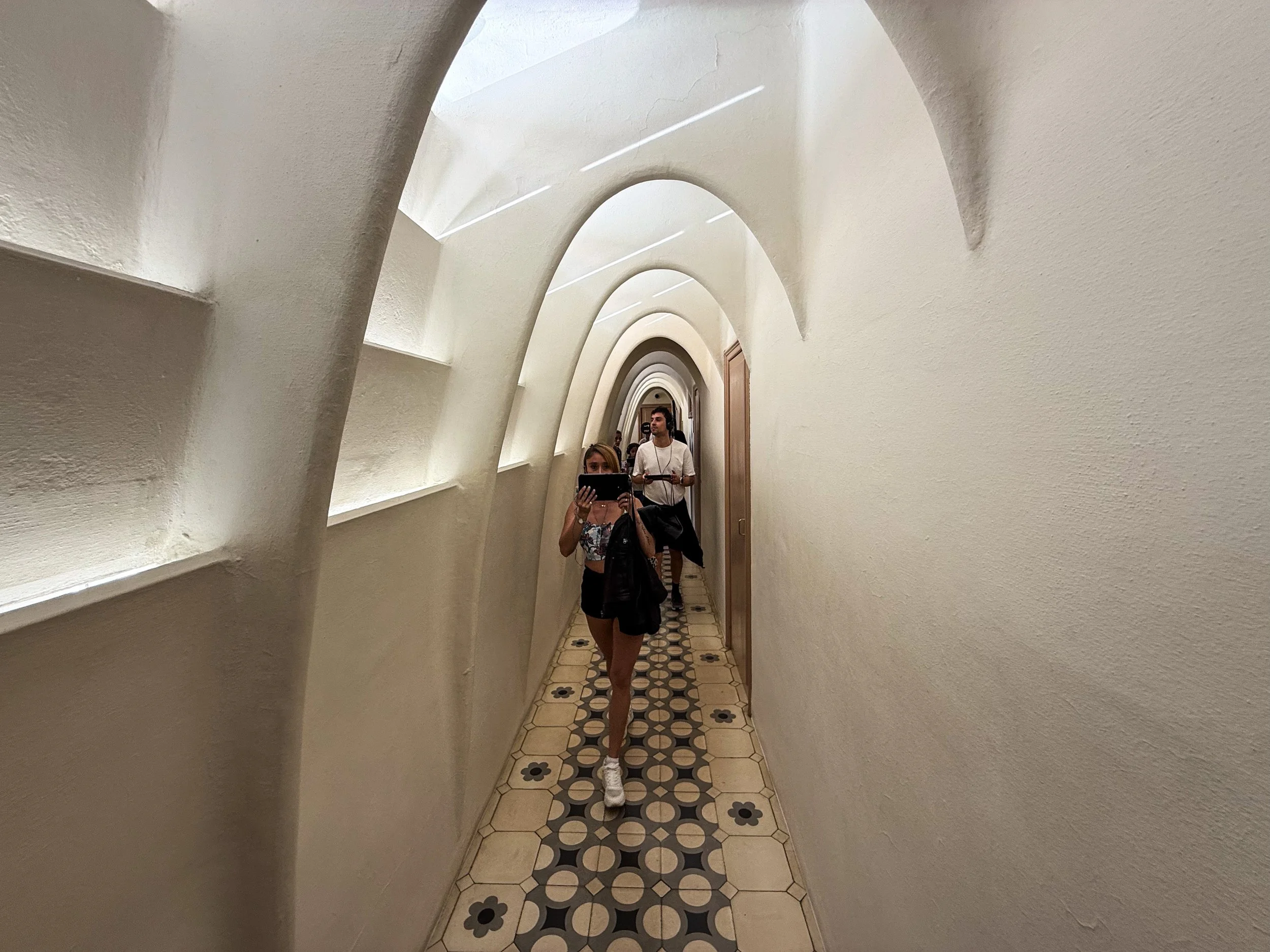
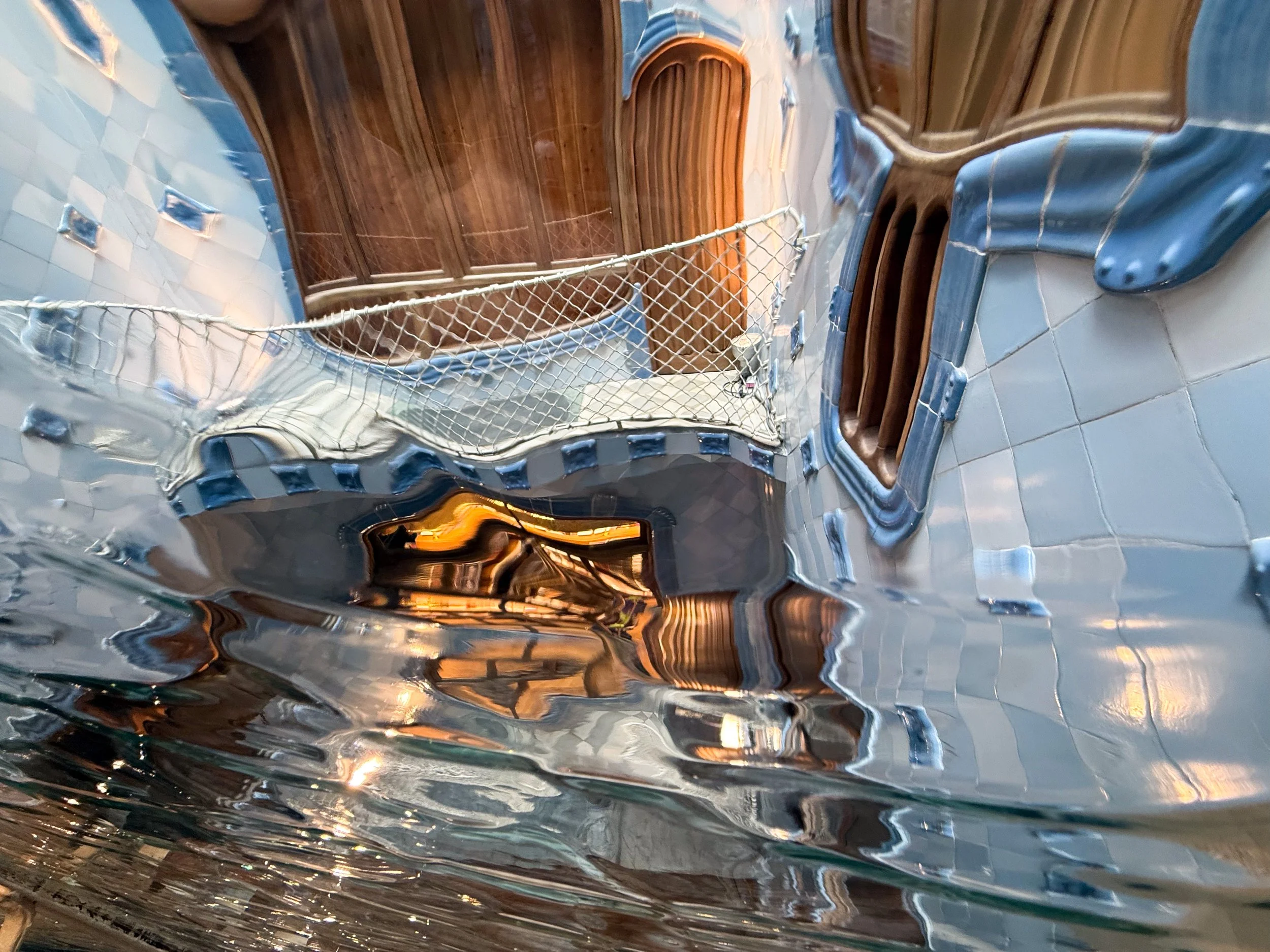
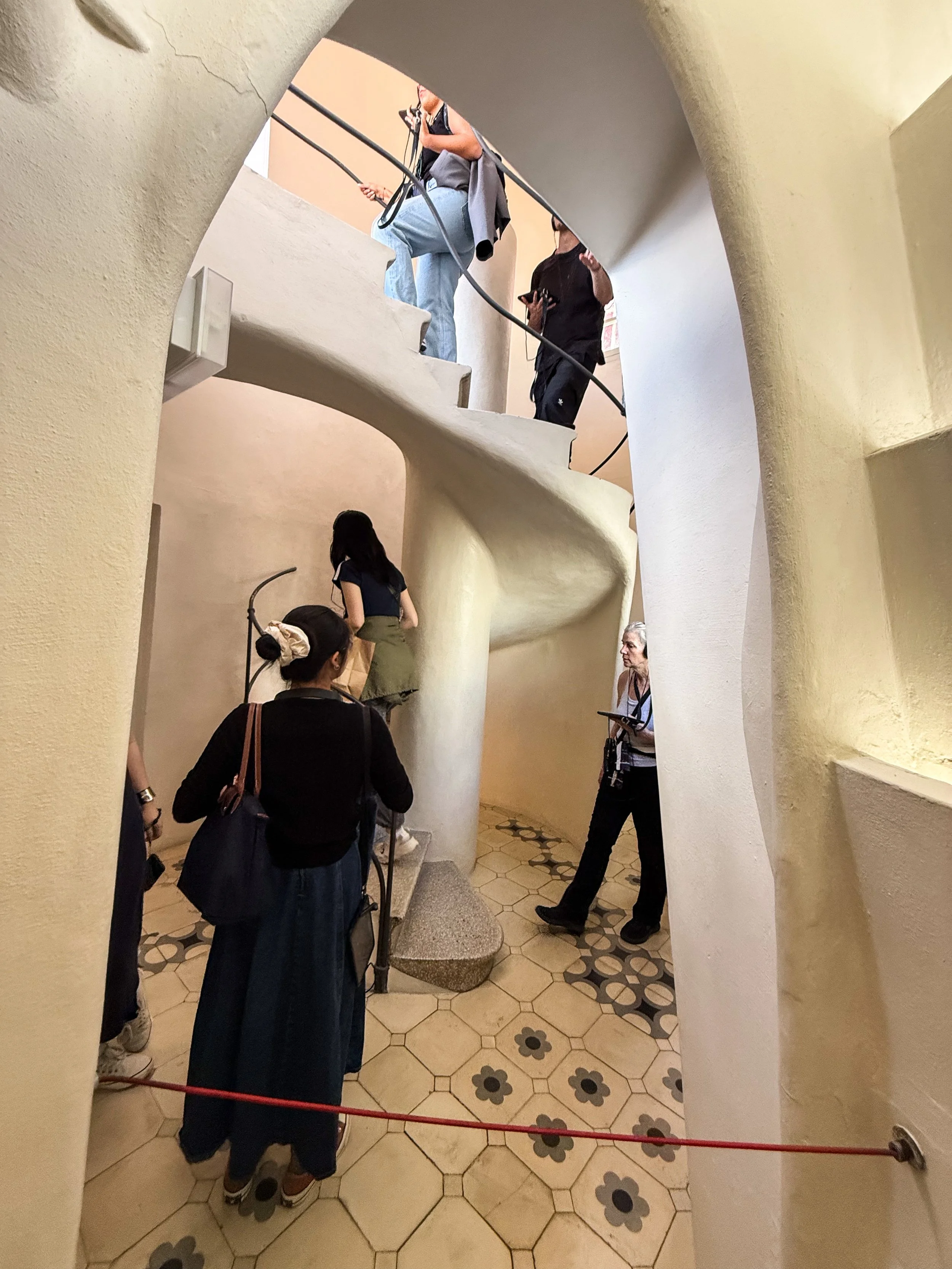
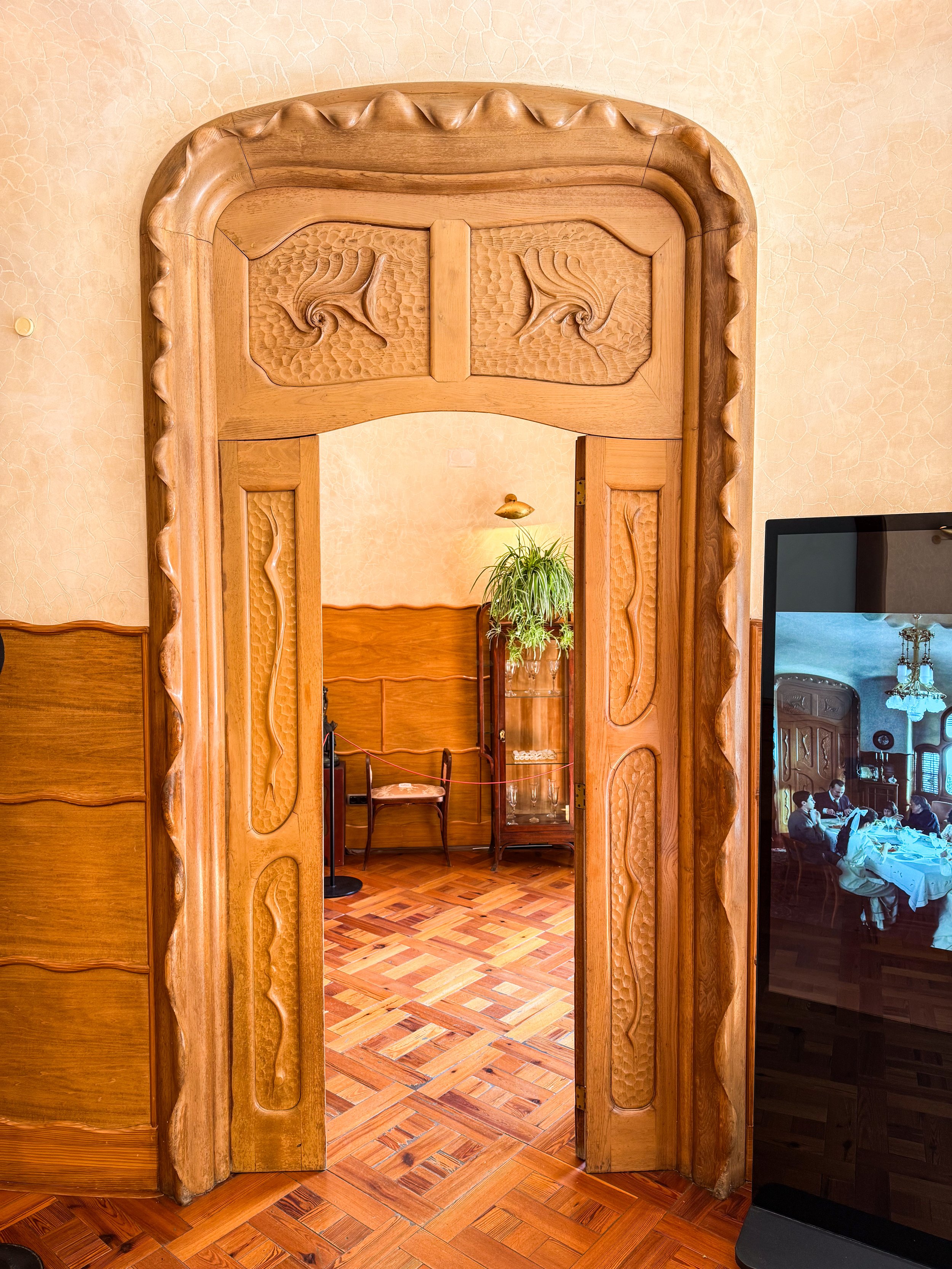
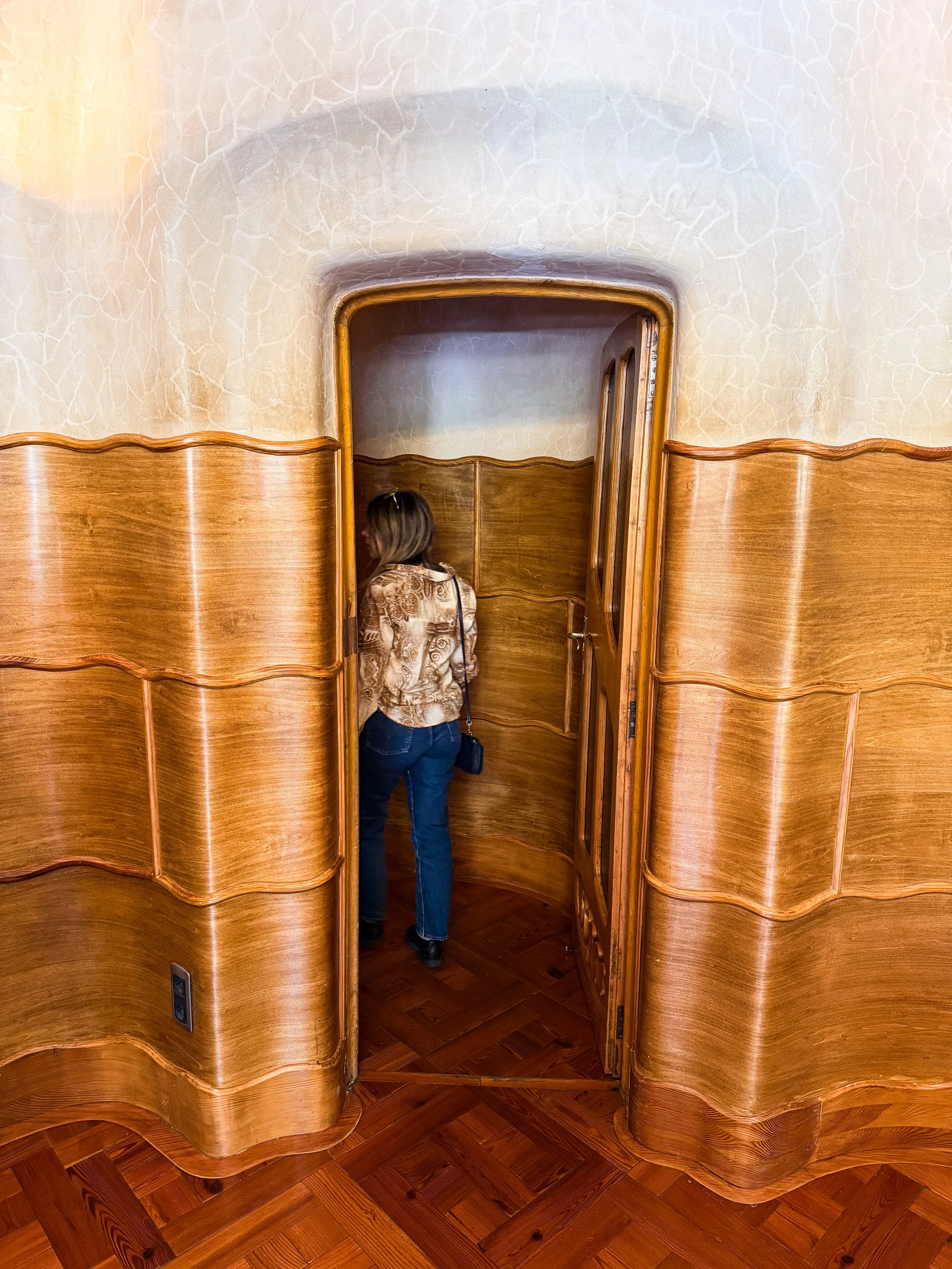
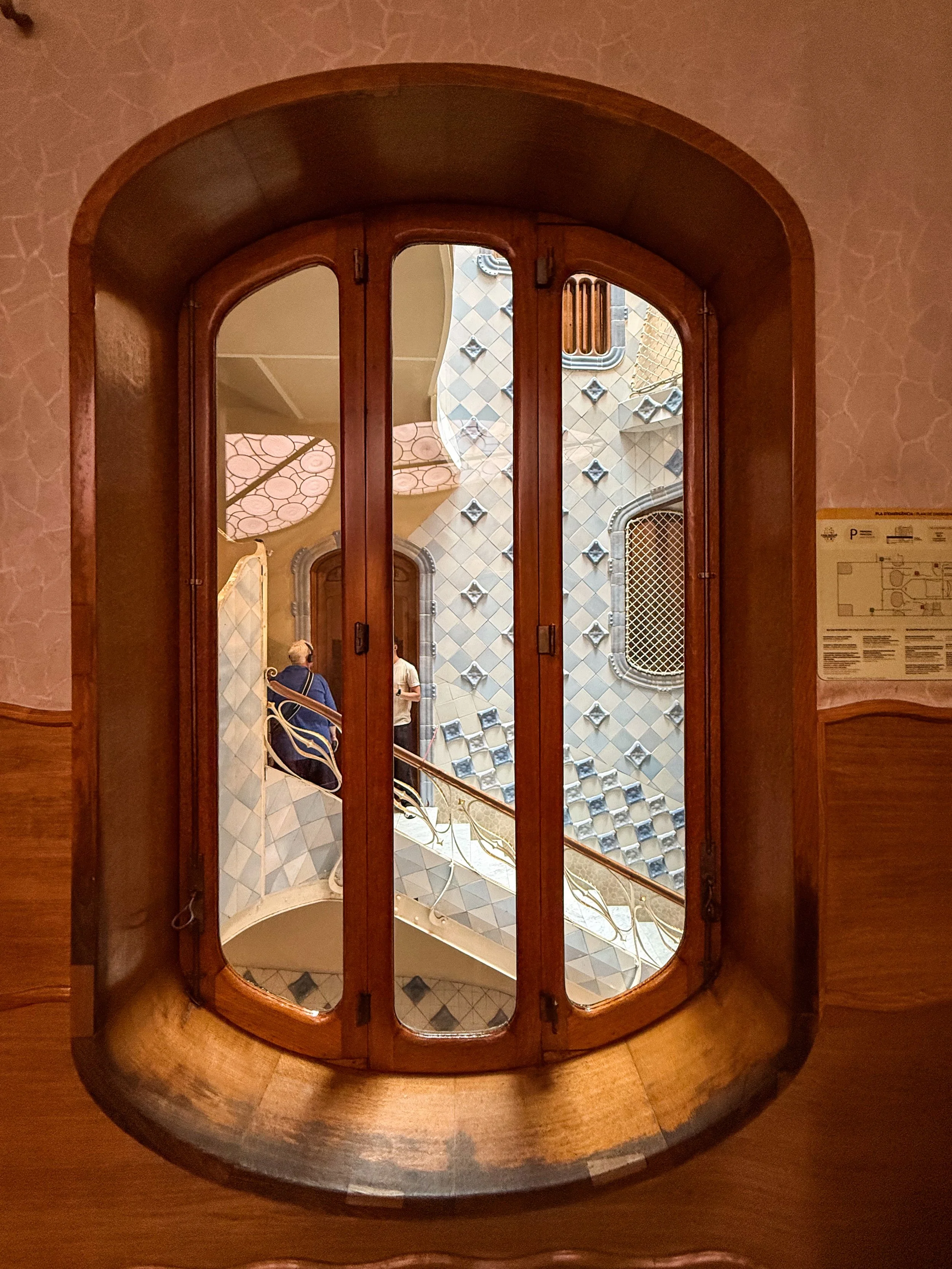
You can go up to the roof of Casa Batlló as well, where you will see the finer details of the roof and façade up close. One commonly used point of comparison up here is the imagery of a dragon. The tiled ridge of the roof suggests the spine of a dragon, while the stones on the out windows can be compared to bones. The balconies have been compared to masks, skulls, or fragments of skeletons, while the colored ceramic and glass material that coats the front of the building shimmers like fish scales. I could go on, but I think part of the fun of these places—and indeed, art in general—is that you are free to make your own associations. What do you see in the imagery and designs up here?
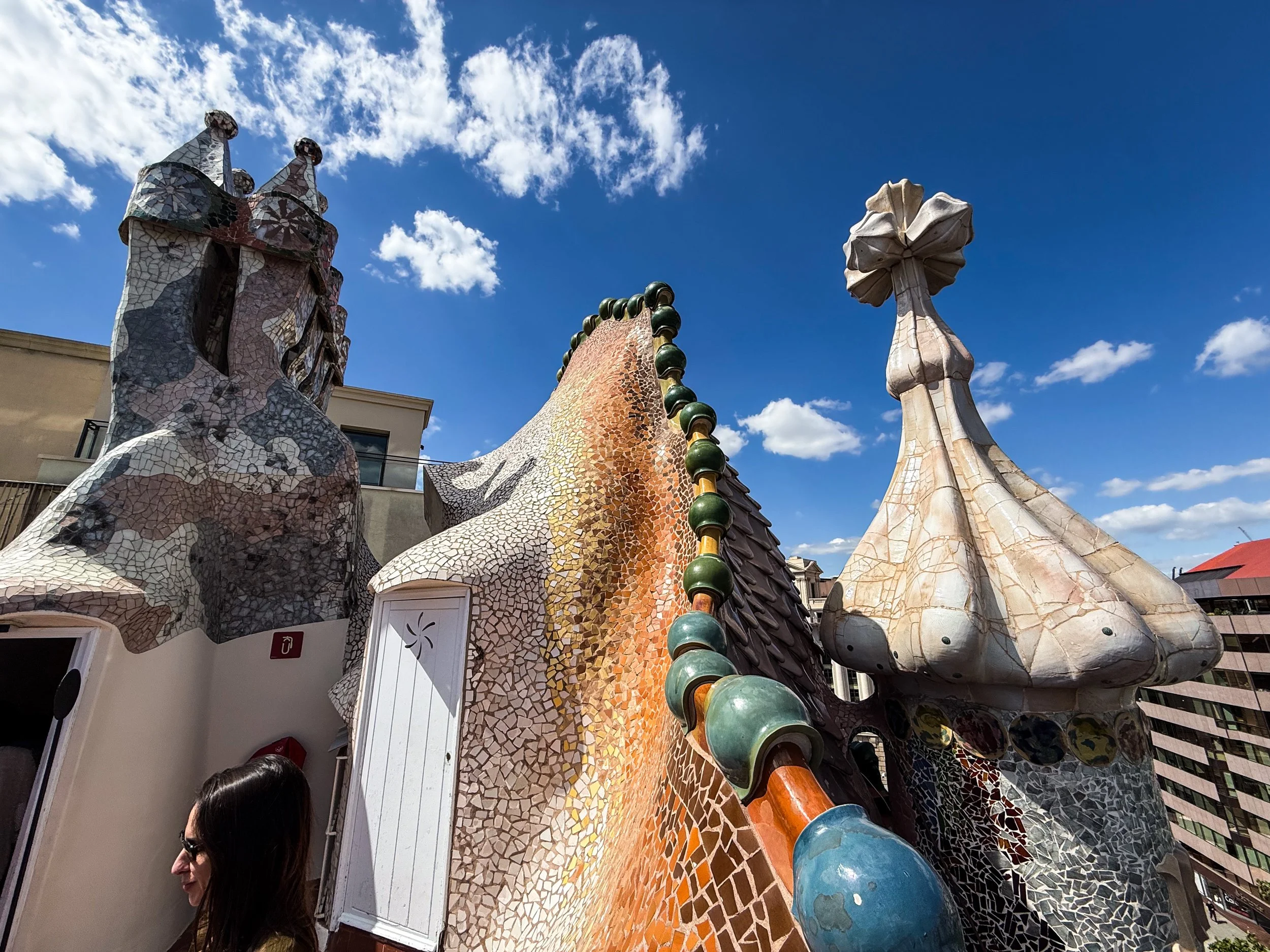
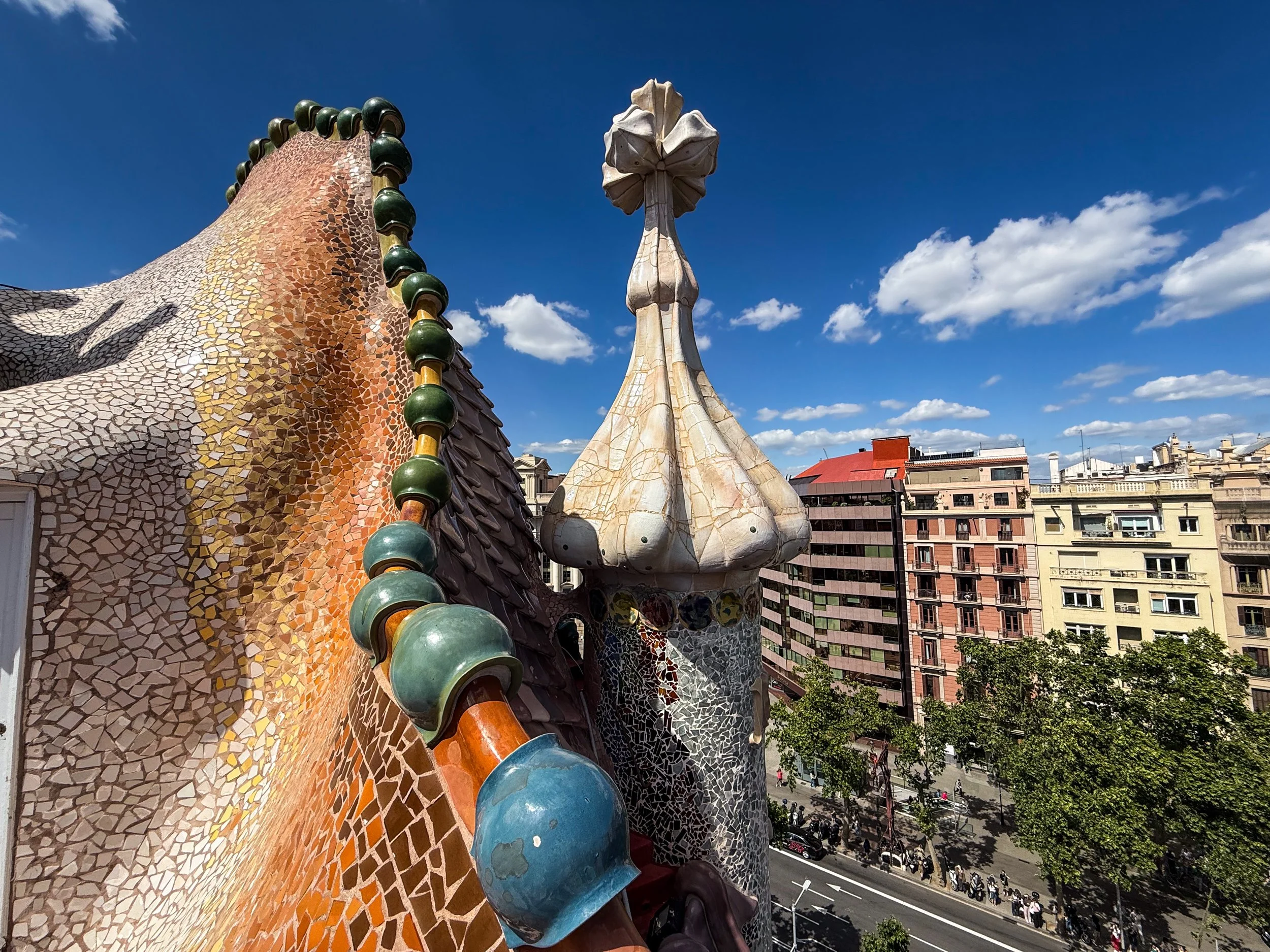
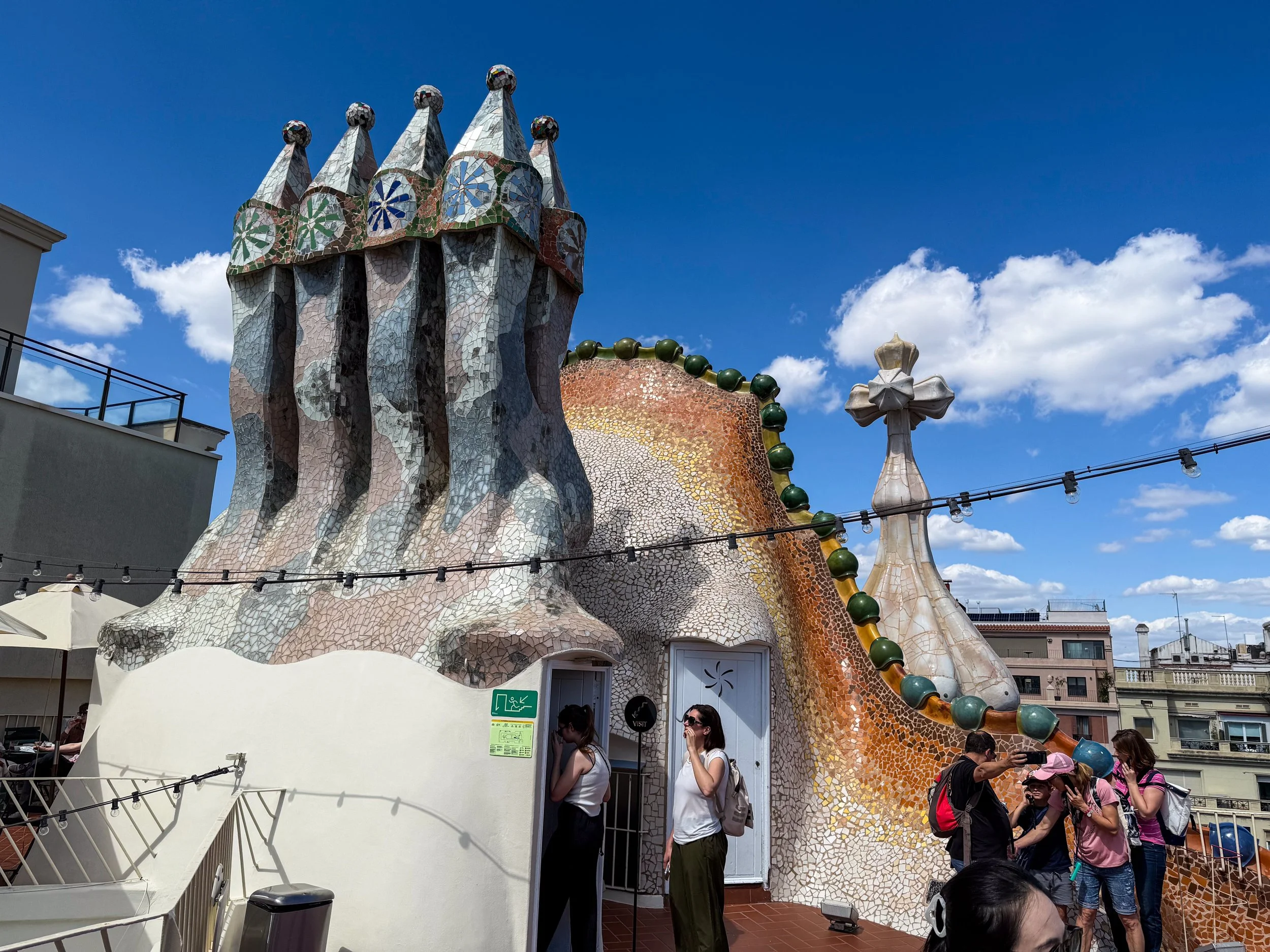
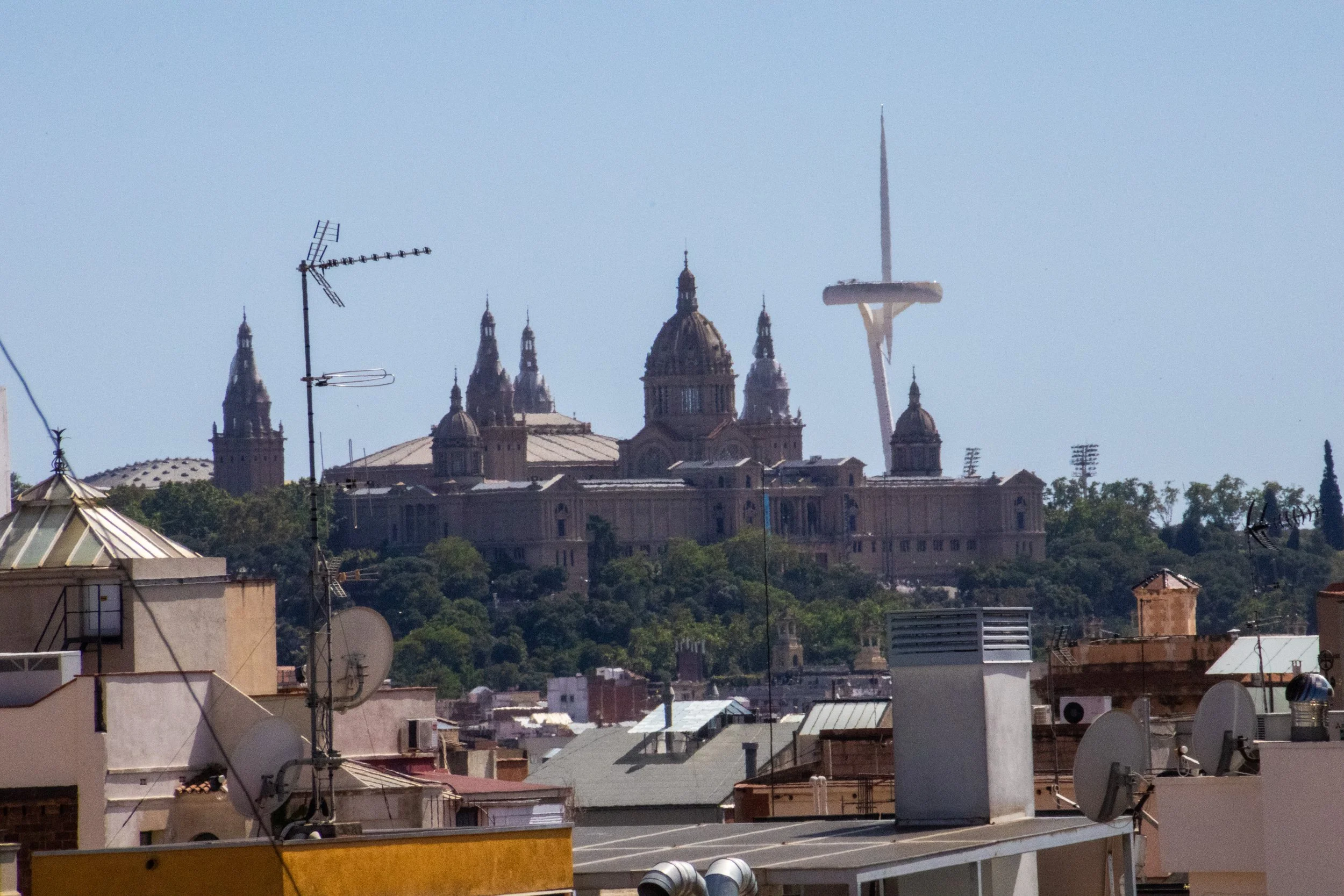
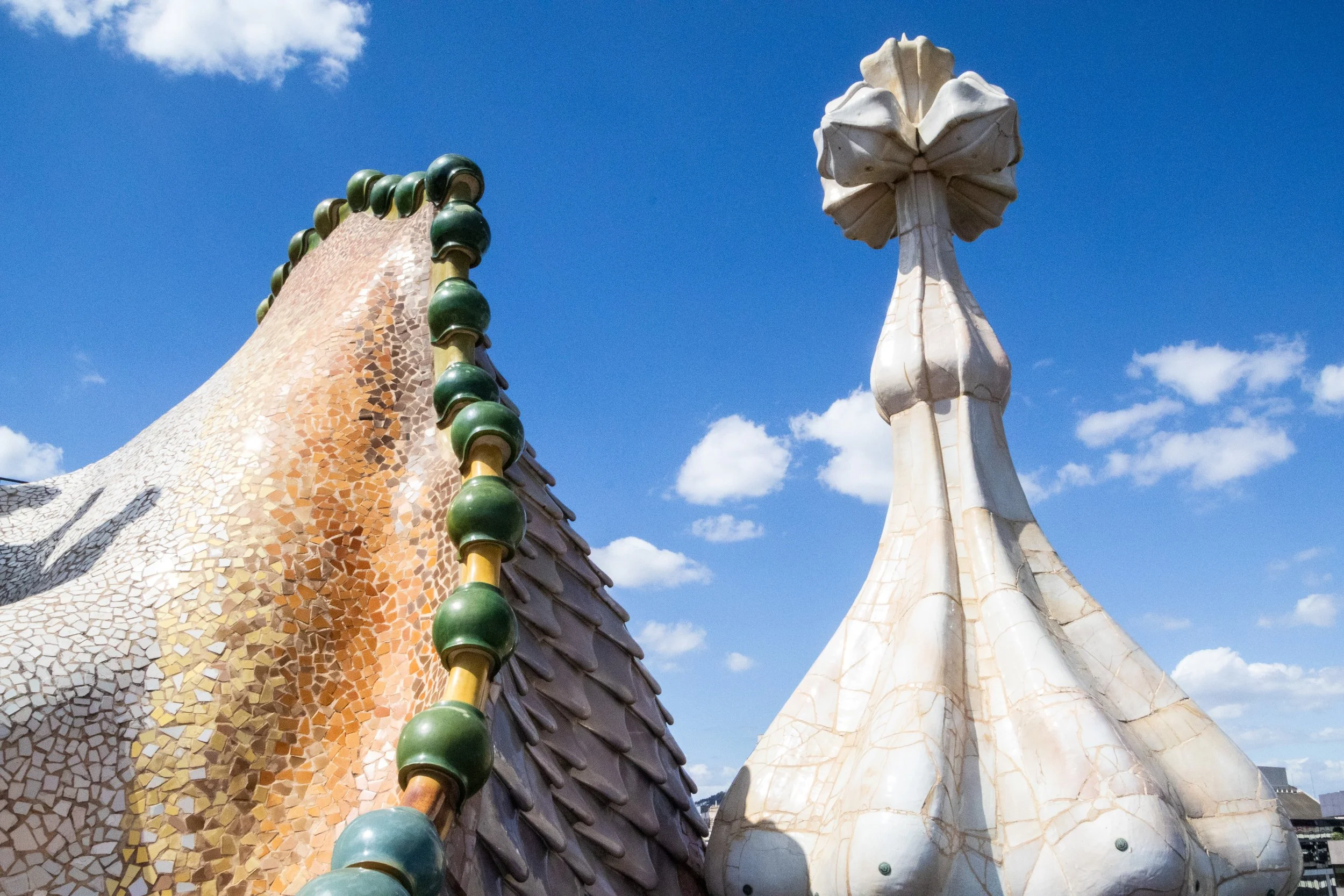
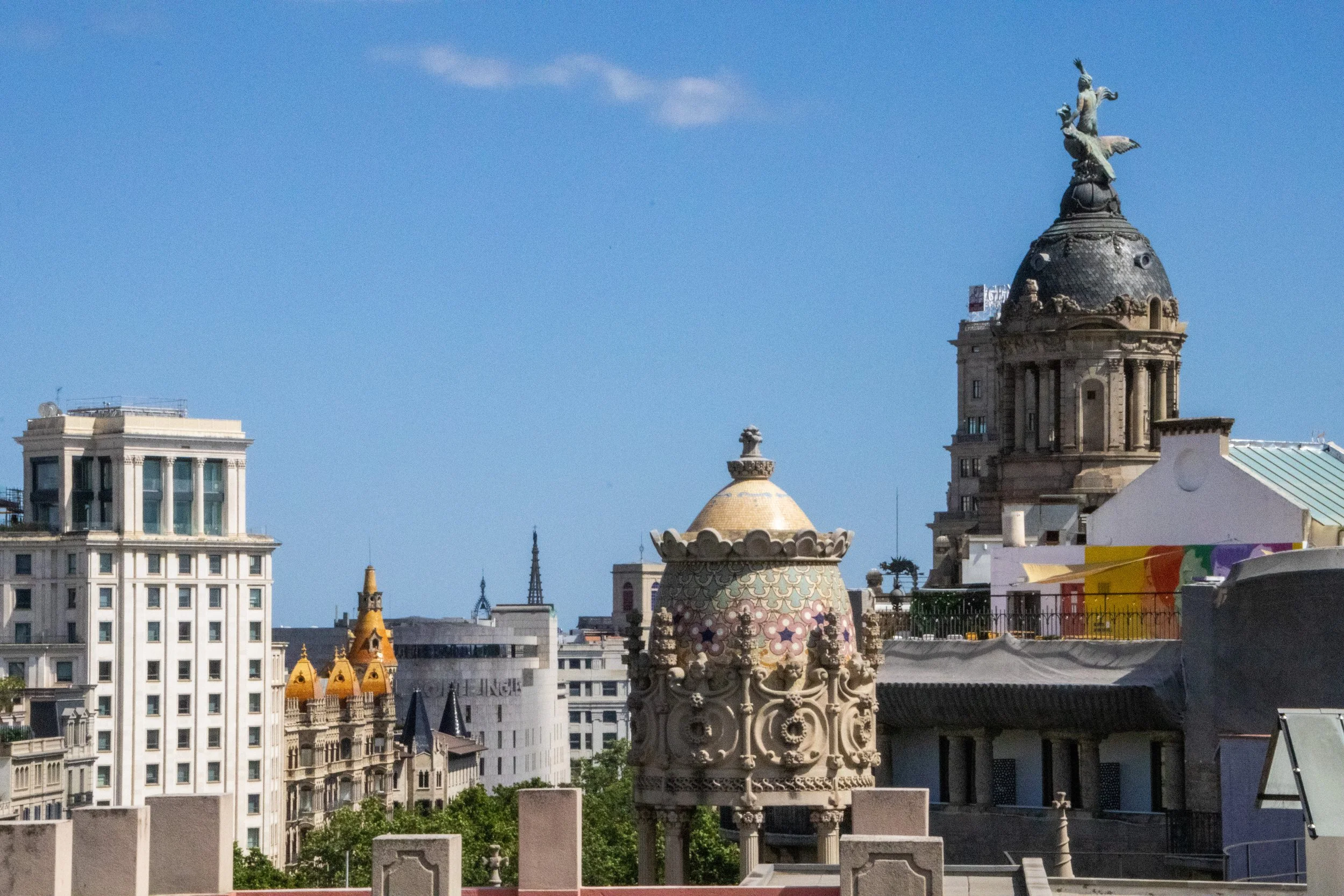
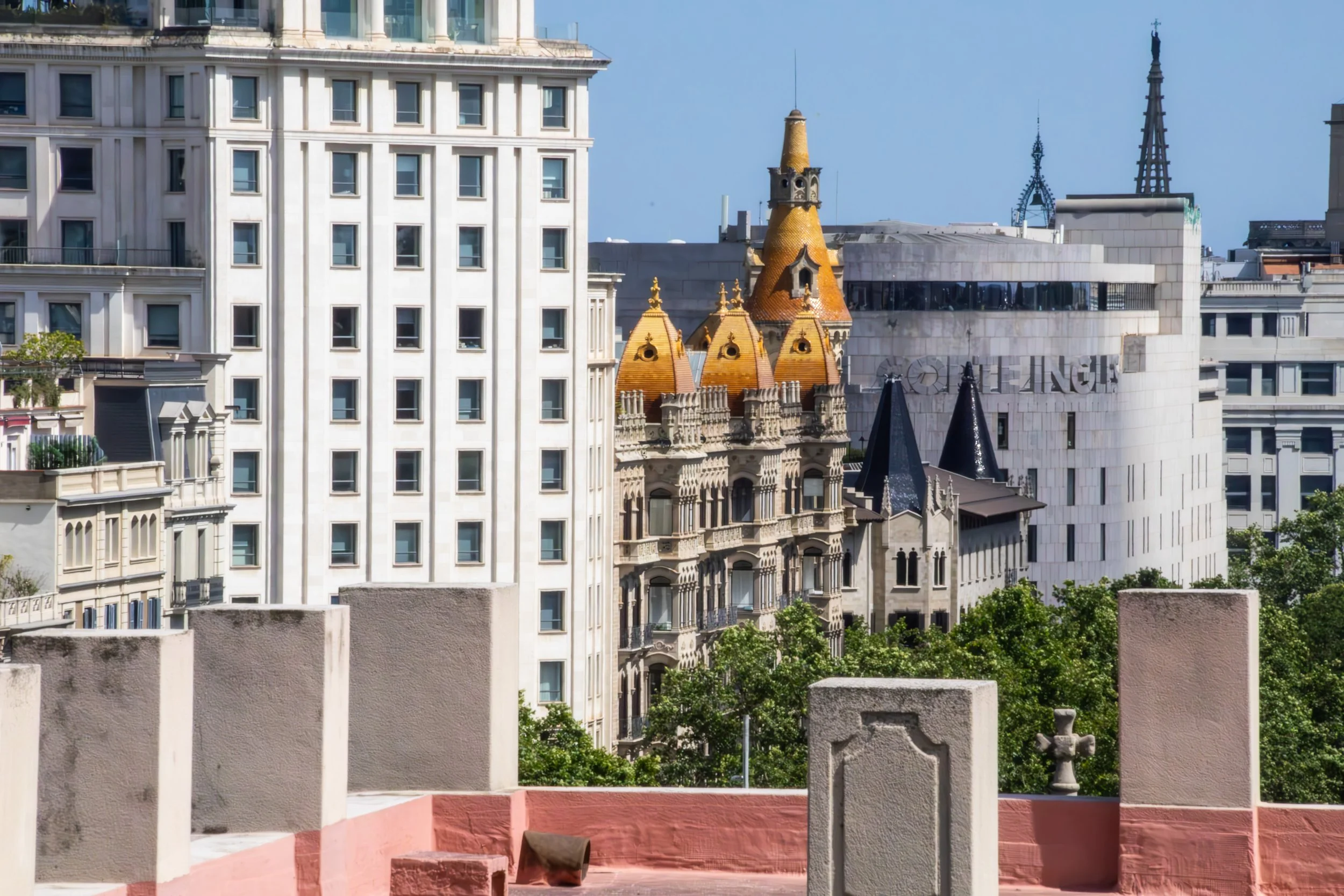
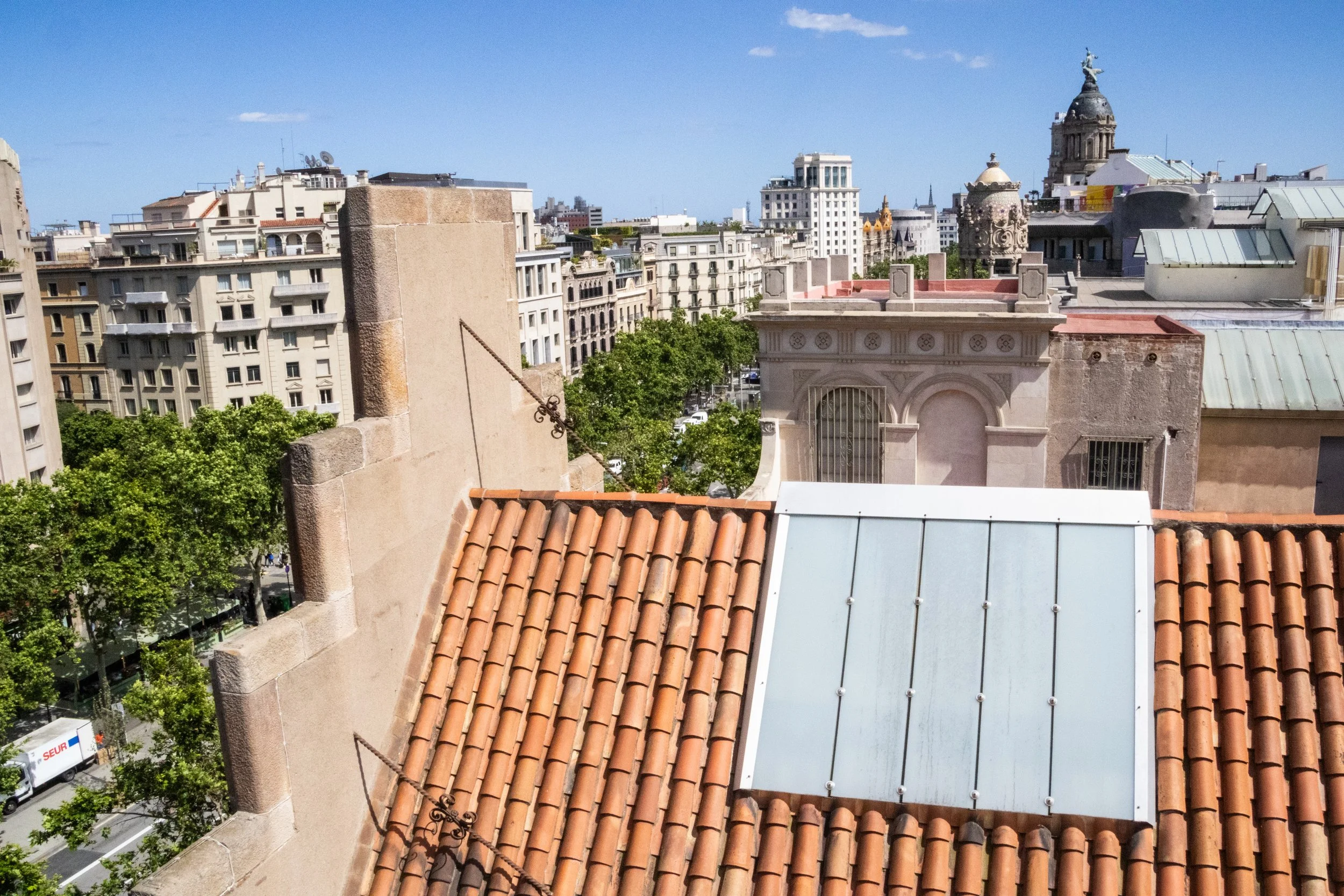
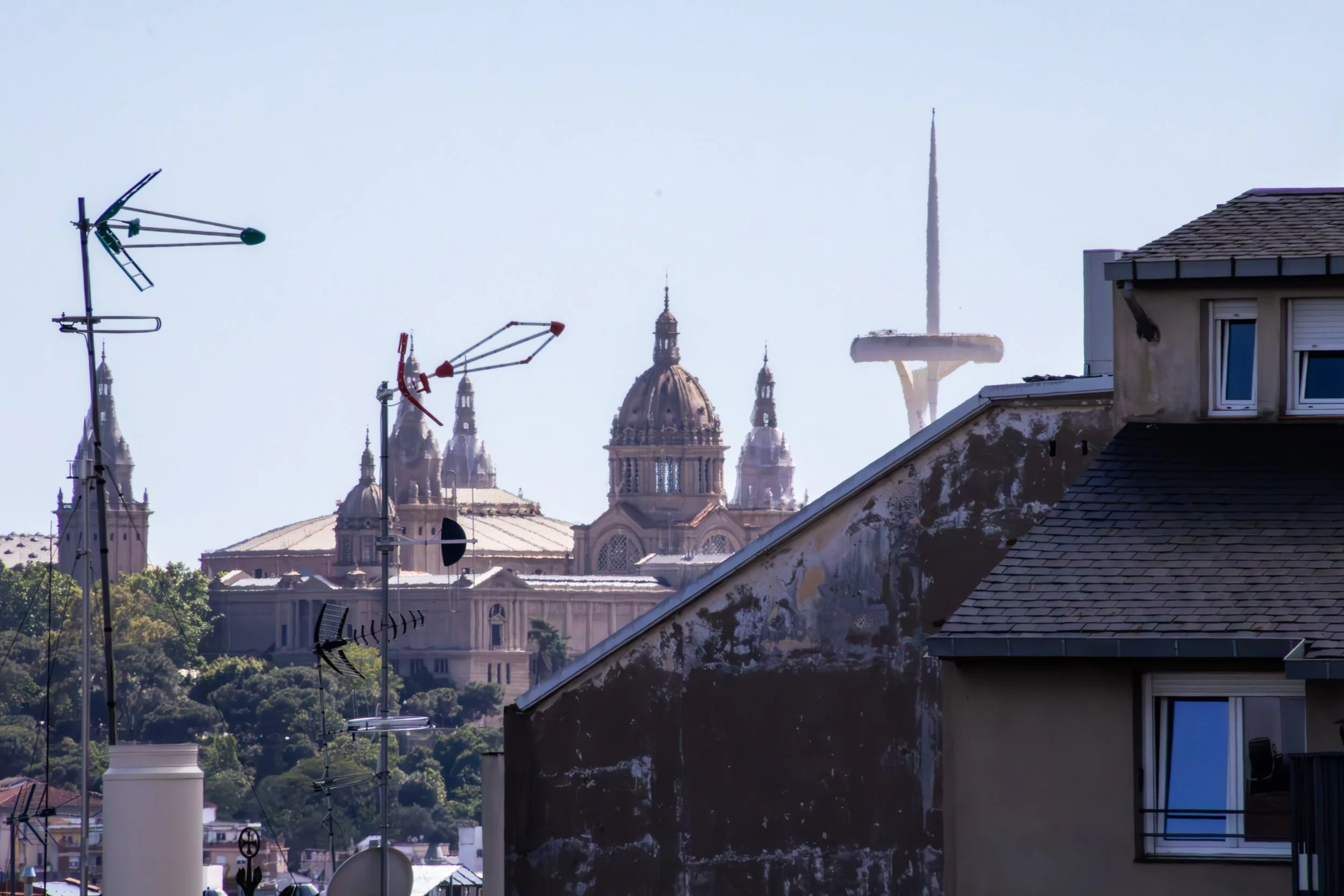
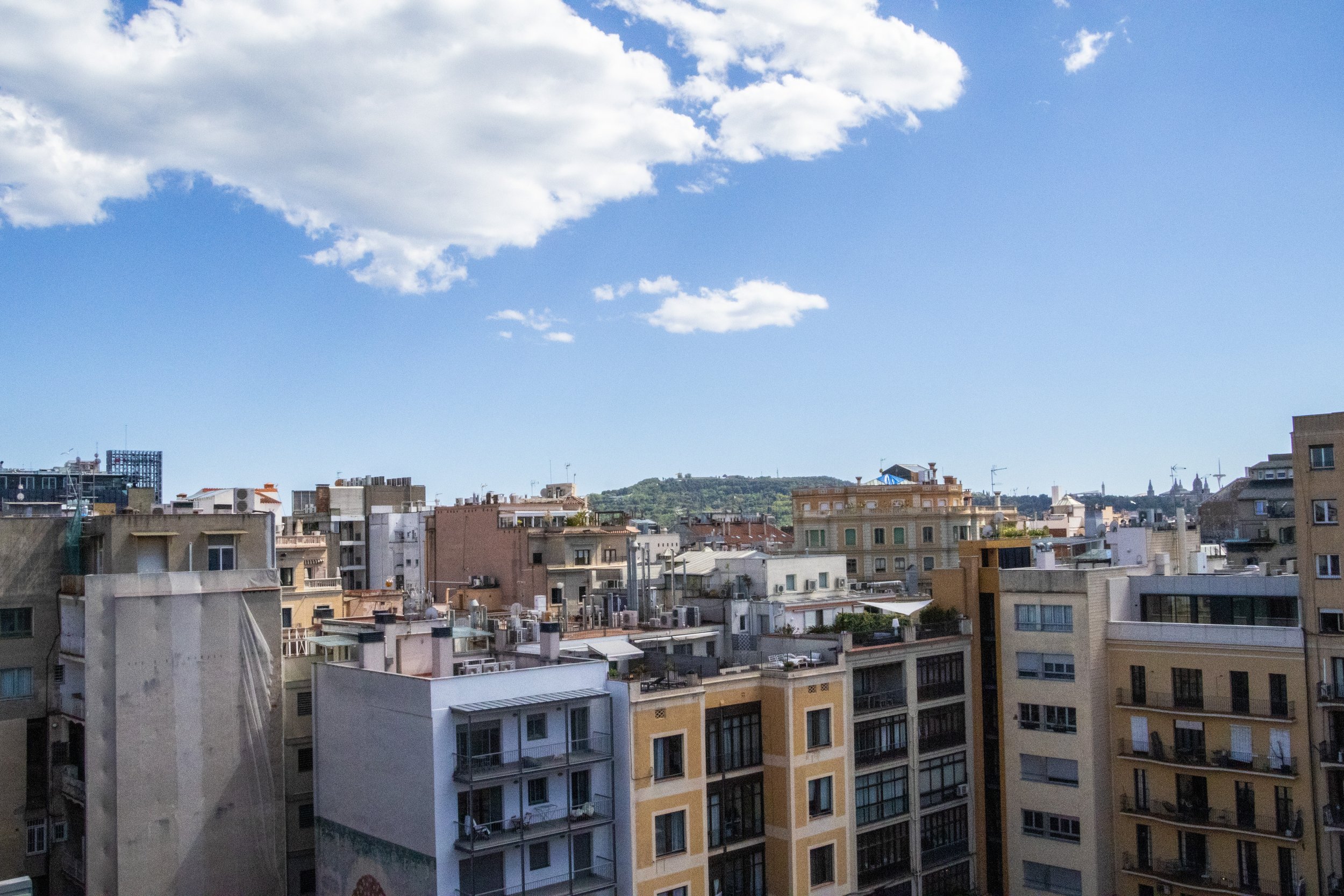
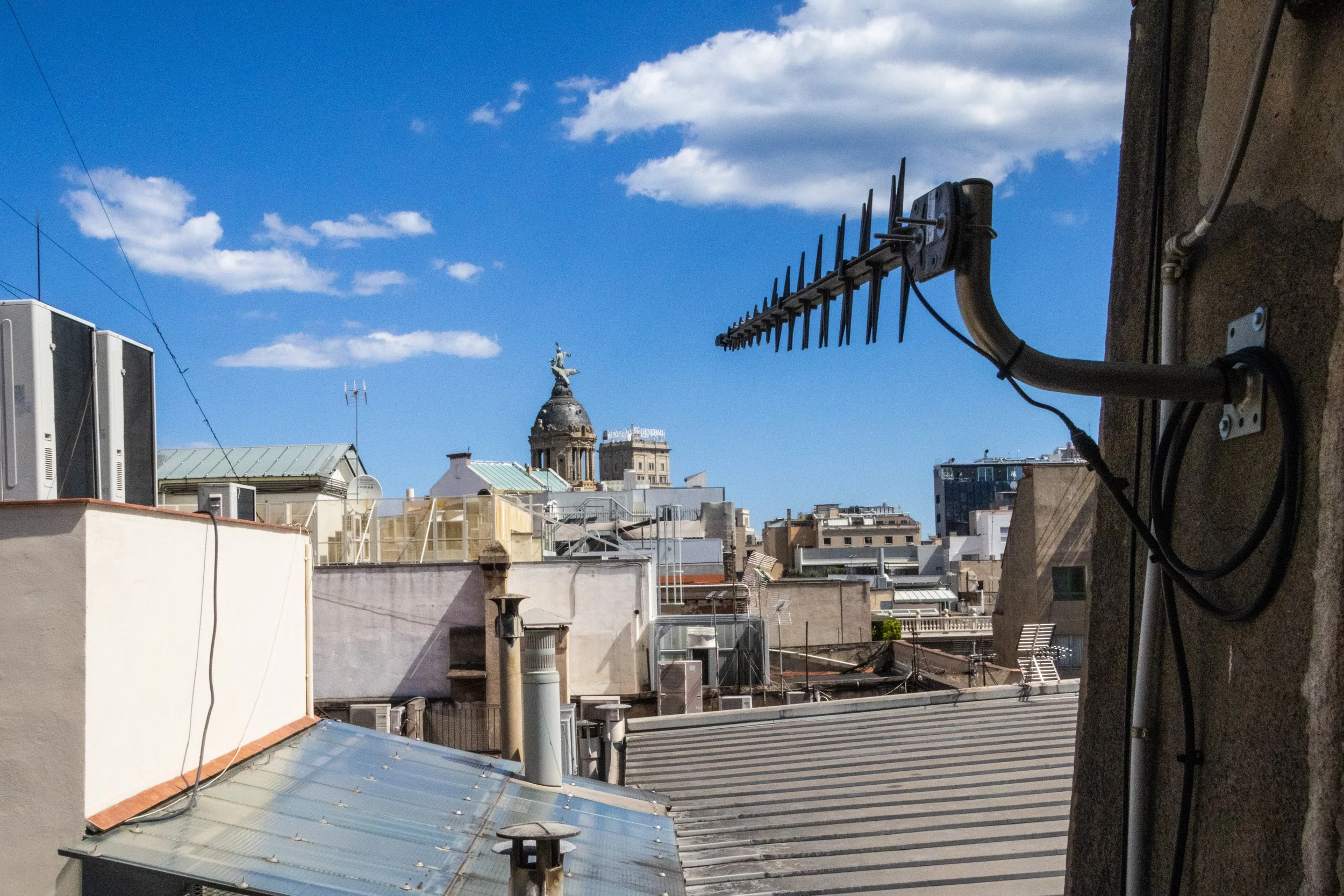
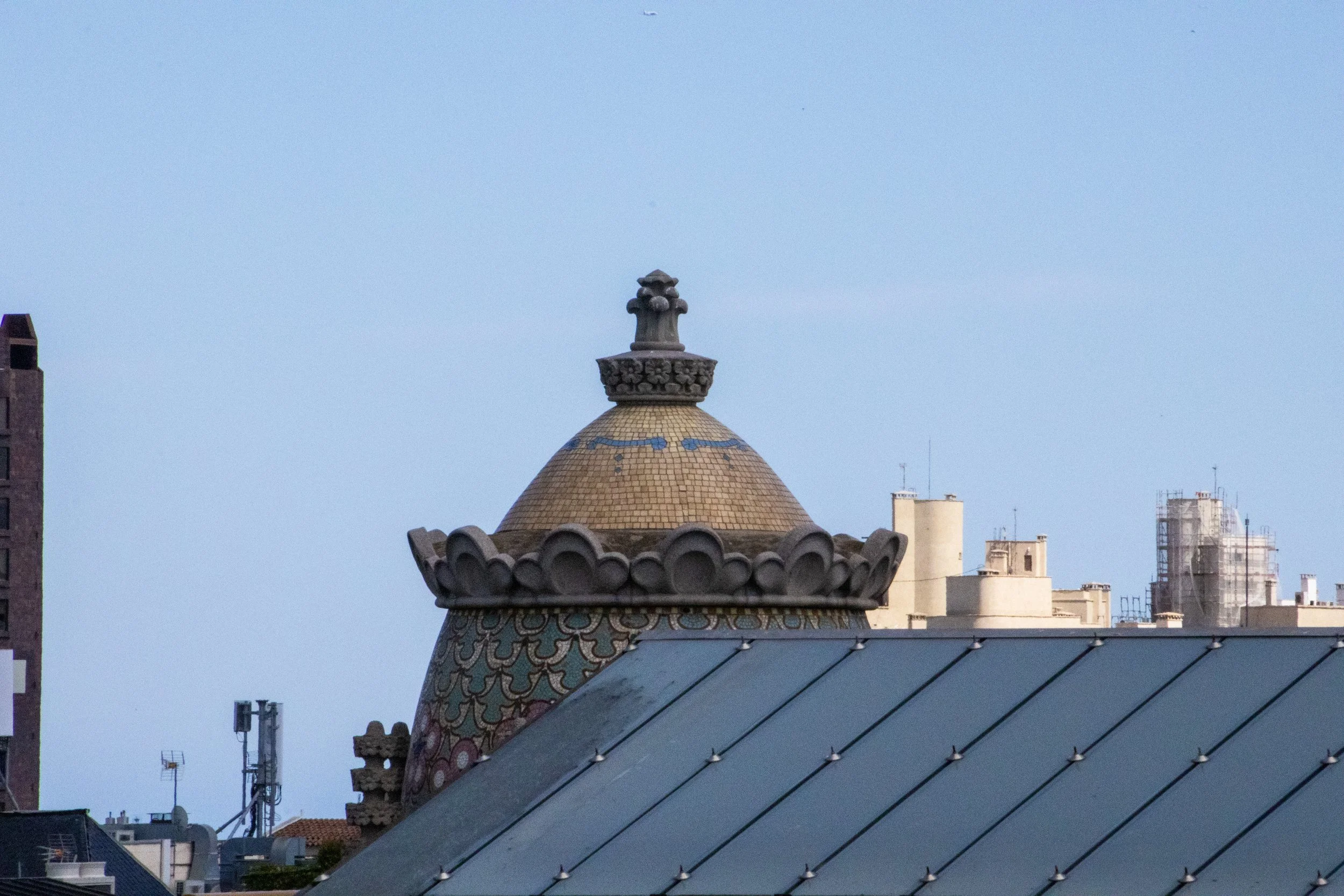
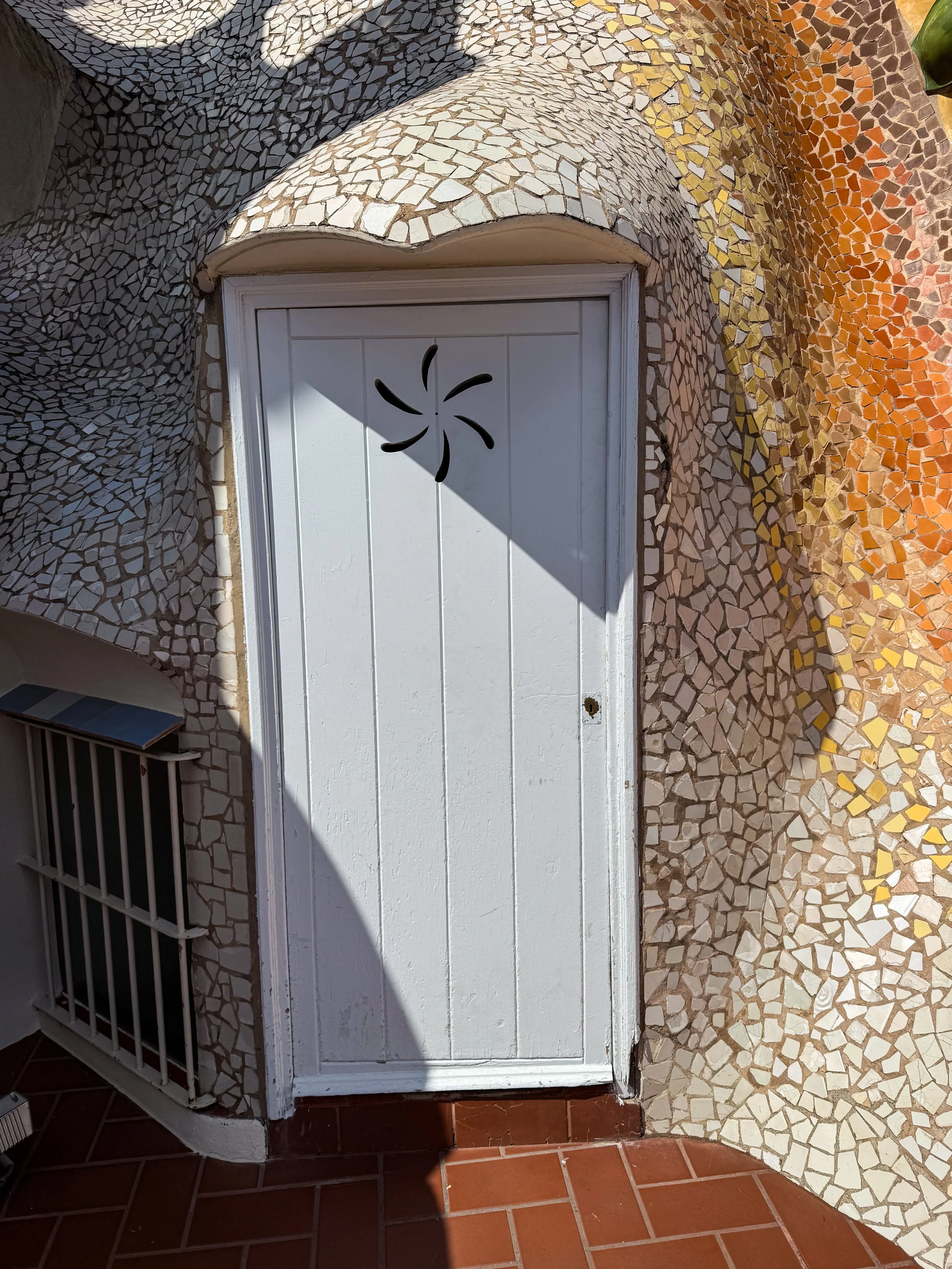
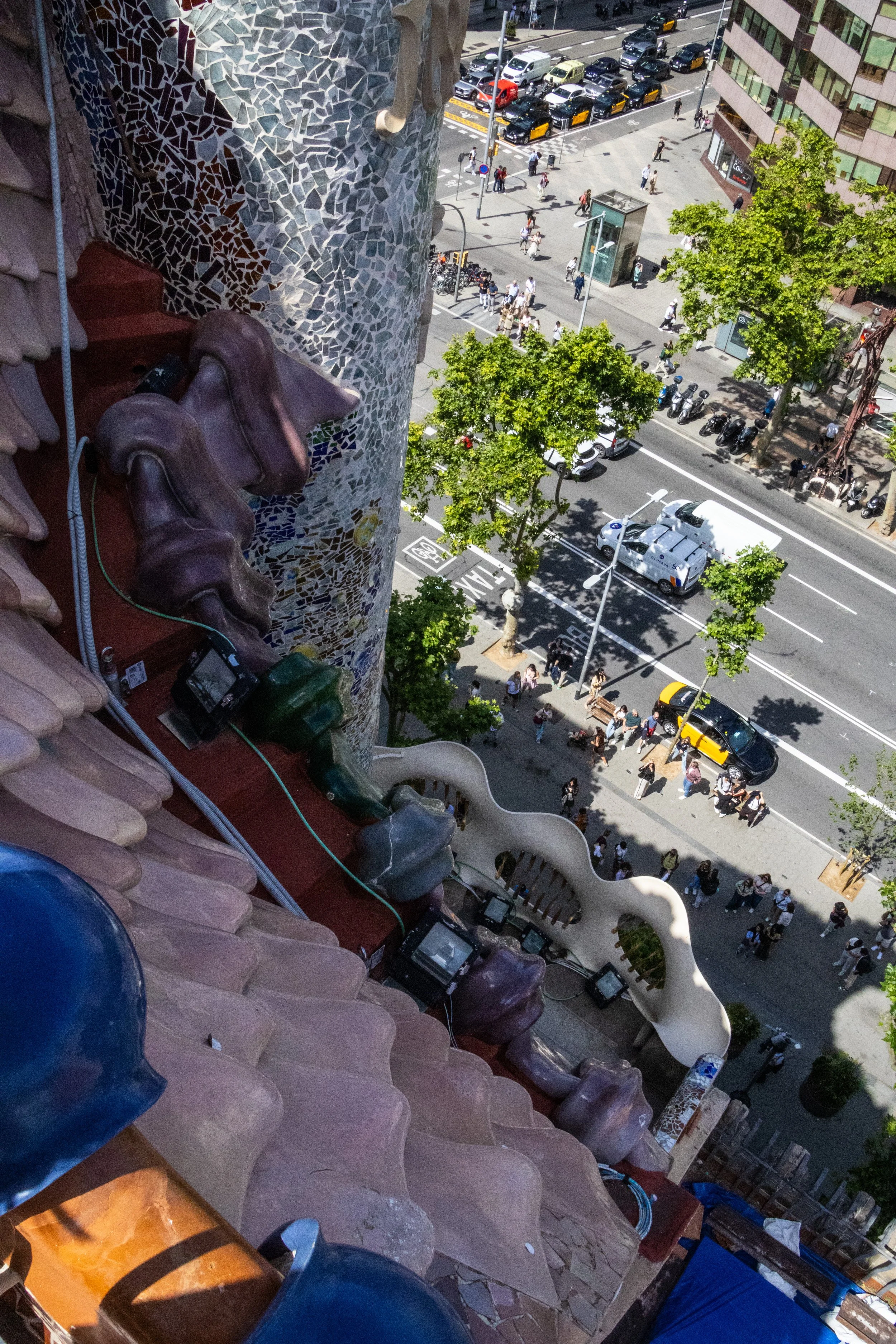
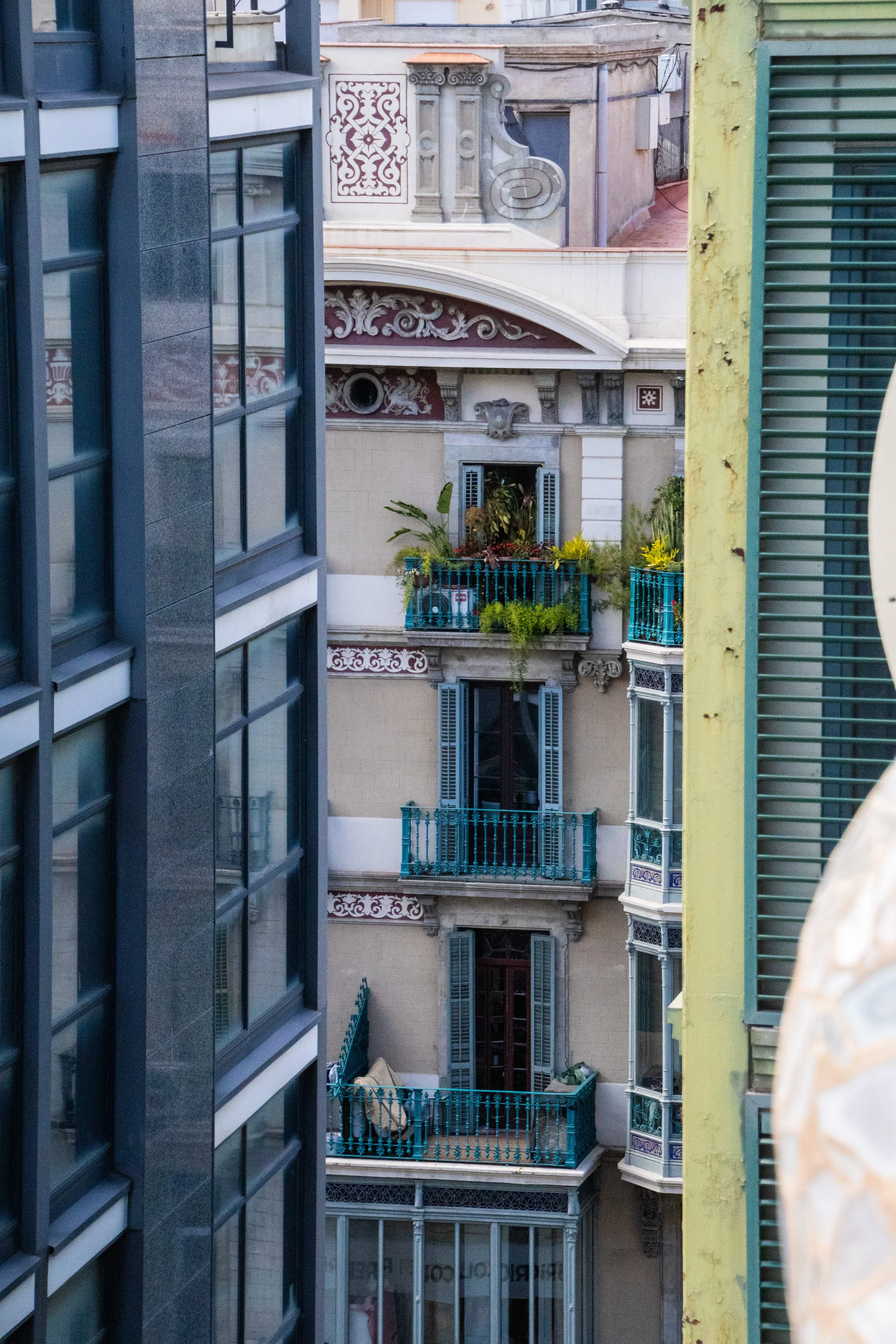
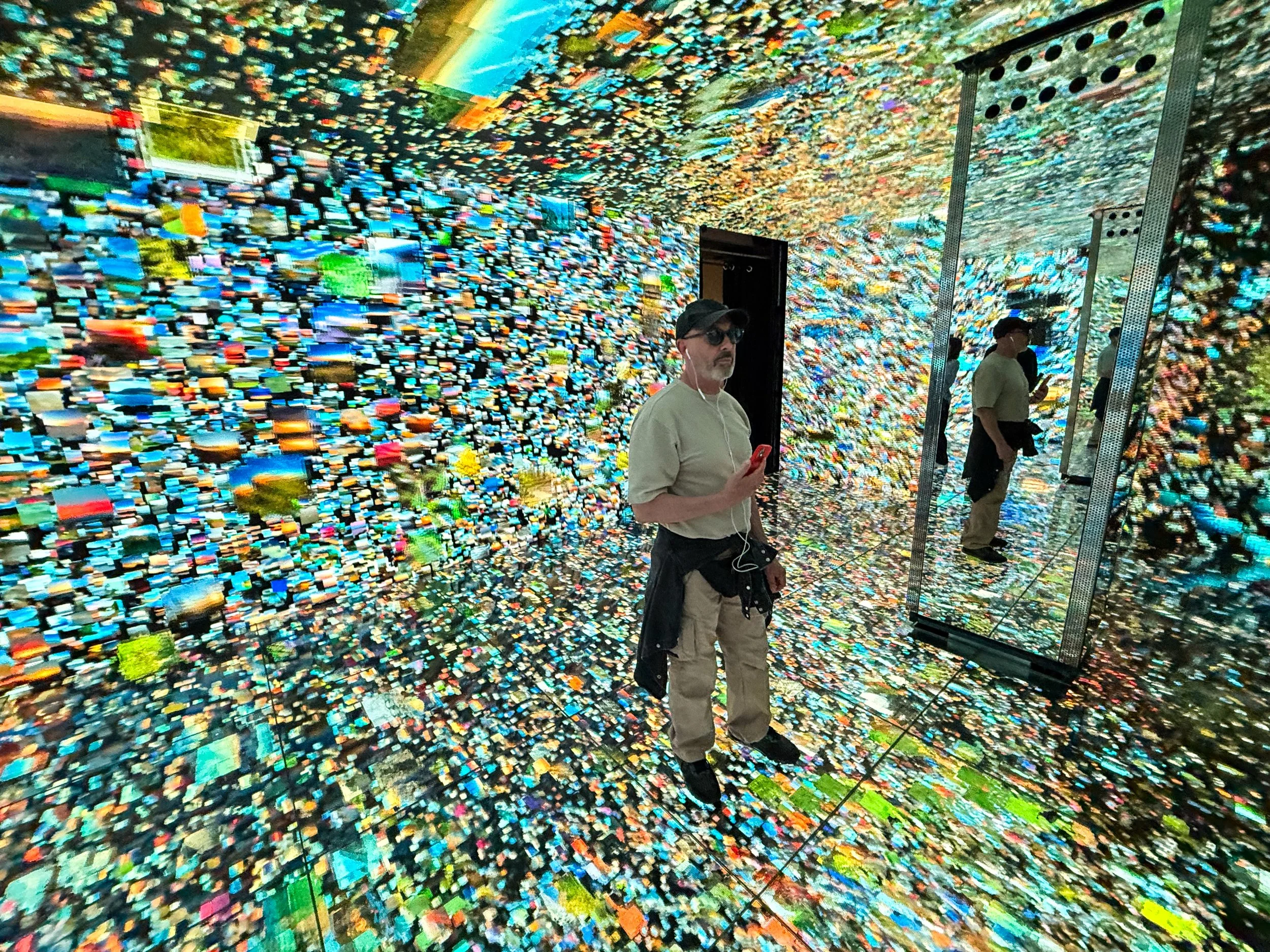
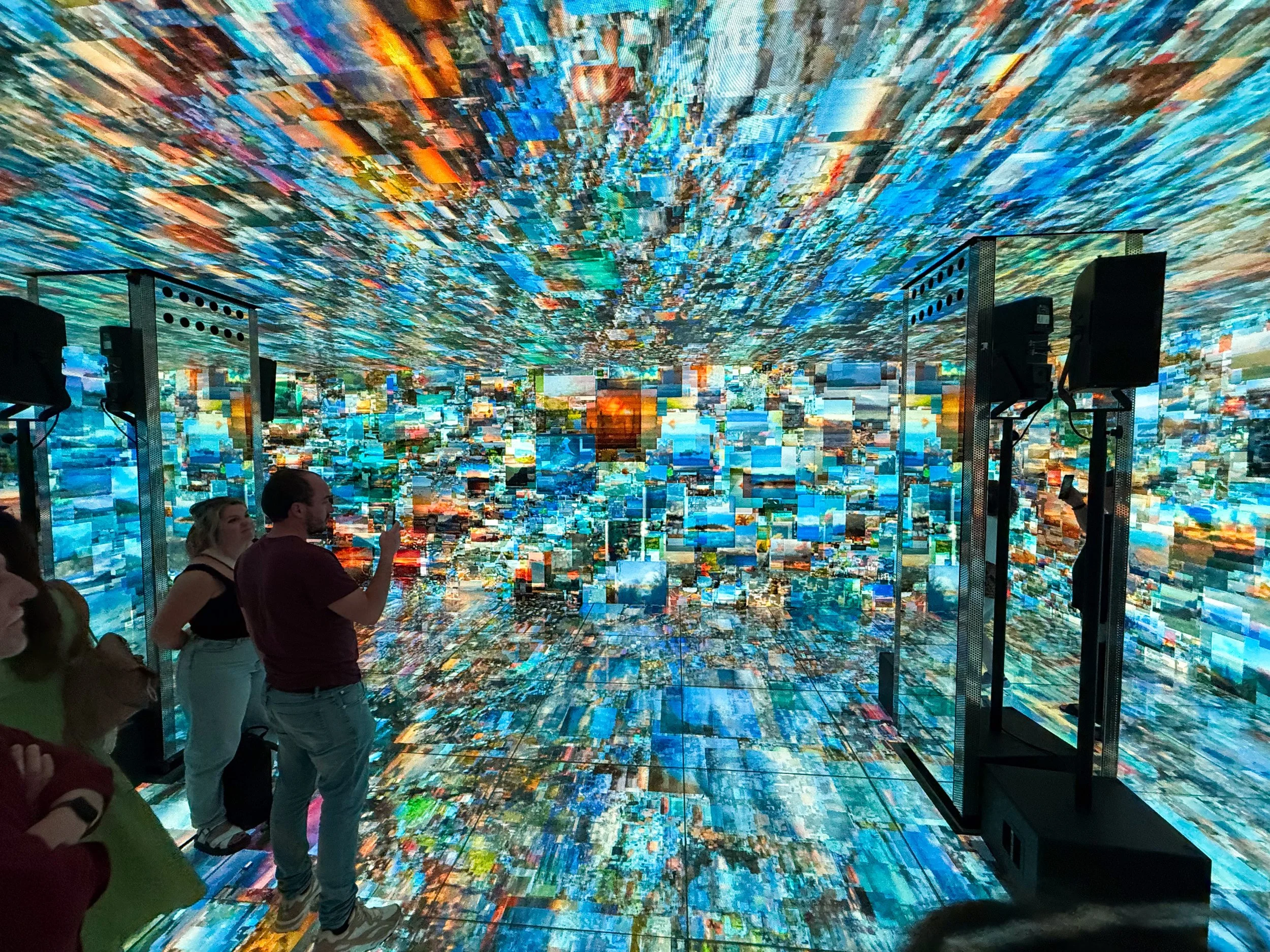
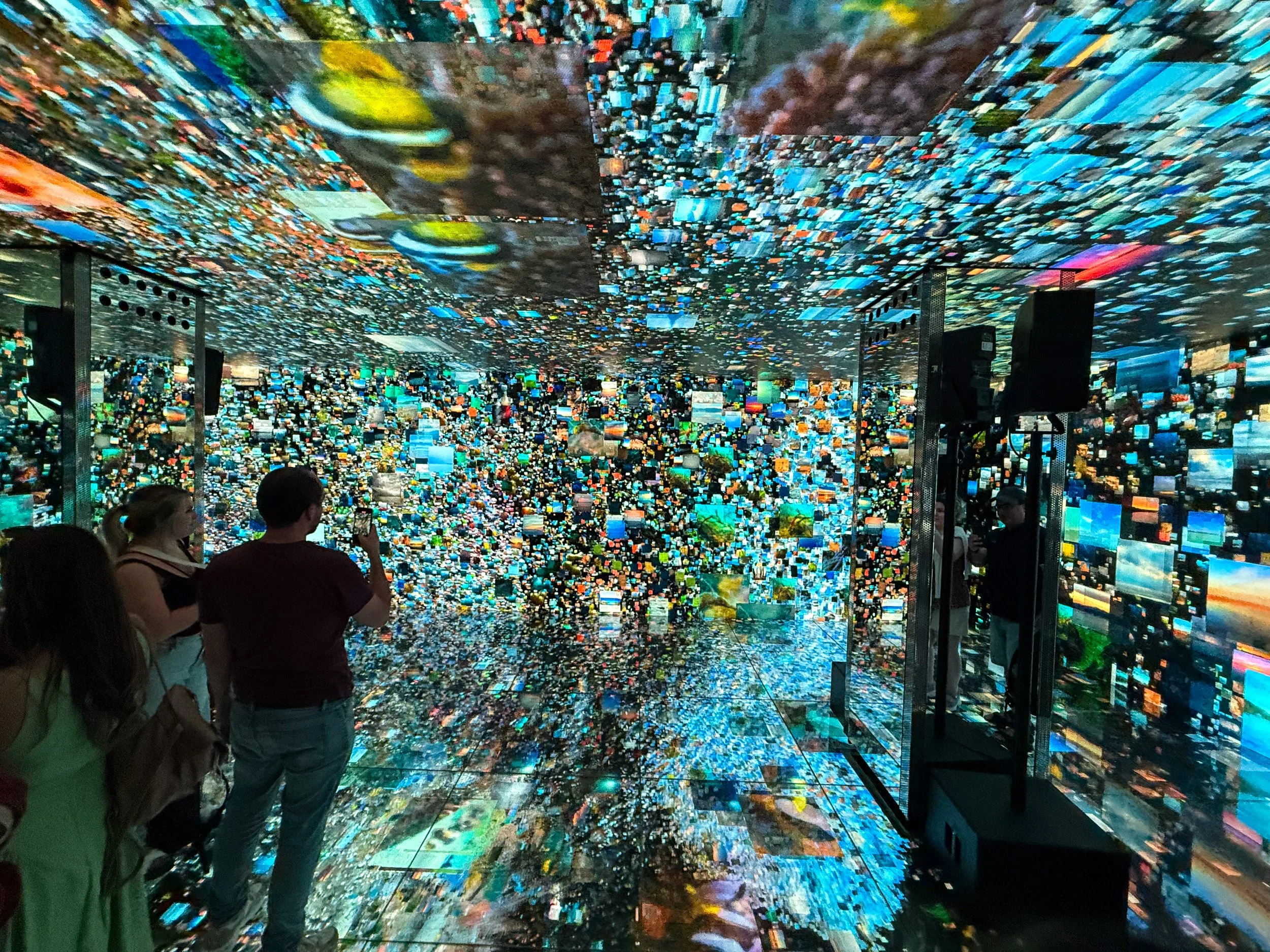
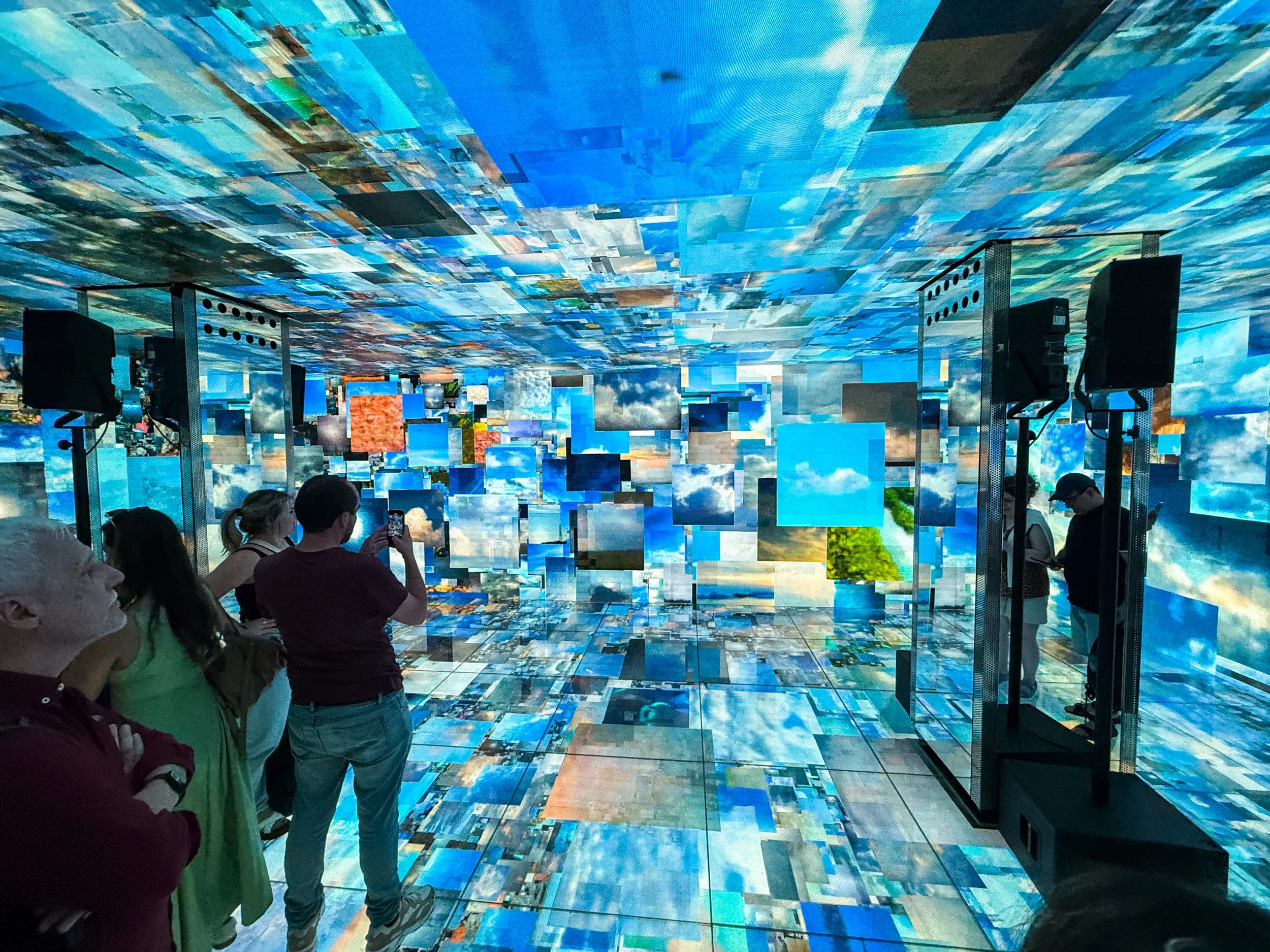
The house itself is incredible to walk through, but beneath street level—in what I assume was once the basement—there is a room where, somehow, the floor, ceiling, and walls are ALL screens that are in constant motion. Abstract imagery clearly meant to evoke Gaudí-esque vibes swirl around you, regardless of where you move. It reminded me a lot of Frameless in London. I would not recommend coming in here if you are susceptible to motion sickness, or are not of sober mind. 😂
La Pedrera - Casa Milà
Up next, we have La Pedrera - Casa Milà, which is right up the street from Casa Batlló! Tickets are €29 if you buy them at the door… but who knows, by the time you’re reading this, inflation may have pushed prices even higher! Barcelona ain’t for los pobres. 🙃
“La Pedrera” was commissioned for the wealthy couple, Pere Milà i Camps and Roser (Rosario) Segimon i Artells. The building they owned was literally right up the street from the Batlló residence. Indeed, Passeig de Gràcia was fast becoming the premier address on which the Catalan’s 1% flexed their wealth and sophistication. And not only is La Pedrera a 5 minute walk from Casa Batlló, but it was also commissioned almost immediately upon Casa Batlló’s completion! There must have been some fierce social competition happening here.
Josep Batlló when his neighbor commissioned La Pedrera, I assume:

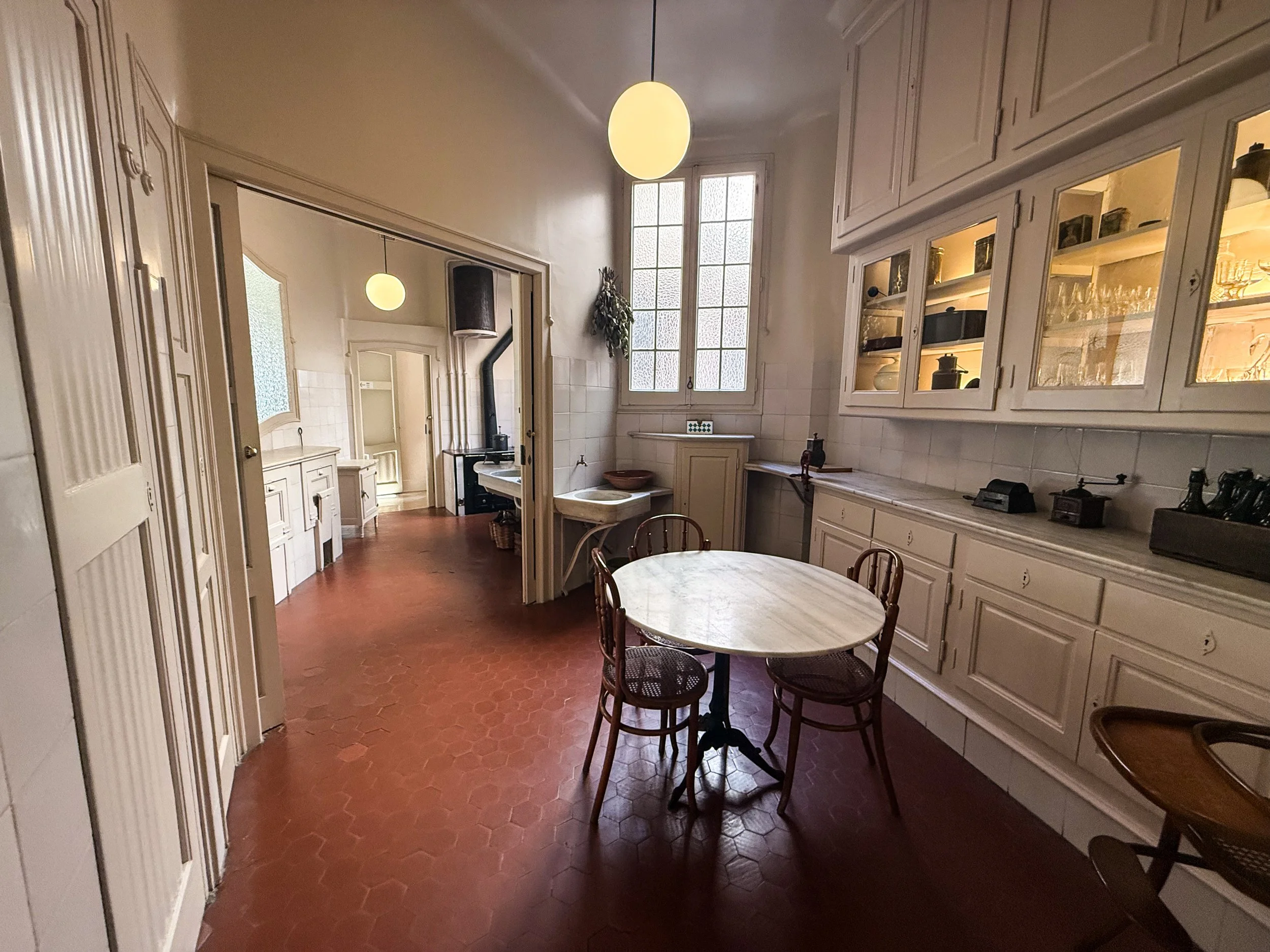
As was the case with Casa Batlló, only the main floor of La Pedrera was the private residence of the family that owned the building. The rest of the building was rented out as luxury apartments. And it’s a big building; much larger than Casa Batlló. Ironically, after Gaudí’s death, the wife—Roser Segimon—decided she wasn’t crazy about the interior design, and actually remodeled away much of Gaudí’s work.
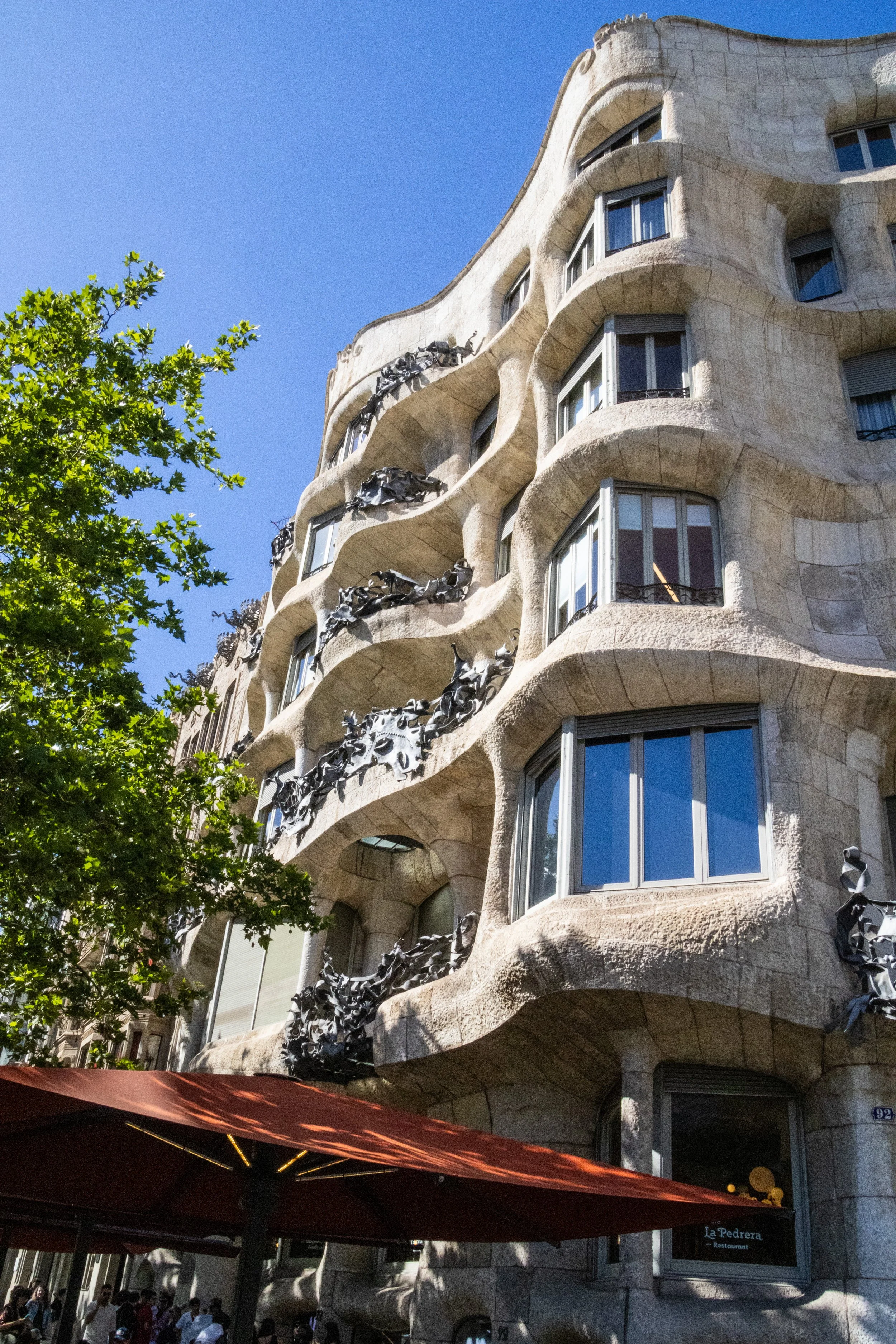
La Pedrera means (roughly) "the stone quarry", a reference to its extraordinary rough, undulating stone façade. And it is indeed a beautiful building, but for me, the most extraordinary thing I found here was hidden in the attic. So we’ve now established that Gaudí liked to borrow from nature to guide the aesthetic and structural underpinnings of his work, but until this point, I’d had trouble visualizing what exactly that meant. Here in the attic, there were some pieces of nature on display that showed exactly where some of his inspiration came from:
The spine, vertebrae, and rib cage of both humans and animals.; specifically the long, twisting rib cage of a snake was on display, which was striking because the attic itself had clearly taken inspiration from this design
Seashells / conches / snail shells; the snail shell design could be seen clearly looking down at some of the spiral staircases from above, while the smooth, water-shaped interior of seashells was evident in surfaces throughout the building
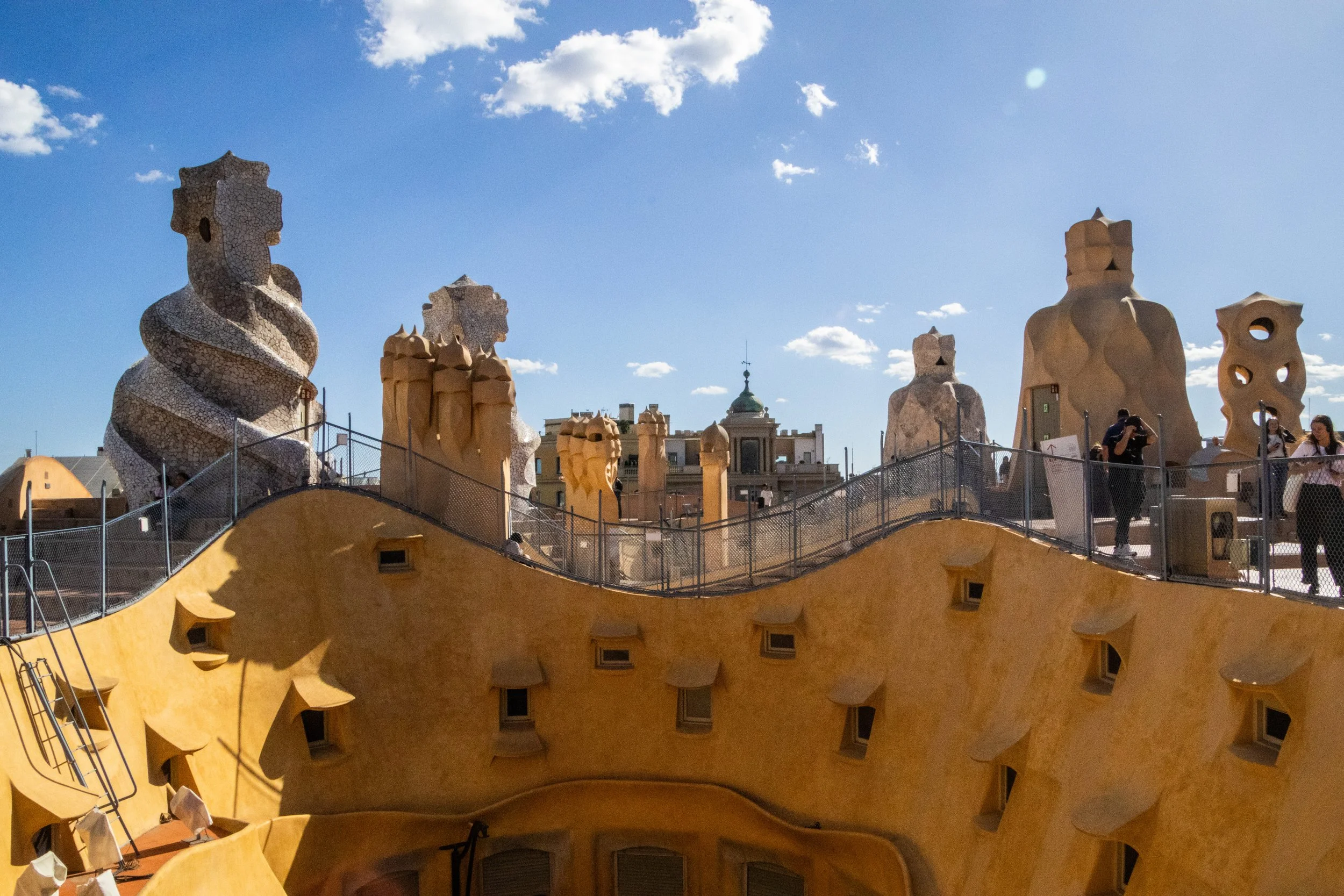
Caves and rock that has been eroded by water over many millennia; you will see more of this when we get up to the roof!
Reeds, tall grass, leaves, flowers, and lotus seed pods; those lotus seed pods are very specific in their appearance and are what stands out most in my memory, because it looks exactly like the shape of the glass panes on the front doors of the building, as you will see in the gallery below
Beehives and the honeycomb structure; this is also quite reminiscent of the lotus seed pod, so it’s another close point of comparison to the front doors that you will see in the gallery below, and an unexpected highlight of seemingly odd, 1-off structures found in nature.
I asked ChatGPT to mock up design/schematic style sketches of a few of these objects so you can see some of this first-hand. These are the sorts of objects that fascinated me as a child, but hadn’t entered my consciousness for many years by the time of this visit. Focusing once again on these tiny, quiet wonders was cool in and of itself, but then realizing that I was standing in a giant design inspired by these exact objects really was an unexpectedly cool experience. On some level, great art feels like a rediscovery and indulgence of the child inside each of us.
SO, without further ado, let’s see the interior of La Pedrera!
Where you see rooms that look more traditional… you probably have Roser Segimon to thank for that. 🙄
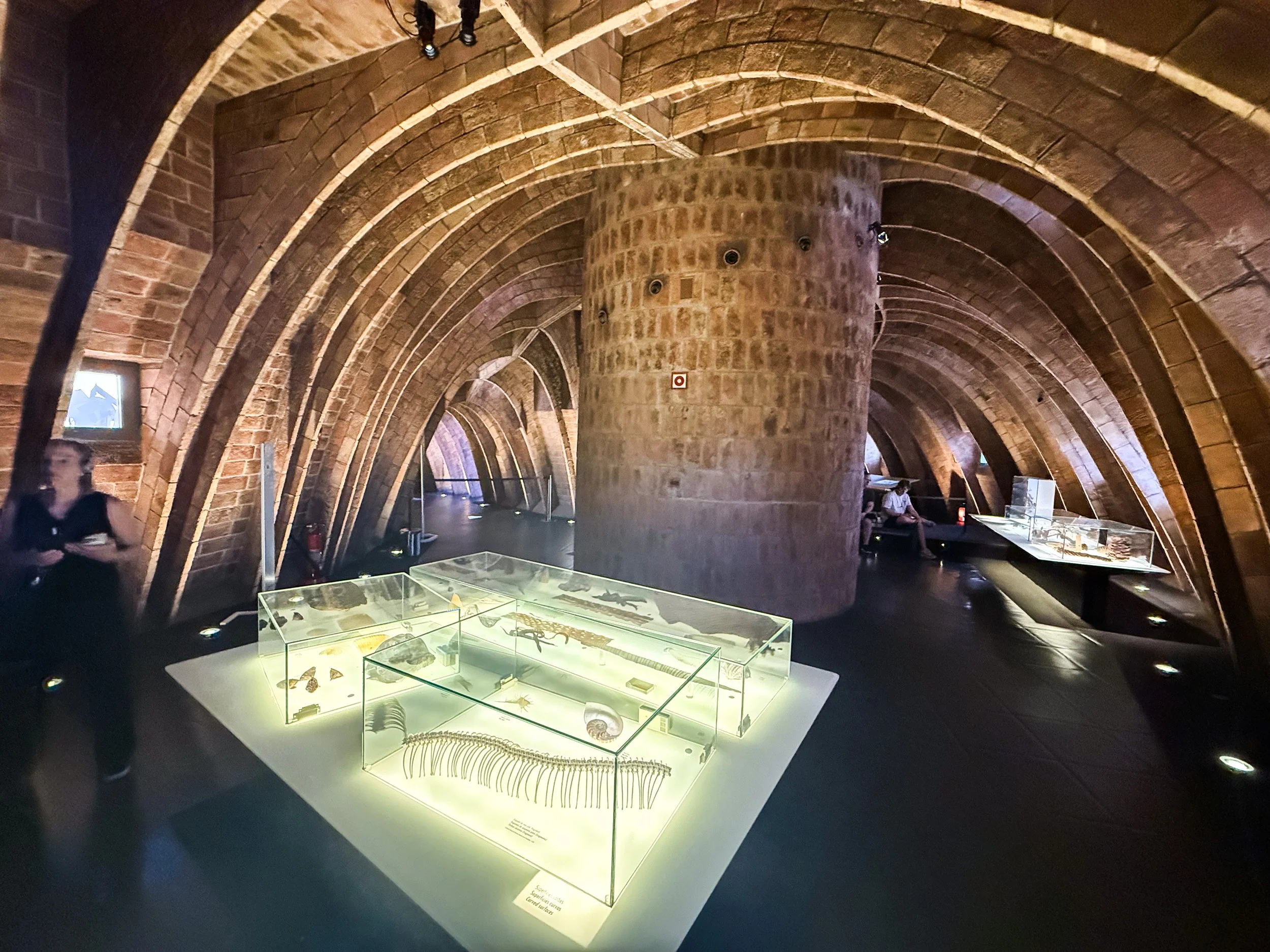
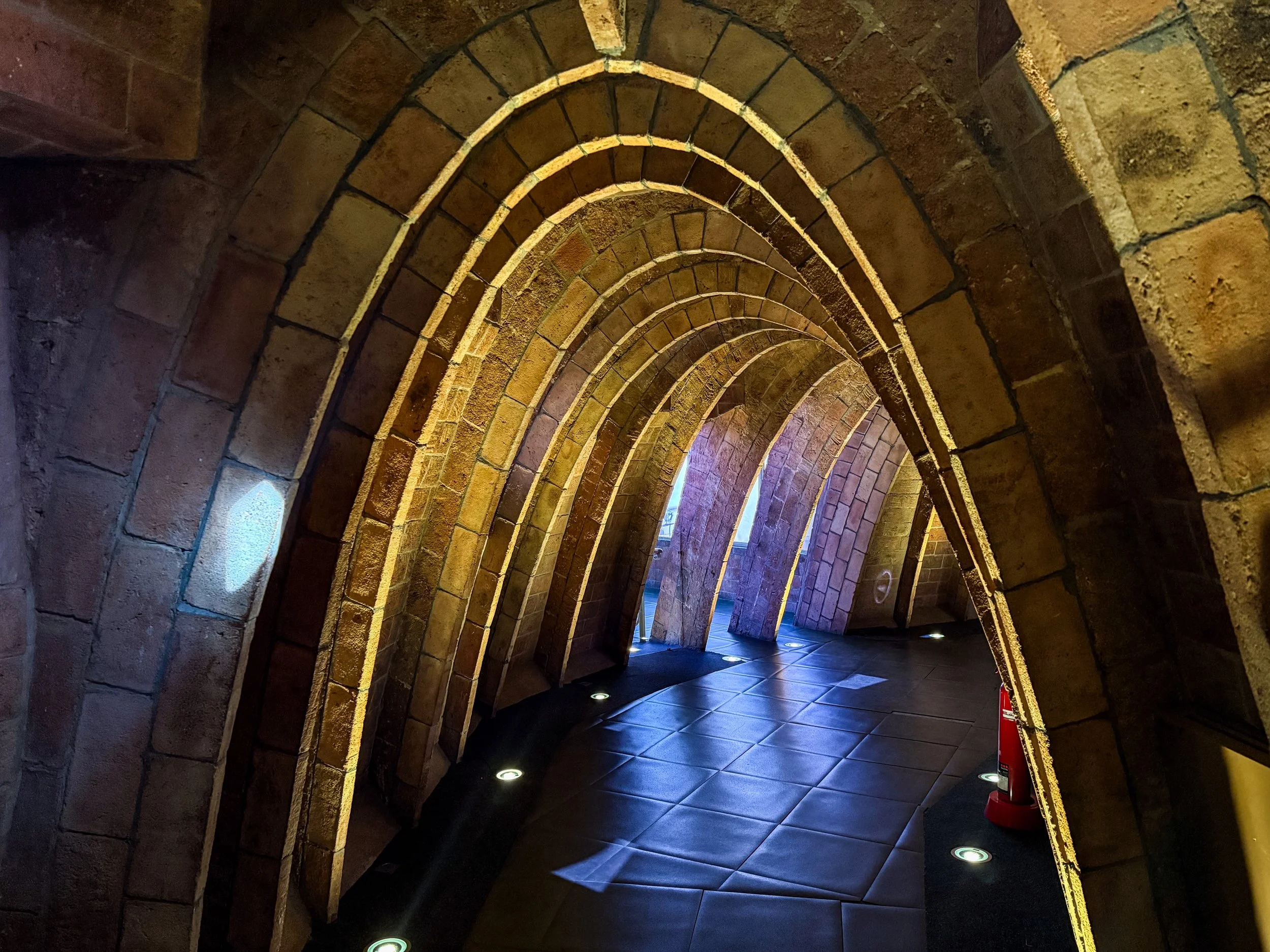
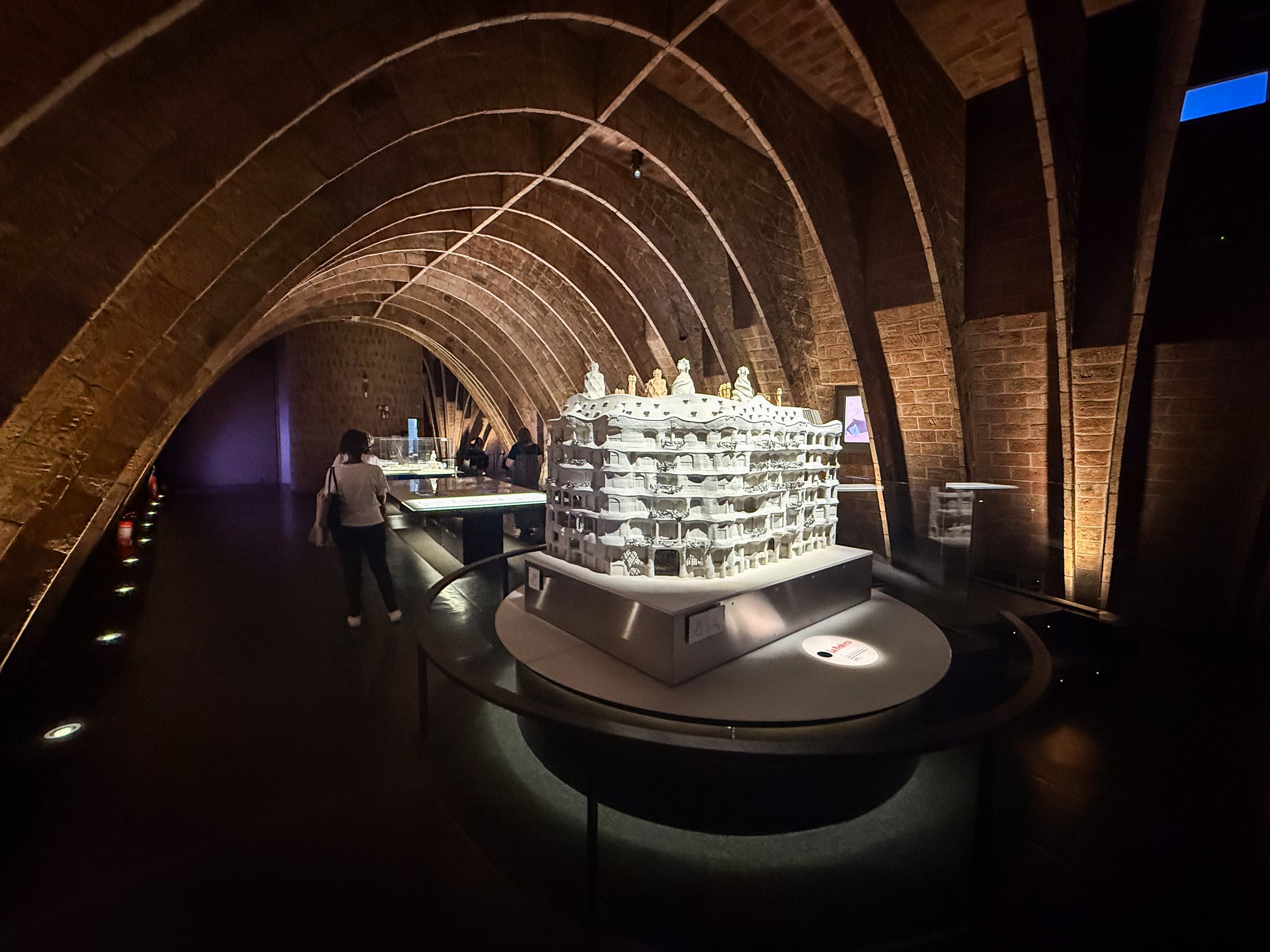
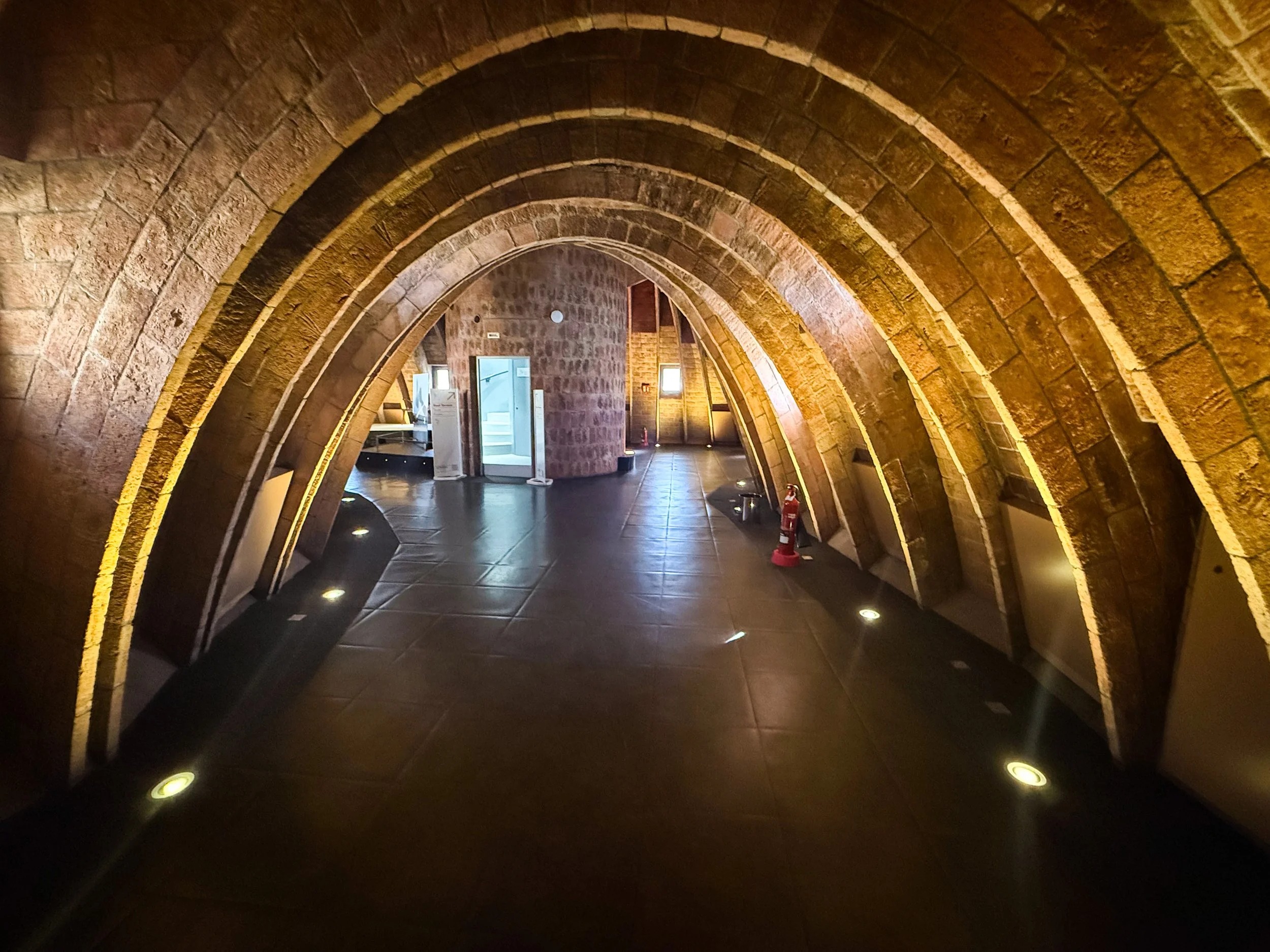
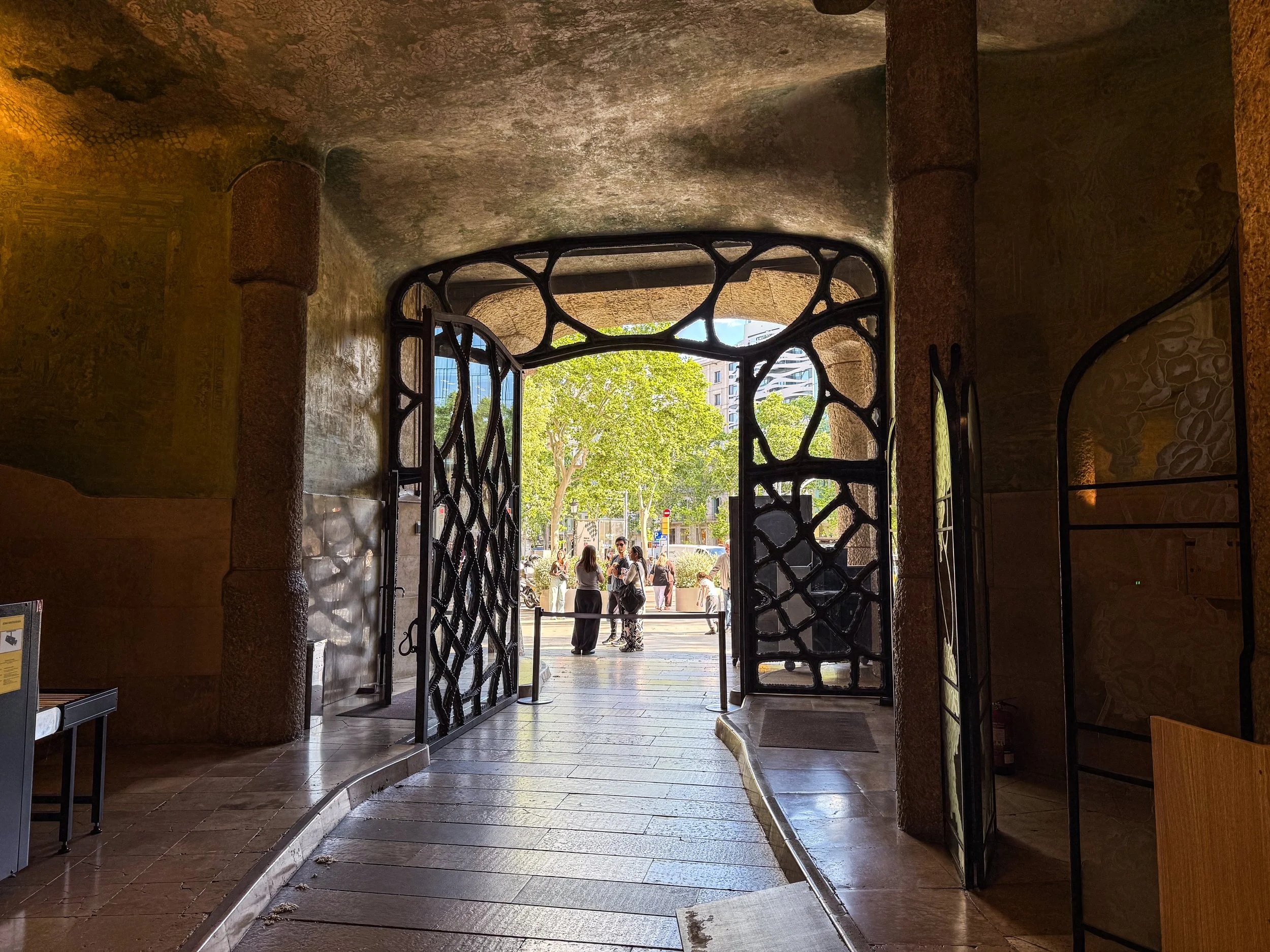
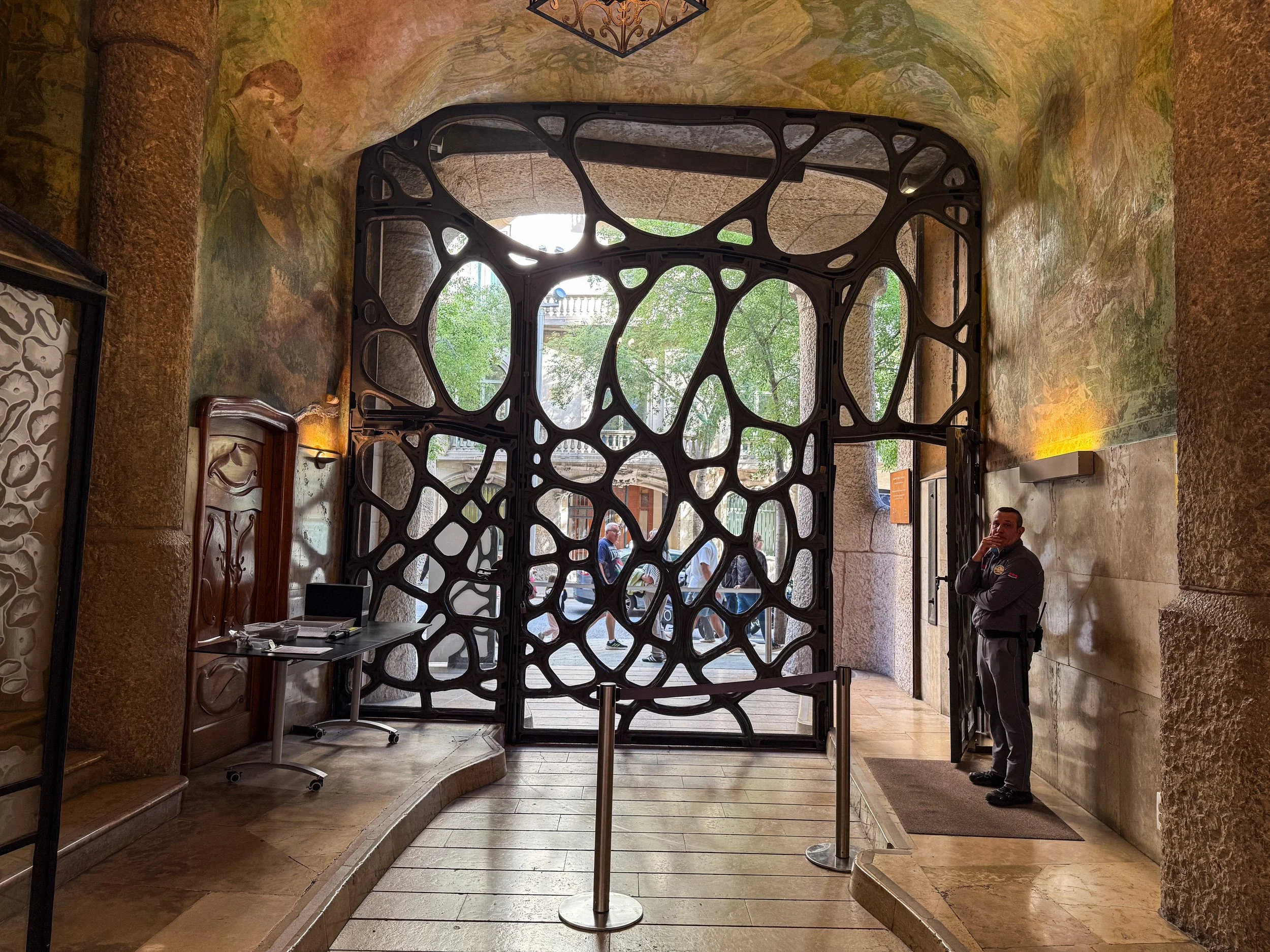
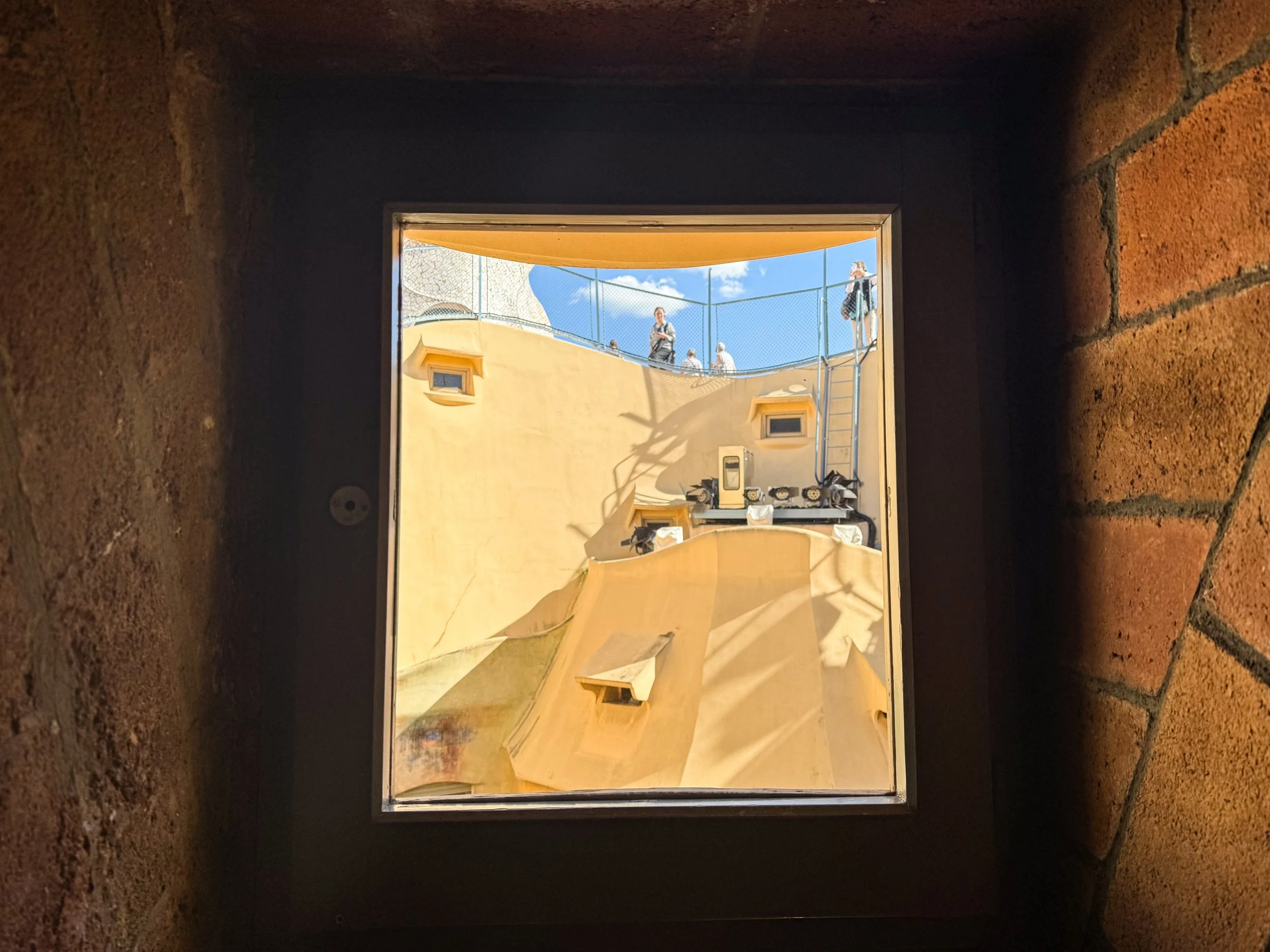
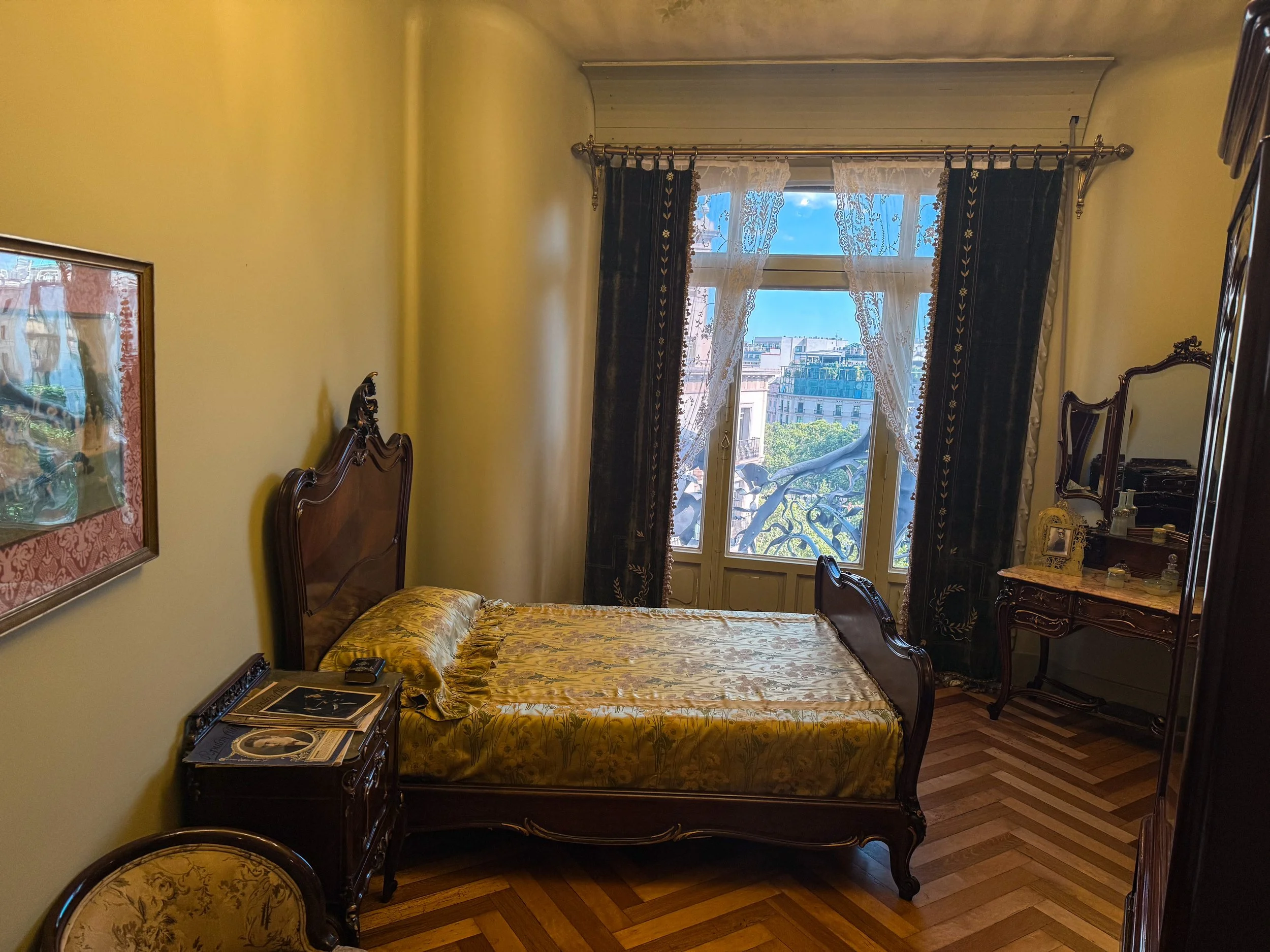
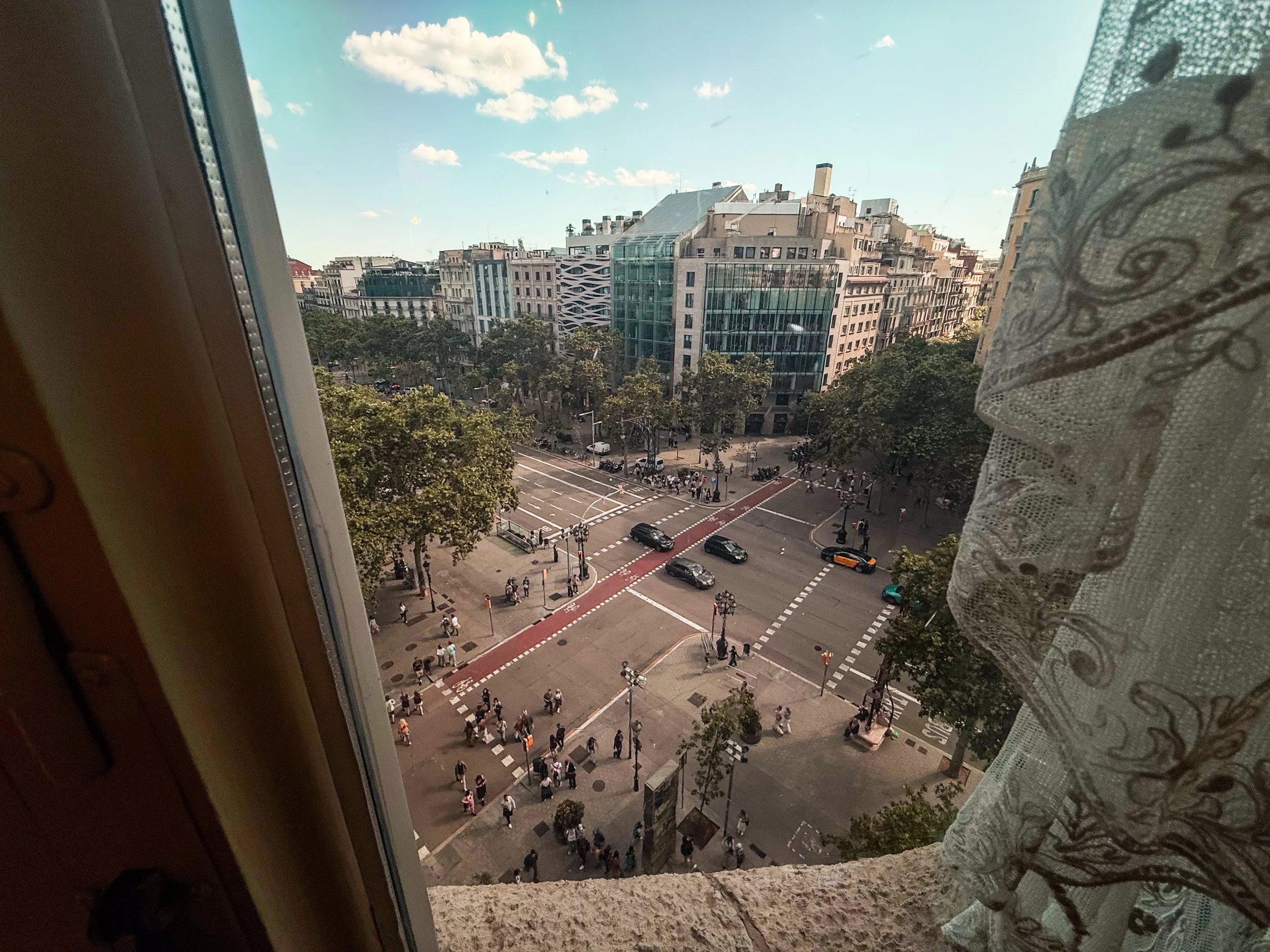
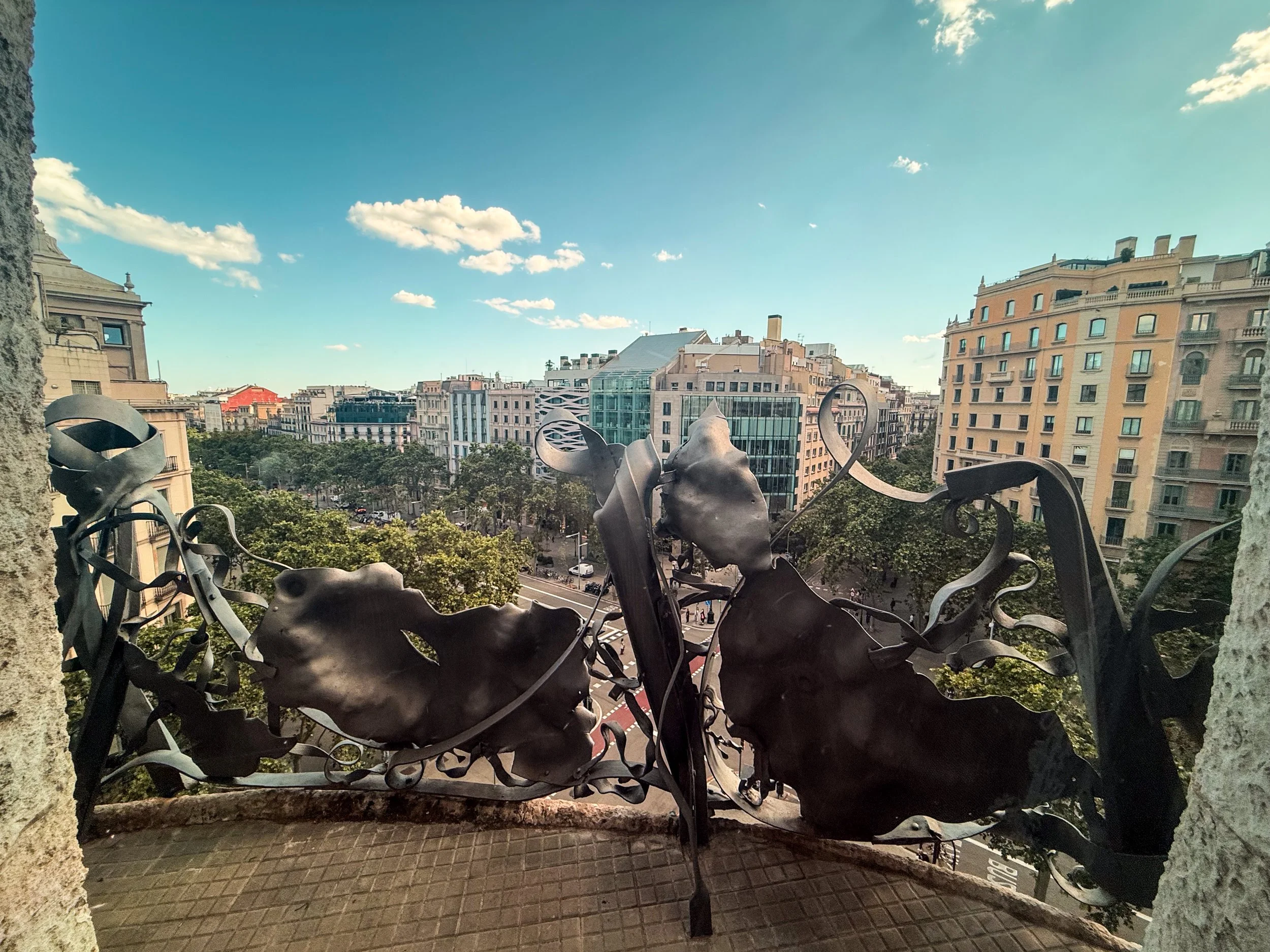
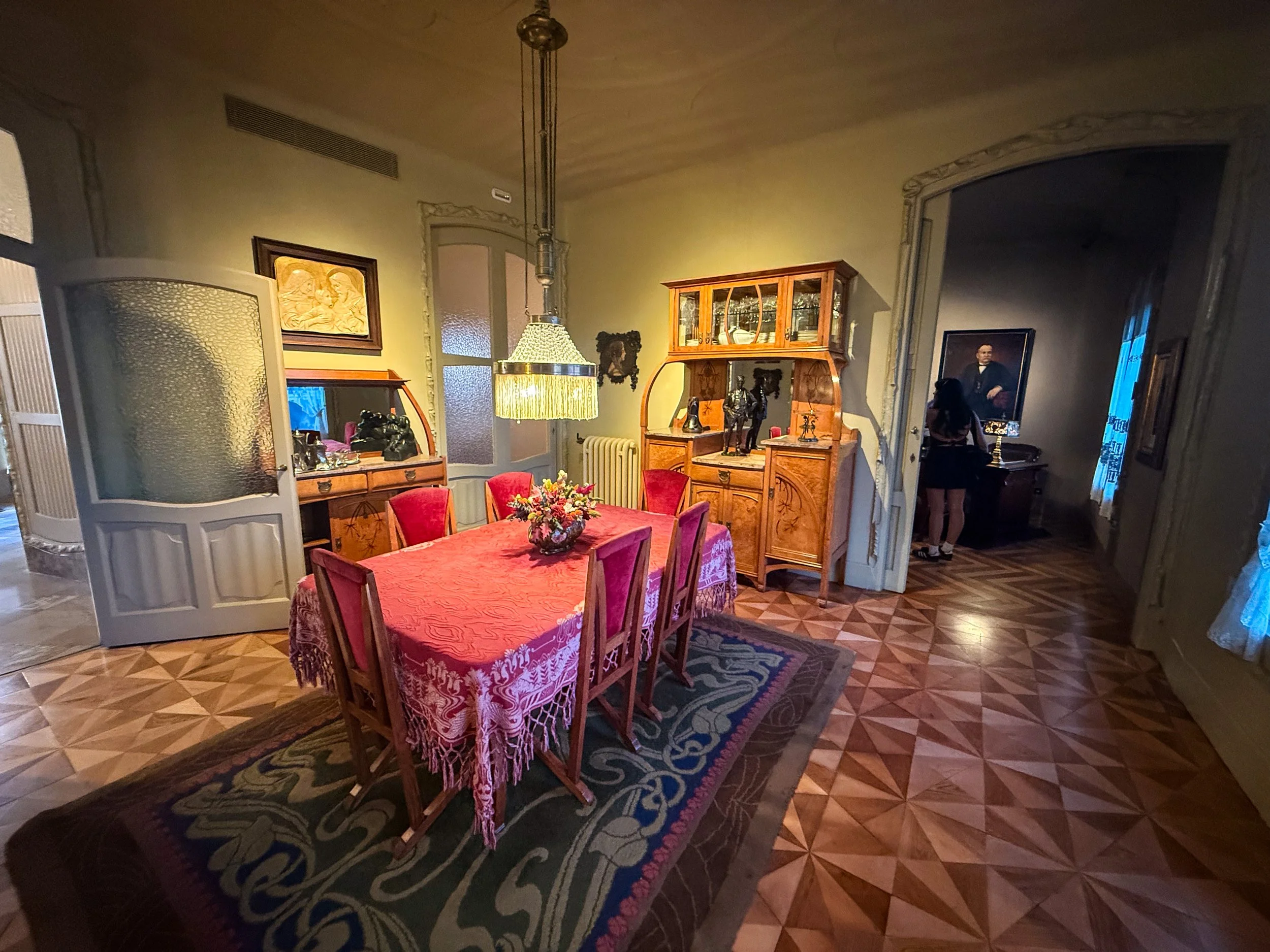
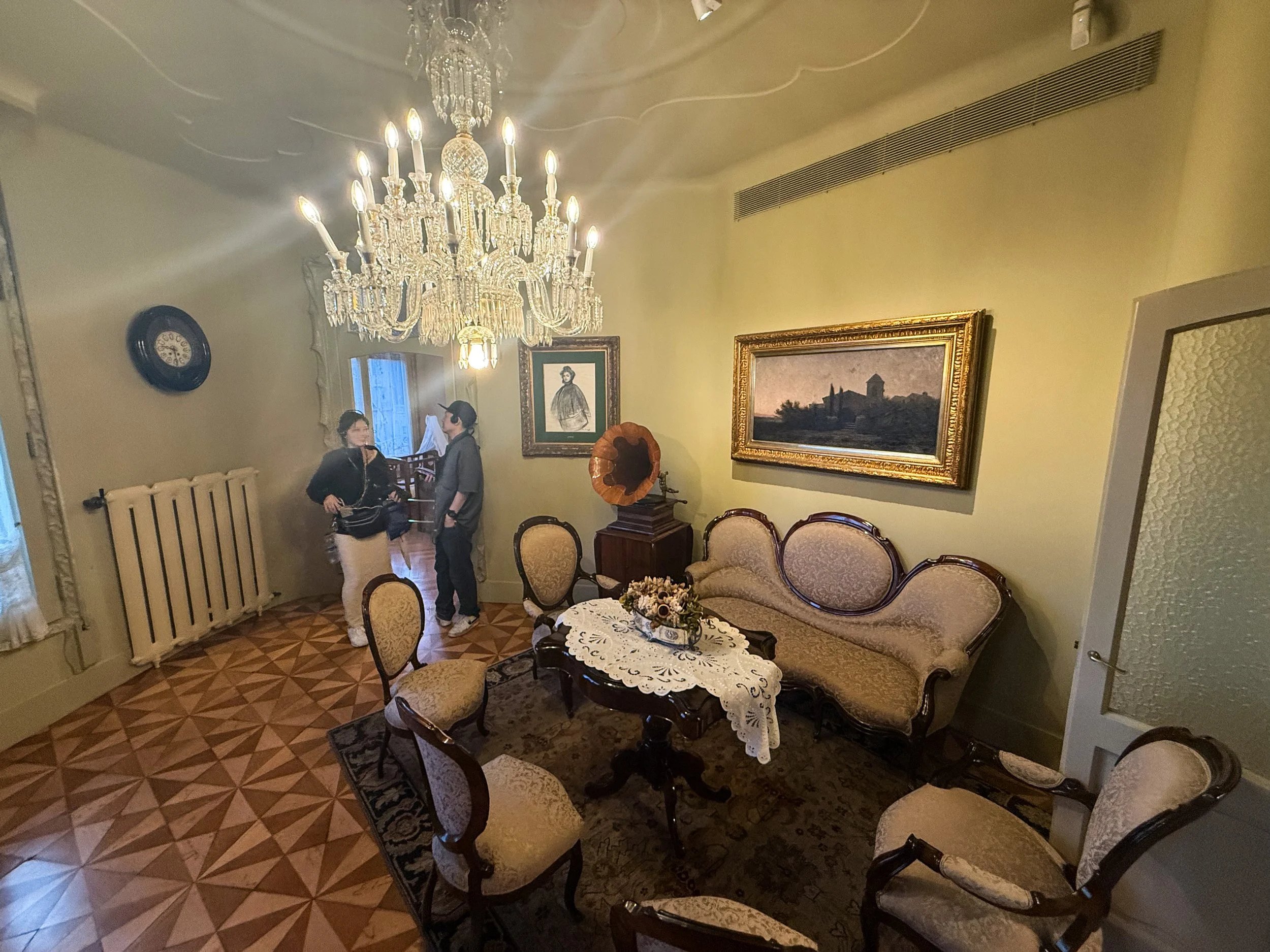
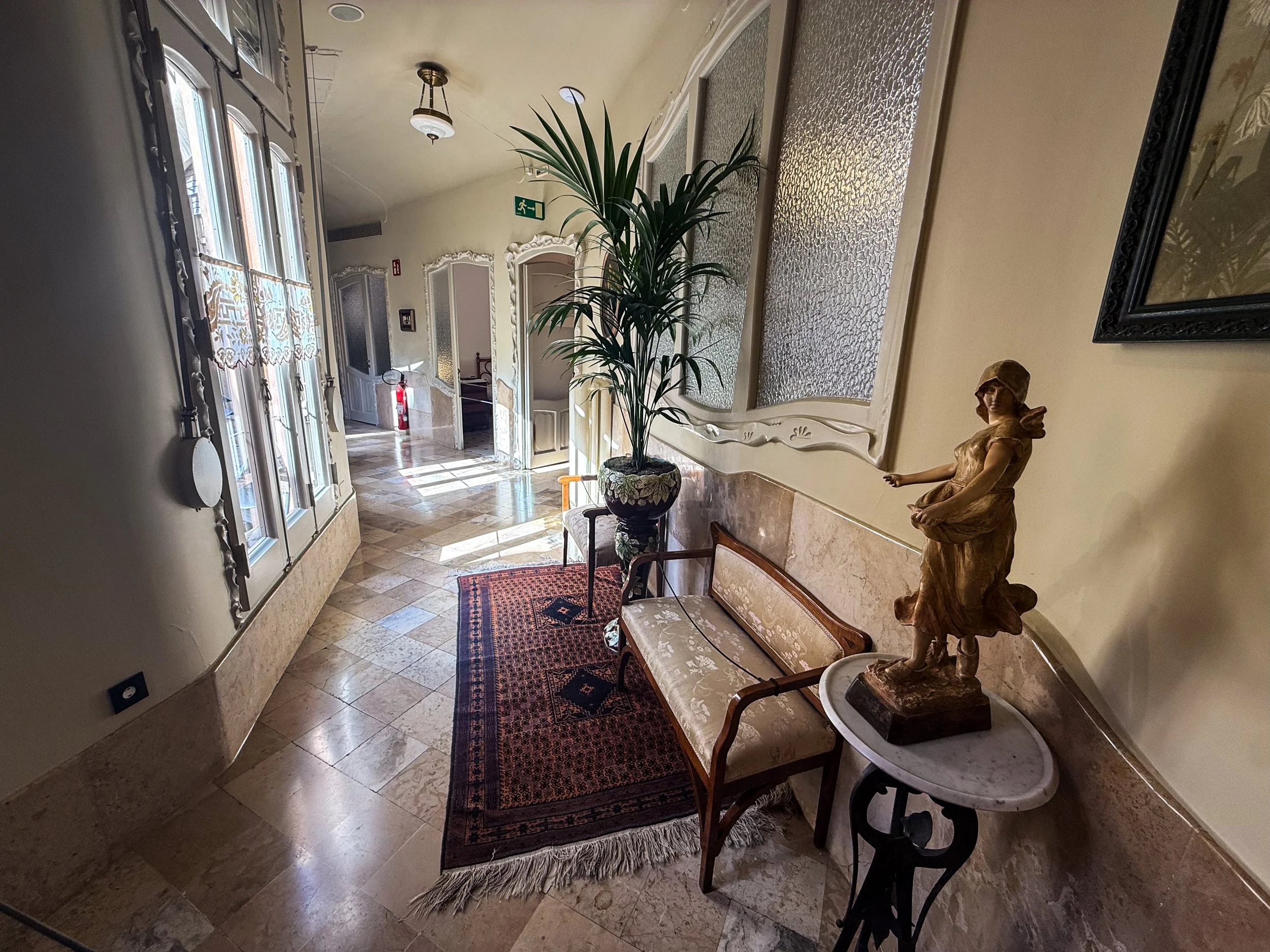
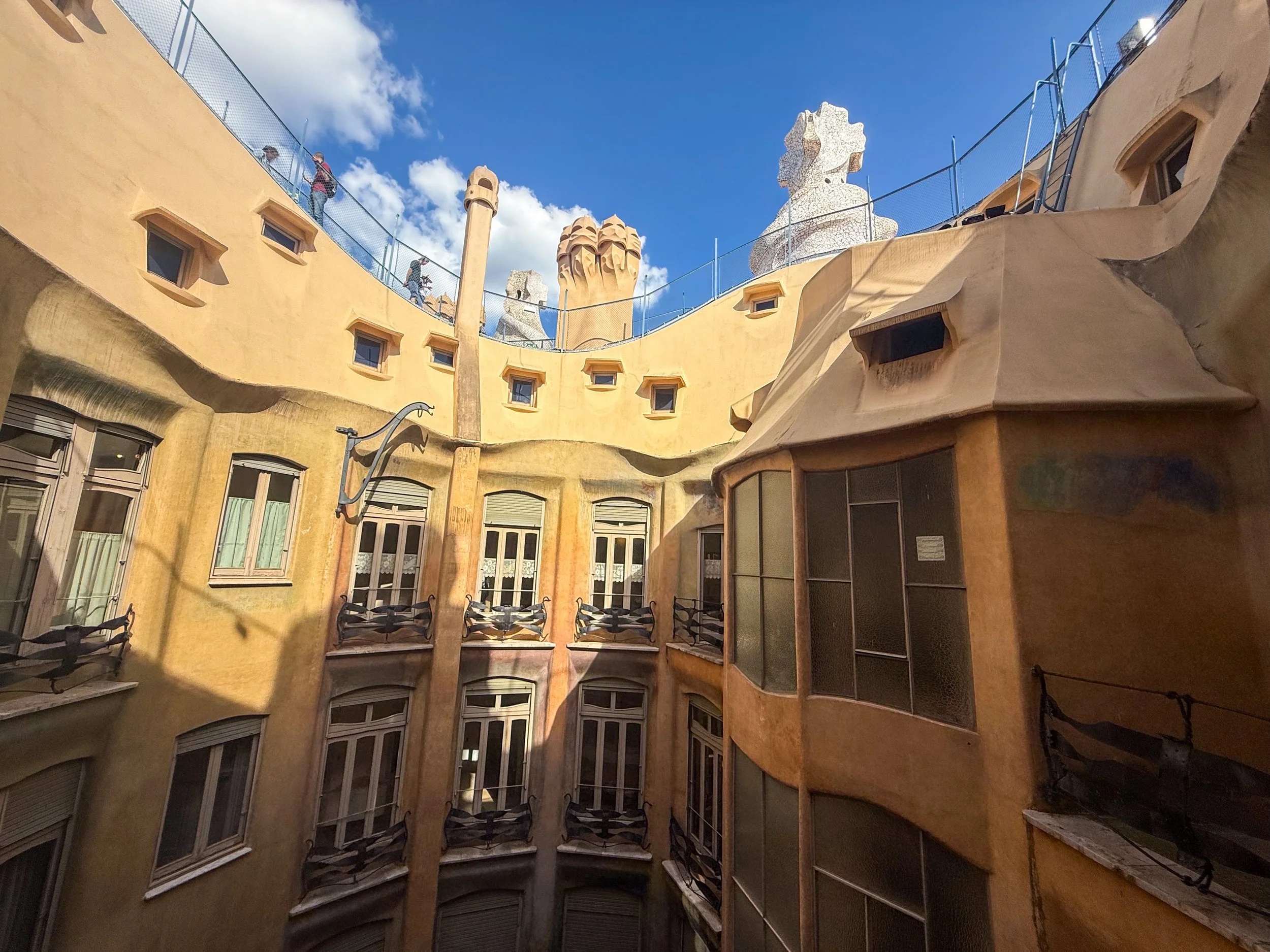
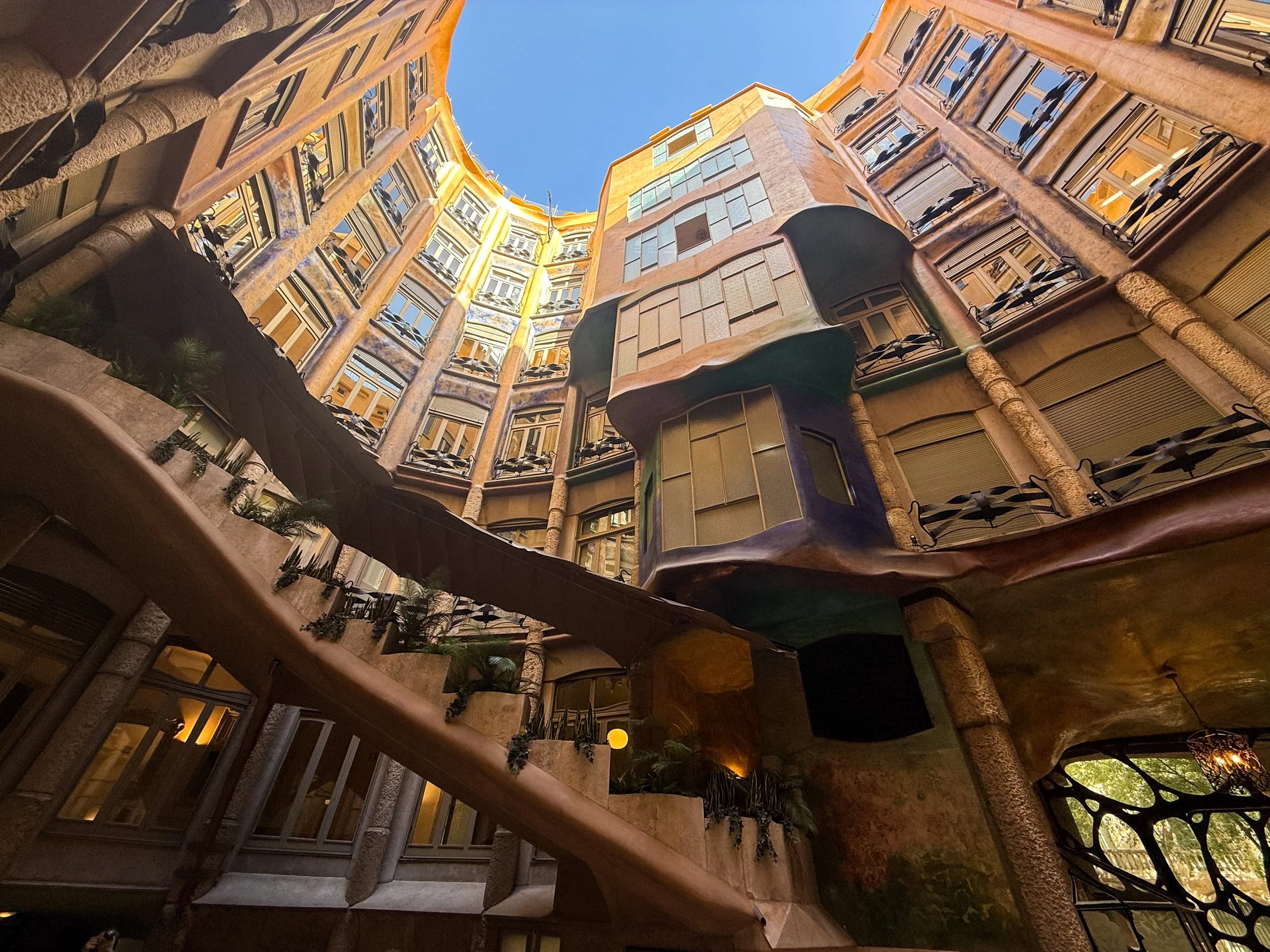
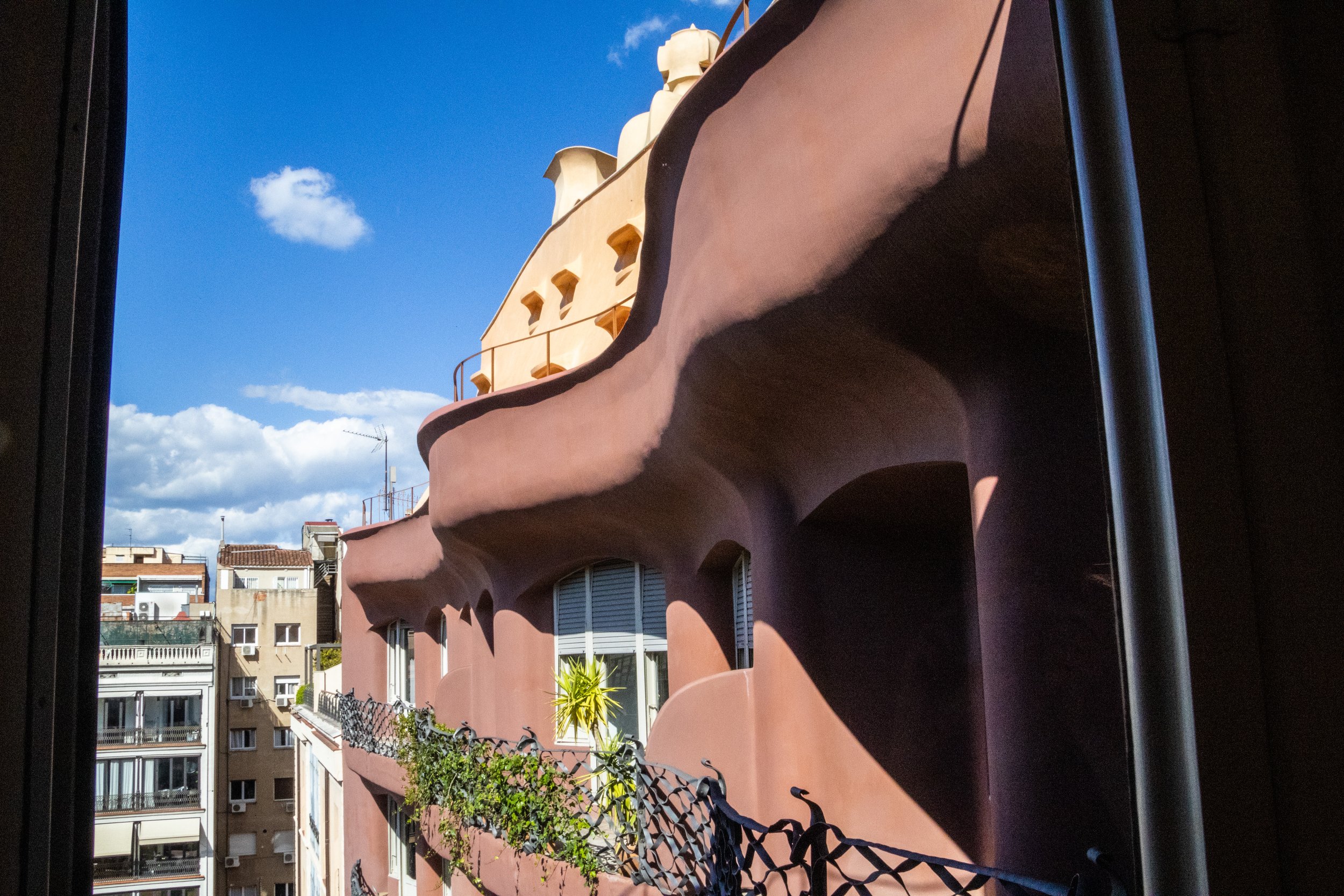
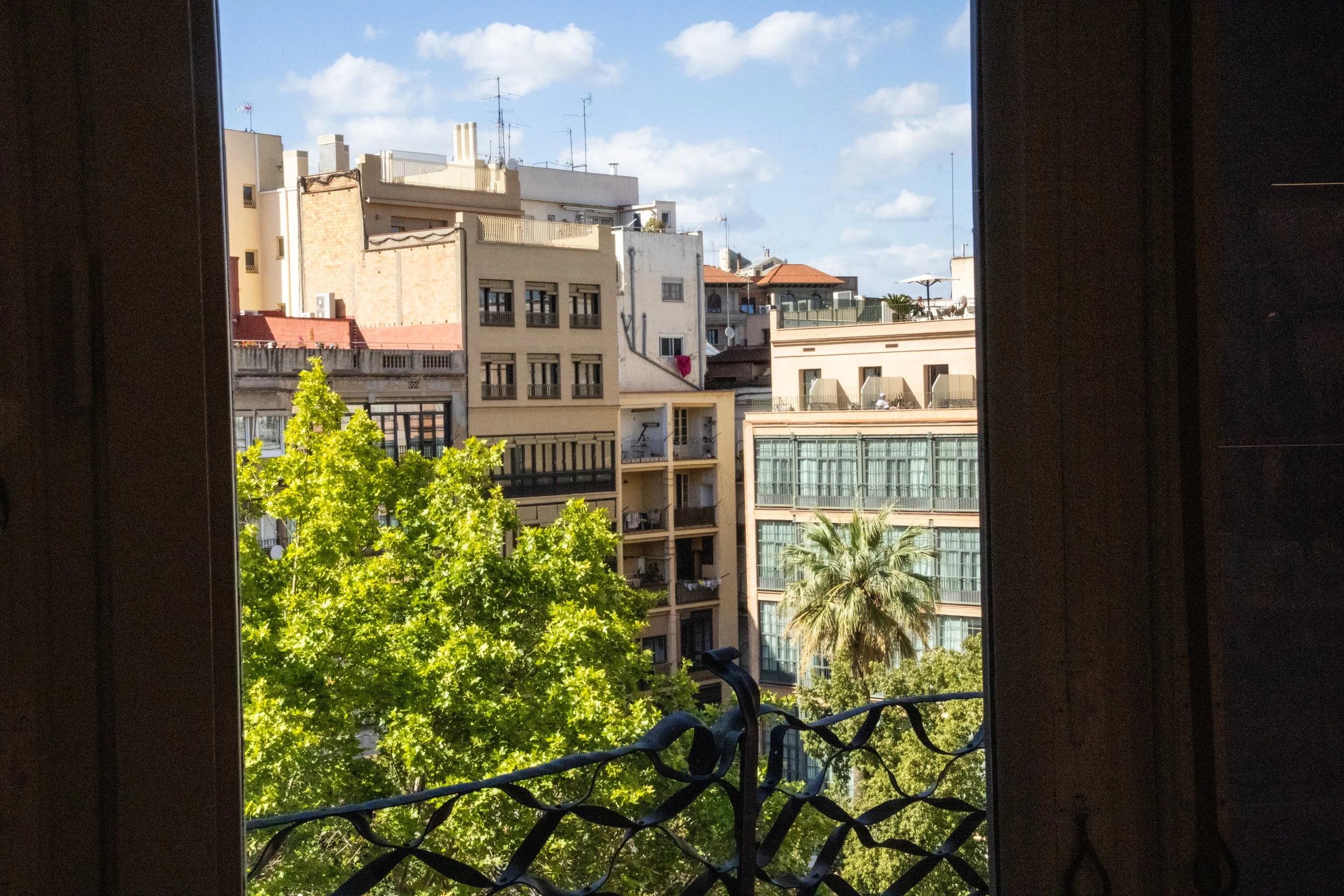
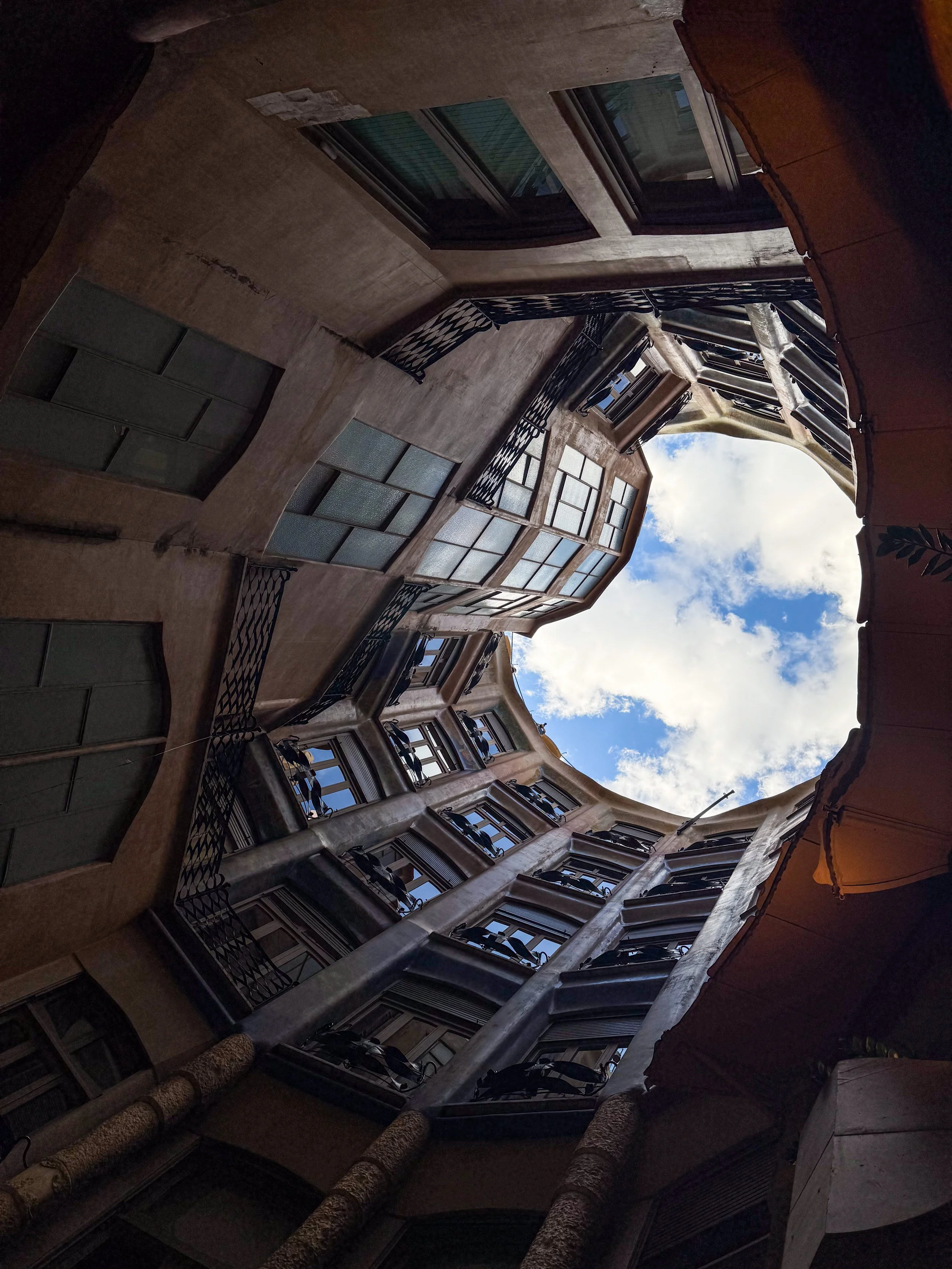
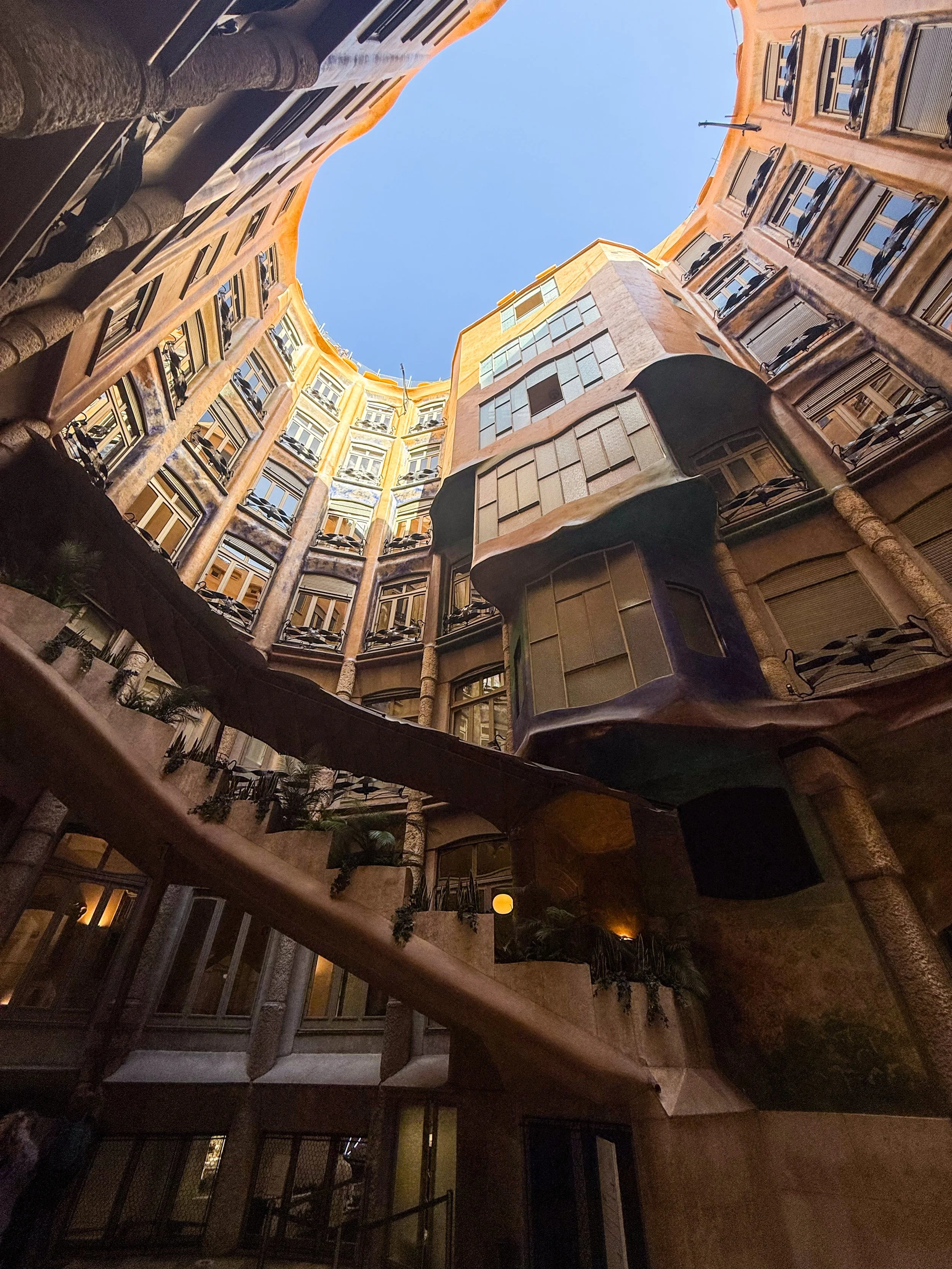
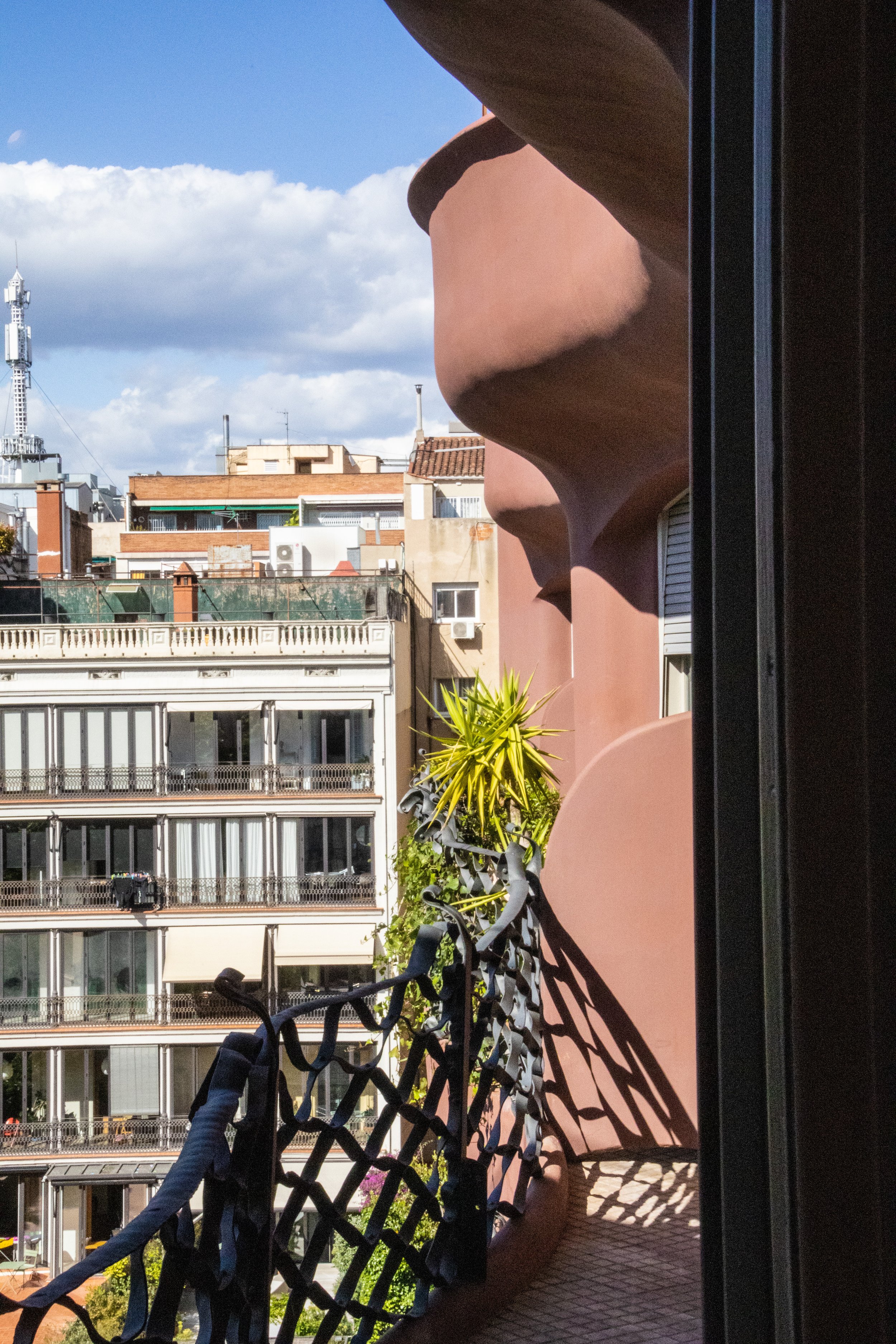
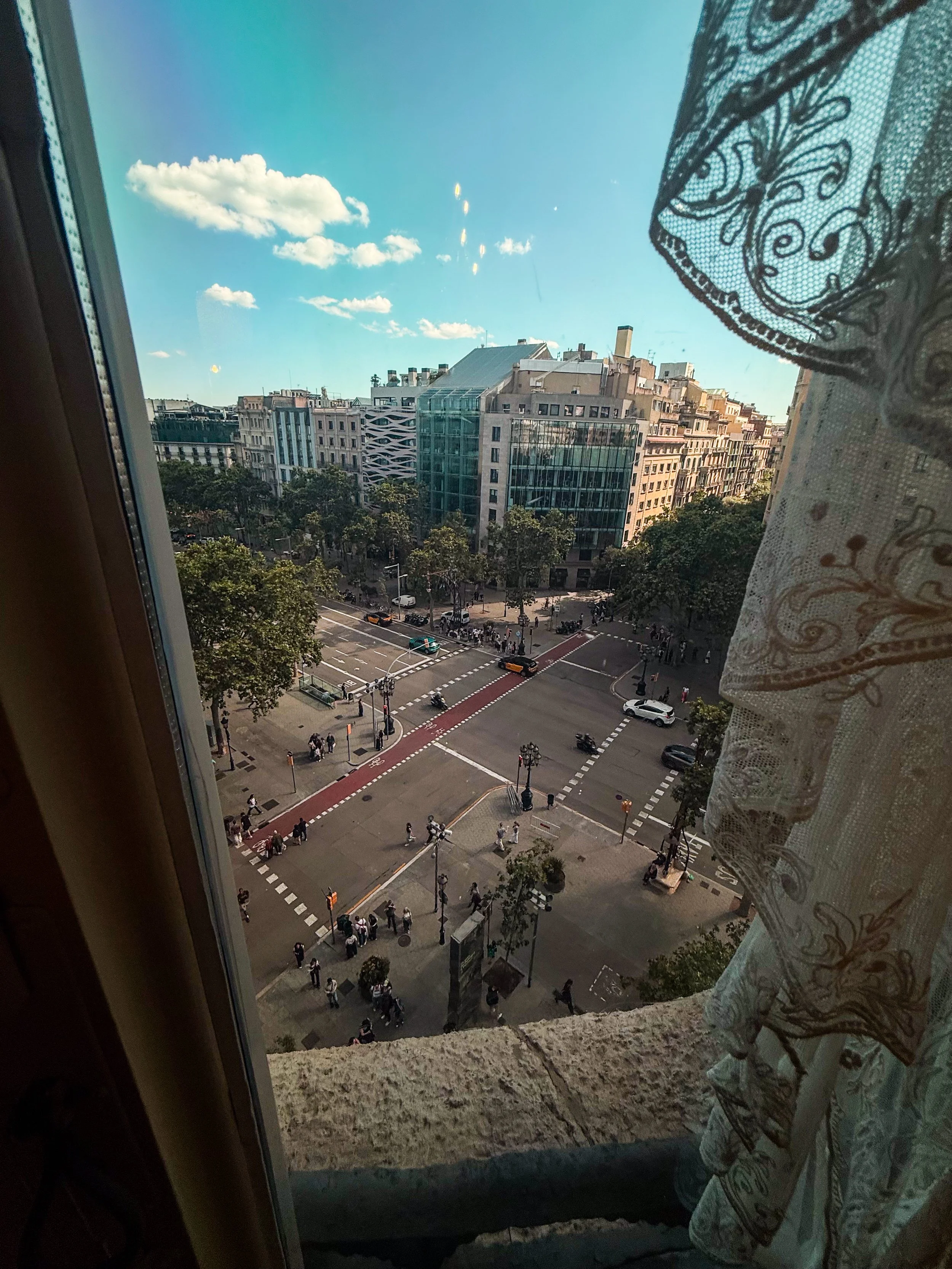
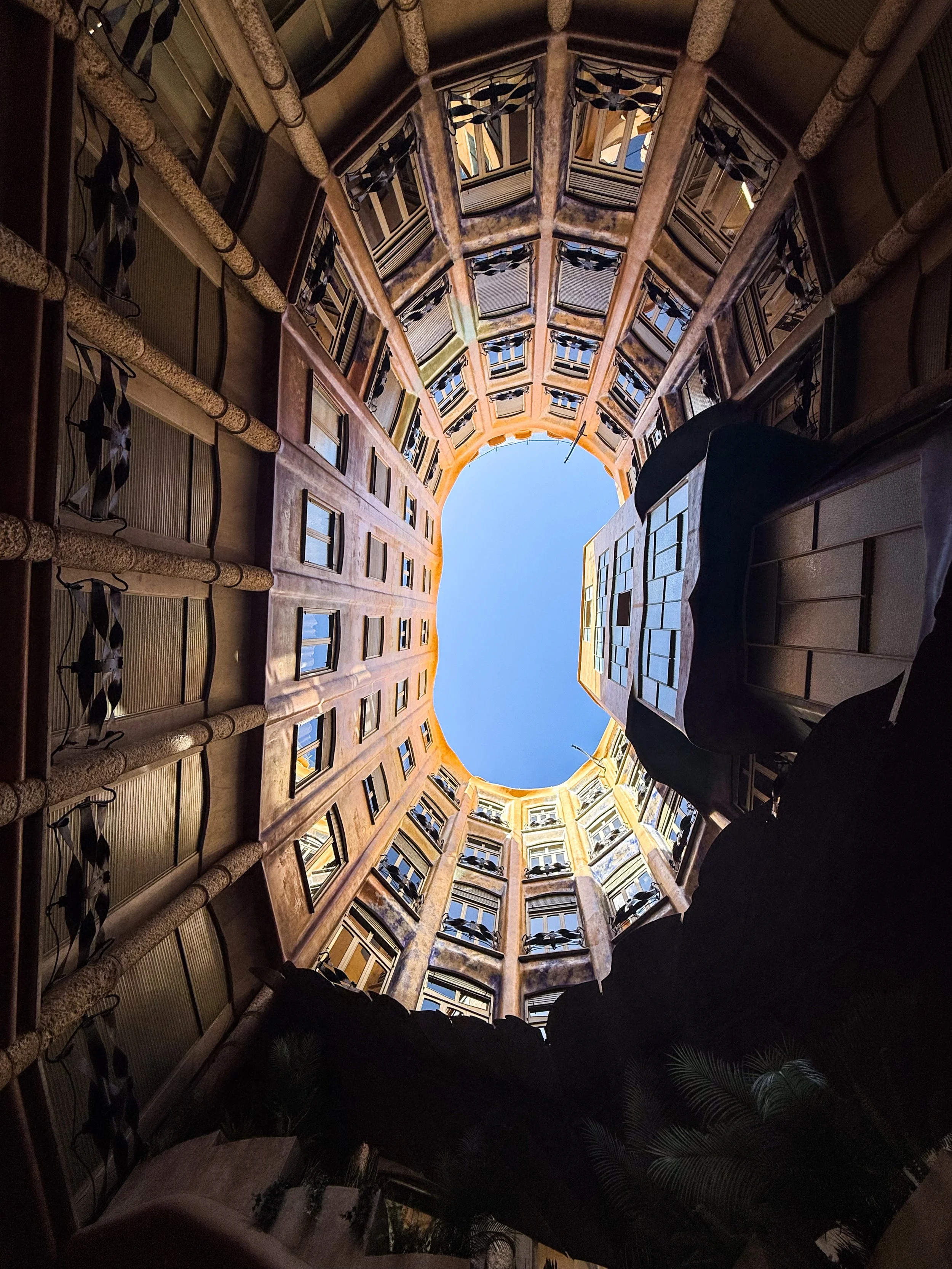
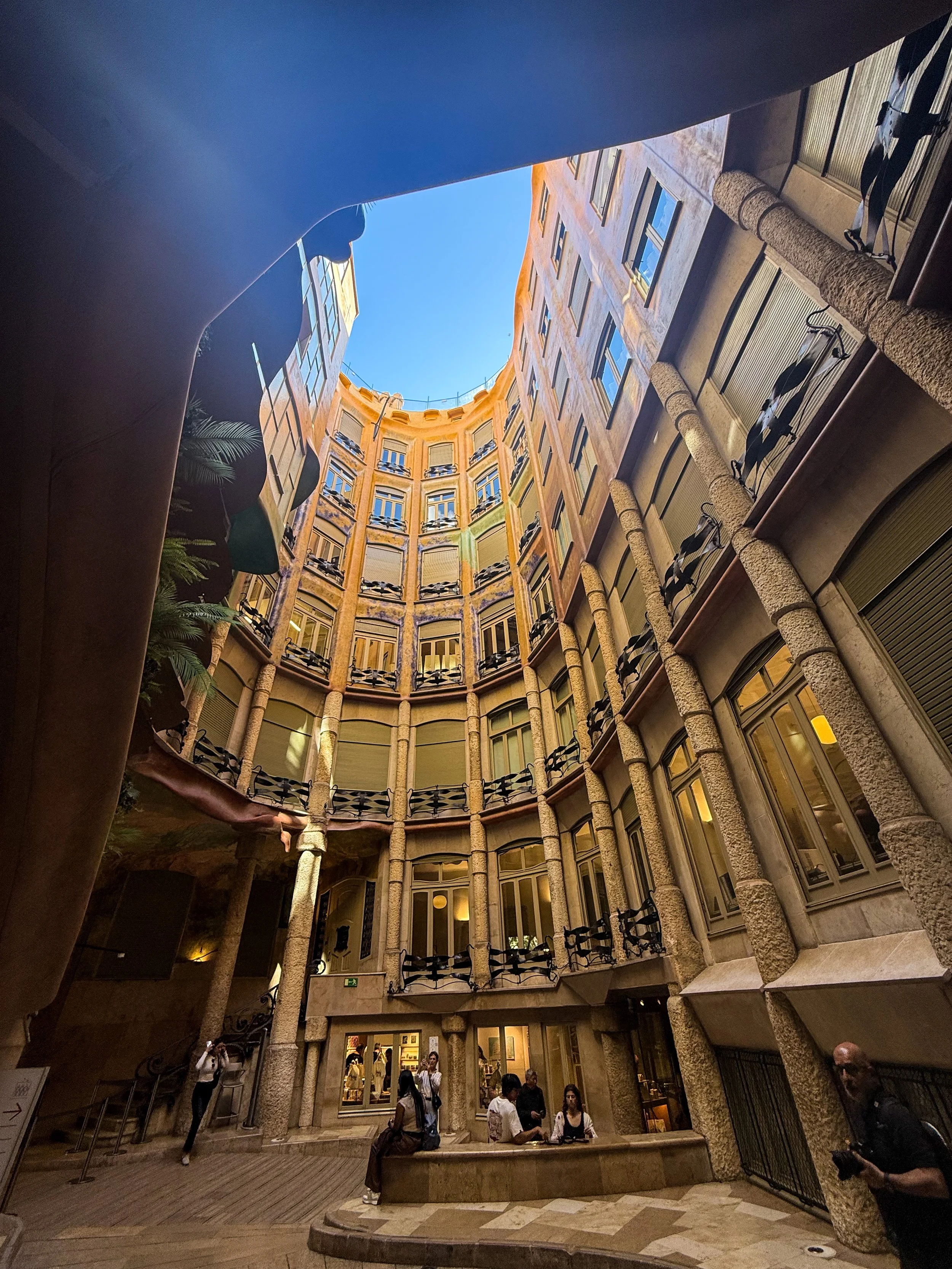
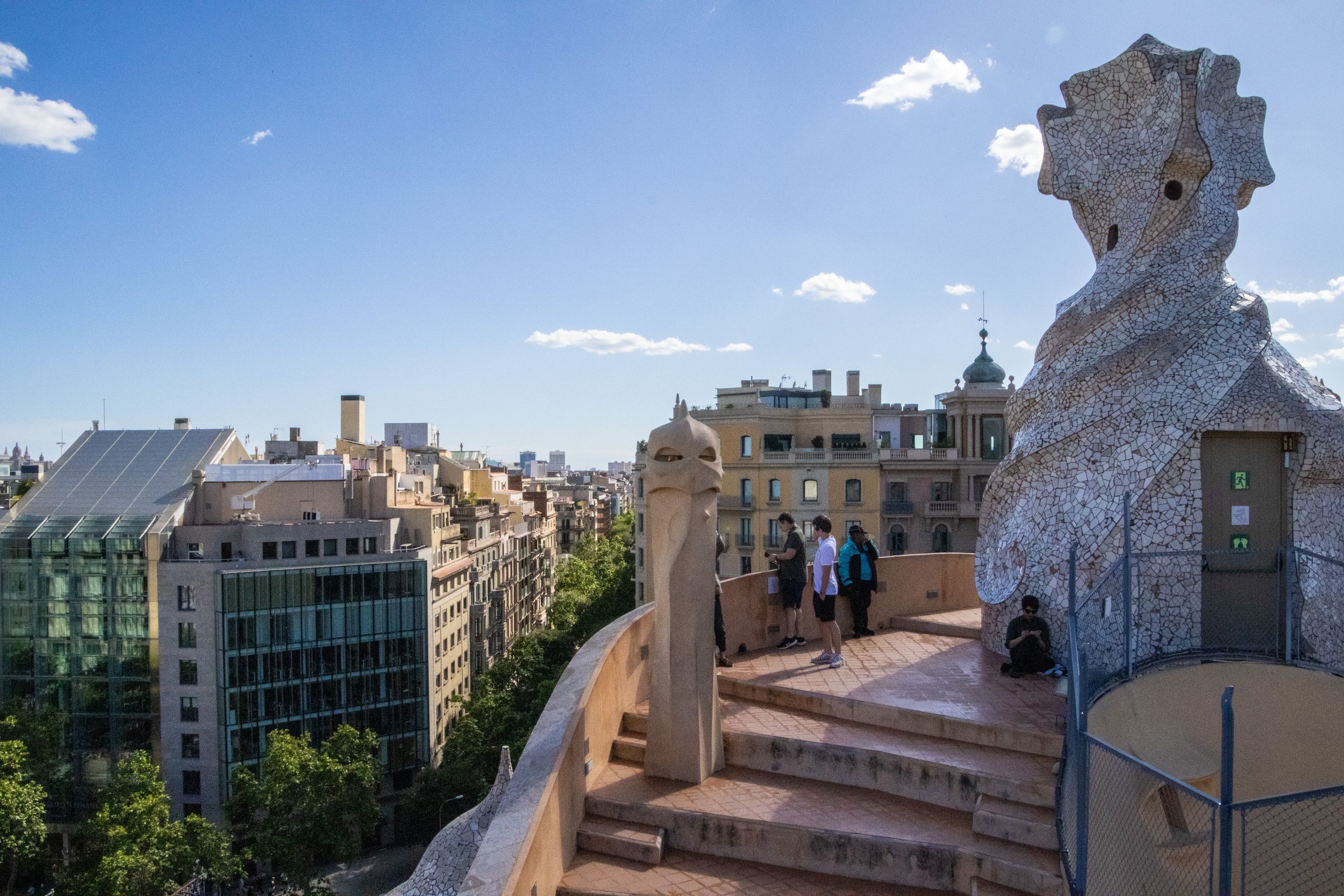
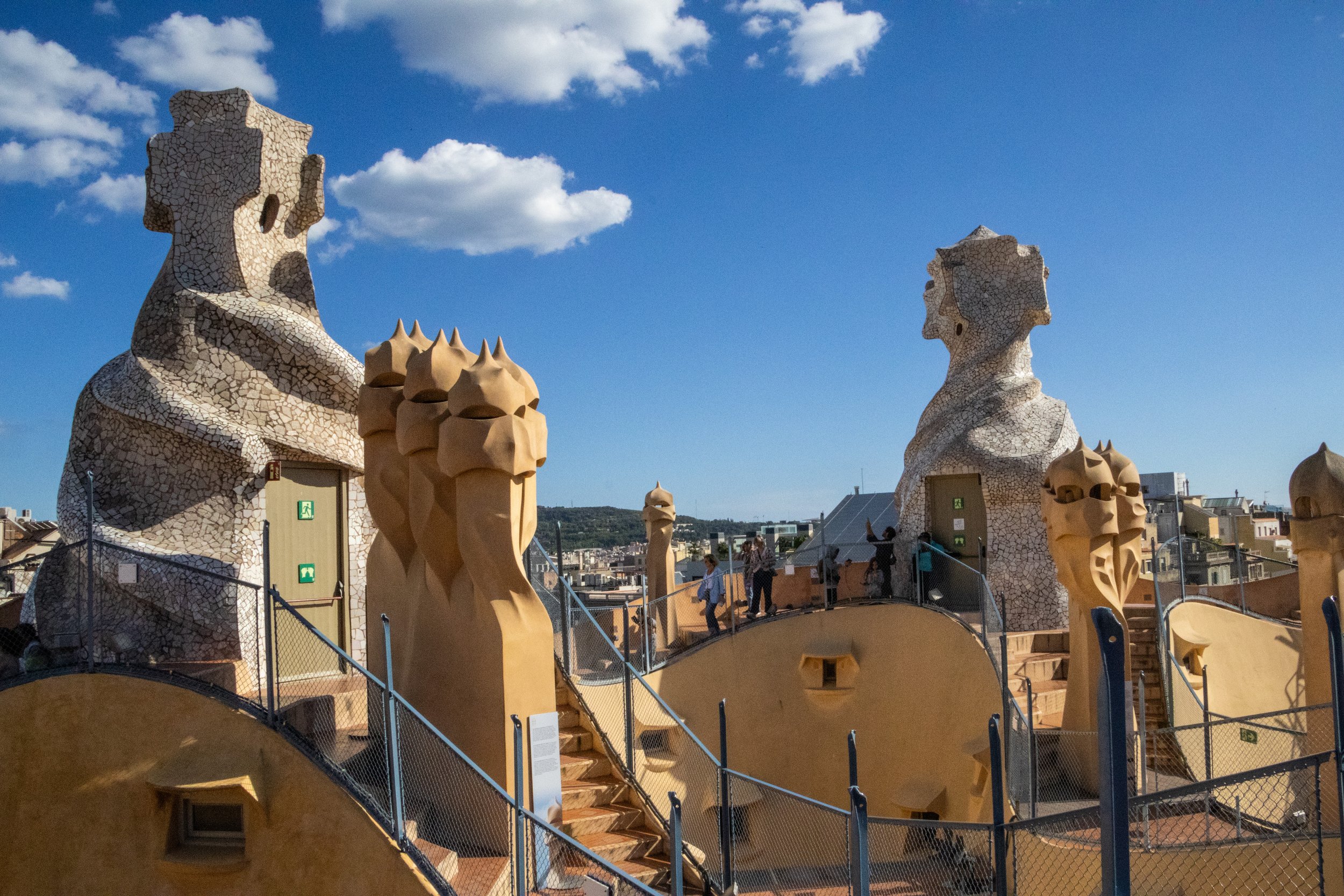
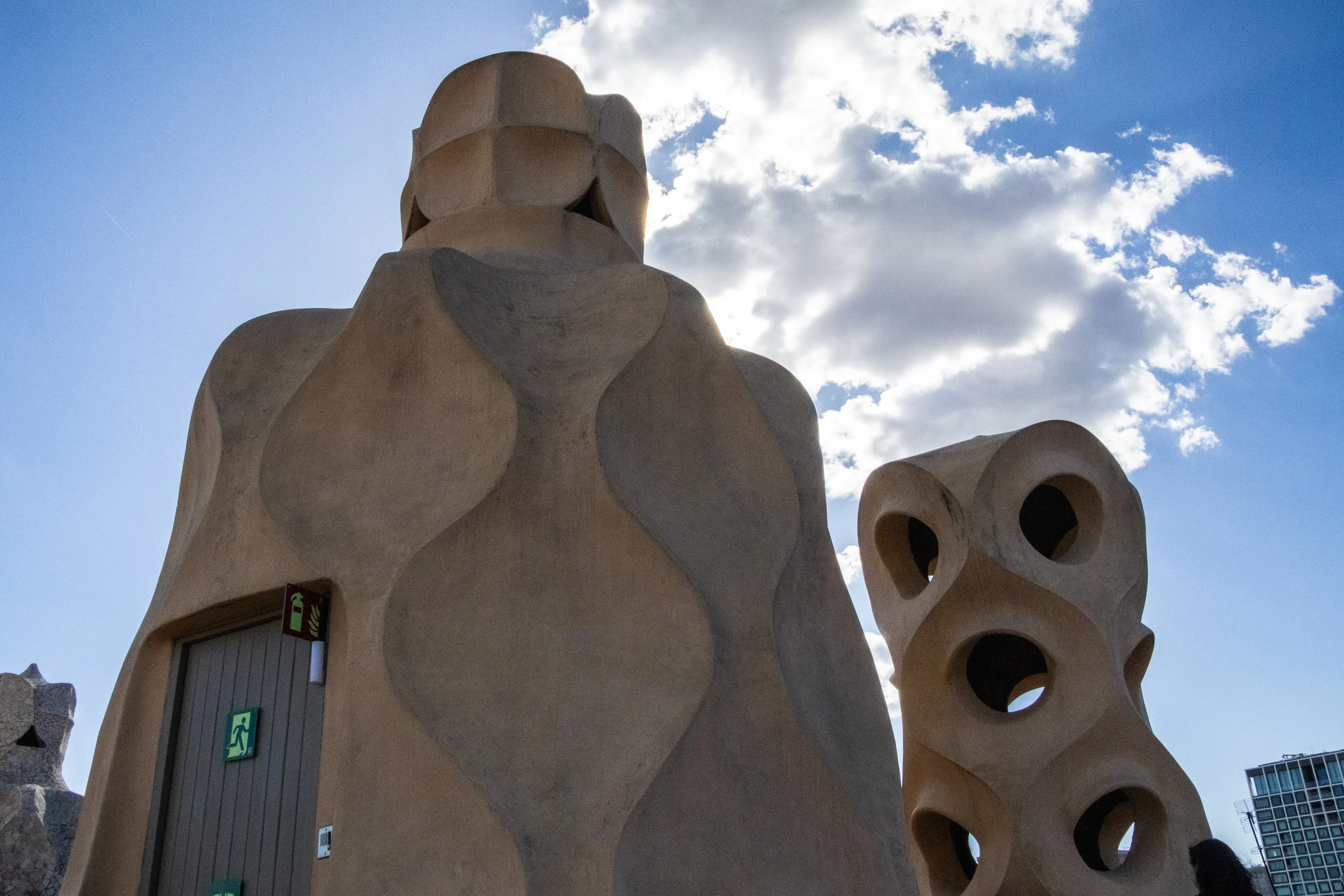
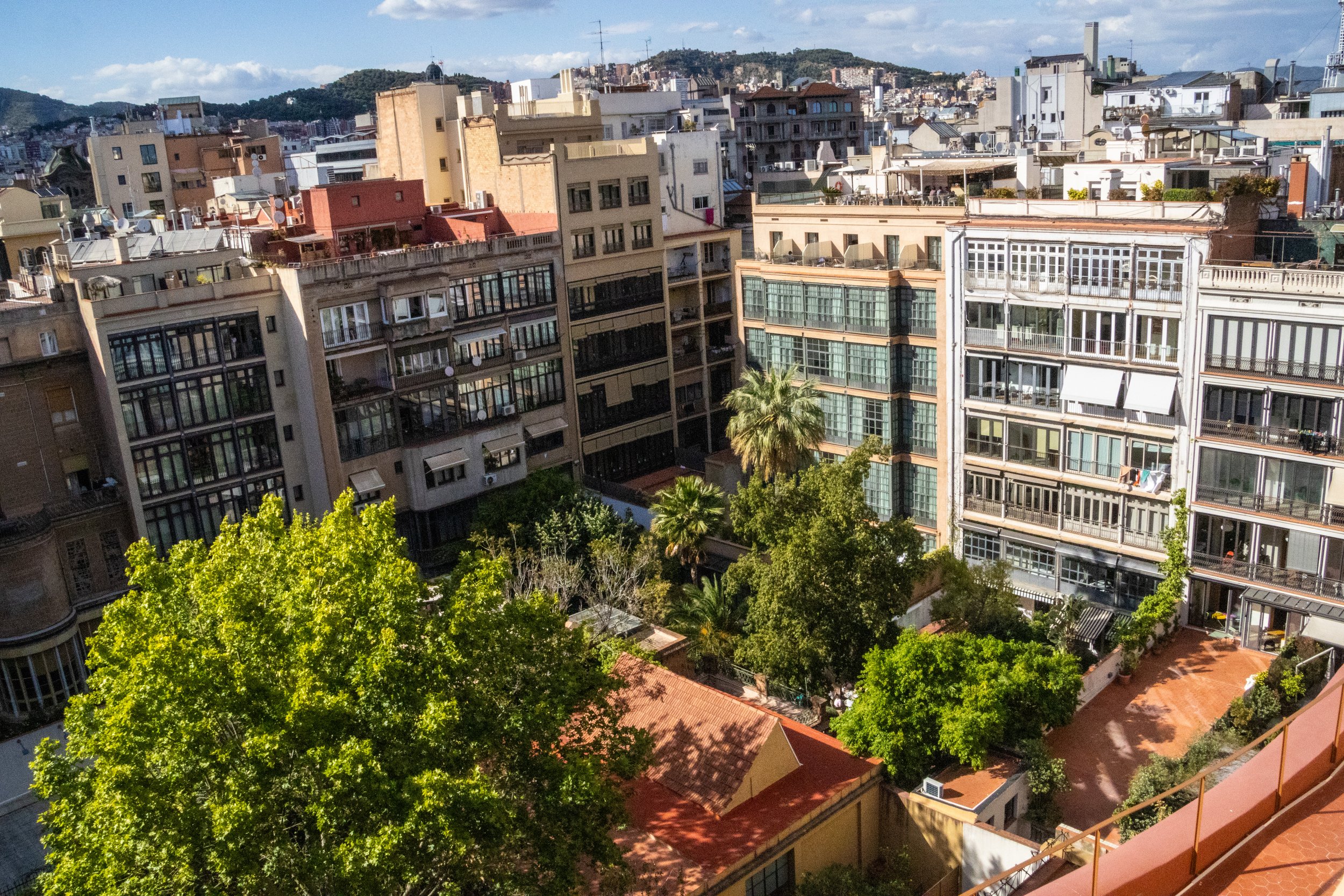
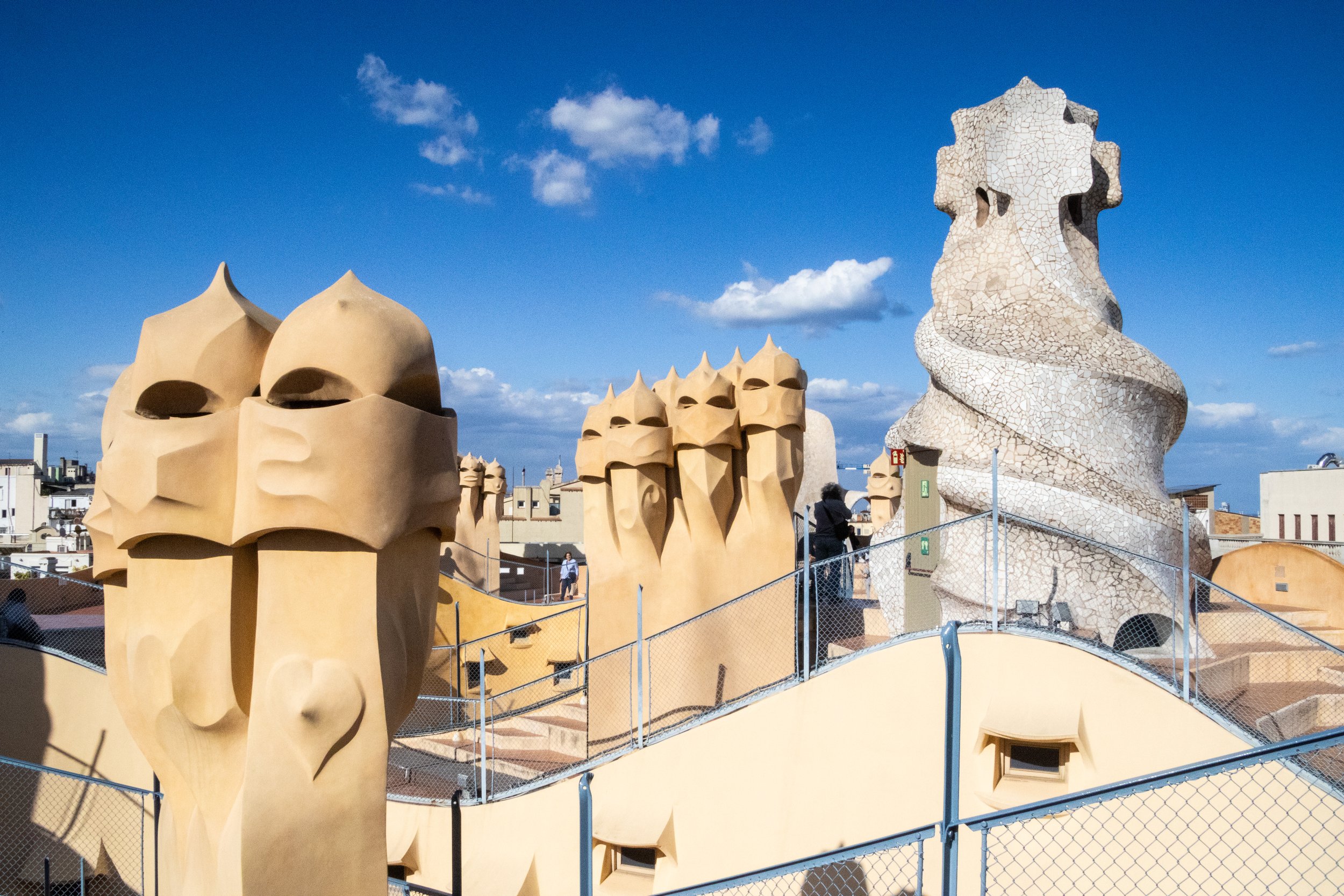
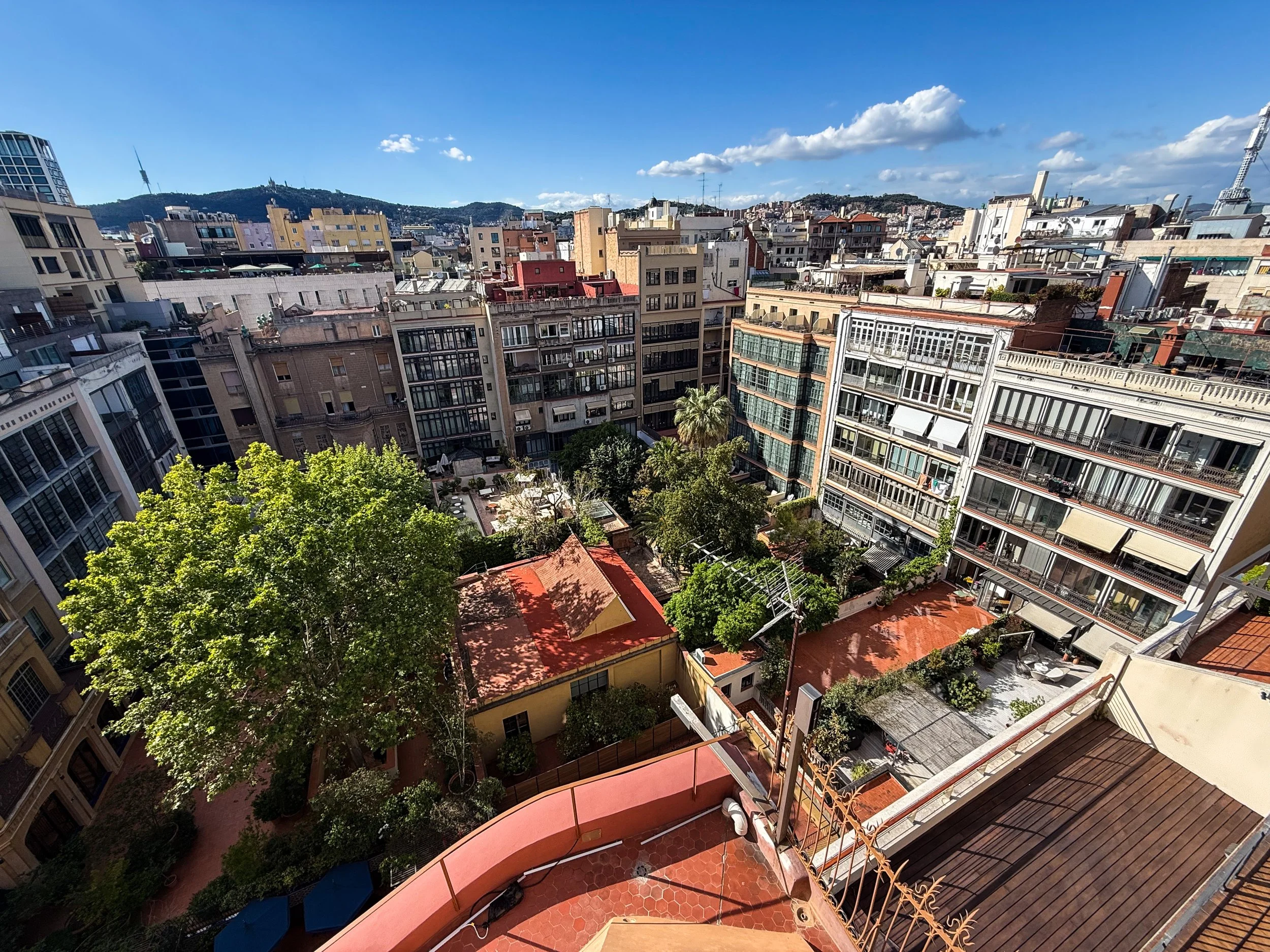
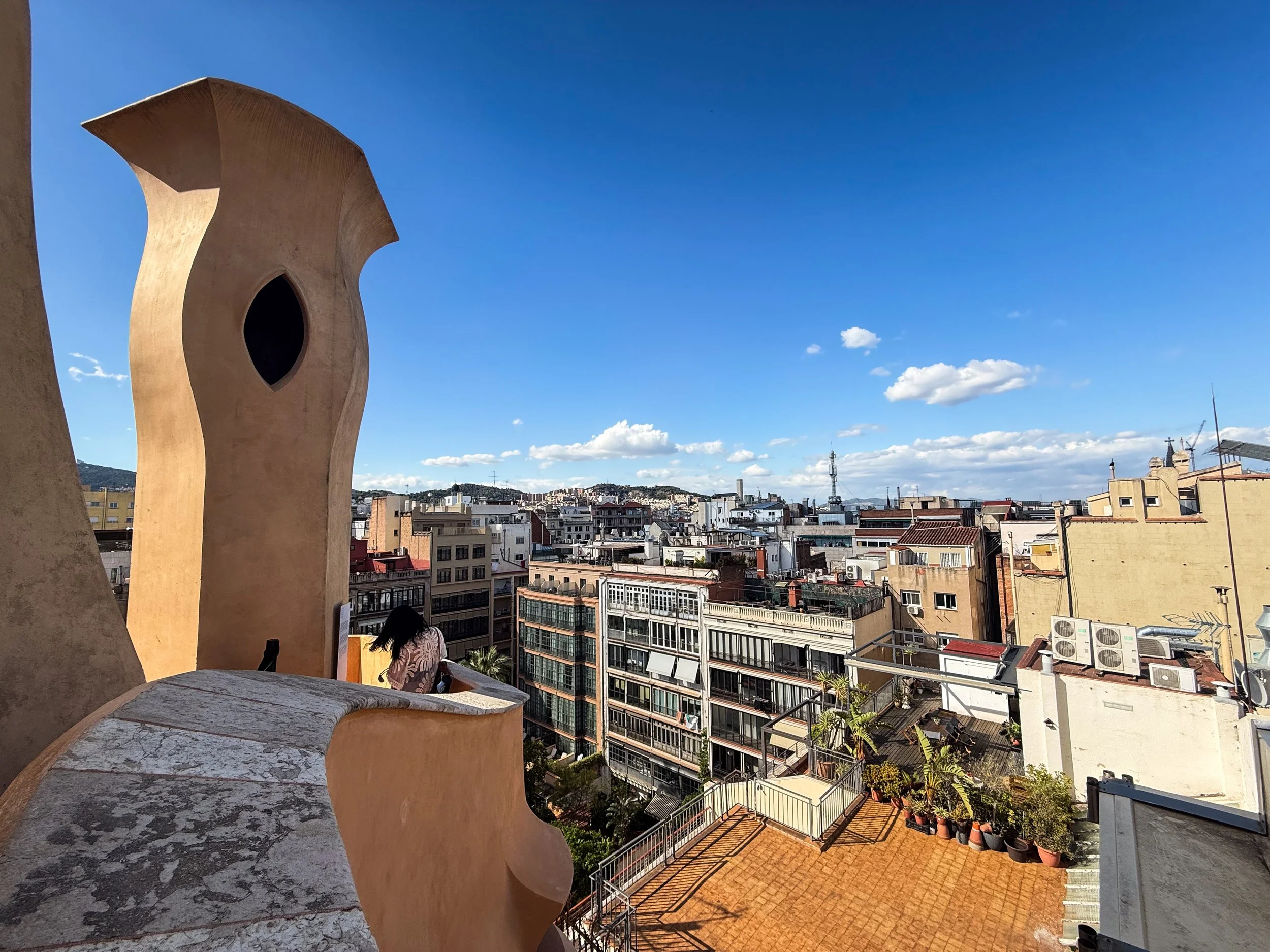
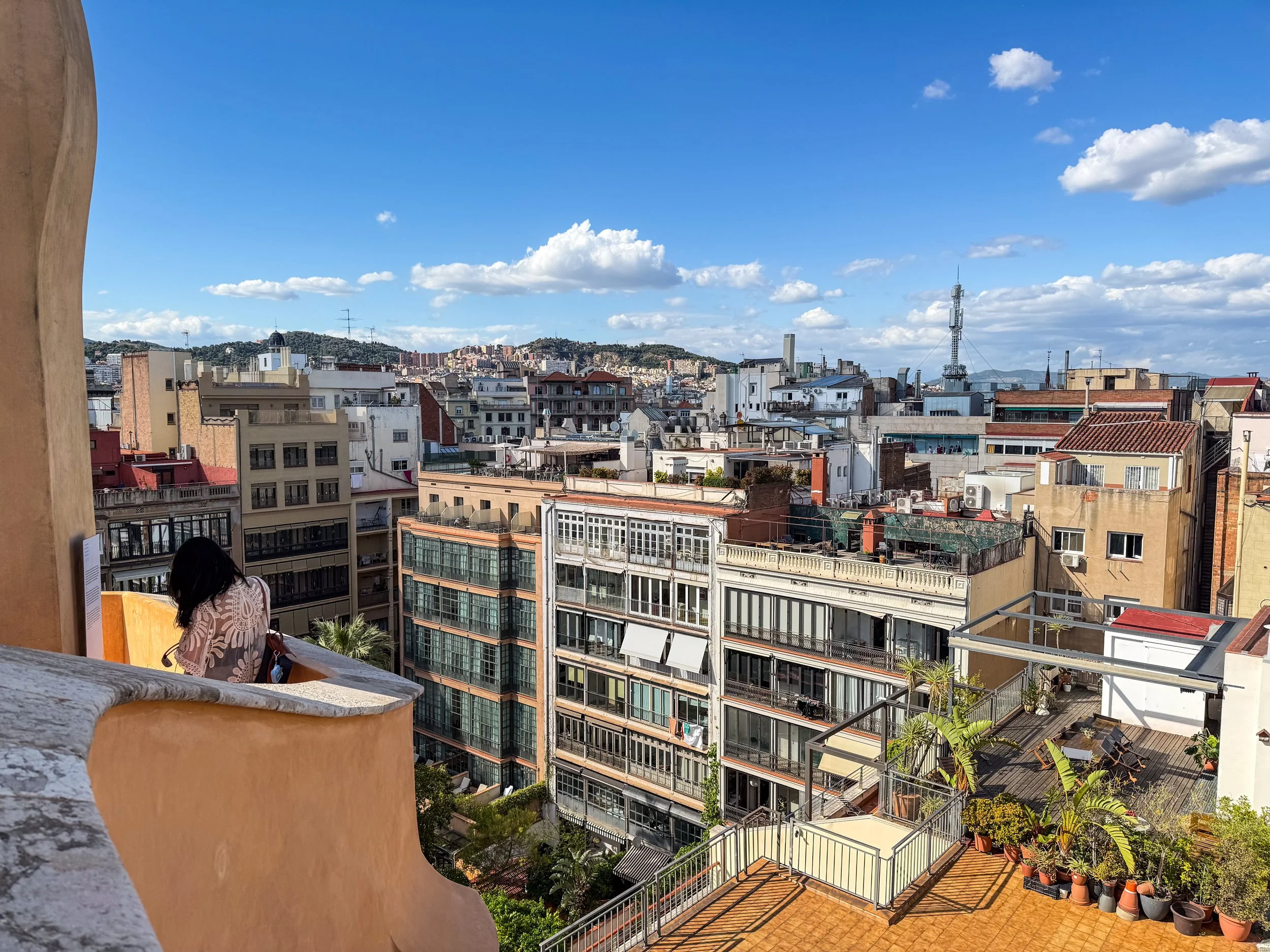
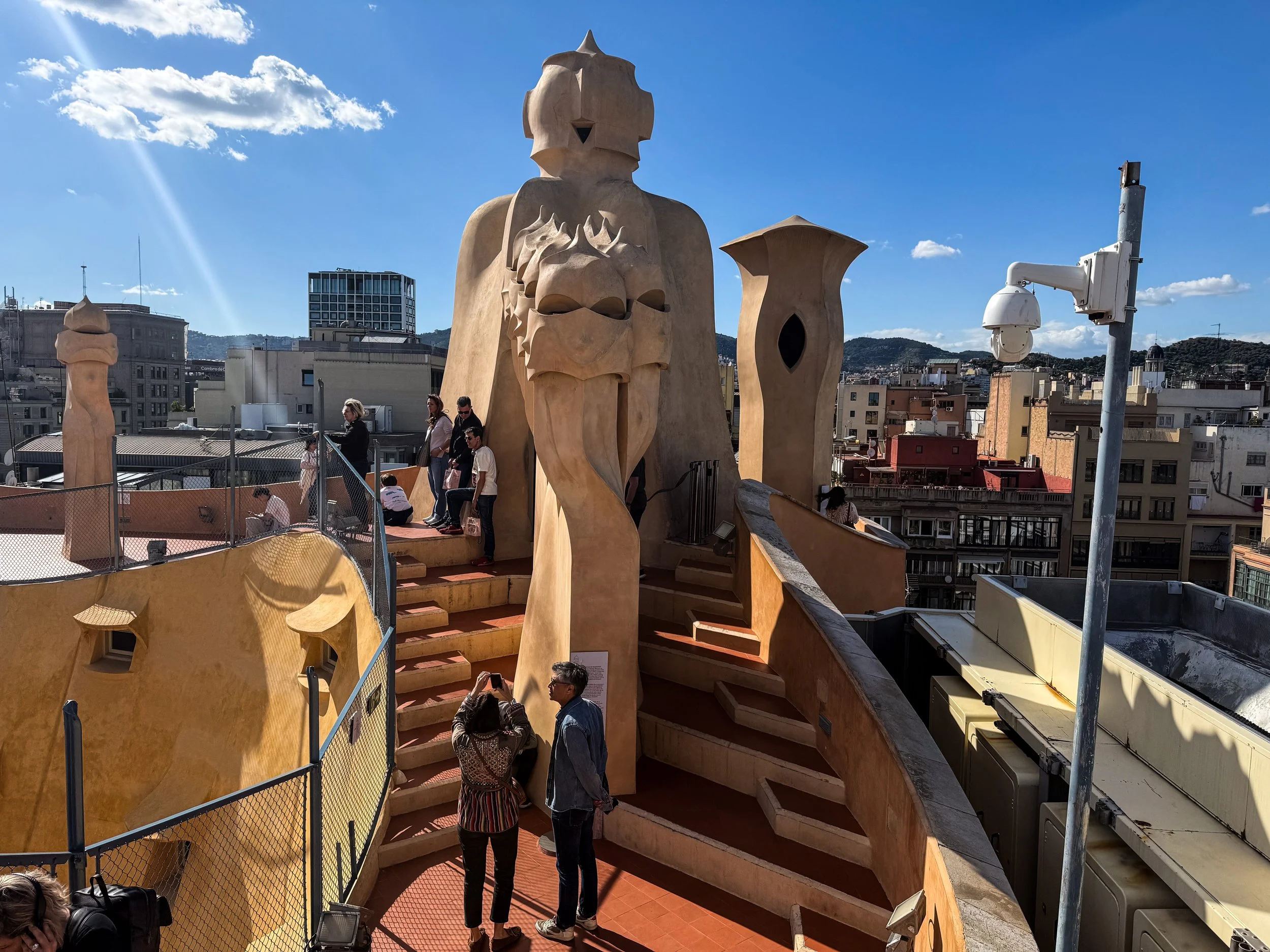
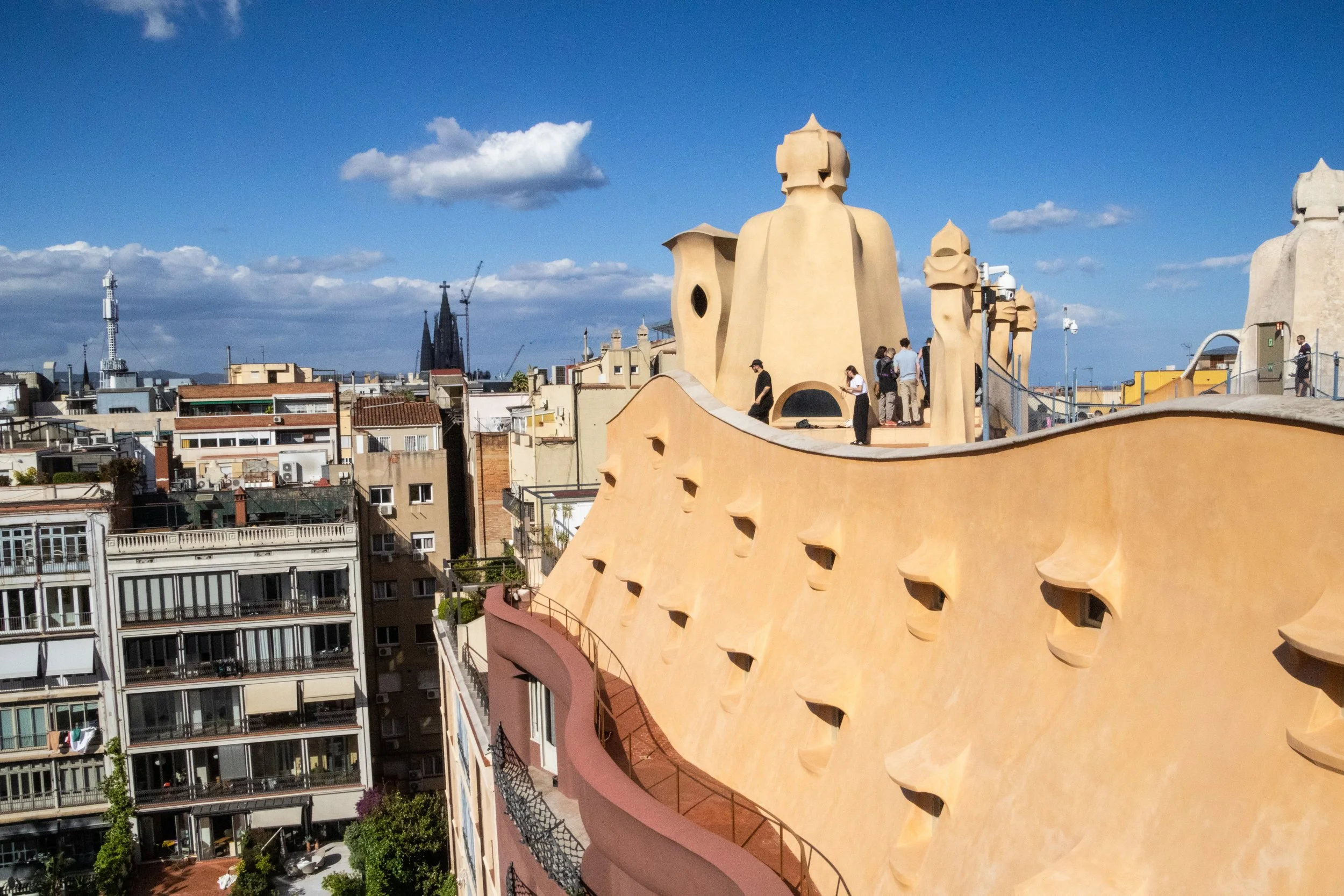
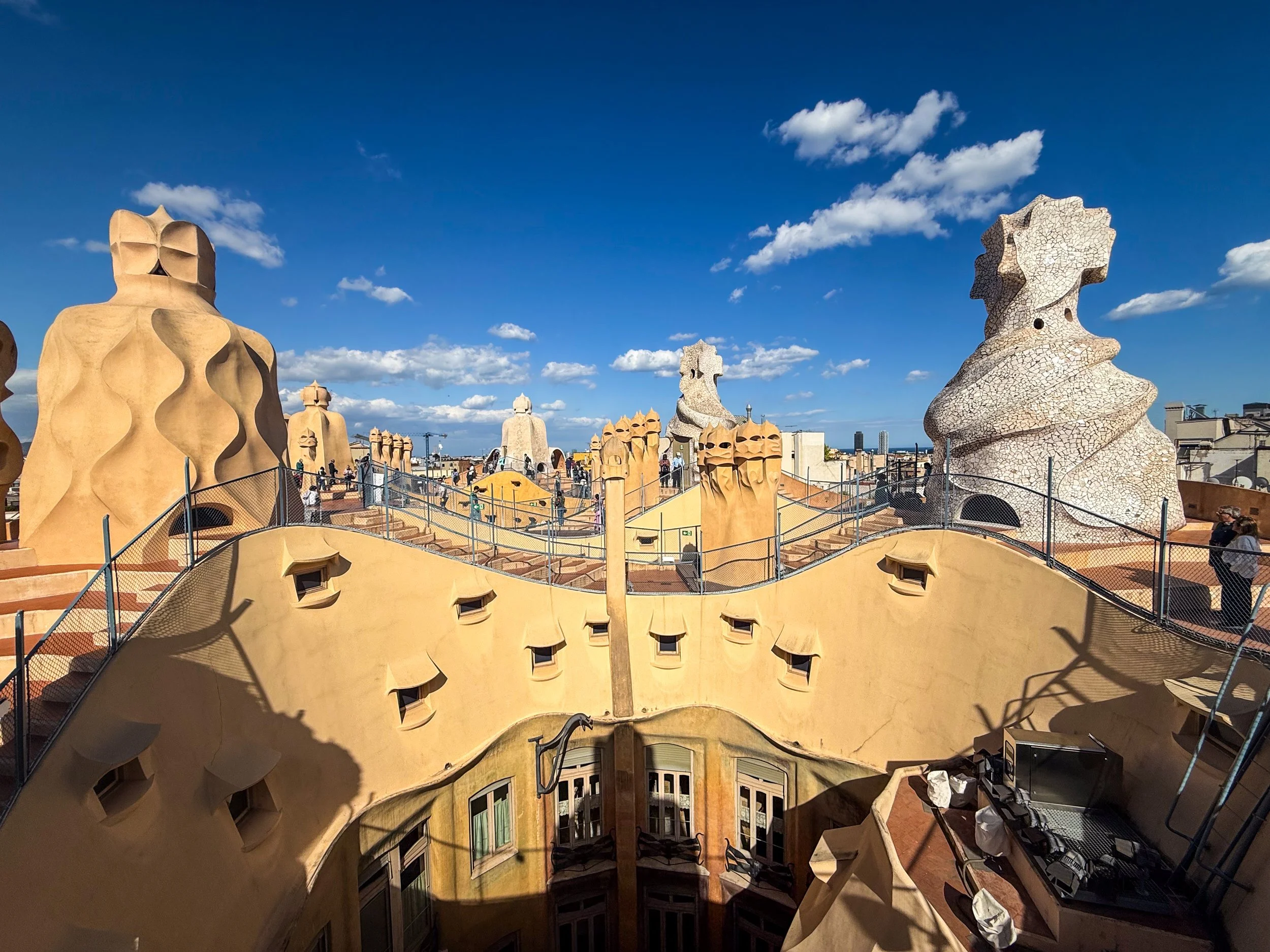
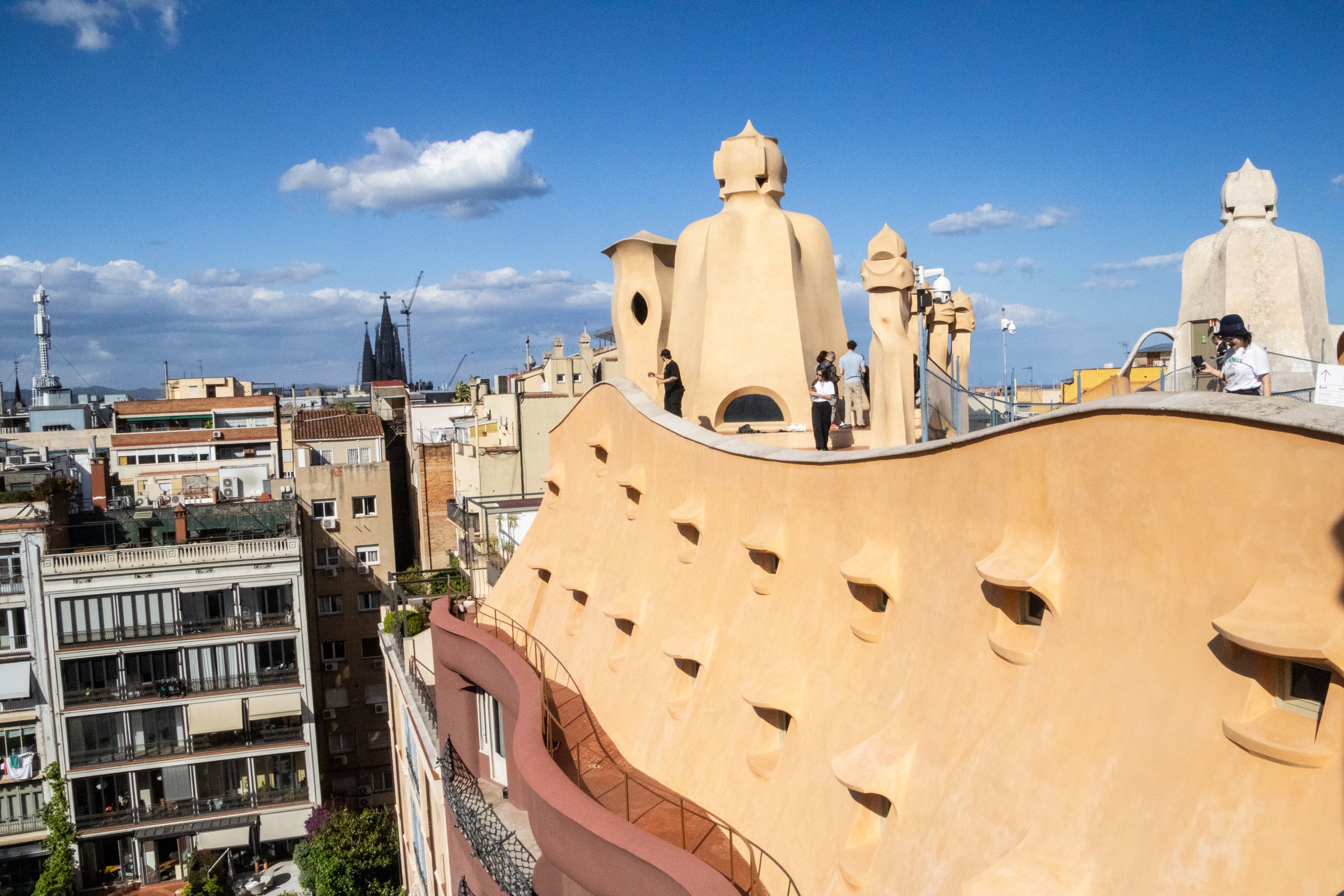
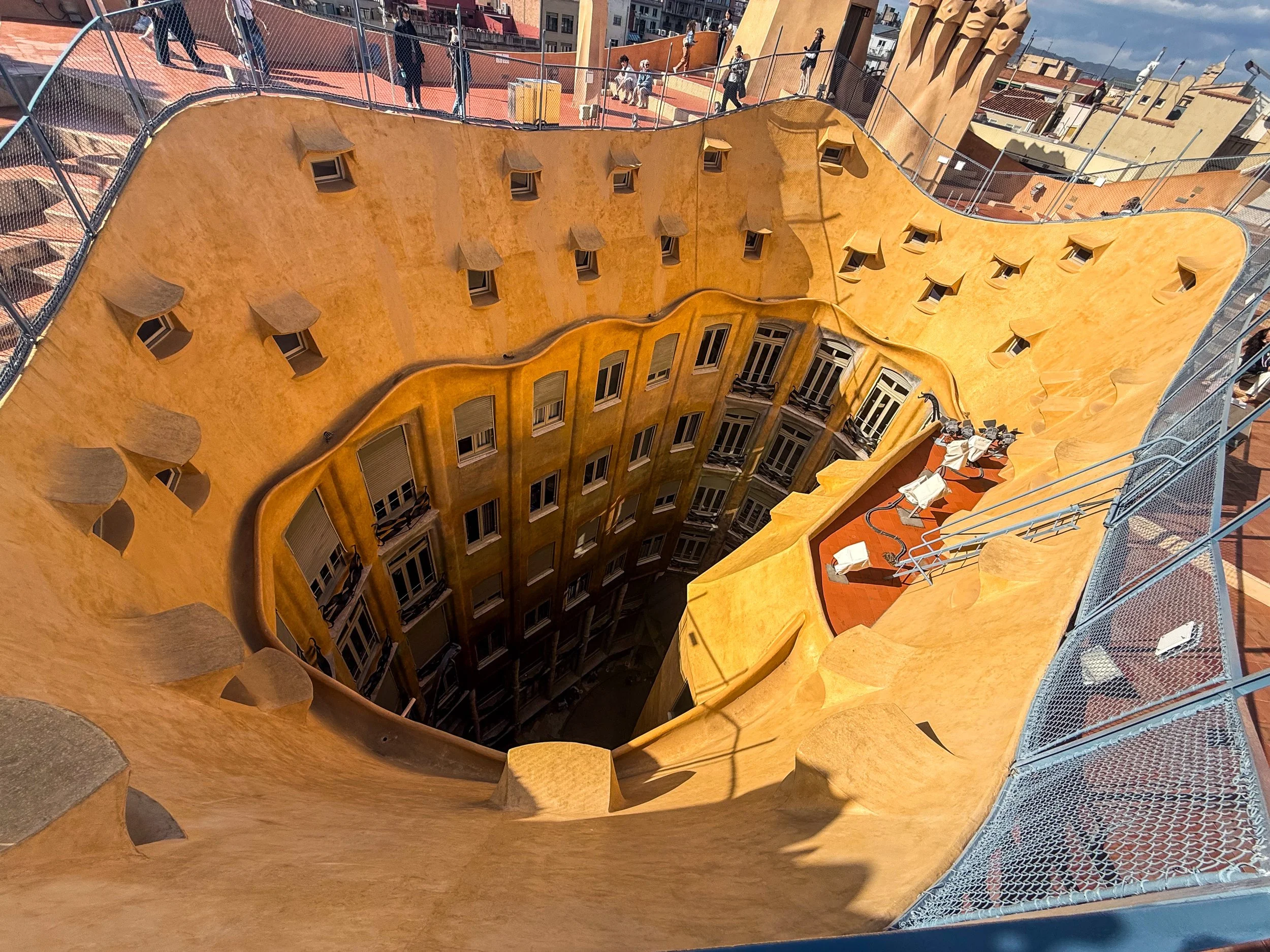
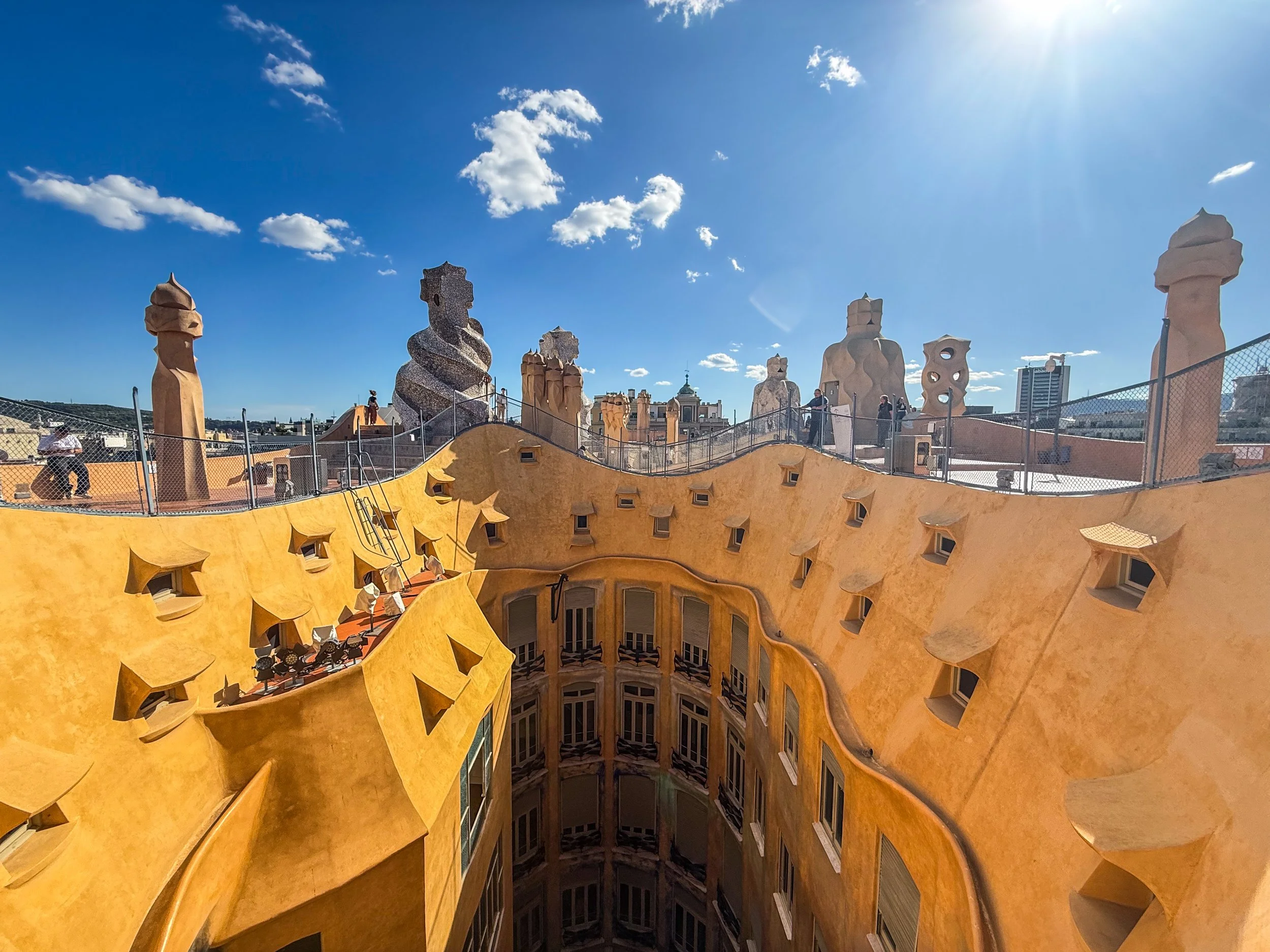
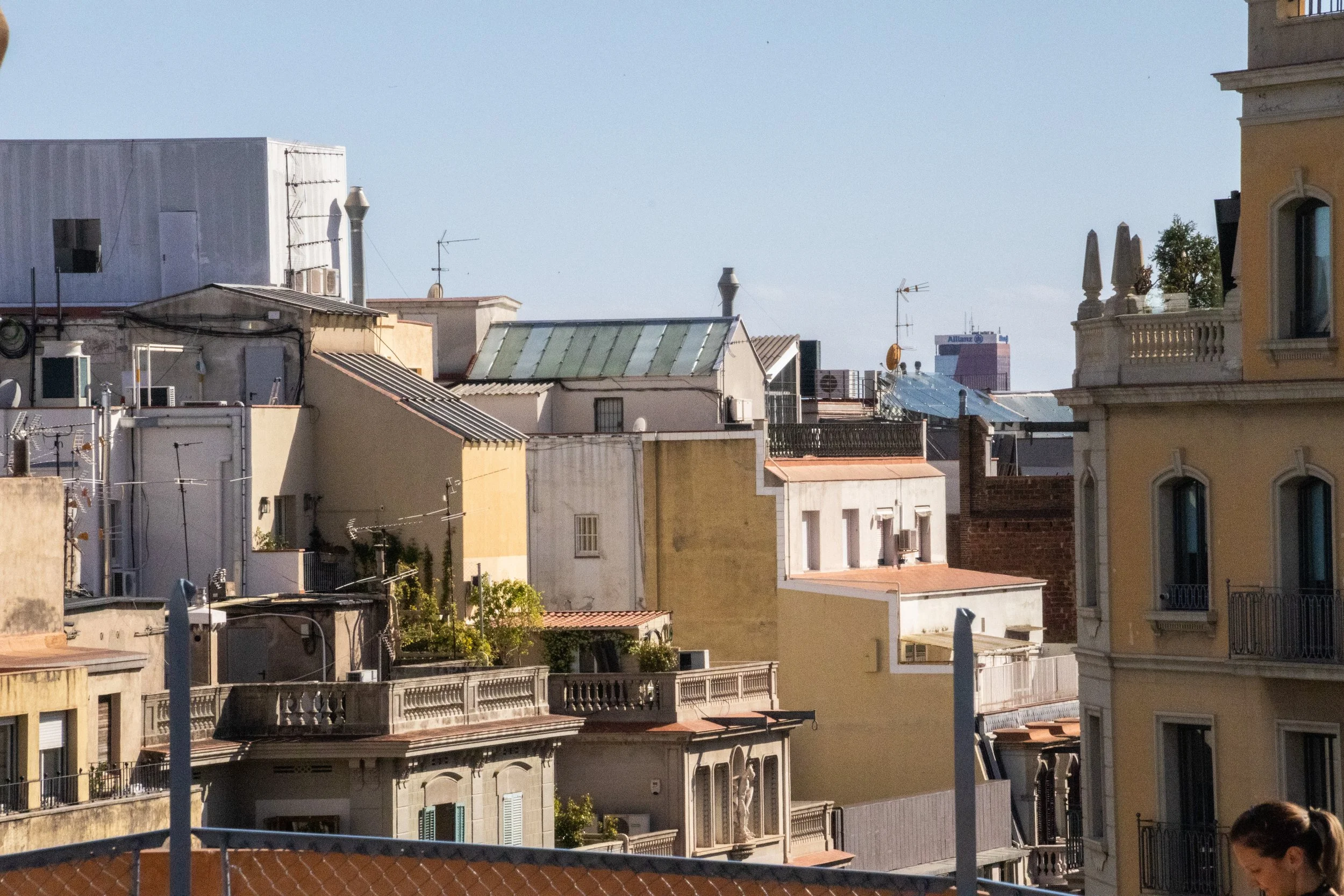
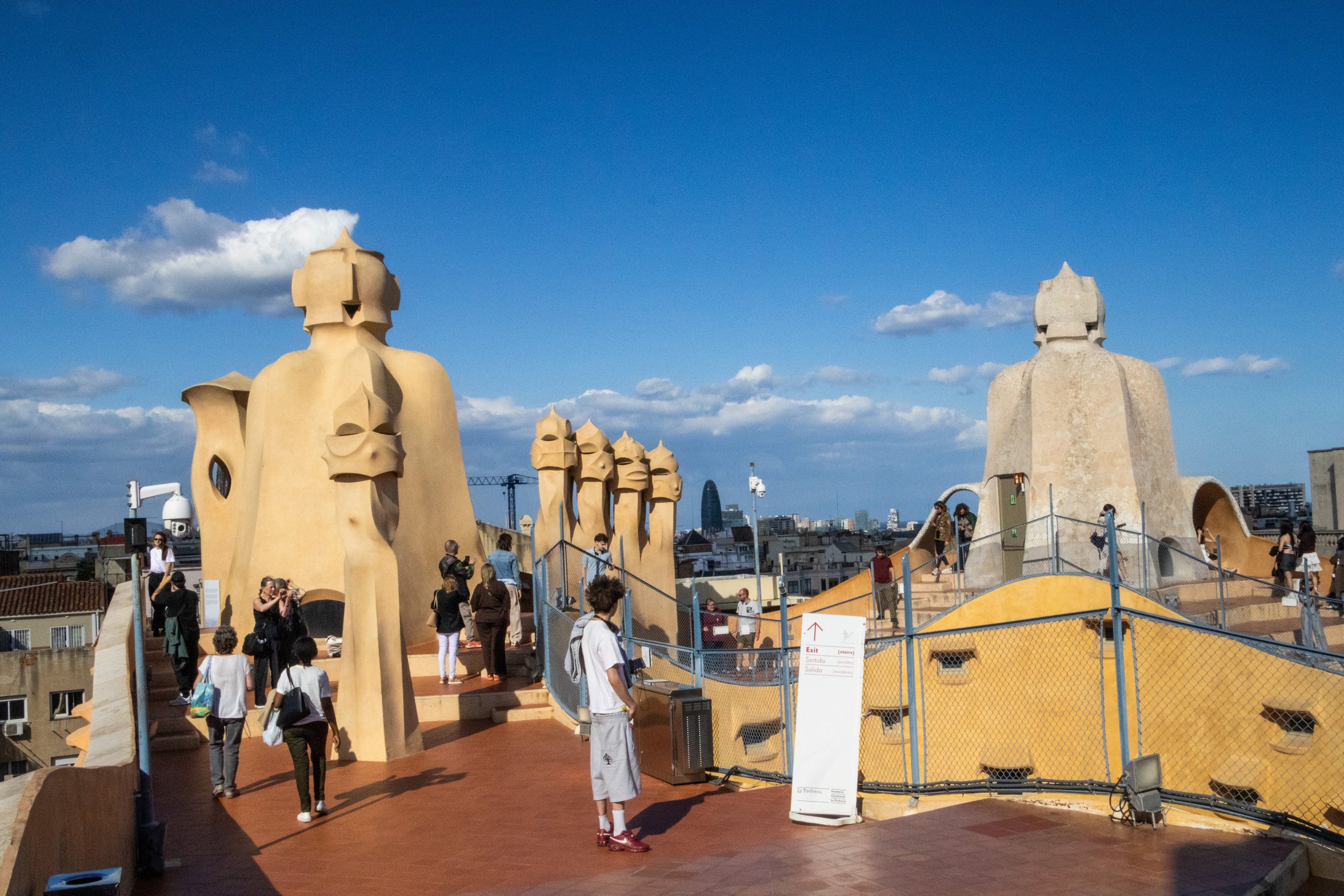
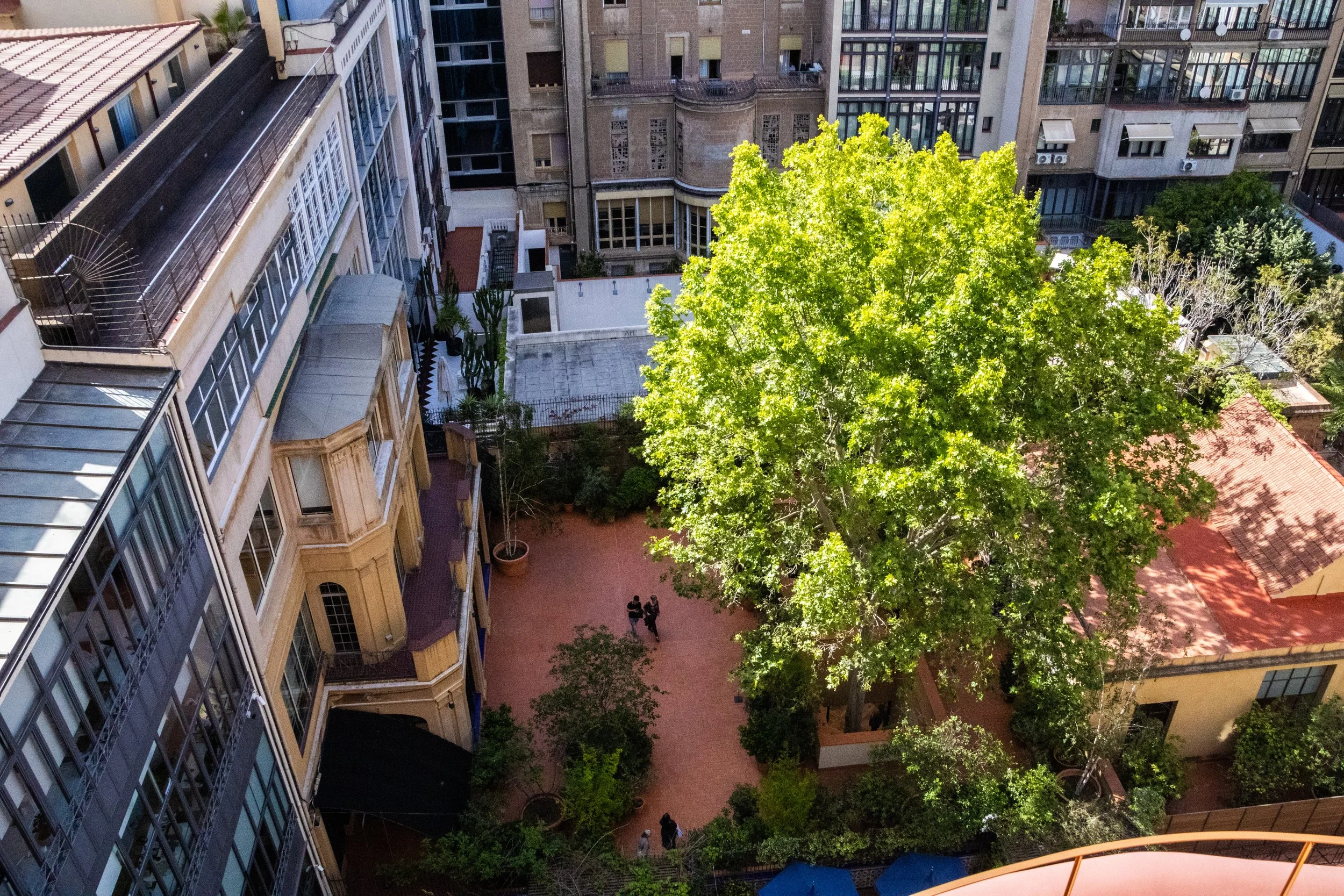
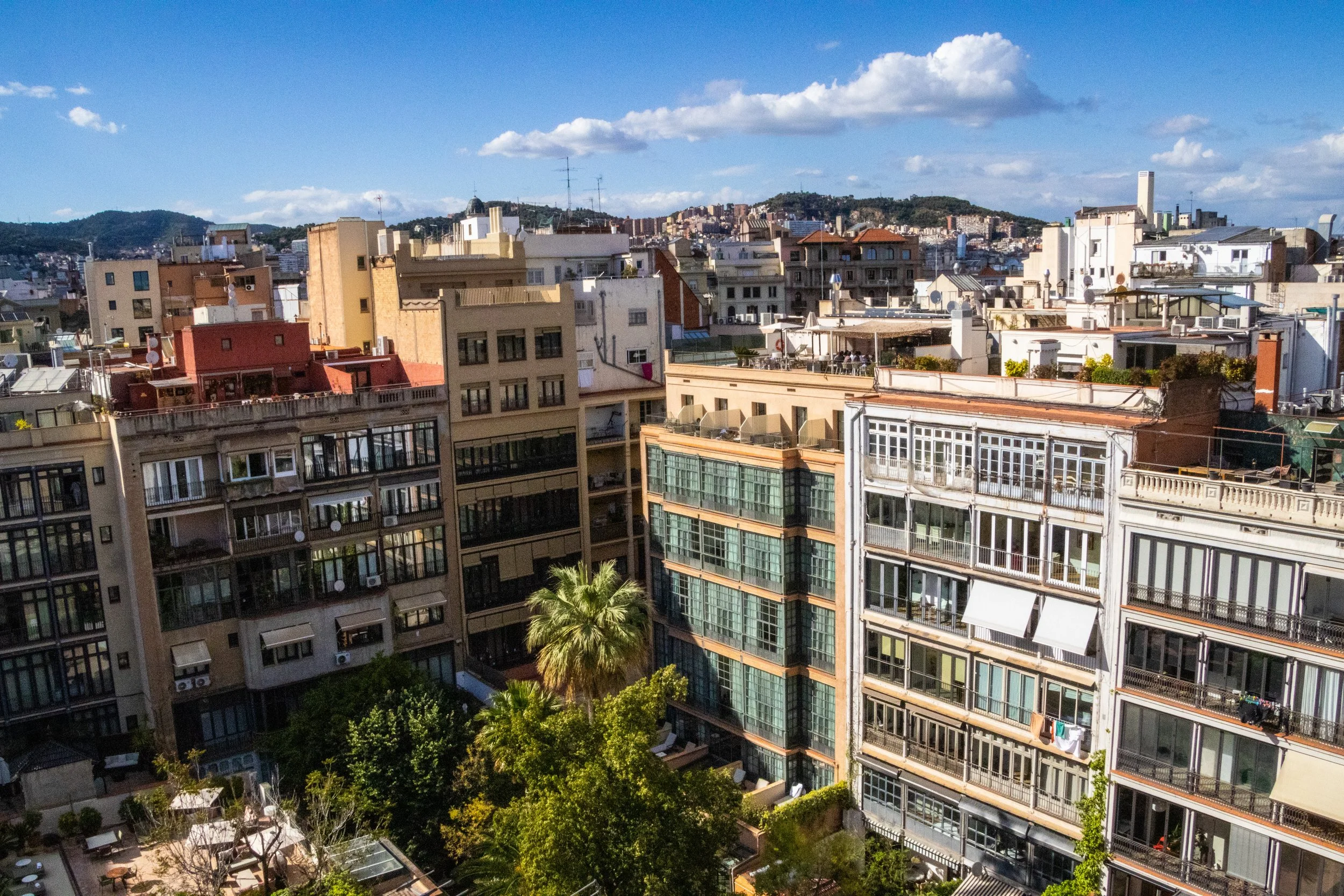
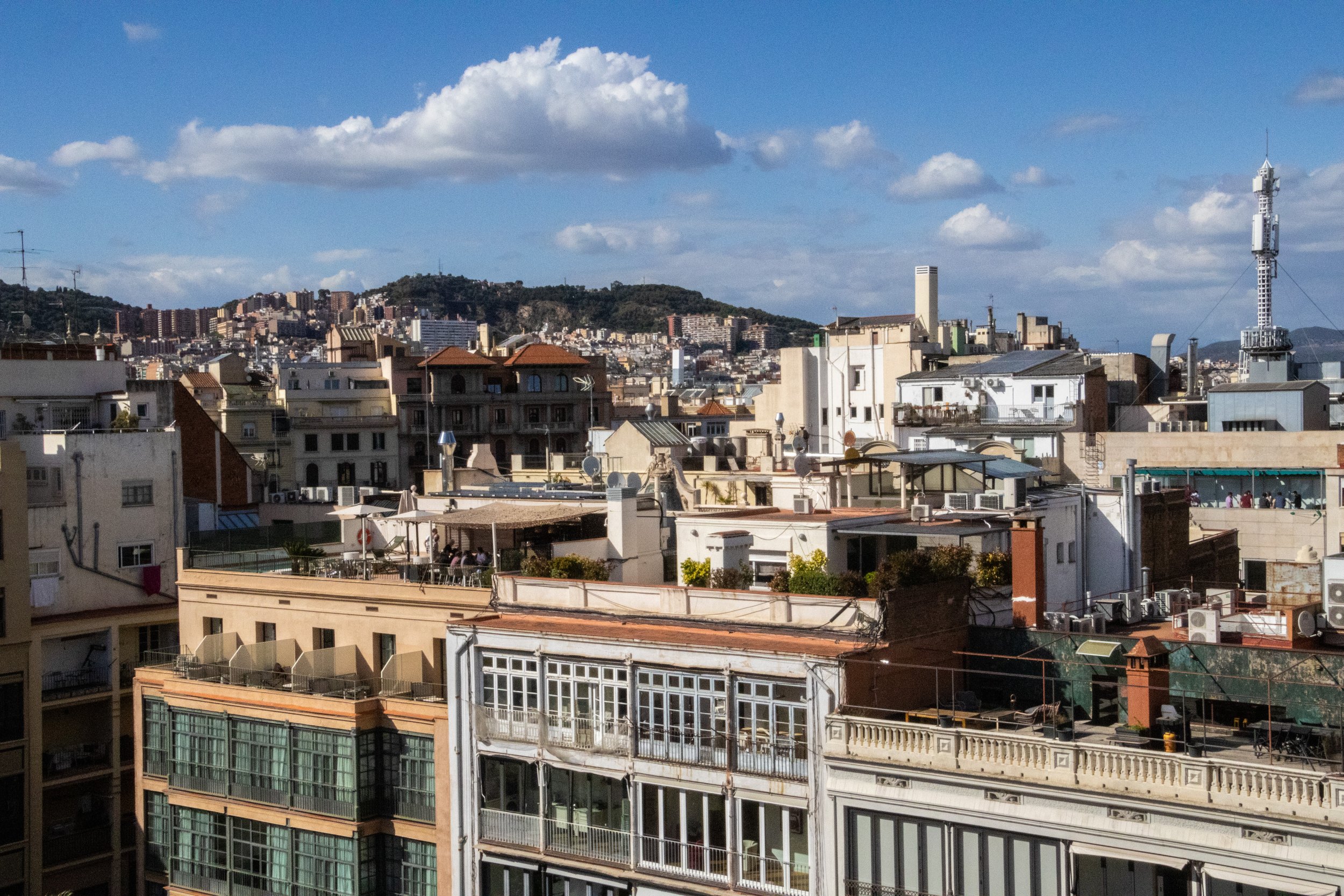
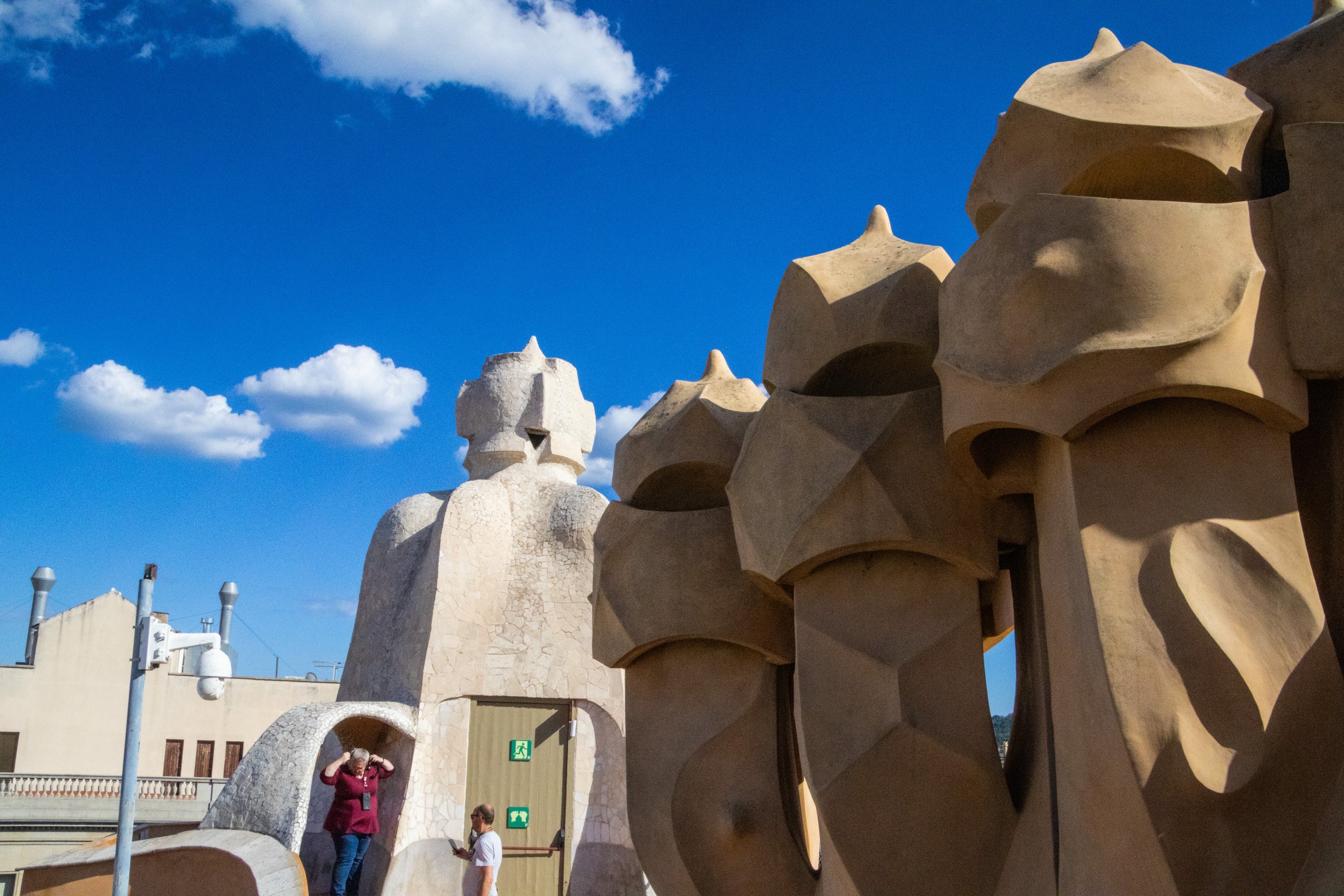
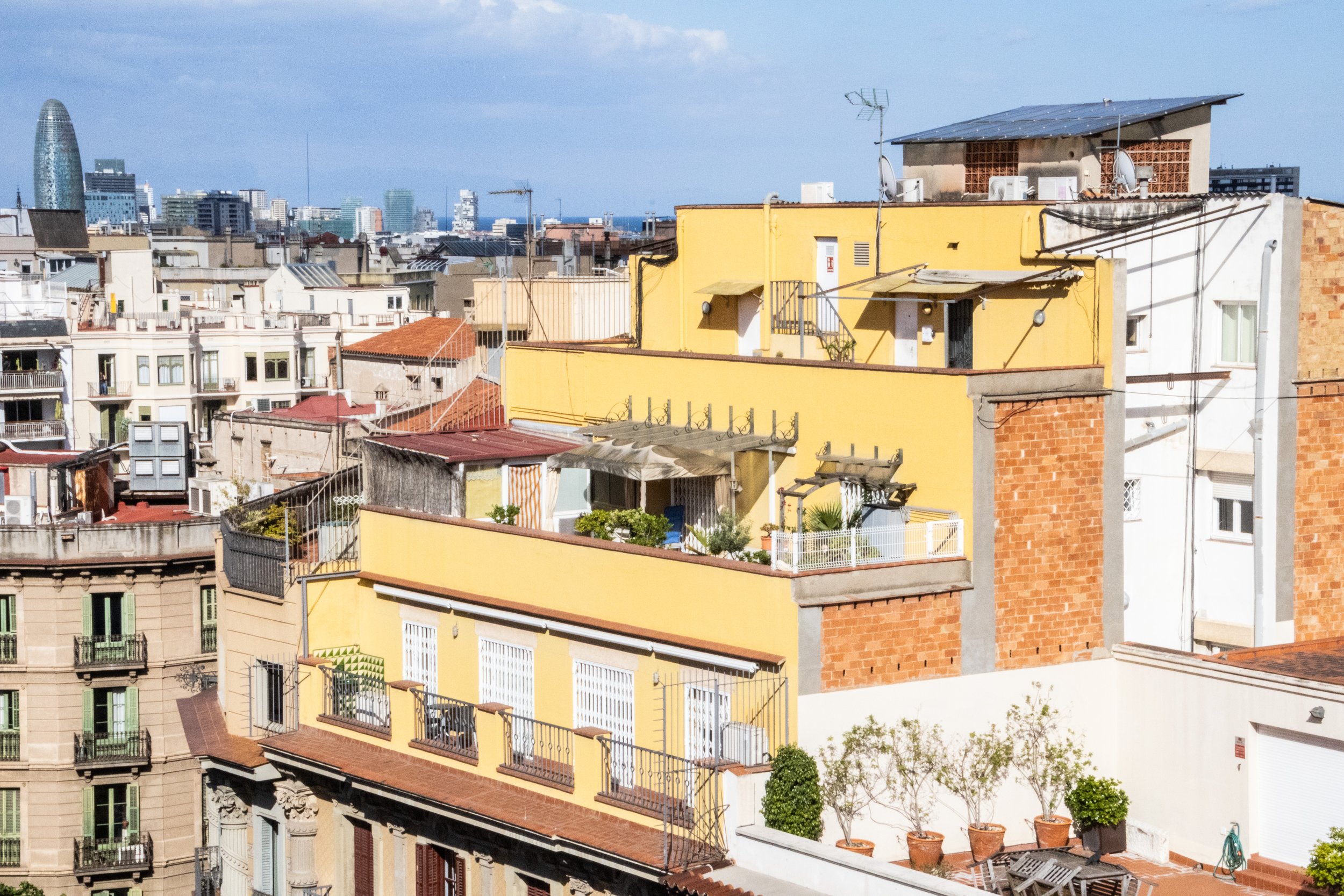
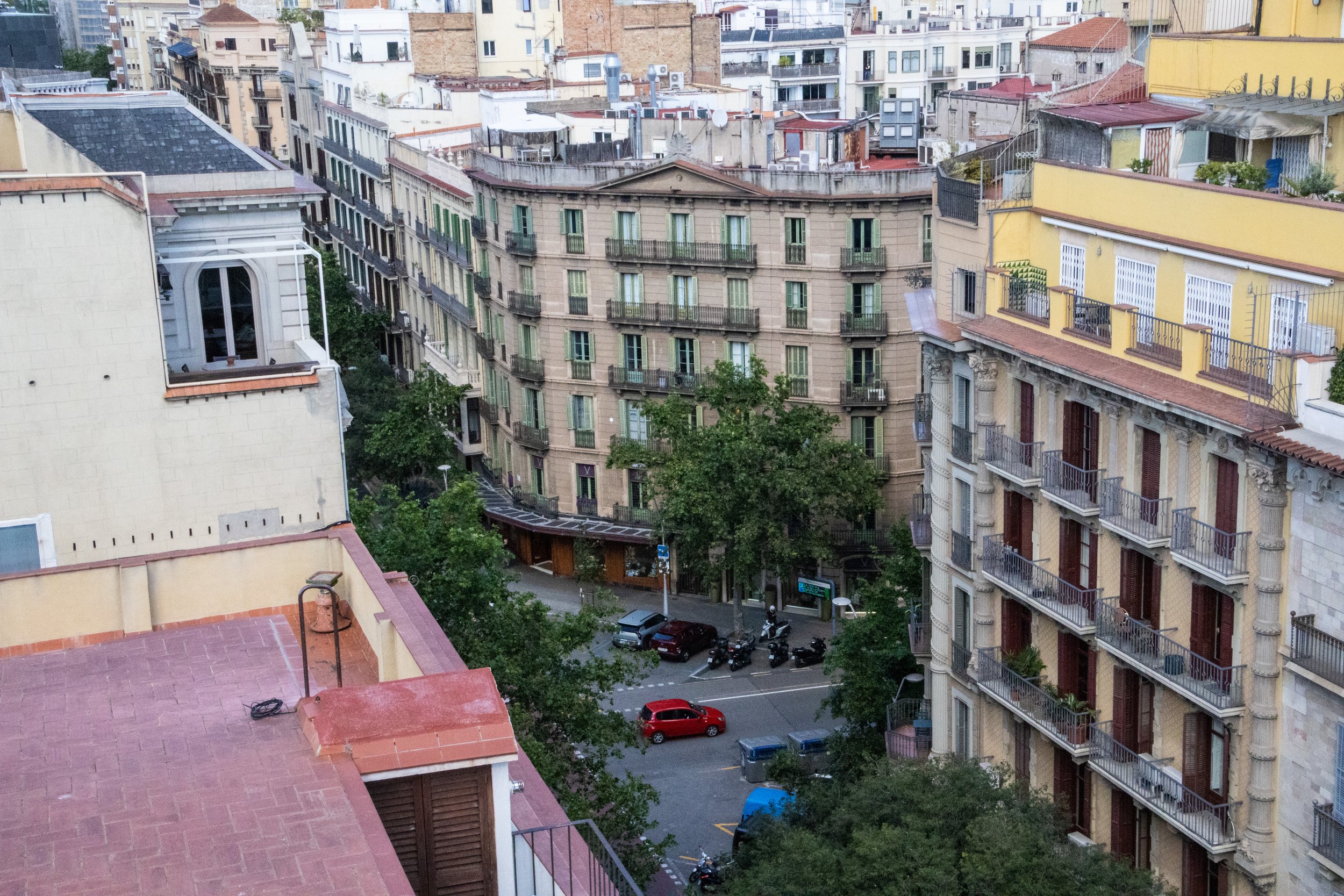
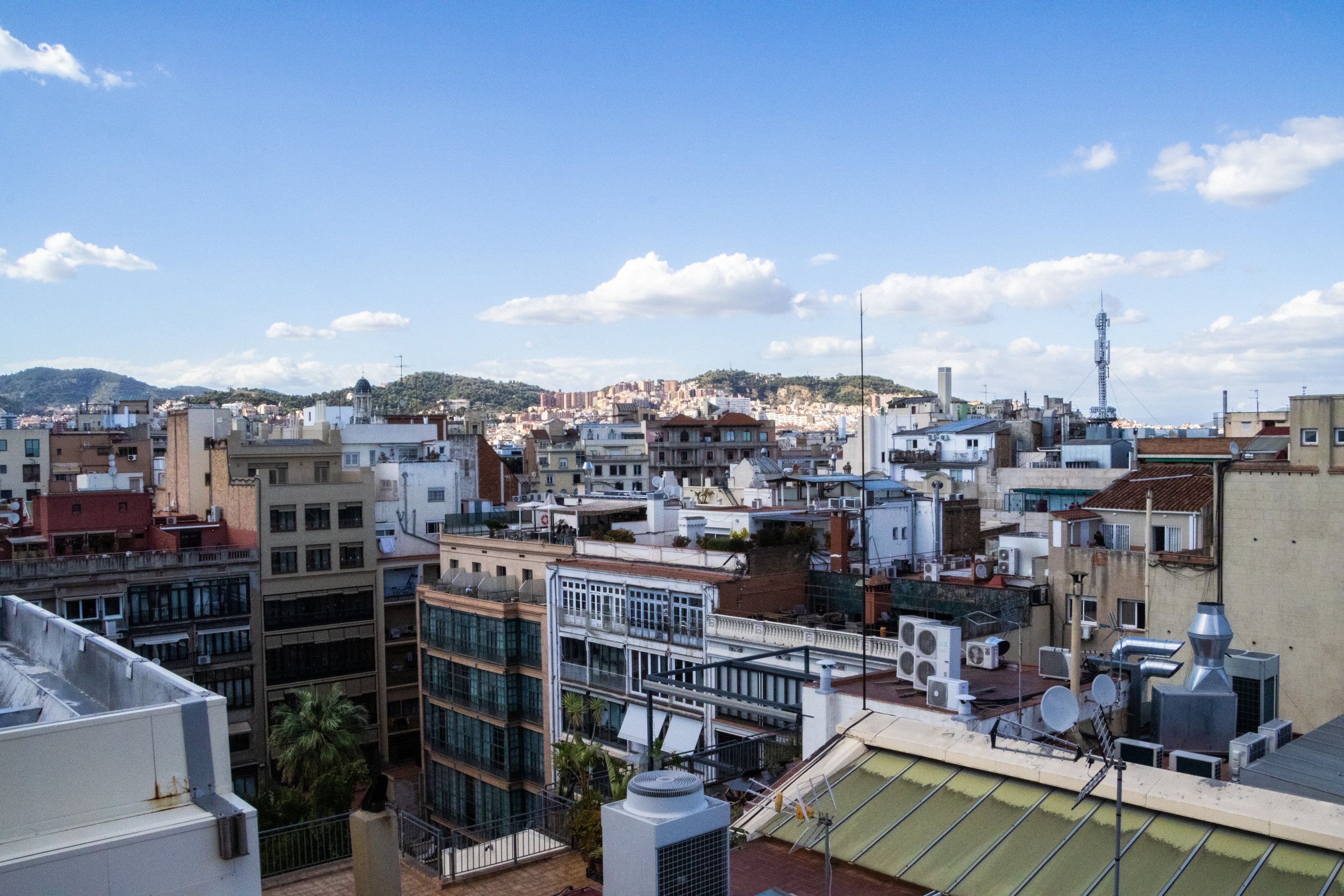
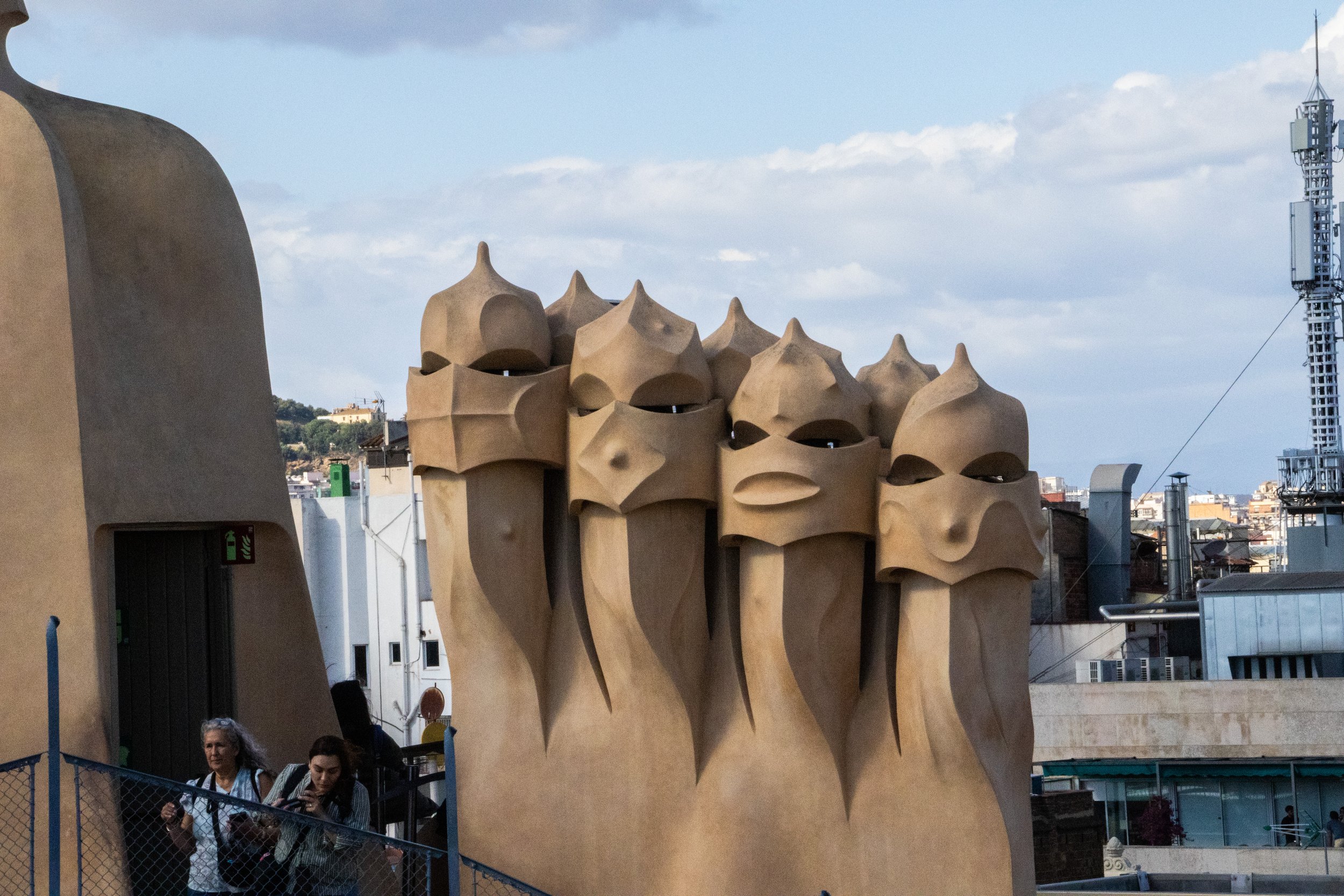
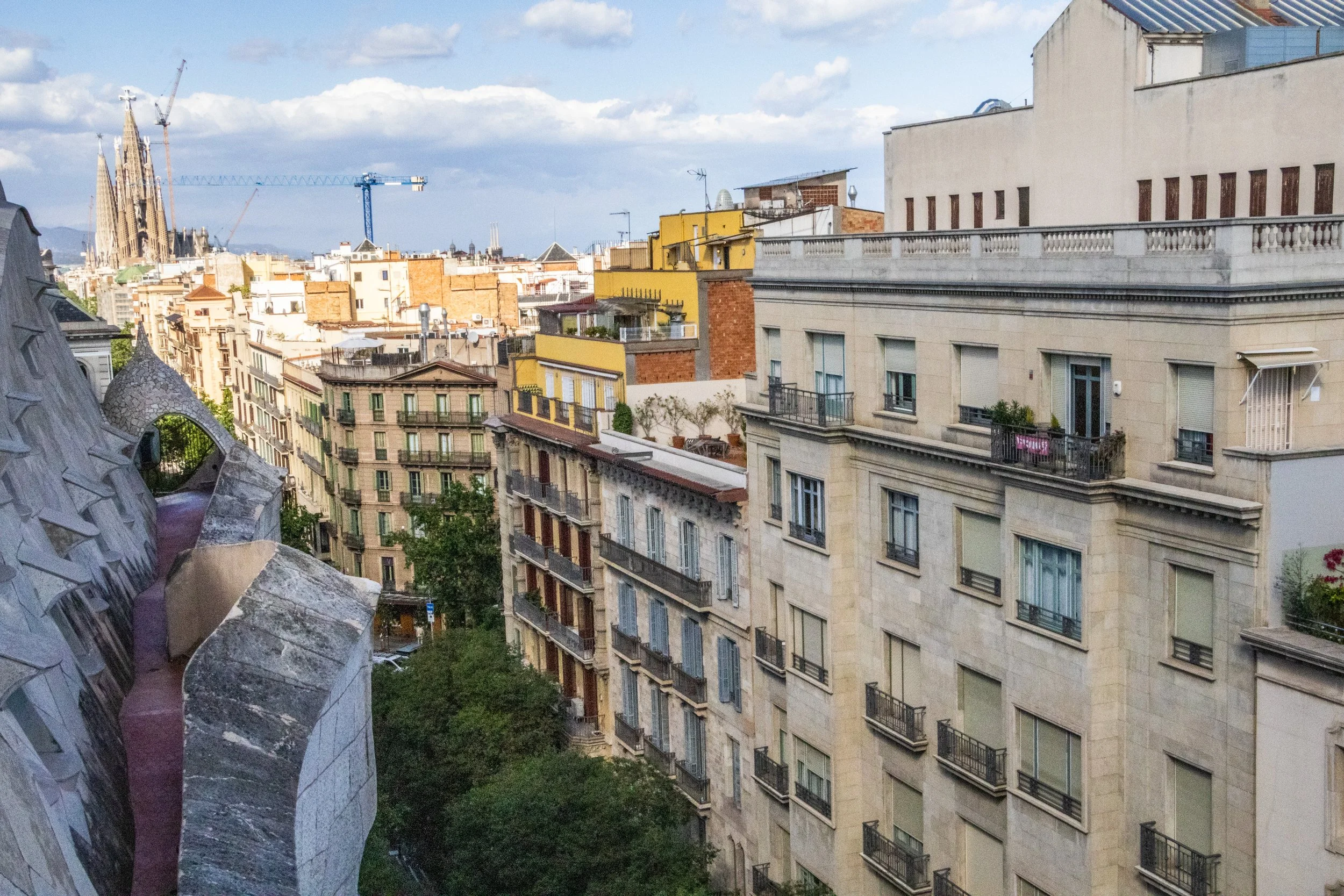
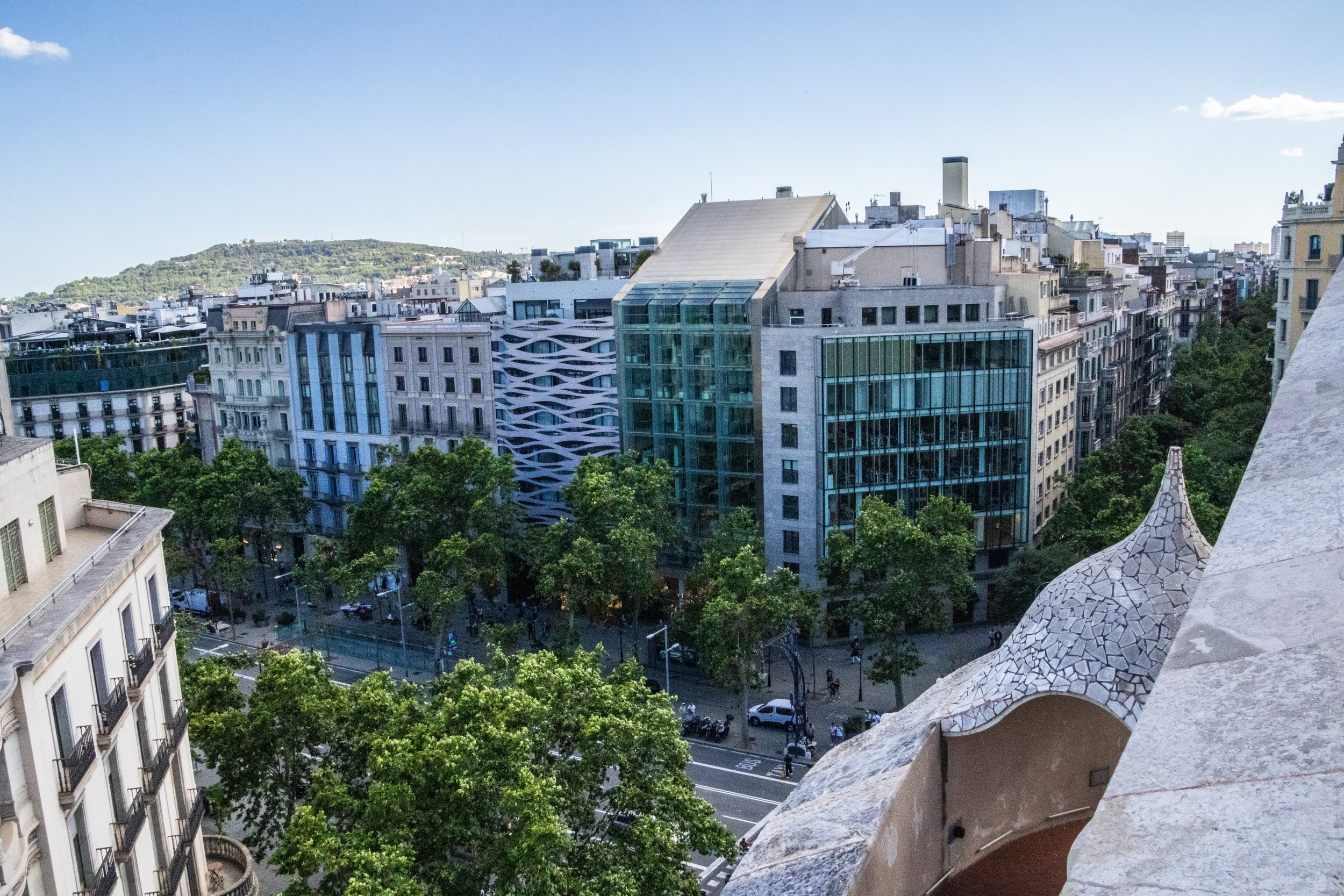
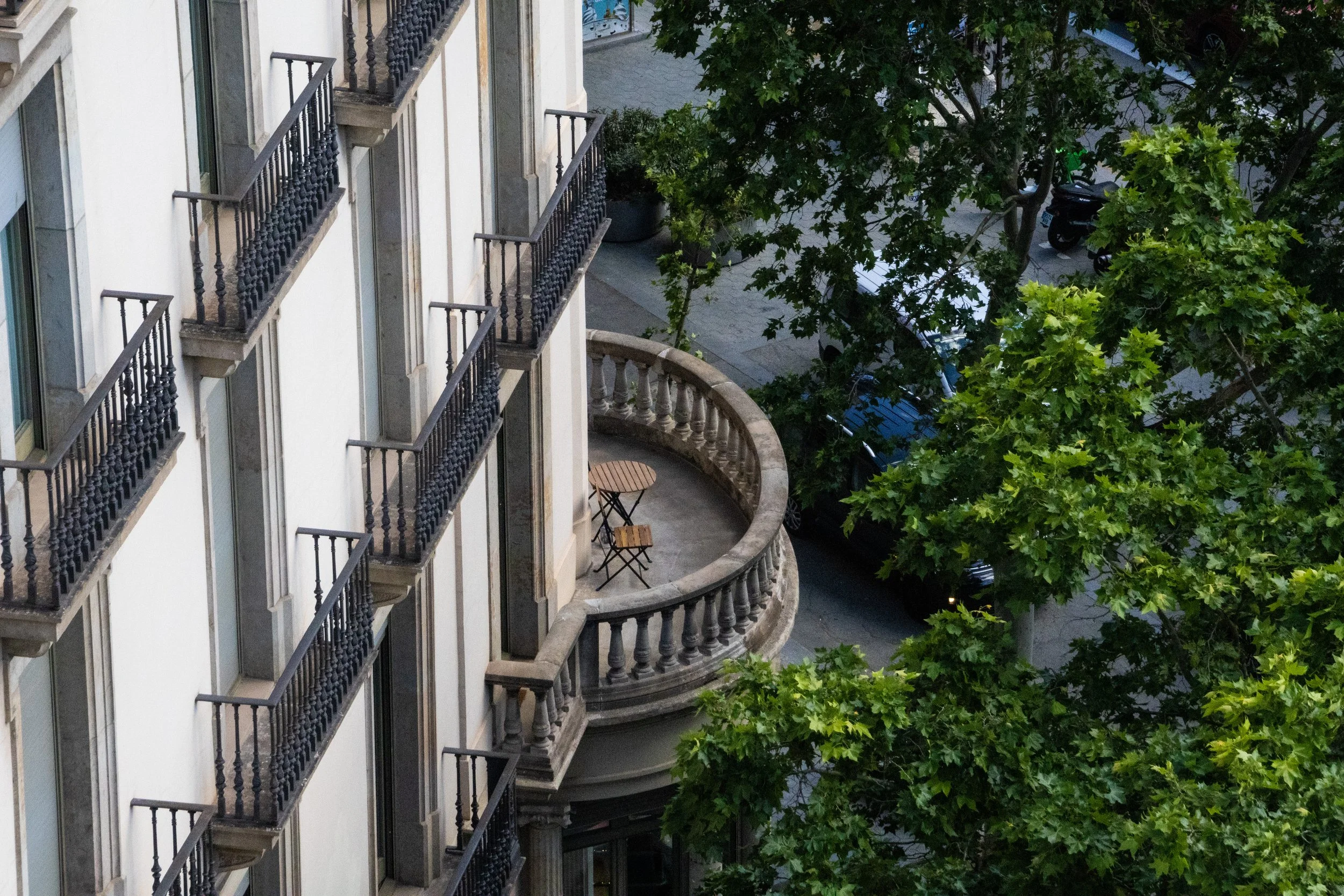
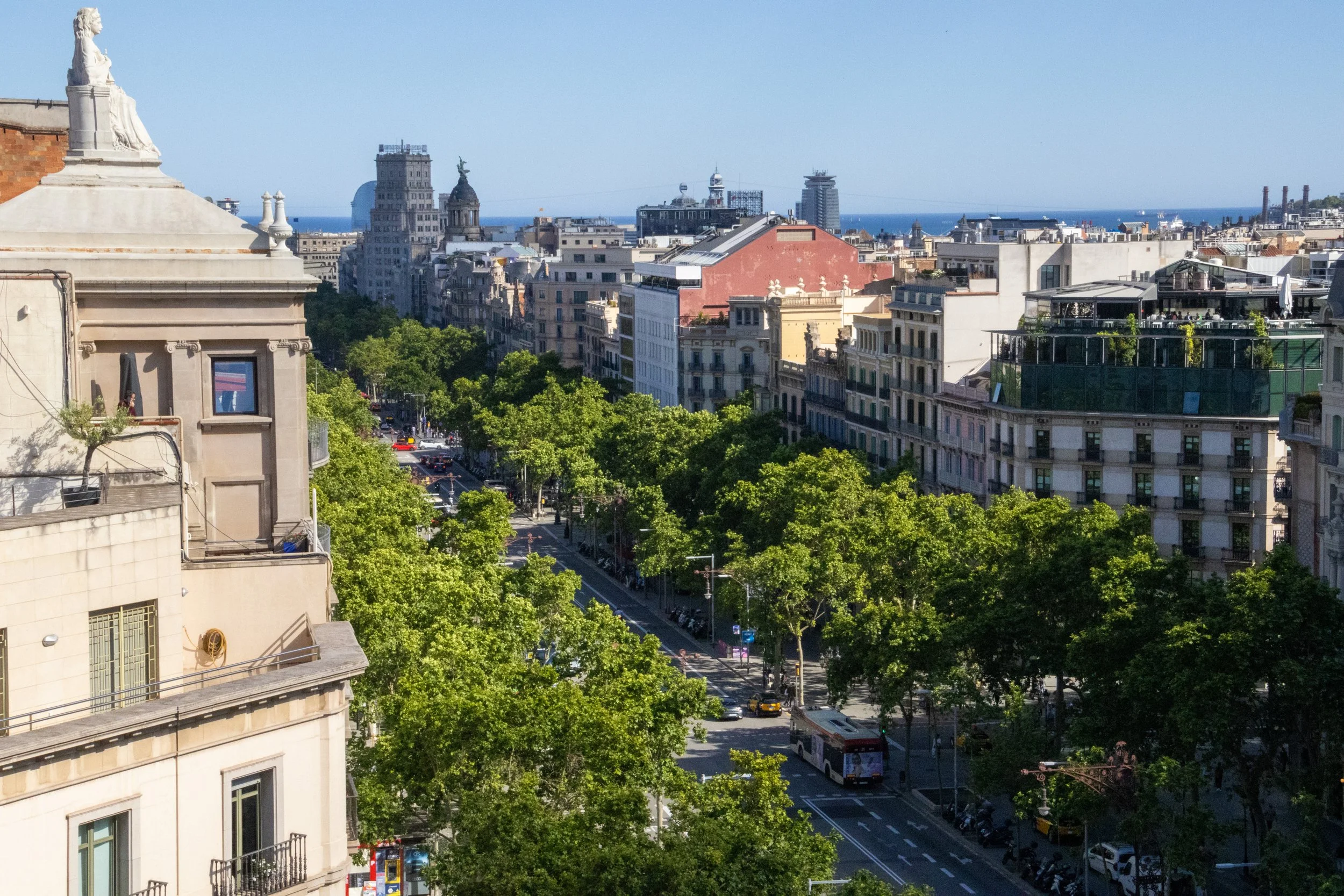
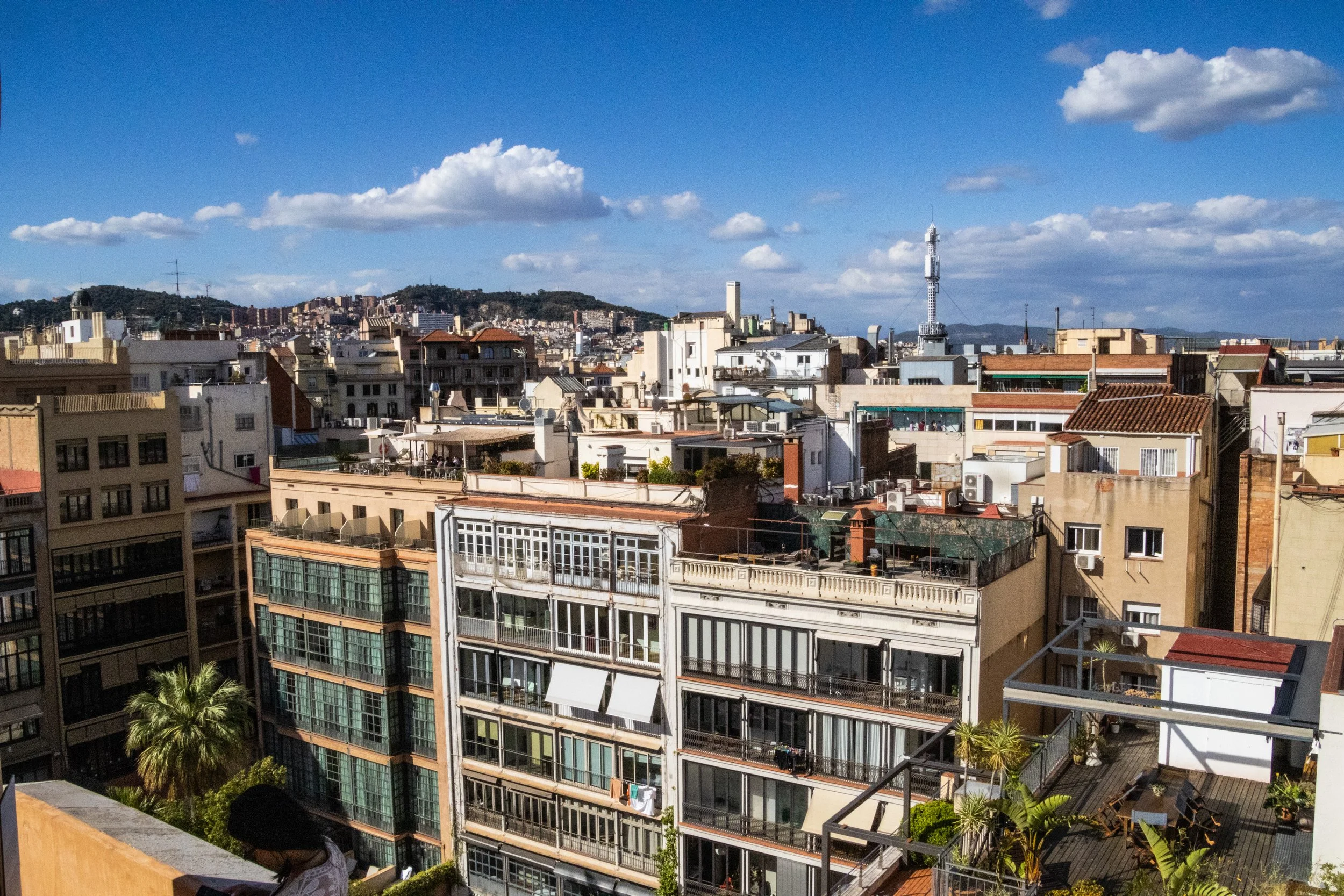
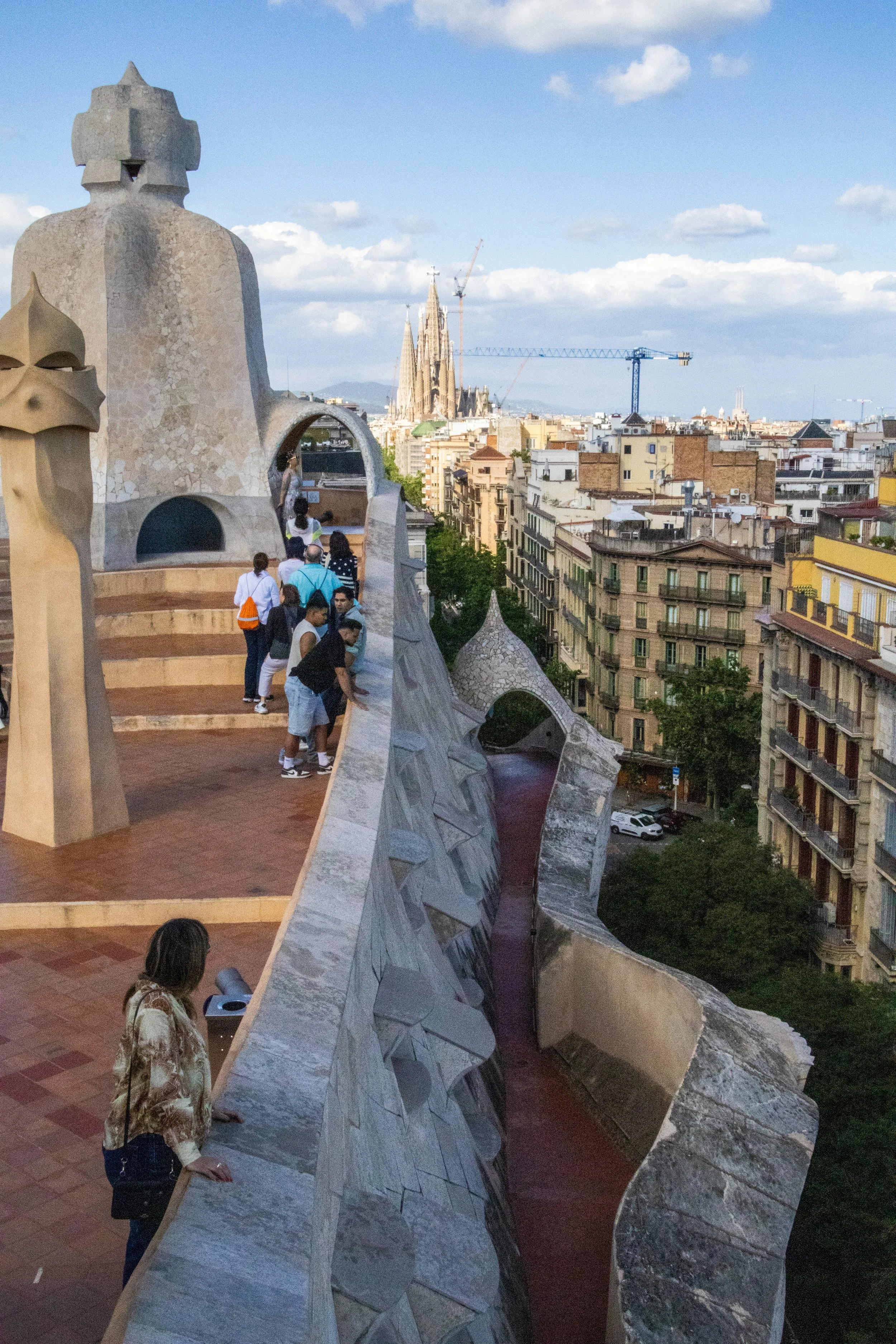
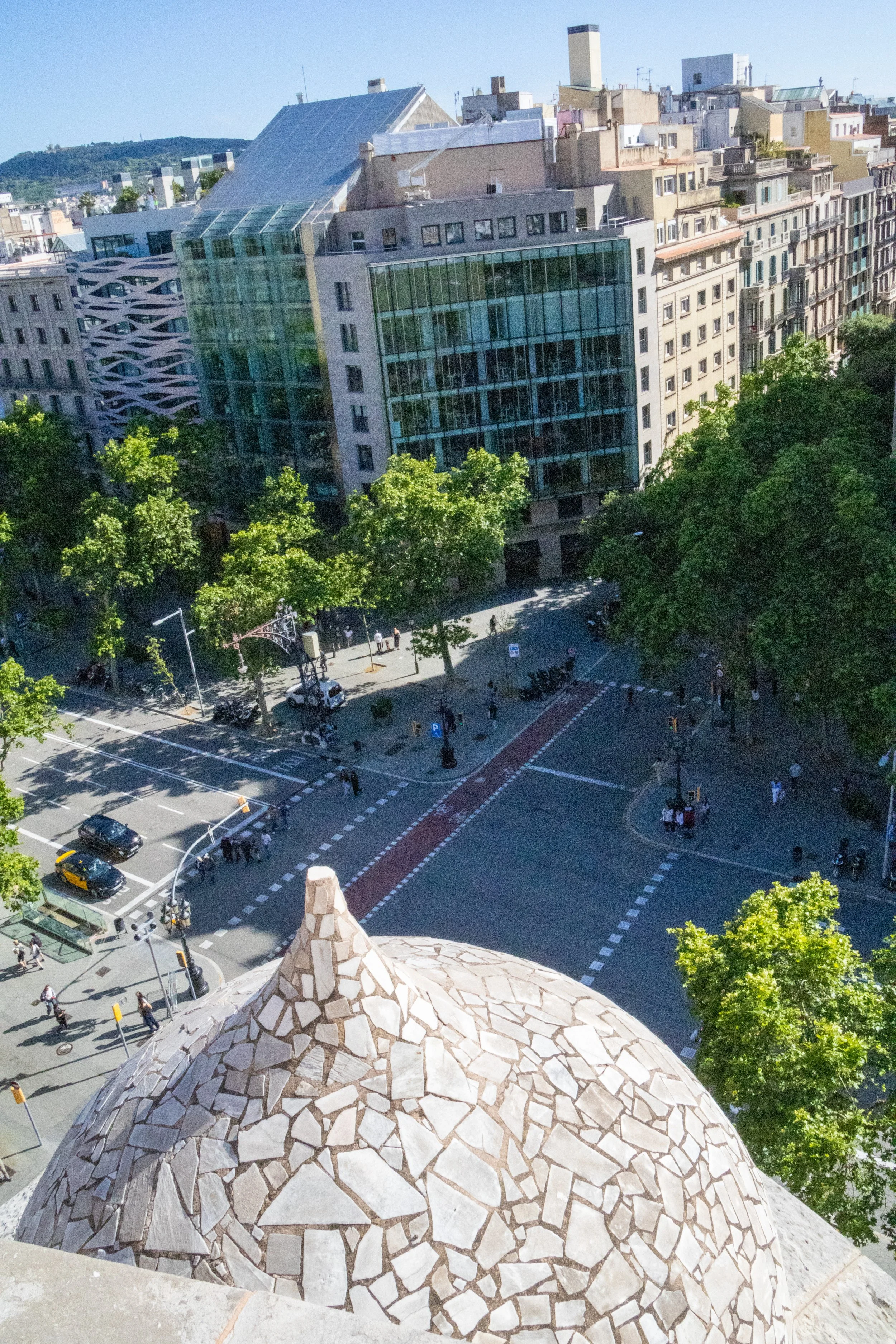
And now we ascend to the roof! This was actually much cooler than the roof of Casa Batlló, and offered great panoramic views of Barcelona. I admit that, to enjoy the interior of La Pedrera, you have to be somewhat interested in Gaudí and the magical worlds he created, but you don’t need to have even a thimble full of interest in any of that to enjoy the roof. It’s just an incredible view over the city, if nothing else! Please take note of the rock-carved-by-water themes happening up here.
Sagrada Família
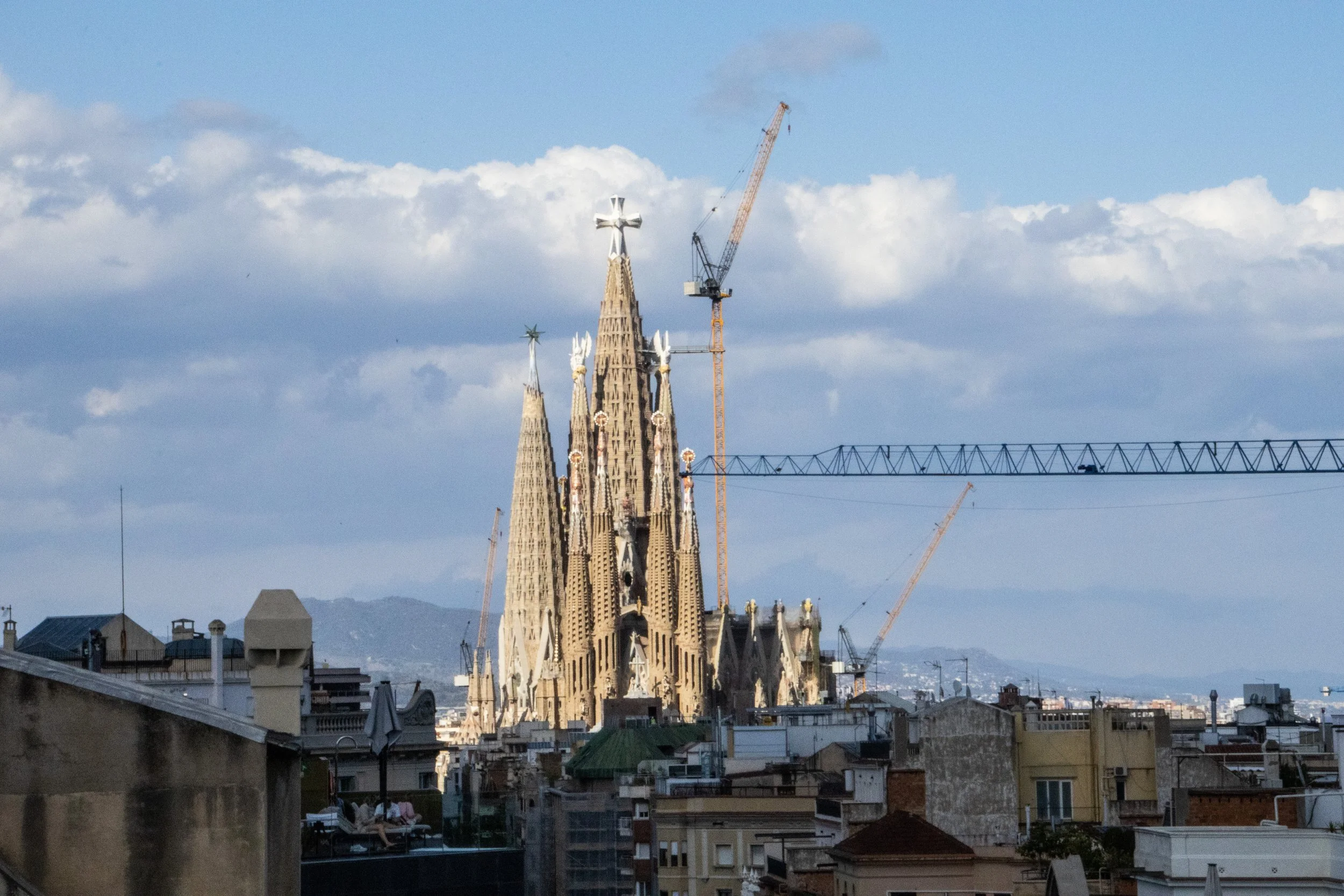
And finally, we’ll end with the SUPER famous one; the church that is to Barcelona as the Statue of Liberty is to New York City, as the Eiffel Tower is to Paris, the Golden Gate Bridge is to San Francisco, and as Big Ben is to London. Yes, it really is THAT famous! And—fun/anguishing fact—it’s actually still under construction. More on that shortly.
I’d actually visited the Sagrada Família on my original visit to Barcelona back in 2012, so I think we can save ourselves the time spent in line and the the €26-€40 required to enter this place again. The big thing that has changed since my visit in 2012 is that the central tower of this church—the “Tower of Jesus Christ” was completed, bringing the basilica to its final maximum height of 172.5 meters (~566 feet), which is about ~55 storeys and/or ~2x the height of the Statue of Liberty. The cross on top of the central tower alone is about 17 meters high, which is roughly equivalent to 3 adult male giraffes standing on top of each other. 🦒
With Gaudí, everything is intentional, including the height. 172.5 meters is just shy of the height of Montjuïc, which is the large mountain/hill that overlooks Barcelona. The rationale here is that Montjuïc represents God’s work, and that works made by humans cannot and should not surpass work made by God/nature. Did I mention that Gaudí became devoutly religious later in life?
Anyway, I’ve spent a lot of time talking about Gaudí’s craft in this article… maybe even too much. What I want to highlight here is how long this thing has been under construction. Construction on this church began in 1882, and—at the time of writing, Q3 2026—it’s STILL NOT DONE YET! HOW IS THAT EVEN POSSIBLE?? Well, Gaudí died in 1926 with this thing mostly unbuilt. That definitely put a damper on things, but the designs were mostly done. The issue was that, during the Spanish Civil War, many of his designs were destroyed by vandals. So this was a big problem for the architects that would be tasked with finishing this church afterward. So here’s the rough timeline of how construction thus far has progressed:
1882 → 1926: Gaudí develops the architecture while portions are actually being built
1926 → ~1980: Gaudí is dead, documentation is damaged, civil war intervenes, funding is limited
~1980 → 2010: Modern construction and increasing resources allow the enormous nave, vaults and structural system to rise
2010 → 2026: The giant central towers—Mary, four Evangelists and finally, Jesus—transform it into the building Gaudí envisioned dominating Barcelona.
That central tower—the “Tower of Jesus Christ”—had only been completed a few months prior to this visit, in February 2026! So the photos you will see here are brand new! And this central tower was not complete the last time I was here, in 2012.
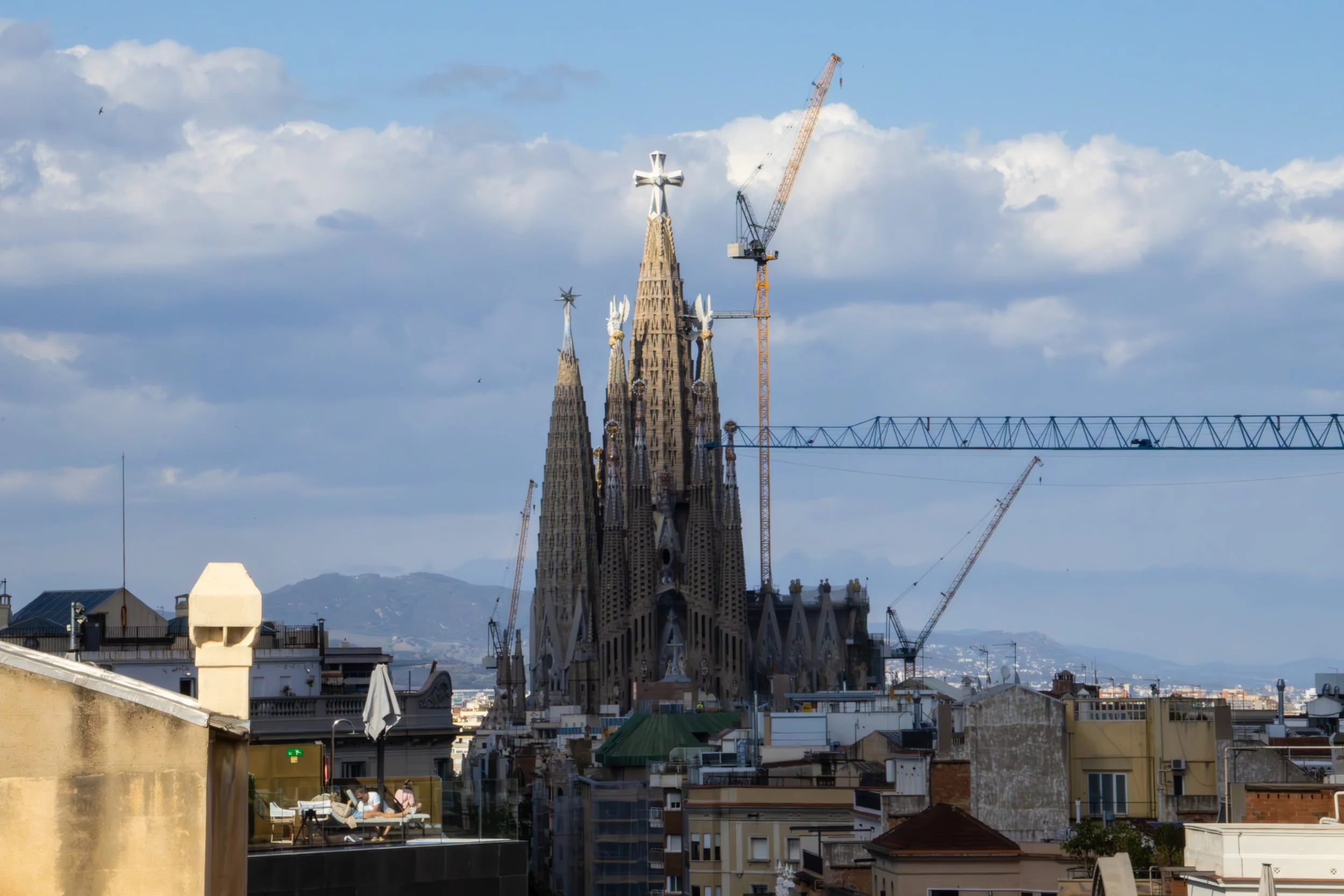
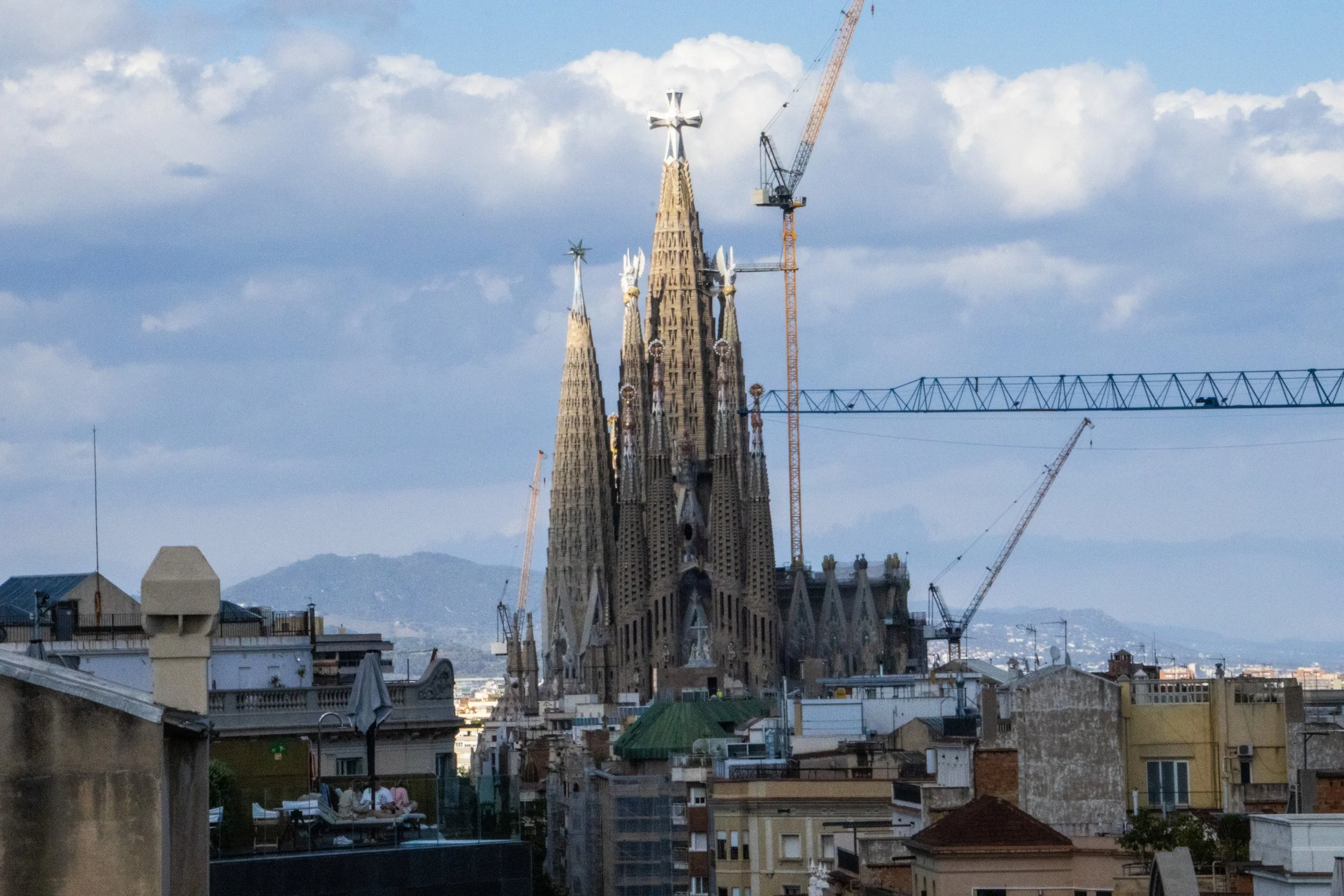
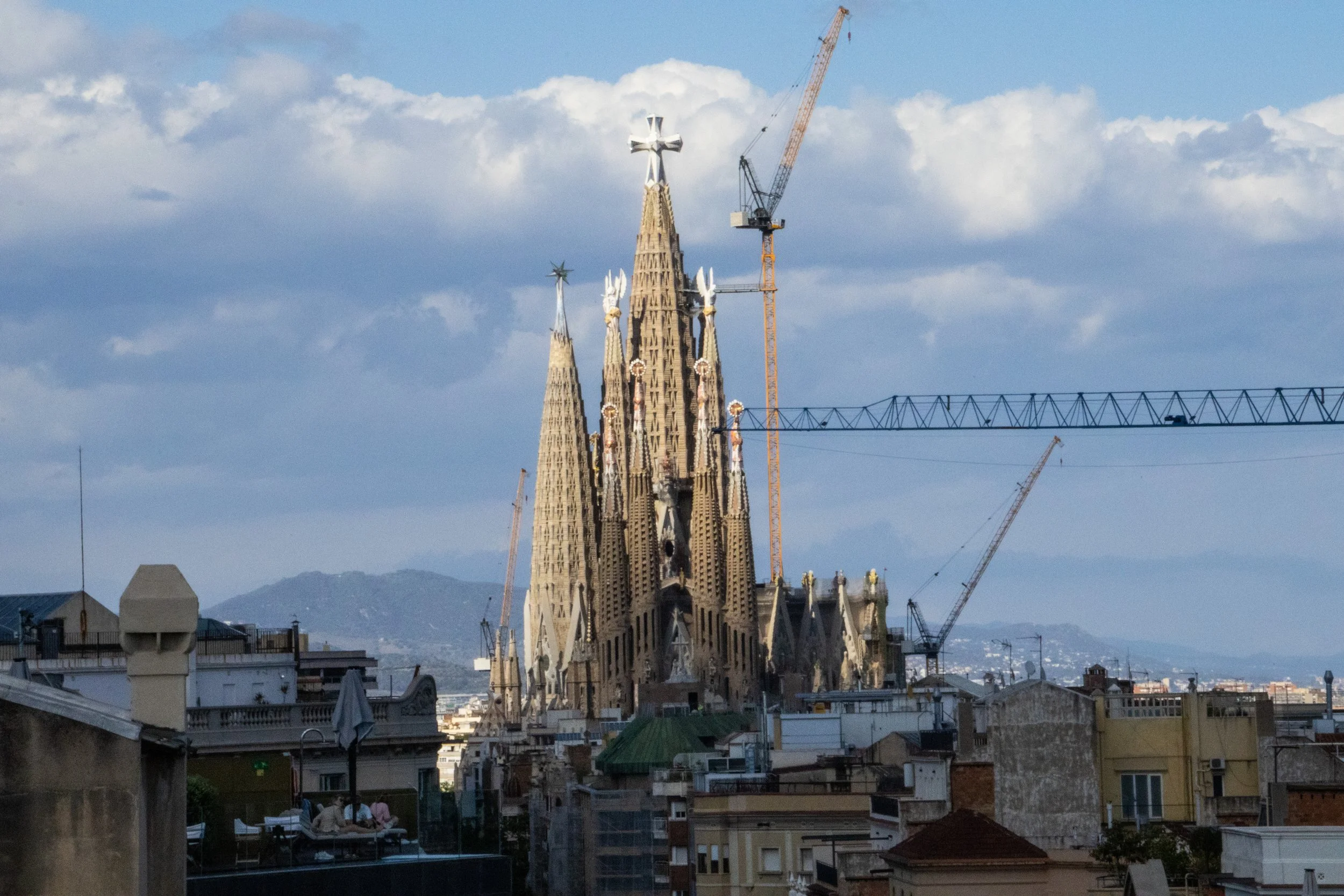
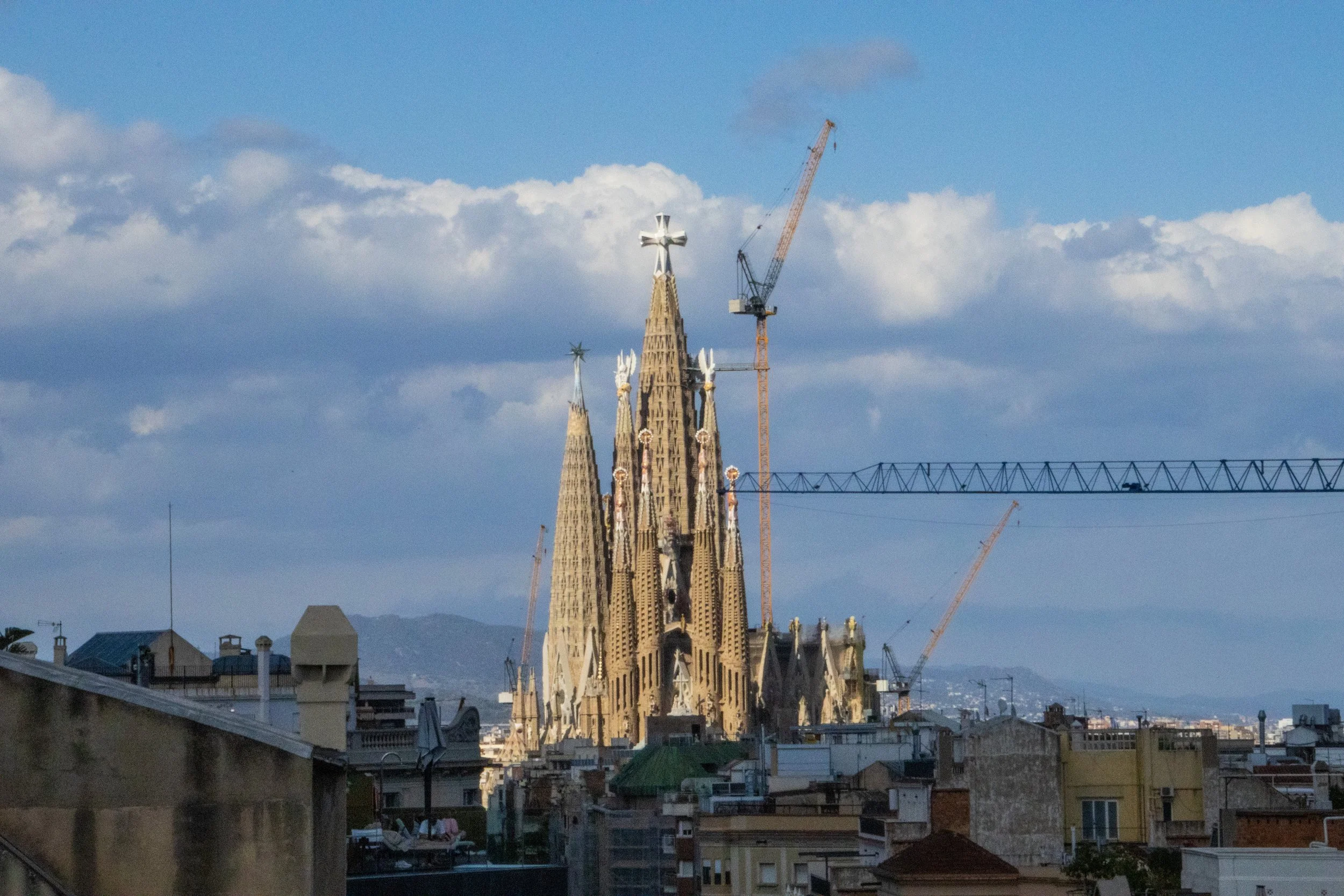
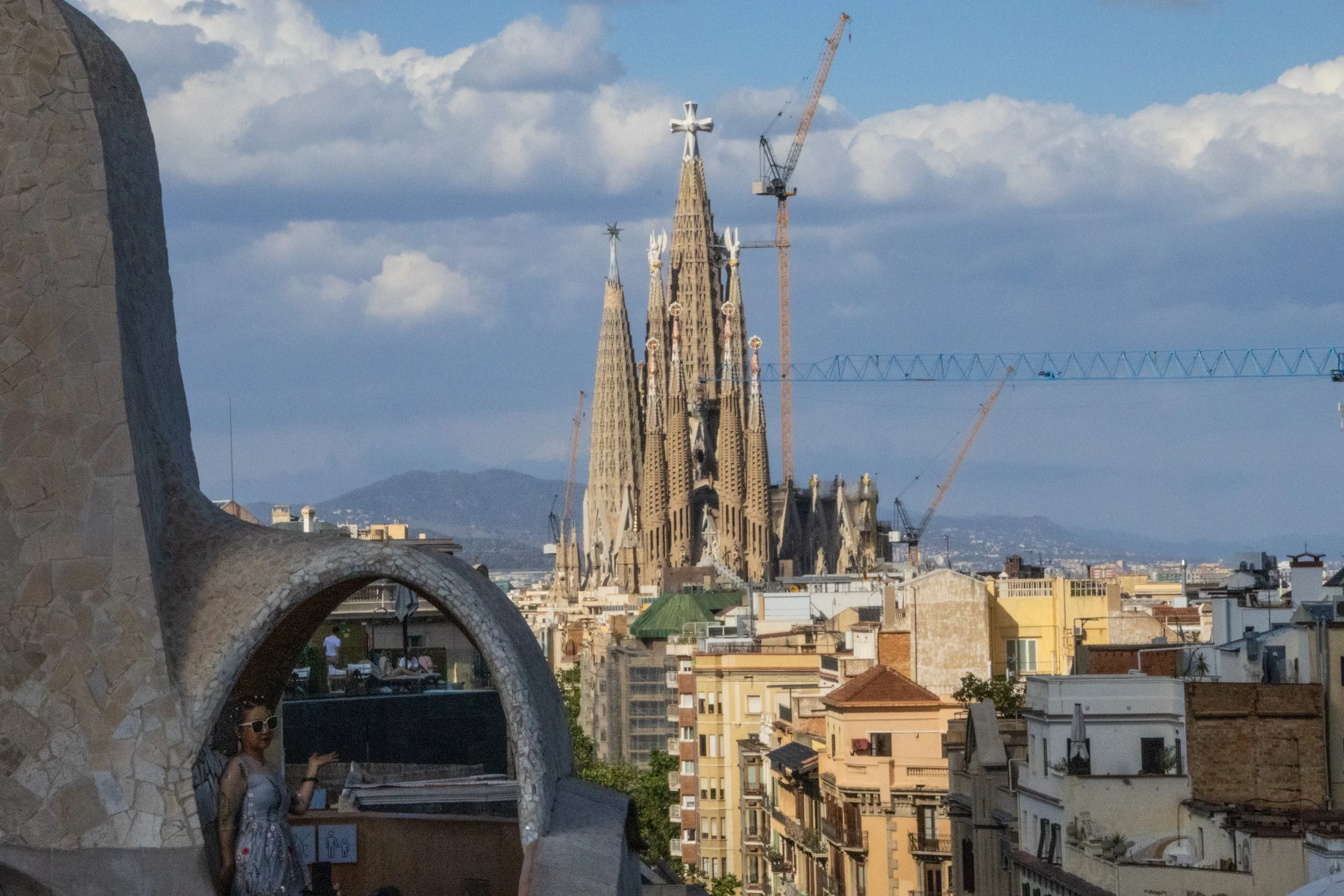
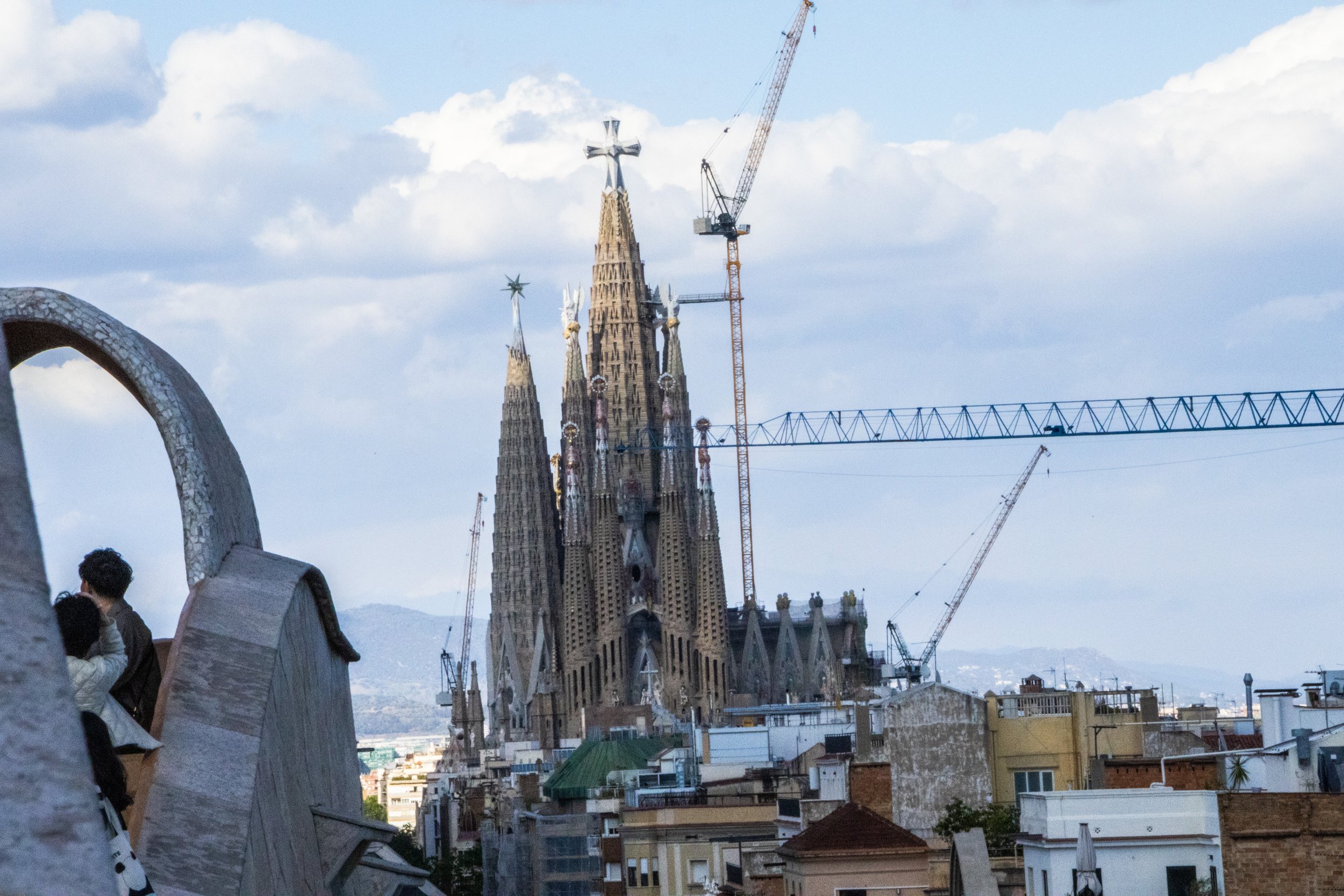
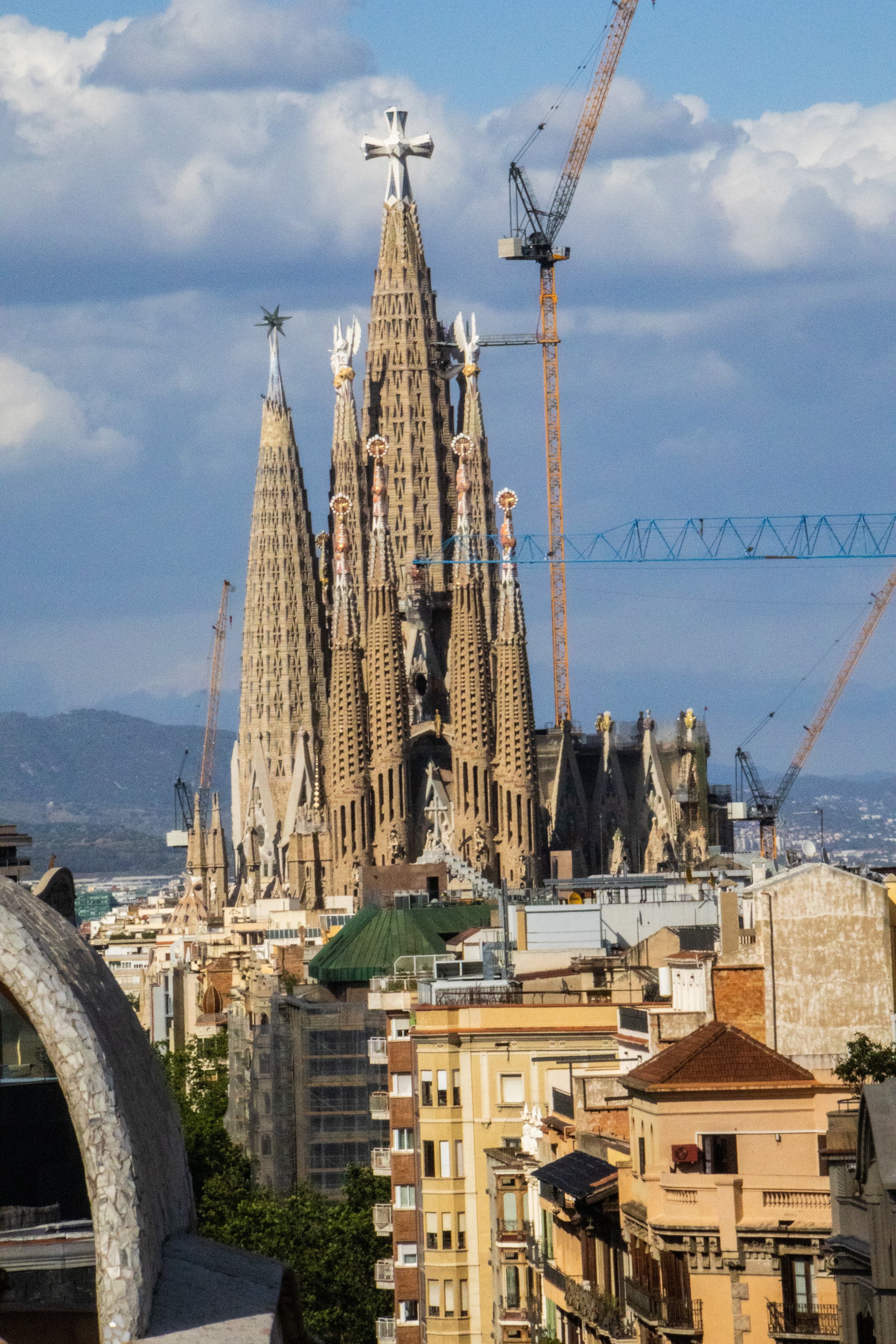
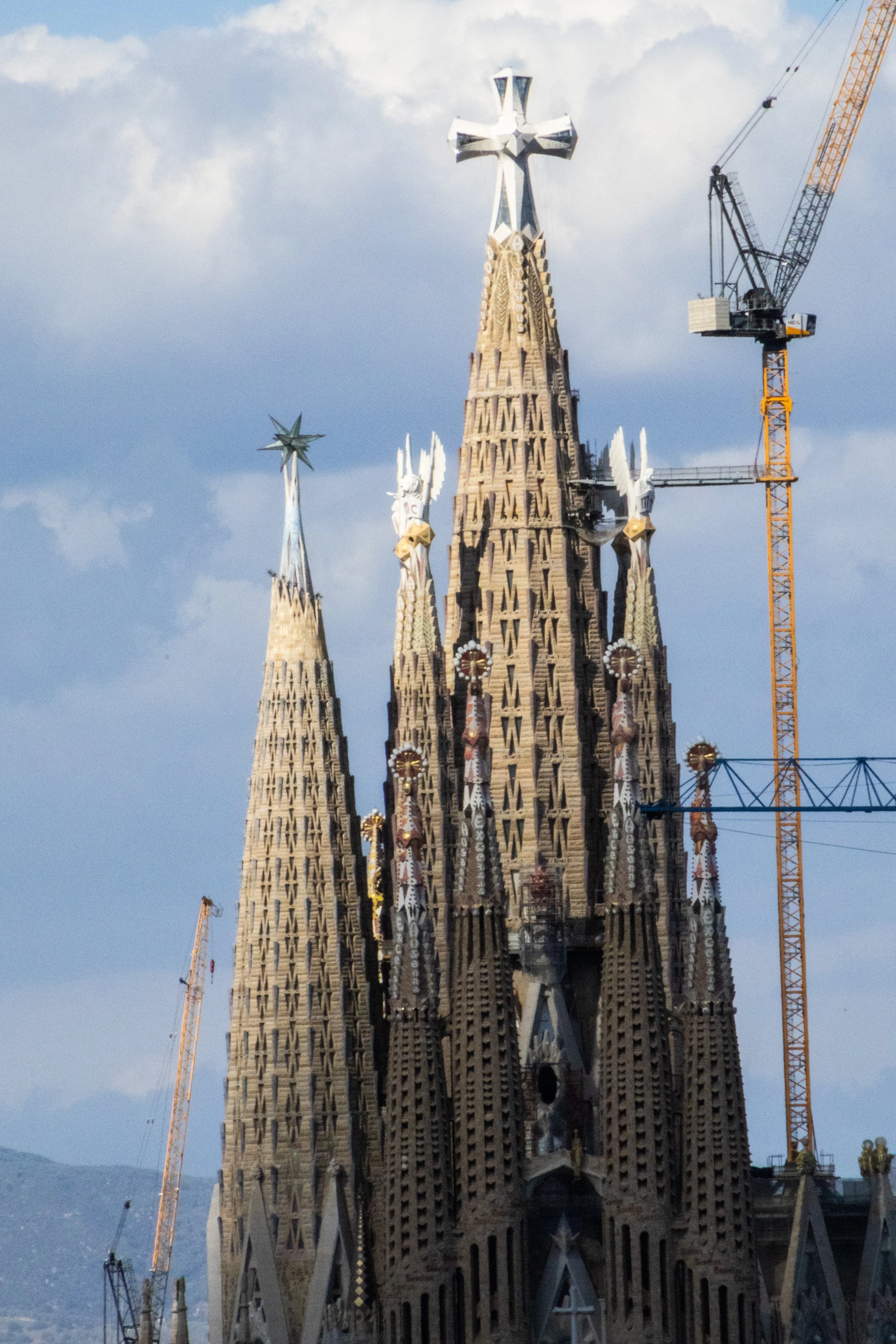
So, this church looks pretty good now.
What’s left to do? Well, the south facing “Glory Façade” is still a work in progress. So, that’s going to take a while.
When will the entire church be 100% done? The official answer is “TBD”. So, don’t hold your breath.
One thing that slows progress considerably is funding, as la Sagrada Familia takes money from neither the Spanish government, nor any centralized religious body. Instead, it is funded entirely by donations from private individuals and ticket sales! I actually didn’t know that until I was researching this article… maybe I should have paid to enter a 2nd time. 😬
What I can tell you from my first visit in 2012 is that this church is like no other in Europe, or probably the world. It’s easy to get “churched out” in Europe, because every city has lots of incredible churches, and eventually they start to blur together… but this one is different, I promise. Here are a few pictures of the interior from my first visit that I dug up and re-edited a few years ago.


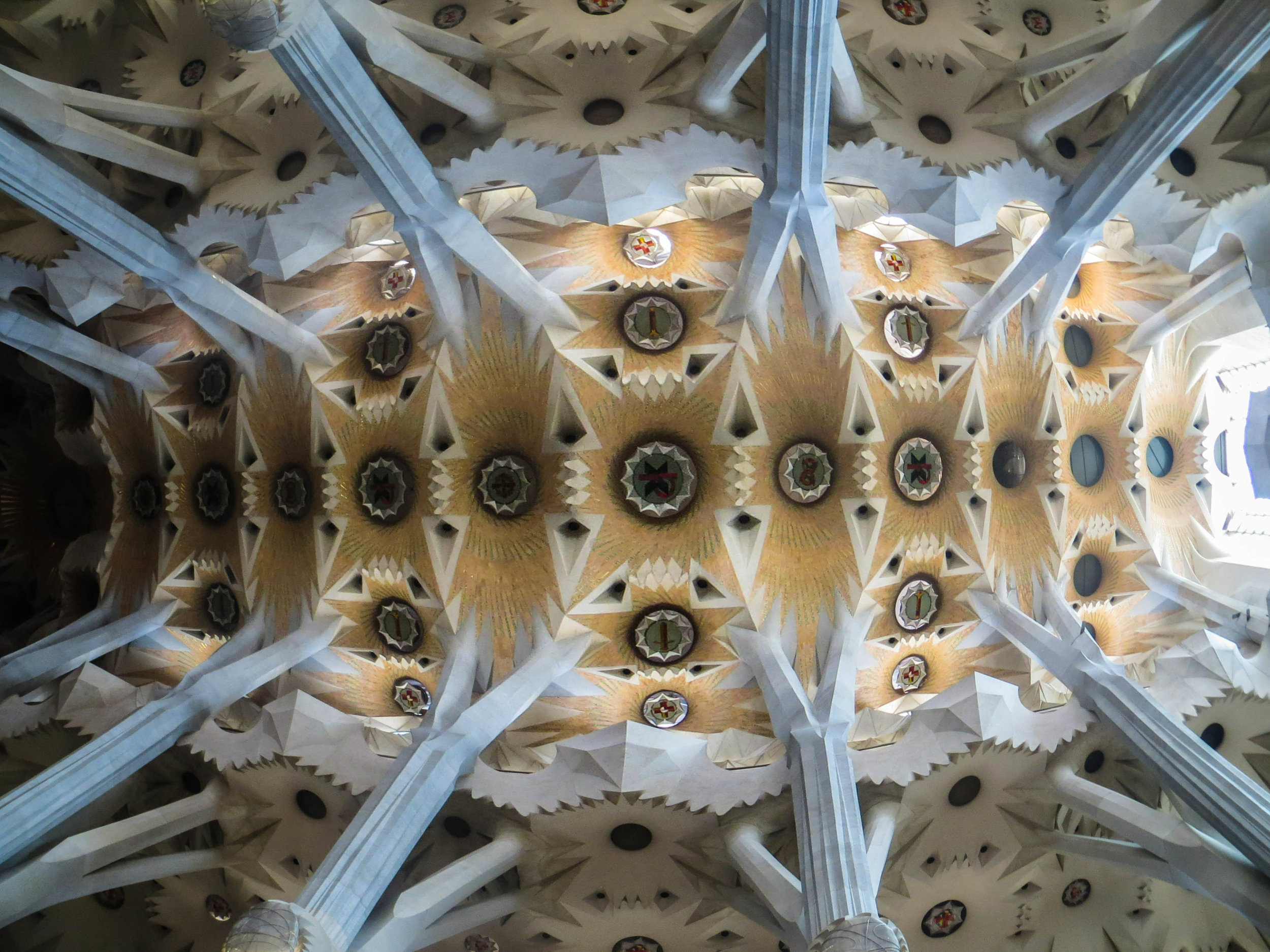

There is actually SO much more of Gaudí’s work left to see in Catalonia. The most obvious omission from this article is Park Güell, which I discovered too late requires advanced bookings. So I’m sure there is more Gaudí in our future. But for now, hopefully this has given you a taste!
And to end with a shockingly little piece of trivia that I only discovered in researching this article… do you know how Gaudí died?
He was hit be the tram! 😧
ANYWAY! Up next we’ll be getting out of the city for some unexpected adventures in a small town just up to coast toward France. So, until next time, this is Peter signing off, and reminding you to look both ways before crossing the street. 👀


With a metro area population of ~ 5.5 million people, Barcelona is the 2nd largest city in Spain, behind only Madrid. By basically every quantifiable metric— population, economy, political power, etc.—Madrid is the larger city. But when it comes to travel, especially international travel, this relationship reverses. Barcelona is far-and-away the favorite destination for international tourists visiting Spain. And, when you consider the fact that Barcelona also covers a much smaller land area than Madrid, the concentration of international tourists becomes much more intense. Barcelona has indeed struggled to accommodate the levels of tourism it is now receiving, but it’s easy to see why the whole world is so interested in coming here! Sandwiched between the Collserola mountains and the Mediterranean Sea, Barcelona is an absolutely idyllic city. And once you’re in the middle of it, it’s incredible how quickly the Catalan identity eclipses that of Spain.