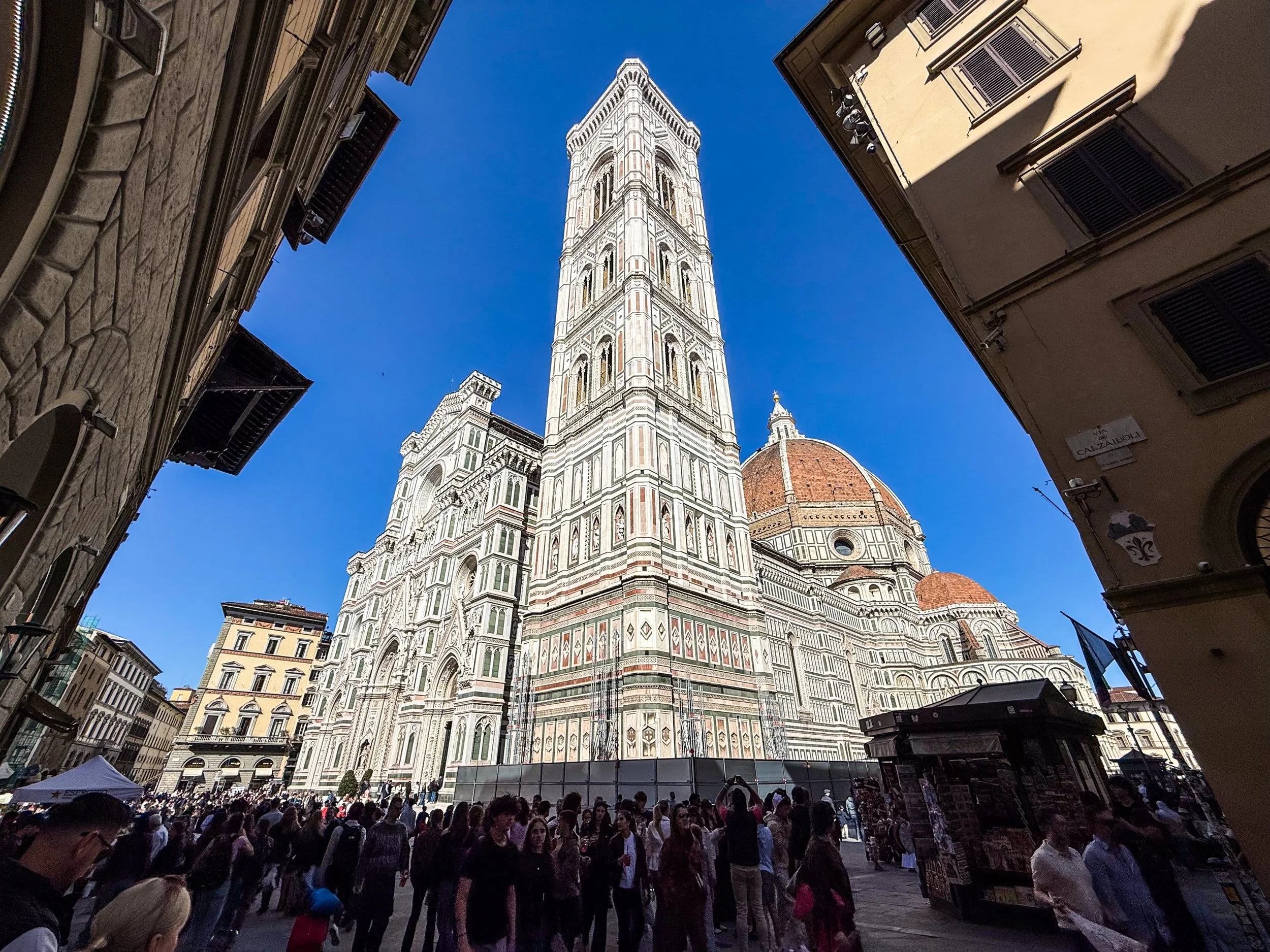
Although Florence was founded under the Romans in 59 BC, its meteoric rise did not begin until about ~1,000 AD. The intervening years saw Florence weather Gothic invasions, Byzantine rule, Lombard control, Frankish conquest under Charlemagne. A thousand years of the same struggle for incremental gains that most every city in the world was experiencing, until Florence’s petri dish yielded something entirely unique. Going into the 1400s, Florence had a unique combination of enormous private wealth, political competition, educated merchants, civic pride, and intense rivalry among wealthy families. You might assume that they the powers that be would opt to duke out their competitions in war, business, and industry (and there was certainly some of this), but the Florentine elite chose a new arena for competition: the arts. You may have heard of the Medici? This was one of those wealthy families that is famously supported some of the artists that would establish Florence as a cultural juggernaut and kick-start the Renaissance. They even have their own Netflix show now.
During my first visit to Milan, I had the great privilege of locals taking me under their wing, which is always a game-changer when exploring a new place. Dropping into communities that already exist and riding the coattails of their intuitive understanding of their home really gives you a feel for what life in a place is really like—but it also relieves you of having to think about where exactly you are in the city at any given moment. As a result, you’ll walk away with a strong emotional bond to a city, but not much concrete information about it. That was my challenge in returning to Milan. So I did the legwork of sifting through exactly where I was during my first visit to Milan, and came up withe two neighborhoods that made the biggest impression on me. They were Brera and Navigli. Let’s jump in.
Off the Sorrento Peninsula, in the Bay of Naples and the Tyrrhenian Sea, sits the tiny, beautiful island of Capri It may seem like the conversion of places into ~tourist destinations~ is something of a recent phenomenon—like in the last 70 years or so—but there are some places in this world that have attracted tourists for much, MUCH longer.
Capri is one of those places.
In fact, it was functioning as a vacation destination as far back as the ROMAN EMPIRE, likely before the birth of Christ. We actually don’t even know the origin of the name “Capri.” This idyllic isle just is. It’s eternal; immortal. And it’s also one of the rare places in the world where tourism cannot possibly cheapen the destination; it IS the destination.