

And we’re back for the final installment from my time living in France. We’re going to bookend this experience with a trip to the South of France to Aix-en-Provence. Even if you think that you’ve never heard of this place… I’m willing to bet that you have. This area is always the setting for romantic comedies set in the South of France. Most Americans will know the imagery, even if they don’t know the name of the place. So let’s dive in.
An Intro to Aix-en-Provence
When you hear people talk about the “French Riviera”, they are probably talking about Provence. That is where we’re going today. Although, we’re not going all the way down to the Mediterranean coast—we’ll stop just a few kilometers short of that.
Aix-en-Provence is a small city just to the north of Marseille. While Marseille is quite a large and historic place (which will hopefully be the setting for more than one article in the future), Aix-en-Provence might be equally—if not more—well-known. It’s definitely one of the most famous places in the region of Provence. The actual administrative name for this region is Provence-Alpes-Côte d'Azur, but historically, culturally, and colloquially, simply saying “Provence” will usually do the trick. Similarly, within France, simply referring this city as “Aix” was most common in conversation. So, likewise, I will be calling it “Aix” from here forward.
Aix, like nearly everything in this part of the world, has a recorded history that stretches back well before the birth of Christ. Whenever I write these articles, I’ll always take a quick dive into the proverbial pool of history to see if there’s anything notable I should highlight… and in the case if Aix, I mostly came up empty-handed. In fact, the most interesting thing I dug up during my research—aside from the recent unearthing of a Roman amphitheater in a nearby suburb—was an interesting Medieval legend about a Dragon that supposedly sat on a nearby hill atop a pile of bones, both human and animal. This legend is interesting, because—although the presence of a Dragon cannot be confirmed—the pile of bones was known to be very real! It’s been the subject of numerous scientific inquiries to identify all of the original owners. There’s a really interesting article about this called “The Dragon at the bus-stop” that feels like it sets the scene quite well for a children’s fantasy novel.
So, with that in mind, the history of Aix feels relatively uncomplicated in my head. For all the history buffs, the history is there! But, for the rest of us, I don’t think you’re doing this place a huge disservice by just enjoying it for what it is now: a magical little place in the South of France. In the summer, all of France flocks to the southern coast to soak up the sun down here, but for the rest of year… while it might not be quite so idyllic, it’s still amazing. This trip happened in early October, so it was a bit chilly and overcast at times—definitely “off season”—but still beautiful all the same.
So what did I do while in Aix? I basically just walked around, ate food, and took pictures! Honestly, that is my ideal trip in a place like this. Every inch of Aix—at the least the central parts of it—is just perfect. I see why people love to come here. And I can 100% see how this would be even better in the summer!
So let me spare you the preamble, and instead invite you to just take a leisurely stroll through this gallery of pictures.


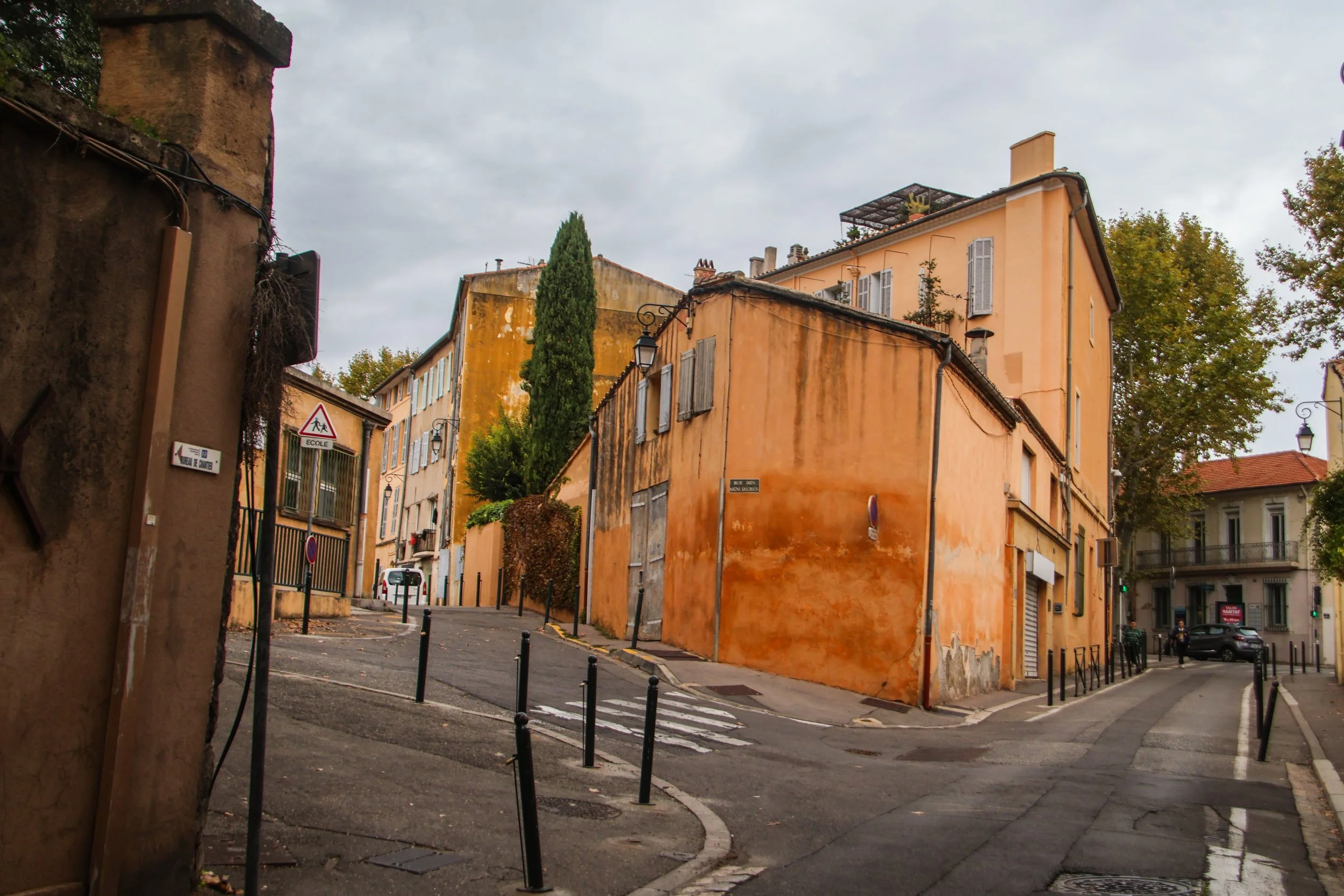


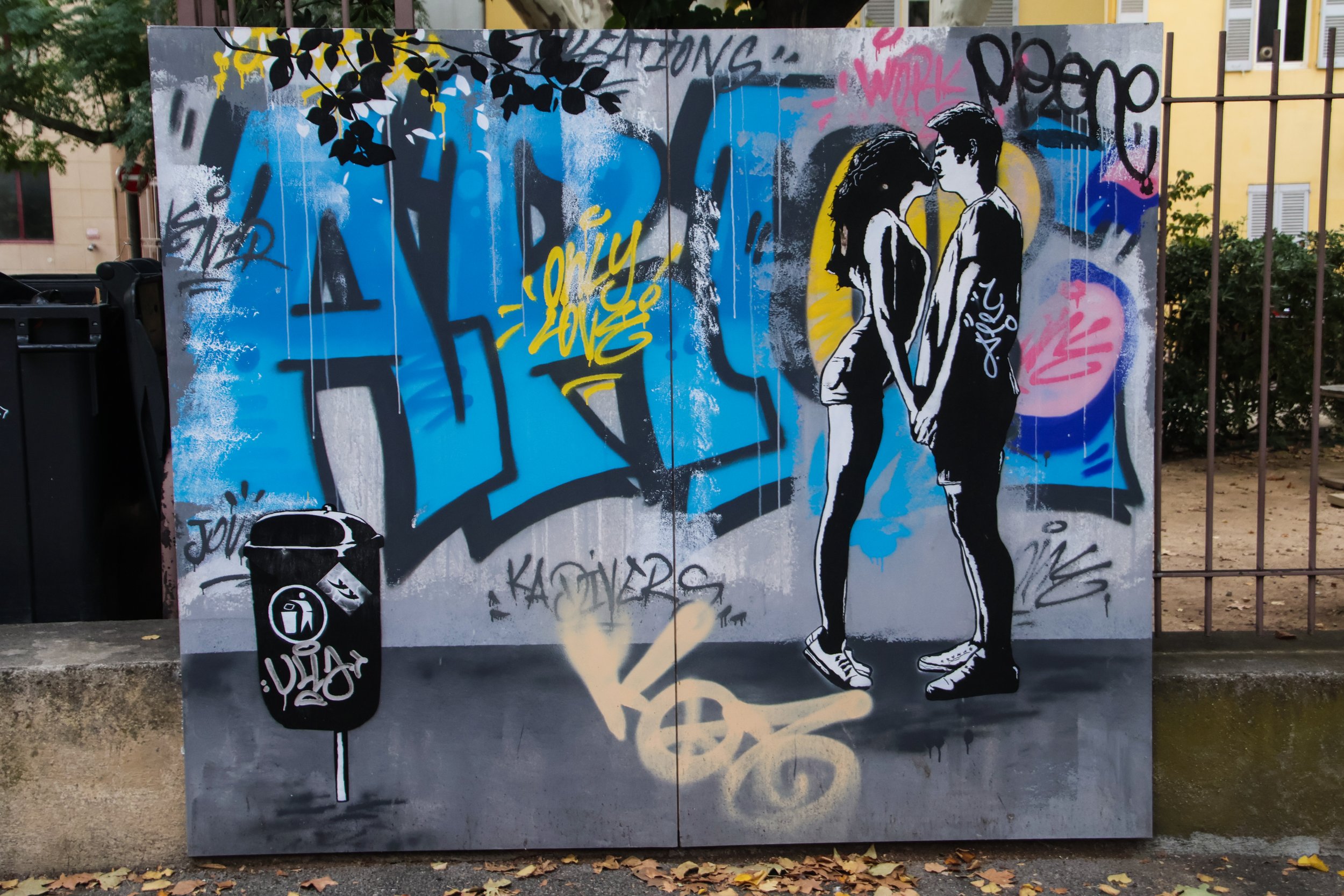


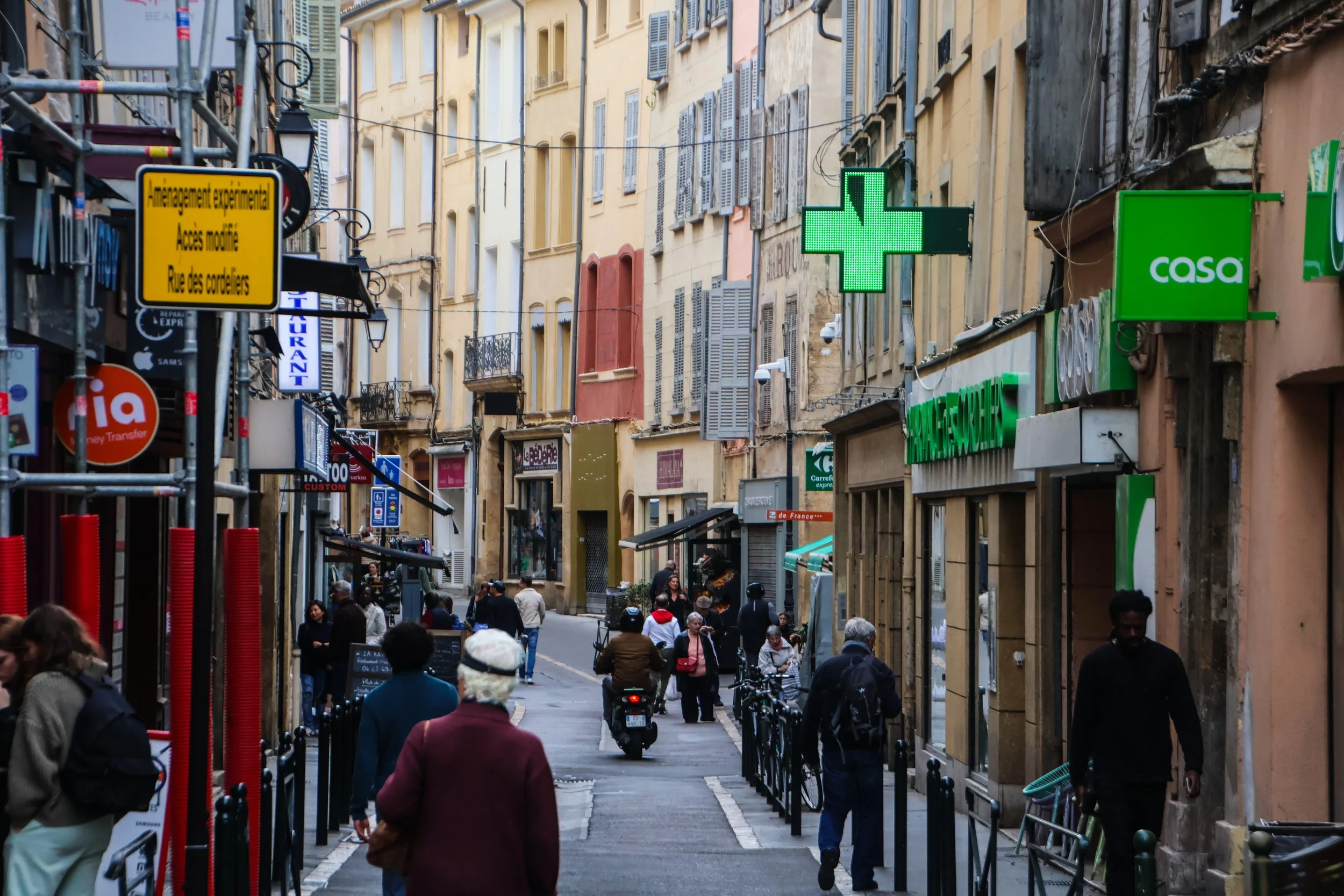


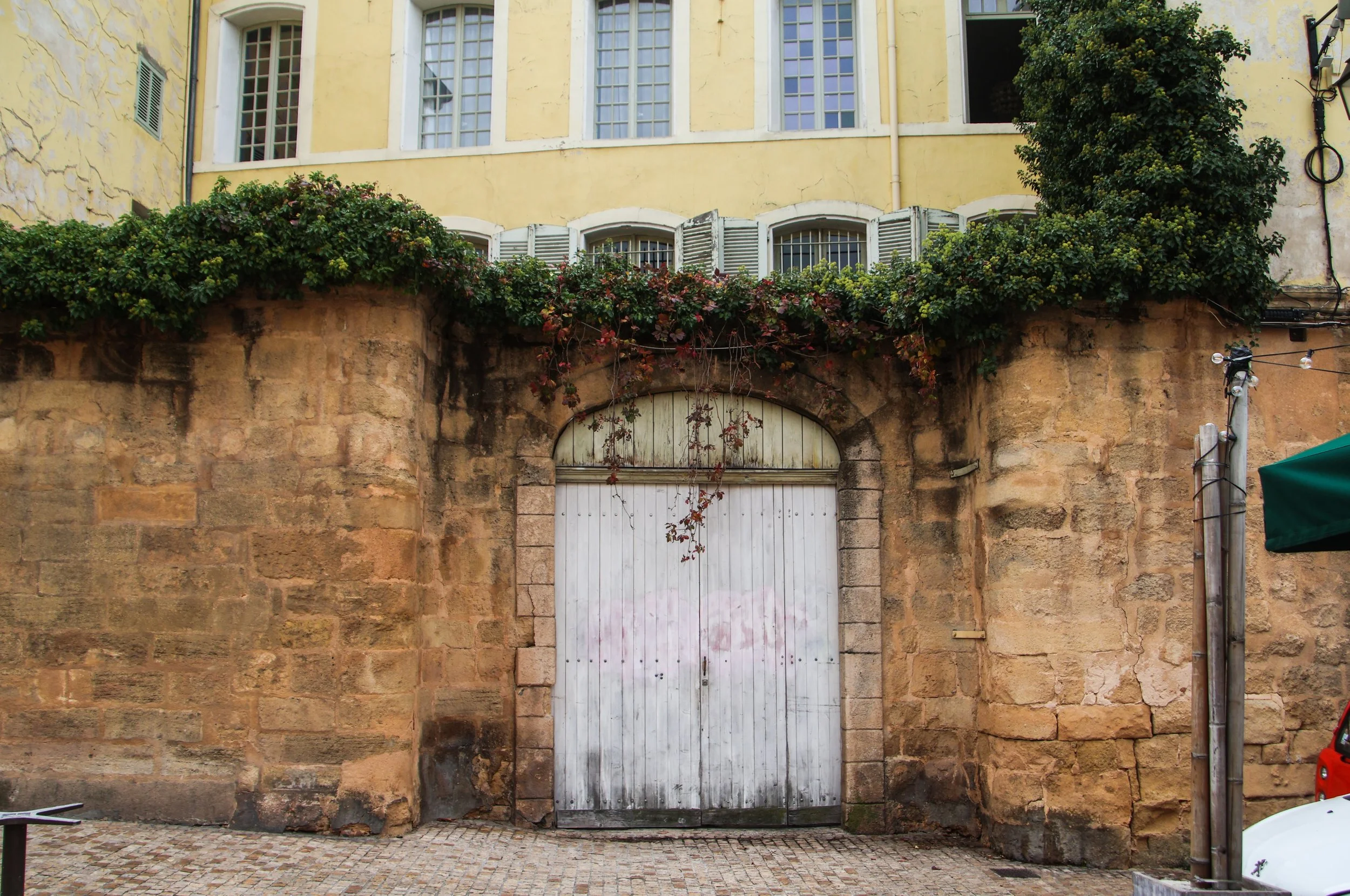


Aix had so many captivating little details. I could compile an entire series of coffee table books just documenting all of them and organizing them by category. On of my favorite examples of this was the prevalence of these little wrists and hands in places of door knobs. These were all over Aix…


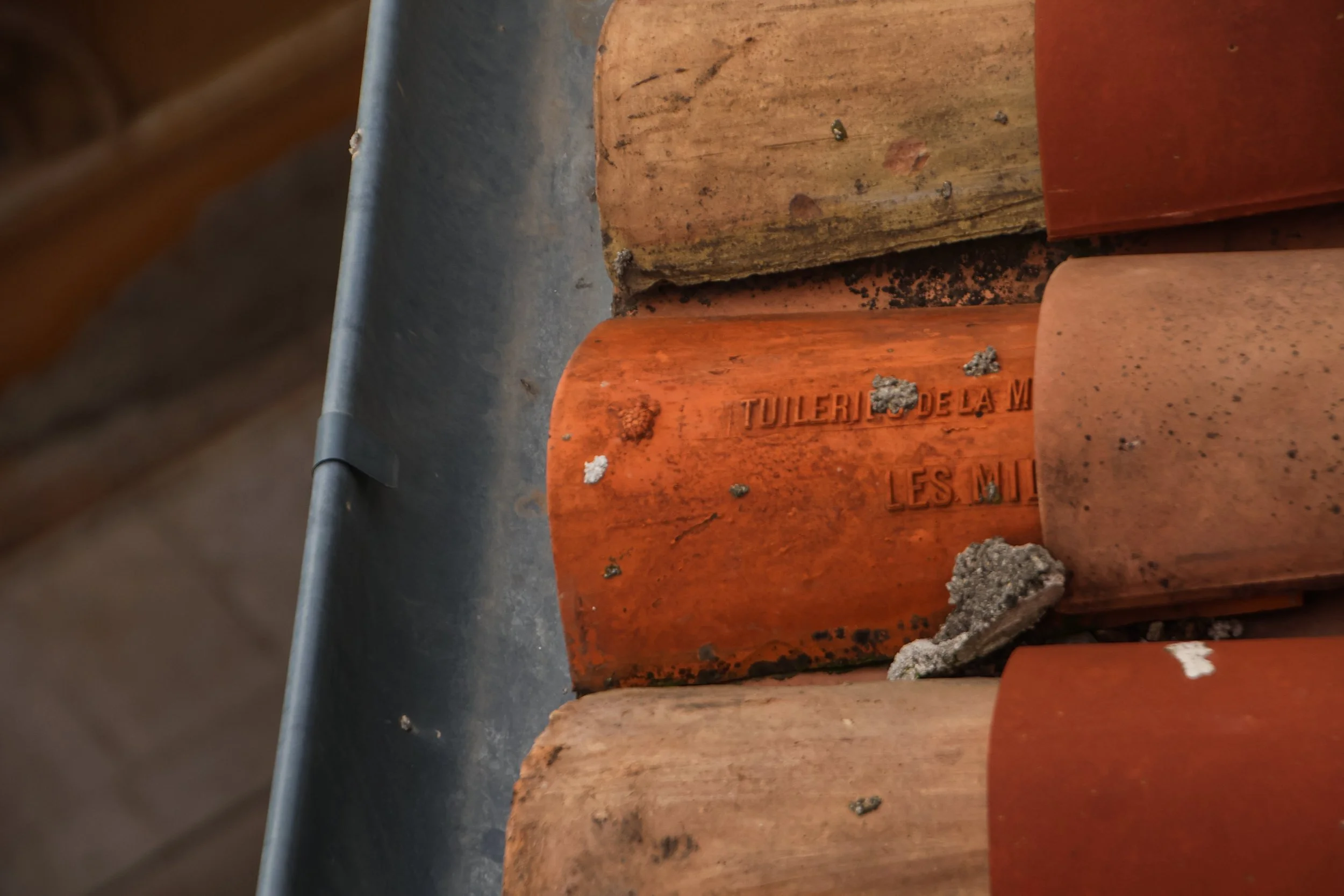
If I had a drone, I could have done a whole series up this vein solely on the rooftops of Aix. Each of them was oozing with personality, covered in the same weathered terracotta shingles. But admittedly, my sample size was a bit limited. The best close-up views I got over these rooftops came from the balcony of the flat where I was staying in Aix. Here are a few snaps from that spot:




I often remark on the magic of European street life. Coming from North America—where, except for a couple of outliers like NYC and SF, streets are inhabited mostly by cars instead of humans—European street life can feel like a breath of fresh air! Growing up on mostly vacant streets, I was not aware of how much I needed the sensation of society happening around me until I experienced it for myself! The emotional uplift I get from walking out my door and being surrounded by people is crazy. Even when I am alone in these places, seeing and feeling the human energy swirling around me puts a floor on how lonely it is possible for me to feel.
Ironically, people in these places often associate success with the ability to put more space between themselves and others (e.g. bigger apartments, no roommates, perhaps even a big house in the suburbs) … well, the grass is always greener on the other side. By this standard, the US has 100% made the dream a reality! Working remotely, with cupboards already stocked full of food, I could get through multiple days without even seeing another human back in the US. And it got really lonely. French street life offers an incredible respite from that bleak reality.
When restaurants and bars are open—especially at night—they will fill the plazas with tables and serve food to people outside. As a result, all of the magic that would have been taking place behind closed doors are pushed out into the open, for all to participate. The squares are packed with people just sitting around, eating, drinking, talking, smoking, or just enjoying being in the presence of others. It’s true in Paris, but down here in little Aix, it felt all the more special. The late nights spent relaxing in these little squares were life-giving and restorative. I need to be intentional about preserving some version of this in my life as I continue to construct my own little world. Thanks to Sophie for bringing me down here. ❤️


This, sadly, the final article from my time living in France. Life is long and unpredictable; perhaps I will live here again in the future. But soon after this trip, I packed my bags and returned to London.
This song by Eloise never fails to bring me back to this time. This is one of those songs where I keep finding new layers of meaning in the lyrics each time I listen that are hyper-specific to my own situation and experience.



Paris needs no introduction, but here’s one anyway.
Paris is the capital of France and—in terms of metro area—the largest city in the European Union by a HUGE margin. According to the OECD, the population is 11.2 million. For context, the next largest metro area population in the EU is Madrid, at 6.9 million. London (now ex-EU) and Istanbul (definitely not EU) clock-in at 13.4m and 14.6m respectively, according to the same OECD data set. So Paris is more than just a historic, beautiful place (although it is those things as well)—it actually fits the definition for a “mega-city”, in the same league as Mumbai, Mexico City or Los Angeles.