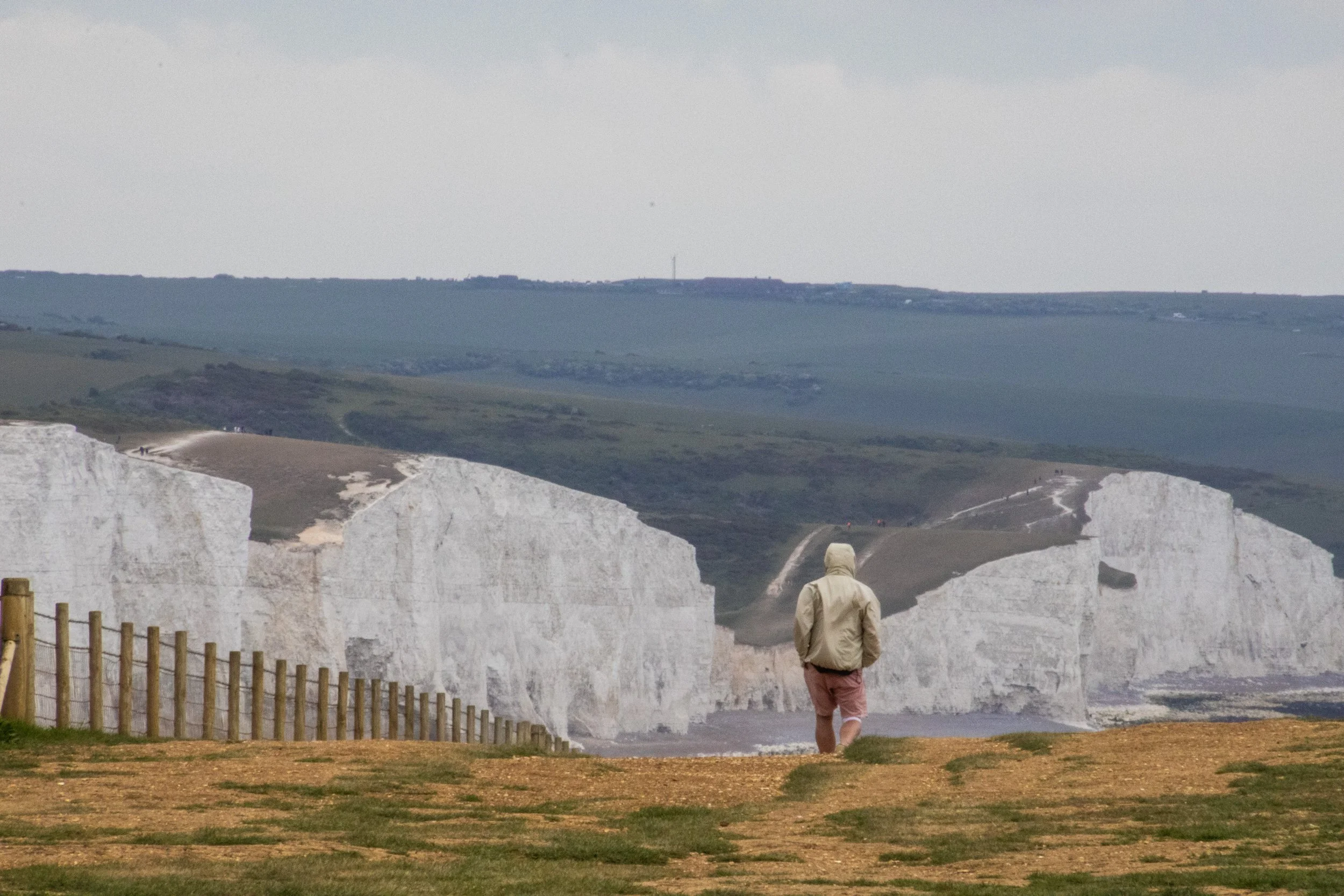
So, the “Sisters” are a series of massive hills that have each essentially been sliced down the middle by natural erosive processes to reveal massive, sheer cliffs that stretch along the English coastline like a series of rolling waves. To make the scene all the more striking, these cliffs are entirely white. Perhaps you’ve heard of the “White Cliffs of Dover”? This is part of the same system of cliffs, which is called the “South Downs”, but Seven Sisters is arguably even more iconic because the entire stretch has been kept completely natural and undeveloped. The white color comes from the fact that the earth here is made of an extraordinarily pure form of limestone: chalk! Indeed, the earth here contains about 98–99% calcium carbonate, with very little clay or sand, making them appear dazzlingly white! They stay so white because they are in a constant cycle of erosion, where after some time the outer layers of chalk crumble away revealing fresh, white chalk.
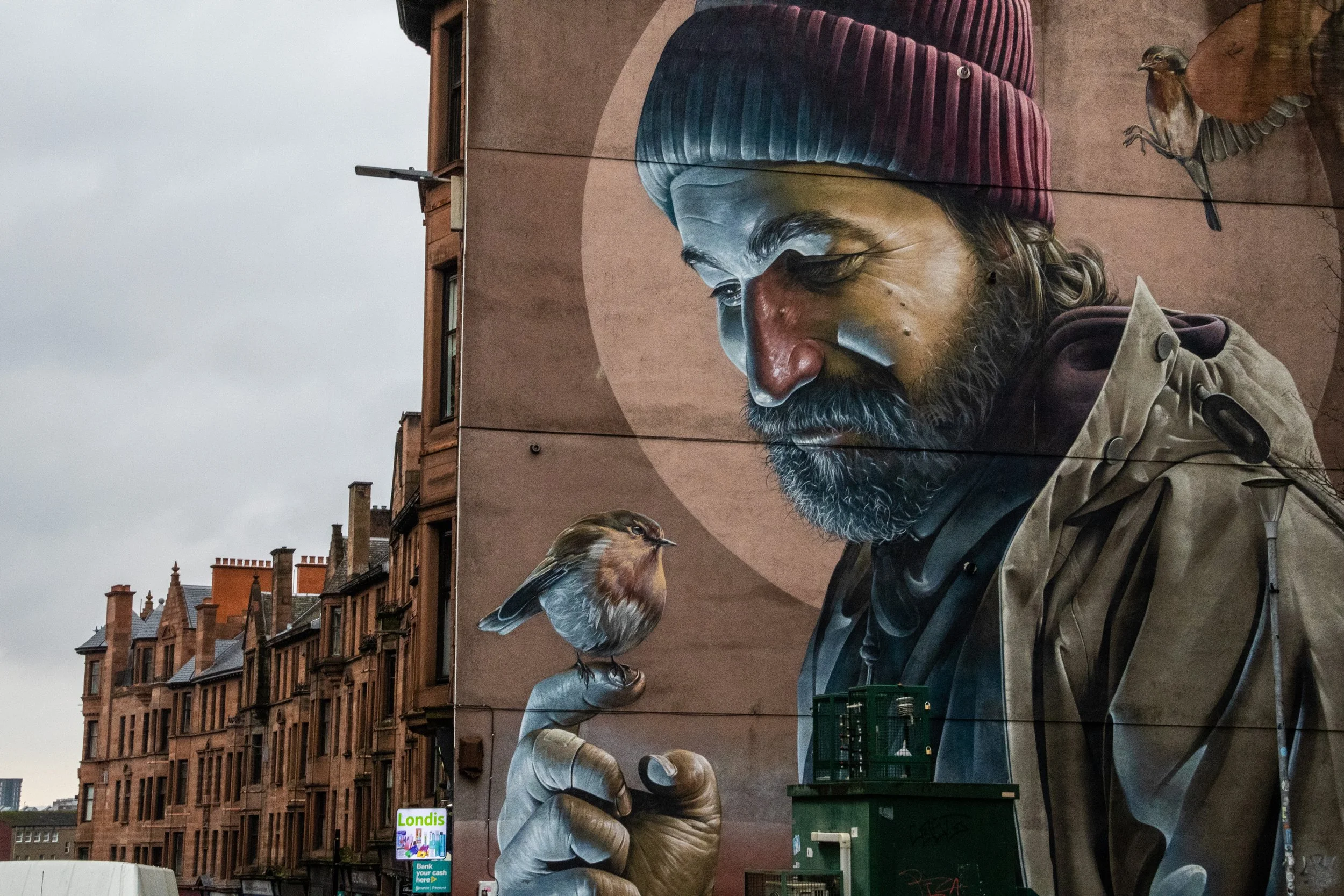
It turns out that Glasgow has a reputation for murals! The one at the top of the gallery below is, perhaps, the most famous of them all. It was done by an Australian-born street artist named Sam Bates, better known under the moniker Smug. He’s offered little information on the intended symbolism of the mural, but because the subject is holding a robin and appears to have some sort of halo—both imagery that were/are commonly associated with St Mungo—the mural has been widely interpreted as a modern St Mungo. The mural’s close proximity to Glasgow Cathedral, which is the resting place of St Mungo, serves to reinforce this.
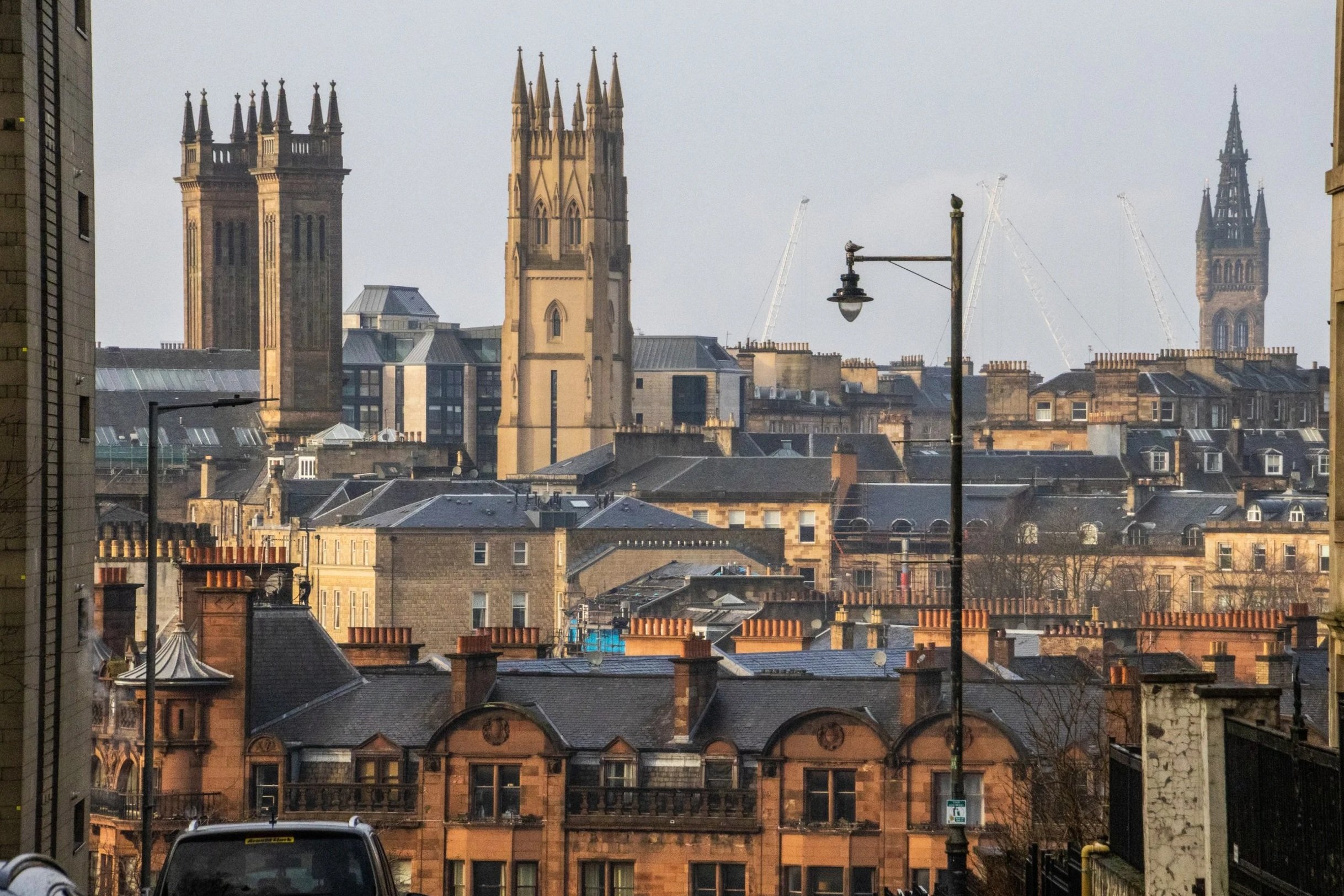
When you think of Scotland, I’m betting you don’t immediately think of Glasgow. You probably think beautiful scenes in the Scottish Highlands, or the charming cobblestone streets of Edinburgh. Indeed, this is the image that Scotland likes to show to the outside world, but the largest city in Scotland is actually not Edinburgh; it’s Glasgow! With a metro area population of ~1.8 million, the joke goes that this is where Scots actually live. It could be said that Edinburgh and Glasgow are two sides of the same coin. They are the largest two cities in Scotland, and they are literally right next to each other at only 70-80km (45-50 miles). Edinburgh is smaller, but it is the administrative, governmental, diplomatic, academic, and financial hub of Scotland. It’s well-connected, it’s expensive, and it’s posh. Glasgow, on the other hand, is none of these things.
You’re gonna love it. 😉
It’s a bit hard for me to disentangle Oxford the school from Oxford the town. They are inextricably linked and have developed co-dependently throughout the centuries. The University of Oxford was actually founded in 1096. 🤯 This is so long ago that the exact date is actually unknown! To give you a bit of perspective, that makes Oxford older than the Aztec Empire, Genghis Khan’s founding of the Mongol Empire, Kublai Khan’s founding the Yuan dynasty in China, The Crusades (which saw the sacking of Constantinople), and the Magna Carta.
By the time the urban footprint of London really began to expand in the 18th century, Hampstead Village had become kind of a trendy place to be for Londons affluent intelligentsia, since it was beautiful, clean, and within striking distance of London. Likewise, the giant natural area now known as Hampstead Heath—which served as a shared backyard for this community—became the focal point of conservation efforts in the face of London’s creeping urban sprawl. Luckily, Hampstead already boasted an impressive roster of rich and influential residents who had the muscle to bring this conservation to reality. The result? Both Hampstead Village & Heath have grown into the stuff of postcards; a beautiful and secluded getaway from the hustle and bustle of London.
Little by little I am visiting other places in the UK besides London. Believe it or not, Brighton was only the 3rd non-London location that I’d visited… but we’re not even going to see much of the city on this trip (we’ll come back for that soon). Today, we’re going to continue coverage of the European football/soccer circuit with an English Premier League match in Brighton. The match is Brighton & Hove Albion (a.k.a “Brighton”) v. Wolverhampton Wanderers (a.k.a. “Wolves). Here’s exactly where this match took place: Brighton’s AmEx Stadium, also known by its non-sponsorship name, Falmer Stadium.
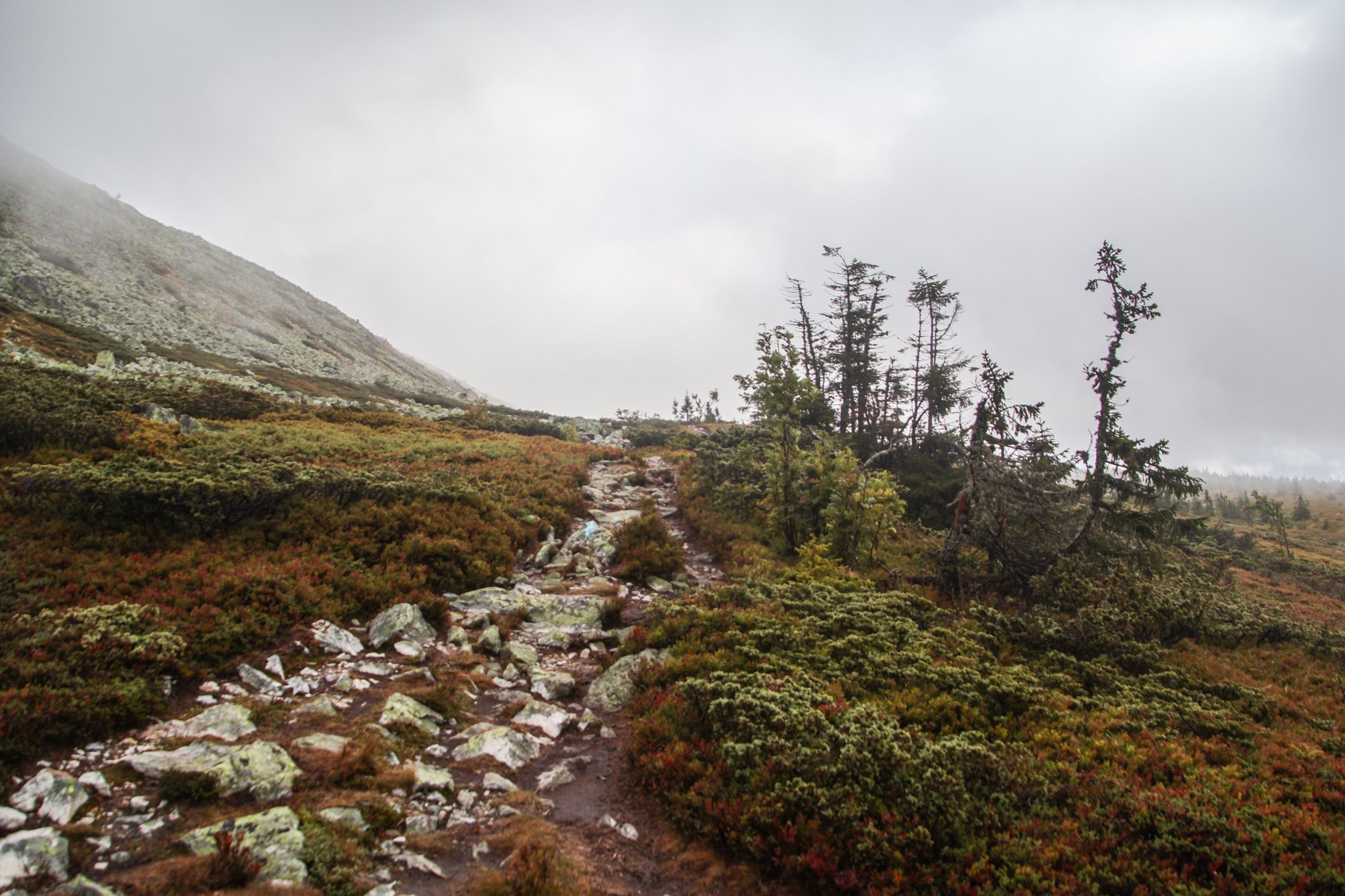
I was excited to see some of Norway’s legendary mountains! Unfortunately, Freyr (the Norse god of good weather) was otherwise occupied during my visit. During our entire stay in Trysil, the landscape was covered in a thick fog and a cold, driving rain. It was perfect weather to cuddle up with a good book in a mountain cabin… but we had other plans.
Bright and early, we set out into the cold, foggy wetness to complete our hike. There were about 5 minutes where the sun managed to poke through the cloud cover, so I’ll show you those photos first. We were not in a particularly scenic part of the trail during that fleeting moment, but even then it was clear that—had we been able to see the landscape around us—it would have been incredible. The sun reveals a stunningly bright color palette on the grass around us.
As you know, today we’re in NORWAY, which is a new country for this blog! Unlike its Scandinavian peers, Norway is actually not part of the European Union, although it is a member of the Schengen area. Oslo is far and away the largest city in Norway, with a metro area population of 1.5 million people, although Oslo proper has less than half that number. For context, the next largest city in Norway by metro area is Bergen with about 460k people. And Norway overall has a population of 5.52 million people. That’s less than half the population of London, and is more than 7x smaller than the population of the Tokyo metro area. Not a big place, even by Nordic standards. But it’s definitely a beautiful place.
Here are a few fun-facts about Oslo…
While it might seem like just some quirky hippie commune, Freetown Christiania is actually a self-proclaimed micro-nation within Denmark that operates by its own set of rules. It’s got its own flag (shown here), and the approximately 1,000 people who live within its borders apparently do not think of themselves as being Danish, but rather, as “Christianites.”
But let’s go back to the beginning of this improbable story. I think context is key here in order for this to make any sense.
Copenhagen is an interesting example of how the center of gravity for contemporary, social life is often not in the historic city center. I think this is true in varying degrees in many cities across Europe, but what I understand from speaking with my Danish friends over here, is that this phenomenon is particularly decisive in Copenhagen. If you move to Copenhagen, most people will tell you that the best place to live is not Indre By, but other neighborhoods that are a bit further afield, a bit less dense, a bit less historic, and a lot less photogenic.
Today we’re going to focus on two such neighborhoods, which have a reputation for the being the “cool / trendy” areas in Copenhagen: Frederiksberg and Nørrebro.