
We’re back for our second and—for the time being—final installment on Glasgow. But, to the Scotophiles among you (yes, that is apparently a word), fear not! There is more Scotland in the future. But this little wintery weekend must now come to to a close. And we’re going to do it with another installment of my favorite series on this website: Street Art with Peter.
Here’s a quick reminder of where we are in the world:
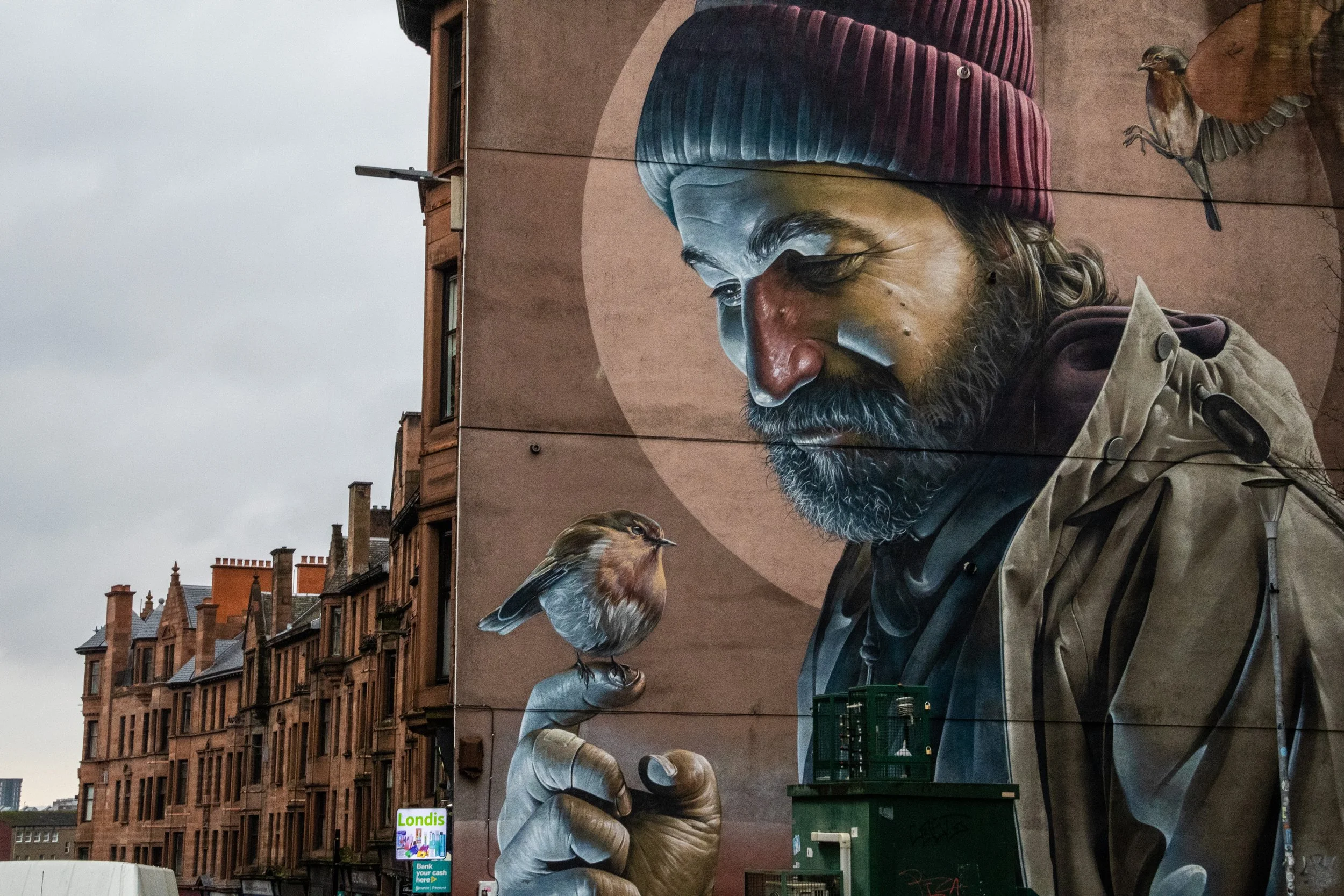
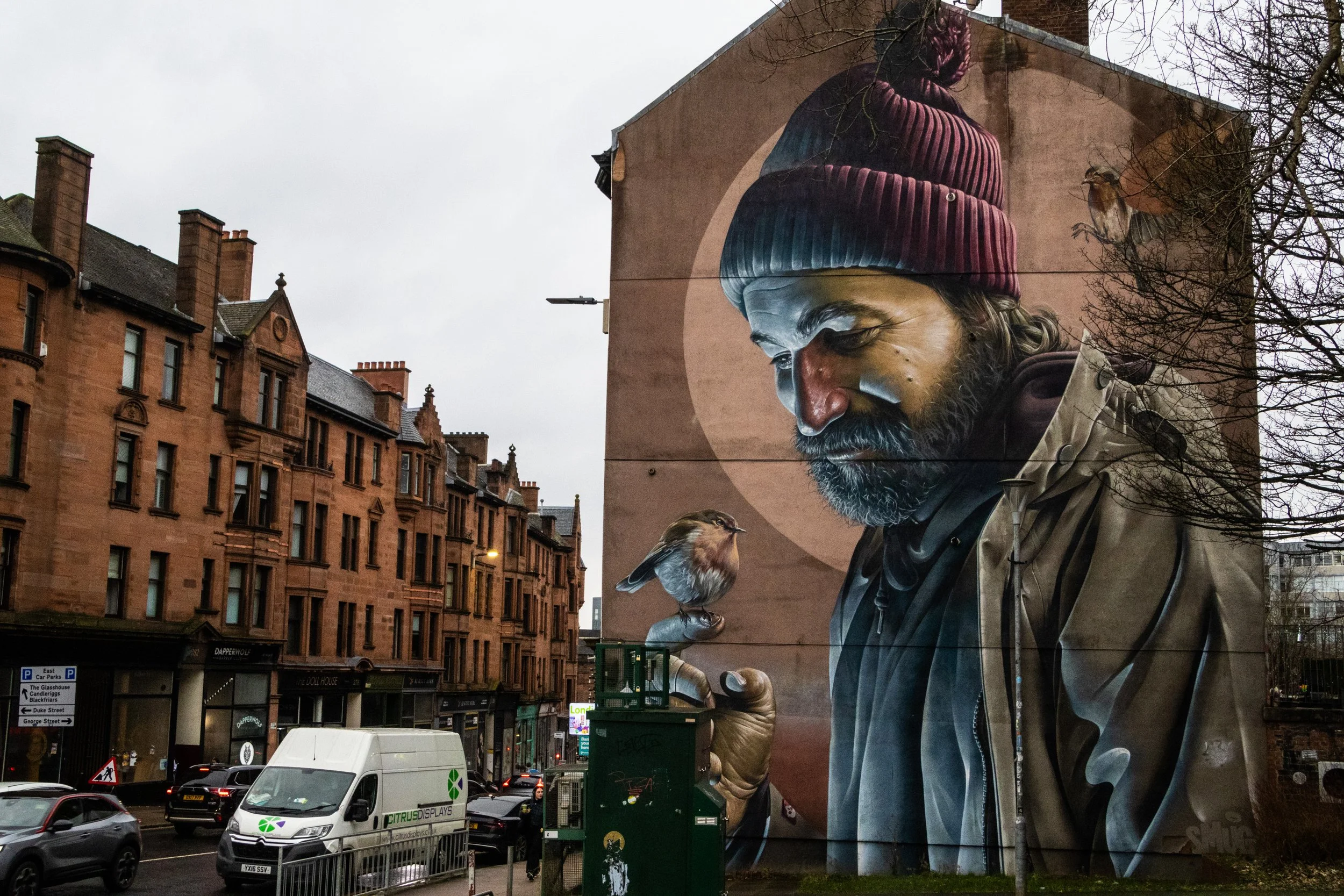
It turns out that Glasgow has a reputation for murals! The one at the top of the gallery below is, perhaps, the most famous of them all. It was done by an Australian-born street artist named Sam Bates, better known under the moniker Smug. He’s offered little information on the intended symbolism of the mural, but because the subject is holding a robin and appears to have some sort of halo—both imagery that were/are commonly associated with St Mungo—the mural has been widely interpreted as a modern St Mungo. The mural’s close proximity to Glasgow Cathedral, which is the resting place of St Mungo, serves to reinforce this. Indeed, I only stumbled across this mural because it was on the way to the Cathedral.
St Mungo, as you may recall from the previous article, is the patron saint of Glasgow. However, it’s a name that is increasingly associated with homelessness in the UK. The saint himself was historically associated with poverty, service to the excluded, and identification with society’s outsiders. This is not the same thing as homelessness per se… but the rise of the homelessness charity, St Mungo’s, has created a strong association between the historical figure and the modern-day cause. Ironically, the charity is actually London-based, but it was founded by a Glaswegian named Jim Horne who paid tribute to his hometown via the name. So the fact that this mural, which appears to represent a homeless man (or at the very least a vulnerable, poor man), is so ubiquitously understood to be a ‘modern day St Mungo’ shows how the public’s understanding of and associations with this historical figure have evolved through time. Yet another example of street art being a living, breathing reflection of a city’s identity!
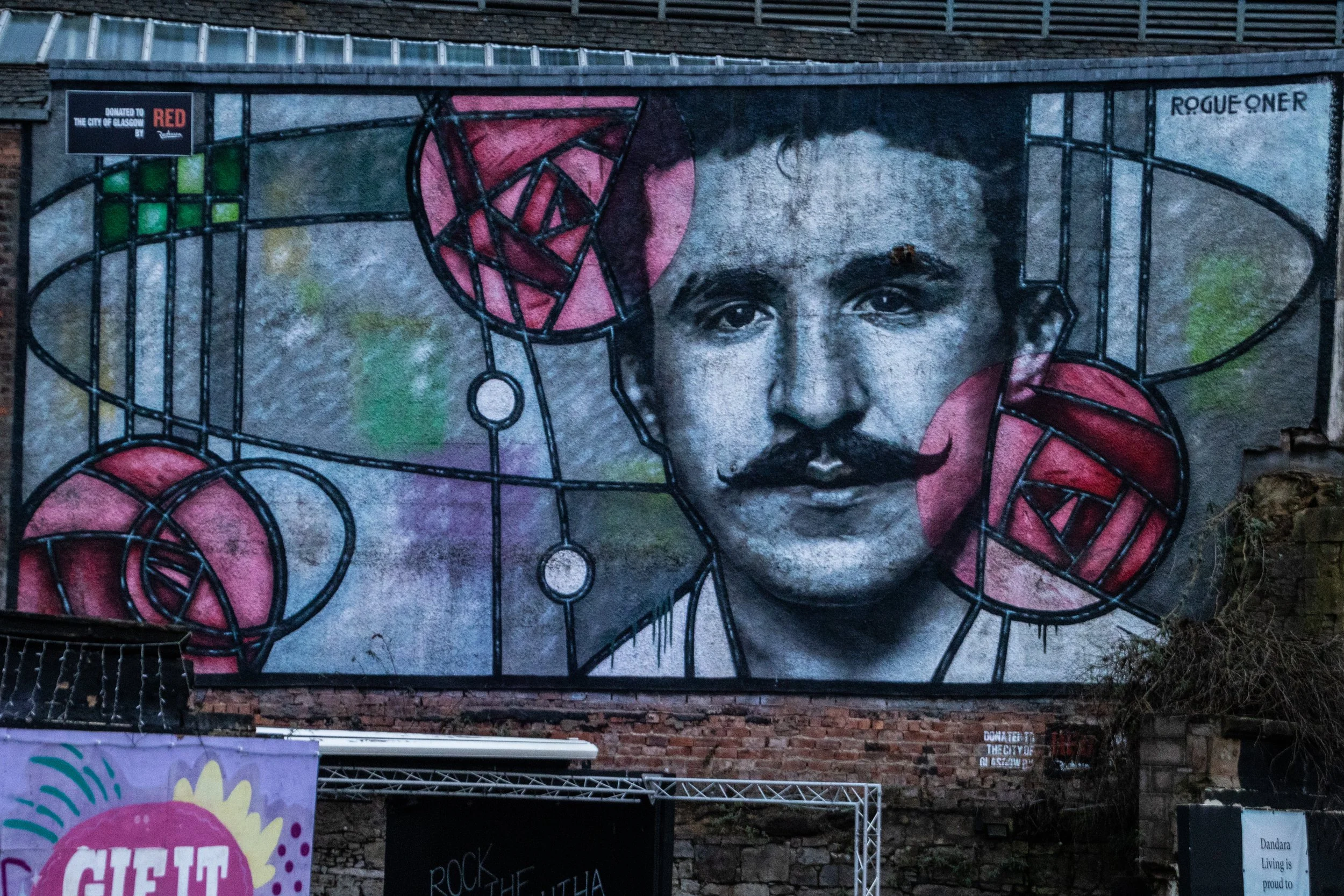
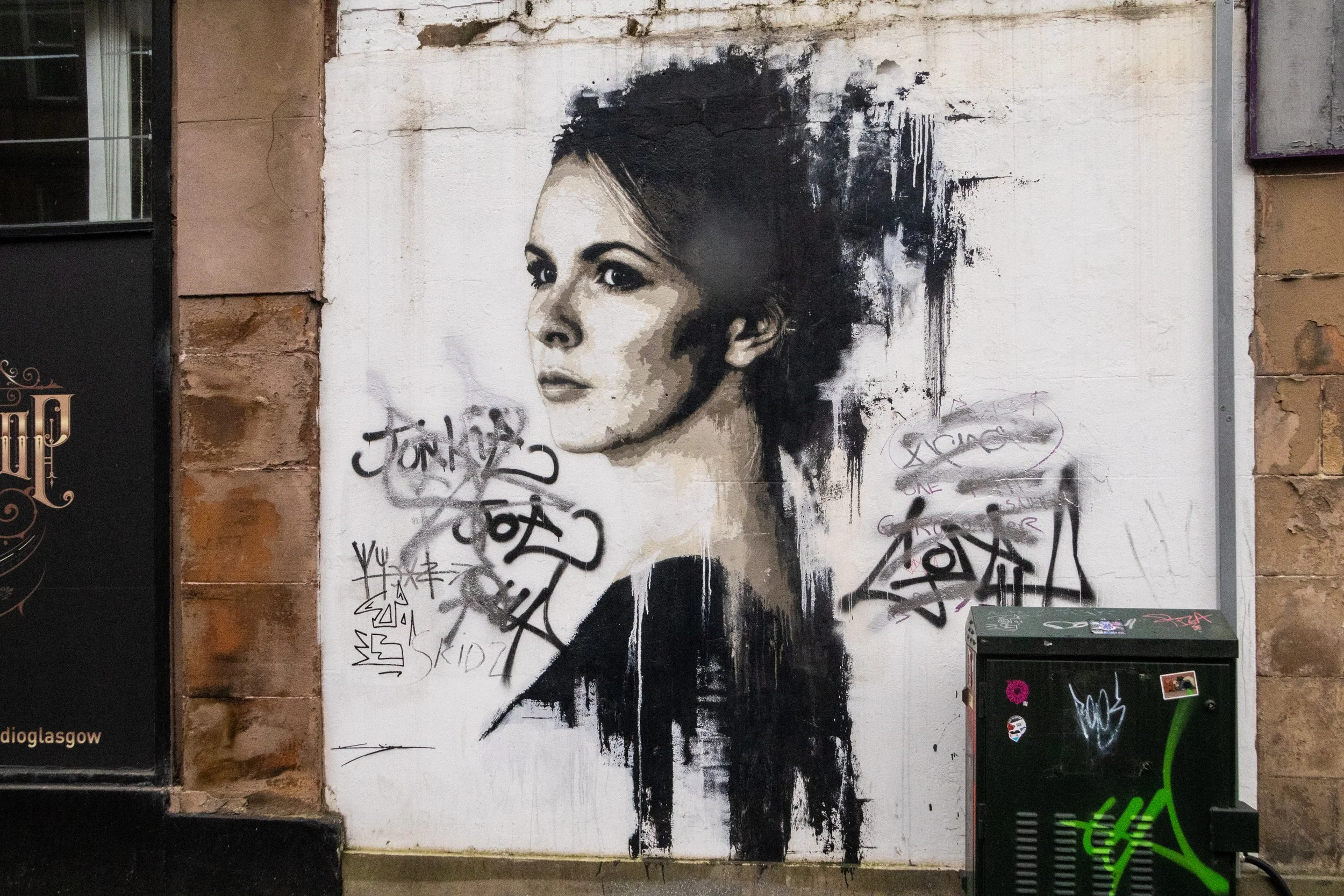
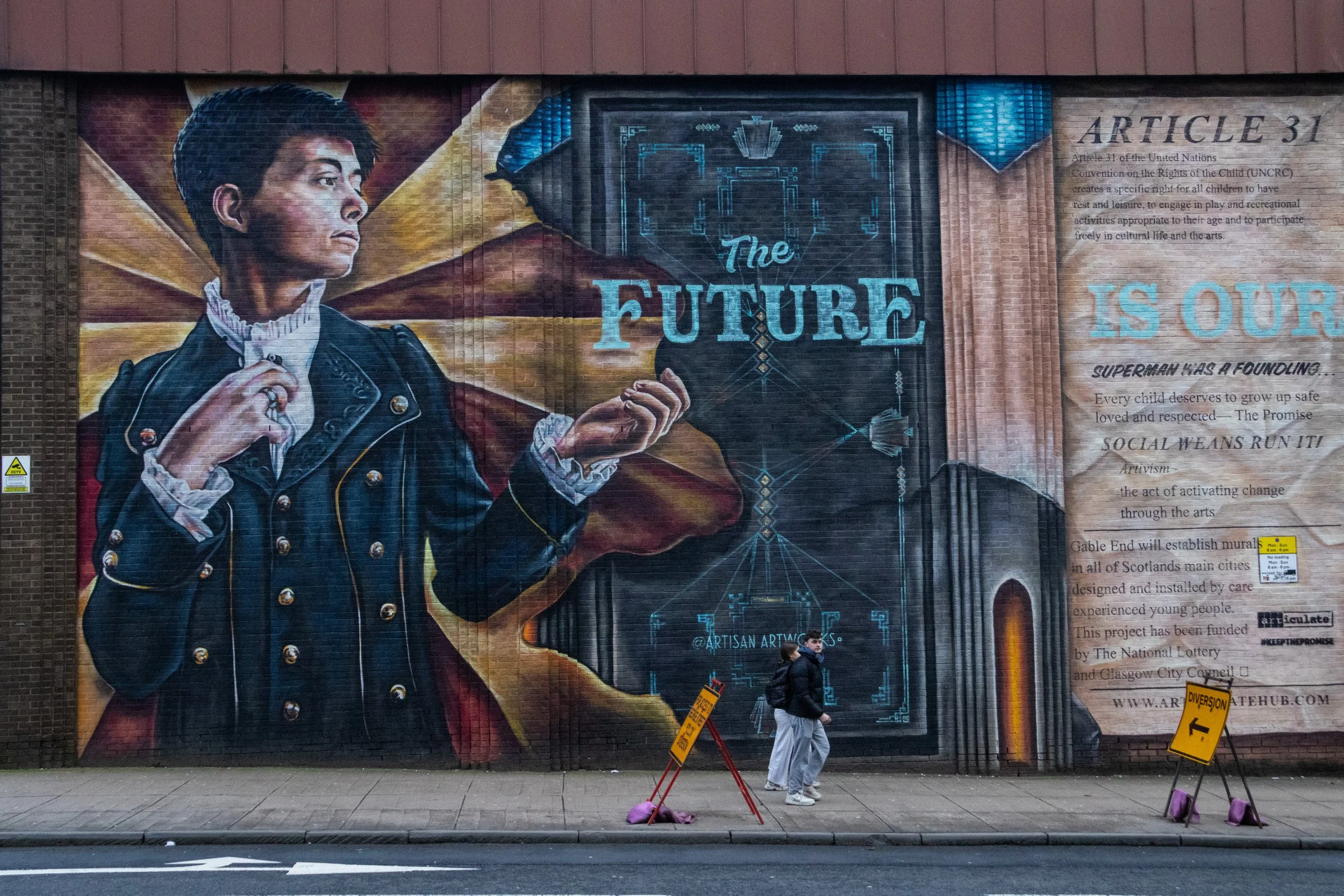
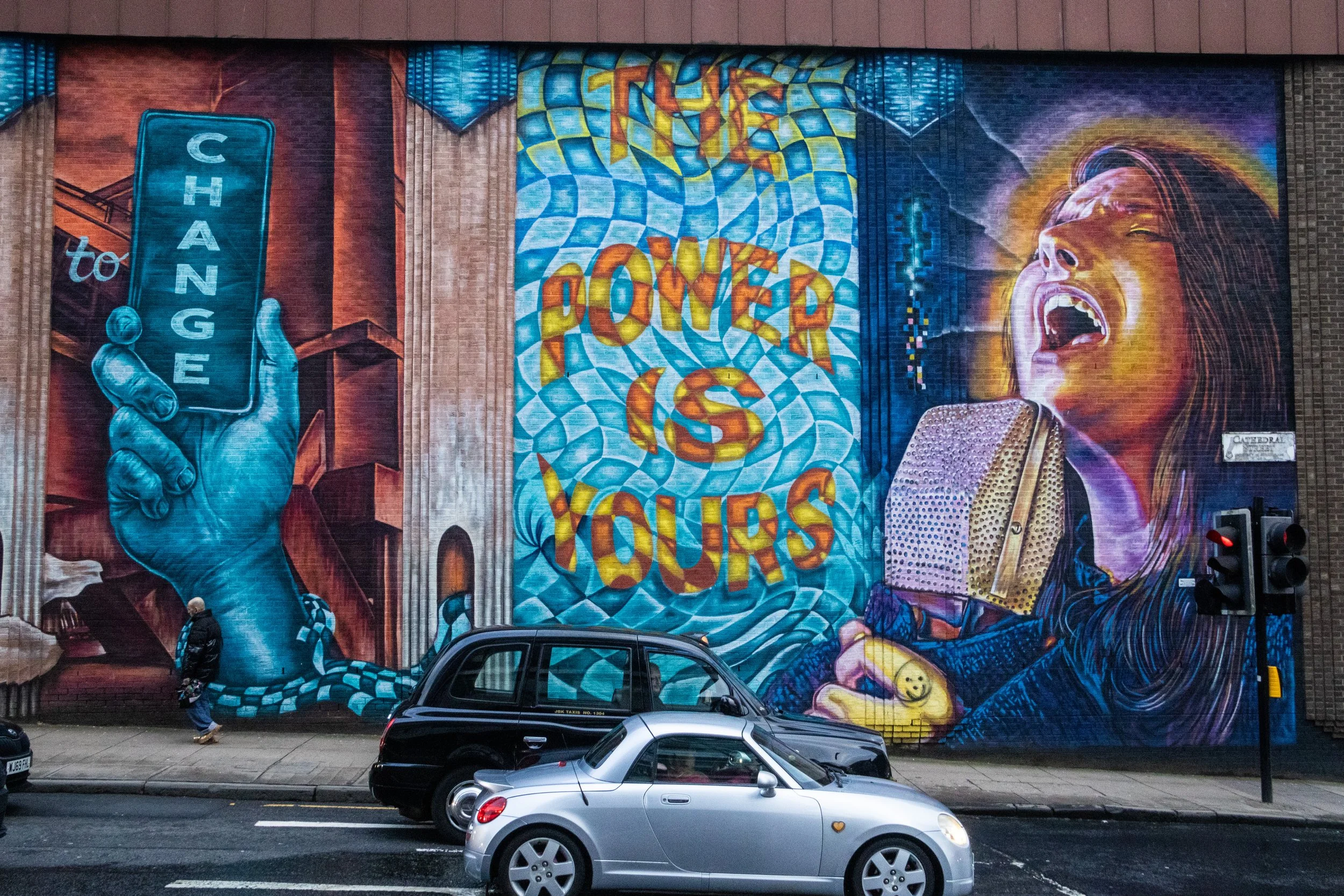
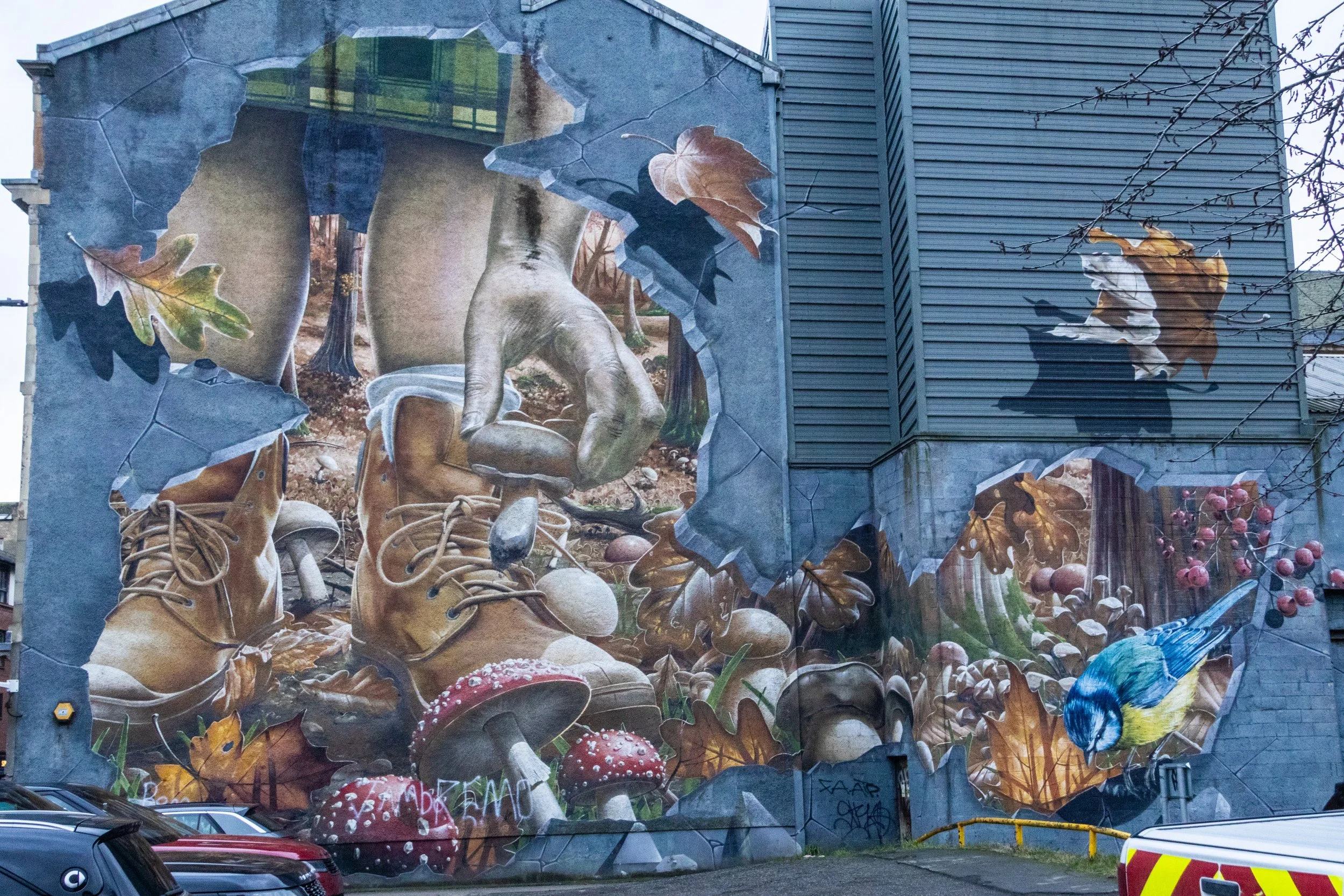
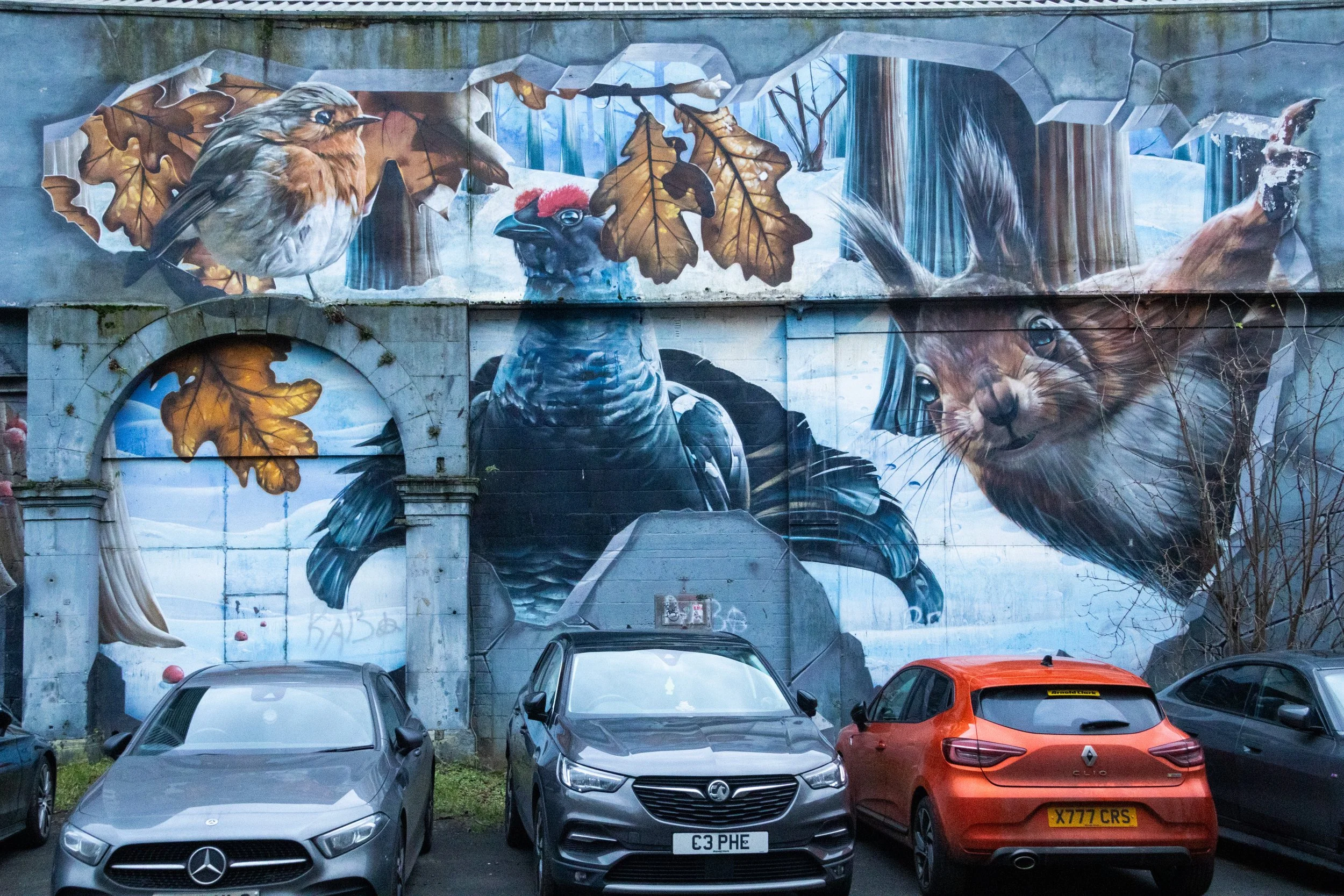
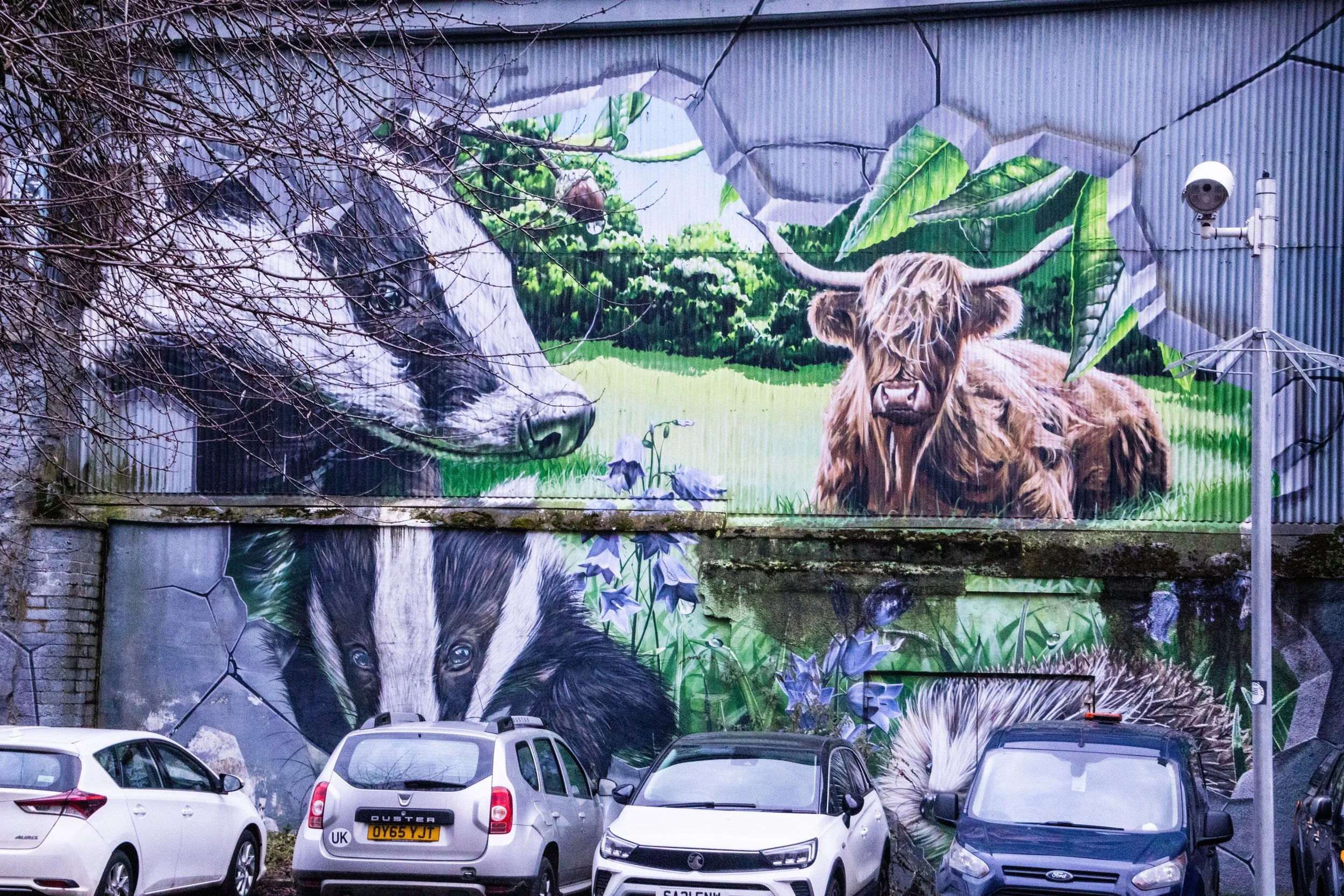
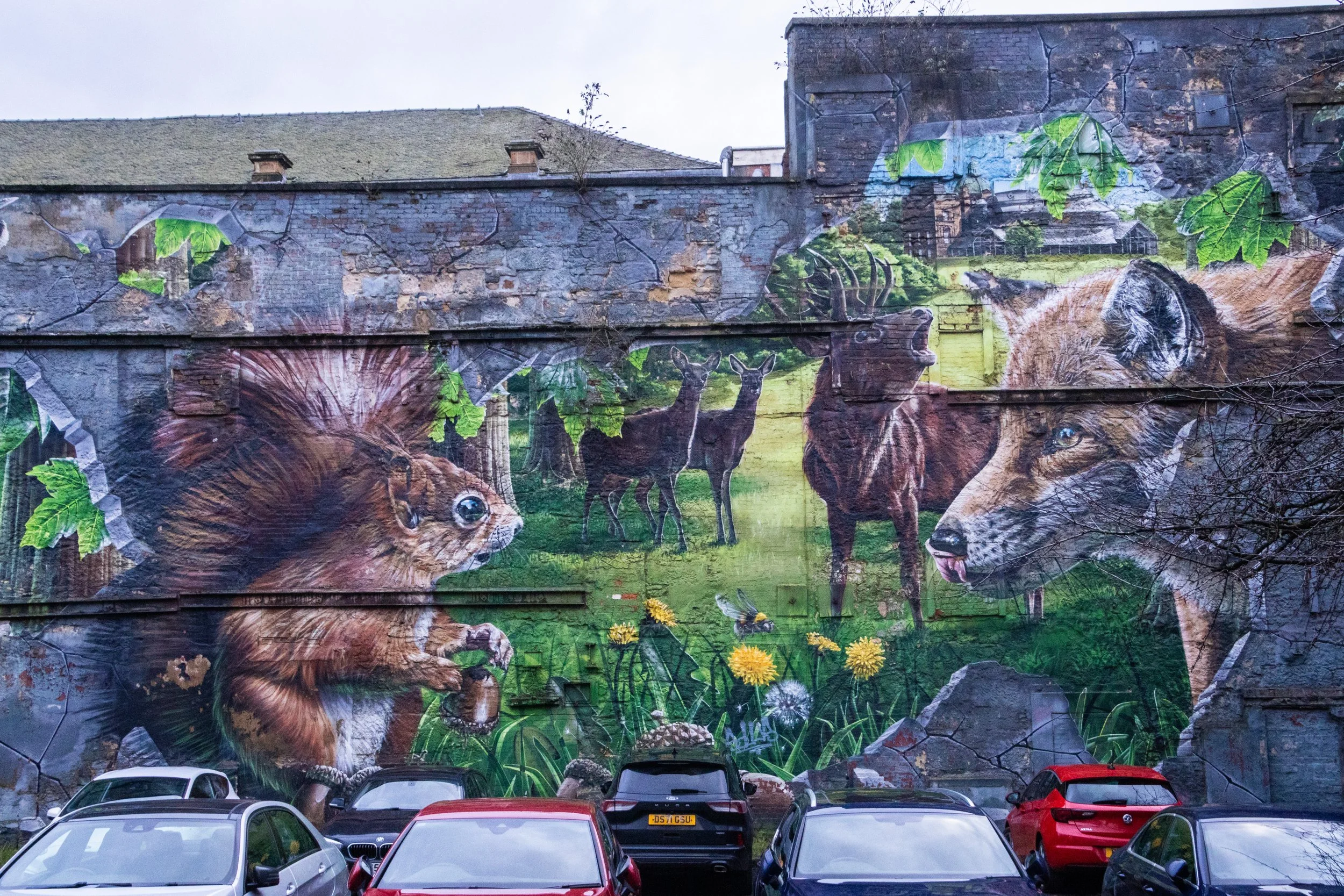
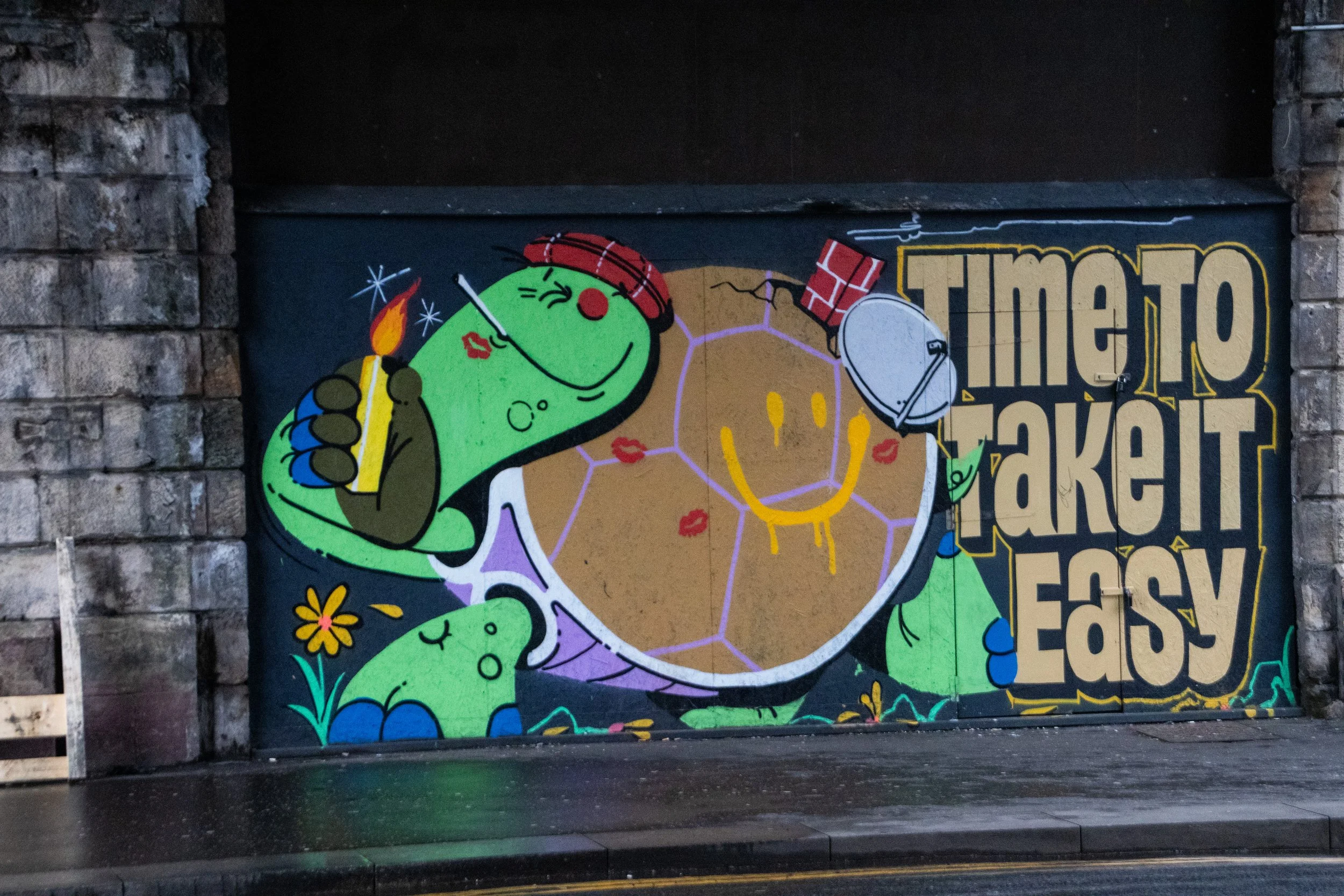
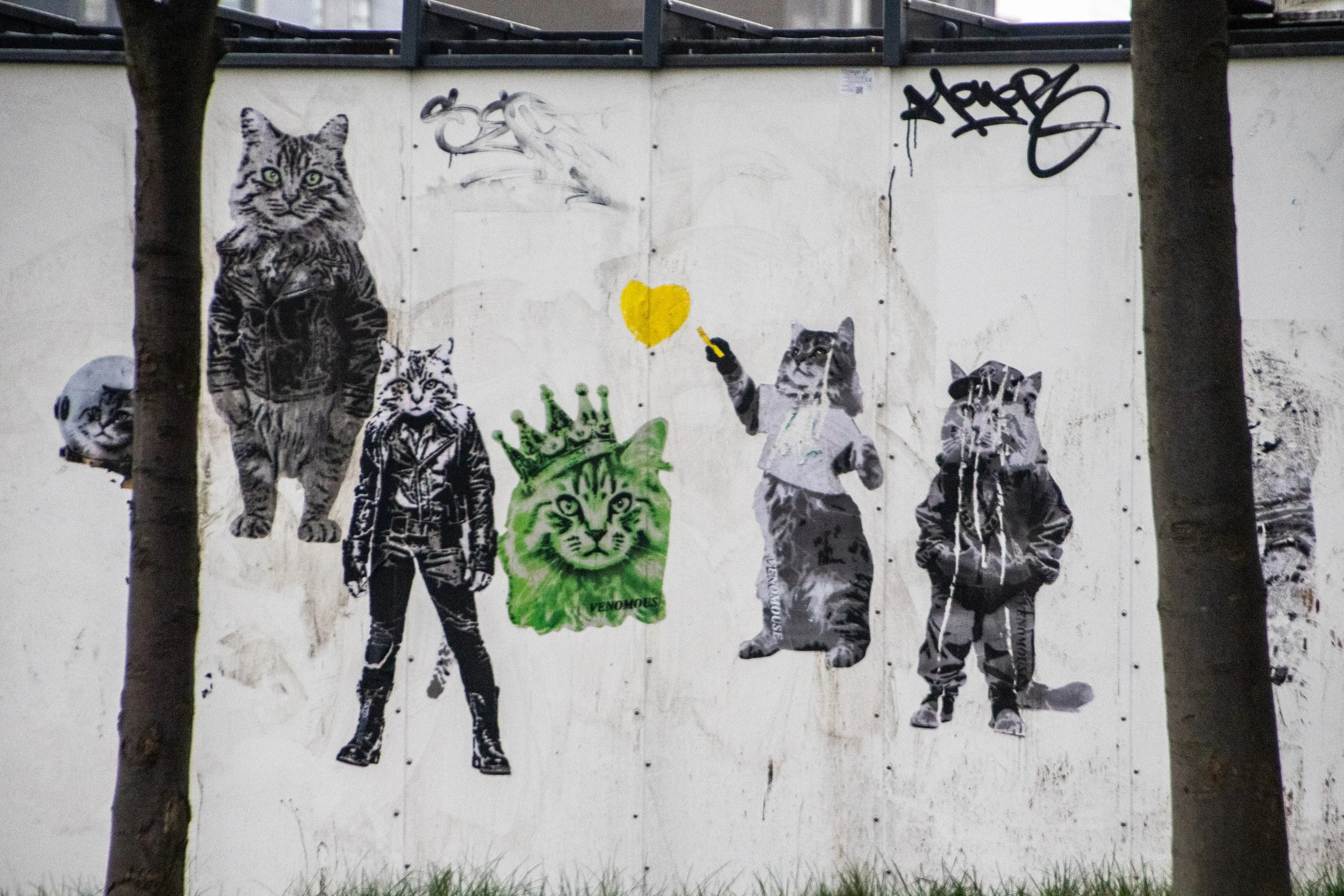
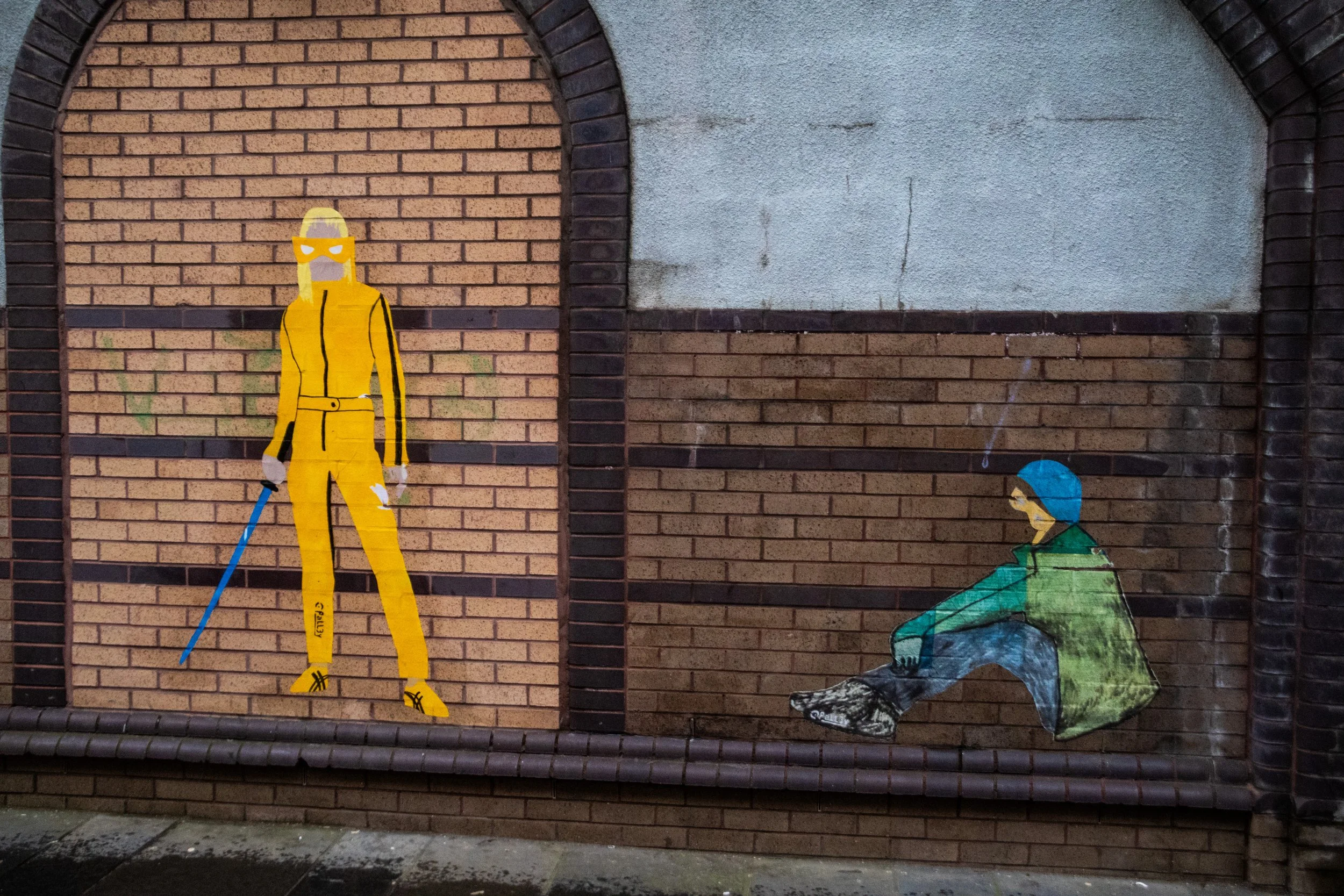
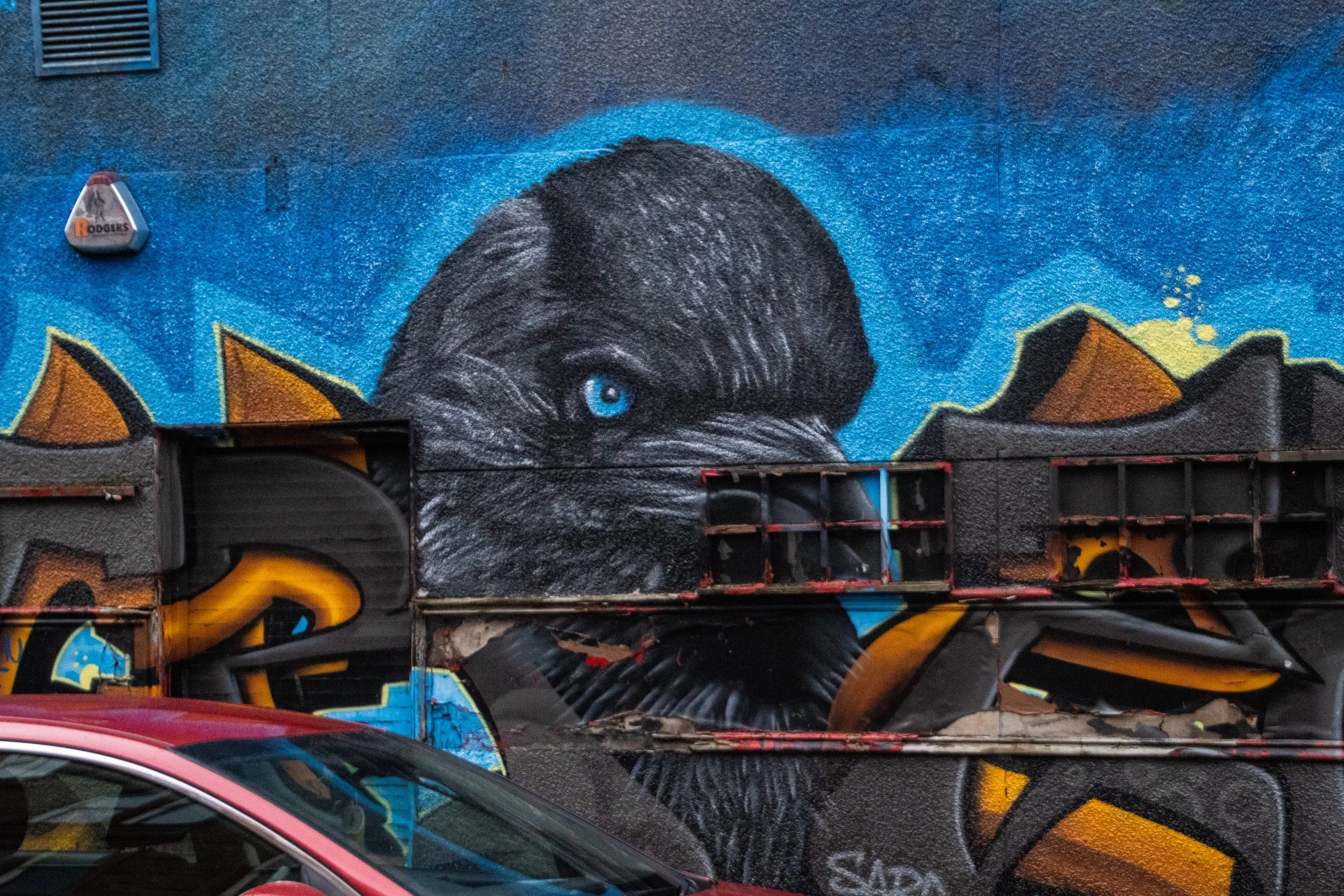
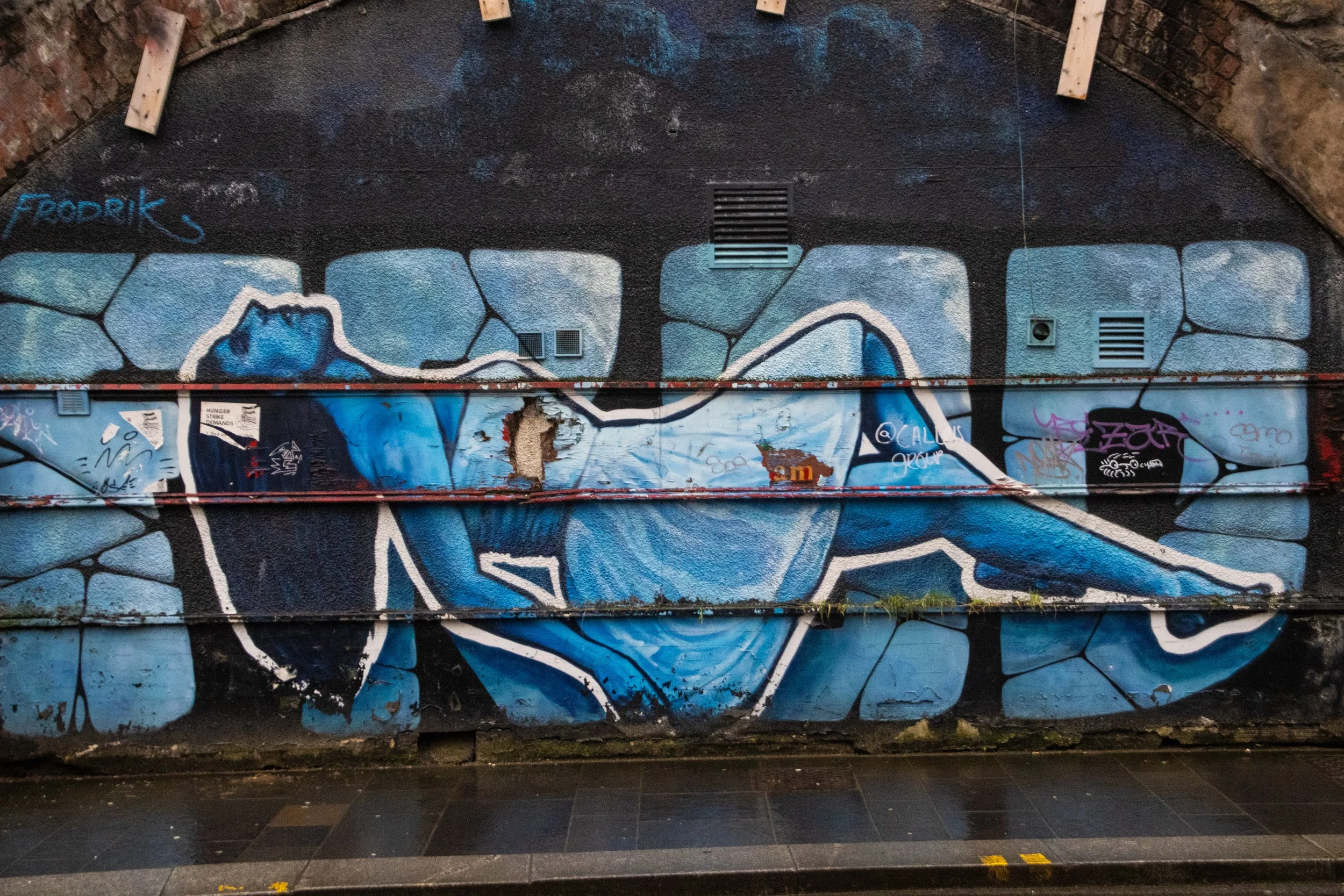
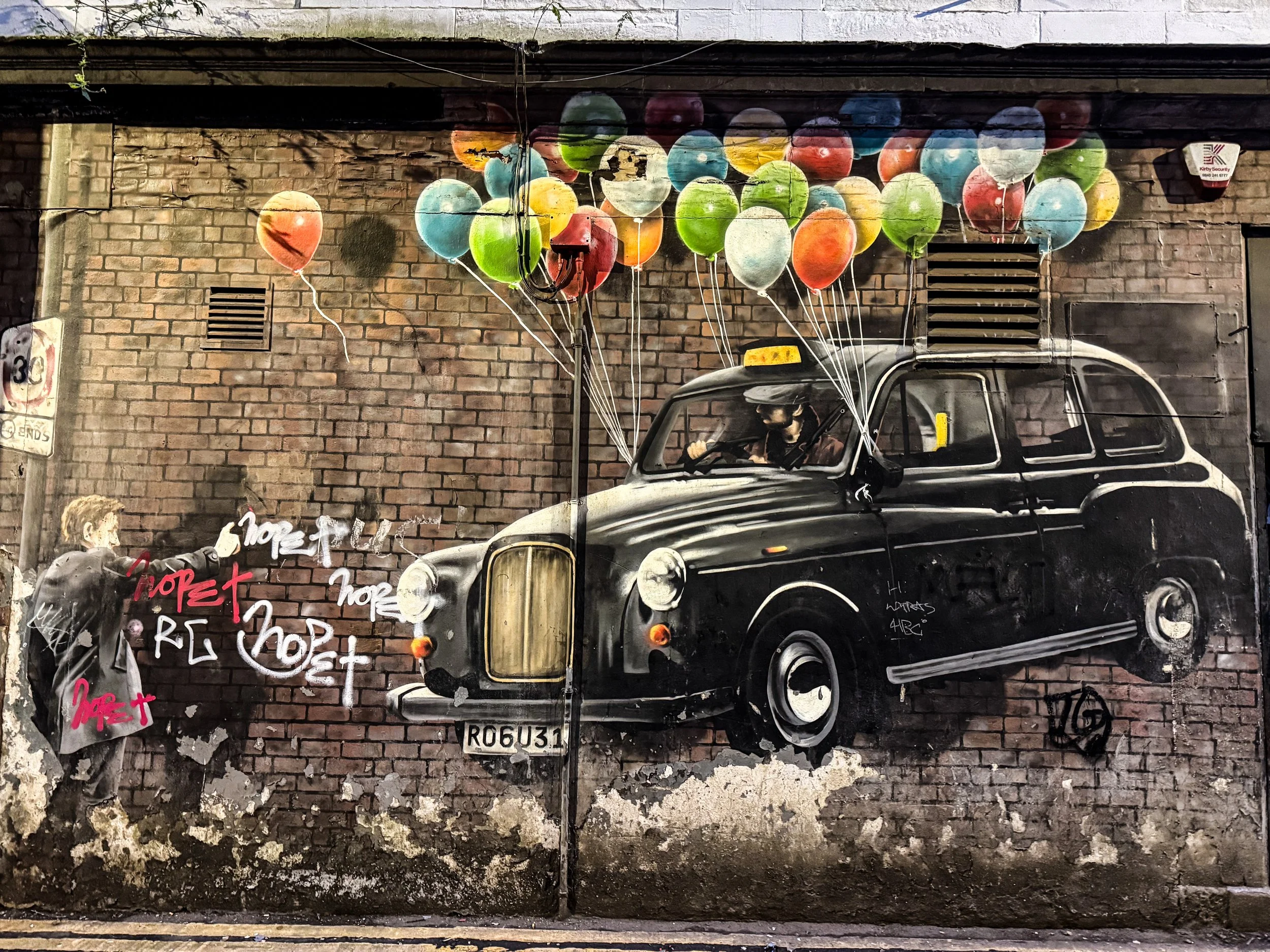
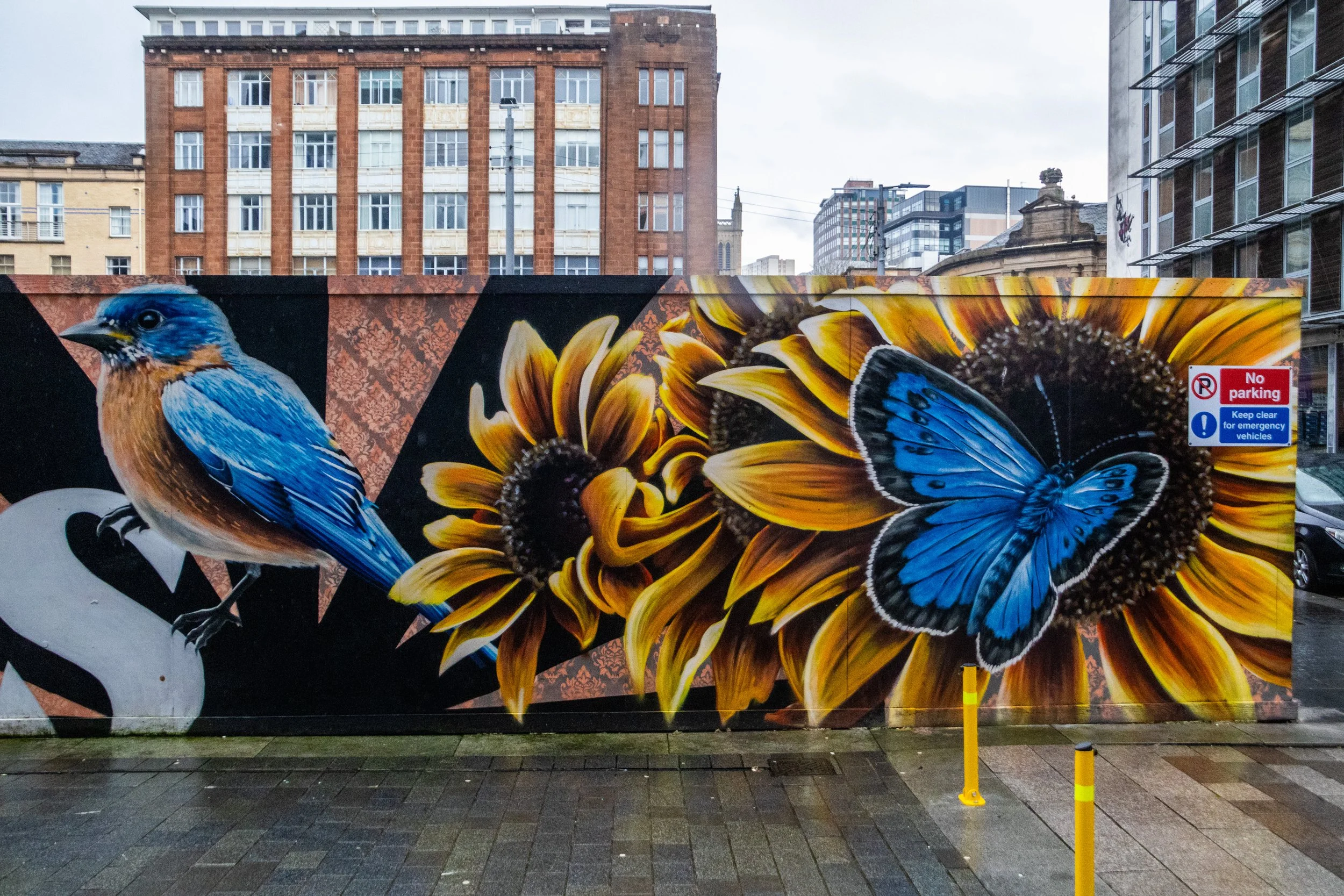
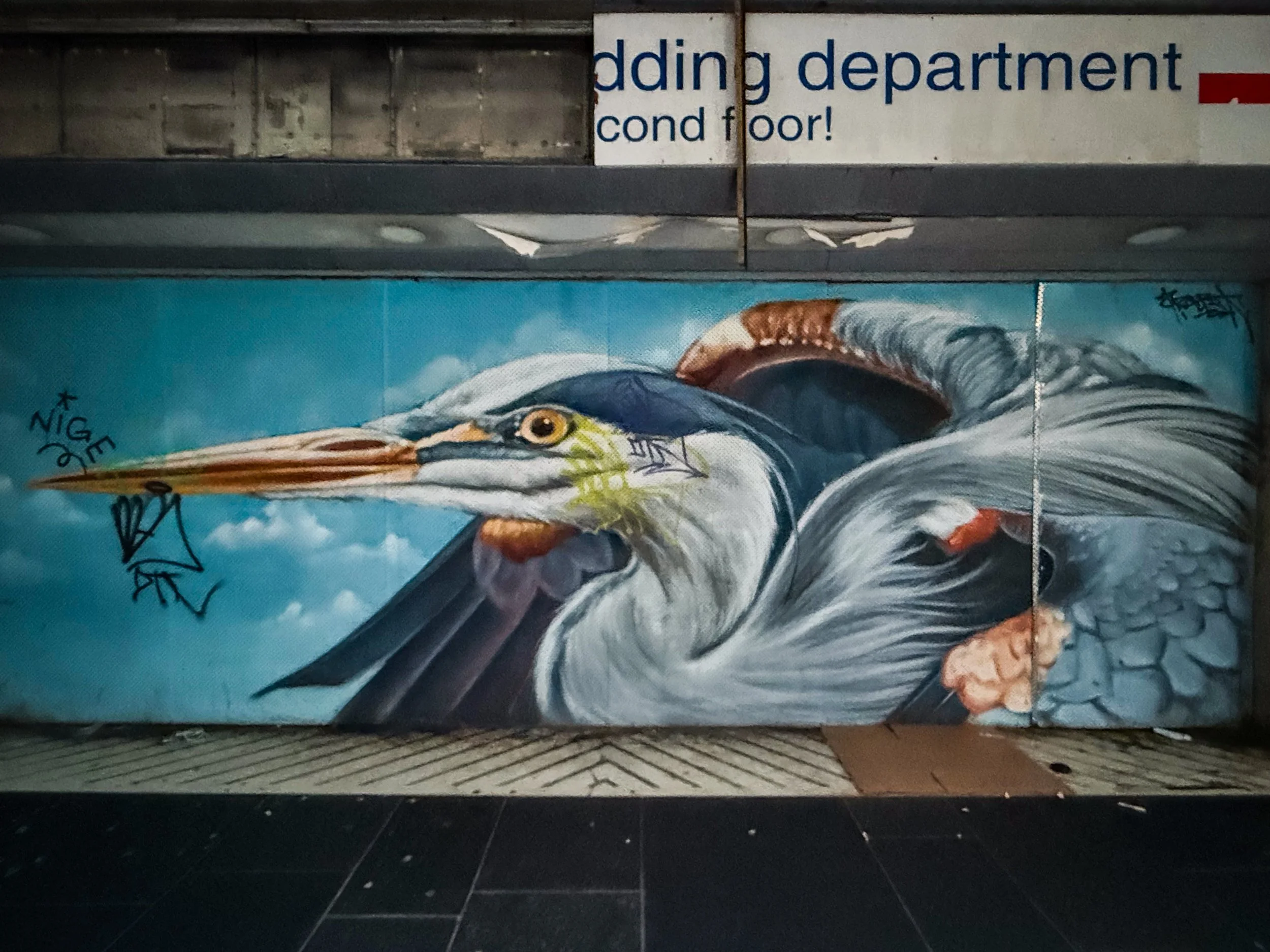
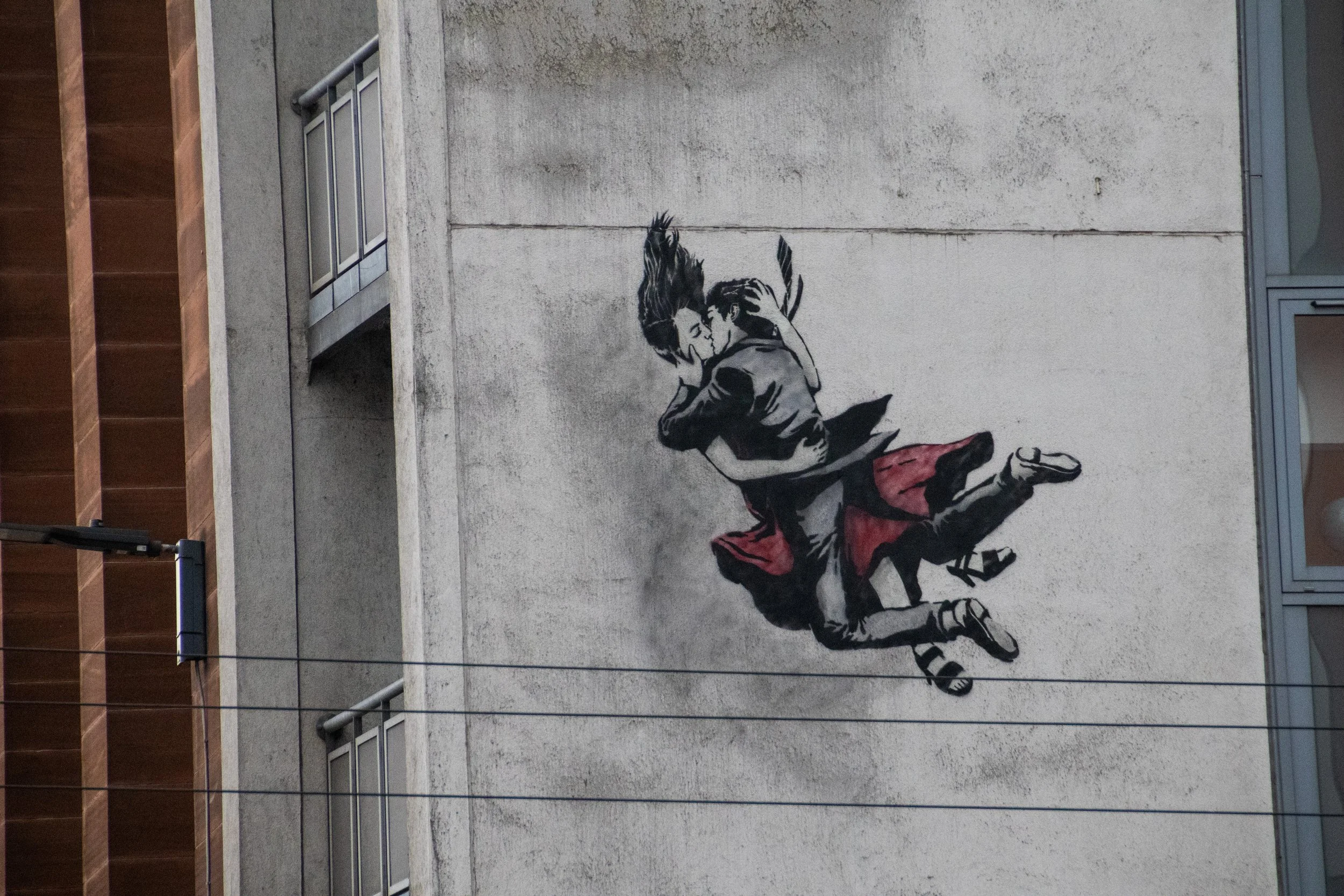
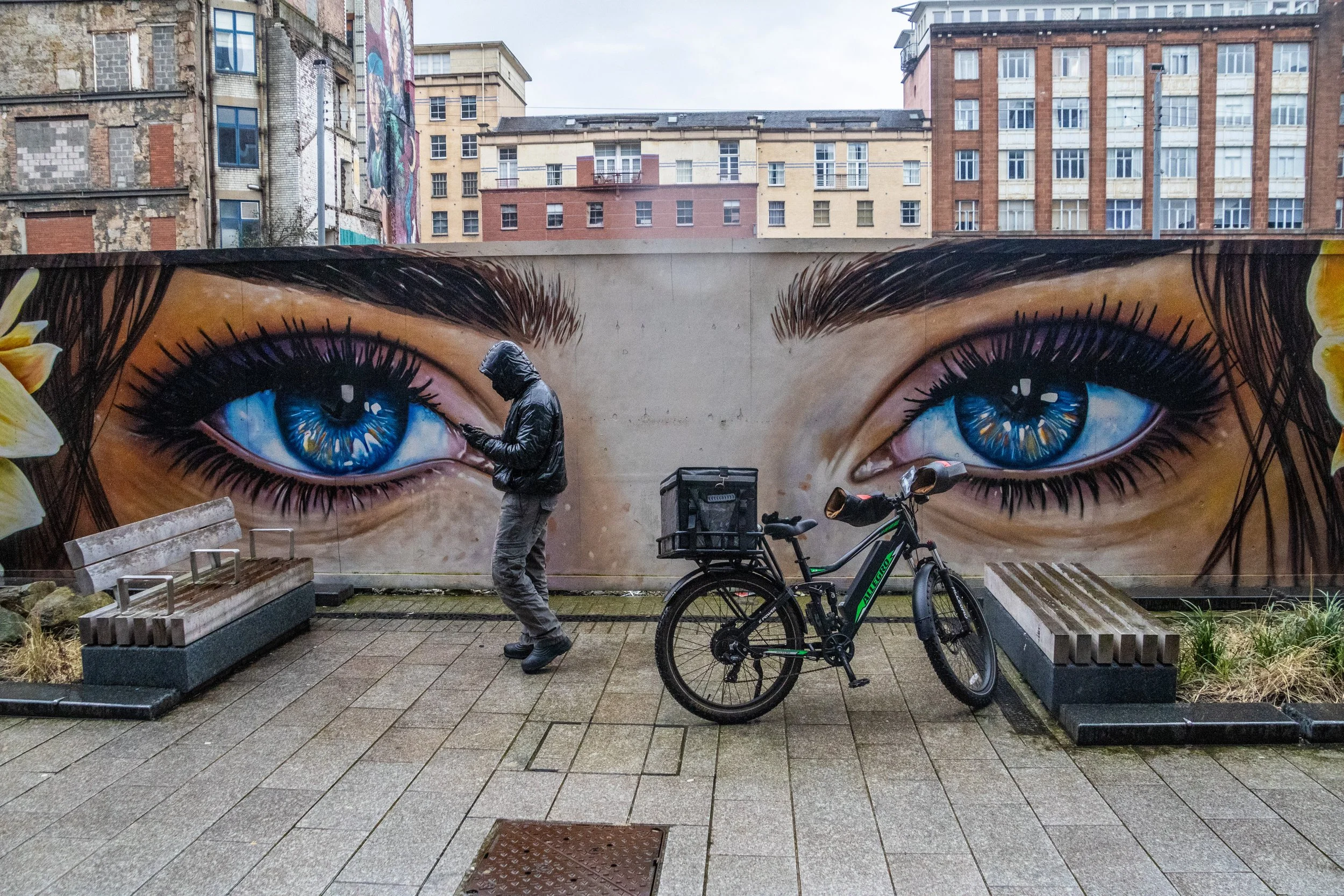
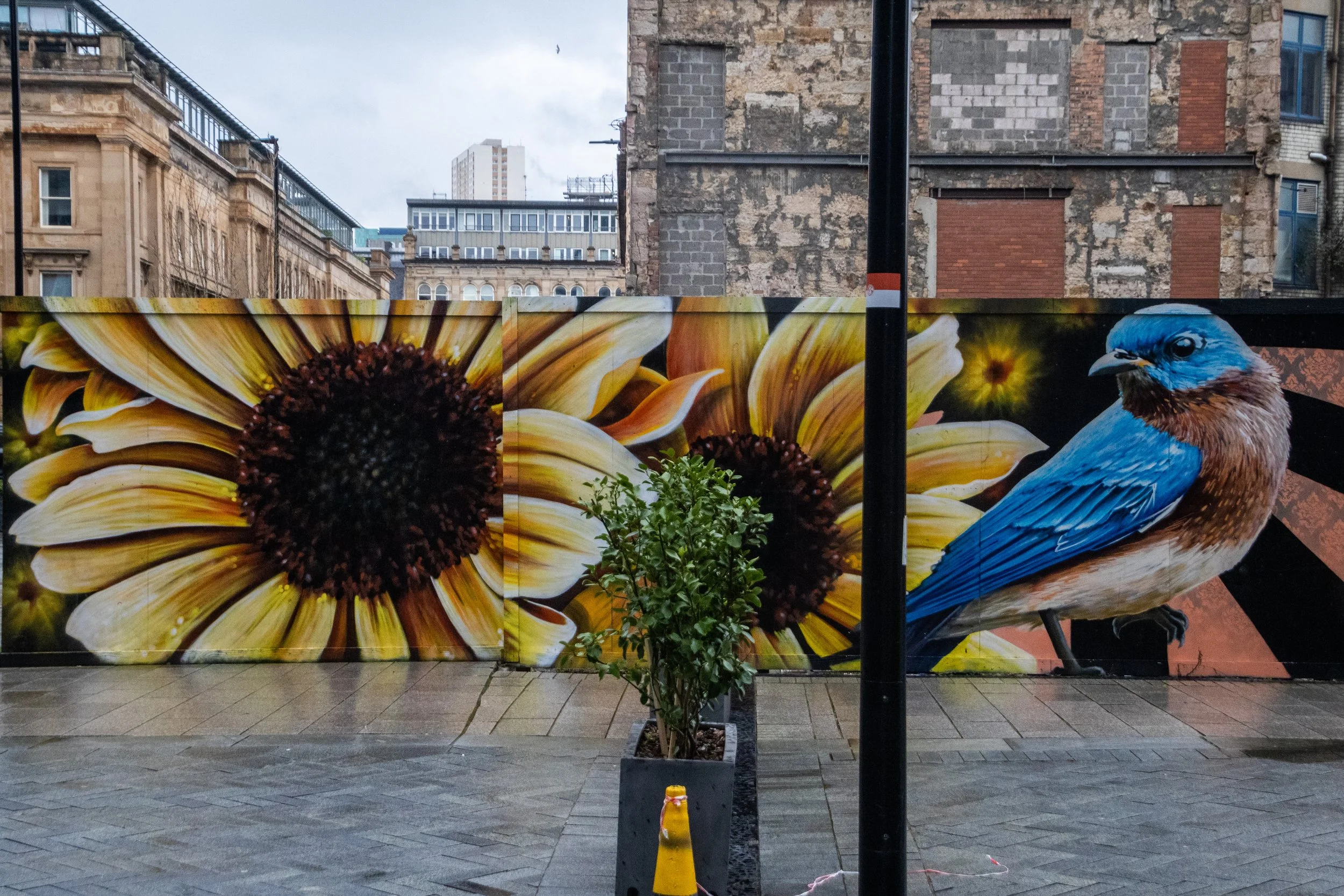
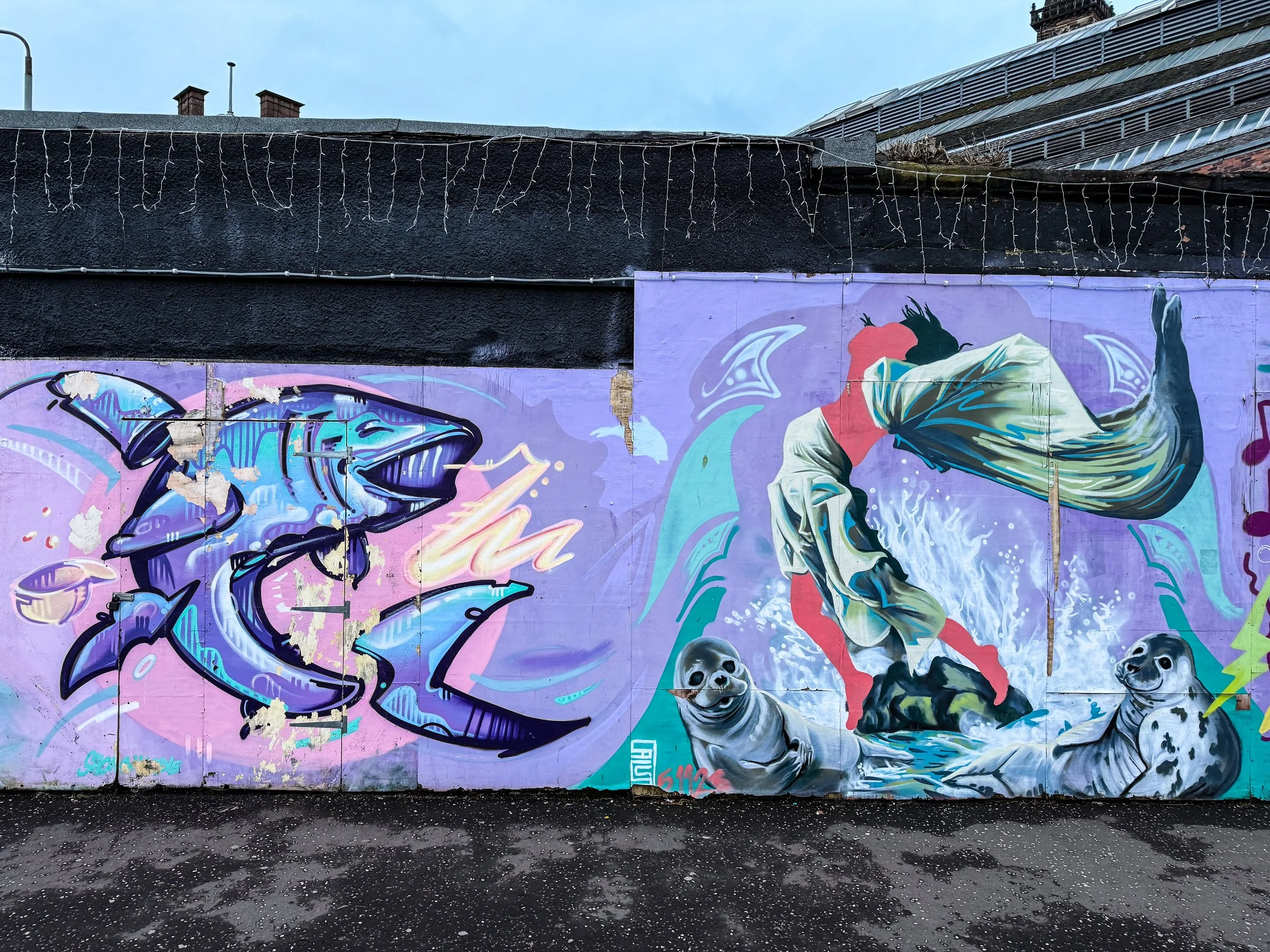
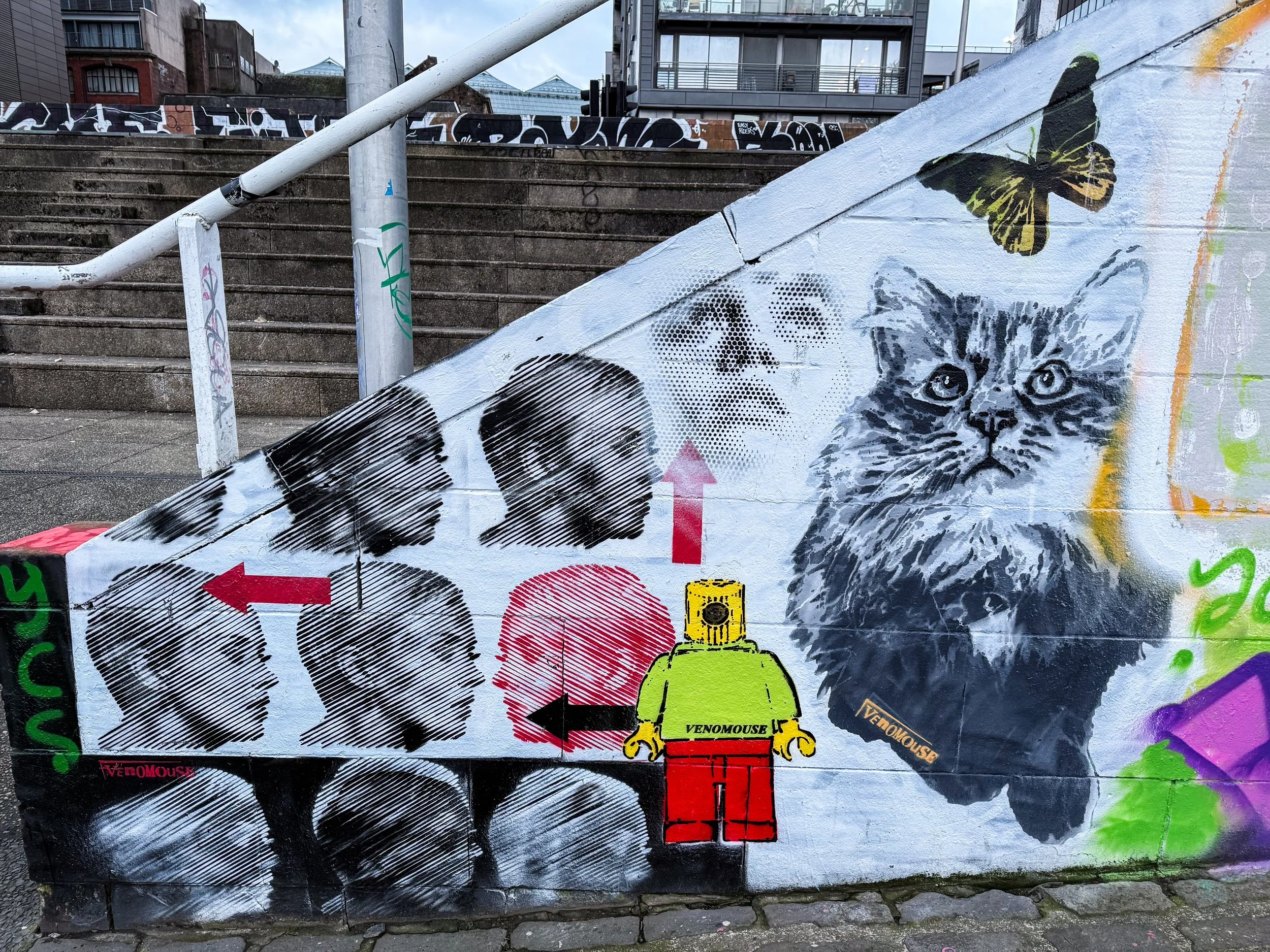
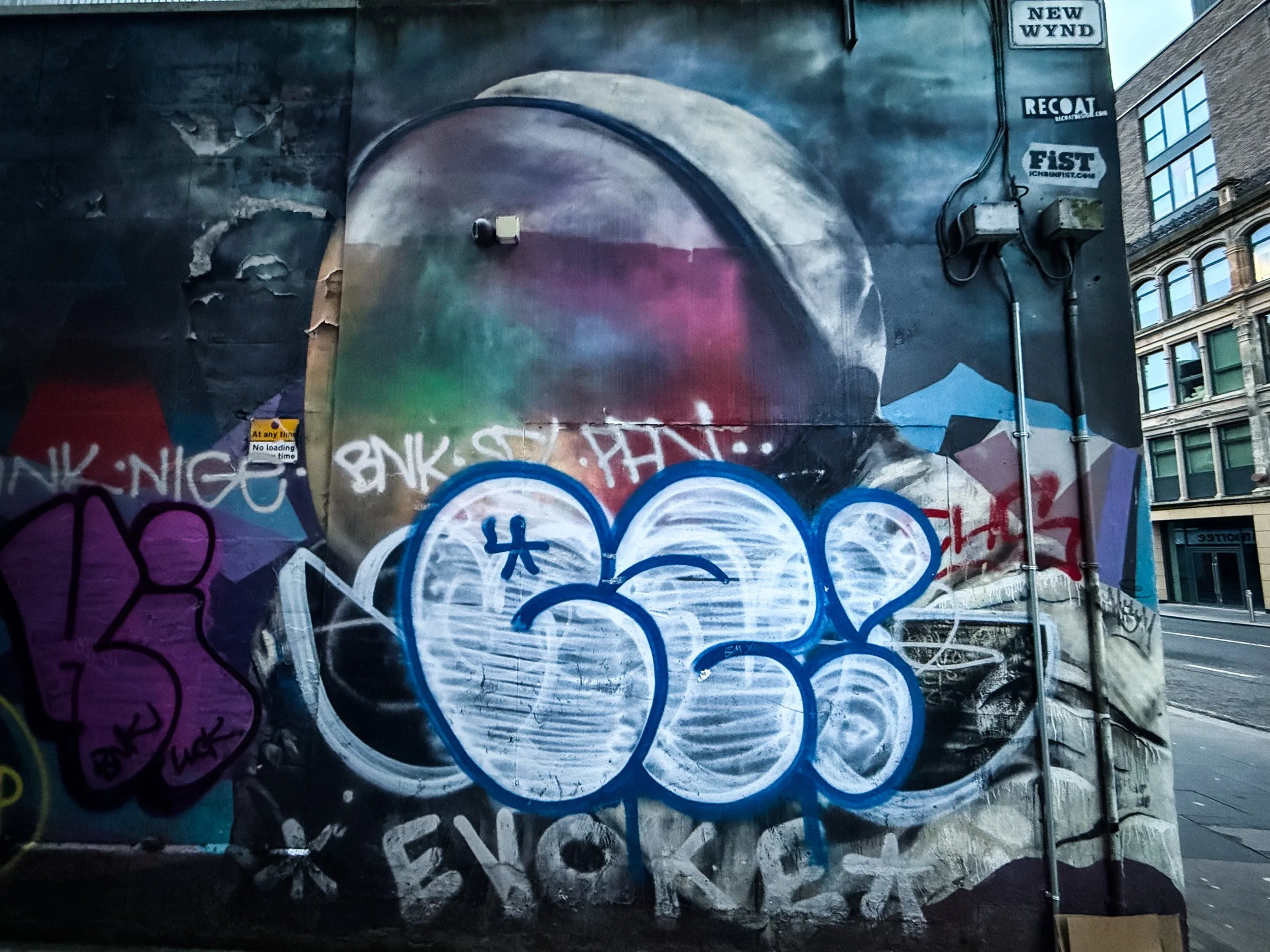
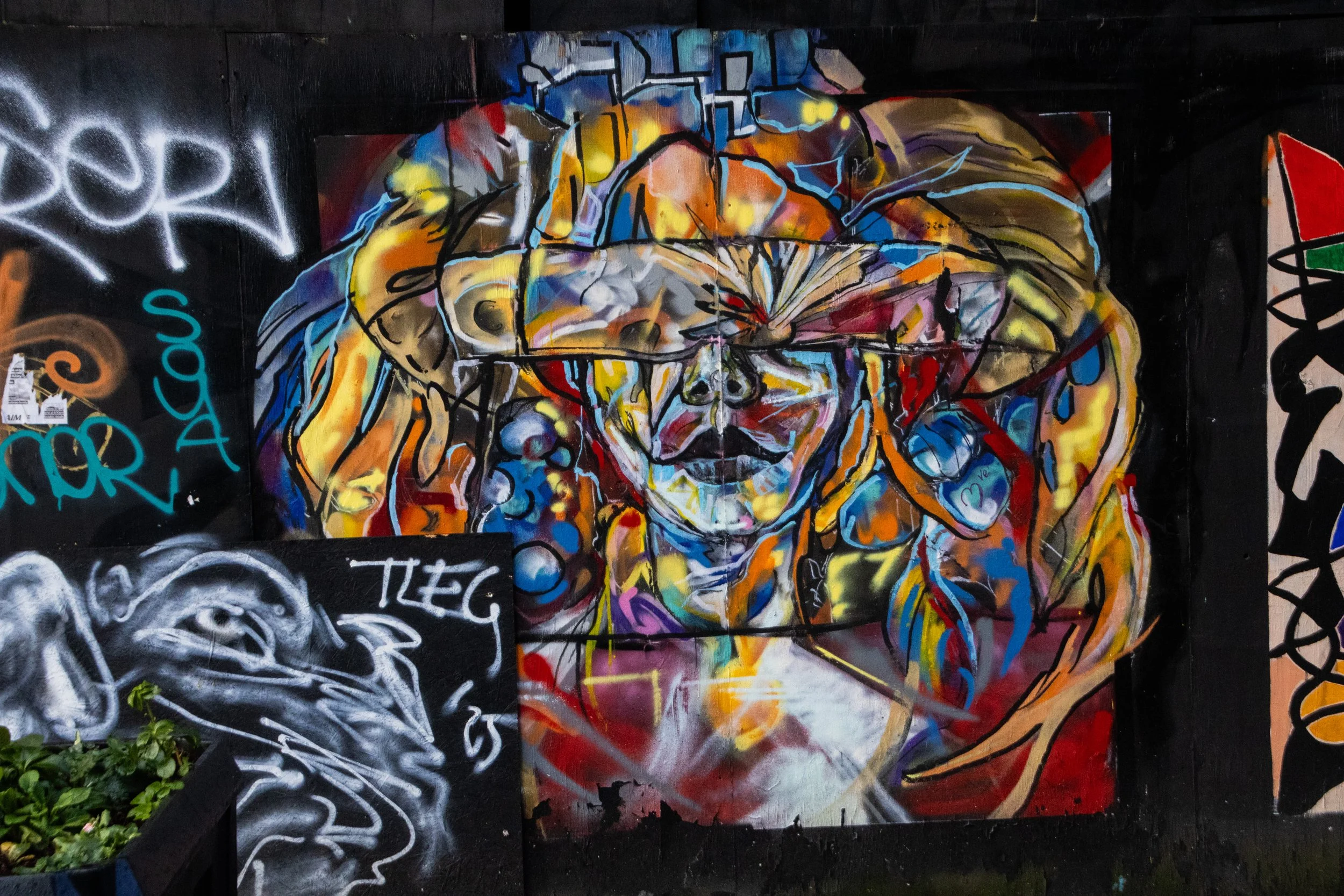
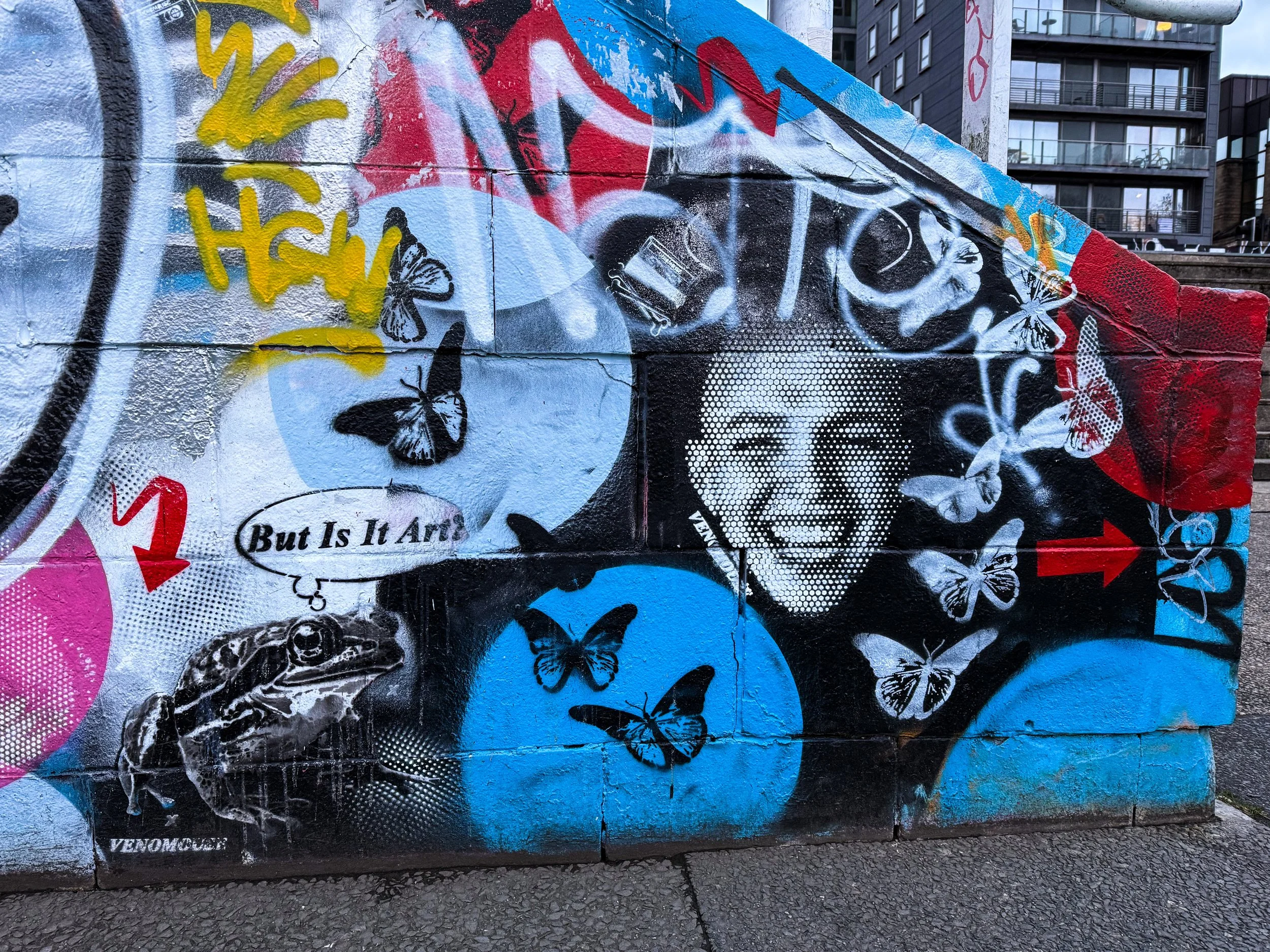
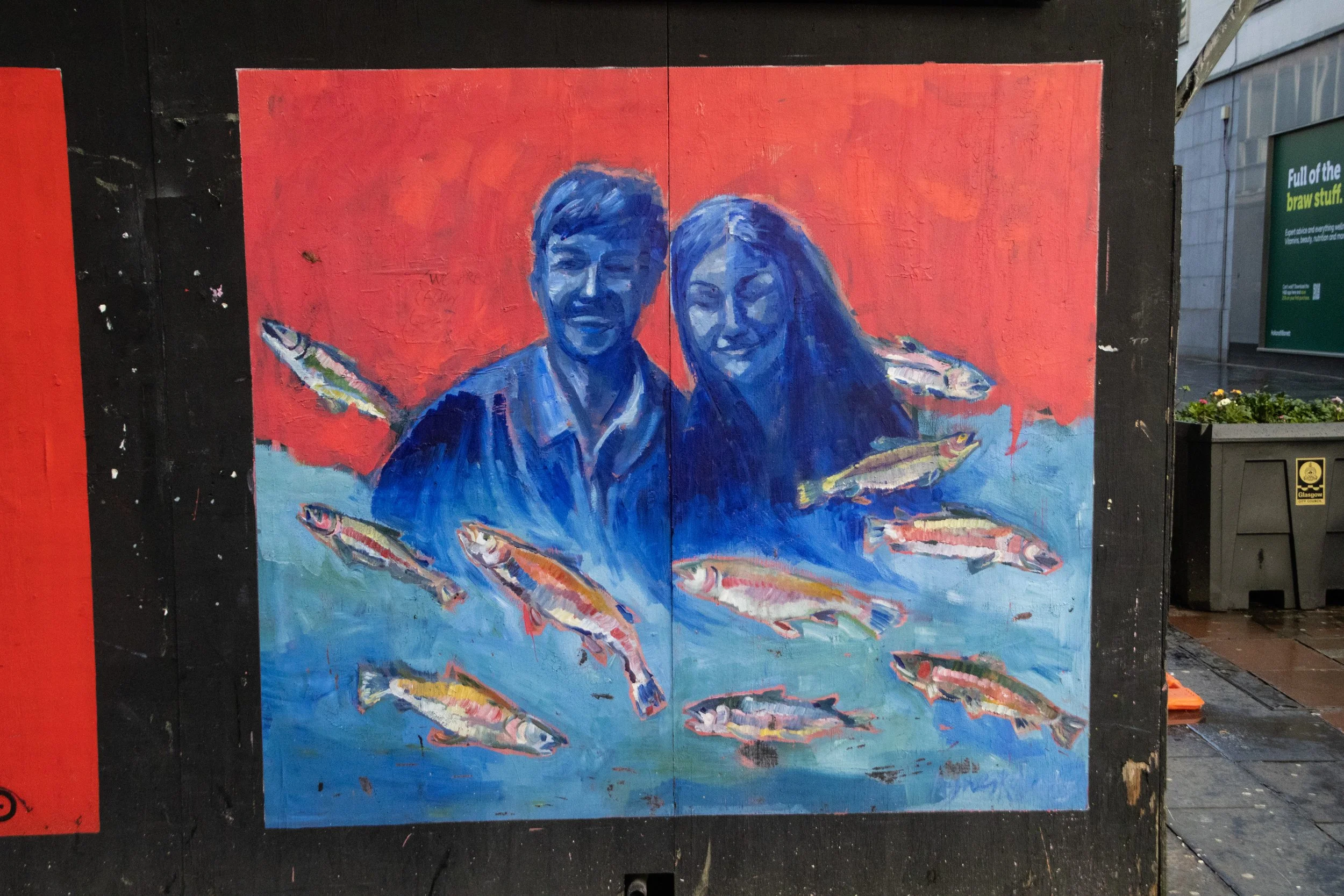
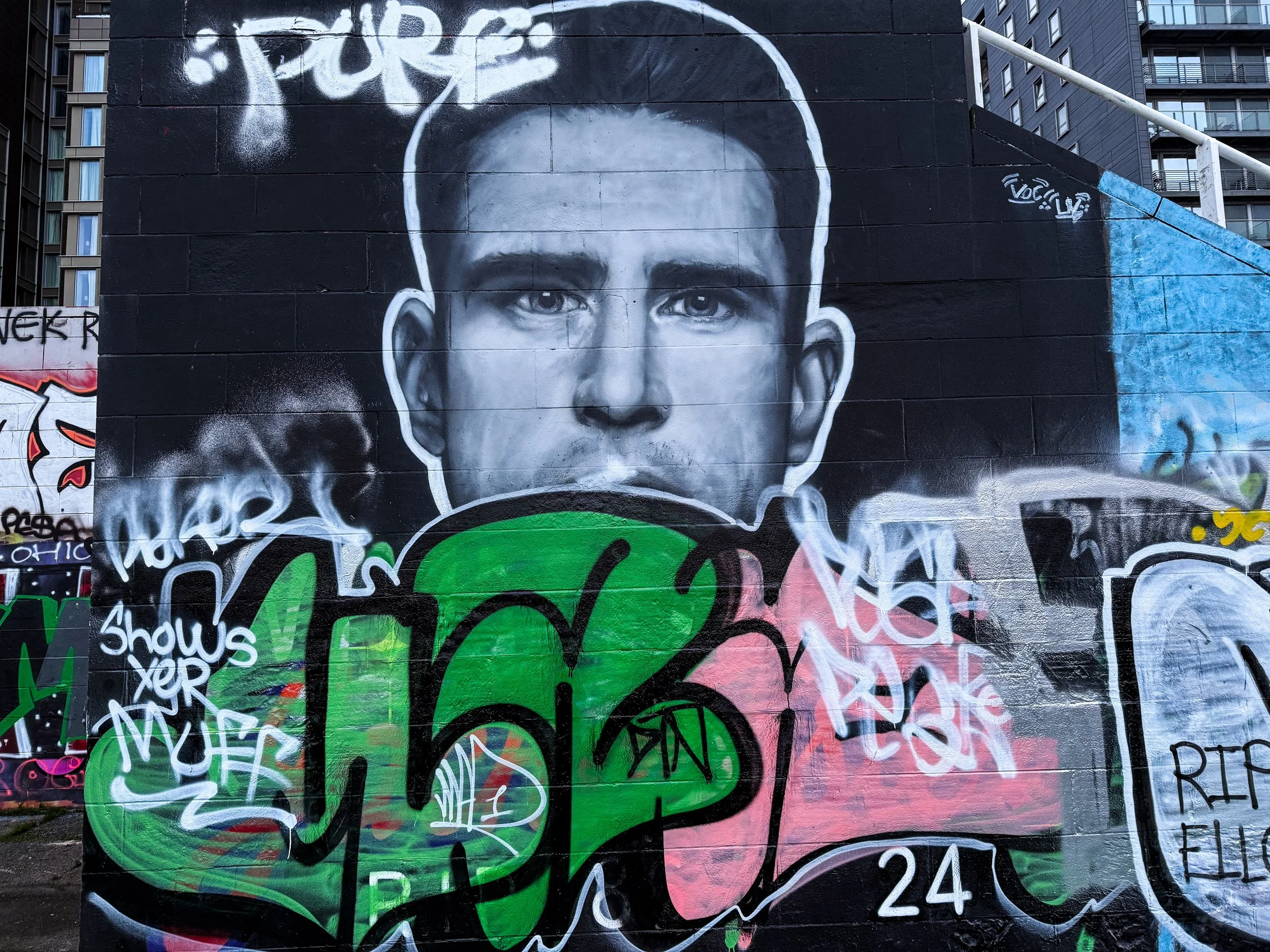
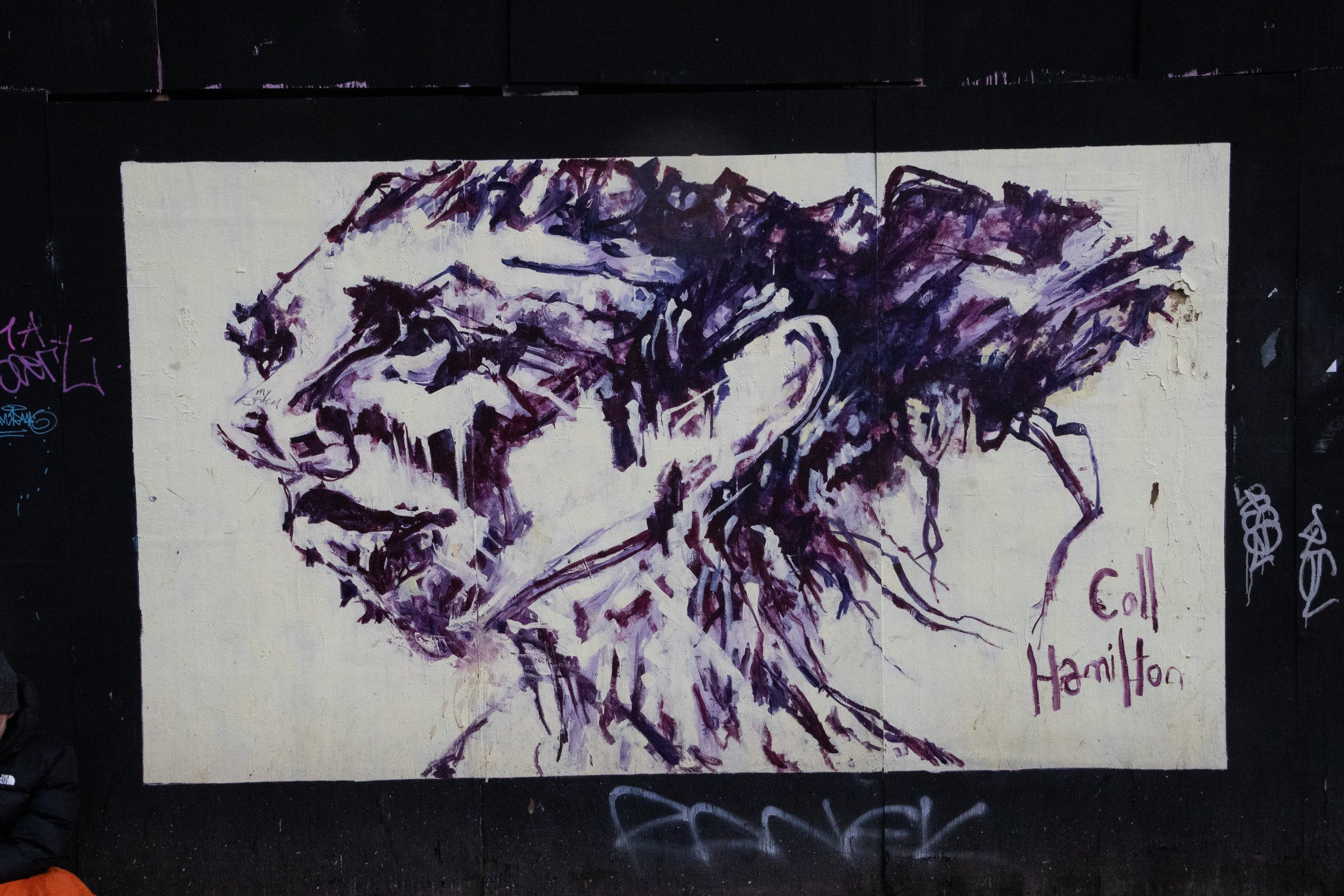
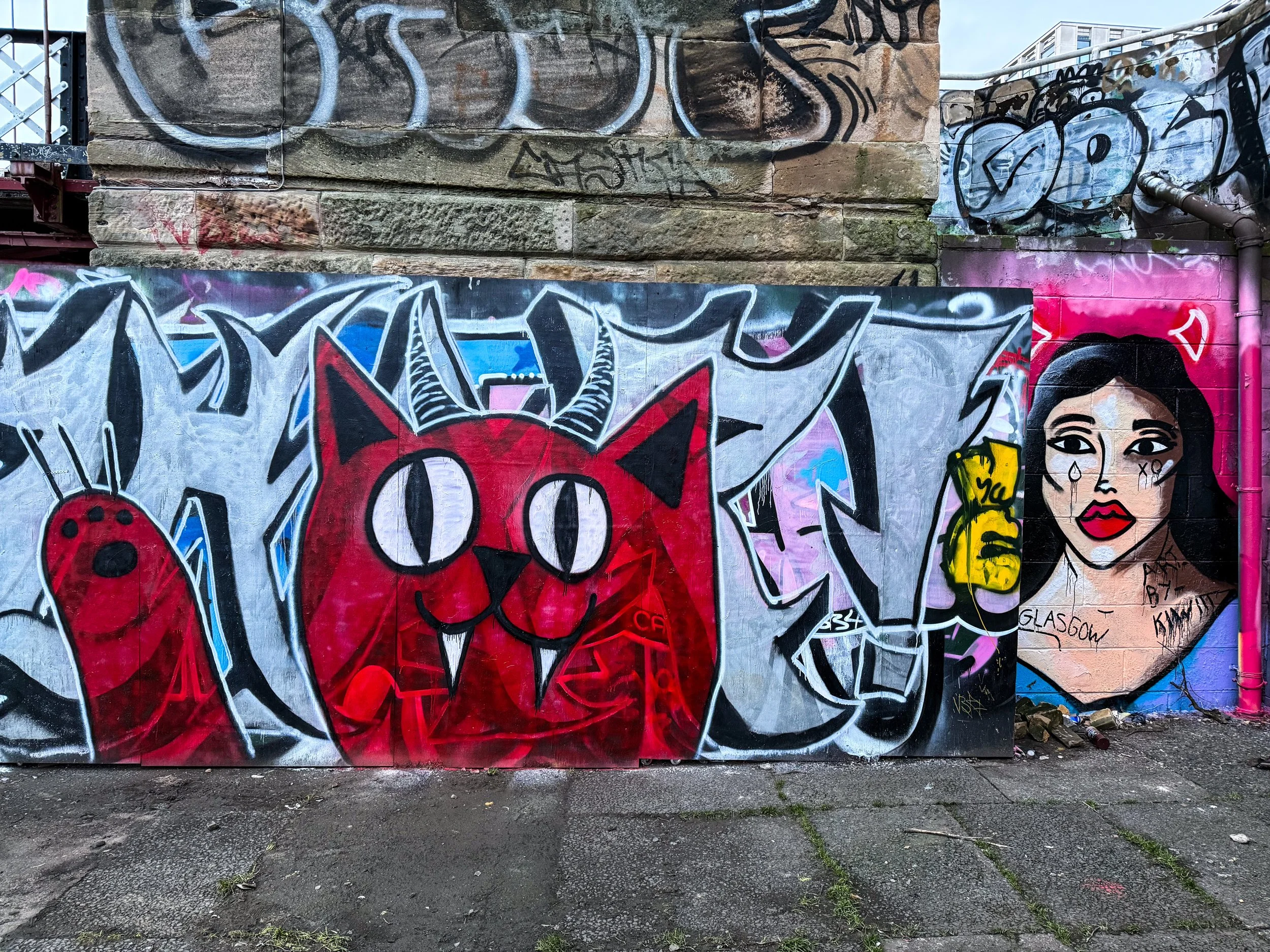
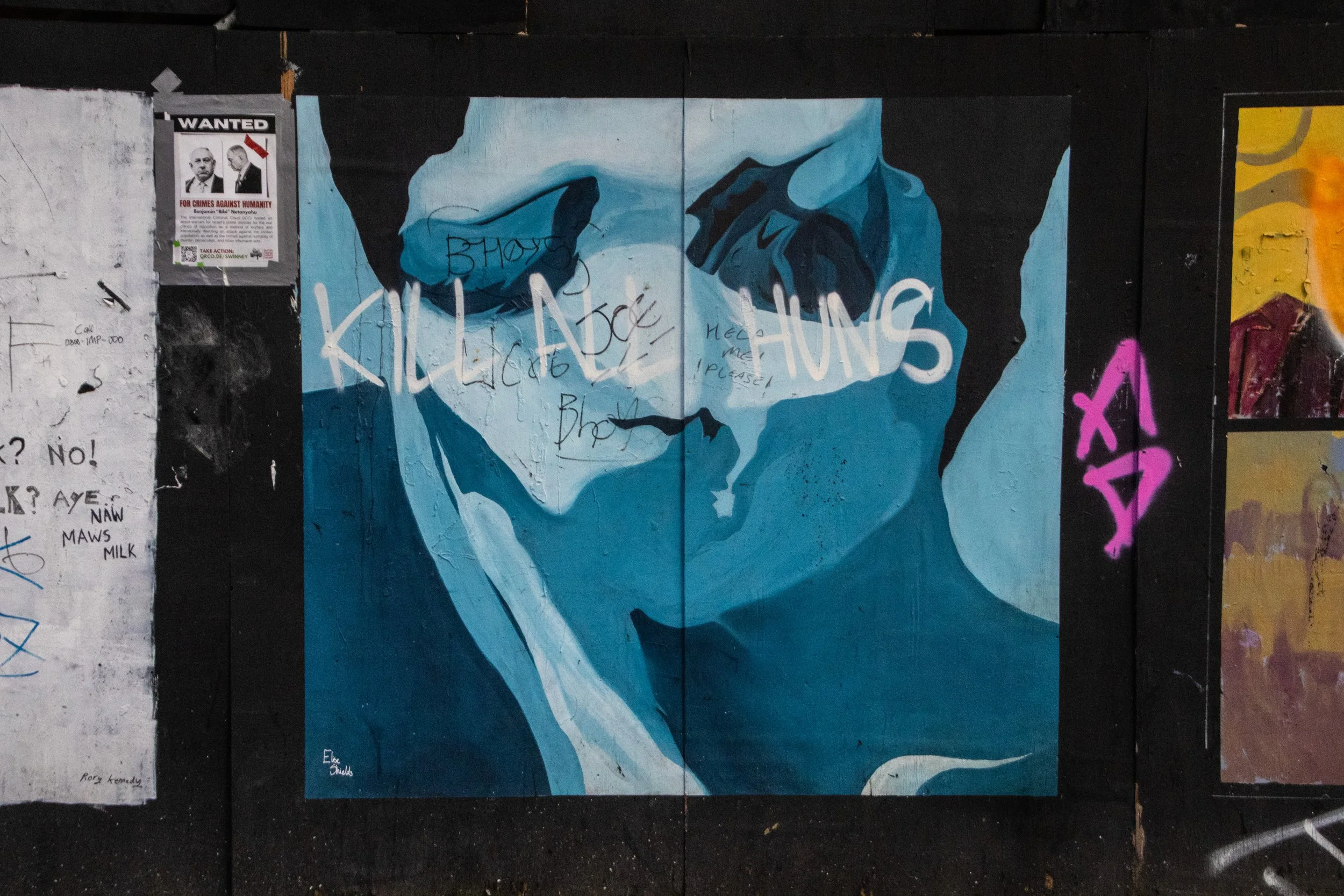
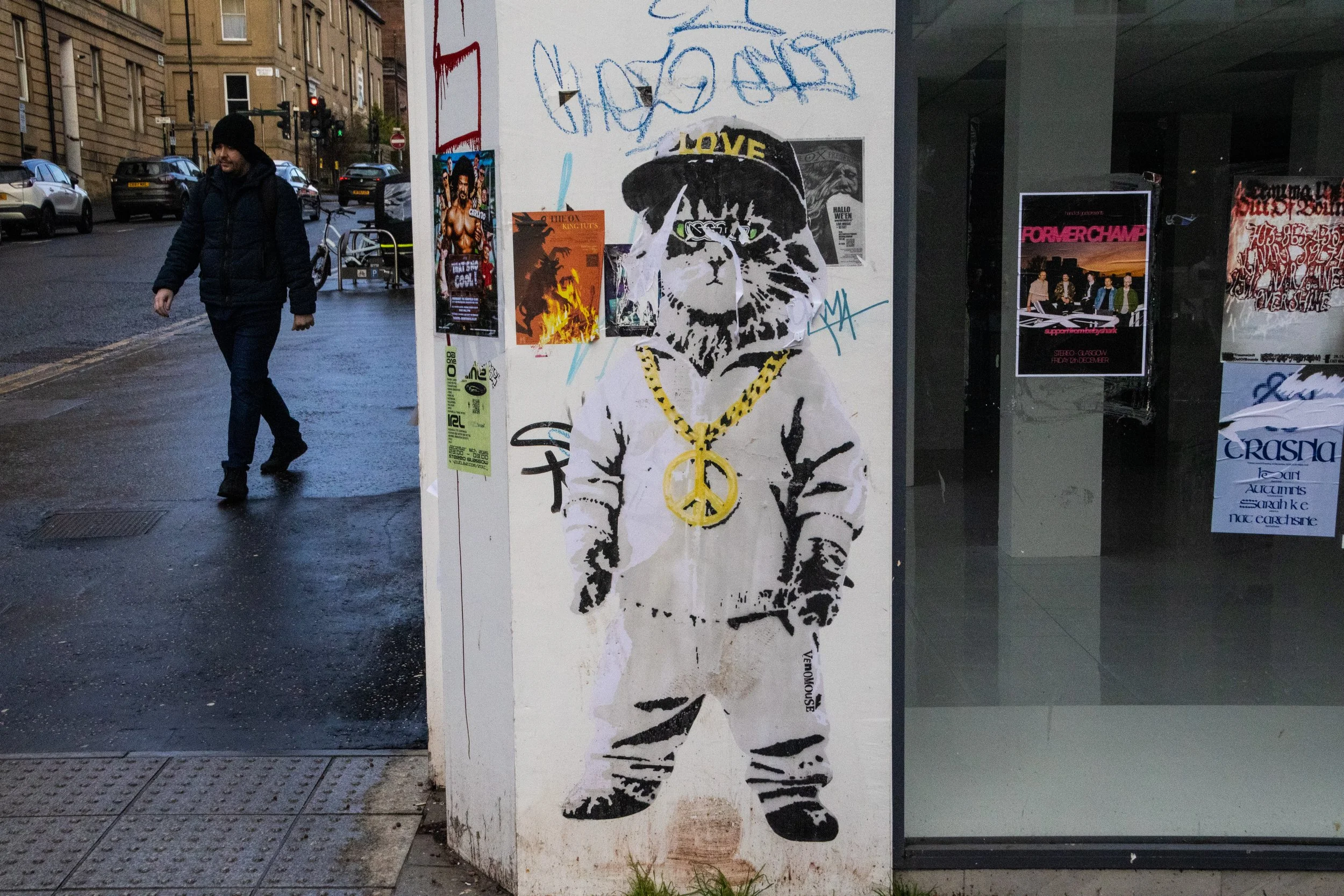
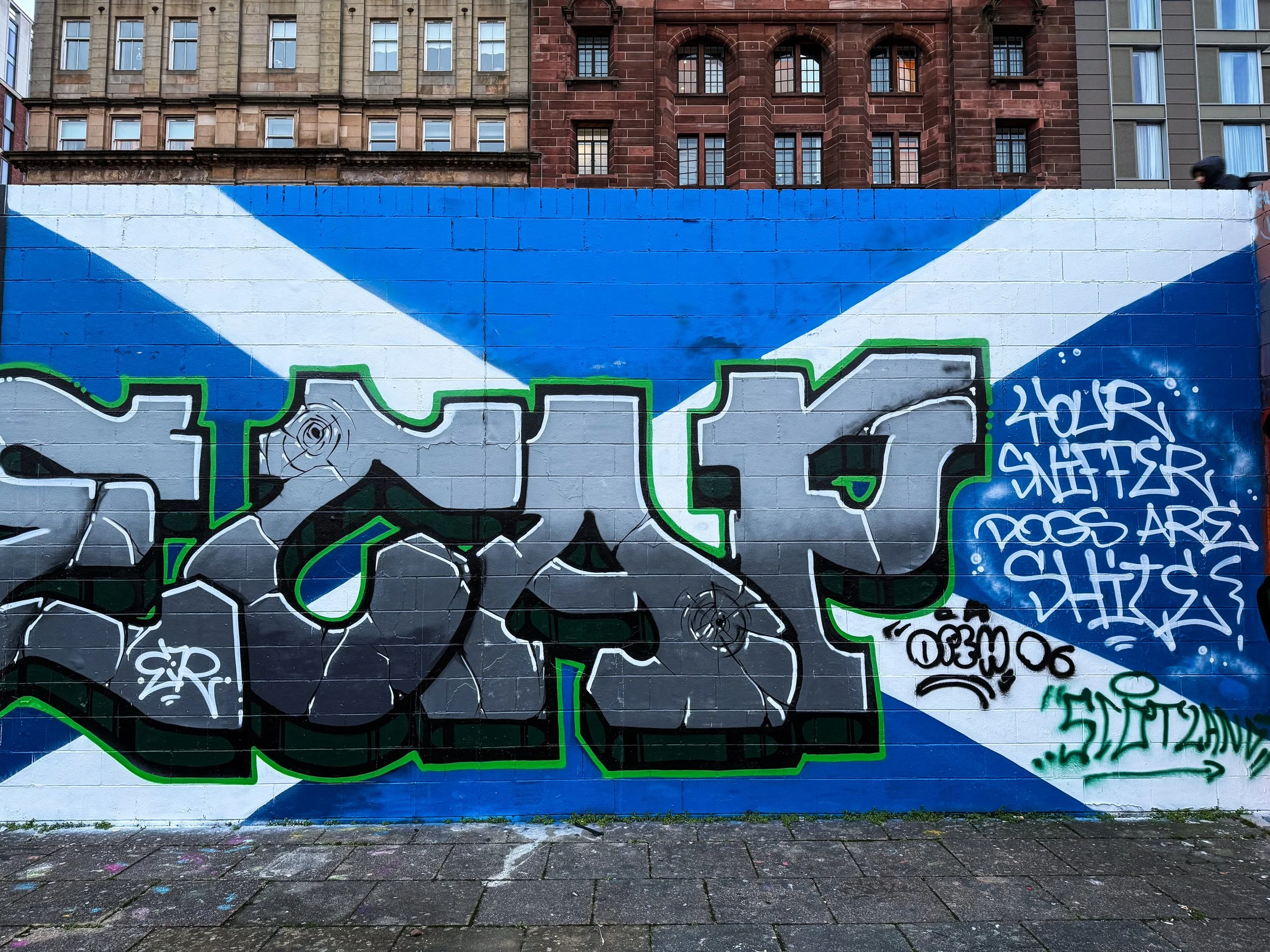
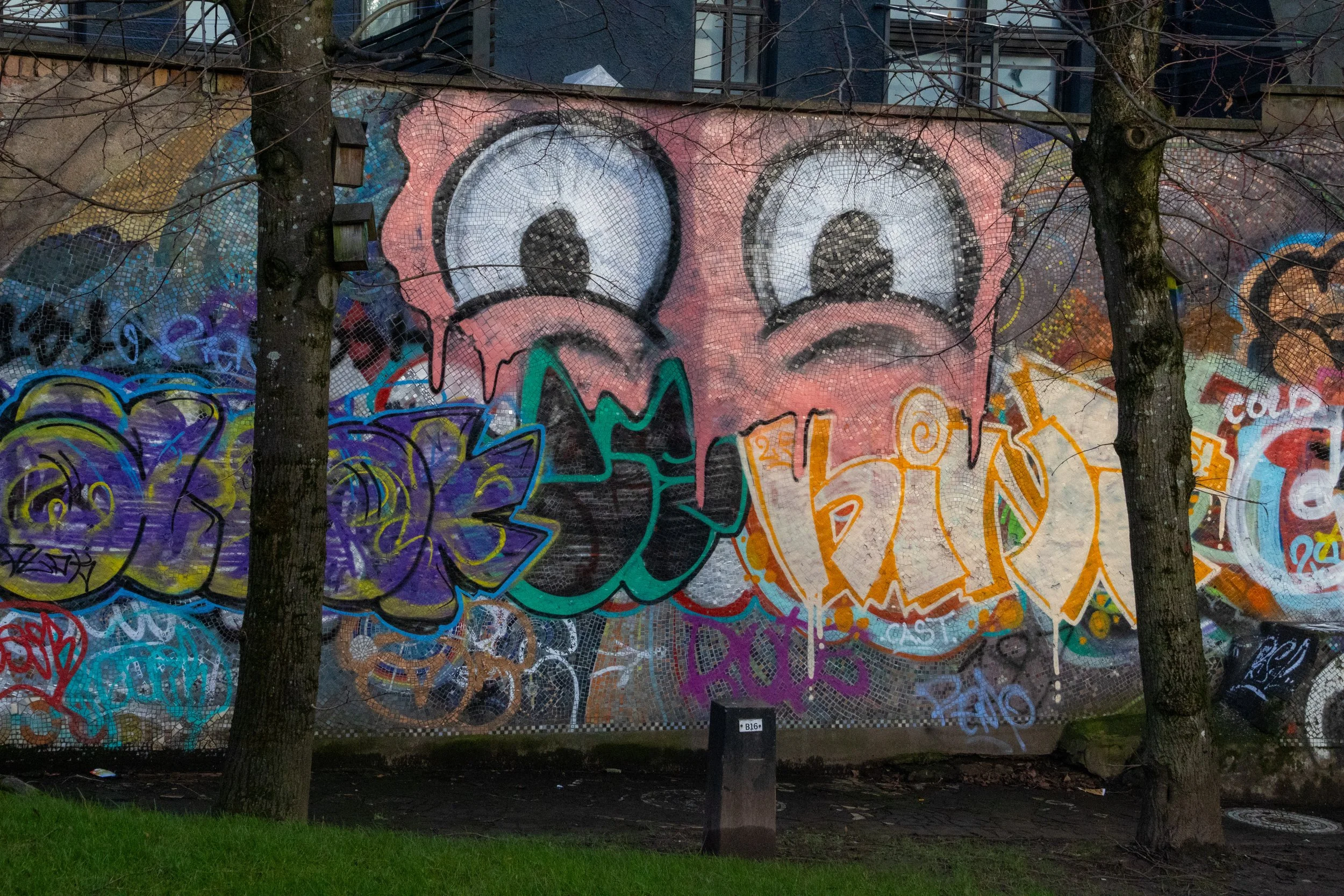
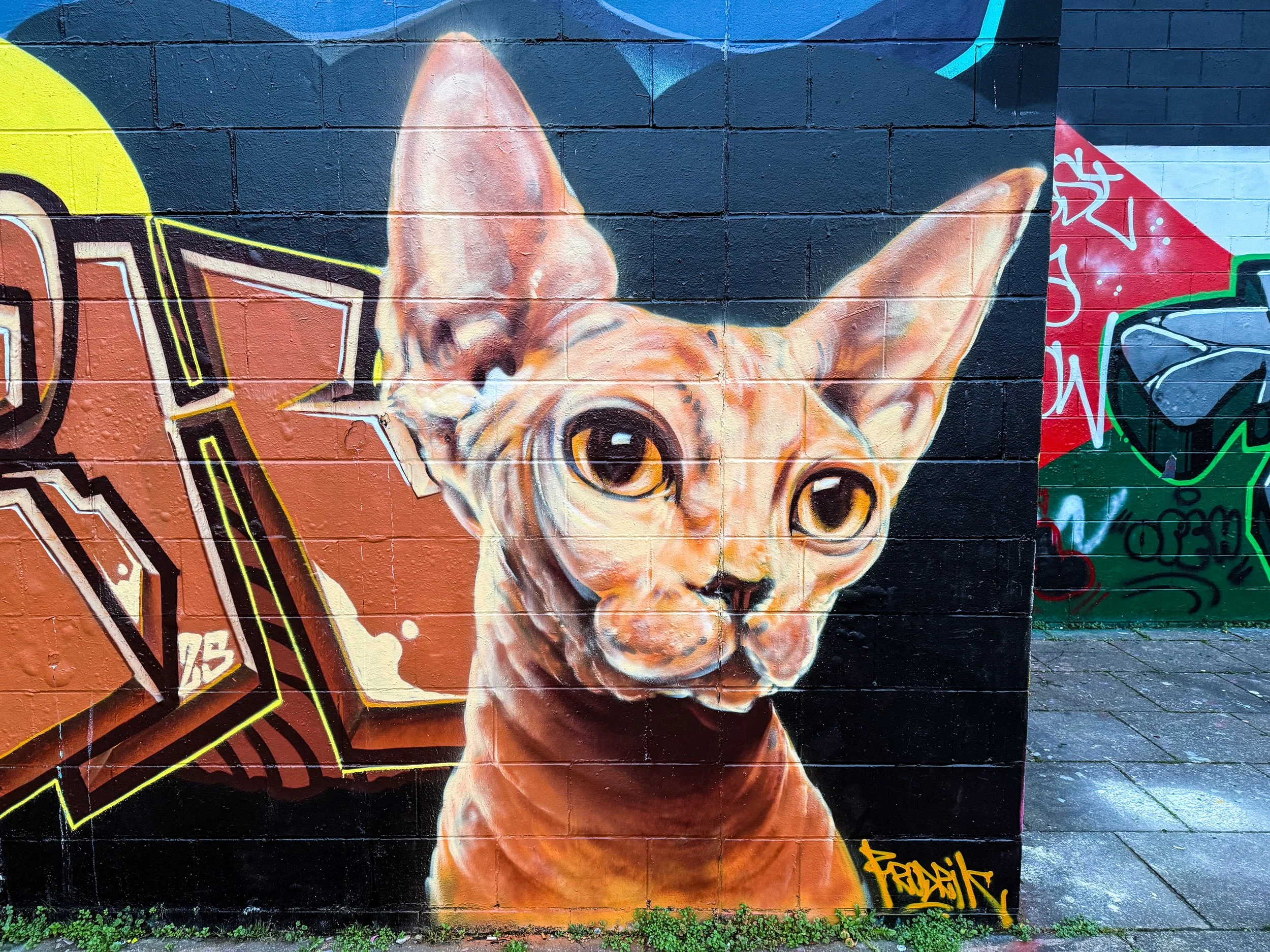
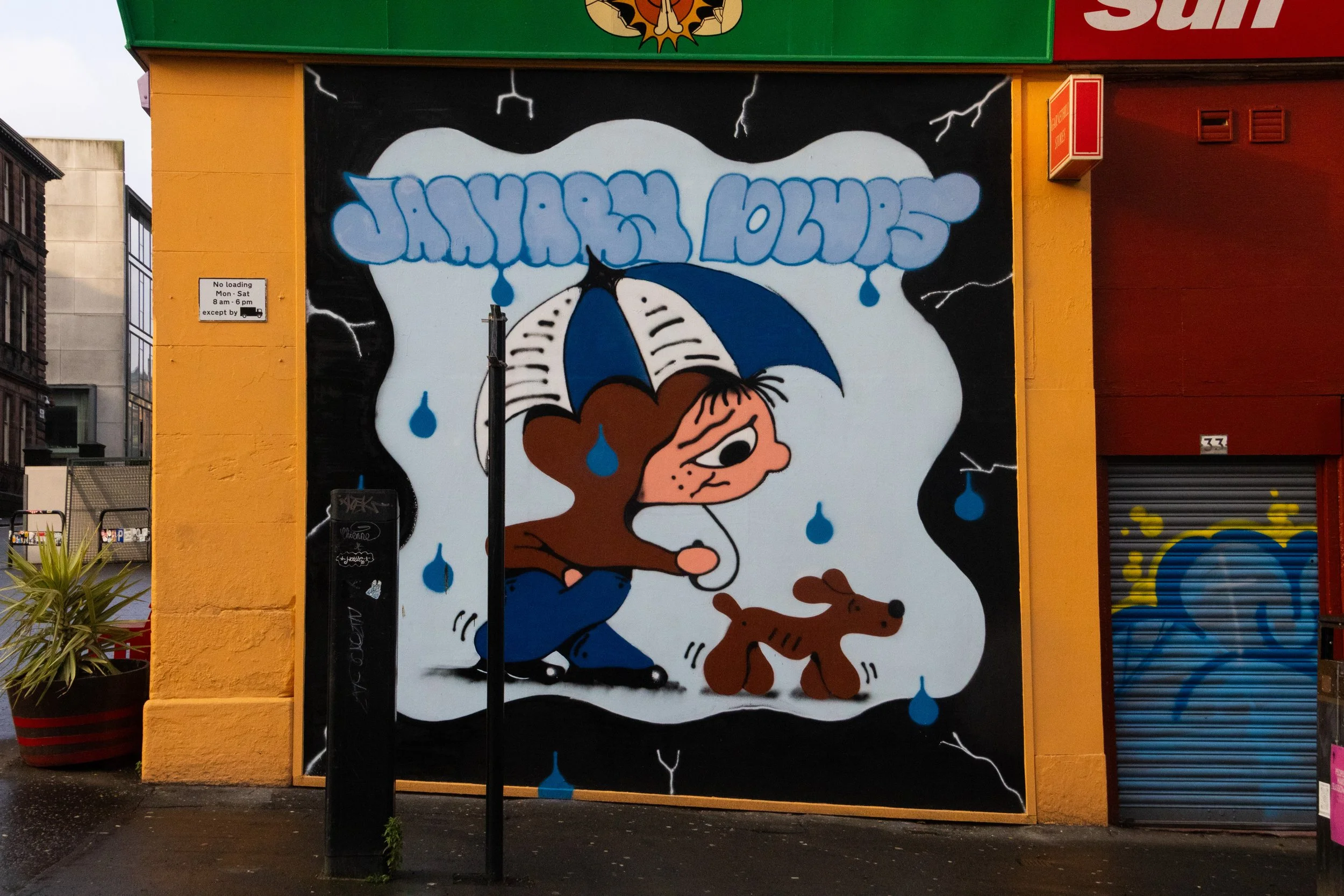
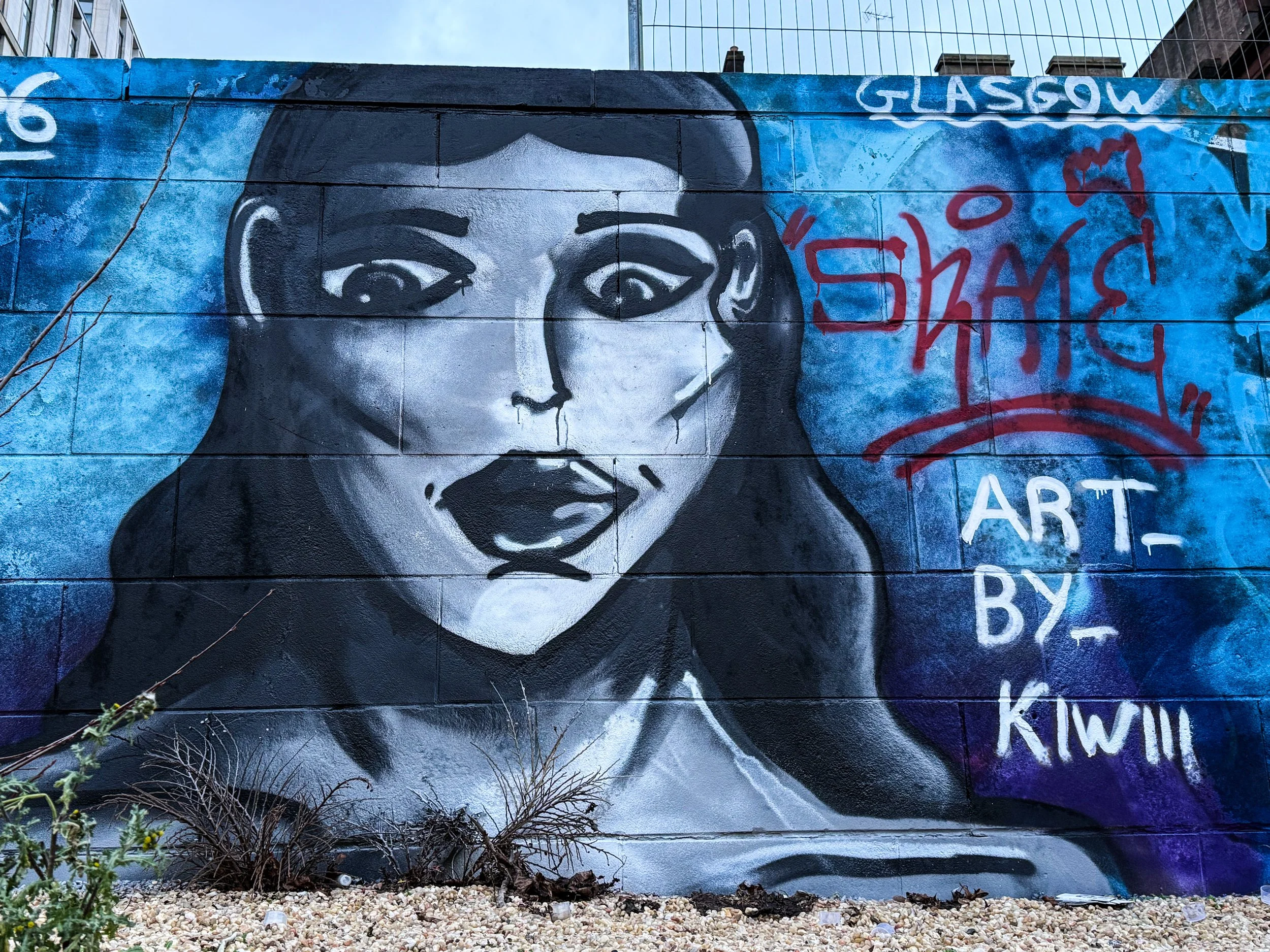
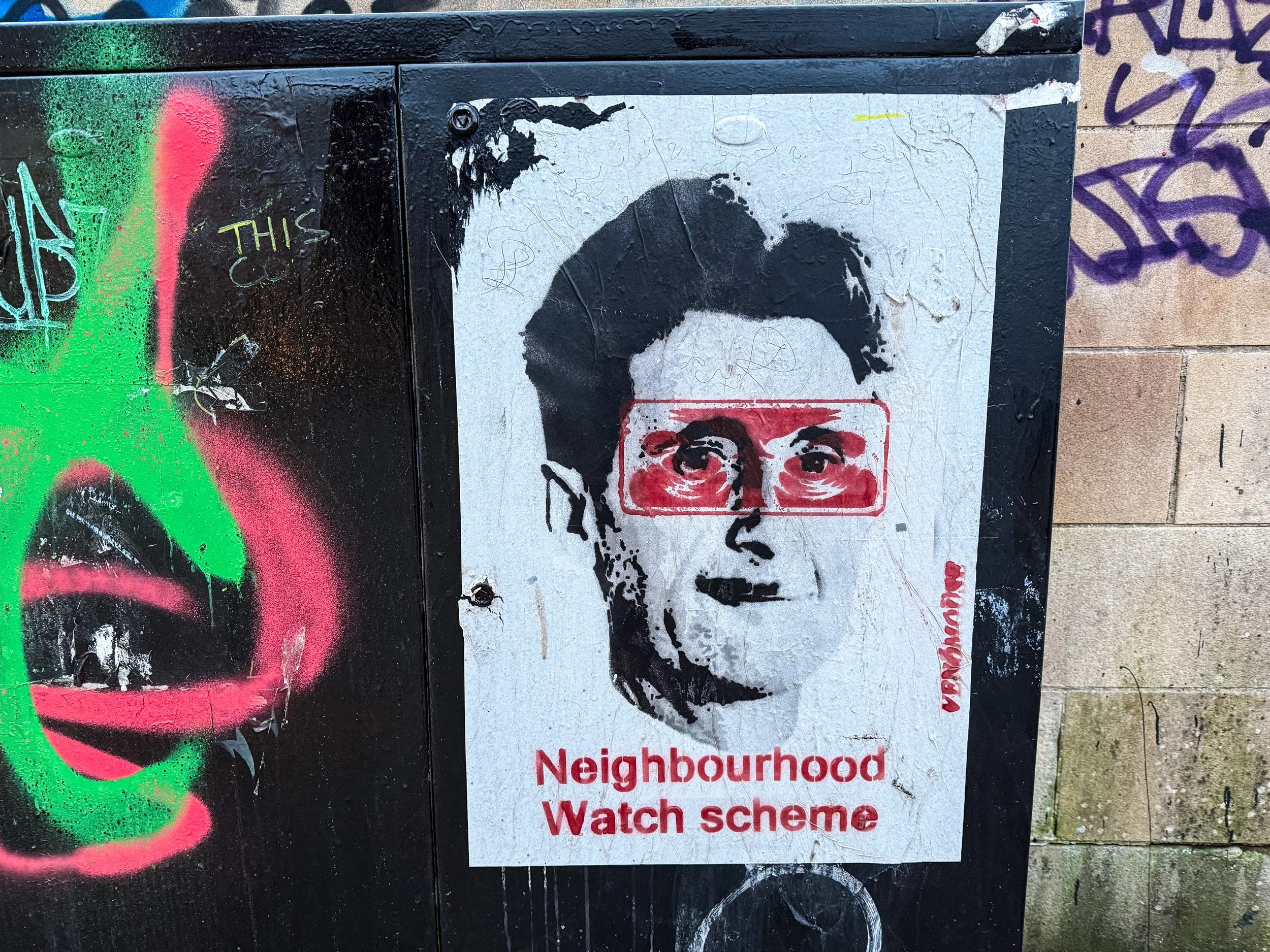
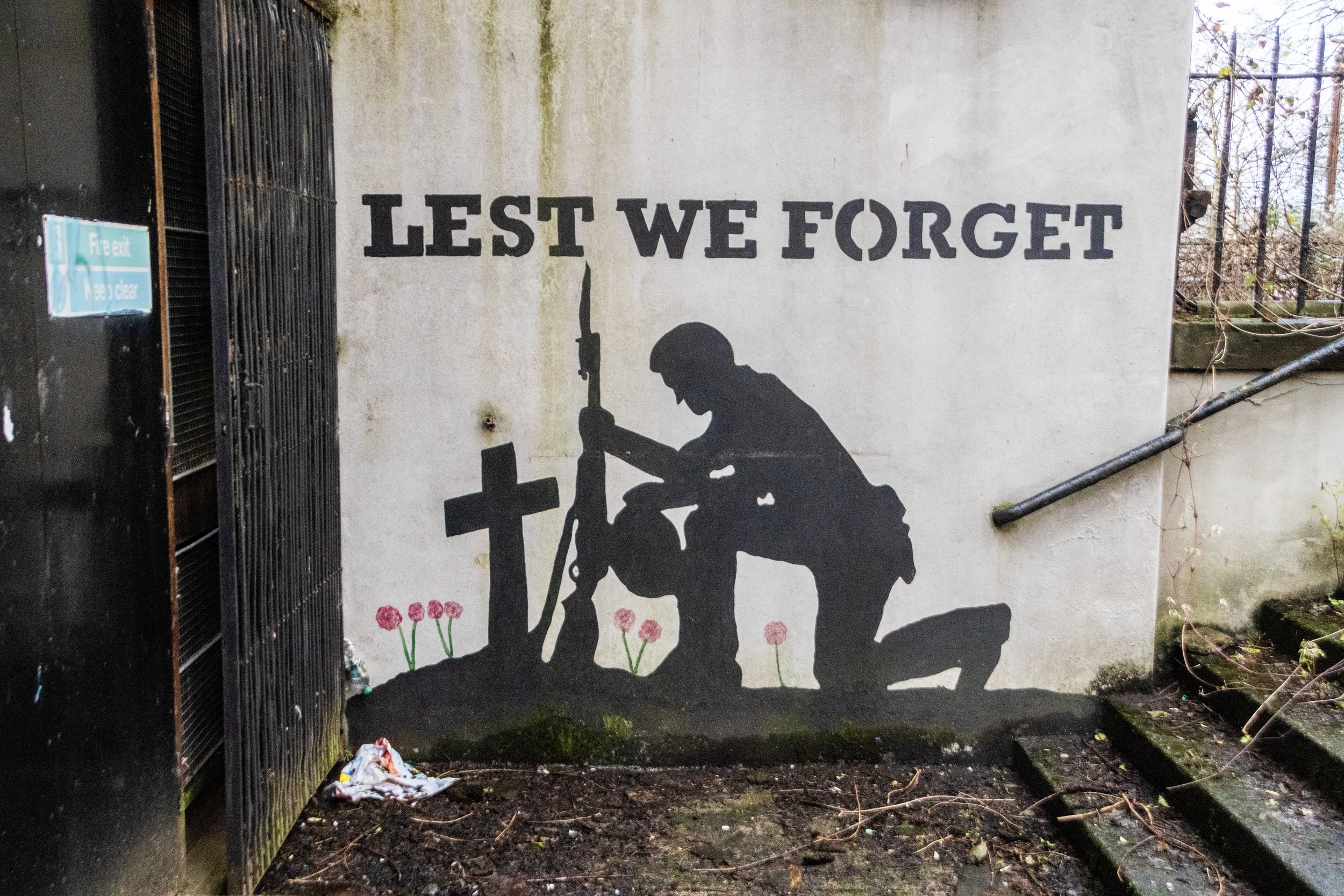
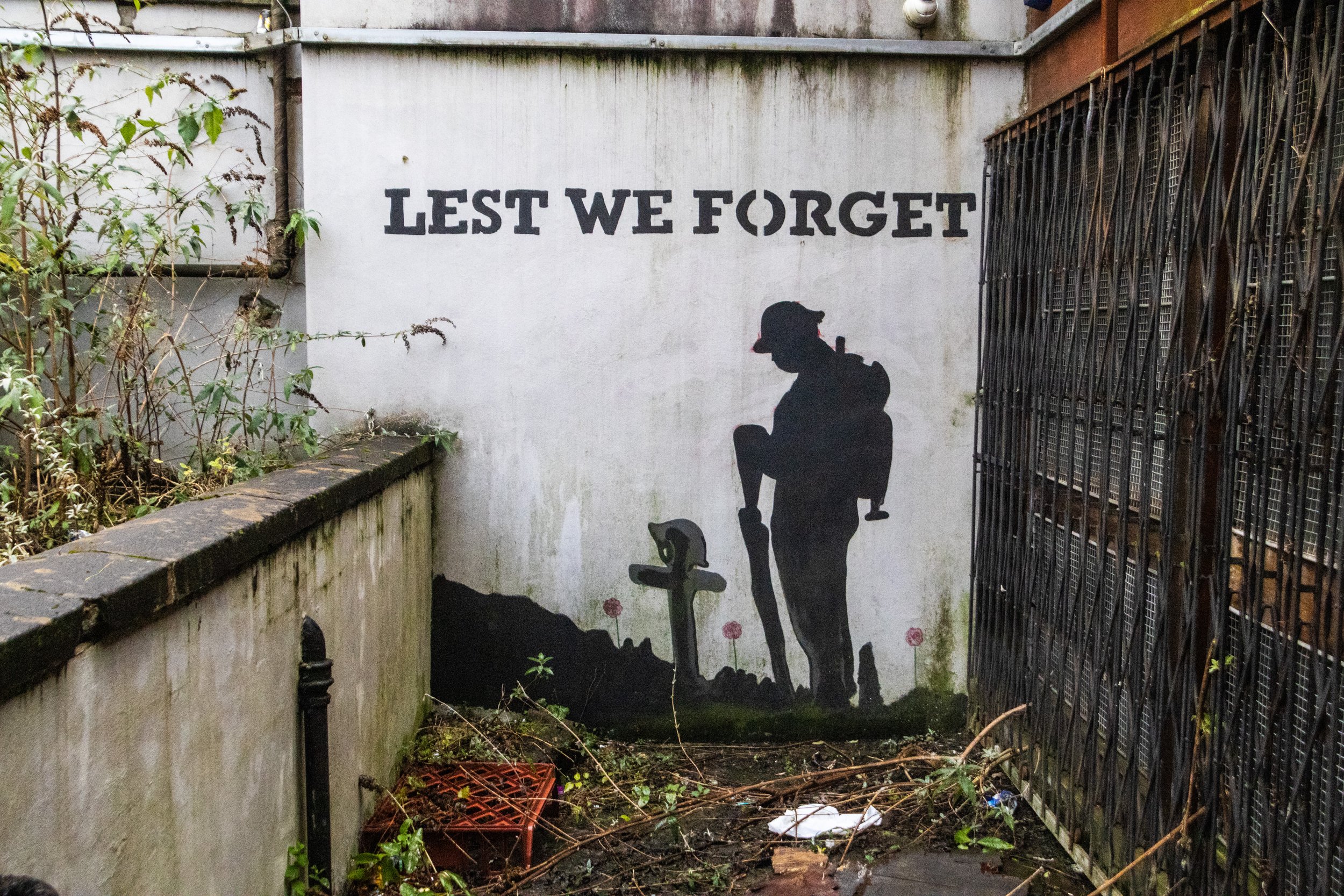
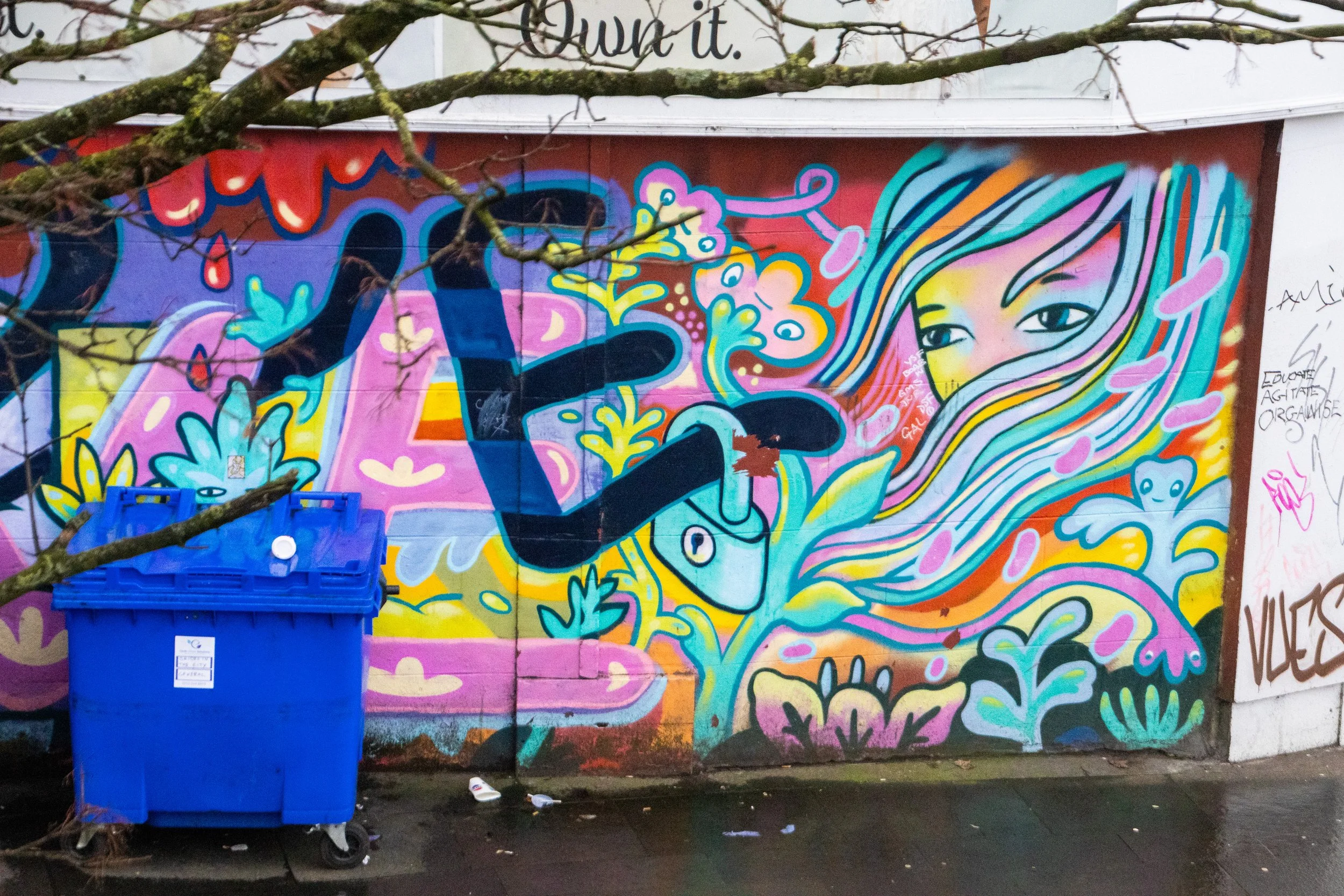
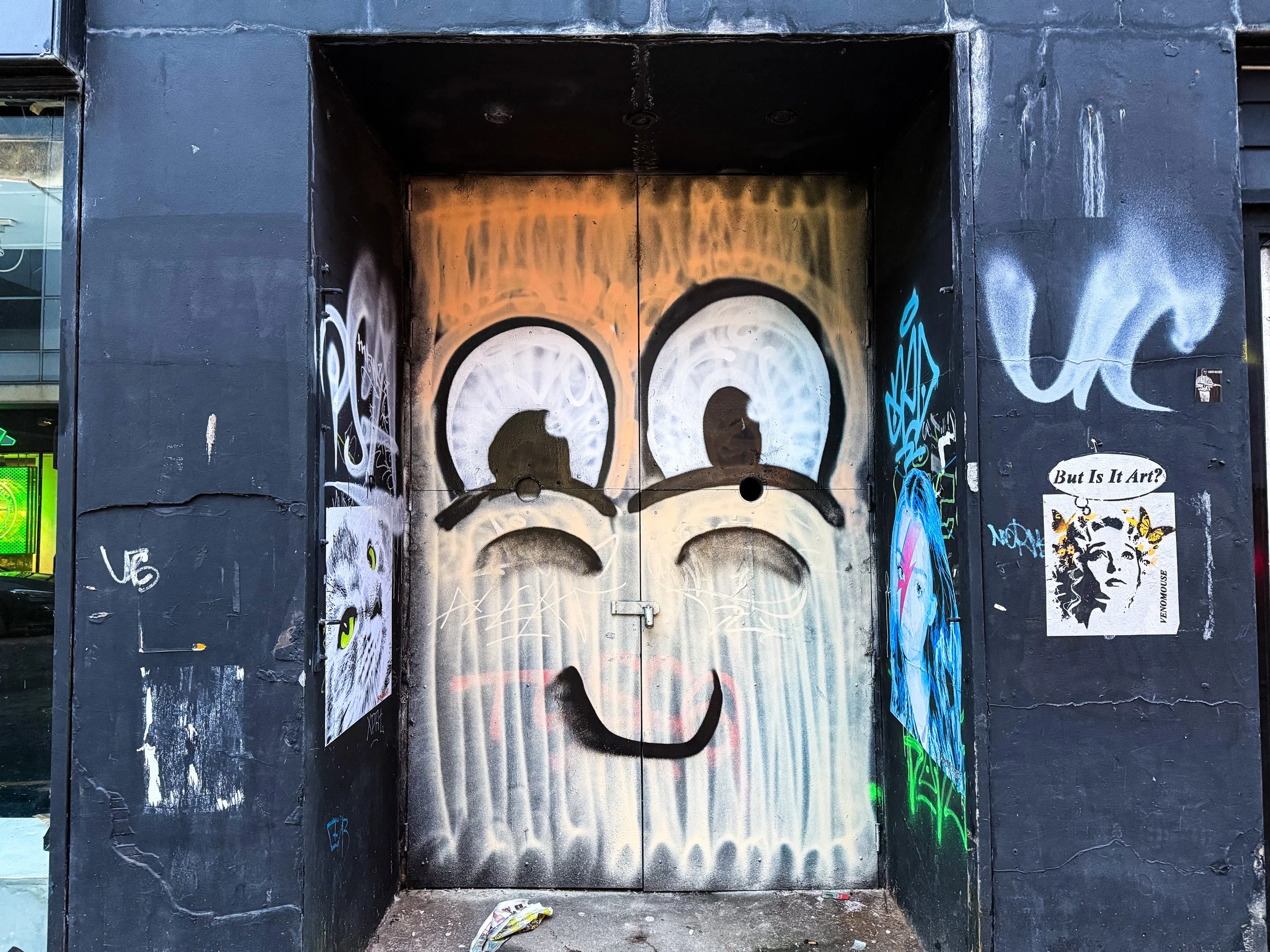
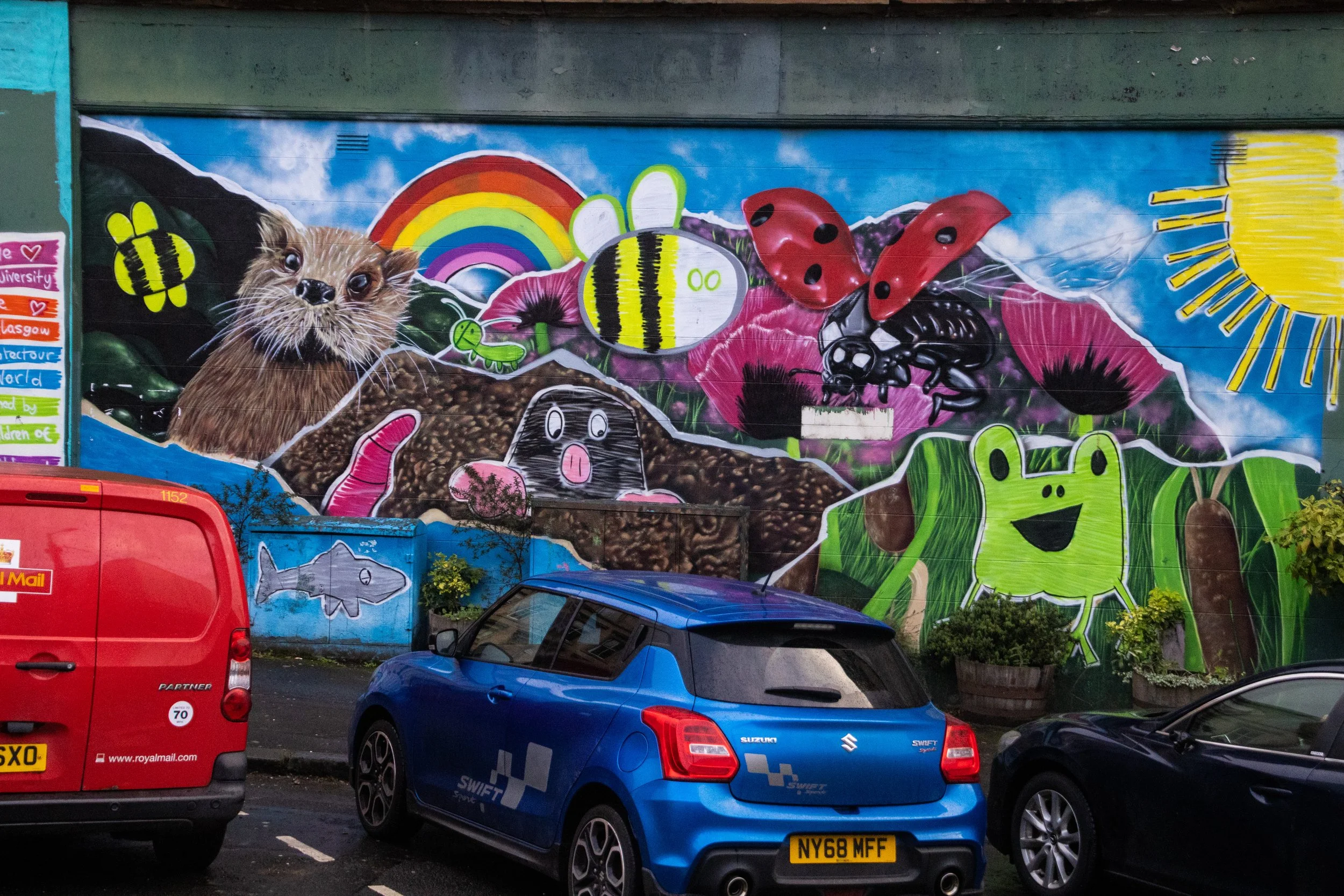
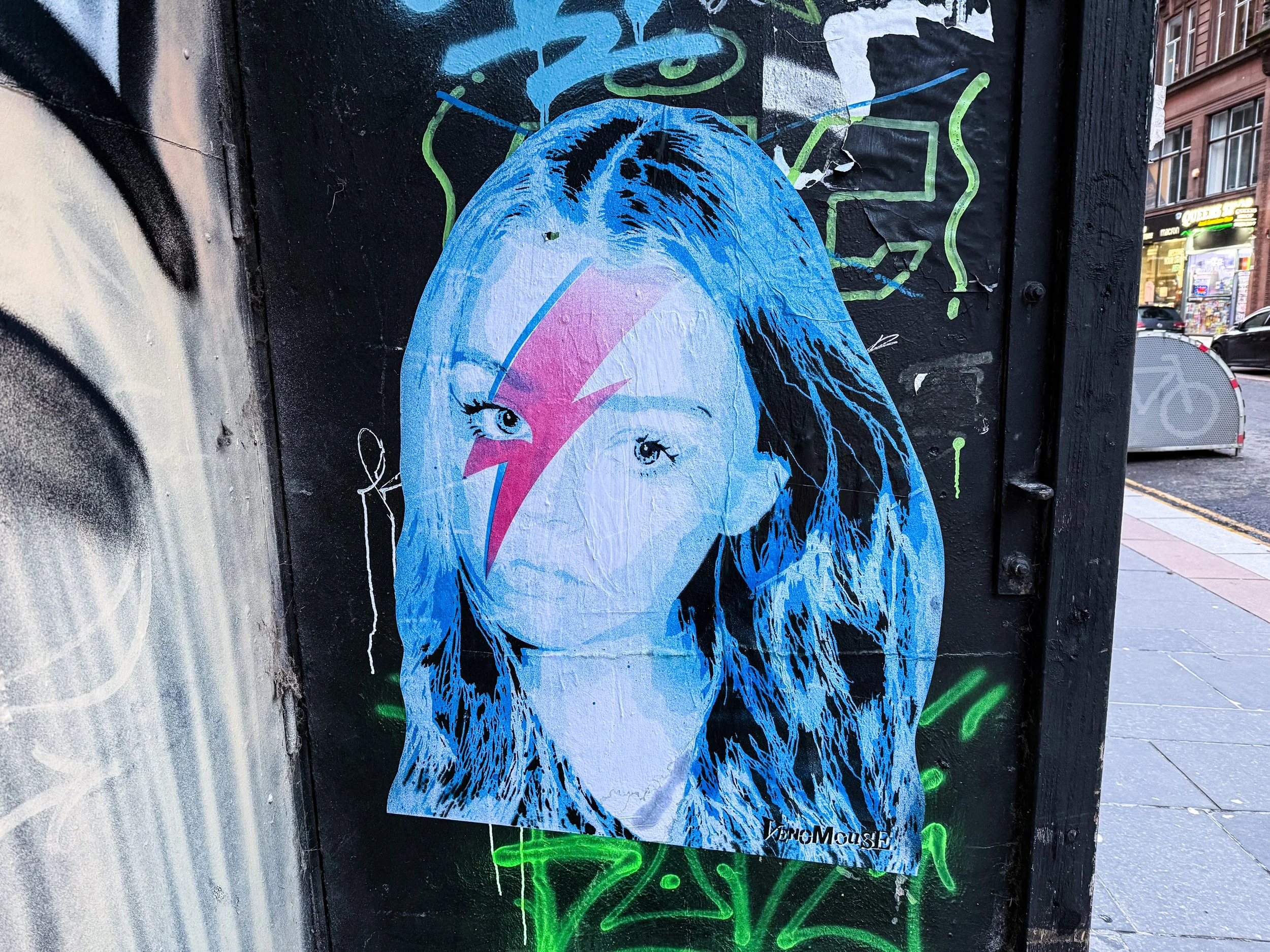
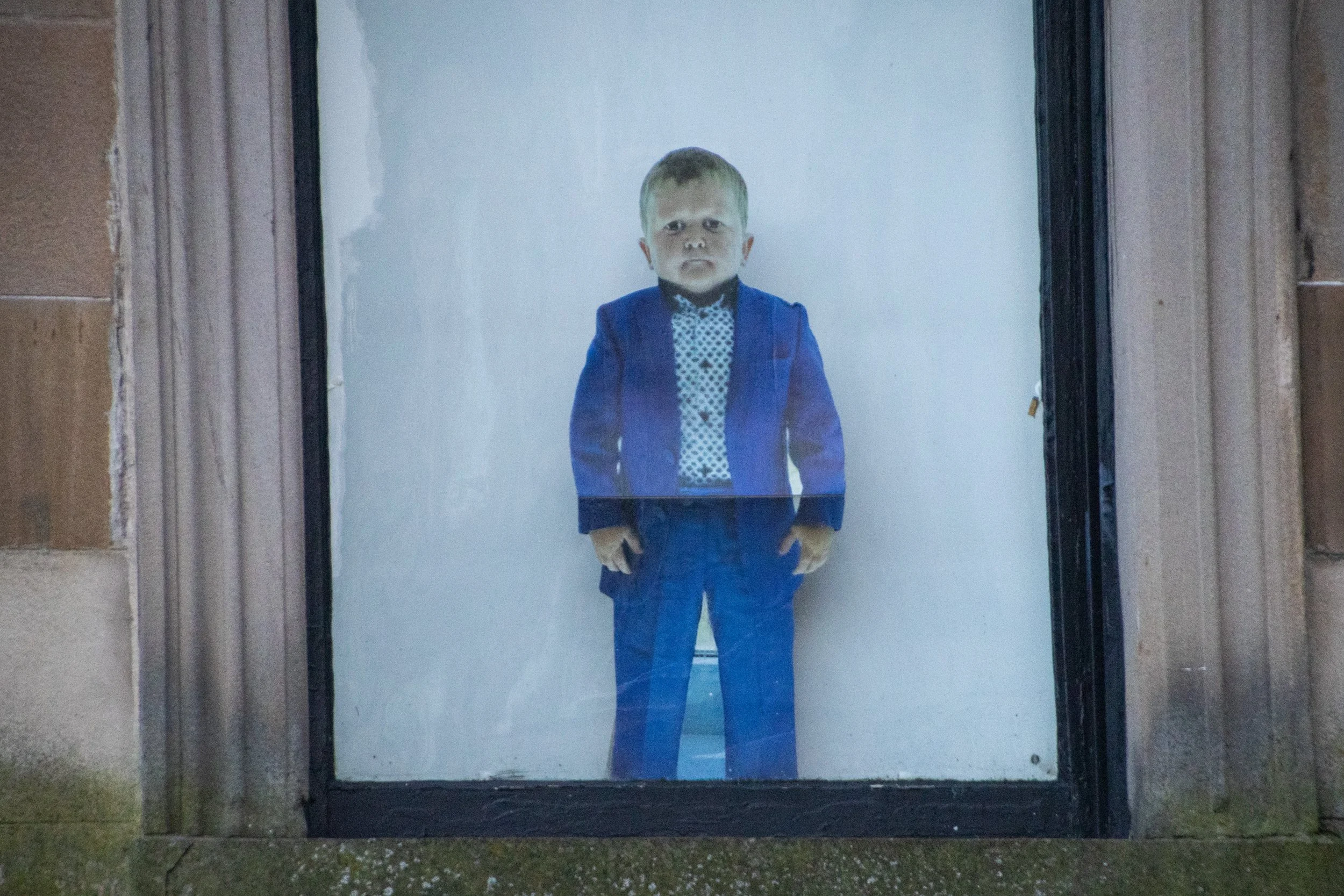
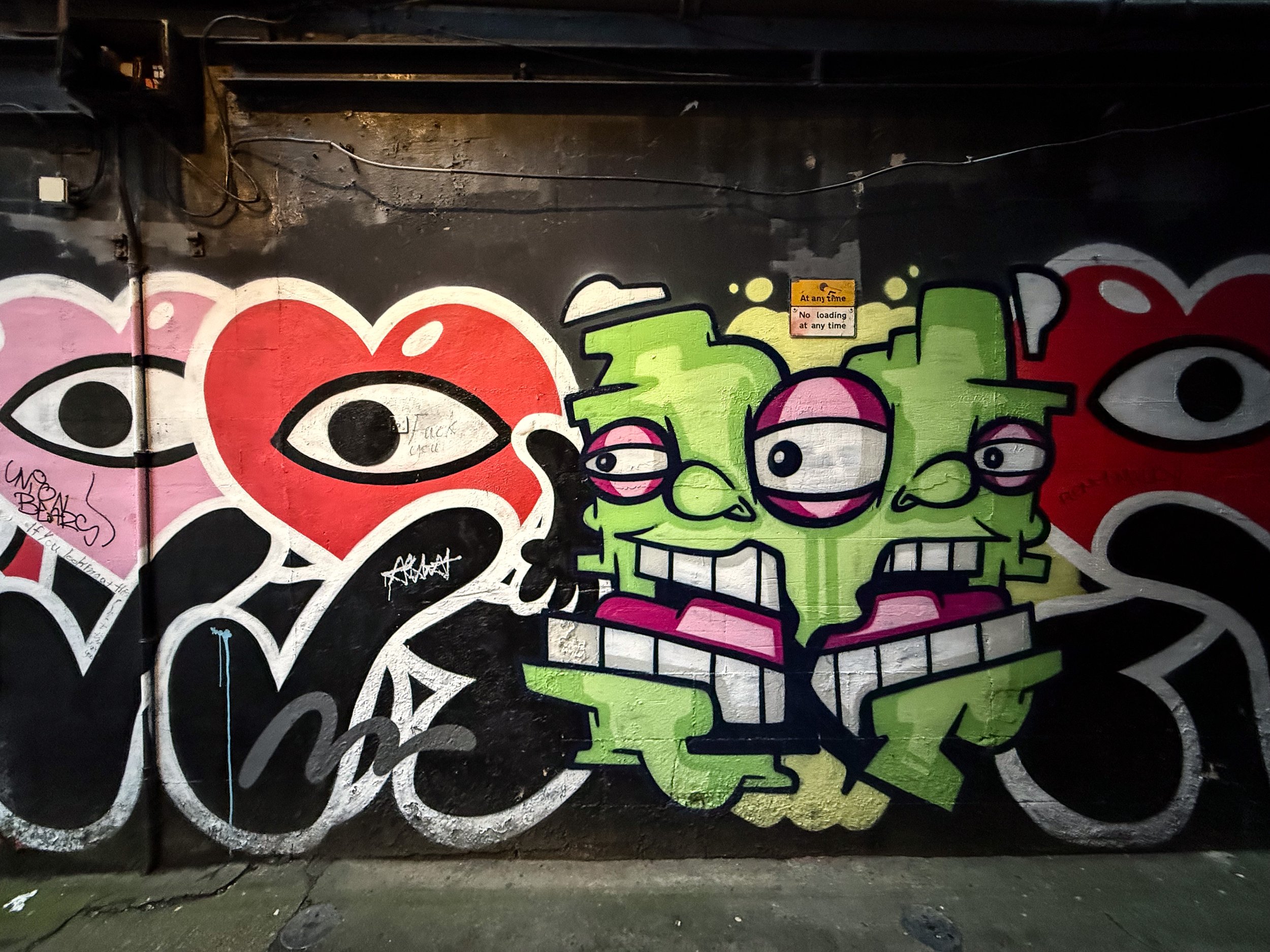
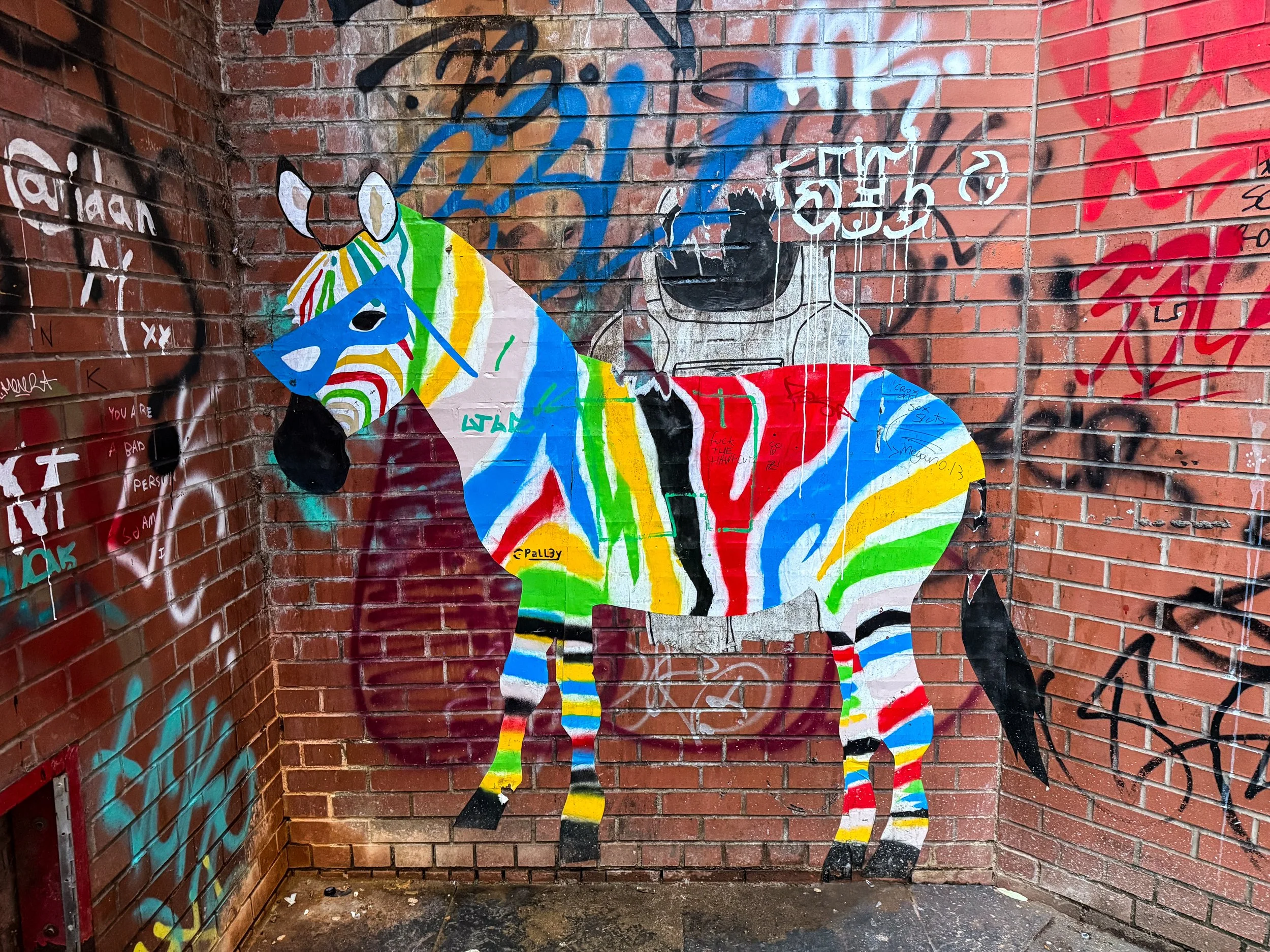
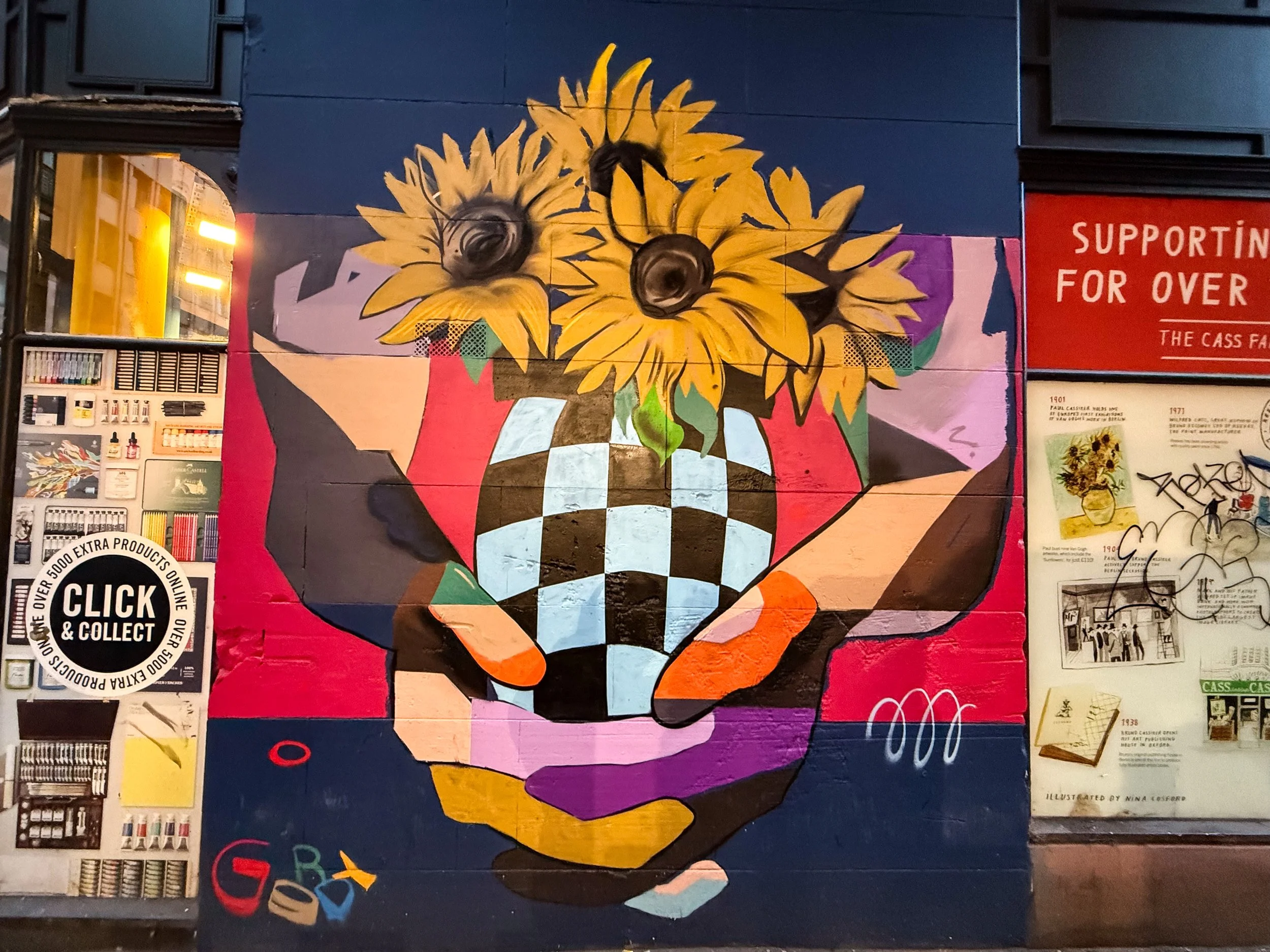
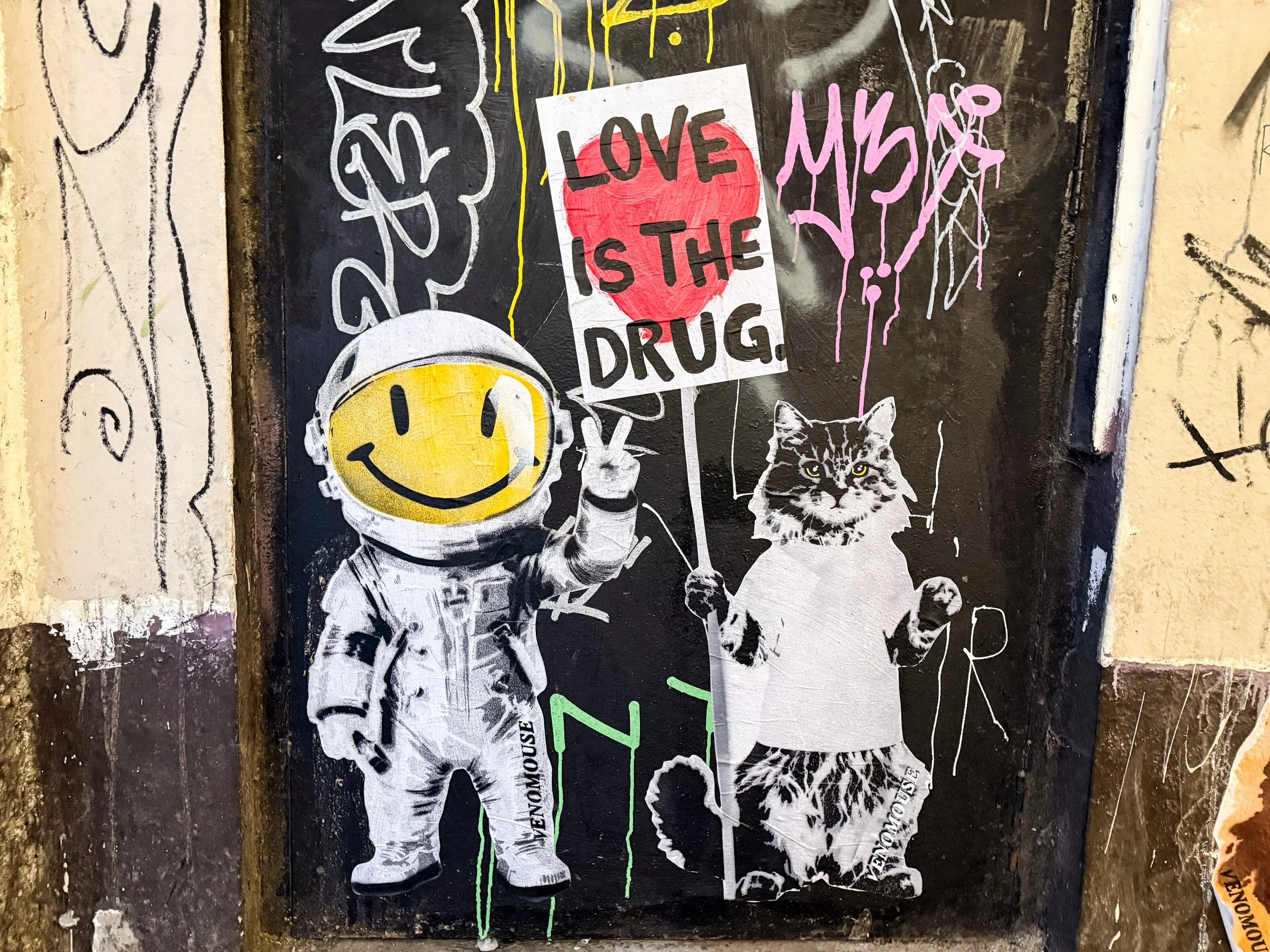
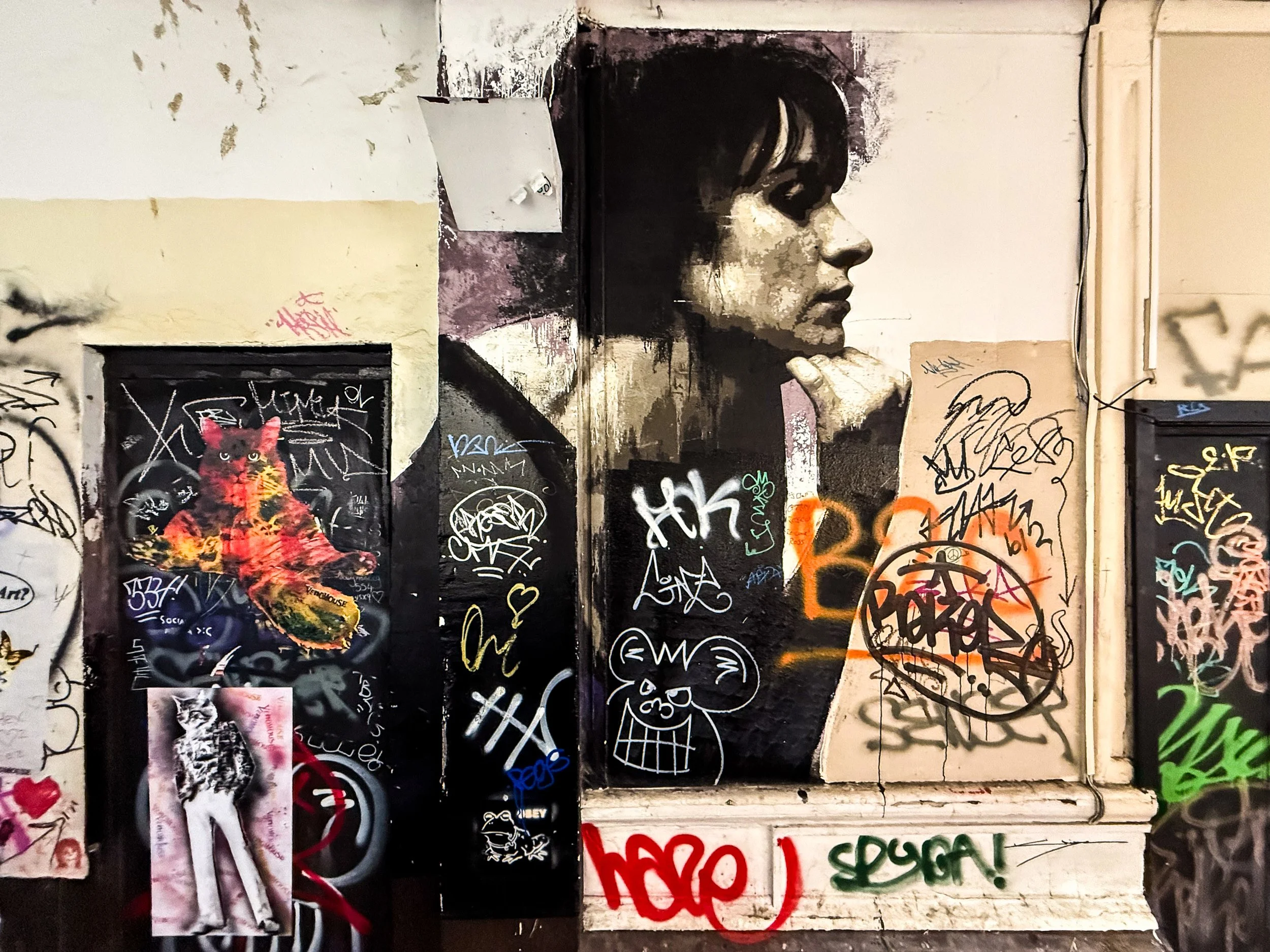
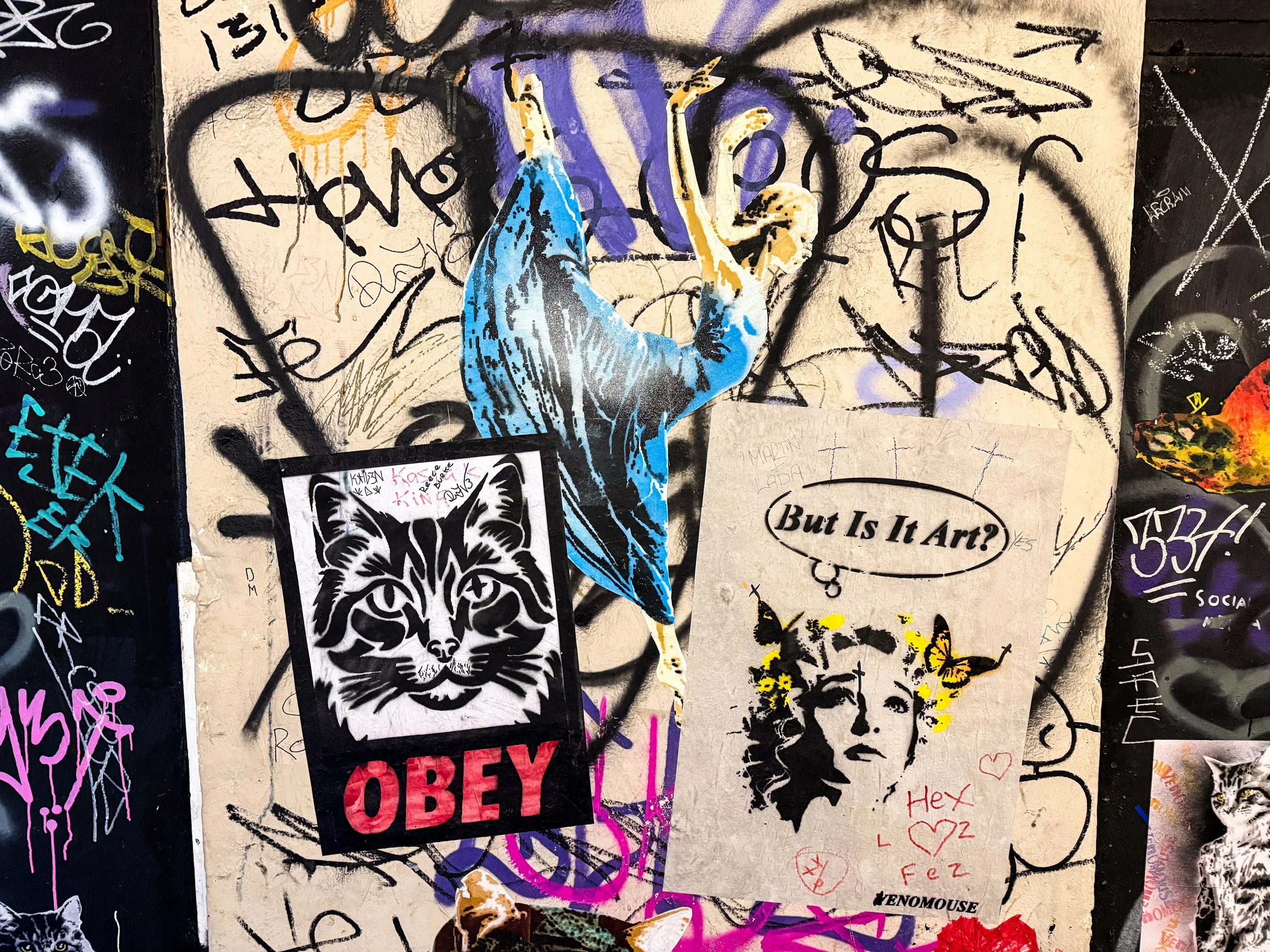
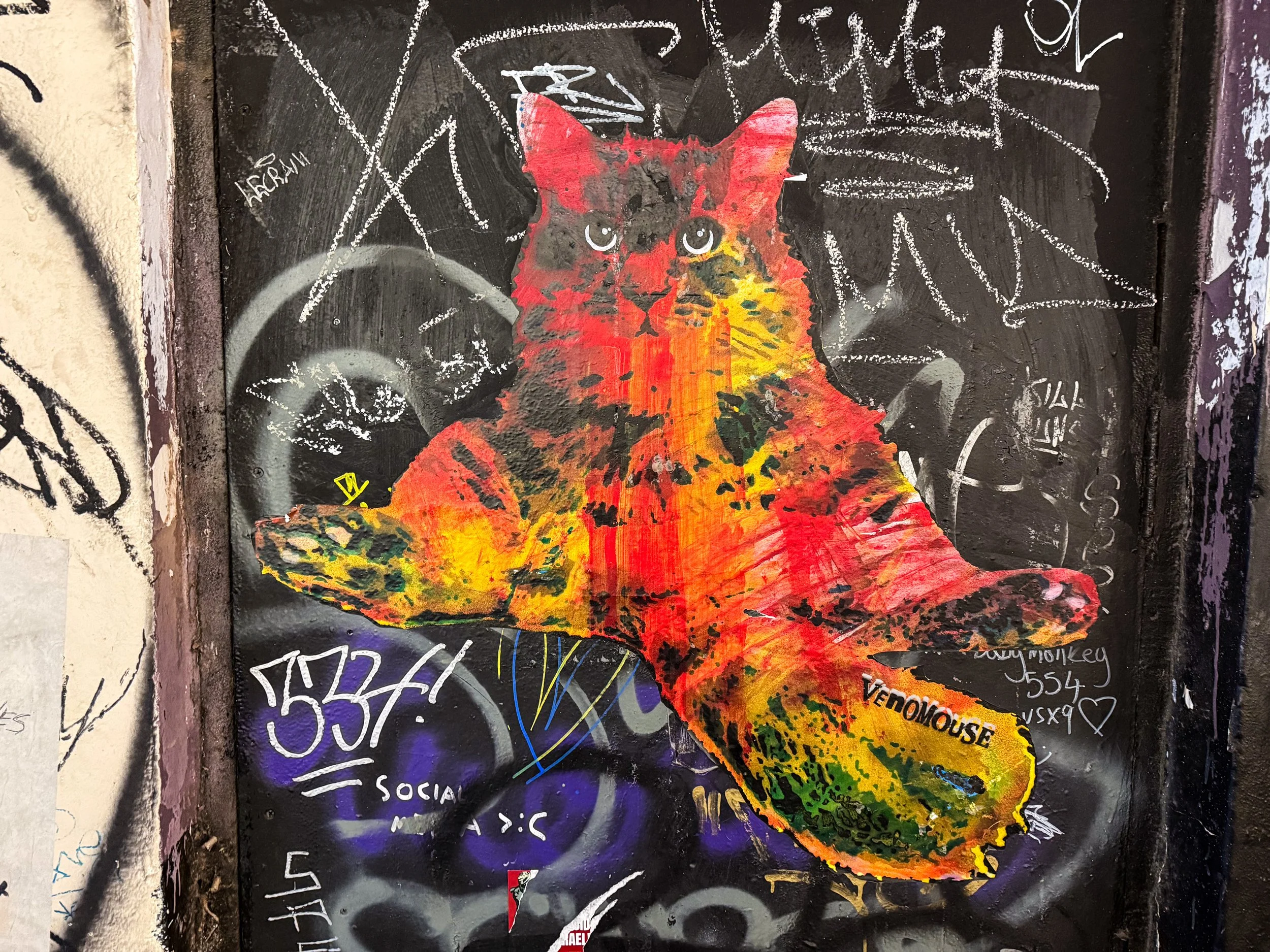
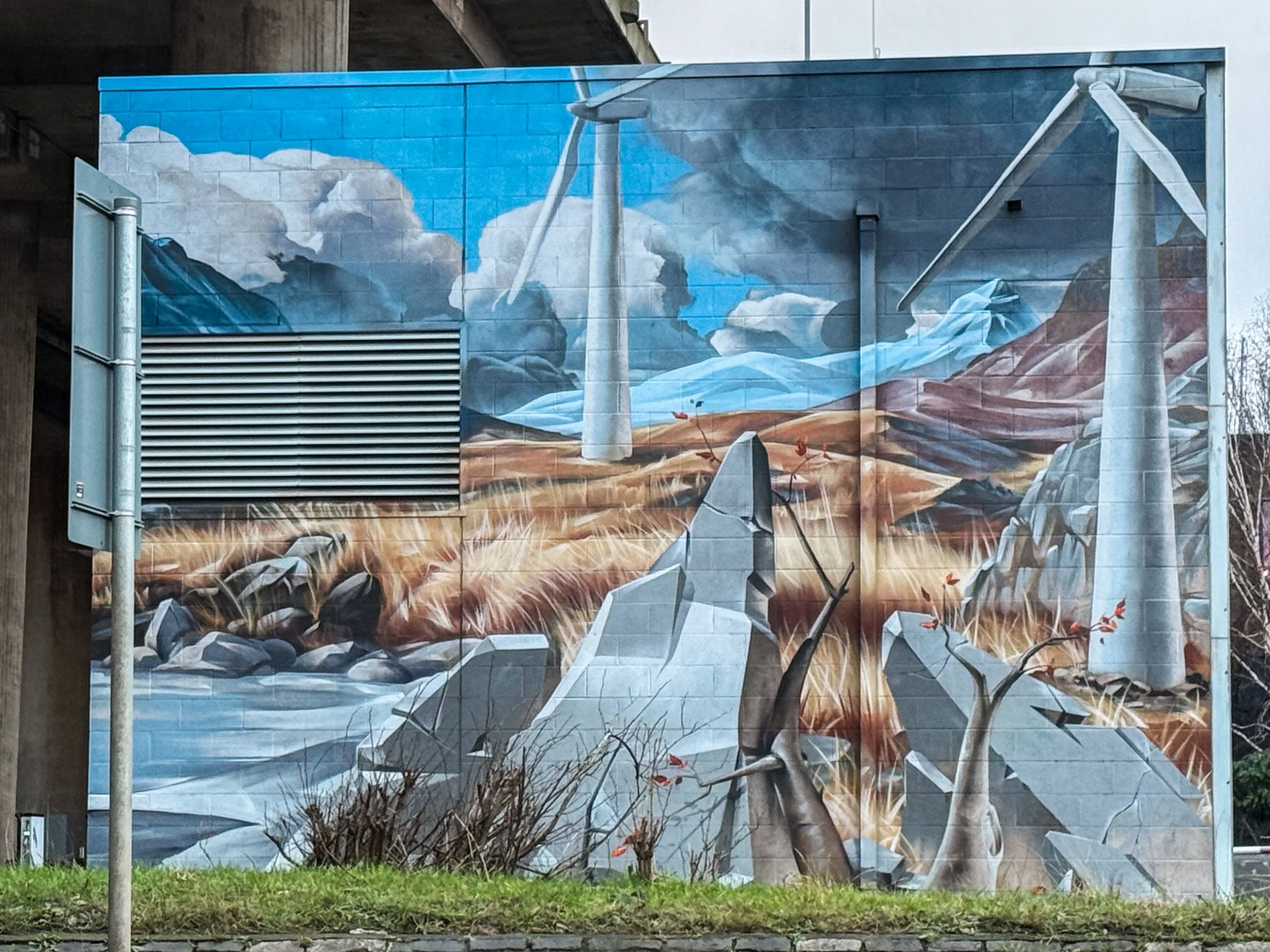
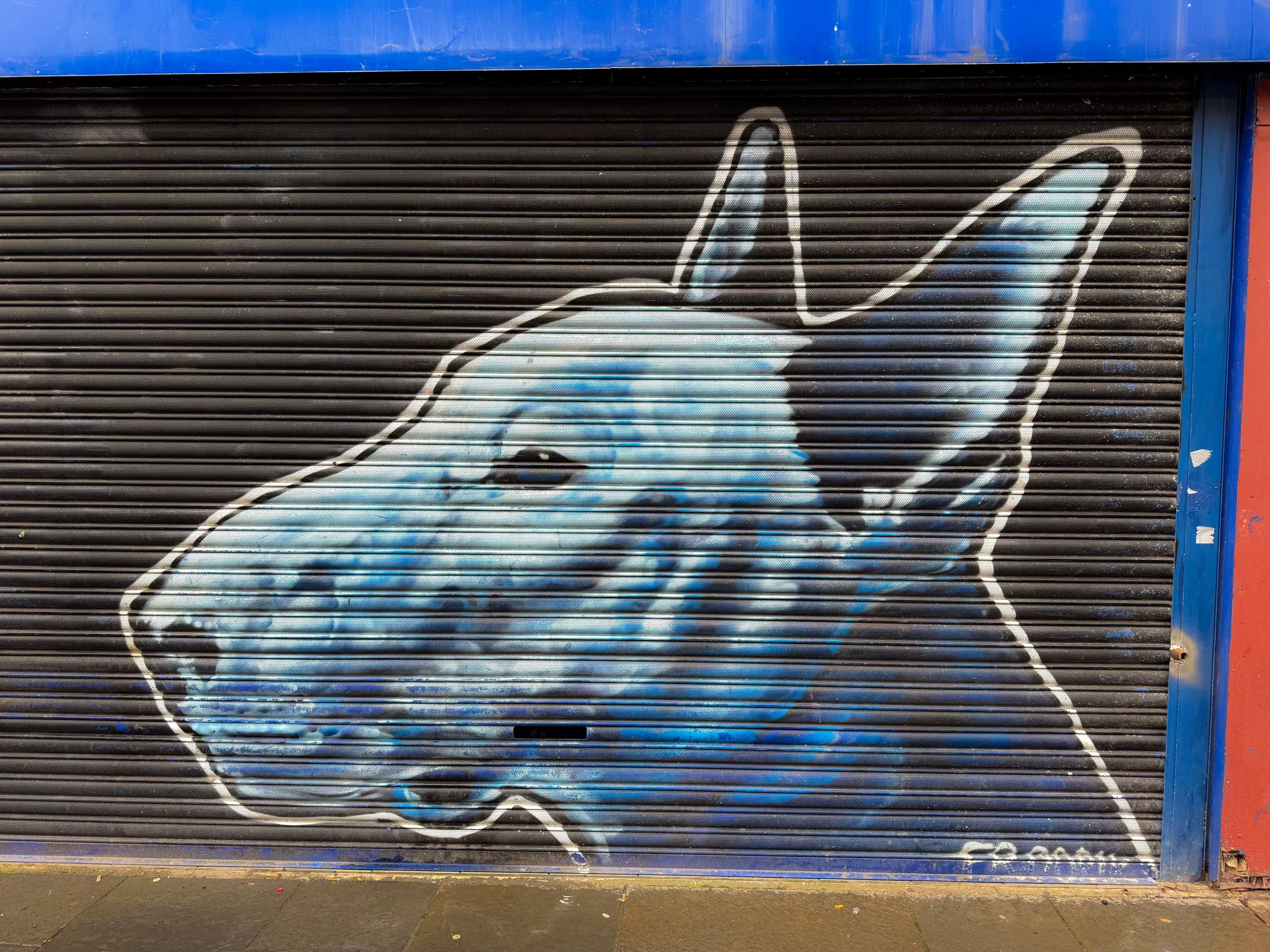
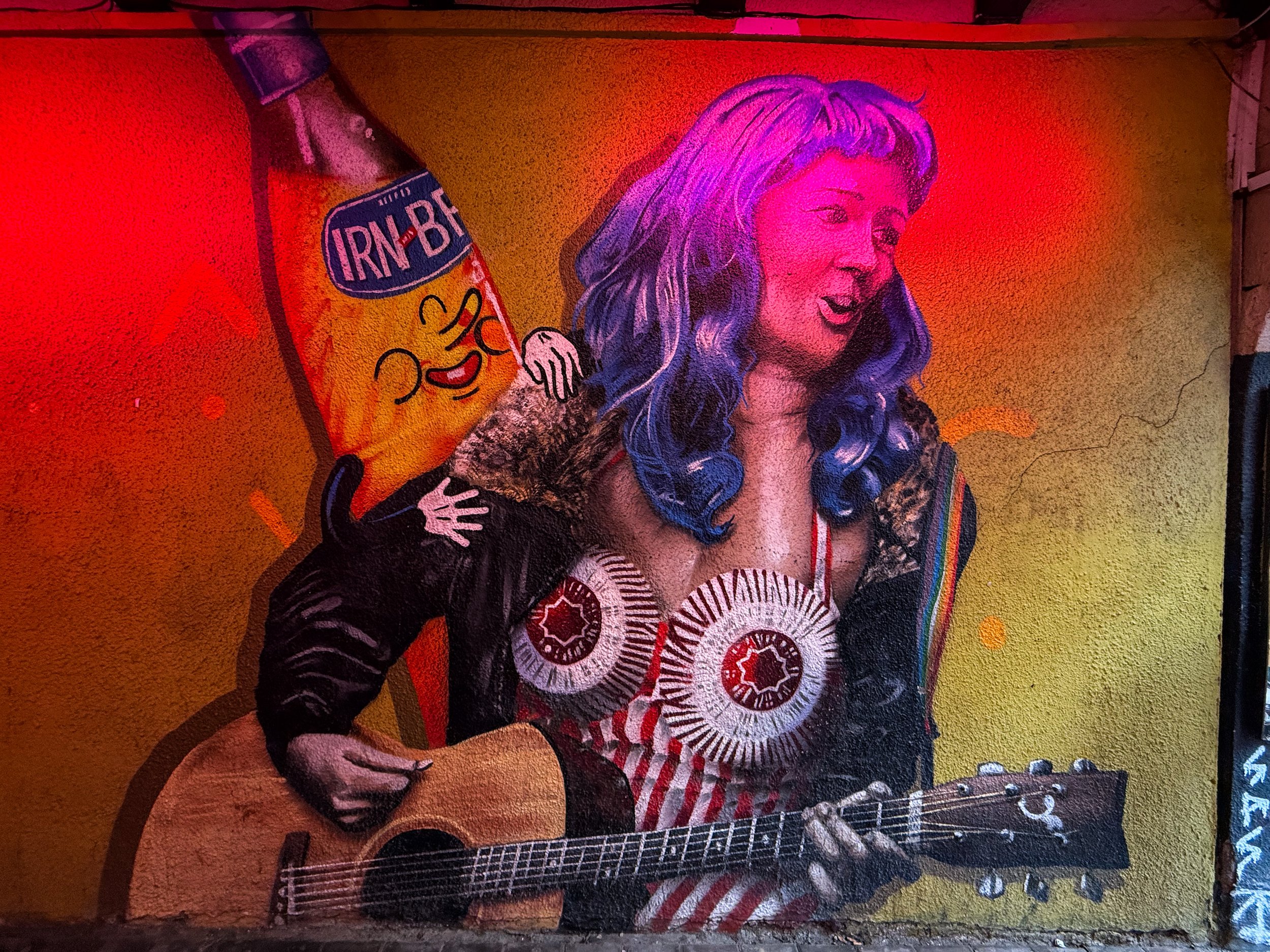
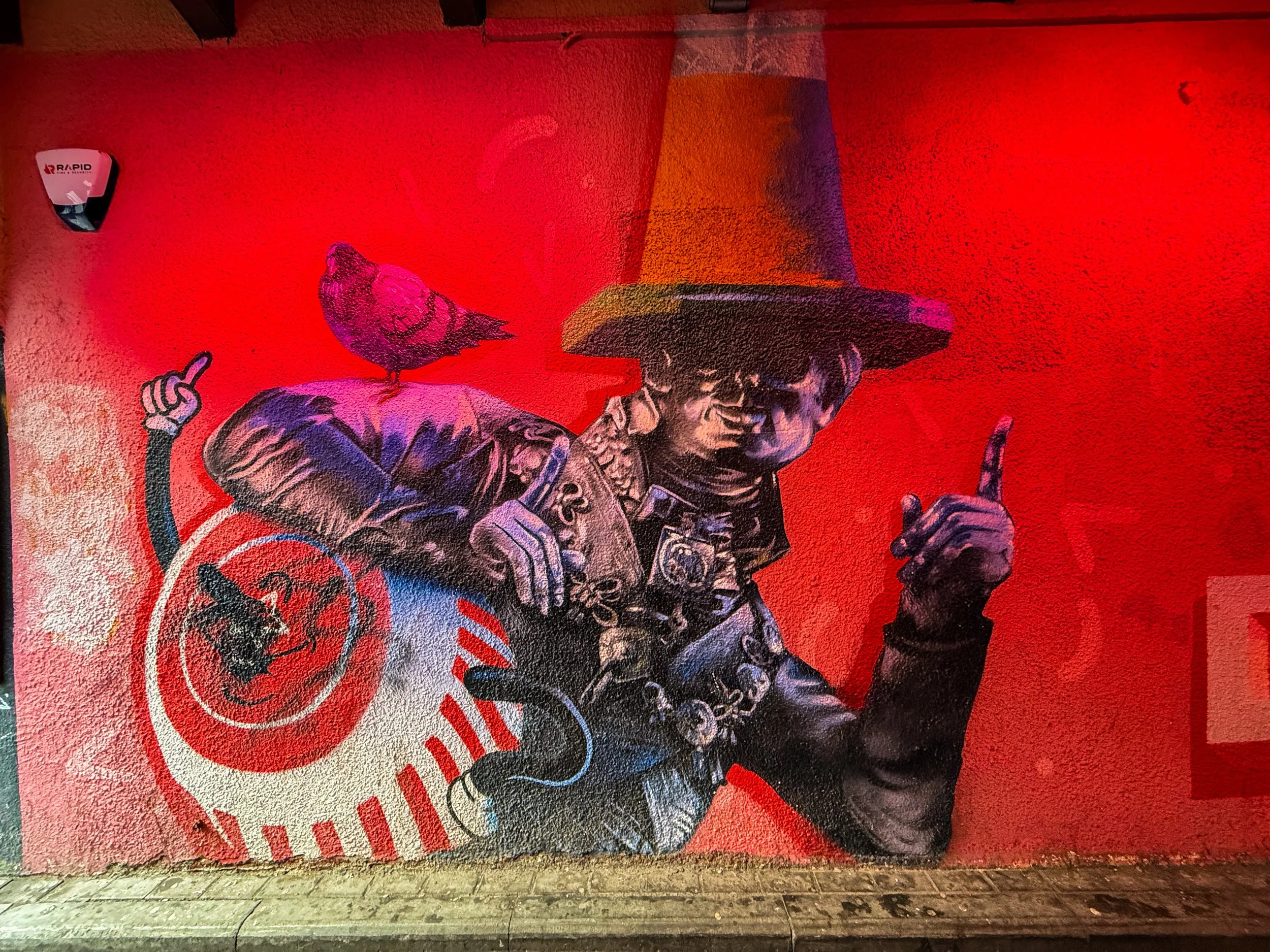
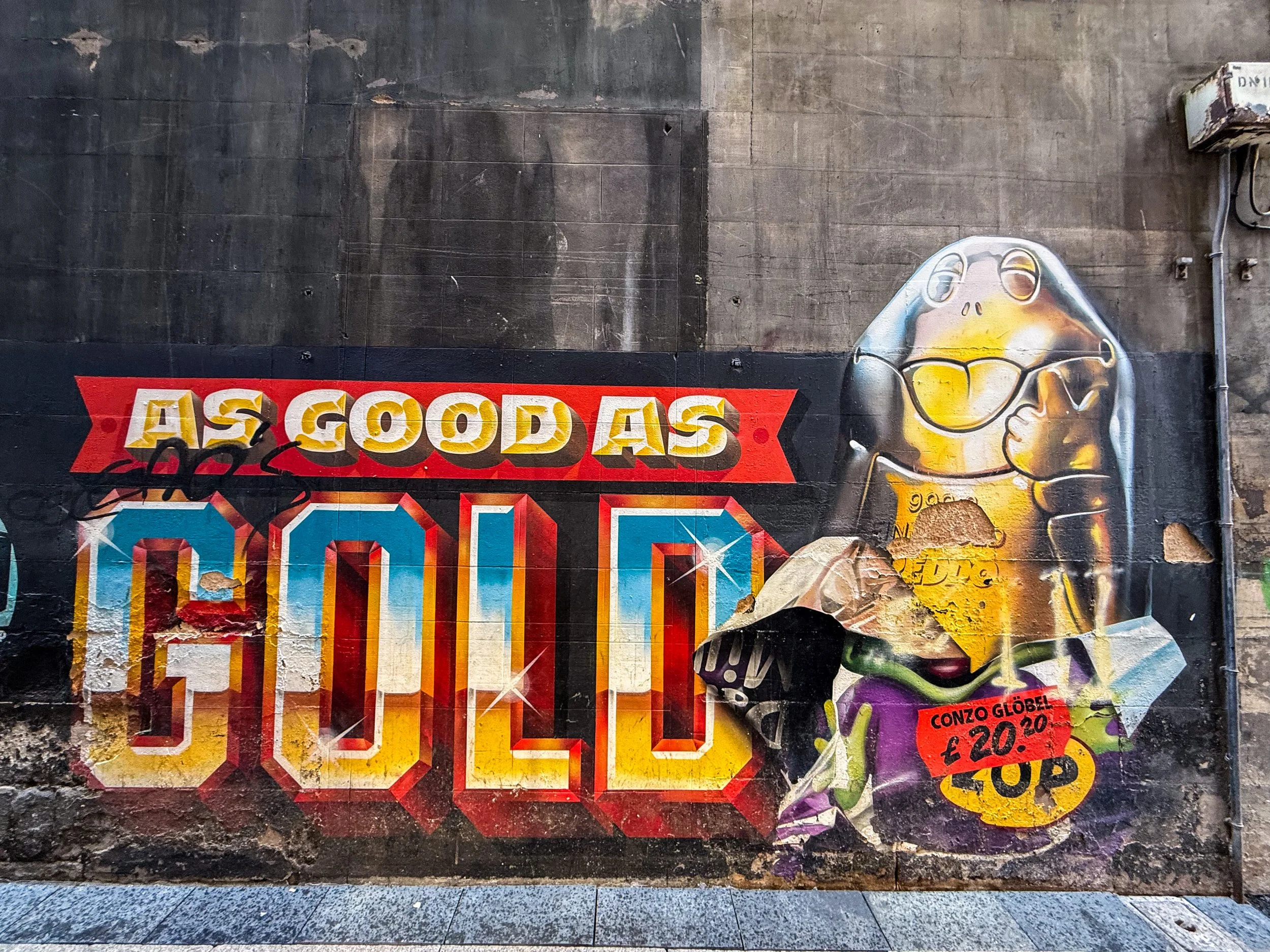
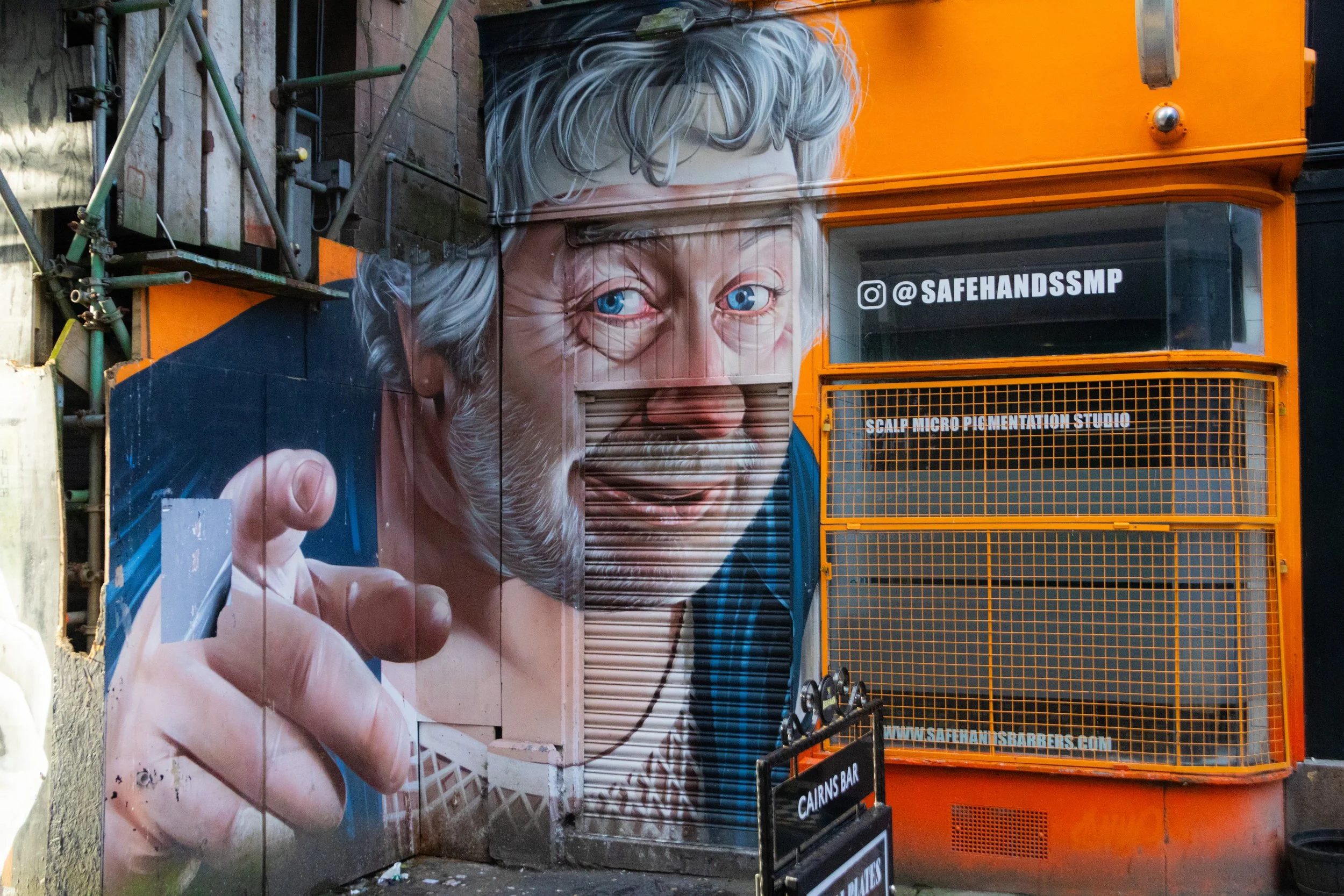
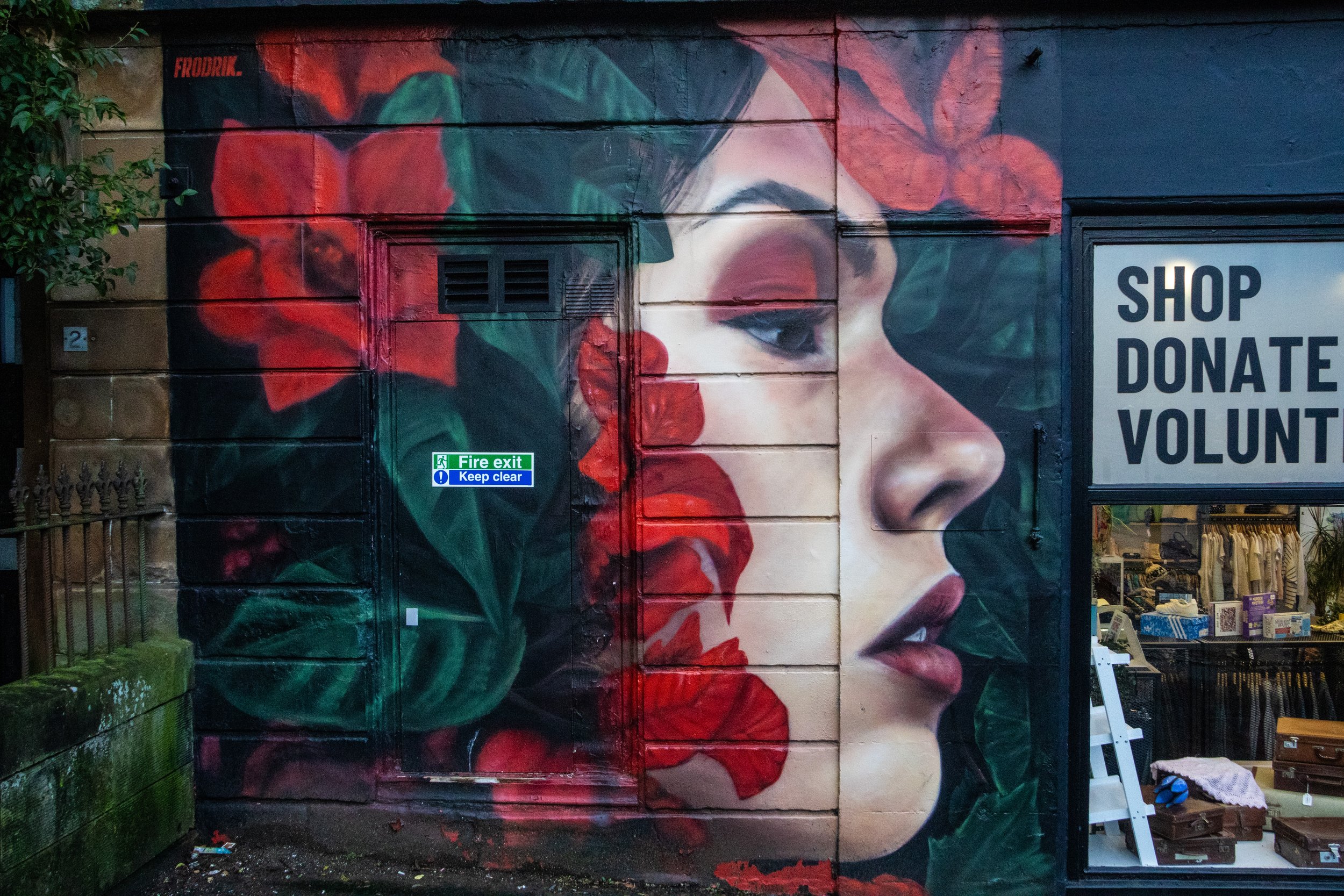
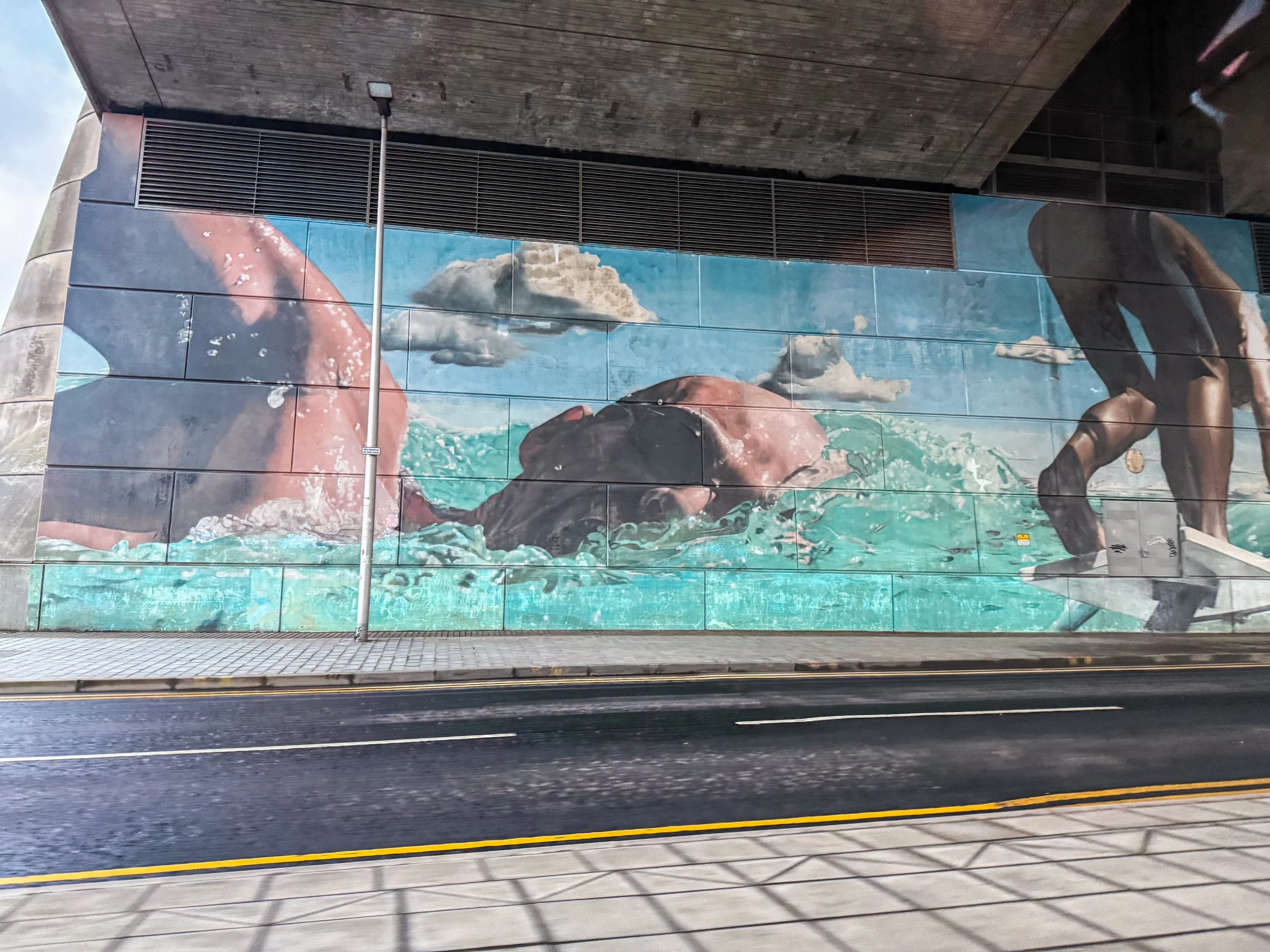
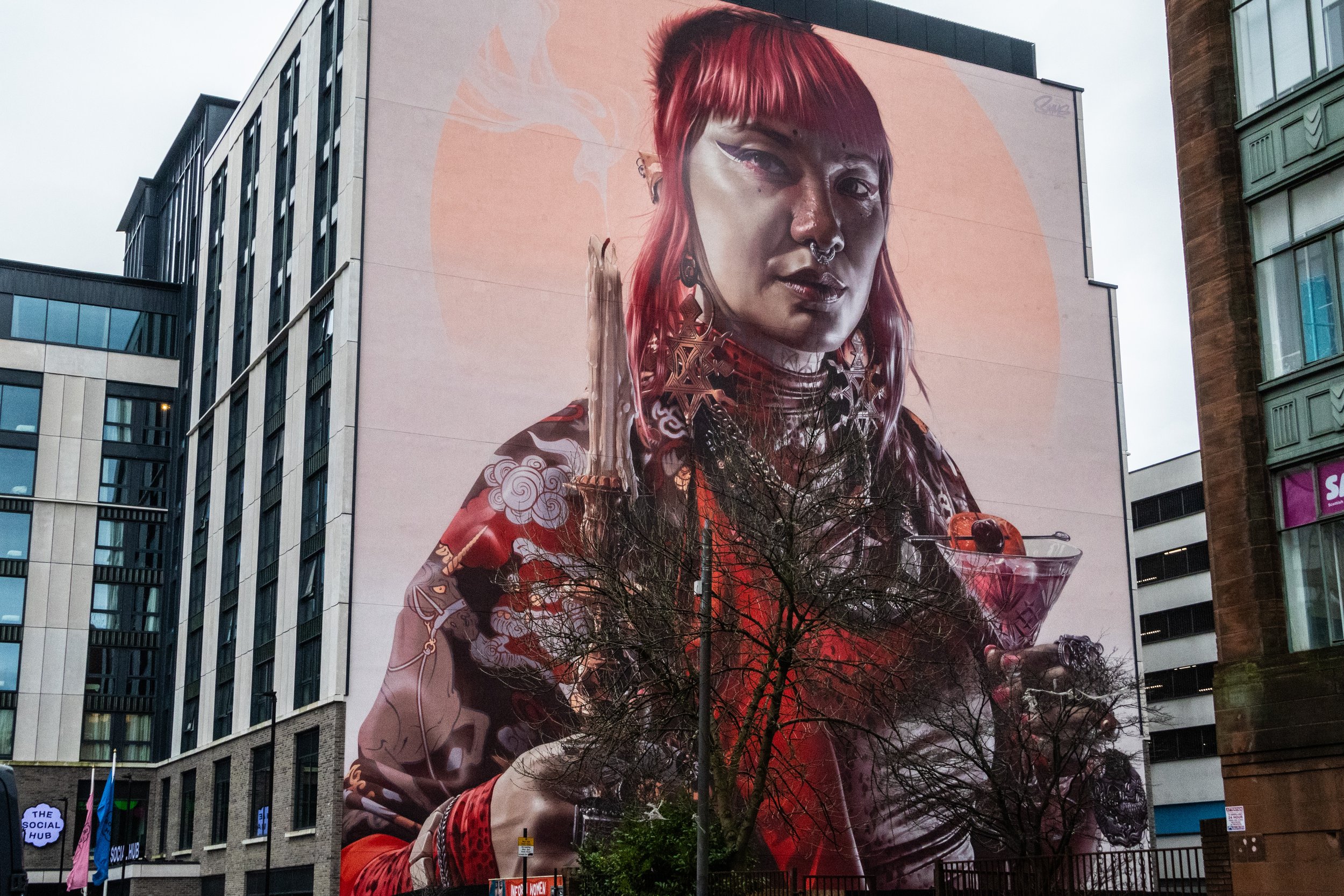
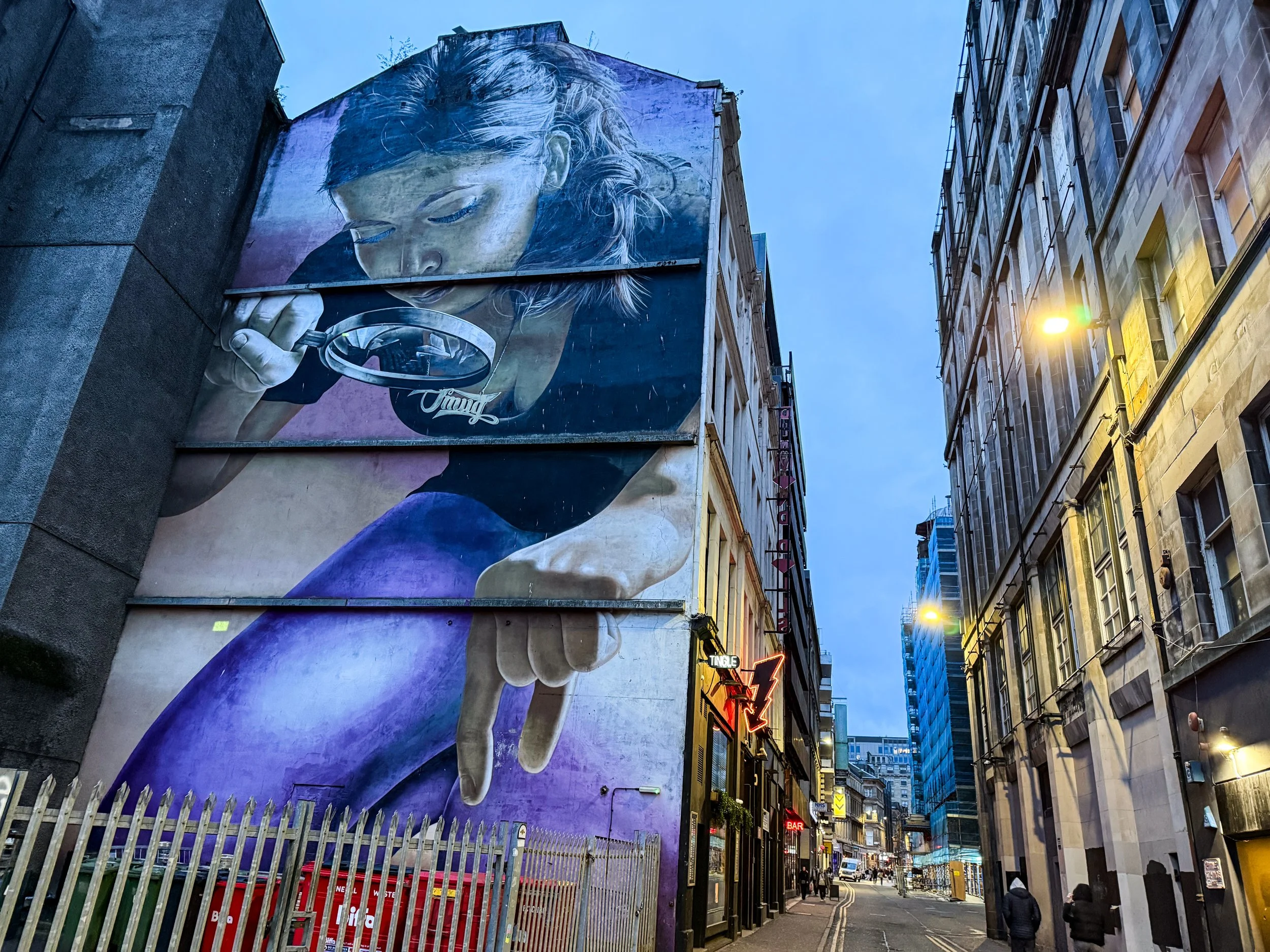
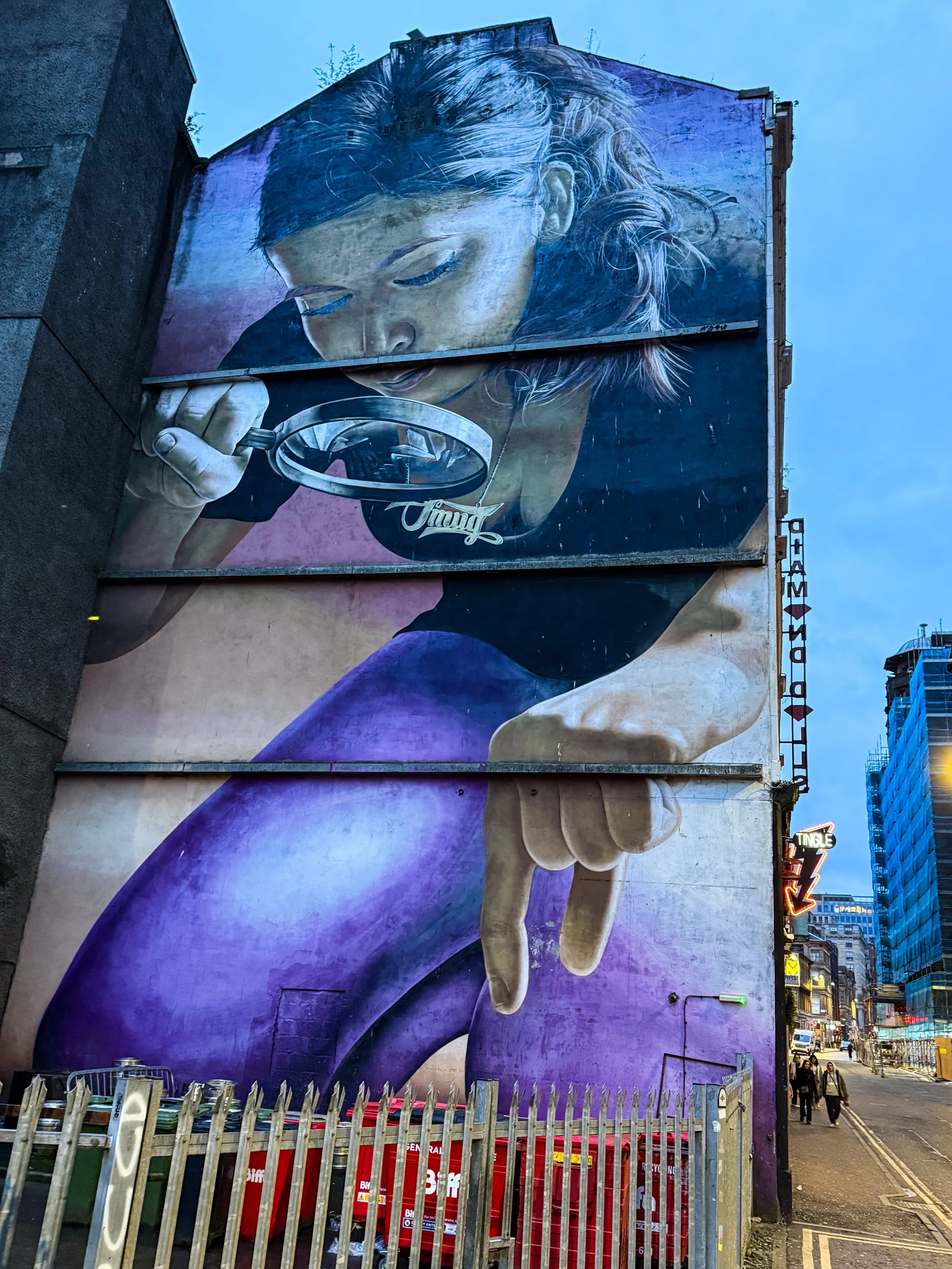
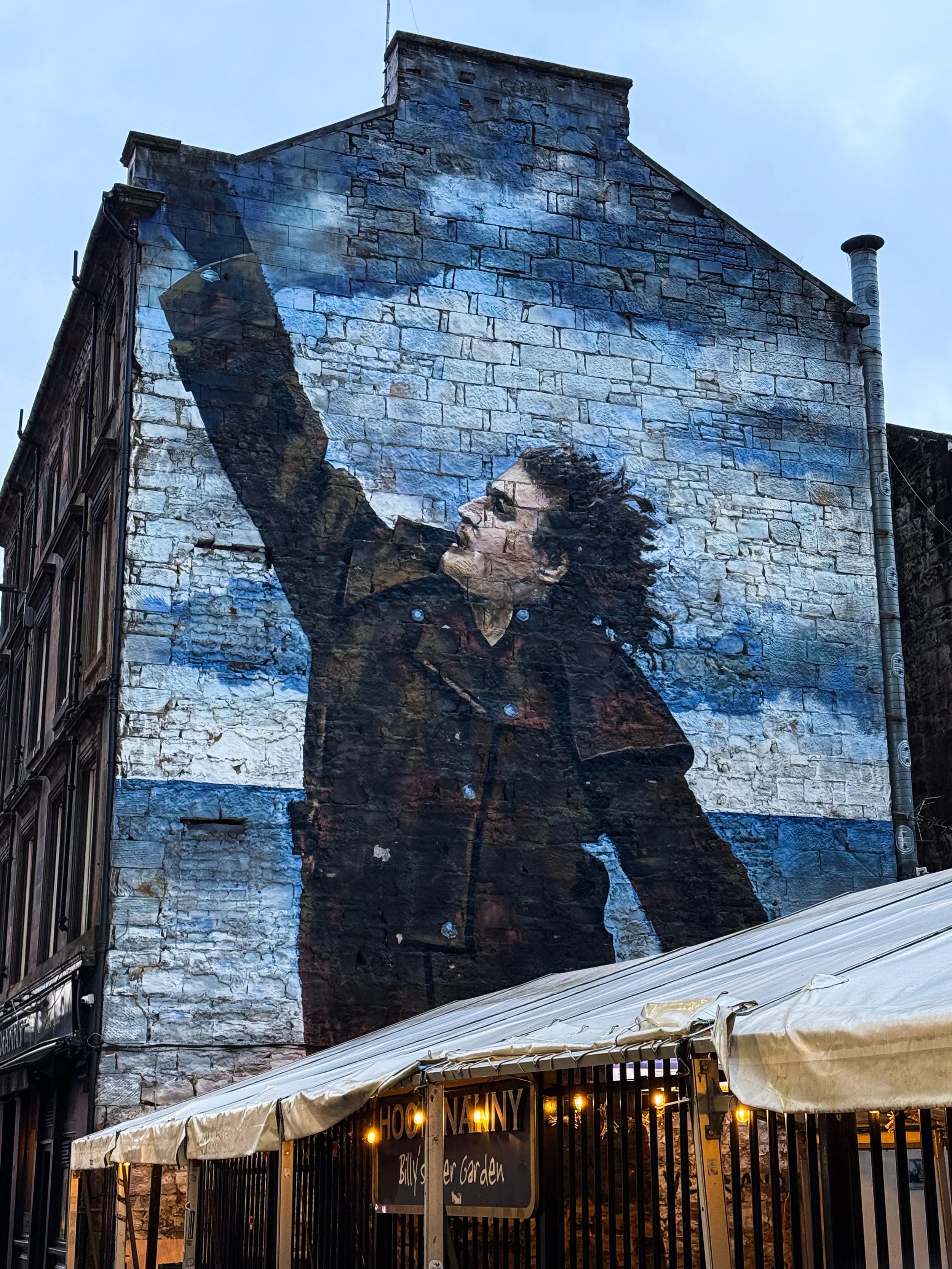
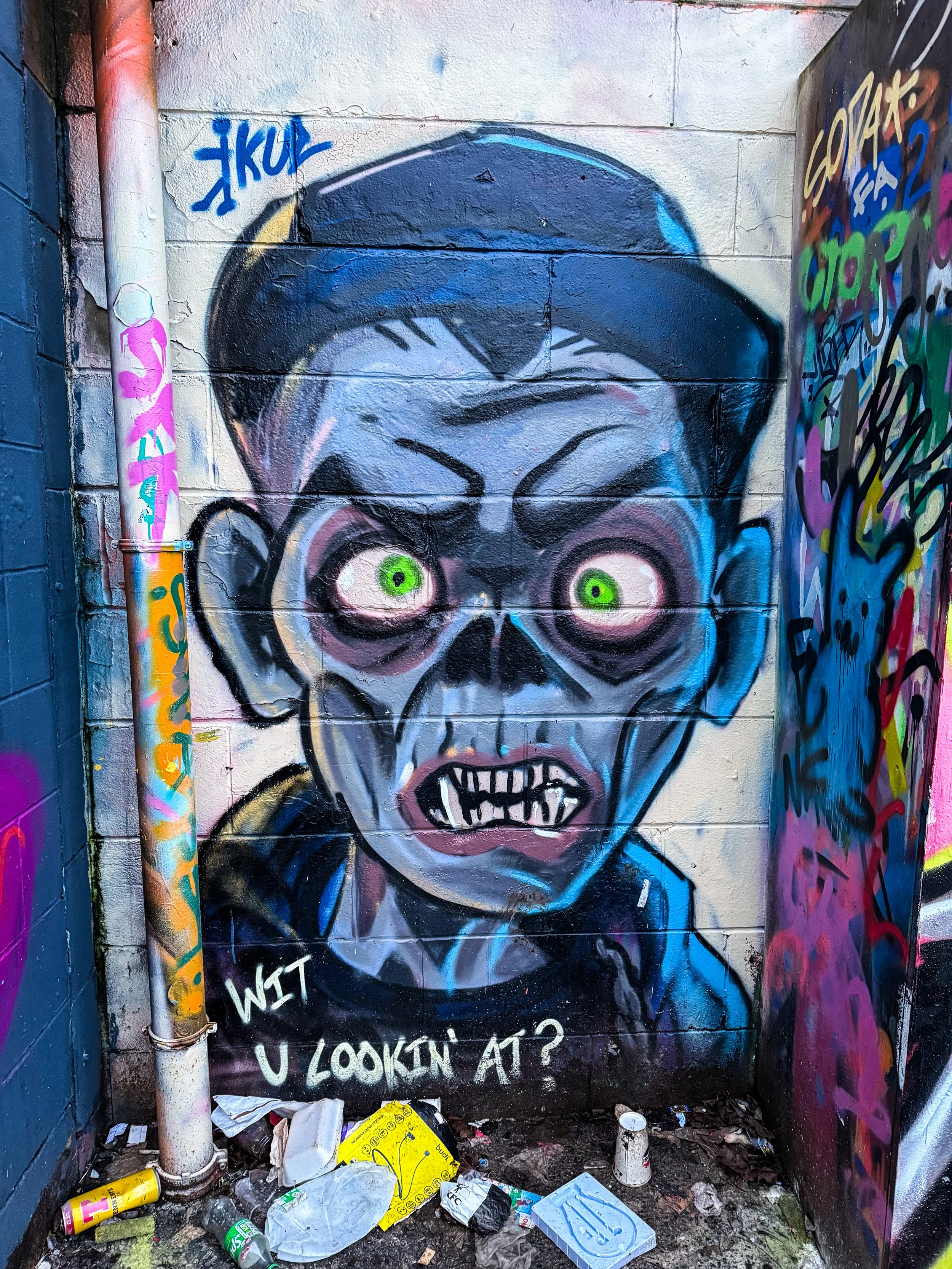
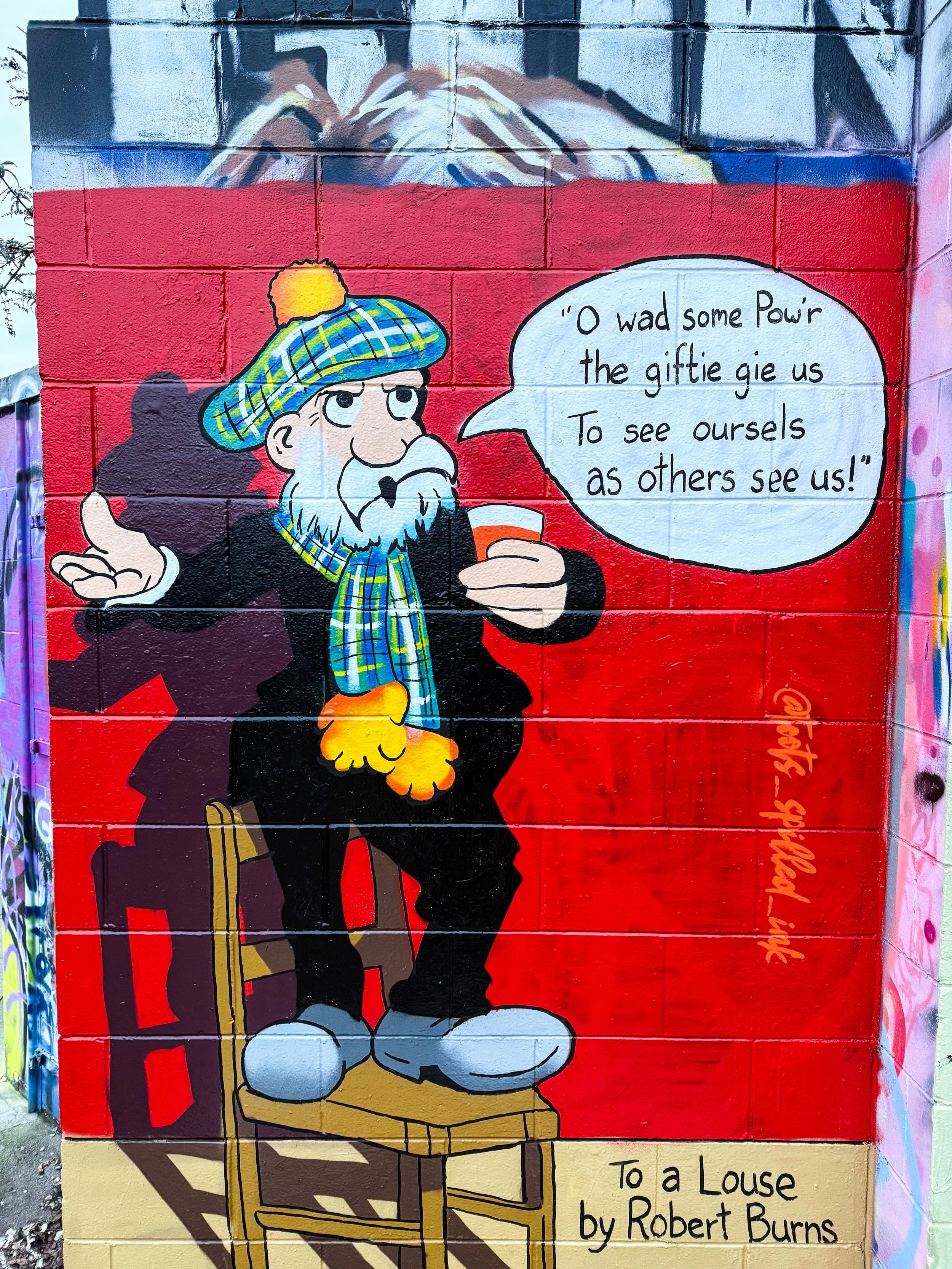
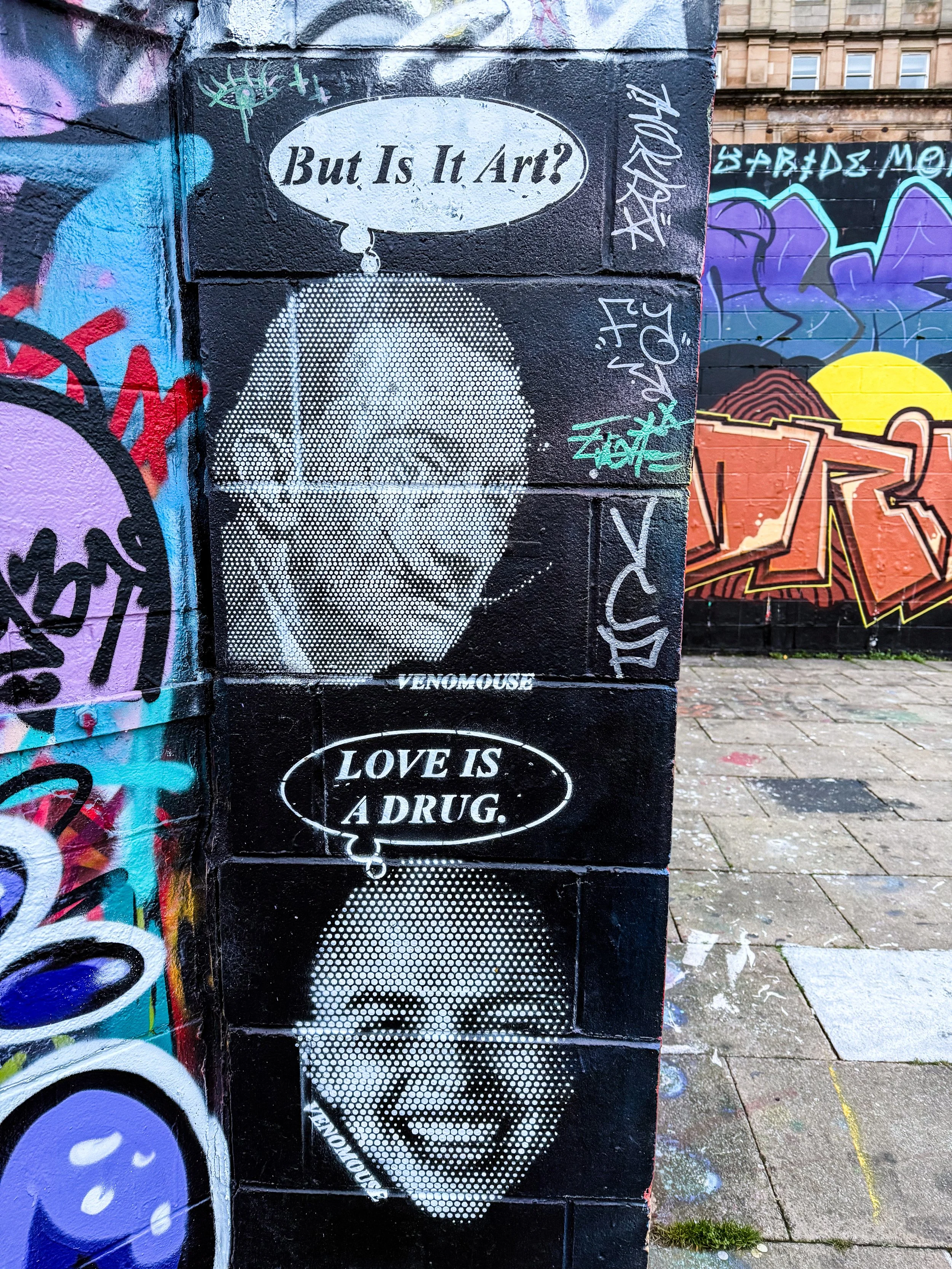
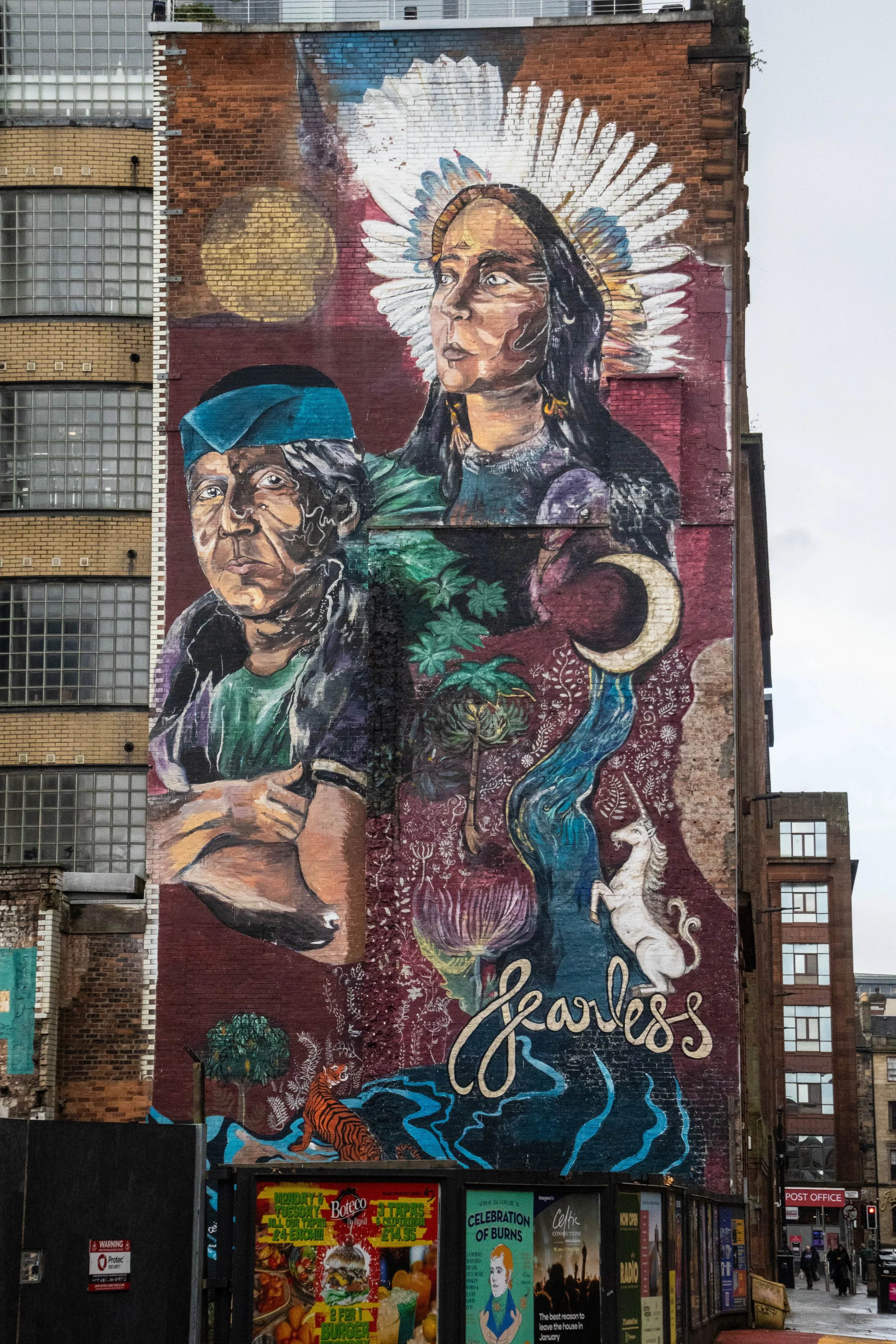
As always, I’ve done my best to track down the artists responsible for these murals. However, it is entirely possible that I’ve missed somebody, so please do let me know if you can help me bolster the integrity of this list of credits!
Venomous (@venomouseglasgow)
art_by_kiwiii (@art_by_kiwiii)
We’ll wrap this up with another selection from the LONG list of Scottish artists whose music I love. This is a really sad one, but a powerful one. The song is called “Swim Until You Can’t See Land” by a band called Frightened Rabbit. The song was written by the main creative driver of this band, Scott Hutchinson, and was released in 2010. In the song, he writes about coming “down to the coast to disappear” and committing suicide by swimming into the North Sea. It’s sad but upbeat and extremely catchy; I had this song playing on repeat when it came out. In 2018, Scott committed suicide and was found dead floating in an estuary of the North Sea. This song hits very differently now.
If you want to go even deeper on this topic, there’s another Frightened Rabbit song—a bit of ‘deep cut’—called “Floating in the Forth” that came out in 2008 that is even more specific on this topic. The Forth is the name of the estuary where Scott was found.
Rest in peace Scott. We miss you. ❤️
Check in on the people you love.




There’s a lot more to Bushwick than I’m going to cover here; it’s known for having a large Latino community, especially Puerto Rican and Dominican, and since the gentrification of Williamsburg, it has also become the new center of indie culture in Brooklyn. But that’s not what this article is about. Today, we’re here to go mural hunting!
We rode the L train to the Jefferson Street station in Bushwick, and basically from the moment I stepped out of the station, I was in mural heaven.