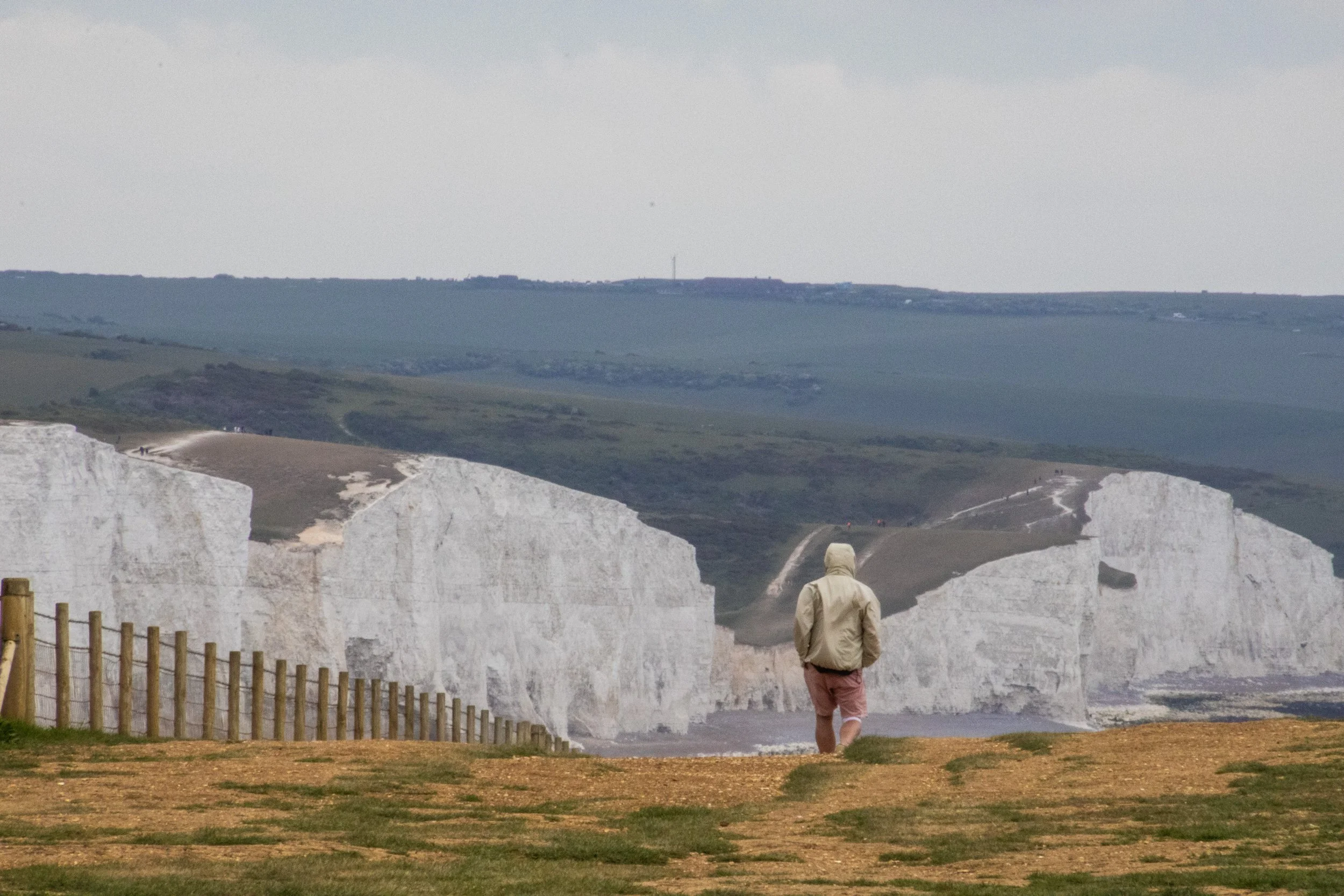
So, the “Sisters” are a series of massive hills that have each essentially been sliced down the middle by natural erosive processes to reveal massive, sheer cliffs that stretch along the English coastline like a series of rolling waves. To make the scene all the more striking, these cliffs are entirely white. Perhaps you’ve heard of the “White Cliffs of Dover”? This is part of the same system of cliffs, which is called the “South Downs”, but Seven Sisters is arguably even more iconic because the entire stretch has been kept completely natural and undeveloped. The white color comes from the fact that the earth here is made of an extraordinarily pure form of limestone: chalk! Indeed, the earth here contains about 98–99% calcium carbonate, with very little clay or sand, making them appear dazzlingly white! They stay so white because they are in a constant cycle of erosion, where after some time the outer layers of chalk crumble away revealing fresh, white chalk.
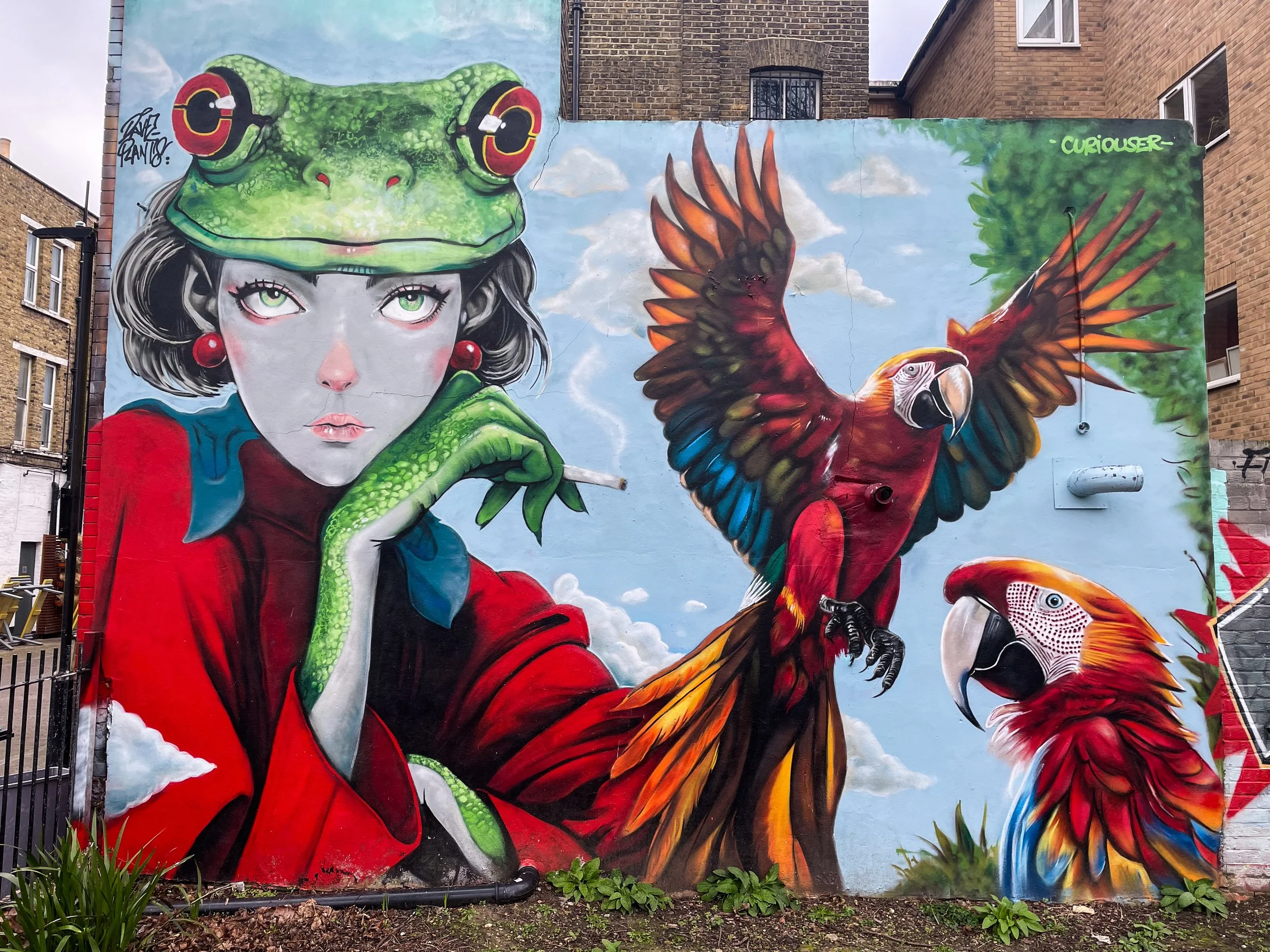
In this article, we’re going to be agnostic with the location within London. Indeed, this article has been sitting around as a ‘draft’ since 2023, and I have just been adding to the gallery every time I walk by a mural in my day-to-day life. So, I stumbled onto all of these randomly, and accordingly, they are really from a random collection of places. I think the London neighborhoods covered here include Camberwell, Stoke Newington, Little Portugal, Bow, Bethnal Green, Walthamstow, Peckham, Hackney, Finsbury Park, Waterloo, Nunhead, Stockwell, Fitzrovia, Clapham, Earl’s Court, Soho, Notting Hill, Streatham… and probably more!
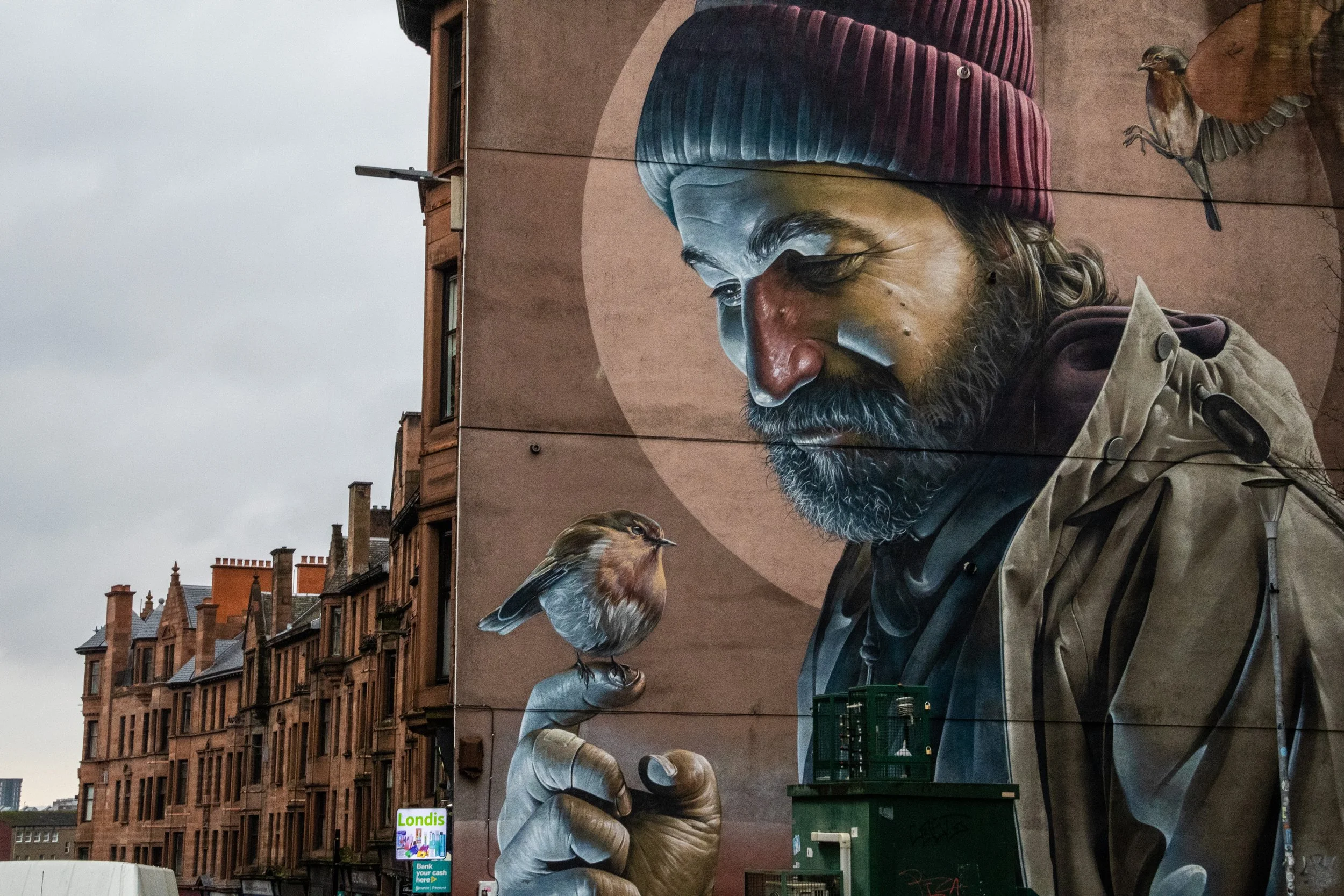
It turns out that Glasgow has a reputation for murals! The one at the top of the gallery below is, perhaps, the most famous of them all. It was done by an Australian-born street artist named Sam Bates, better known under the moniker Smug. He’s offered little information on the intended symbolism of the mural, but because the subject is holding a robin and appears to have some sort of halo—both imagery that were/are commonly associated with St Mungo—the mural has been widely interpreted as a modern St Mungo. The mural’s close proximity to Glasgow Cathedral, which is the resting place of St Mungo, serves to reinforce this.
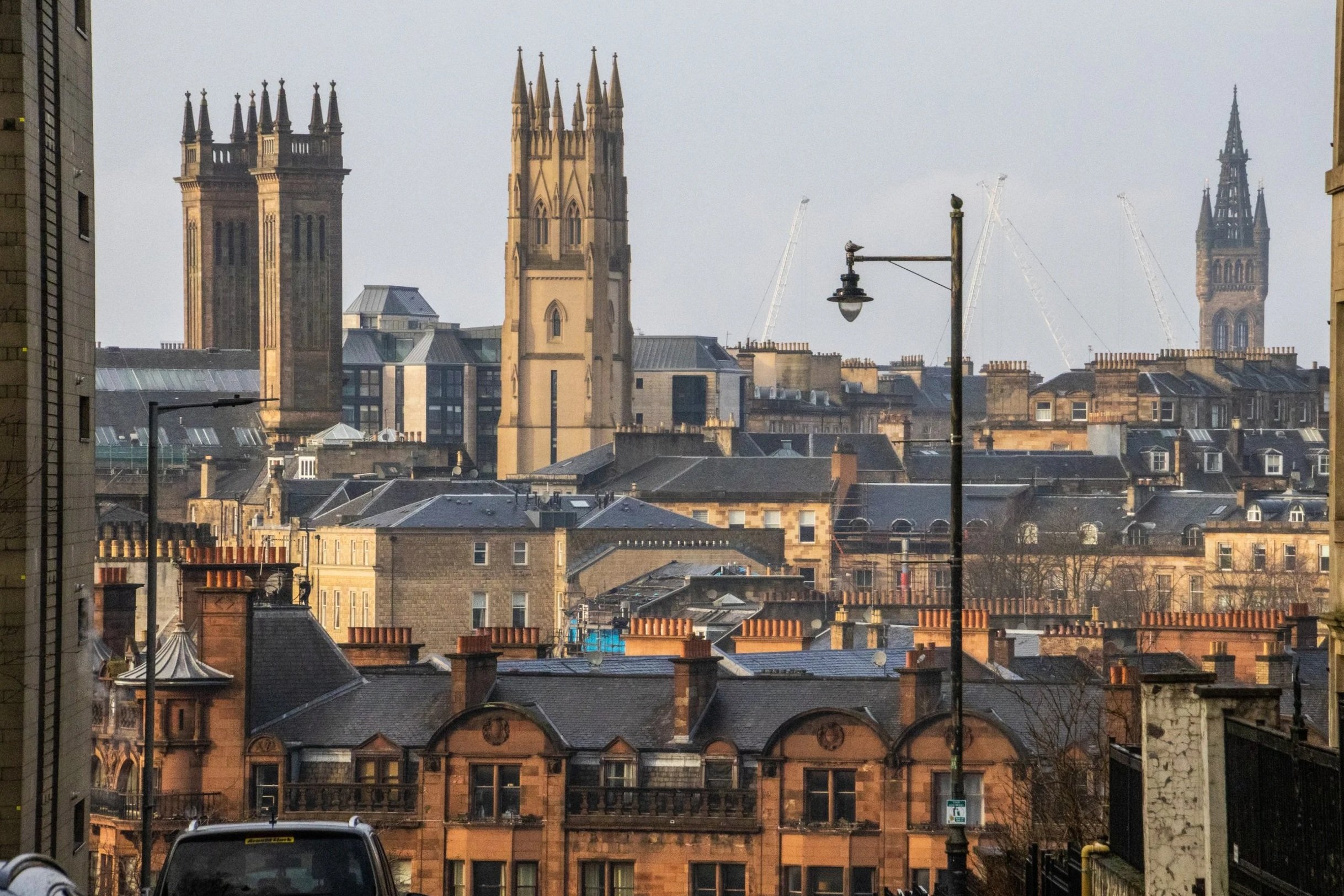
When you think of Scotland, I’m betting you don’t immediately think of Glasgow. You probably think beautiful scenes in the Scottish Highlands, or the charming cobblestone streets of Edinburgh. Indeed, this is the image that Scotland likes to show to the outside world, but the largest city in Scotland is actually not Edinburgh; it’s Glasgow! With a metro area population of ~1.8 million, the joke goes that this is where Scots actually live. It could be said that Edinburgh and Glasgow are two sides of the same coin. They are the largest two cities in Scotland, and they are literally right next to each other at only 70-80km (45-50 miles). Edinburgh is smaller, but it is the administrative, governmental, diplomatic, academic, and financial hub of Scotland. It’s well-connected, it’s expensive, and it’s posh. Glasgow, on the other hand, is none of these things.
You’re gonna love it. 😉
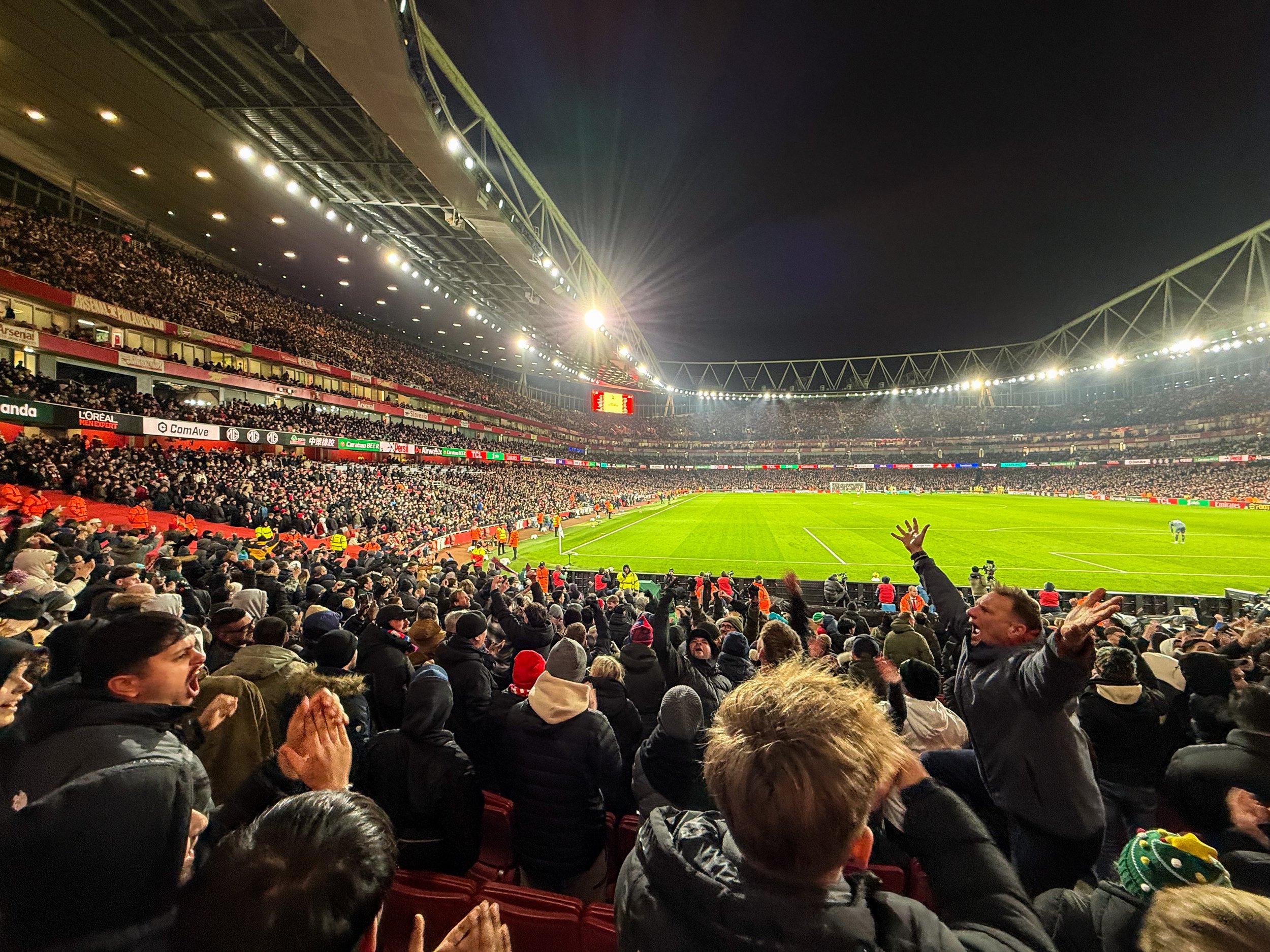
Today we return to football tourism with our quest to visit all the stadiums in the English Premier League. Up to this point we’ve covered Chelsea’s Stamford Bridge, Fulham’s Craven Cottage, West Ham’s London Stadium, Spurs’ Tottenham Hotspur Stadium, and Brighton’s AmEx Stadium. Now, at long last, we’re visiting Arsenal’s Emirates Stadium, which sits in North London, within walking distance of my new flat! We’re going watch the EFL Cup quarter-final against the classic South-London side, Crystal Palace.
So here’s our destination today, along with a couple of nice pictures from the walk over. This match took place on December 23rd, so you will see lots of Christmas imagery & references in the images.
Bath is a small town of about 94,000 people in the county of Somerset. By train, it is about 2 hours west of London, and it’s closely neighbored by Bristol and the Welsh border to the northwest. By all accounts, this is one of the most beloved and beautiful little towns in the South of England. There are lots of other sub-regions of the British Isles that I’m sure have lots of other beautiful towns… but in terms of day trips out of London, Bath is definitely in the top 3.
There is more to know about Bath of course—including the super un-creative way it got its name—but I’ll cover those details in due course. For now, here’s the map. You can enter into this place as uninformed as I was when my train rolled up one morning in late October.
This article marks a ‘first’ for Peter’s Big Adventure: this was the FIRST time that I tried to upload so many photos at once that SquareSpace cut me off. Apparently the limit for a single-batch upload is 250. 😂
So that should be a good indicator for what is to come.
Today we’re venturing into East London to visit BRICK LANE. In Volume 1 of this series in South London, I spoke to how much walking I had endured in order to piece that article together. At the time, it seemed to me (a recent arrival here) that London’s street art was quite decentralized, but I have been proven wrong many times over since publishing that article. There are dense clusters of murals if you know where to look. And thankfully, I have gotten some good pointers from people who know London a lot better than I do about where to find these clusters.
And we’re back with more of the beautiful game! And my quest to get to as many stadiums in London as possible continues, this time with Craven Cottage, where Fulham will host the mighty Liverpool in the 2nd leg of the EFL Cup semi-final. In the 1st leg, Liverpool beat Fulham 2-1. This match would decide who moved on to the final. This will be the smallest Premier League stadium I’ve yet visited, so it should be a good time.
This article is going to be a LONG one! And despite the length, this is still just the tip of the iceberg that is London’s vast collection of museums. I’ve heard that London actually has almost 200 museums! Honestly, I am museum-ed out even after these 9. So I’ll do my best to keep my writings on each of these short and sweet.
Established in 1753 in central London, The British Museum hosts upwards for 4 million visitors every year, and has 8 million historical and cultural artifacts on permanent display. It is, without a doubt, one of the largest and most famous museums in the world. In fact, by some measures, it is the largest museum in the world… and nowadays I think it’s safe to say that it’s also the most controversial.