
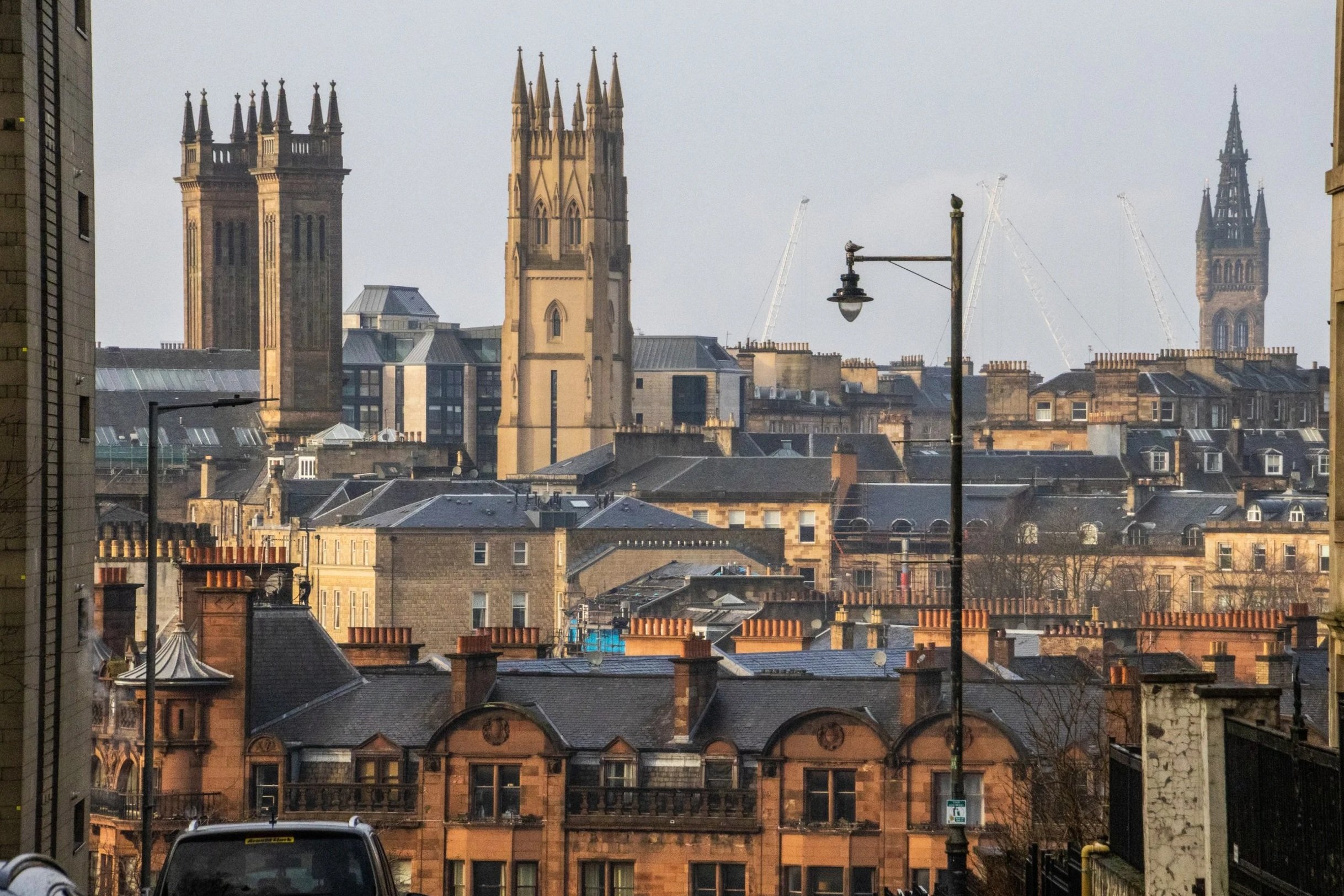
Today I am making my LONG overdue trip up to Scotland. I’ve been living in the UK for a few years now, and even have some Scottish heritage, but I’d yet to make the pilgrimage. January was perhaps not the ideal month of the year to be doing this trip, but the date was not arbitrary: I was coming up for a Burns Night celebration. This was actually my 3rd year in a row celebrating it, thanks entirely to Scotland’s ambassador into my life, David (shout-out to him!) but I’m not going to be writing about that… yet! Today, we’re just going to get acquainted with the city of Glasgow.
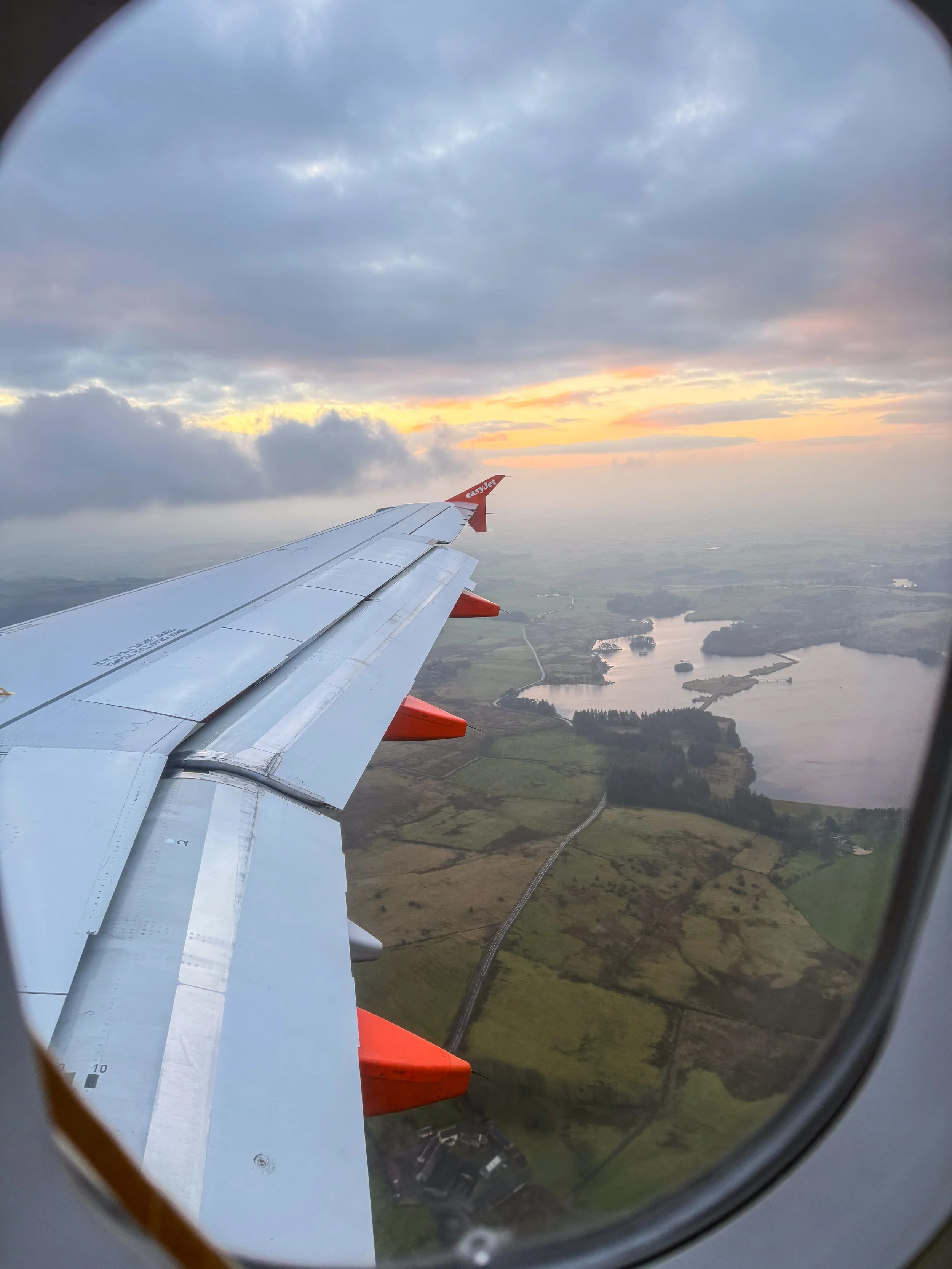
I flew up from London at the buttcrack of dawn and was lucky enough to see these beautiful breaks in the seasonal gloom out the window of the plane:




An Introduction to Glasgow
When you think of Scotland, I’m betting you don’t immediately think of Glasgow. You probably think beautiful scenes in the Scottish Highlands, or the charming cobblestone streets of Edinburgh. Indeed, this is the image that Scotland likes to show to the outside world, but the largest city in Scotland is actually not Edinburgh; it’s Glasgow! With a metro area population of ~1.8 million, the joke goes that this is where Scots actually live. It could be said that Edinburgh and Glasgow are two sides of the same coin. They are the largest two cities in Scotland, and they are literally right next to each other at only 70-80km (45-50 miles). Edinburgh is smaller, but it is the administrative, governmental, diplomatic, academic, and financial hub of Scotland. It’s well-connected, it’s expensive, and it’s posh. Glasgow, on the other hand, is none of these things.
While the stereotypical Edinburgh resident might—to some extent—look down on Glaswegians as rough, loud, and/or inelegant, the rivalry is (mostly) friendly. But make no mistake: Glasgow is a hardscrabble city that has endured real hardship over the past 100 years. The Industrial Revolution arrived first in the UK, and it made Glasgow into one of the world’s great industrial cities! In the 1800s, its main industries were shipbuilding on the River Clyde, heavy engineering, and manufacturing. But in 20th century, industrial decline hit HARD and Glasgow’s reputation became one of unemployment and urban decay. Perhaps you’ve heard of the move Trainspotting? That movie famously encapsulates the underbelly of a down-on-its-luck post-industrial Scotland. Ironically, the film was actually set in Edinburgh, but today seems to be more a cultural descendent of Glasgow.

As advertised by Glasgow’s hilariously self-aware 1980s tourism slogan, “Glasgow’s Miles Better”, the run-down, drug-addled, crime-heavy world of Trainspotting seems (mostly) to be disappearing into the rearview mirror, chased away by an economic revitalization that continues to this day. However, this is recent history and is still absolutely essential to understanding the Glaswegian identity of today. This is a working-class city that defied the odds to find its way after an economic collapse, producing a tough, gritty, resilient group of people who are well-known to be friendly, creative, fun, and quick-witted. Glaswegians furthermore have a reputation for their often dark, irreverent, anti-establishment sense of humor. Knowing all of this, I liked them even before I arrived!
With that introduction, let’s get out there an explore central Glasgow!
Central Glasgow
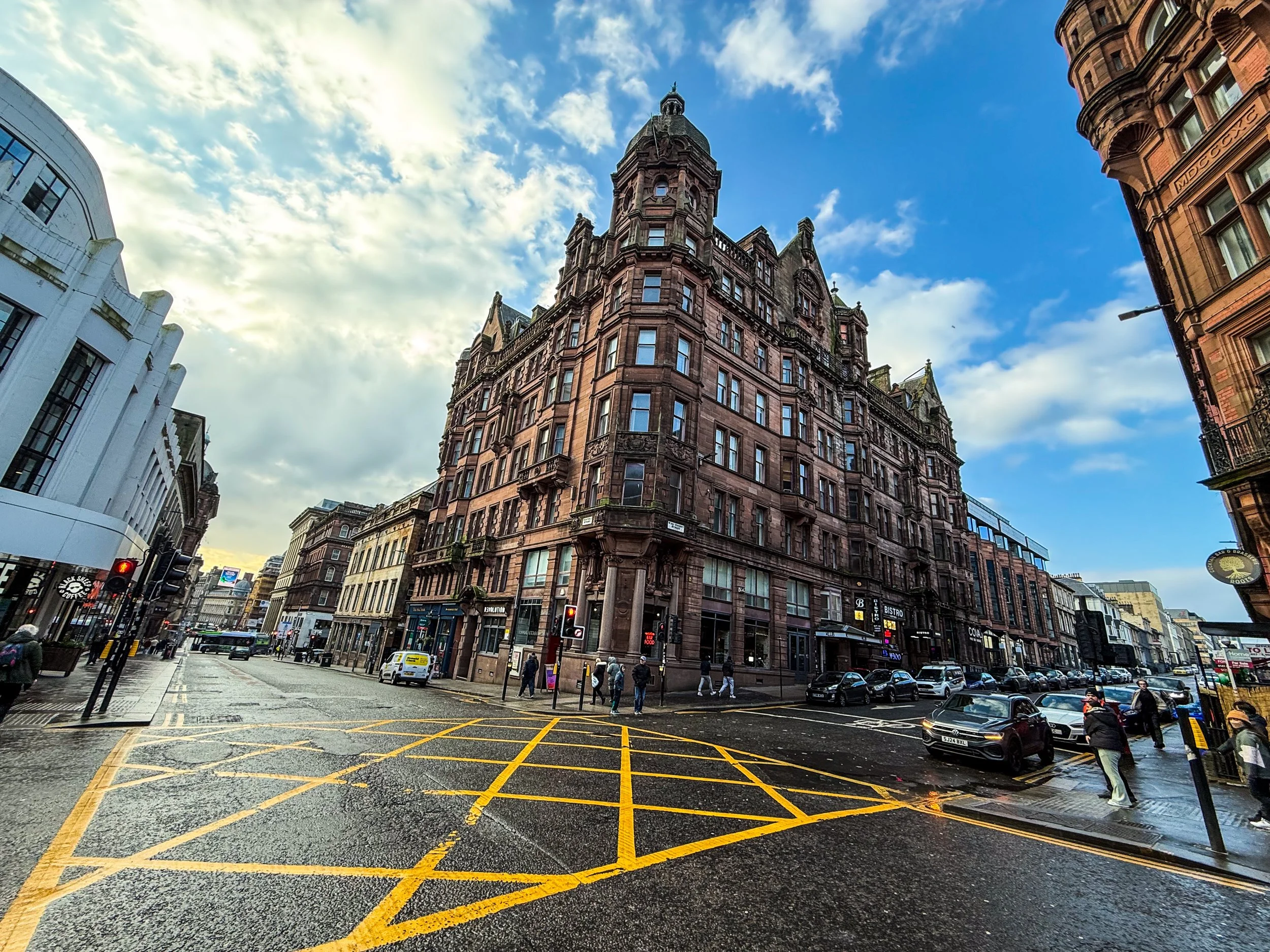
Walking around central Glasgow, I quickly realized that this is far-and-away the most North American-feeling city I’ve yet found on this side of the Atlantic. I’d compare it to parts of Boston, New York, Philadelphia, Chicago, or Toronto. This, it would turn out, is a common observation.
The reason for this surreal North American resemblance is that—unlike most cities in this part of the world, which developed during medieval times—Glasgow was a late bloomer. Indeed, Glasgow mostly developed at the same time as most of North America, during the Industrial Revolution, which meant that unlike its posh older brother, Edinburgh, Glasgow was designed to favor function over form. Additionally, many of the older/medieval parts of the city that pre-dated all of this development were actually demolished in the Victorian era to make Glasgow more Industrial Revolution-compatible. By the 1930s, Glasgow’s housing was some of the most overcrowded in Europe, cramming big families into tiny, poorly sanitized tenements. The city embarked on a huge project to demolish Glasgow’s slums and relocate their residents to new developments on the outskirts of the city: towns which still stand today, such as East Kilbride, Cumbernauld, and Livingston. My understanding is that this was a dire problem; something needed to be done, but the solution came at a huge urban cost. It also opened the door to lots of “modernist” planning from the 1950s-1970s, which was not (in my opinion) a golden age of architecture. All my Americans and Canadians out there know what I’m talking about. The result? Glasgow doesn’t feel super “historic” anymore. It still has lots of uniquely Scottish charm (as you will soon see), but also I’m told is often used in films as a stand-in for North American cities. A recent example is the movie World War Z, which apparently used the Glasgow city center to stand in for Philadelphia.
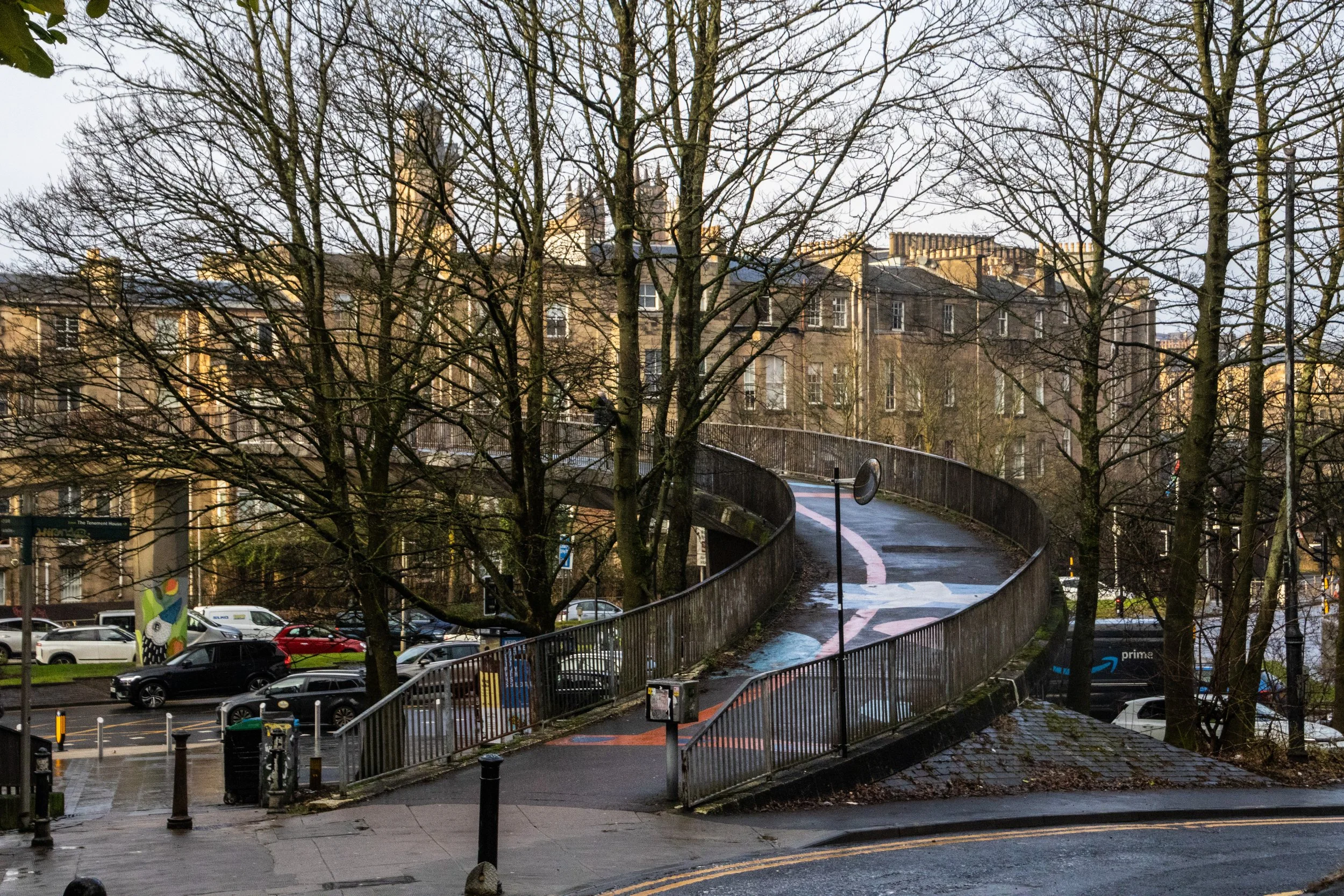
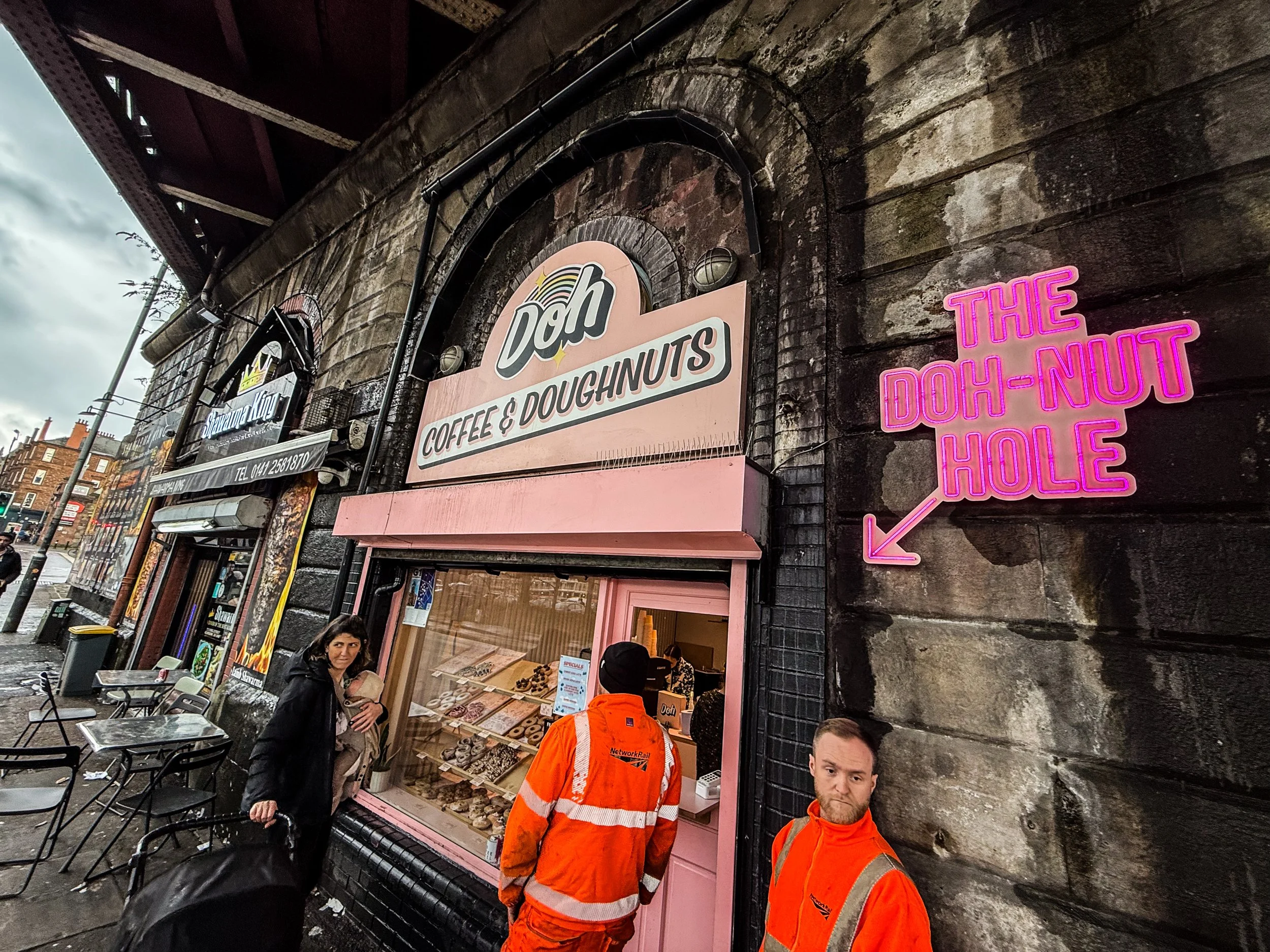
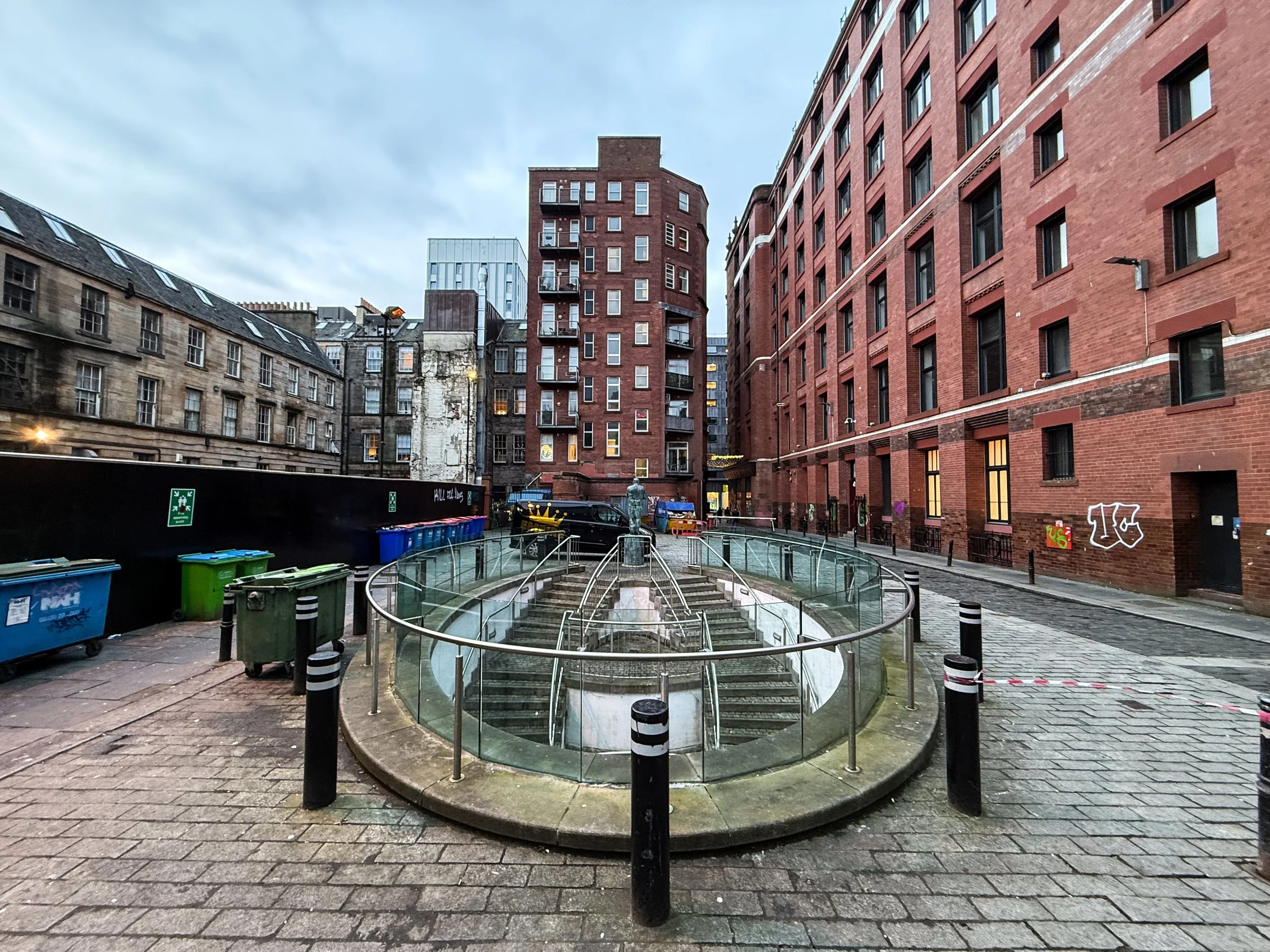
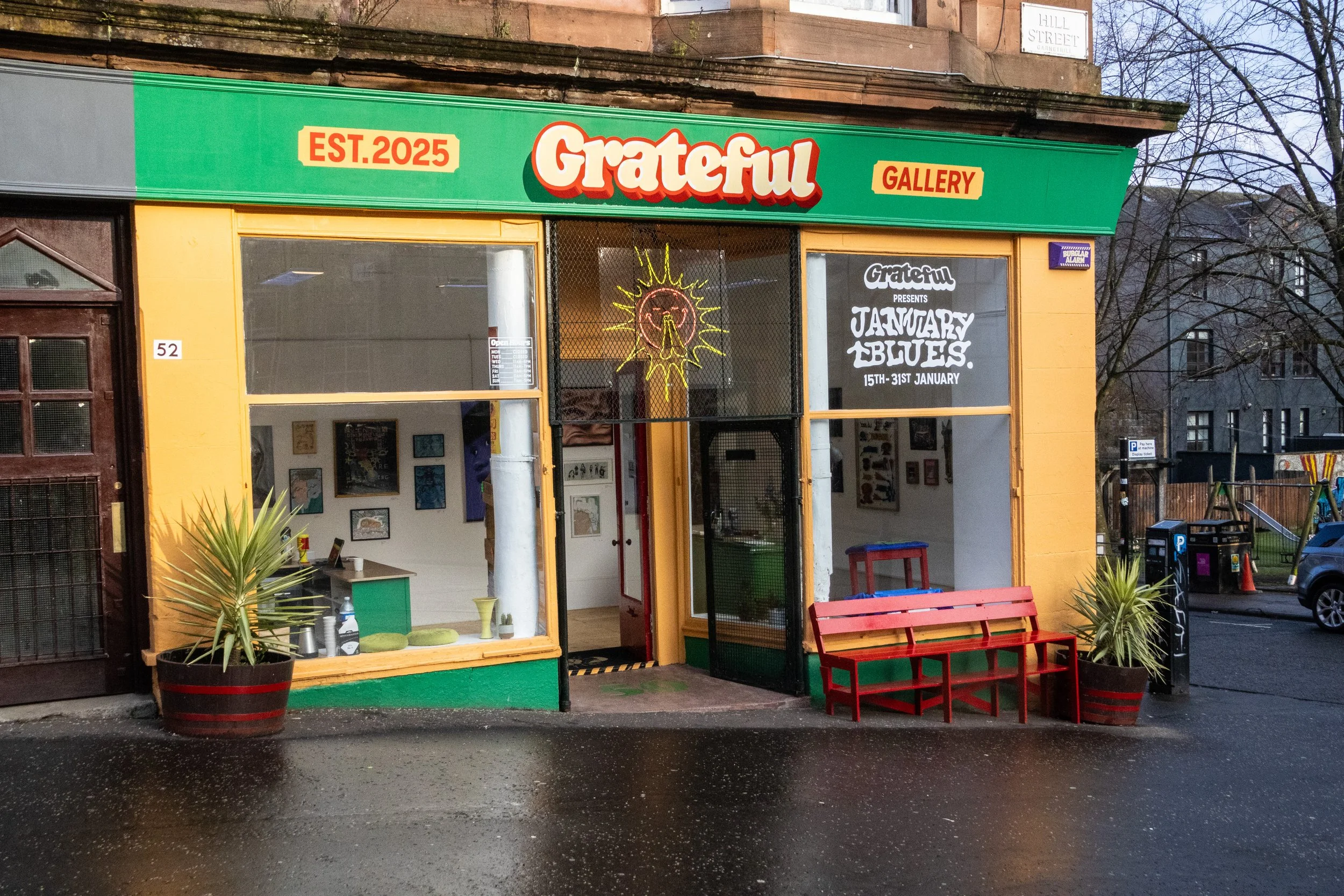
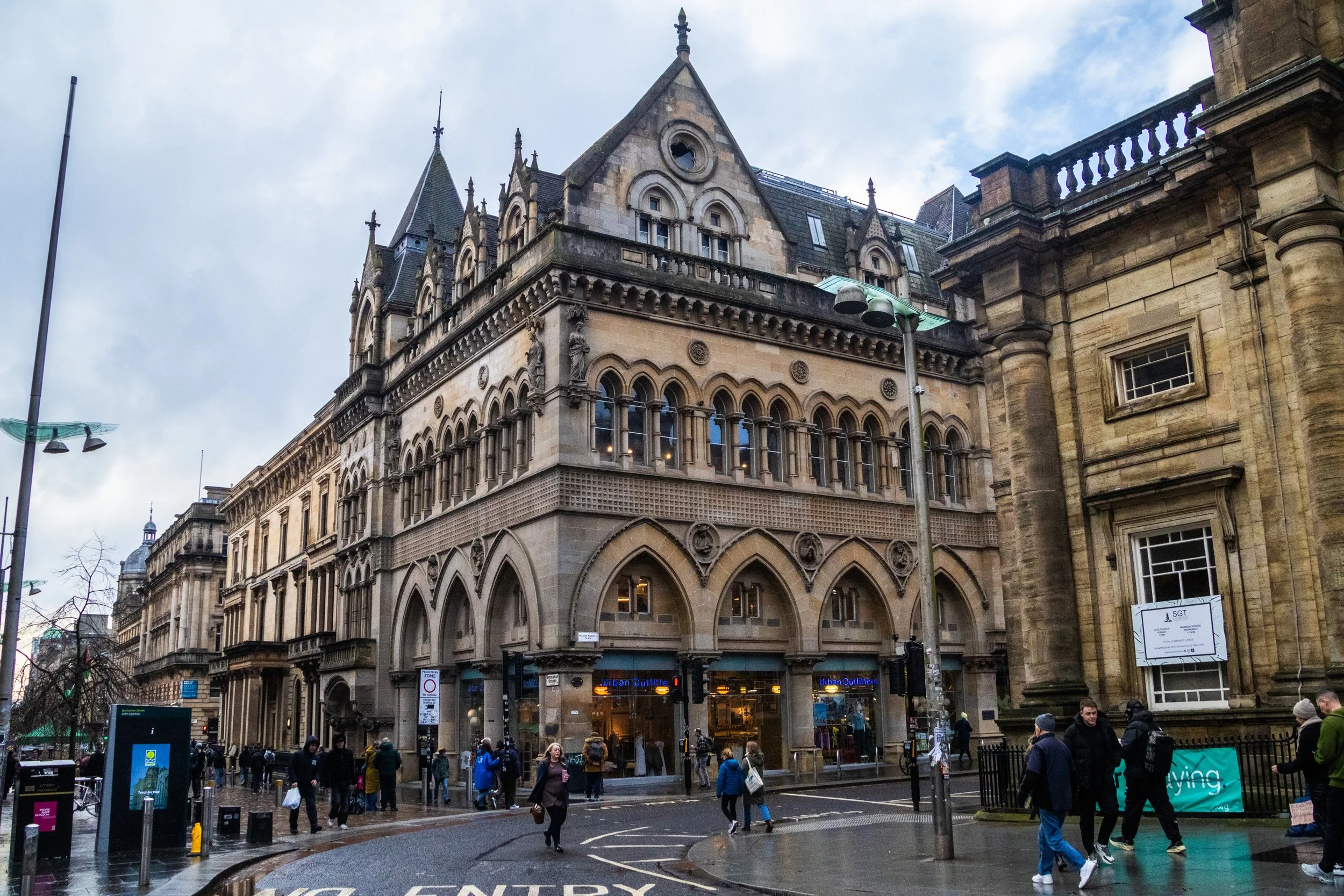
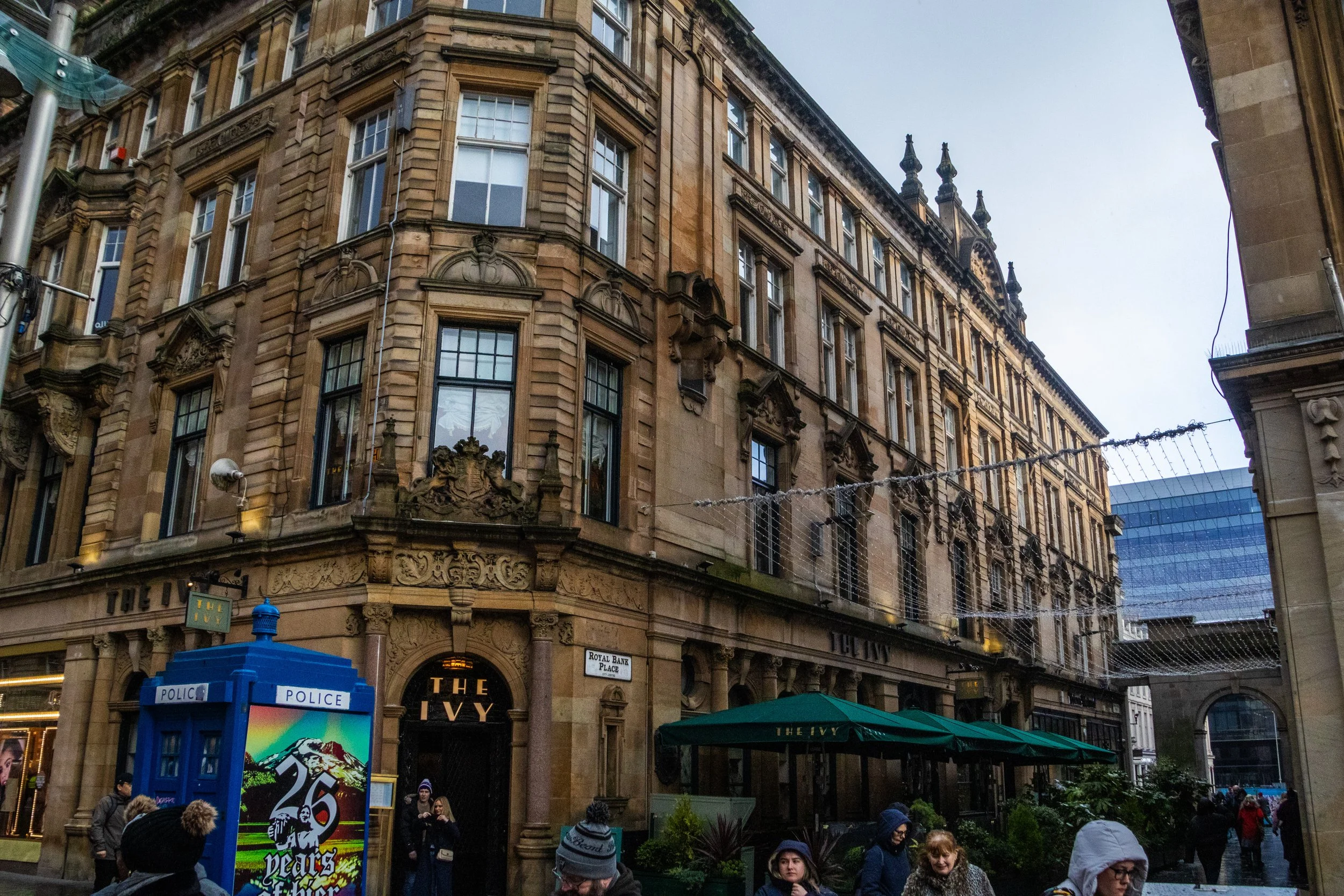
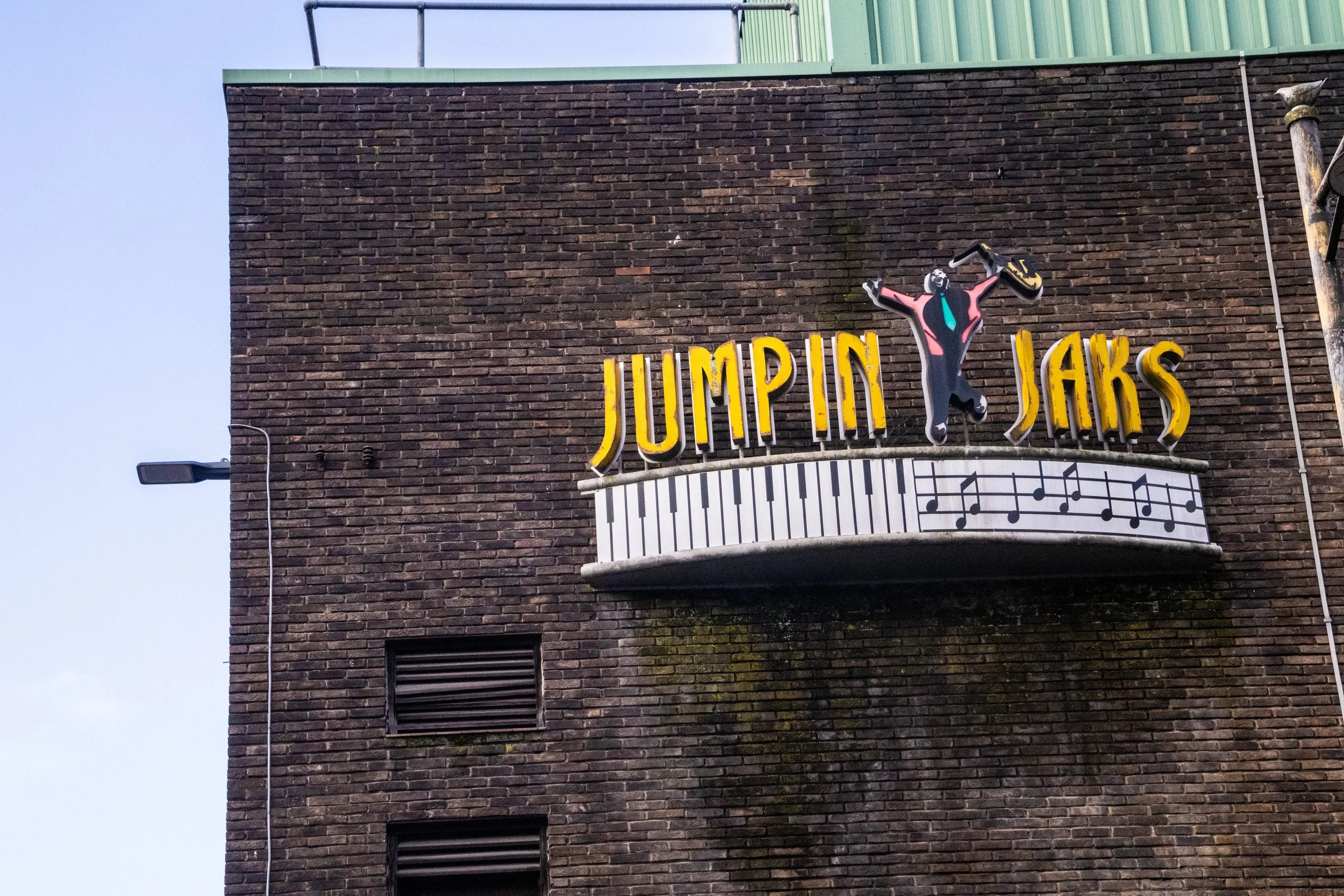
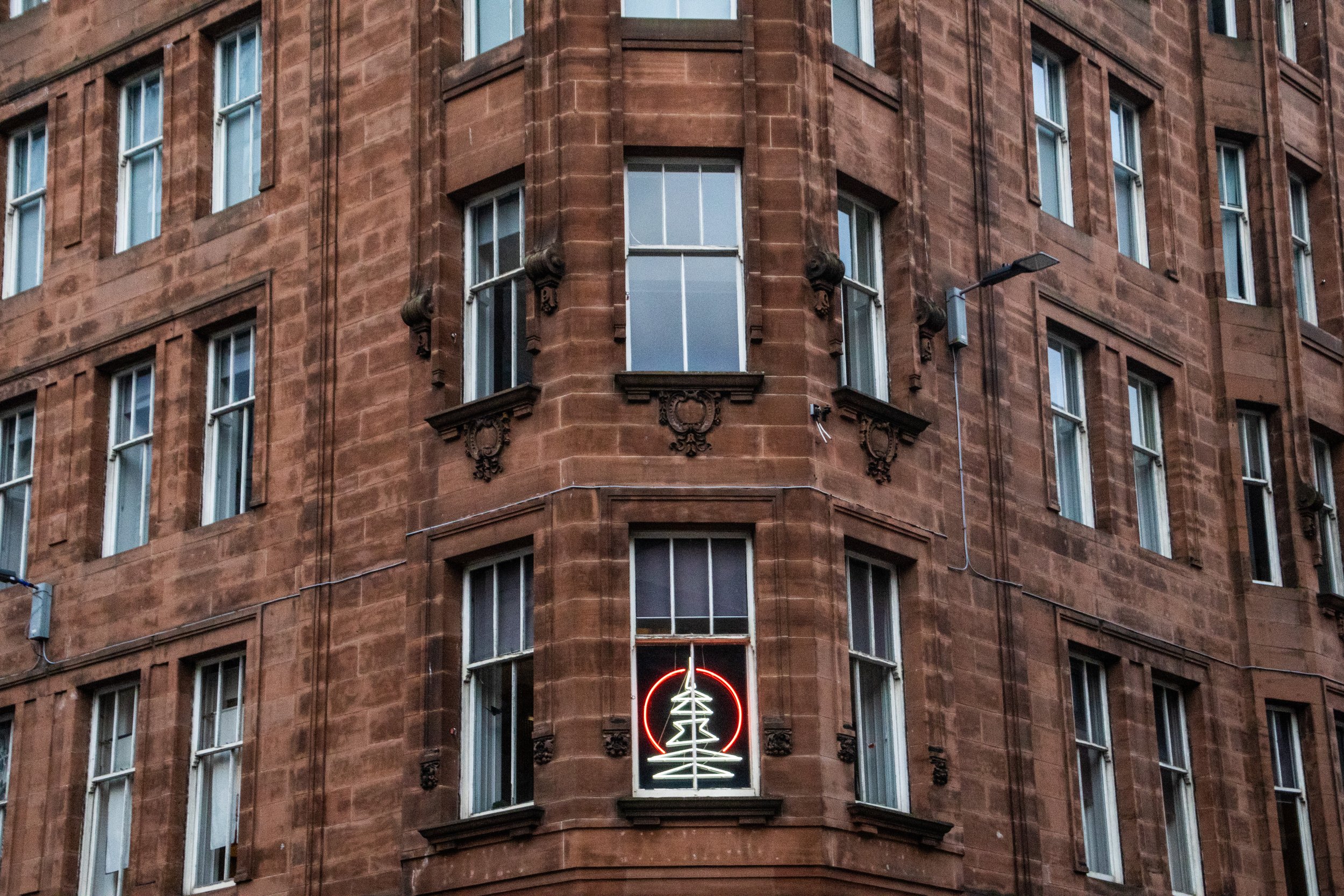
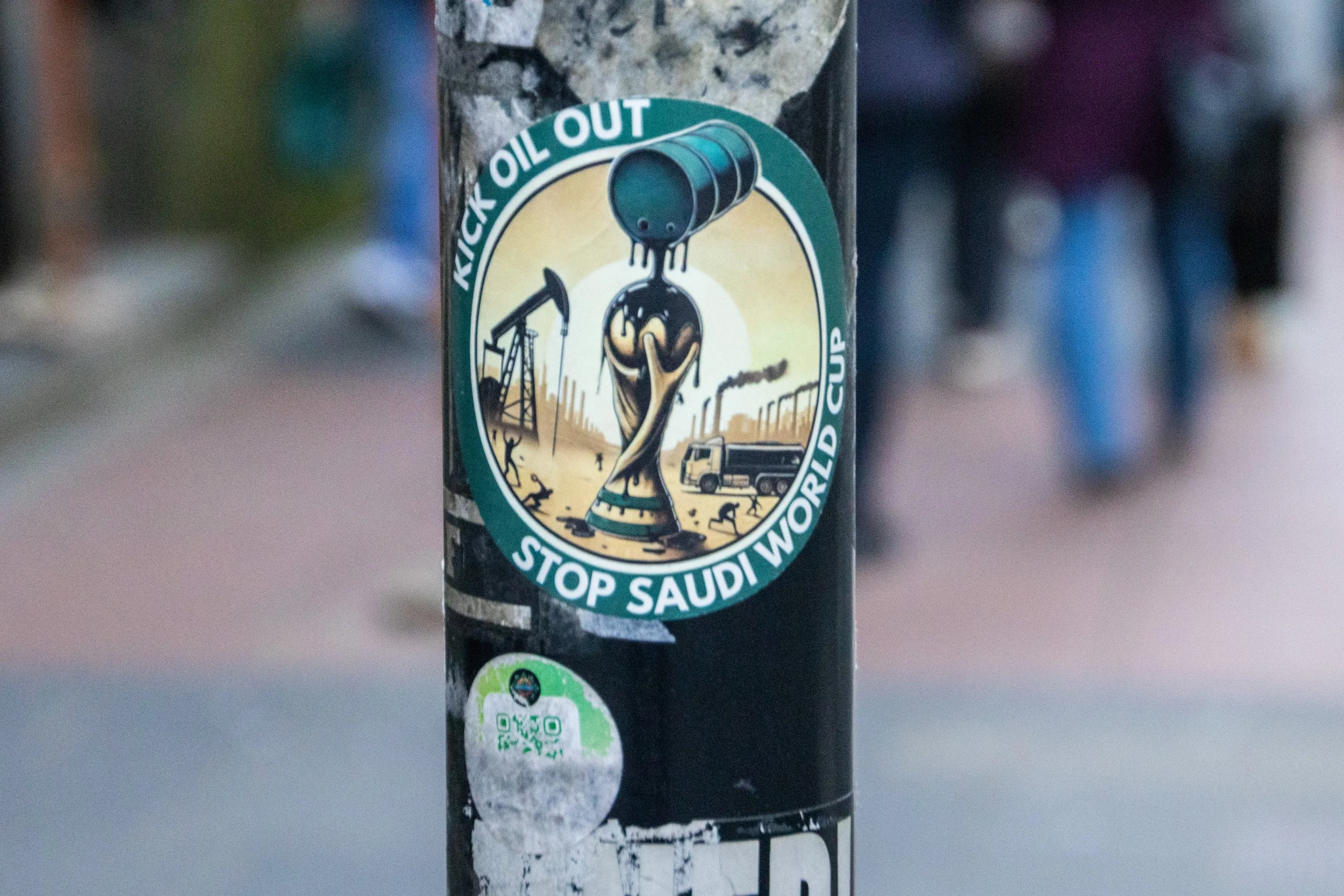
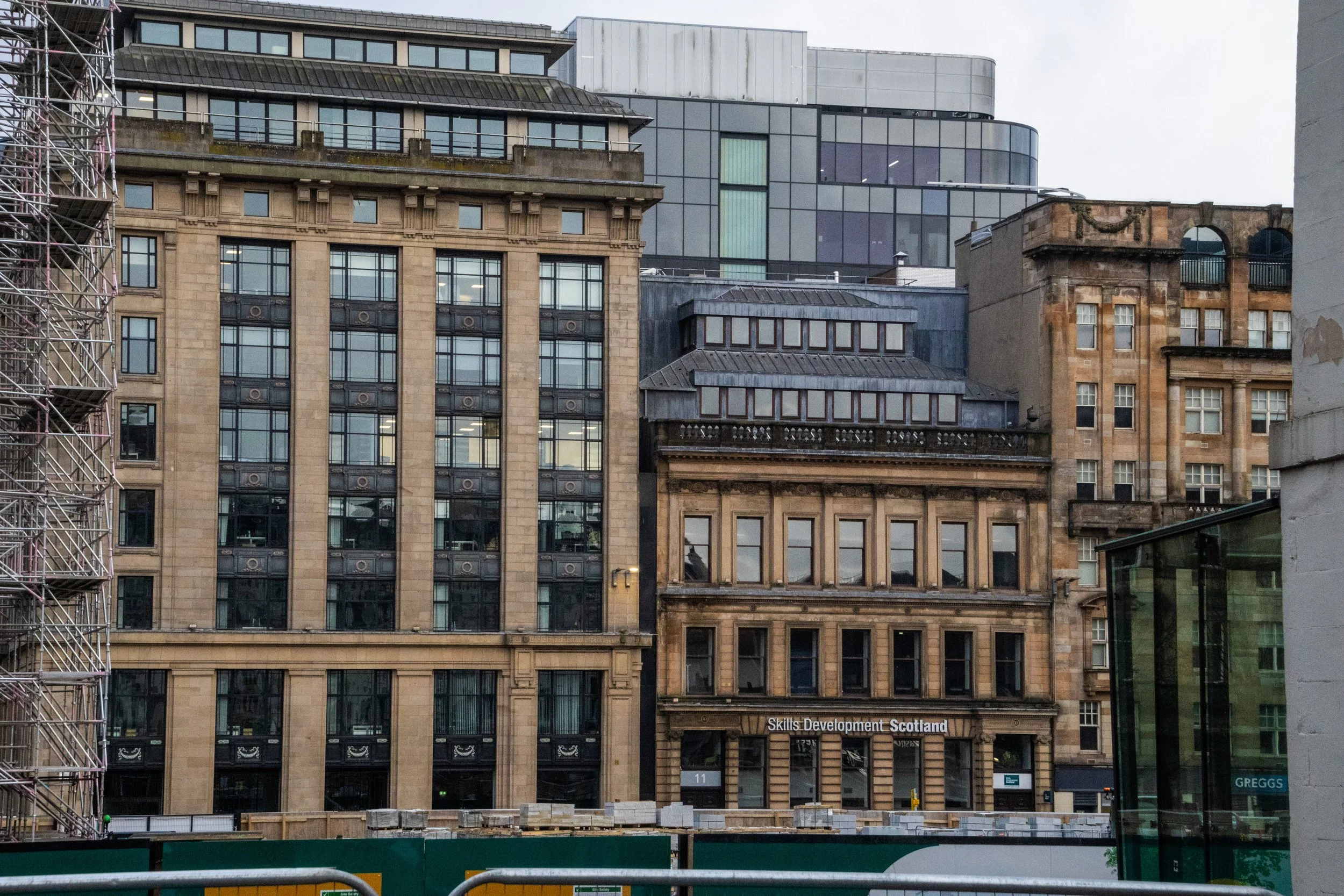
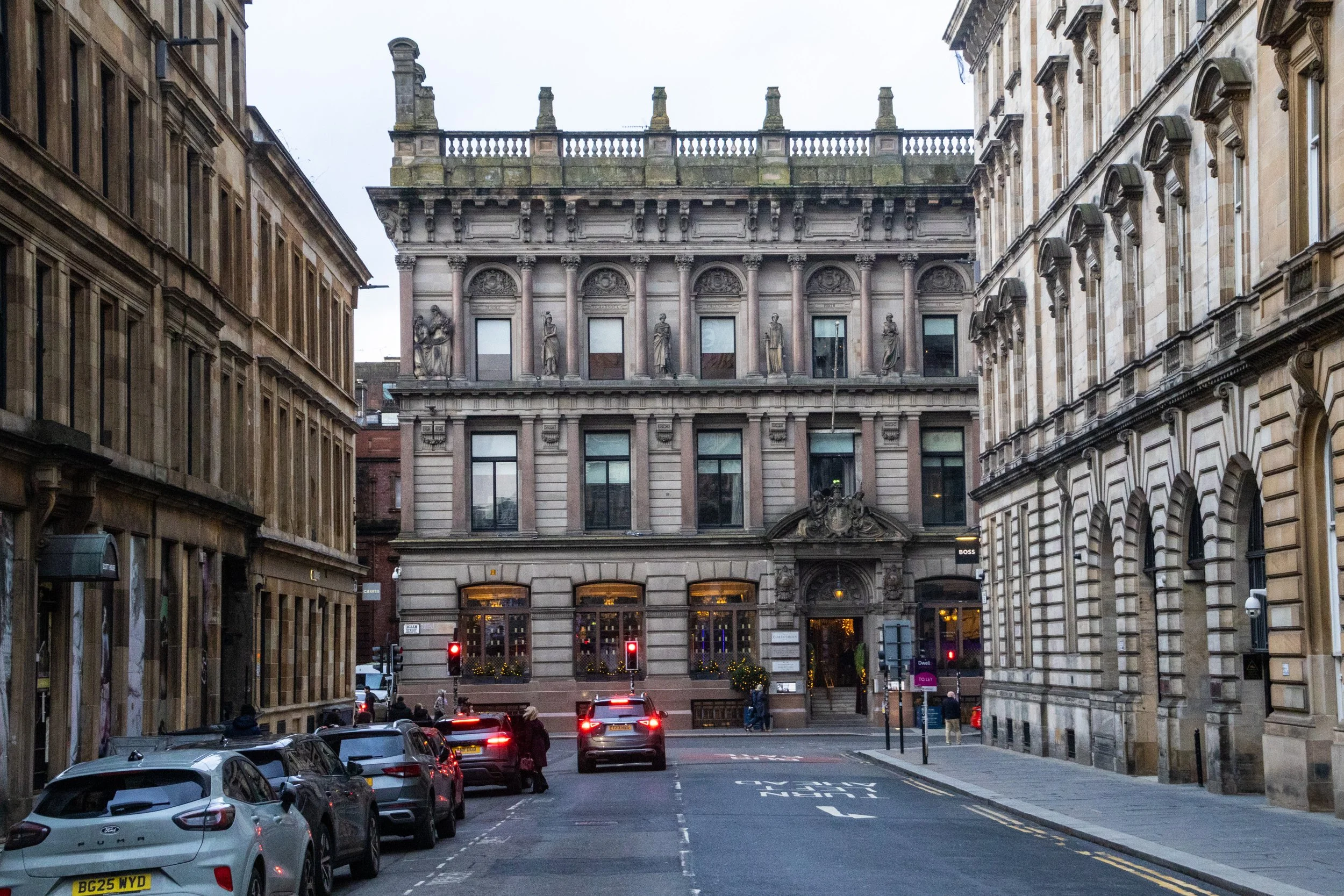
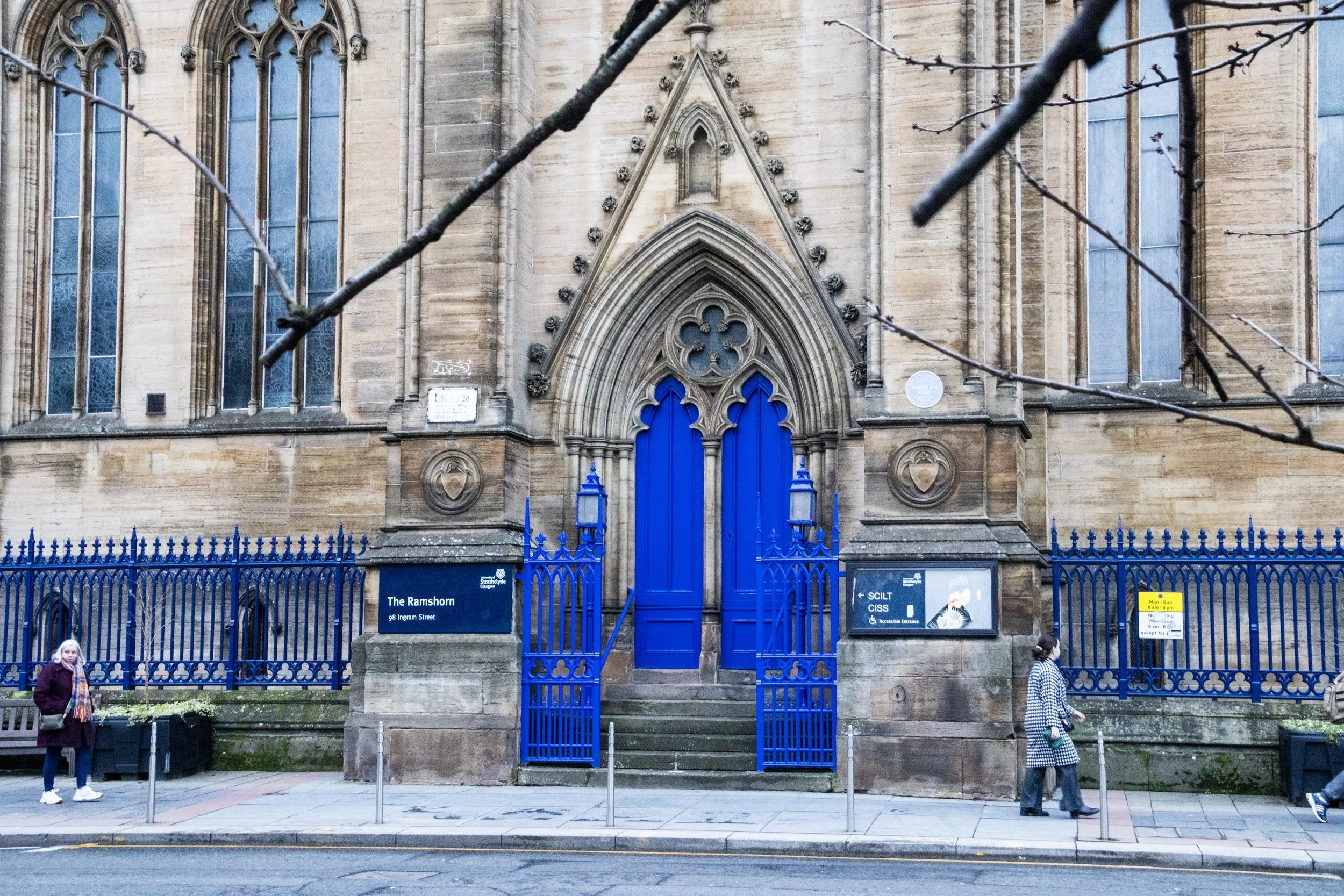
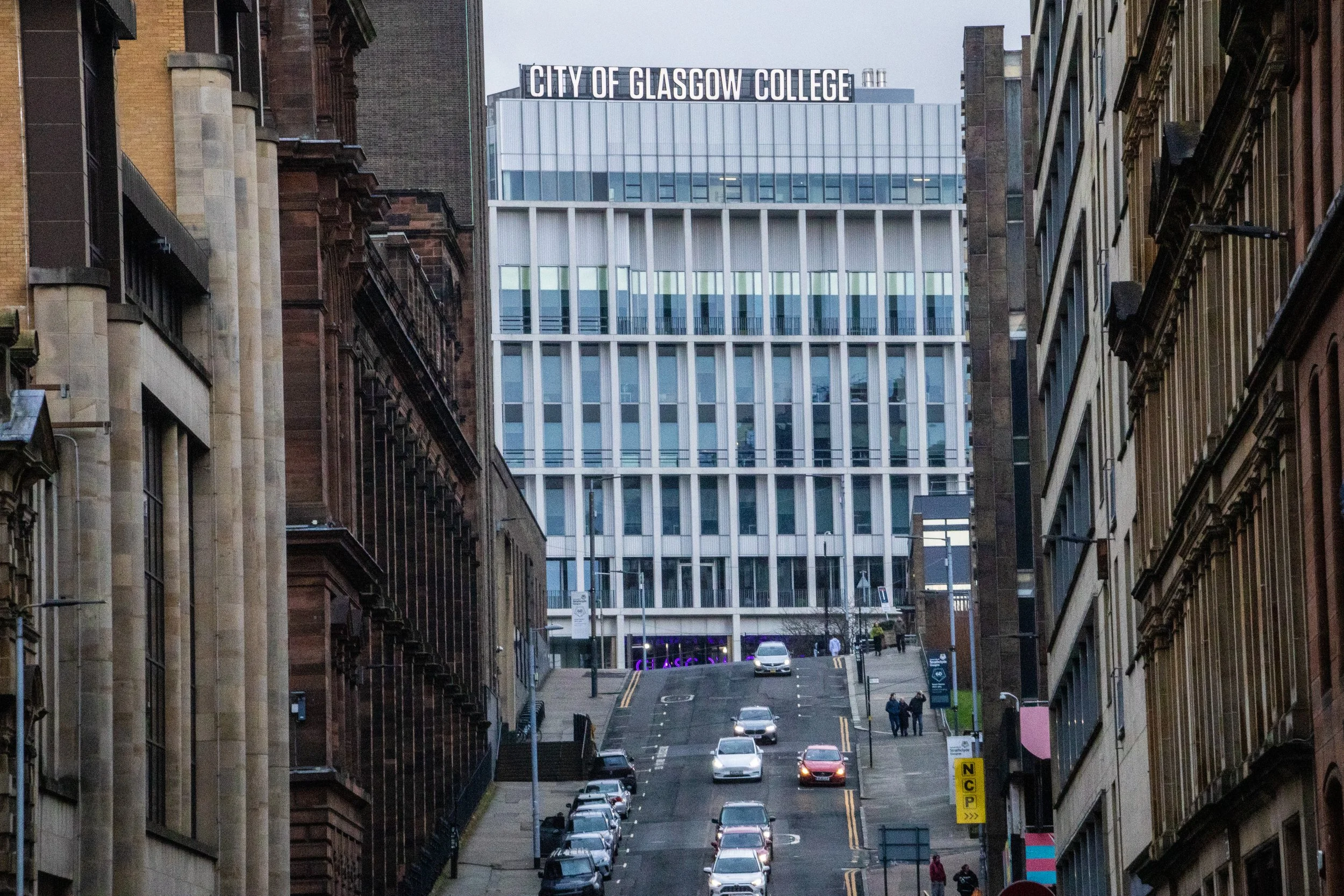
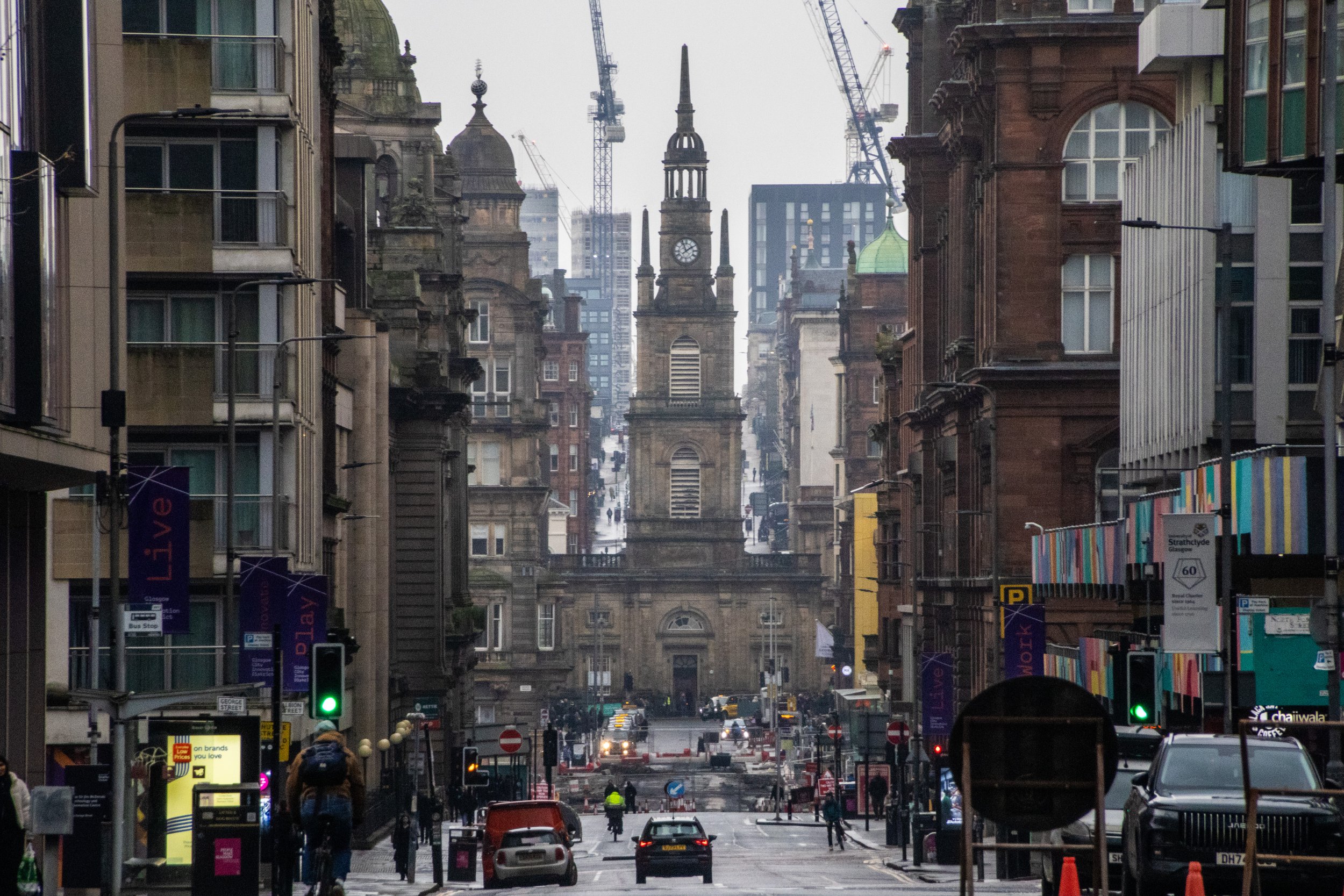
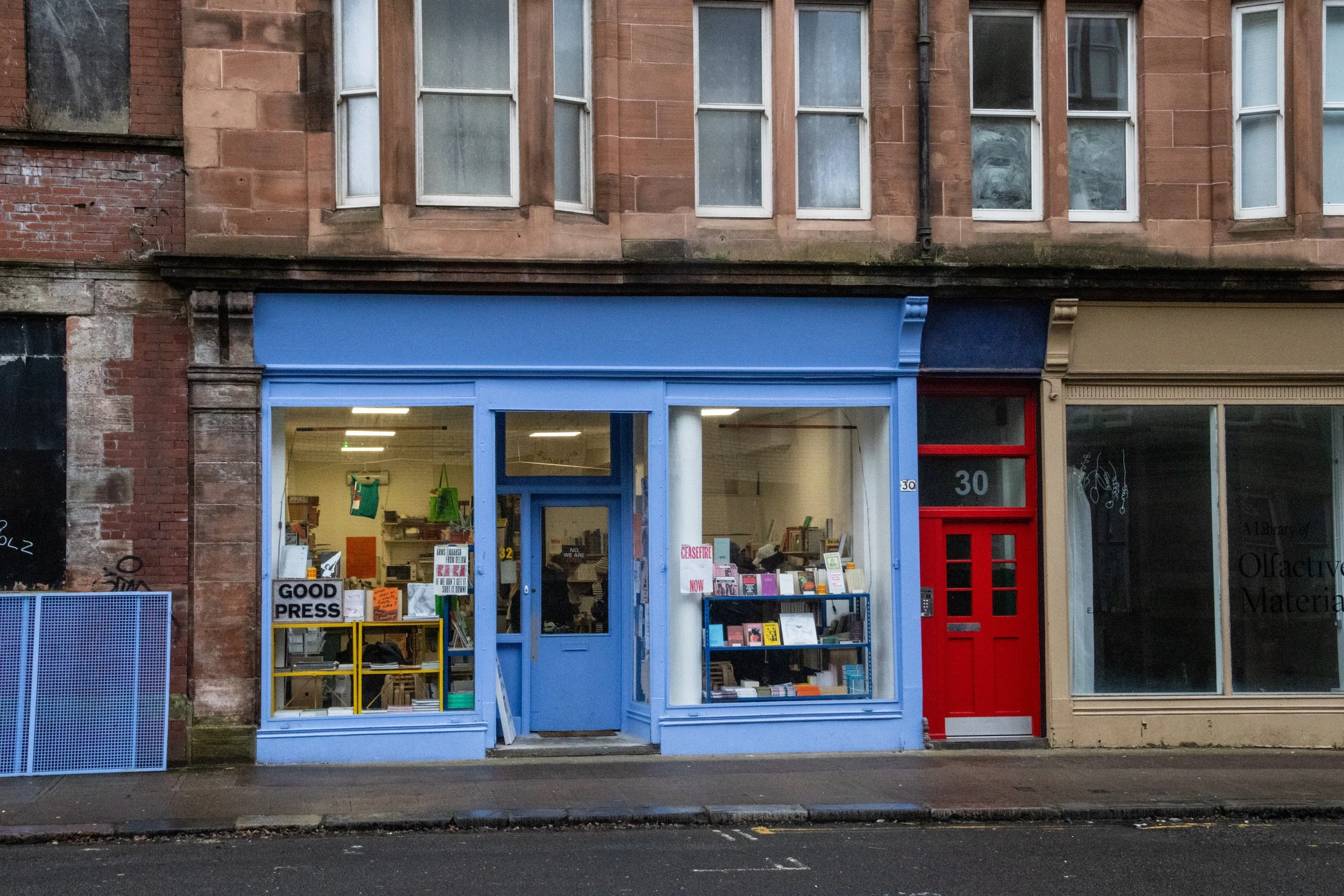
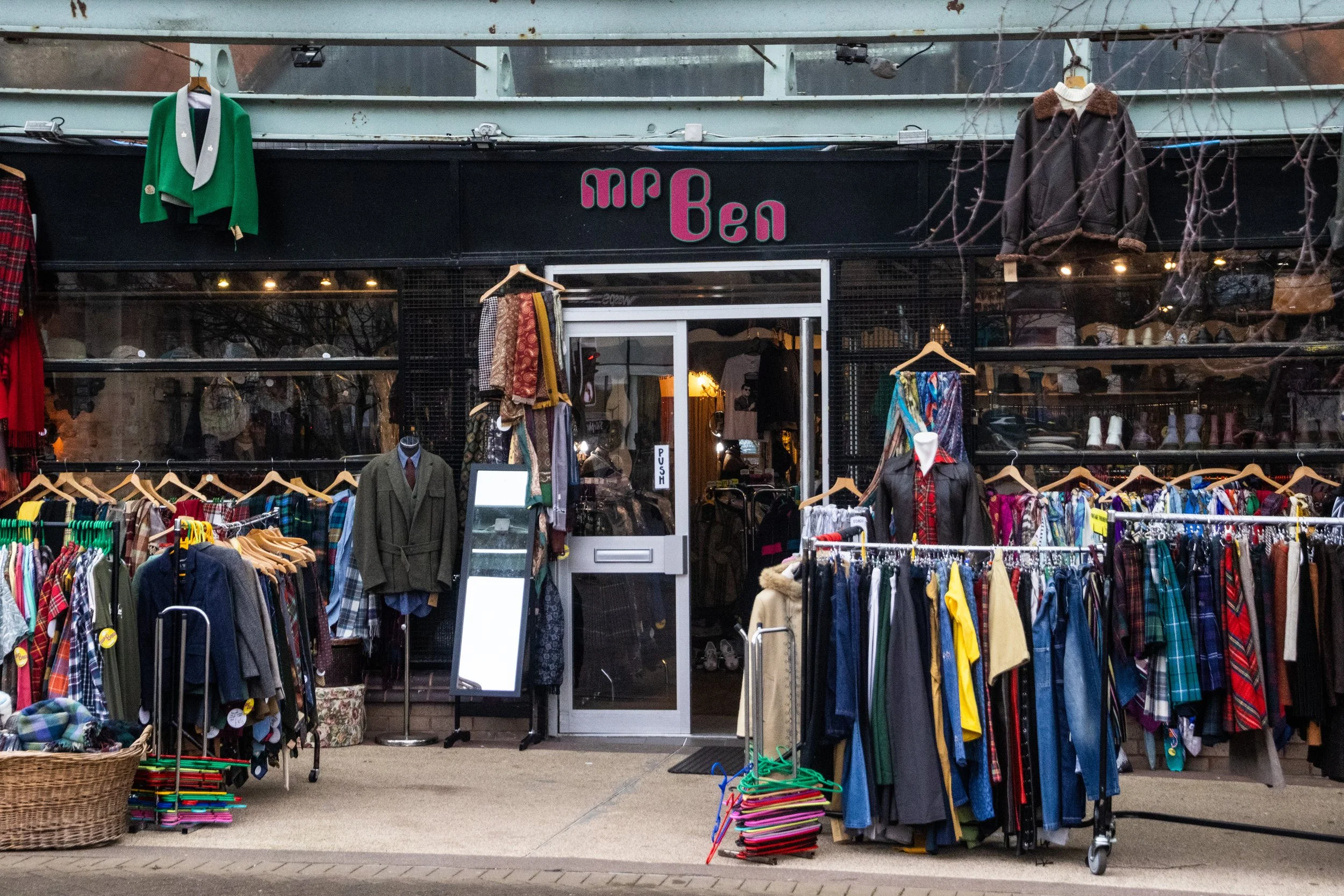
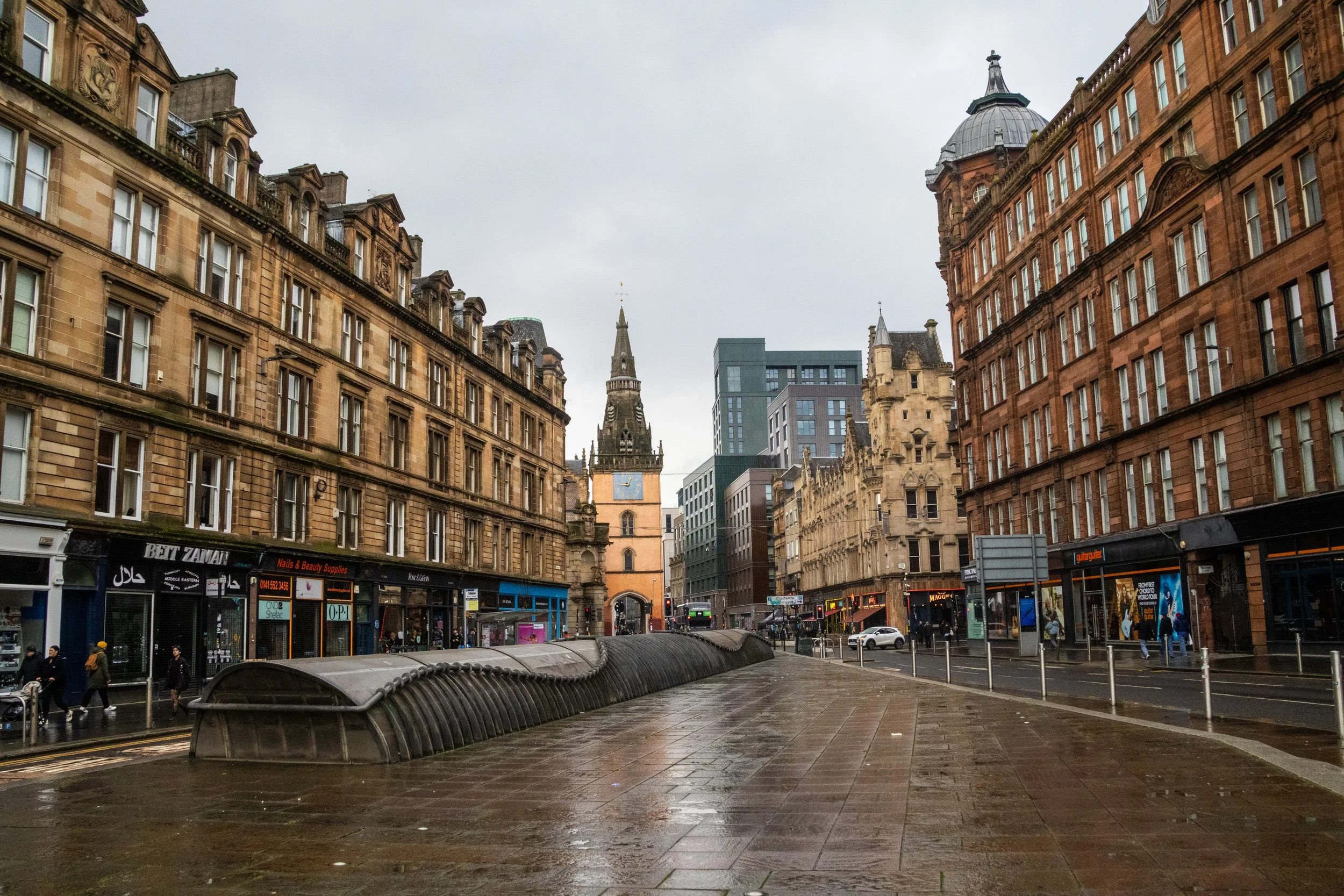
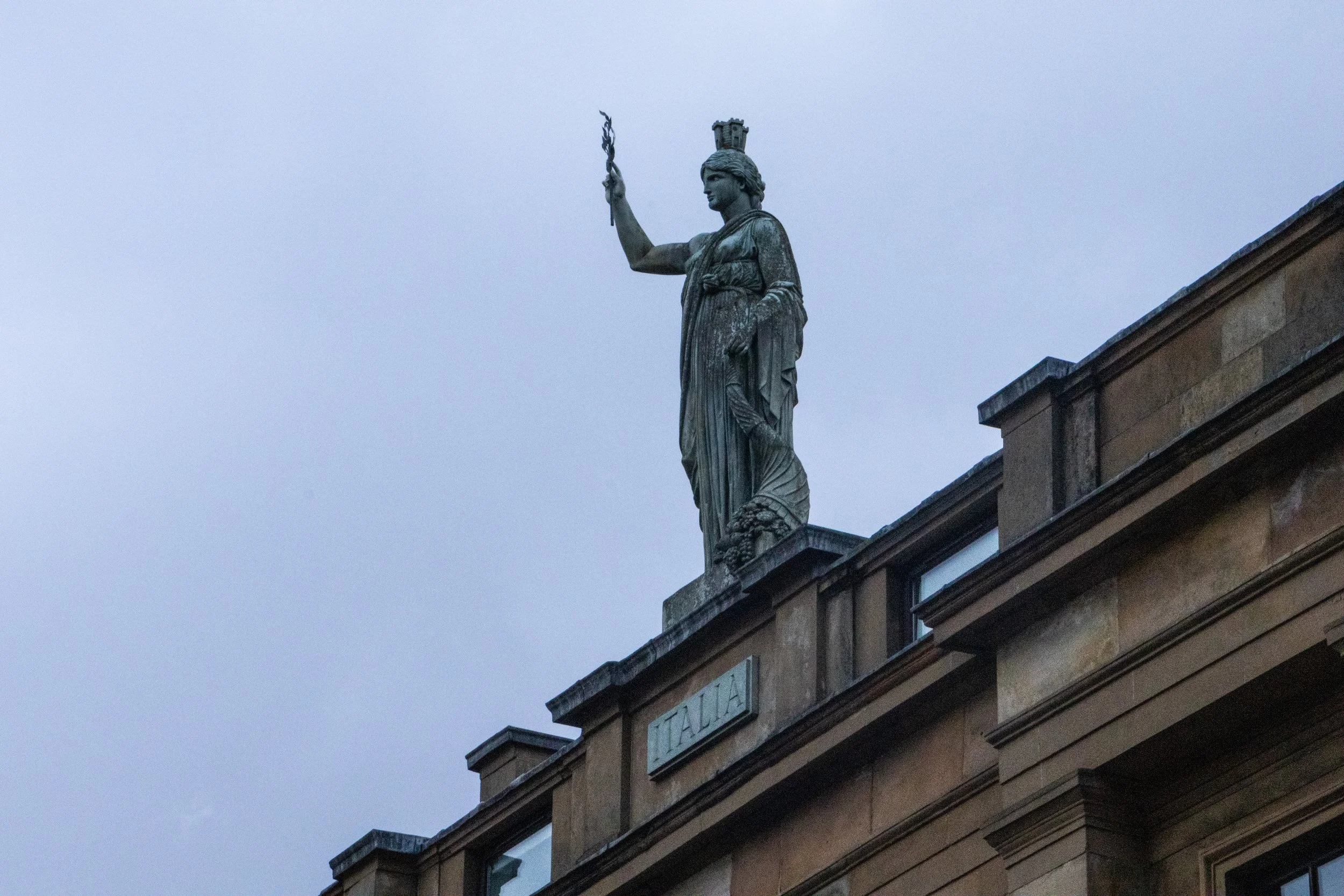
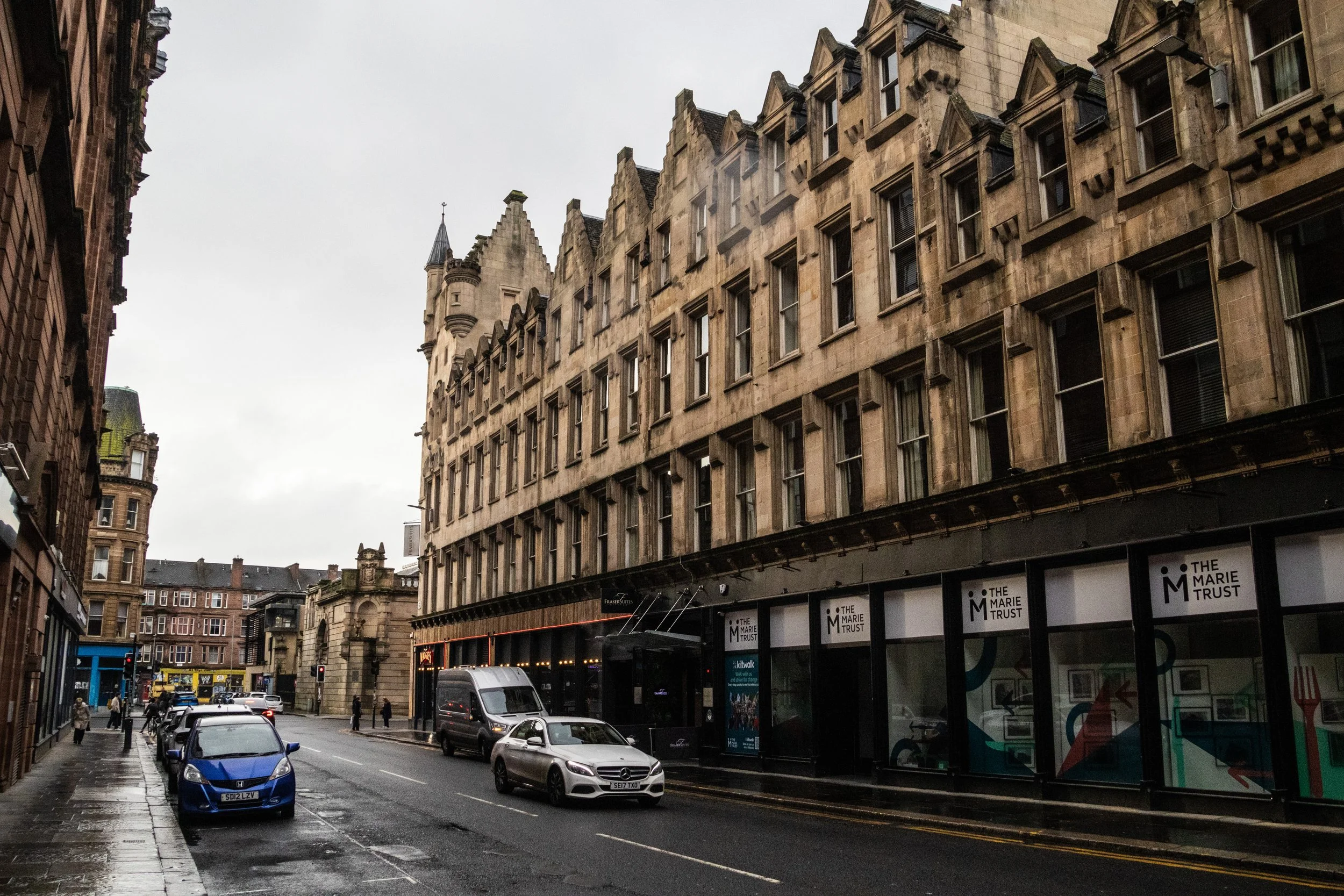
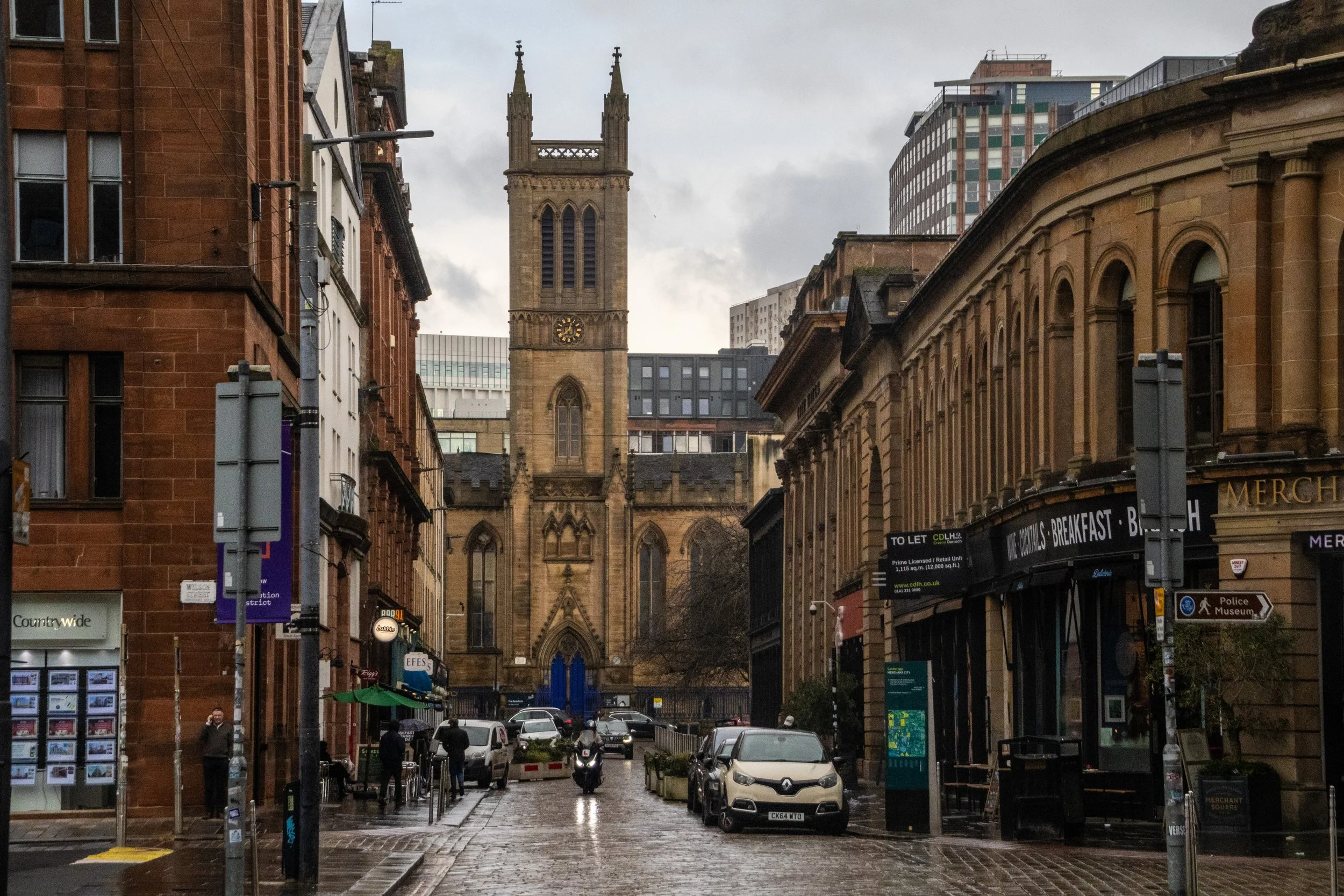
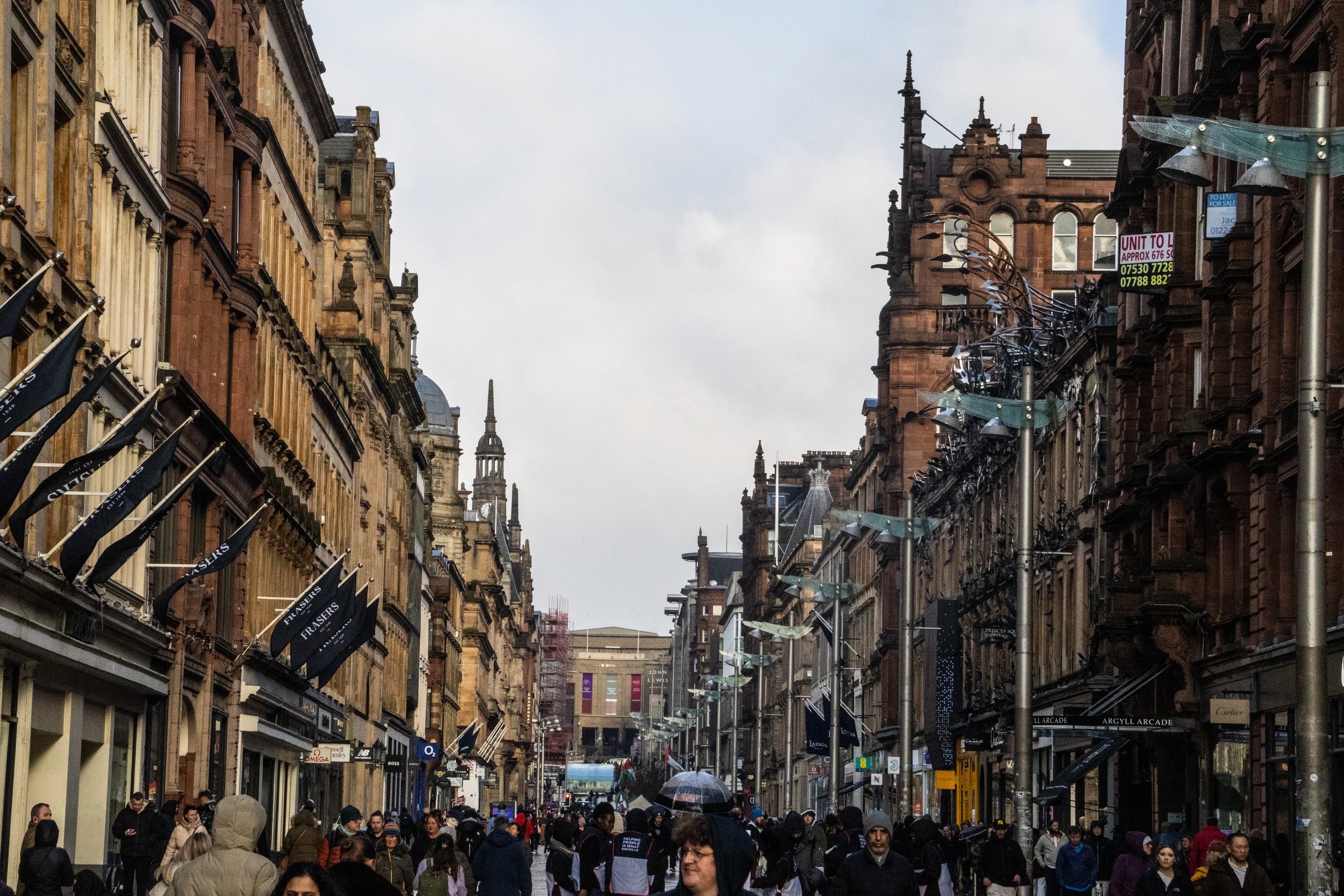
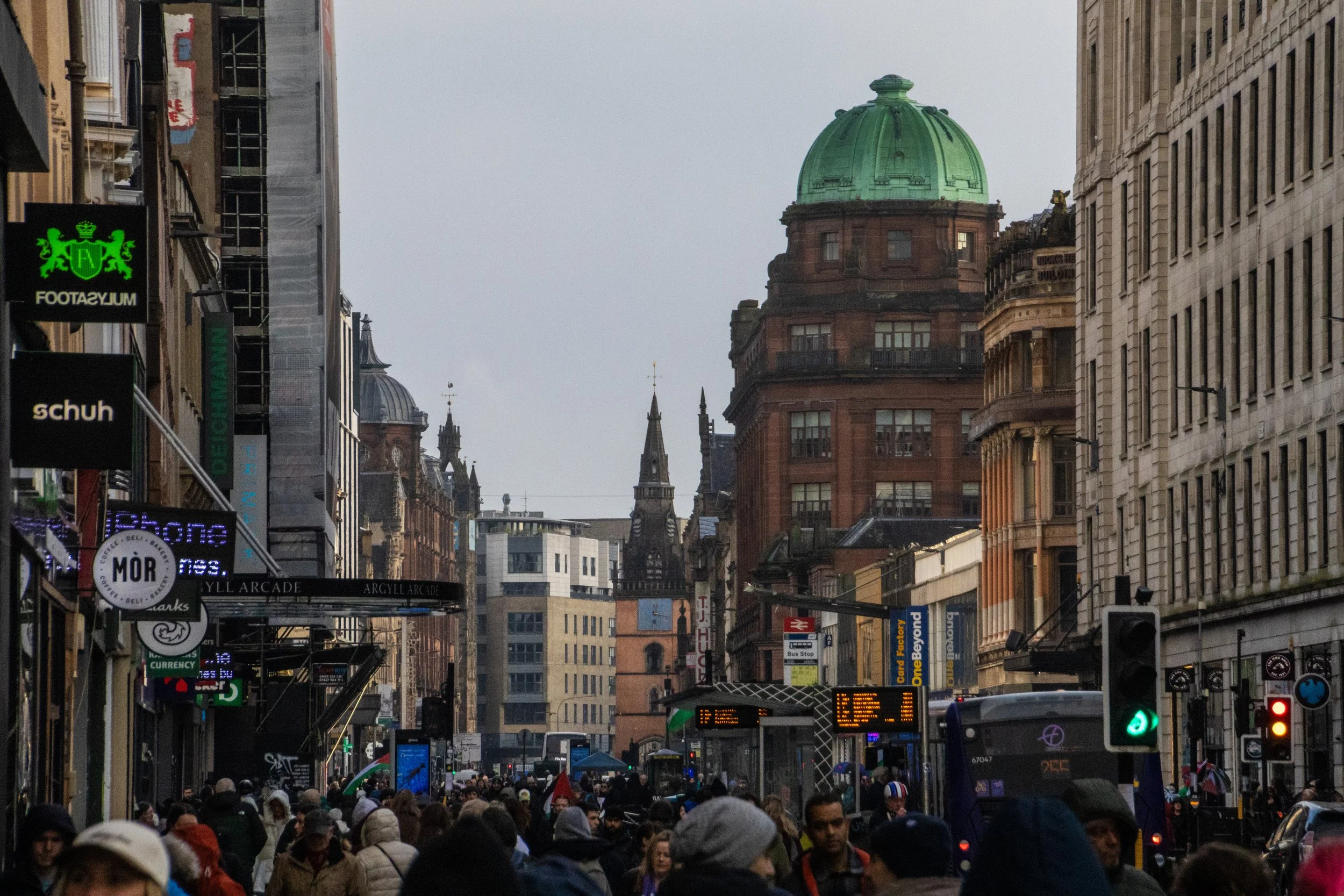
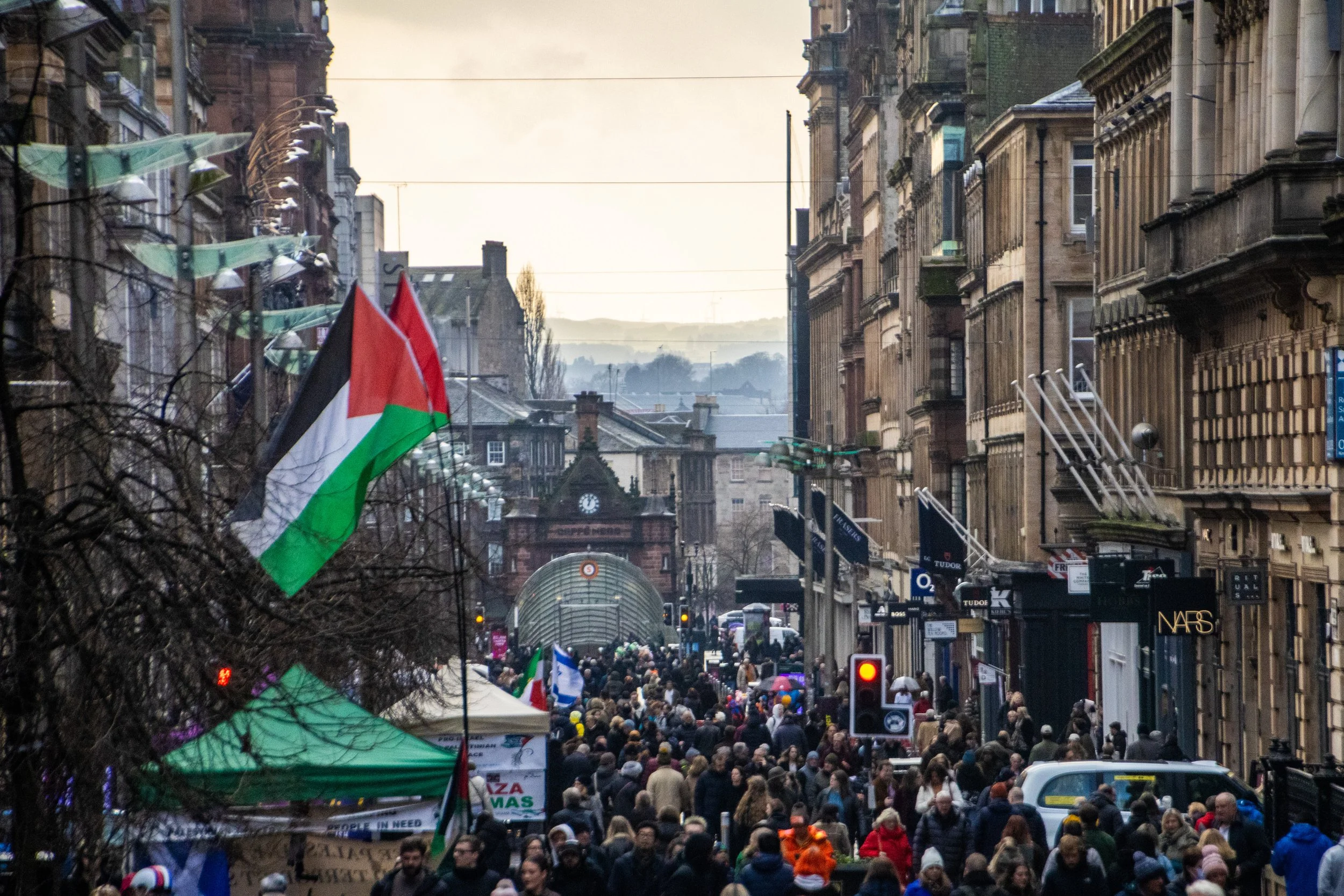
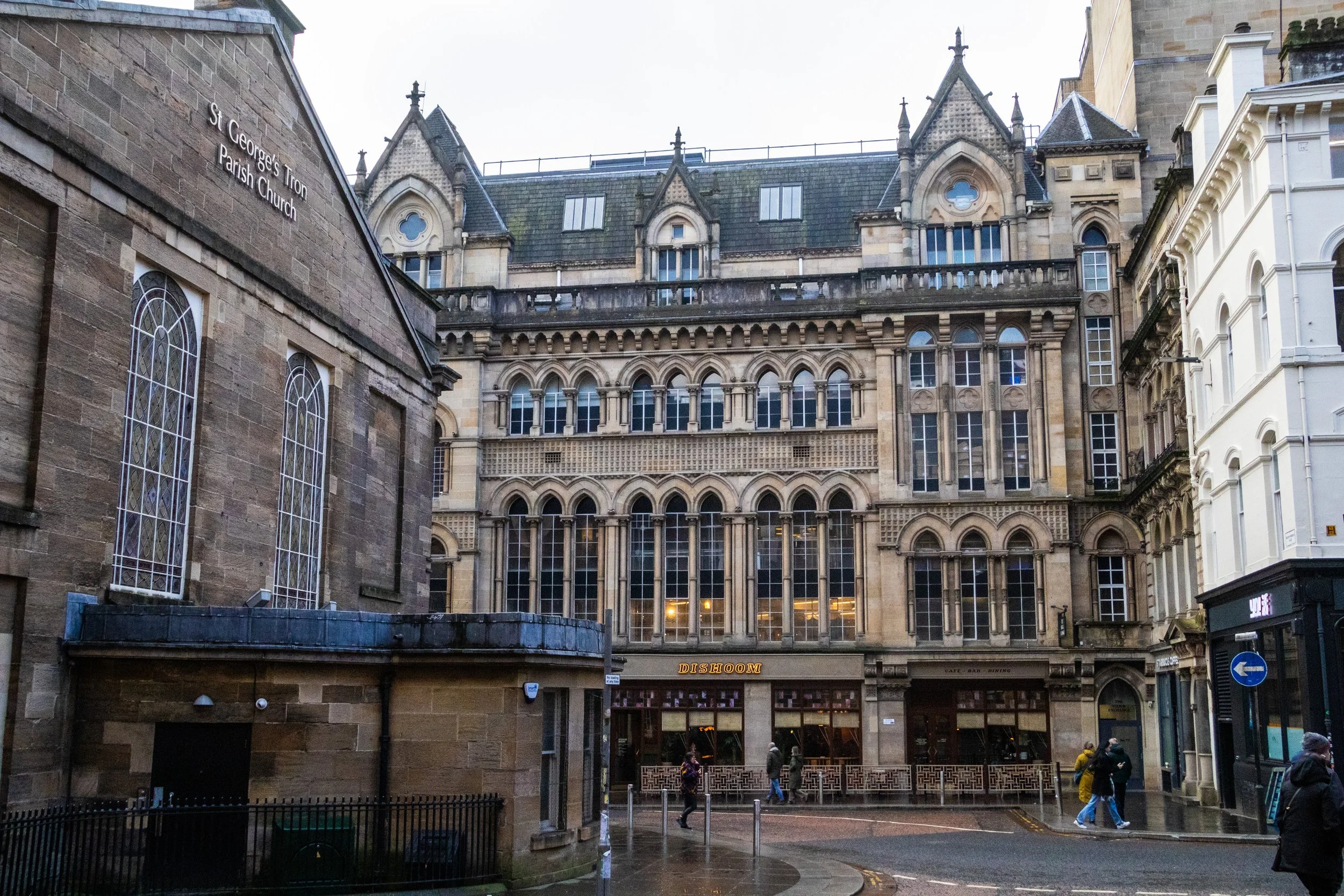
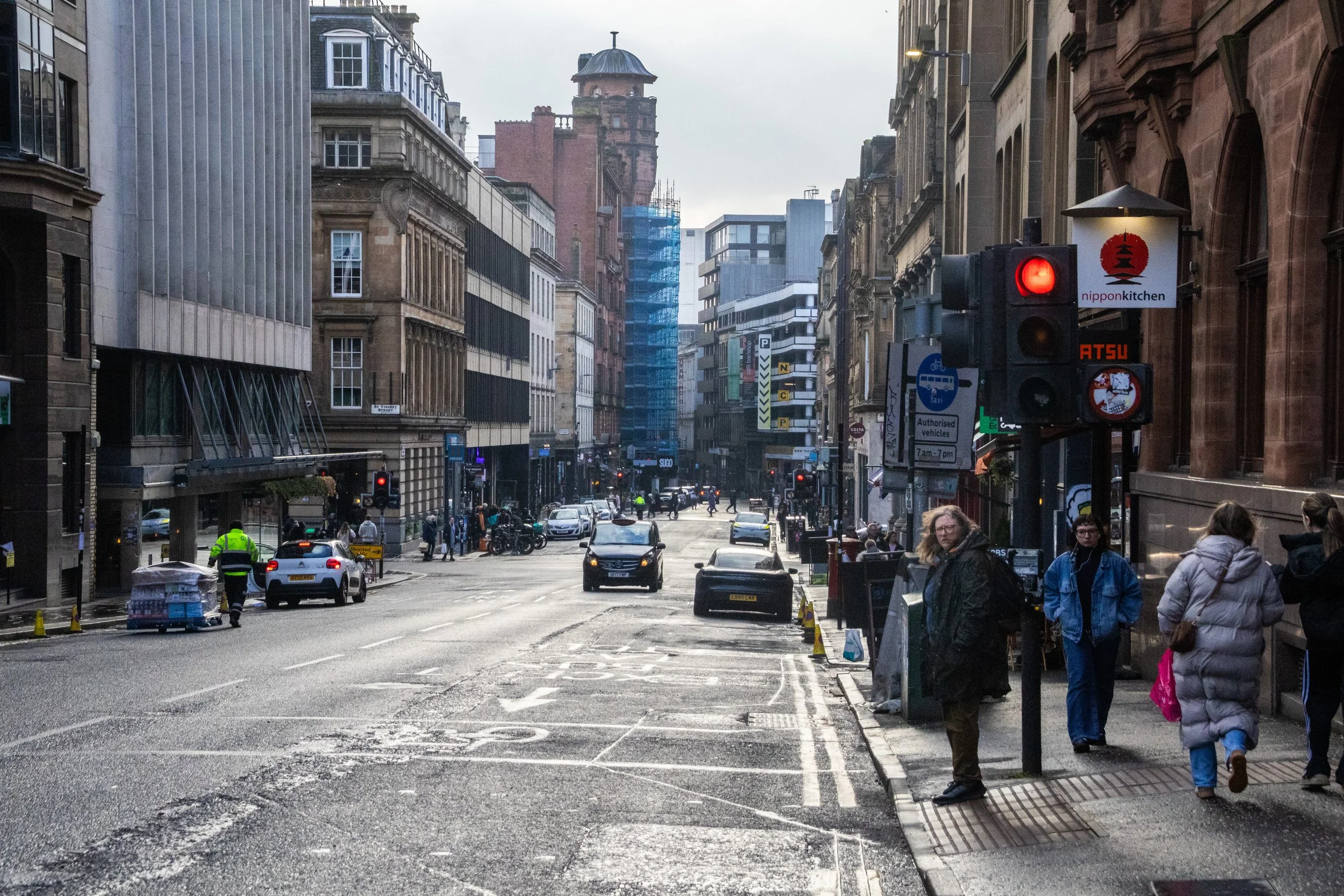
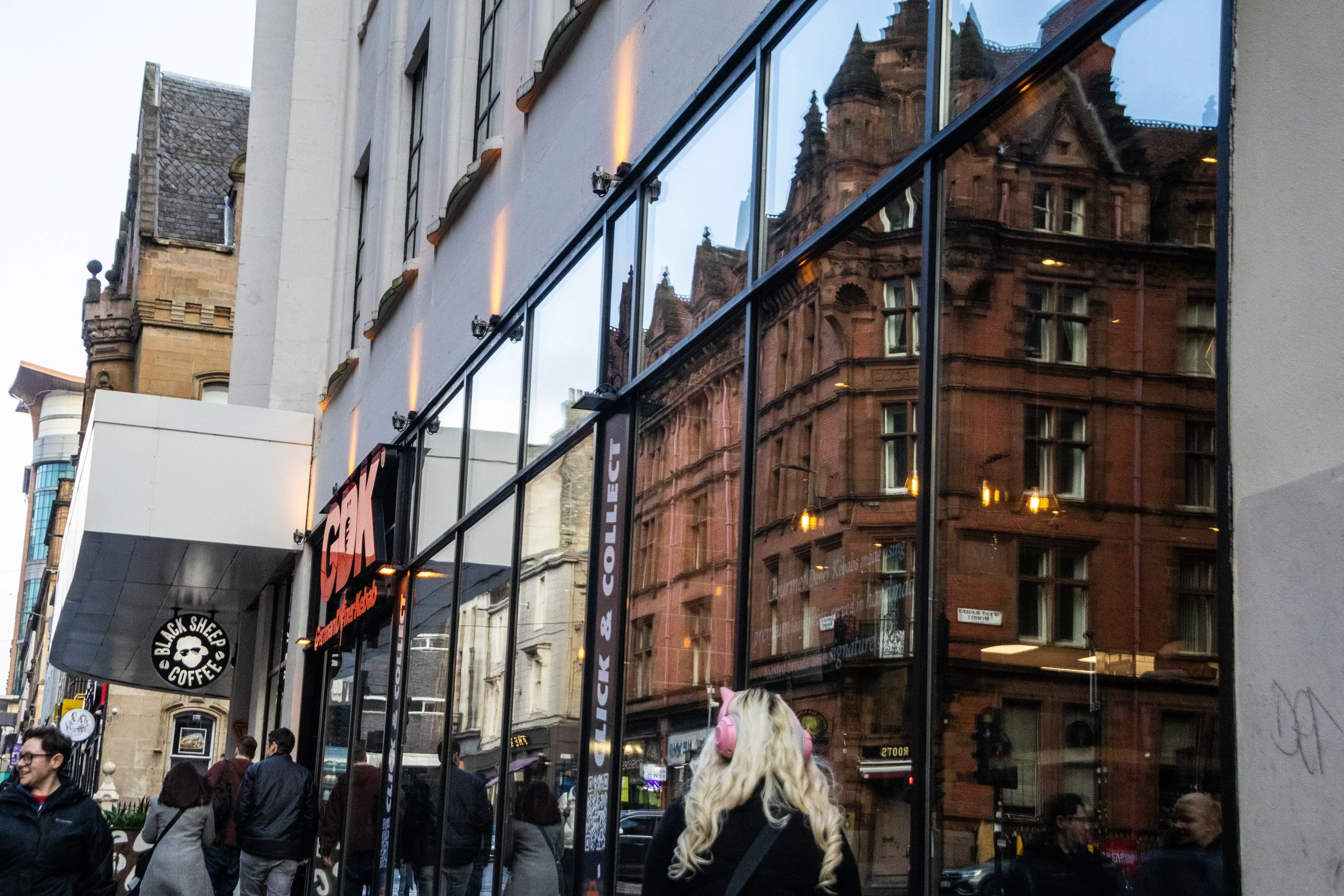
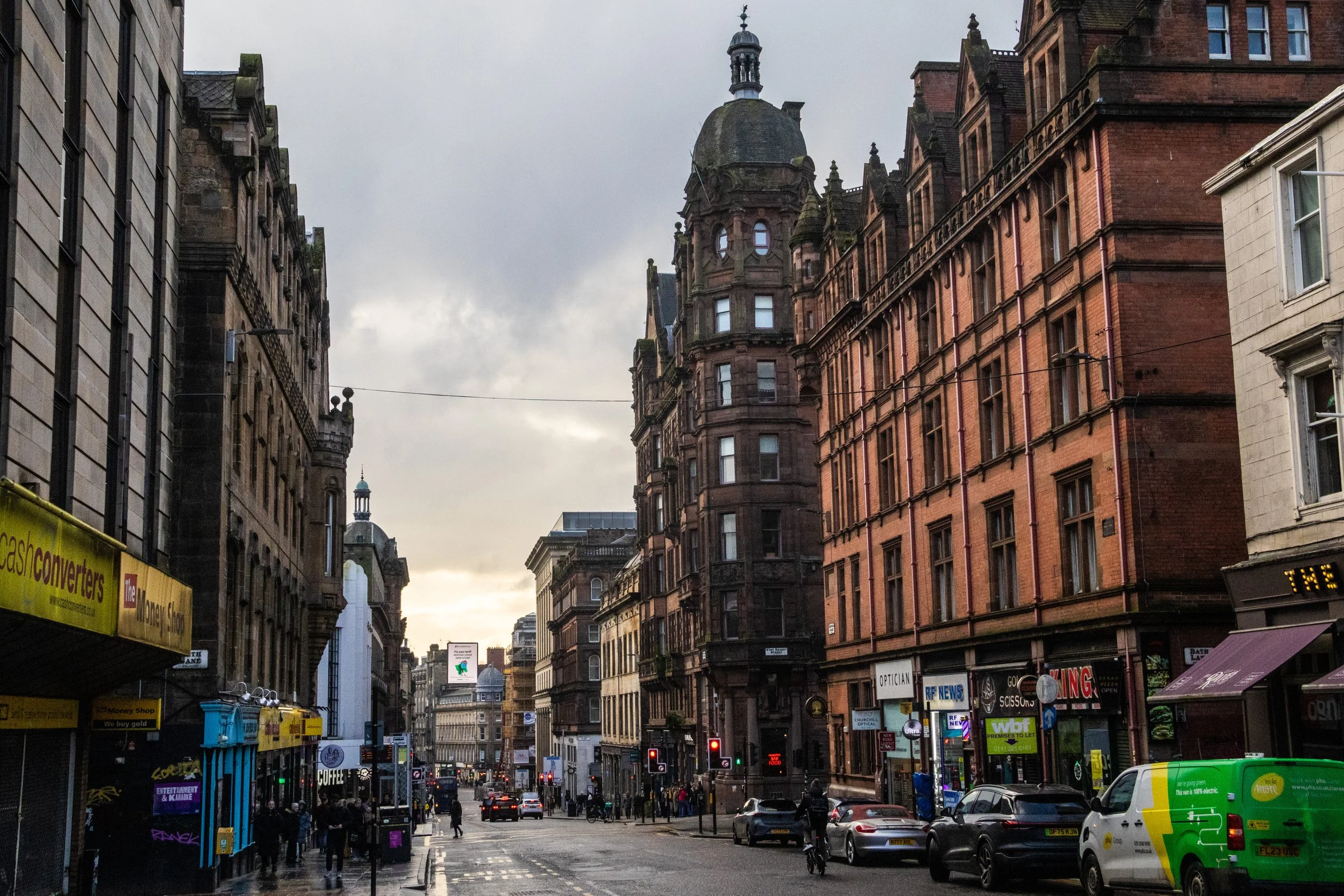
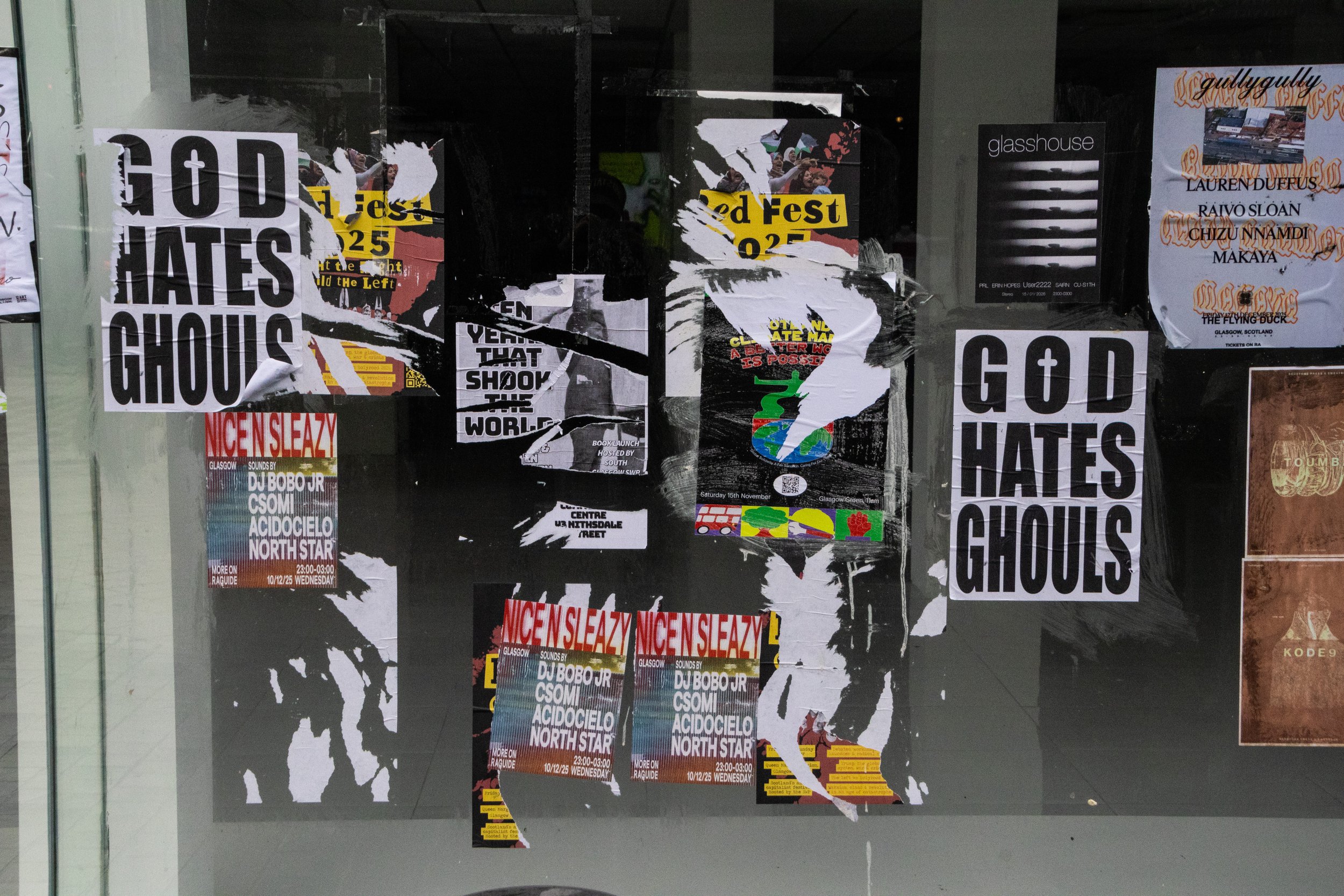
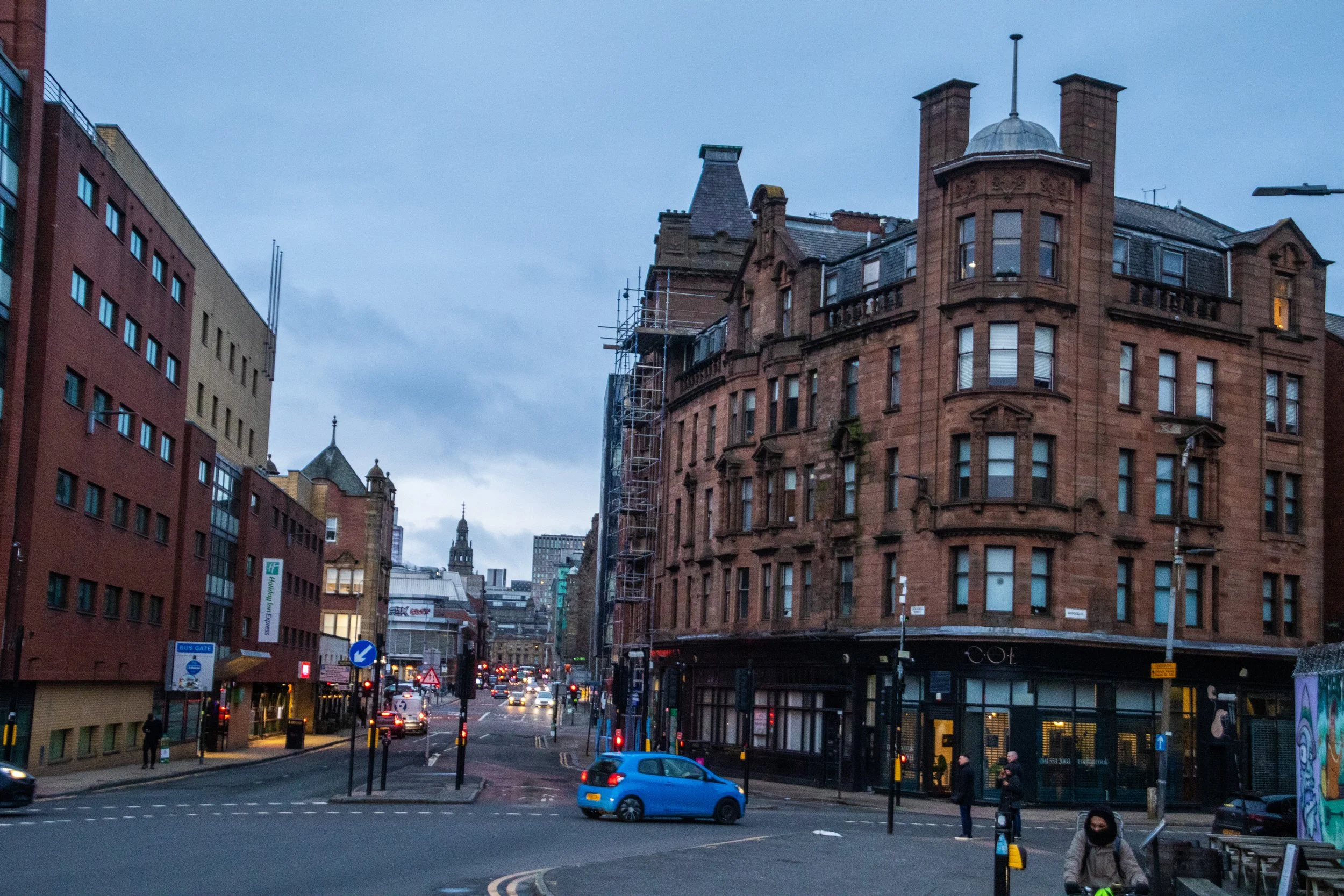
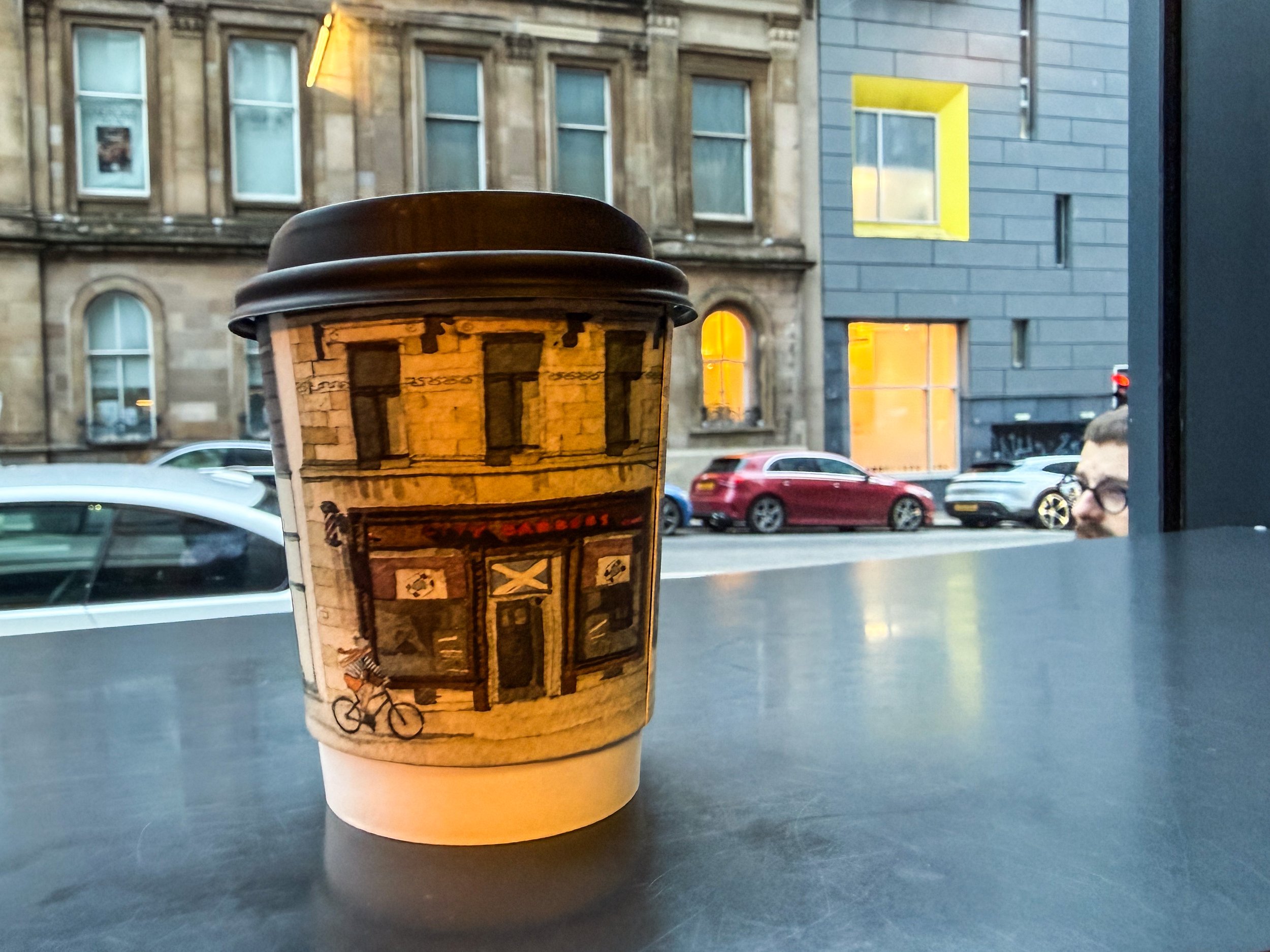
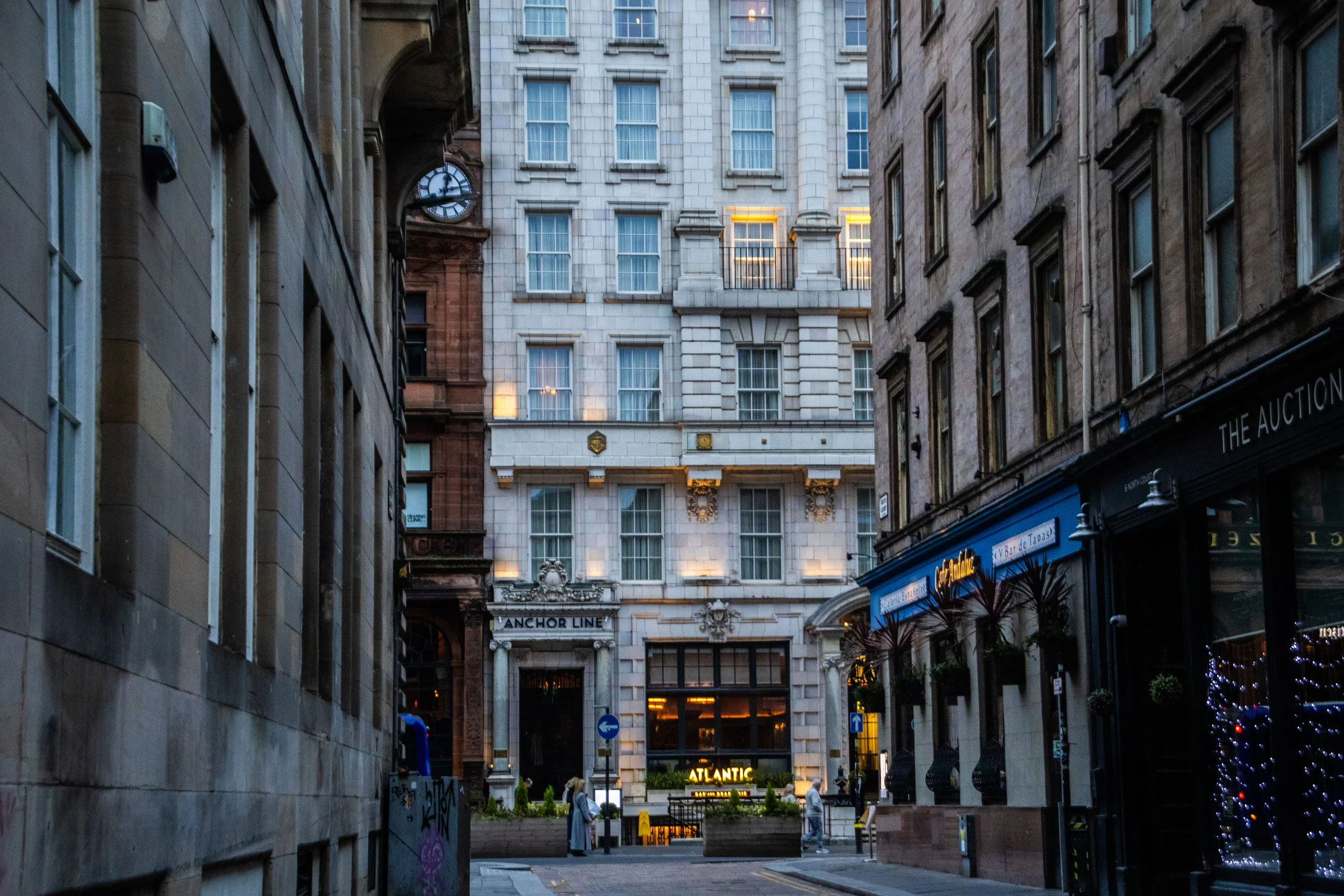
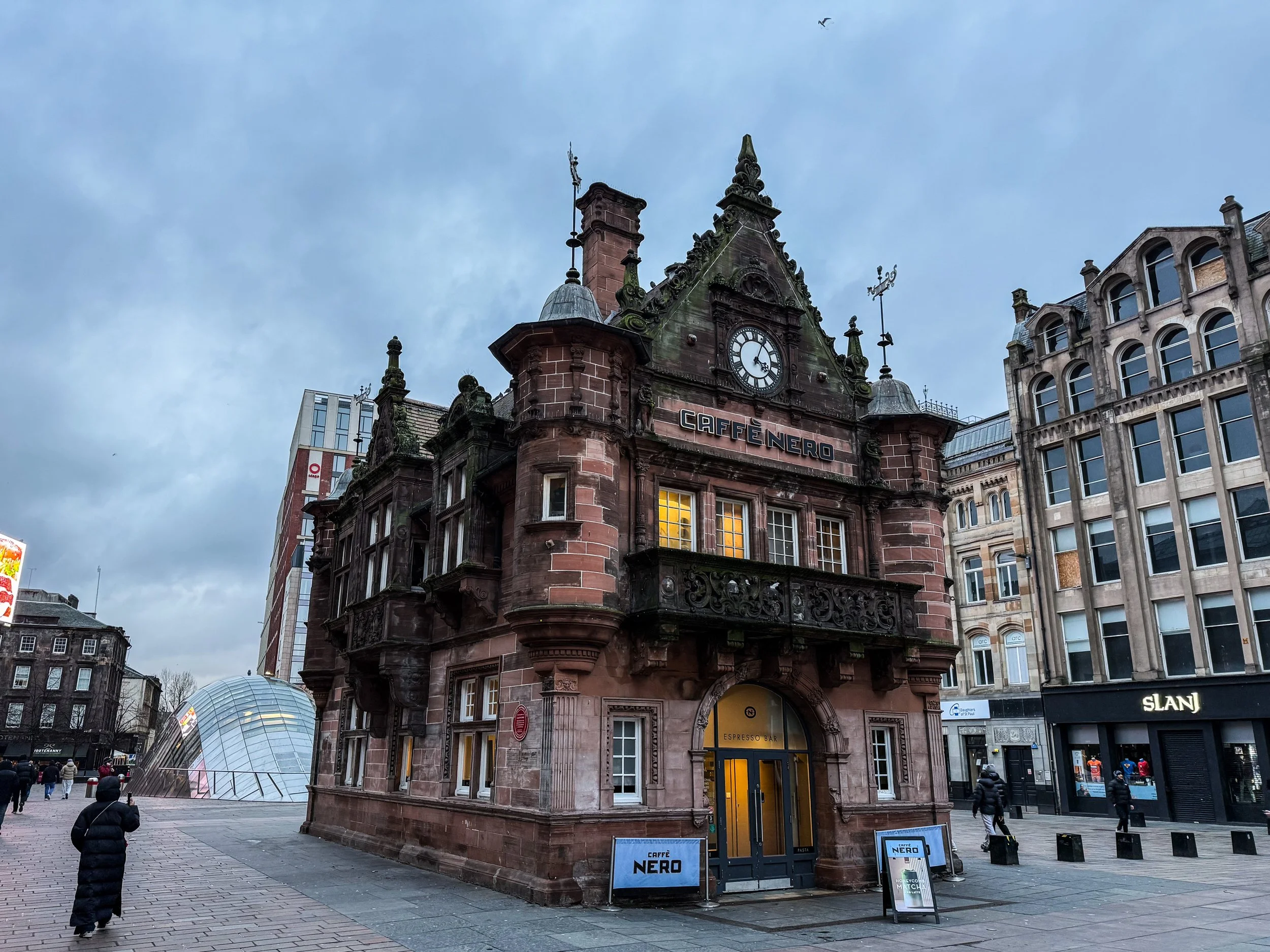
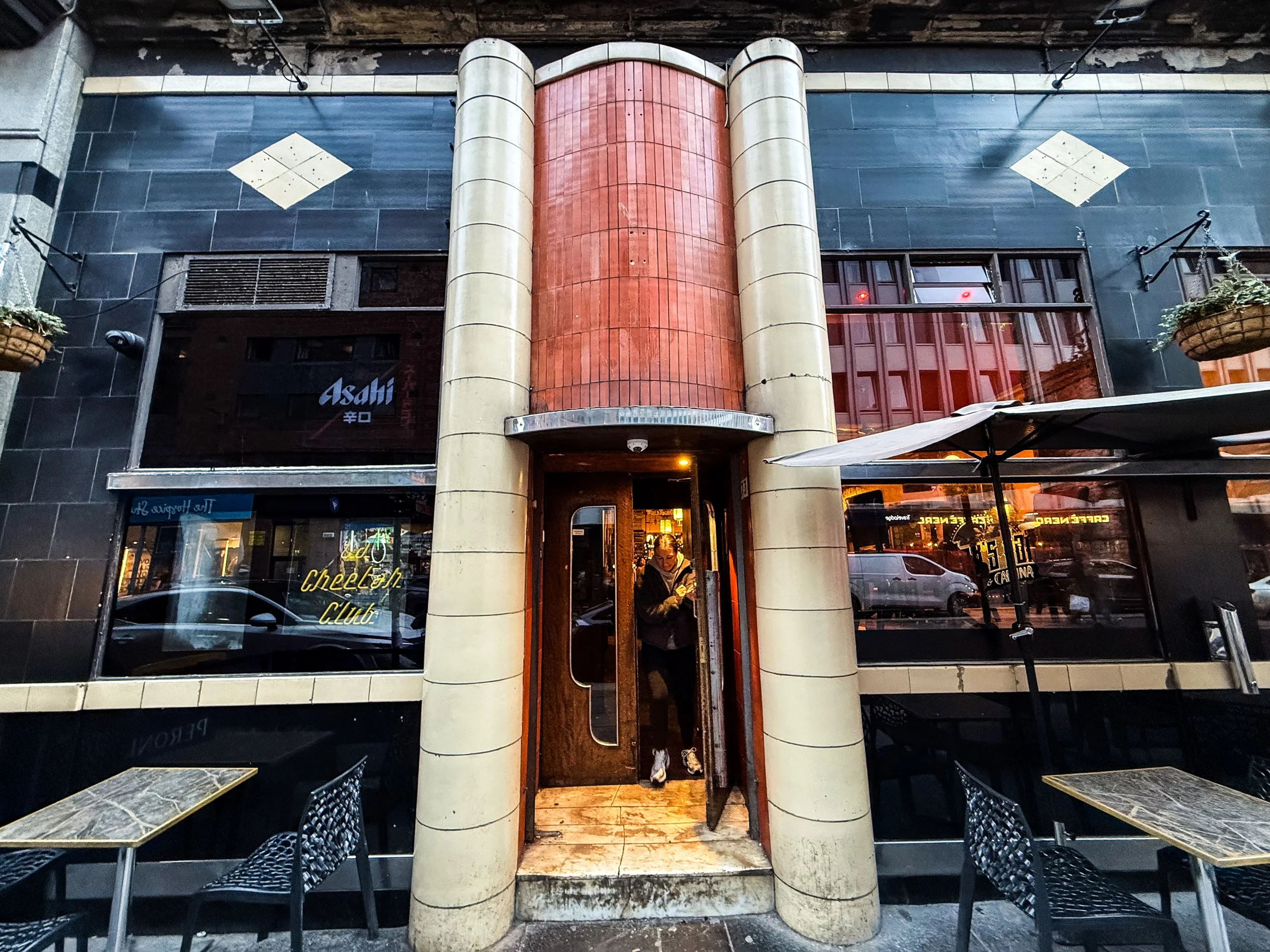
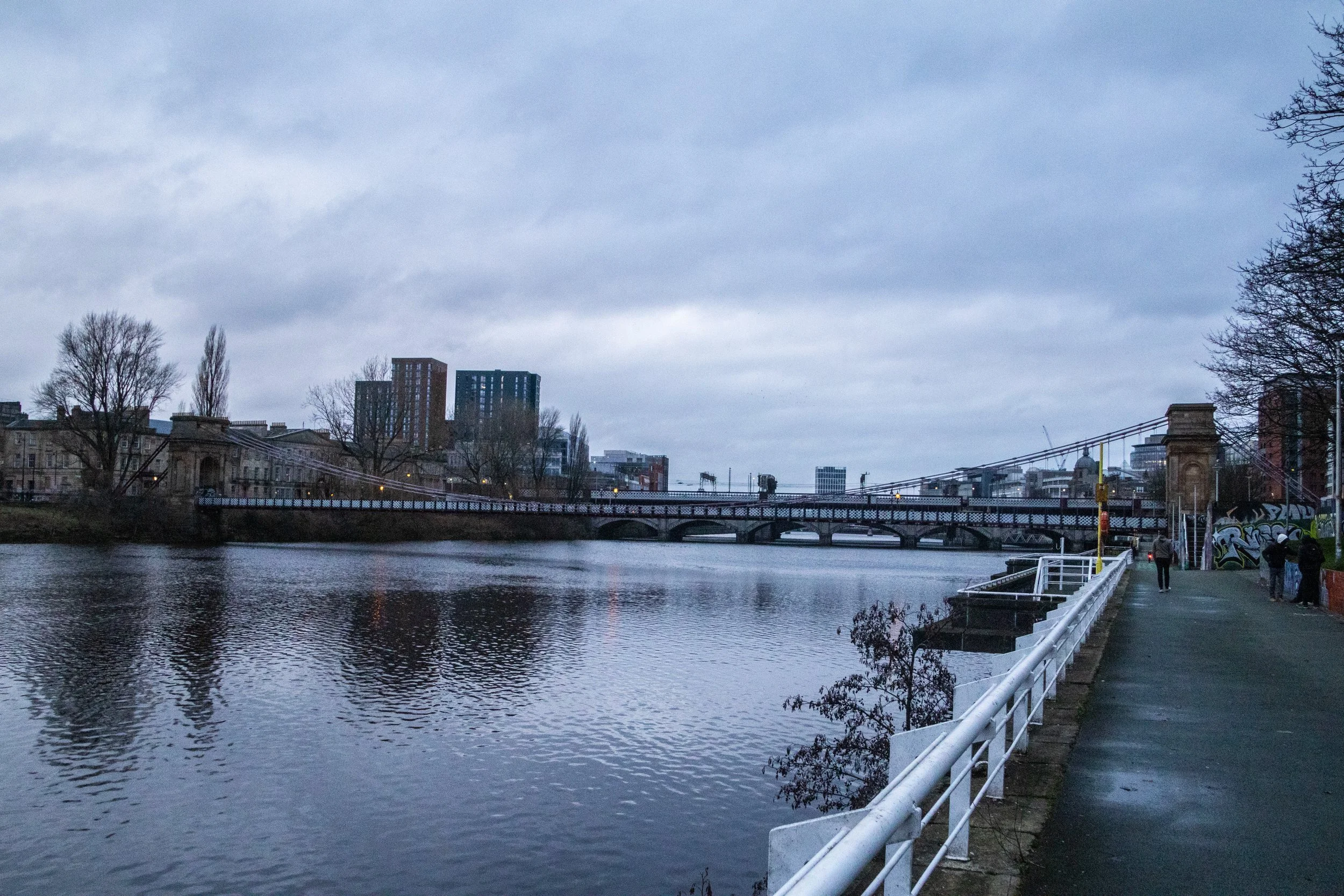
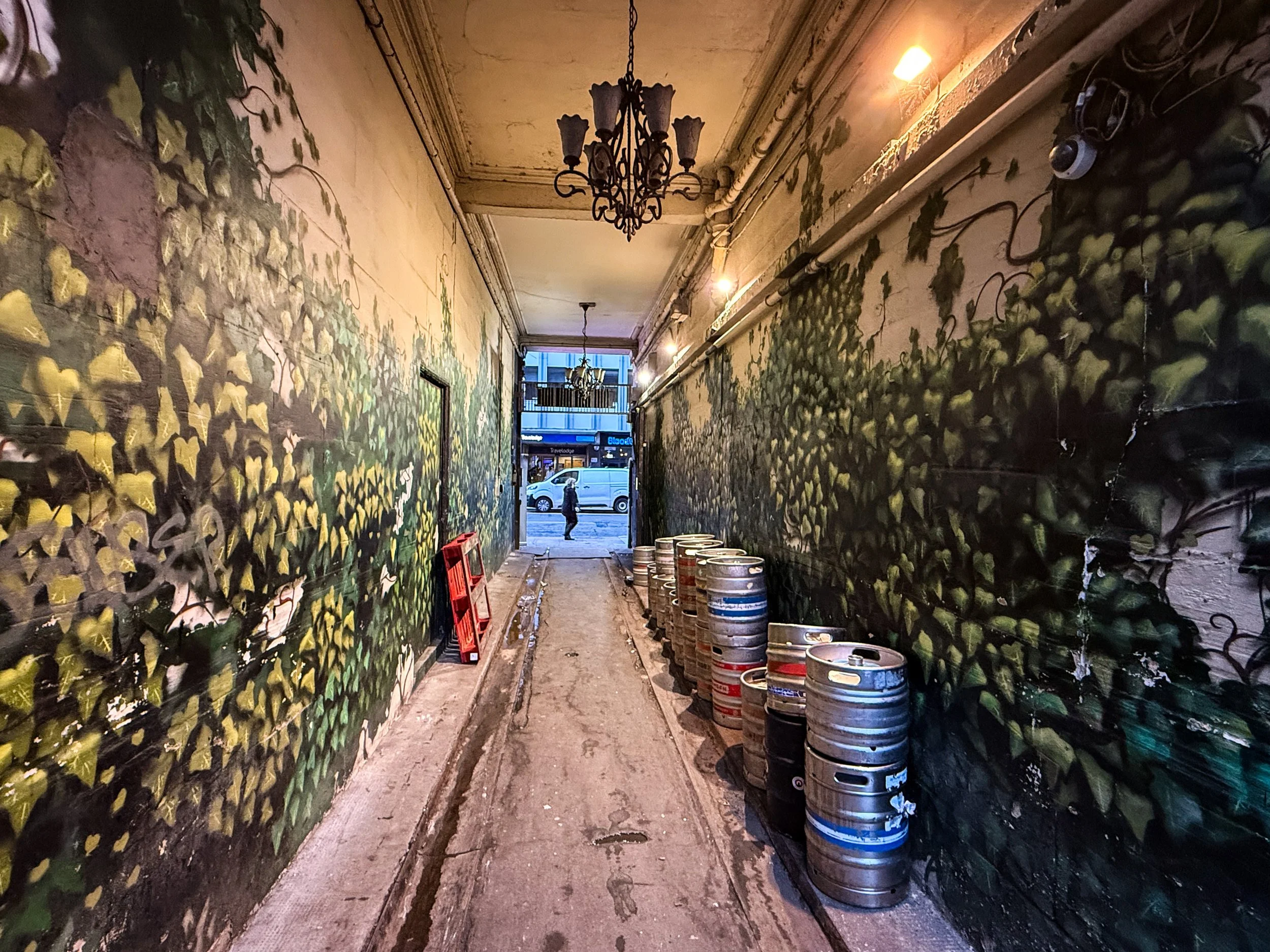
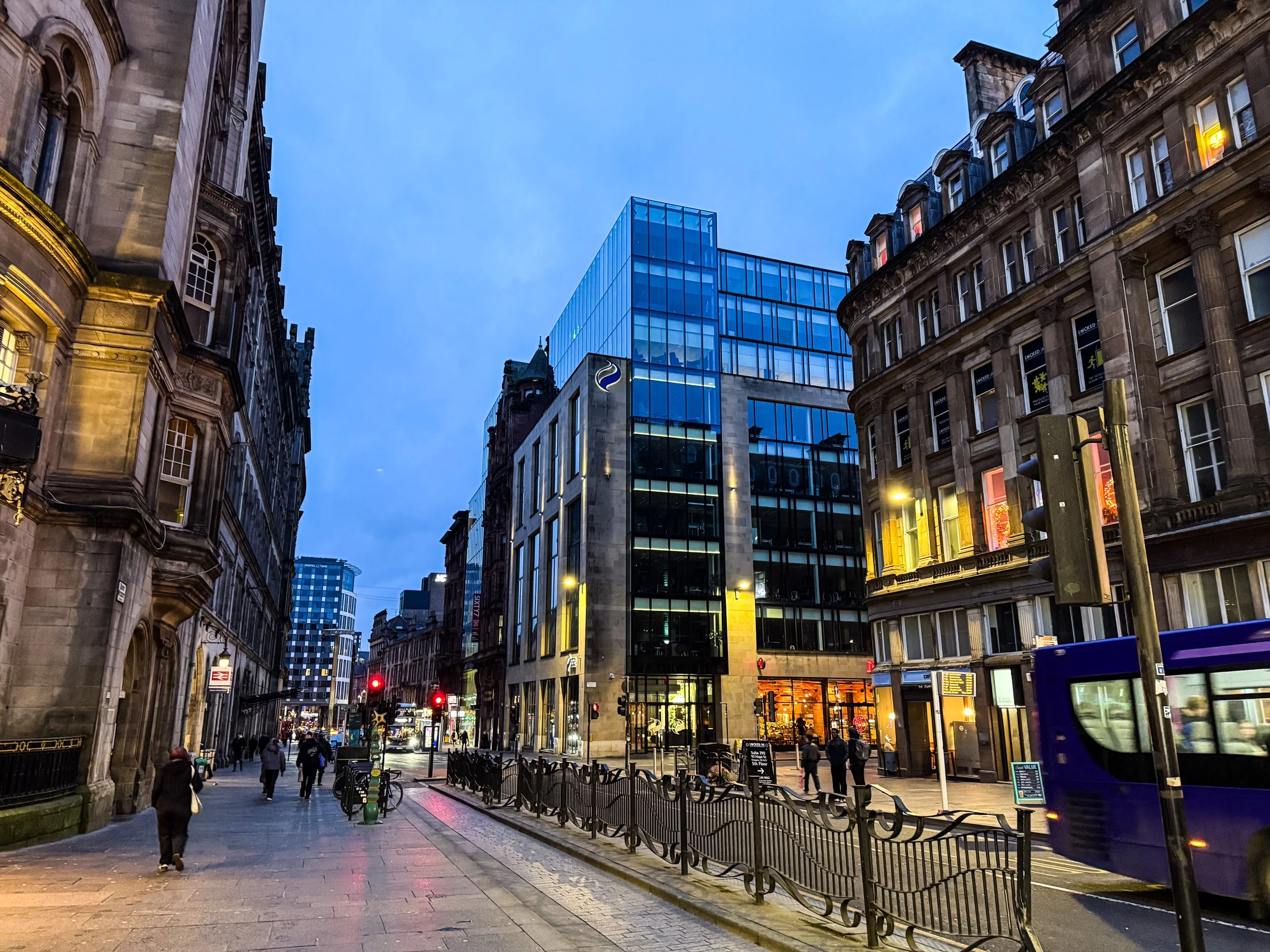
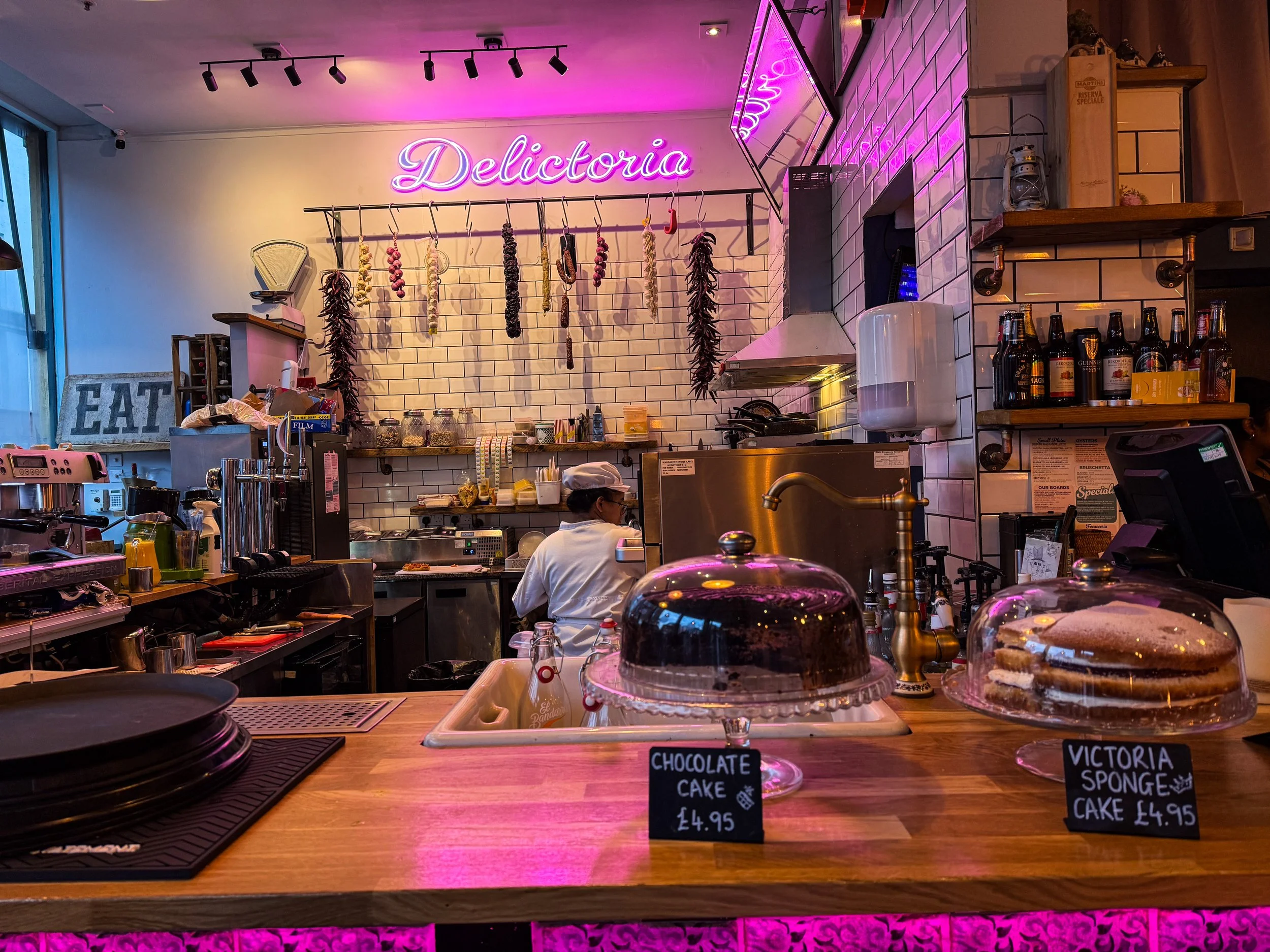
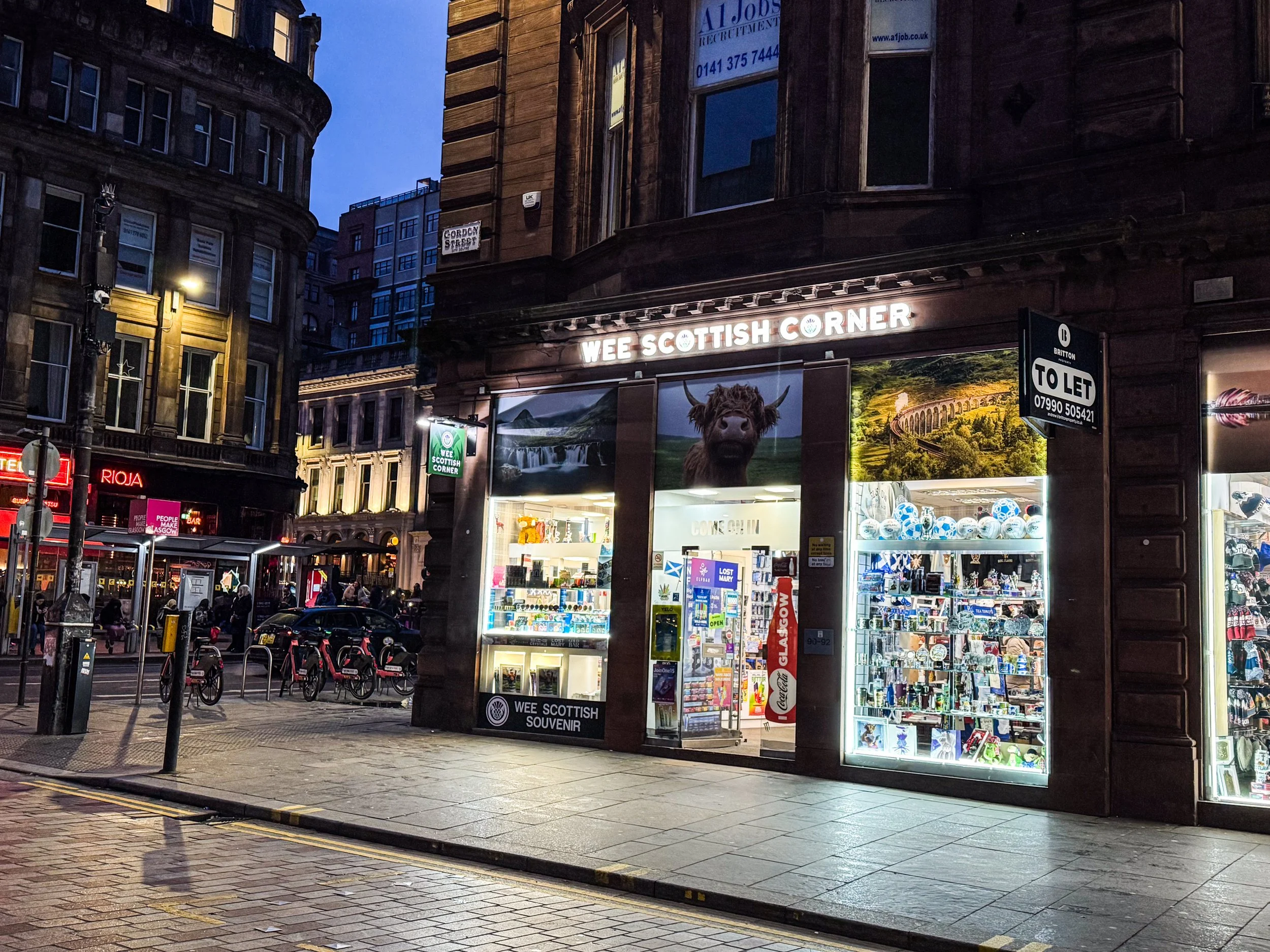
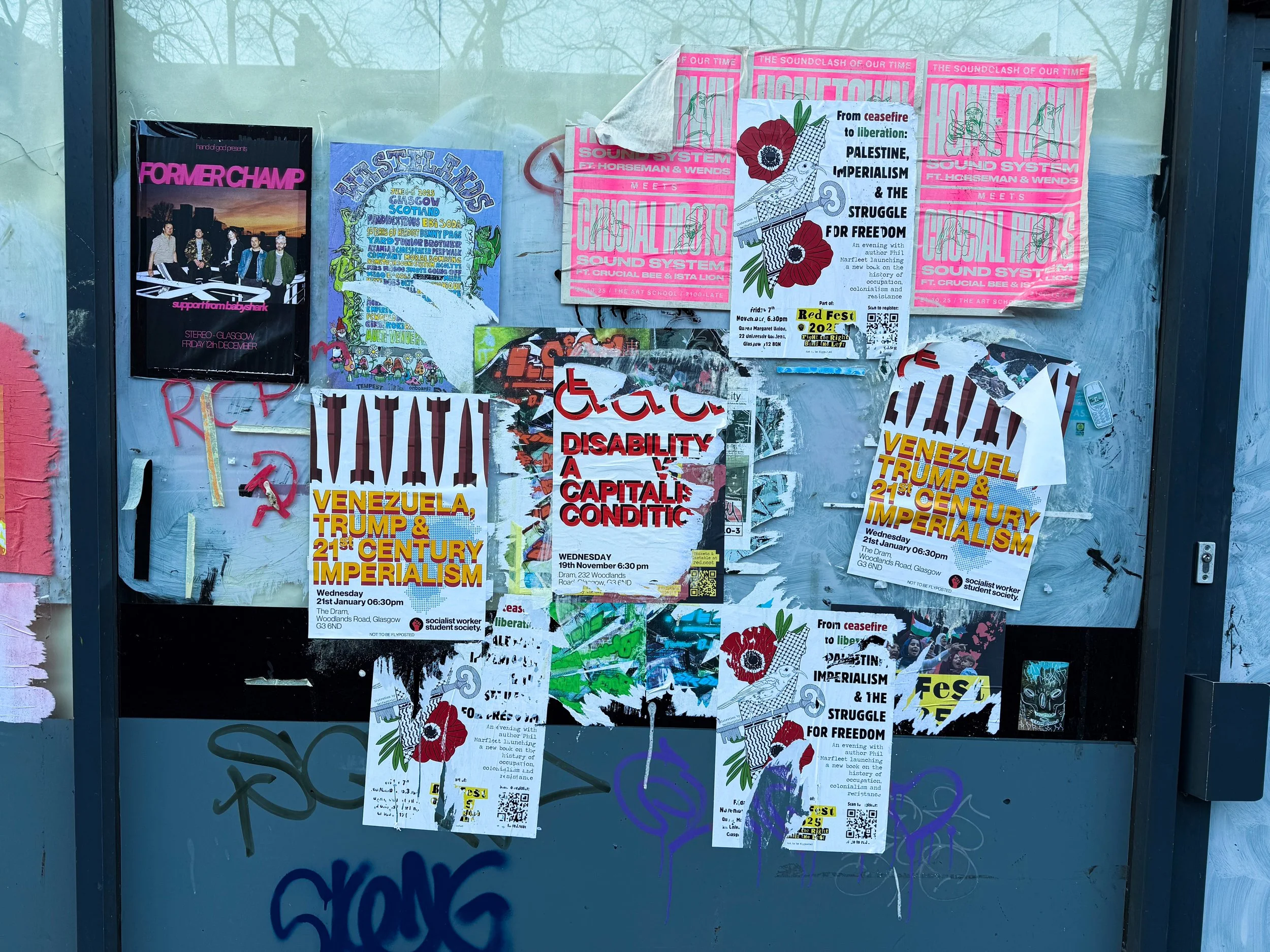
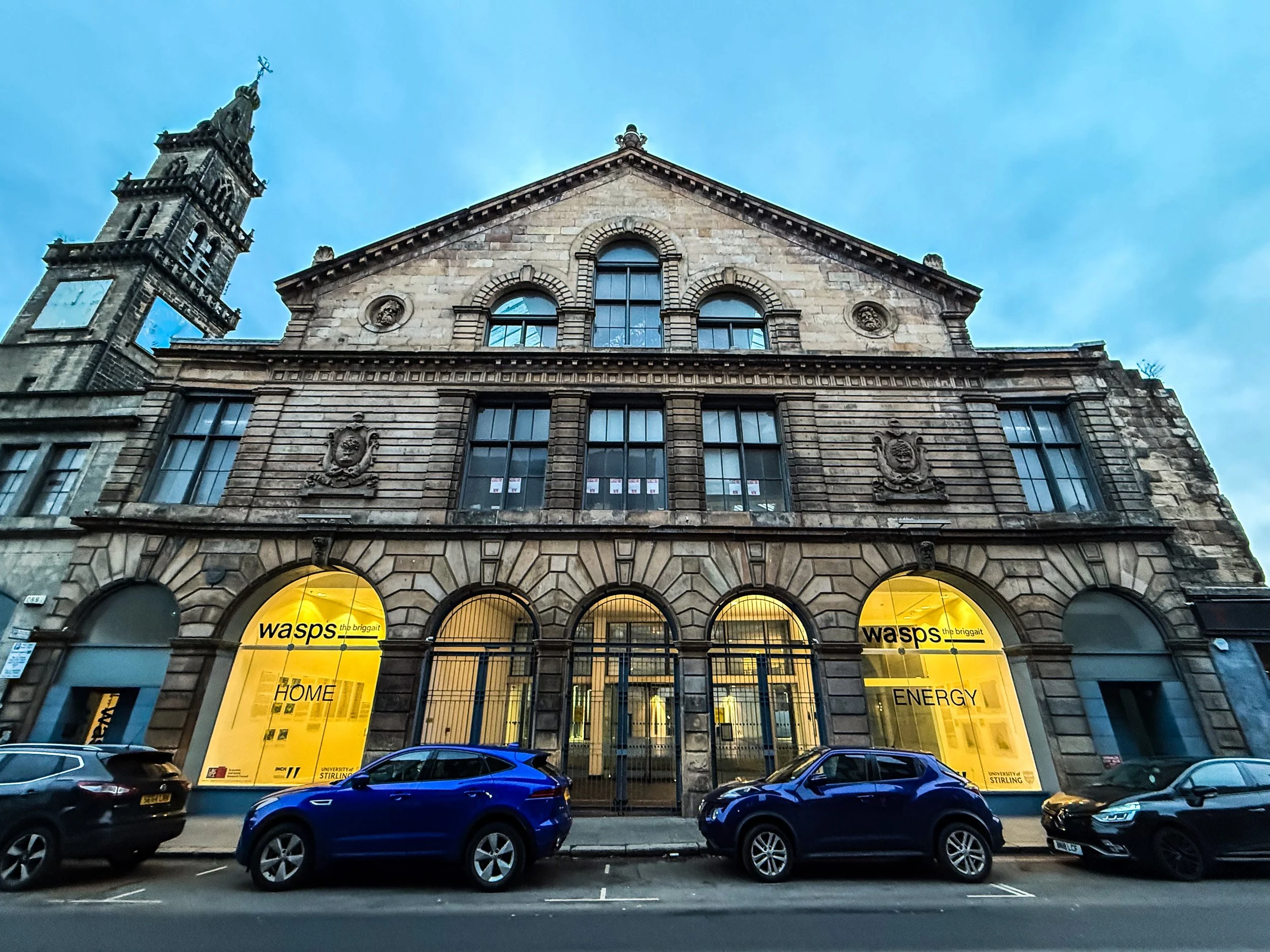
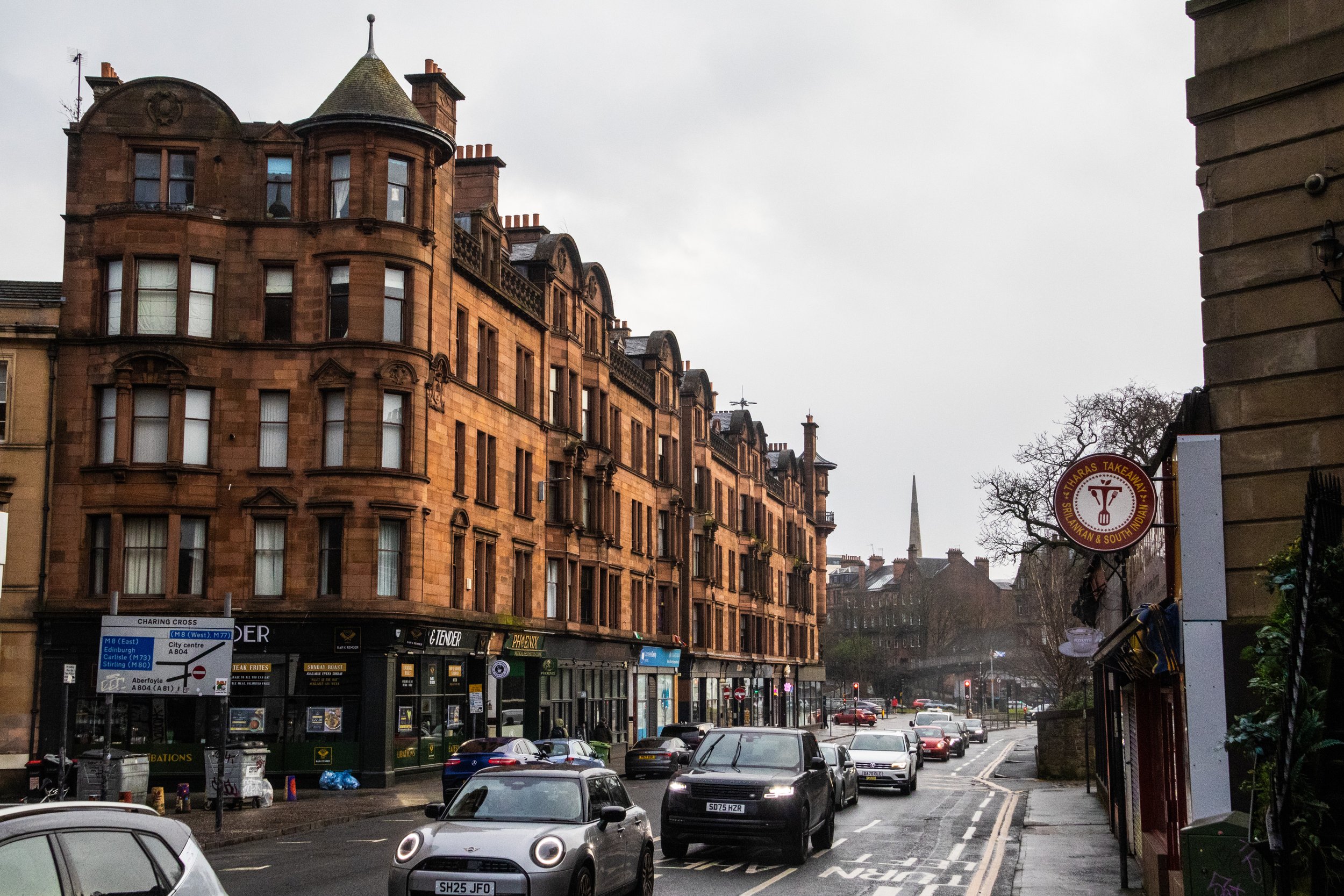
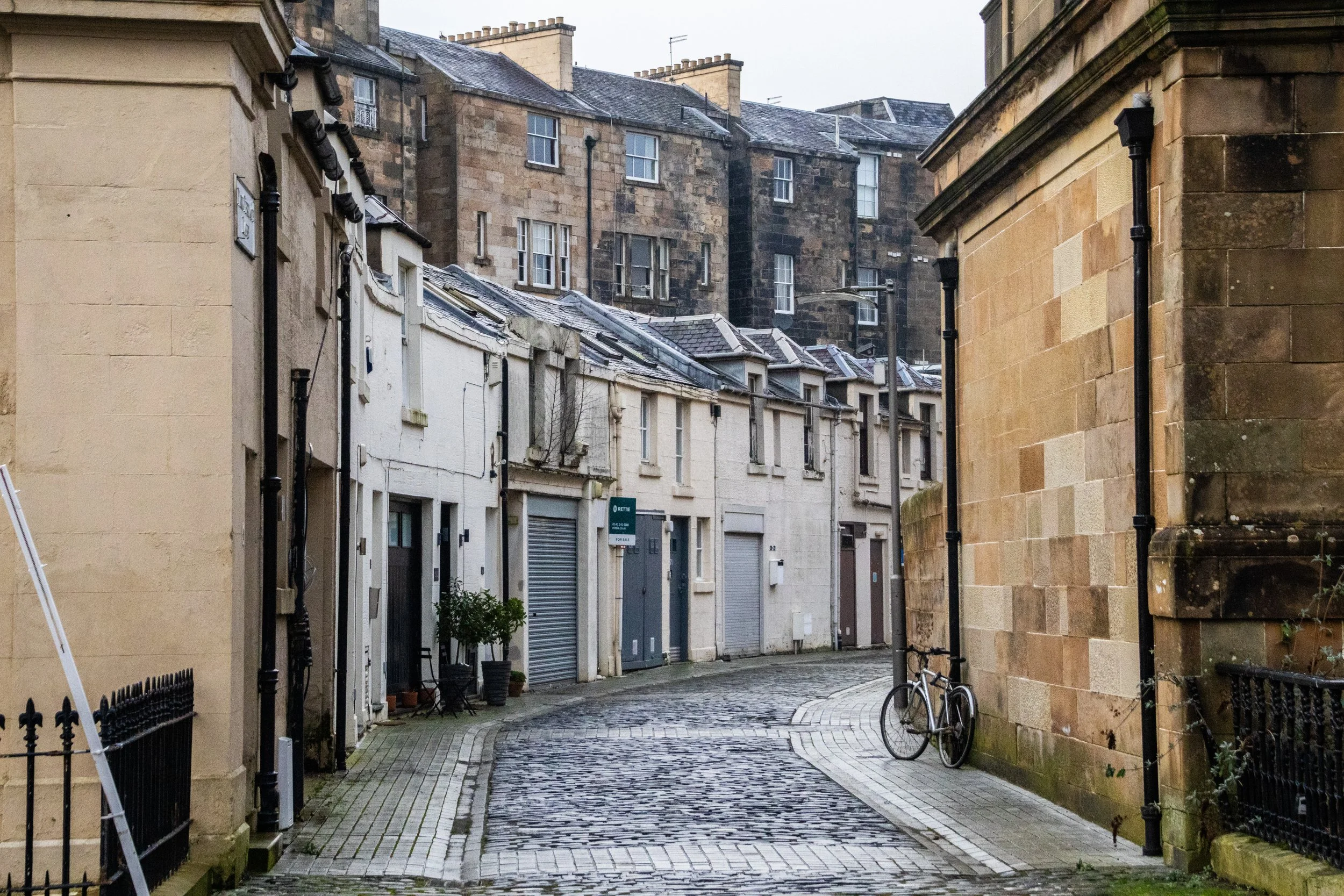
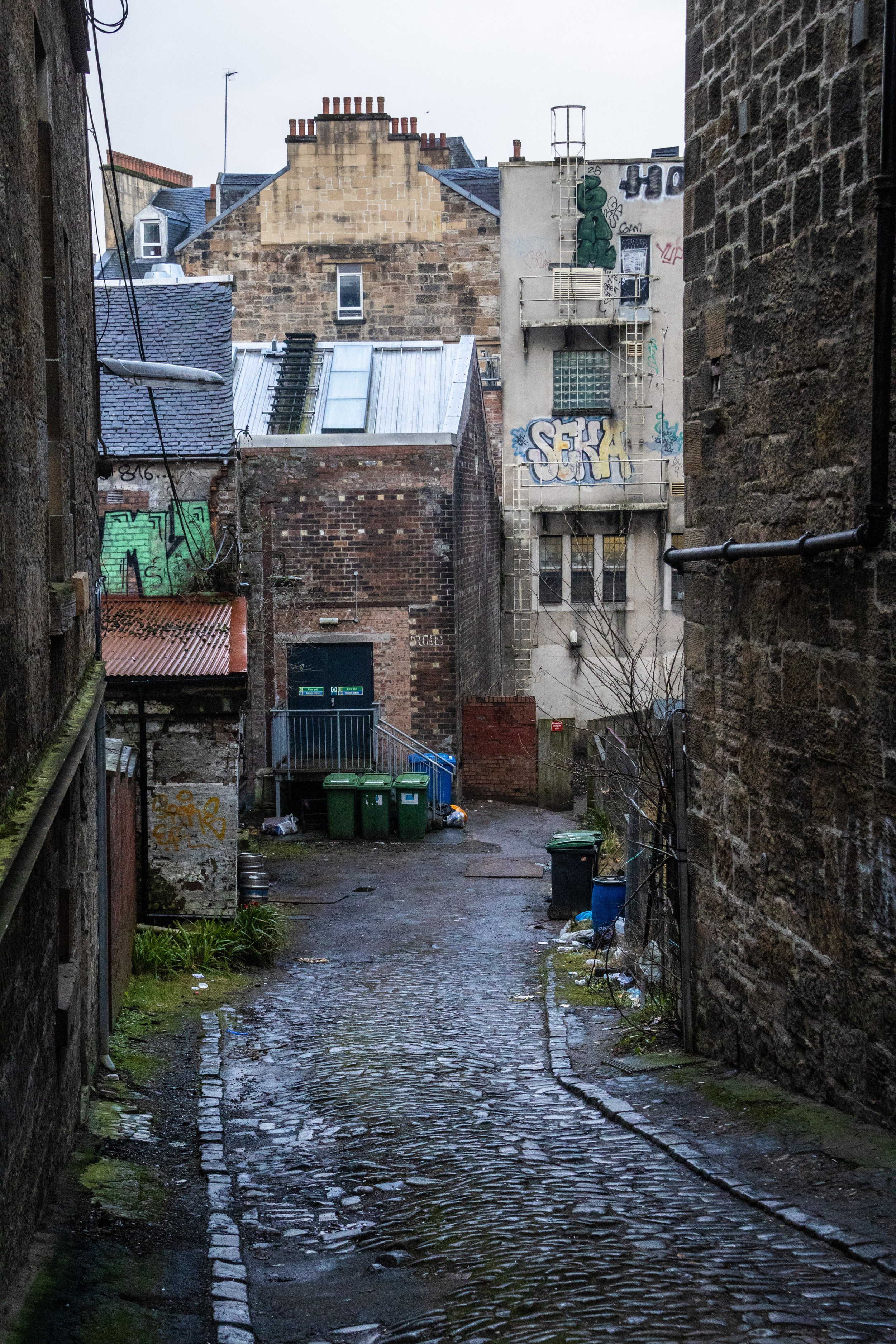
Here are a few snaps from walking around Central Glasgow. Keep in mind that this was January, so it’s not always this gloomy! But I actually think Glasgow was quite photogenic in the gloom. Also, see if you can find the picture of Glasgow’s Central Station. This was just a few weeks before a fire started in an attached vape shop that threatened to burned the whole thing down! It did re-open a few weeks later, but it was a major disruption.
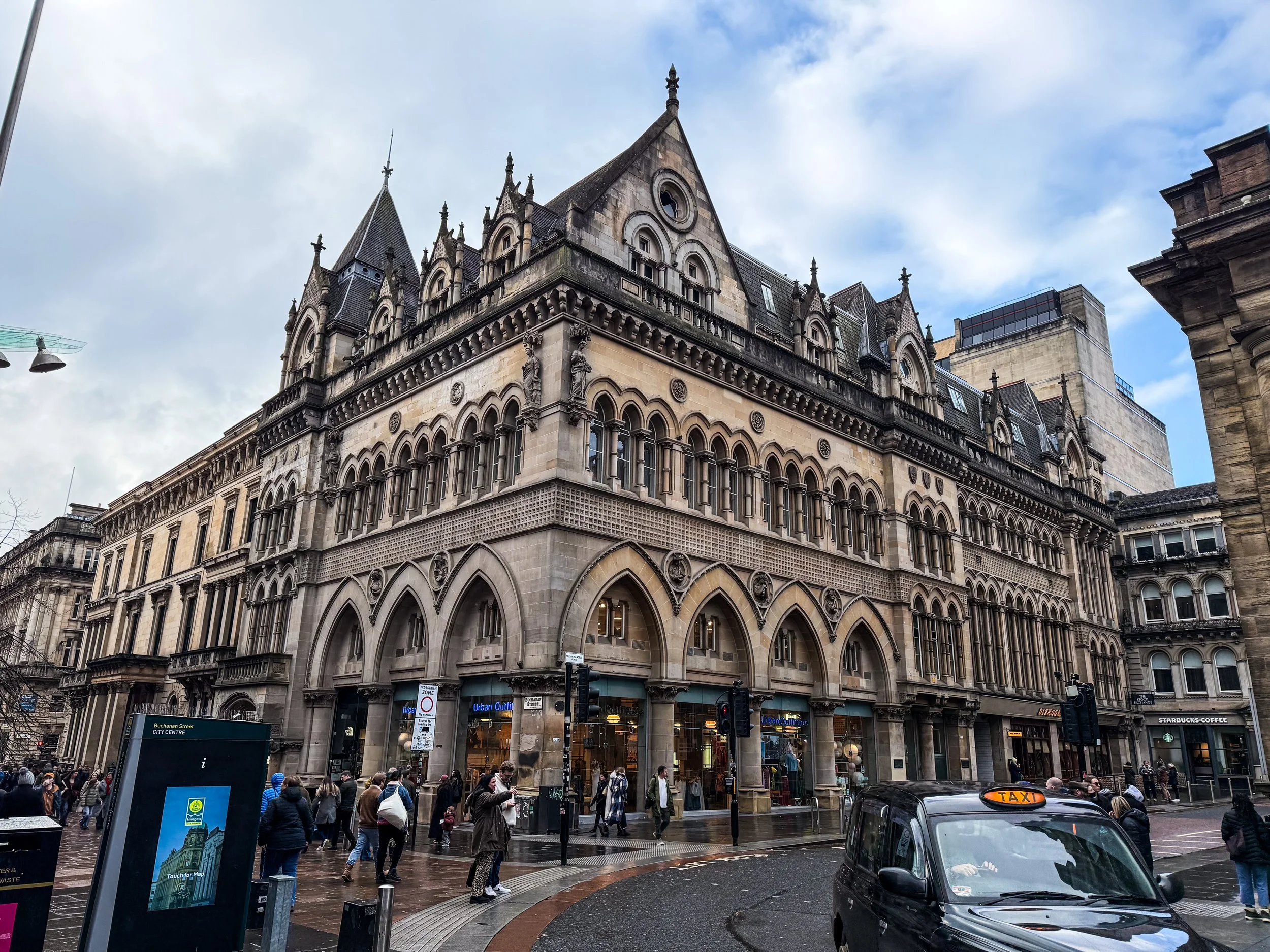
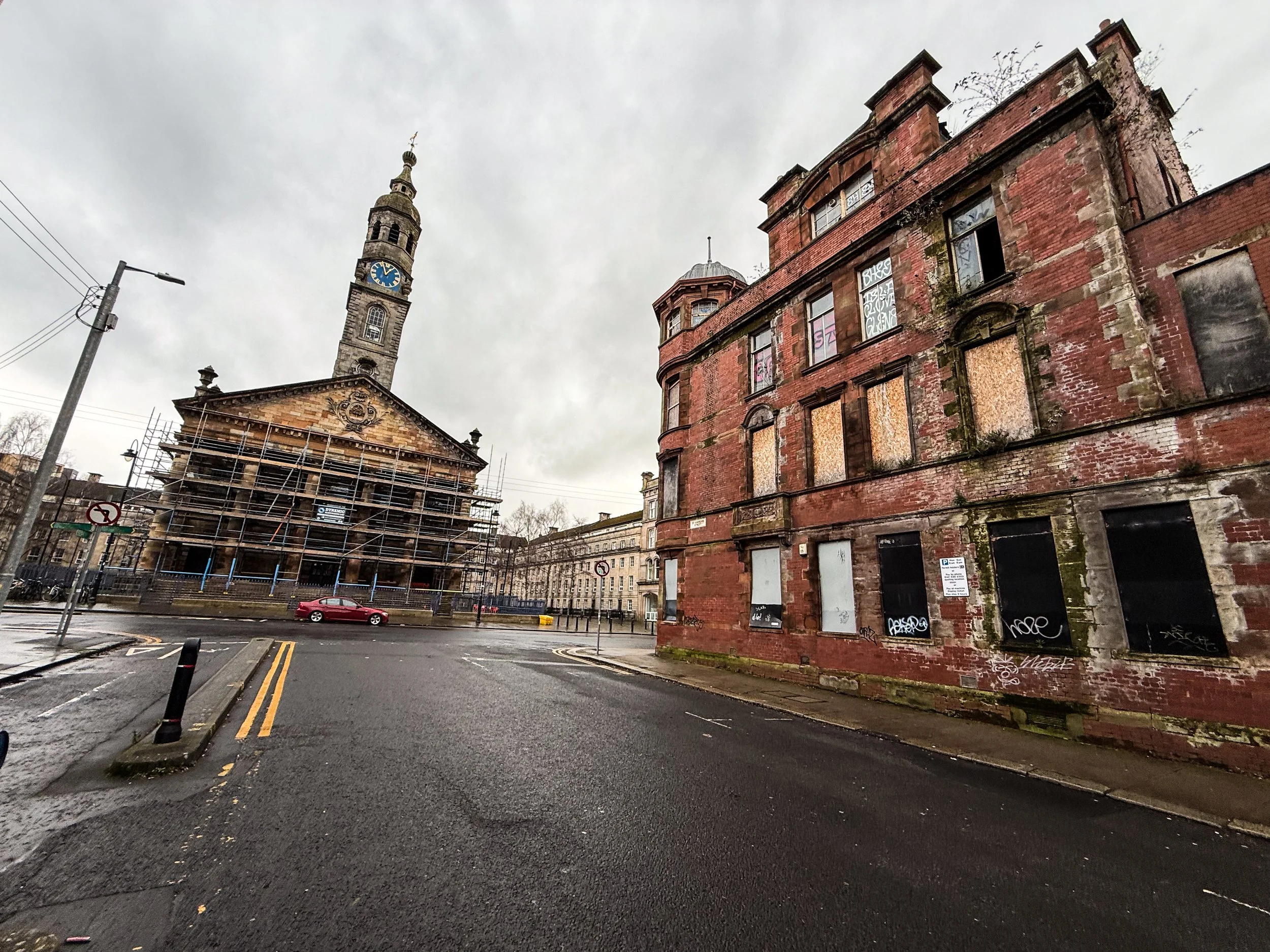
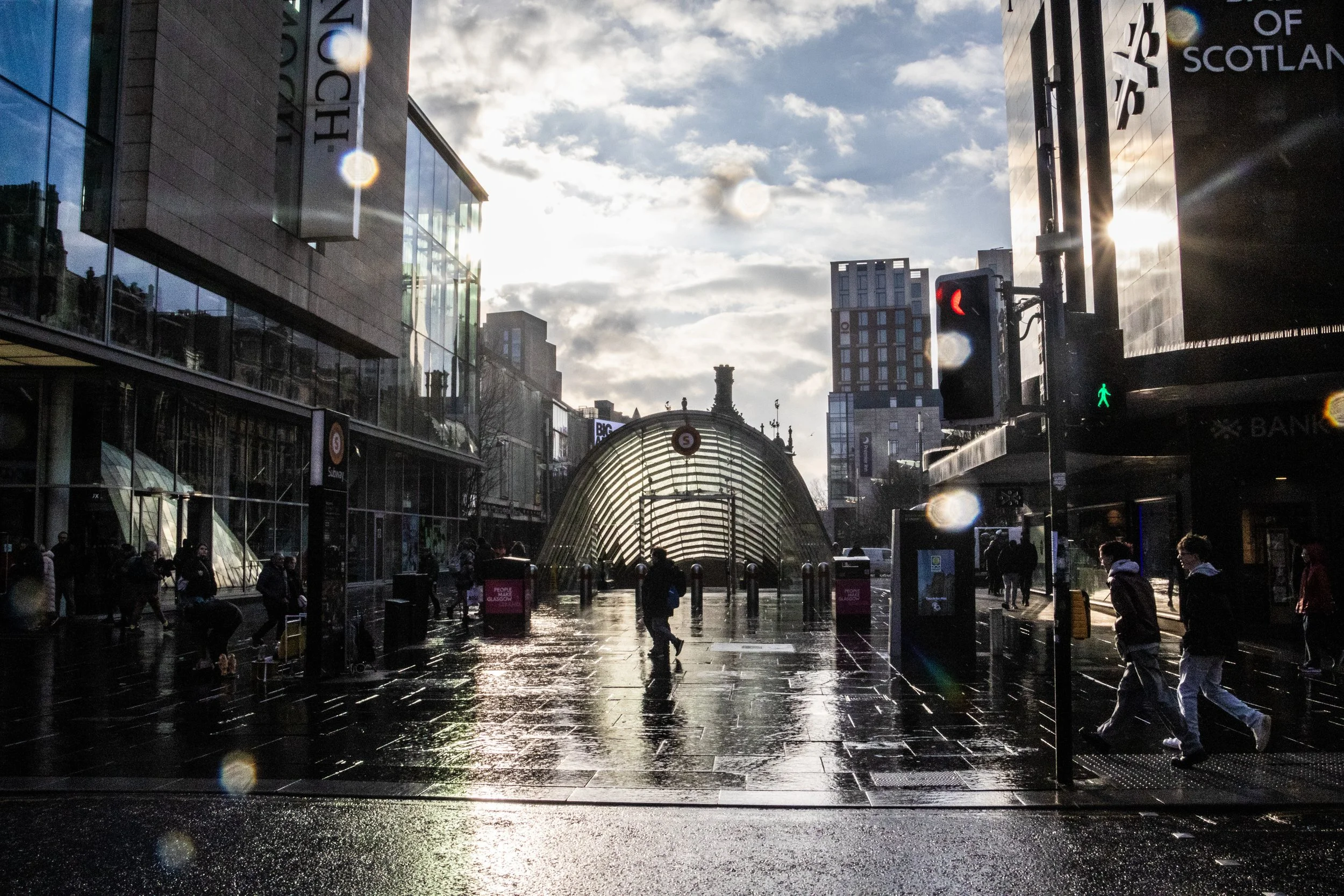
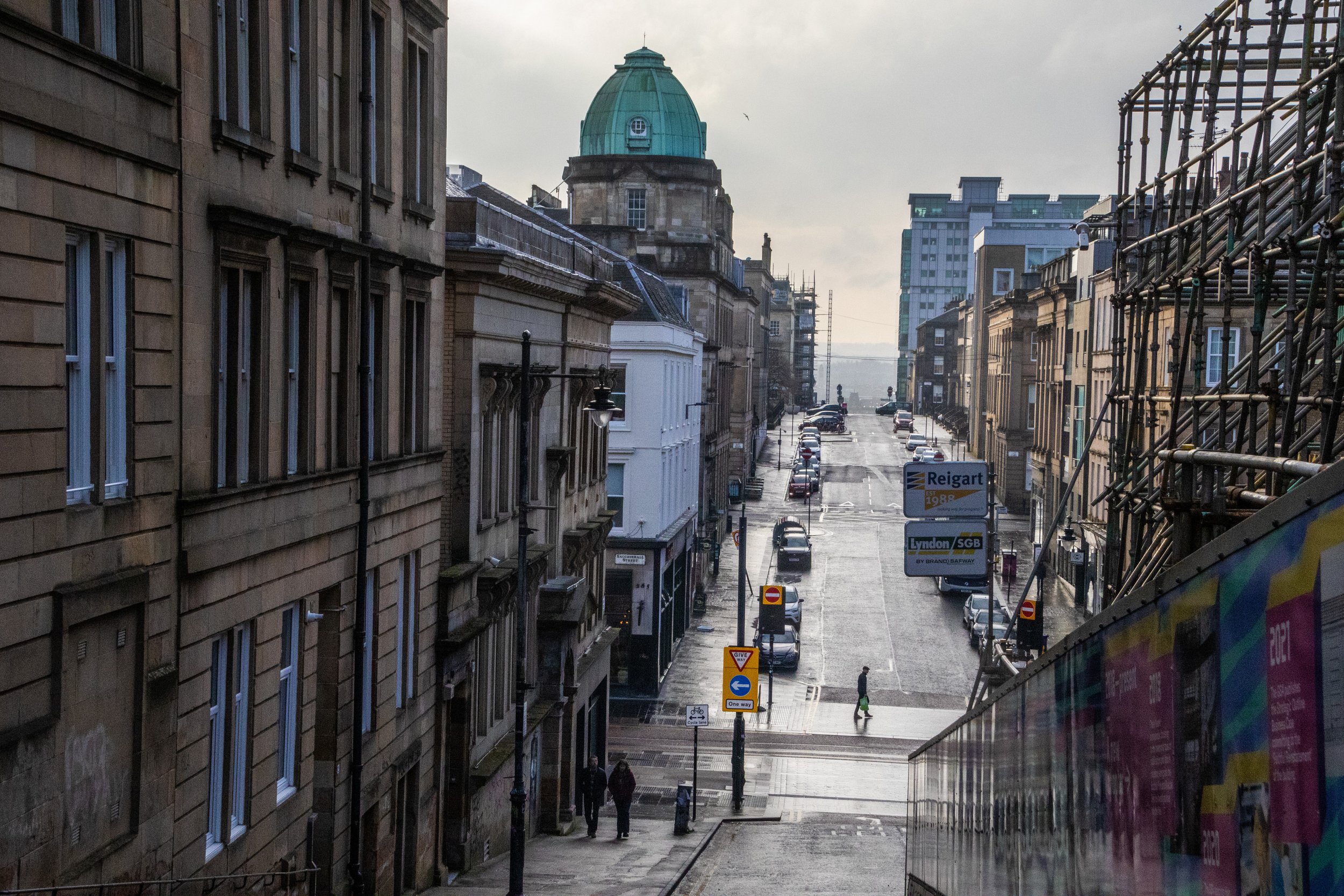

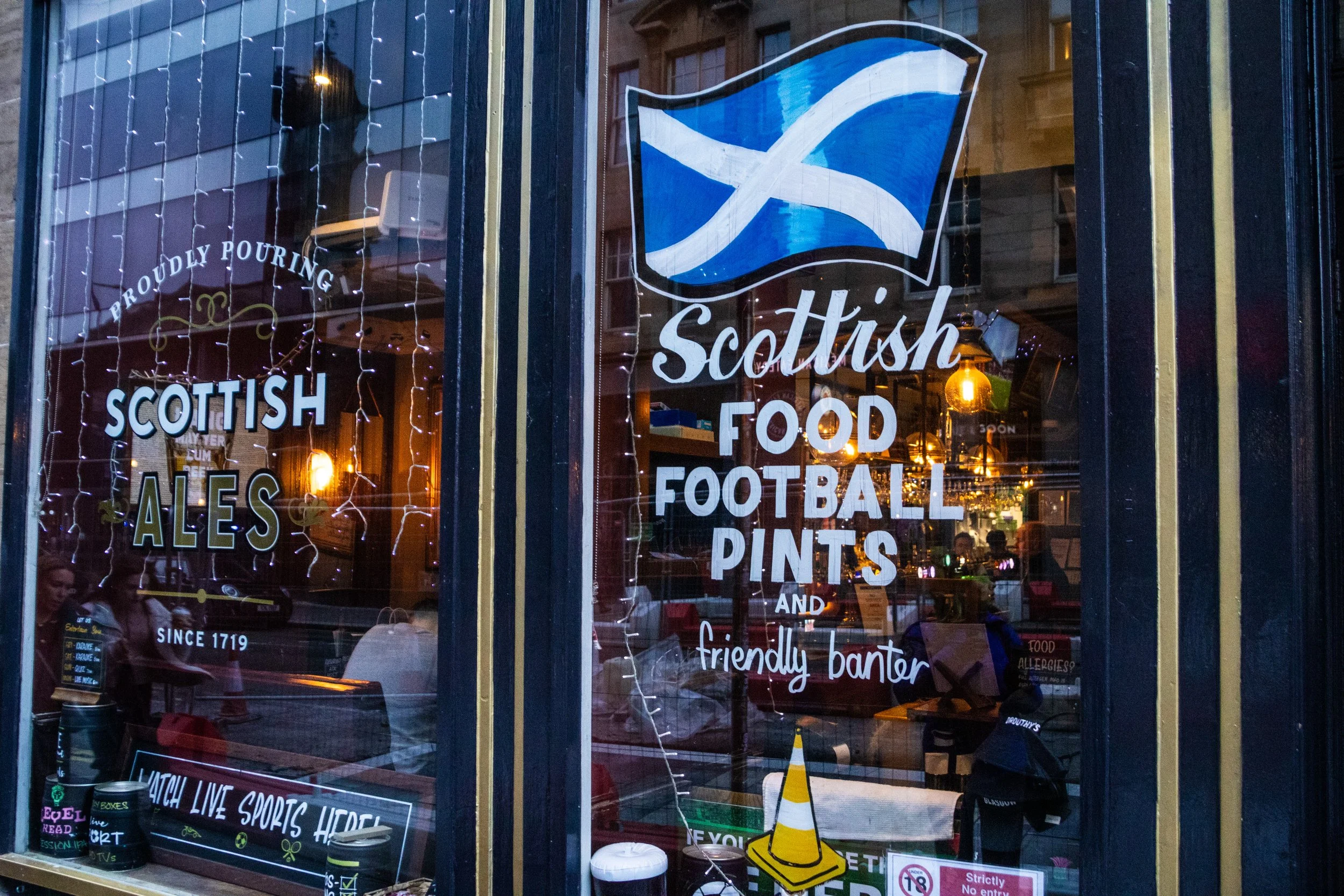
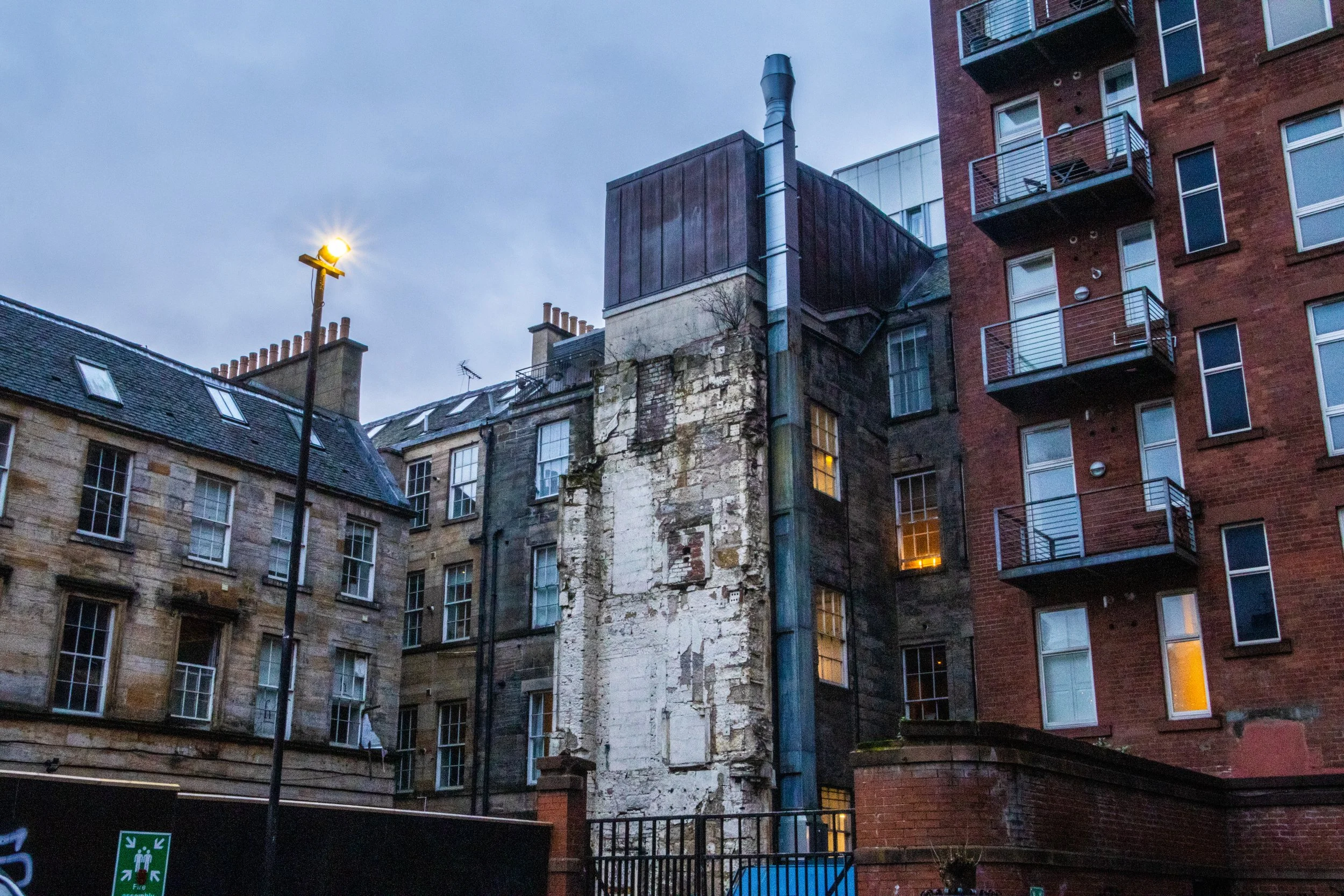
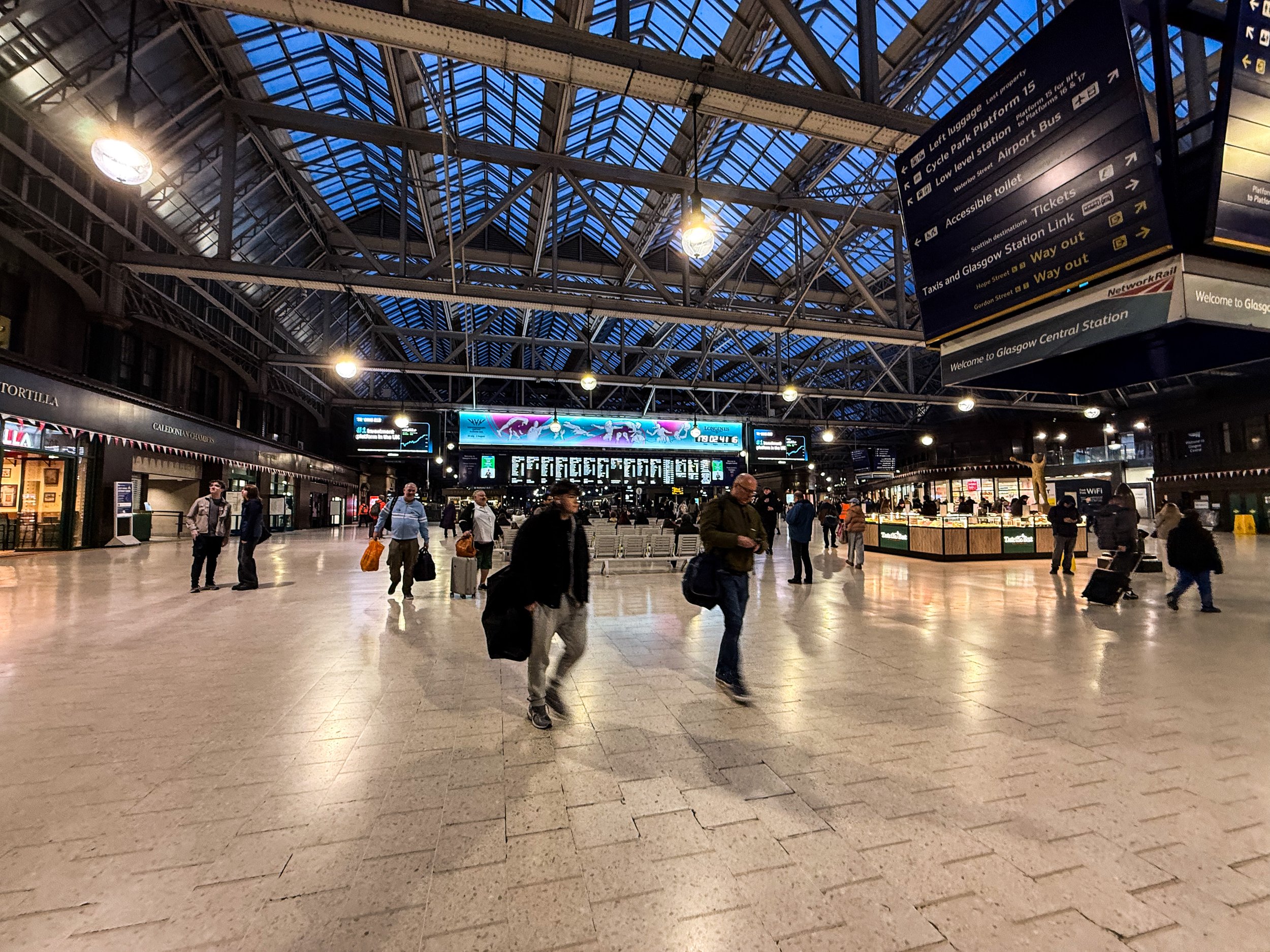
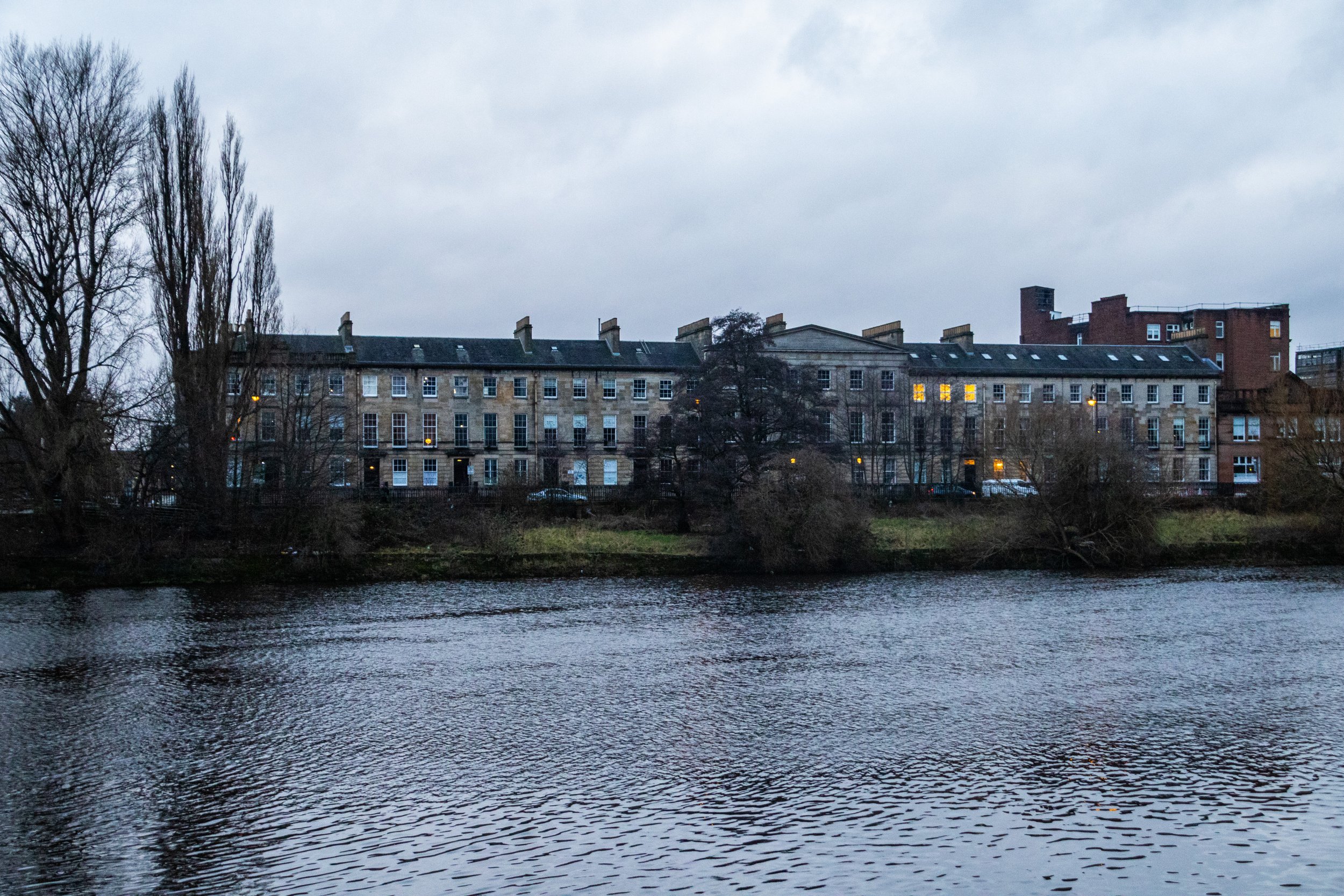
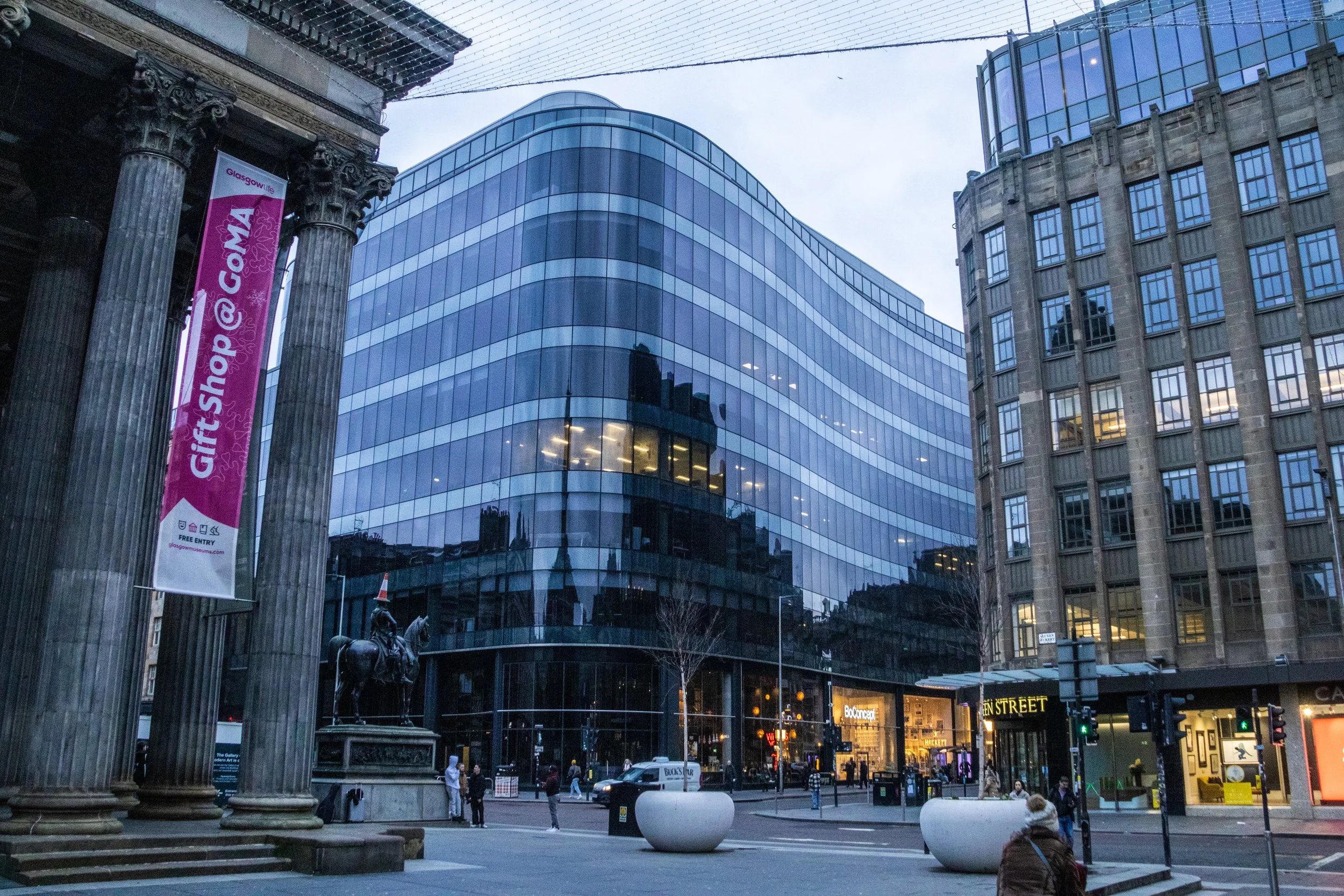
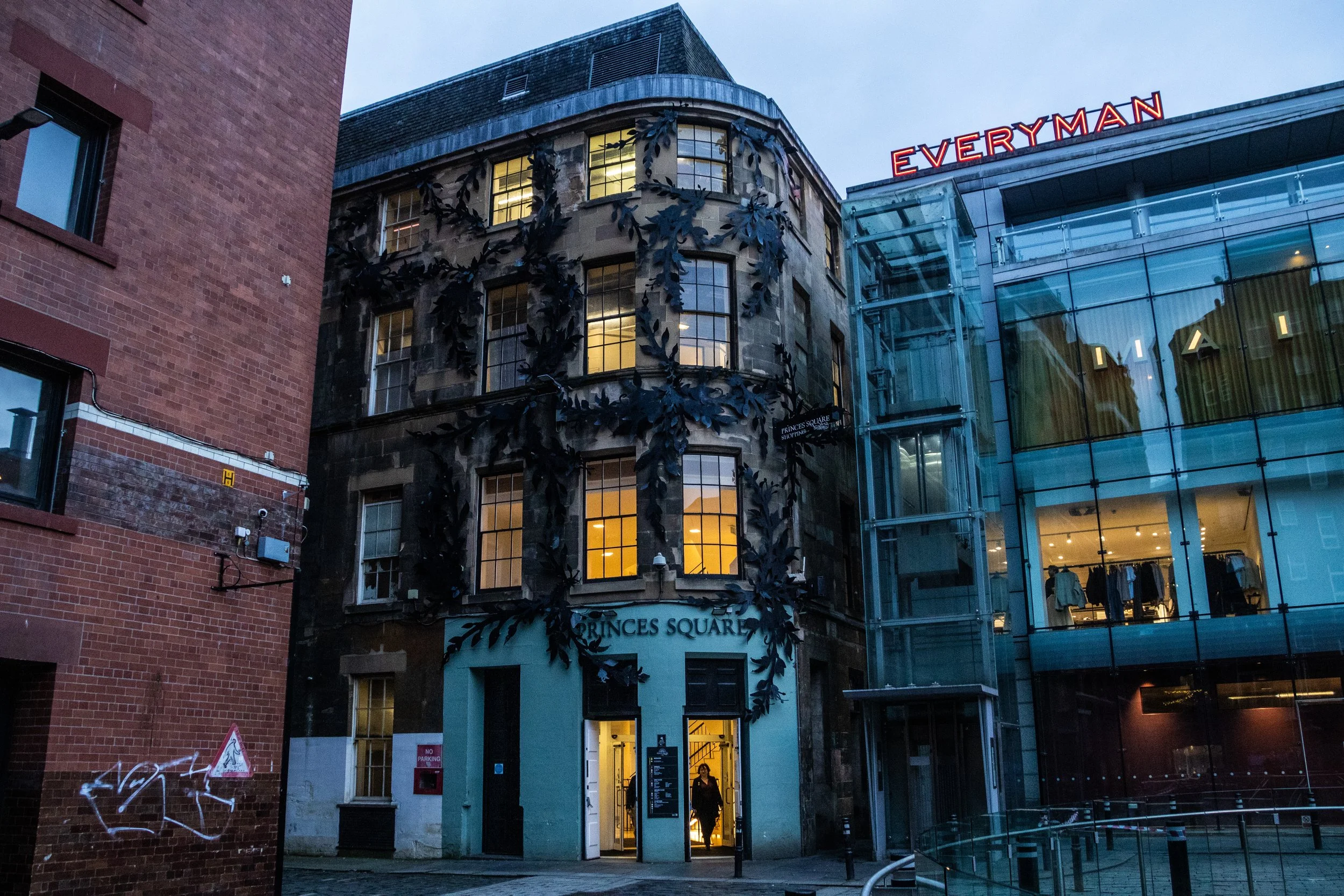
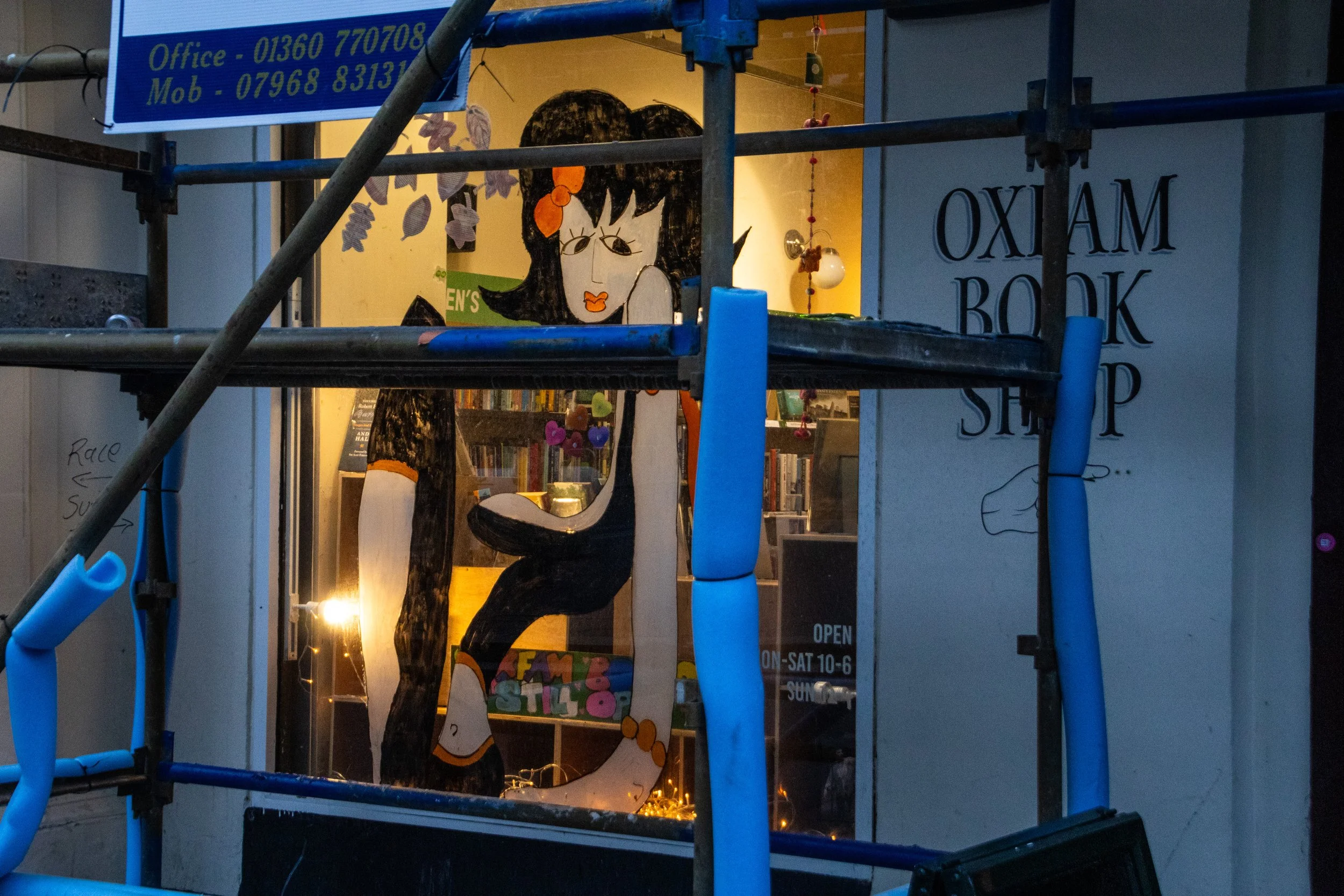
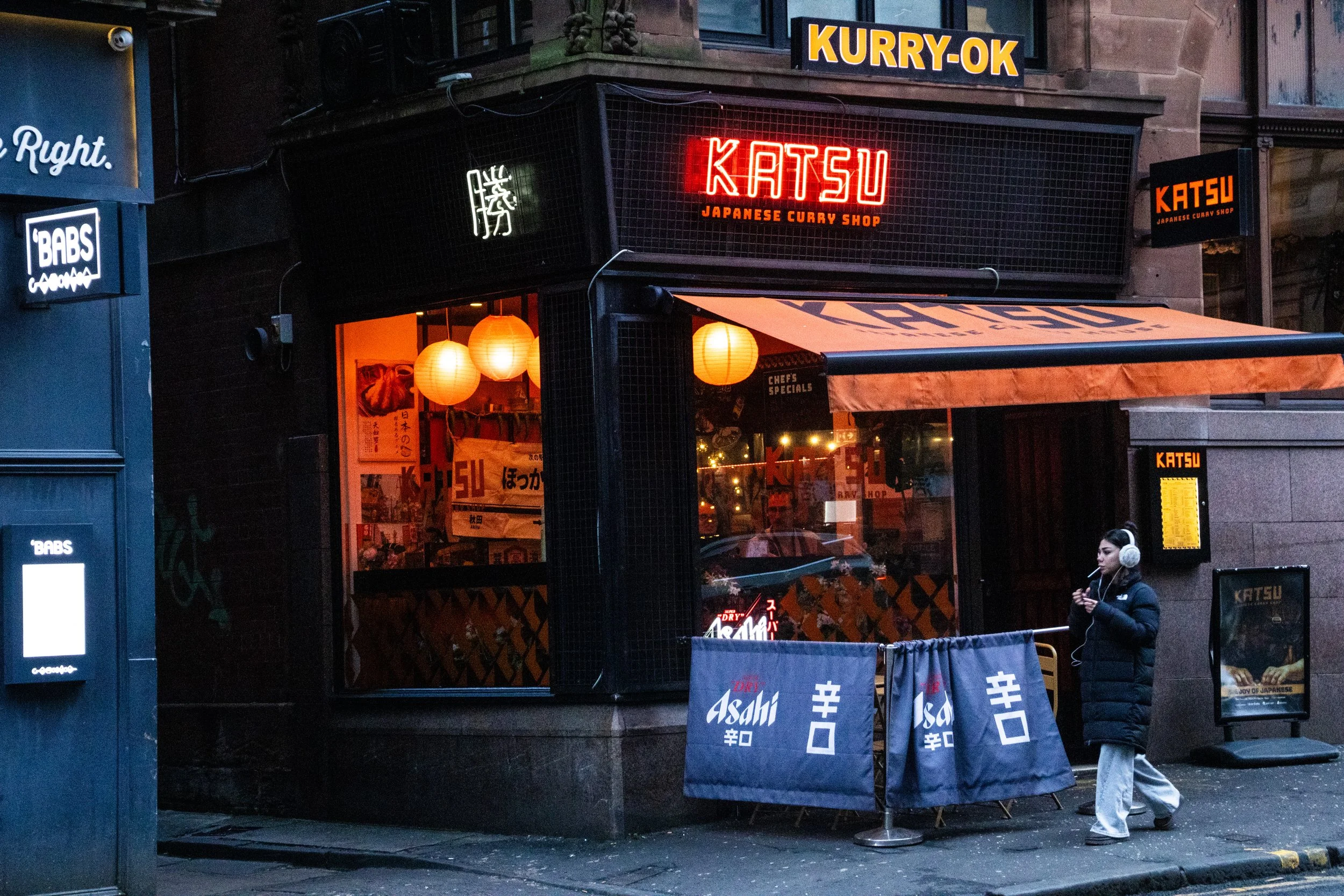
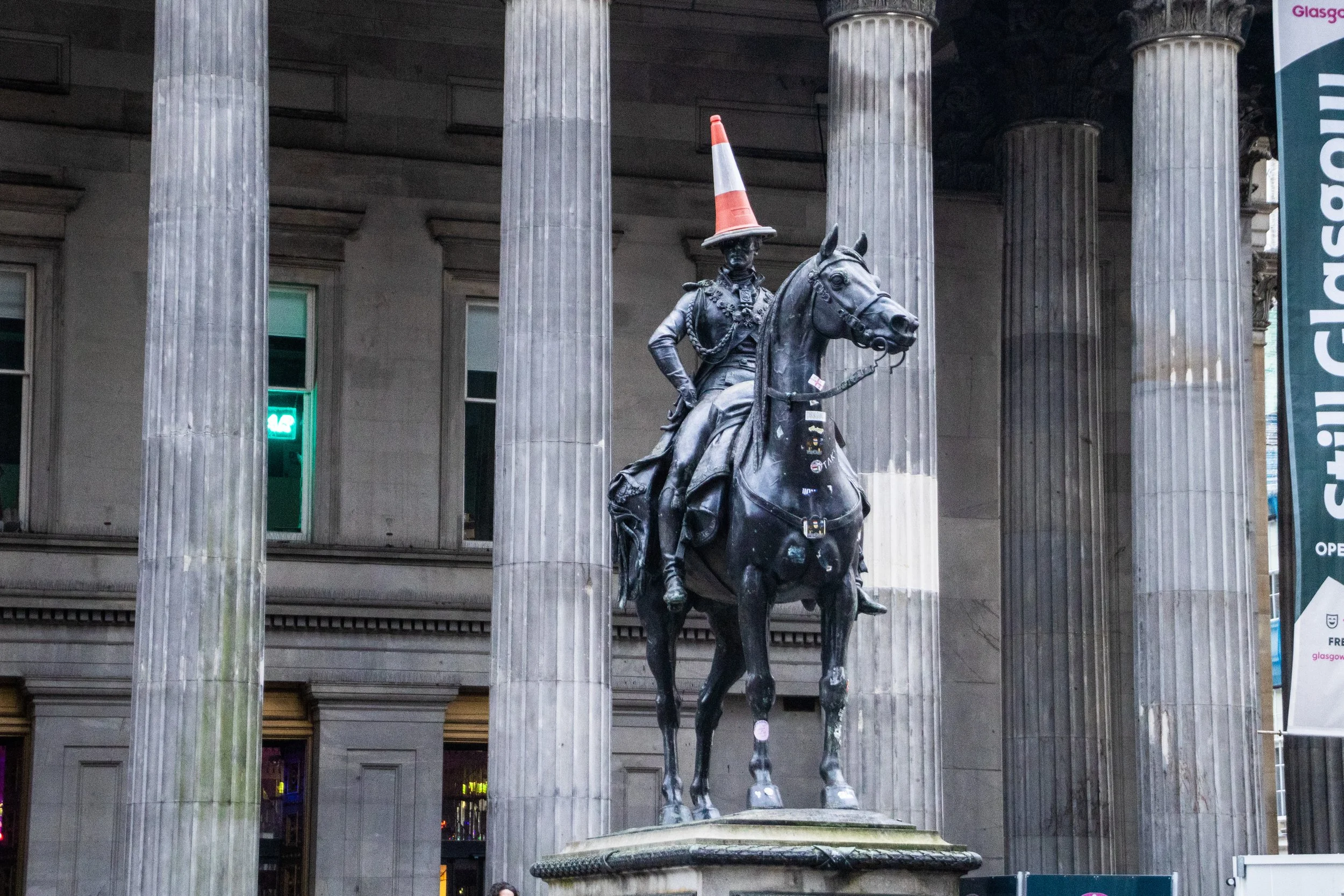
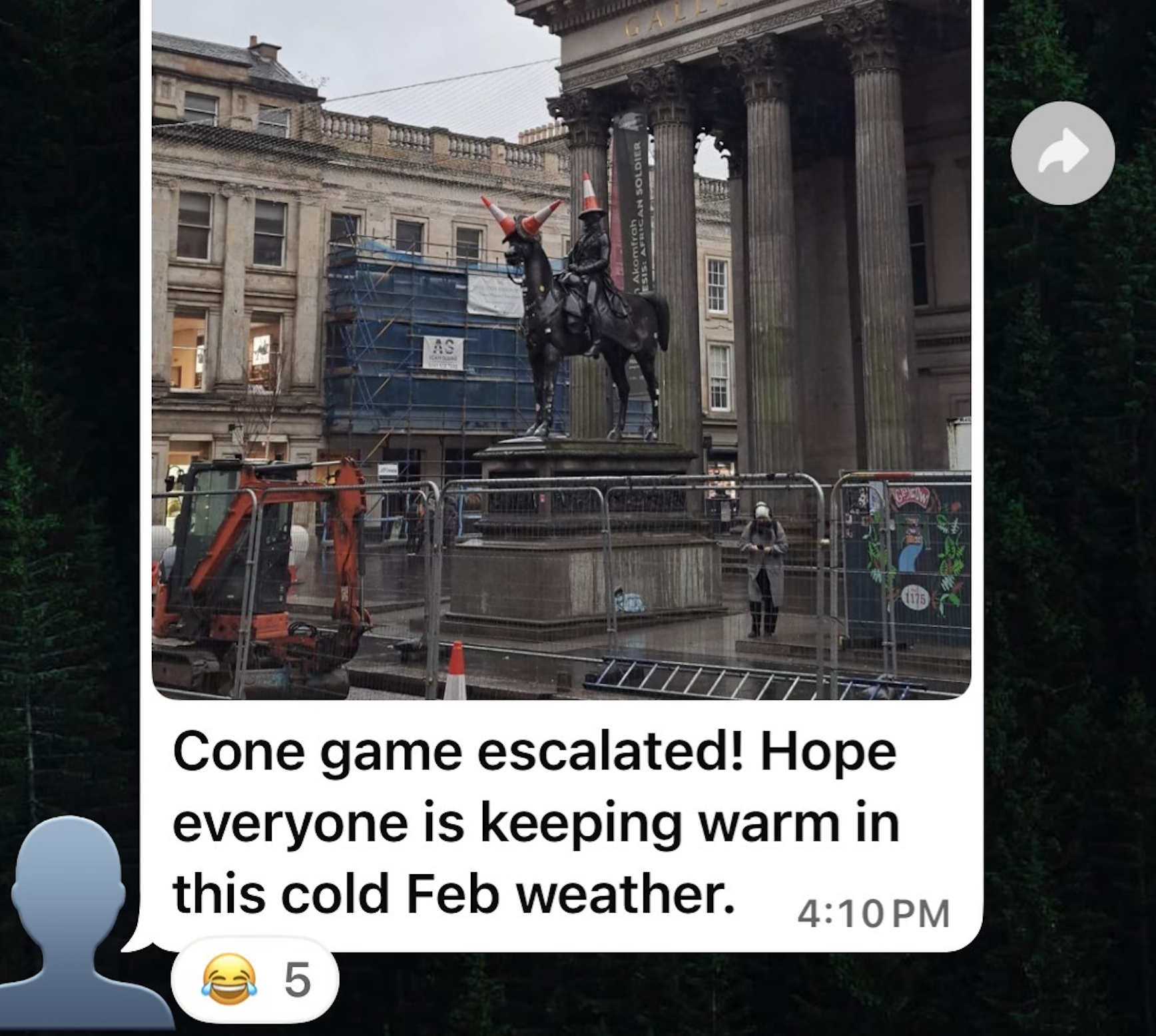
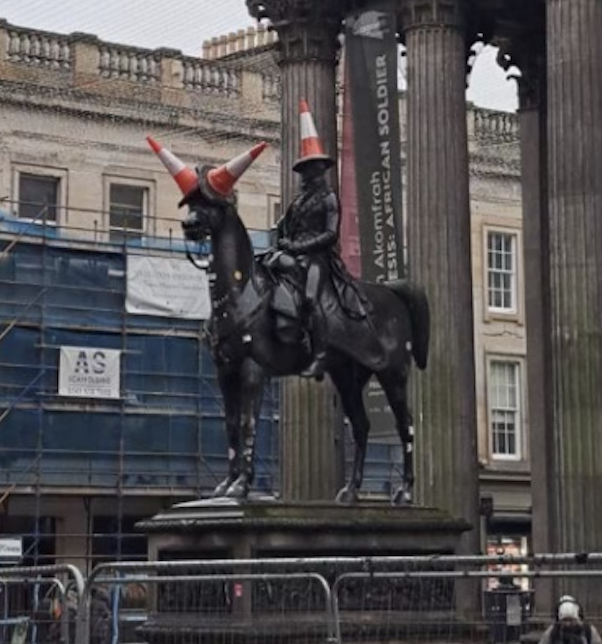
Now we arrive at one of my favorite landmarks… maybe ever! In central Glasgow, in front of the Glasgow Museum of Modern Art, there is an 1844 statue of Arthur Wellesley on horseback. He was a British military hero of the Napoleonic Wars who would go on to become Prime Minister of the entire United Kingdom. It’s a regal monument celebrating the British state… so naturally, people started putting a traffic cone on Wellesley’s head. The origins of this tradition are unclear… it started in the 1980s at the hands of anonymous drunken hooligans. The authorities would remove the cone, and people would just put it back, every single time. After decades of this to and fro with the huddle masses, the authorities introduced a proposal in 2013 to raise the base of the statue to make it more difficult to put the cone on his head, and Glaswegians held protests! Long story short: the authorities seem to have accepted defeat on this one.
I was tempted to read some sort of Scottish-separatist politics into this monument, but—while Glashow does tend to lean that direction politically—it’s apparently got nothing to do with that. So, we’ll leave that can of worms for another day. Instead, the cone is just a symbol of Glasgow’s general irreverence towards authority figures. Or, to put it another way…

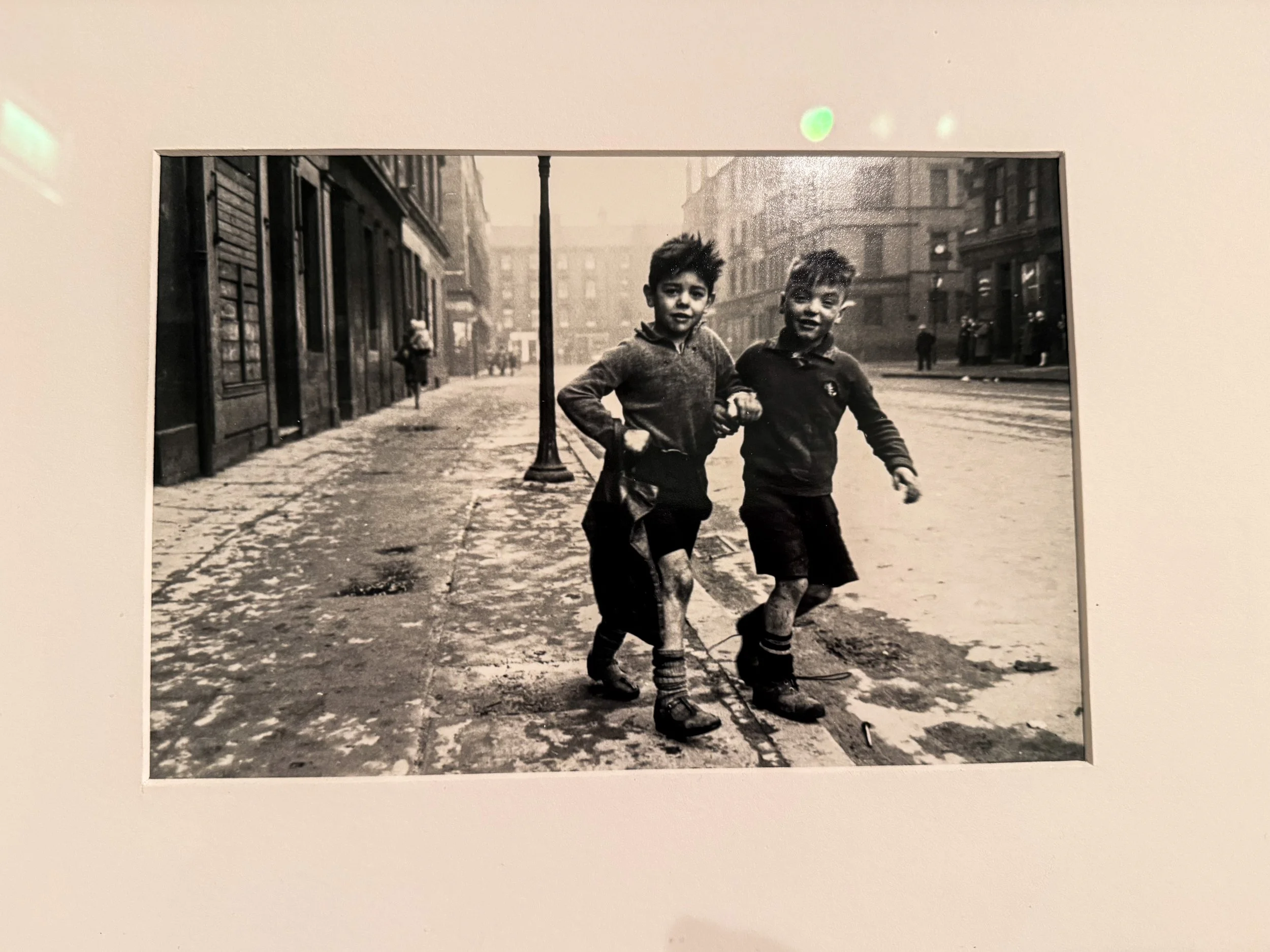
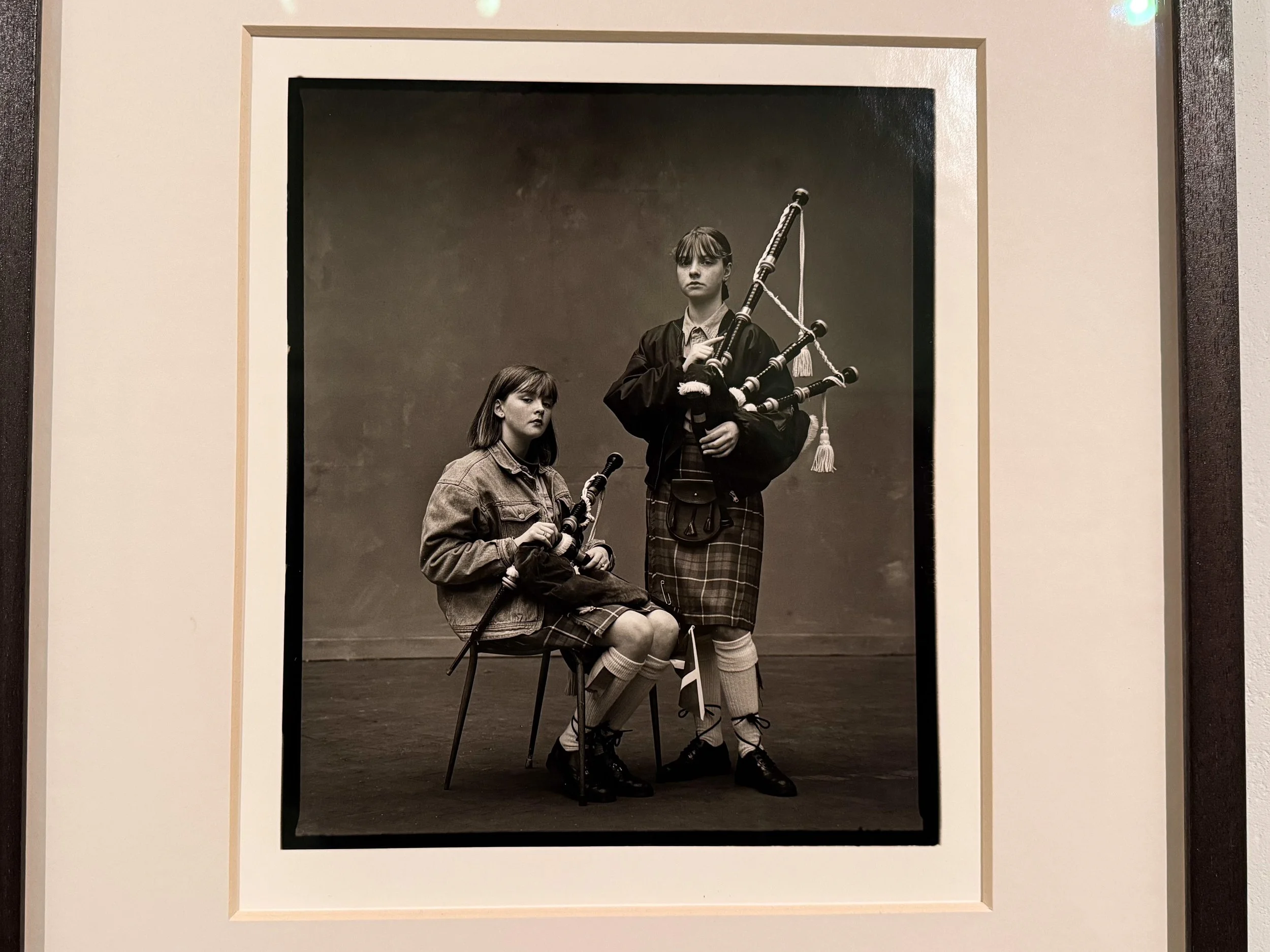
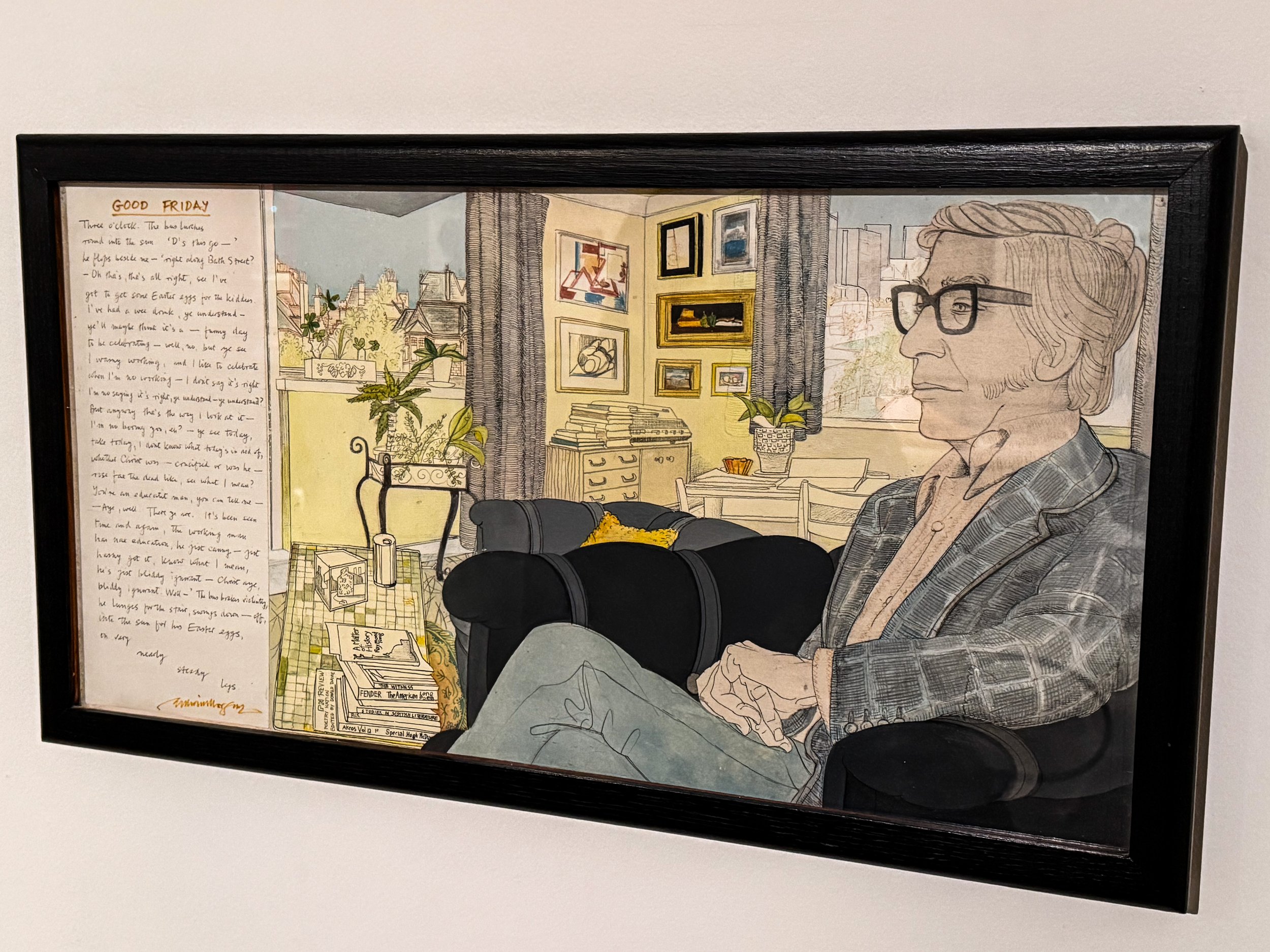
Here are some pictures for you, along with a few snaps from inside the Glasgow Museum of Modern Art. It’s a small museum, but it’s free to enter, so you might as well.
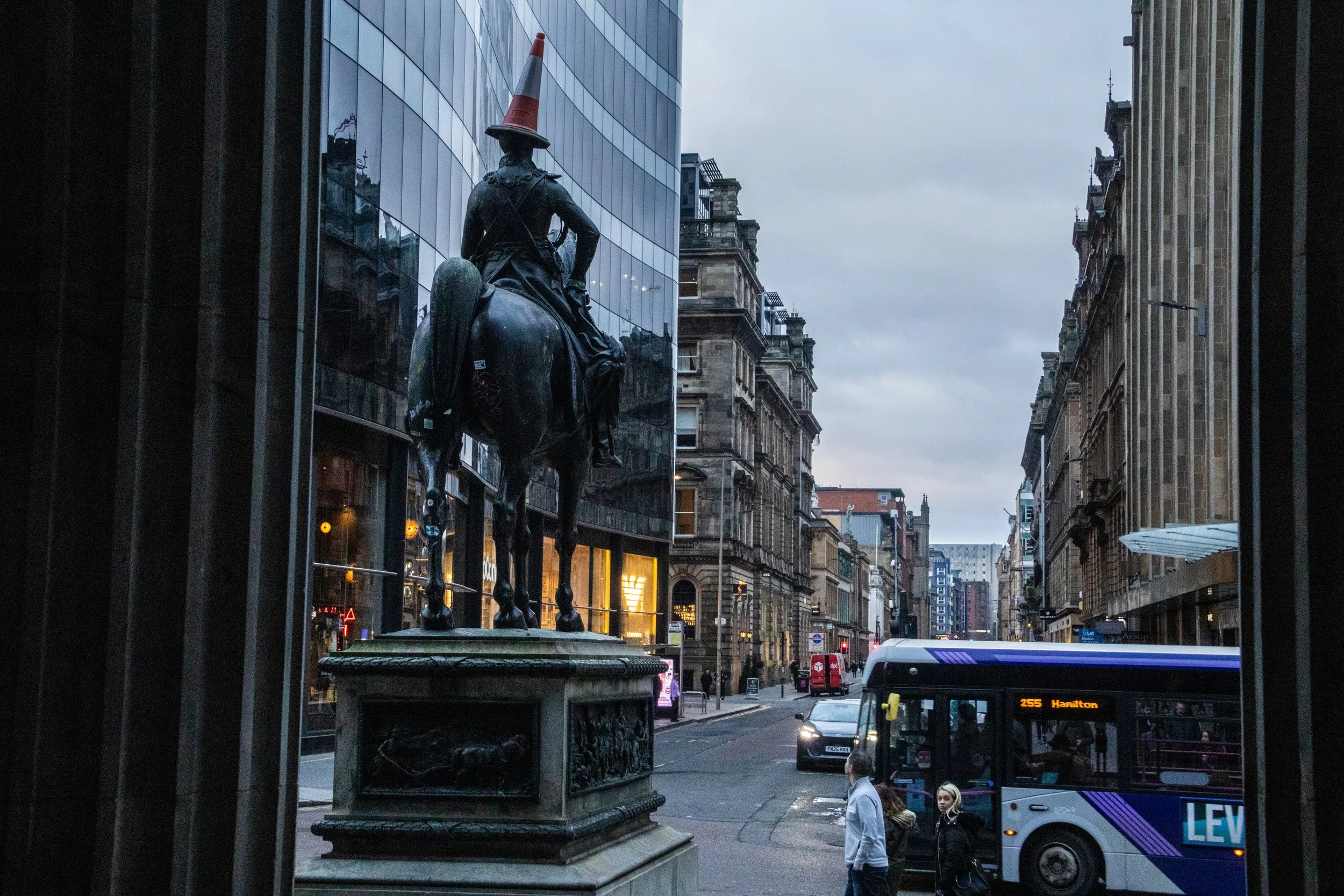

A few weeks after this trip, we all got a really fun message from one of our Glaswegians in the group chat regarding recent developments in the afterlife of Arthur Wellesley. As you can see, this is a very fluid situation. 😂
Now we’re going to walk westward to a slightly more scenic part of the city.
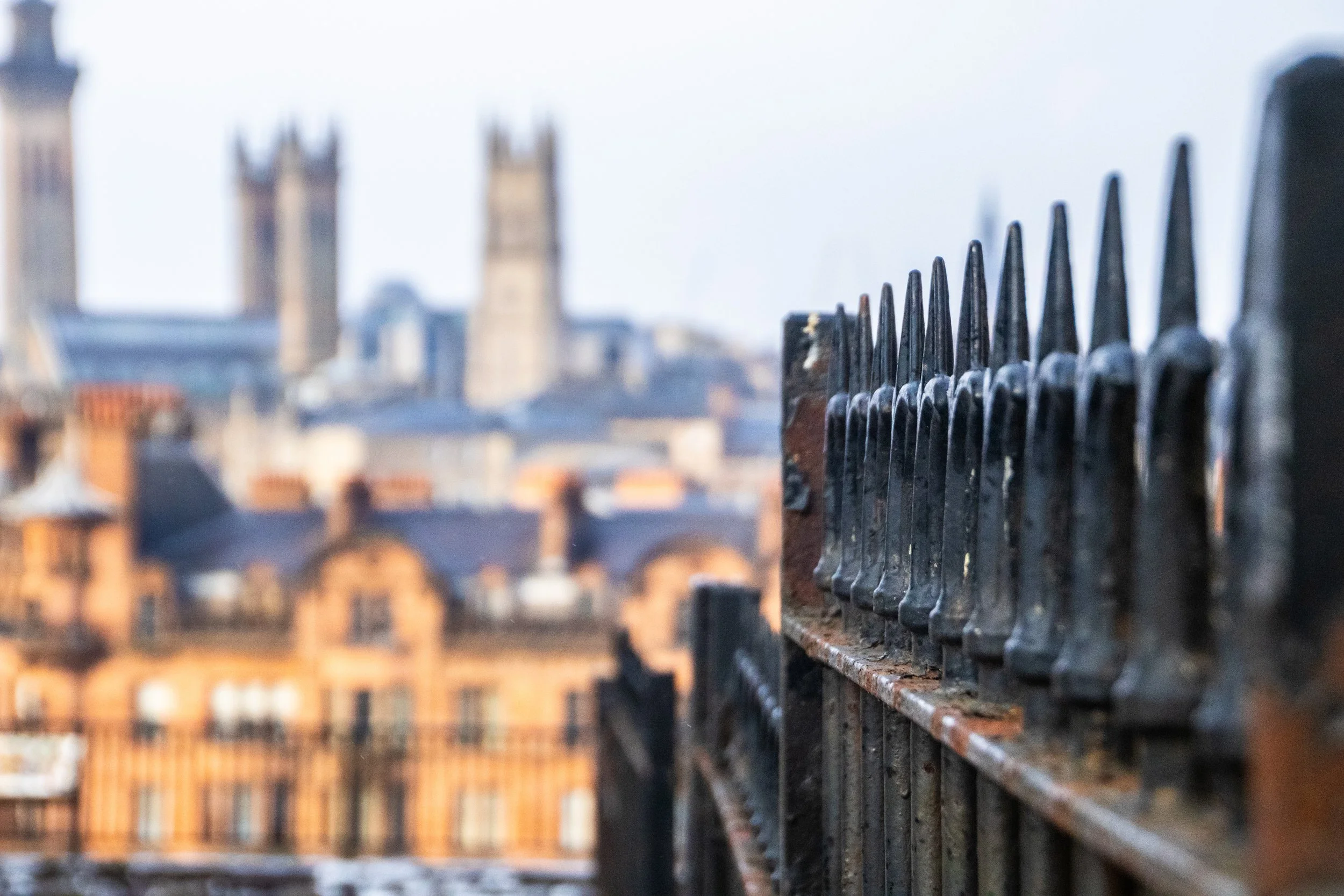
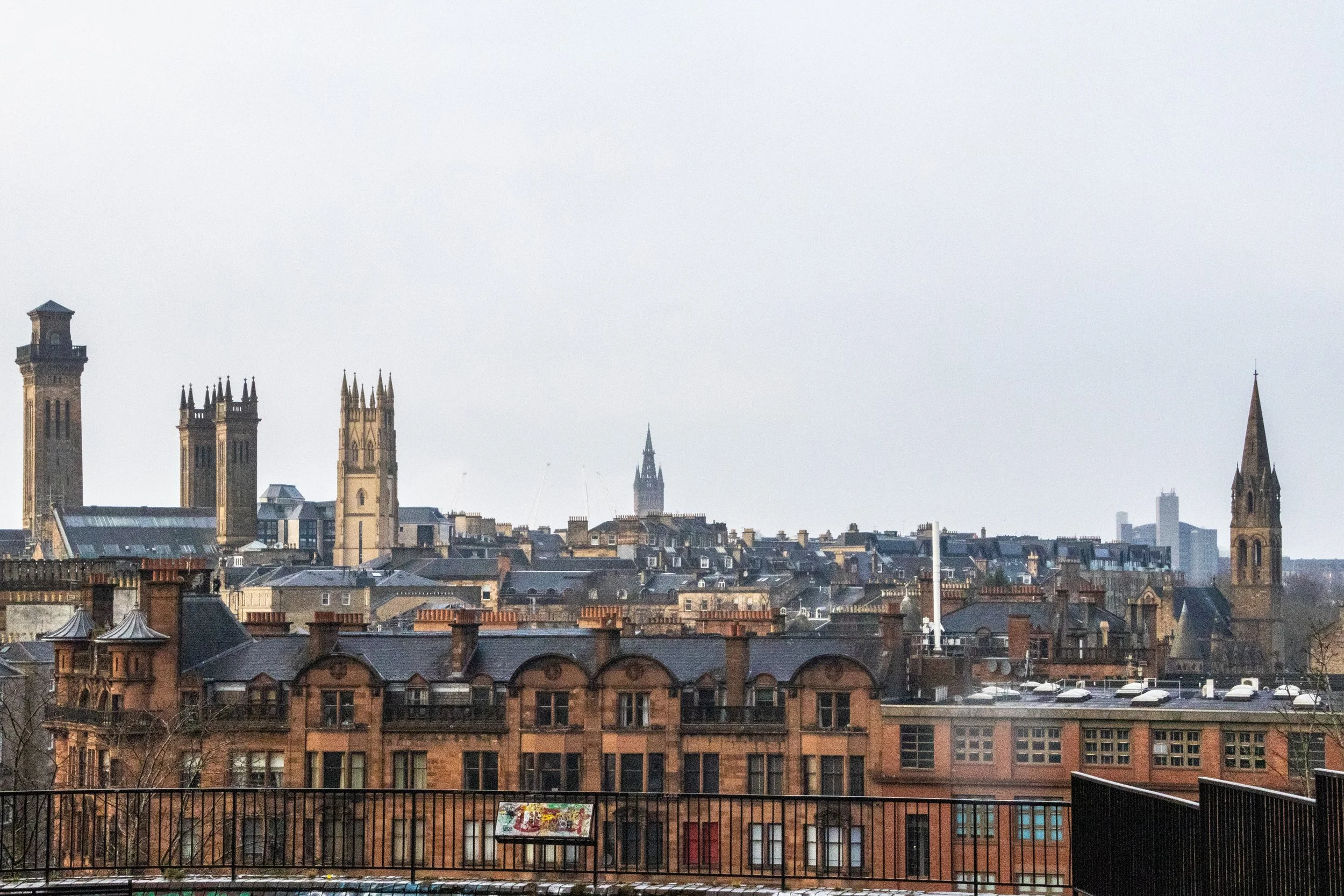
These pictures were taken from the Garnethill Viewpoint on the westernmost end of Hill Street. That is our next destination in Glasgow.
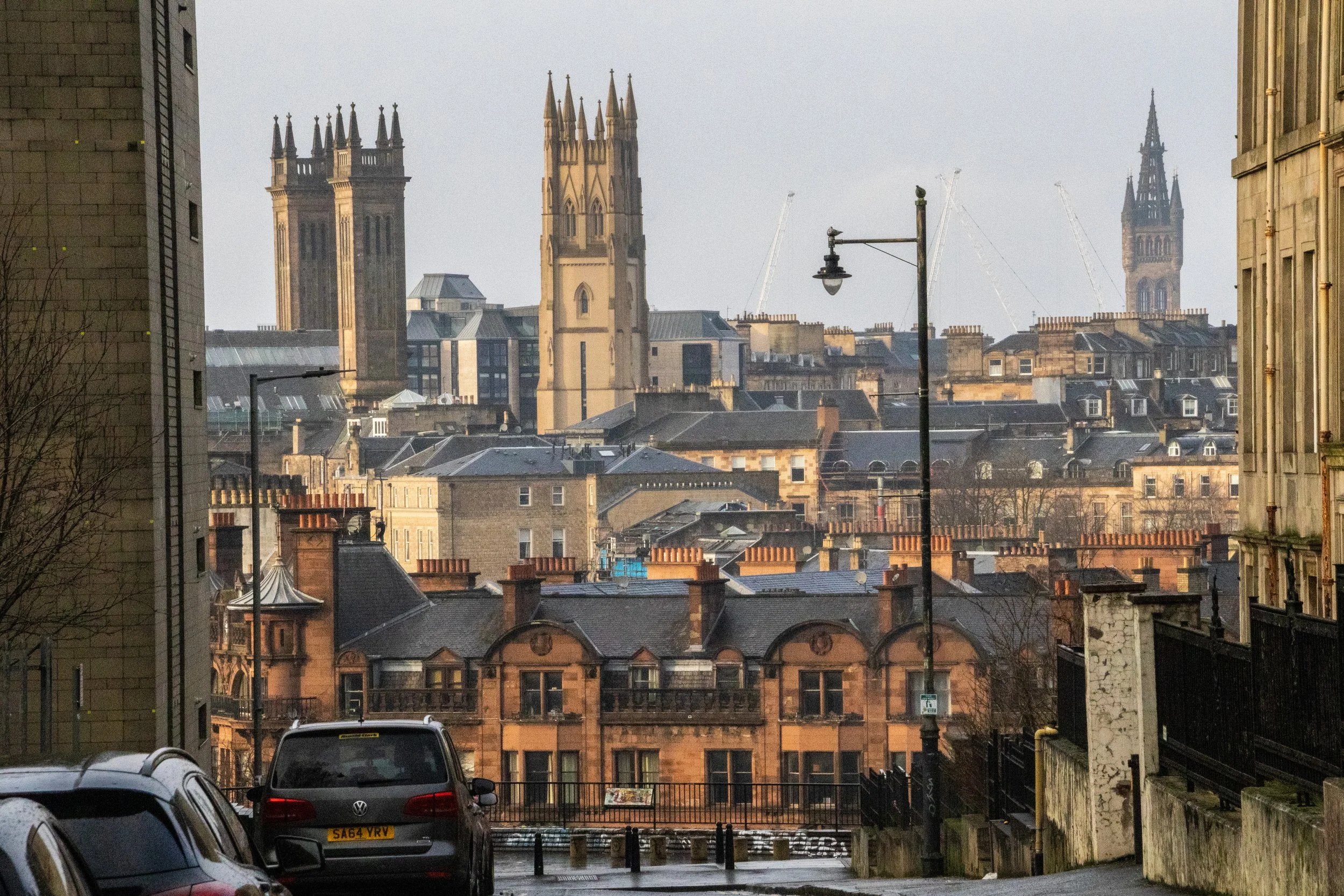
Kelvingrove Park & Hillhead
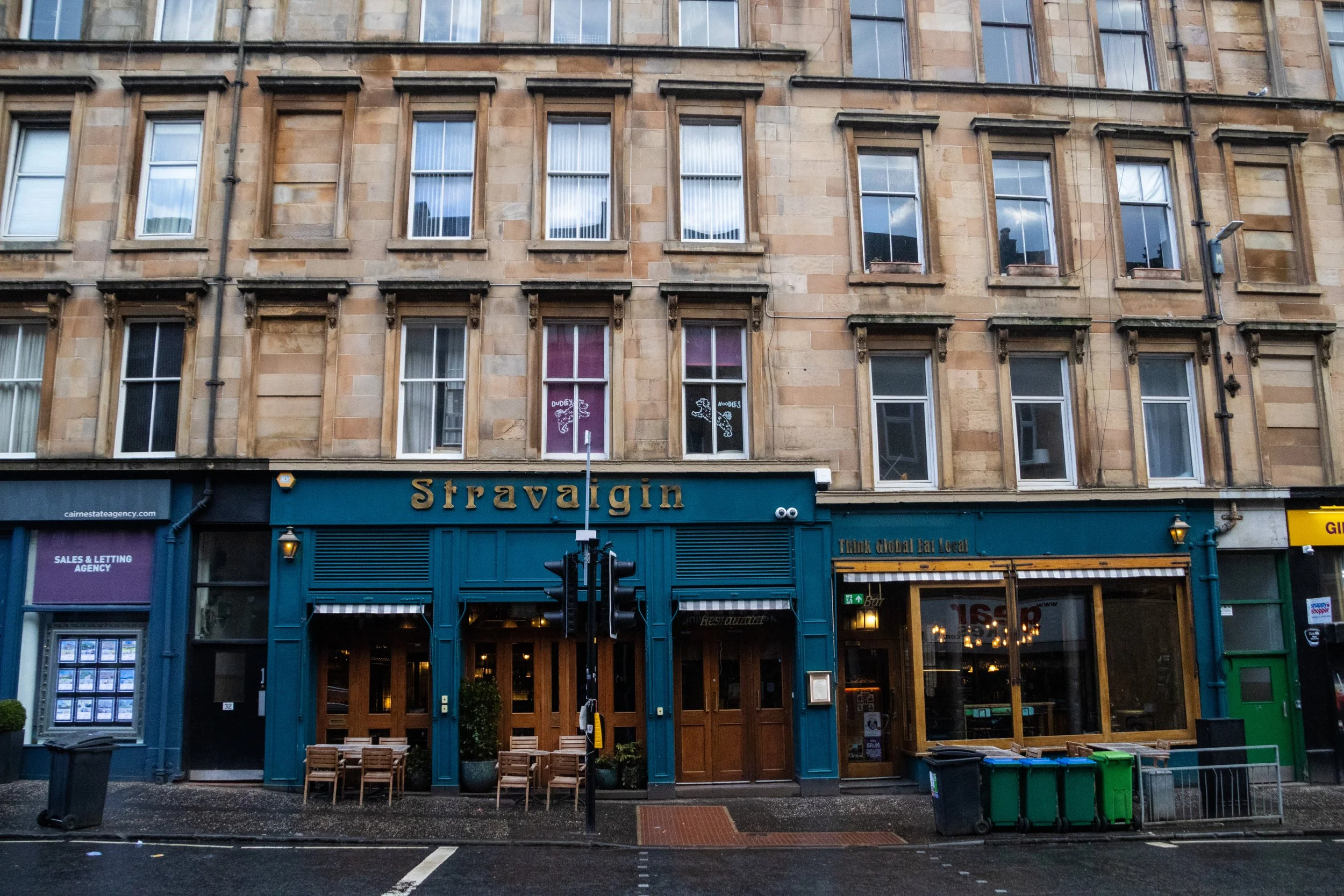
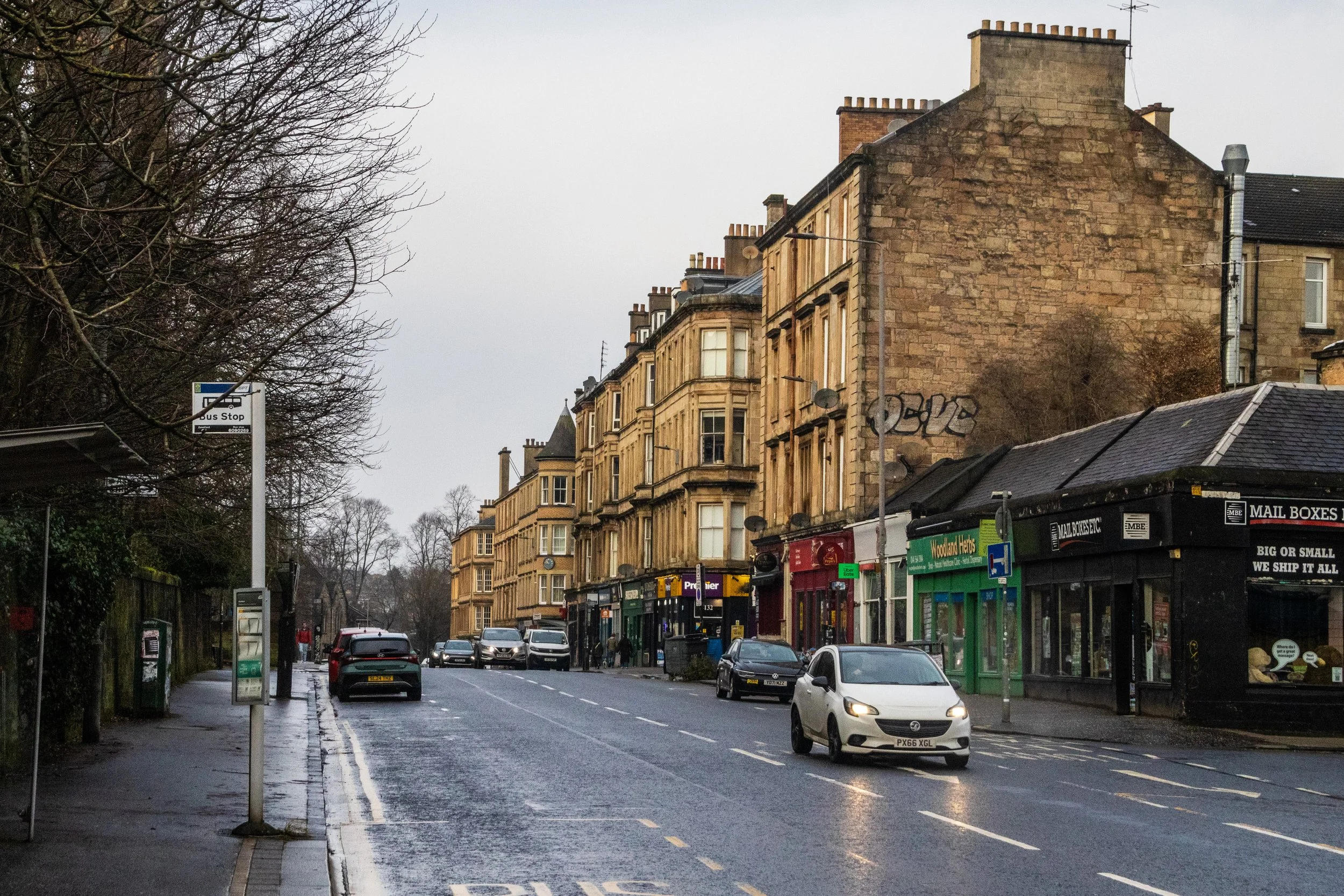
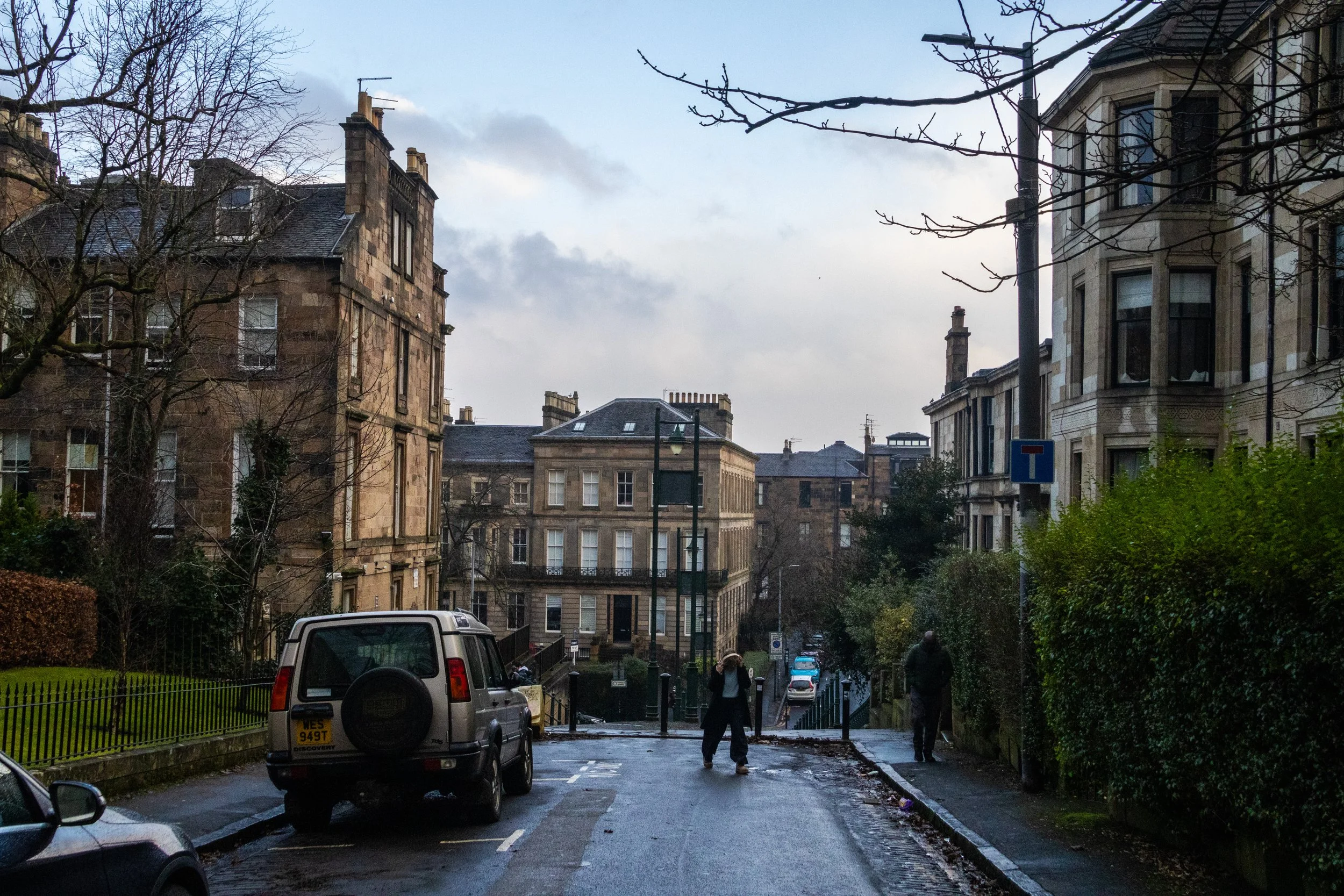
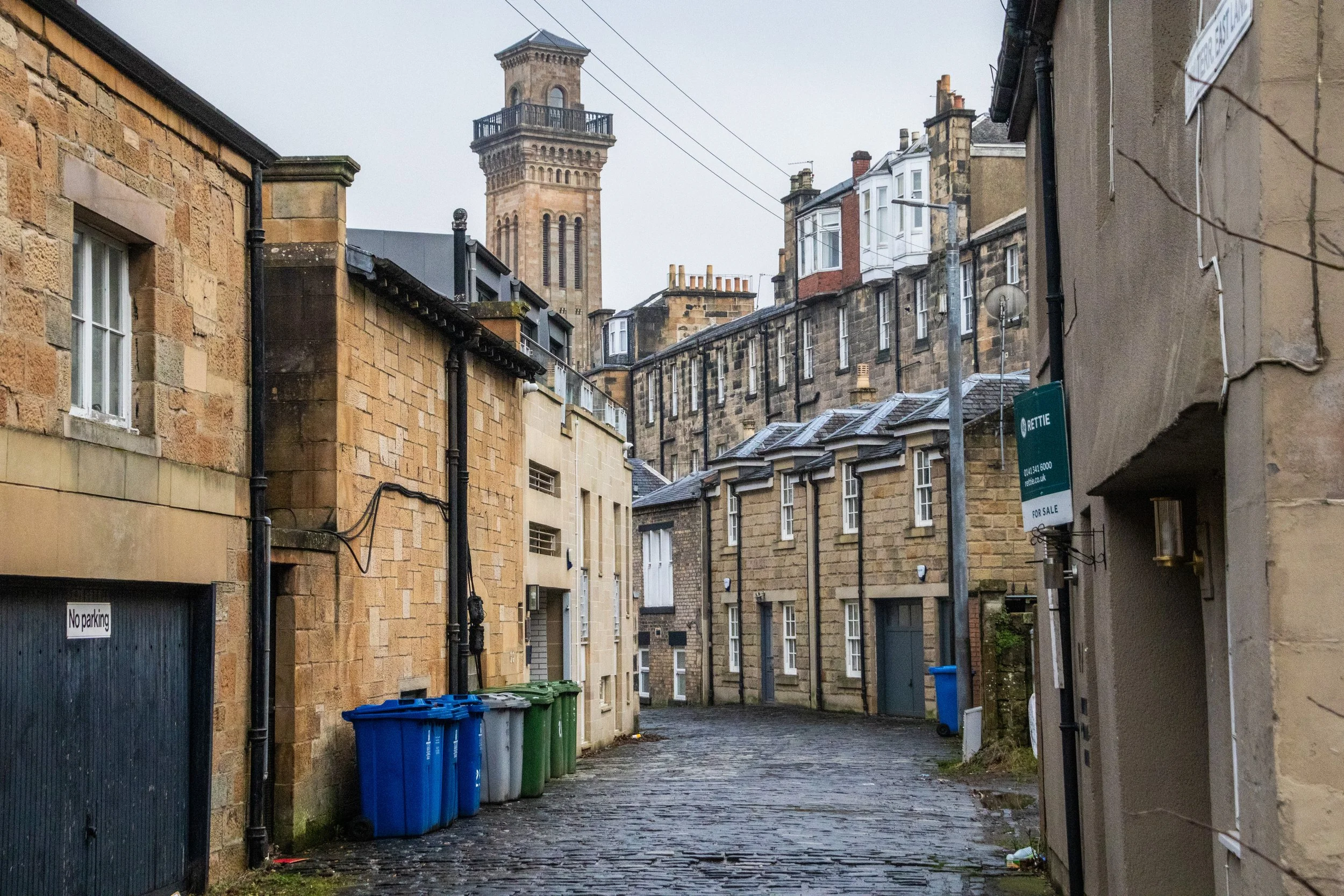
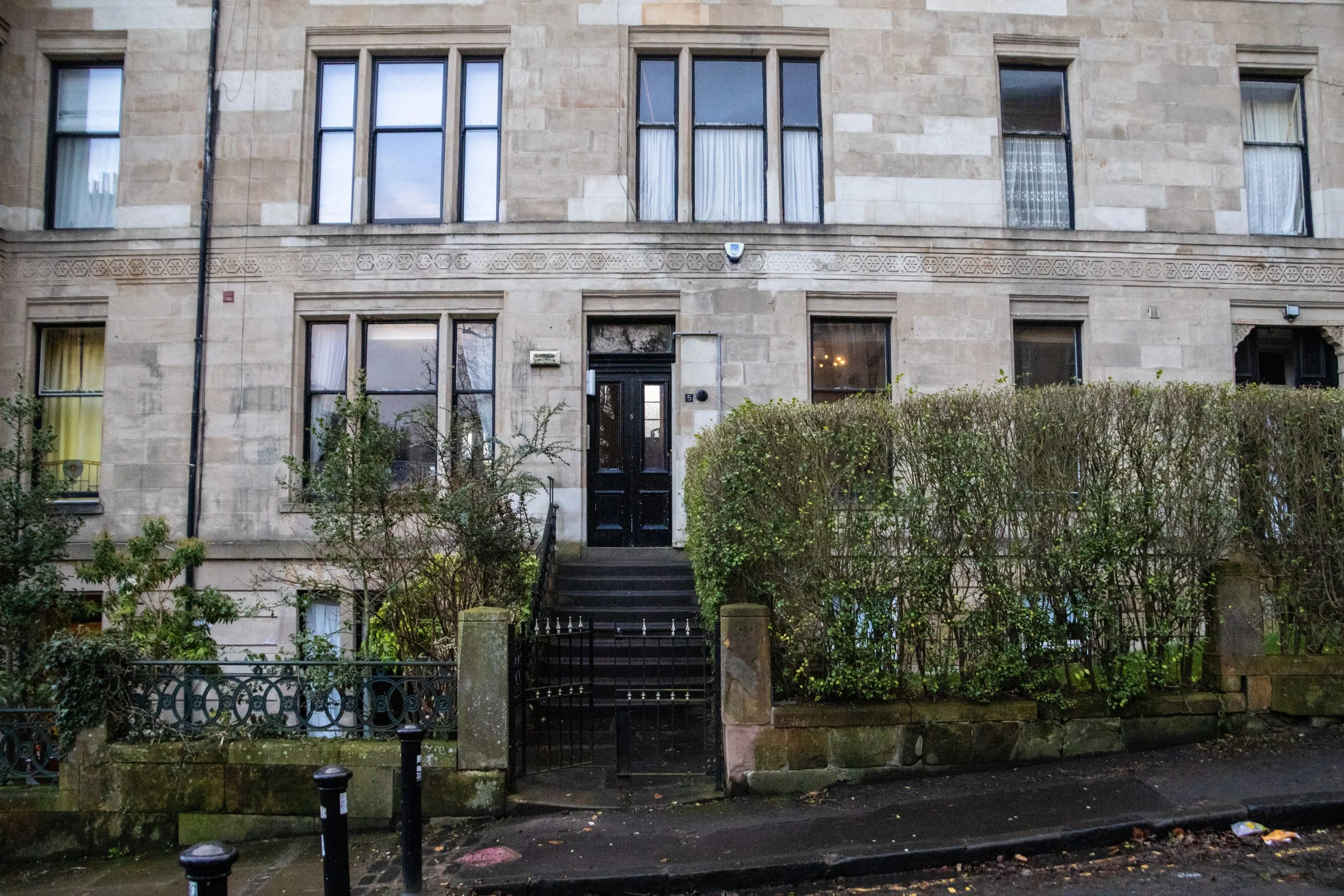
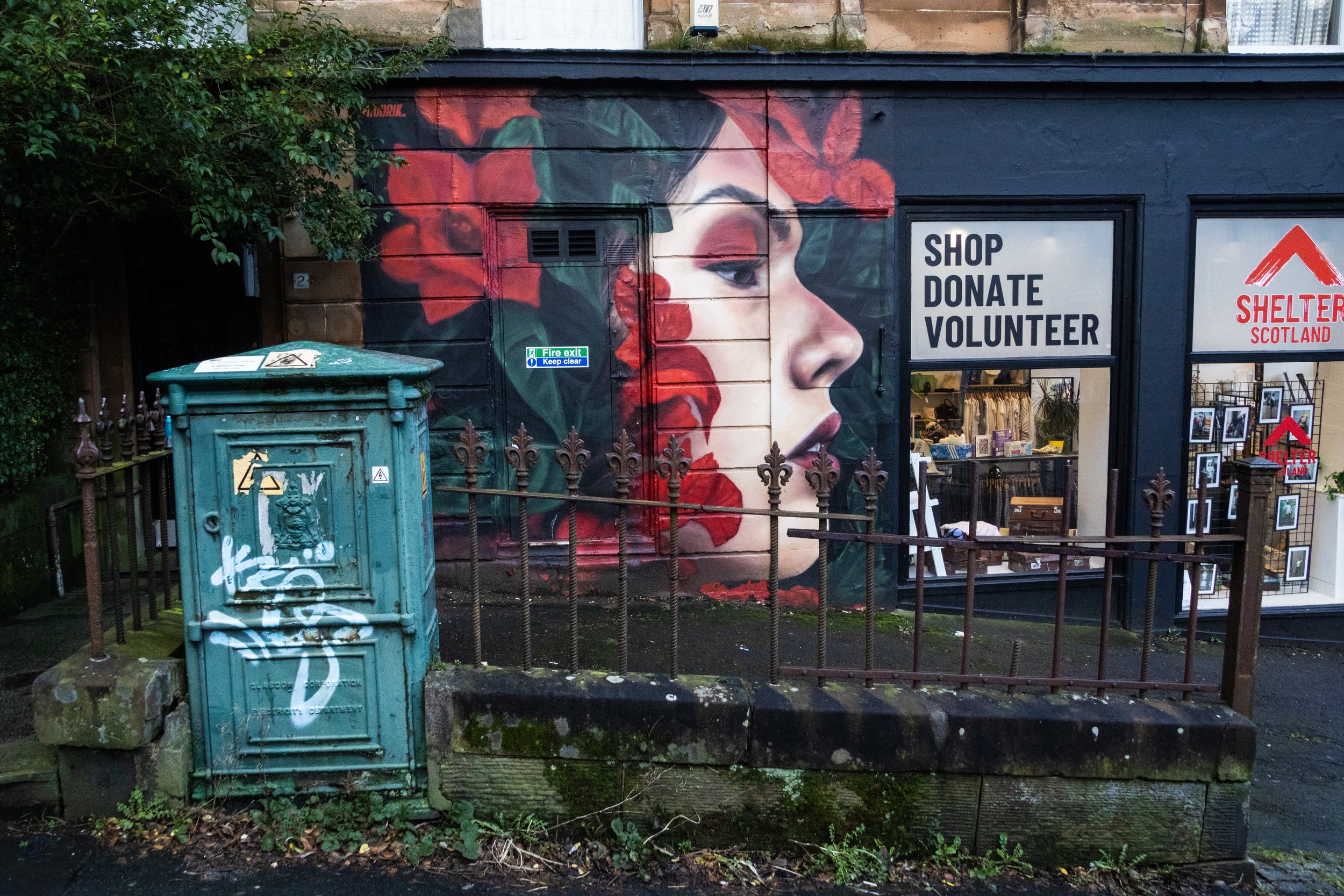
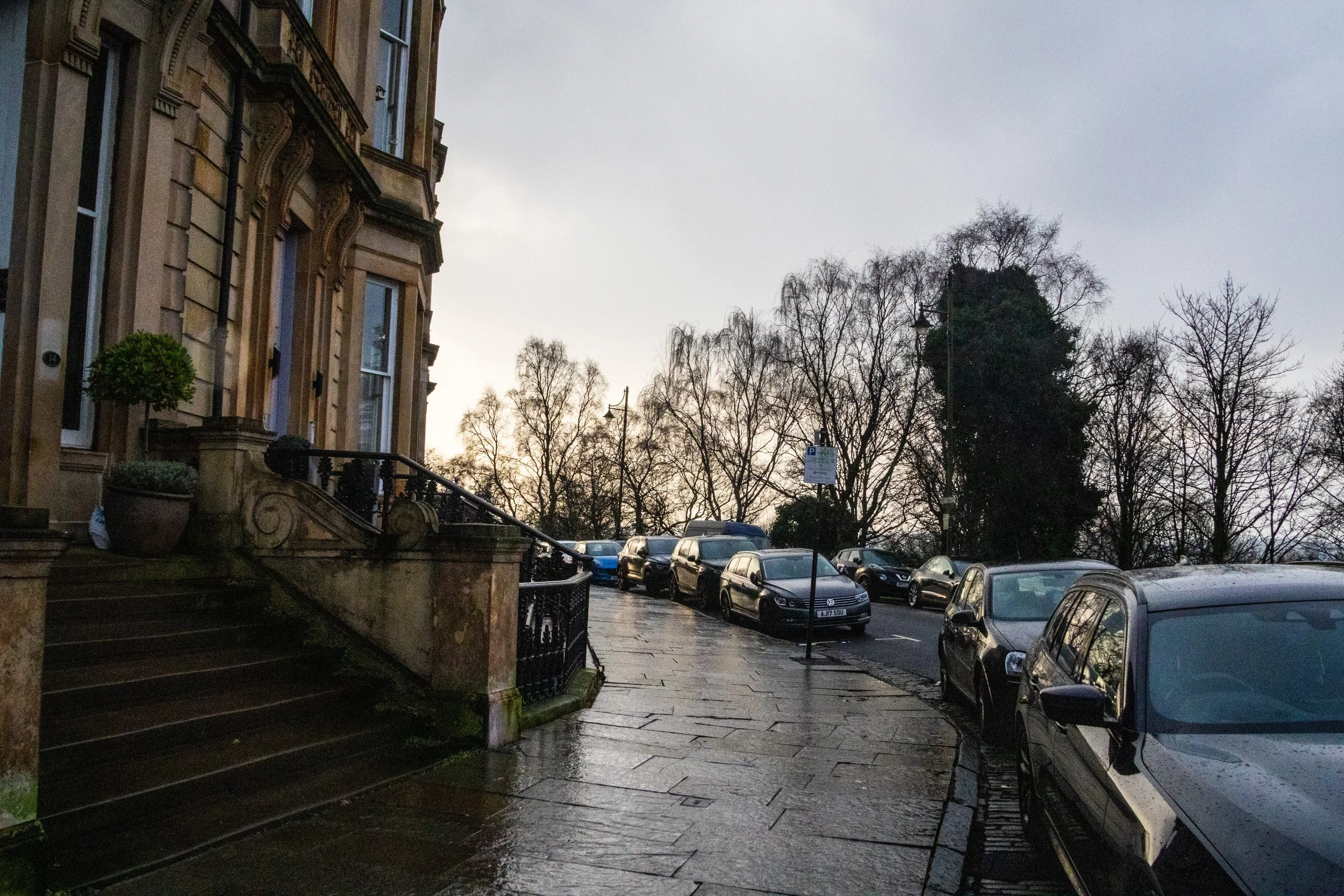
In my opinion, the areas immediately surrounding Kelvingrove Park are the most beautiful in Glasgow. This is also where you’ll find the University of Glasgow. To the south of this park is the famous Argyle Street, and to the north is a cozy little neighborhood called Hillhead. Let me share with you a few snaps from walking around Hillhead. If I lived in Glasgow, I’d want to be located here.
Apologies for the Bart Simpson sticker. Upon reflection, is does feel very “Glasgow”: inappropriate, but I’ll allow it. And, incredibly, this does not even crack the top 3 most inappropriate stickers I’ve documented on this website. Numbers 1-3 on that list were all in PDX, a fact which will come as a surprise to nobody who’s ever been to Portland.
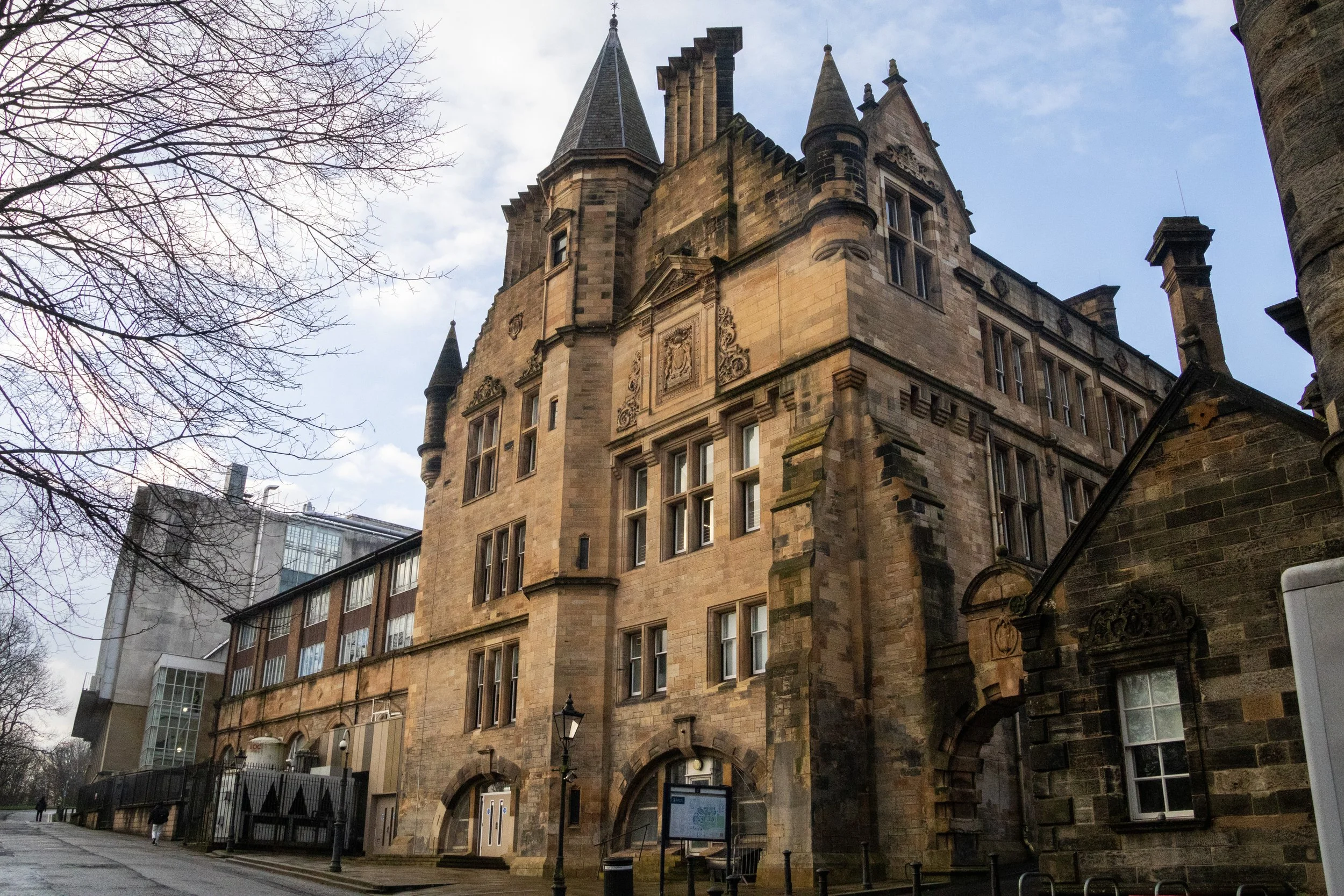
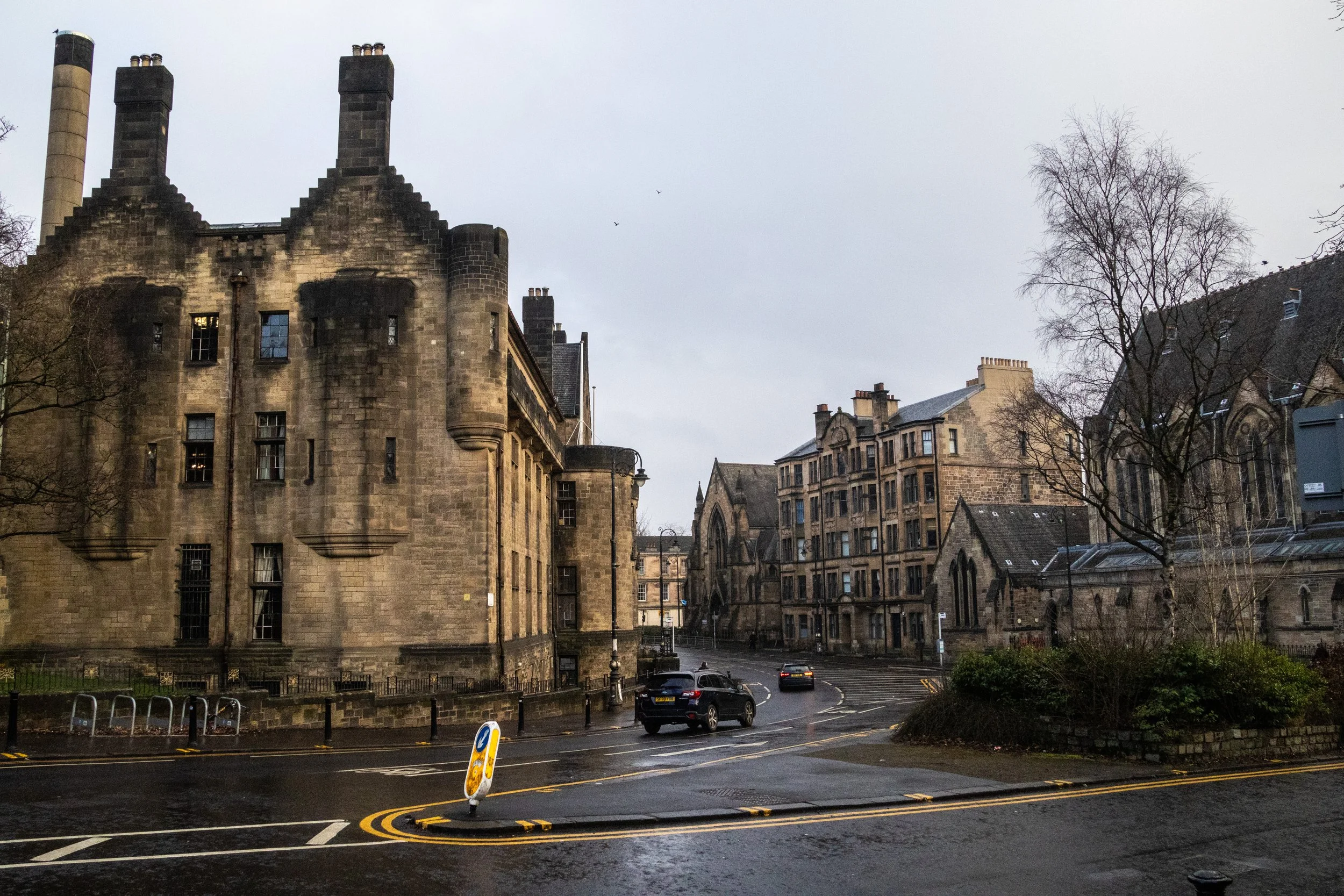
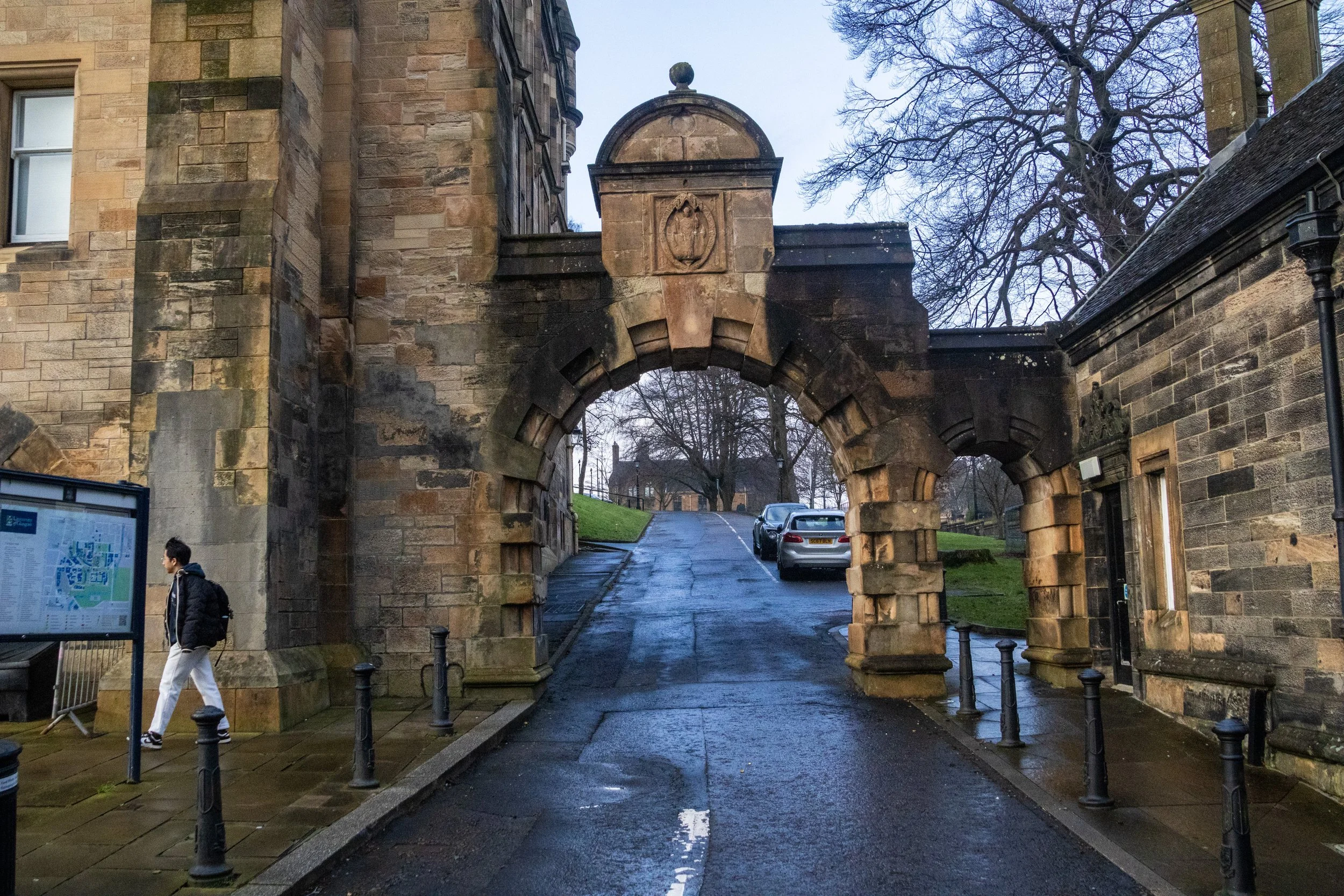
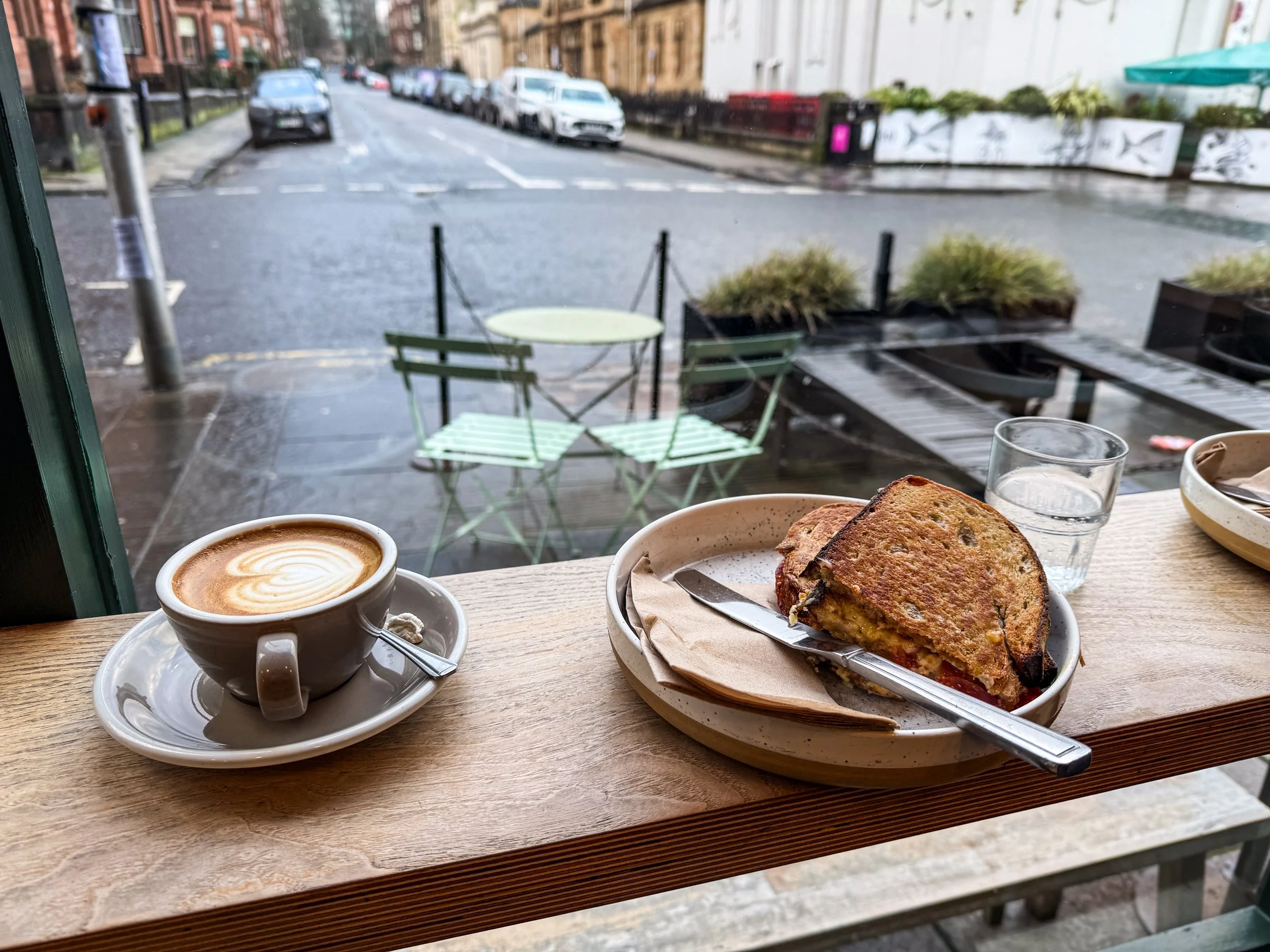
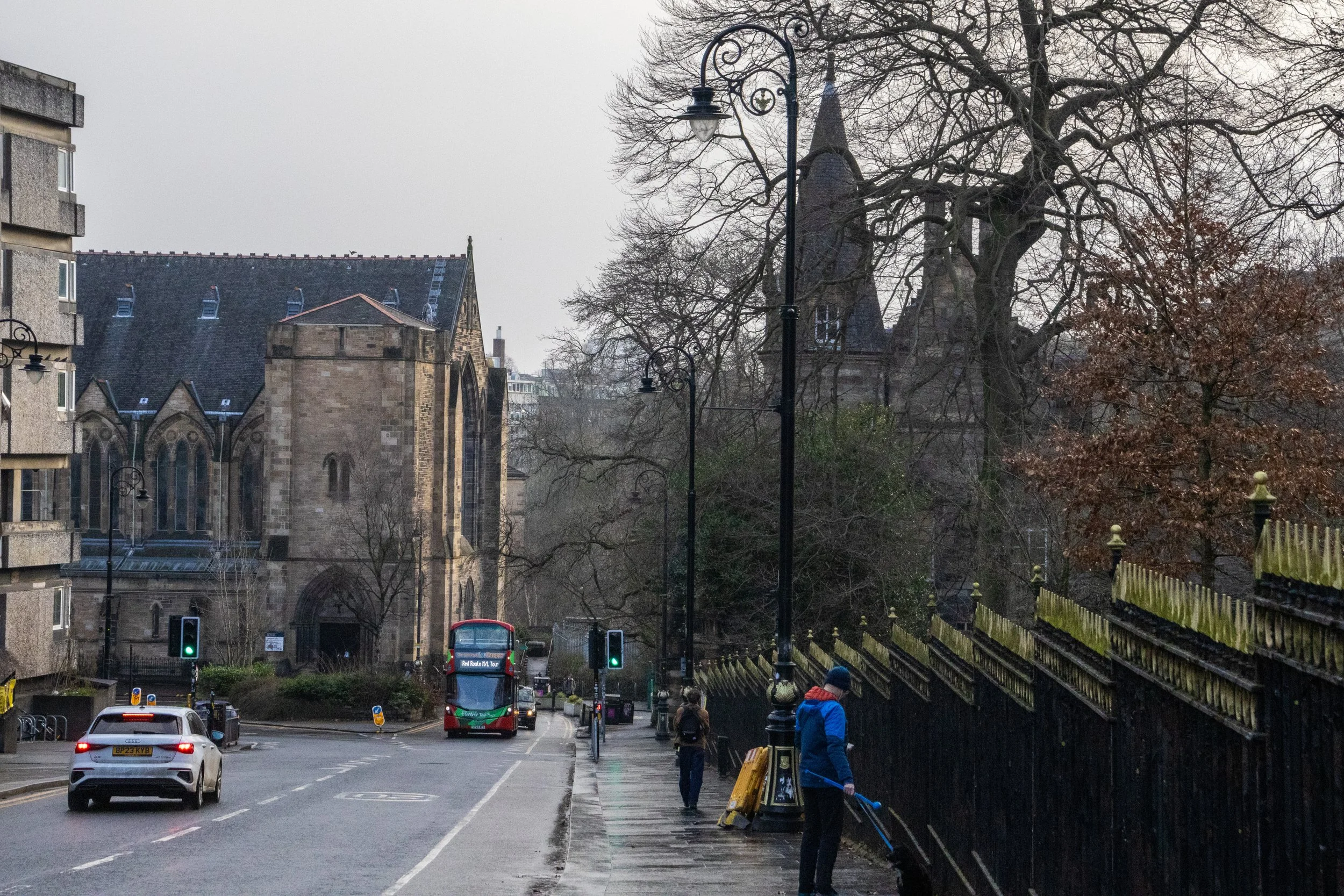

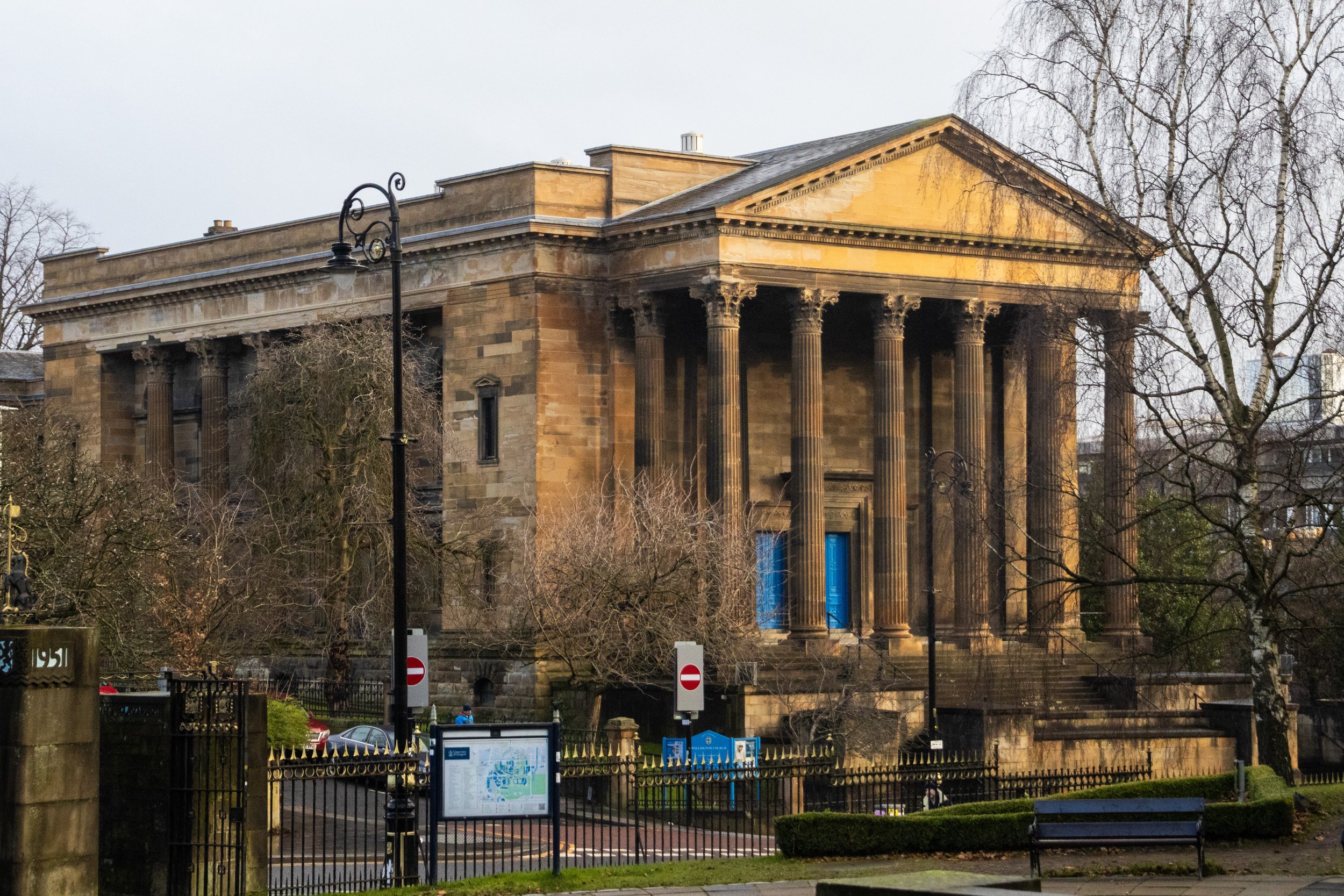
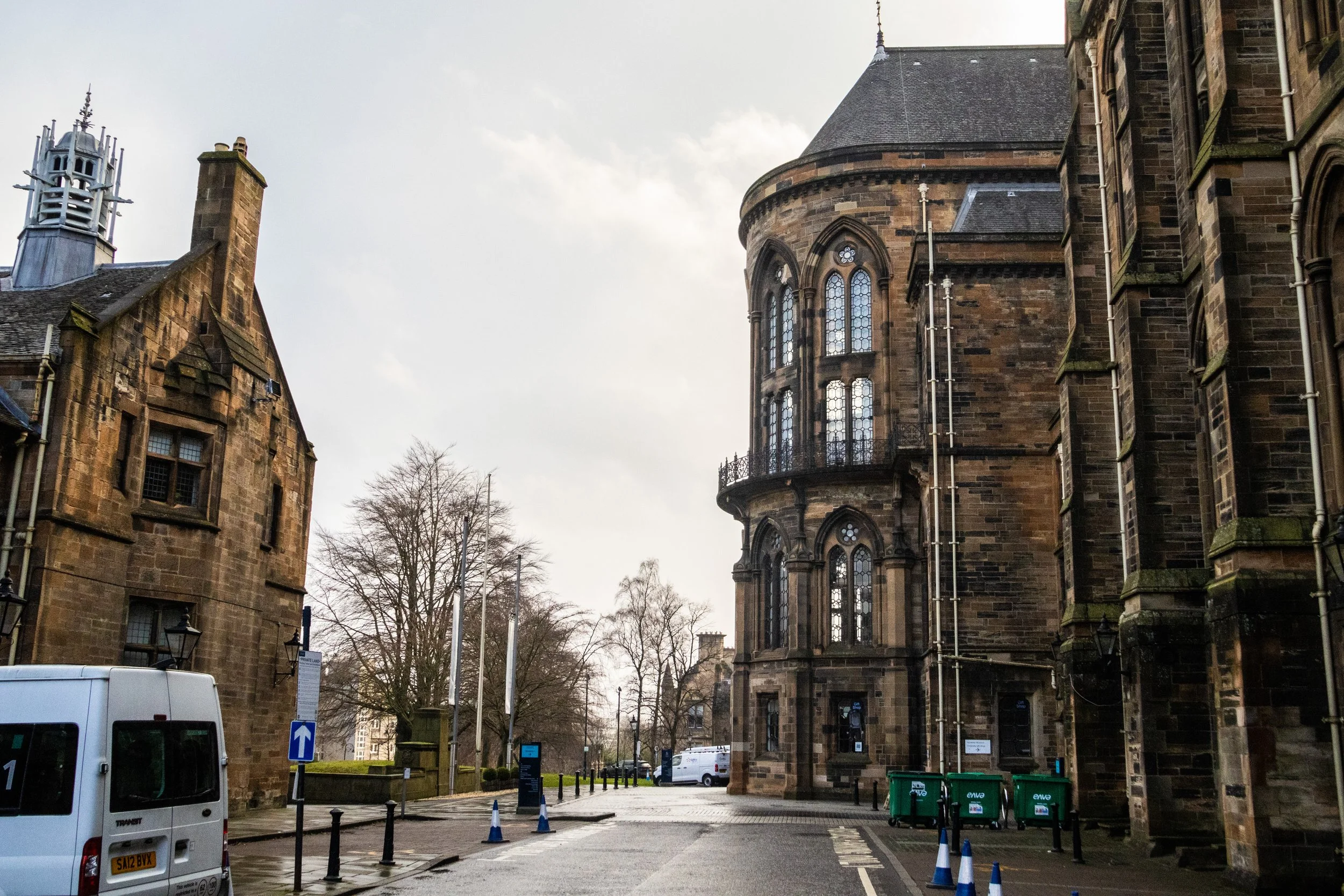
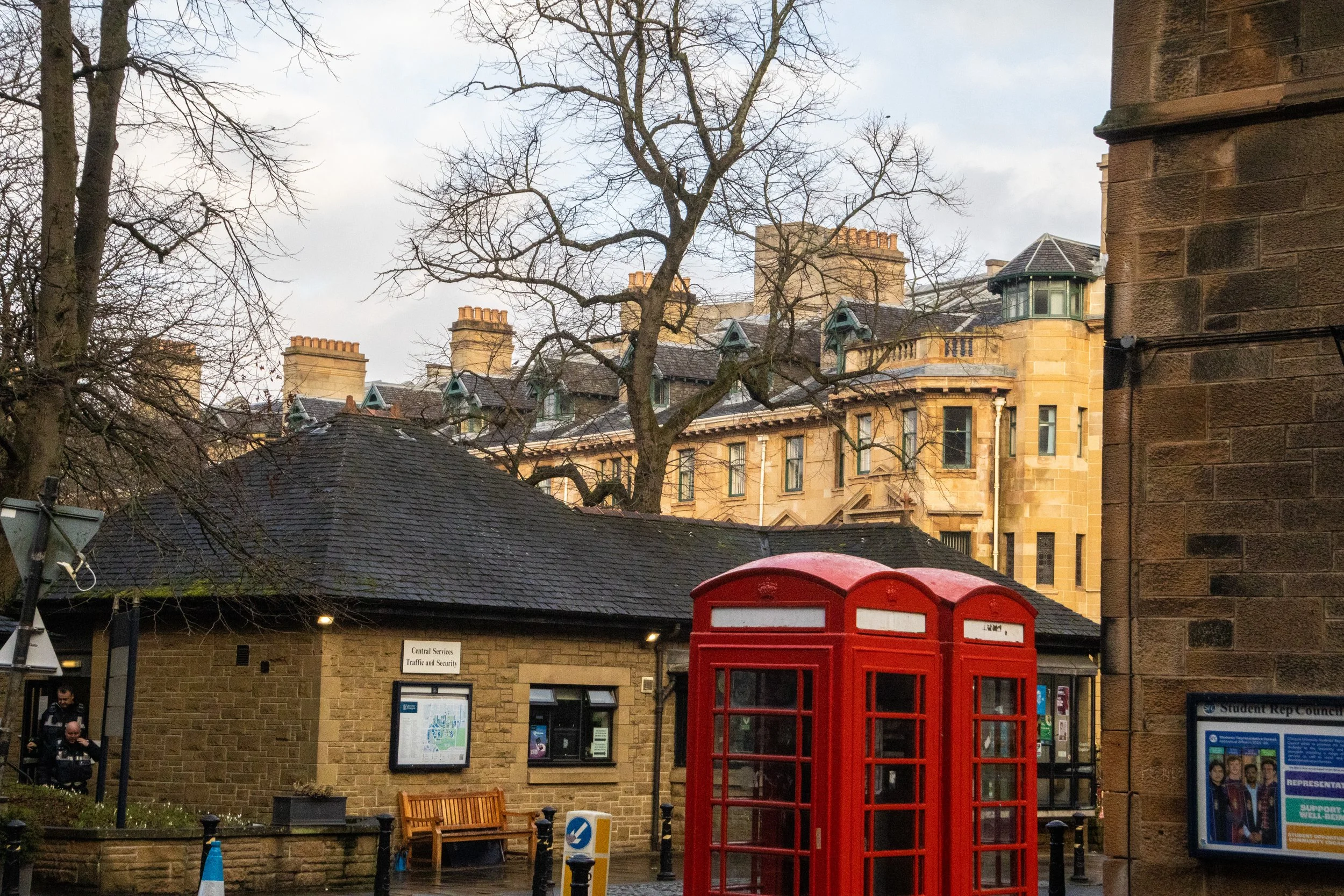
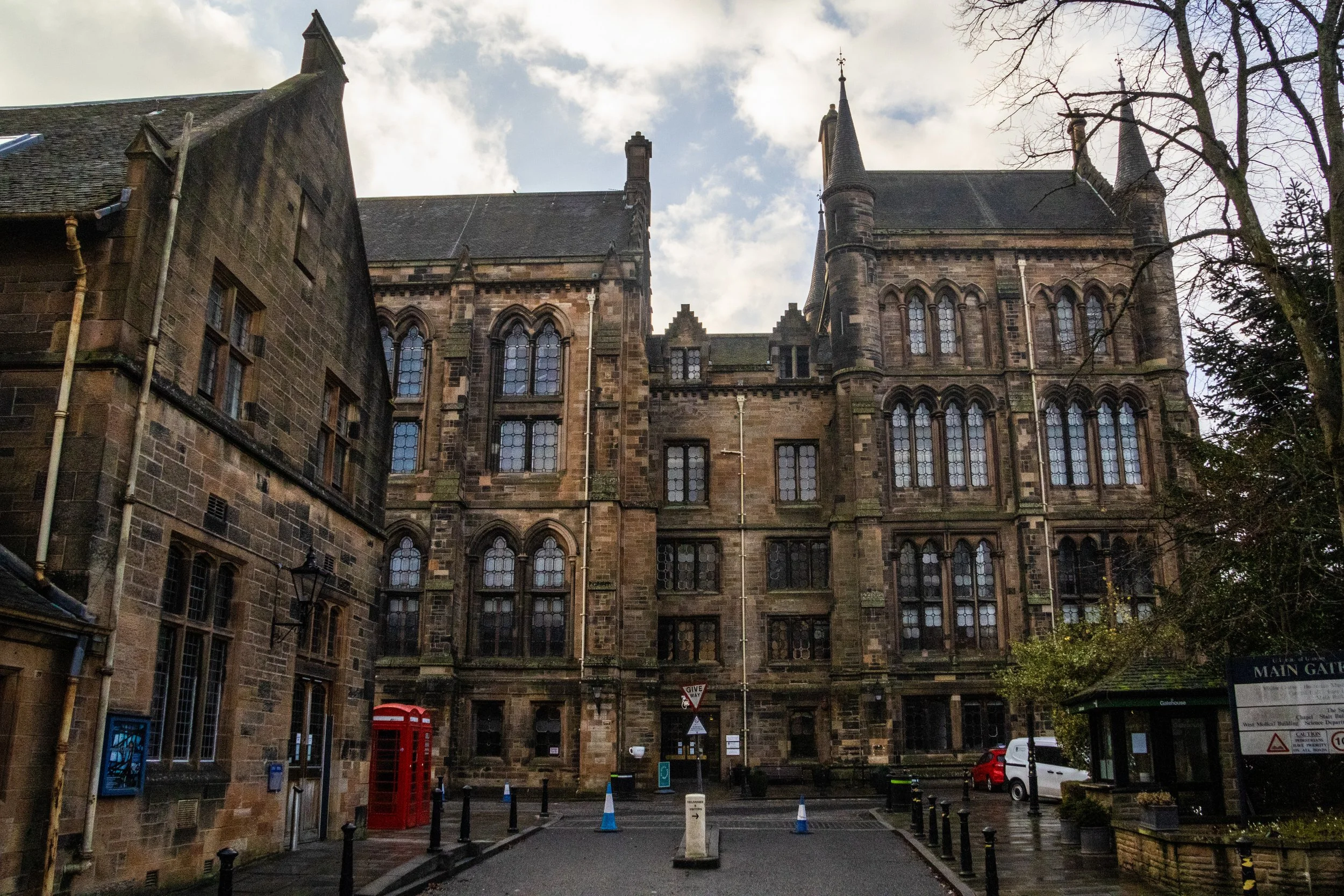
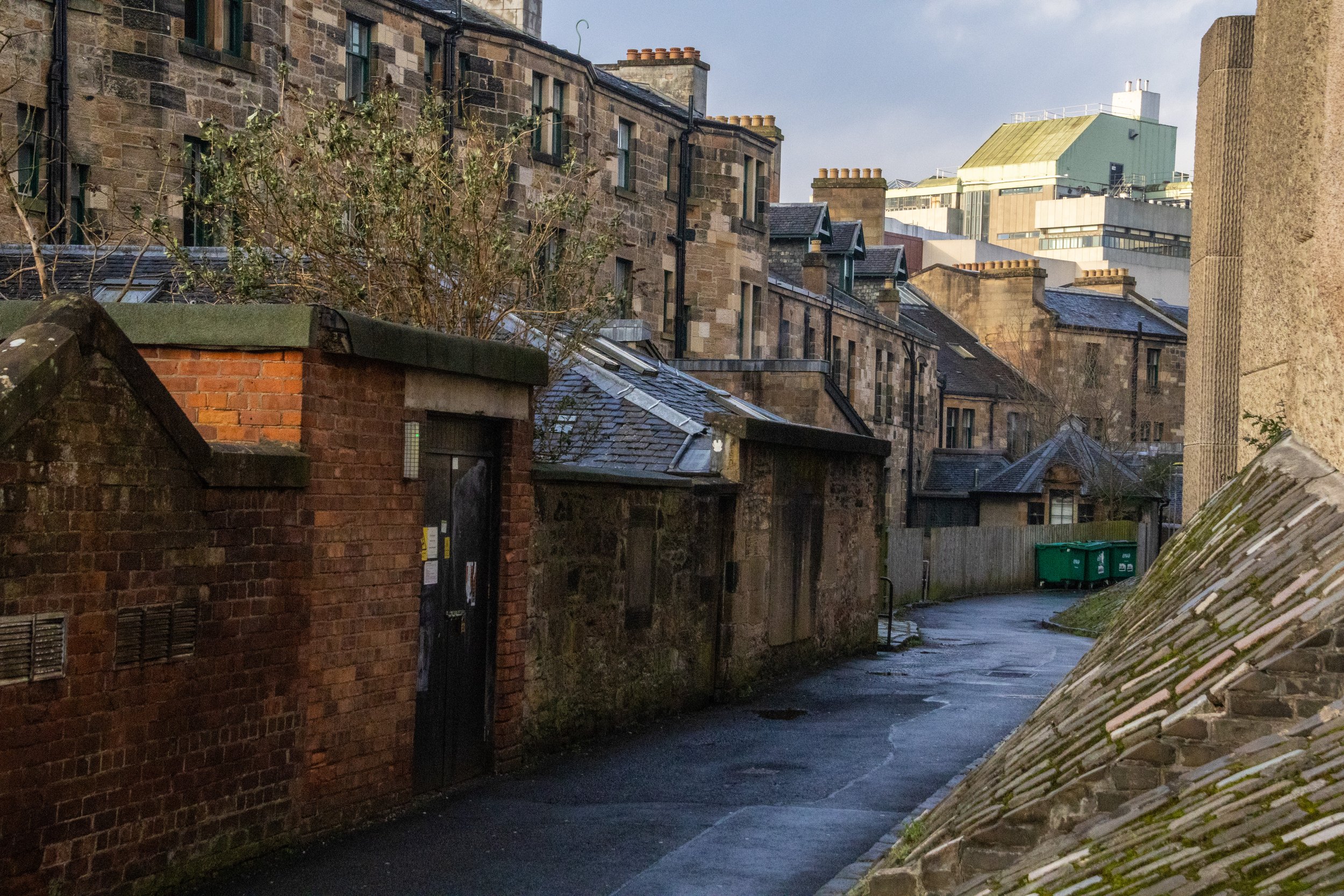
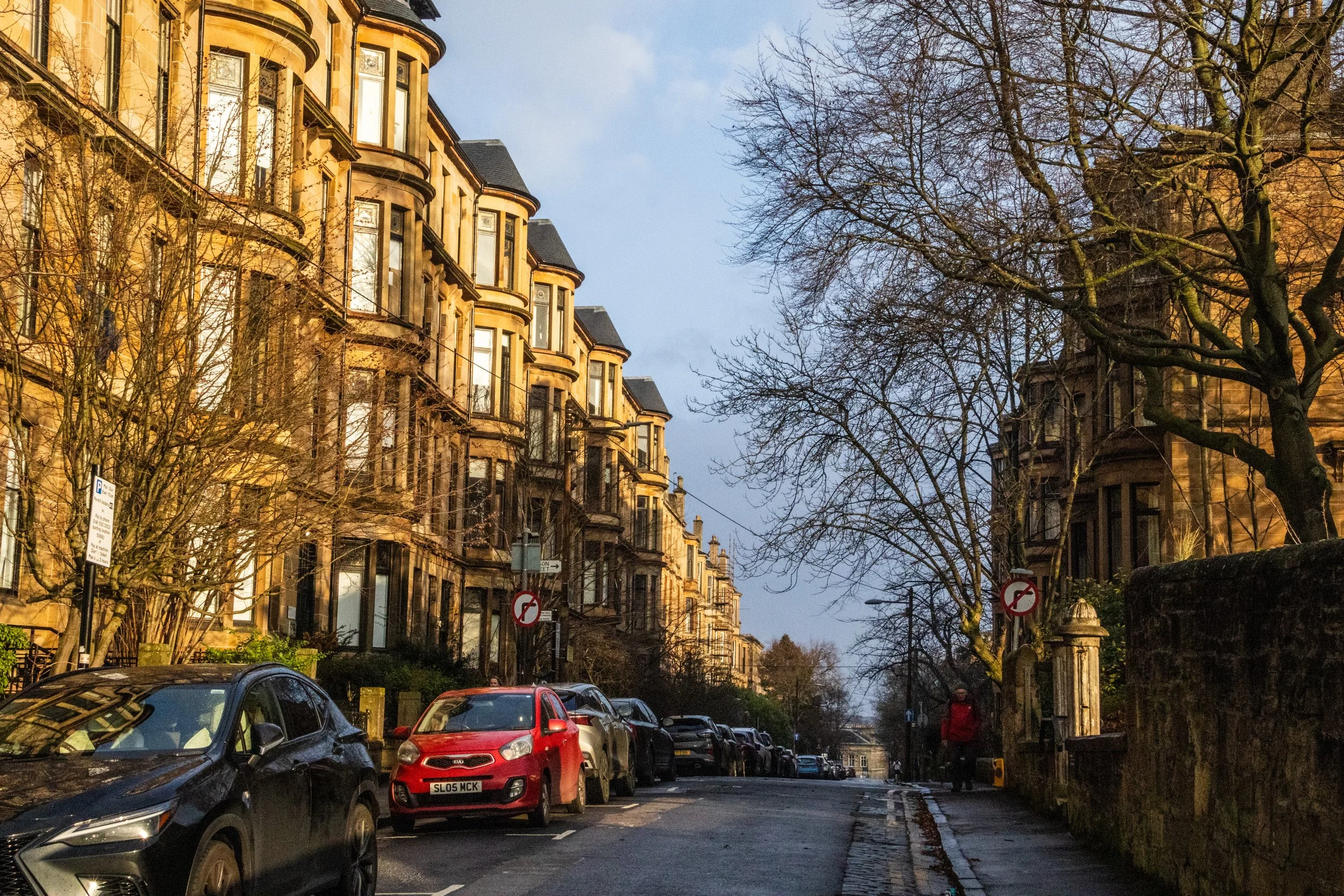
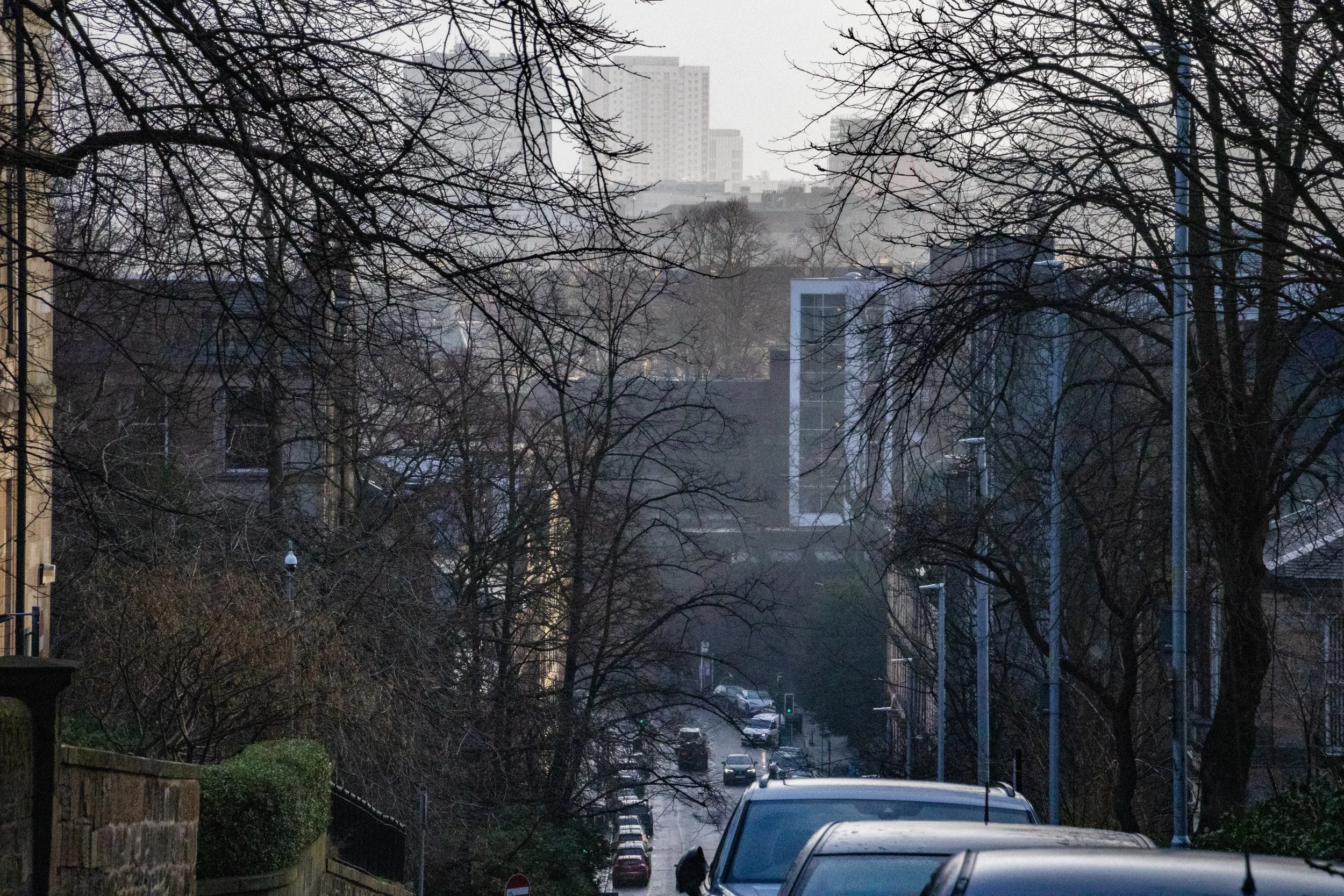
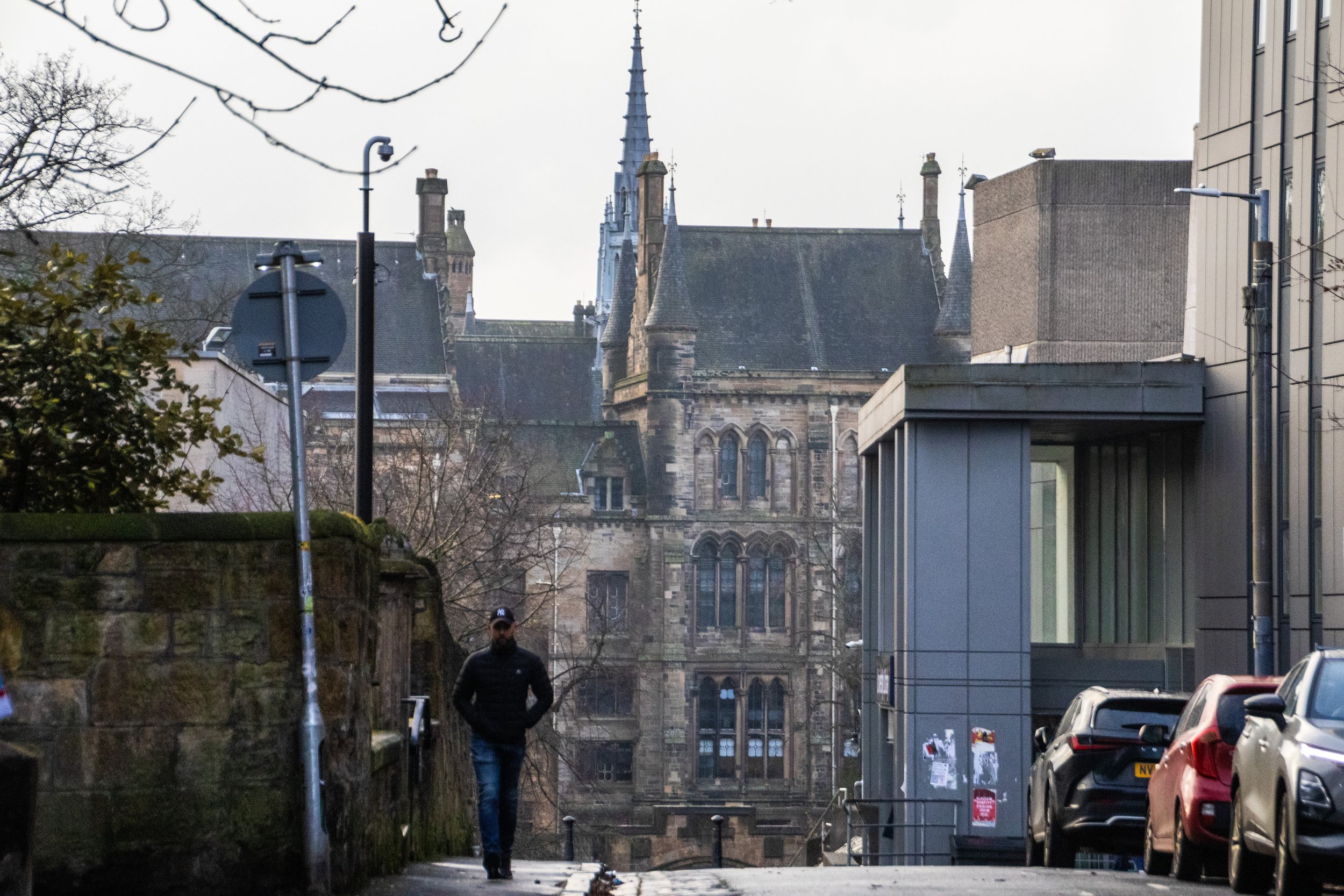
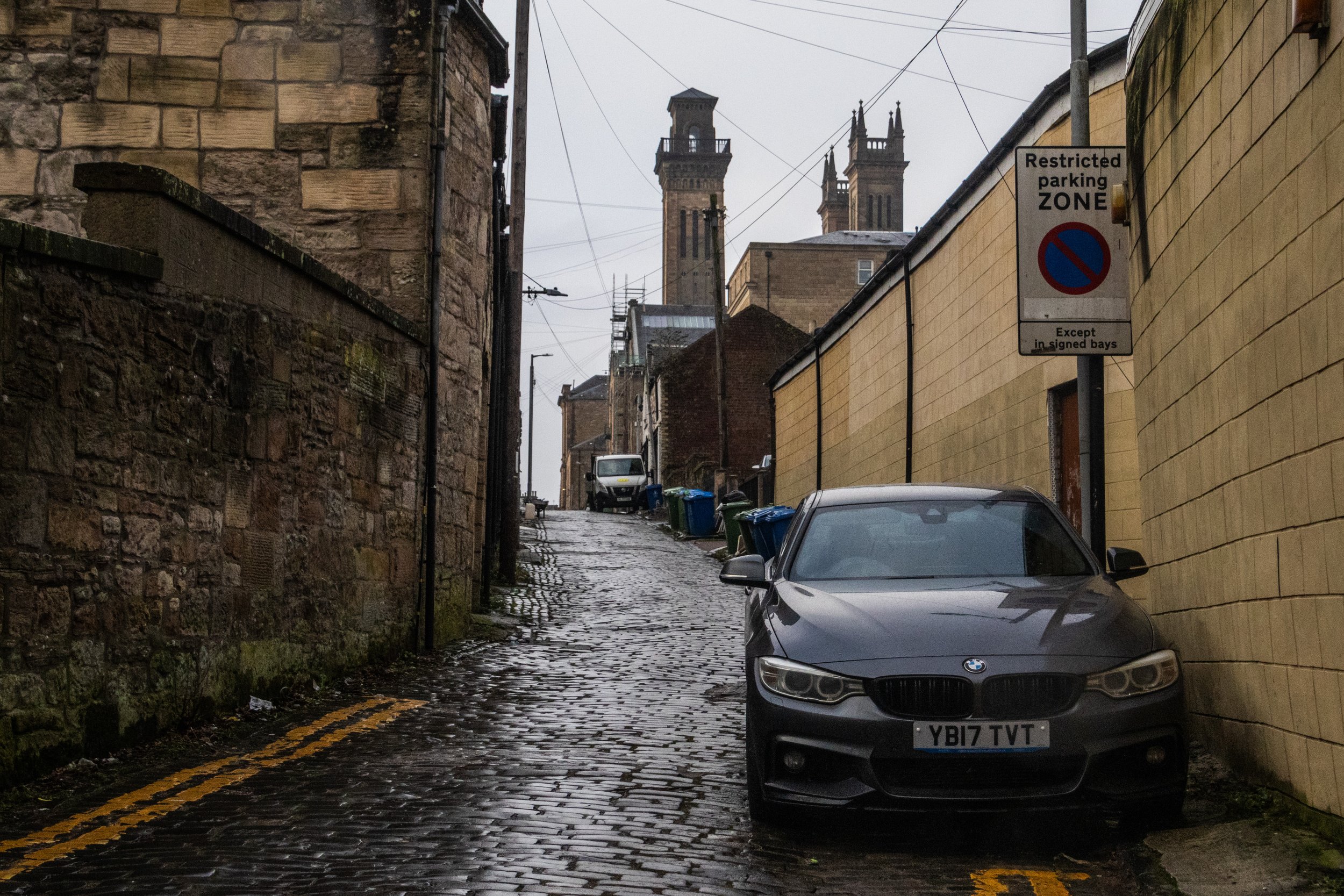
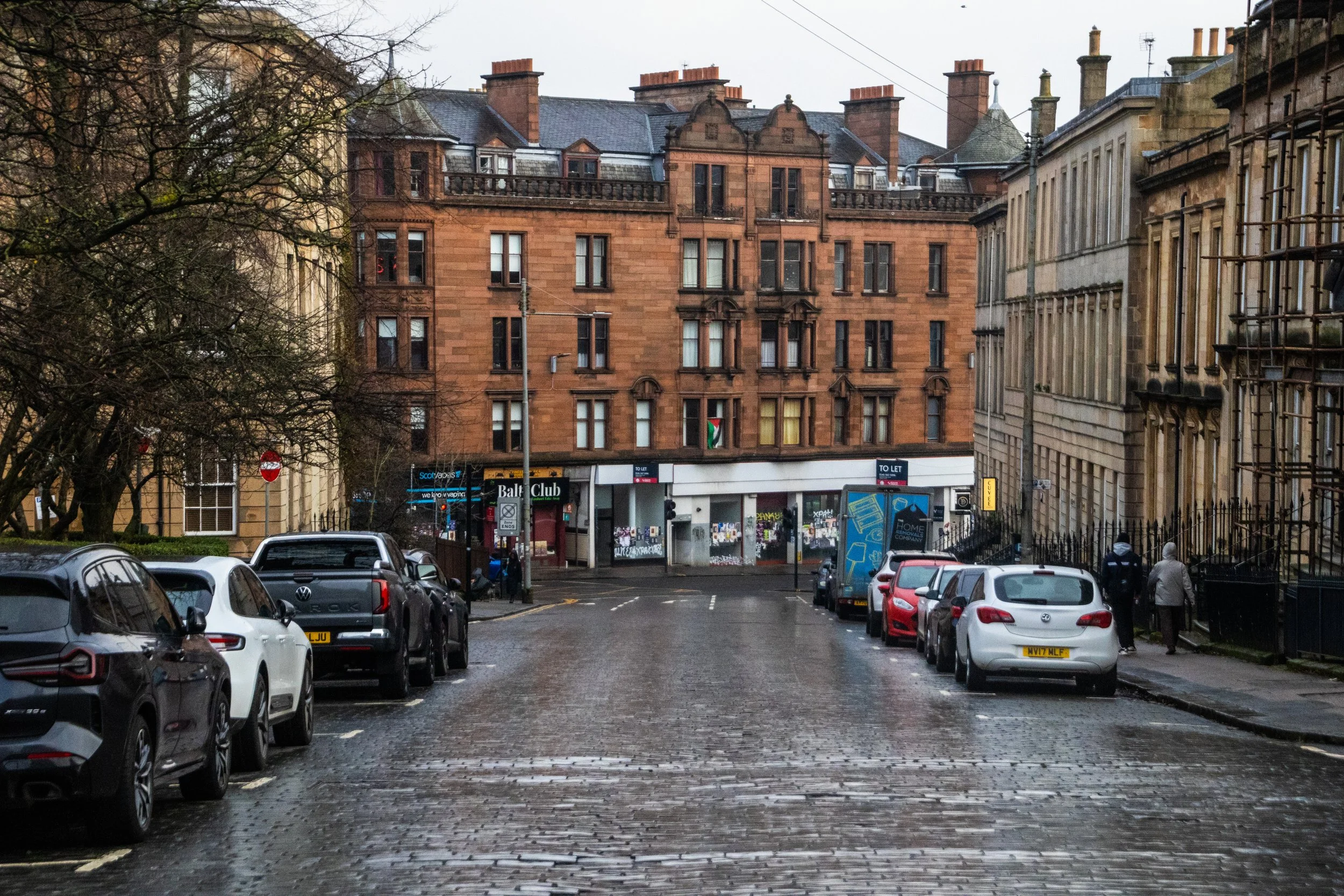
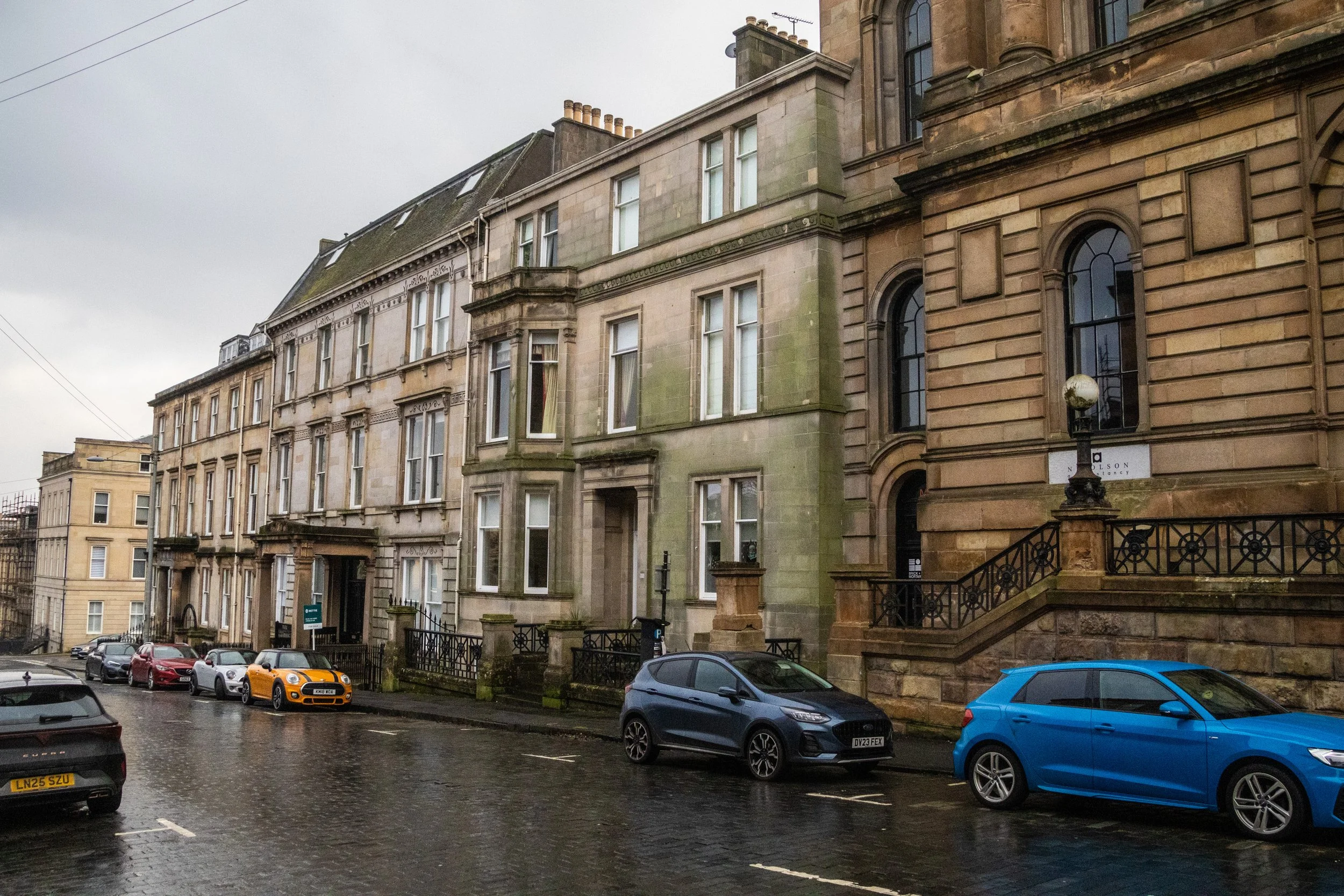
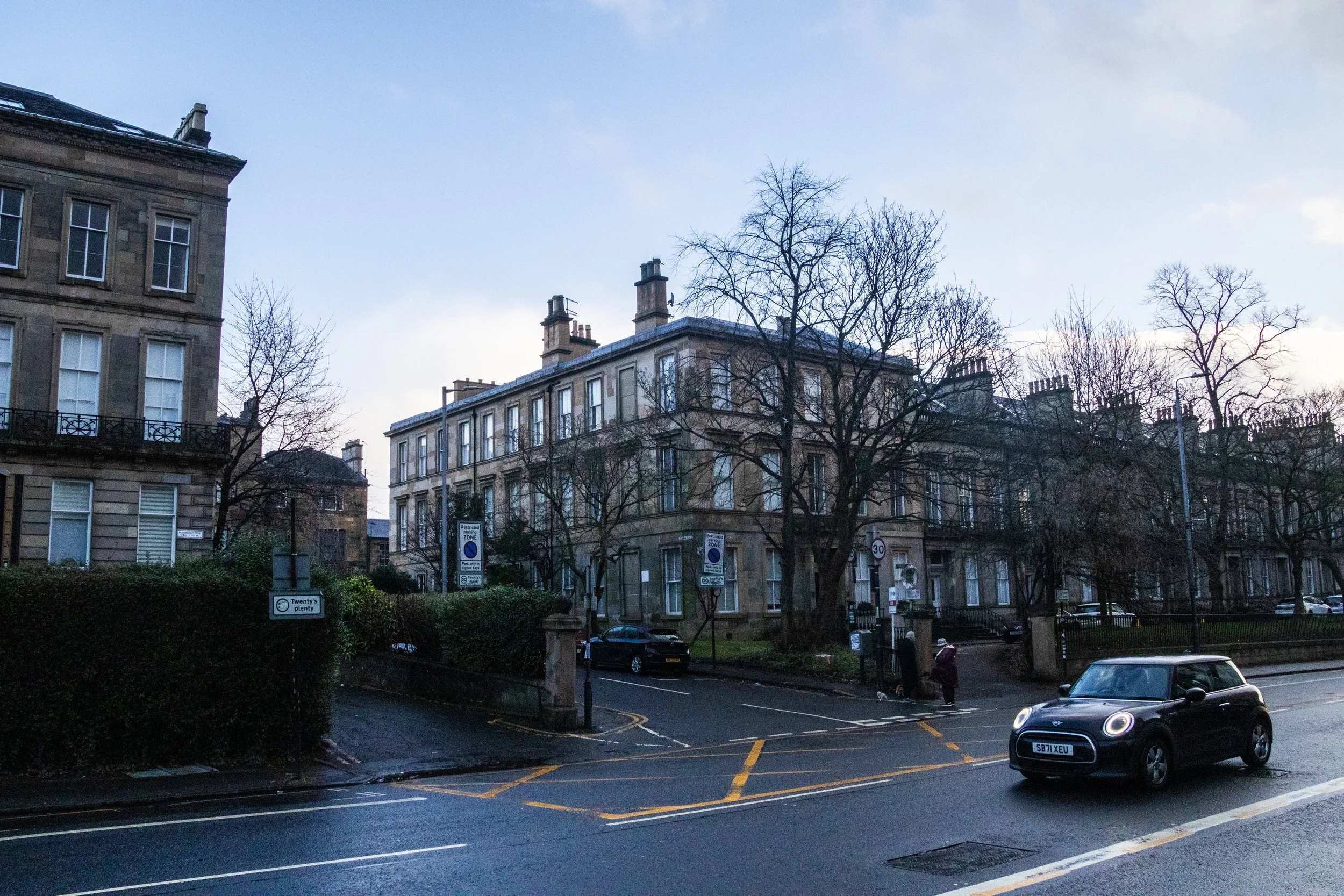
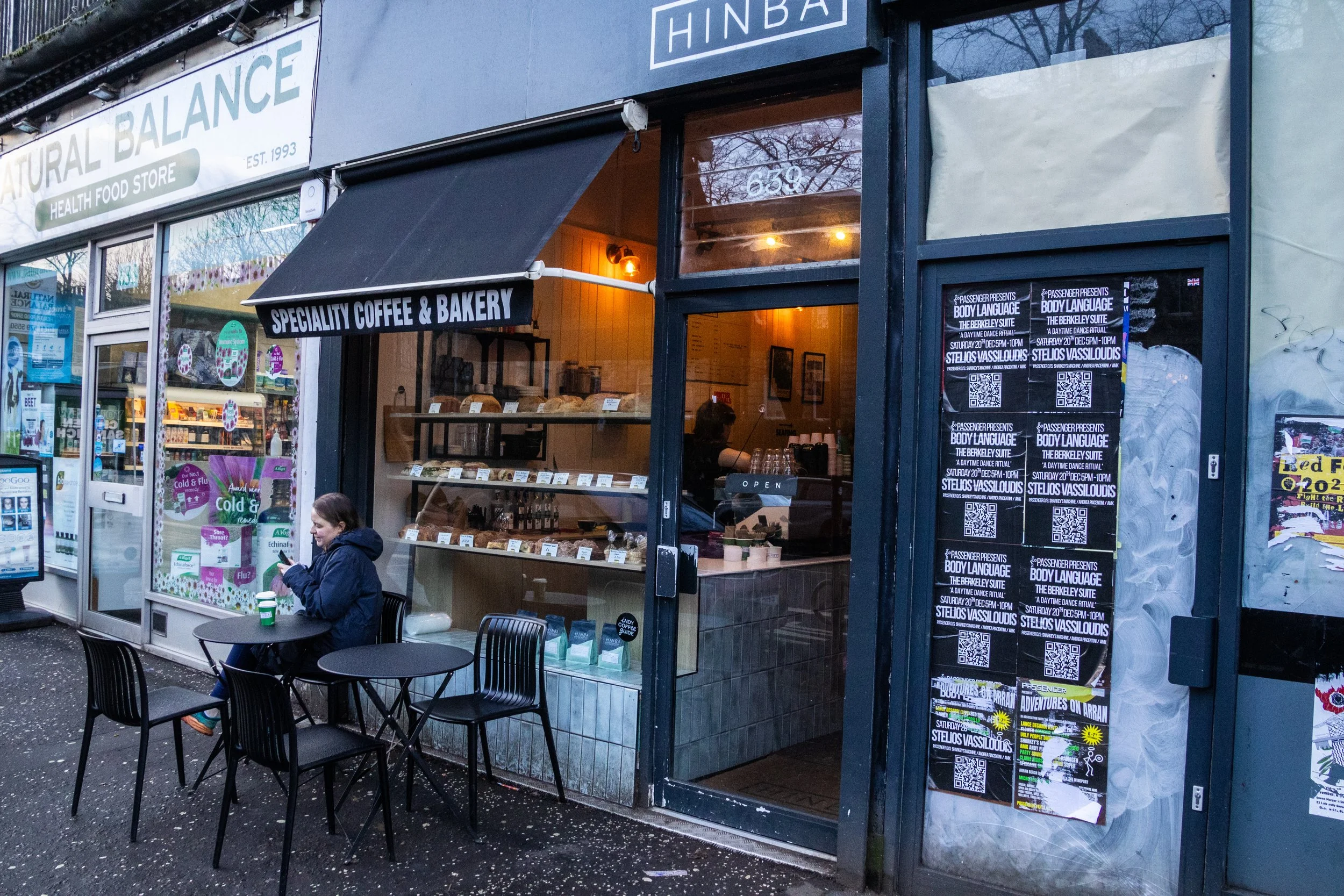
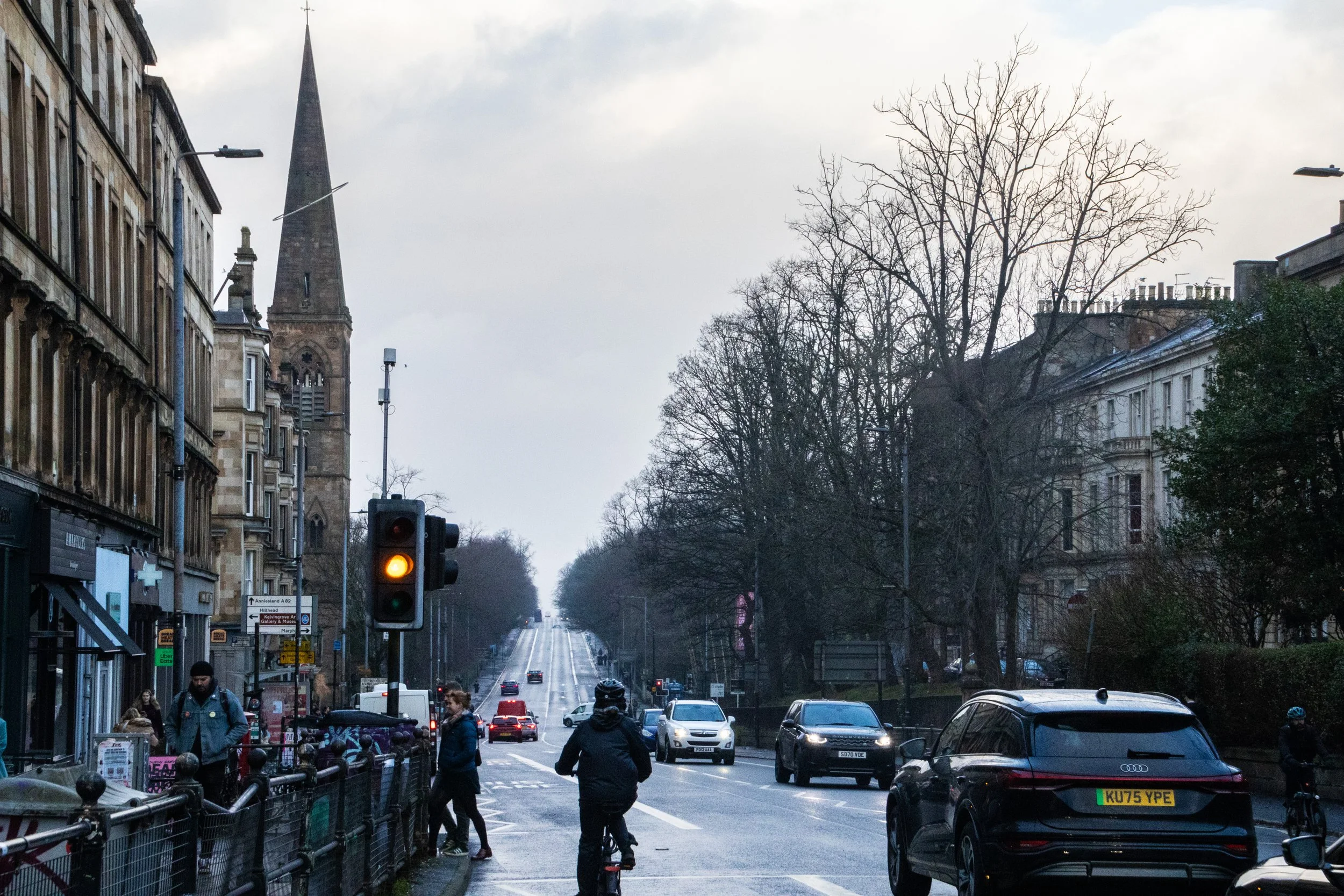
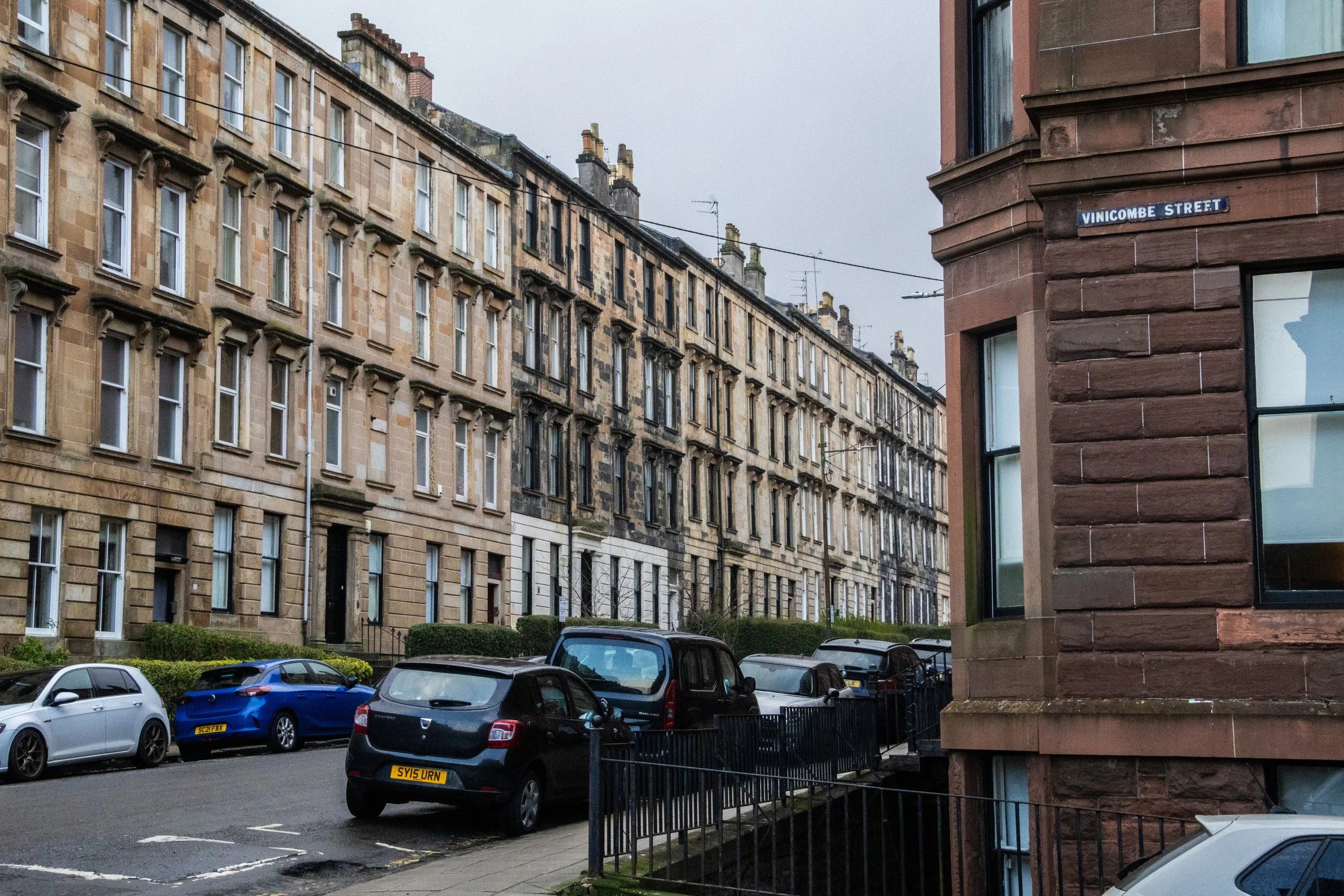
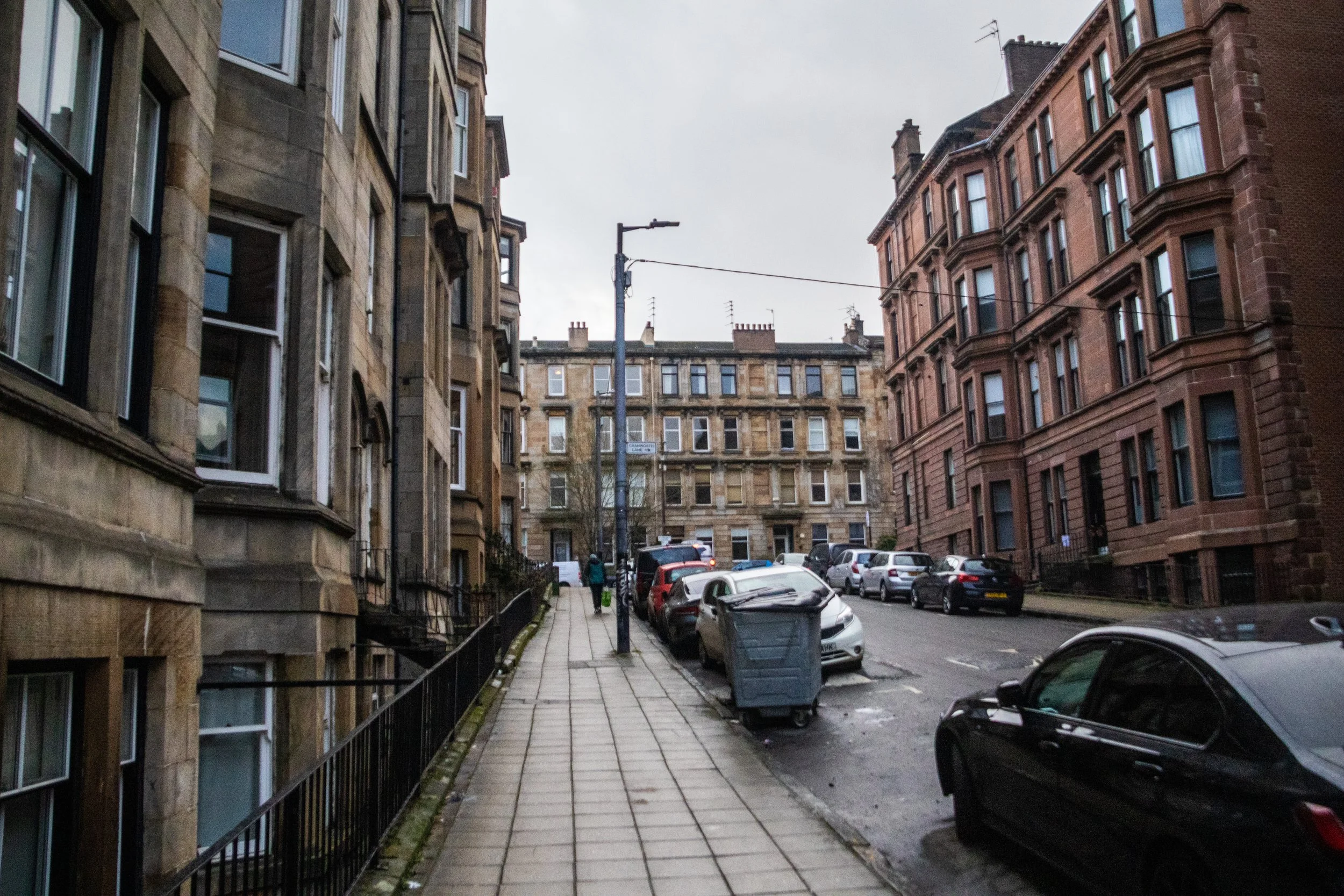
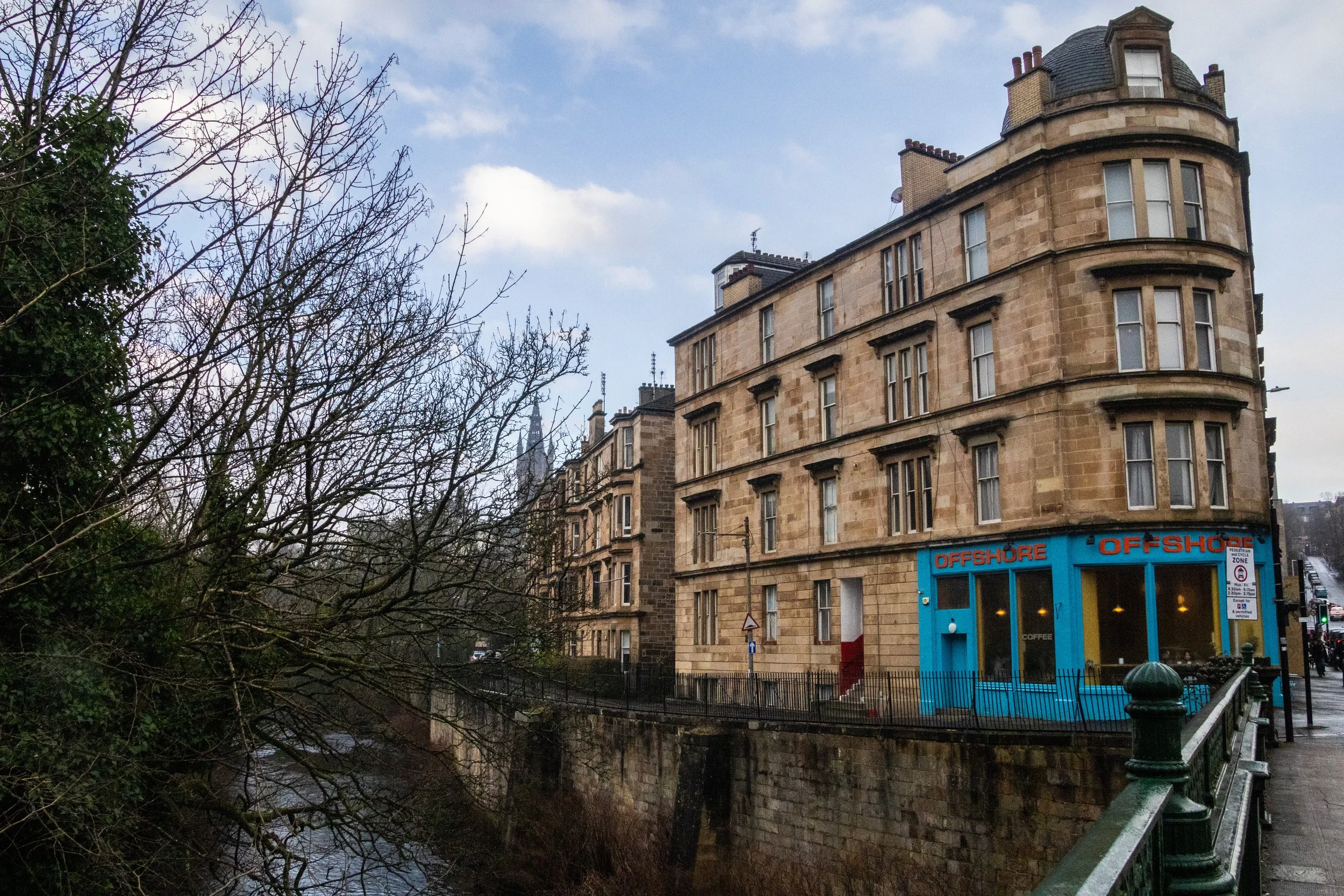
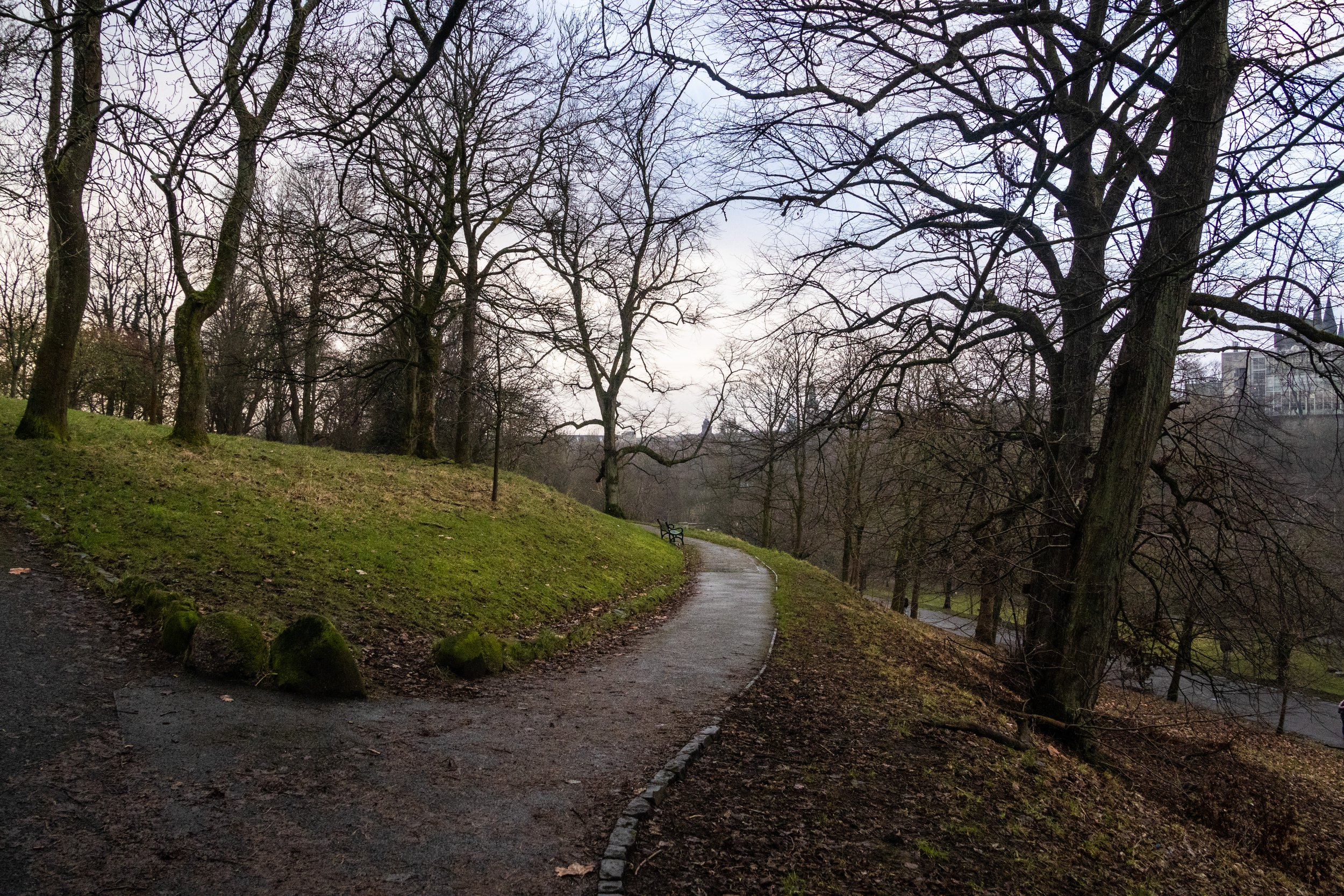
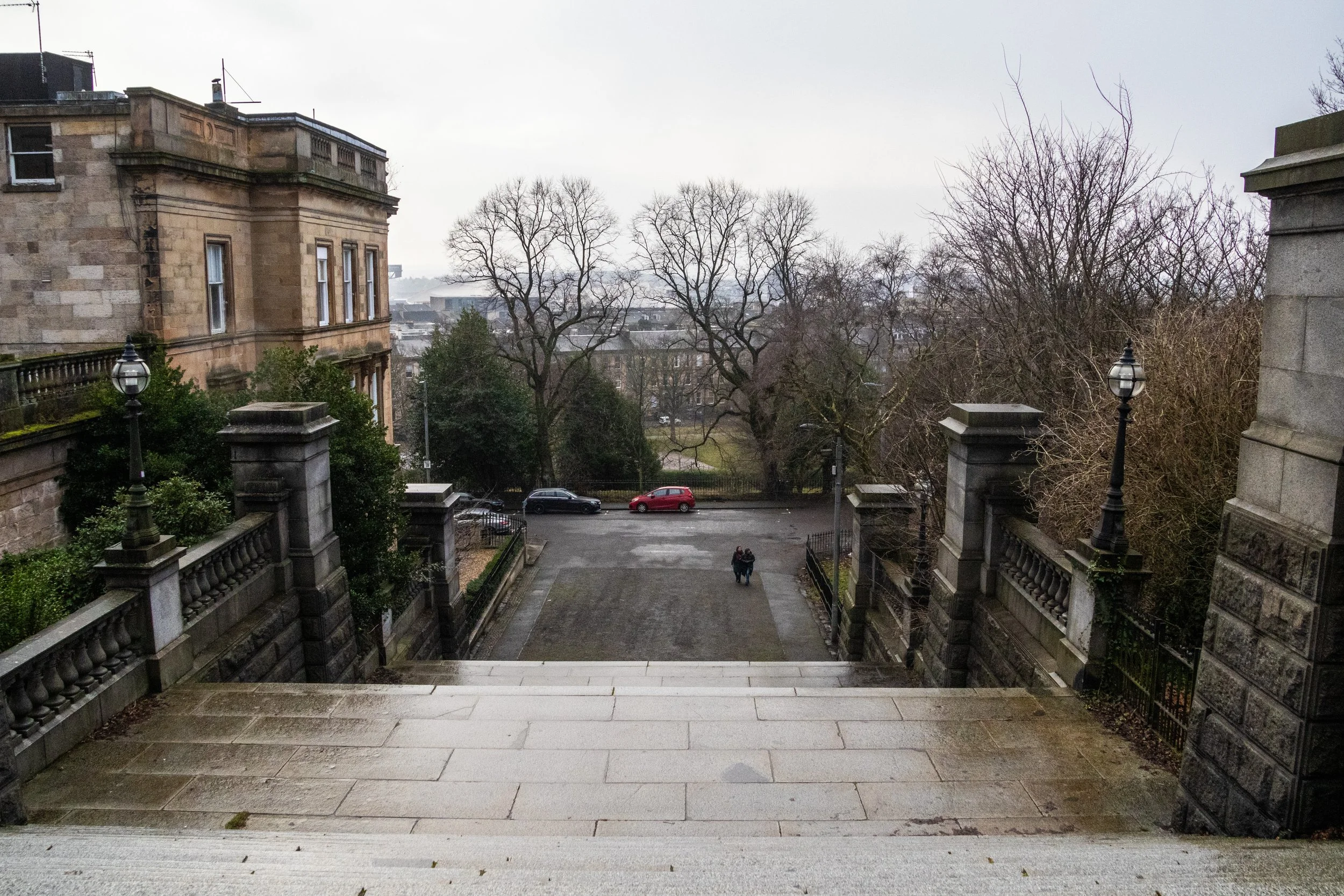
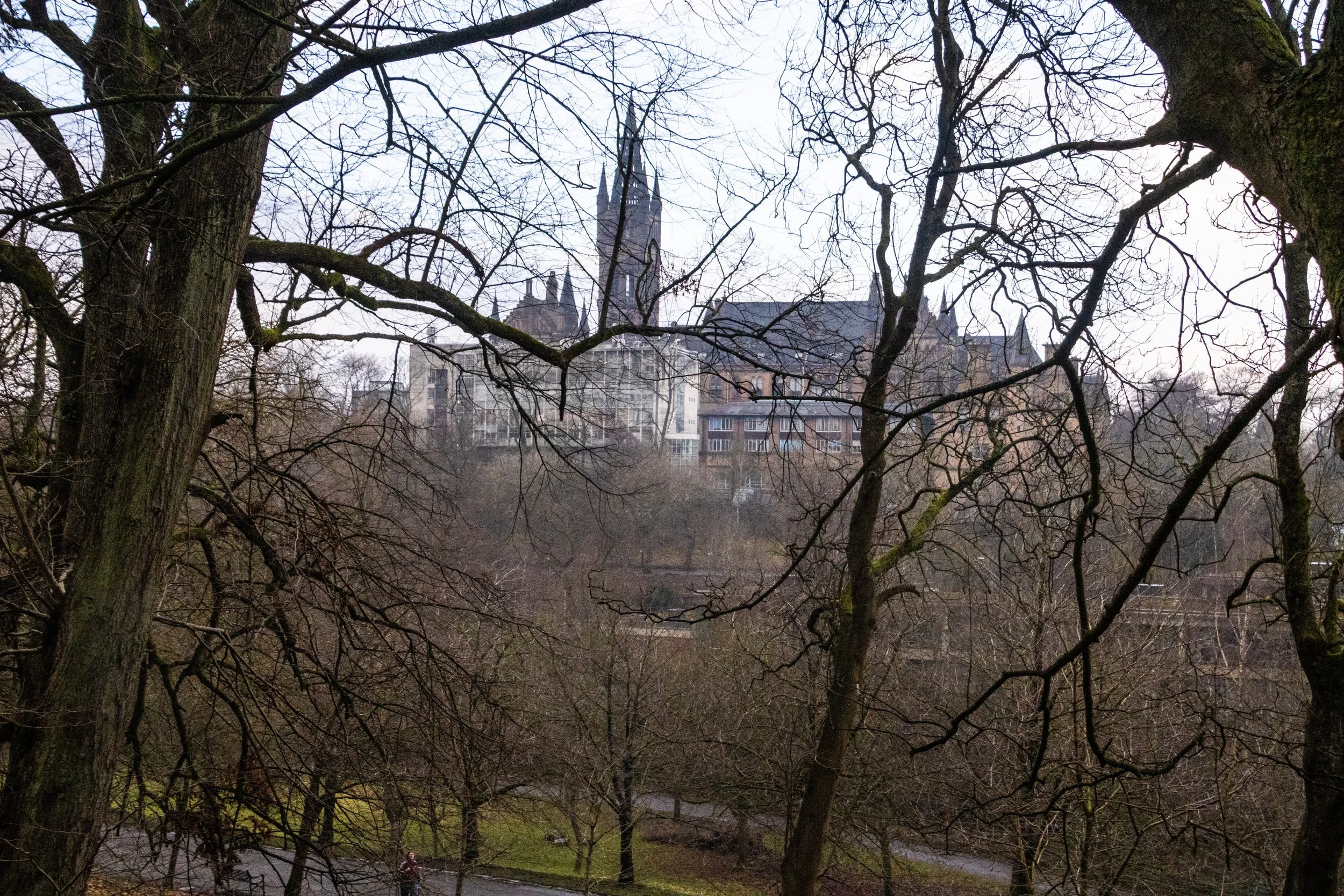
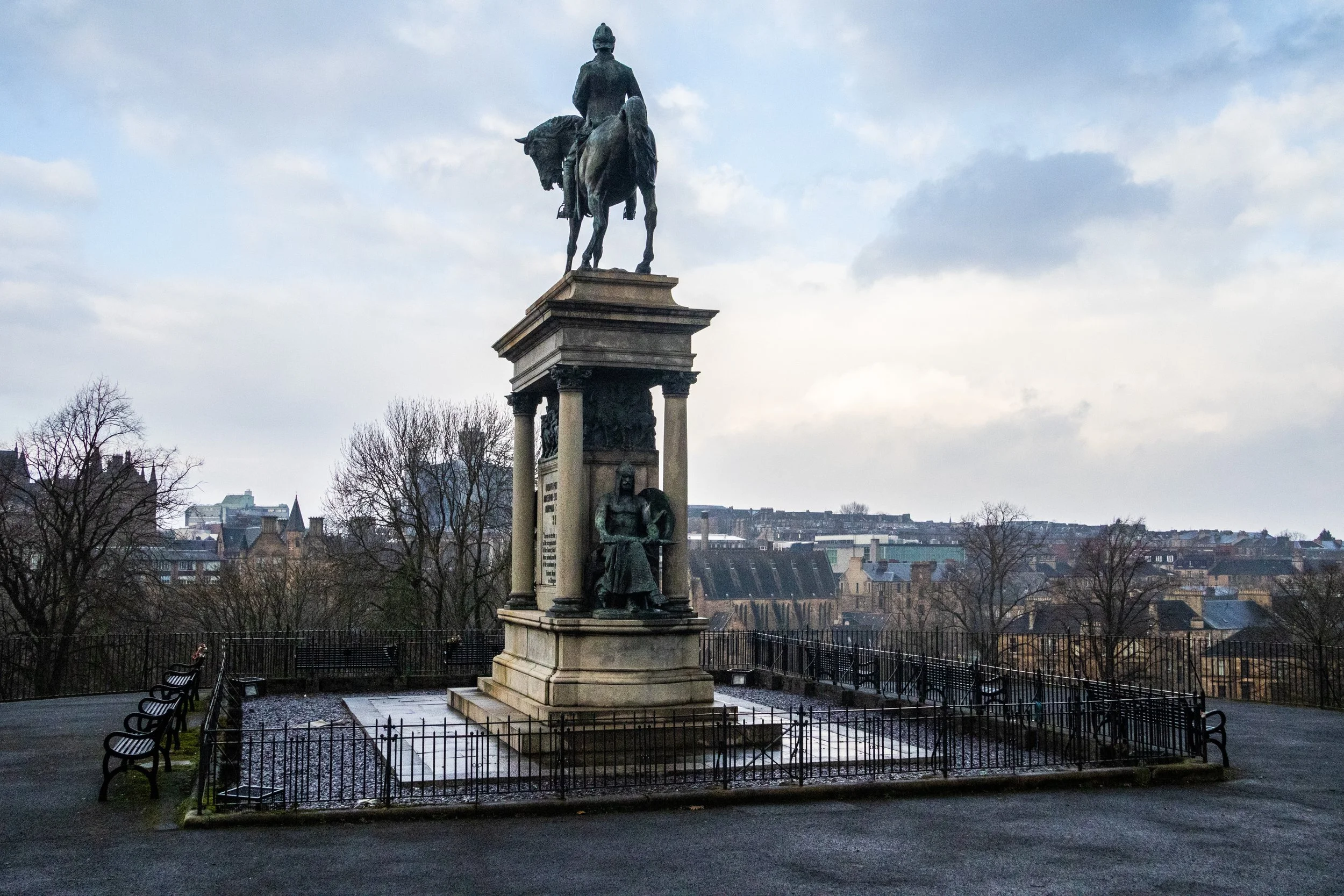
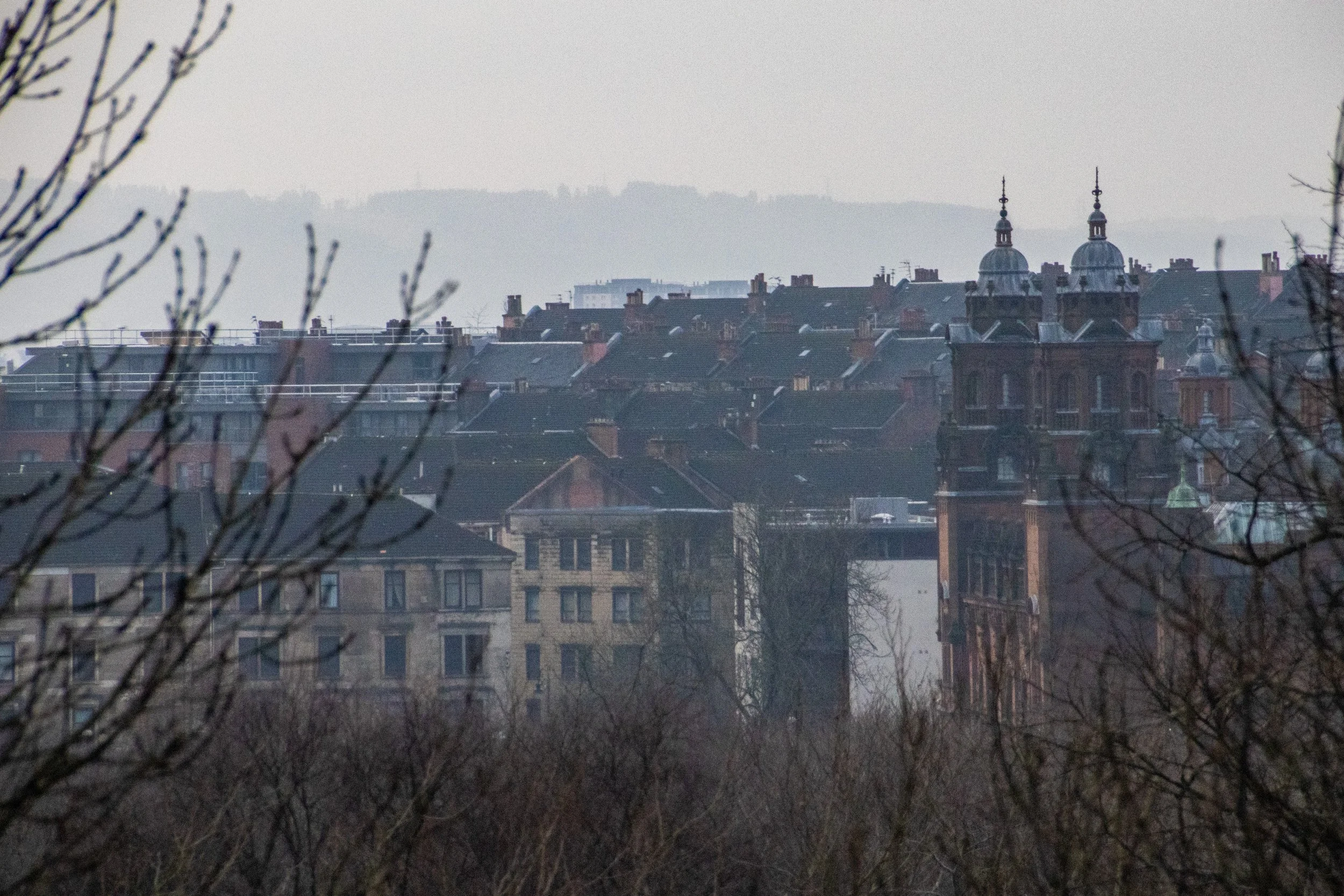
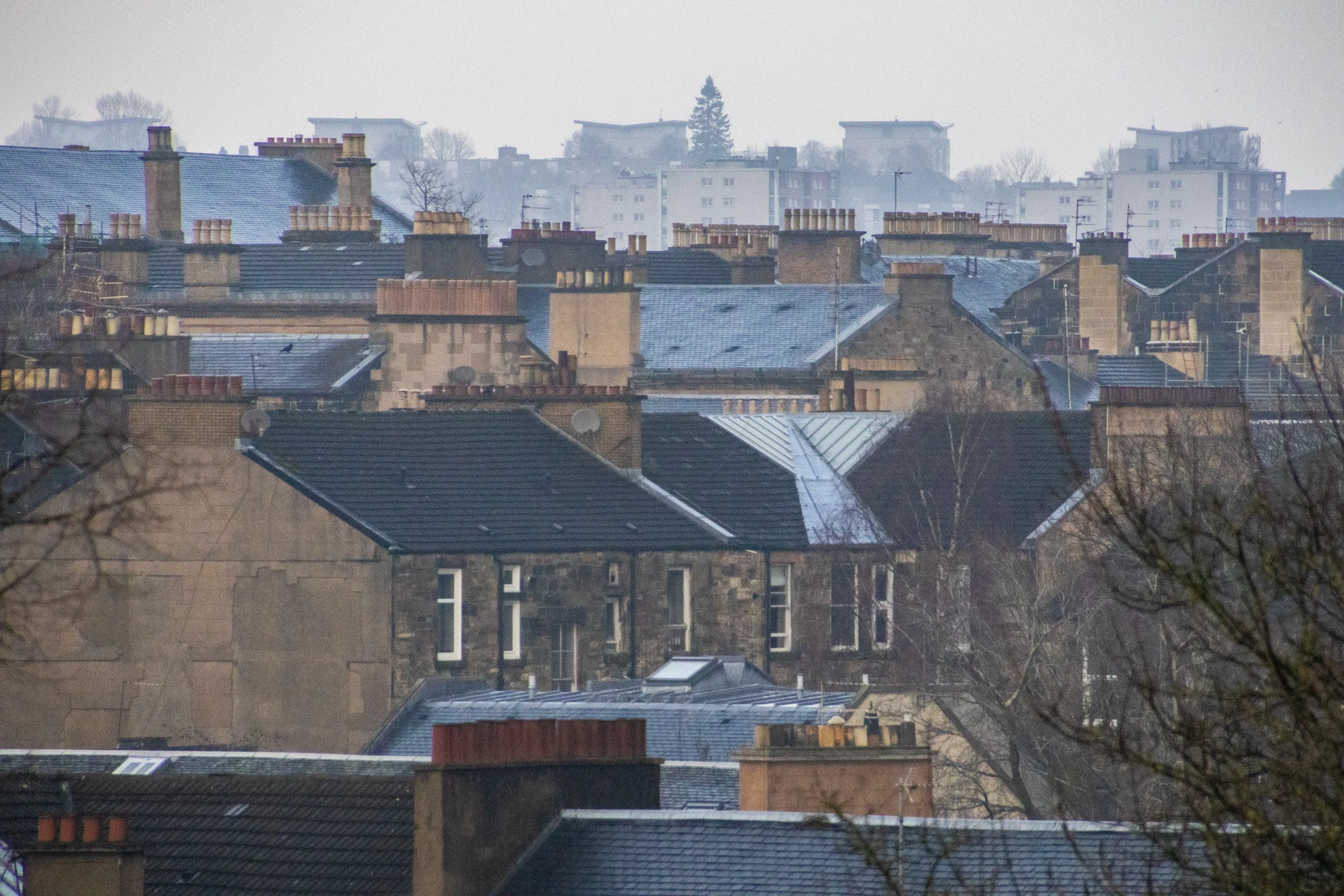
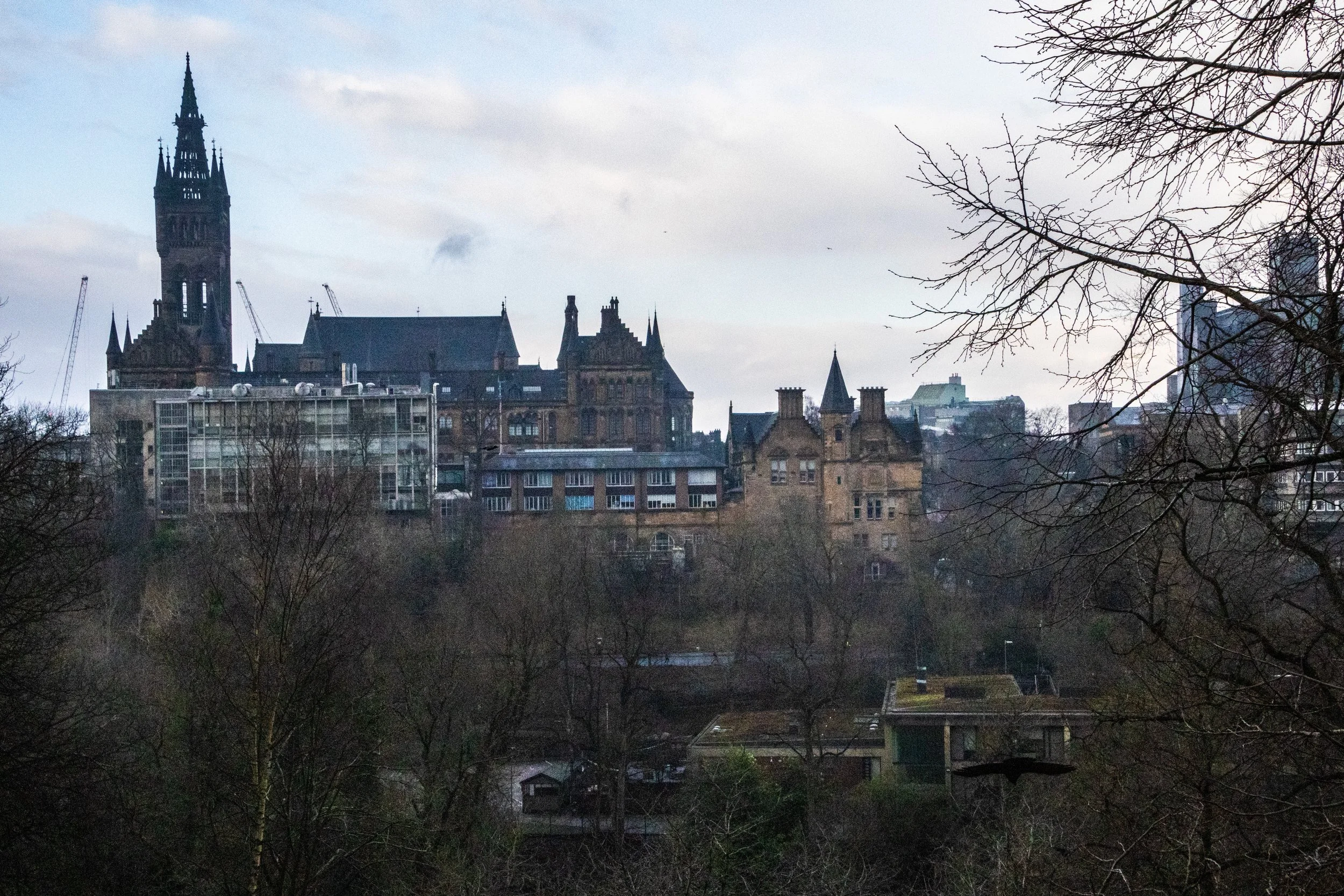
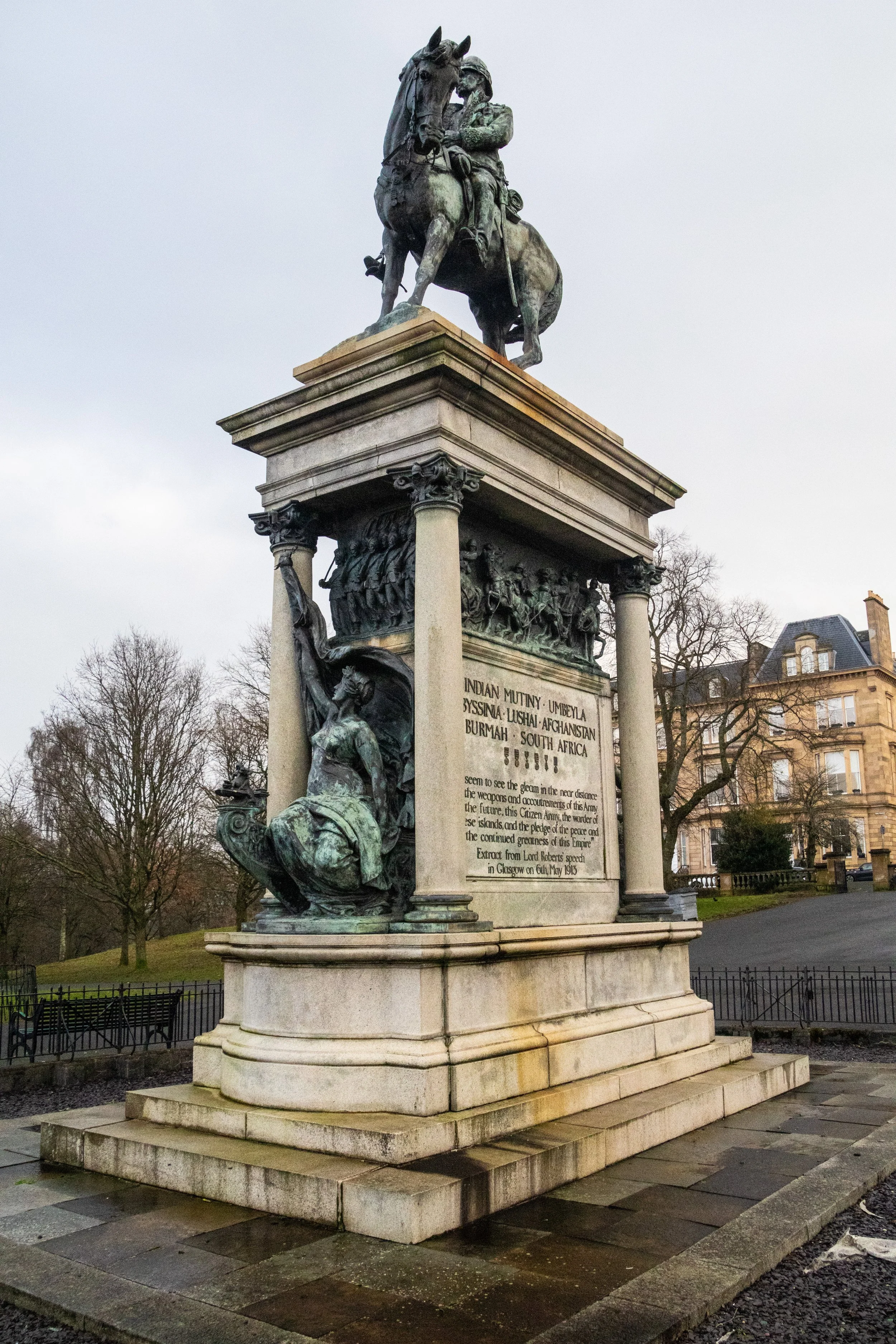
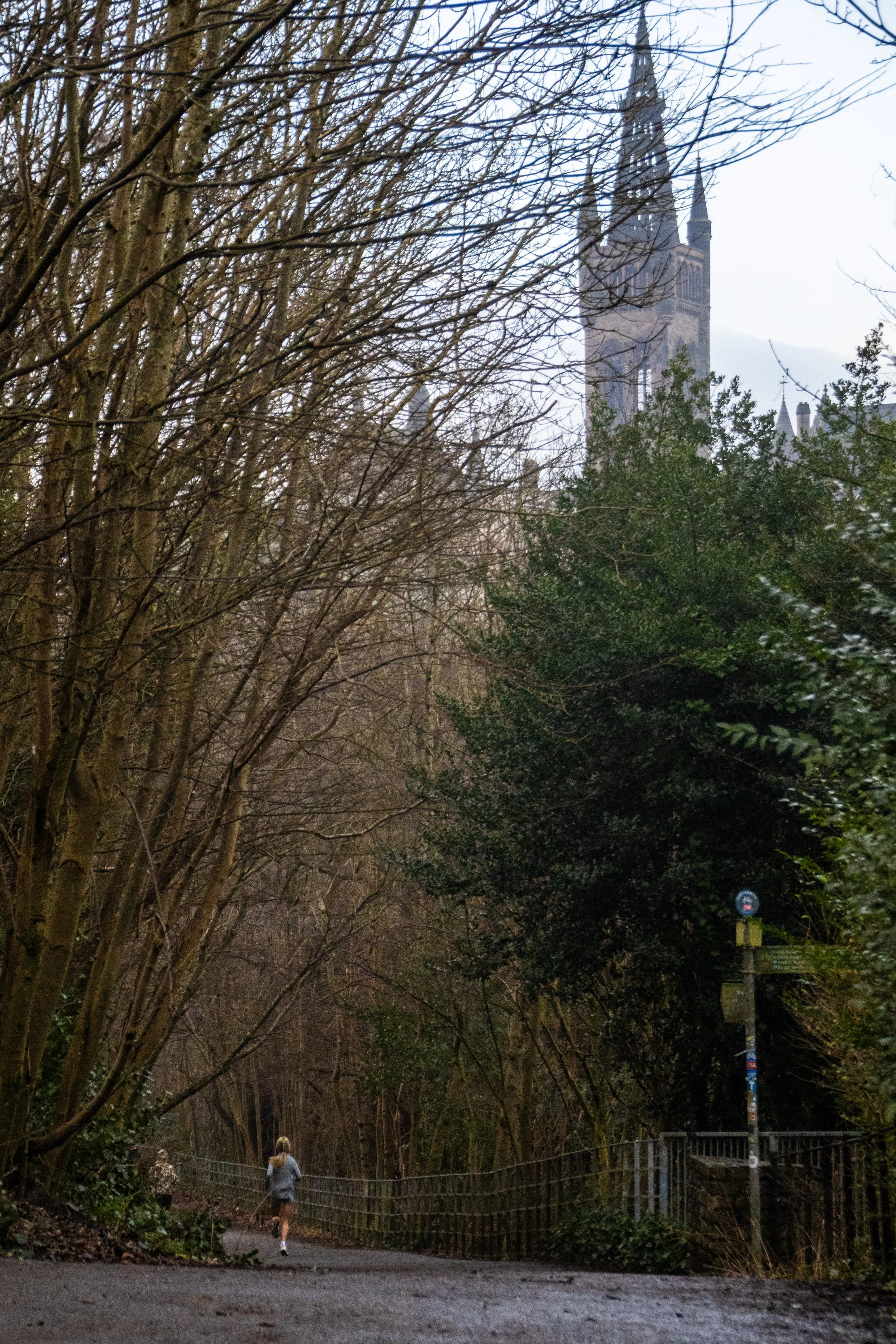
And now let’s take a quick walk through Kelvingrove Park itself, as well as the small neighborhood that overlooks it from the top of the hill, called Kelvinbridge. This park is set on the natural ravine that contains the River Kelvin (just before it empties in the much larger River Clyde), so there are natural slopes on both sides that create lots of cool views over Glasgow’s neighborhoods.
Glasgow Cathedral & Necropolis
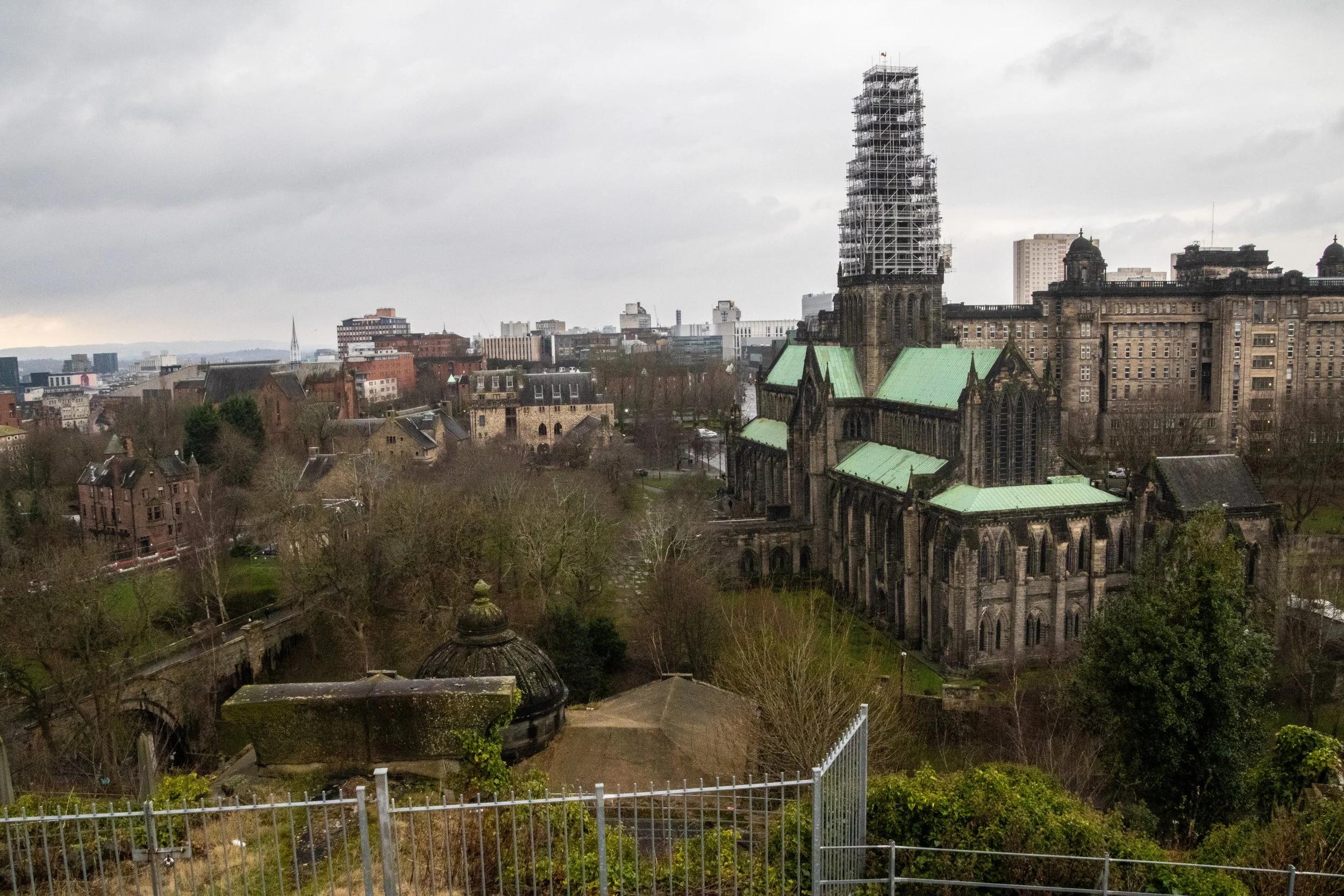
To end, we’ll now jump over to the opposite side of the city for a visit to Glasgow Cathedral, as well as the beautiful cemetery that sits perched atop a nearby hill, known as the Glasgow Necropolis. We’ve talked a lot about how young most of the Glasgow city-scape is when compared to its neighbors… but that doesn’t mean there’s no medieval history here.
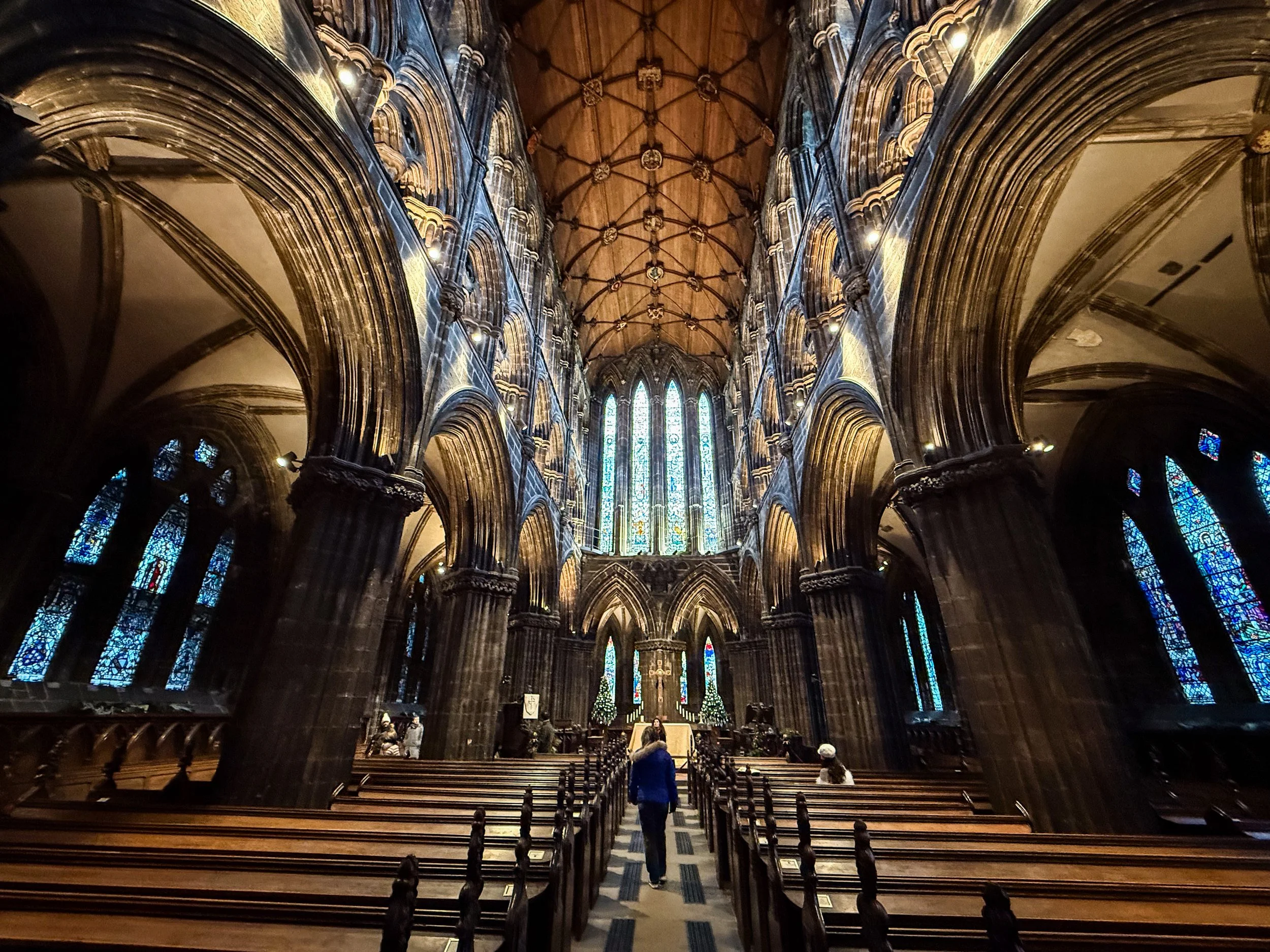
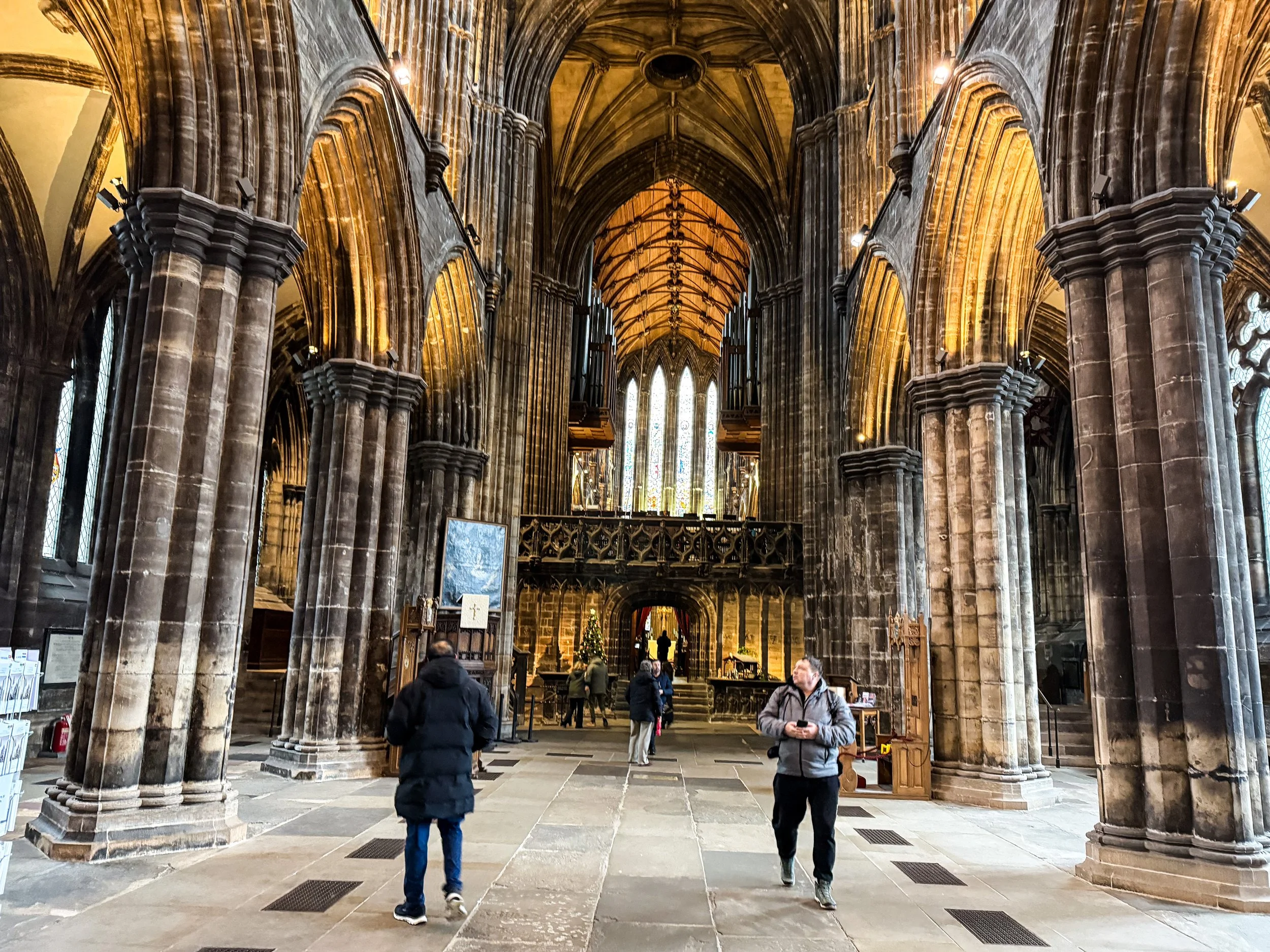
One of the best points of access into the long-lost world of medieval Glasgow is via the Glasgow Cathedral, which was built from the 1100s-1400s. This is actually one of the oldest buildings in Scotland, and one of only a handful of churches to survive the Protestant Reformation. It’s also really special because it is one of the few landmarks of any category that has survived Glasgow’s great metamorphosis.
The cathedral is built around the tomb of—and this is his real name—Saint Mungo. 😂
Saint Mungo is the patron saint of Glasgow. In many ways, the entire city was built around this church. Before Glasgow began to develop as a major metropolitan center, it was basically just a religious settlement, so this is one of the few places where you can see the intersection of Victorian Glasgow with medieval Glasgow. The church itself is Gothic in design, with thick, medieval stone rising vertically on all sides, supporting vaulted ceilings to create a rare moment of Glaswegian reverence.
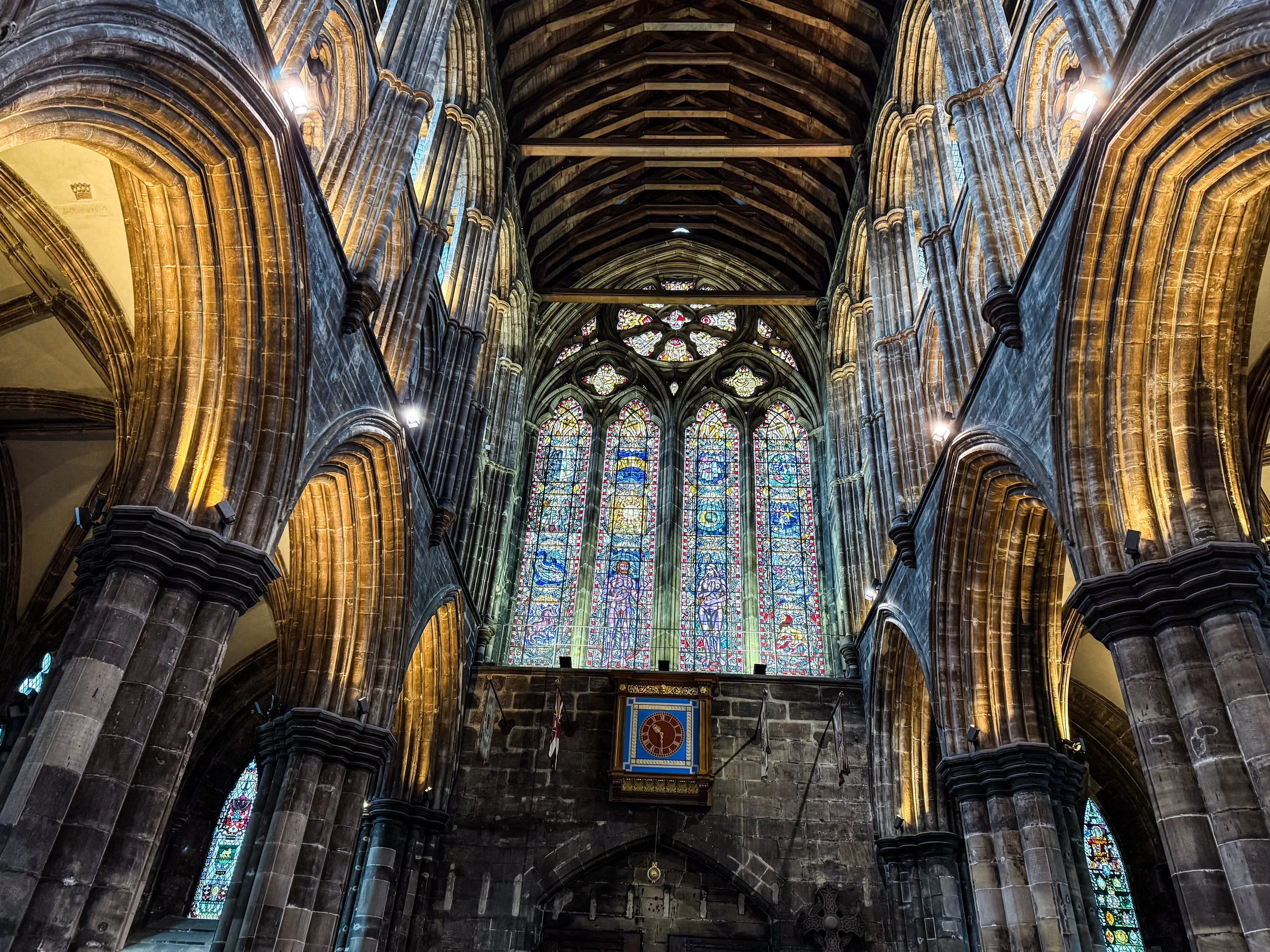
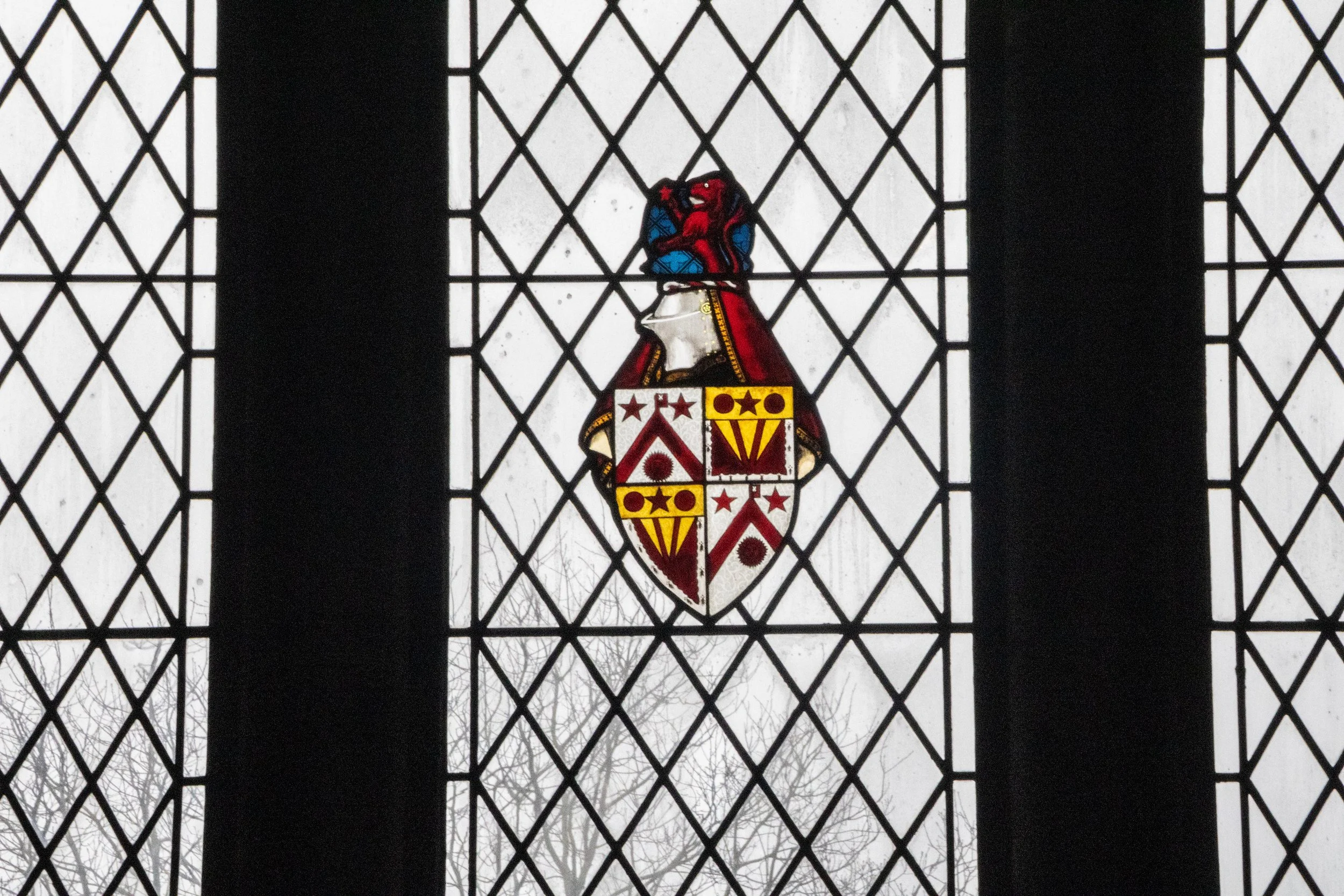

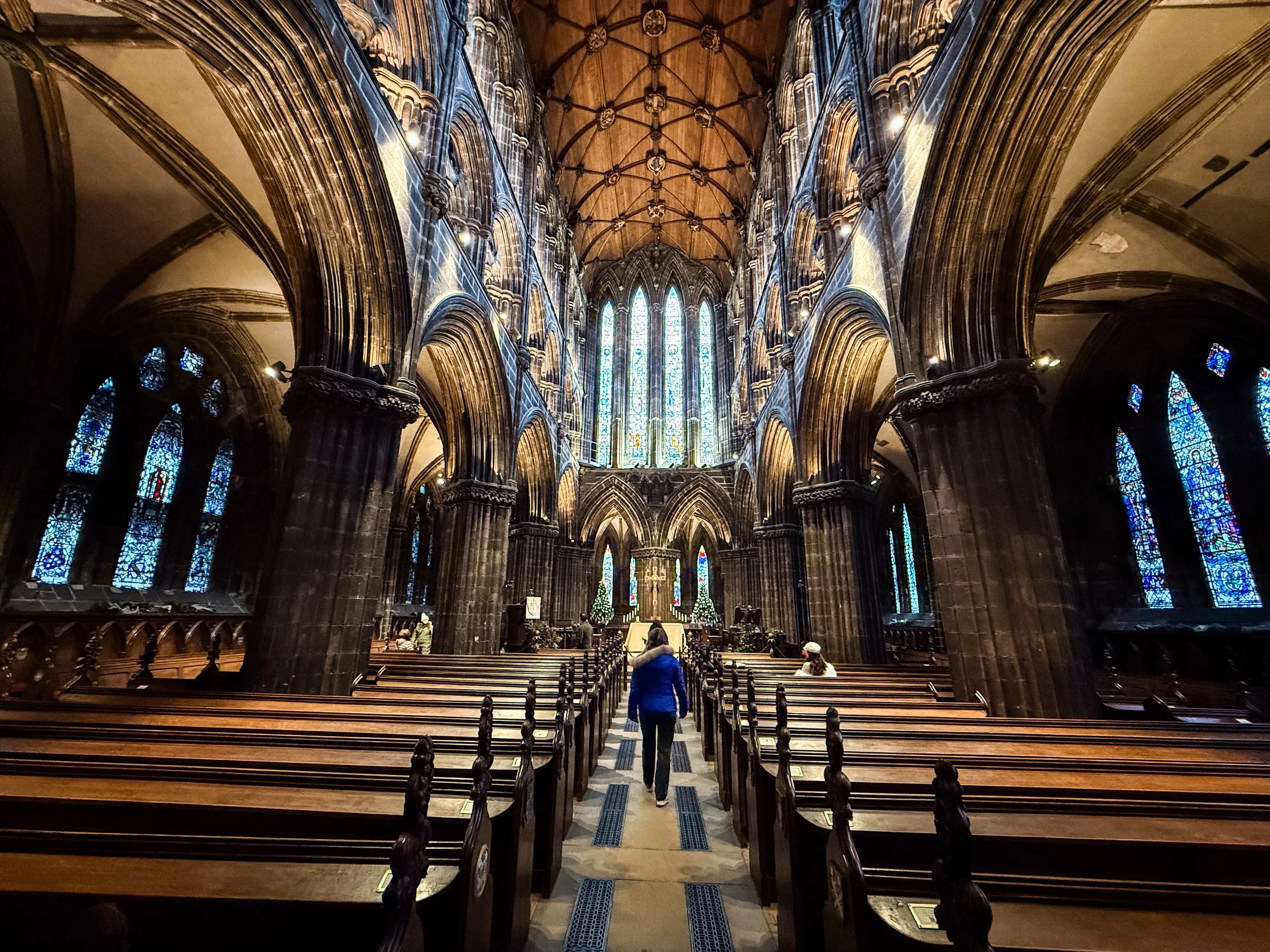
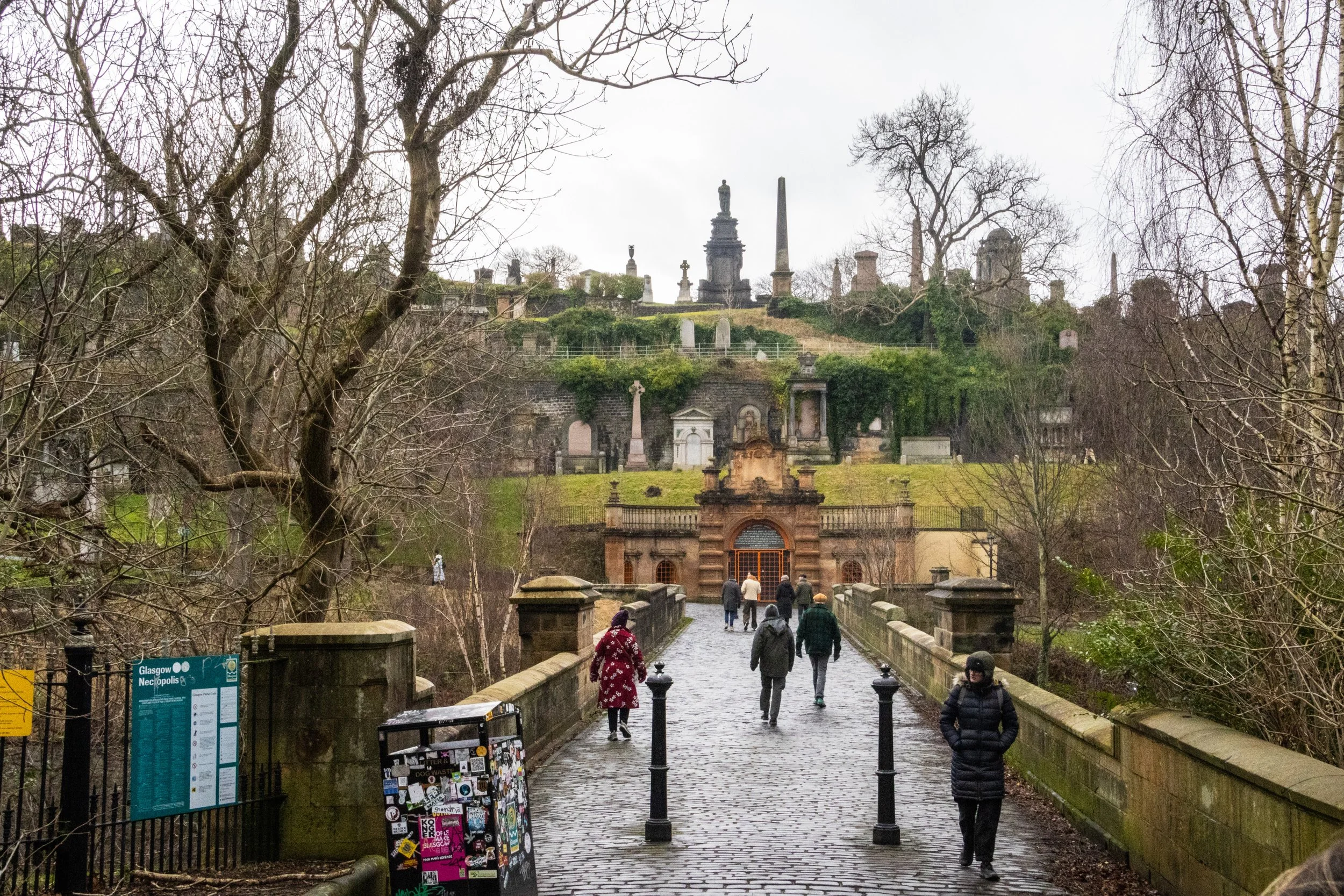
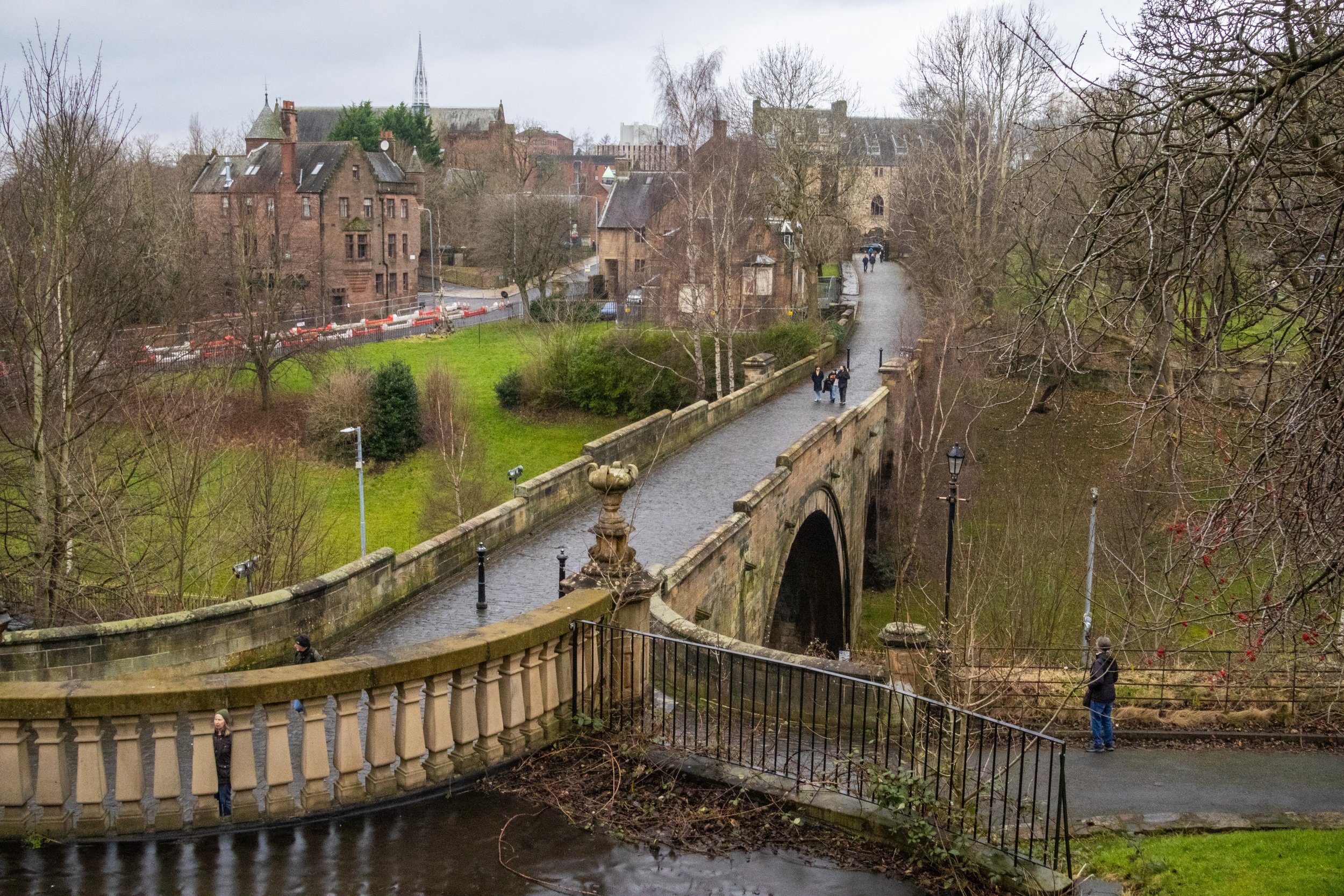
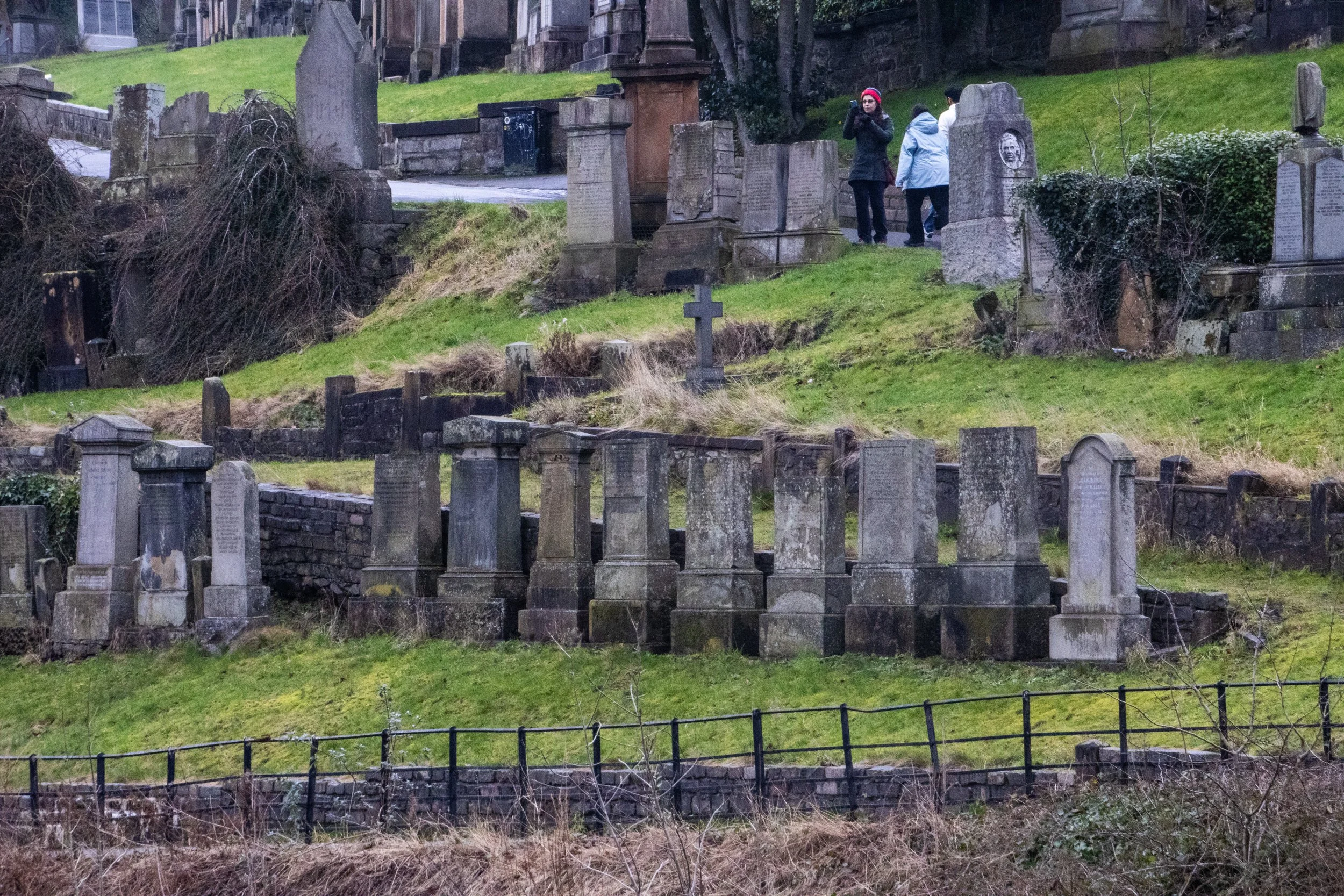
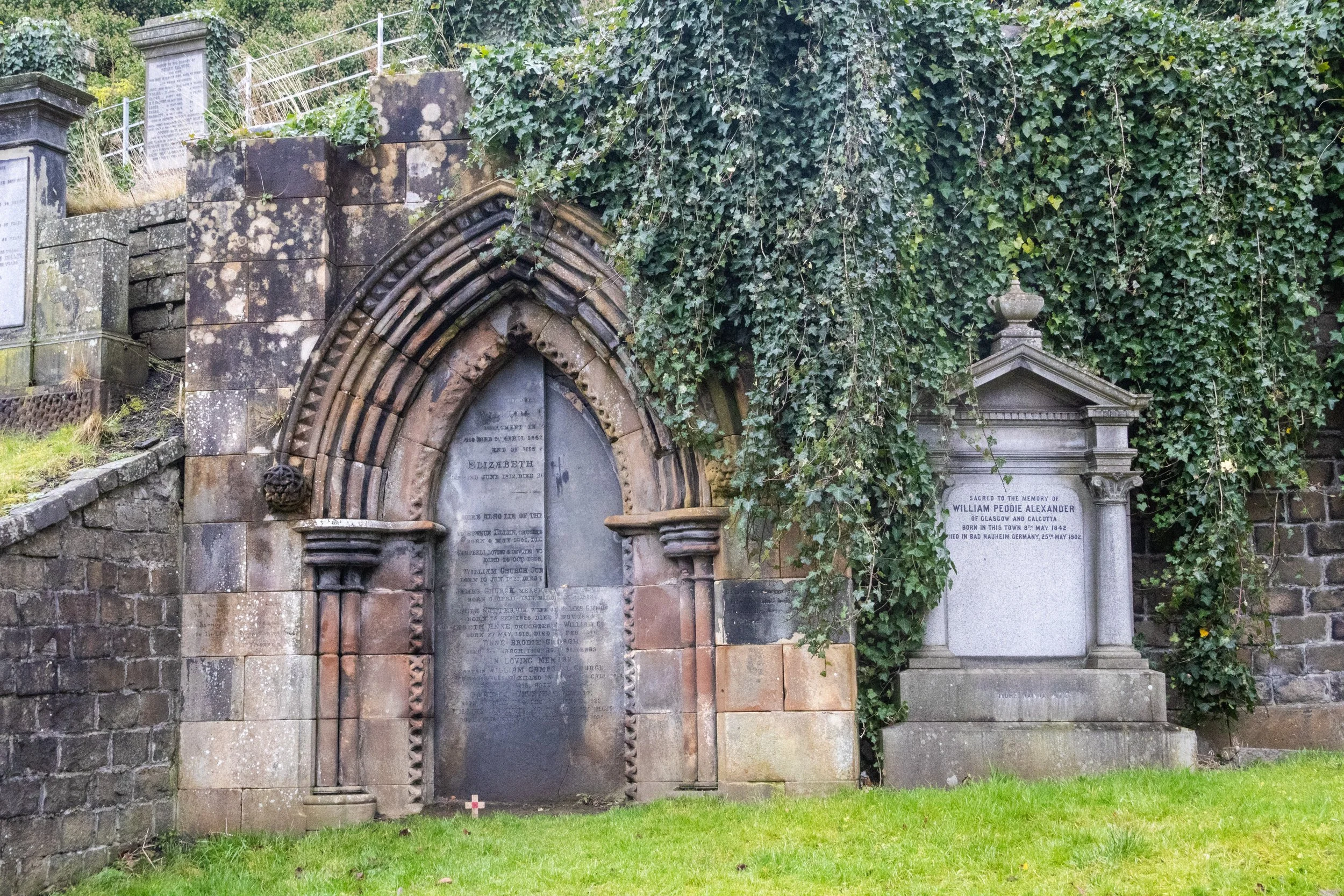
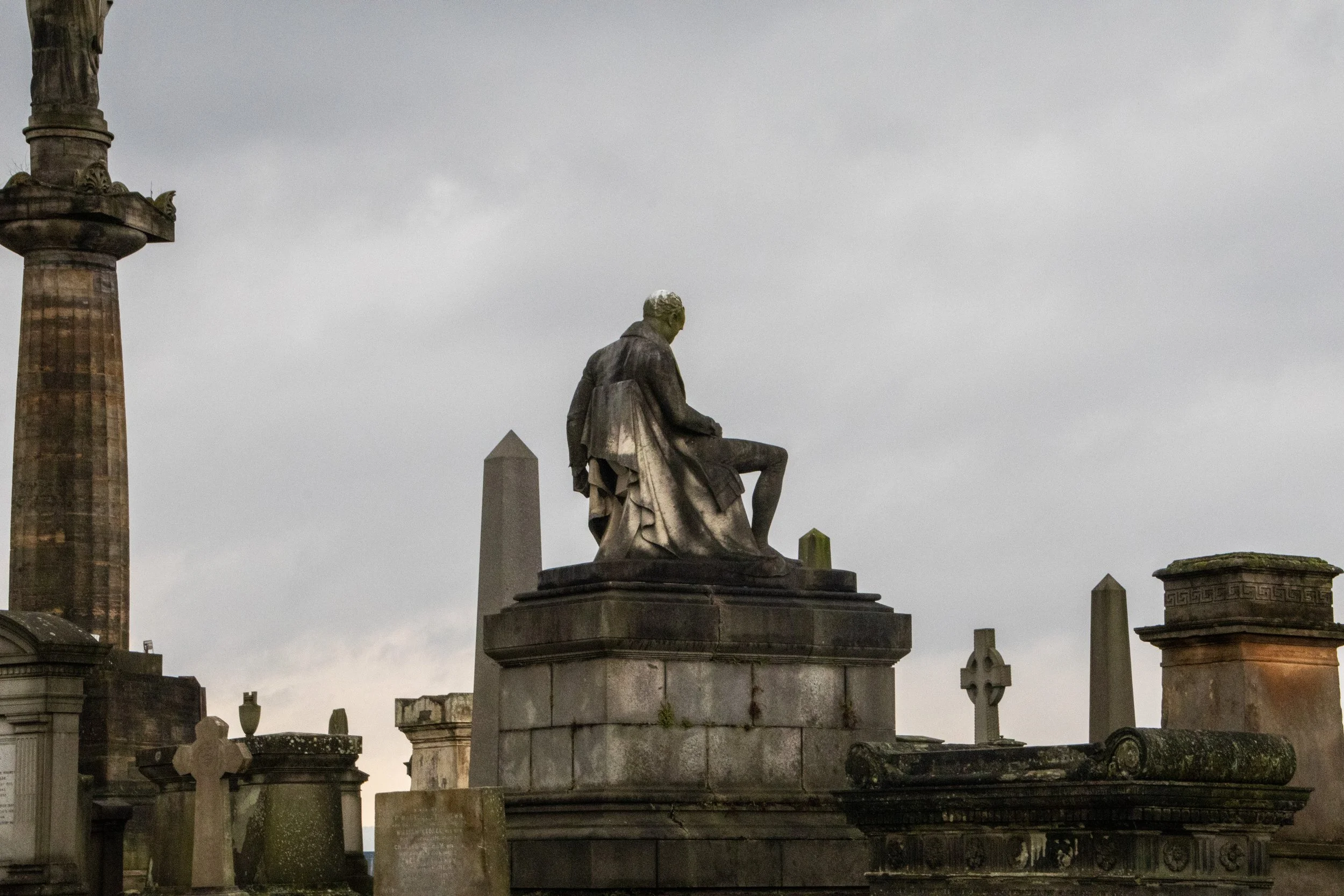
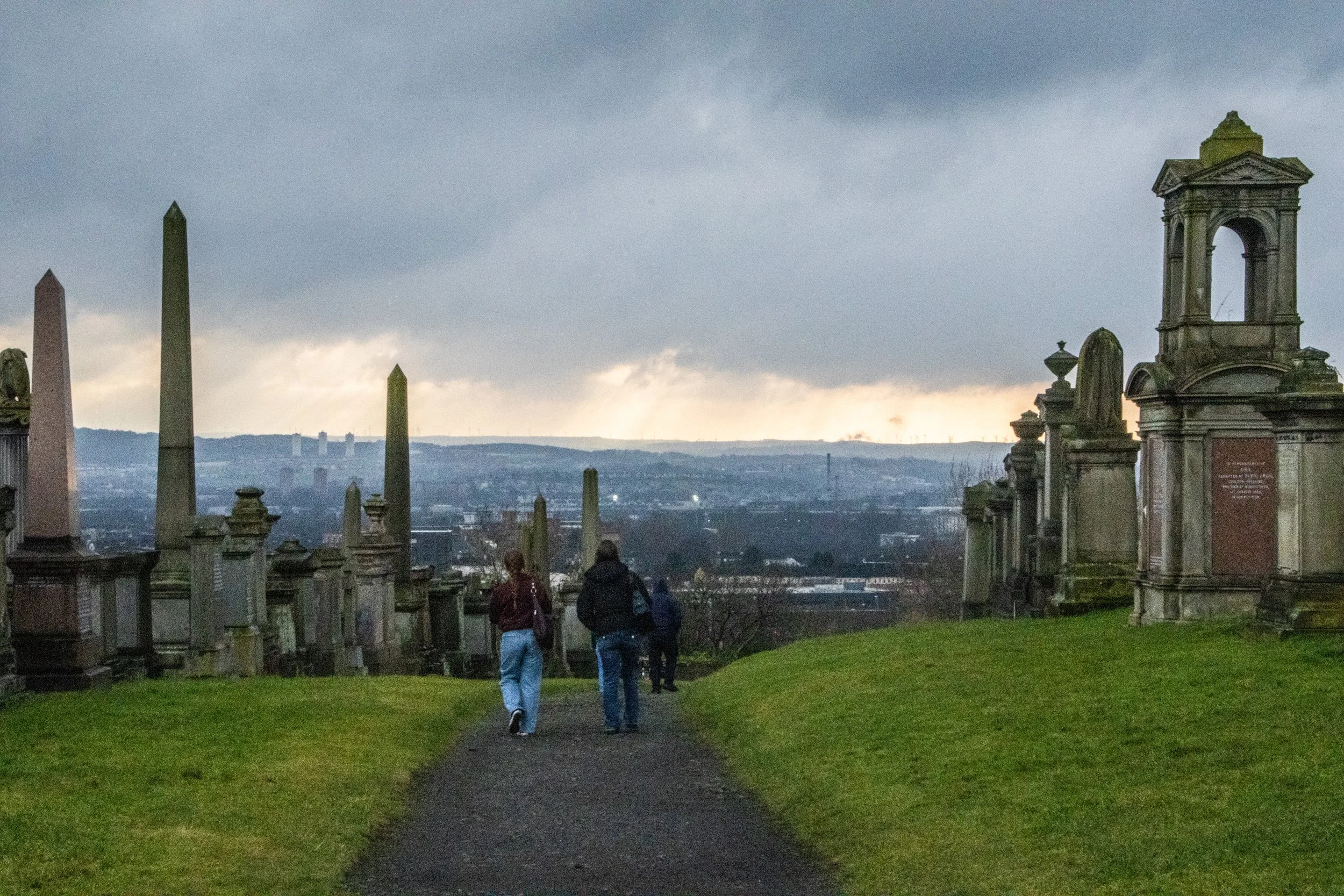
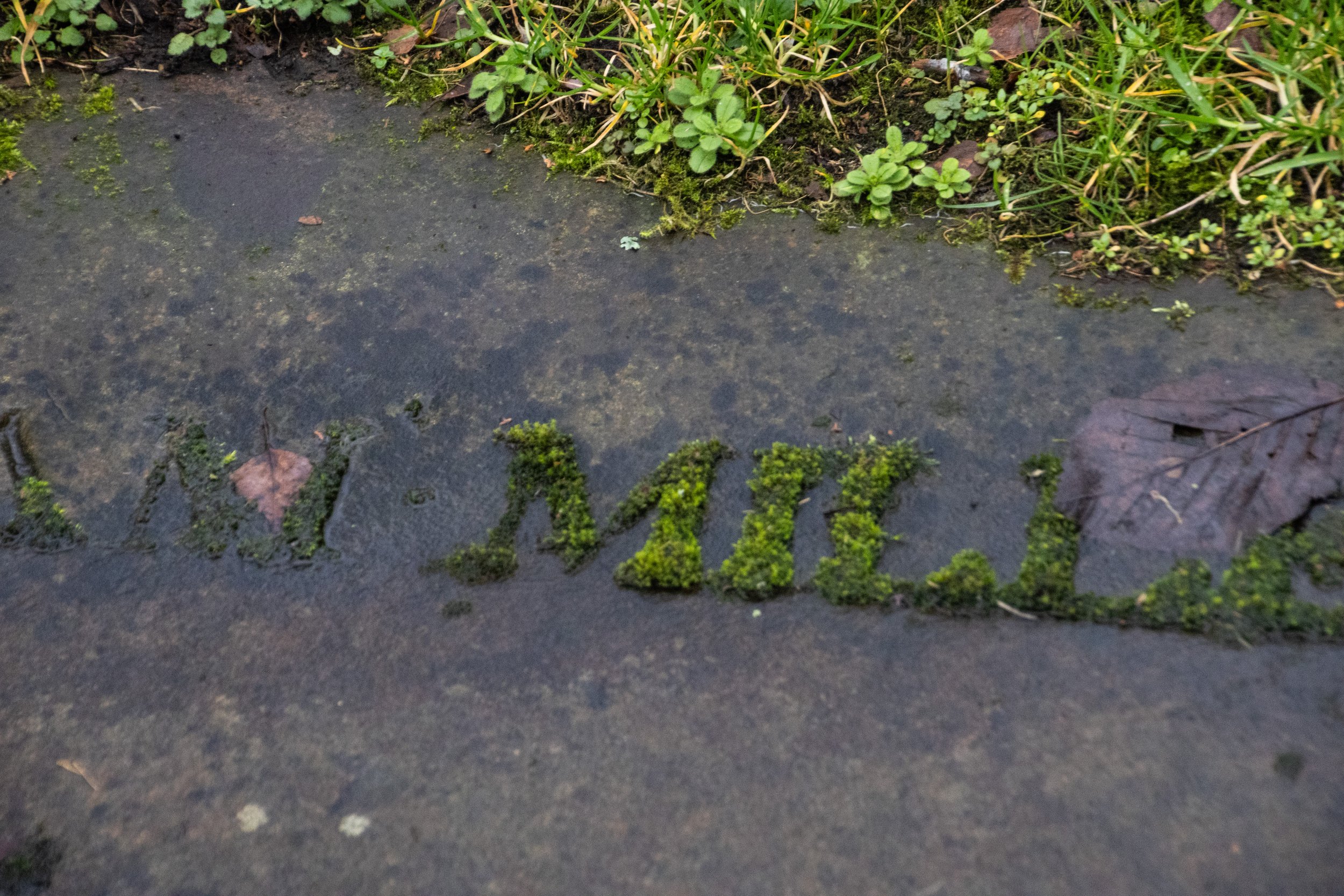
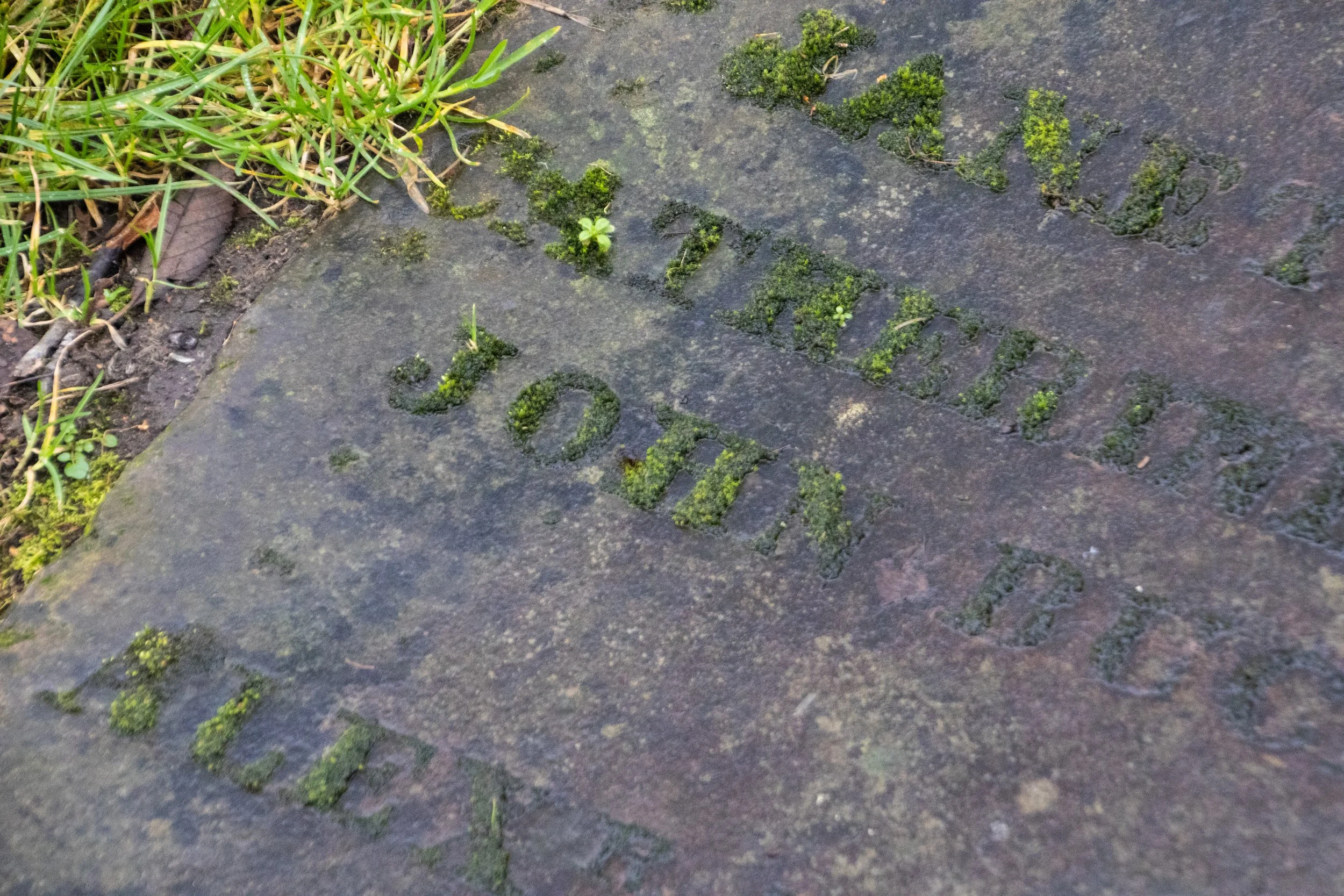
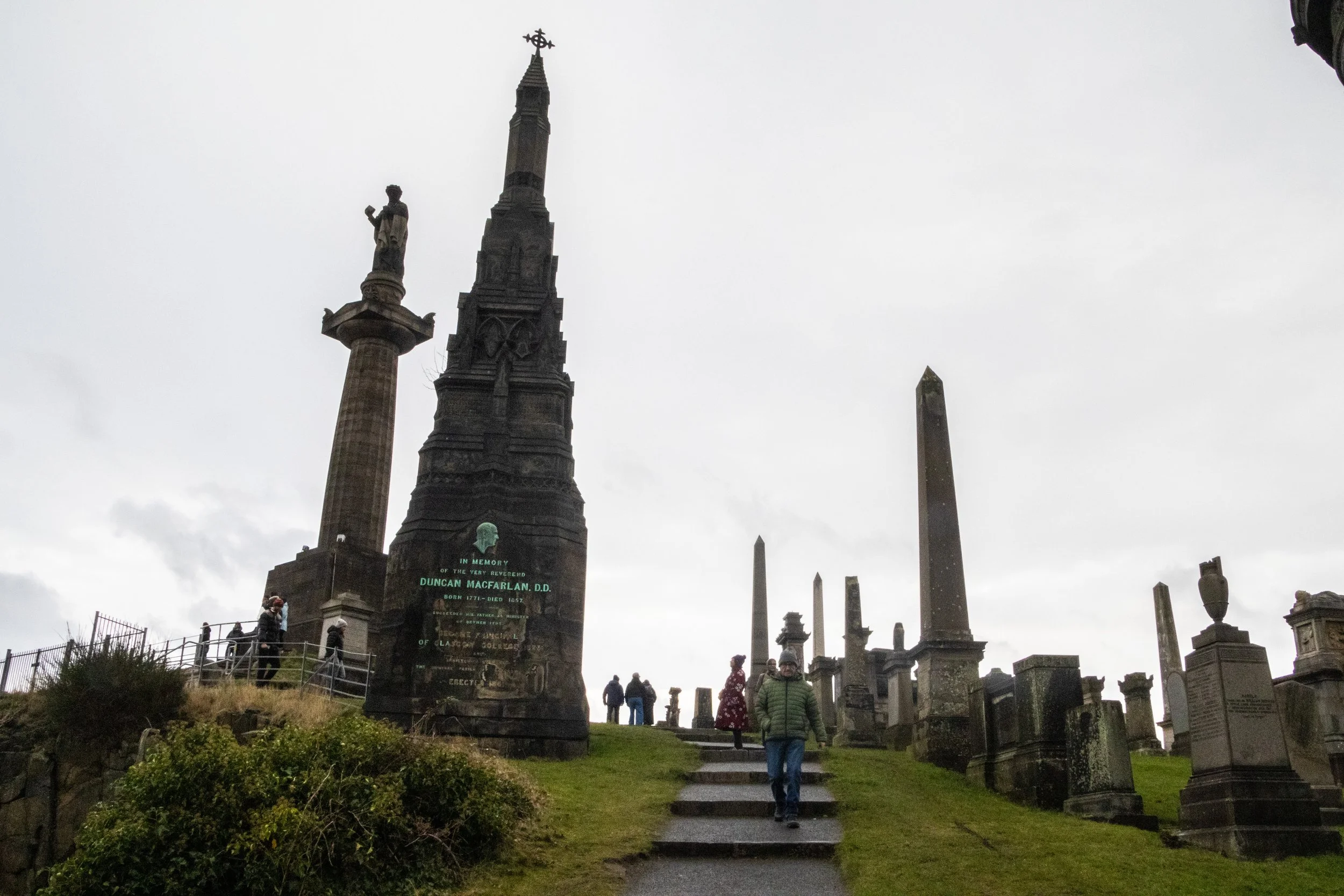
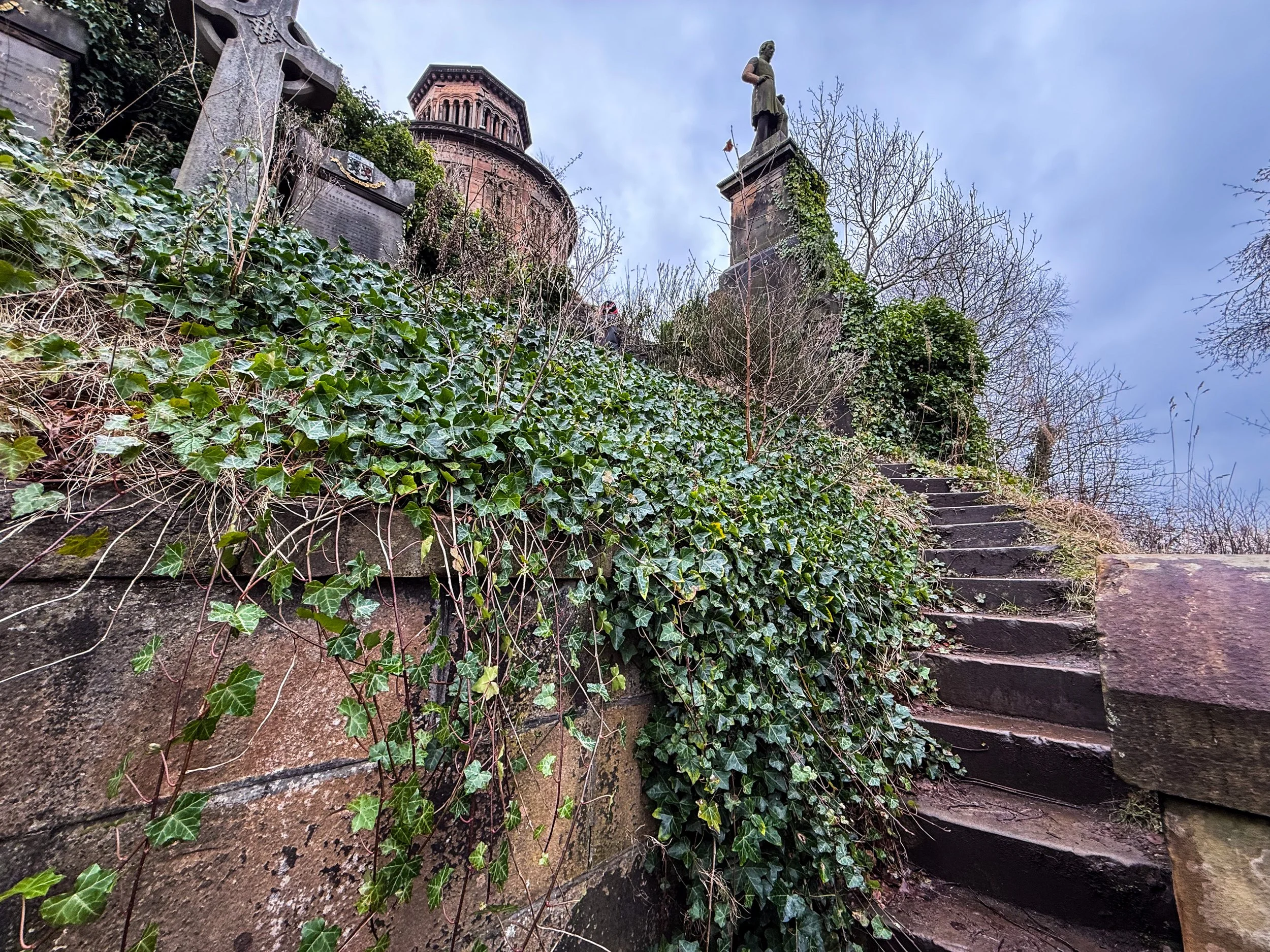
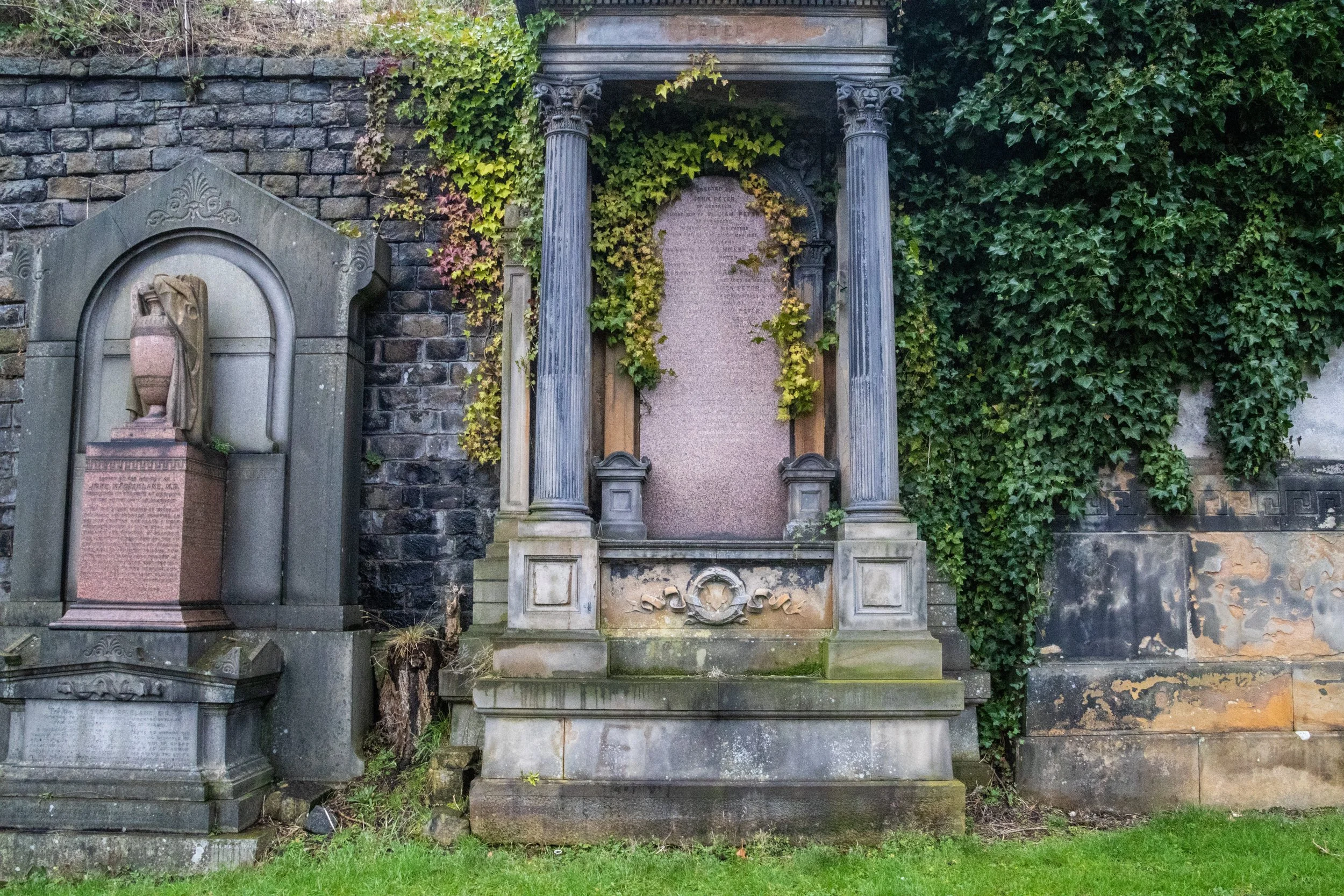
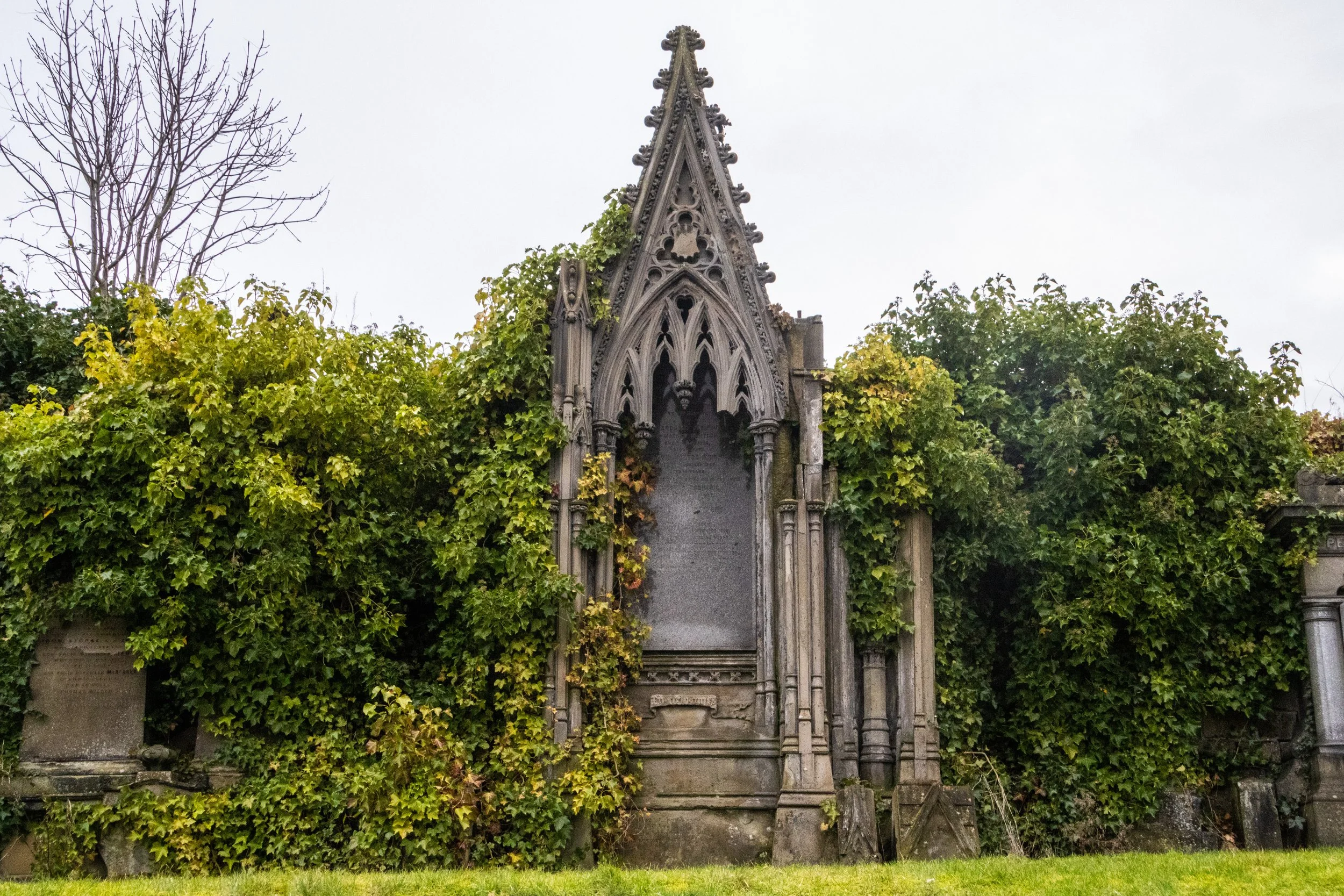
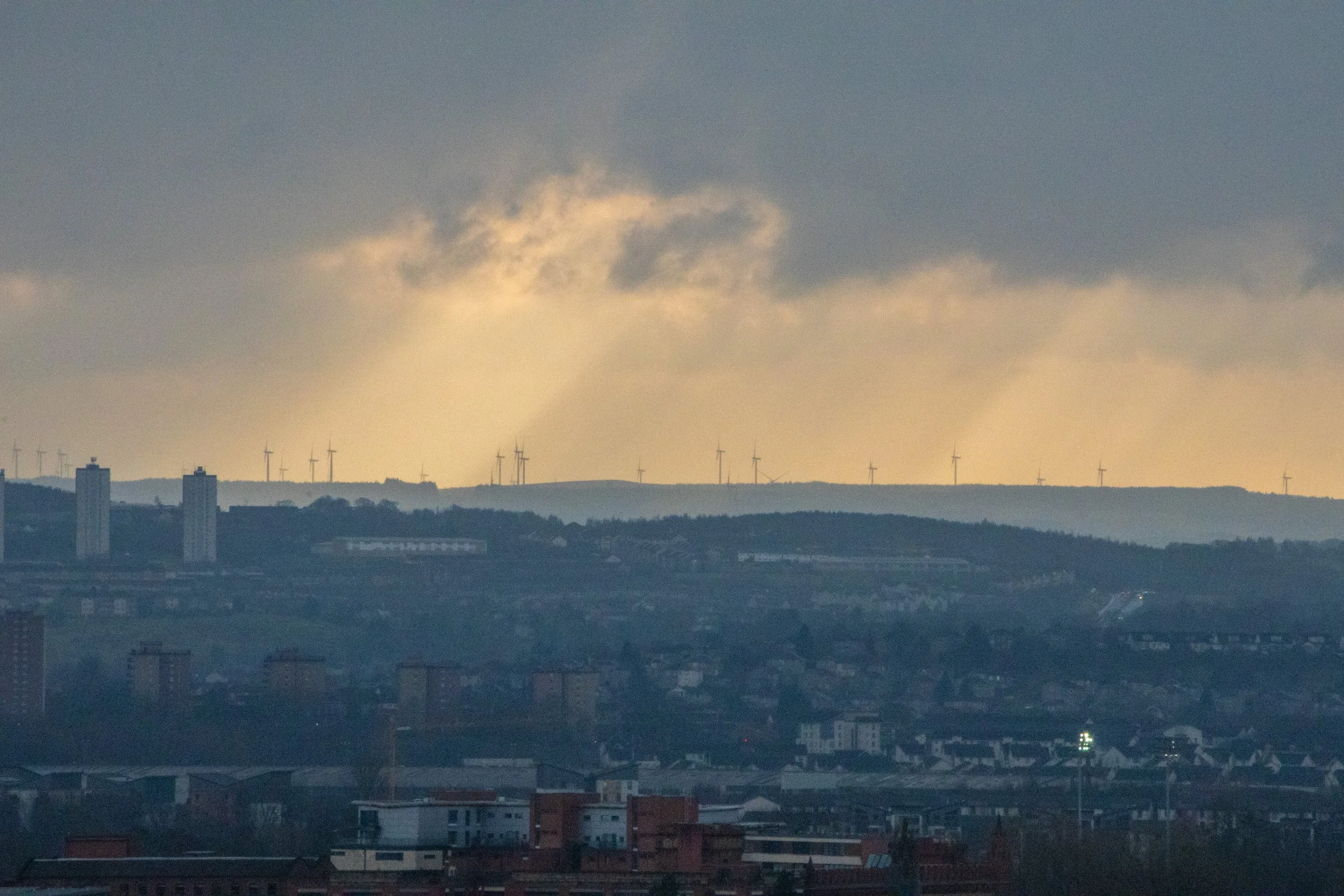
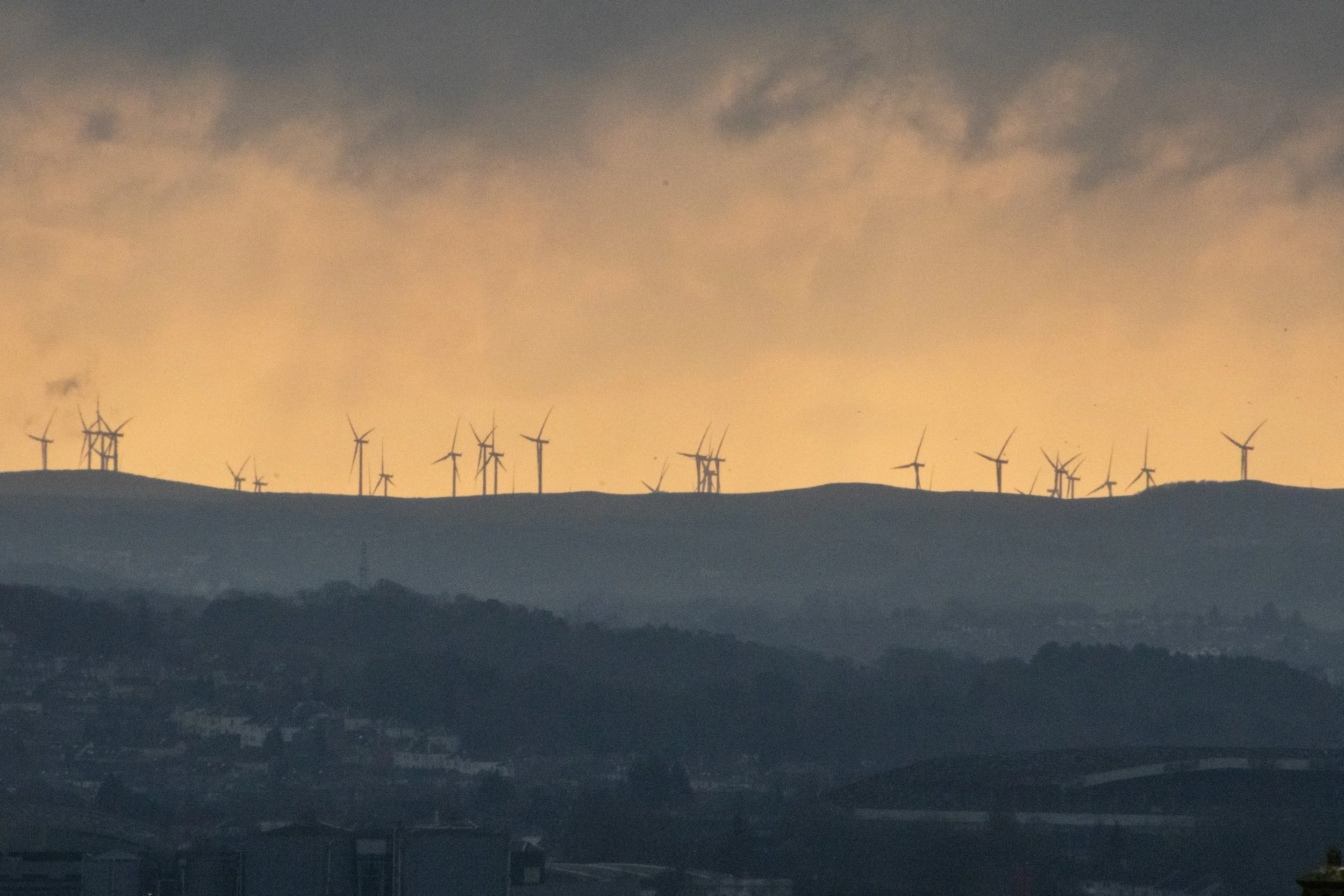
On a hill overlooking both this church and the whole of Glasgow, is a Victorian-era cemetery. Originally built in the 1830s, this cemetery would serve as the resting place for many of the wealthiest merchants produced by Glasgow’s boom period. Even though it’s basically a monument to Victorian capitalism, it had an undeniably Celtic feel to it… under the January gloom, the green moss and crawling ivy on every Gothic headstone, obelisk, and mausoleum served as a great reminder of what awaits when I finally travel northward.
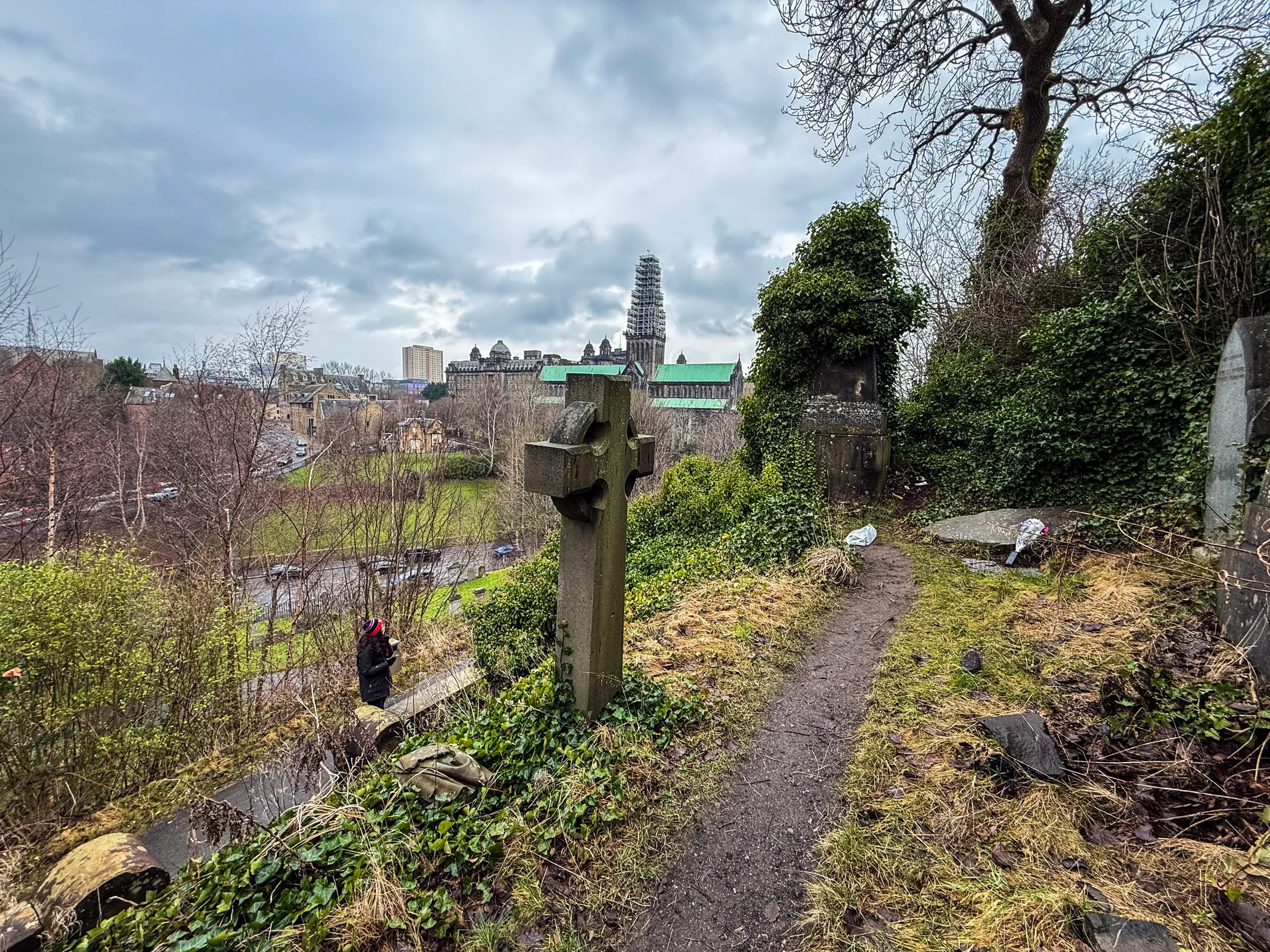
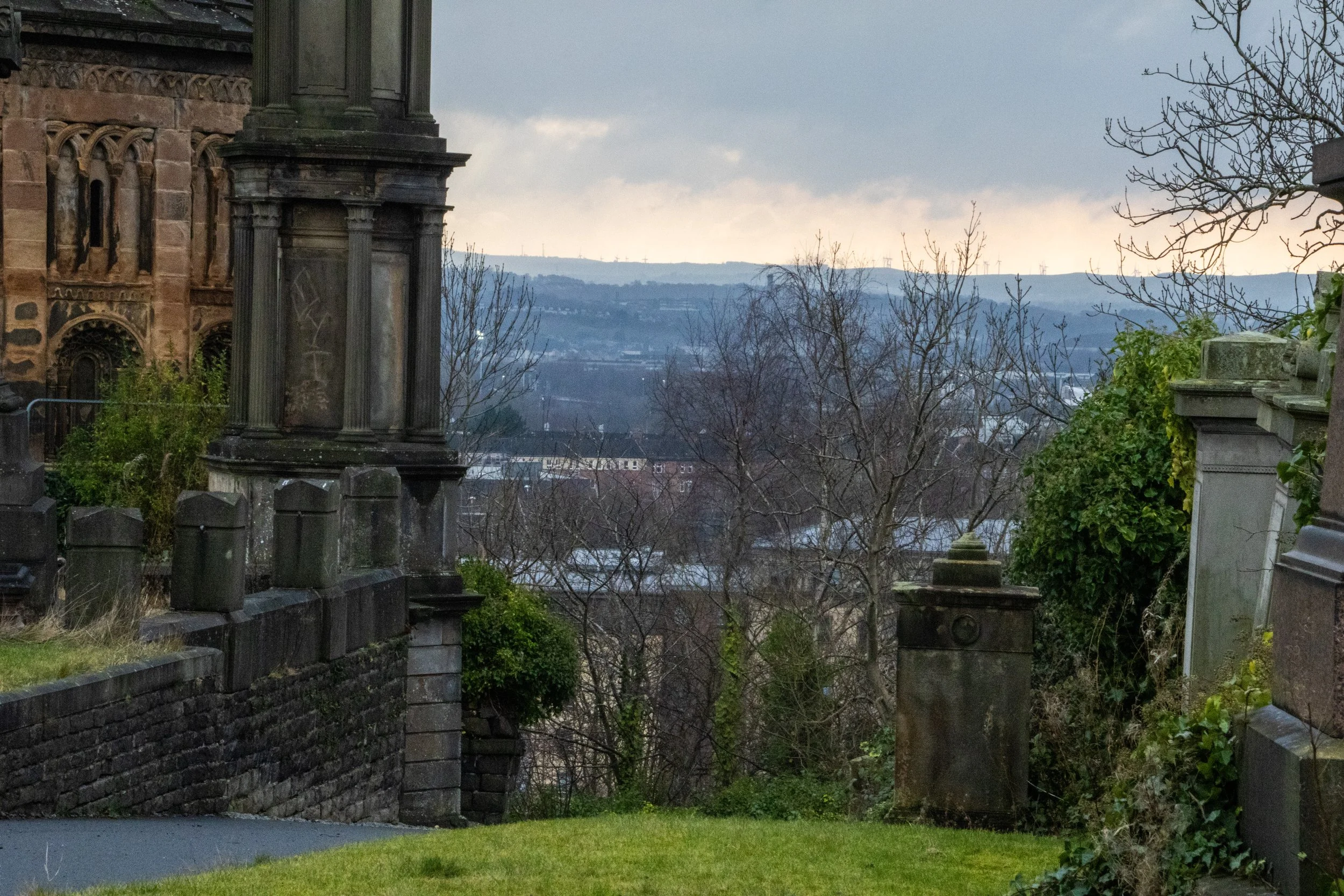
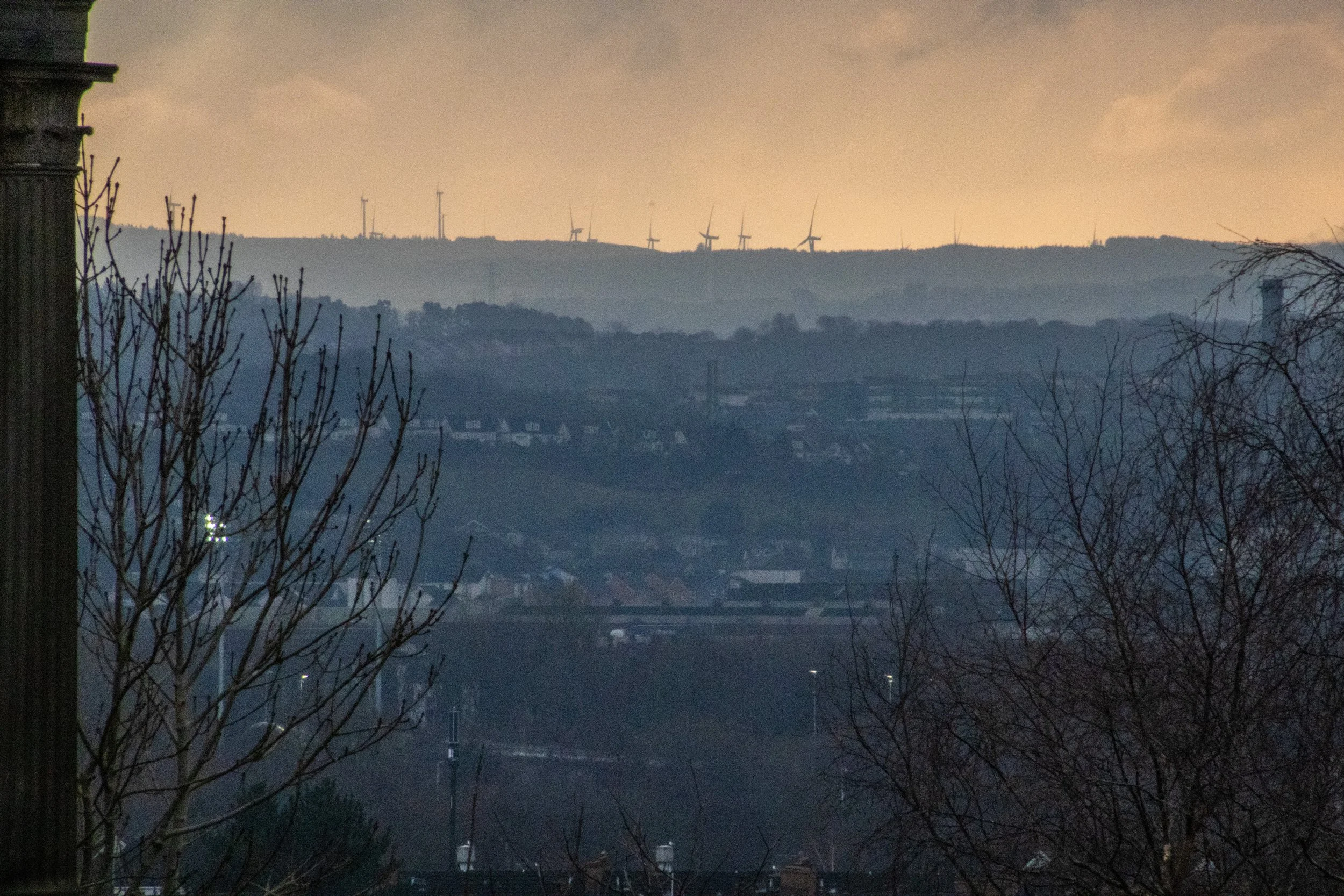
And, because I am a nerd for the energy sector, I have to end with these photographs of Scottish wind farms off in the distance. Scotland has become famous for its wind power. In a typical year, Scotland now produces far more electricity than it needs via these wind farms, which serves to make the whole of Great Britain’s grid much ‘greener’. I’ll spare you the deep dive on grid constraints and curtailments, but would you just look at these turbines off in the distance?? Some people think they are ugly—which is understandable; infrastructure usually isn’t beautiful—but I actually find them to be really cool to look at! When I see these, I feel optimistic for our collective future! Hopefully I’ll get to write more about Scotland’s energy sector in the future. It’s a cool little rabbit-hole.
… Mungo… what an unserious name 😂
Fun fact for you: Hugh Grant’s middle name is Mungo. Hugh Mungo Grant.
Just when you thought this name couldn’t possibly get any less serious. 🤣
Today I get to share one of my favorite songs by one of my favorite bands. Yes, Belle & Sebastian is from Glasgow! Long before I’d ever come here, I had noticed a trend that a lot of the bands that I loved turned out to be from Scotland, so it seemed that we (myself and Scotland) had some sort of deep, primordial kinship. At least, that was my chosen interpretation. So there’s no shortage of options for songs to attach to articles about Scotland.
I love this song in particular because it is the embodiment of why I love Belle & Sebastian. They just have a way of trivializing life’s problems in such an uplifting way that it is almost impossible to hold onto a bad mood when their music comes on. They look at anxiety, depression, addiction, body dysmorphia, and all the other nasty things life throws at us, and they put a traffic cone on each one of their heads. ❤️


This is (probably) the oldest Christmas Tree anywhere in the world. The first written records of Christmas Trees anywhere in the world first appear here in Alsace in 1521. Those records actually come from a little town called Sélestat which is just south of Strasbourg, but the first records of Strasbourg’s tree follow soon after. At this time, Strasbourg was already the largest city in the region and record keeping was a bit spotty, so I think it’s fair to generally just award the title of “the Birthplace of the Christmas” tree to Alsace in general.
So, this isn’t just a Christmas Tree; this is THE Christmas Tree!