
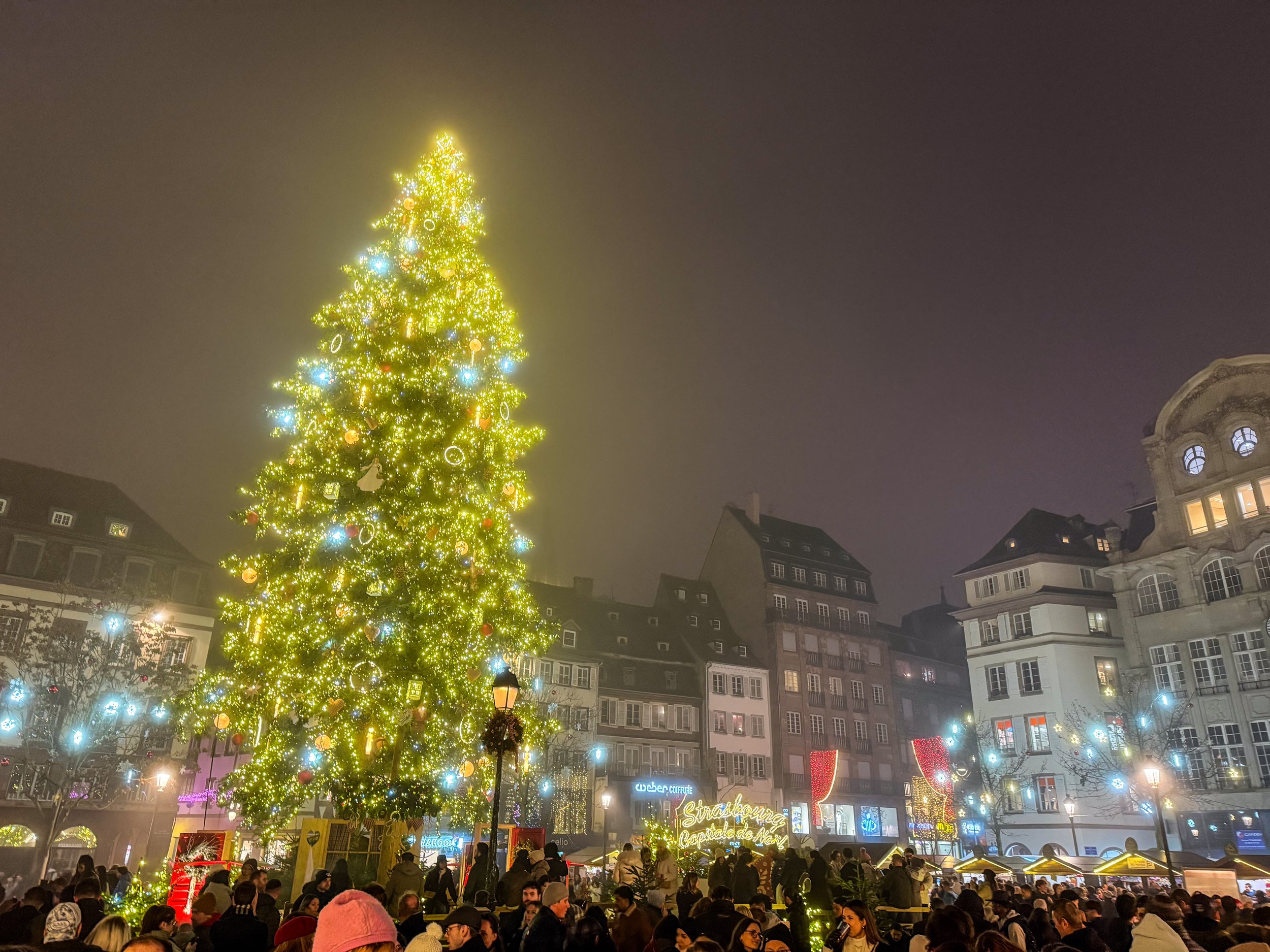
After 9 articles state-side, we’re back in Europe for the holidays! And today we’re going to explore the Christmas Market(s) of Strasbourg, France. They call this place “Capitale de Noël” (the “Capital of Christmas”)… Is that name deserved? Nous allons le découvrir aujourd'hui.
A Brief Intro to Strasbourg
+ ITS CHRISTMAS TRADITIONS
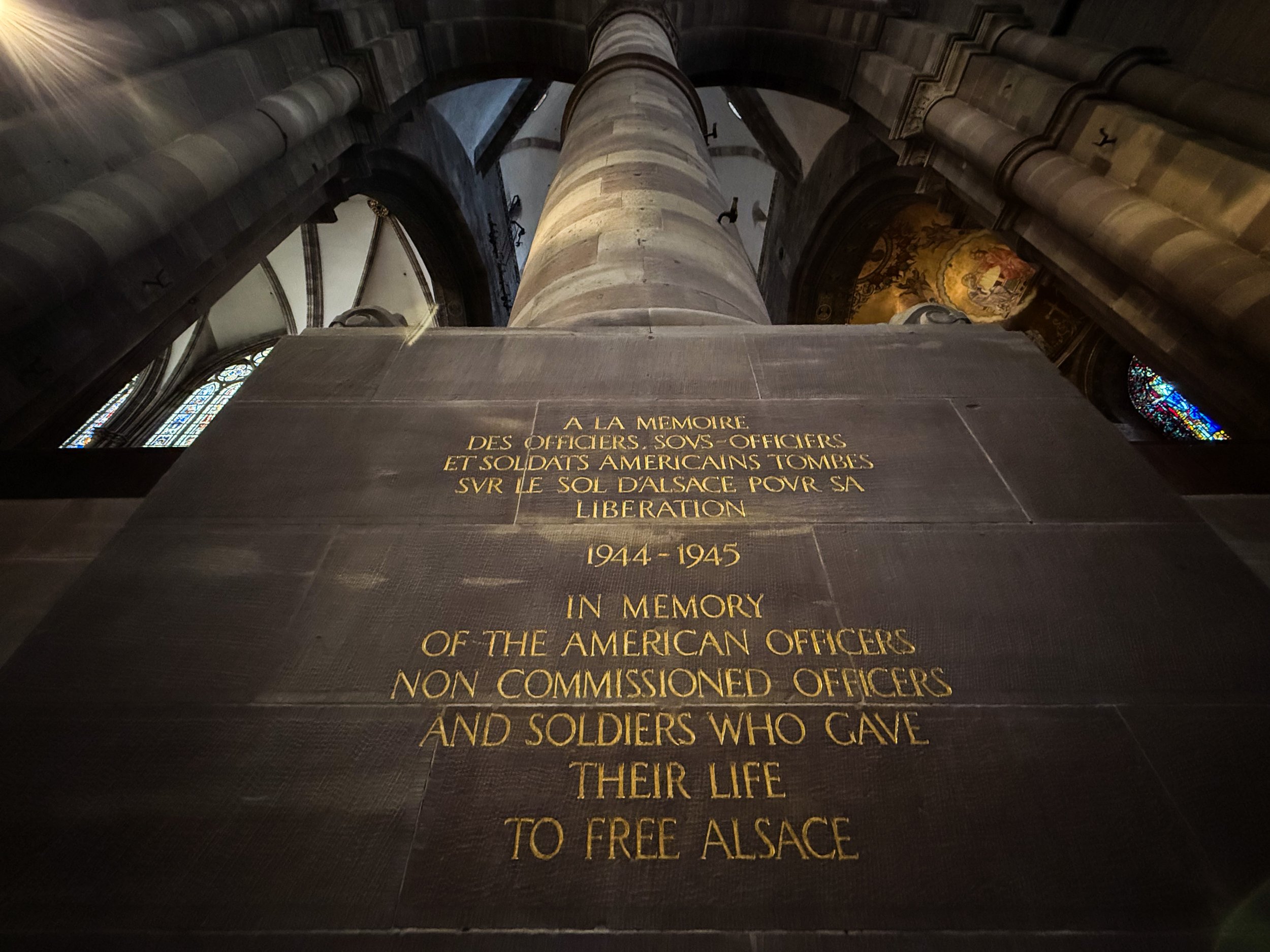
I don’t think you can really understand Strasbourg without understanding the historical relationship between France and Germany. These two countries have fought wars against each other numerous times in the past few centuries, the most recent and notable of which were WWI and WWII. Strasbourg is the largest city in a region called Alsace, which—over the past ~400 years—has passed back and forth between French and German control multiple times. France lost Alsace to the German Empire in the Franco-Prussian War in 1871… but then got it back after WWI in 1918… but then lost it again when the Nazis invaded in 1940… but got it back again at the end of WWII… and that’s just “recent” history! As a result, Strasbourg’s cultural identity is a bit of a French/German hybrid. People here generally speak both French and German fluently, and actually mostly operated in a regional German dialect called Alsatian until the mid-20th century. So Strasbourg’s architecture, food, culture, and history all reflect a mix of French and German cultures. Obviously it’s part of France today, but during my visit, I spent more time thinking about the broader European context than France. I suspect this is a common experience here.
So, with that in mind, let’s jump into Strasbourg’s Christmas traditions!
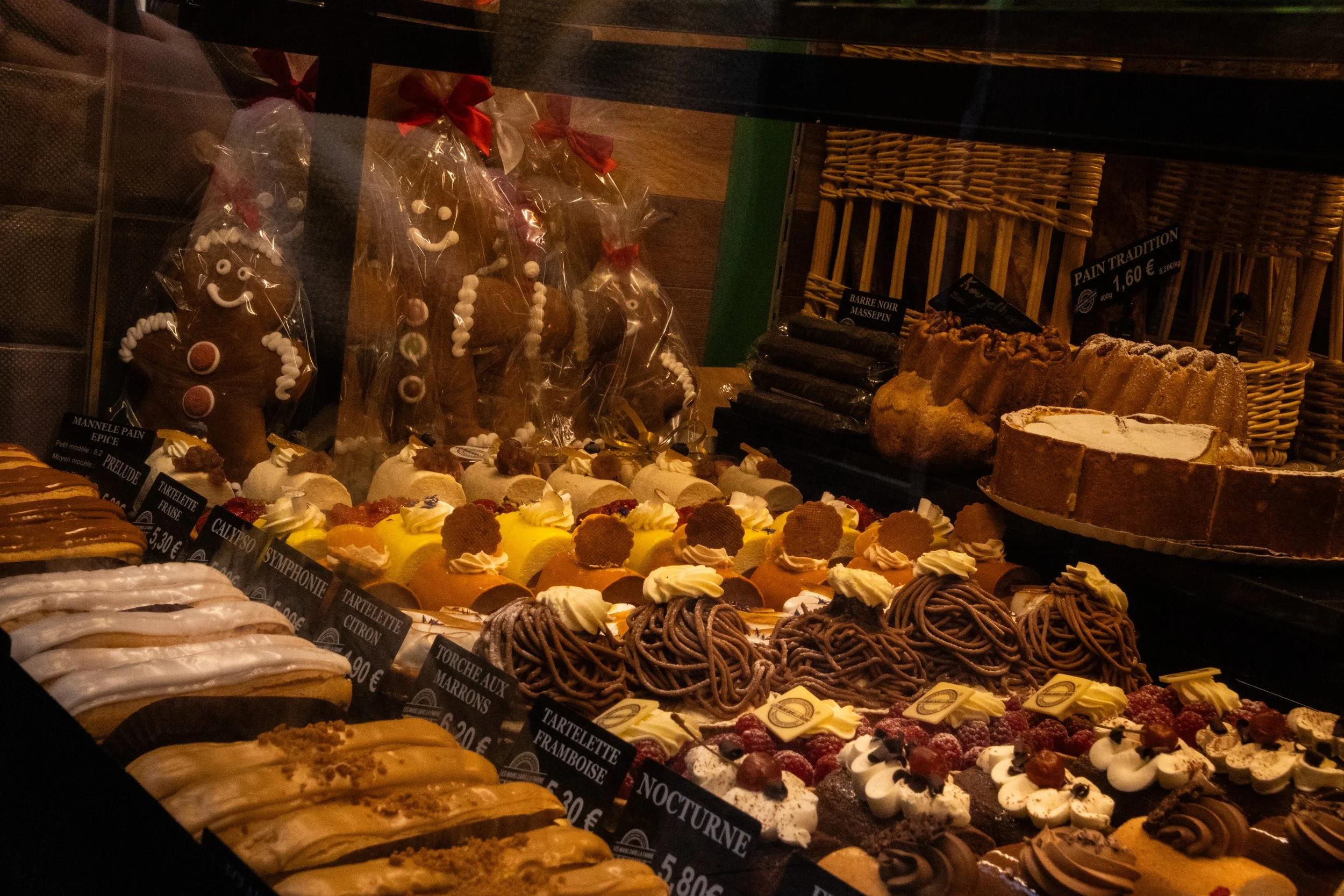
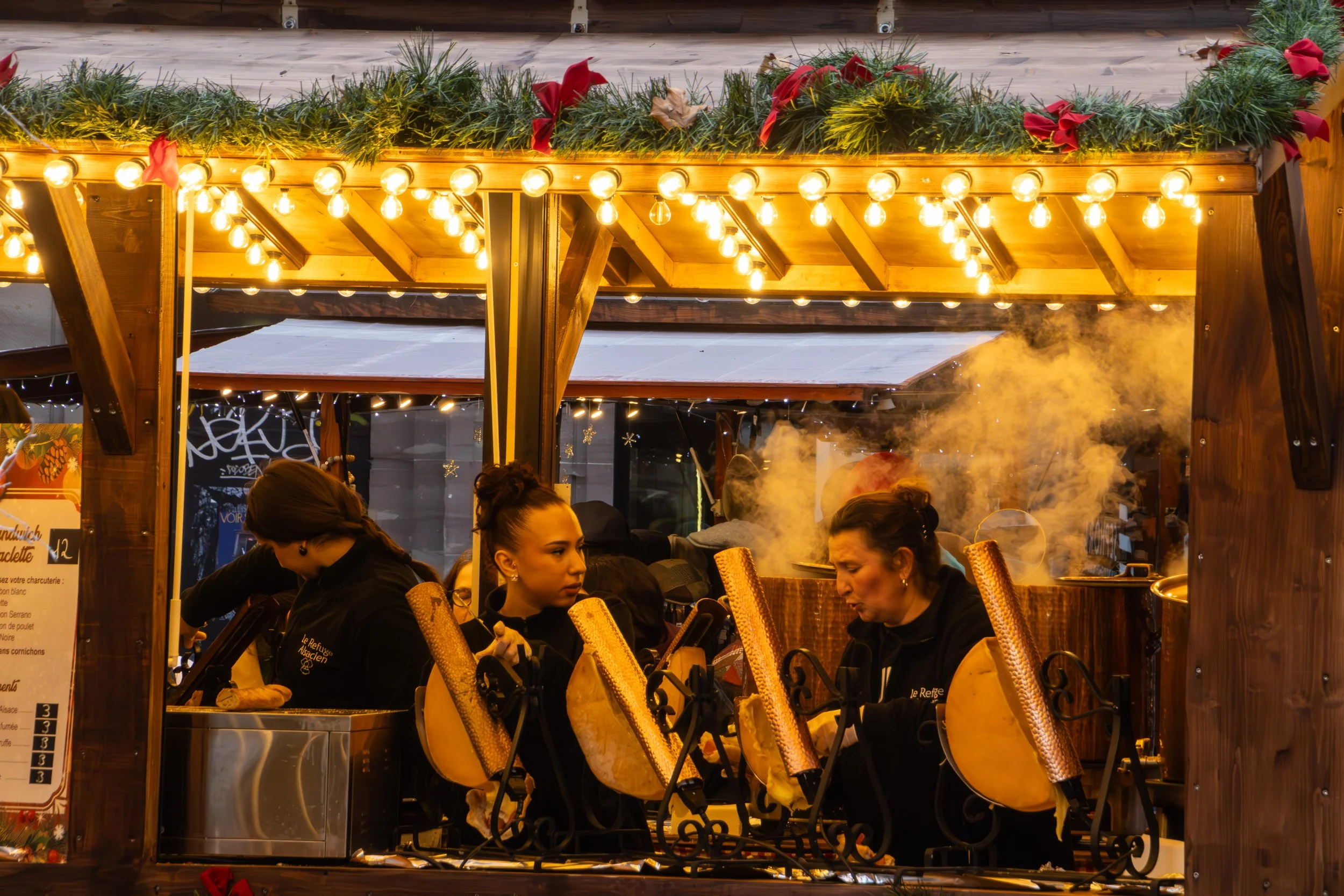
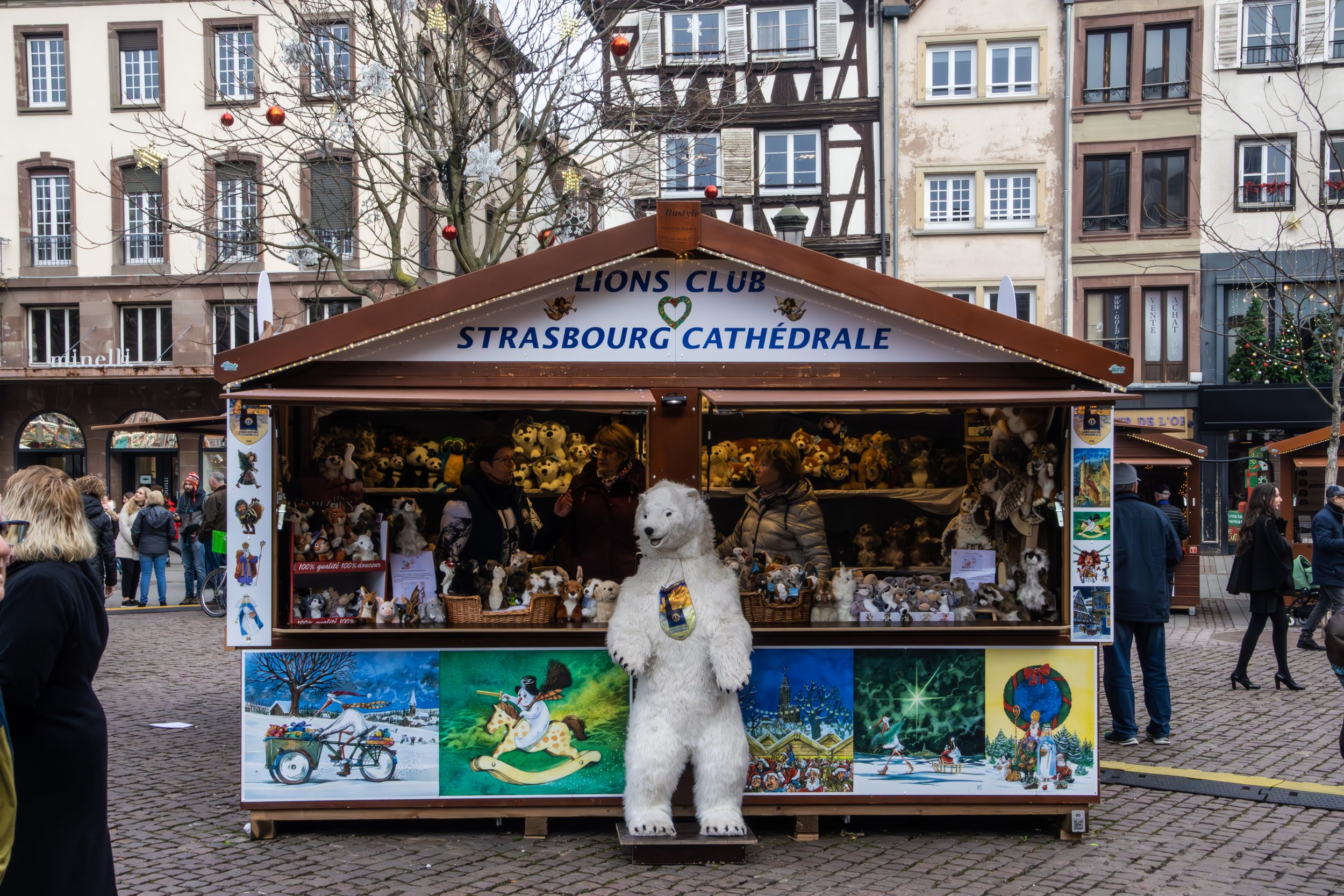
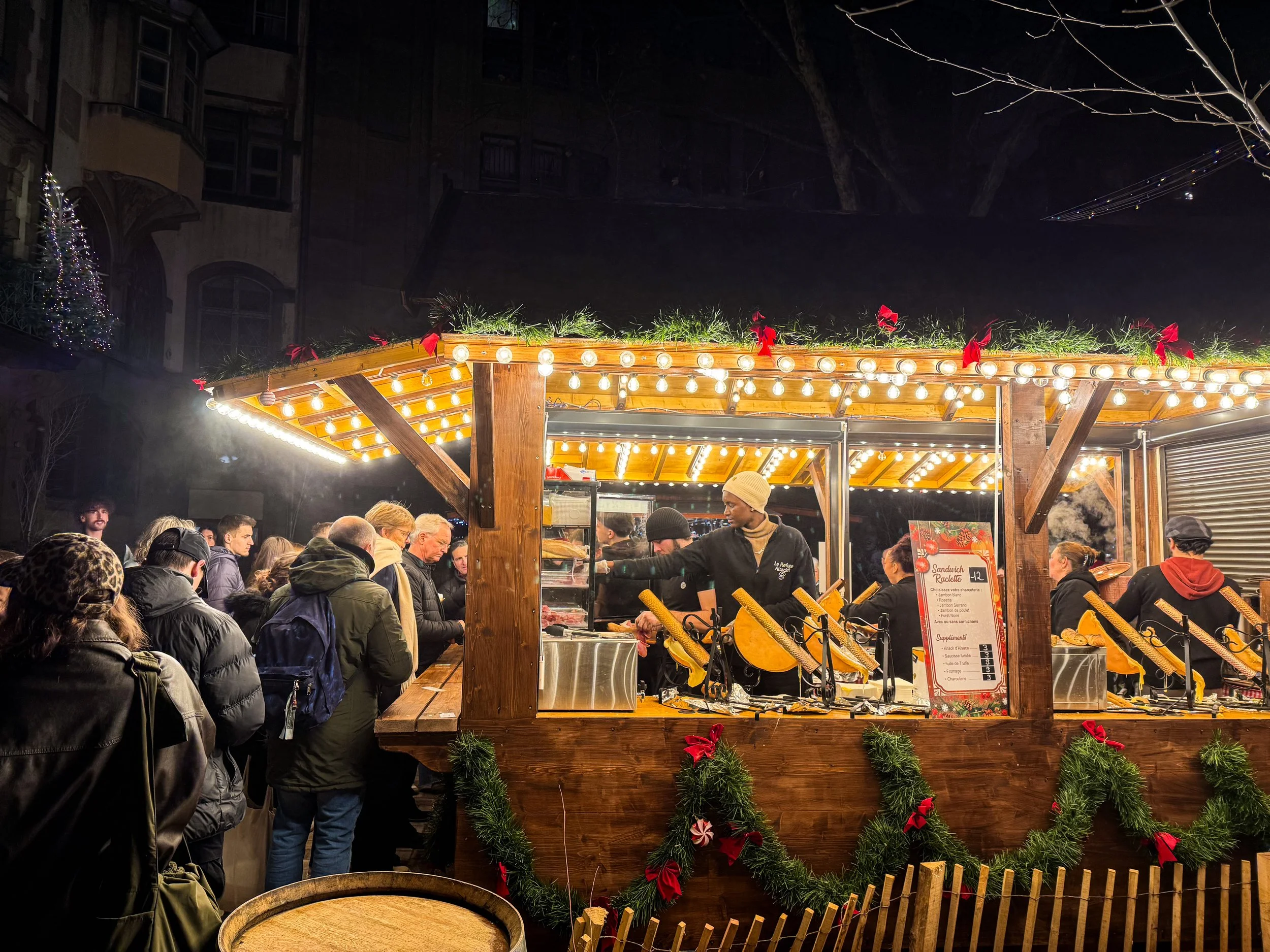
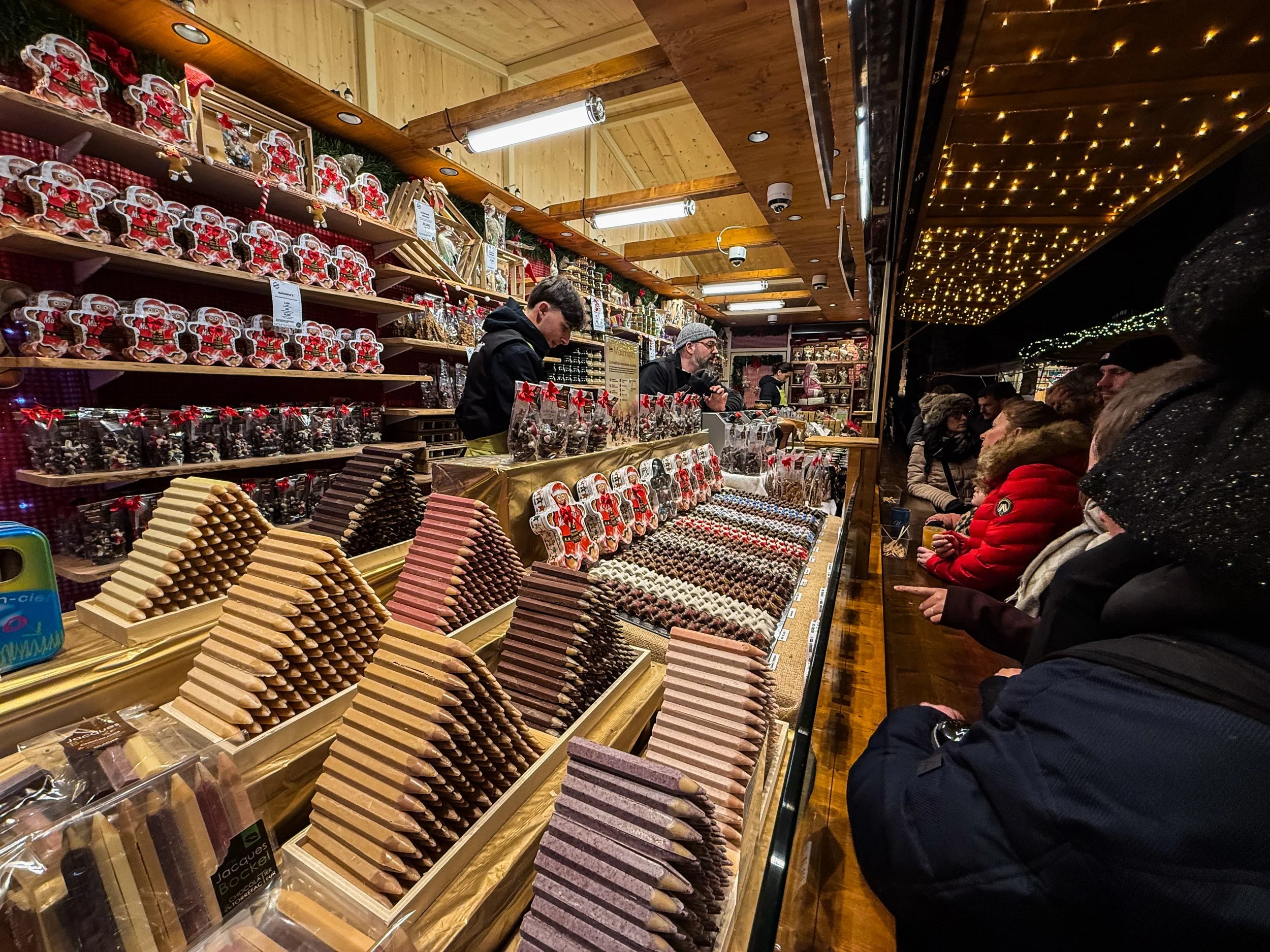
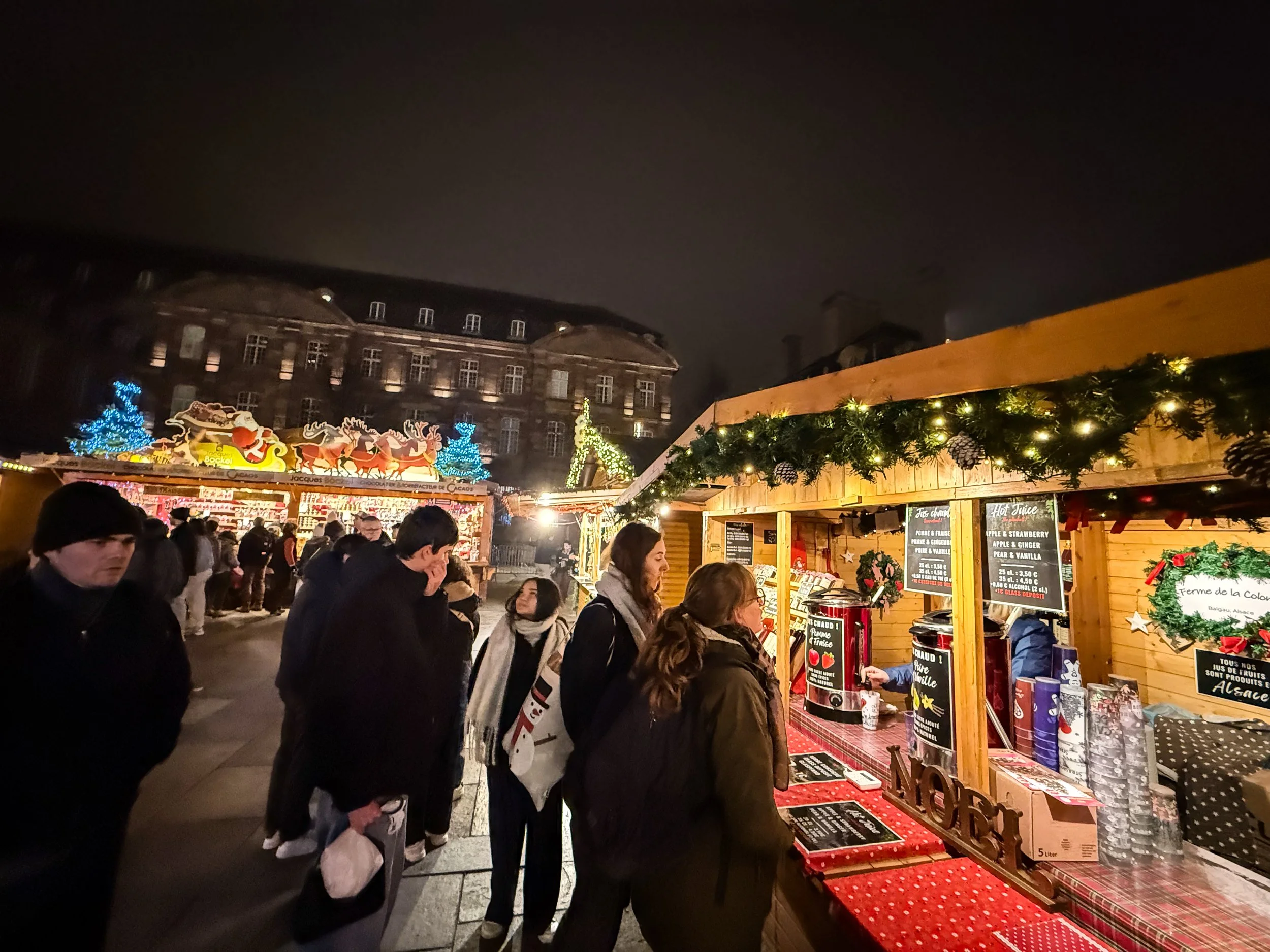
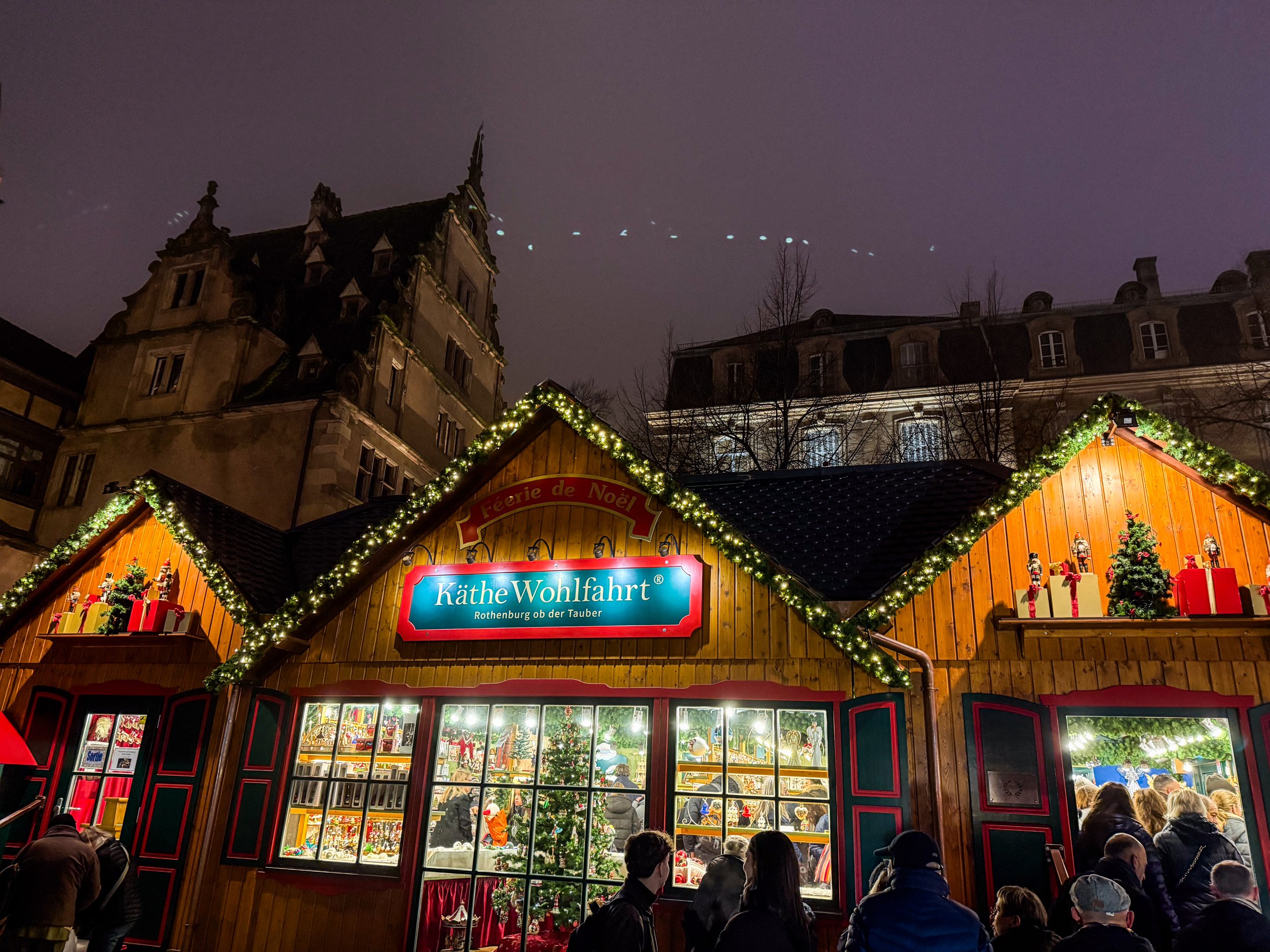
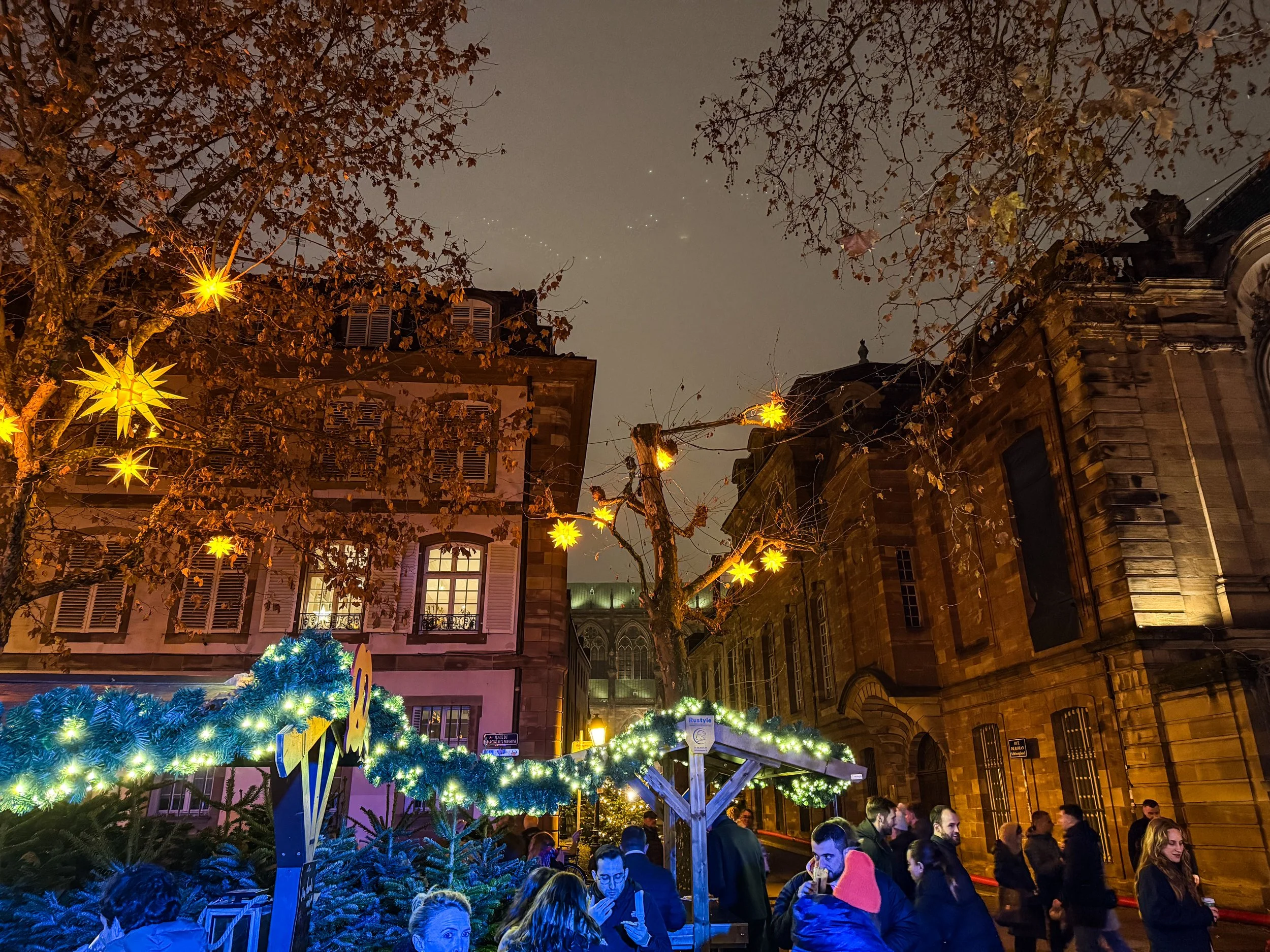
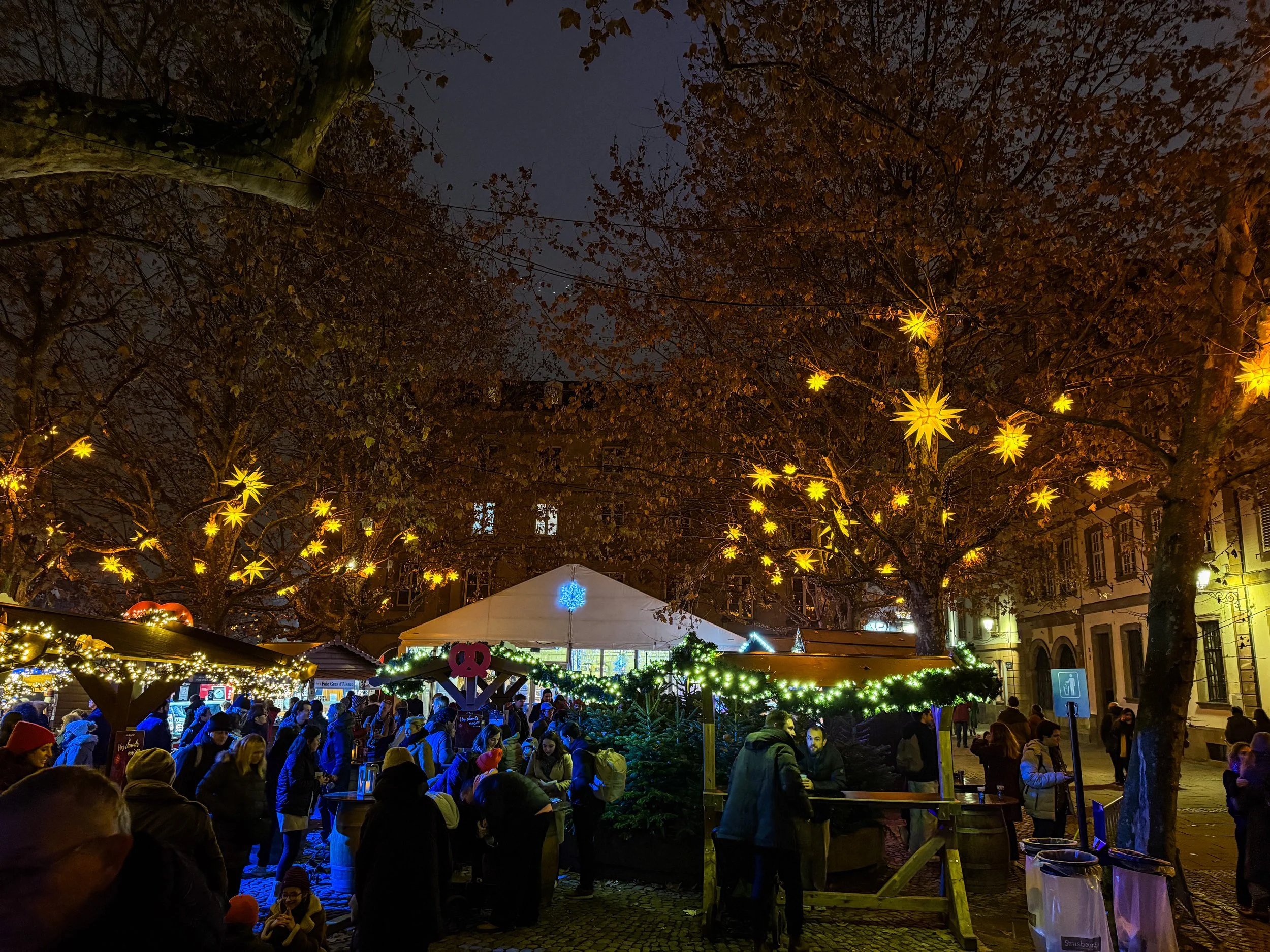
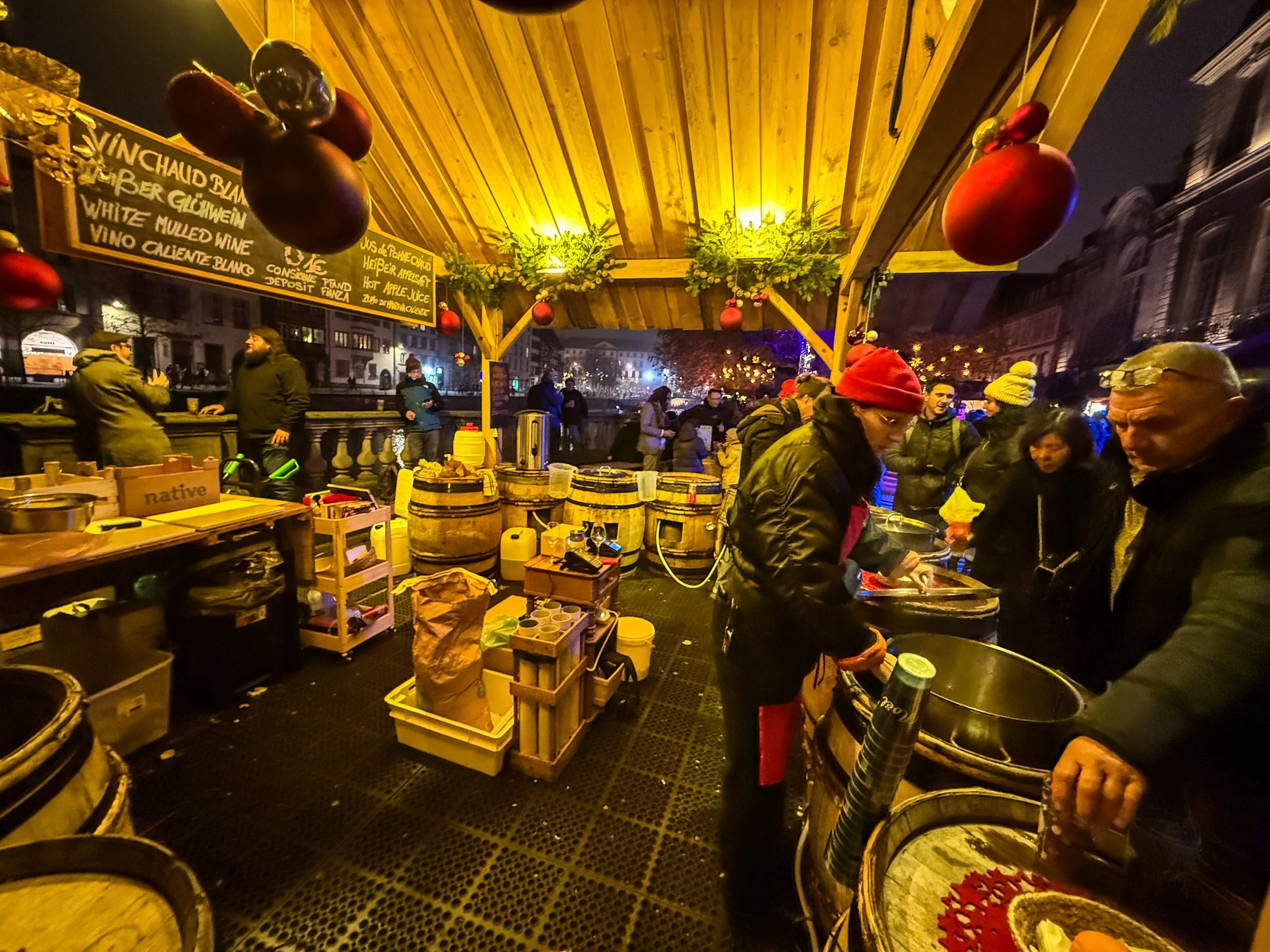
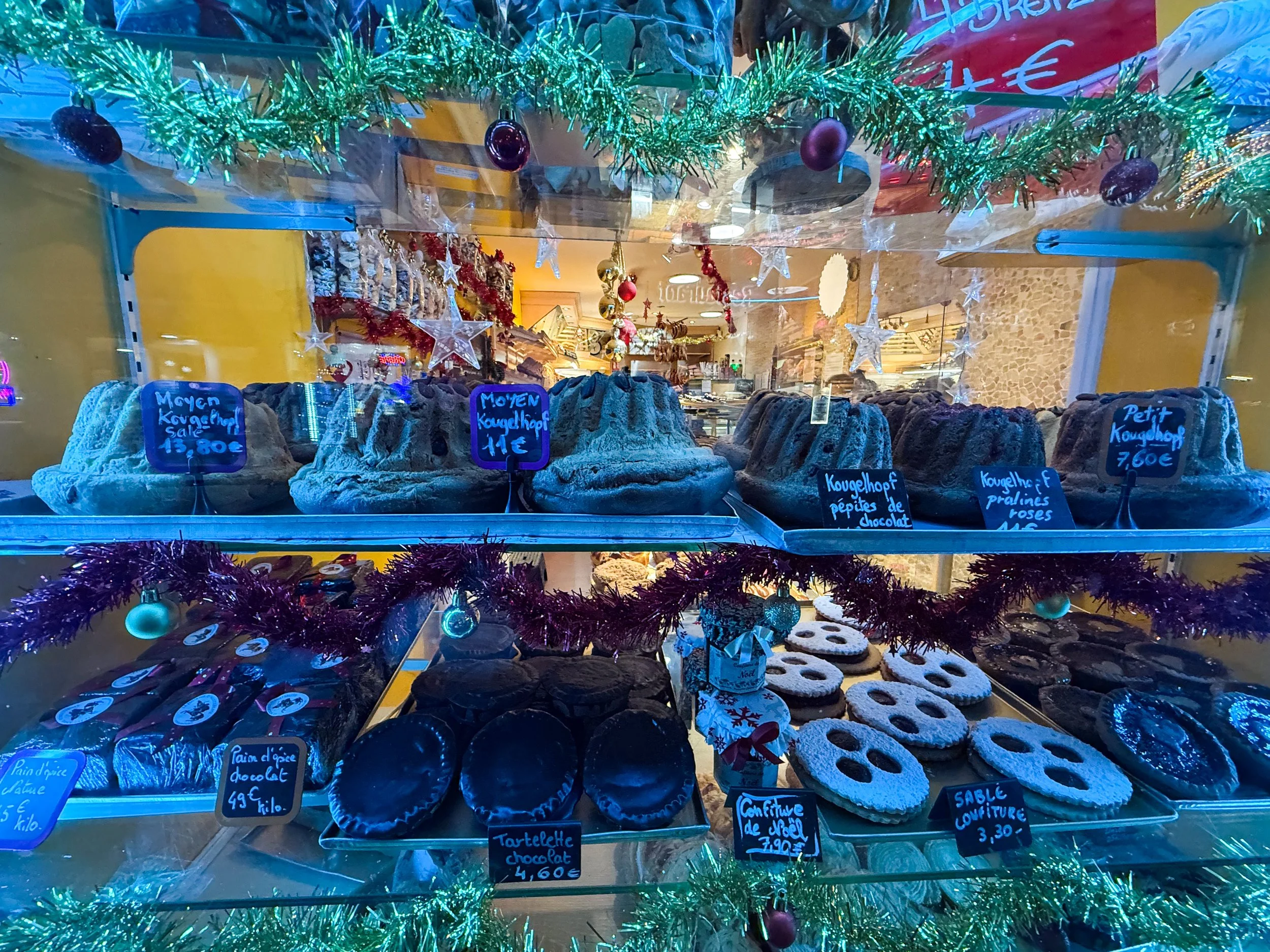
If you didn’t know, Christmas markets are a “thing” in Europe. You can find them all over the continent, and from what I can tell, they are all pretty magical. Up to this point, I’d only experienced this in England, which was charming in its own rite, but this would be the first time I’d experienced a really famous Christmas Market. Strasbourg’s main market, the Christkindelsmärik (which means “Market of the Infant Jesus” in Alsatian dialect), dates back to 1570. However, today there are markets set up in just about every square and plaza of the entire city center, each more cozy and charming than the last. There are all sorts Christmassy little trinkets being sold in these markets, but the main attraction (aside from the Christmas spirit, ofc) definitely seems to be food. Illuminated by bright festive lights on strings, and framed by elaborate Christmas displays is an endless supply of seasonal French, German, and Alsatian food. There’s bredle (traditional Christmas cookies), pain d’épices (spiced gingerbread), flammekueche (tarte flambée; sort of like flatbread pizza), and lots of half-wheels of raclette cheese staying toasty warm under heat lamps, just waiting to be scraped onto whatever you’re ordering, traditionally a baguette or boiled potatoes. Oh, and most importantly, there’s vin chaud (mulled wine).
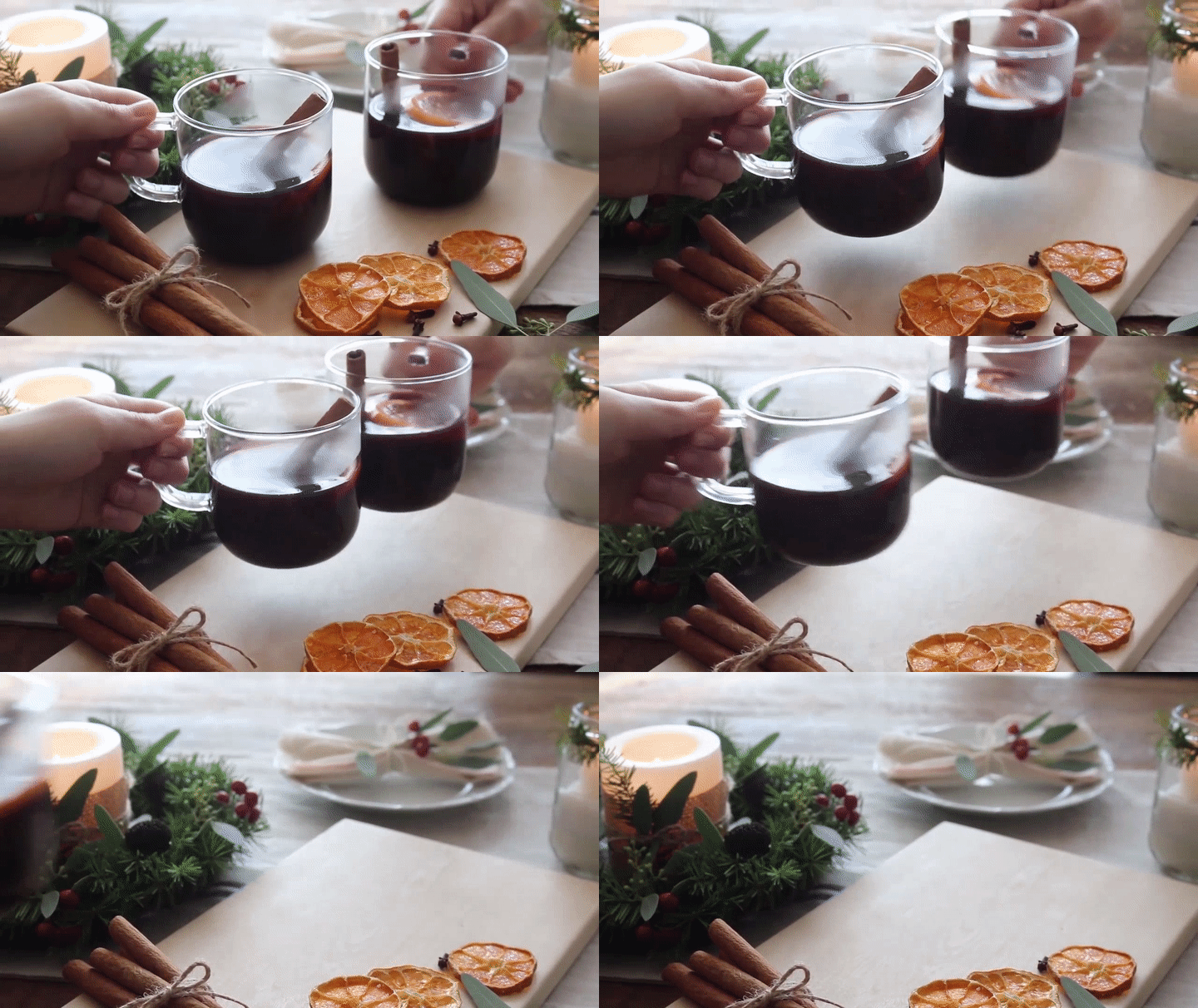
During my visit, it wasn’t only cold; it was also quite humid. There was an unusual, dense fog that was sitting on Alsace with no signs of clearing that shrouded all of Strasbourg and the surrounding country-side in an opaque, white veil. I flew into the Karlsruhe / Baden-Baden Airport, just across the German border (which, btw, had a dildo vending machine in the men’s bathroom), and fog was quite dramatic even then. As the trip wore on, in the absence of snow, the fog actually felt quite festive! It was like a constant blizzard, but without the snow. However, the moisture that came with this made it difficult to escape the long, penetrating fingers of the frigid December air. My sweater and winter coat proved insufficient for the two days I spent outside in Alsace. But my constant savior was vin chaud. Even when I didn’t feel like drinking it, the feeling of the hot cup in my hand was always a god-send. And the orgasmic aroma of hot wine infused with an ever-varying but always-heavenly combination of spices such as cinnamon, nutmeg, cardamom, and ginger, was a constant comfort. It got me through. We have vin chaud to thank for this article, second only to French host, Sophie. 🍷❤️
Exploring Strasbourg During the Day
I think the first thing you should know about Strasbourg is that it’s famously beautiful. Even Parisians think that Strasbourg is beautiful, and they are a tough crowd. They’re a tough crowd on most things, but especially when it comes to another city in France being beautiful. Remember those gorgeous little towns in Occitania that we covered this past summer? The Parisians were mostly unimpressed. So, if even they like Strasbourg, I think it’s safe to the say that the rest of us are going to absolutely love it.
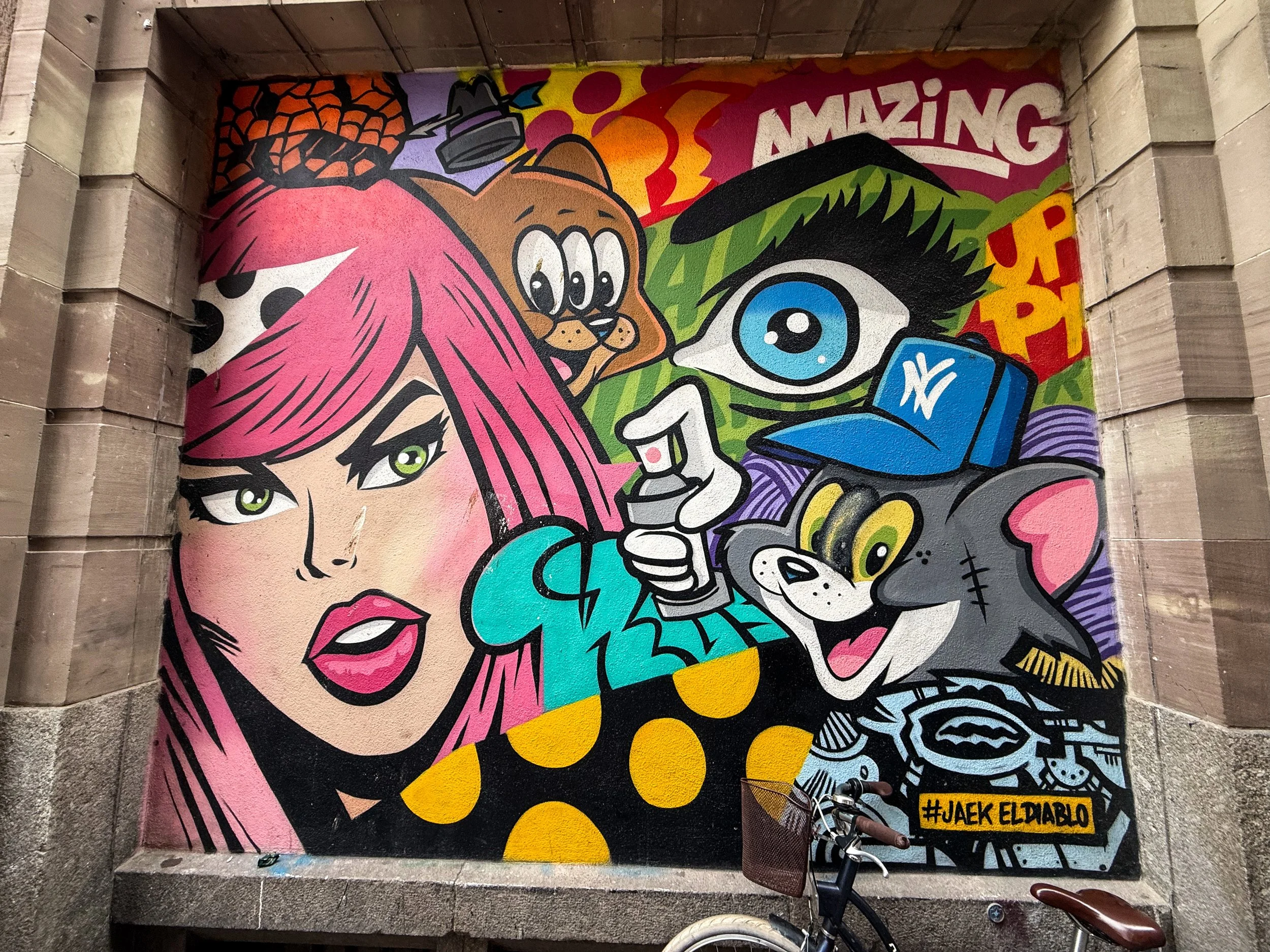
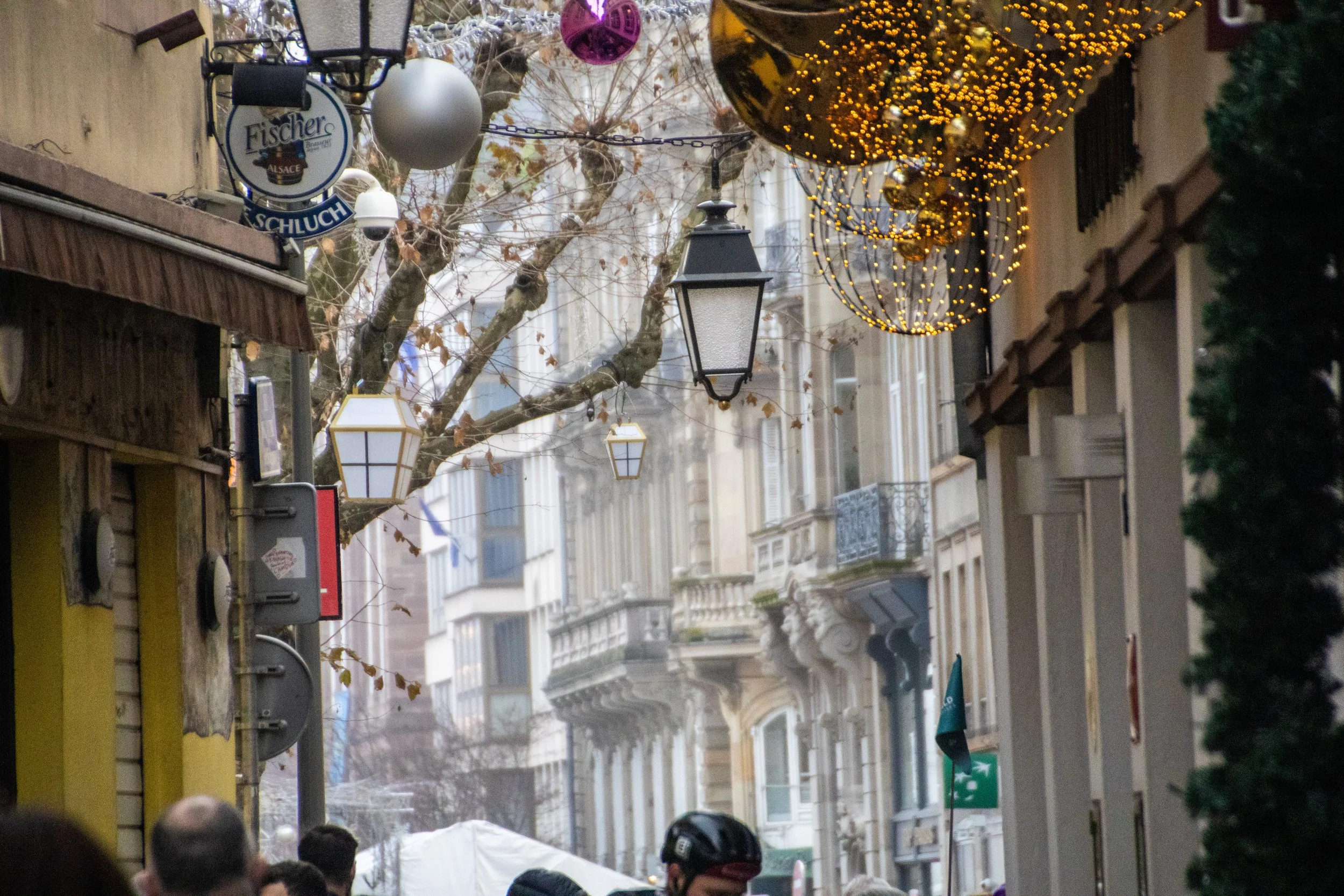
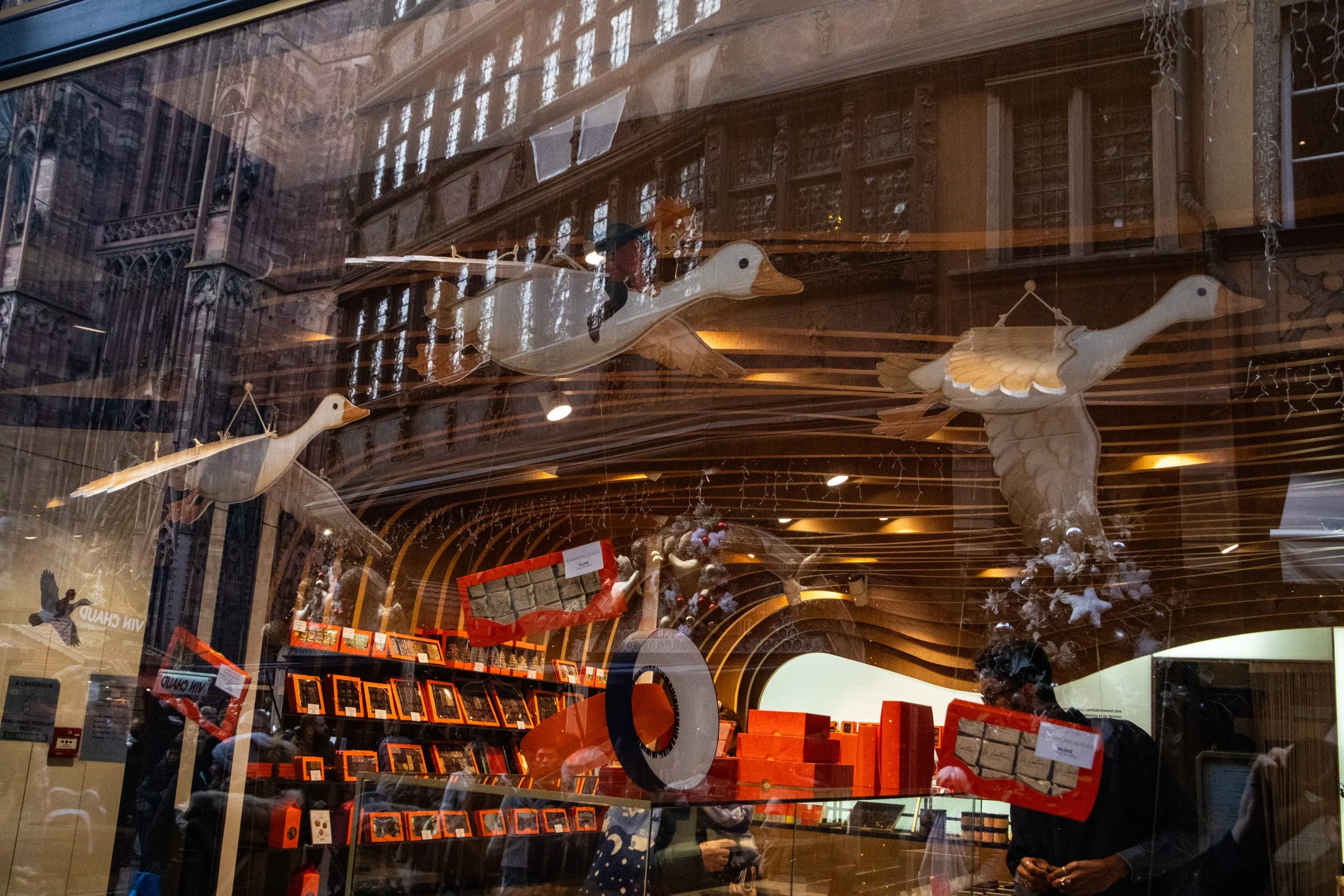
So, before we get into the magic of Strasbourg’s Christmas Markets at night, let’s do some exploring during the day when we can actually see the city. In the dead of winter, it’s sort of low-light even in the middle of the day, but that dreary, foggy aesthetic made the city all the more cozy and inviting. The markets actually run all day long, starting around 11am or noon, so you’ll see some shots of those as well in the gallery below, but rest assured that the real magic doesn’t happen until after dark. 🎄
A quick note on the geography of Strasbourg: the historic center of the city sits on an island called Grande Île (“Grand Island”). This island is surrounded by a tributary of the nearby Rhine River, called the the River Ill (that’s spelled i-L-L). There’s actually a district of canals that is called “Petite France”, which initially struck me as really weird because… Strasbourg is in France. It’s like if there was a neighborhood in Beijing called “Chinatown”. But the longer I spent in Alsace, the more I understood just how important its German roots are to its identity today.
Most of the photographs you are about to see came from Grande Île, so I wanted to start by showing you a closer view of the map…
So, with that context out of the way, let’s start walking! Below you’ll find a gallery of photos I took before dusk settled over the foggy city. But first, it’s cold AF, so let’s grab some mulled wine, eh?
Er, sorry—in French: Je prendrais un vin chaud, s'il vous plaît 🍷
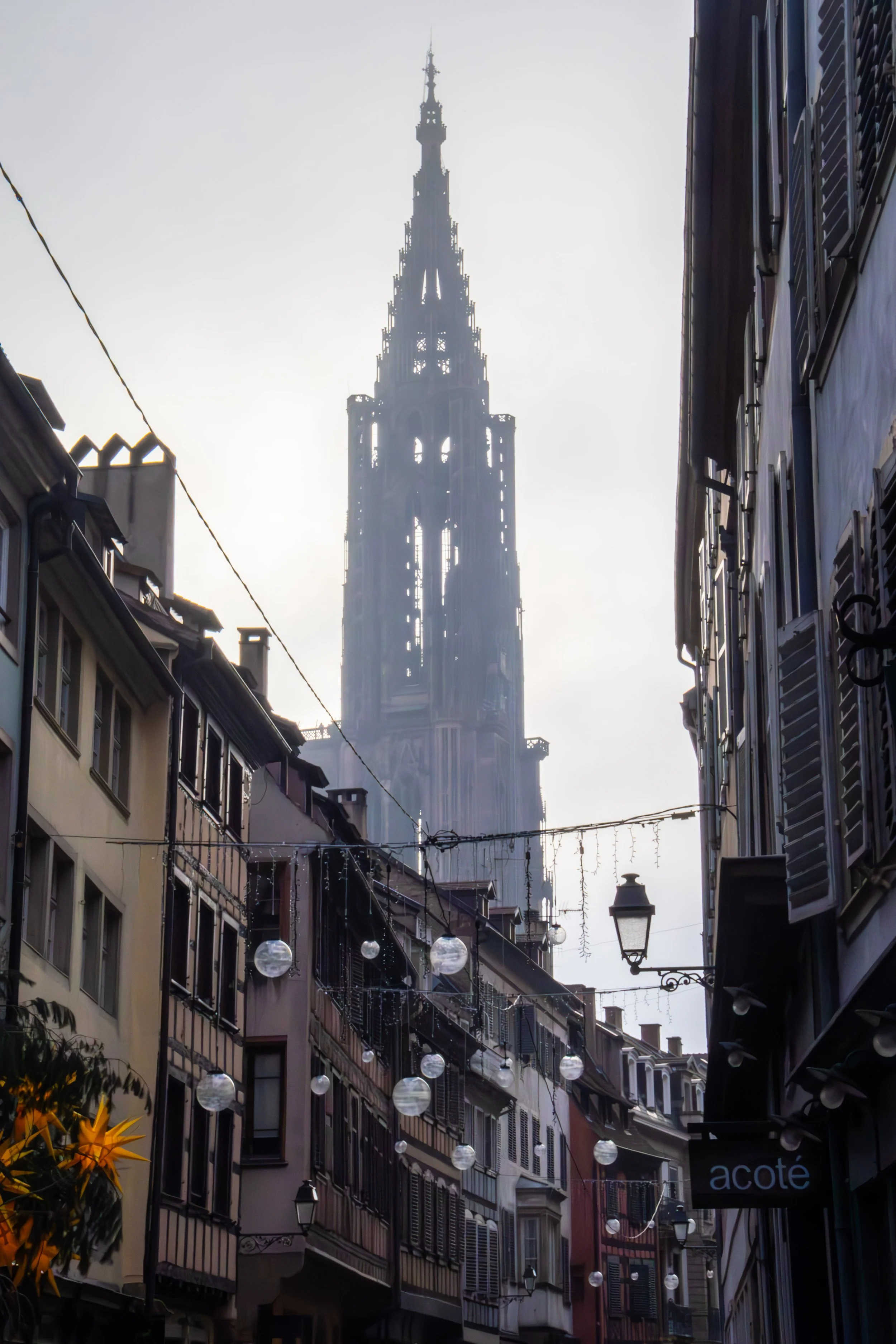
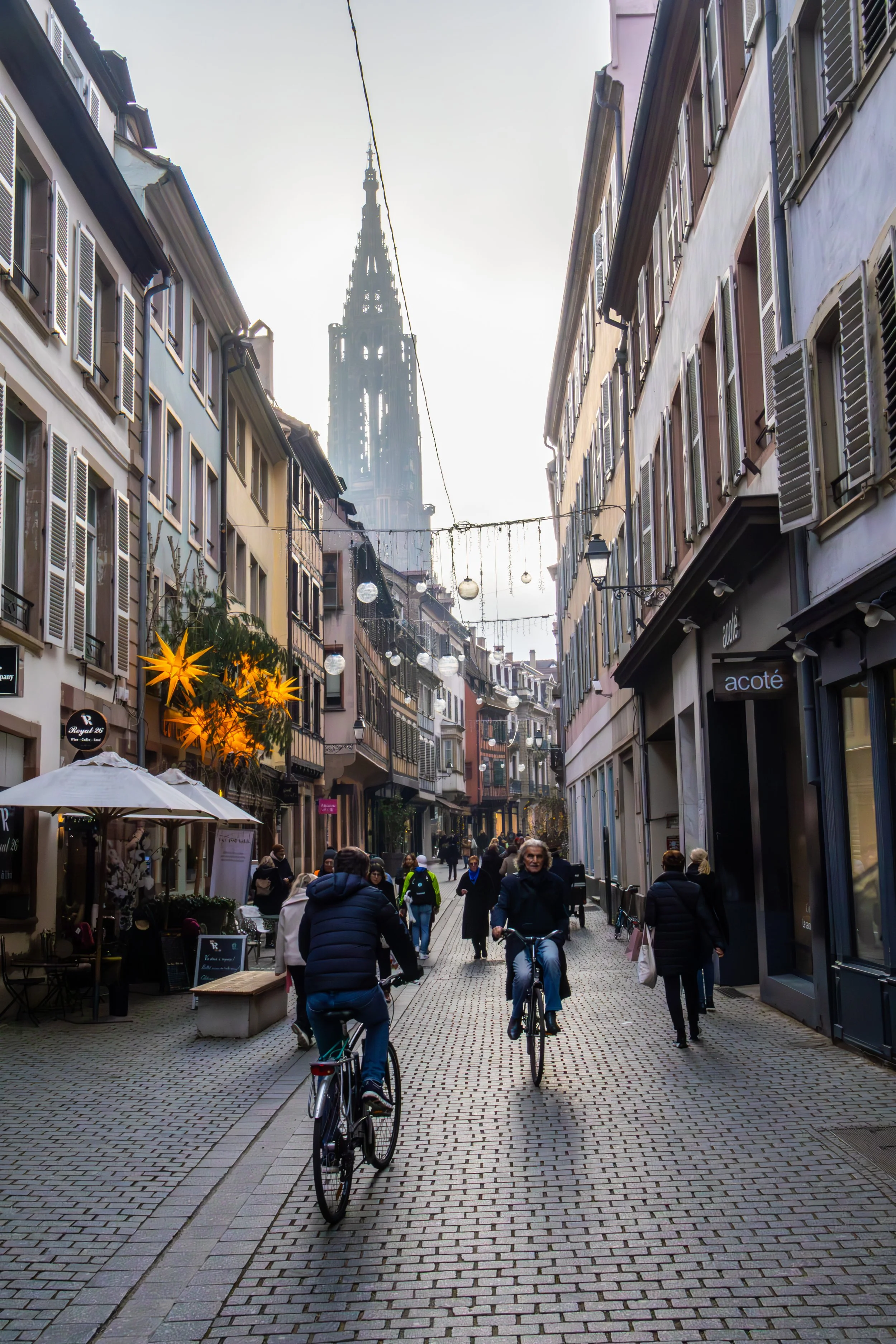
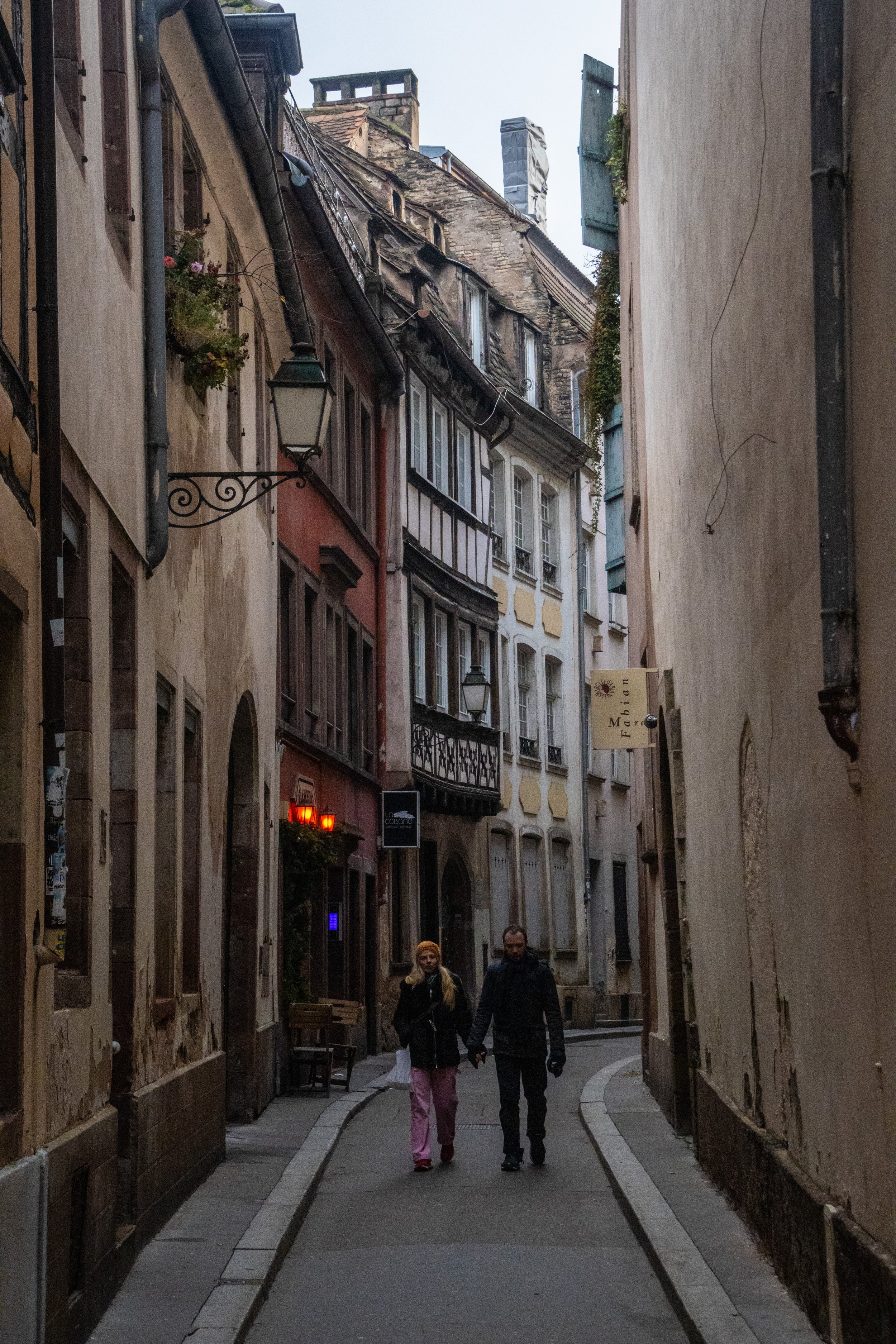
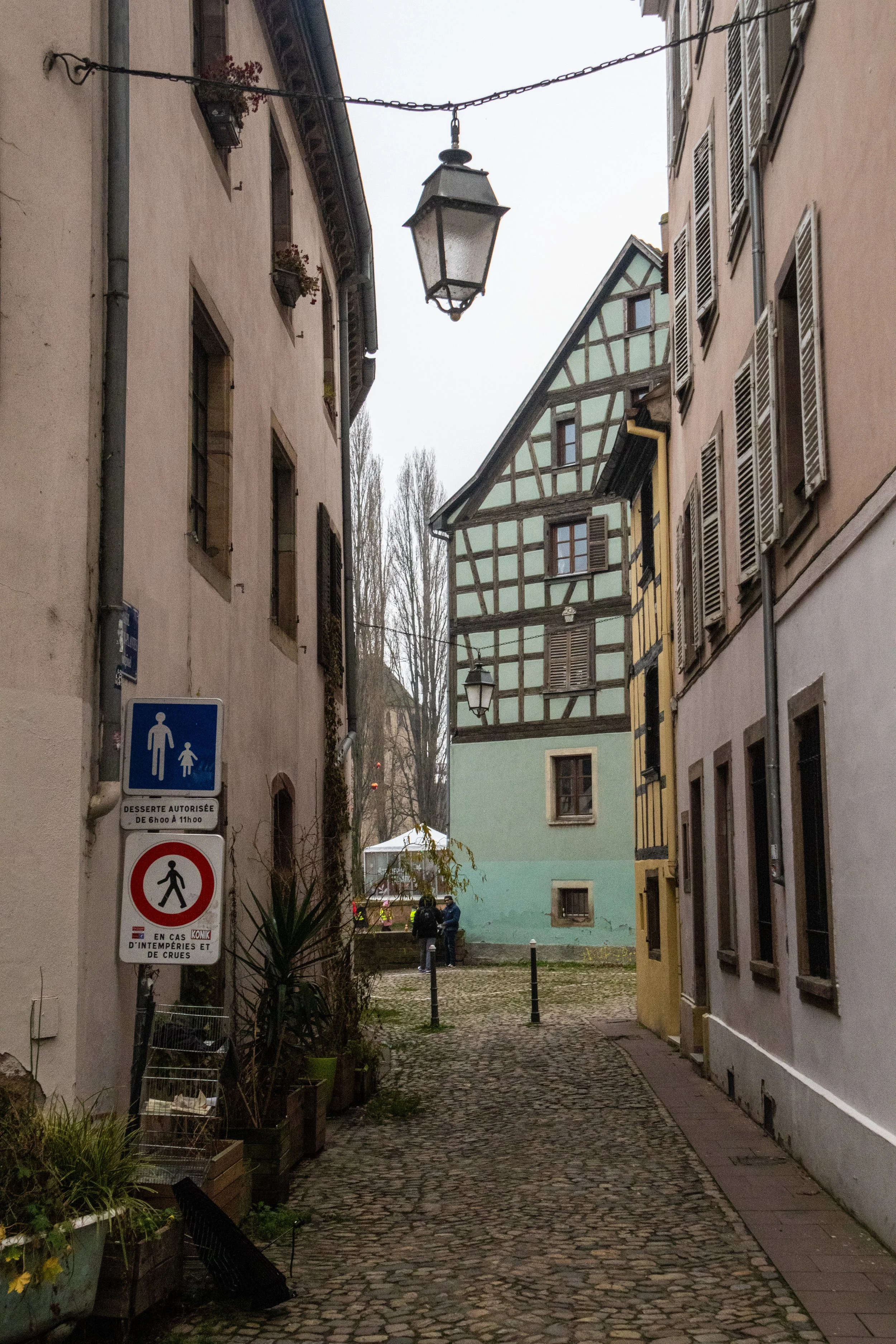
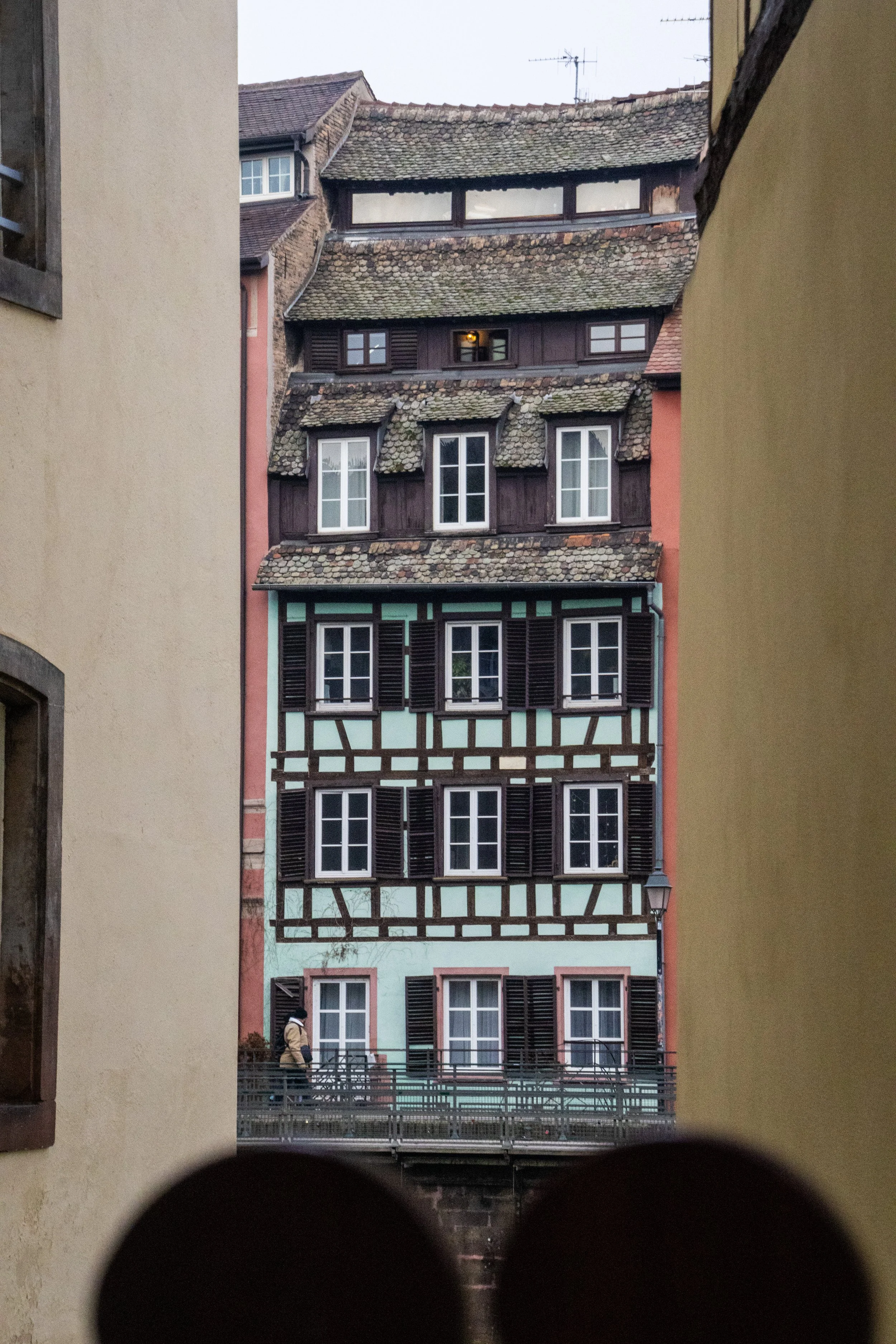
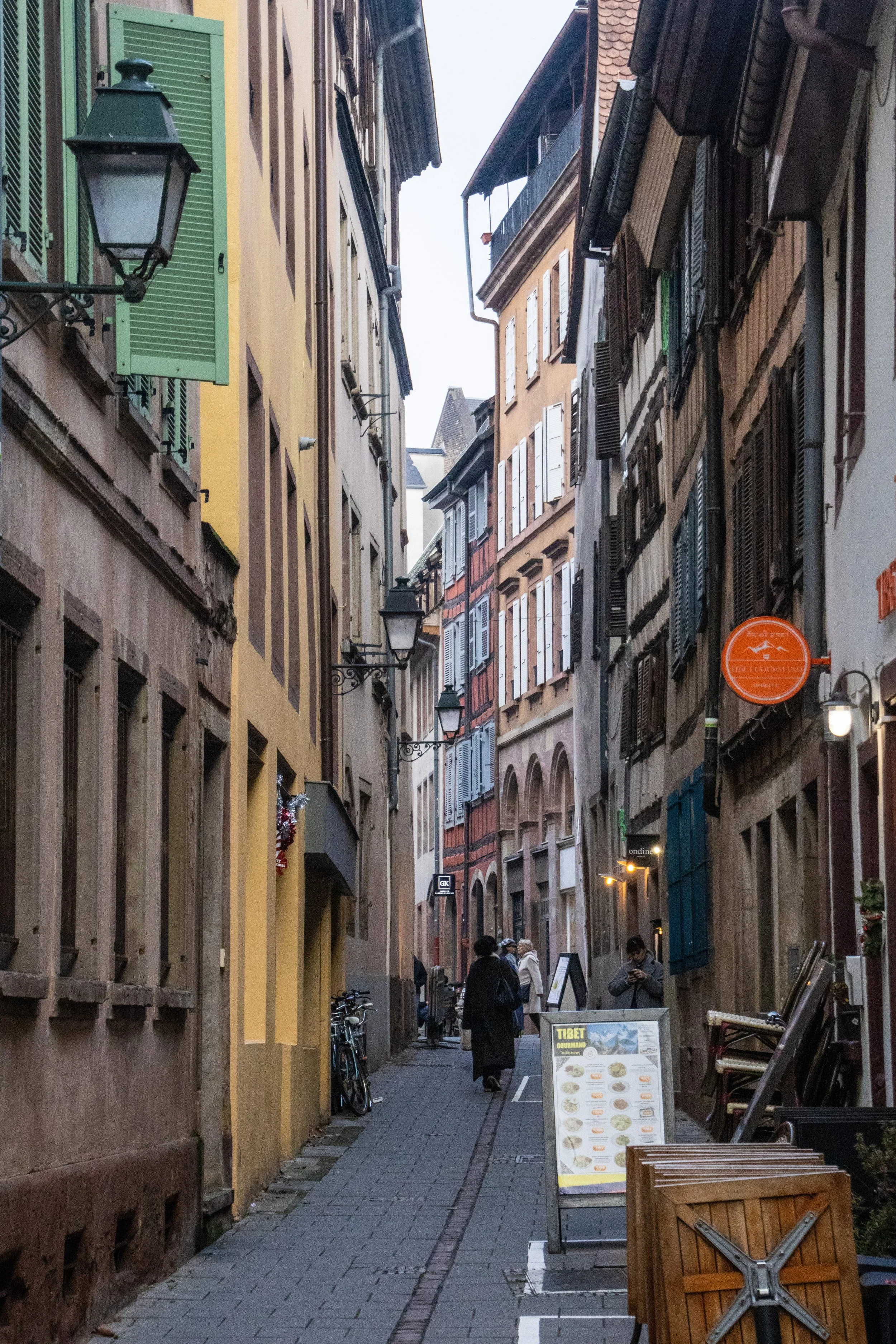
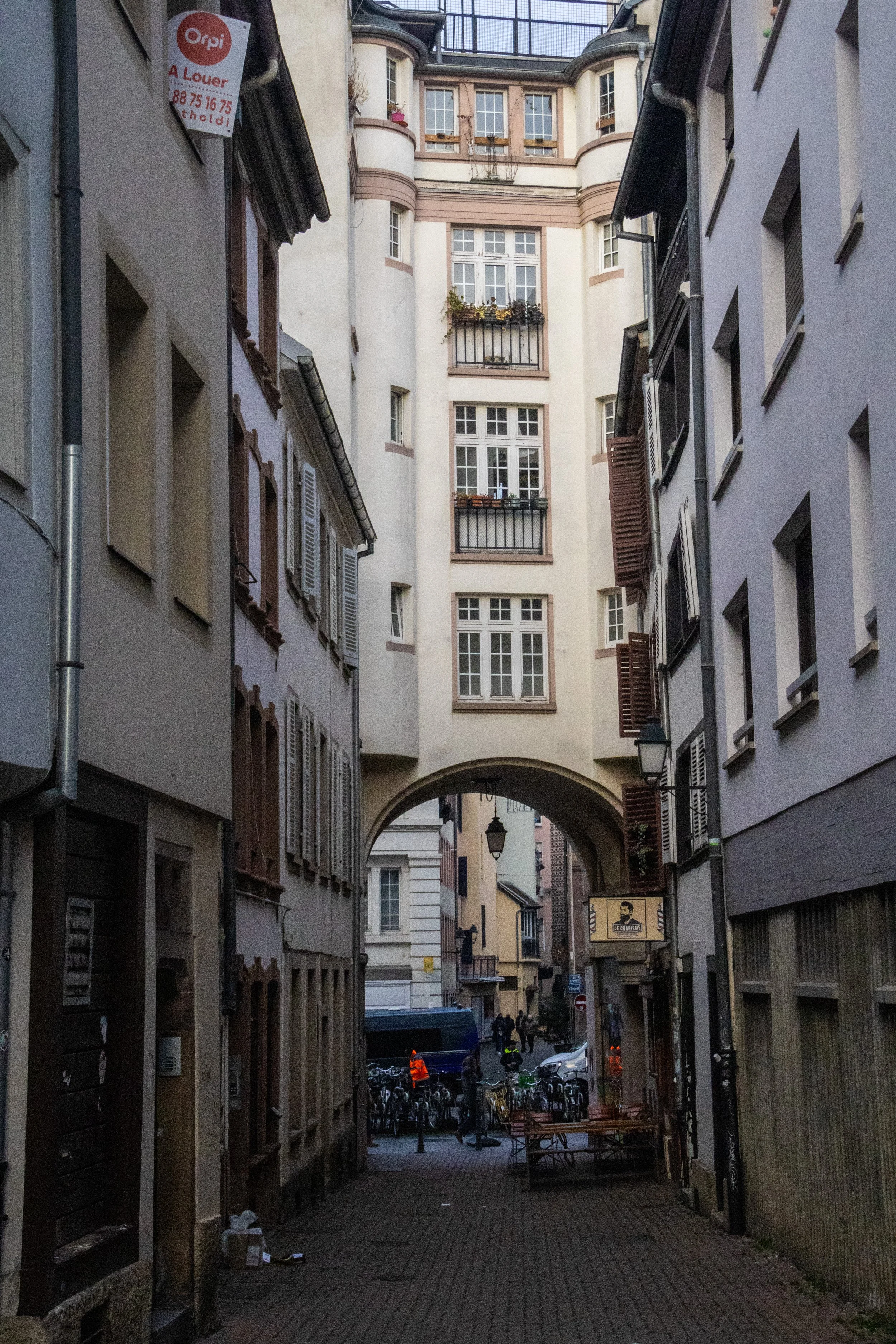
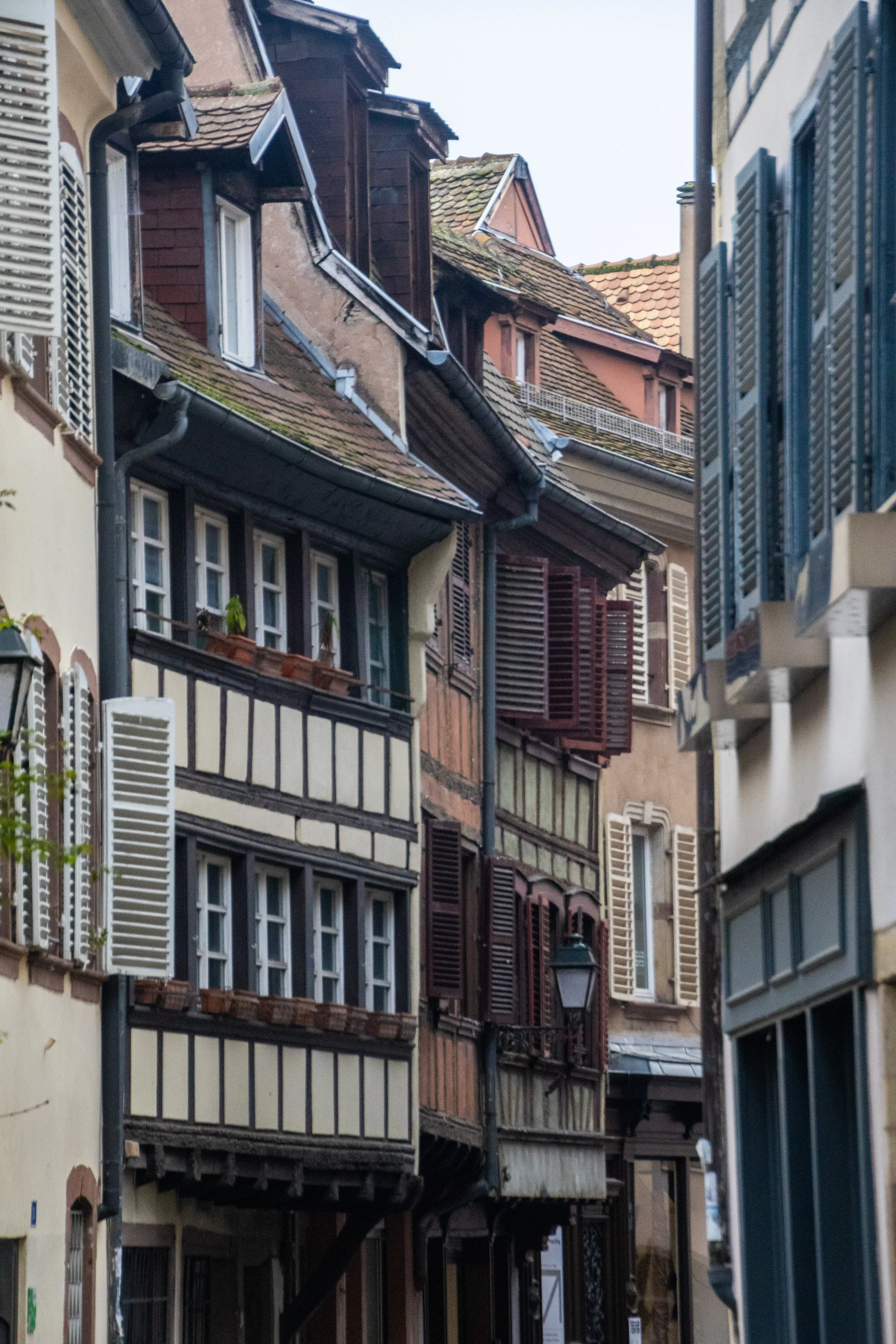
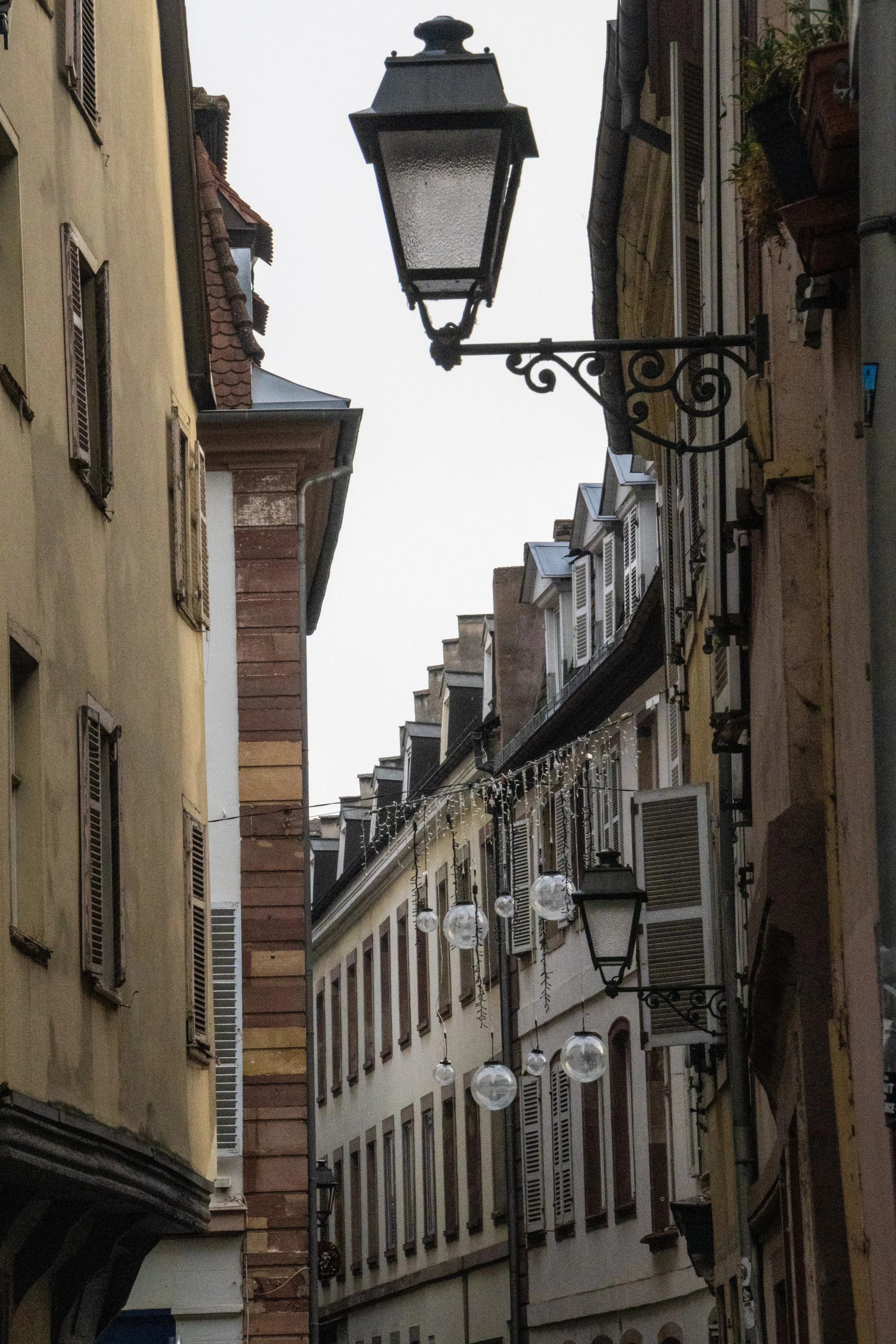
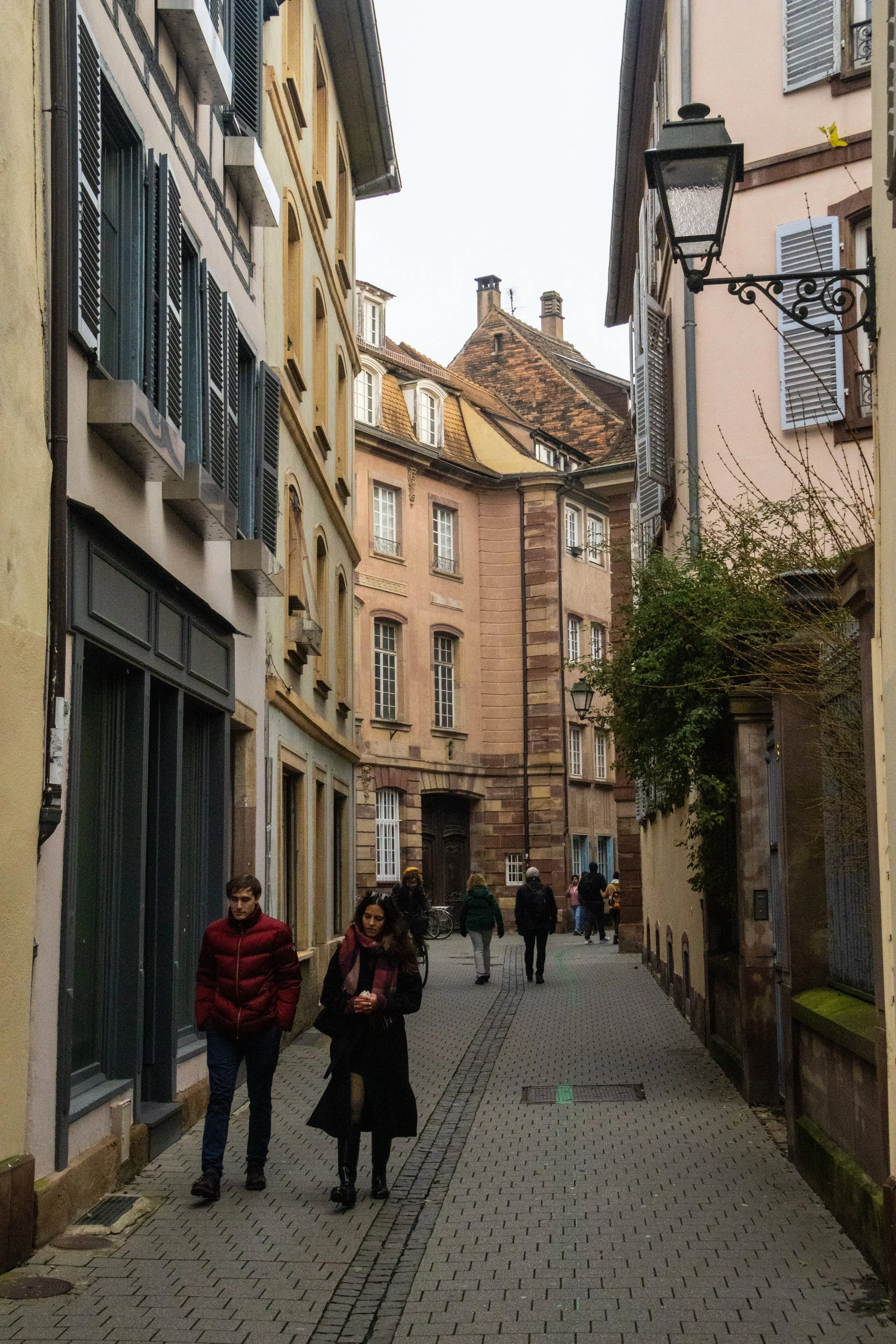
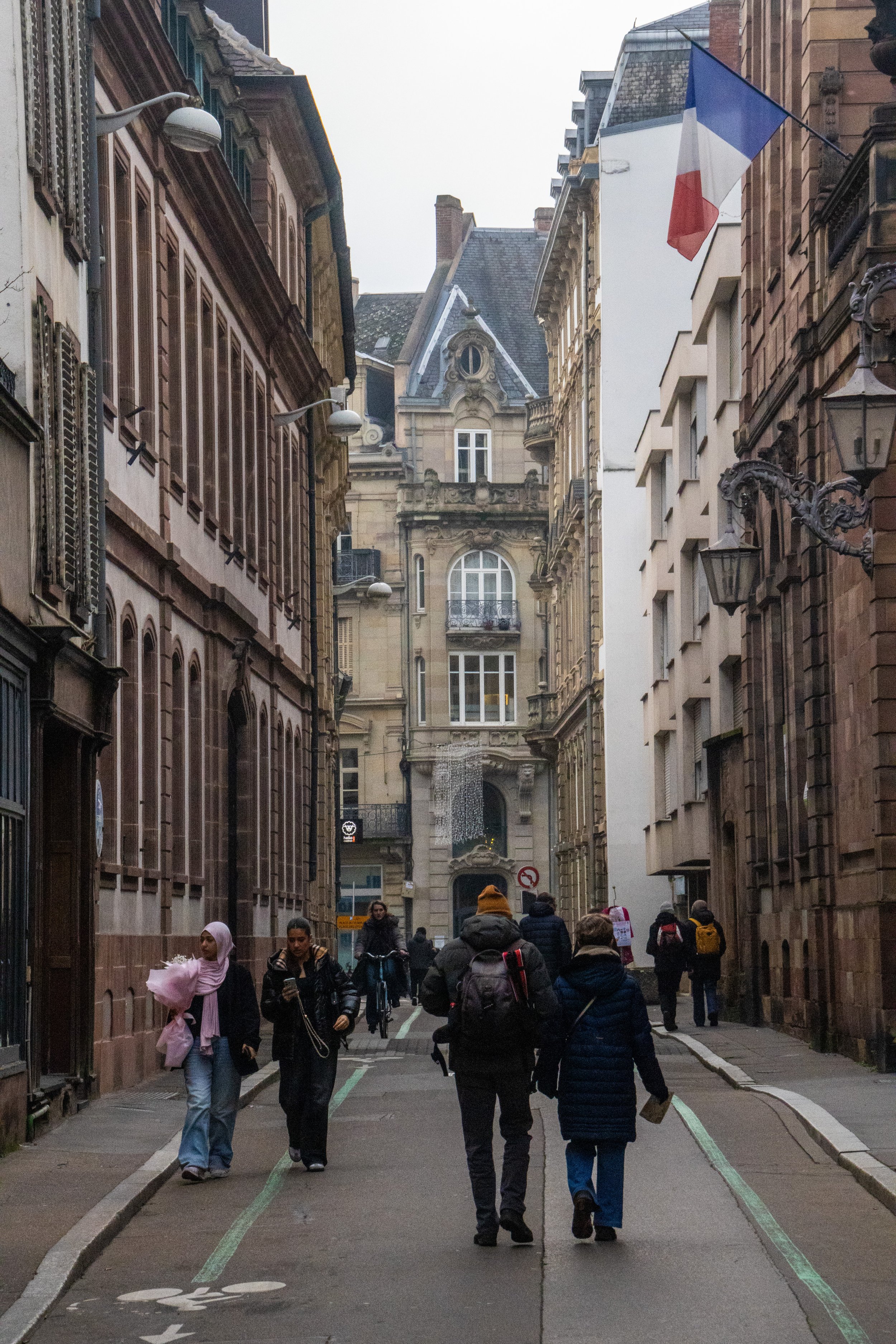
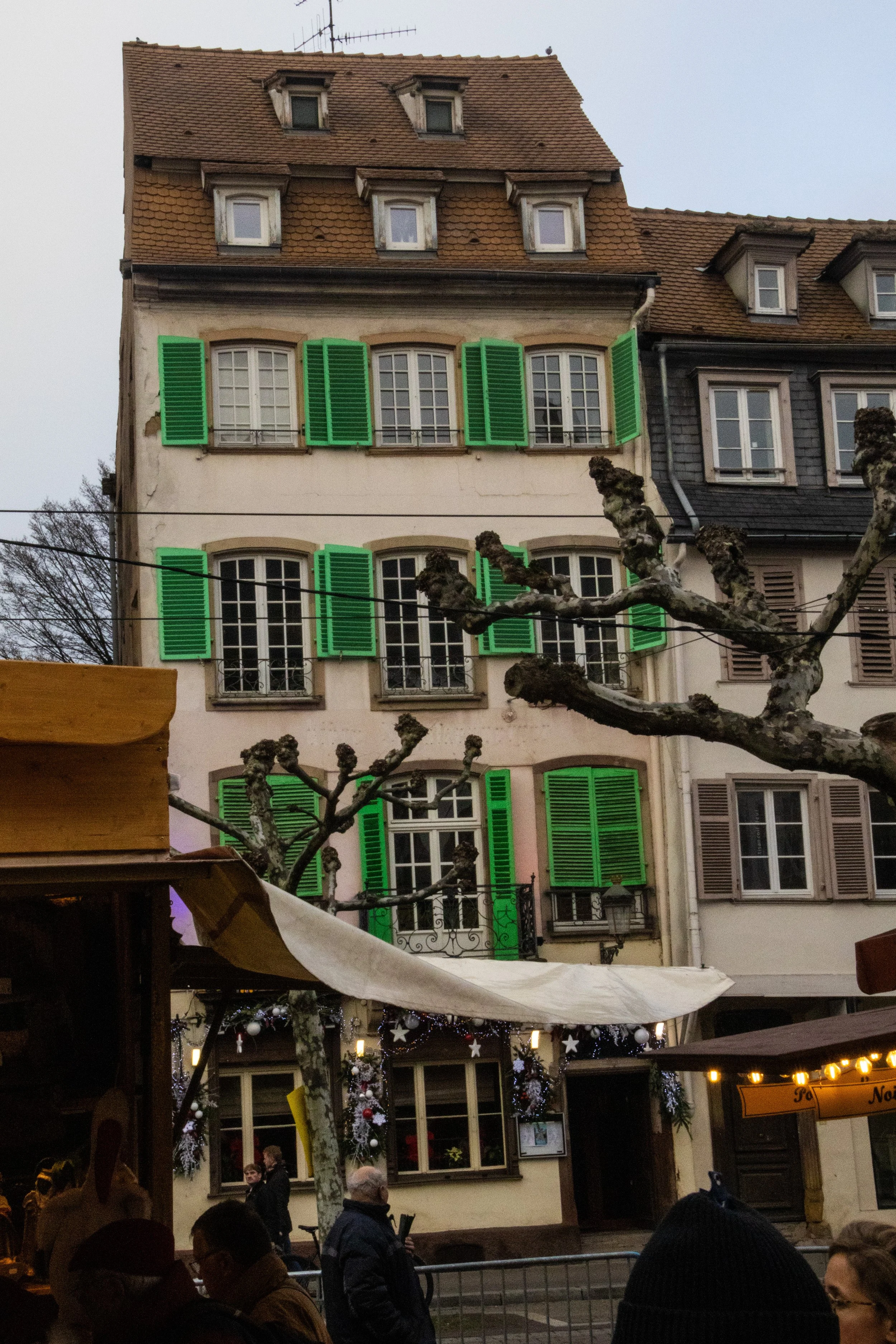
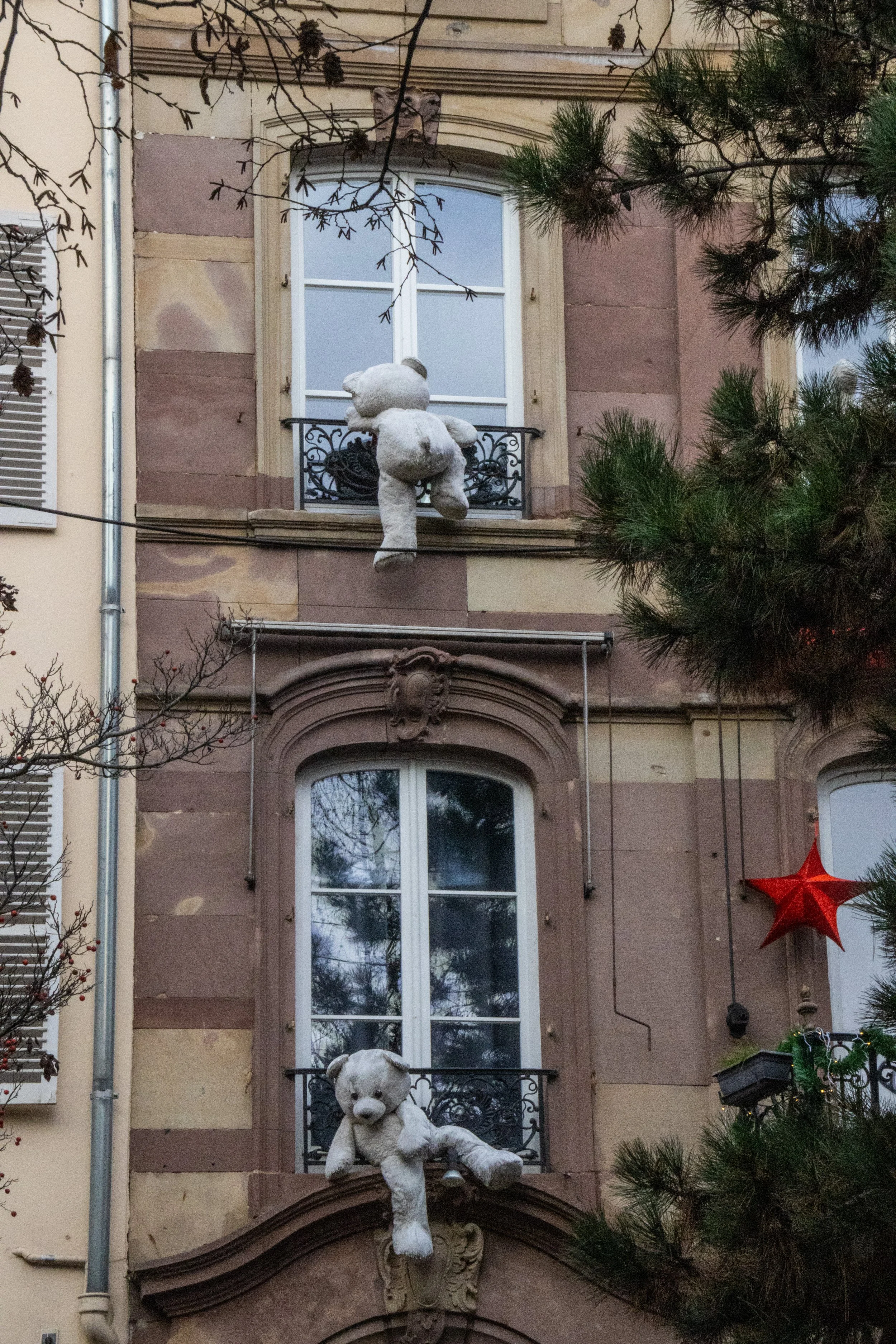
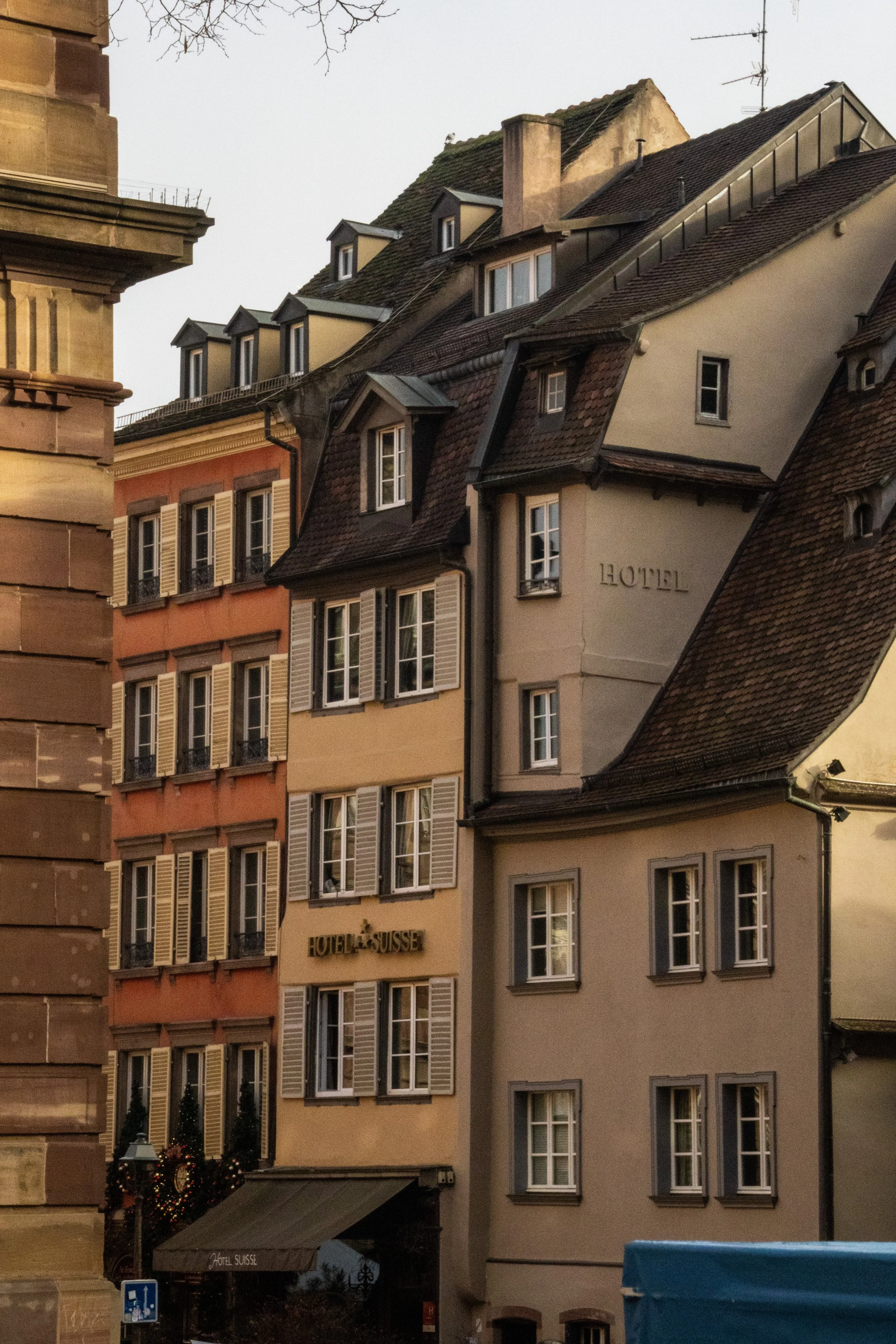
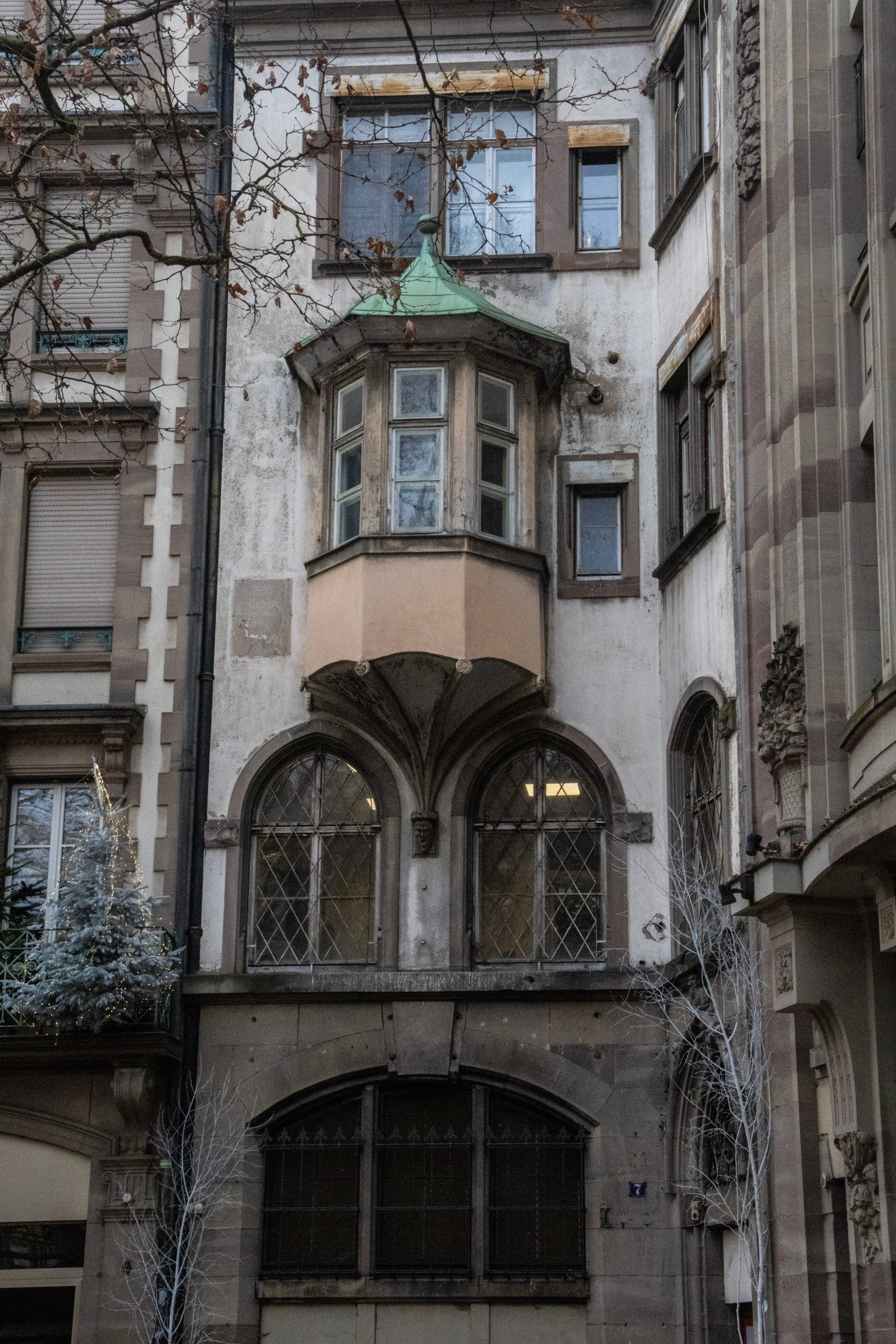
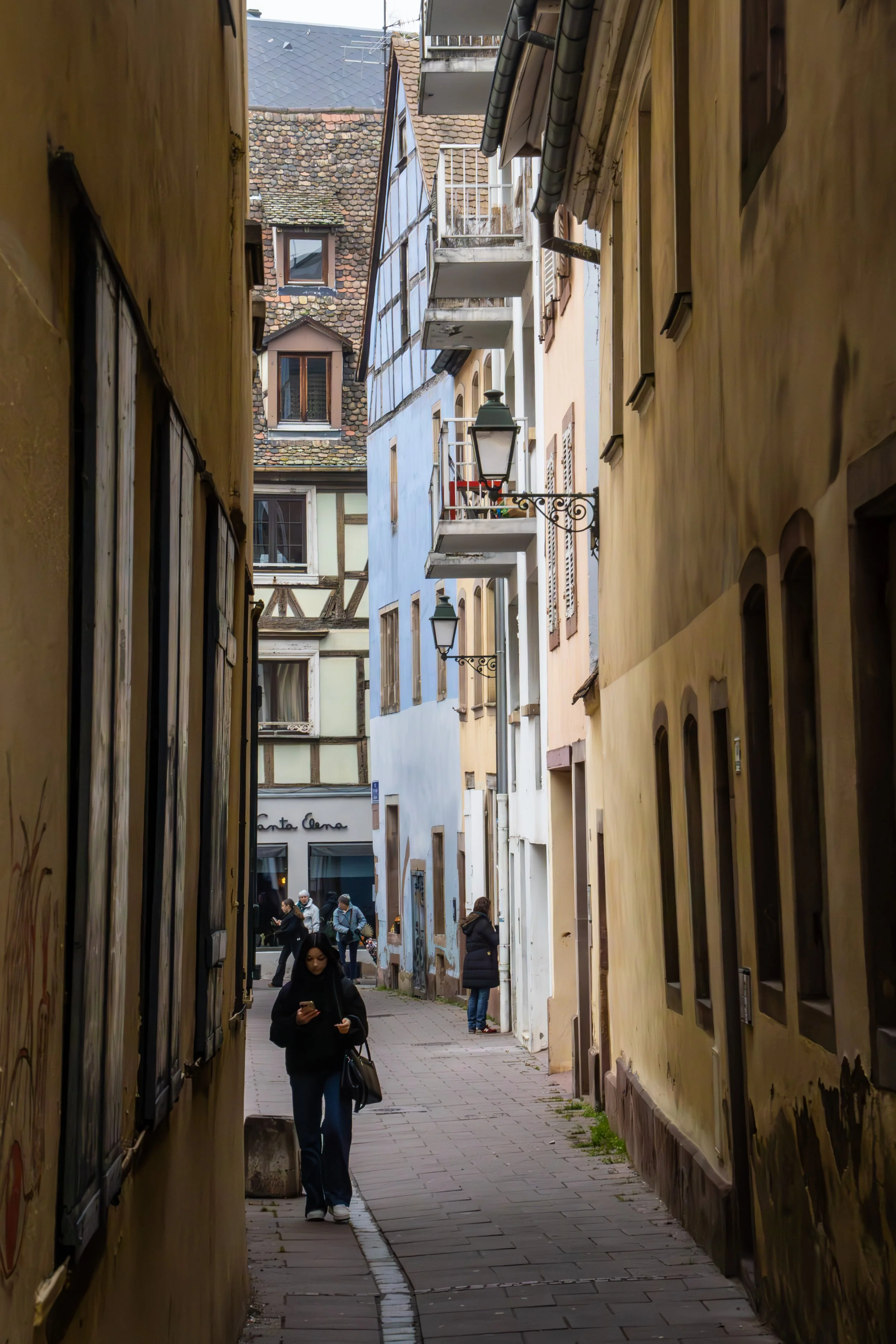
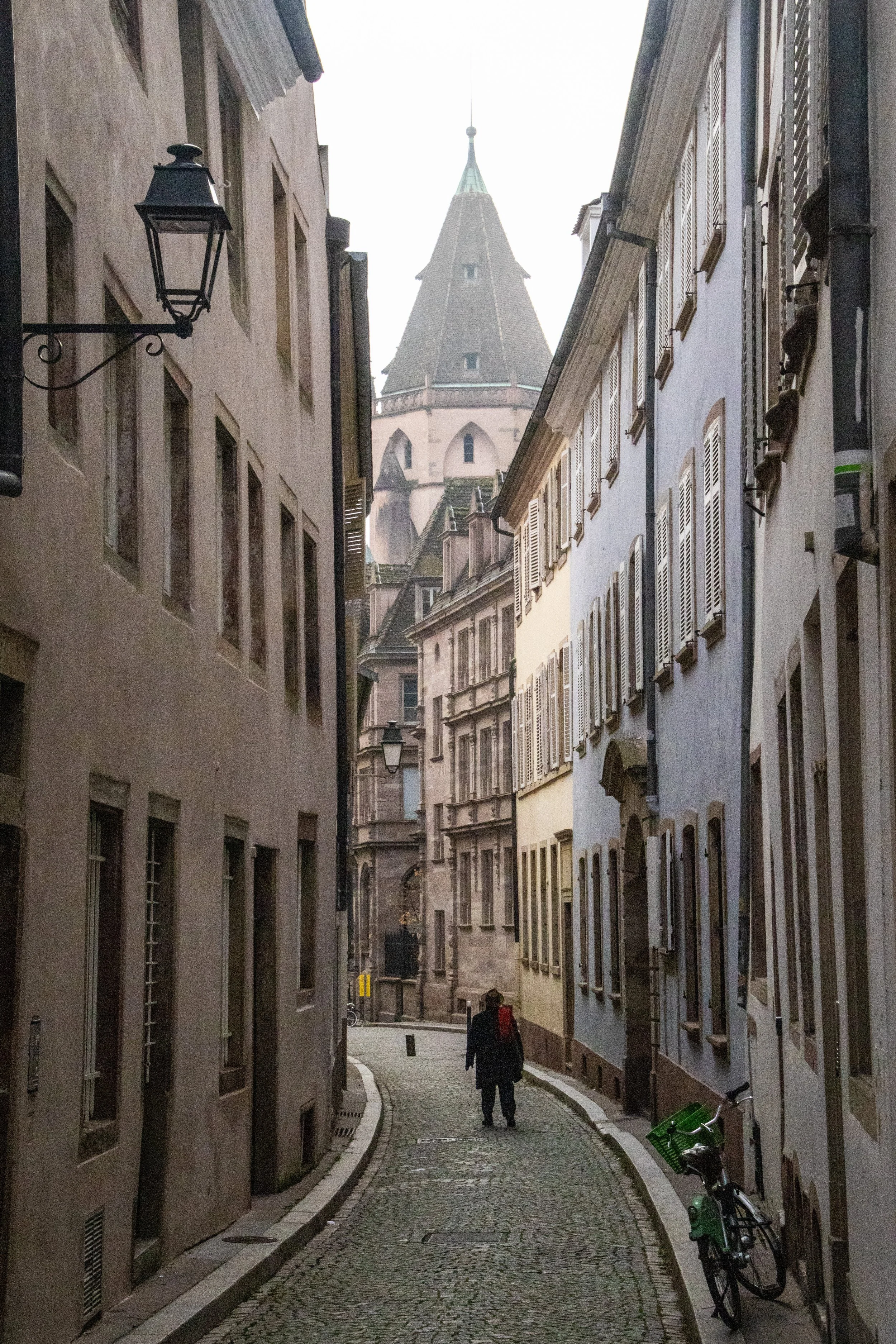
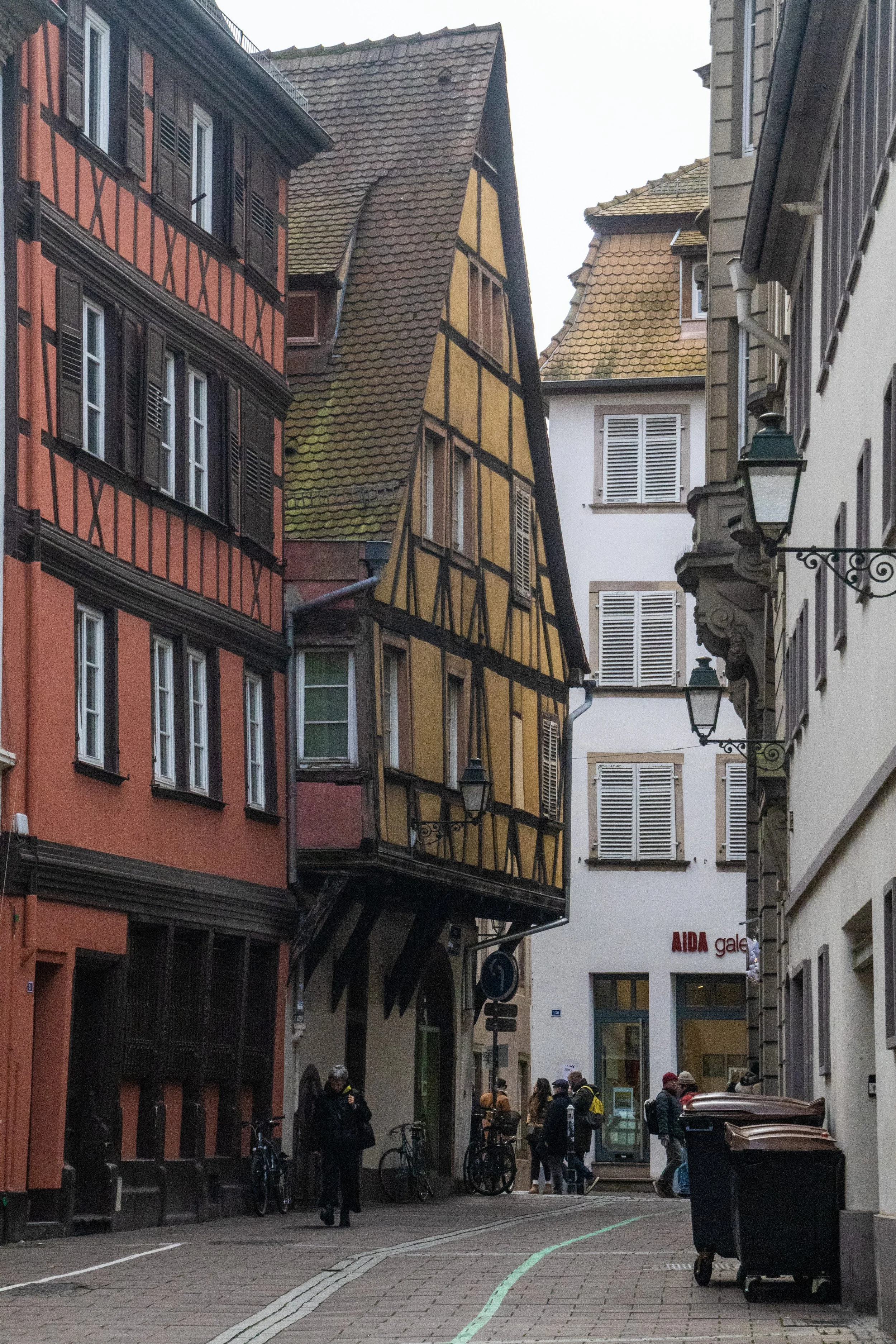
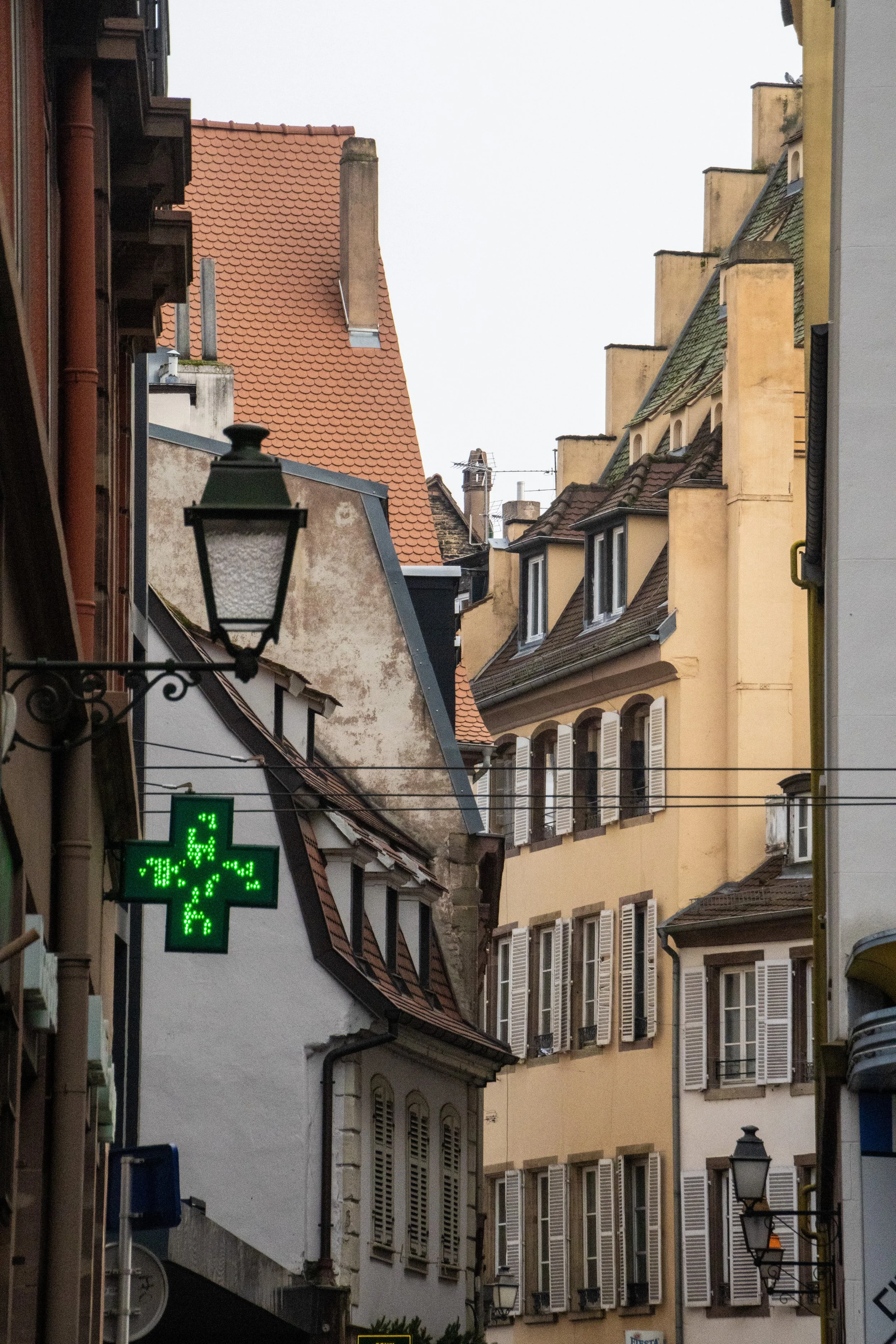
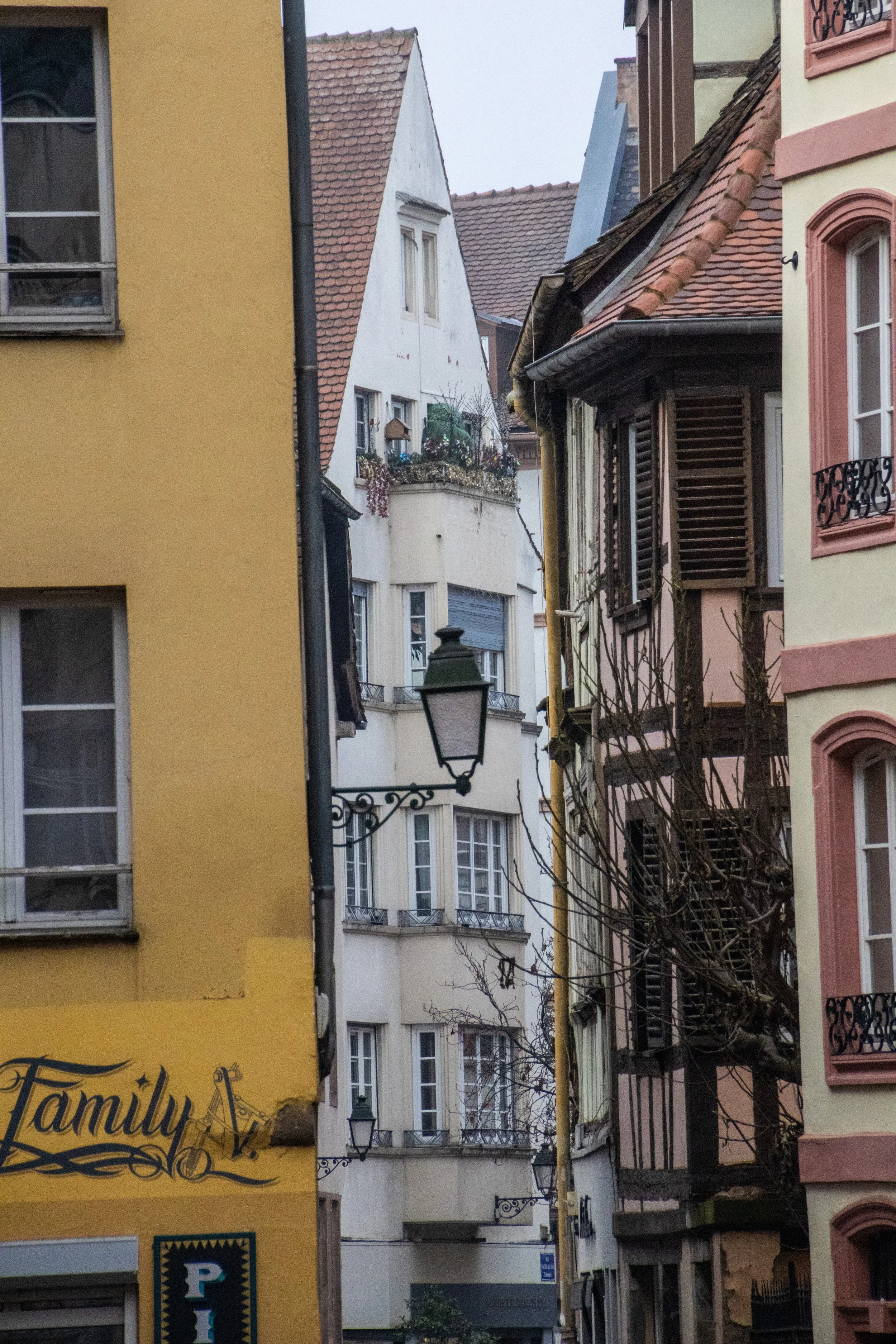
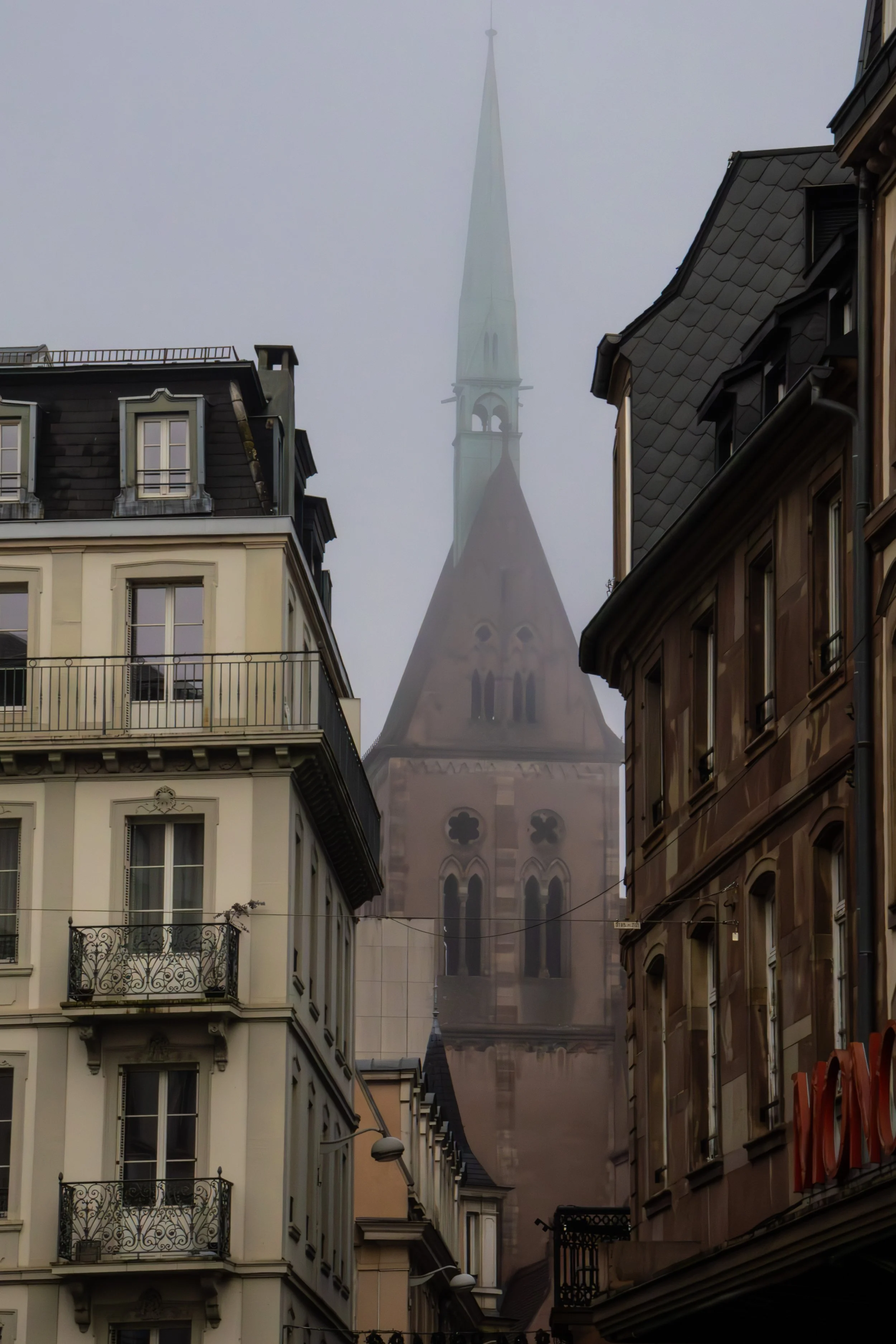
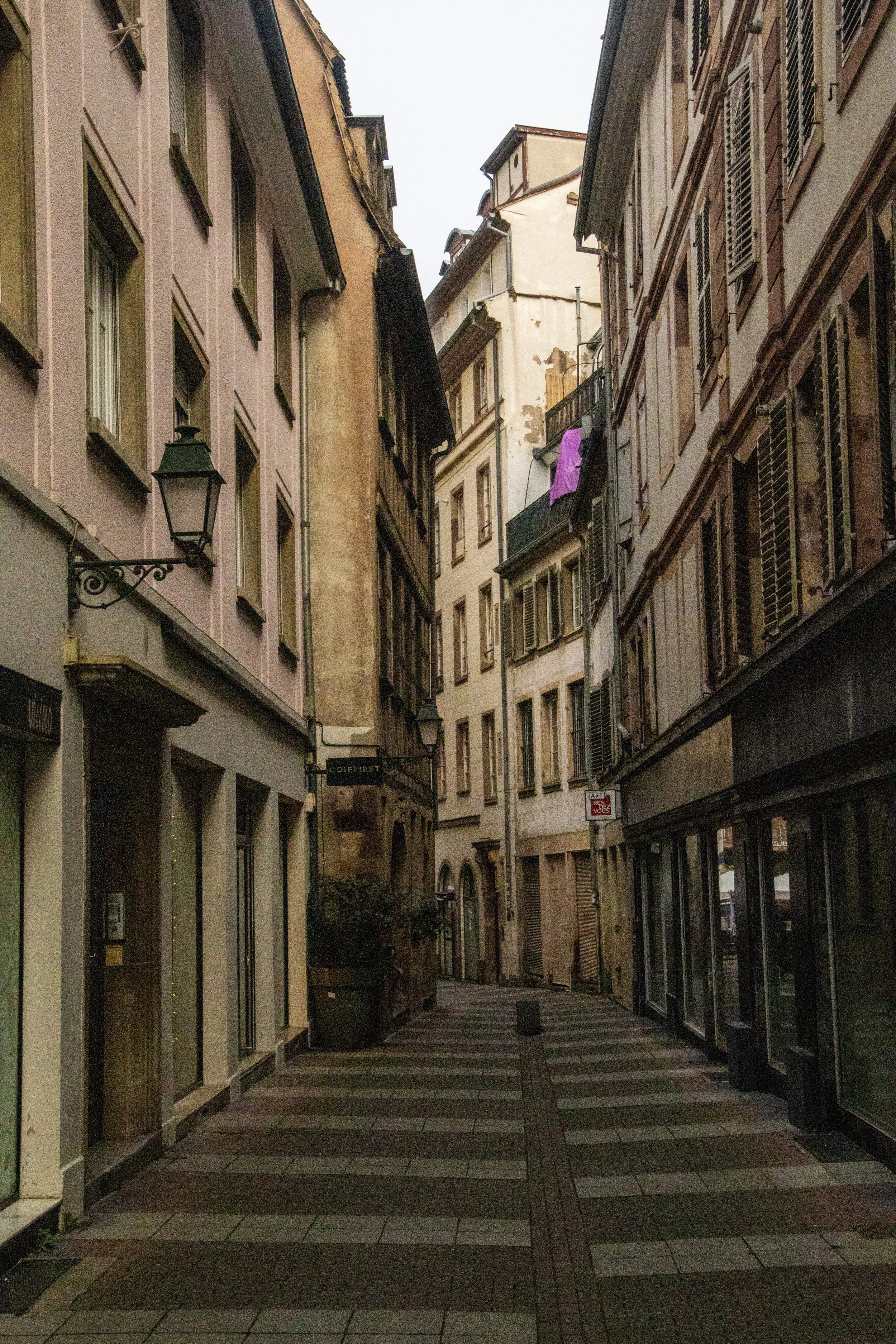
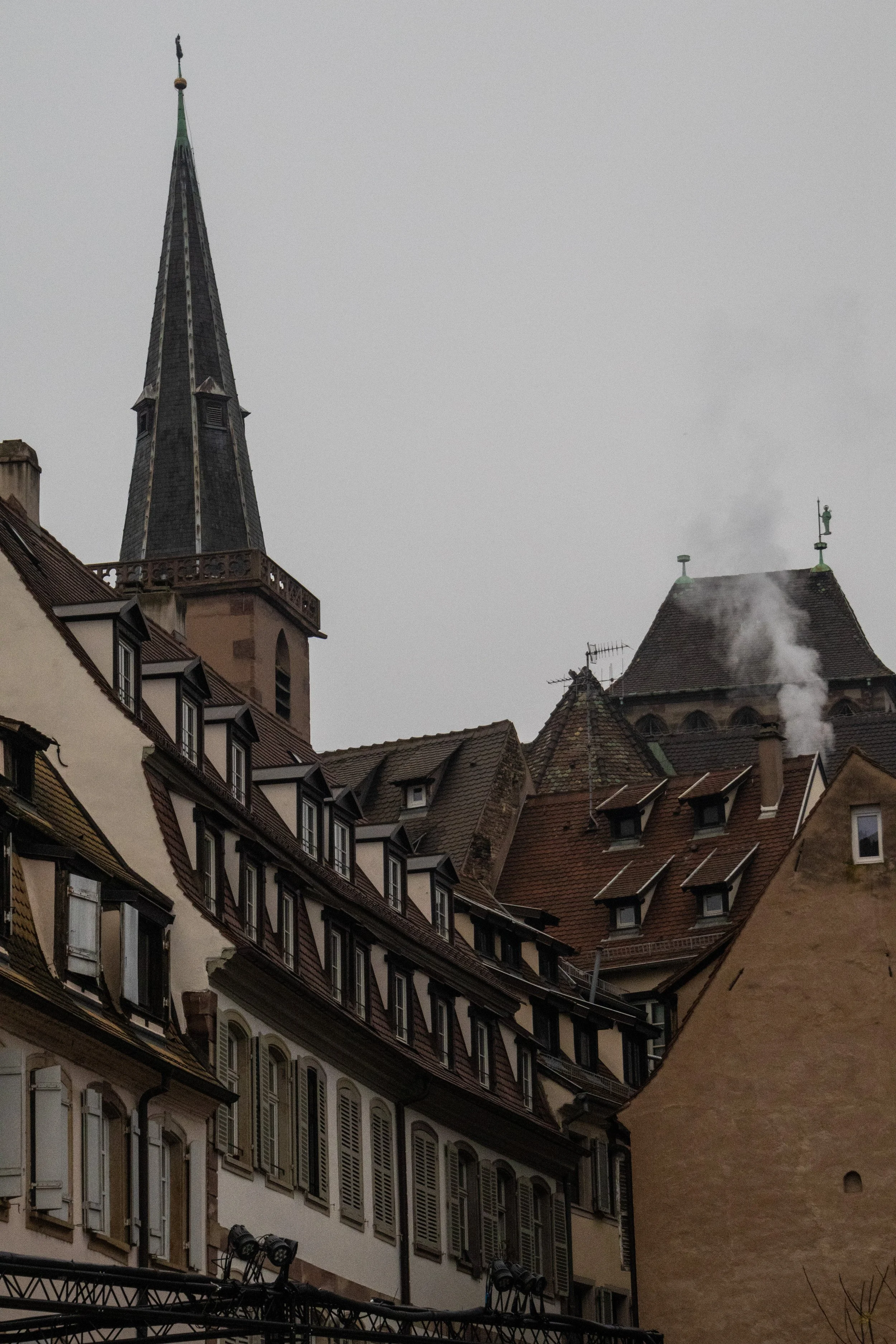
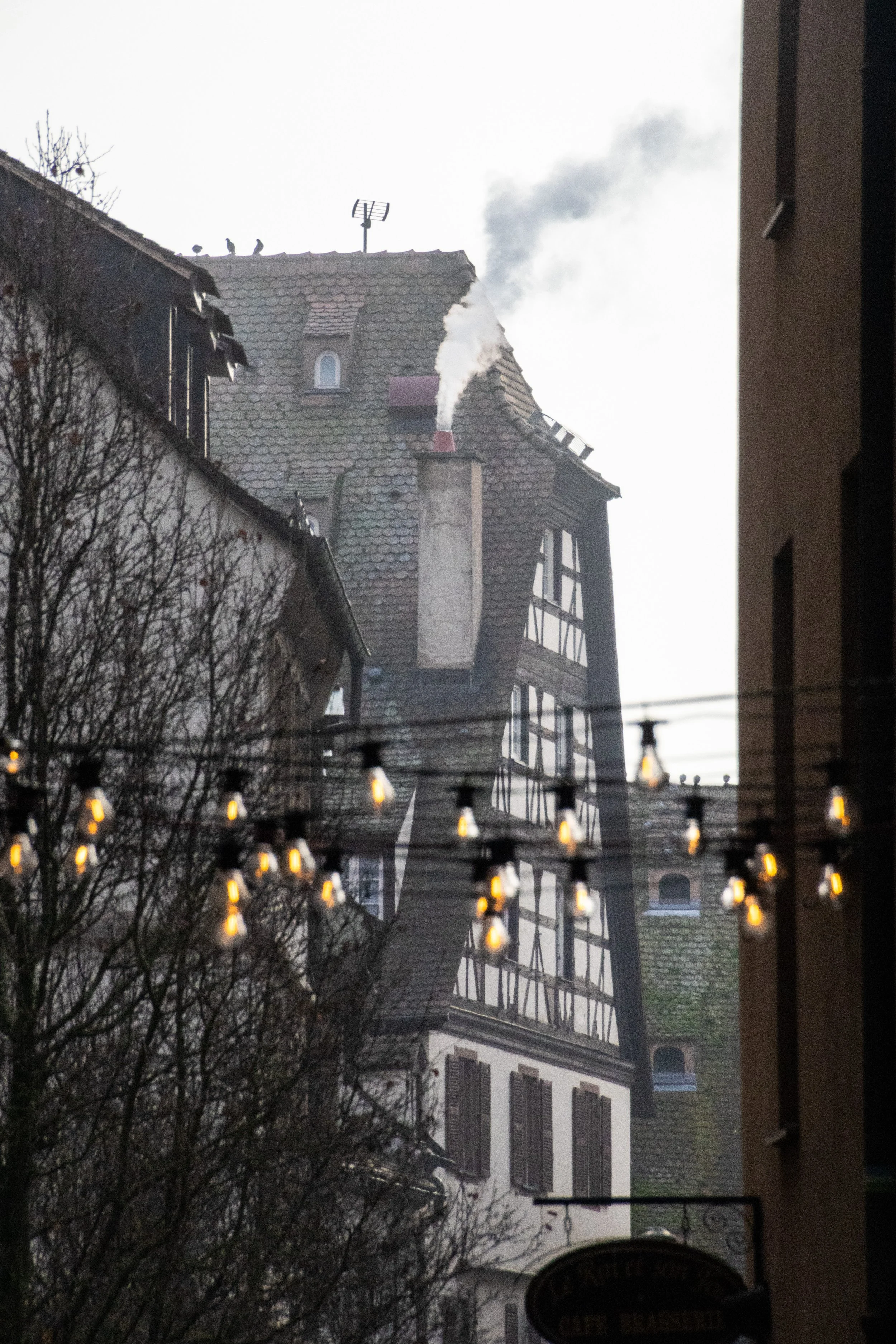
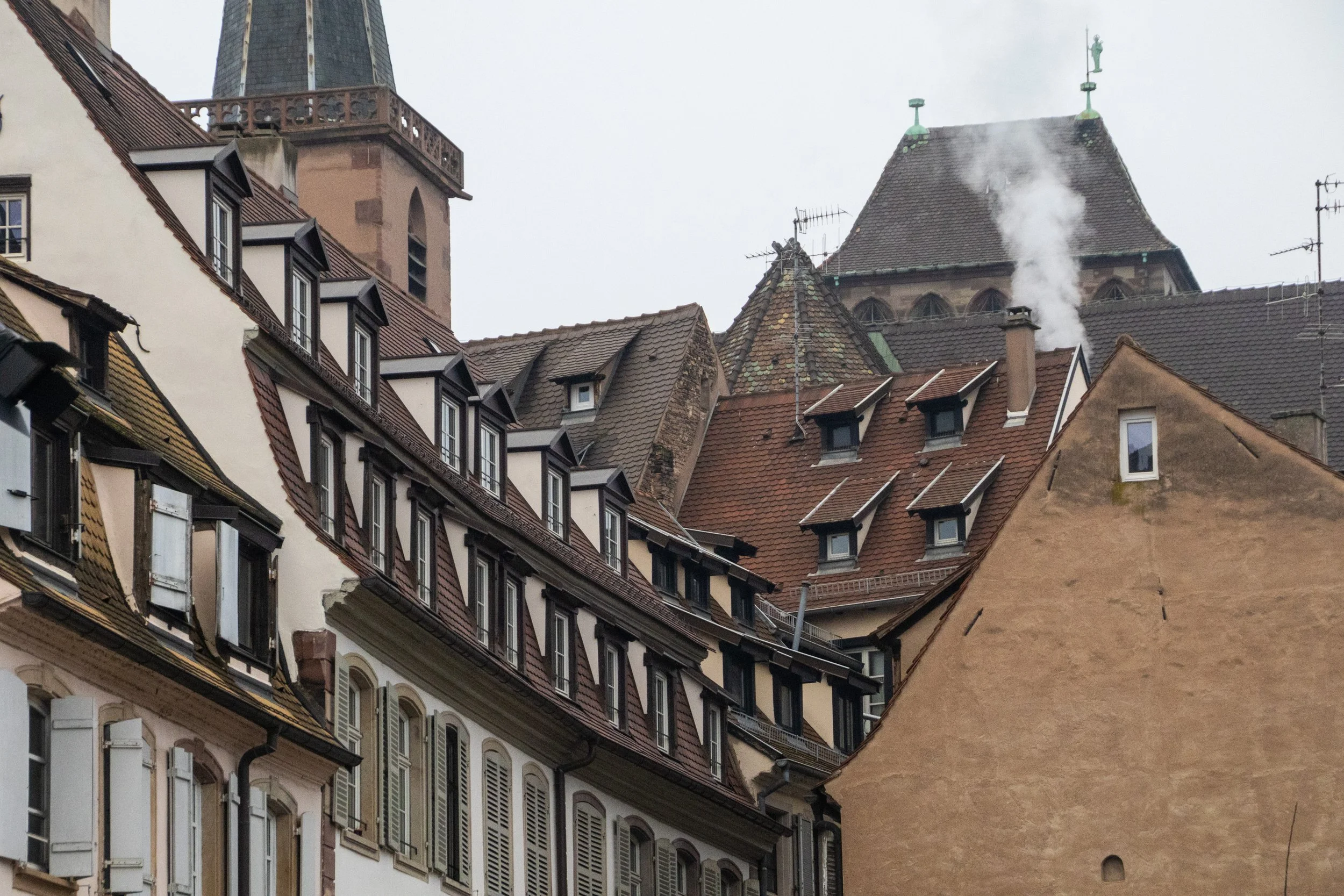
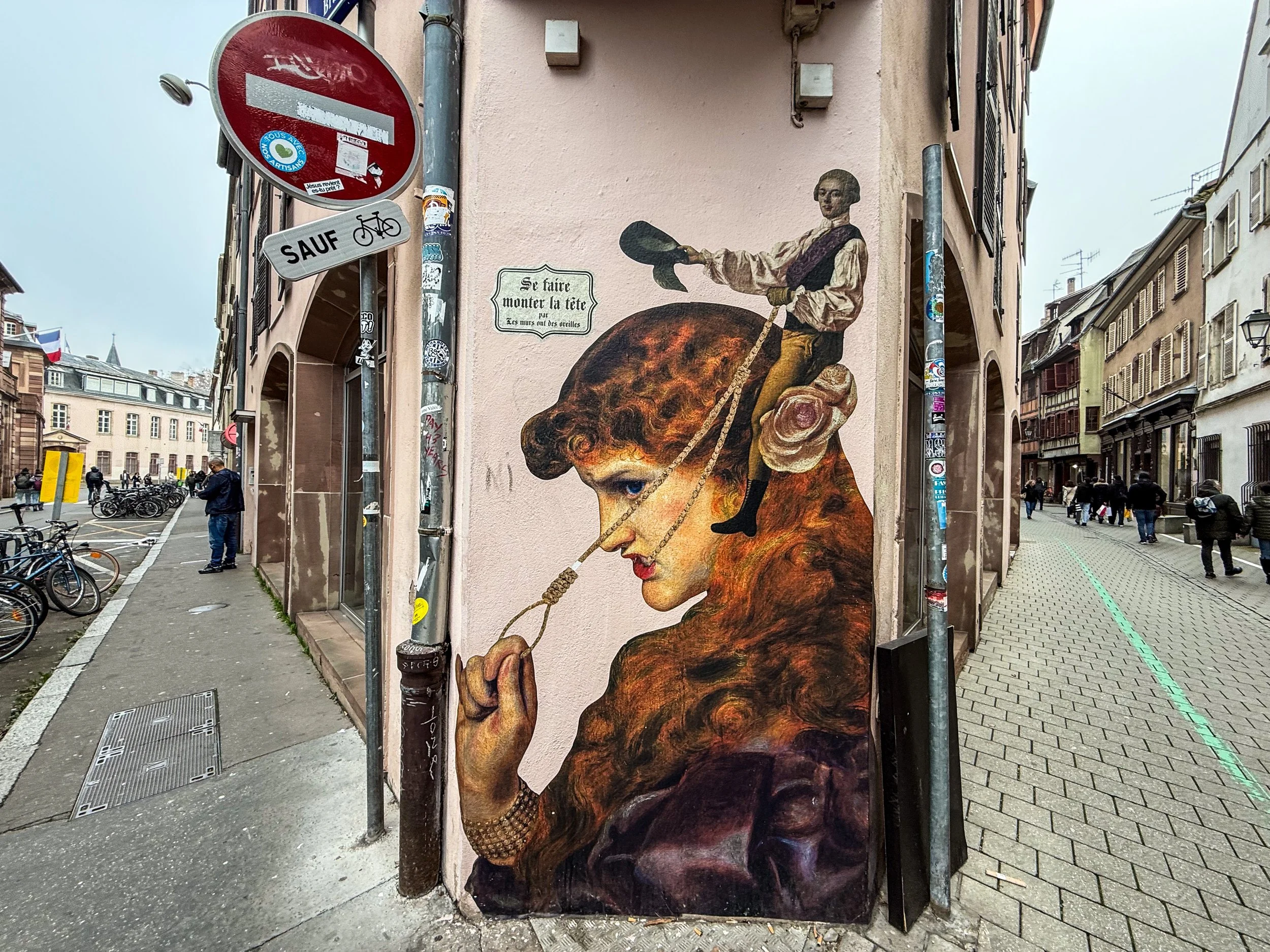
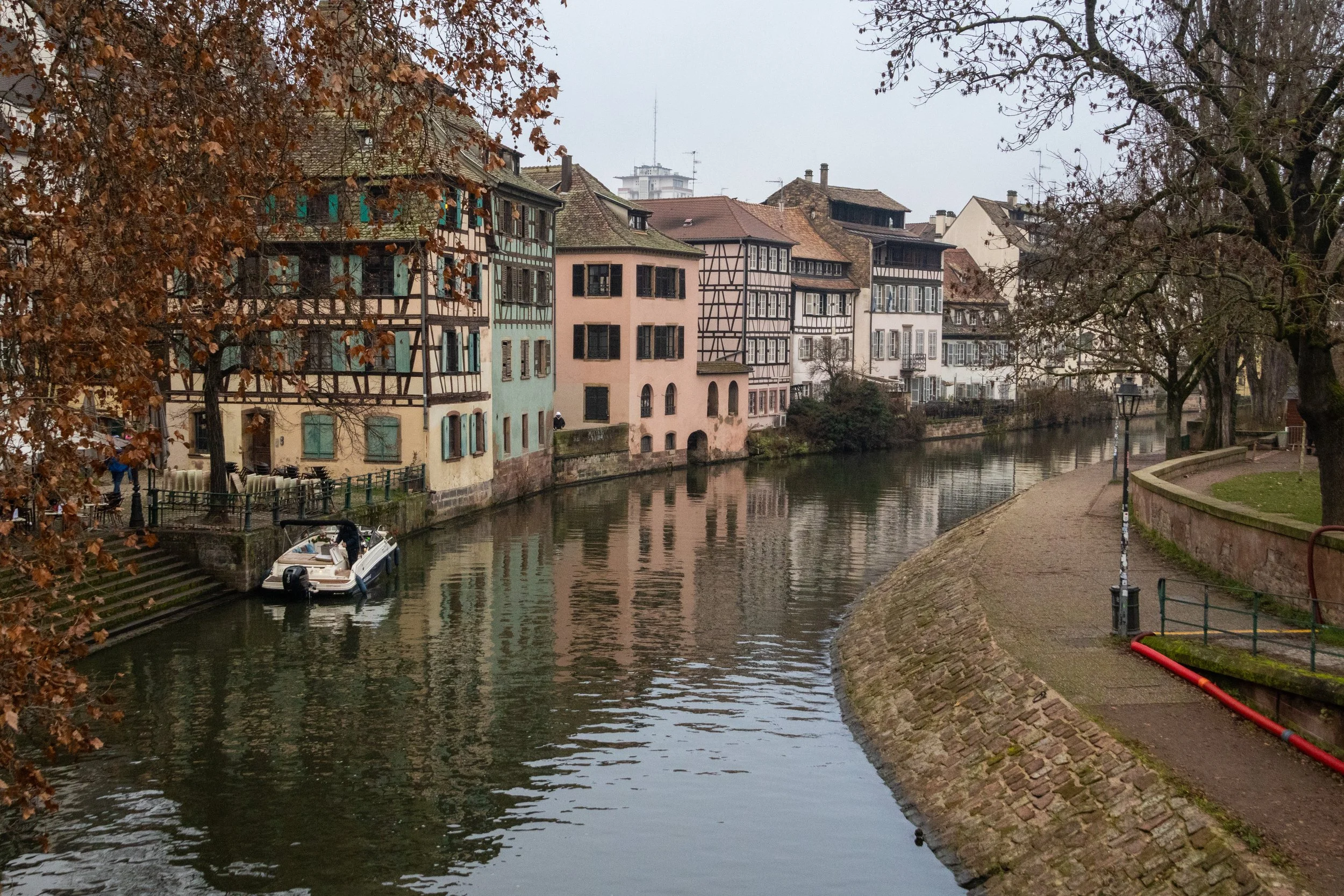
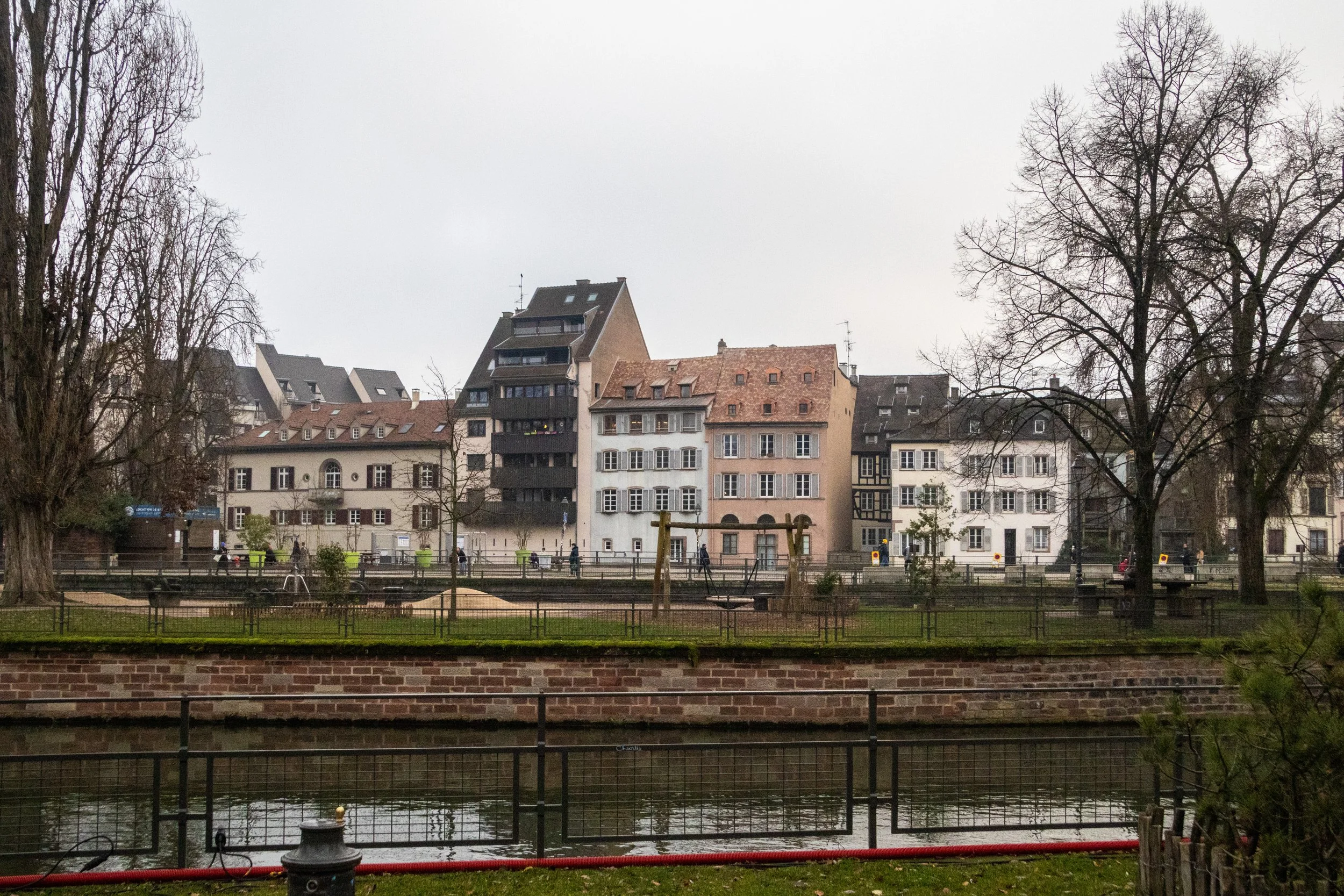
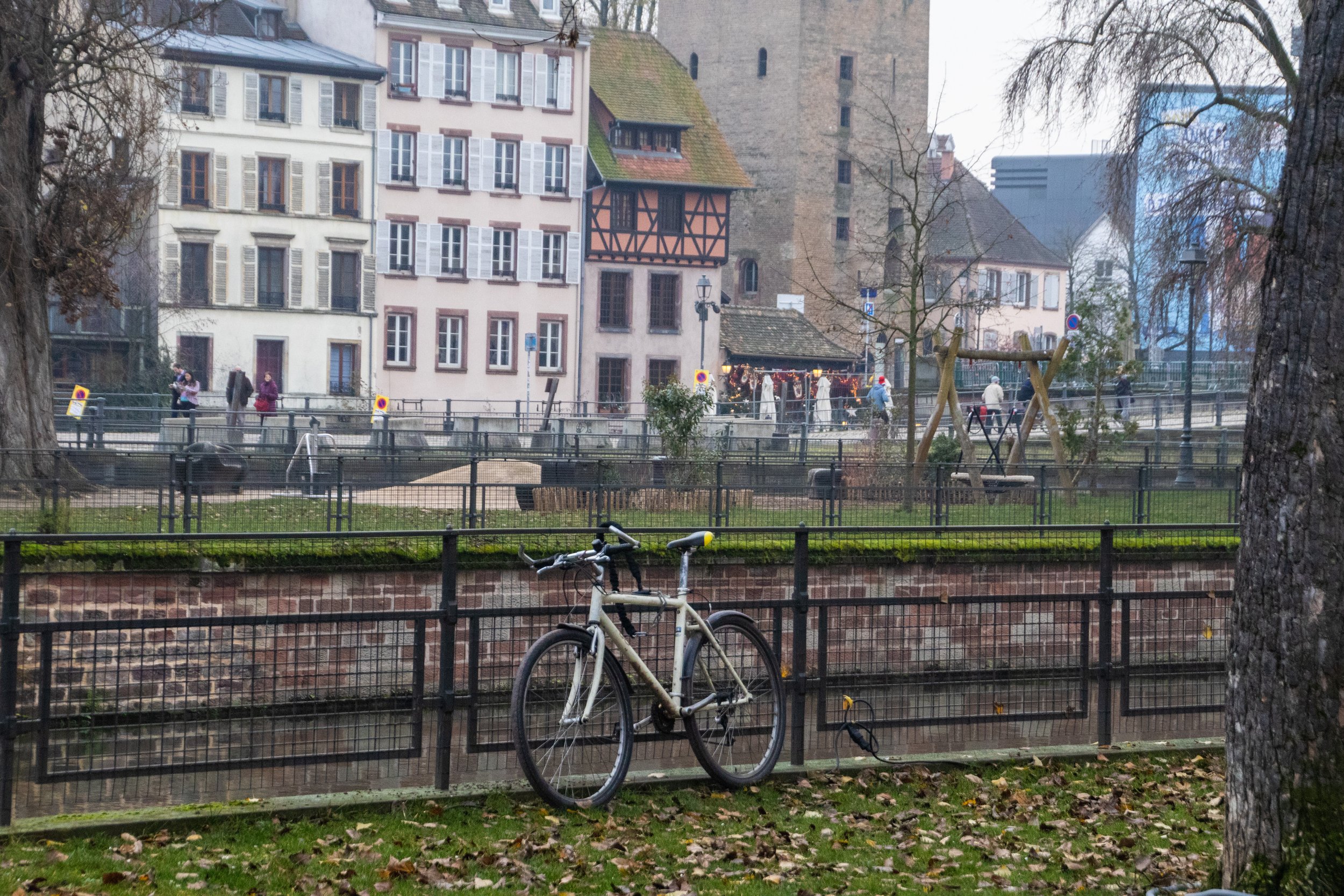
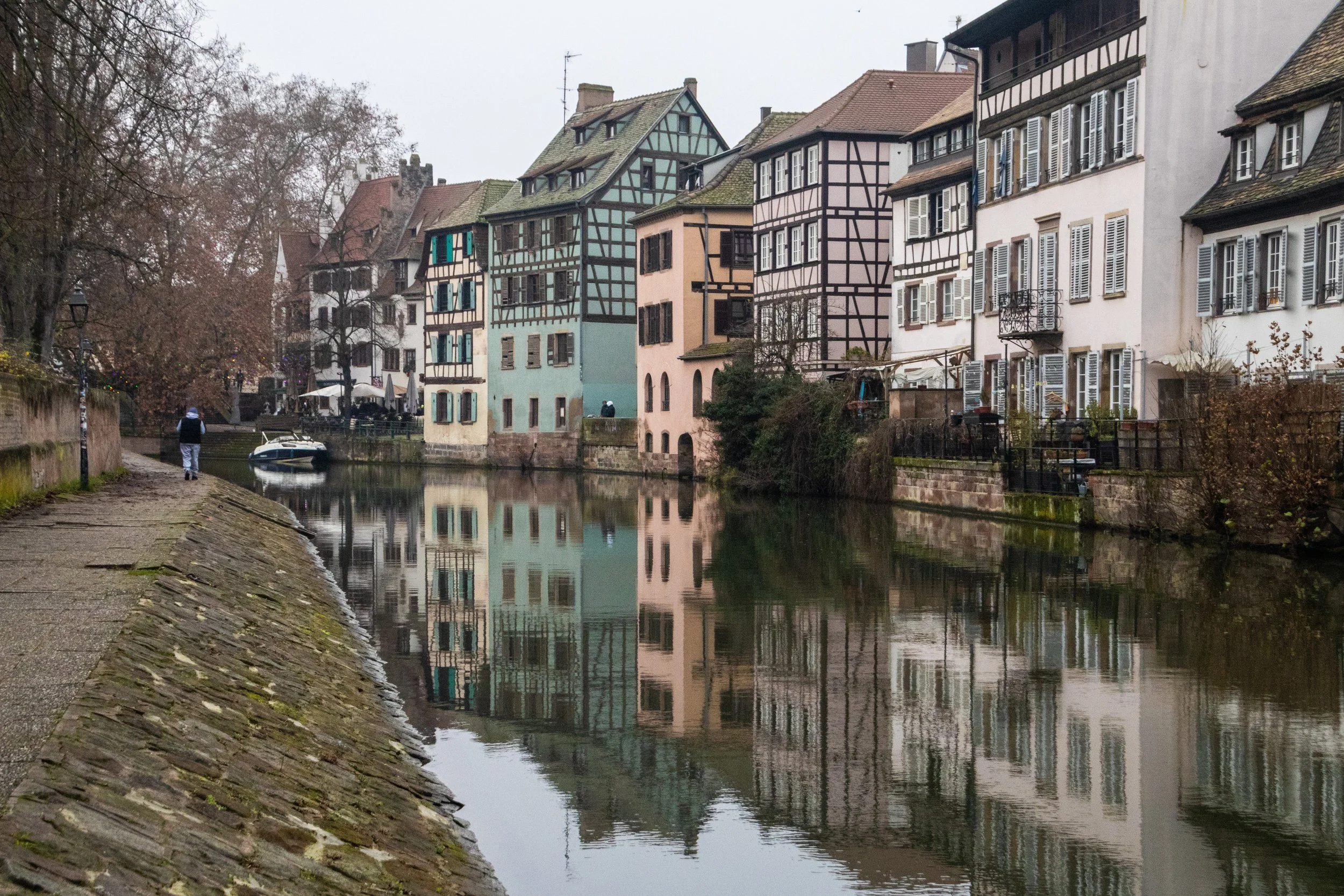
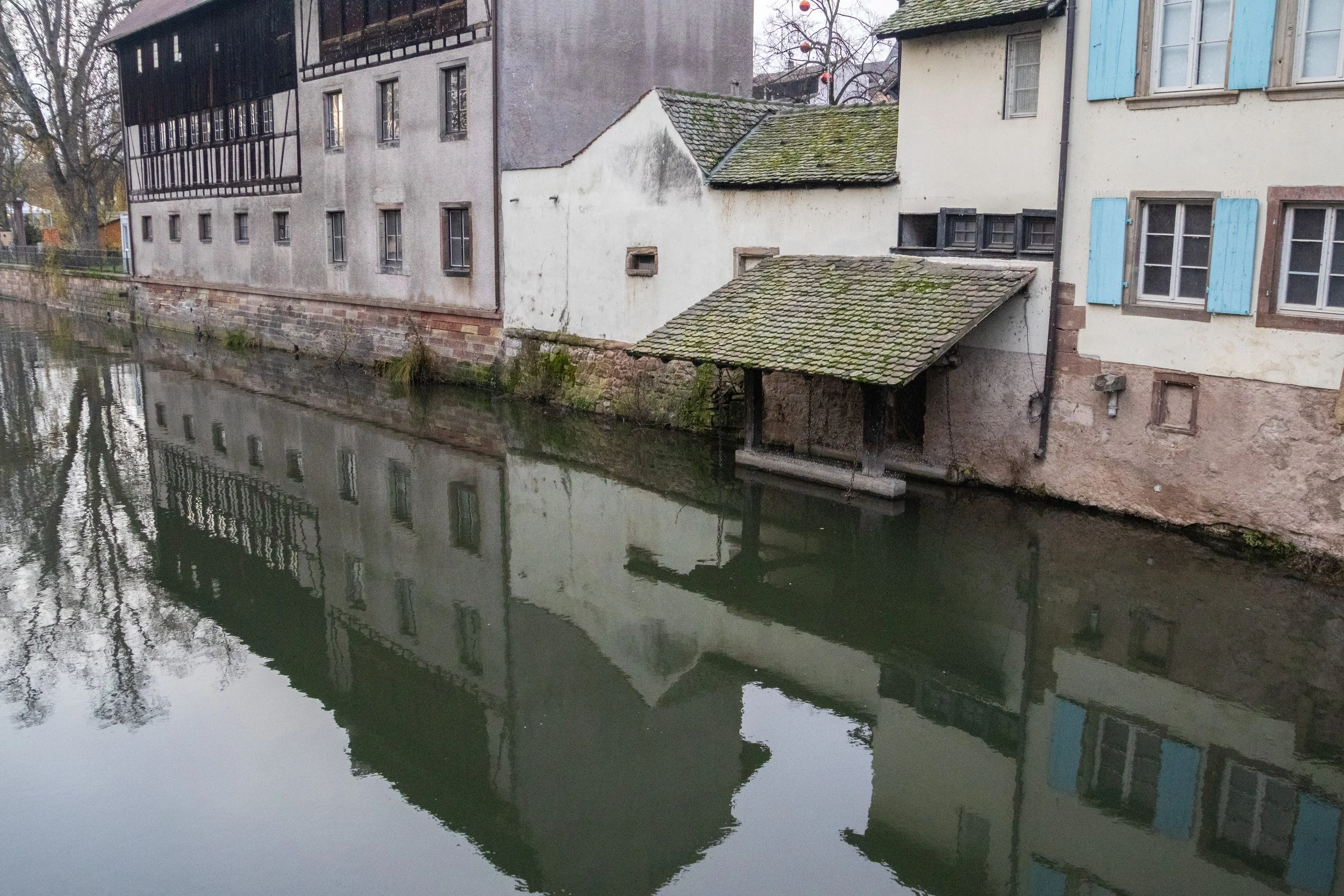
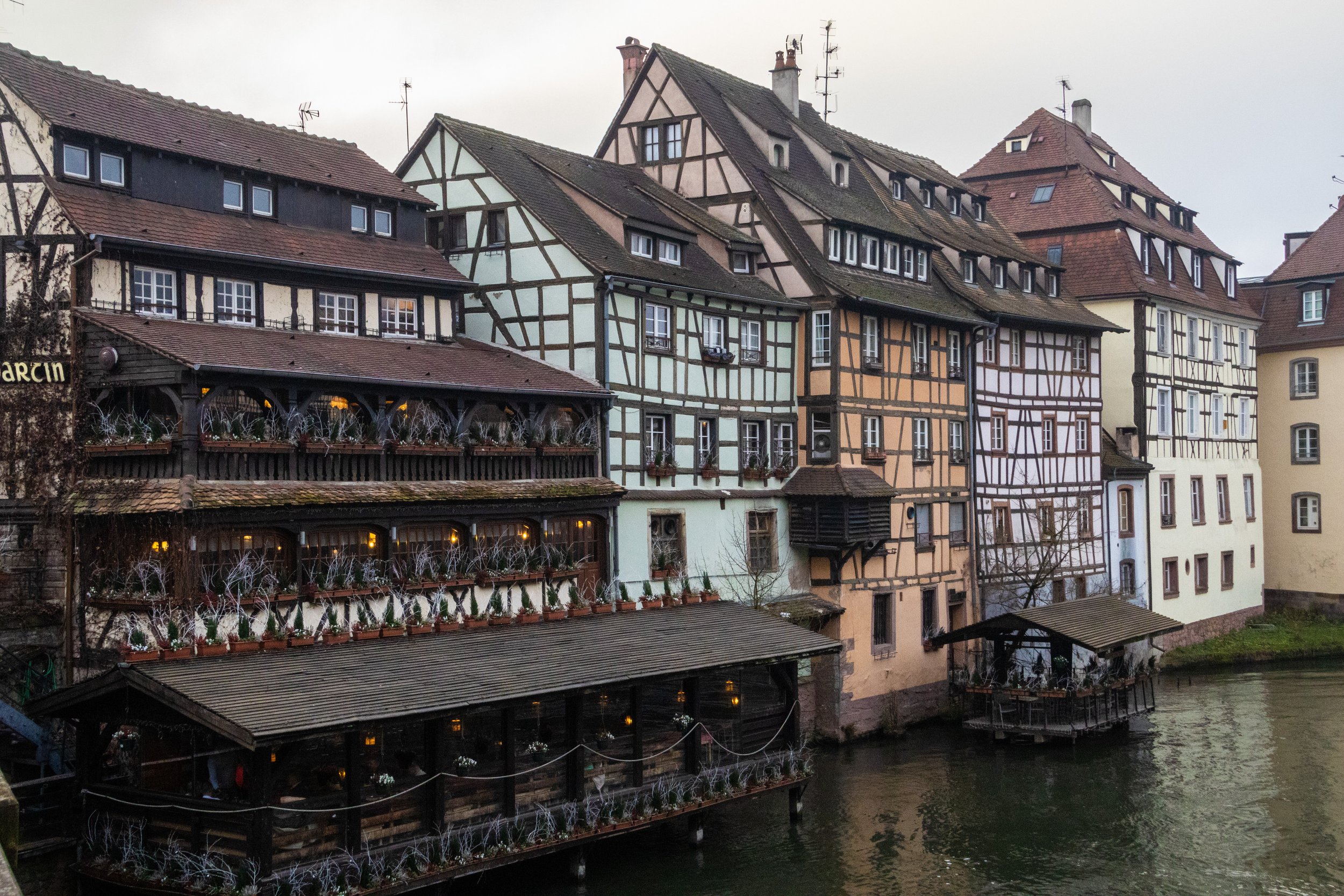
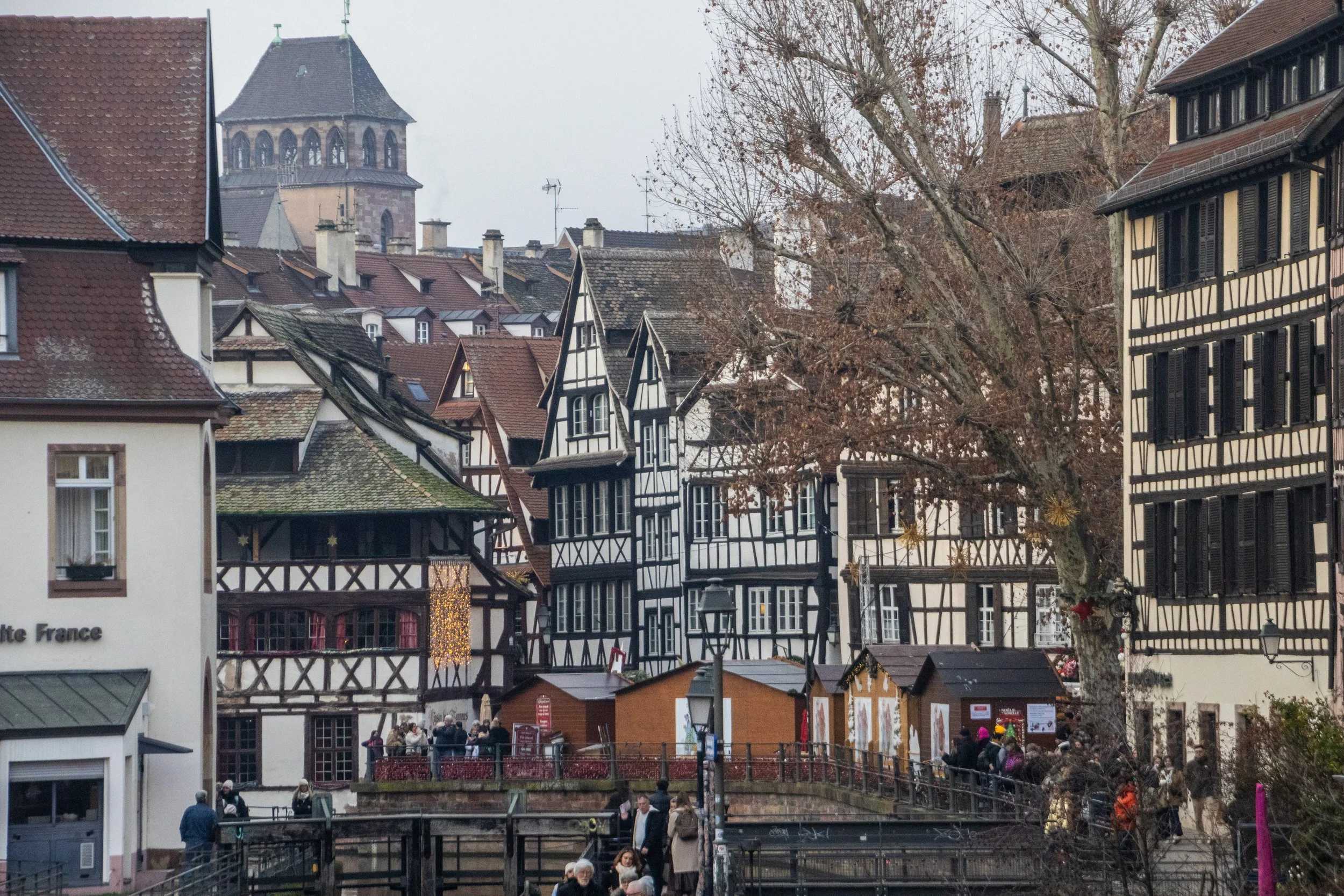
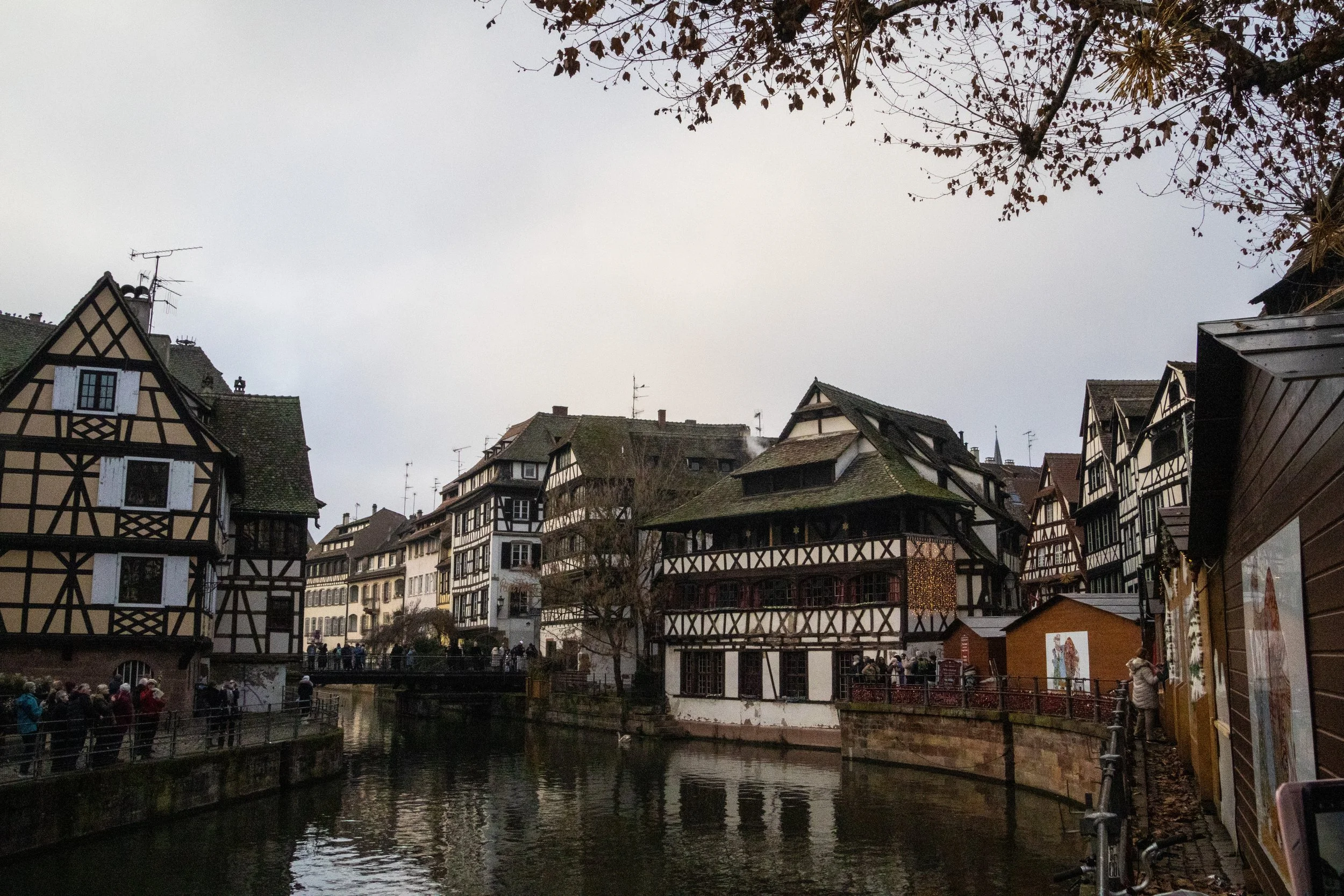
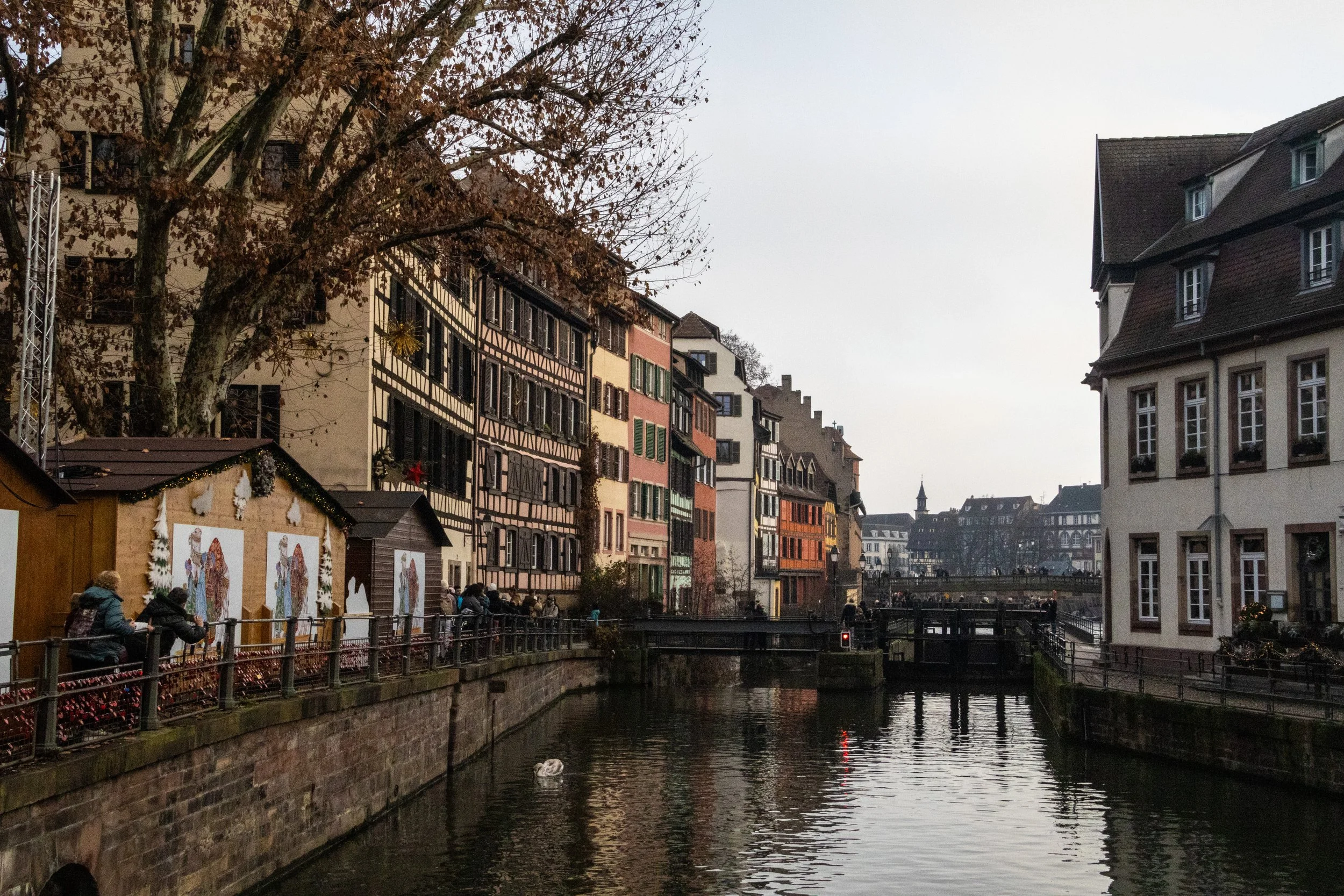
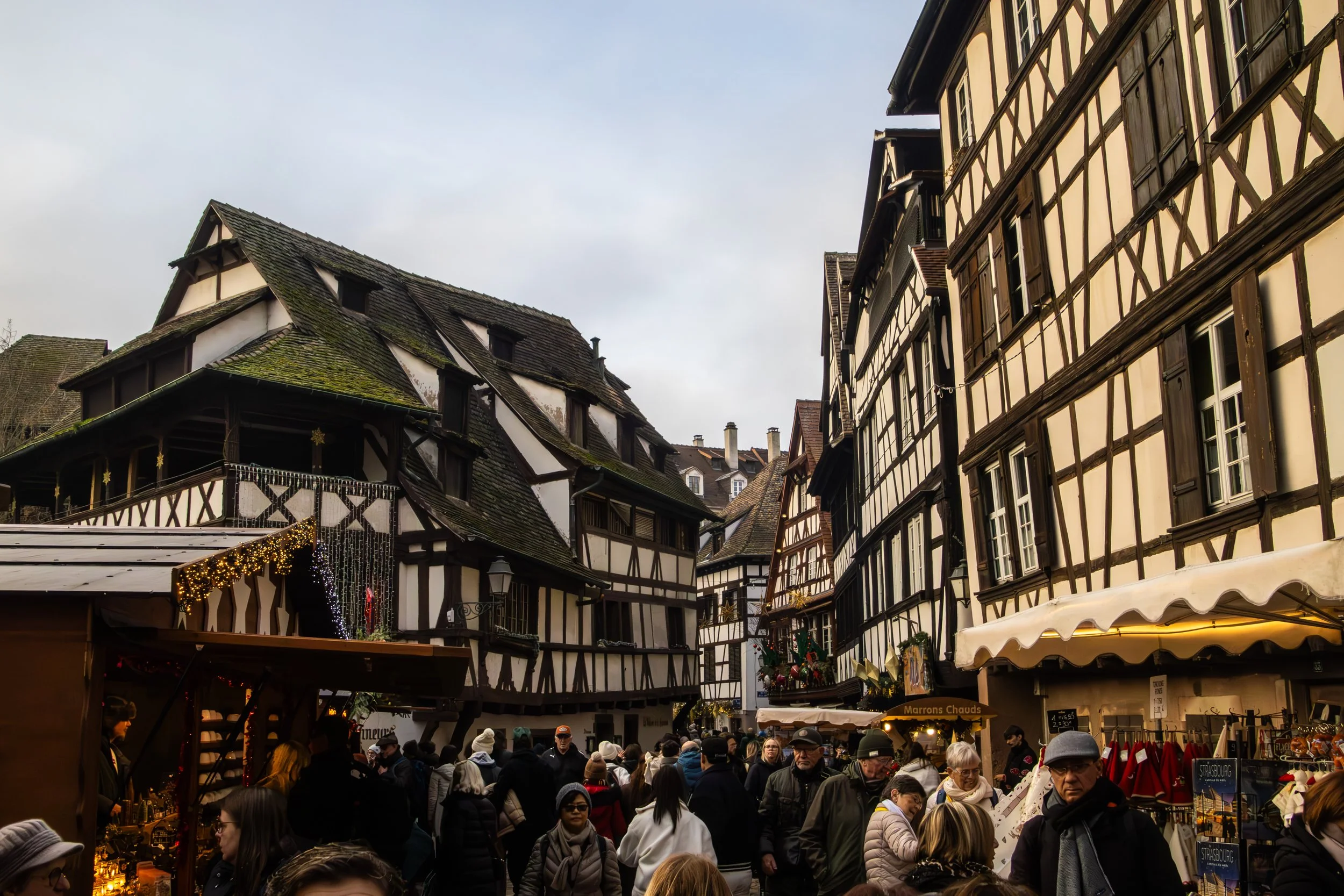
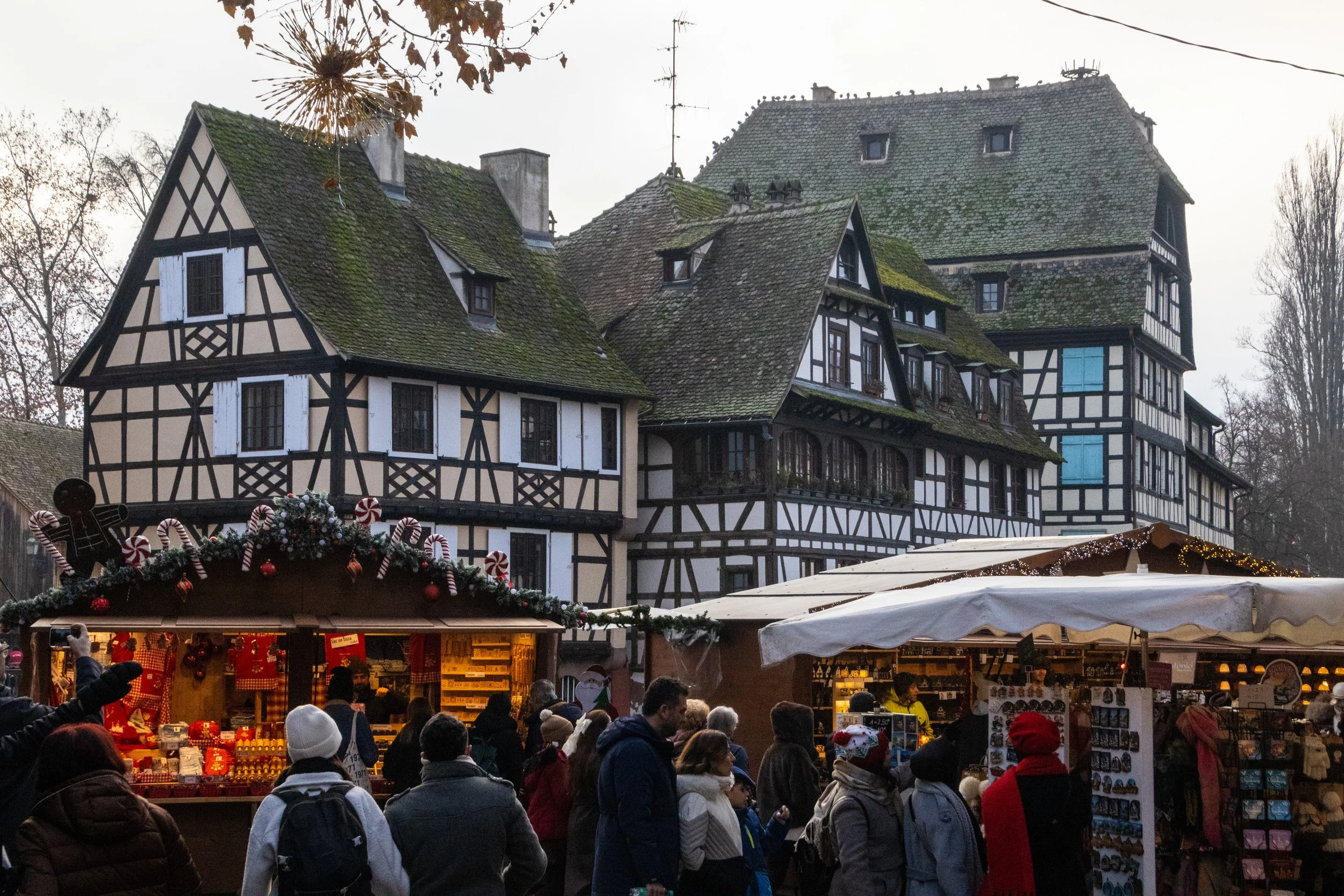
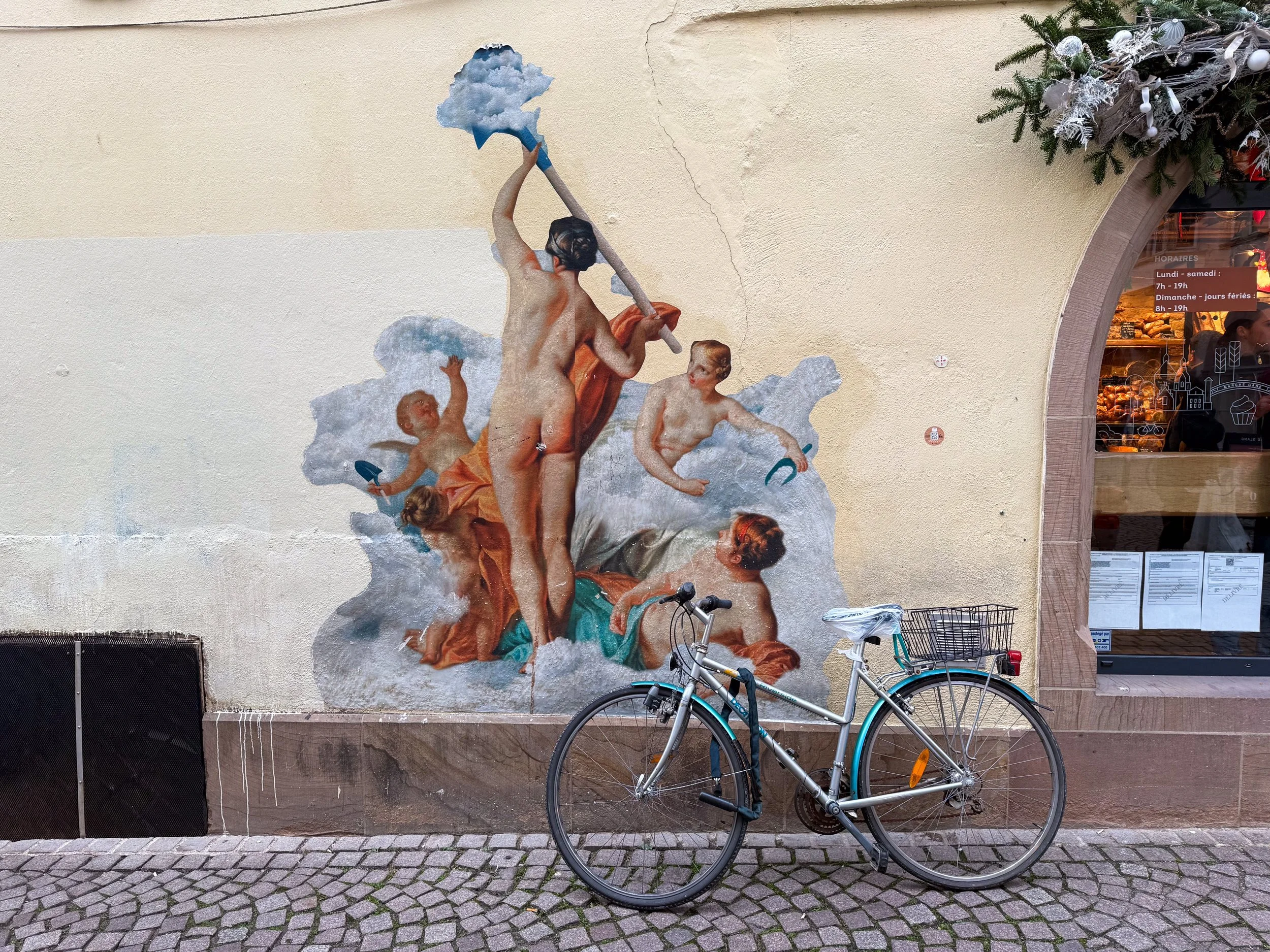
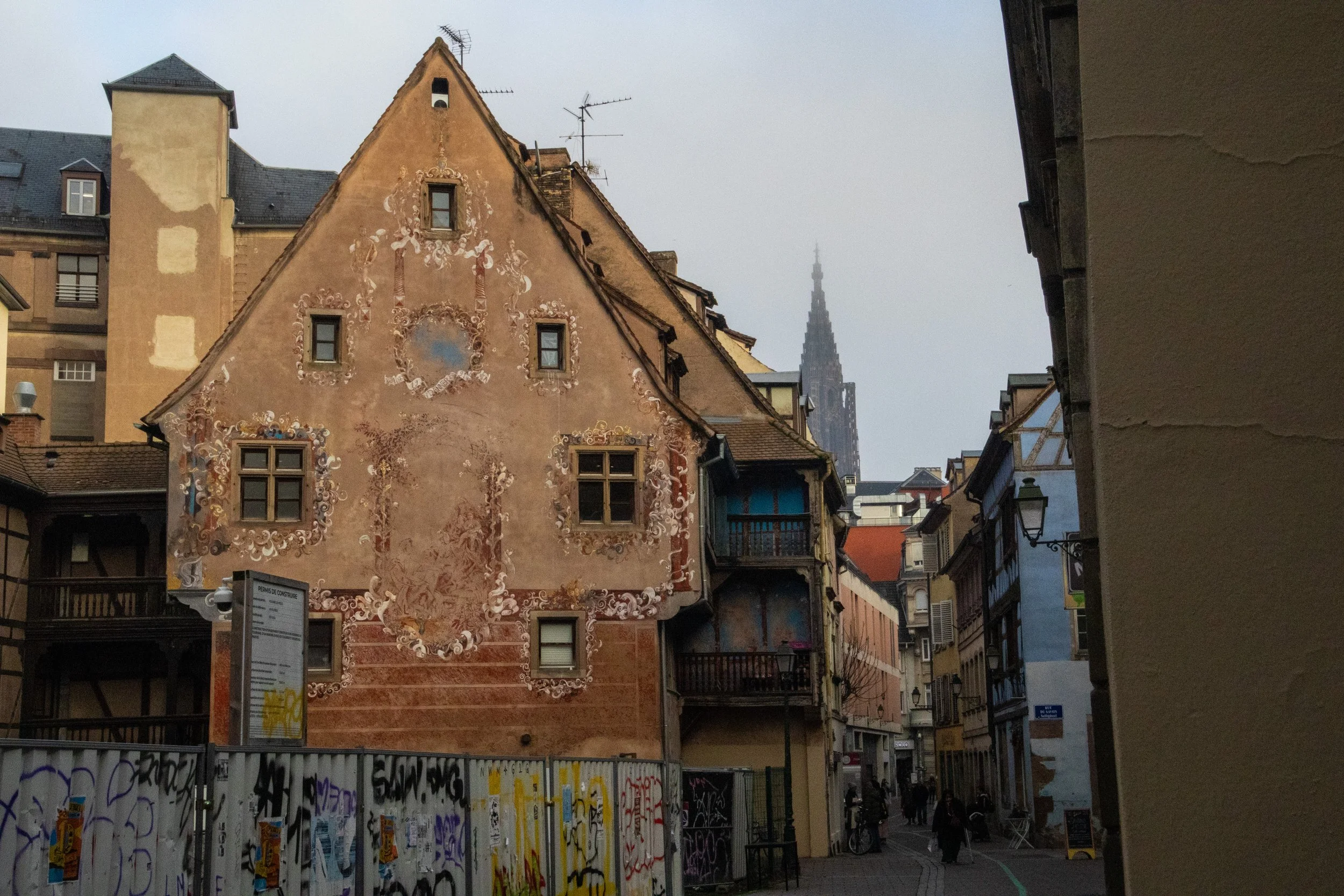
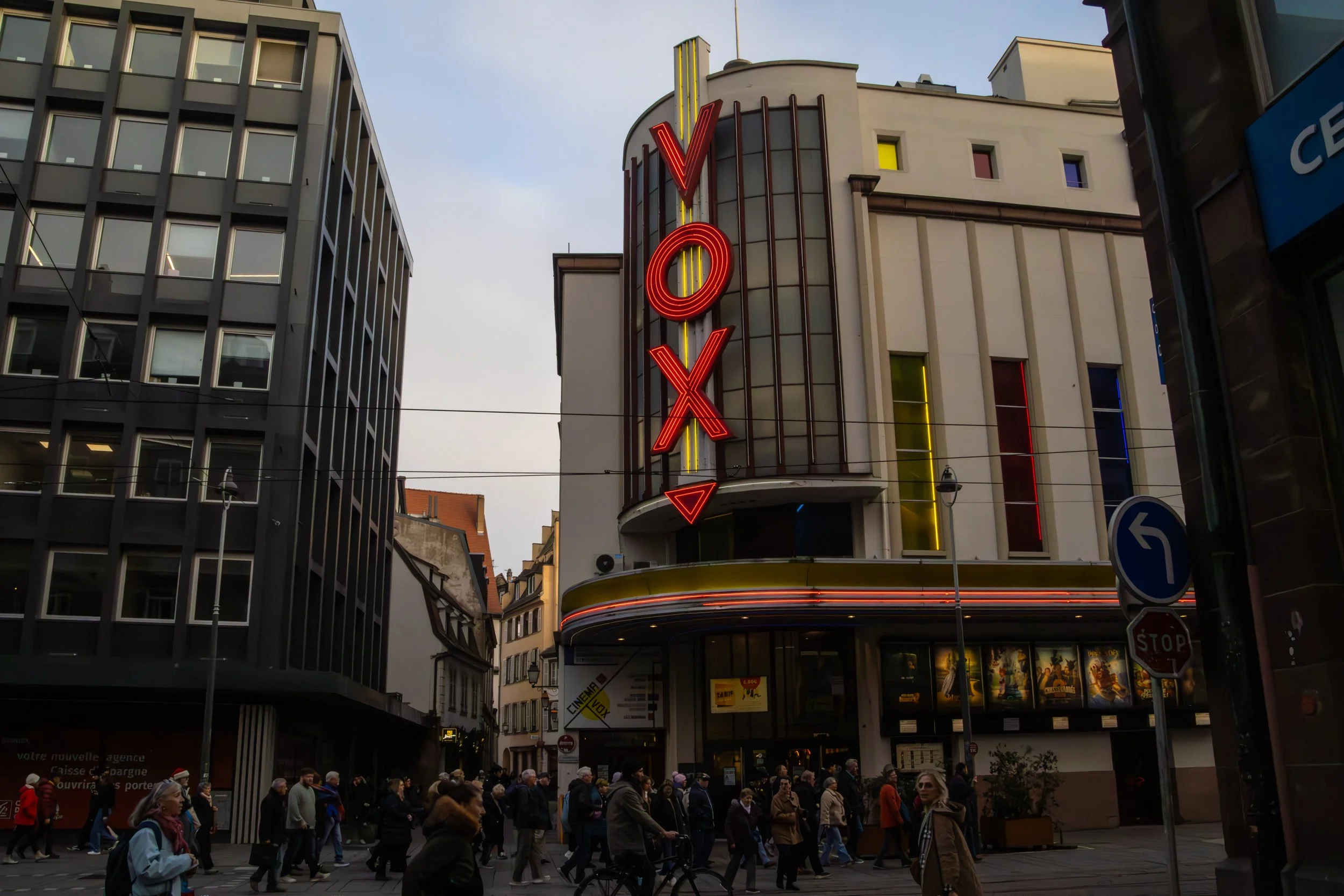
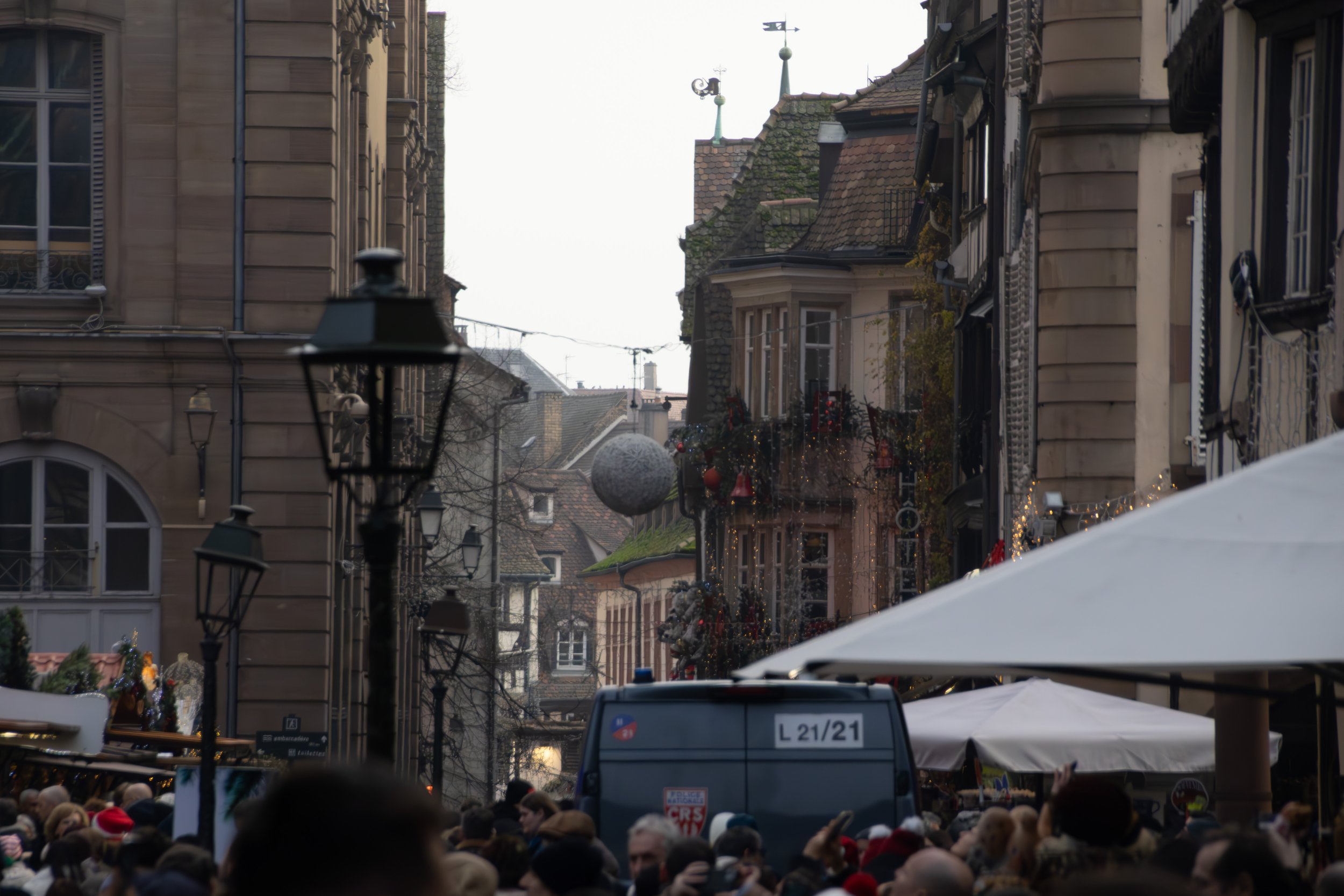
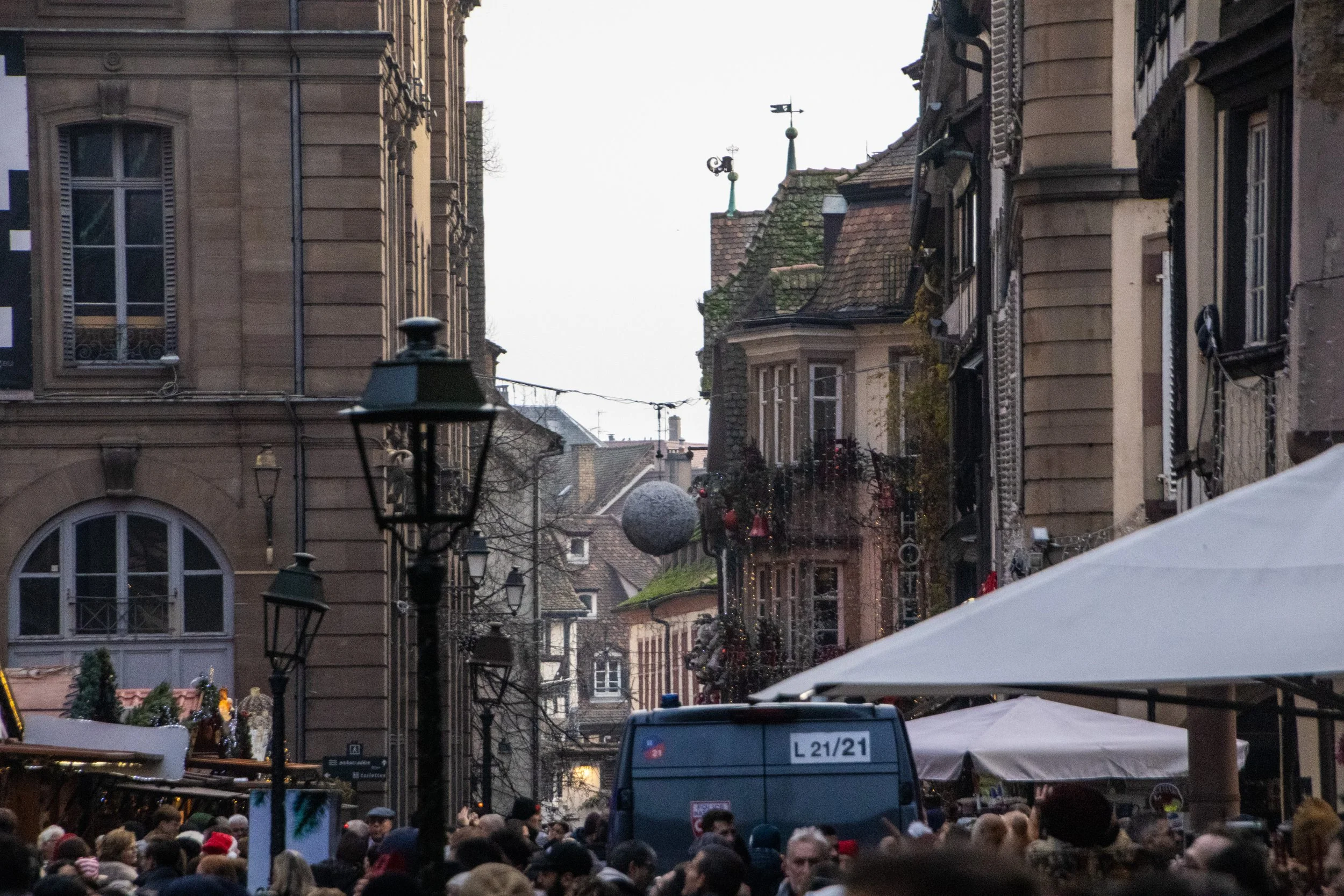
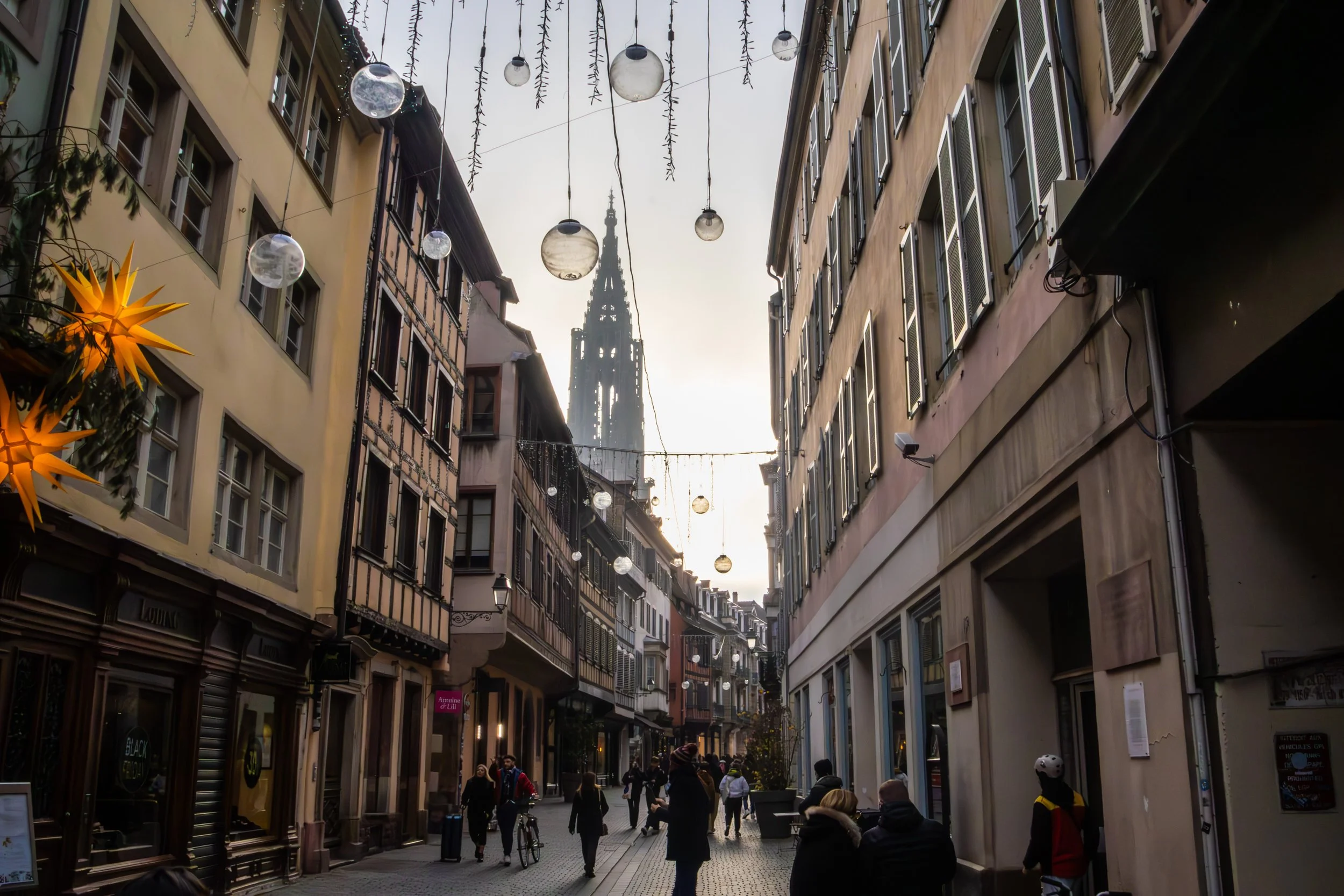
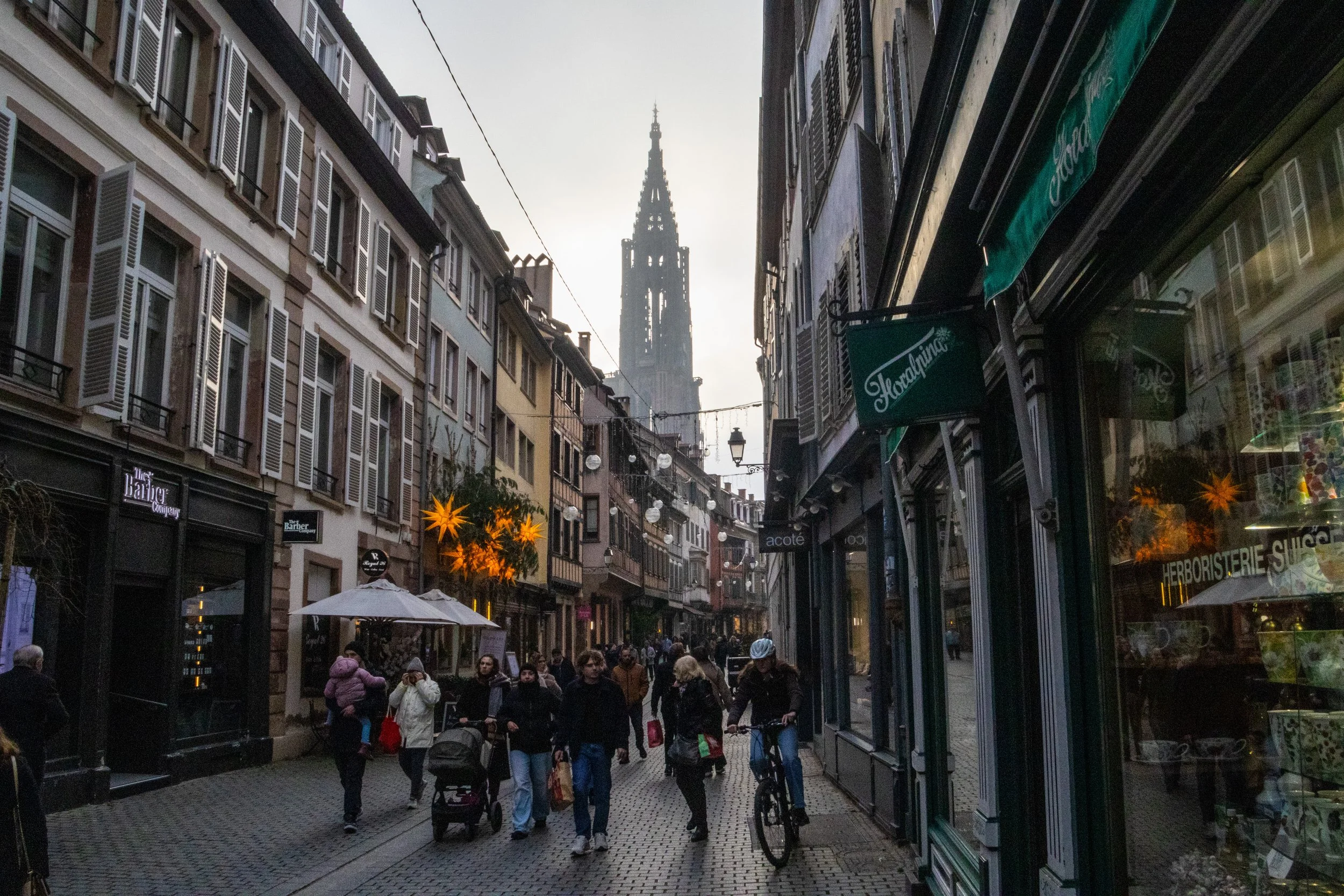
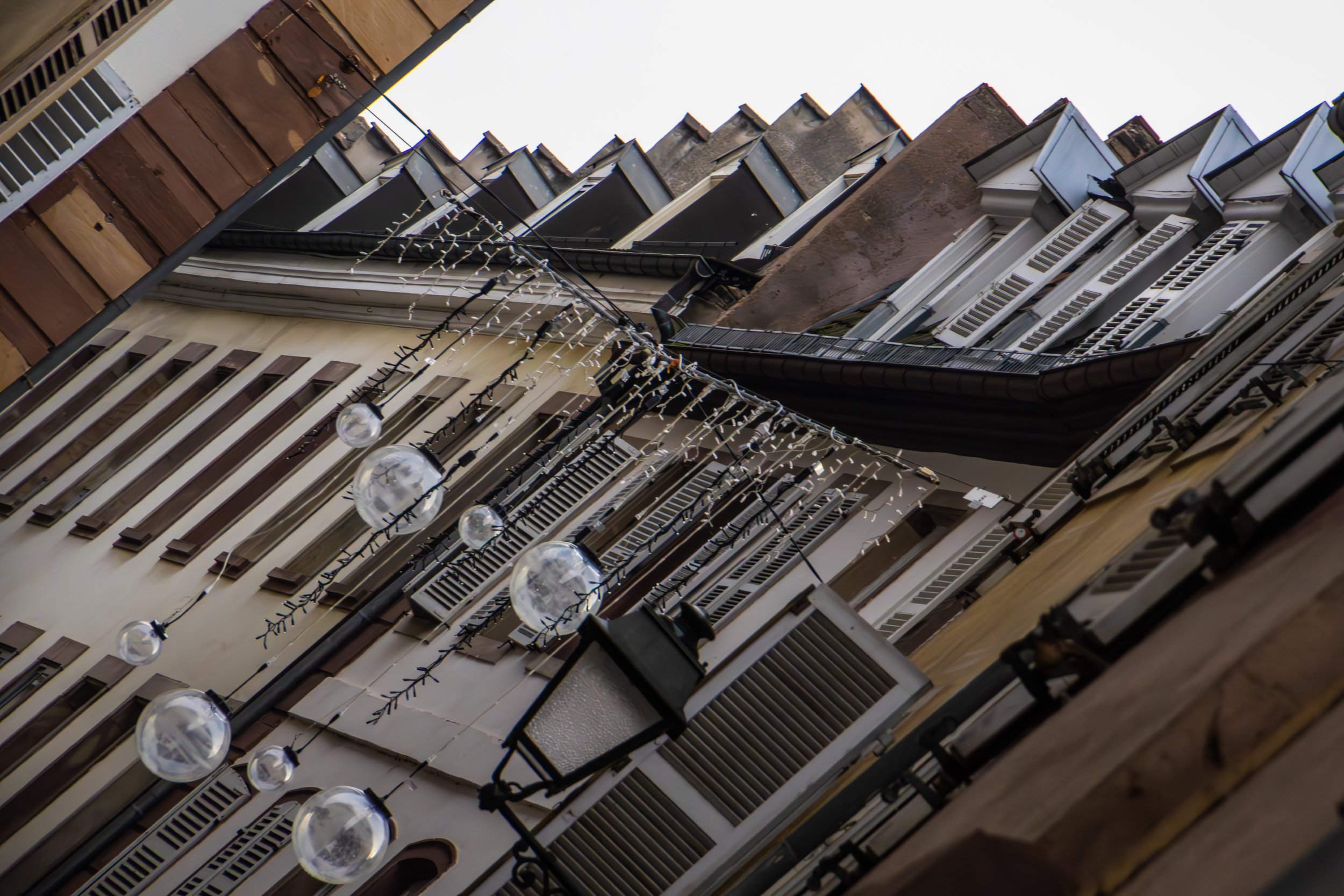
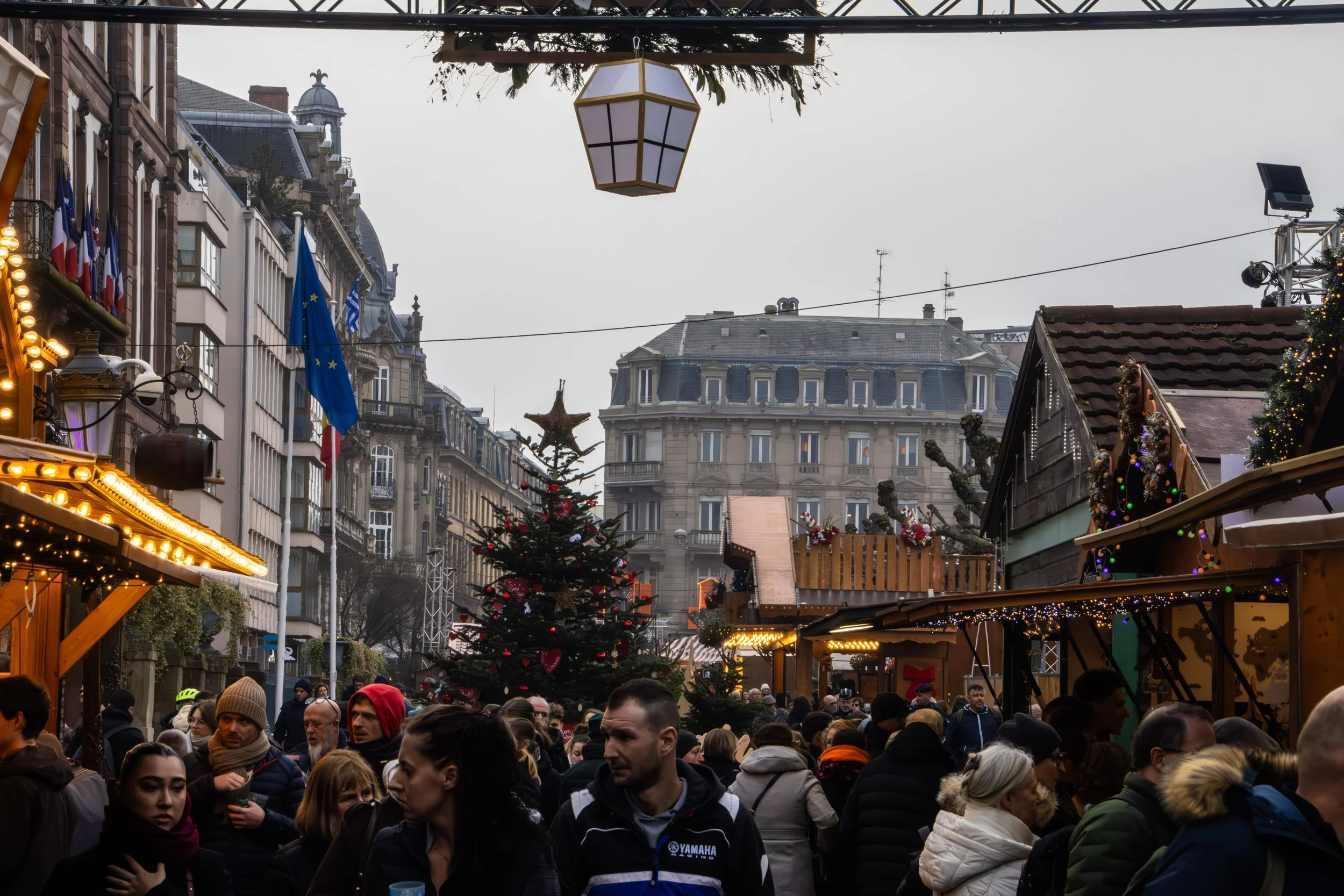
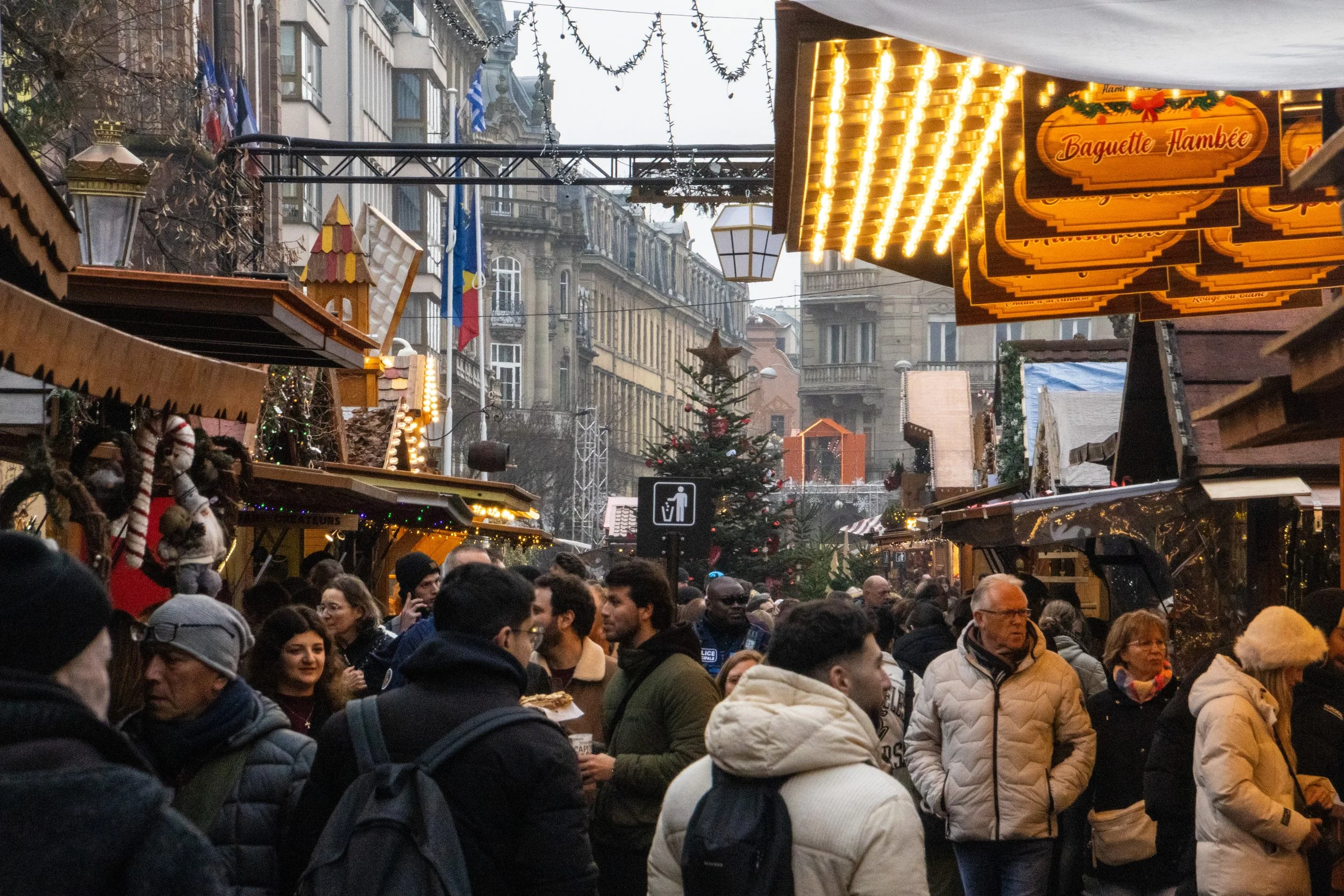
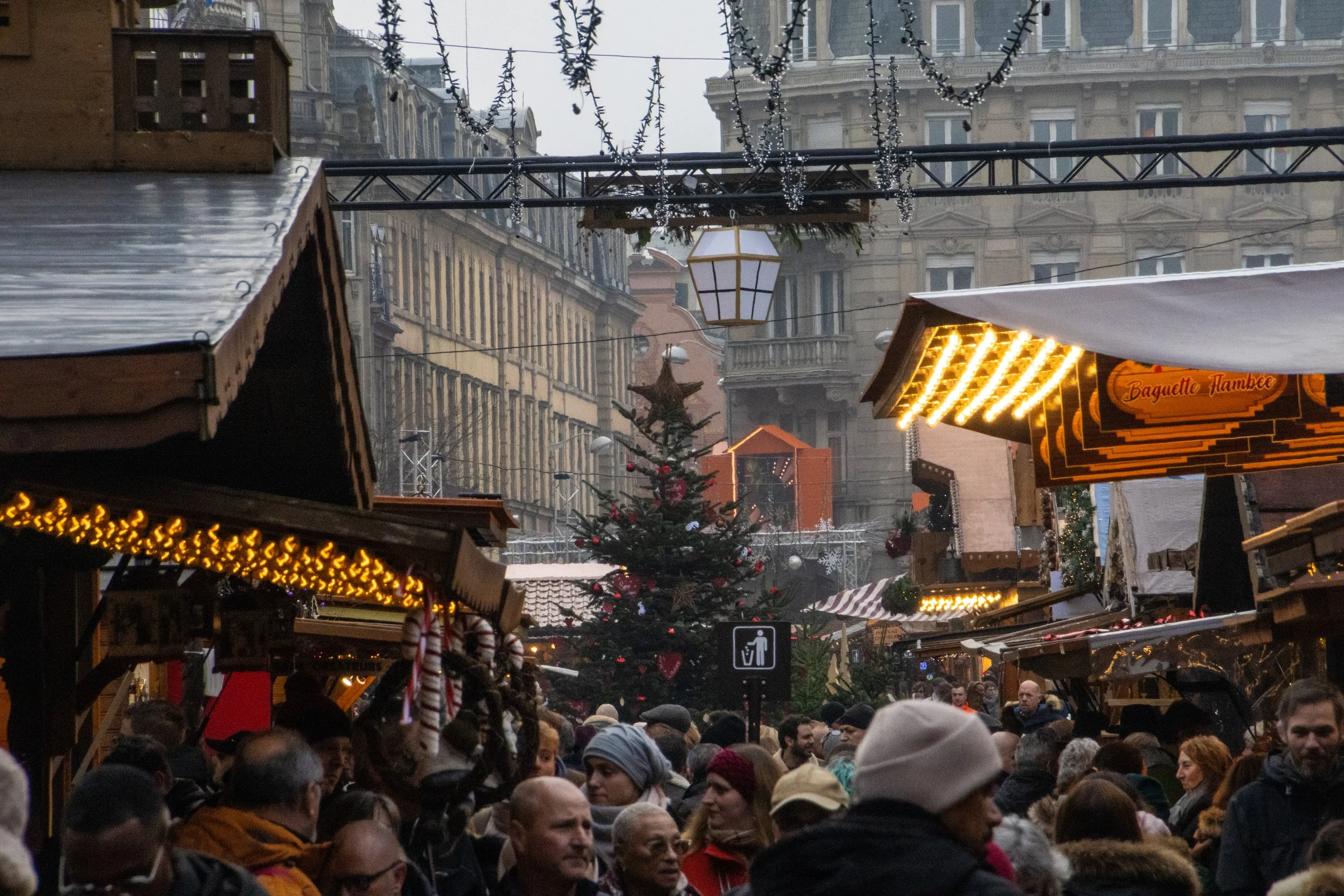
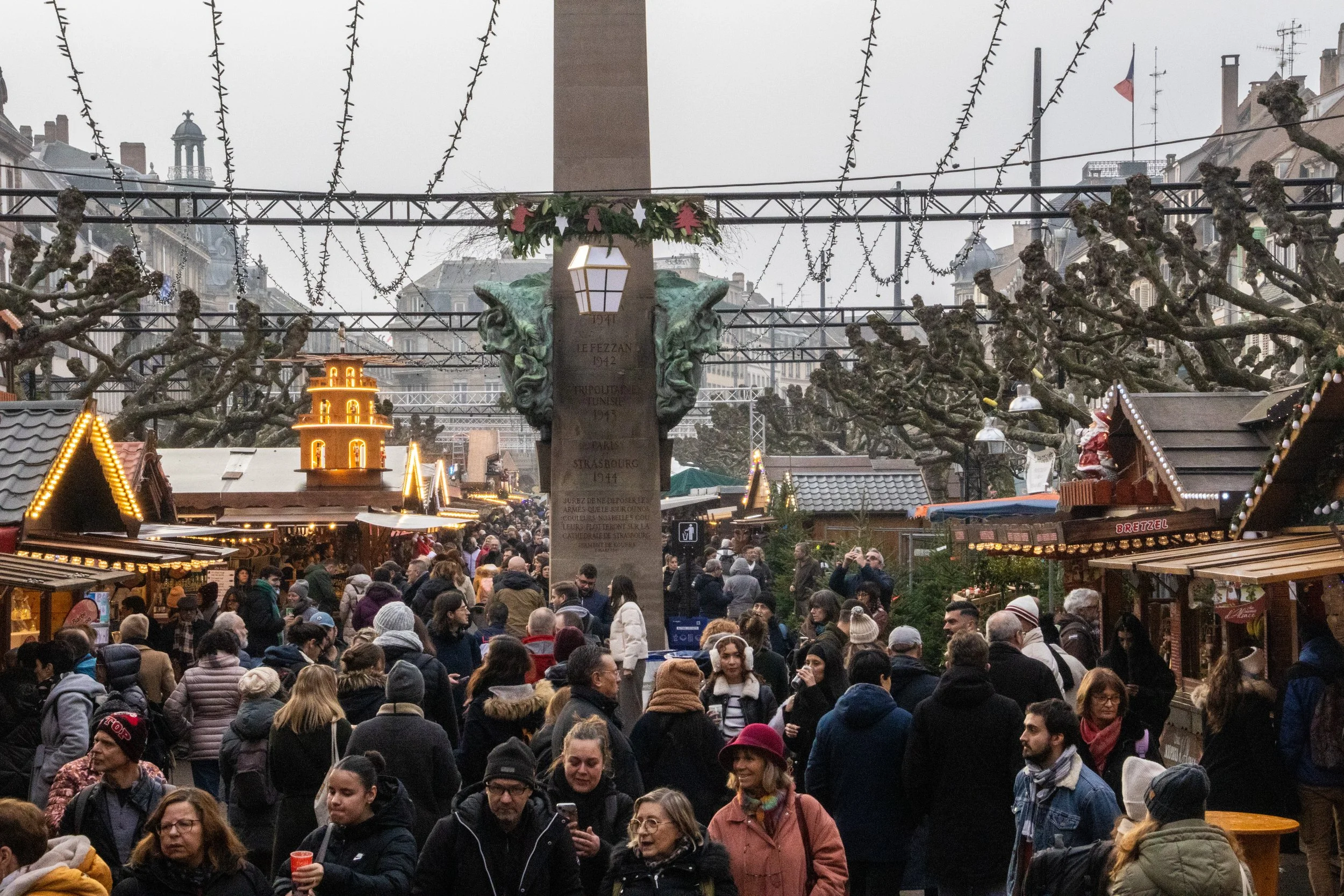
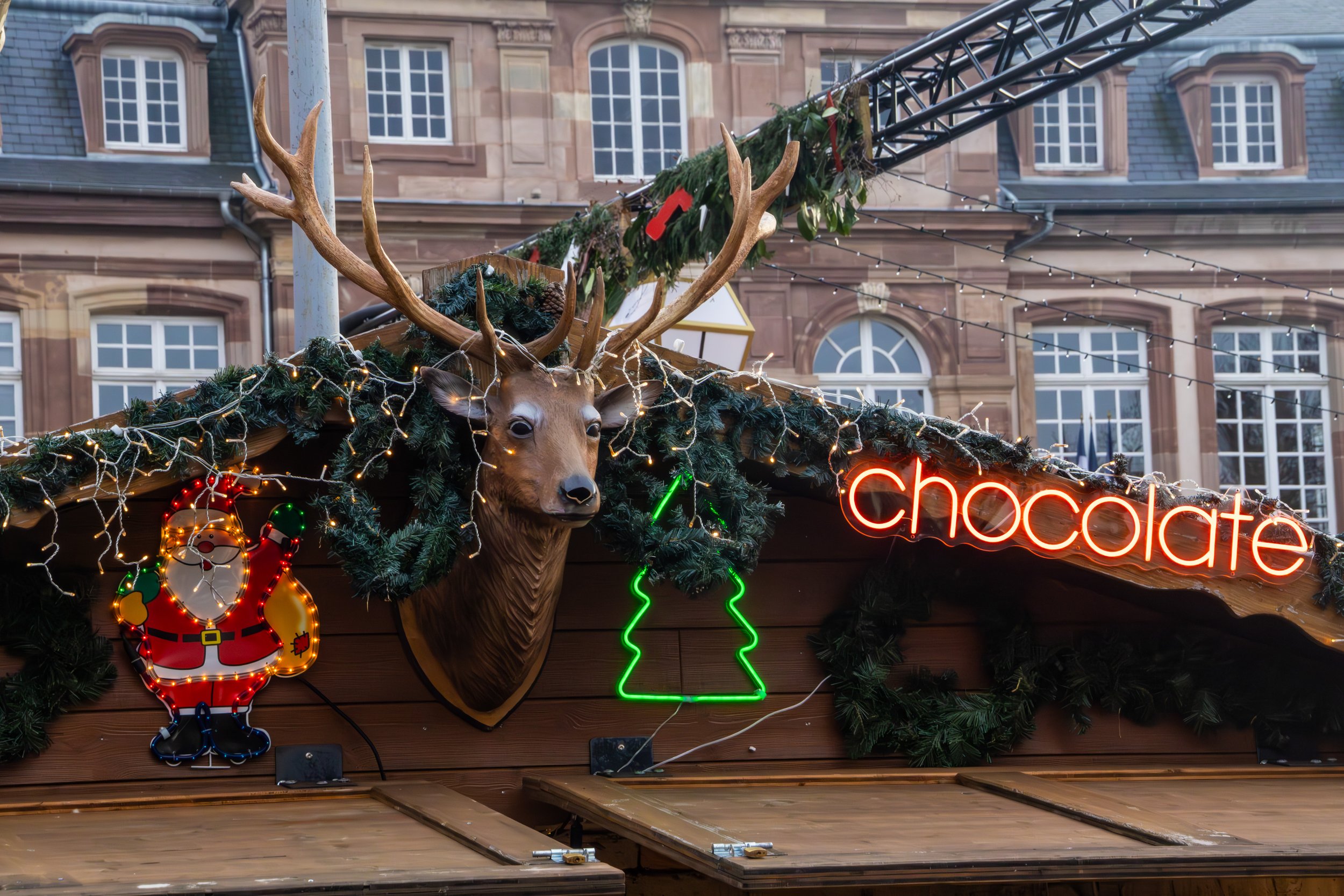
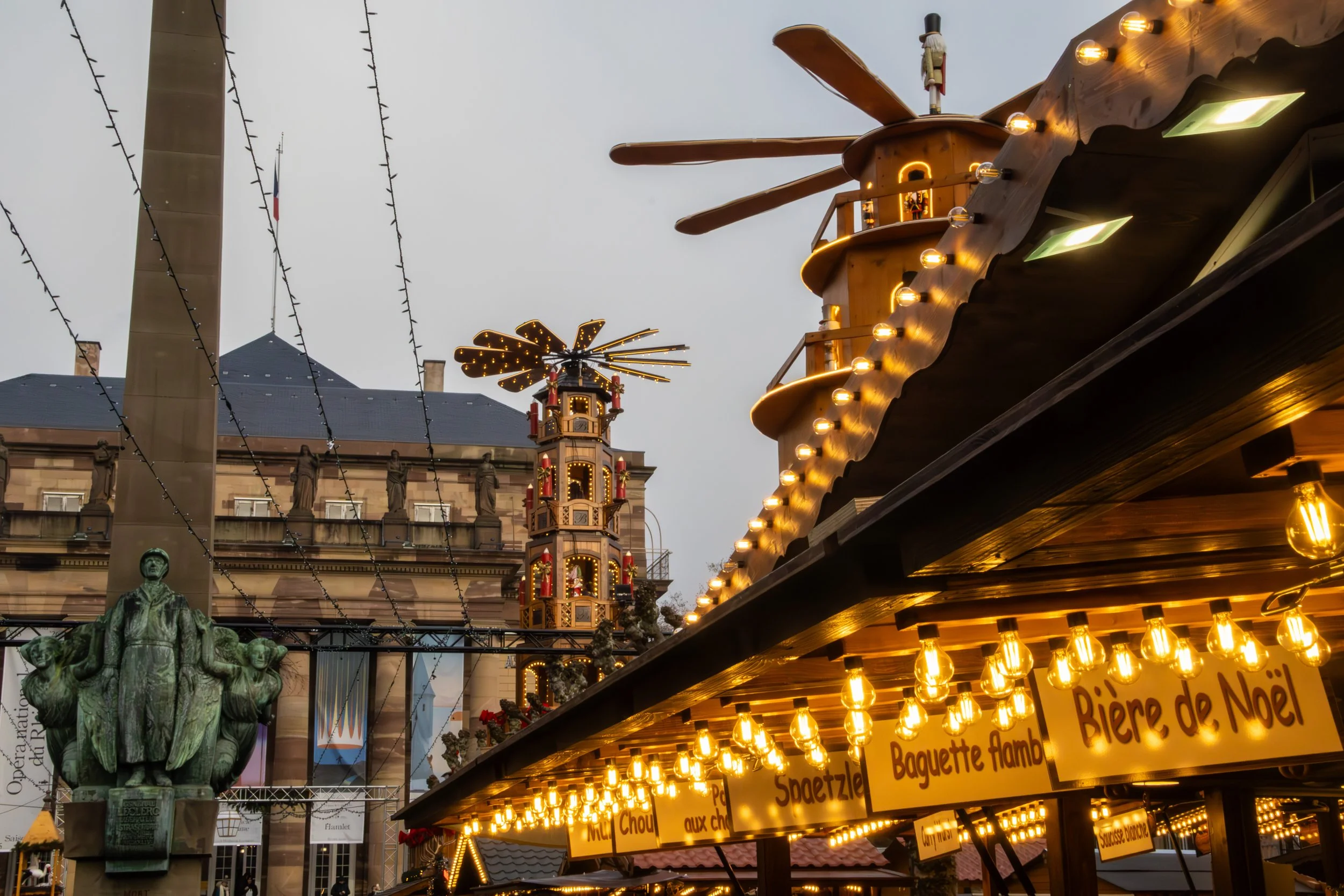
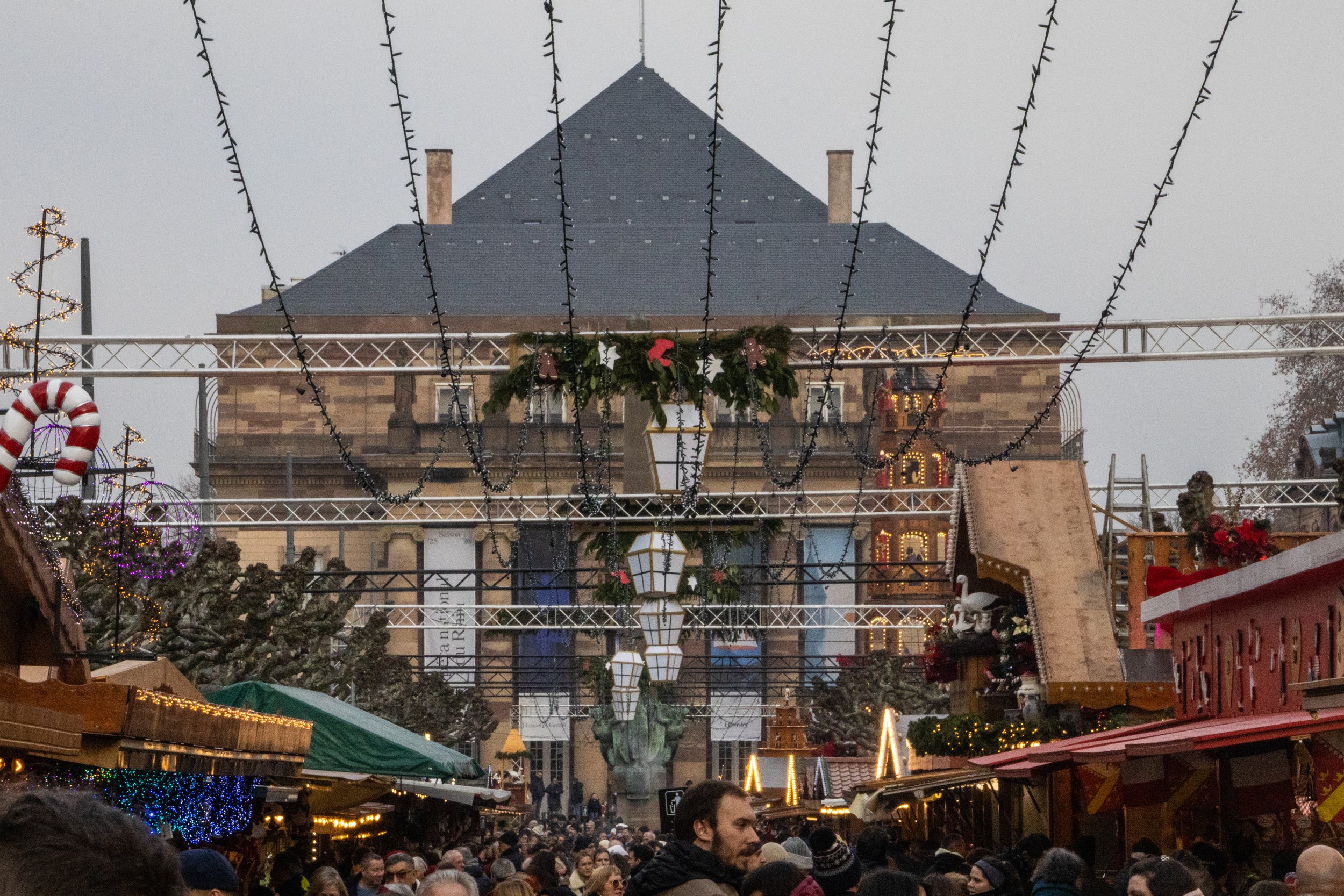
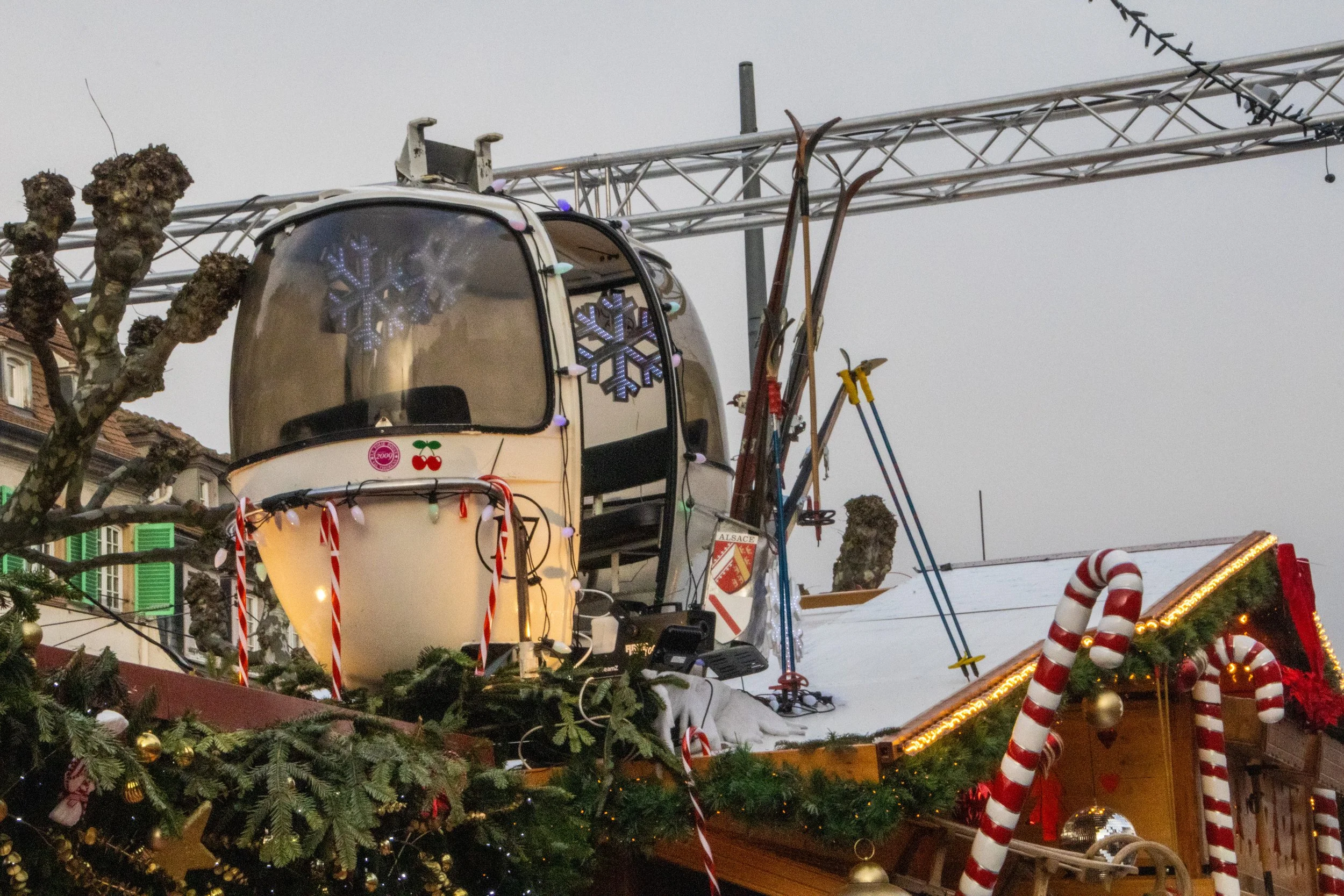
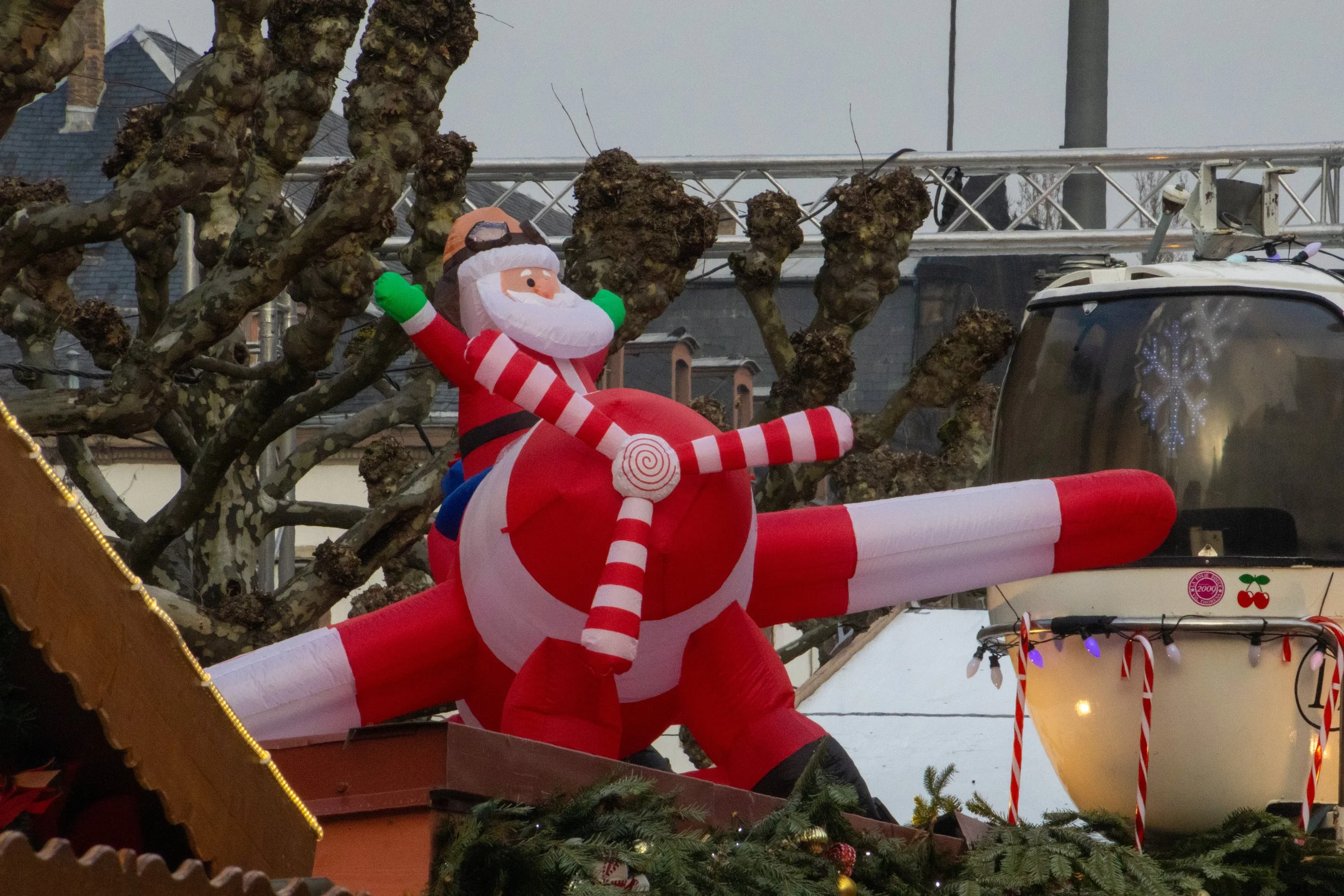
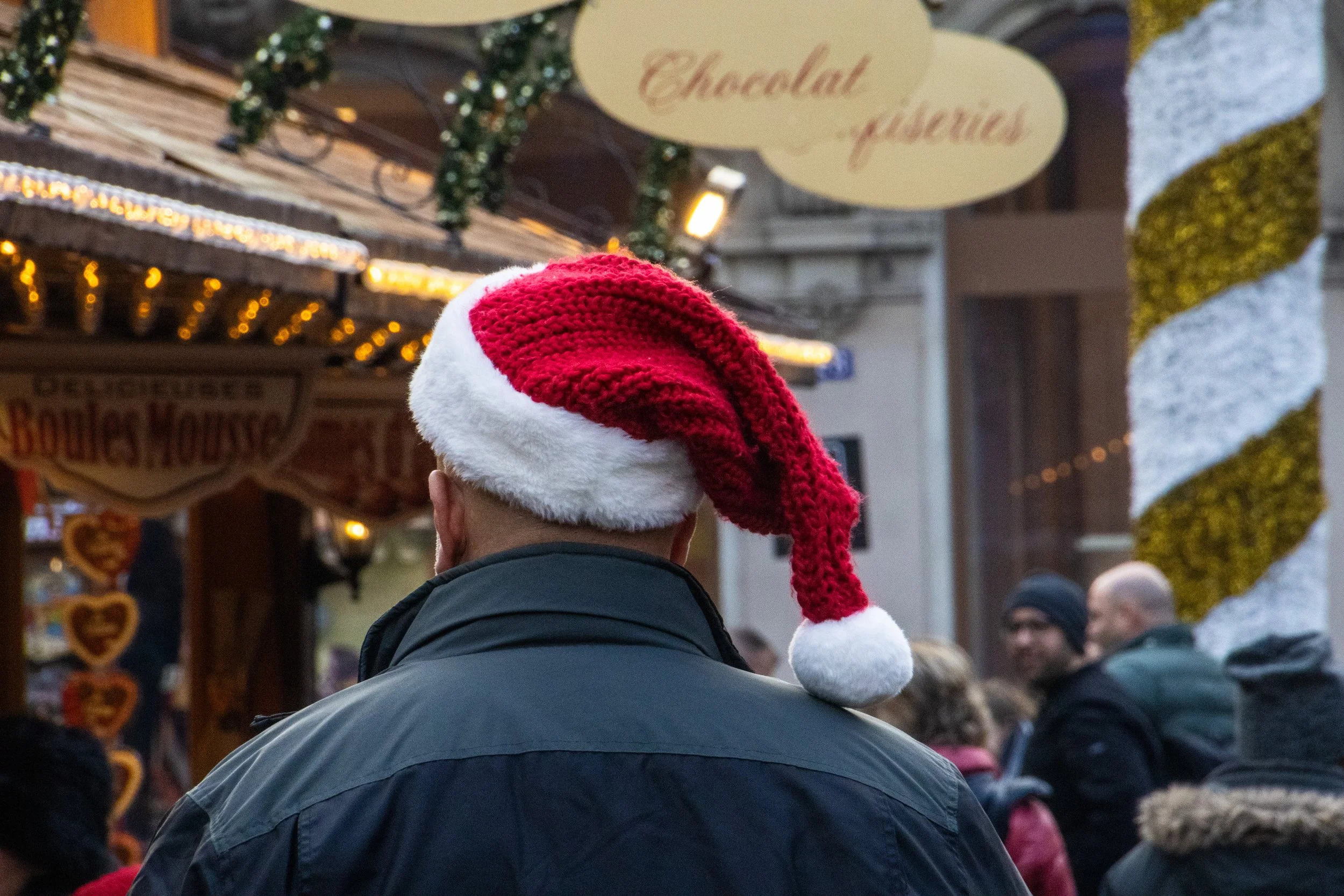
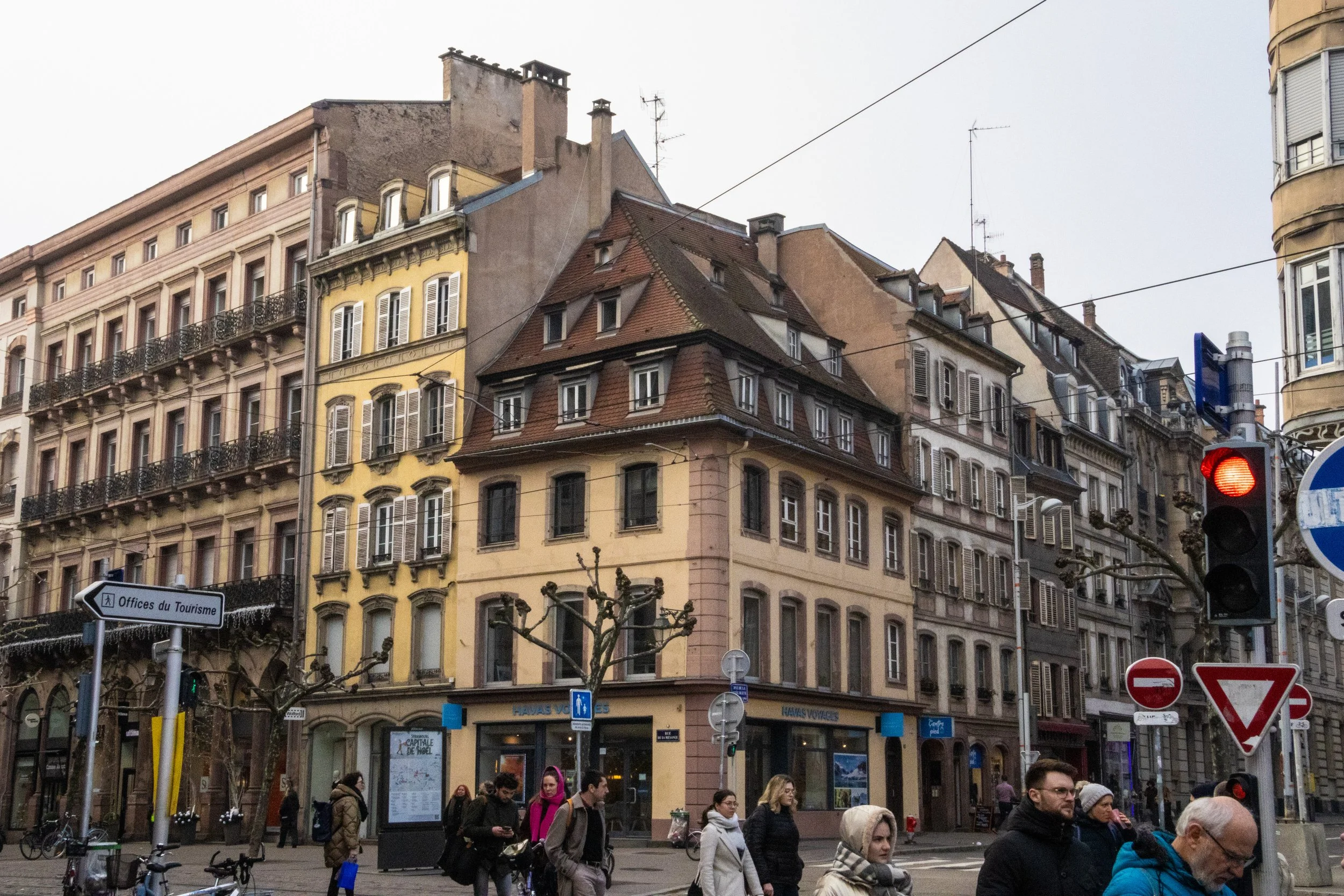
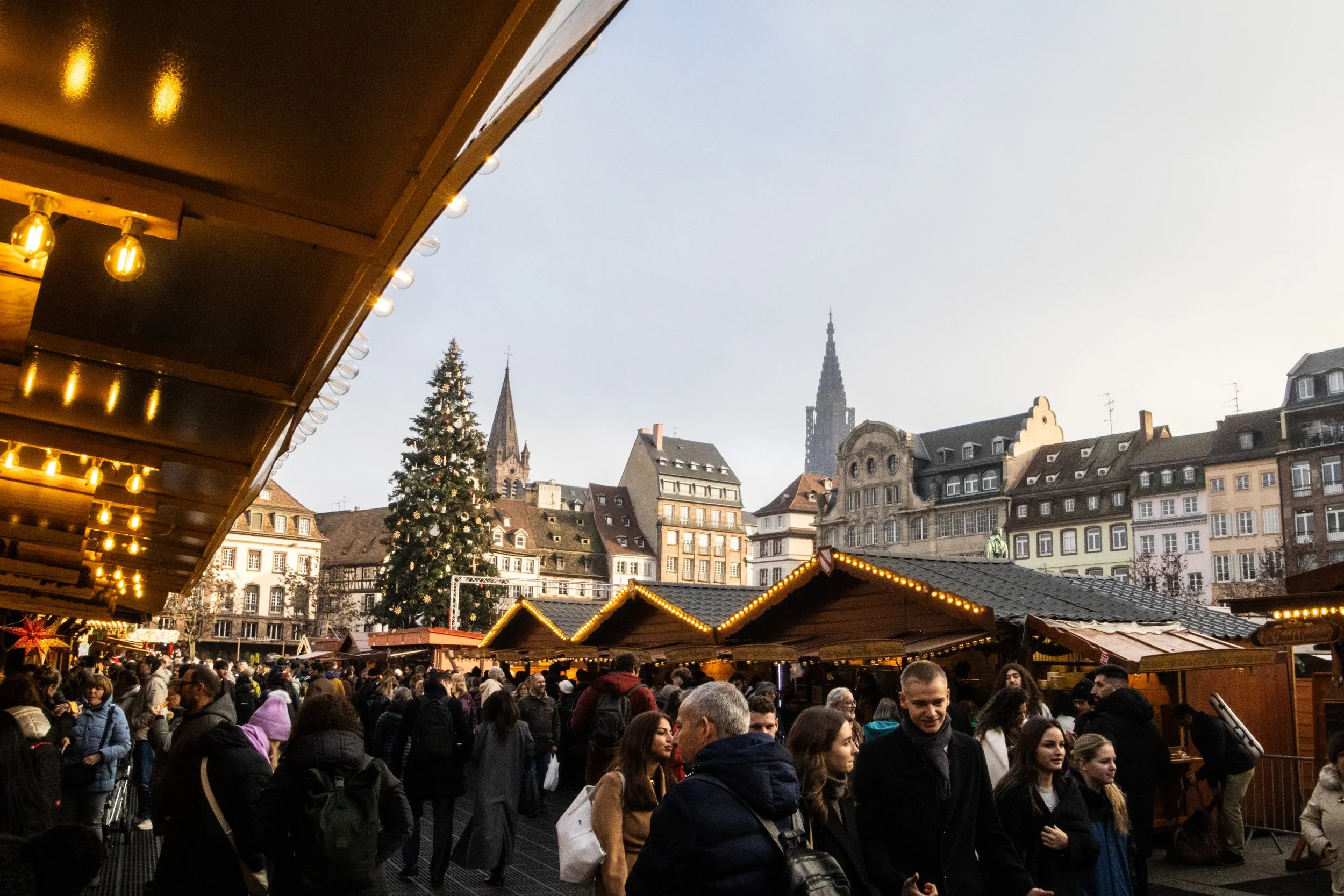
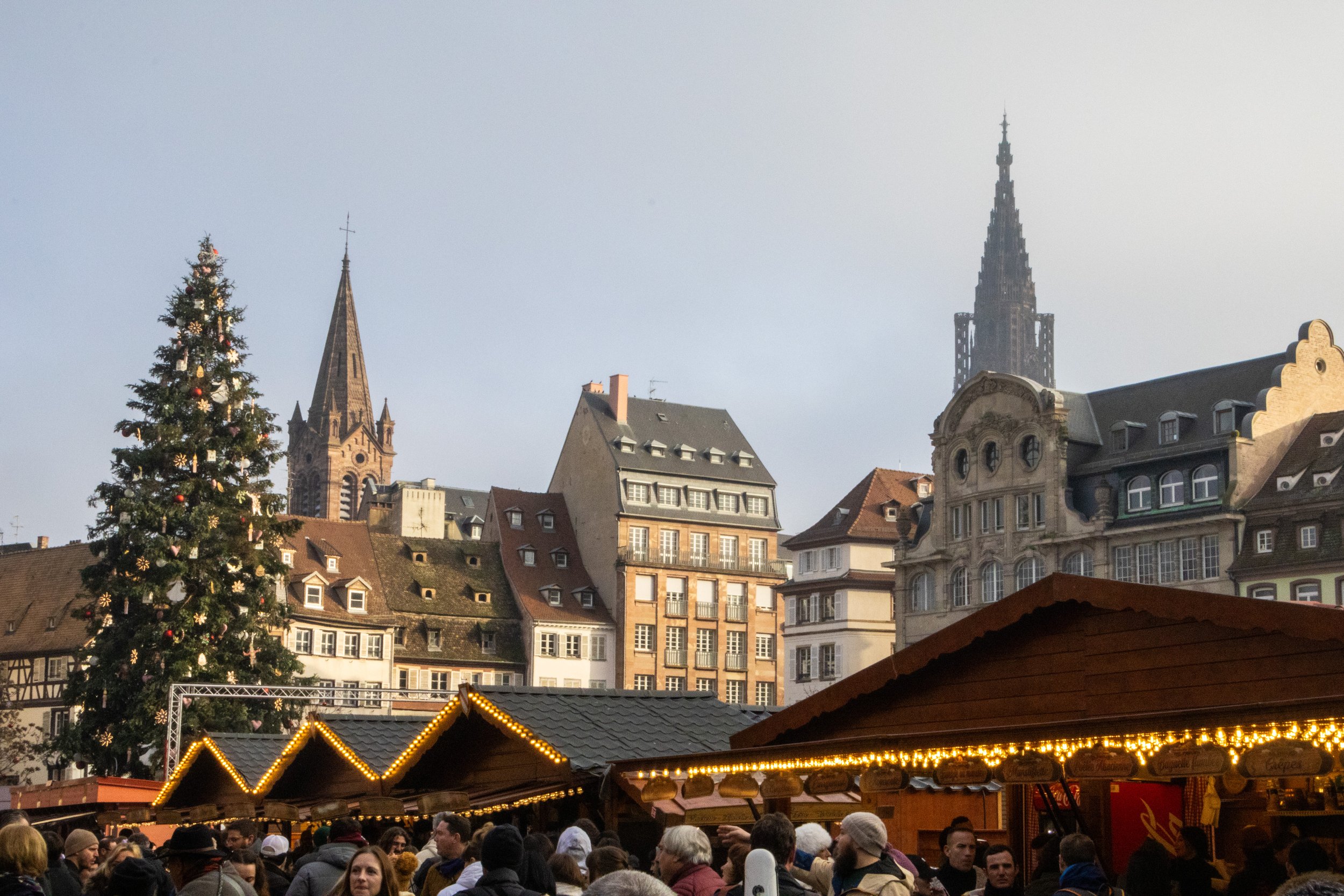
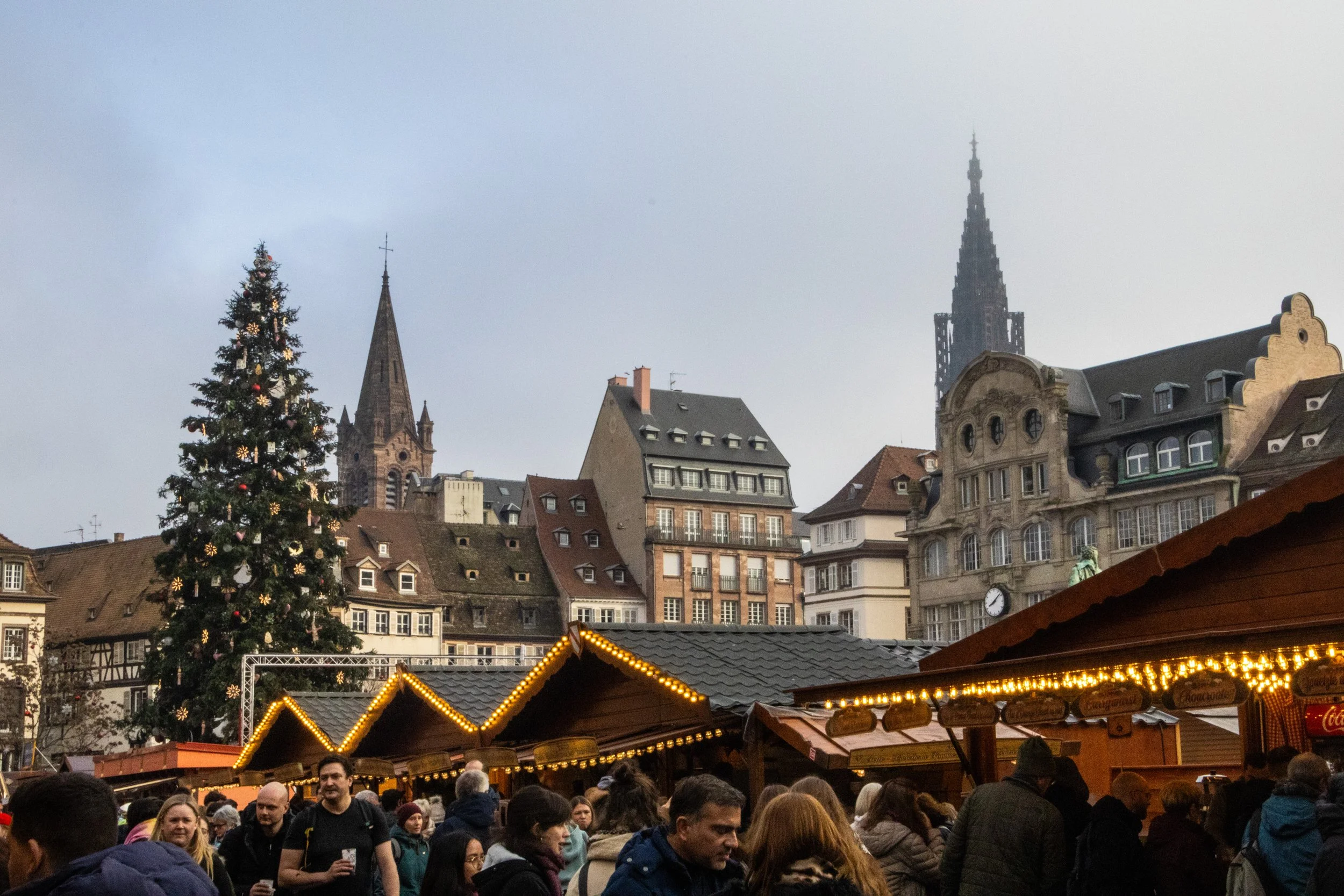
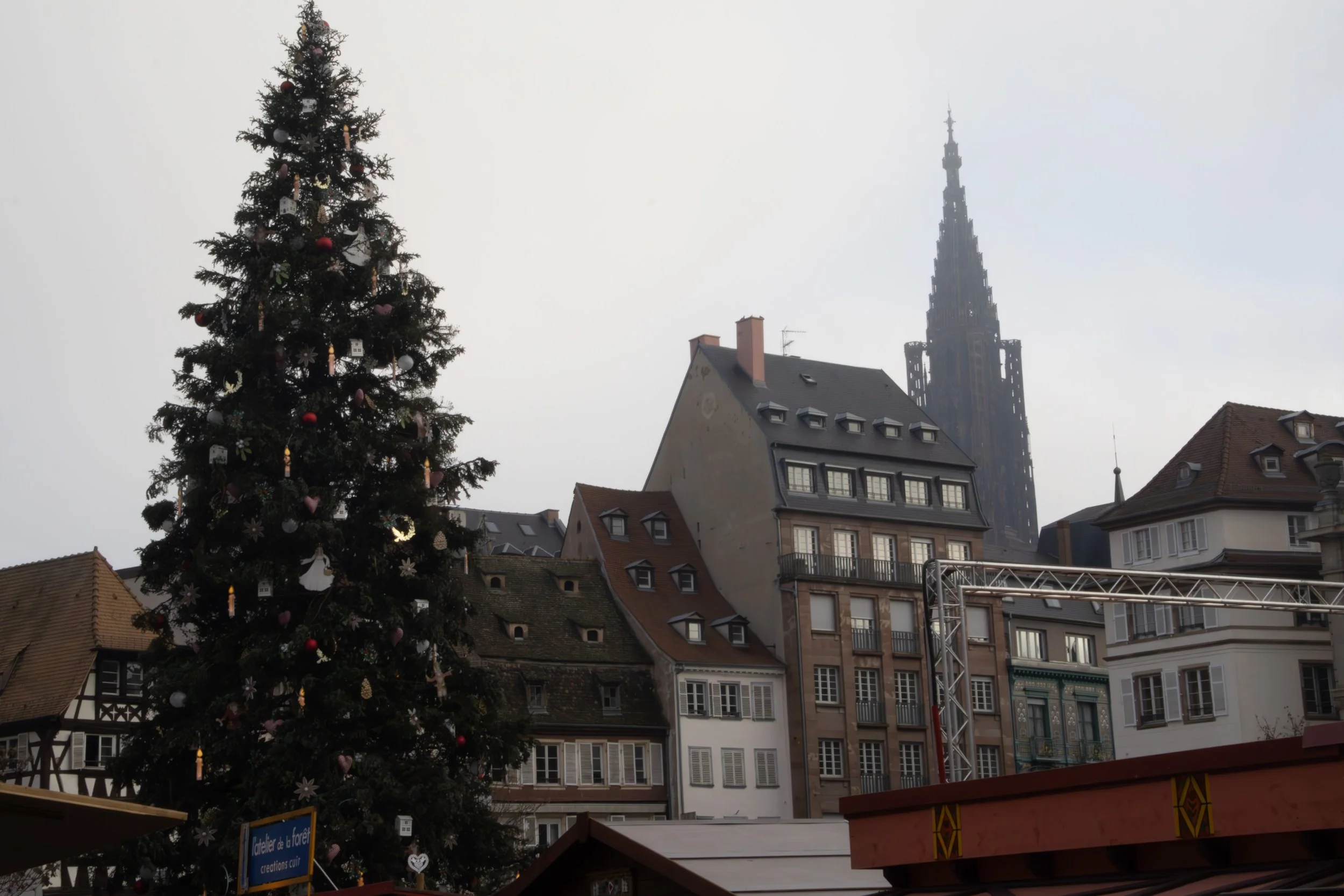
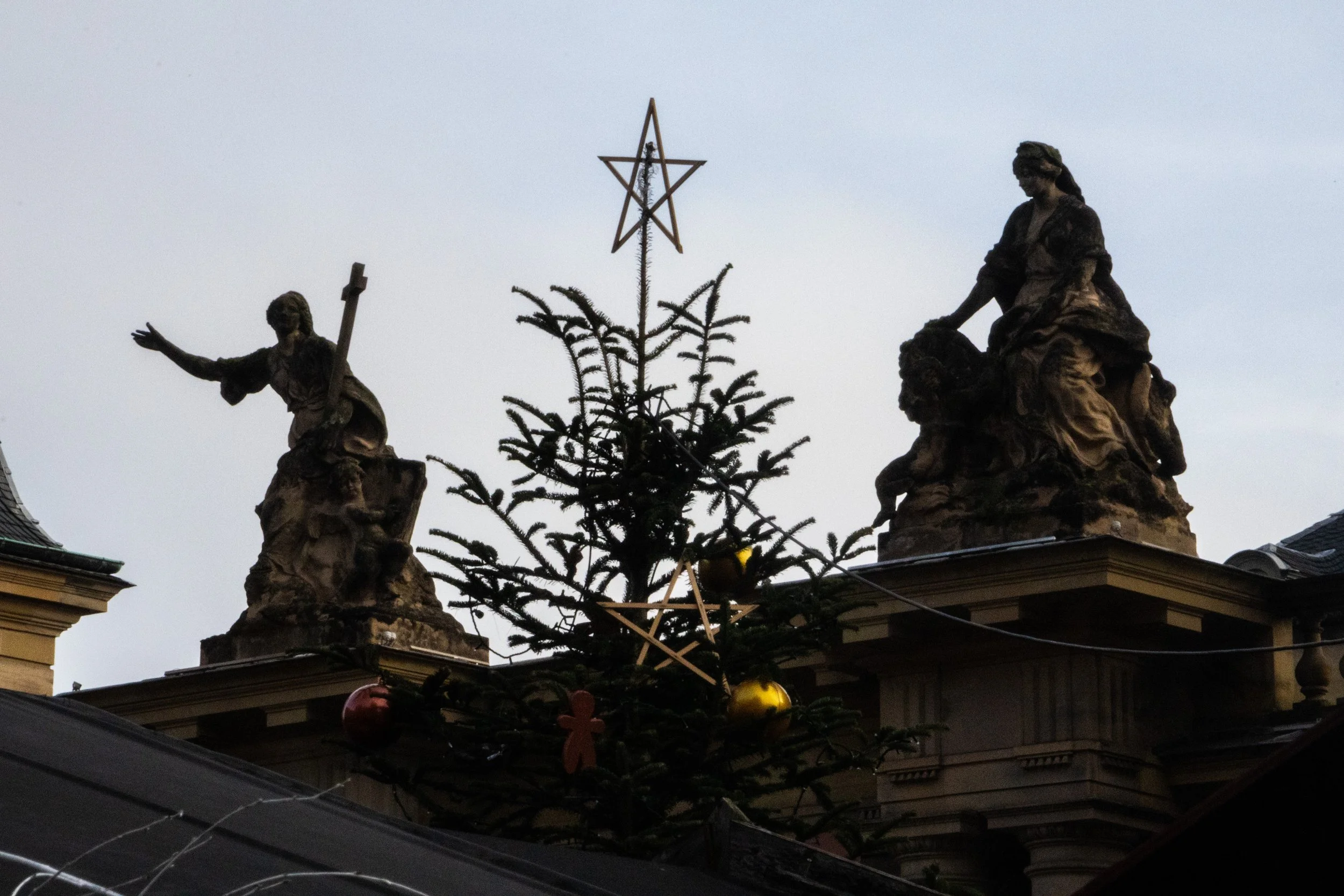
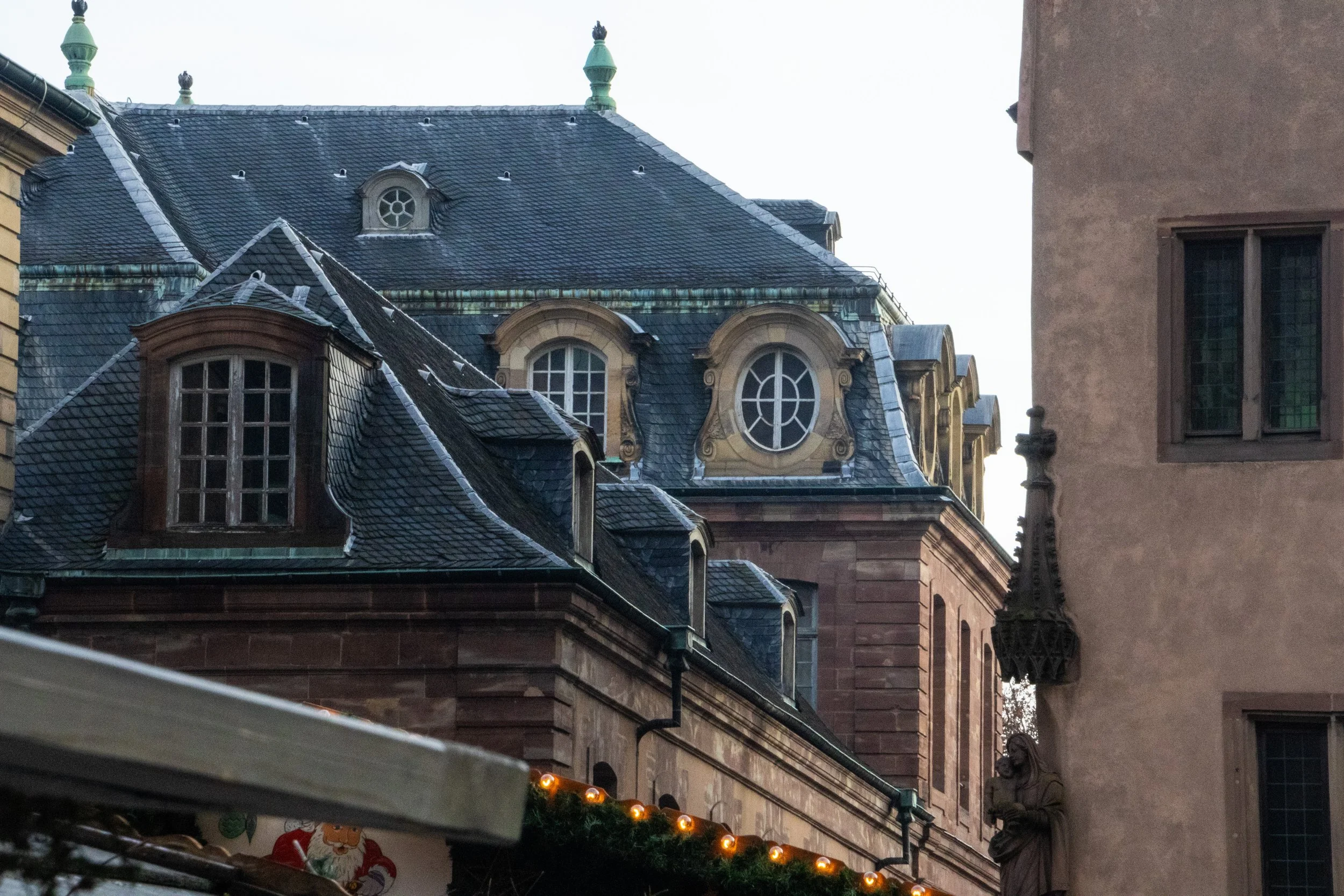
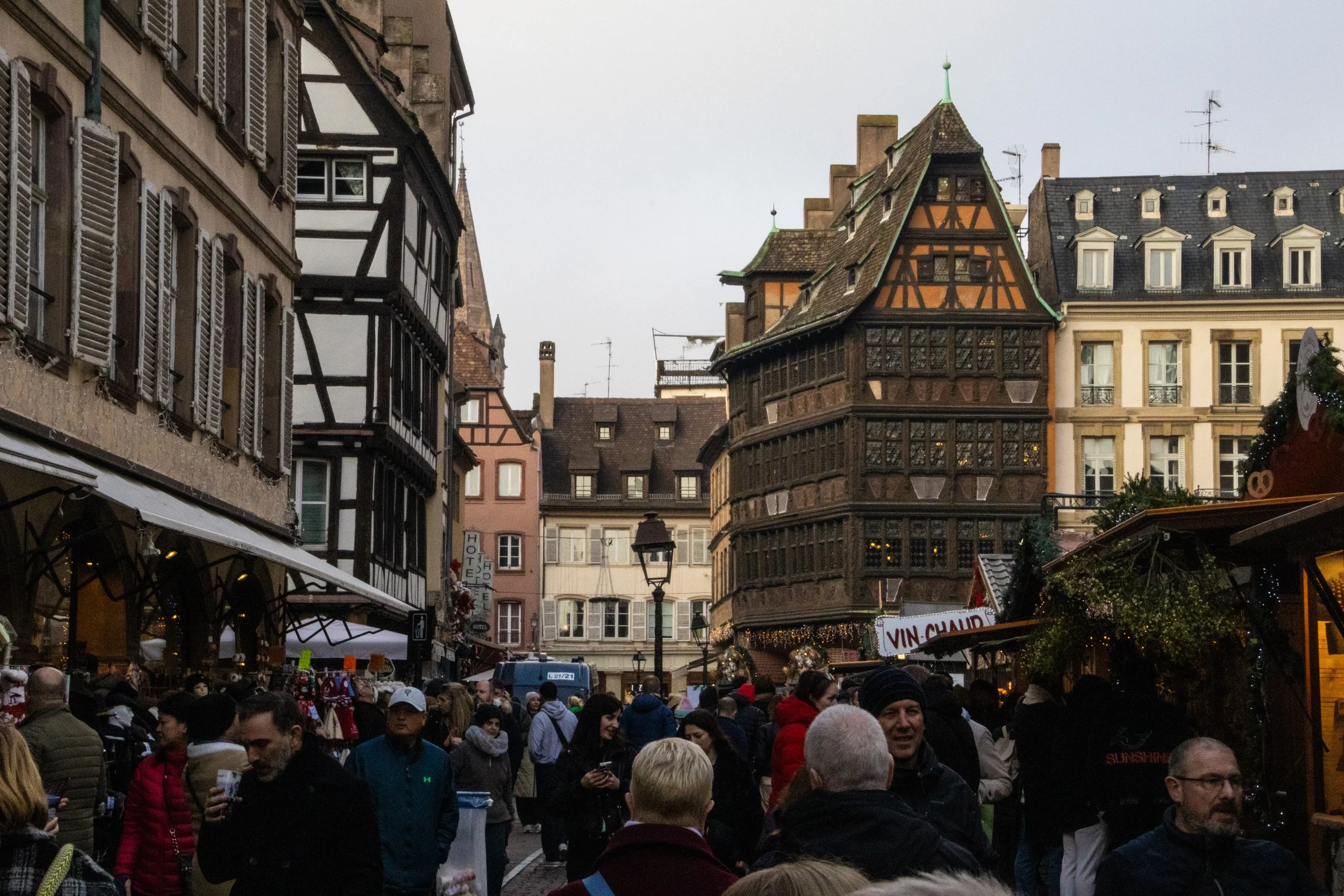
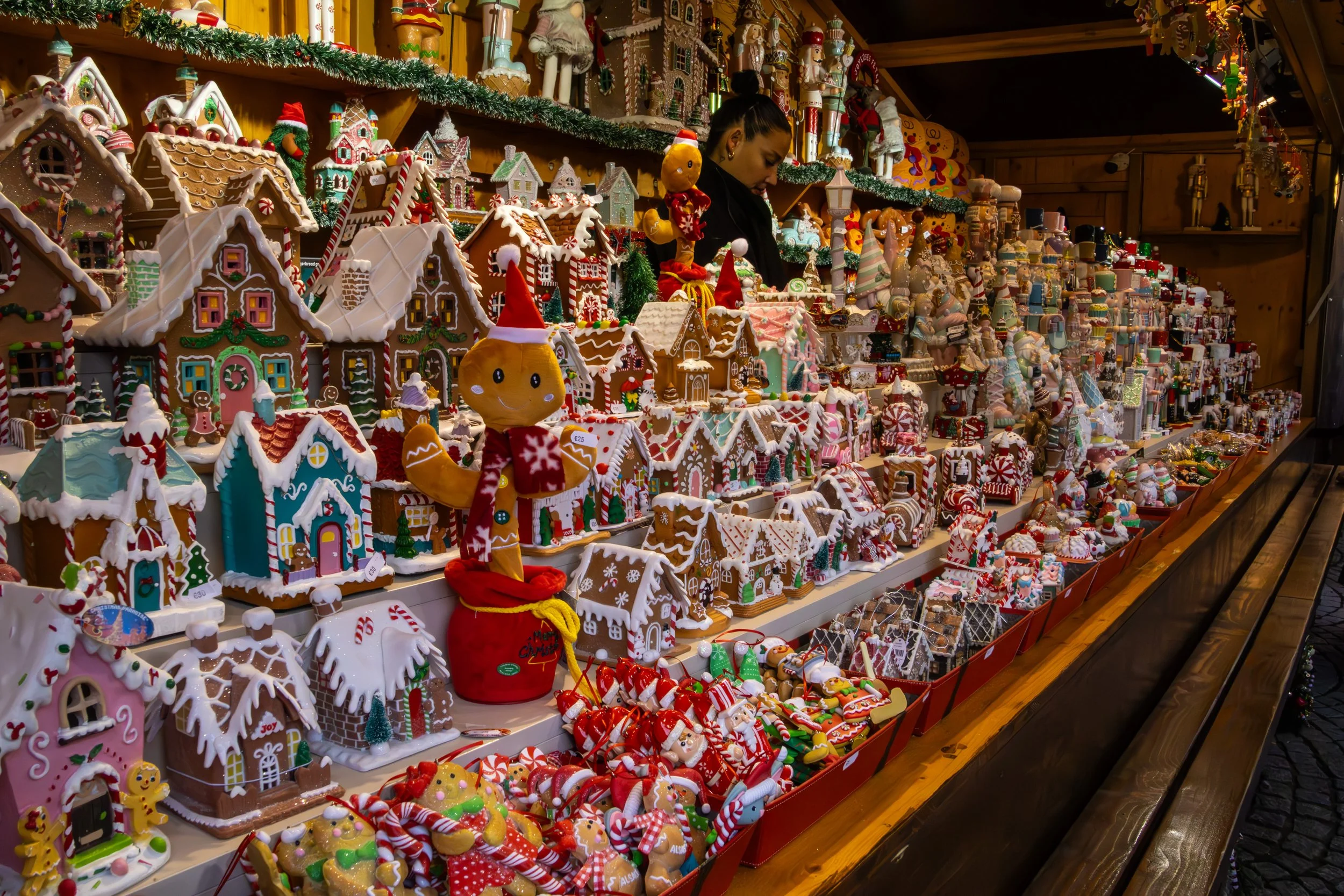
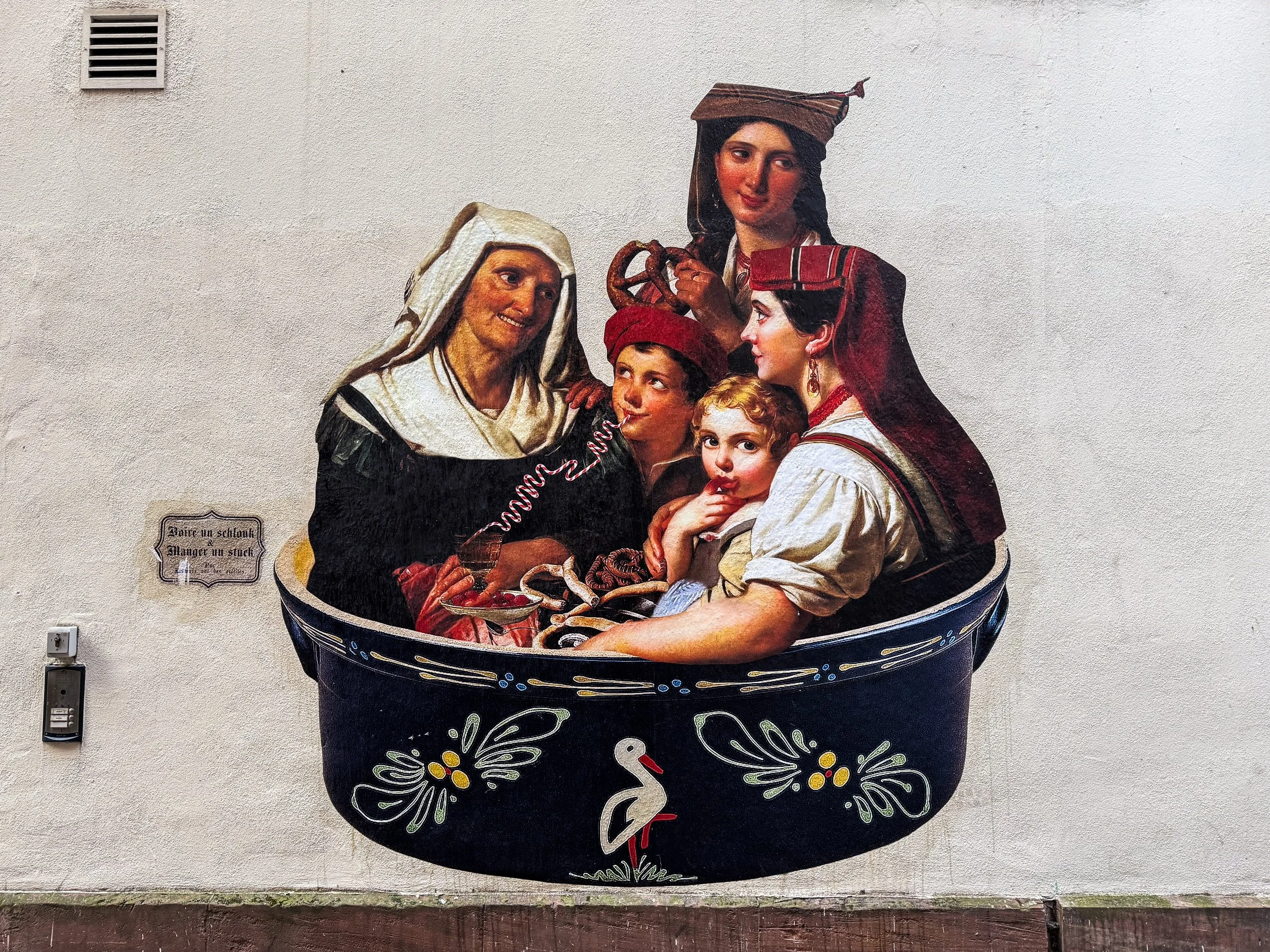
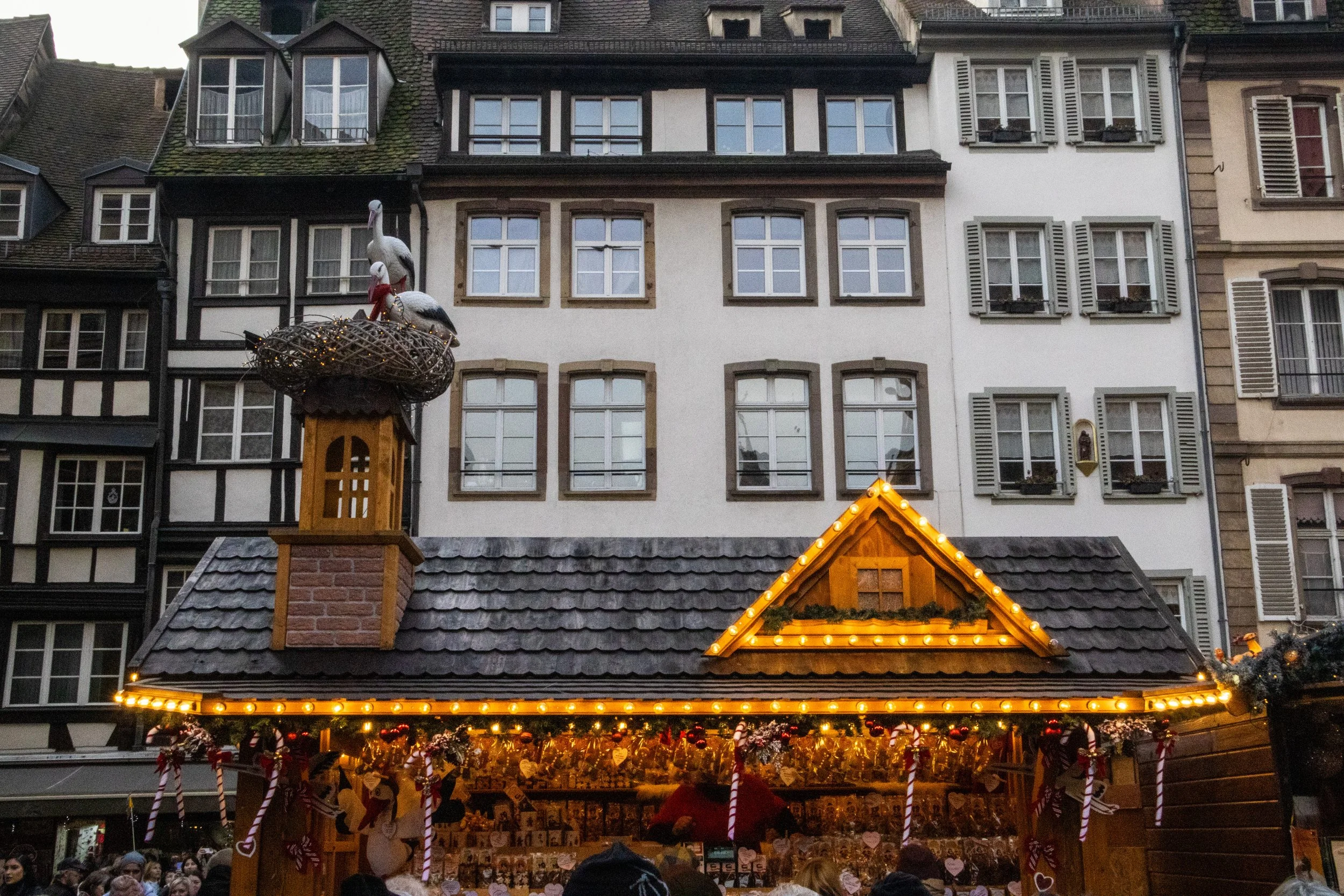
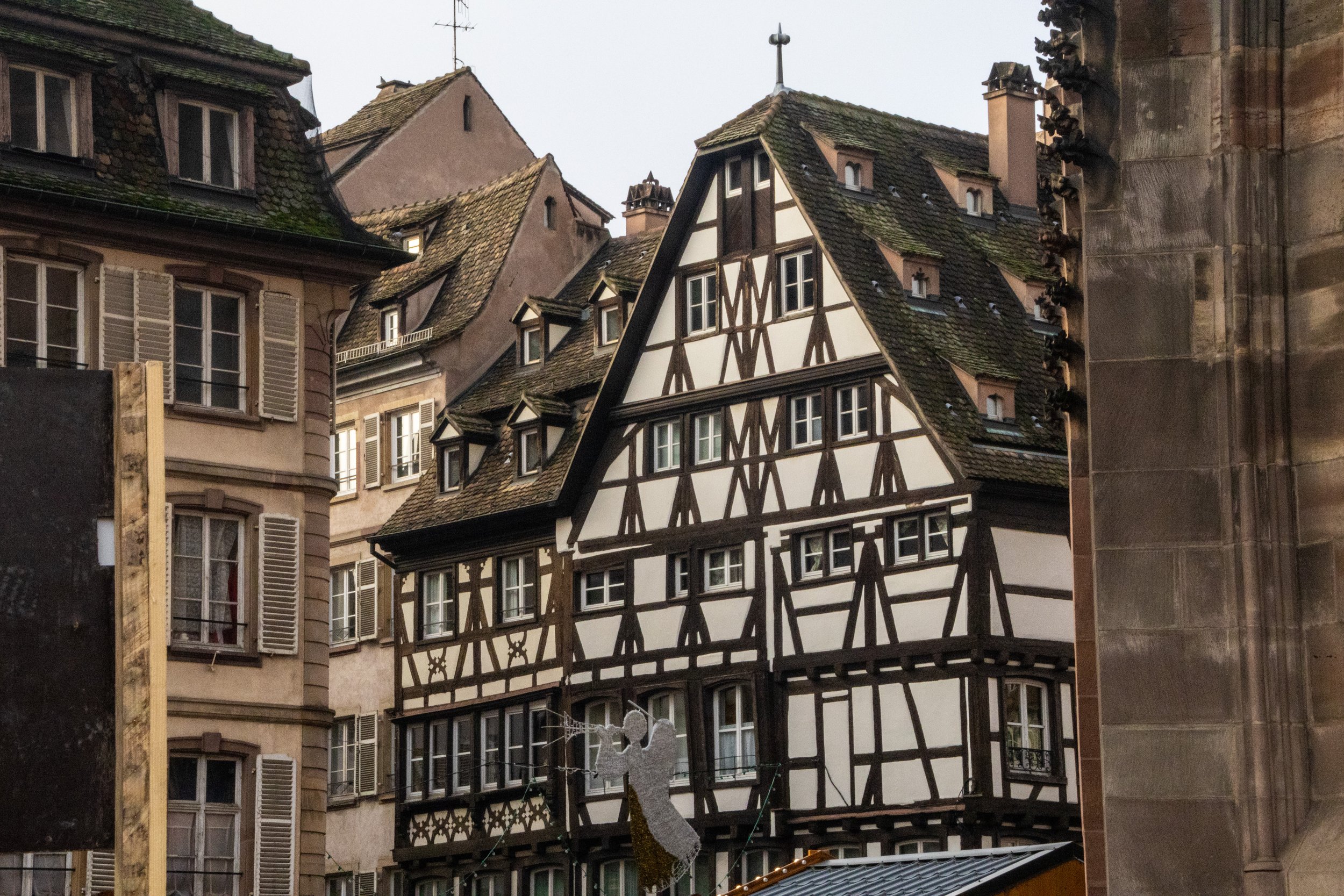
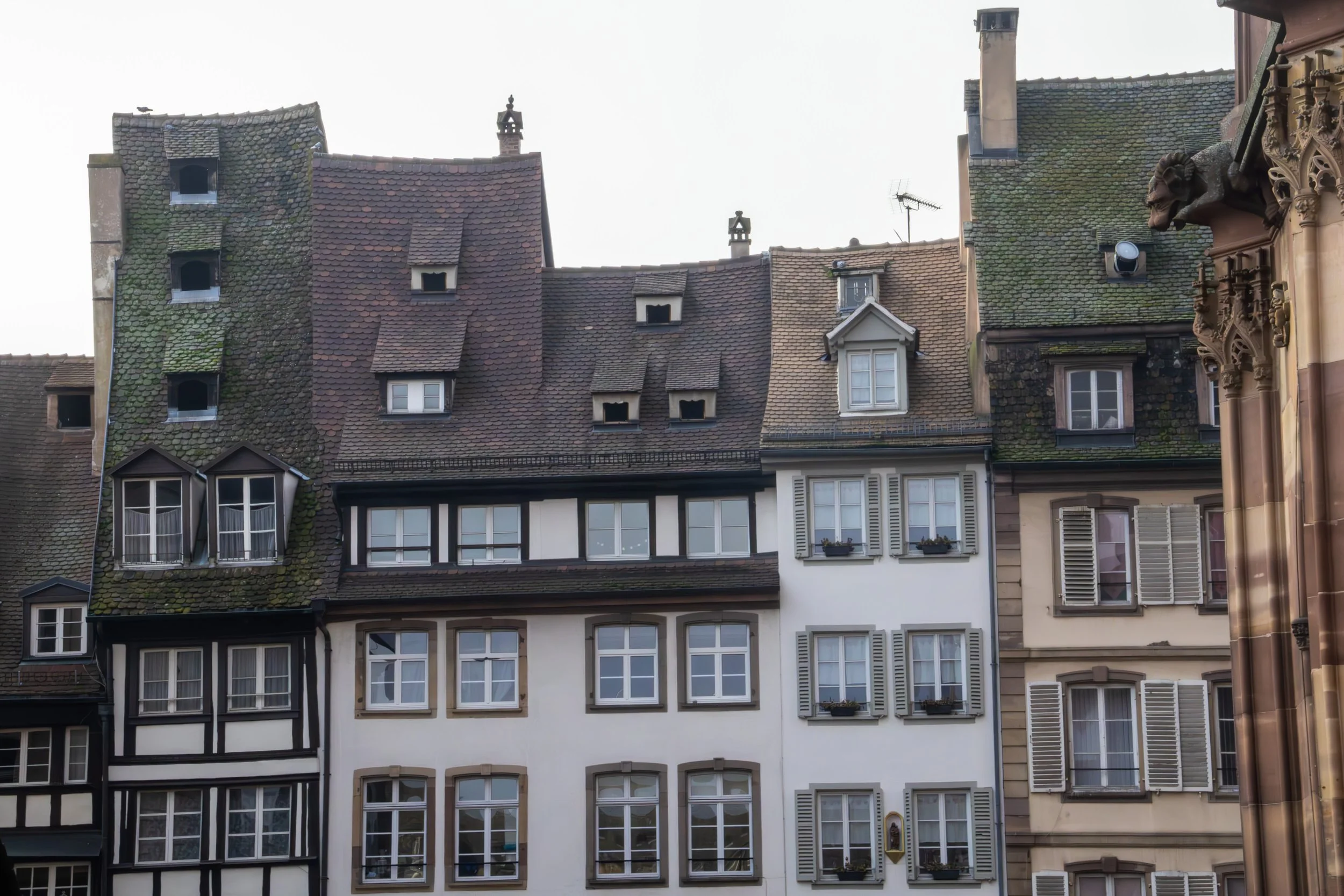
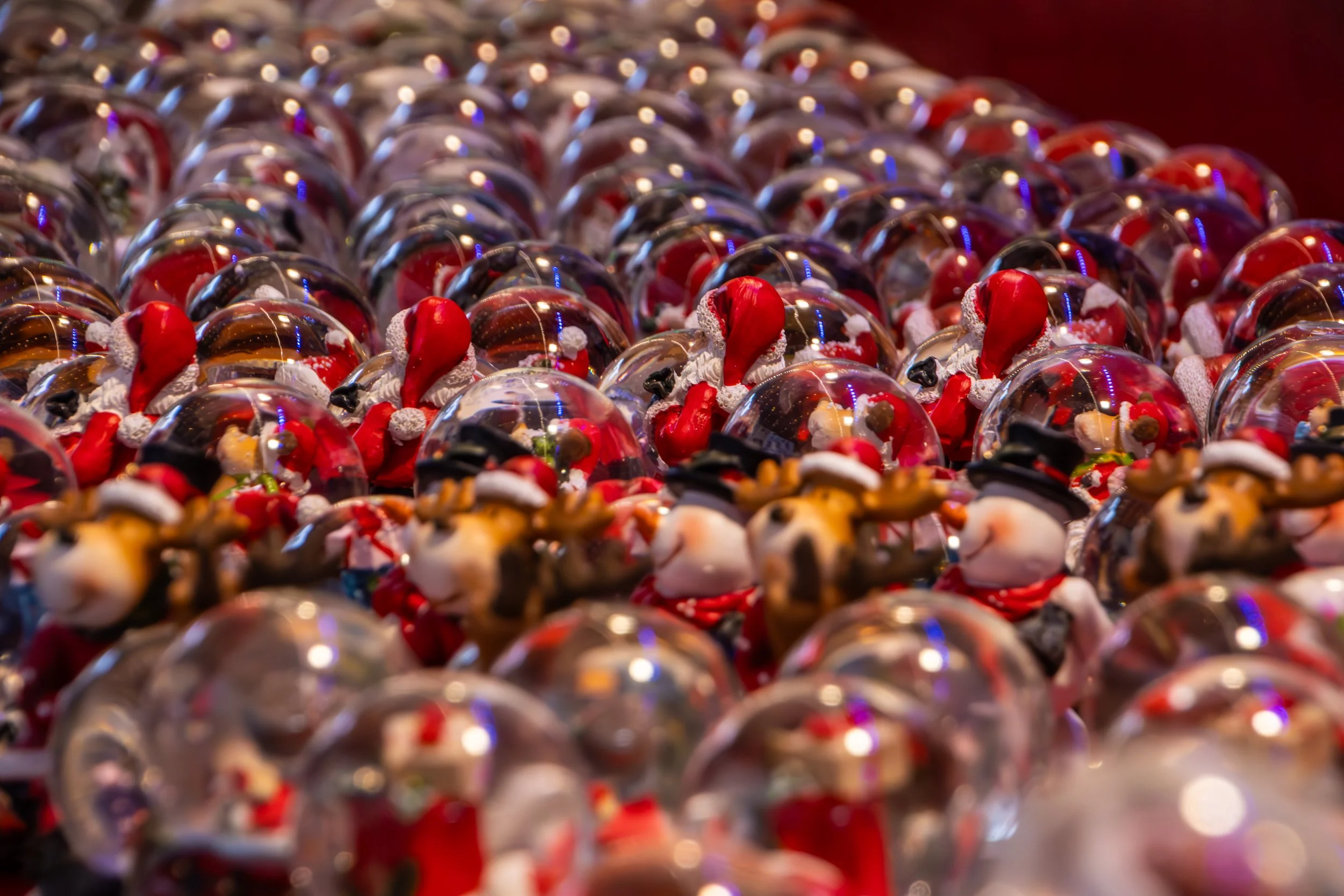
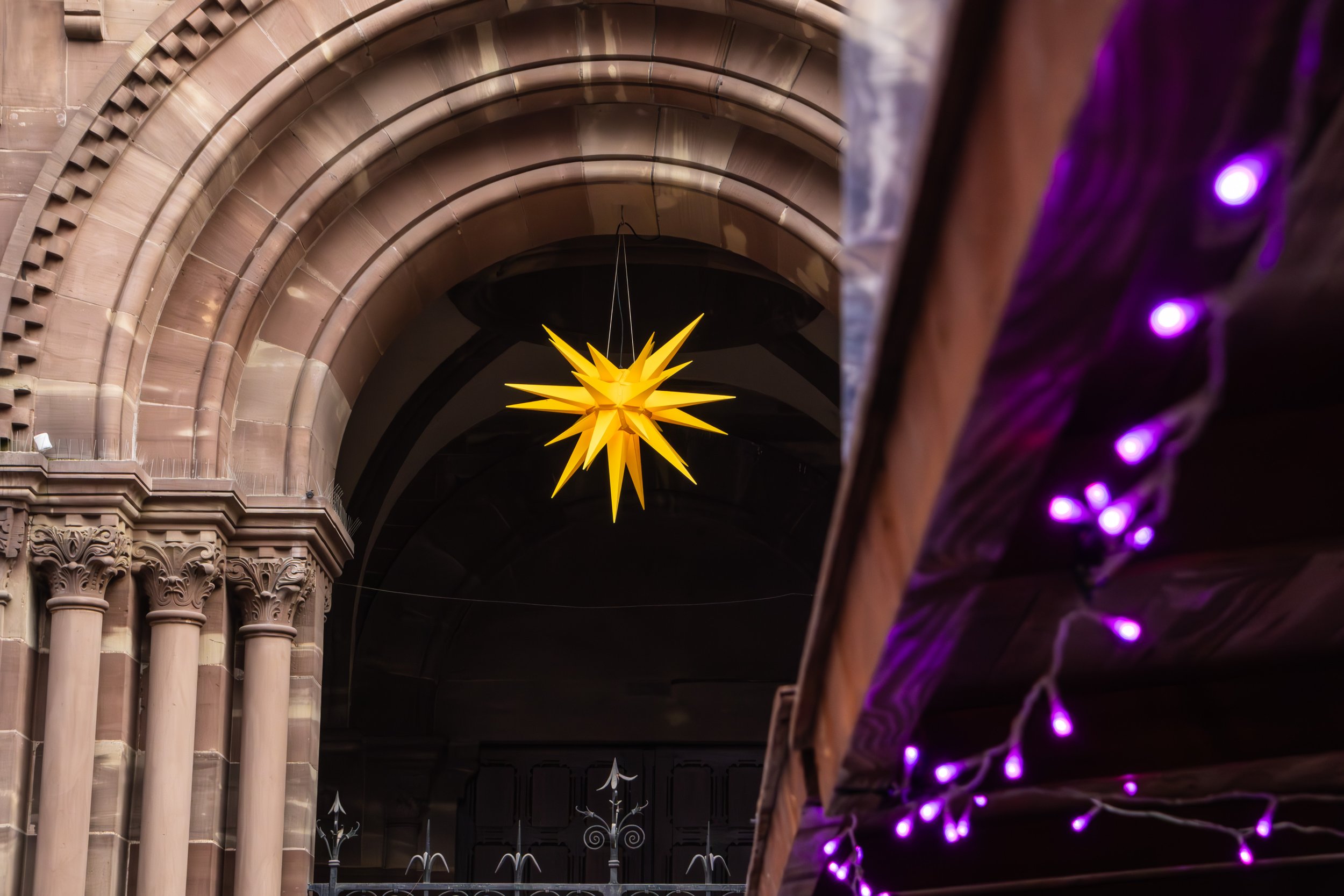
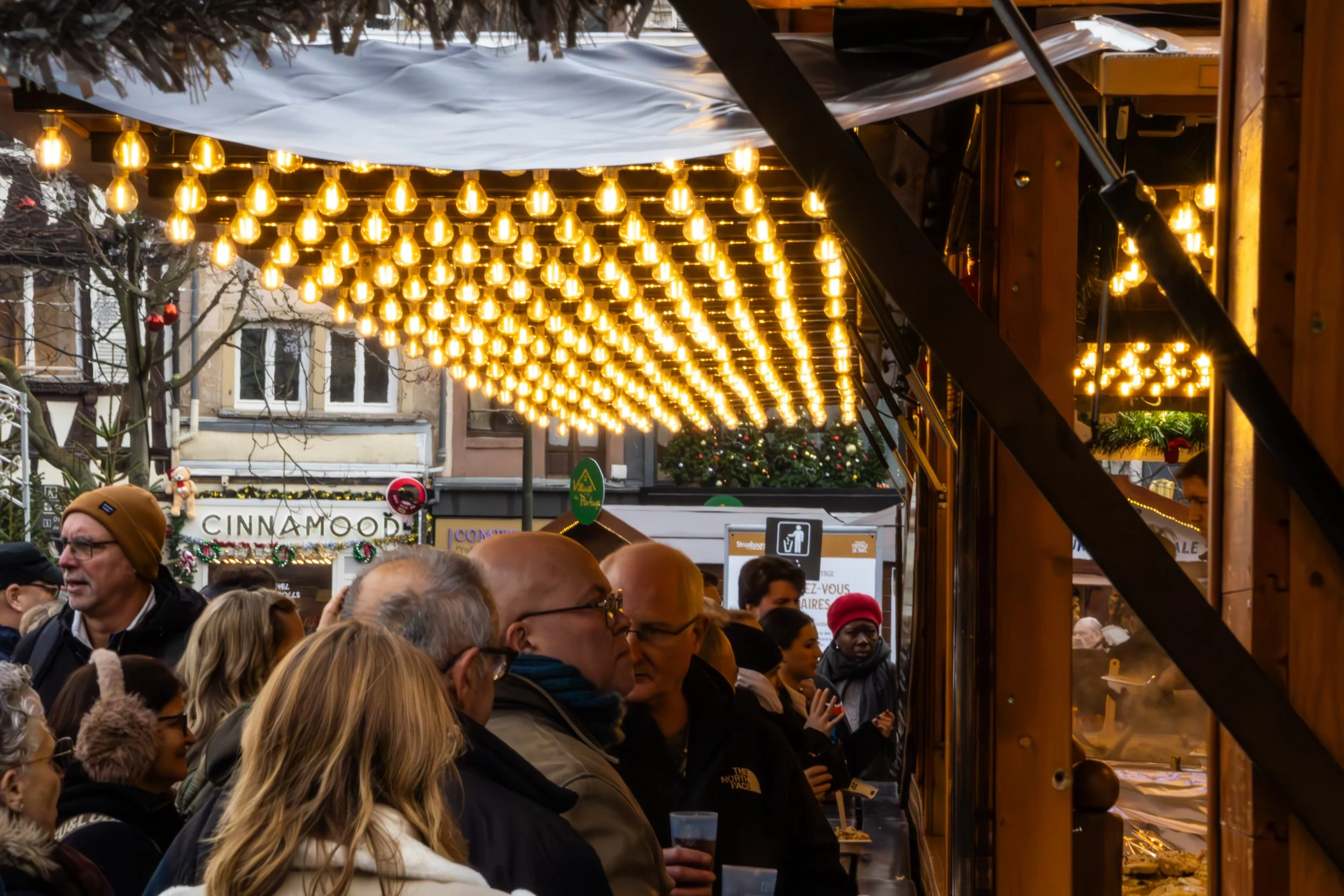
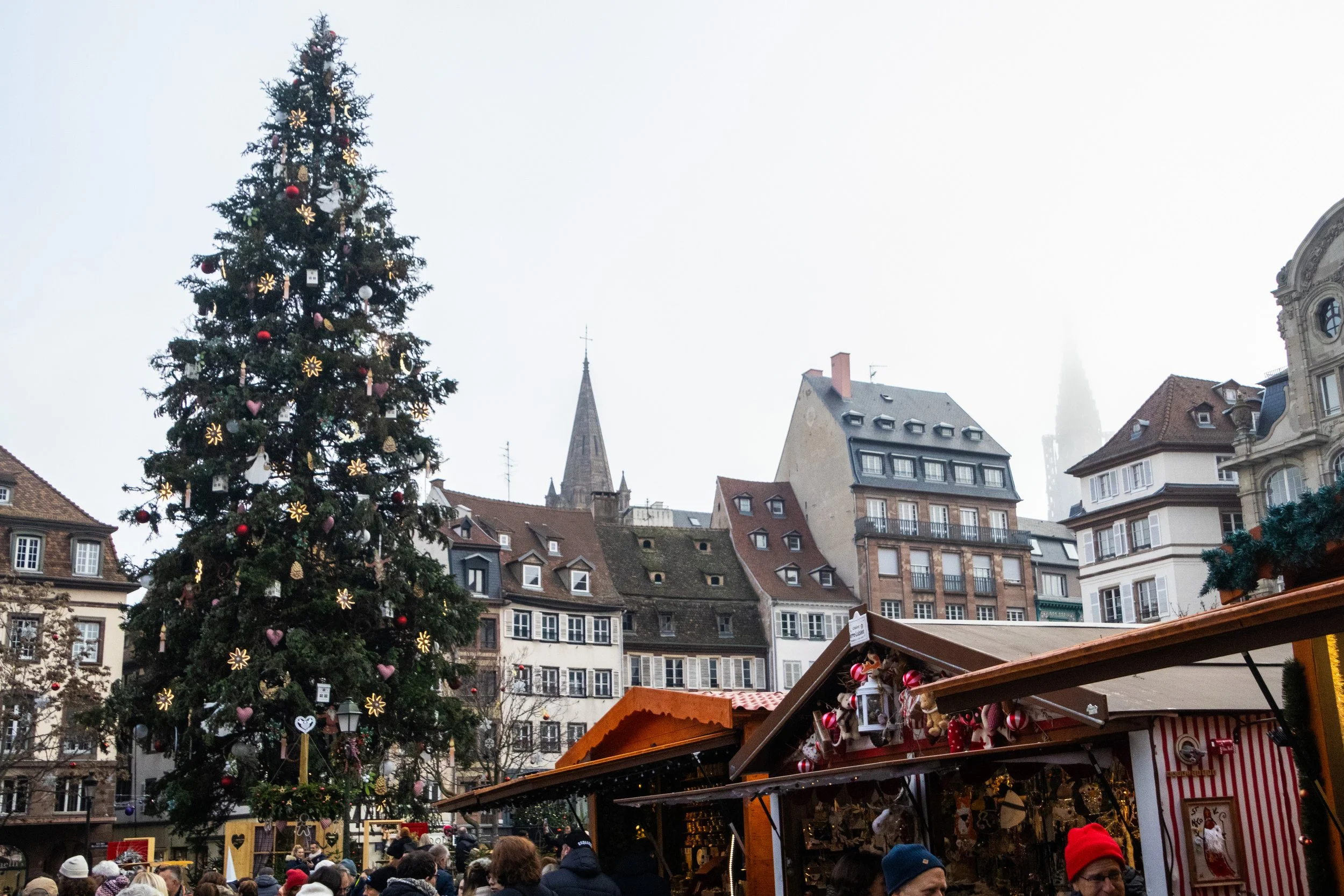
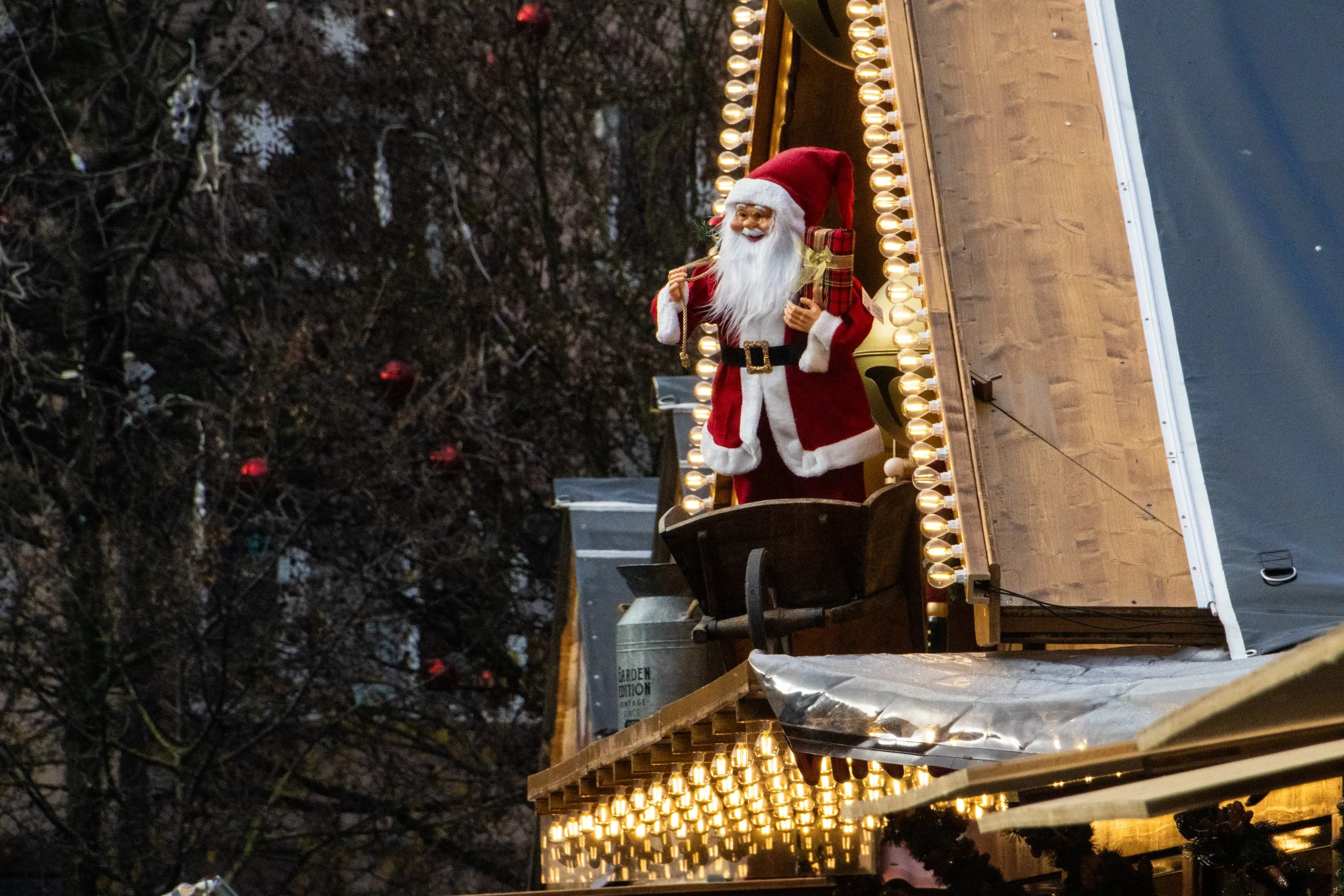
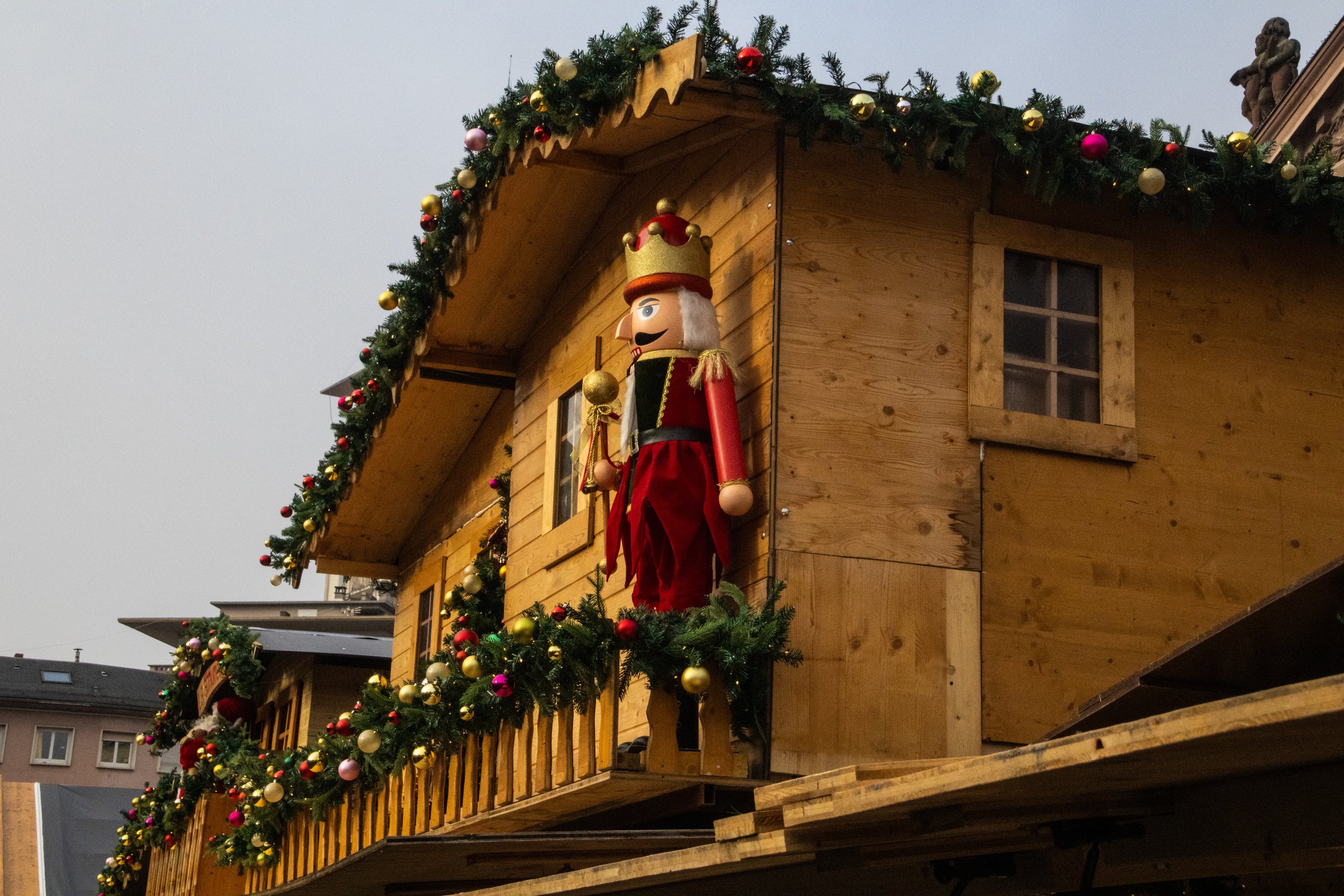
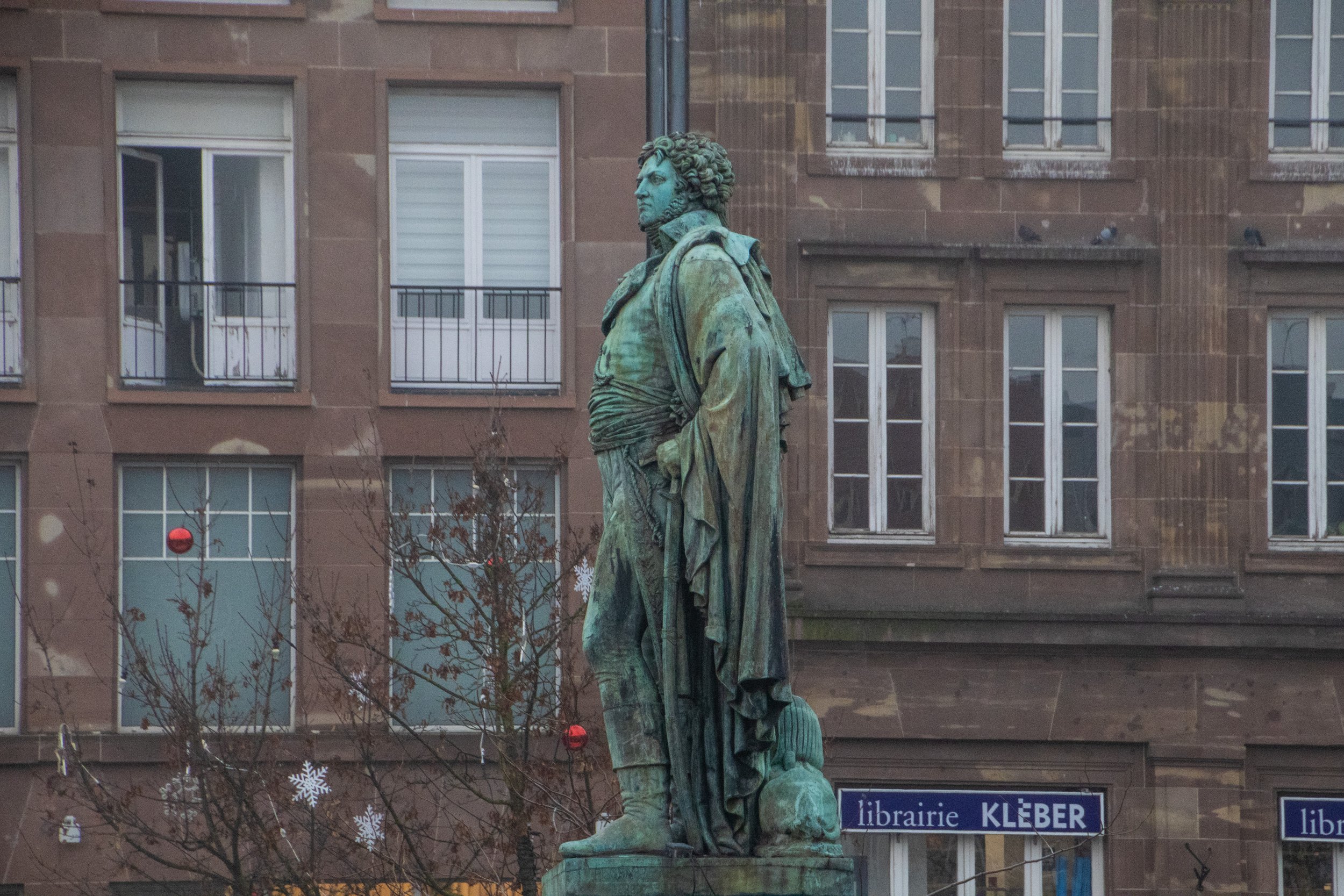
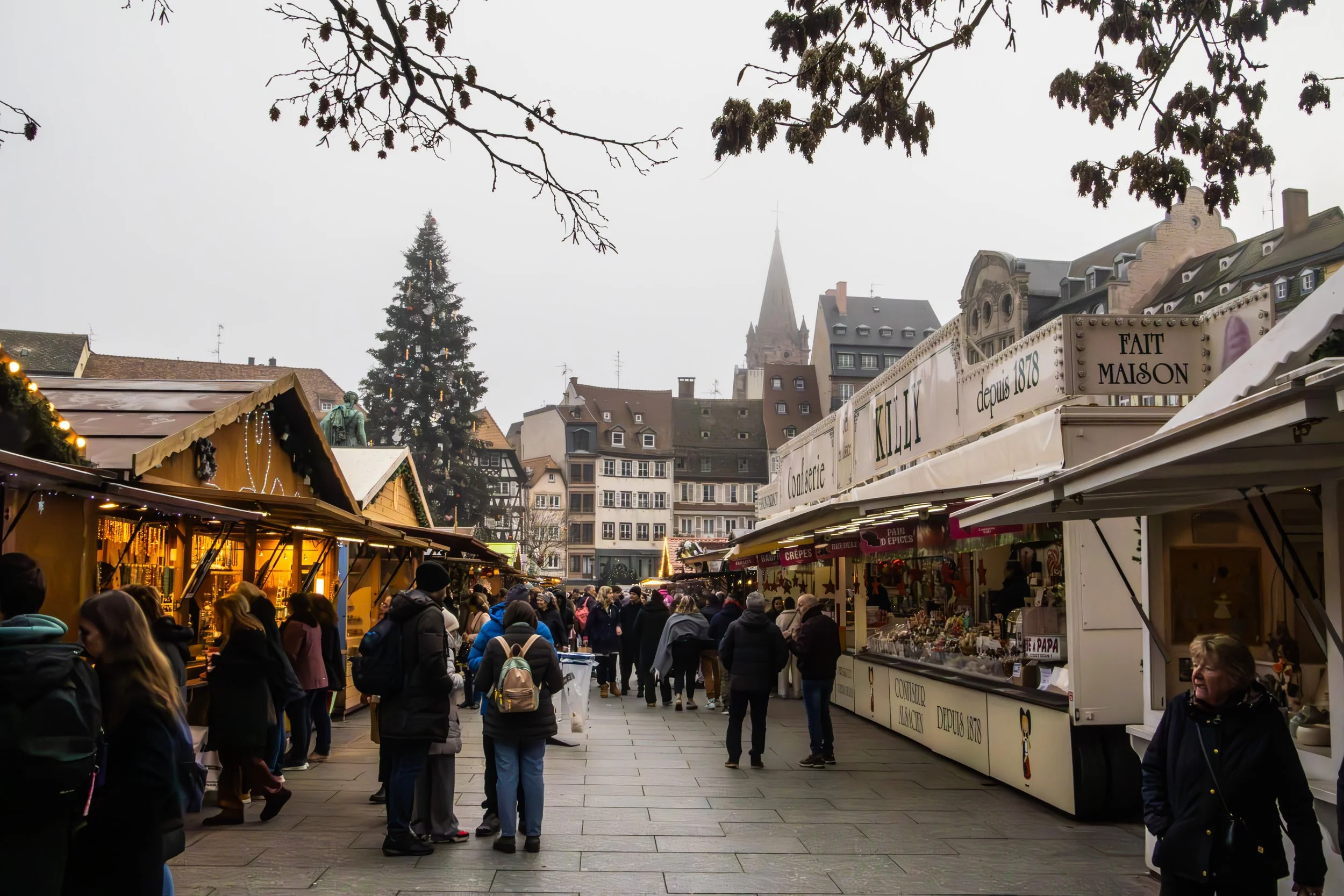
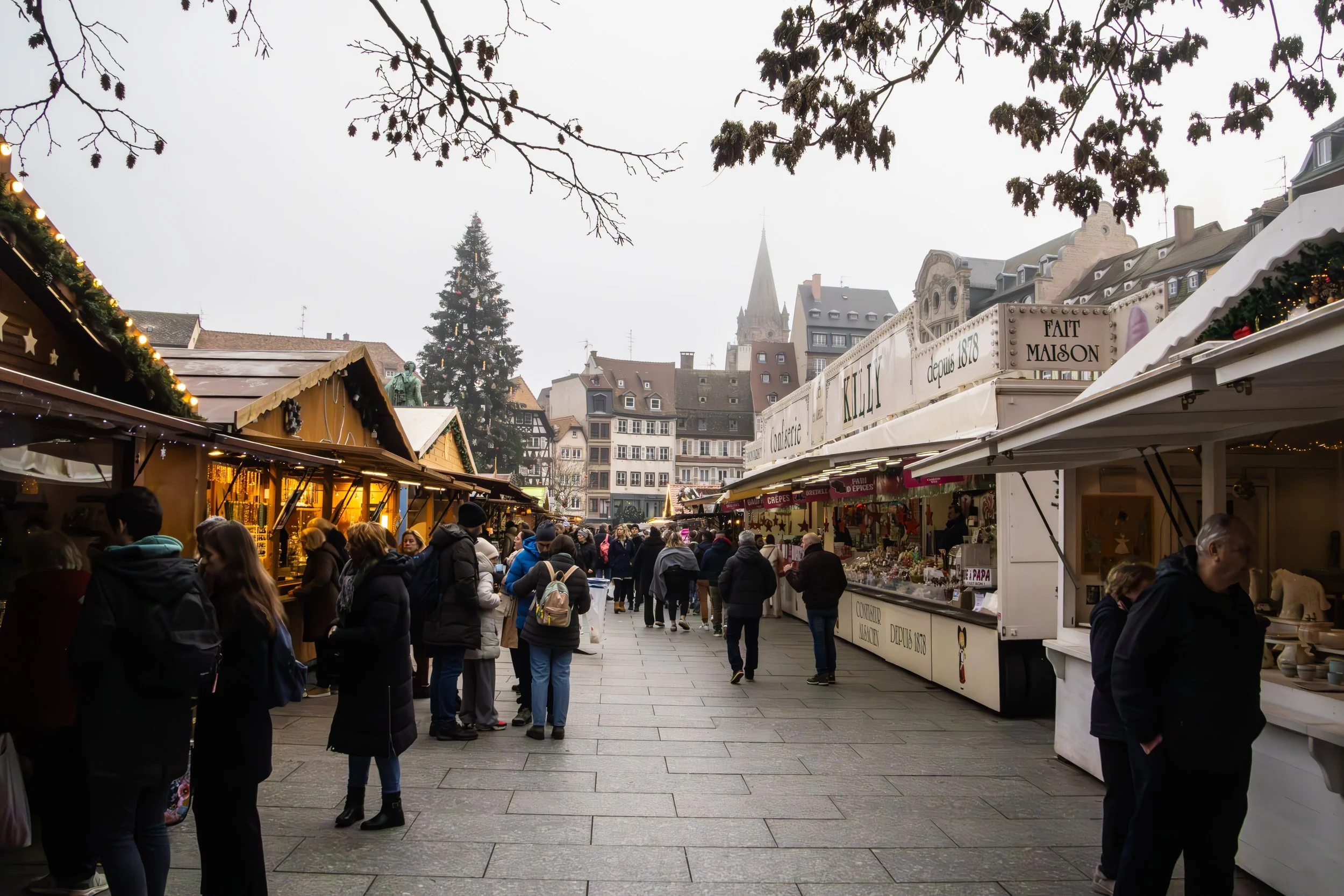
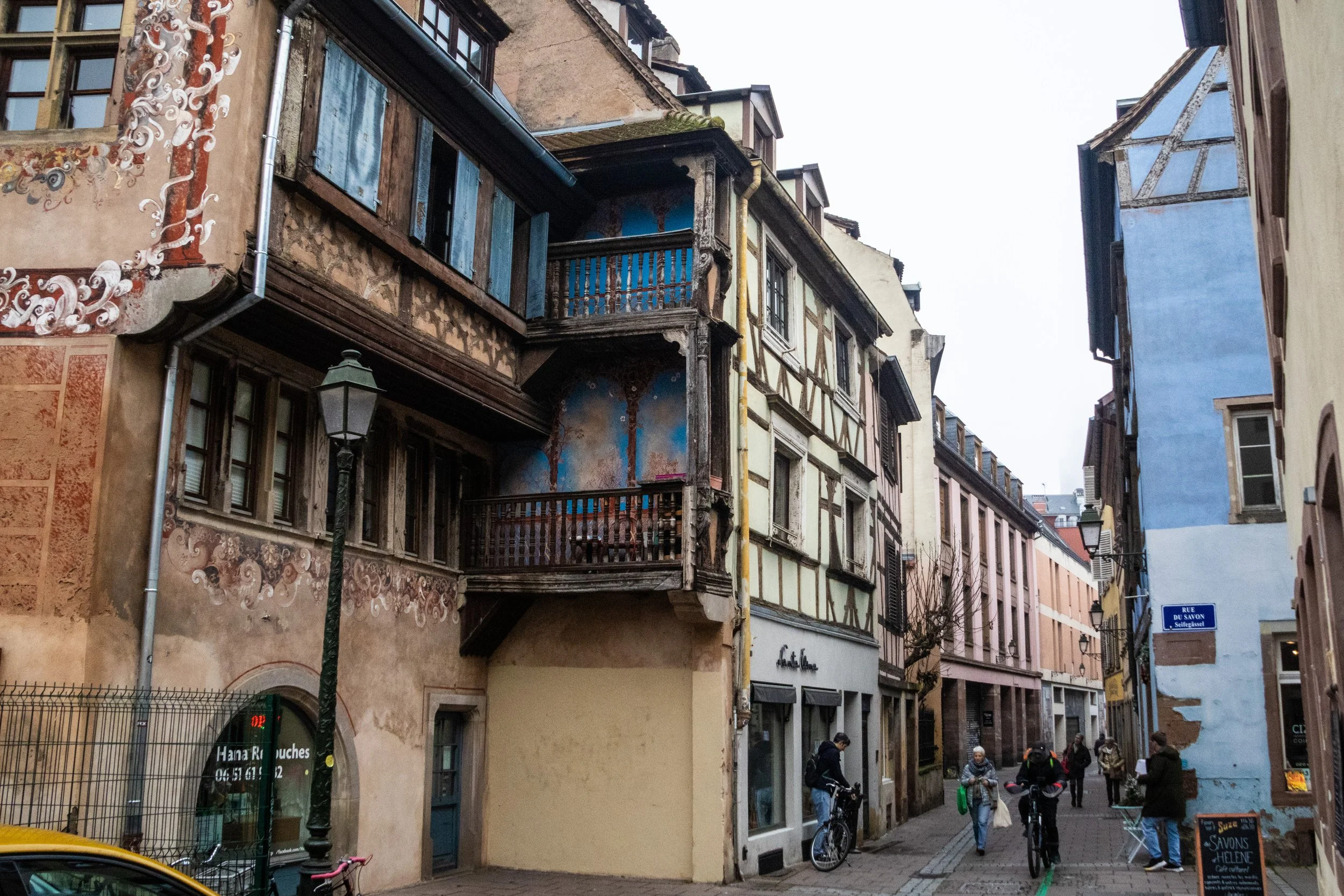
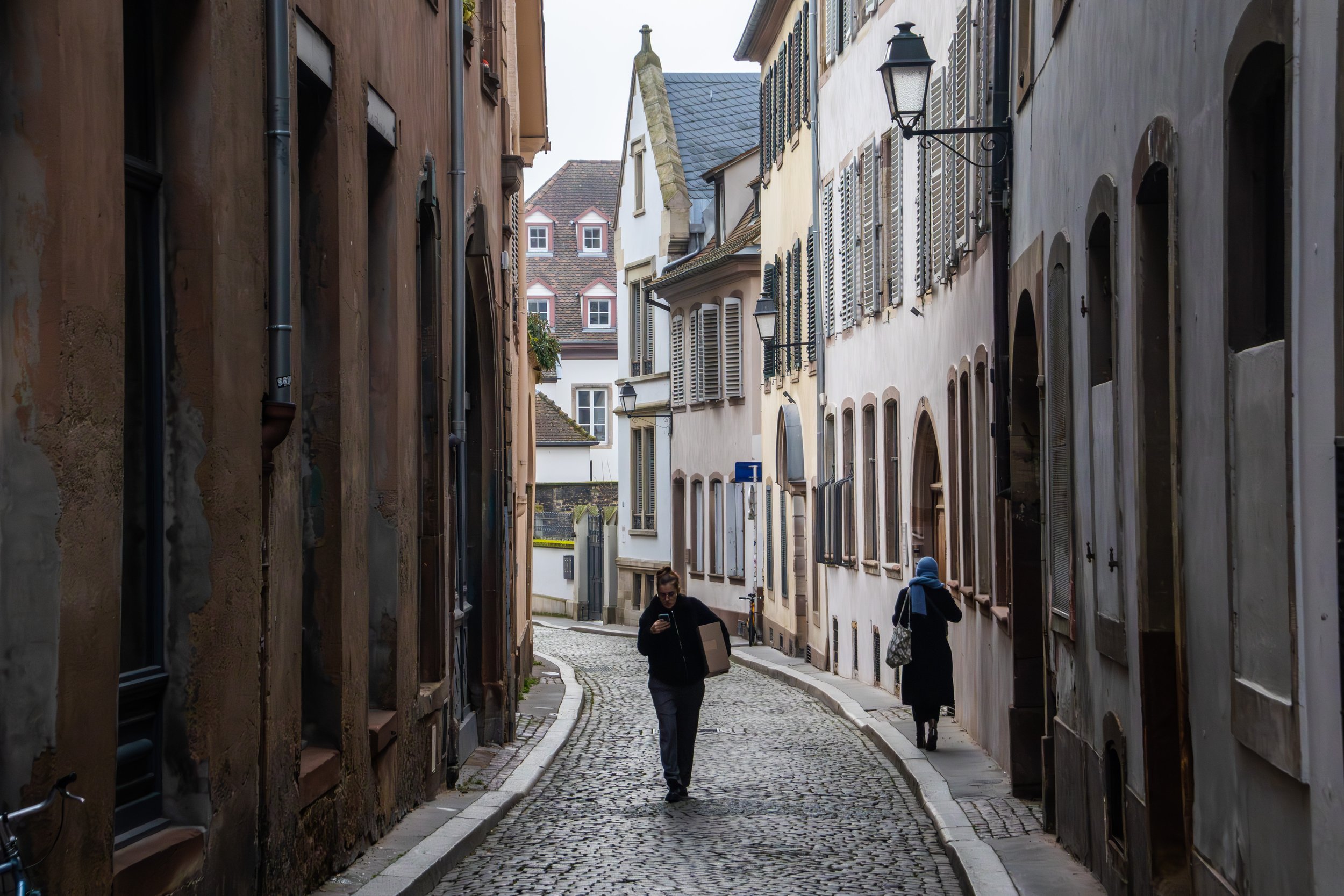
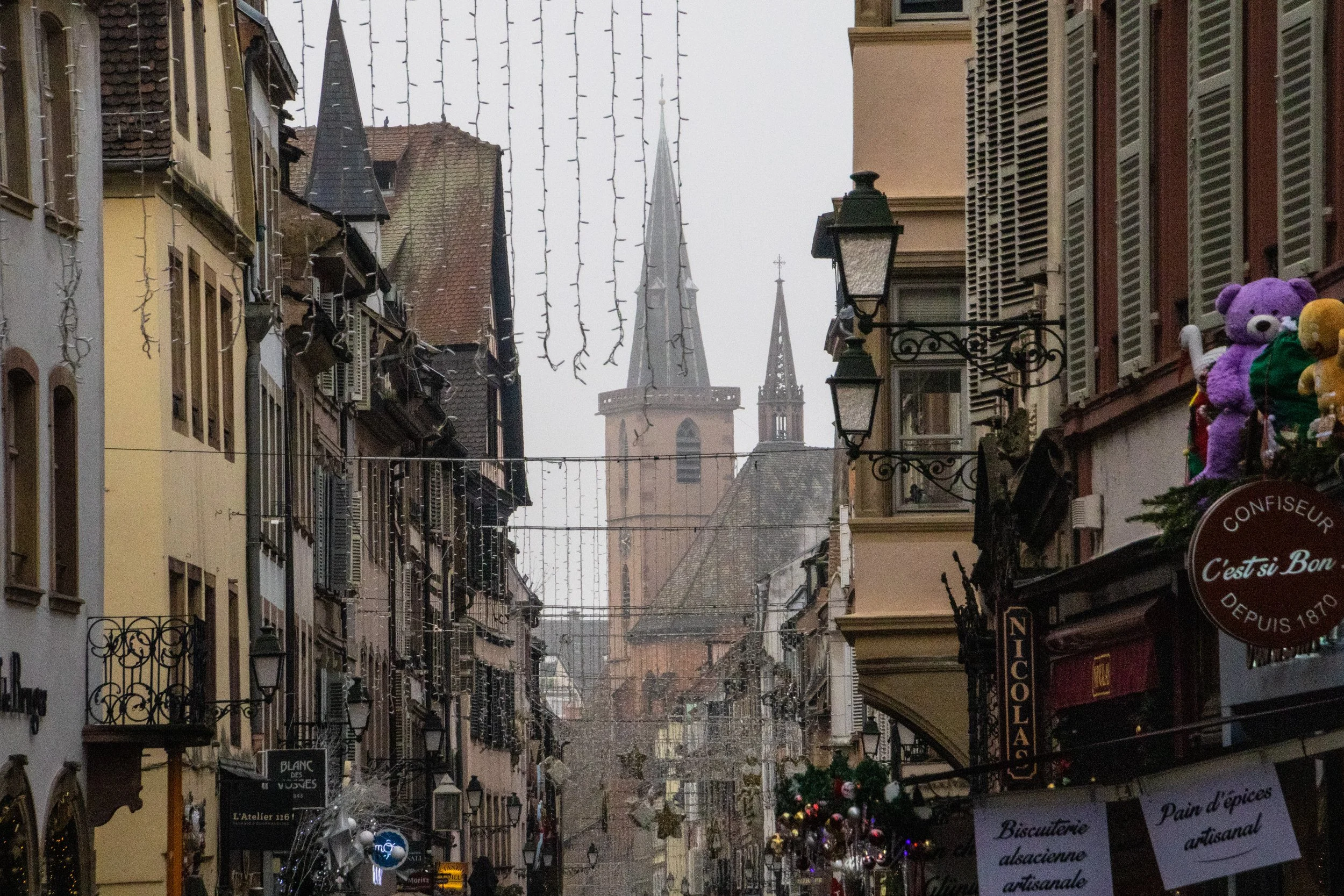
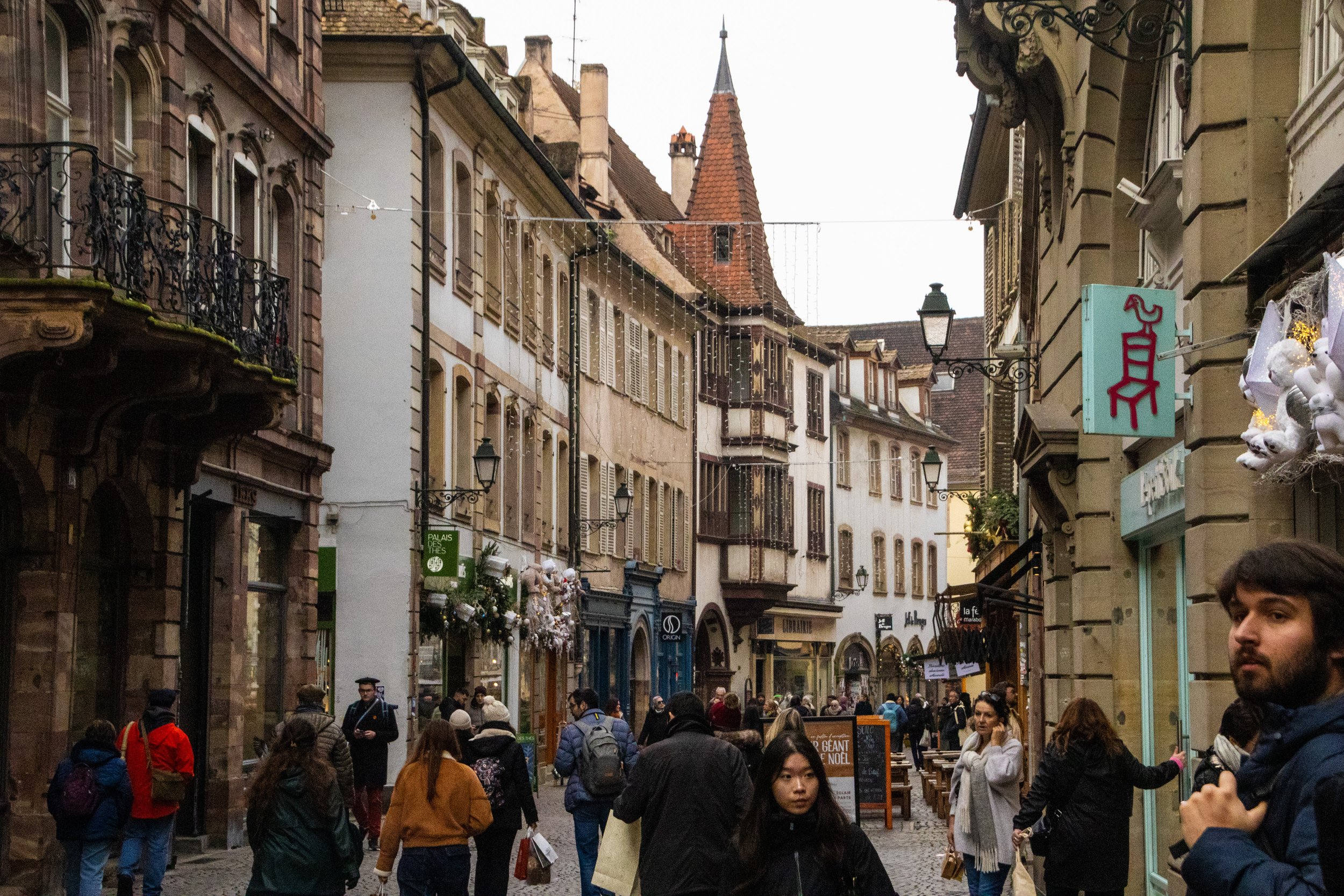
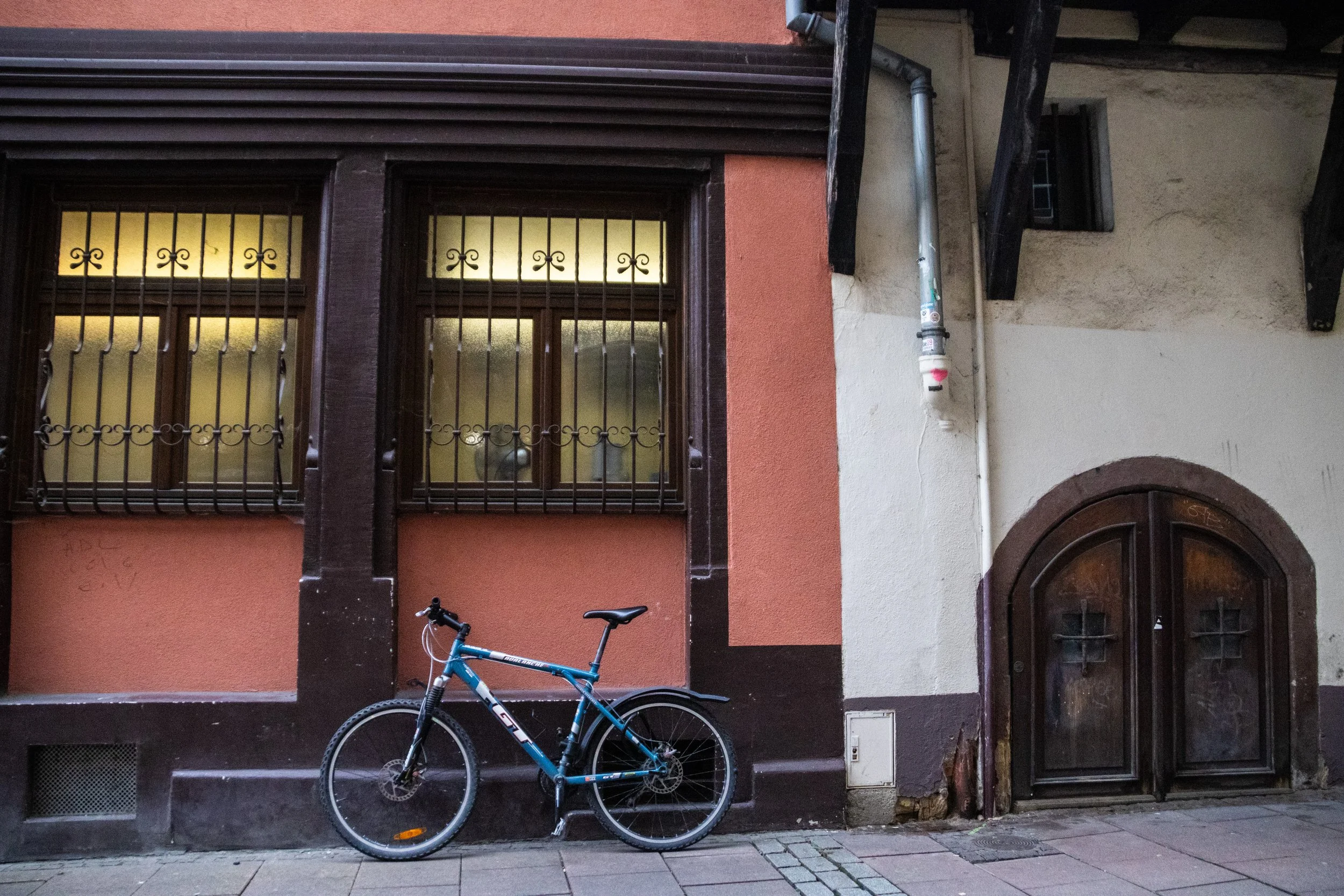
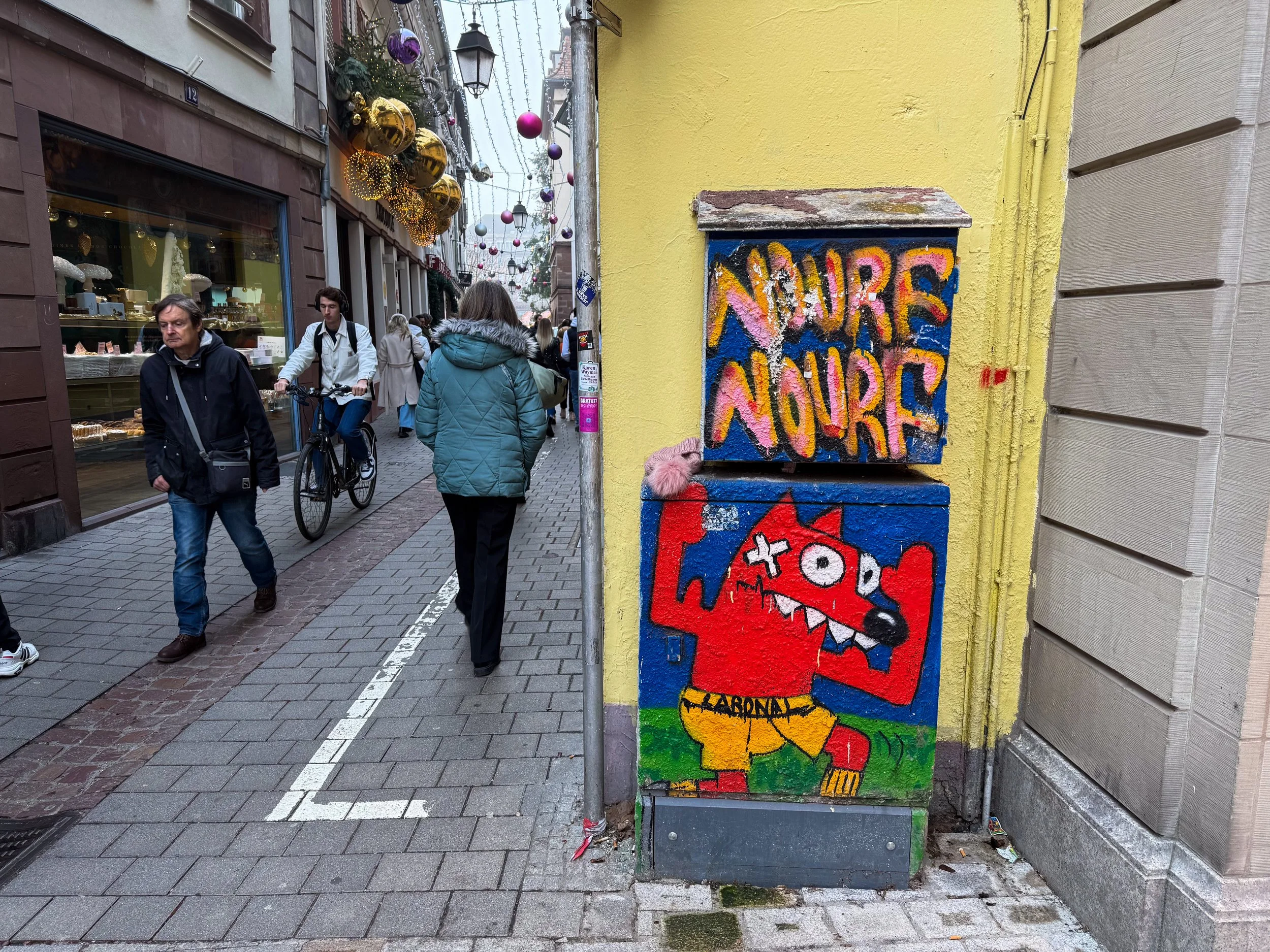
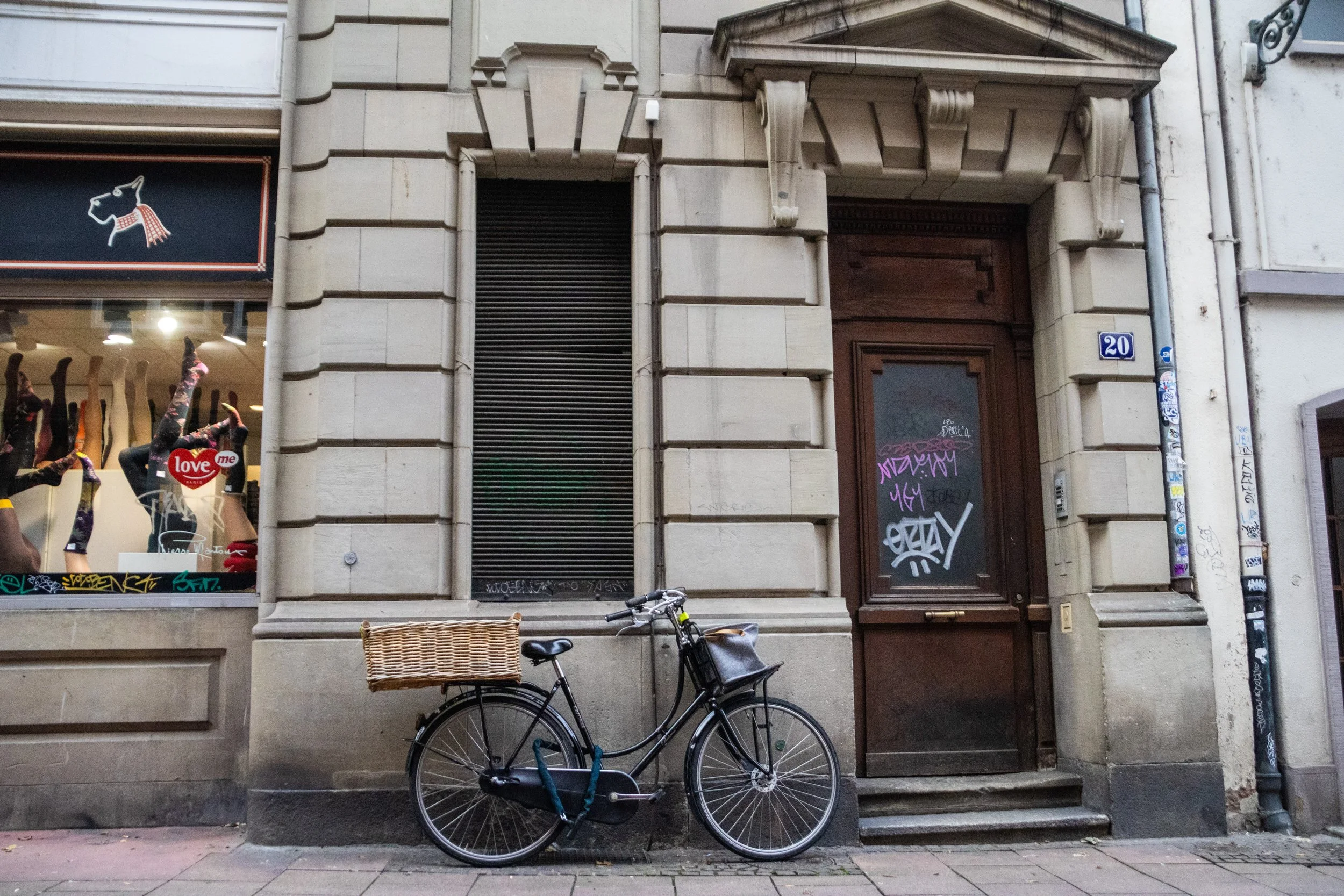
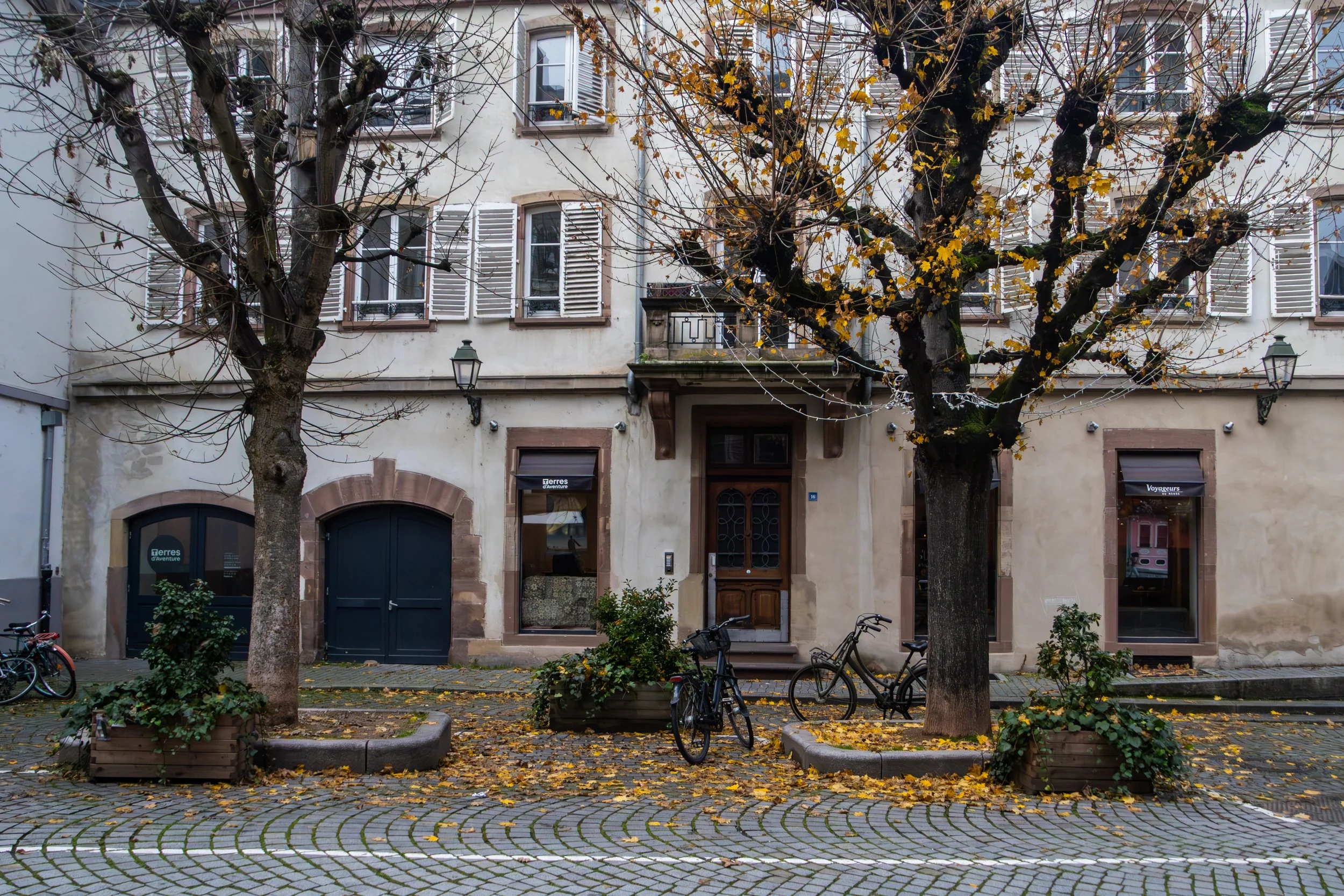
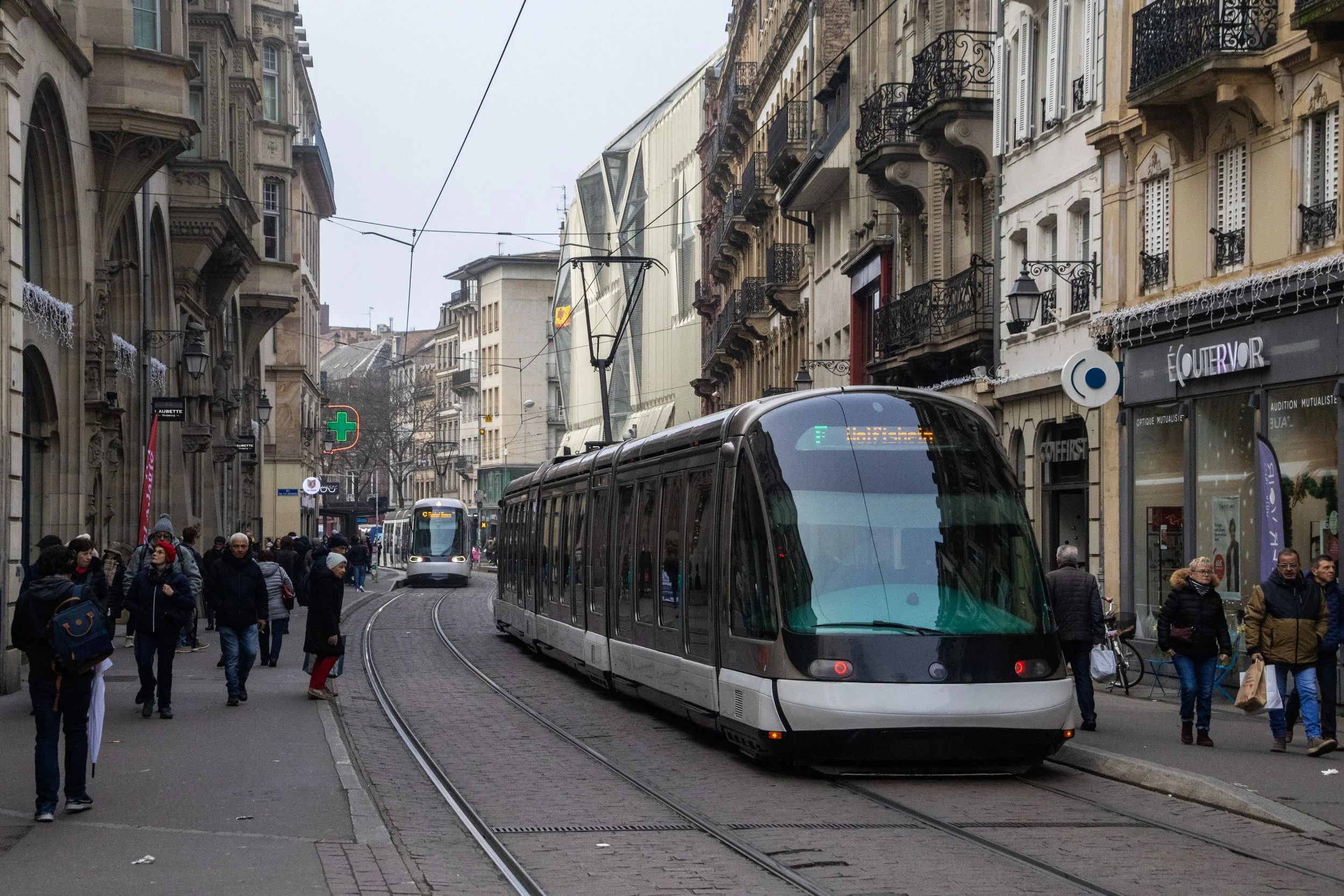
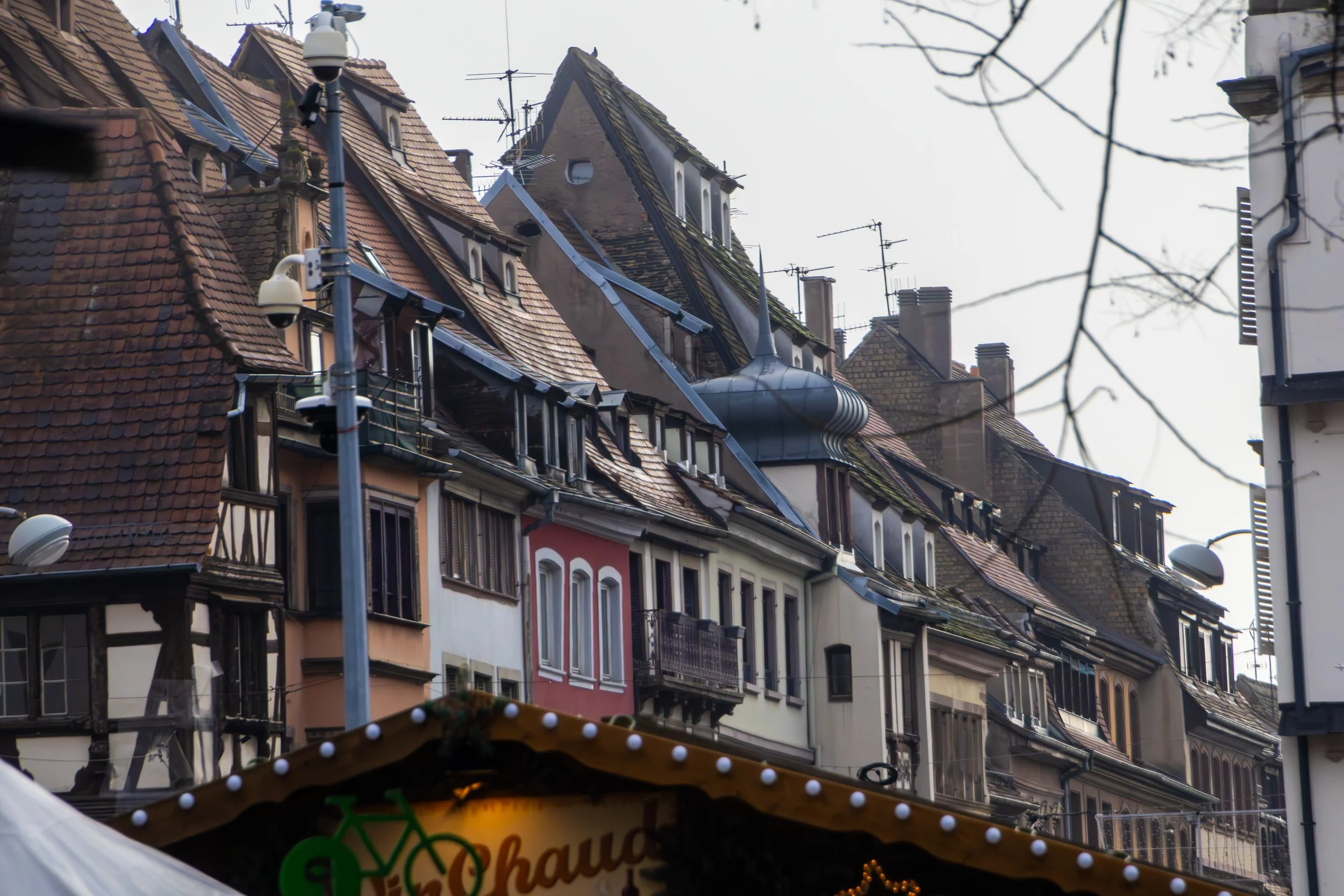
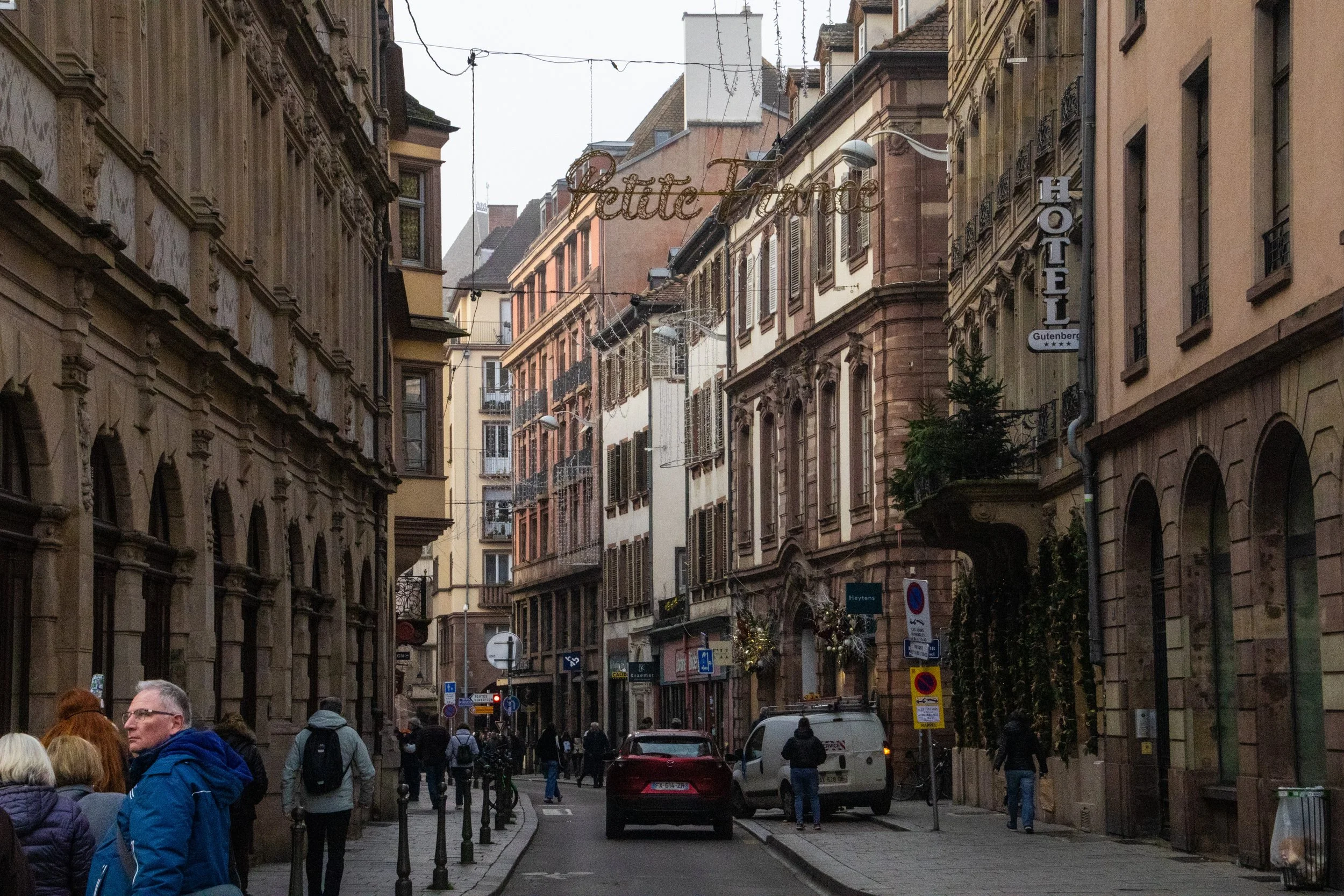
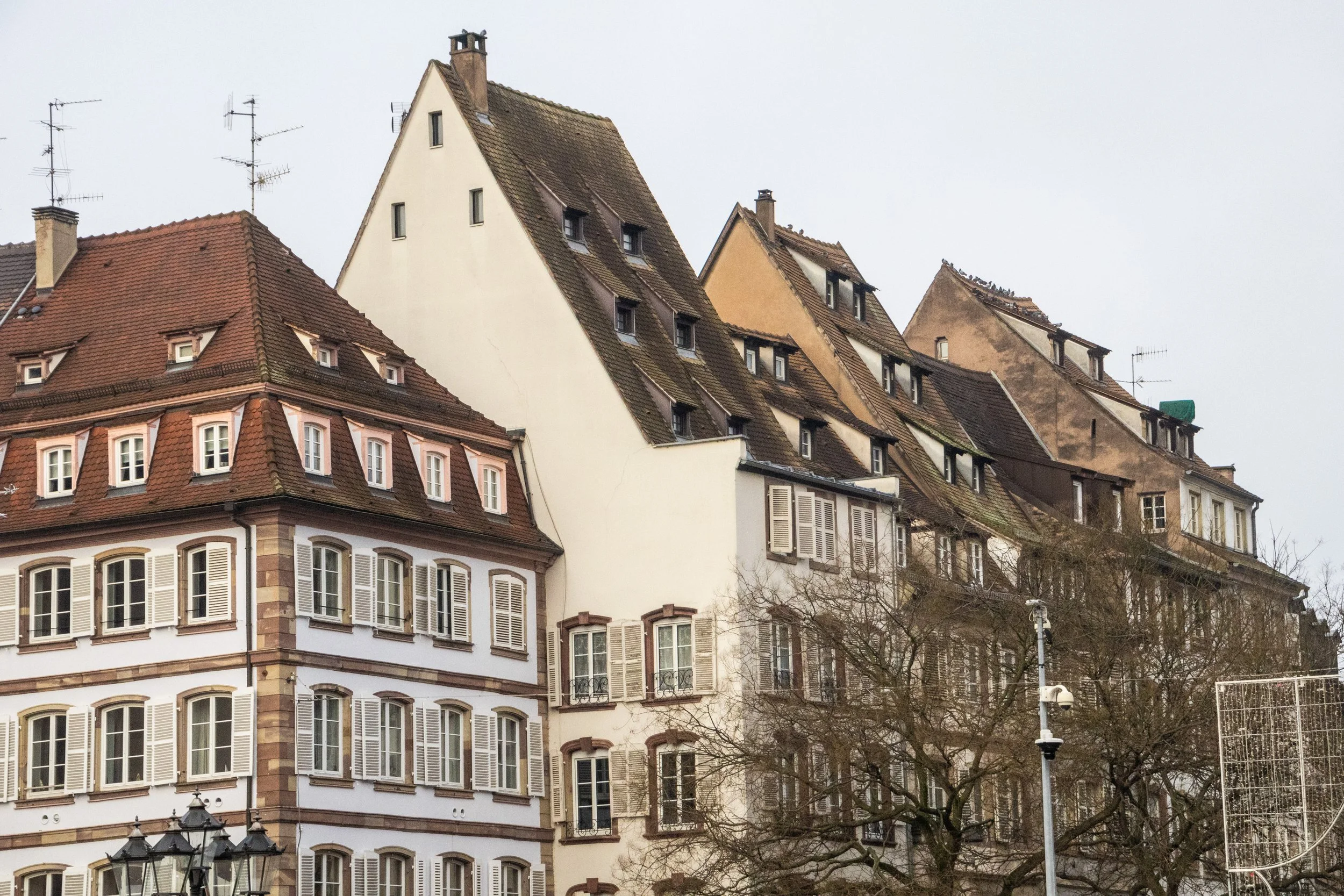
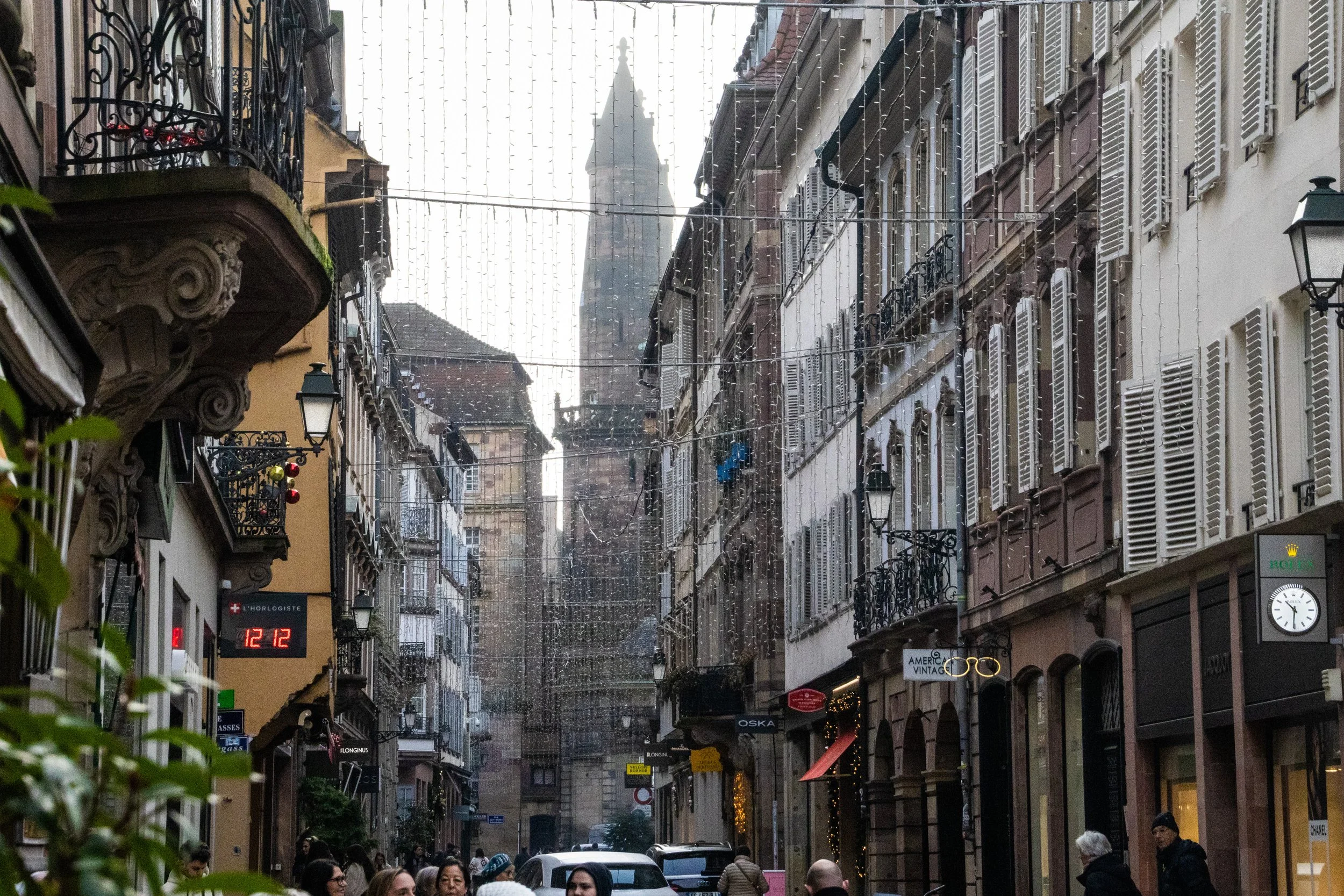
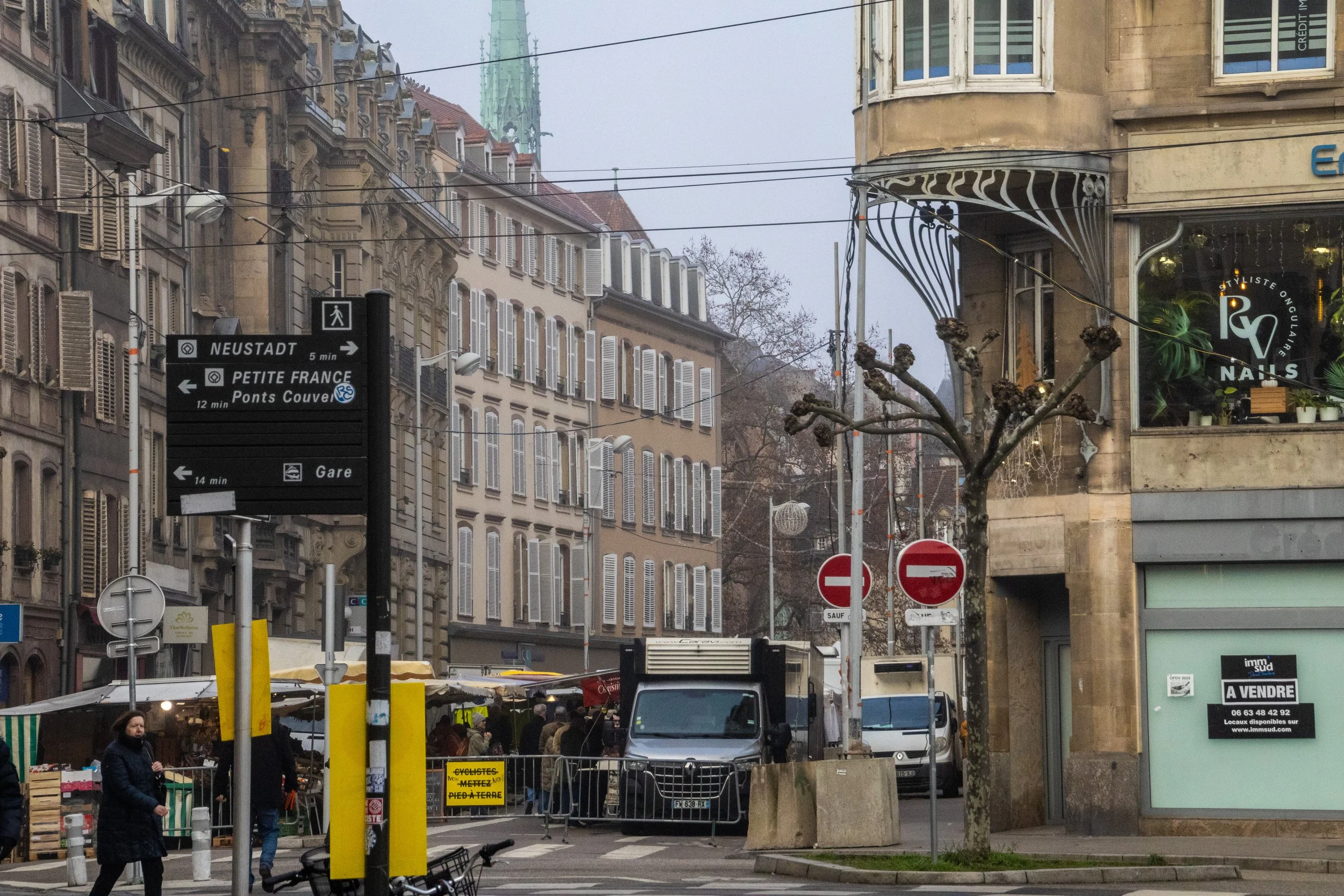
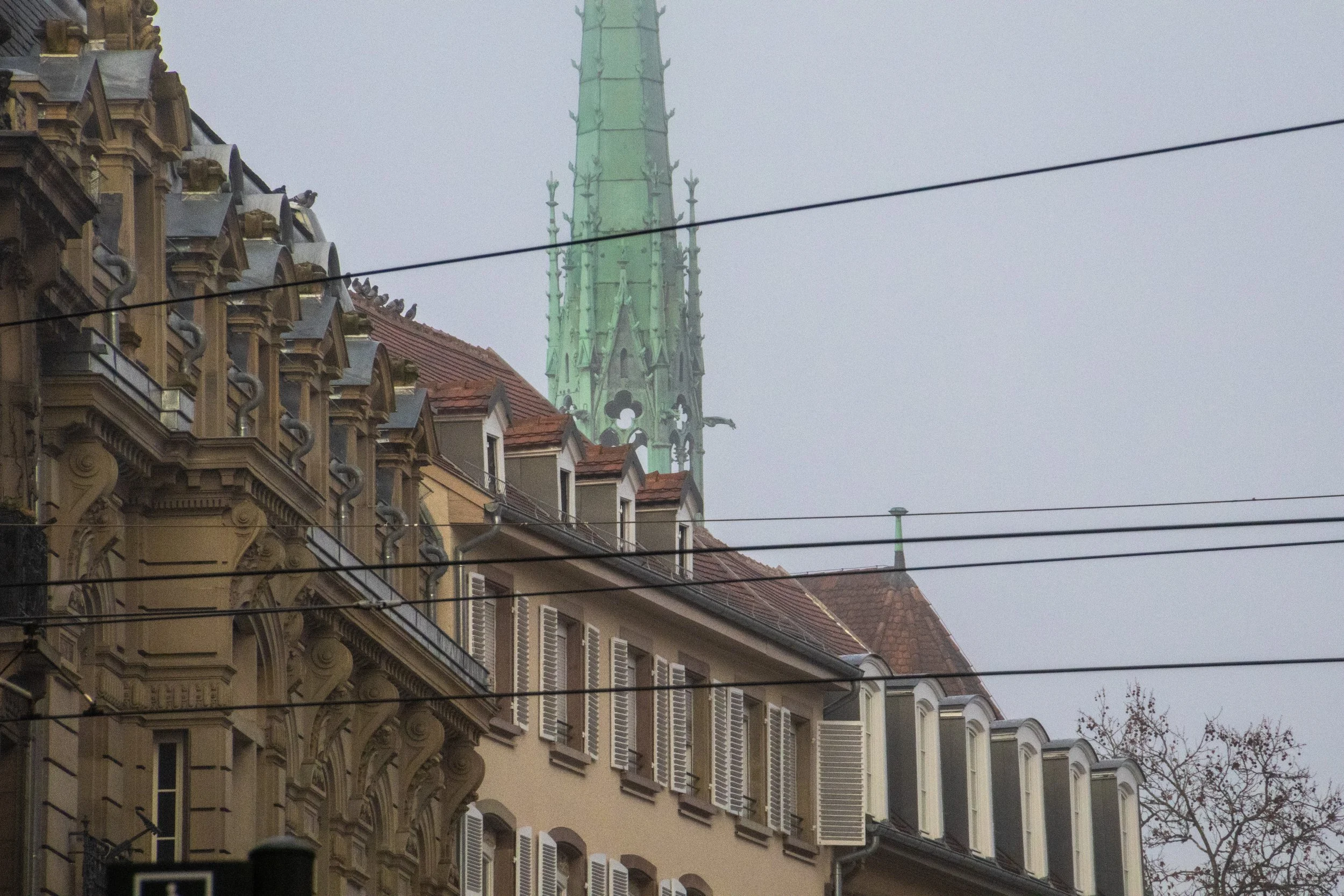
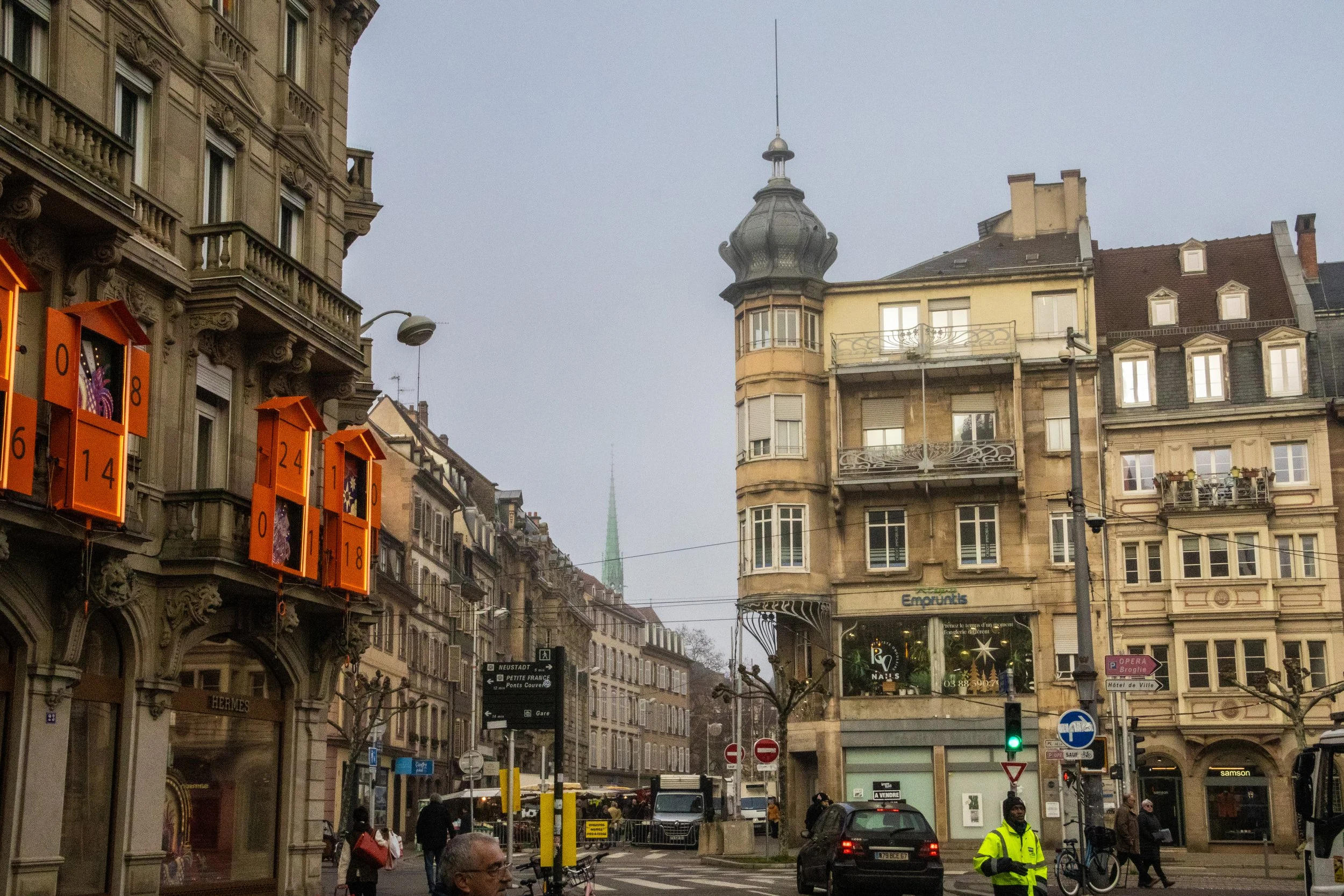
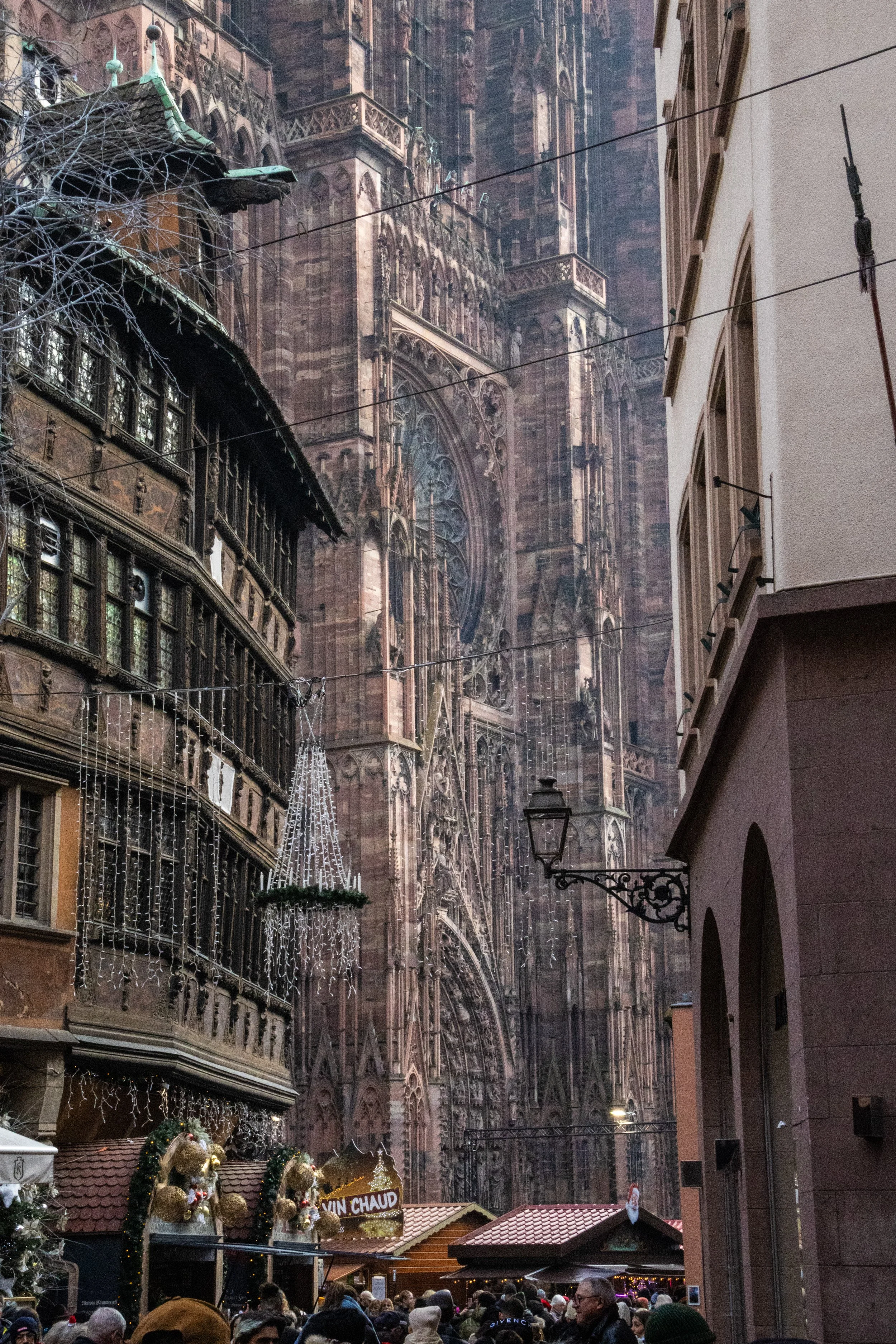
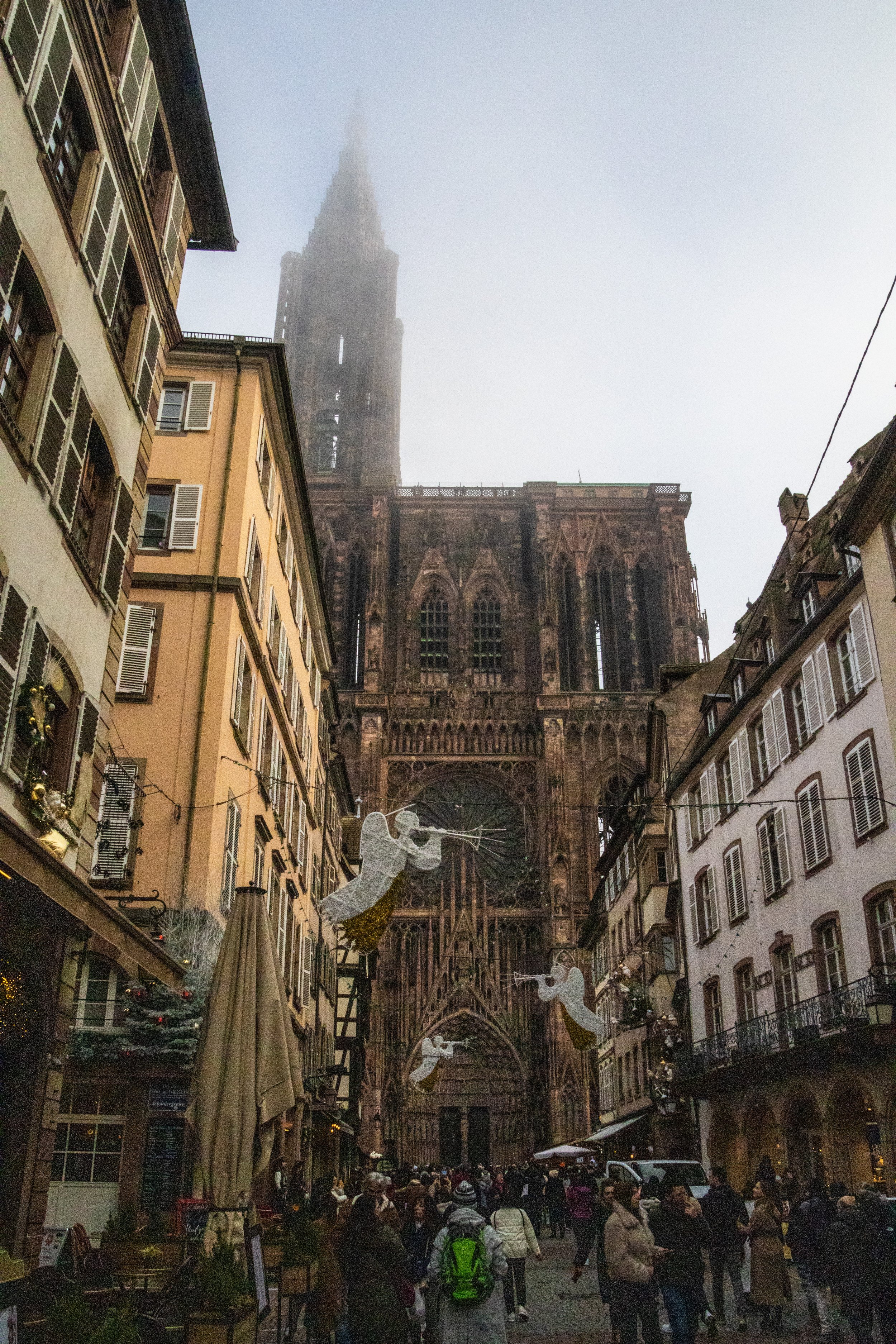
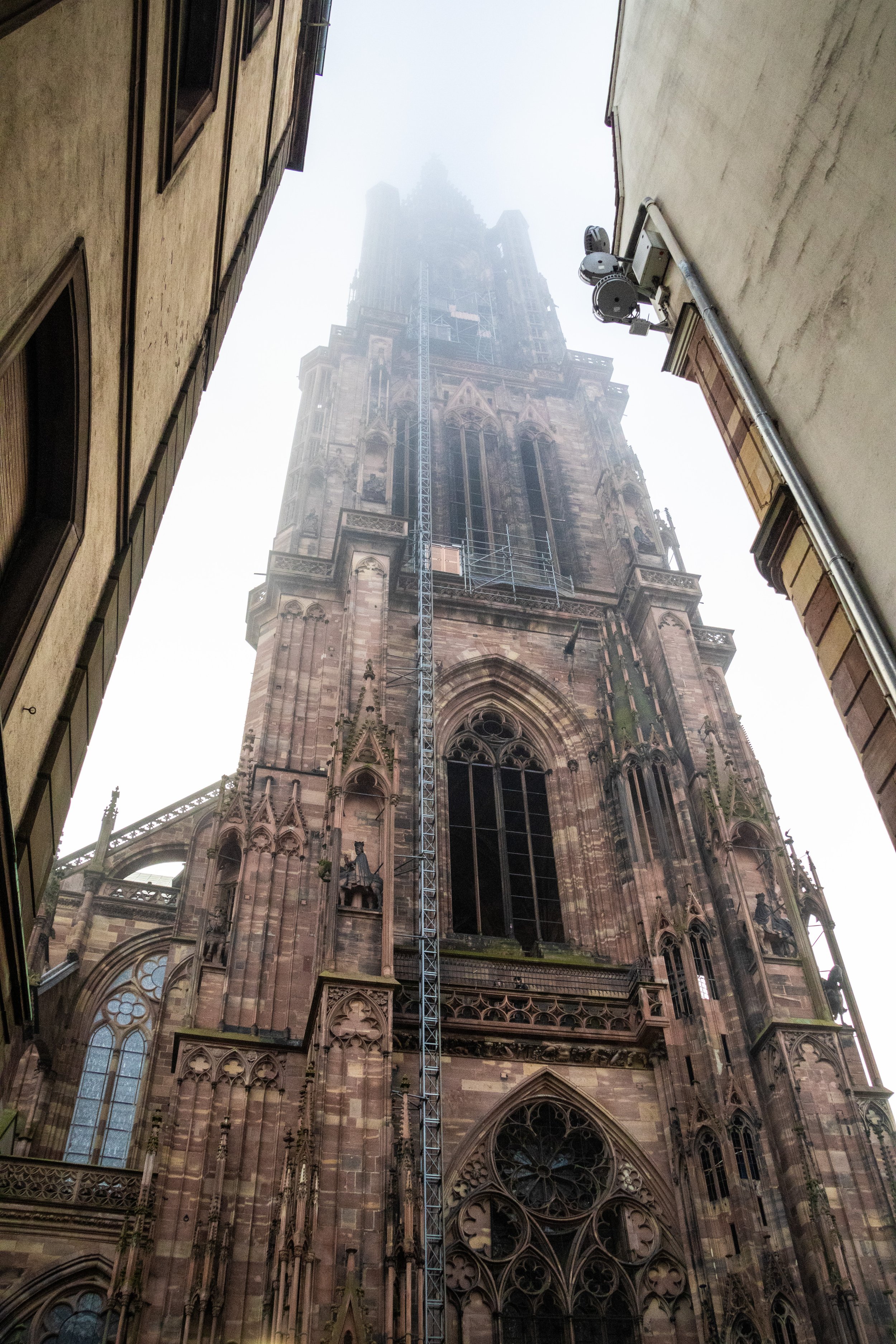
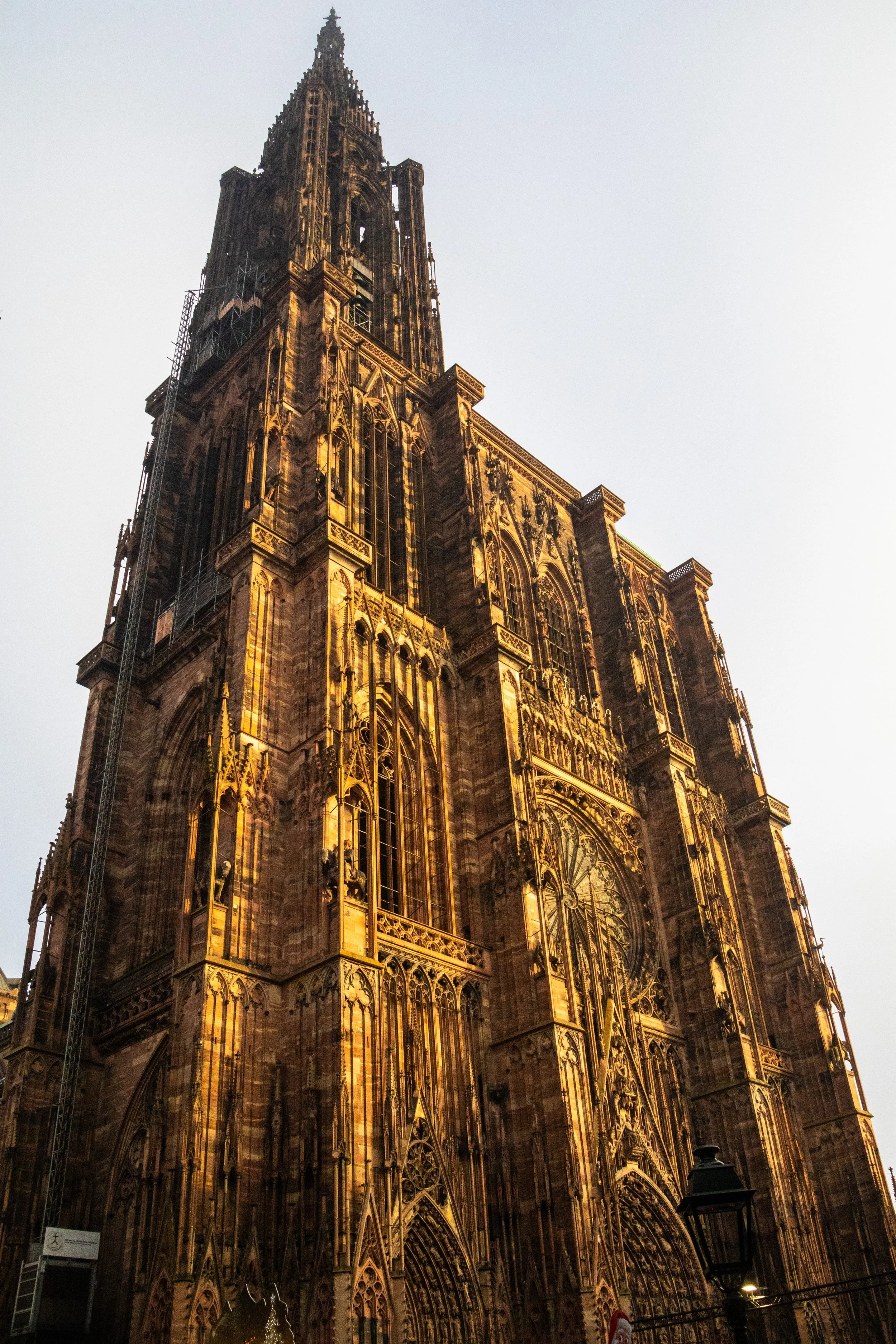
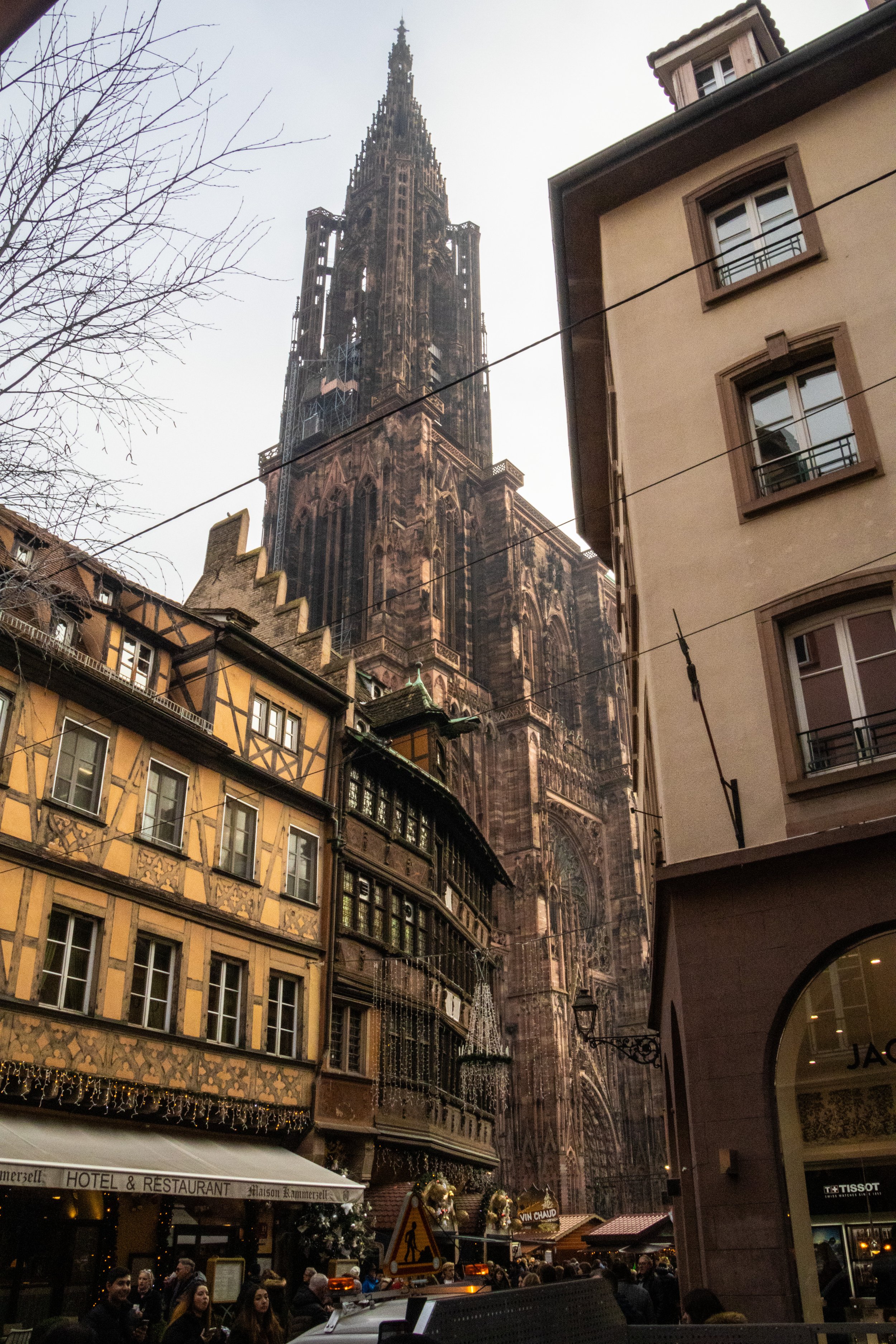
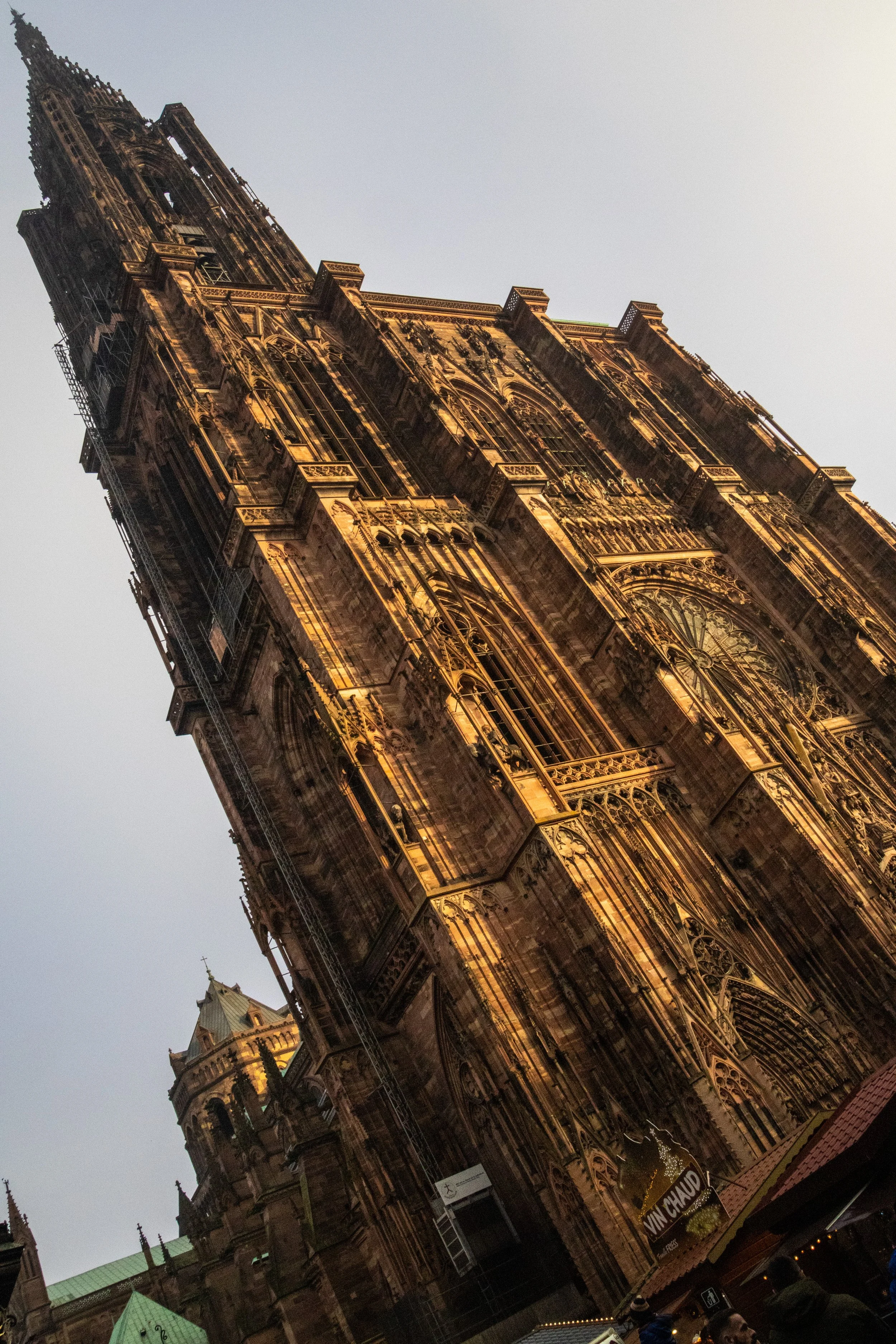
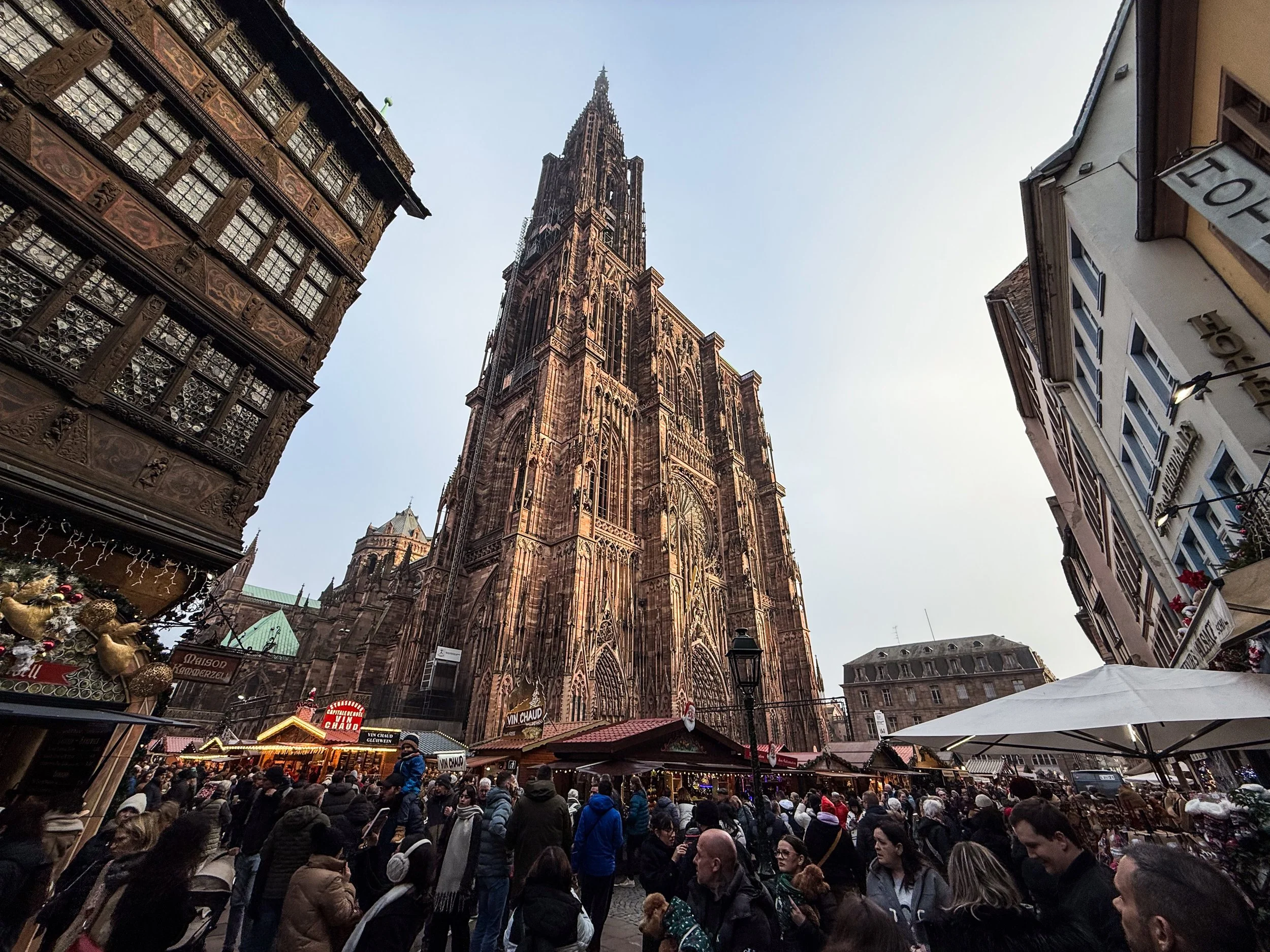
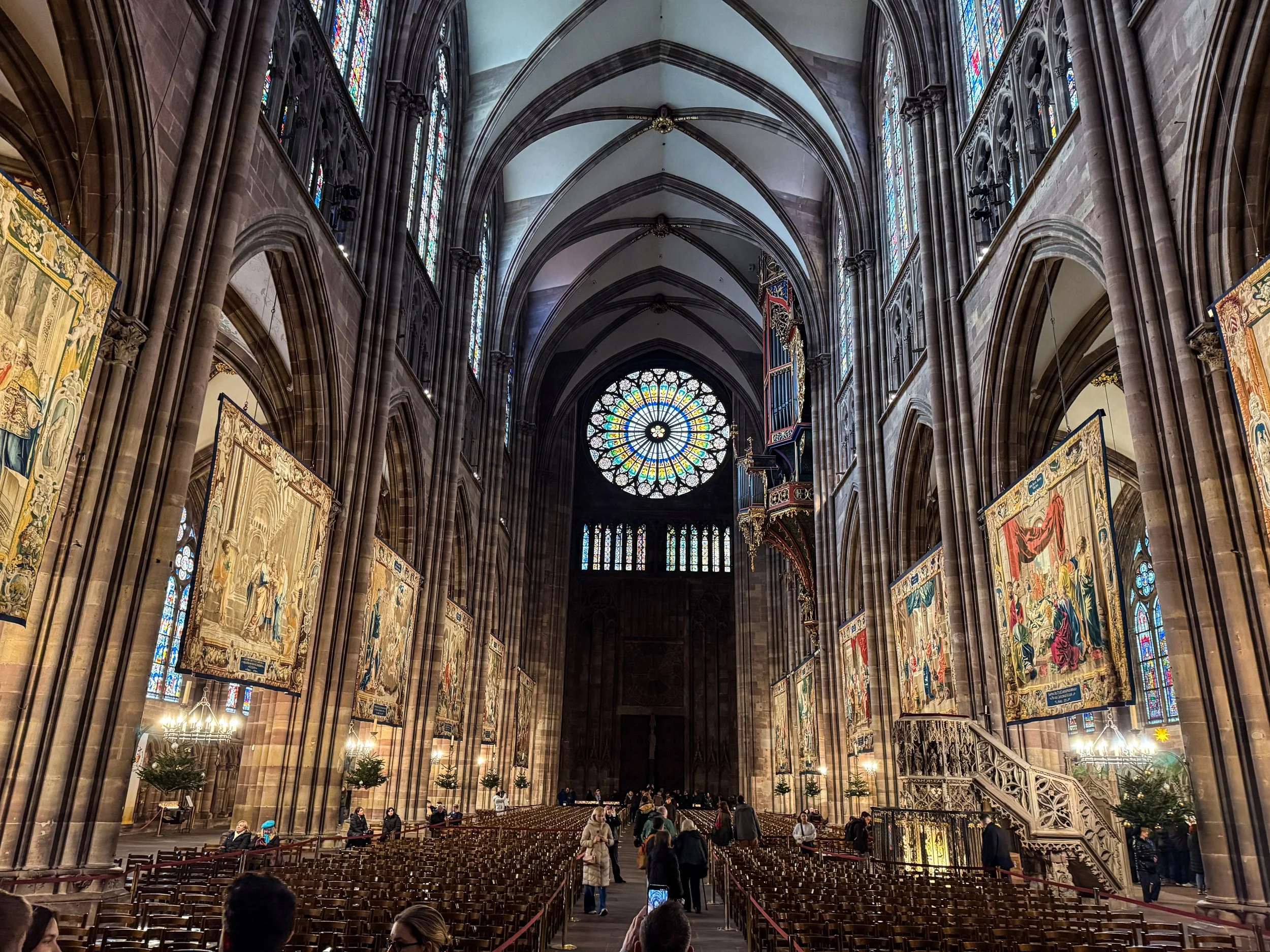
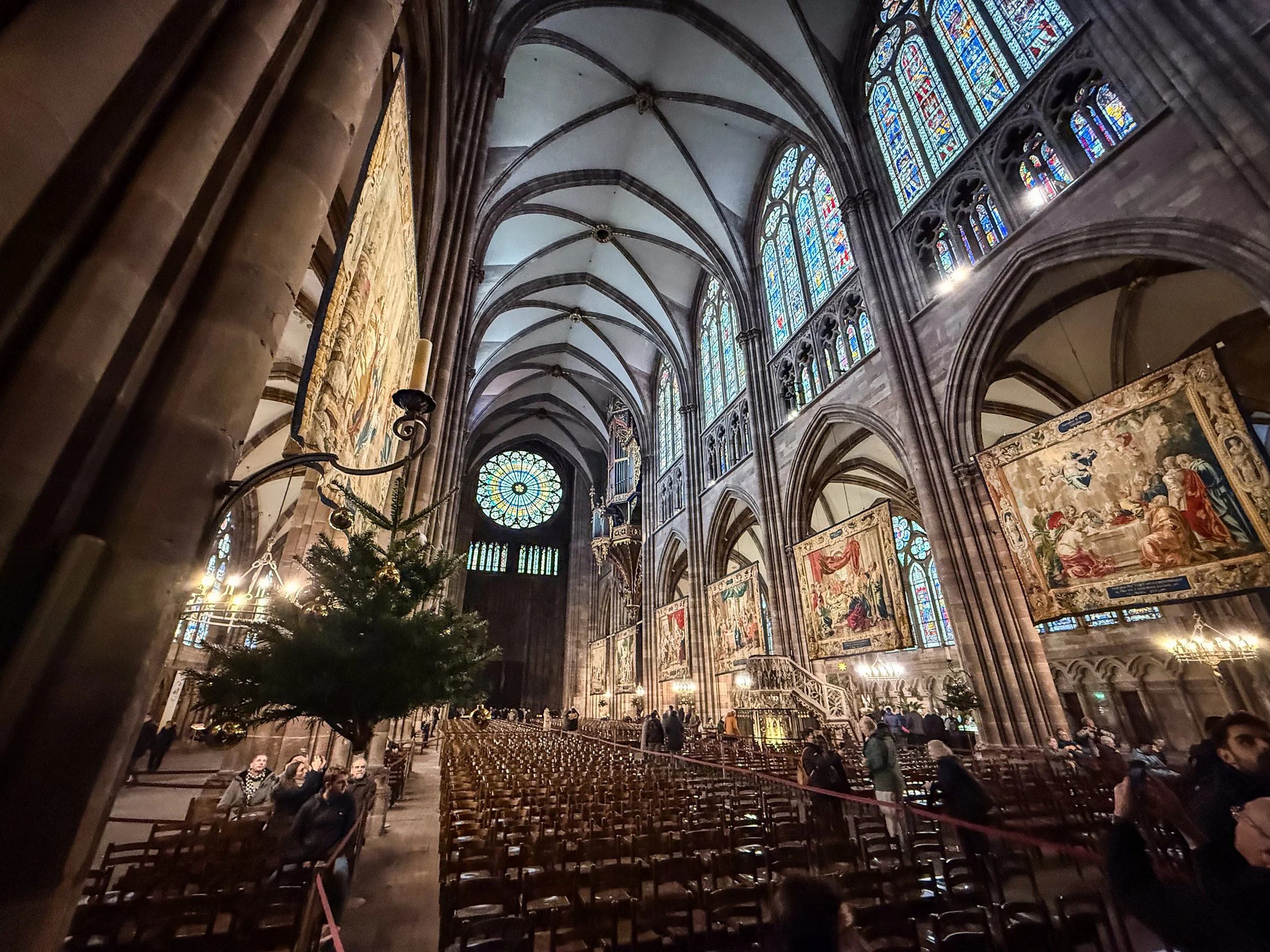
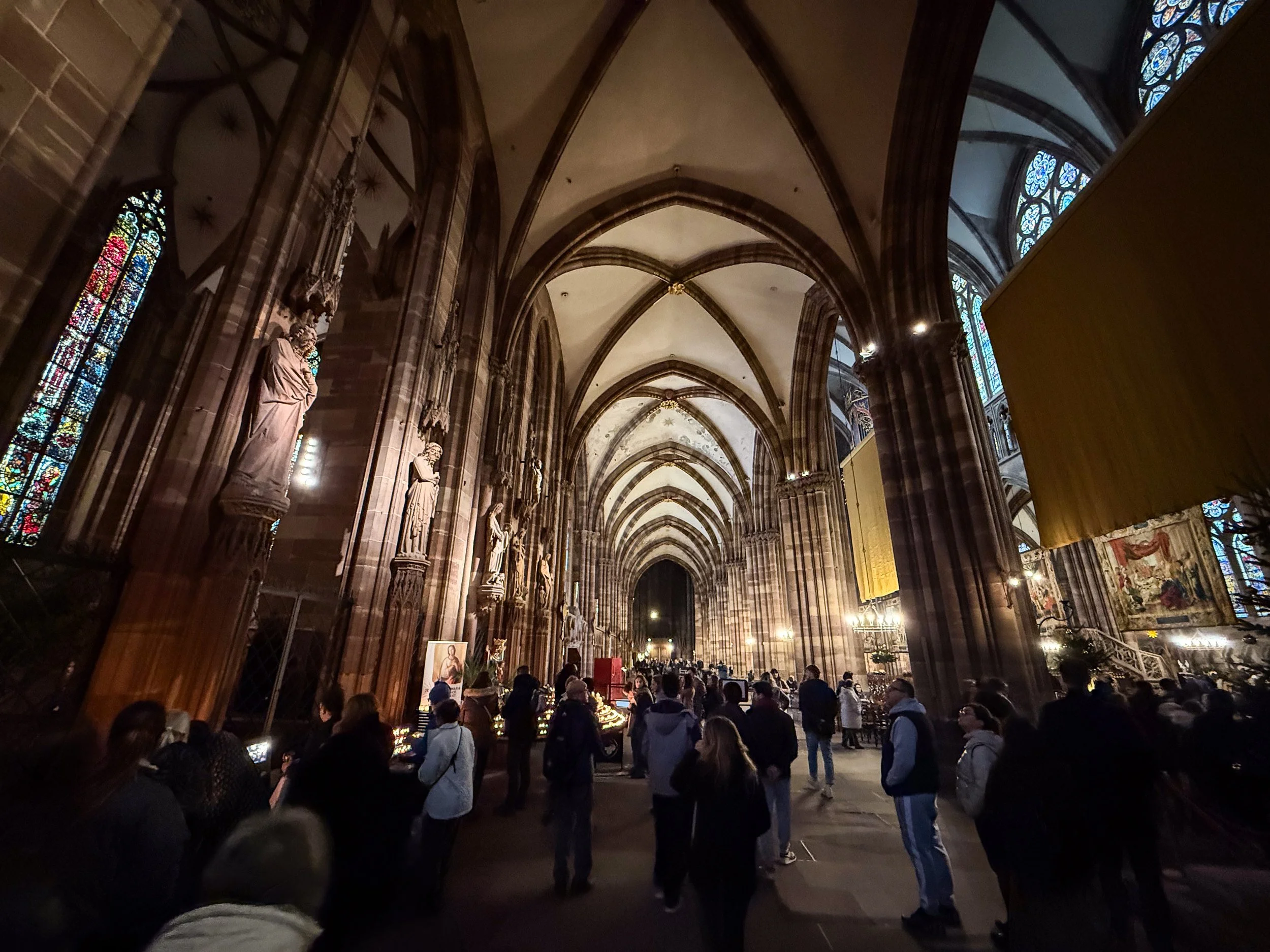
The defining landmark of Strasbourg is, without any doubt, the Cathedral. You would have seen it tower over the streetscape a few times in the gallery above. It’s hard to miss!
The Strasbourg Cathedral’s full name is Cathédrale Notre-Dame de Strasbourg and it’s construction began all the way back in 1015. Its famous spire was not completed until 1439, but when it was done, it stood 142 meters (466 ft) high, and was actually the tallest structure on Earth until 1874. After that, the competition for the tallest building in the world became quite fierce, with a new “tallest building” coming along every few years. But let’s just pause and consider for a moment that this church—whose construction began before both the Aztec and Inca civilizations had yet risen in the Americas—would reach a height comparable to a modern-day 45-storey building before the “New World” had even been “discovered”. This was done with no cranes, no steel, nothing. And once it was built, it remained the tallest building in the world for a whopping 435 years. 🤯
Entry is free, so it was an obvious addition to the itinerary. You can pay €8 to climb to the top of the spire and see the panoramic views over the city, but we skipped that part. Inside, there is also a Renaissance-era astronomical clock that shows shows planetary positions, tracks solar and lunar cycles, and features moving mechanical figures. It’s exactly as it was in the 1500s and it’s still functioning, even performing a daily animated procession at 12:30 PM. I believe seeing this procession may carry an additional (small) price tag, but seeing the inside of the church is quite compelling on its own. Of course there are thousands of old churches in Europe, but the Strasbourg Cathedral is clearly a standout.
The church is built from a particular type of pink sandstone that takes on different colors depending on the light. Supposedly it is a soft rose hue at sunrise, a warm orange at sunset, and a deep red during stormy weather. However, we only had the pleasure of seeing the sun hit this Cathedral a couple of times. Mostly it was just foggy, which was actually cool in its own way because it was often obscuring the top of the spire, which was a cool emphasis on its incredible height.
Here are a few pictures from both inside and outside of the Cathedral. But before enter, I think we need a quick communion…
Un autre verre de vin chaud, s'il vous plaît ? 🍷
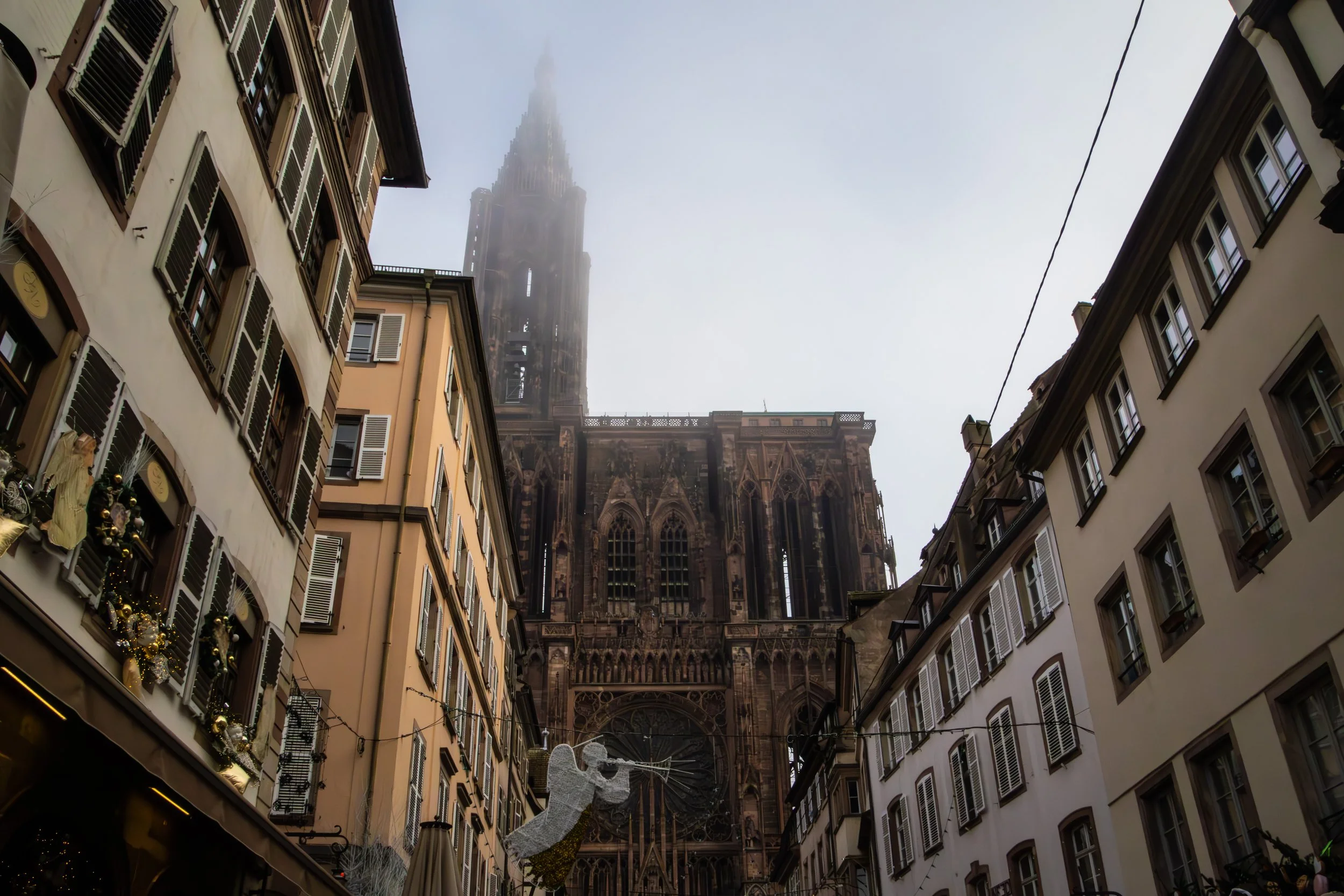
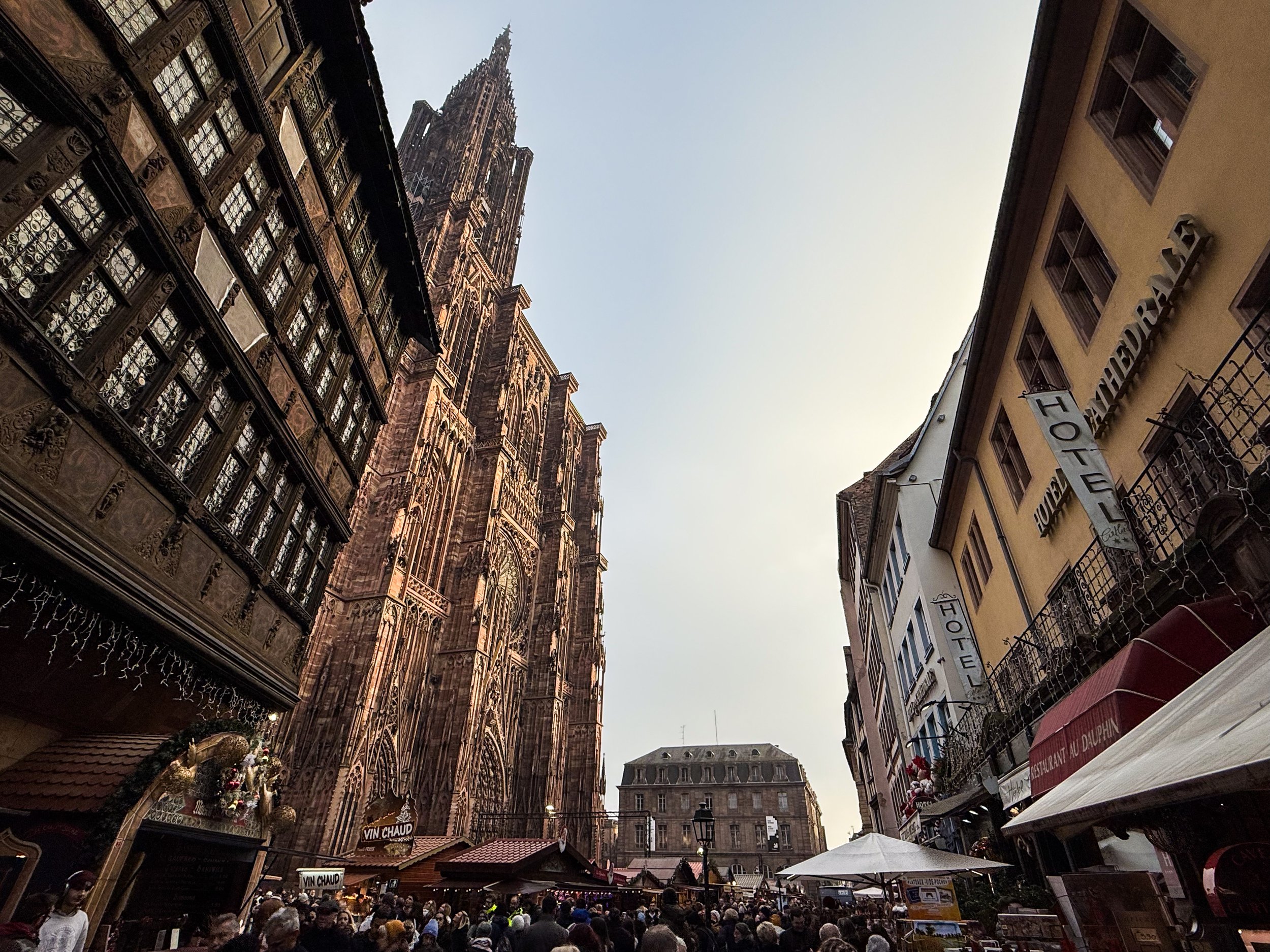
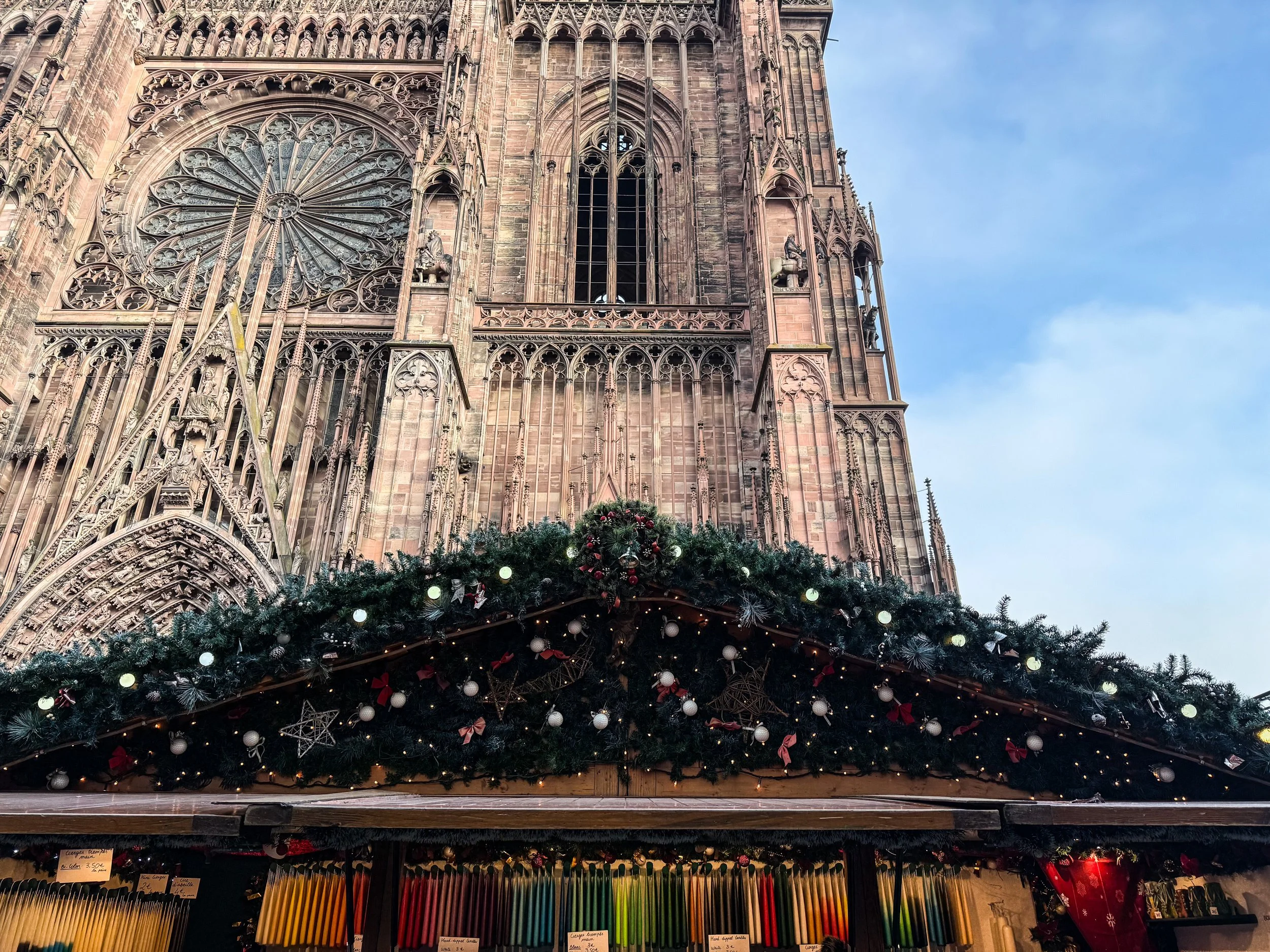
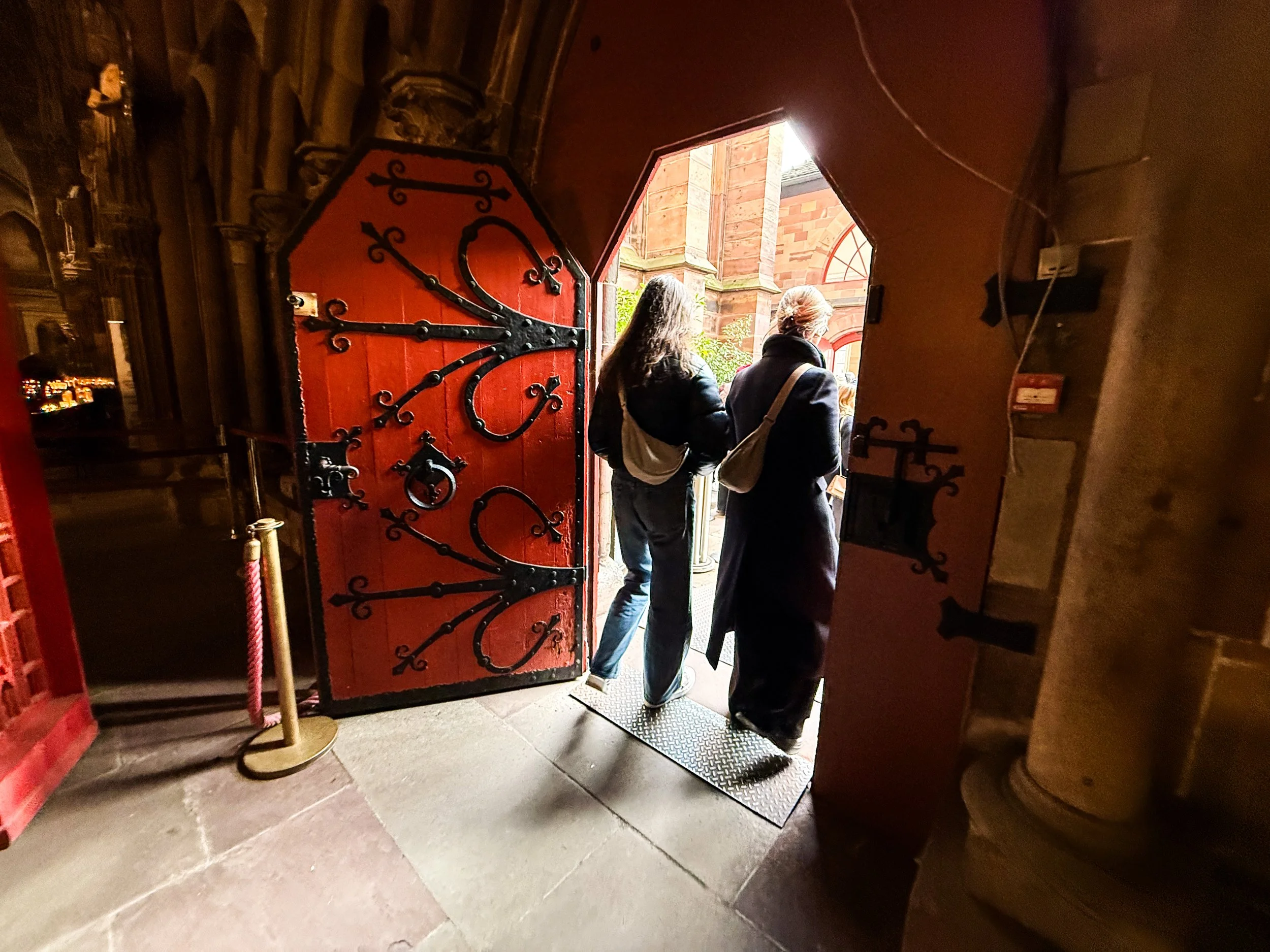
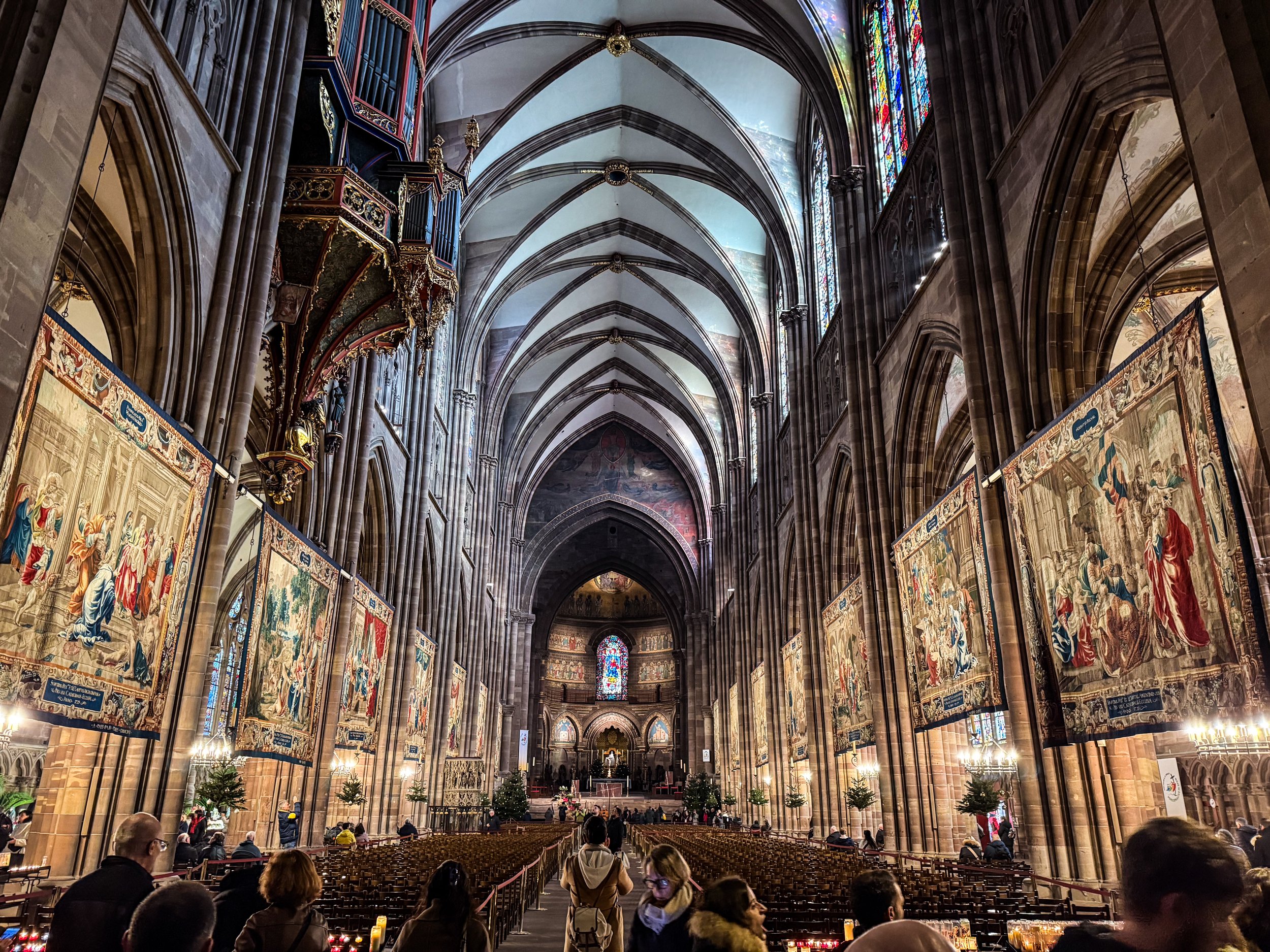
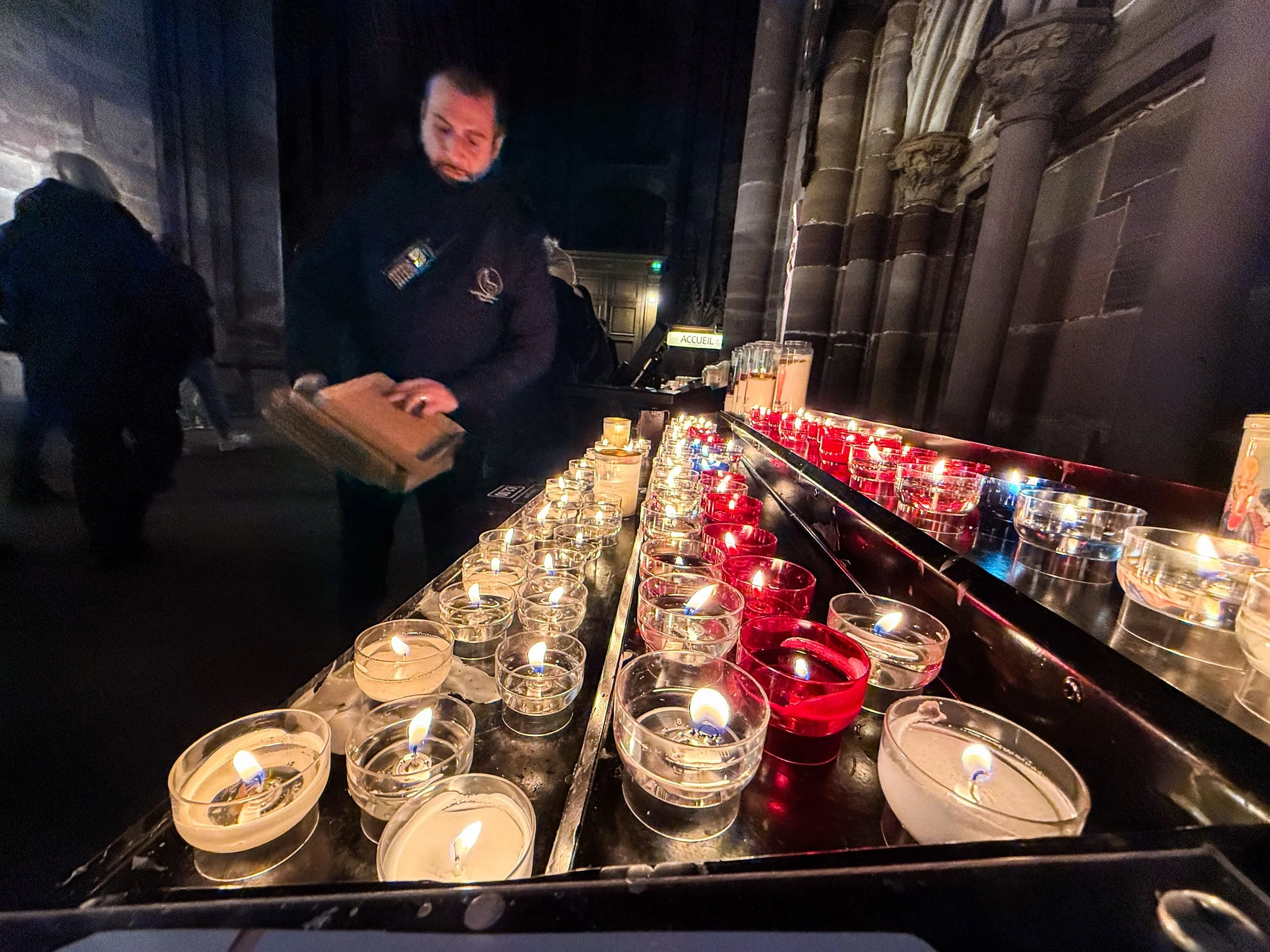
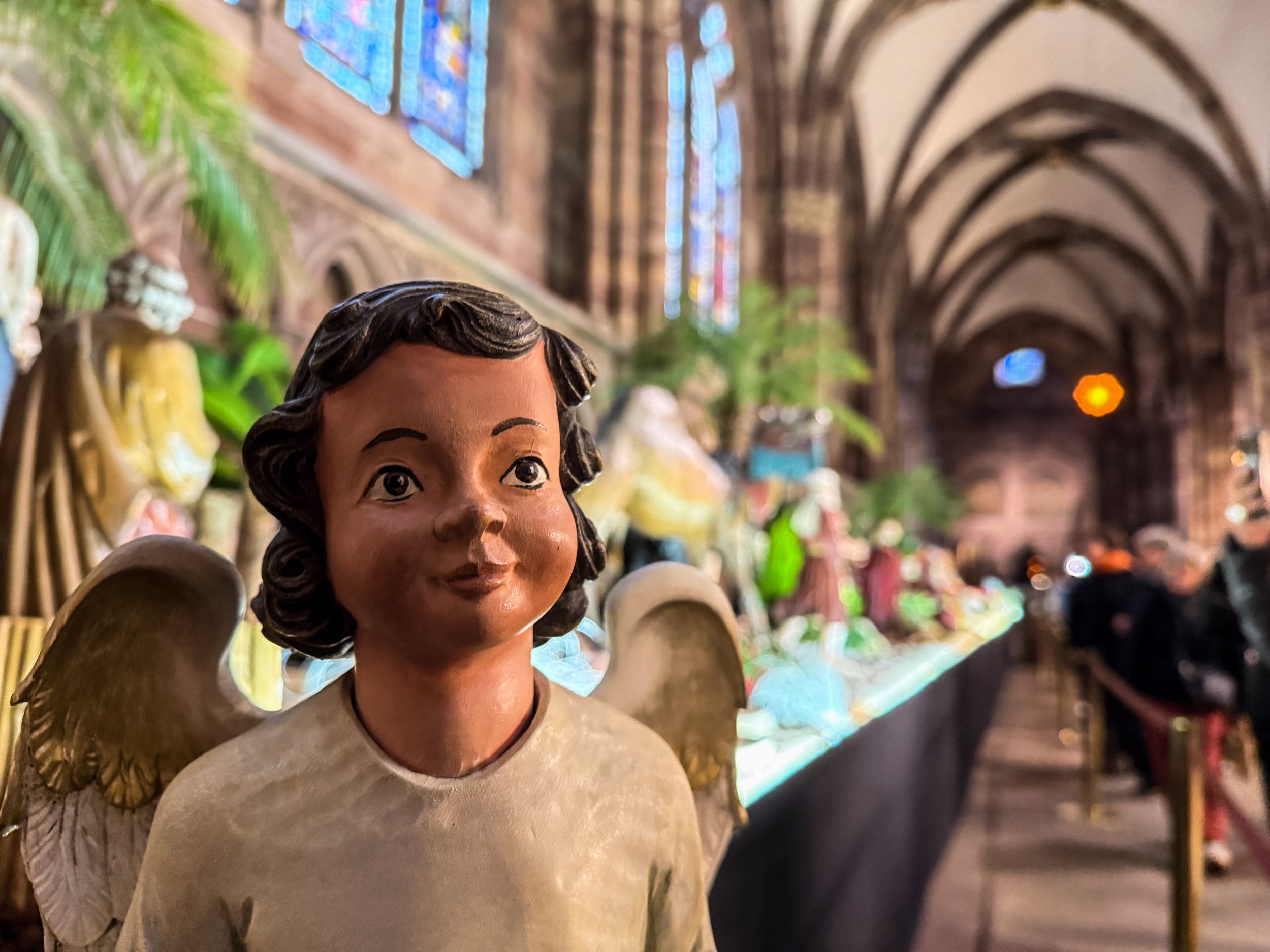
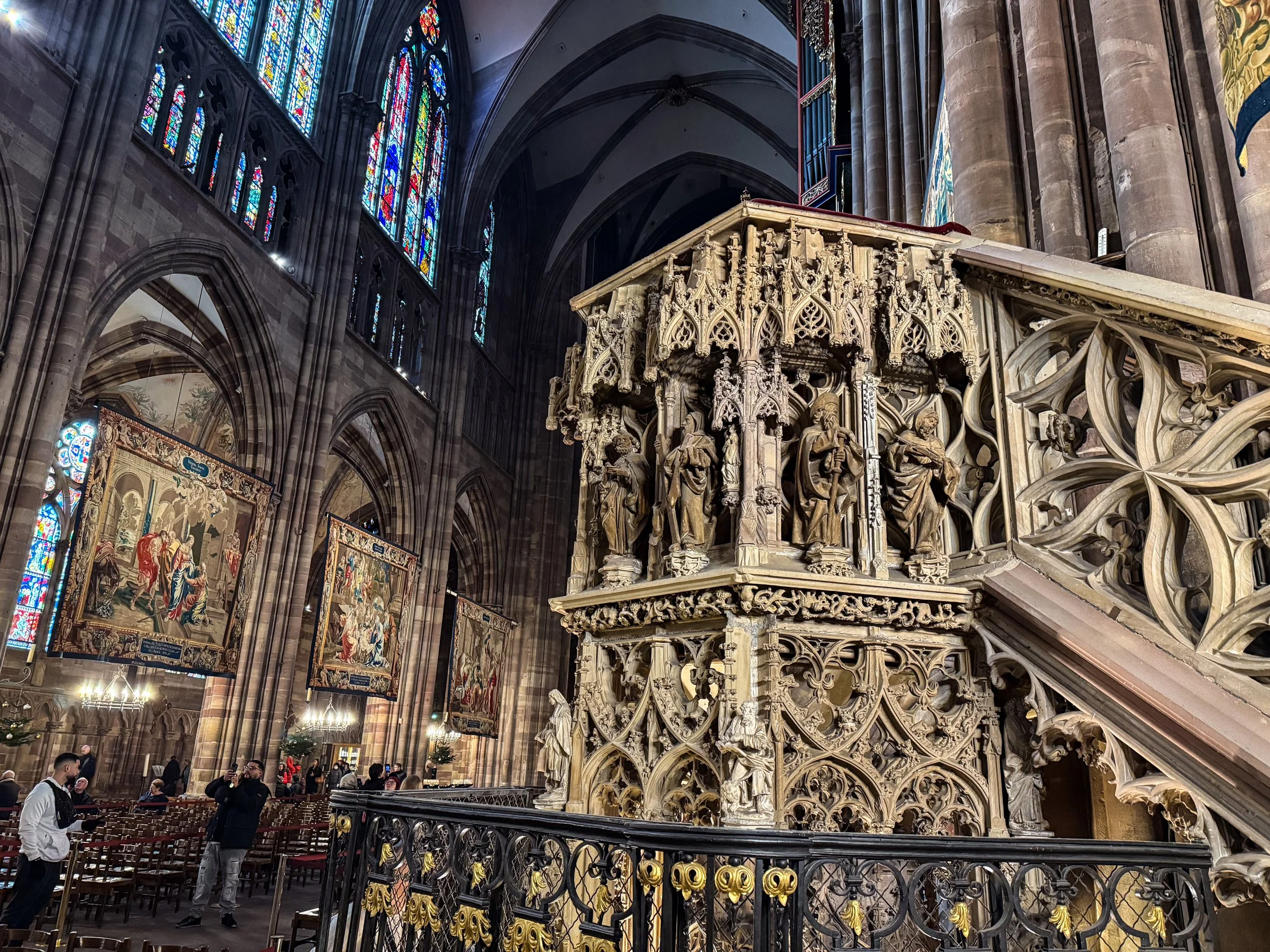
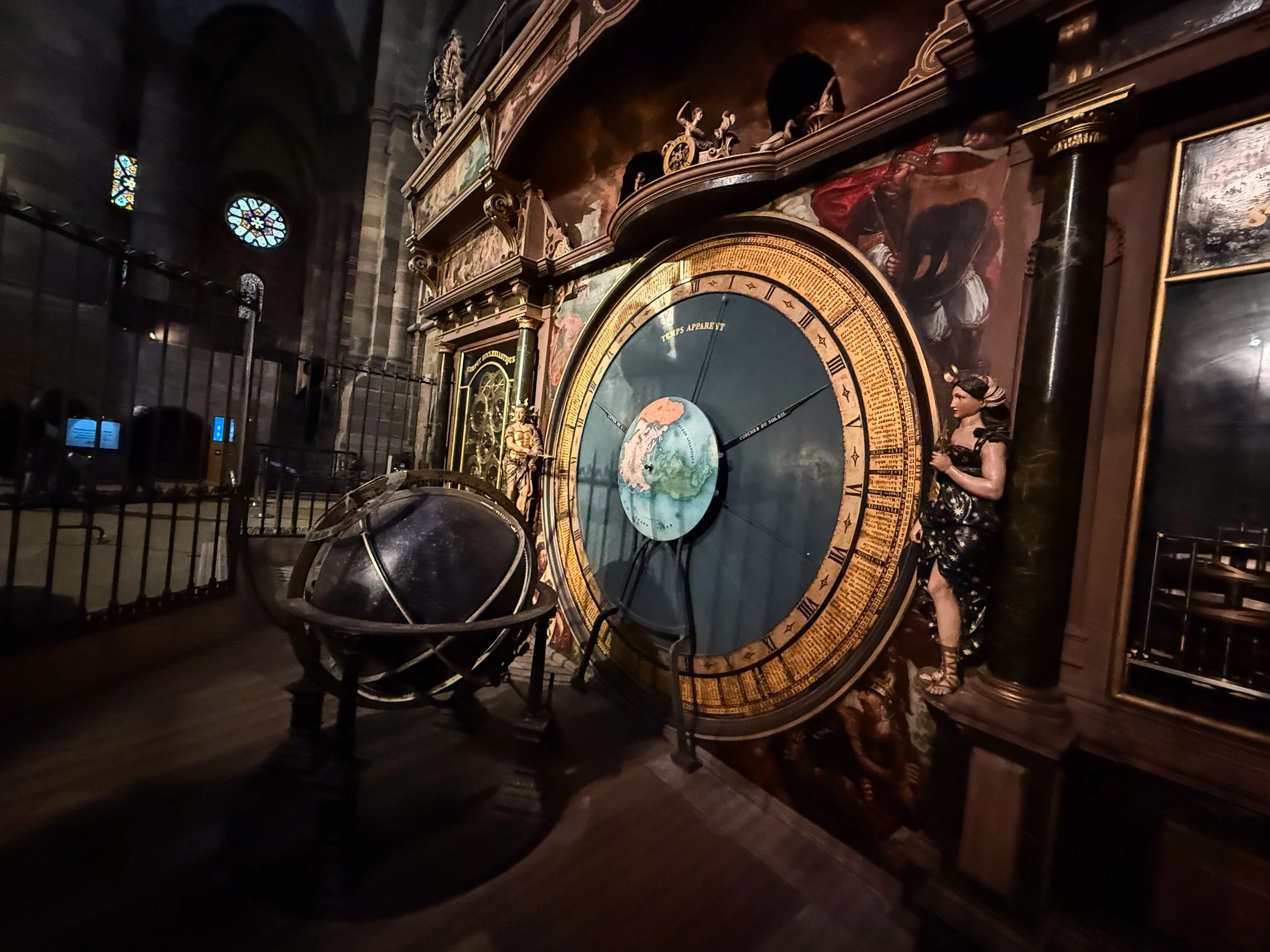
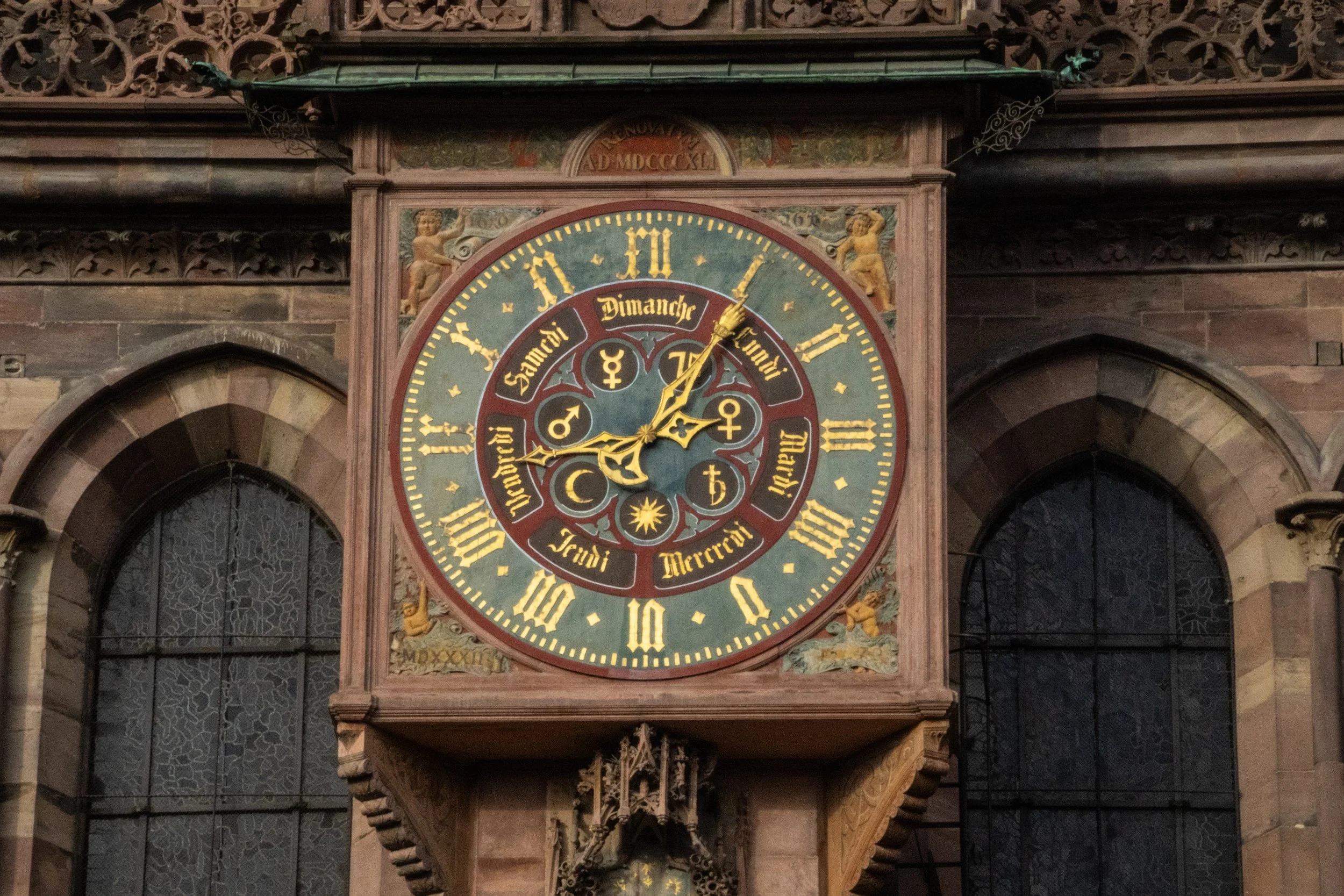
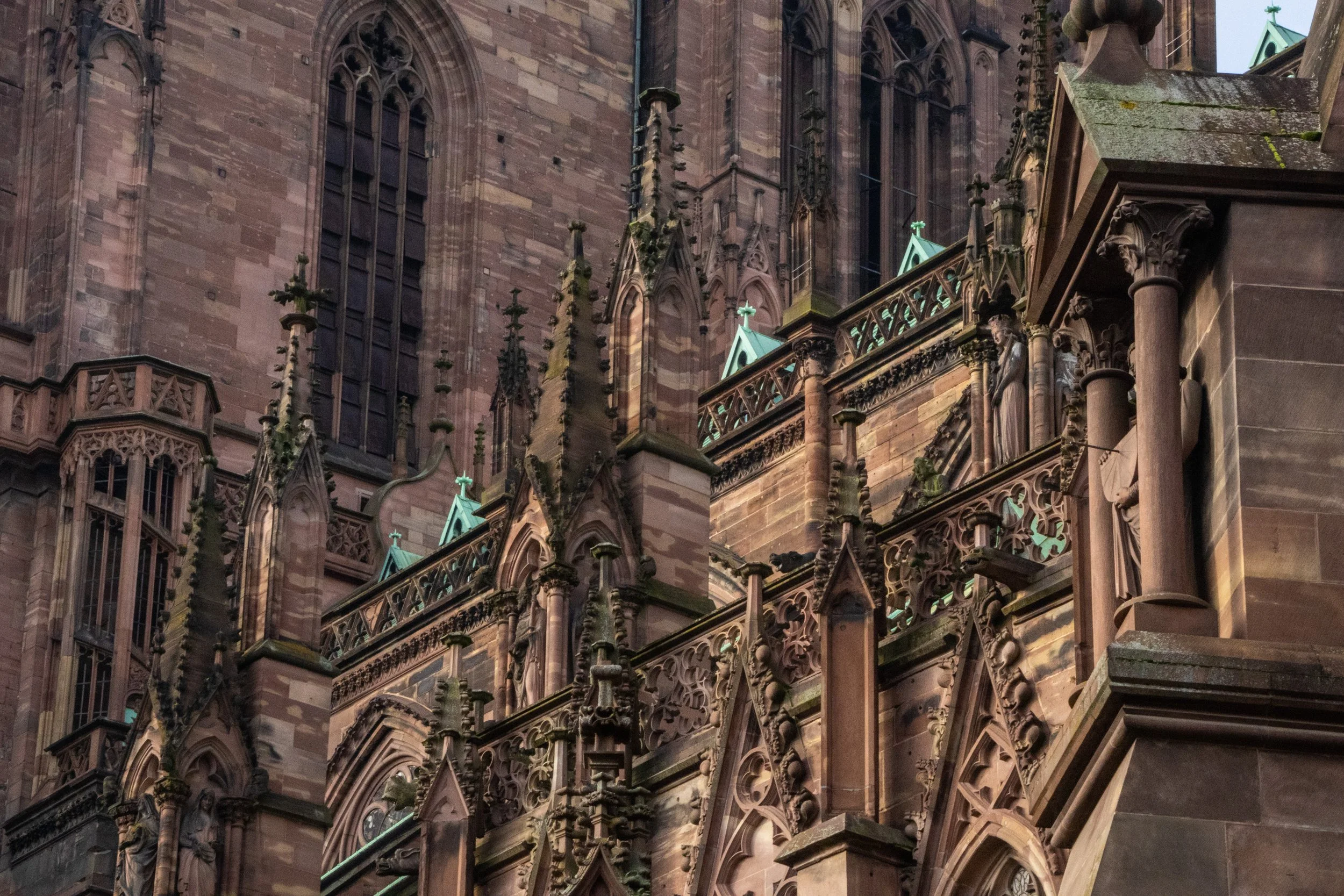
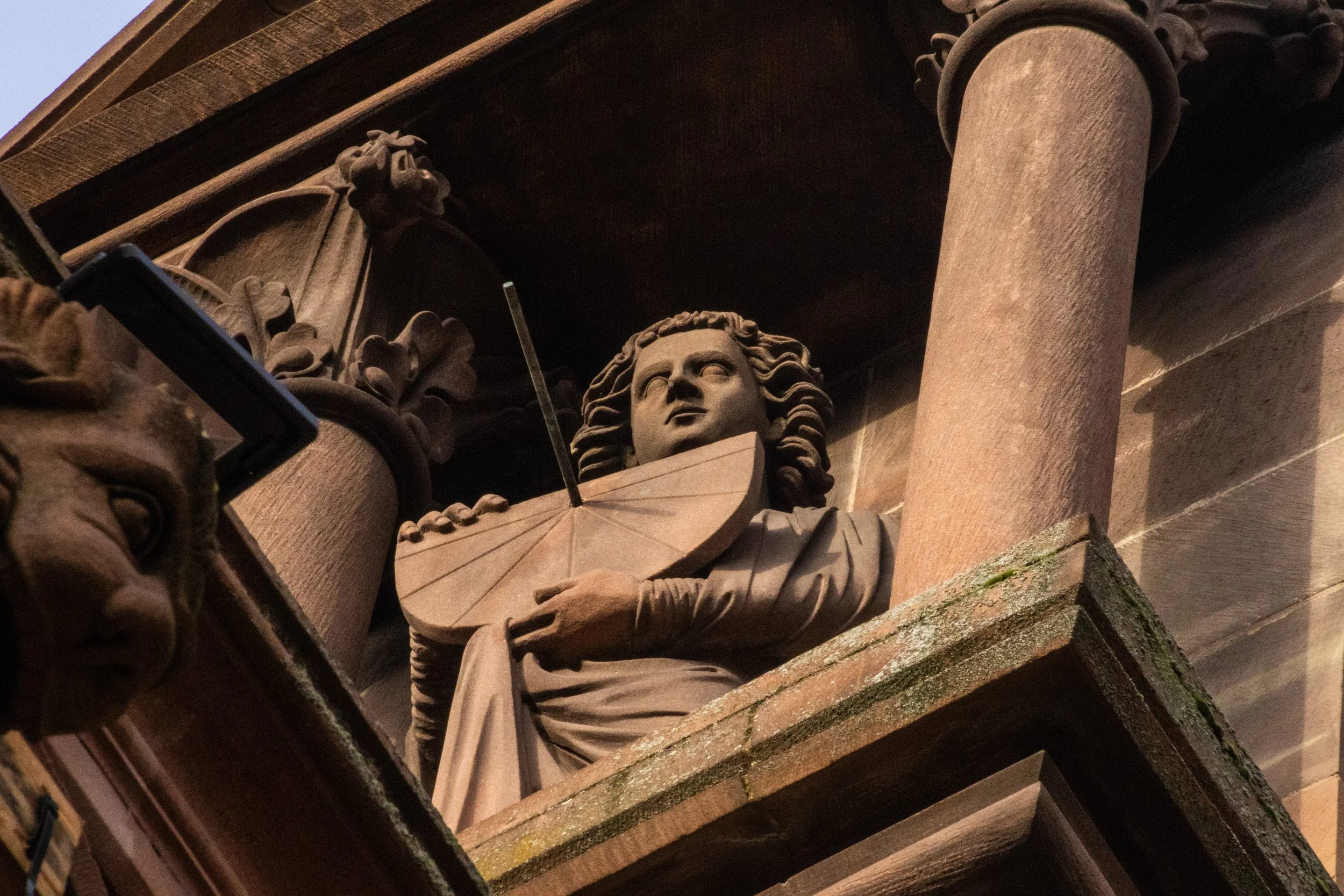
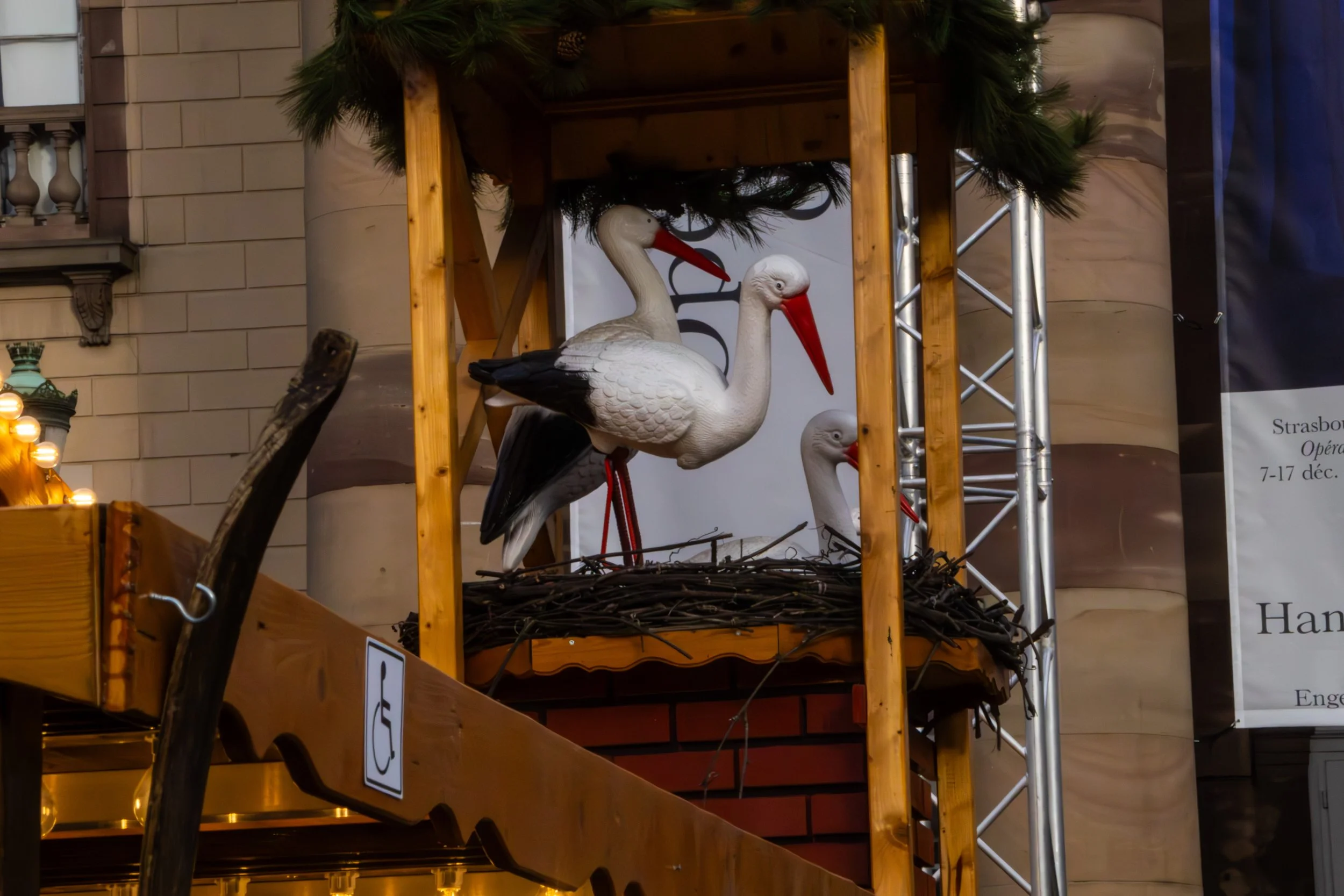
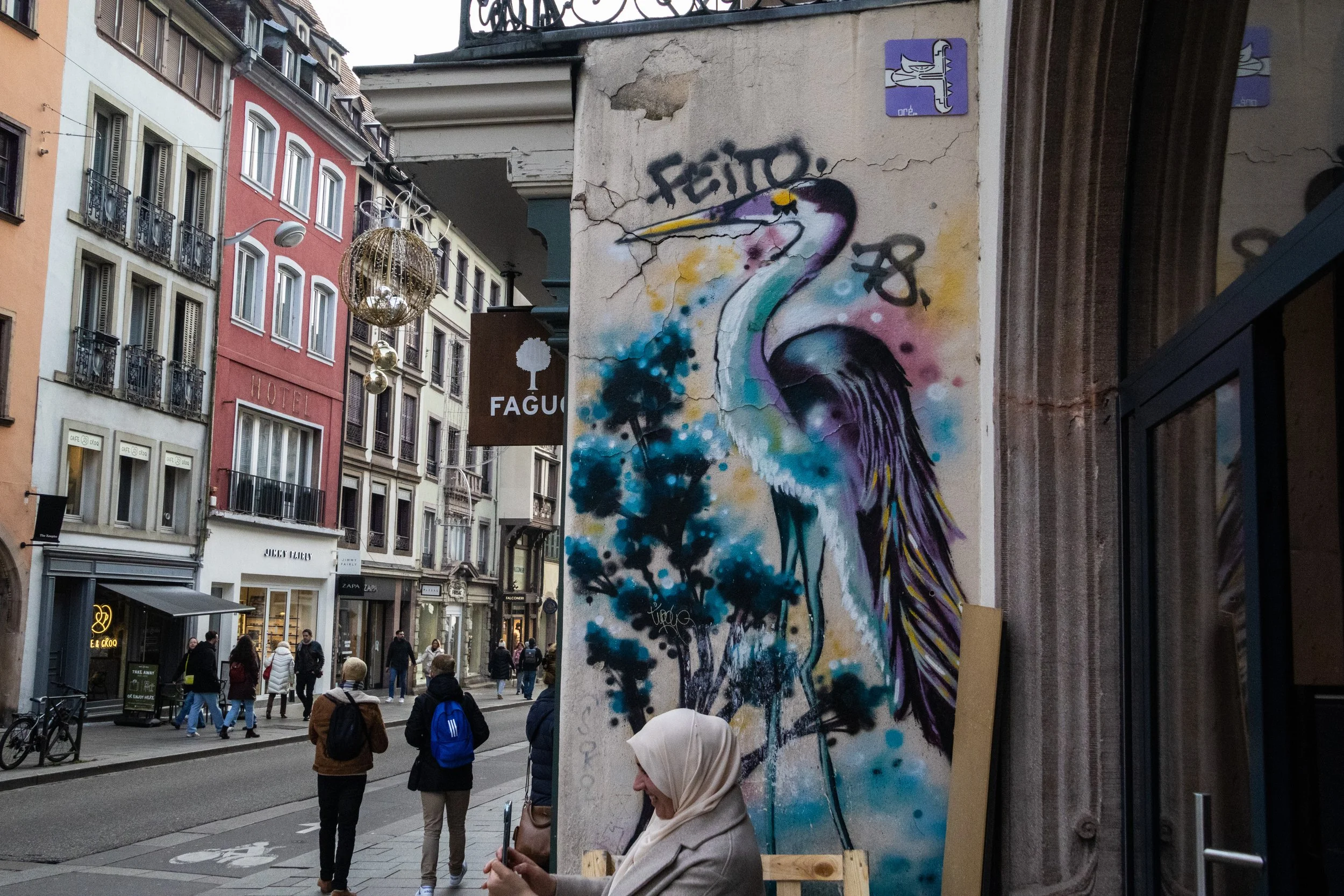
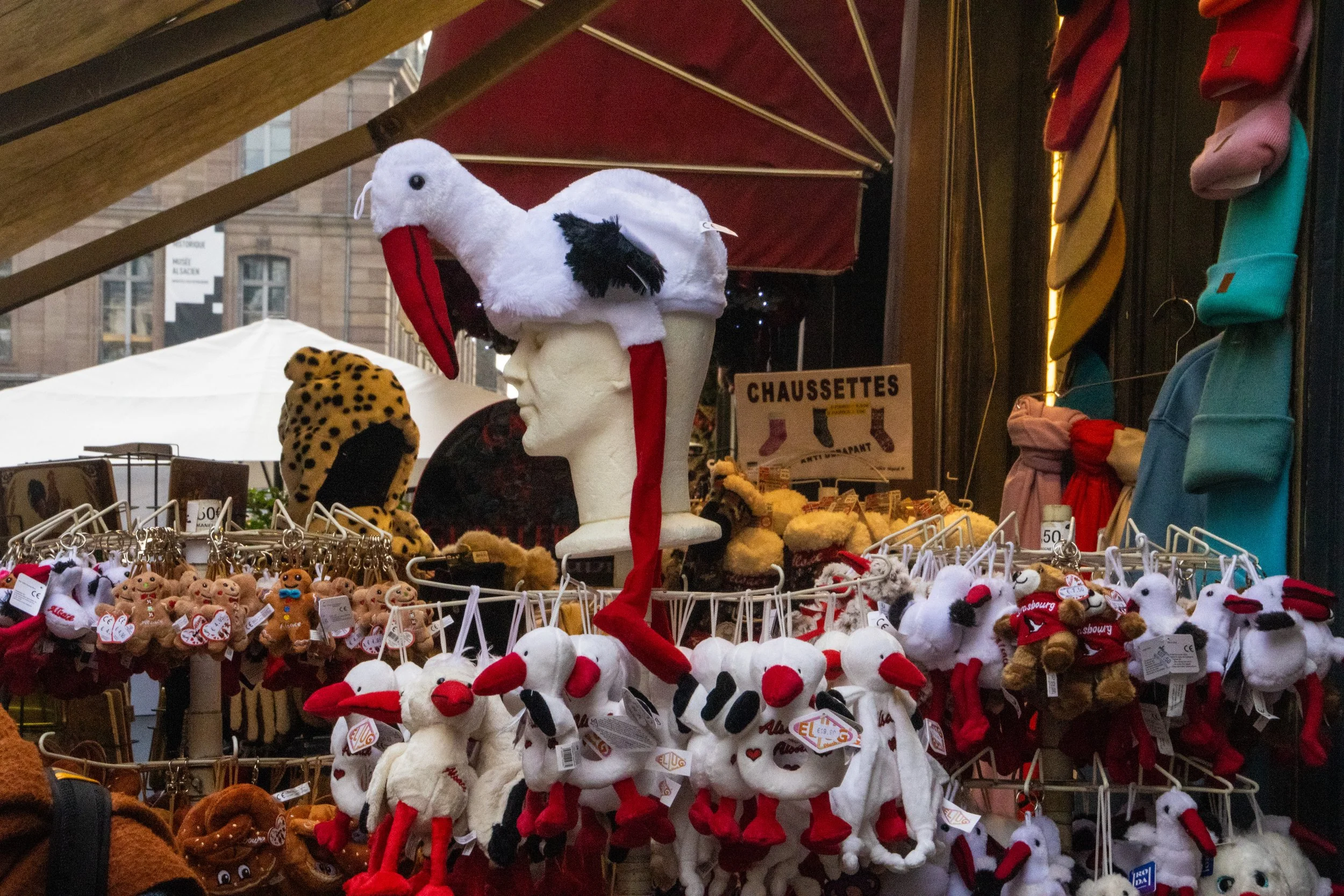
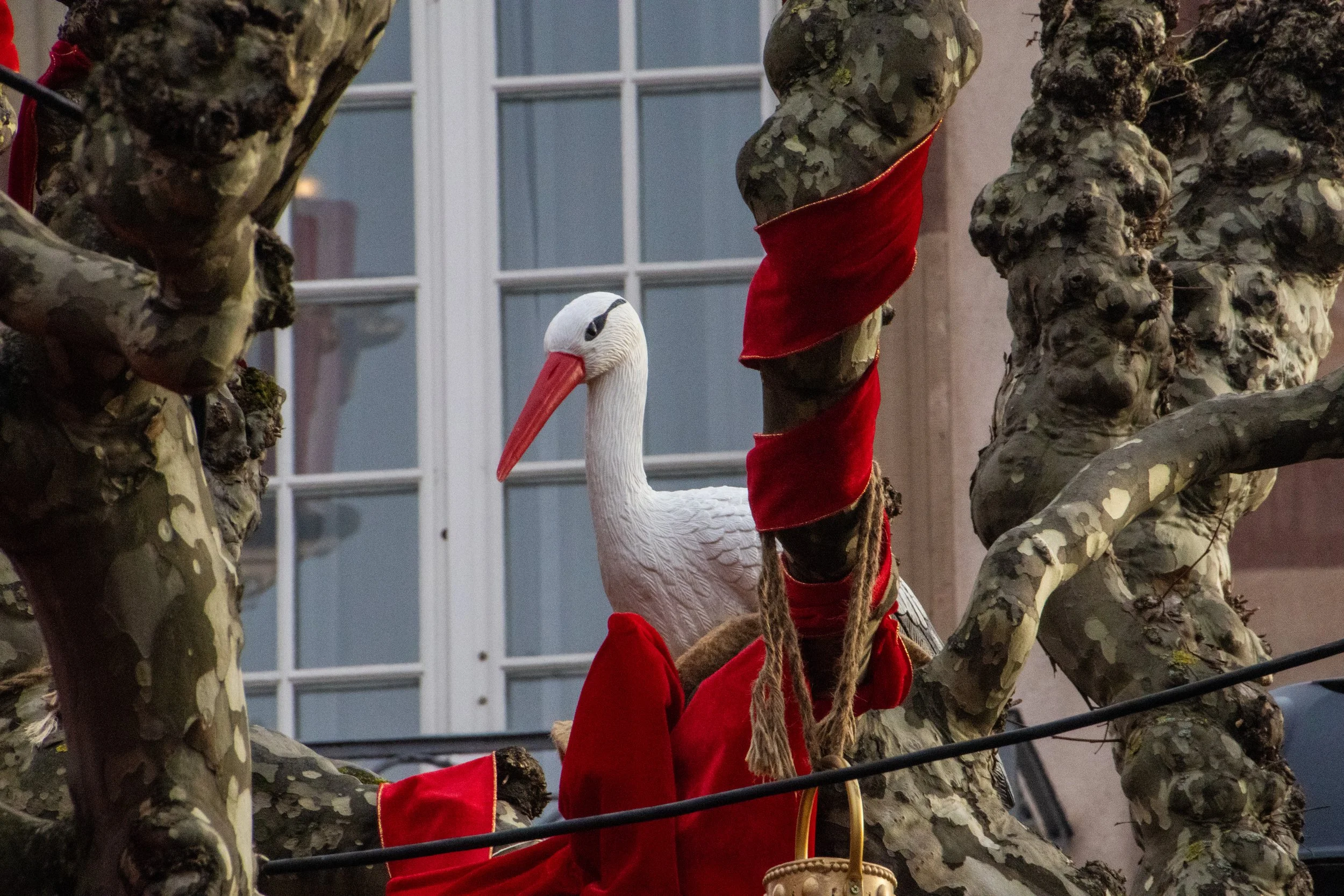
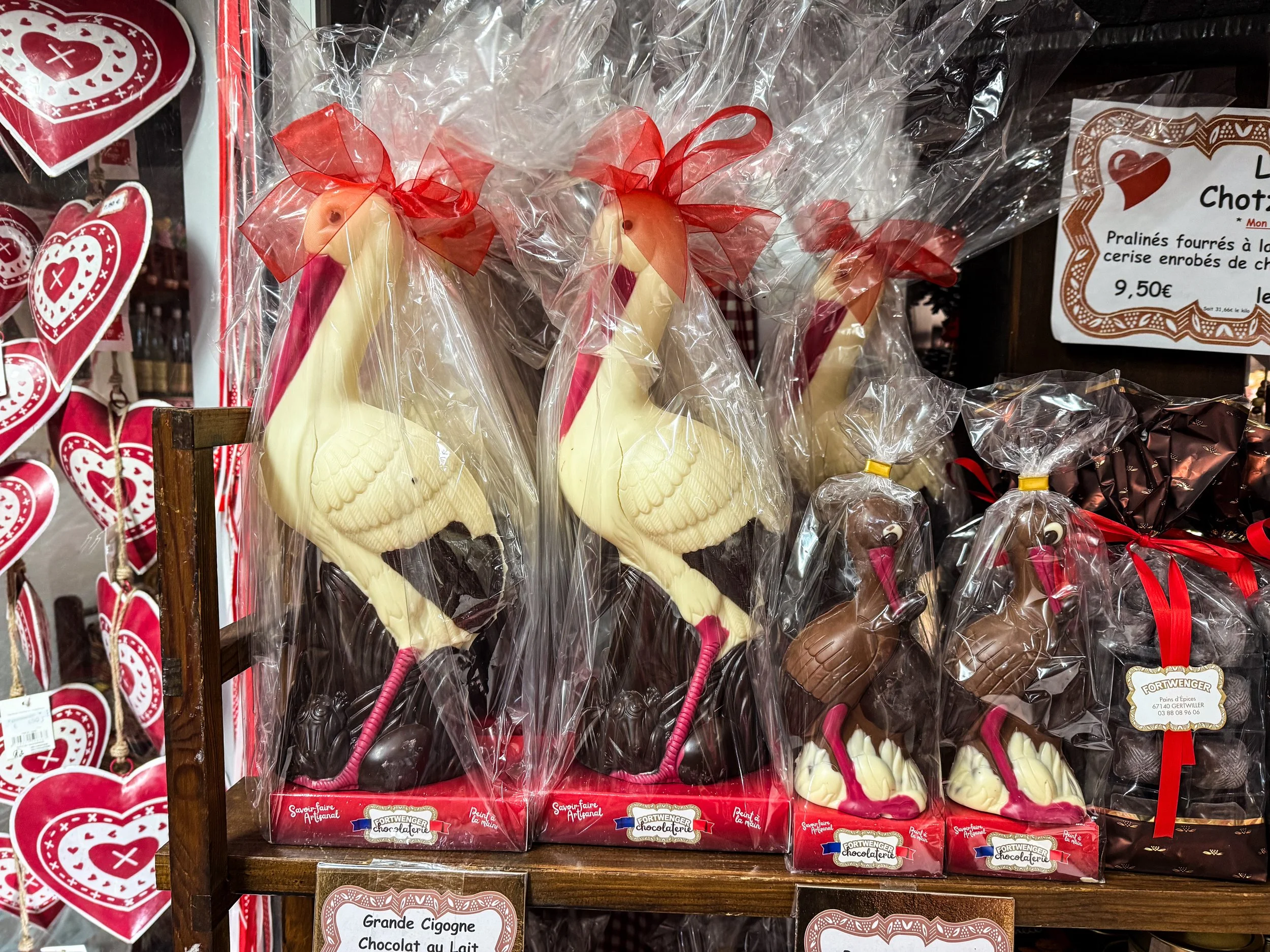
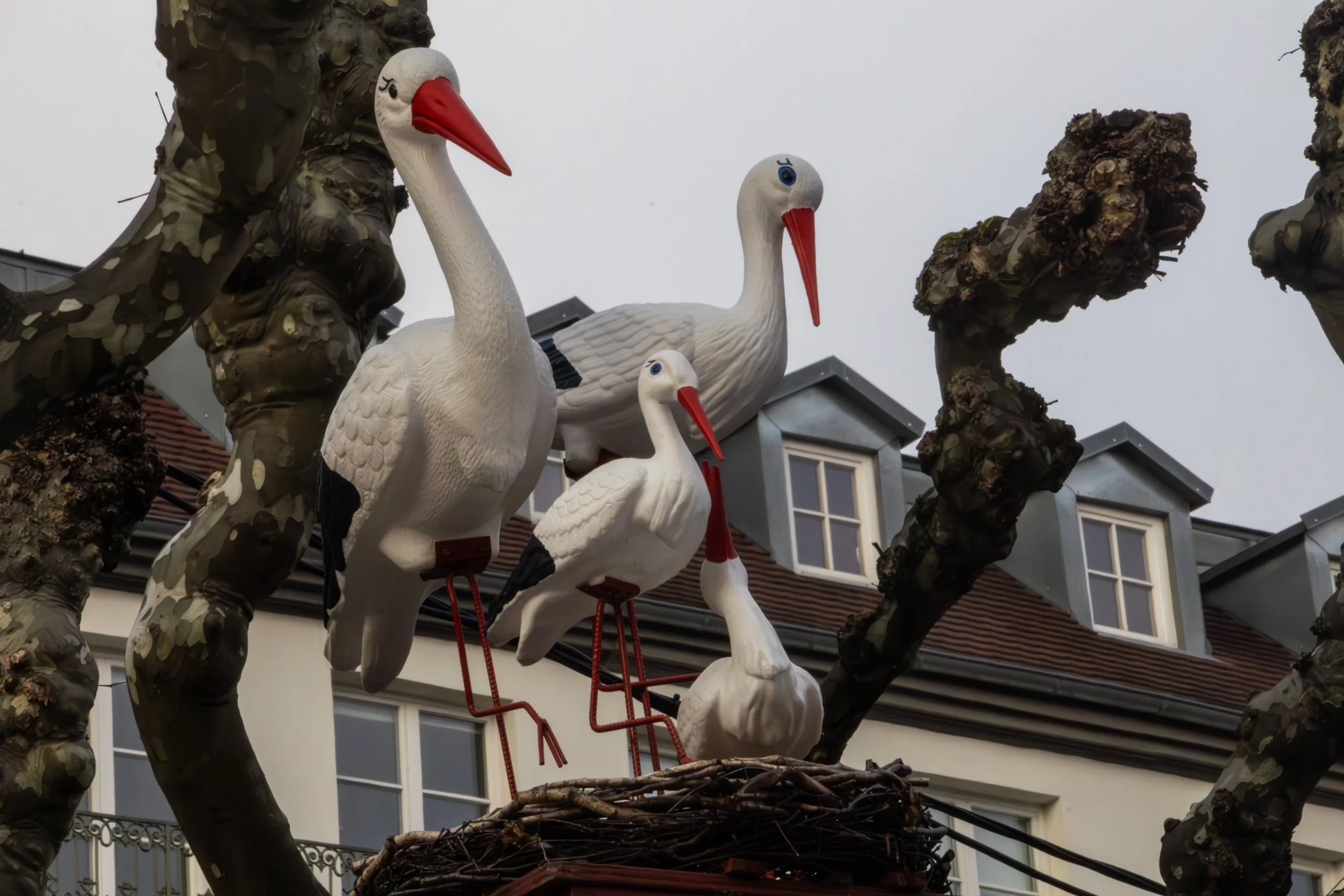
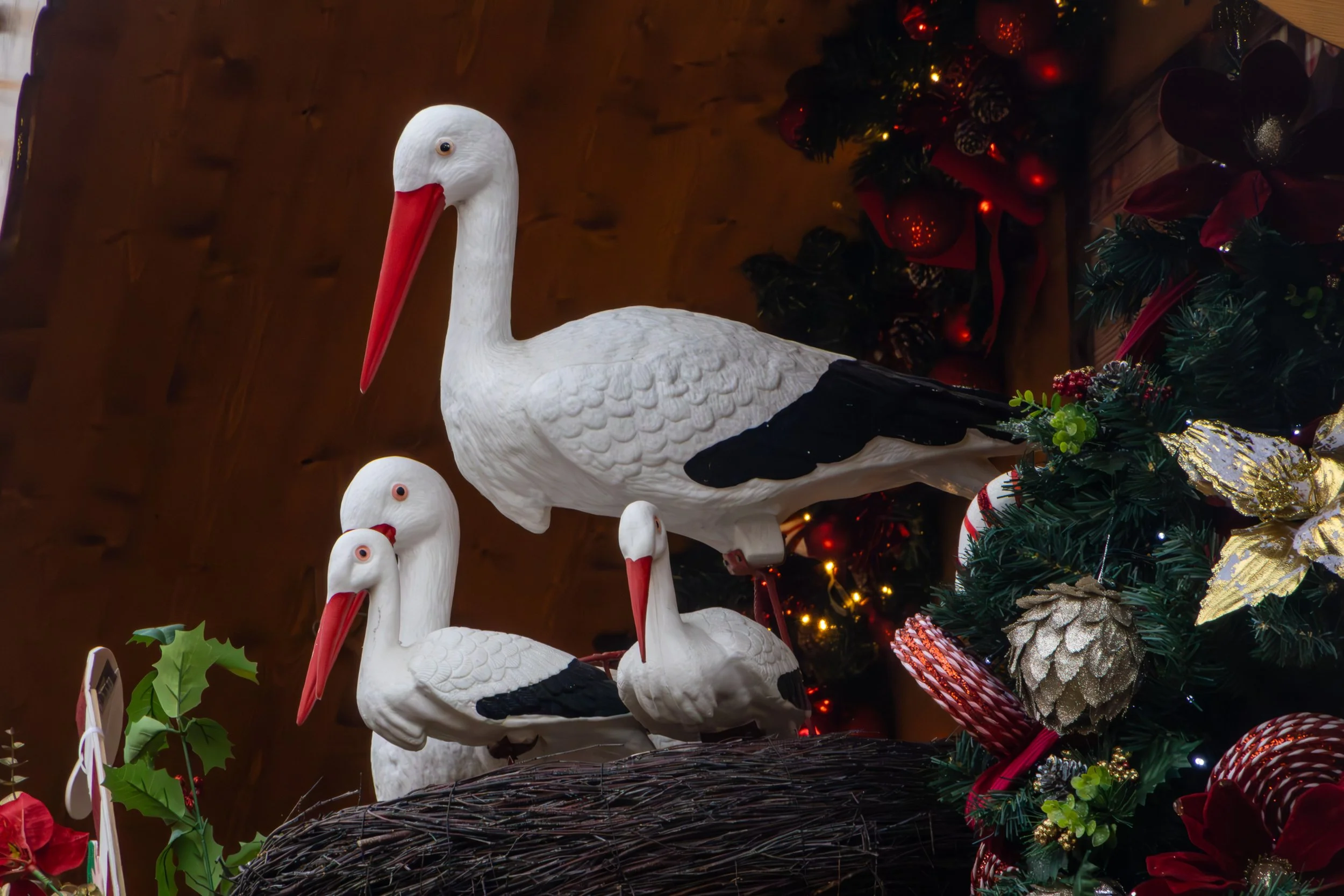
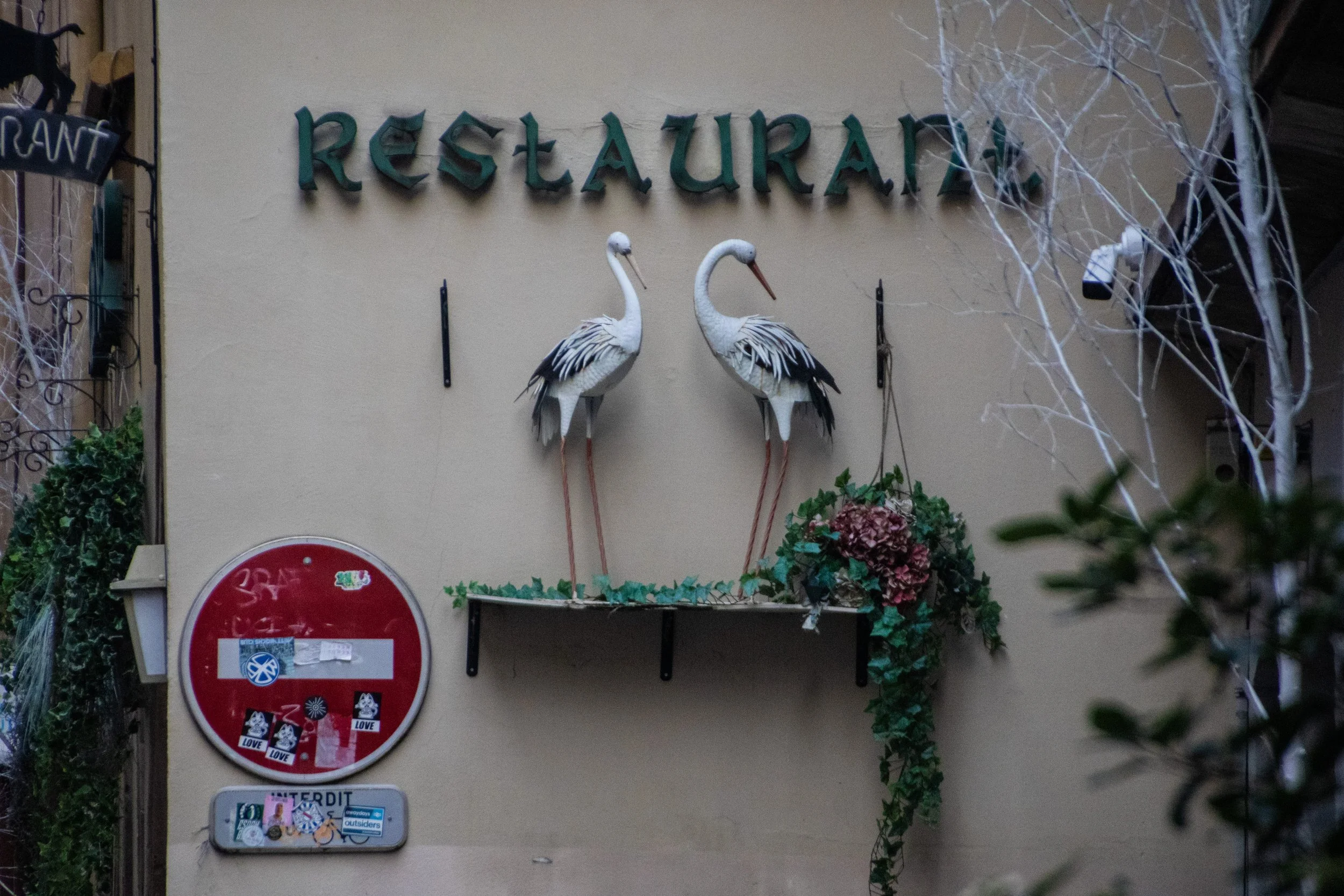
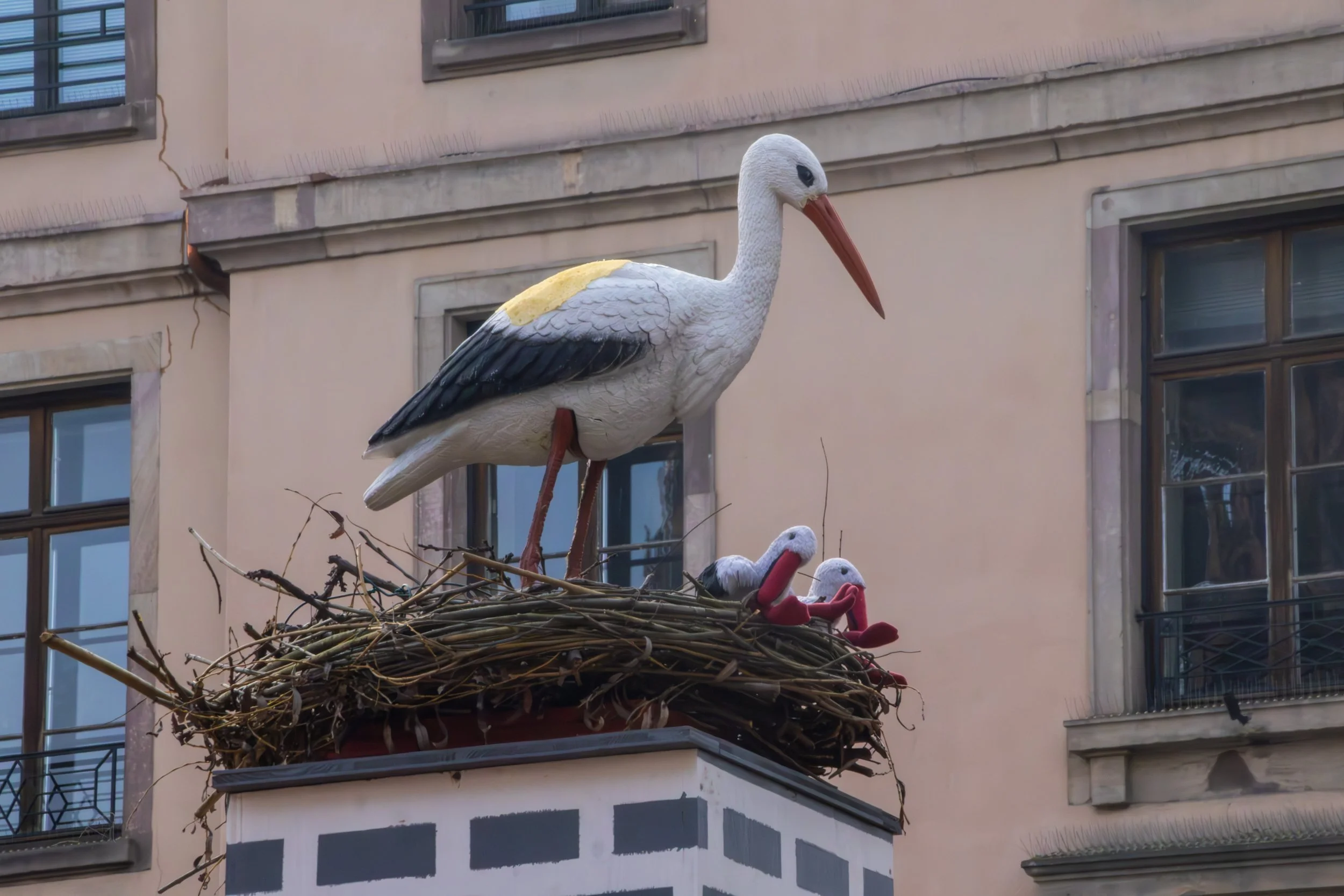
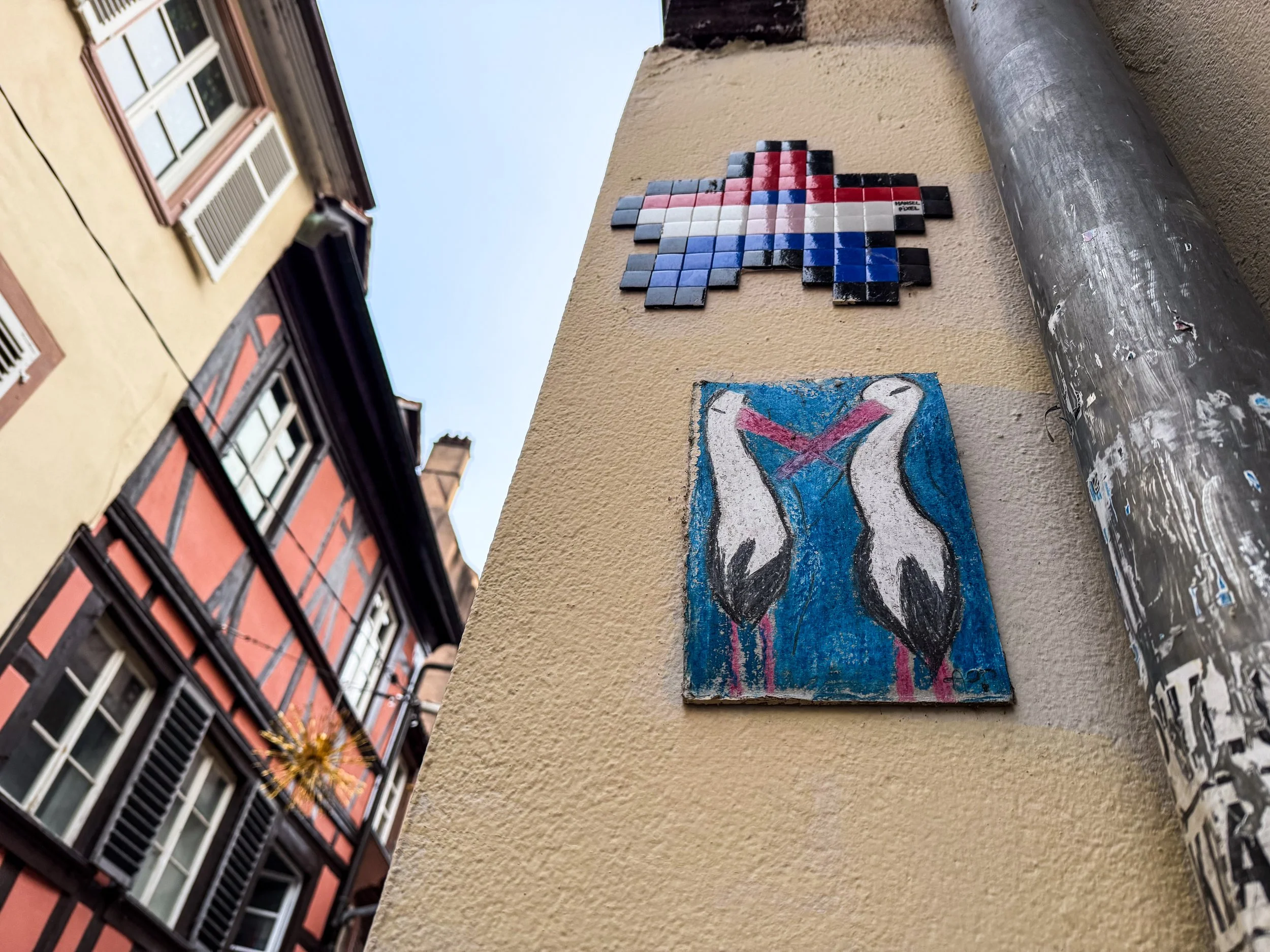
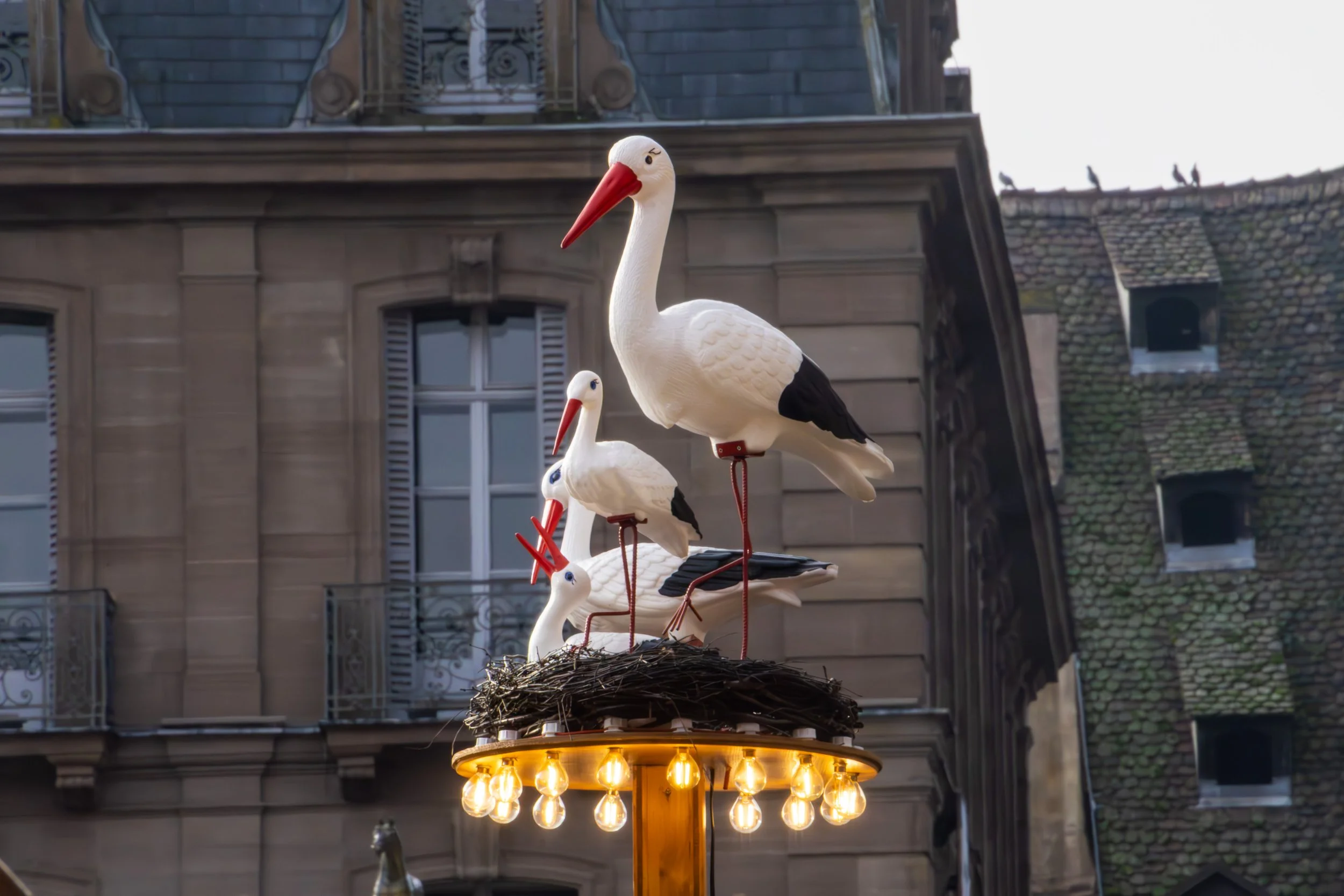
One interesting little thread of Strasbourg is the significance of storks to the city’s identity.
Yes, storks: the big, white, long-billed birds that delivers babies in cloth sacks.

EDIT: I’ve recently been informed that this is not actually where babies come from. Will do further research to clarify and circle back ASAP.Storks, as it turns out, are a symbol not only of Strasbourg, but for all of Alsace. The Rhine and Ill rivers provide a large area of open wetlands and river plains that are the ideal habitat for these birds. As humans developed this region, these birds have also found homes in the large agricultural fields and taken a liking to the typical Alsatian rooftops and tall chimneys for nesting. Of course, they are migratory birds, so they will fly south in the winter and return in the spring. For this reason, their return to the region was always correlated with the bringing of good fortune. Additionally, I’m learning that storks mate for life, which has also made them local symbols of family, fidelity, and stability. And on top of all that, with the political and national boundary lines of this region often in a state of violent flux, storks took on an additional layer of meaning as a unifying symbol of continuity and regional identity. So these birds have been endowed with a LOT of meaning.
In the 20th century, as this region became the site of heavy industrialization, wetland drainage, and experienced back-to-back World Wars, the storks here were almost wiped out. By the 1970s, there were almost no storks left, so Alsace instituted conservation programs to breed and reintroduce storks. And, it was apparently quite a success, as storks are once again common in Alsace! However, given that our visit happened in the winter, the storks had long since flown south. But the likeness of the stork is still everywhere in this city. Let me show you a few of the ways that storks are represented here, even in the winter…
Deux autres vins chauds, s'il vous plaît ? 🍷
Exploring Strasbourg After dark
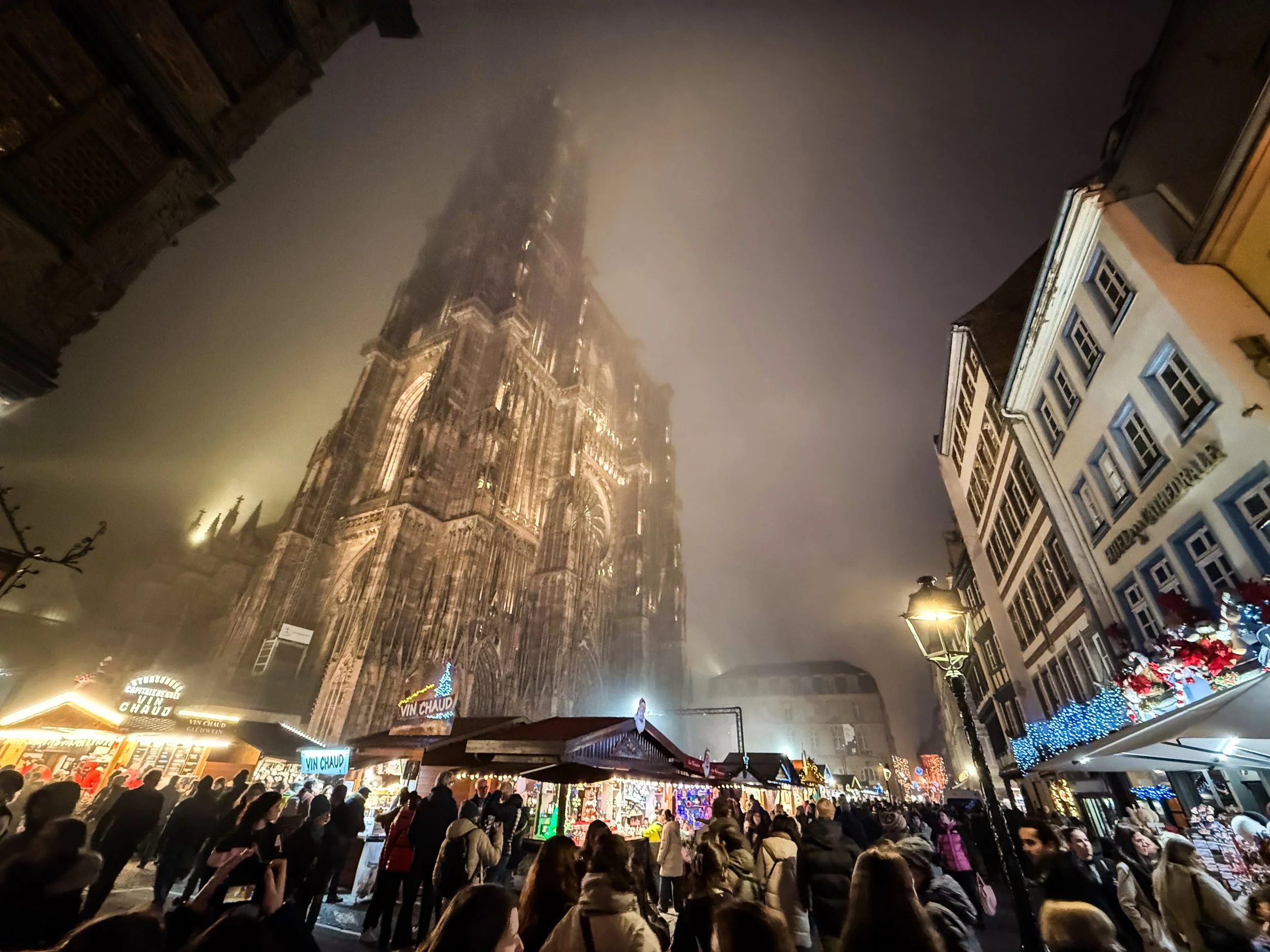
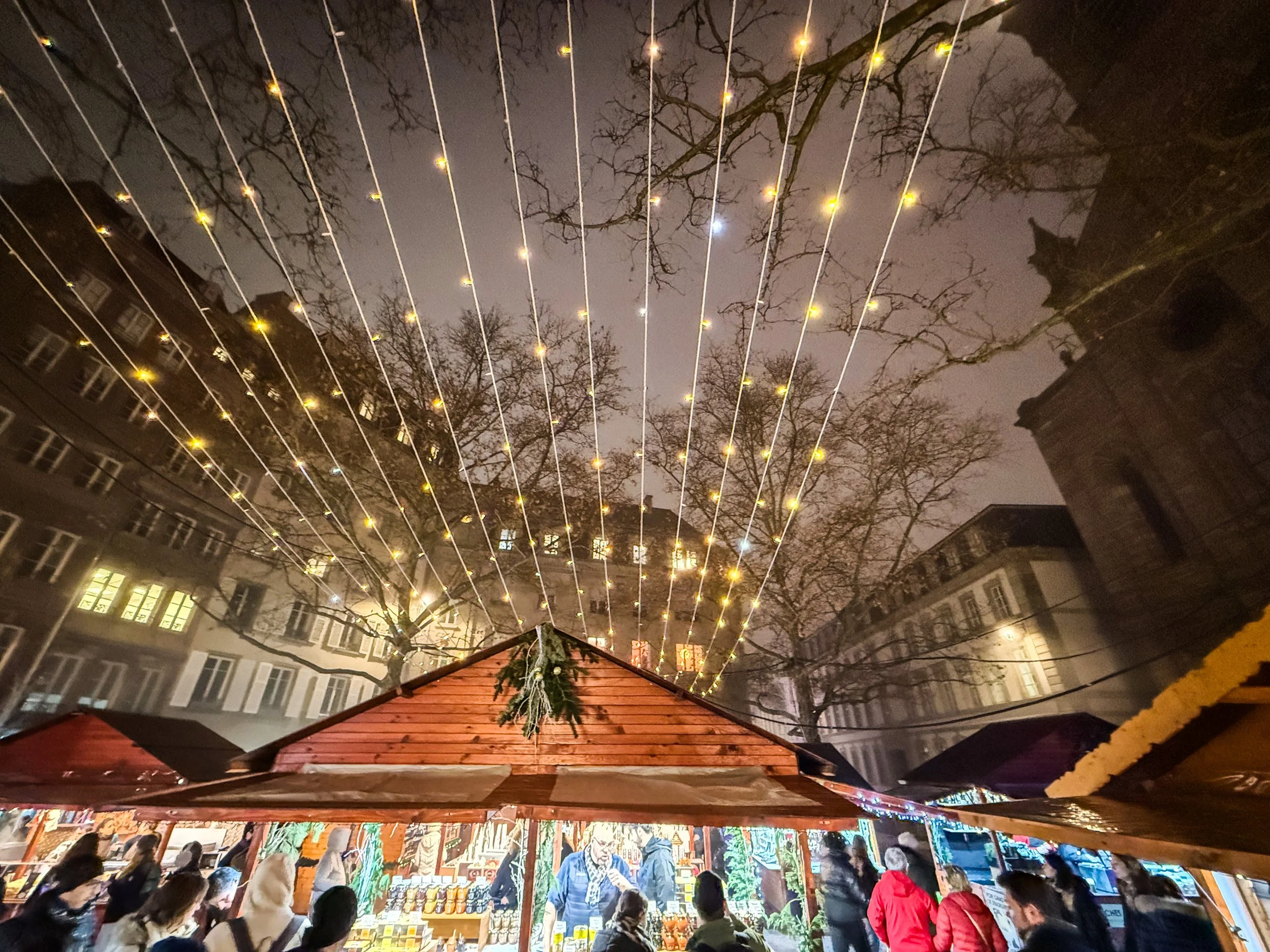
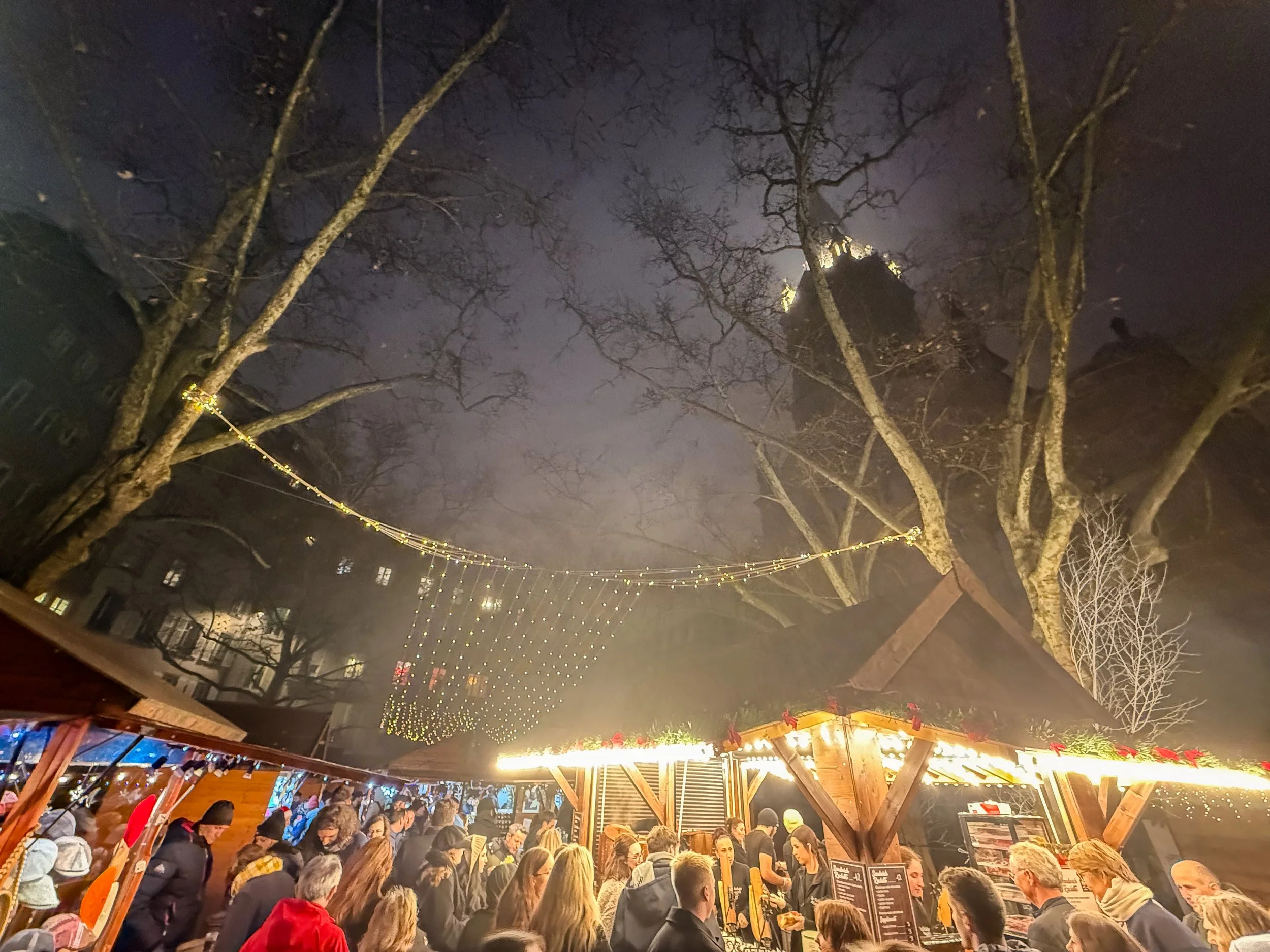
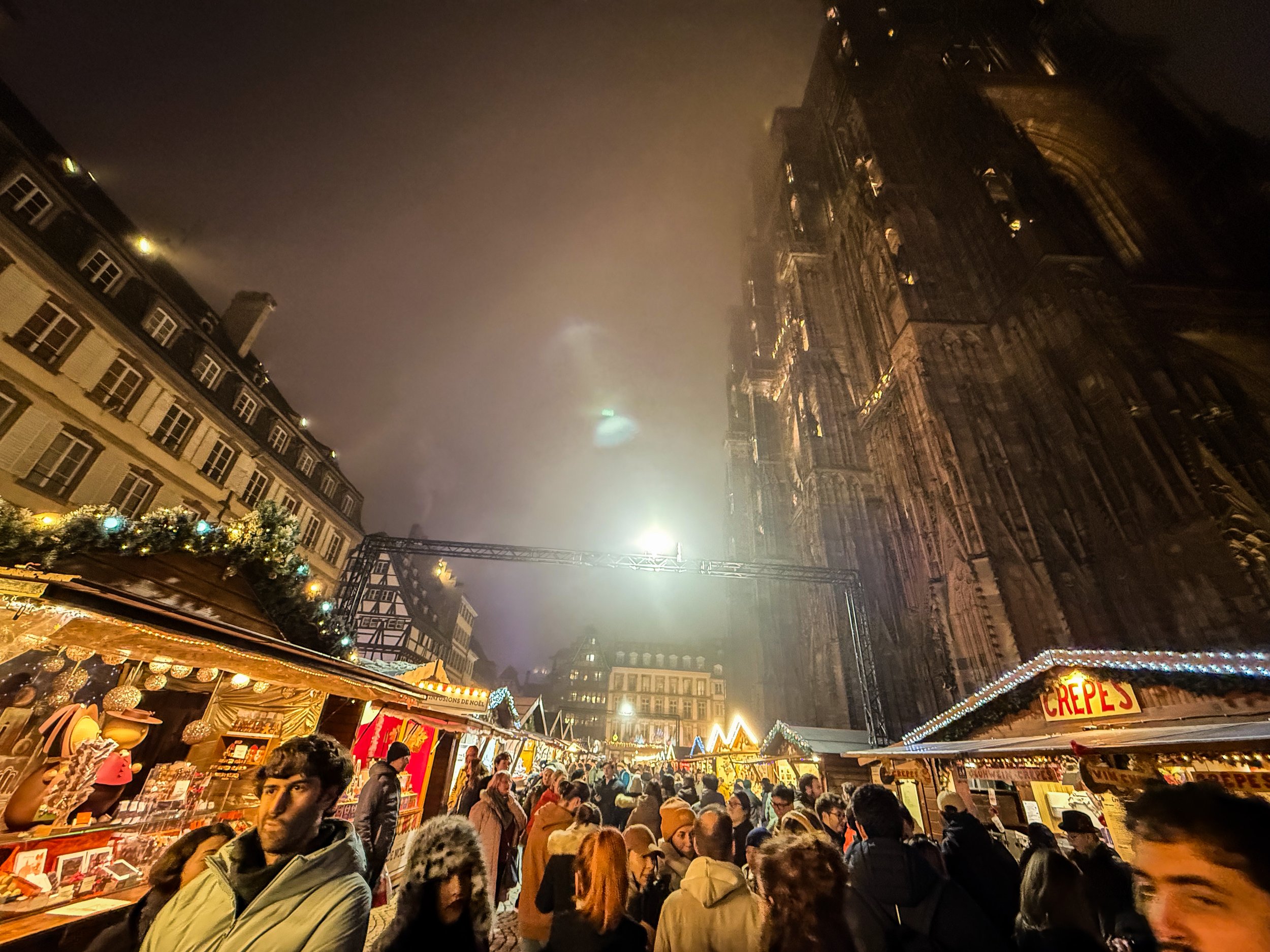
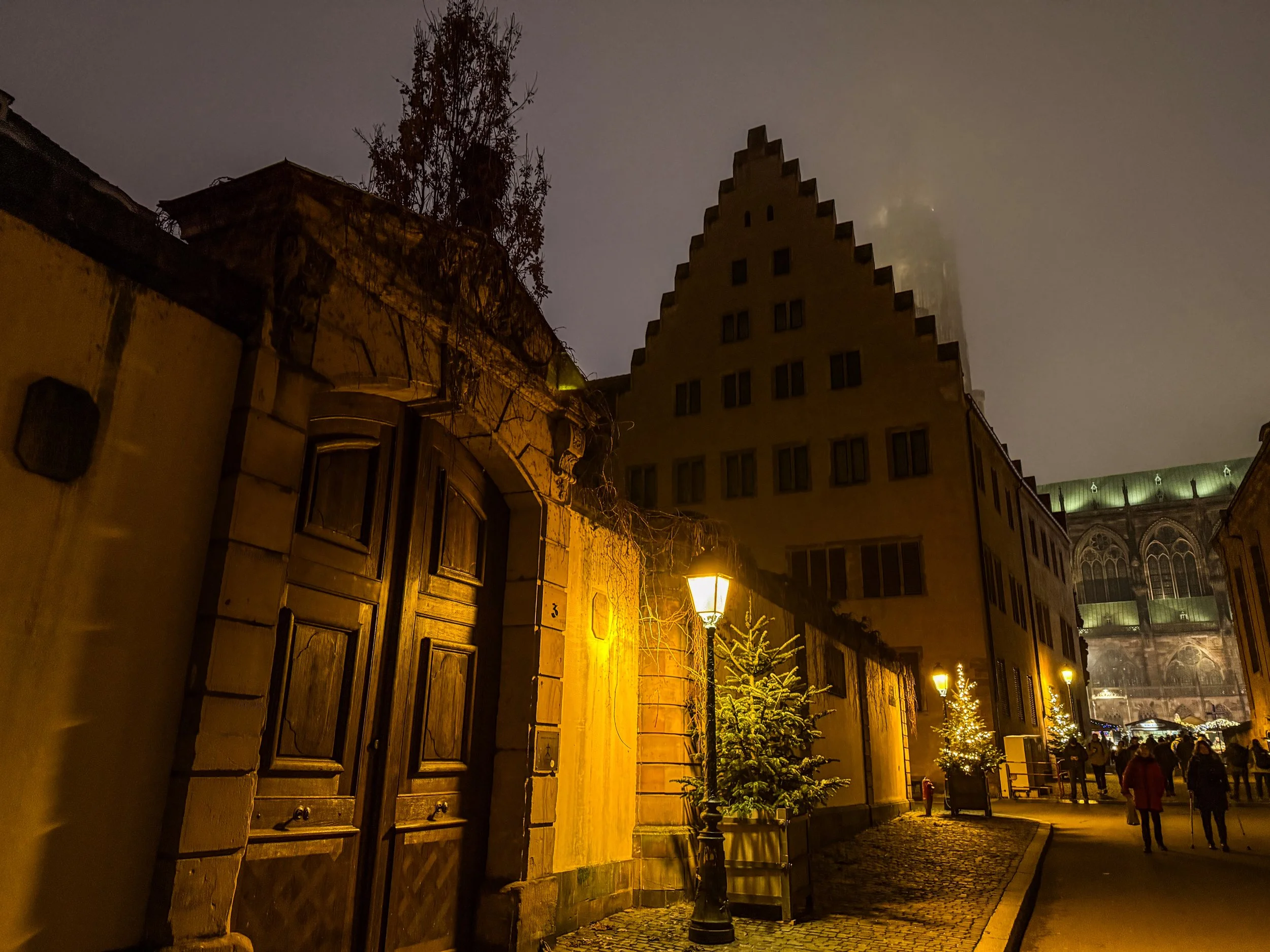
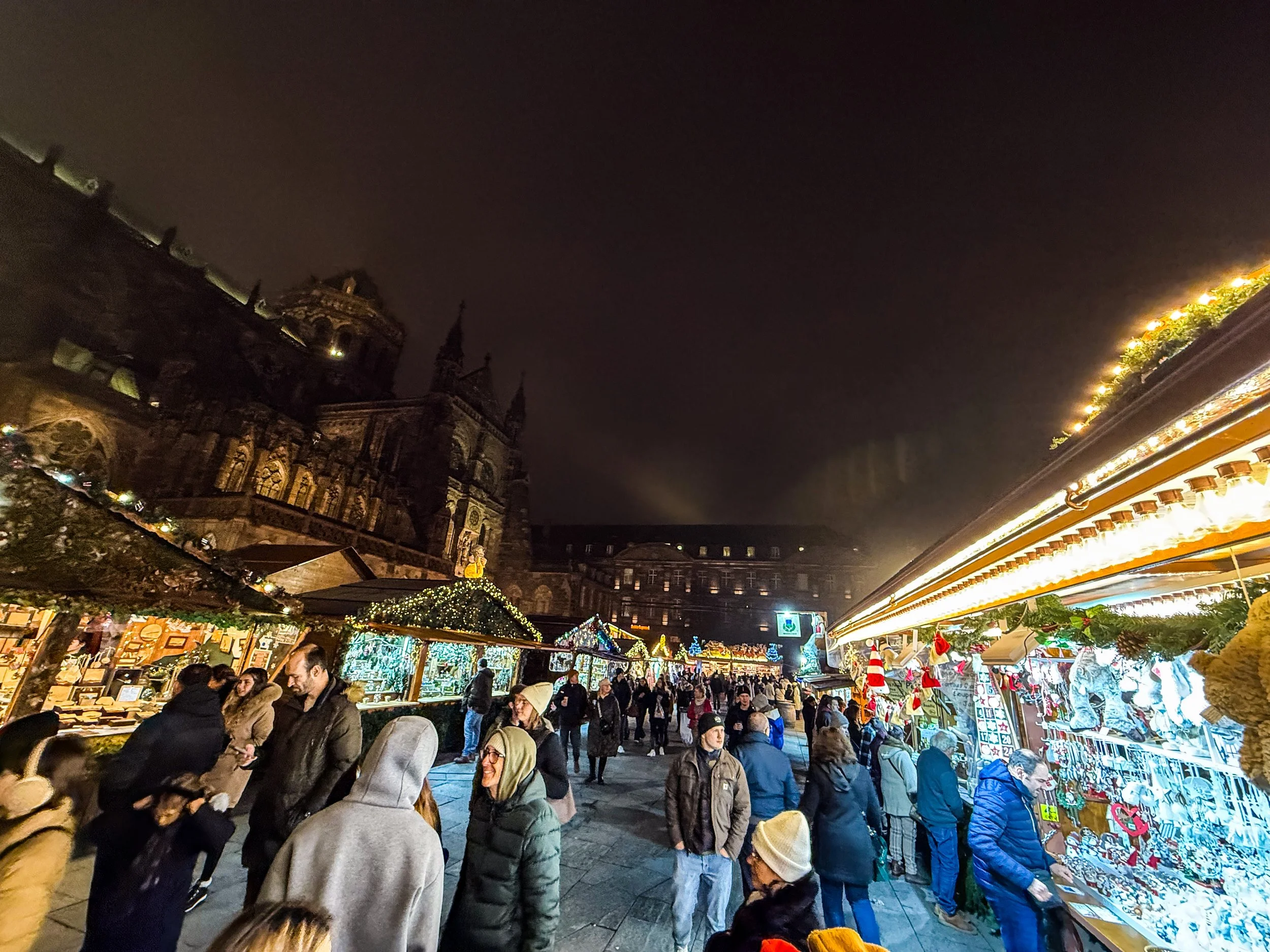
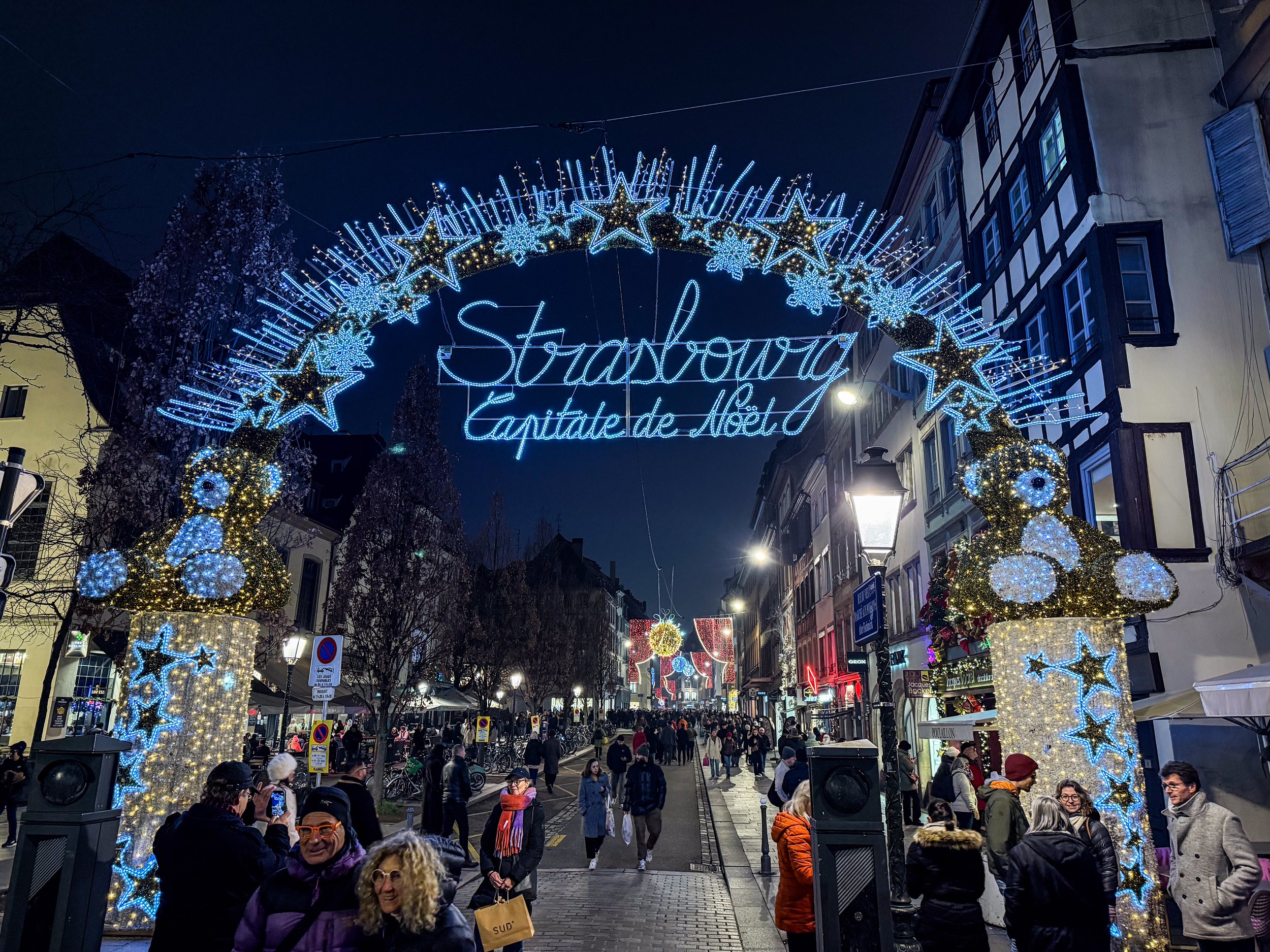
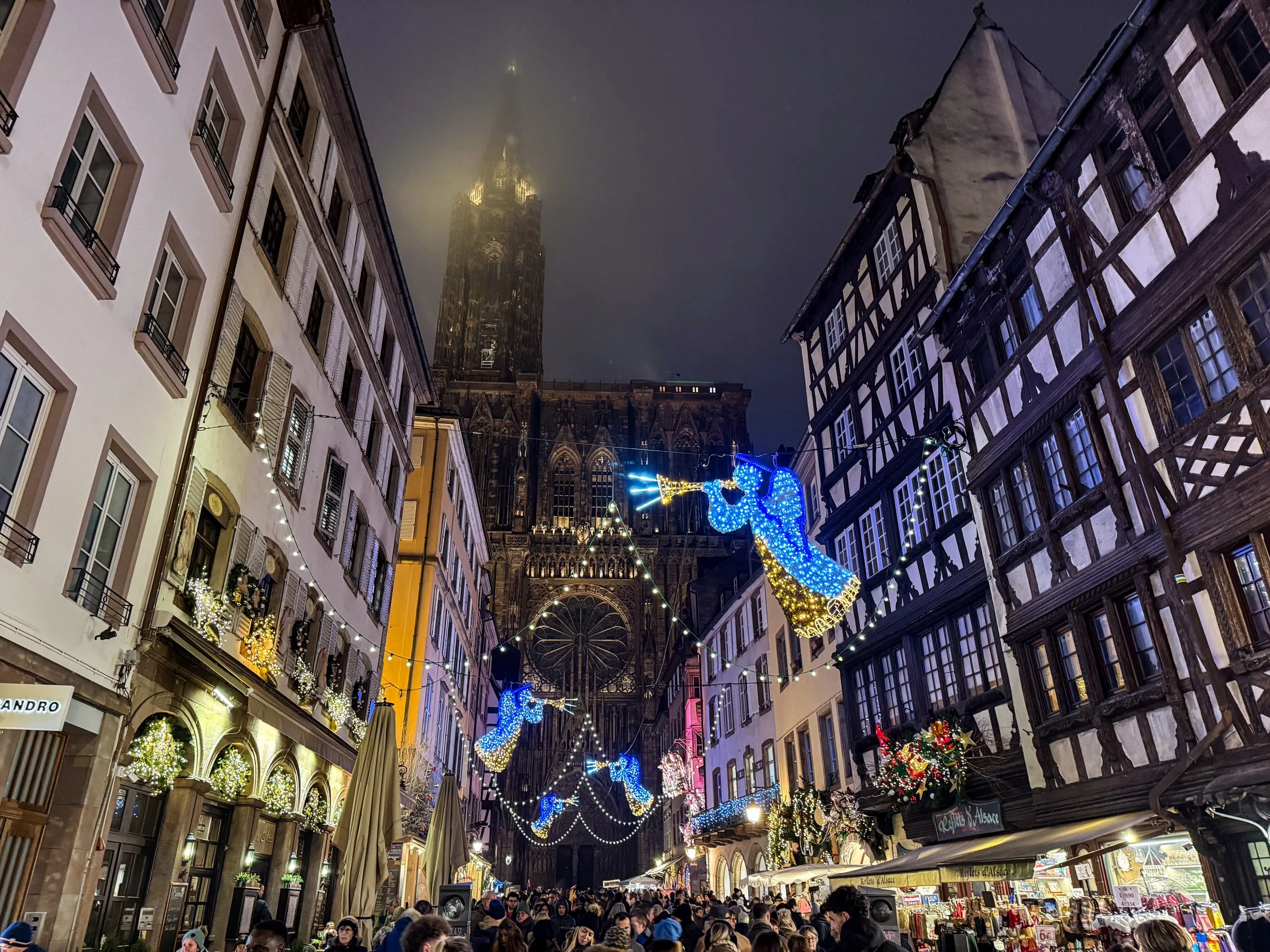
Finally, the time has come to see the Christmas Markets of Strasbourg in all of their intended low-light, cozy glory! The fog really added to the atmosphere at night, as the light produced by each bulb was quickly obscured and dispersed into these low-hanging clouds to produce an etherial, festive glow that hung in the air as if by the power of some magic spell. And nowhere was this more clearly on display than at the towering Strasbourg Cathedral… take a look at the spire of the church disappearing into the fog. It was really magical.
Also, zoom in on the bottom of these pictures to see if you can read any of the signs… spoiler: they’re almost ALL vin chaud. 😂
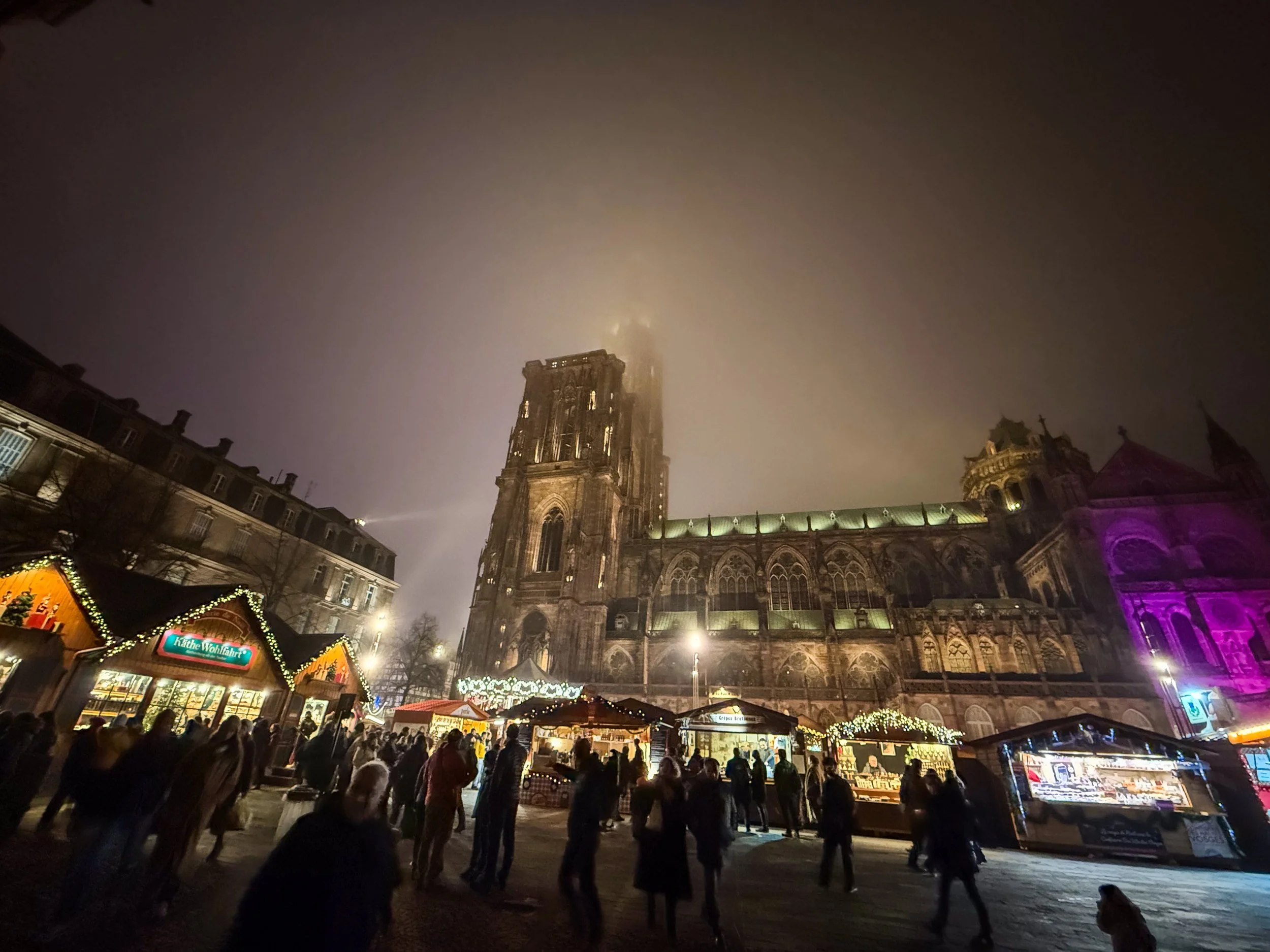
Although this festively-foggy atmosphere makes the Strasbourg Cathedral particularly incredible to behold, it’s here 365 days a year. However, for a brief period each winter, Strasbourg’s center of gravity shifts away from this cathedral to something that is arguably even more spectacular: the Christmas Tree.
In a cental plaza of Grande Île called Place Kléber, we found the biggest Christmas Tree I’ve ever seen. Although there is some variance year-to-year, this tree typically stands at roughly the height of a 10-storey building, making it is one of the tallest in Europe. Traditionally, the tree is a silver fur that is carefully selected months in advance from the nearby Vosges Mountains, which sit just south of Strasbourg, near the Swiss border. My immediate reaction to this information was to wonder how this tree gets from the forest to the center of Strasbourg. It turns out that this is actually a logistically intense operation involving cranes, engineers, and safety teams. First, a village in Alsace volunteers or is invited to provide the tree. Next, local foresters propose a suitable tree that is then inspected by Strasbourg city officials to confirm viability. Once approved, it is cut down in November and transported by convoy to Strasbourg. I’d love to tag along for this process sometime…
The size and logistics are quite interesting in their own rite, but the most fascinating thing is that this is (probably) the oldest Christmas Tree anywhere in the world. The first written records of Christmas Trees anywhere in the world first appear here in Alsace in 1521. Those records actually come from a little town called Sélestat which is just south of Strasbourg, but the first records of Strasbourg’s tree follow soon after. At this time, Strasbourg was already the largest city in the region and record keeping was a bit spotty, so I think it’s fair to generally just award the title of “the Birthplace of the Christmas” tree to Alsace in general.
I really want to underline this point as well. This is the point of origination for Christmas Trees! How cool is that??
So, this isn’t just a Christmas Tree; this is THE Christmas Tree! Behold!
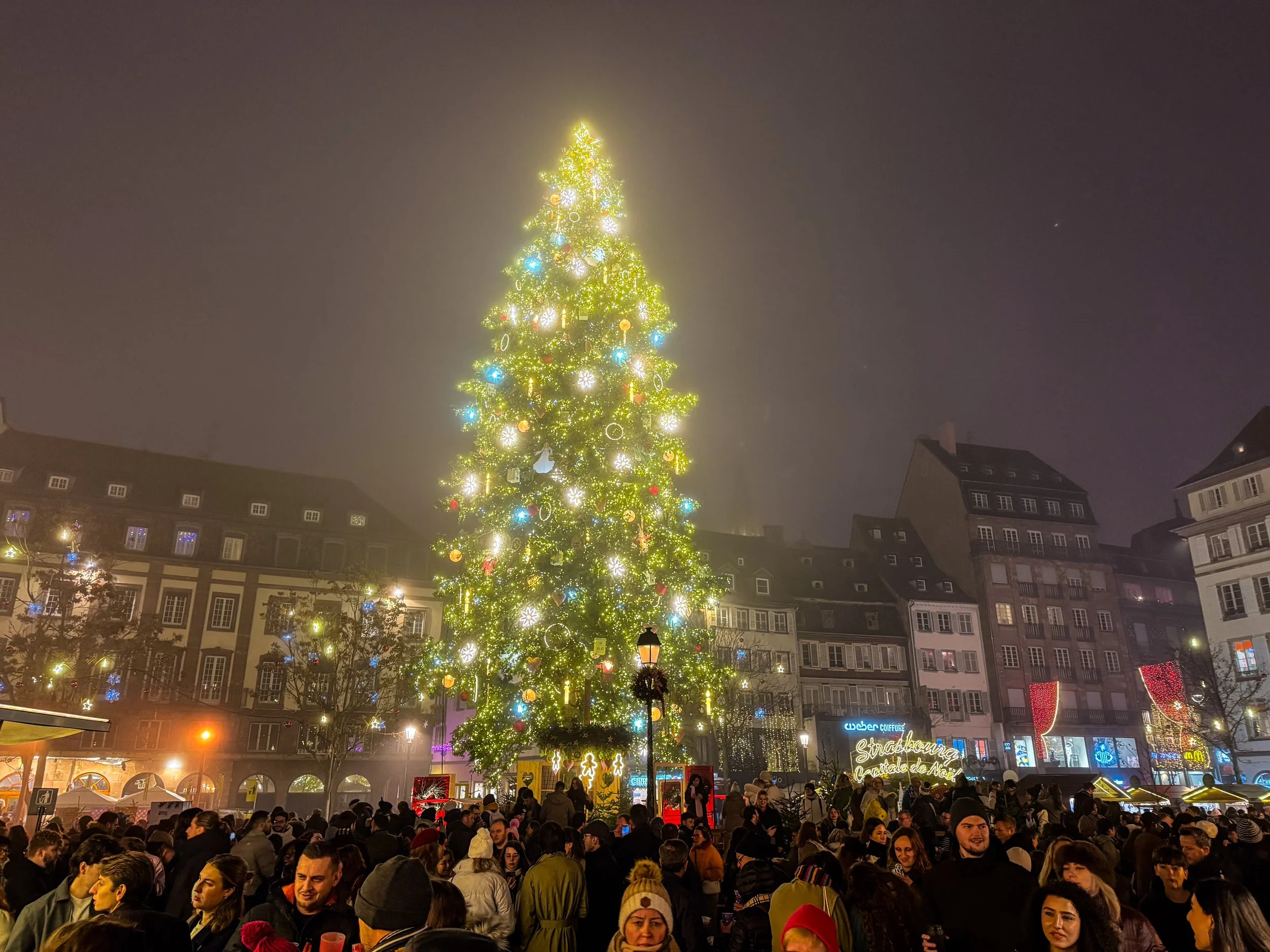
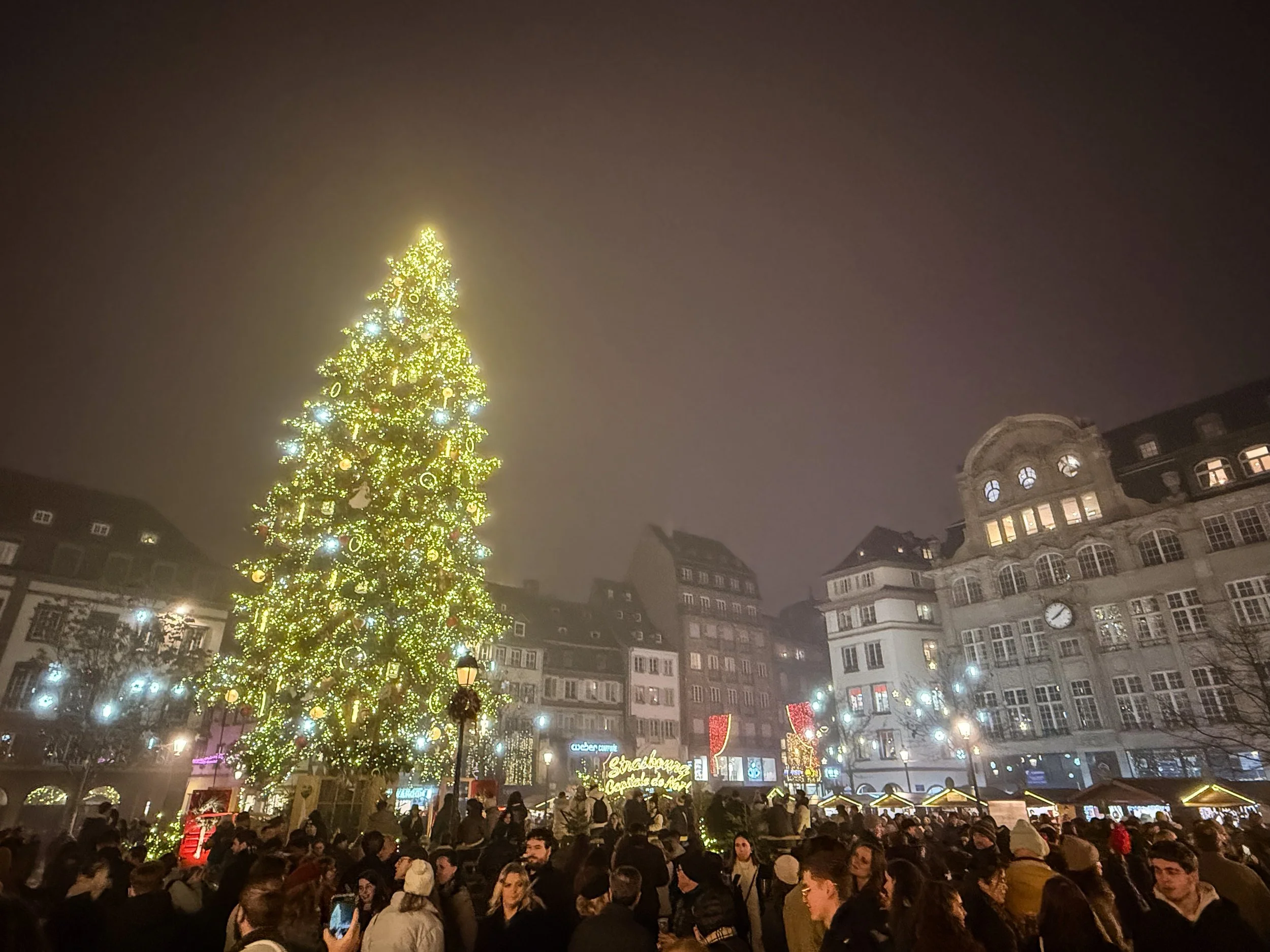
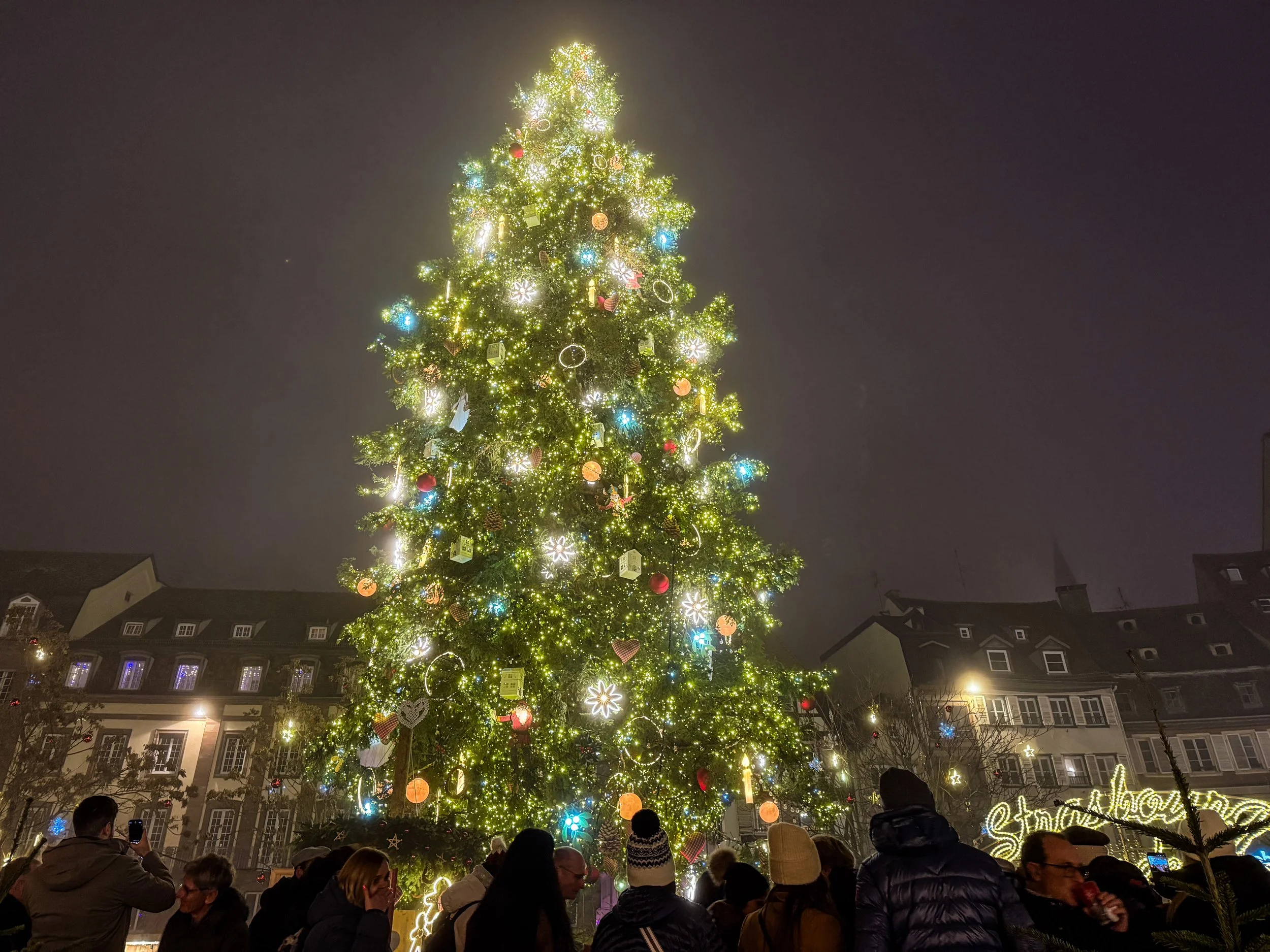
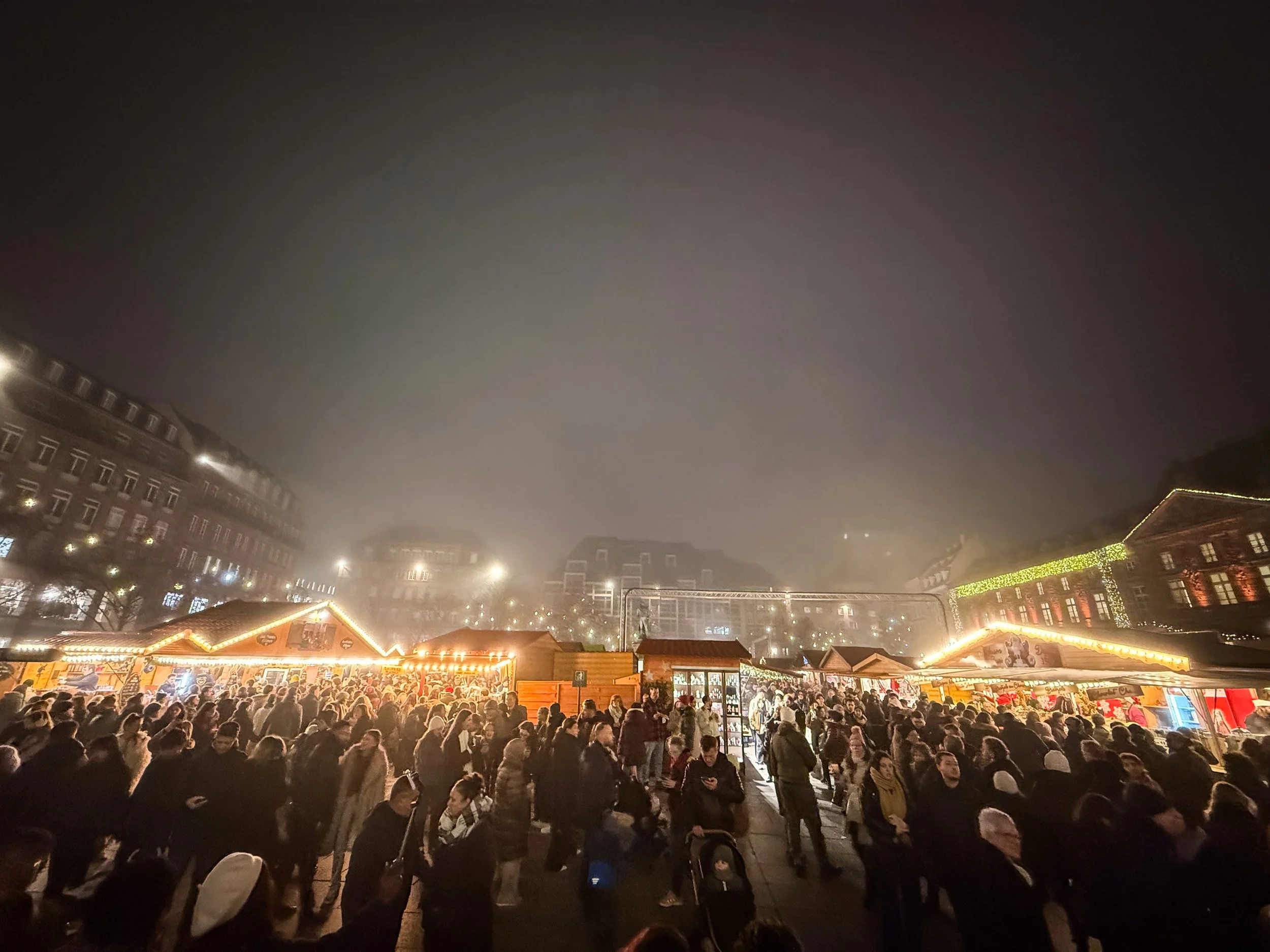
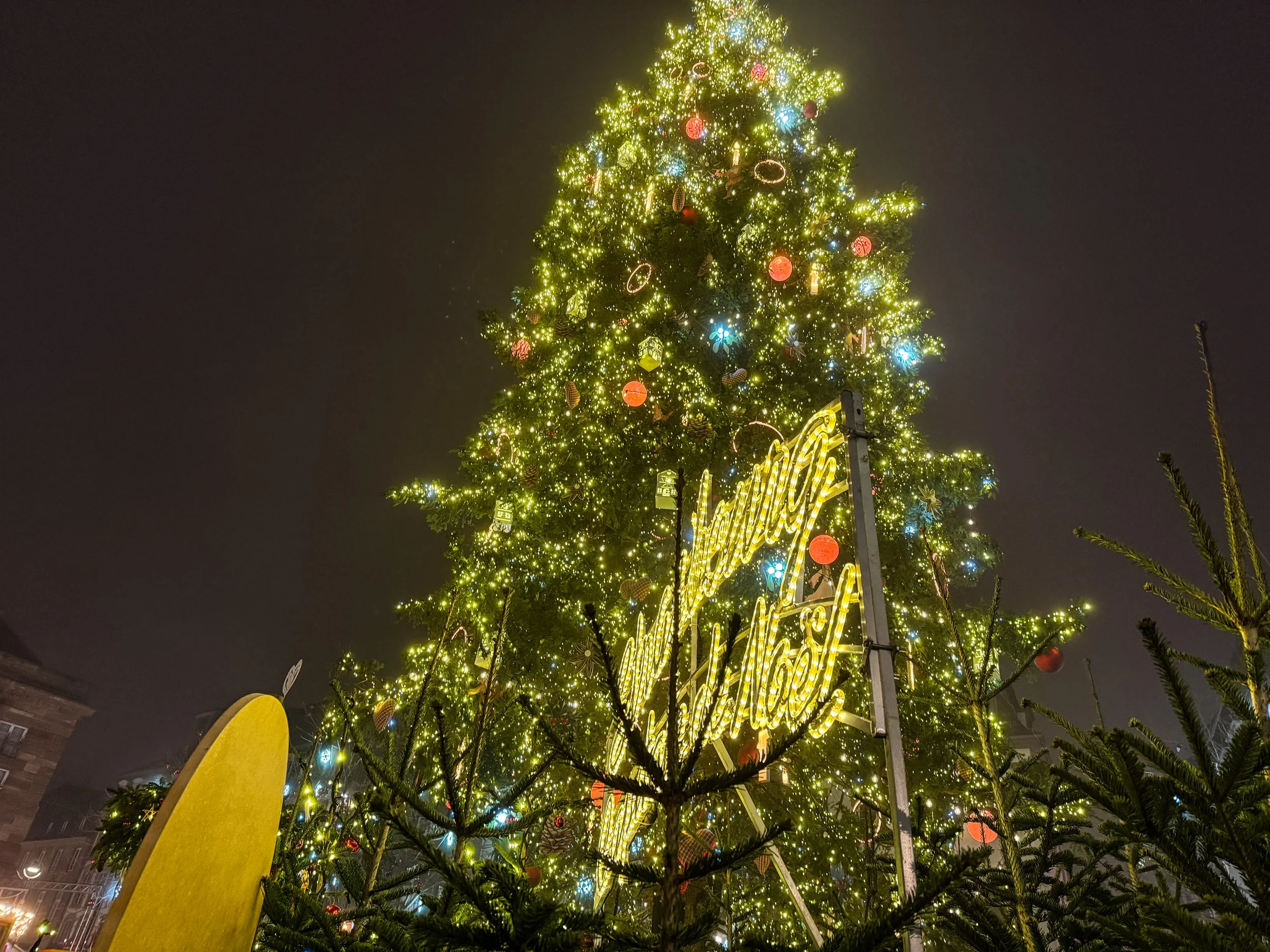
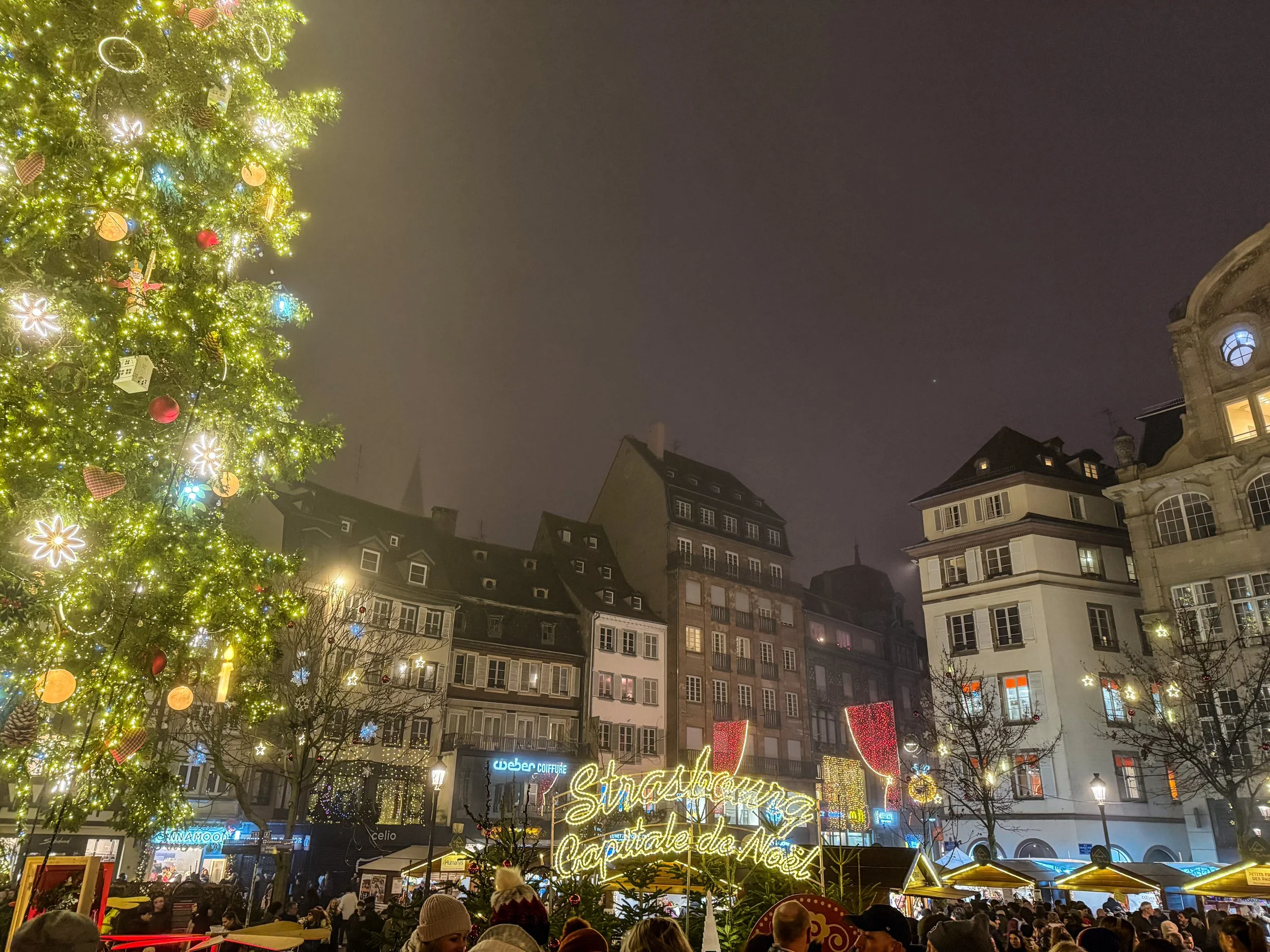
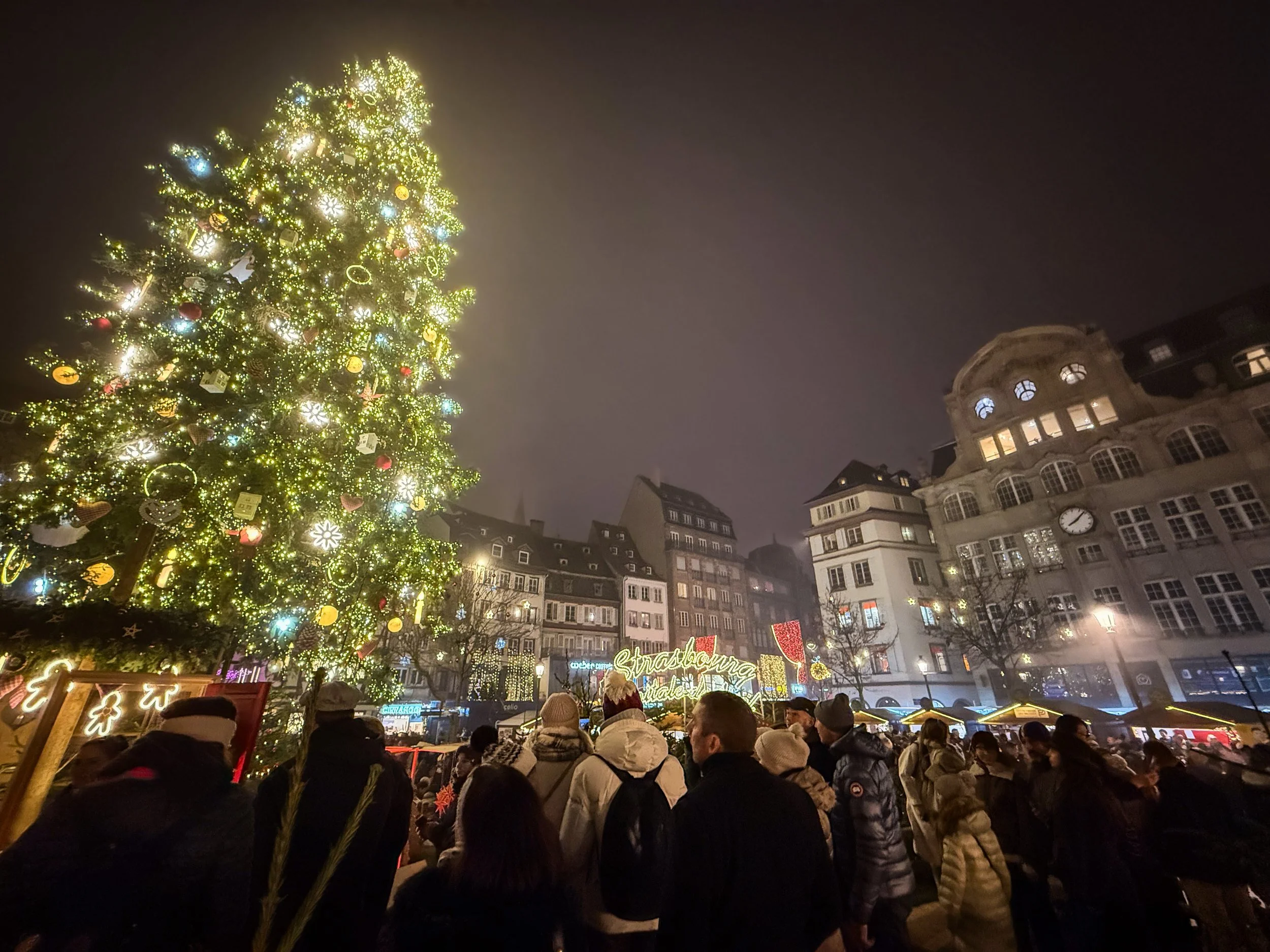
You’ll see crowds around the tree, but I’m told that the city was actually uncharacteristically quiet for this time of year…
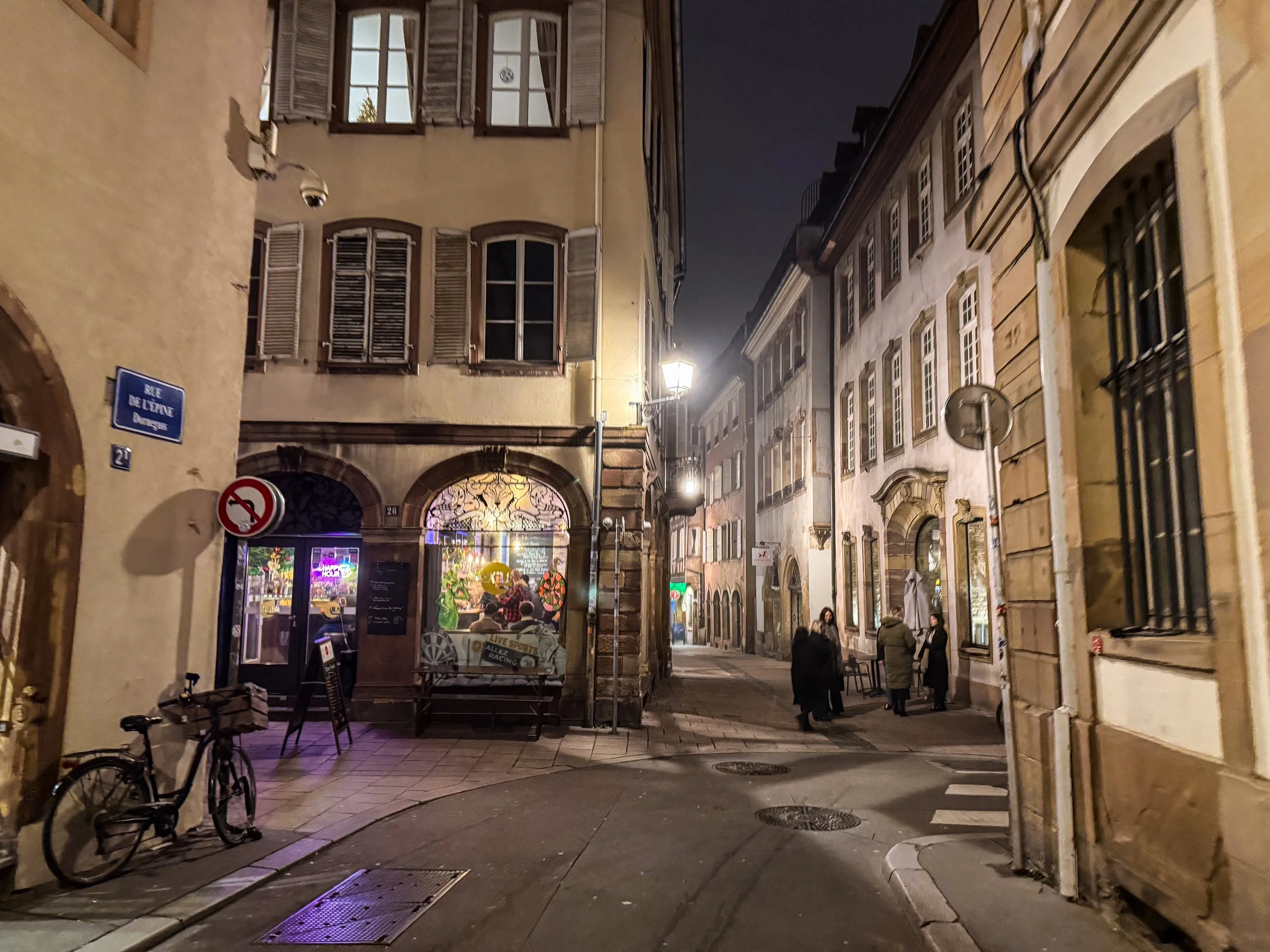
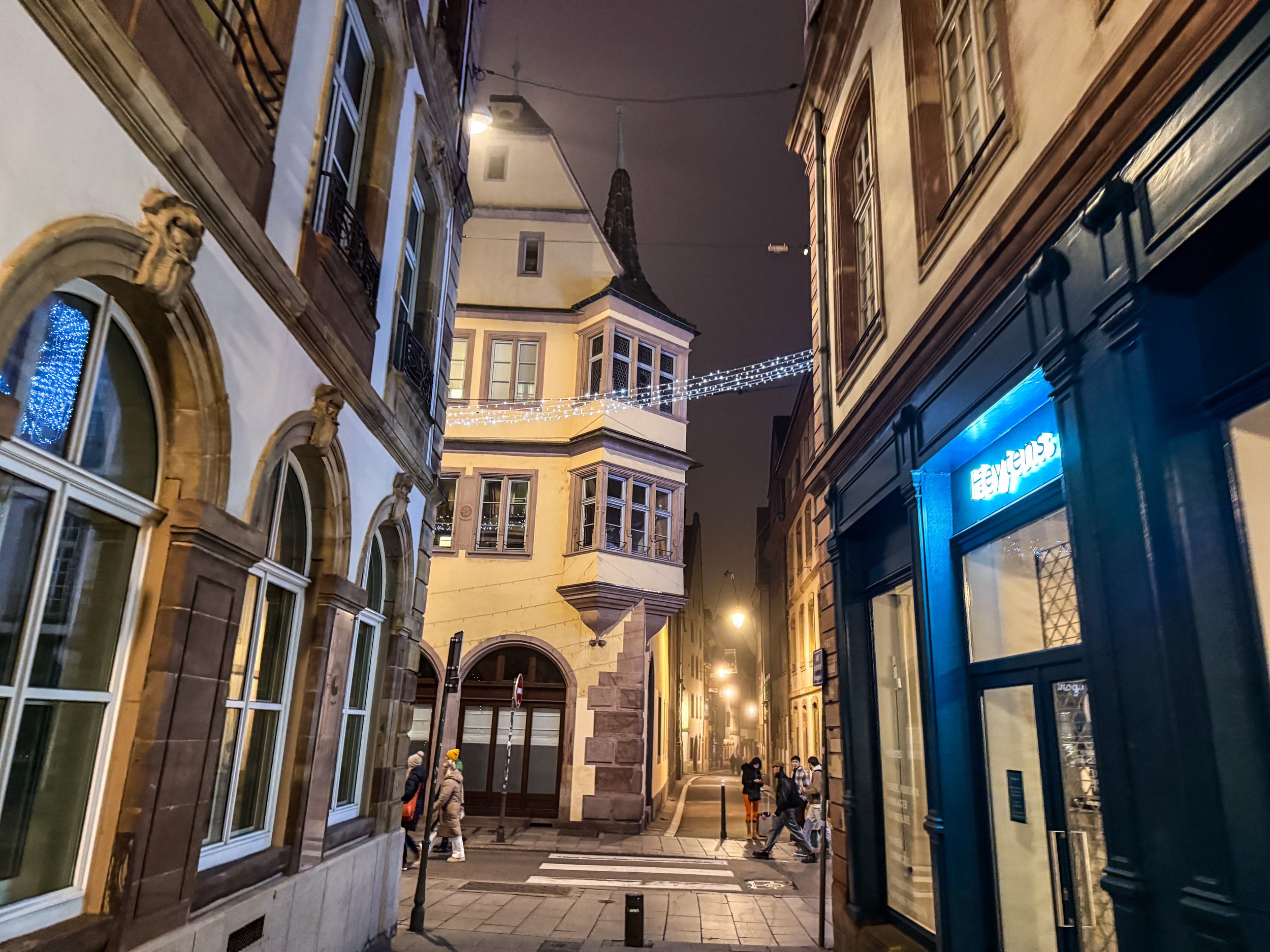
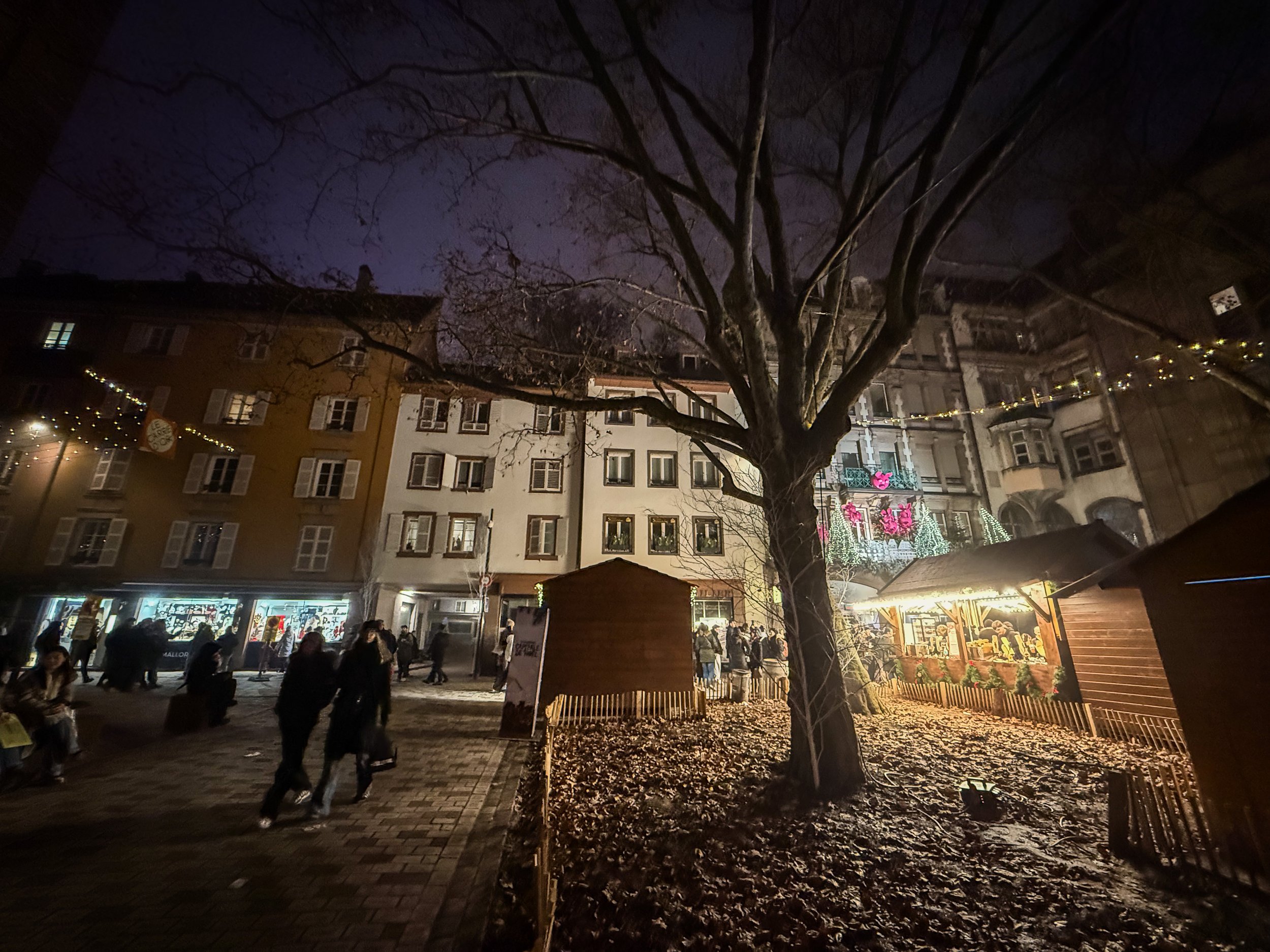
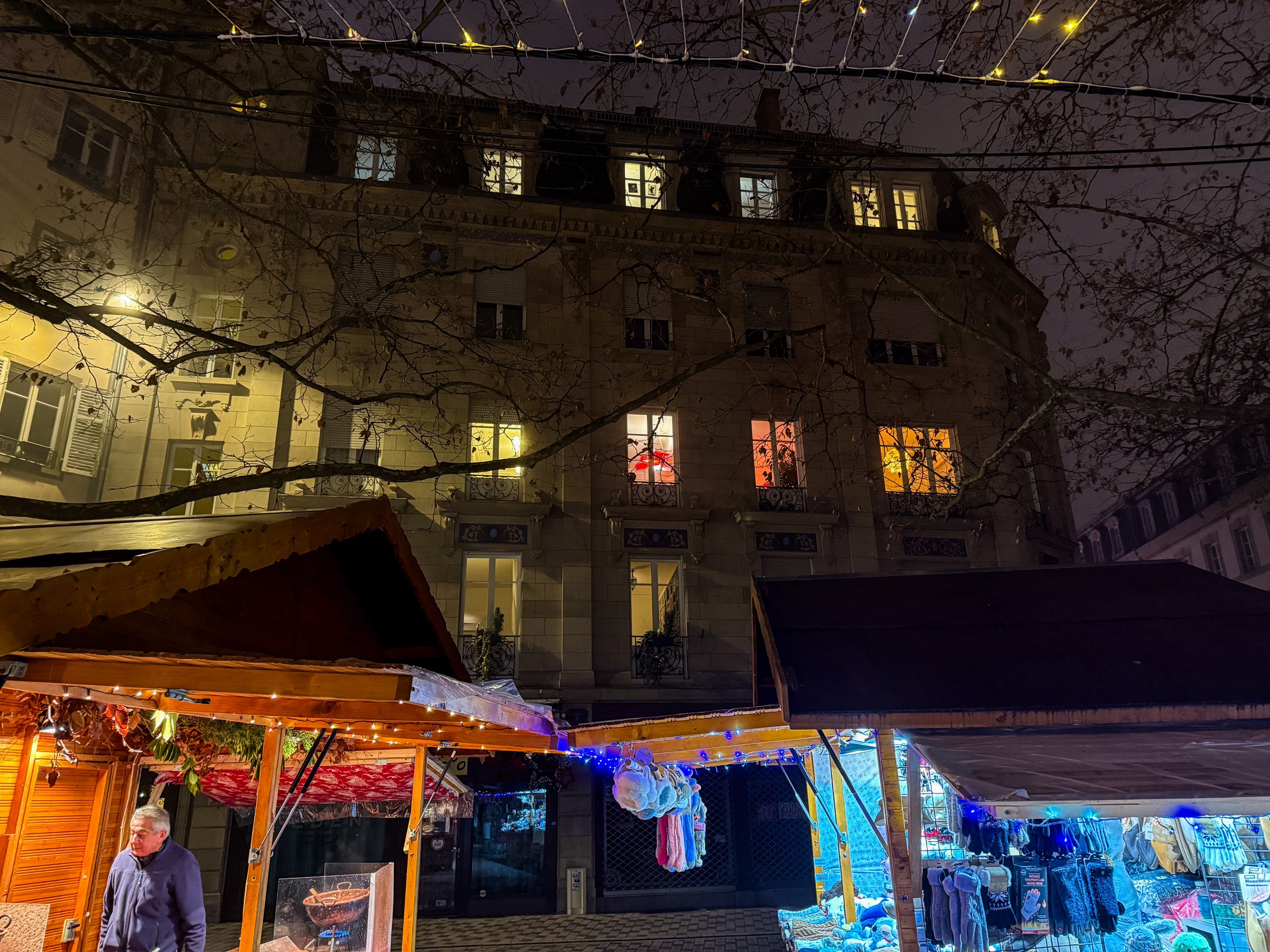
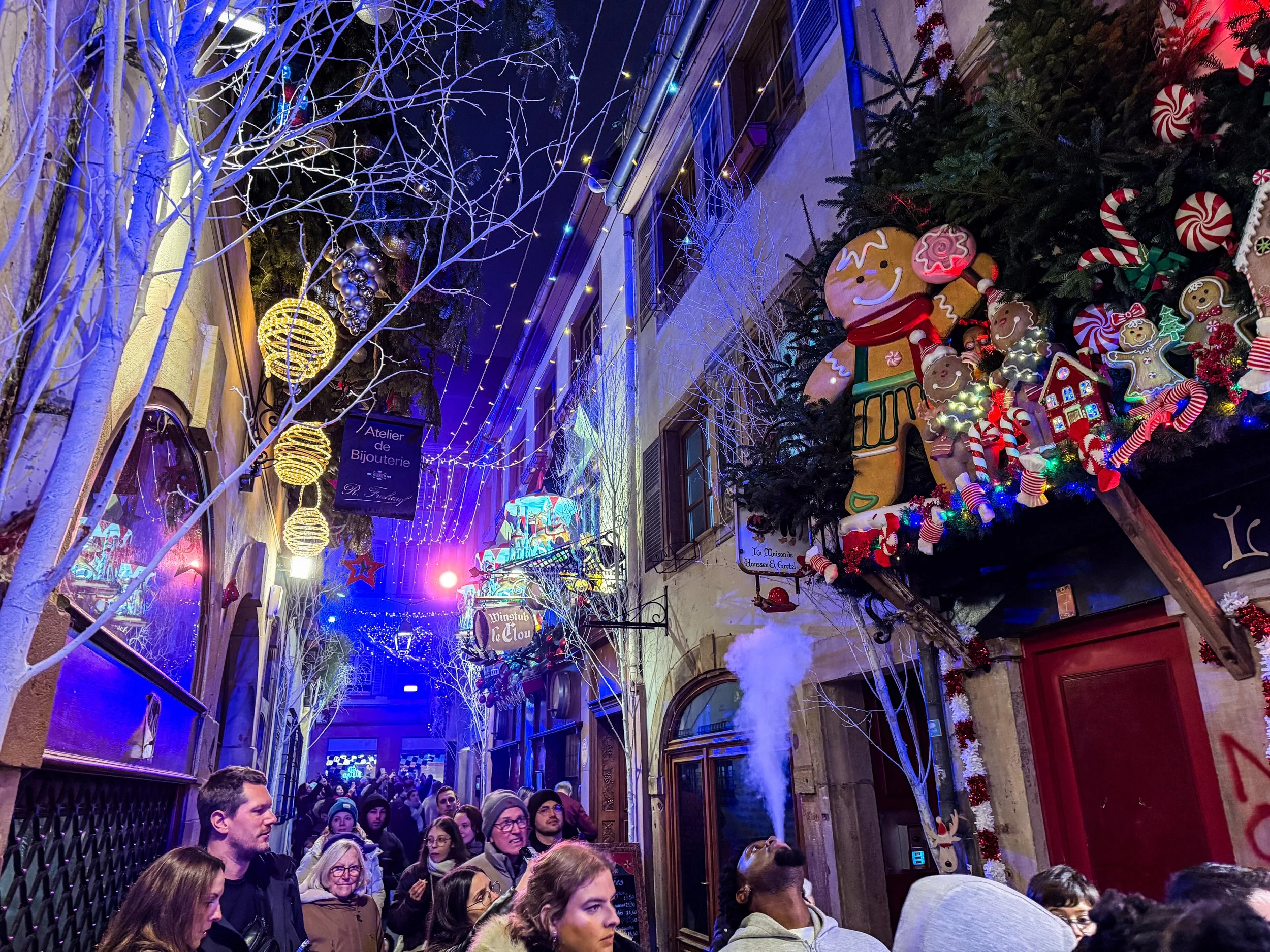
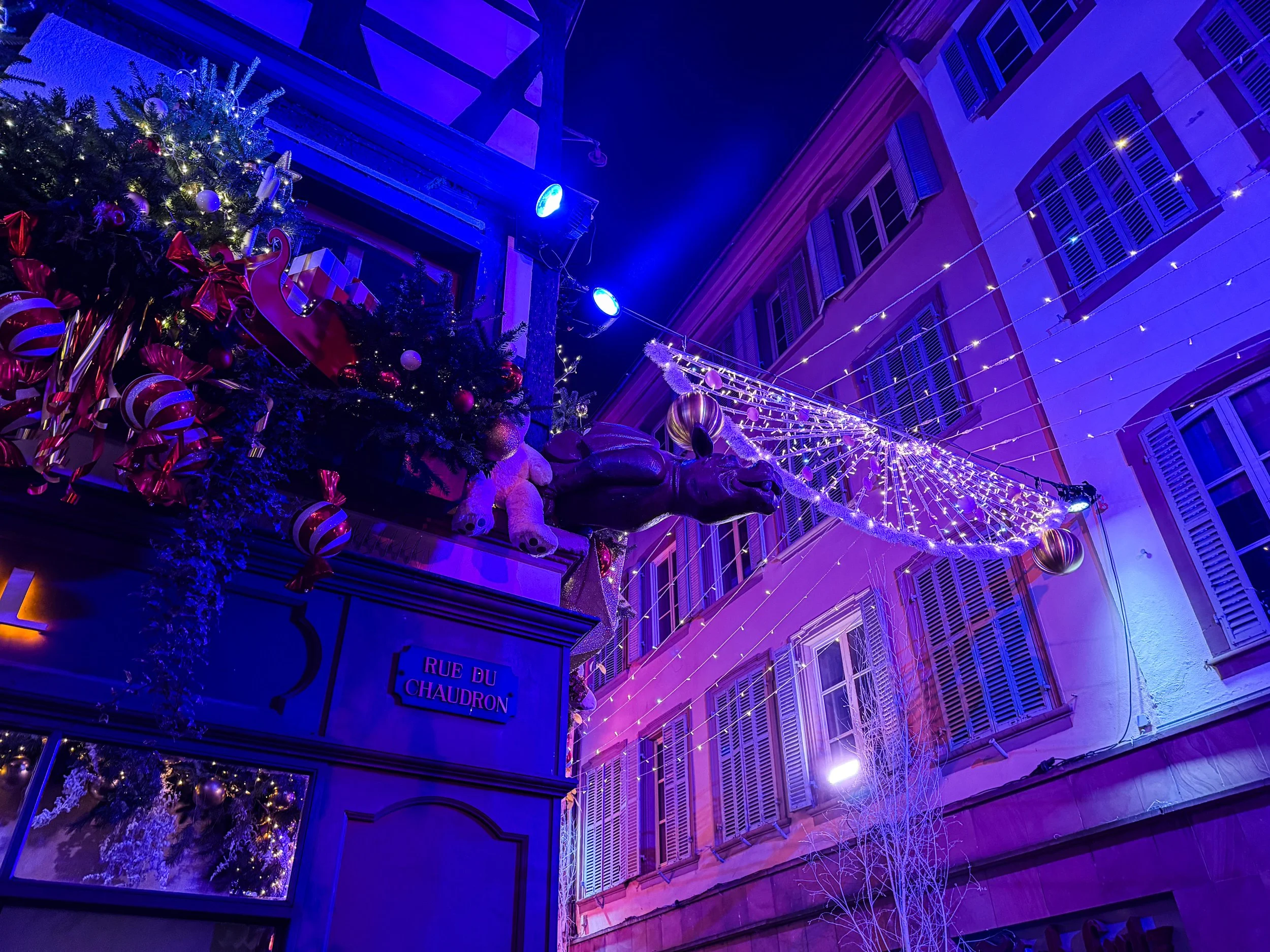
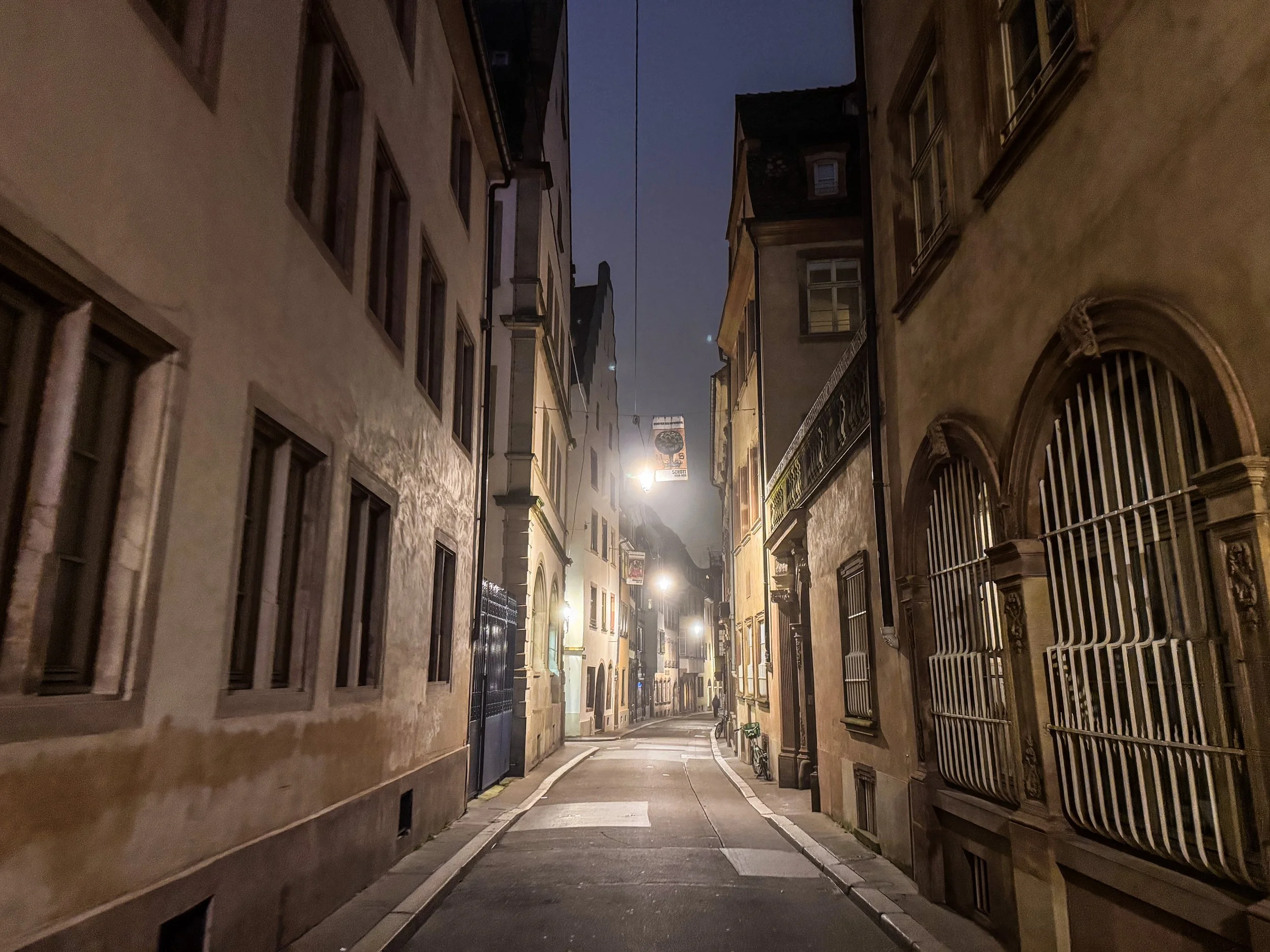
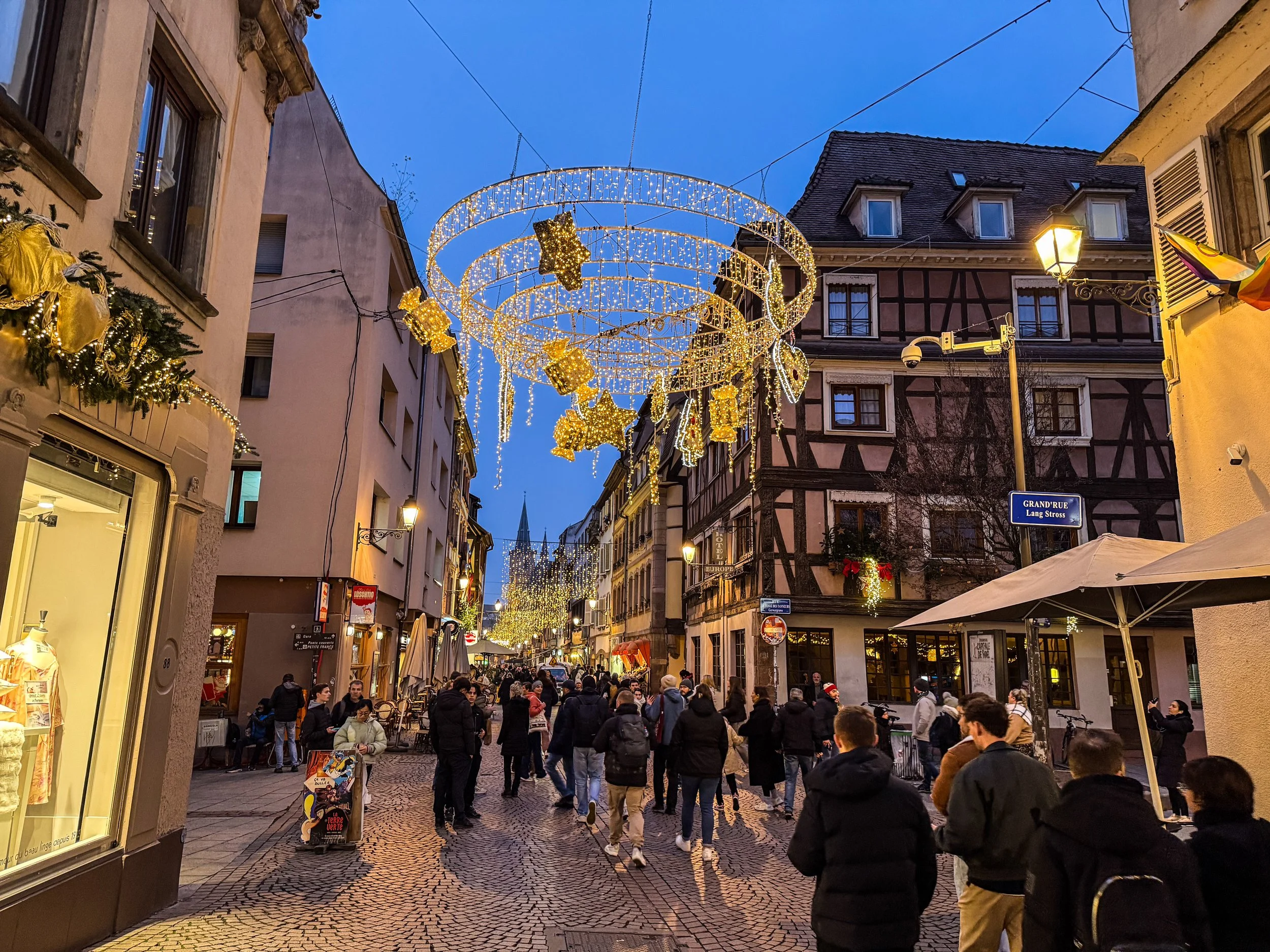
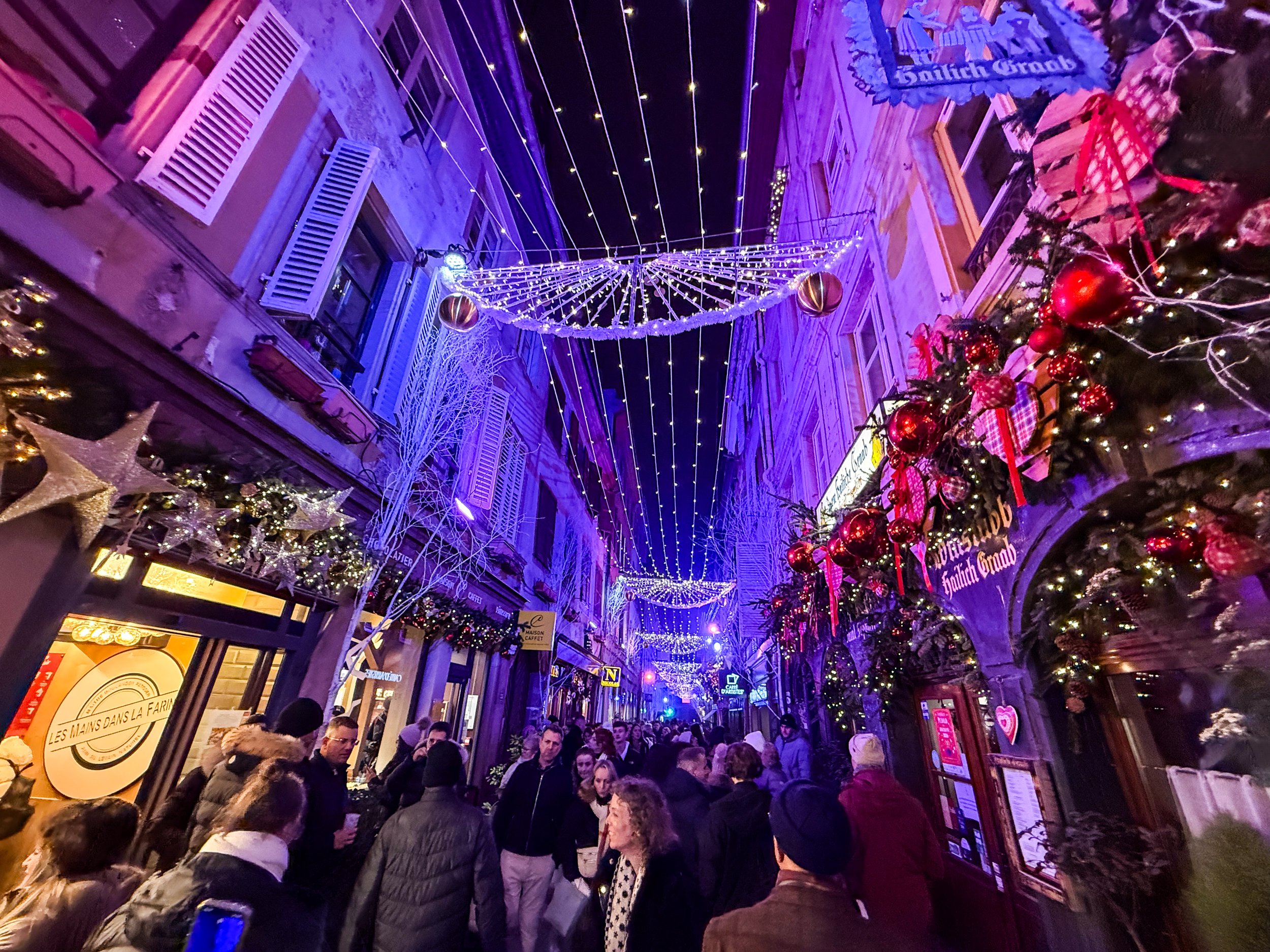
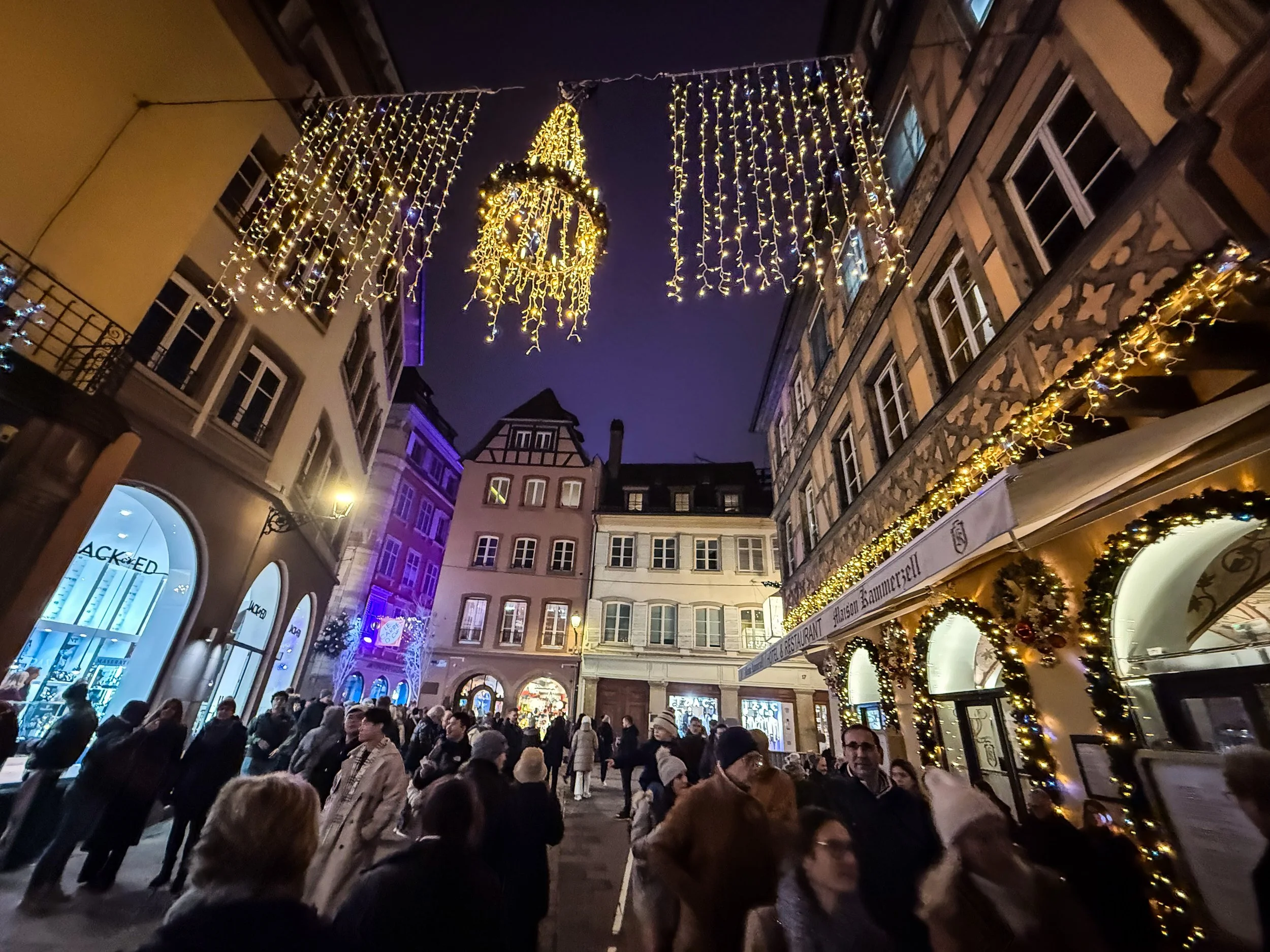
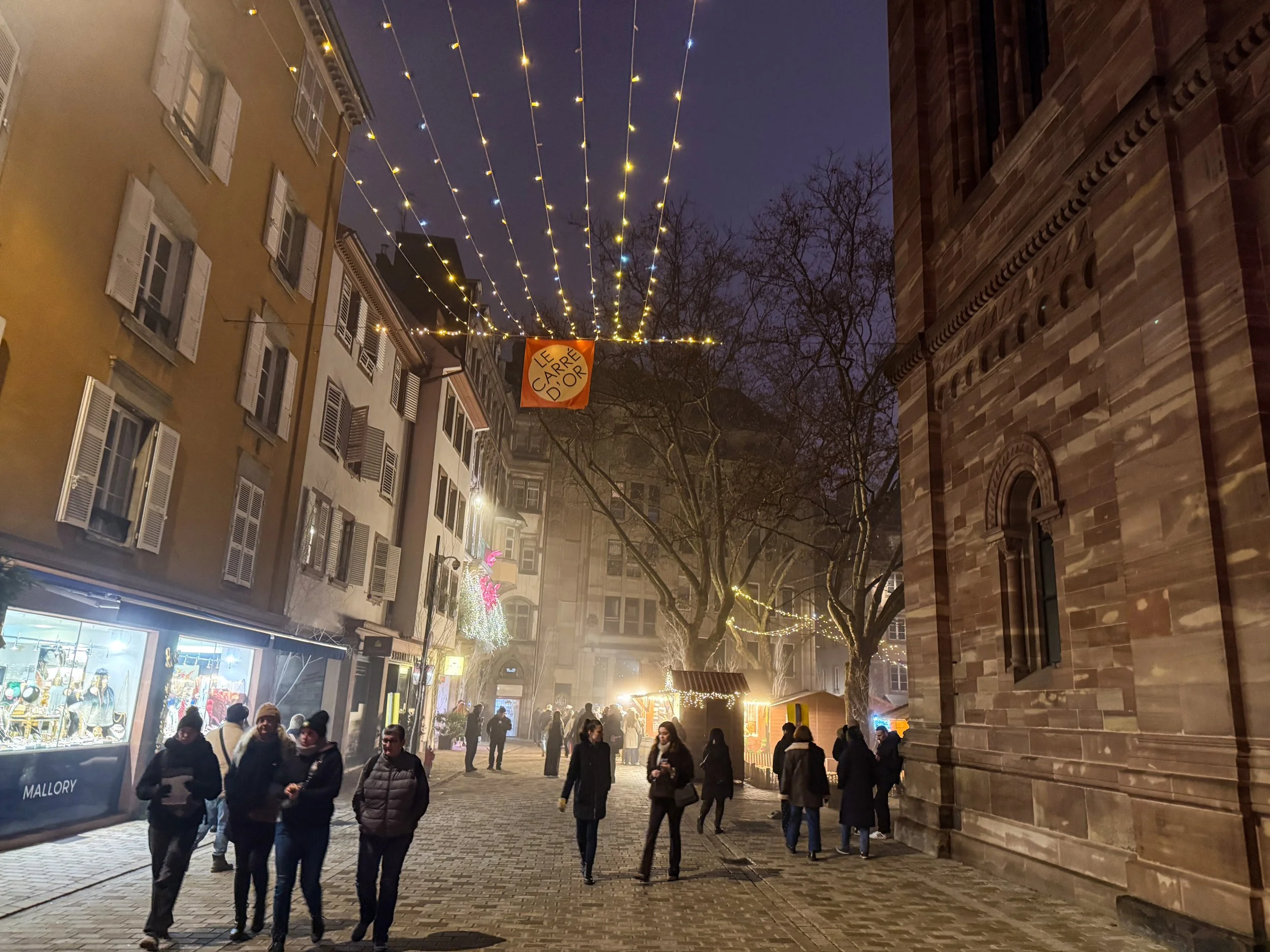
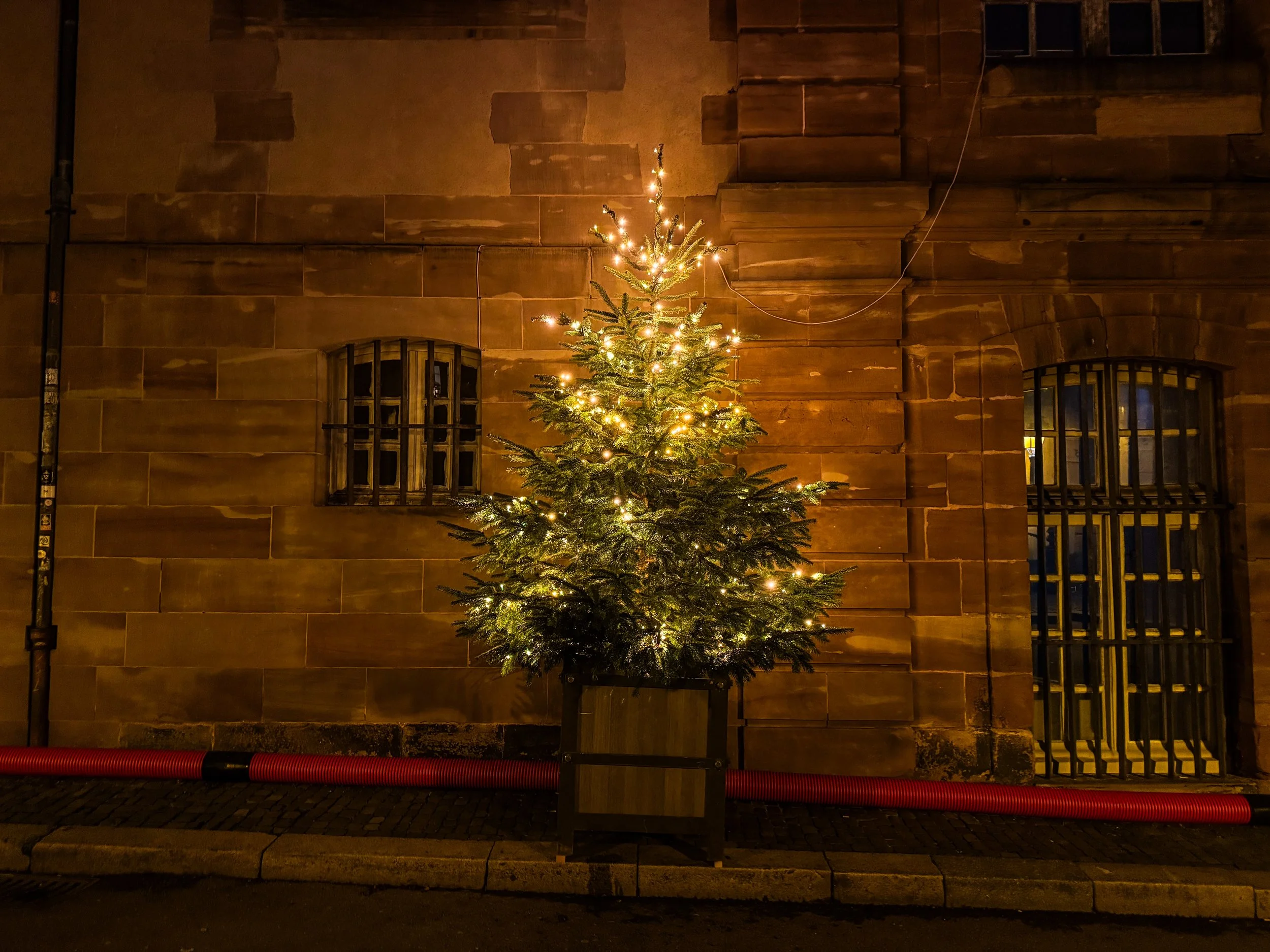
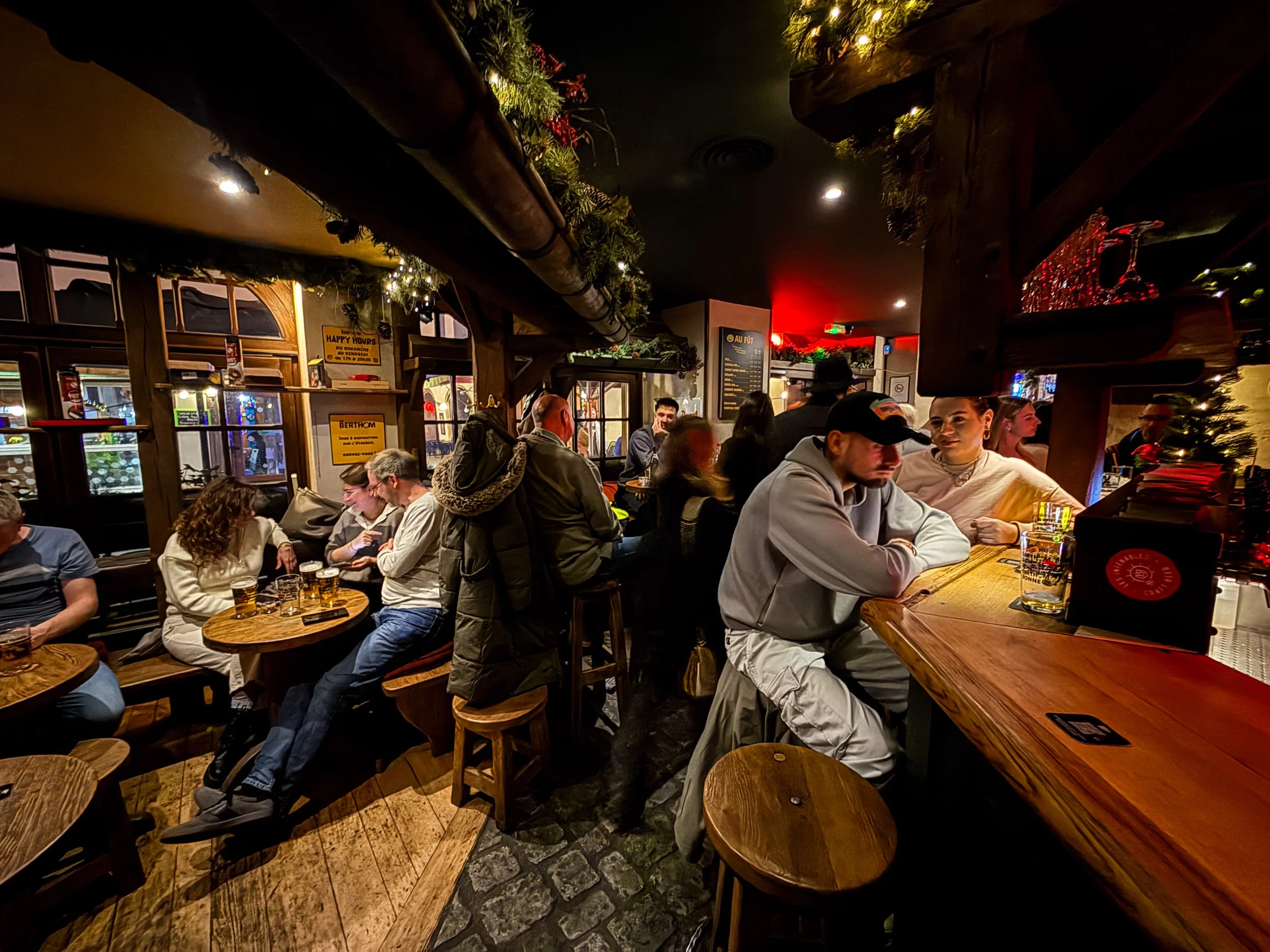
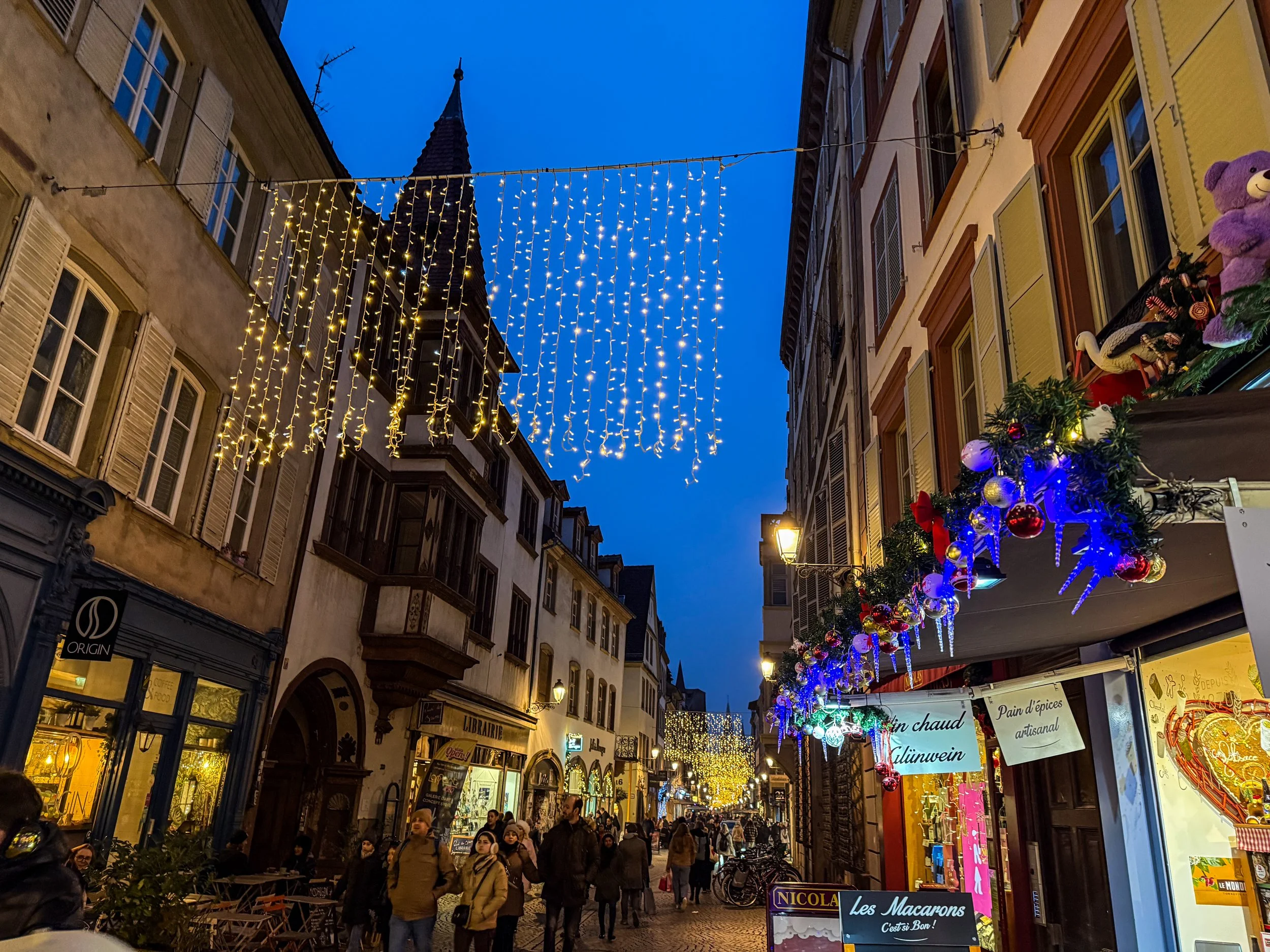
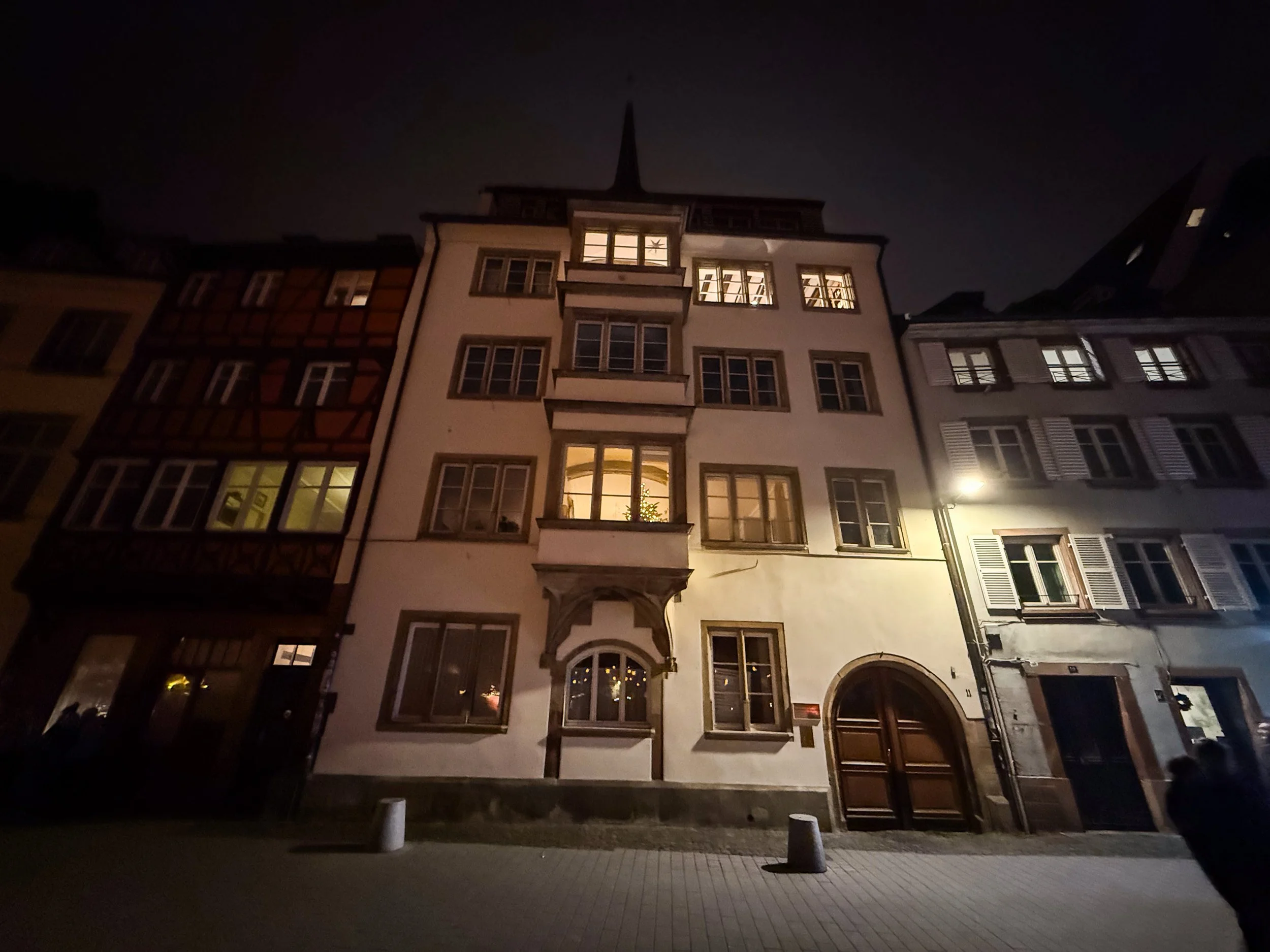
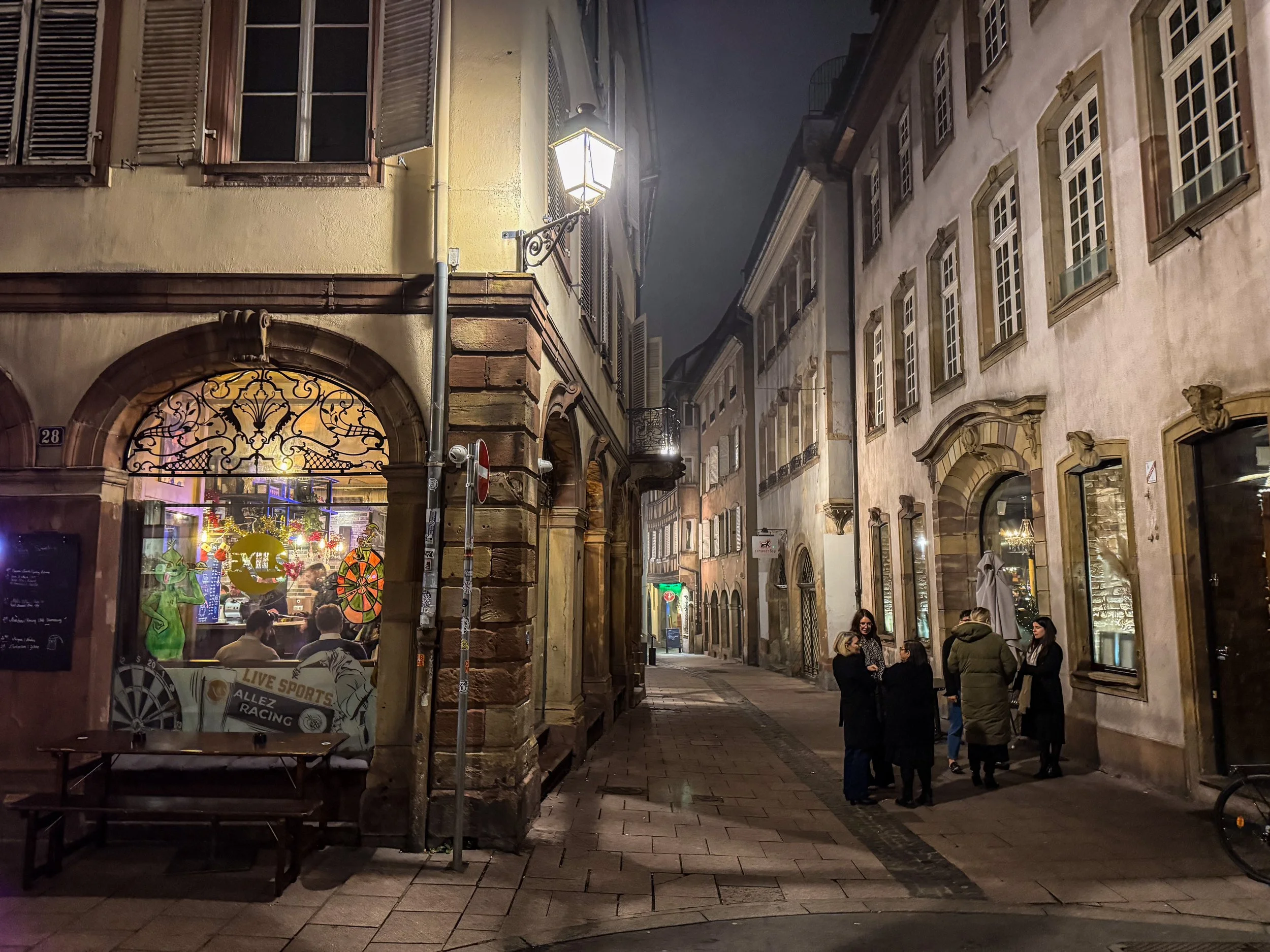
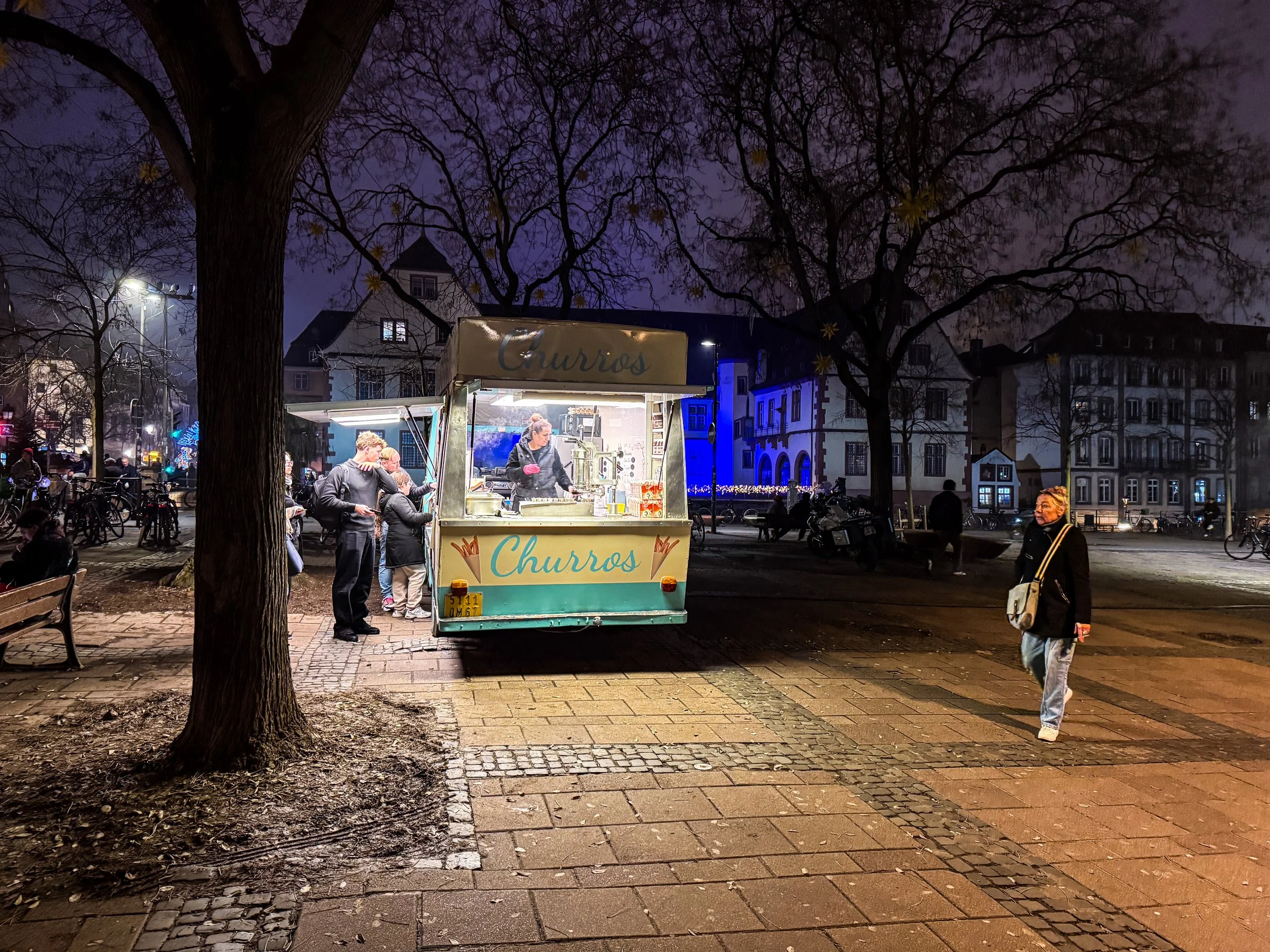
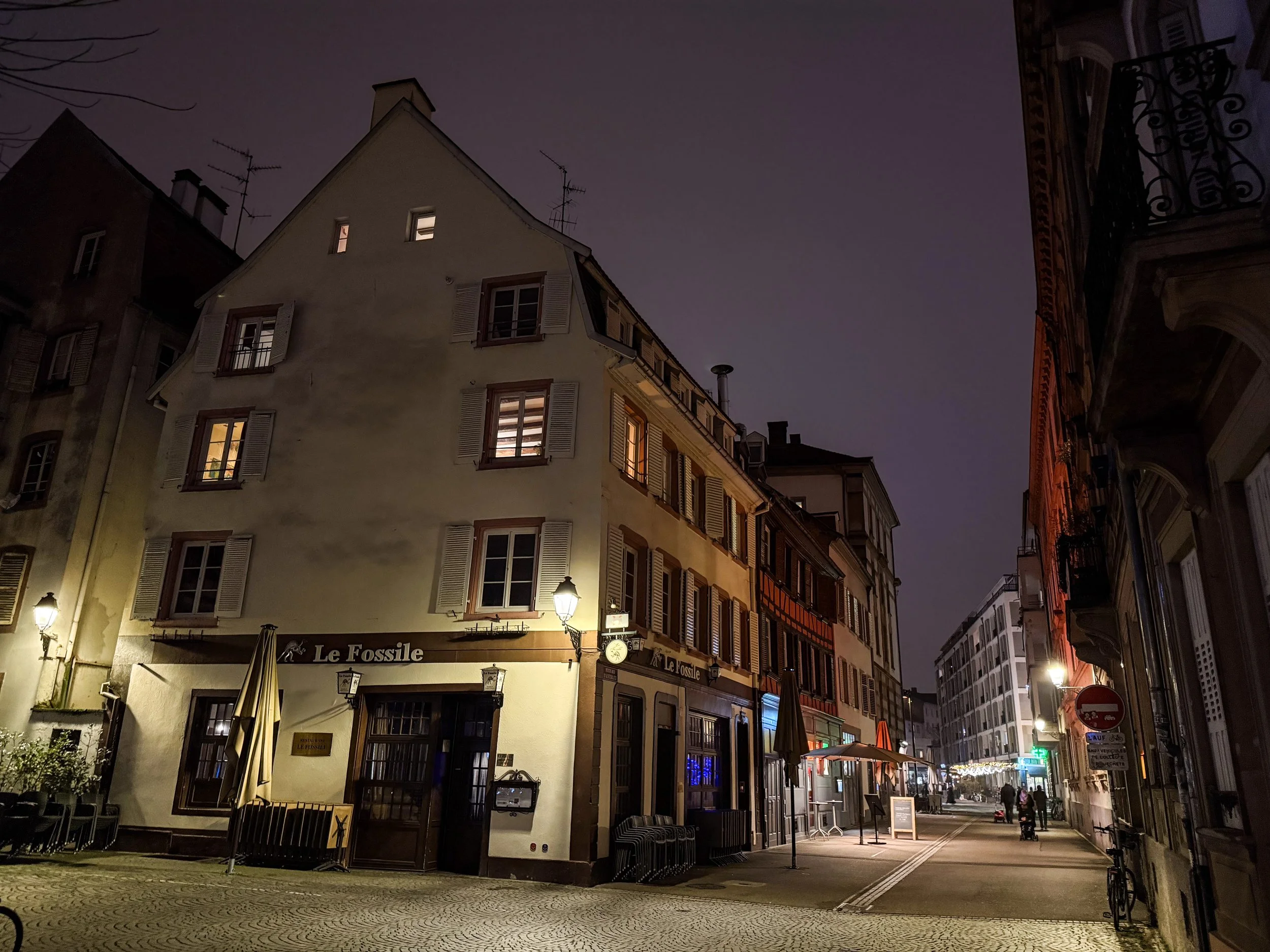
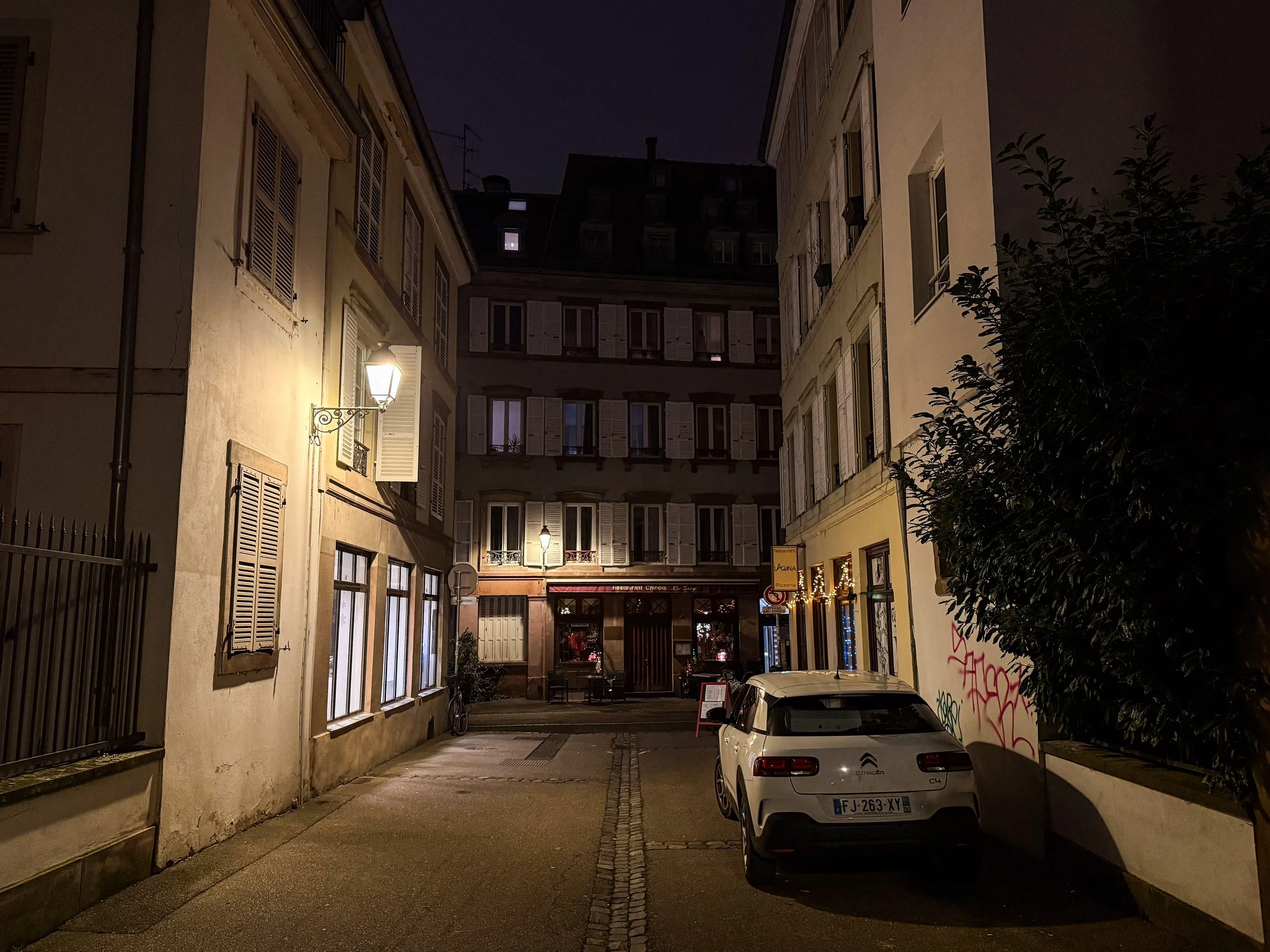
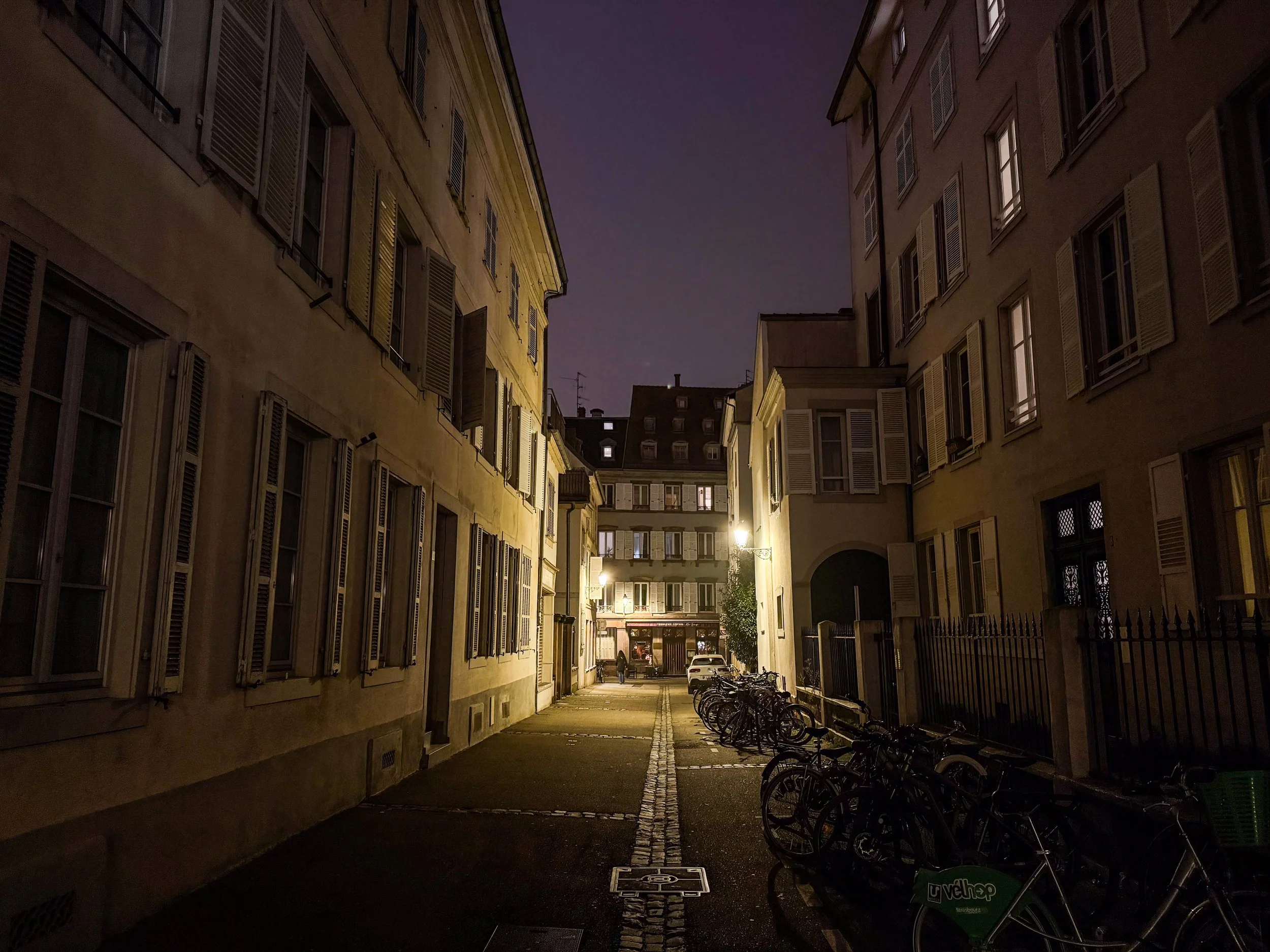
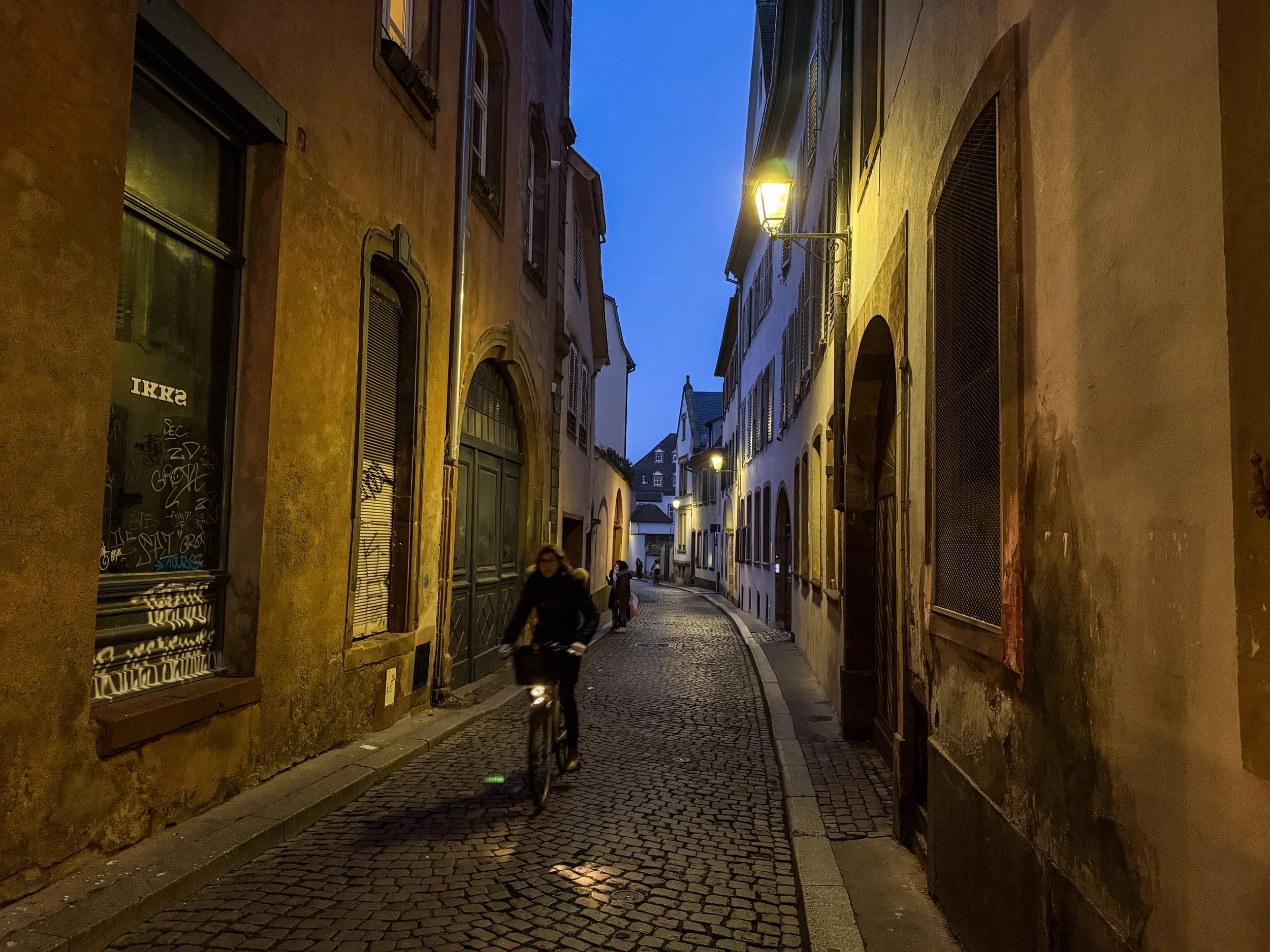
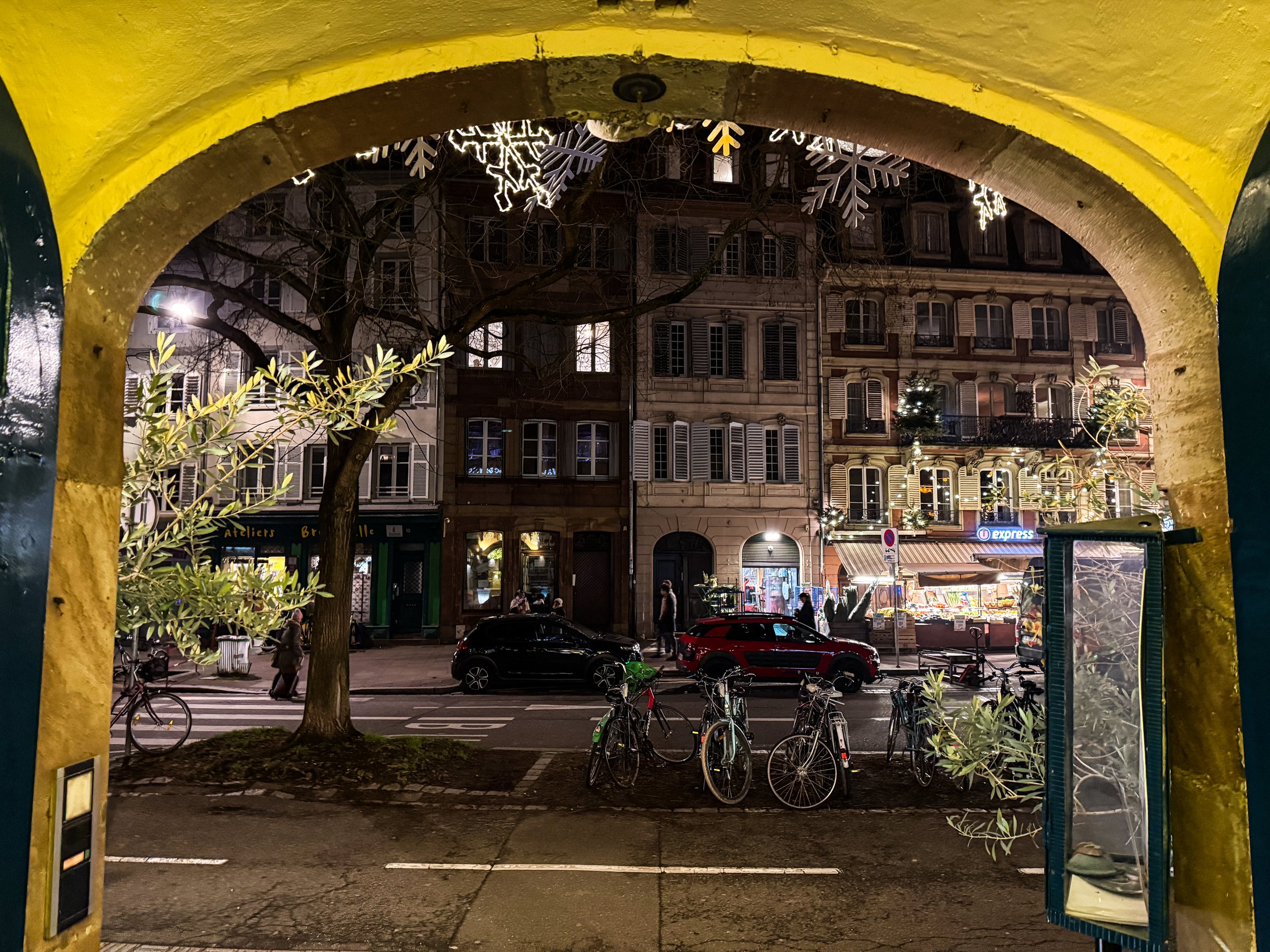
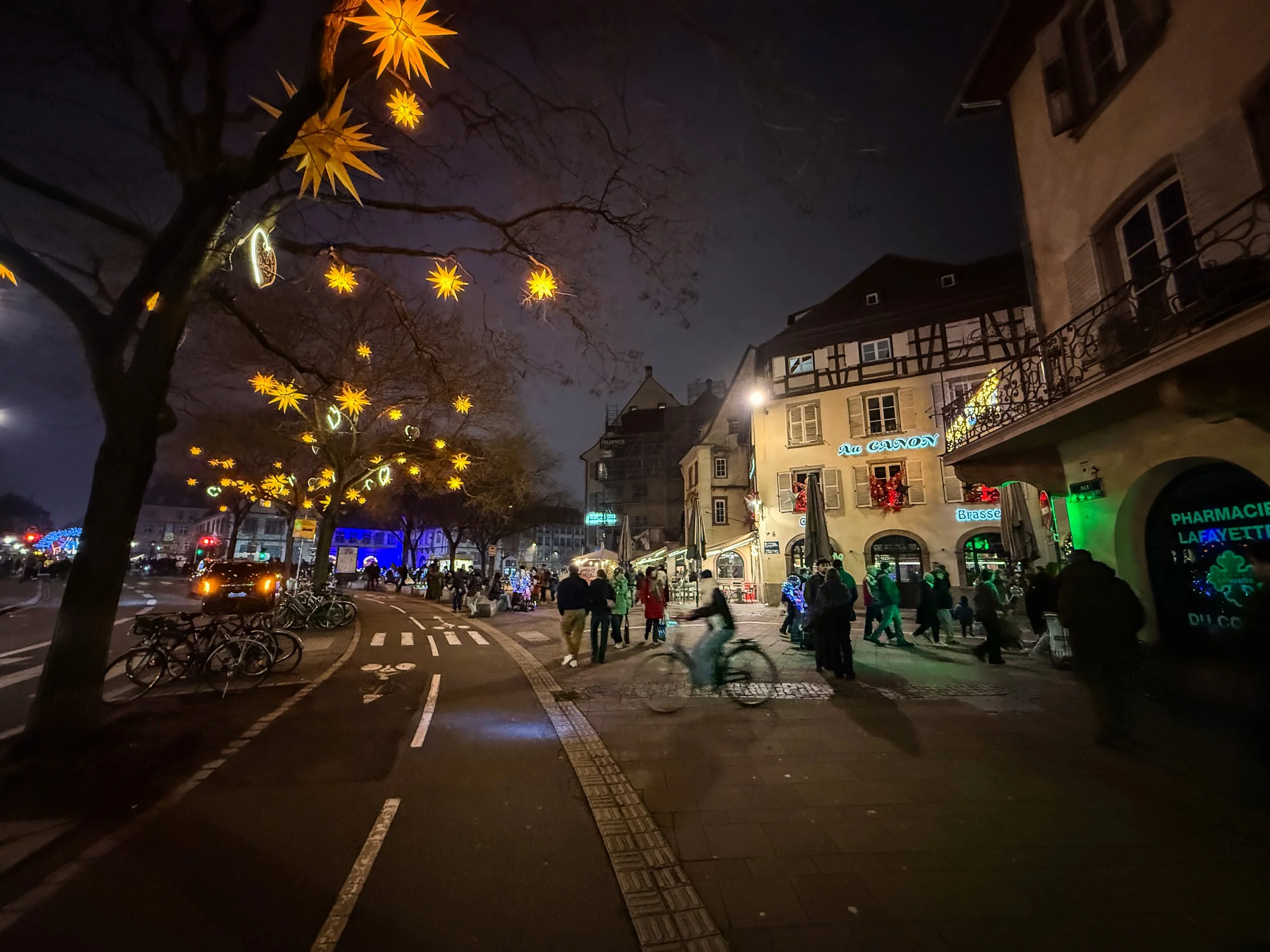
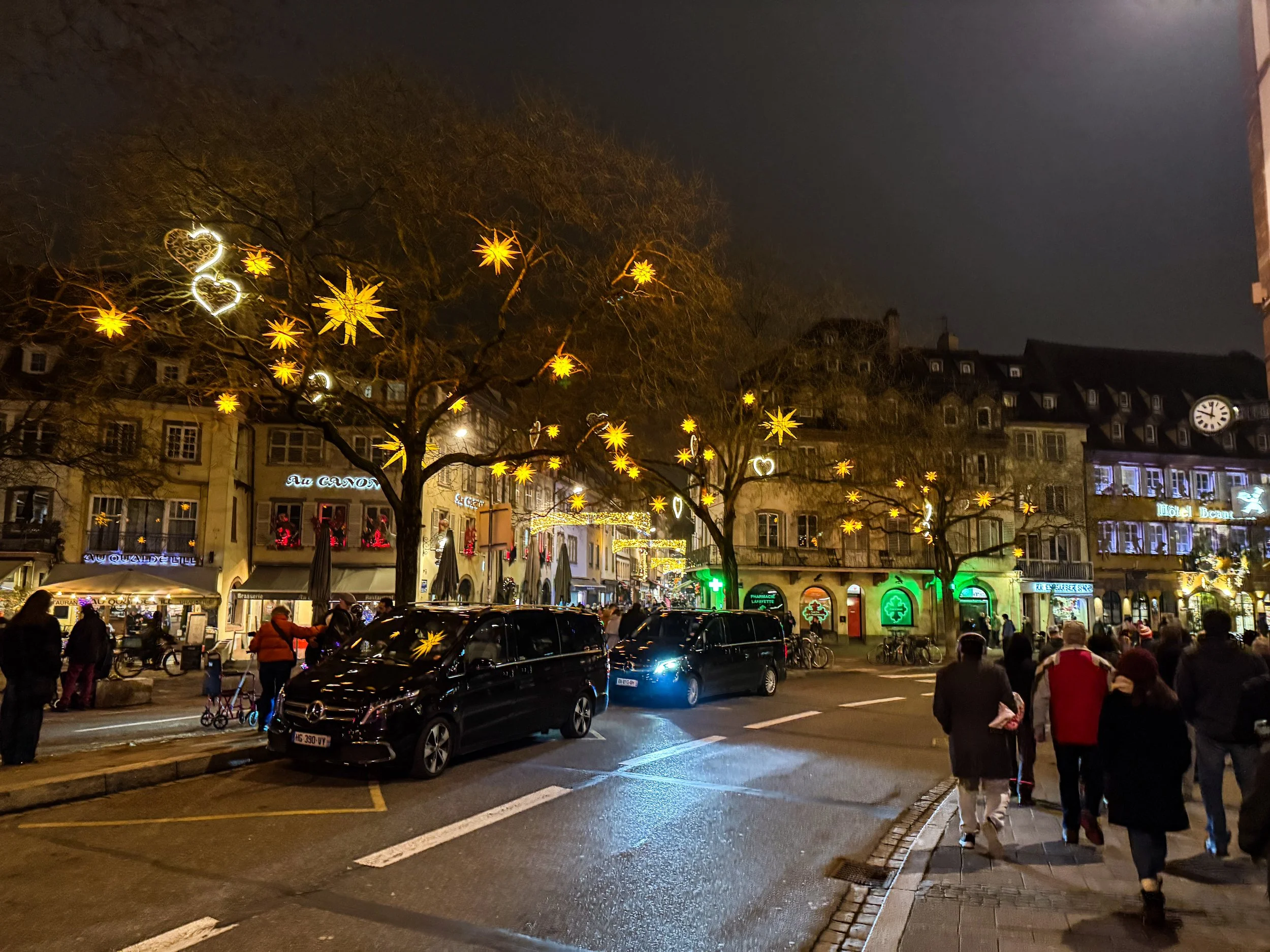
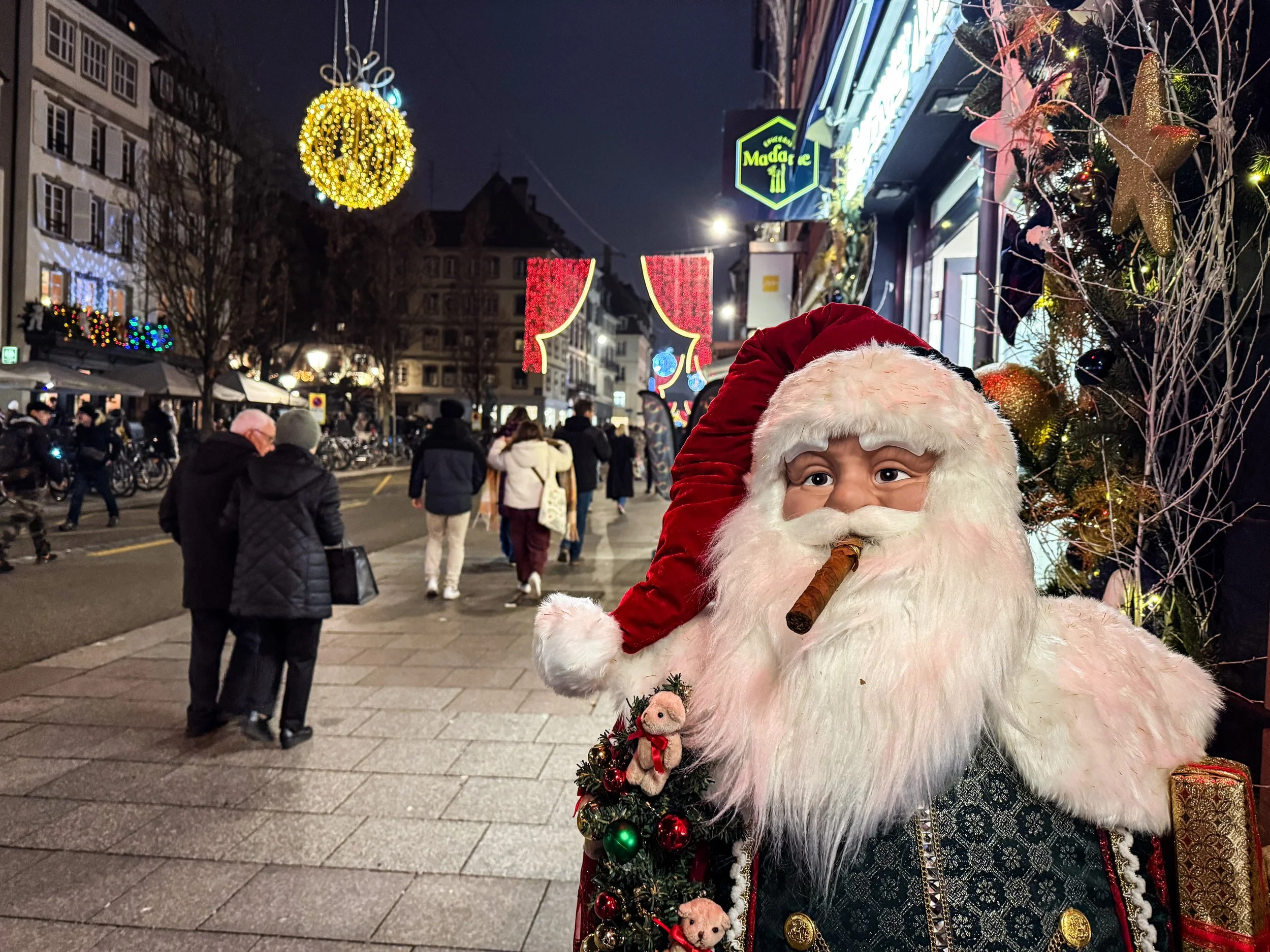
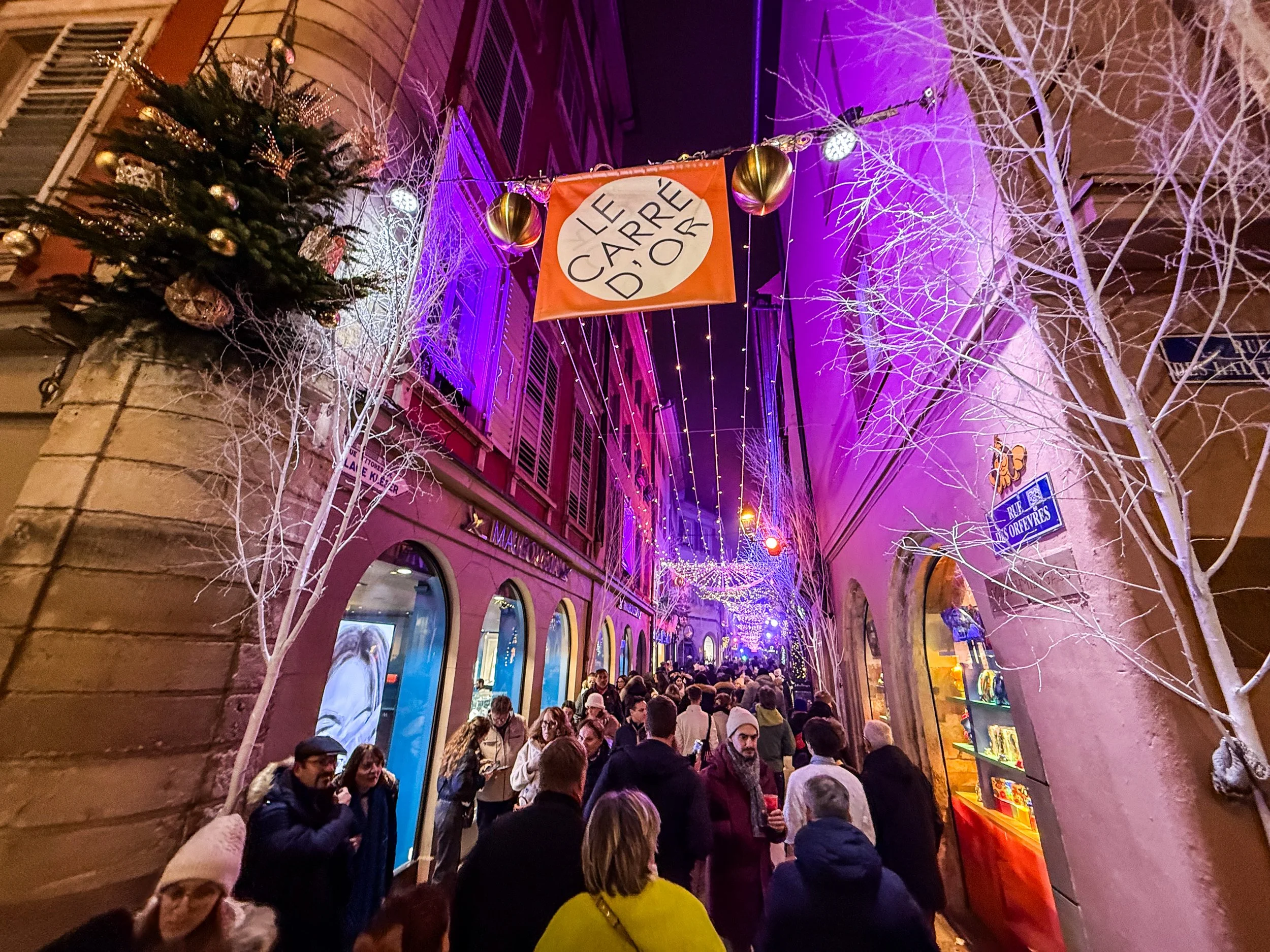
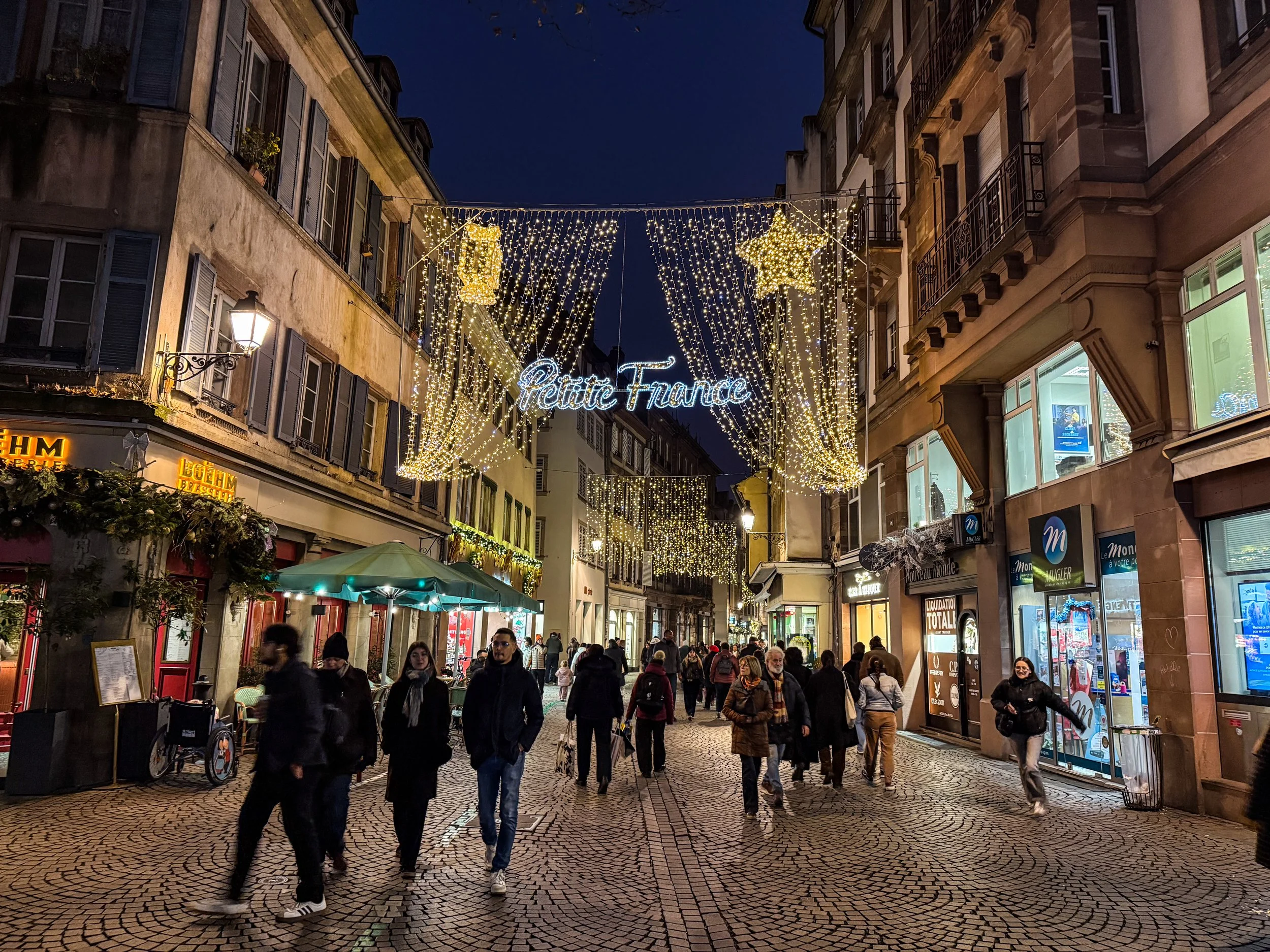
To be clear, it was still quite crowded, but apparently there was a bit of a lull in the foot traffic during our visit. Maybe it was the fog. The fog definitely made driving a bit scary… but once we were actually walking through the city, it was magical. So let me finish by sharing photographs that I took as we wandered throughout the winding streets of this gorgeous city. As we walked, we passed through a seemingly endless procession of small city squares, all with their own little Christmas markets selling steaming hot food and mulled wine. In the narrow, cobblestone alleyways that weave through the heart of Strasbourg, we were often alone. In these moments, the ambient noise of the city would fade away into the fog, giving way to a muted, peaceful silence. But that silence never lasted long, as we would immediately come upon a crowded street, full of Christmas lights, shops, and people. Indeed, there was always immediate access to a quiet side street and a bustling causeway available. I’m not sure if I would have had such a glowingly positive review of Strasbourg in February… but in December? With a mulled wine in my hand? Absolutely enchanting.
Encore du vin chaud ? 🍷
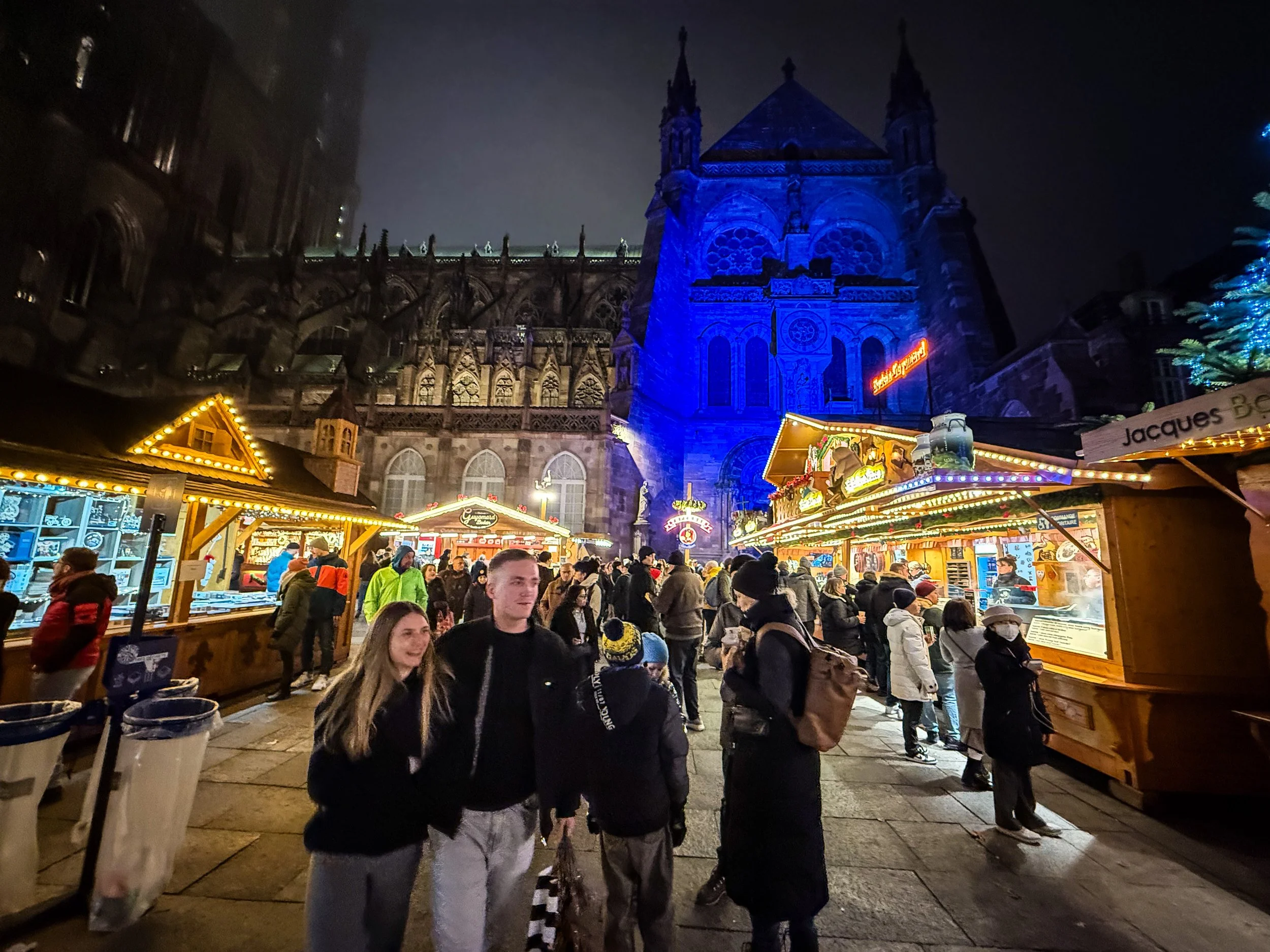
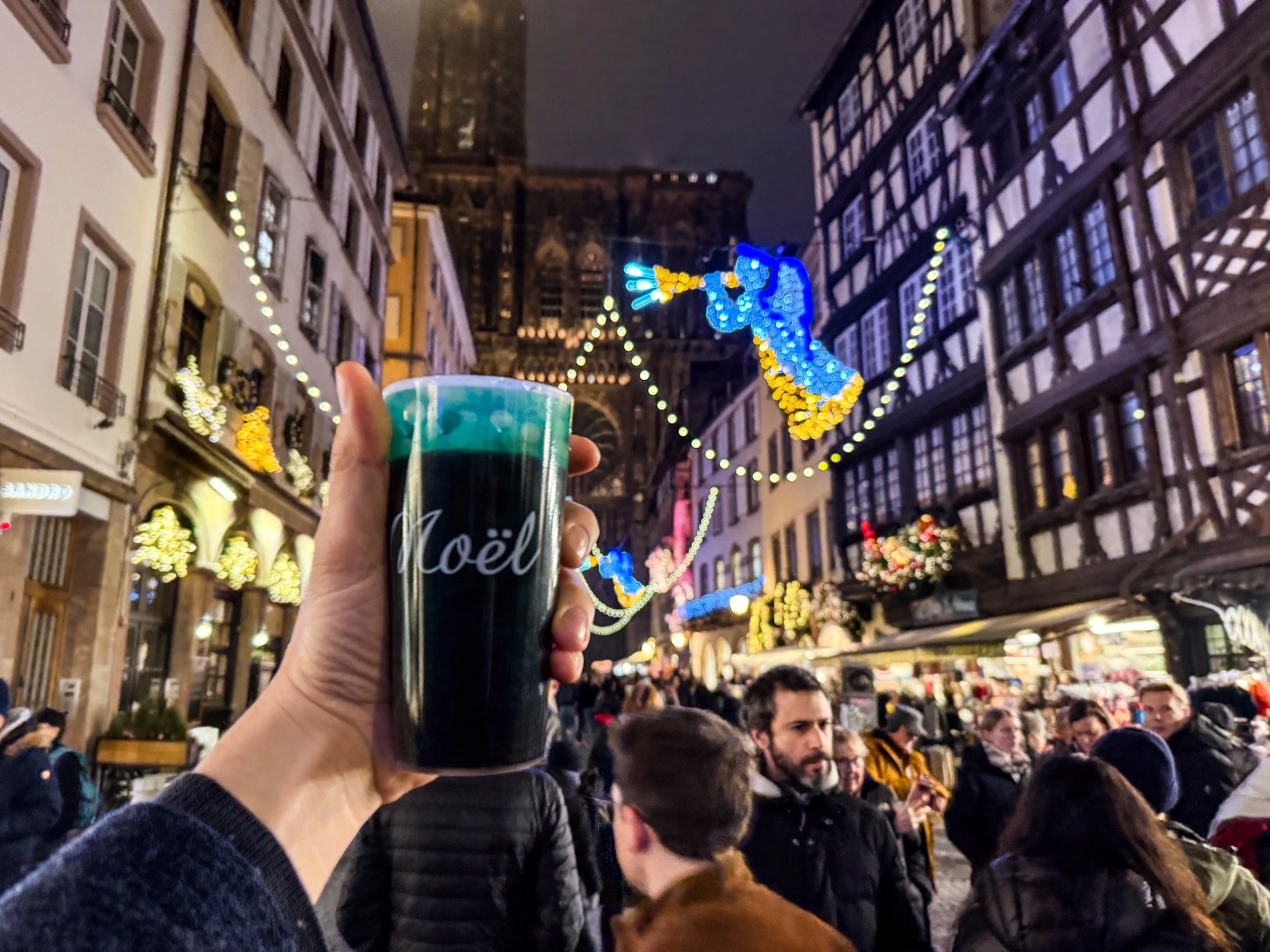
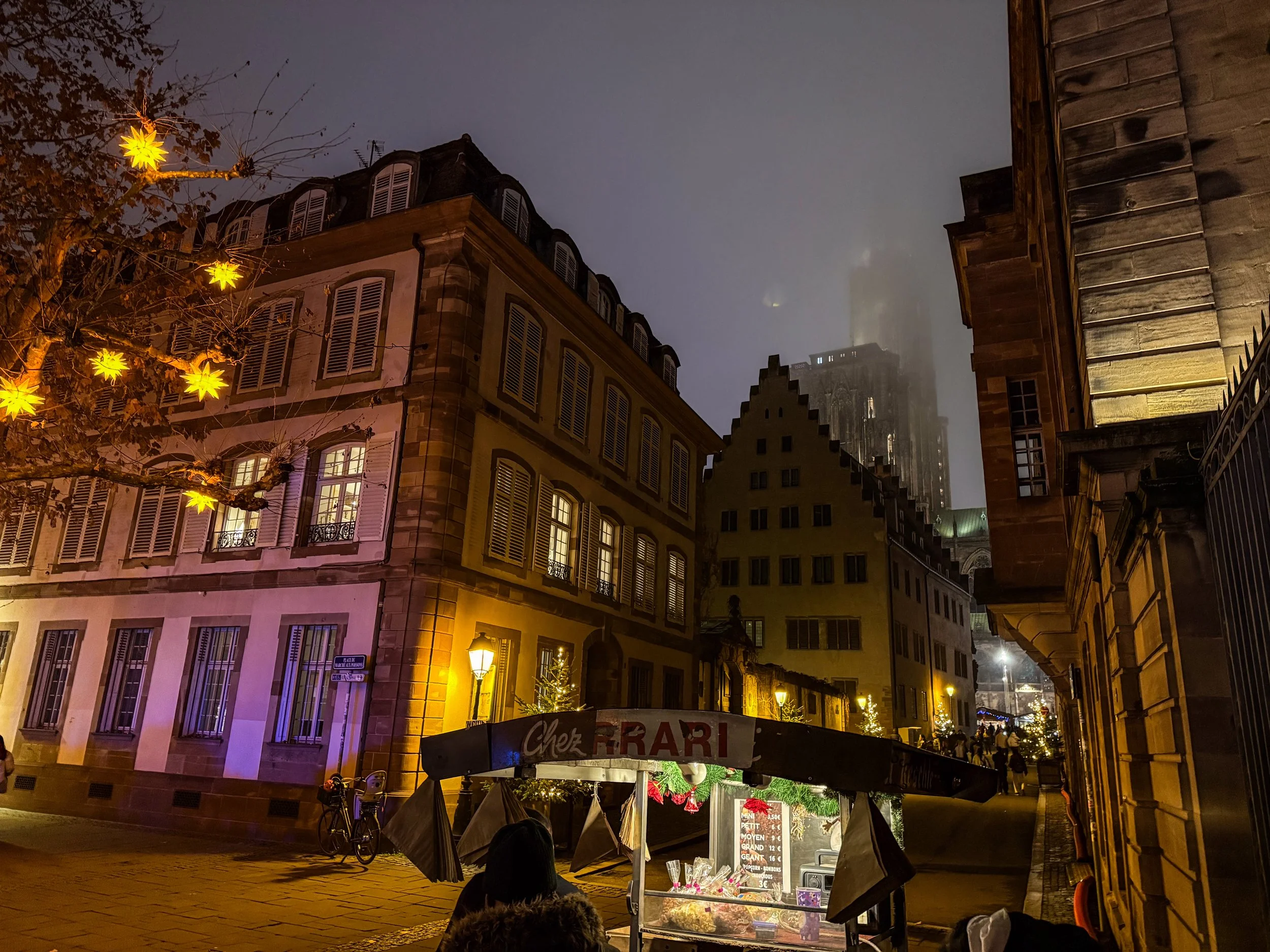
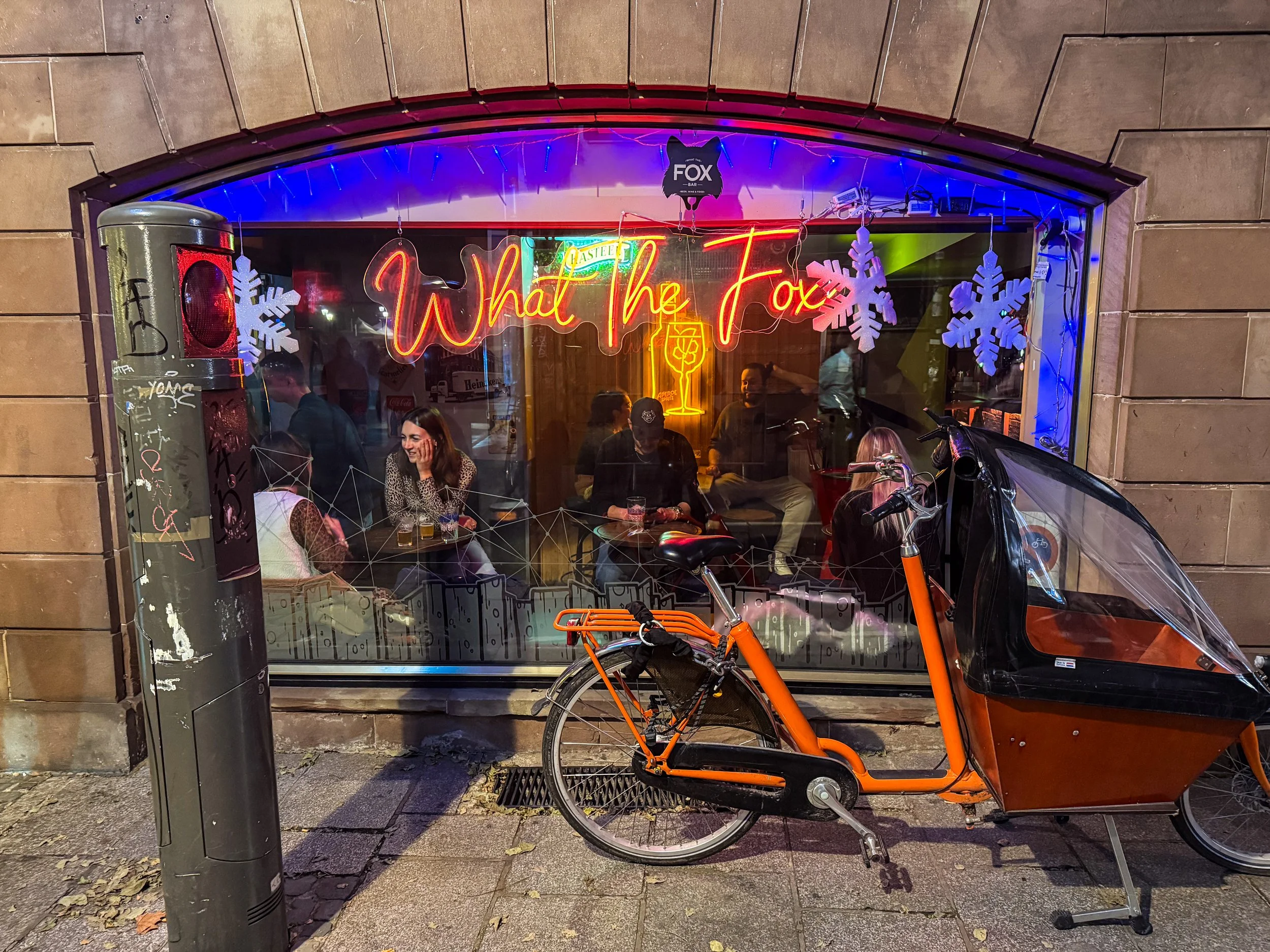
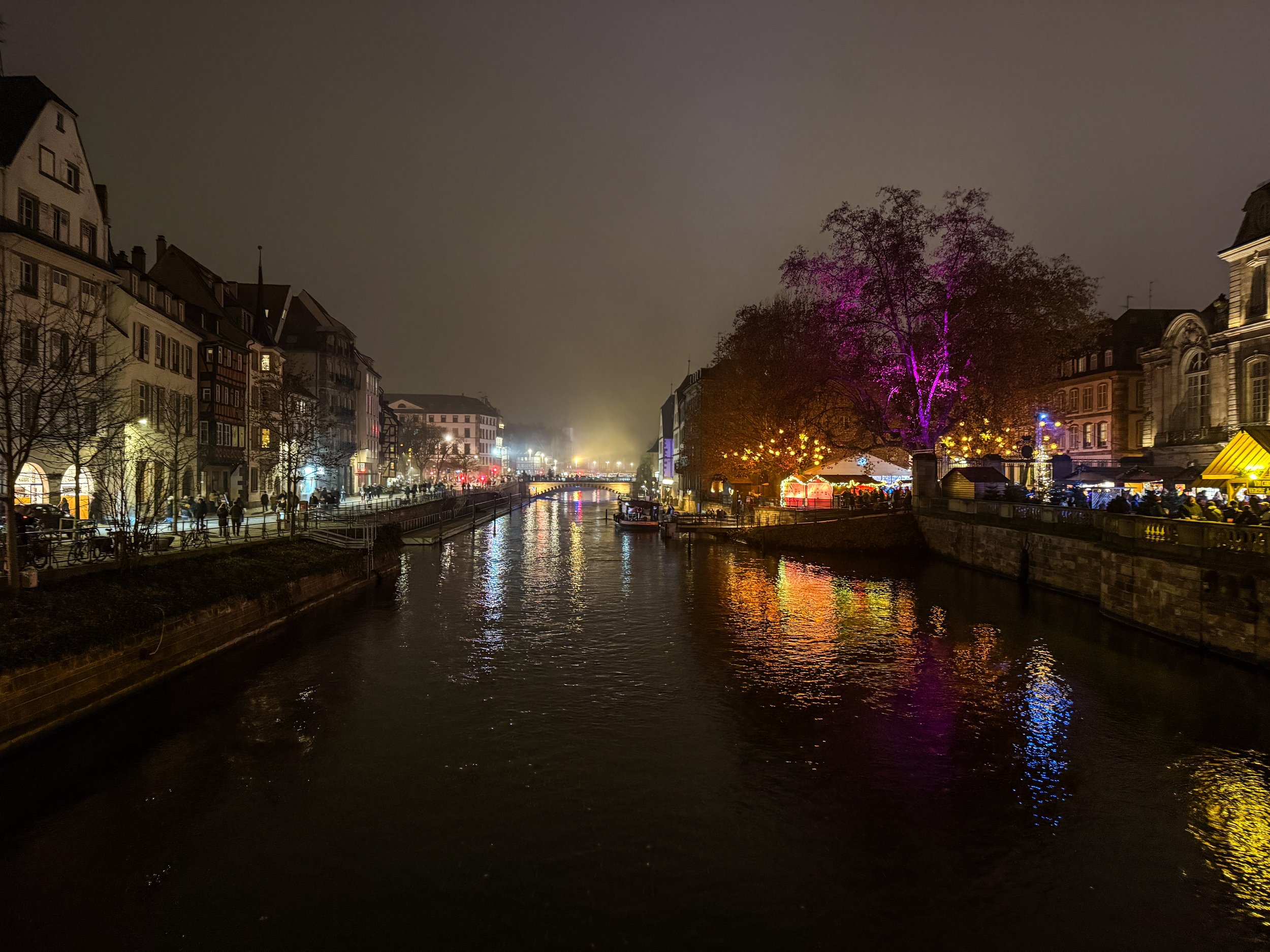
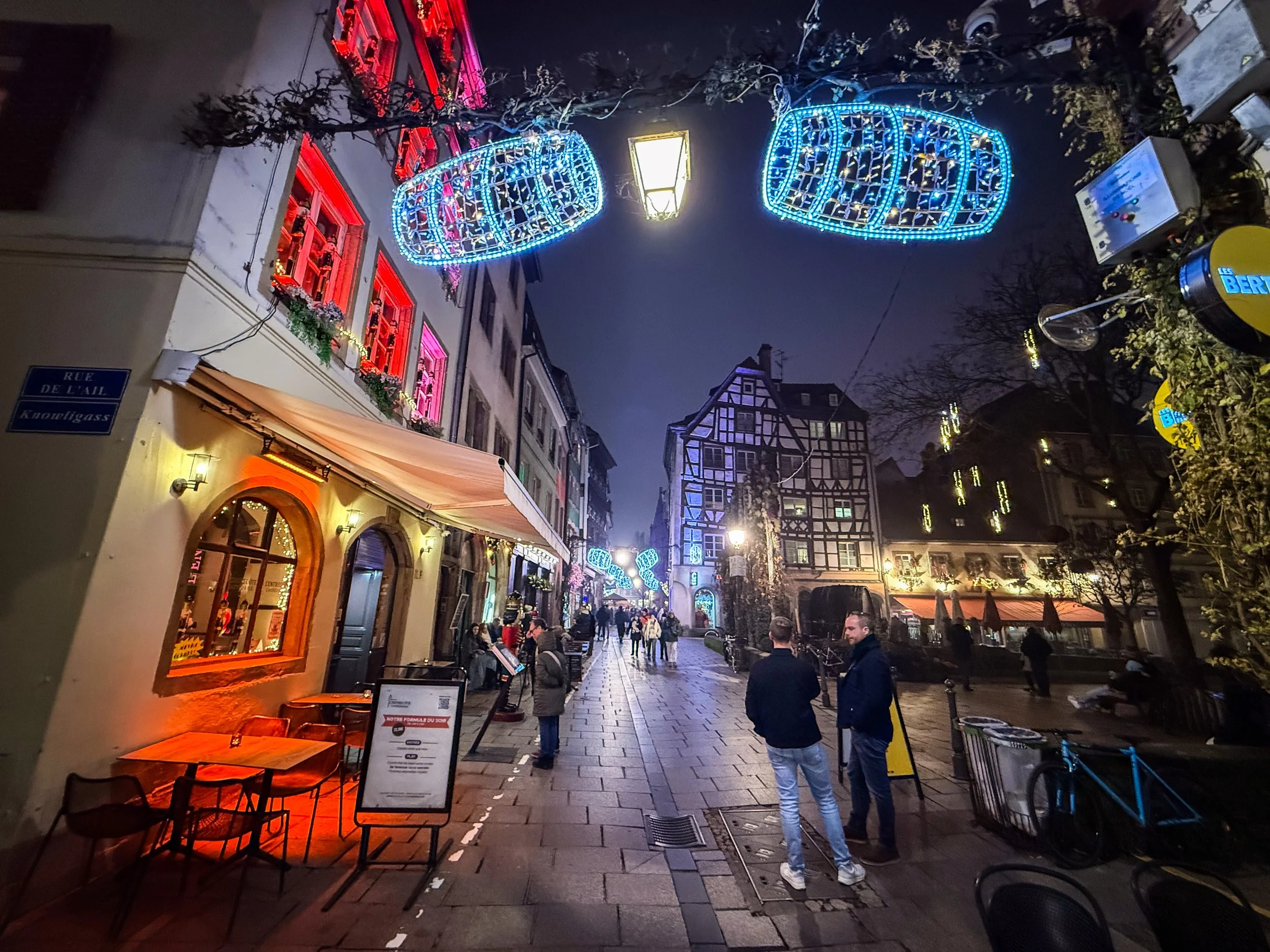
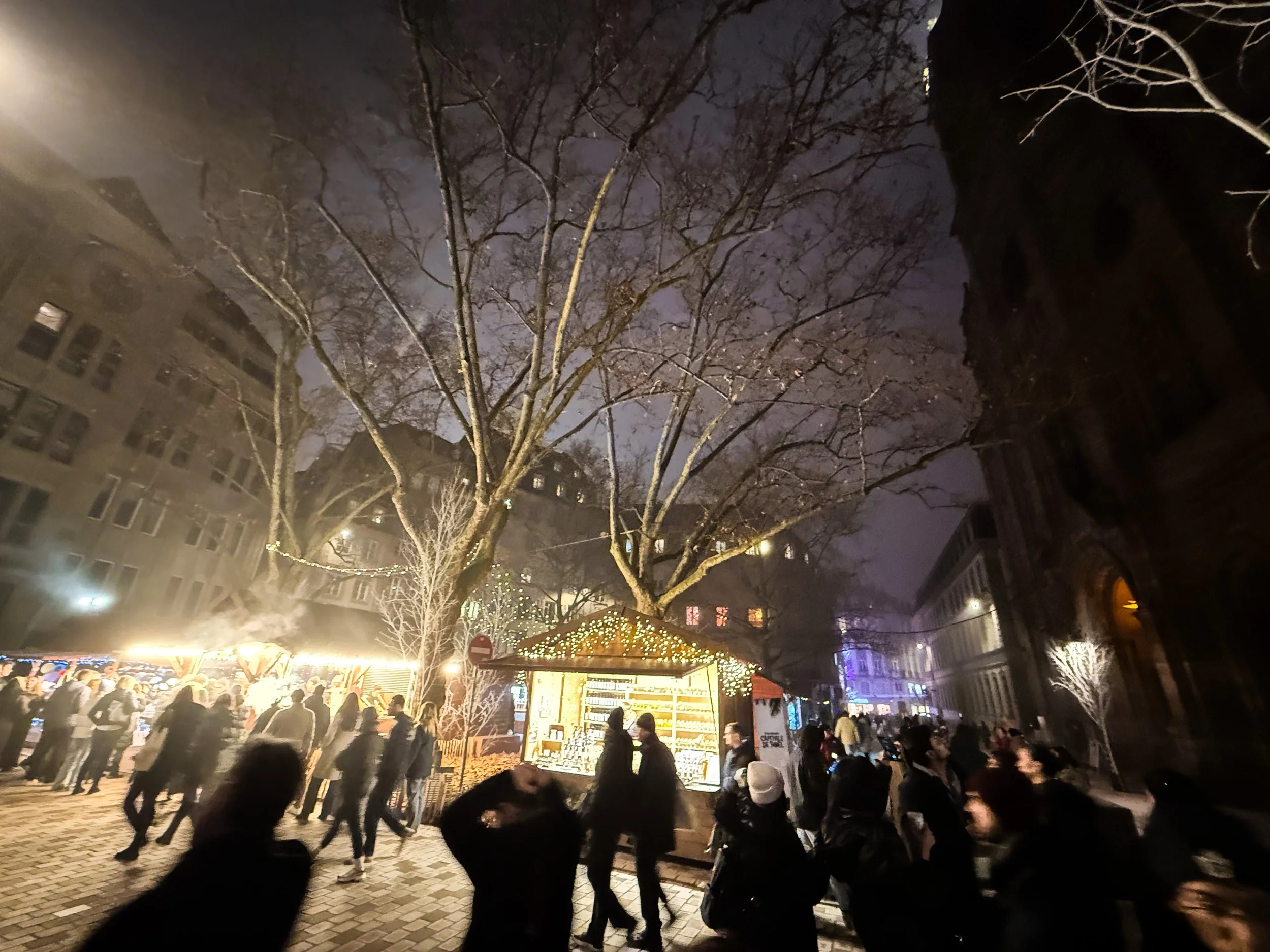
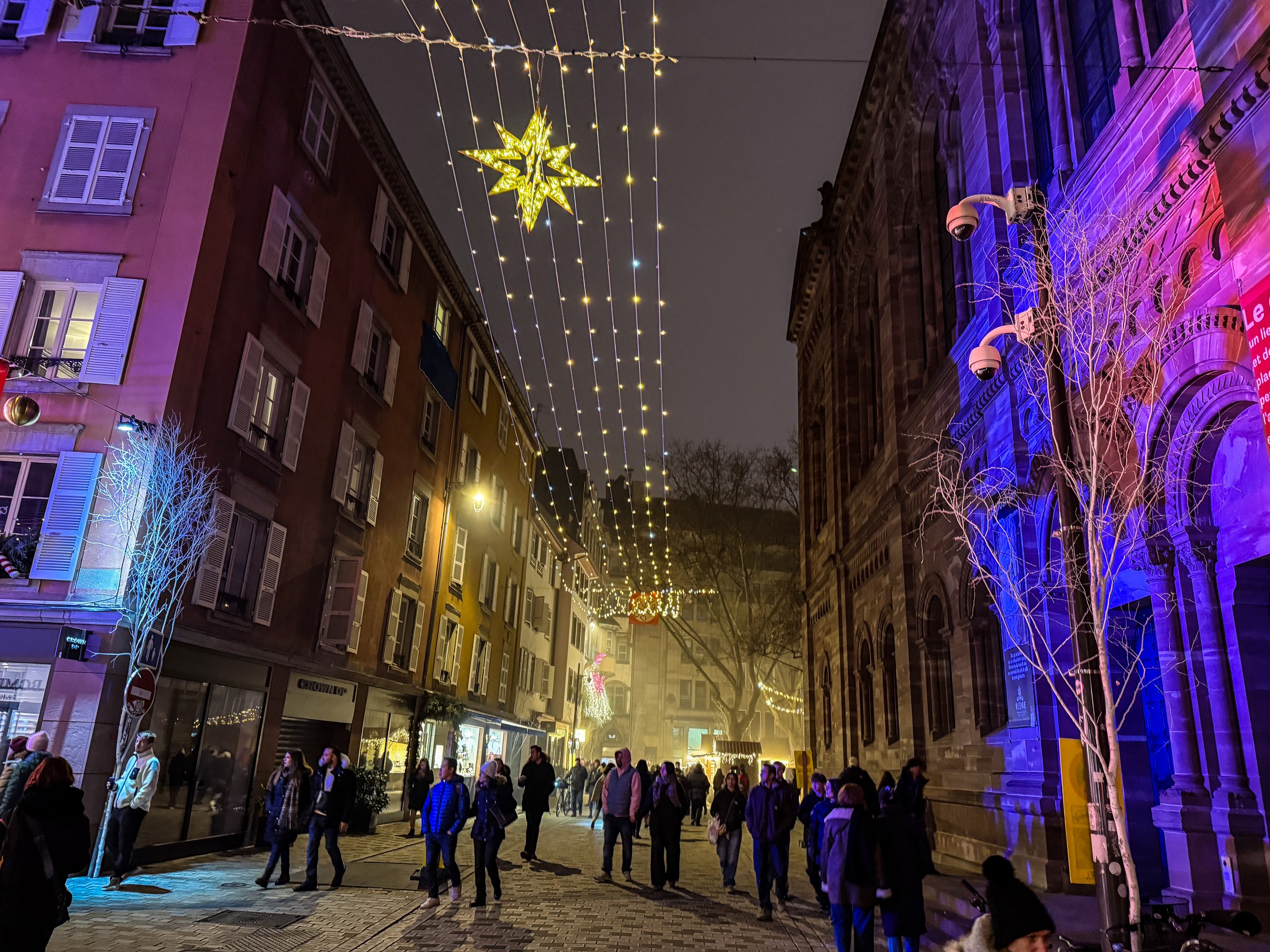
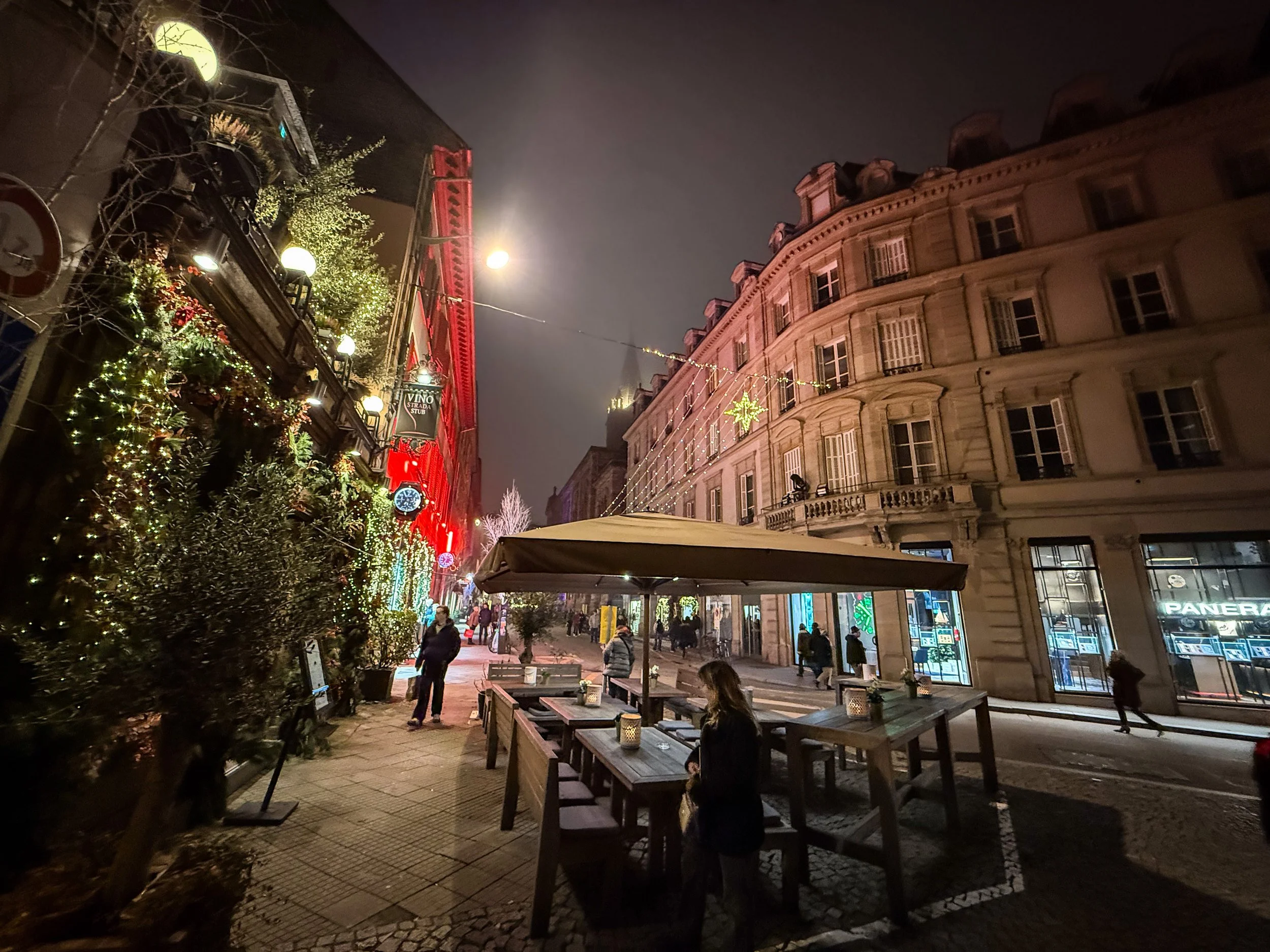
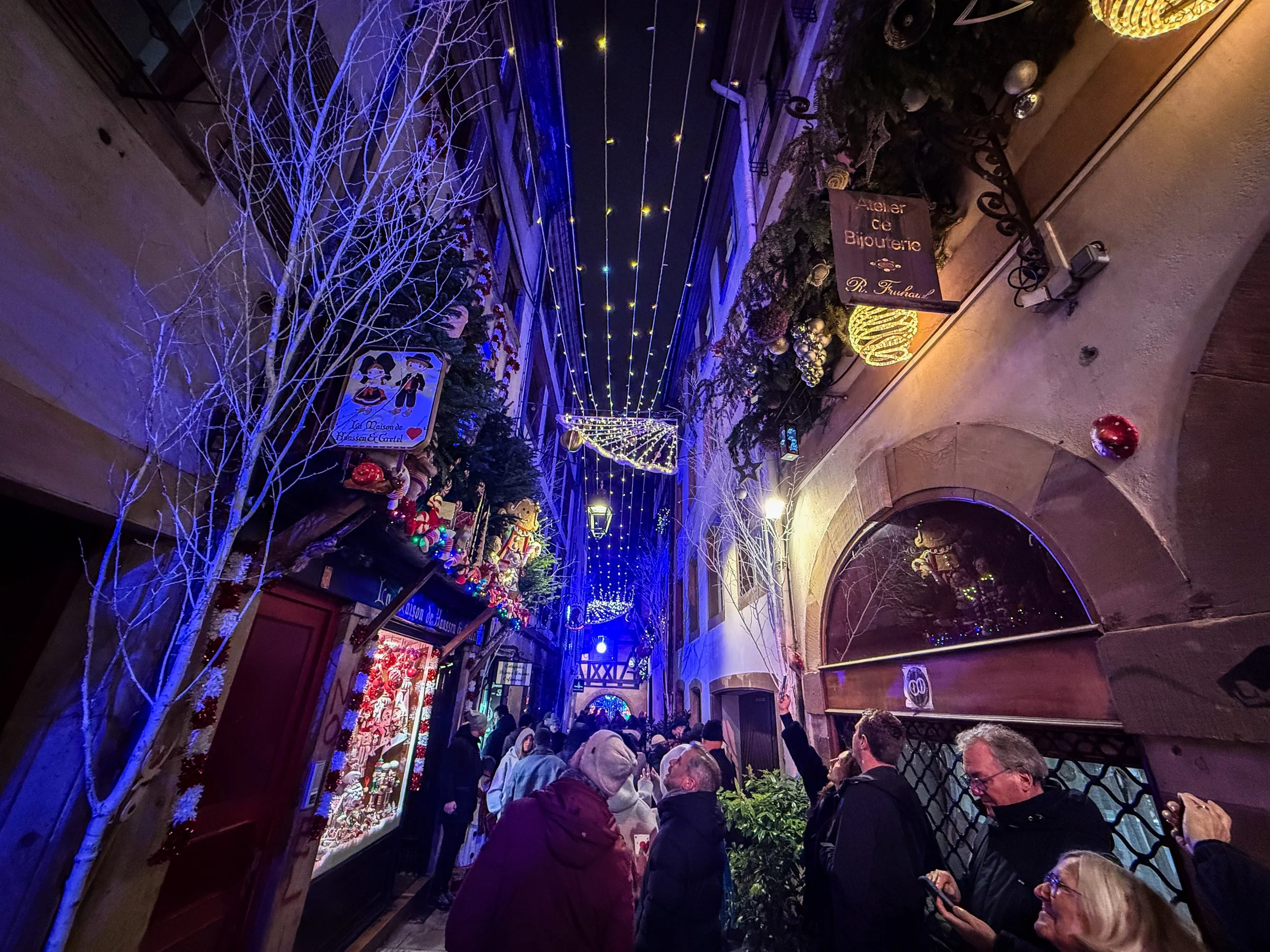
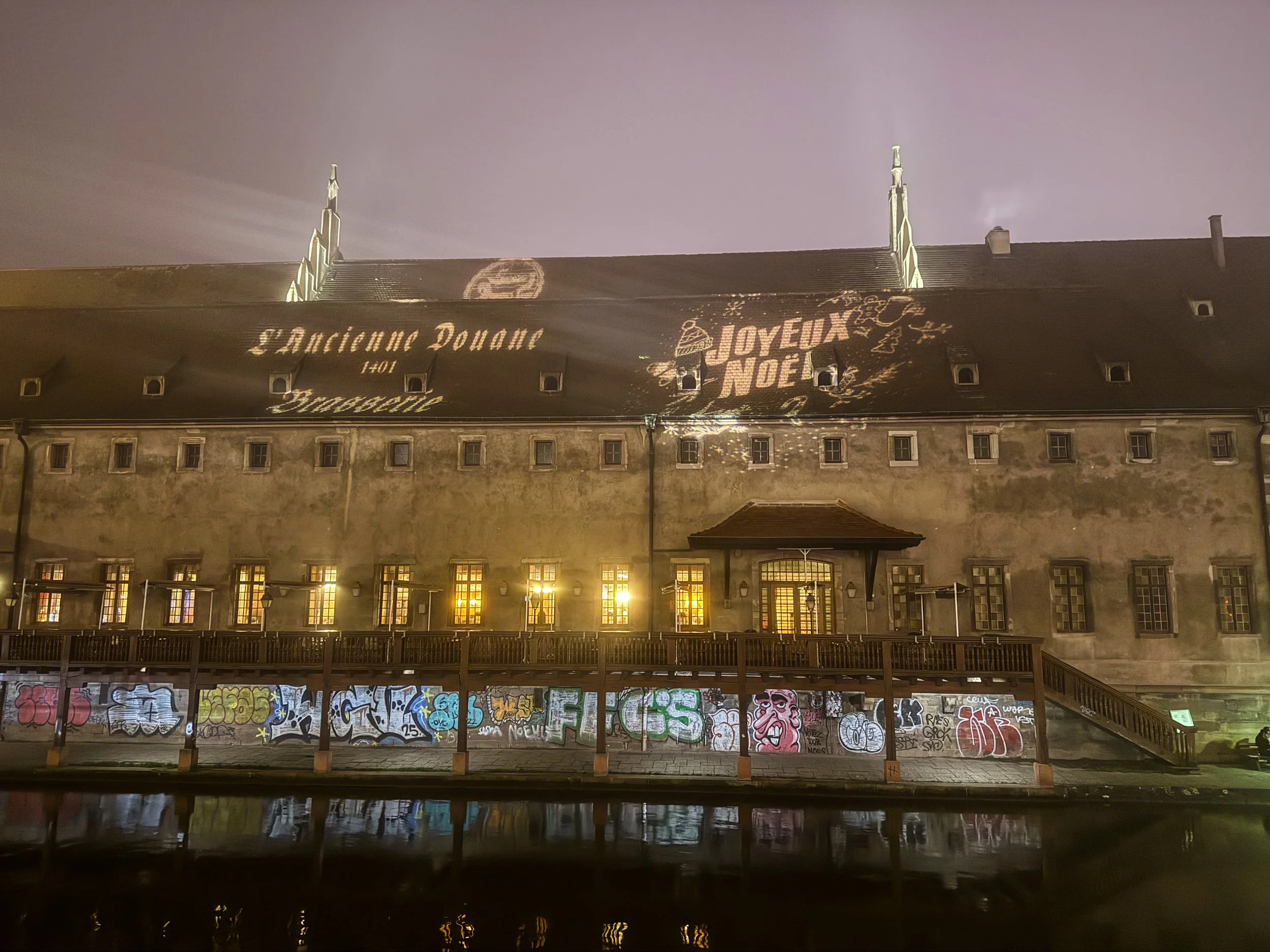
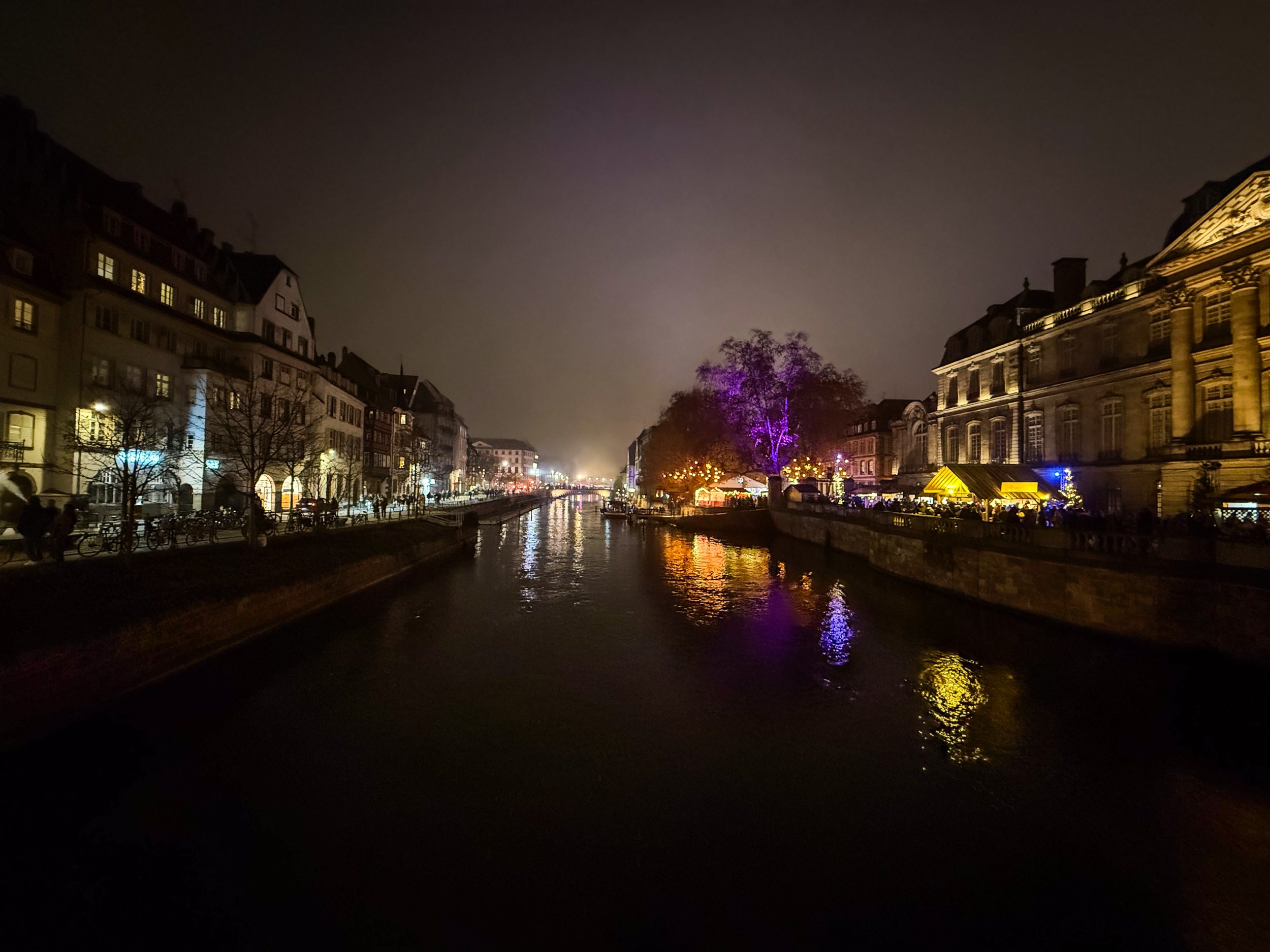
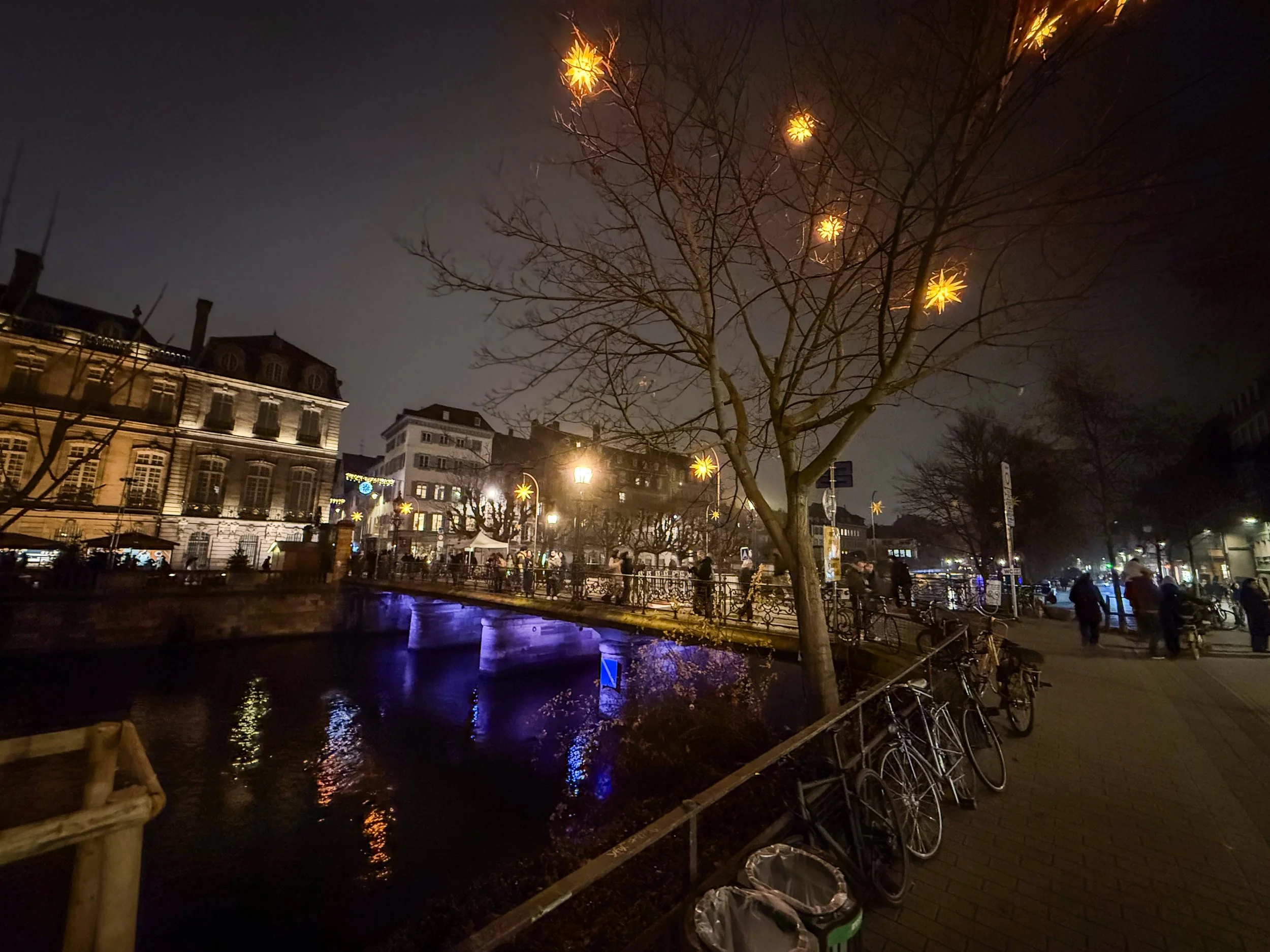
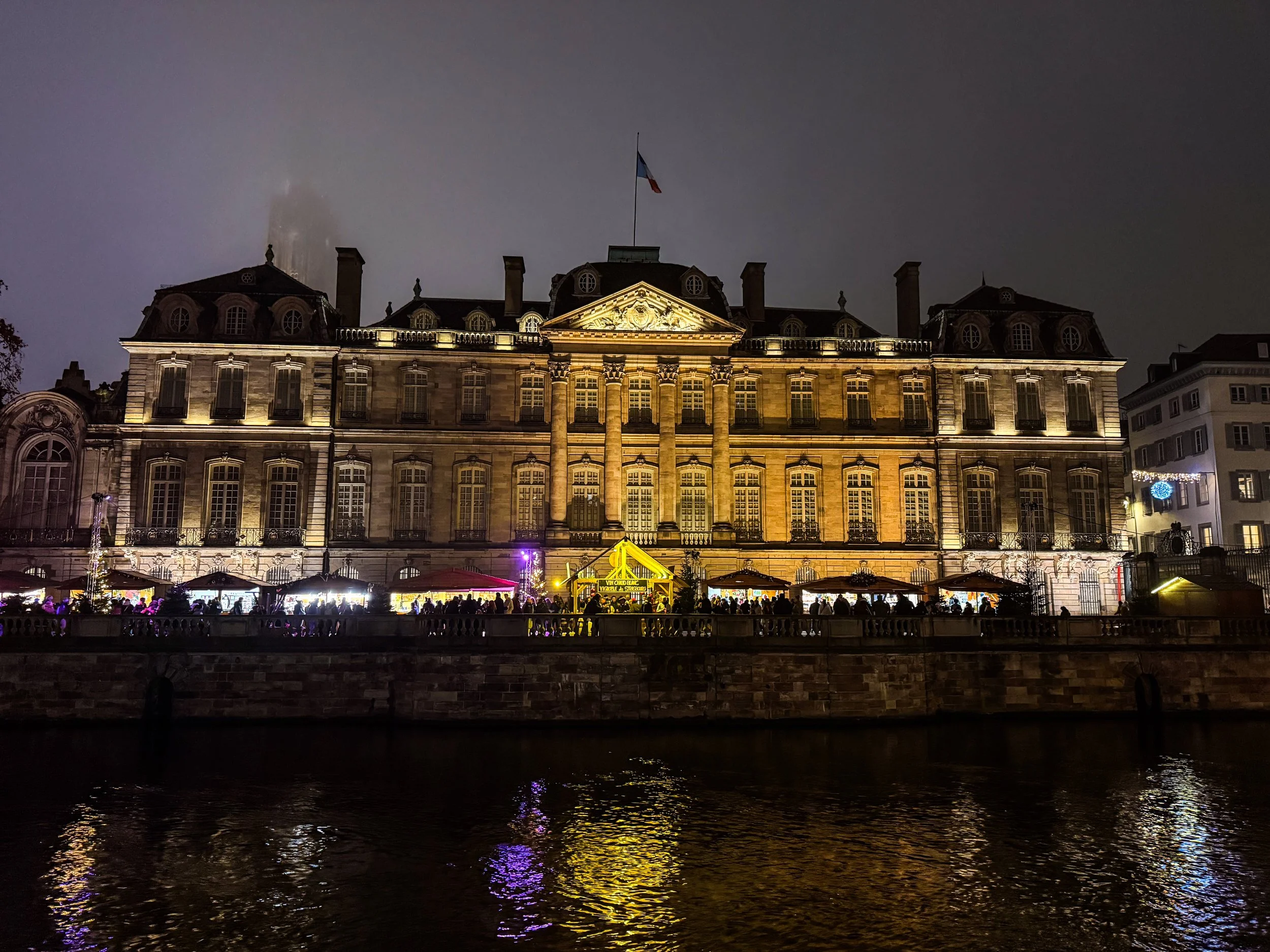
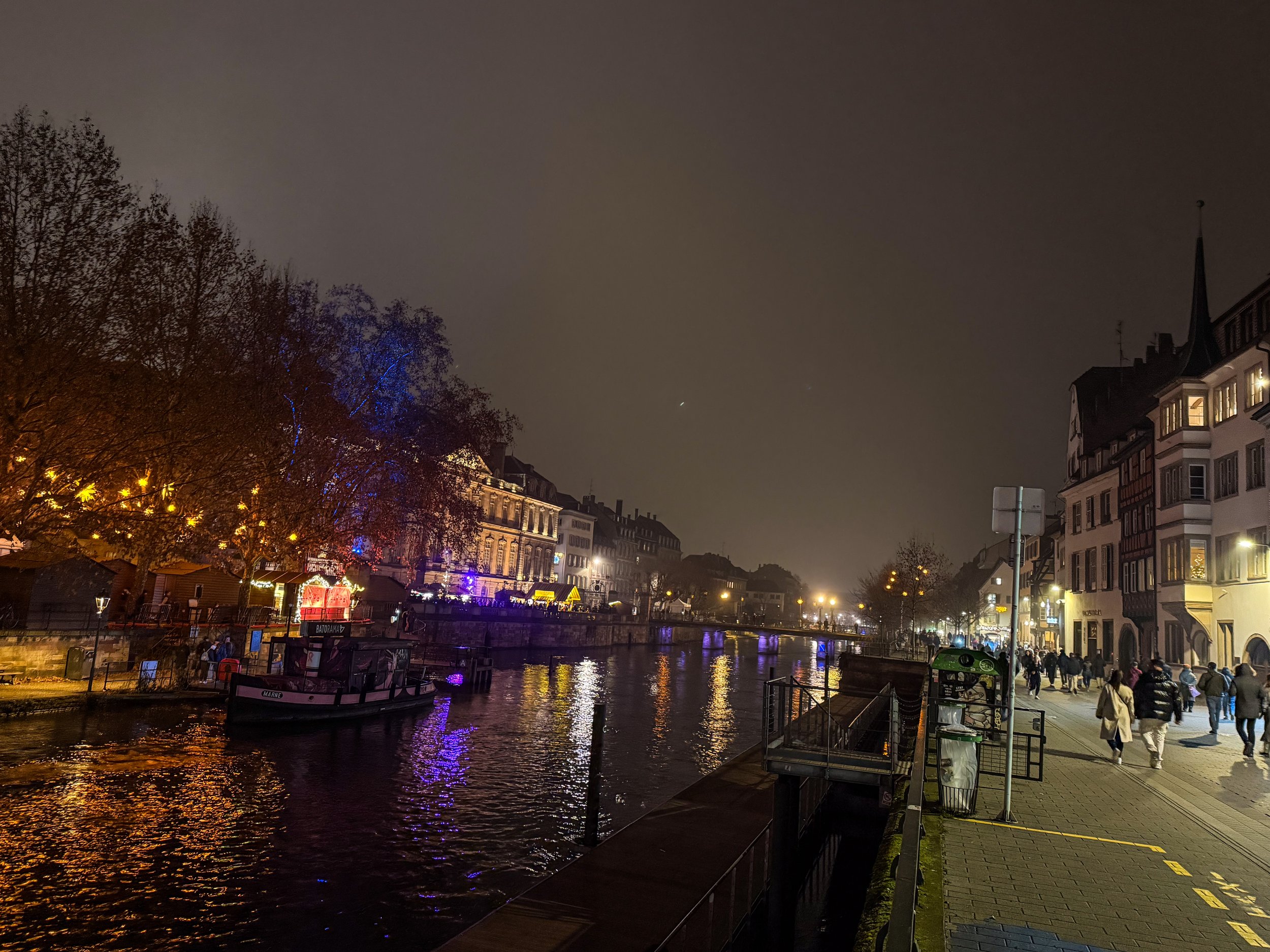
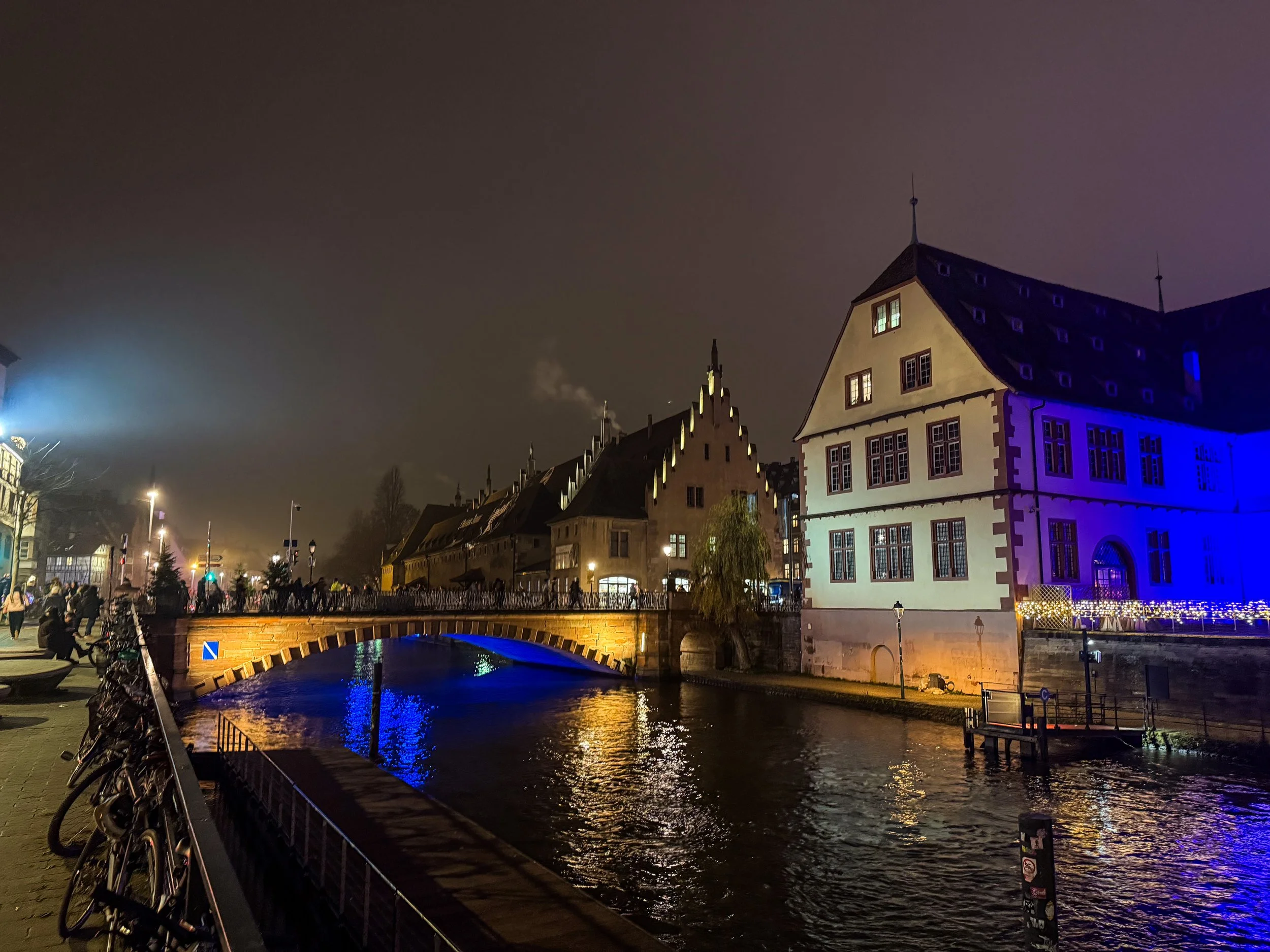
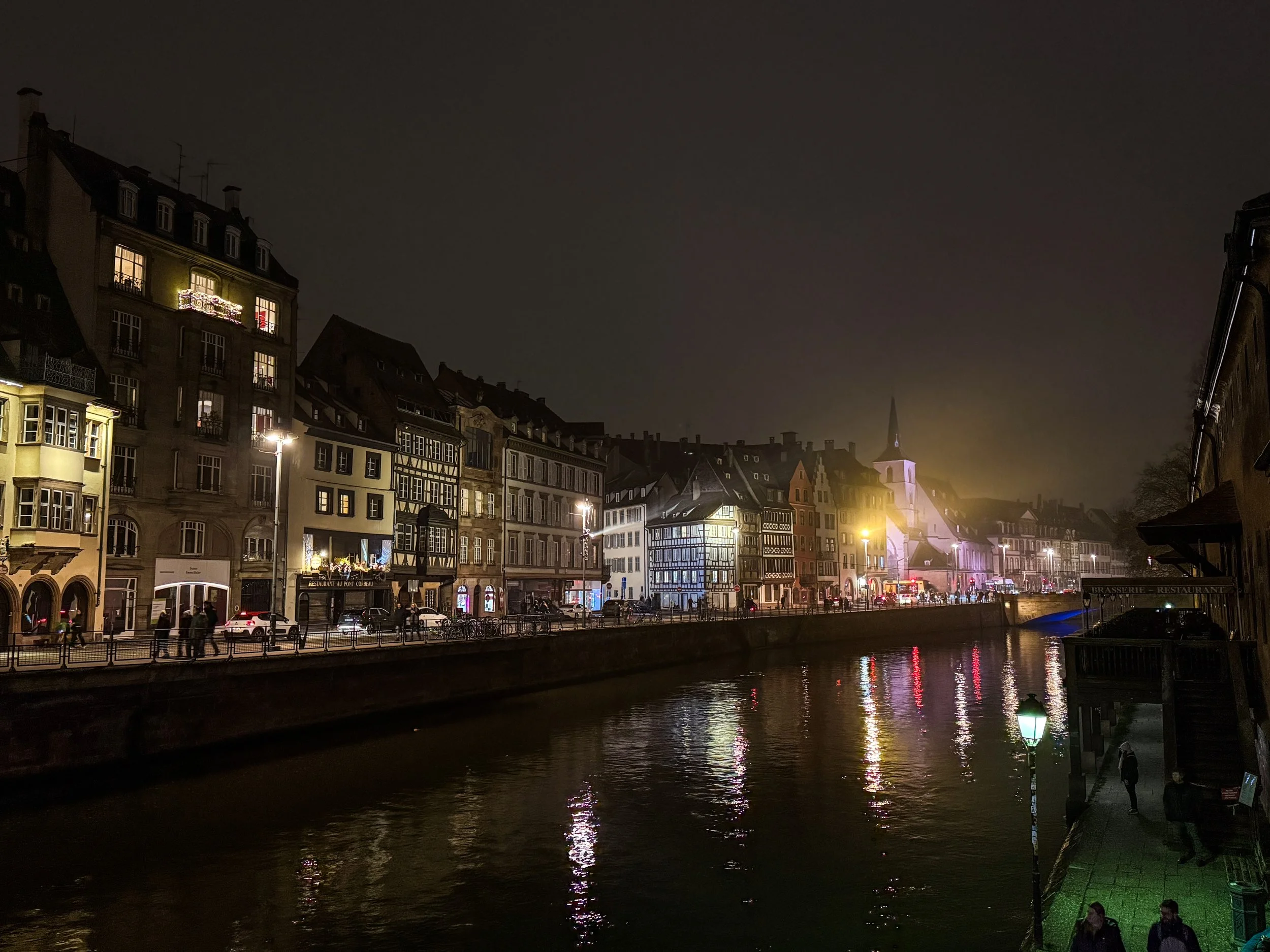
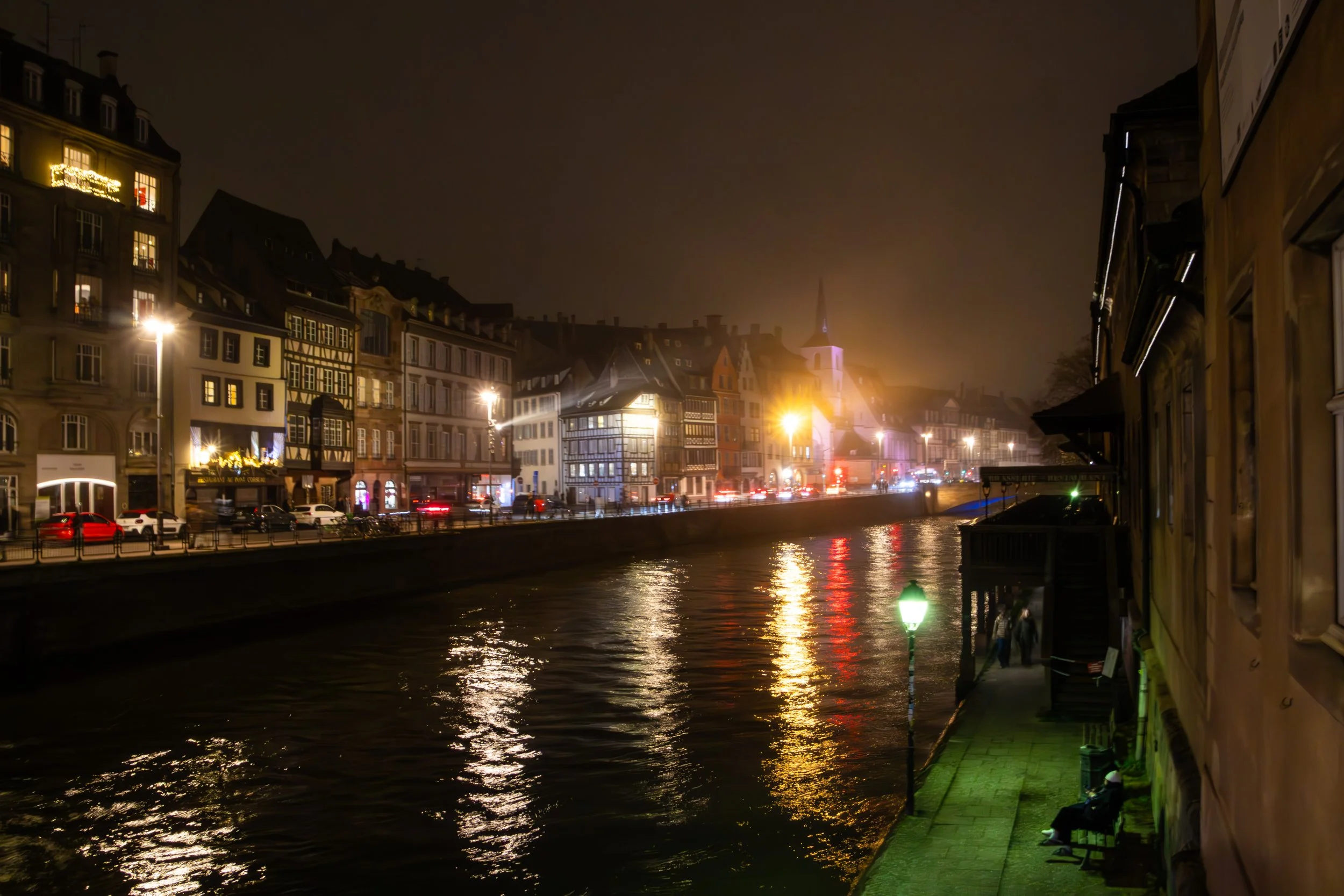
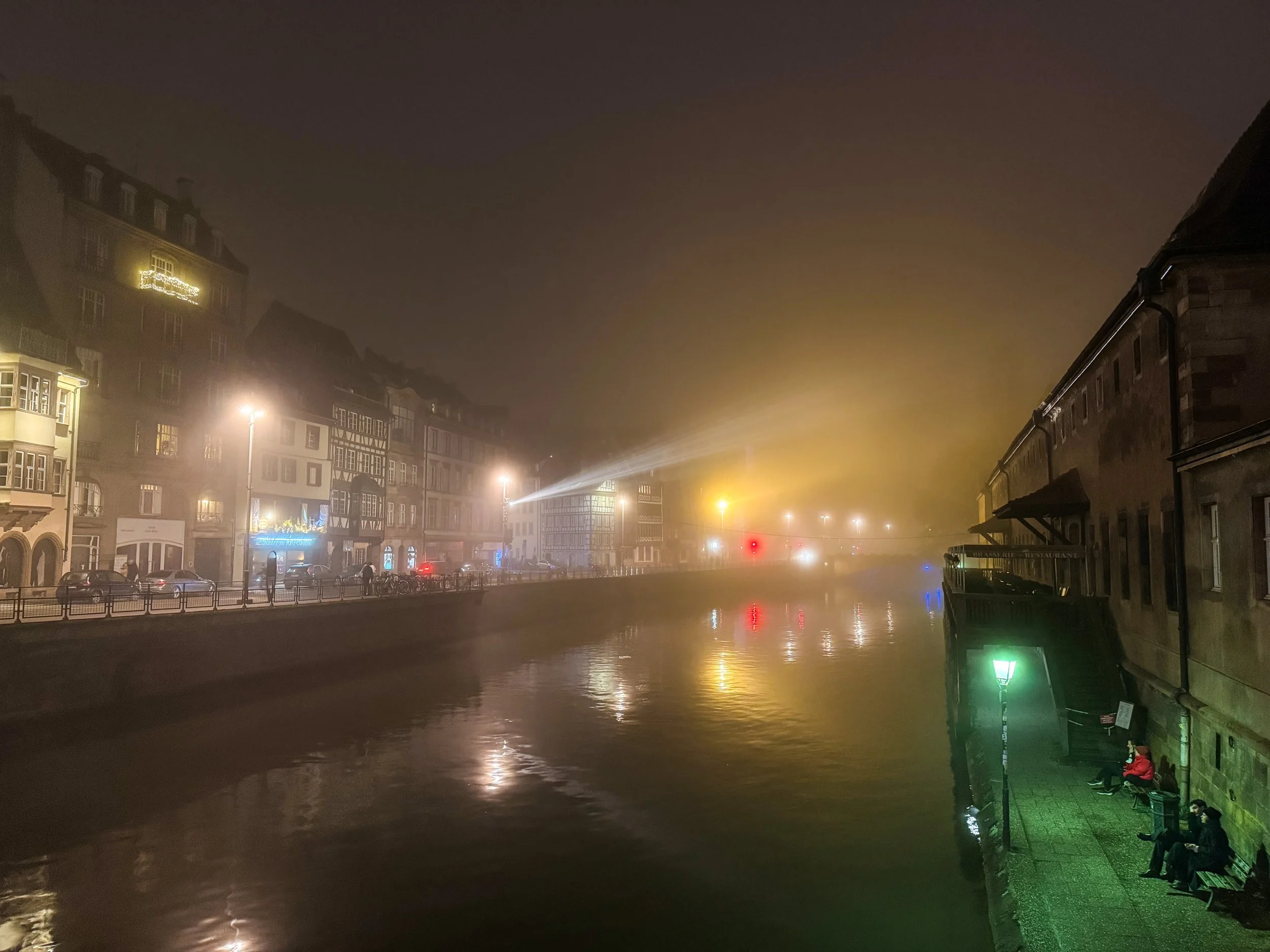
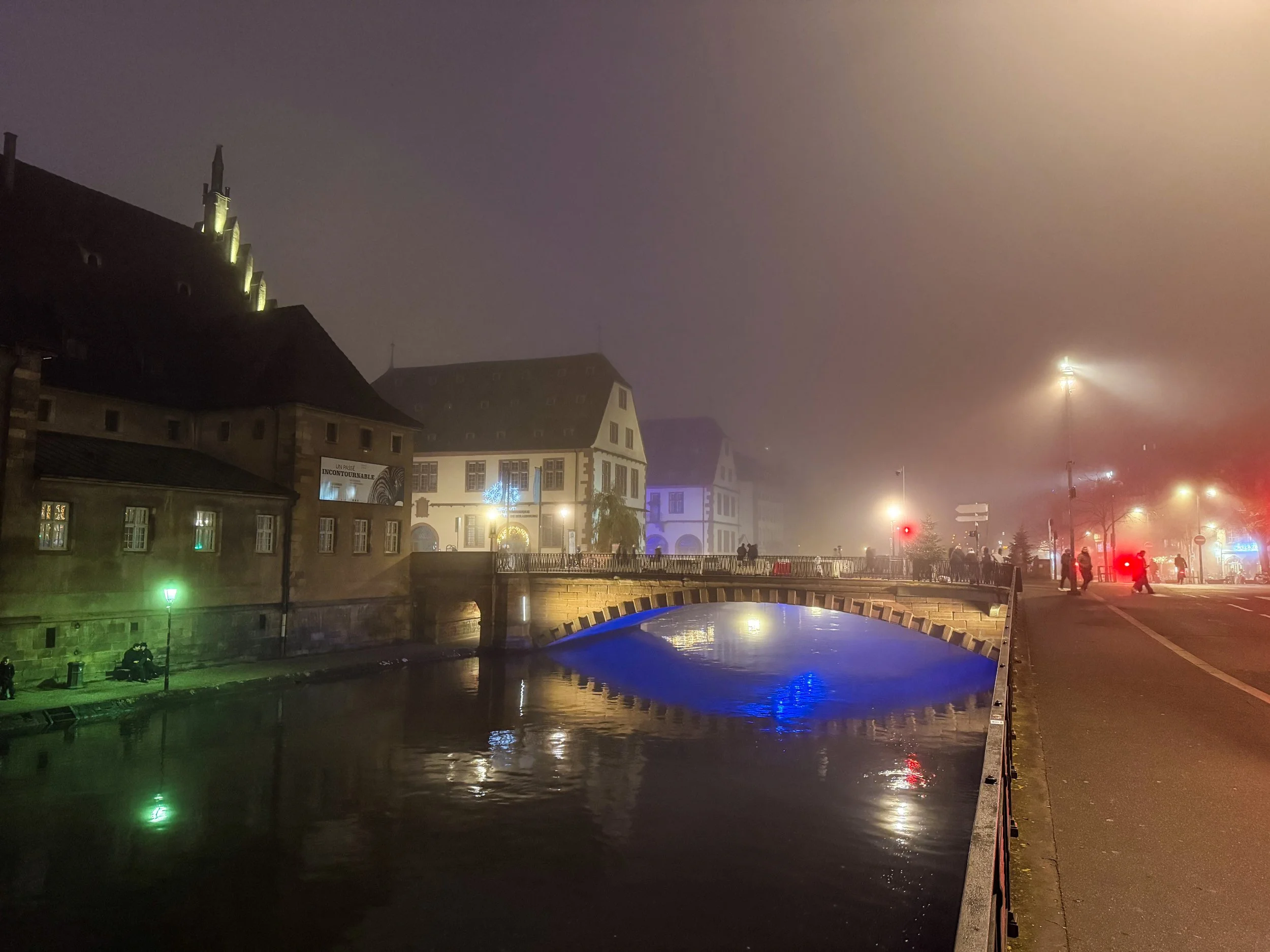
The fog during this trip was really quite something, but it can be difficult to photograph. Also, the actual intensity of the fog would vary from one hour to the next; sometimes it would clear up, only for another cloud to blow in later. Before/after dinner one night, I was able to snap a really good side-by-side shot of a river overlook where the fog intensified rapidly whilst we were in the restaurant. Check these out…
I want to end with a little story.
There’s nothing that endears a place to me quite like a random act of kindness. But, if you need one, something has usually gone wrong. So, as I get older and wiser with each passing year and every additional trip, the places I visit naturally get ever fewer opportunities to shine in this department. I experienced a lot of kindness from random strangers in the early days of this blog when I was a dumb kid, but these days? Not so much, because I am rarely in need. But in Strasbourg, we made a mistake.
We left the city via a late train back to Paris. Prior to our train’s platform being announced, we had been sitting in a coffee shop with our bags. When the platform was announced, we hurried away and forgot a small bag in the coffee shop. We did not realize that it was gone until nearly 15 minutes later, when a young man called to us from over a fence in an entirely different part of the station, holding up the bag we’d forgotten. 🥹
Wow! This guy was a credit to Strasbourg, to France, and to Christmas! Thank you, nameless French man. 😘🫶
But I’m getting ahead of myself. That train story happened in Strasbourg, but not until after the next article.
Up next, we’re getting in the car and braving the fog to drive south to a couple of small villages in Alsace that also have some lovely Christmas markets. So, in the meantime…
…Encore quatre vins chauds ??
Track of the Day ⏯
🦸🏻♀️ Artist ✖️ Playlist 🎧


...Encore du vin chaud ? 🍷
Our winter wanderings in Stockholm continue!
The previous article was more focused on a general introduction to Stockholm, but in this article I’m going to adopt a new focus: attempting to share the coziness of this trip with you. As beautiful and charming as Gamla Stan (Old Town), and Södermalm are, the best trips—to me—have a funny way of differentiating themselves not through the official sights to be seen, but what happens in between.