
When I first visited Delhi about 10 years ago, I did not give it a good review. In fact, I think it was the most negative I’d ever been on a place in writing. During that visit (actually, it was 2 separate visits), I was young, I was worn-down, and I was overwhelmed. And, to be fair, Delhi is quite a challenging place, especially to the unindoctrinated westerner. It’s high friction and low reward. Over the years, I think I have gained a level of appreciation and familiarity with in India that I experience it very differently now than I did back then… but it is still not a place that I often recommend others to visit. You see, I actually LOVE India, so I want other people to love it too. And sending people to Delhi on their first trip to South Asia… BOLD MOVE.
Well, I won’t bury the lead: I actually very much enjoyed this trip to Delhi! It’s still not my favorite place in India… or even in my top 5, but my love for this country has grown to the point that I see the beauty even in its rough edges, and my experience with it is such that I’m a lot more comfortable in moving through those rough edges than I used to be. But to deny they exist would be stupid. Delhi has got a lot of them, as anybody will tell you. But I enjoyed Delhi anyway.
On my arrival, I was waiting in a line at the airport when a man pushed past me without asking. This being Delhi, I didn’t care; I’d left these kinds of sensitivities back in the West with my white shoes. However, I did make a joking comment about how he could have asked me first (I probably would have said ‘yes’); just then, an Indian-American girl in line next to me turned around and laughed “You’d better get used to it… this is India… nobody’s gonna ask you shit!” 😂

A reintroduction to Delhi
With a metro population of roughly 33 million people… (pause for dramatic affect)… Delhi is the largest city in the largest country on earth. In the overall world rankings, it is 2nd only to Tokyo, but it’s gaining ground fast! In the average Delhi day, there are ~837 births and ~360 deaths, which gives us a natural increase of ~477 people per day. On top of that, there are an additional 200–275 migrants that arrive here per day, mostly from neighboring countries, or rural parts of India. Meanwhile, Tokyo is actually shrinking. To give you some perspective on just how terrifyingly big Delhi is, this city alone has more people than…
The entire country of Australia
Norway + Finland + Denmark + Sweden + Iceland (in other words, ALL of the Nordics)
The entire US state of Texas
The entire country of Canada in 2031 (projected)
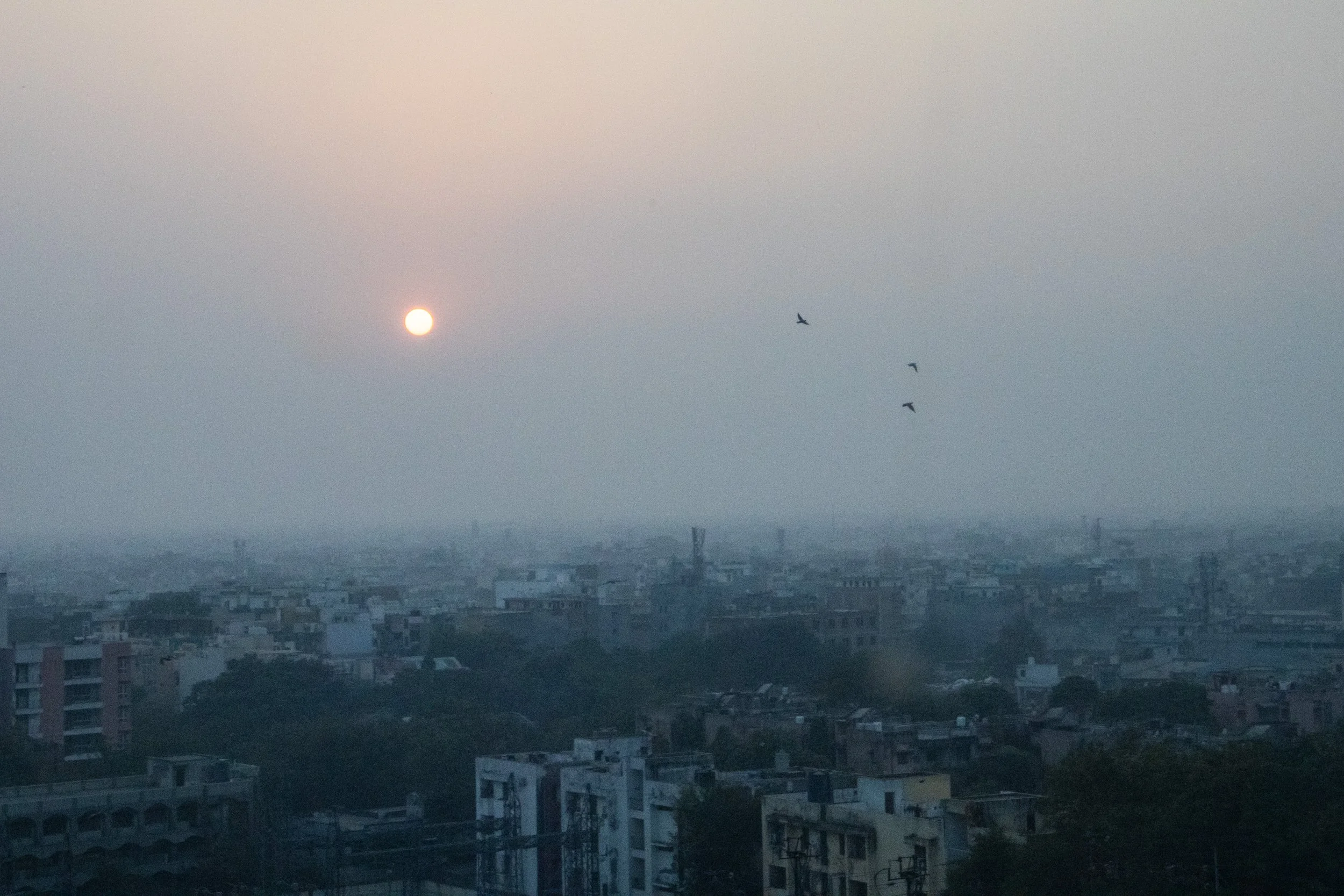
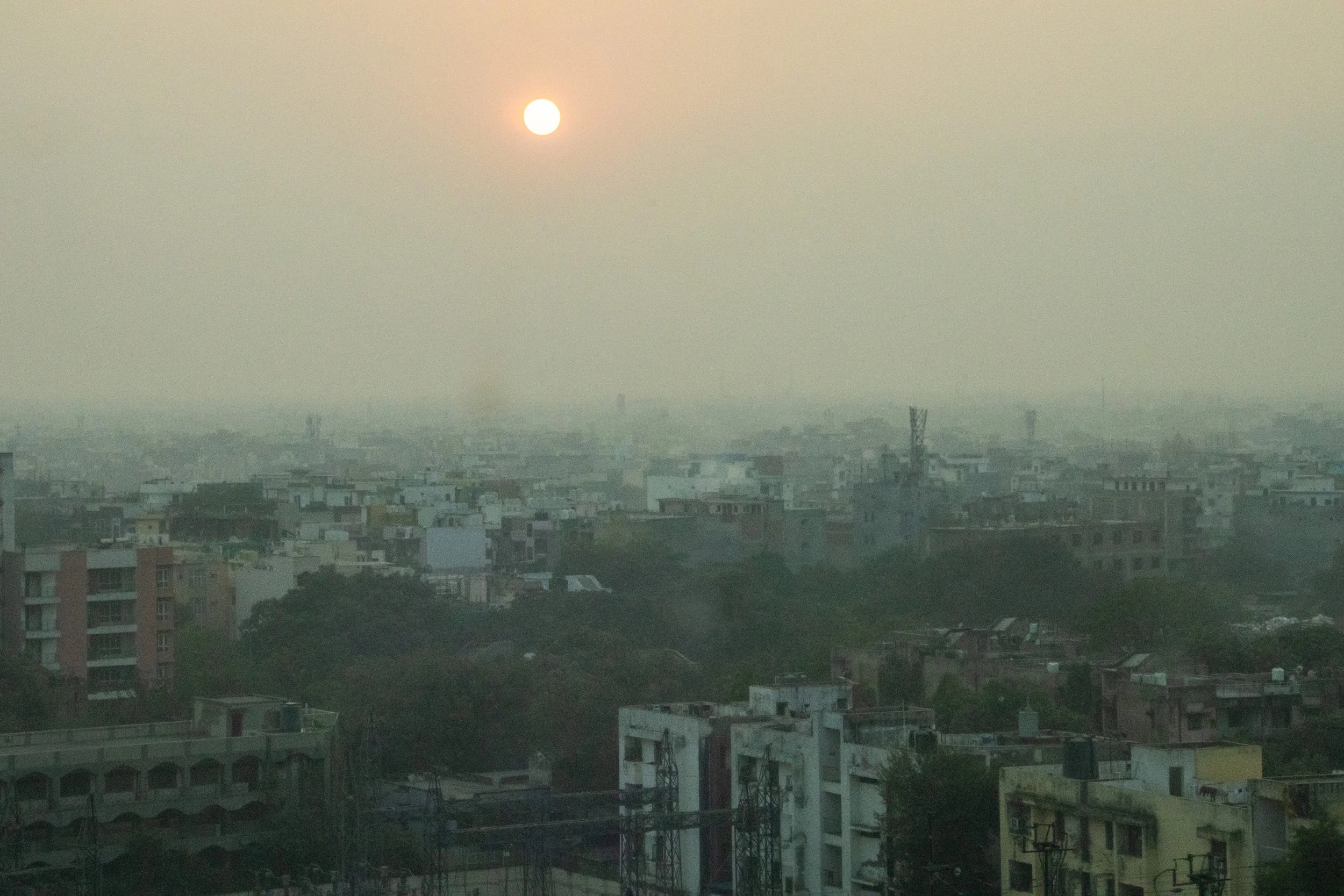
It’s also frequently cited as being at or near the top of the global list for cities with the worst air pollution. Air pollution is most commonly measured with a metric called AQI (Air Quality Index). On this scale, 0-50 is considered good, clean air. Once you get to the 101-150 range, you will start seeing health warnings for “sensitive groups” on your weather apps. From there, the scale goes up to 300 in increments of 50, going from “unhealthy” to “hazardous and posing serious health risks”. In theory the index runs all the way up to 500, but sometimes there are scores higher than this.
Care to venture a guess as to the AQI score of Delhi on a bad day?
1,700. 🫠 😷
I’m going to talk about this at length in the next article, but for now, I’ll just tell you that air pollution is a major issue in Delhi, and the problem is getting worse, not better. I knew it had gotten a lot worse since my first visit in 2015, so I asked some of my Indian friends who had been here in the past 6 months what I should expect. In summary, they said “expect to cough.” And I can confirm that I did indeed cough, but it was fine for a few days. Anyway, more to come on this in the next article.
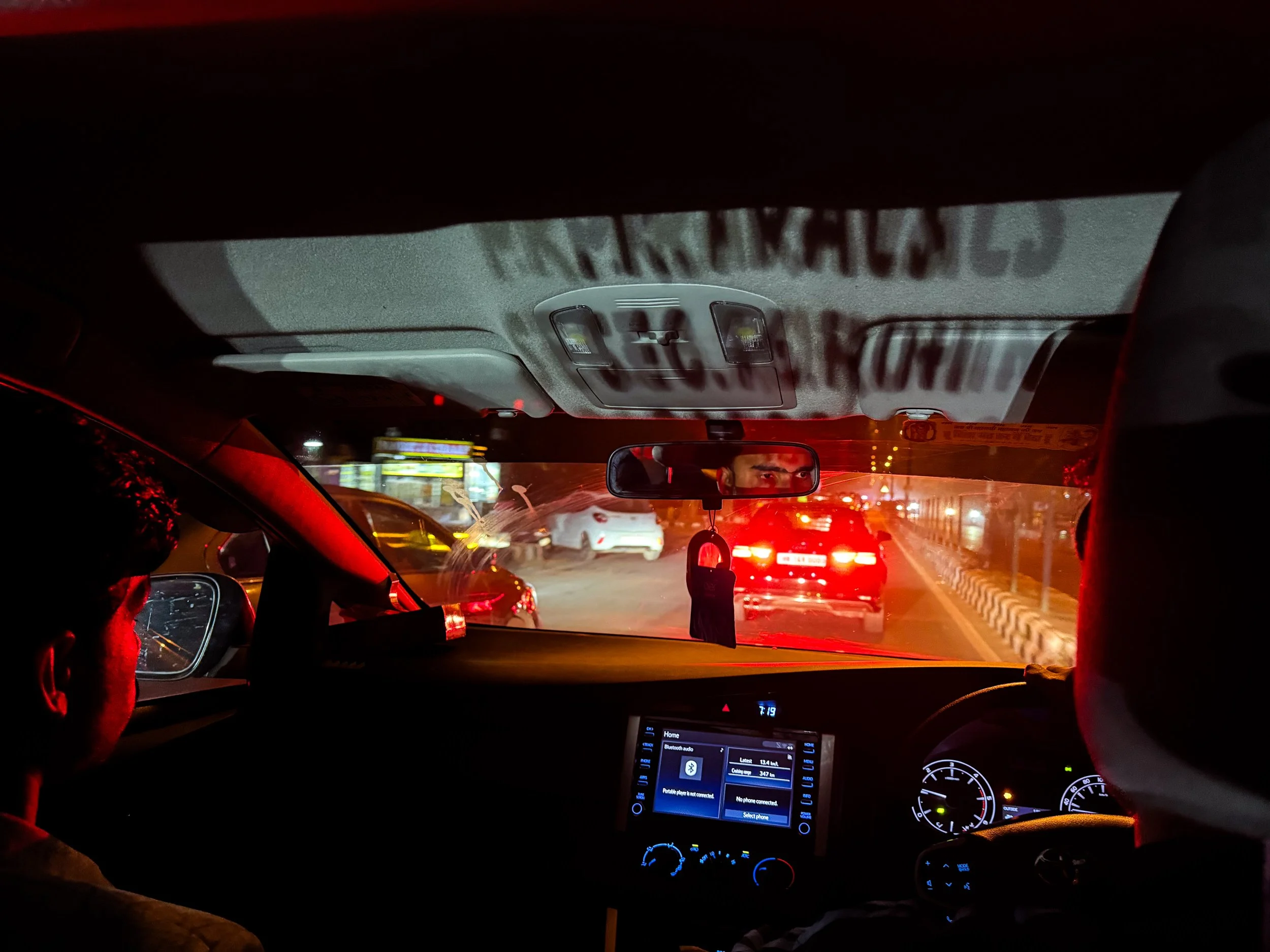
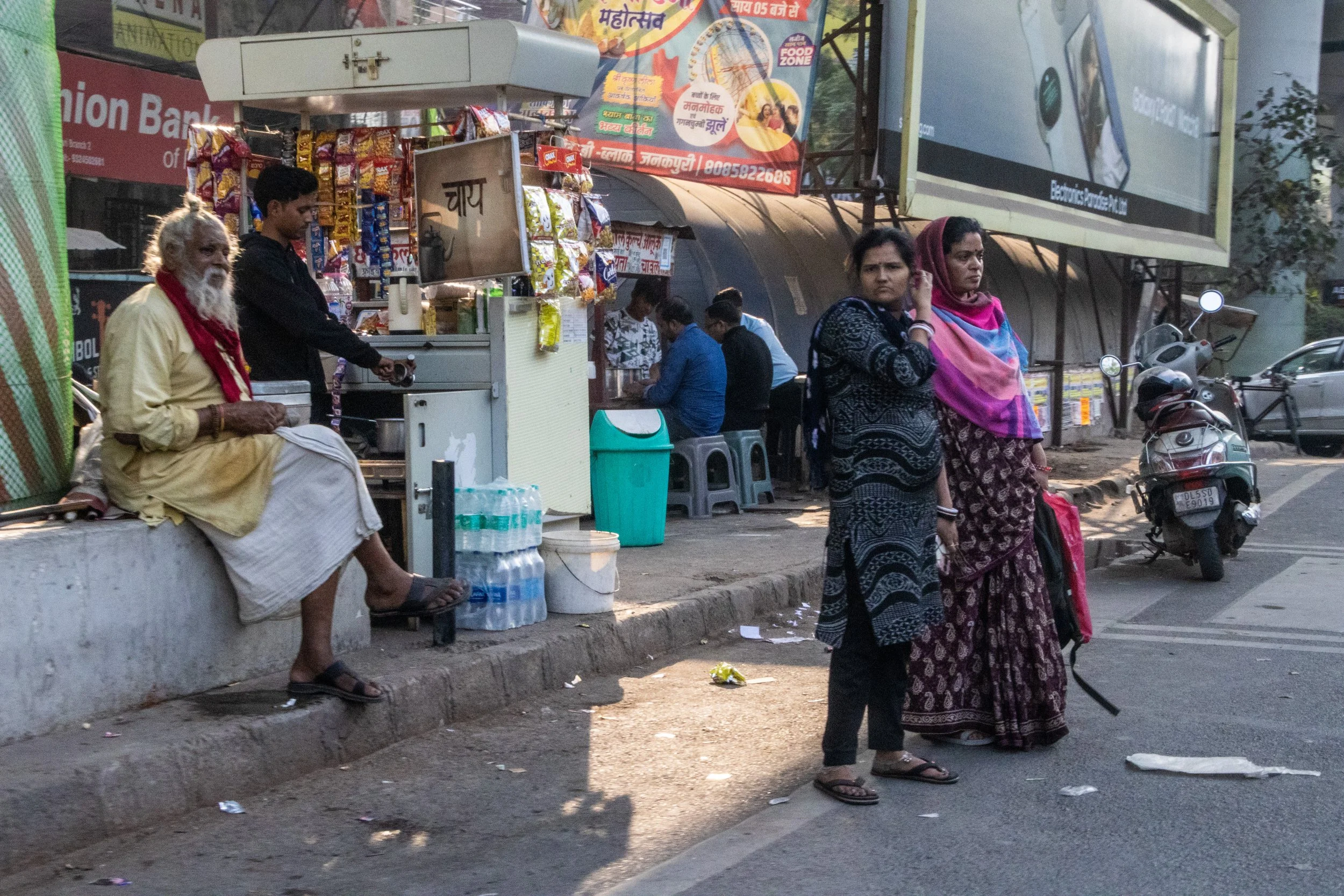
I don’t want to paint an overly negative picture of Delhi here, but I do want to give you a sense of its sheer scale up front… because once you’re on the ground in Delhi, you’ll never even come close to seeing the whole picture again. In some cities—like New York for example—it’s easier to feel their size as you move through them. This is not the case in Delhi. In practice, you will only ever see a couple blocks of Delhi at a time. If you drive from one end to the other, it will basically just never end. Even if you manage to get to the top of one of Delhi’s few tall buildings catch a glimpse of the “big picture”, the smog will prevent you from seeing very far. So Delhi is mostly just experienced as an infinite series of vignettes from the back of cars or rickshaws…
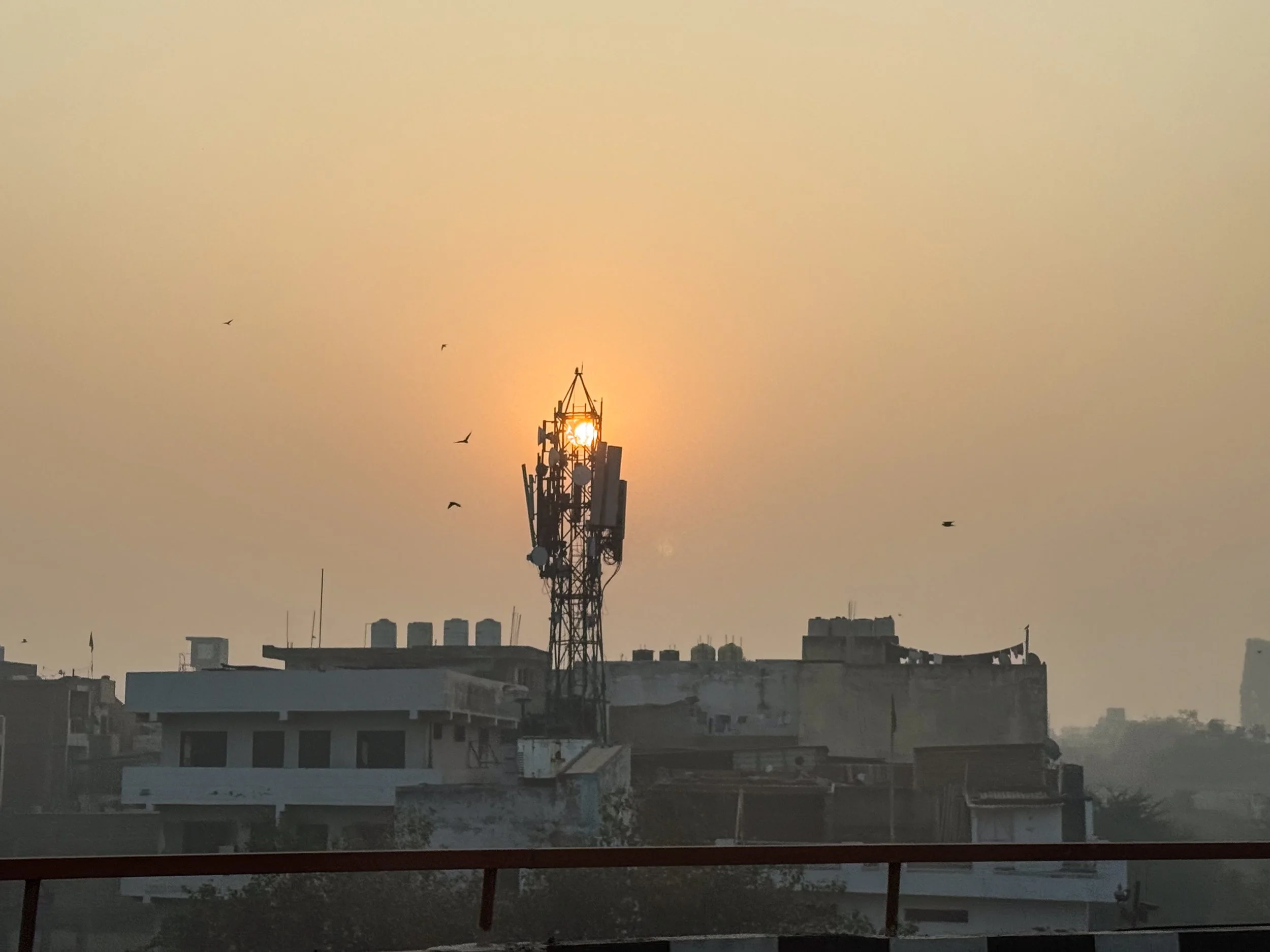
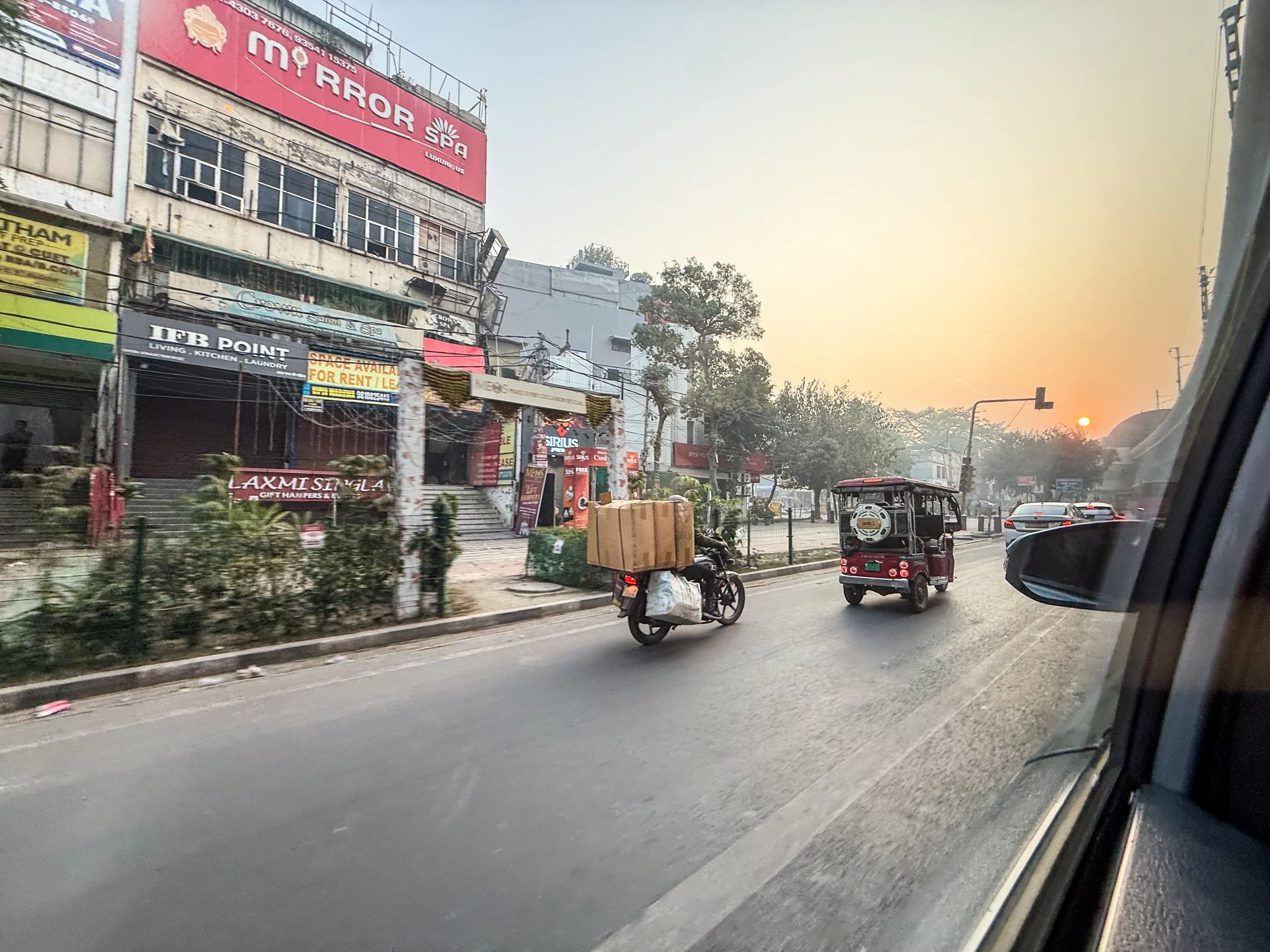
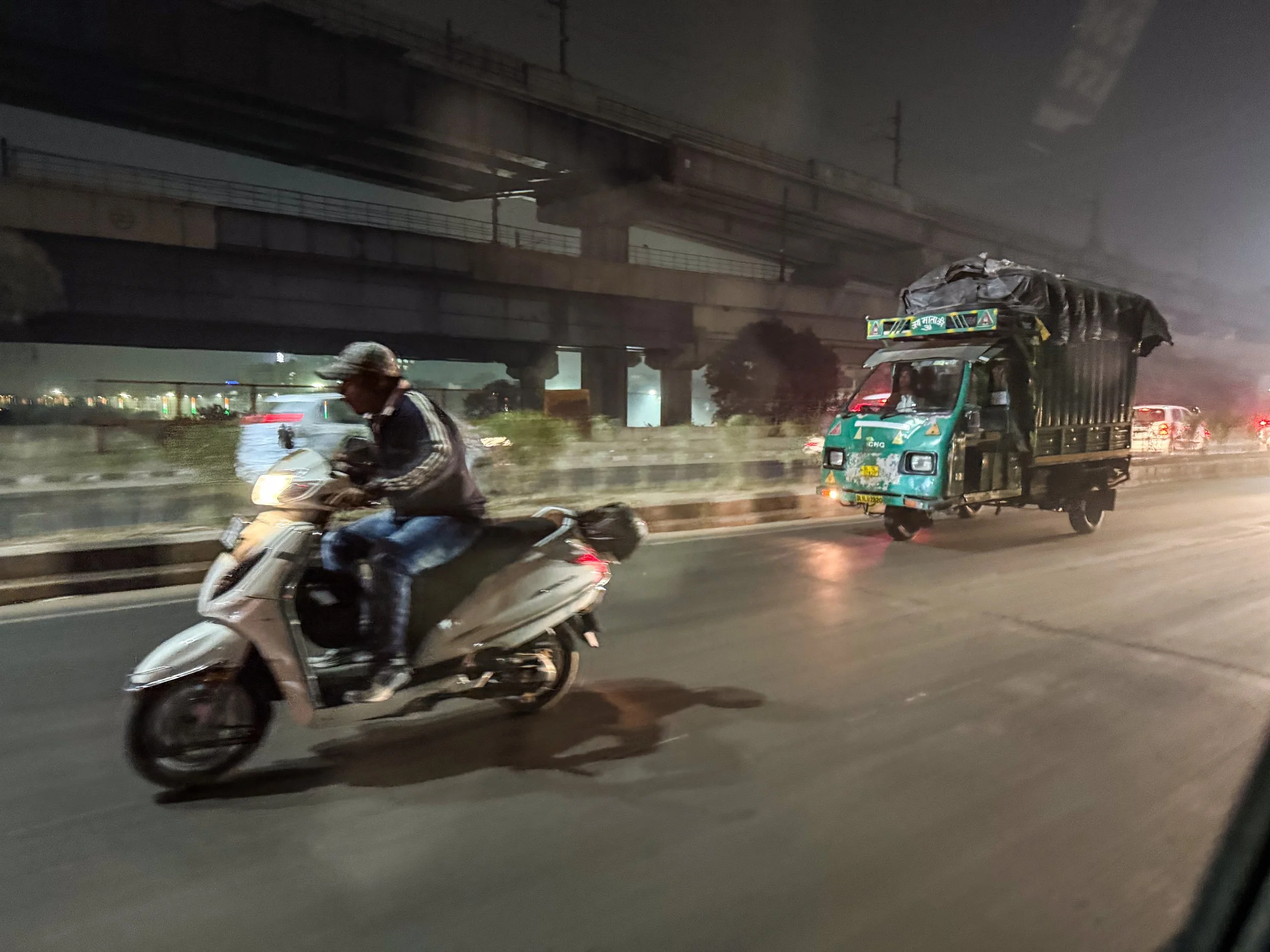
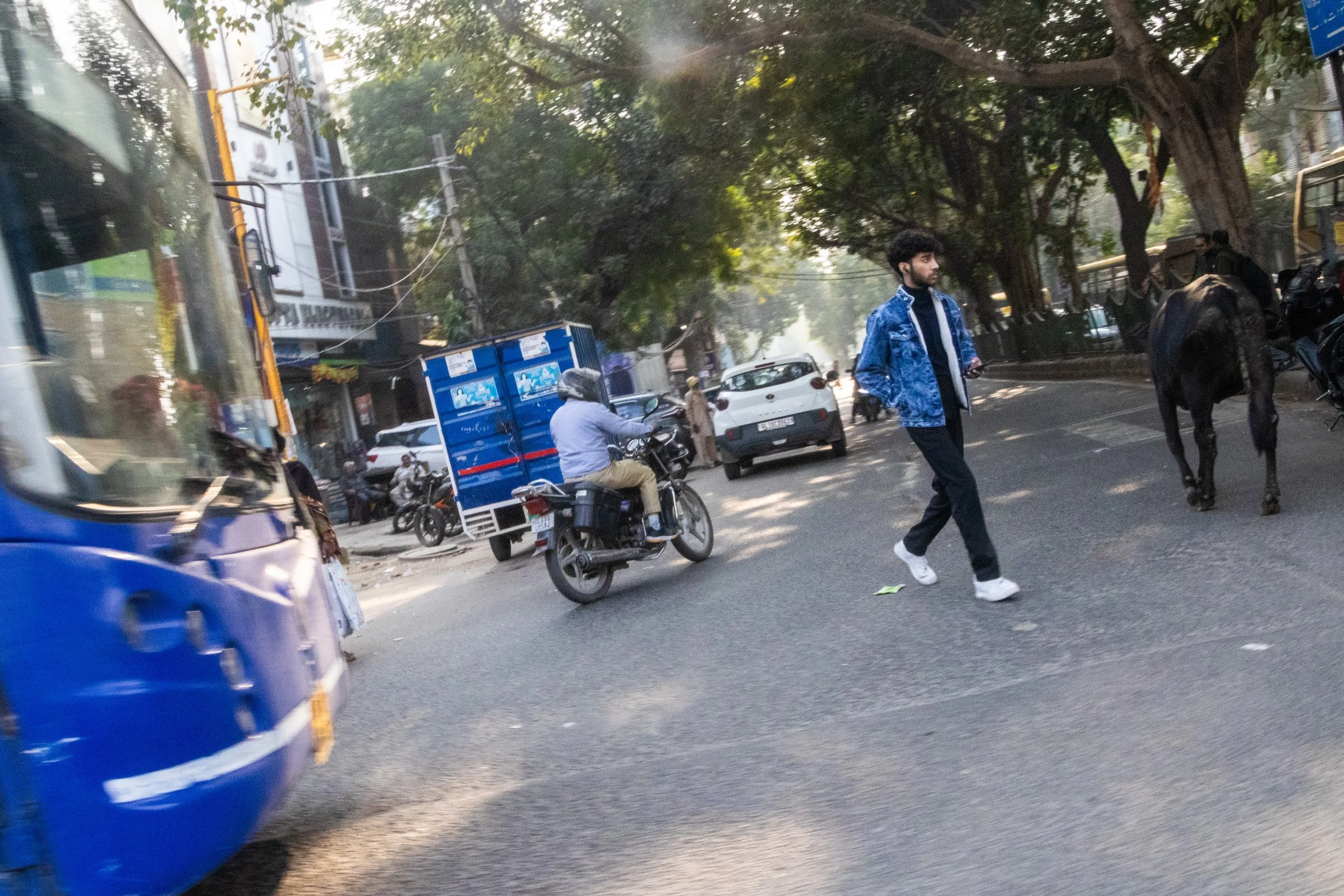
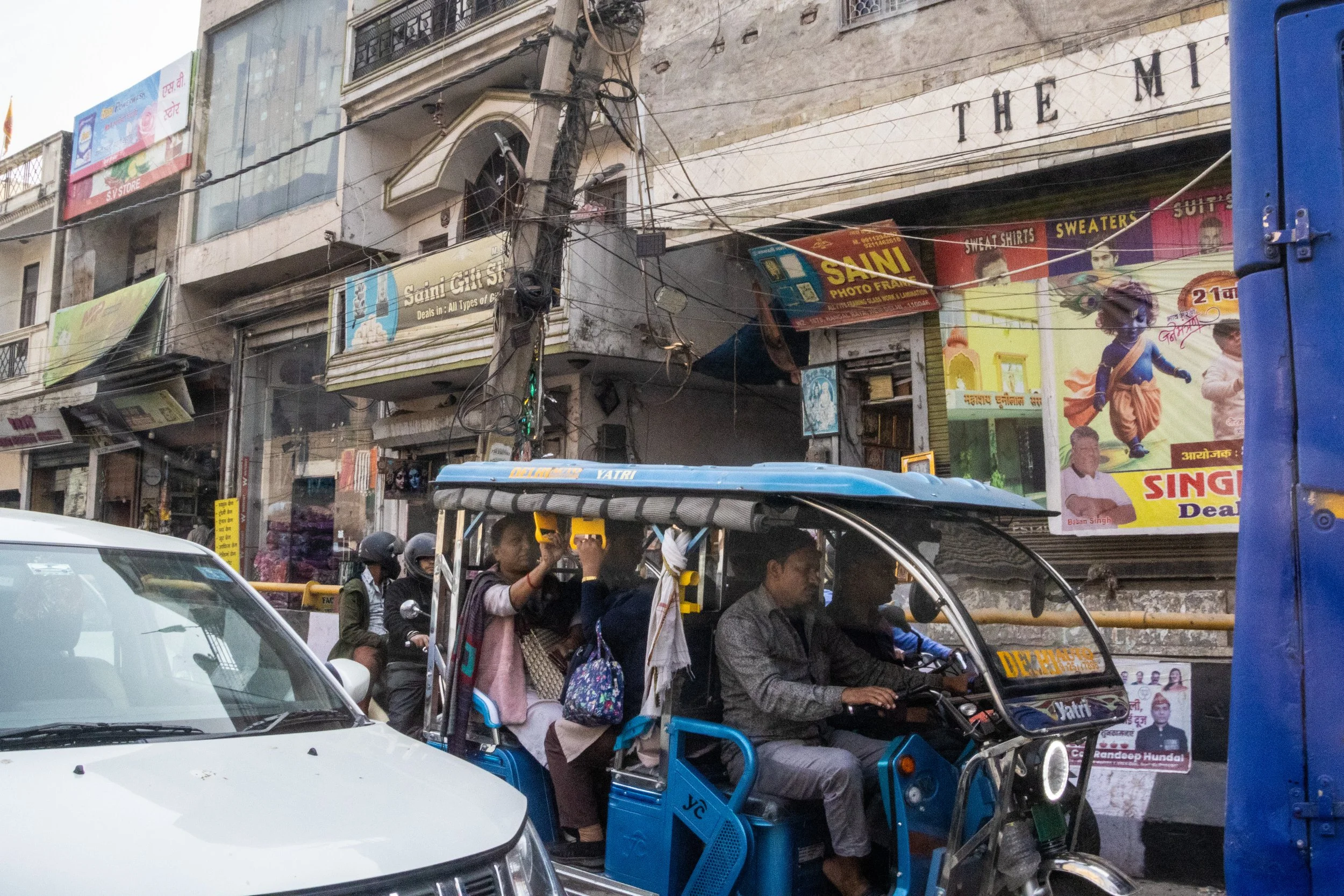
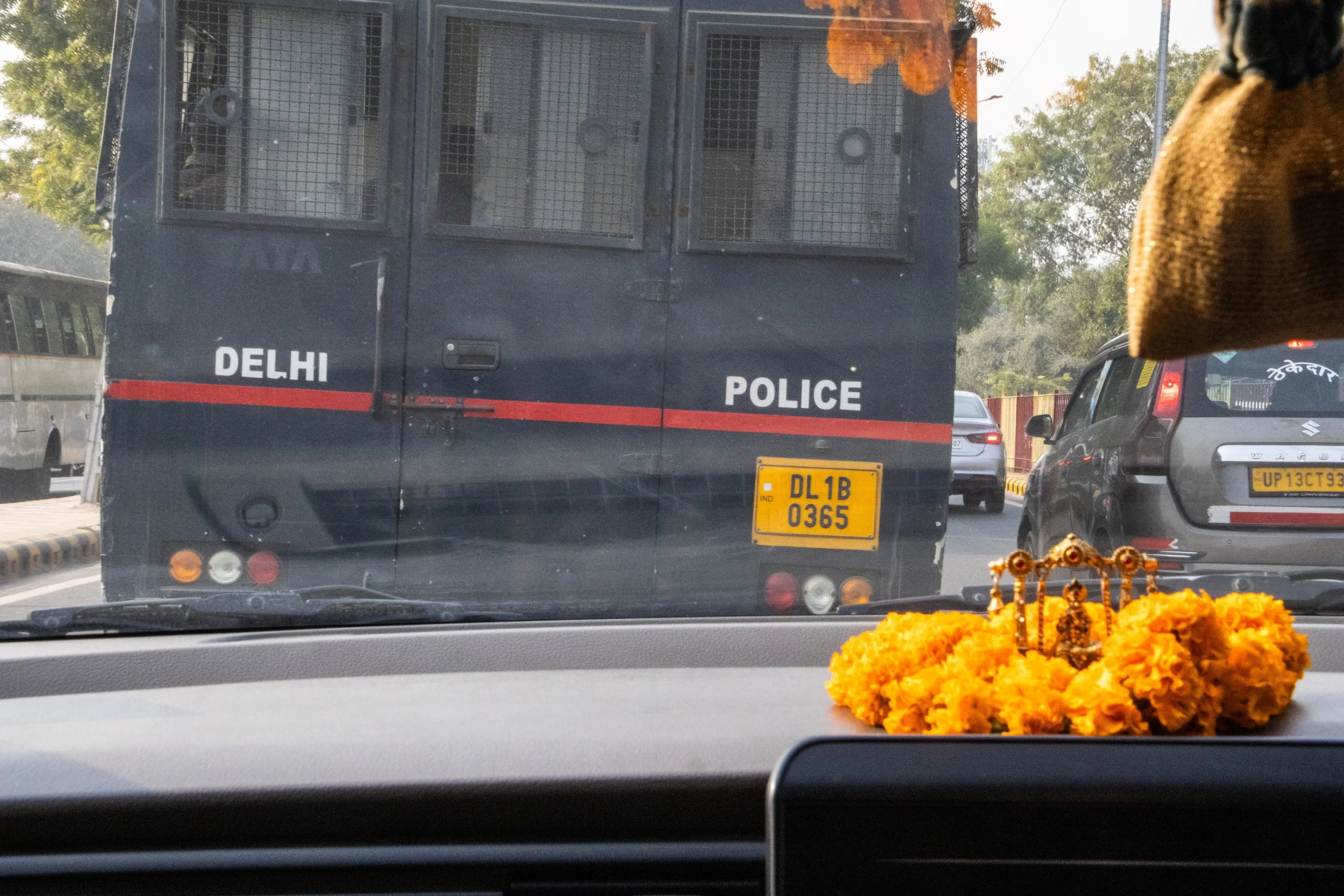
But it’s not just a big city. It’s also the capital of India with a history that goes back thousands of years. Indeed, the original settlement of this area is associated with the mythical city of Indraprastha, which is thought to have been founded around 1,200 BCE. Over the millennia, the civilization in this area has reinvented itself many times over, and actually constructed NEW capitals seven different times. Historical accounts of this ancient city reveal “The Seven Cities of Delhi”, 6 of which are now in ruins, all within a 15 kilometer radius. As a result, the Delhi of today is gritty mish-mash of ancient ruins, Mughal architecture, British colonial design, and modern skyscrapers, and slums. It’s all here.
And the 8th city in this line of Delhi’s reincarnations is “New Delhi”. You will hear "Delhi” and “New Delhi” used interchangeably sometimes, but New Delhi is actually a small administrative district housing most of the government buildings. It was built in 1911 by the British to serve as the successor to Calcutta (now ‘Kolkata’) as the capital of the British Raj. When India gained independence from the UK, they kept the capital here, and all of its famous PMs have been based here ever since, from the OG, Jawaharlal Nehru, who played a major role in the birth of this great nation and literally fought for his Muslim constituents in the streets during Partition… to Indira Gandhi who went toe-to-toe with Nixon & Kissinger to see India through the tense India–Pakistan War of 1971 which saw the turbulent birth of the nation of Bangladesh… to today’s leader, Narendra Modi! Can you tell that I’ve been listening to some India history podcasts lately?
Anyway, the term “Delhi” refers to the whole. And with that bit of nomenclature out of the way, let’s hit the streets.
Shahjahanabad (a.k.a. “Old Delhi”)
Founded in 1639, the last in the line of “The Seven Cities of Delhi” is Shahjahanabad. To break this long word down into its component parts, Shah Jahan was the 5th Mughal Emperor, serving from 1628 until 1658. Having built the Taj Mahal as well, his reign is widely accepted as being the the pinnacle of Mughal architectural and cultural achievements. And the suffix “-abad” is derived from Persian, and basically means “city”, or “the city built or settled by X”. So, Shah-Jahan-abad = the city of Shah Jahan. But, colloquially, this area is known simply as “Old Delhi”.
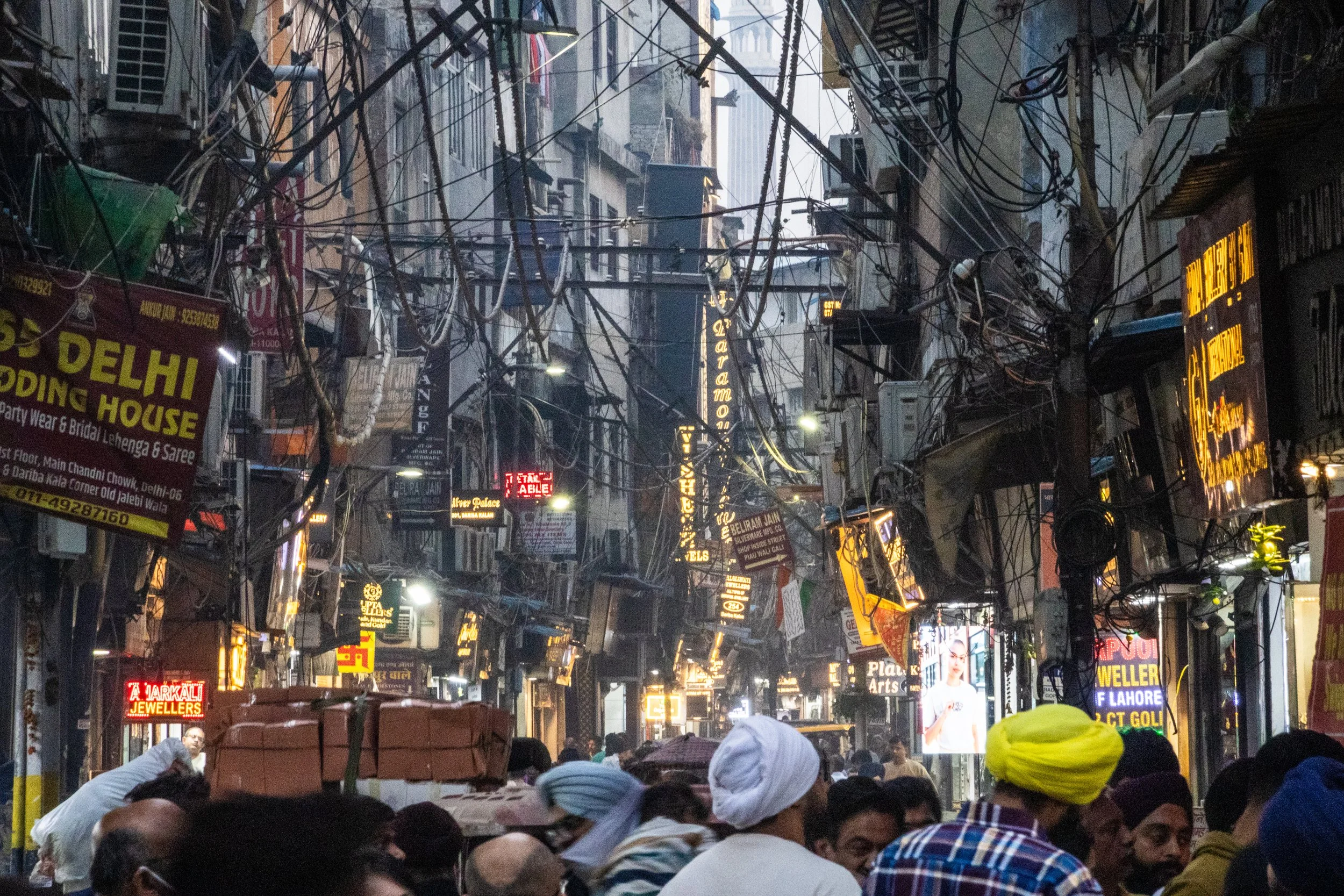
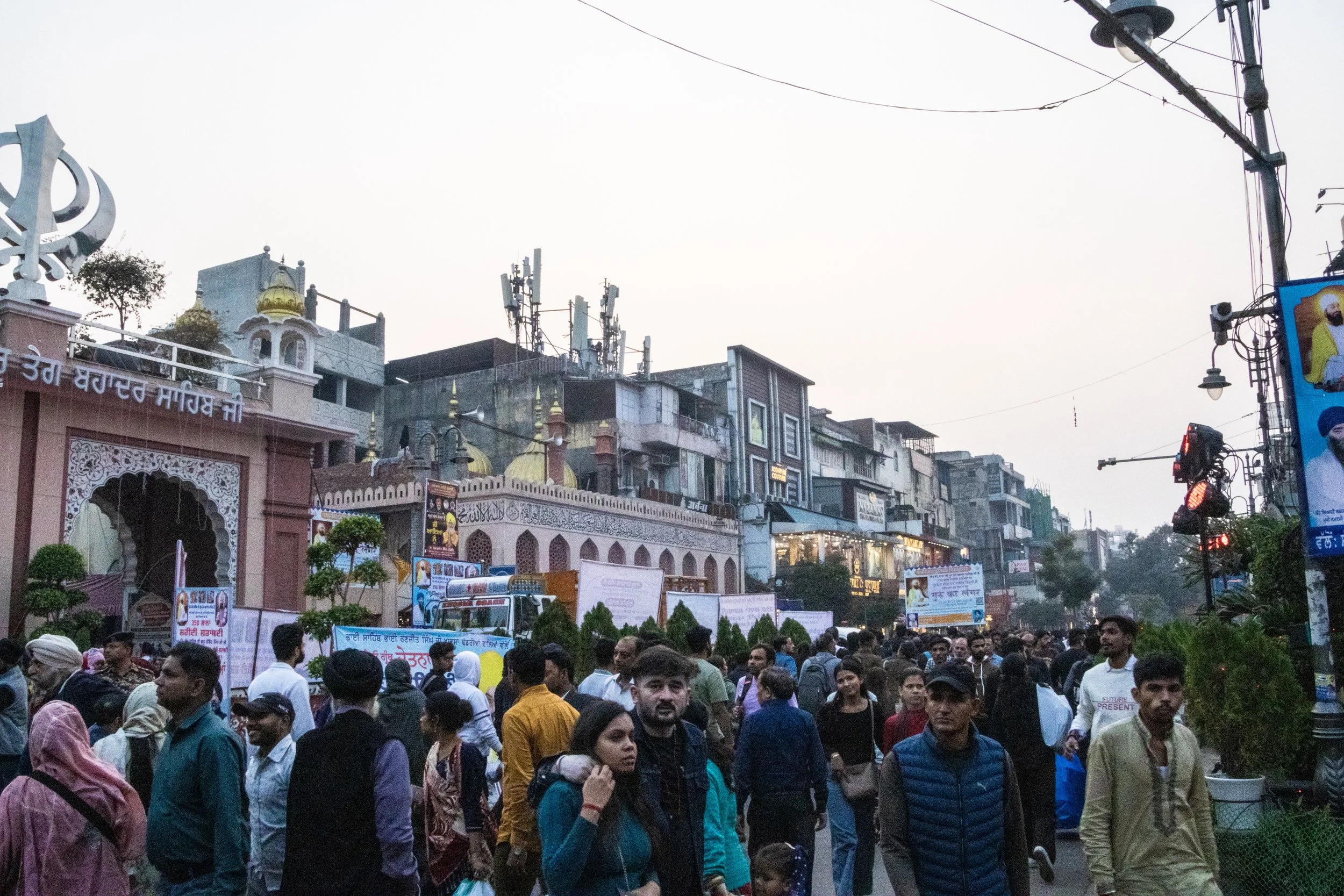
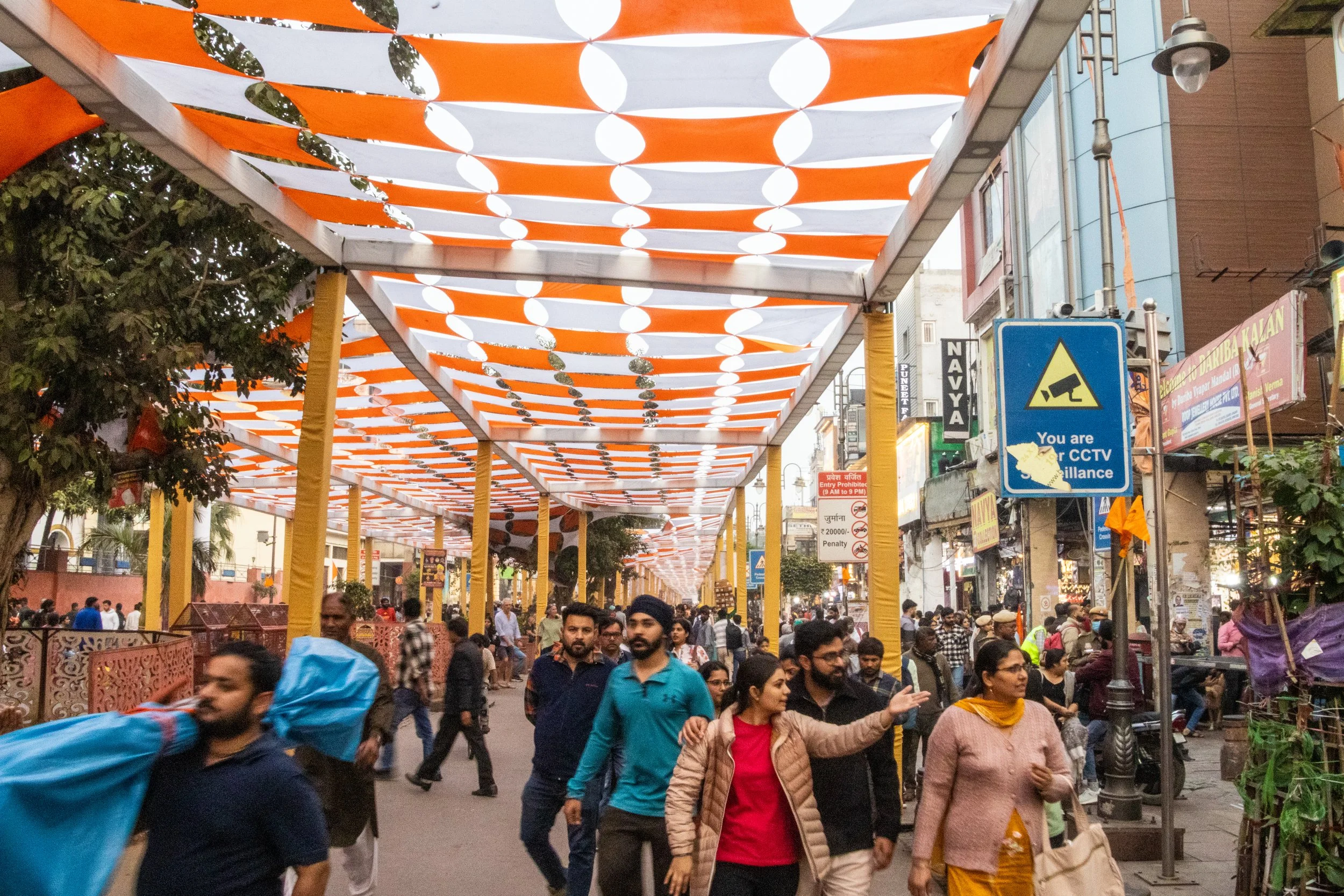
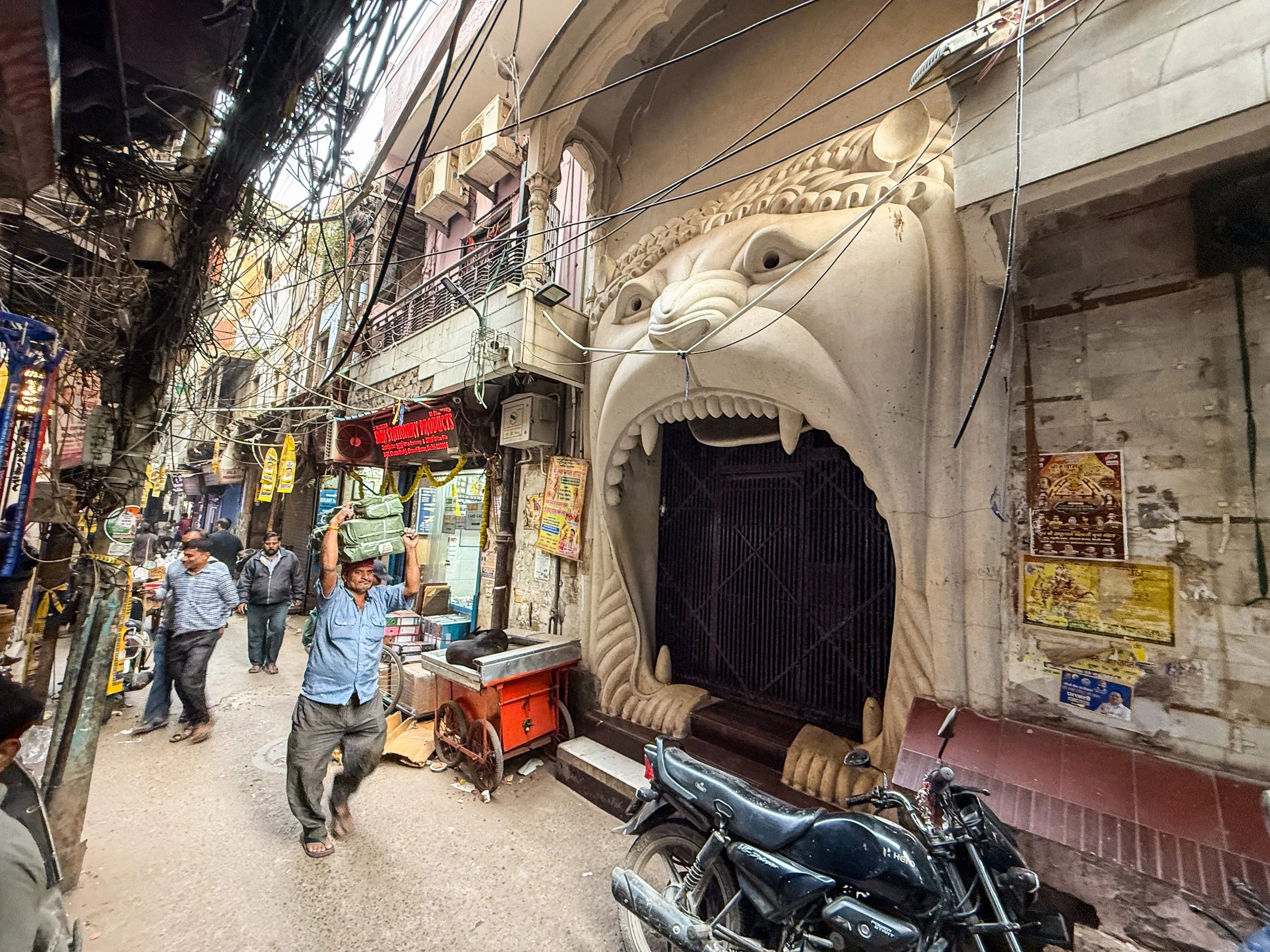
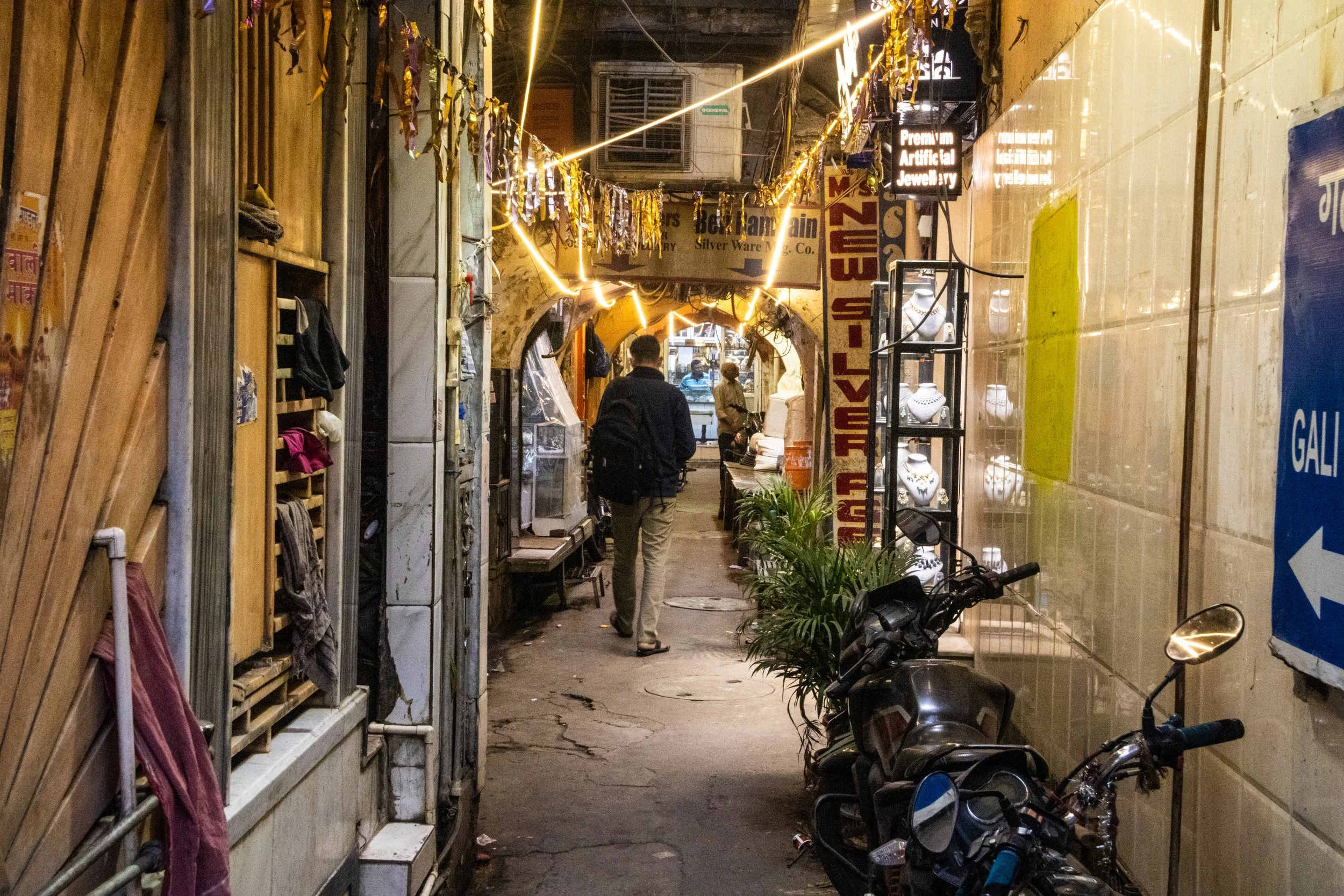
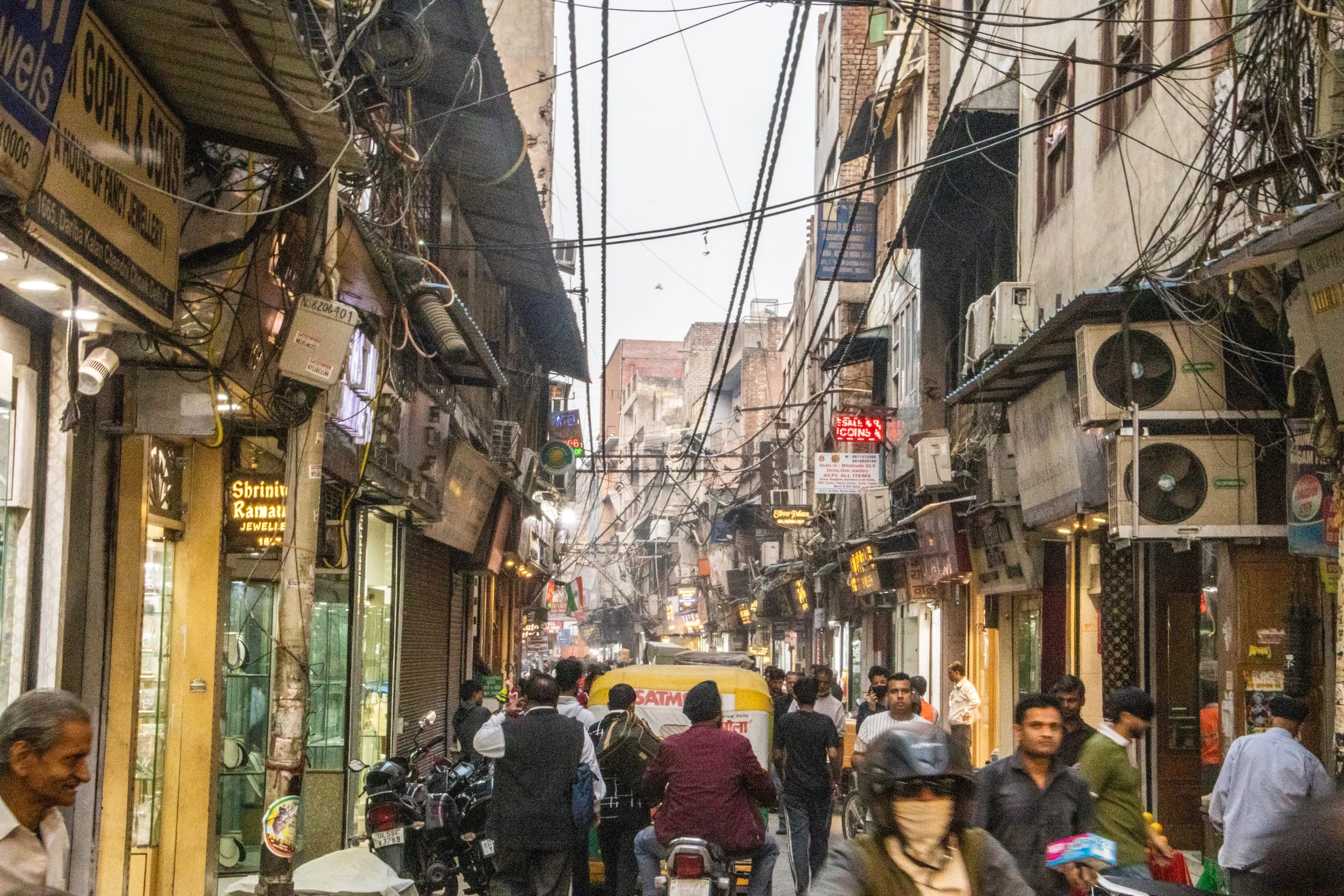
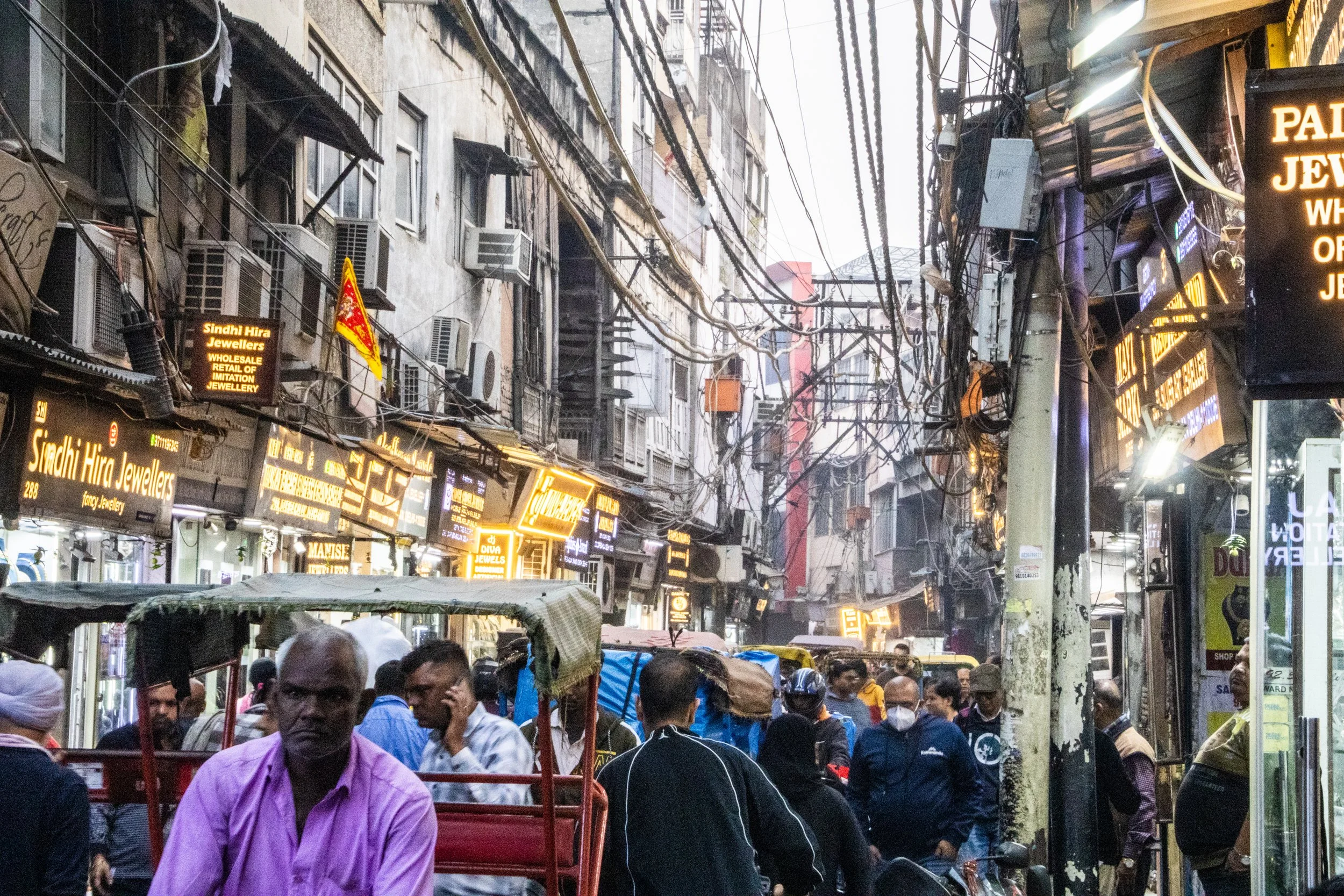
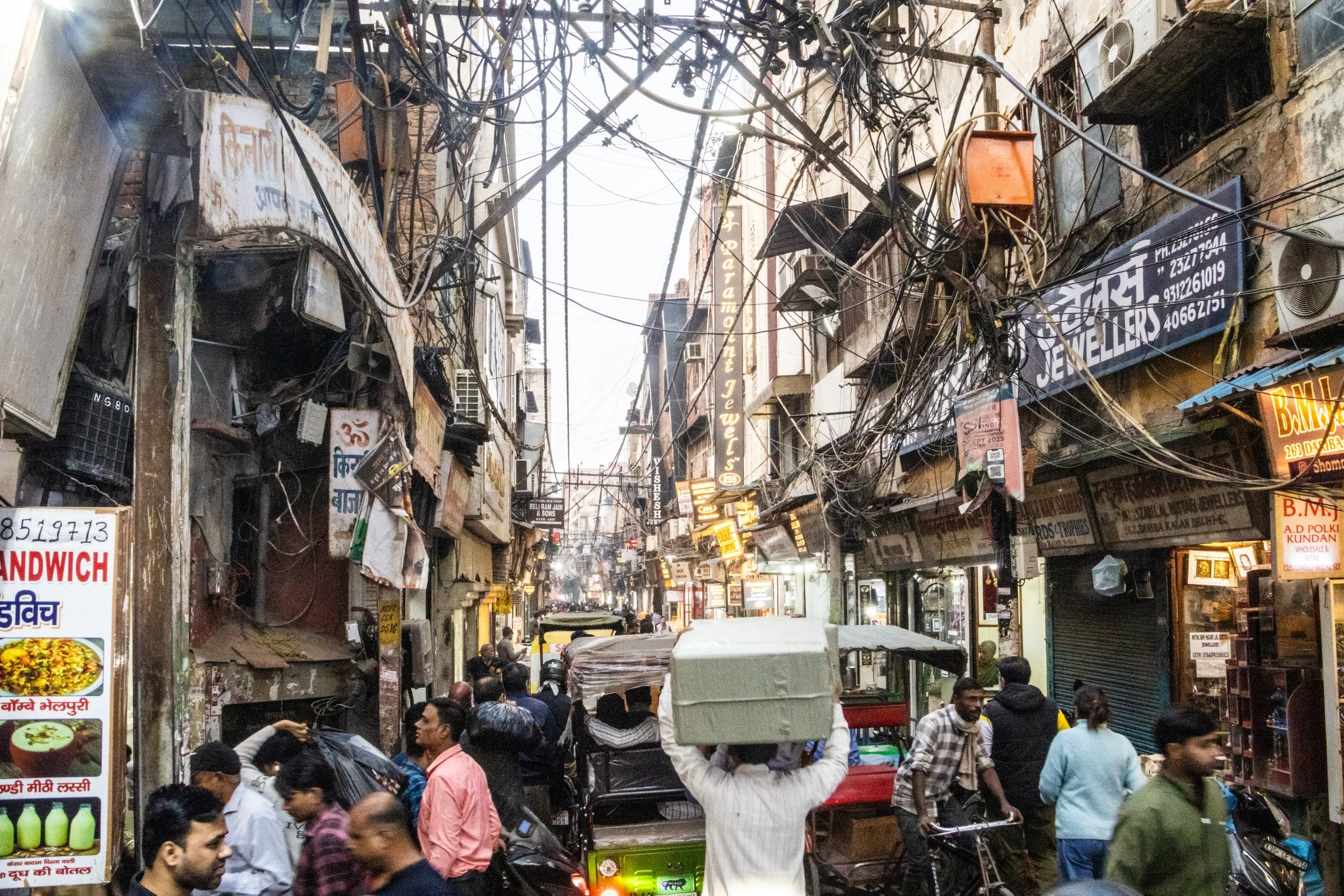
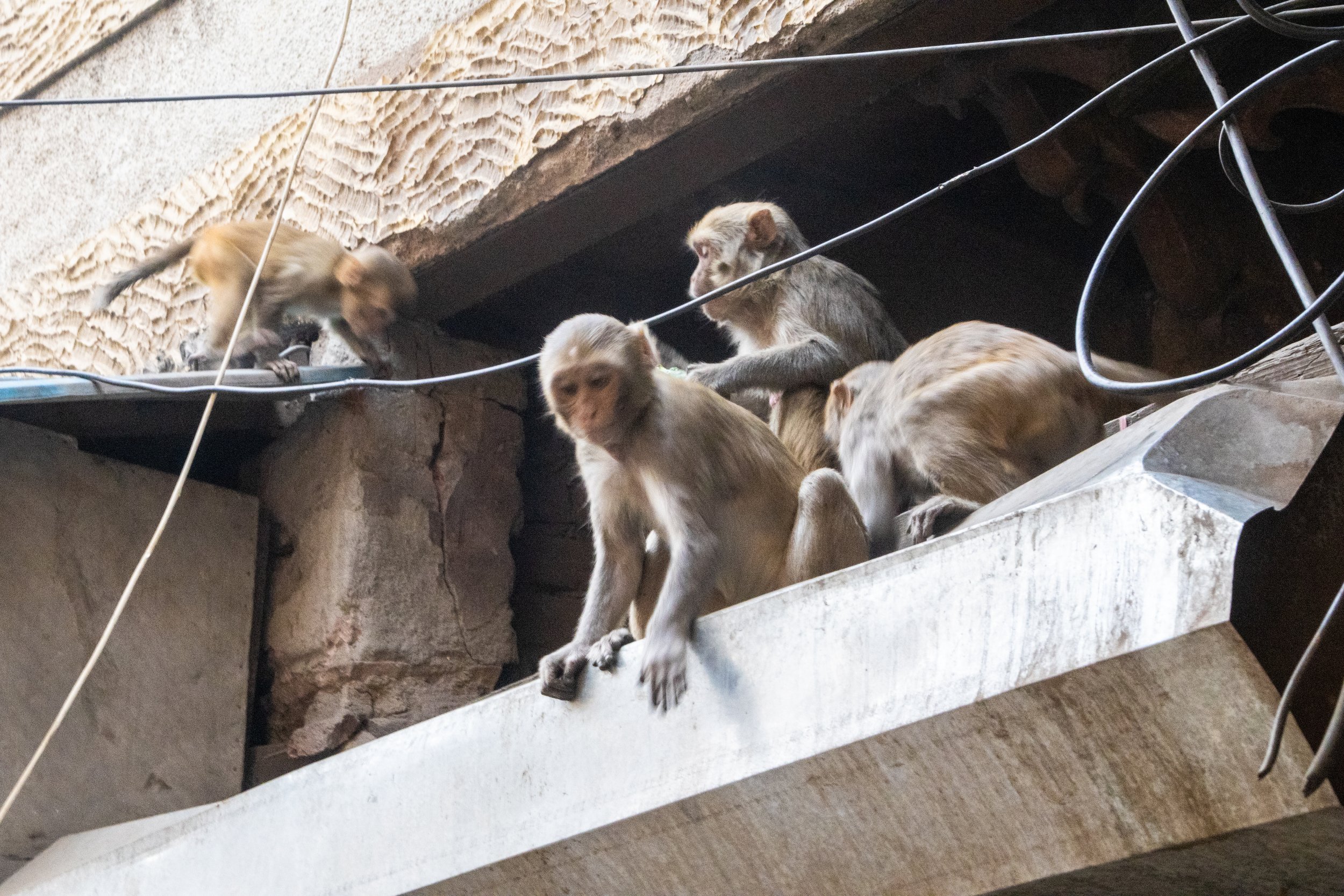
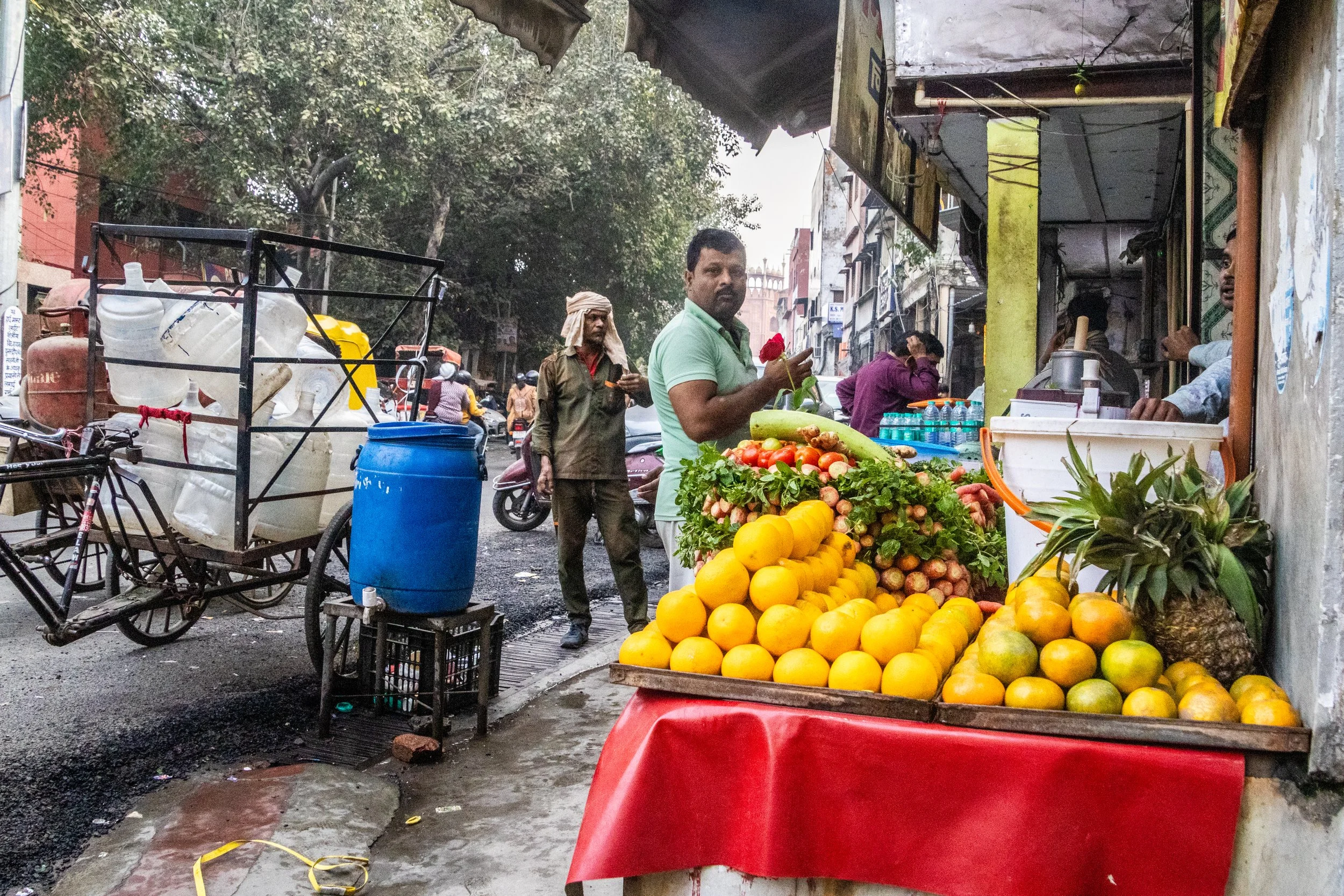
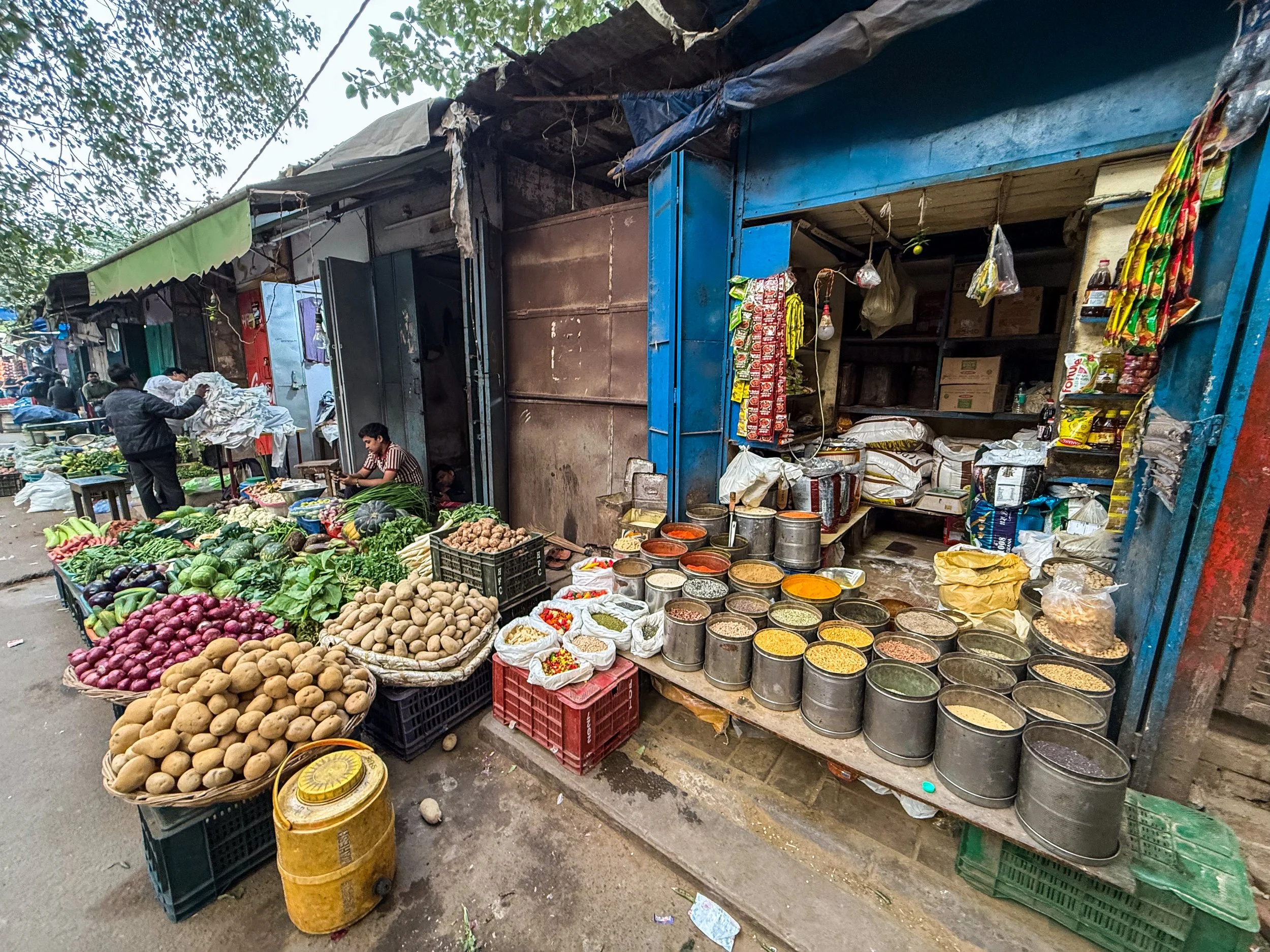
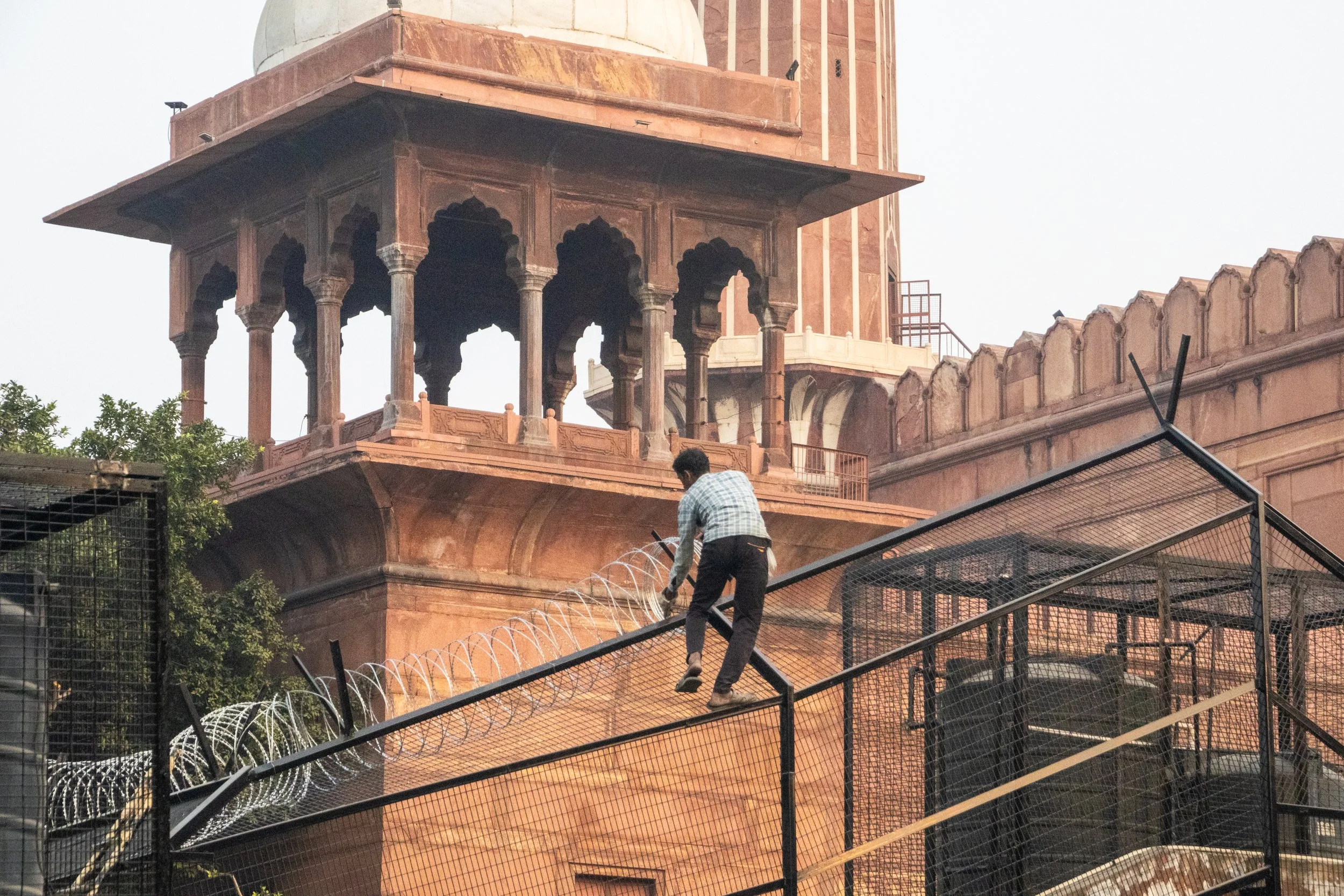
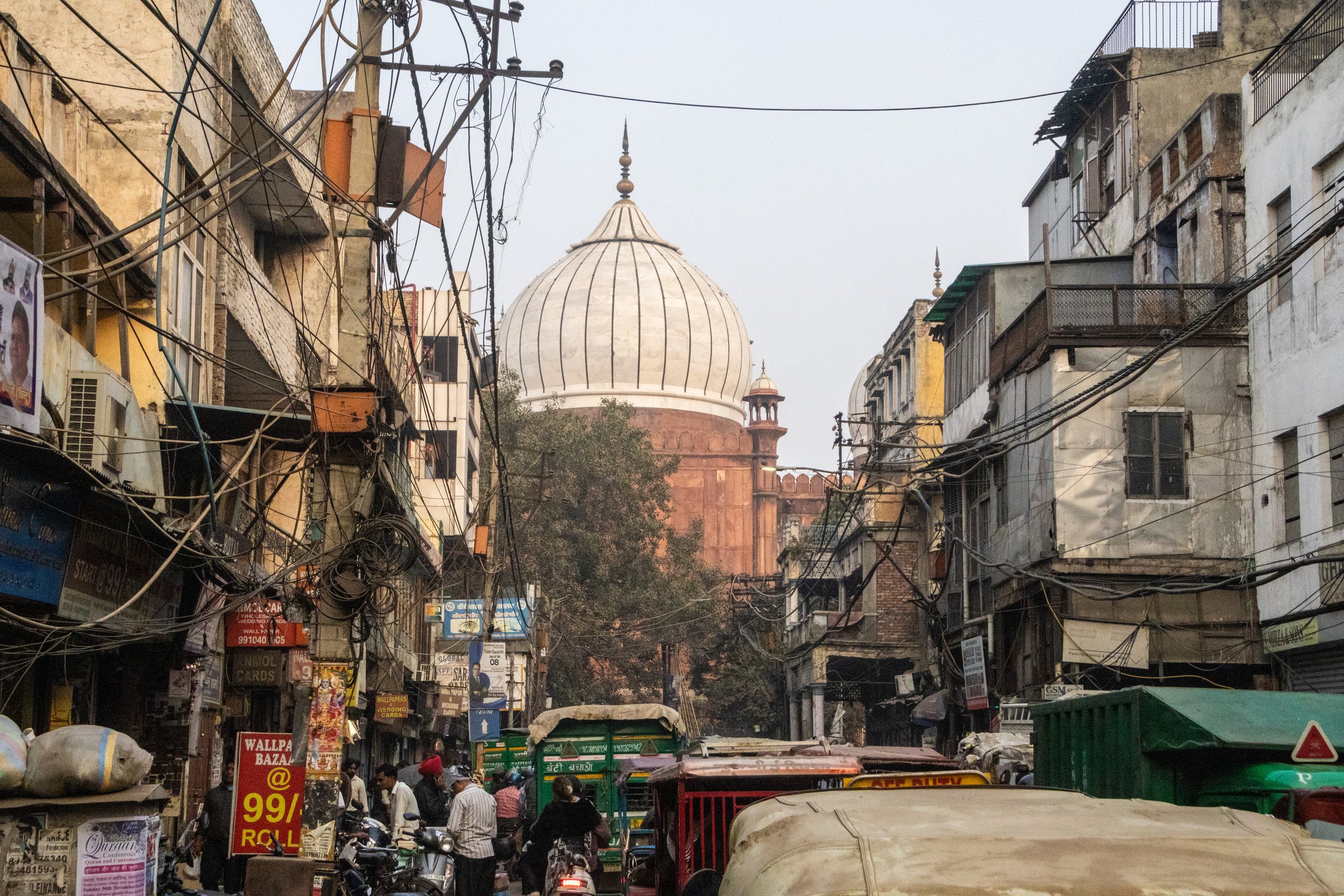
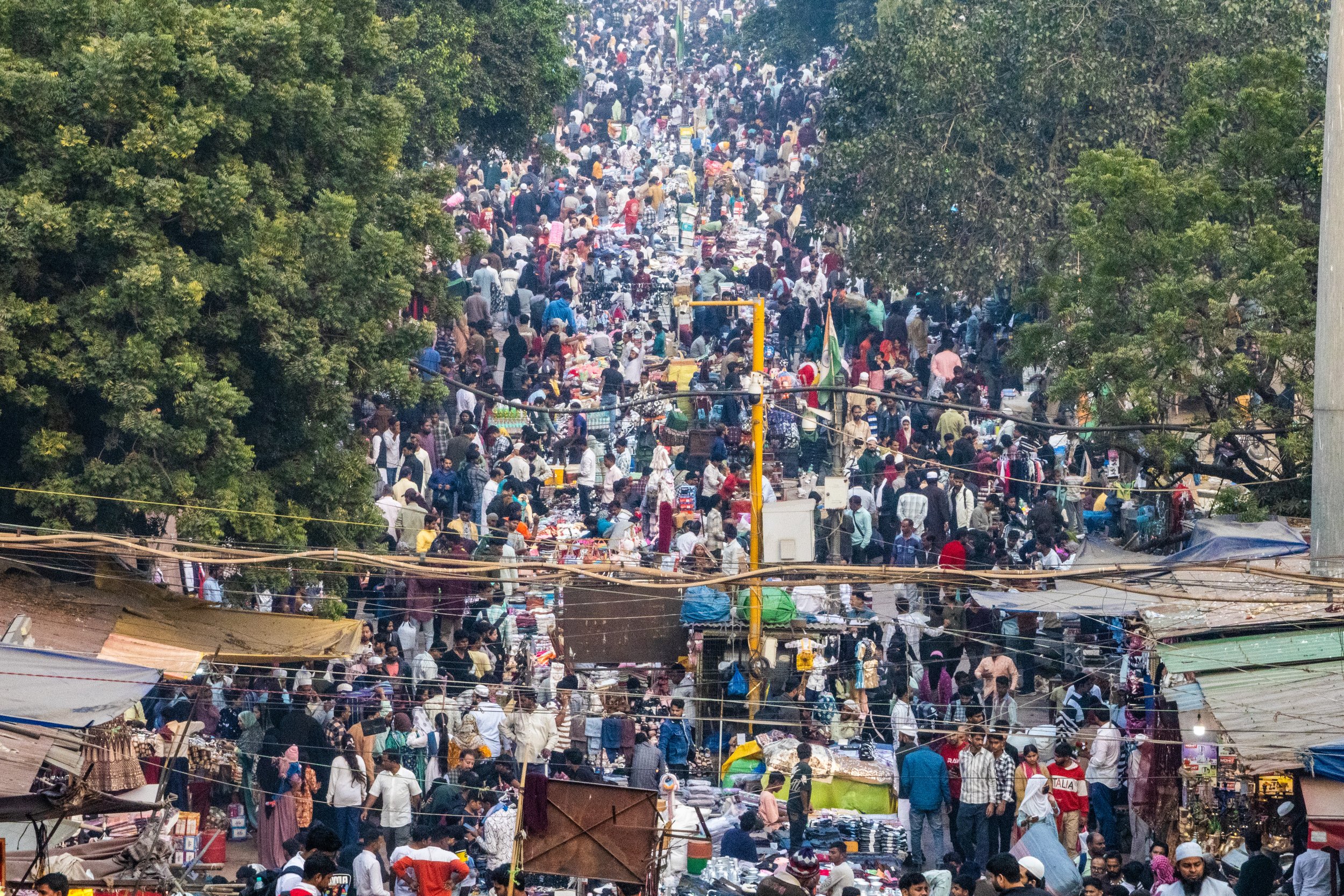
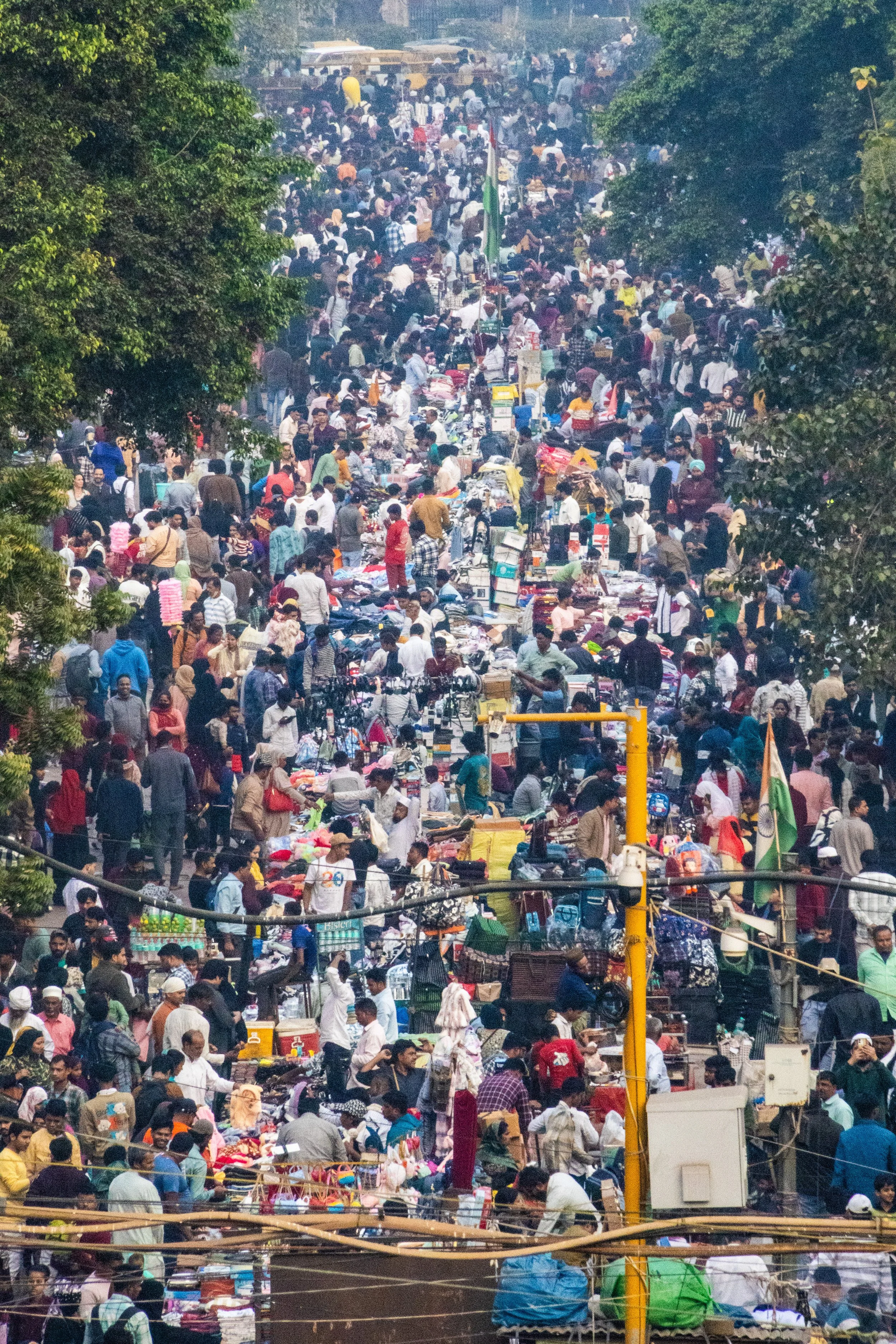
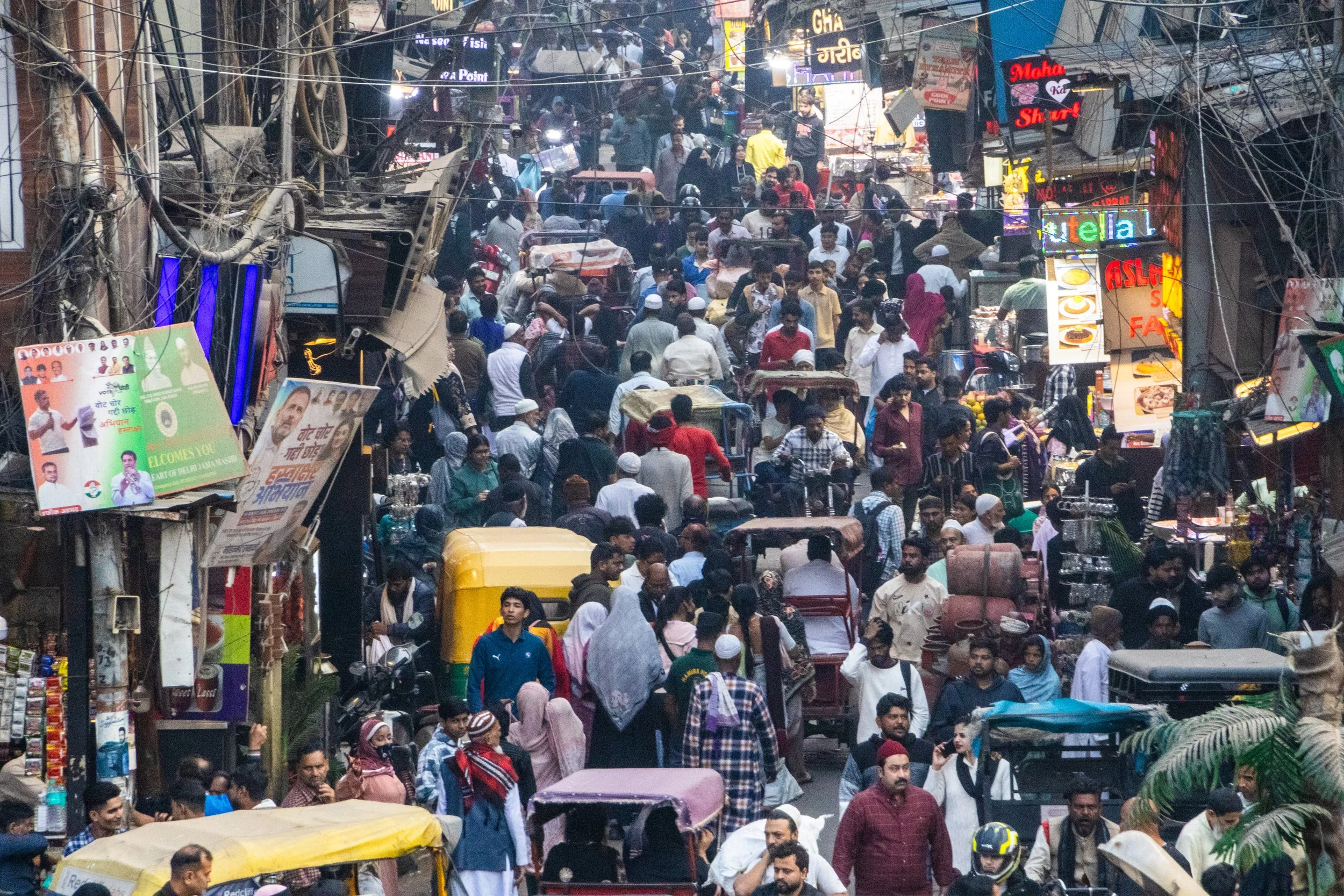
I think this is the closest thing to a “tourist district” that Delhi has to offer… but truth be told, I didn’t see all that many tourists here. When people travel through Delhi, they tend to use it mostly as a transit hub. It’s got a great airport and it’s an easy launch-point for day-trips to Agra & the Taj Mahal, but the average tourist to India doesn’t spend much time actually exploring Delhi itself. But whatever time they do spend probably includes this area. And, incredibly, it’s mostly local! Unlike most touristy areas, this genuinely seems to be a slice of real life. Here’s a glimpse of Old Delhi…
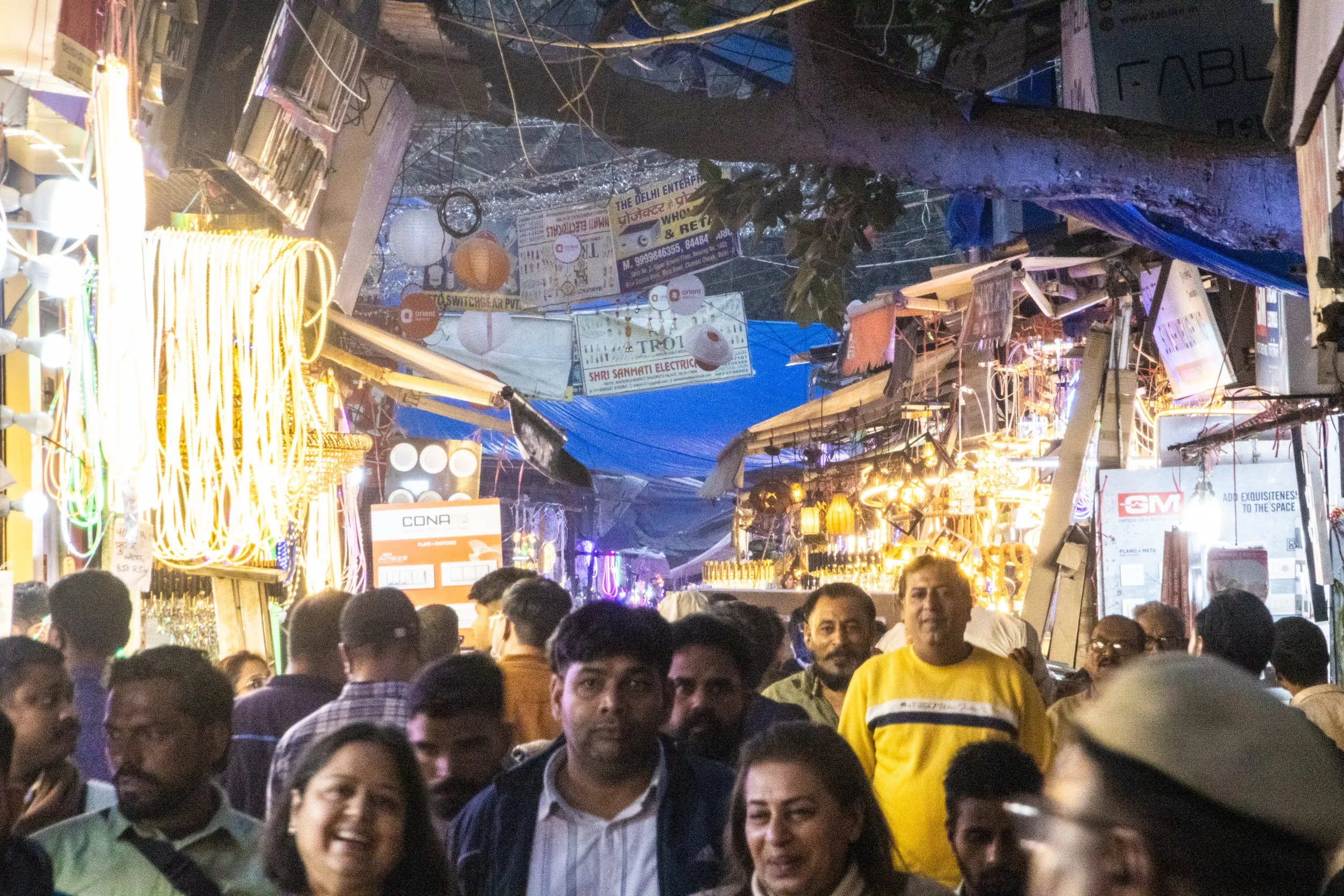
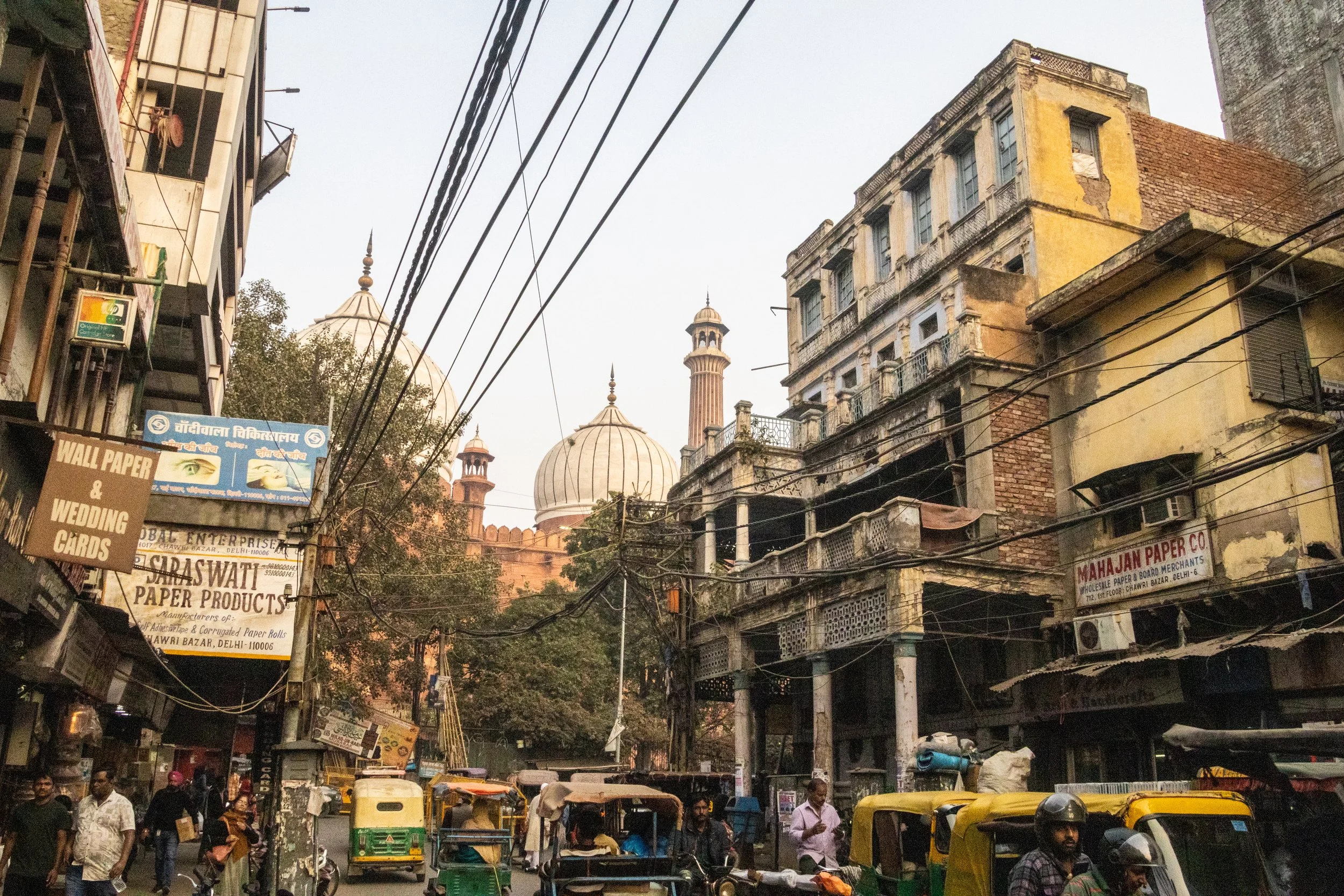
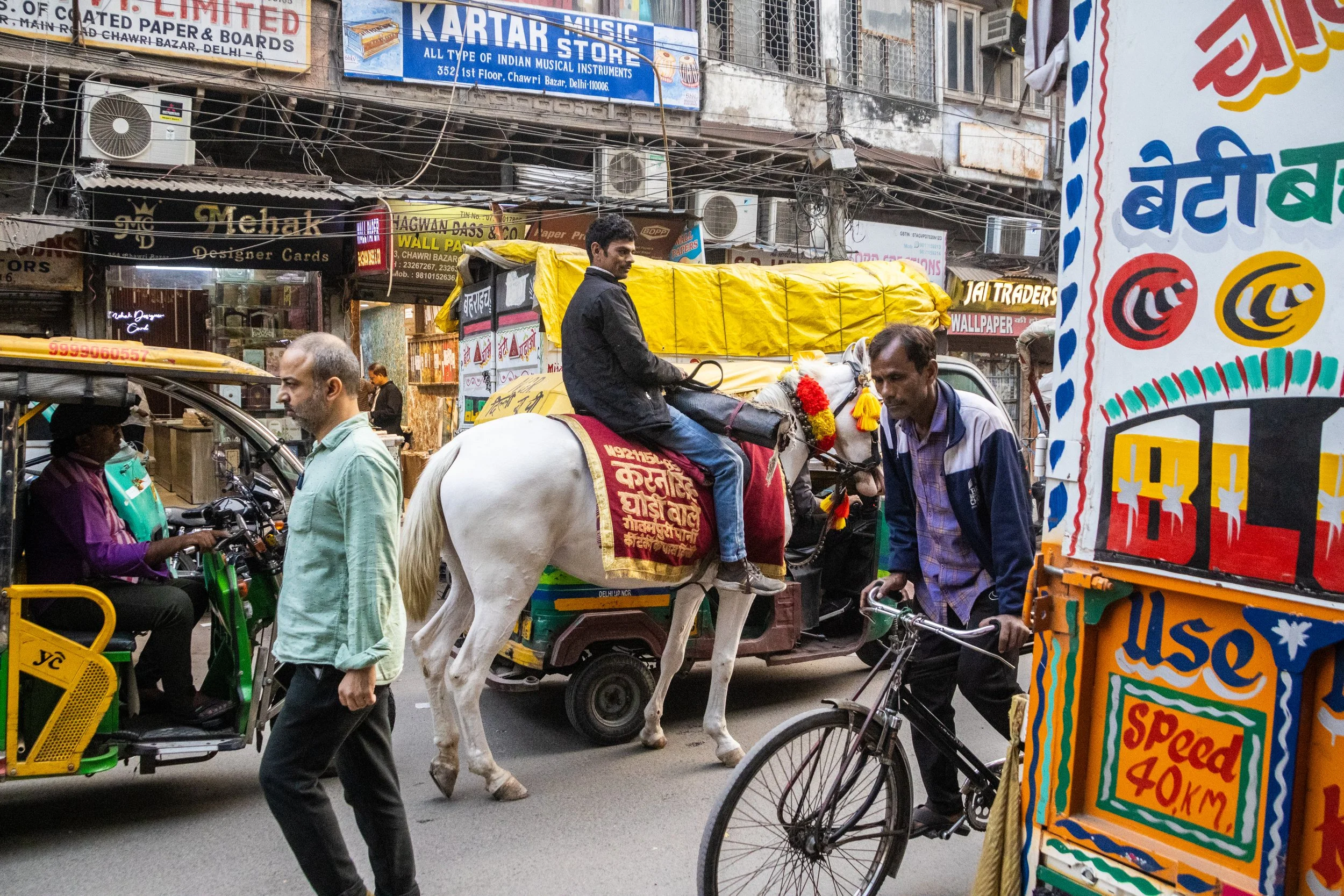
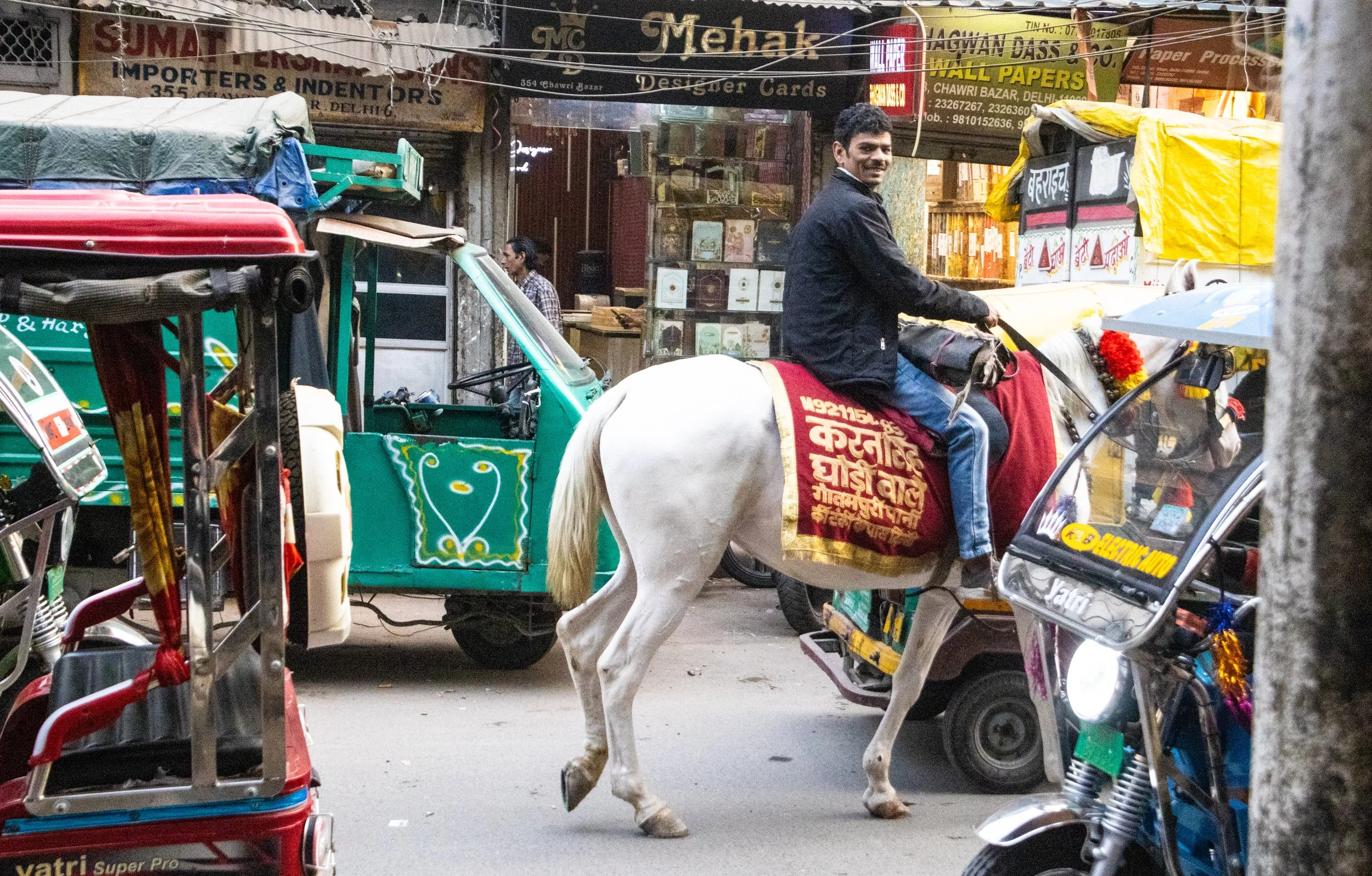
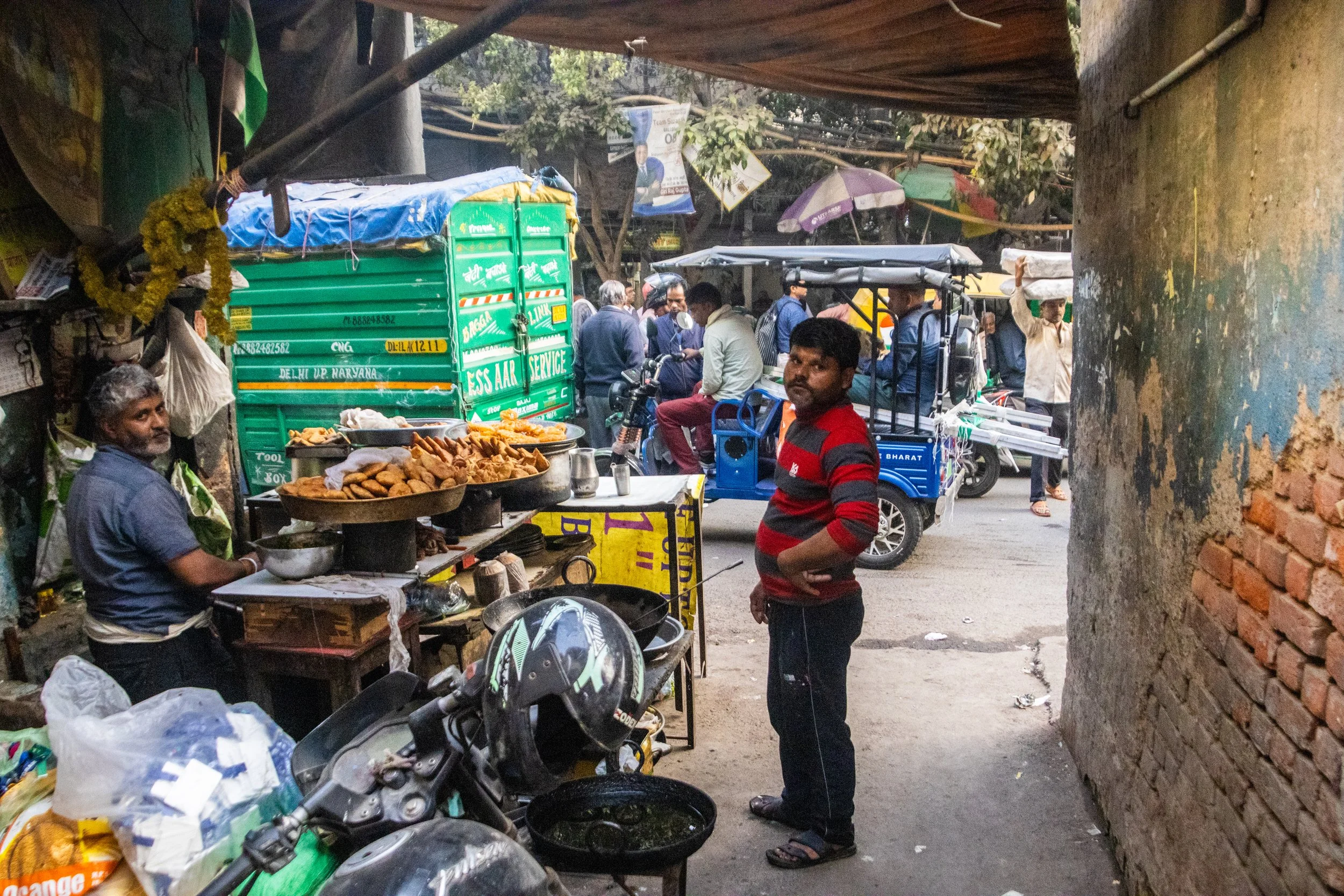
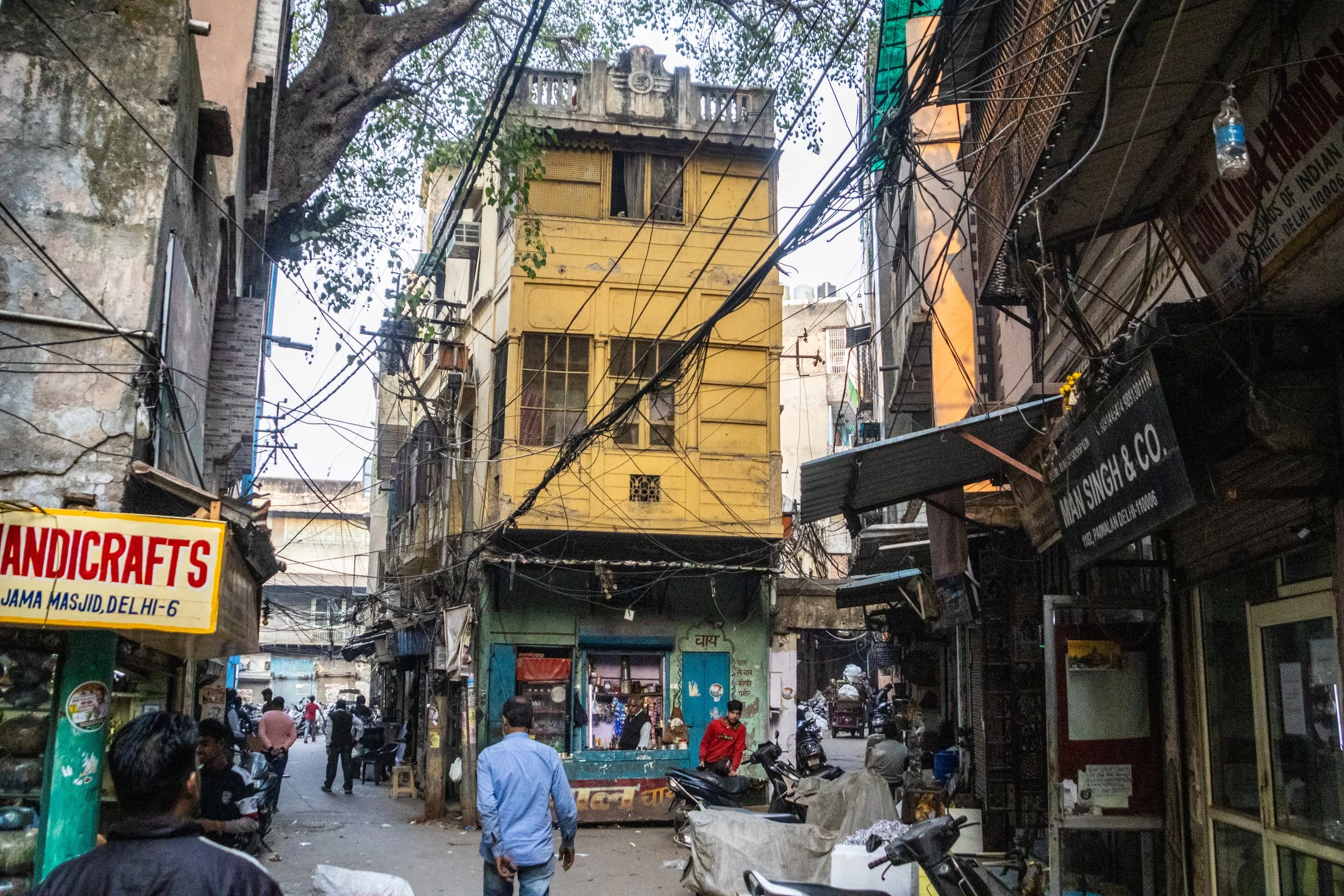
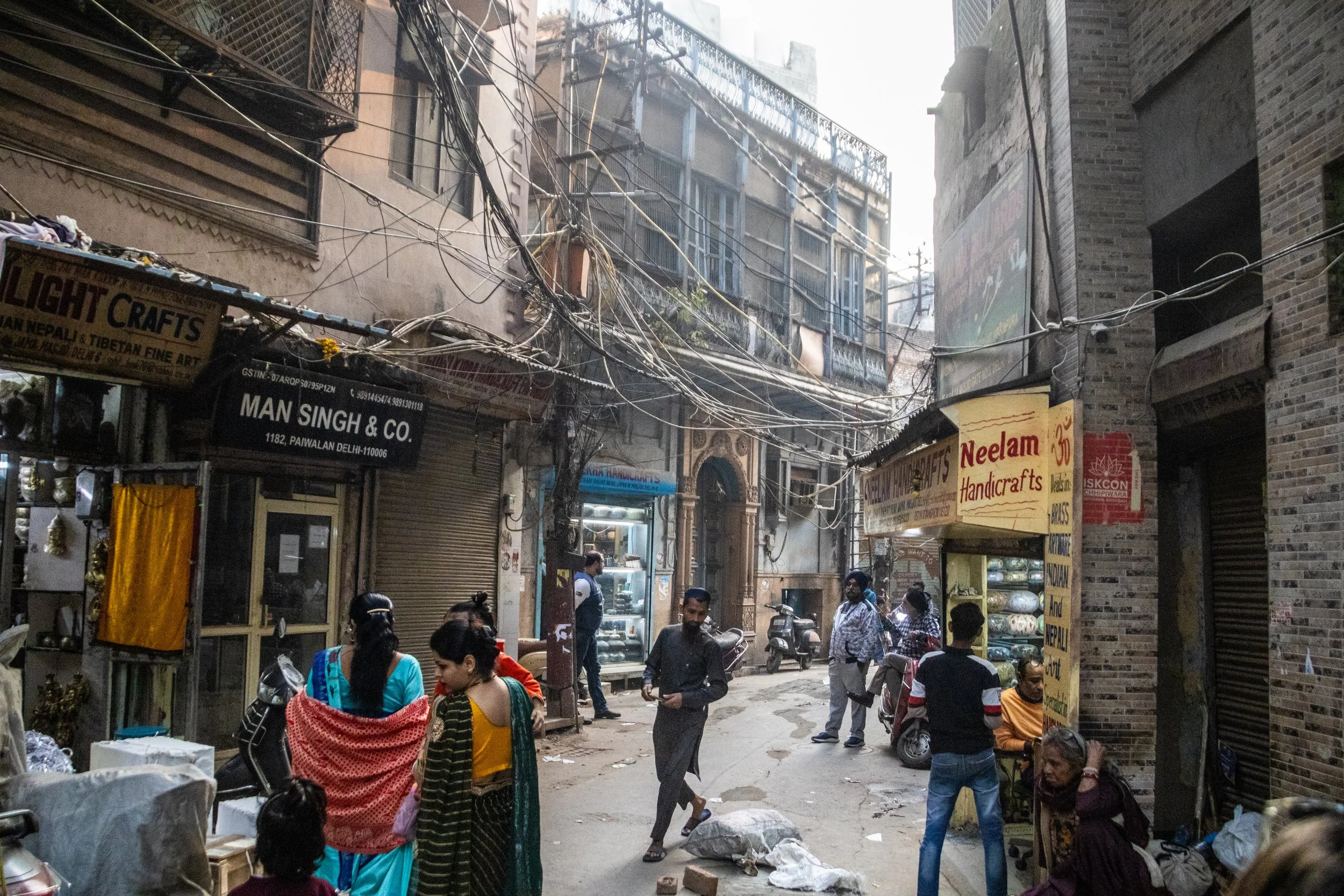
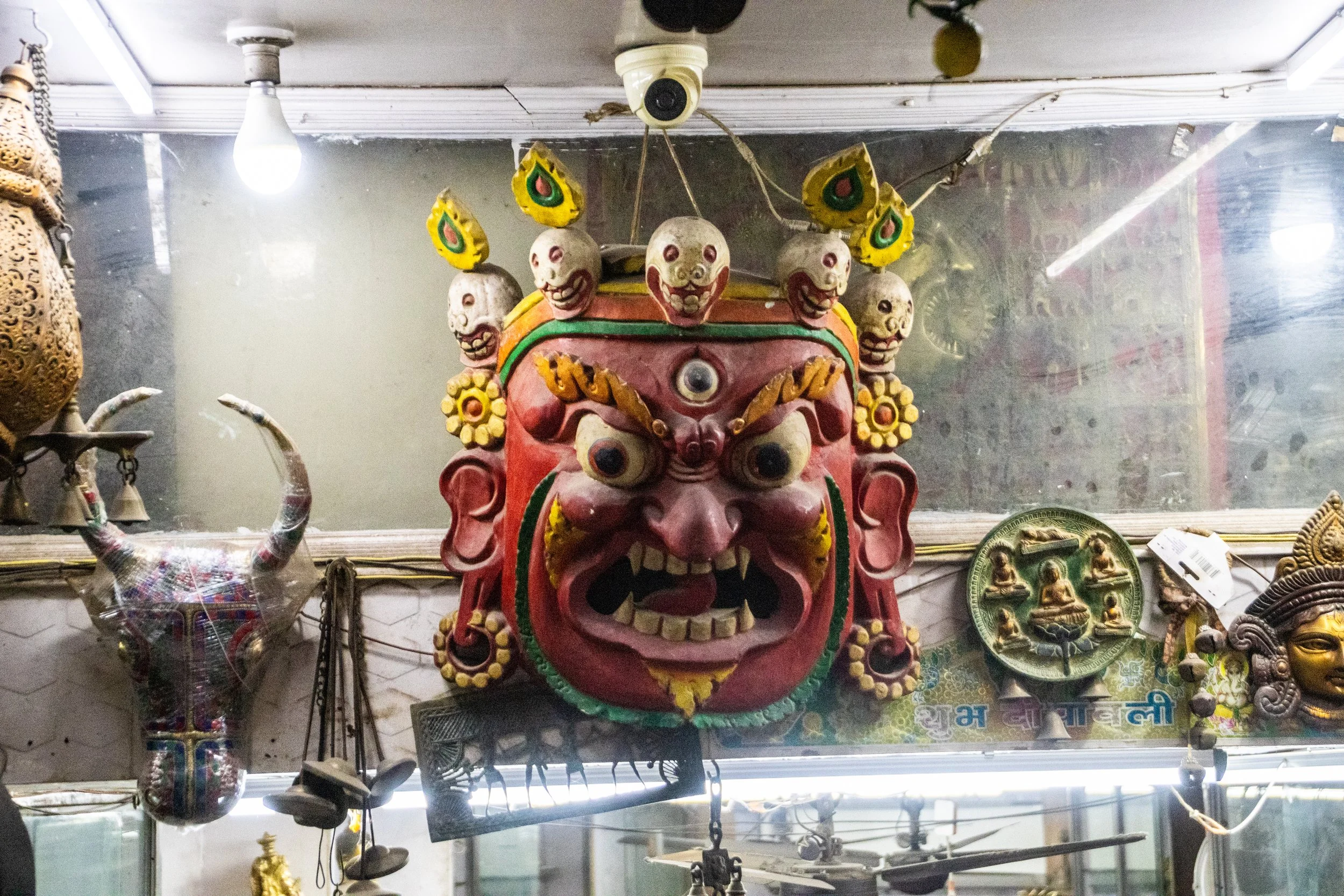
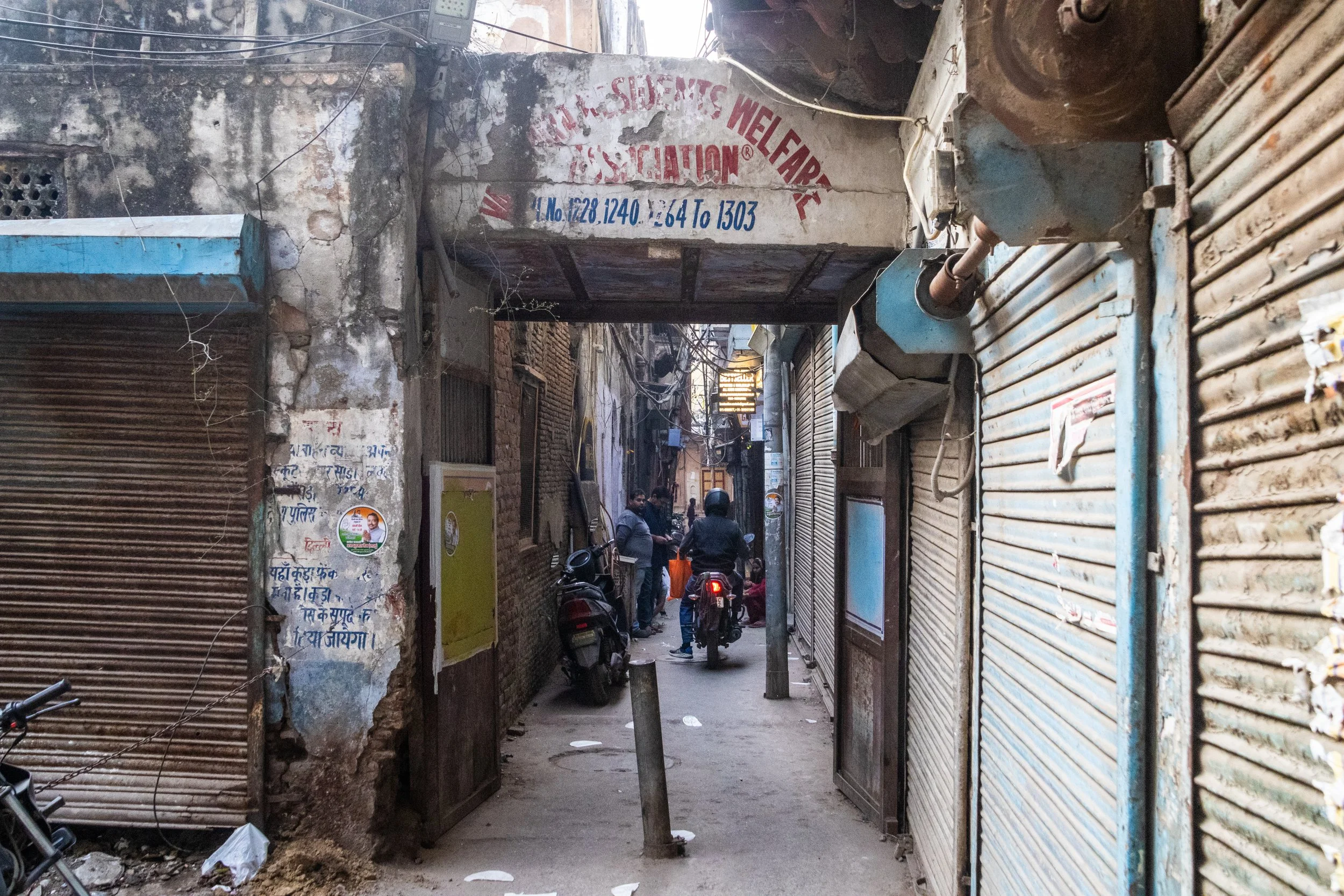
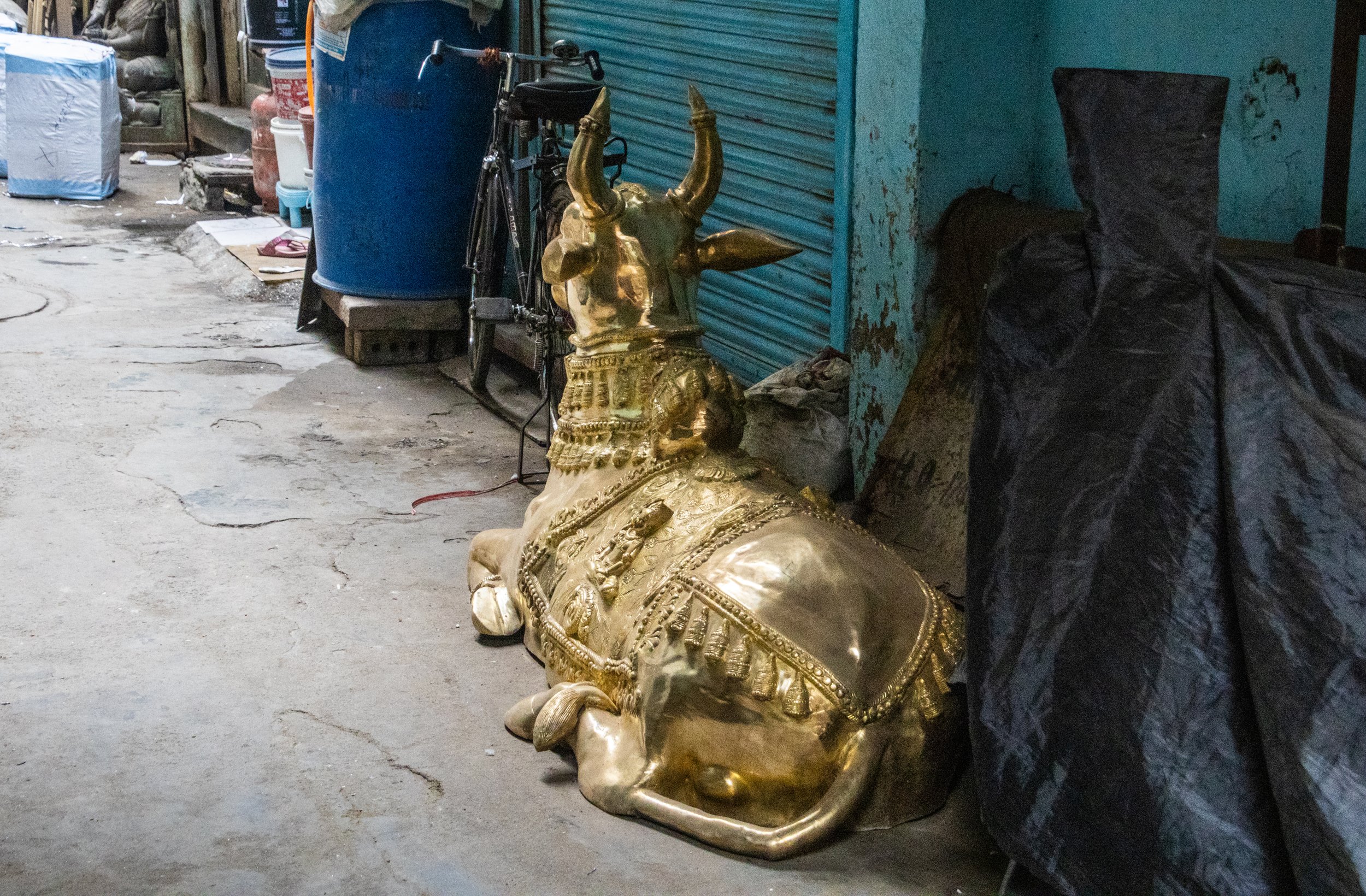
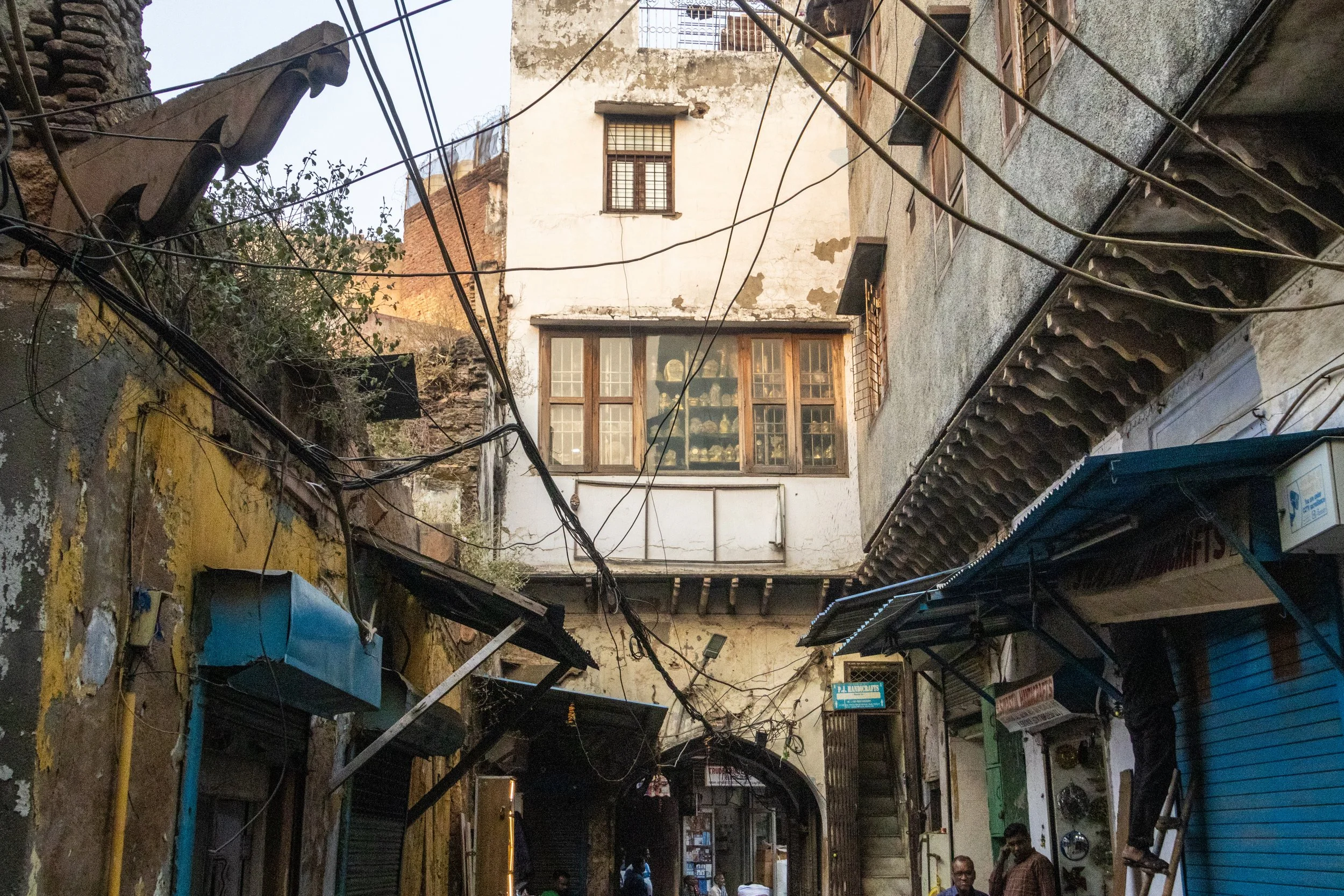
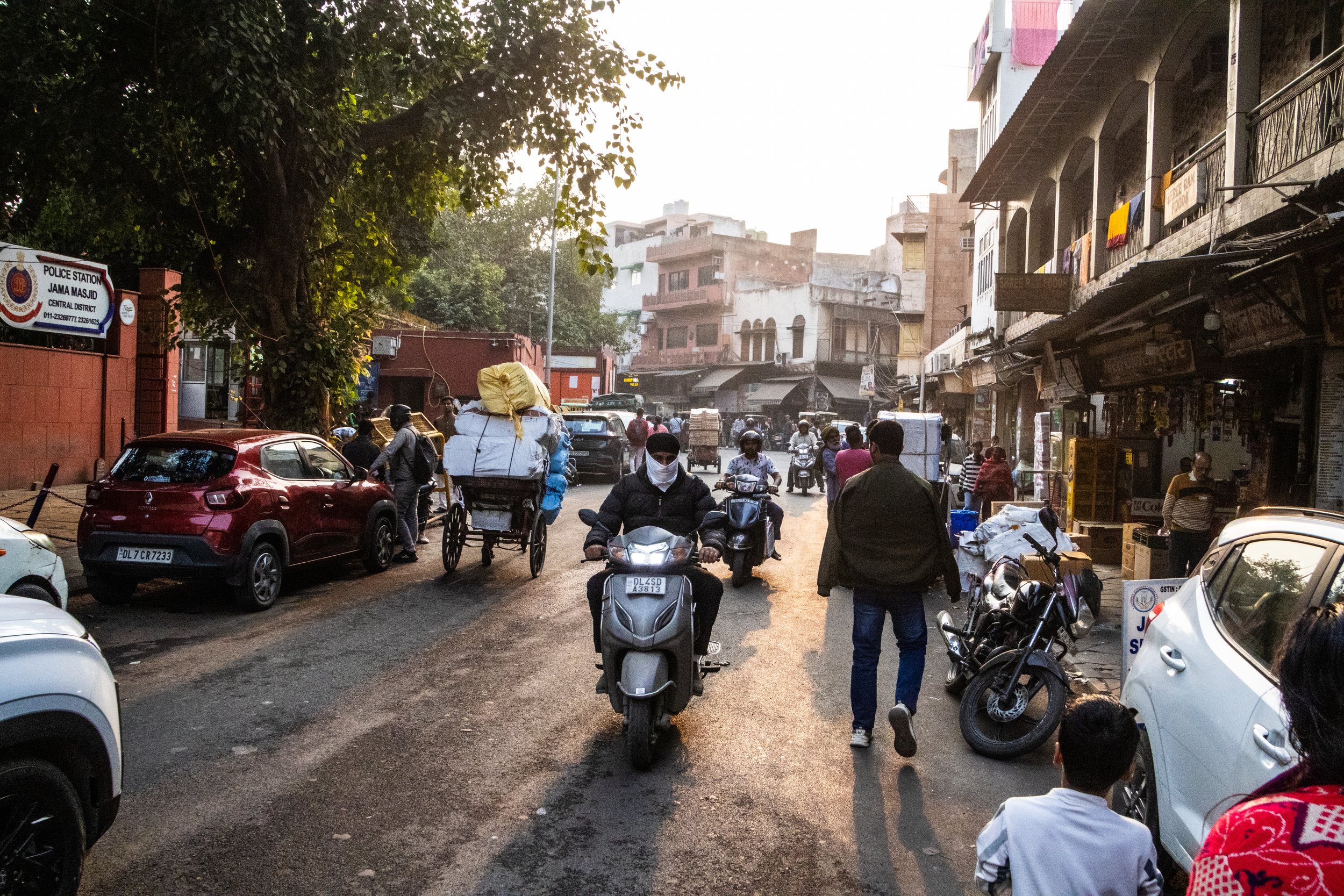
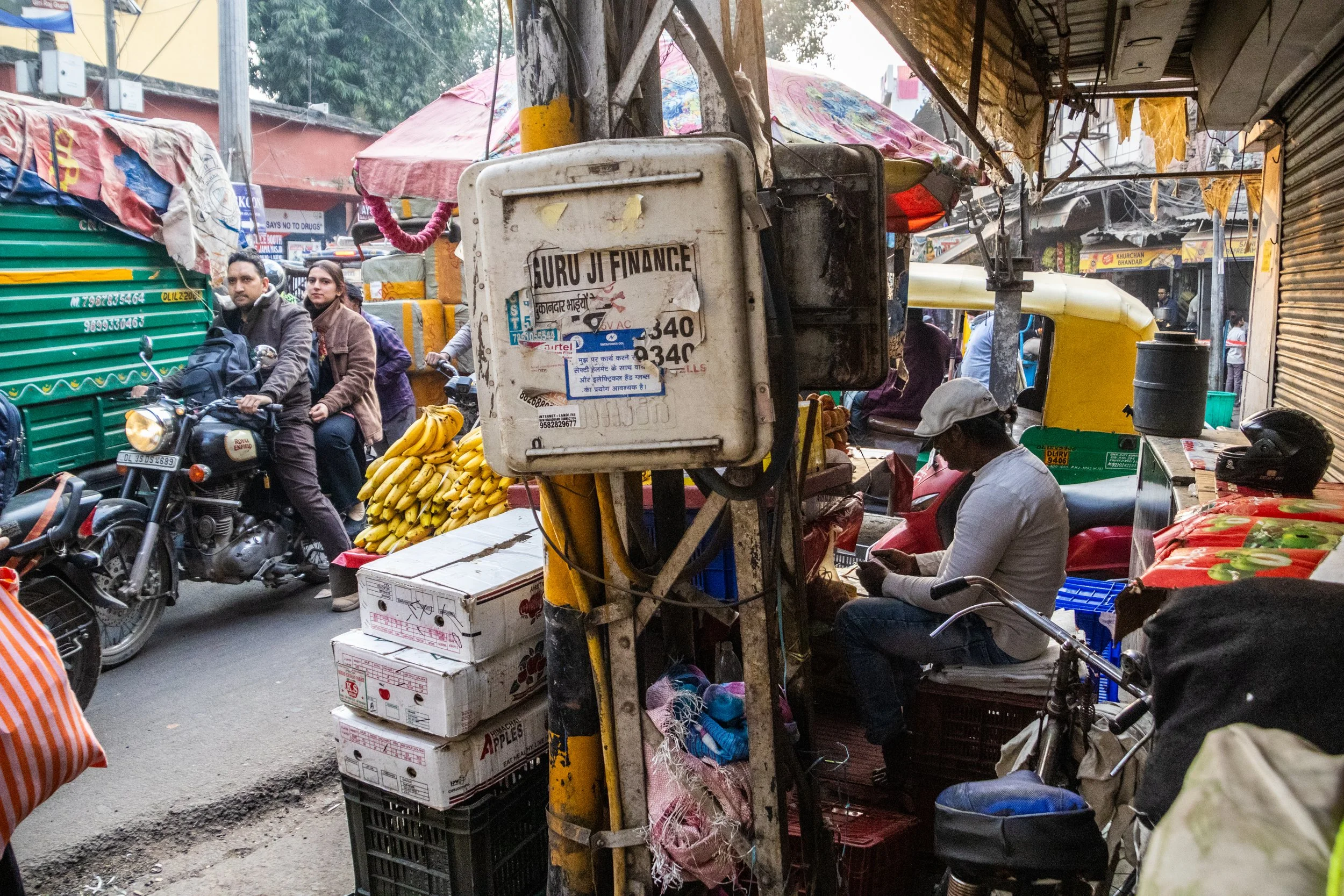
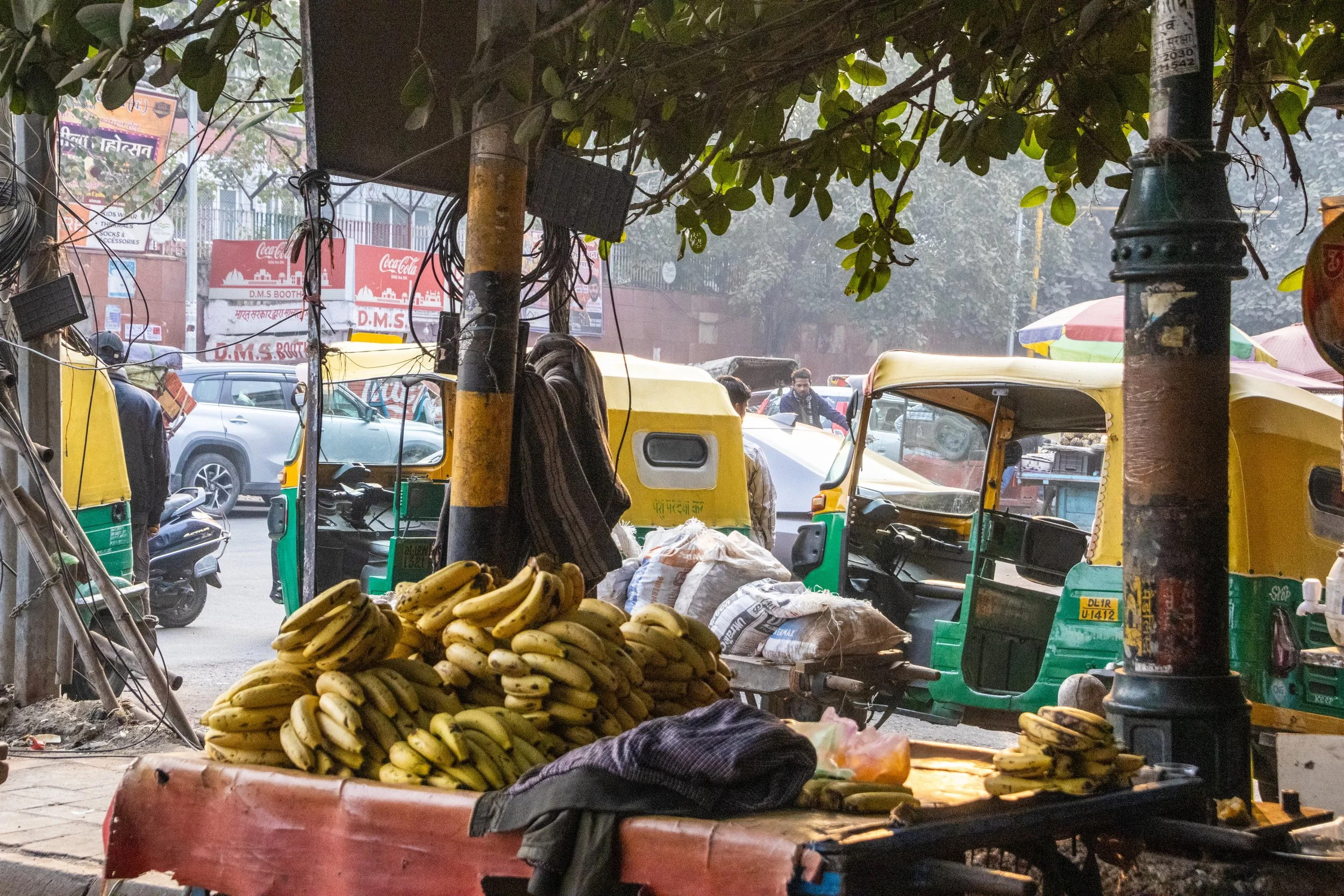
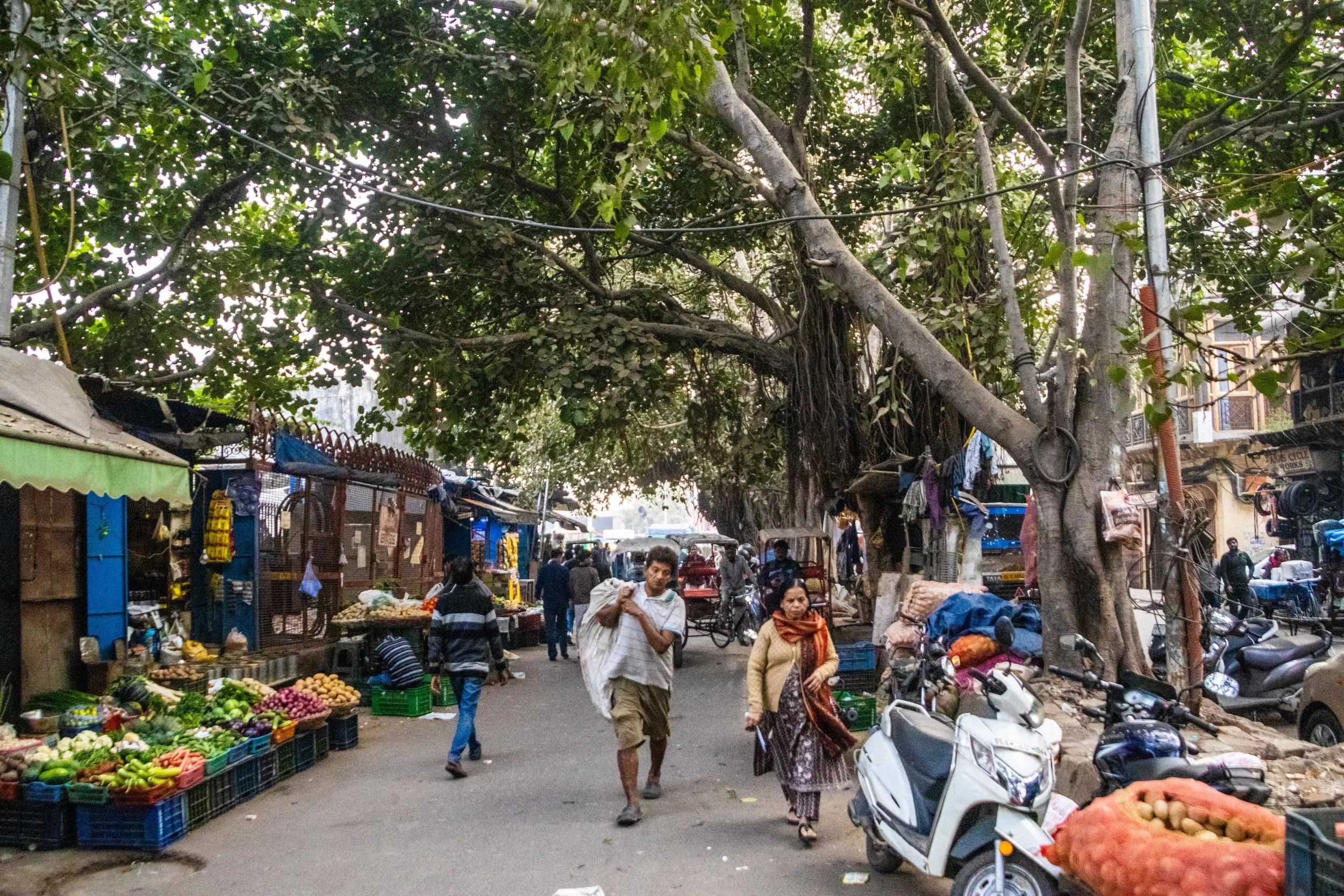
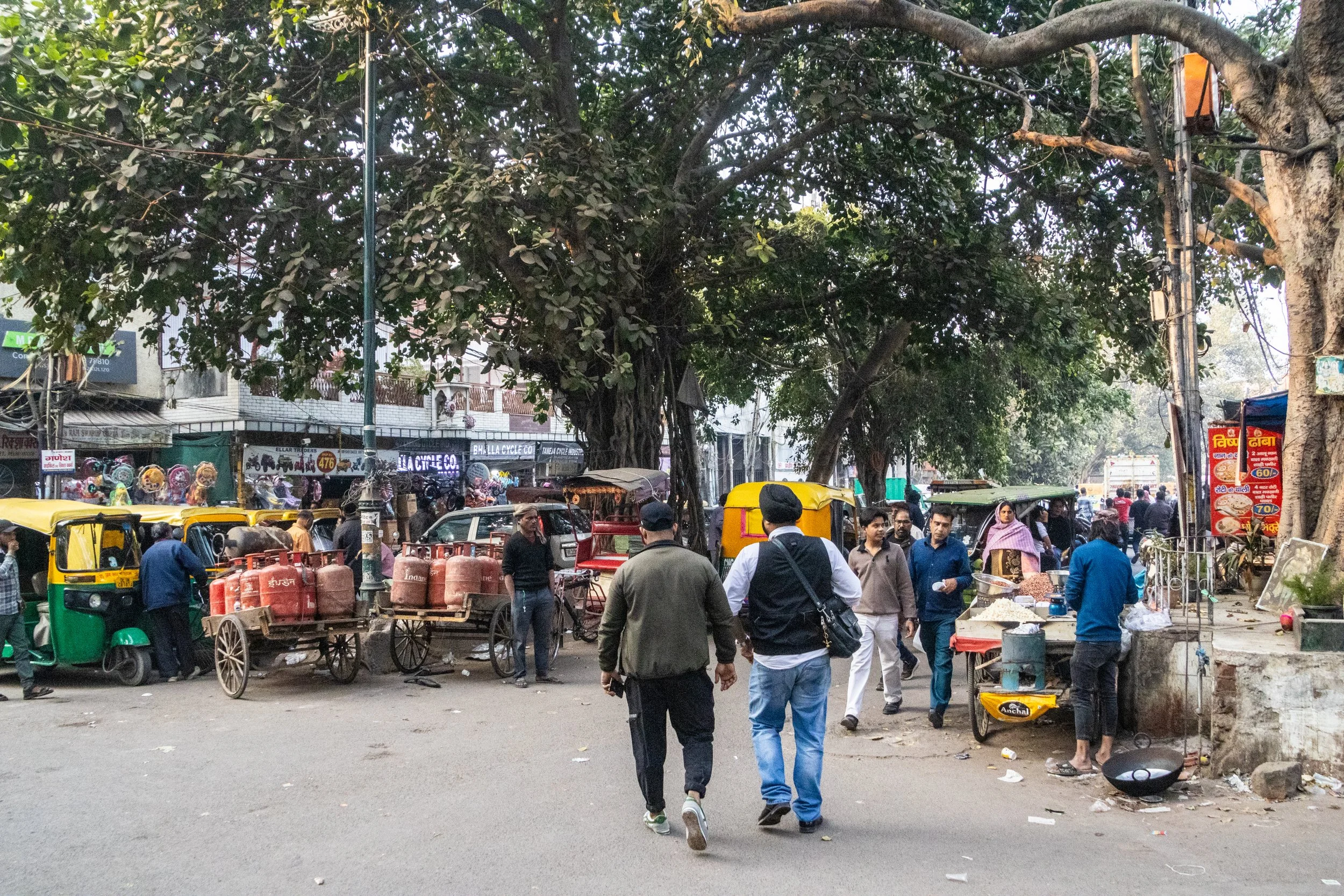
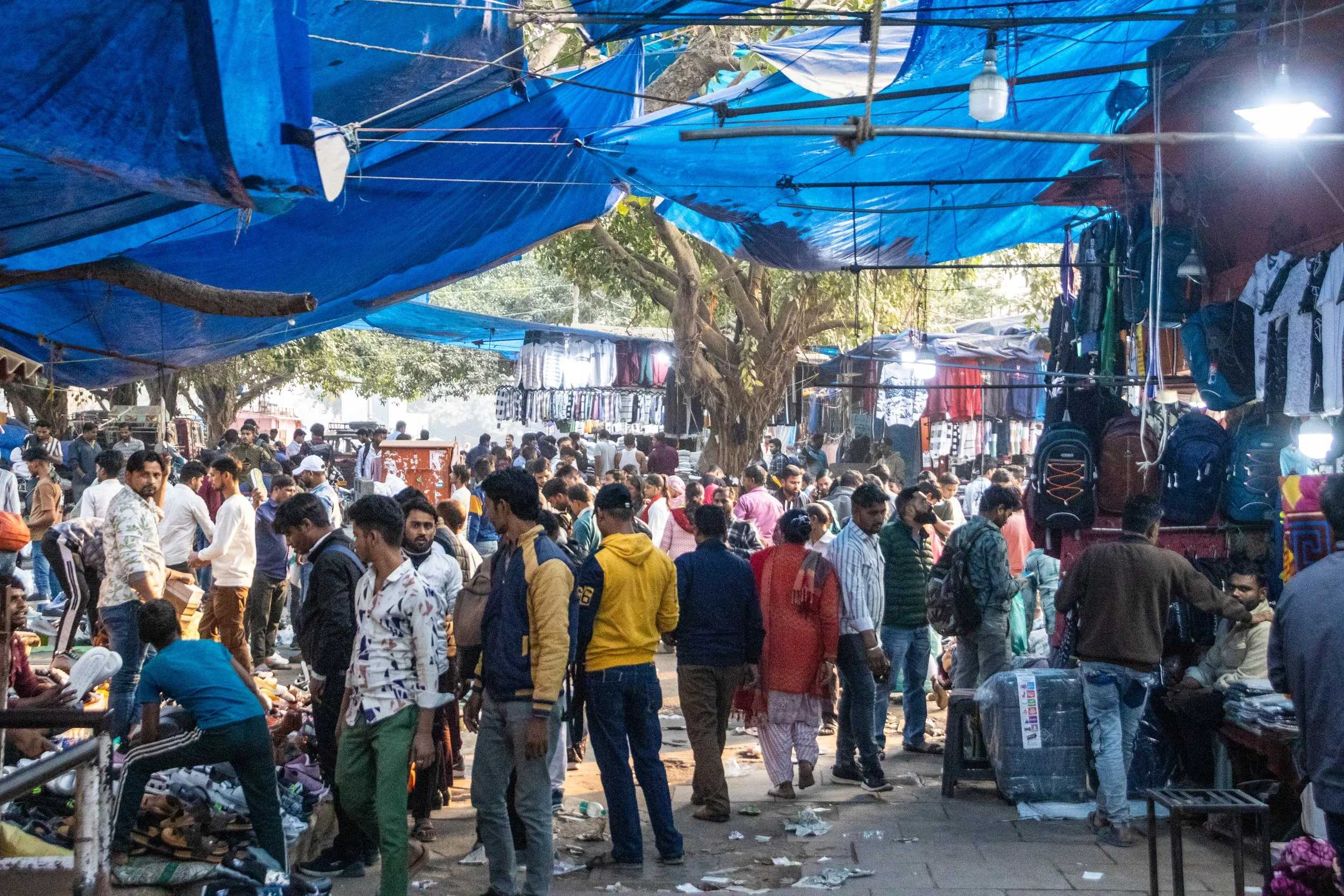
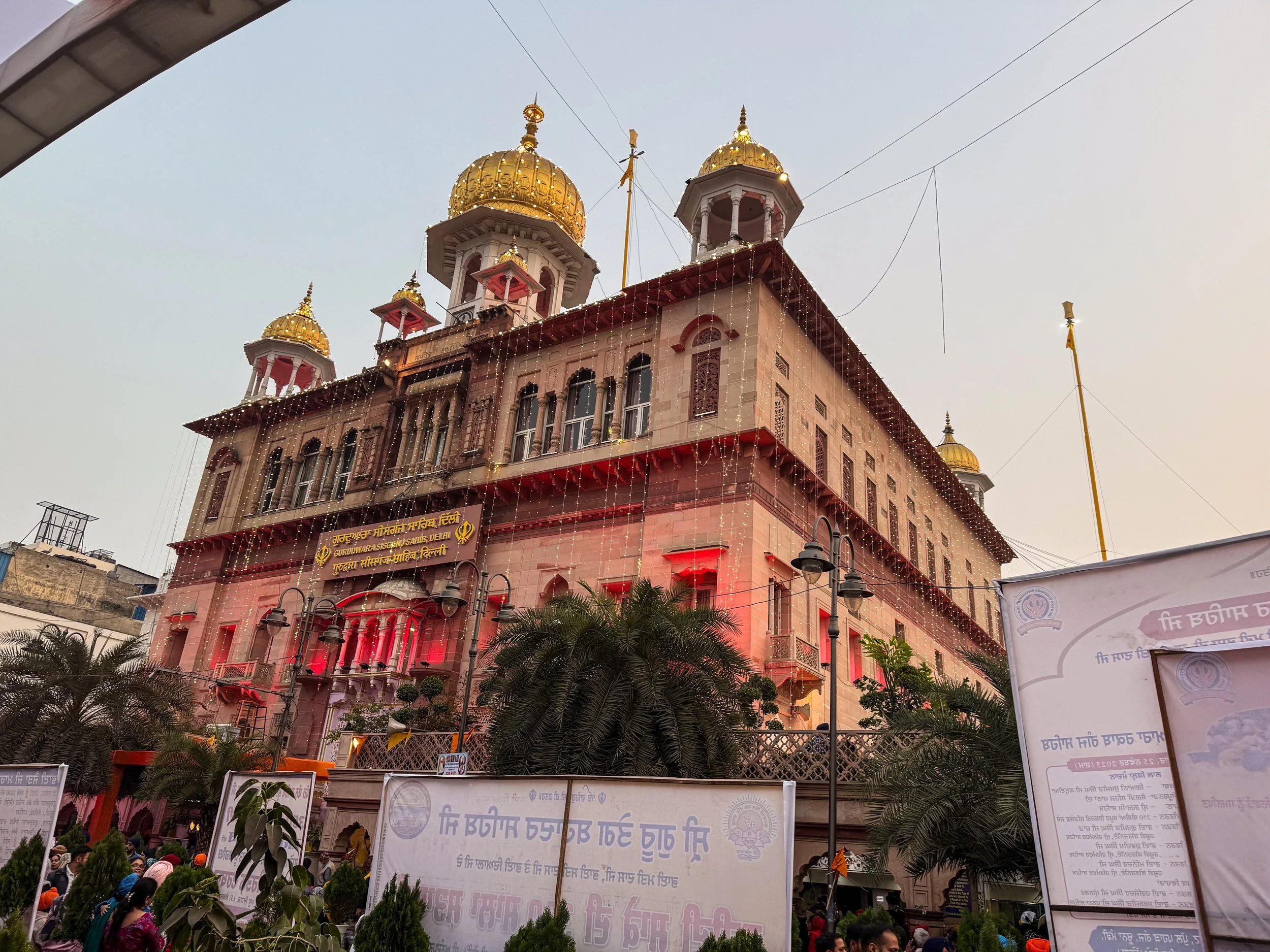
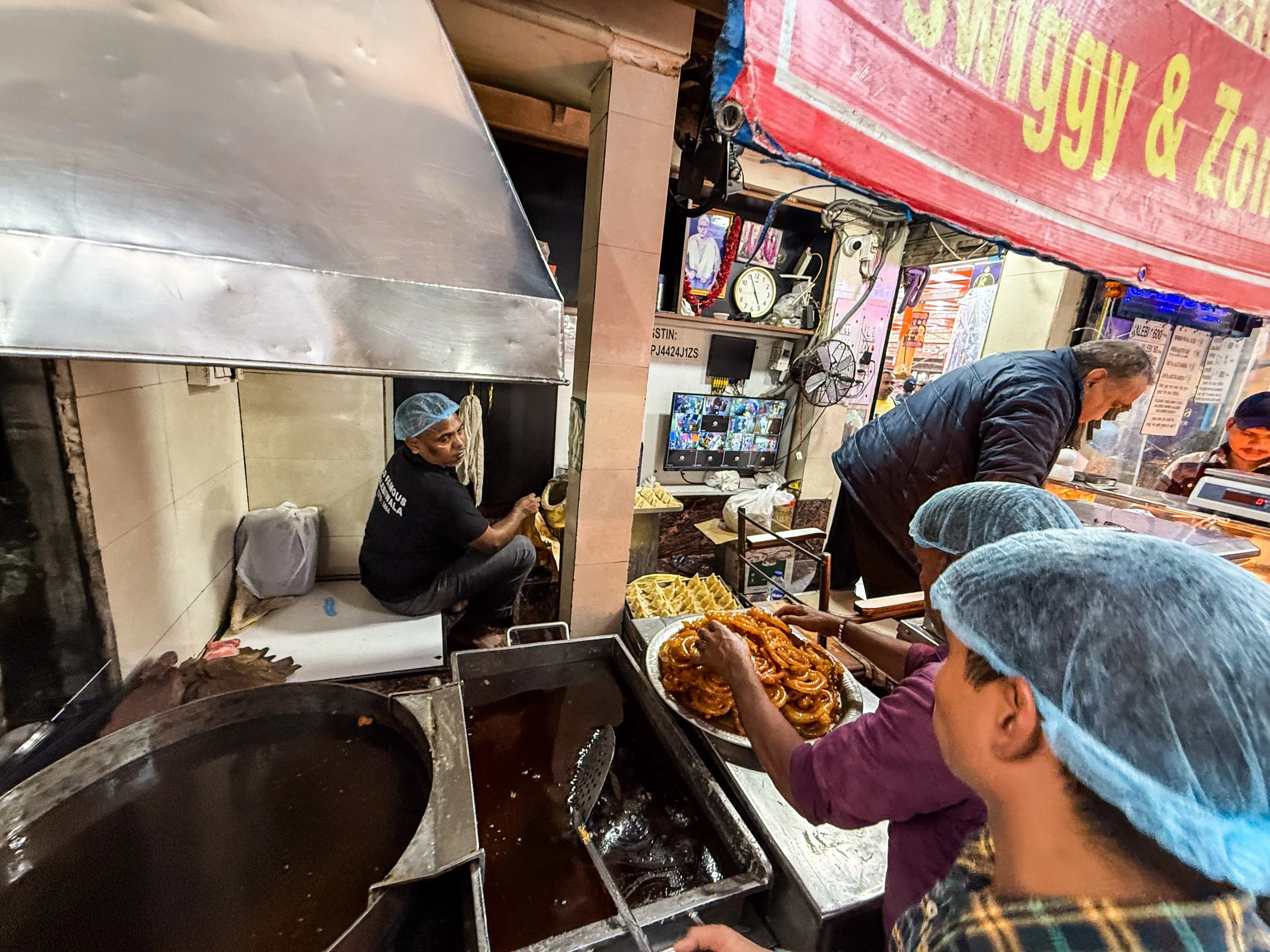
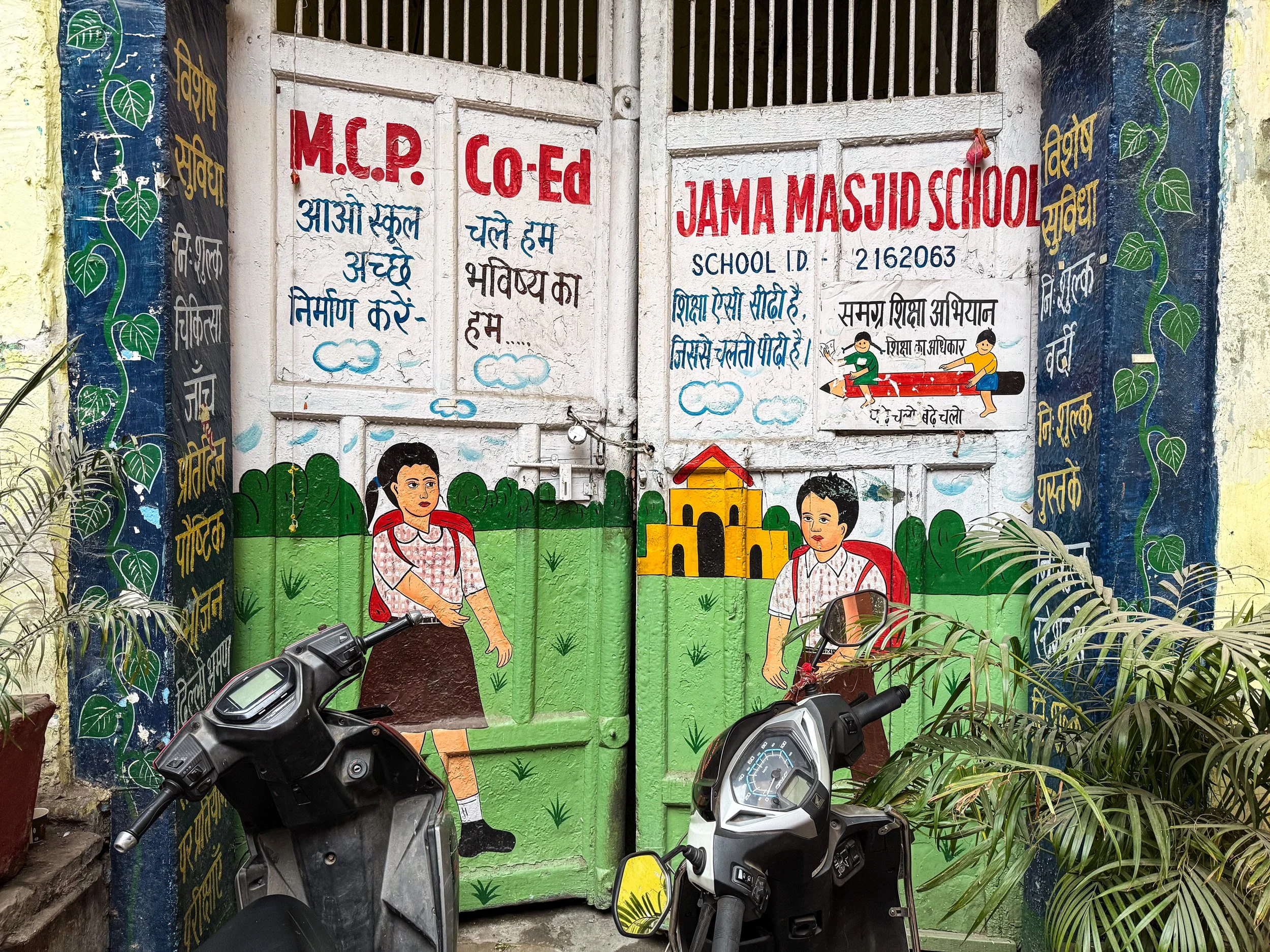
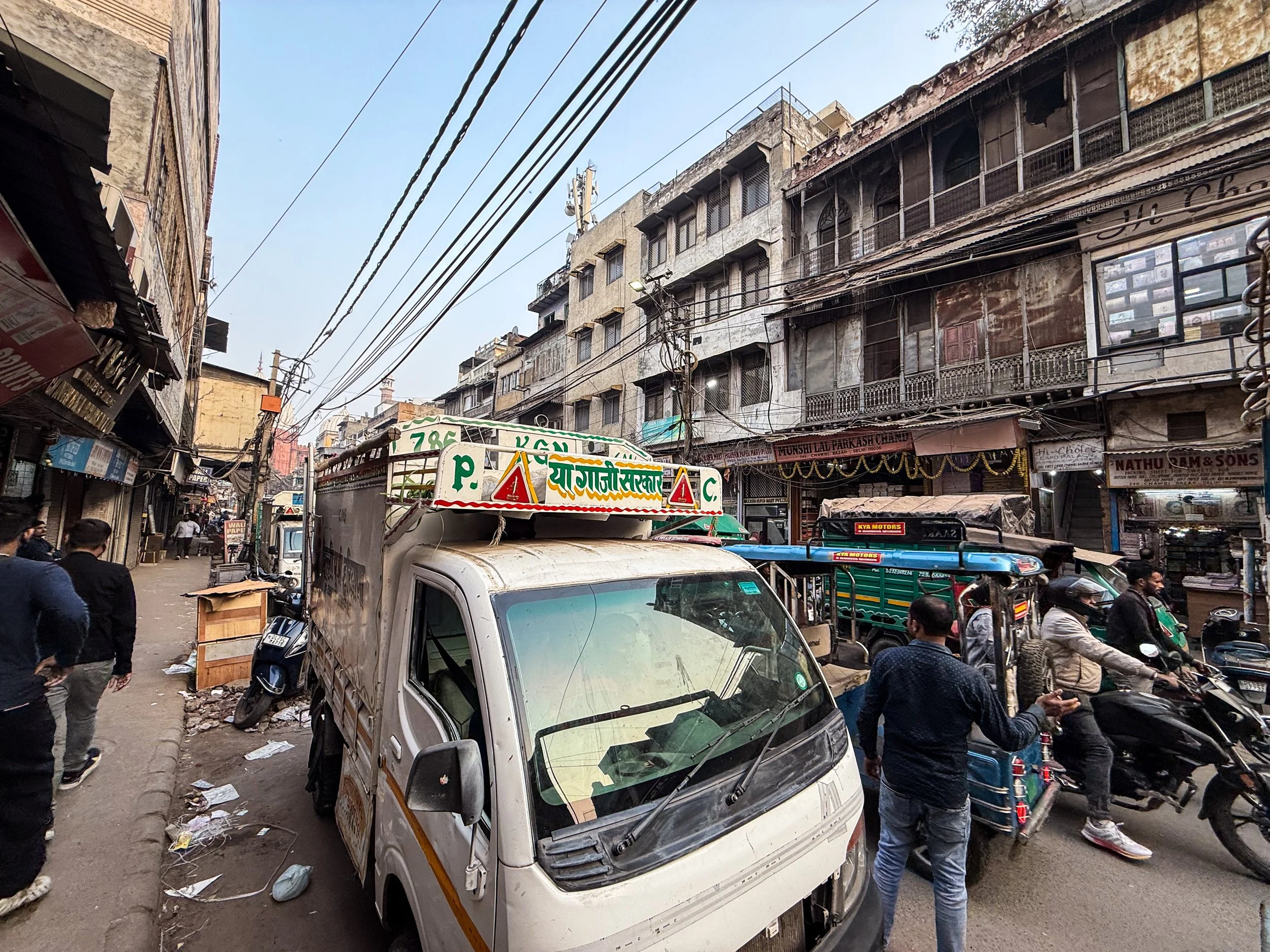
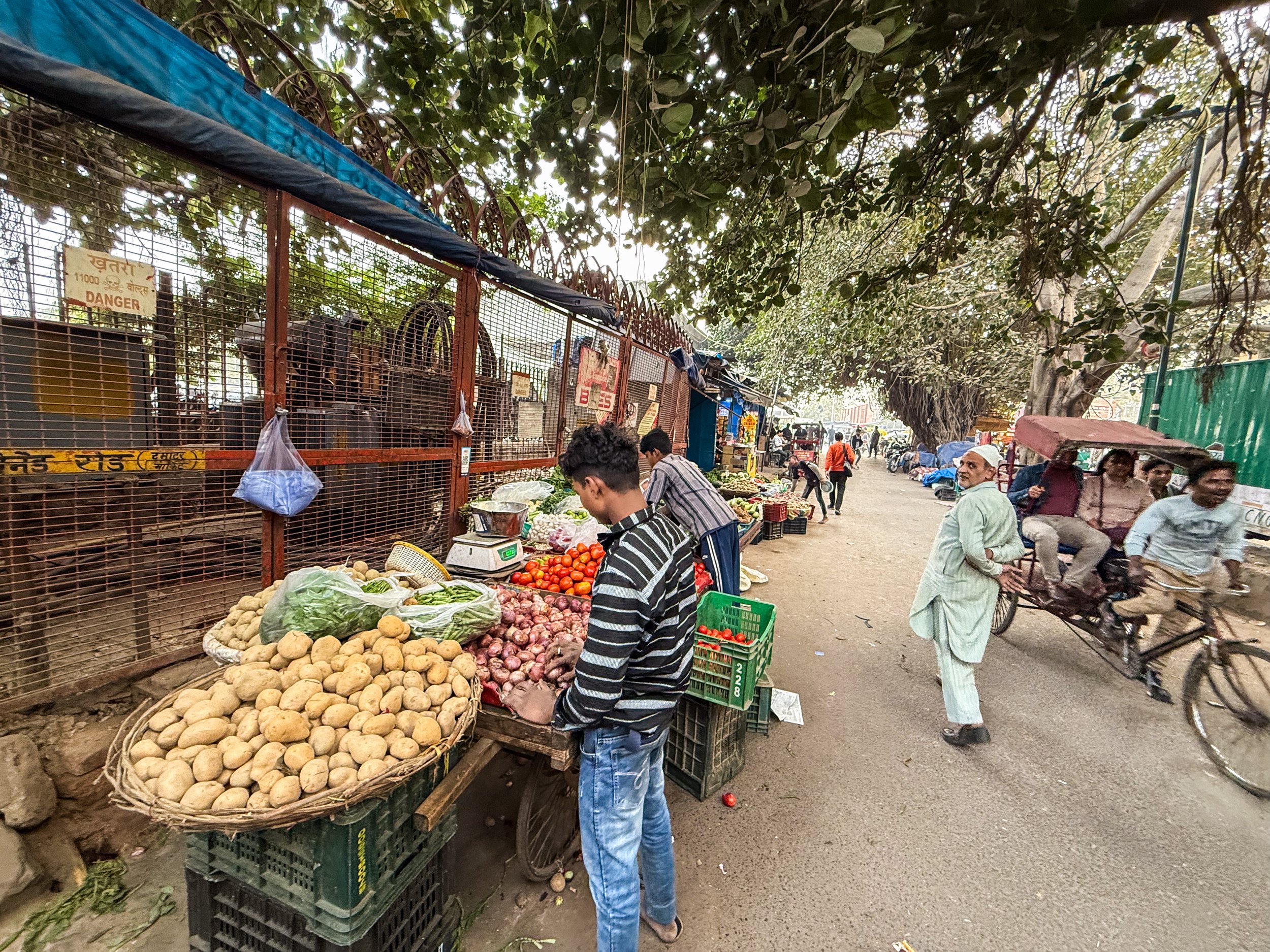
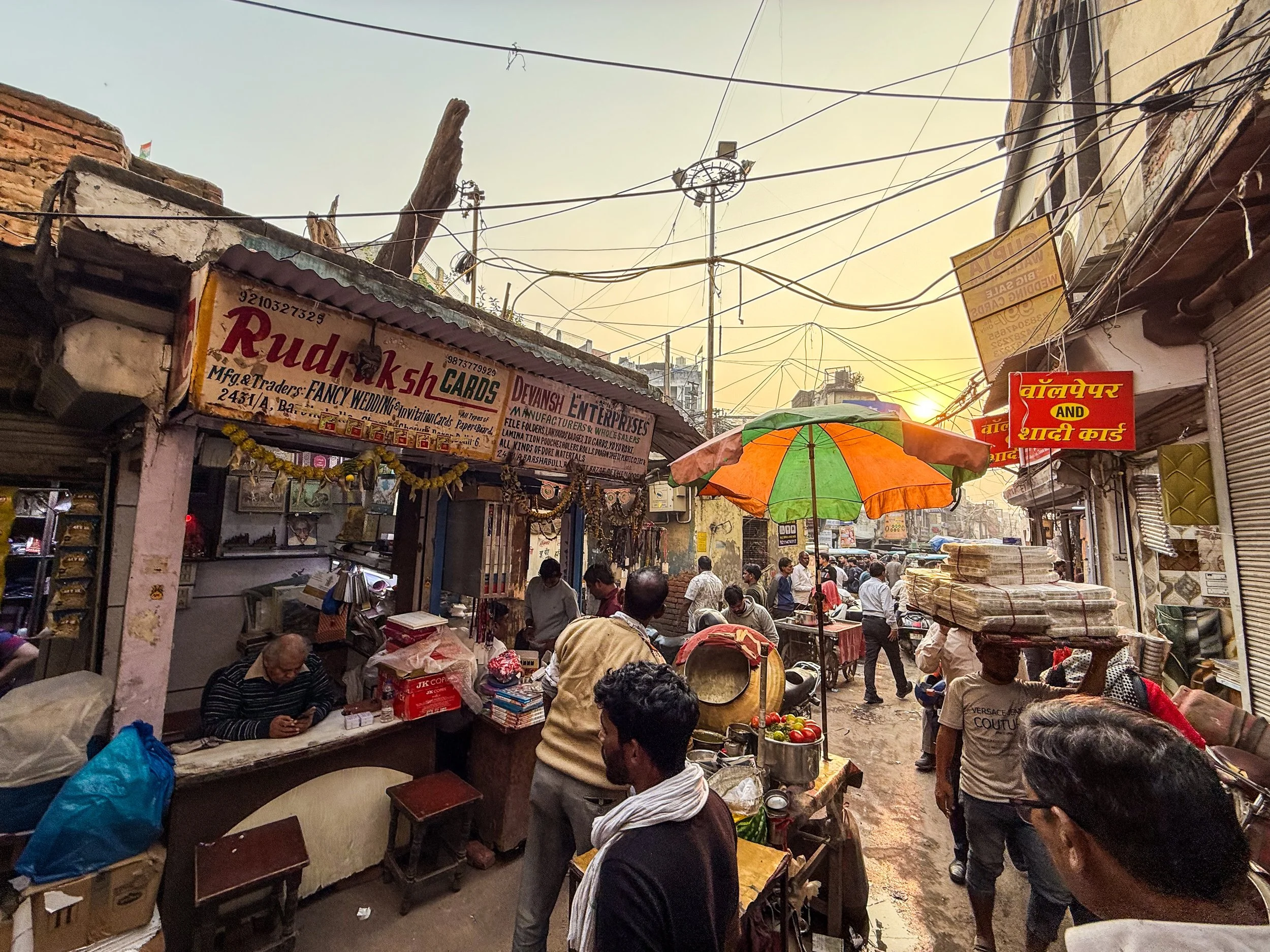
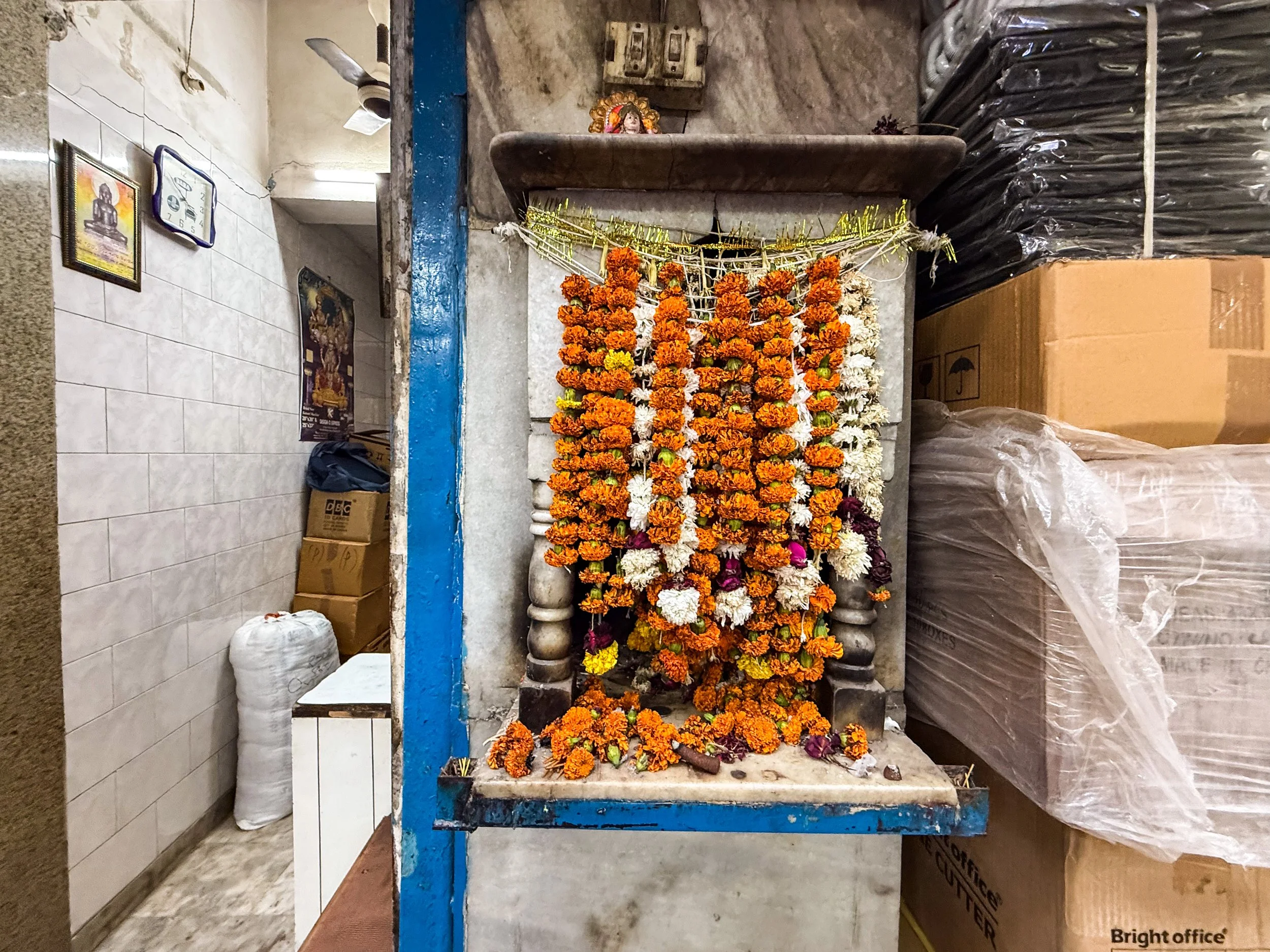
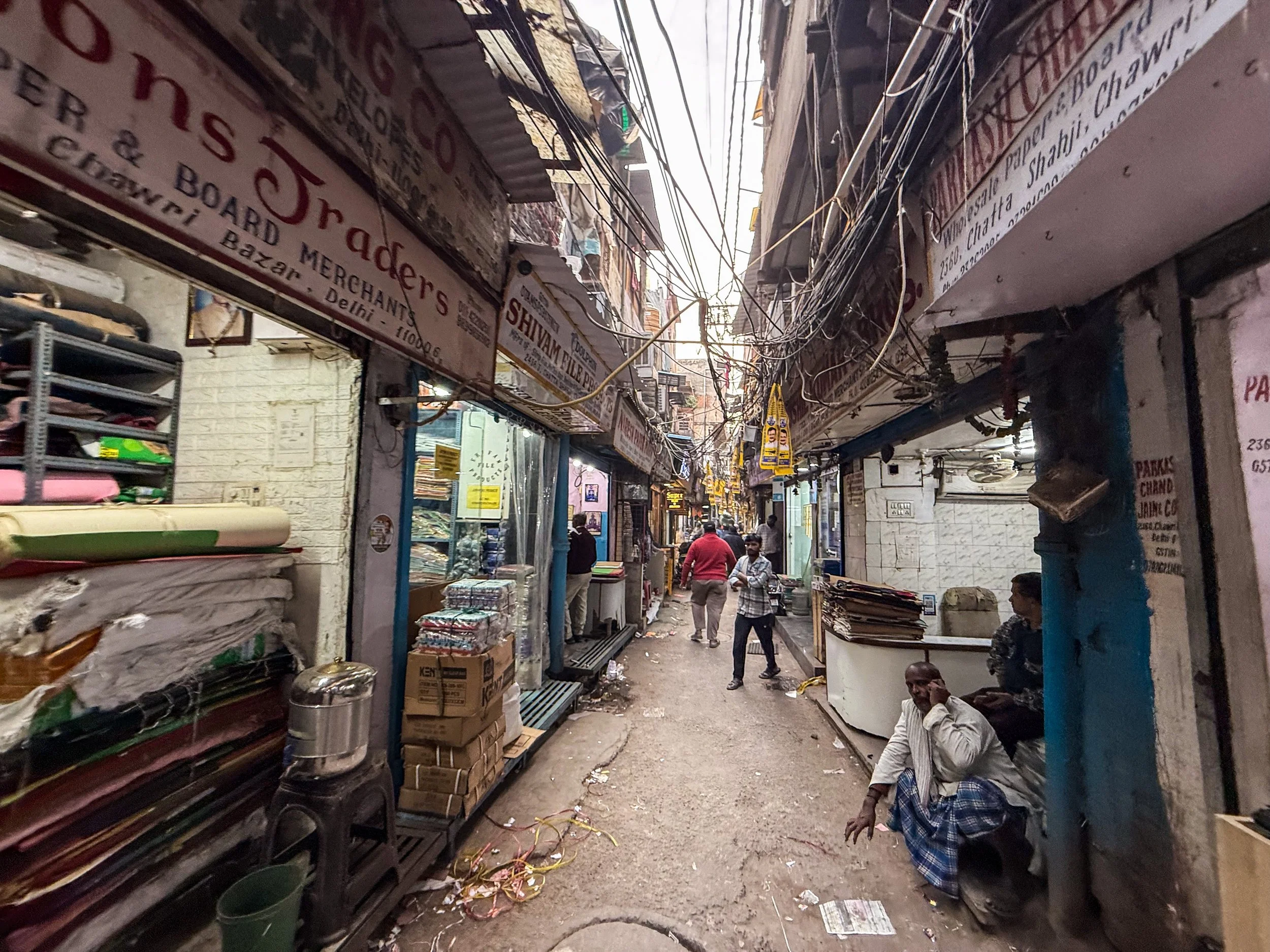
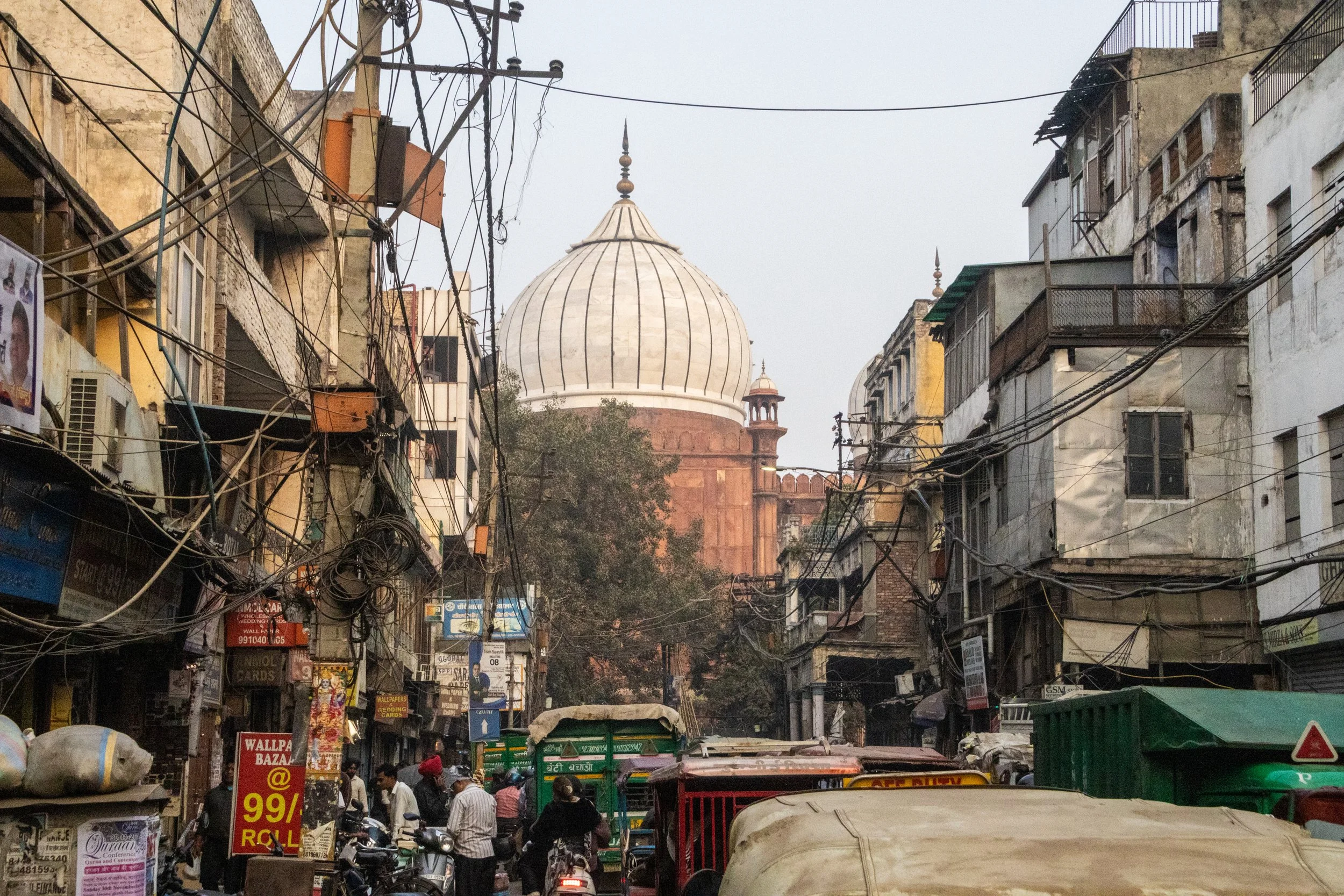
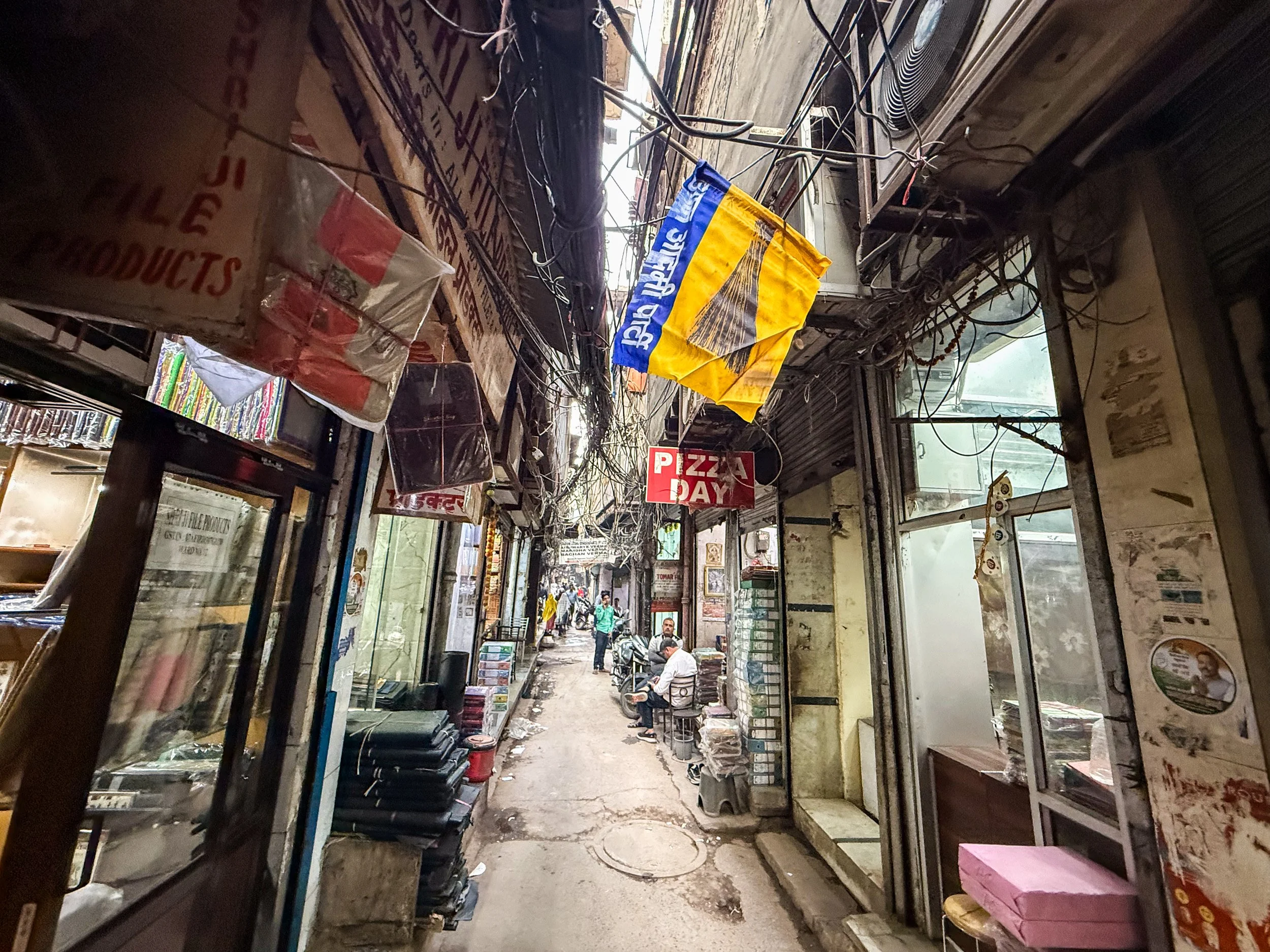
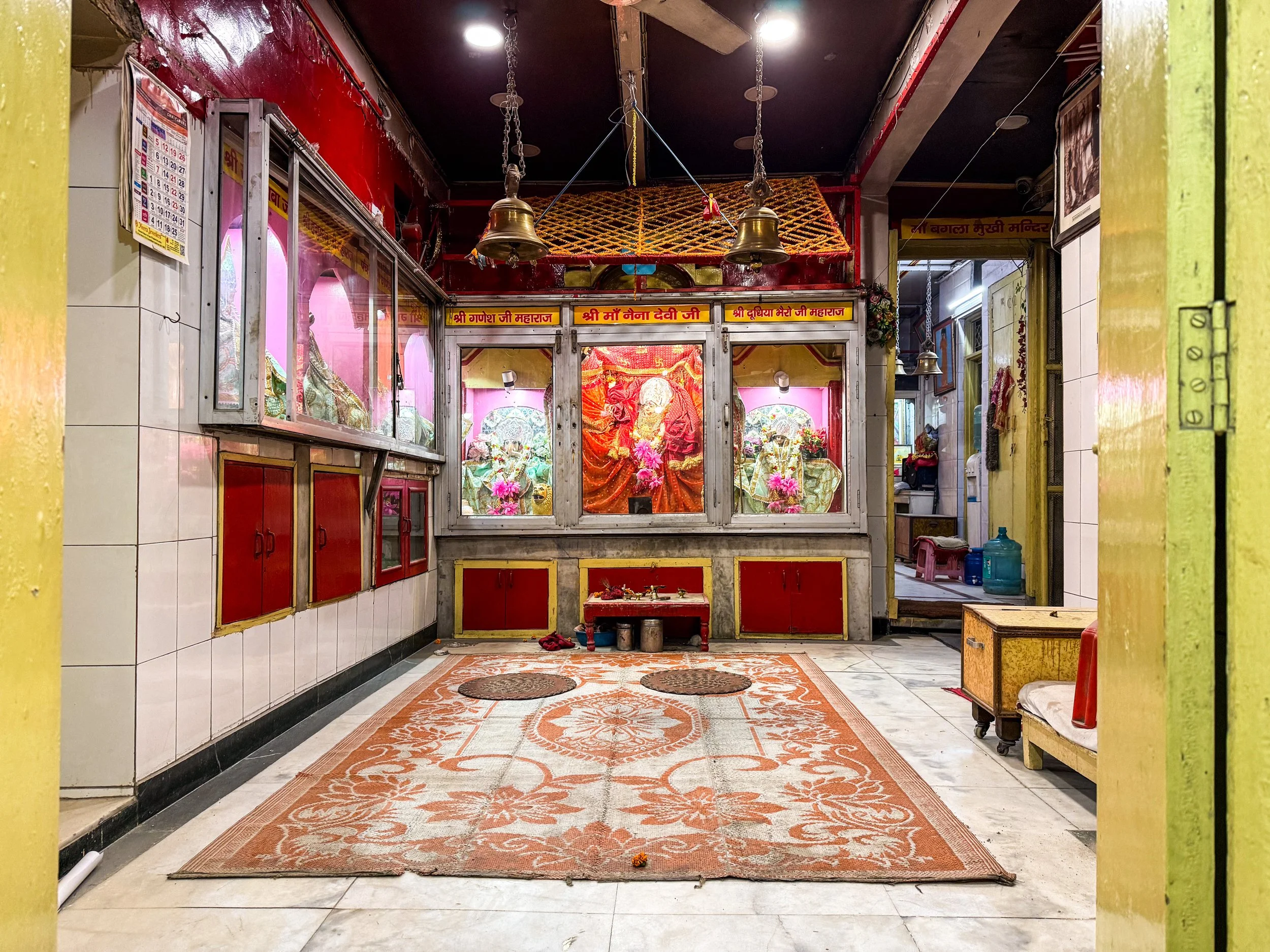
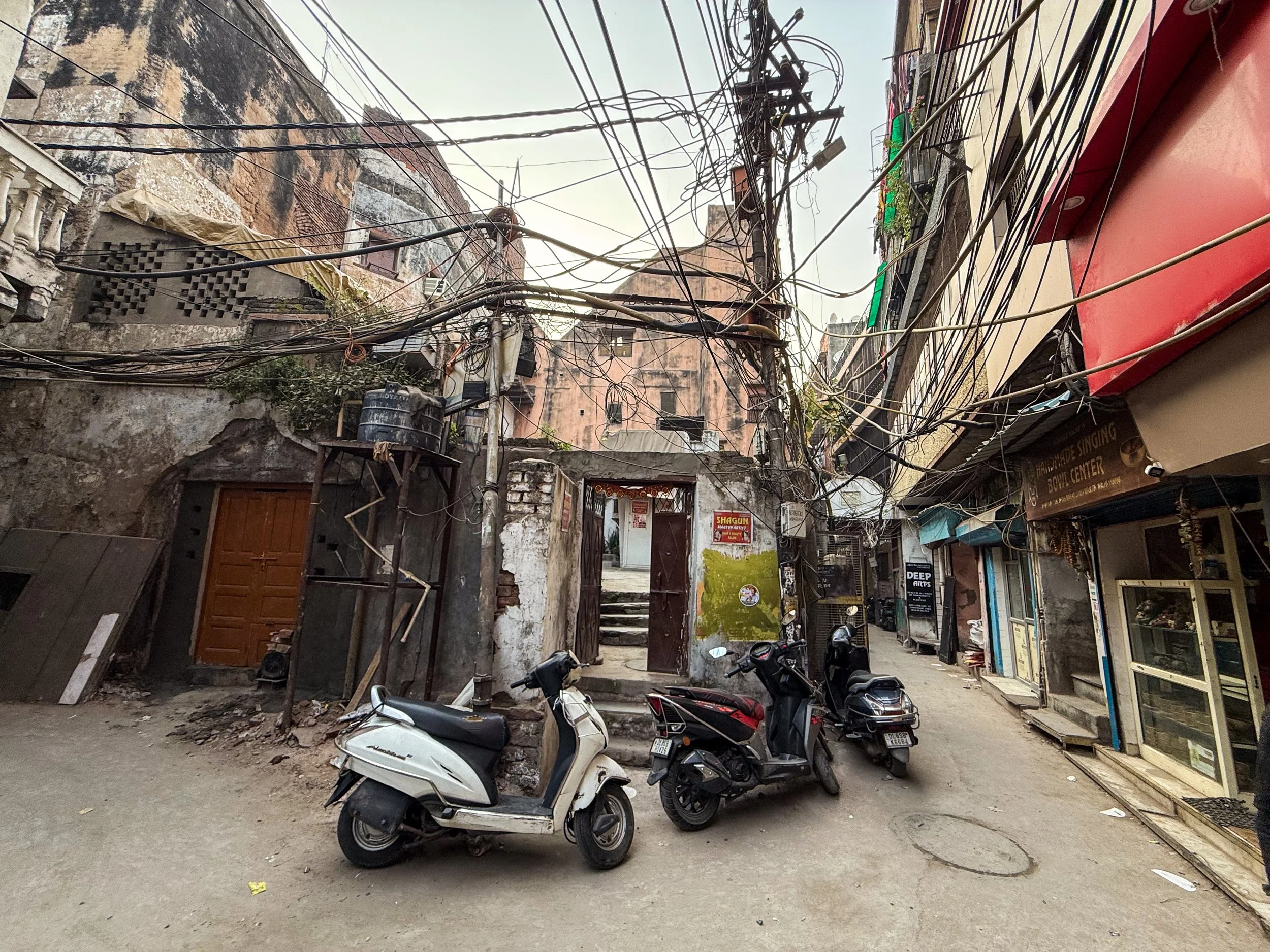
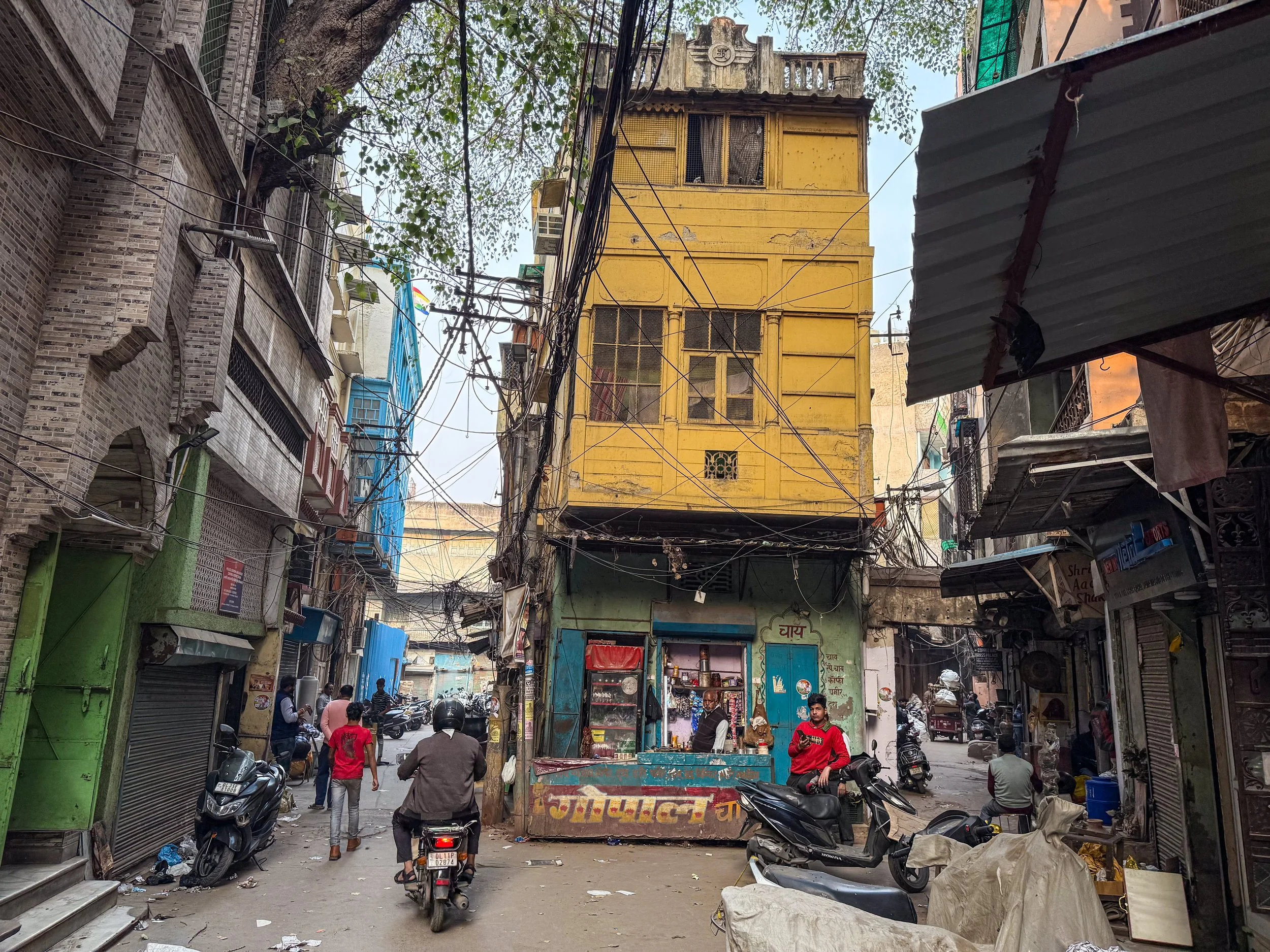
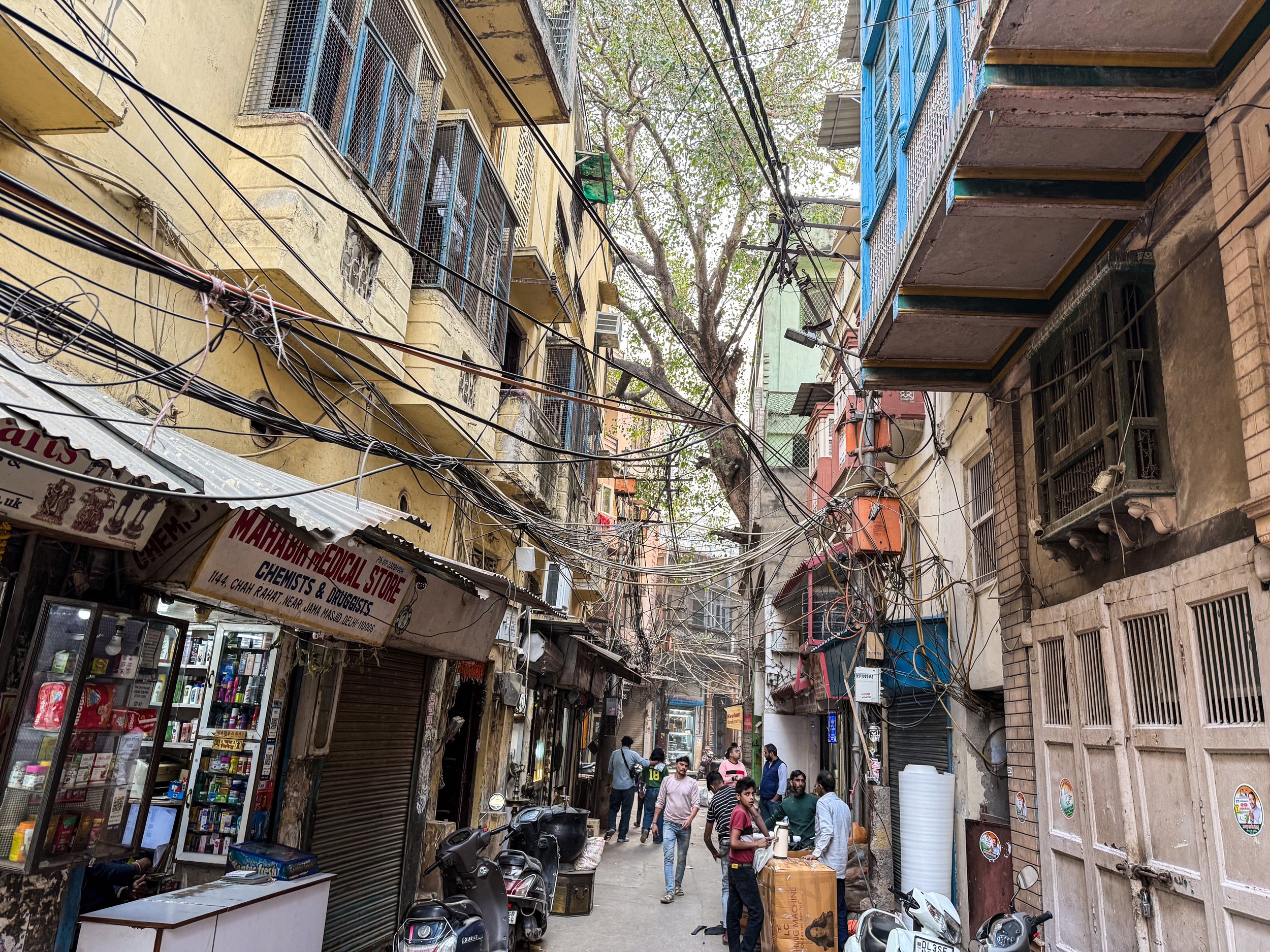
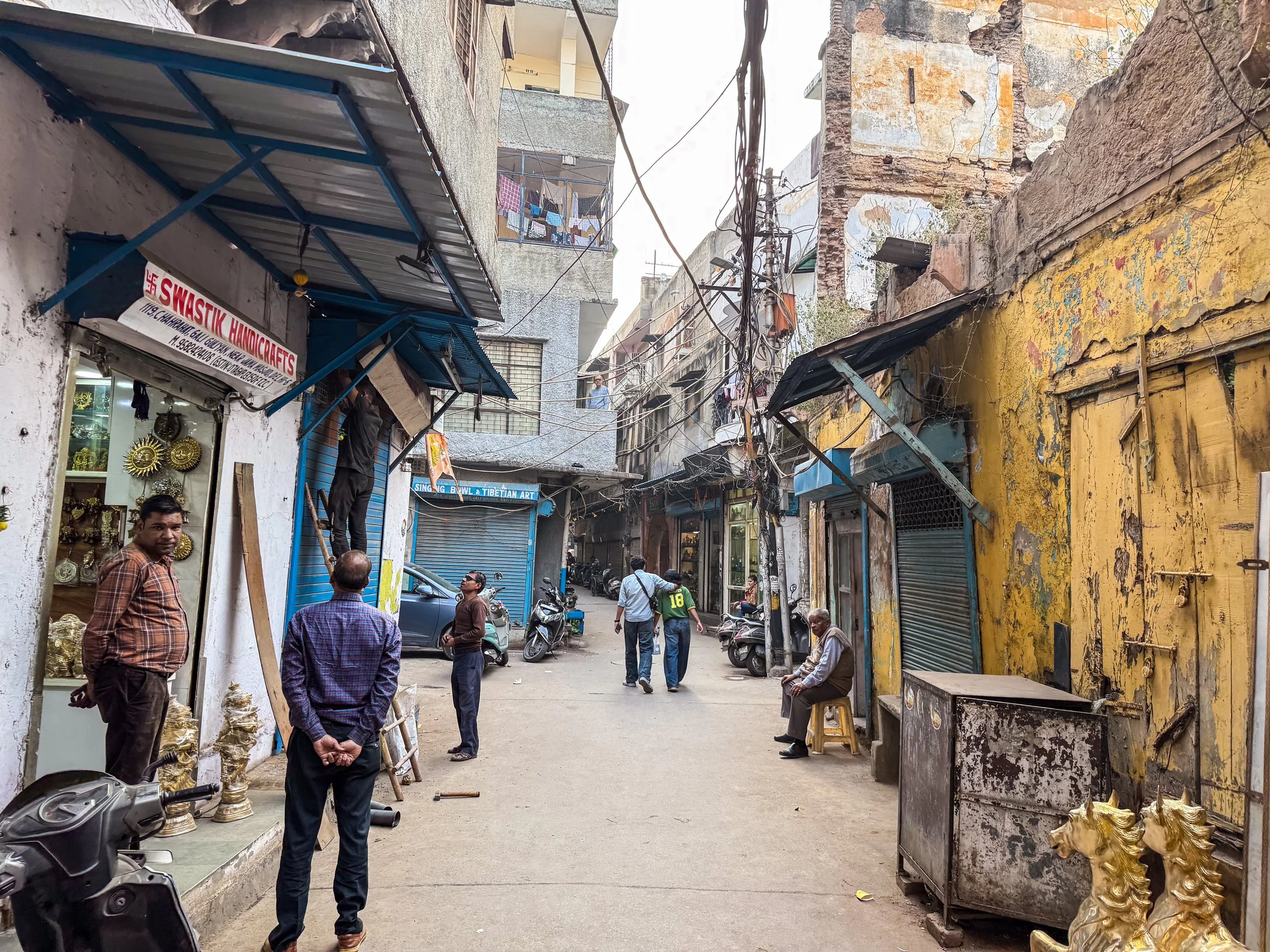
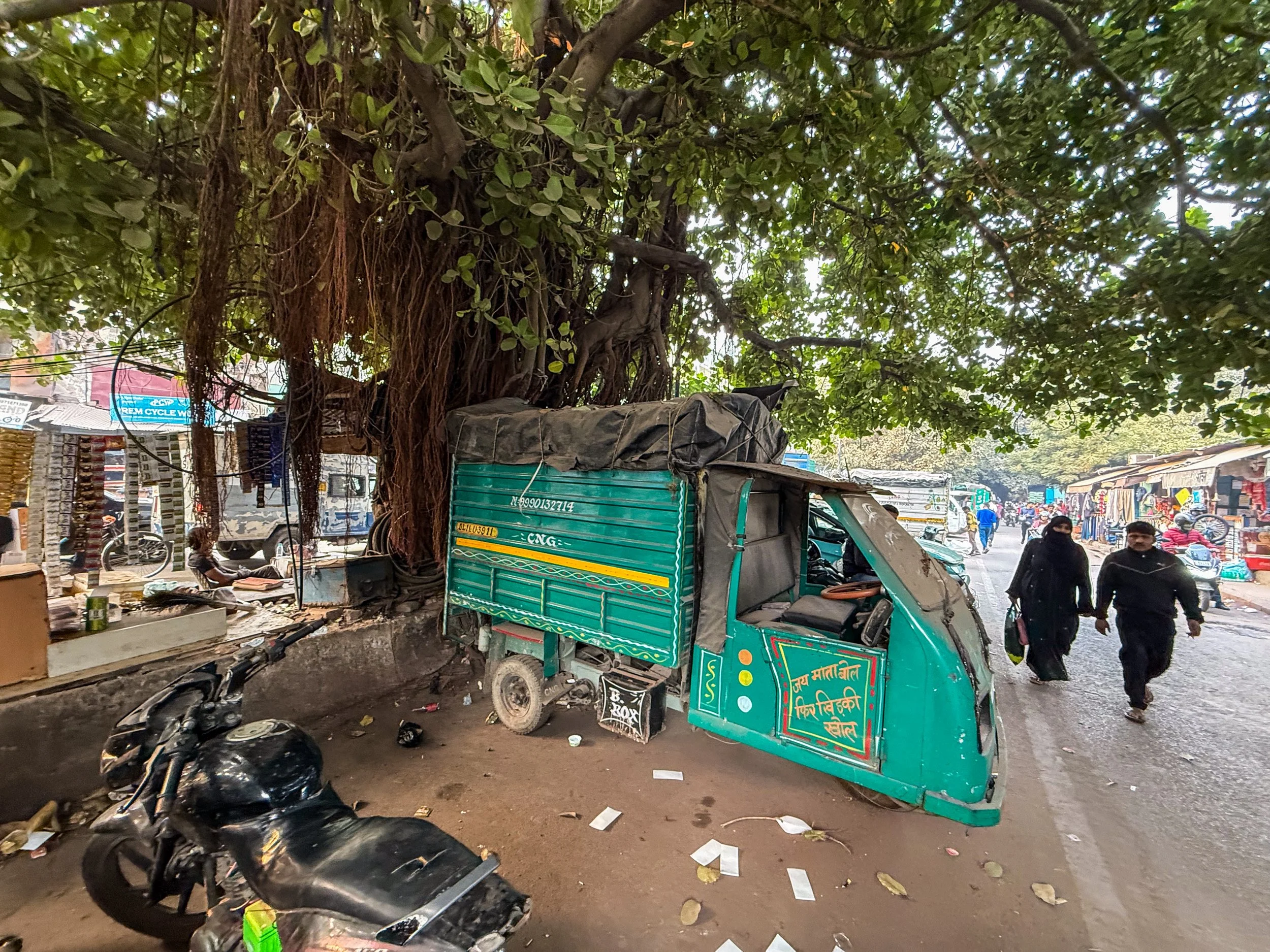
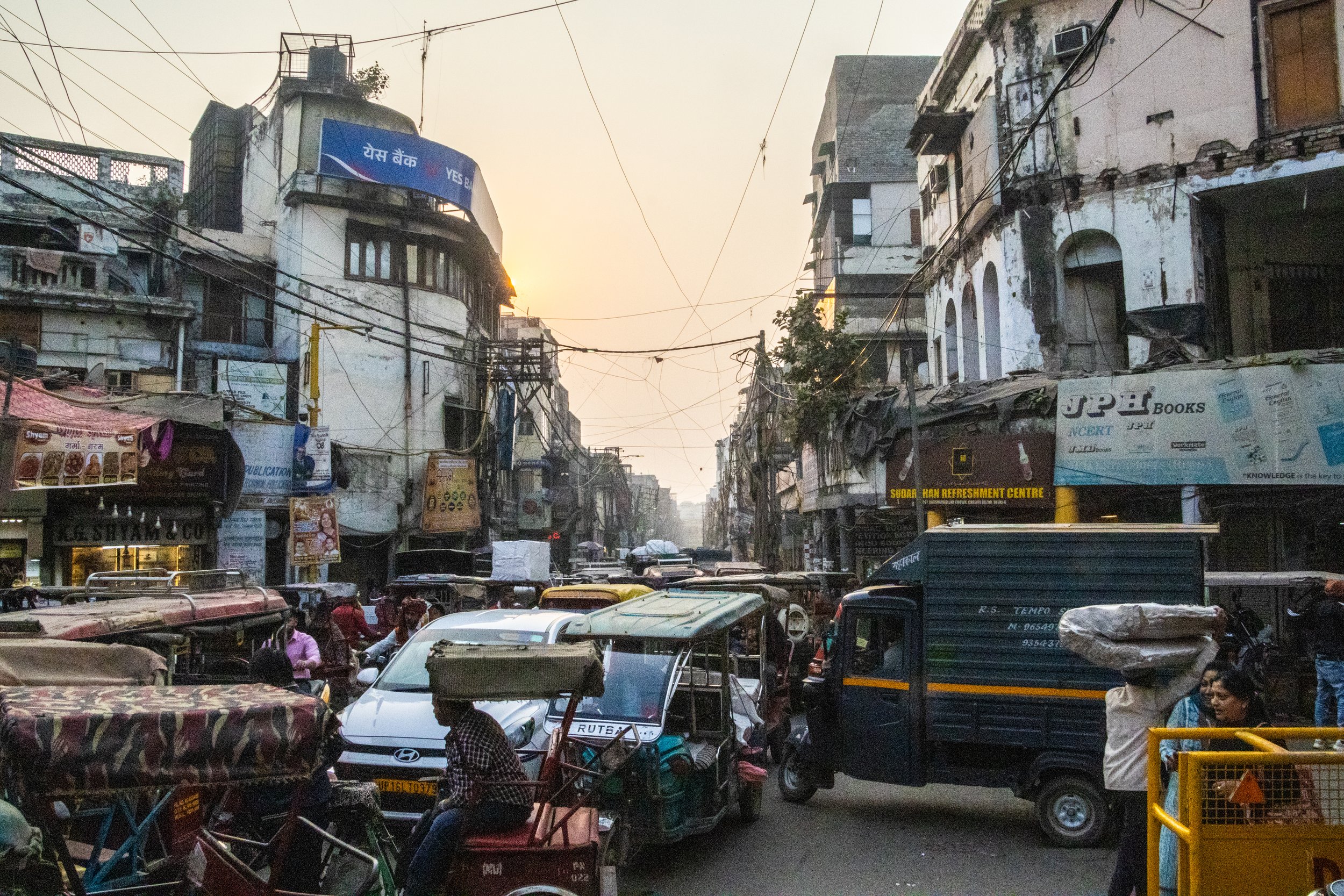
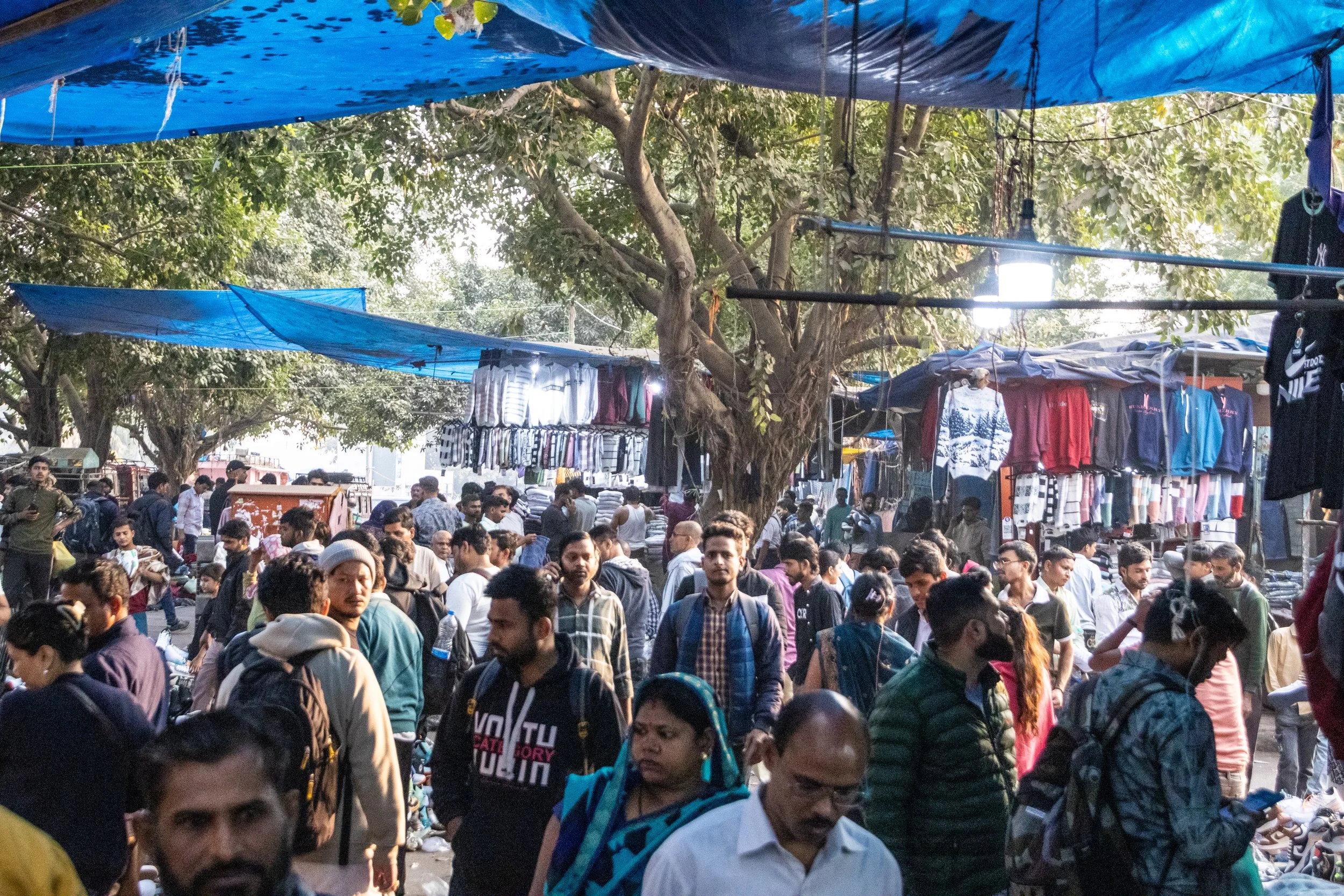
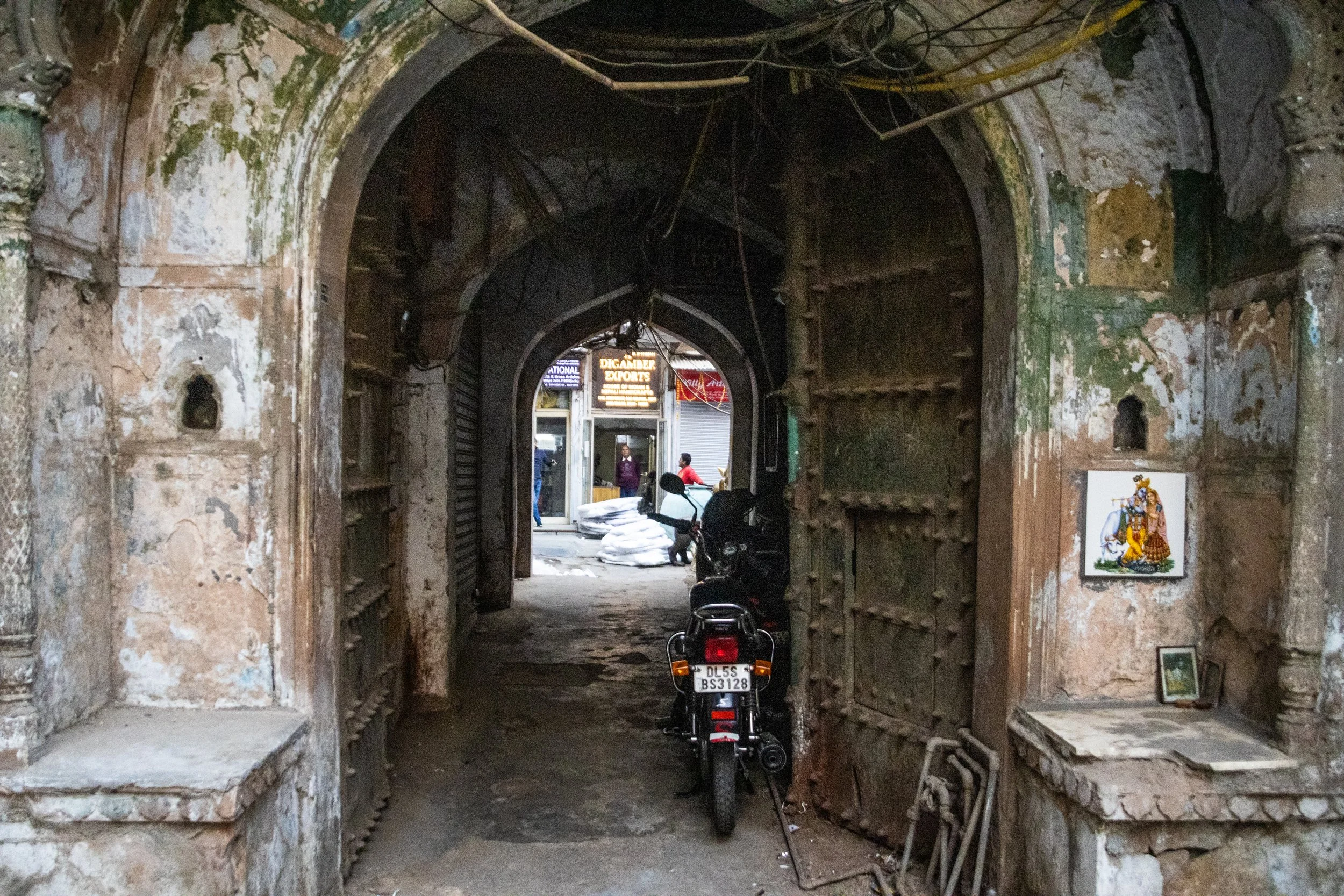
Jama Masjid
Beyond the actual neighborhood—which was definitely my favorite part—Shahjahanabad/Old Delhi has a couple of tourist attractions to offer as well.
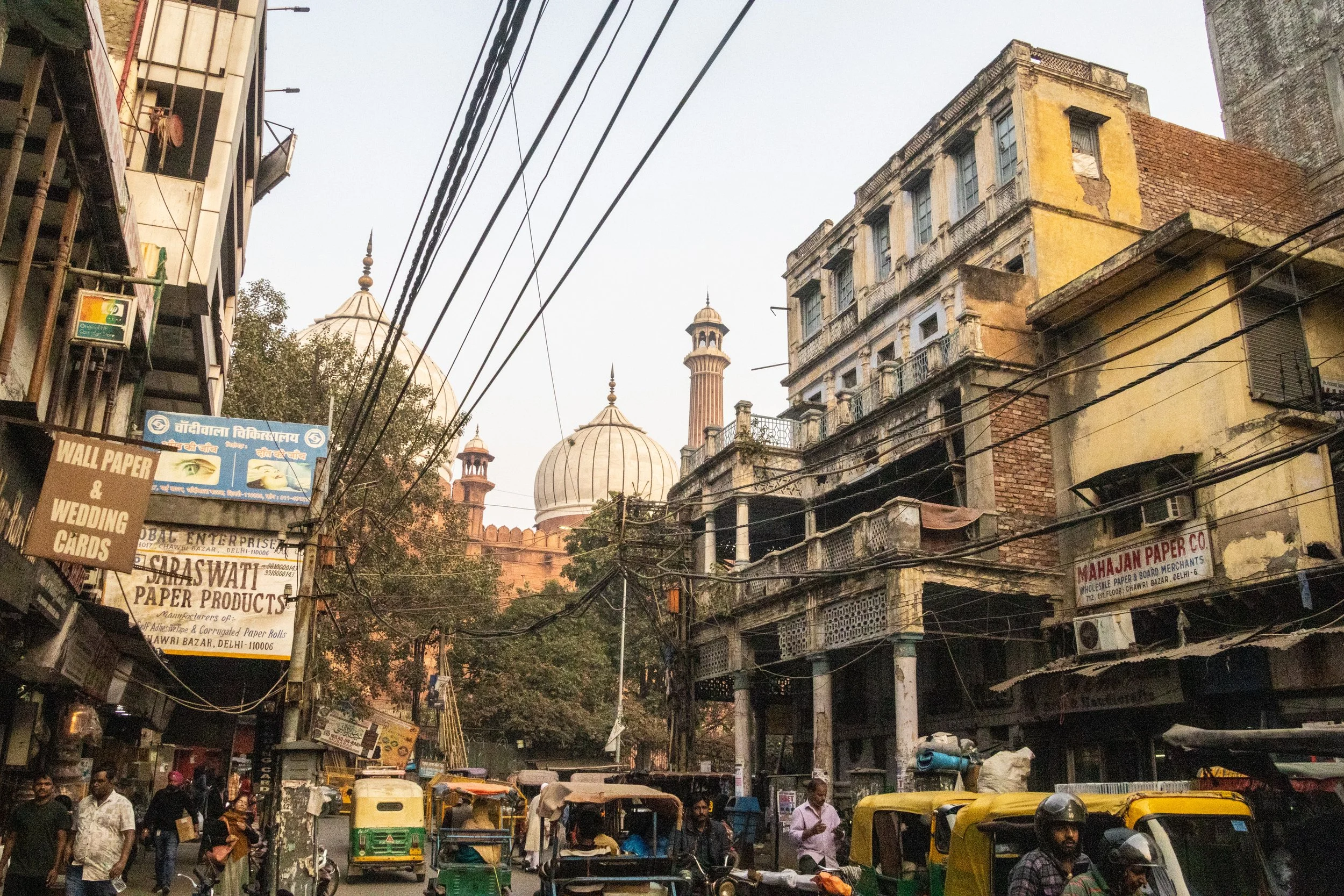
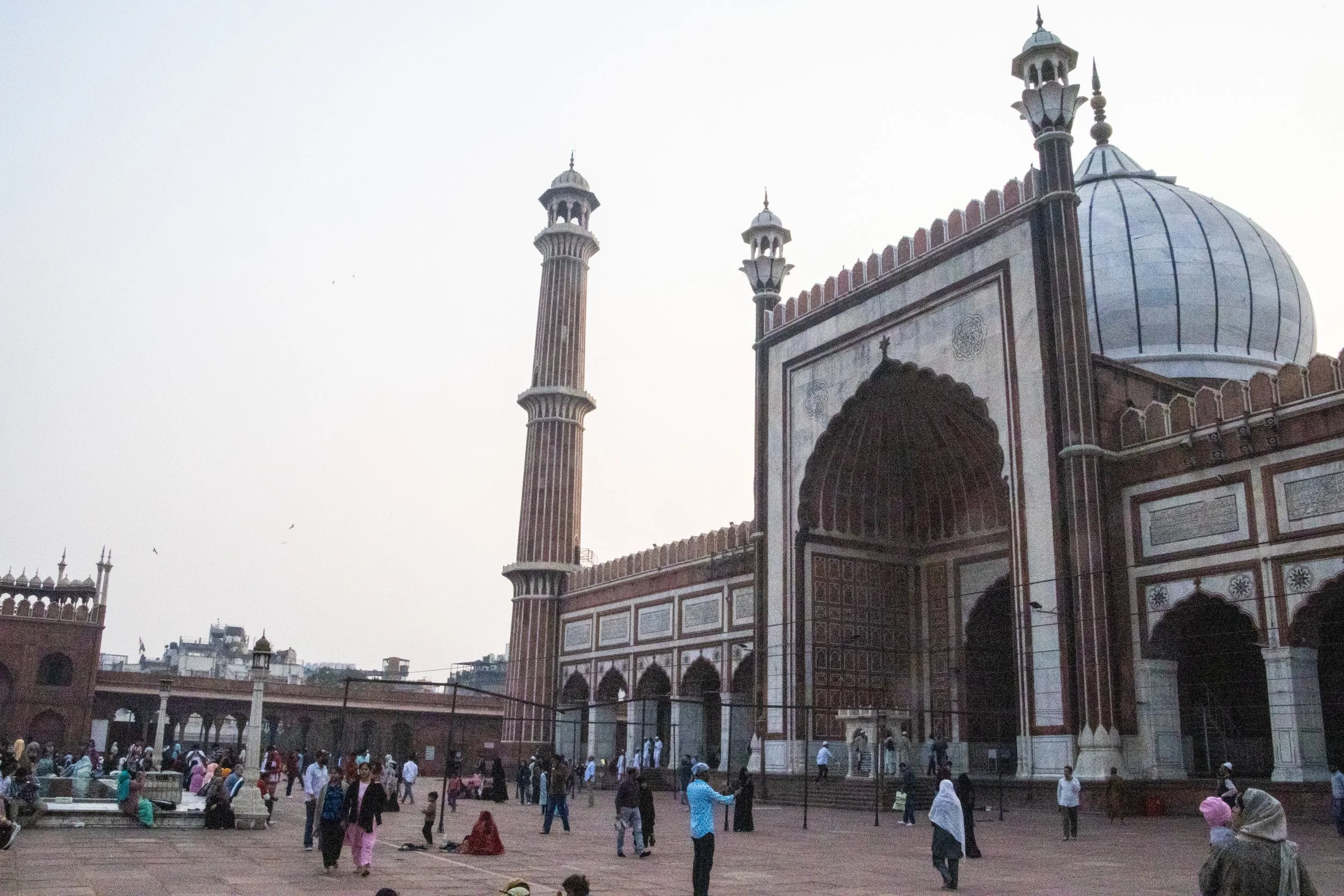
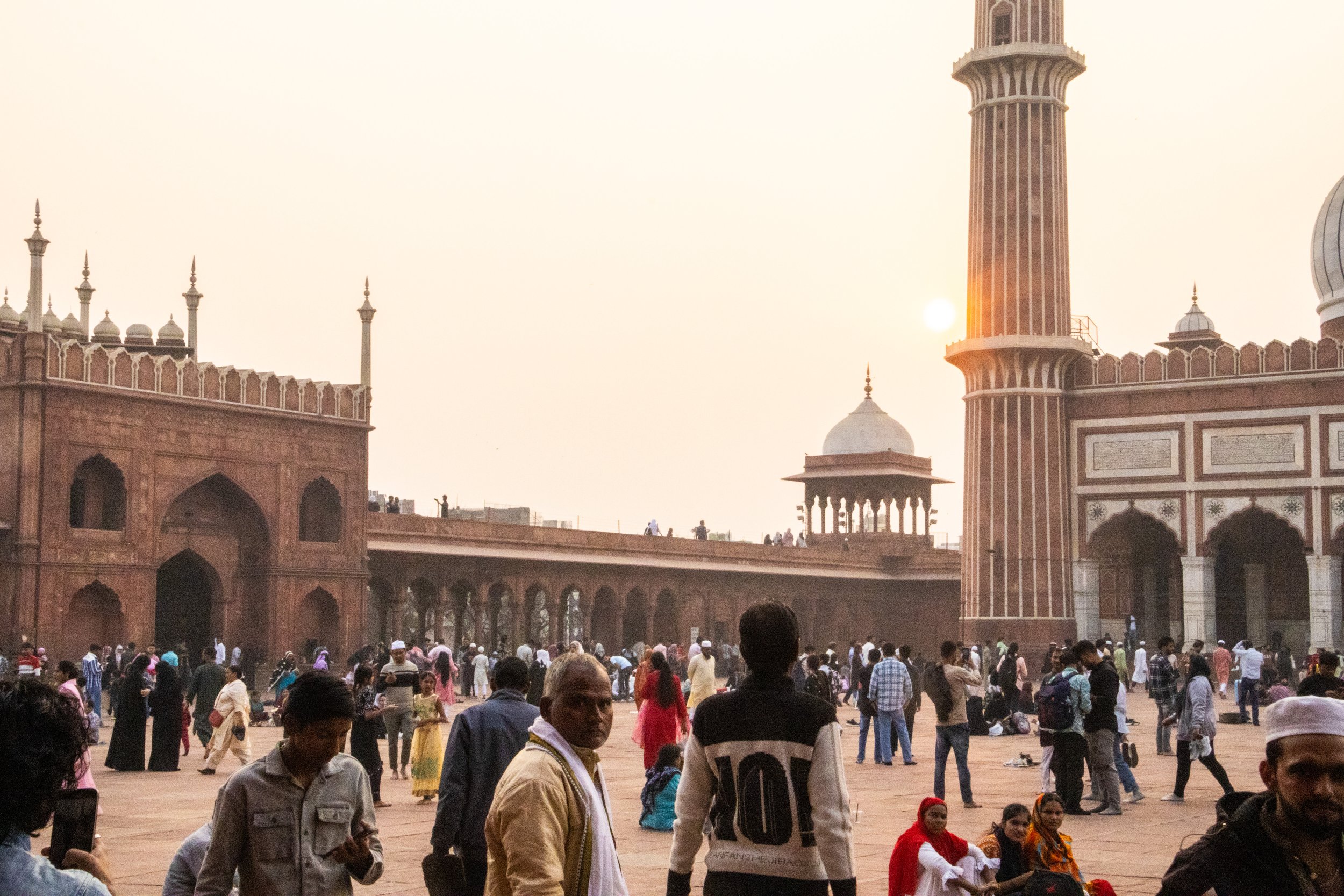
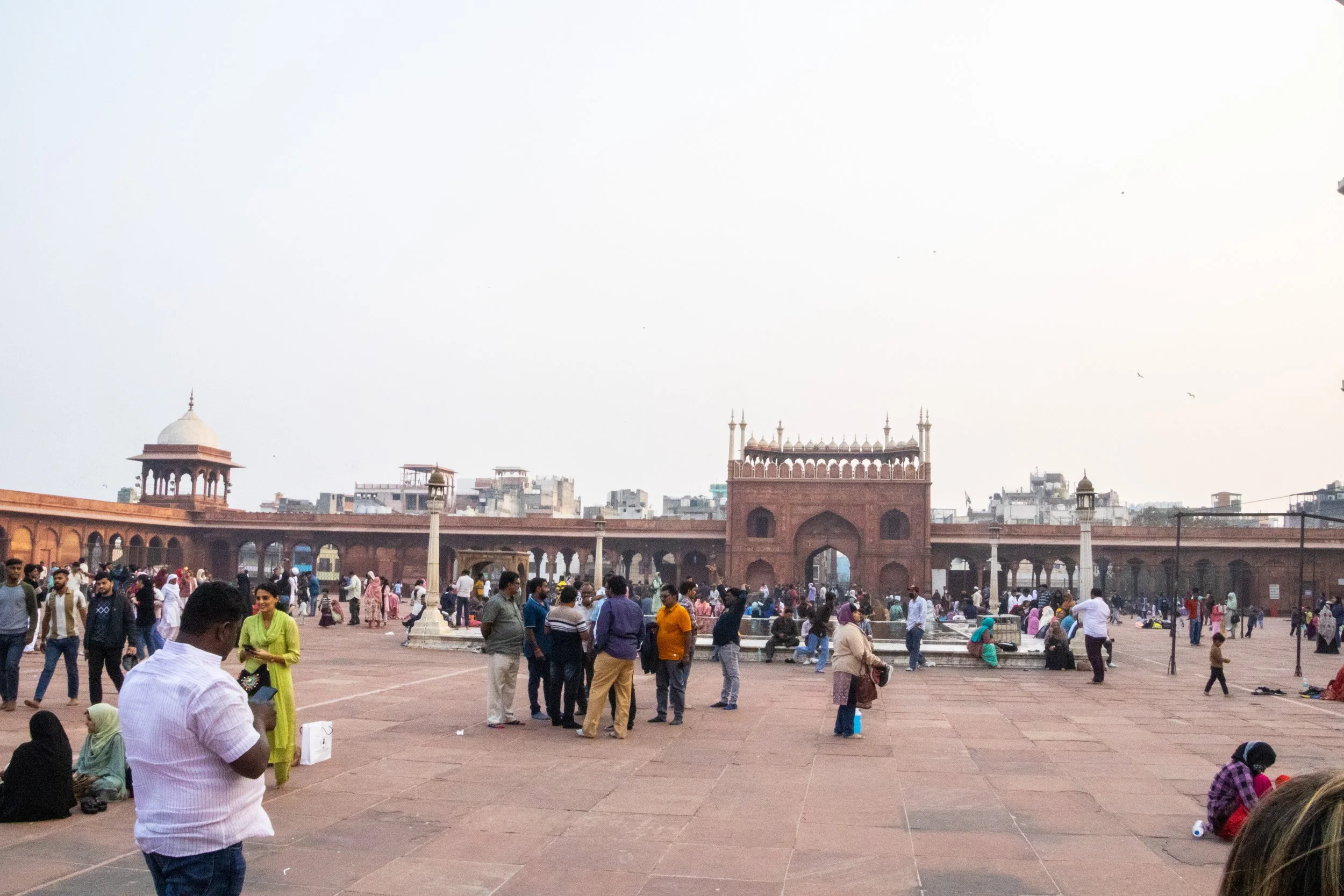
Jama Masjid, also known as Masjid-i-Jehan-Numa, is one of the largest Mosques in India. Between the Persian-derived names and giant mosques, one could be forgiven if they felt like Islam seems a bit over-represented in the capital of a nation most heavily associated with Hinduism. Well… oh boy, lots of history here. If you’re interested, I would highly recommend this 6-part series on the Partition of India from a podcast called Conflicted. Here’s episode 1 for you. Suffice to say, India has lots of Islamic culture and roots, and indeed today has the 3rd largest Muslim population of any country in the world.
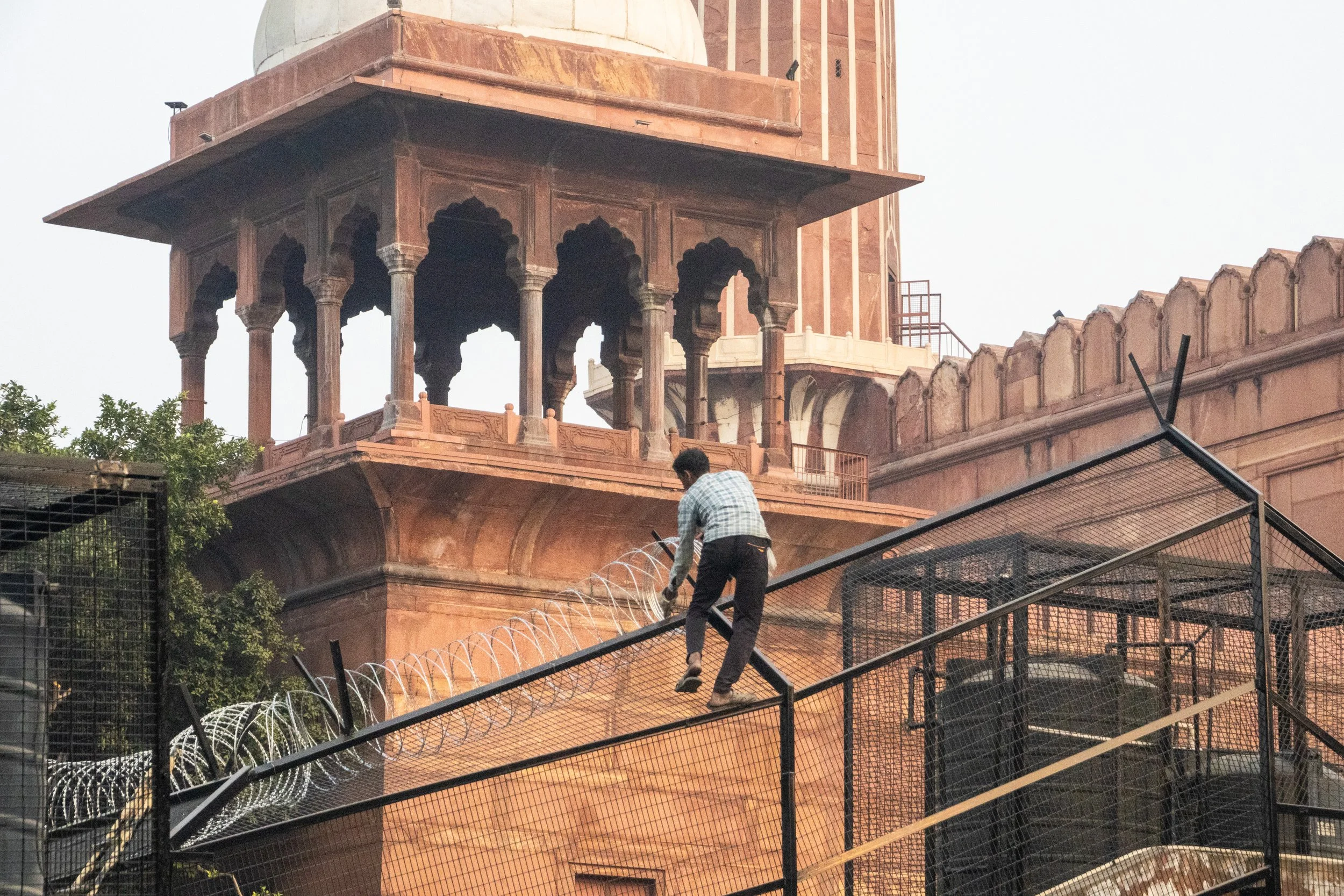
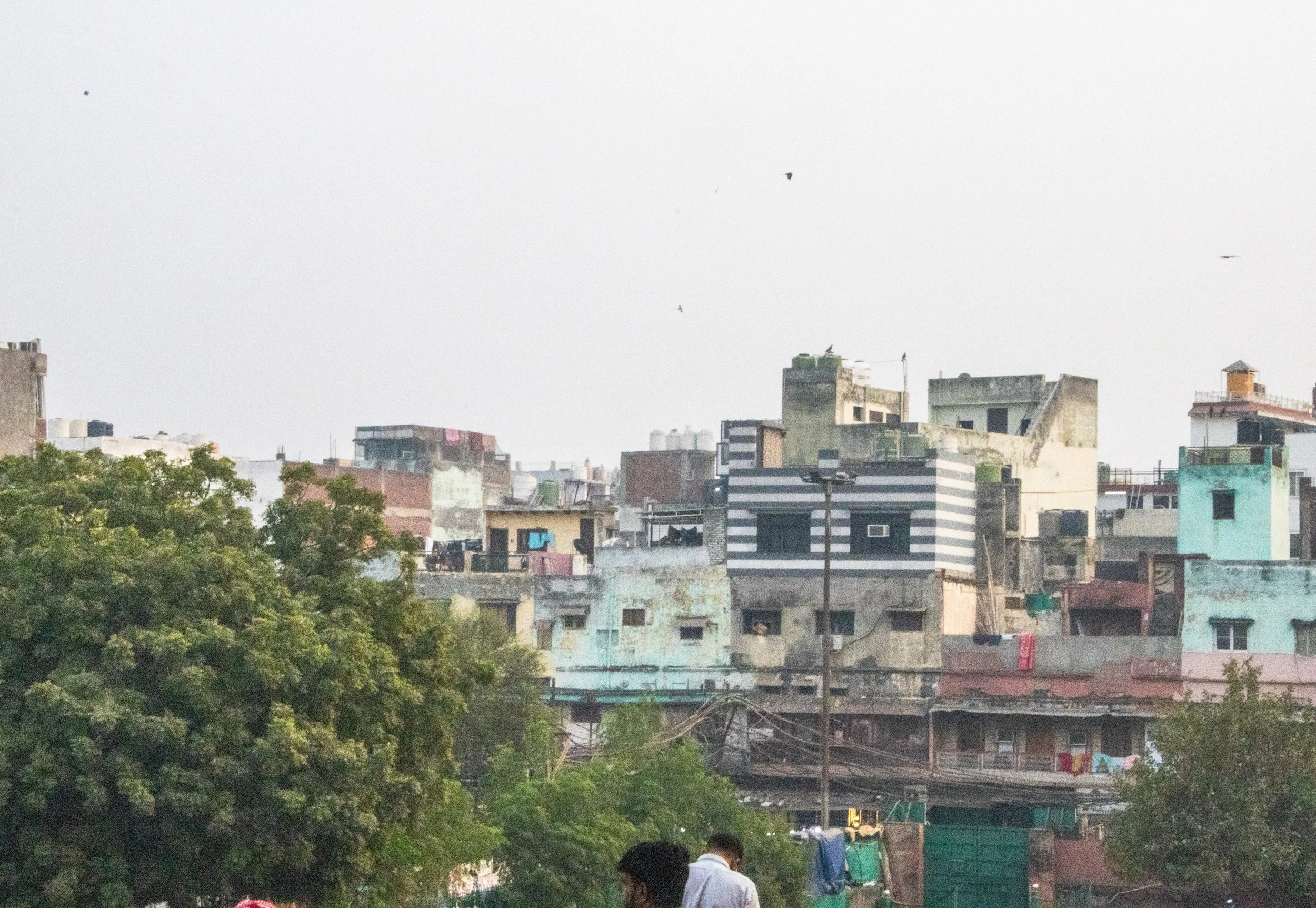
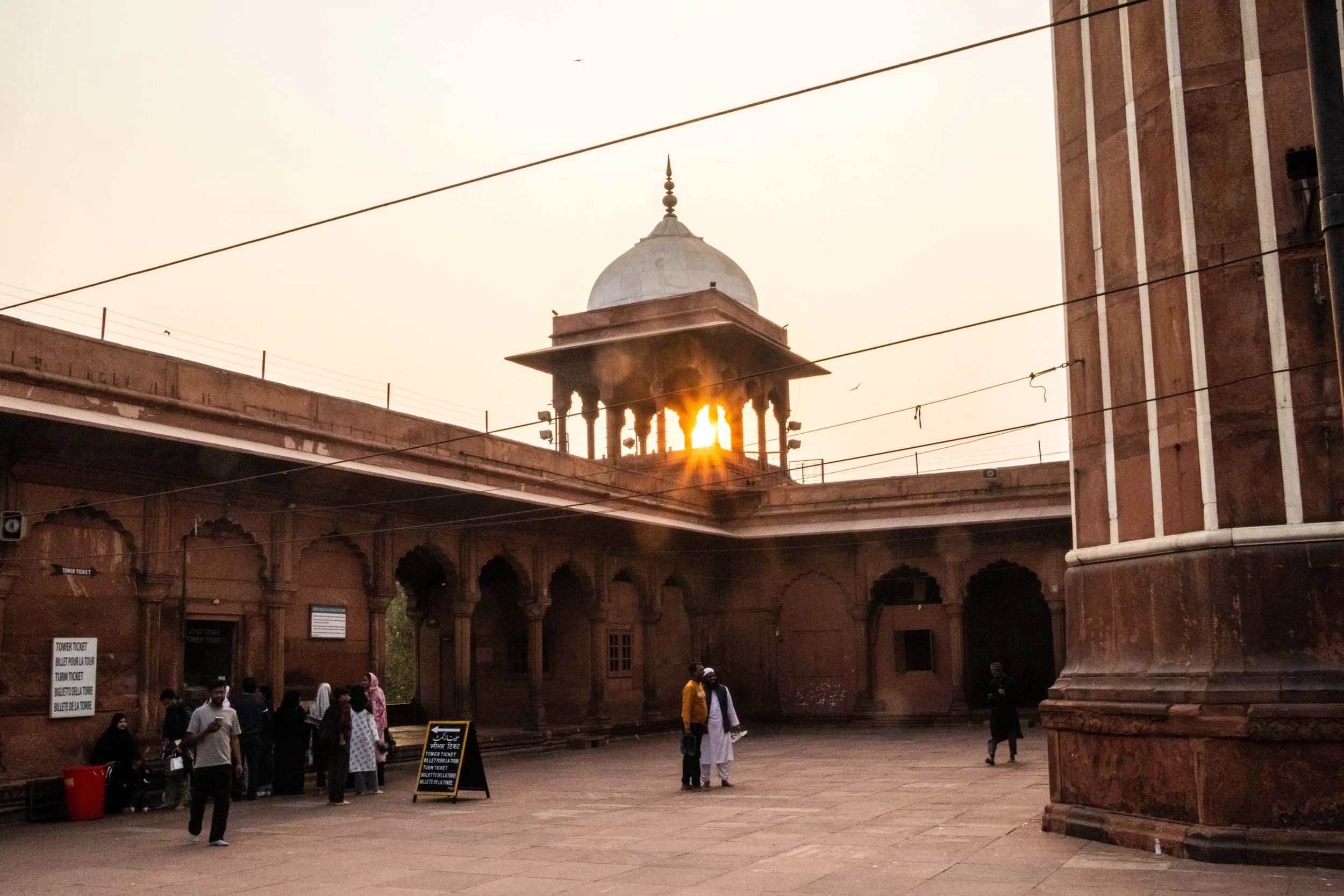
Entering Jama Masjid, visitors have to leave their shoes at the door and women have to cover up (robes are provided). This is pretty standard when entering a mosque, and I am happy to report that my shoes were still there when I came back out. I was fully prepared to leave barefoot! For me, what made this place worthwhile was not so much the mosque itself, but the views it offered! Jama Masjid is raised up a few storeys above street level, with massive staircases and overlook points on 3 out of its 4 sides. You’ll see the views over the tree tops and over the markets in the gallery below. These shots reminded me a lot over the insane shots I took over Dhaka’s New Market back in 2015 when I visited Bangladesh.
Red Fort
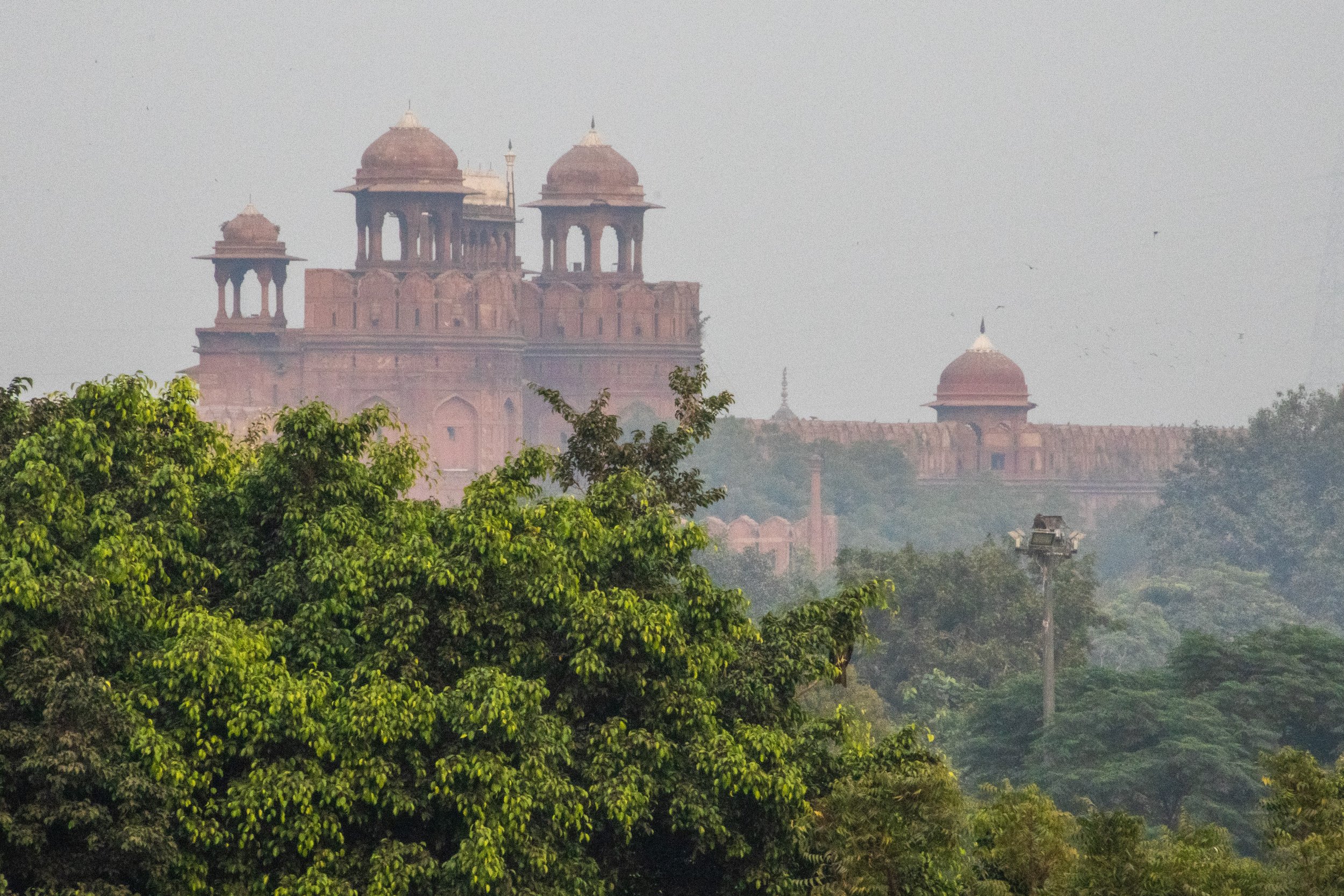
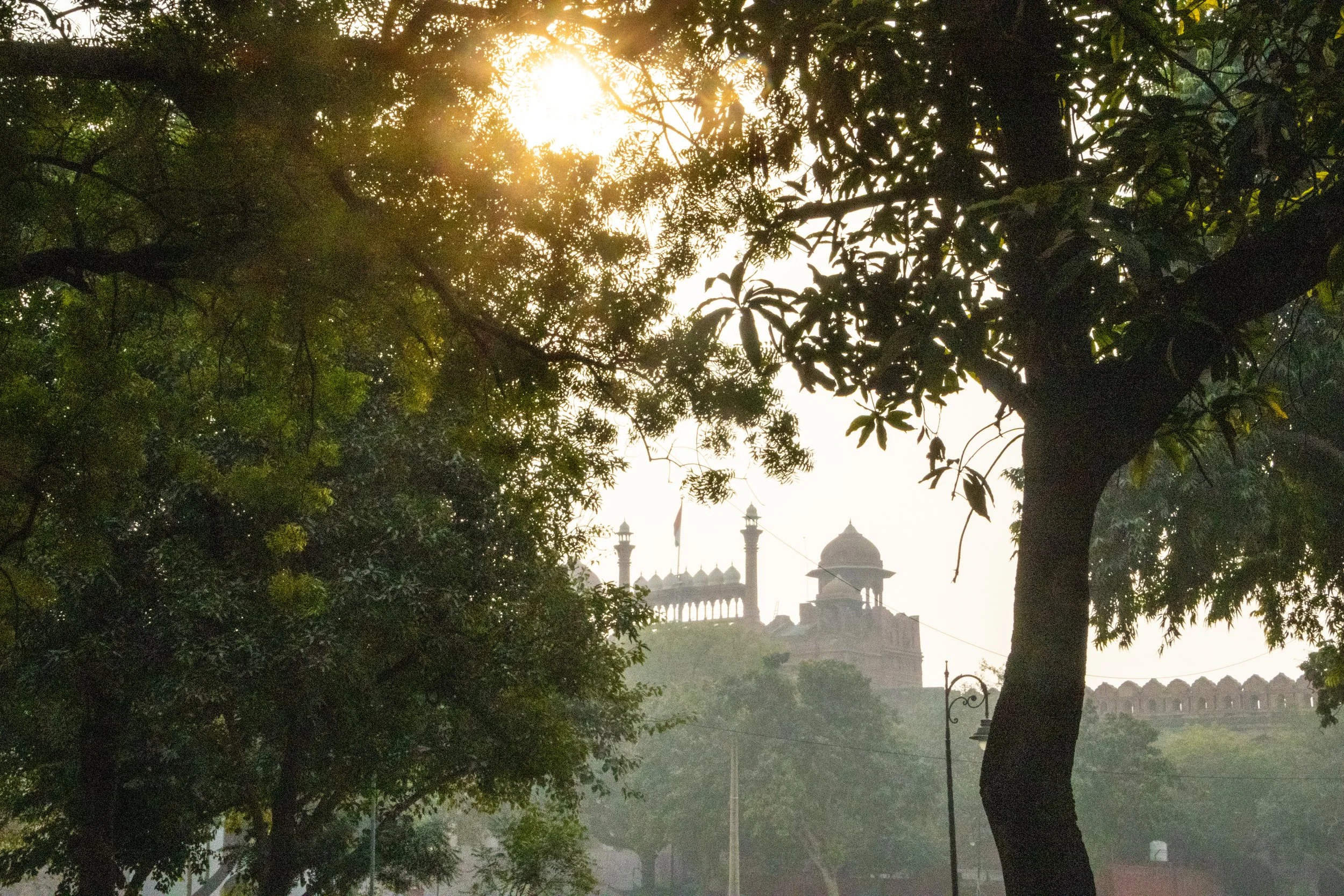
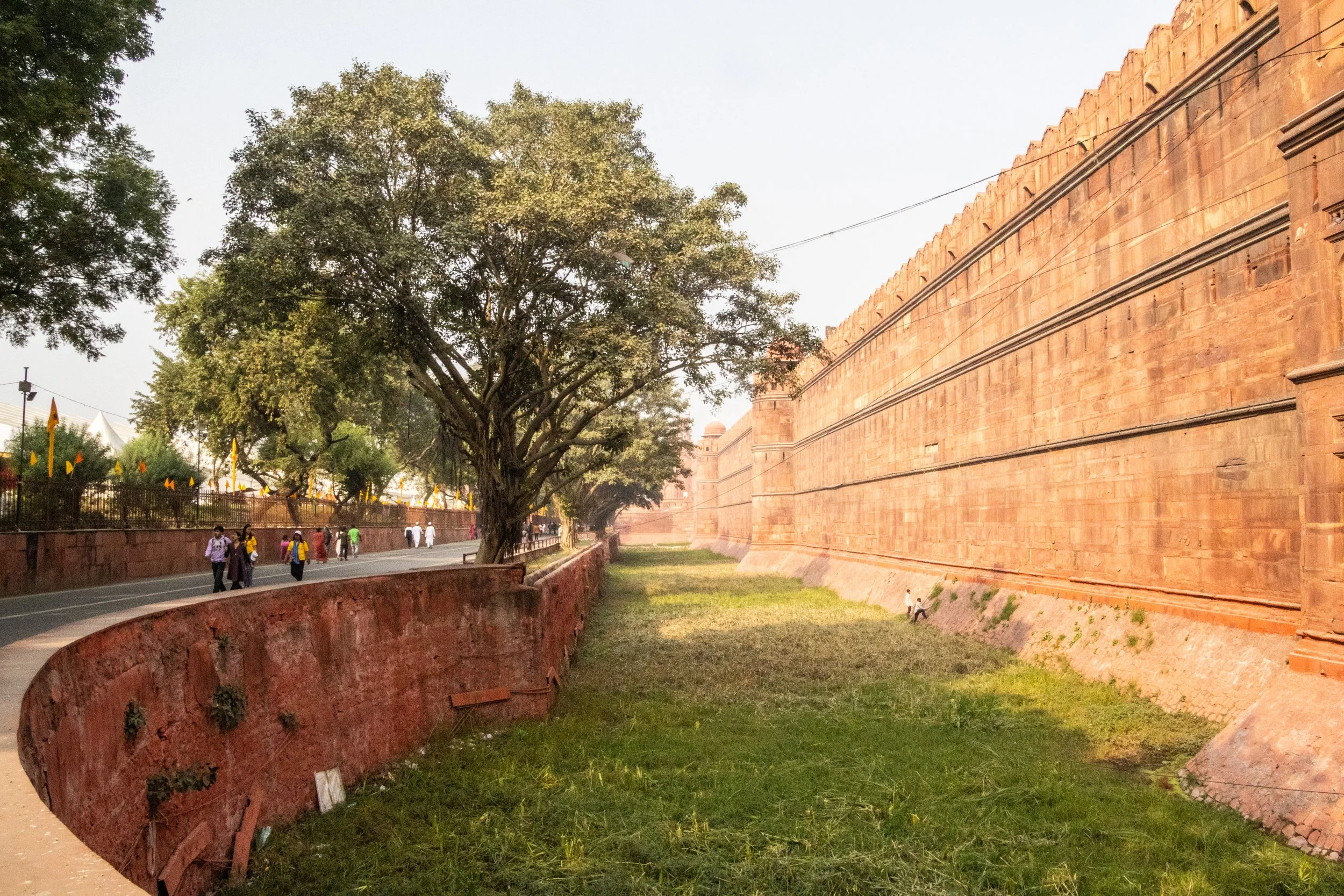
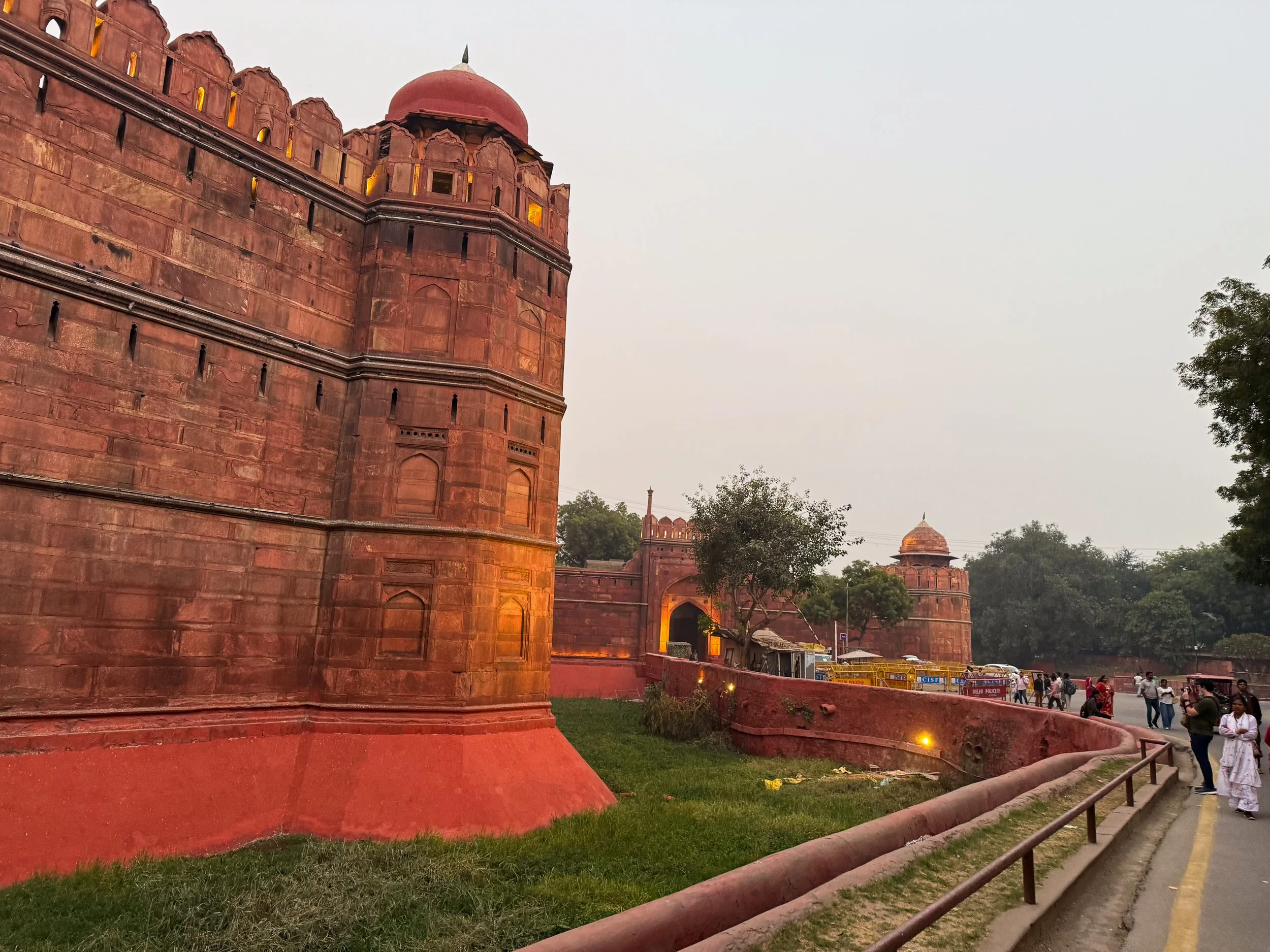
Right next to Shahjahanabad there is a giant red fortress called (drumroll) Red Fort. This was also built by Shah Jahan, with construction taking place from 1638-1648. Prior to the construction of Shahjahanabad, Jama Masjid, and the Red Fort, the capital of Mughal India was actually in Agra, where there is another Red Fort that is very similar to this one. We visited Agra’s Red Fort on my first visit to India 10 years ago. Both fortresses get their names from the red sandstone defensive walls. Inside of Delhi’s Red Fort reboot, there is not only infrastructure for a military defense, but also the grounds of a sprawling luxury palace. With this as the military fortification and palace, Jama Masjid as the religious center, and Shahjahanabad as the imperial city, Delhi would be the seat of power for the Mughal Empire for the next ~150 years until the British took over. But when the British finally left, the aforementioned Jawaharlal Nehru raised the Indian Flag over this fortress, starting a tradition that is still observed on India’s Independence Day now.
The walls are 33 meters (108 ft) high and stretch about 2.4 km (1.5 miles) around the complex. The area enclosed is ~250 acres, and it’s pretty much all available to explore freely! Most of the tourists we saw in here seemed to be visiting from other Indian cities. It’s quite peaceful on the fortress grounds today, and is now apparently a far cry from the wealth and luxury concentrated here during the Mughal reign. Here are some photos of the grounds…
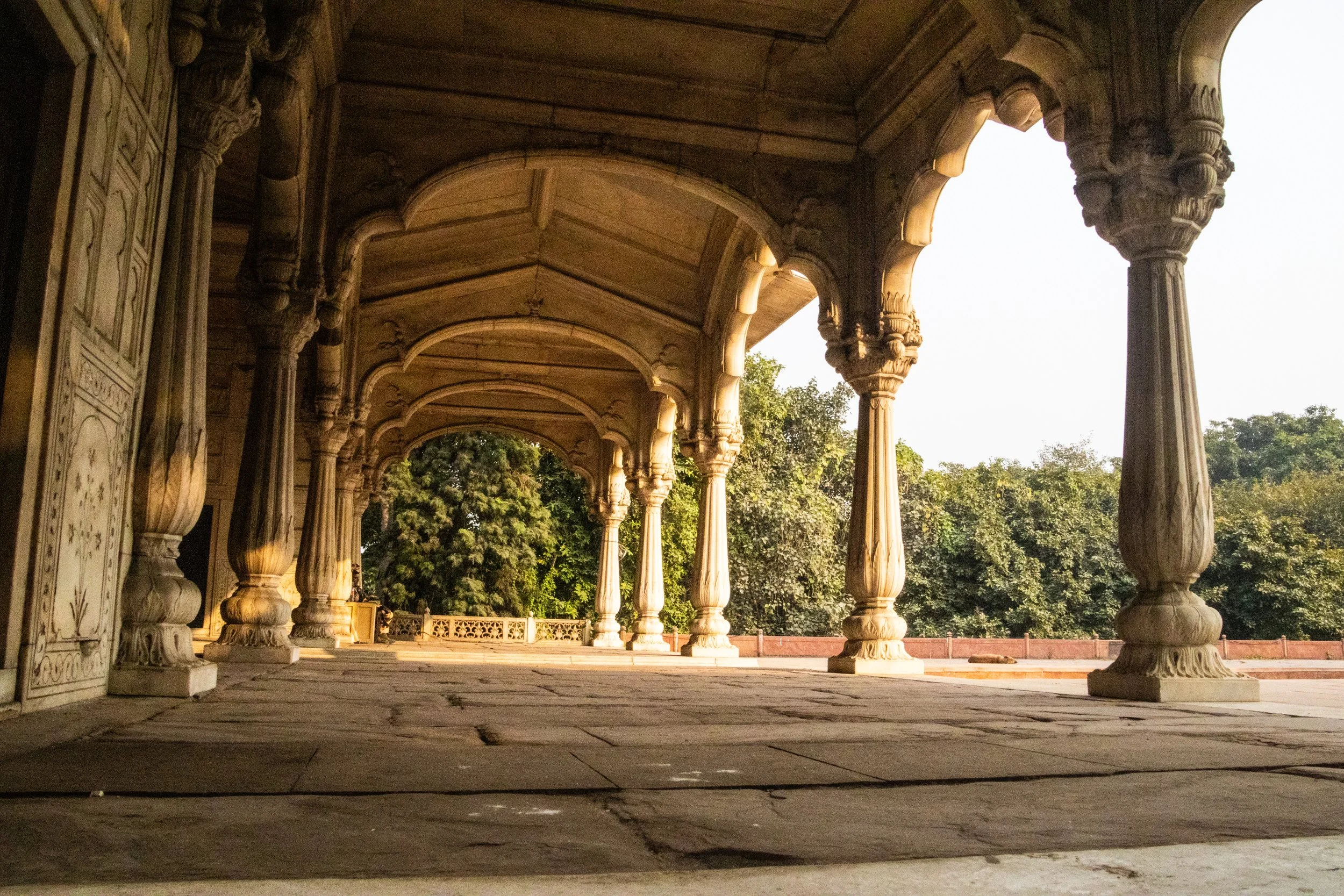
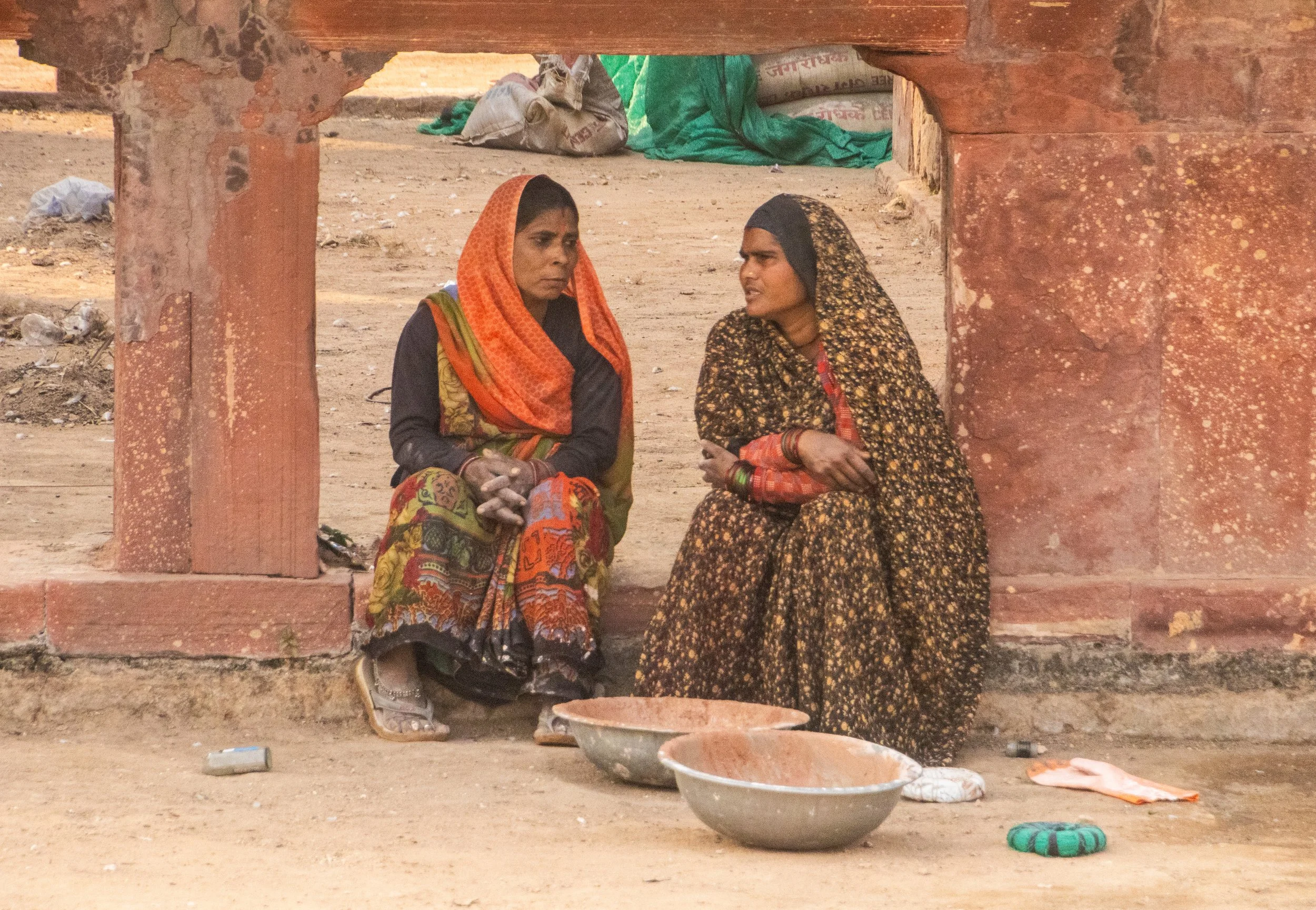
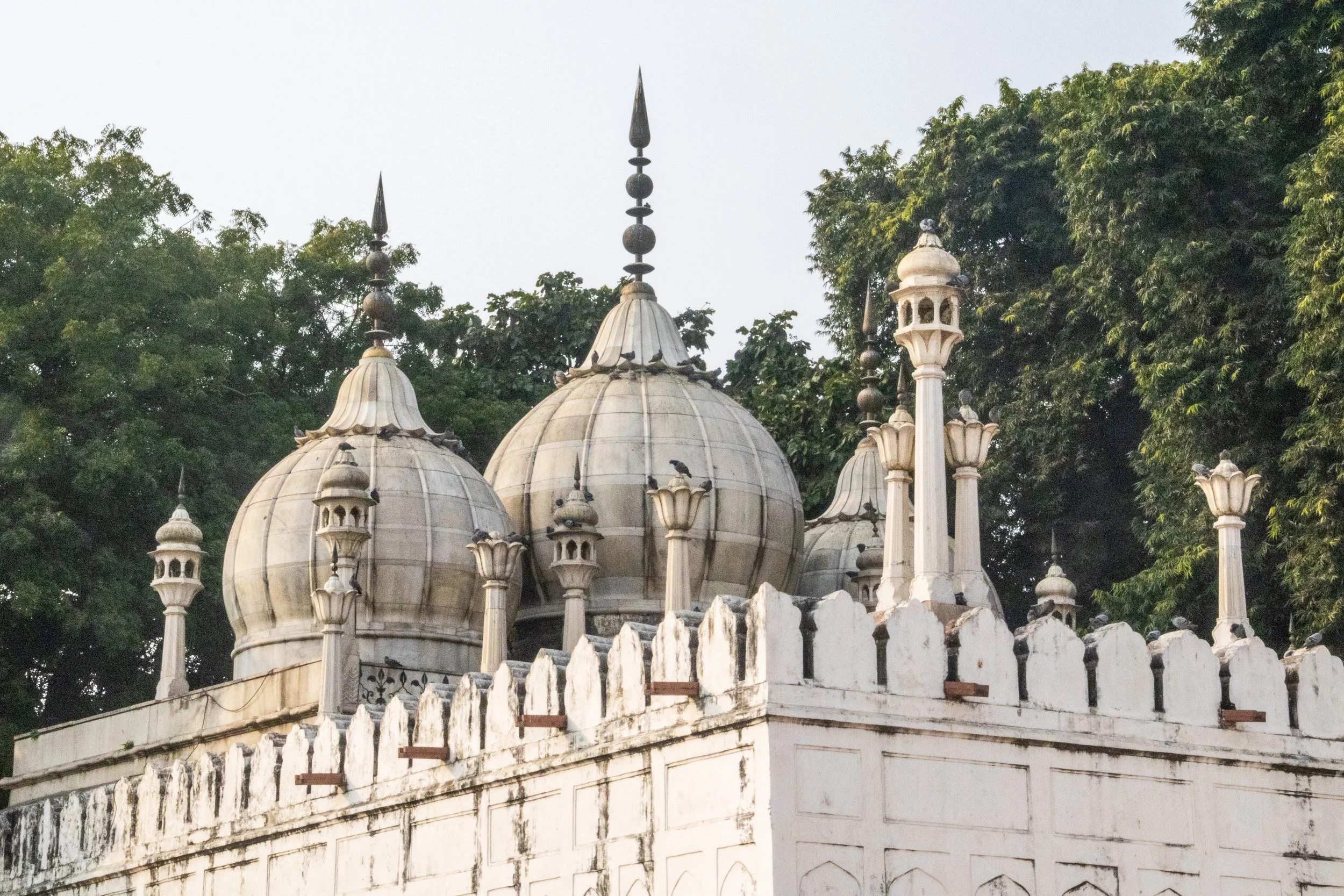
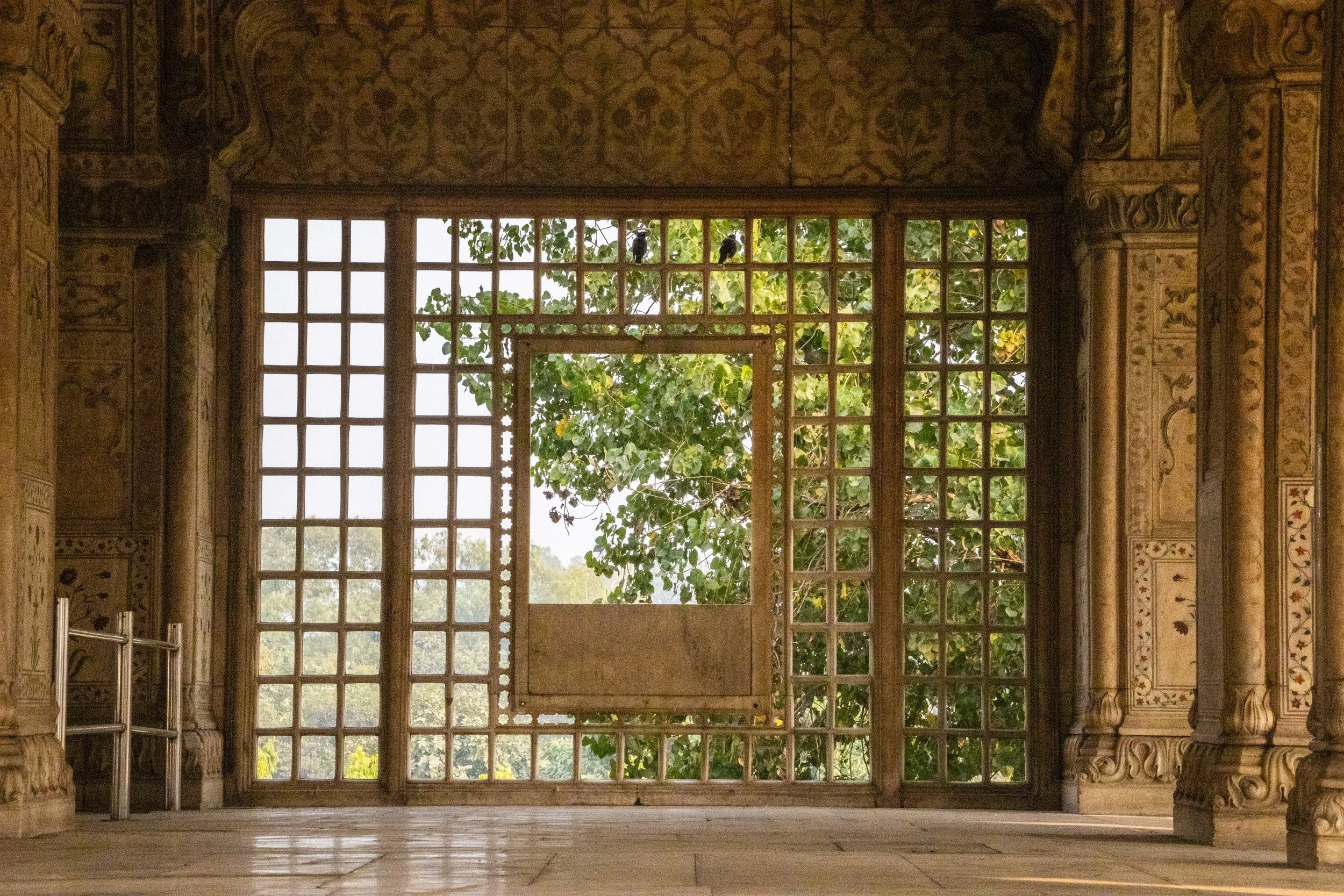
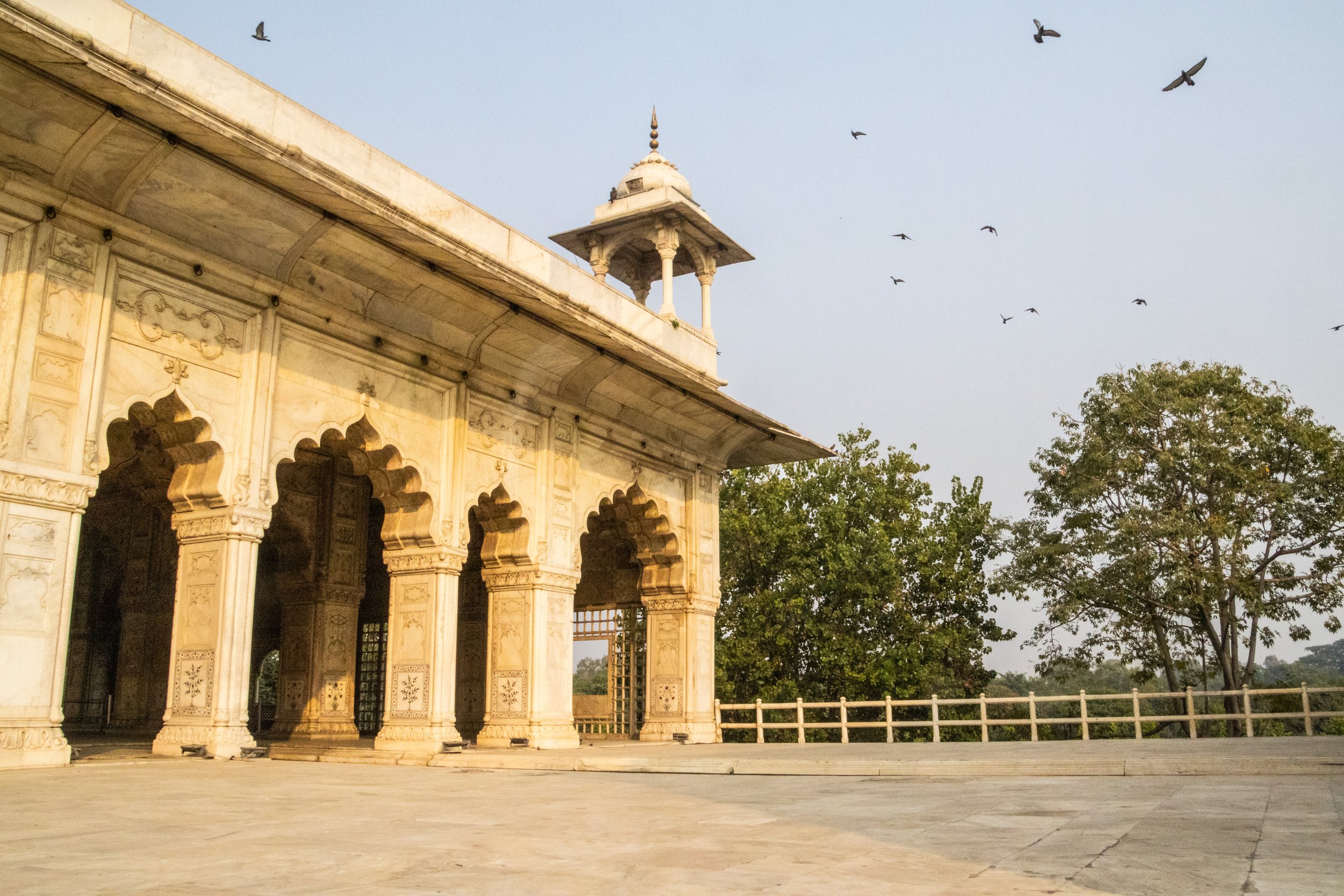
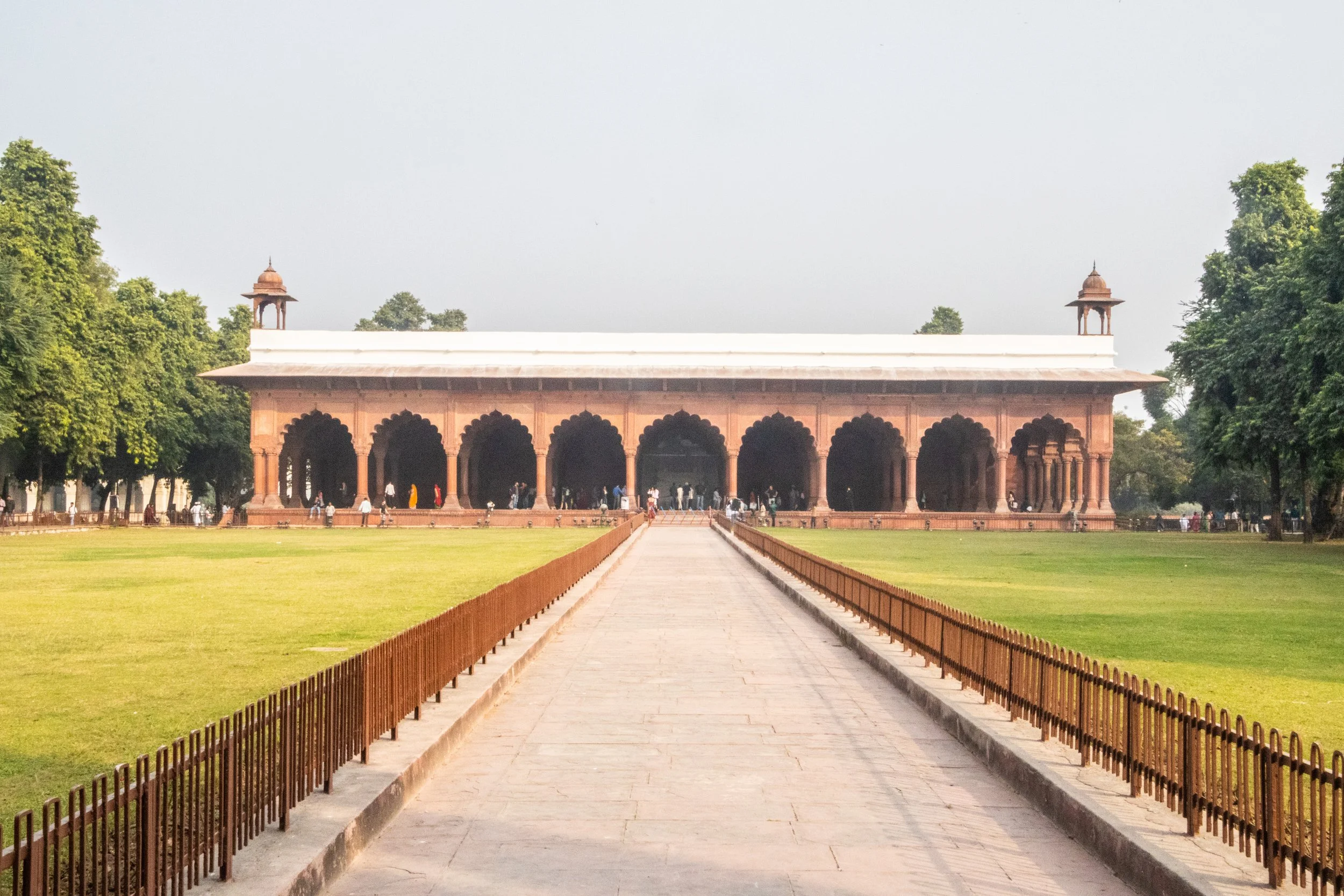
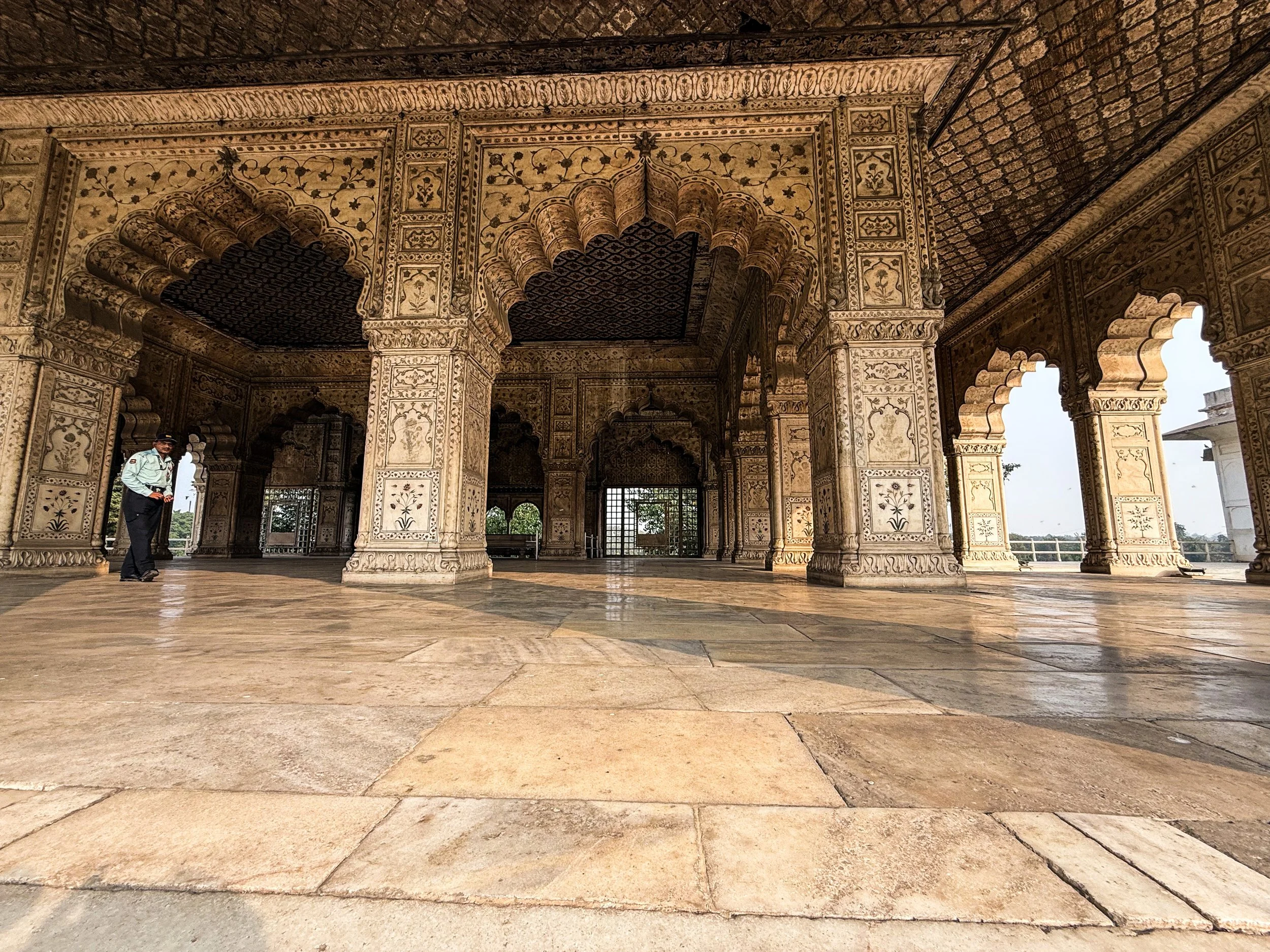
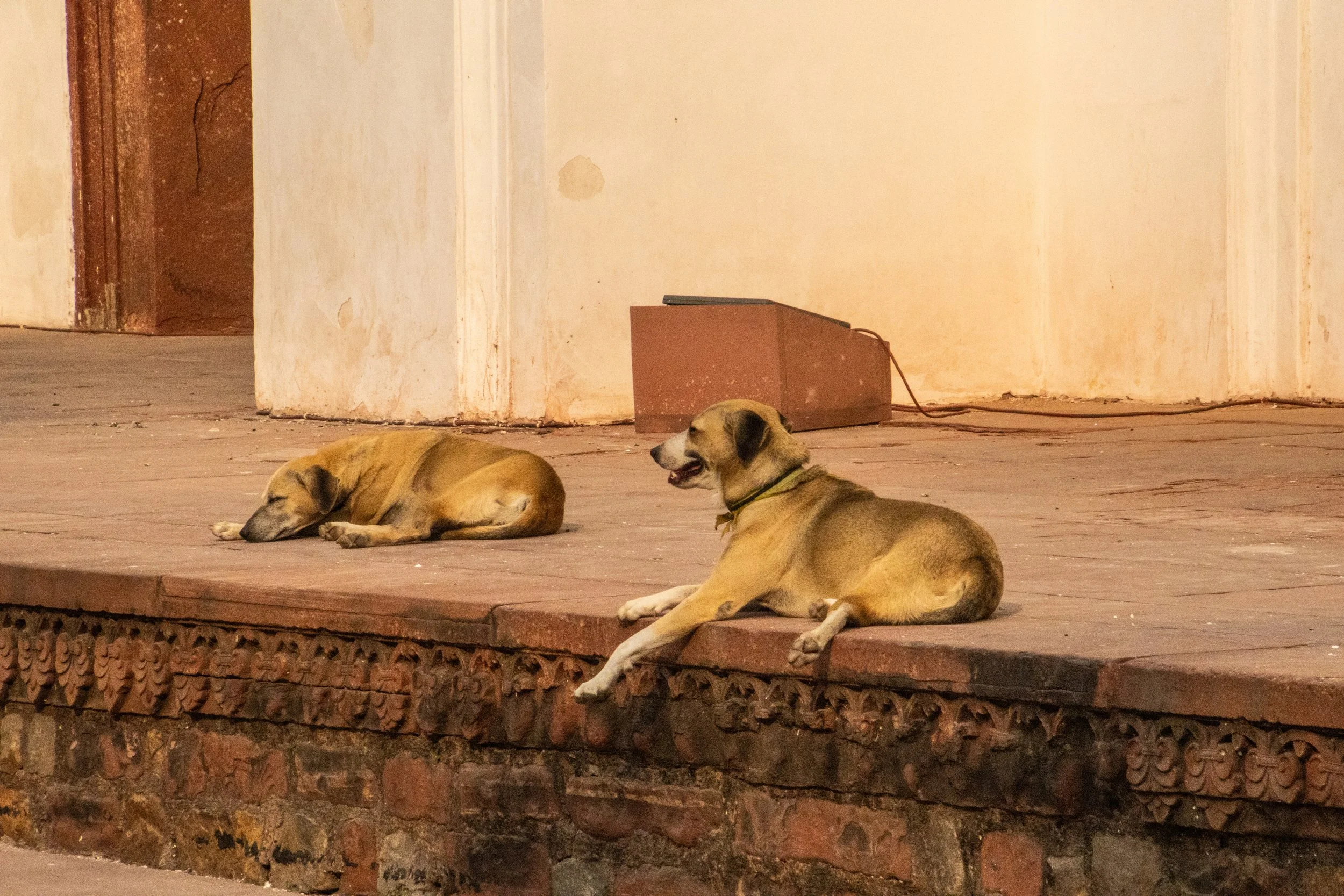
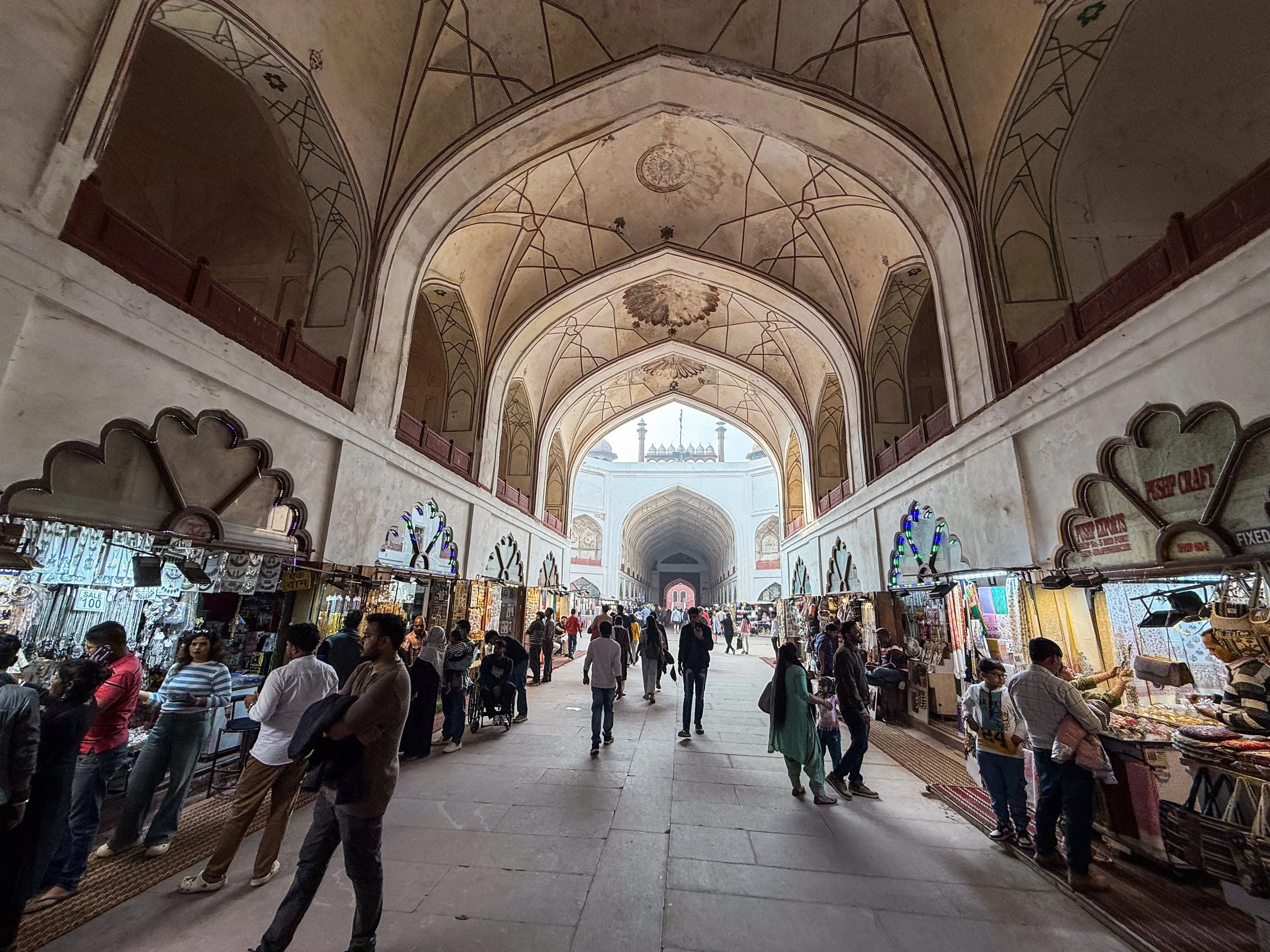
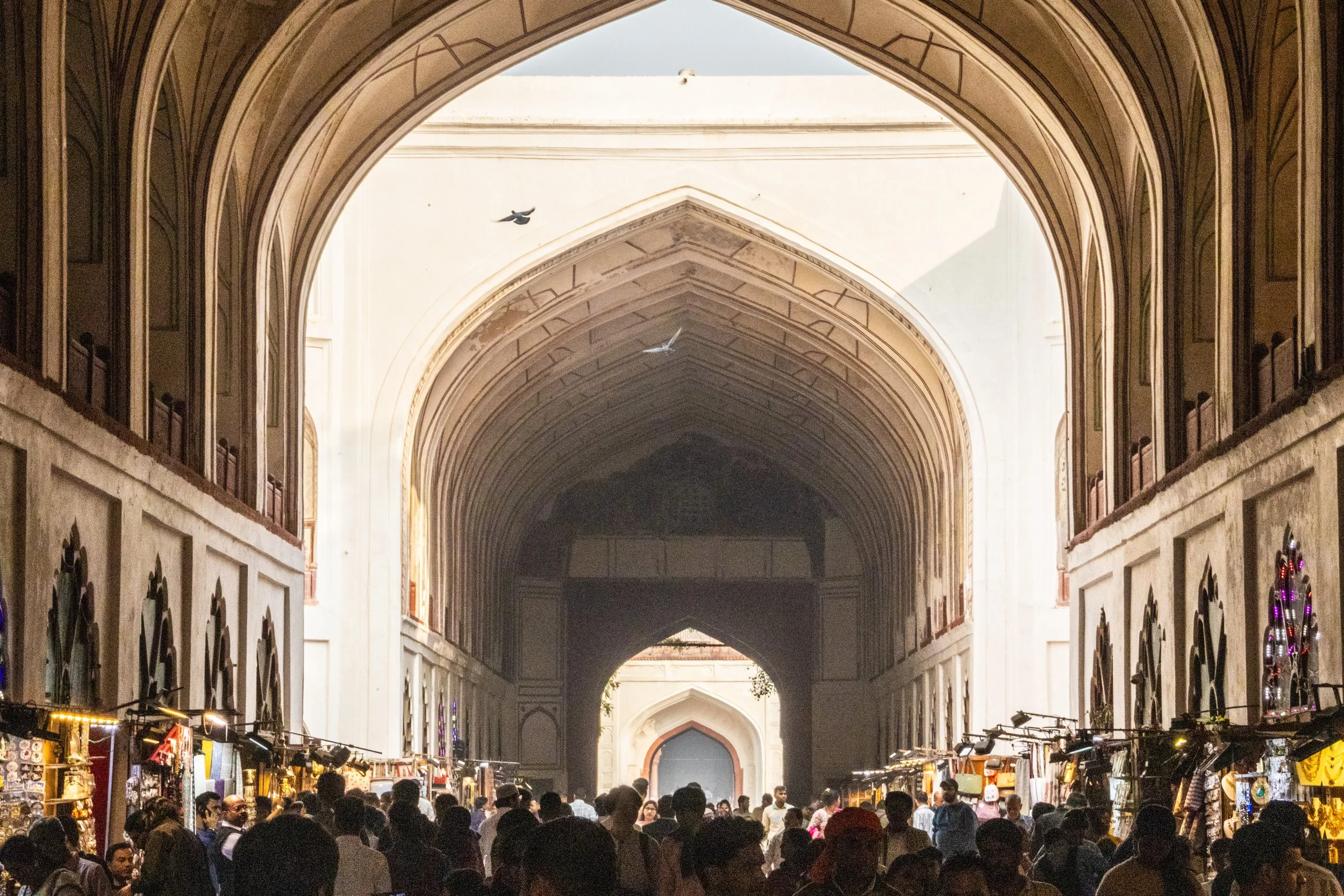
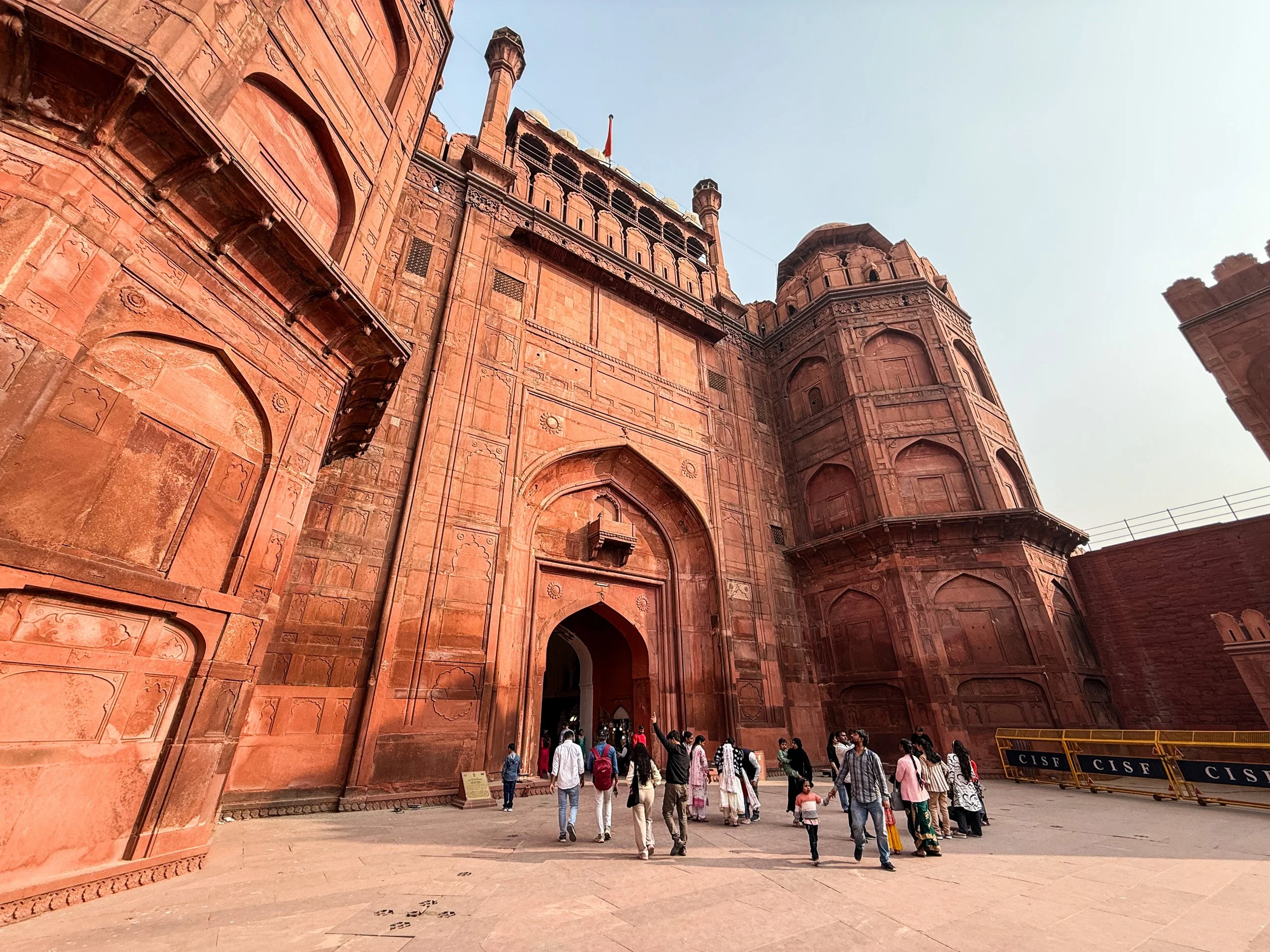
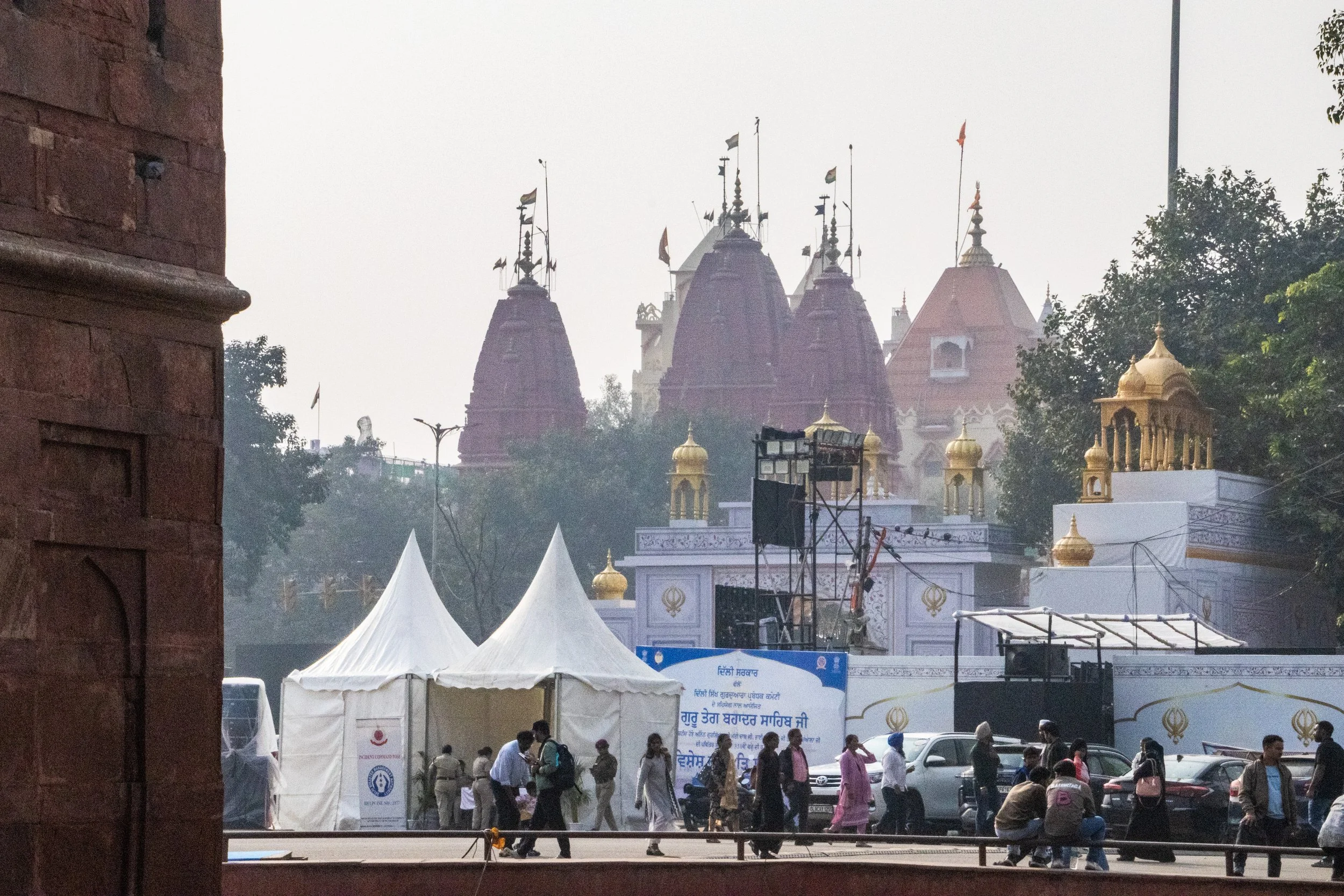
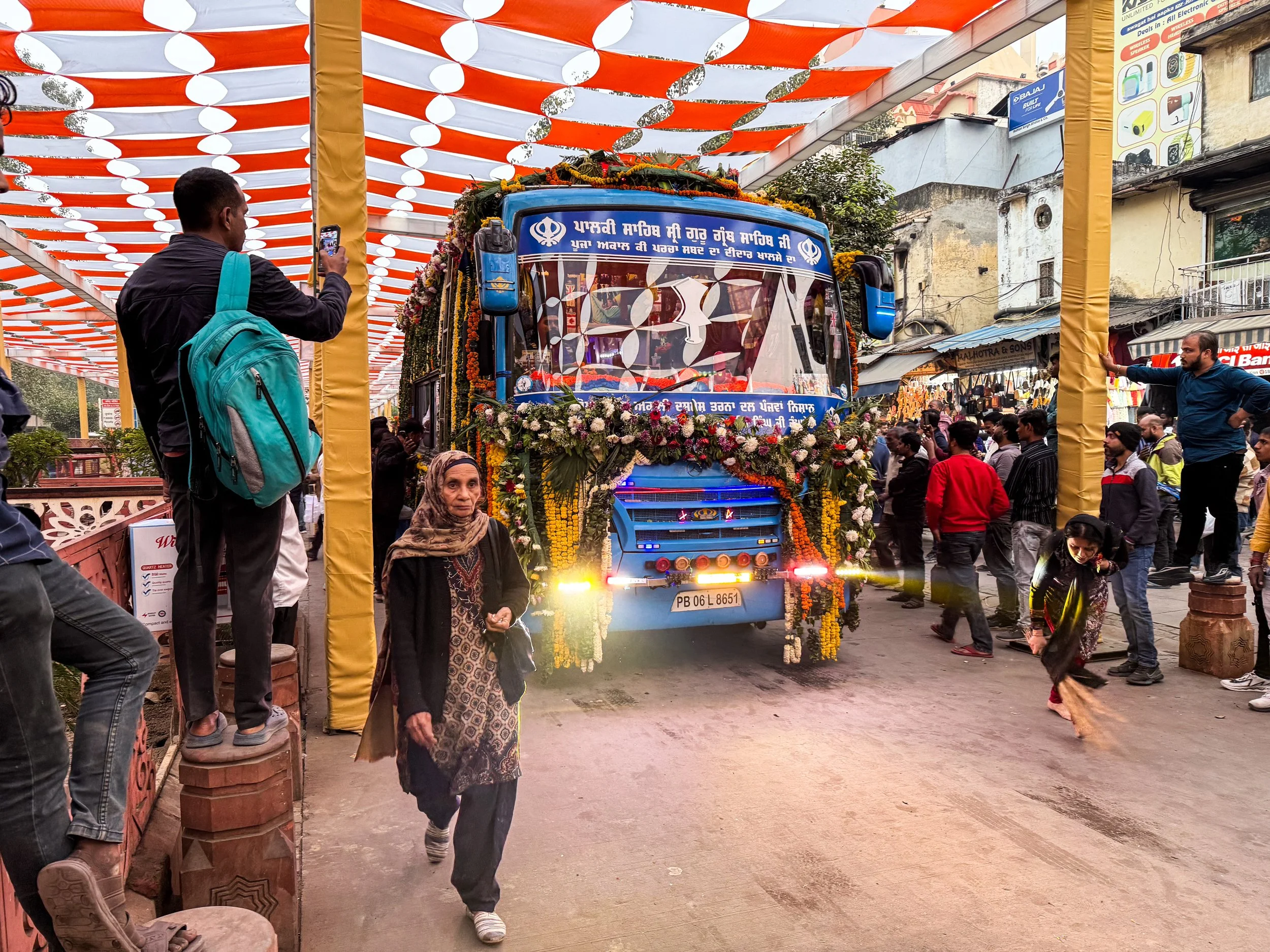
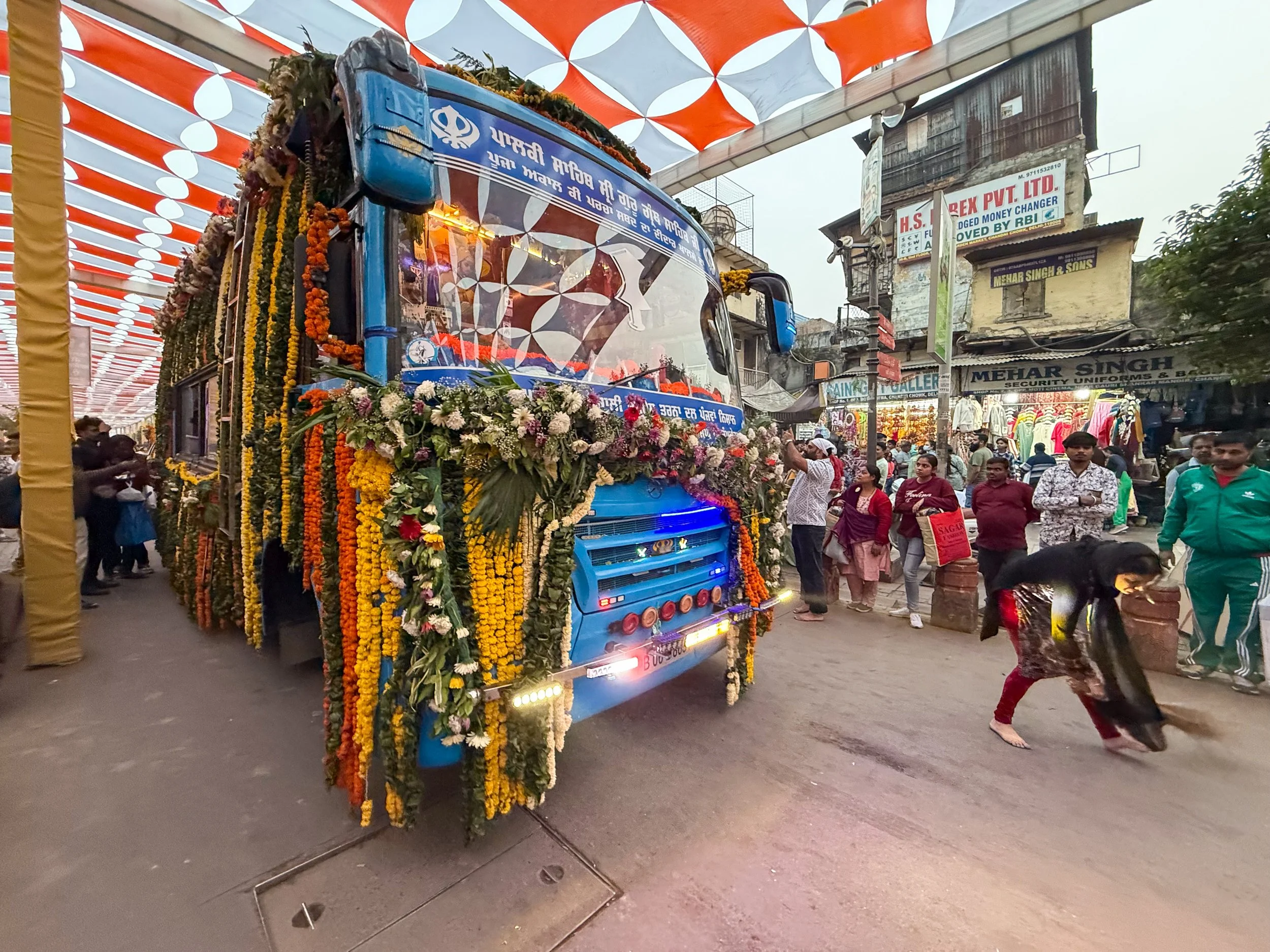
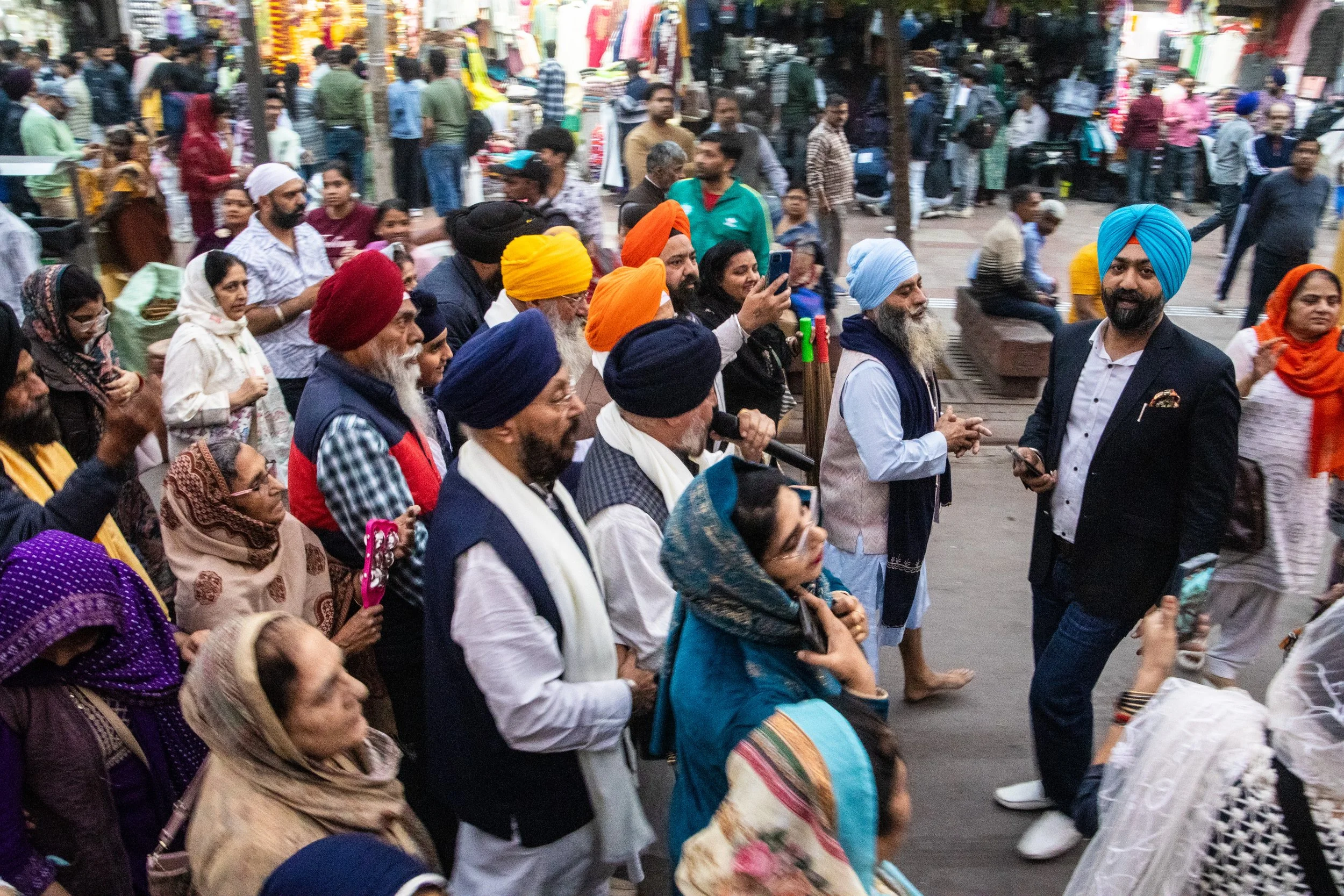
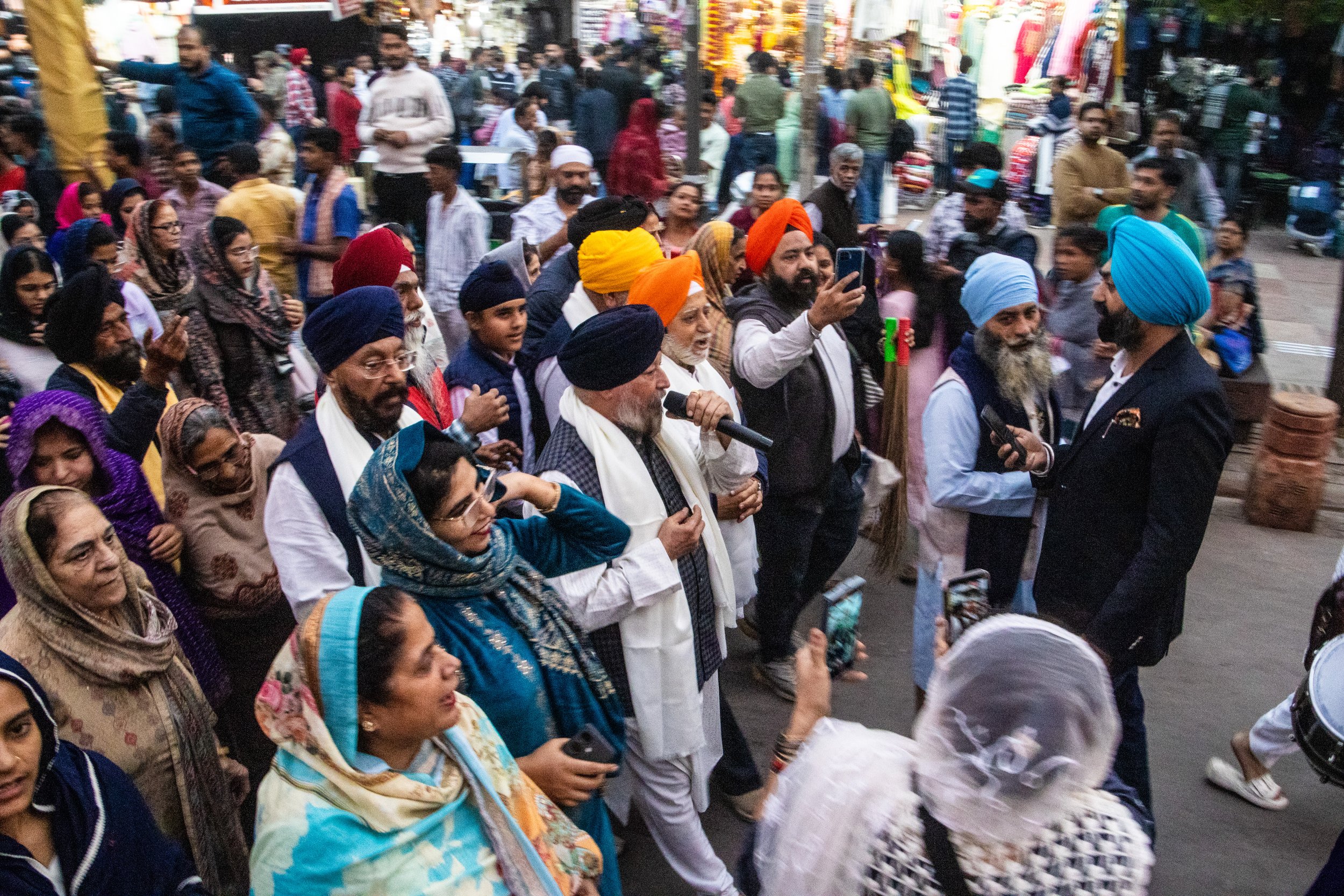
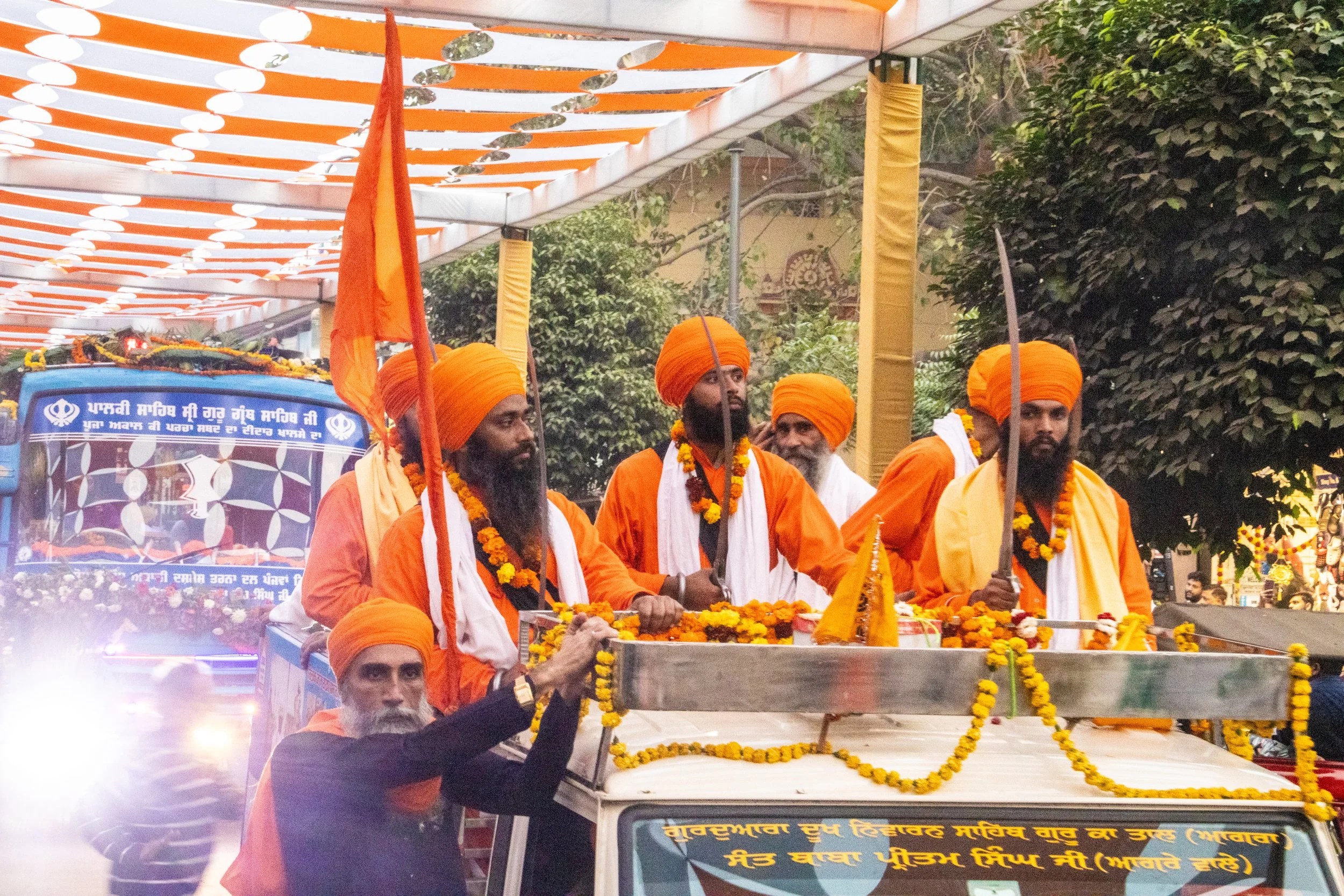
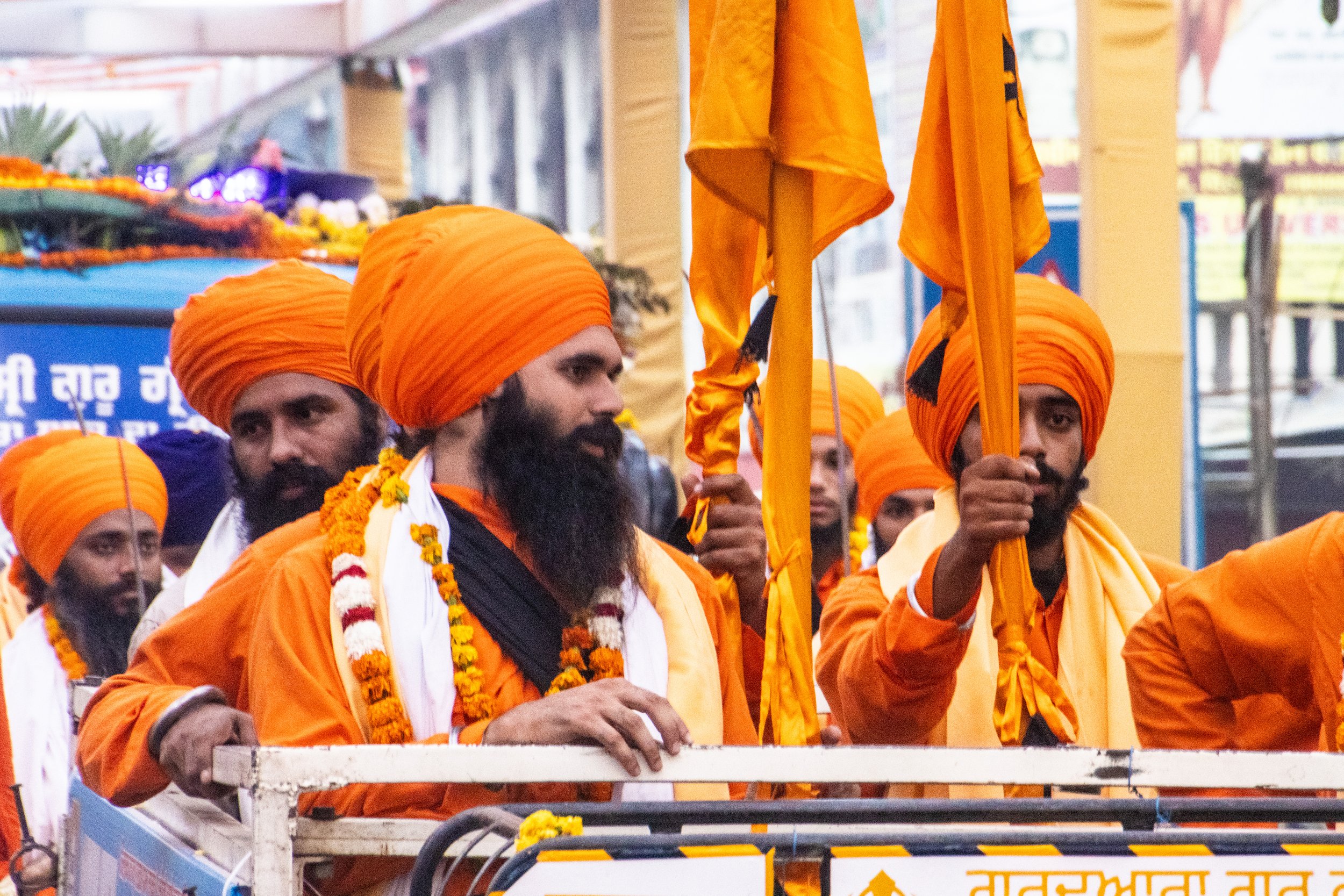
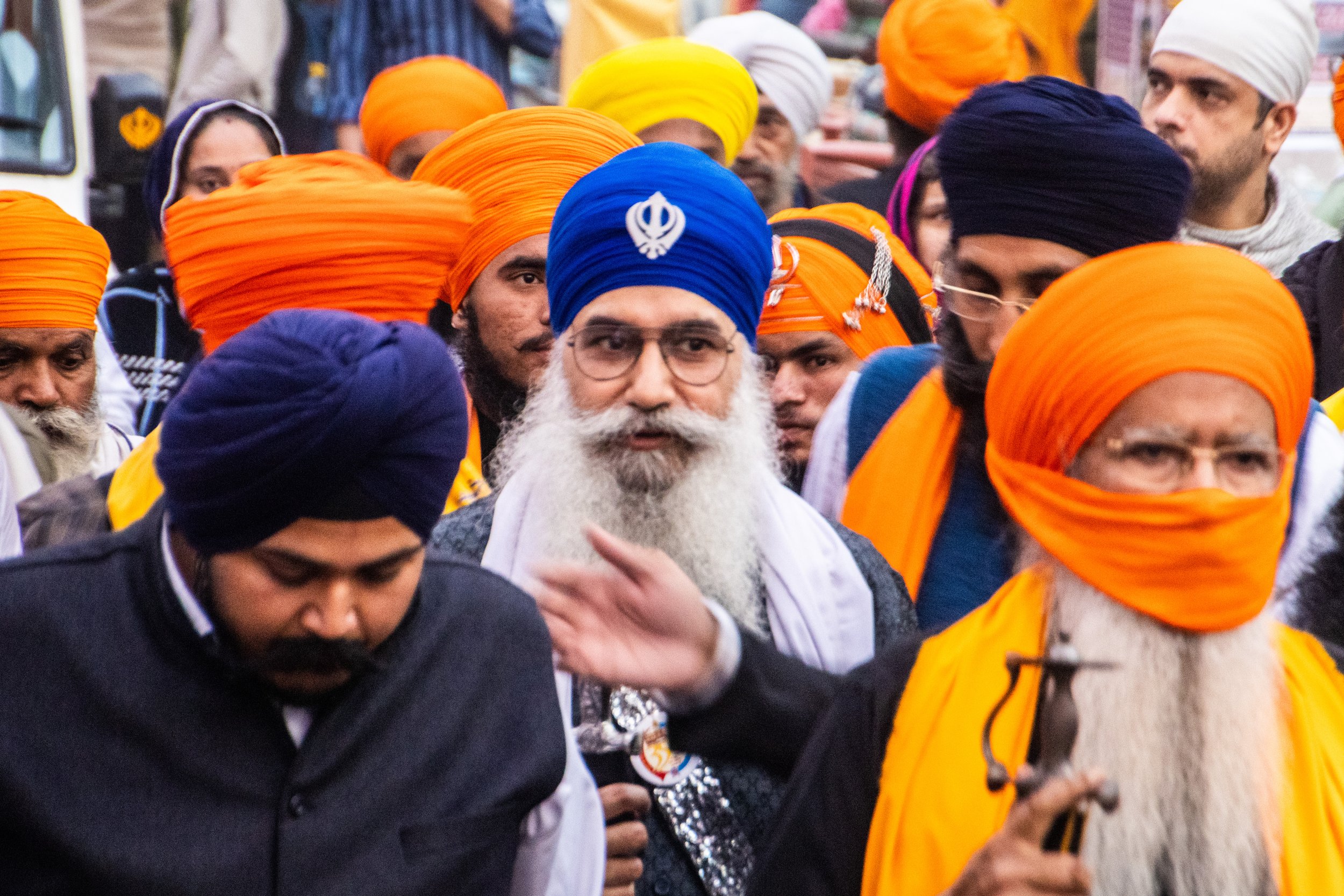
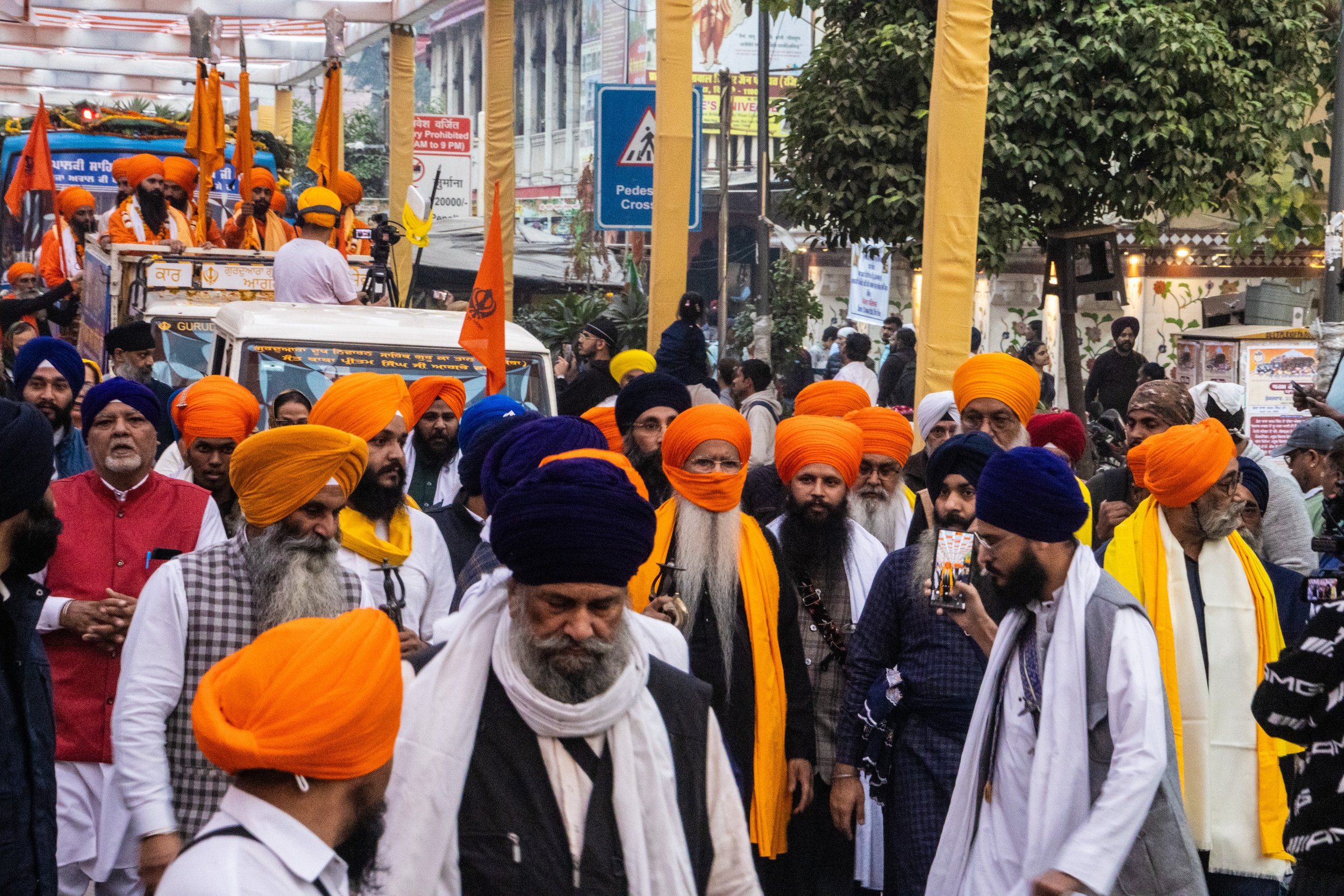
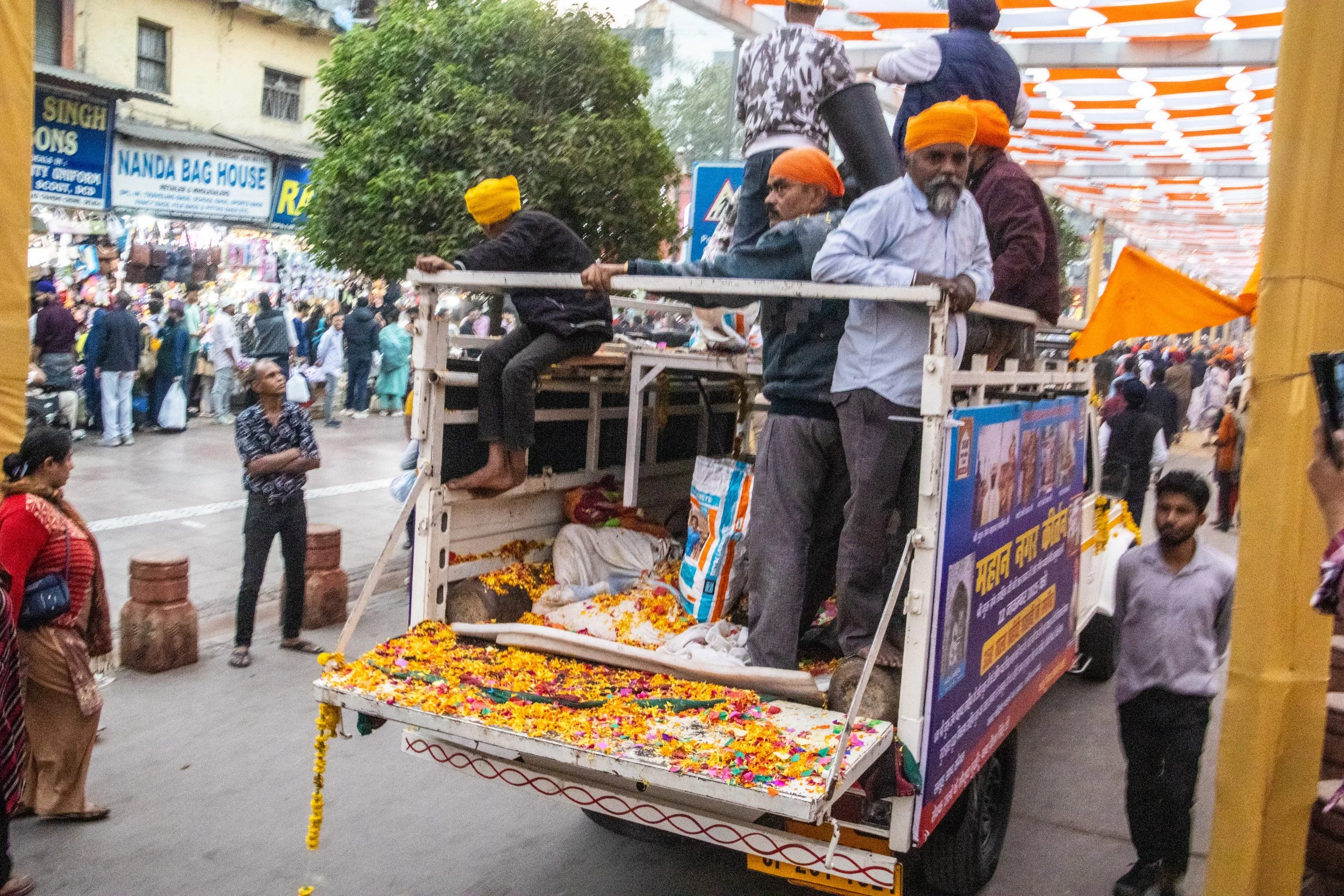
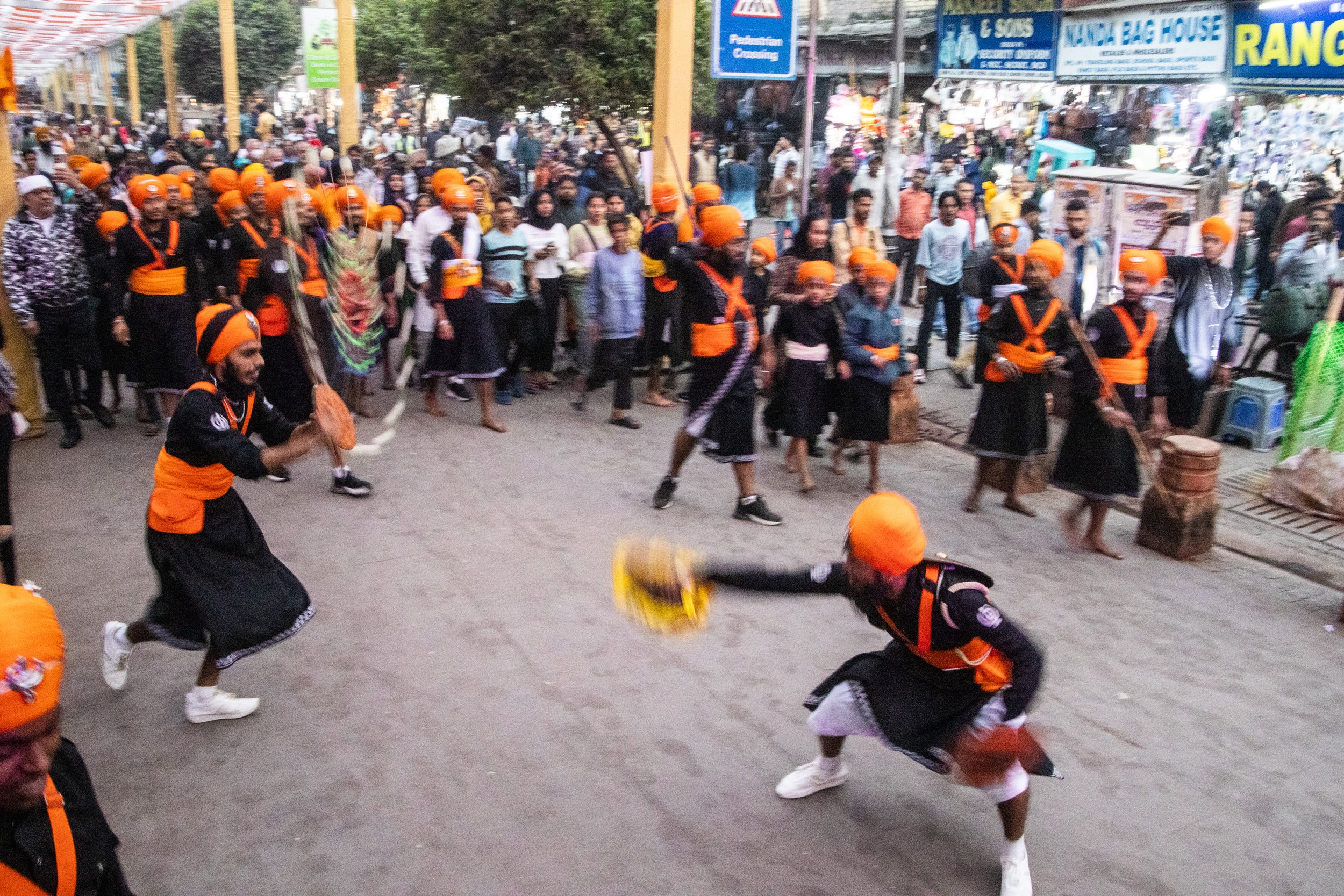
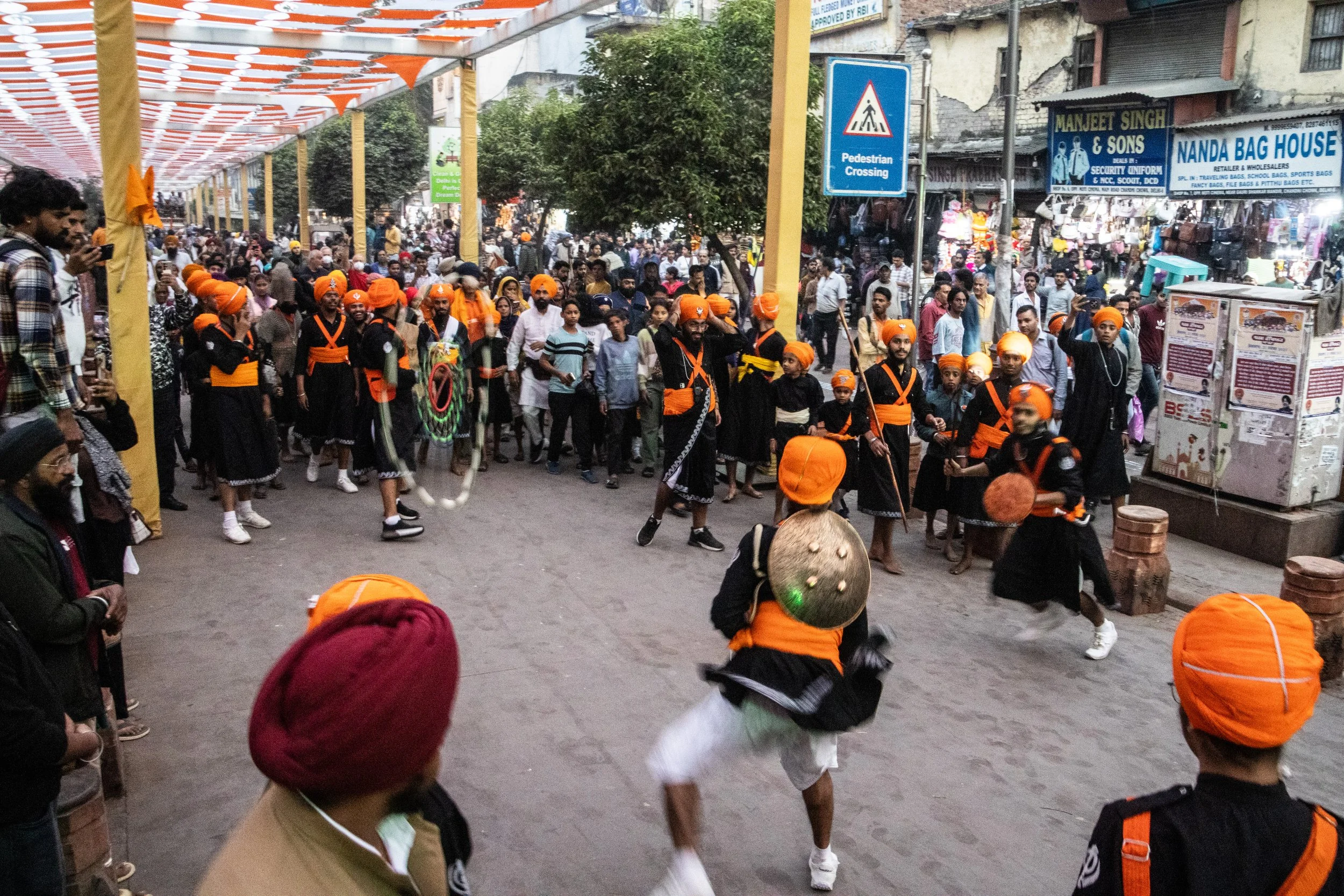
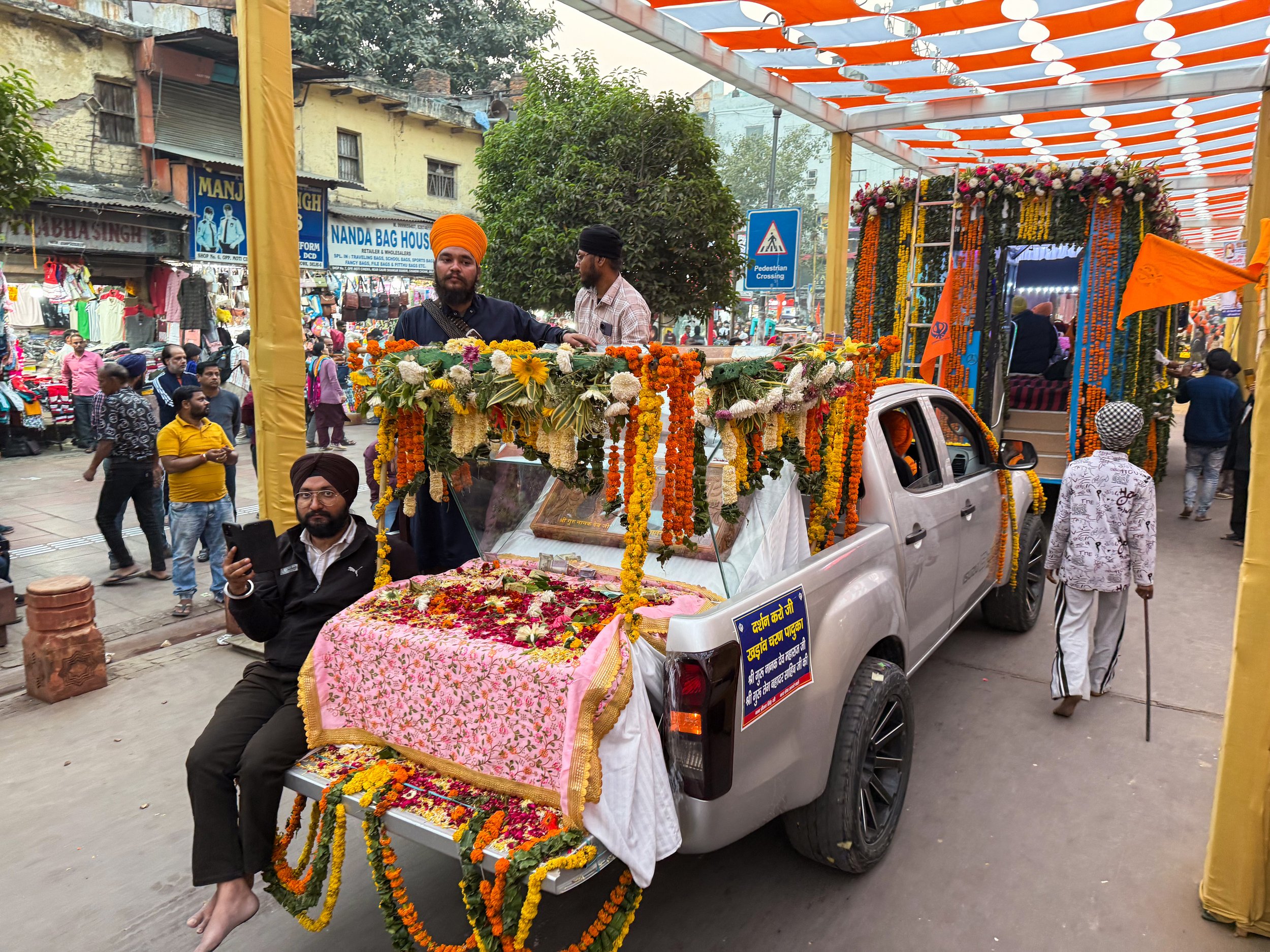
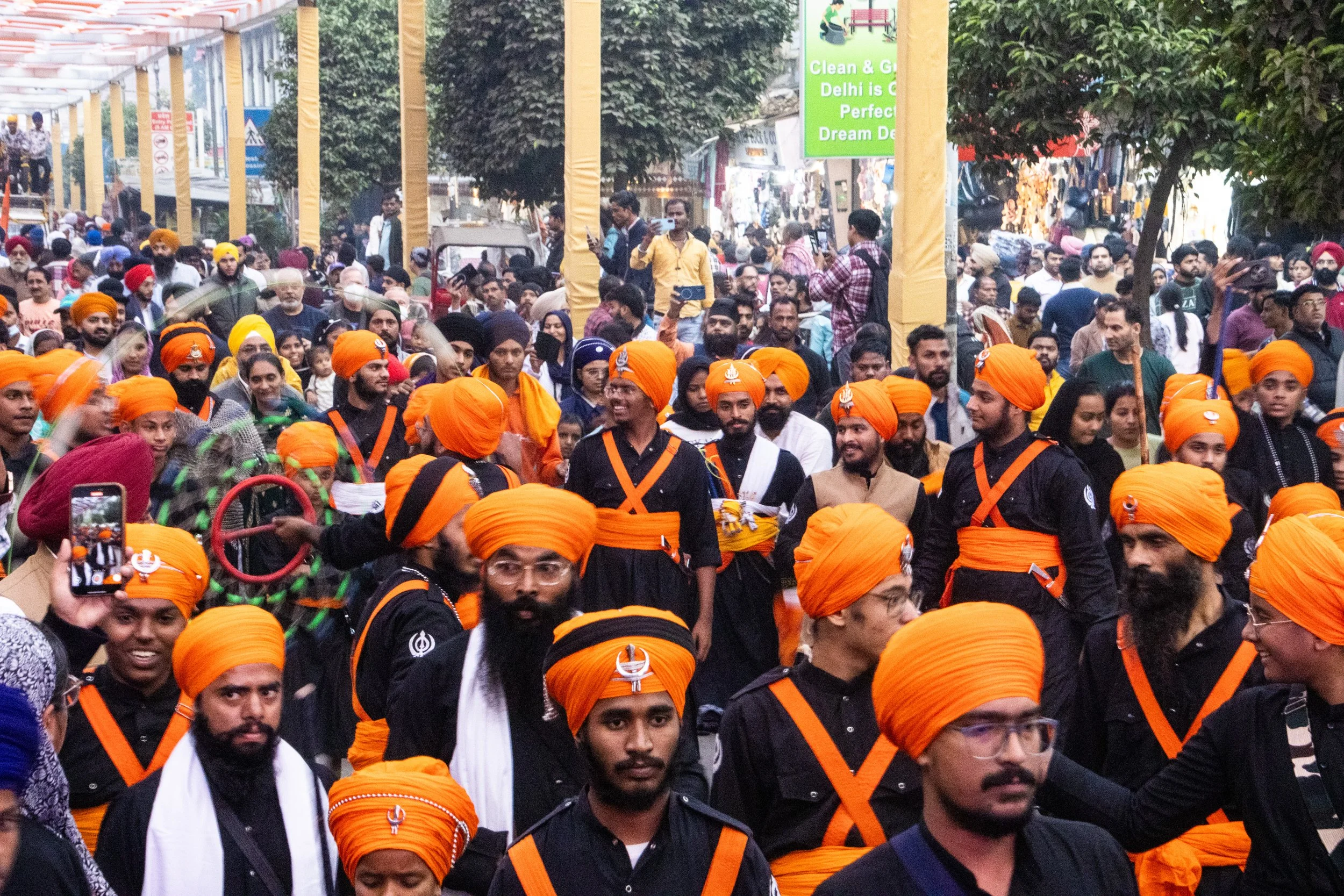
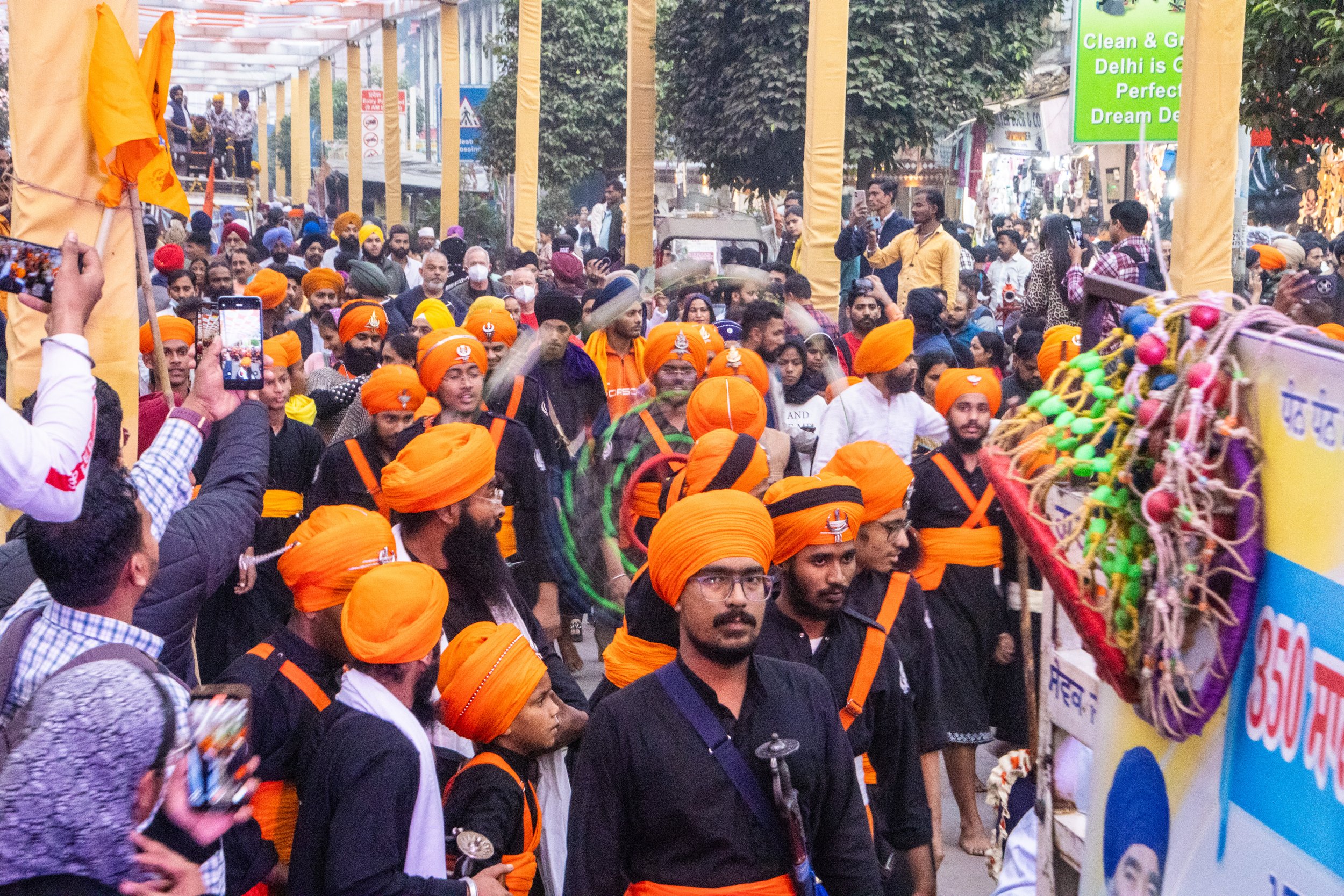
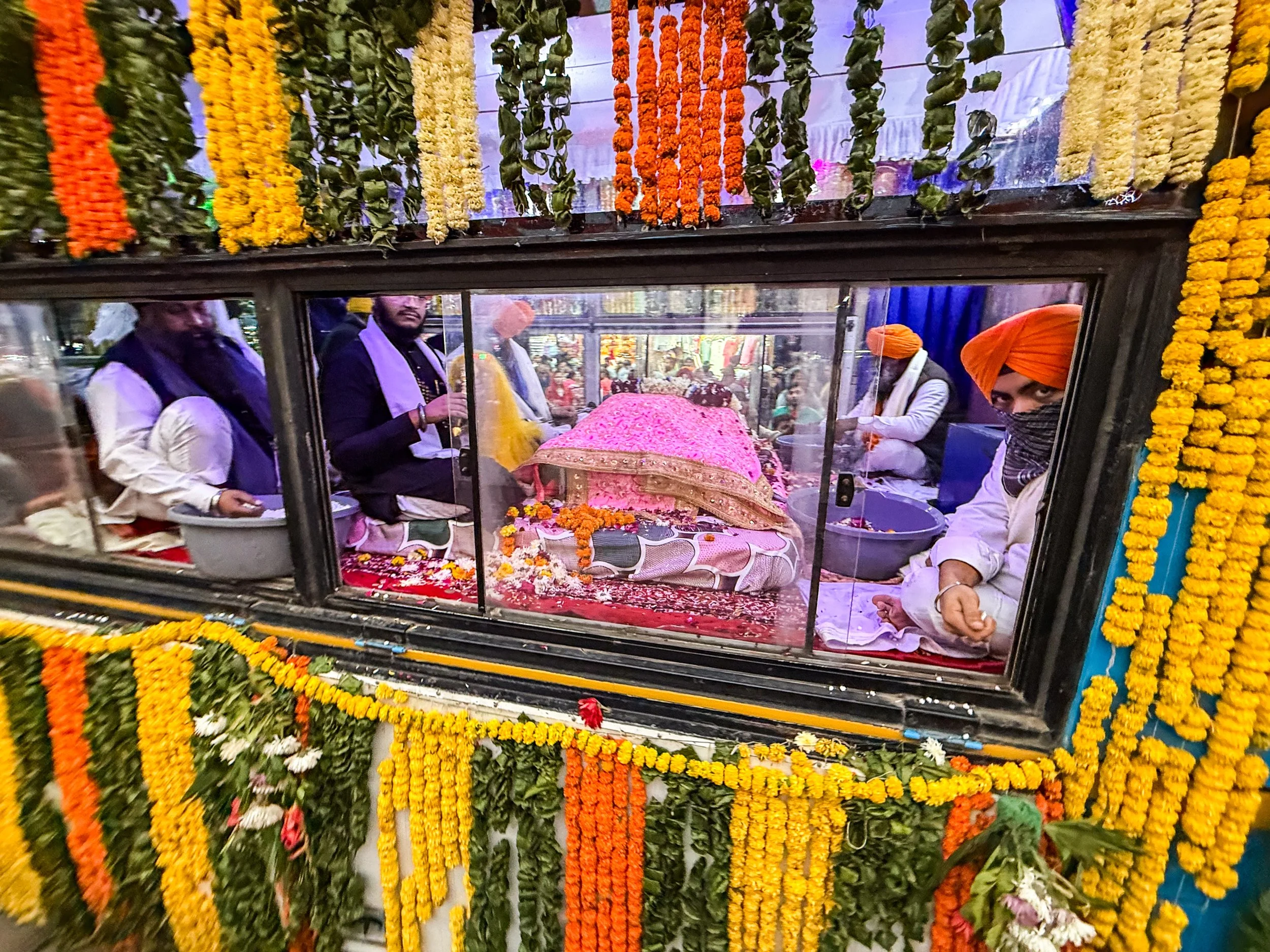
Now, to really underscore India’s incredible level of diversity, we’re going from exploring major pieces of Muslim history in the capital of a Hindu-majority country… right into the middle of a Sikh religious procession! Upon leaving the Red Fort, we just happened to stumble across this parade, which was moving south from Chandni Chowk road, through the heart of Old Delhi. It’s incredible how often this happens in India! On my last visit—which was to Jaipur last year—we found ourselves in the middle of a Jainist parade (religion #4, if you’re counting) which was led by painted elephants and a marching band. But let’s focus on the Sikhs right now…
If you see a man with a beard and turban in Northern India, there’s a very good chance this person is a Sikh. The religion dates back to the late 15th century and has ~25-30 million followers today. The point of origination for this belief system was the Punjab region, which is now split between India and Pakistan and still the main Sikh stronghold. In fact, Sikhs actually make up the majority of Punjab, which is not far from Delhi. In addition to Delhi and other parts of India, there’s a large diaspora of Sikhs in the UK, US, Canada, and Australia.
From research I did after the fact, I’m pretty sure this procession was a Nagar Kirtan (translated, “town hymn procession”), in connection with the anniversary of the martyrdom of Guru Tegh Bahadur in 1675. Guru Tegh Bahadur was the 9th leader (guru) of the Sikh faith who was apparently beheaded in exactly this place—Chandni Chowk—by the Mughal government. His head was secretly smuggled back to Punjab for cremation, and this became a defining moment in the Sikh faith. It just so happened that we were walking down the street on the anniversary of this event.
In the gallery below, you’ll see the pictures I managed to snap of this event by climbing on top of a nearby wall with my camera. At one point, you will see that the crowd breaks for a performative, moving sword fight. Within India, the Sikhs are known to be great warriors, so I would assume this is an extension of that part of their identity. The whole thing was a fascinating peak into the Sikh world. Next time I come back to India, I really need to prioritize a visit to Punjab and Amritsar. But for now, this will do:
An Indian Wedding 🪷
“Wait a minute, Peter… if you didn’t like Delhi the first time you visited, then why did you come back?”
Excellent question; thanks for asking! I was here for a wedding. So let me give a huge congratulations to Rahul and Srishti on tying the knot 🙌 and a huge thank you for all of their hospitality during our stay! ❤️
As you may recall, I visited India about 9 months prior for another wedding, which was my first Indian wedding ever! You can read about that here: Jaipur, Rajasthan: Peter's First Indian Wedding (& it's a DOOZY!)
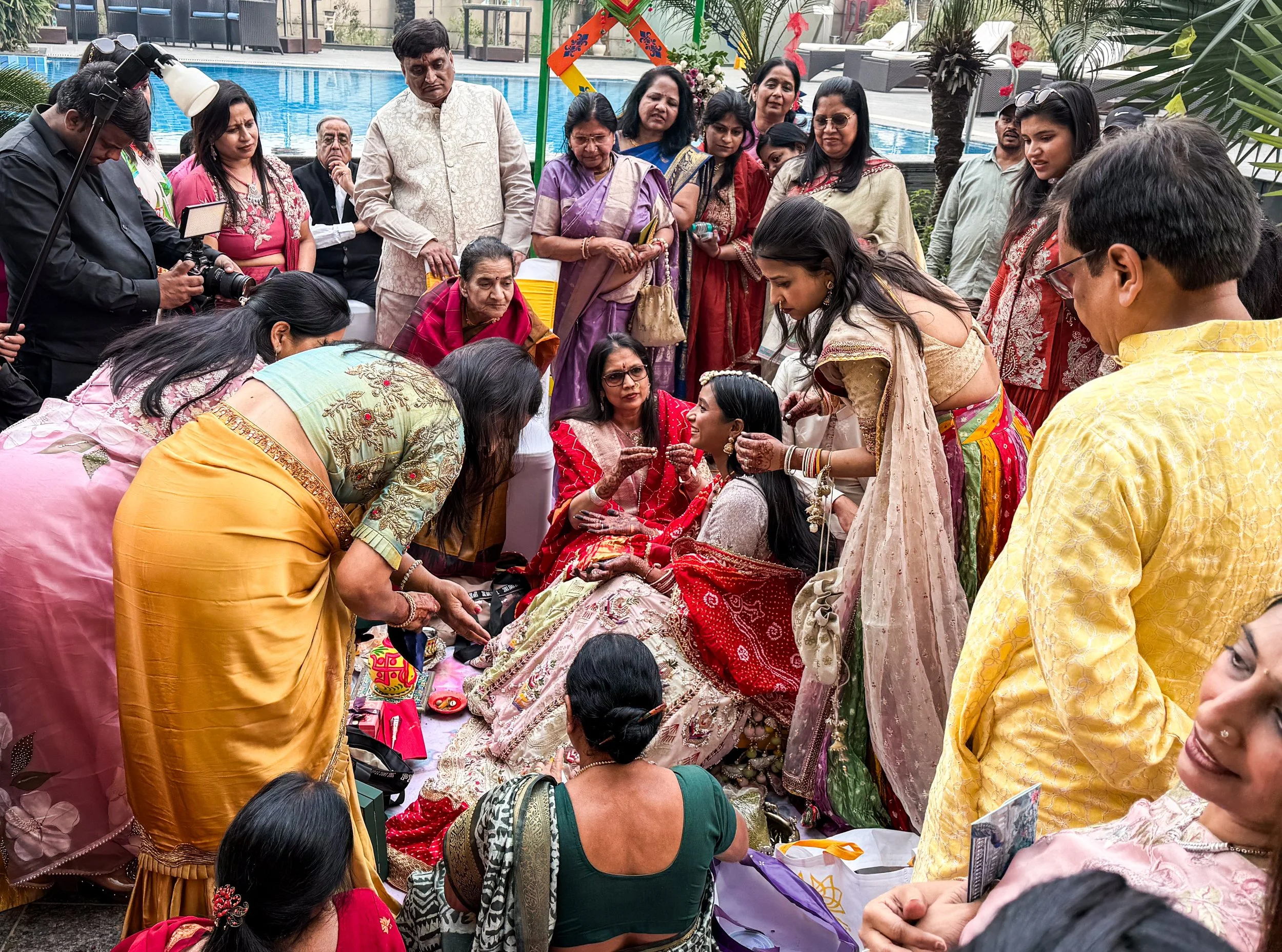
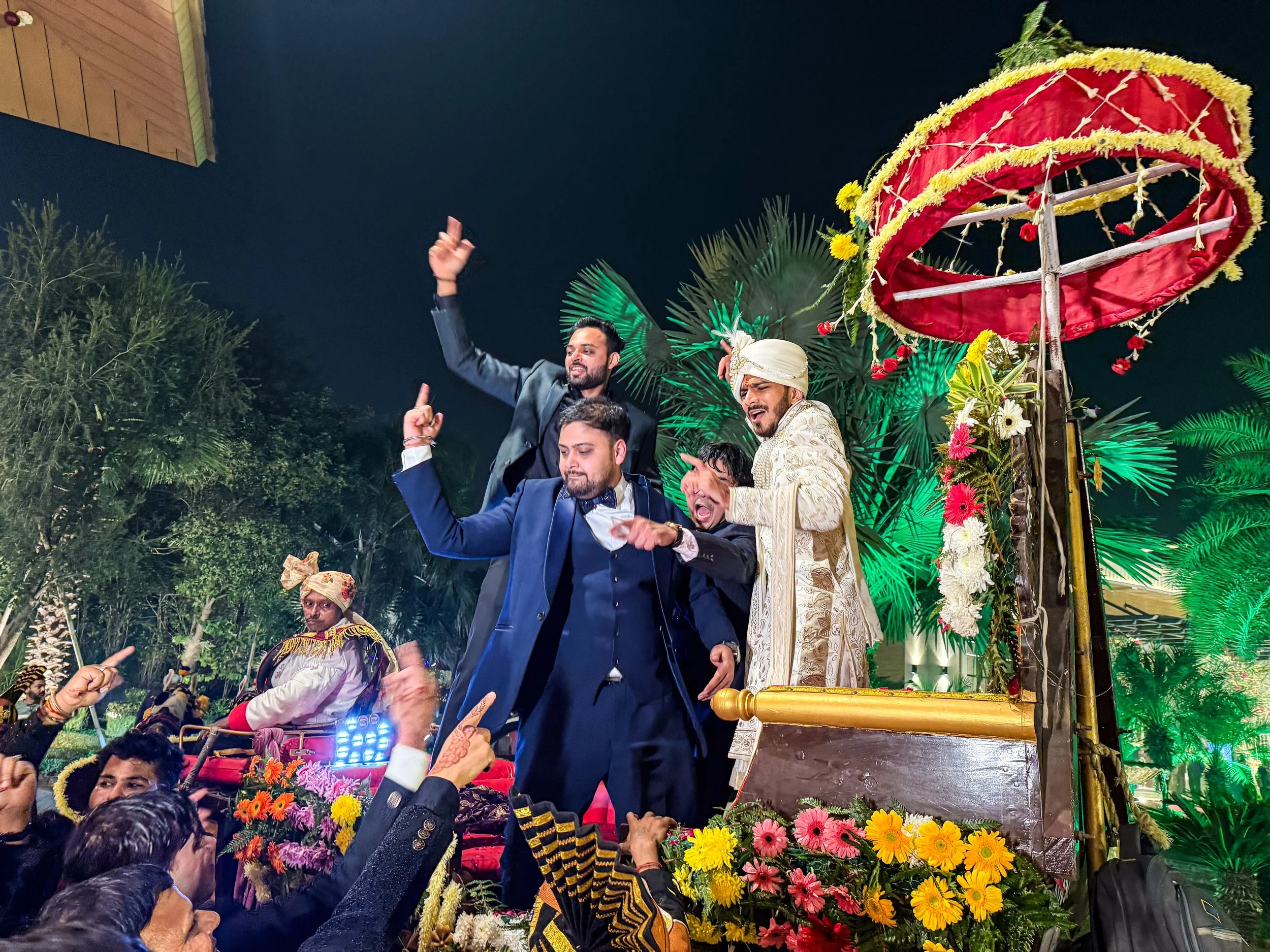
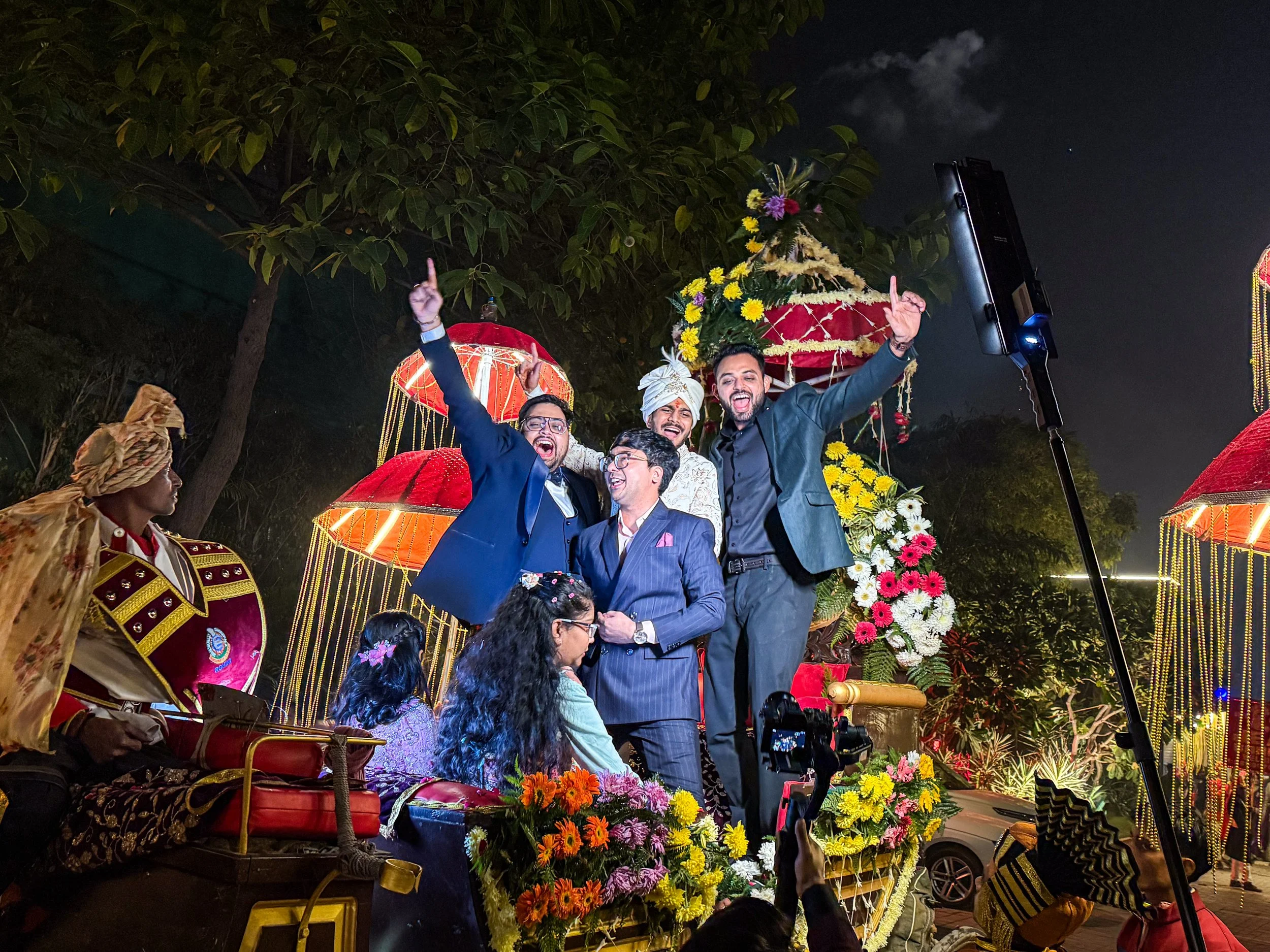
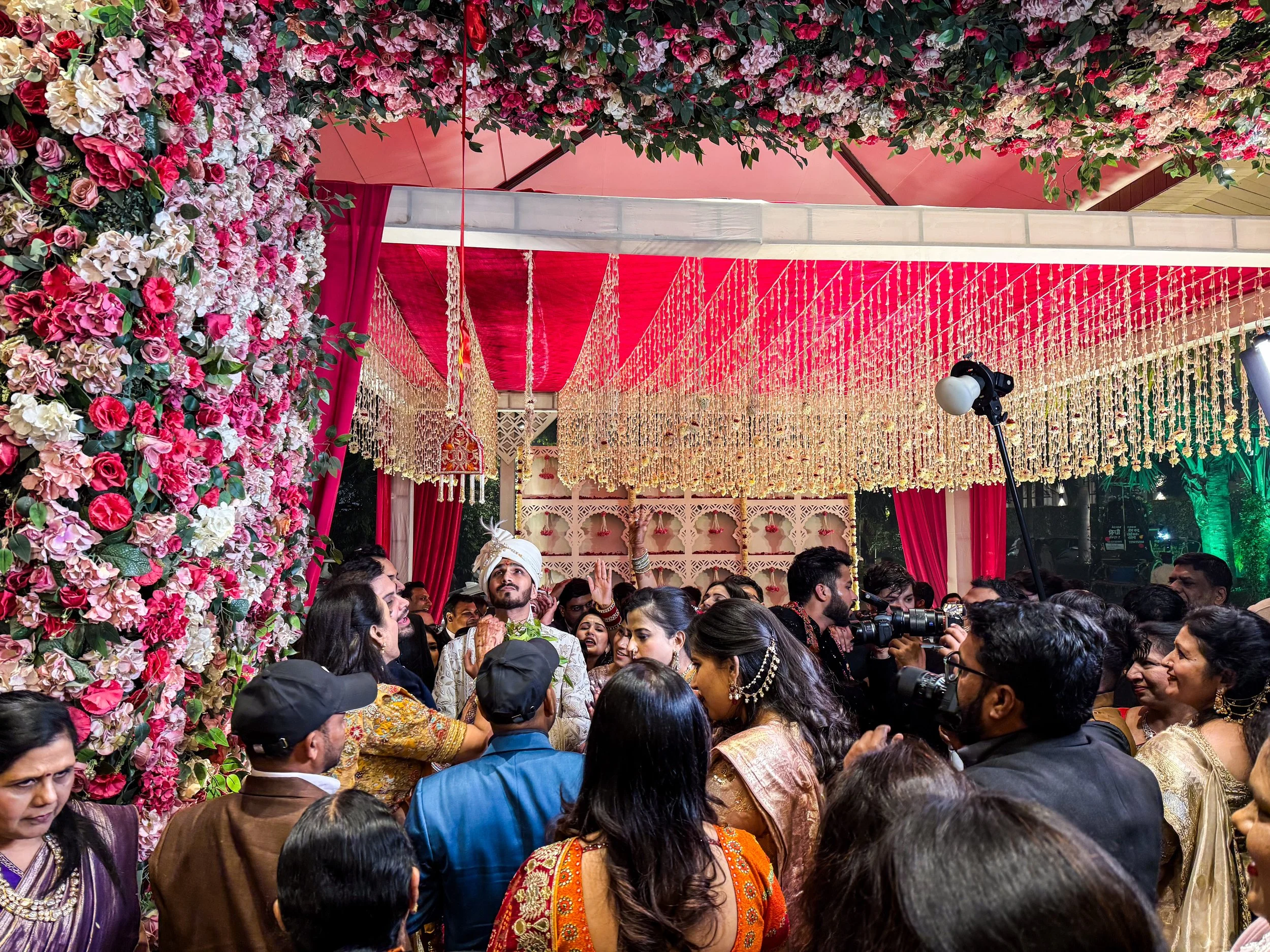
There are suddenly regular opportunities to go to Indian weddings popping up in my life, and while I can’t go to them all (let alone write about them all), I am certainly glad I was able to get to this one! I was interested to see how it would compare to the first wedding, given that these families were from entirely different parts of India. Overall, the plot points were more or less the same, but there were some nuances.
One particularly memorable (read: scarring) moment was being surprise-forced to get up on a stage in front of hundreds of people, stone sober, and dance to a song that was only revealed to me in that moment. Following this, I was given a microphone and asked who my favorite Bollywood star (it turns out that Dev Patel does not qualify as ‘Bollywood’), and to repeat unknown Hindi phrases for the crowd. It was all very embarrassing, but if there is any nationality that would ease the social pain of this, it’s Indian. Generally speaking, I have found Indians to be extremely laid back and fun. The more of them I get to know, the more comfortable I feel!
@Rahul - when it’s my turn to get married, you’d better show up ready to perform. 👀
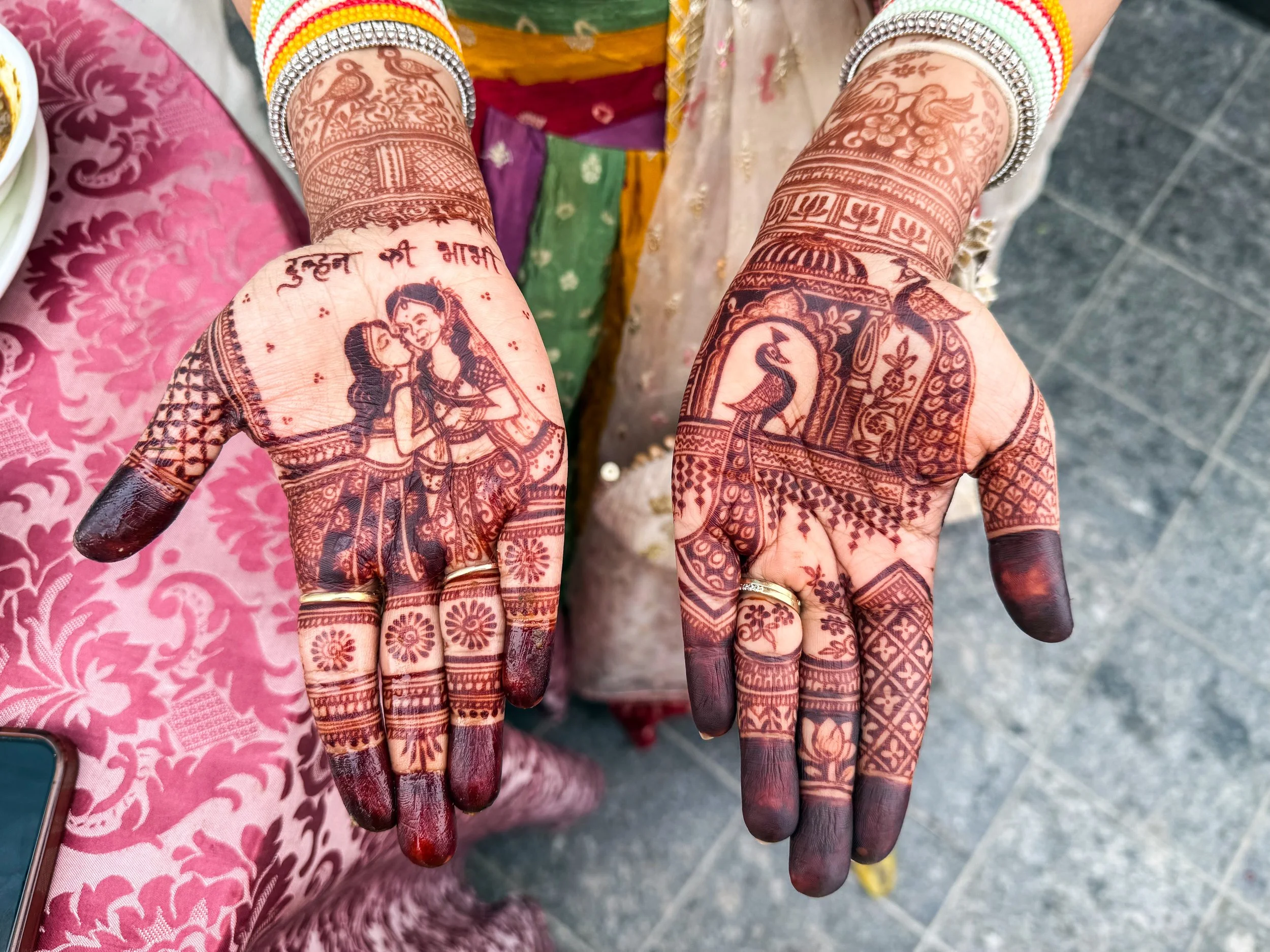
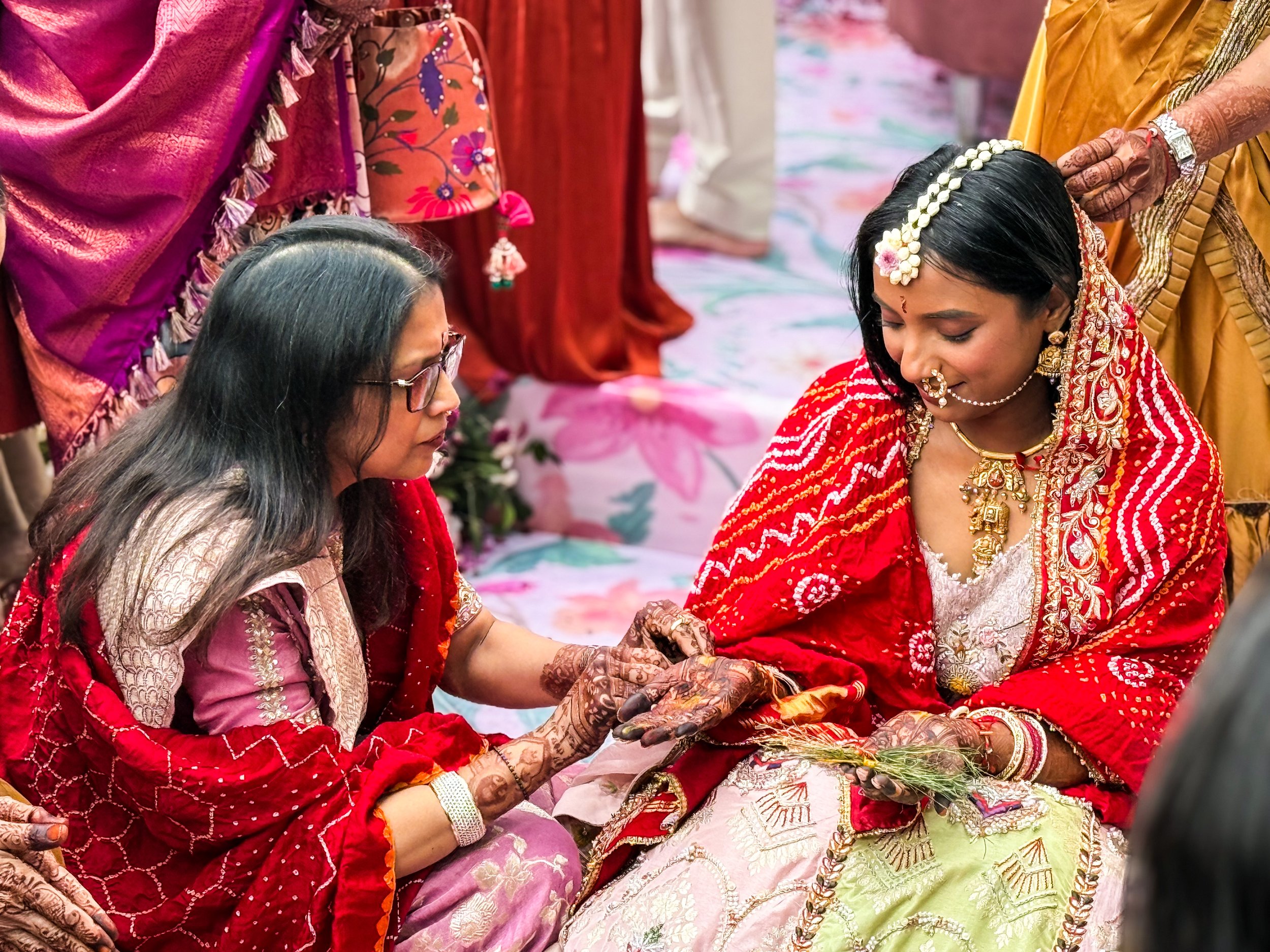
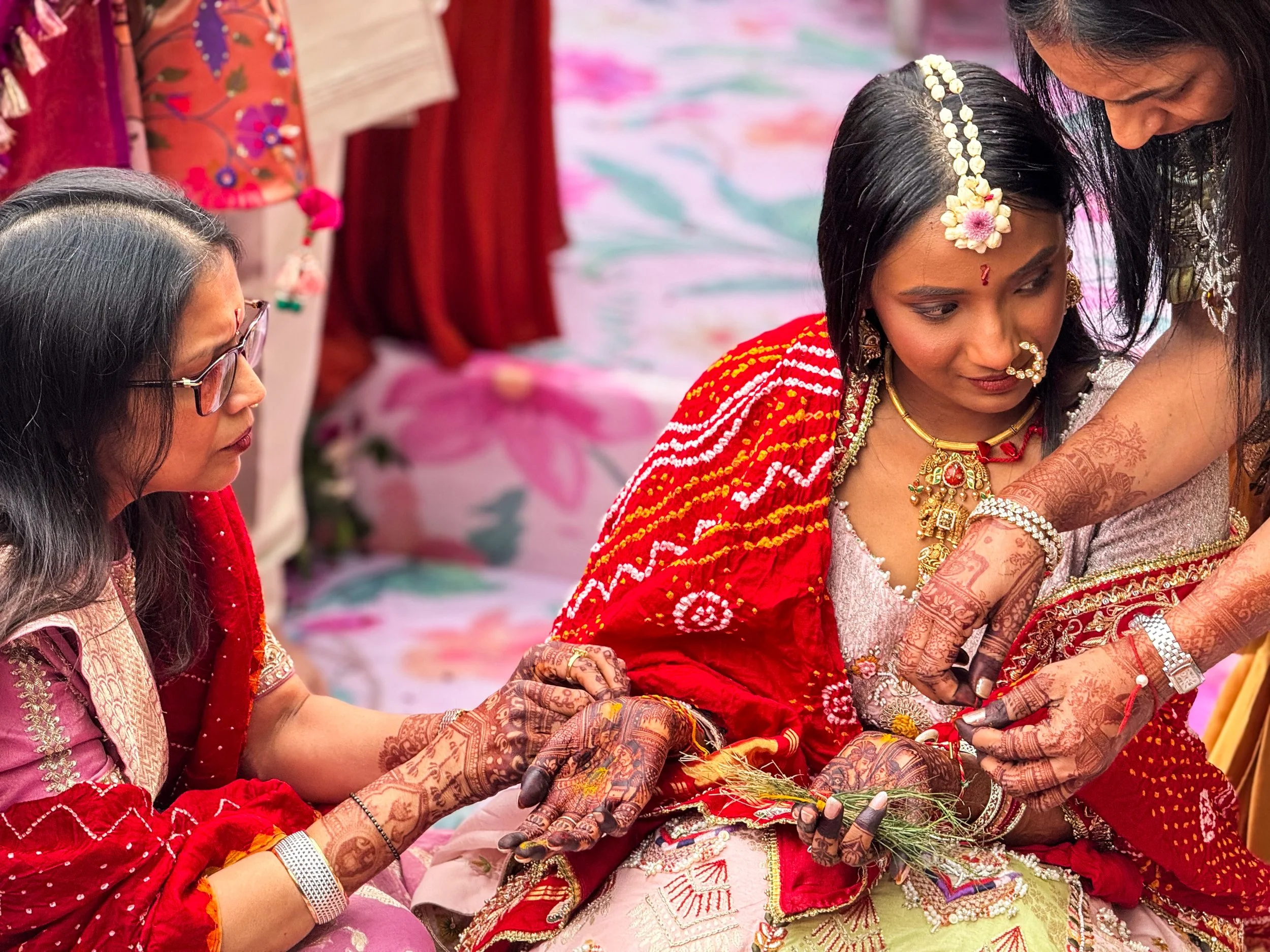
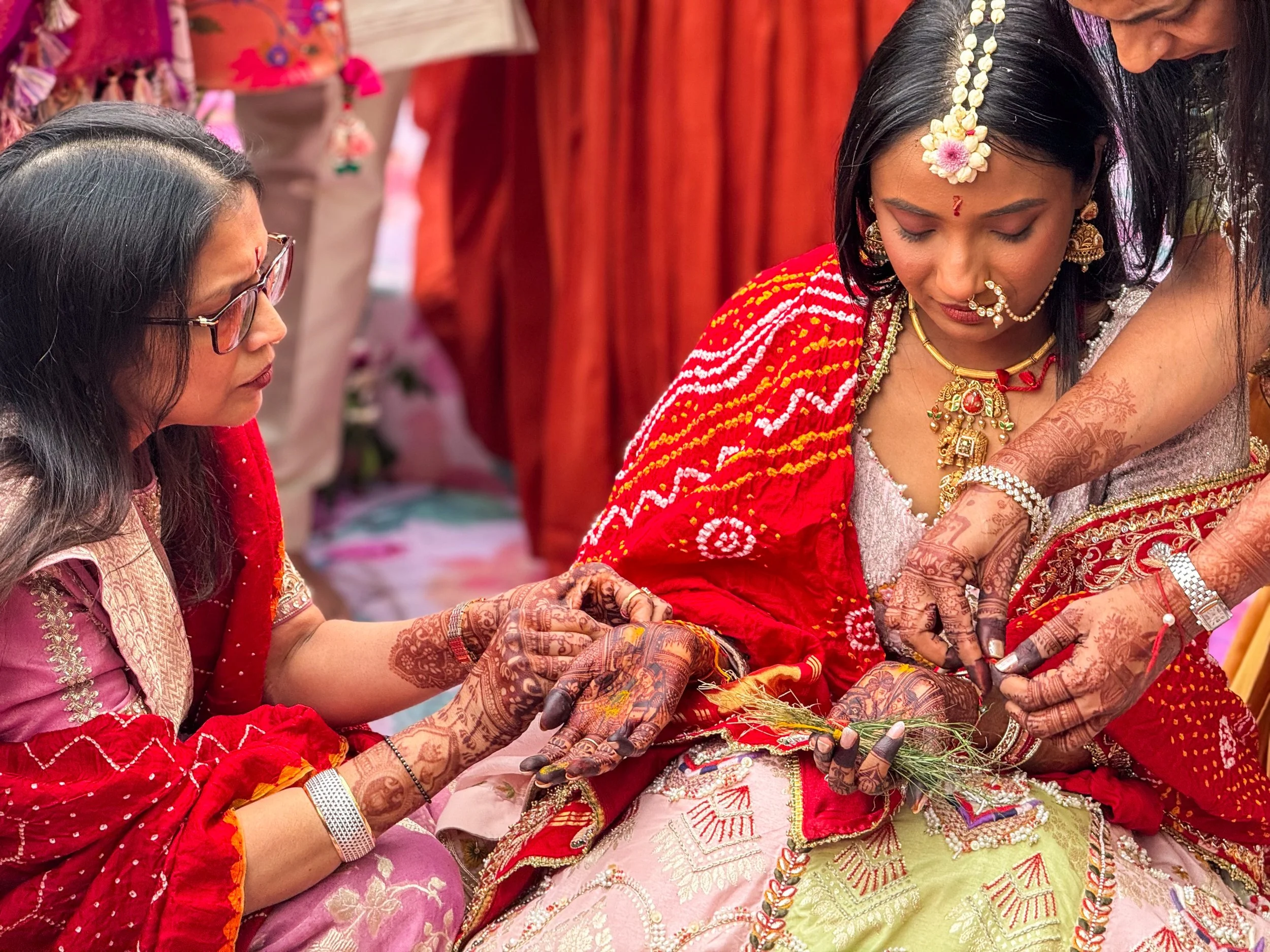
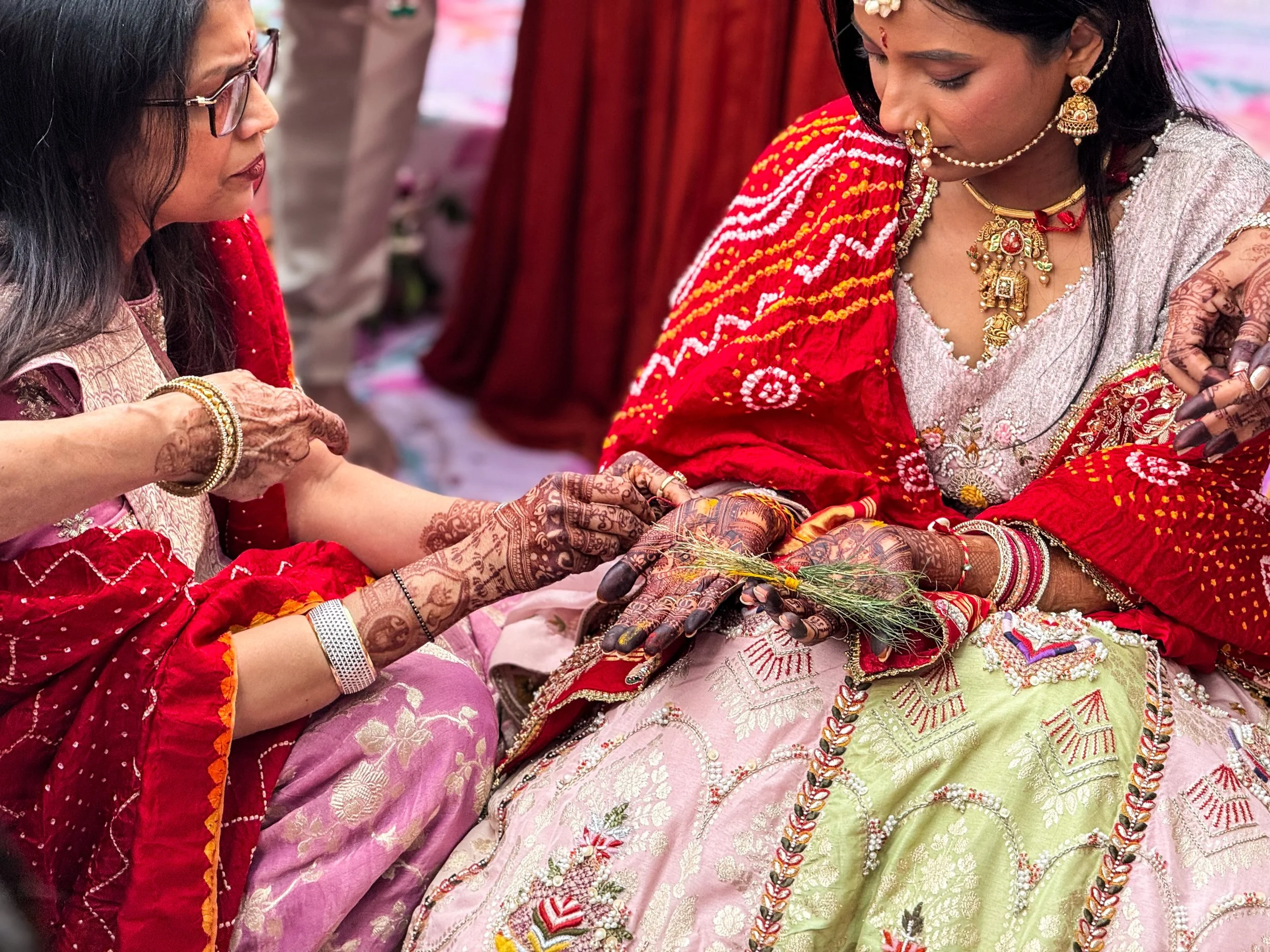
In addition to being the most embarrassing wedding of my life, I think this wedding also takes the gold medal for the quality of the henna tattoos of the bridal party. I simply had to get photographs of these. Absolute works of art…
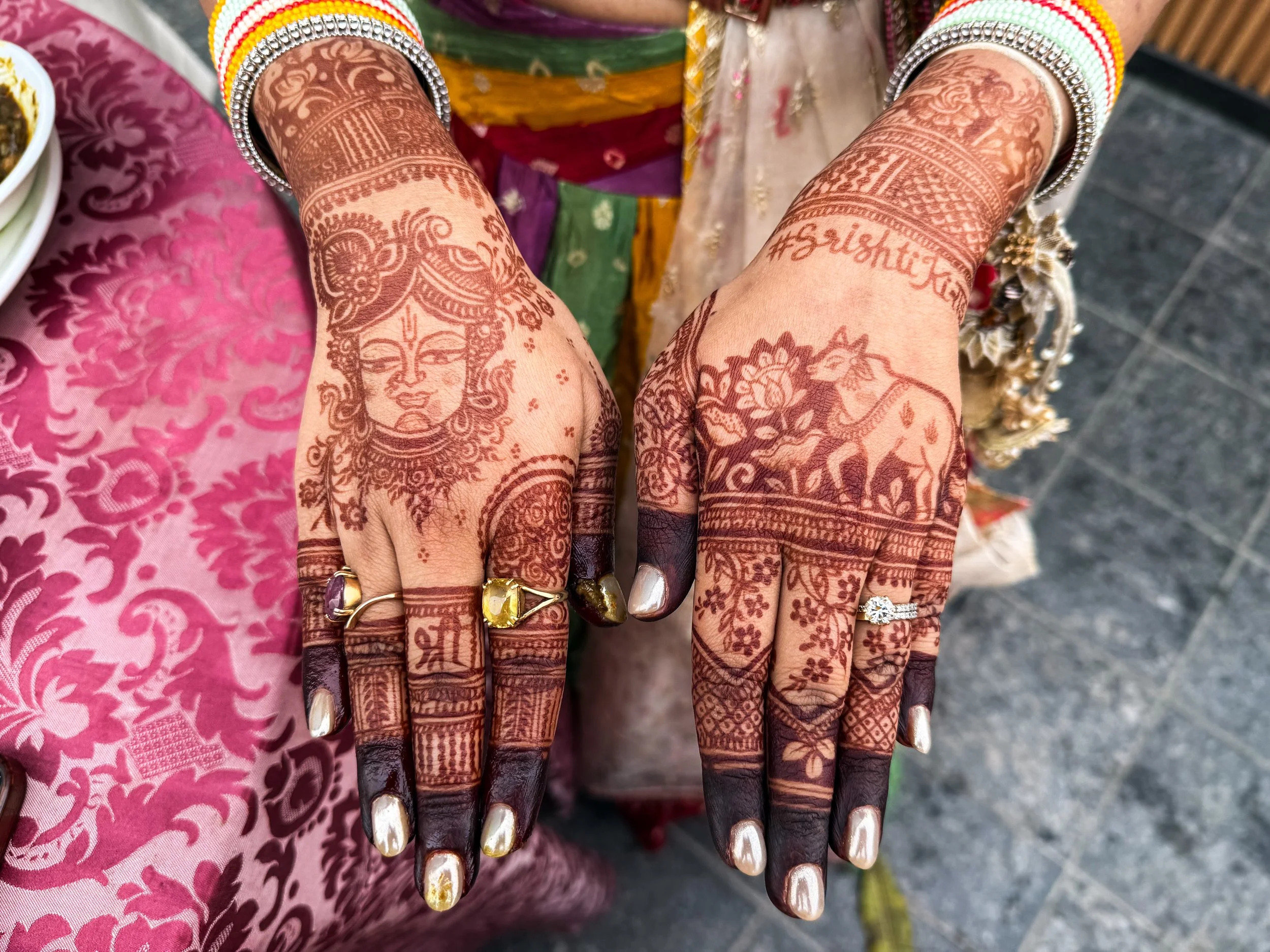
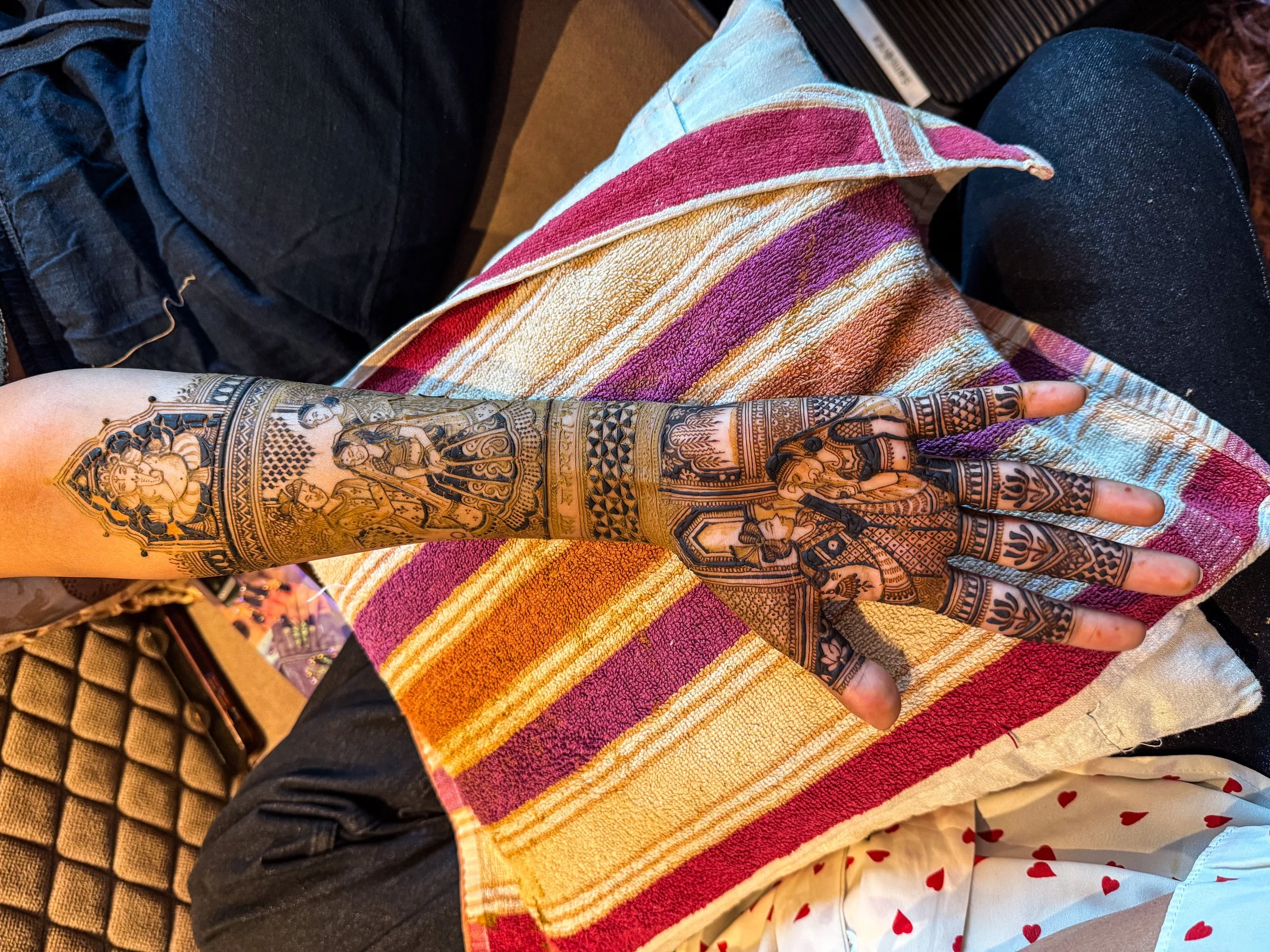
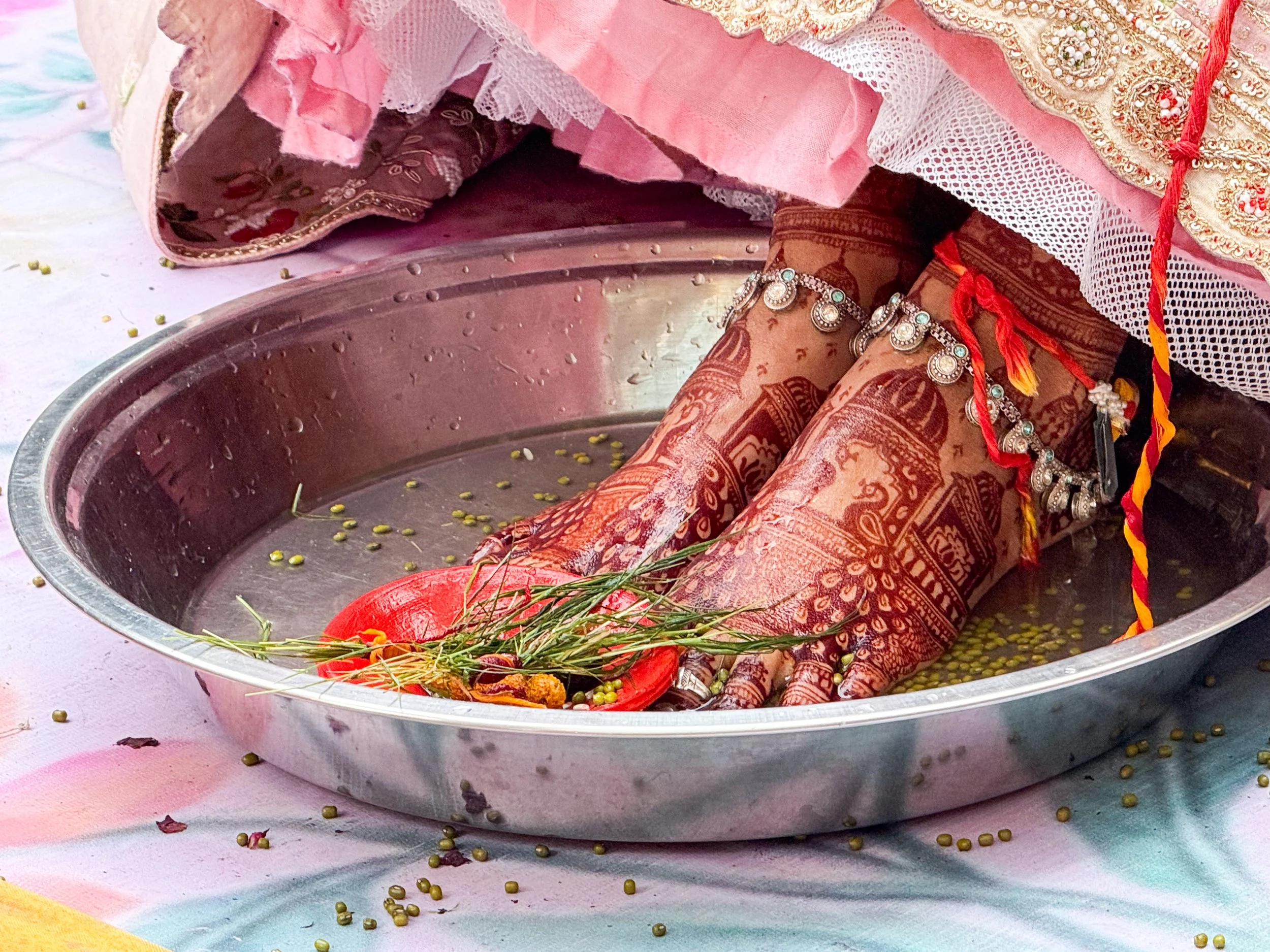
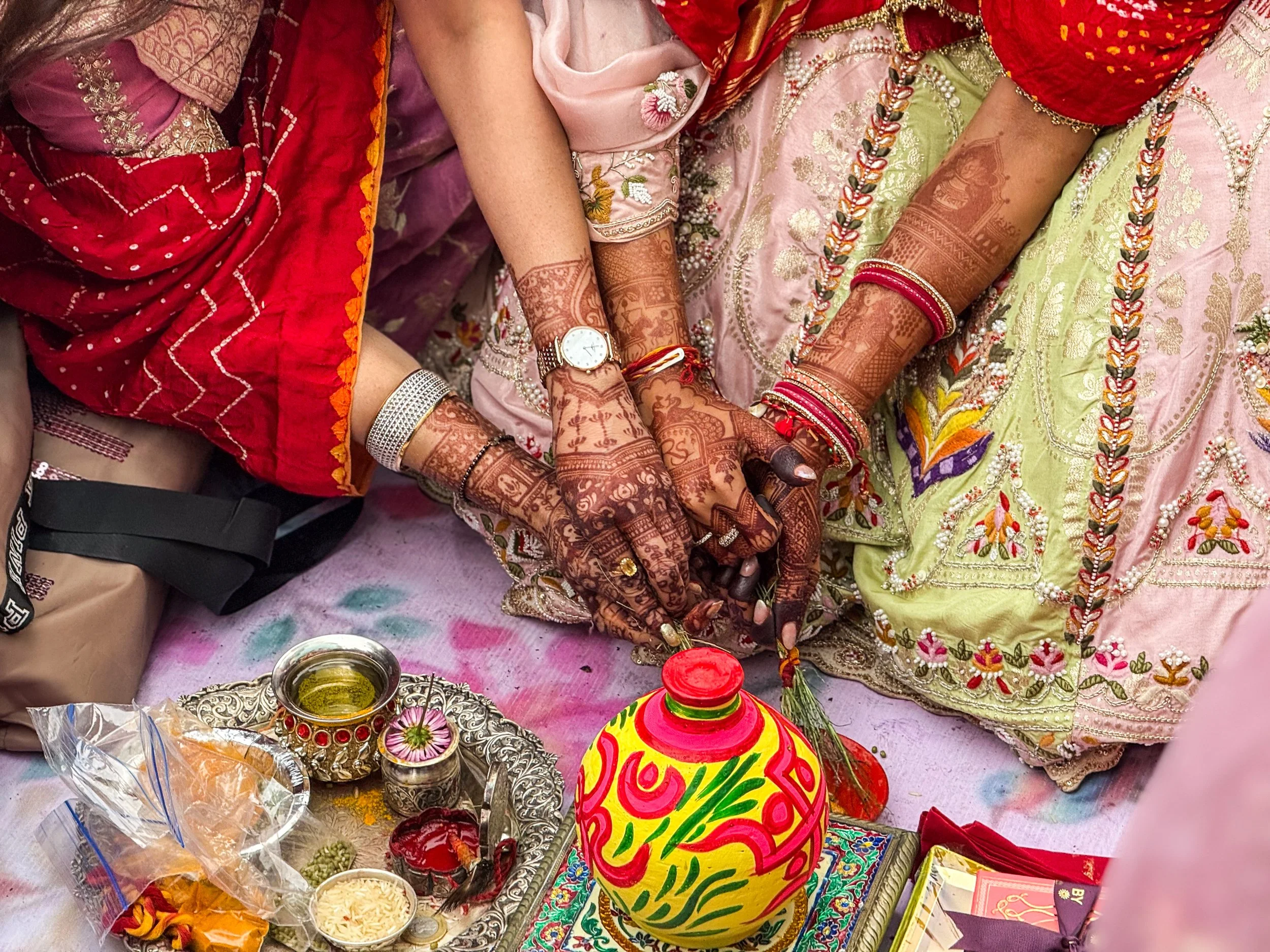
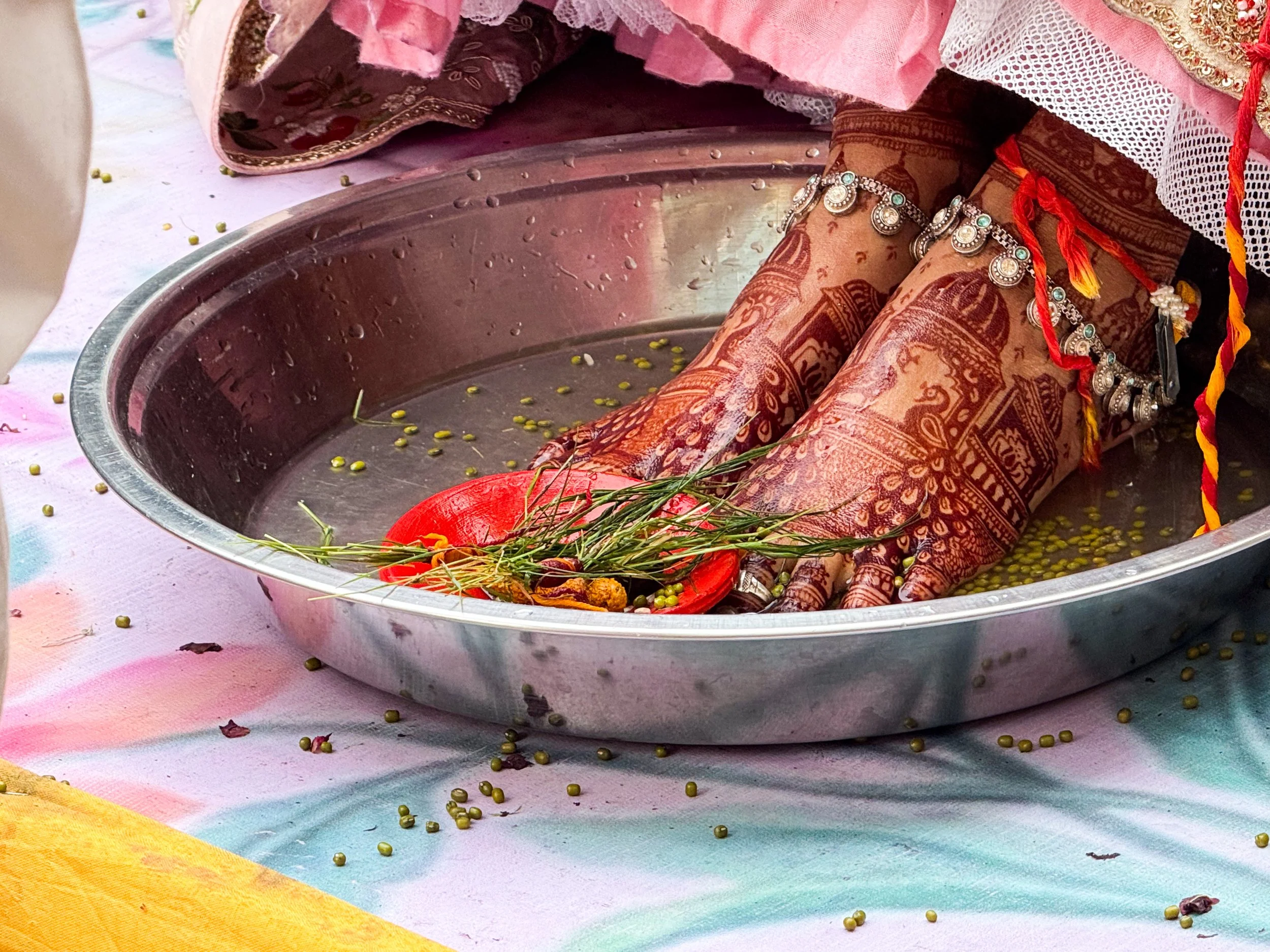
Coming in from the outside, the emotional high you get from the intensity of a wedding like this is pretty unmatched. By the end of the wedding we’d been adopted by a group of the bride & groom’s friends who made us feel like insiders here, which is another testament to just how open and fun Indians are! Seeing this event through their eyes, I was a bit shocked at how many of these weddings they were attending on a monthly basis. For them, this was a normal part of their social calendar, but putting myself in their shoes… and considering that each wedding typically requires attendance on multiple nights… I would imagine that this could get exhausting. Speaking for myself, I spent the rest of the trip recovering from this wedding. But I regret nothing! 😂
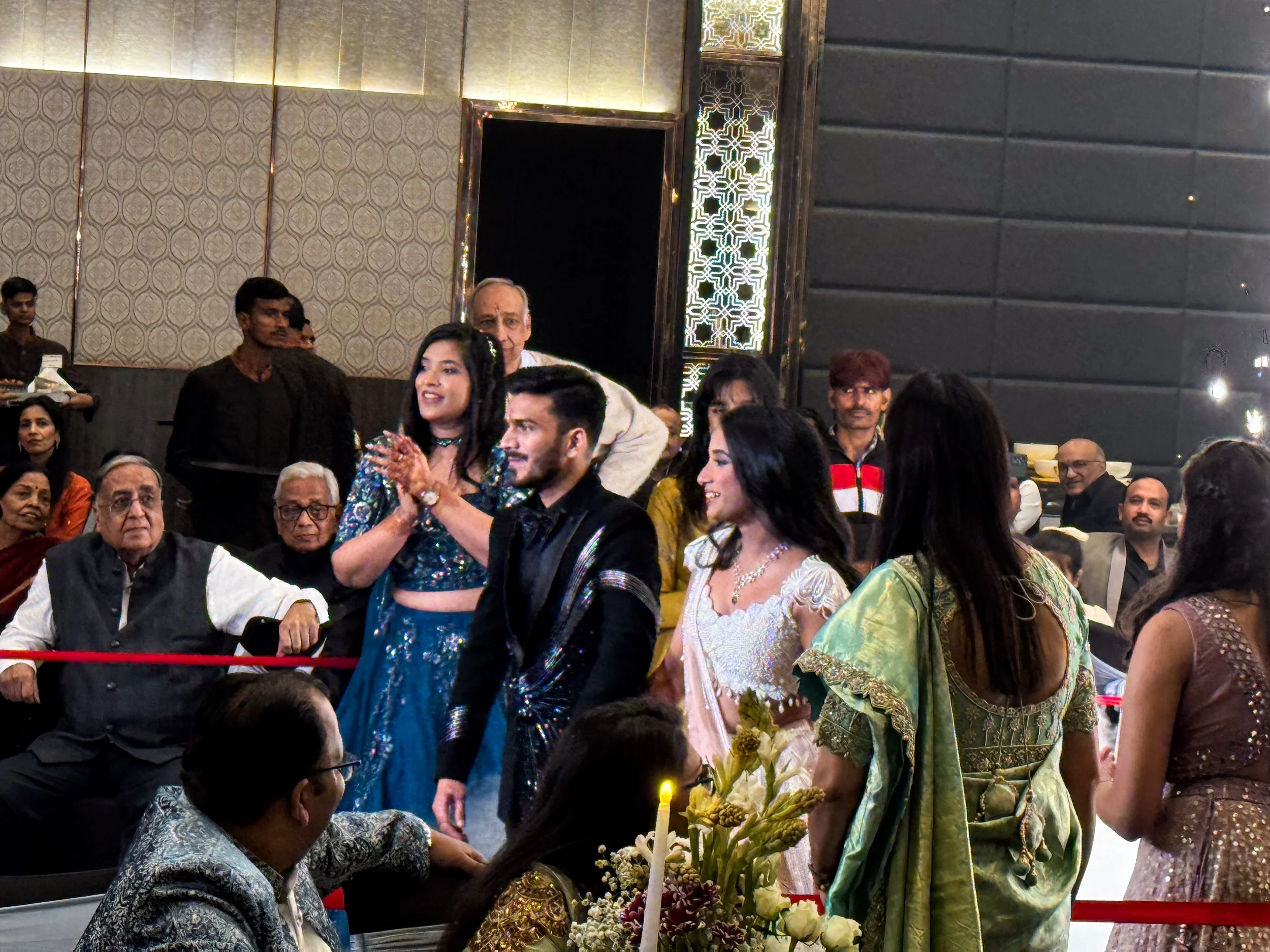

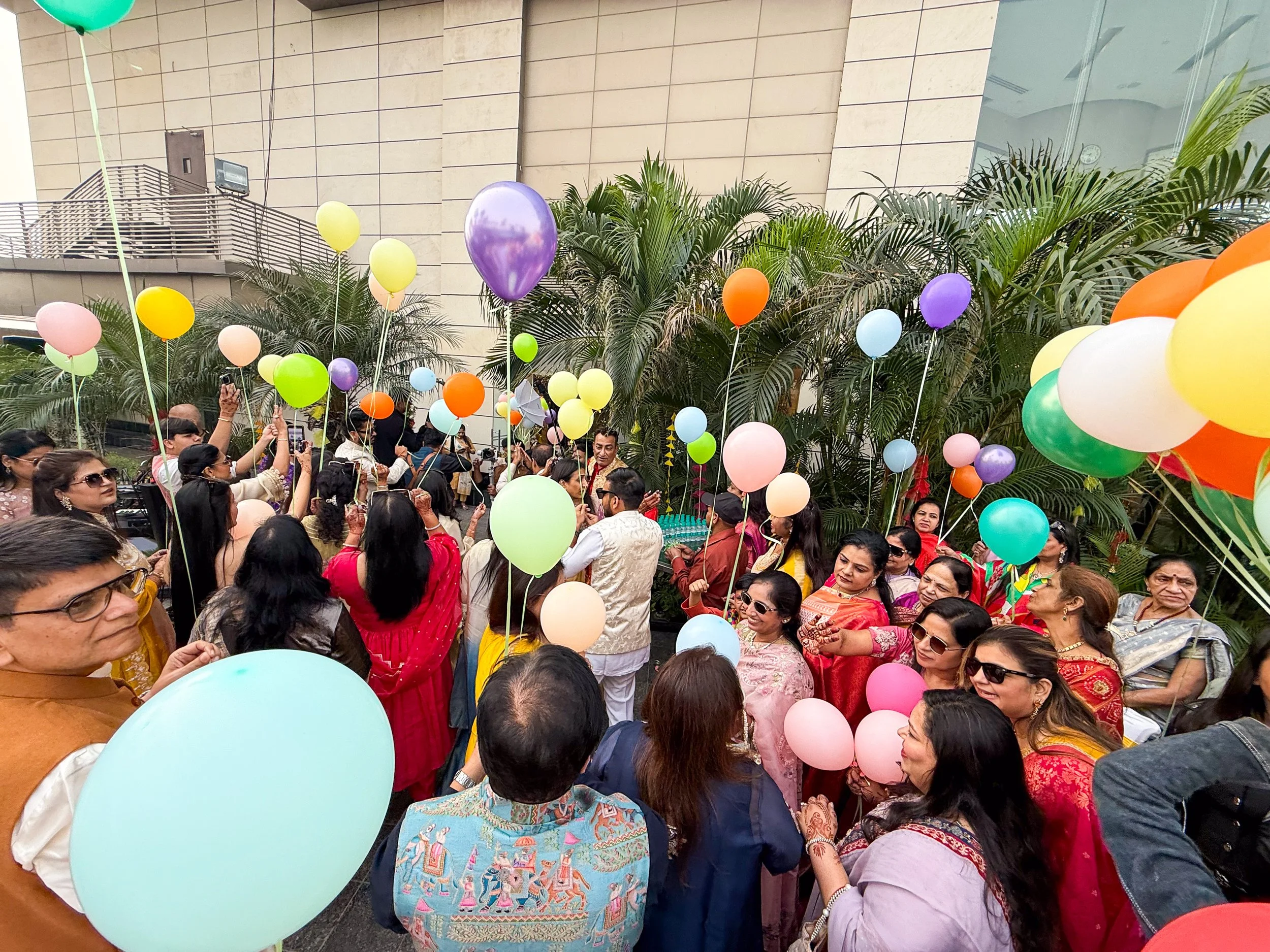
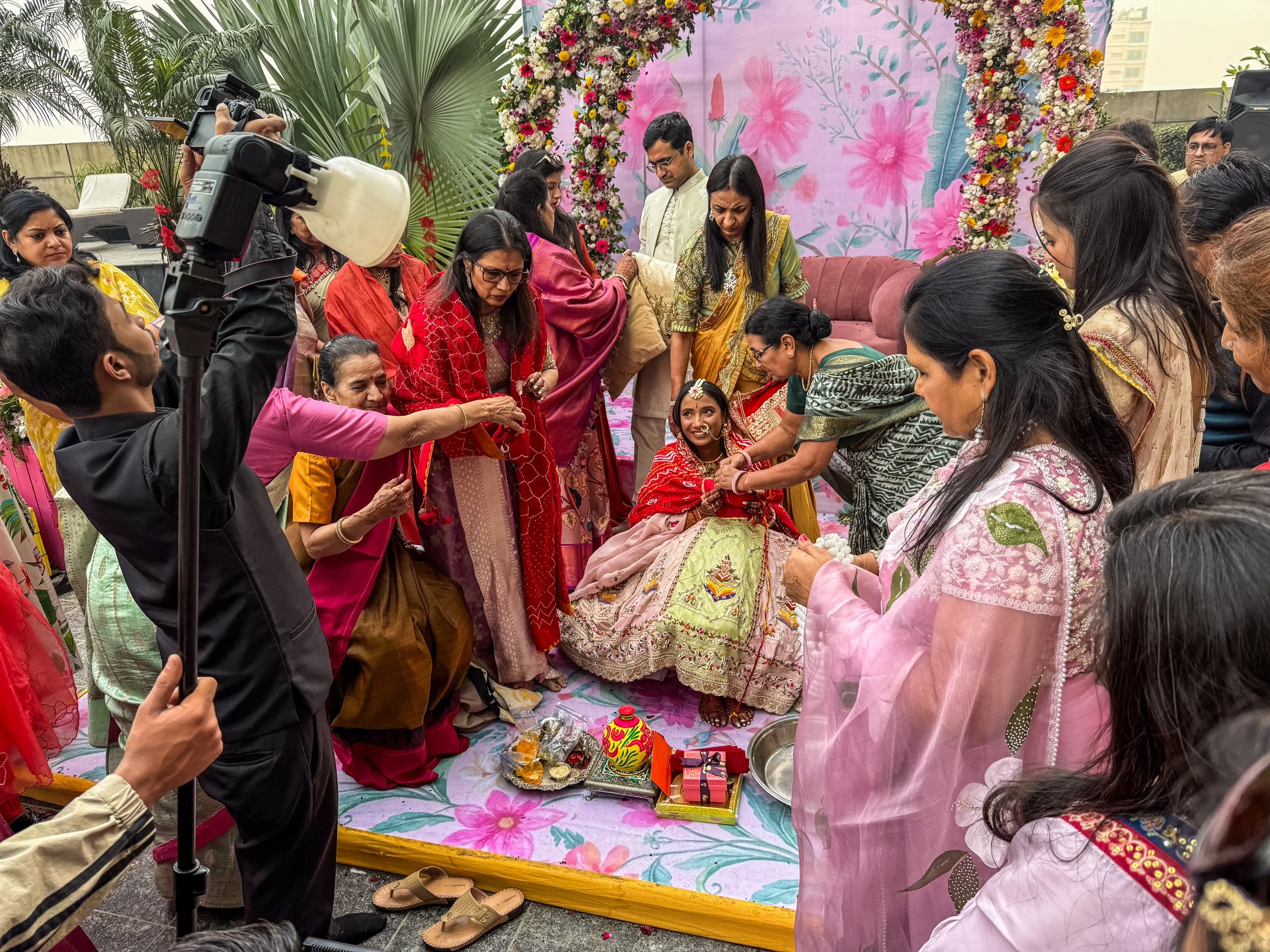
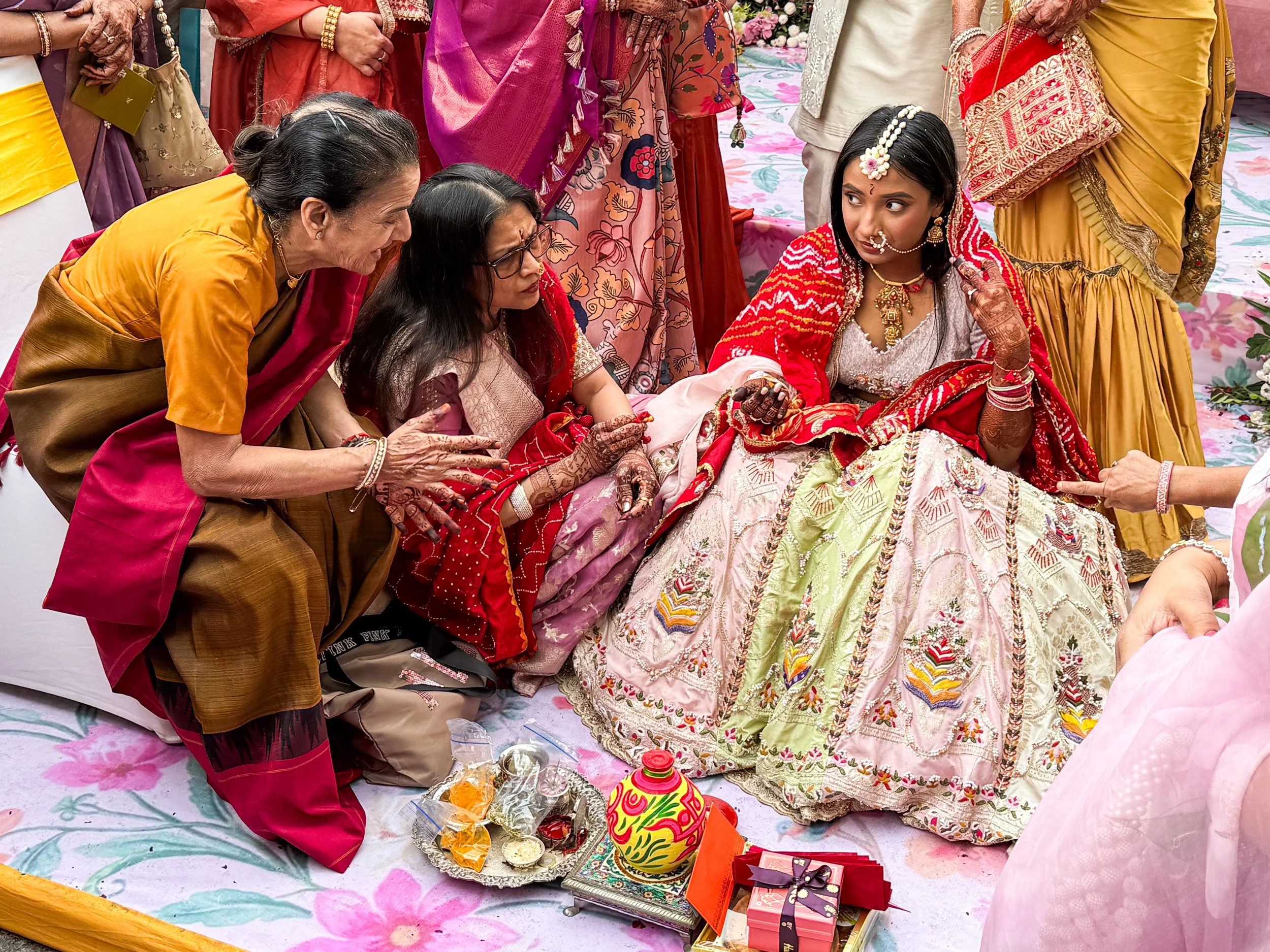
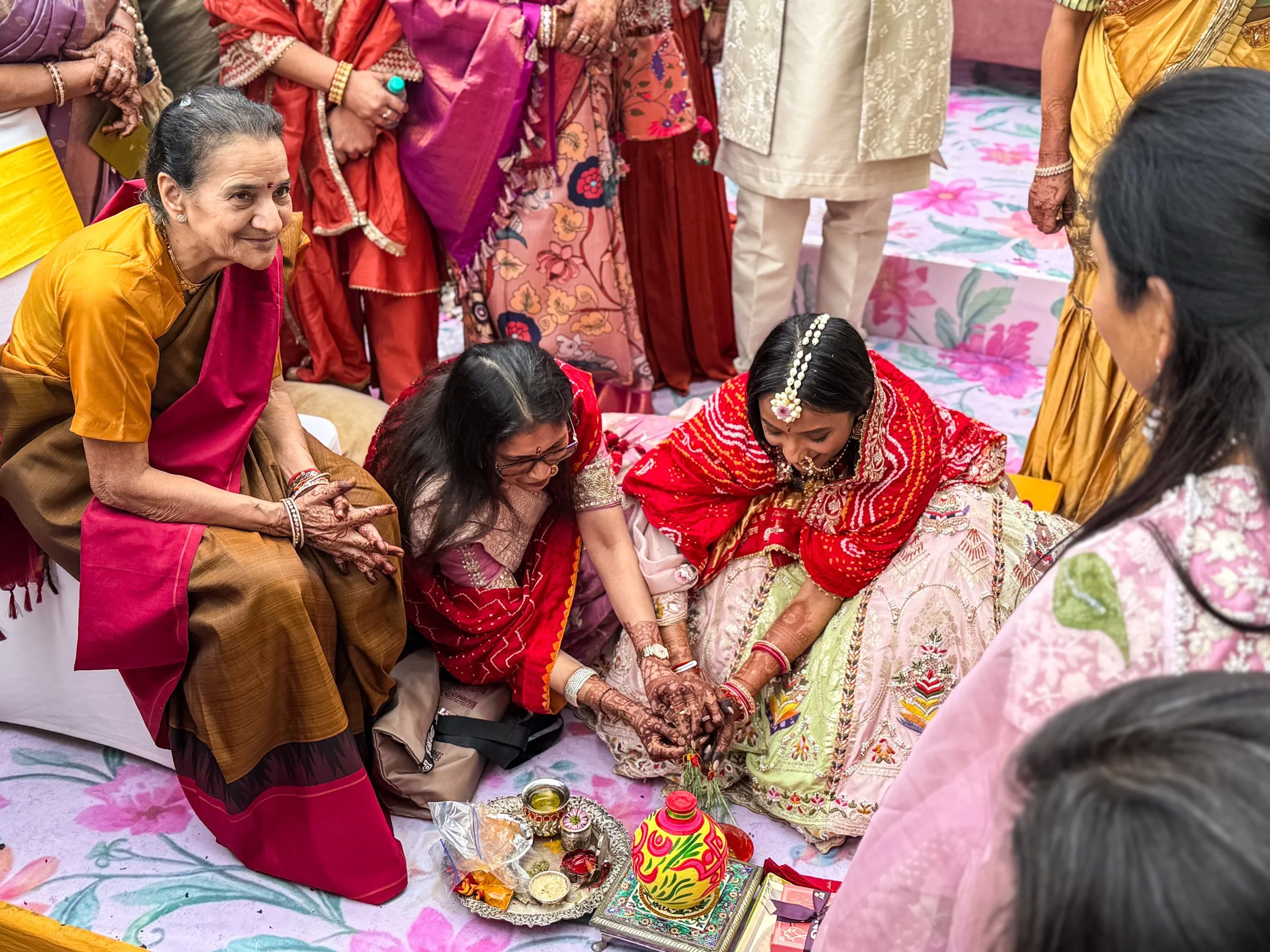
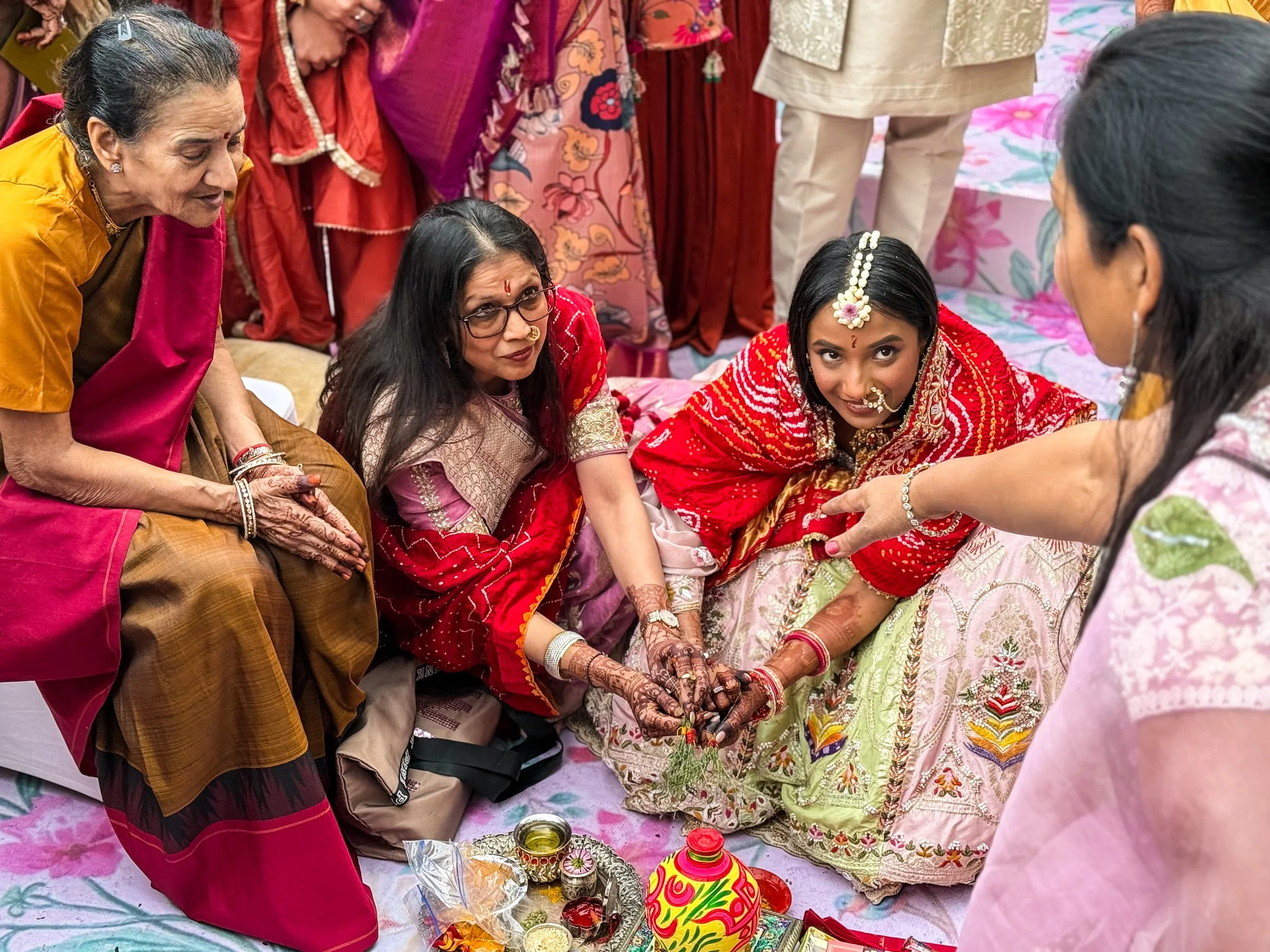
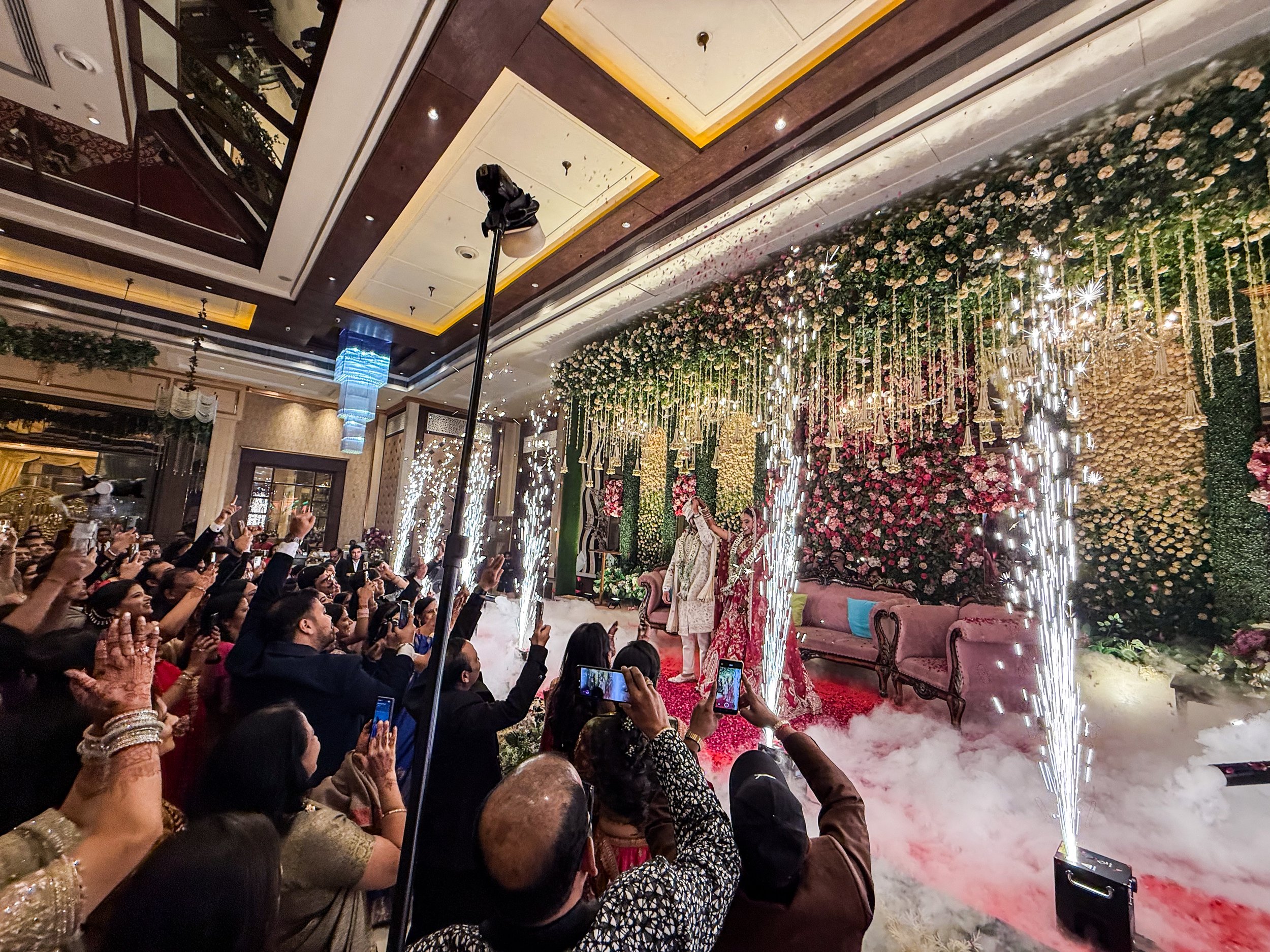
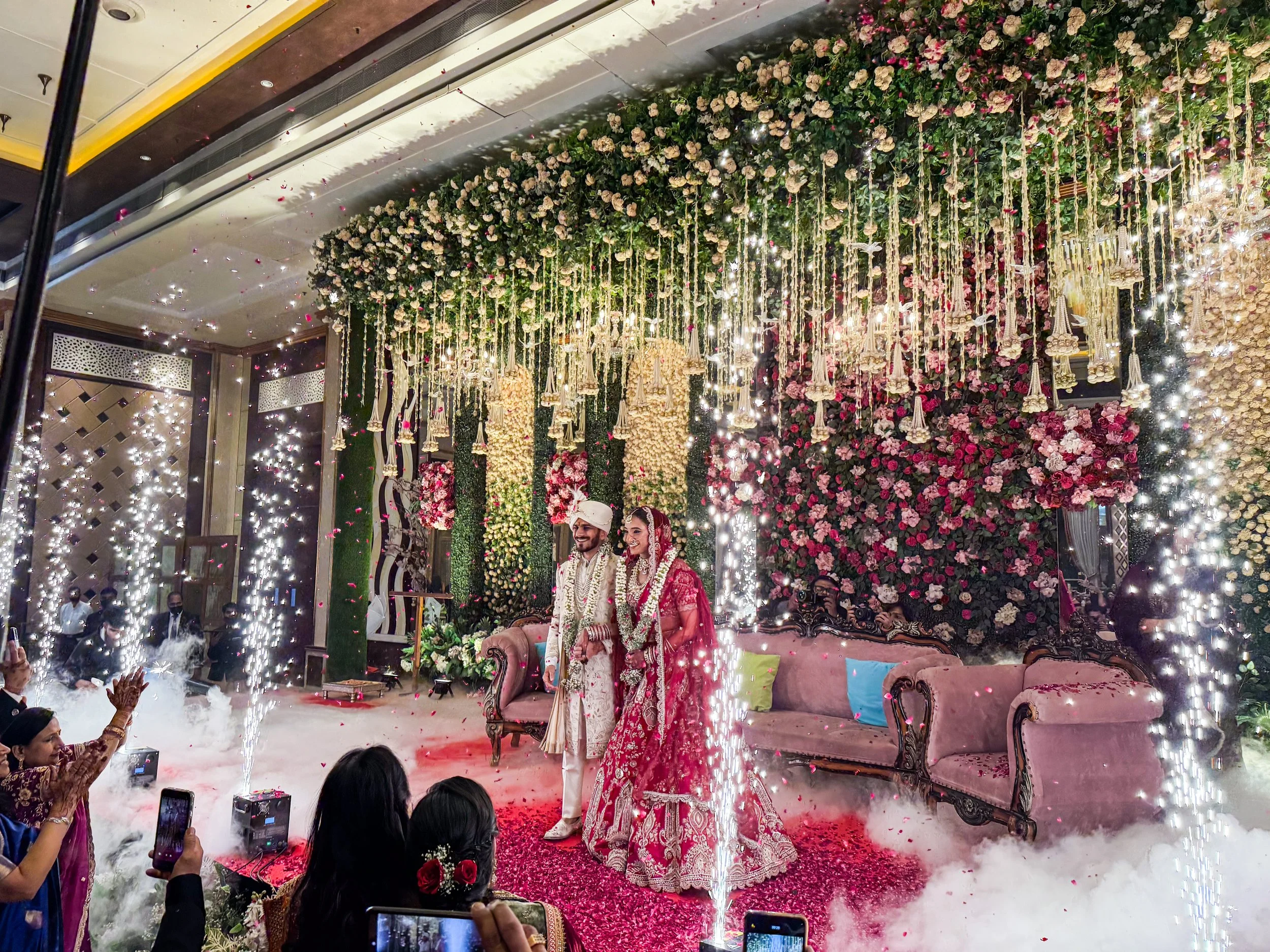
I’ll leave it there… hopefully this is a bit closer to the article that Delhi deserved when I originally visited in 2015!
There’s more in the queue for India. Up next we’ll be returning to Agra, and then making my first jump into the South of India for articles in Goa, Chennai, and Pondicherry. Stay tuned!
For my customary Track of the Day, while I am actually starting to have a real soft spot for Indian music, Delhi seems like an appropriate place for me to highlight that there are actually a LOT of Indian artists participating in all sorts of genres. The talent pool is immense and even though India can be a bit of a cultural bubble, I think that as the country develops we’re going to see a lot more representation across the broader media landscape. One Delhi band that I will be featuring on the blog’s playlist soon is Peter Cat Recording Co., but for this article, I wanted to end with something a bit less niche. This song—which was introduced to me by another Indian friend—is now in regular rotation on my workout playlist, and I think it’s a cool backdrop for the the insane scale of the gears currently turning in the Indian capital of Delhi.




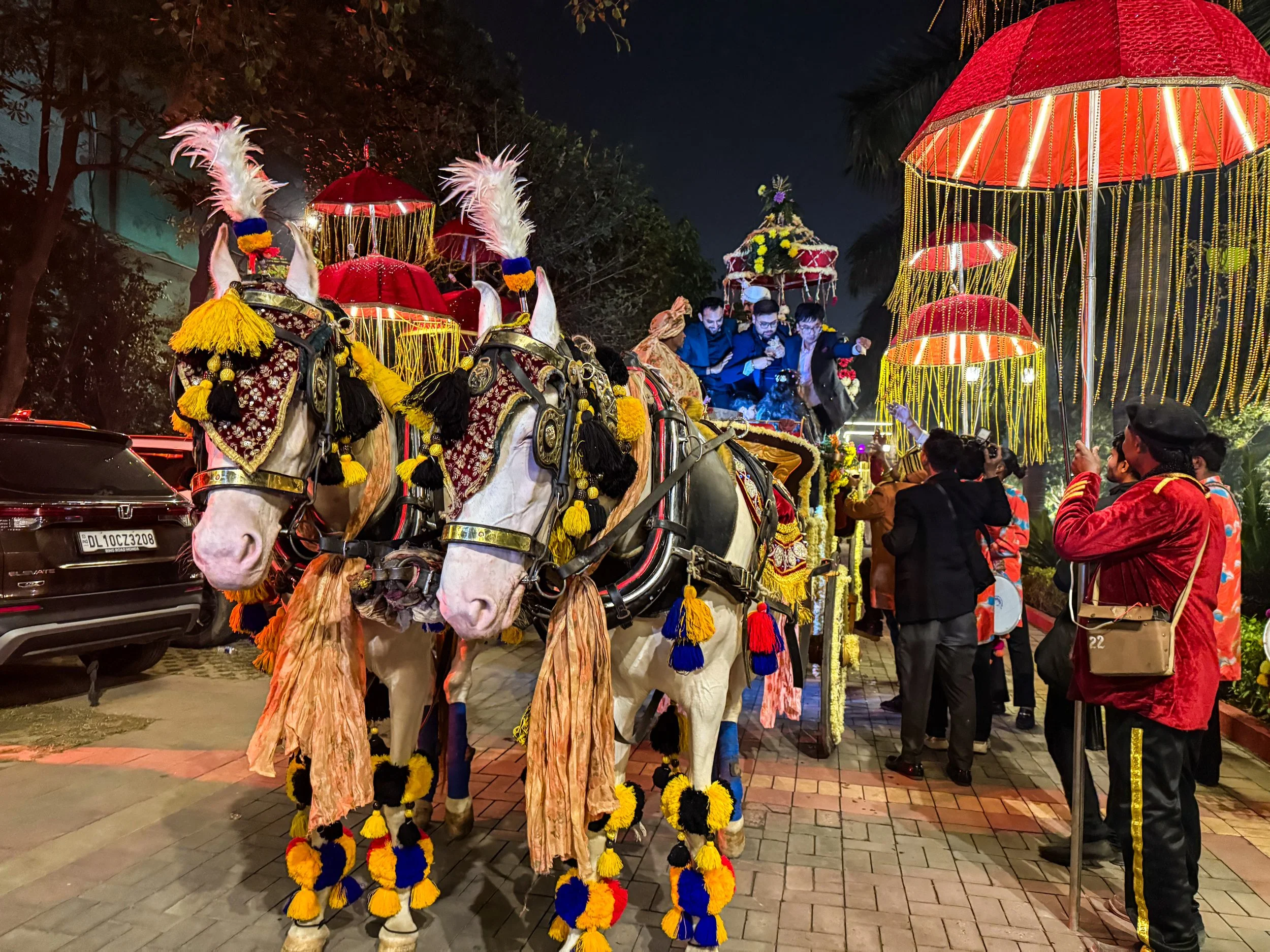
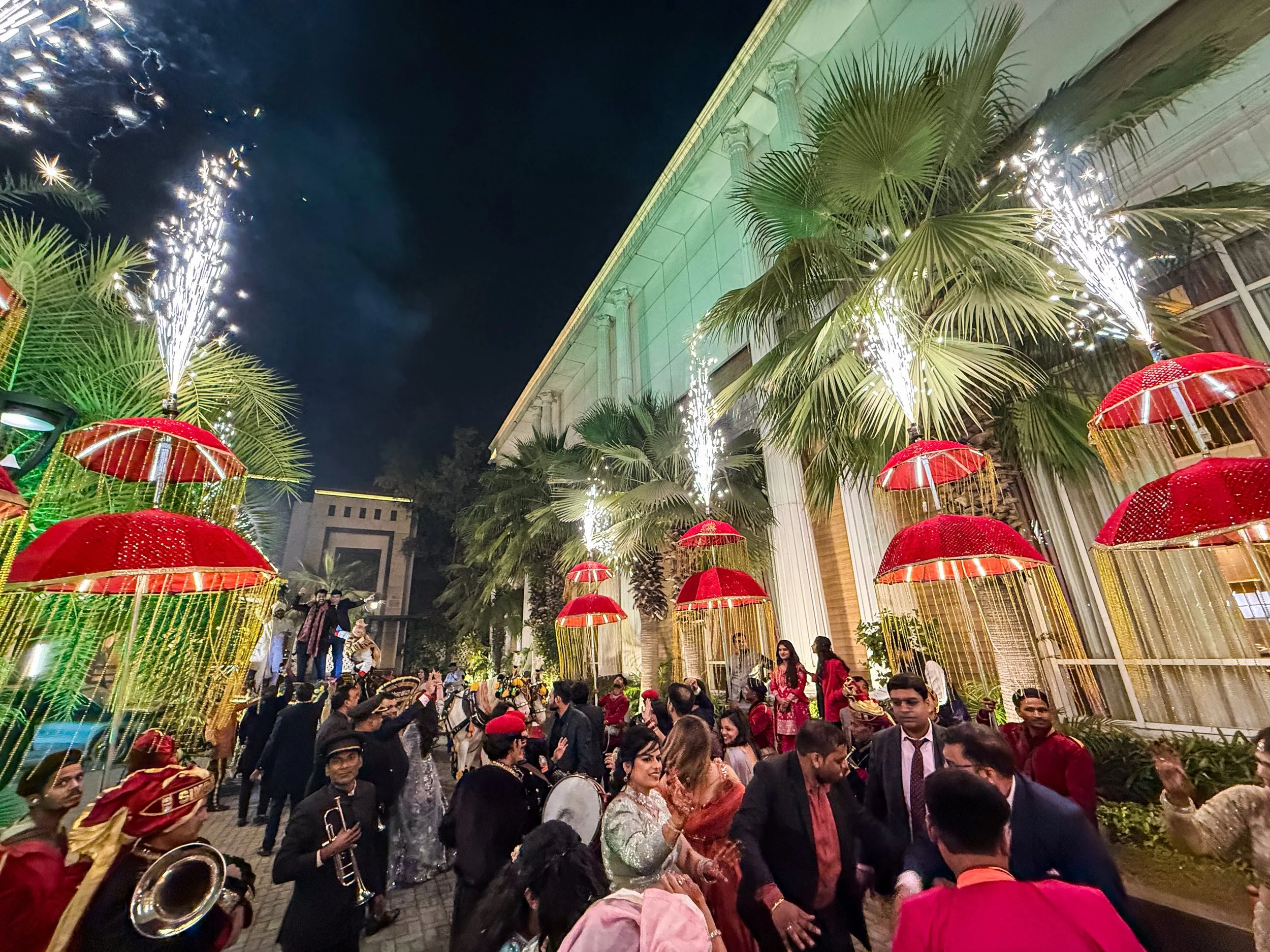
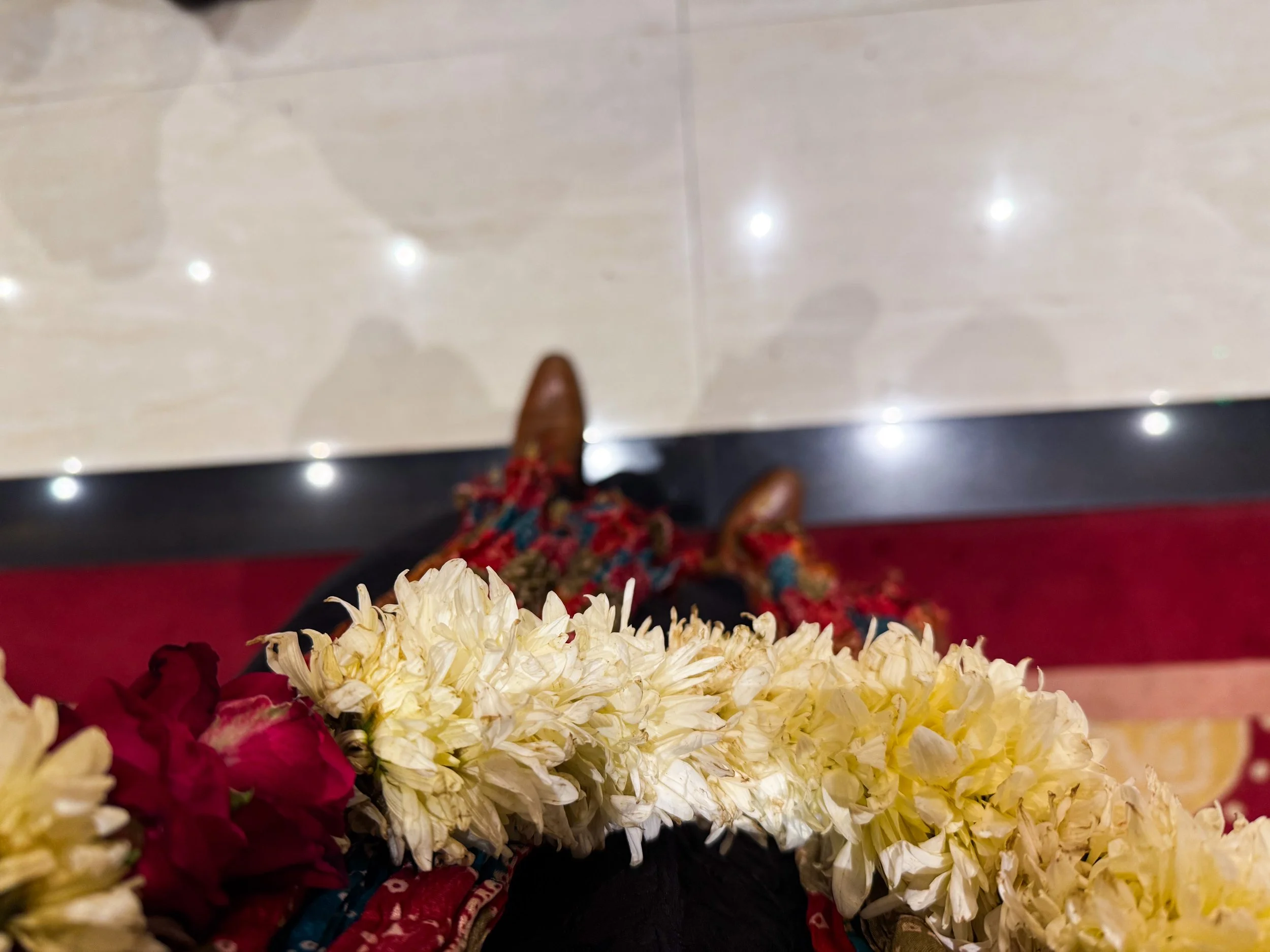
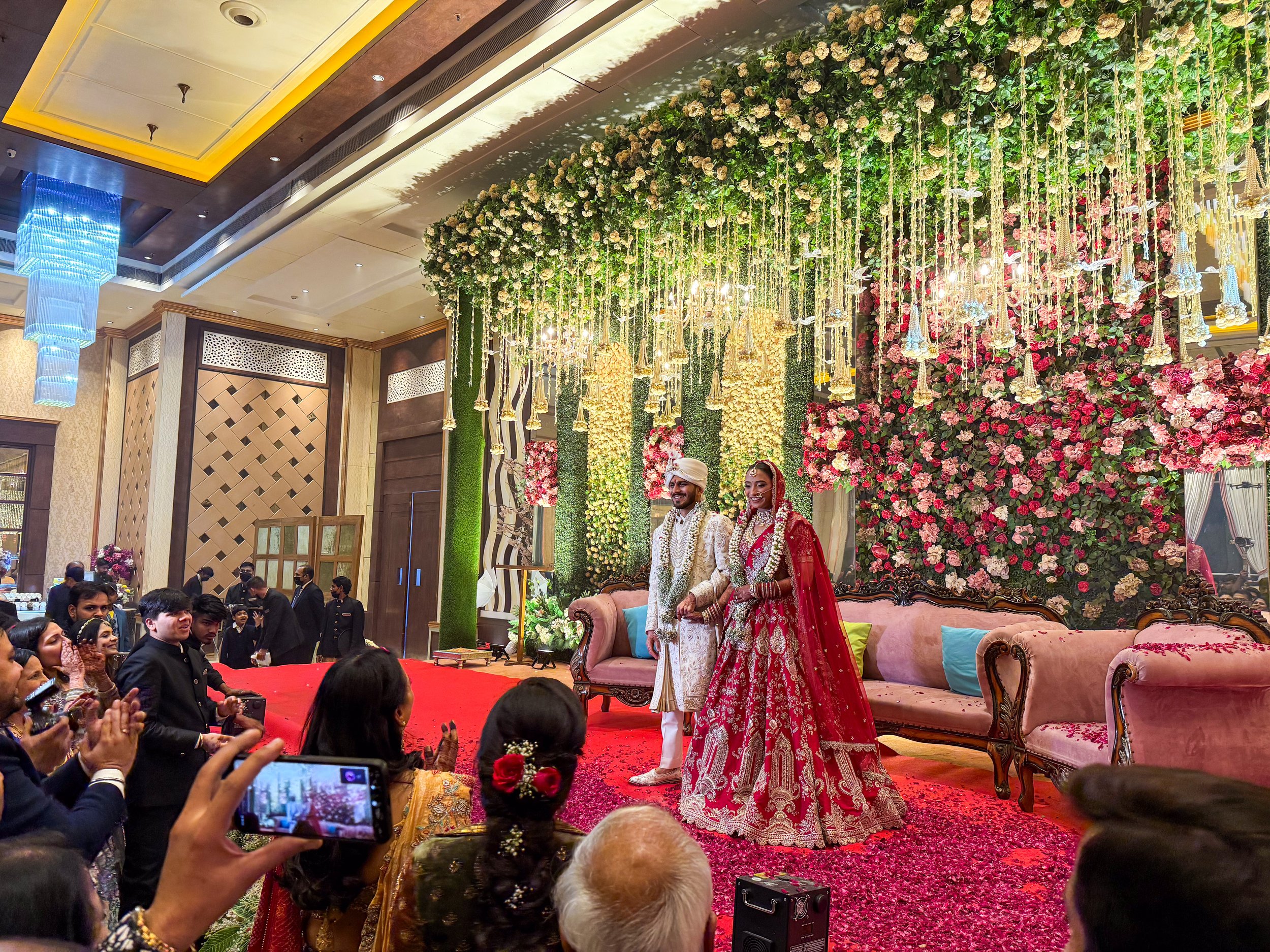
You may have heard about Indian weddings before… TL;DR, if you get invited to one, try your very best to make it. They are extremely cool. But this wedding… I need to disclaim now that this is absolutely NOT representative of what most Indian weddings are like. This is going to be extravagant. My other Indian friends in attendance would caption the obvious, saying “most Indians will never go to a wedding like this in their whole life.” But I’m not going to spend much time talking about the economic dimension of this event. We’re just going to enjoy it for what it is.