
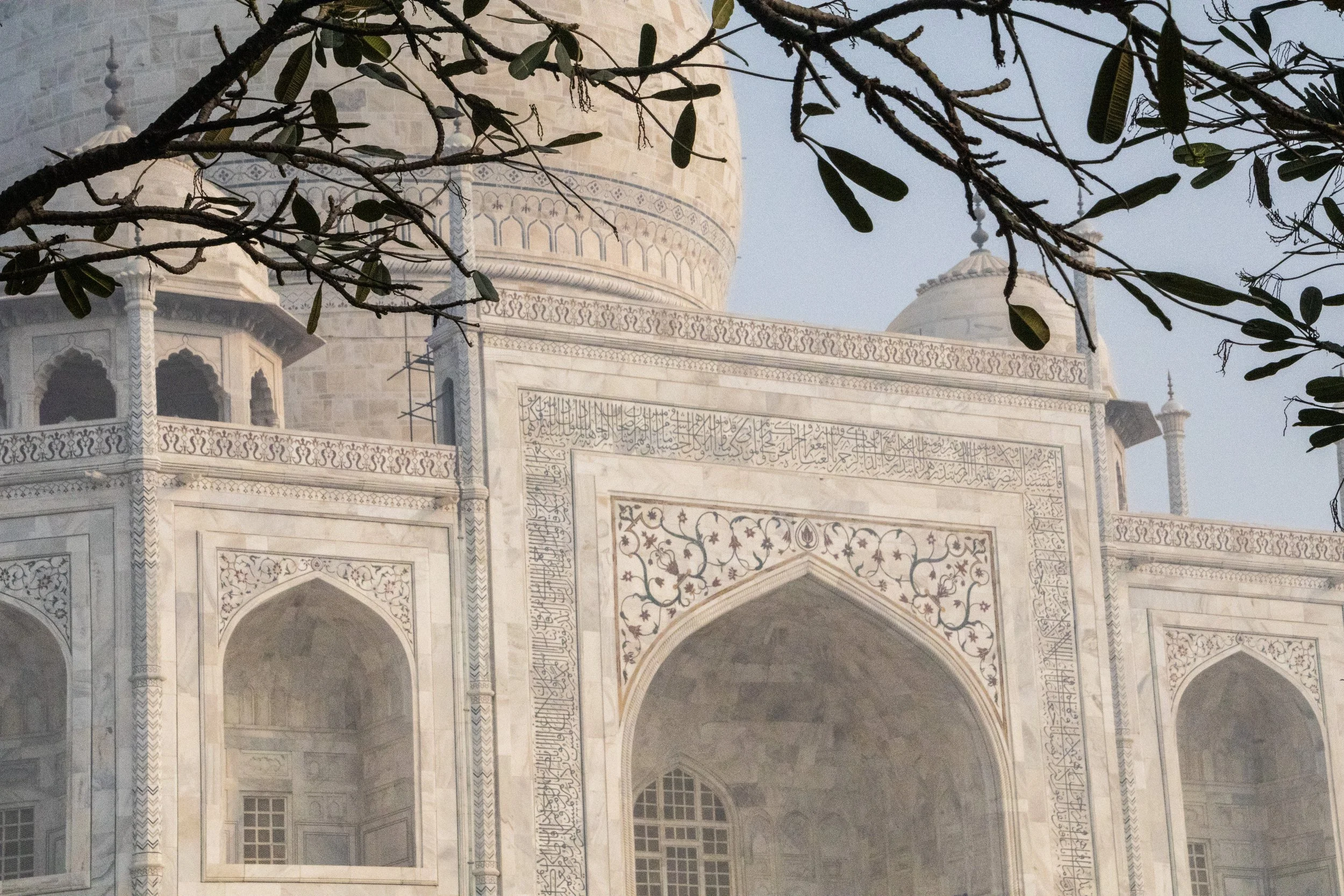
When I first began traveling, my operating assumption was that pretty much everything was a “once in a lifetime experience”. Because, for most people, they are! “Next time” was absolutely never guaranteed. That was definitely the case when I visited the Taj Mahal for the first time in 2015. It’s only just now that I am starting to have the experience of going back to places I’ve already visited. Initially, I was resistant to this, but I’m starting to realize that life is a bit longer than I’d originally thought when I was in my early 20s…
Scene cuts to Peter as an old man in a retirement home, looking out the windowPETER
(reflectively)Where did the all the years go?Just a lil movie script joke for you. Anyway, don’t worry—we’re going to be back to breaking new ground after this article. And I wouldn’t be writing this article at all if I didn’t have a slightly new dimension I wanted to explore on this topic. Unfortunately, it’s pollution. I touched on this in the previous article, which was about Delhi, but this little excursion was where the issue really slapped me in the face for the first time.
Air Pollution in Delhi & Uttar Pradesh
In the previous article on Delhi, I touched on the air pollution a bit. When I was preparing for this trip, I was actually quite nervous for this part of it! The last time I was here (which was about a decade ago) it was already known to be quite a polluted city. But things have apparently gotten a LOT worse in my time away. My Indian friends told me that everybody in Delhi has air purifiers in their apartments now, and that, for some of them, their reaction to the air quality was instantaneous when they walked out of the airport. They described immediate coughing and wheezing as they walked through the doors of the airport to catch a taxi. And I had signed up for 4 days here? What was I getting myself into… 😷
Delhi is frequently cited as being at or near the top of the list for cities with the worst air pollution. Air pollution is most commonly measured with a metric called AQI (Air Quality Index). On this scale, 0-50 is considered good, clean air. Once you get to the 101-150 range, you will start seeing health warnings for “sensitive groups” on your weather apps. From there, the scale goes up to 300 in increments of 50, going from “unhealthy” to “hazardous and posing serious health risks”. In theory the index runs all the way up to 500, but sometimes there are score higher than this.
Care to venture a guess as to the AQI score of Delhi on a bad day?
1,700. 🫠 😷
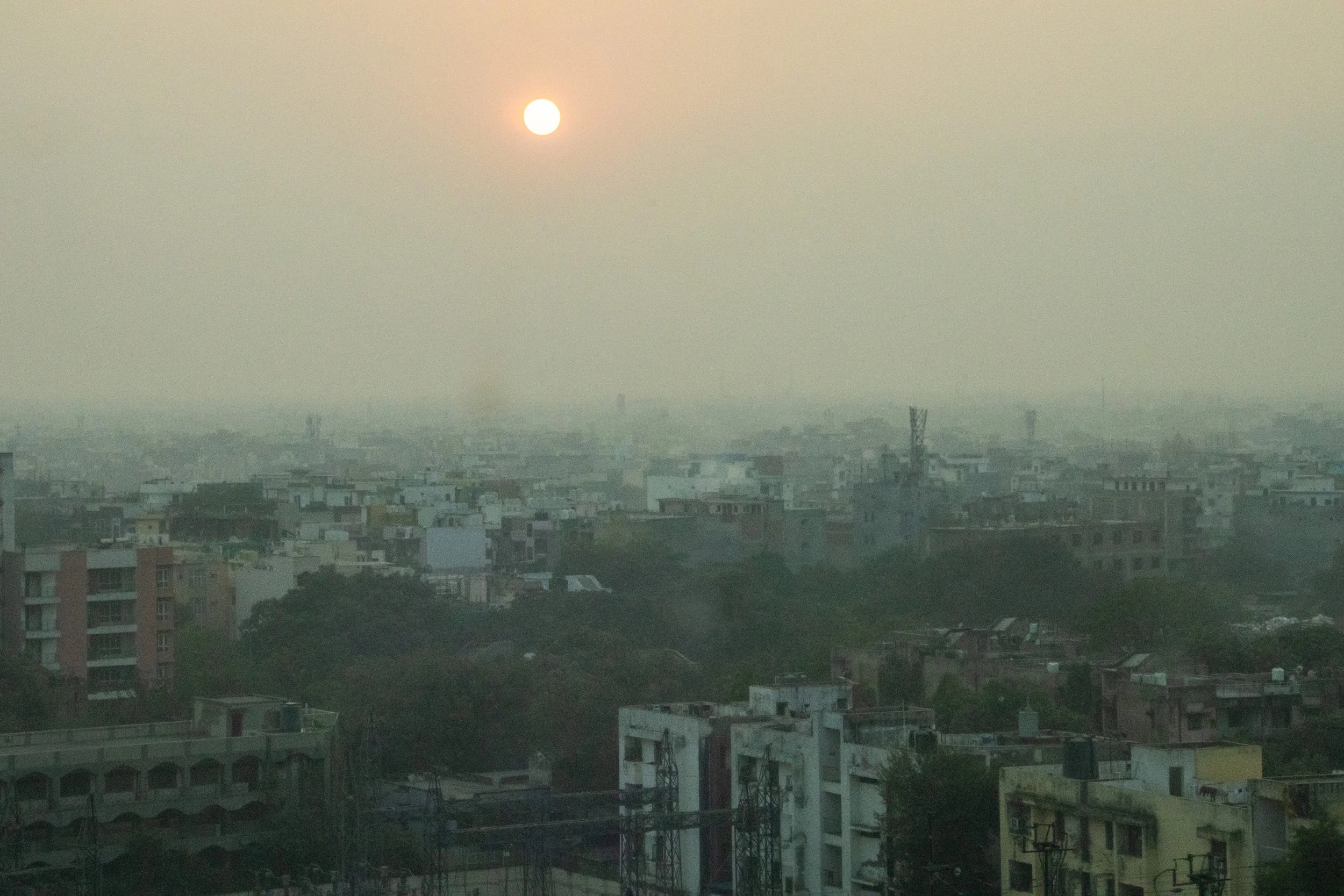
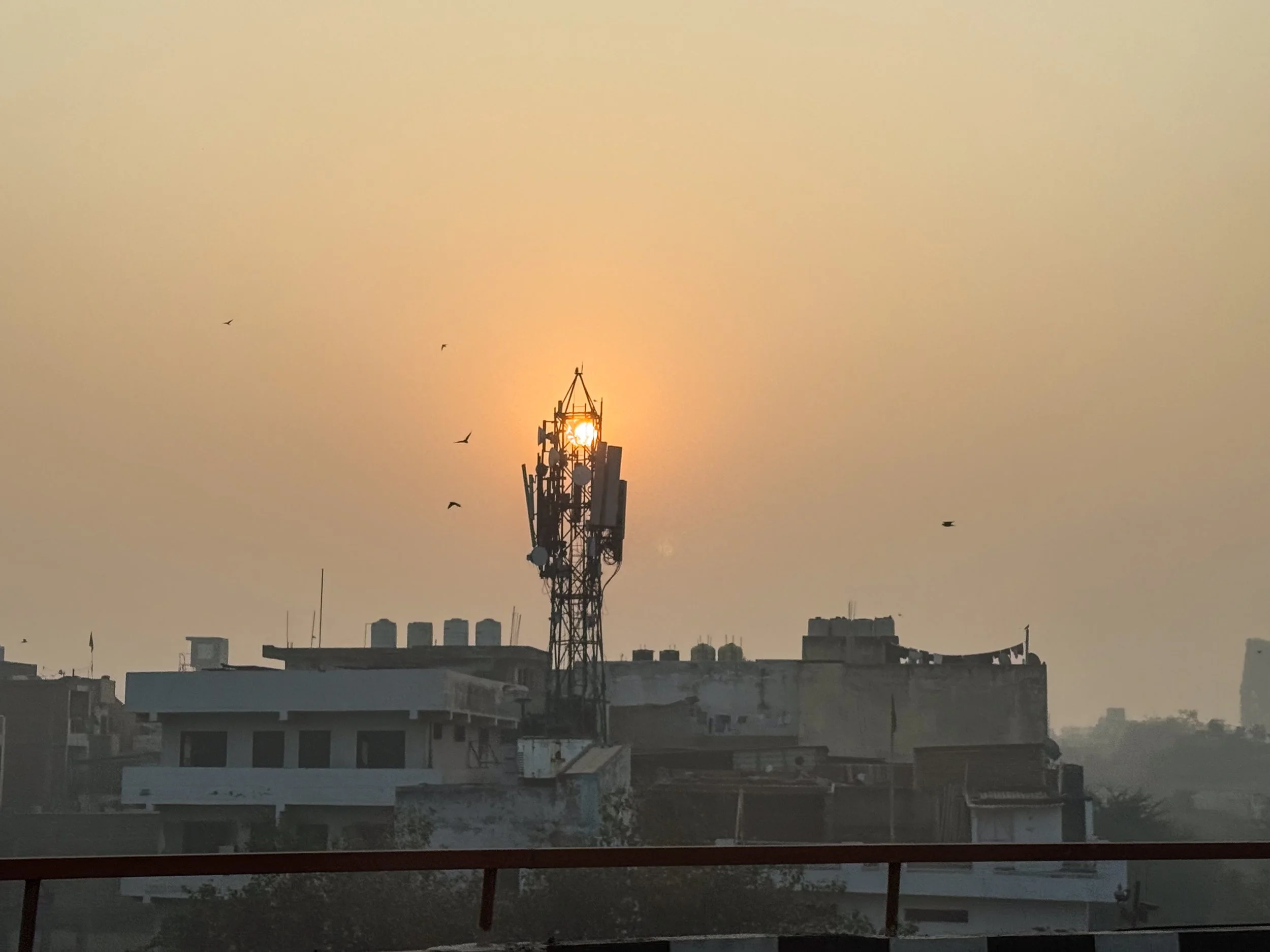
Yes, I took those pictures on my trip to Delhi. To put that 1,700 AQI score in context, similar particulate levels can occur:
Near brick kilns
Near open coal combustion
In poorly ventilated areas around industrial boilers
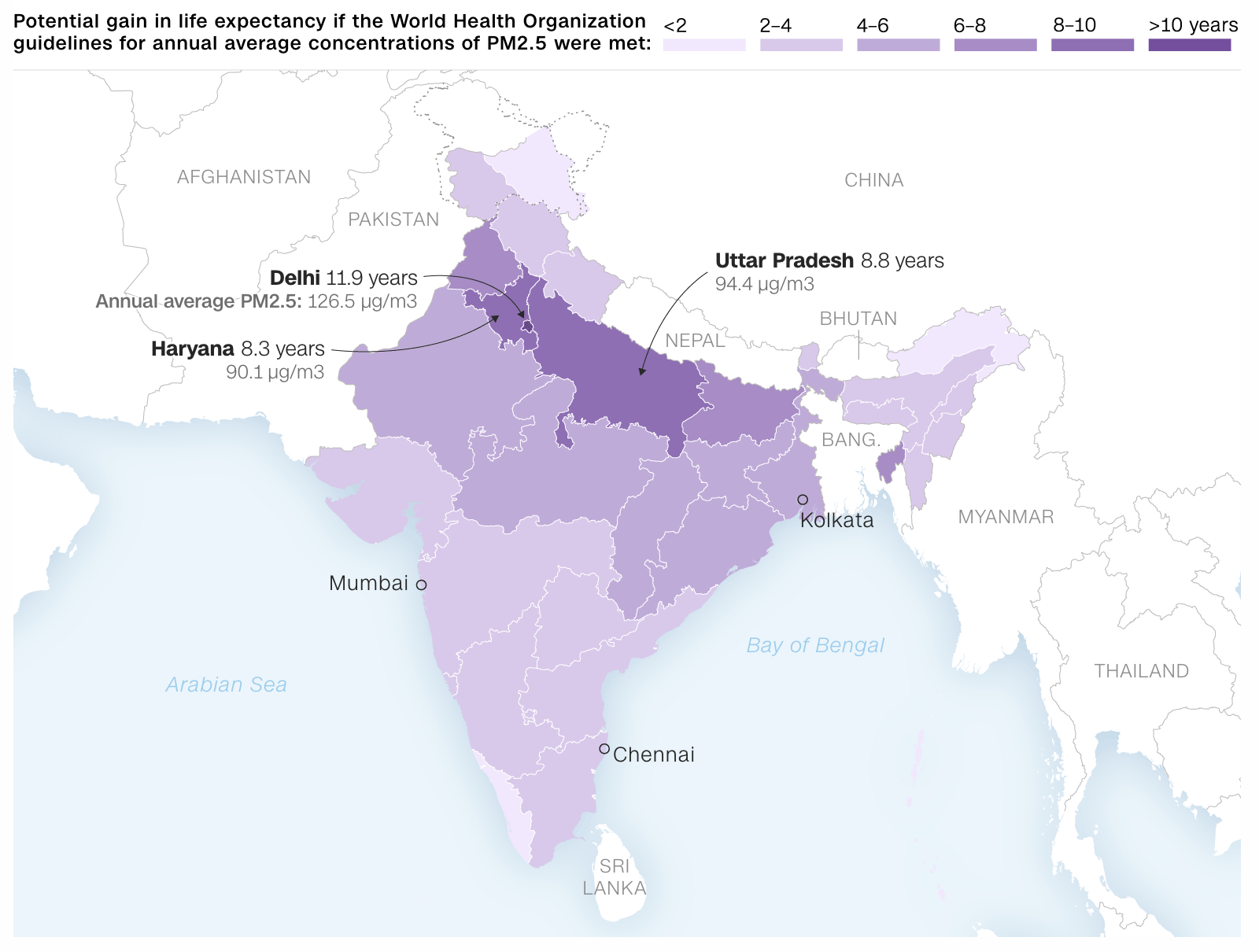
And, the nearly-290 million people who live in Delhi and its surrounding provinces (Haryana and Uttar Pradesh) breathe this air continuously. I did some research and found this alarming chart, which shows how much earlier people in these areas are dying because of their exposure to this air. The chart references “PM2.5” as metric for air quality. This is a way to measure fine particulate air pollution; specifically, it refers to tiny airborne particles with a diameter of 2.5 micrometers (µm) or smaller. Because they are so small, they can travel deep into the lungs and even enter the bloodstream, which makes them one of the most important health indicators in air quality monitoring. The medical upshot of all of this is that, in Delhi, the air pollution is cutting the typical person’s lifespan short by almost 12 years. 🤯
When I was preparing for this trip and starting to get freaked out by all of this, I was bit incredulous. I remember asking one of my Indian friends (1) HOW could it possibly have gotten this bad without people doing something to address it… and (2) surely they are doing something about it now, right???
Well, let’s start with the first point - how did it get this bad? I’m sure you have a basic understanding of how air pollution works. It comes from things like vehicle emissions, dust from roads and construction sites, emissions from cooking and heating, emissions from industrial sites, and emissions from burning waste. Once you multiply that by literally hundreds of millions of people, it’s easy to see how pollution levels can start to get out of control. But we’re not done yet! In northern India especially (which is where we are right now), agricultural activities in rural areas create problems of their own. For example, the common practice of crop burning releases clouds of smoke and particulate matter into the air that can linger for weeks! And the geography doesn’t help either; the Himalayan mountain range encloses this part of India from the north, trapping these toxic fumes at this point of origination.
Interestingly, there is a seasonality to this. The air is not this bad year-round; there is a “smog season”. During the monsoon season (roughly June to September), heavy rains sweep over the country and basically wash this place clean. The end of the monsoon season just happens to coincide with when rice harvests in Northern India are being completed (October to November). Farmers here, who often operate on extremely thin profit margins, need to hit the “reset button” on their land quickly and affordably so they can get to work on their next crop. And the cheapest/fastest way to do this is to burn crop residue (called stubble). At that same time, temperatures are dropping, which increases emissions levels from heating… and in the midst of this sudden worsening in air quality they have Diwali! Experiencing Diwali in India is a major bucket-list item for me… but maybe not in this part of the country, because here in Delhi, Indians apparently light off so many fireworks during the festivities that the days immediately following this holiday are infamous for having particularly bad air quality. So, the cleansing rains disappear just in time for some of the most high-pollution moments of the year! In October/November are when the air quality in Northern India really falls off a cliff.
And this visit was in November of course! 🫠
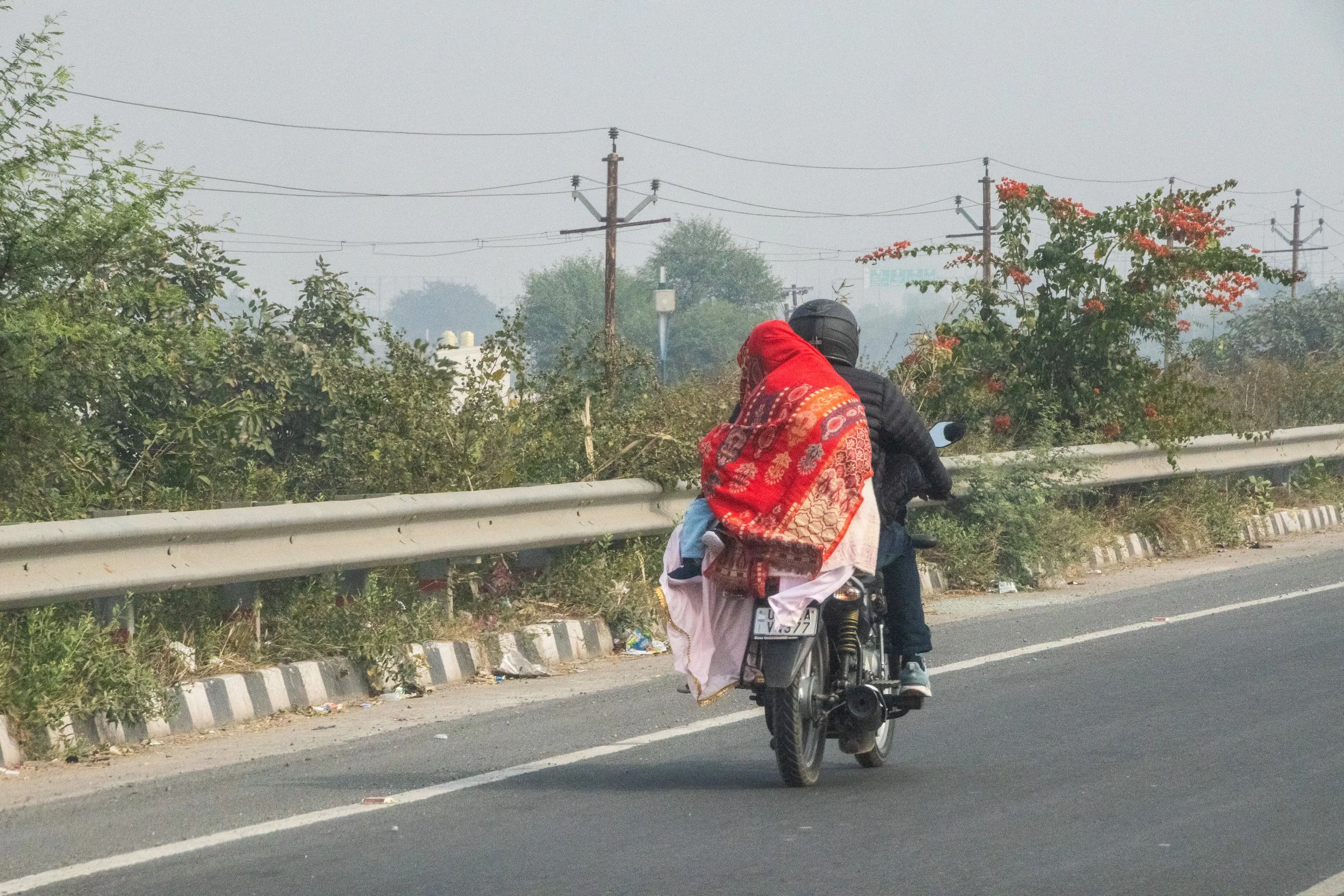
So, what does that look like in real life? We took a car from Delhi to Agra in the wee hours of the morning in order to arrive in Agra for and early morning visit to the Taj Mahal, and the drive was absolutely dystopian.
I don’t want to sensationalize this beyond what is verifiably true and accurate, so before I show you these pictures, I have to give a disclaimer that this is also a time of year that is associated with fog in Northern India. So, some of the haze you are about to see is genuinely just harmless fog… but there’s more going on here than just fog.
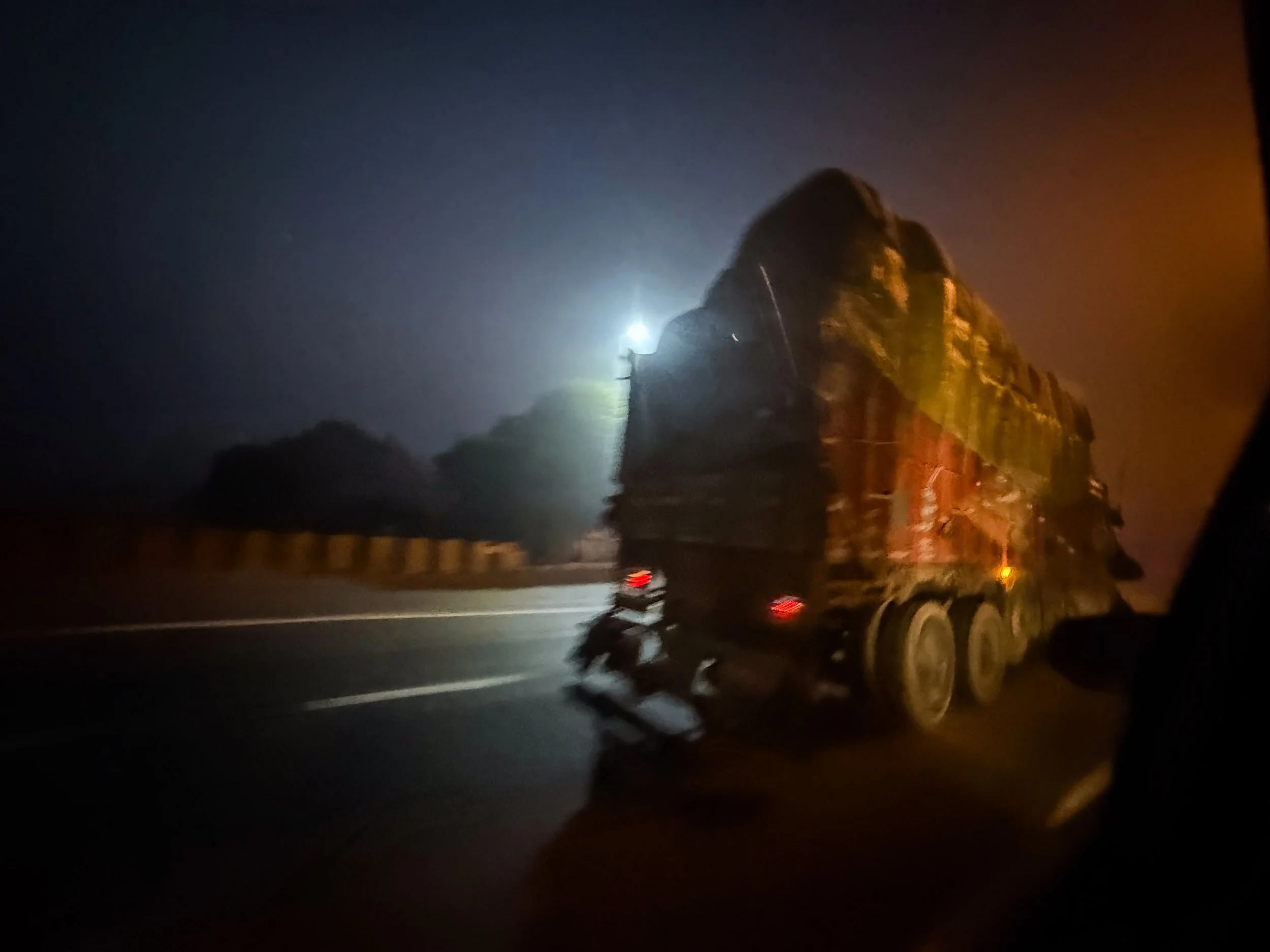
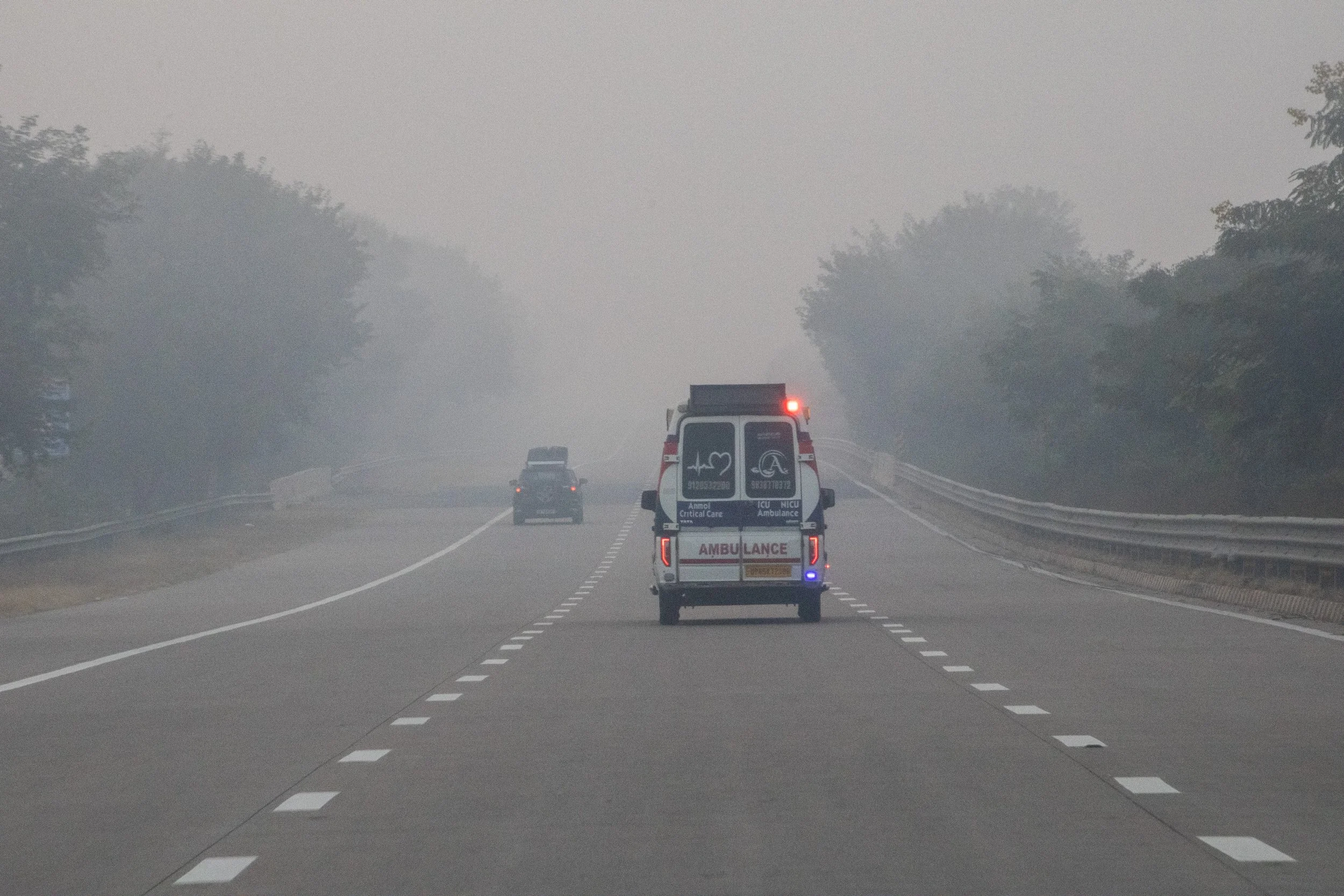
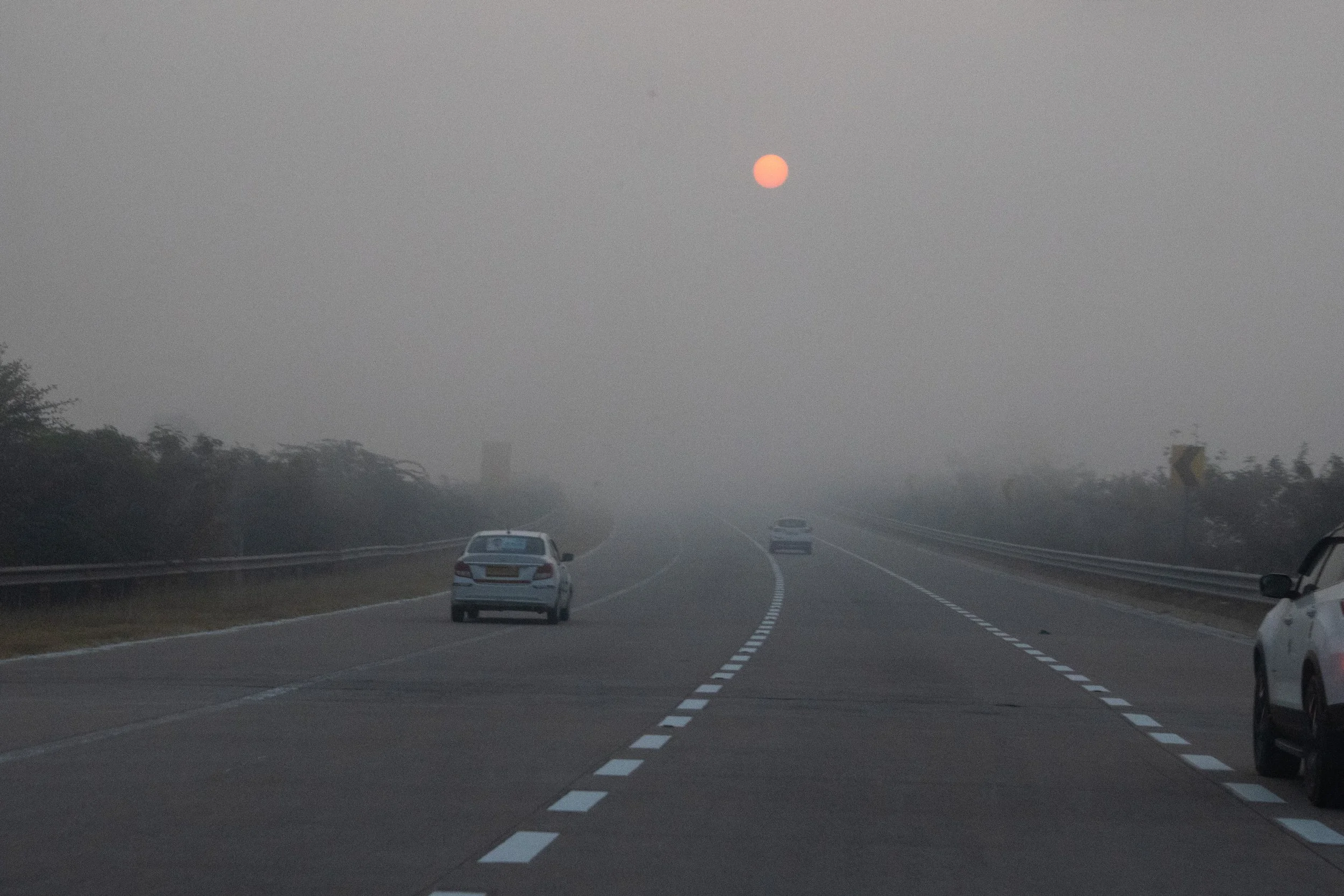
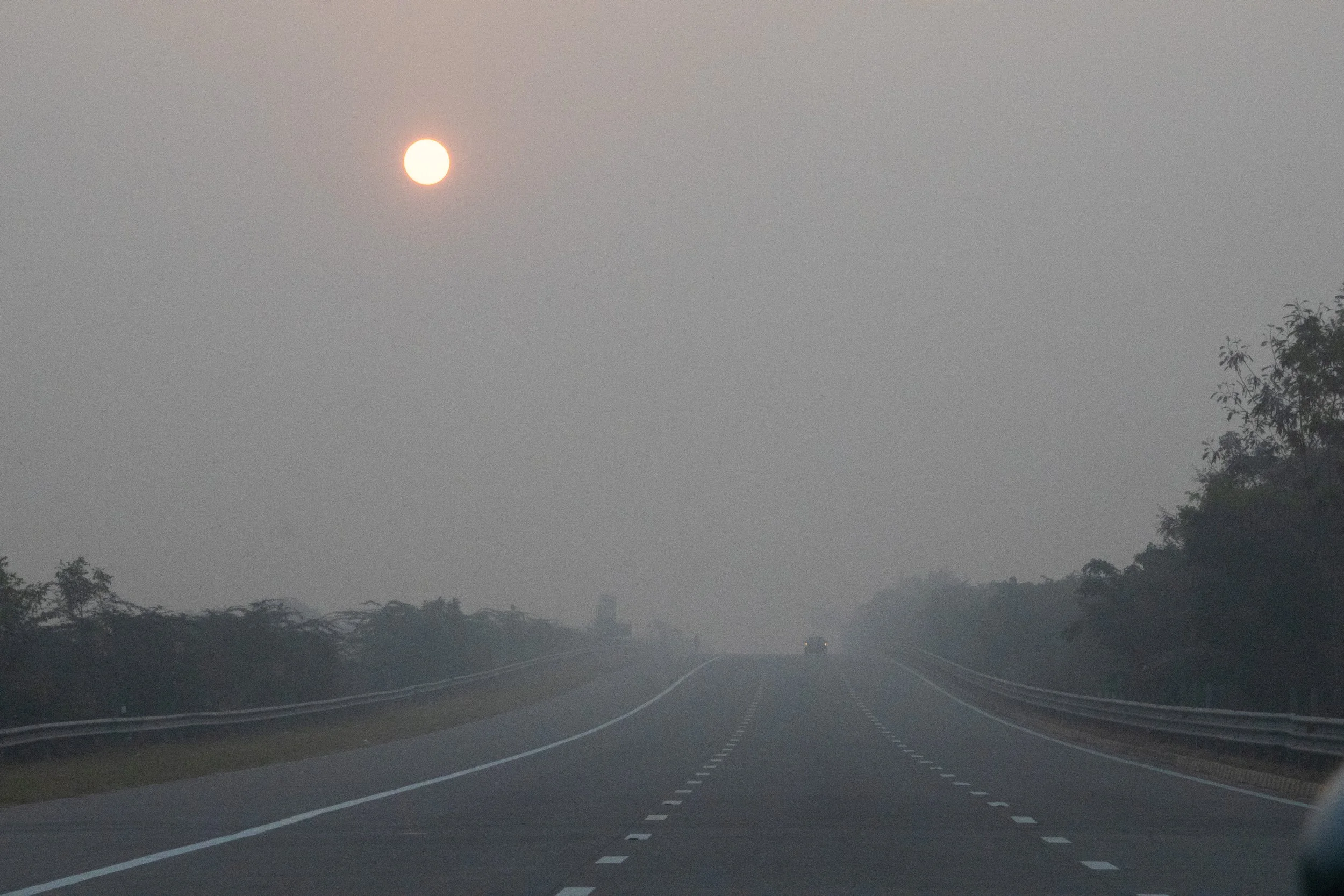
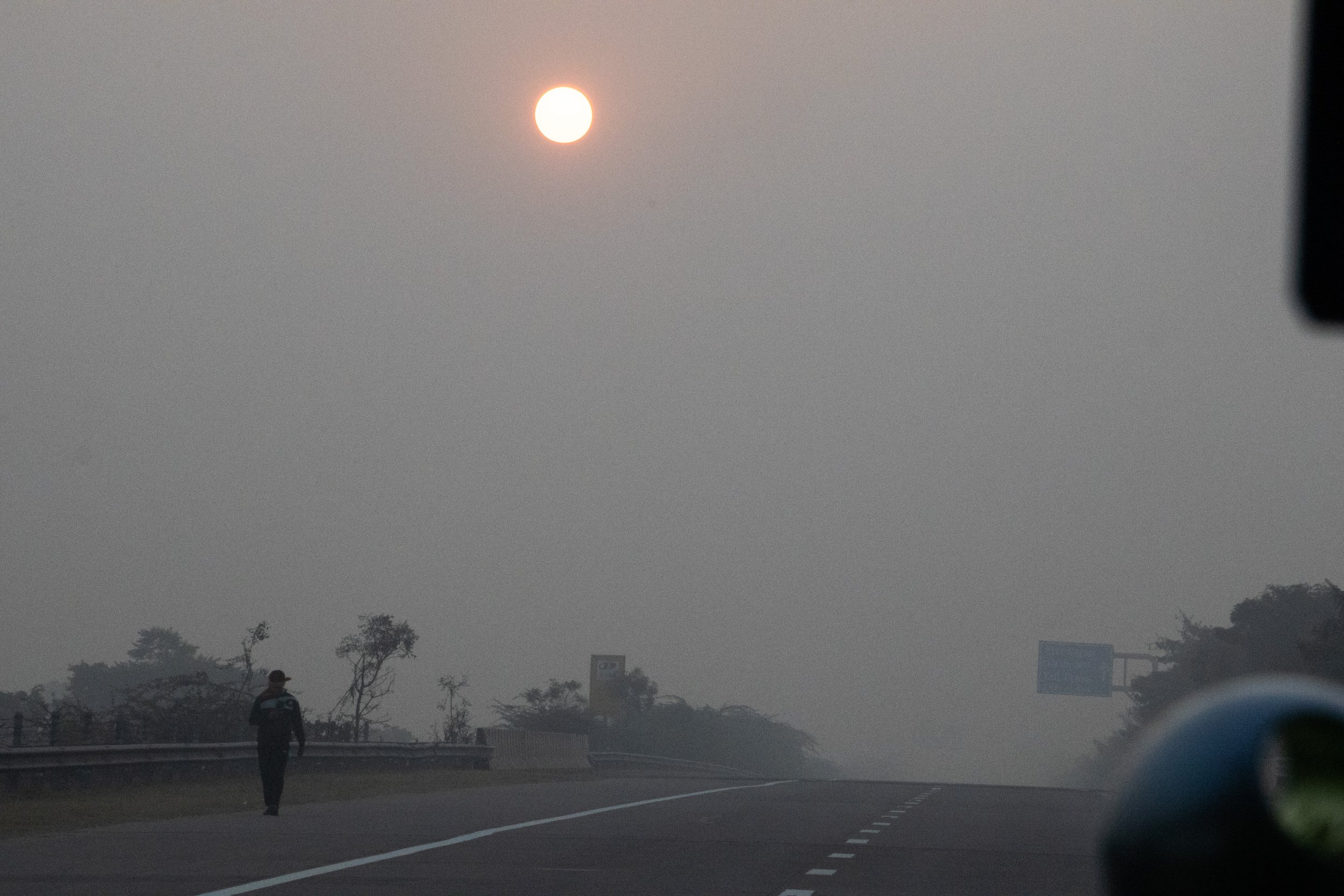
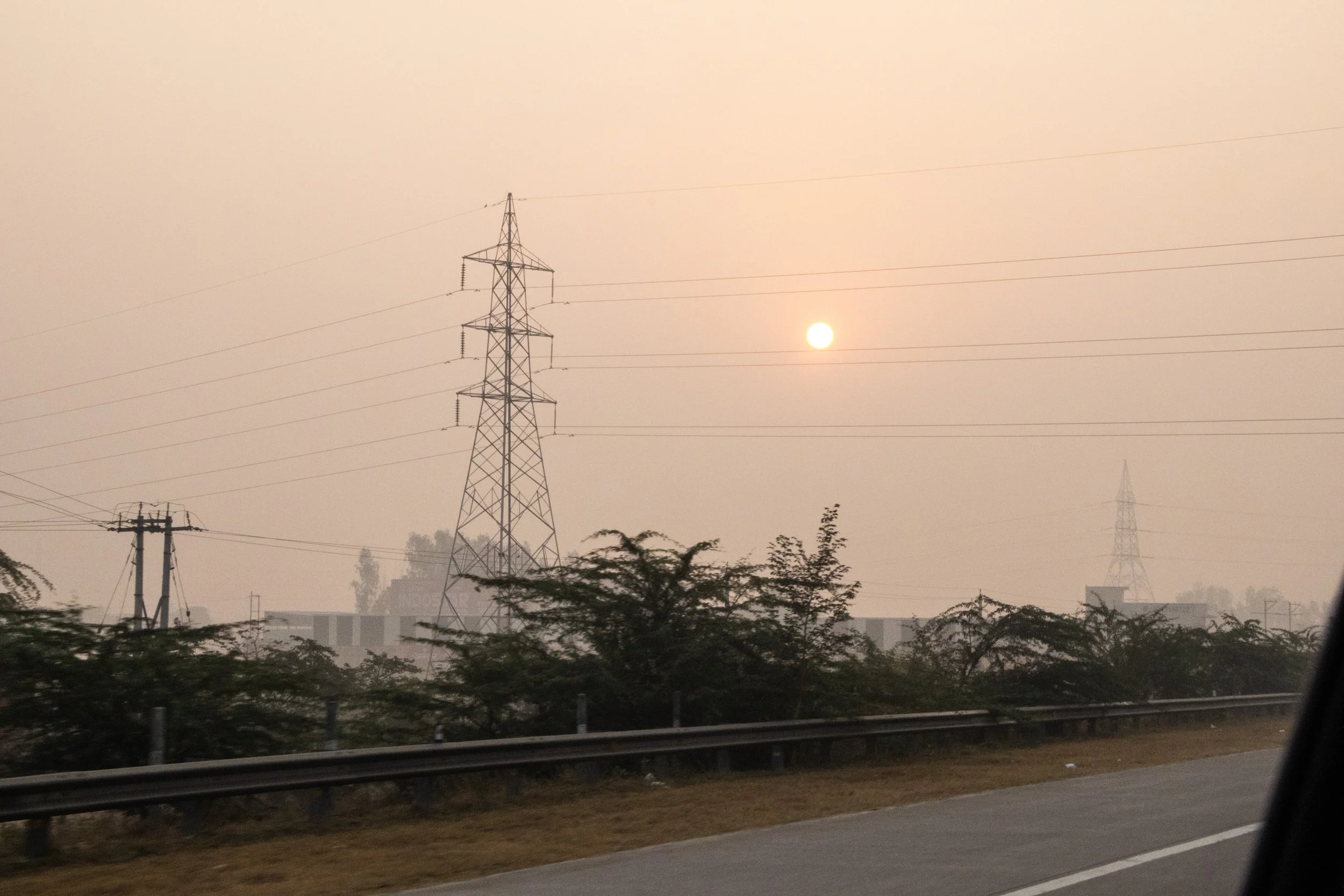
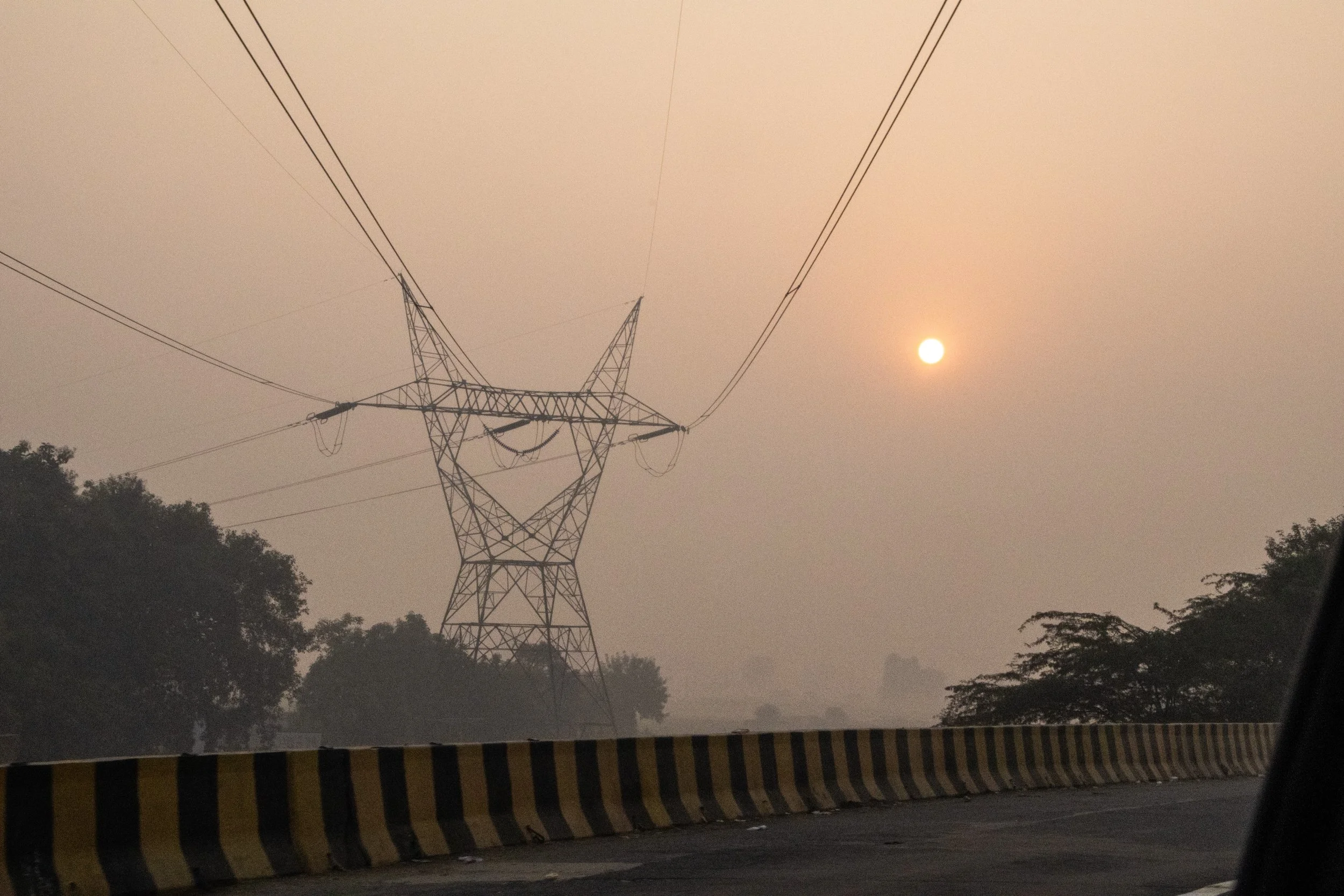
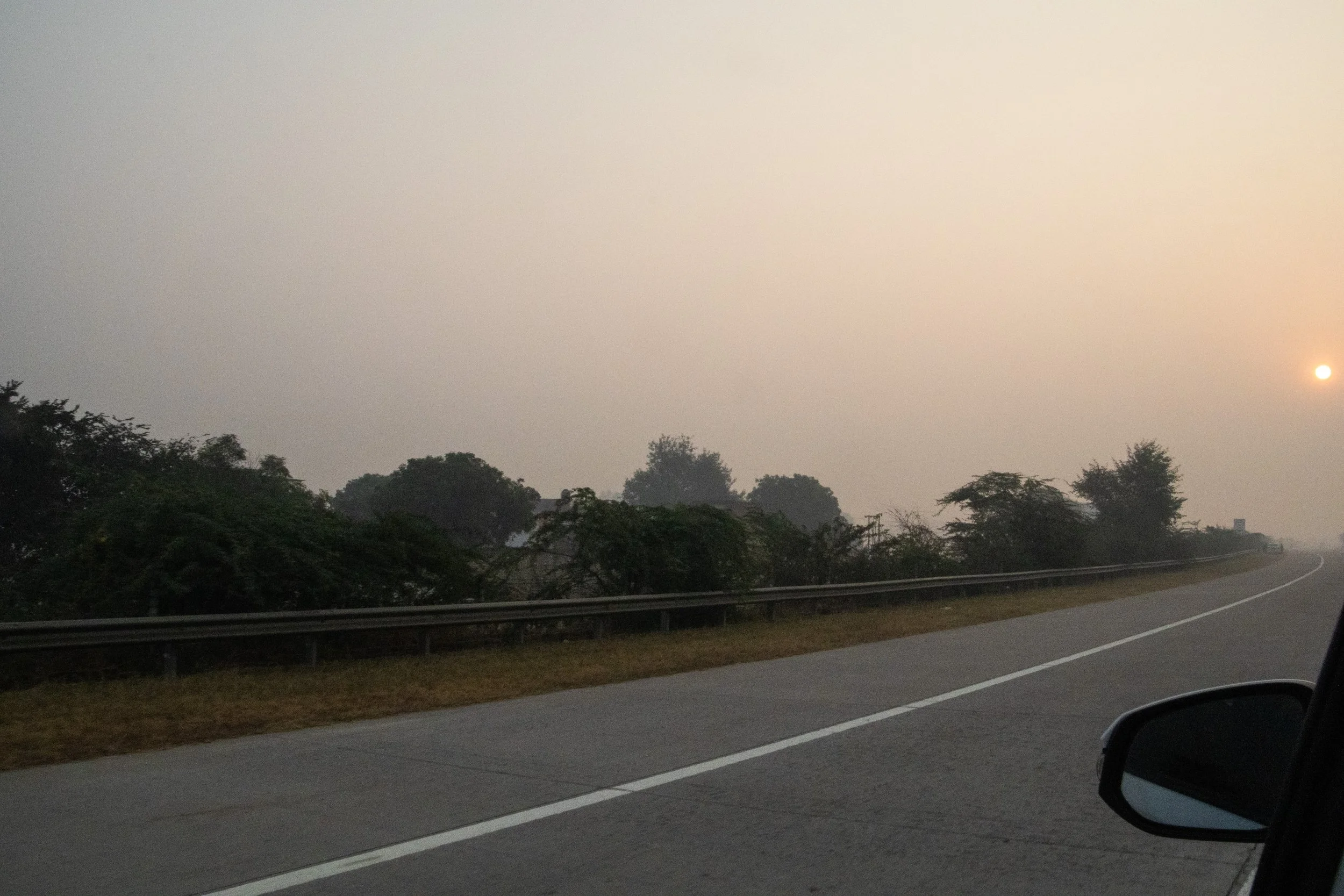
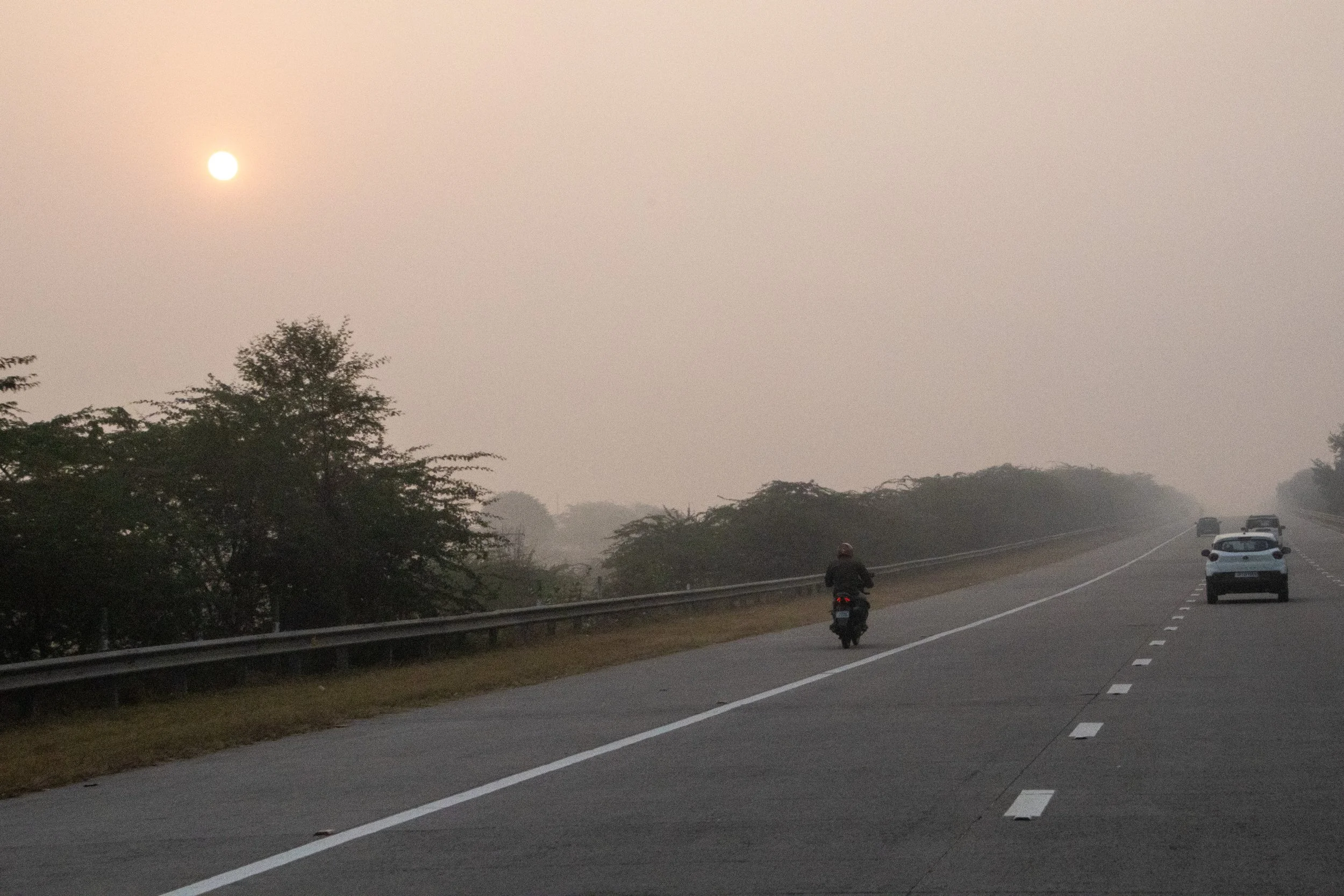
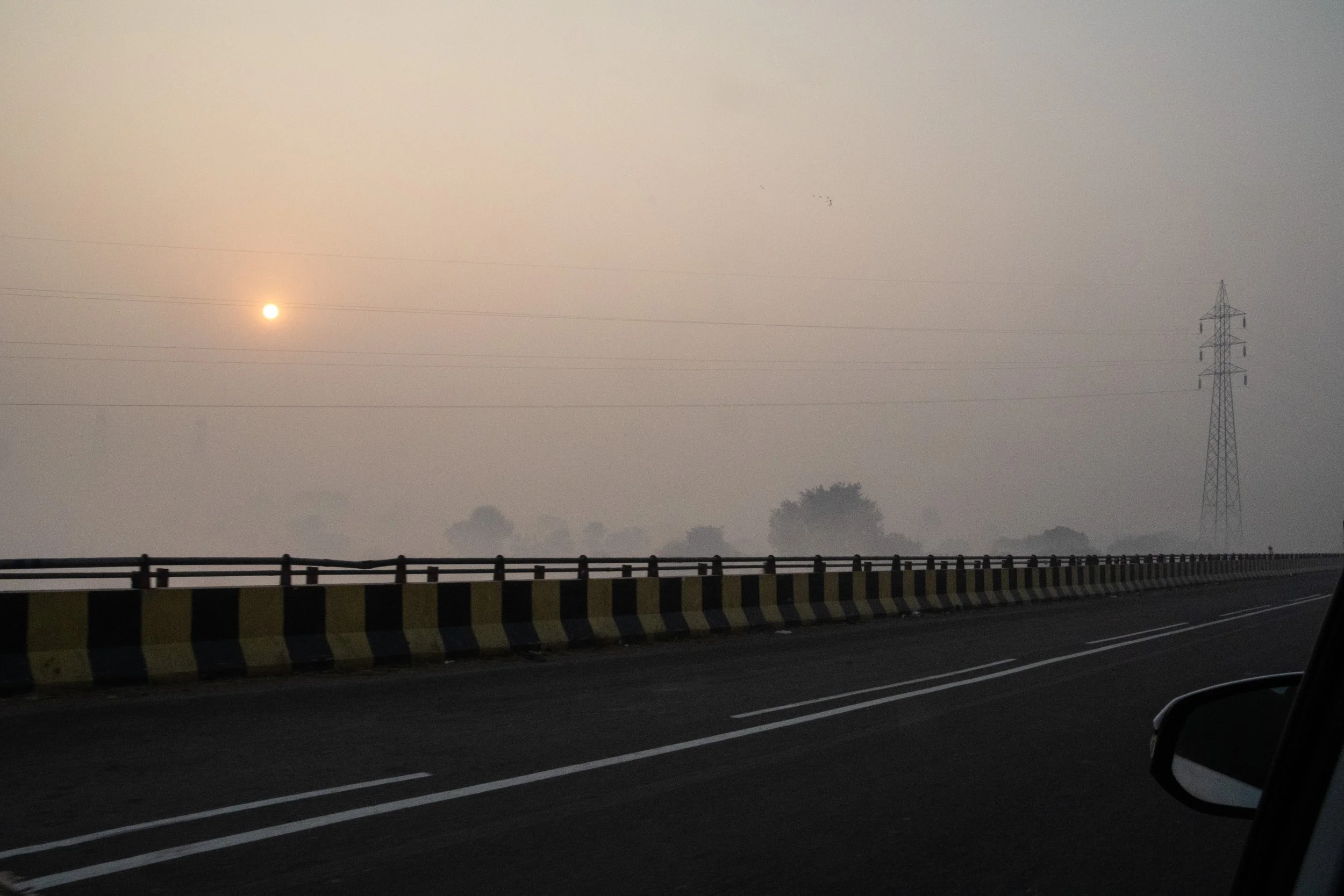
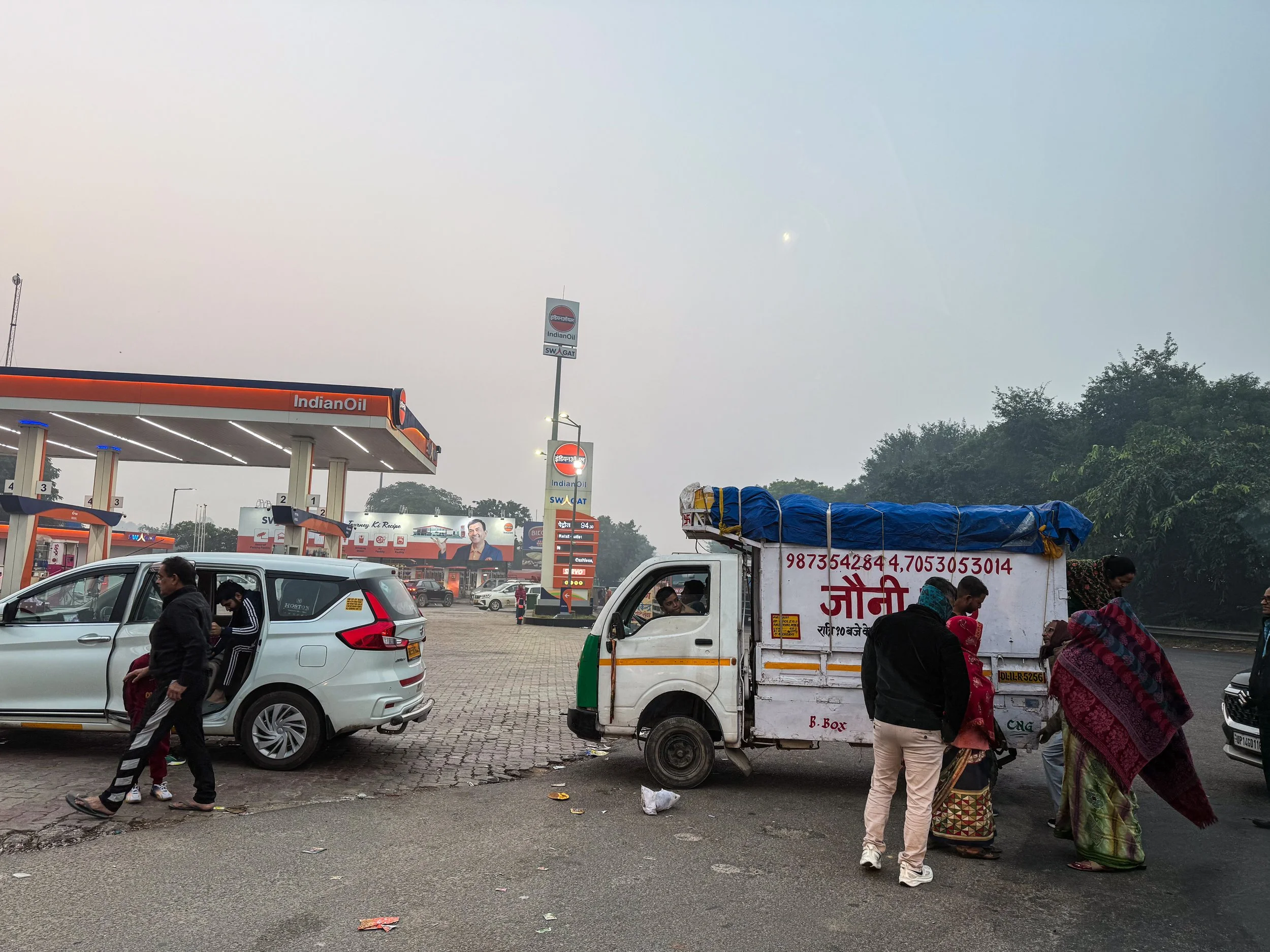
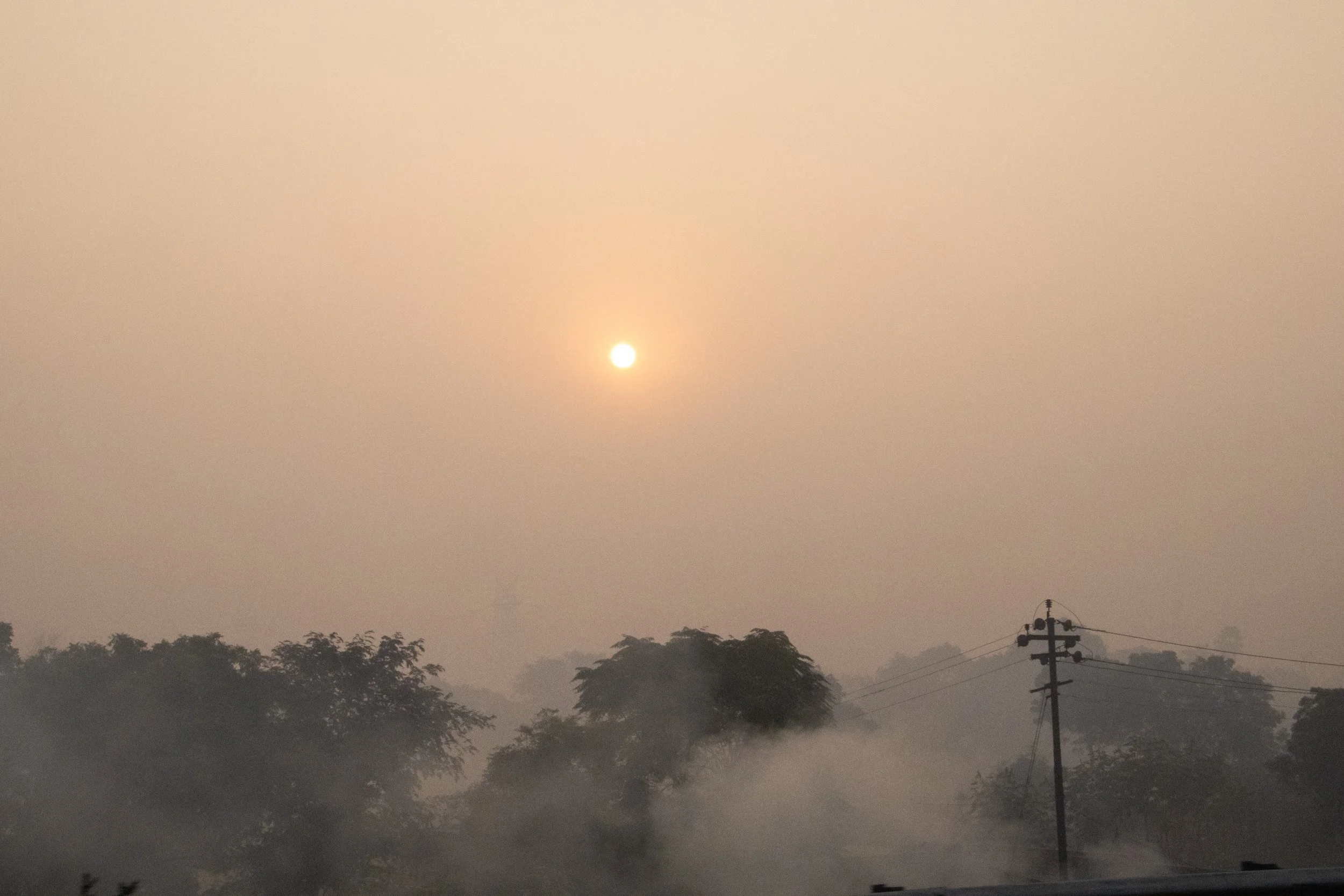
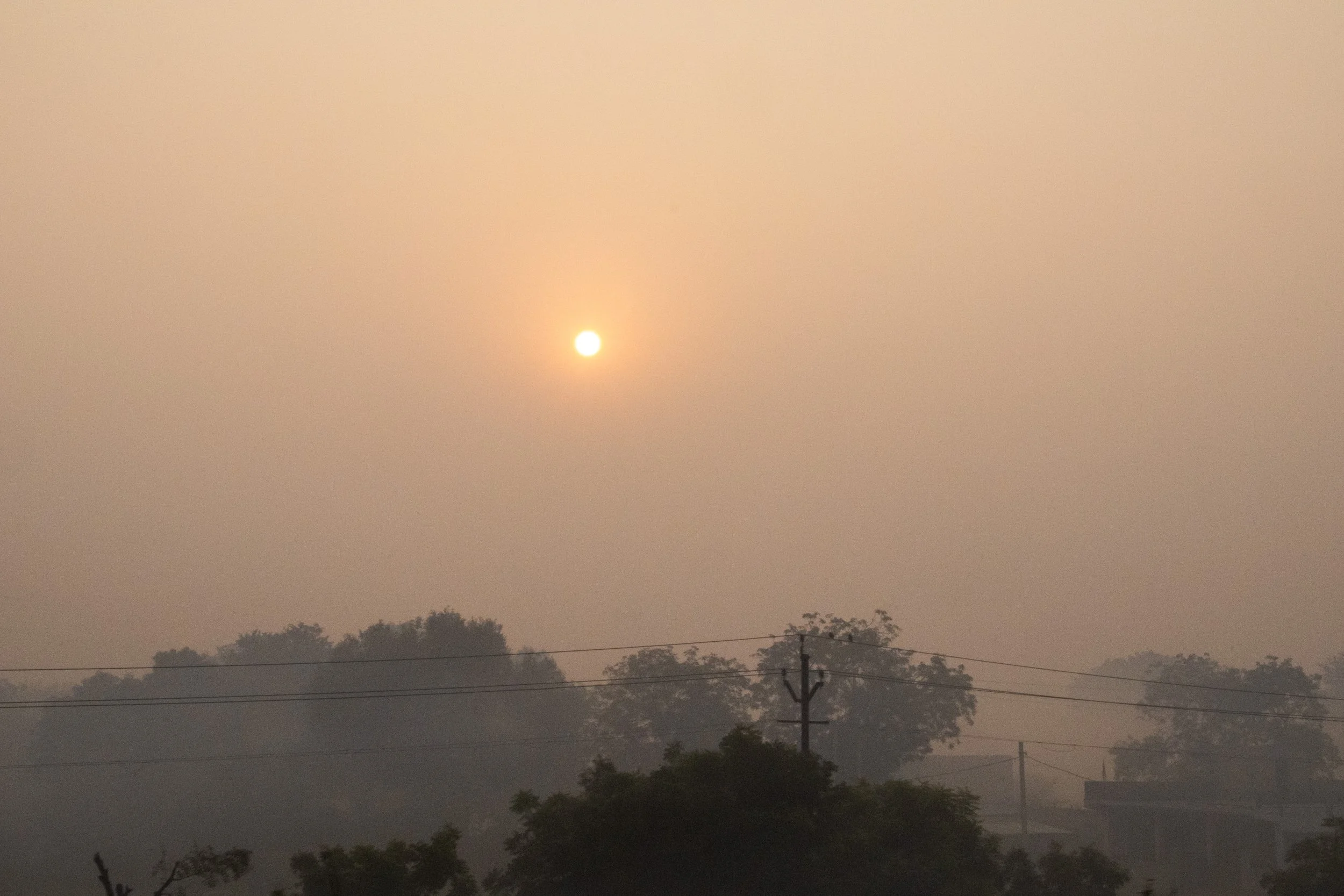
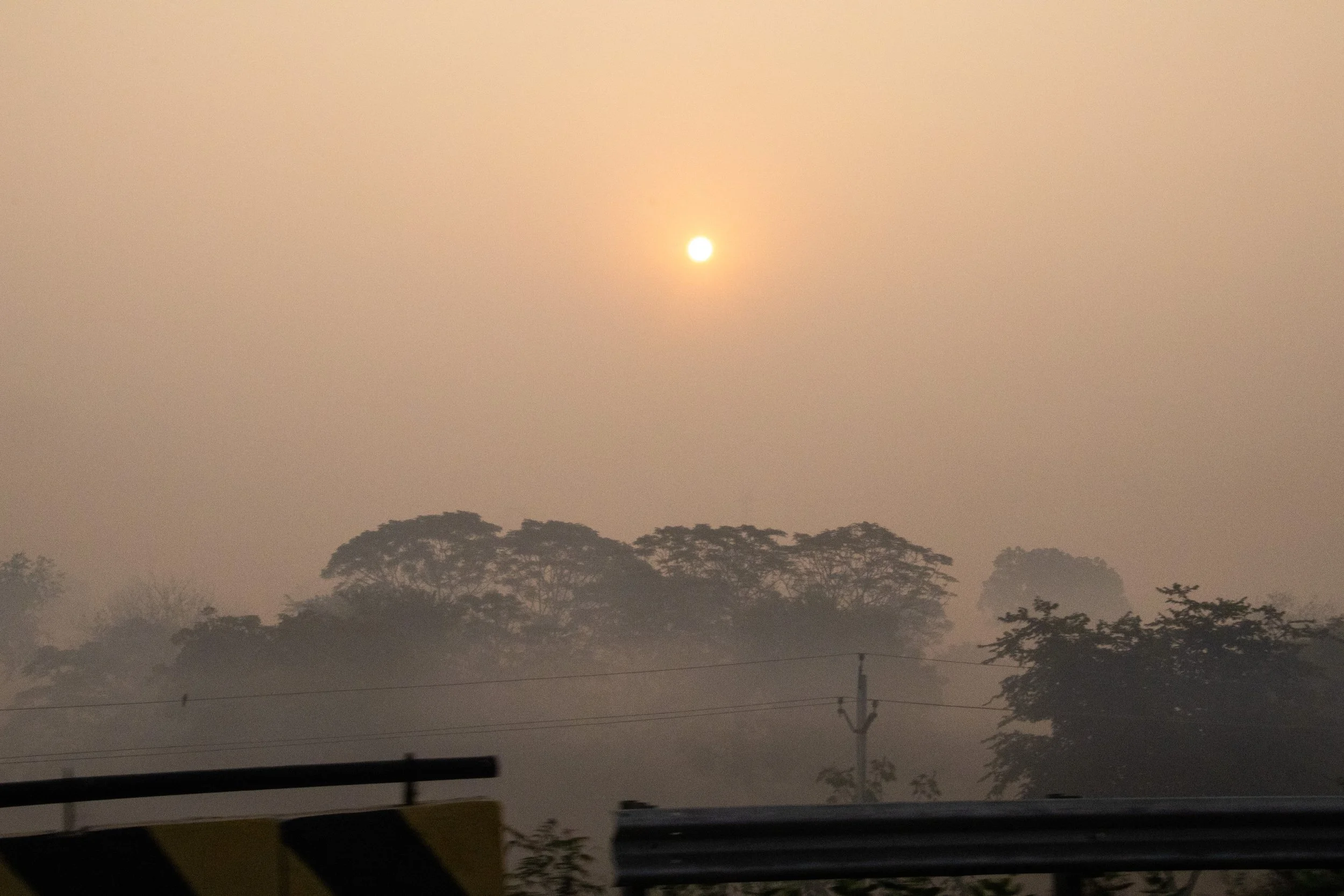
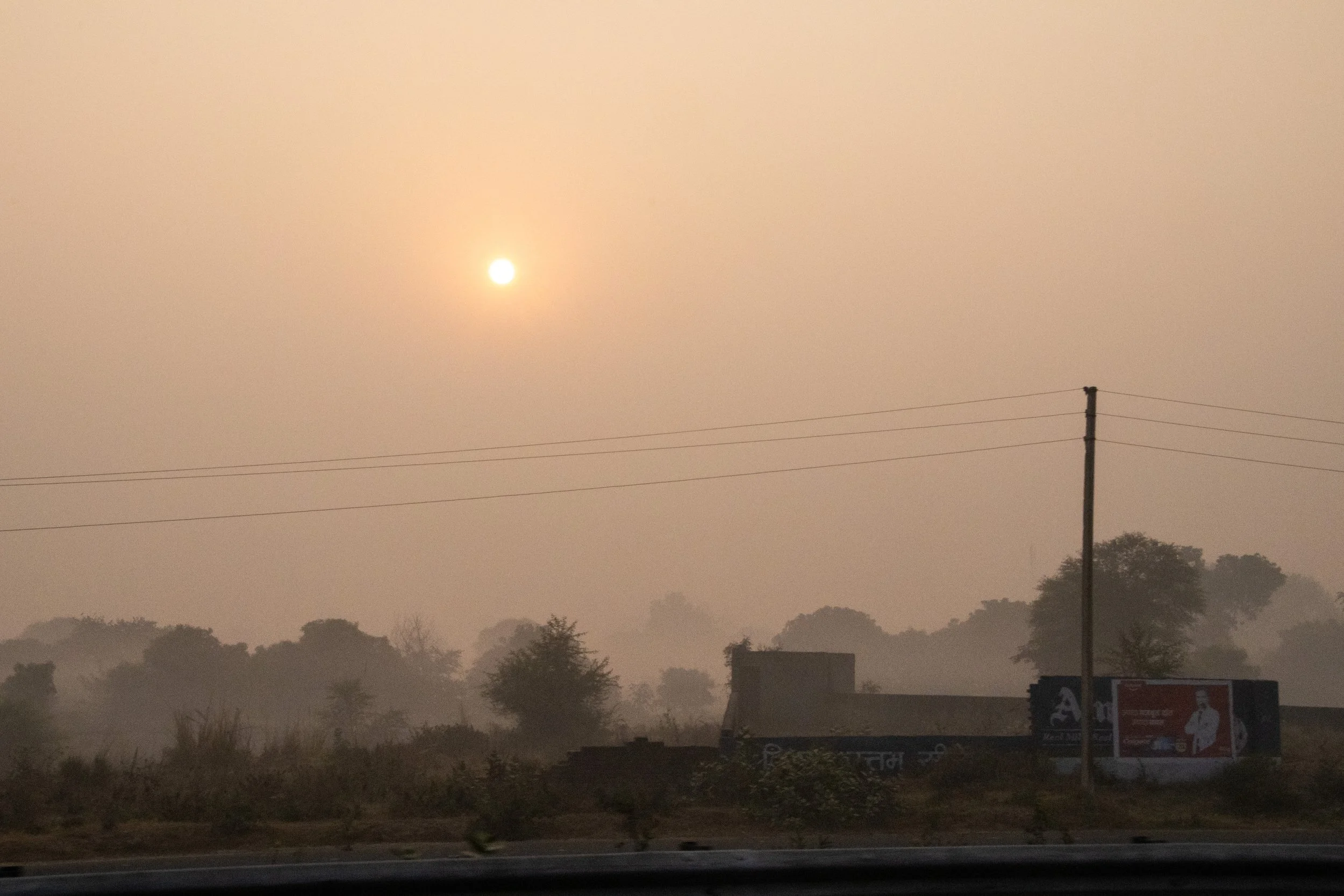
SO, what is being done about the air pollution in Delhi? NOT ENOUGH. That’s the short answer. There are of course some policies in place to address the issue, but they are not enough to outweigh the insane scale of growth in this city. So, in effect, they are constraining the rate at which pollution levels are worsening, but they are not enough to actually reverse the trend line. This is not to say that it’s impossible; Beijing managed to drop its air pollution by 42% in less than 10 years (between 2013 and 2021). The bottom-line here is that India has a lot of other problems to solve at the same time, and the political will to deal with air pollution isn’t strong enough. Say what you will about Chinese autocracy… they get shit done. One hilarious detail of Beijing’s fight against air pollution is that—at its worst—the American embassy started publishing their own numbers on this subject, which often contradicted China’s official statistics on the subject. The CCP did not like that. 😂
If you want more information on this, here are a couple of places that I found particularly helpful in my own research:
Air Pollution in India: A Deep Dive into Causes, Effects, and Solutions (BreathSafeAir.com)
‘An invisible killer’: Beijing cleaned up its toxic air. Why can’t New Delhi? (CNN)
What did it feel like to breathe this air? To my own surprise, it was mostly fine. Maybe I just have a good set of lungs on me, but I only had an issue with coughing one time. However, that coughing fit was quite weird, because the air seemed to be relatively clear! You’d expect a plume of smoke to be coughing like that, but there was nothing. Everybody started coughing at the same time, so there was clearly something in the air that was not visible to us. We moved inside for cleaner air and then we were fine.
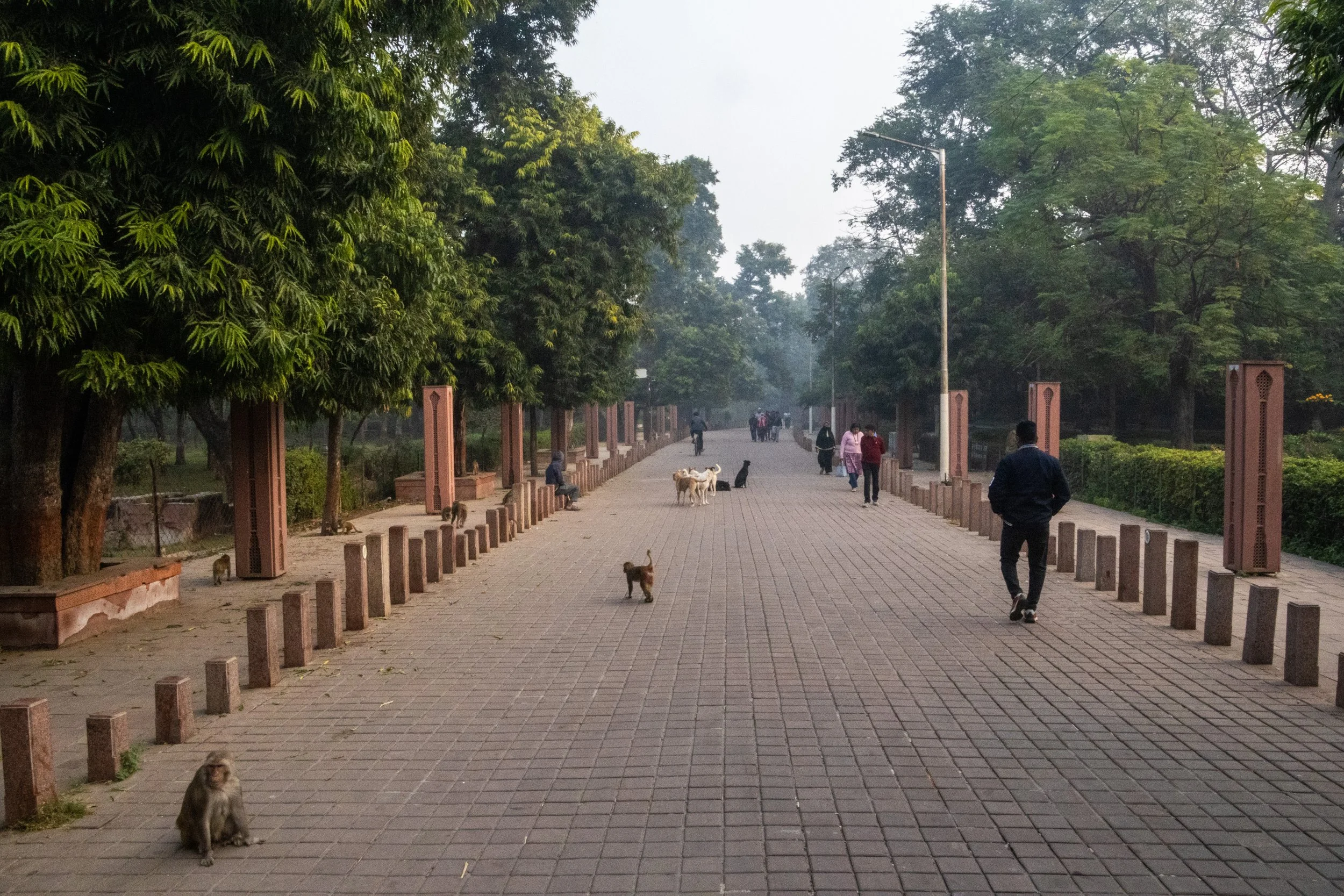
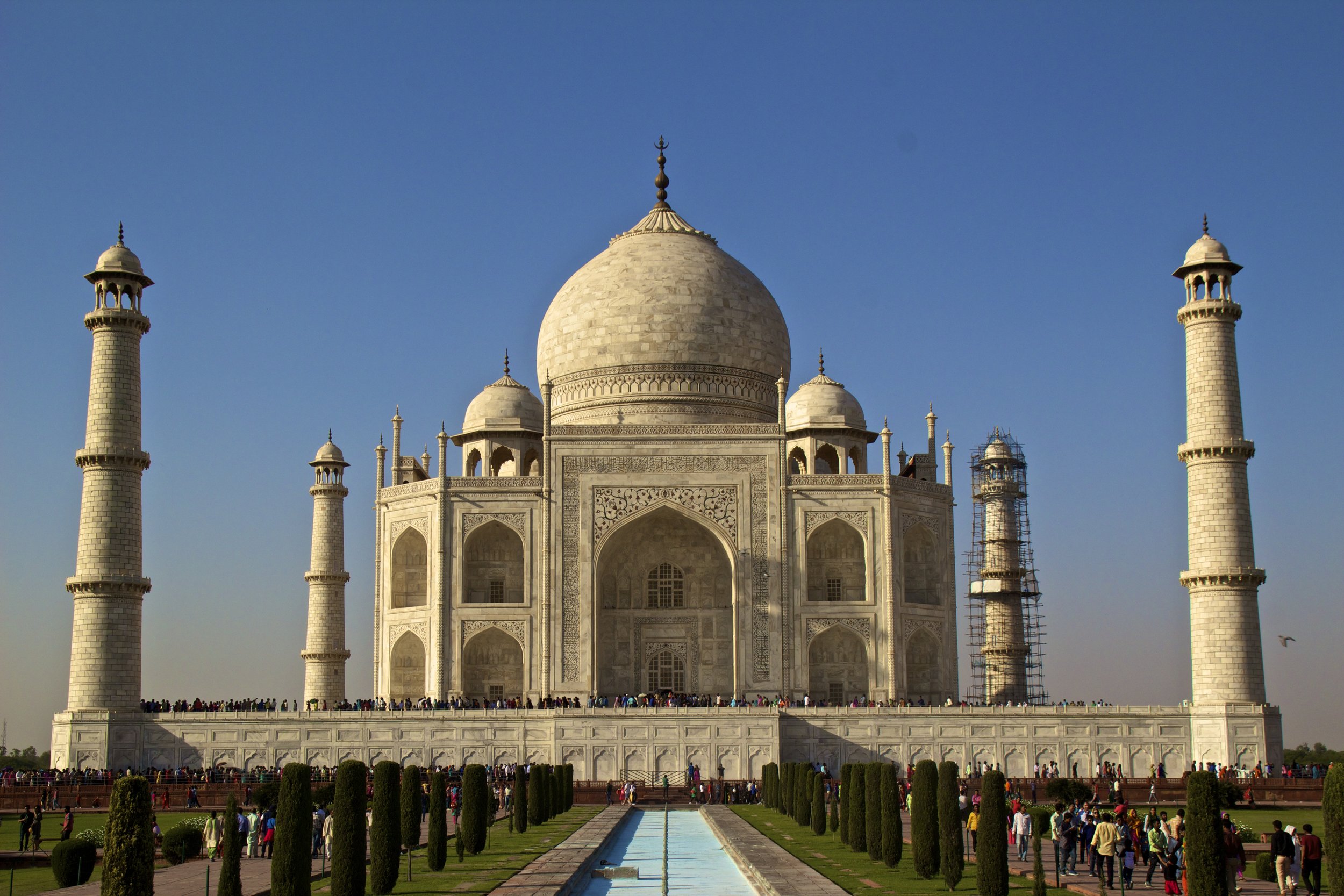
ANYWAY, at the end of this drive, we rolled into the city of Agra and soon arrived at the entrance of sprawling park that contains the Taj Mahal. Fast forward through a smoggy path crowded with people and monkeys, and I was once again arriving at the gates of this legendary structure. It really is extremely impressive to see in real life.
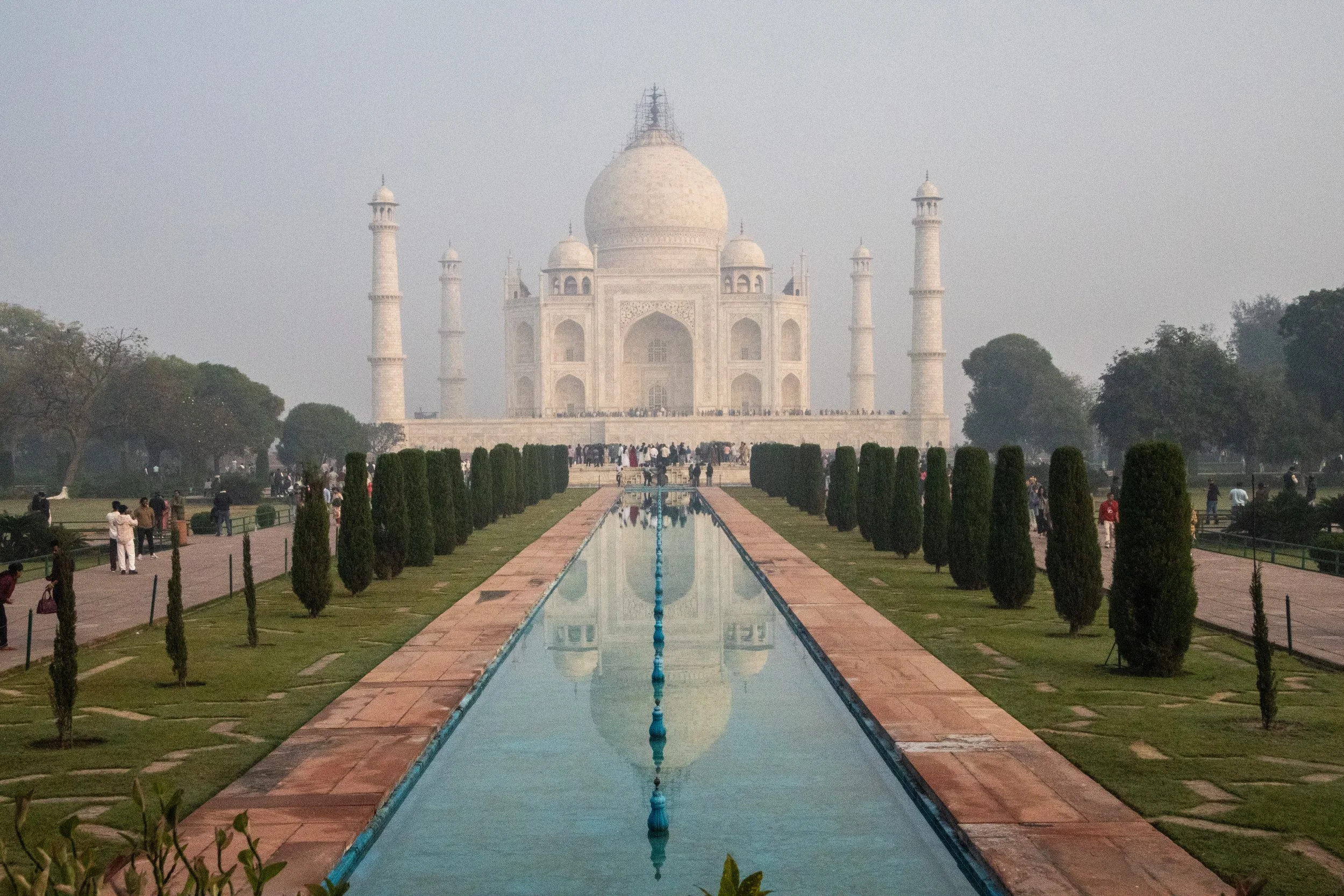
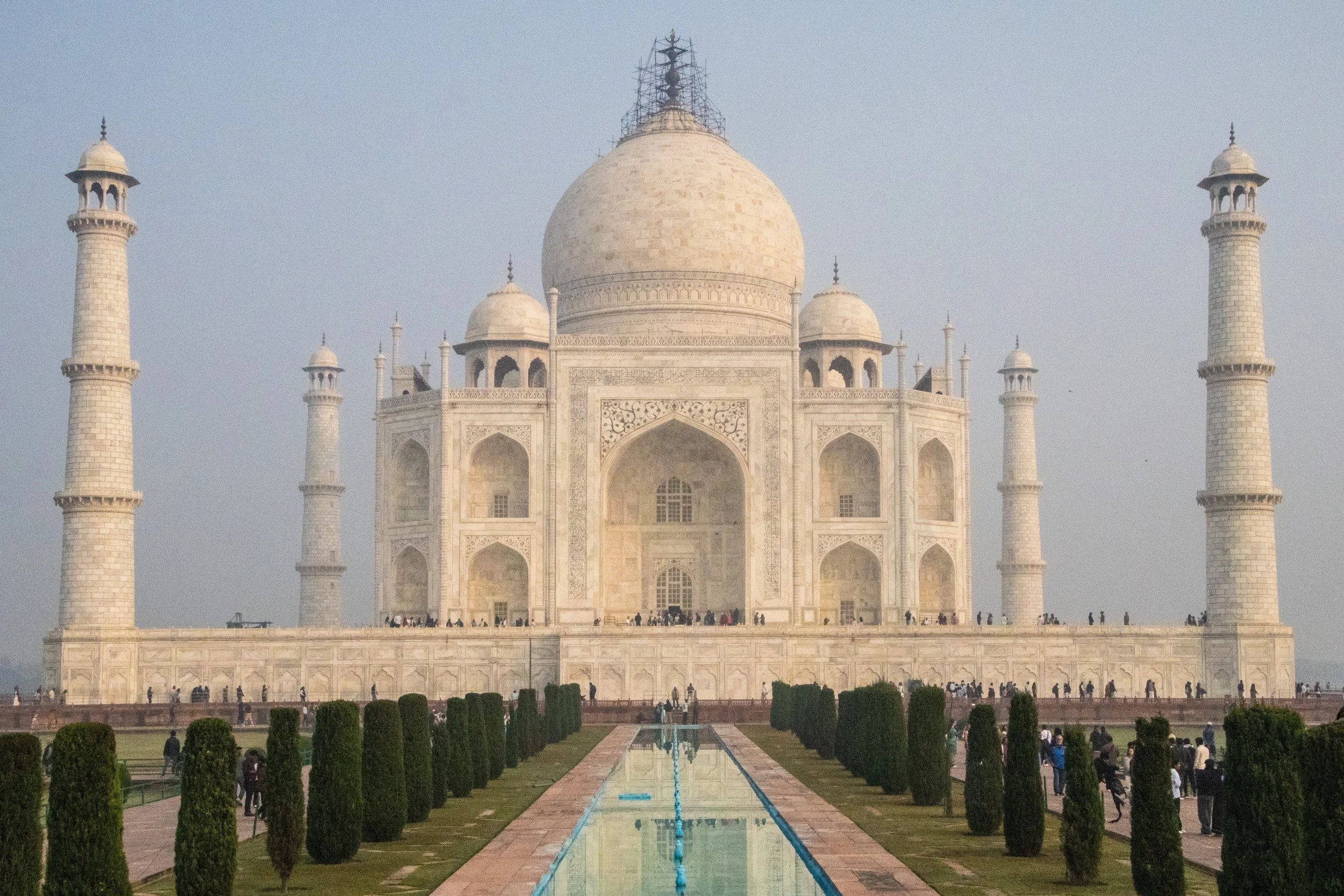
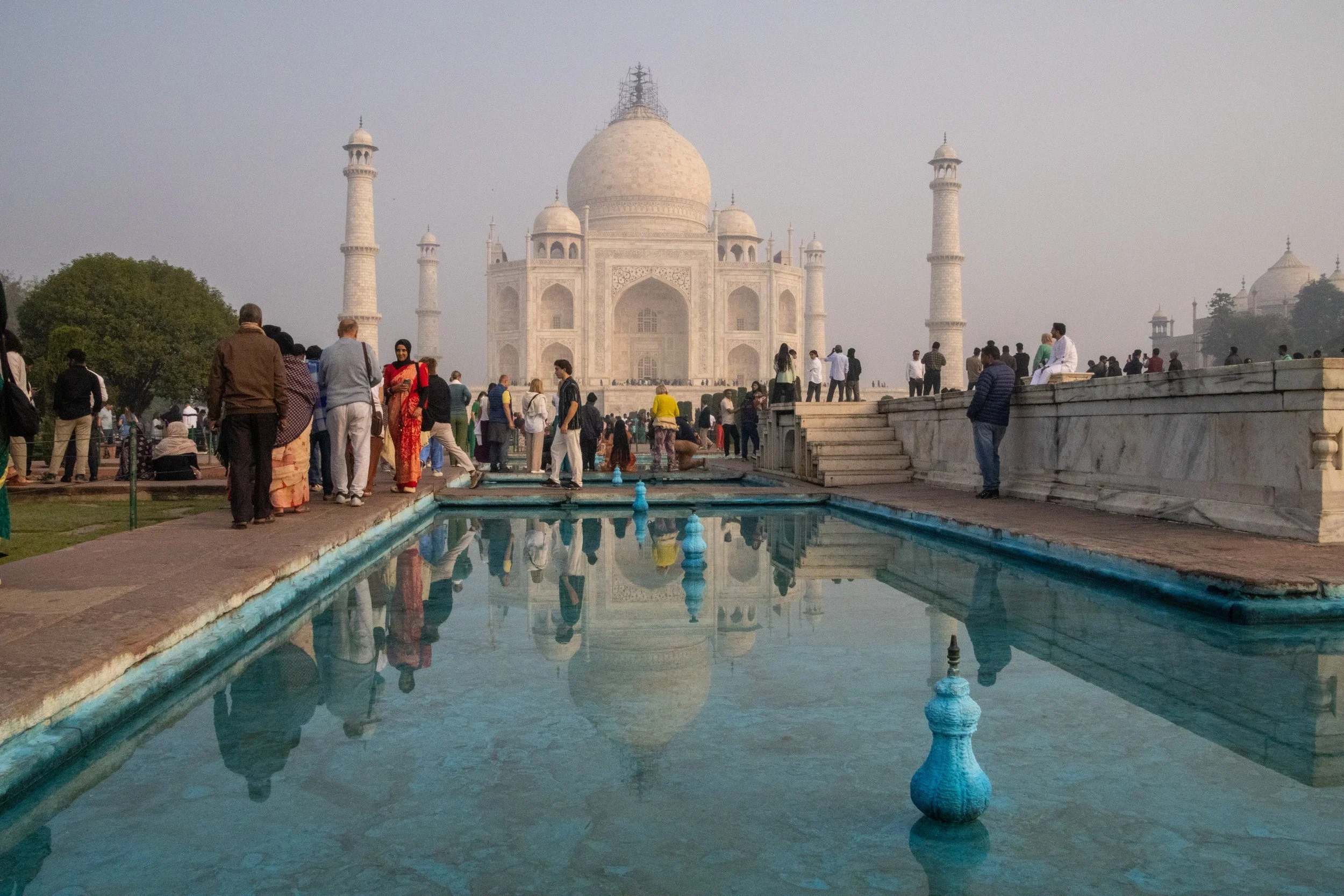
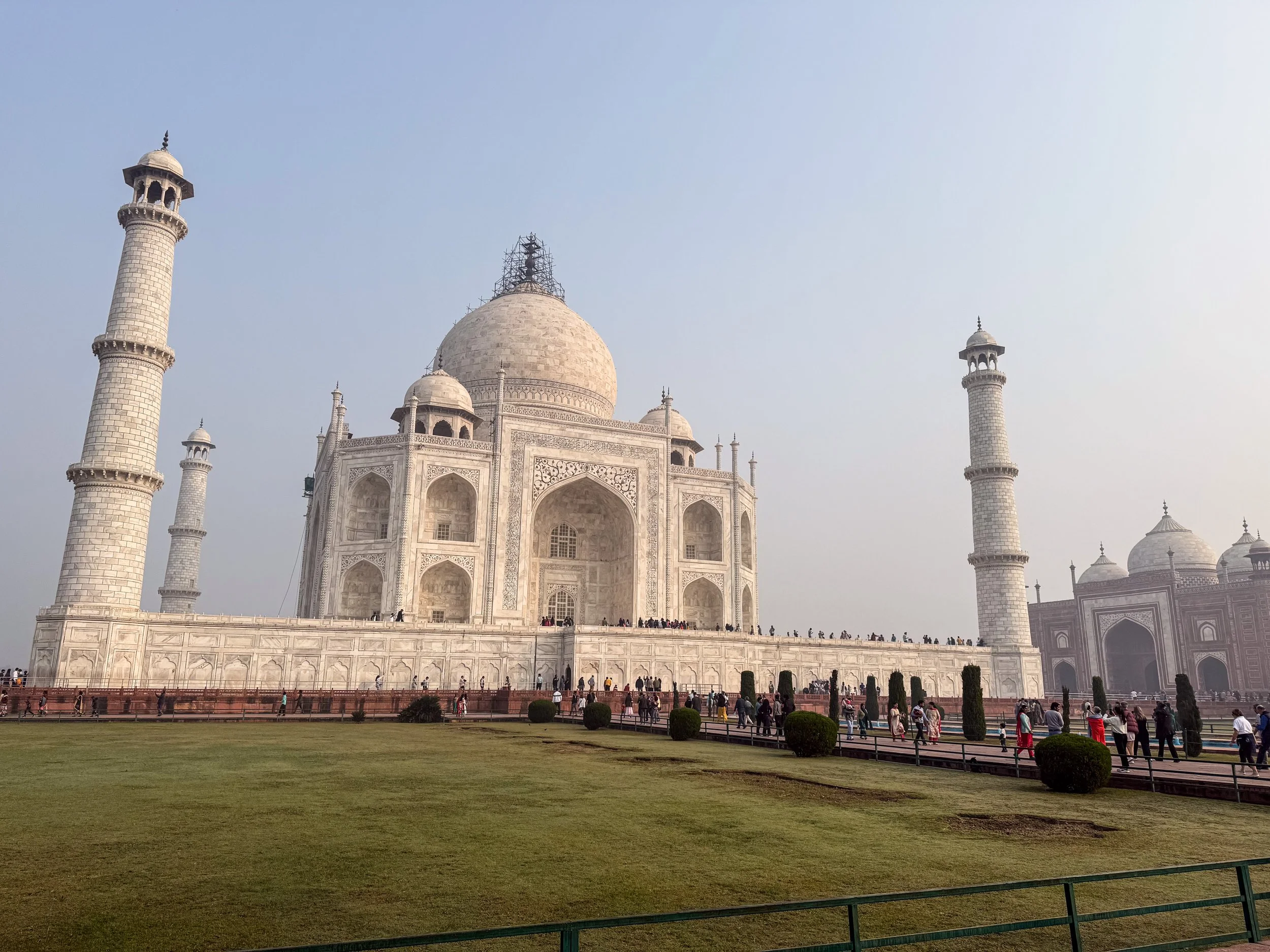
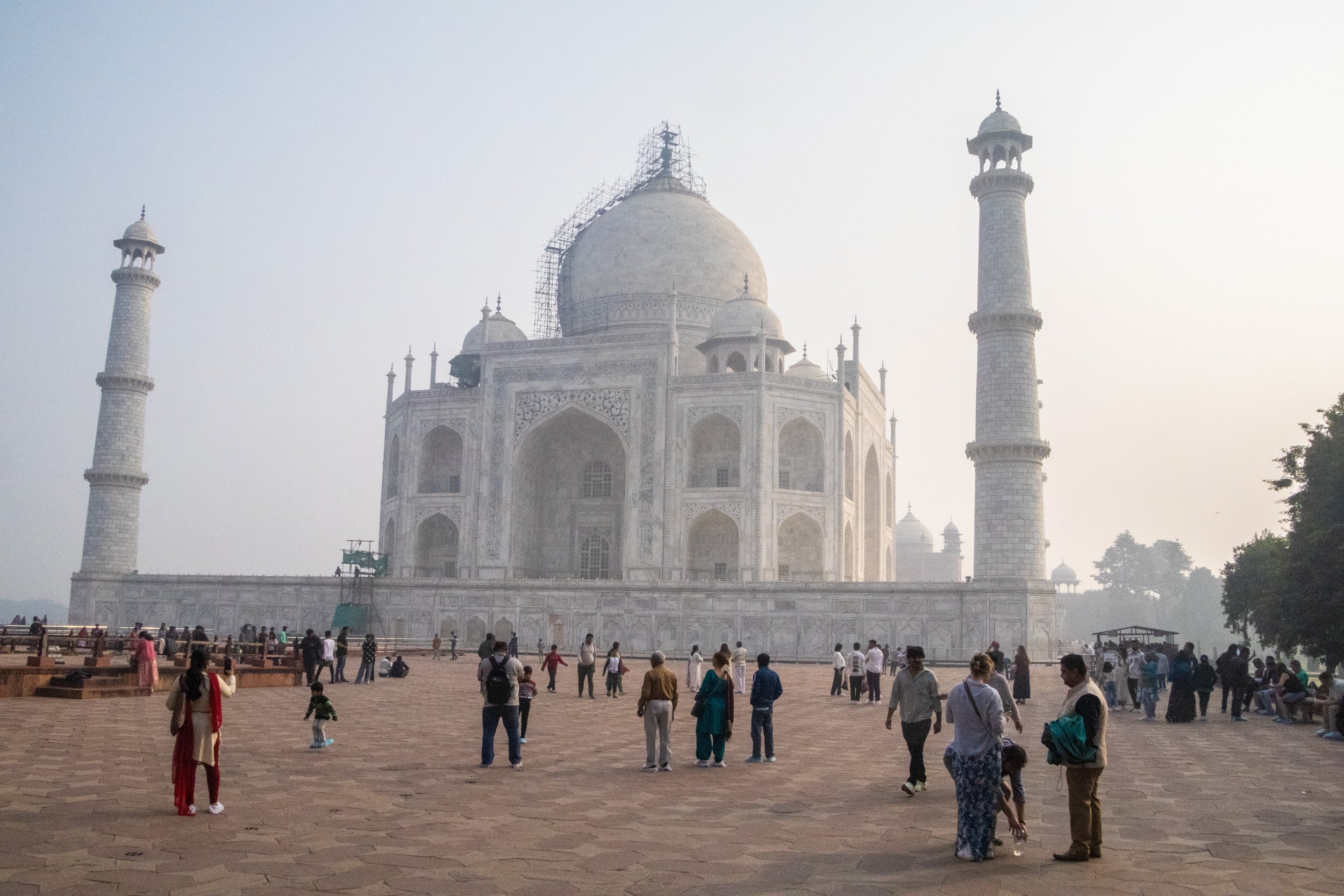
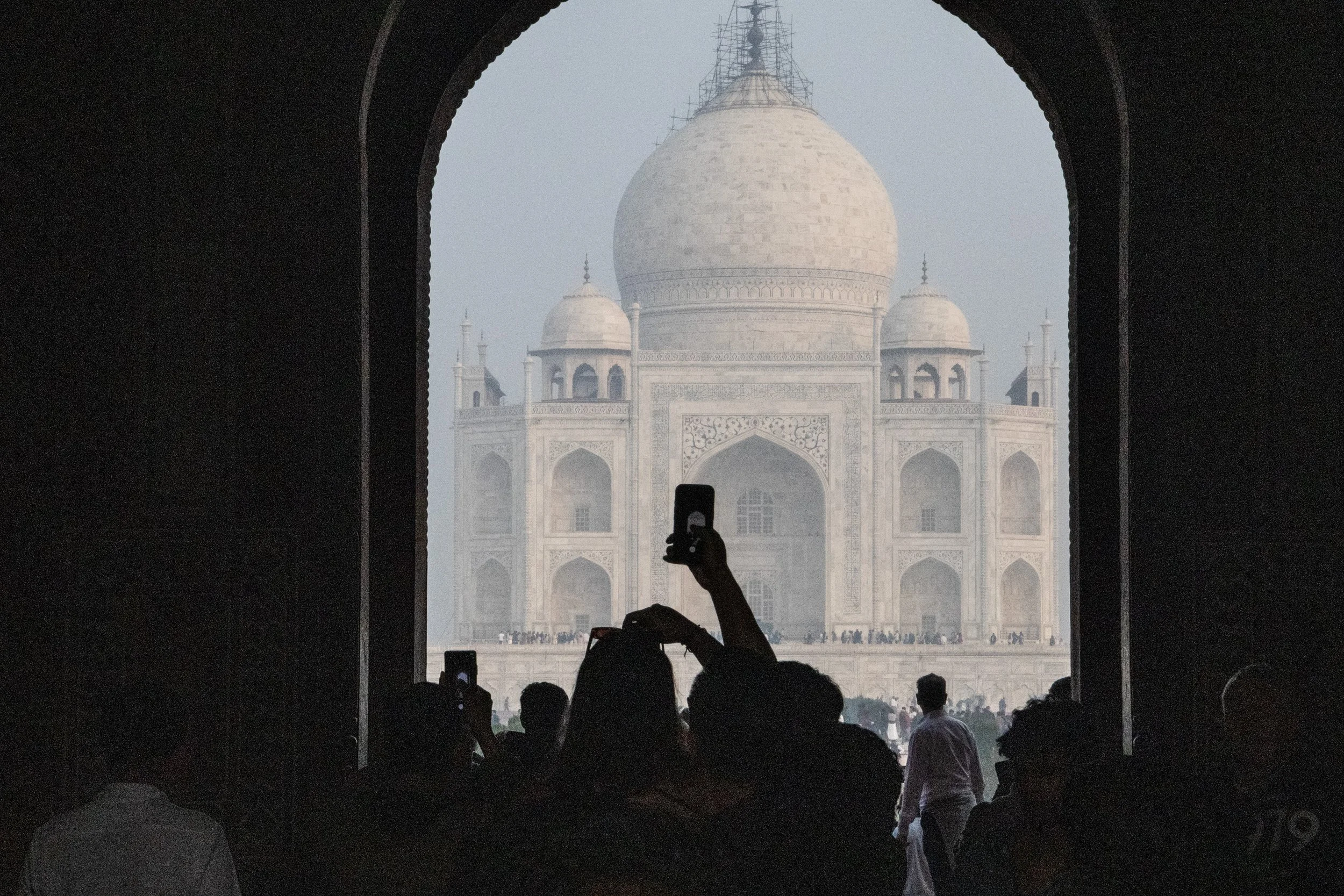
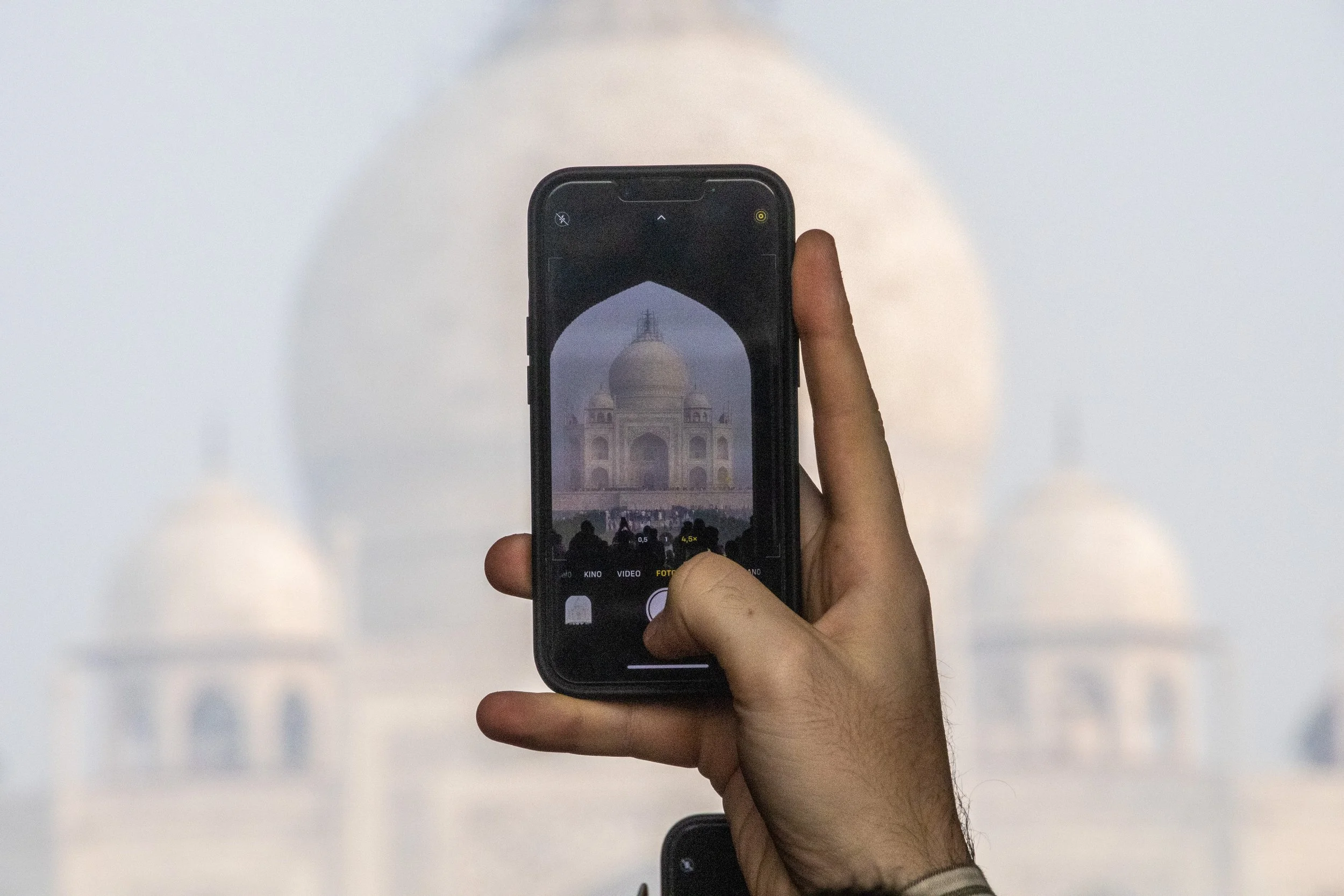
A few quick facts on the Taj Mahal for you: it was built by Shah Jahan (yes, the same guy who built Shahjahanabad, Jama Masjid, & Red Fort in Delhi—we covered him in the previous article). Constructed by ~20,000 workers over 21 years (1632-1653), it is actually a mausoleum for the Shah’s late wife, Mumtaz Mahal, who died in 1631 in childbirth. Ironically, it was another of the Shah’s children that would ultimately overthrow and imprison him nearby. He lived out the rest of his days basically in a luxurious prison with a view of the Taj Mahal out his window. When he died, he was laid to rest in the Taj Mahal alongside his wife. The story goes that, before his overthrow and imprisonment, Shah Jahan had plans to build a second, entirely black Taj Mahal immediately across the river. That would have been cool; like a giant game of Othello/Reversi.
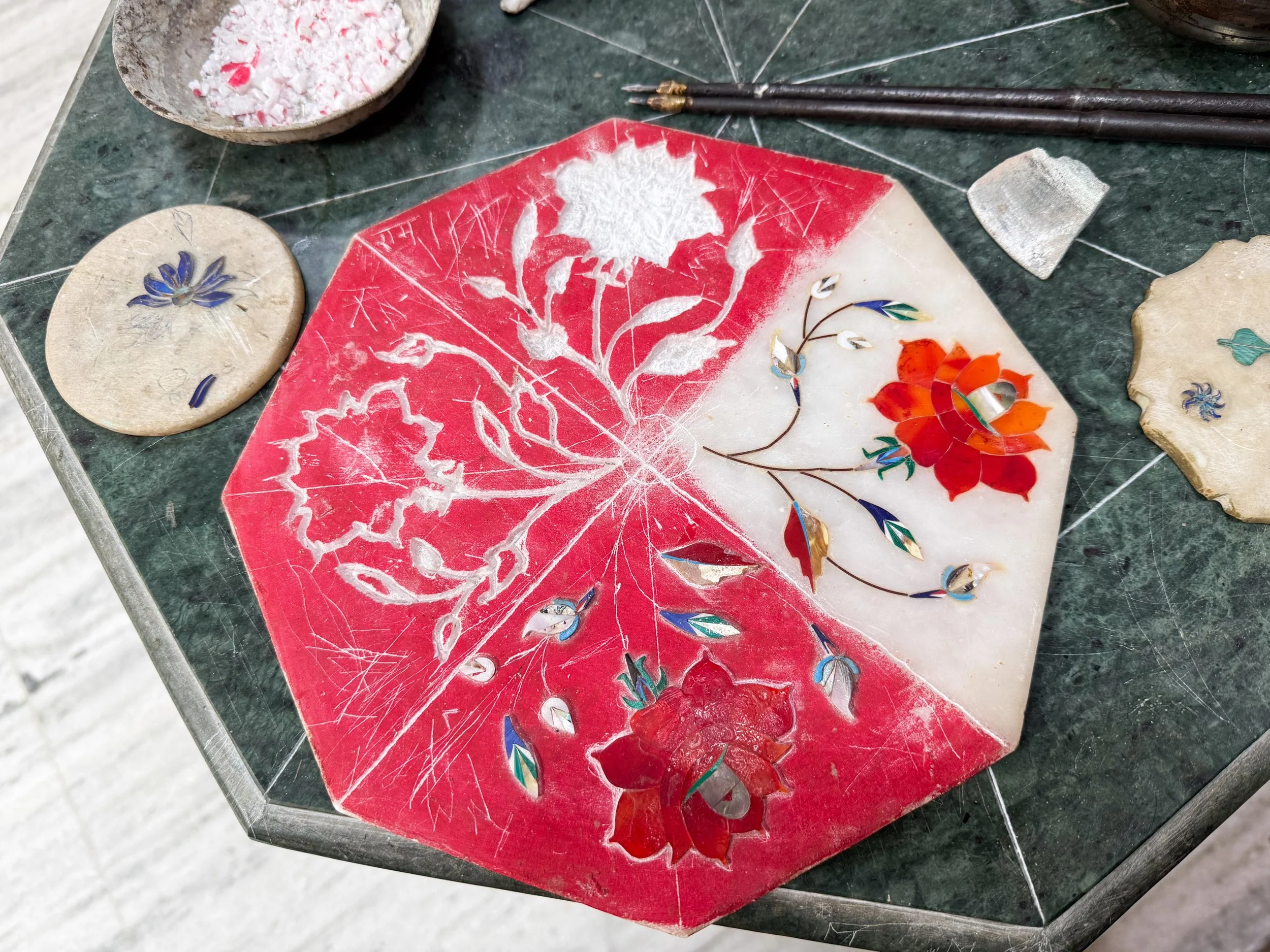
The Taj Mahal is built entirely out of white marble that was sourced from all around Asia and beyond. It is said to change color/hue depending on the lighting conditions. But for most visitors (including myself, now a repeat customer), 1 type of light is all we’ll get. And with the smog, I’m not sure I even got that. However, in the interior of the mausoleum, there is intricate stone work where complex floral designs using different colors of translucent stones have been inlayed into the marble in a such a way that the surface is still completely flat and smooth to the touch. But if you put a flashlight against the surface and run it across these floral designs, you will see the colored components of the designs light up brilliantly, while the marble around it stays dim. It’s easy to see how the right lighting conditions would make this place all the more stunning.
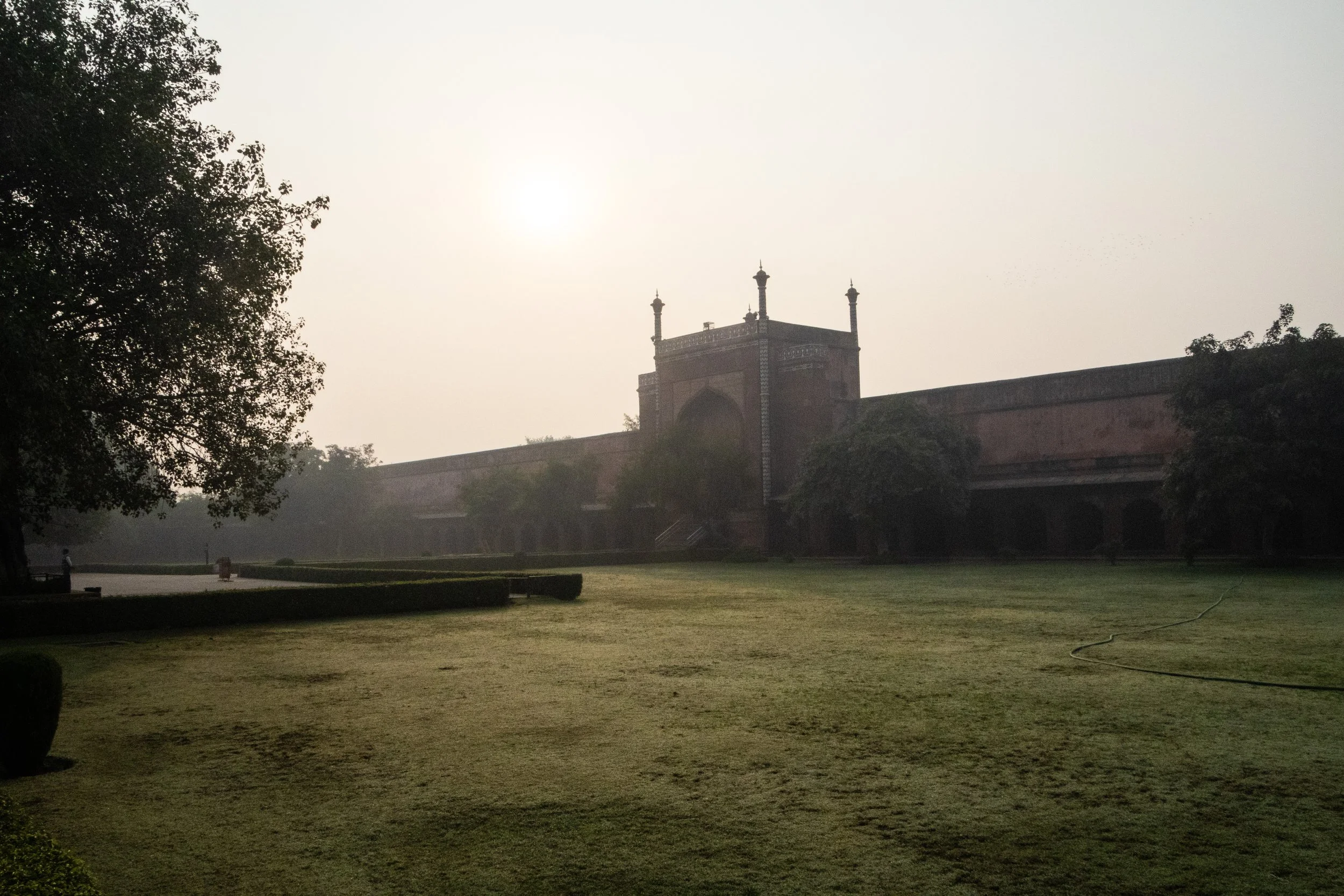
Here are a few more pictures from the grounds immediately around the Taj Mahal, including an extremely smoggy view of the Yamuna River, which flows immediately behind the structure. This gallery also includes a snapshot of a work-in-progress floral design of the sort that adorns the walls of the Taj Mahal. Agra still has a reputation for craftsmanship in this area, so our driver brought us to see some contemporary work before we went back to Delhi.
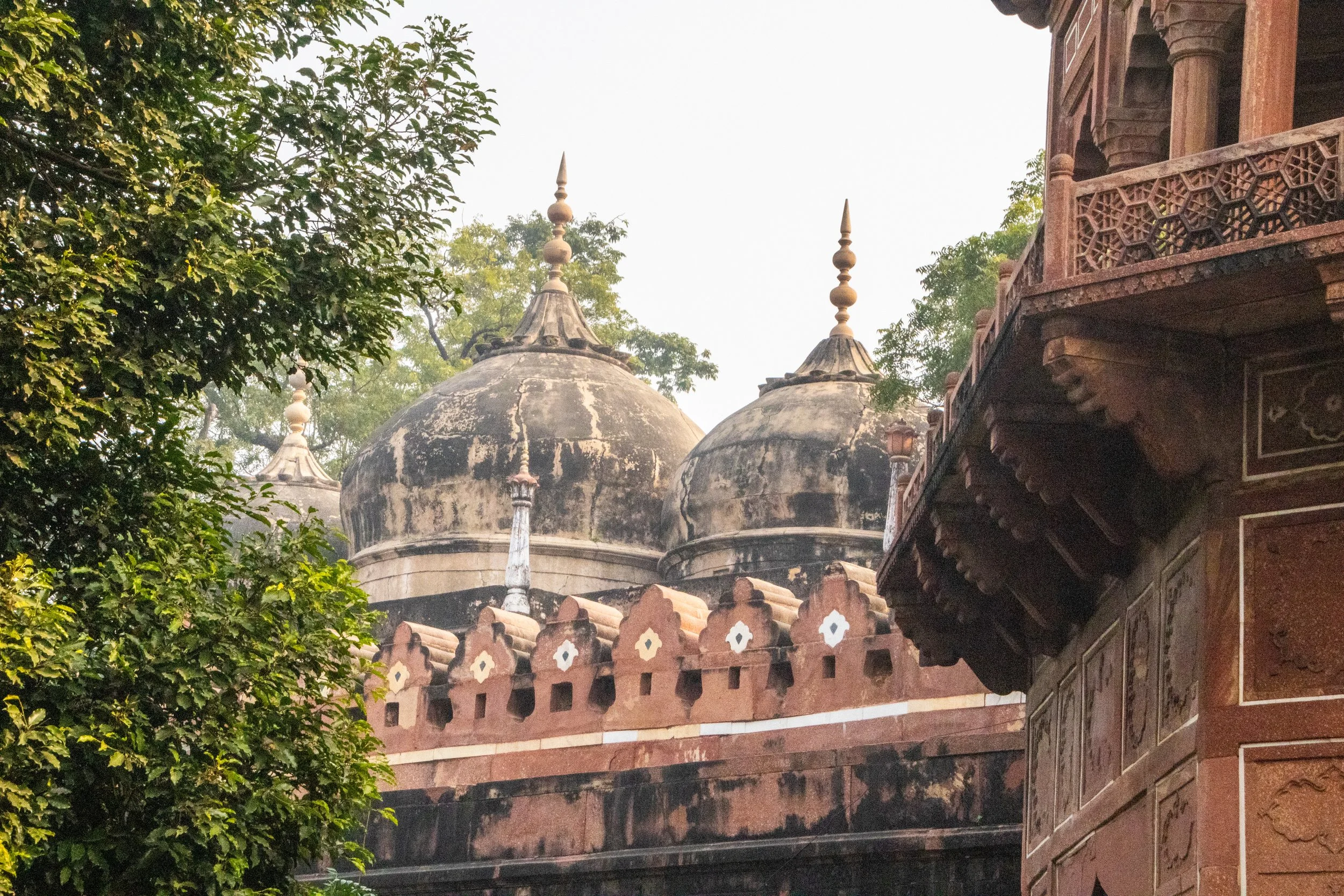
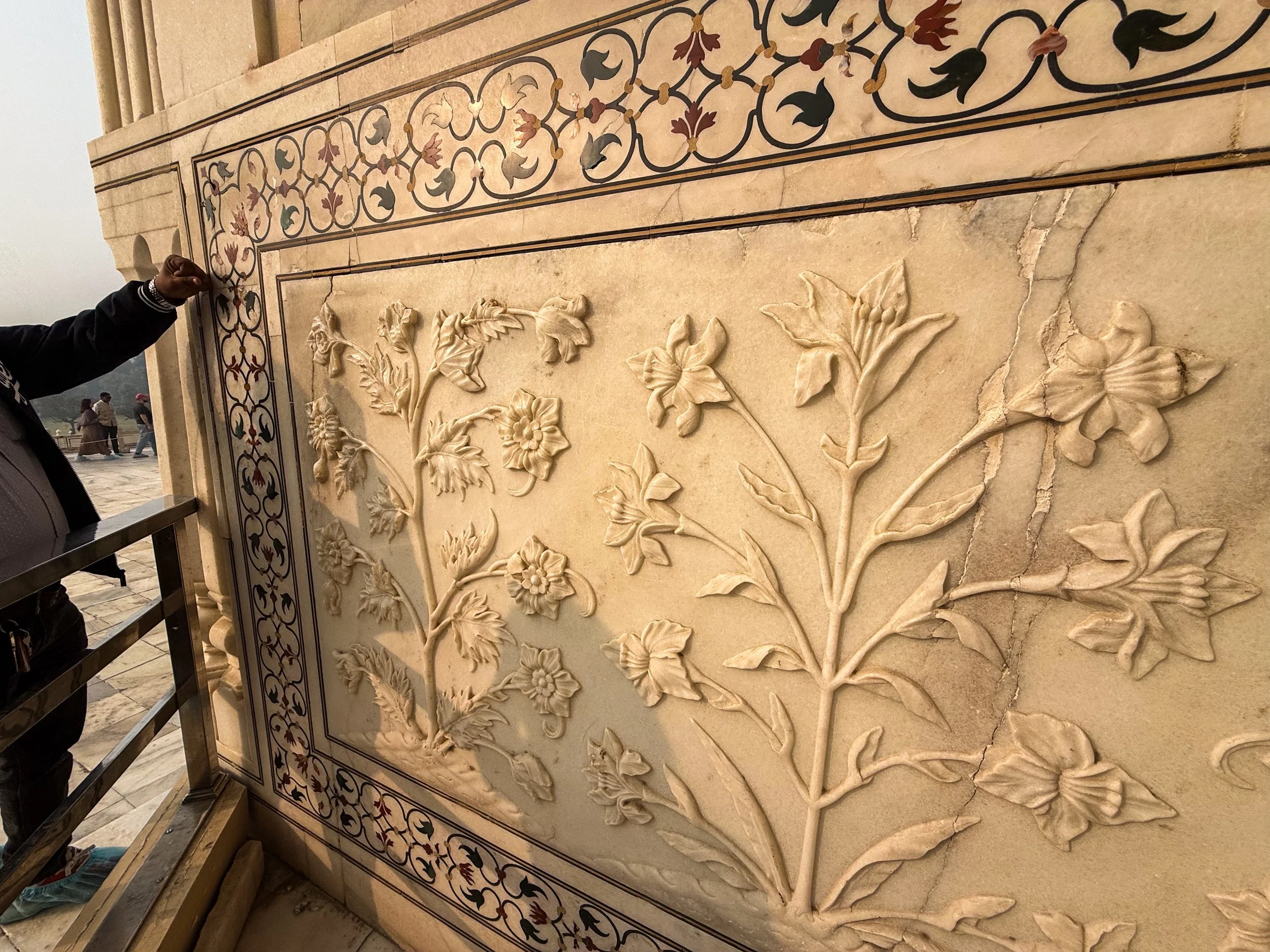
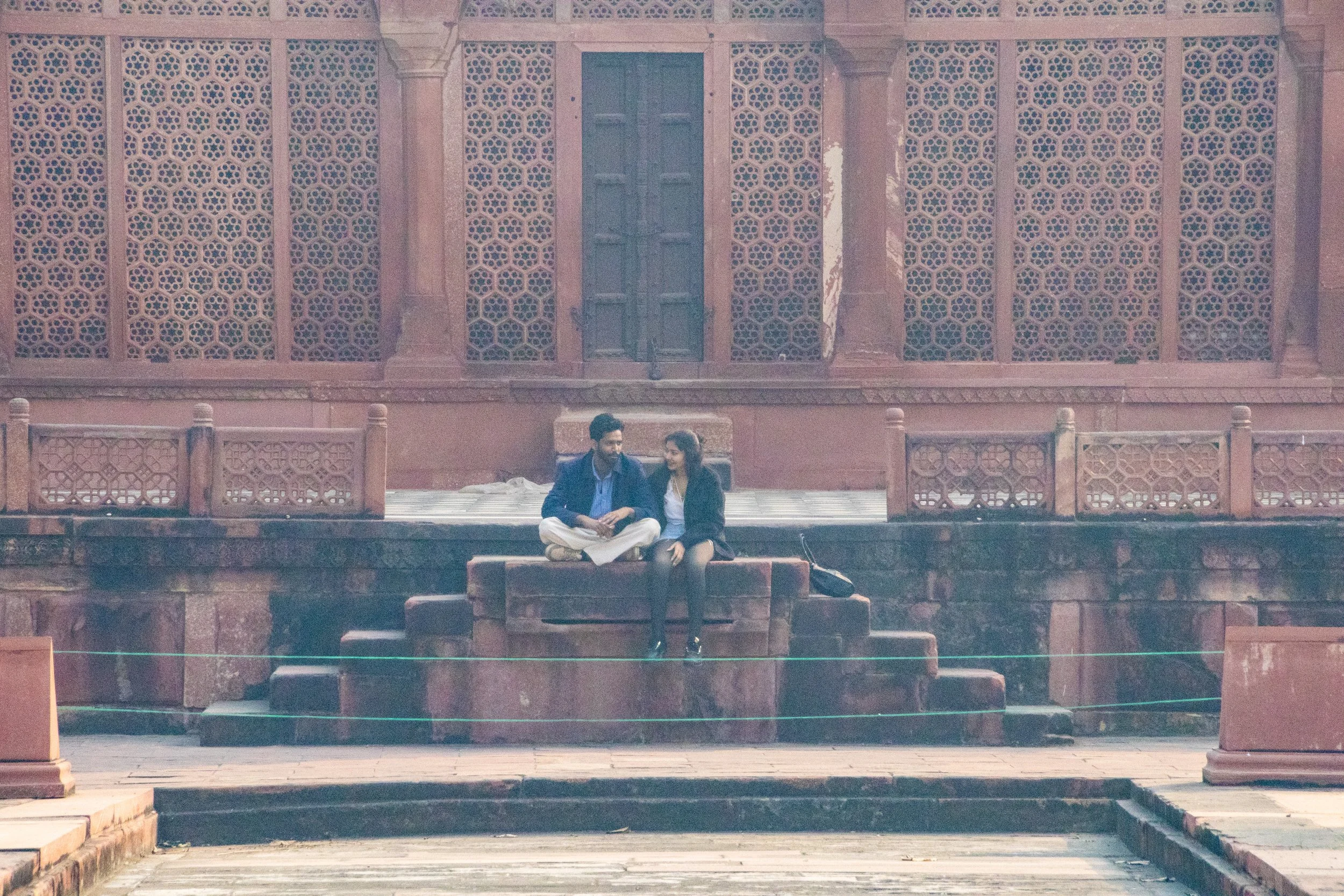
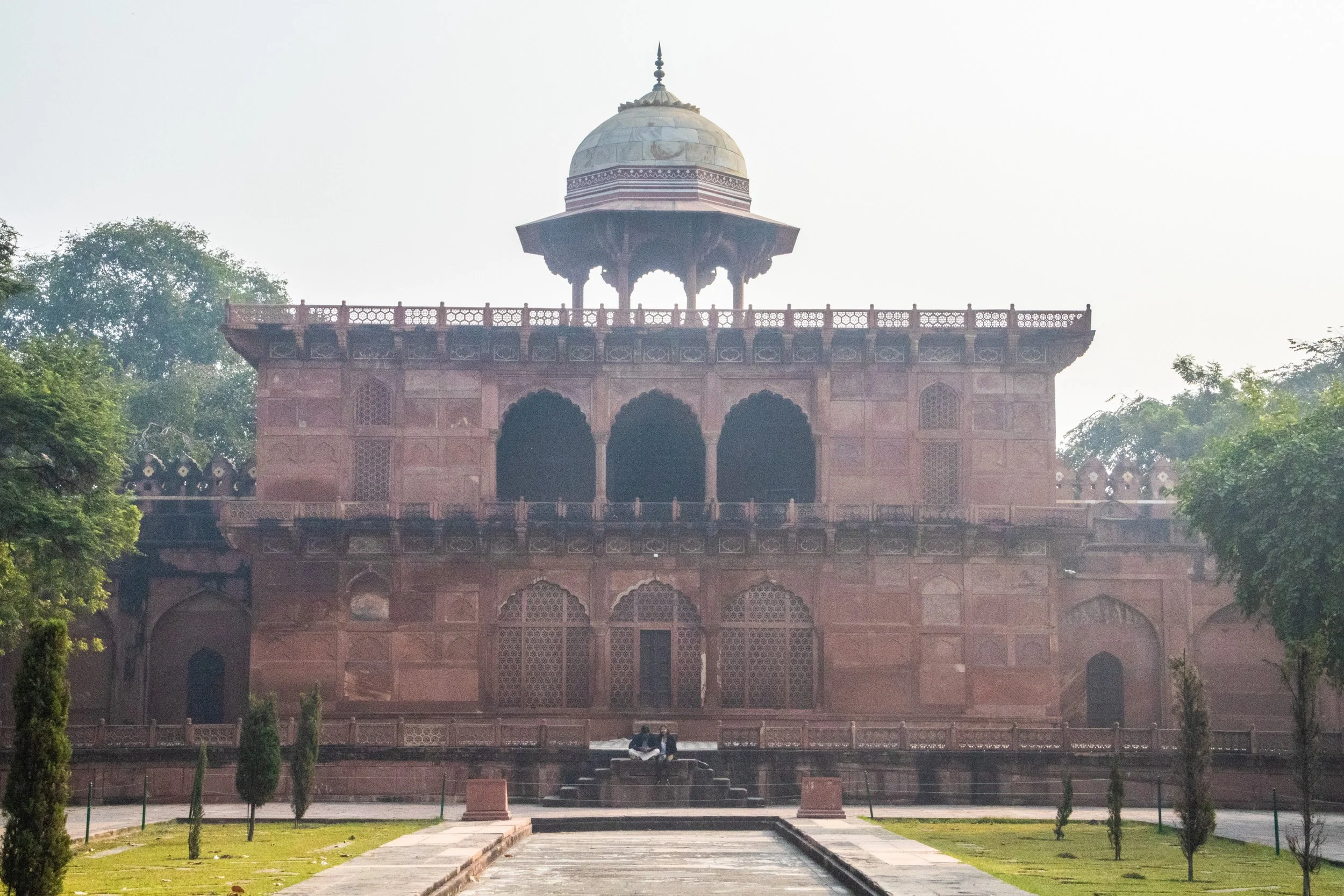
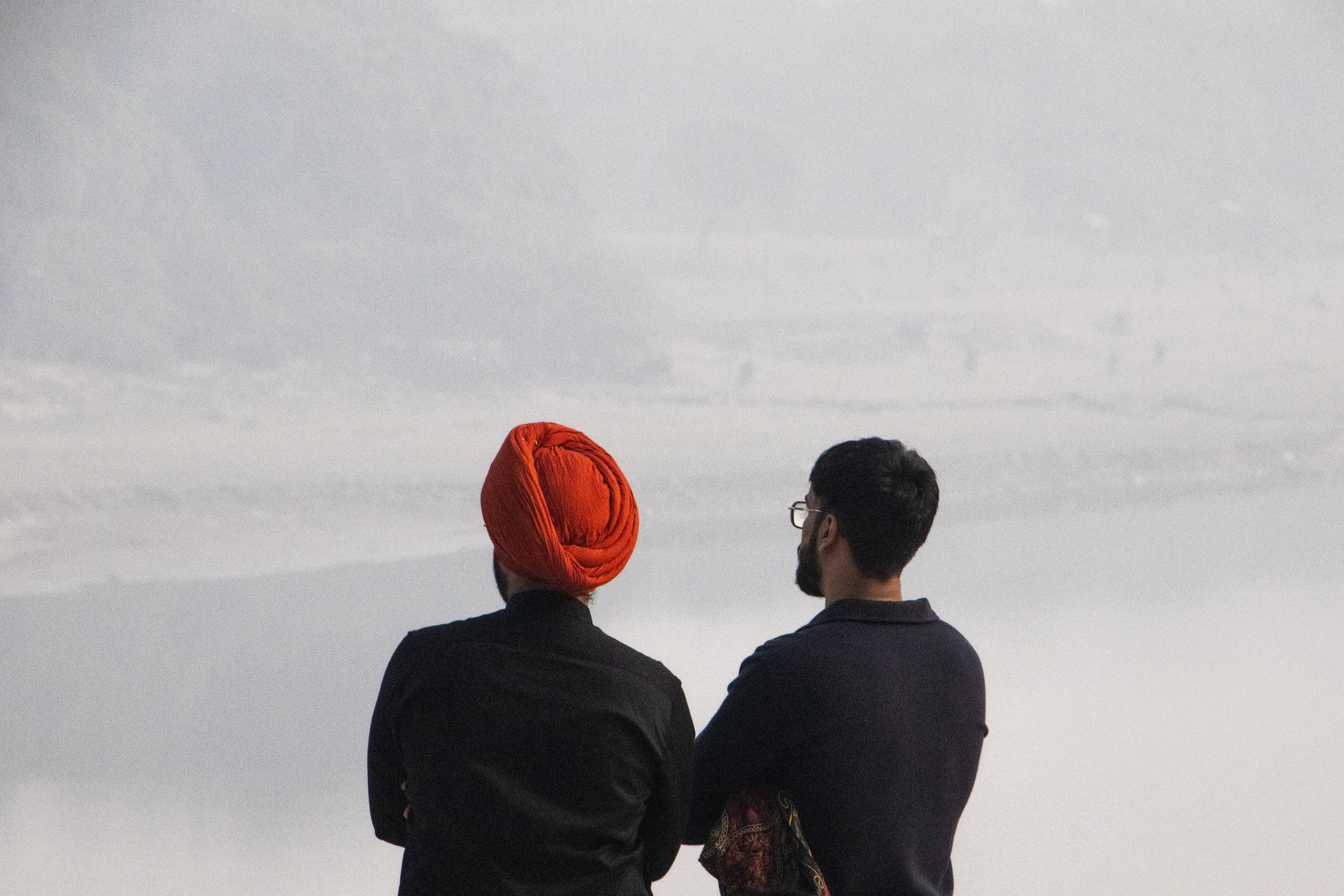
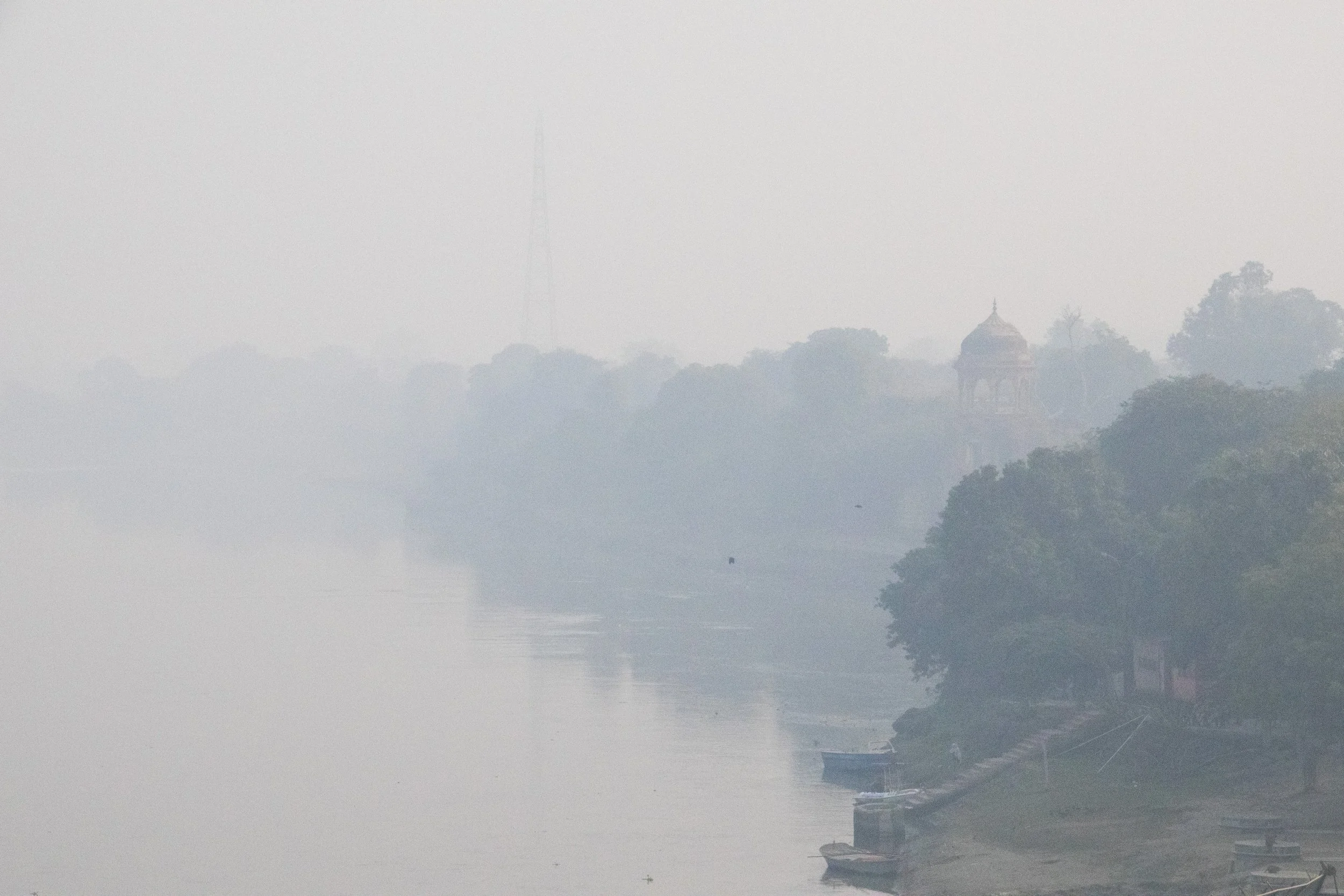
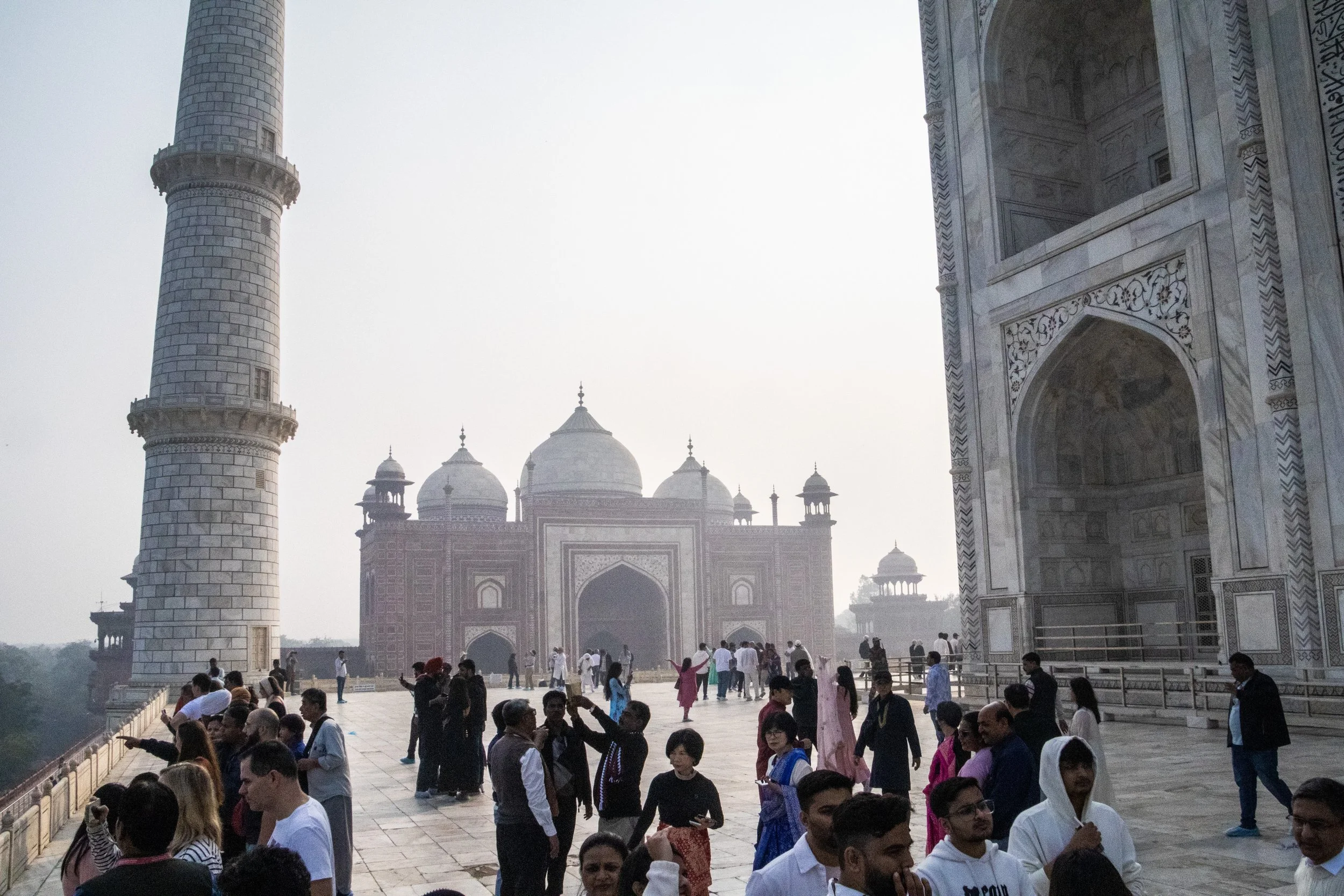
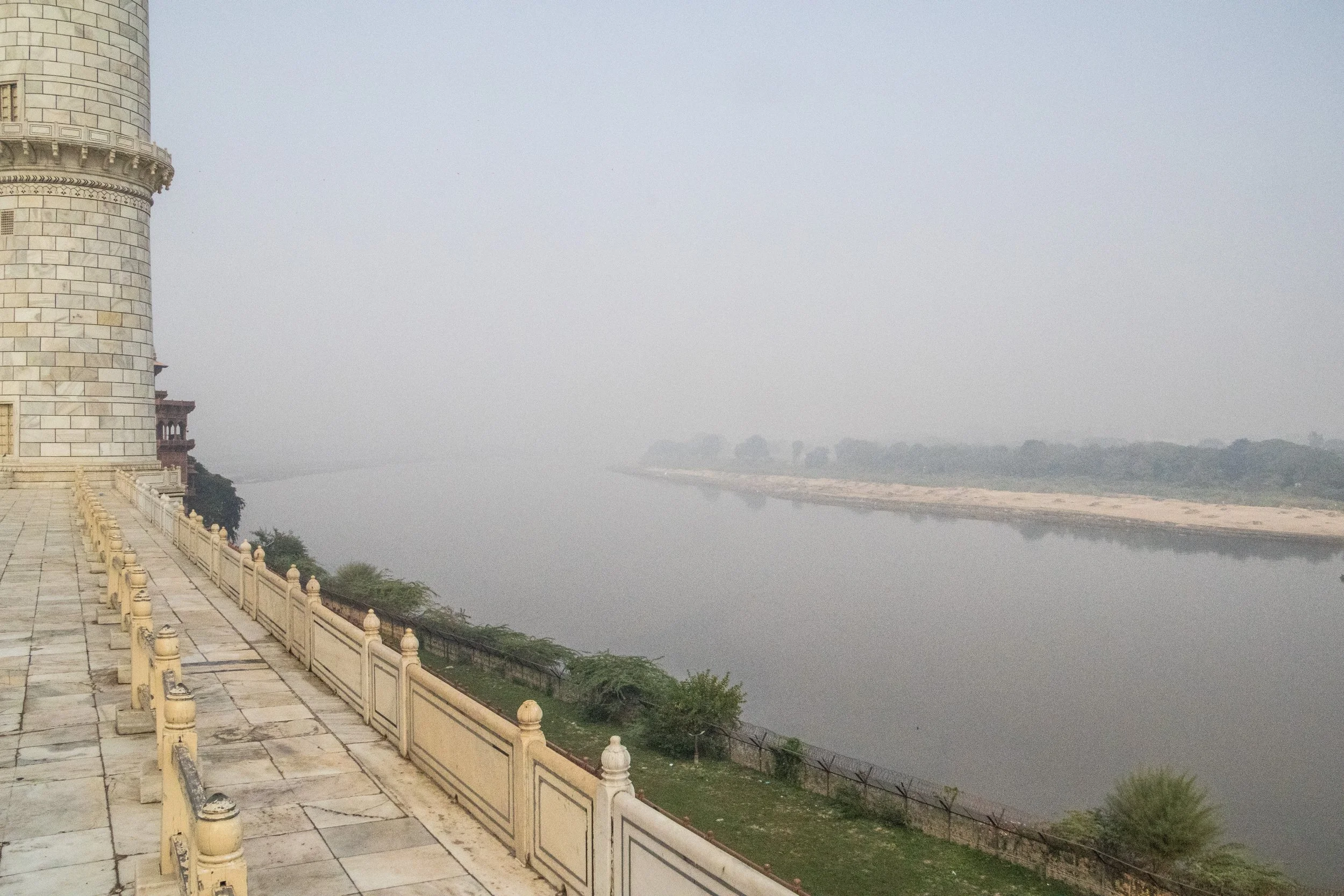
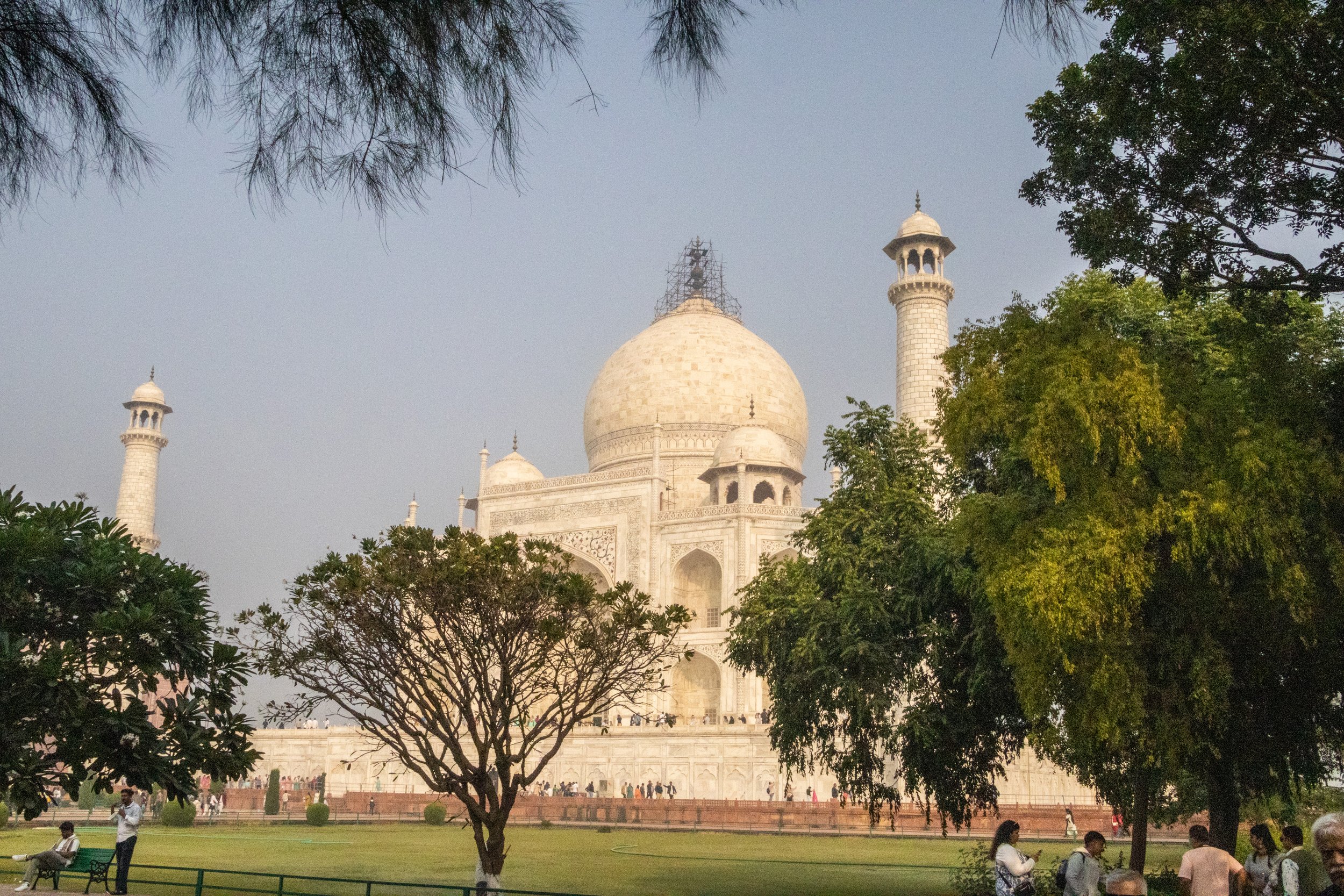
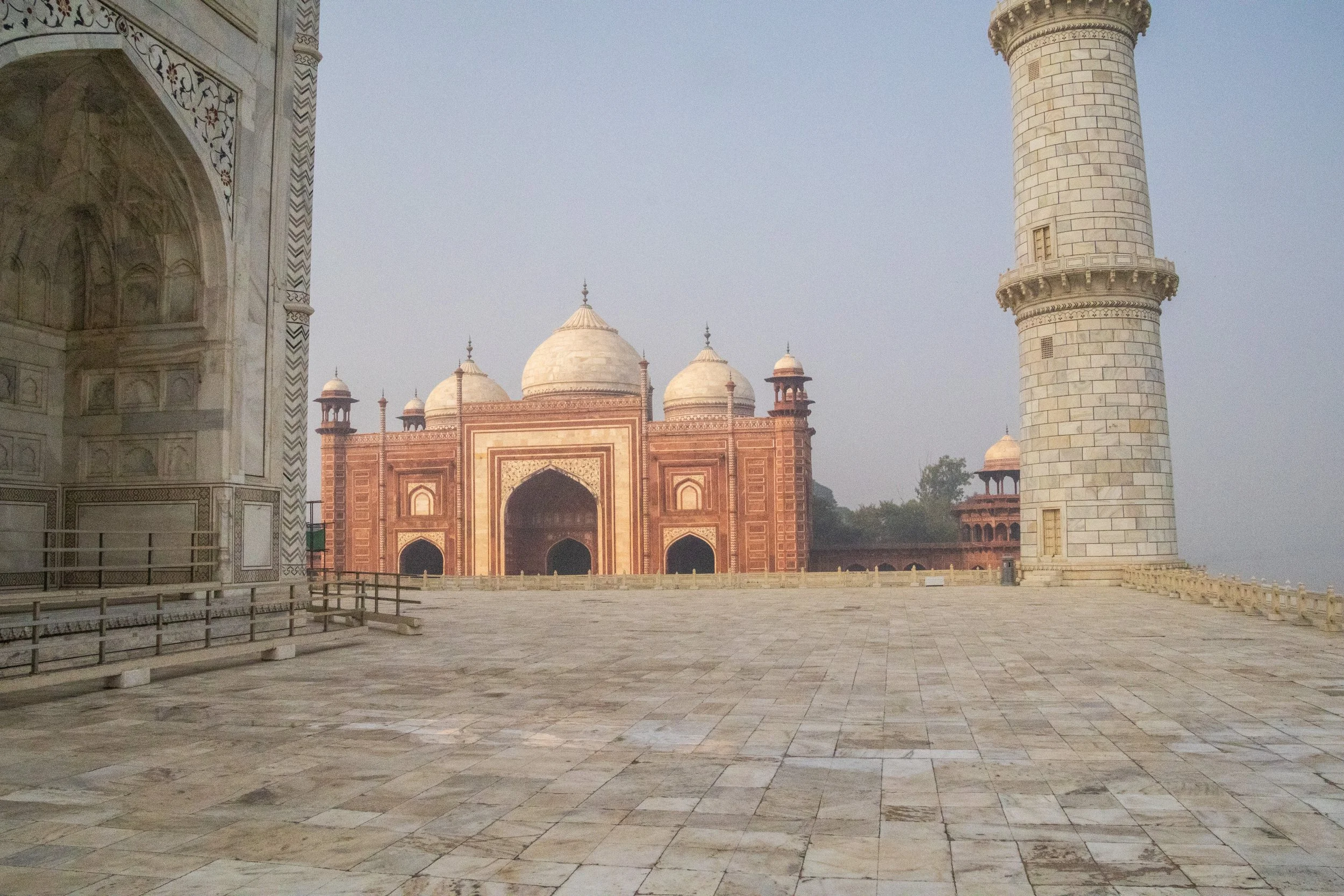
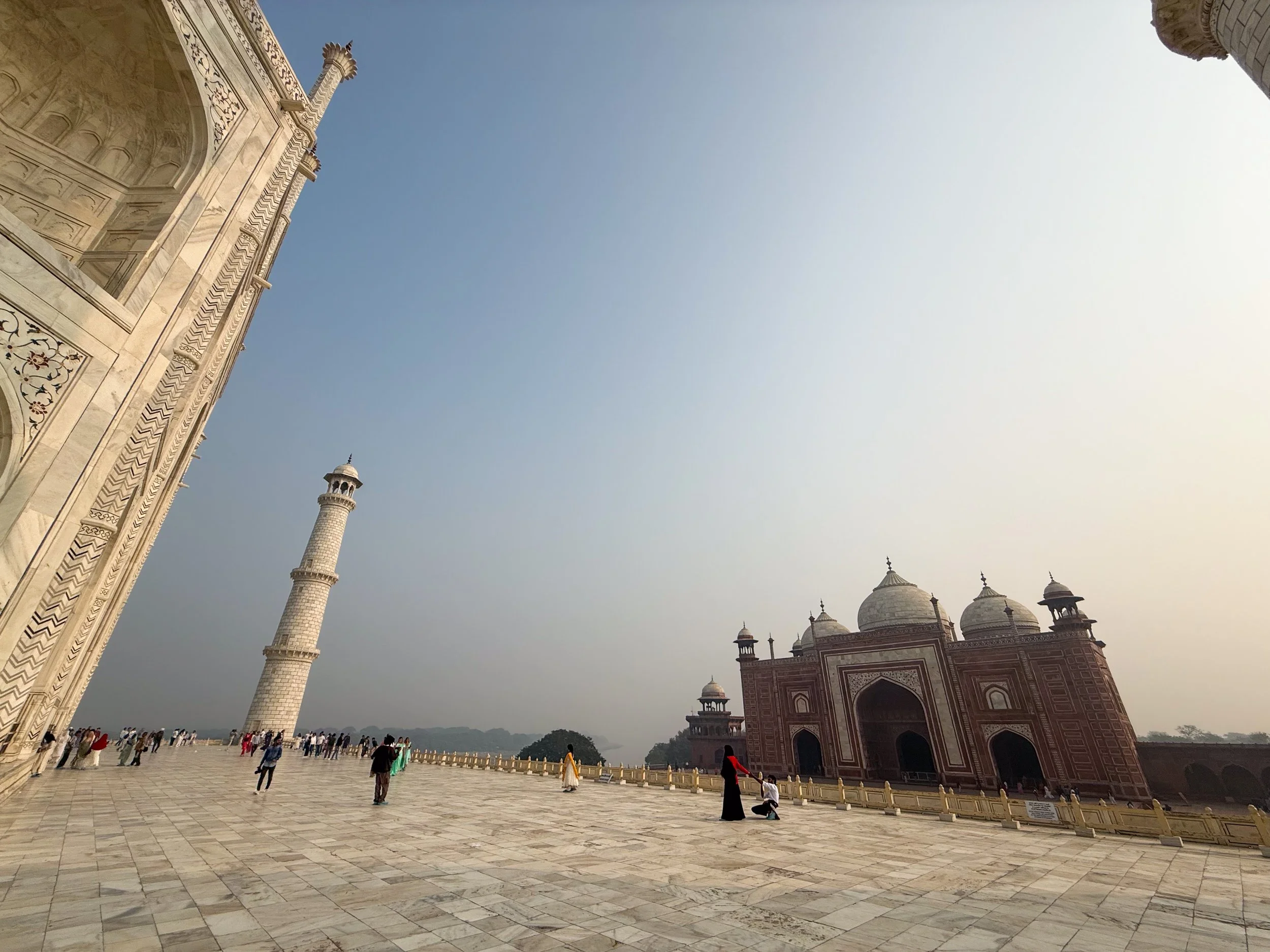
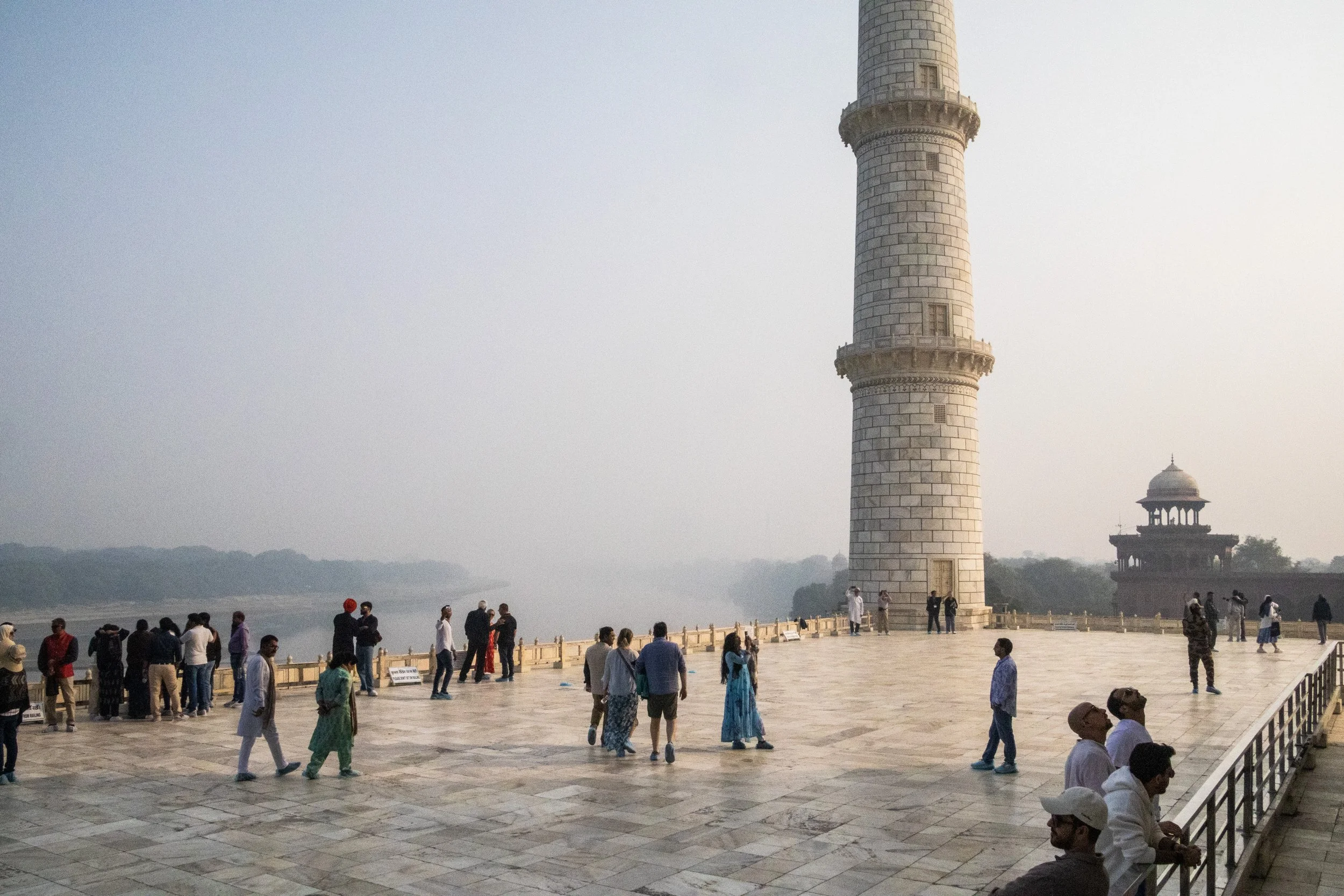
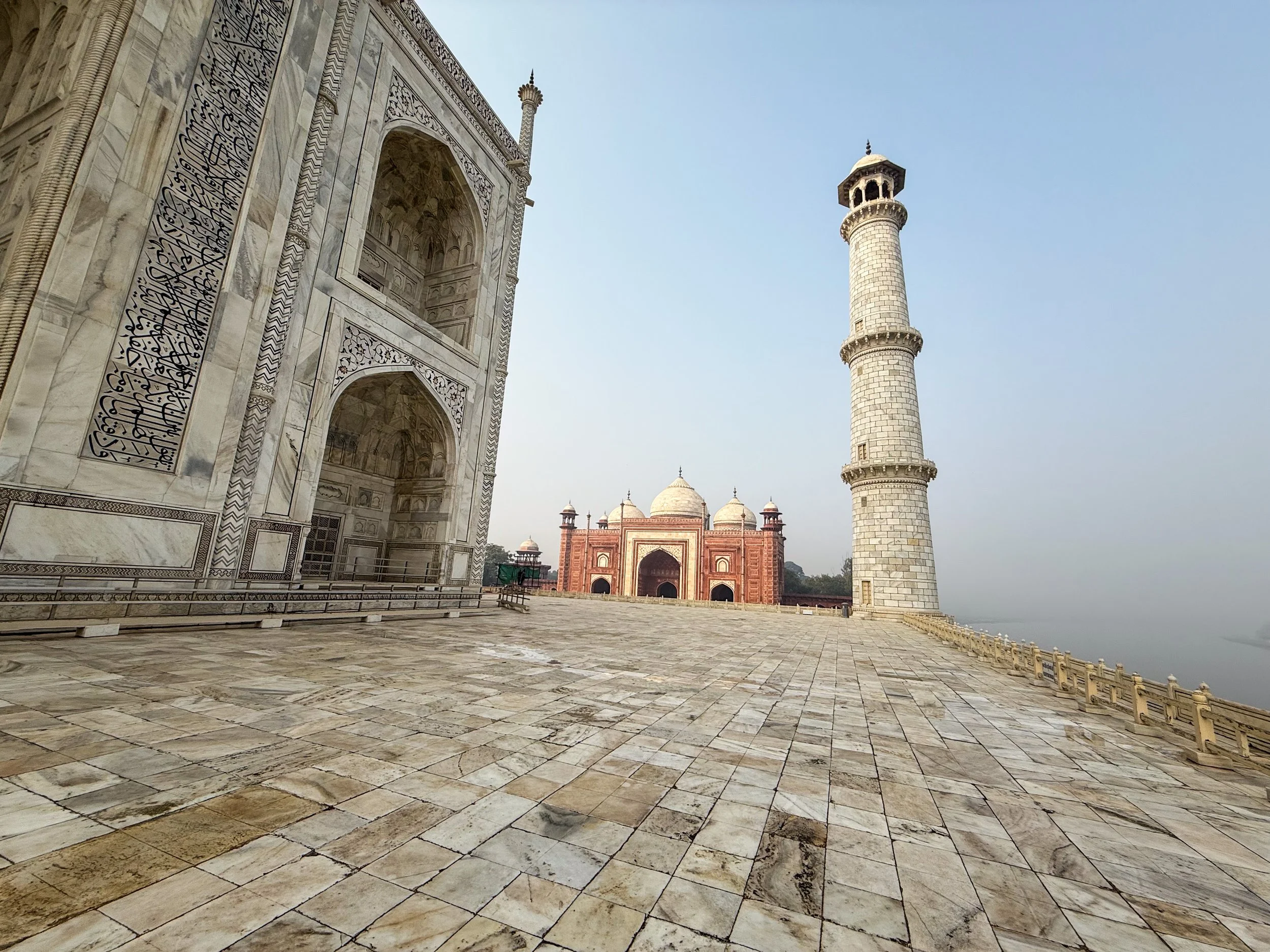
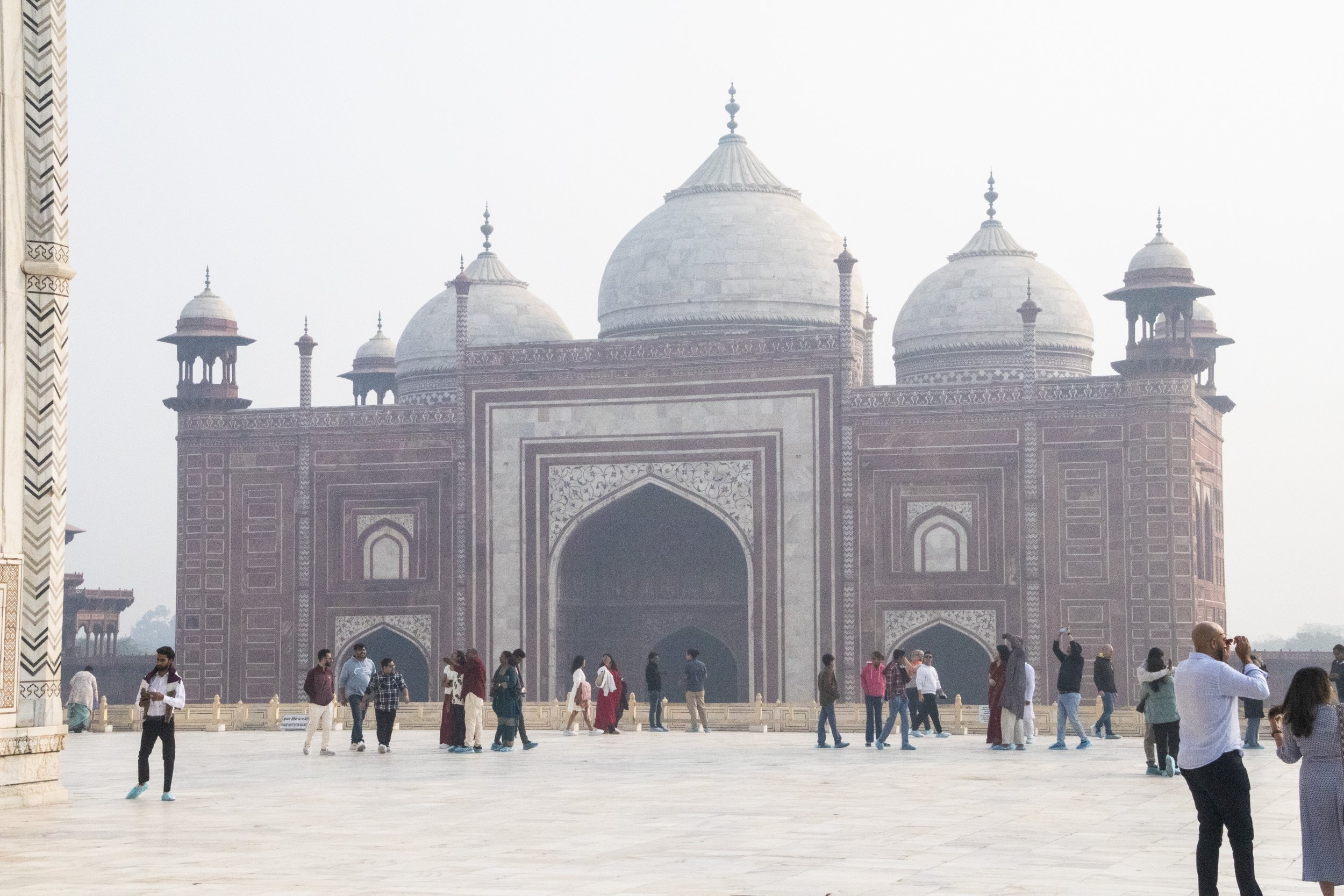
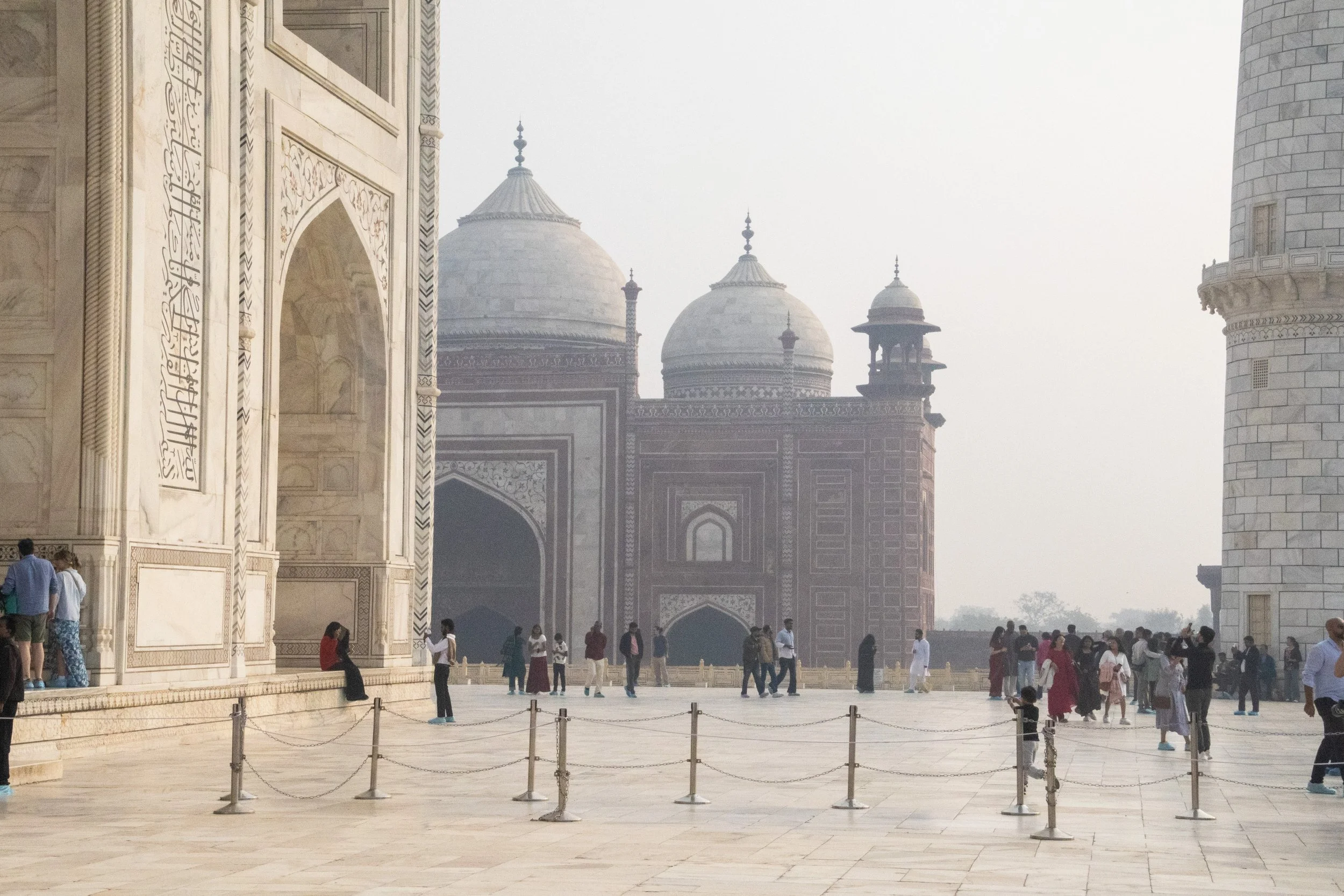
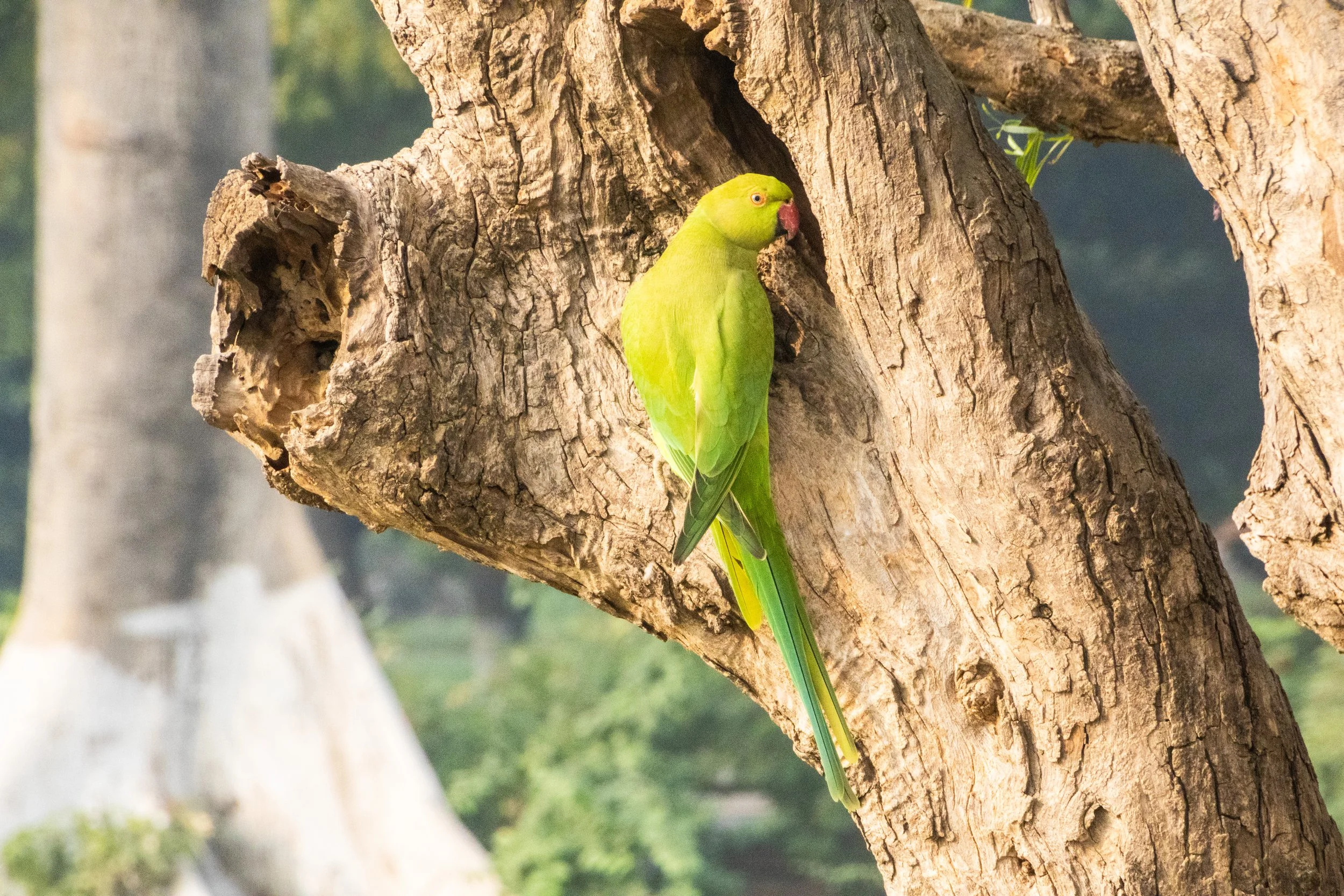
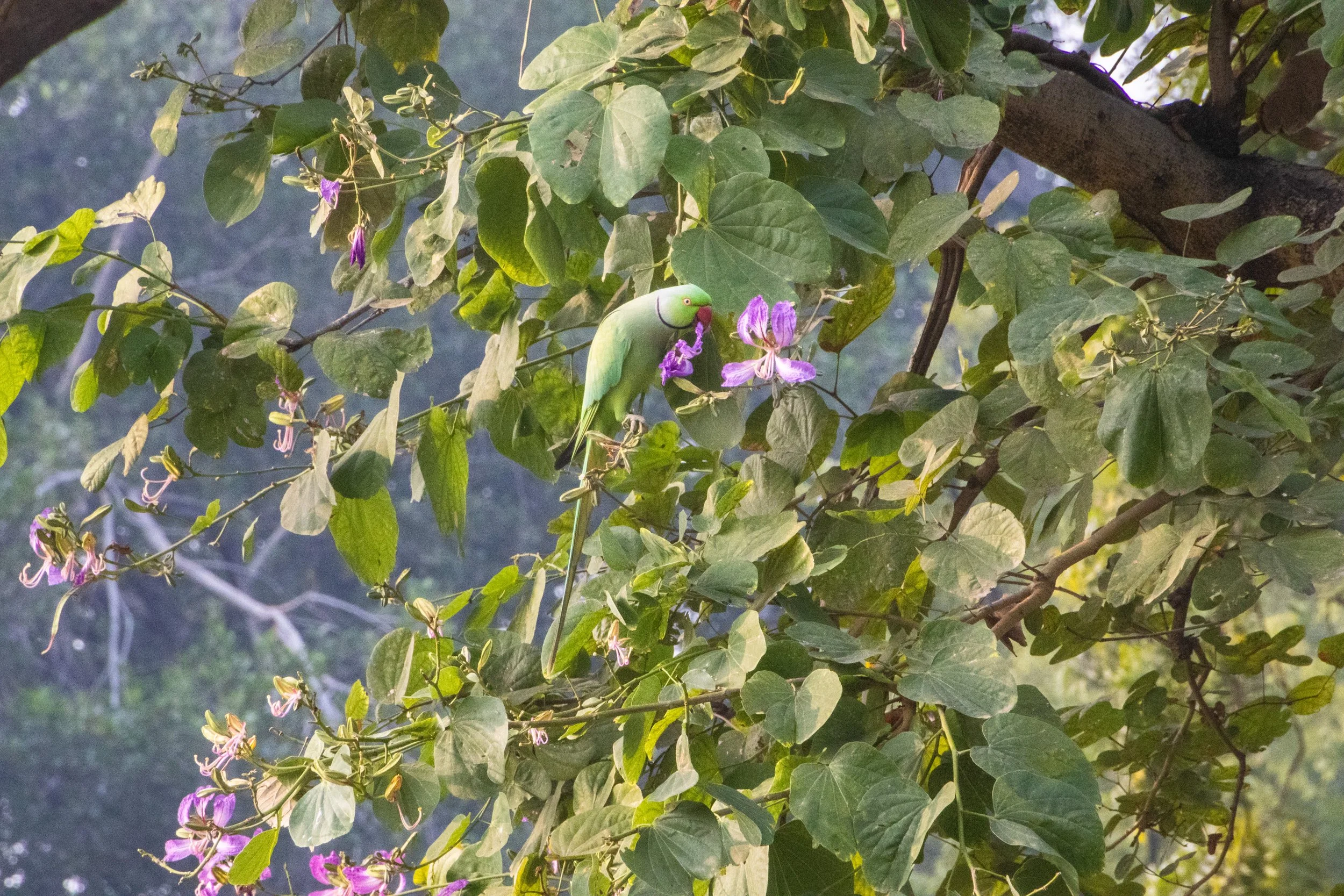
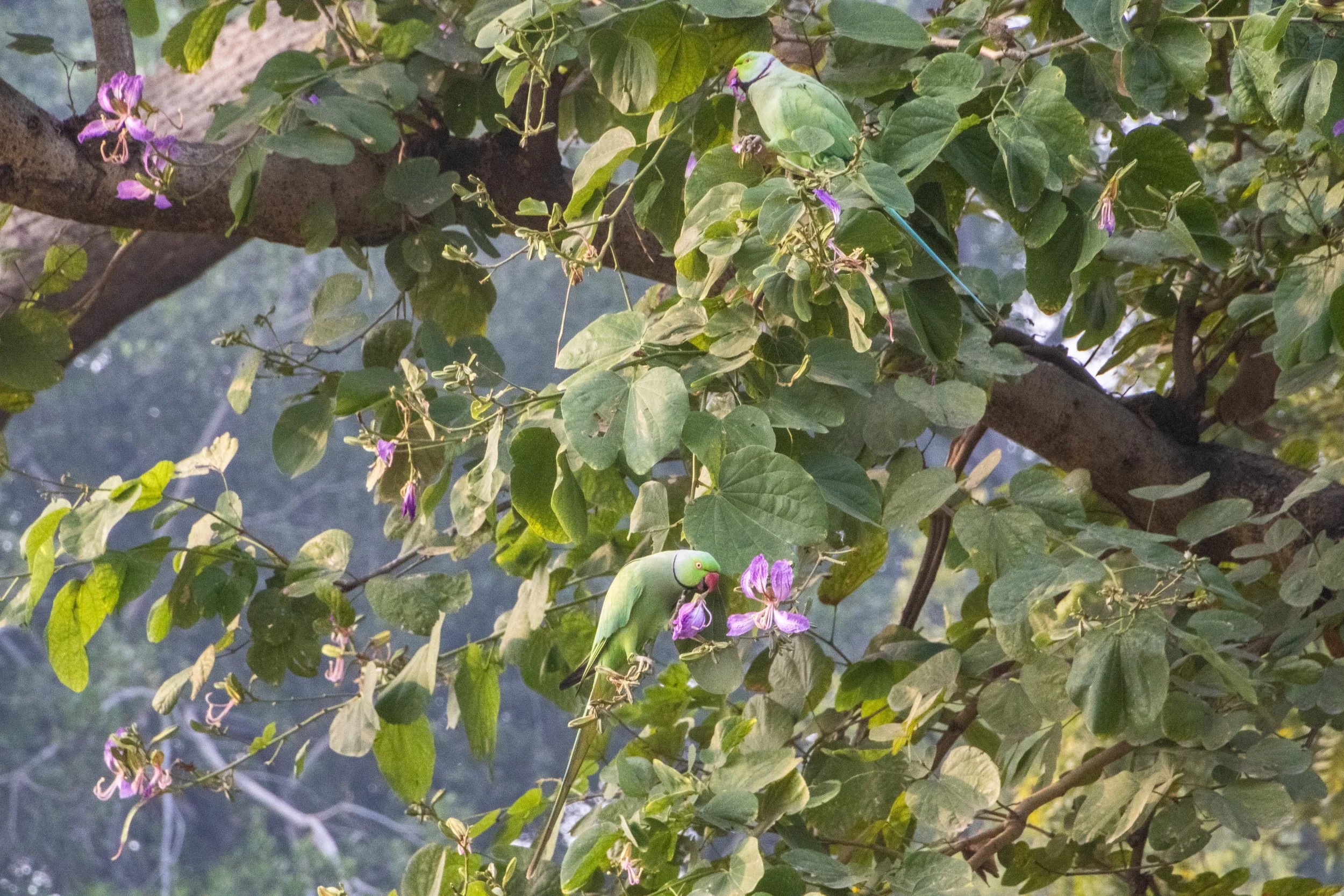
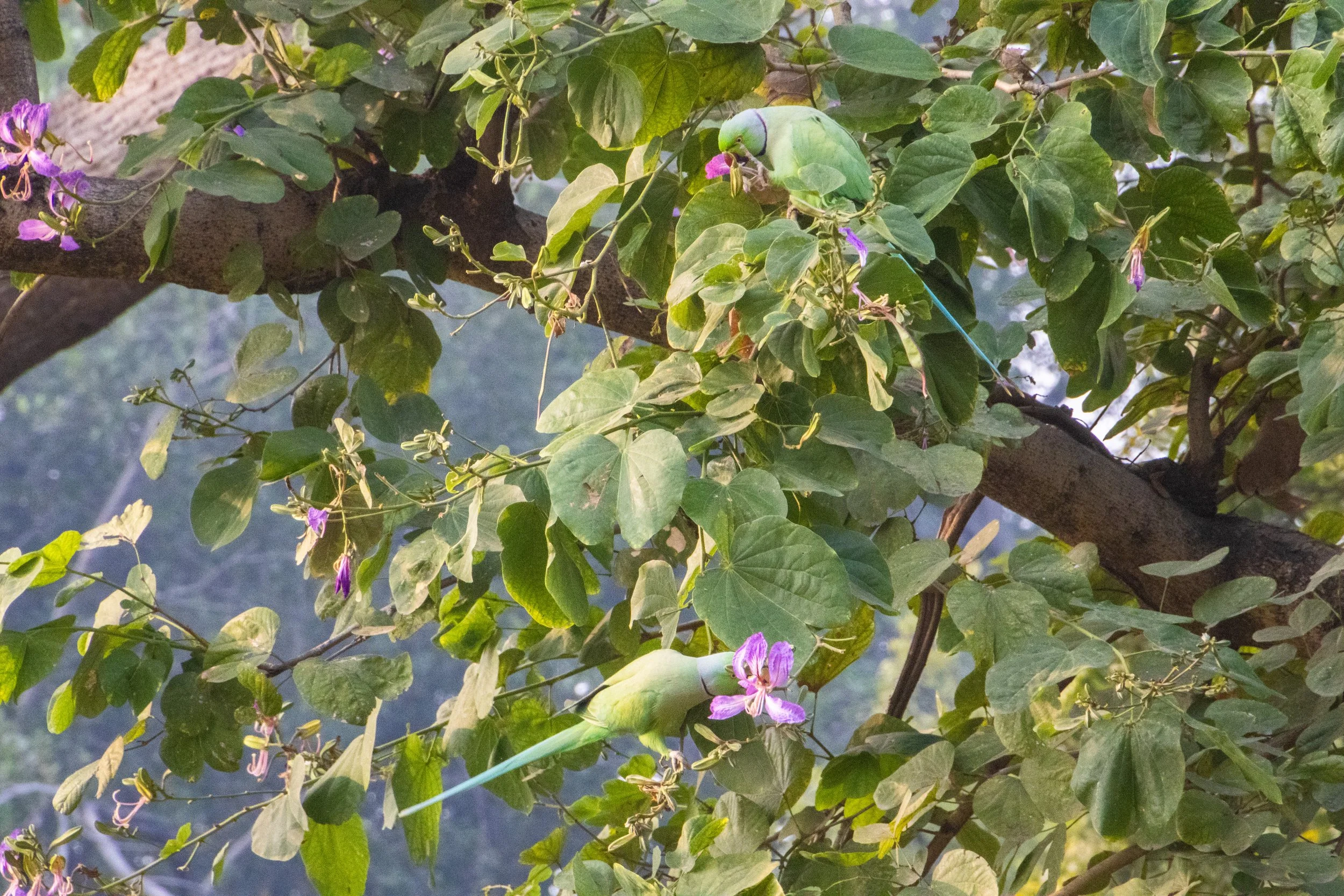
I think the coolest detail of this for me was seeing the wild parakeets in the trees surrounding the Taj Mahal. I don’t remember seeing them on my previous visit. How cool.
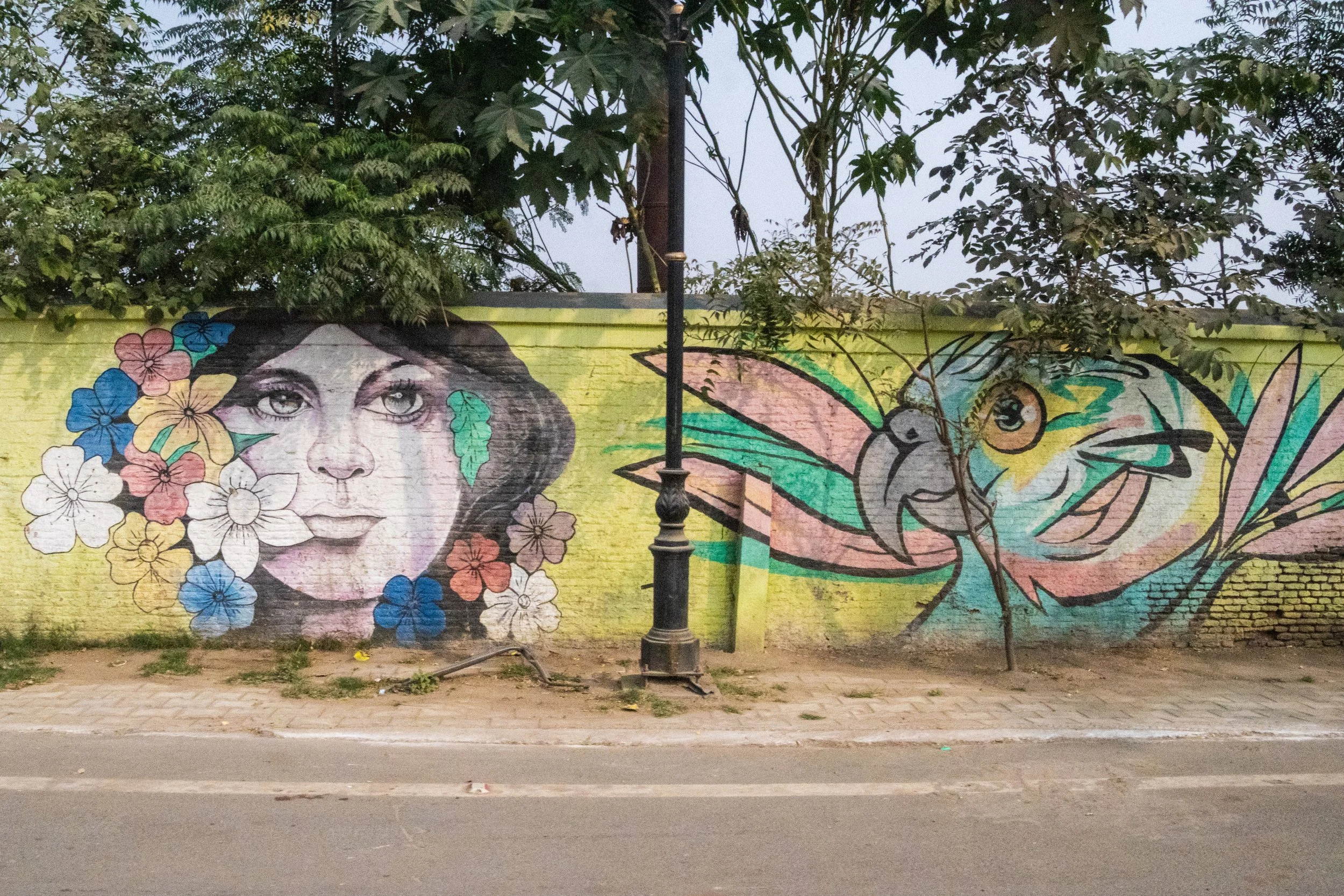
Another thing that seems to be new since my previous visit is that India suddenly appears to have an abundance of murals, especially on the ugly undersides of overpasses that often dominate its streetscapes. I’ve actually never seen this space used in this way! Ya’ll know I LOVE street art… catching these things out the window of a moving car was pretty impossible, but maybe I need to come back for a more concerted effort.
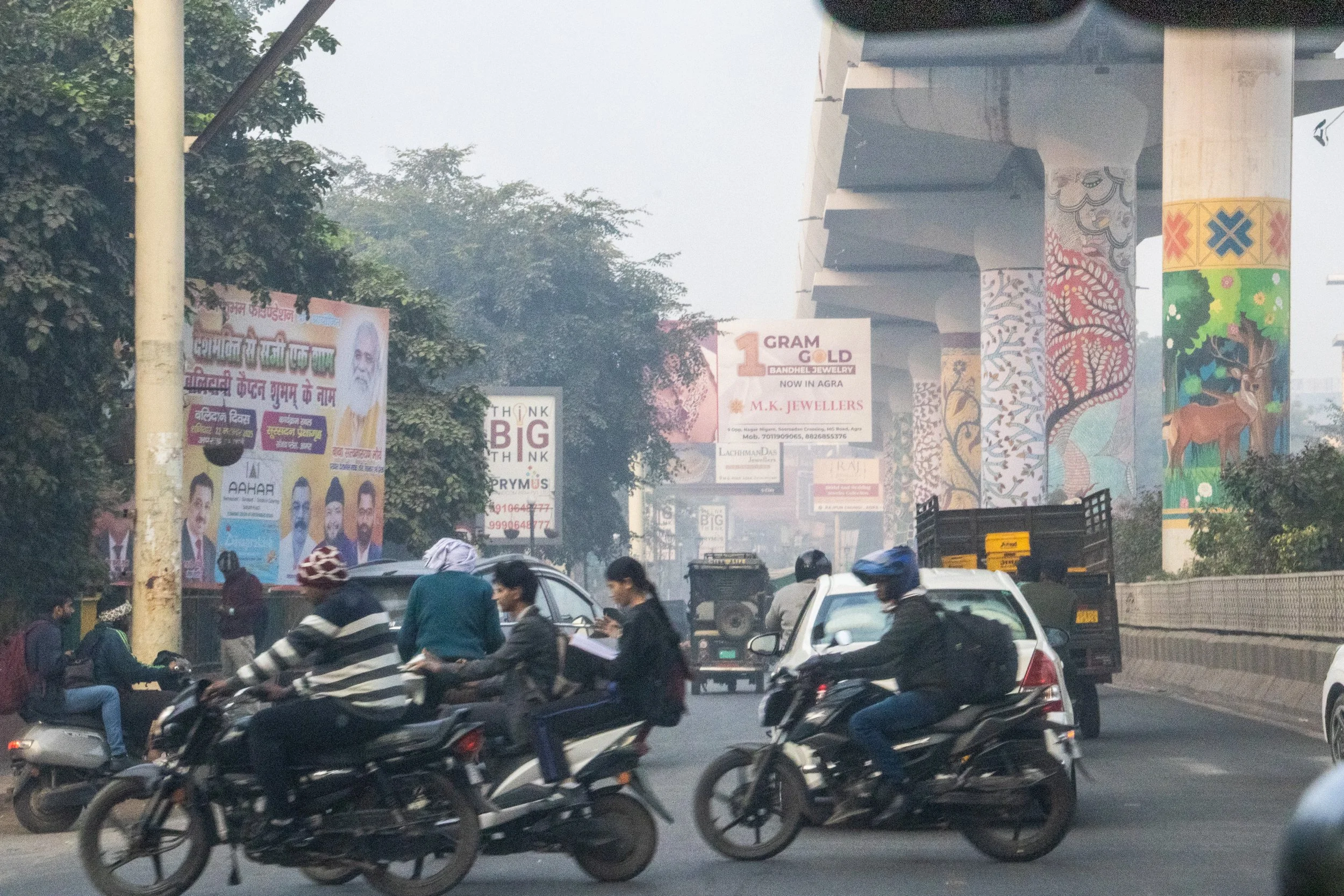
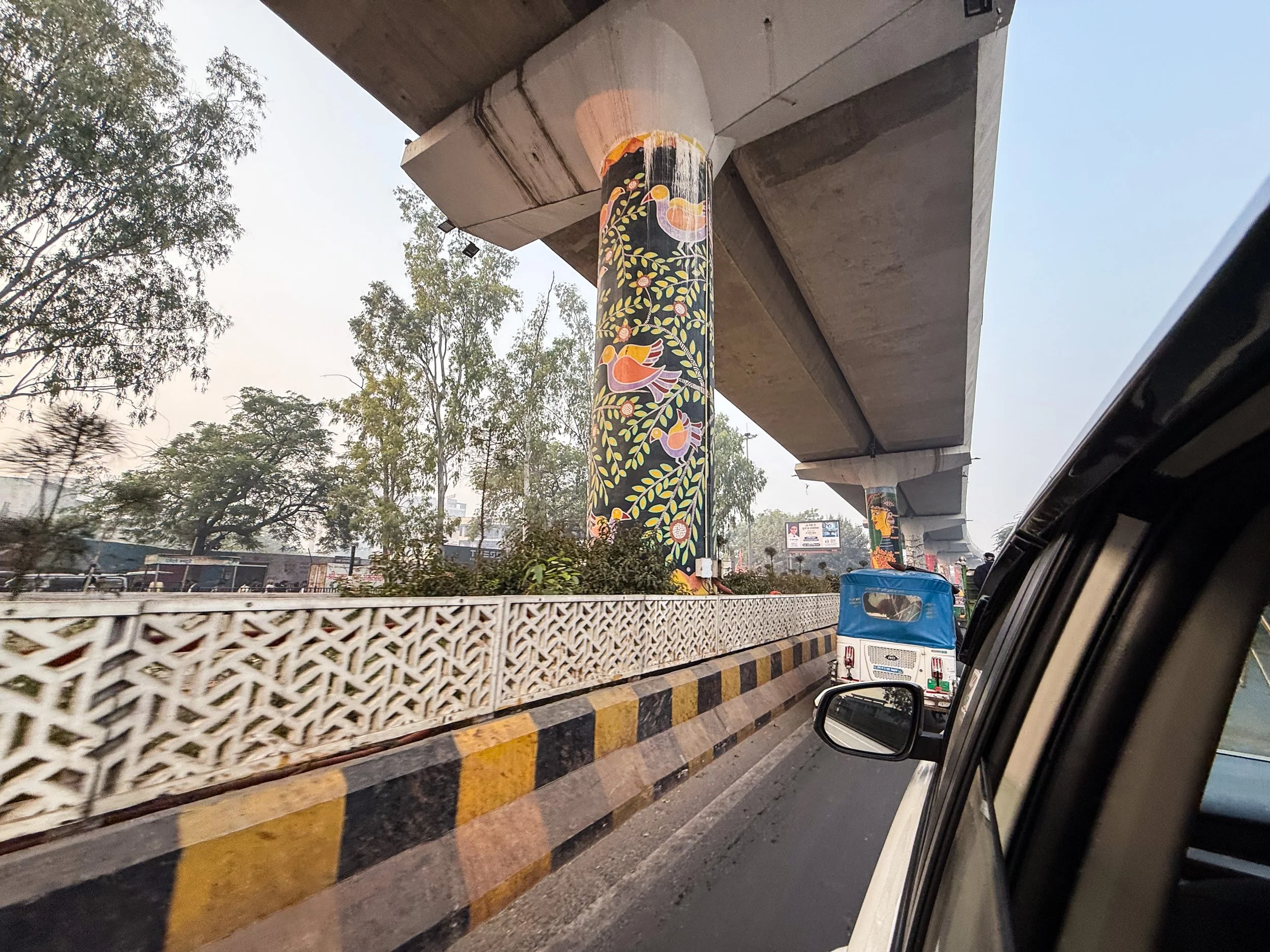
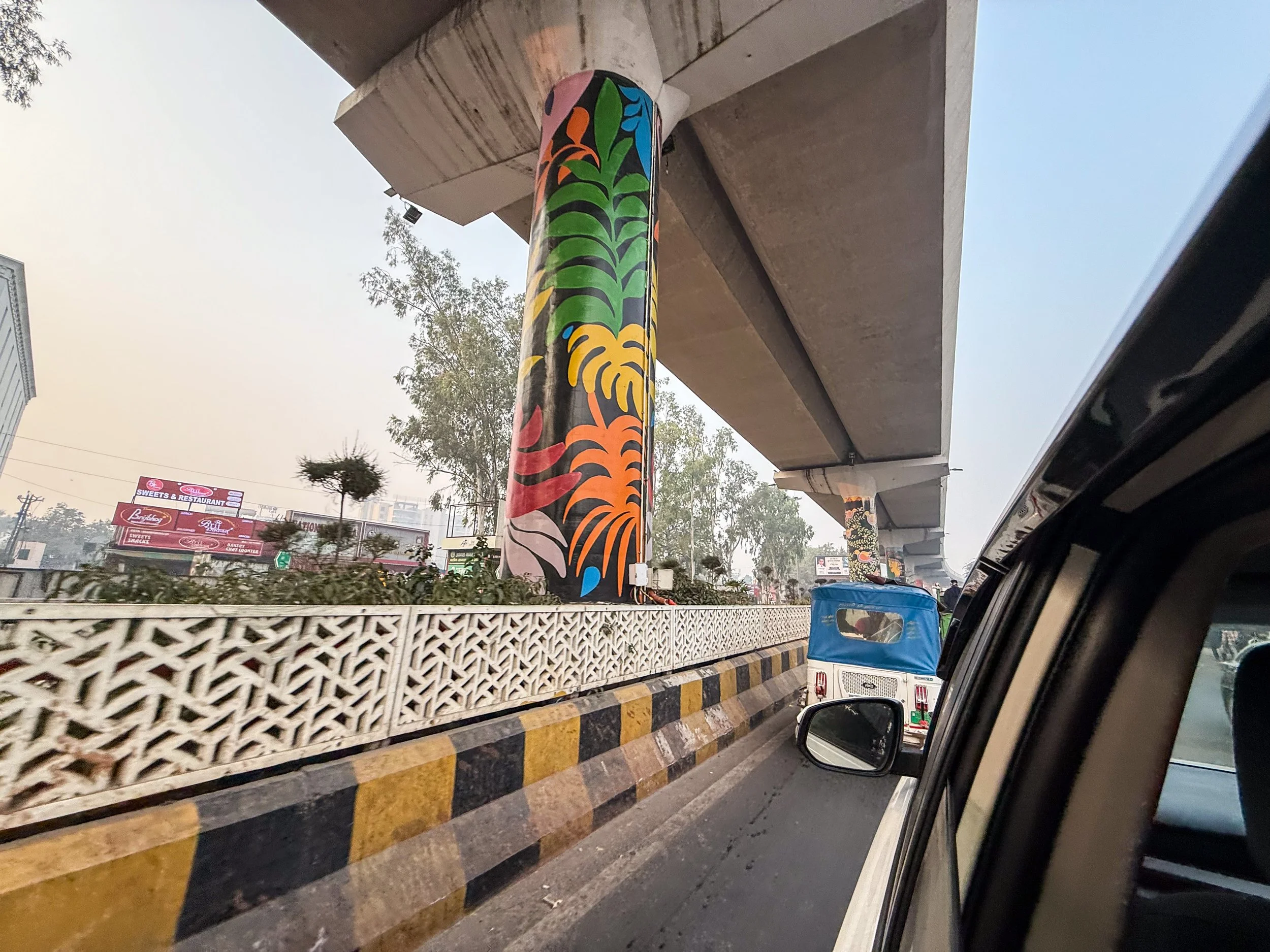
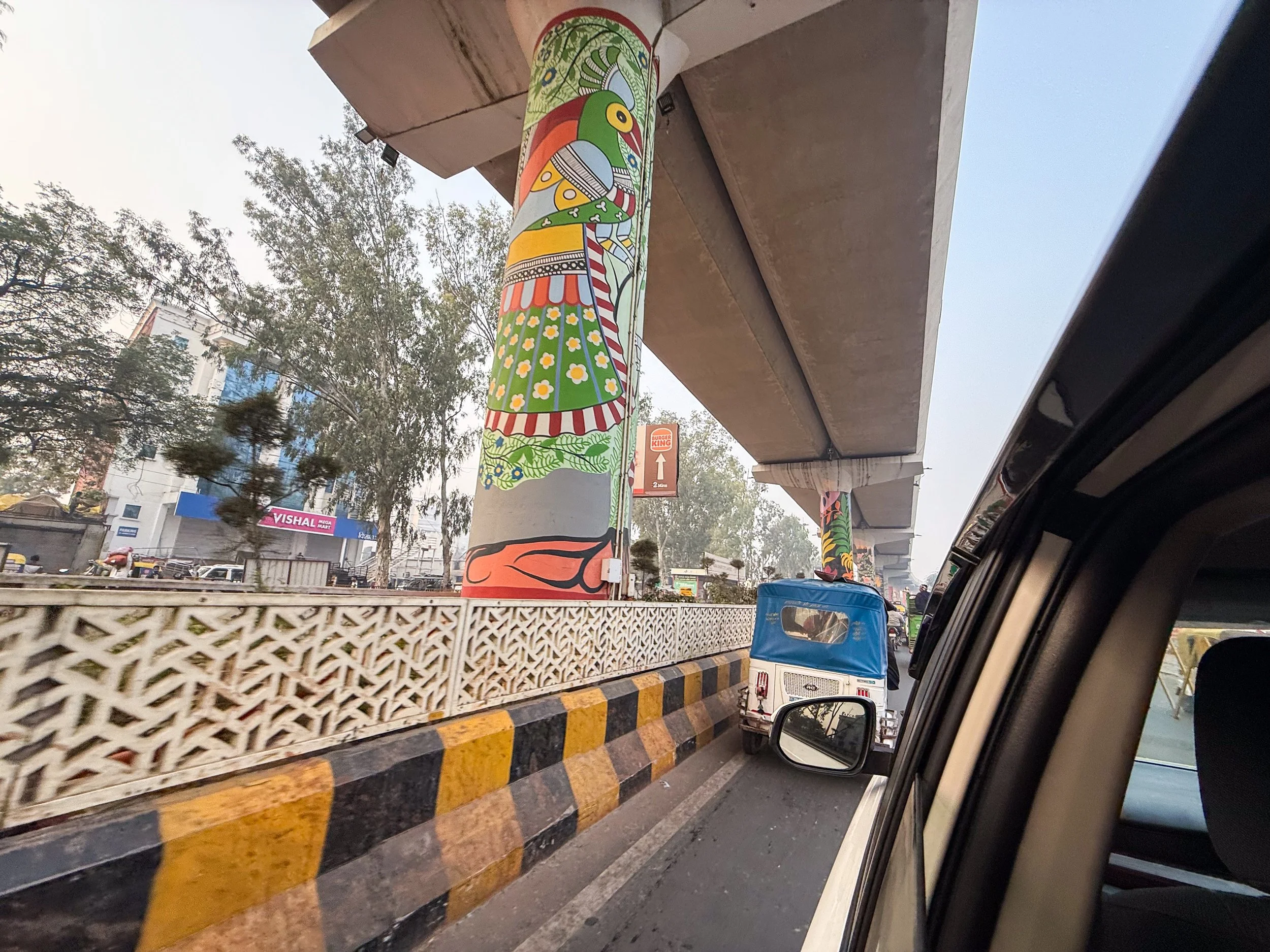
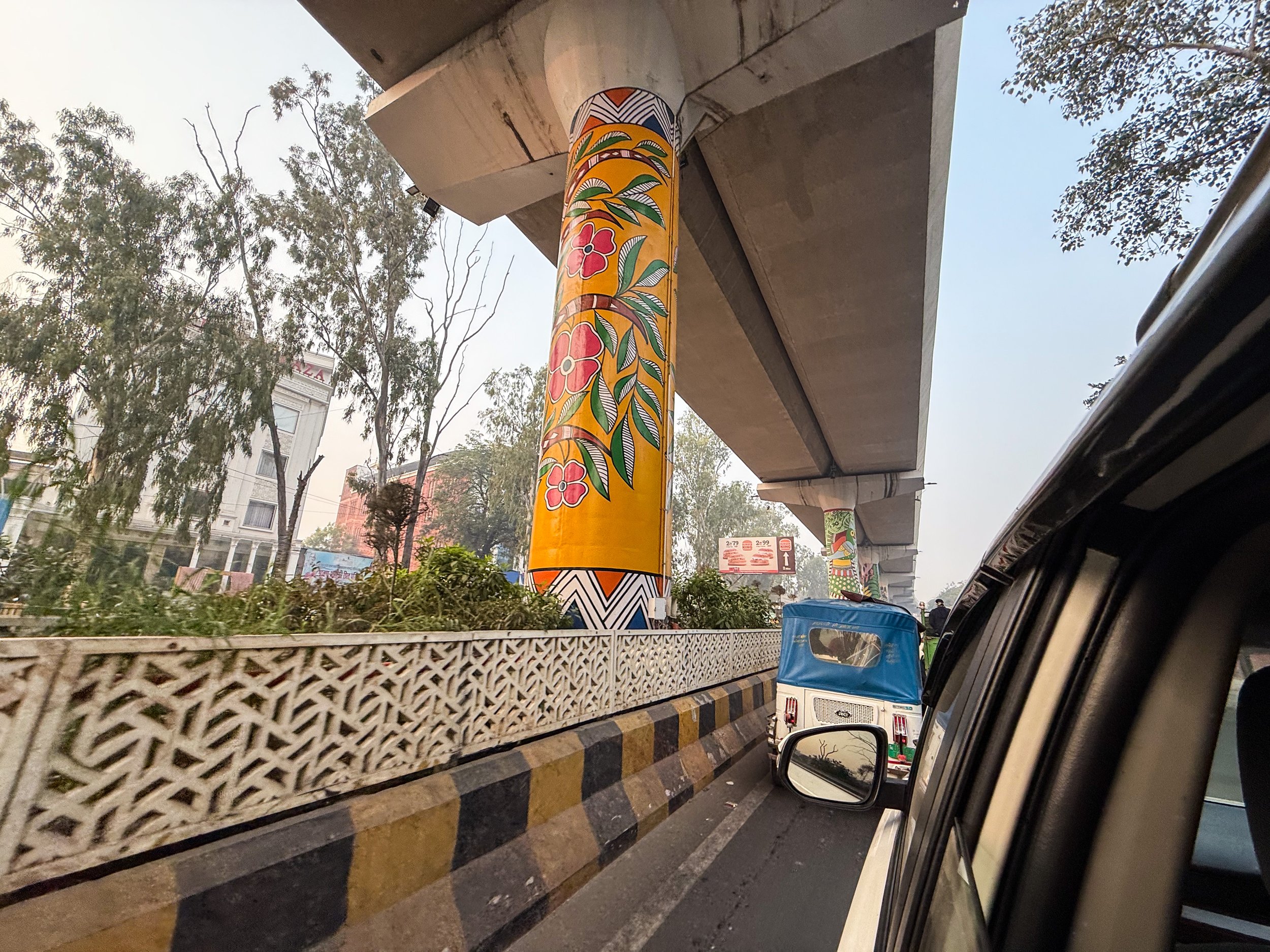
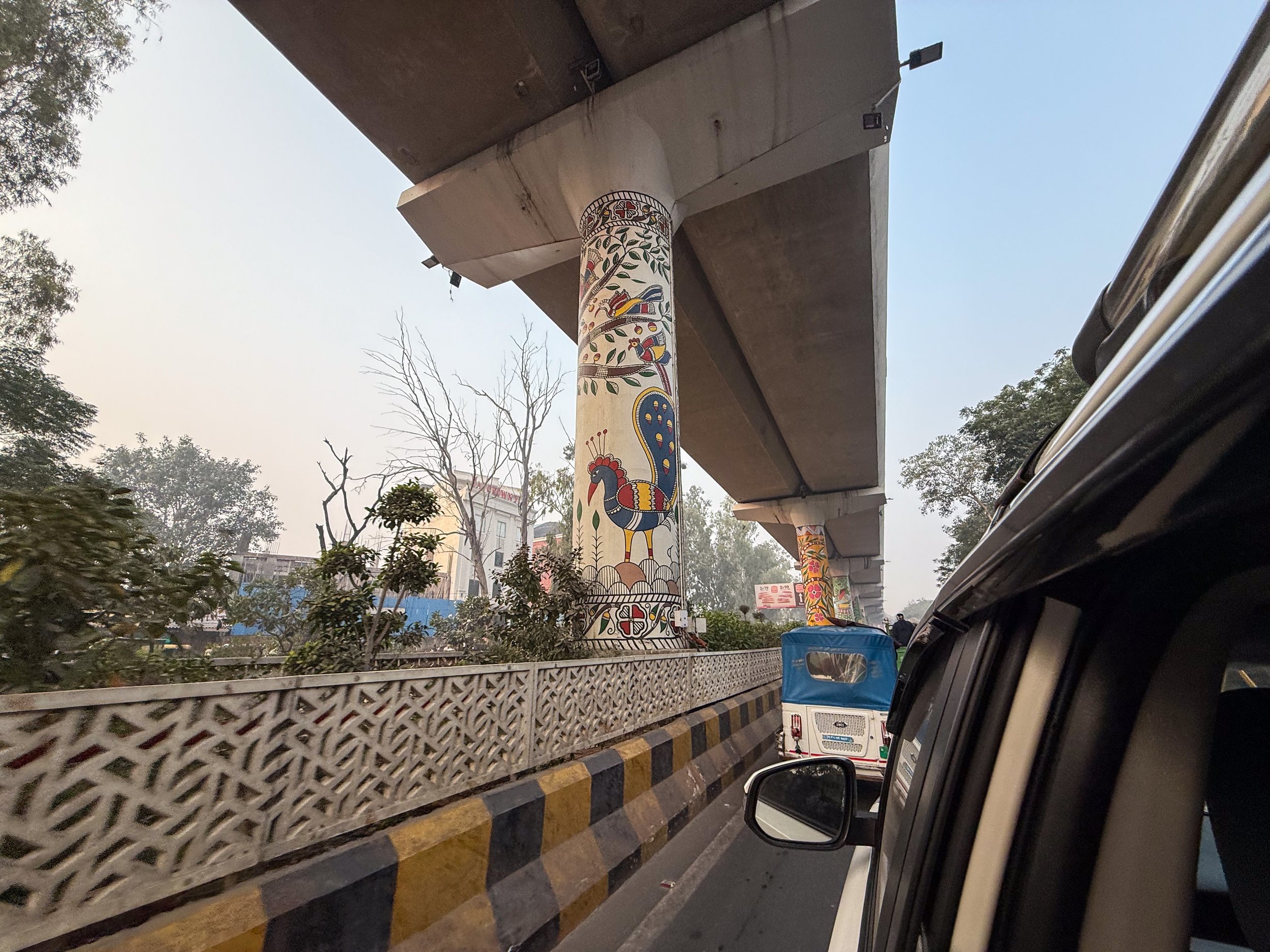
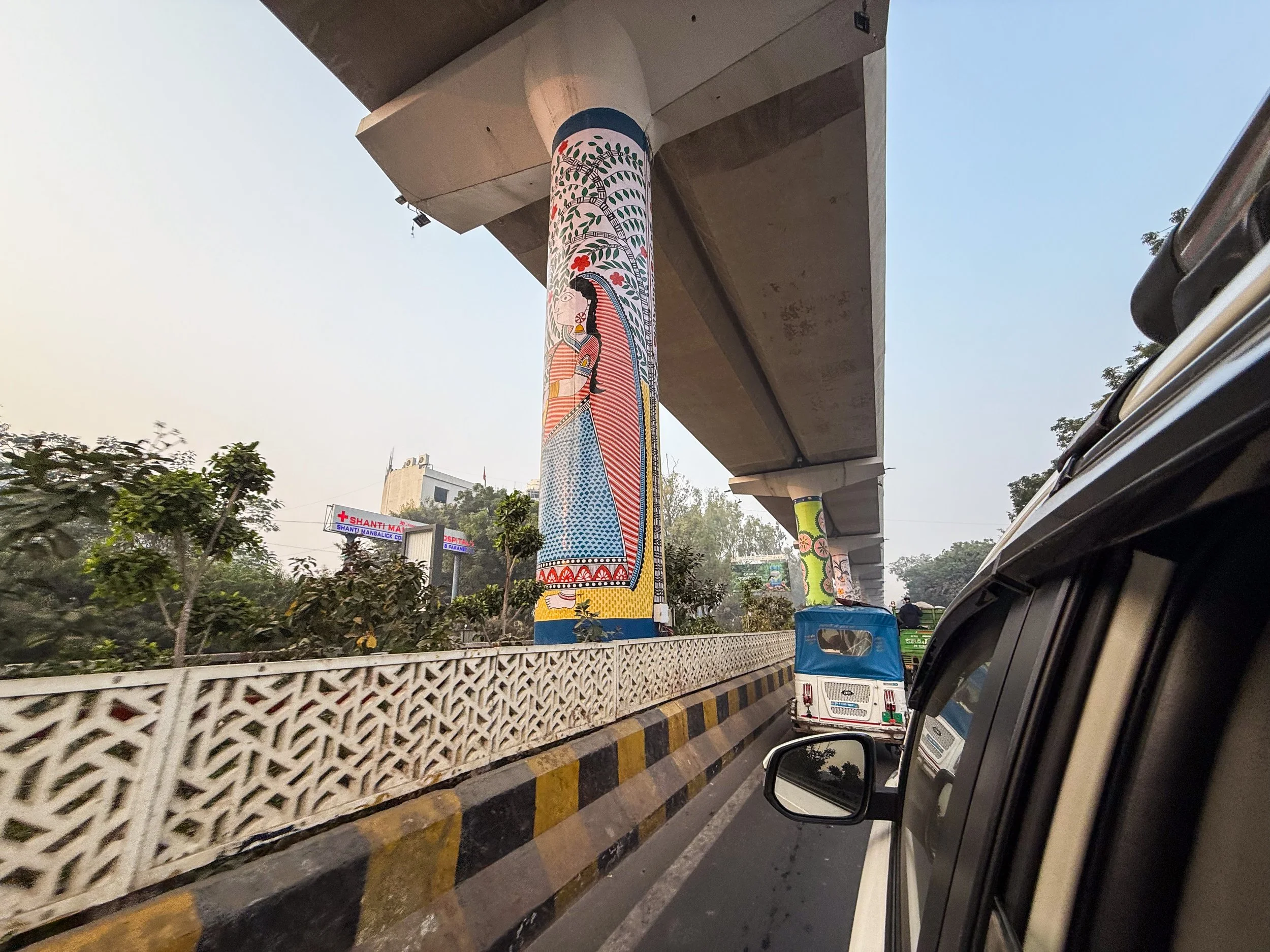
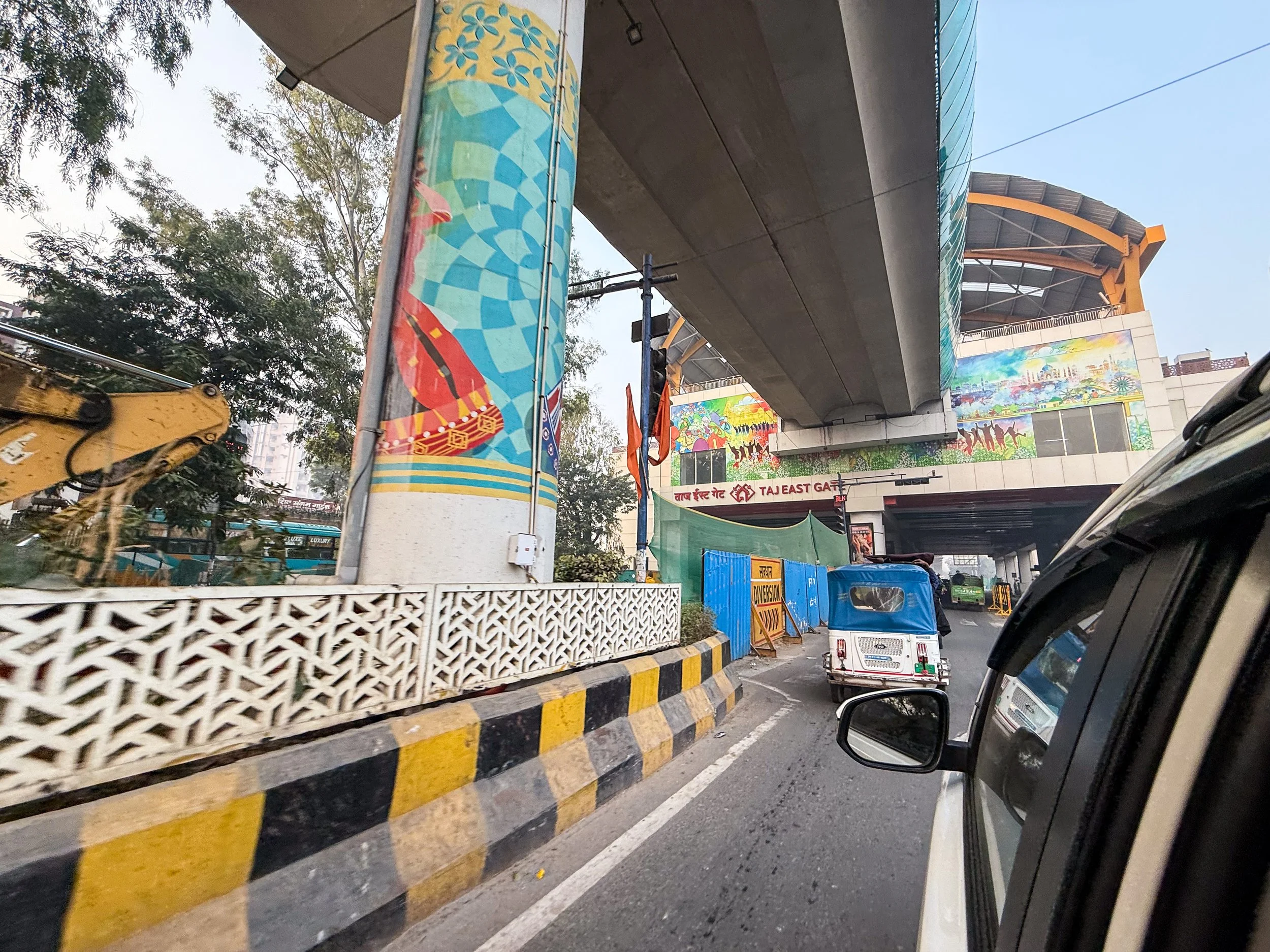
And the street art didn’t end there! There were actually many miles of walls on the side busy roads that were covered in endless murals. Here are a few more choice pictures from the drive from Agra back into Delhi.
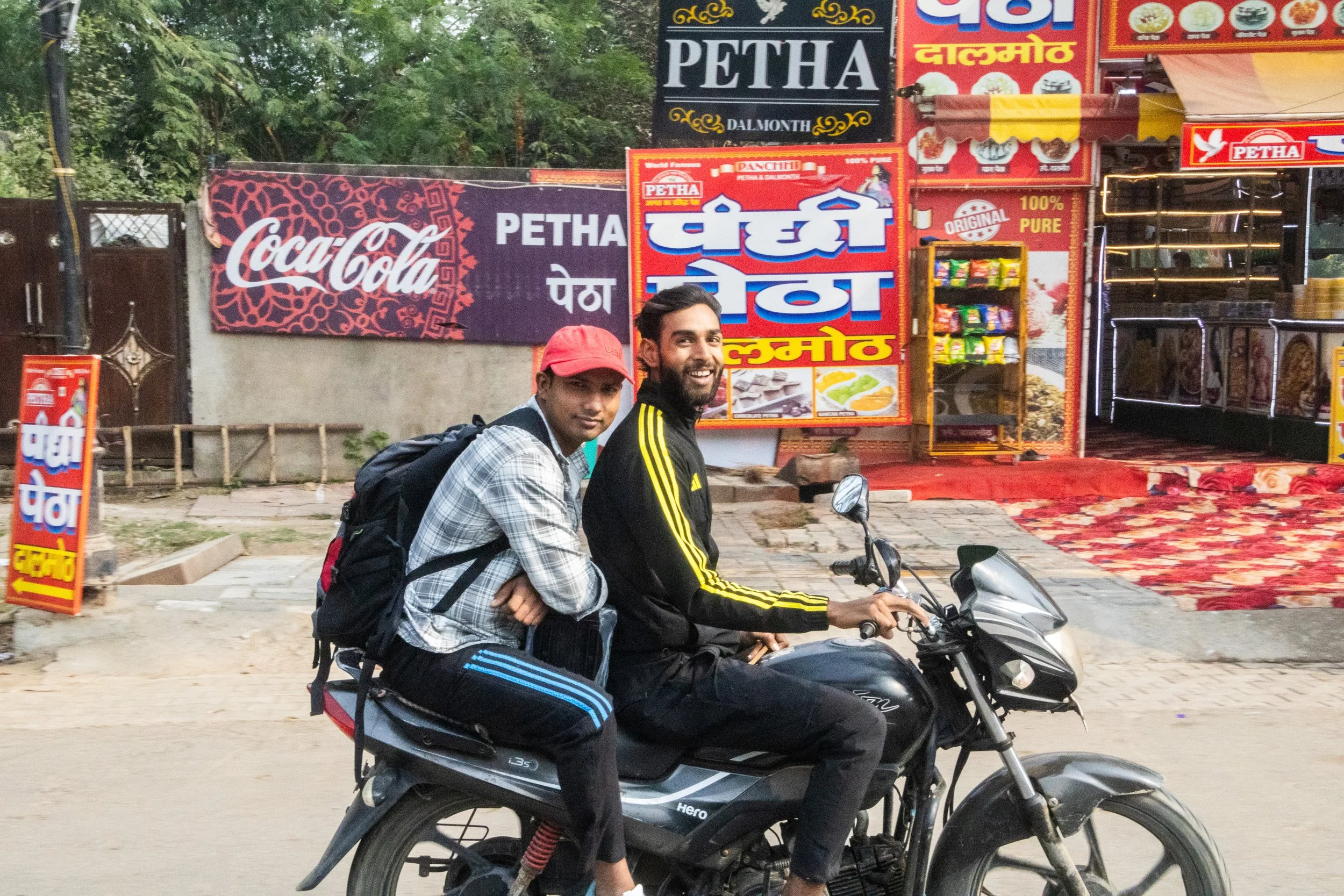
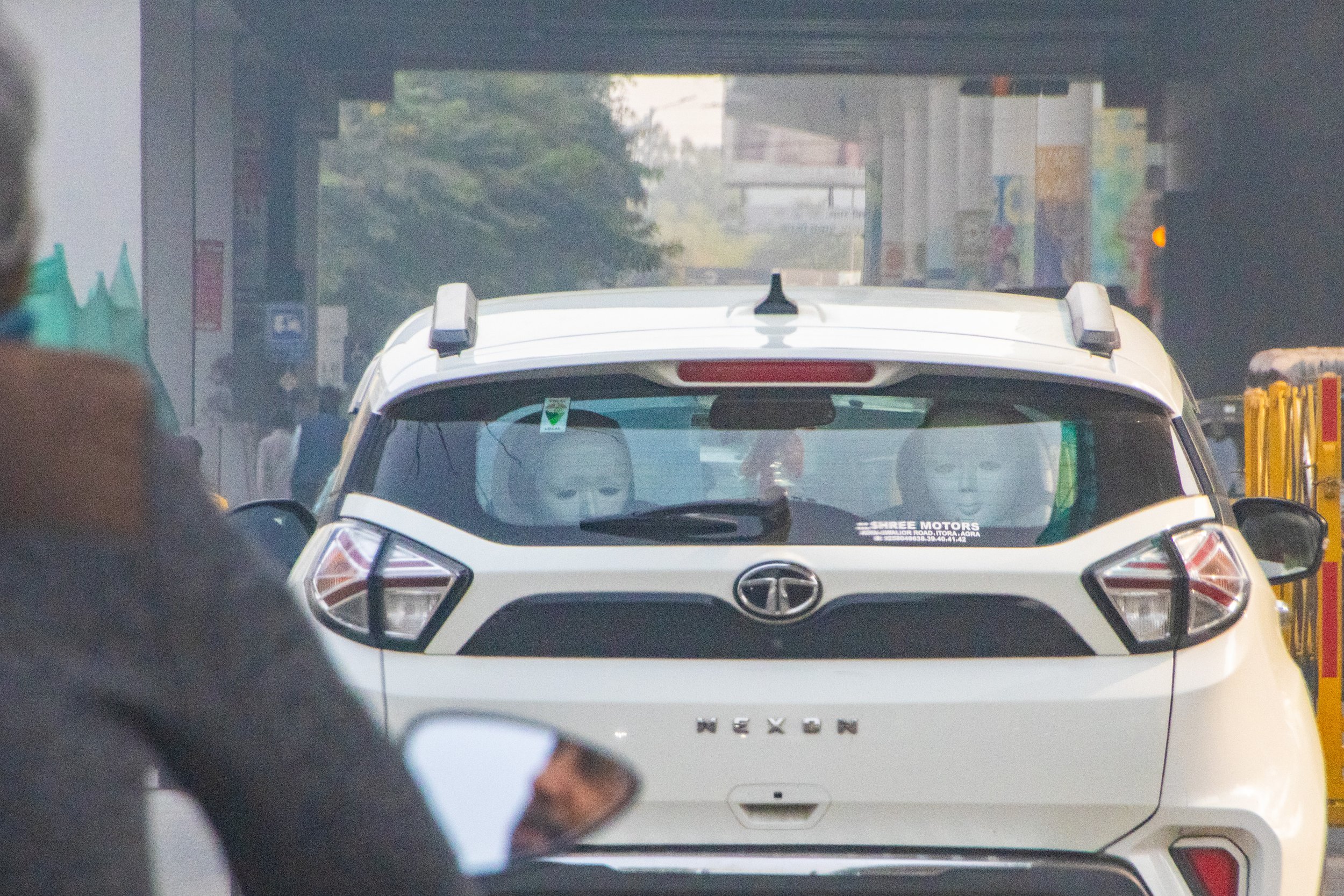
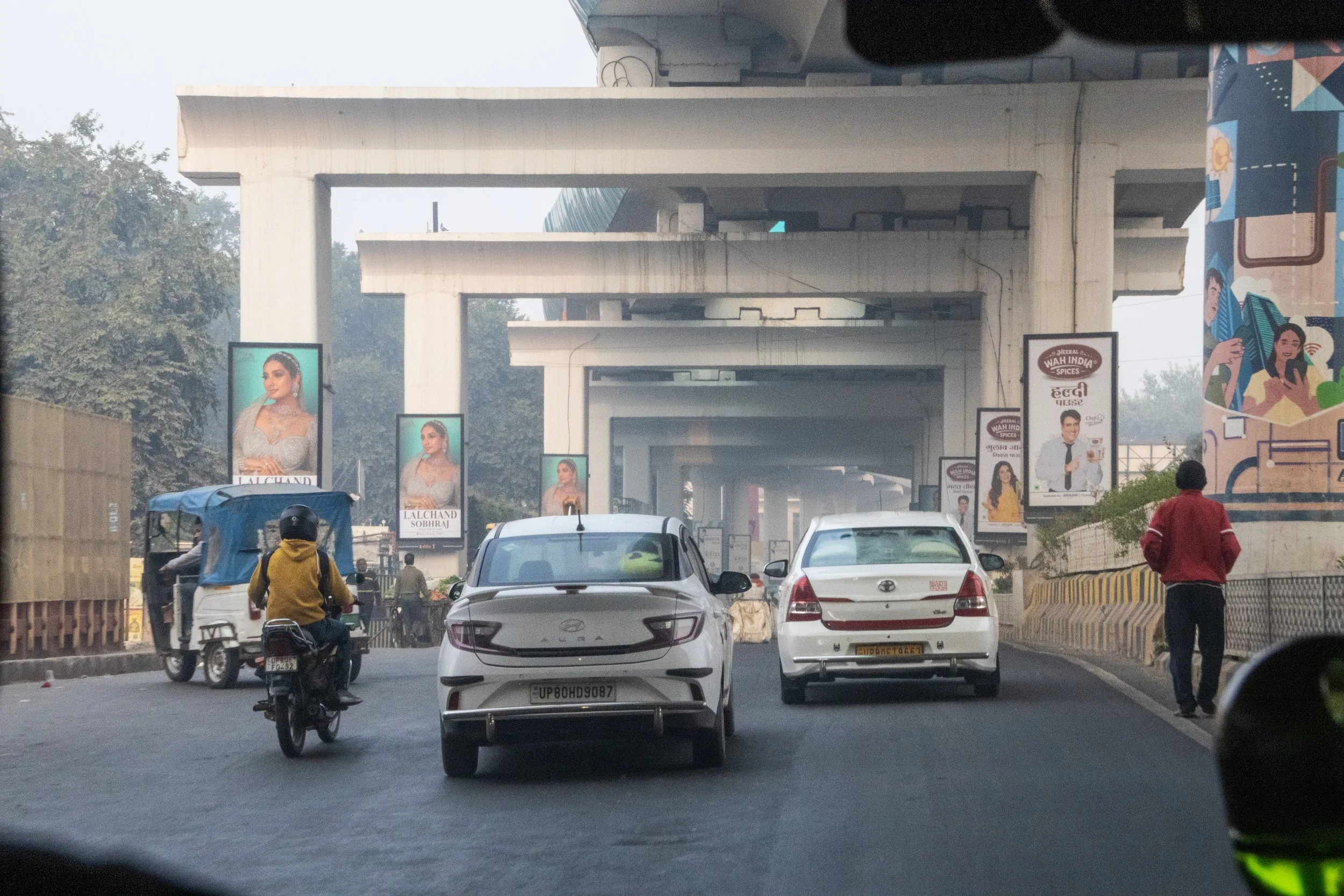
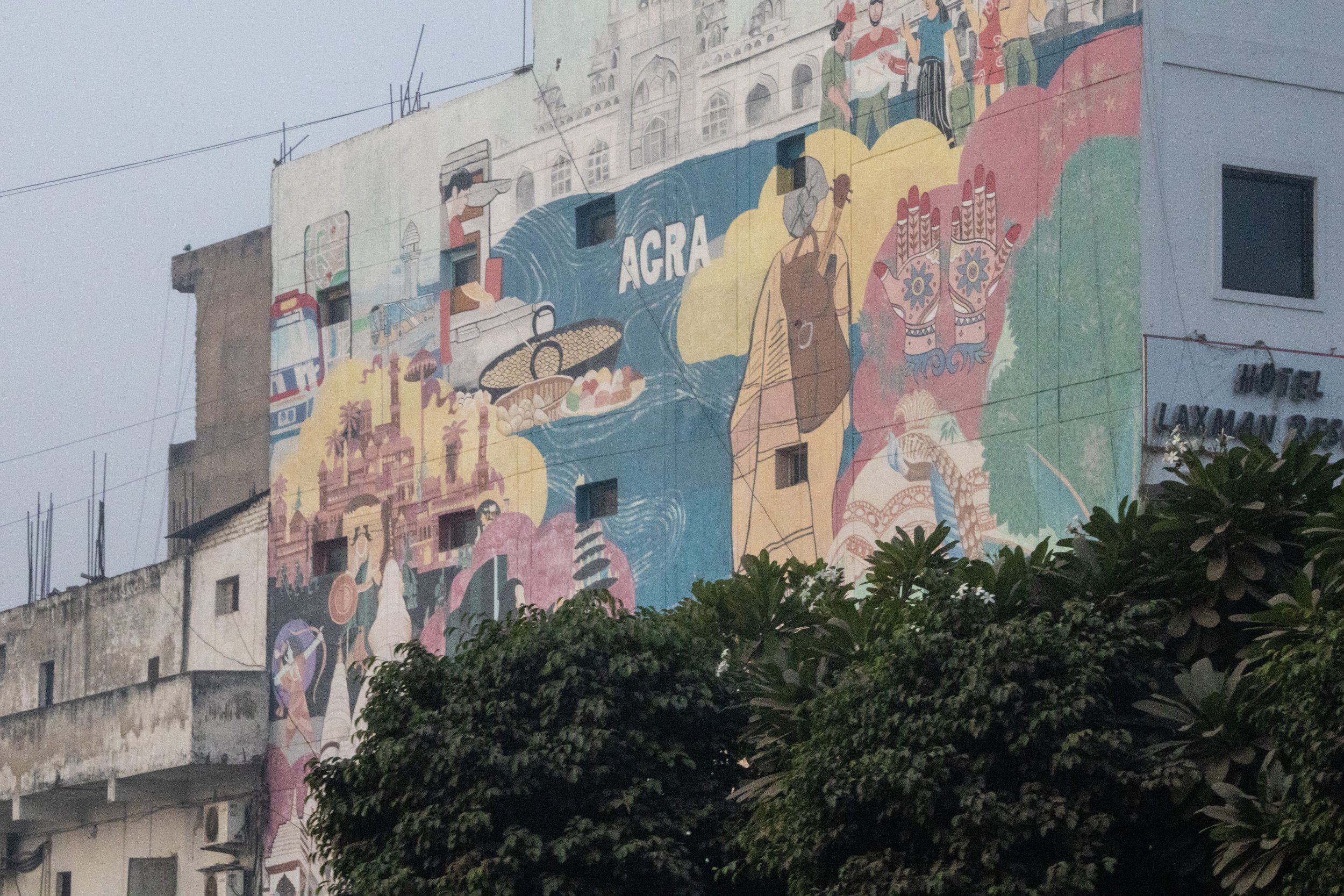
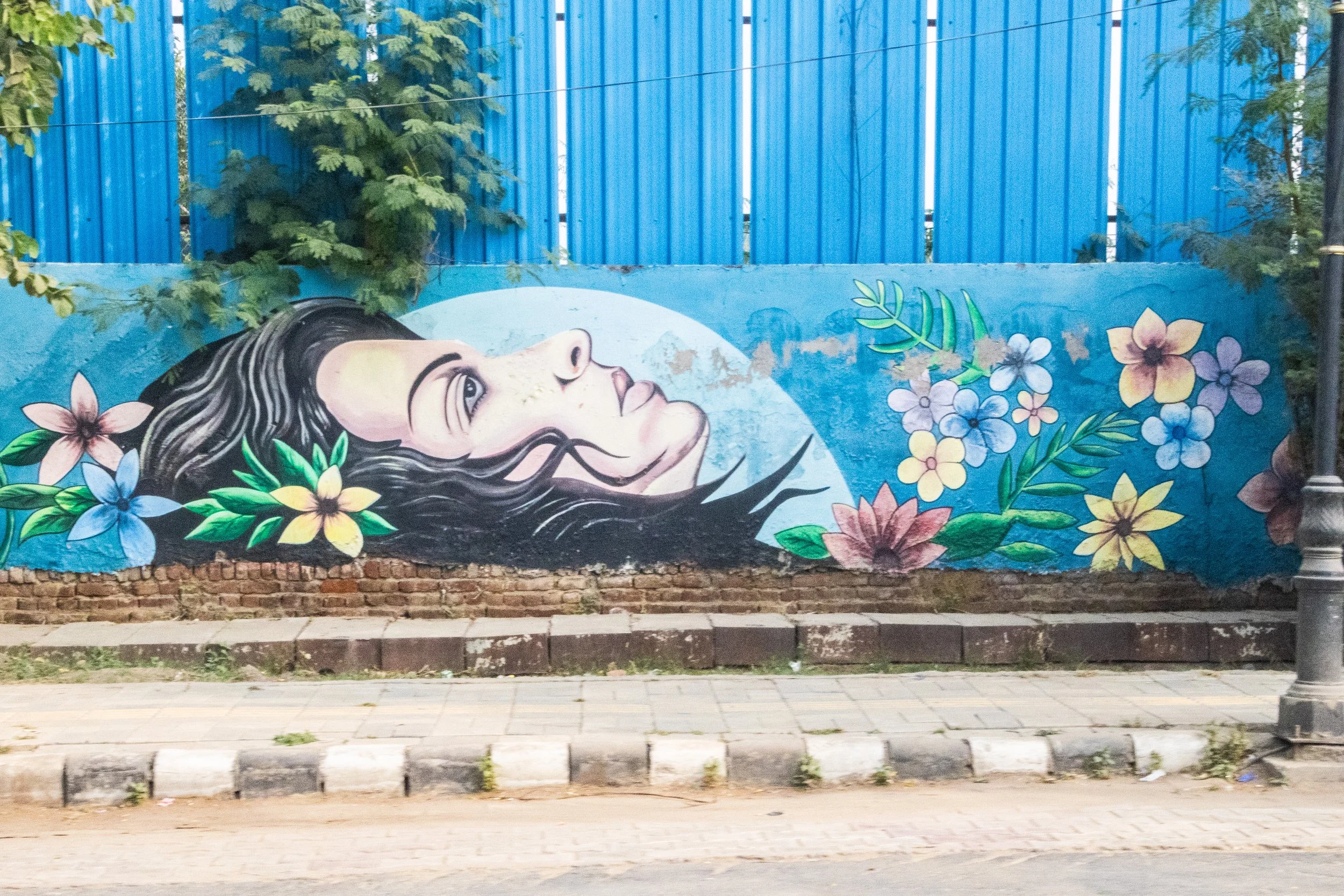
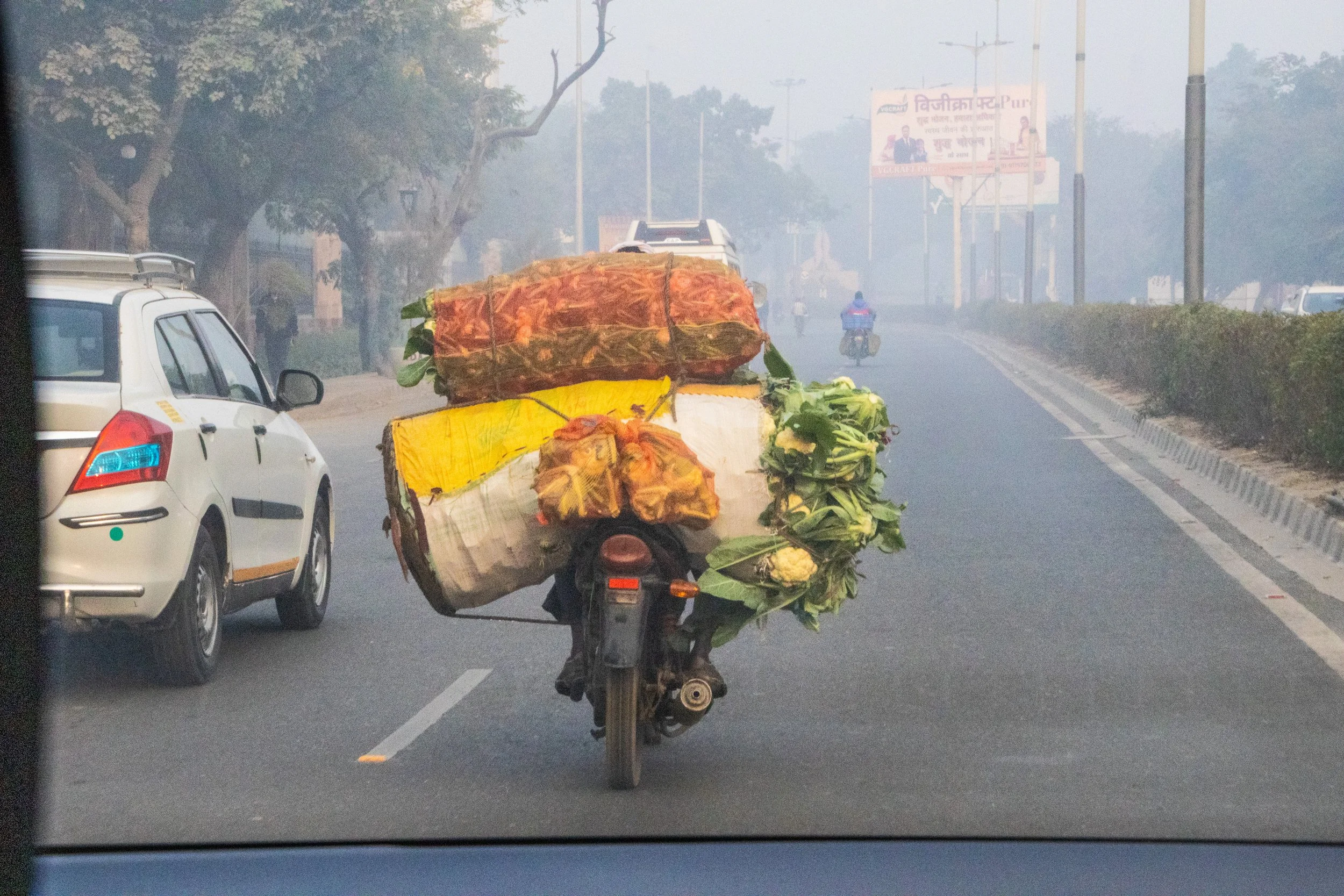
So, there’s the Taj Mahal!
I hope I didn’t scare you off too much with the deep dive on pollution. It’s so pronounced now that I feel obligated to address it. And yet, paradoxically, when I think back on this trip, I don’t think about the air quality at all. I just miss India. This country has really grown on me.
So, the good news is that we’ve still got a few articles left in India, and the air quality is about to improve a LOT. We’re bound for the much quieter and cleaner shores of South India. Here’s actual footage of our plane exiting the Delhi smog:
I’ll end with a beautiful Indian song that I love. I’ve actually been listening to this kind of music a lot over the past year. If you’re looking for more of this genre, here’s the full playlist that I keep.
Next stop: Goa. 🏝



With a metro population of roughly 33 million people… (pause for dramatic affect)… Delhi is the largest city in the largest country on earth. In the overall world rankings, it is 2nd only to Tokyo, but it’s gaining ground fast! In the average Delhi day, there are ~837 births and ~360 deaths, which gives us a natural increase of ~477 people per day. On top of that, there are an additional 200–275 migrants that arrive here per day, mostly from neighboring countries, or rural parts of India. Meanwhile, Tokyo is actually shrinking.