
I’ve traveled around India a good bit now, but it’s all been very concentrated in the north of the country. The farthest south I’d been (prior to this) was Mumbai, which—I think most Indians would agree—does not count at “South India”. We in the West often think of India as a monolith, but nothing could be farther from the truth; this an extremely diverse country, home to a ton of different cultures who speak a combined 1,600+ different languages. That’s all within the same country! Of these, only 121 have more than 10,000 daily/native speakers, and 22 widespread enough to be “official” languages of the country.
There are lots of regional differences and nuances, but the North/South divide is supposed to be one of the most basic and pronounced. Northern cities—especially those in and around Uttar Pradesh (think Delhi, Agra, Varanasi) are India at its most frenetic, most crowded, and least chill. It can be a challenging experience as a visitor. The south—I had been told—is the opposite of this. Stories of peaceful backwaters in Kerala stood in stark contrast to my lived experiences in the north. Well, it’s finally time to head south! Not to Kerala this time around, but instead to what is perhaps the most famous destination in all of South India: Goa.
An Introduction to Goa
Goa is famous as a beach destination. When I was living in Hanoi, there was always some deadbeat hippie expat telling me how they’d just returned from an amazing few weeks in Goa where their entire itinerary consisted of drug use and drum circles on the beach. Not really my scene, but it was one of the first places in India to be put on my radar as a potential destination. I’d heard many positive reviews of Goa since then, but its reputation amongst westerners did give me some pause…
Well, I won’t bury the lead: I LOVED Goa. I regret not having spent more time here. I would very happily come back and spend a few weeks here myself. In fact, I catch myself daydreaming about that often.
So, what exactly is Goa? Because it’s so tiny, I was surprised to learn that it is actually a stand-alone state in India, on the same administrative level as Uttar Pradesh, Rajasthan, or Maharashtra! Indeed, it is the smallest state in India, and its modern-day borders correspond to the legacy boundaries of Portugal’s once-upon-a-time colony on the Indian Subcontinent.
We mostly associate India’s colonial period with Great Britain, but France and Portugal both had small carve-outs in South India too. When the British finally left India shortly after WWII, the newly independent Indian government had expected Portugal to pull out of Goa as well, but Salazar (dictator of Portugal at the time) had other ideas. Long story short, India reclaimed Goa from Portugal via military force in 1961. The story of Goan identity as it relates to India and Portugal is quite complex, so I won’t delve into it fully here; hopefully in a future article. But I will tell you that Portuguese culture is still part of Goa’s DNA. It’s even got a large catholic population, which is quite out of place in India.
To make Goa all the more difficult to wrap your head around, it also has no major cities! The total population of the entire state is only about 1.5 million. There are small cities in India that you’ve never heard of with more than double that amount of people. The largest town in Goa is Panaji, and it only has a population of ~100,000. Indeed, Goan culture is much more centered around village life and communal living. Rather than the centralized industrial urban areas in the rest of India, Goa is a spread-out coastal region of small villages and beach towns. Can you already feel the stress of Delhi melting away? Because I definitely can.
So, even though Goa is very much part of the Indian mainland… it feels a lot like an island! I was very strongly reminded of Bali and would later learn that this is a frequent point of comparison. This sounds glamorous, but I should tell you up front that Goa’s decentralized nature does mean that you have to do some research to plan your first visit. And, like Bali, Goa has become something of an expat/remote-work destination these days. It’s also got a famous party scene, enjoyed by Indians and foreigners alike! Specifically, North Goa, which is closest to the airport, is known to be pArTy c3NtRaL. Towns such as Anuja, Baga, Calangute, and Arambol all have lots of beach parties and backpacker culture to offer. This, I assume, is where my initial knee-jerk aversion to Goa came from. Bah humbug! 😂
Meanwhile, South Goa is quieter, less commercialized, and known more for its natural beauty. Needless to say, we elected to stay in South Goa.

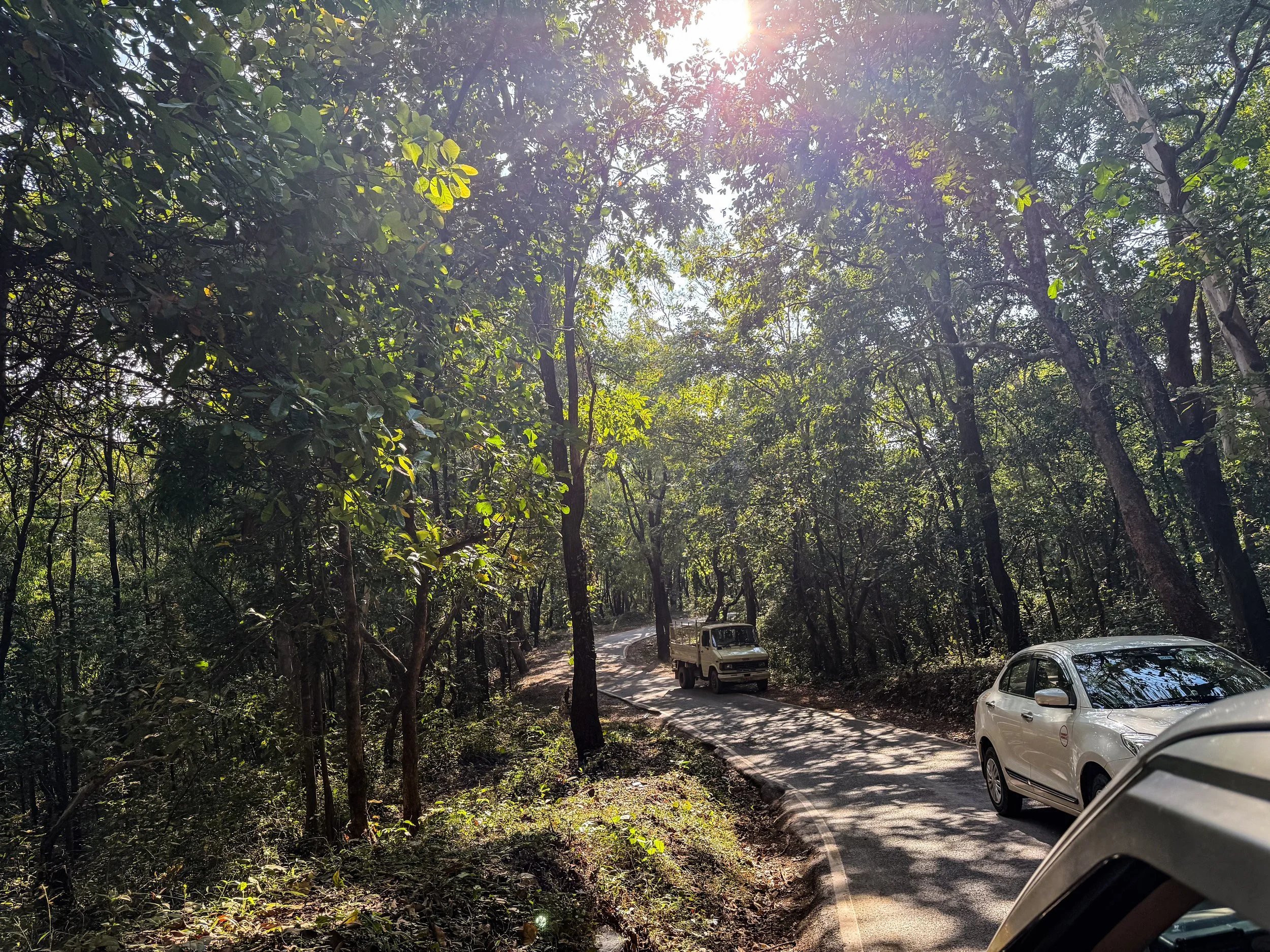
After some research, we hesitantly settled on a place called Agonda, and this would prove to be an AMAZING choice. The 1.5 hour cab ride from the airport down to our hotel was well worth the effort. A friend of mine in London who had spent months in Goa in the past warned me that I needed to hire a car in advance, so he gave me the WhatsApp number for the guy he’d used most recently. I texted him, but he lived too far away from Agonda to help us, so he referred me to other drivers via WhatsApp until I found somebody who could take care of us. I’d initially envisioned hiring them for the entire trip, but in the end, we only ended up getting a ride from the airport. After that, it was all scooters! So I’m not sure that my social engineering beforehand was necessary (there were plenty of taxis lined up outside the airport, and one of them probably would have agreed to drive us all the way to Agonda) but I choose to believe that it saved me some small amount of money.
So, let’s skip over the 1.5 hour drive rocketing through winding, mountainous roads down the coast and check out Agonda Beach!
Agonda Beach
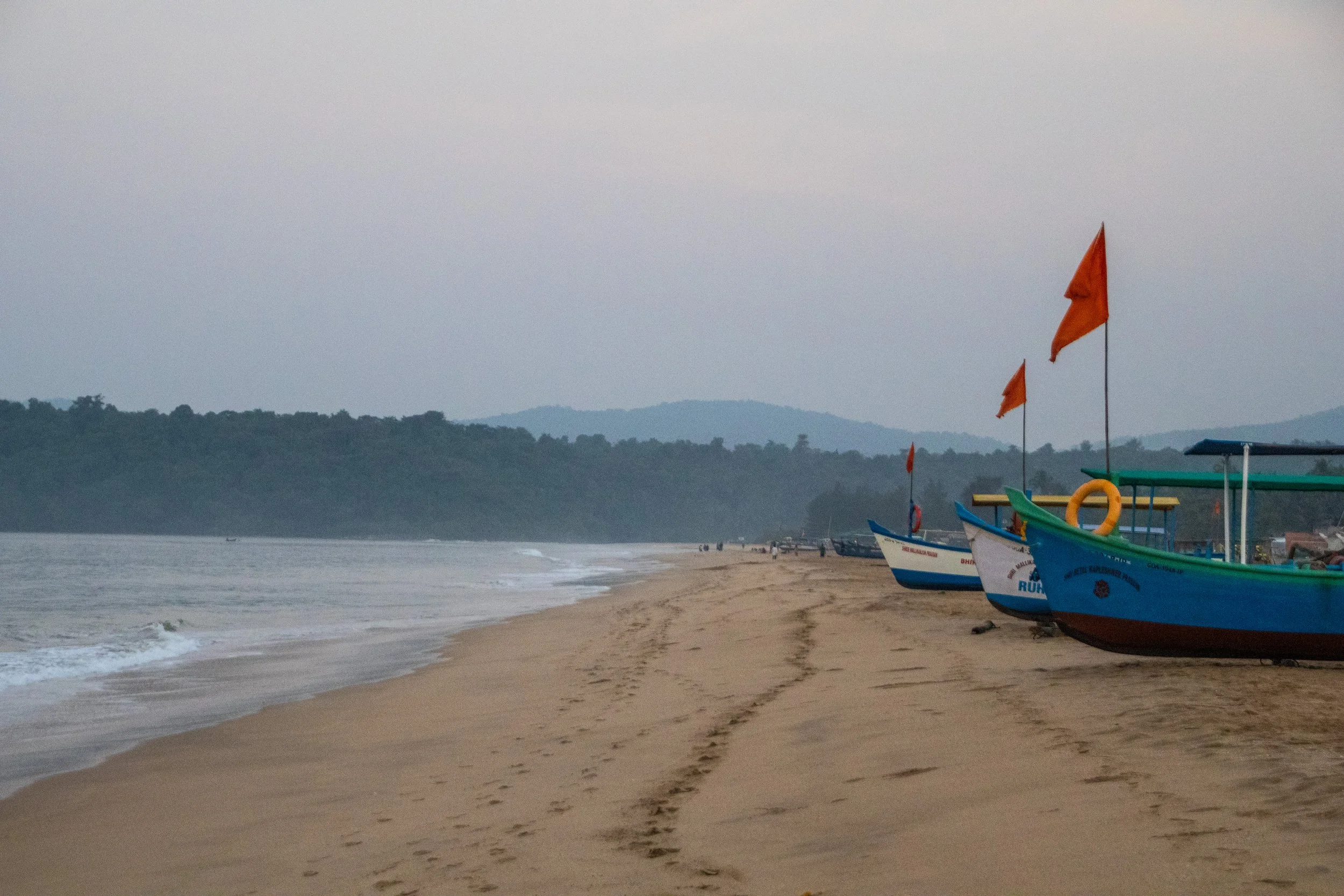
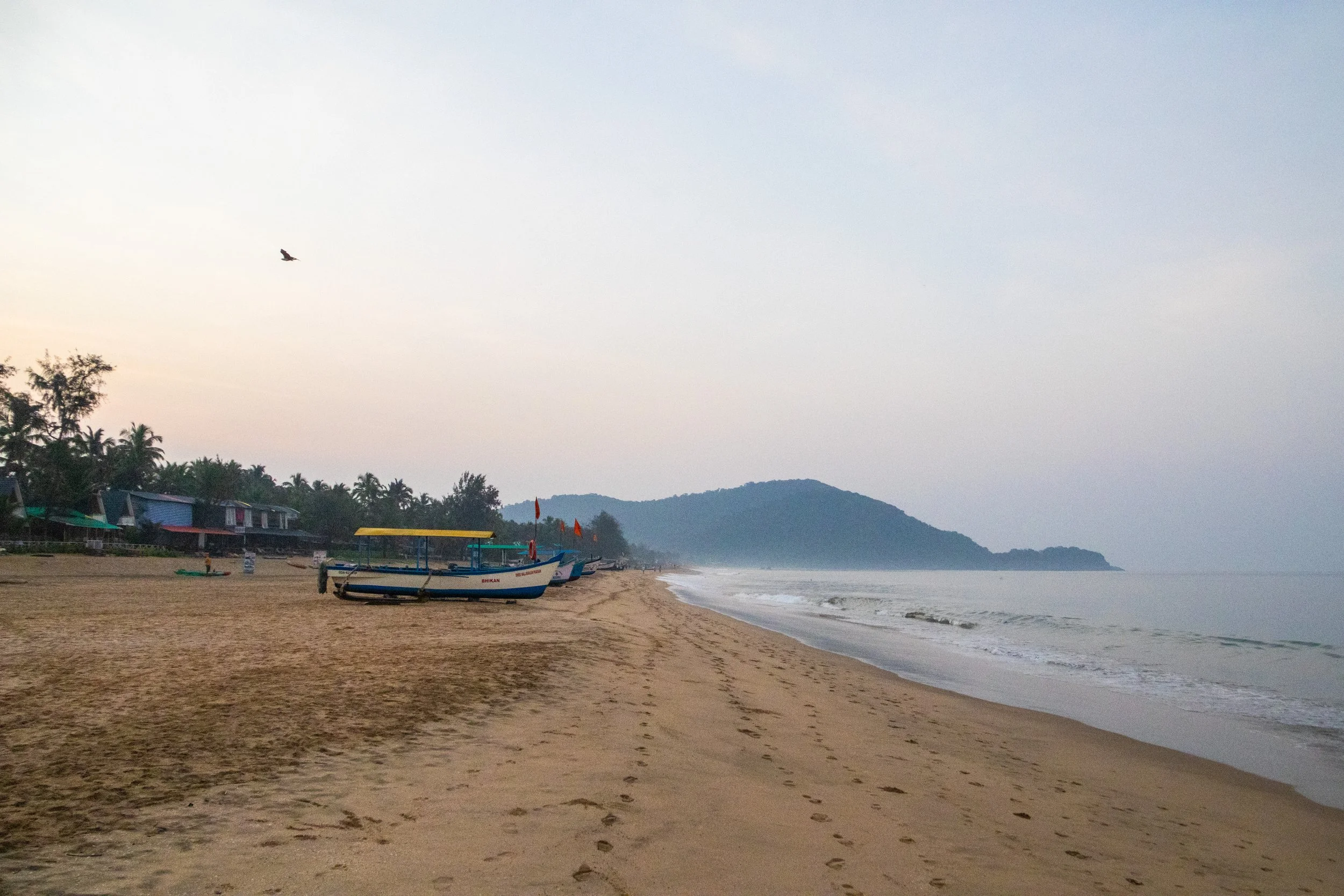
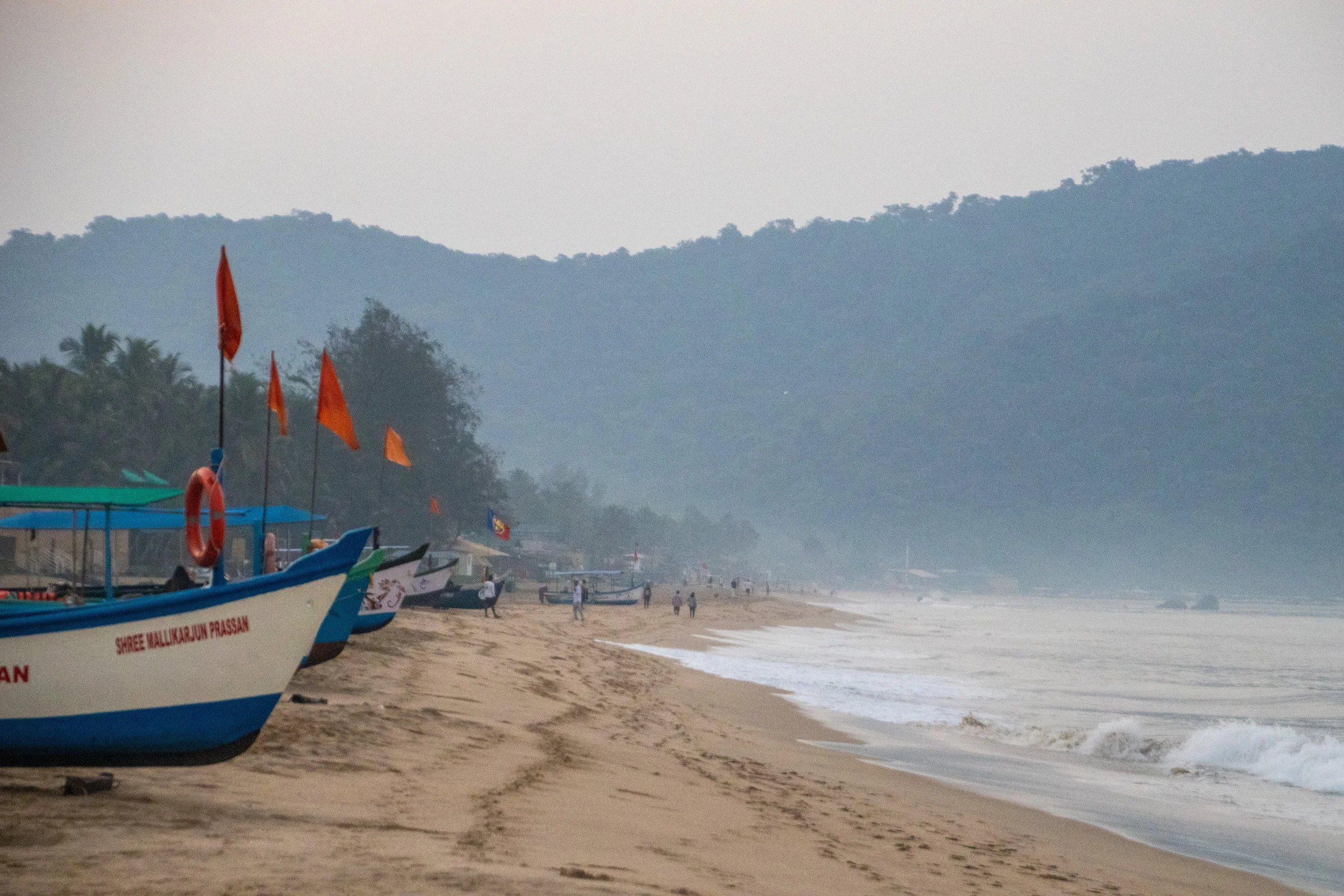
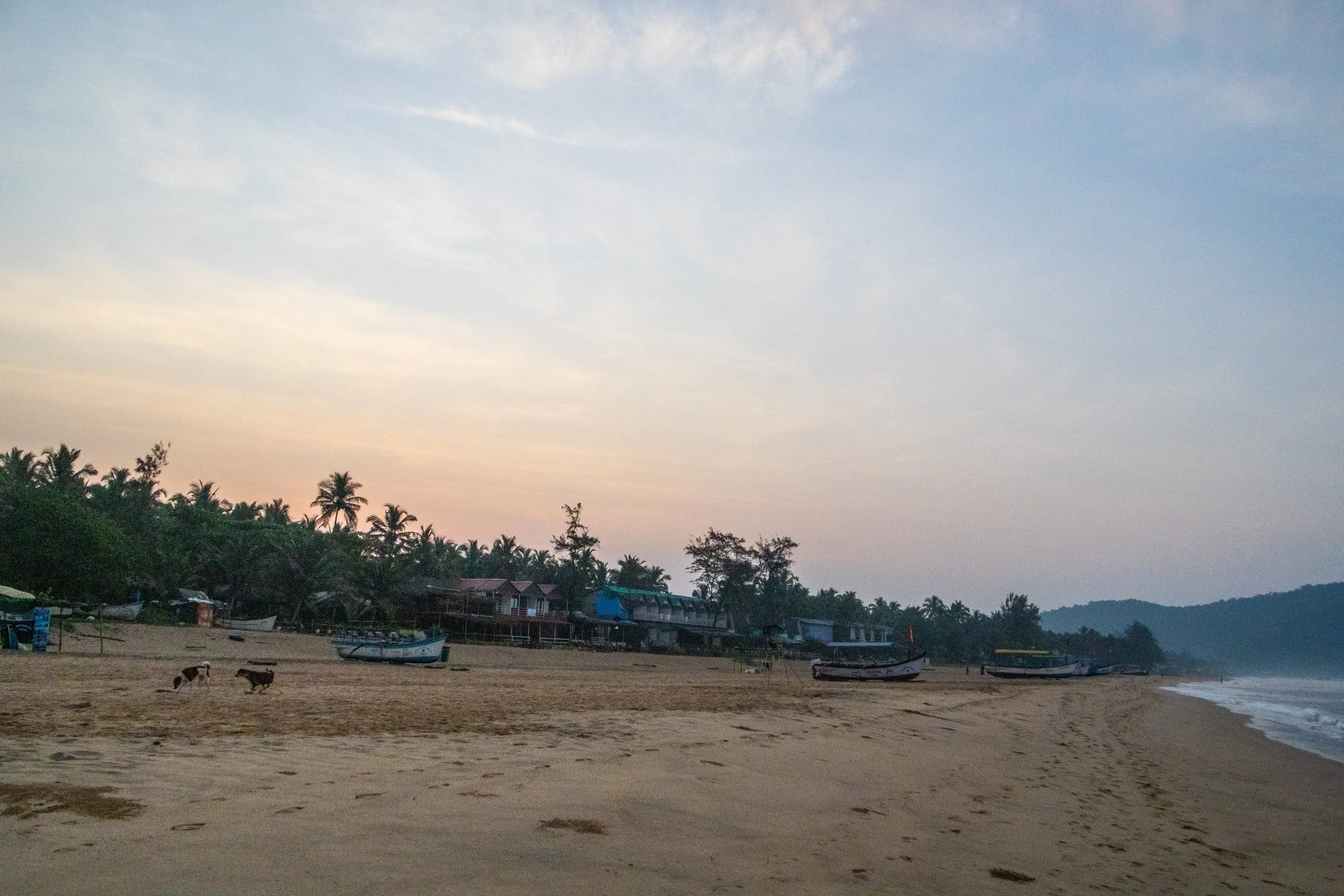
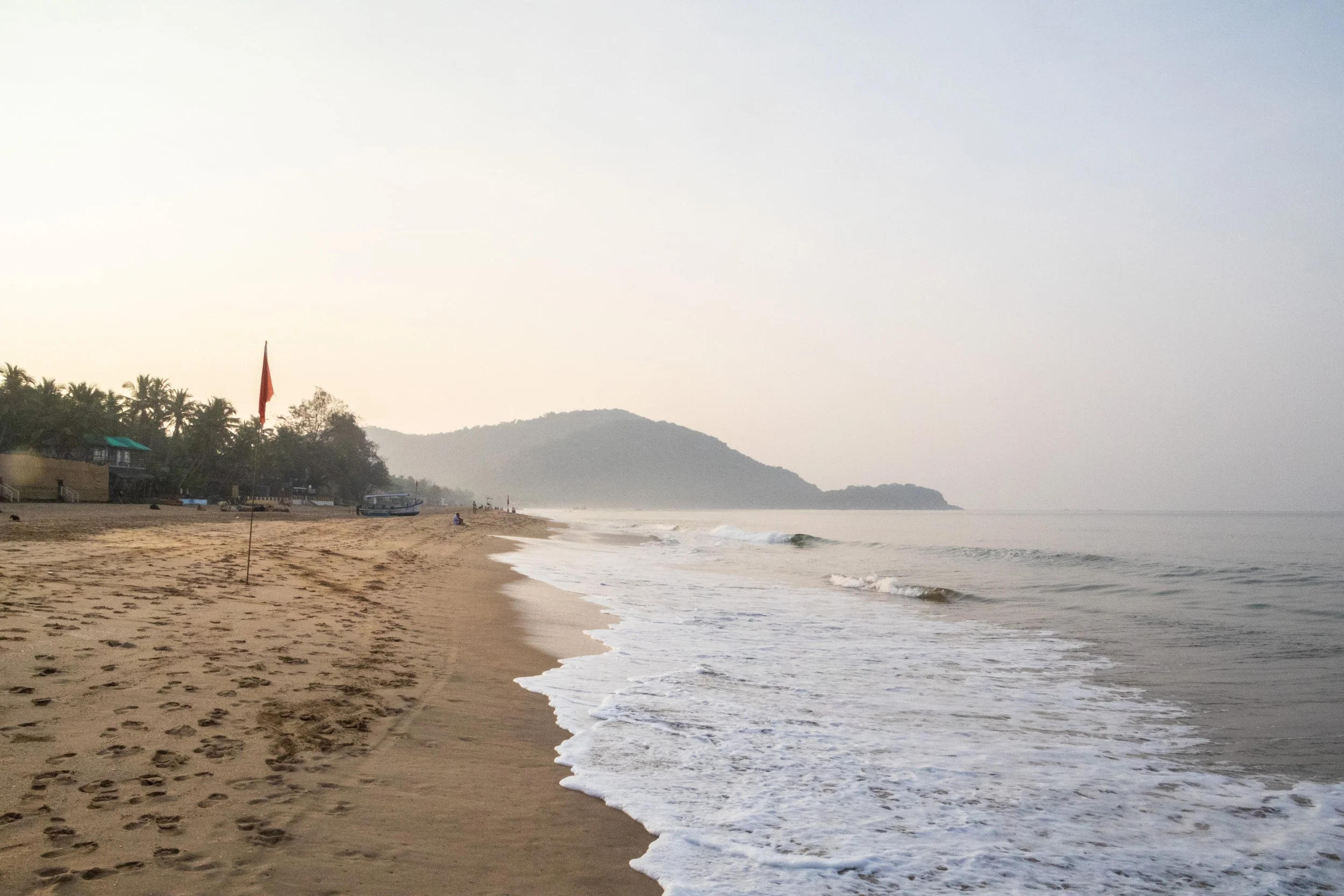
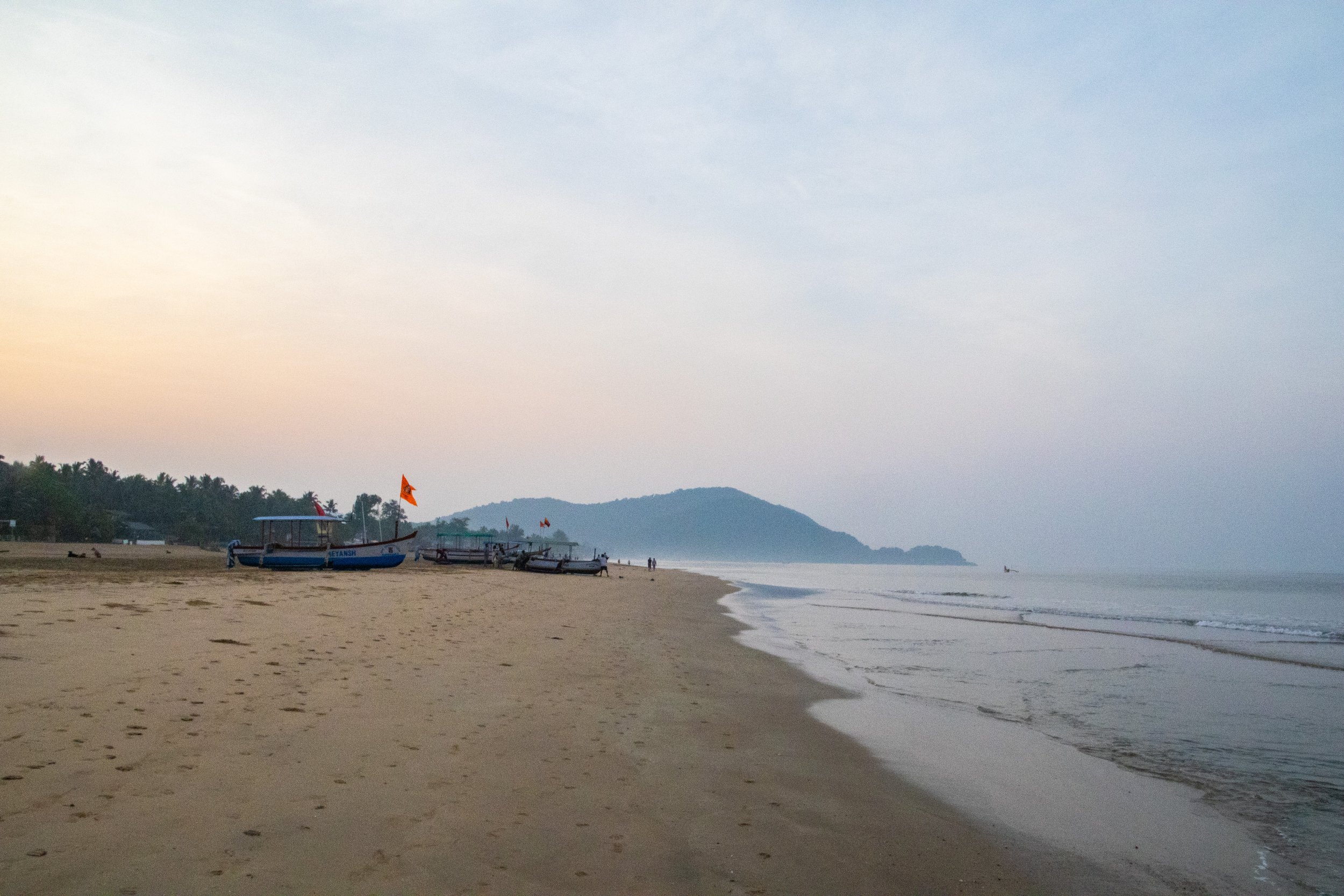
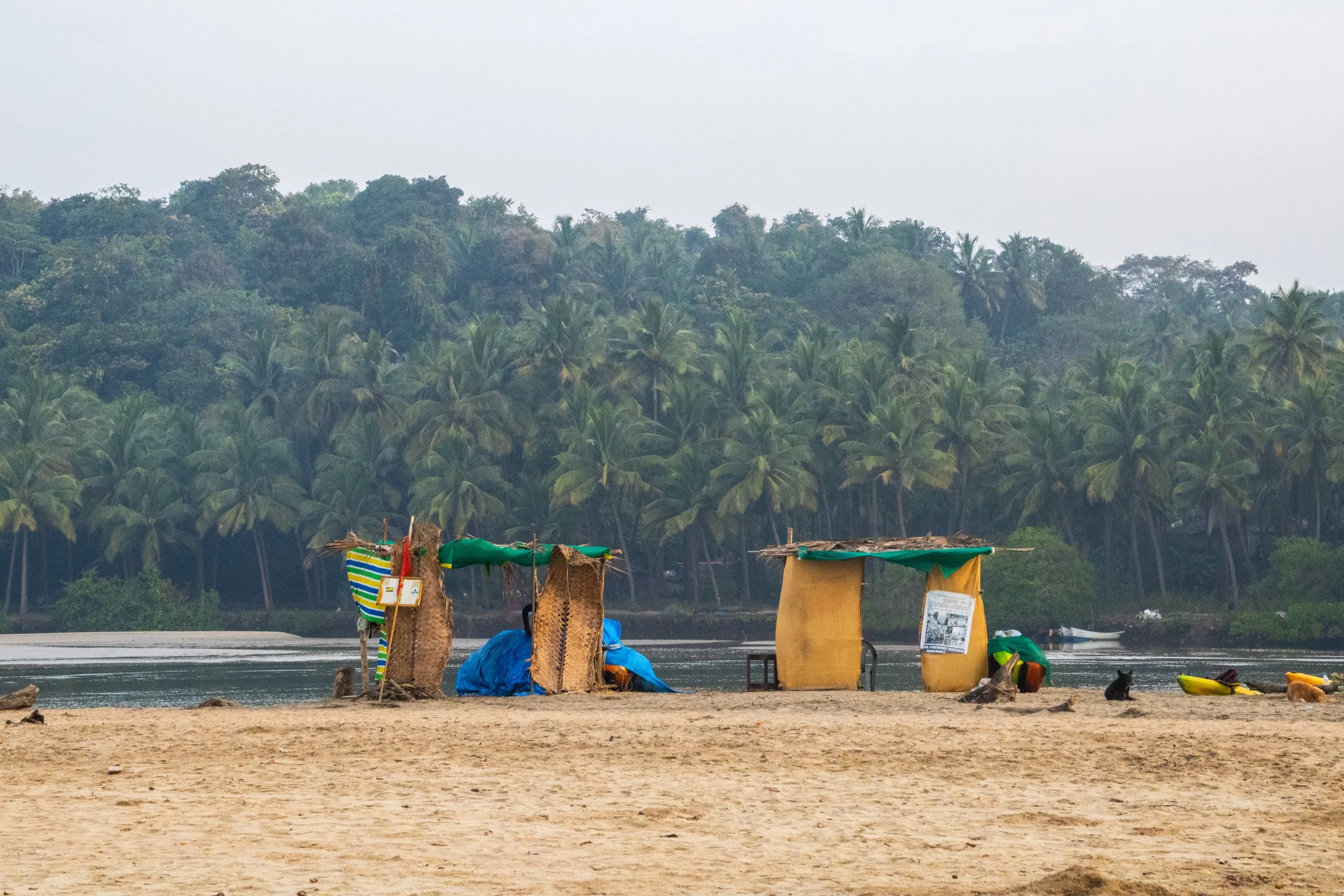
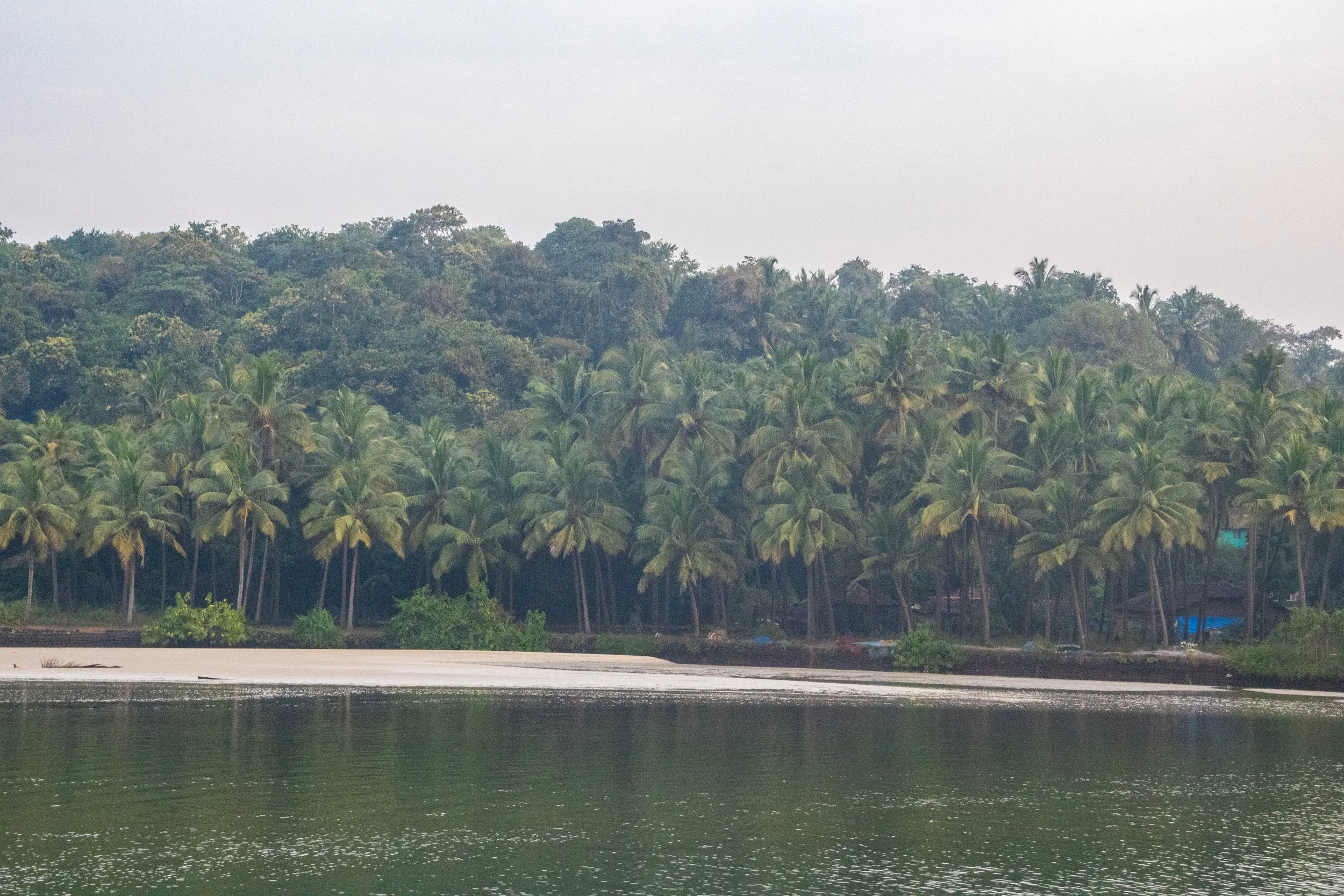
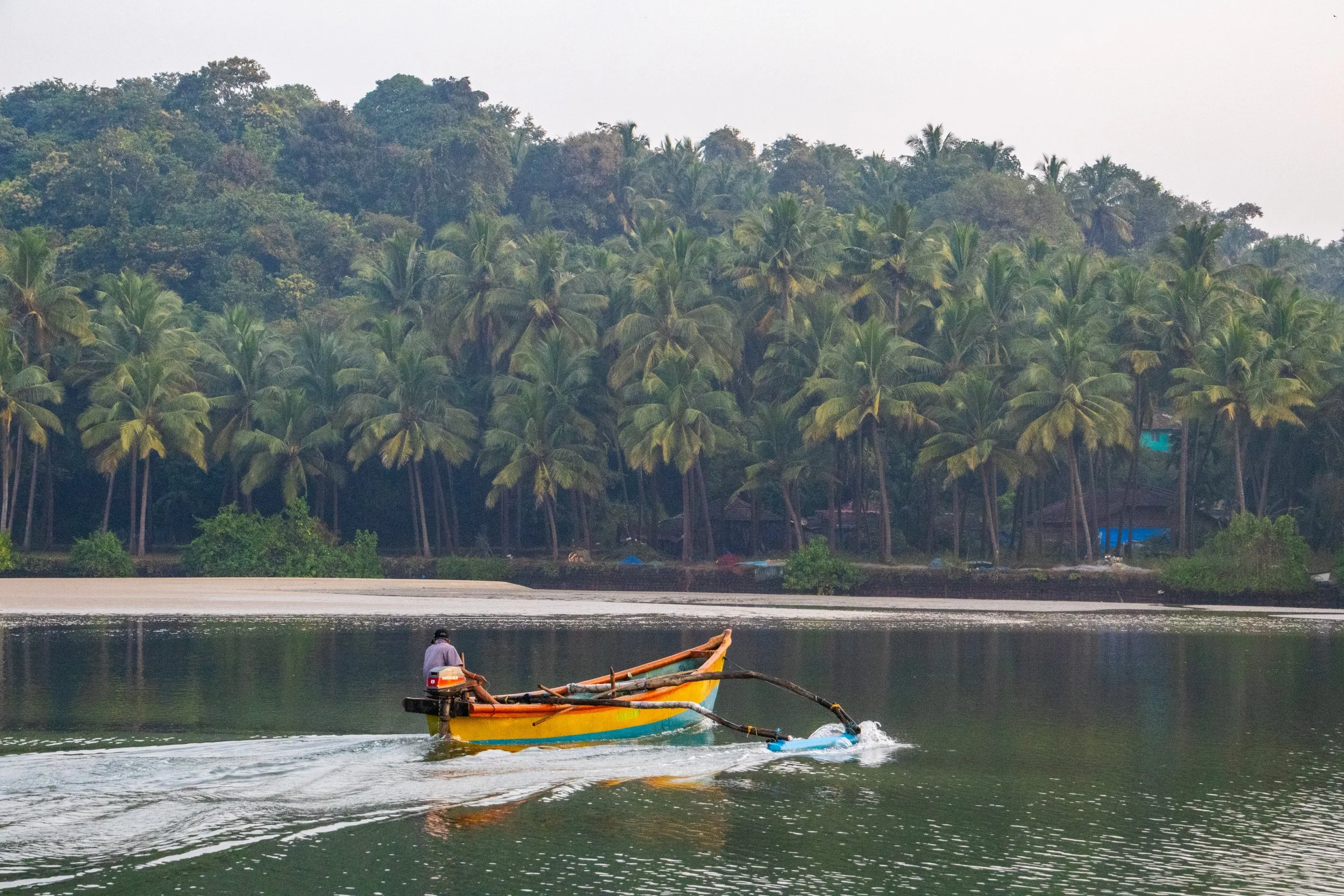
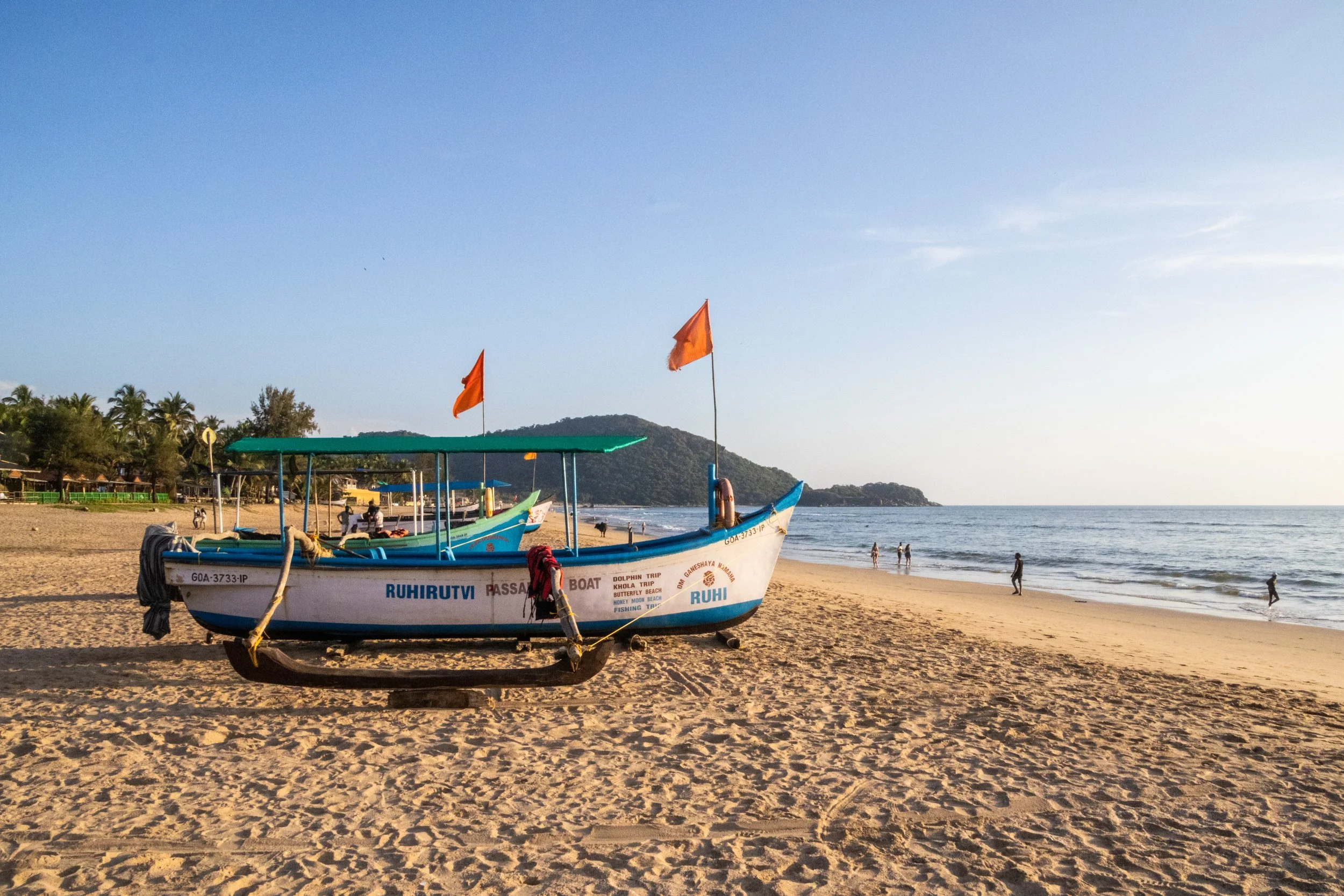
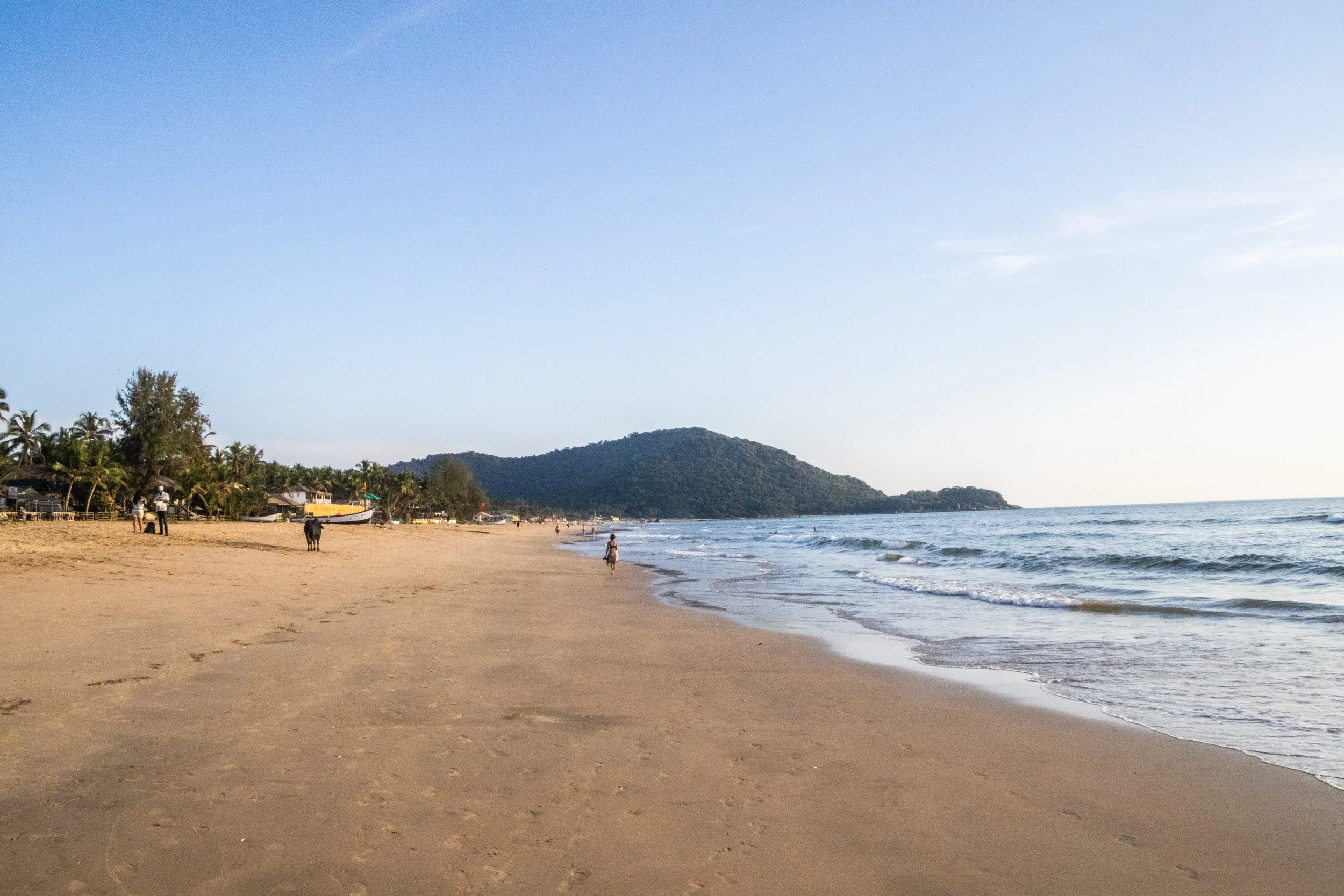
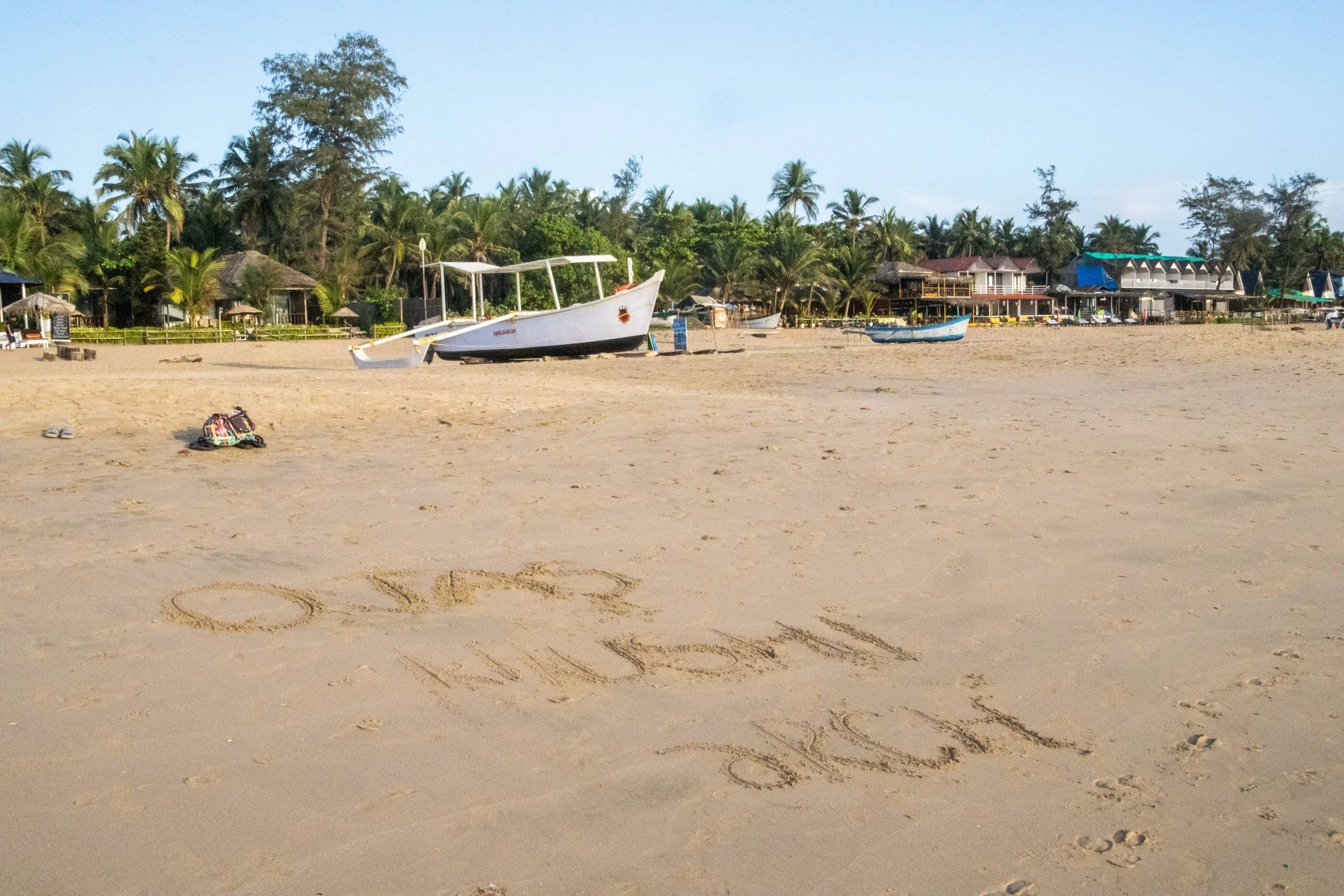
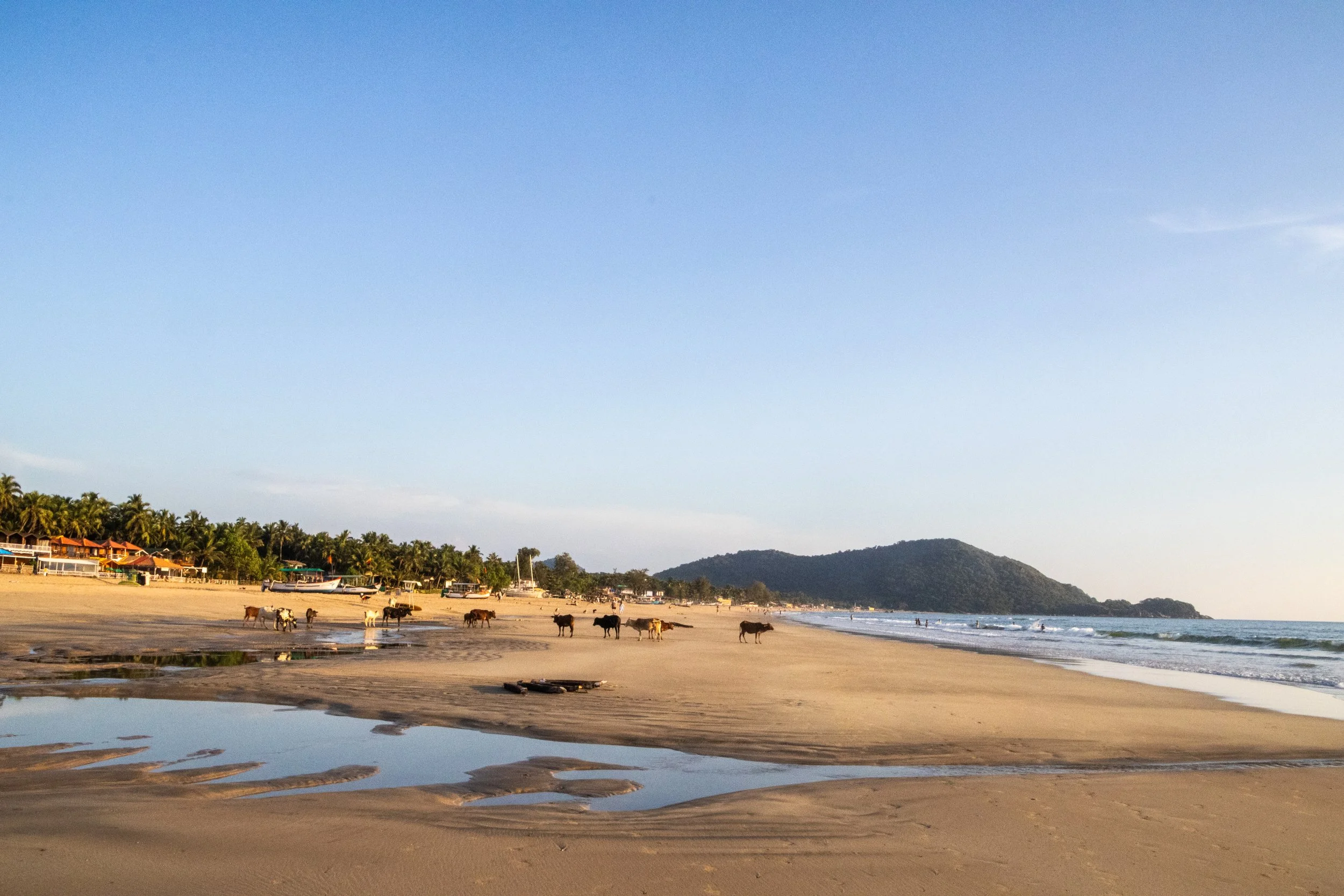
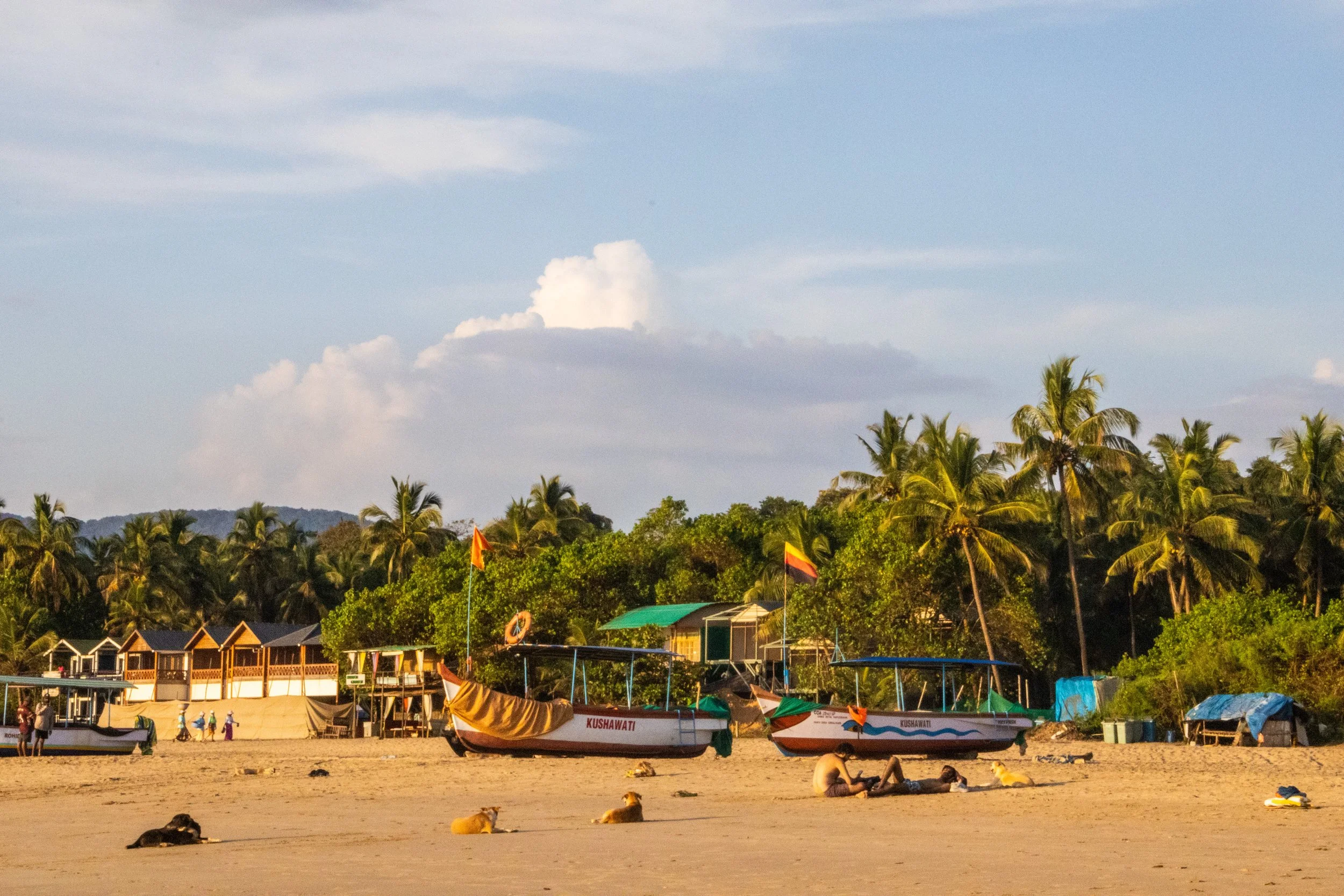
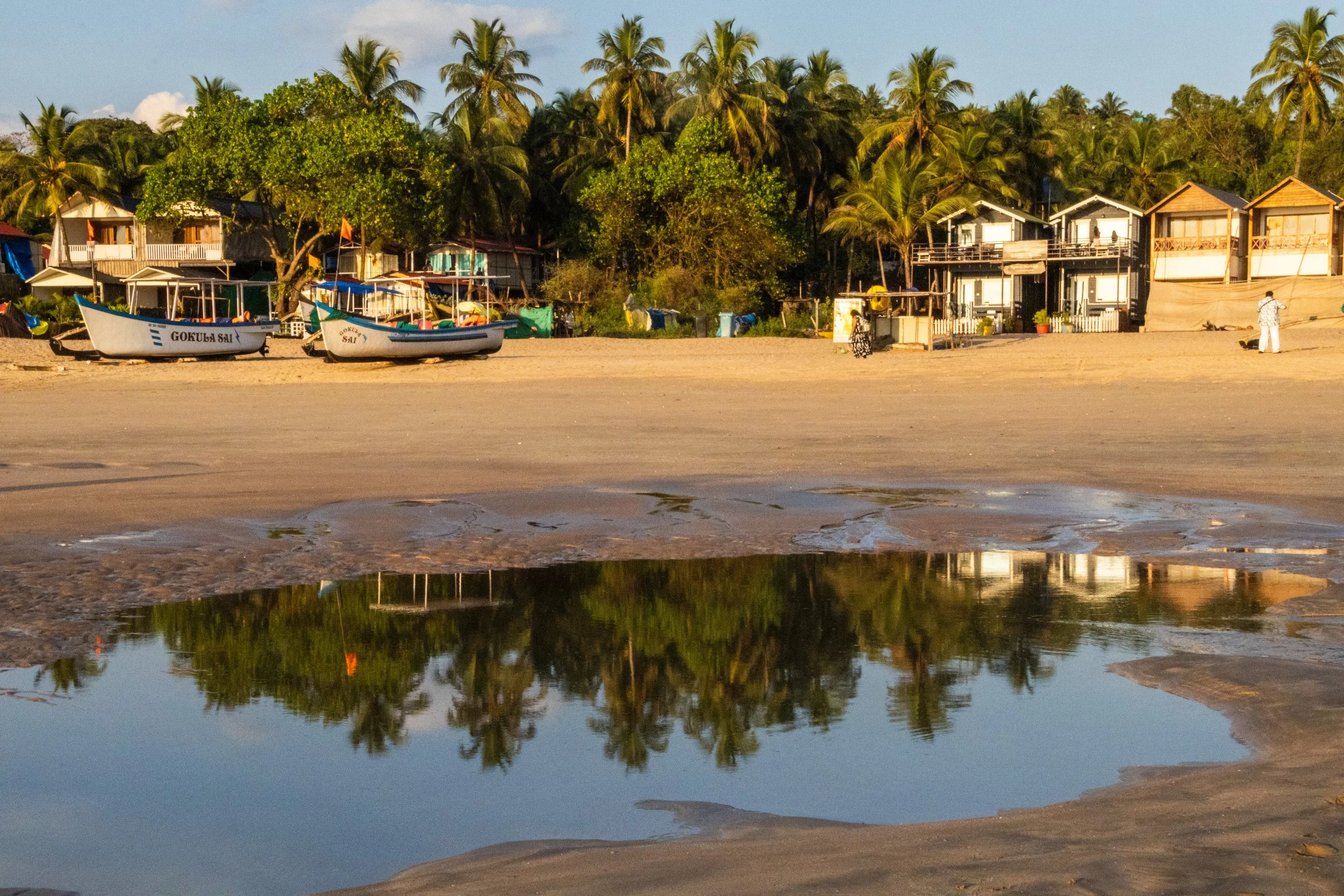
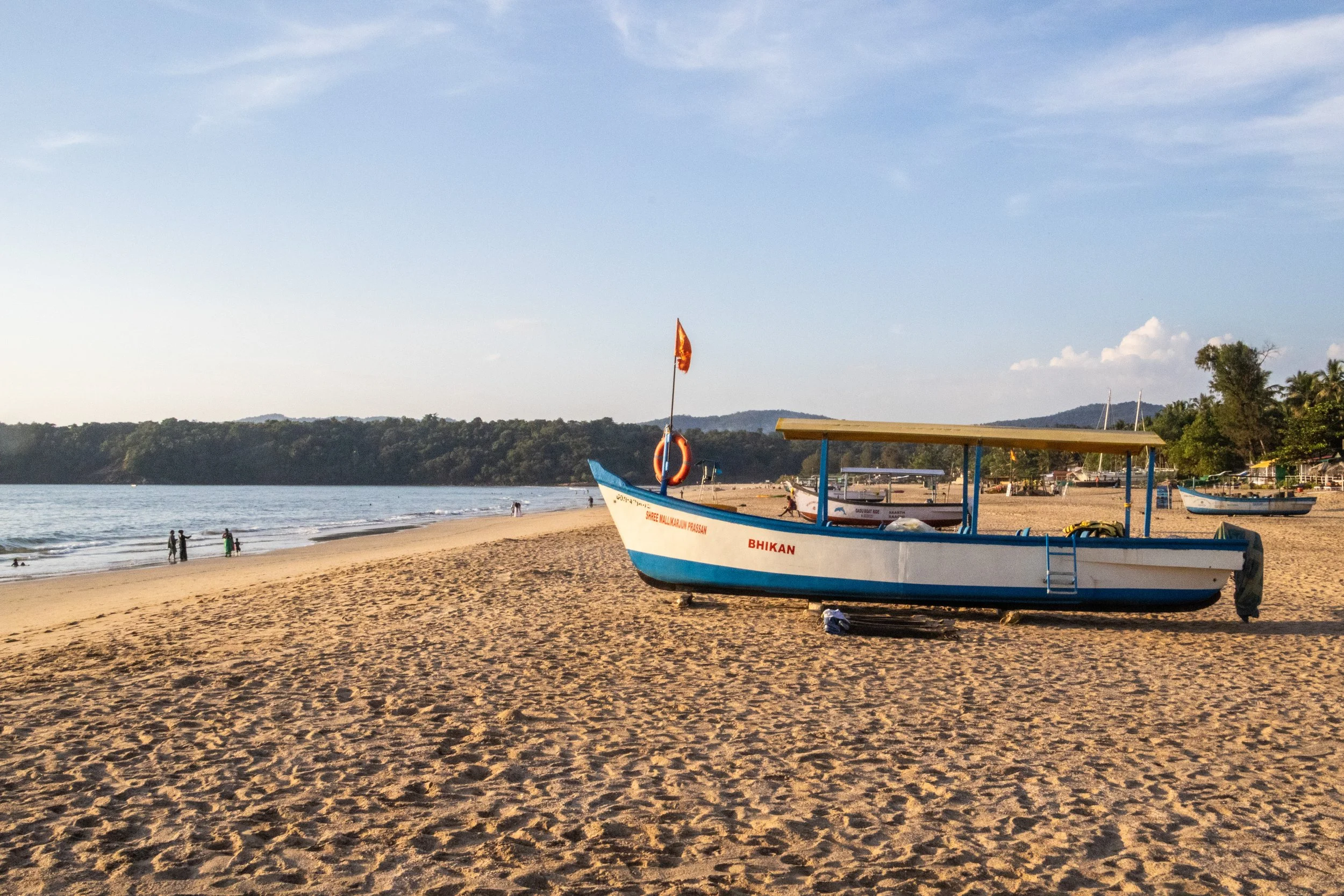
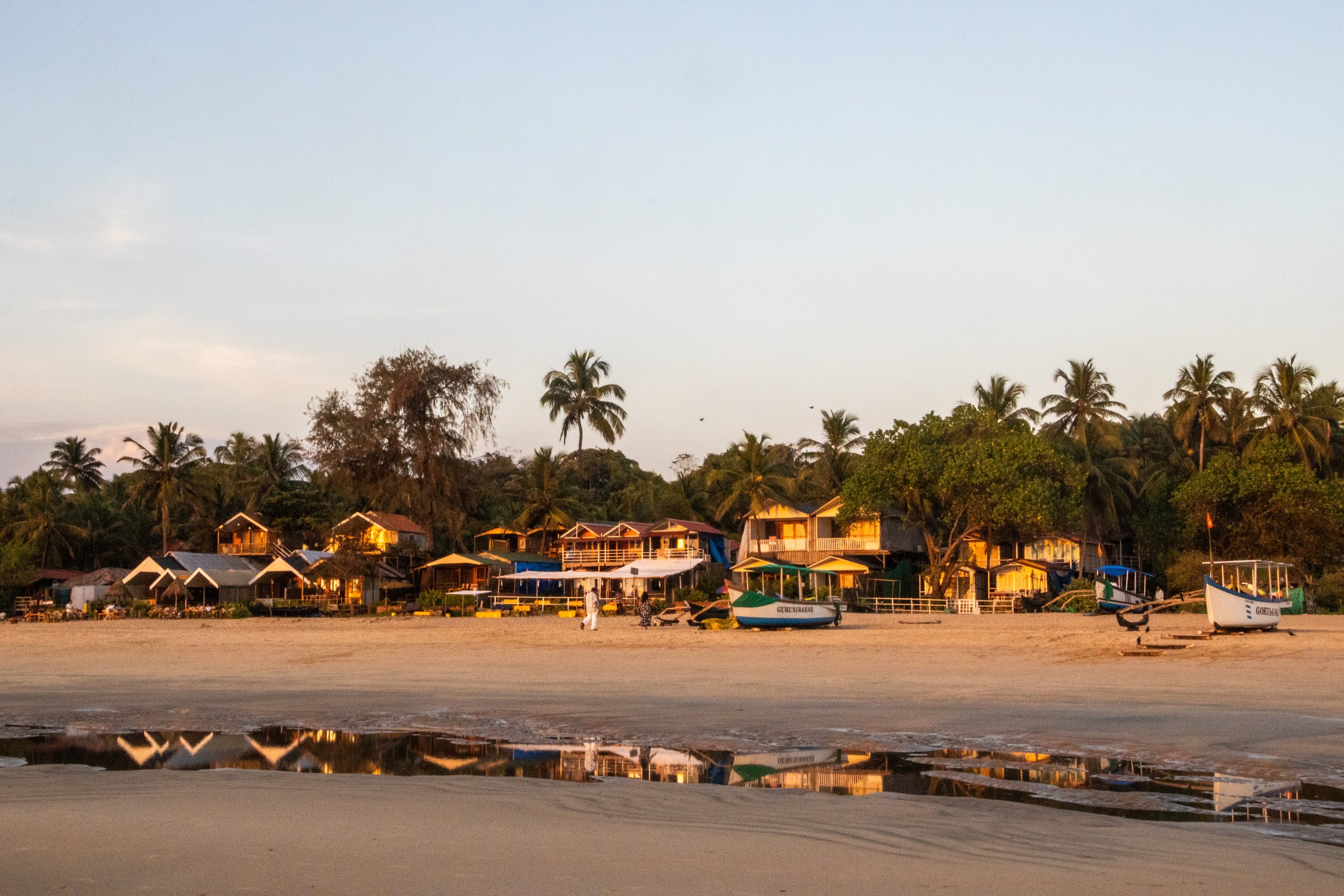
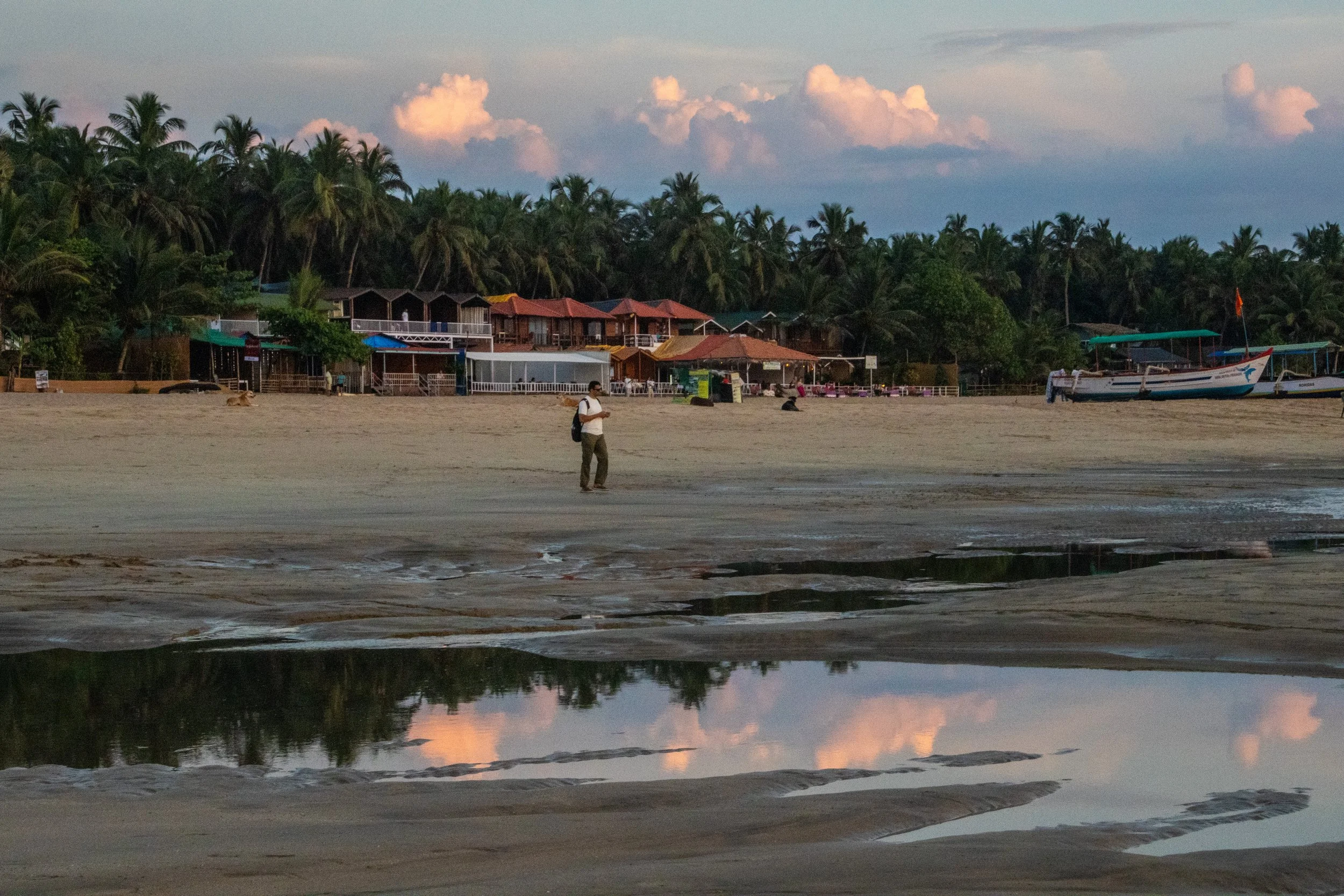
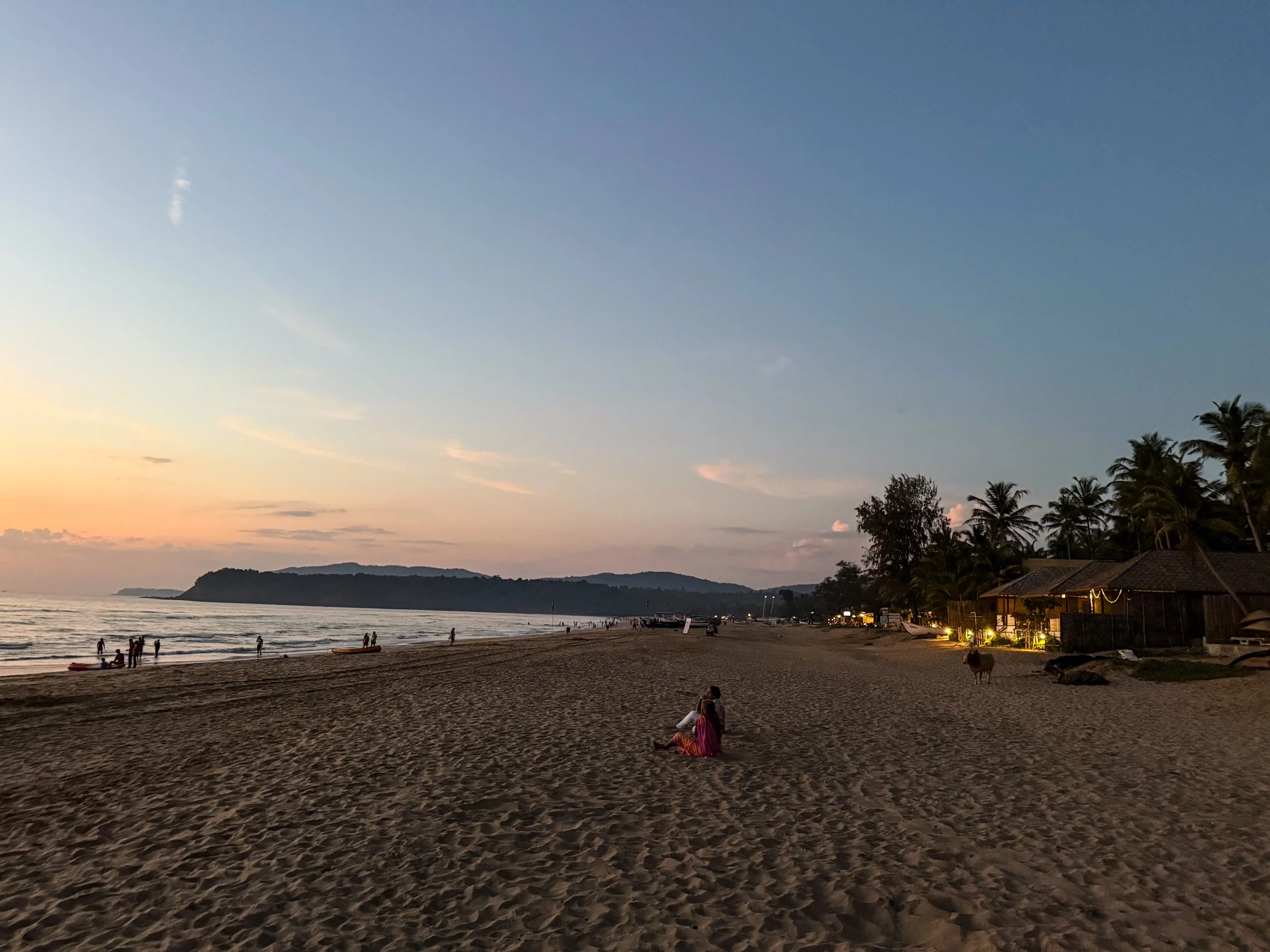
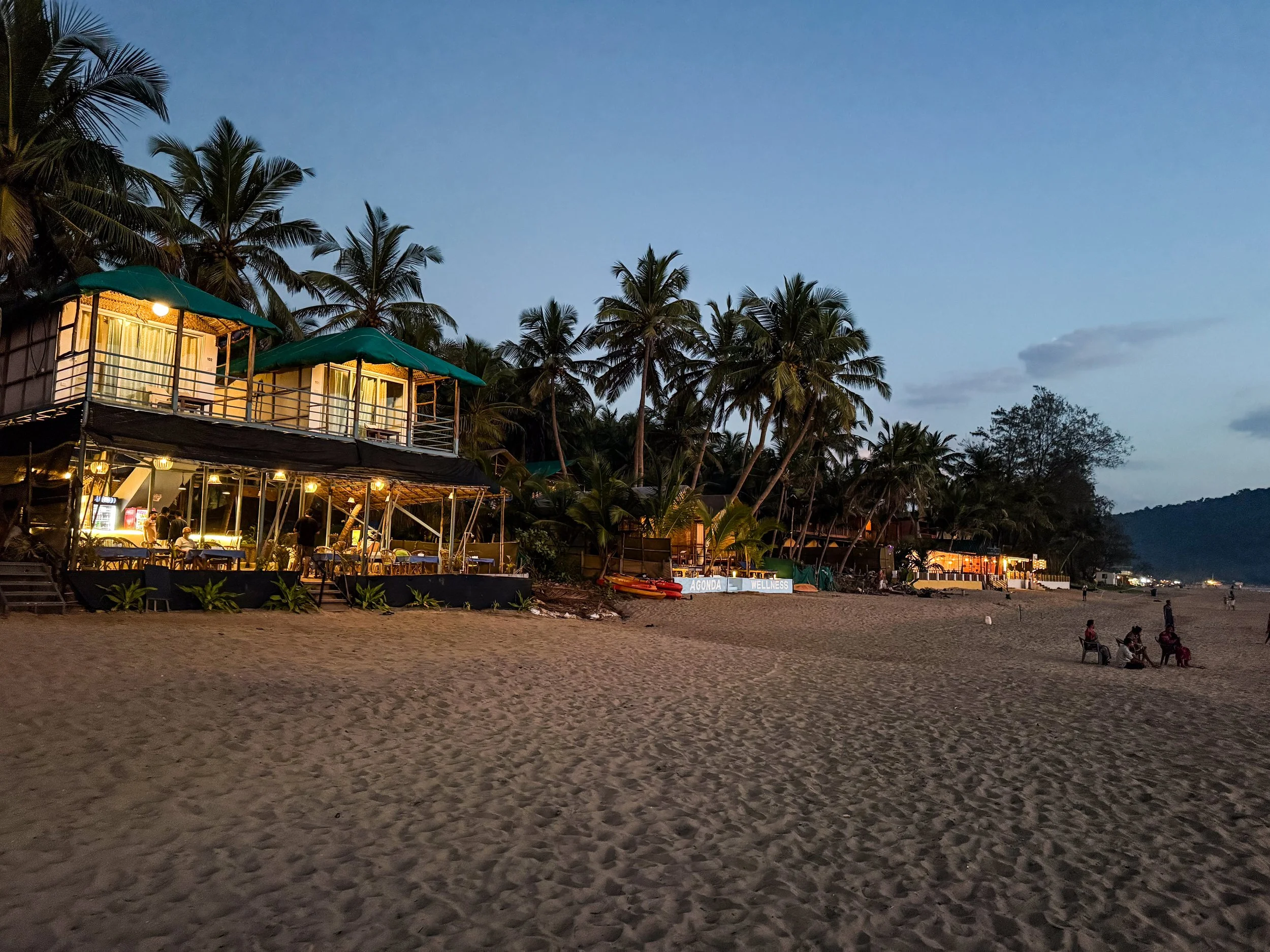
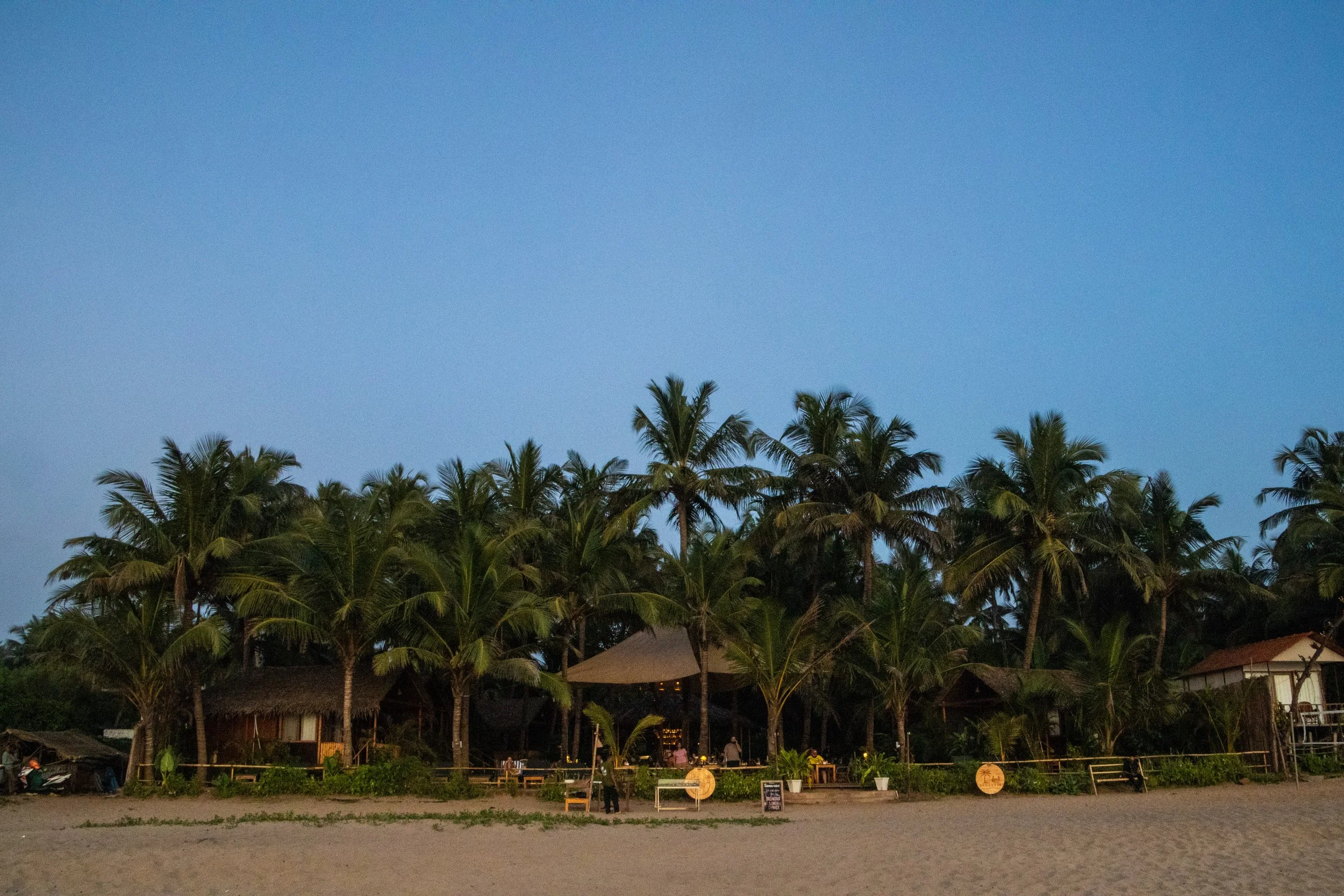
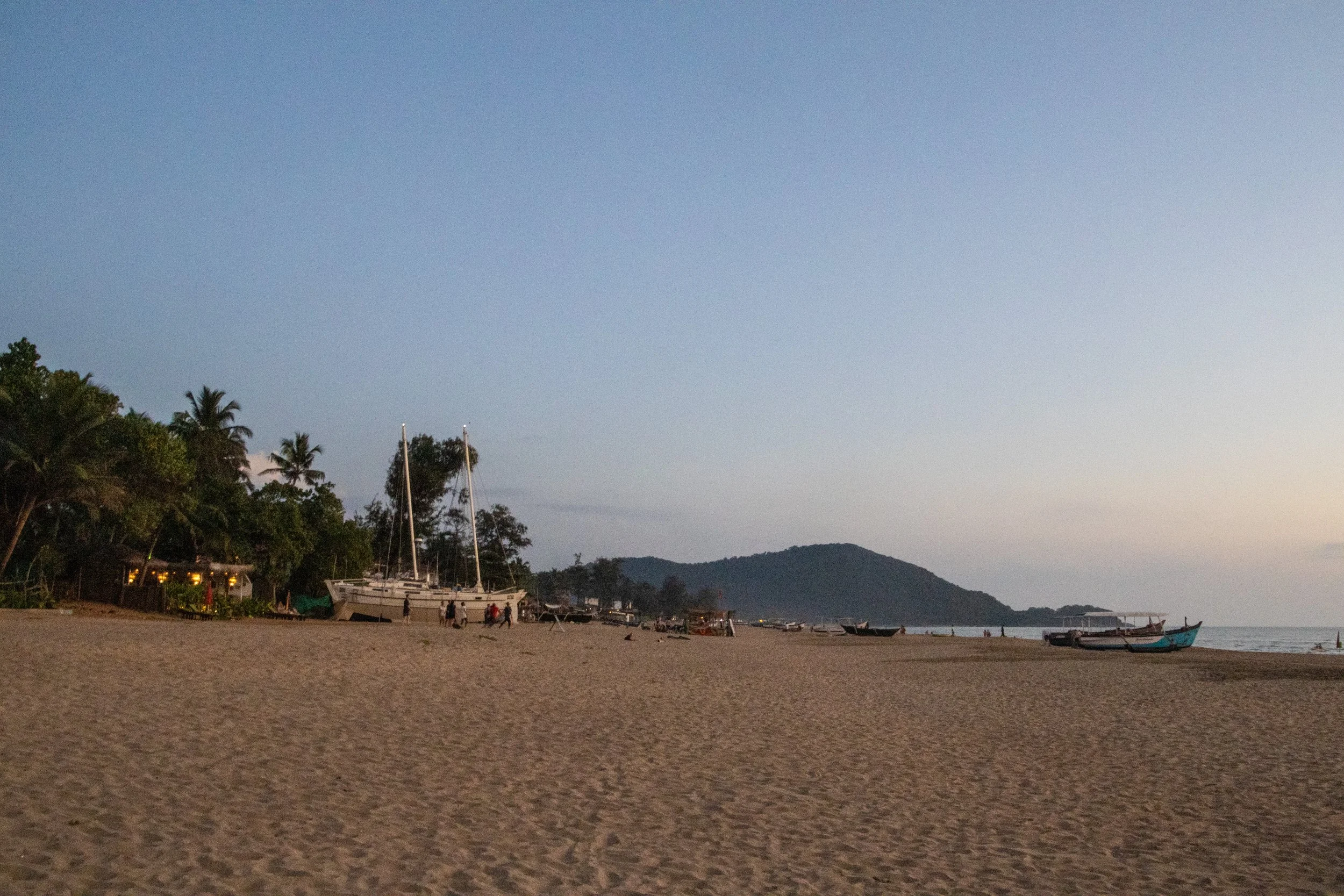
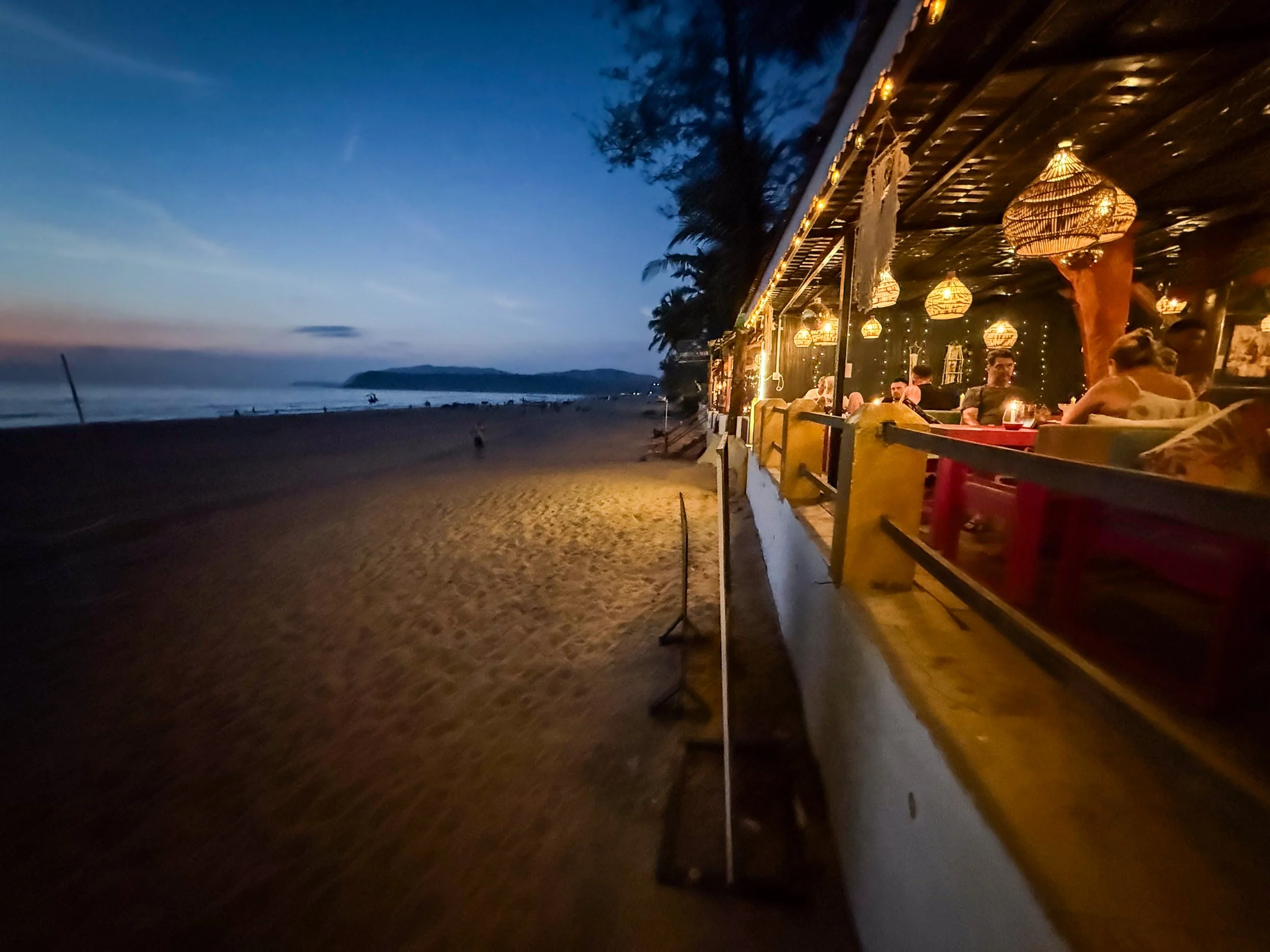
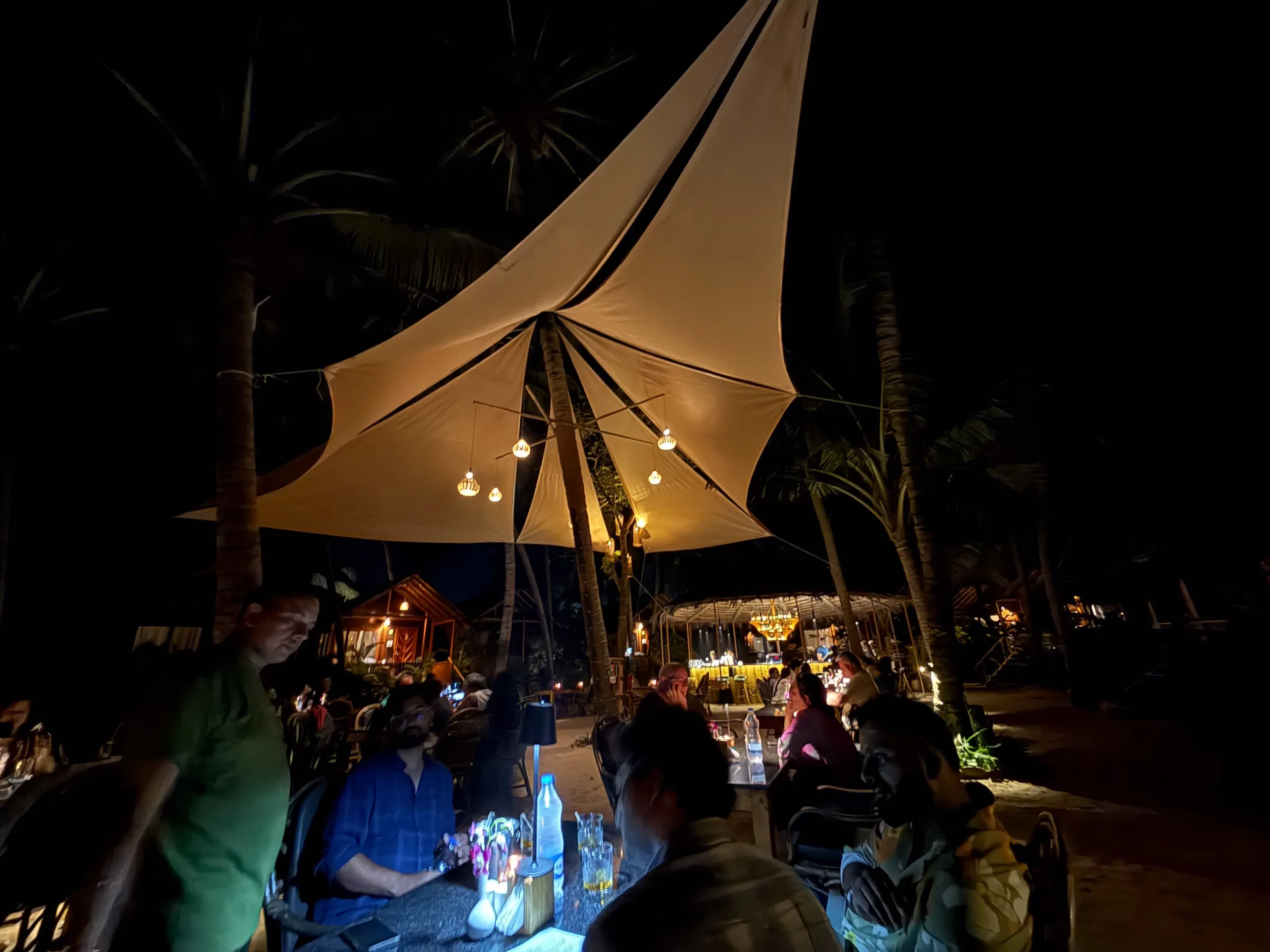
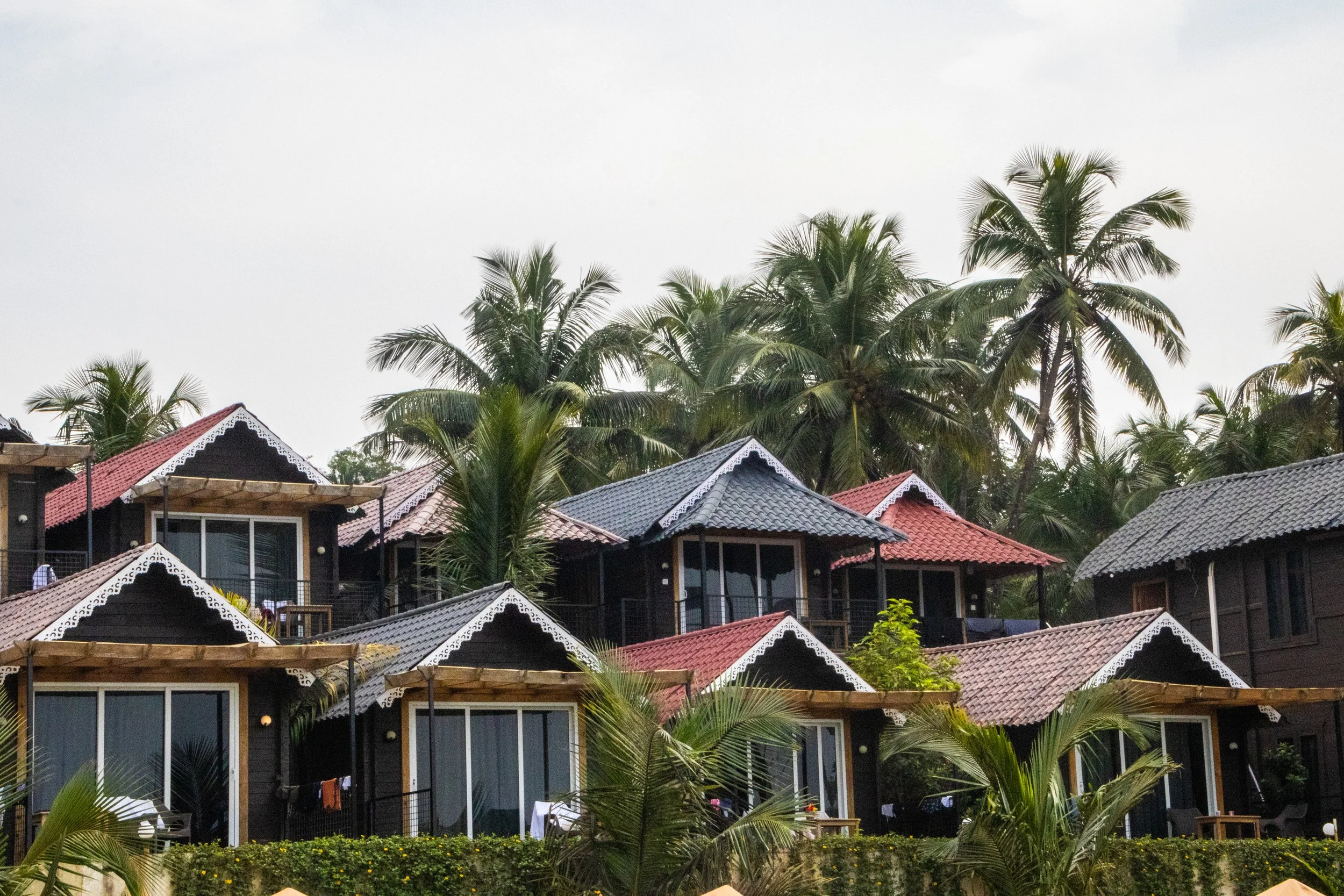
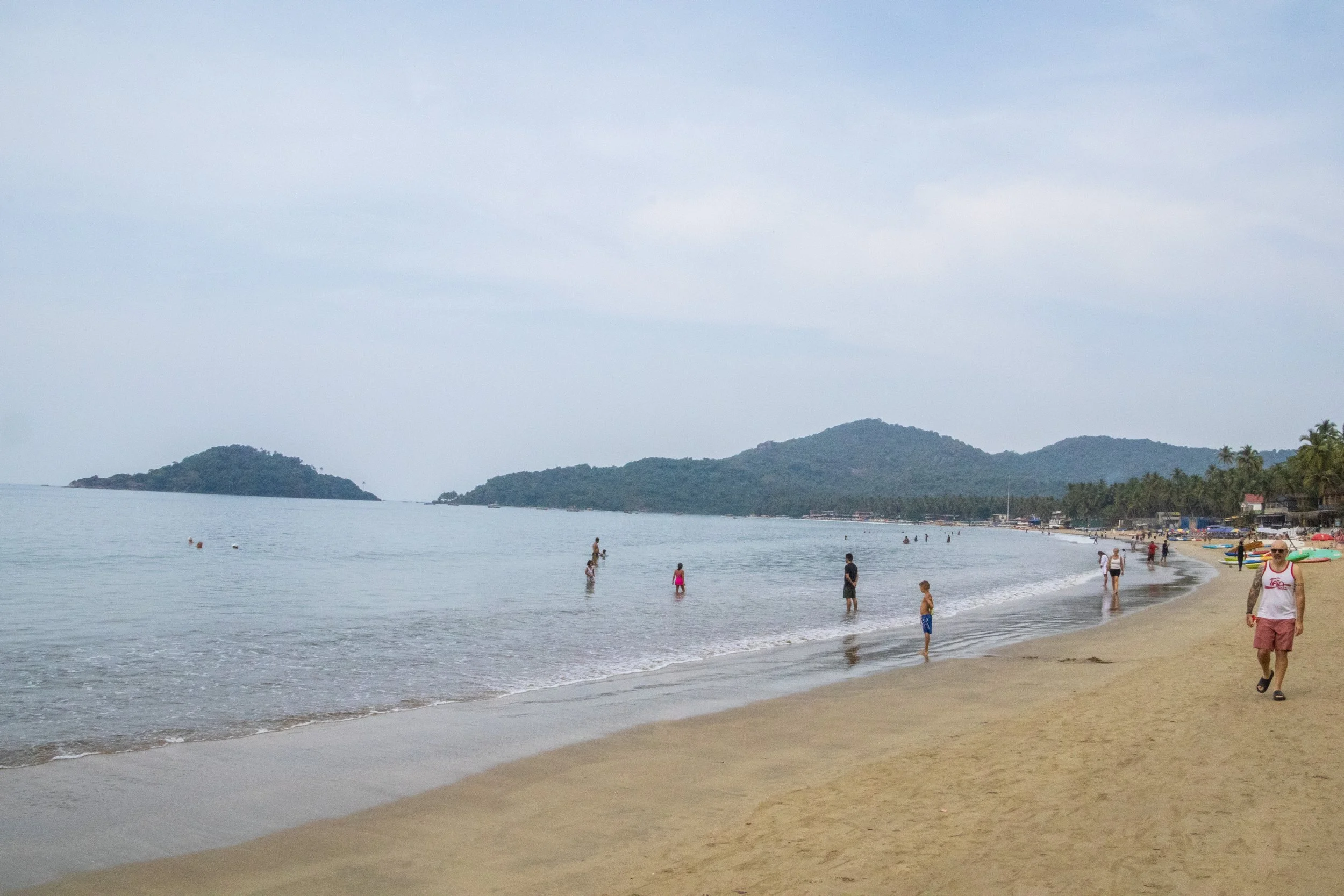
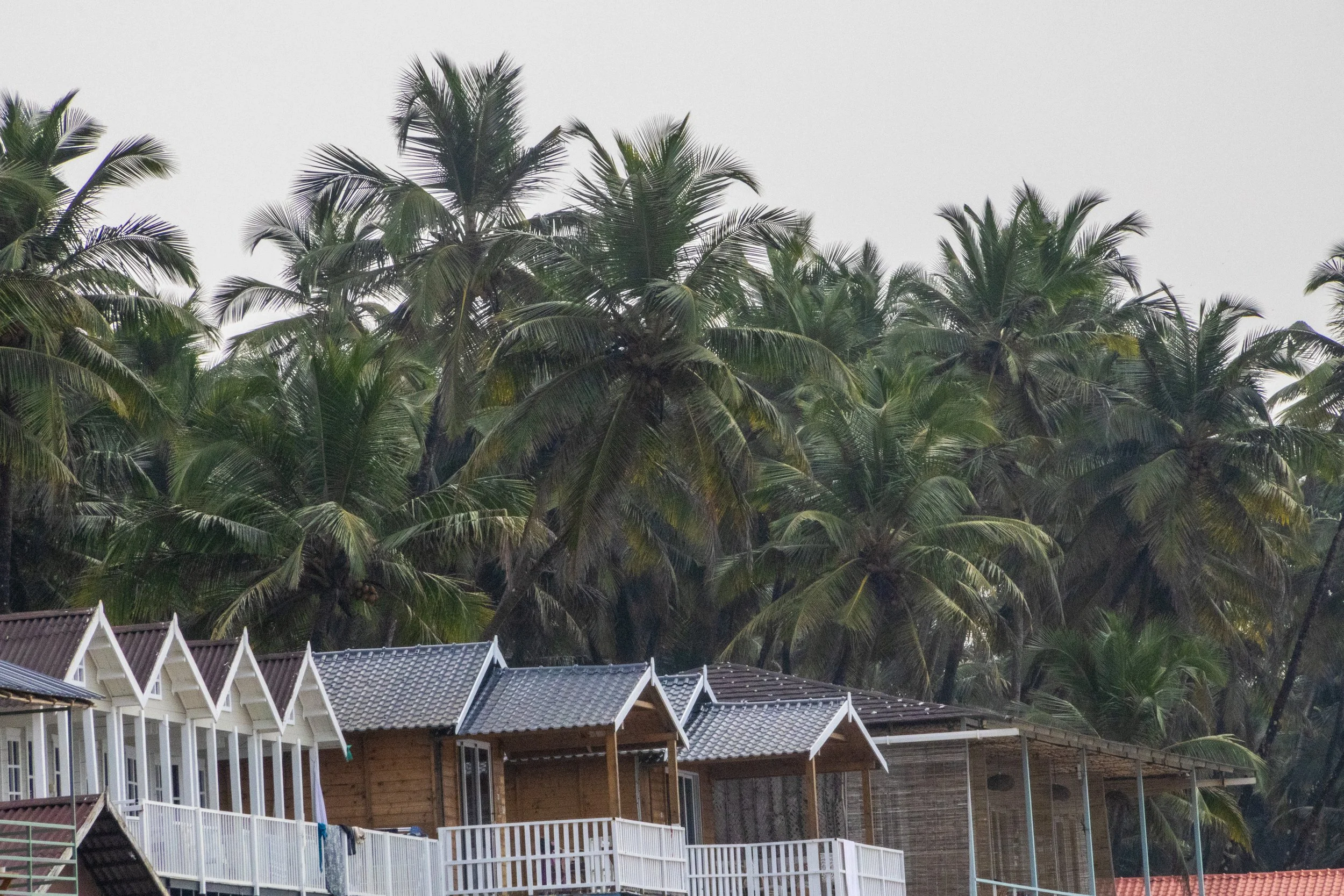
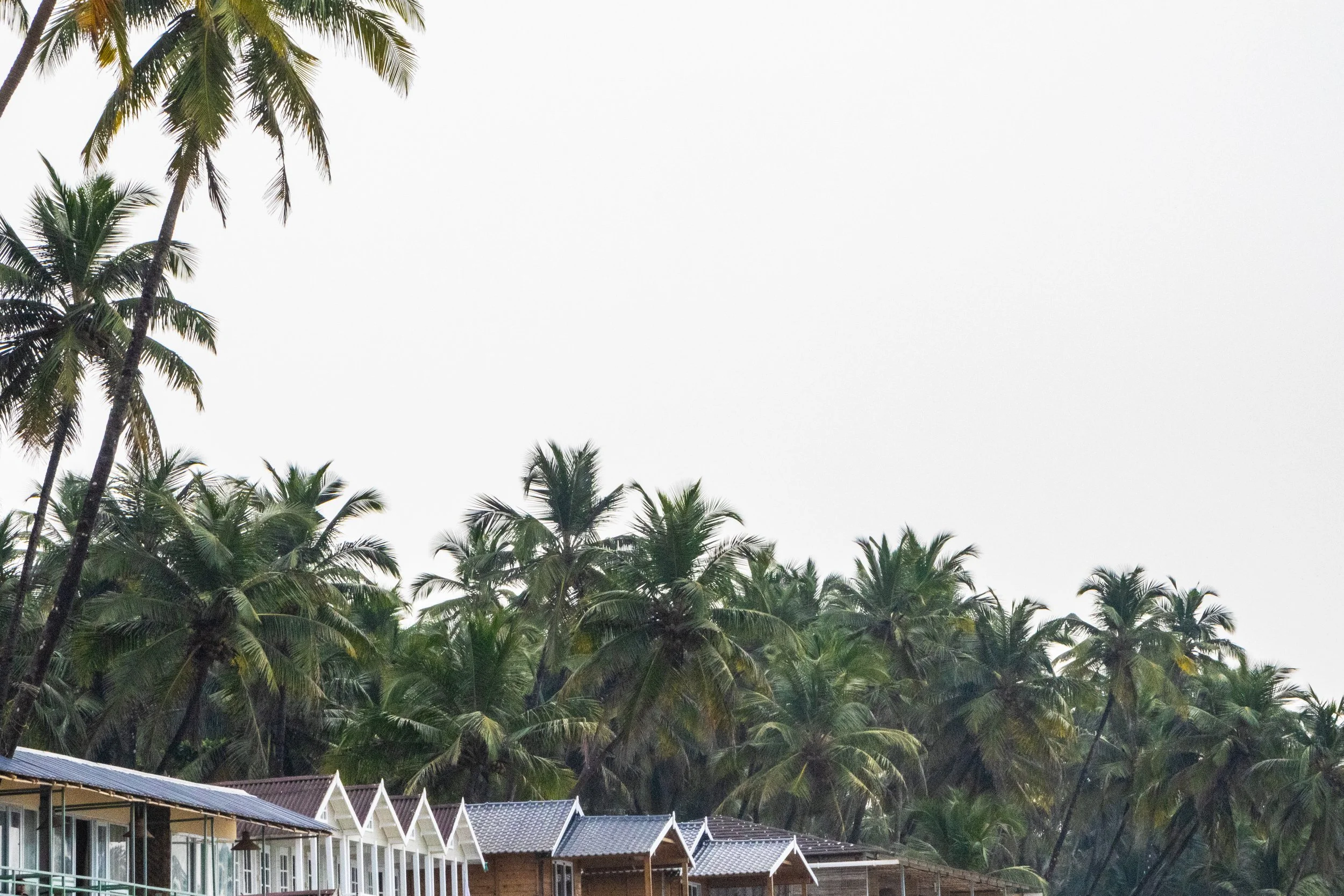
Agonda is one of the quietest beaches in all of Goa, and (in my opinion) it’s damn-near perfect. It’s ~3 kilometers long, wide, flat, and relatively uncrowded even during peak season. There are no big resorts or even super visible construction projects. Instead, the town largely consists of small buildings (think beach huts) that are almost never more than 2 storeys high and mostly blend into the endless wall of palm trees. There is no nightlife. This is where you come to unplug. The parts of the town that cater to foreigners include yoga studios, ayurvedic massage centers, meditation groups, in addition to (of course) restaurants and quiet trinket shops. The internet here can be spotty but it’s workable. After Delhi, it’s just what the doctor ordered.
AGONDA Sunrise
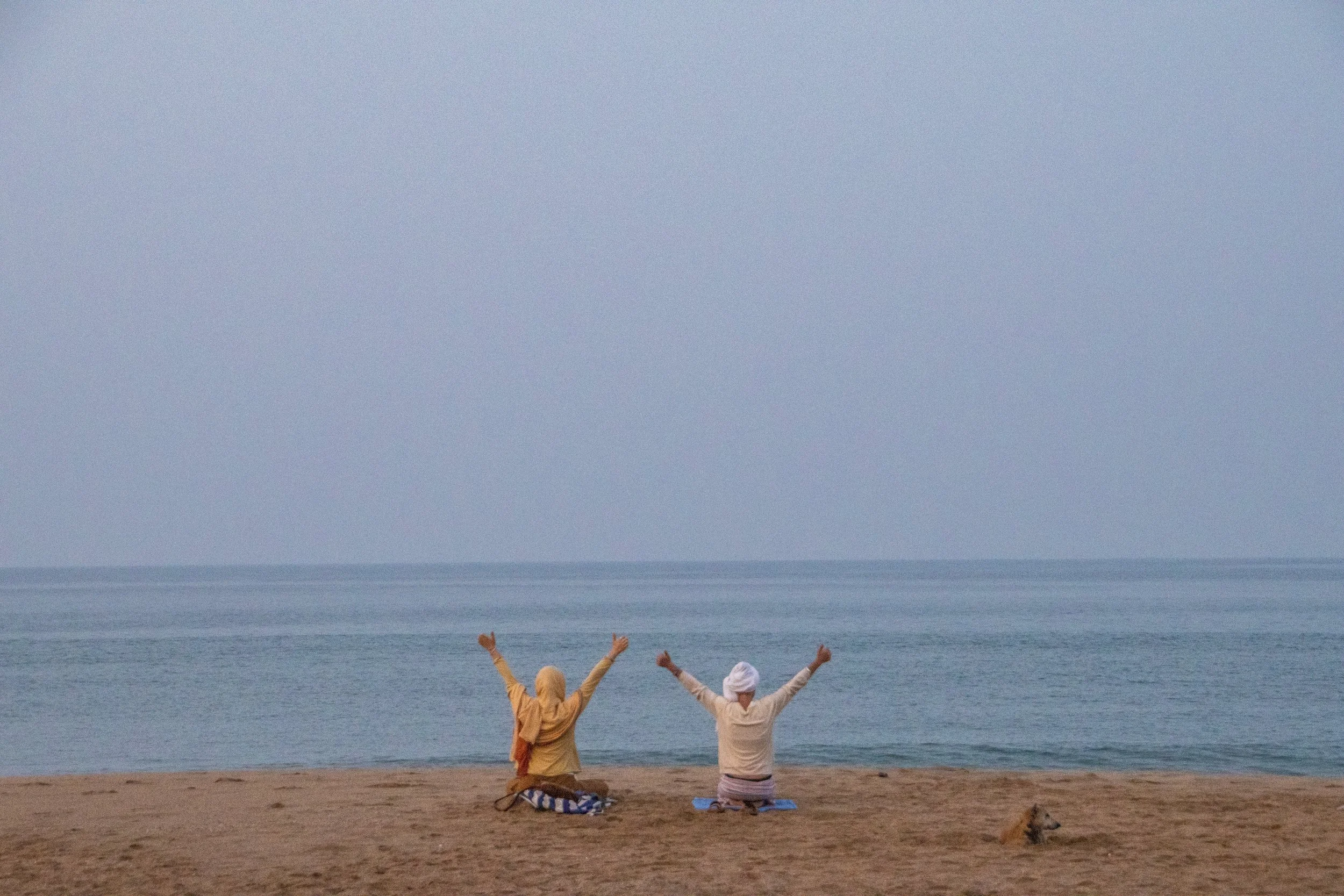
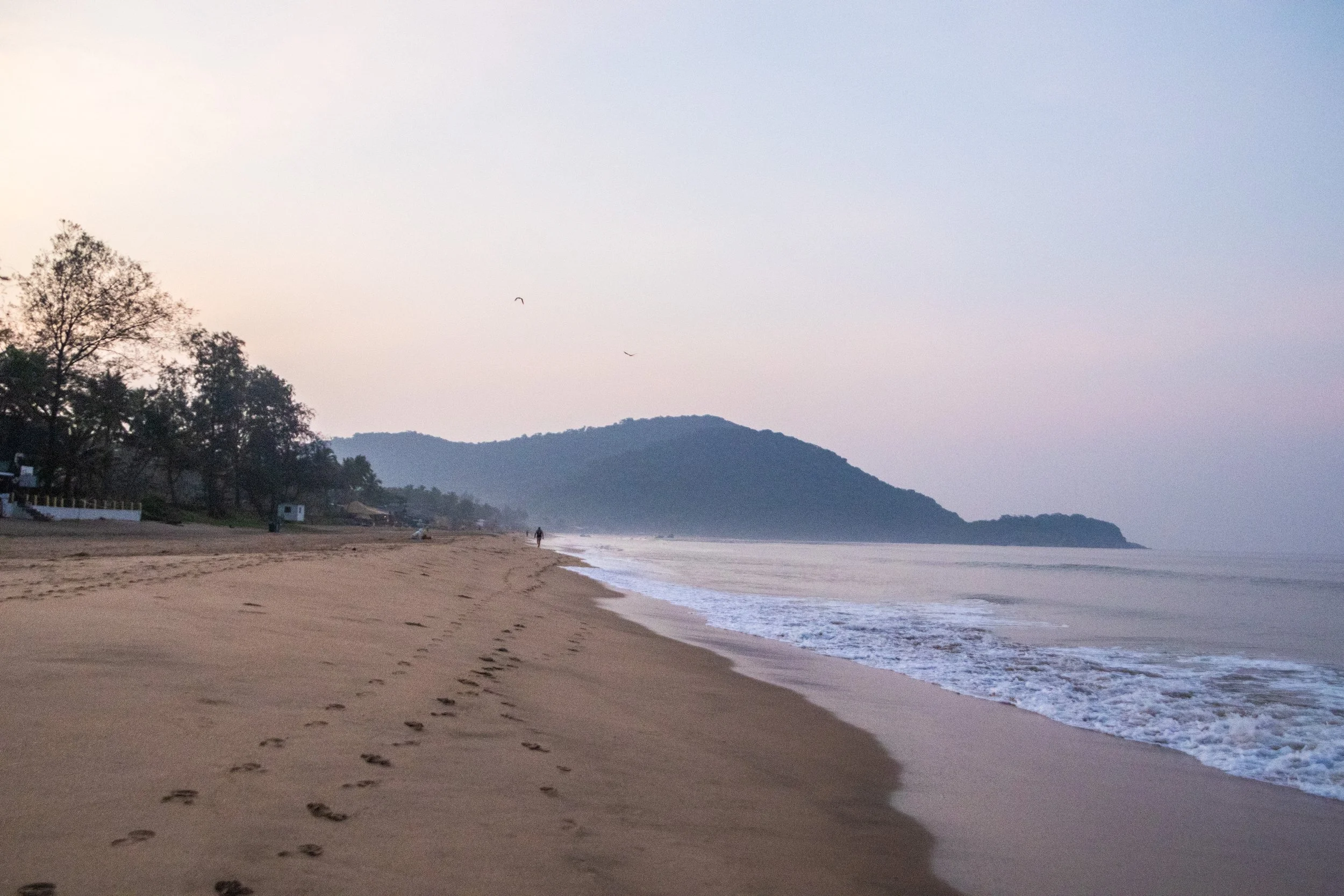
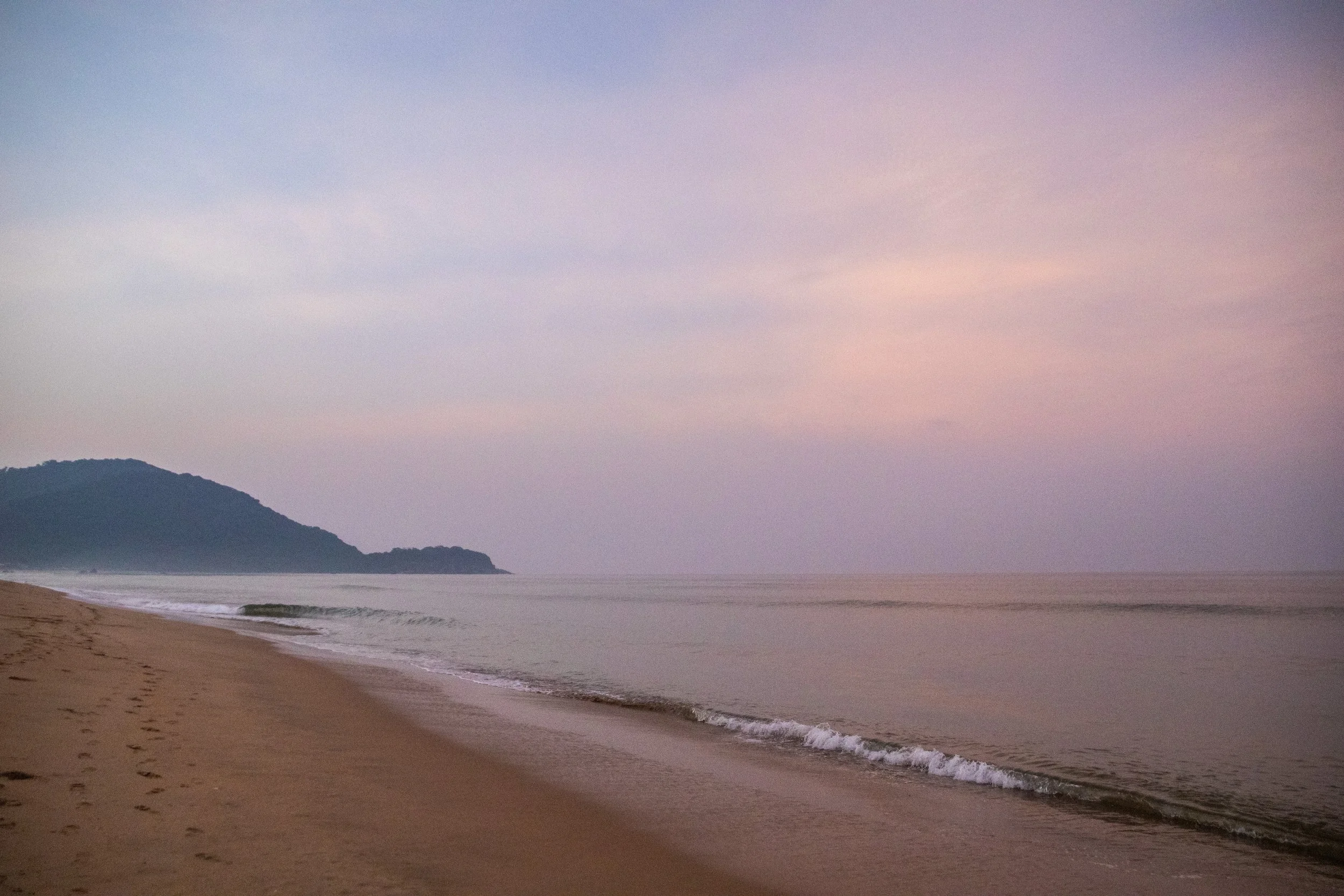
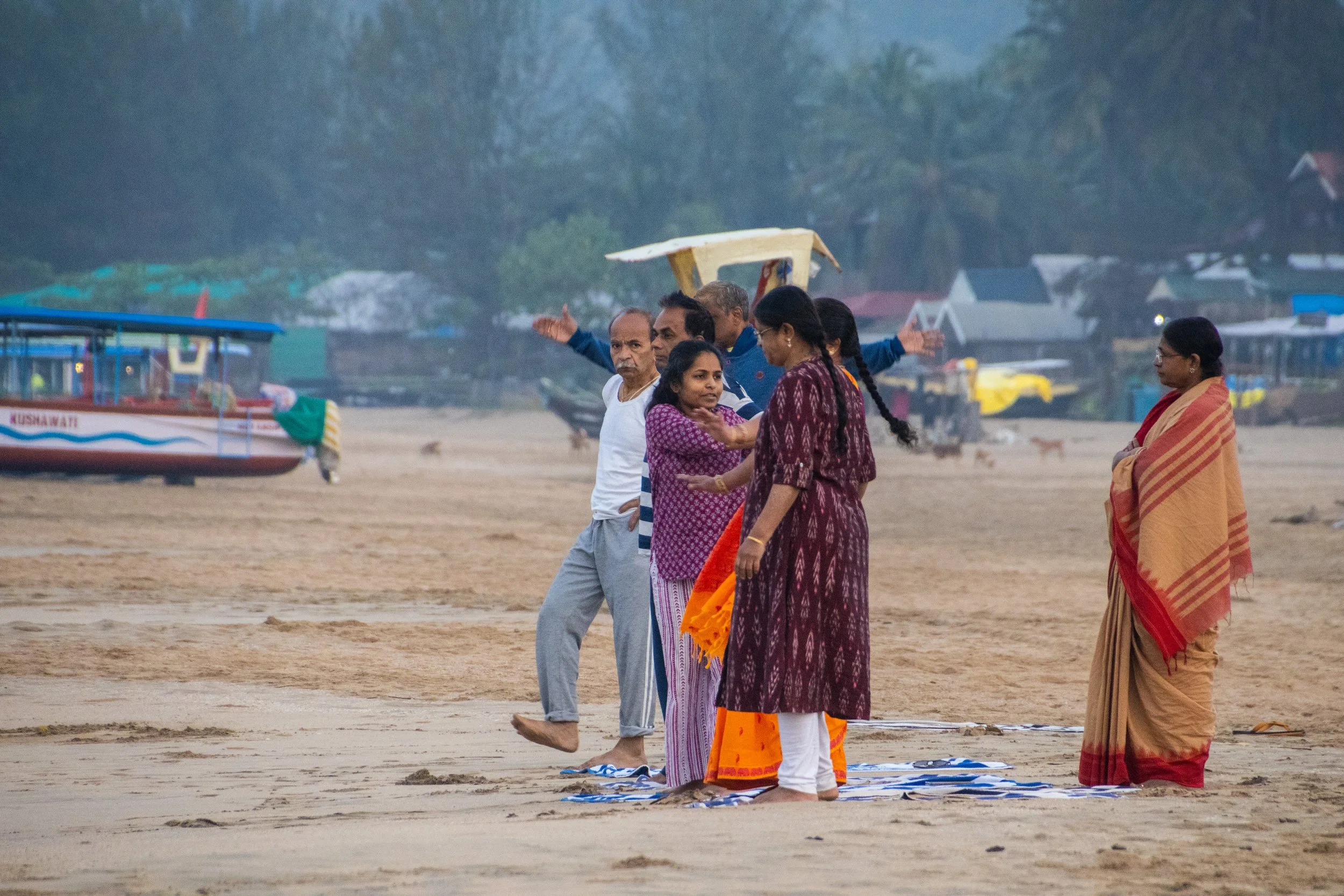
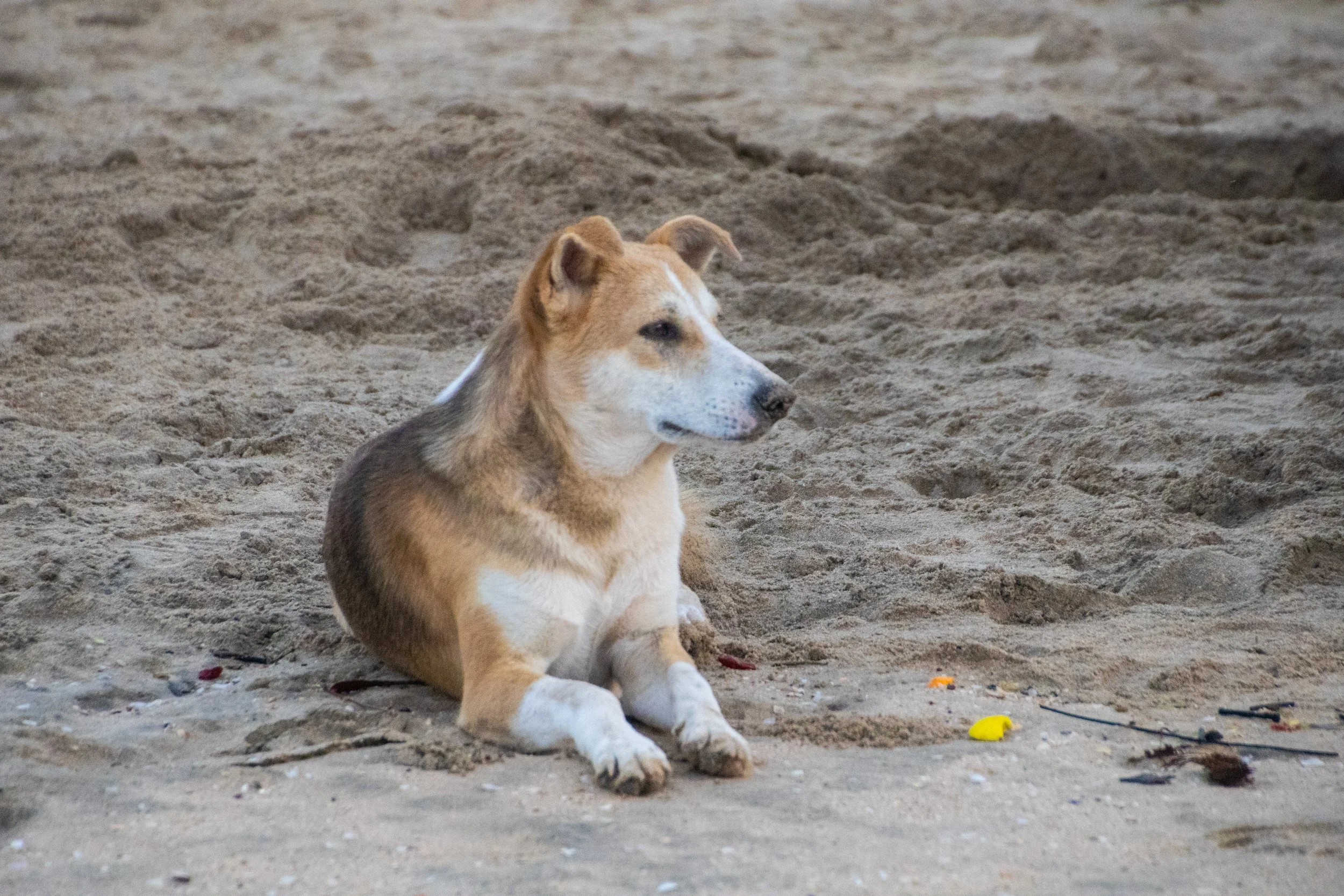
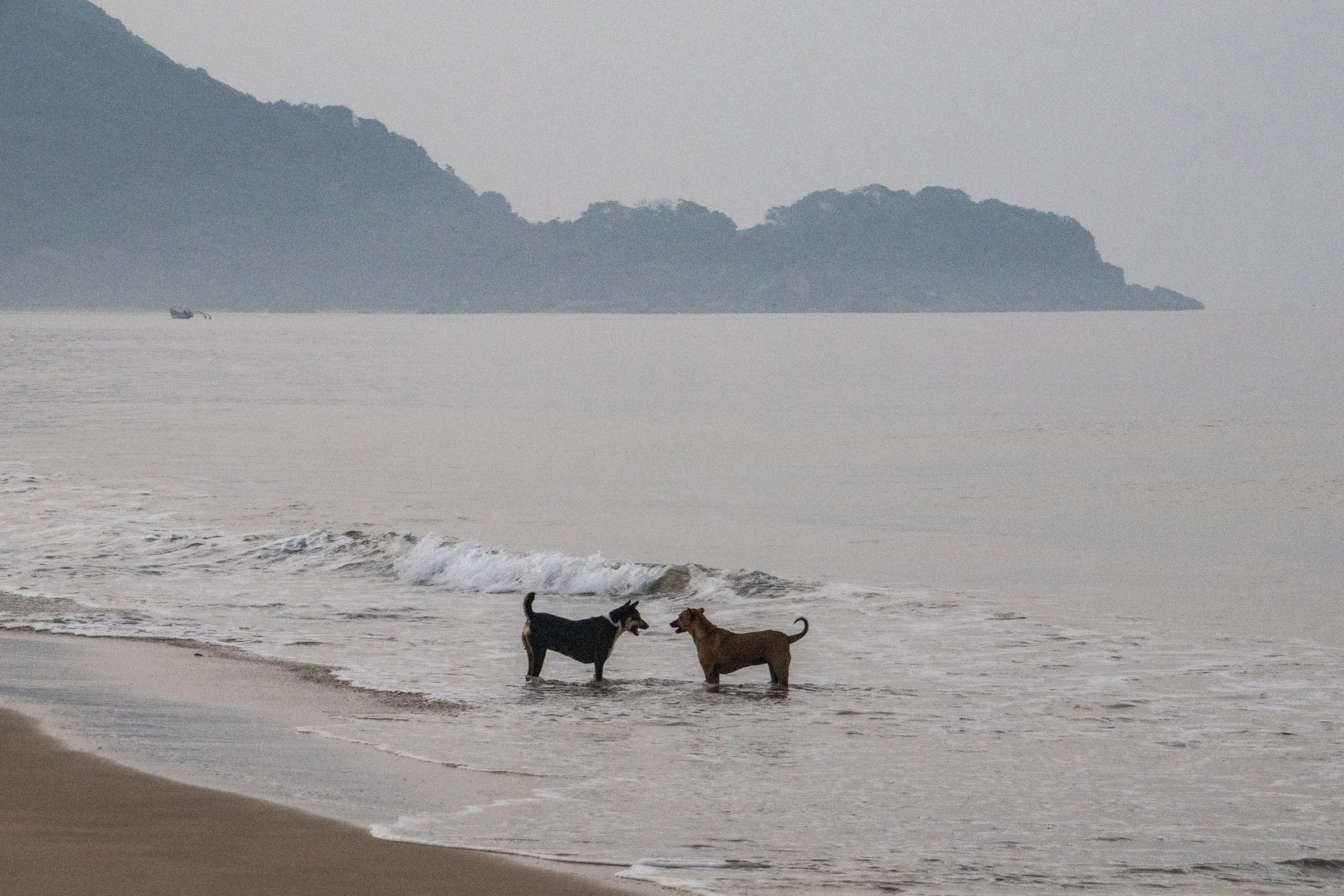
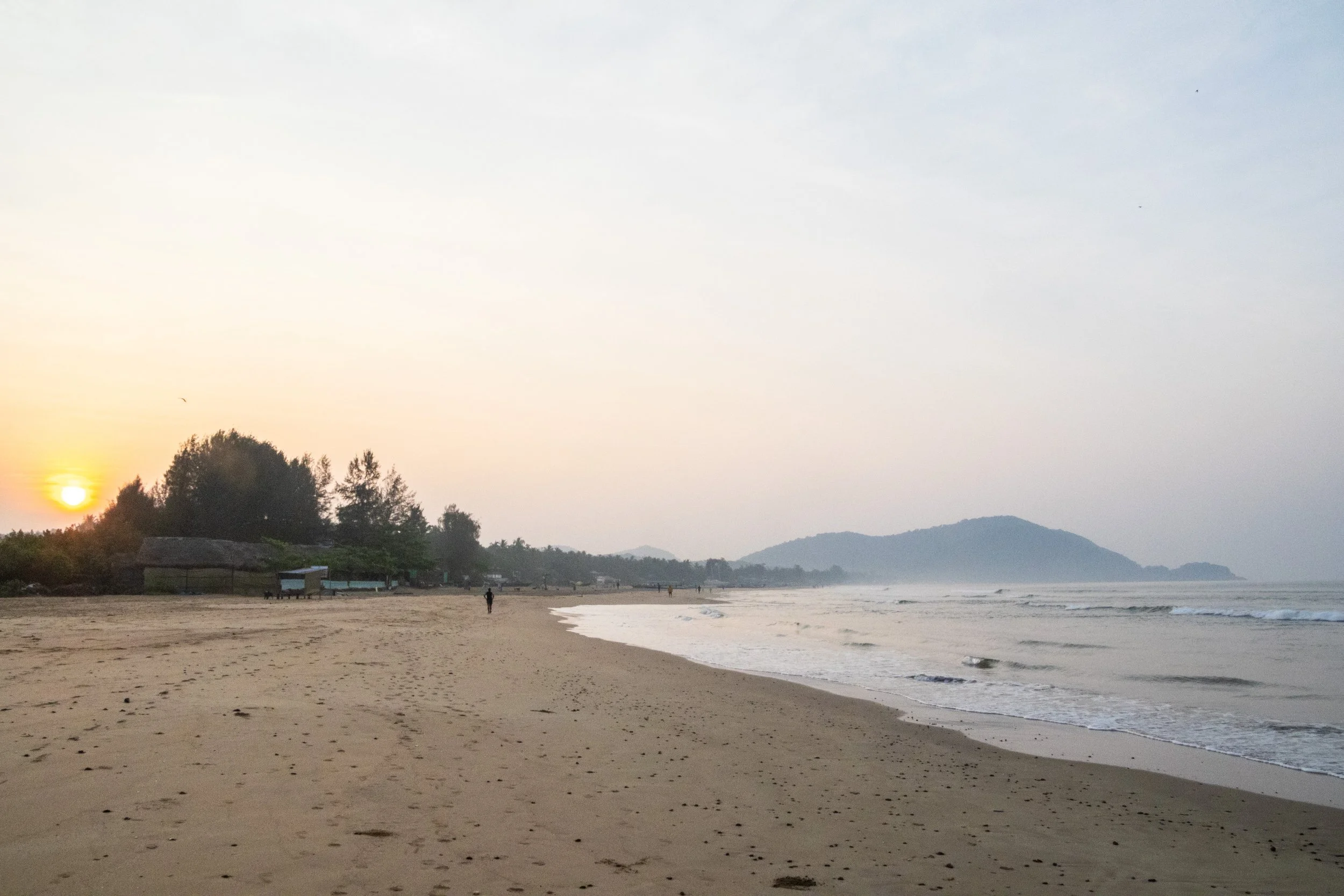
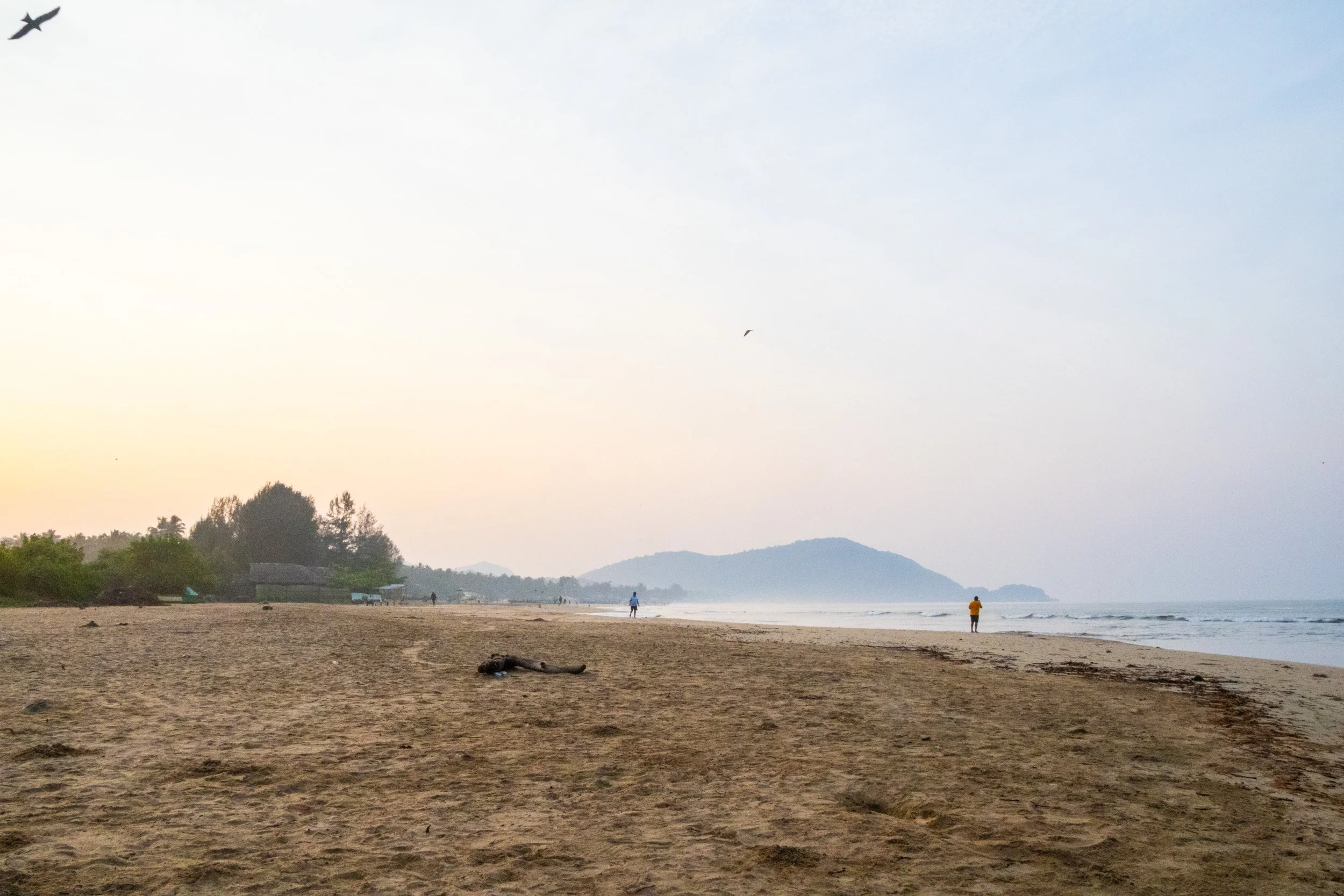
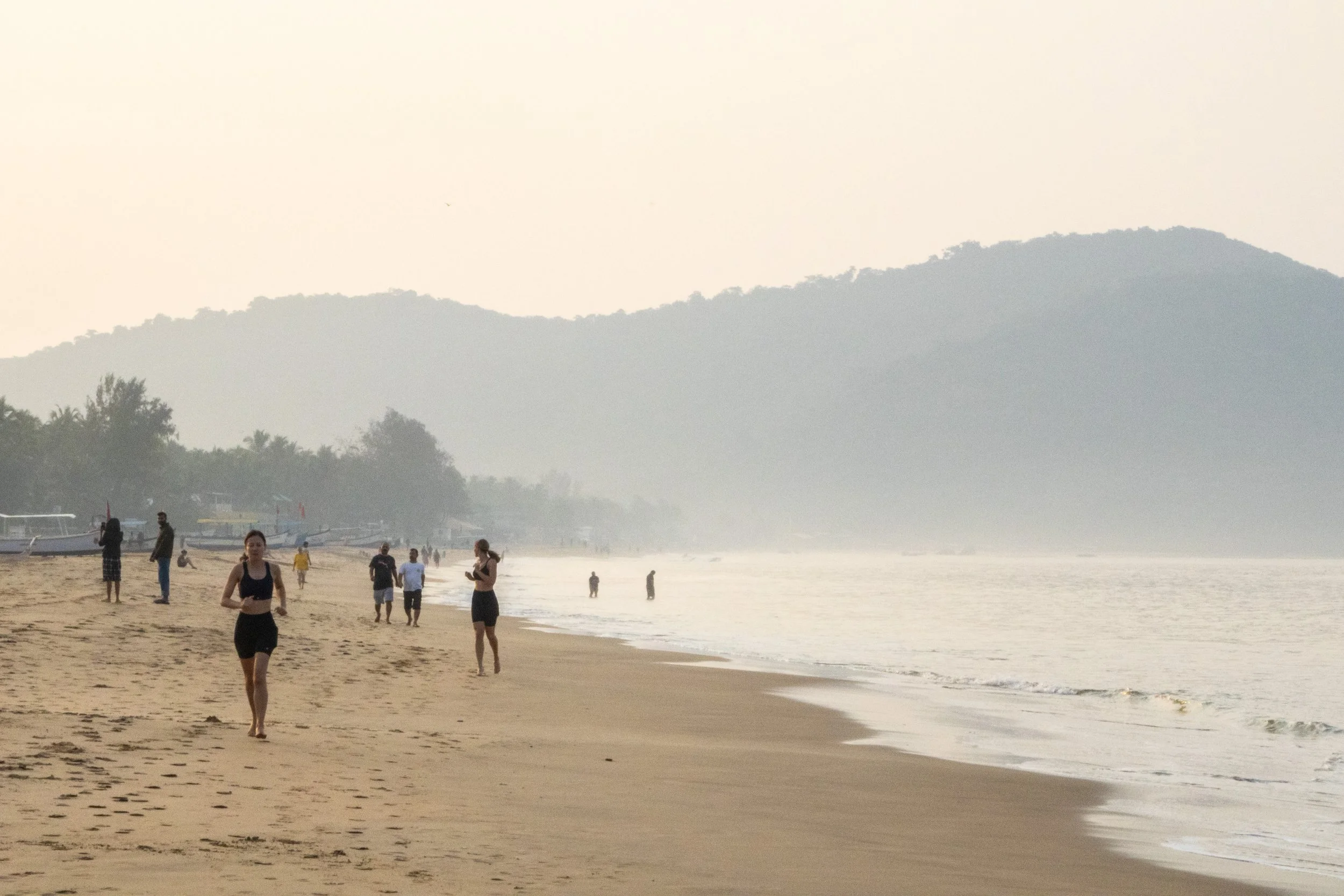
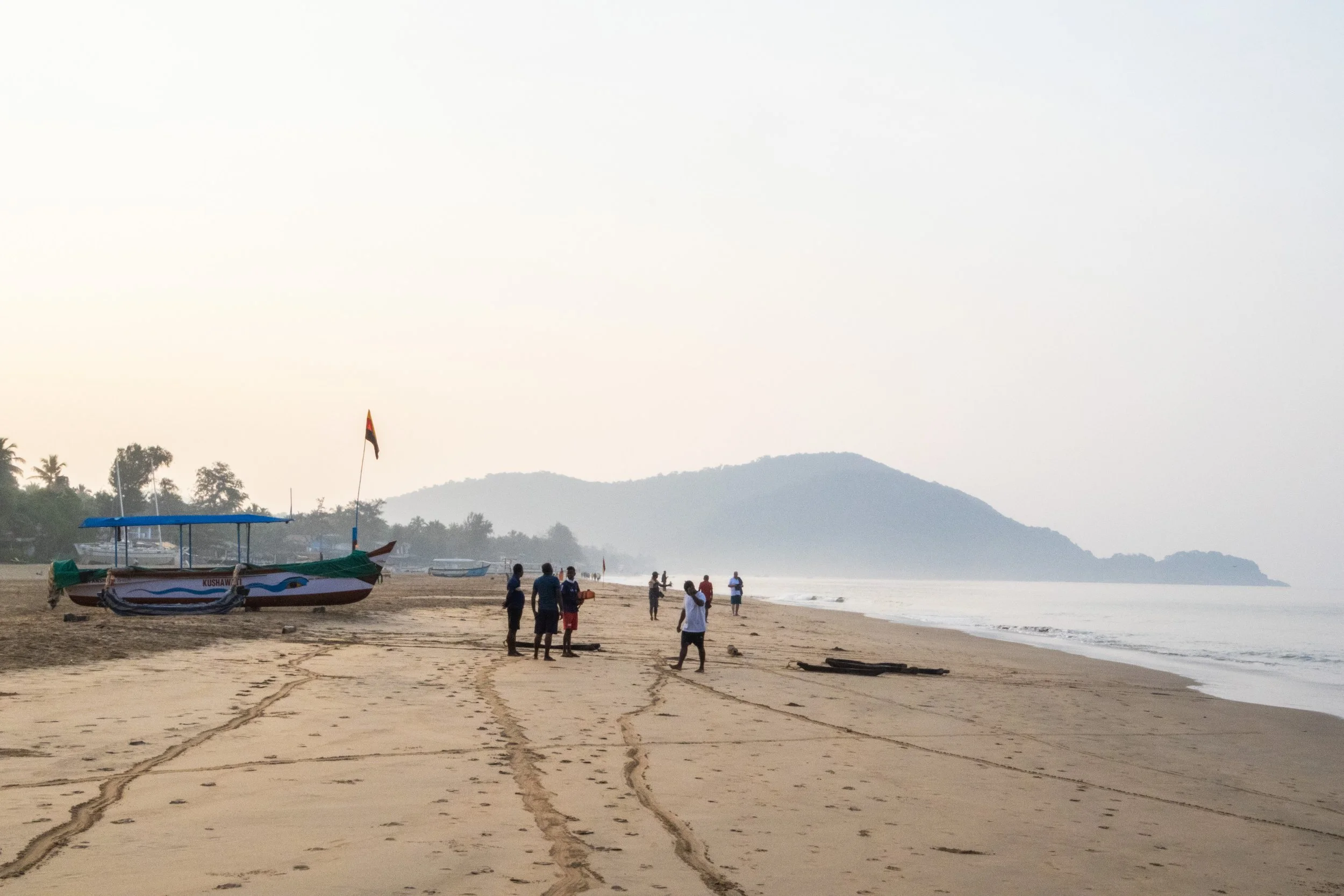
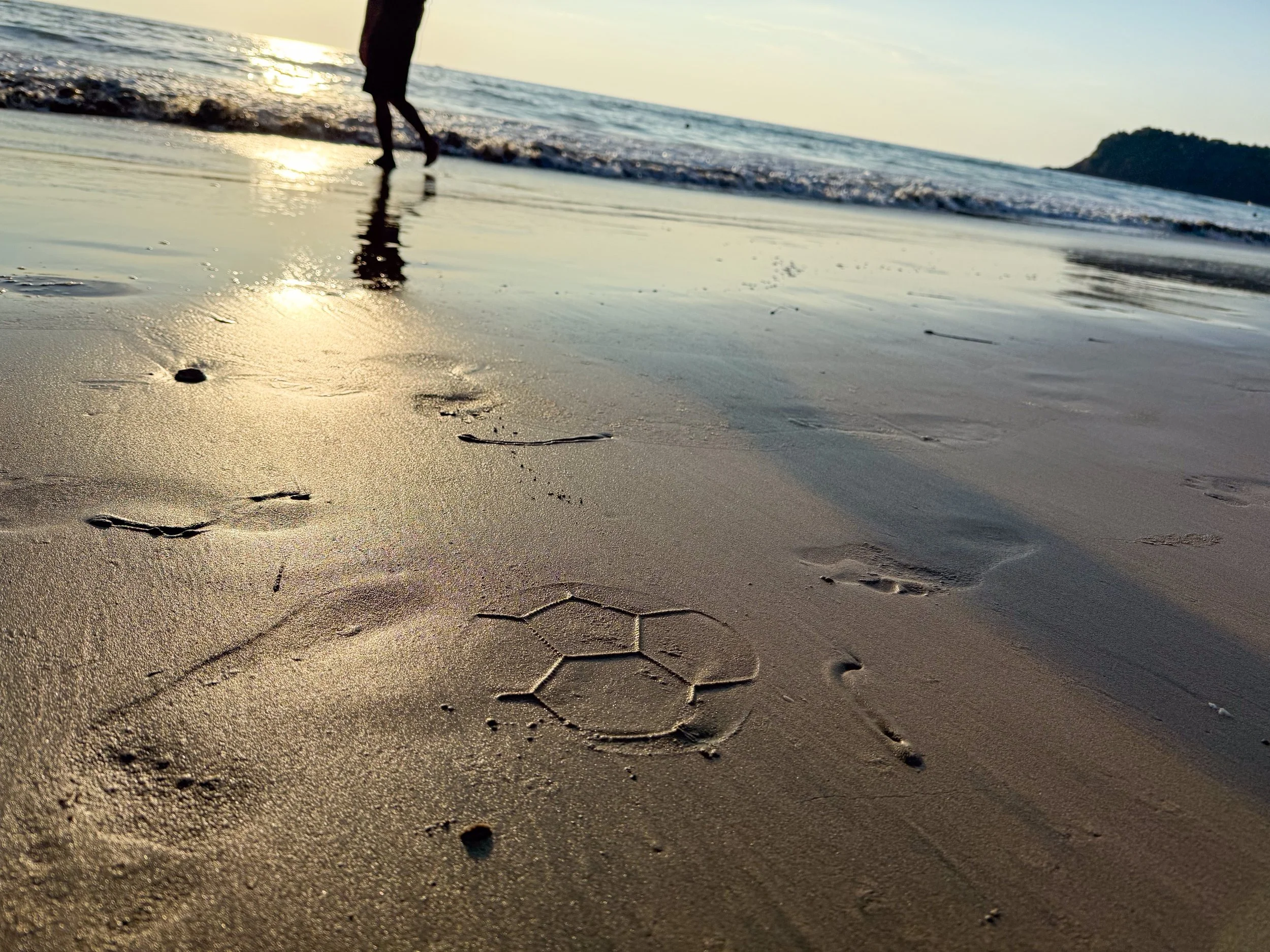
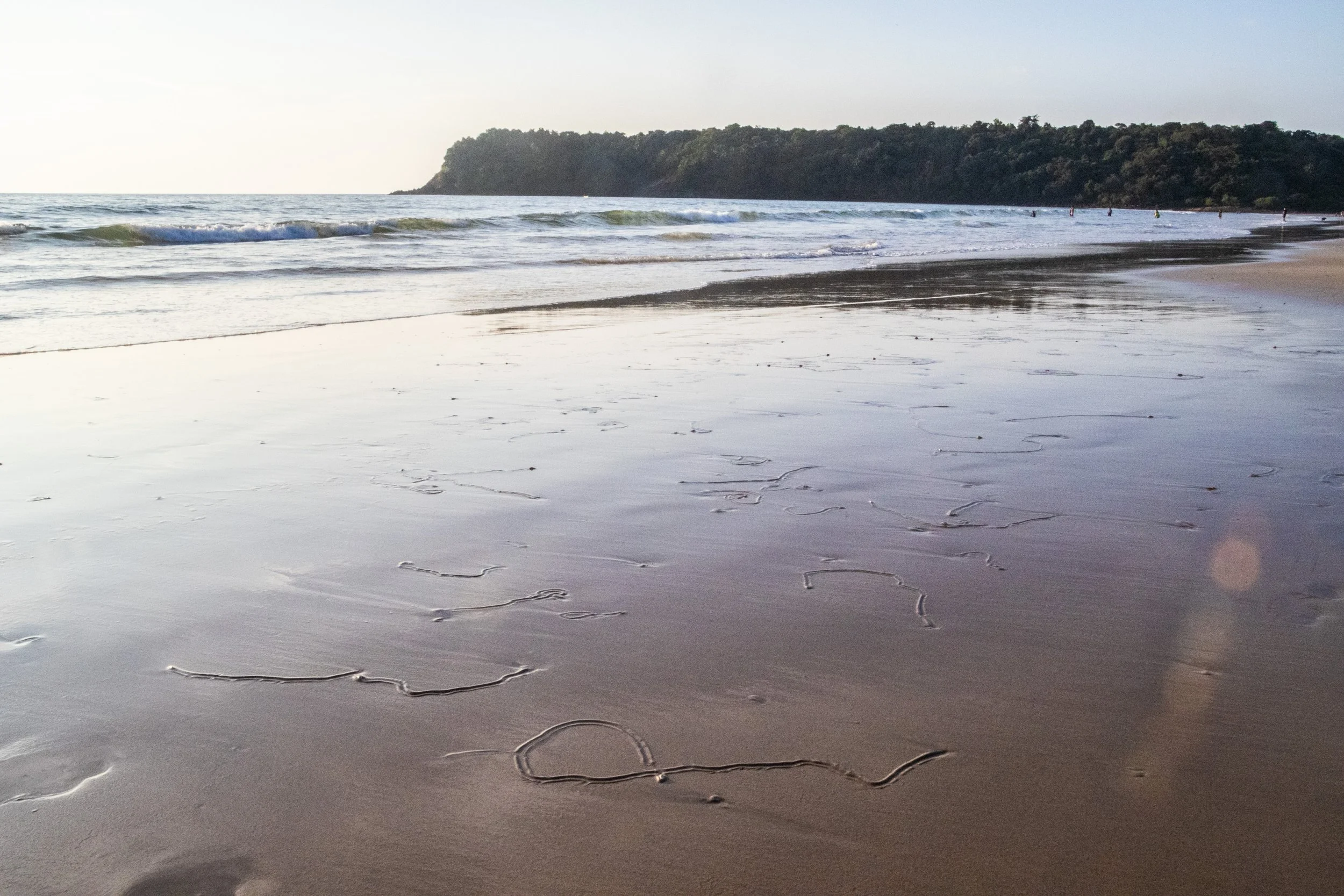
On our first morning in Agonda, we woke up early so we could be on the beach during sunrise. As we descended the wooden steps onto the soft, cool sand, we noticed that there were two people kneeling on towels on the sand, facing the ocean with their arms outstretched above their heads, completely still. I assume this was a sunrise meditation. Good for them! They were just about the only other people on the beach aside from us at that point, but as the sun slowly crept out from the lush, green landscape behind us, more and more people began to dot the beach. Some were doing their own meditations, whiles others were walking or jogging. Meanwhile, friendly wild dogs laid around, chased each other, played in the waves, or sheepishly approached passersby looking for a scrap of food or a pat on the head.
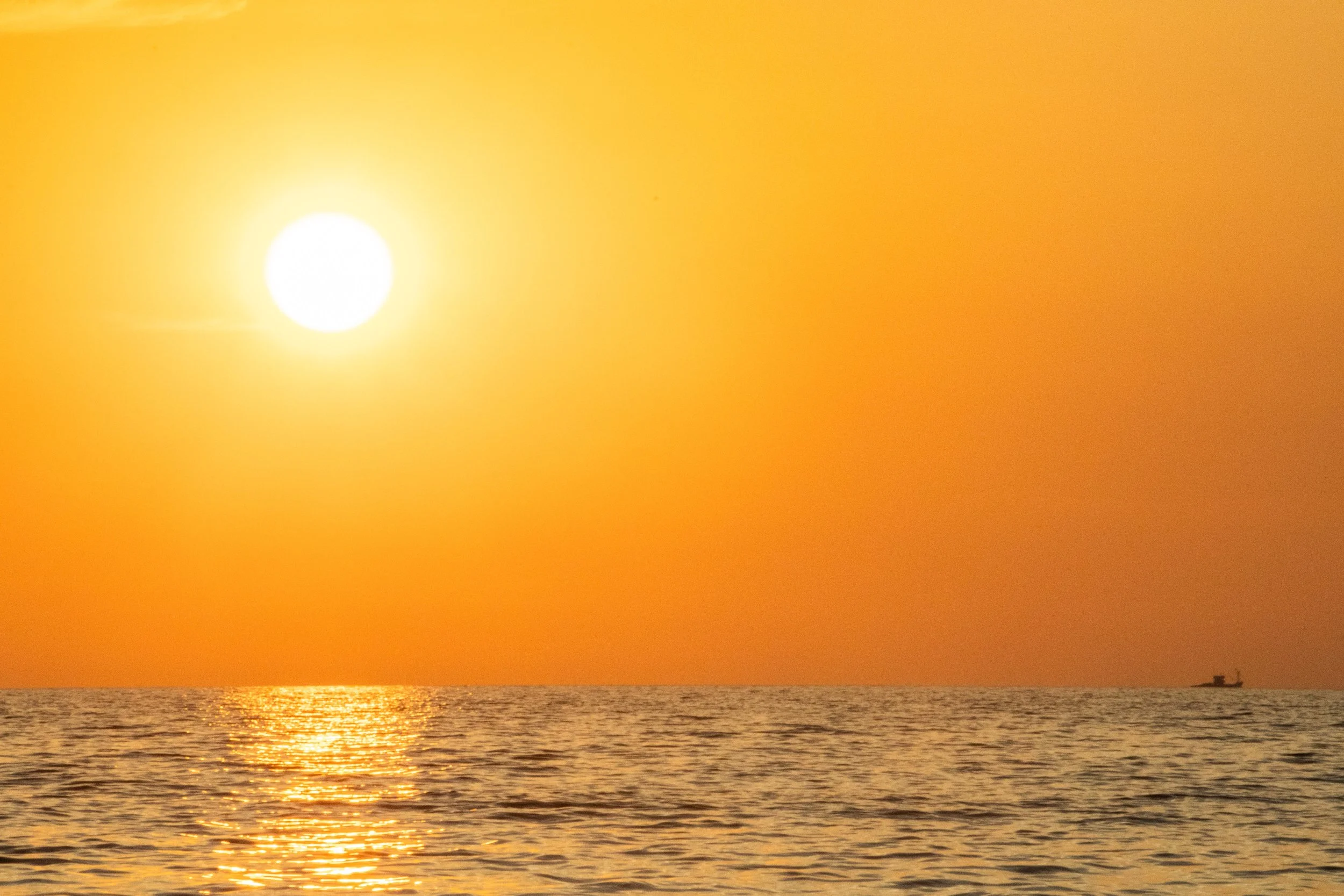
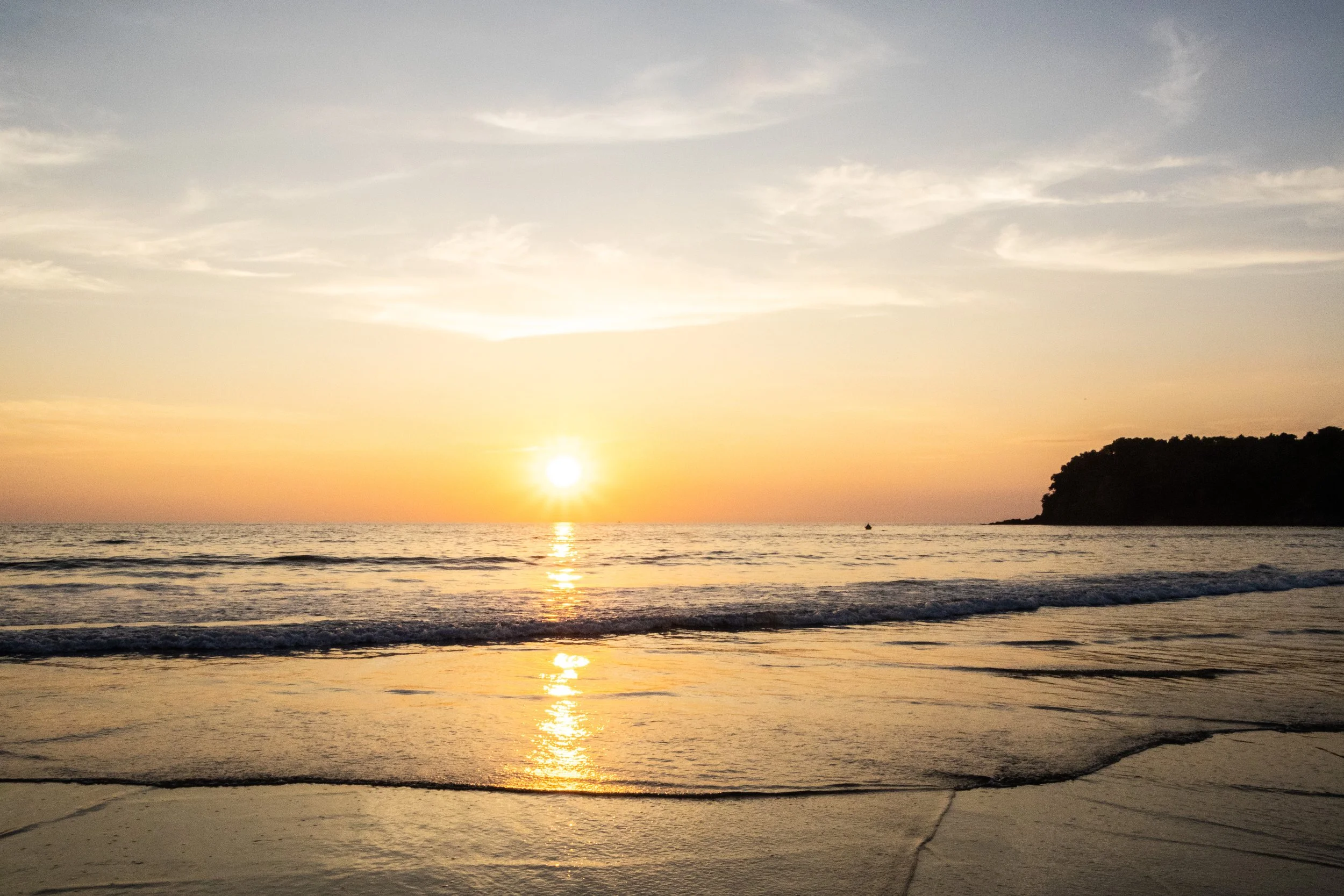
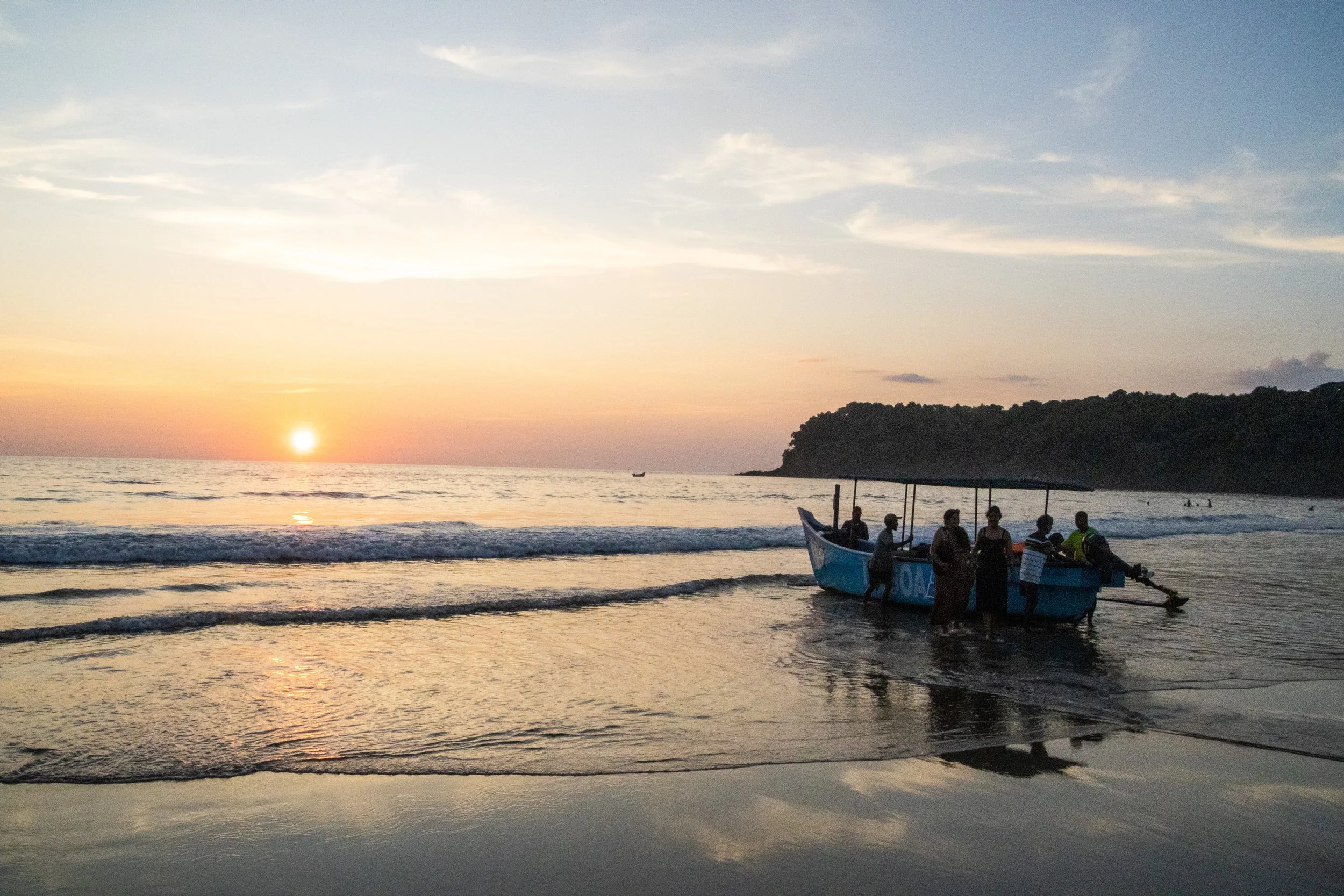
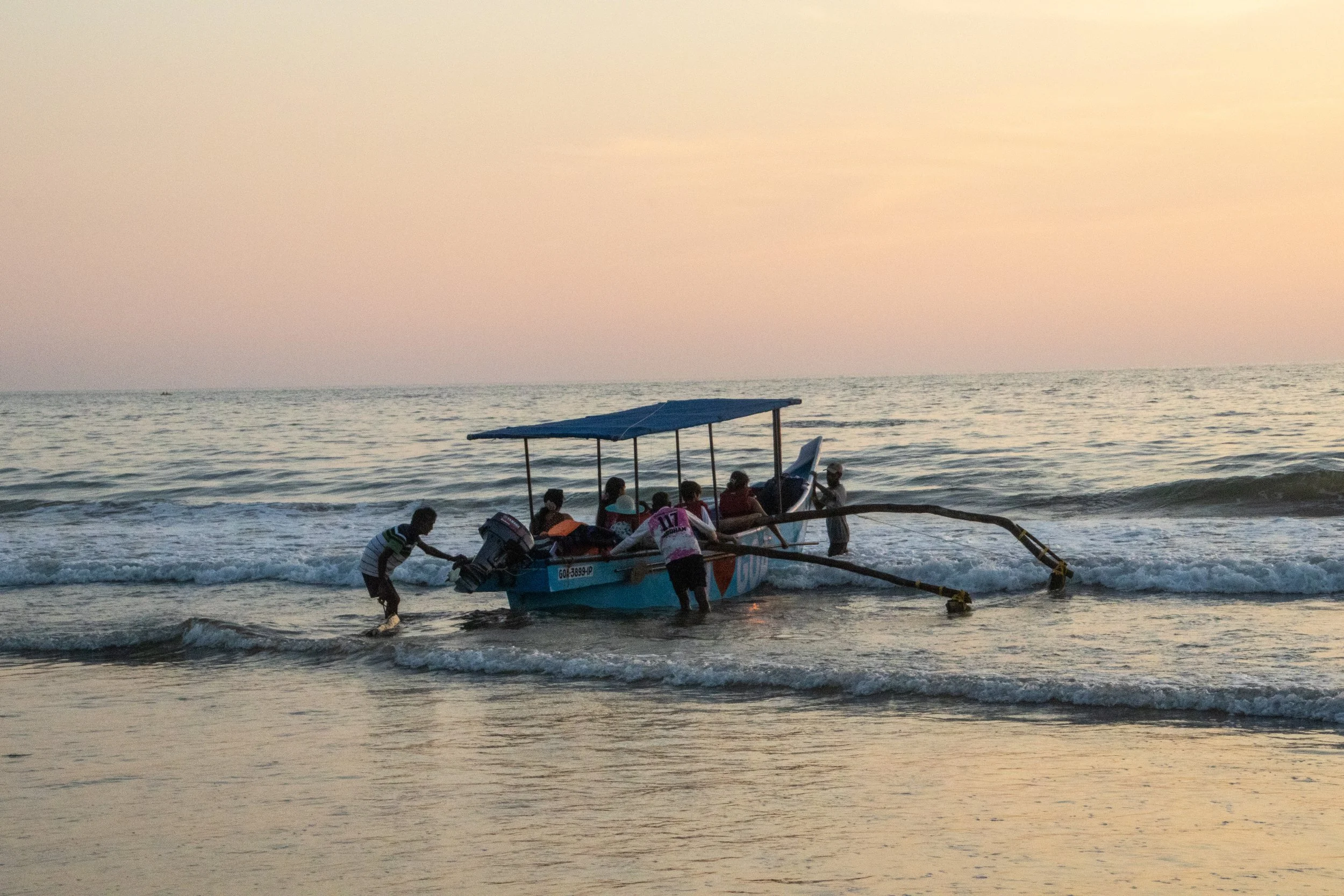
AGONDA Sunset
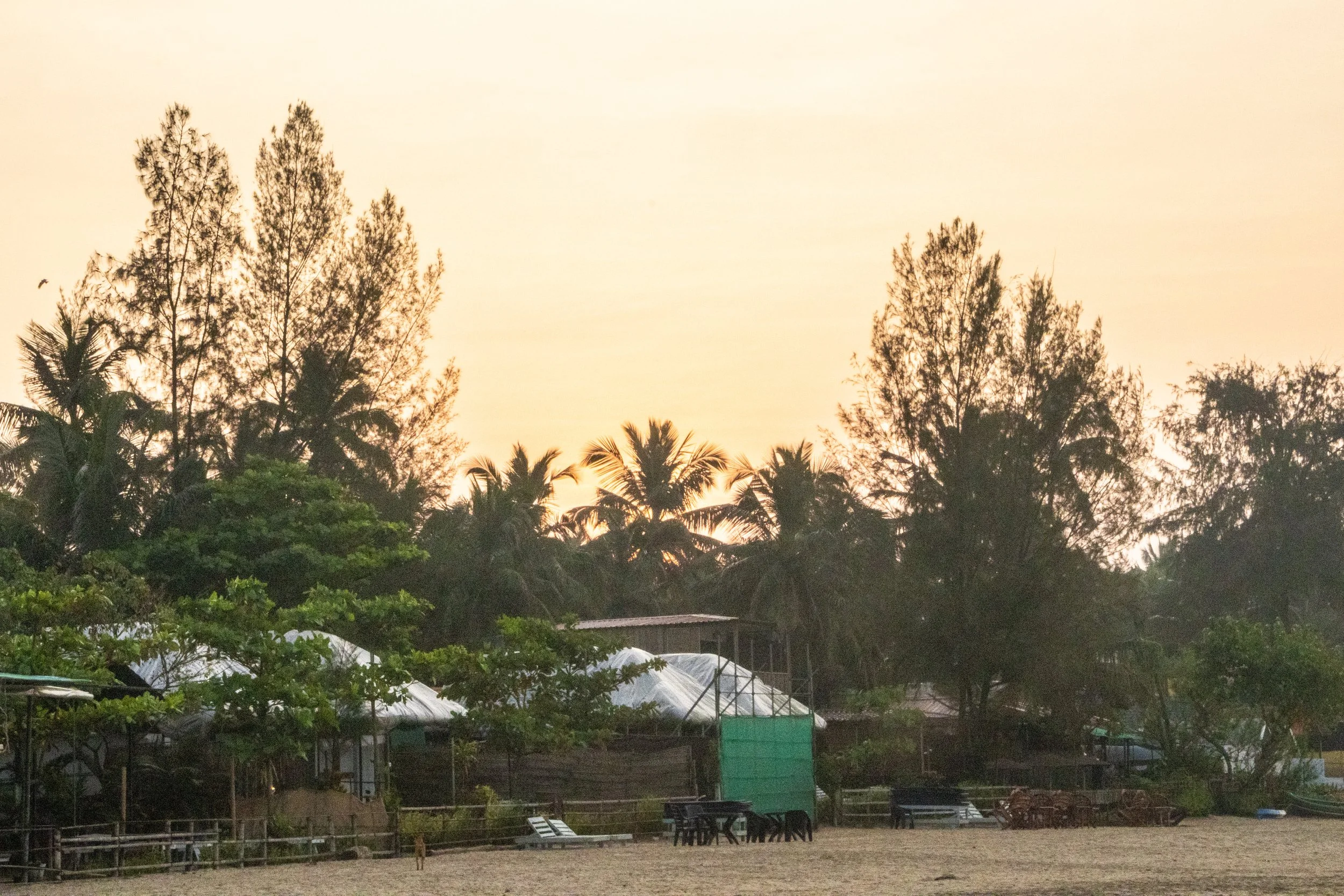
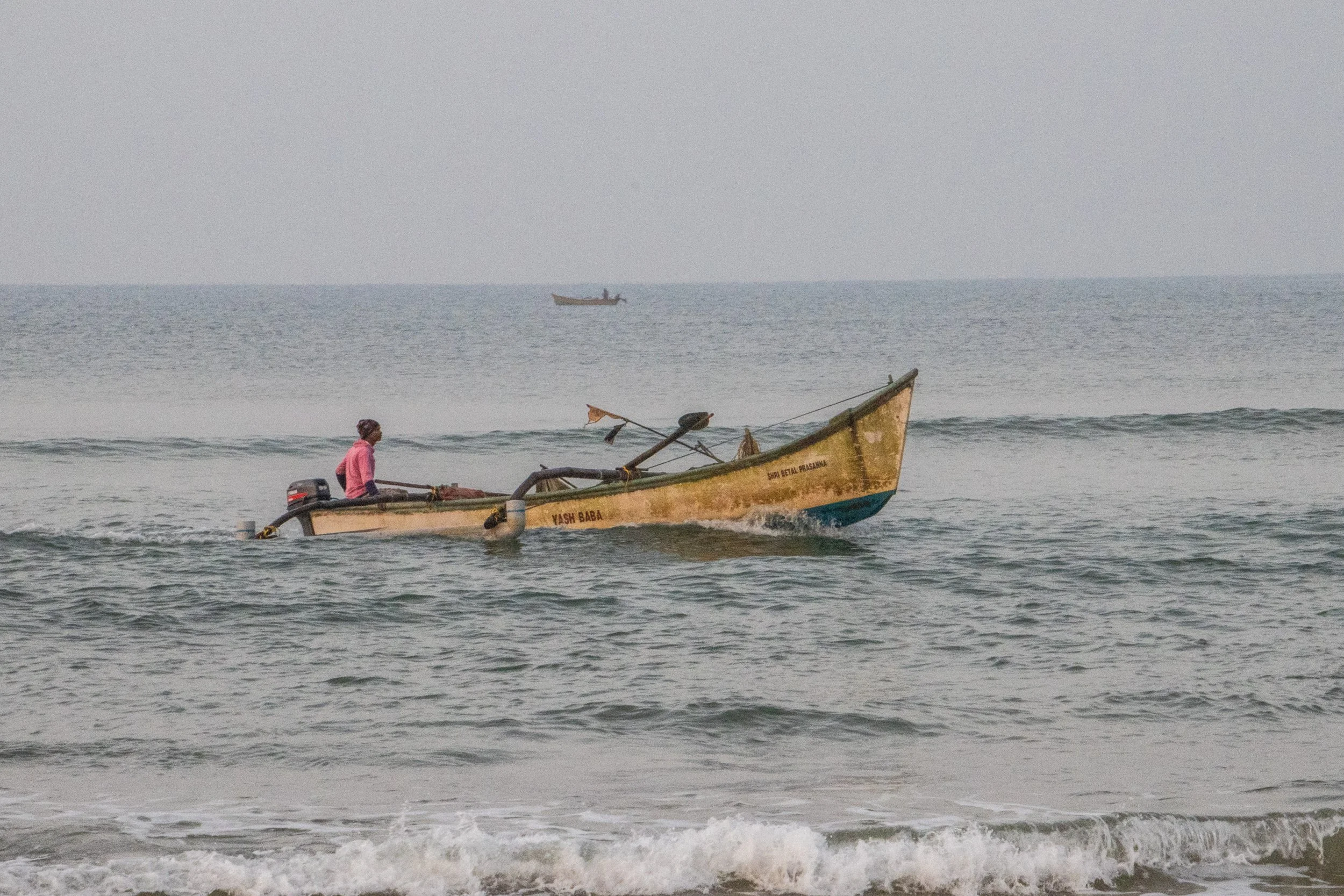
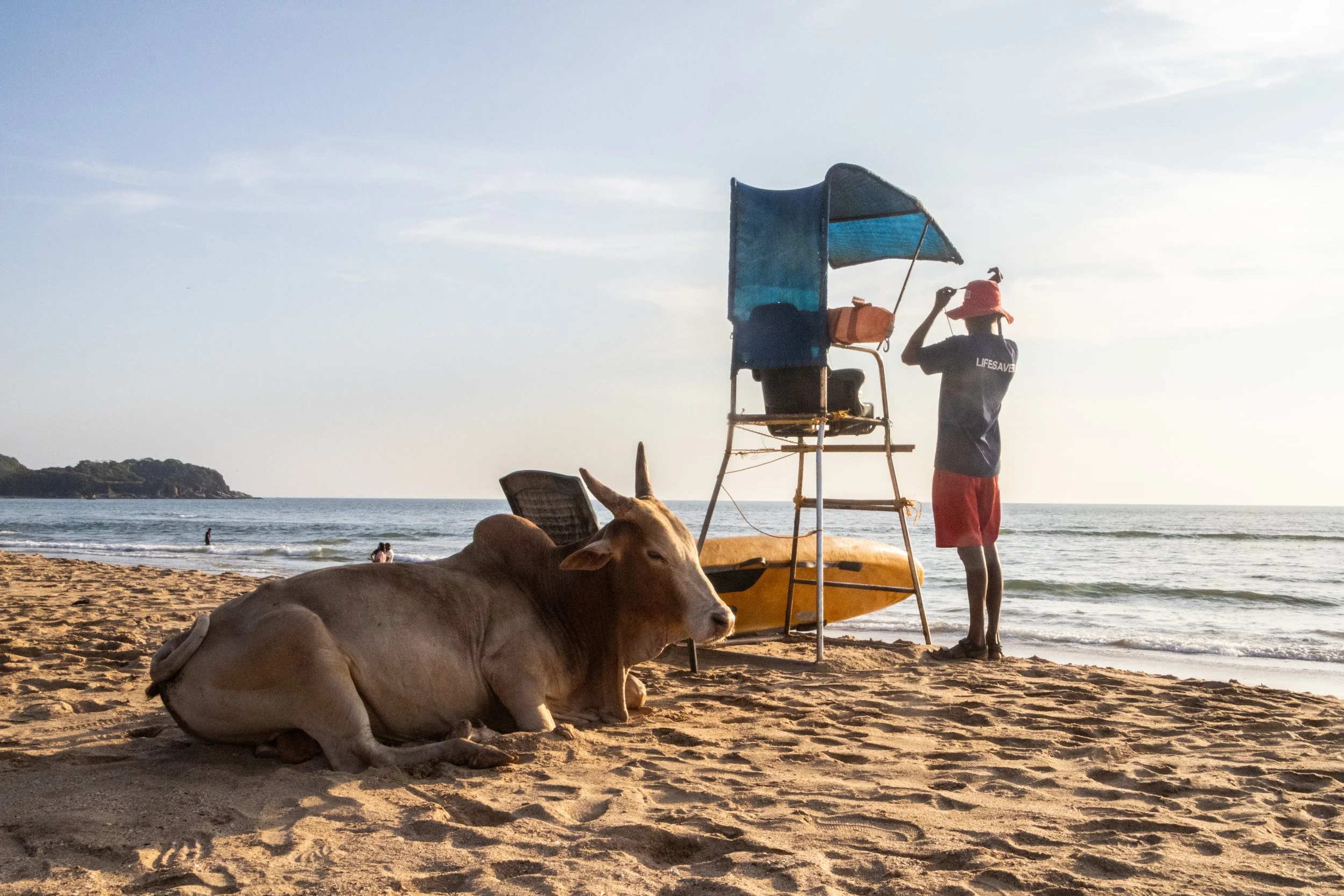
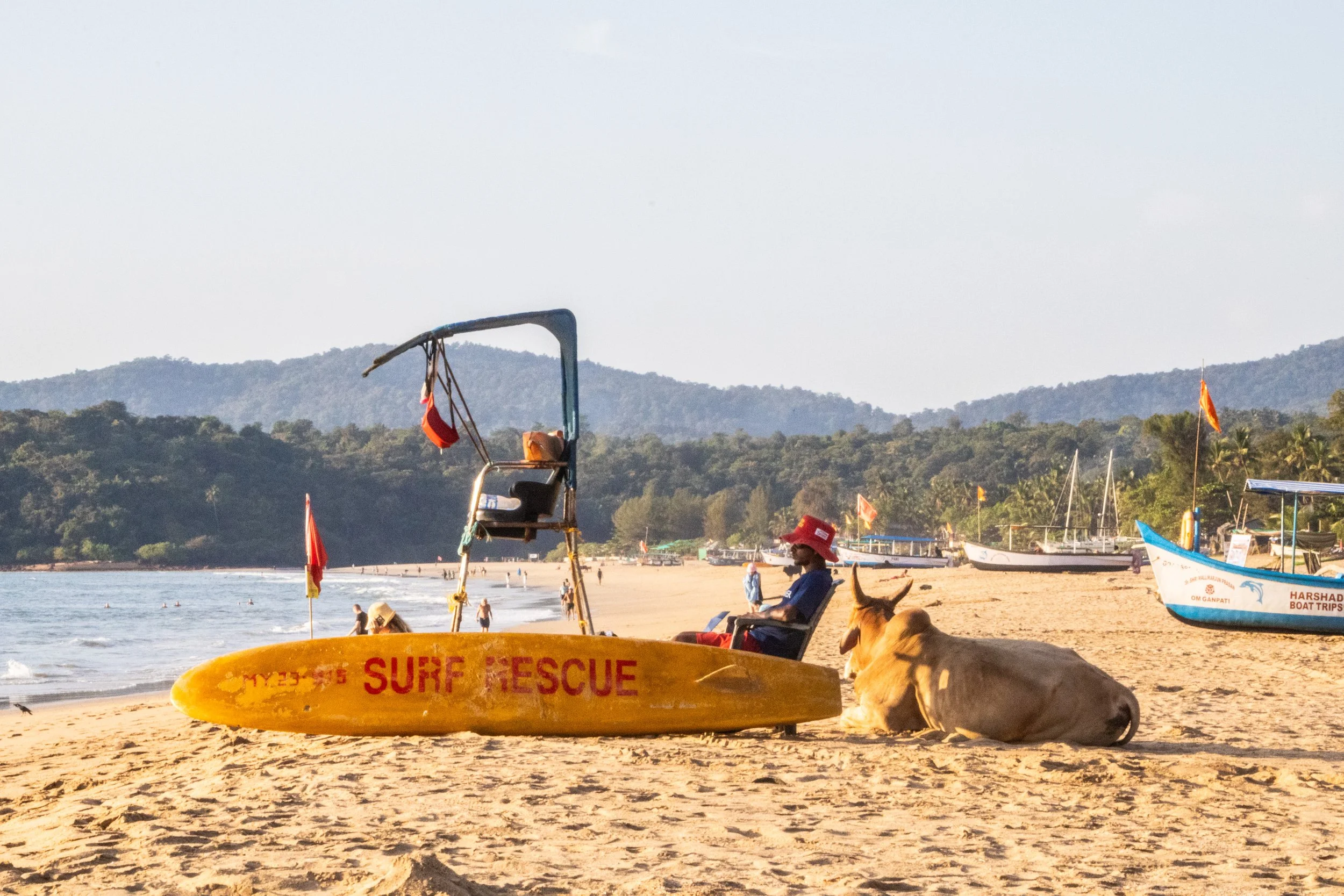
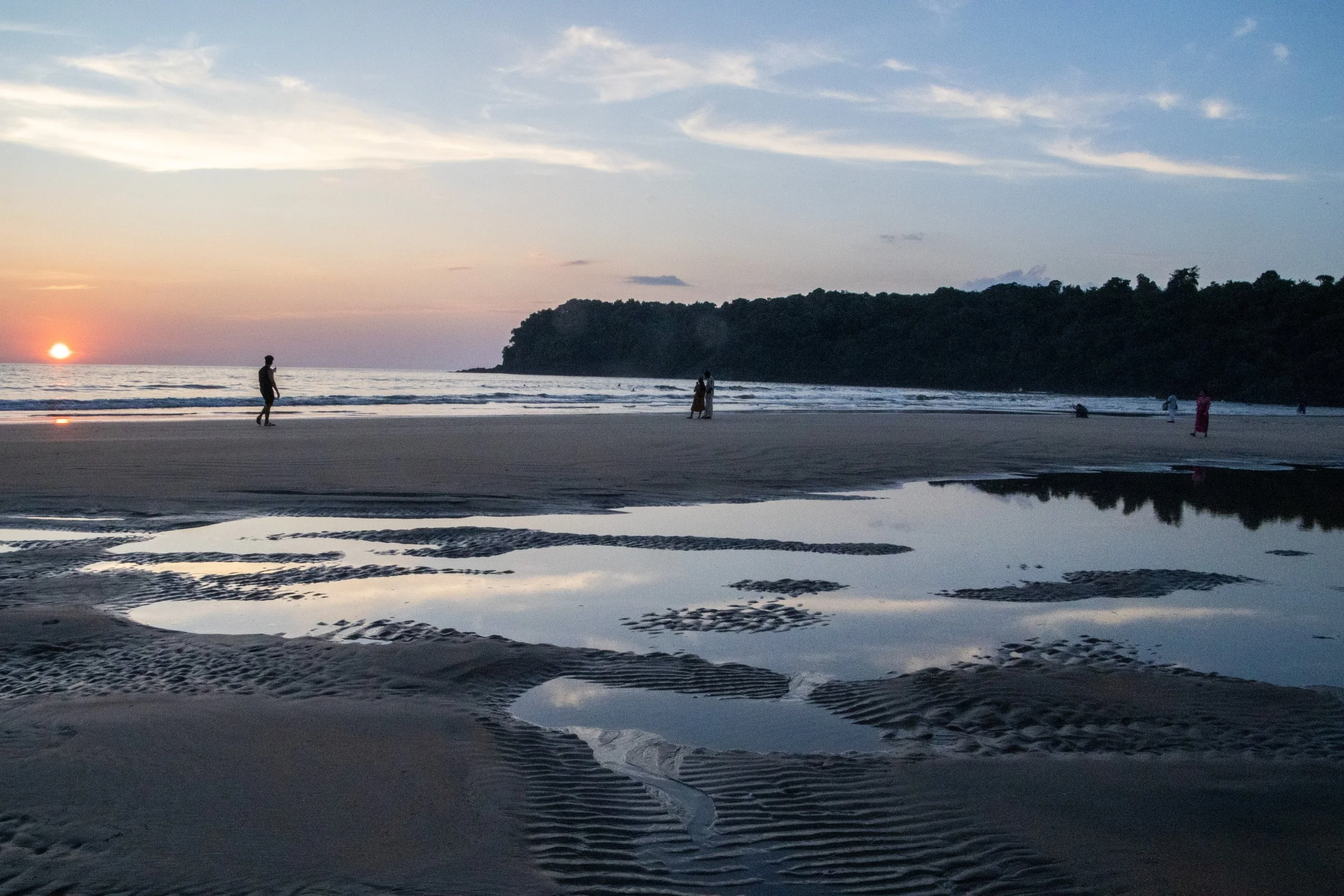
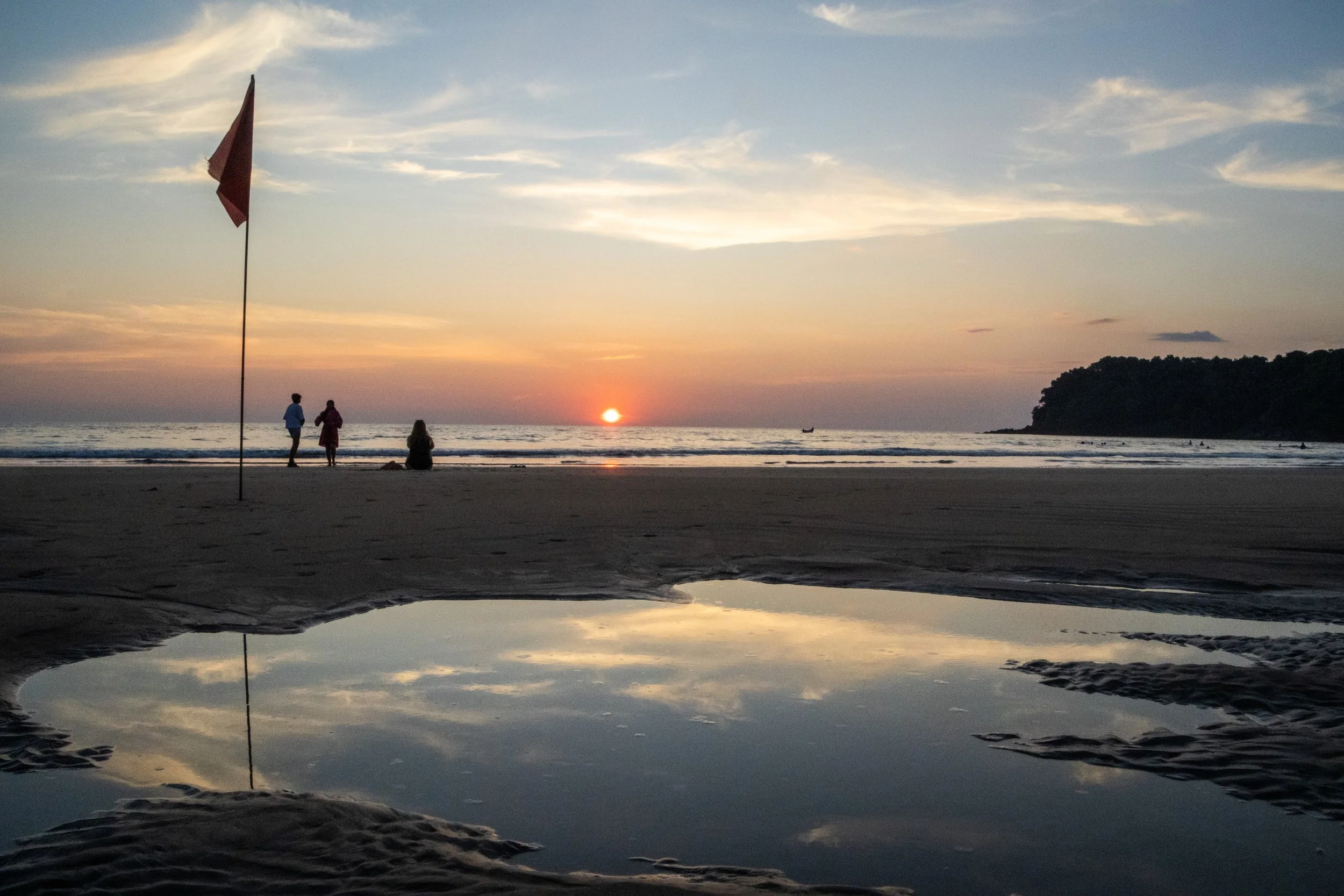
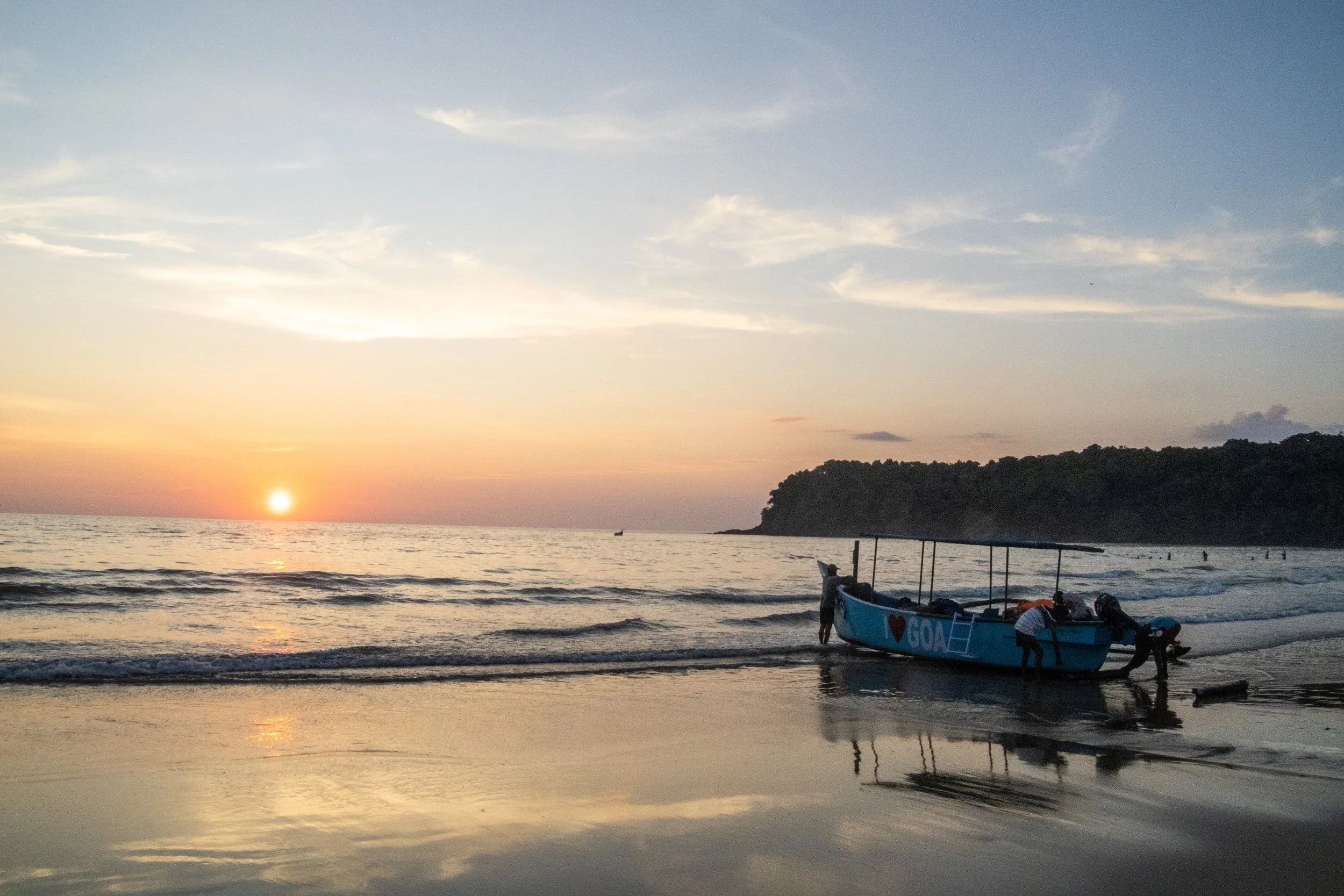
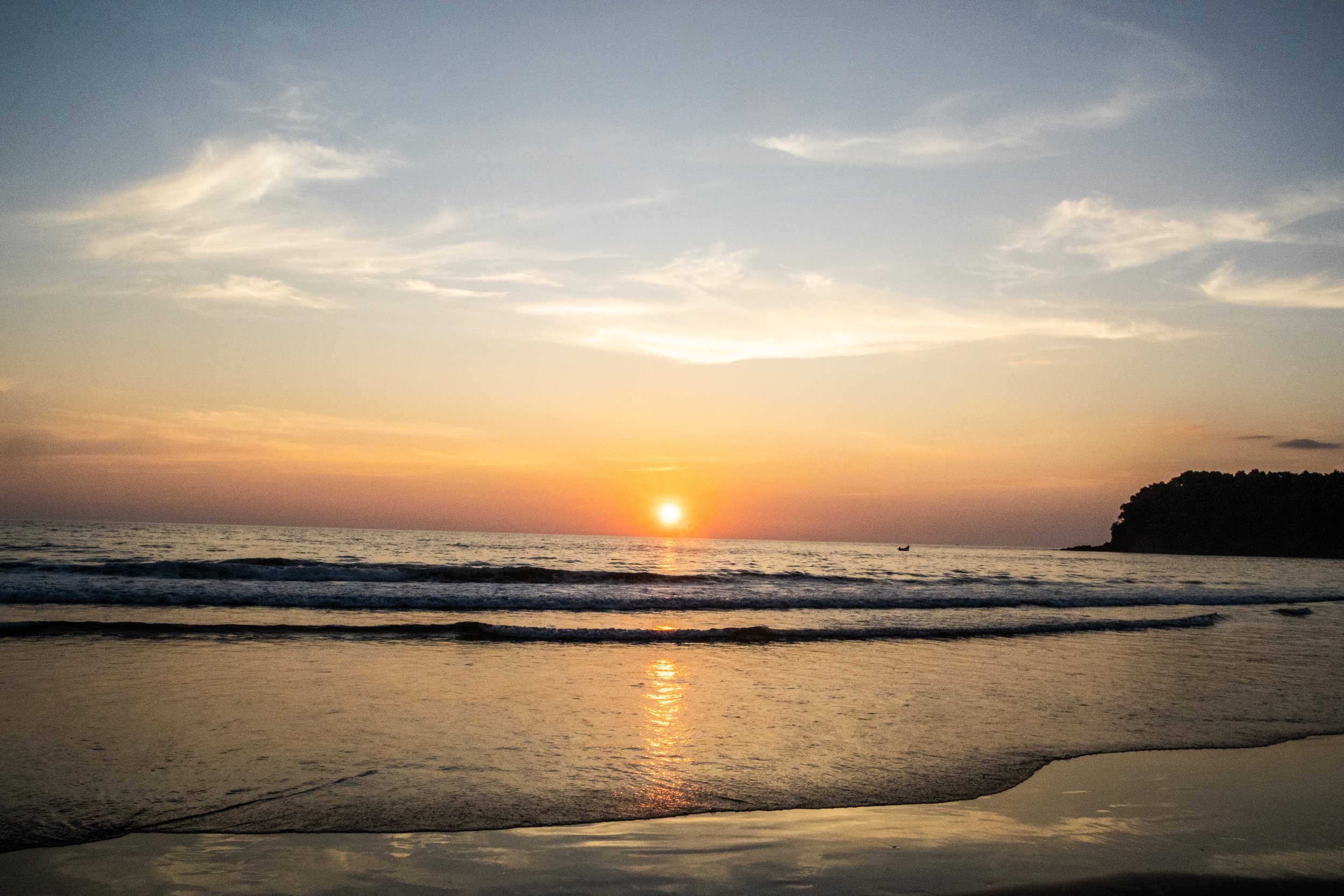
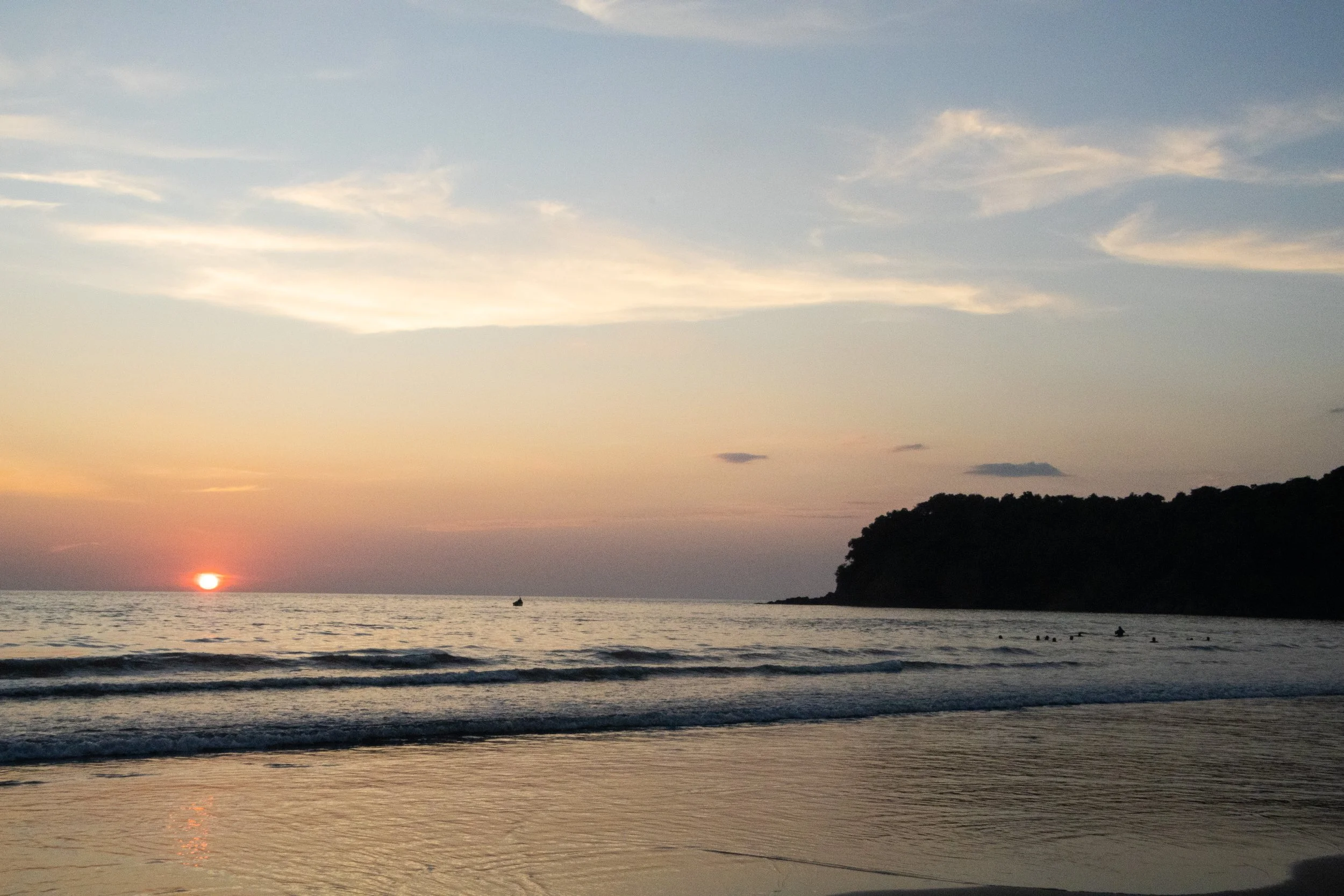
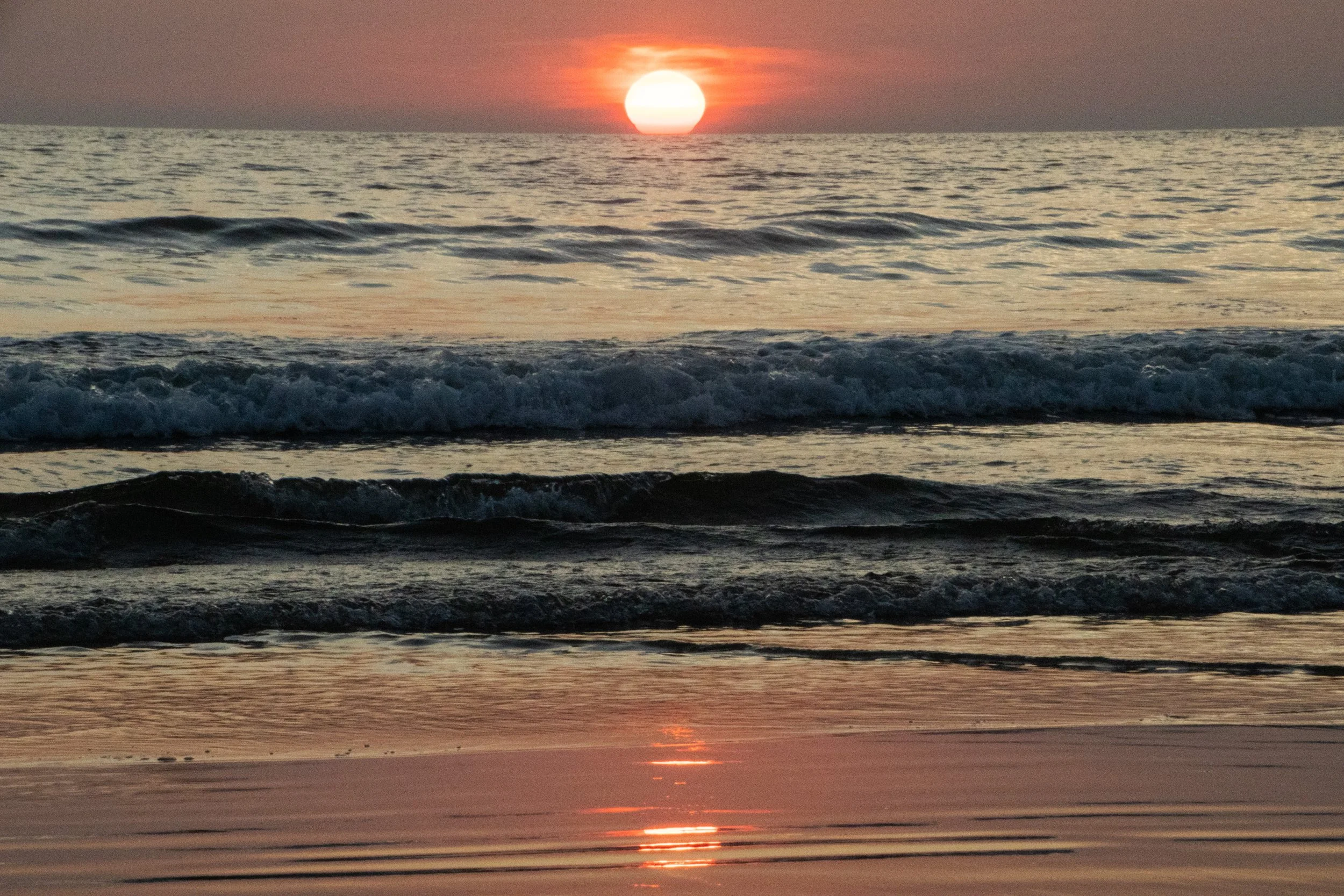
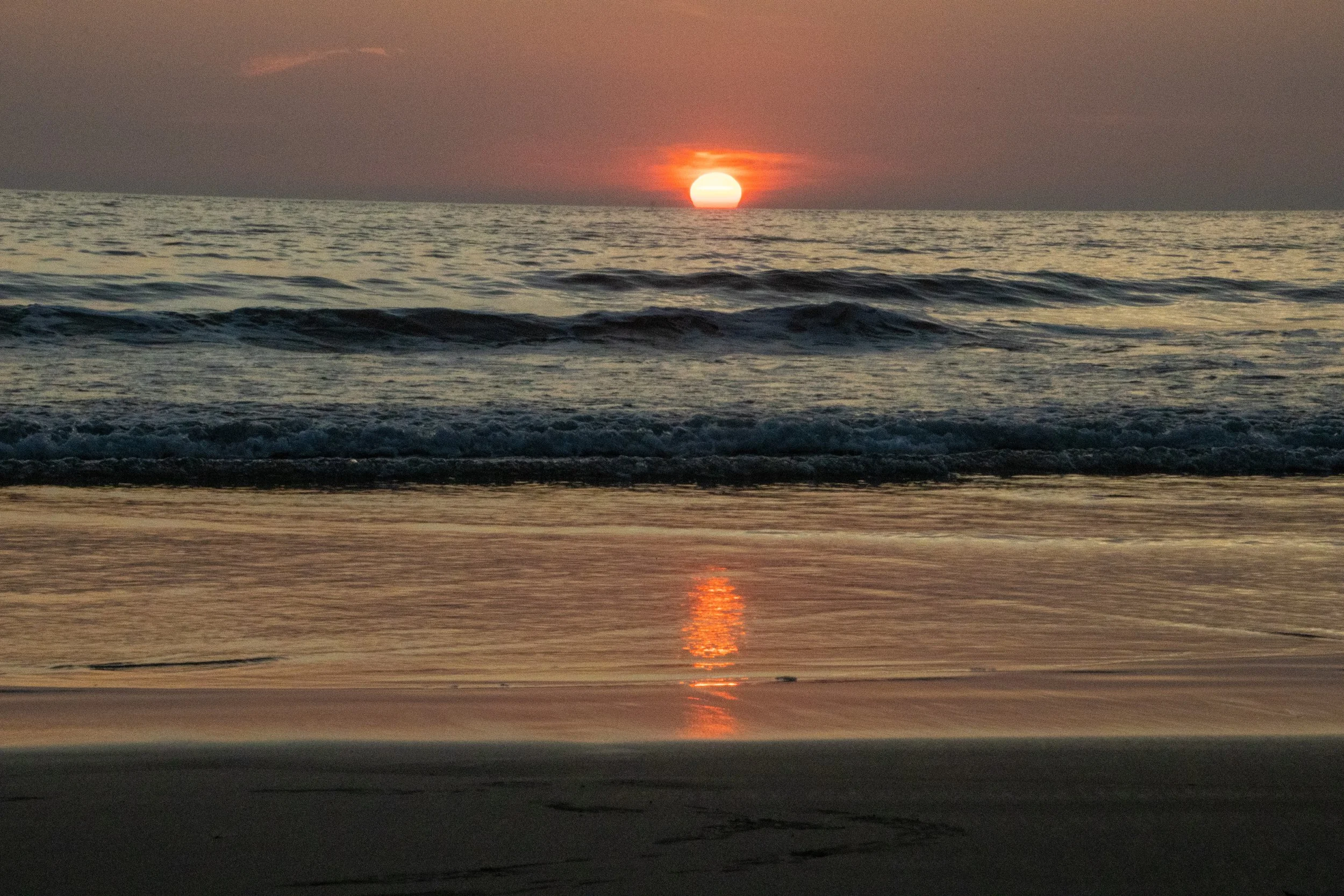
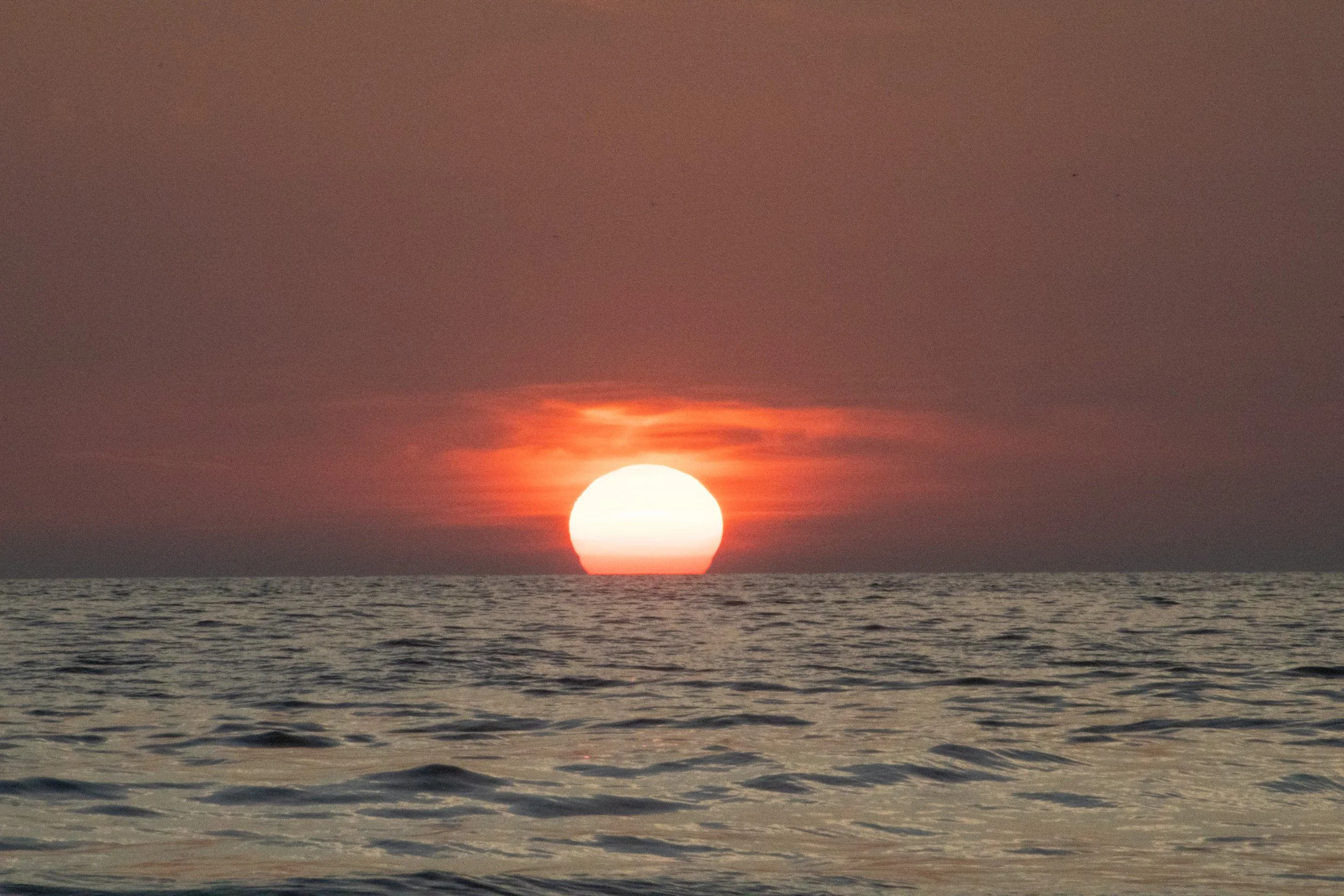
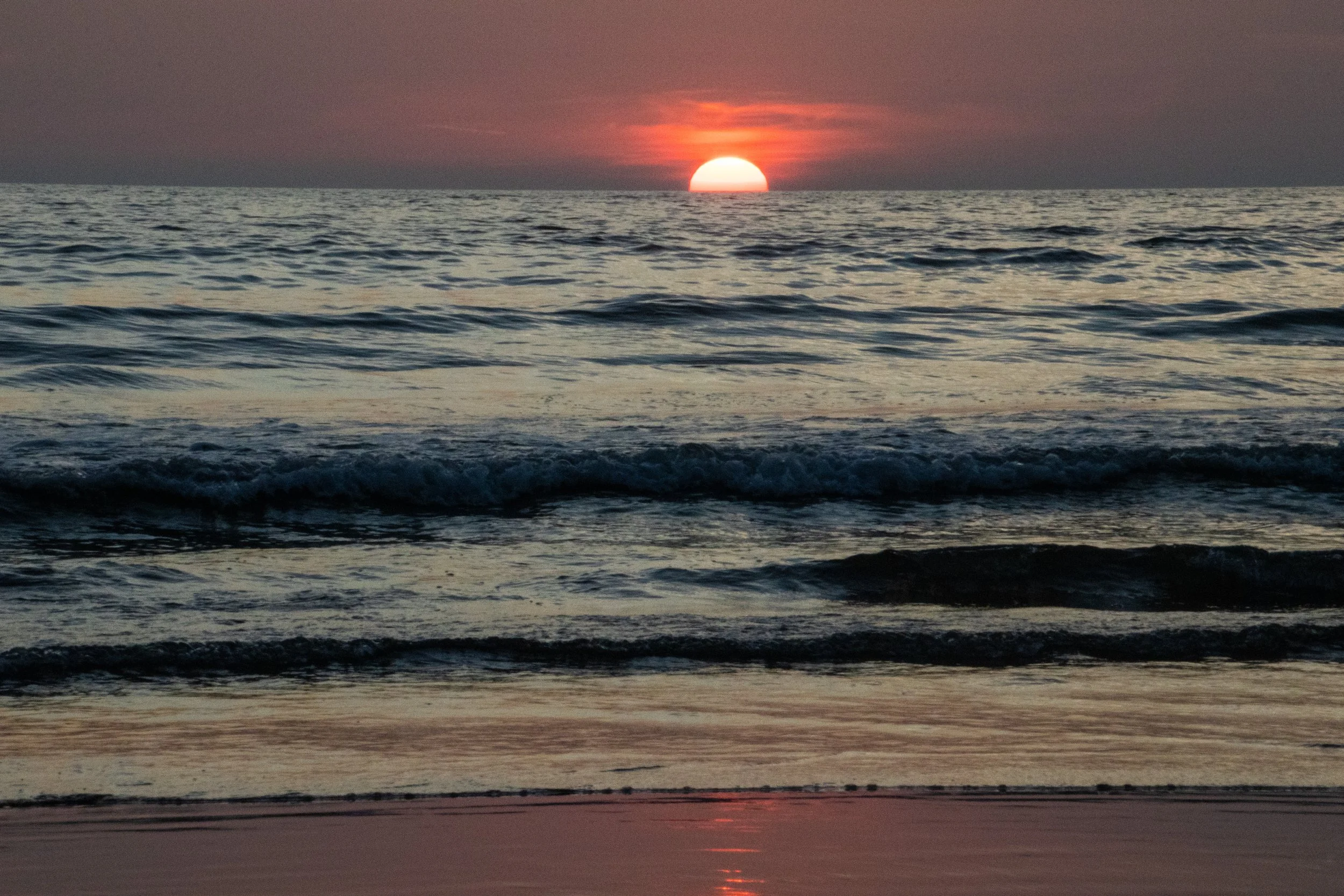
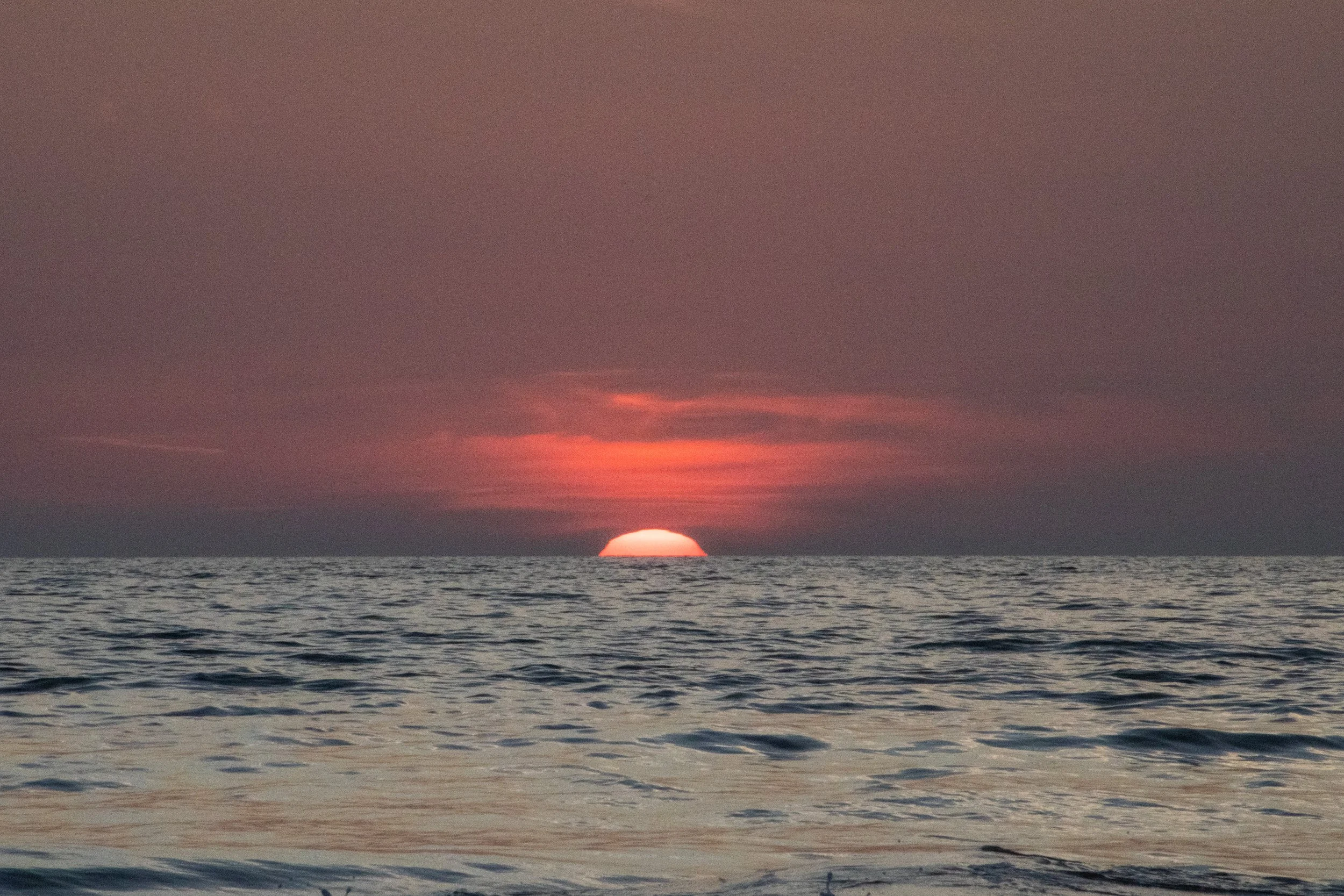
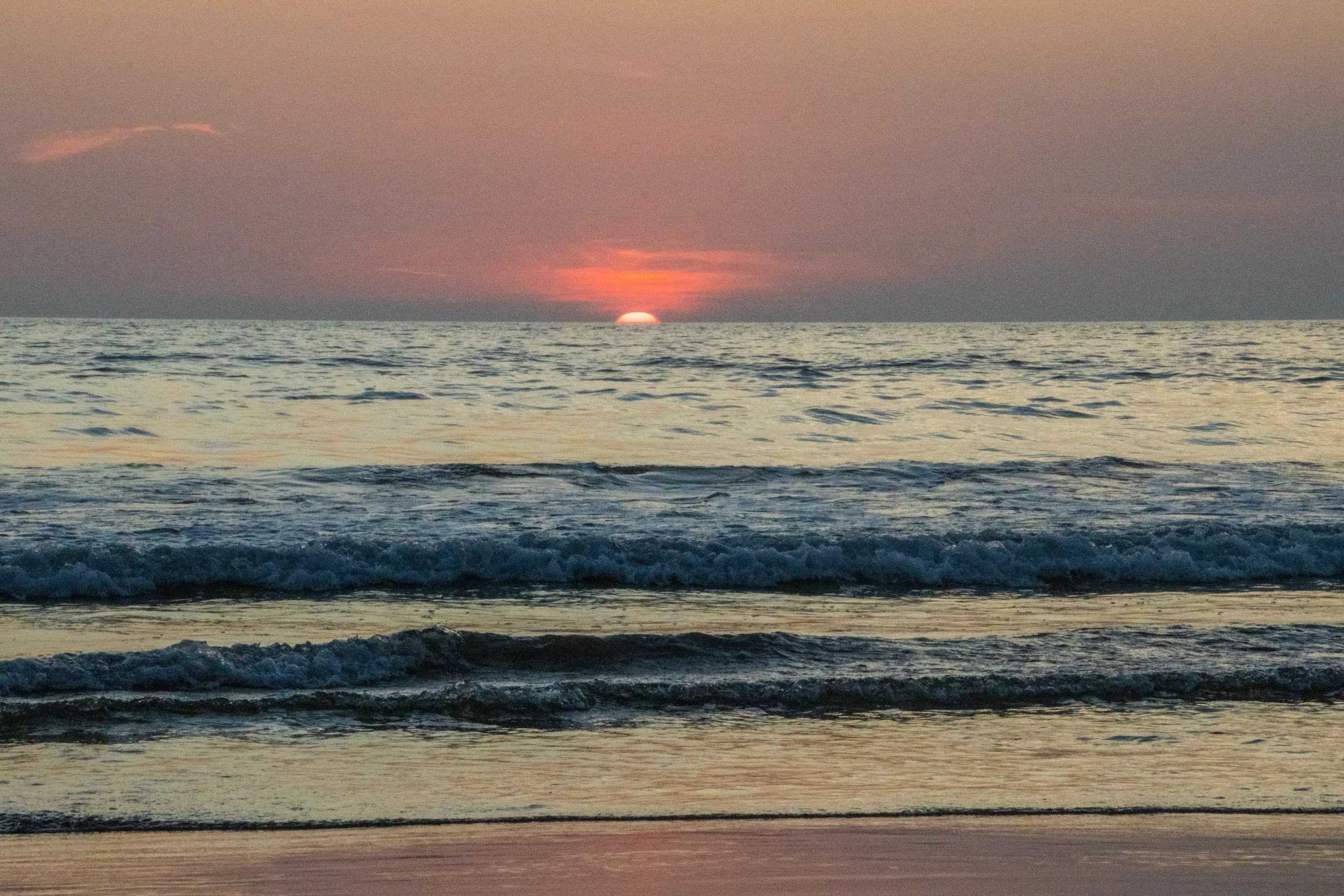
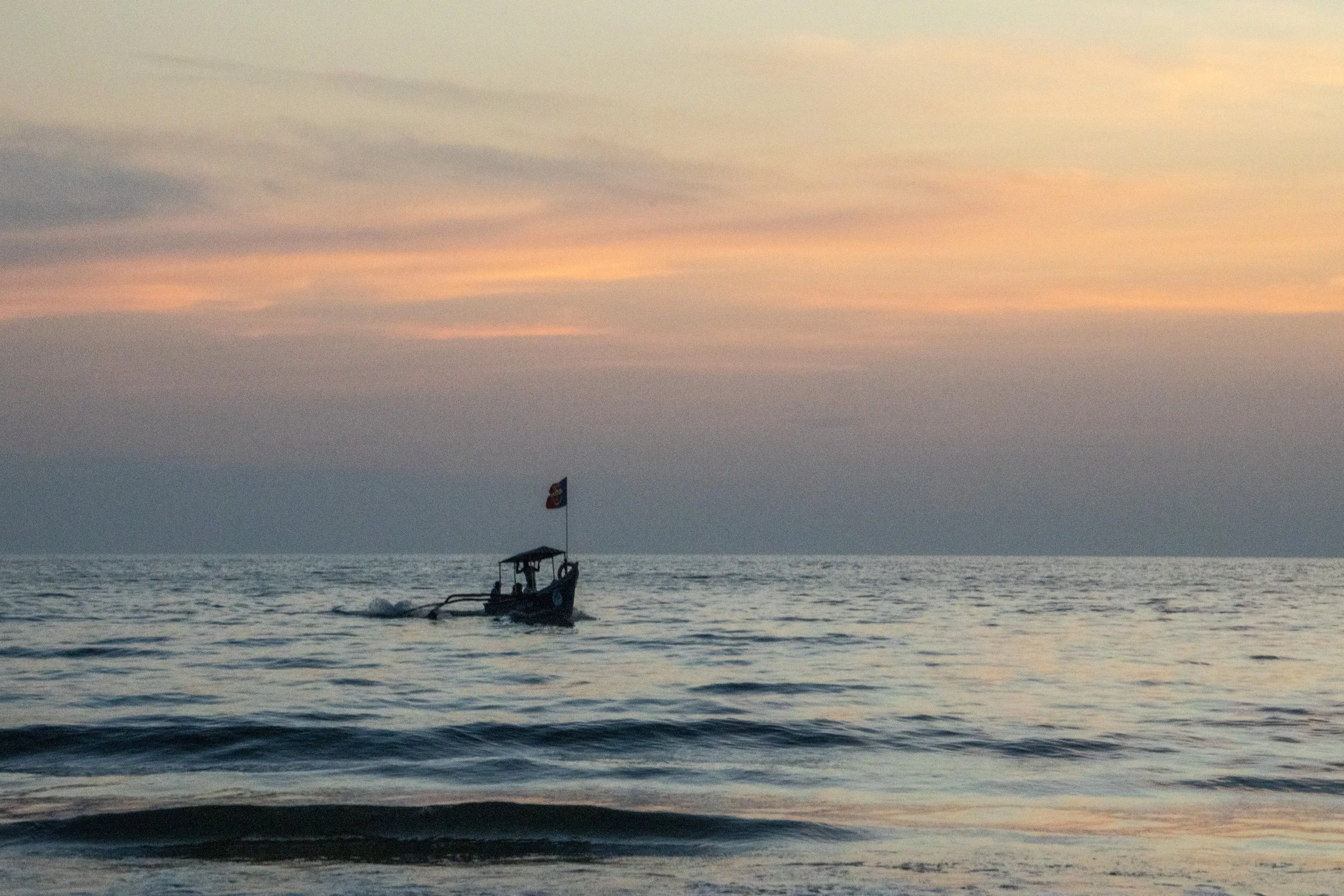
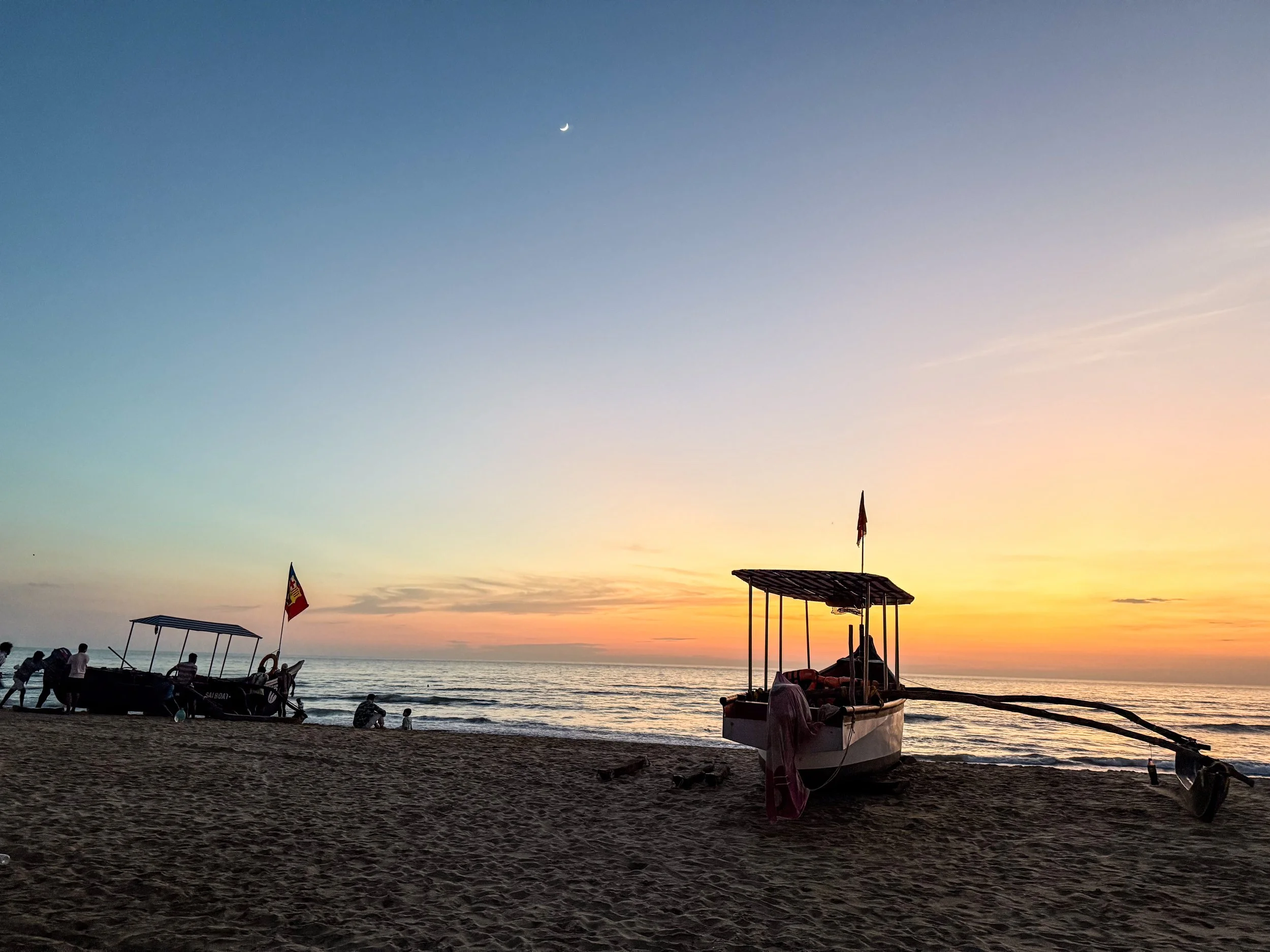
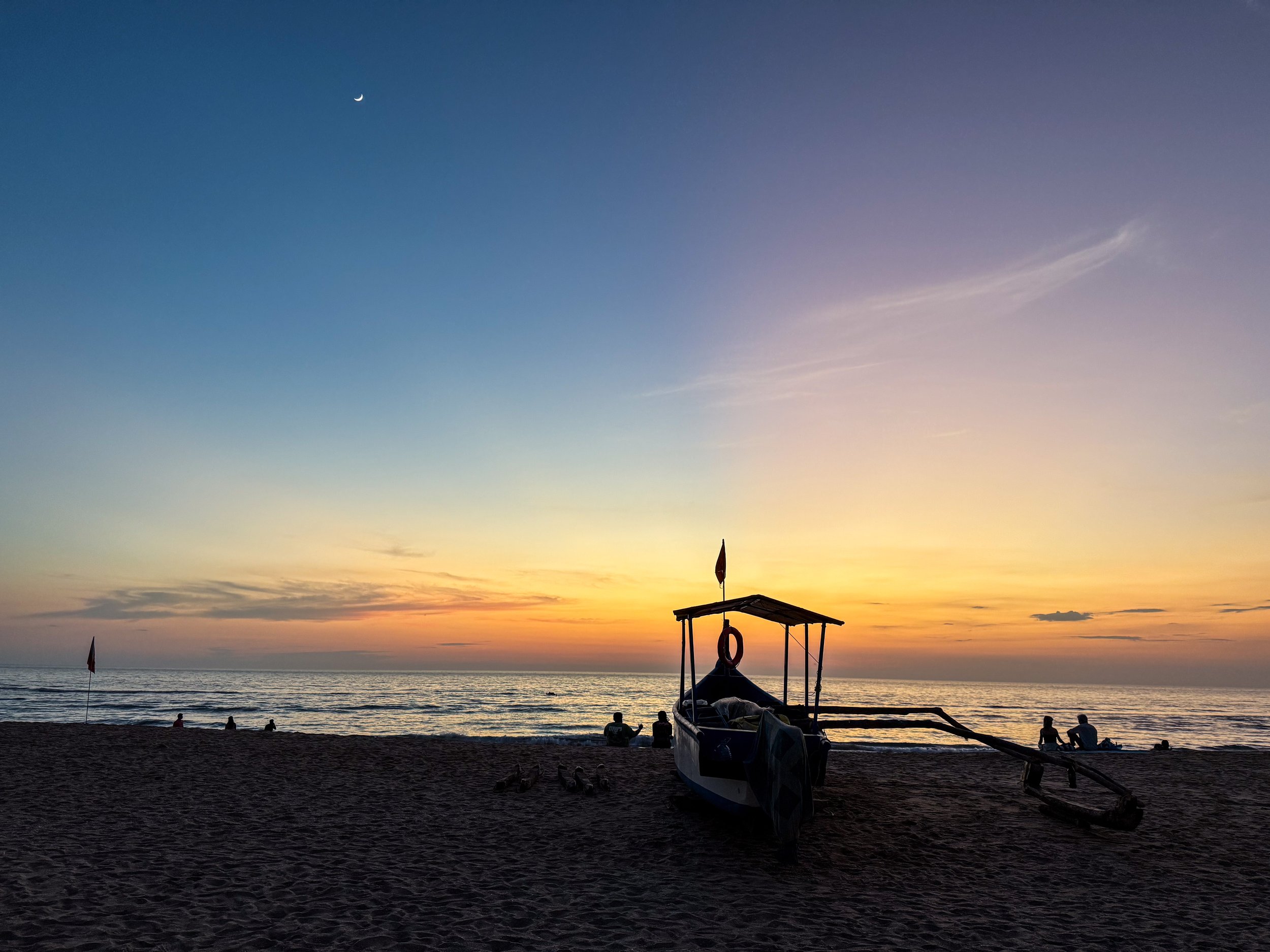
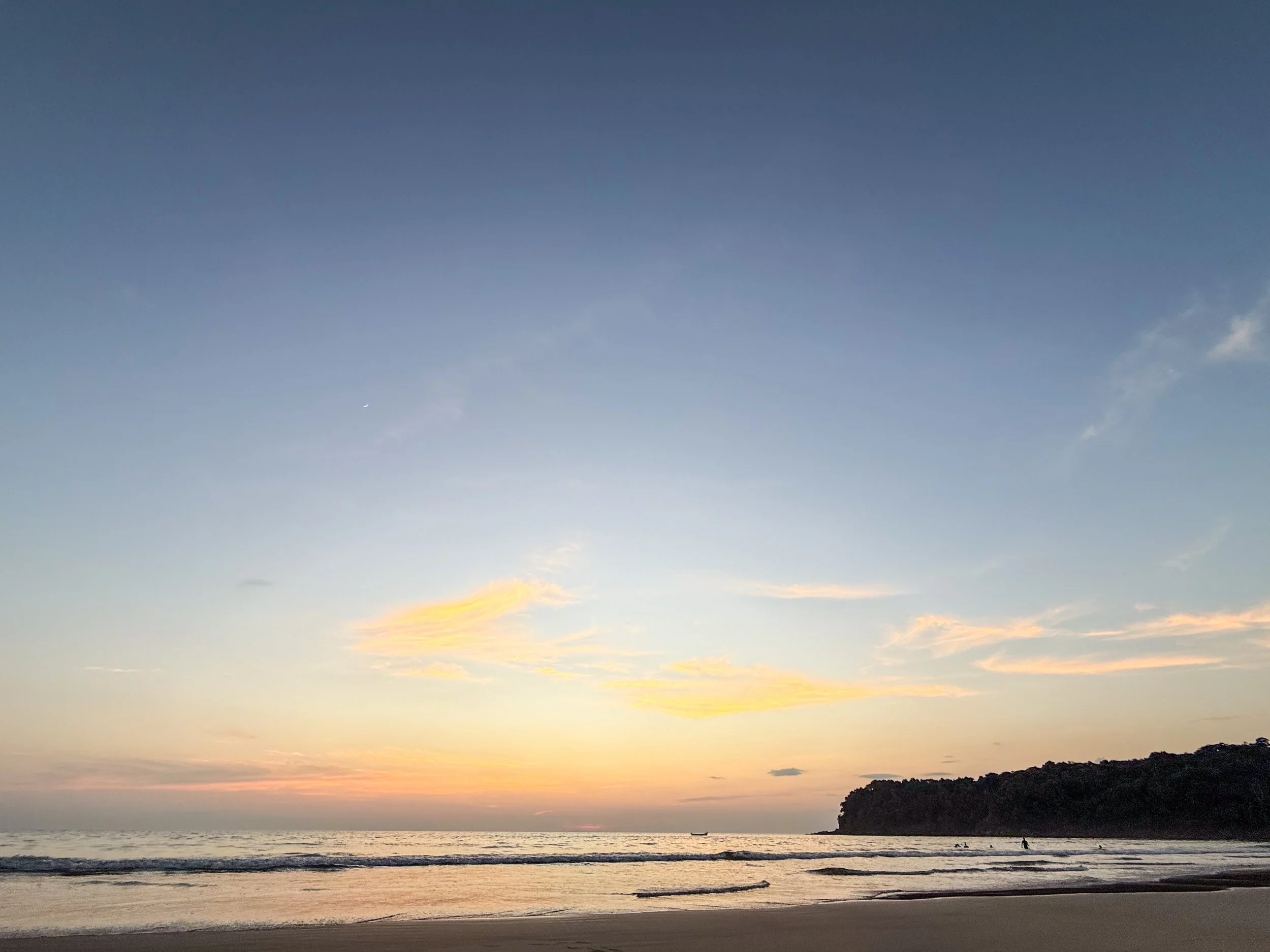
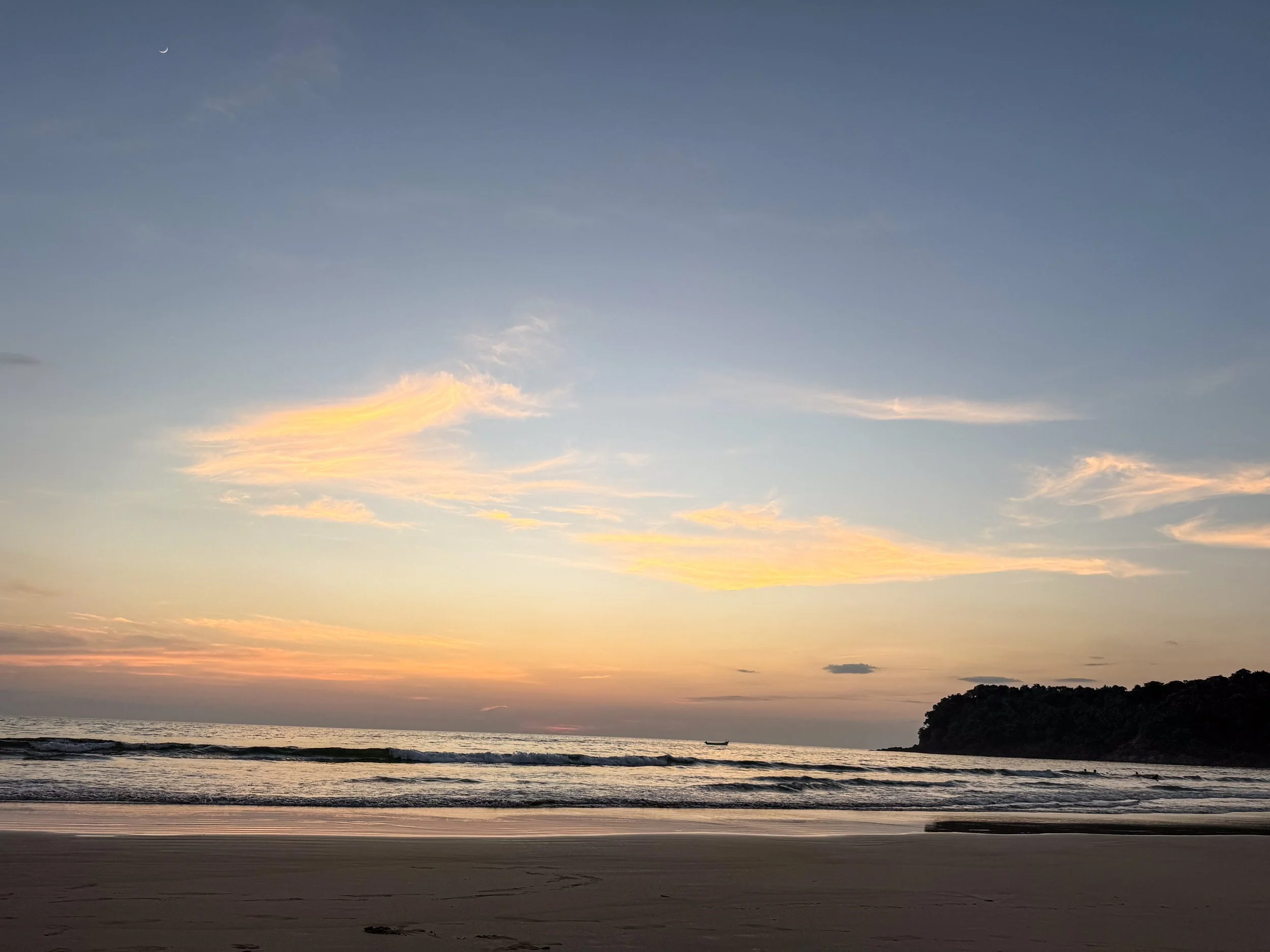
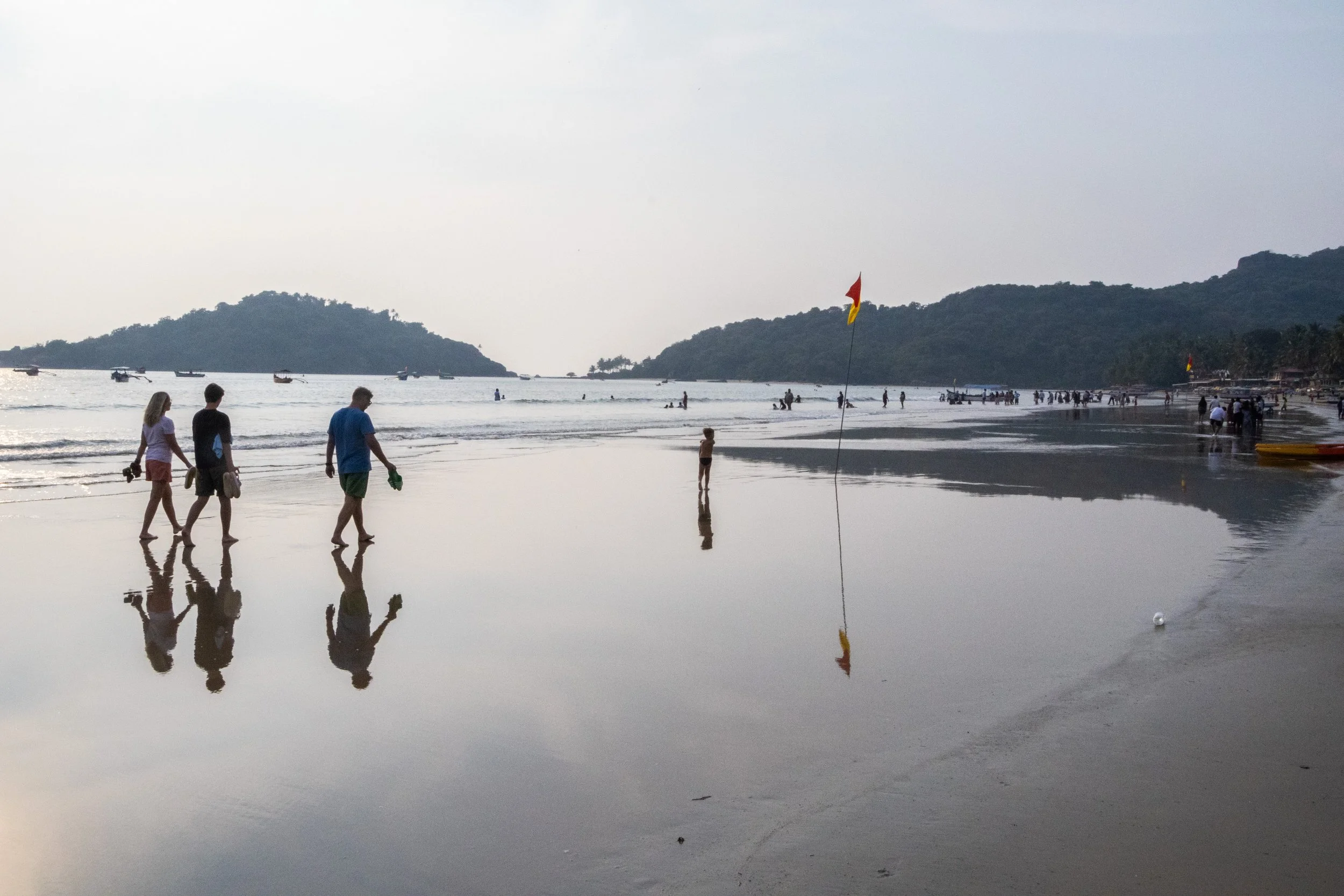
I’m going to fast-forward us straight to late afternoon so we can enjoy the sunset. By then, lifeguards had come out to watch over the beach, but the crowds of visitors typical of North Goa never materialized here; it was still relatively clear. Cows lazily basked in the sun’s last rays and colorfully decorated boats bobbed gently off the coast, occasionally making landfall directly onto these sandy shores. It was quiet and peaceful here.
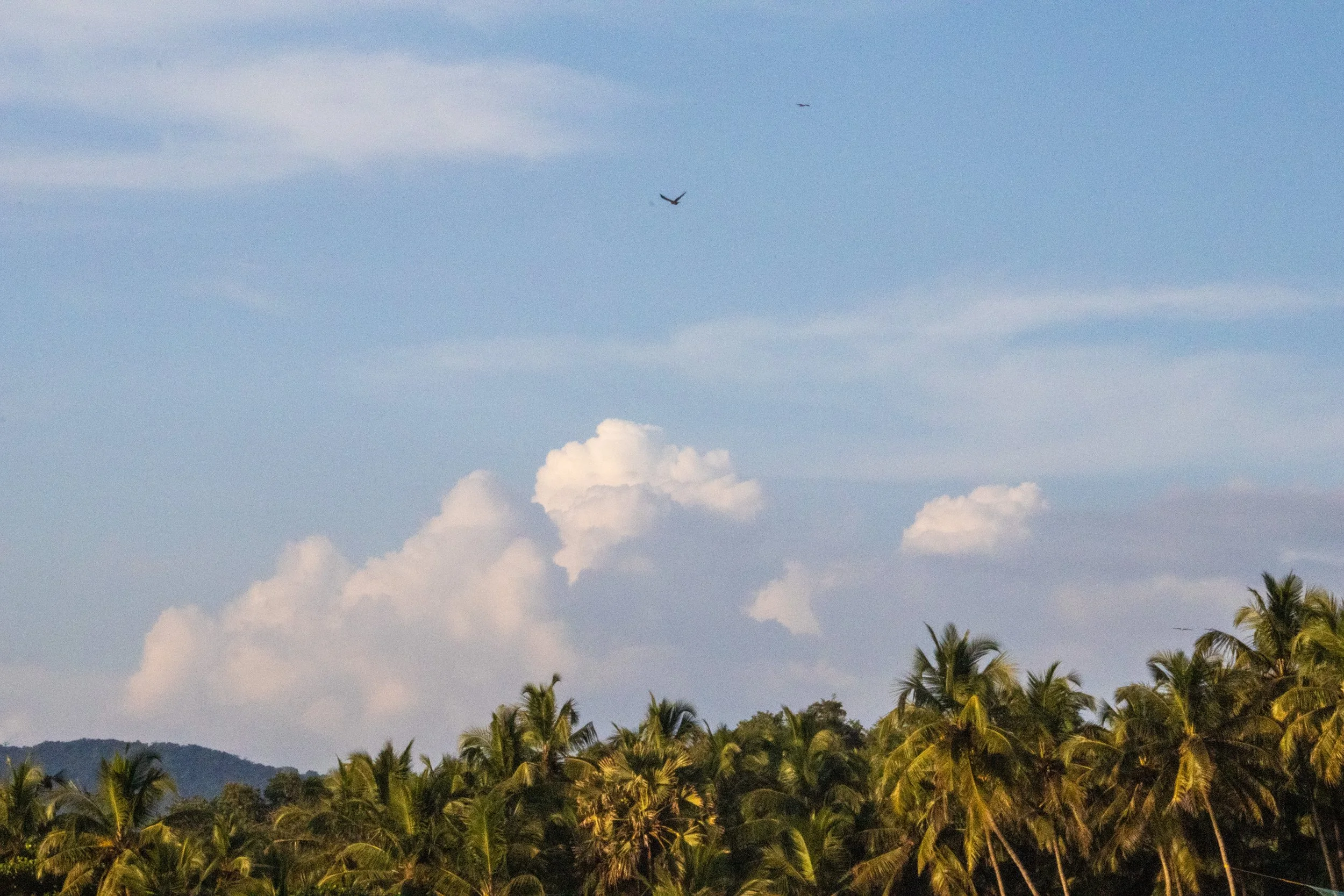
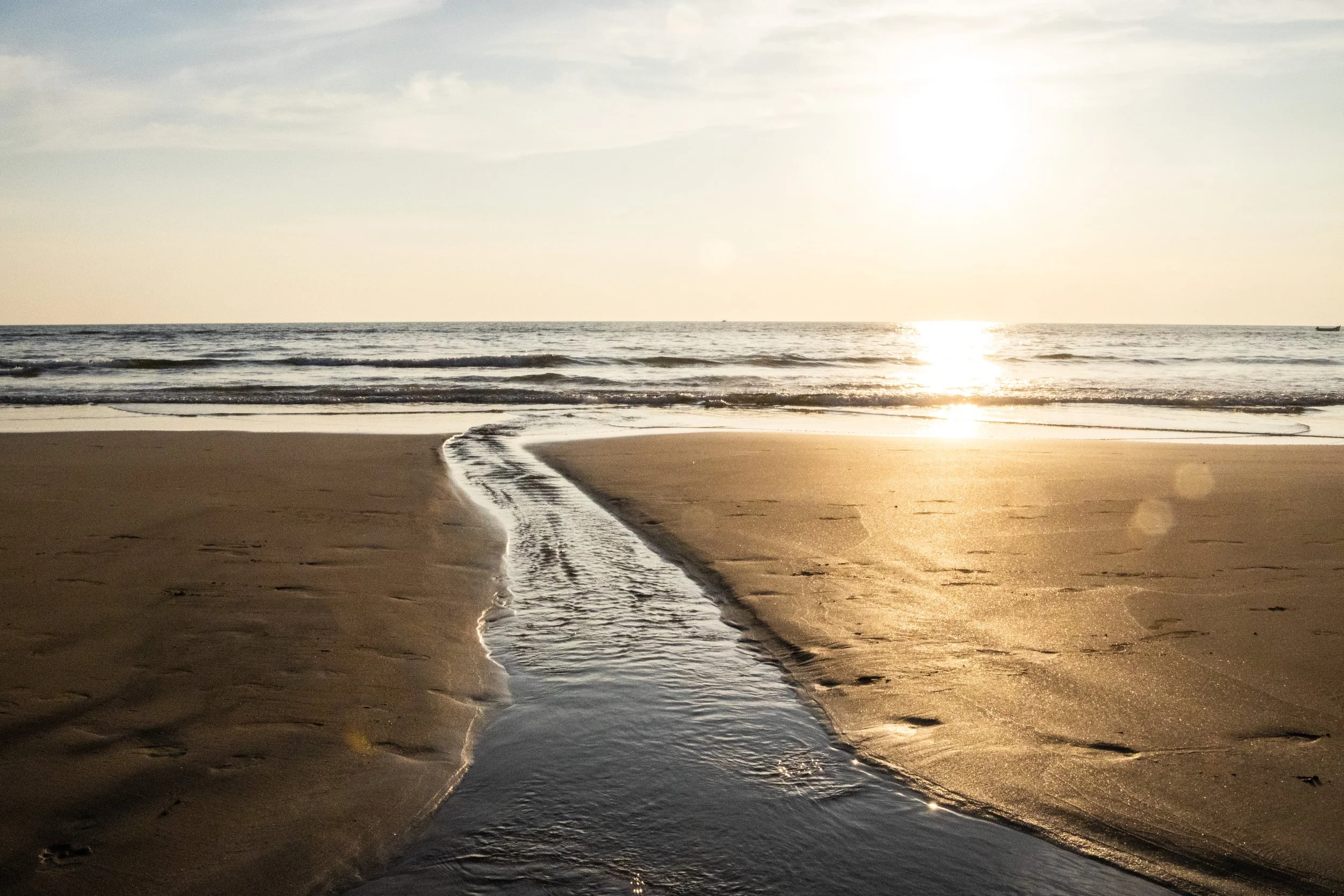
When sunset arrived, watching the colors change as the sun set over the Arabian Sea was actually quite dramatic. It was one of those sunsets that—rather than being taken at face value as “just a pretty view”—weirdly reminded me of what it was that I was actually seeing: a massive ball of flames disappearing around the earth’s curvature. My forced perspective saw this fiery beast nest briefly on the horizon line from across the vast, restless waters, before eventually sliding out of view. It left behind beautifully colored skies, which eventually faded to darkness, revealing an endless expanse of stars. With my bare feet in the sand, it was hard not be grateful for my place in this world. Despite all its imperfections, it’s still perfect.

South Goa Scooter Adventures!
It has been a LONG time since the origins of this blog in Southeast Asia. At that point, my daily commute to work was done via motorbike, which prepared me well for additional adventures scootering around Bali. Spending my days cruising through the Indonesian jungles was one of the most fun experiences of my life… but years later, I hadn’t done anything like it since! That unfortunate dry spell ended in Goa.
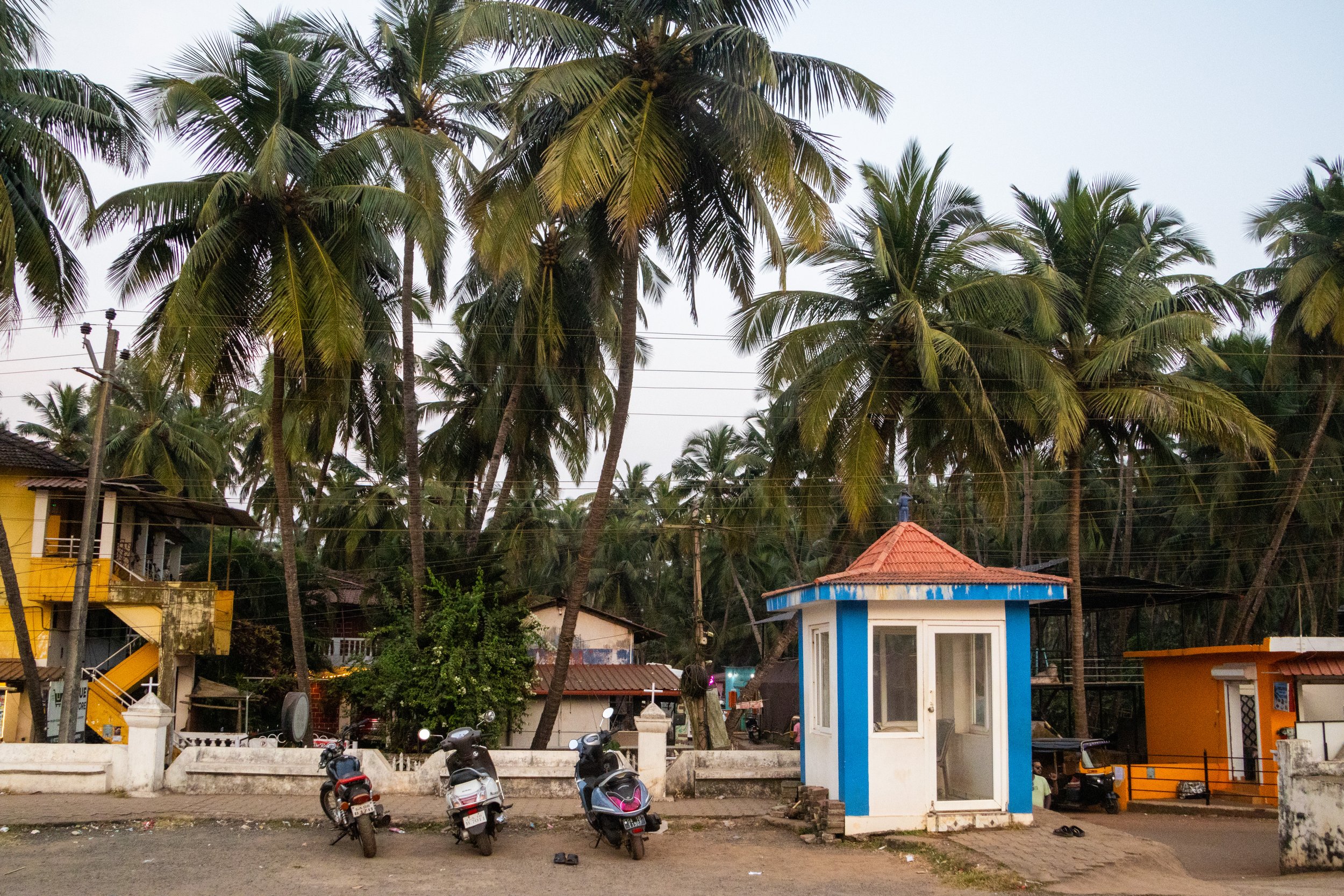
If you only have a couple of days here, there is absolutely nothing better than renting a scooter and hopping from beach to beach. Honestly, the journey from one beach town to the next is way more fun than anything you are going to do once you arrive at your destination (according to me). There will be all sorts of beautiful and curious sights that will whiz past you on the road, and you won’t need to ask anybody’s permission to just stop on the side of the road and explore to your heart’s content!
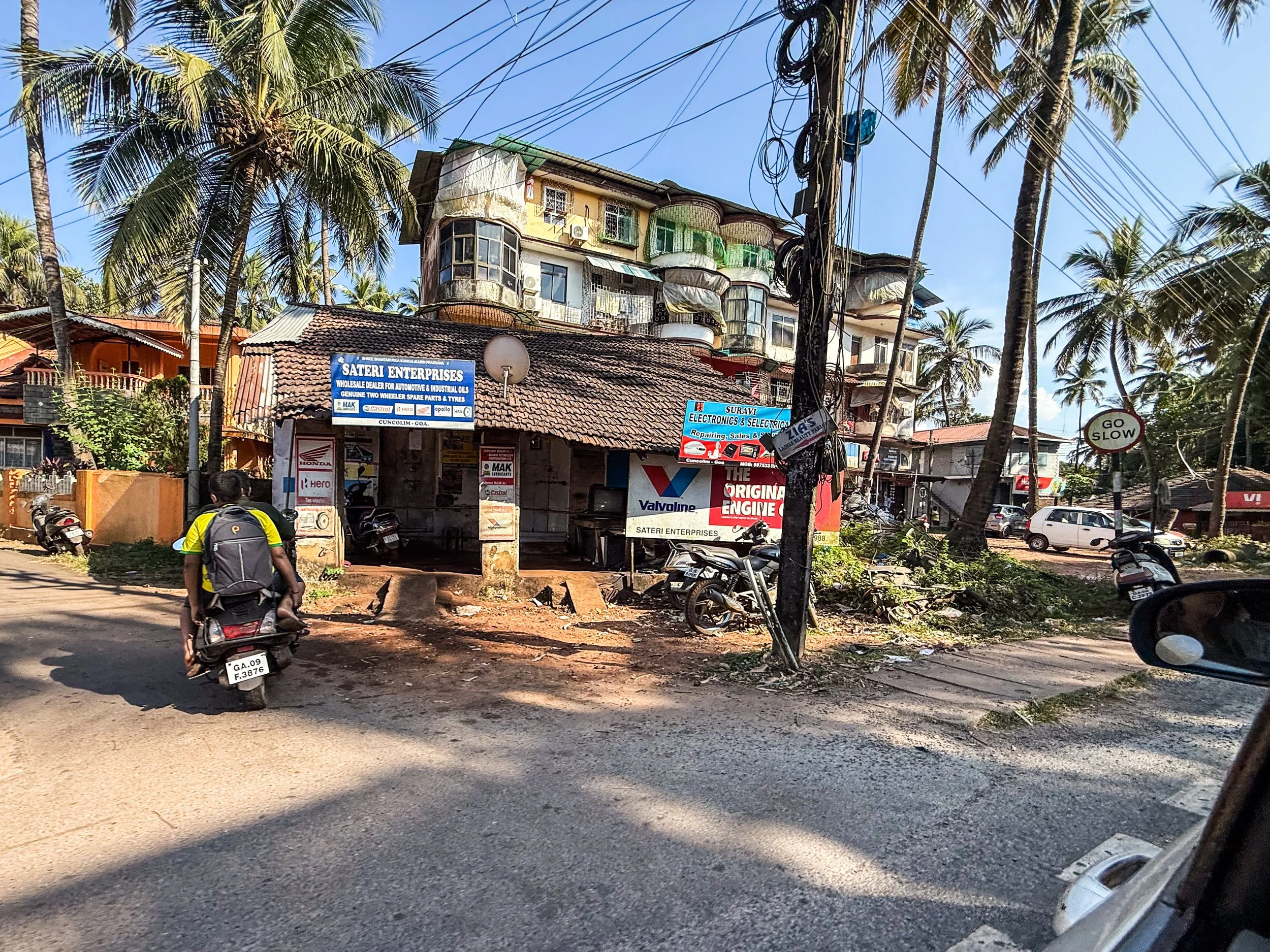
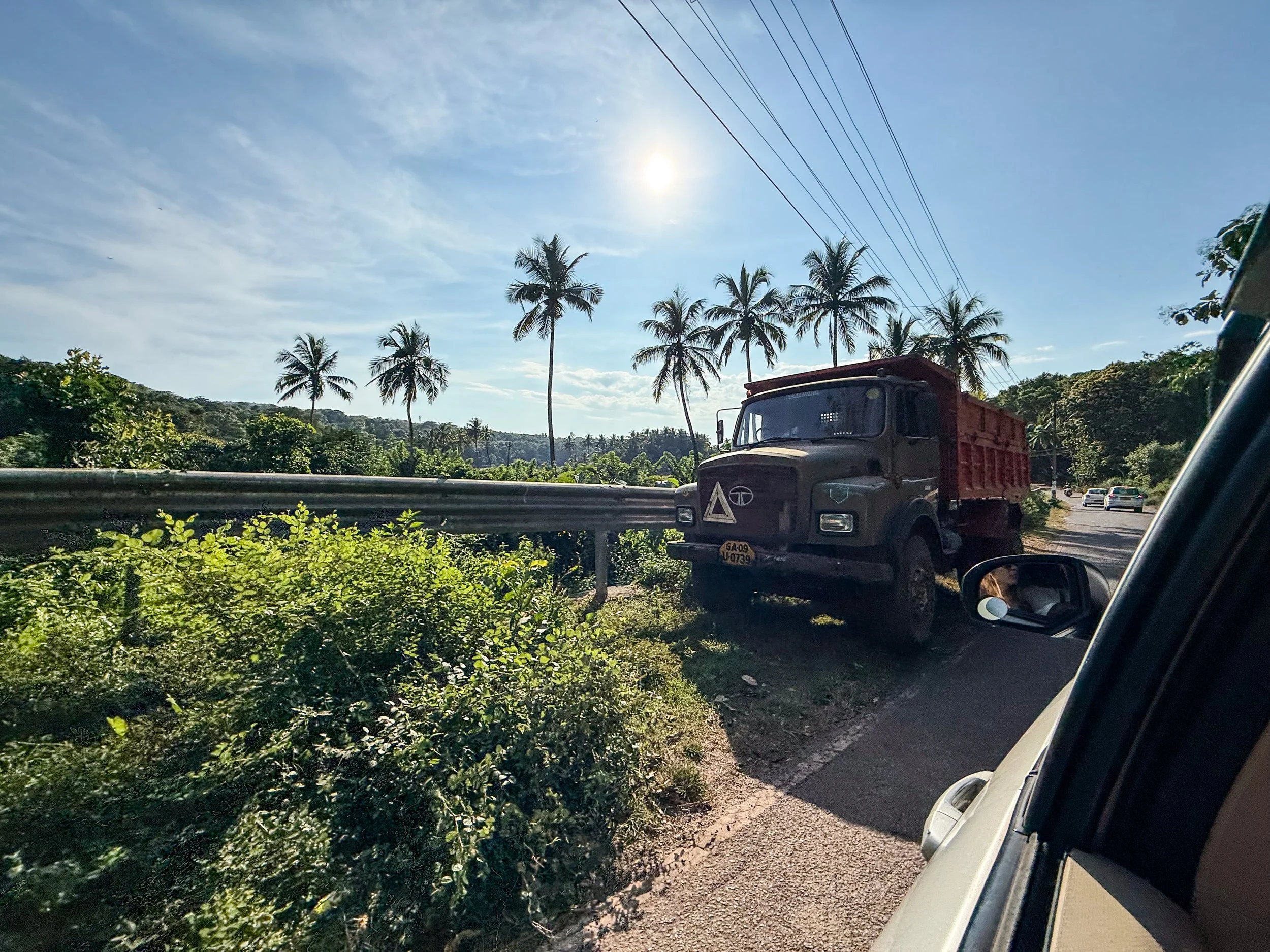
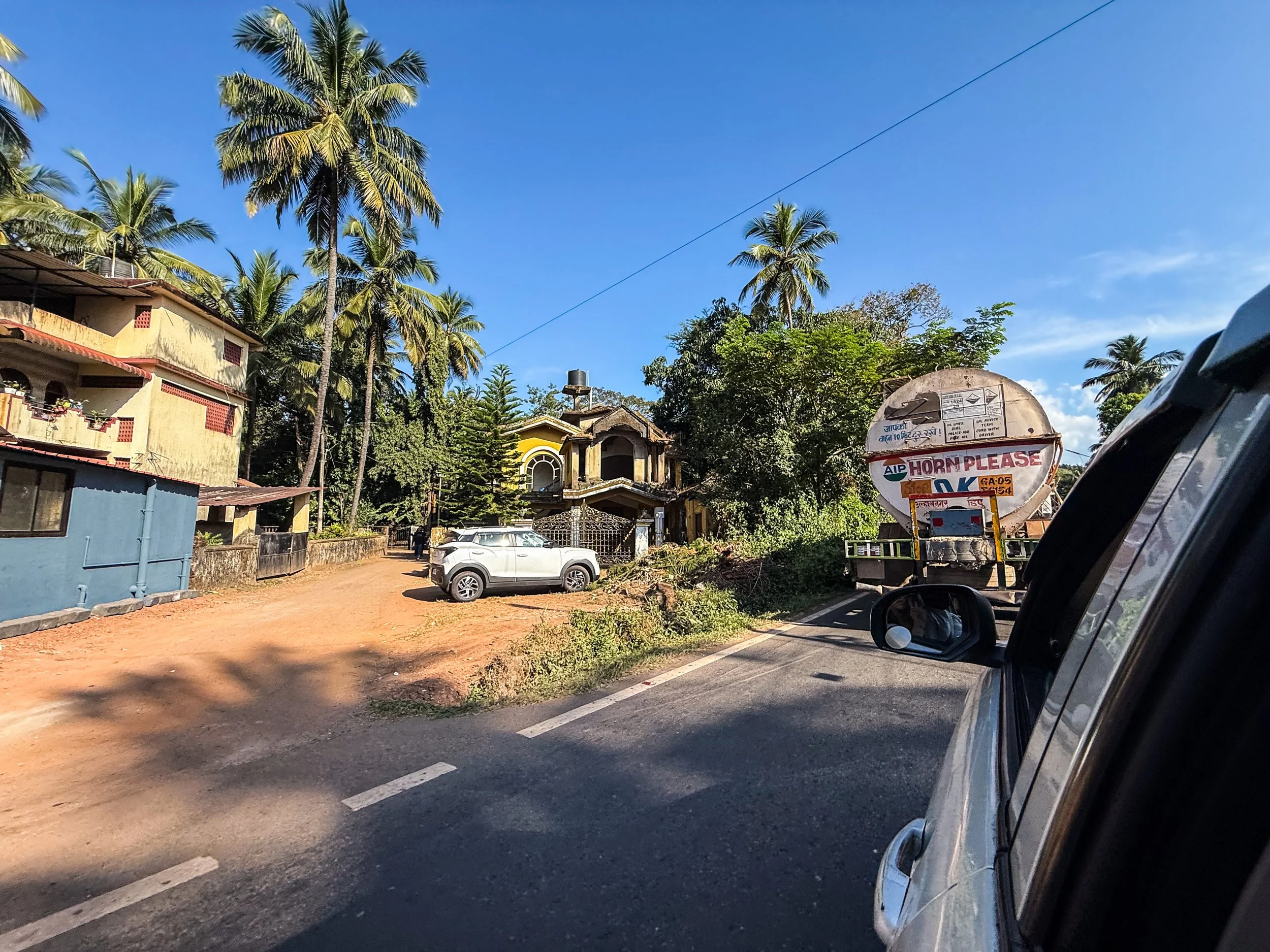
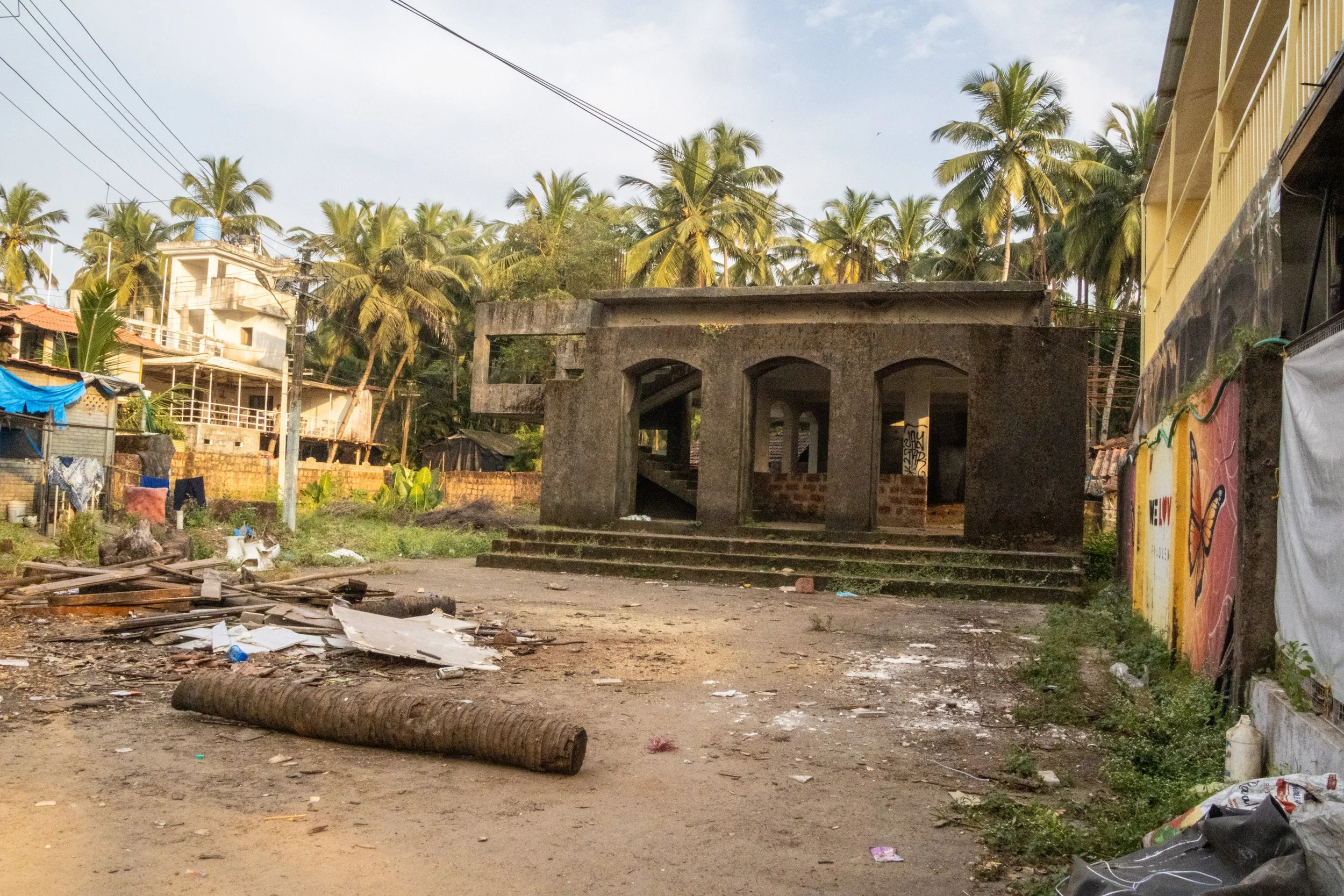
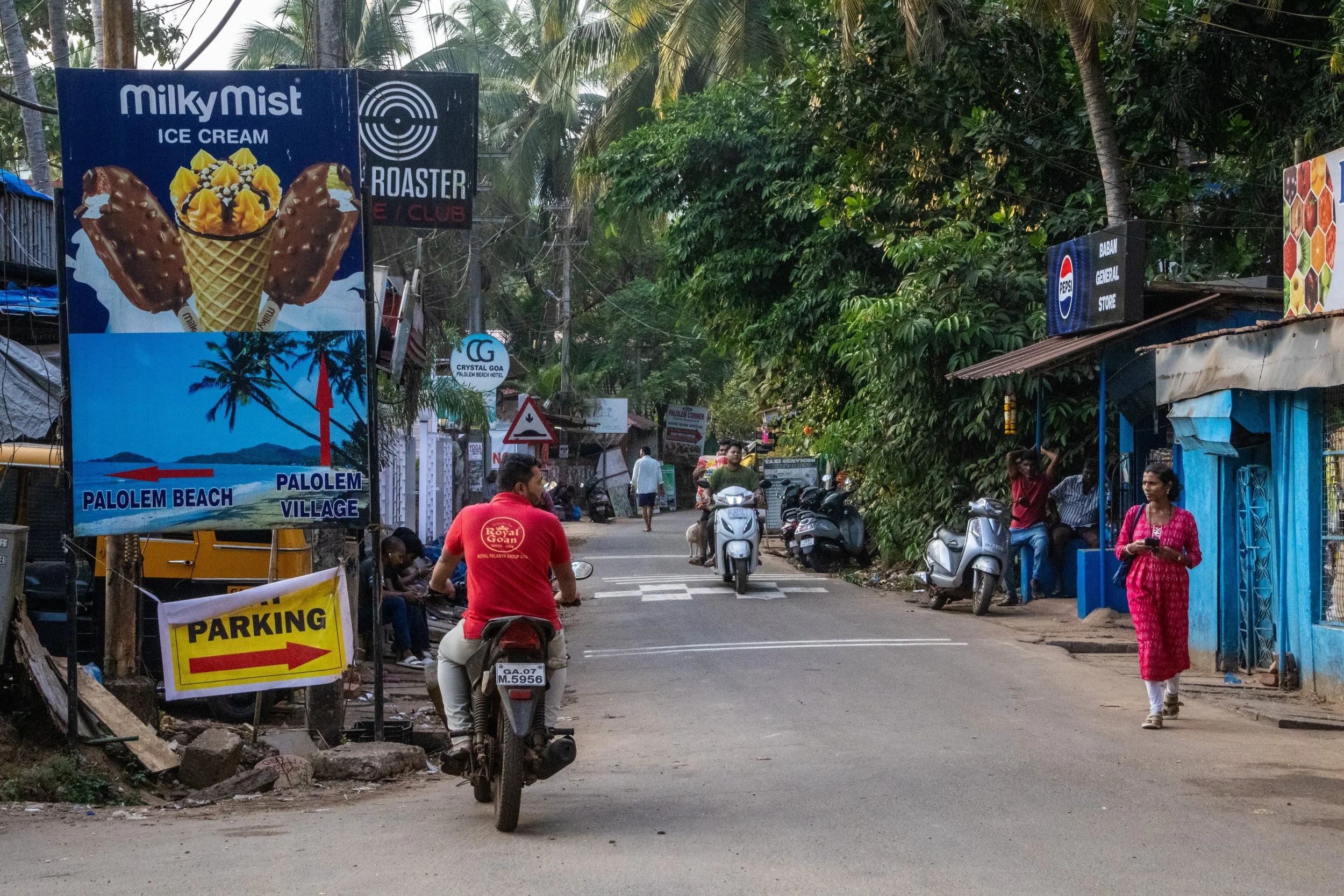
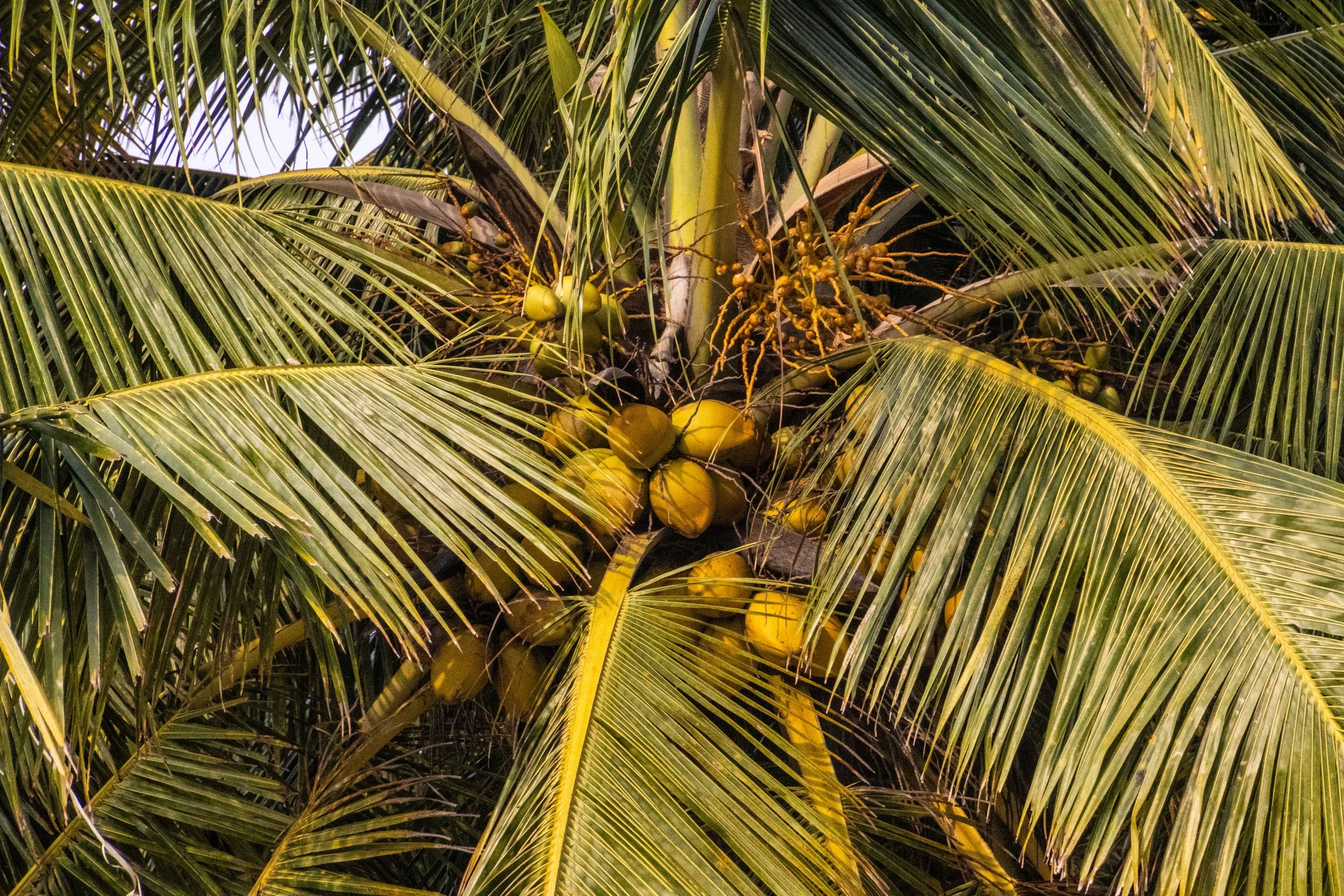
I can’t believe I’d forgotten how much FUN this is! Forthcoming trips are going to feature this mode of transportation a lot more often. Here’s a gallery of photos that I was only able to take because I stopped on the side of the road somewhere in Goa when something caught my eye.
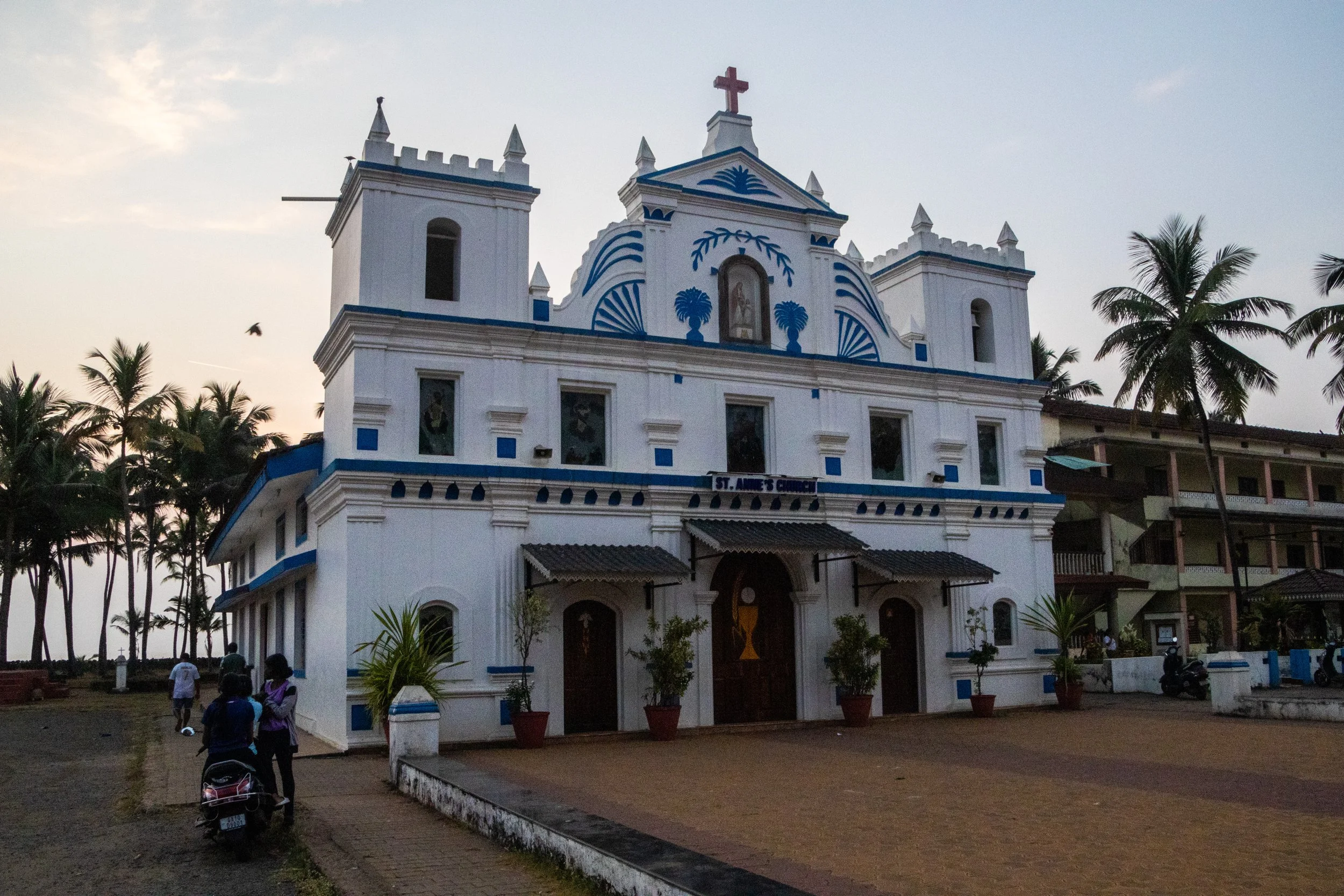
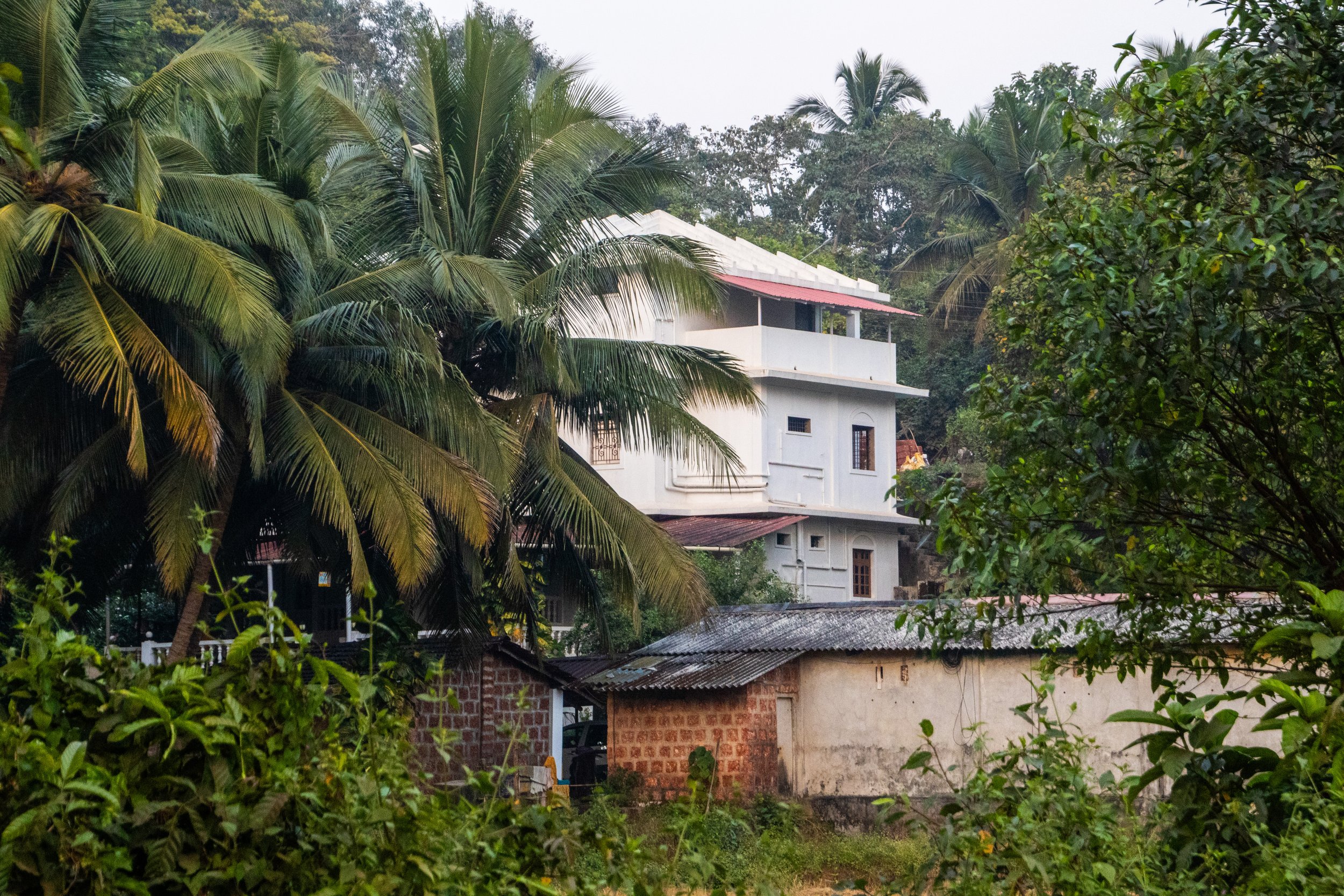
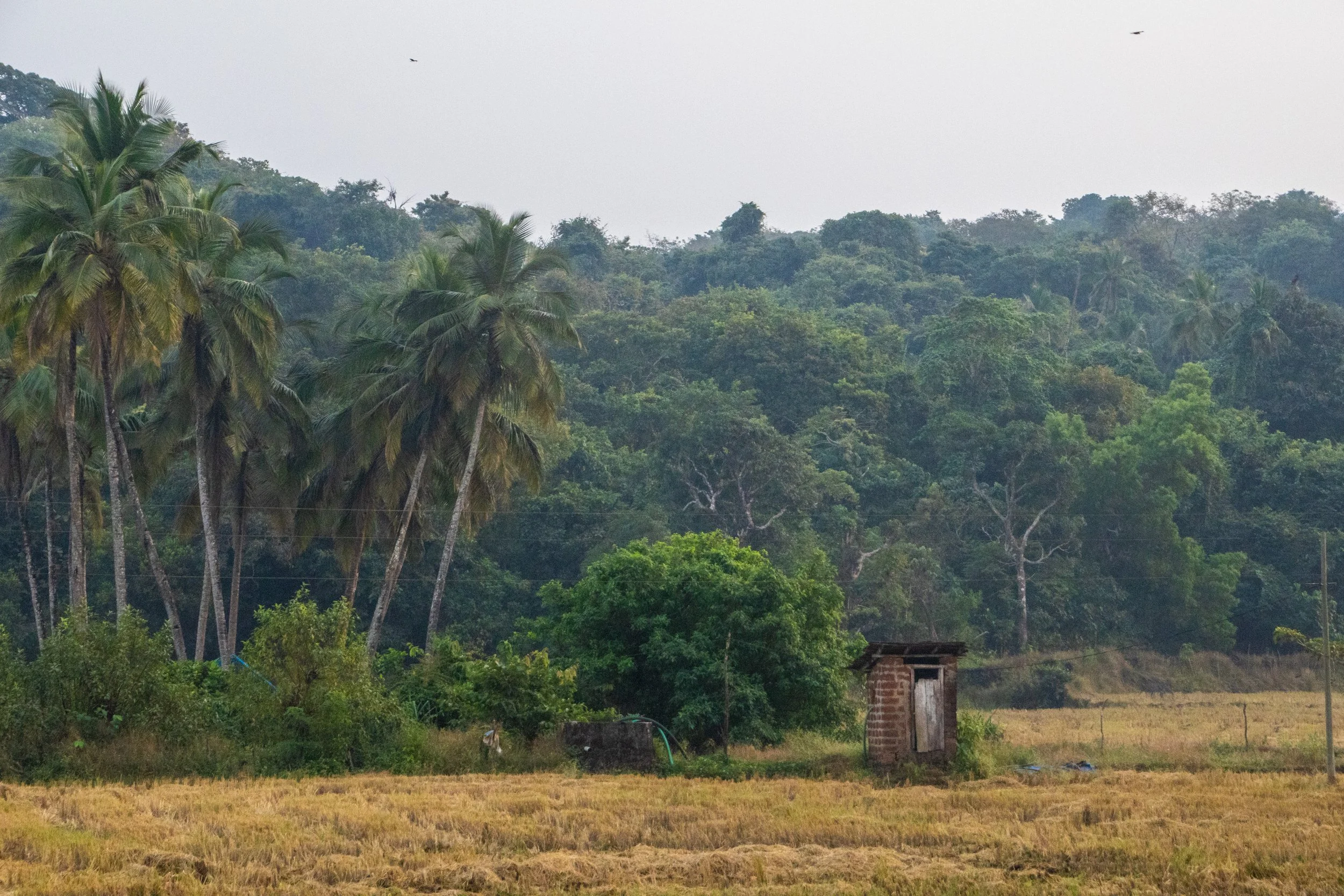
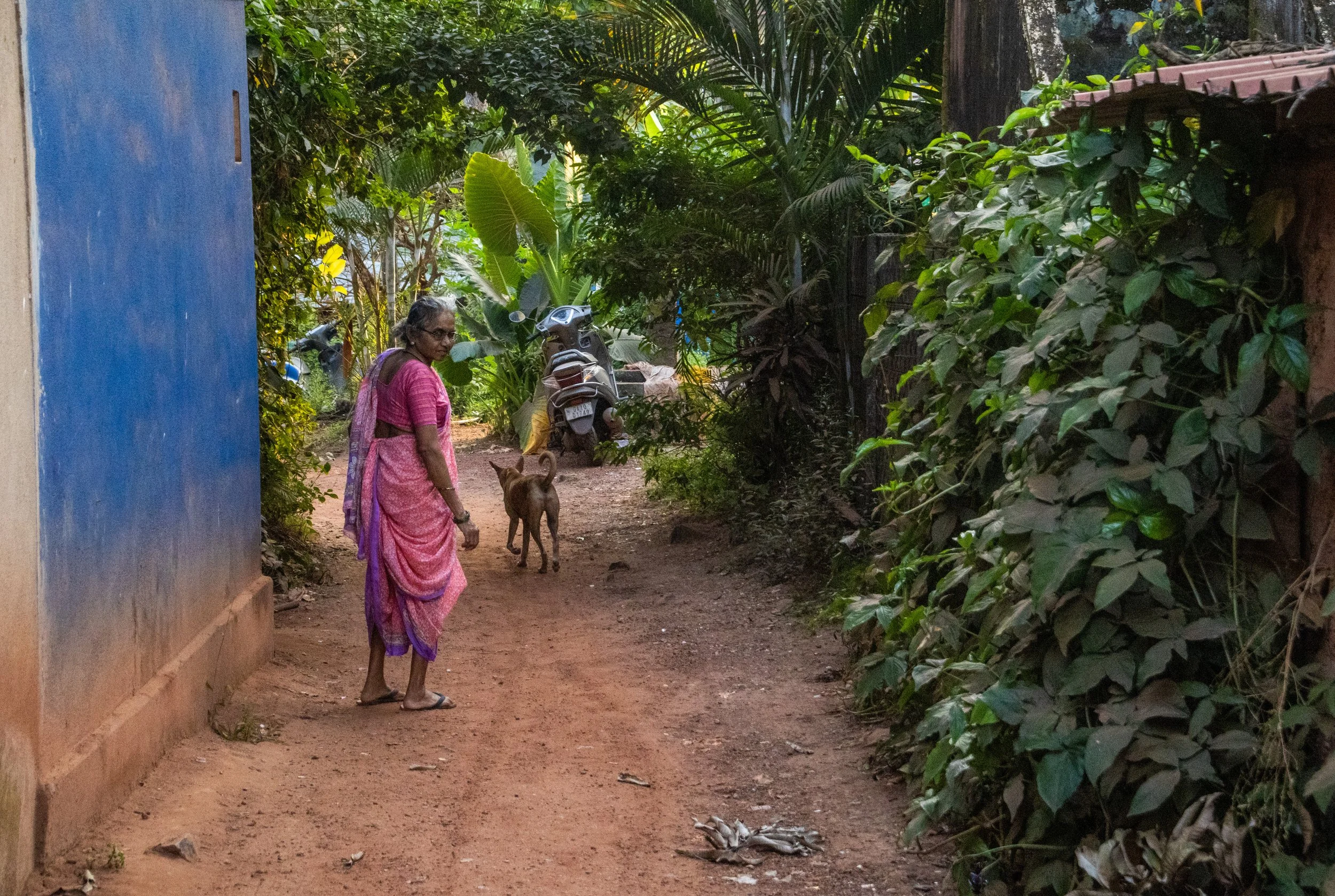
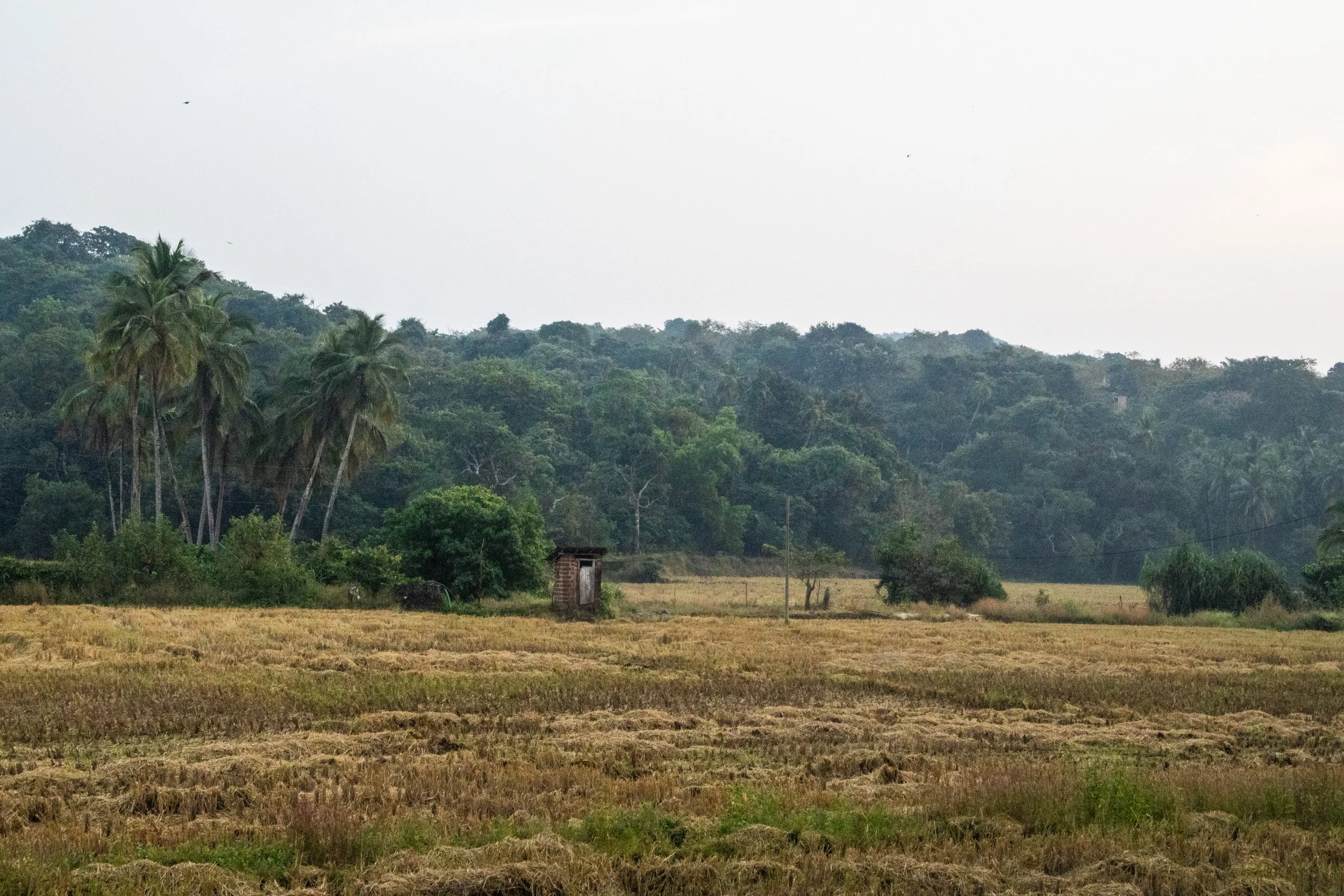
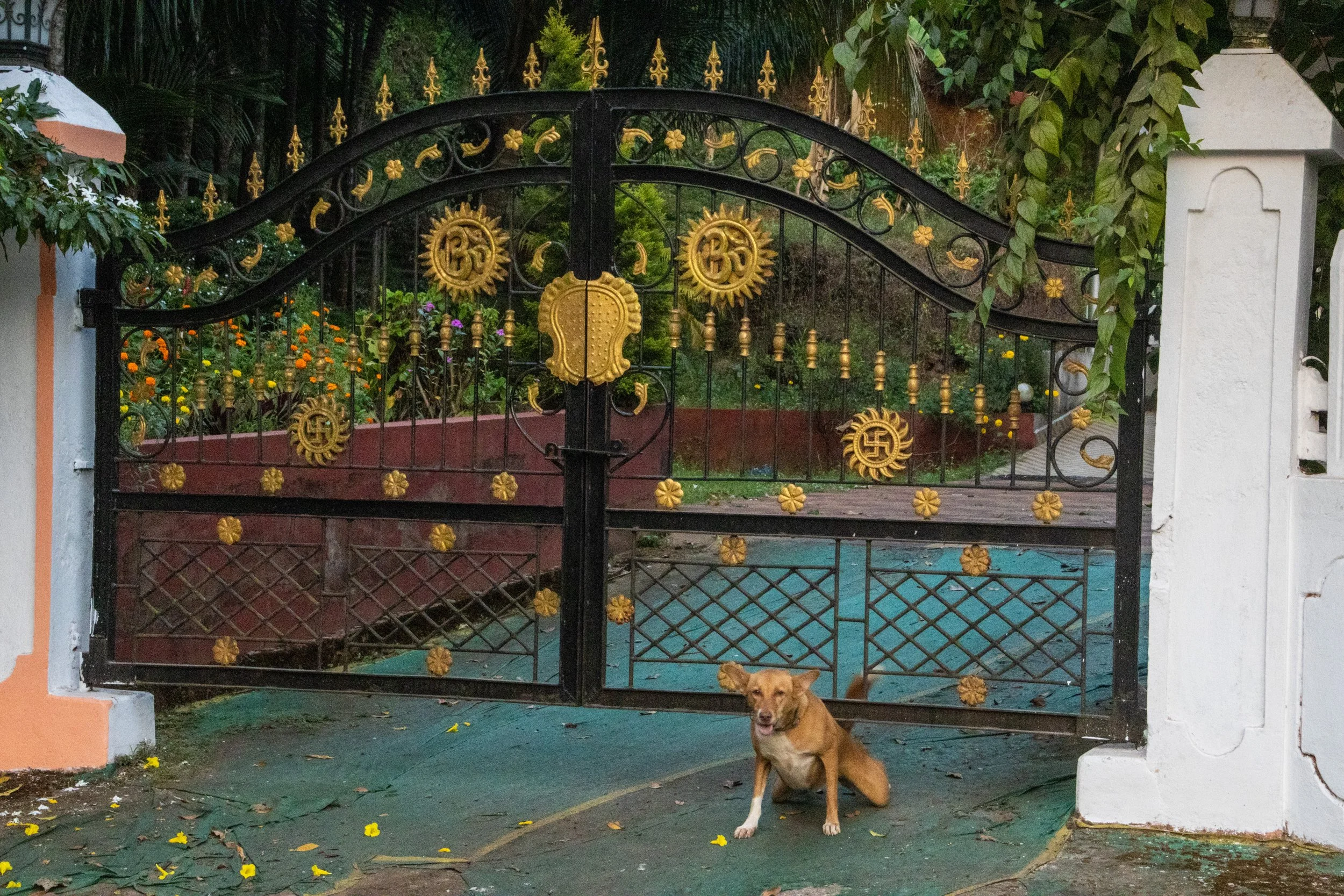
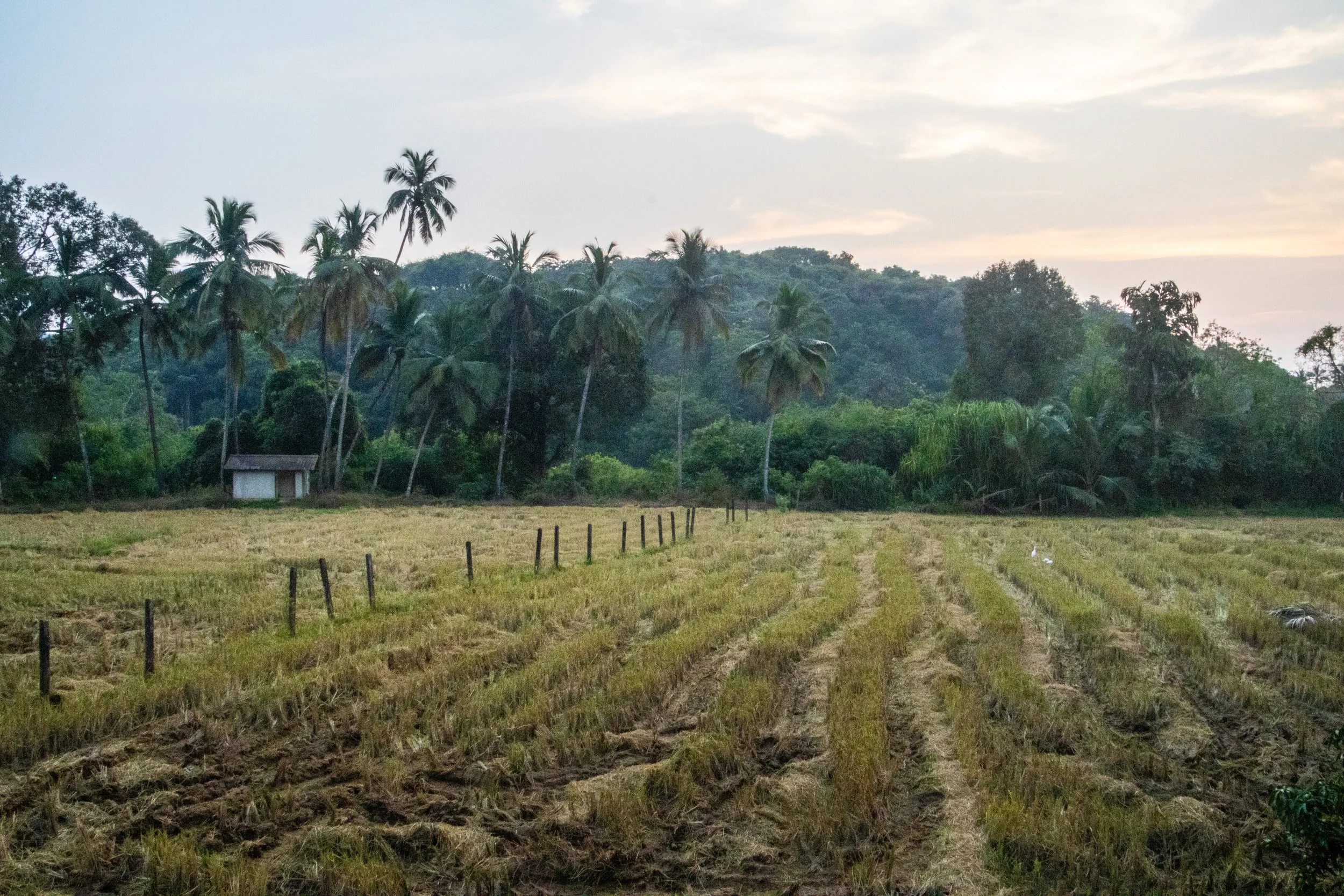
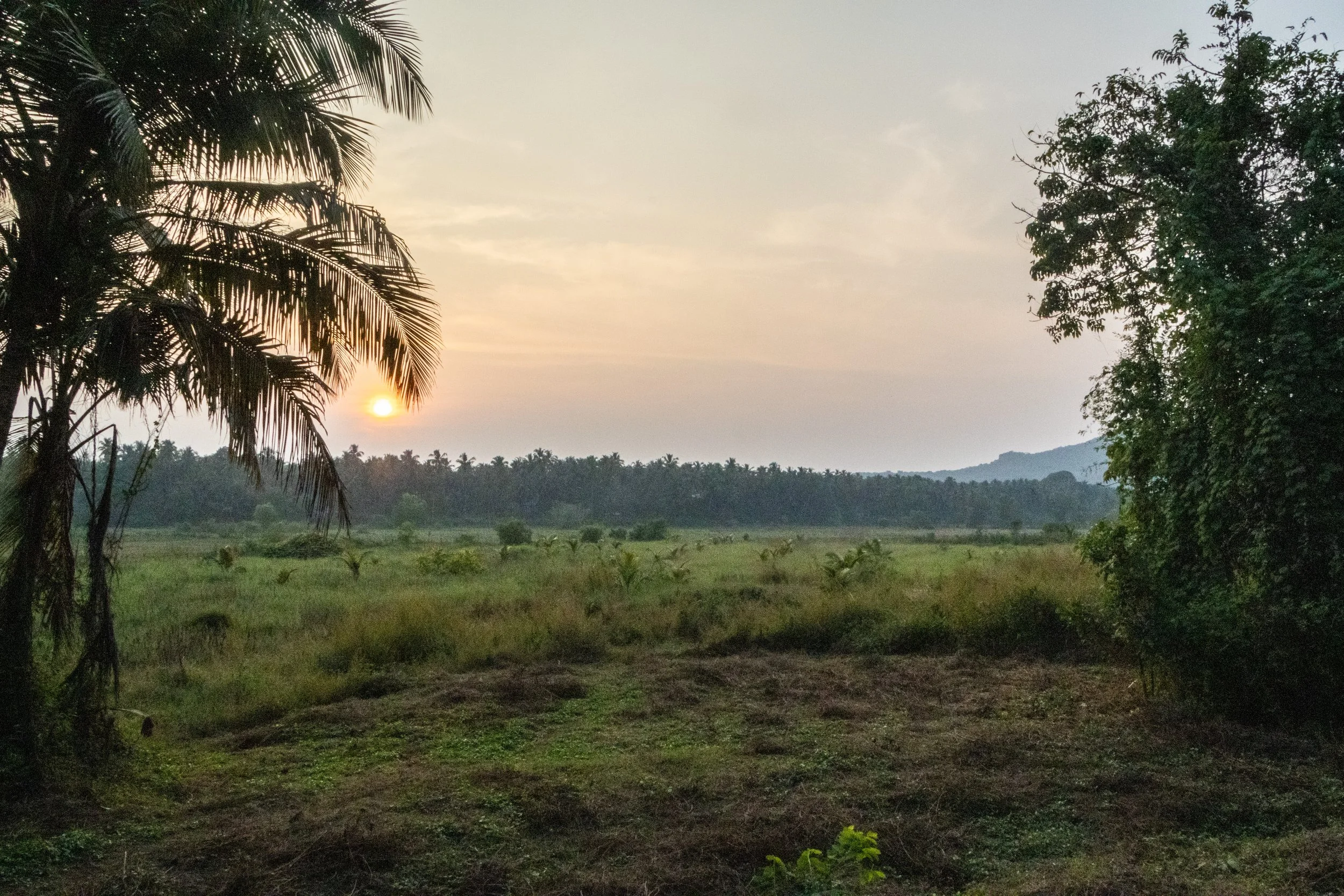
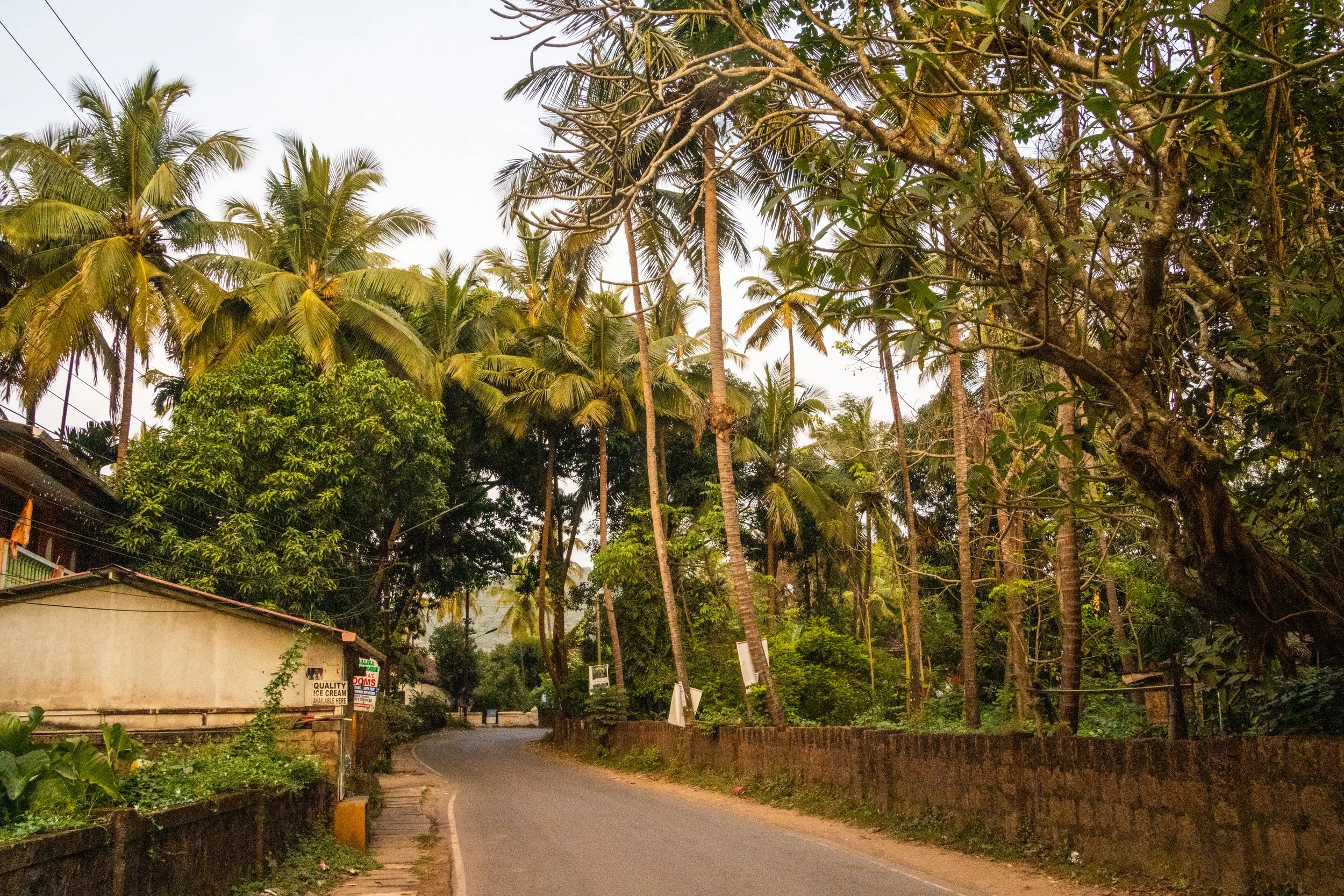
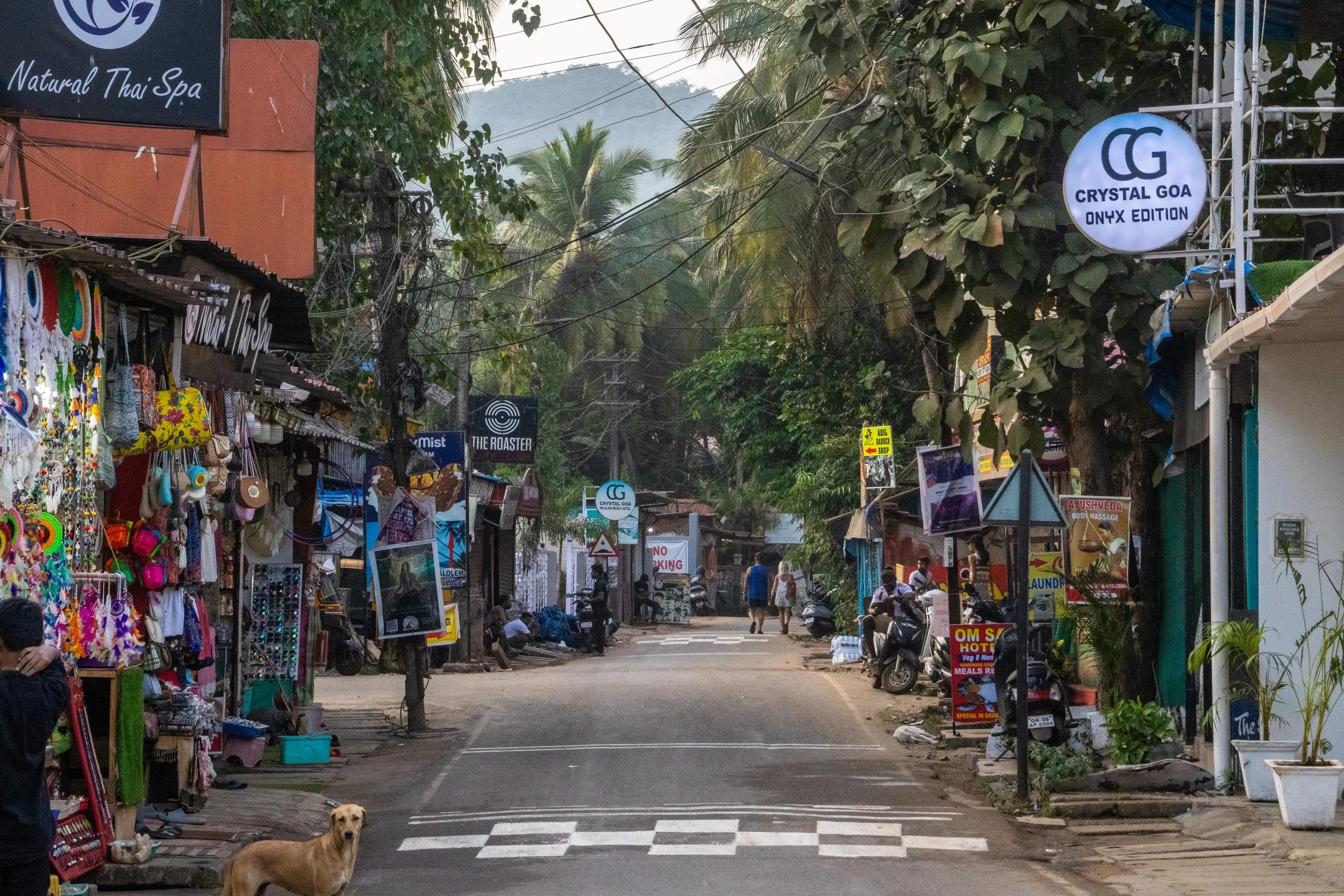
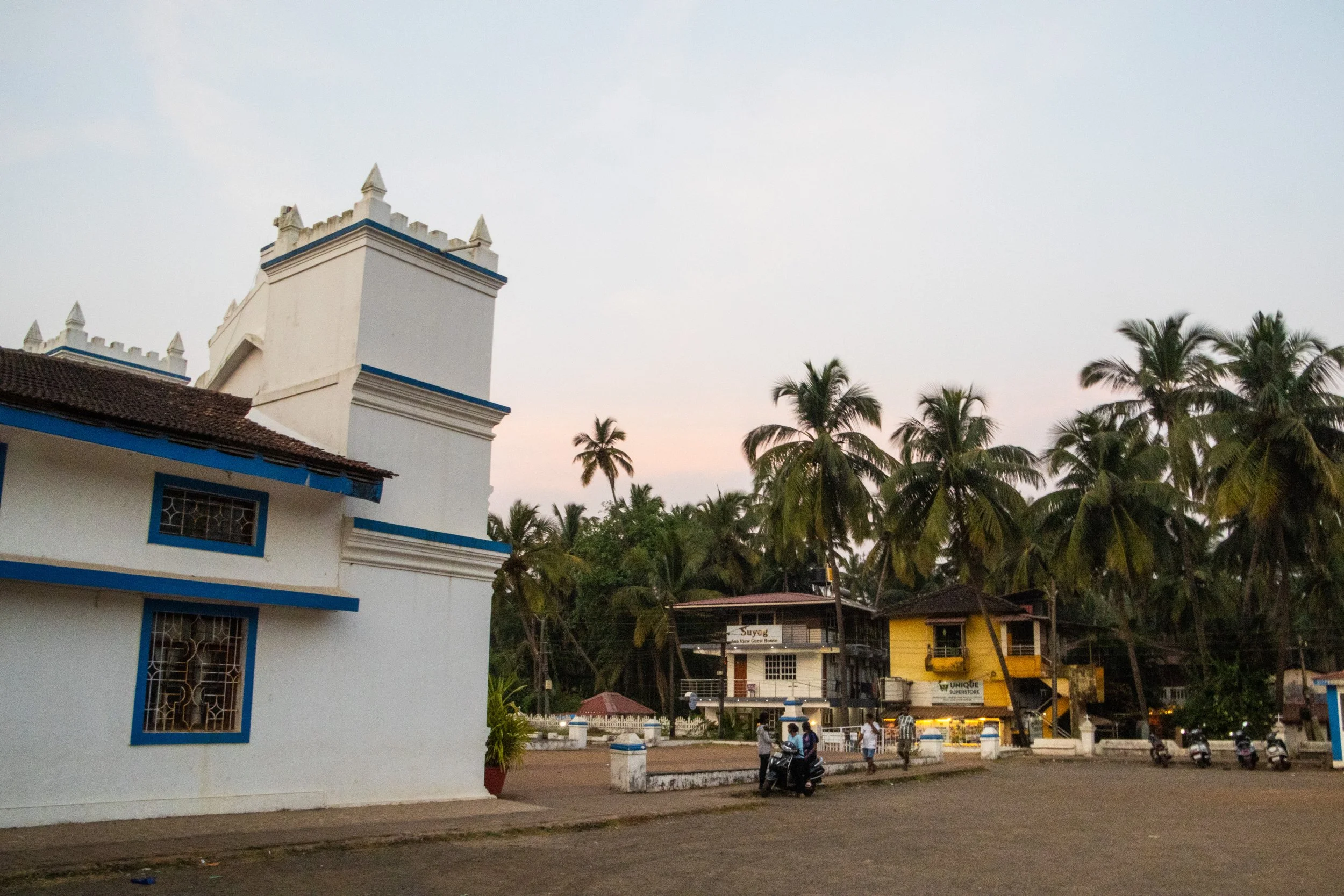
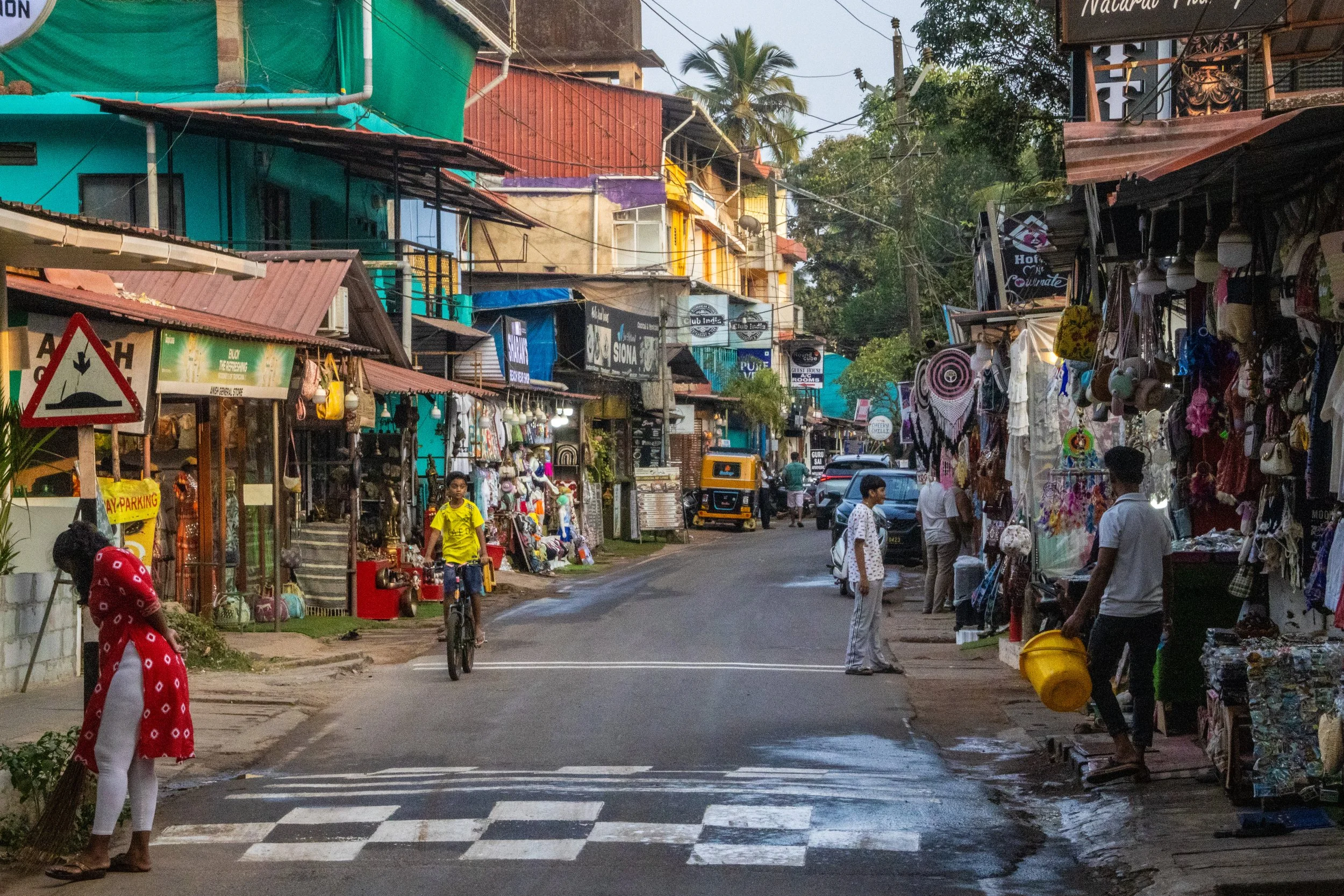
Palolem Beach
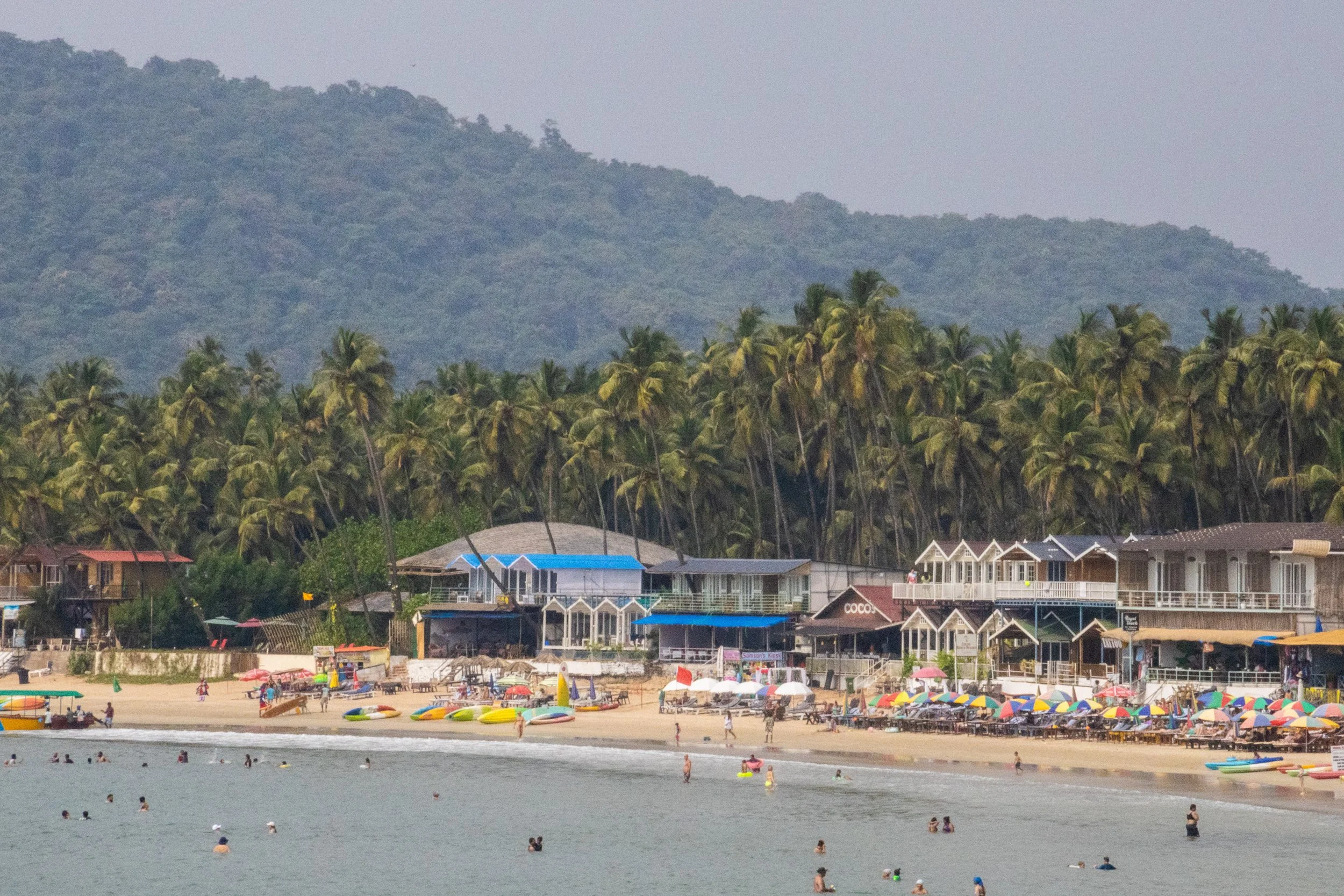
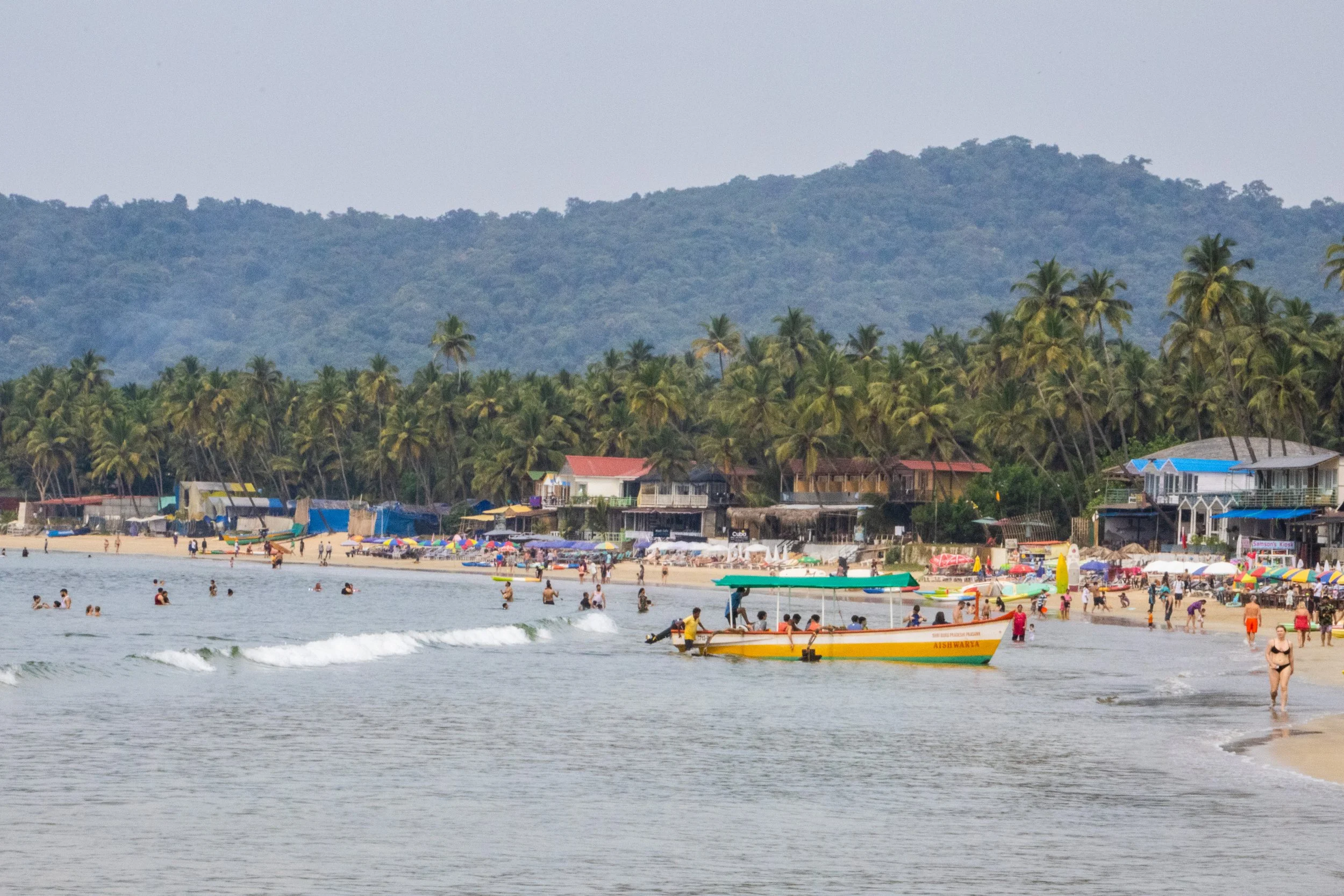
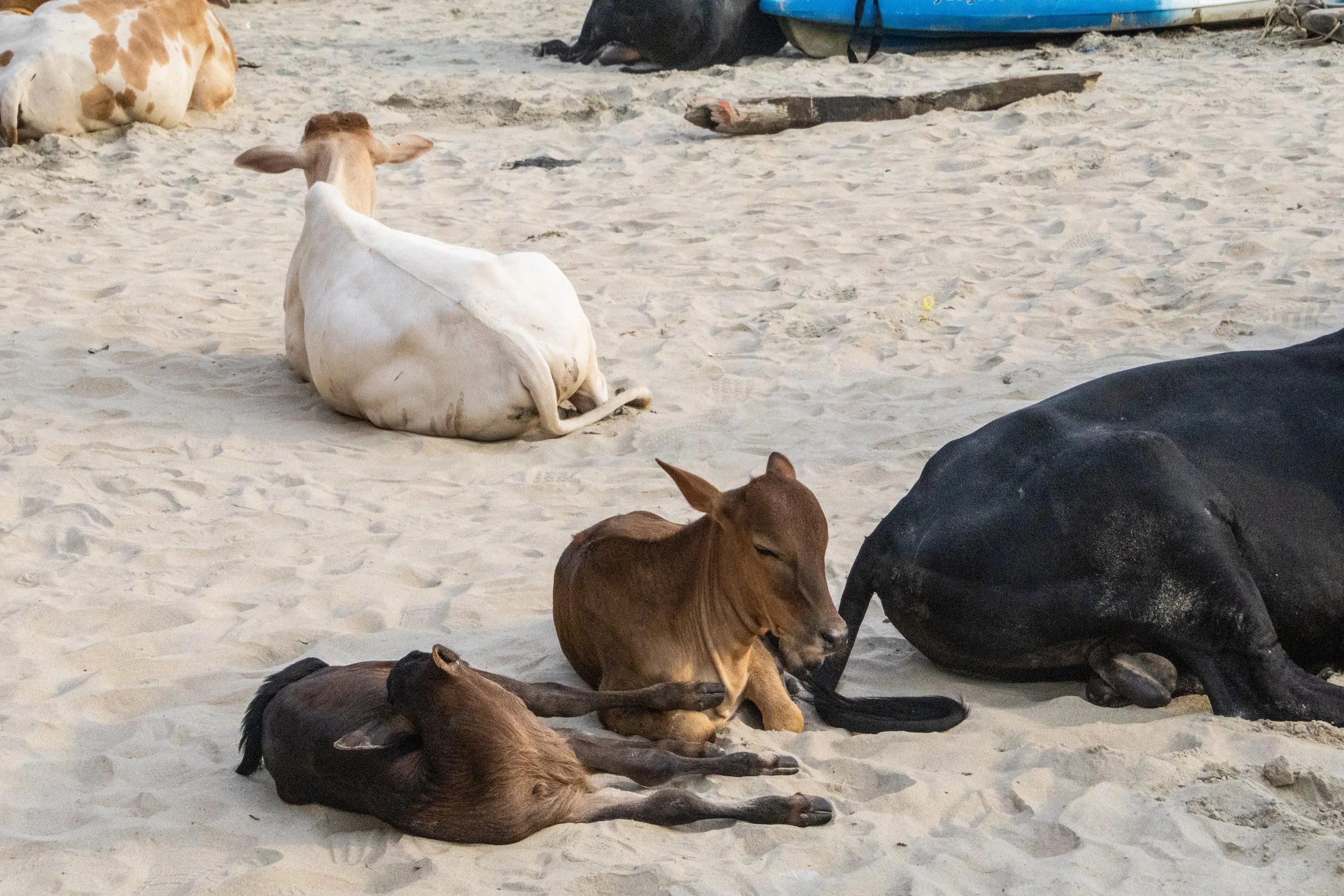
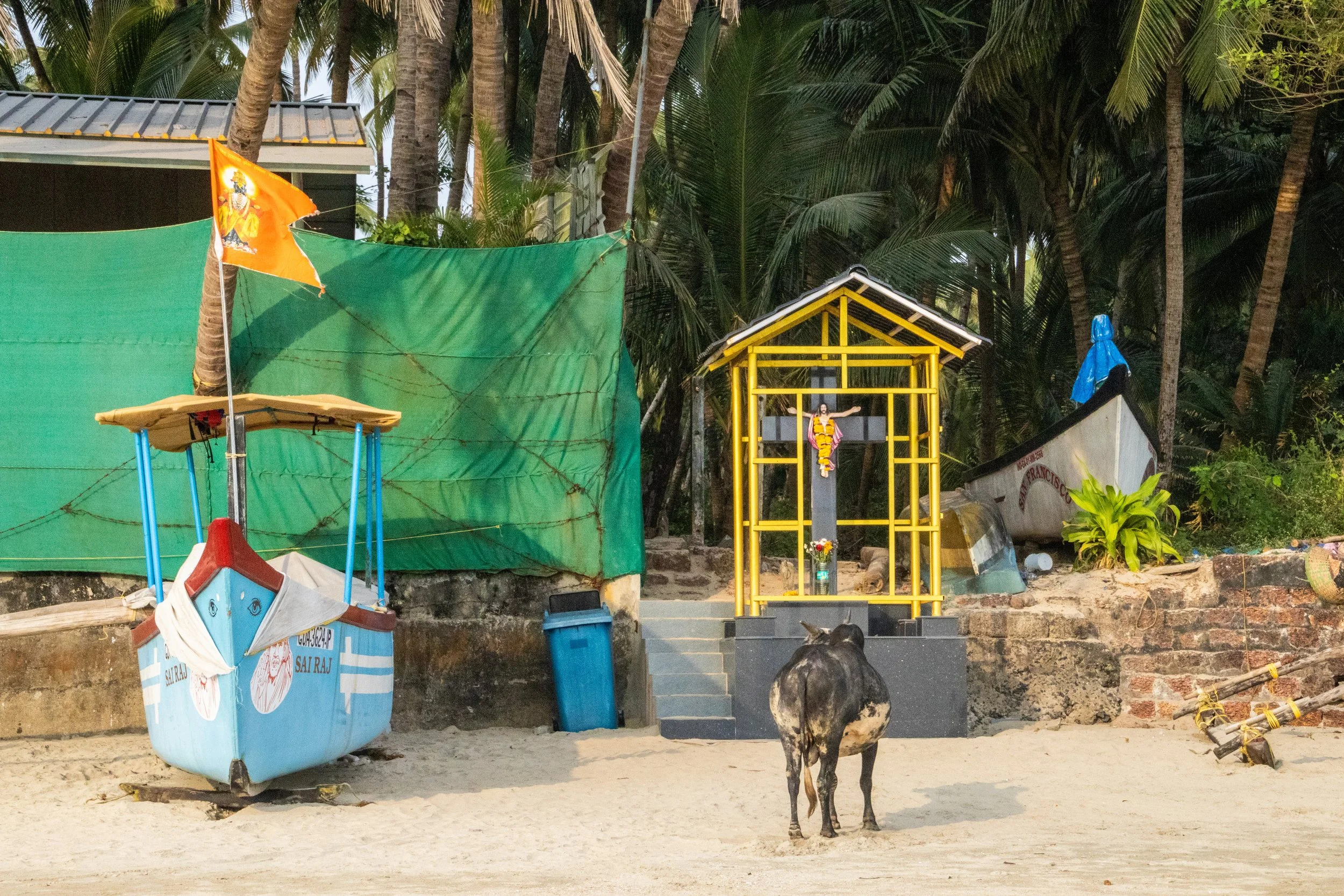
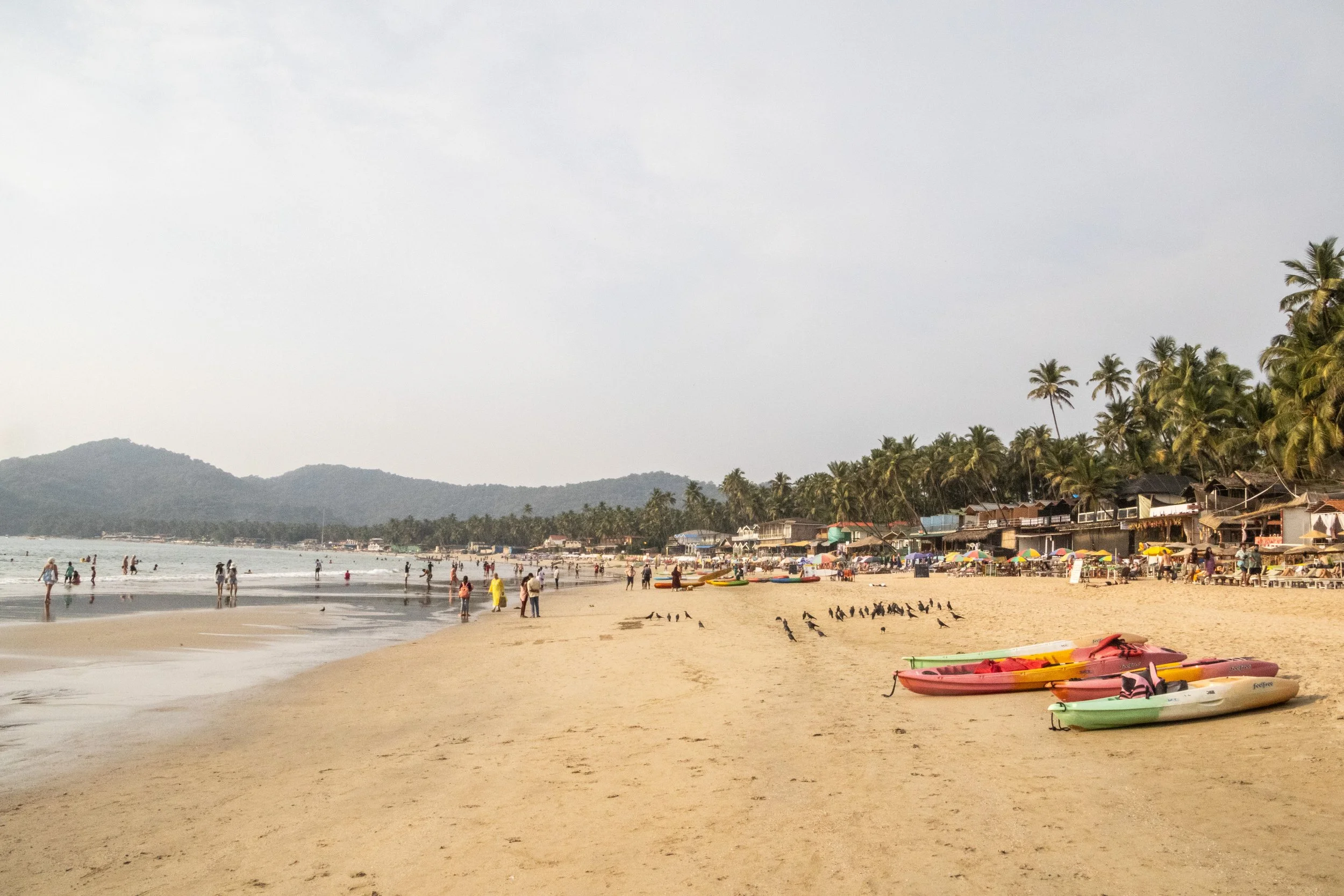
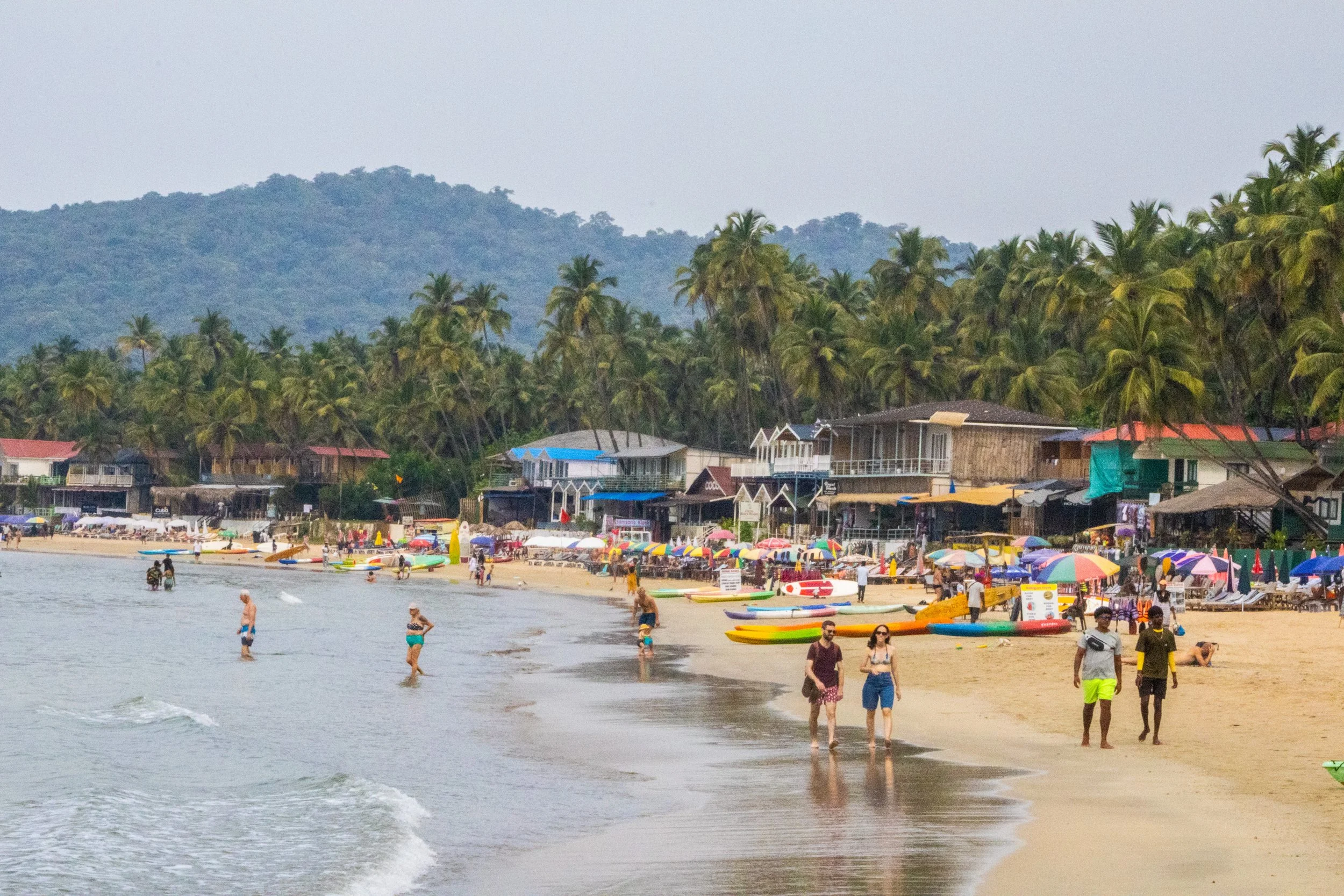
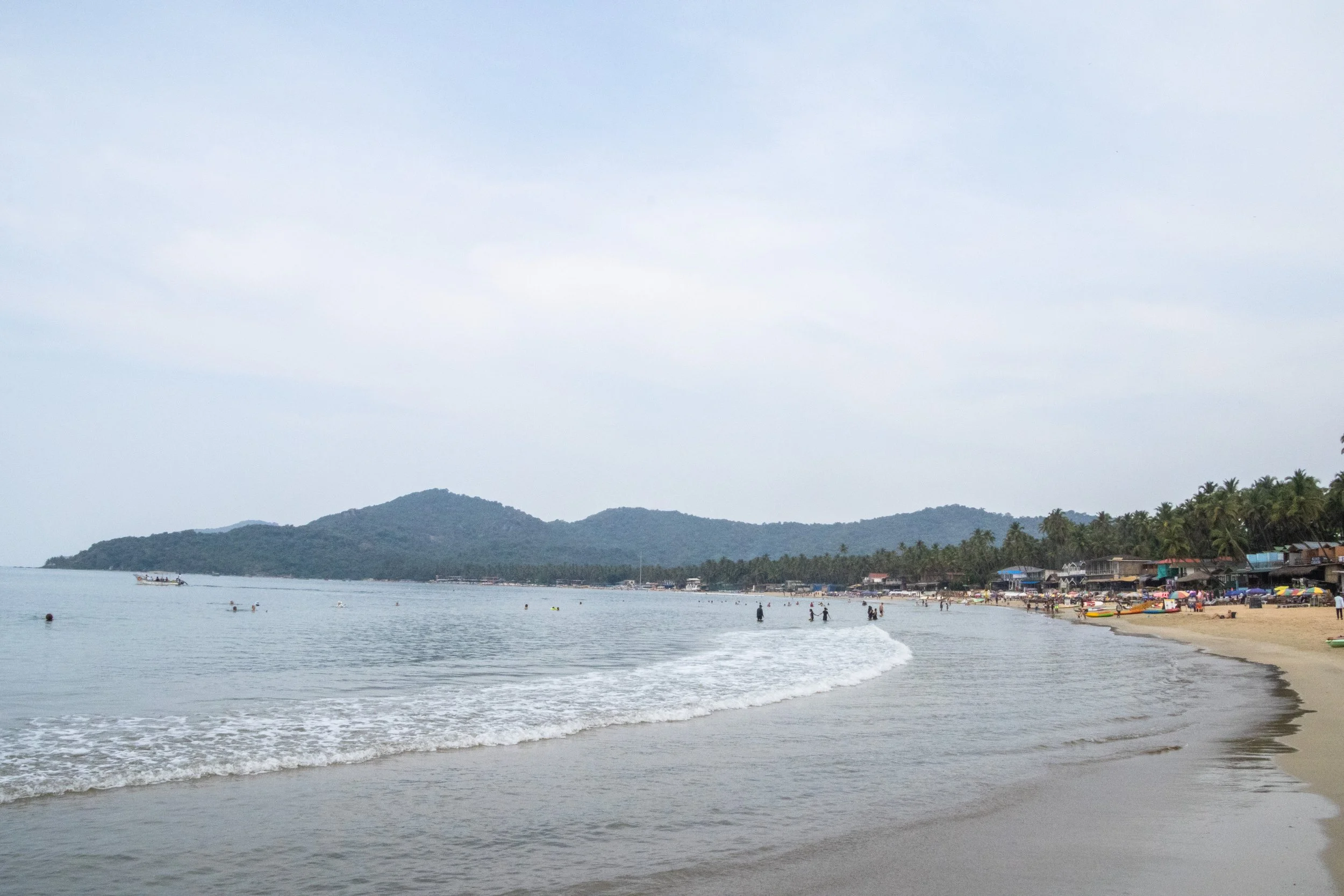
We scootered (scooted?) further south to the beach/town of Palolem. In my pre-trip research, I learned that this was supposed to be one of South Goa’s “quiet” towns… what awaited us here was actually not particularly quiet. It was more crowded not only with people, but also dogs and cows. I remember thinking, “if this is ‘quiet’, I shudder to think about how crowded North Goa is.” But to be fair, compared to Agonda, almost anything would feel crowded. It’s not really a fair comparison. Palolem was quiet enough, and I’m sure that North Goa is very fun in its own rite.
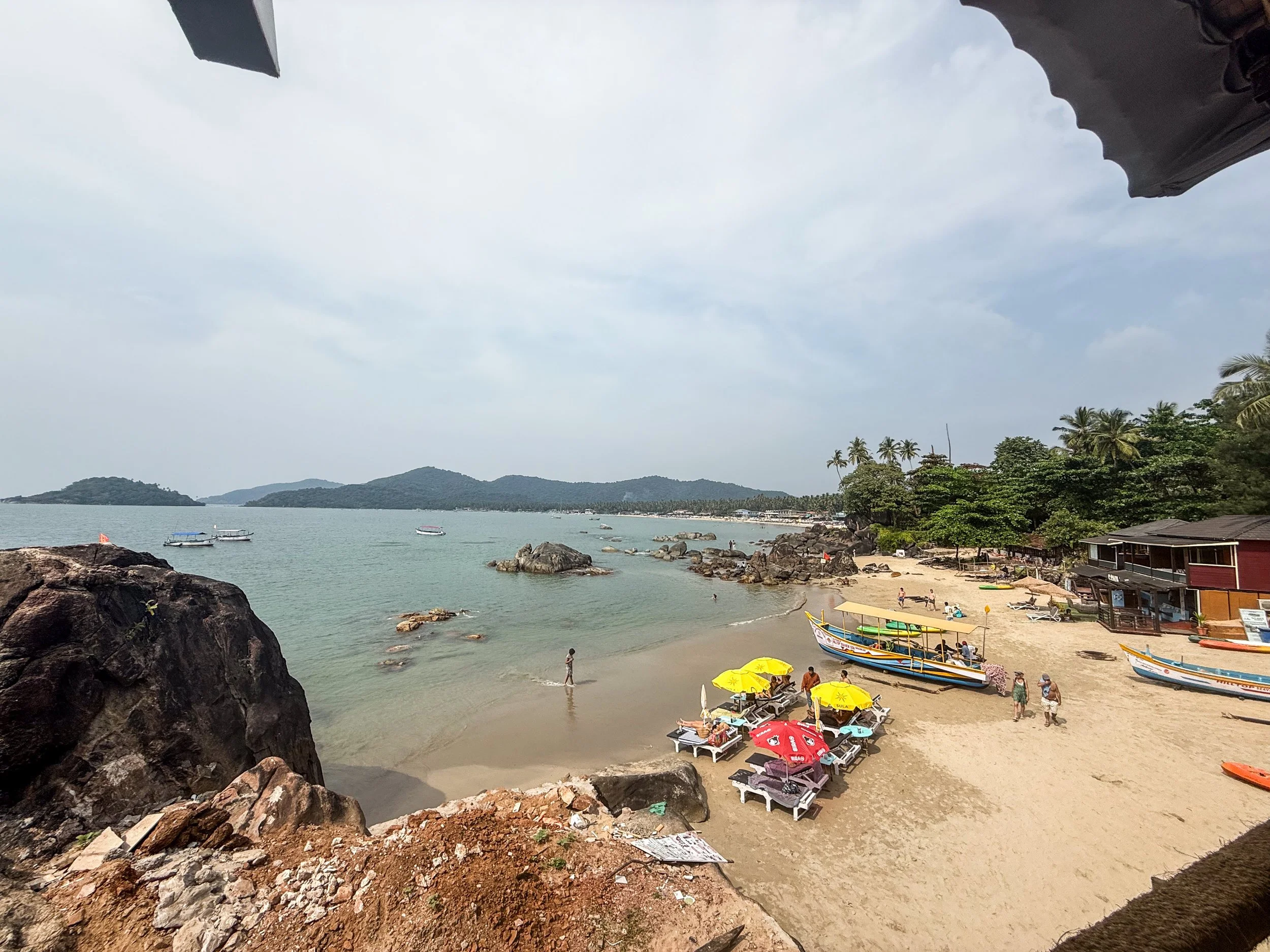
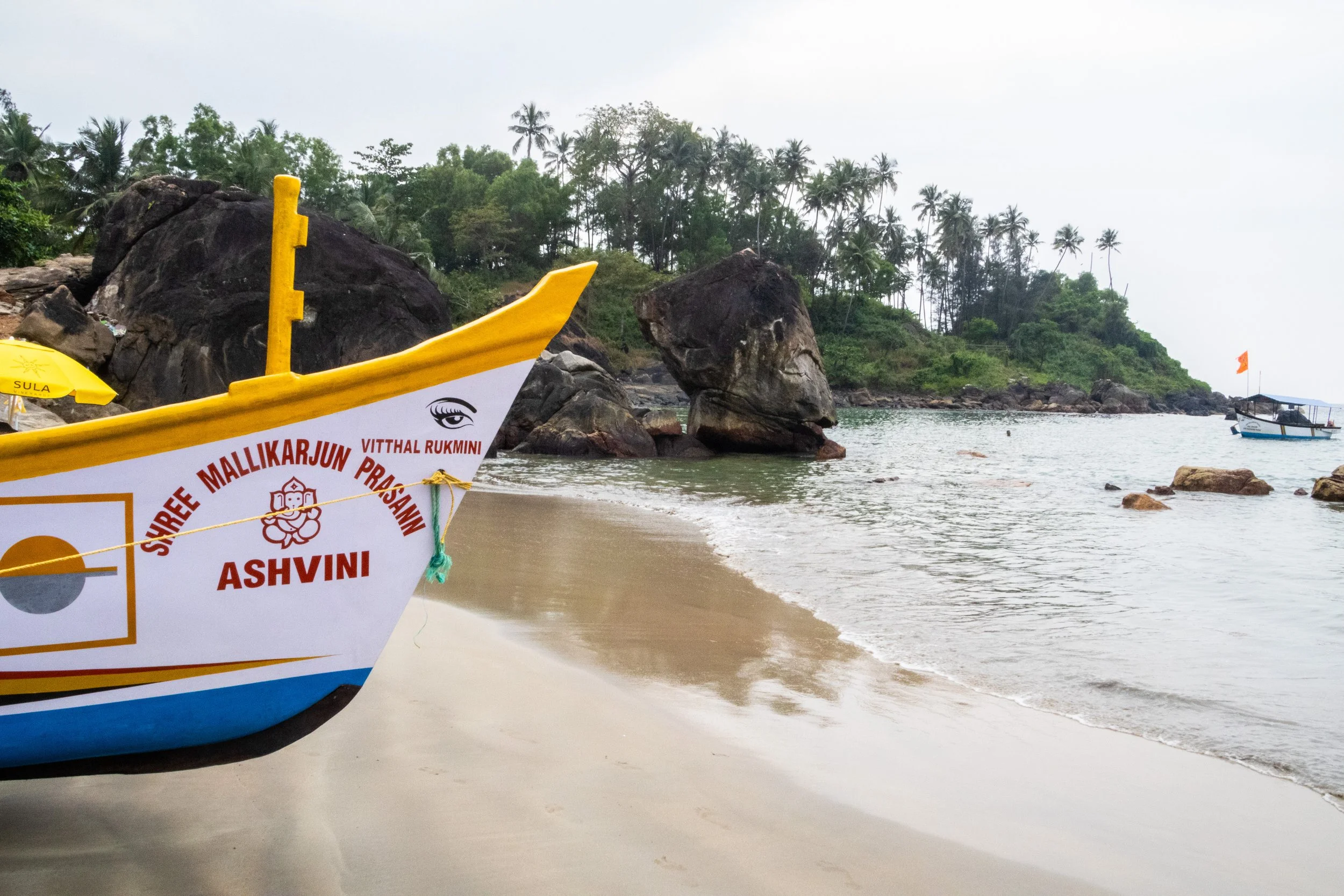
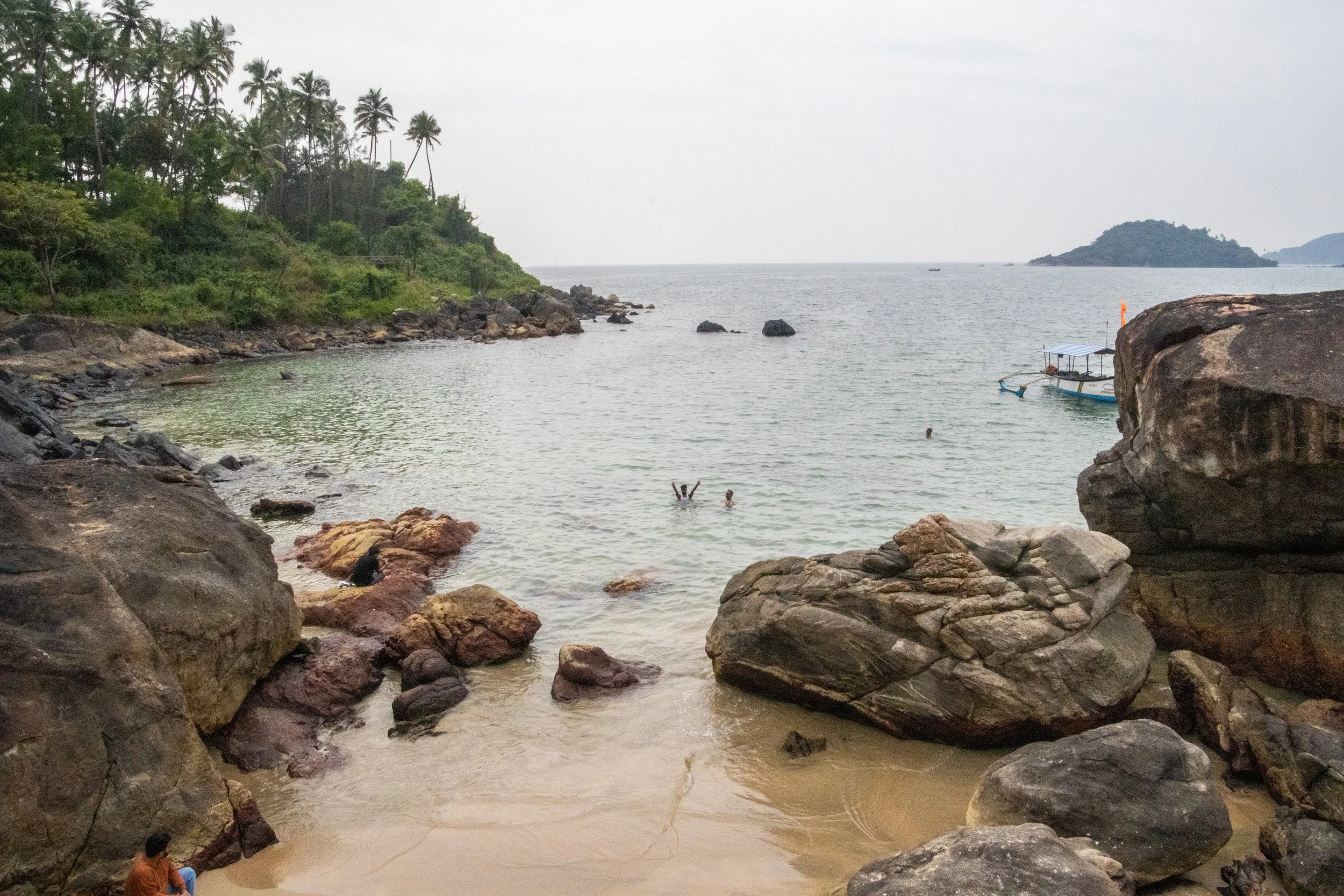
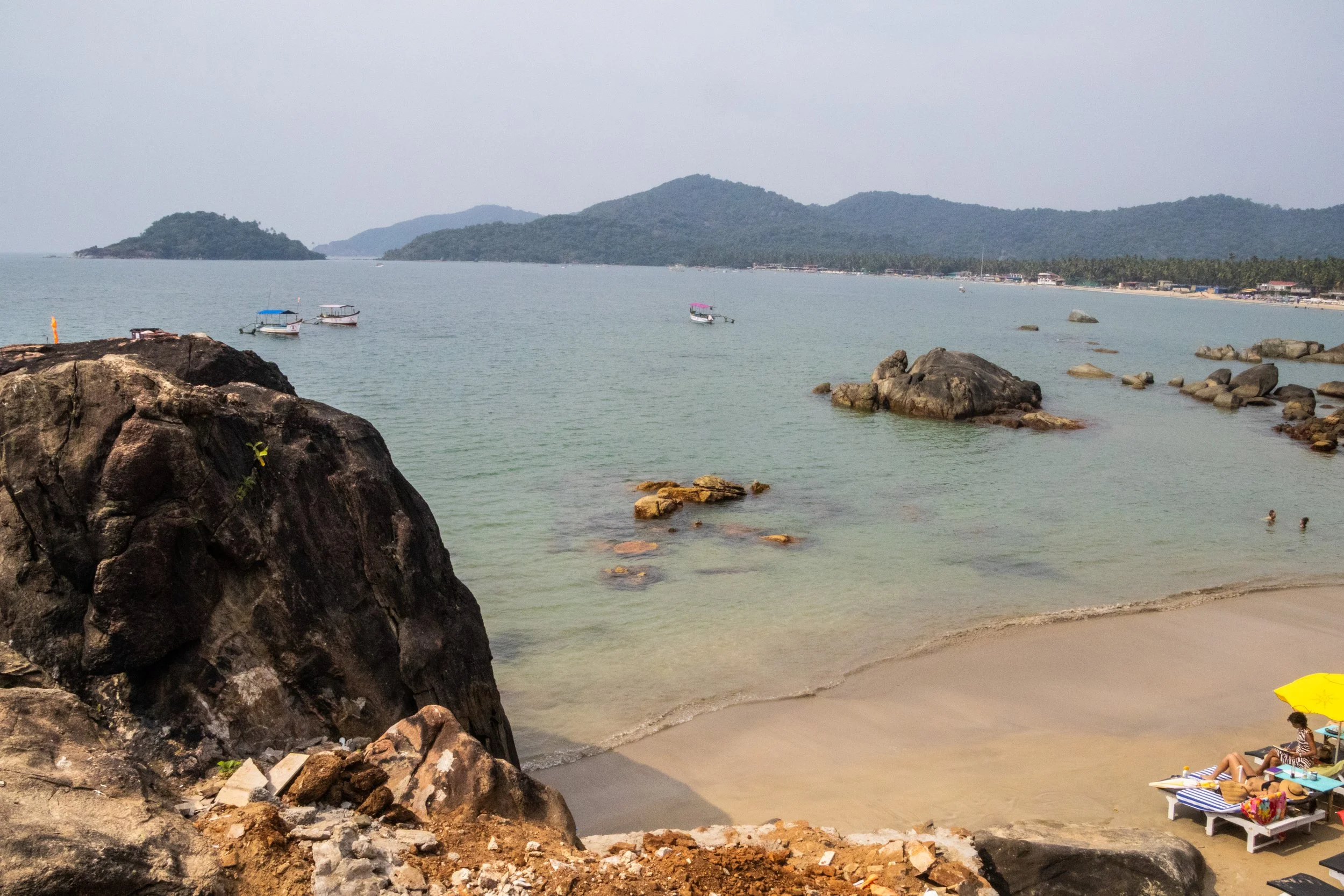
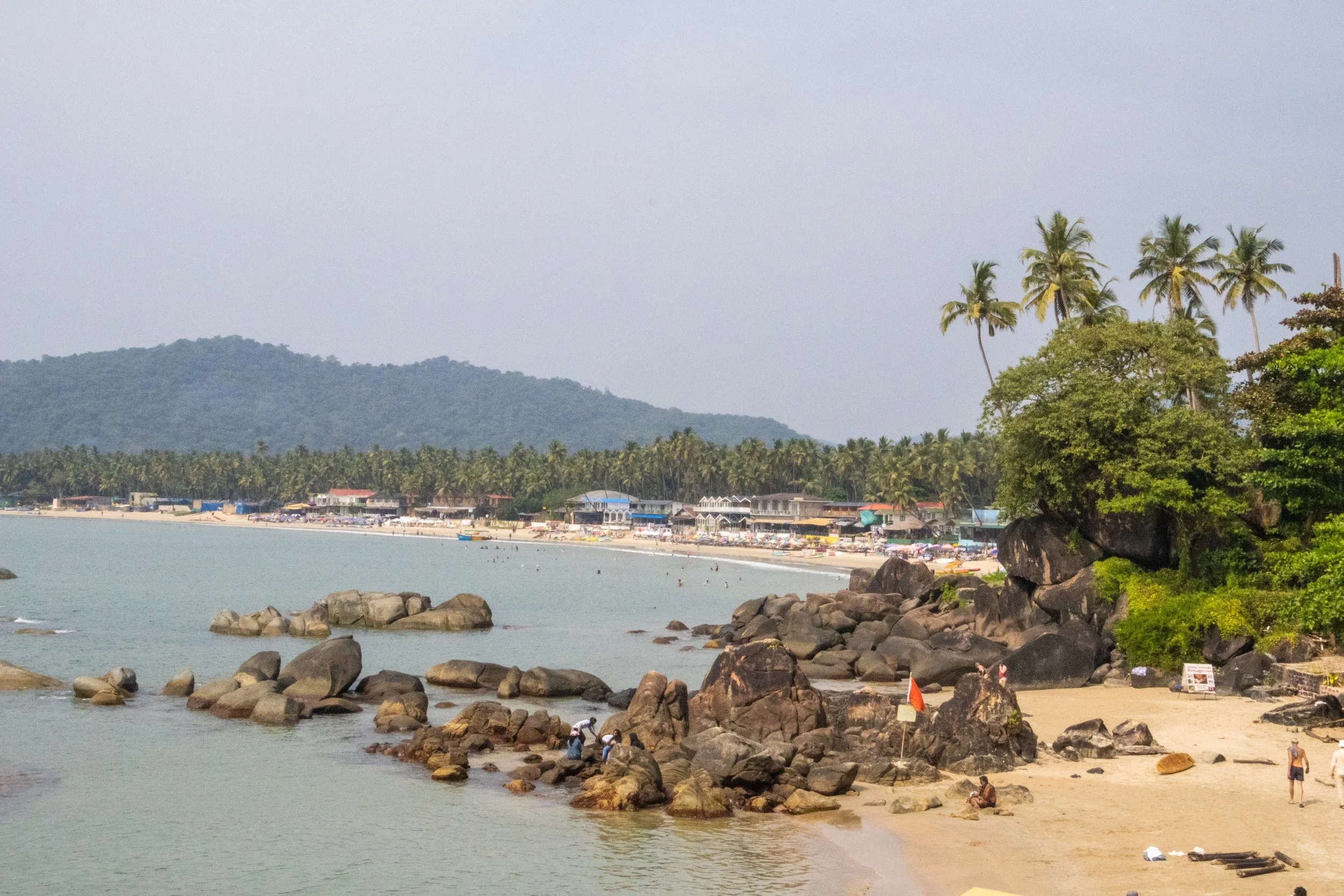
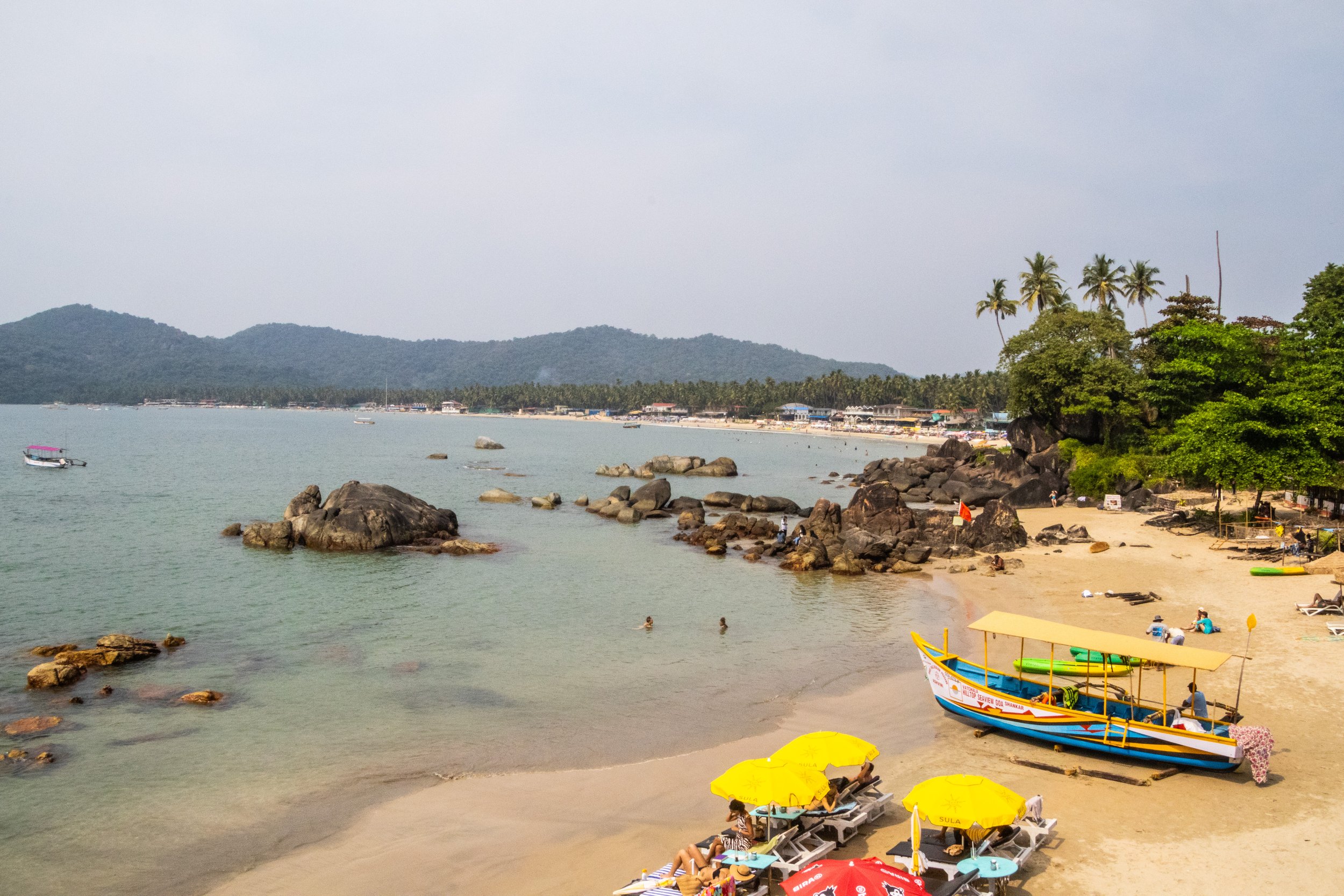
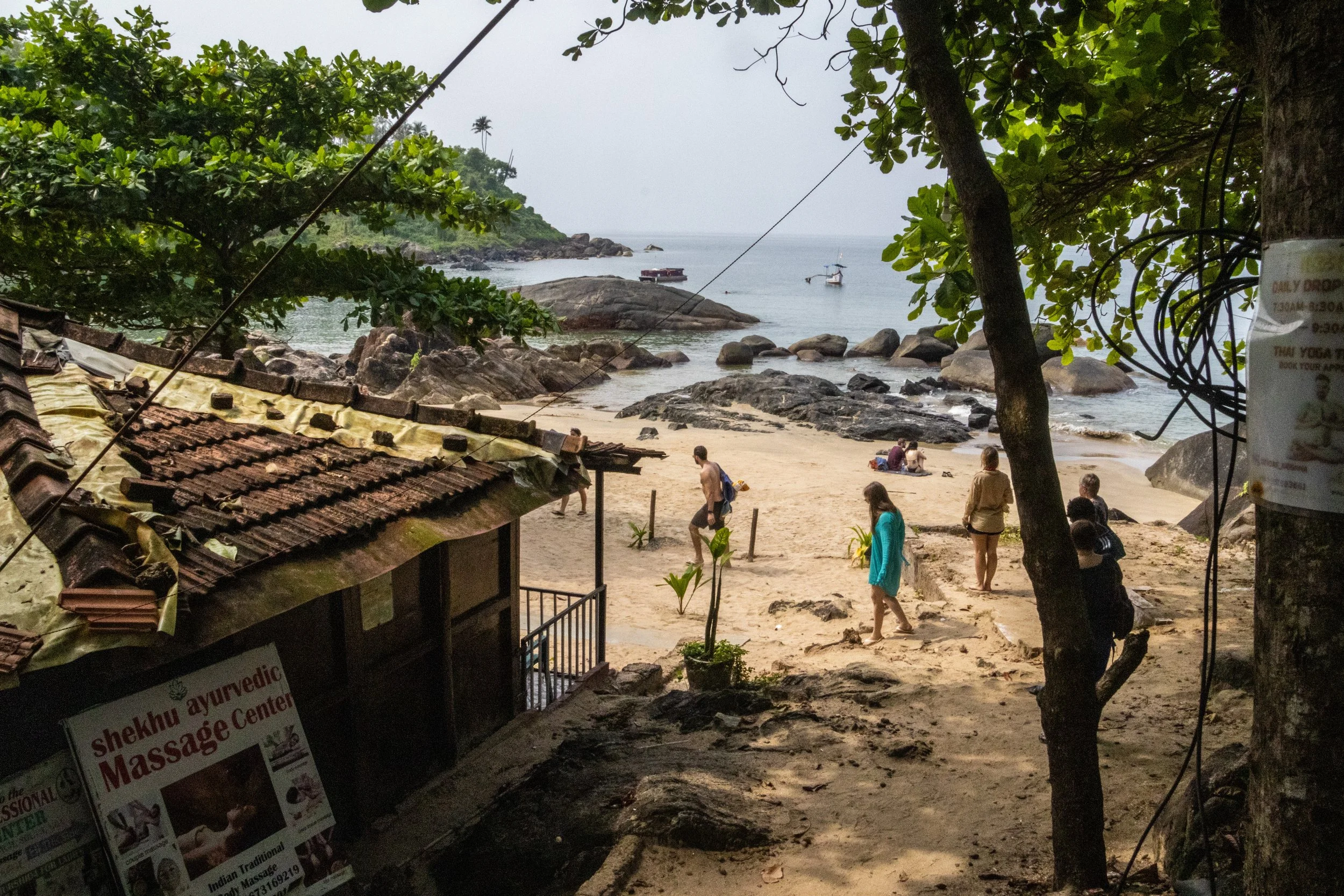
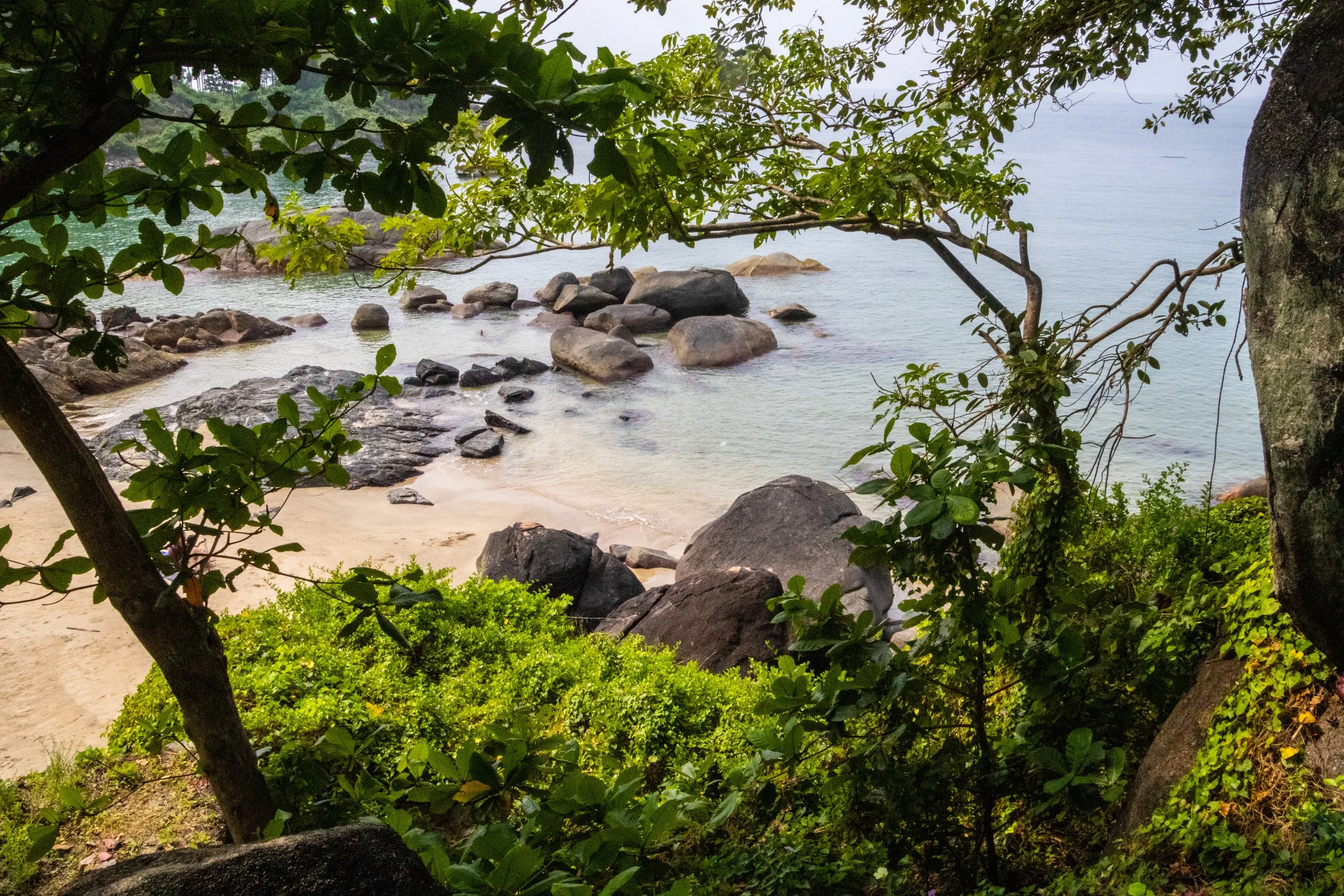
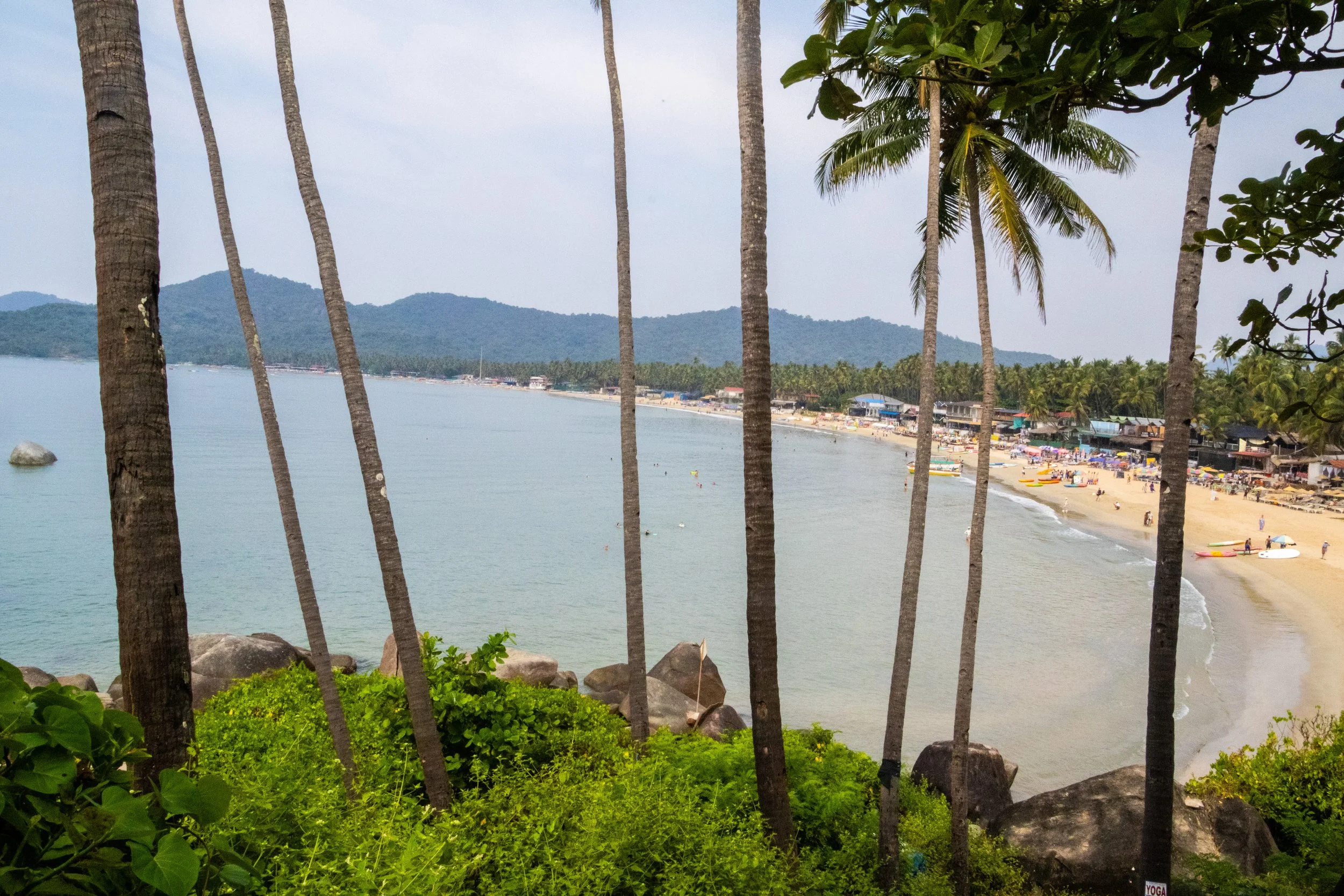
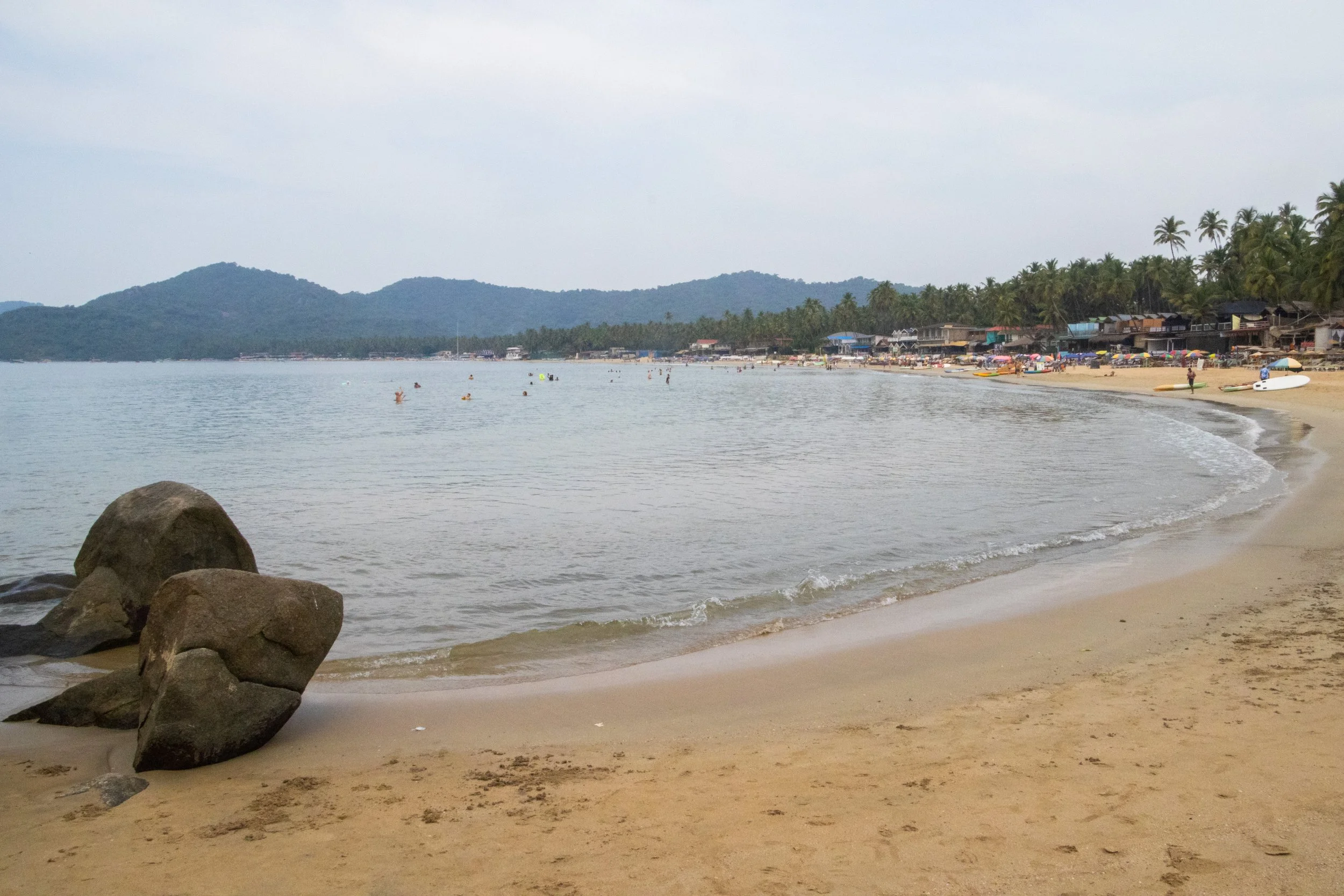
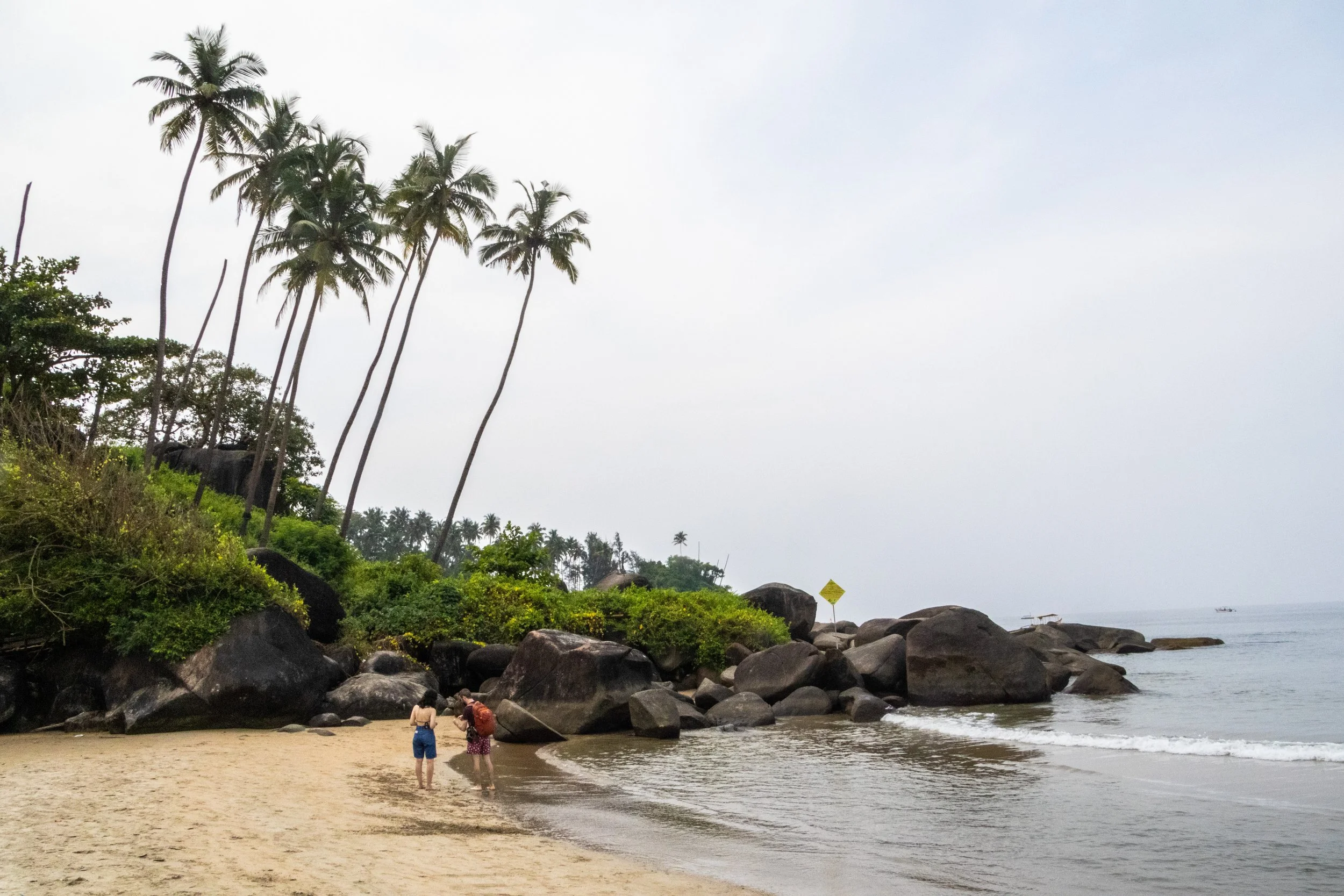
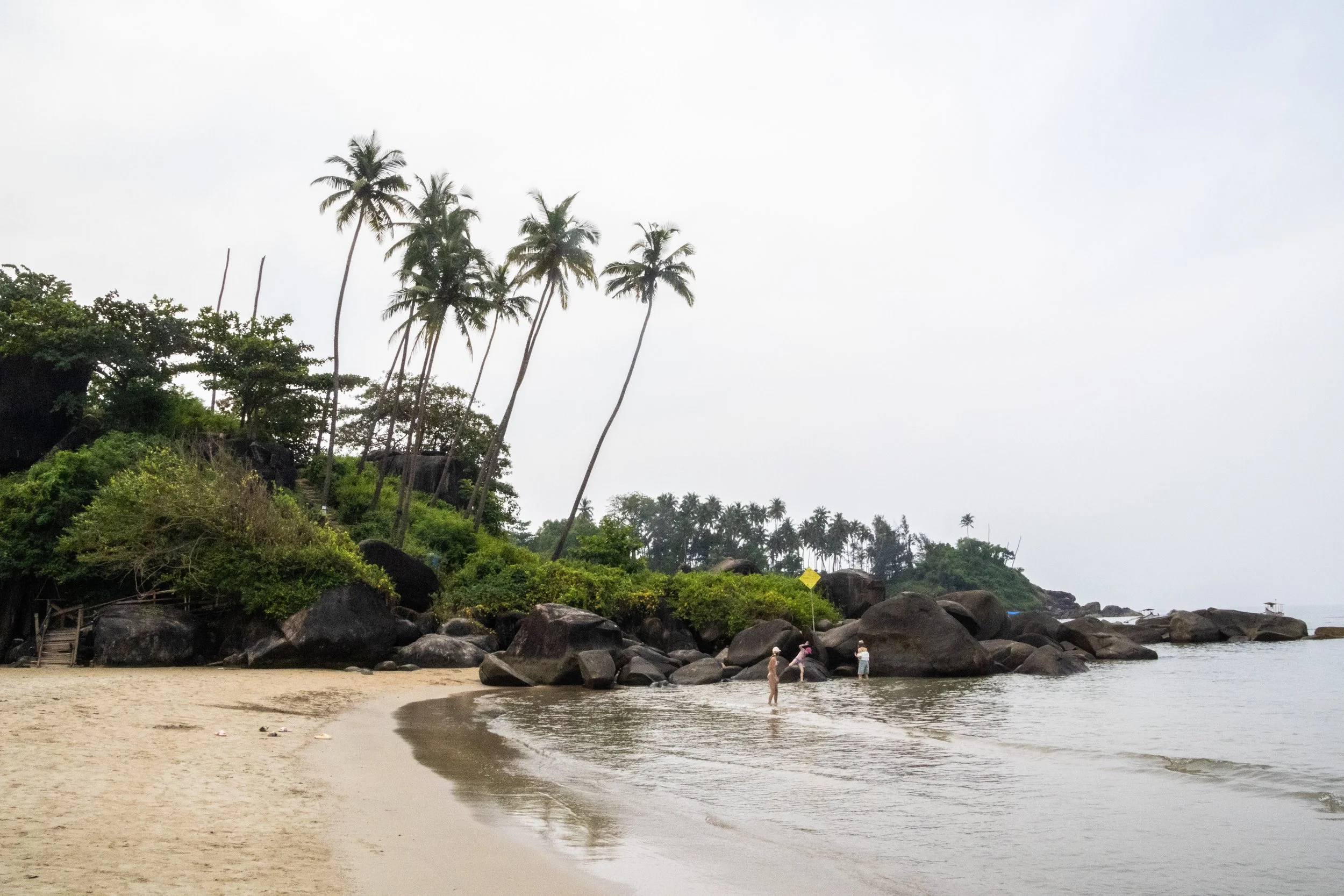
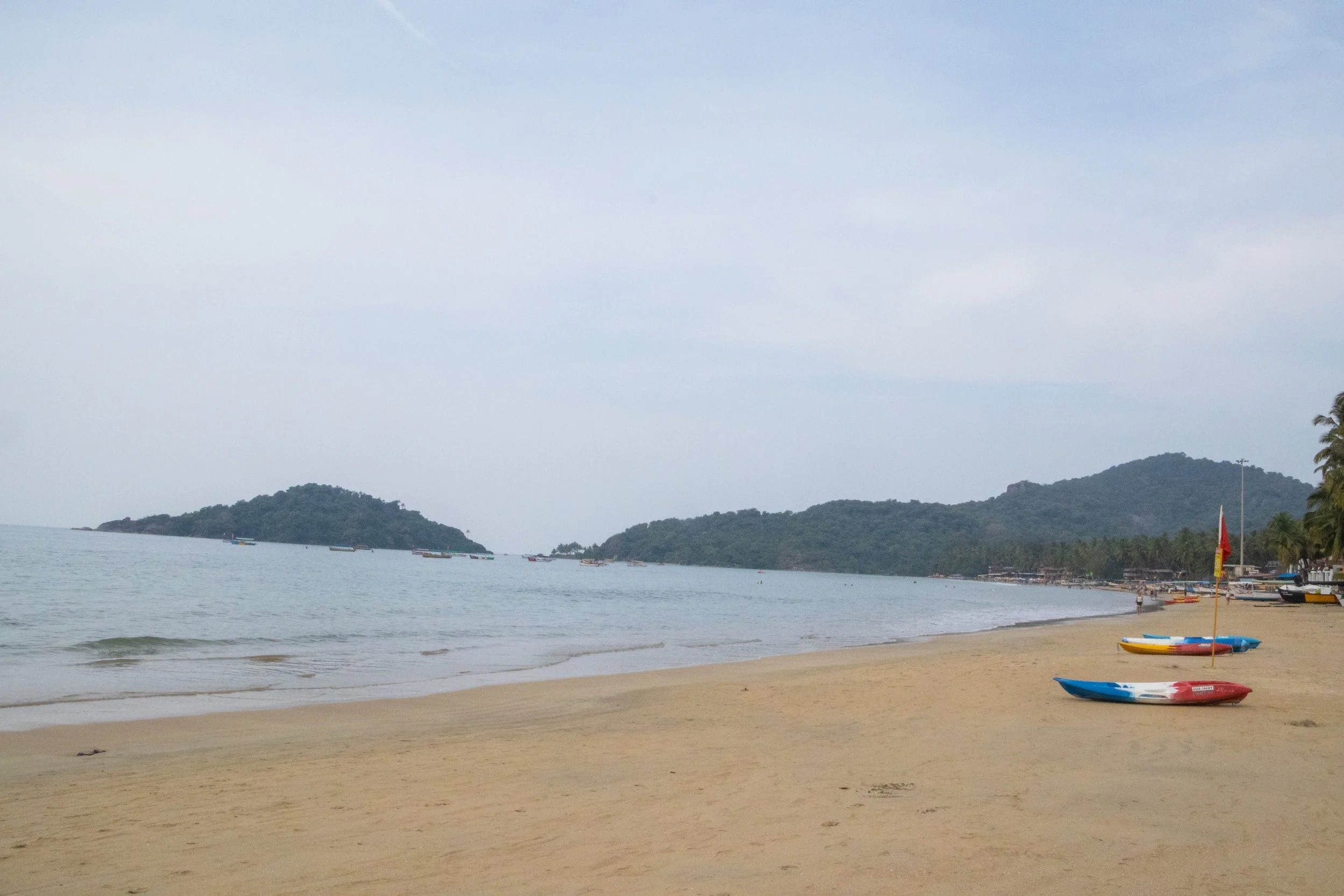
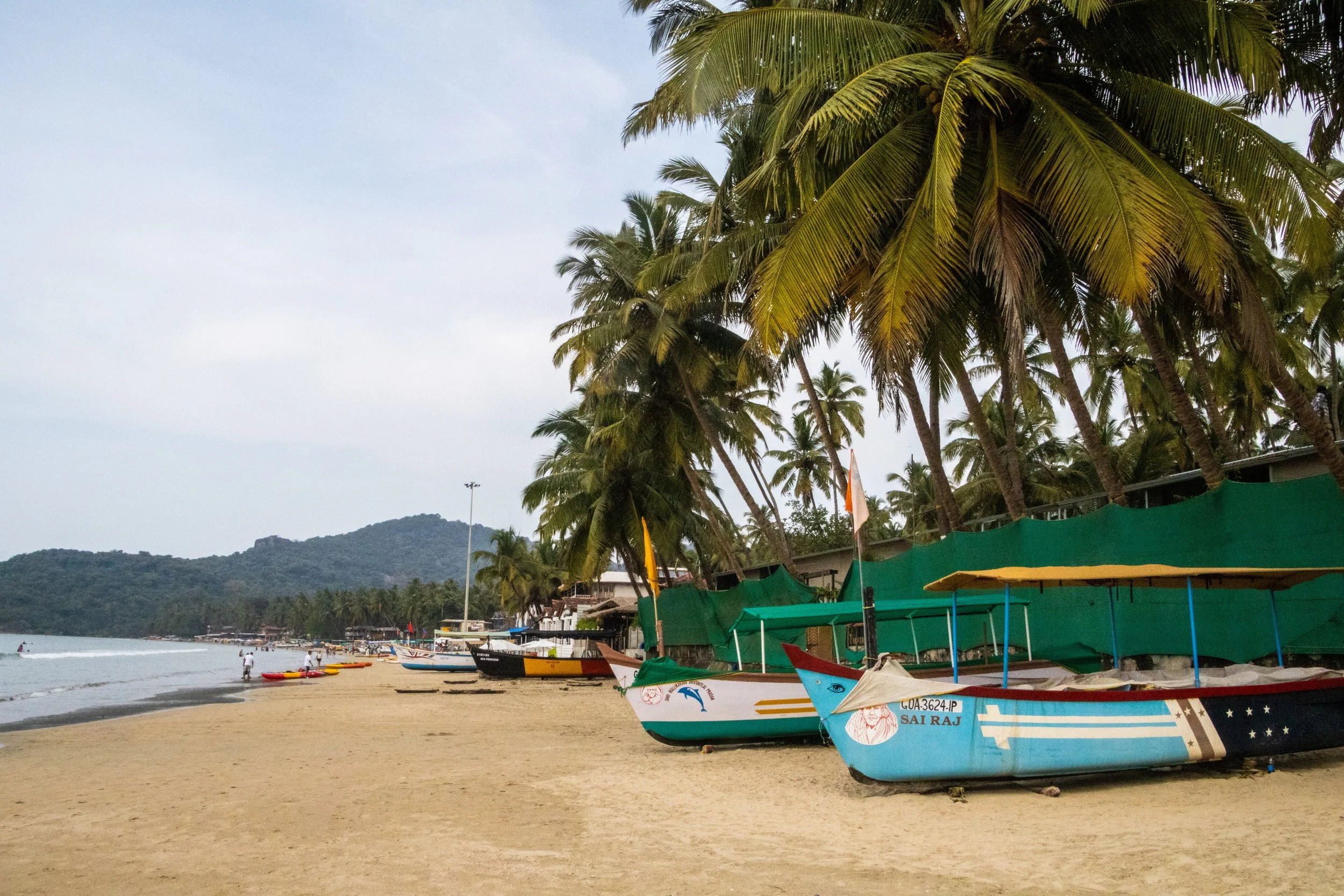
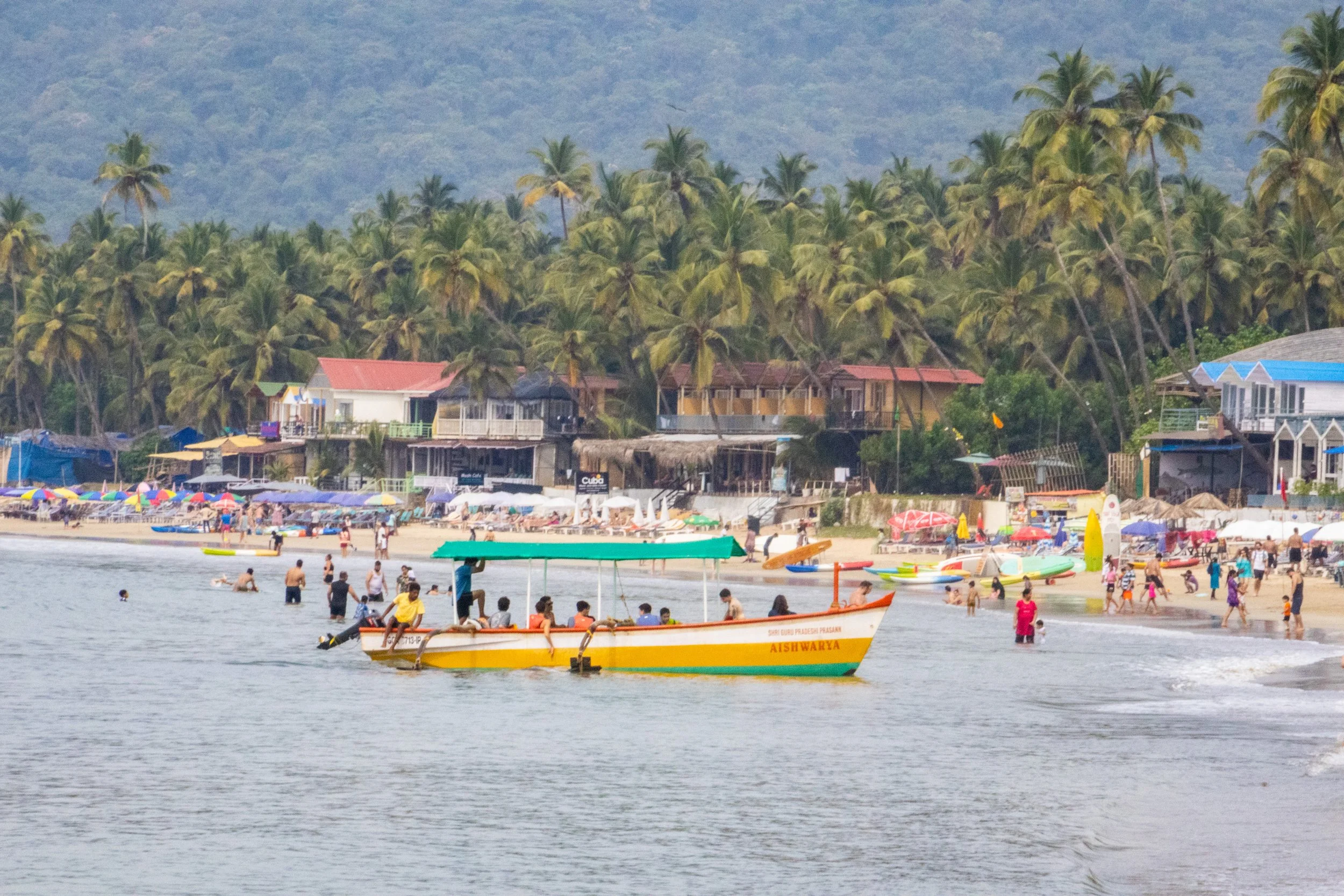
Despite it being less peaceful and serene than Agonda Beach, Palolem Beach was very beautiful. On its southern-most extreme, there was a formation of giant, round boulders that stretched into the teal blue waters like something out of a tropical island post-card. There was a rickety, wooden staircase with an occasional exposed nail that brought us from the sand up to a path that lead over this little ridge. On the other side, we discovered an idyllic little extension of the beach. It was here that we put down our towels and went for a lil’ dip.
Boat Trip: Dolphins & Island Beaches
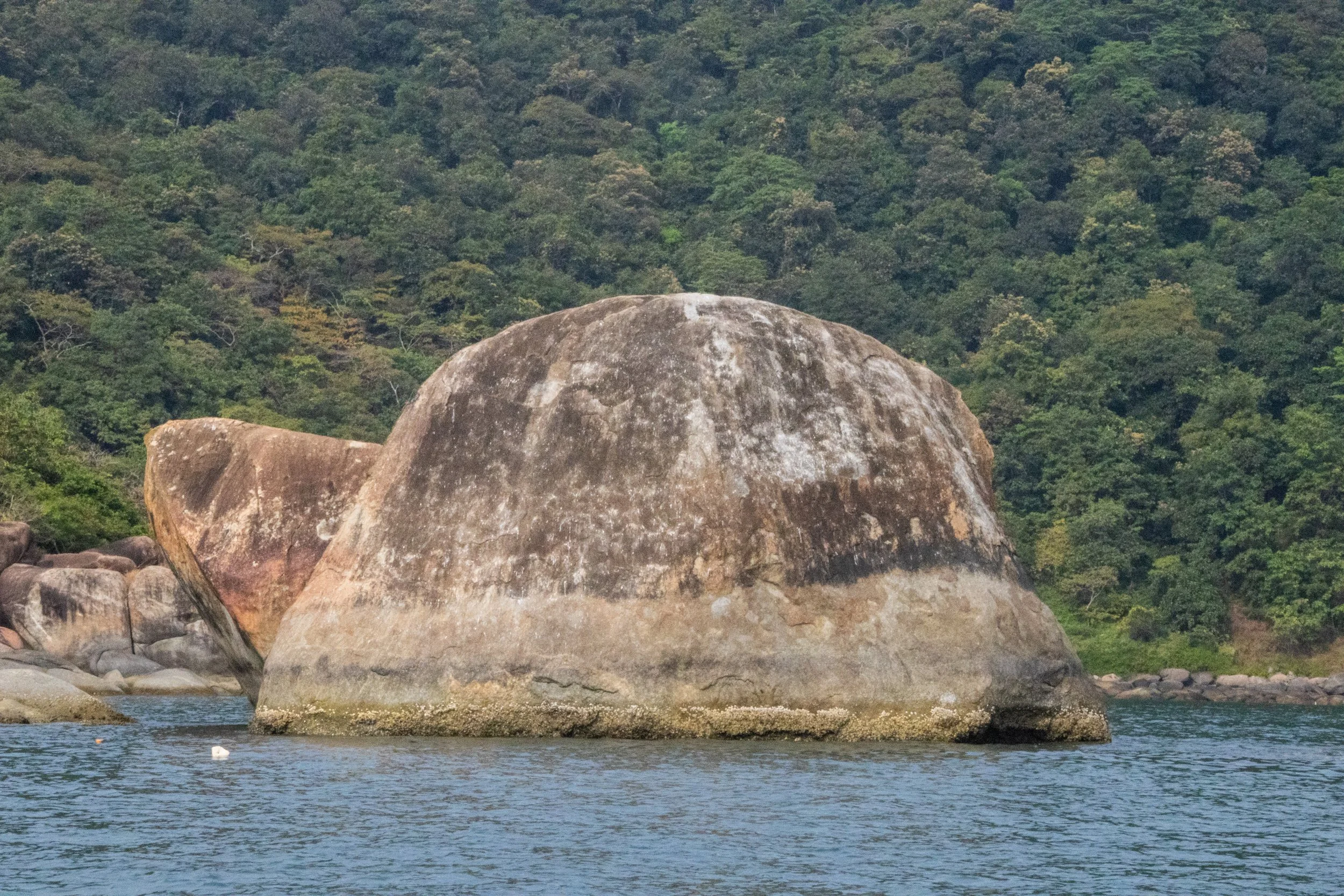
By this point, we’d seen far too many boats not to get in one of them. It cost surprisingly little money to hire a boat and a couple of guys to bring us around the bay! These guys apparently work on cruise ships and were in Goa doing a bit of extra work on vacation. Over the course of a few hours, they ferried us to secluded little beaches that were unreachable (or very difficult to reach) by land. They pointed out “Monkey Island” to us (an inaccessible island just off the Palolem coast that is inhabited entirely by monkeys) and “Turtle Rock” (a big rock that looks like a turtle—can you find it in the gallery below?), but favorite part of this was not any specific landmark or beach. On the contrary, I just enjoyed being out here on the water.
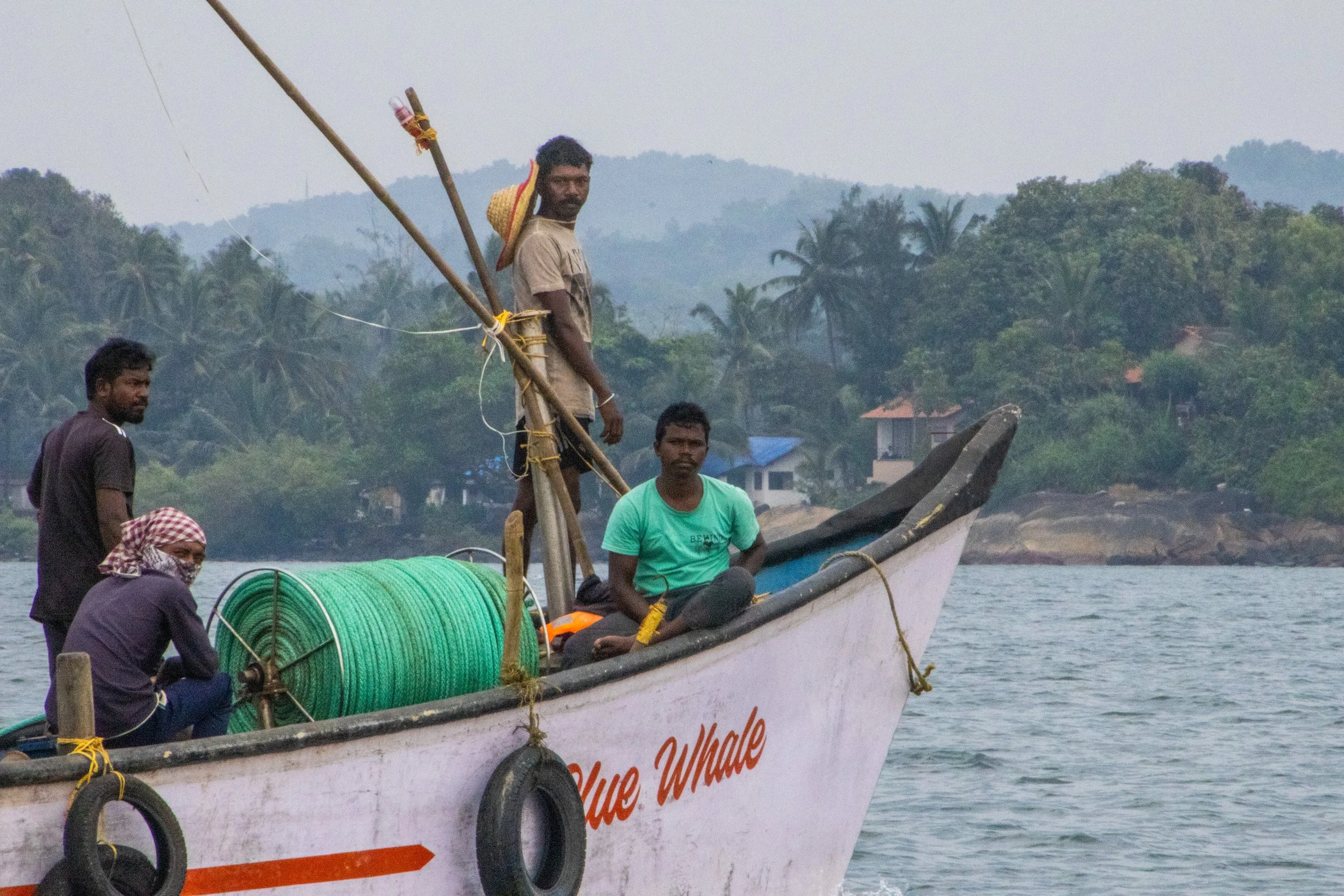
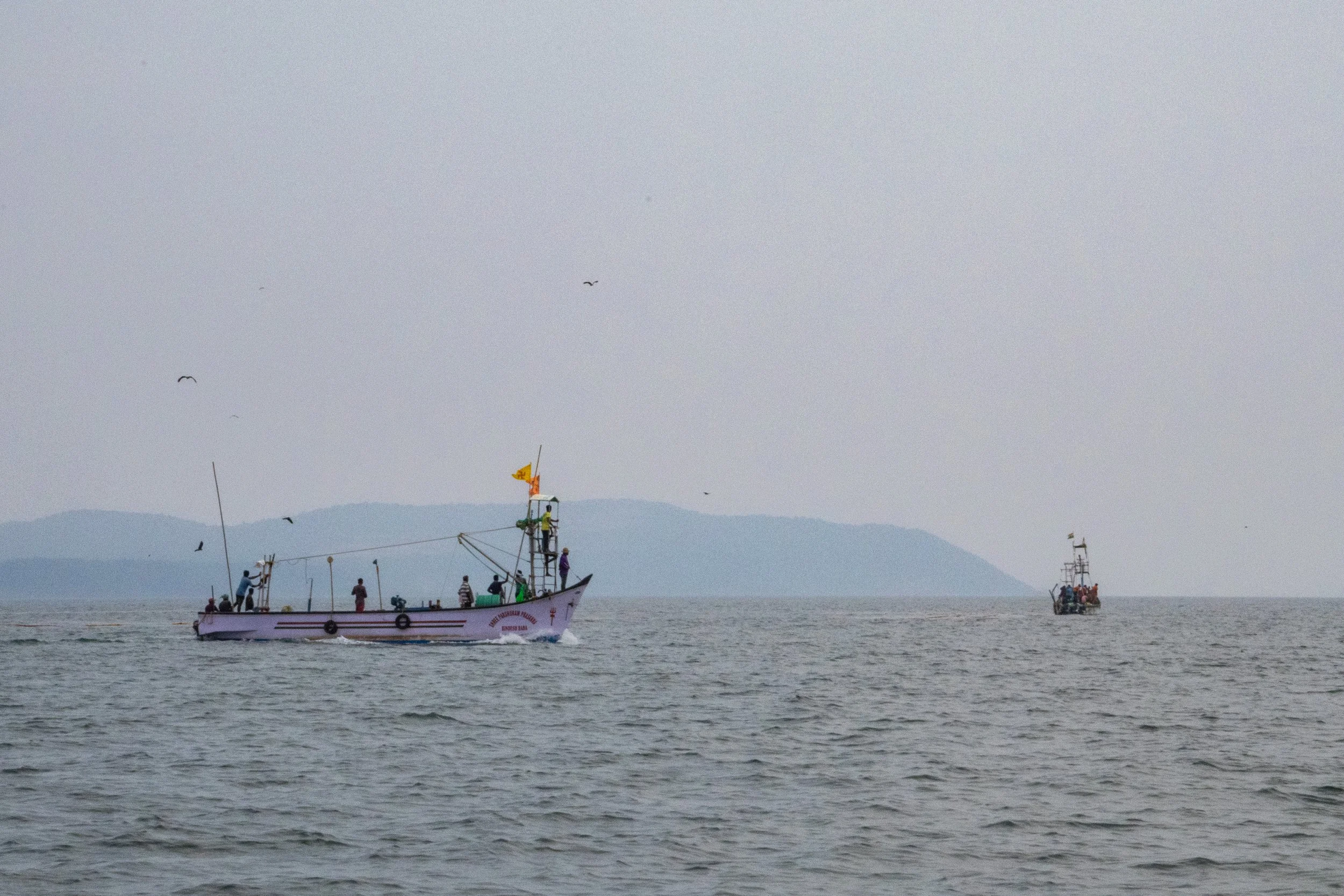
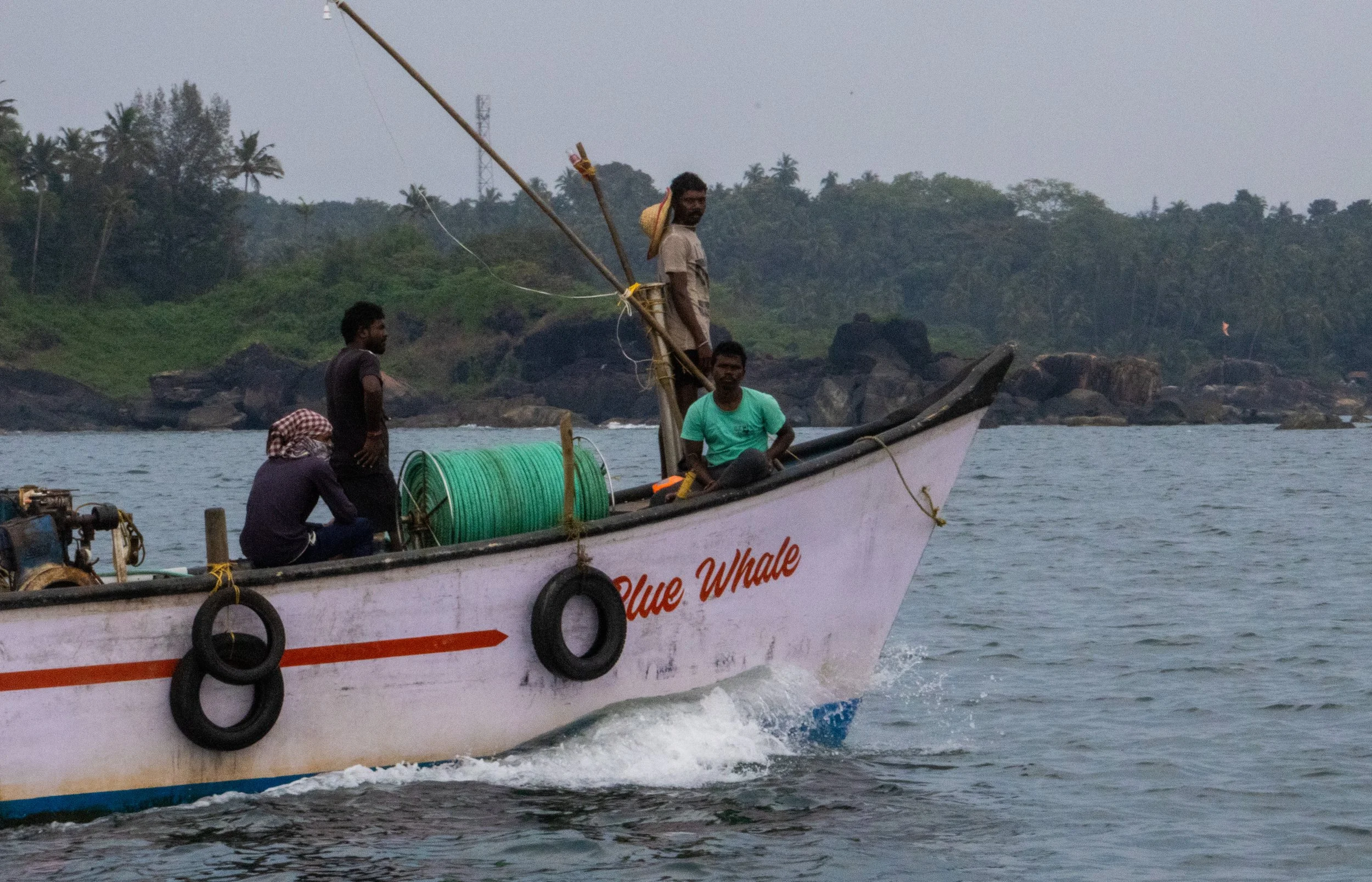
Occasionally we would pass small, industrial fishing vessels out here. I snapped a photograph of one of them that I actually love, because everything single guy on the boat is making eye-contact with the camera lens. They all have this thousand-yard stare should be unsettling, but as soon as I snapped I loved the image. That’s the image I used for the cover of this article. It also went straight into my photo gallery entitled “People”.
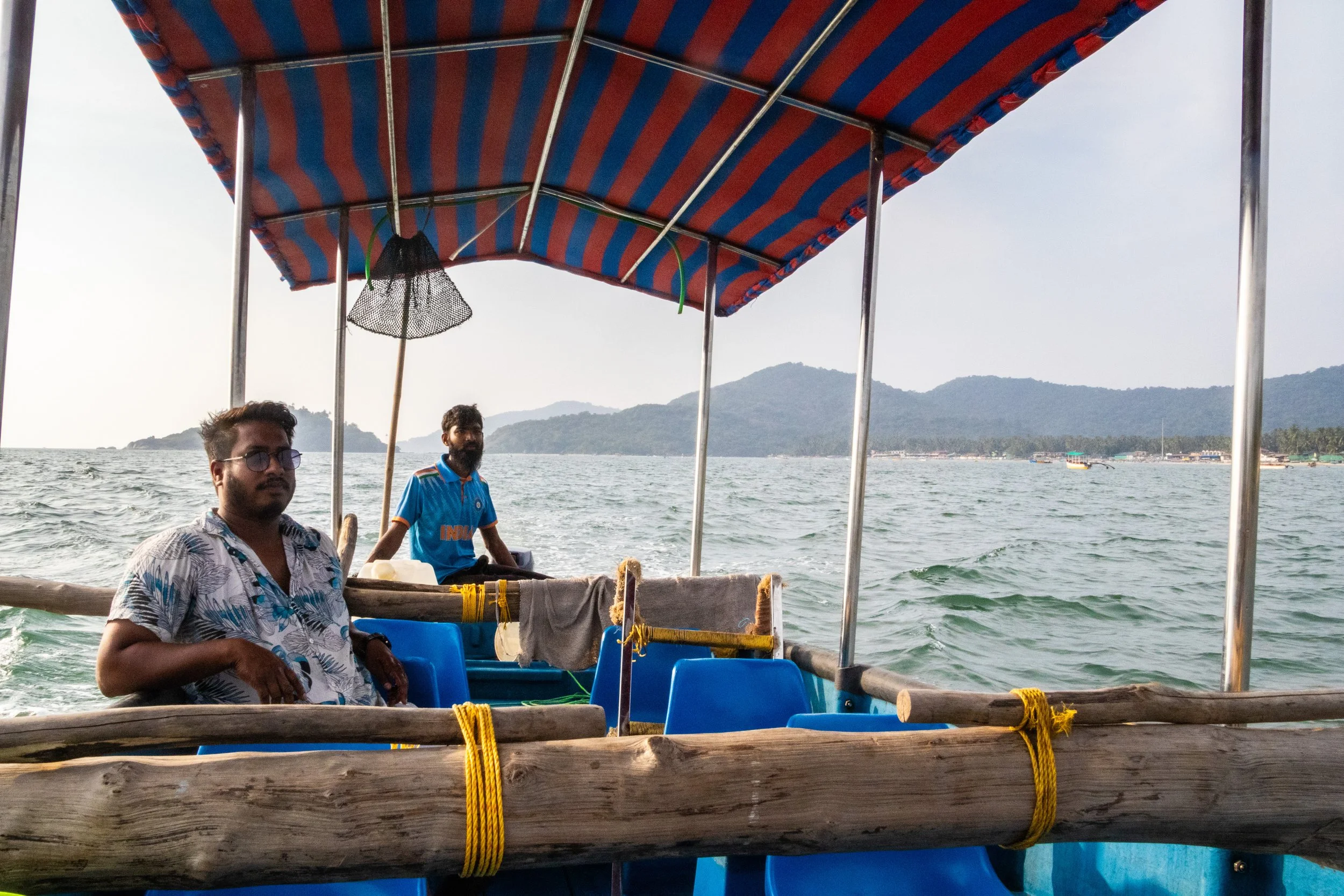
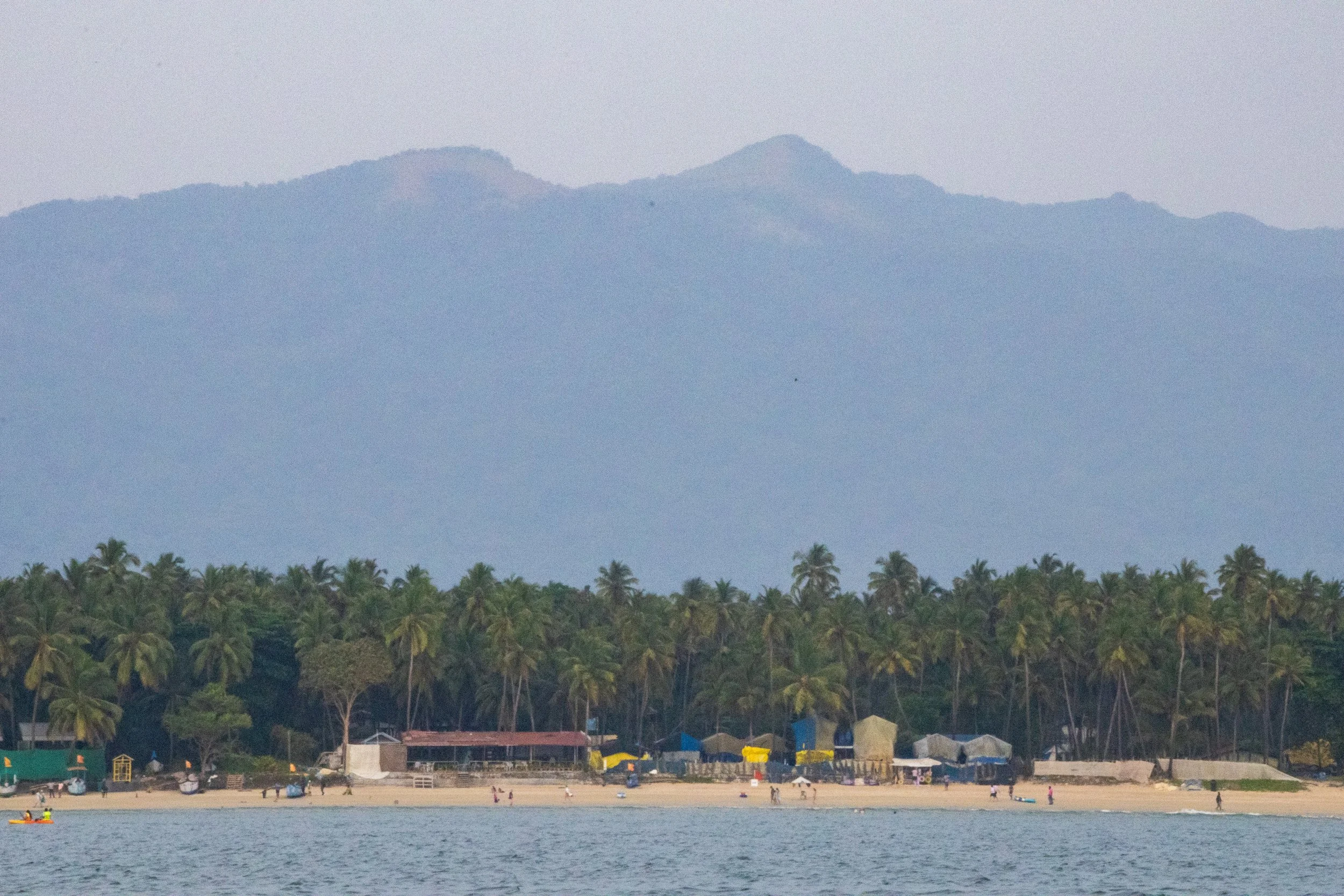
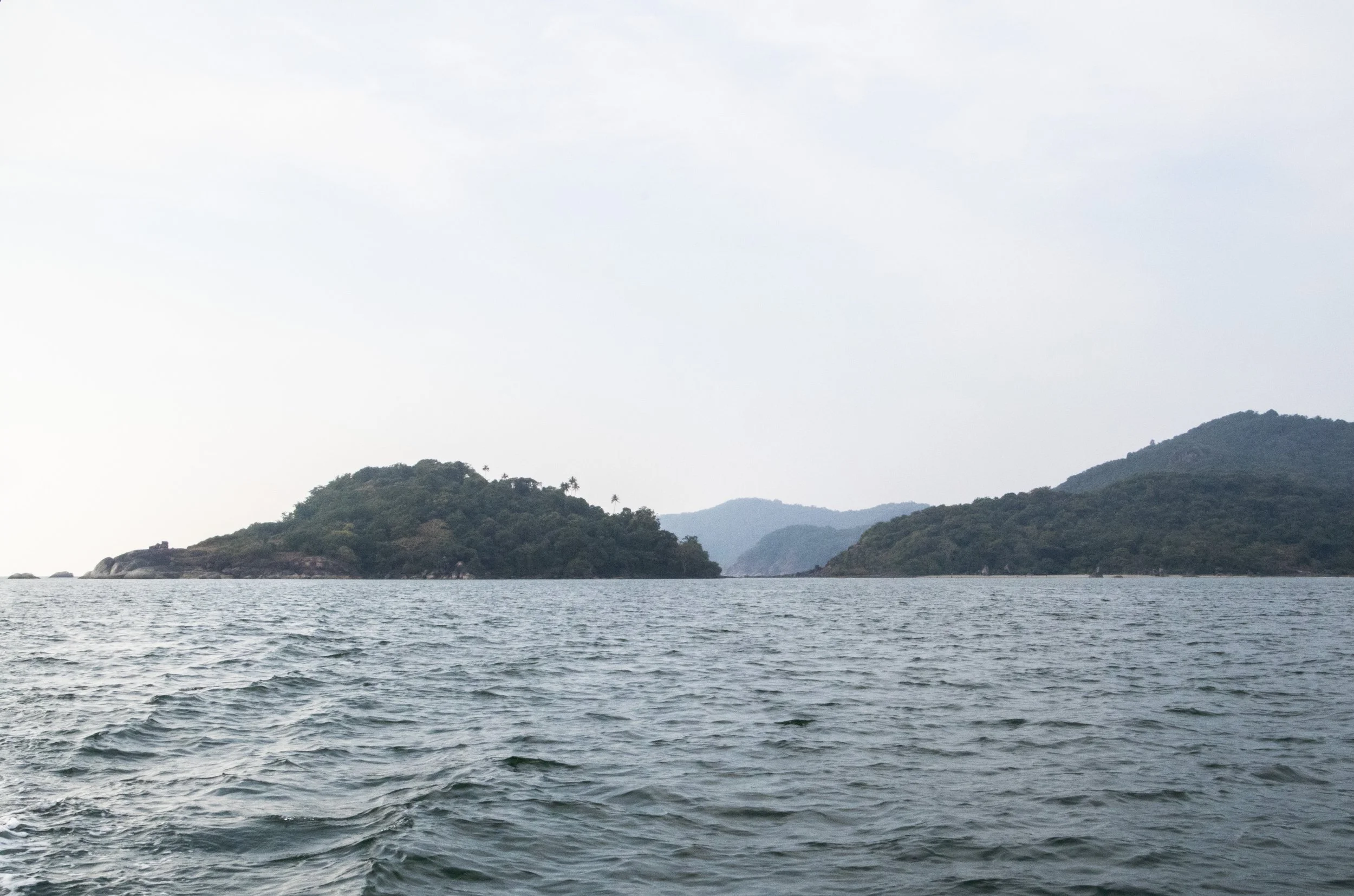
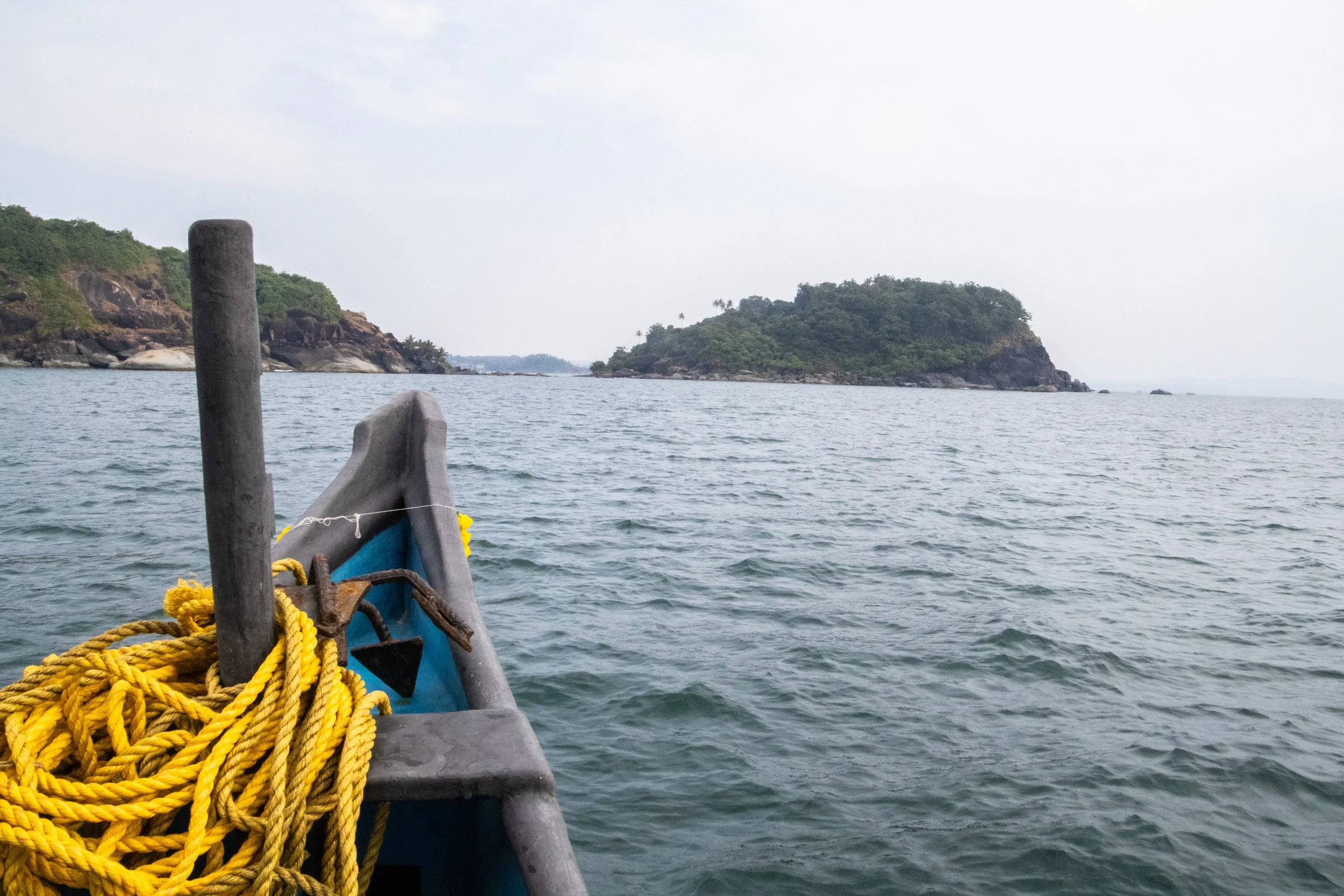
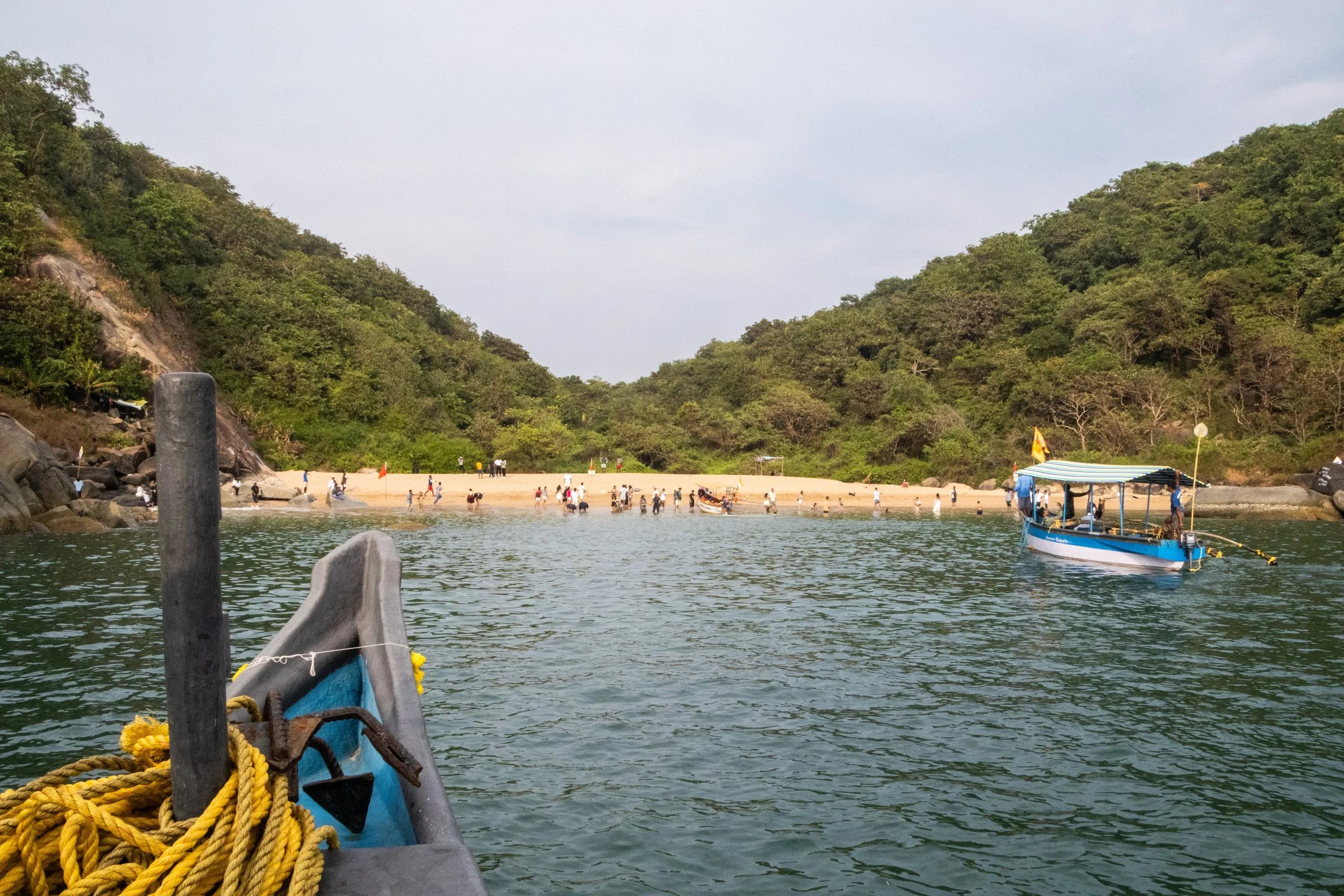
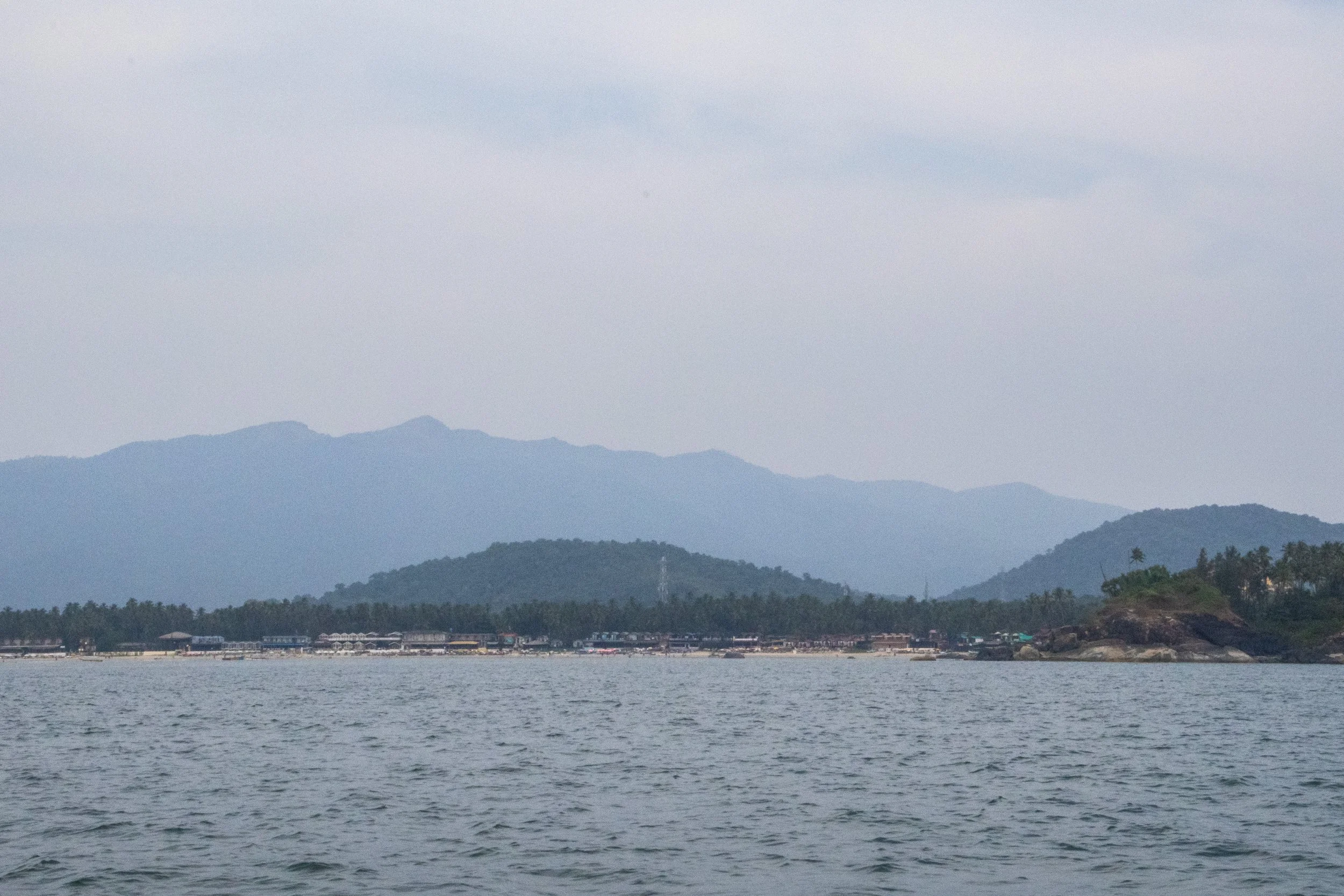
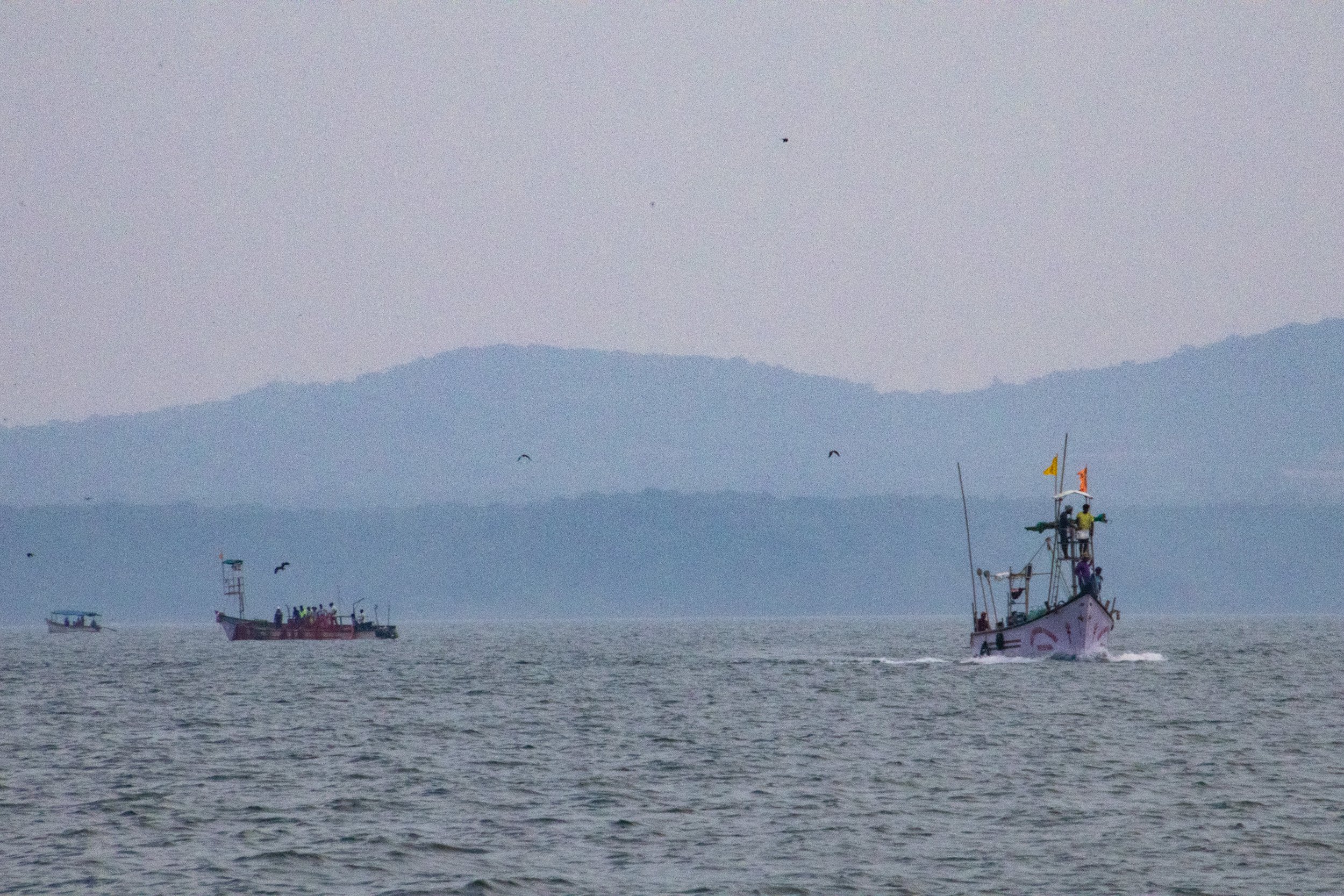
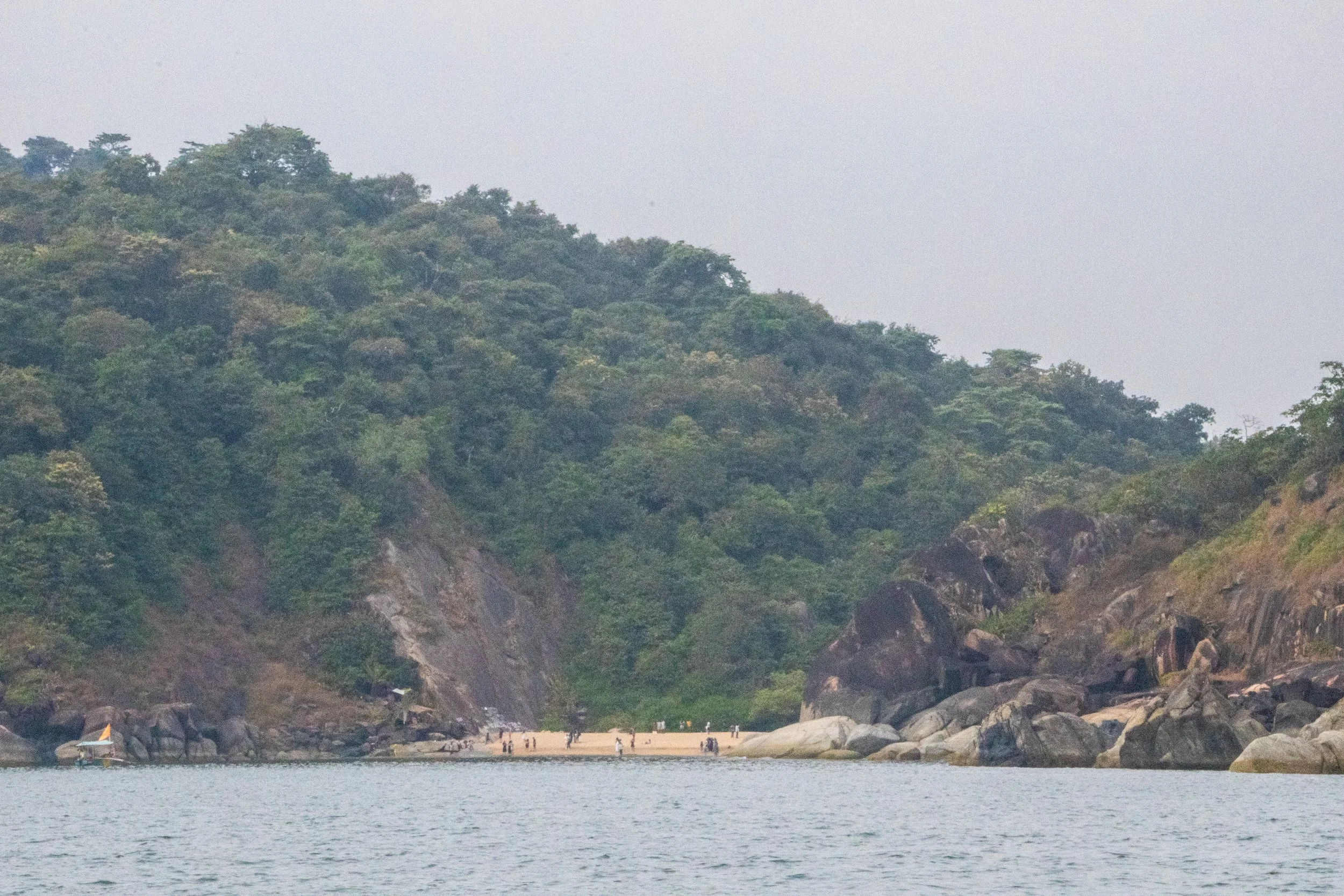
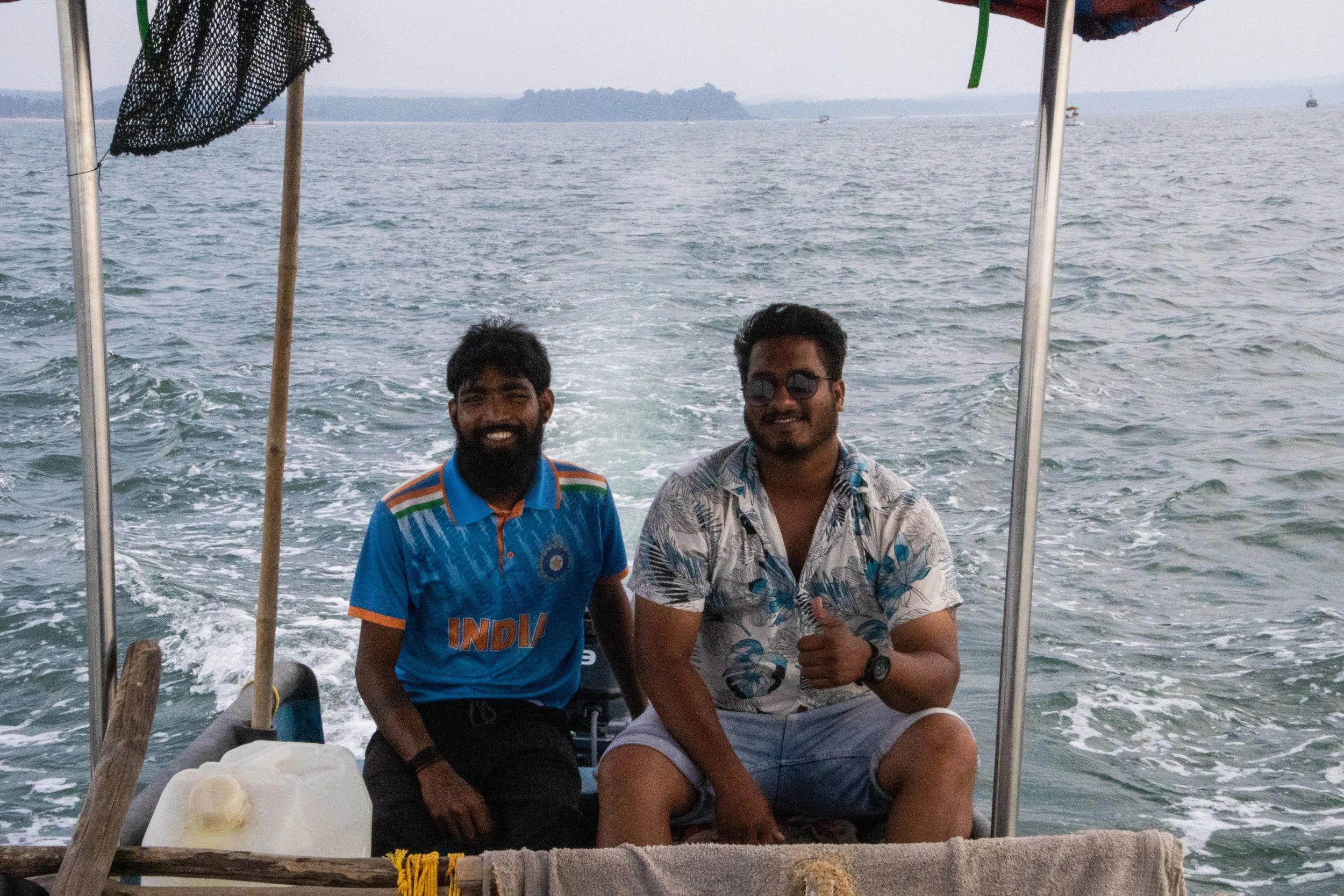
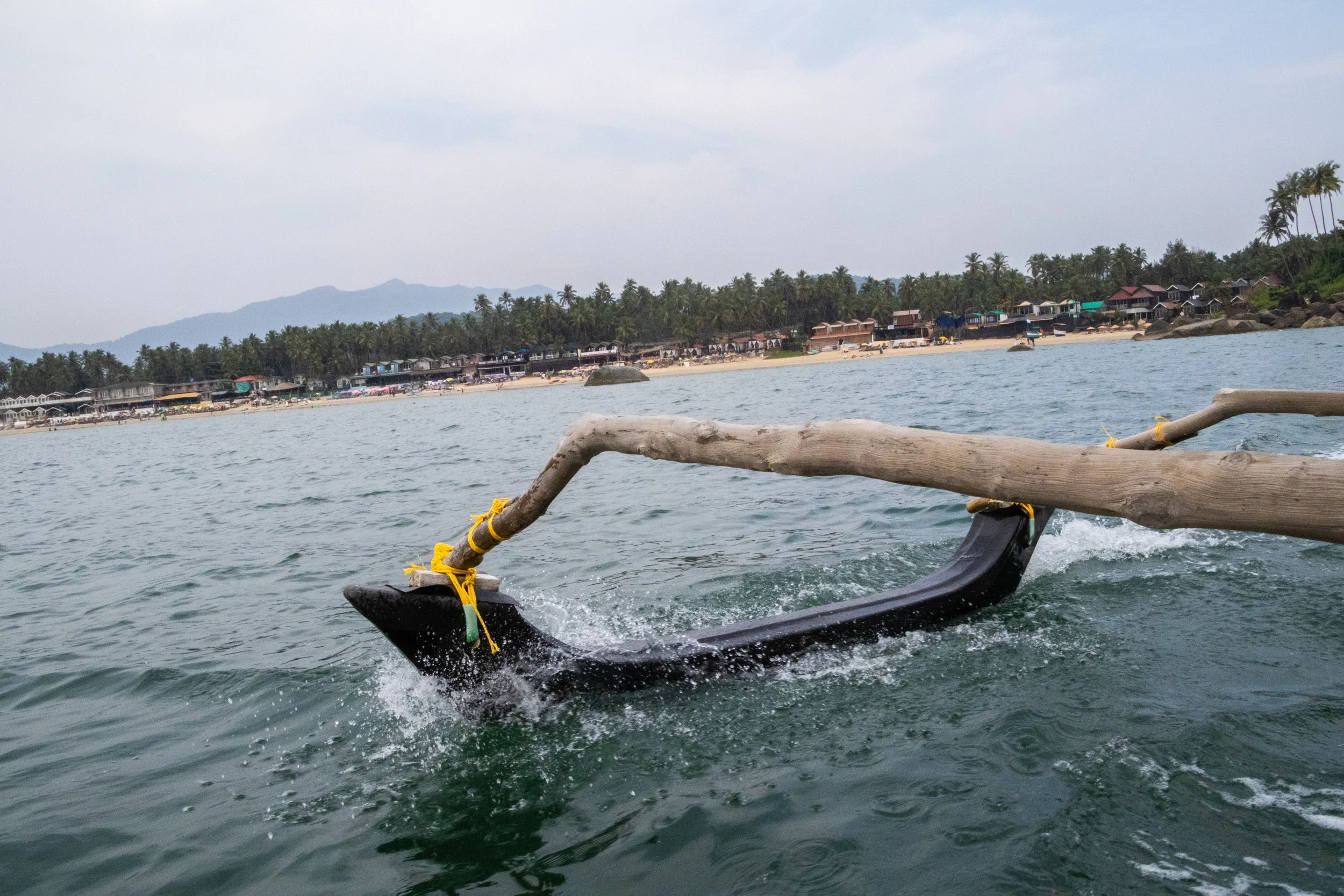
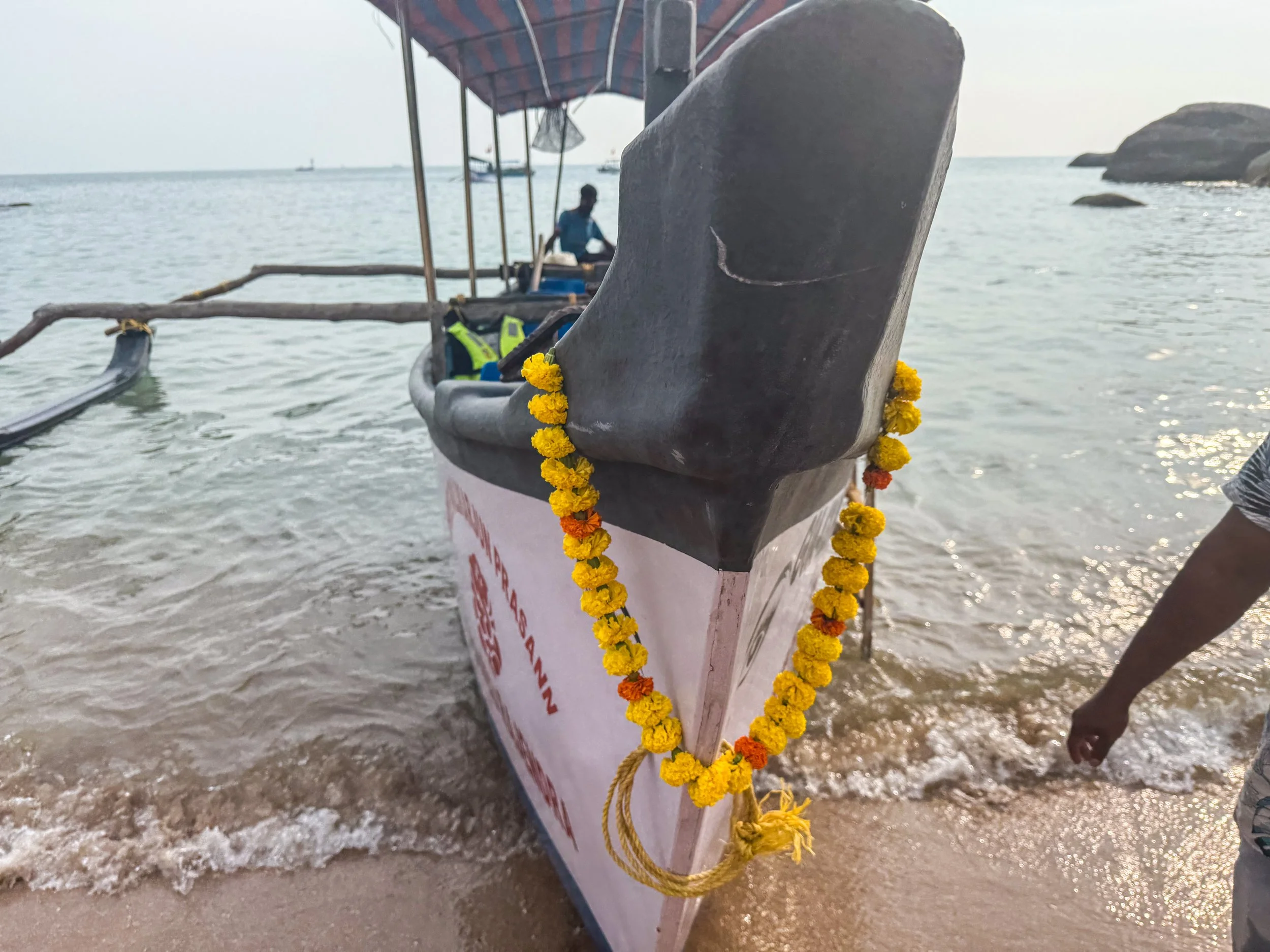
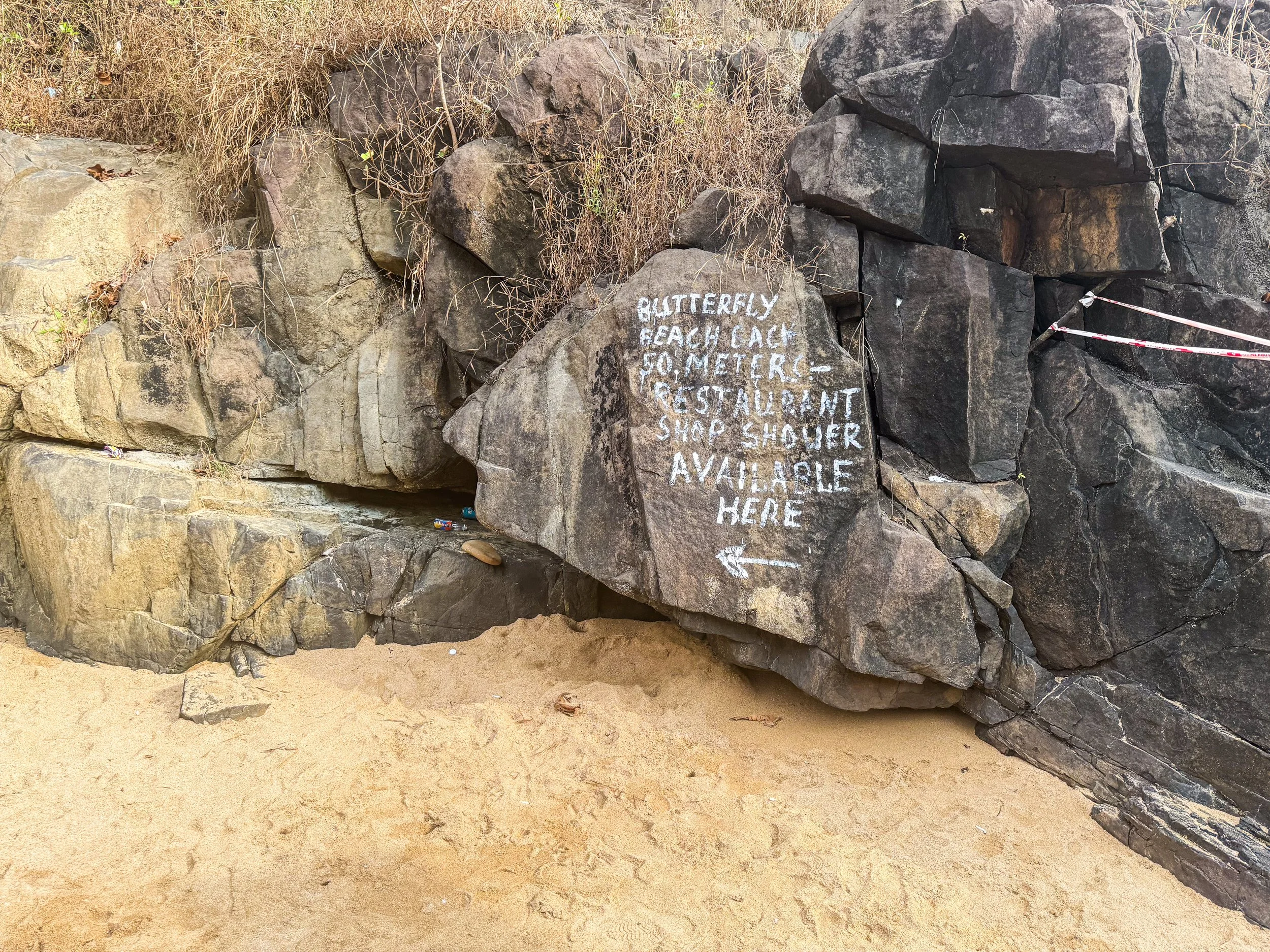
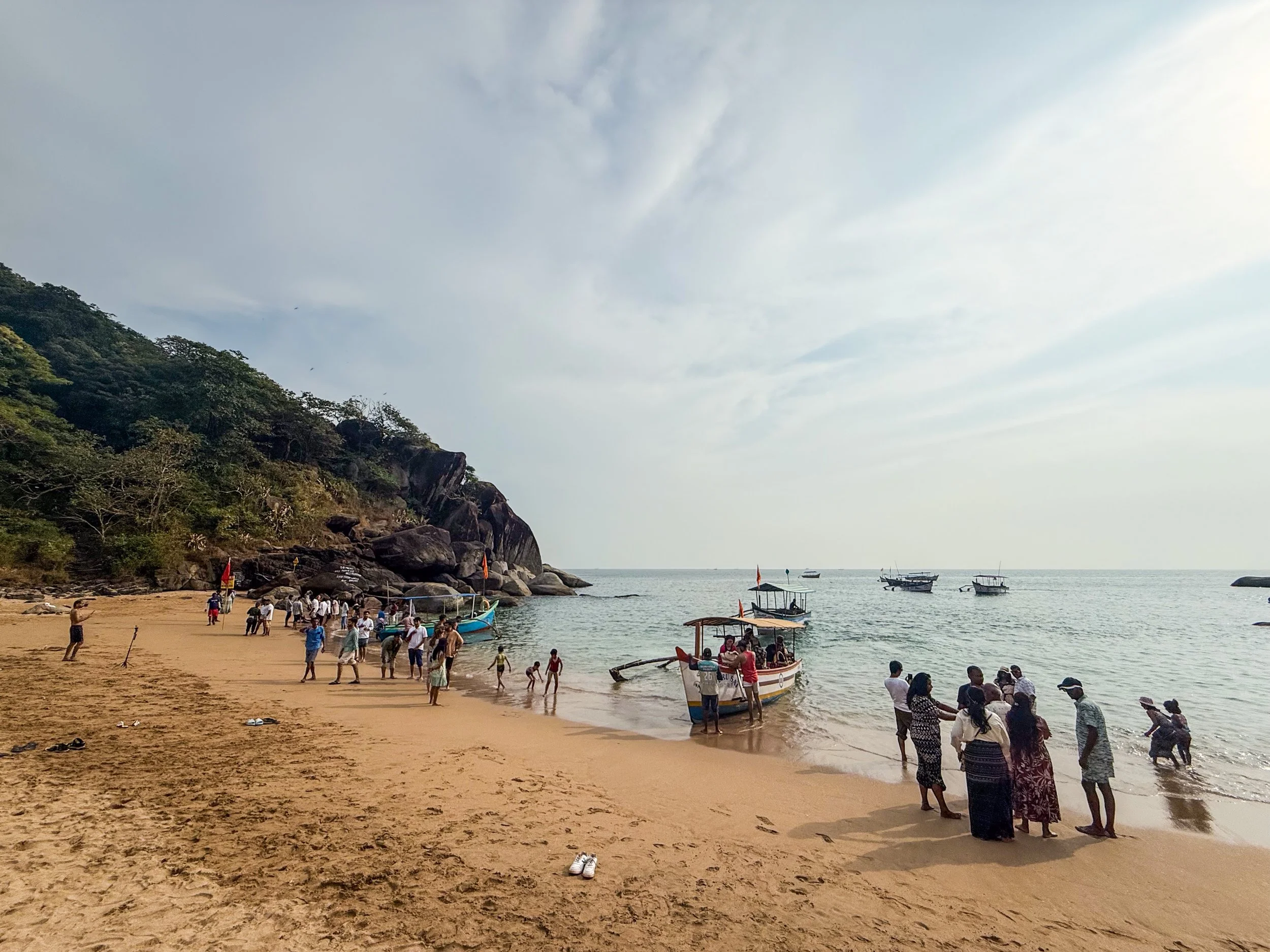
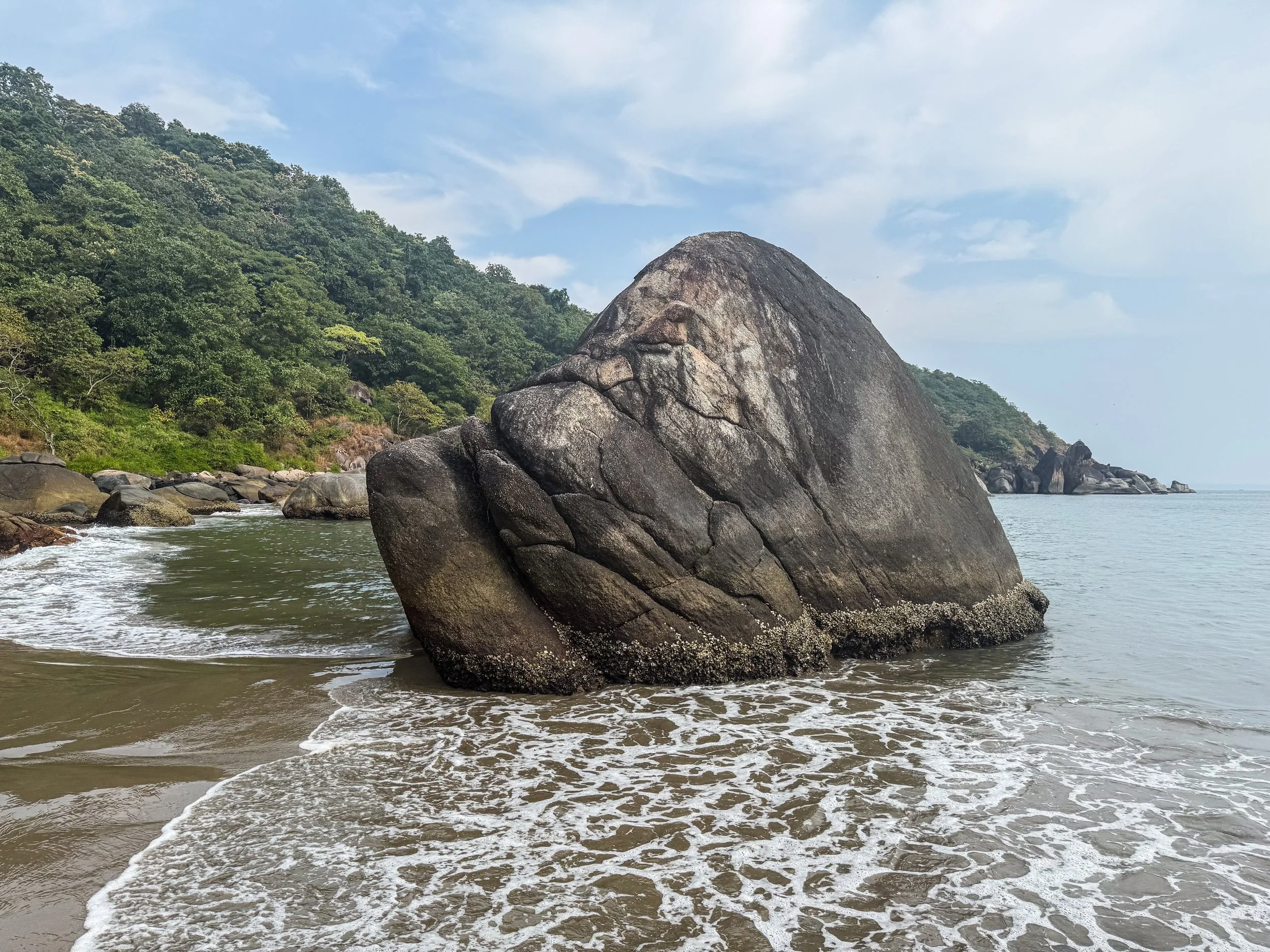
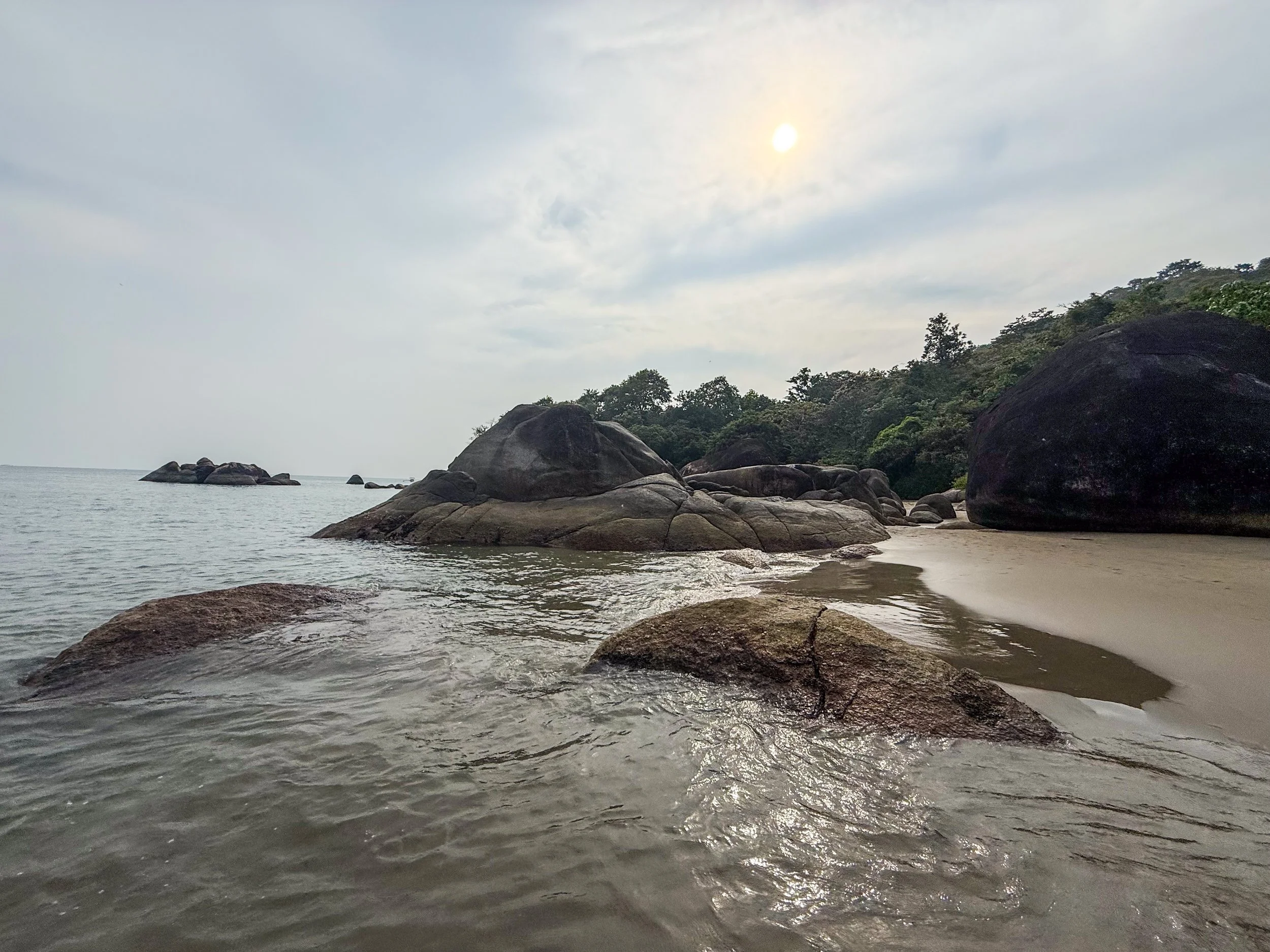
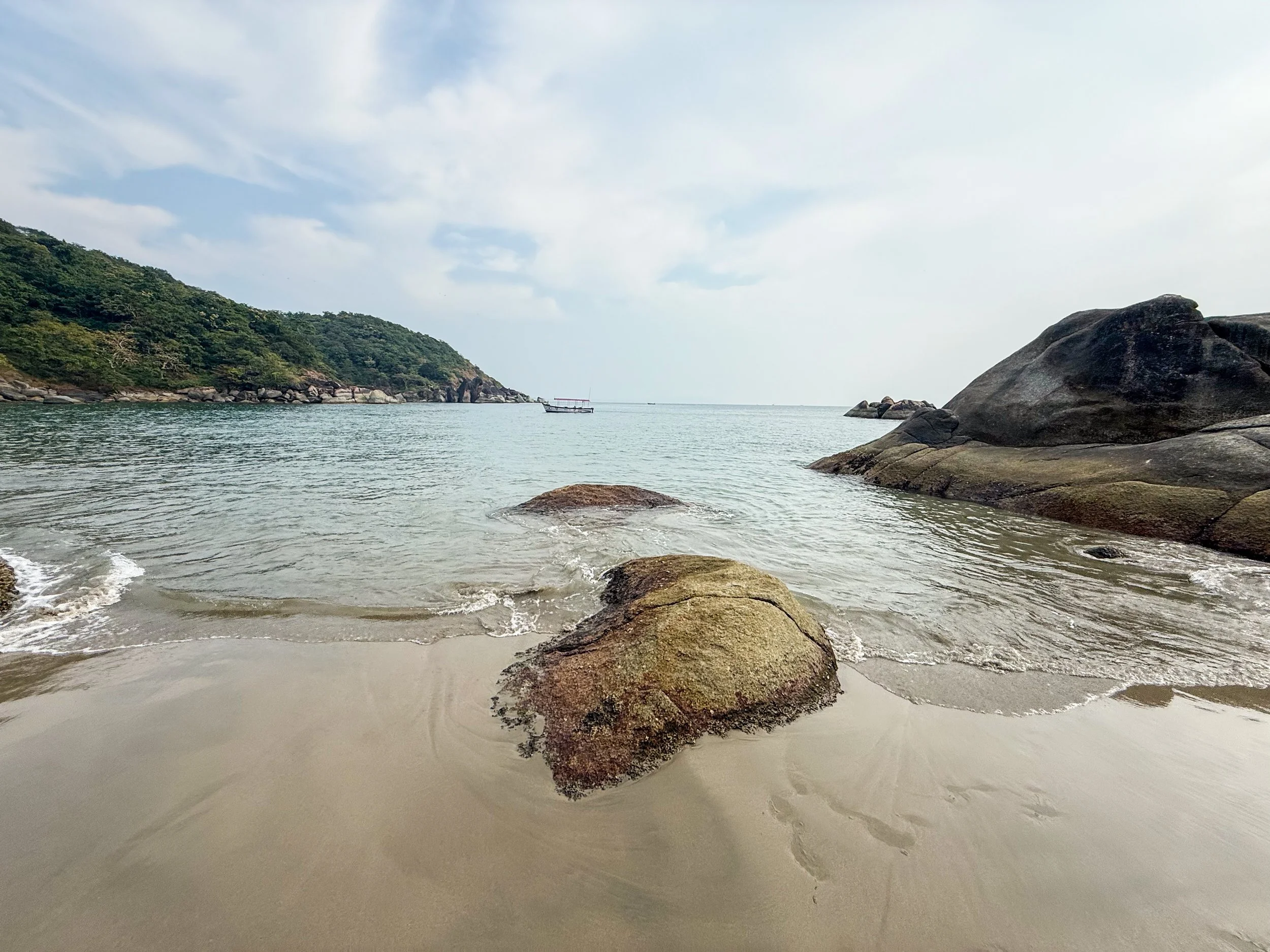
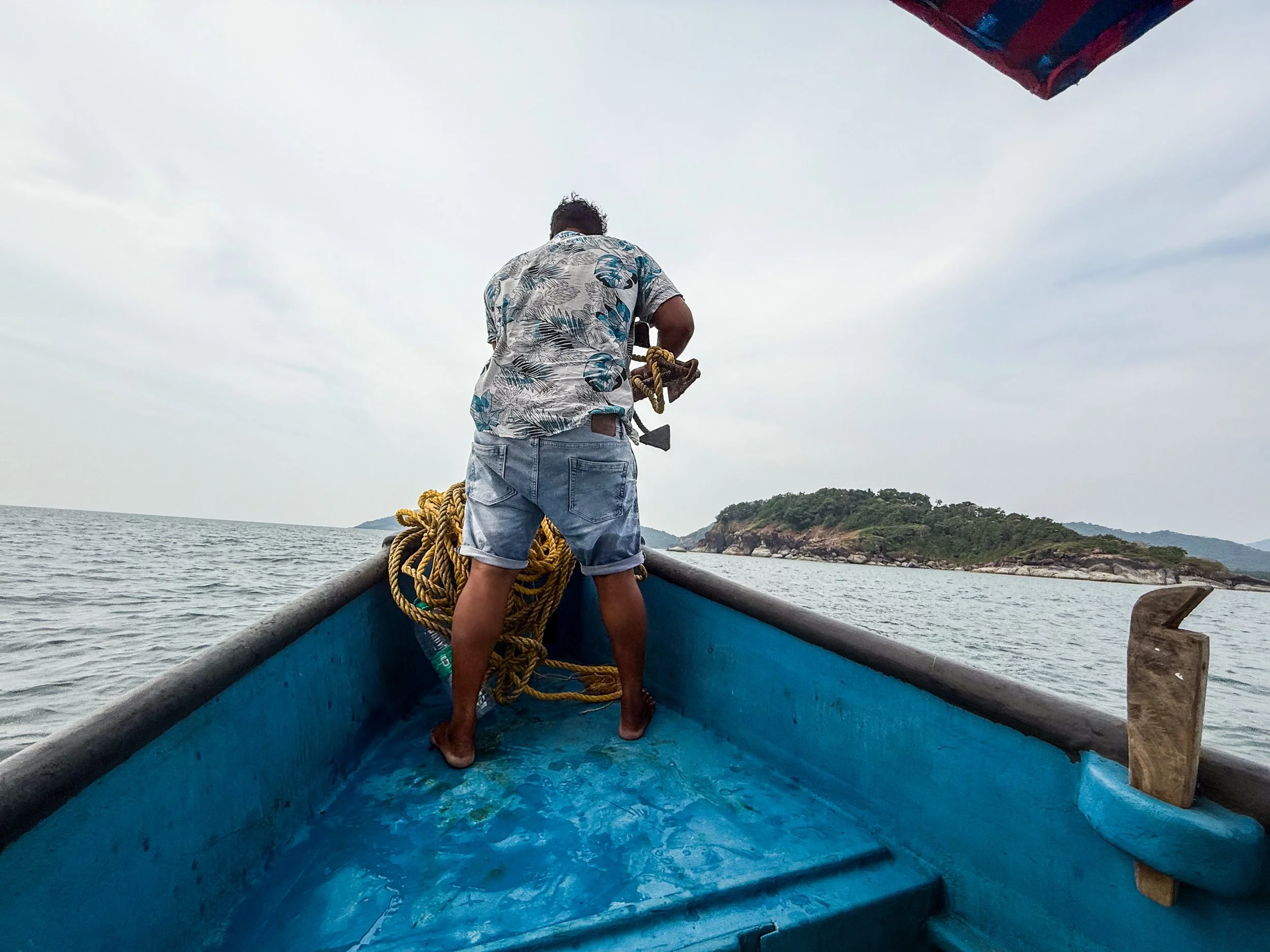
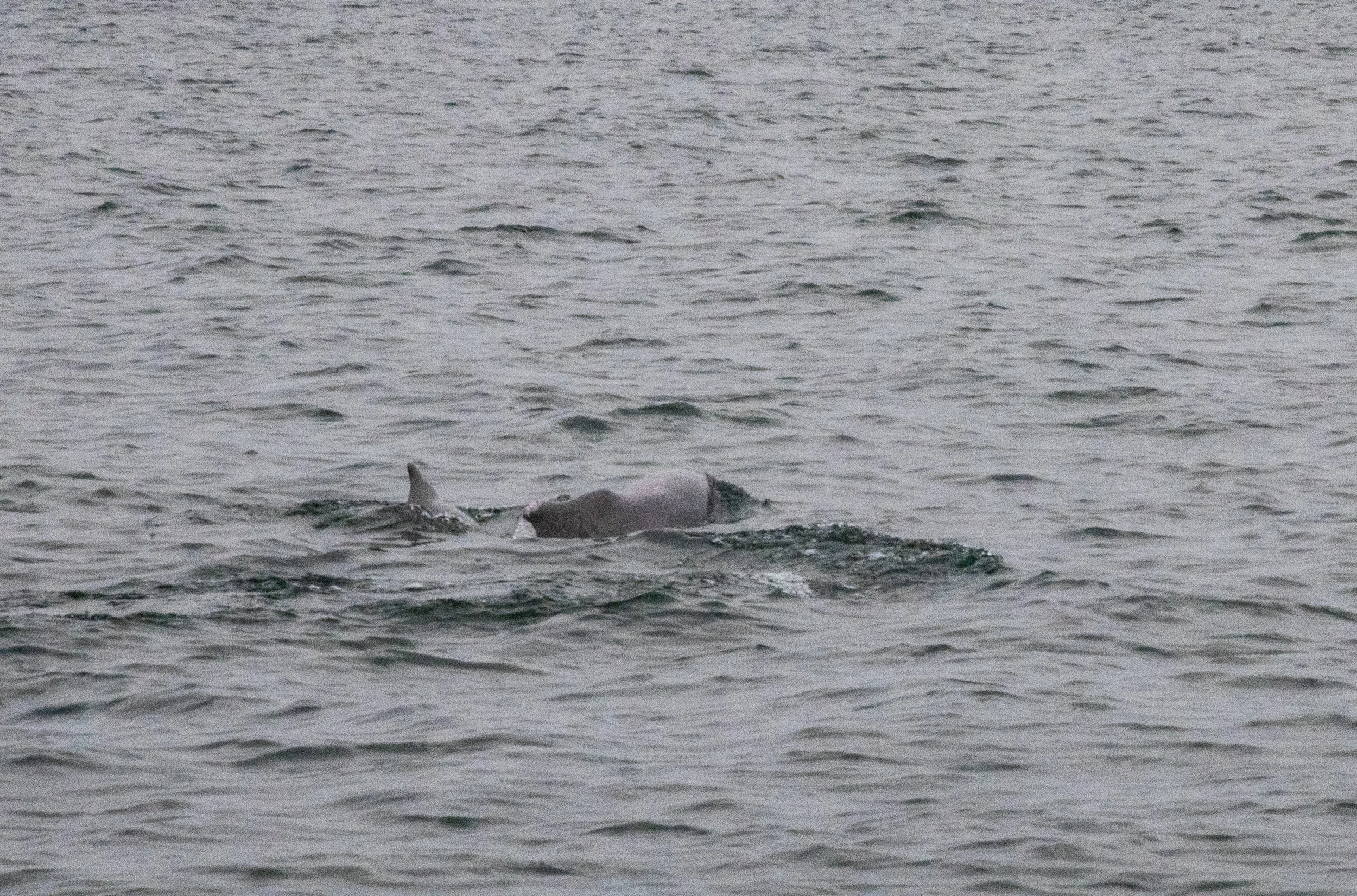
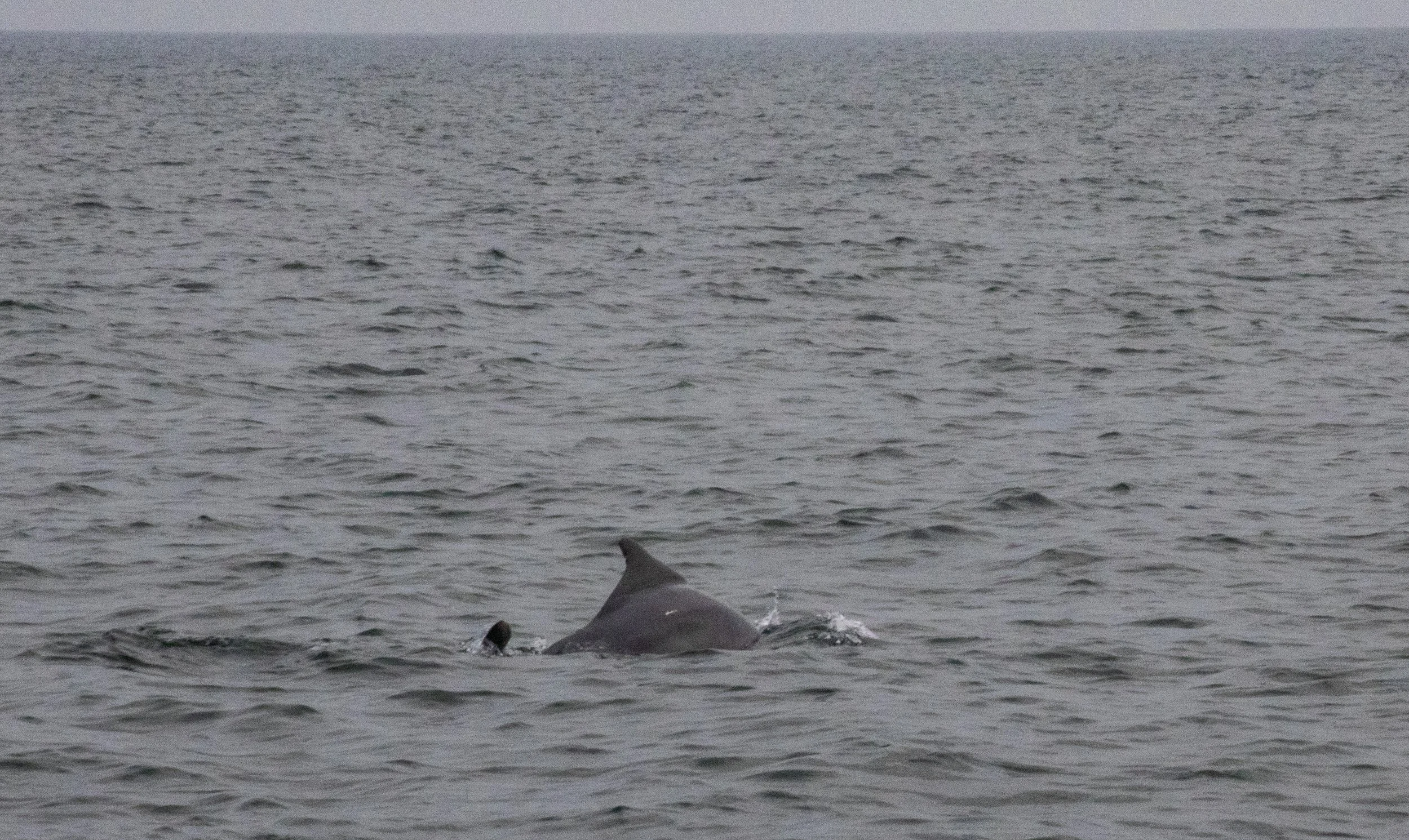
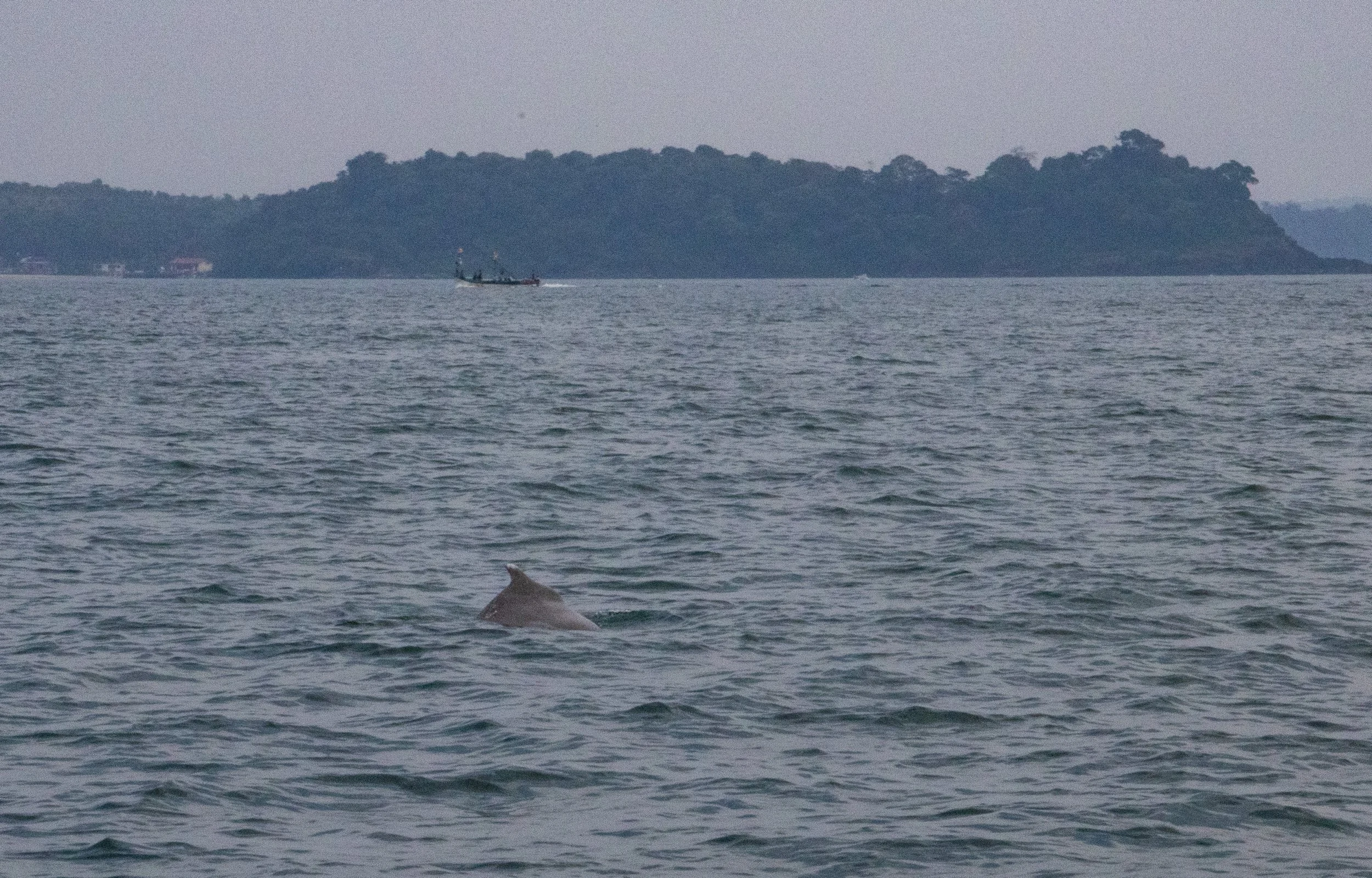
To make this boat ride all the more fun, we also spent some time looking for pods of dolphins and porpoises, which would periodically pop up to the surface. It was not hard to spot them out here; they were everywhere!
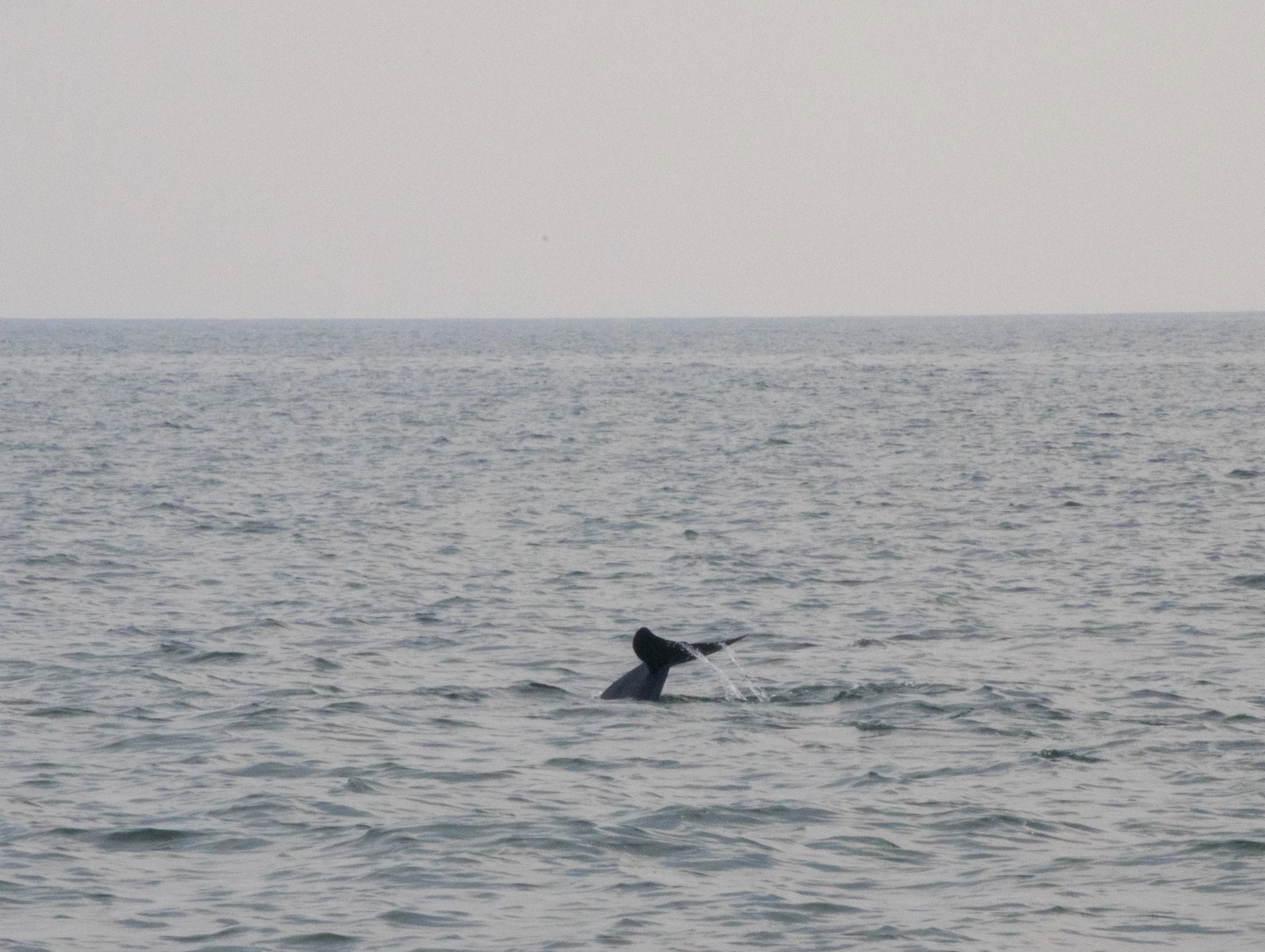
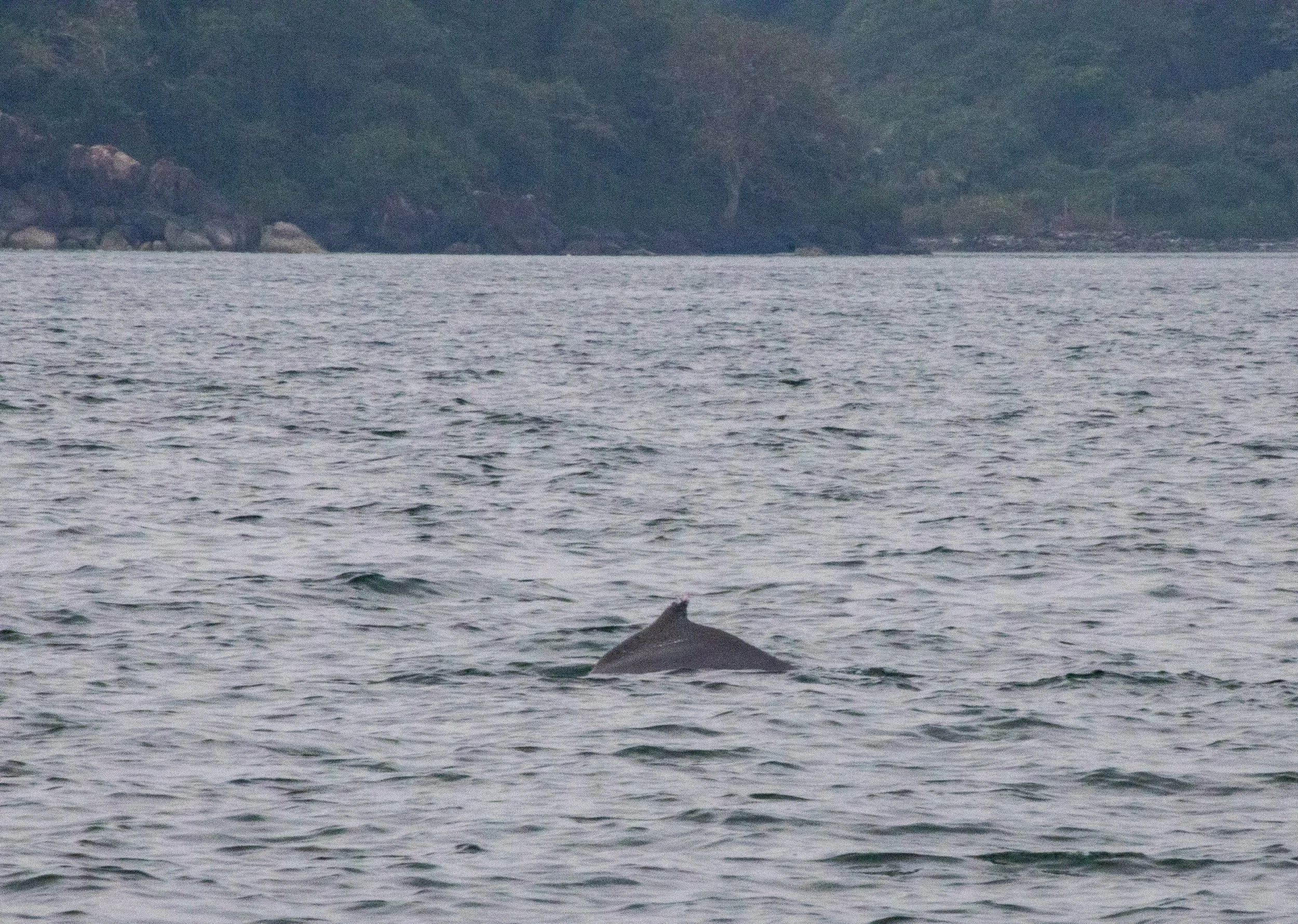
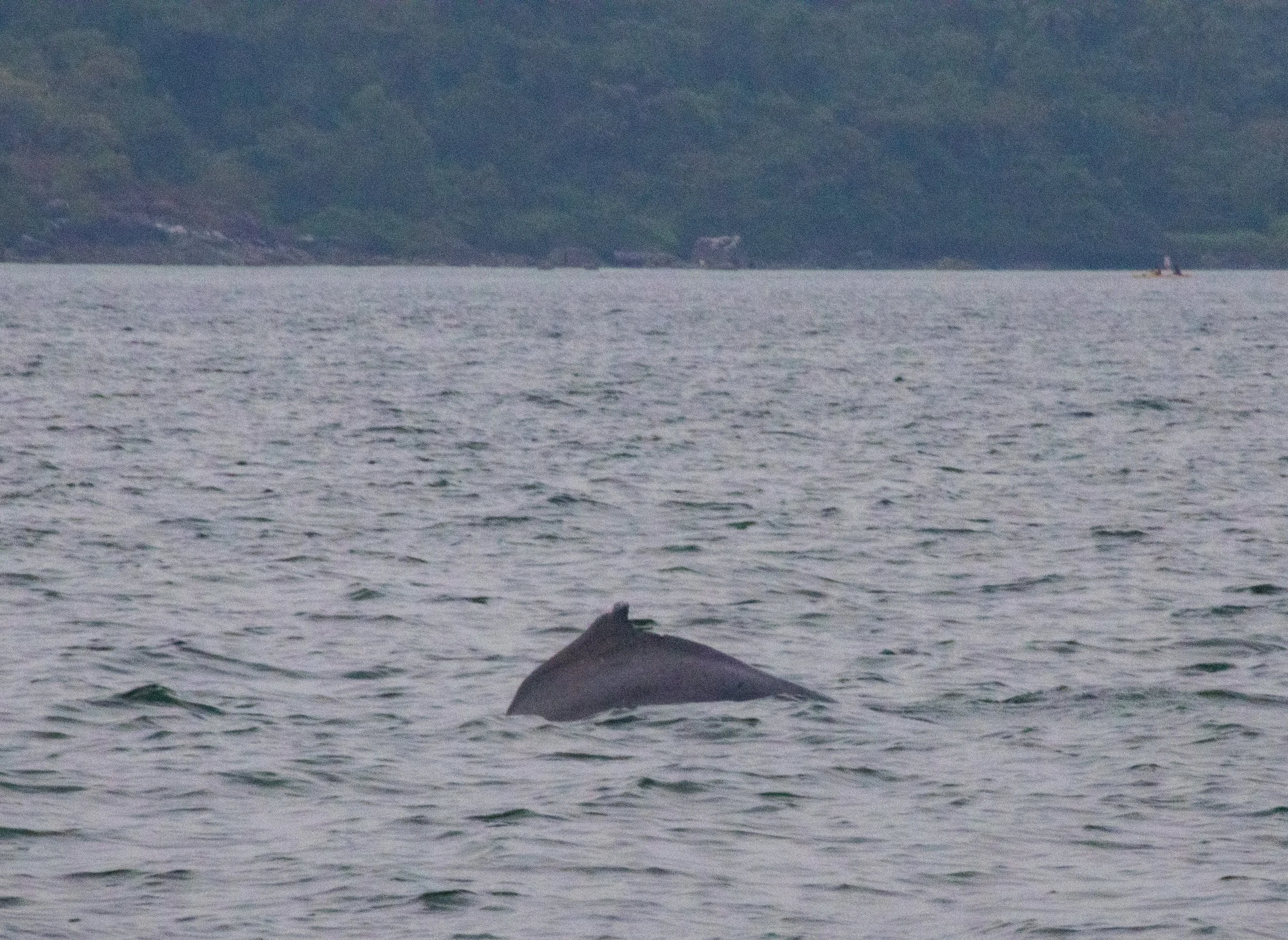
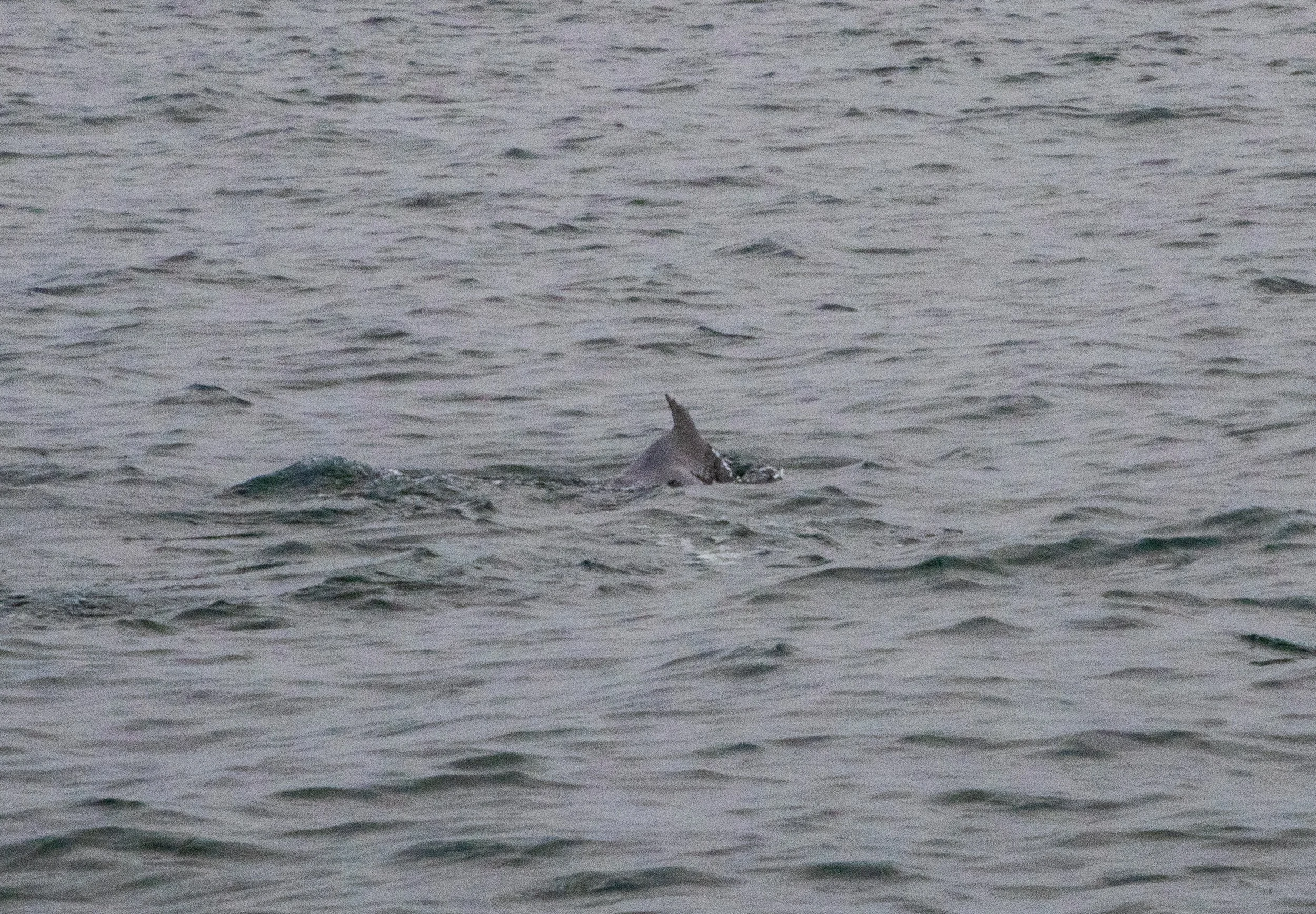
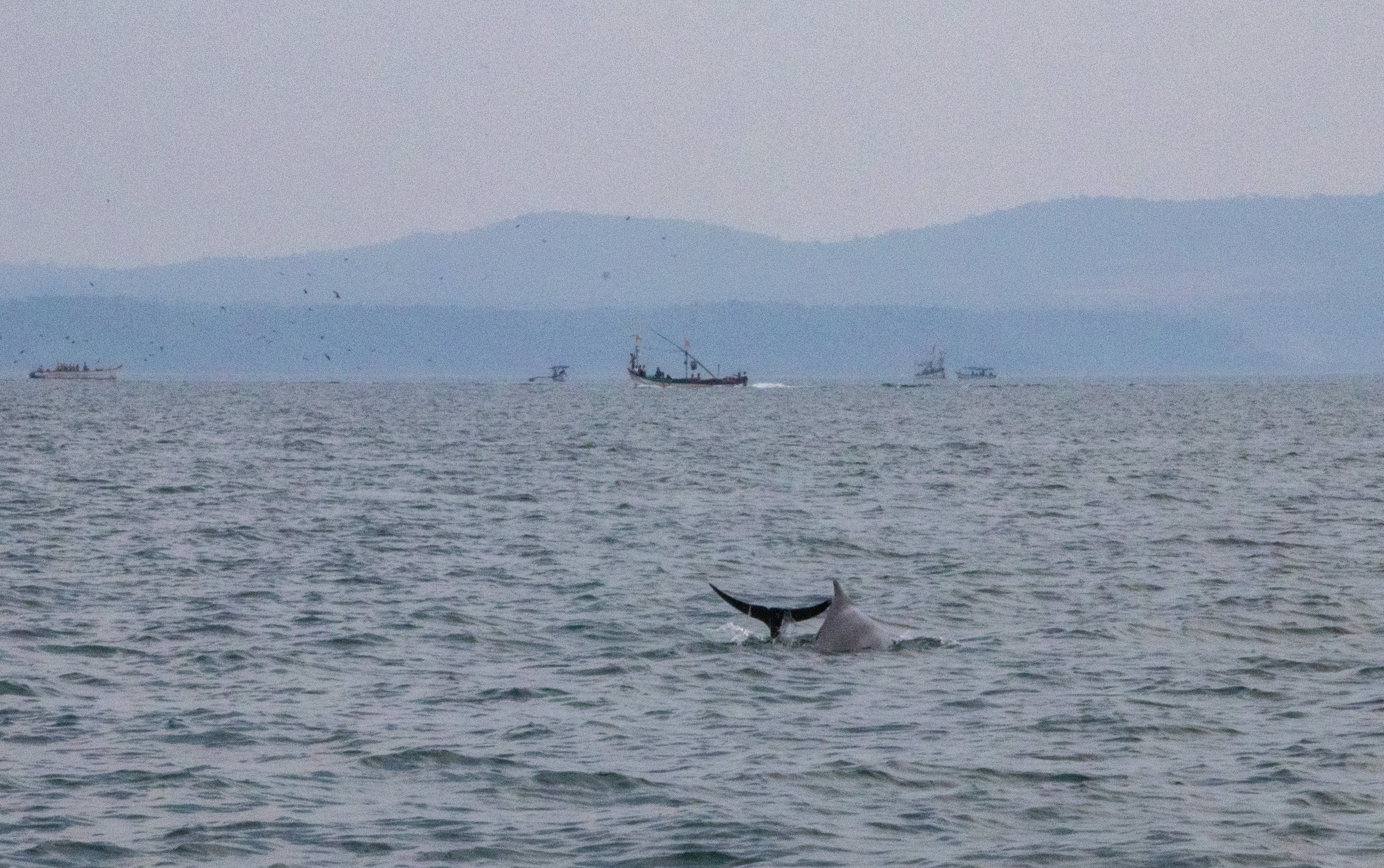
After a few hours at sea, we trekked back across Palolem Beach, scootered back through winding jungle roads to Agonda beach for another magical Goan sunset. I loved this beach. I have thought about it a lot since this trip… I hope I get to come back here one day.
Up next, we’re continuing our foray into South India!
We’re going to make the long haul back up to the Goa airport where we will catch a flight to the bustling Tamil capital of Chennai. After that, we’ll finish with an article in the famously beautiful little town of Pondicherry.
For now, I’ll leave you with this track, which is now the soundtrack in my head to my memories of scootering through the Goan jungles.




With a metro population of roughly 33 million people… (pause for dramatic affect)… Delhi is the largest city in the largest country on earth. In the overall world rankings, it is 2nd only to Tokyo, but it’s gaining ground fast! In the average Delhi day, there are ~837 births and ~360 deaths, which gives us a natural increase of ~477 people per day. On top of that, there are an additional 200–275 migrants that arrive here per day, mostly from neighboring countries, or rural parts of India. Meanwhile, Tokyo is actually shrinking.