
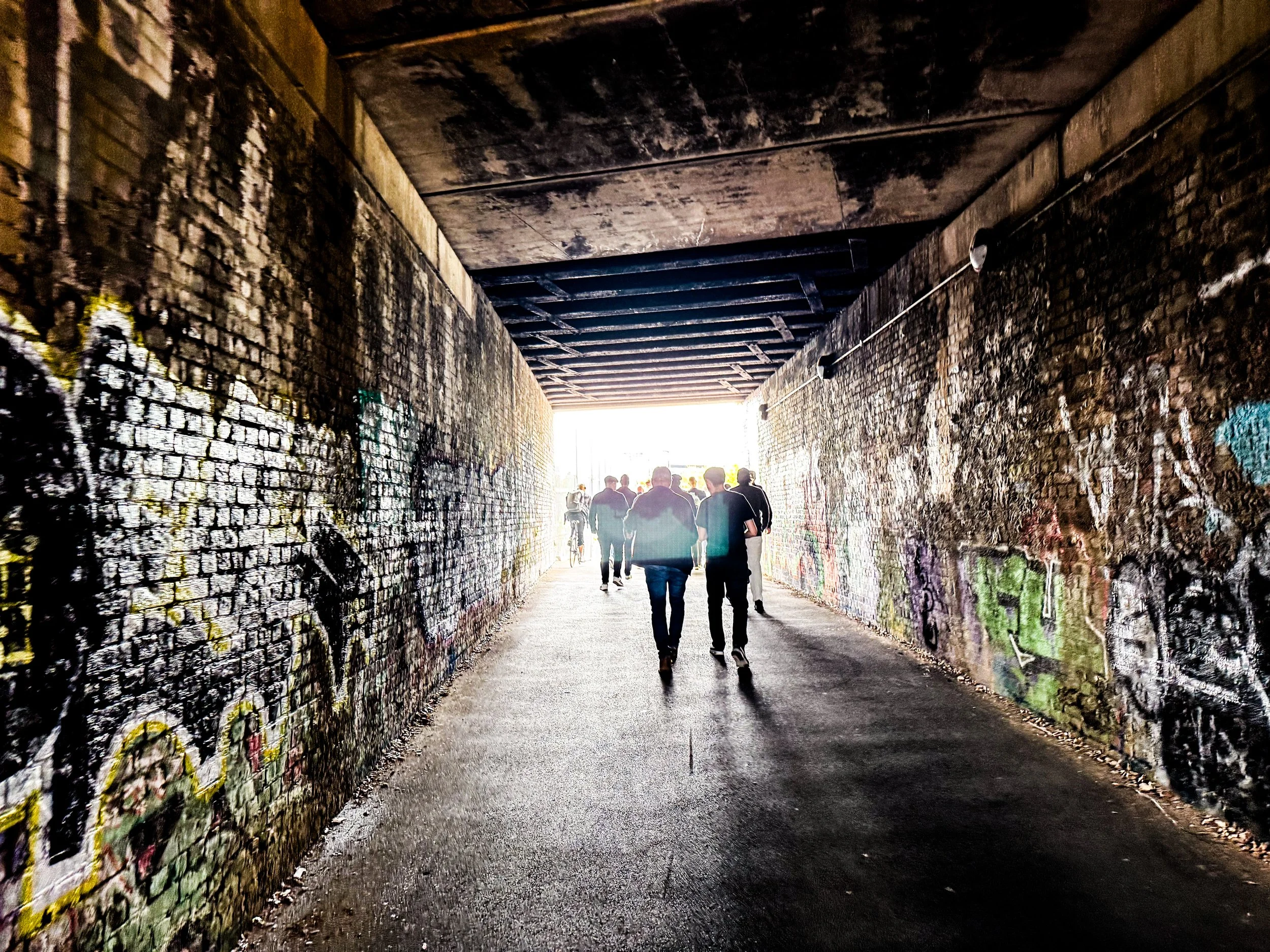
I cannot stress this enough… THIS MATCH is straight from my football bucket list!
And, for my fellow Americans out there, football = soccer.
I have literally never been more excited to buy a ticket to football match than I was for this one. And that is almost entirely thanks to a movie called Green Street Hooligans. If you’re not familiar with this film, here’s the trailer:
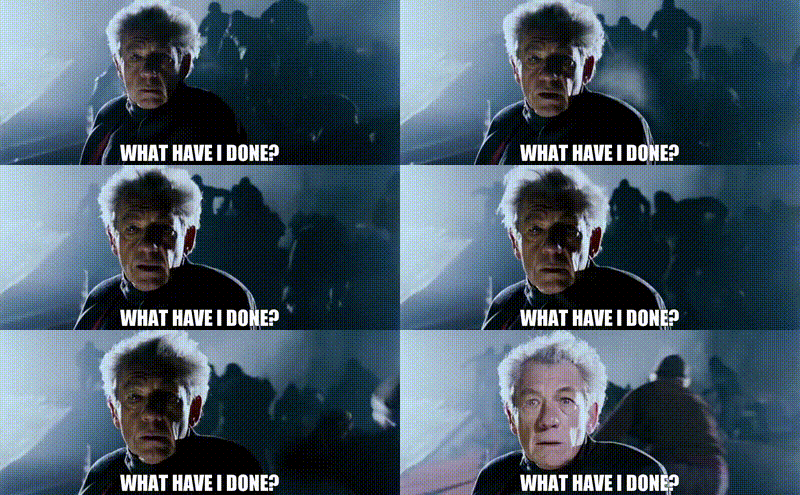
When I was still but a wee lad, I watched this late one autumn night at a friend’s house back in Ohio, and I was transported. It’s actually a super intense movie, and it’s very much based on true events! I remember, when I attended my first Premier League at Stamford Bridge in 2023 (Chelsea v. Brighton), I was quite surprised that you can no longer take any alcohol to your seats in these matches! There’s a reason for that…
Had you ever heard of ‘hooligans” in the a football context? It’s now a bit of a dated term, but in the past—especially in the 1970s and 1980s—football matches often turned violent, as brawls would break out between supporters of opposing teams, both in the stands and in the streets. The people fighting in these brawls were called “hooligans” and they were often part of organized gangs, or “firms”. This sort of violence has claimed the lives of more than a few people in England over the decades, prompting coordinated efforts by local governments and police, as well as the football clubs themselves, to look for ways to intervene and break the cycle. It took decades, but this is mostly a thing of the past now! But things can still get tense occasionally, and the safeguards to keep people from brawling are still actively enforced. You’ll see it when you buy a ticket to a football match in England (and around Europe), there are very strict rules about (1) drinking in the stands, and (2) cheering for team 1 in a section of the stadium allotted to the fans of team 2. It’s not hard to see how these two rules work together to eliminate the occasion for violence in the stands.
Now let’s introduce the concept of a ‘derby’, to really put these tense fan dynamics into a pressure cooker. Basically, a ‘derby’ is when two teams that occupy more or less the same slice of ground play against each other. These are some of the most intense and explosive matches in football because the rivalries between the two sides are often so strong. For example:
Manchester City v. Manchester United… you guessed it, the ‘Manchester Derby’.
And further afield, Real Sociedad vs. Athletic Club Bilbao is the ‘Basque Derby’
Real Madrid v. Atlético Madrid is the ‘Madrid Derby’
Lazio v. Roma is the ‘Rome Derby’ or ‘Derby della Capitale’ in Italian
Galatasaray v. Fenerbahçe is the ‘The Intercontinental Derby’ (because they are Istanbul clubs hailing from different sides of the Bosphorus strait: the European and Asian sides, respectively.)
These matches are all extremely intense, even just to watch on TV. Anything can happen. People look forward to these all year, and you’d better believe that every single one of them is on my list!
The match between Millwall and West Ham is called the ‘Dockers’ Derby’, and it is one of the most legendary and notorious fixtures not just in England, but in the entire footballing world; the stuff of legend! Here’s a video that goes through the backstory in full.
TL;DR - the Docker’s Derby started all the way back the late 1800s, as two workers’ teams located along the River Thames. Both teams were born of East London’s dock-working community: Millwall originated from a food-canning factory on the Isle of Dogs, while West Ham was a shipbuilders’ team. These were tough, hardscrabble people. In the previous Halloween-themed article, we retraced the footsteps of Jack the Ripper in East London; this is the same area and the same time! Jack the Ripper’s killing spree was in 1888; Millwall was founded in 1885. So the two stories were unfolding within a few miles of each other, among the same broader world of dockworkers, factories, poverty, overcrowded housing and East London's rapidly growing working-class communities. In fact, the murders happened only a few miles away from the site of the old Millwall playing ground…. during football season! 👀
Anyway, I don’t say this to imply any connection between the two. It’s just a good point of reference for how long these teams have been around. Plenty of time for this rivalry to go from a friendly competition to the bitterest of rivalries. But how did they get here? Apparently, it can all be traced back to labor disputes in the early 1900s, where groups of workers were going on strike across East London and beyond.
The story goes that, during these strikes, ONE of these two groups “scabbed” (crossed picket lines to work during the strikes, thus undermining the leverage of their fellow workers)… but which one of them was it? I’ve seen it reported in both directions enough times now that I feel confident in saying WE DON’T KNOW. It’s plausible that both sides were accusing the other of scabbing regardless of whether it was true or not. Whatever the case, this where the ensuring century of mutual hatred is reported to have begun. But hooliganism for which this rivalry became notorious did not reach its peak until the 1970s and 1980s, during which time there were actually murders committed between the two rival firms, Millwall’s ‘Bushwackers’ and West Ham's ‘Inter City Firm’. To give you a sense of the public theat at this time, there was at least one game in the 1970s where a police helicopter was deployed for match security! 😬
But, it’s 2026… Football hooliganism is a thing of the past, right? Like, surely this is not STILL a concern…. right??
*Gets on the internet*
2010: ‘West Ham fined £115,000 over violence against Millwall’ - BBC
2012: ‘Man stabbed as English football thugs run riot at West Ham v Millwall match’ - Daily Record
2012: West Ham and Millwall fans fight 'like animals’ - London Evening Standard'
And that—14 years ago—was the last time these 2 teams played against each other… until now. And I’d just bought a ticket…
To make this all the more intense, here are a few fun facts about this the circumstances around this game:
It has been nearly 40 years since one of these teams has beaten the other on their own turf
Since both teams have upgraded their stadiums (somewhat) recently, neither team has ever beaten the other on their home turf in their current stadiums
There have been red cards issued in four of the last seven matches leading up to this one
This is the 100th meeting between the two teams
Historically, long absences have led to explosive results when these teams finally play each other again… and I’d say that 14 years definitely qualifies as a ‘long absence’
Both teams are extremely competitive right now, and should be evenly matched (or close to it)
So, WITH THAT CONTEXT, it’s time to go see the next chapter of this story play out in real life. I will leave you with a final YouTube video from an Italian creator that I think captured the vibes quite well.
Since Millwall is nearly always portrayed as thuggish villains in every popular culture narrative, I was very interested to learn that one of my coworkers at my job in London is actually a born-and-raised Millwall supporter, and a season-ticket holder. He’s kind, smart, fun, and (as best I can tell) speaks with a (relatively) posh London accent; not at all a good match with the stereotype. I resolved to tag along with him to a Millwall match at some point, and when West Ham got relegated at the end of the 2024/2025 season (that is to say, demoted from the Premier League down to the Championship), I knew my time had come. The rivalry I’d seen portrayed in ‘Green Street Hooligans’ was about to be reborn.
The hype around the match was very real. Tickets to this game were selling for—I kid you not—around 1,000% of the typical prices for Millwall games. I’m told that I actually got a good deal in only paying £370GBP for my ticket. That was my whole football budget for the 2025/2026 gone. Needless to say, I was unsuccessful in convincing any of my friends to join me. When I showed my coworker my ticket to ask him if I was in a good section, he laughed and told me that at least it wasn’t in the kids’ section.
Millwall has a kids’ section? 1) Cute, and 2) if that’s true, how bad can this really be?
Well… the morning of the match arrived and, before I’d even gotten out of bed, I got this text from my coworker:
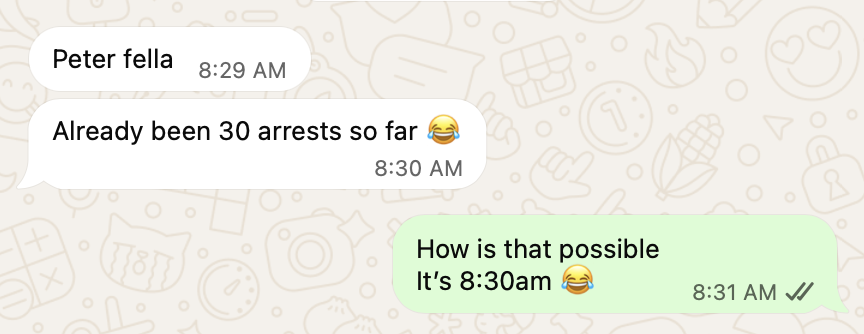
Well, 8:30am is as good a time for beer #1 as any, I suppose. 🤣
Millwall’s stadium, The Den, is in a little-known corner of Southeast London. In plotting my route across the city to get there, I ascertained that the security situation was supposed to be the worst around London Bridge station. So I opted to arrive via the Surrey Quays overground stop. Even down here, there were lots of police, and some of the businesses had actually boarded up their windows for the day. Many of the pubs in the area around the match had been told to close, with those that were still operating being advised by the police to serve only plastic cups that day. To spell this out for you, glass cups = broken glass = potential weapons.
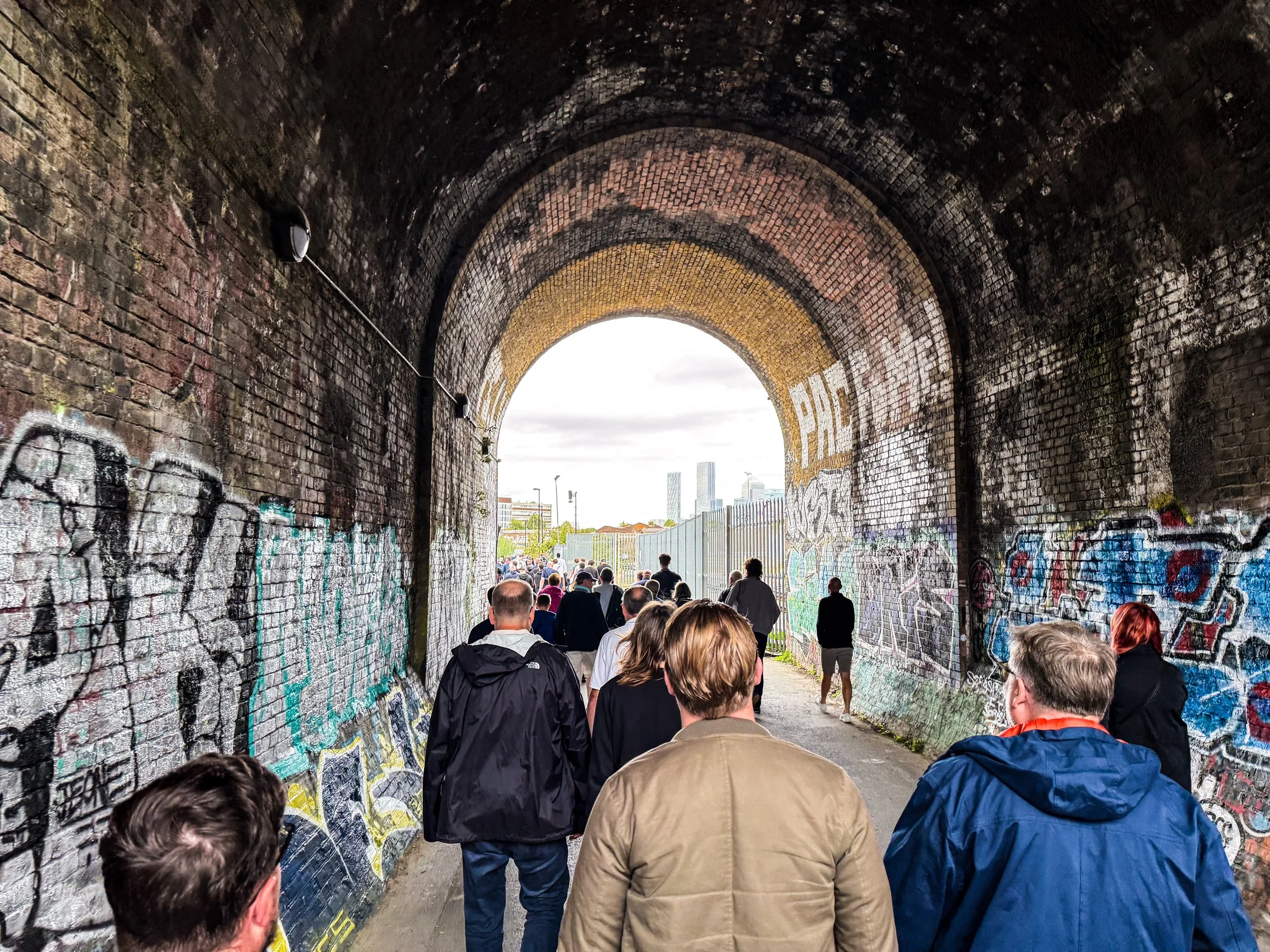
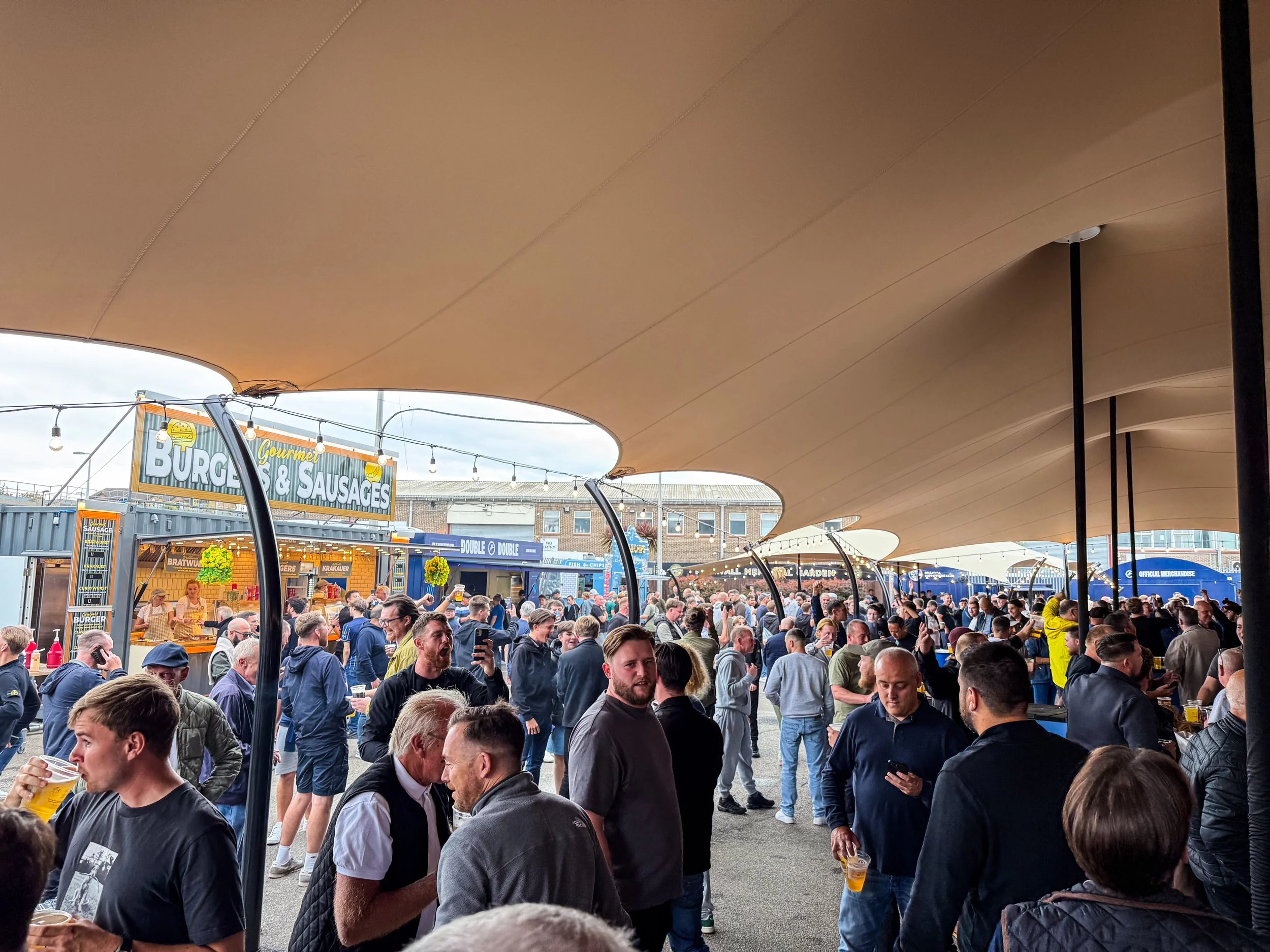
So, I arrived at a Millwall supporters bar before the match—the closest thing to an American-style dive bar I have yet experienced in England—downed another beer from a plastic cup, and joined the procession of people heading toward The Den.
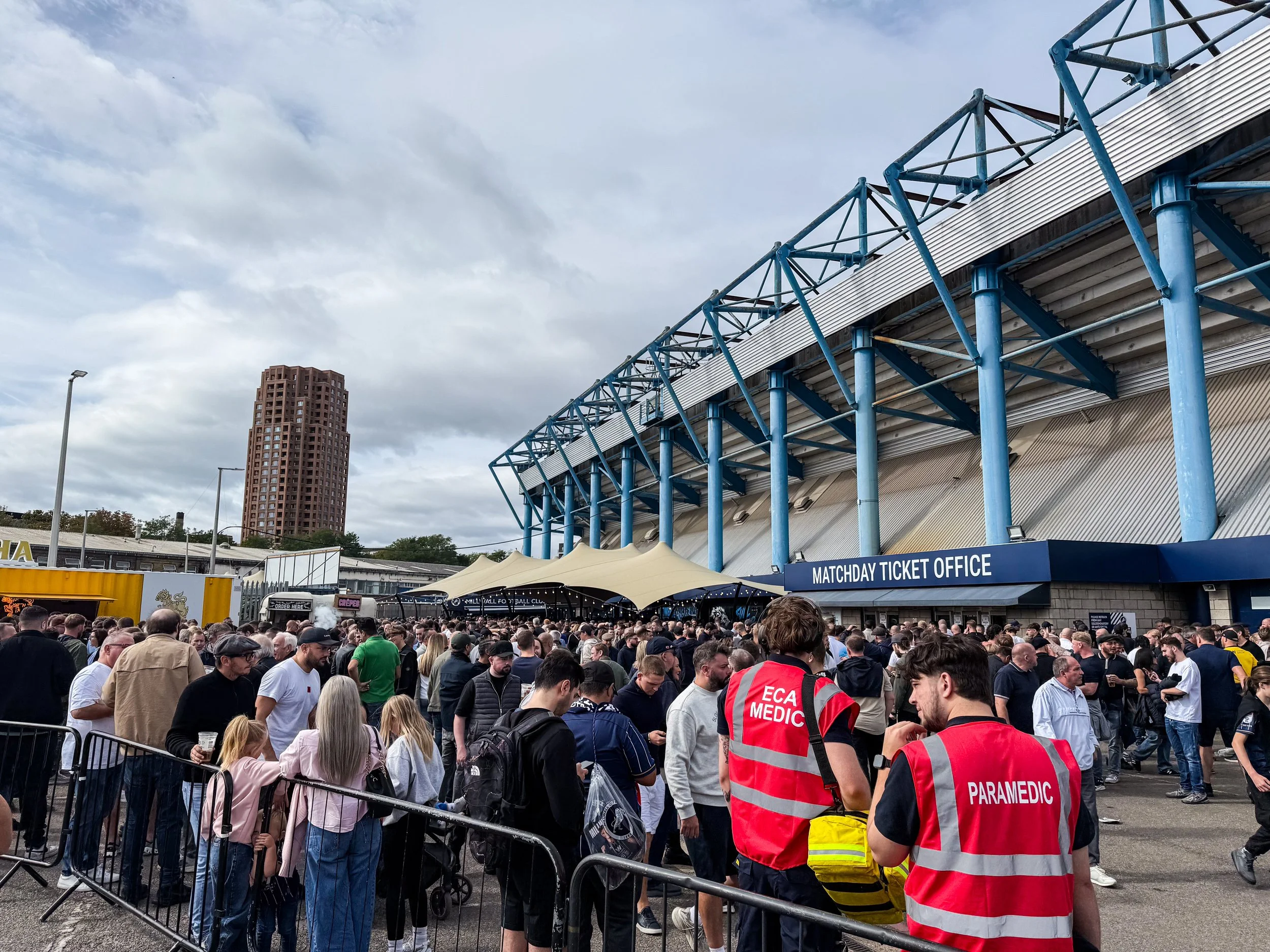
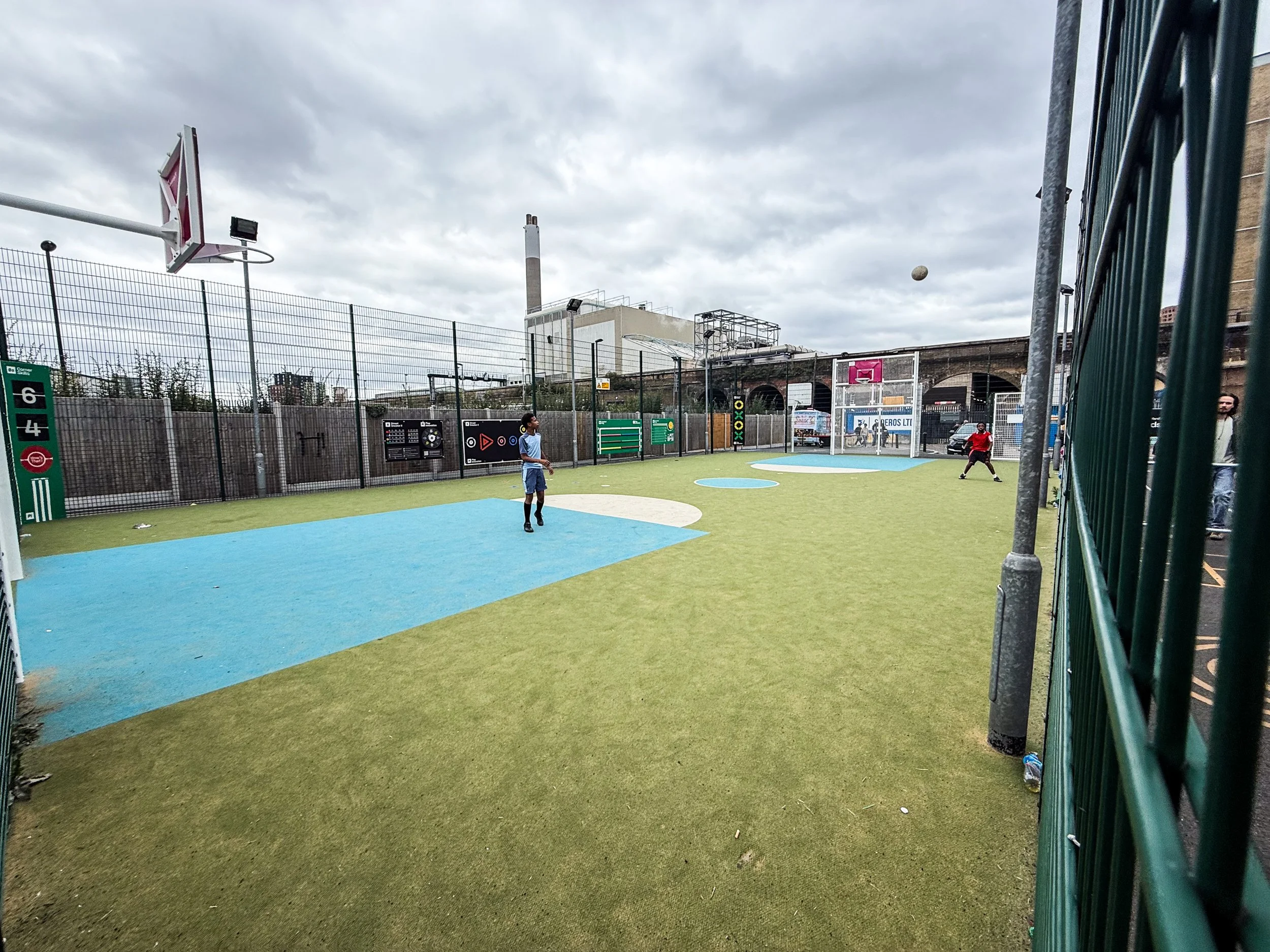
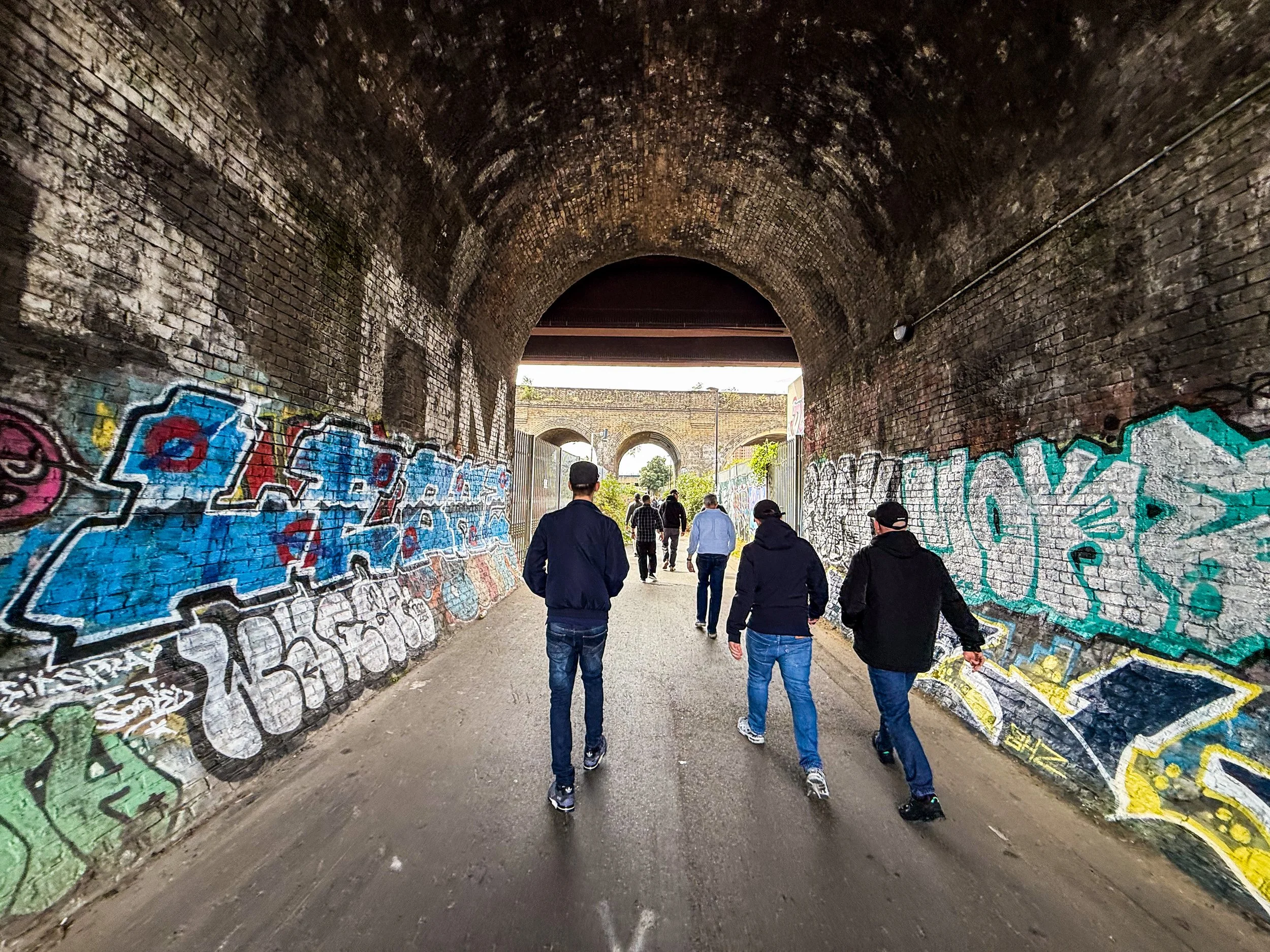
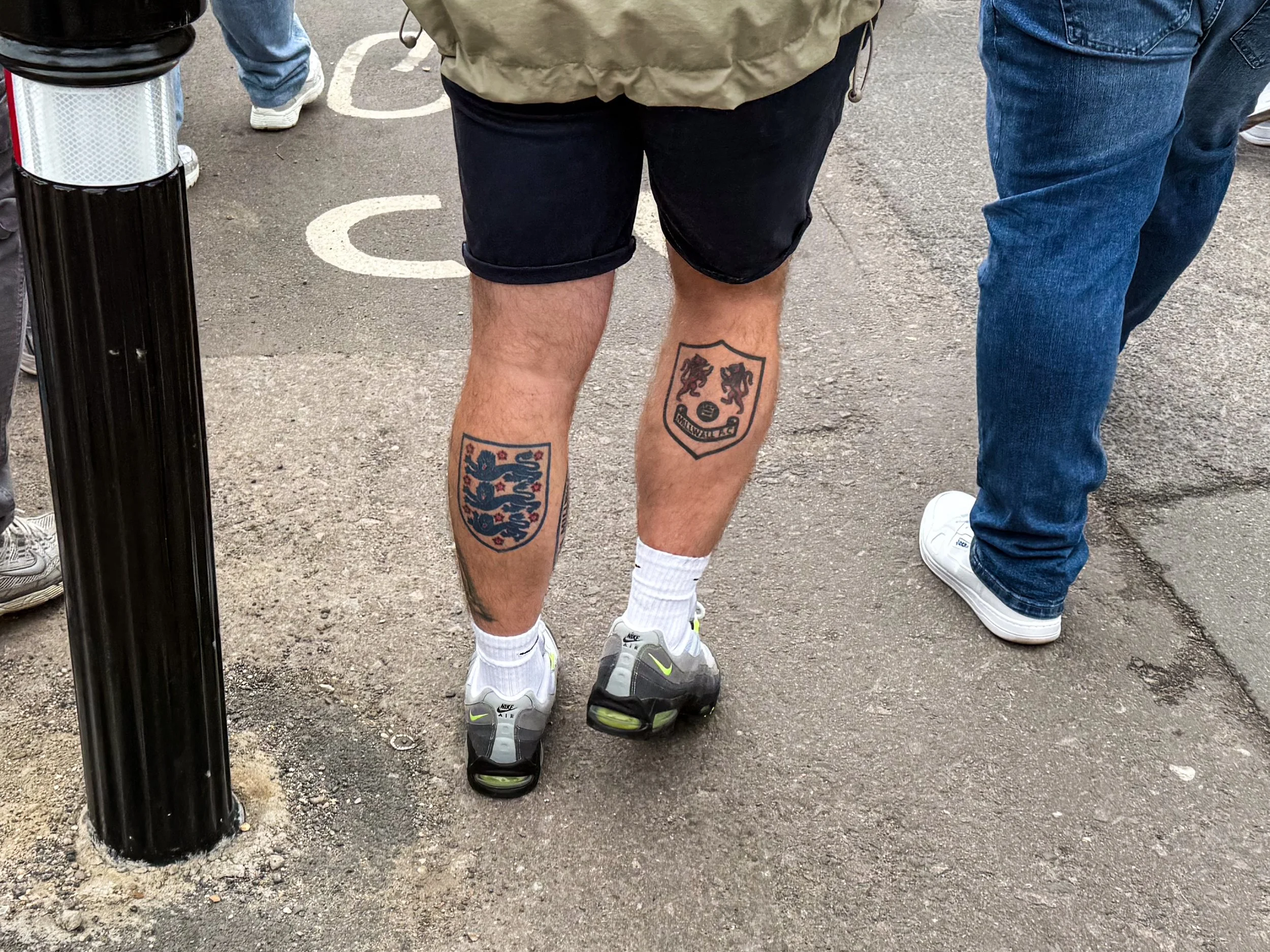
Inside the stadium, I discovered that there was, perhaps, some element of truth in the Millwall stereotypes. There were some genuinely terrifying guys walking around in there, and being 6 foot 4, I am not easily intimidated. And there were other guys walking around dressed like extras in a 1970s East London bank robbery film, thick 70s glasses and all. It was a cross-section of London society that was completely new to me, and nearly all of them seemed to be in good spirits. It was a lively, jovial atmosphere, full of smiles, back-slaps, and hugs. It was cool!
In the stands, a thick wall of police officers stood stationary, forming a human wall between the West Ham supporters’ section and the rest of the stadium. I’ve never seen that at a football match before. At least, not nearly to this degree.
Finding my way down to my seat, the match was off to a roaring start, with Millwall’s Caleb Taylor scoring the first goal 16 minutes in. 1-0 Millwall. The crowd sang together Millwall’s signature cheer, “NO ONE LIKES US, WE DON’T CARE.” Yes, they are well aware of their notoriety in the footballing world.
As half-time approached, Millwall was putting West Ham under intense pressure. Mark Sykes hit a screamer from 35 yards out that, after a tip from the West Ham goal keeper’s fingertips, hit the cross bar. But 3 minutes later, in added time, Camiel Neghli scored a sensational 2nd goal, just before half-time. 2-0 Millwall. The crowded went WILD.
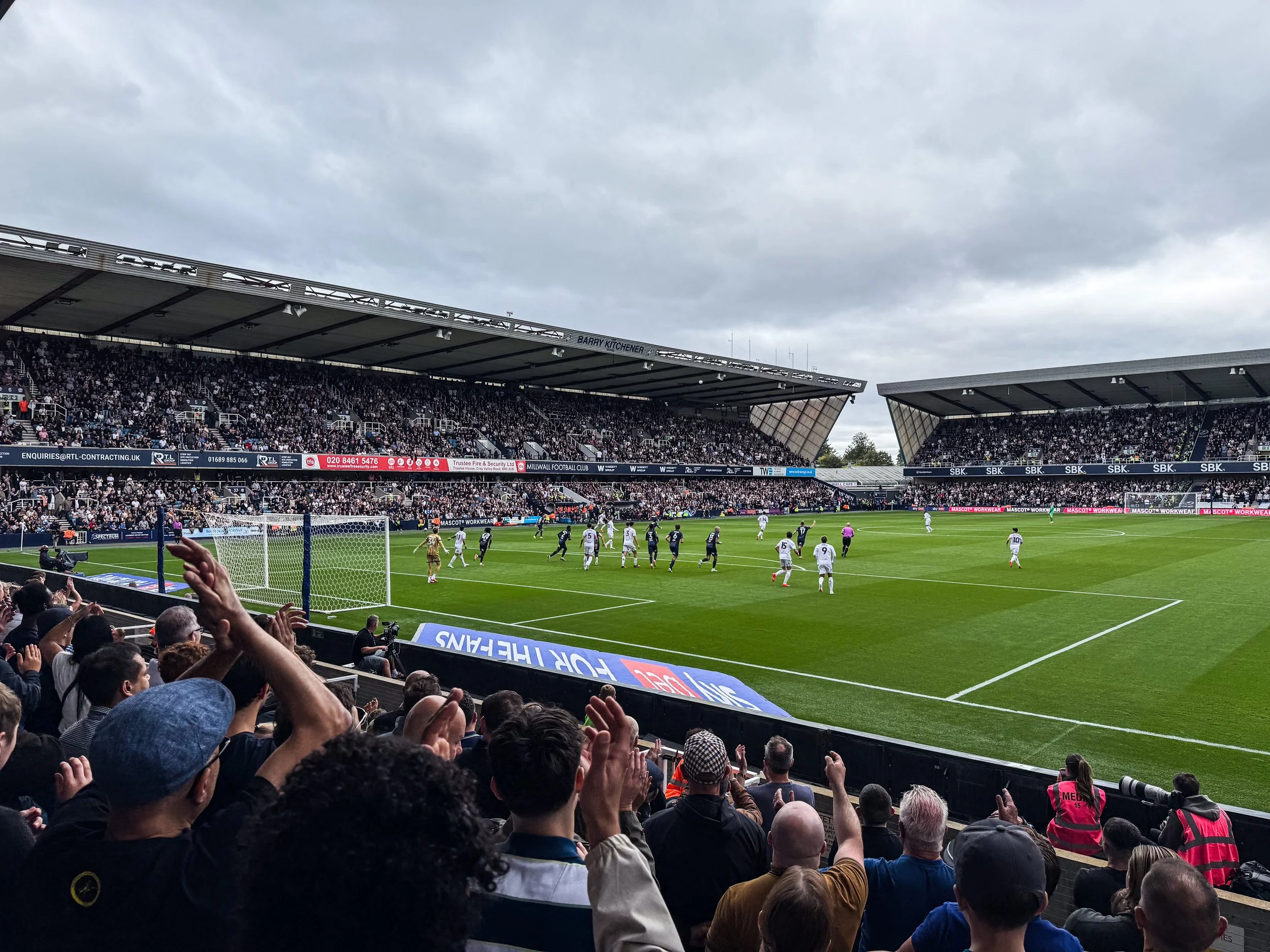
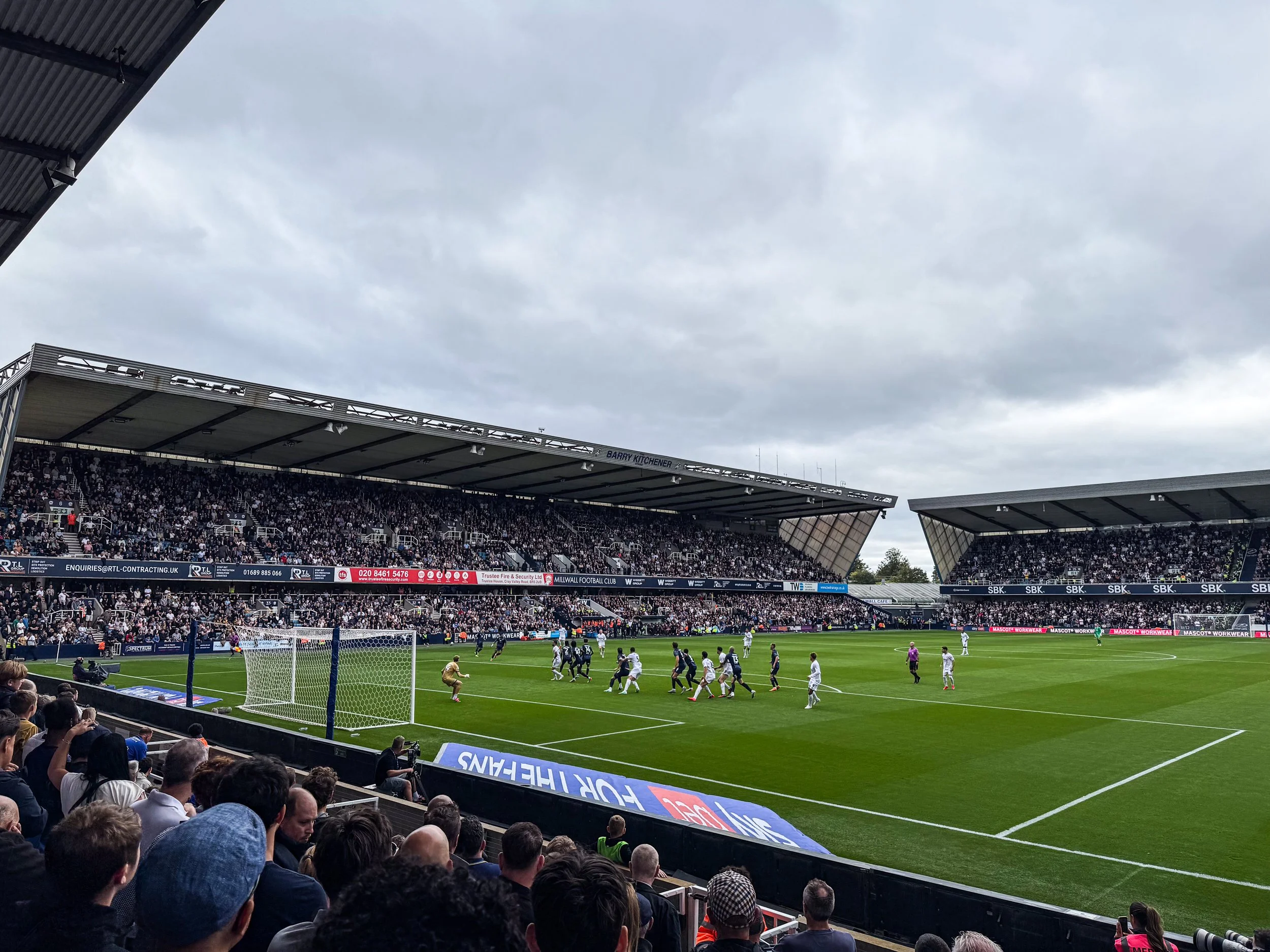
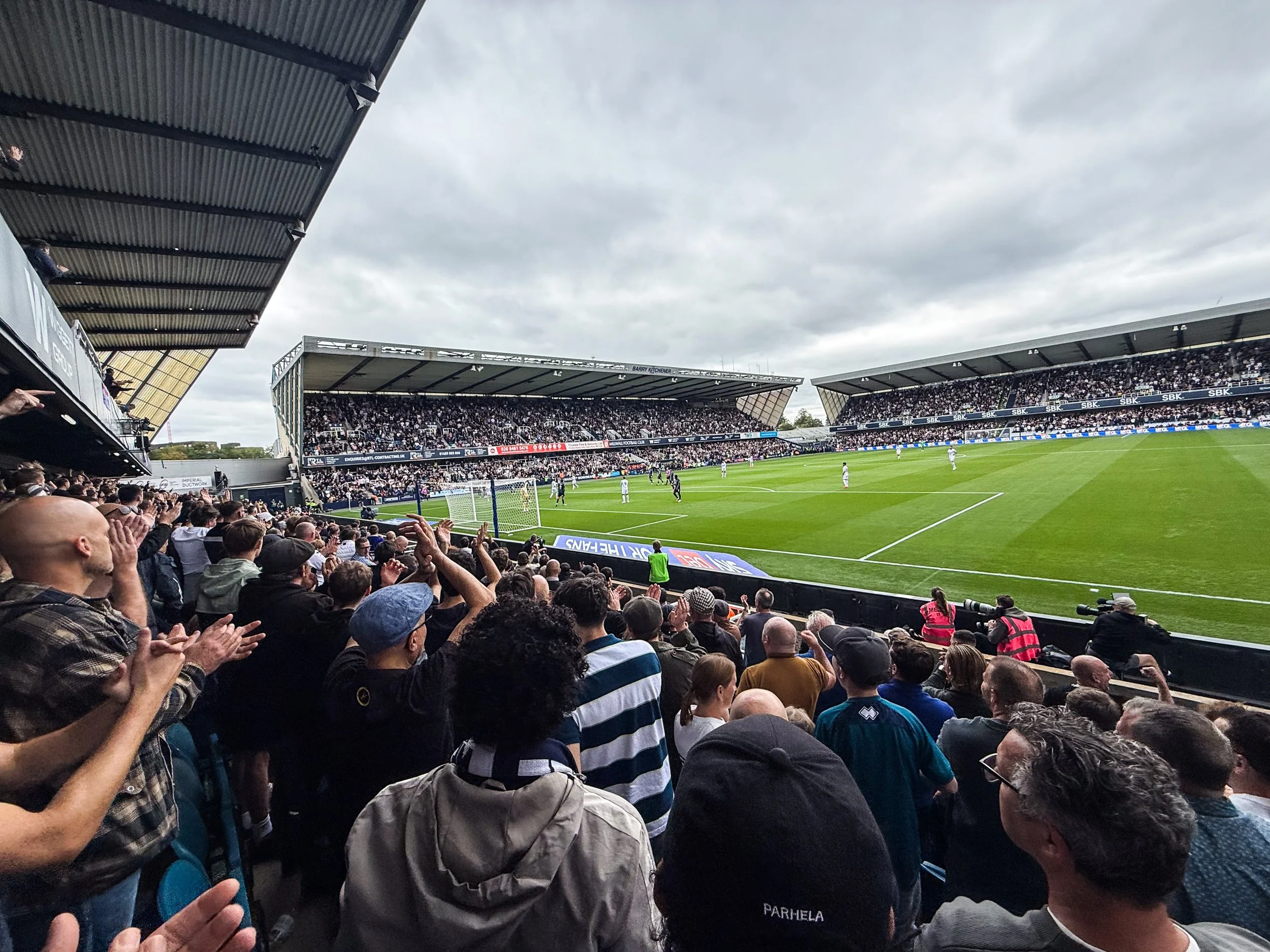
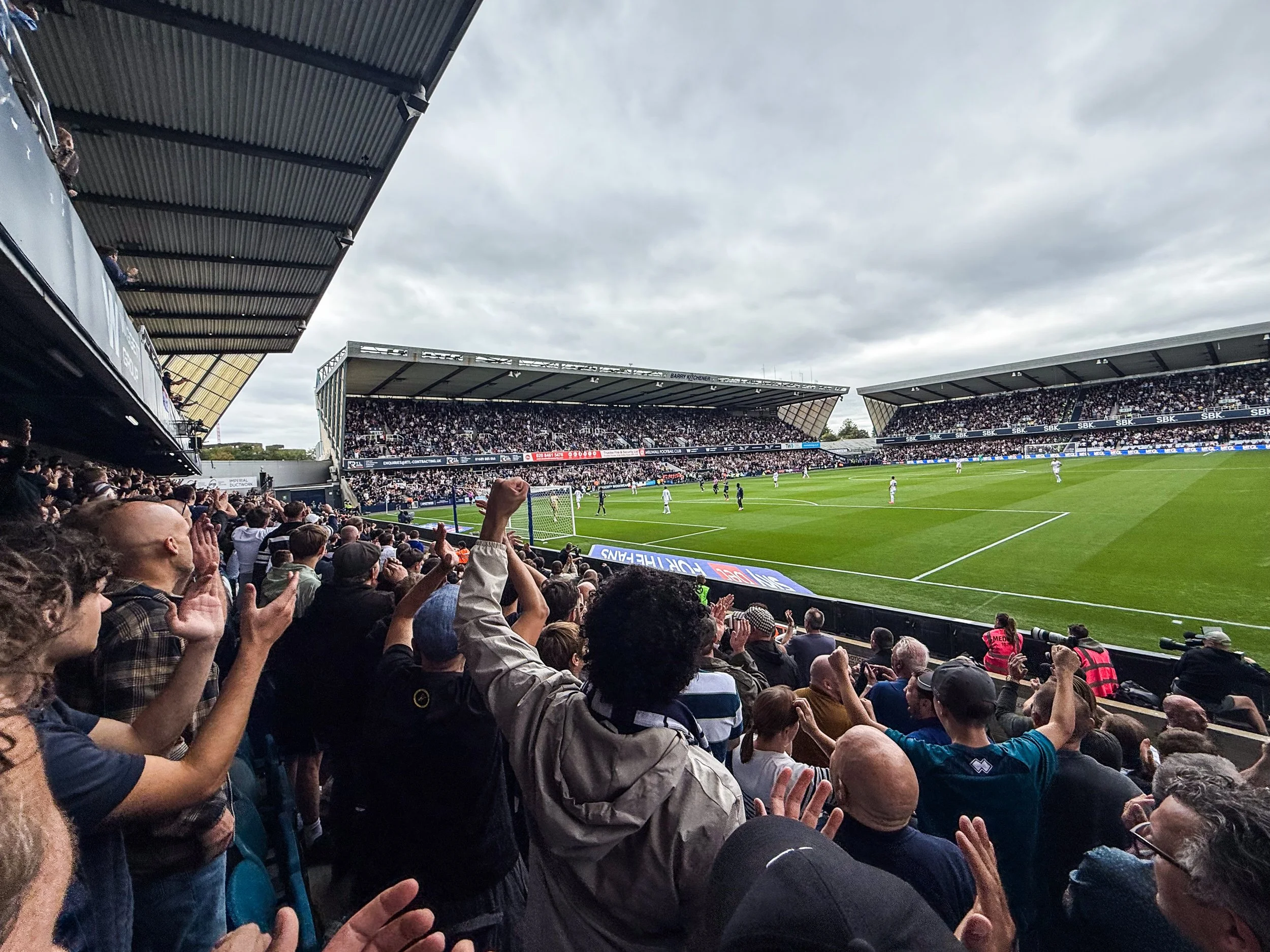
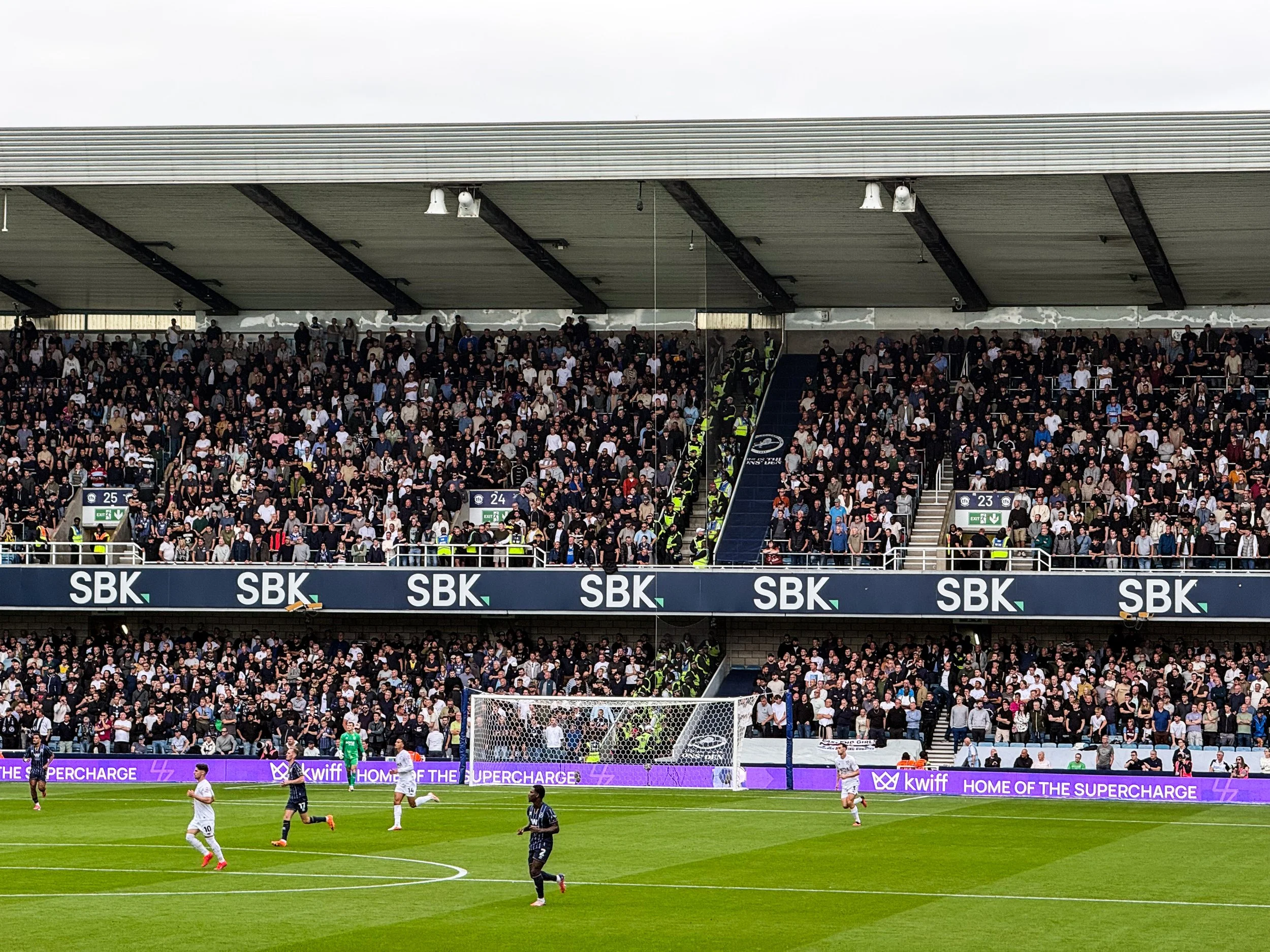
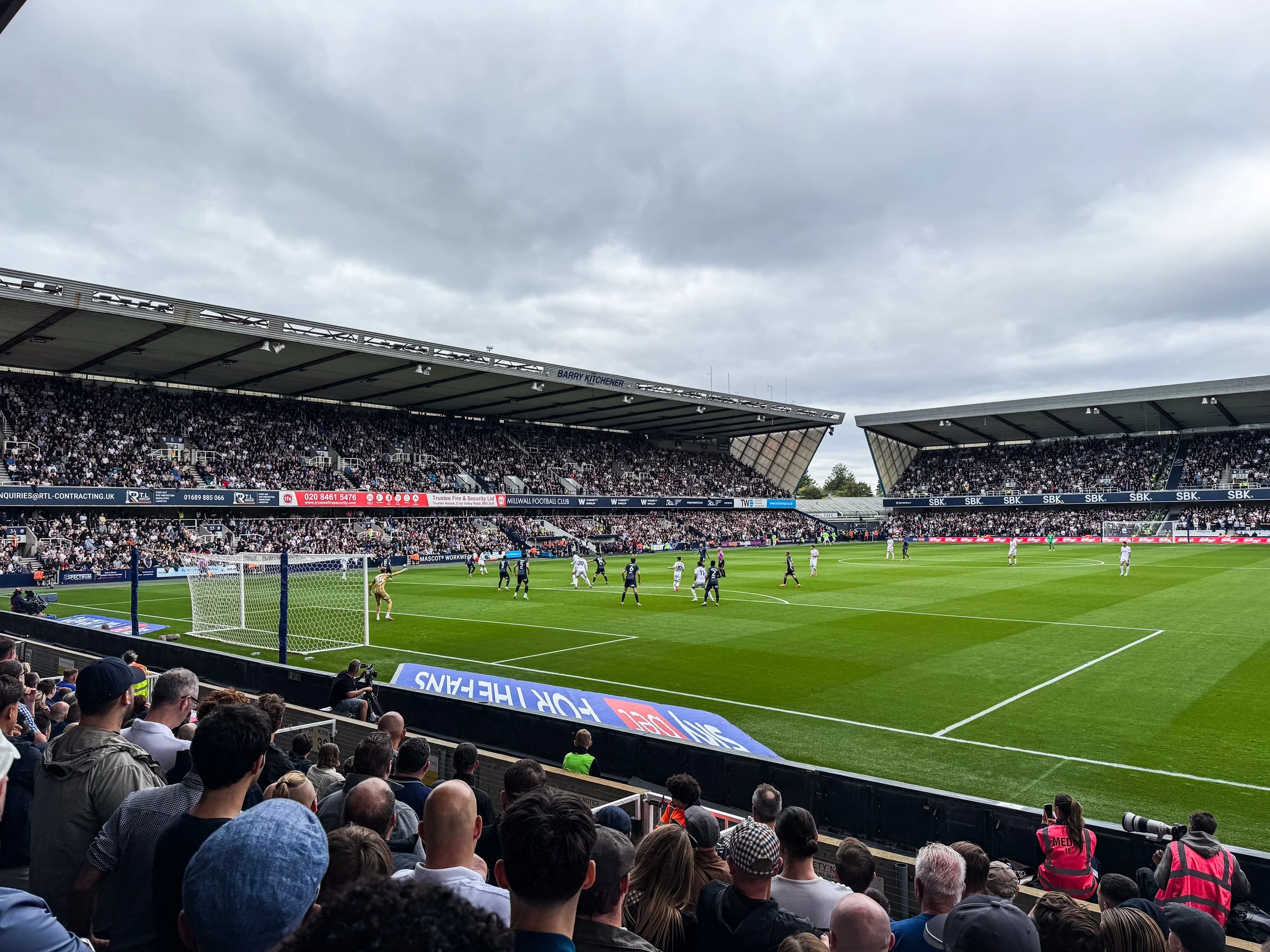
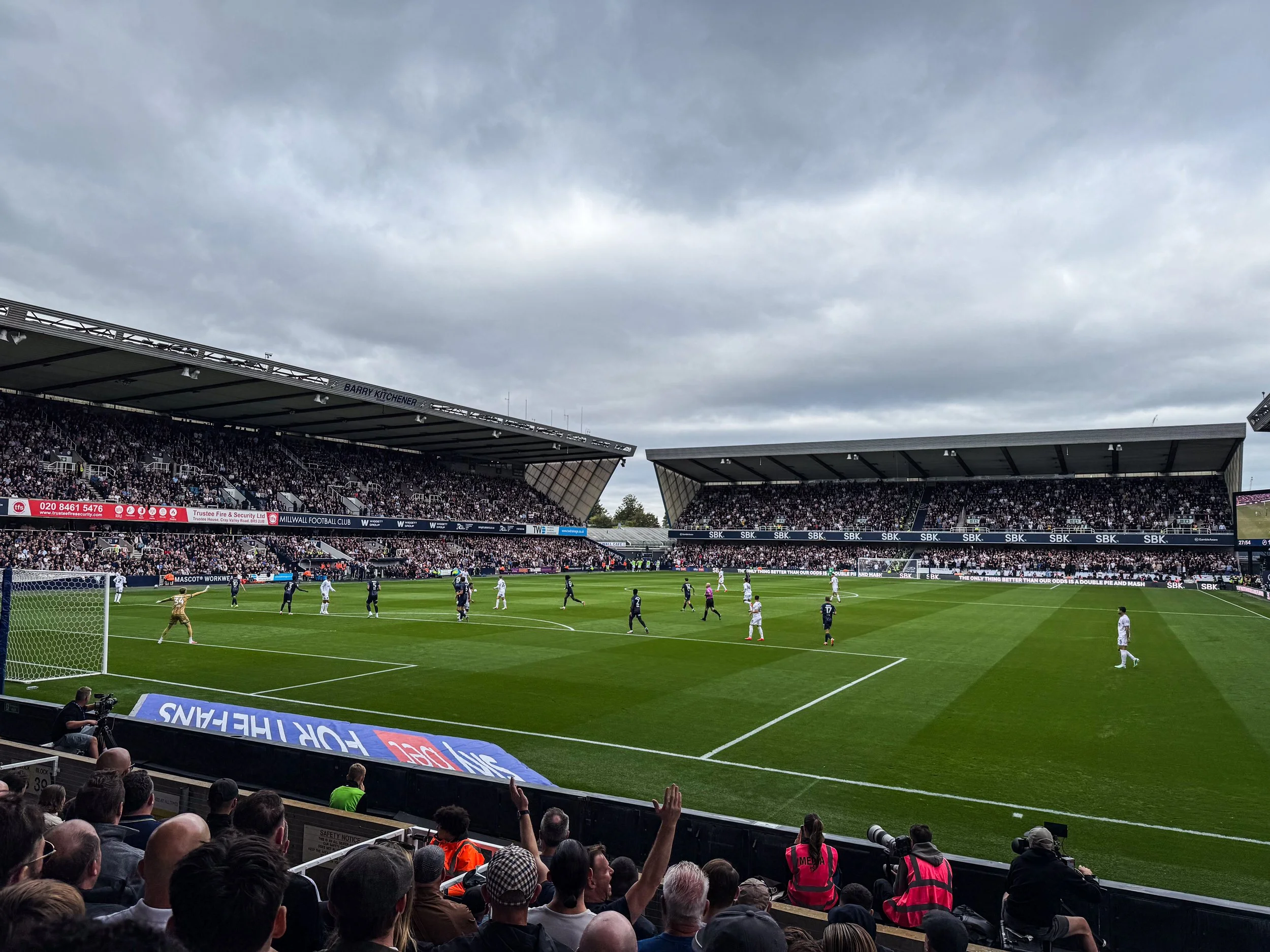
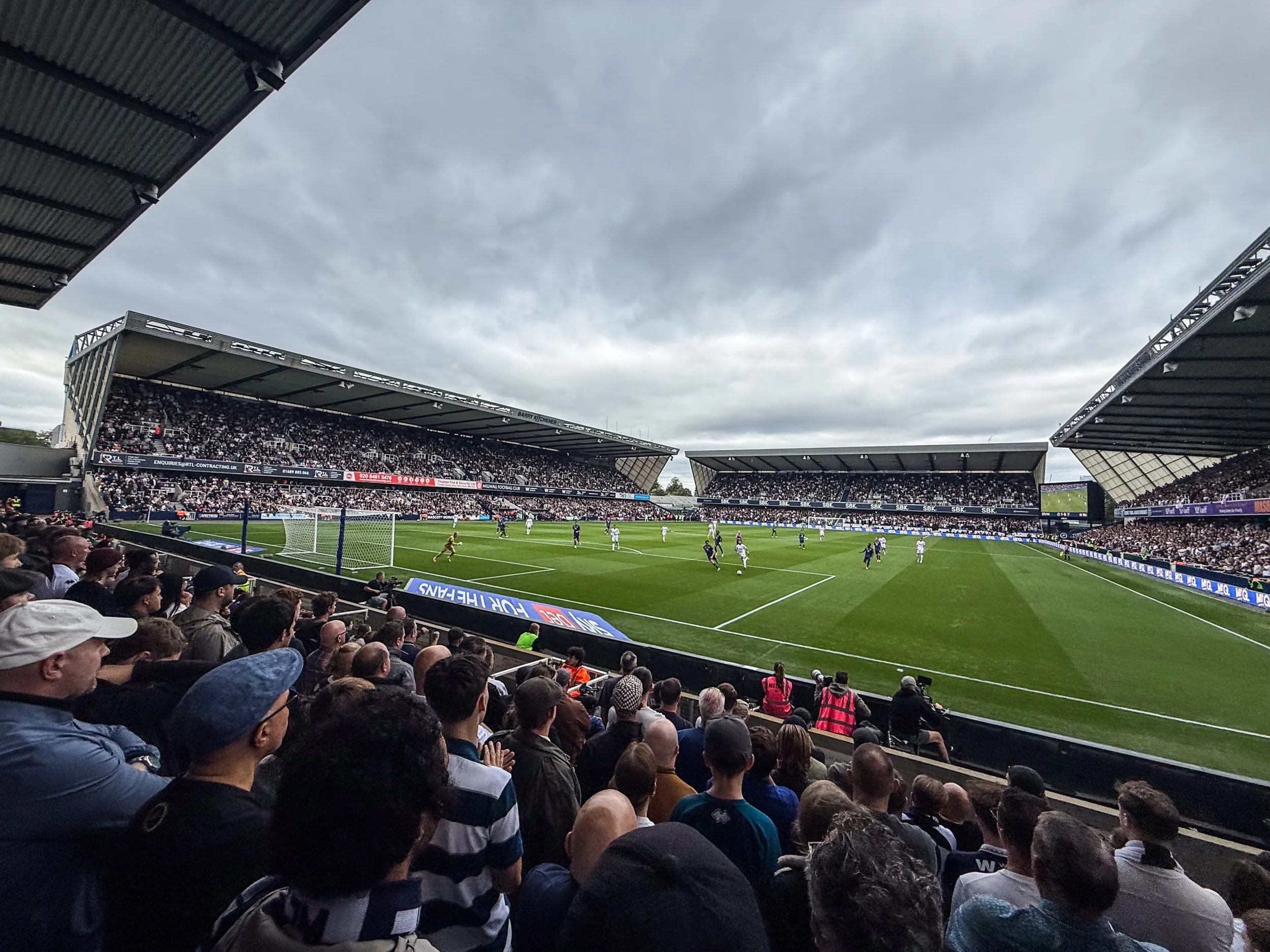
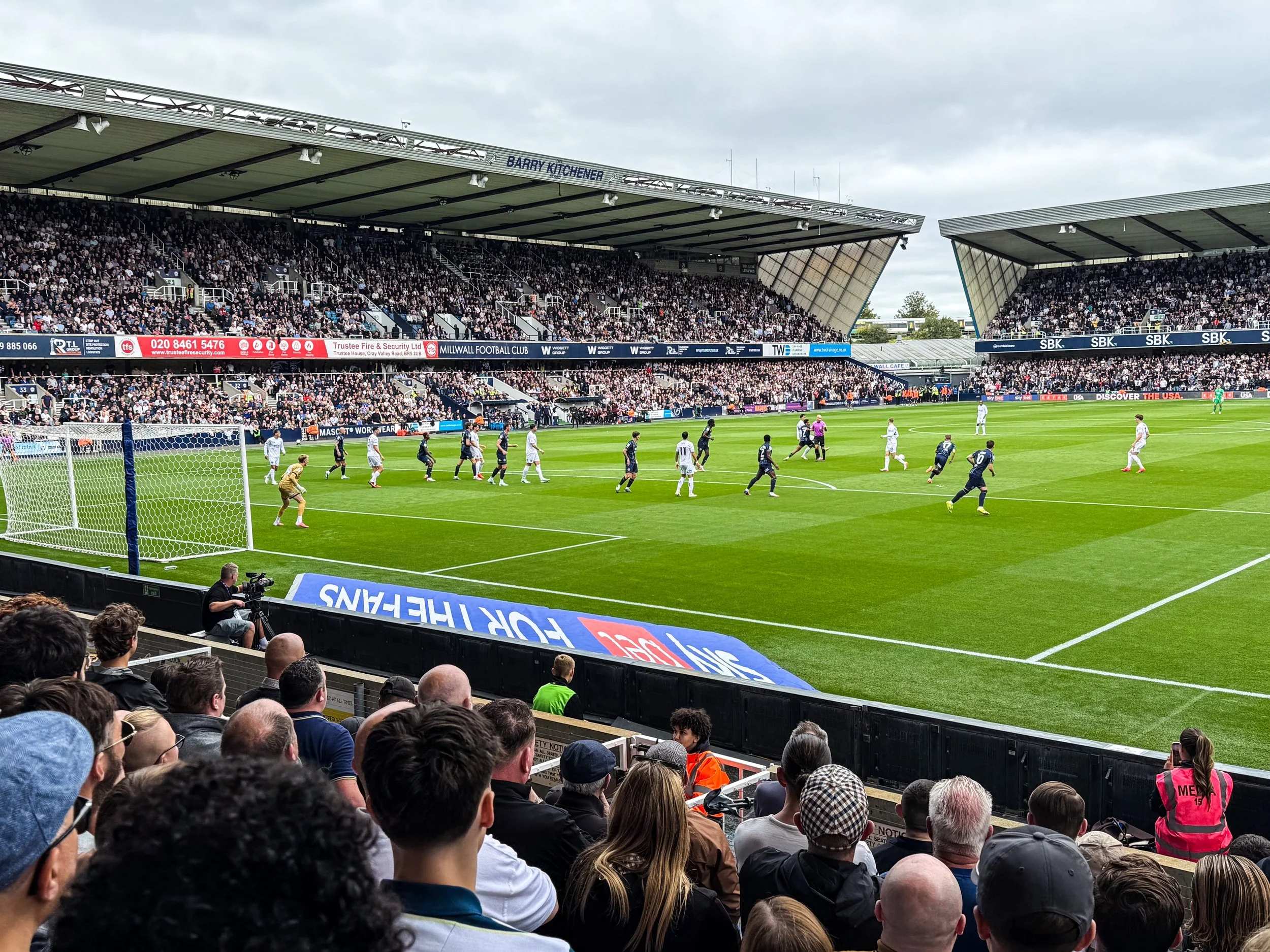
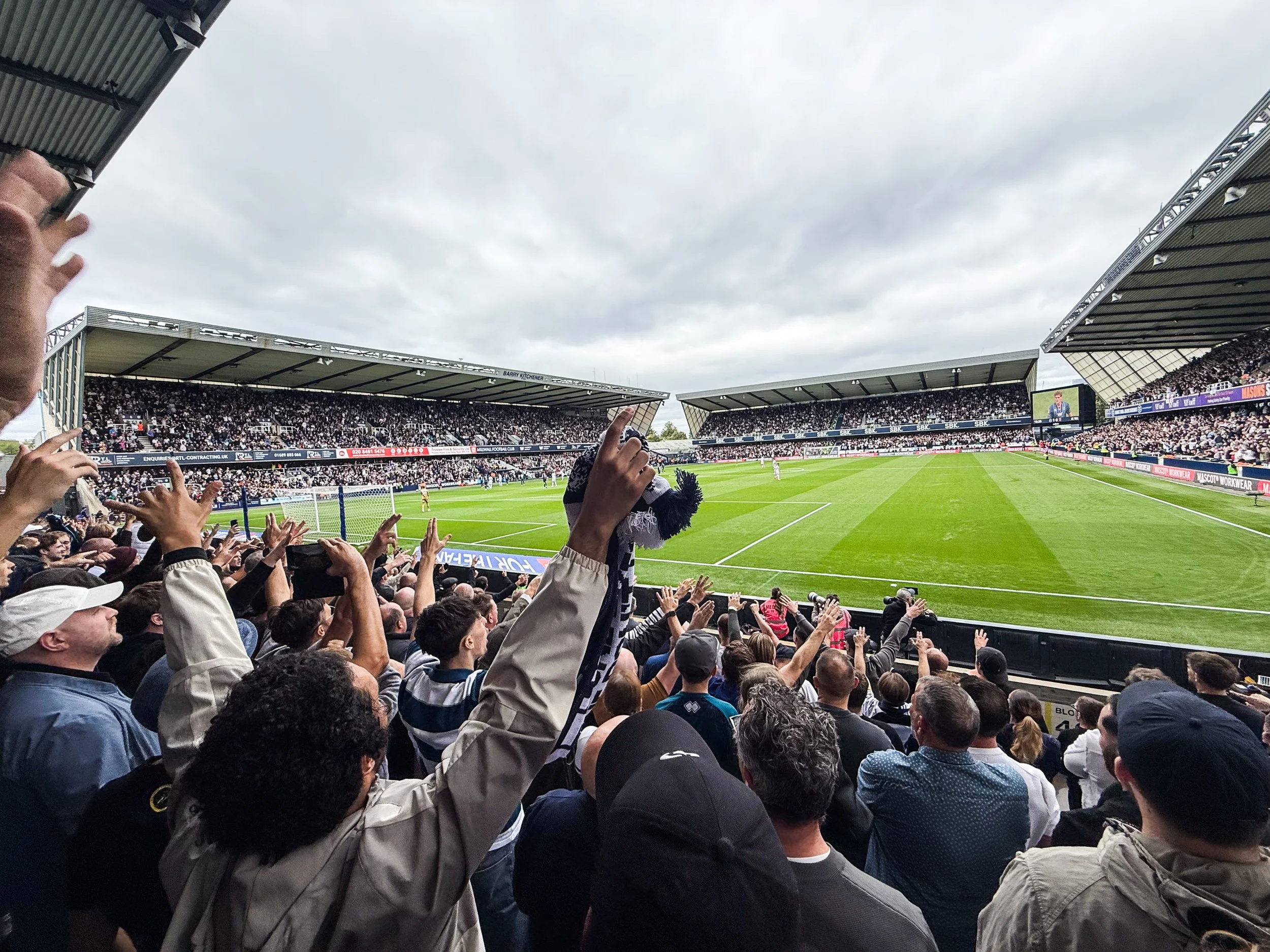
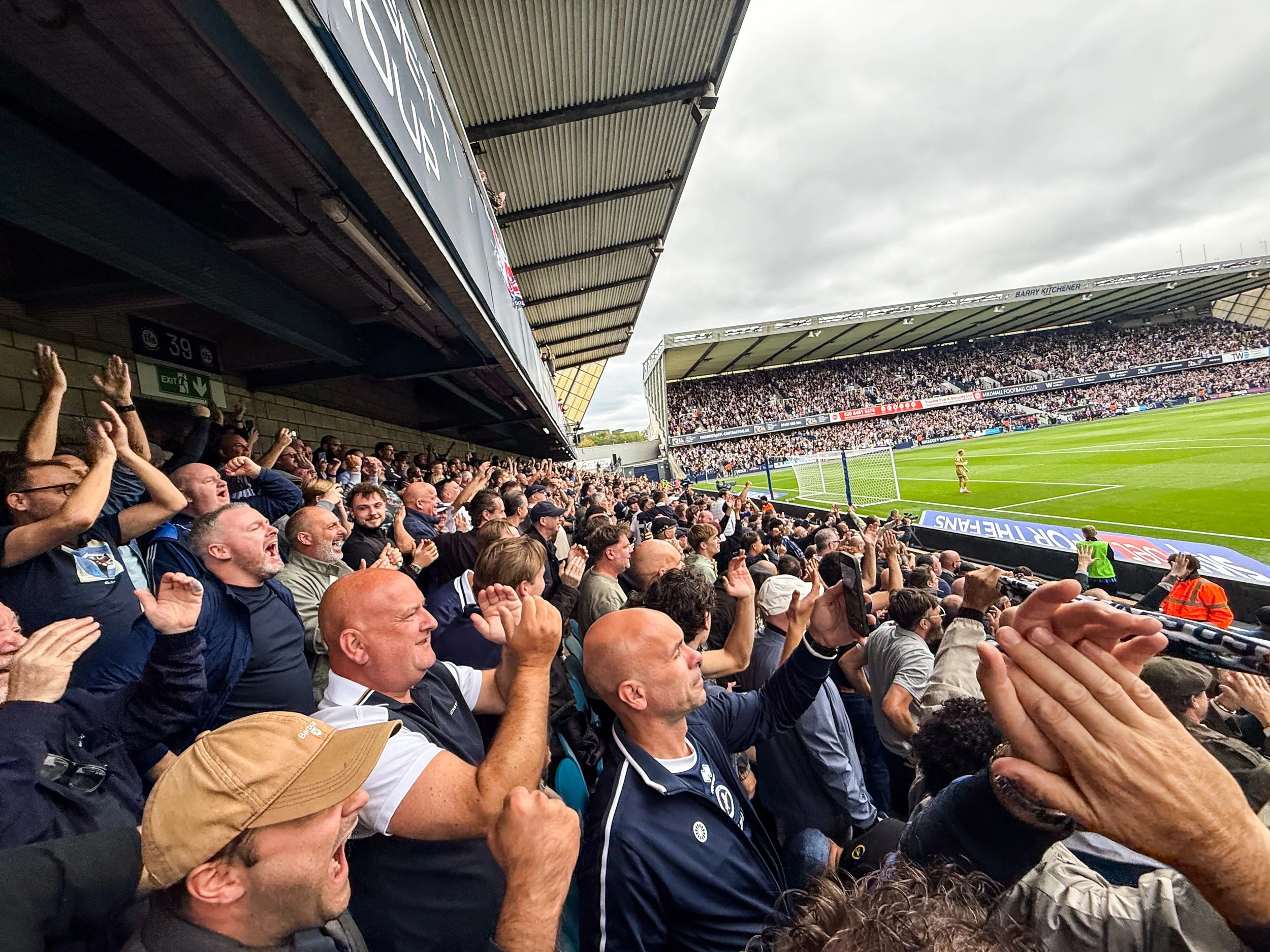
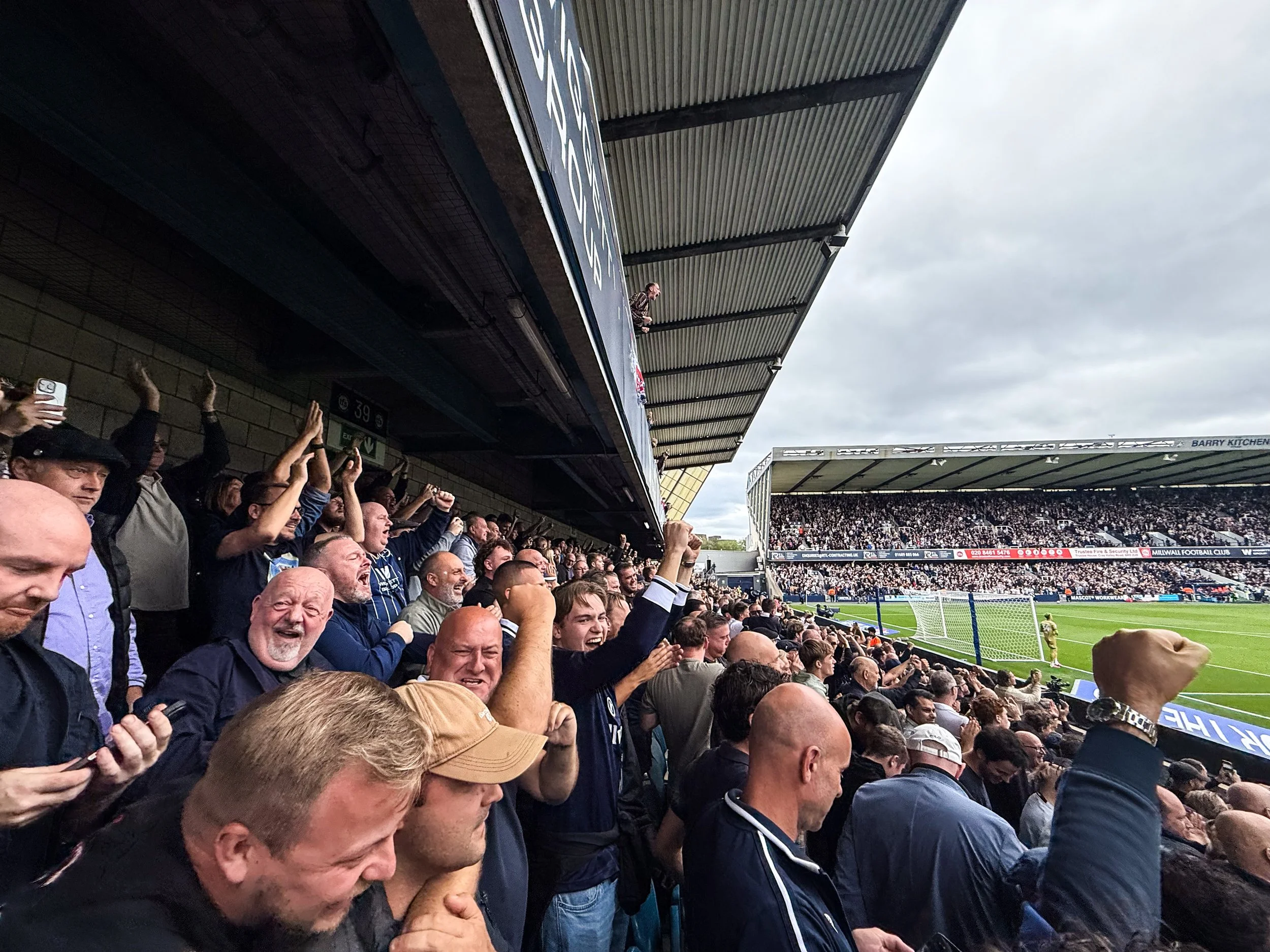
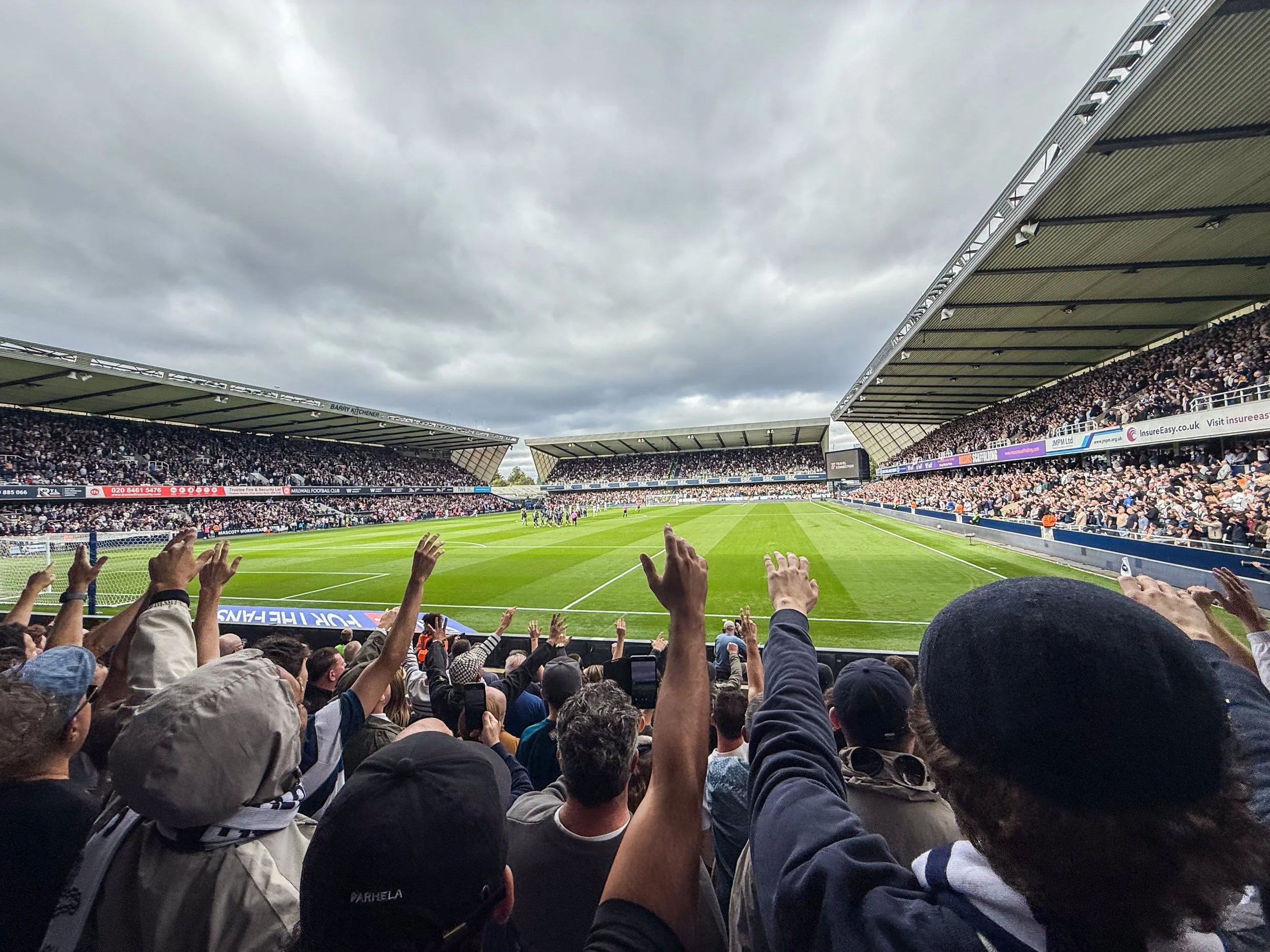
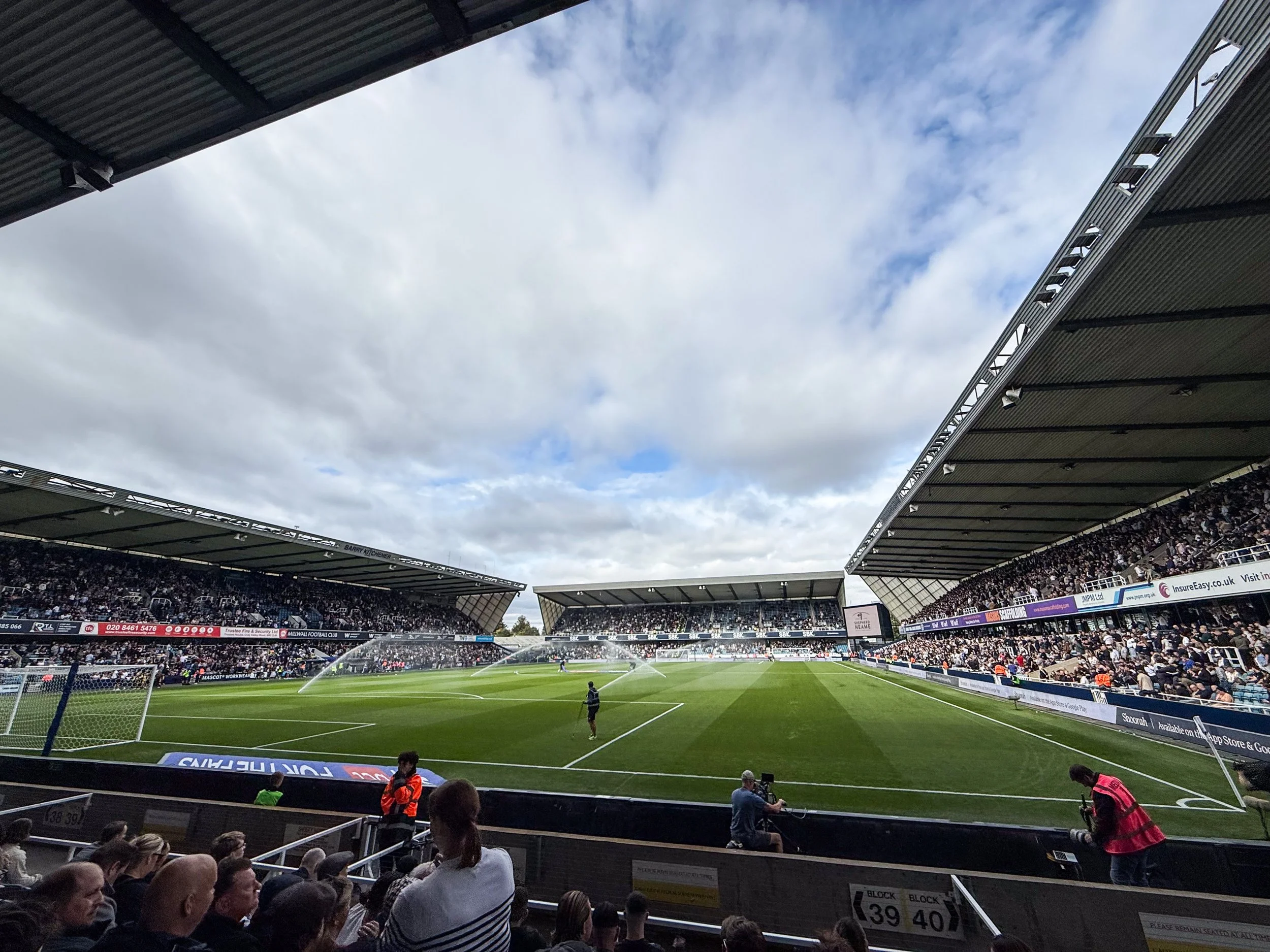
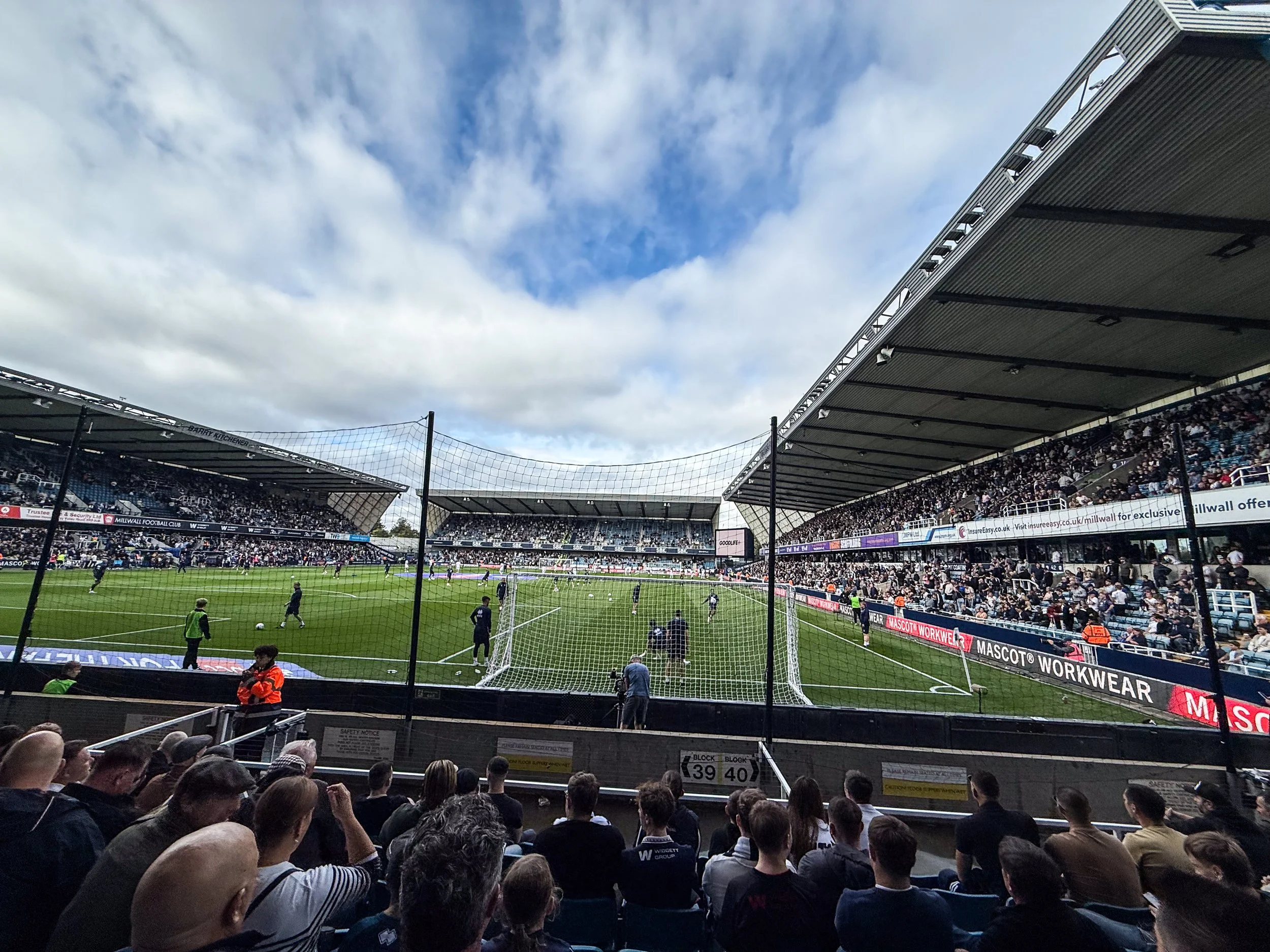
At the half, all those big, scary men were outside drinking beers and singing Millwall cheers at the top of their lungs in perfect unison. To me, this is one of the most charming idiosyncrasies of the British Isles. In a region famous for a stoic, emotionally repressed brand of masculinity, it is a near certainty that, in these intense, testosterone-fueled sports environments, all these men will spontaneously break into song together, like they’re all living in a musical. It’s downright whimsical! If you were sporting a West Ham kit and the 1970s Bushwackers were marching toward you all singing these chants together, I’m sure it would feel much more intimidating, like a battle cry. But when you’re in on it, it’s good fun. There was a live band playing outside the stadium as well, which was a first for me.
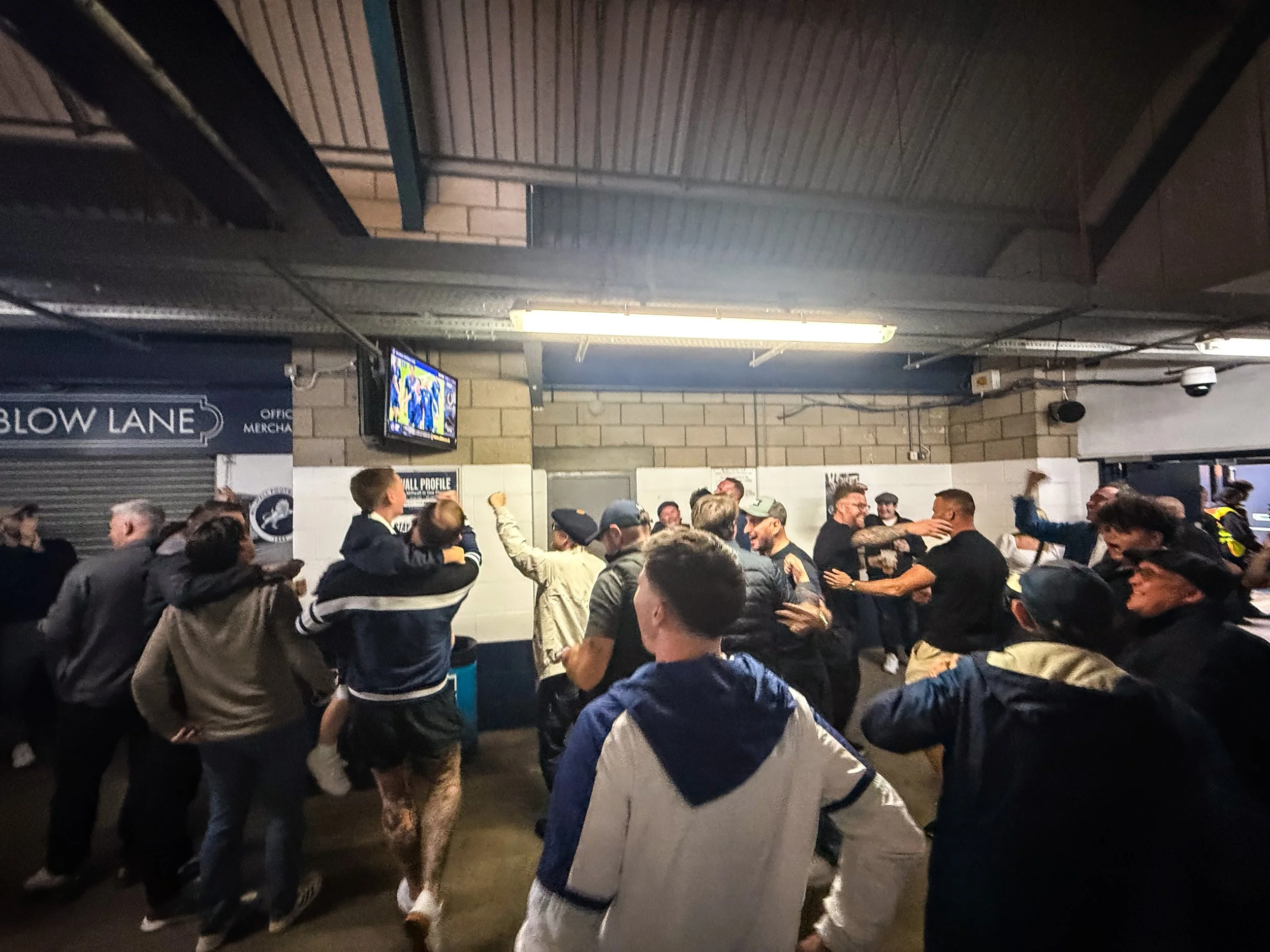
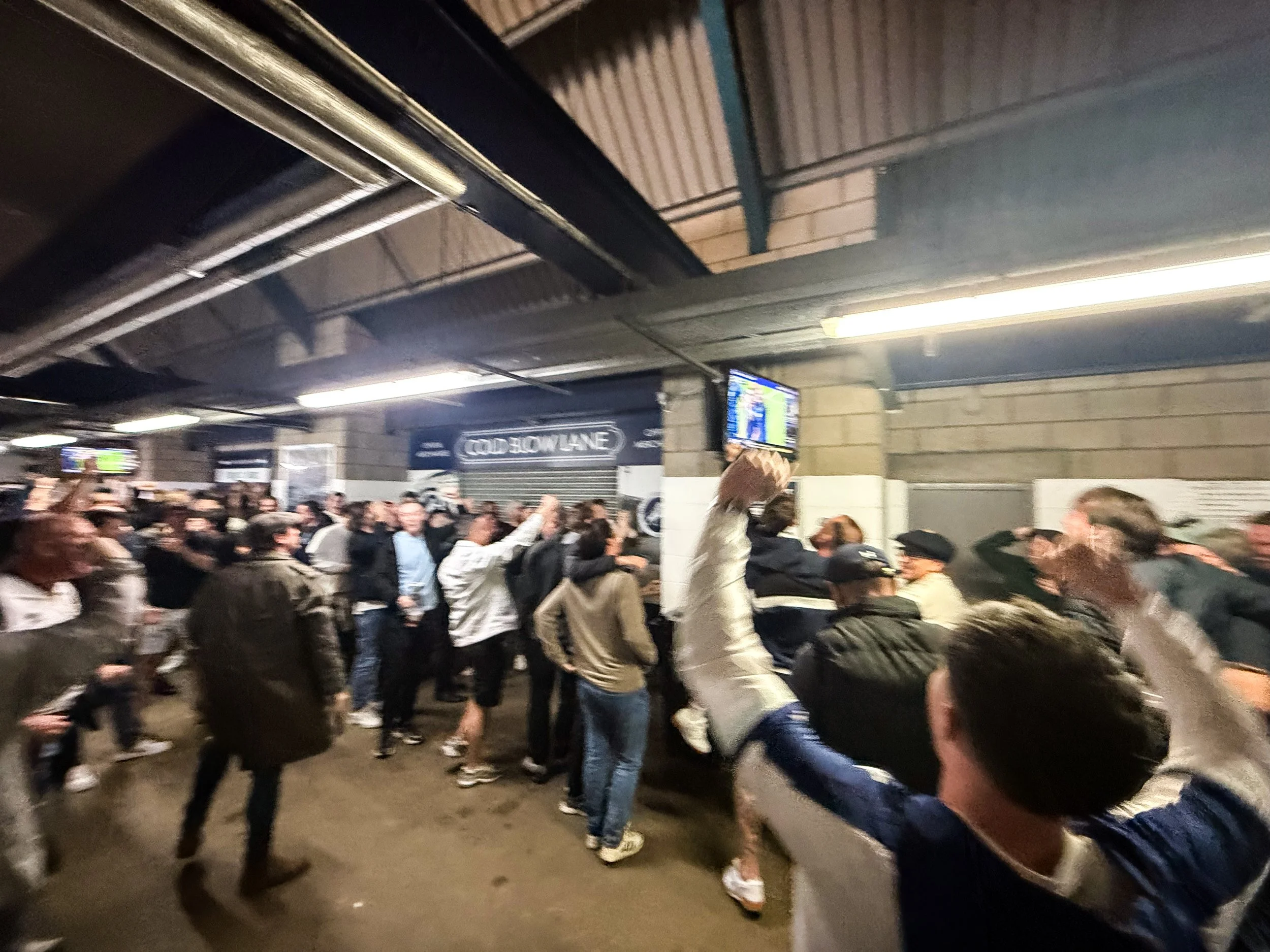
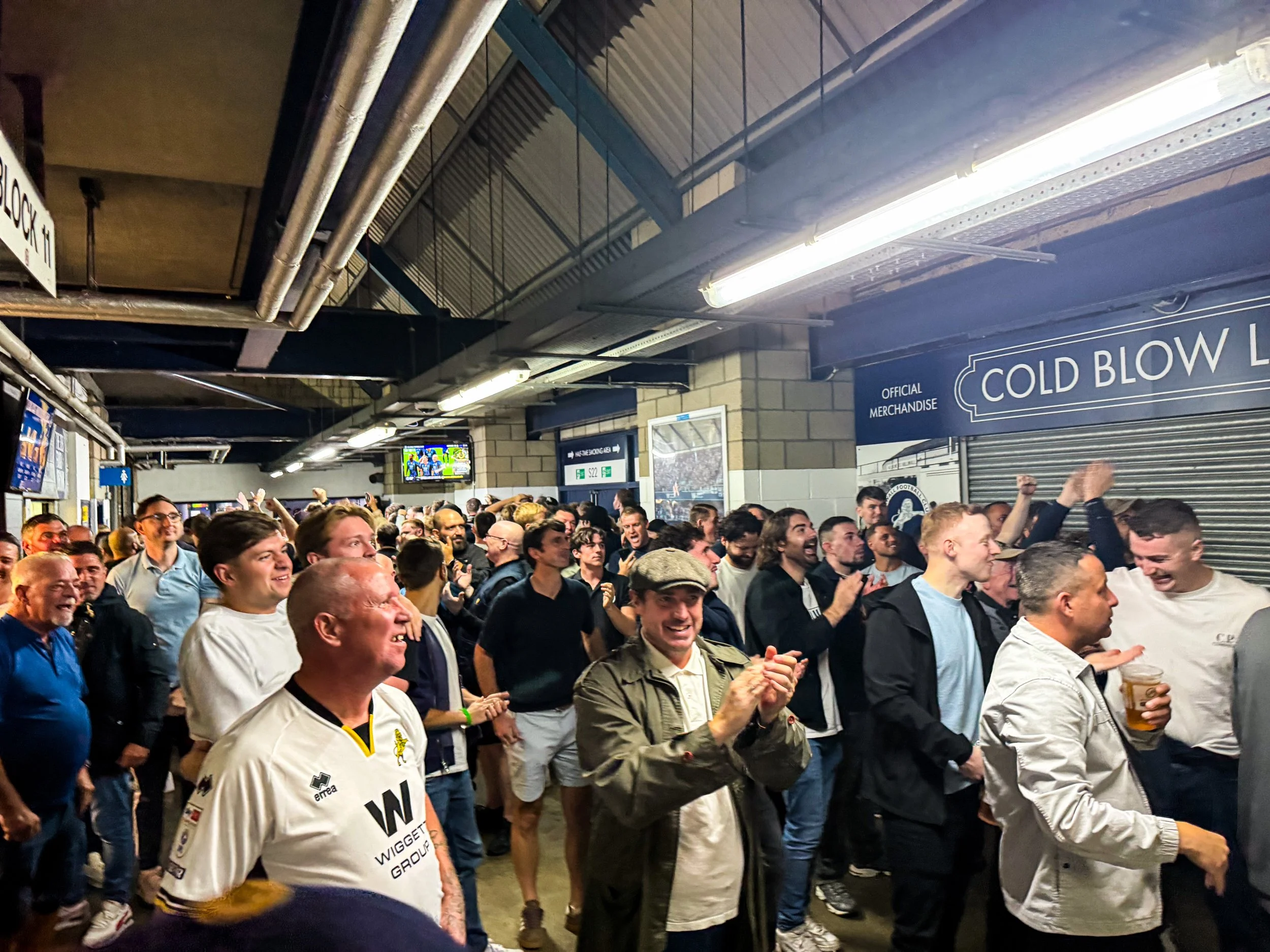
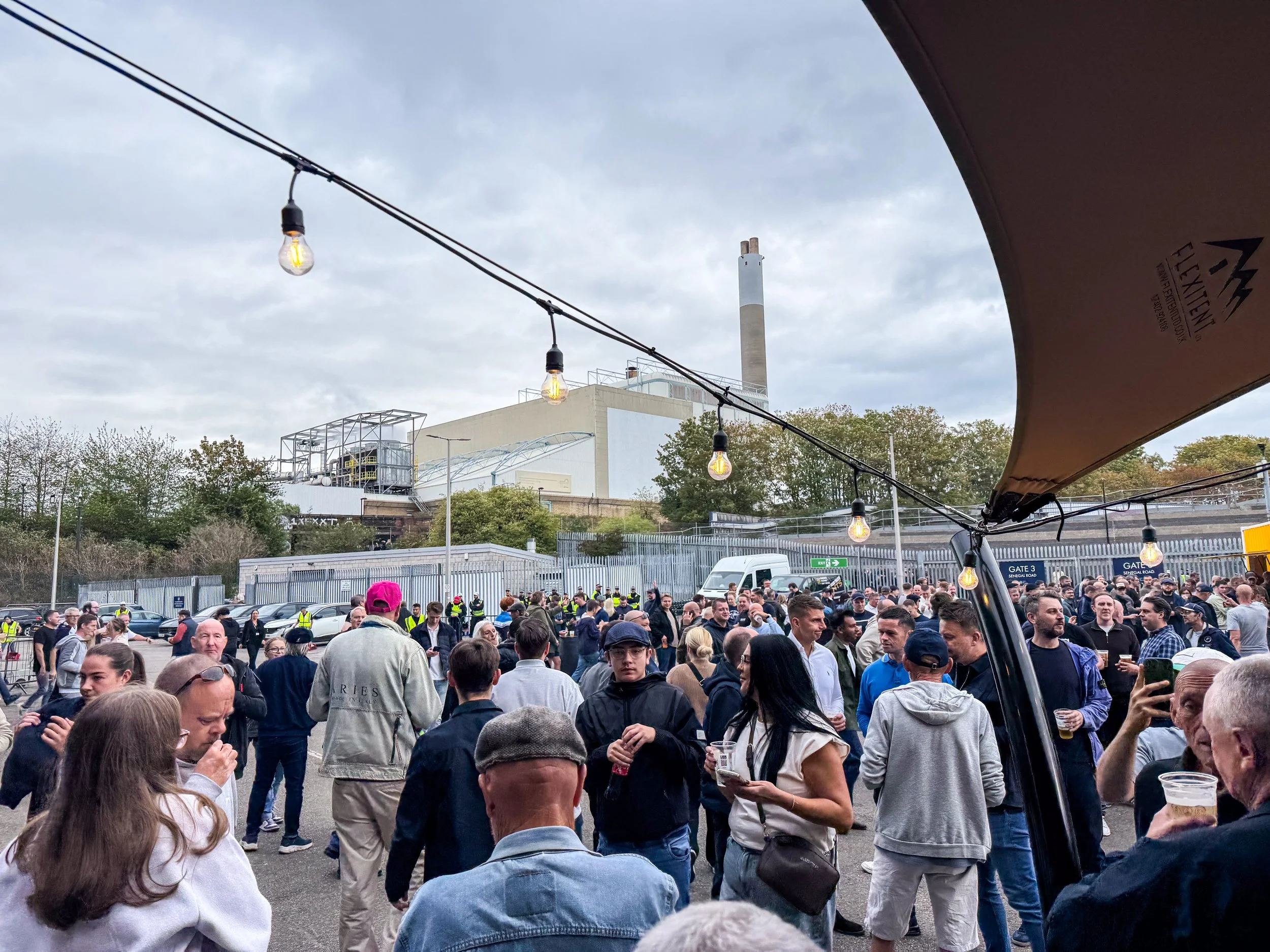
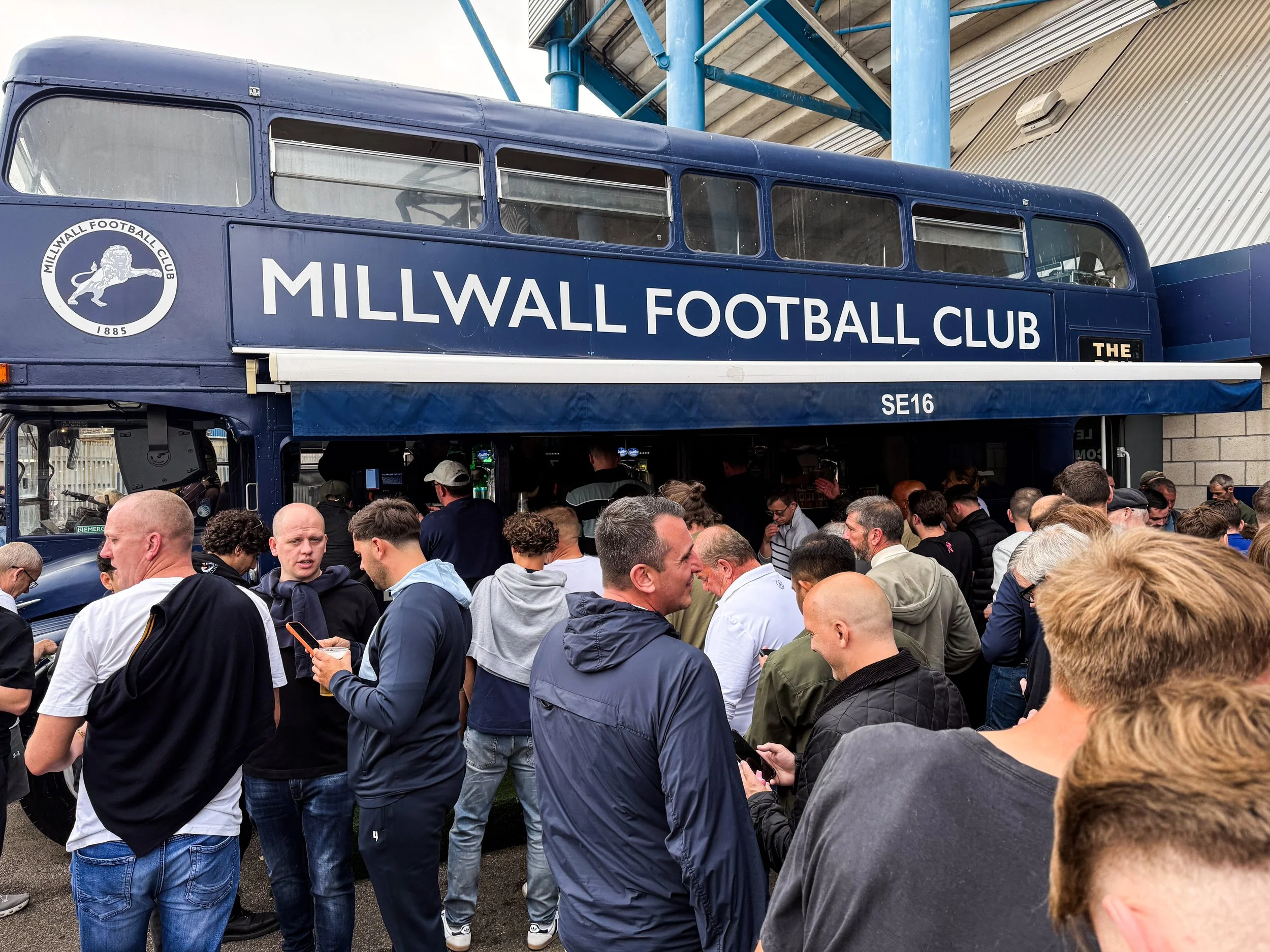
The second half did not go nearly as well for Millwall. By the 80-minute mark, West Ham had scored two goals, thanks to Mohamadou Kanté and Konstantinos Mavropanos, respectively. The score was now tied at 2-2. But the dynamics on the field were quite bitter, with players spitting and yelling at each other often. Mavropanos in particular was a mega-douche. West Ham received 5 yellow cards throughout the match, and—in the 89th minute—Mohamadou Kanté, who had scored less than 10 minutes earlier, was given a red card. Remember that red cards are common in the Dockers’ Derby!
So, going into 6 minutes of added time, West Ham was now playing 1 man down. This game was far from over! But, alas, Millwall’s Lyndon Dykes missed a huge opportunity to score a winning goal, and the game finished 2-2. That means that the legacy of no team beating the other on their own turf in past ~40 years continued!
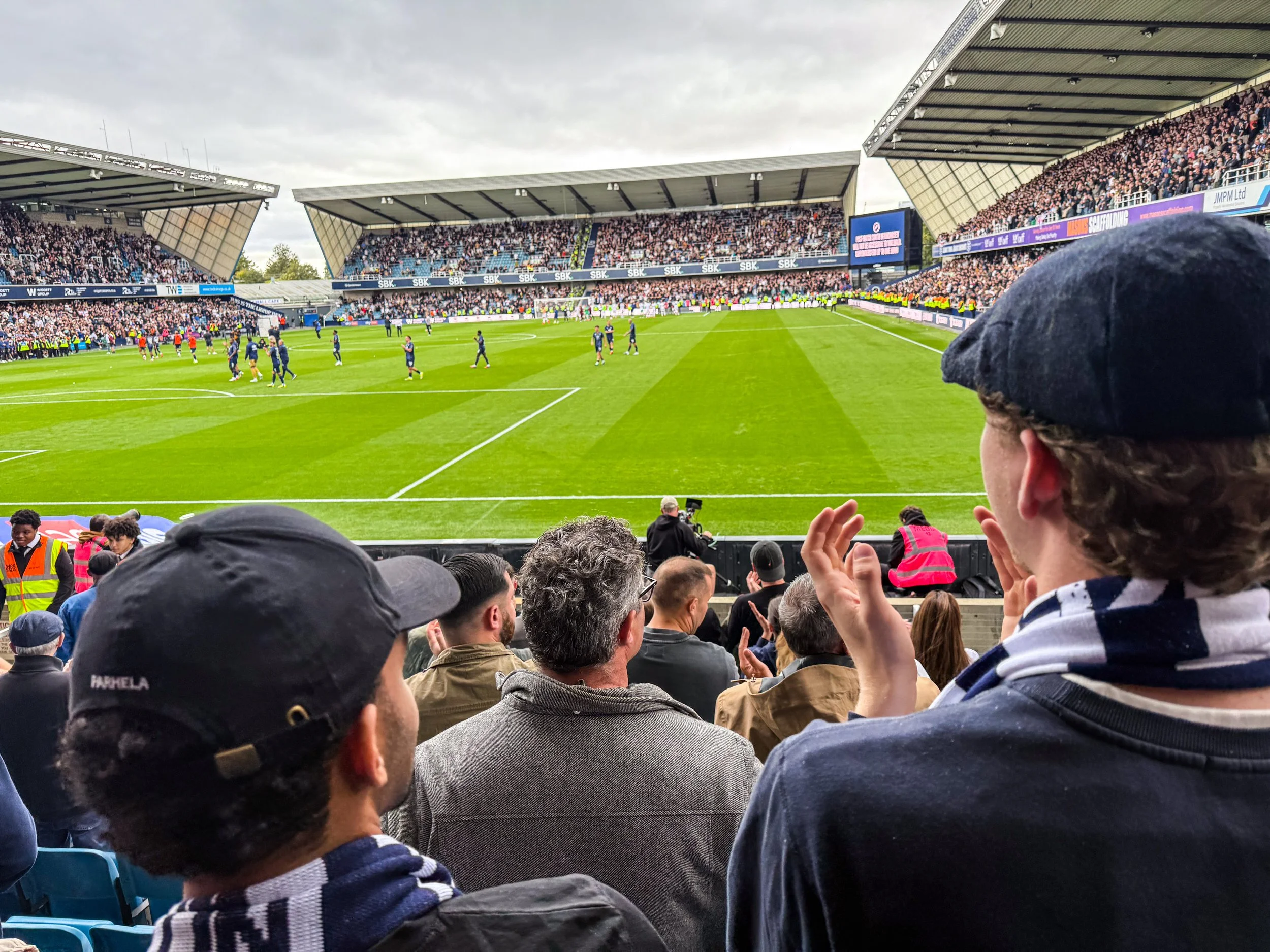
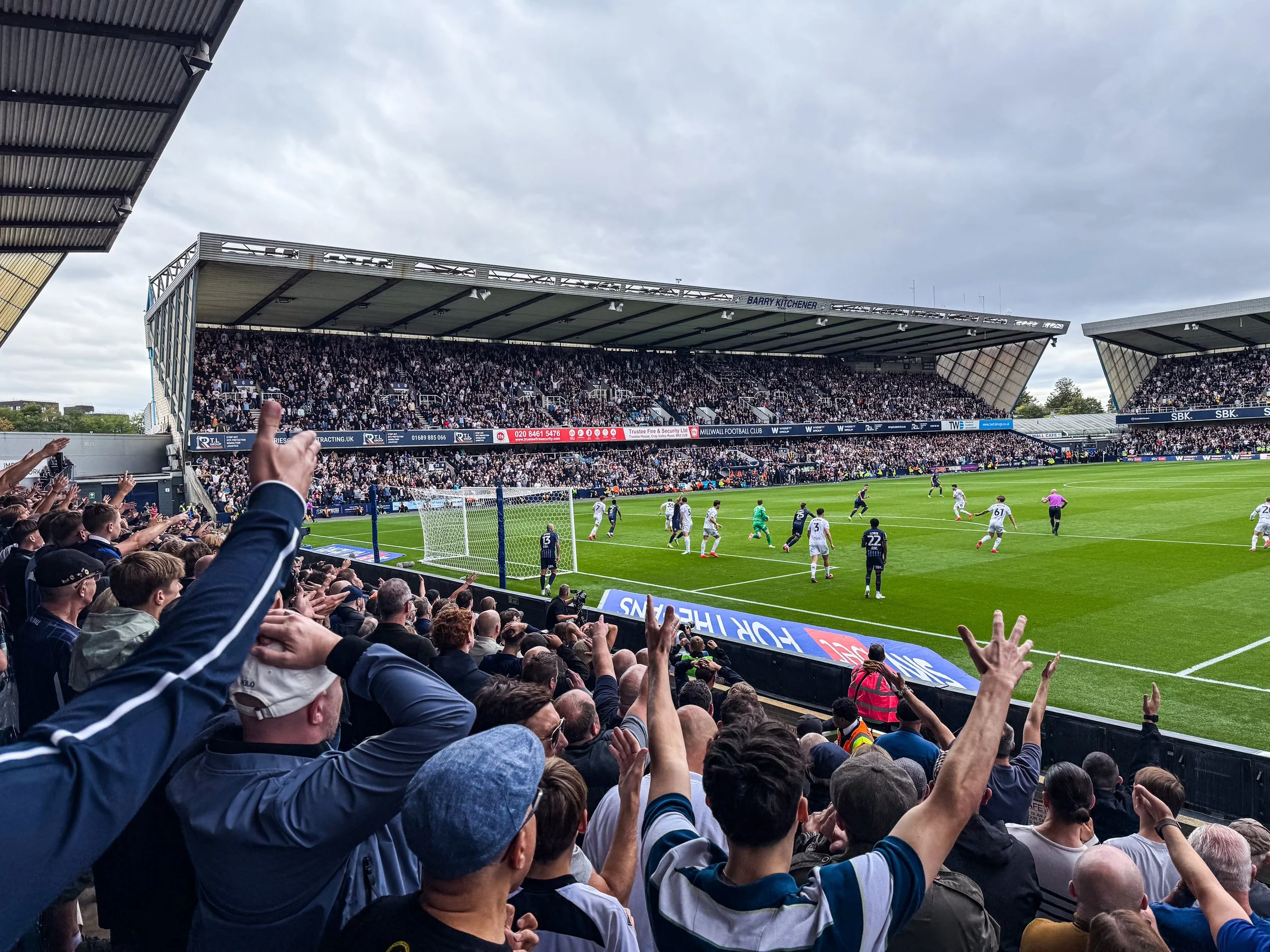
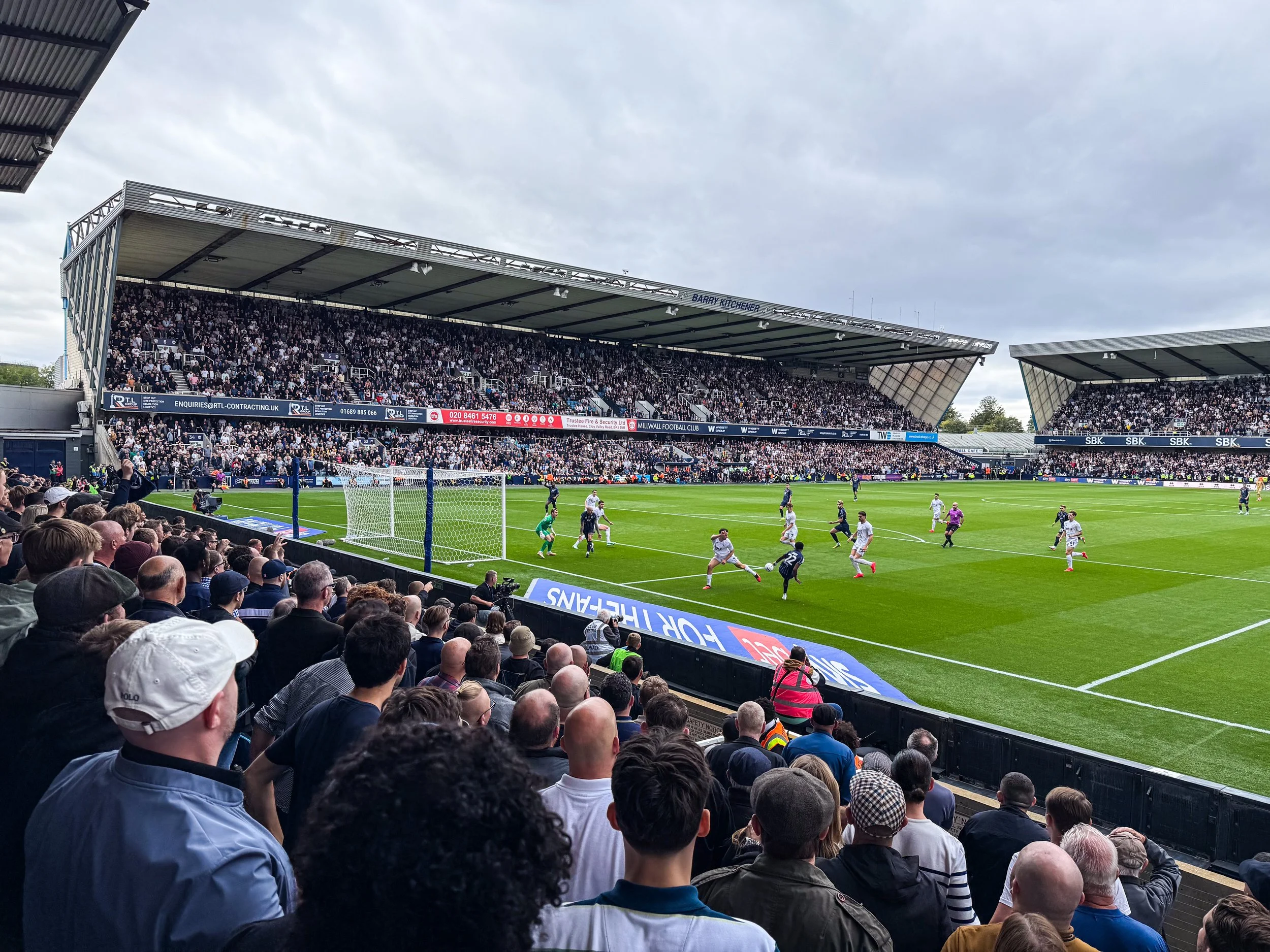
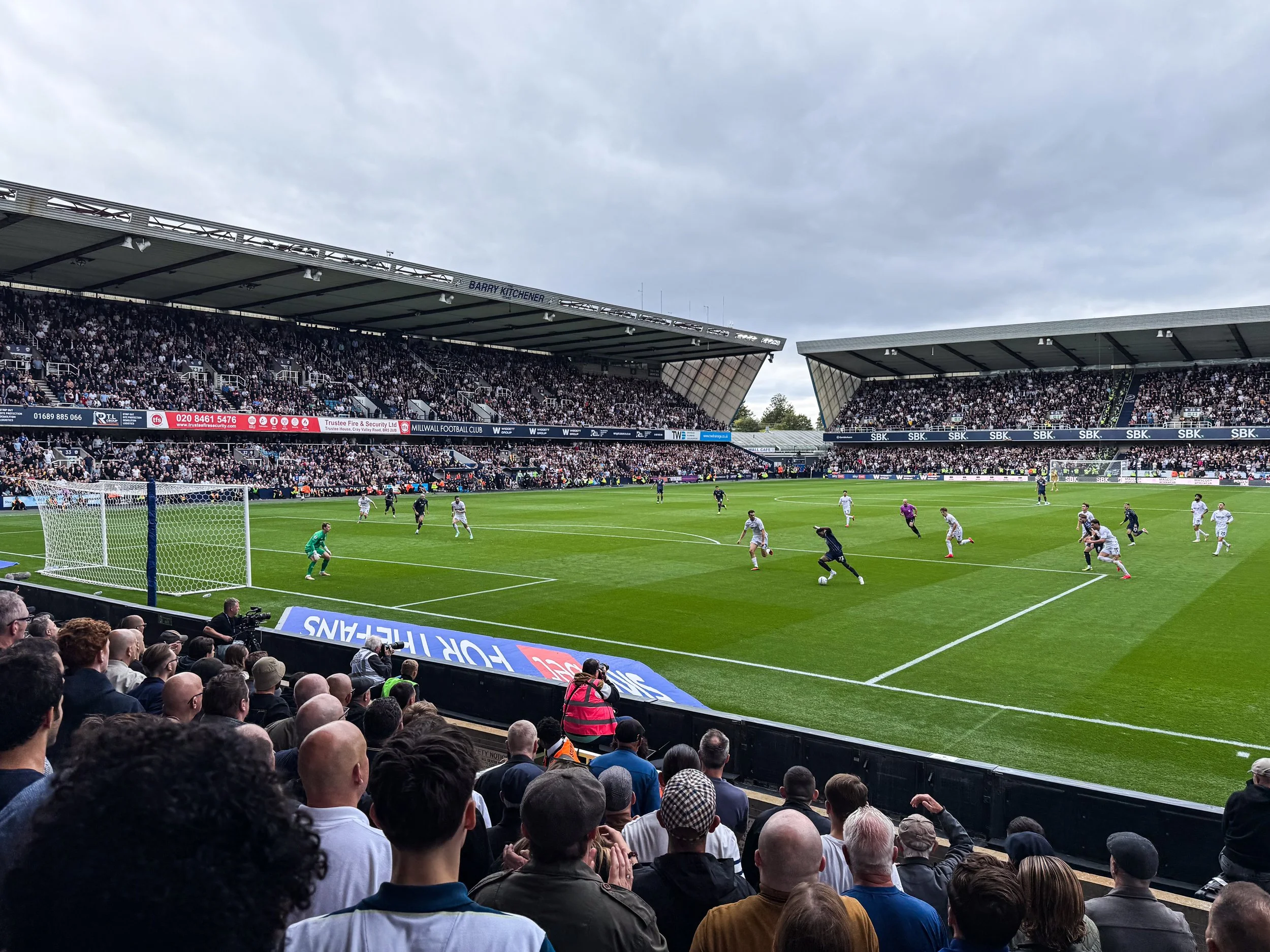
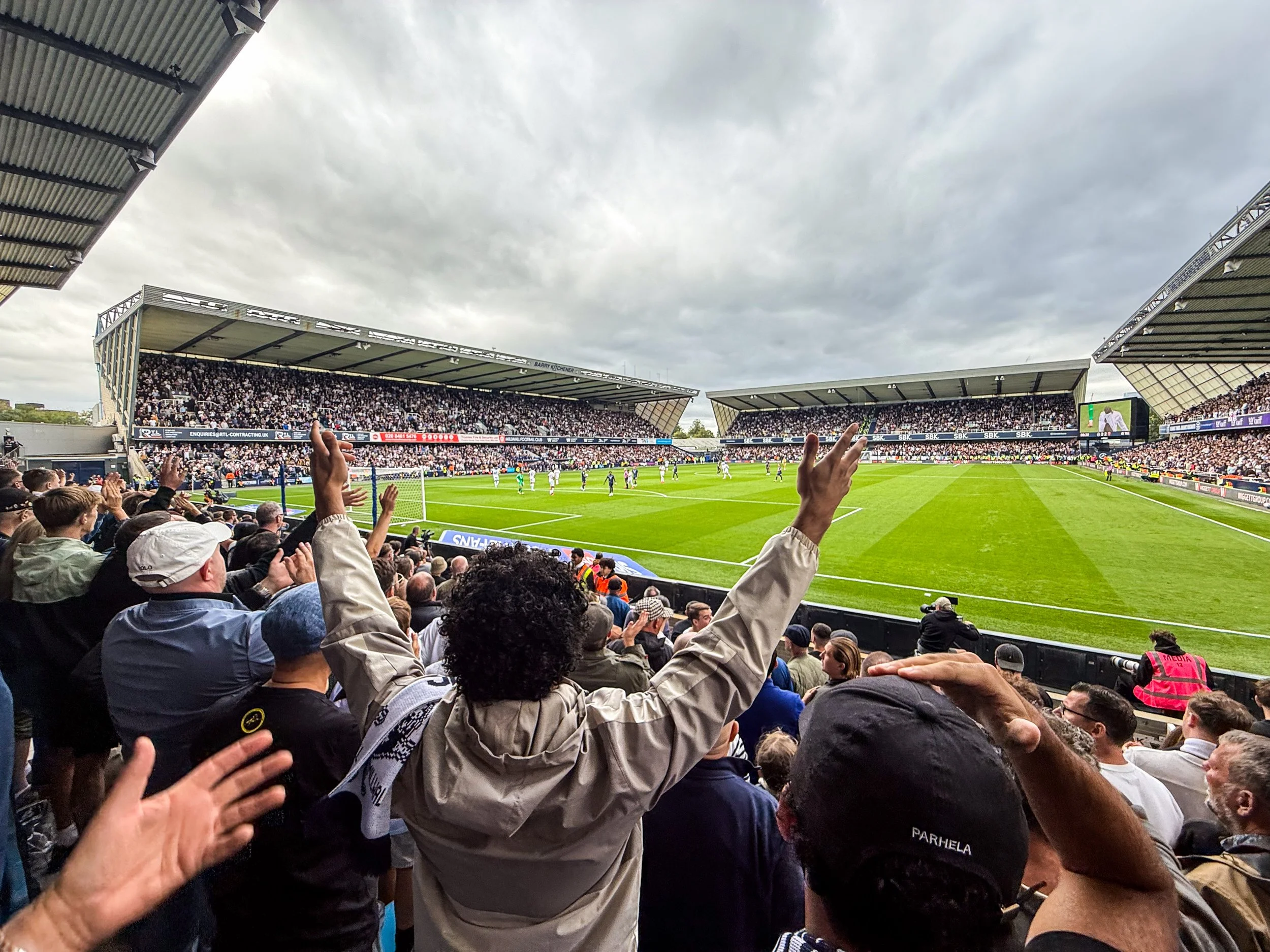
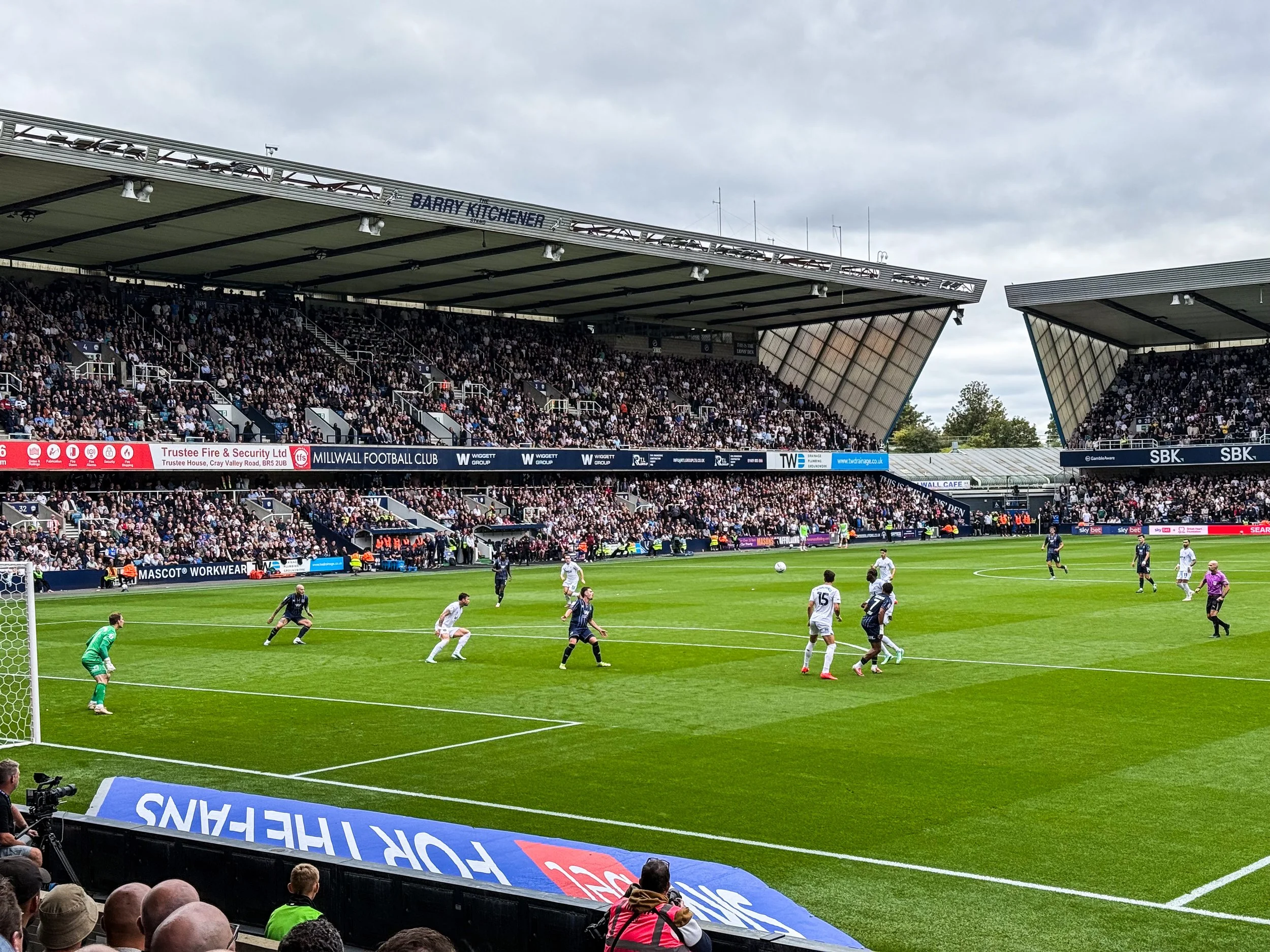
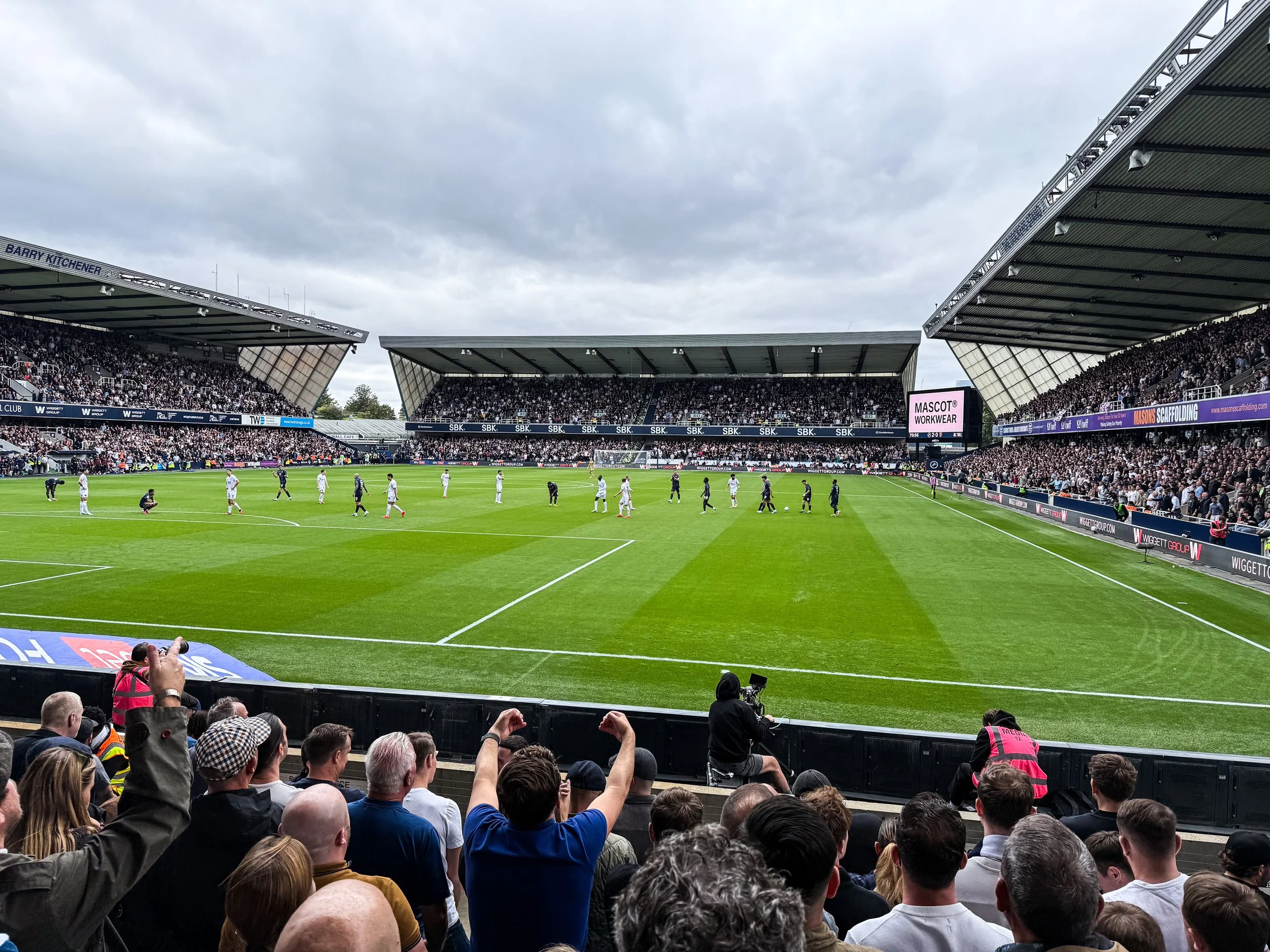
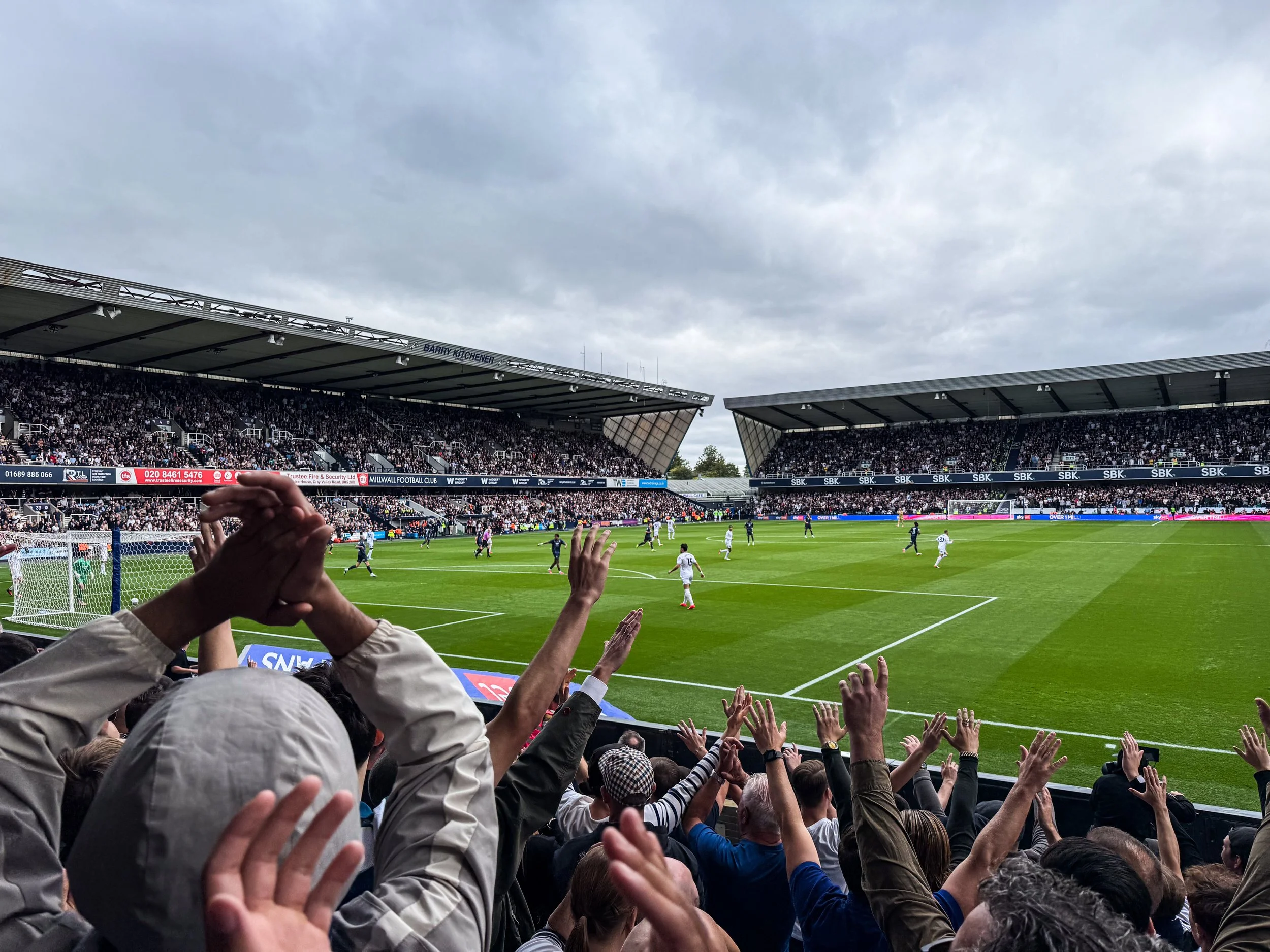
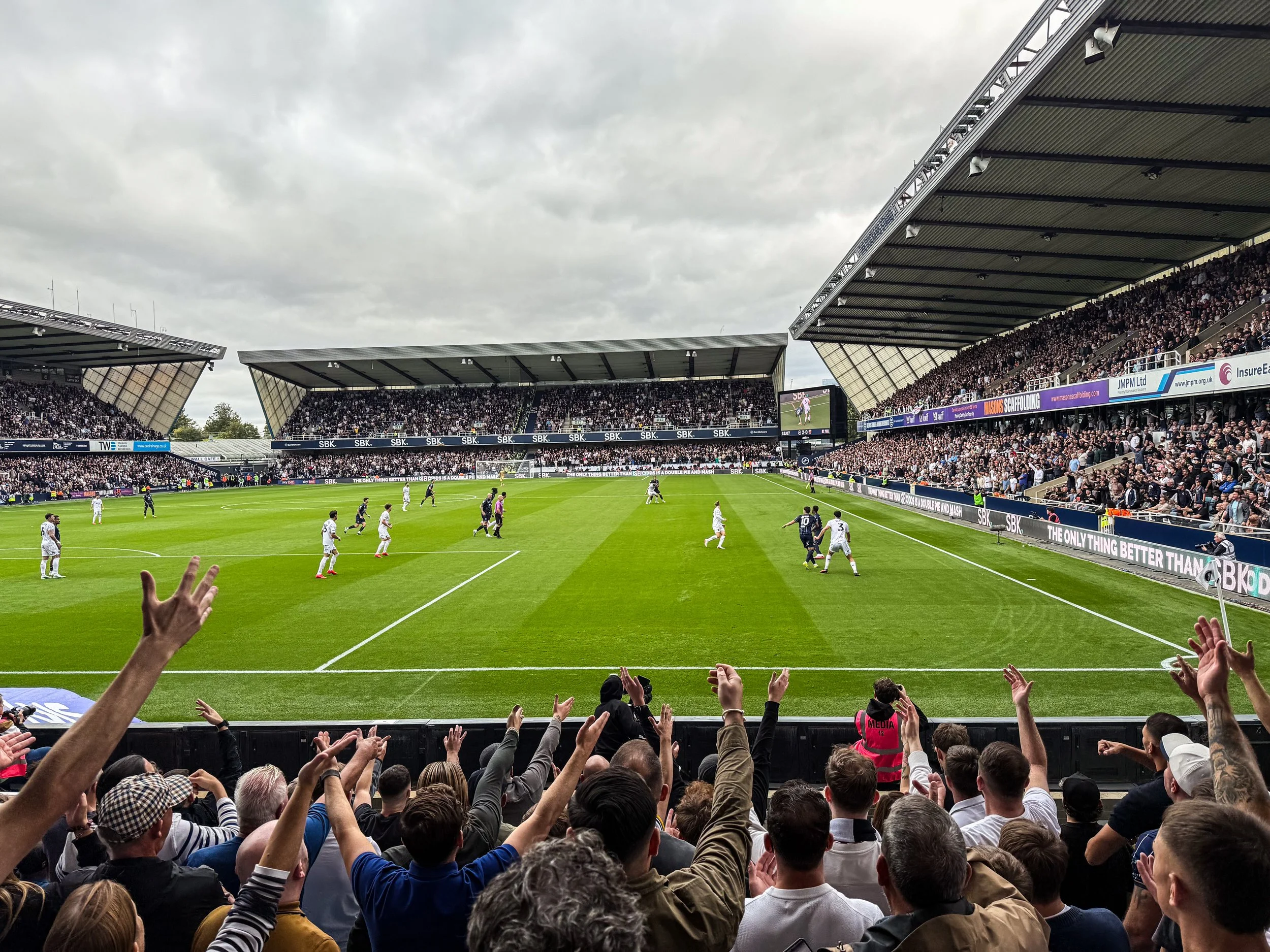
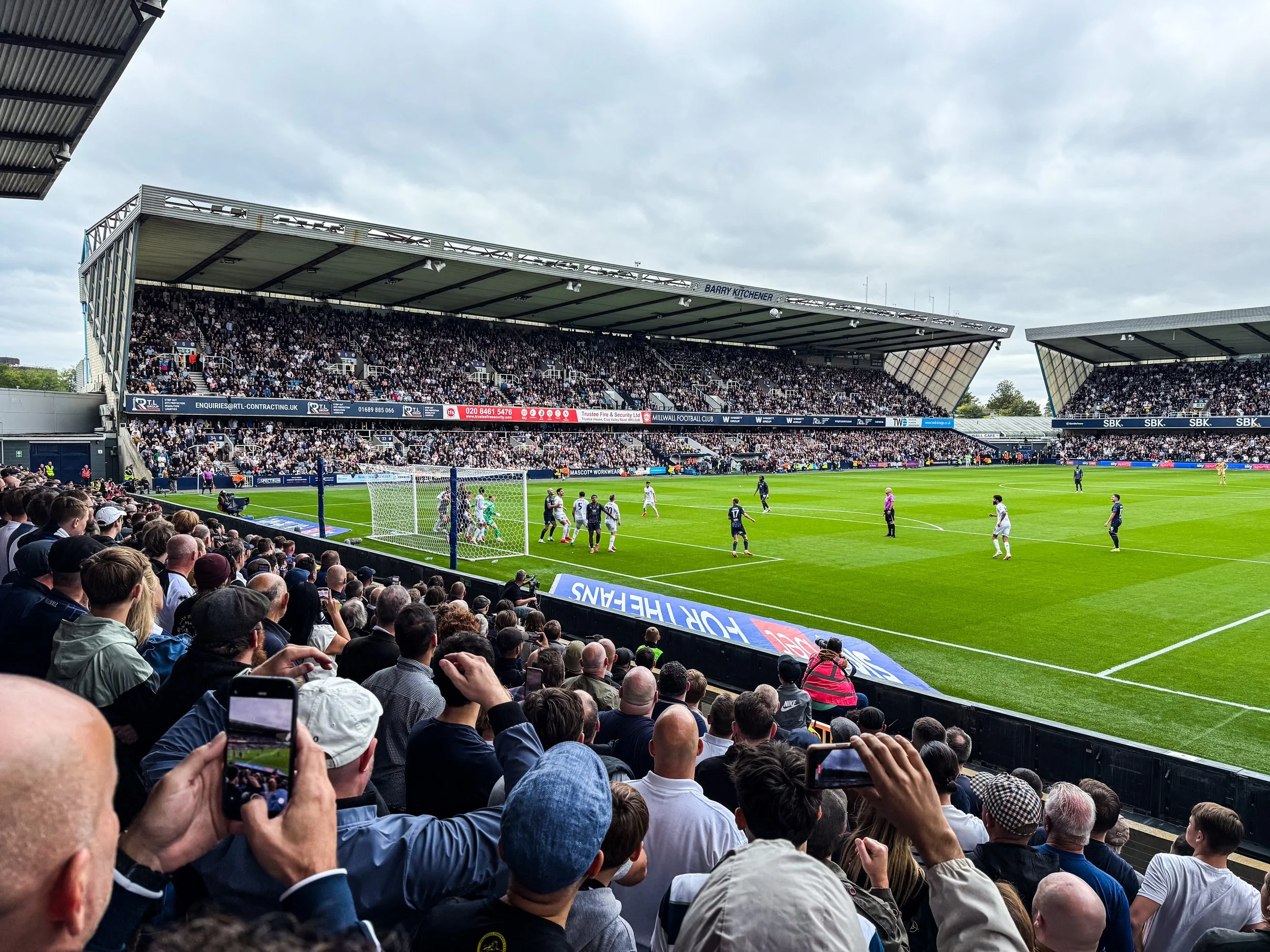
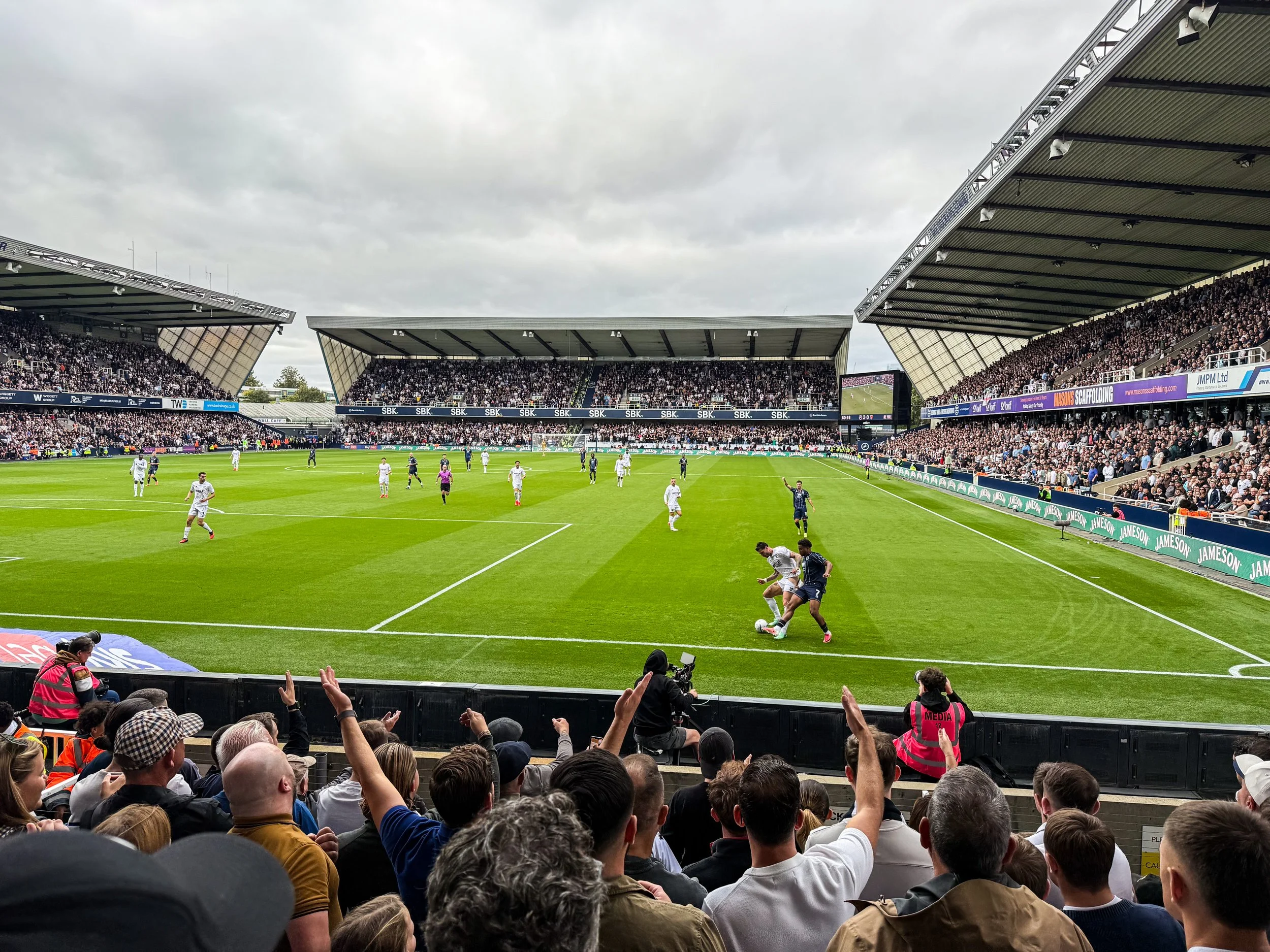
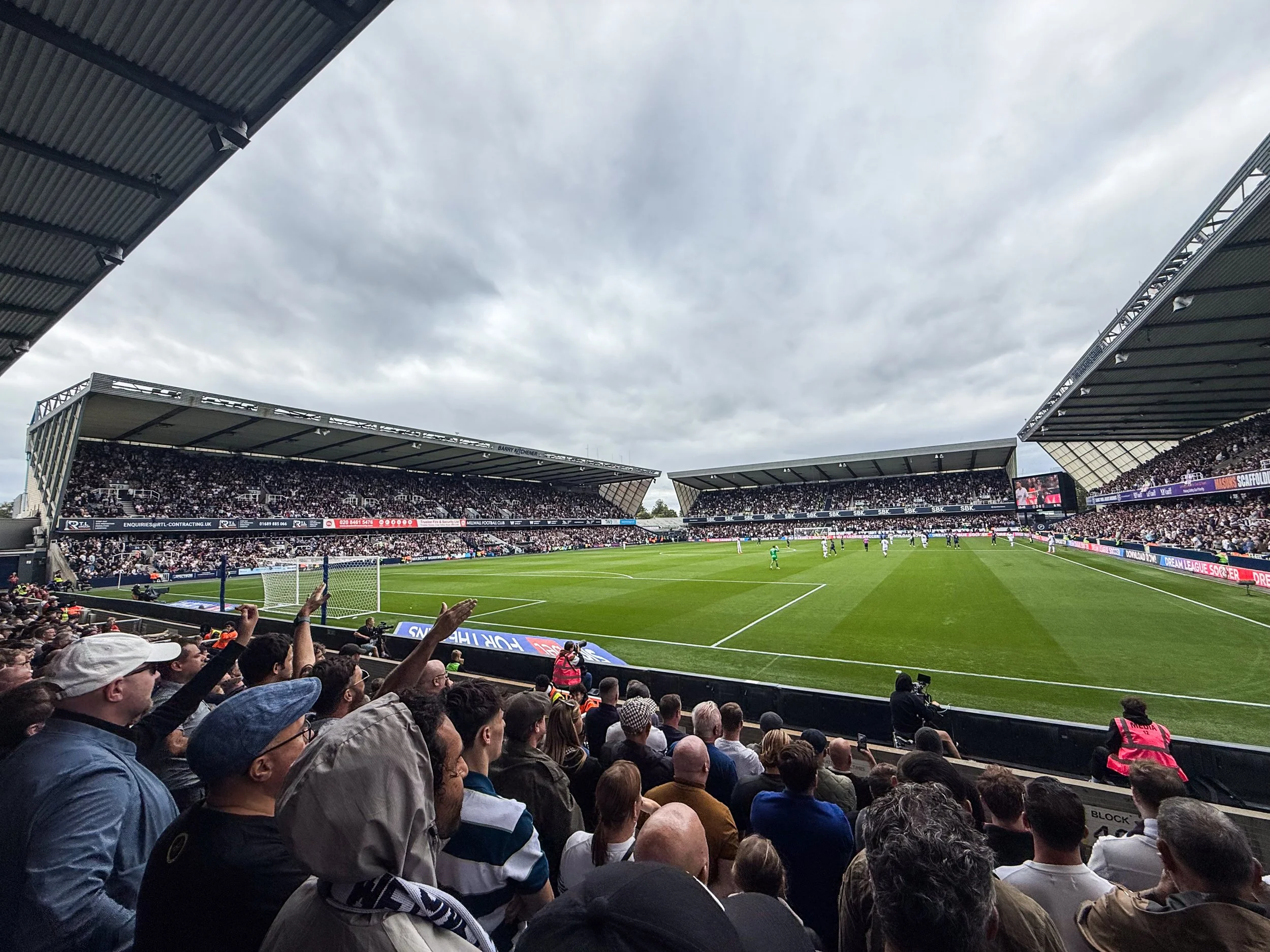
Despite the civil unrest preceding the match and the contentious on-field performance, the crowd dispersed without incident. The police had set the paths for foot traffic so that West Ham and Millwall supporters would never come into direct contact. And I confess… I was a bit disappointed! I was mentally prepared for DANGER. But, perhaps proper hooliganism is indeed a thing of the past. Definitely for the best.
Here’s the match highlights for you:
So there you have it! This was my first ‘derby’, and a helluva a way to get my feet wet. I look forward to going to many more of these matches in the future.
Thanks for the hospitality, Millwall. I know the cheer goes that “no one likes us”, but I do. DEAL WITH IT. ❤️
For now, I’ll leave you with a selection from the Green Street Hooligans soundtrack.



Today we return to football tourism with our quest to visit all the stadiums in the English Premier League. Up to this point we’ve covered Chelsea’s Stamford Bridge, Fulham’s Craven Cottage, West Ham’s London Stadium, Spurs’ Tottenham Hotspur Stadium, and Brighton’s AmEx Stadium. Now, at long last, we’re visiting Arsenal’s Emirates Stadium, which sits in North London, within walking distance of my new flat! We’re going watch the EFL Cup quarter-final against the classic South-London side, Crystal Palace.
So here’s our destination today, along with a couple of nice pictures from the walk over. This match took place on December 23rd, so you will see lots of Christmas imagery & references in the images.