
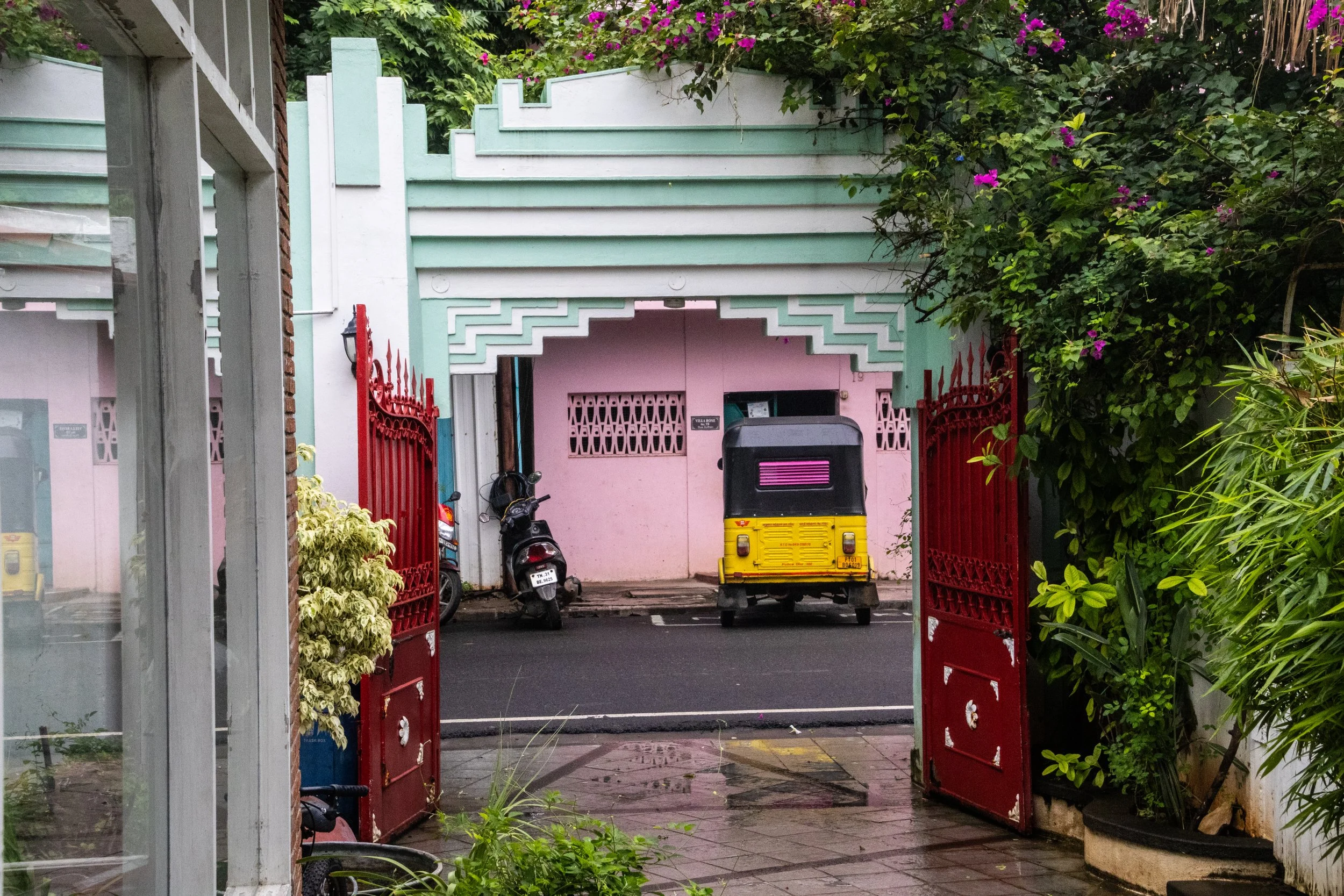
We’ve arrived at the final article of this series in India: Pondicherry.
My fascination with Pondicherry began many years ago when I saw it in the movie Life of Pi. It’s an incredible film, and while most of it takes place at sea, the beginning of the film, as well as the narration throughout, is all set in this idyllic French colonial town in India. Of course I was curious about this place, so I looked it up, and there it was: Pondicherry! It had been sitting on a quiet part of South Indian coast this whole time, but there weren’t many major cities around it so my eyes had never lingered on this particular part of the map. I remember thinking that this far-flung place seemed a bit surreal… it looked like France… but it was in India? I knew very little about South India at the time, and I’d probably never go there… but the way it was represented in the film was absolutely intoxicating! Here’s the trailer for you:
How cool is it that we can just get on planes and GO to these far away places when they strike our interest? Of course not everybody can do this (insert disclaimer on privilege awareness), but still, there are an awful lot of people in the world who have the means to chase these places down, but—for one reason or another—never will. I suppose I could write something like this at the beginning of every article, but Pondicherry in particular had me thinking about this because I learned about it and desired it long before I’d realized it was actually possible to go!
So, let’s see what this place looks like in real life, shall we?
An Introduction to Pondicherry
So, even though when we think of India’s colonial past, we tend to (rightly) think of England, there were other European powers that had carved out small pieces of this pie as well. We touched on Portugal’s presence in India a few articles ago when we visited Chennai and especially Goa, but France was in the mix as well. In fact, they managed to hold onto their carve-outs of India until the 1950s, and didn’t legally recognize these territories as part of India until 1962. EYE ROLL. At this point, there were 4 remaining French colonies on a non-contiguous land area. These 4 pieces were:
Pondicherry (inside Tamil Nadu)
Karaikal (also inside Tamil Nadu, but separate from Pondicherry)
Mahe (inside Kerala, on the west coast)
Yanam (inside Andhra Pradesh)
Rather than integrating them into existing Indian states, India instead made them all into a single “Union Territory”, with Pondicherry as its namesake. So, even though Pondicherry is Tamil, and surrounded on all sides by Tamil Nadu, it’s actually not part of Tamil Nadu. It’s weird. And with a population of less than 1 million, it’s definitely considered a “town” in India, not a “city”.
Also, it’s not called Pondicherry anymore. In 2006 both the town and the Union Territory were renamed “Puducherry”. This was part of the same push to rid Indian nomenclature of traces of colonialism that resulted in Madras being renamed Chennai, Bombay being renamed Mumbai, Calcutta being renamed Kolkata, and more. But, more than most other renamed cities, Pondicherry’s legacy name is still in popular use. Perhaps this is because it’s still very tied to France culturally, spiritually, and administratively. I’ll talk about that shortly, but first let me show you where Pondicherry/Puducherry is on the map:
So, despite being 100% Indian, Pondicherry still feels very French. In fact, many Indians here speak French and either have or are eligible for dual French citizenship! Meanwhile, much of the western tourism to Pondicherry is from French people, for whom Pondicherry feels much less obscure than it does to the rest of us. The food has French influence, the street names are often in French (e.g. “Rue Dumas”), but above all else, the architecture is extremely French. This is especially true in “White Town”, also known as the “French Quarter”.
Based only on a few vignettes from Life of Pi, I naively expected that most of the buildings in White Town would be painted white… but no. It was a race thing. The white people lived here, and the rest of the city was known as “Black Town”. Fun fact: France has evolved quite a lot on this topic and now has very strict laws on its books designed to create a “Color-blind Republic” that prohibit the official collection of data on ethnicity or race. But I digress. 😂
Anyway, once you cross from White Town into Black Town…

SORRY! Once you cross from White Town the French Quarter into… um… the rest of the city… things start feeling a lot more like India and a lot less like France. Looking at the tops of buildings, you can still spot the French influence, but at the street level, it feels like Tamil Nadu. And this is a good segue into our arrival…
Exploring Pondicherry
So, we’d previously been in Chennai because it was the closest major airport to Pondicherry. But that still left the issue of actually getting from Chennai to Pondicherry. What’s the best way to do this? Well, there’s a train, but to my surprise, tickets had already sold out. There are buses as well, but we were pressed for time and they would have been too slow. By process of elimination, this meant that we’d have to travel by car. We had the option to hire a car via our hotel, but the prices were pretty steep (like ~$150-200+), which was understandable given that it was a 3 hour journey by car (6 hours round-trip for the driver). Just when I was about to bite the bullet and pay for the expensive hotel car, we actually found a good price (like ~$35) on UBER! Uber has made India SO much more travel-able, it’s insane! Believe you me, things were not this easy when I first came to this country in 2015. And, to make matters even more straightforward, our Uber driver gave us his number at the end of the trip so we could arrange with him directly to come back for us and return us to Chennai. Love it! Thanks Ranjith. 🙏
Anyway, we were rolling into the outskirts of Pondicherry around dusk, and it looked like any other Indian city, albeit, slightly smaller in scale. The urban chaos was setting in quickly, when I noticed a white girl with a giant backpack getting off of the local inter-city bus all alone. Having “roughed it” across India all by myself, I had a flash of nostalgia for my true, hardcore backpacking days. Much respect to this girl. ✊
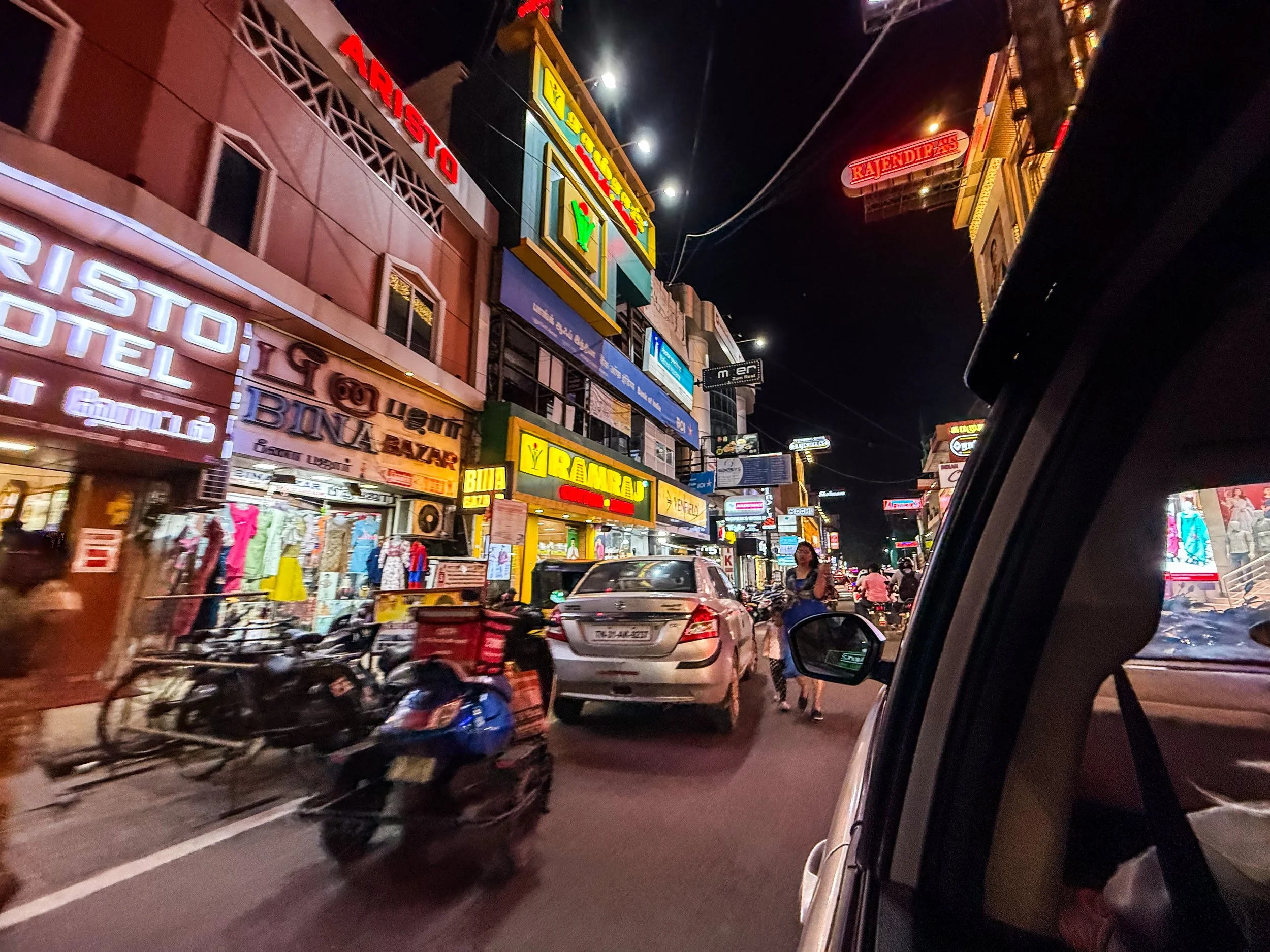
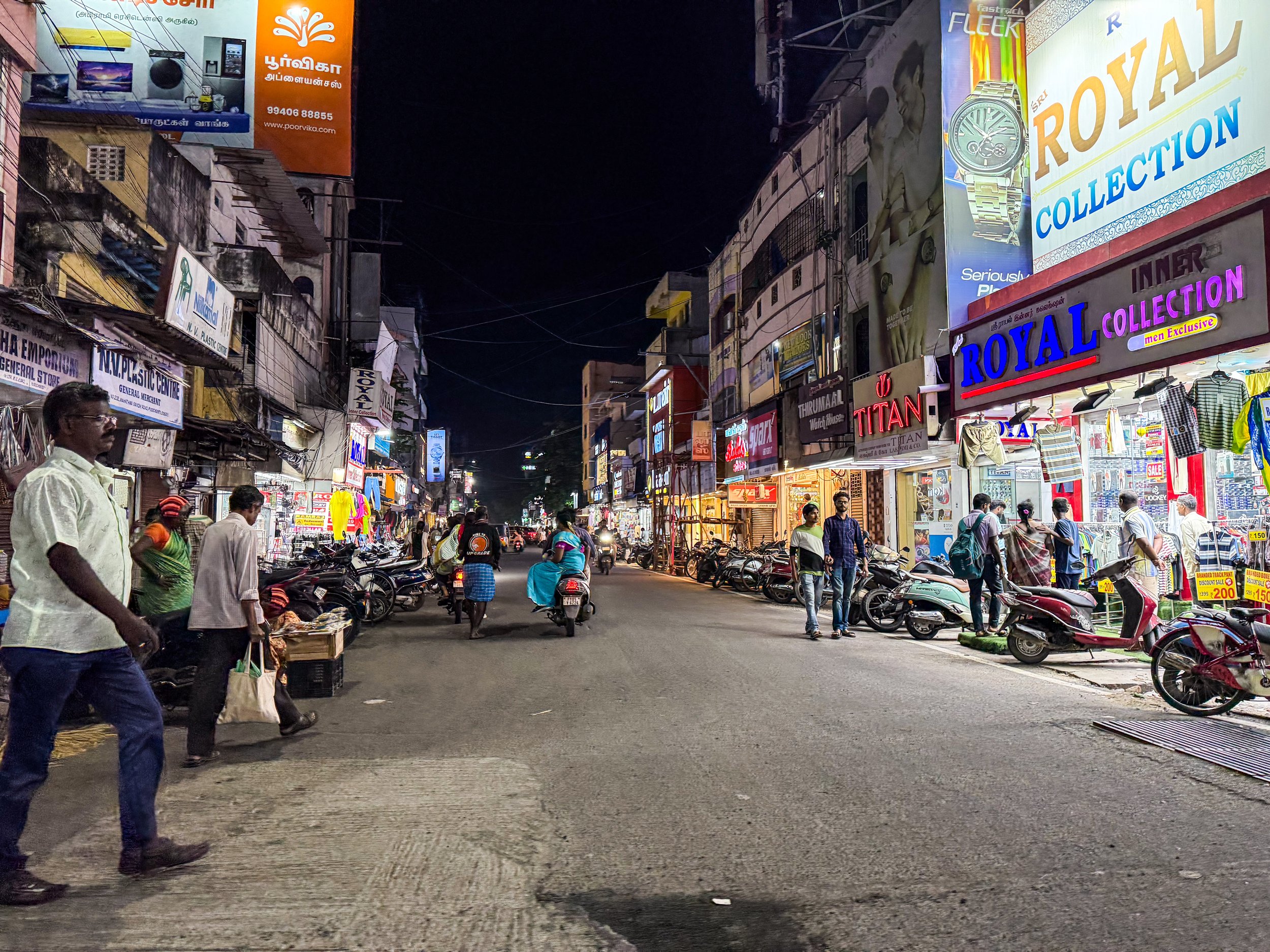
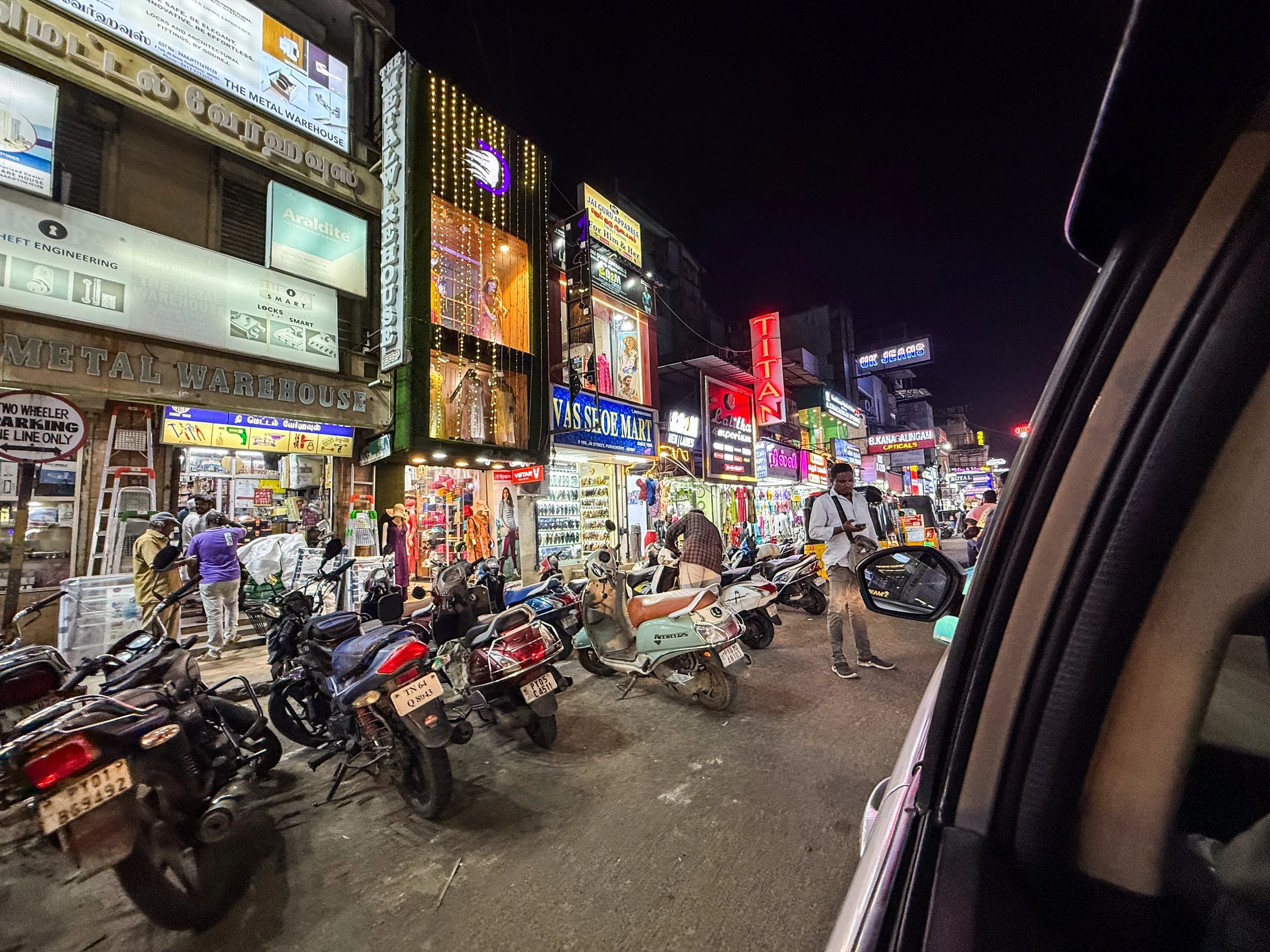
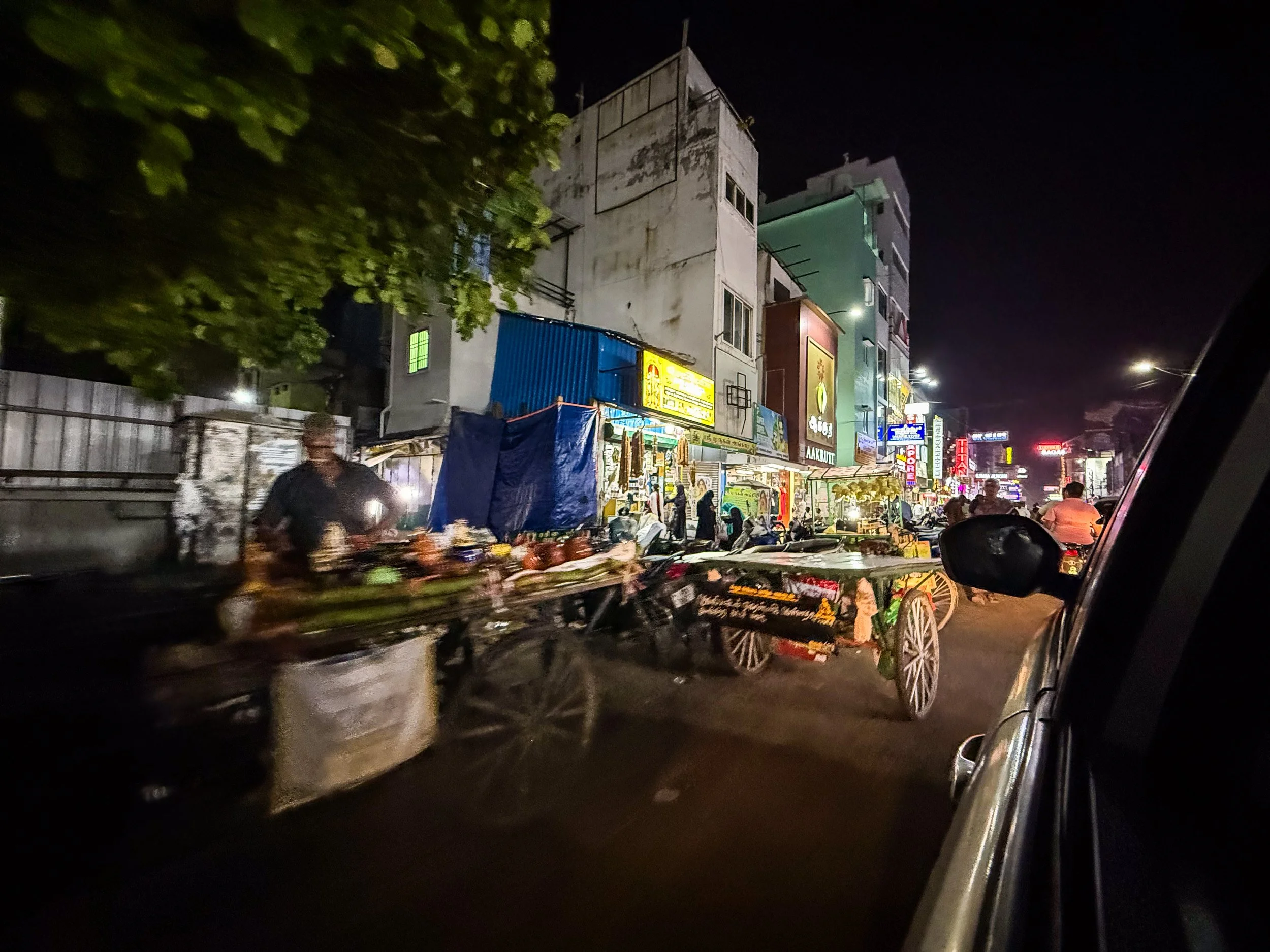
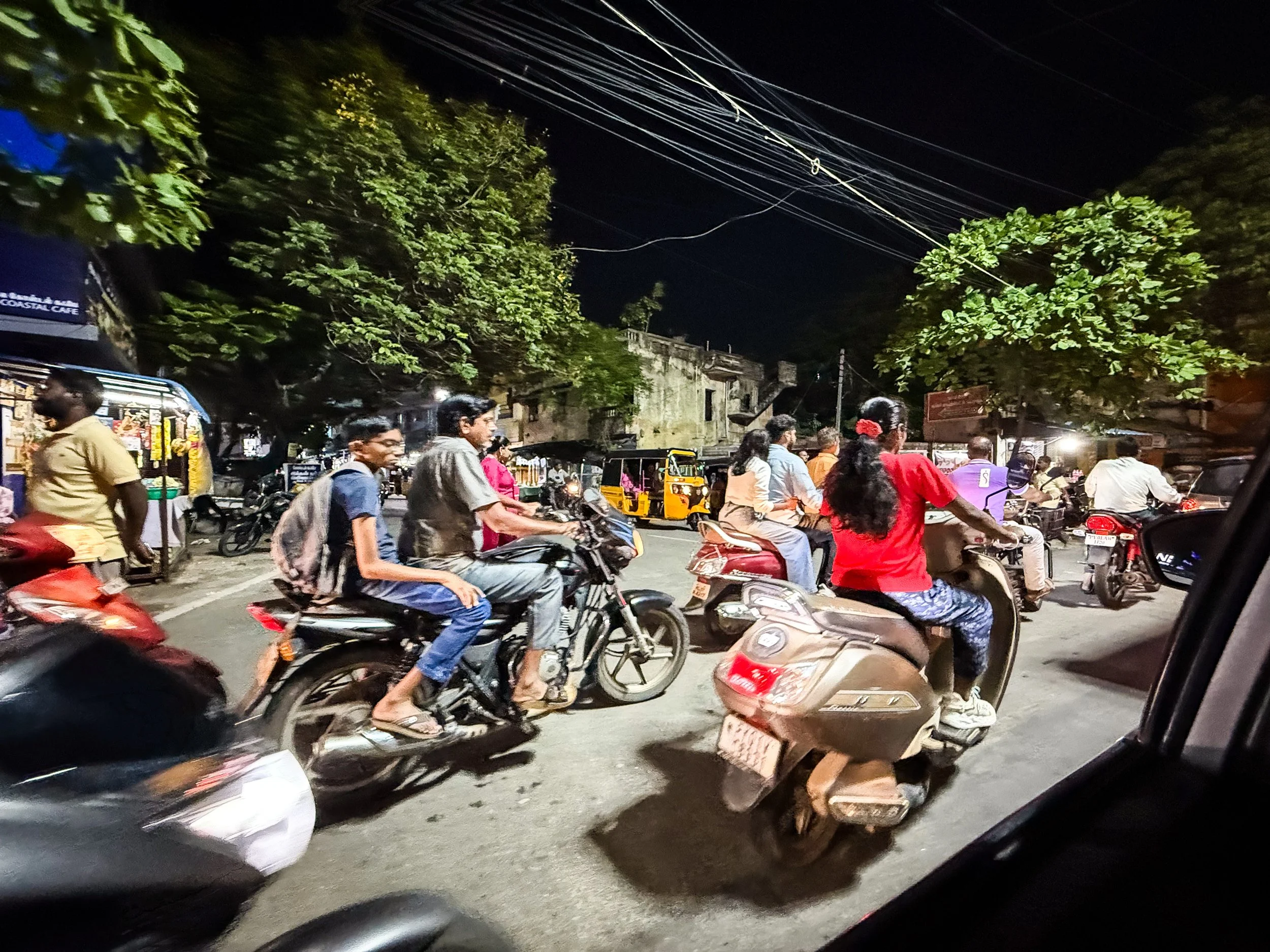
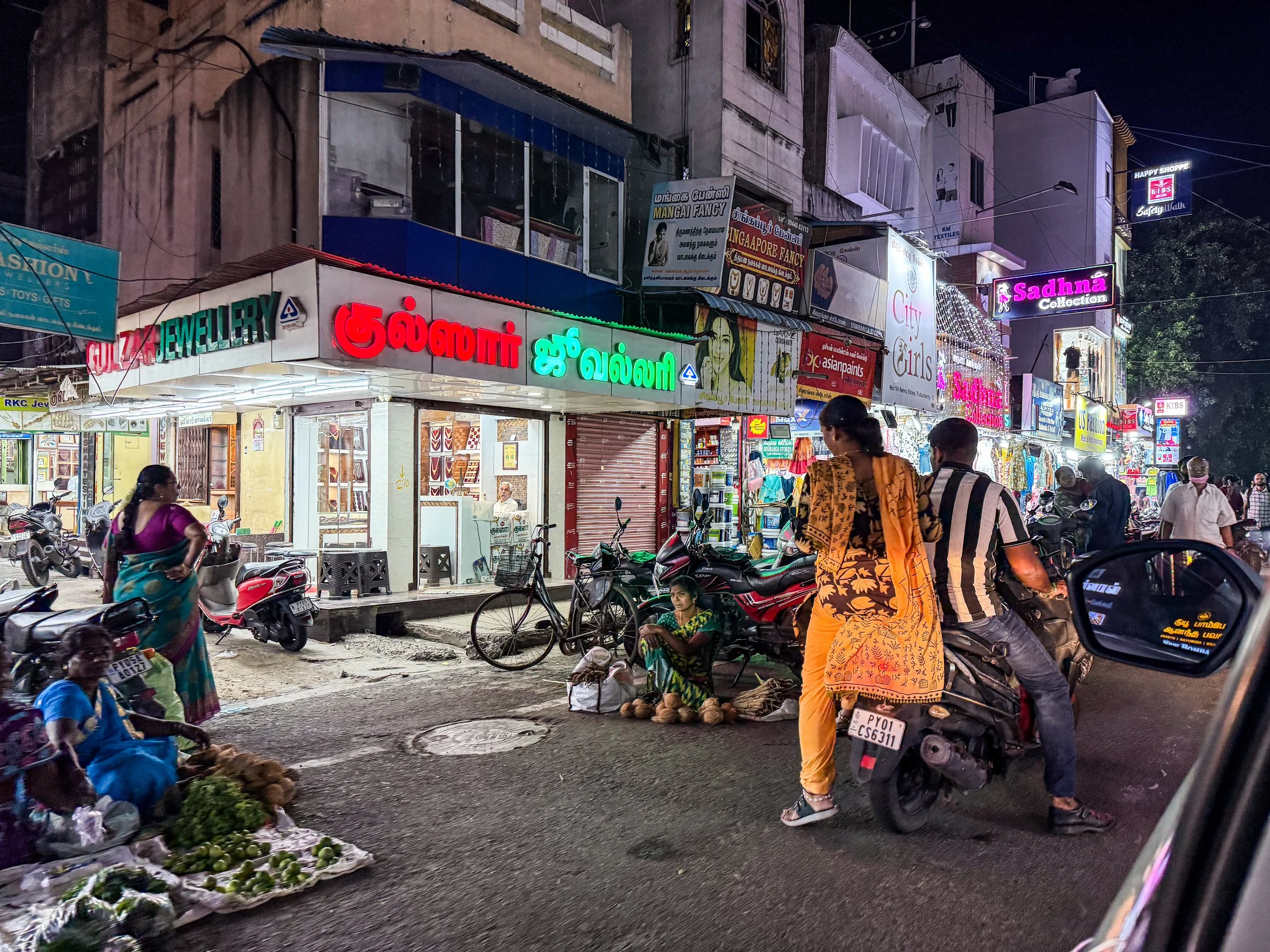
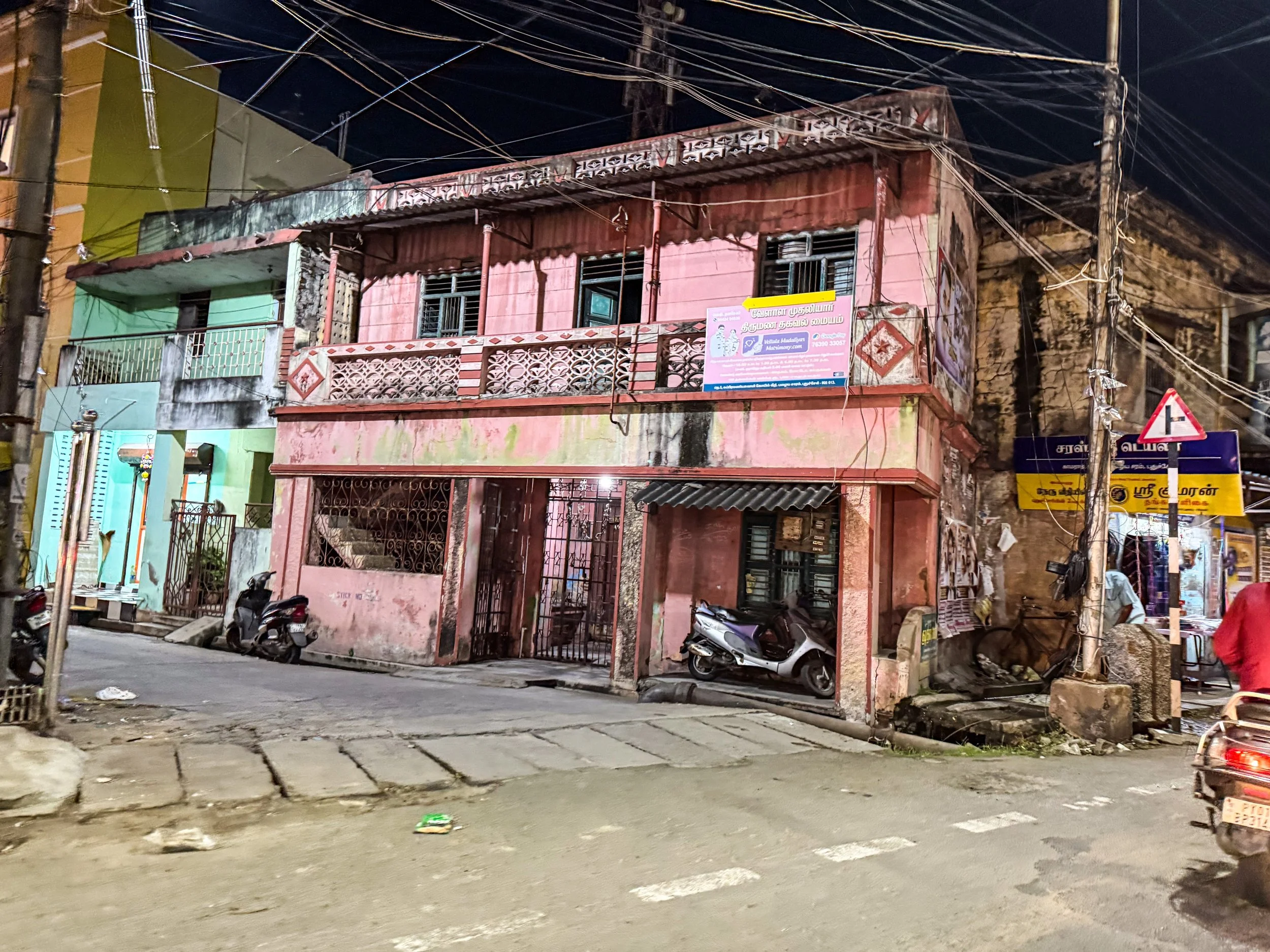
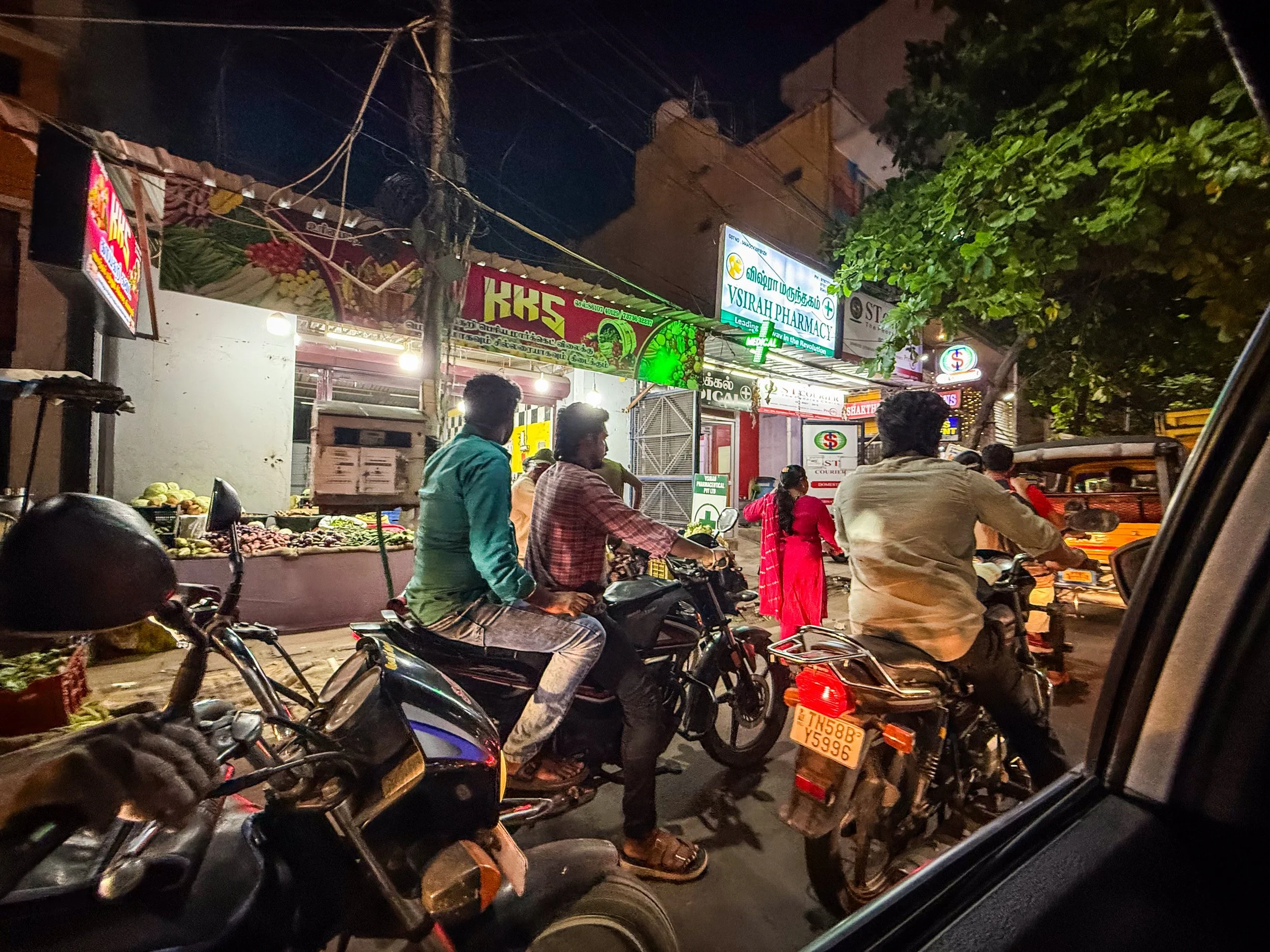
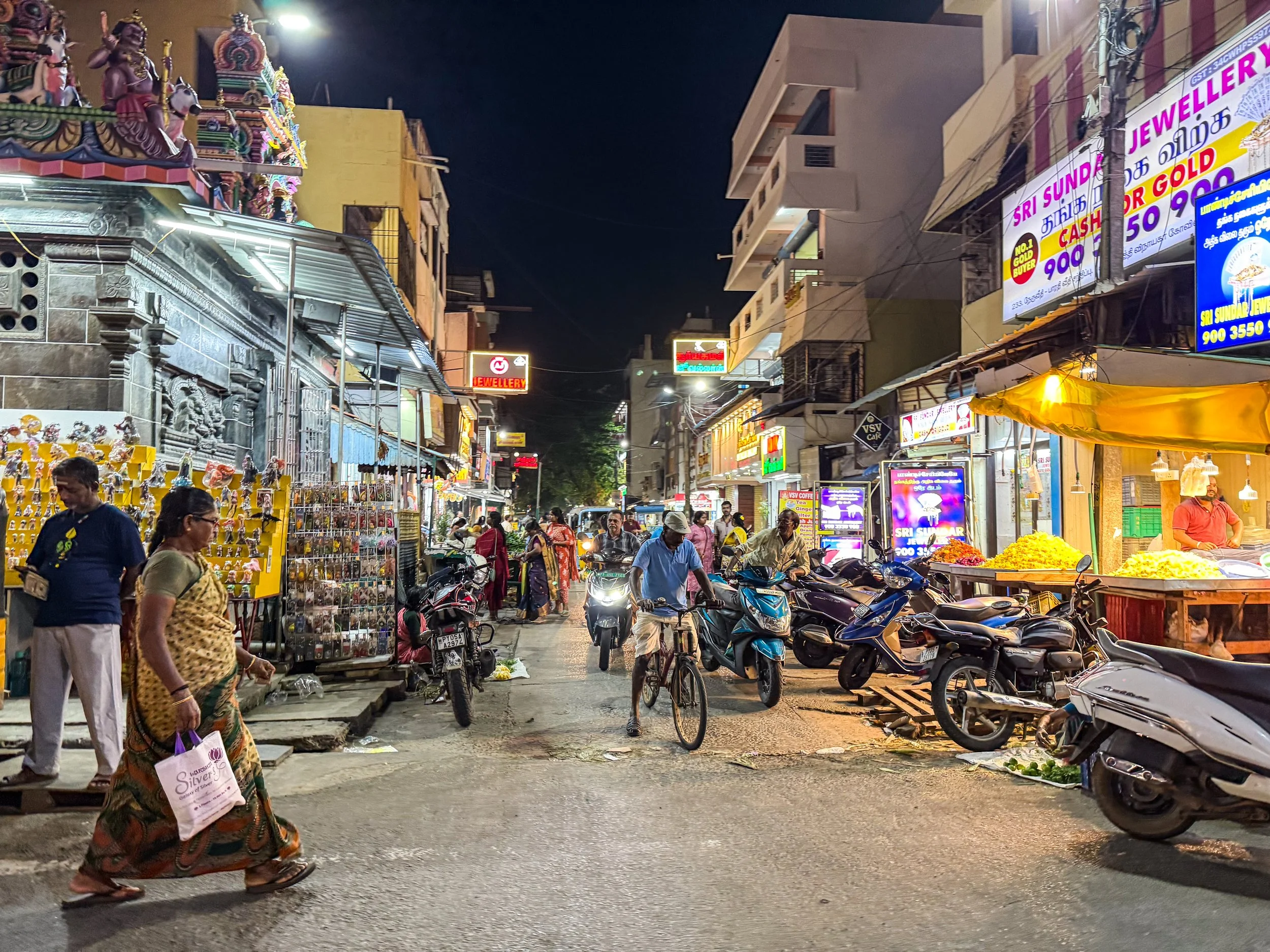
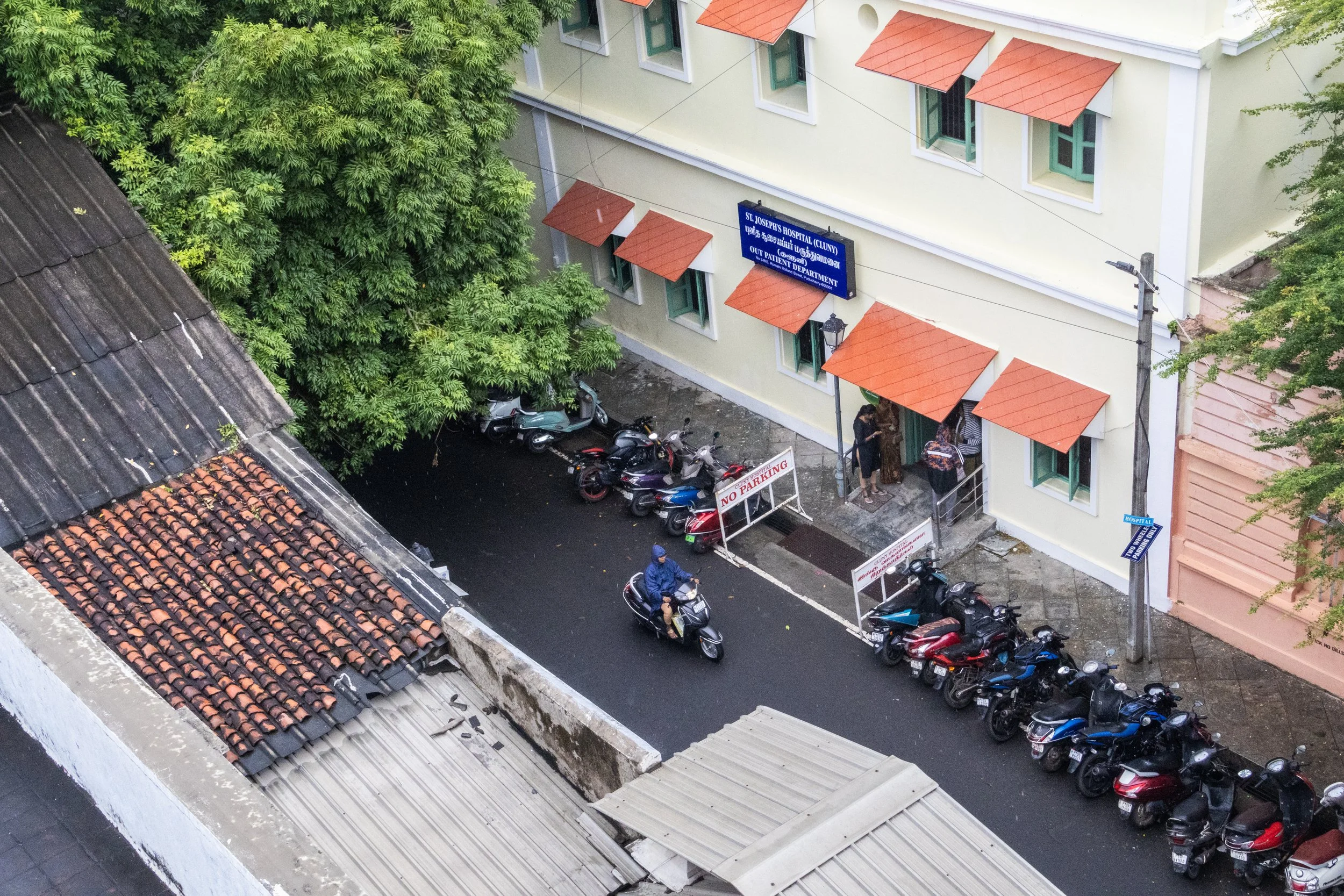
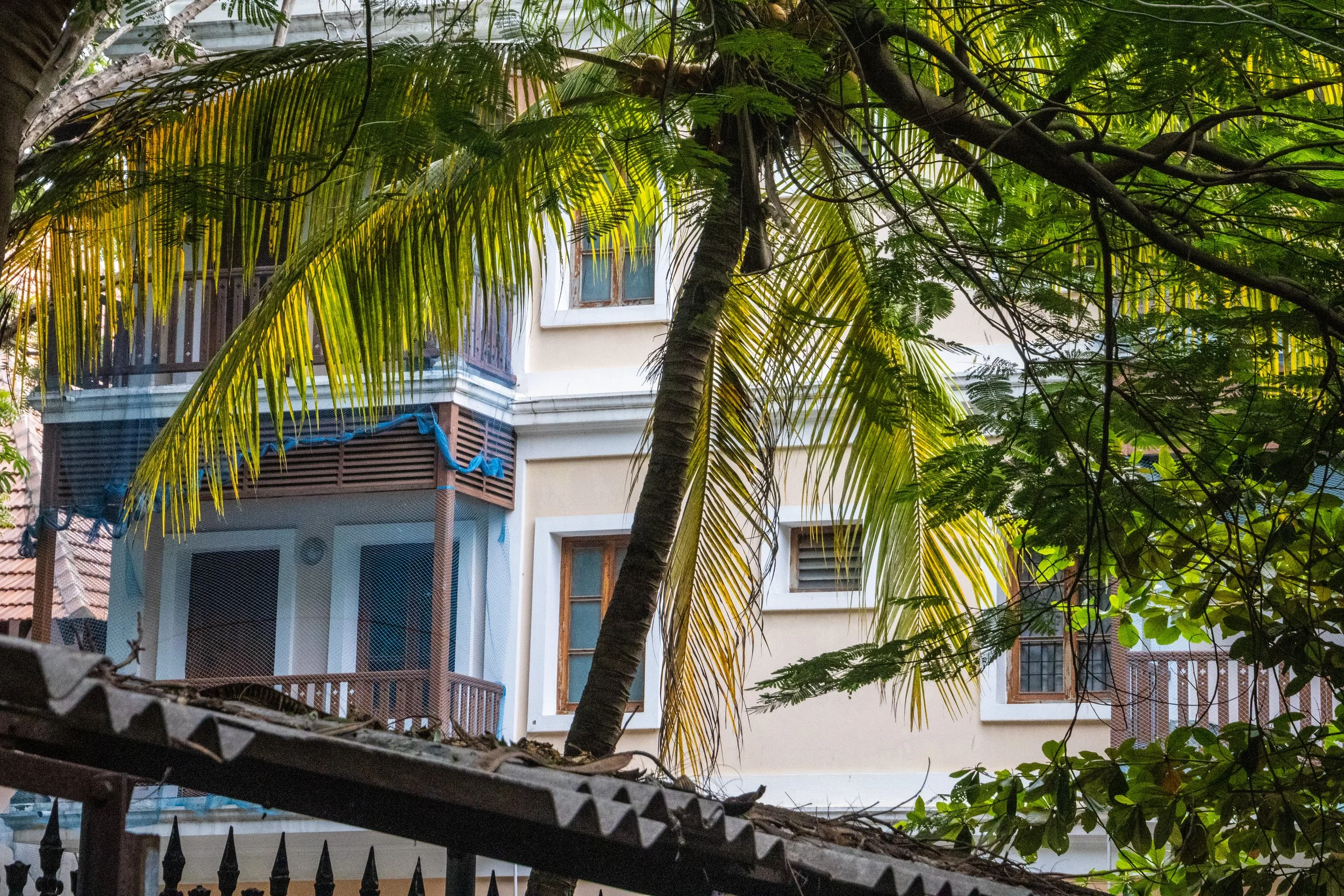
It was immediately clear when we passed into the French Quarter. The frenetic activity on the streets suddenly gave way to peace and quiet; the decibel of the ambient street noise decreased sharply, replaced by the hum of insects in the trees and the sound of the ocean in the distance. We’d booked a nice-looking hotel in a colonial-style building in the center of the French Quarter, but when we arrived, it was actually quite run-down. I came to the conclusion that most of the beautiful colonial buildings in Pondicherry were similar; kind of like Havana’s beautiful post-colonial disrepair. But these are always the most visually interesting cities!
However, a more apt comparison would definitely be Hanoi. It’s actually insane how similar Pondicherry is to Hanoi. On paper, this makes perfect sense: both were French colonies, and France left the same mark on both of them. Still today you can see, feel, smell, and taste France in the street signs, in the food, in the in the architecture, and even in the urban planning. And to make the similarities even more surreal, the buildings in both cities tend toward being painted a light shade of yellow, and are overgrown with a level of jungle that does not often interact with French architecture.
I lived in Hanoi for about ~13 months after I graduated from university, long before I ever visited France, so I was having extreme déjà vu as I walked the streets of Pondicherry. To the French people in my life now, it’s quite a curious thing that one’s first interaction with French staples such as the croque monsieur/madame might happen in these far-flung destinations. But make no mistake: the French legacy is alive and well out here. Pondicherry has as many French restaurants as it does Indian restaurants, and they are often filled with French people!
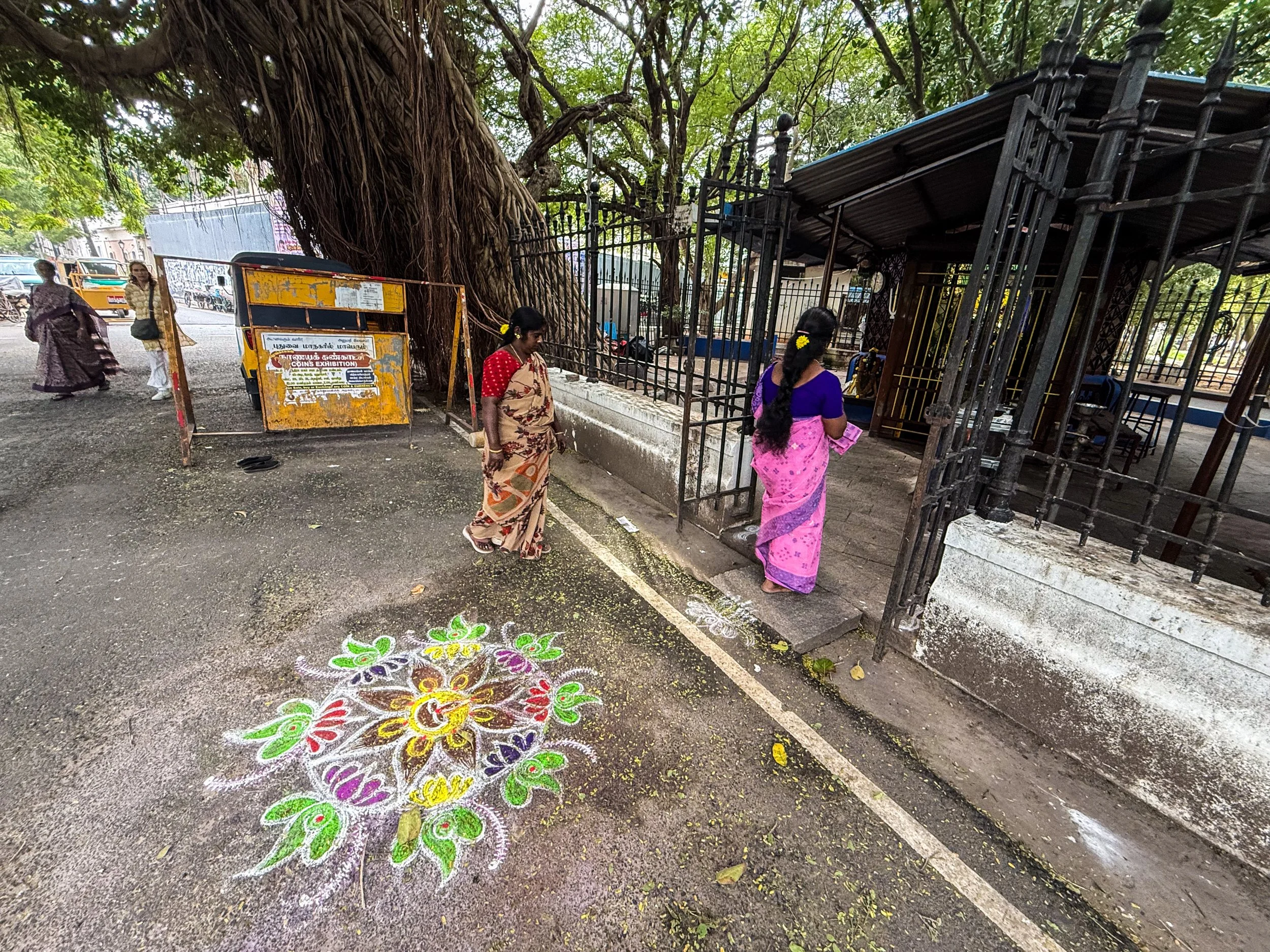
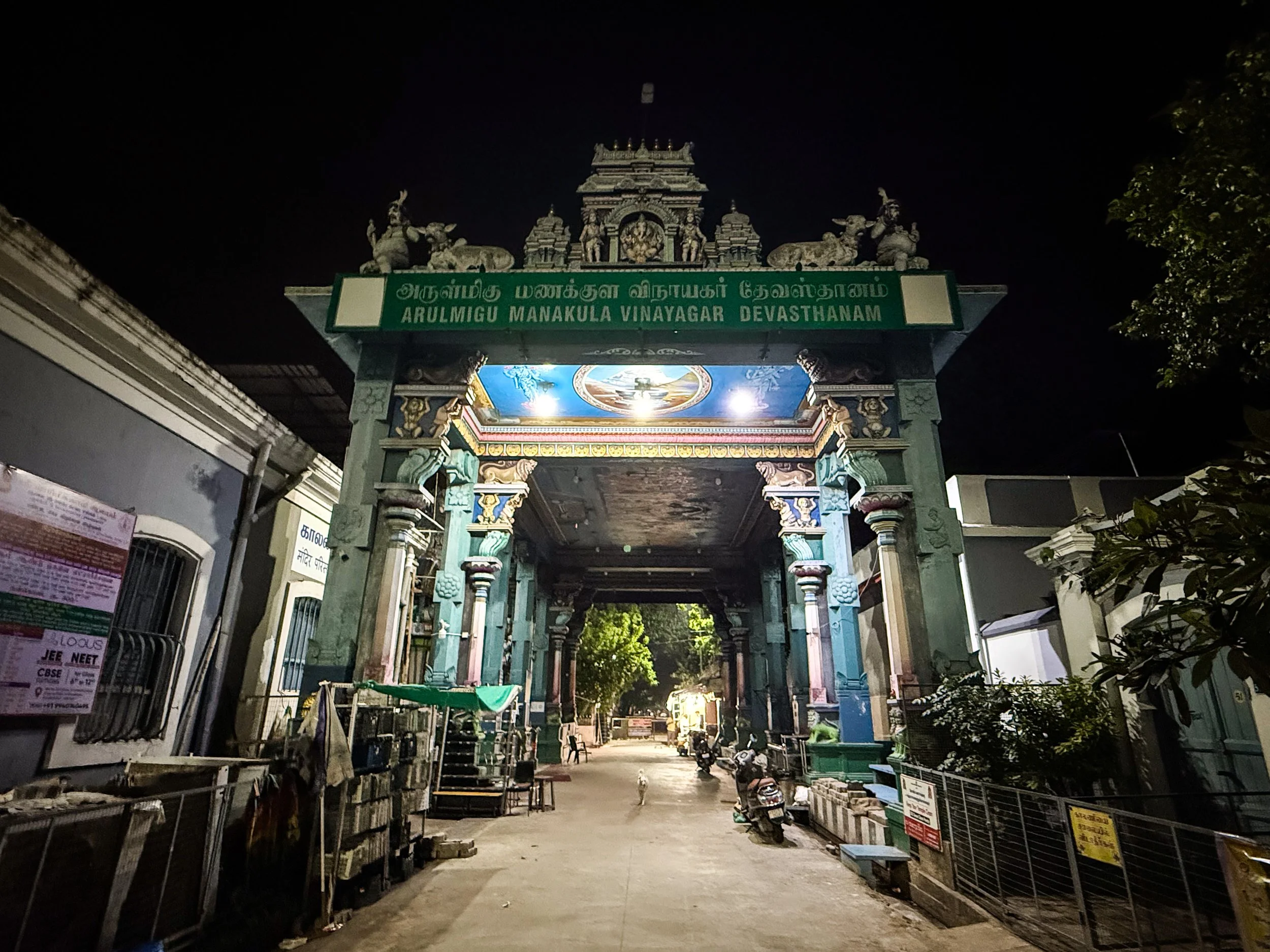
Walking the streets of Pondicherry’s French Quarter, it’s easy to forget where on earth you are… until something distinctly Indian shatters the illusion. One such feature is Sri Manakula Vinagayar temple, which is a Hindu temple dedicated to the god Ganesha. Within this temple—our Uber driver, Ranjith, explained to us—there lives an elephant named Lakshmi, who is quite a beloved figure. We were eager to see Lakshmi, but when we arrived at the temple, we discovered that she had actually died in 2022! So, the beauty of this sacred religious site was somewhat overshadowed by our speculation as to how they managed to get this Elephant’s body out of the temple. On the trip back from Pondicherry, we sadly informed Ranjith that Lakshmi had passed away, but he responded that he already knew.
“…and you sent us see Lakshmi anyway? Knowing that she was dead?? WTF Ranjith!”

PUTTING THE LOVING MEMORY OF LAKSHMI ASIDE, let me show you Pondicherry’s French Quarter. Pretty much all we did here was wander the streets, stopping into markets, cafes, and restaurants. In one of these markets, I bought a play-set of the Tamil alphabet for my friend’s baby, which I hope will be an interesting relic for them 30 years from now.
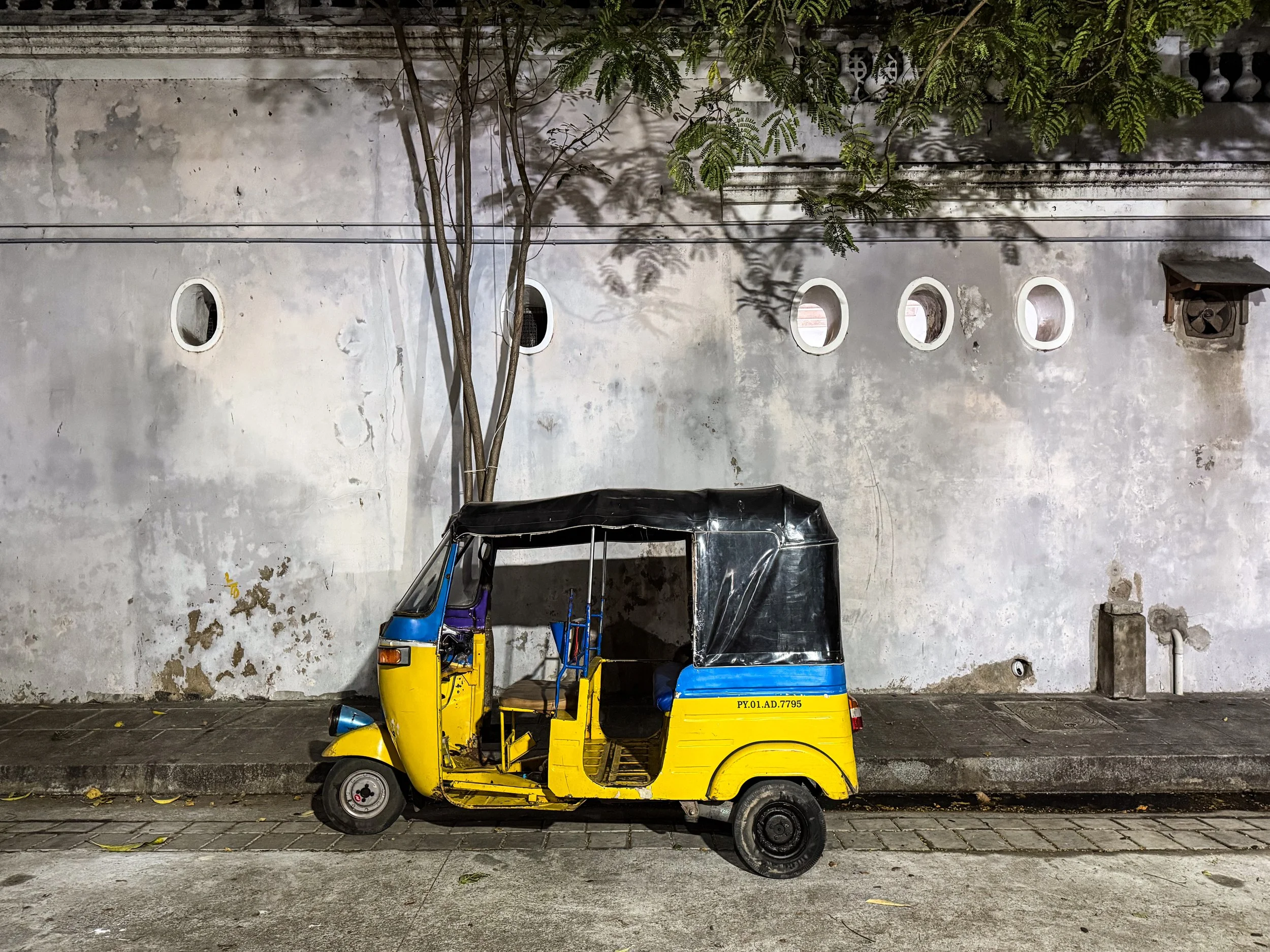
Anyway, Pondicherry is an extremely photogenic place, as you will see in the gallery below. I took a lot of pictures here.
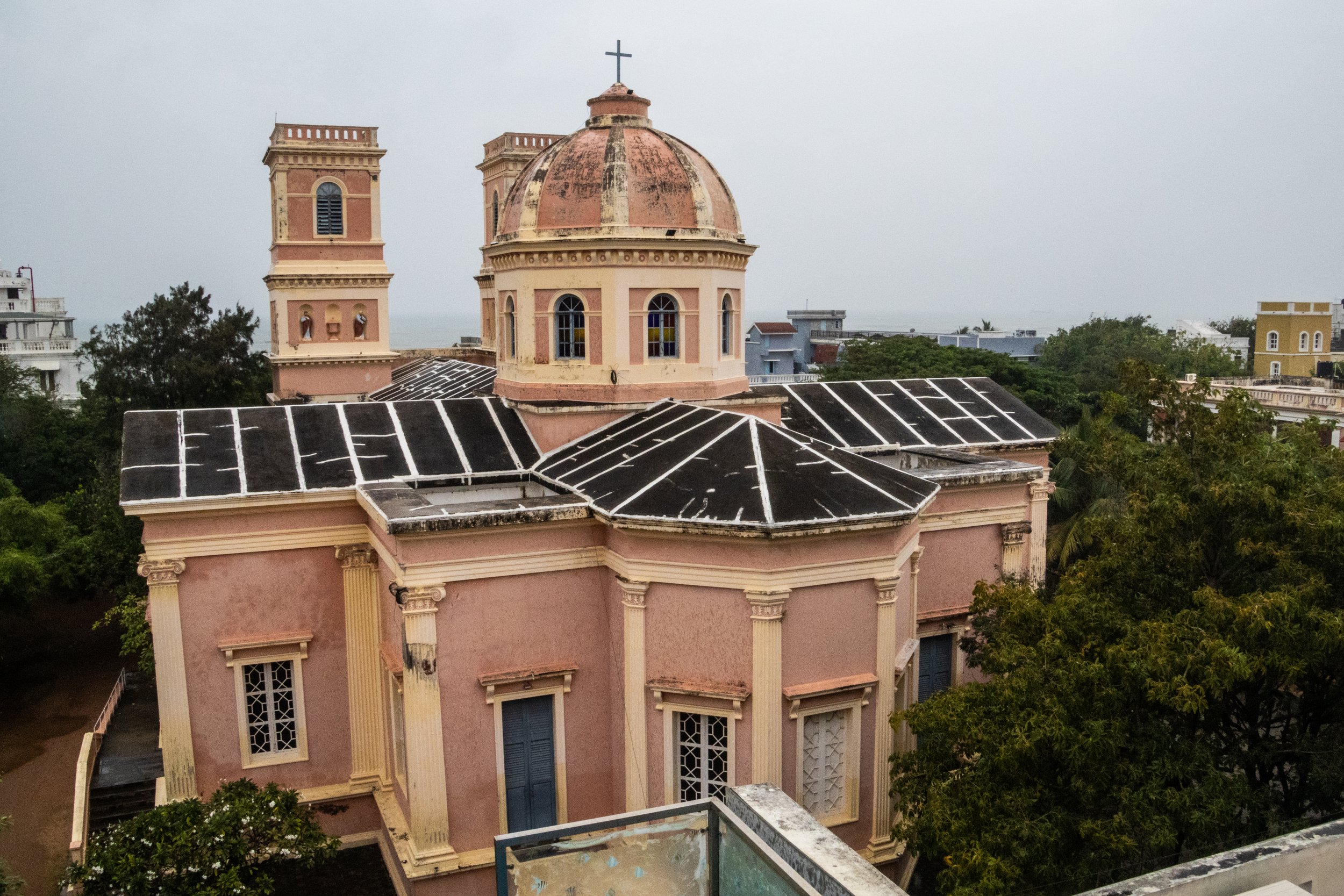
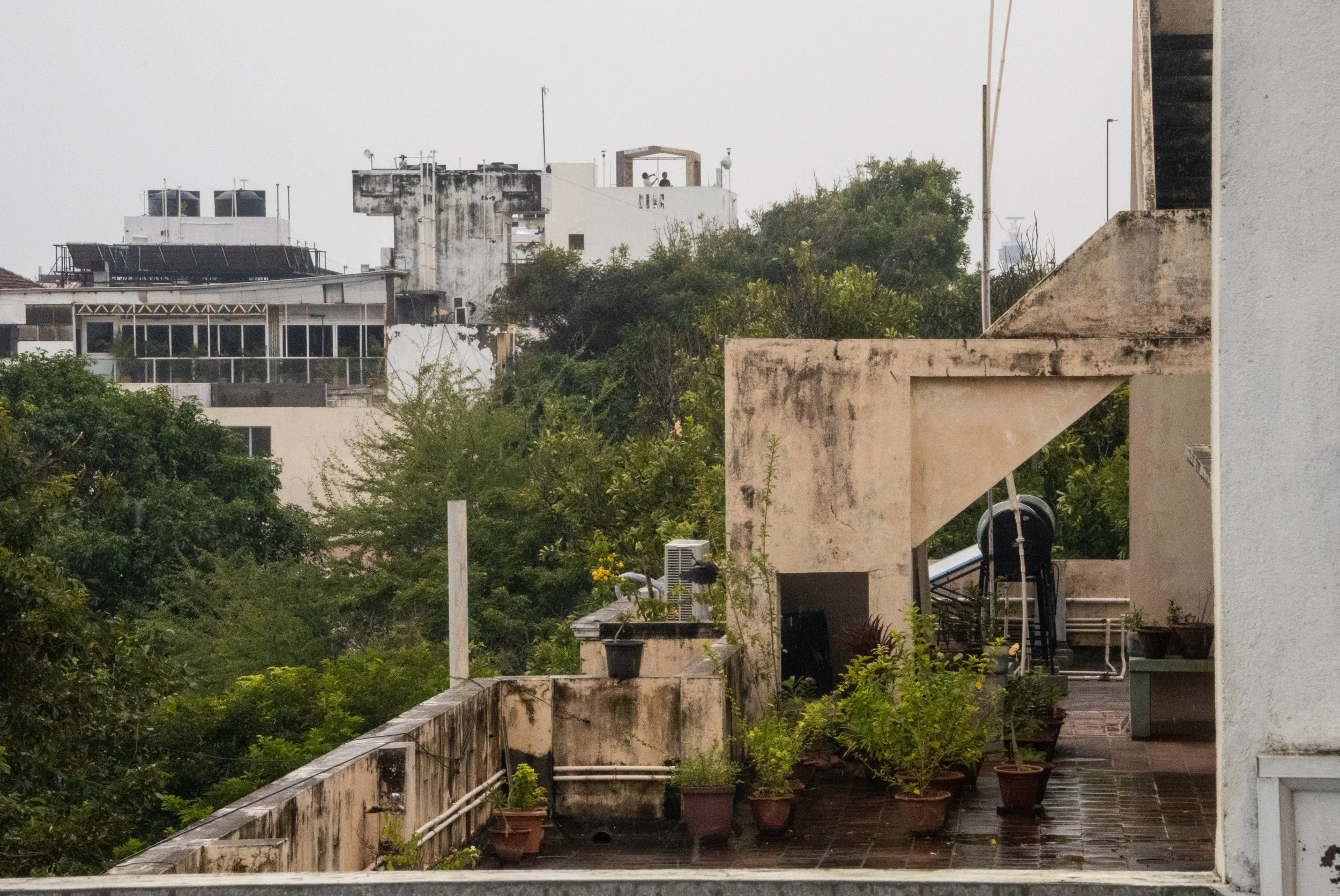
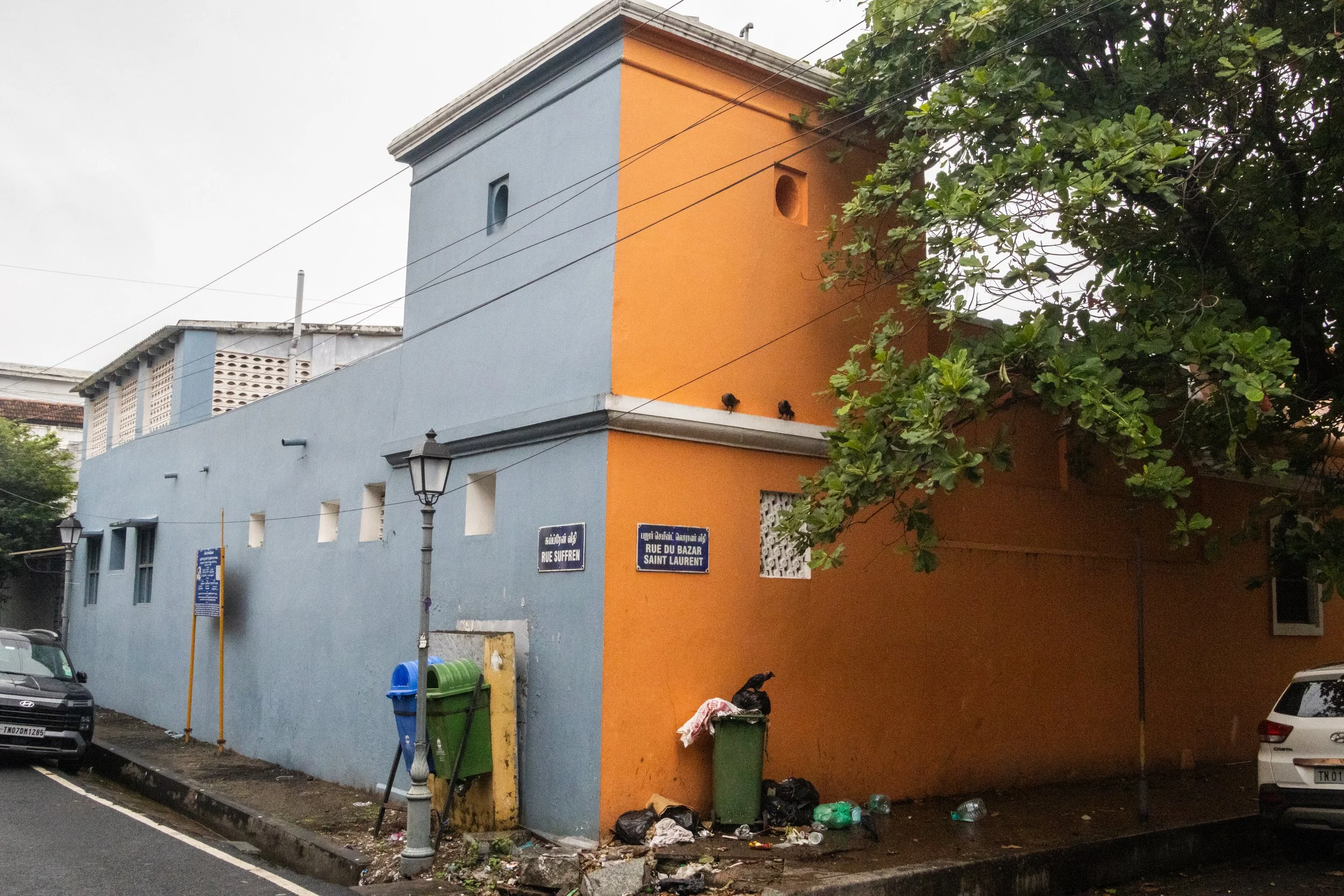
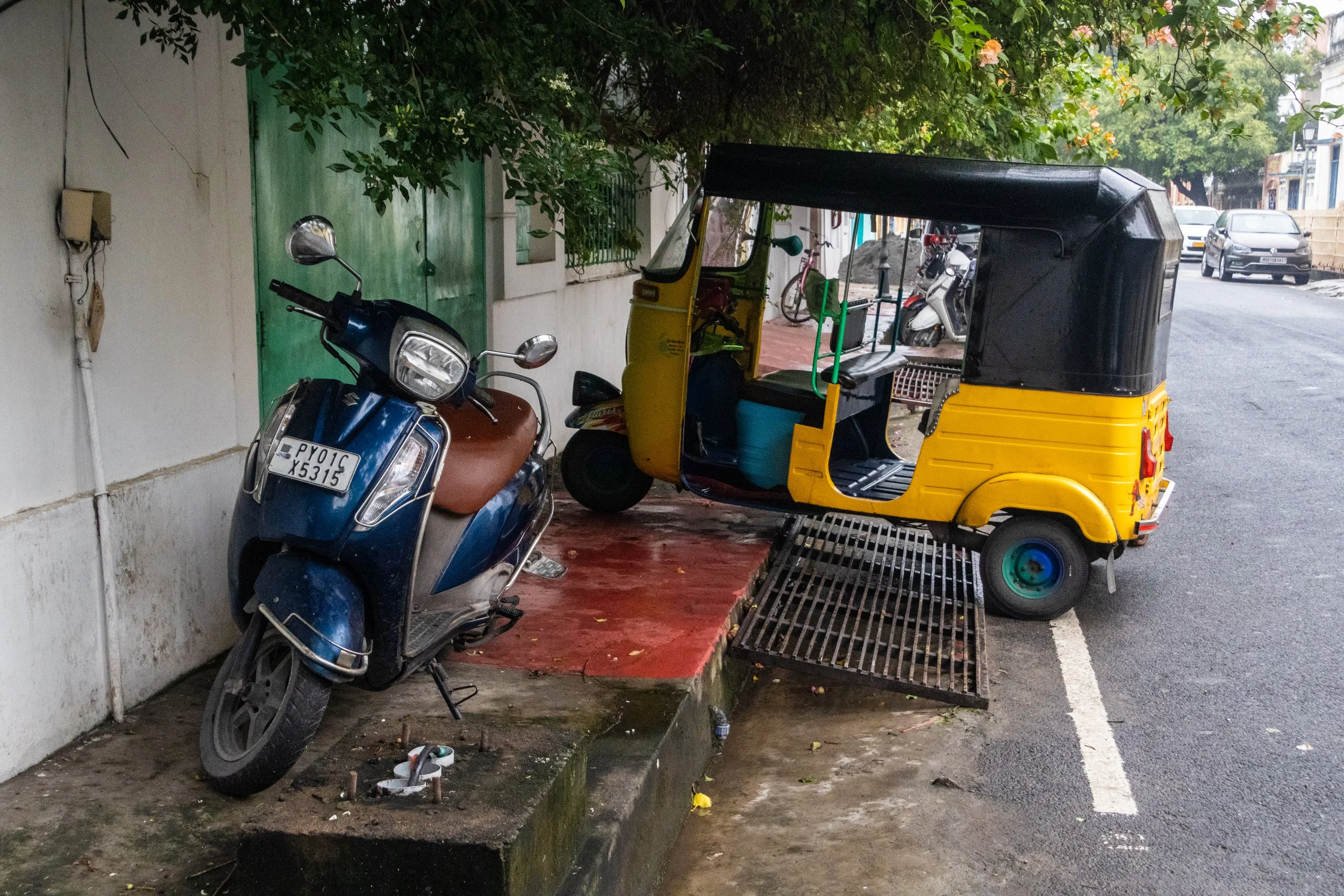
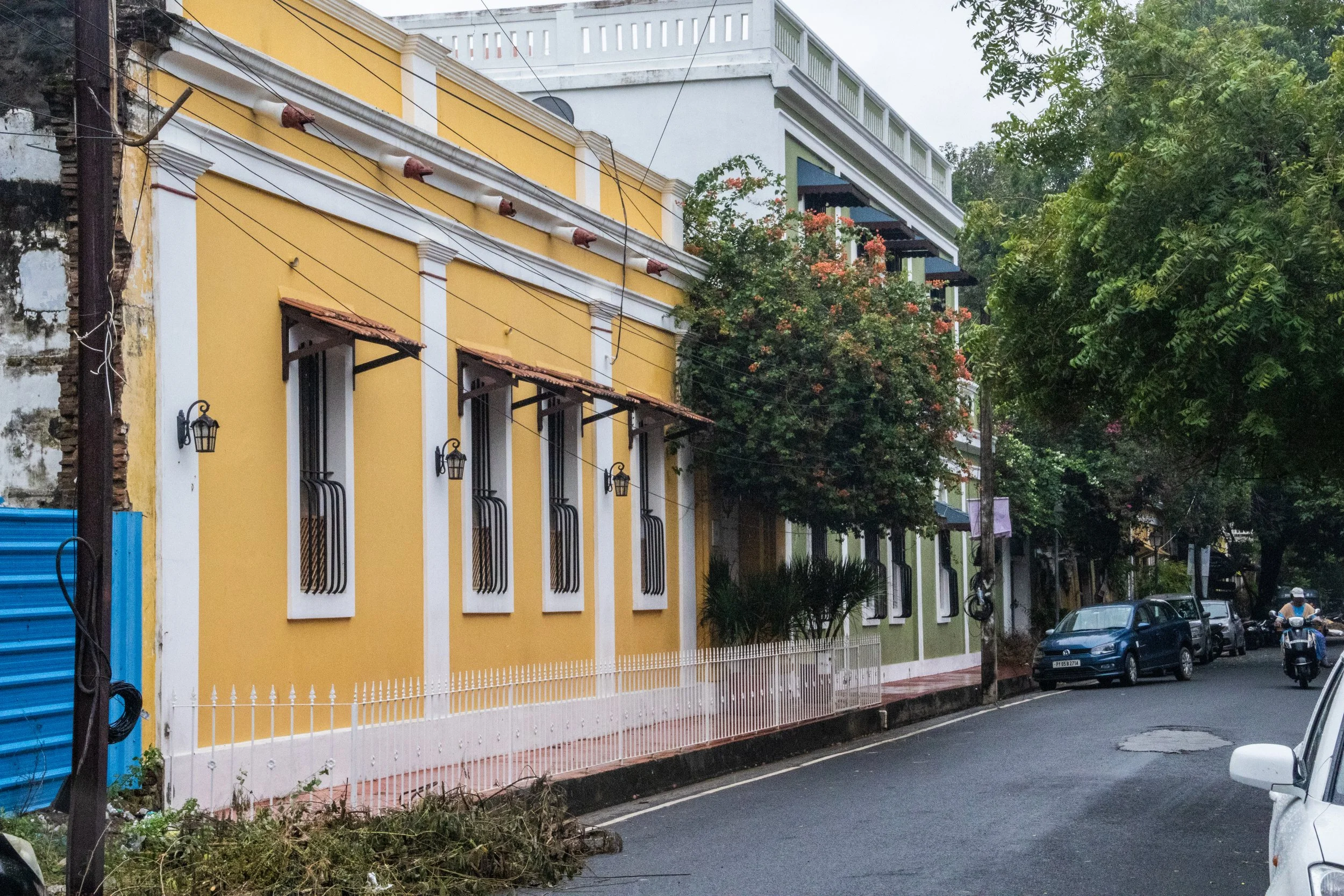
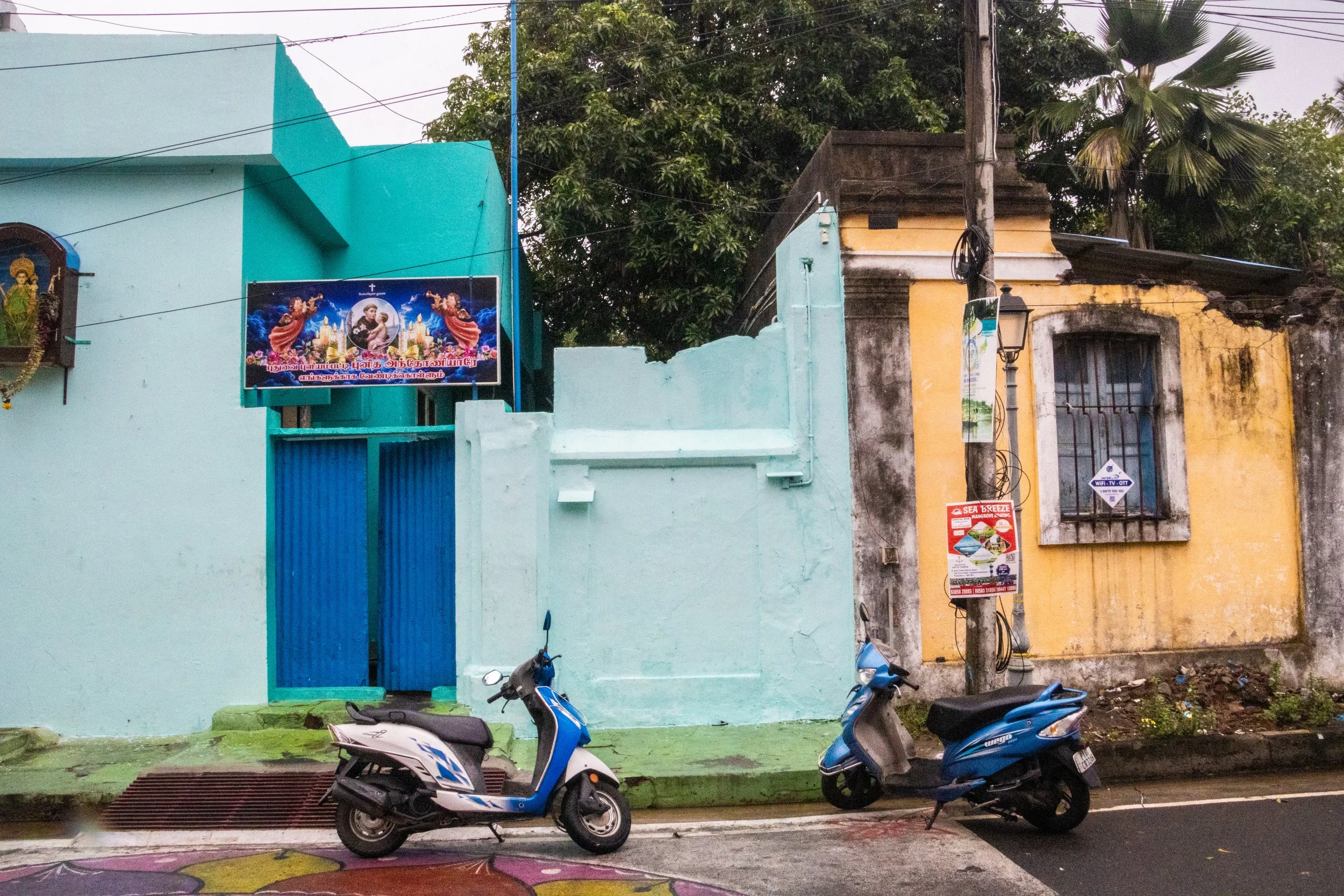
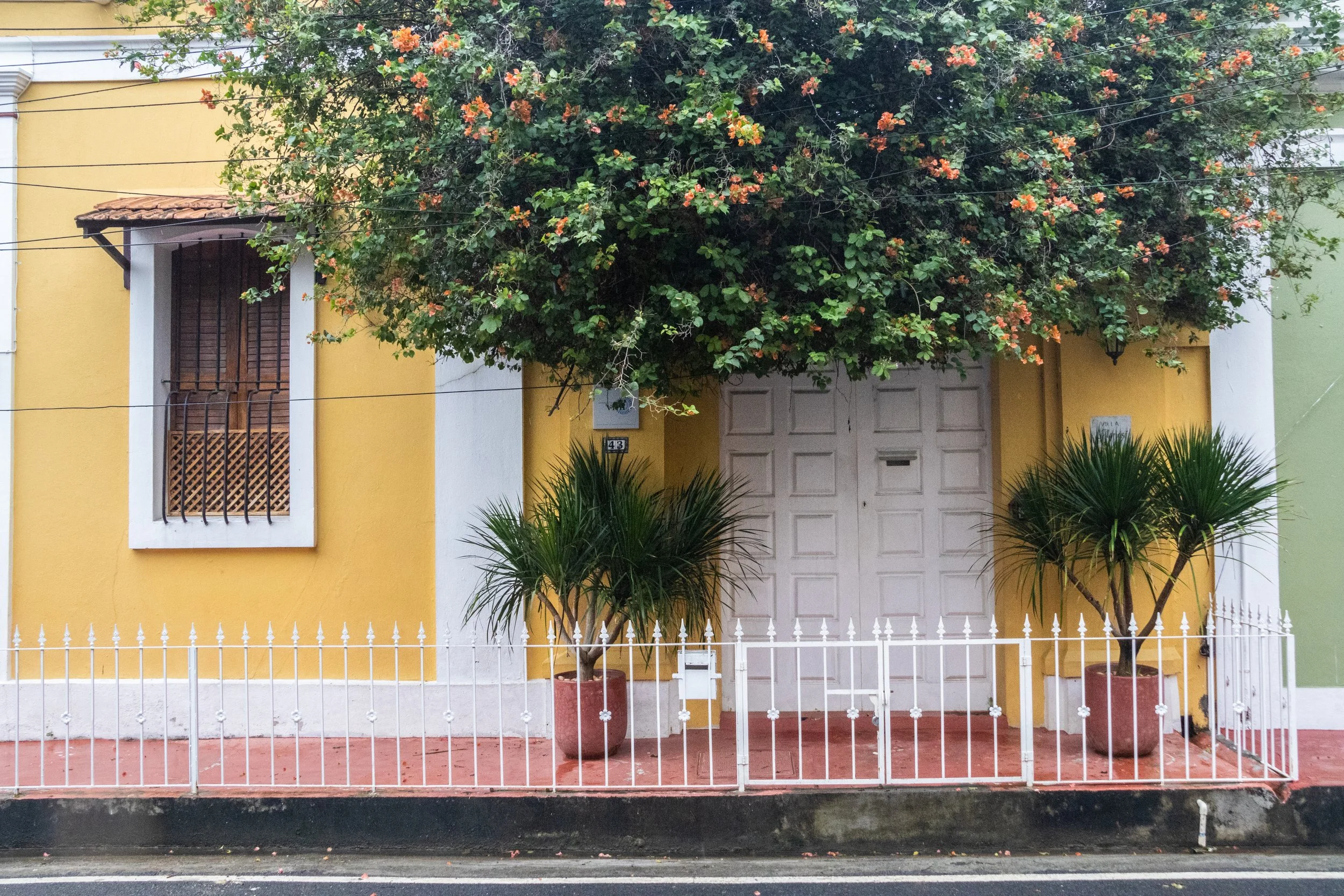
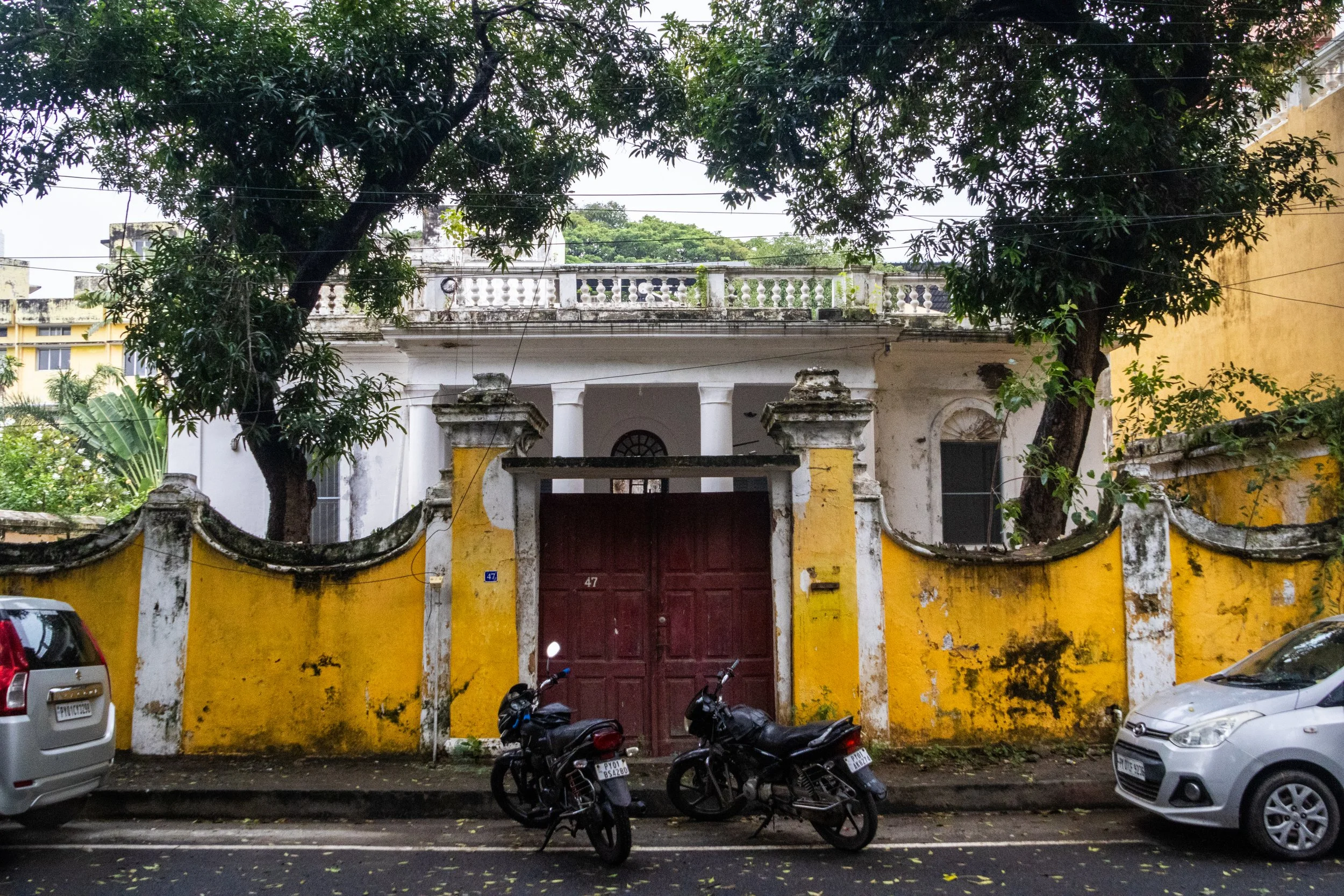
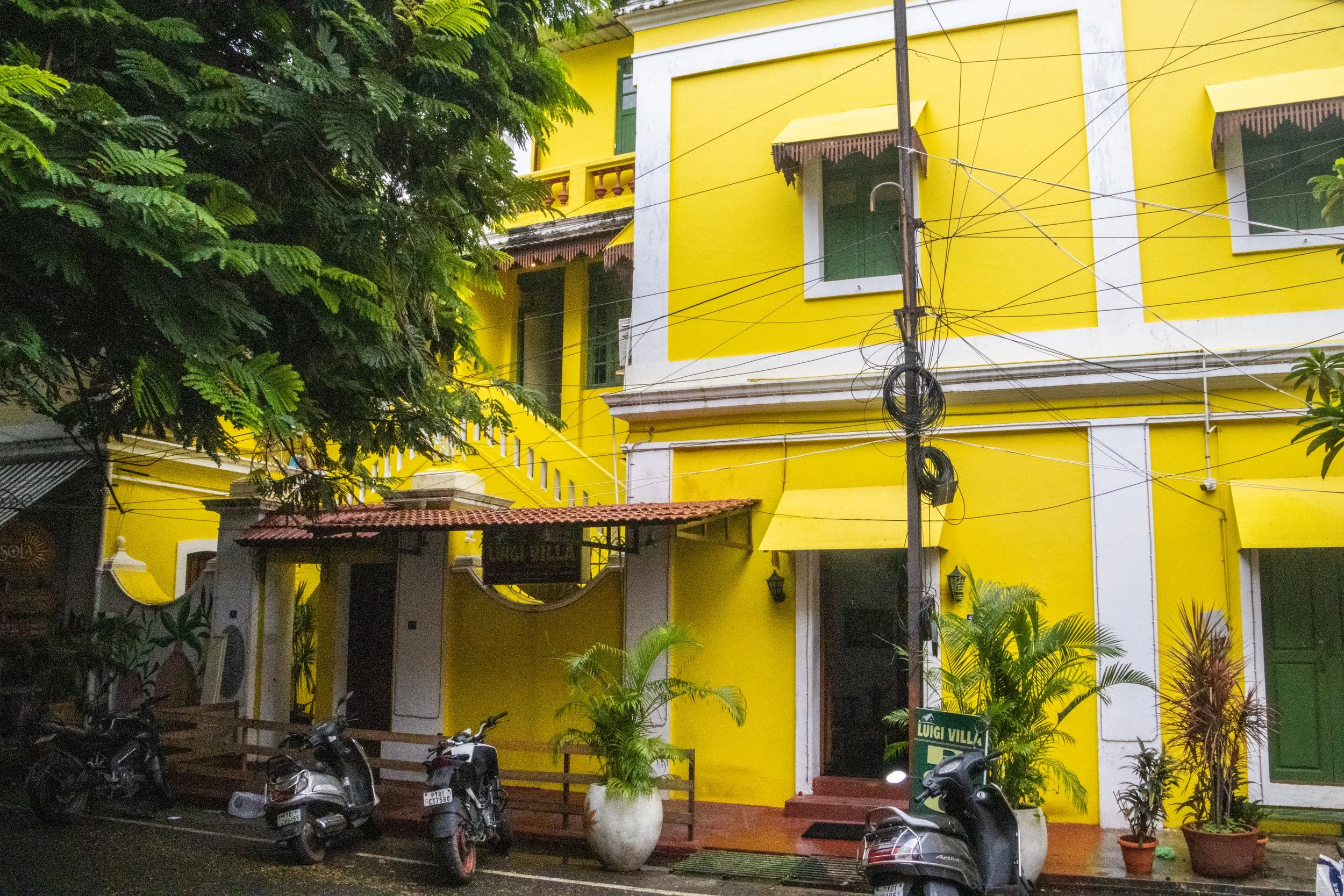
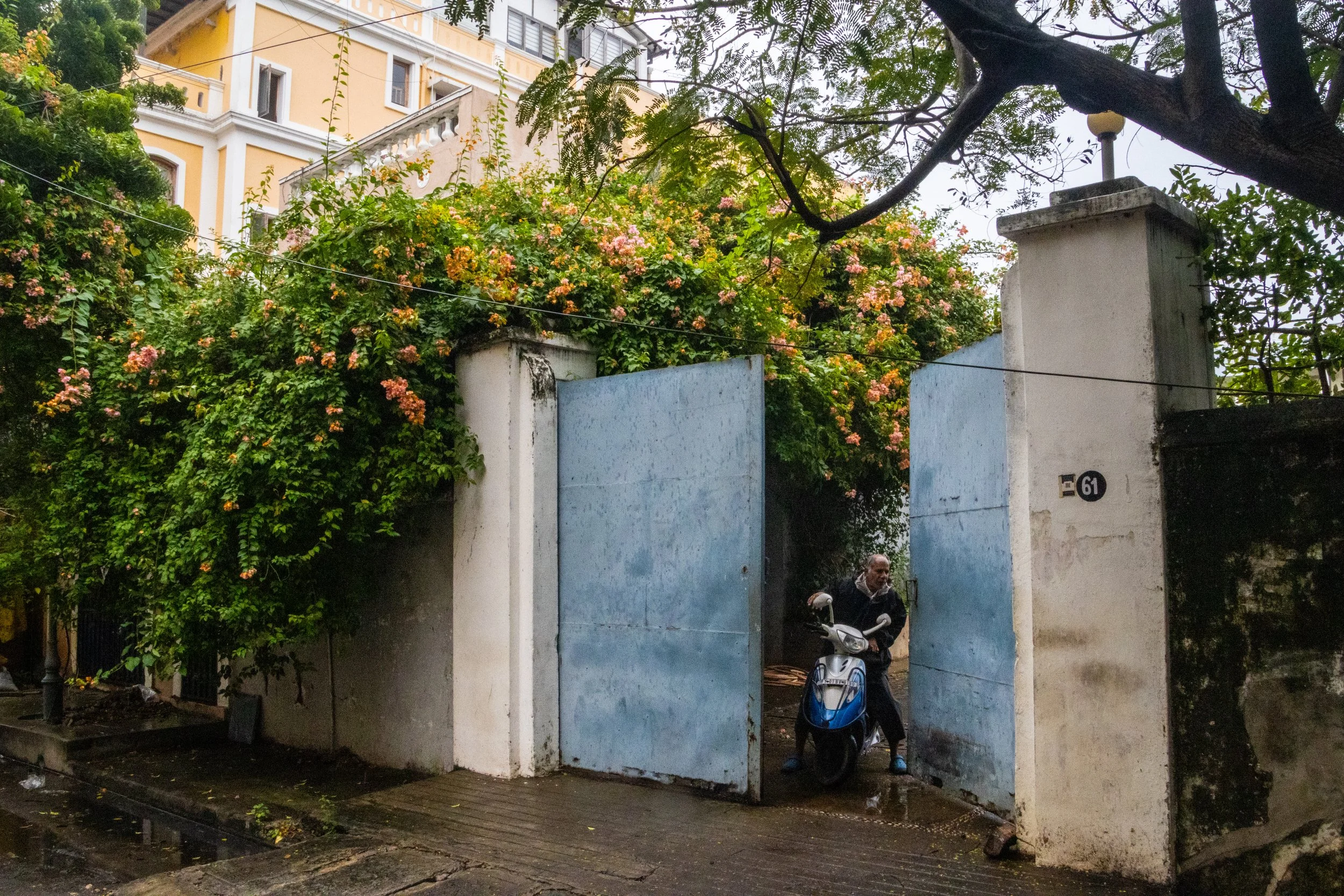
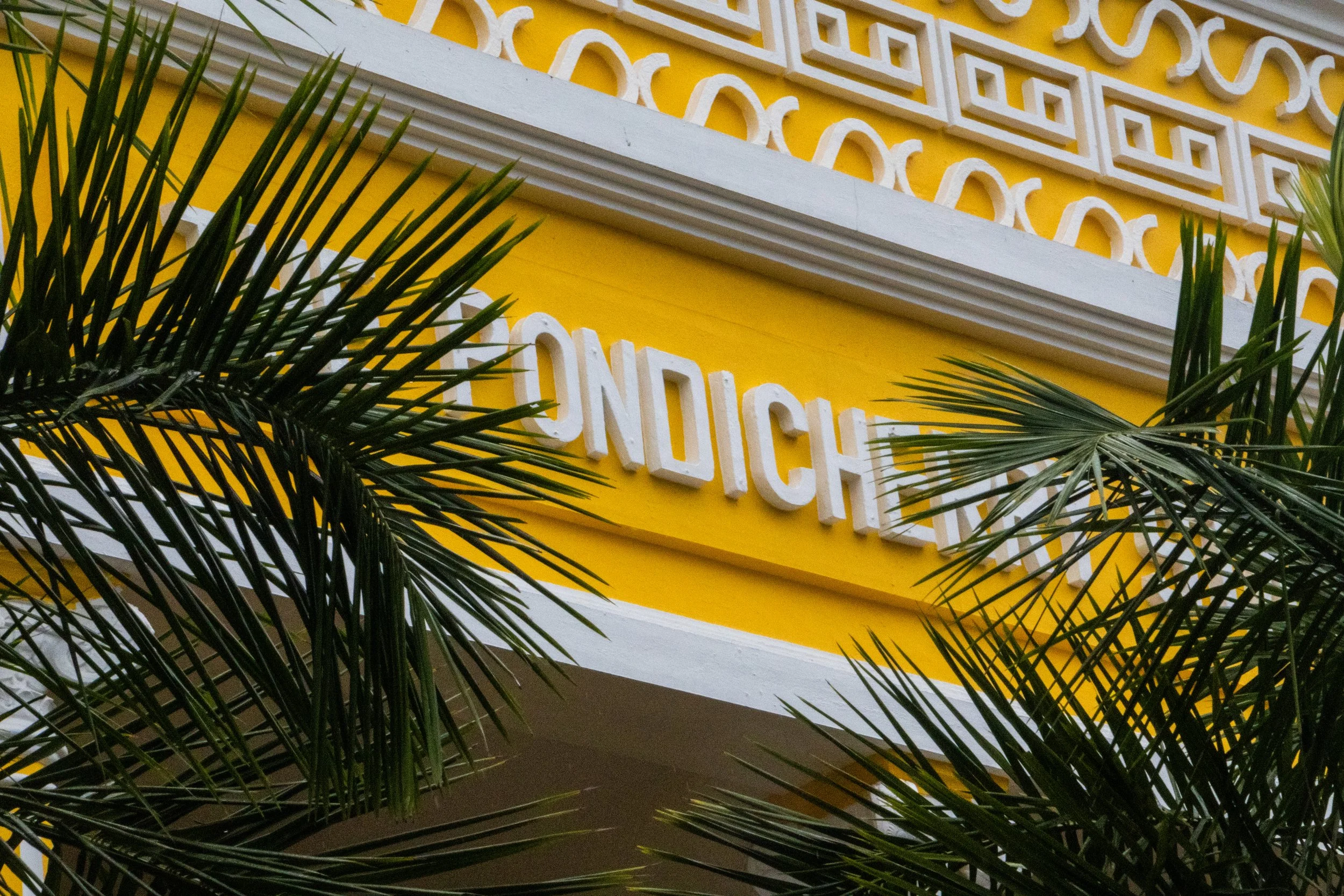
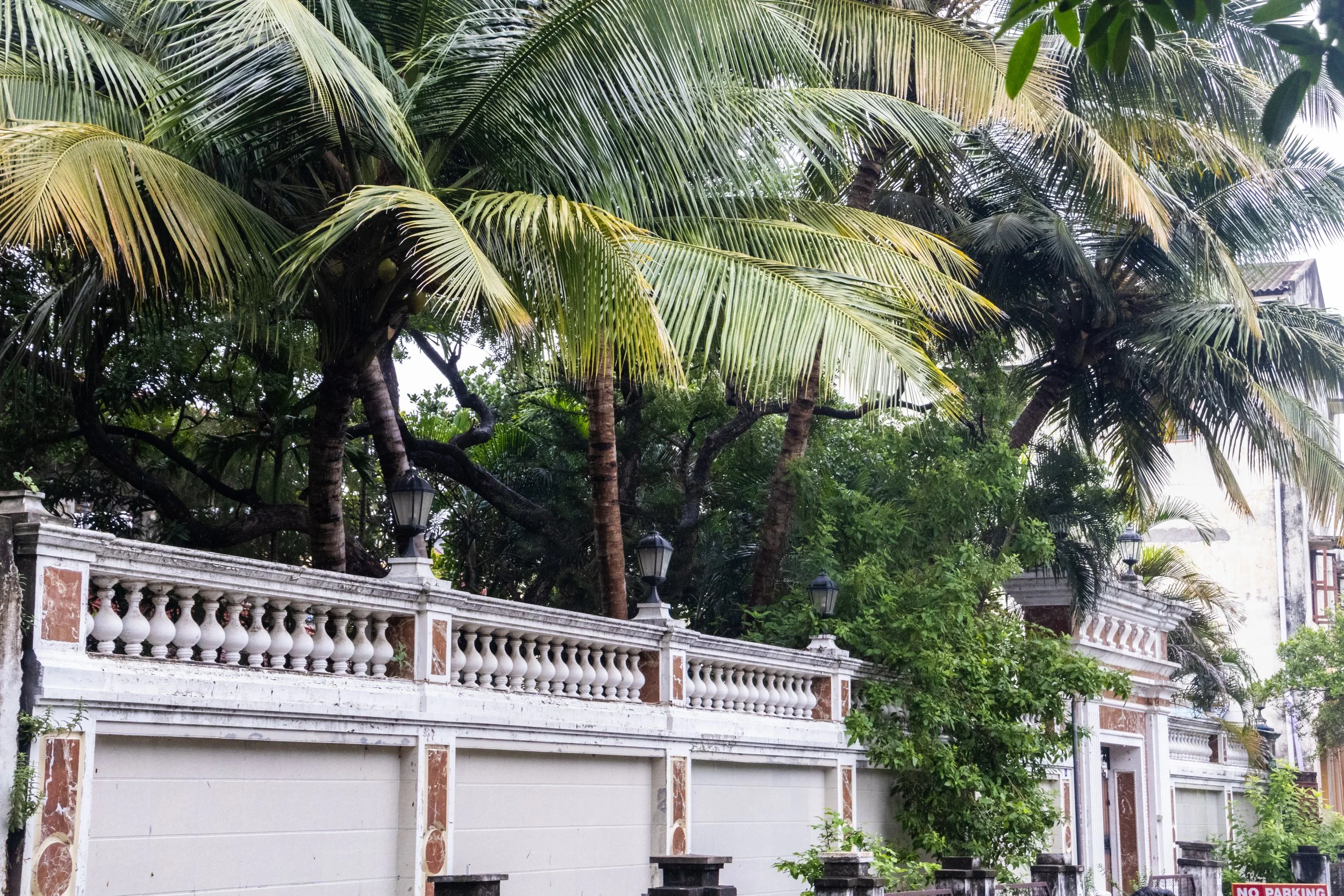
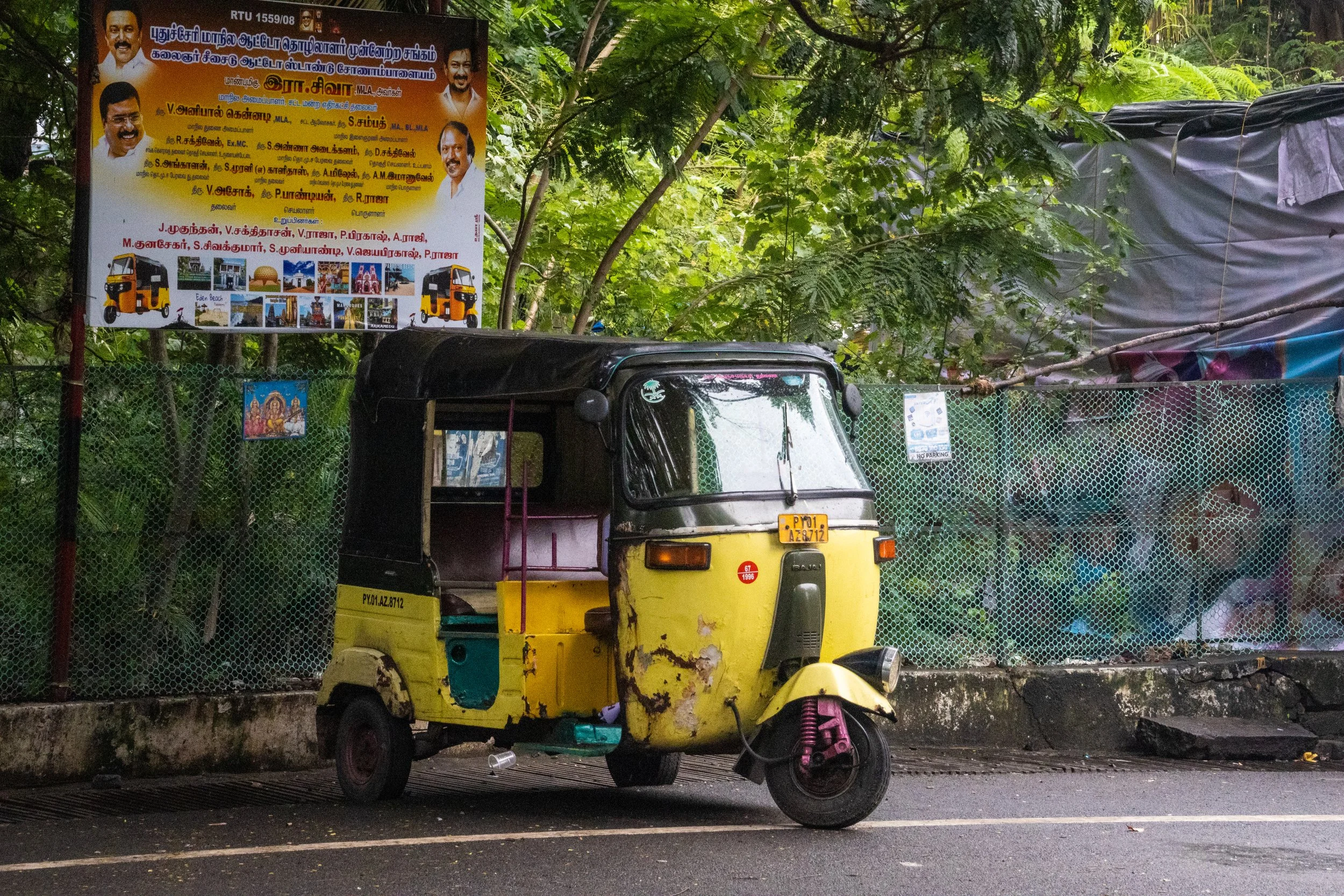
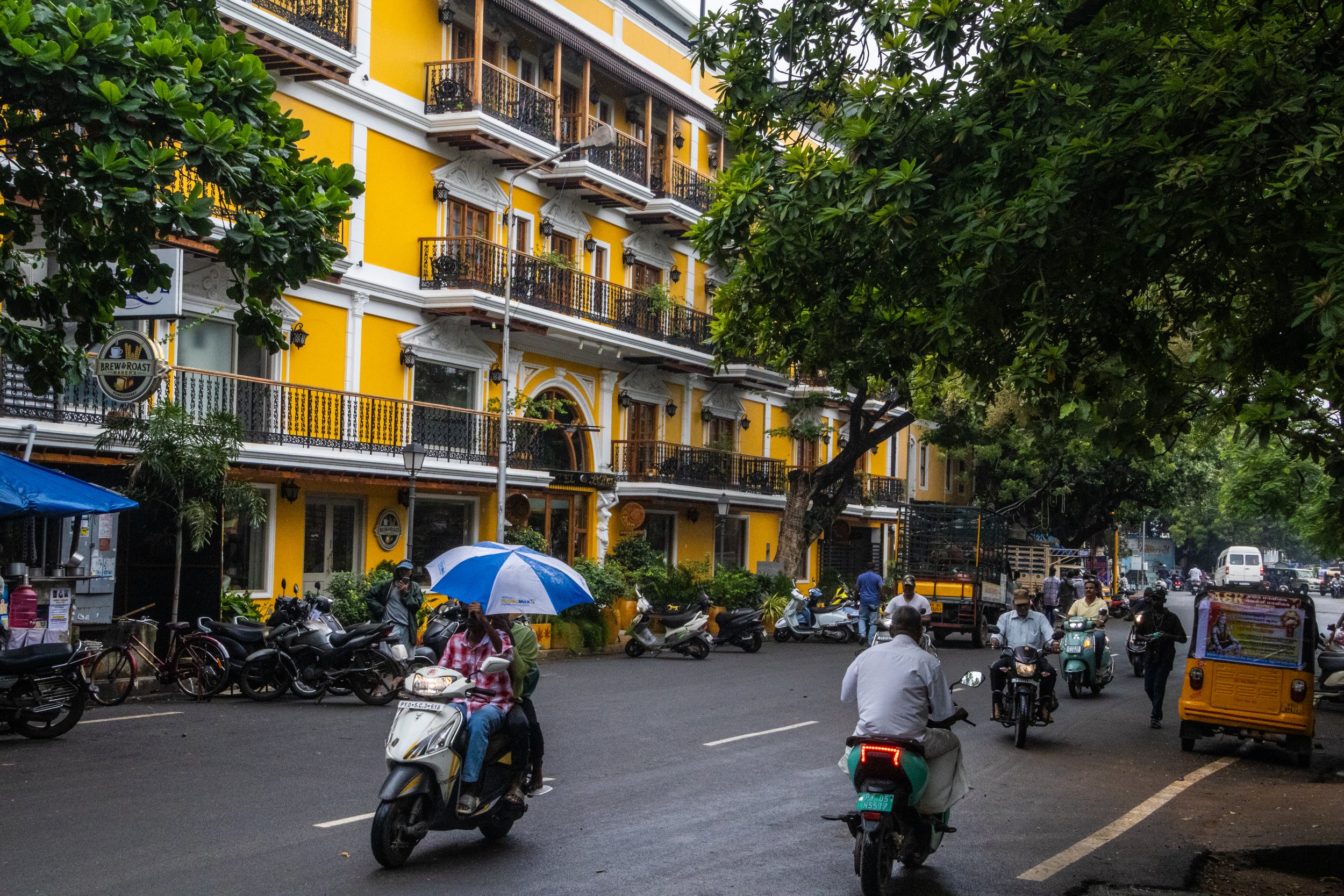
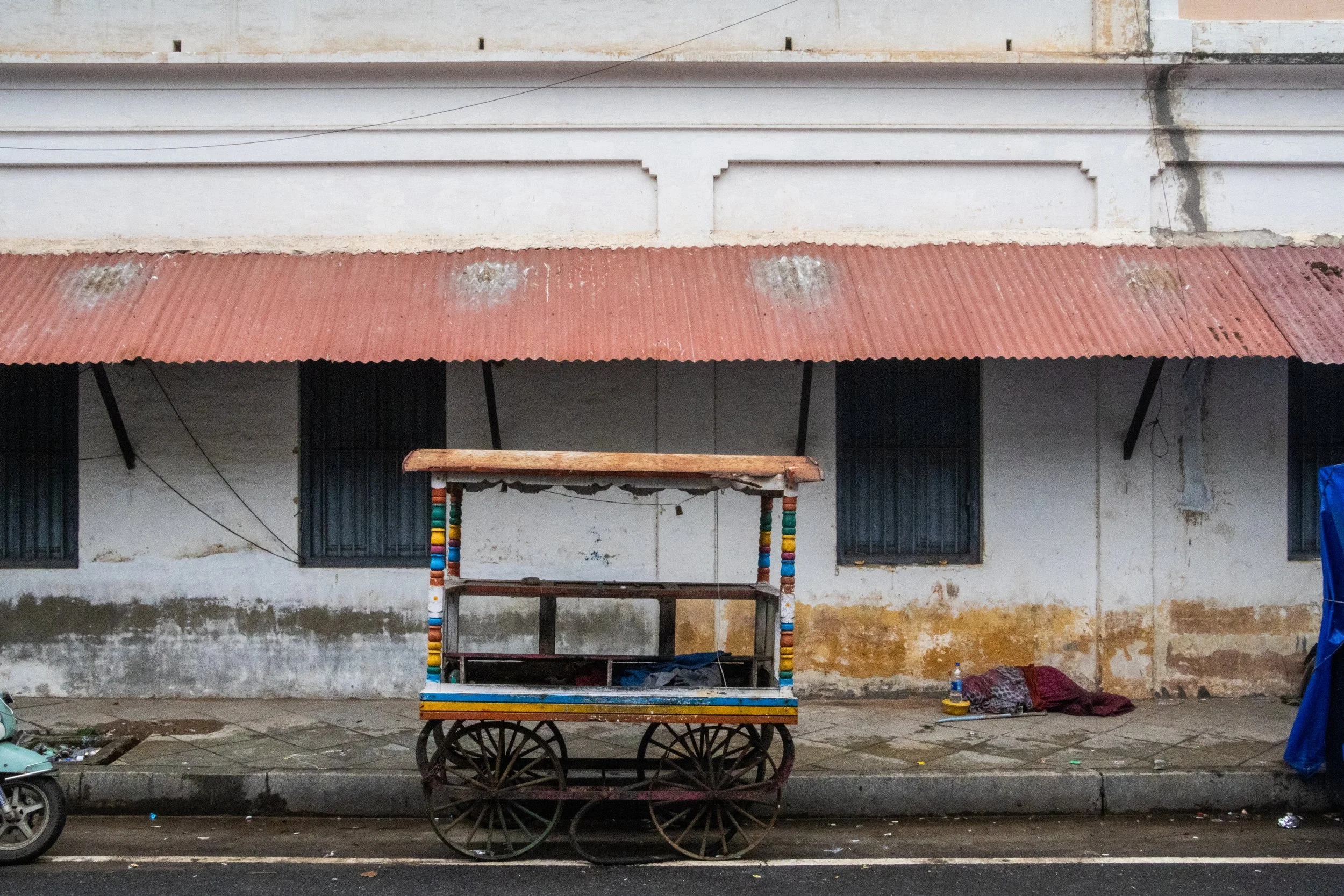
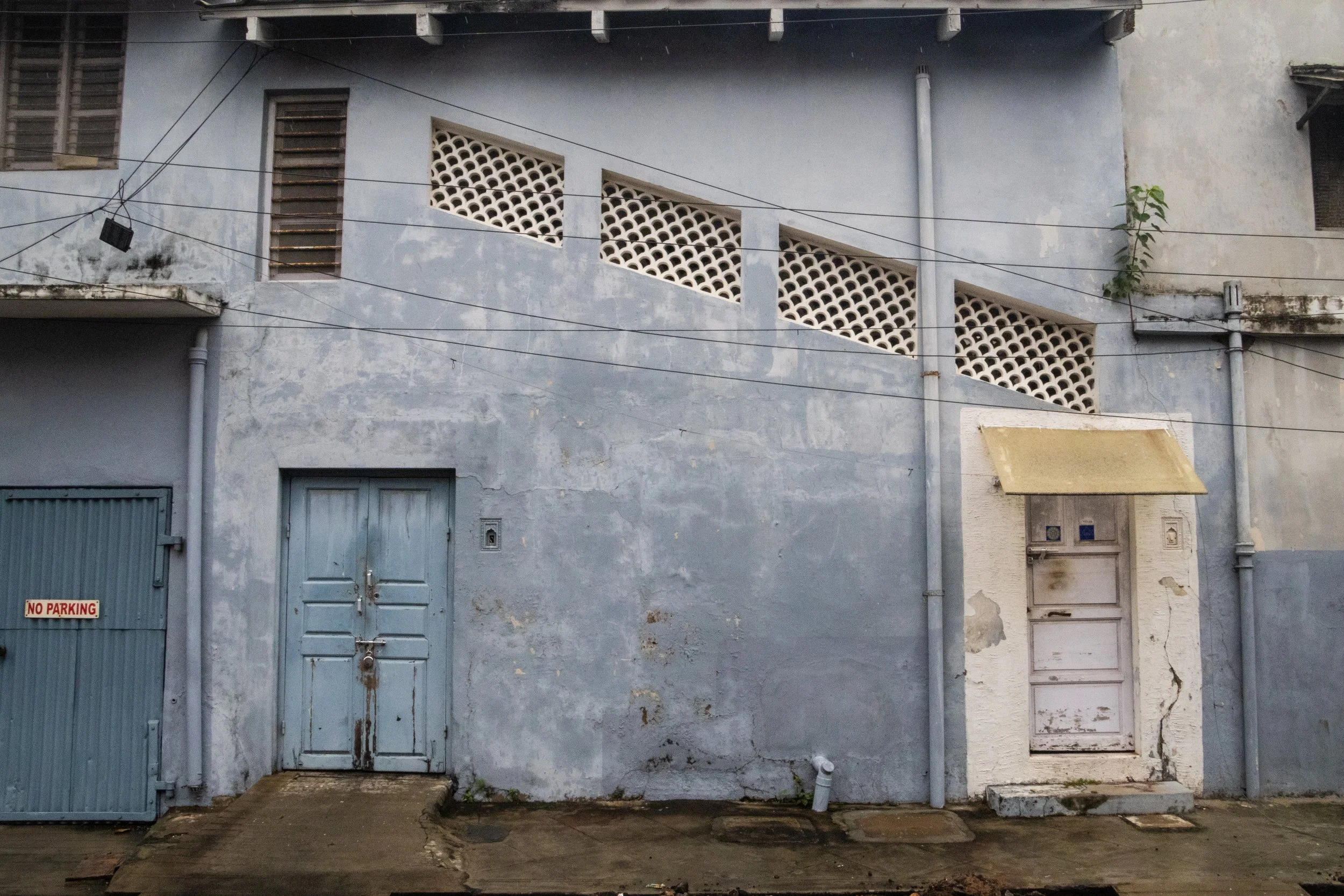
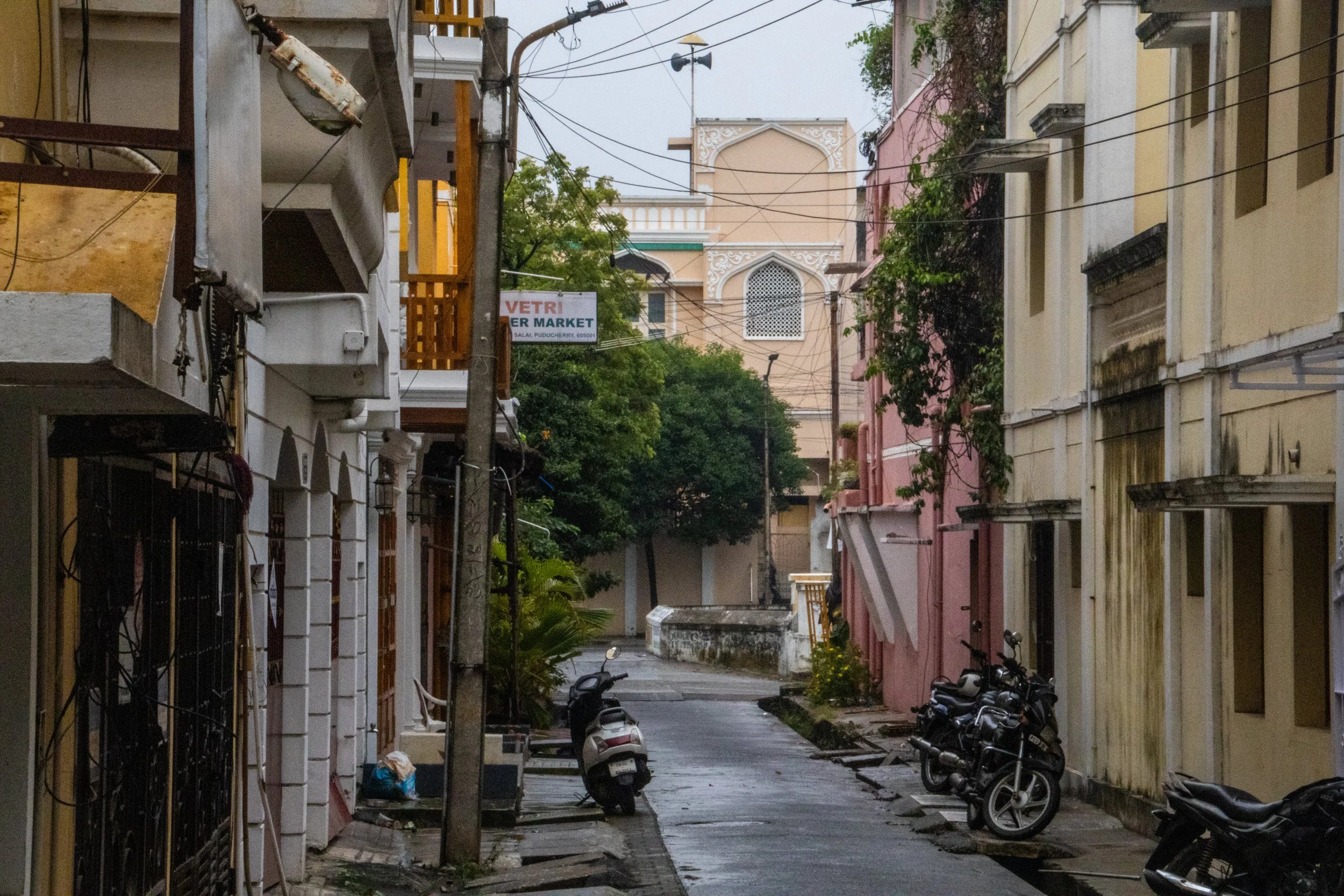
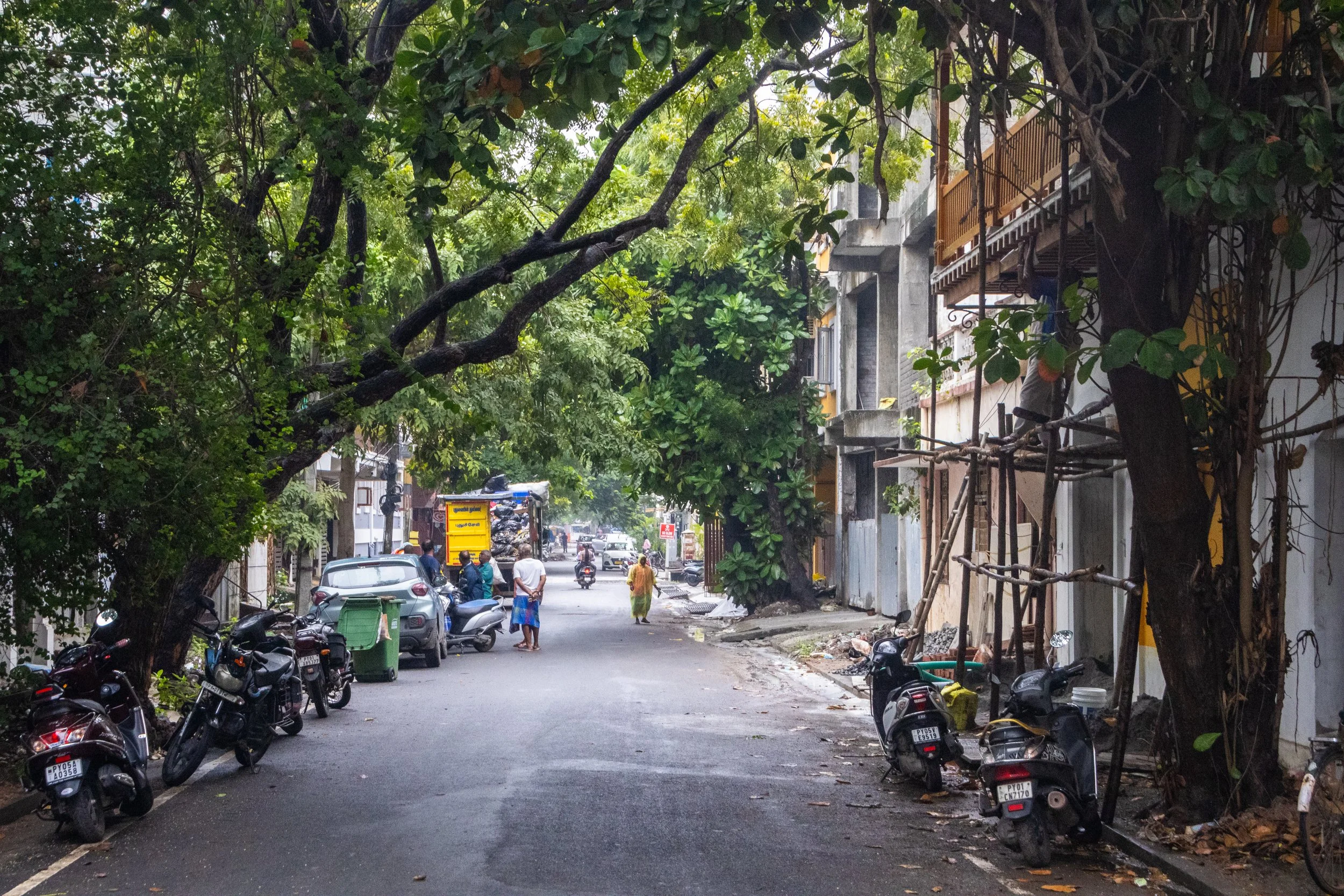
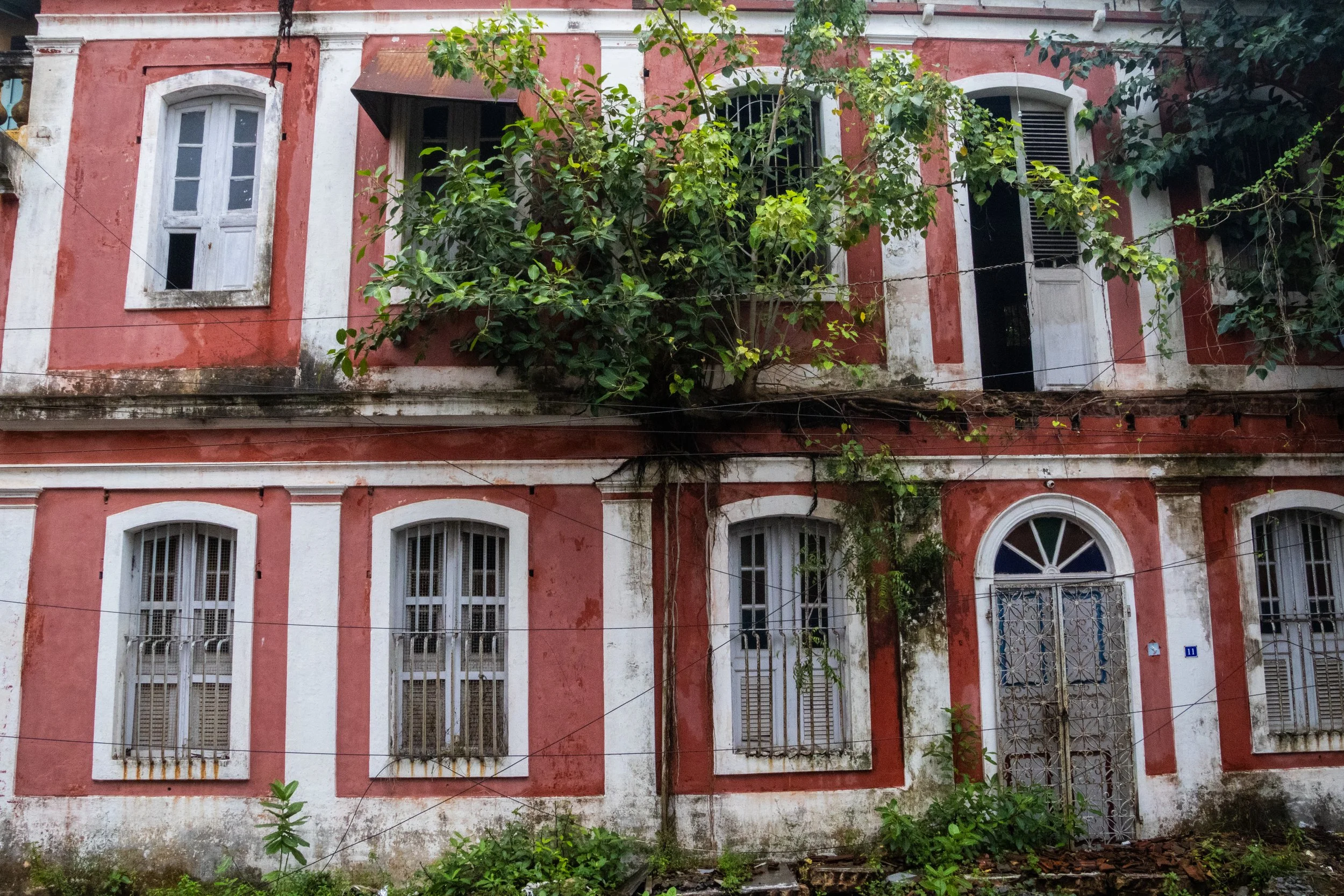
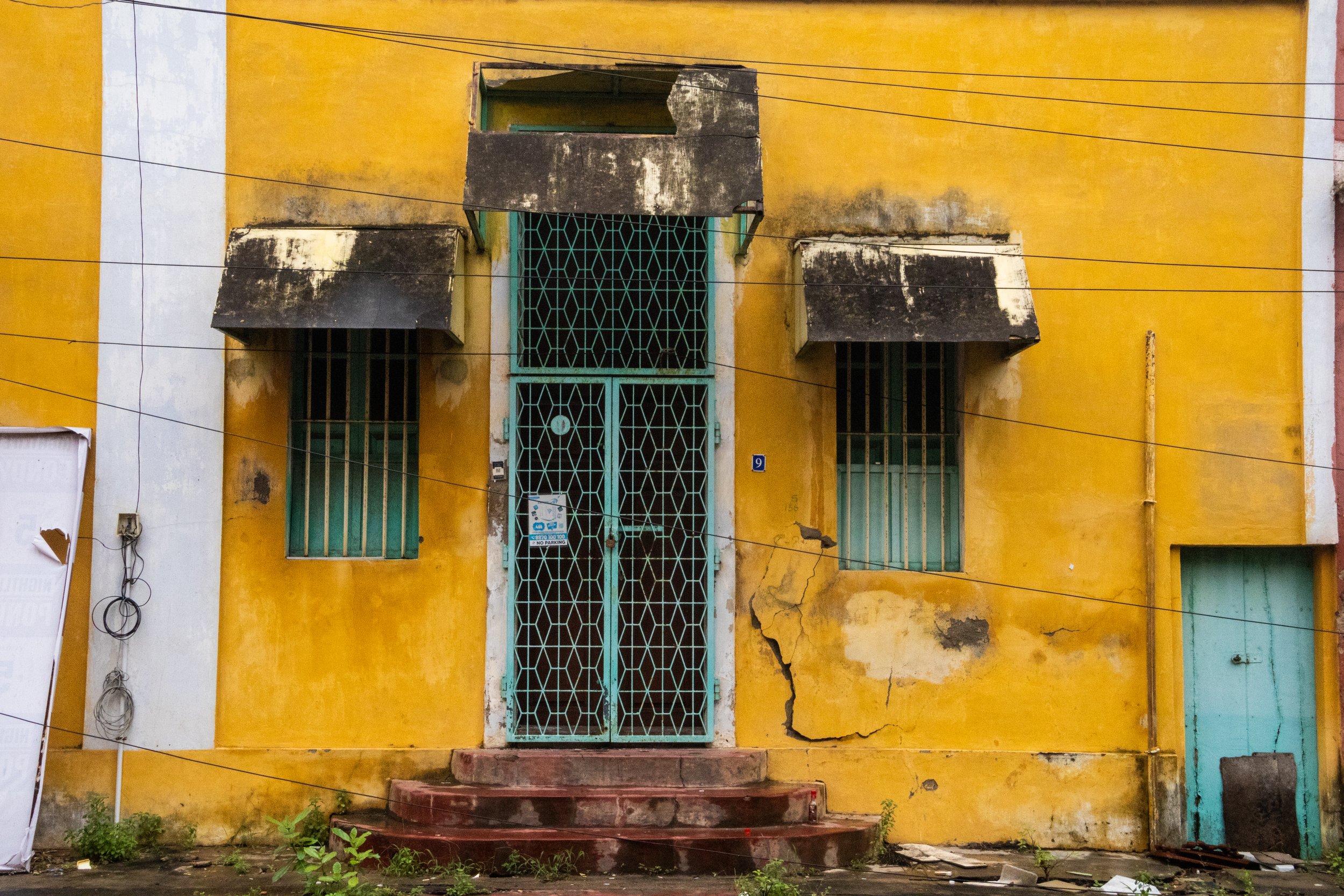
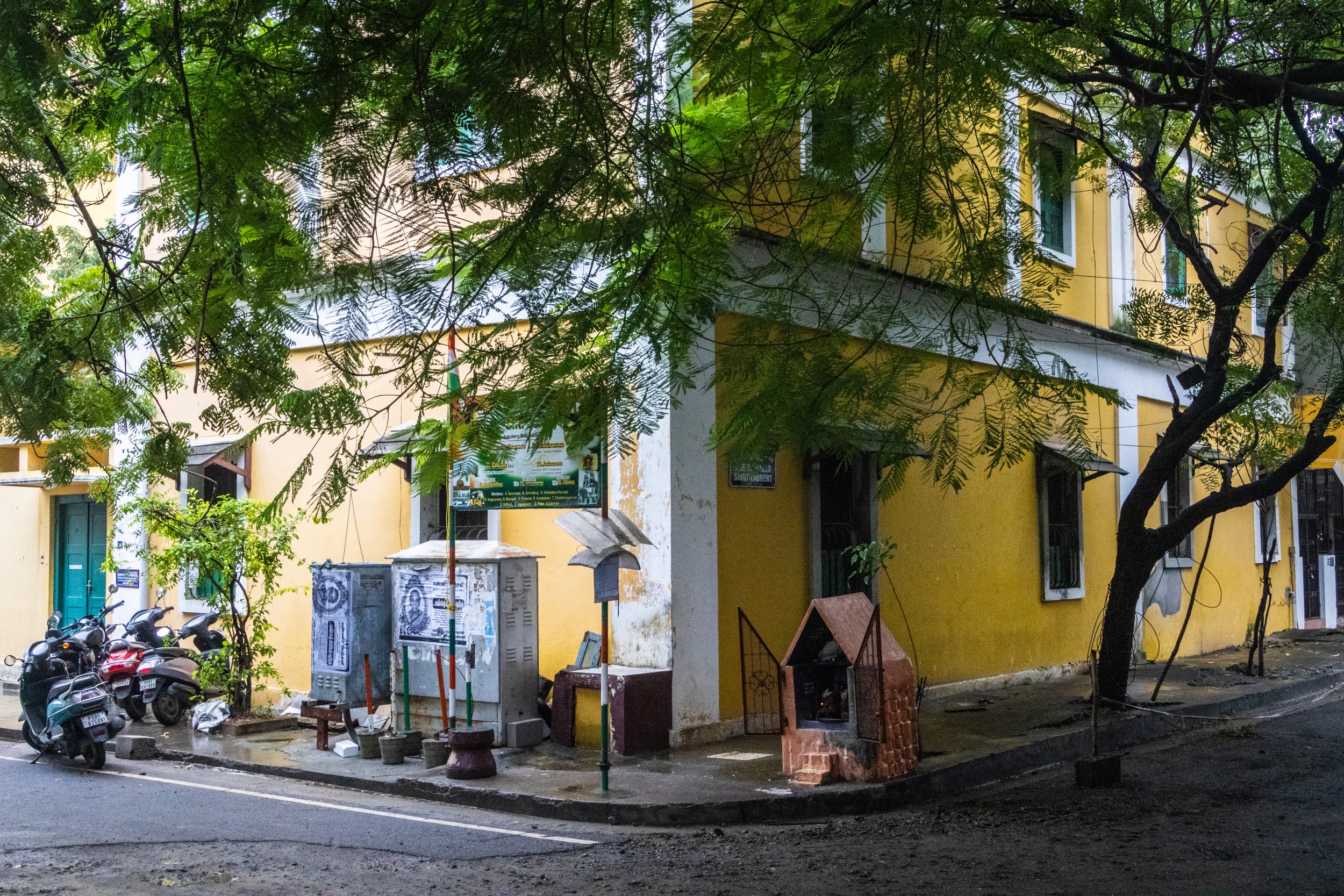
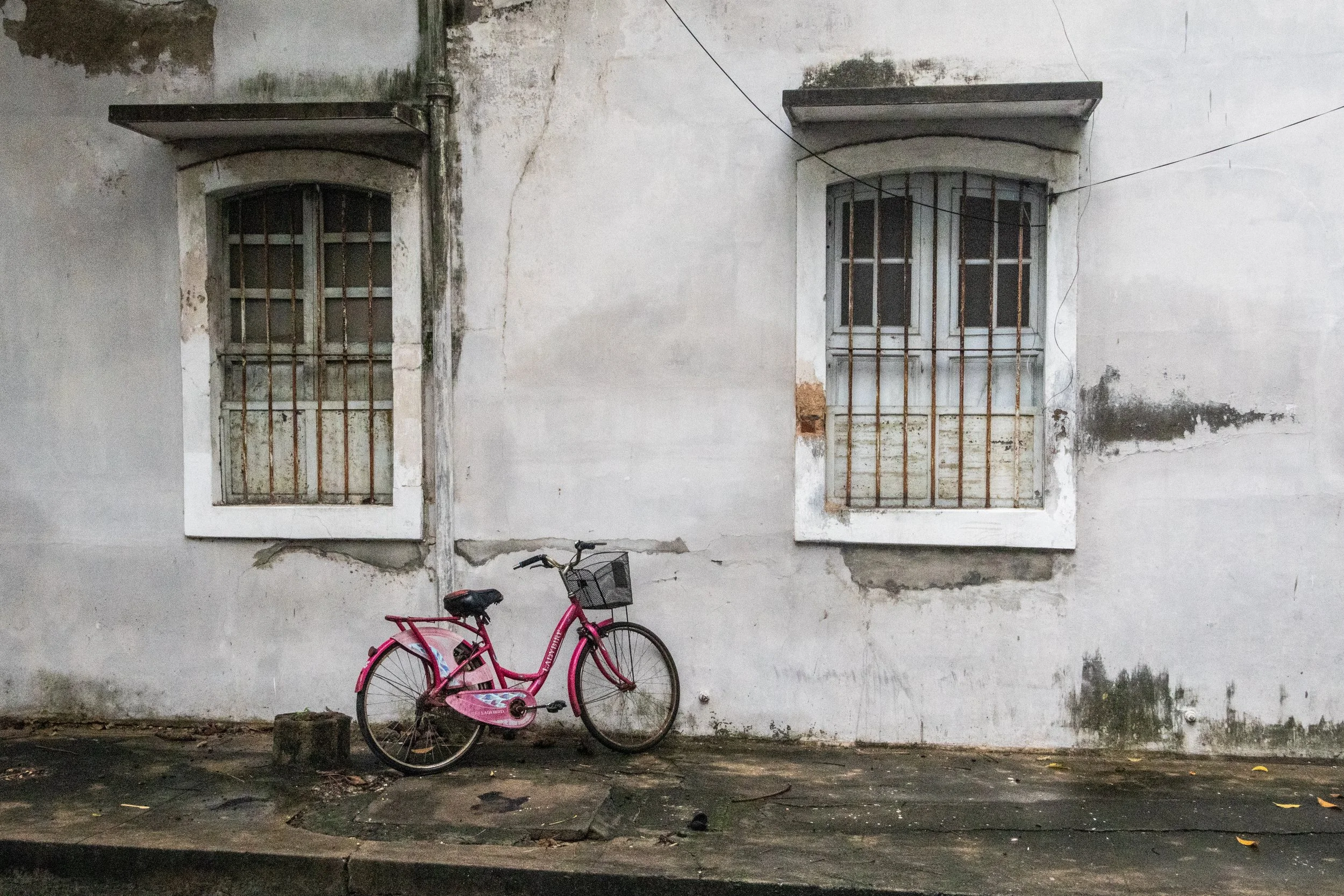
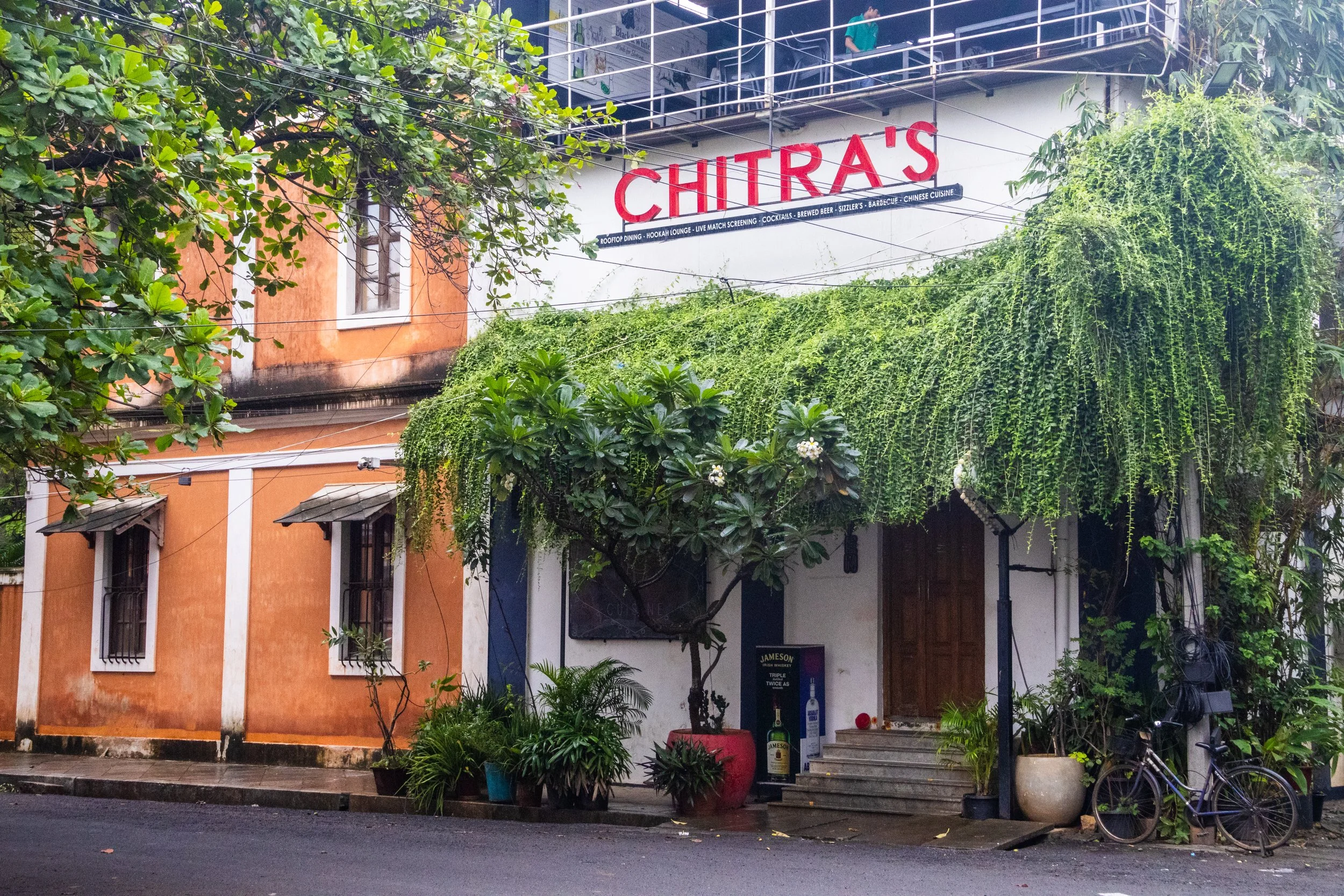
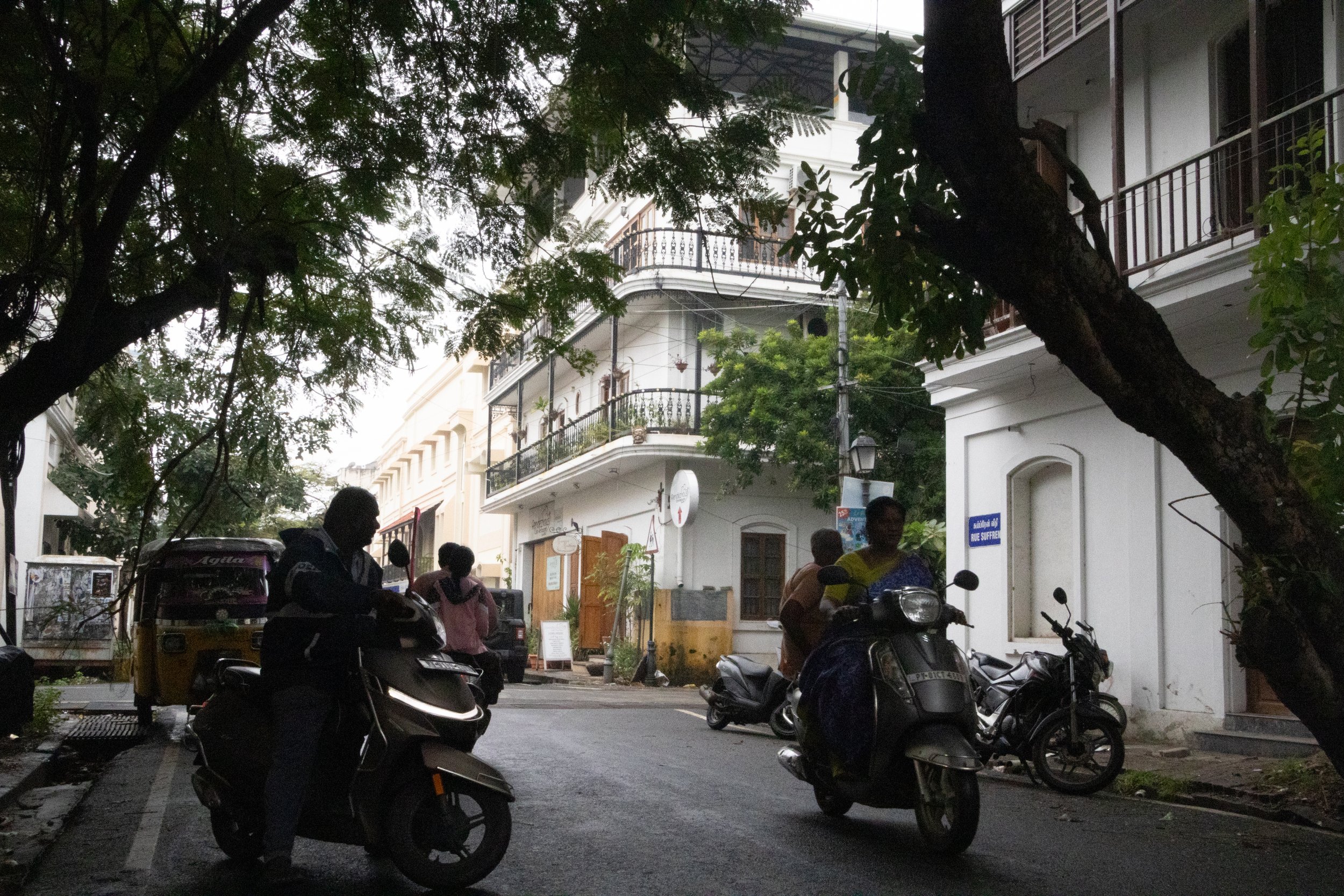
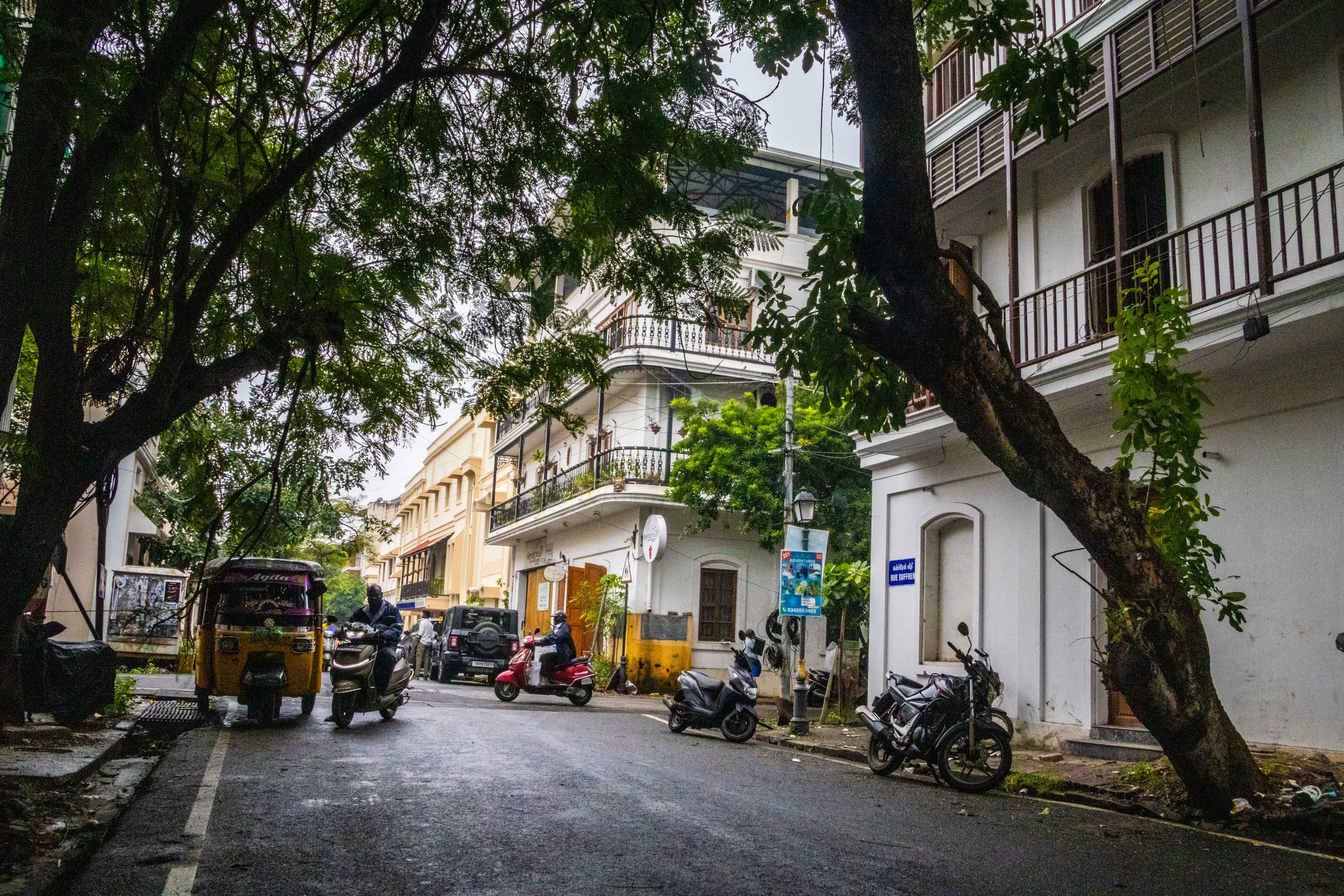
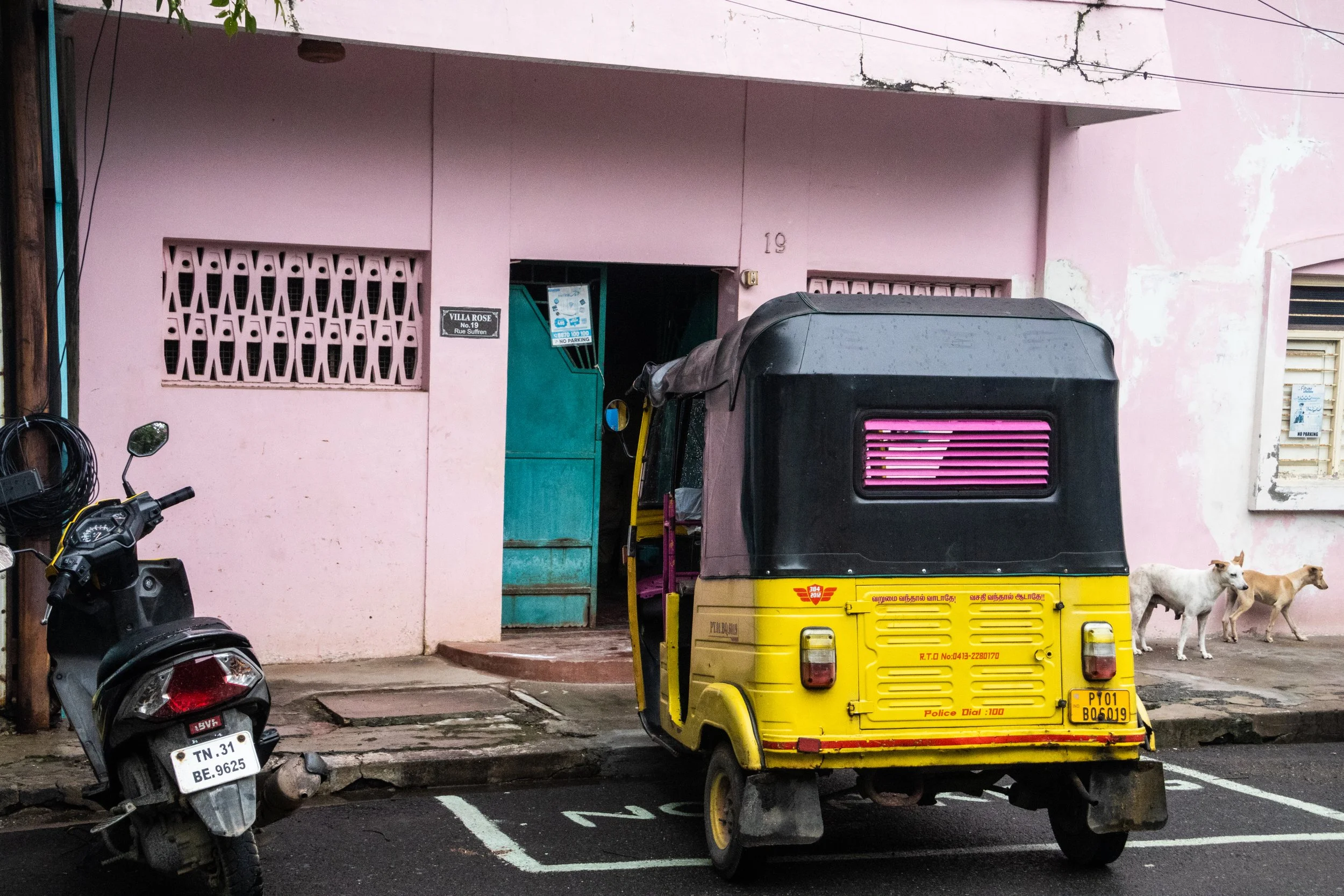
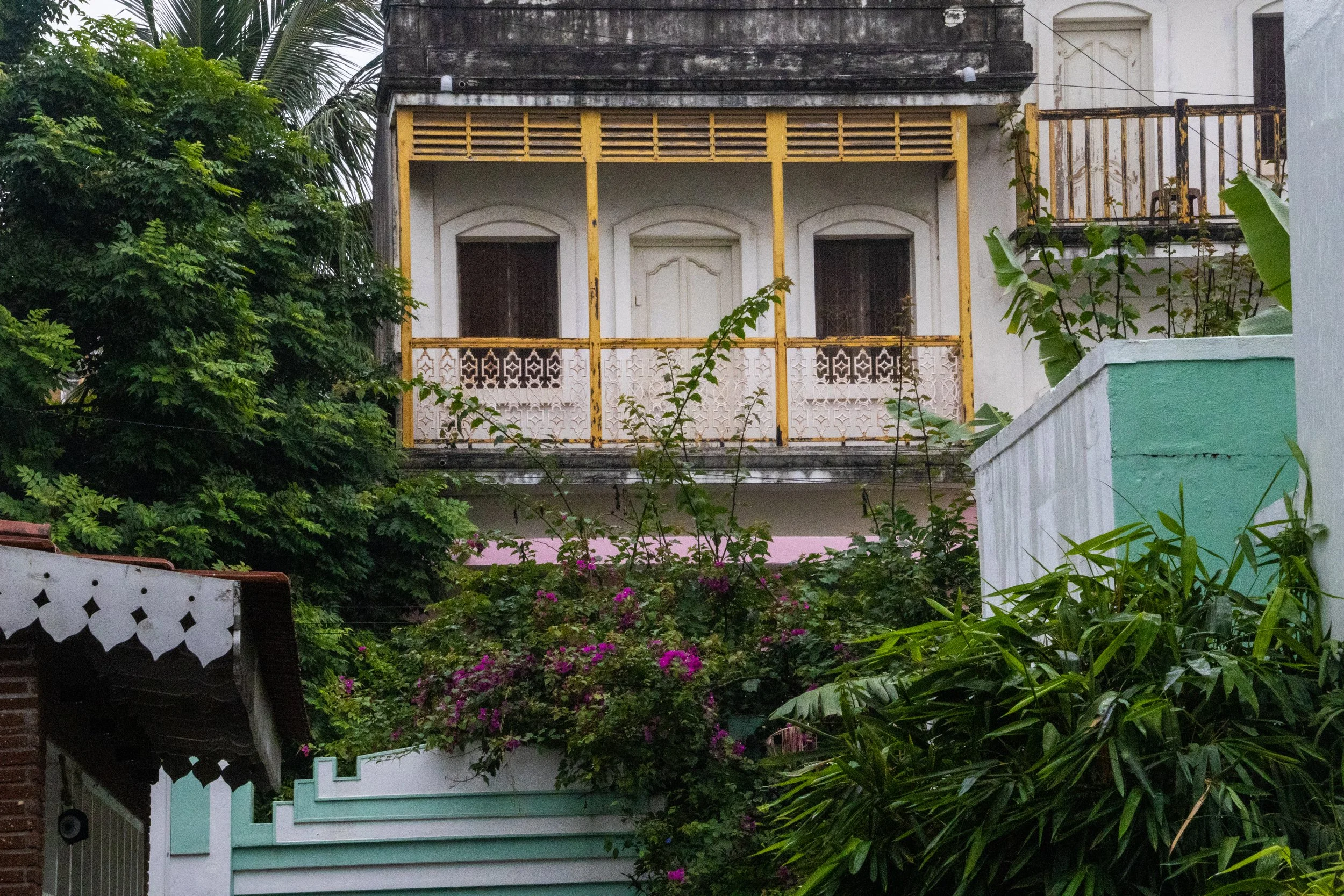
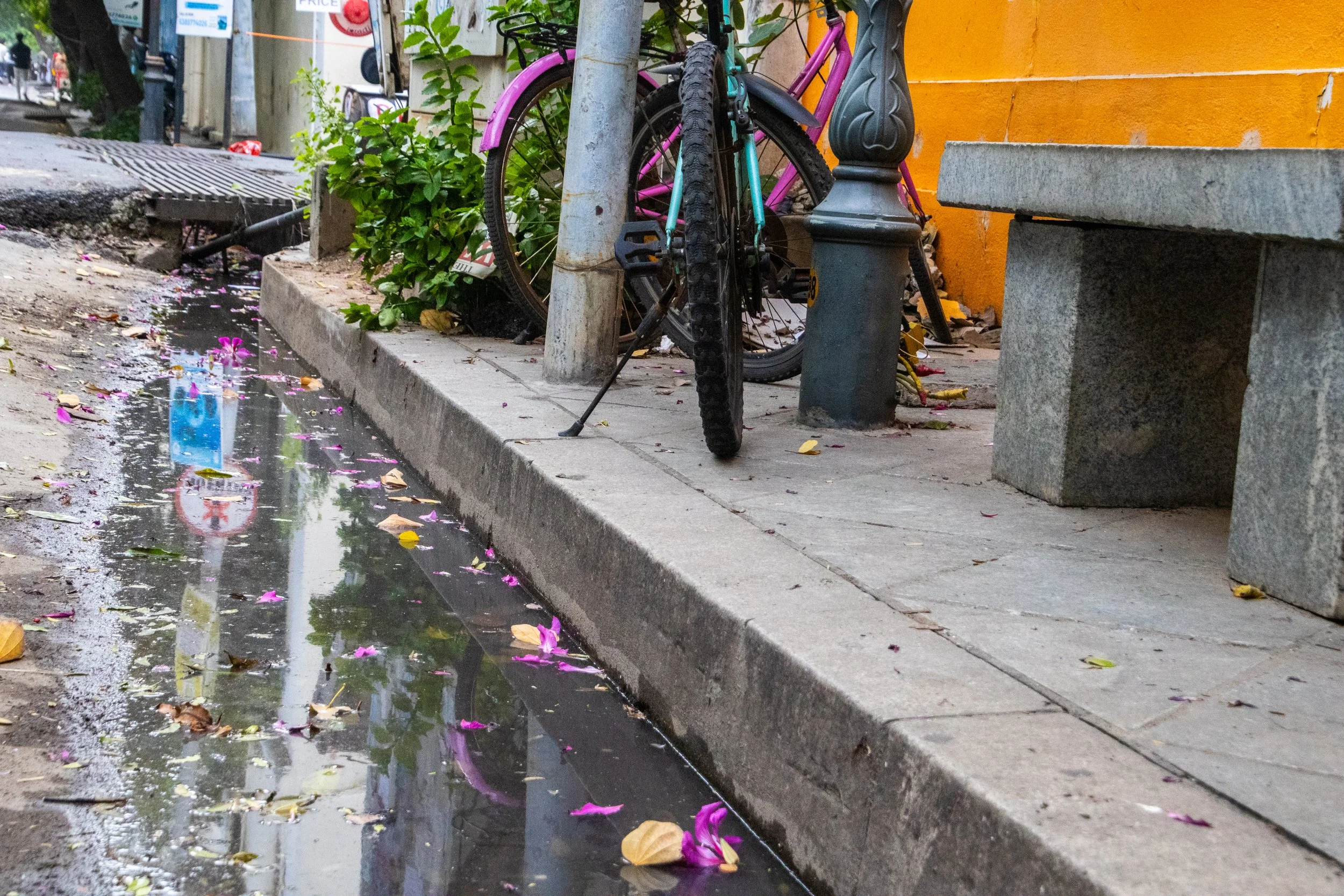
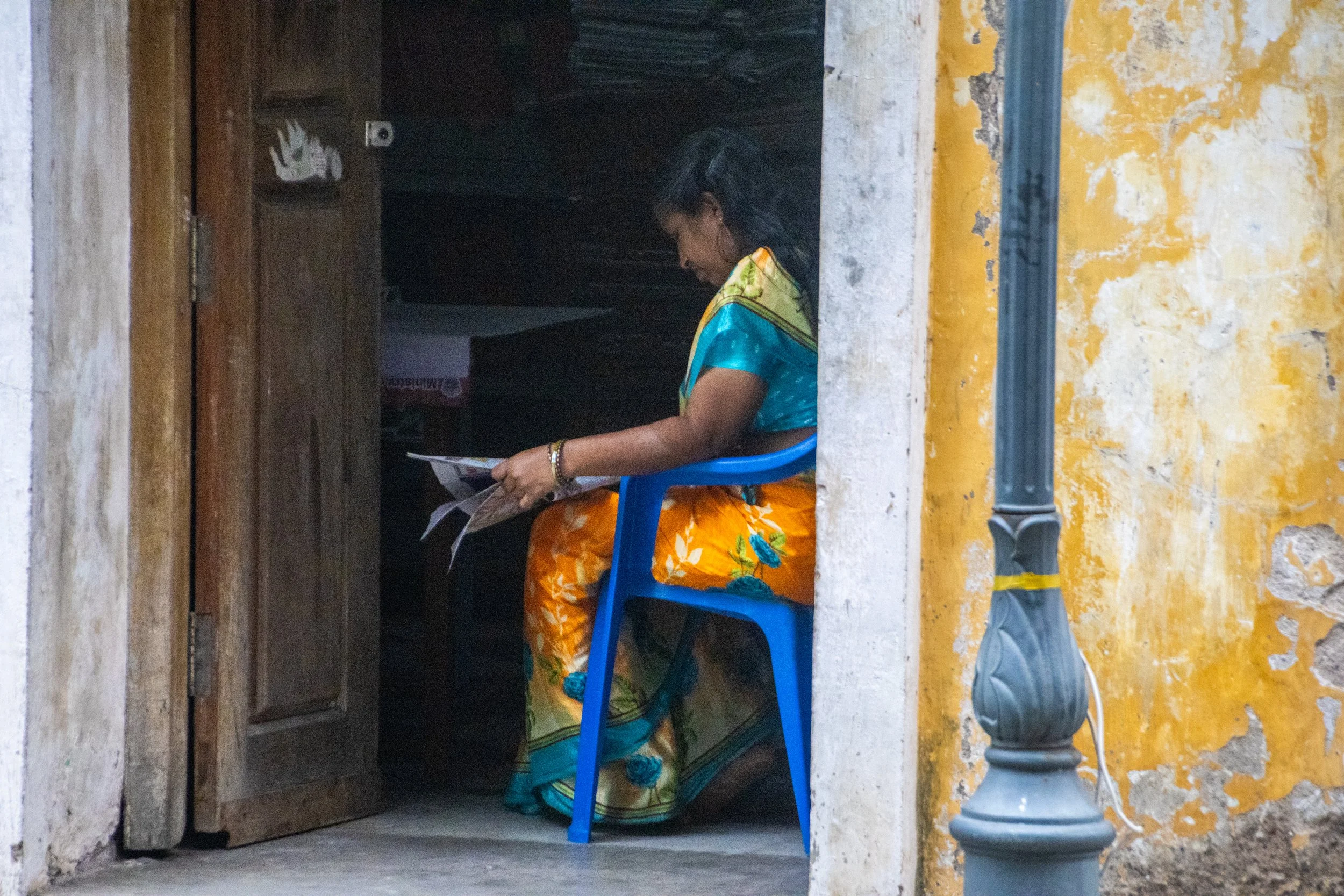
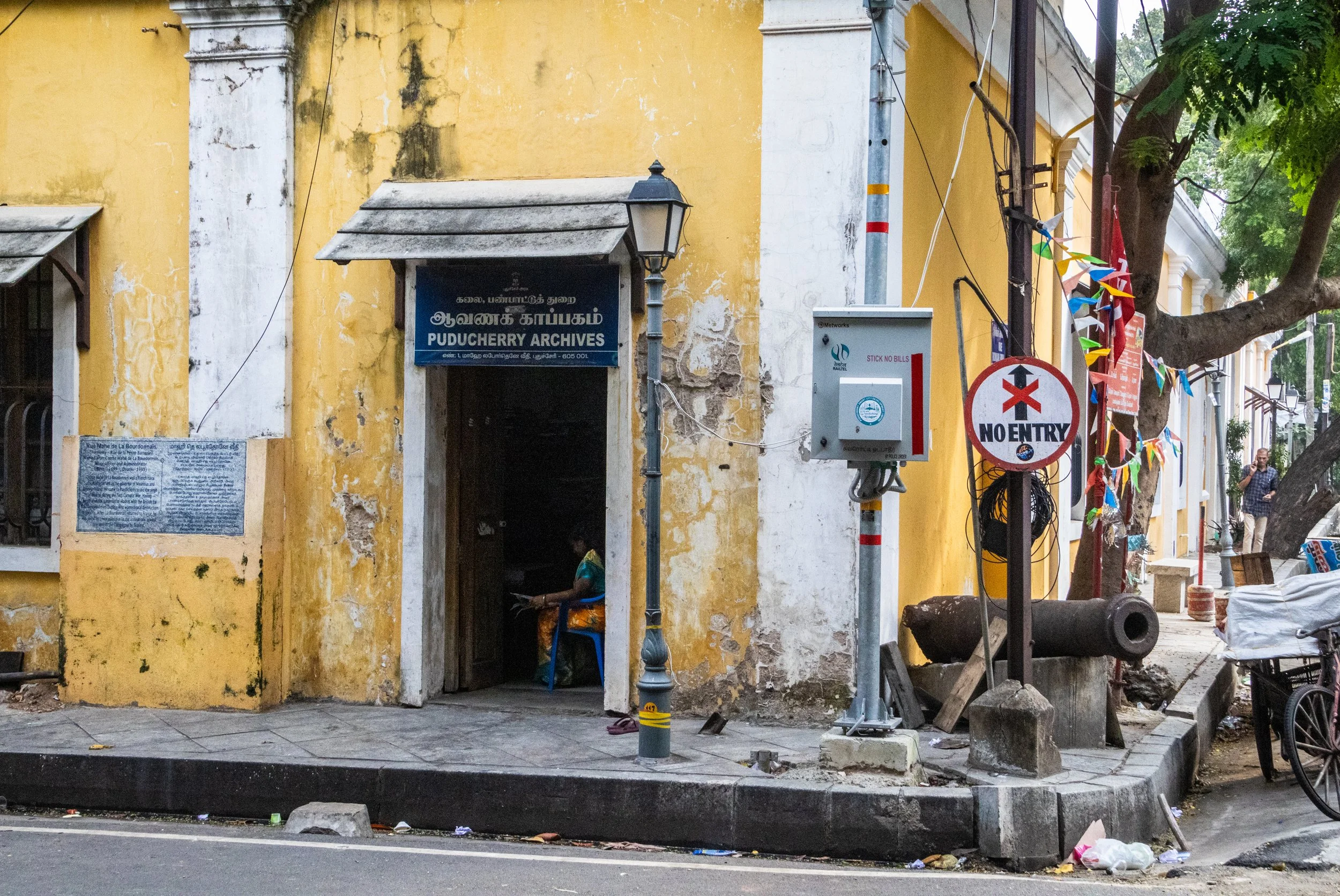
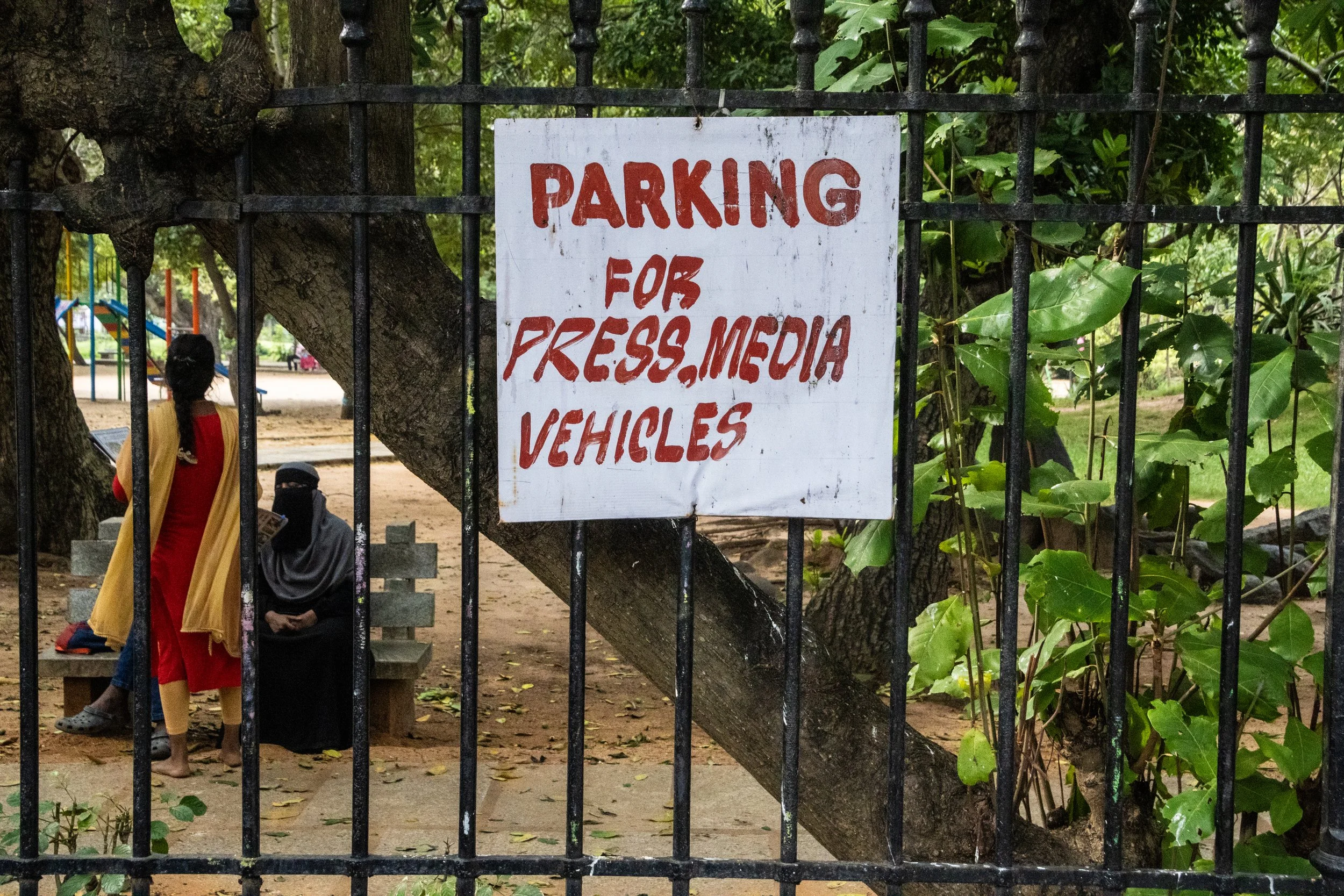
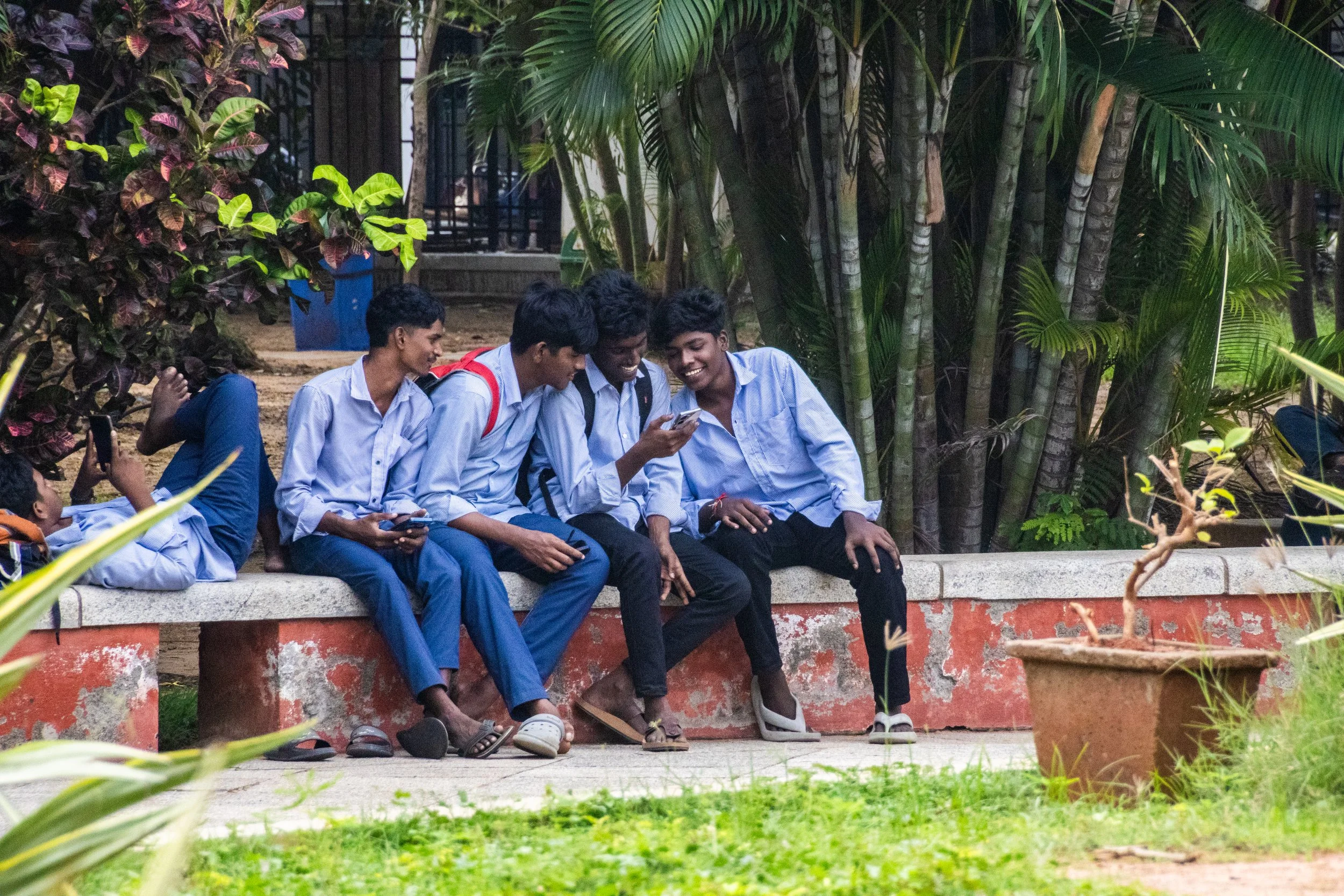
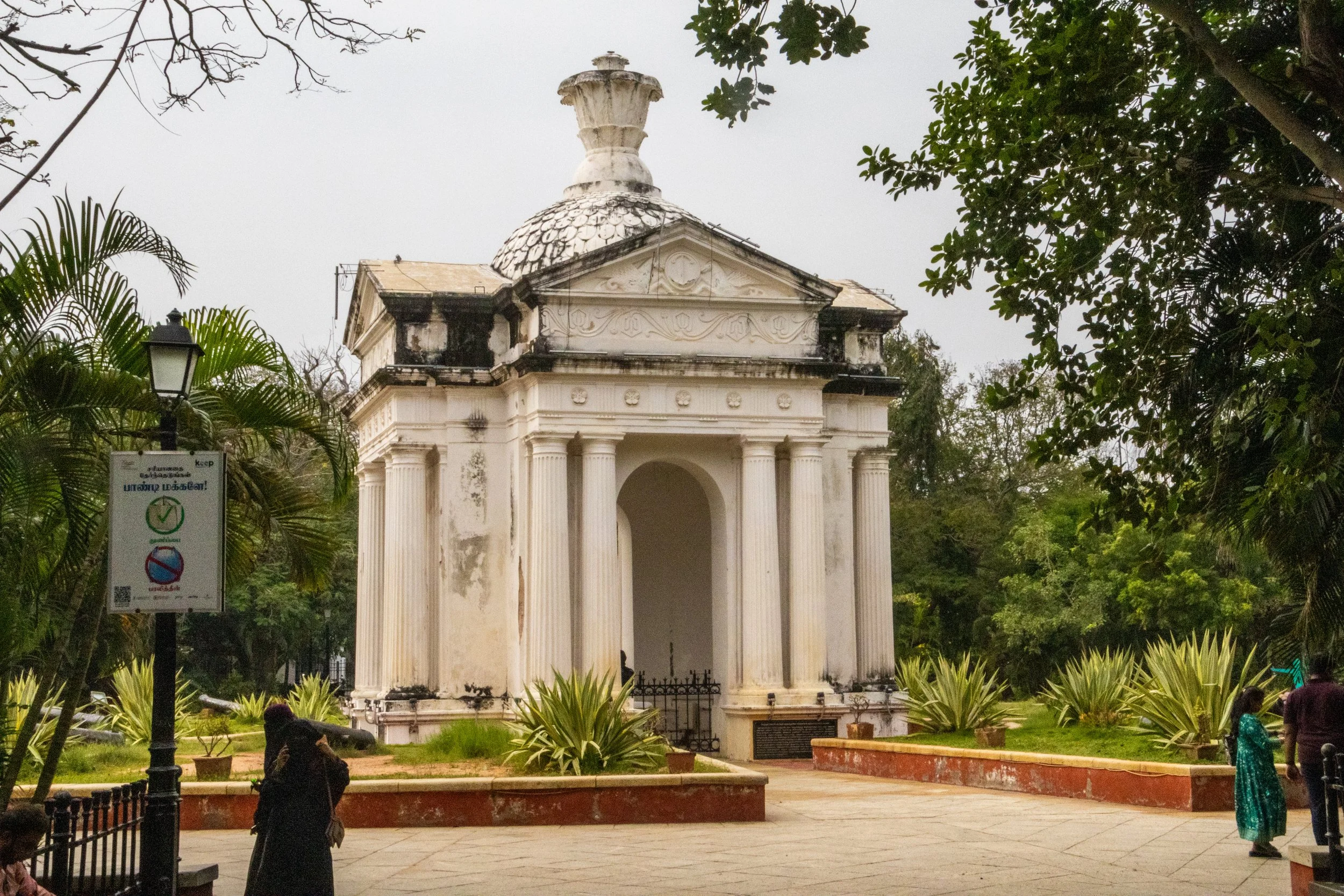
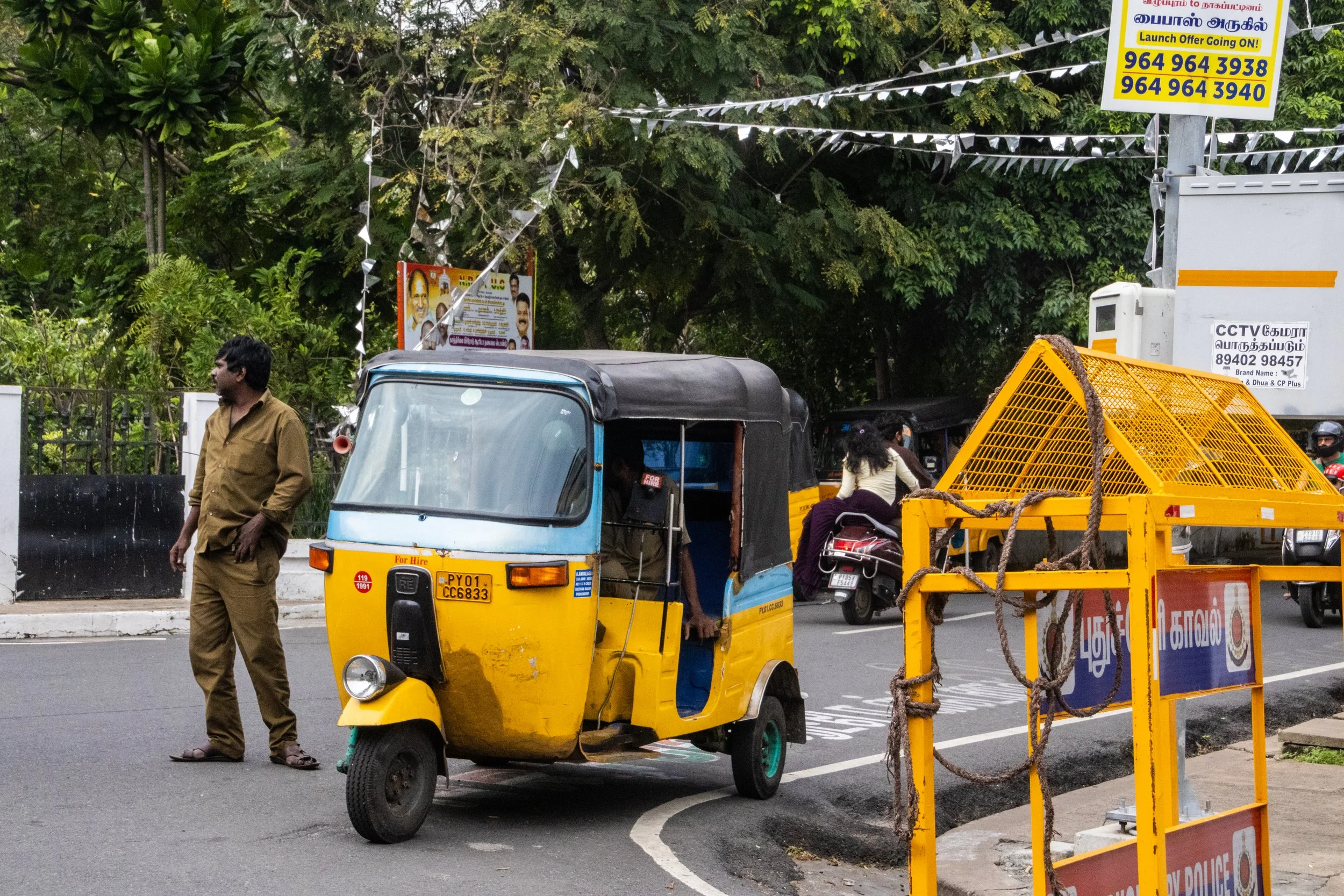
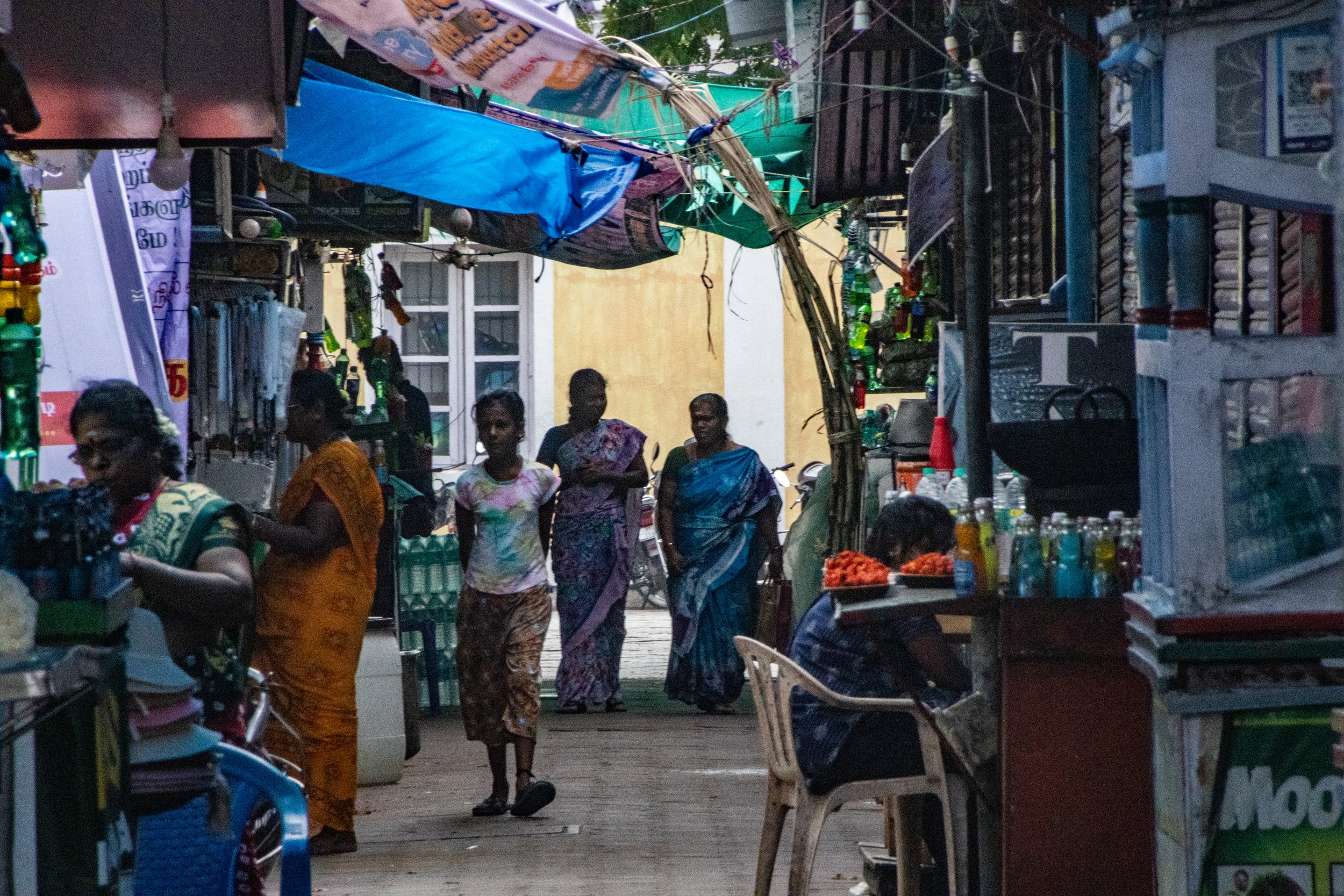
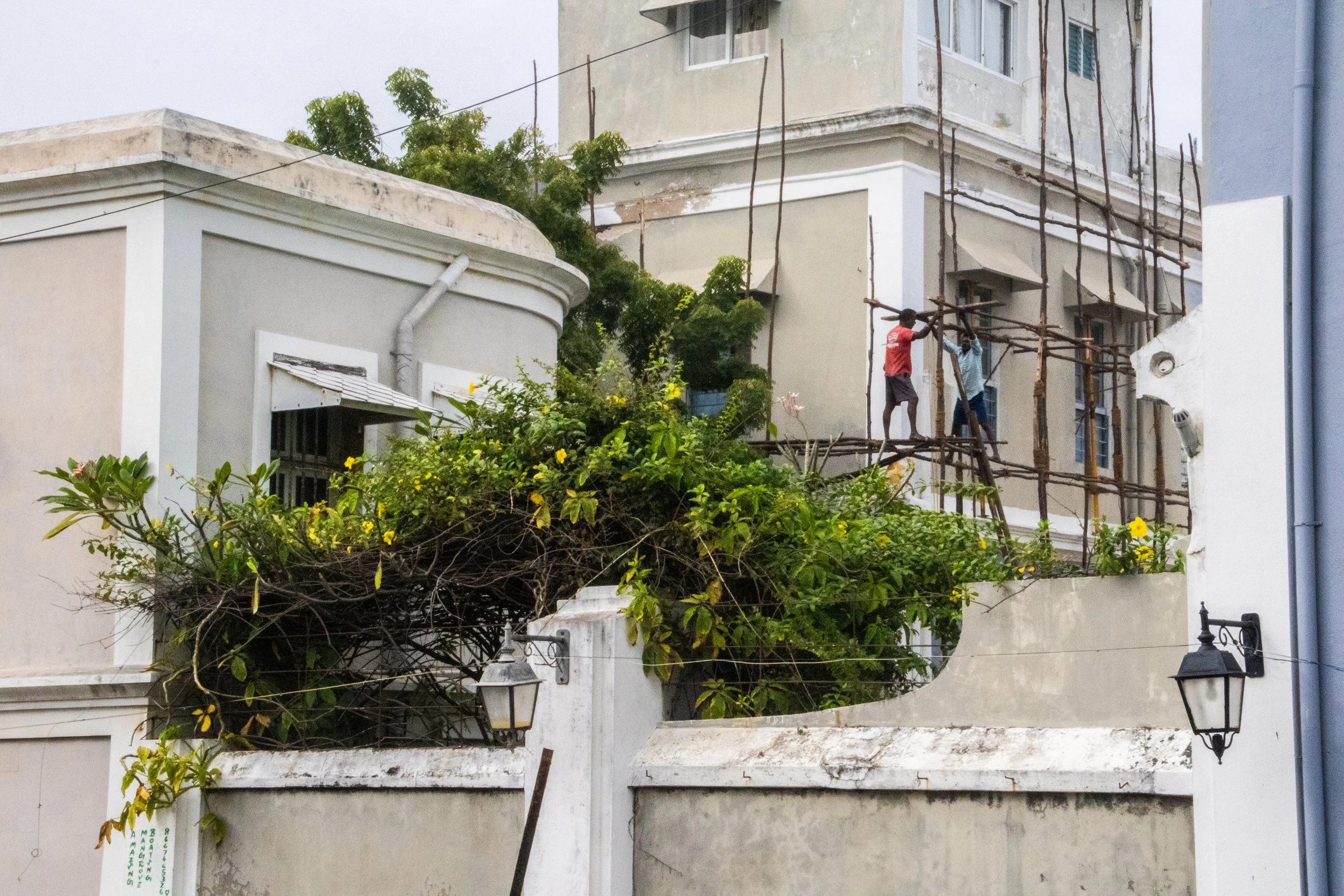
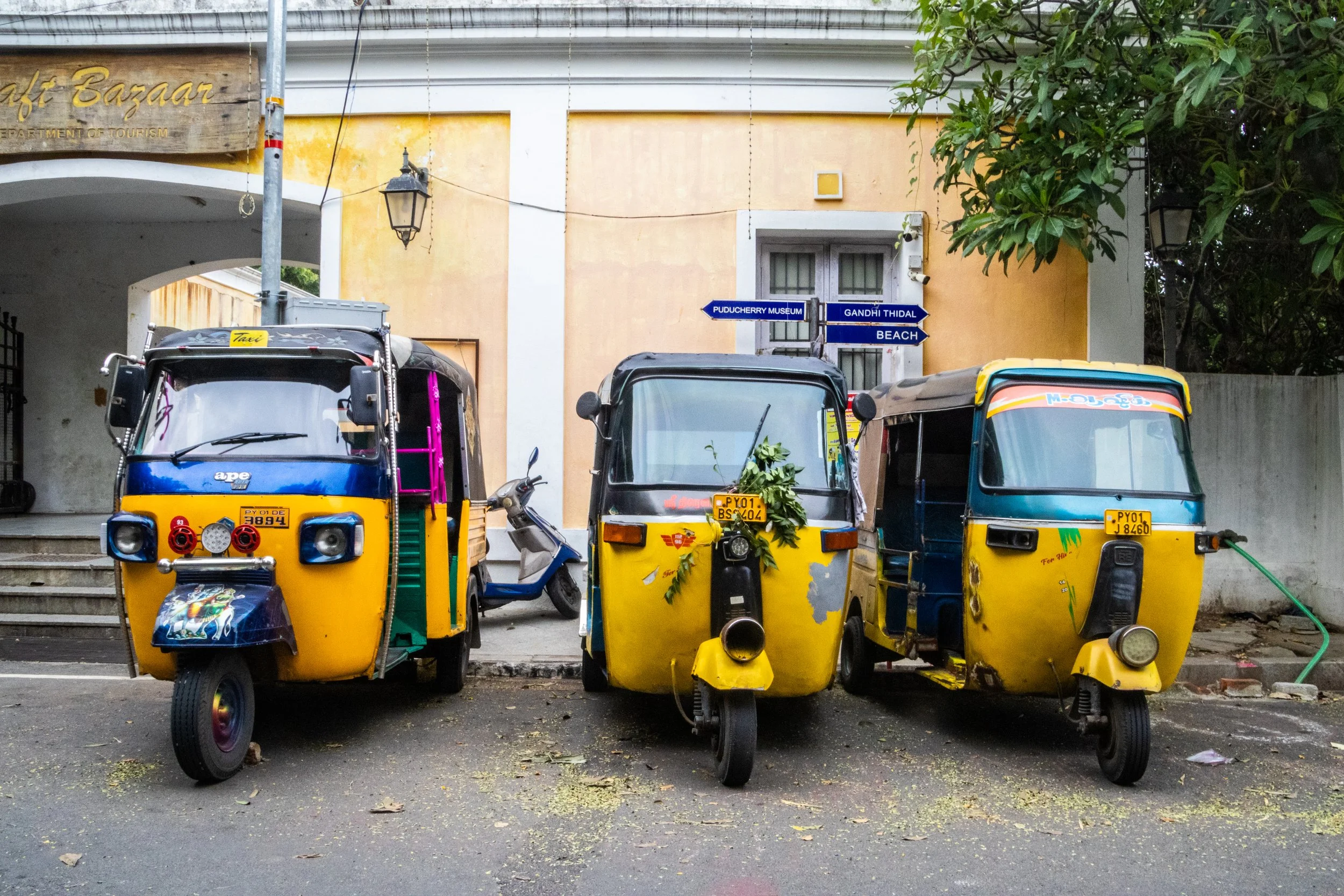
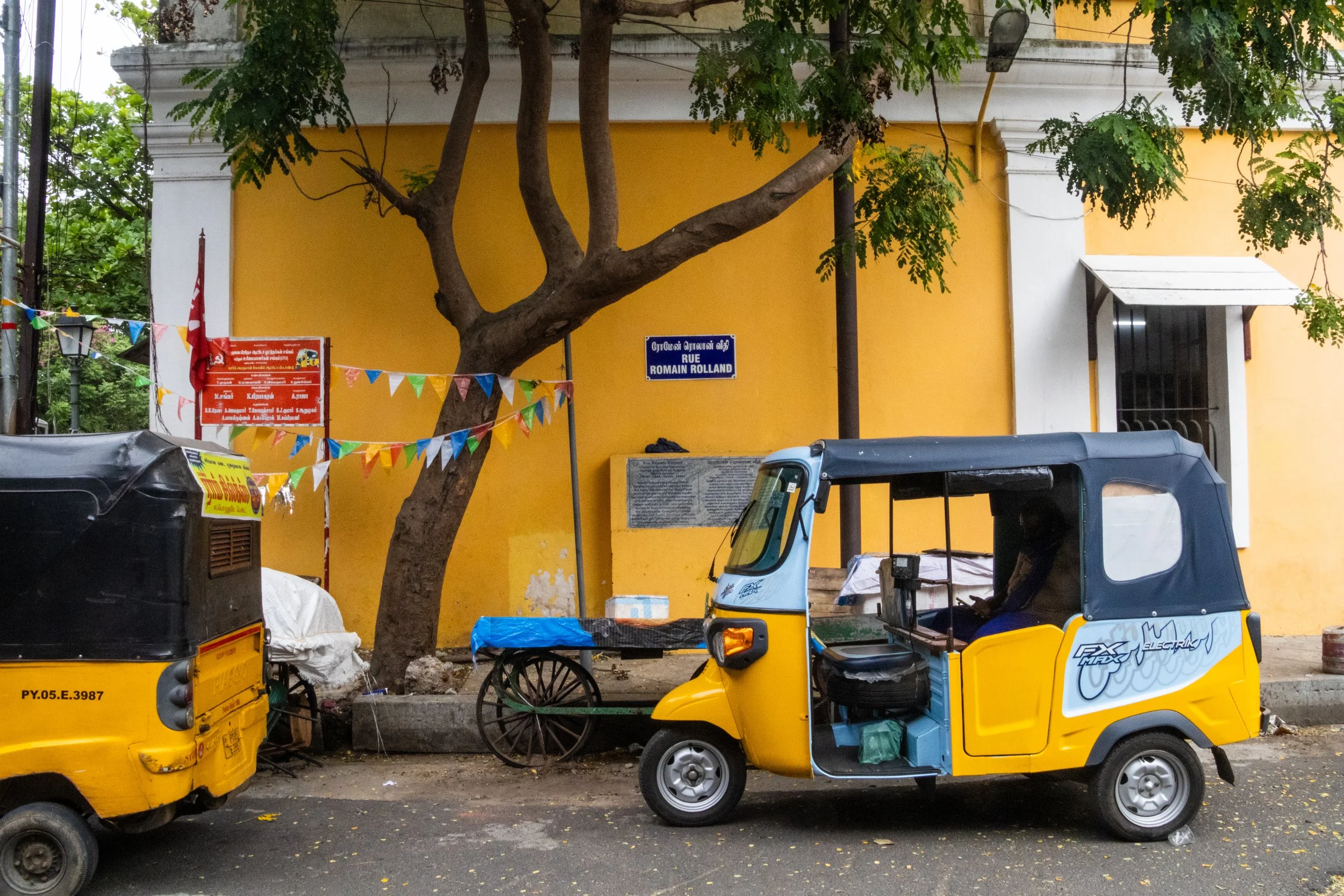
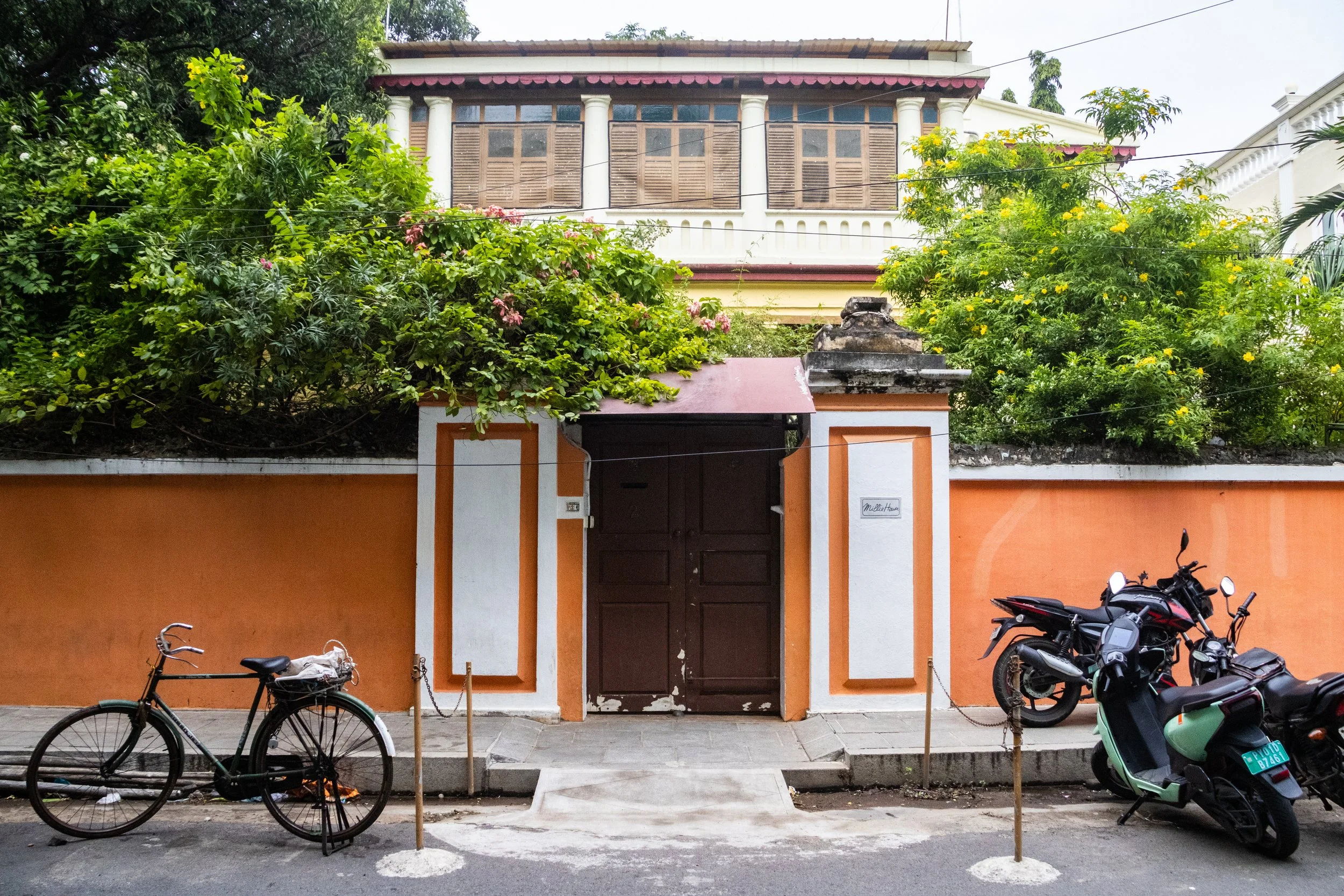
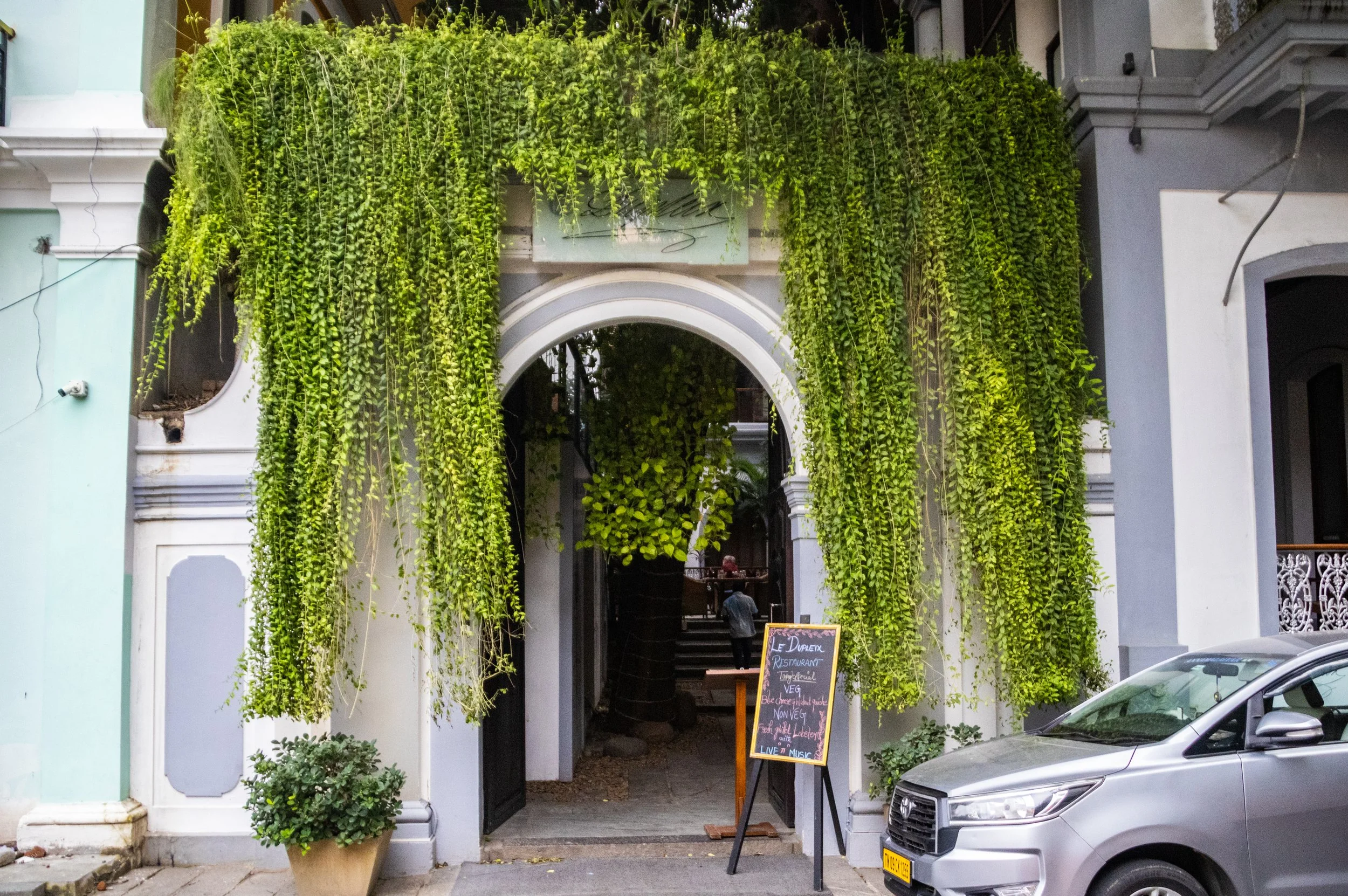
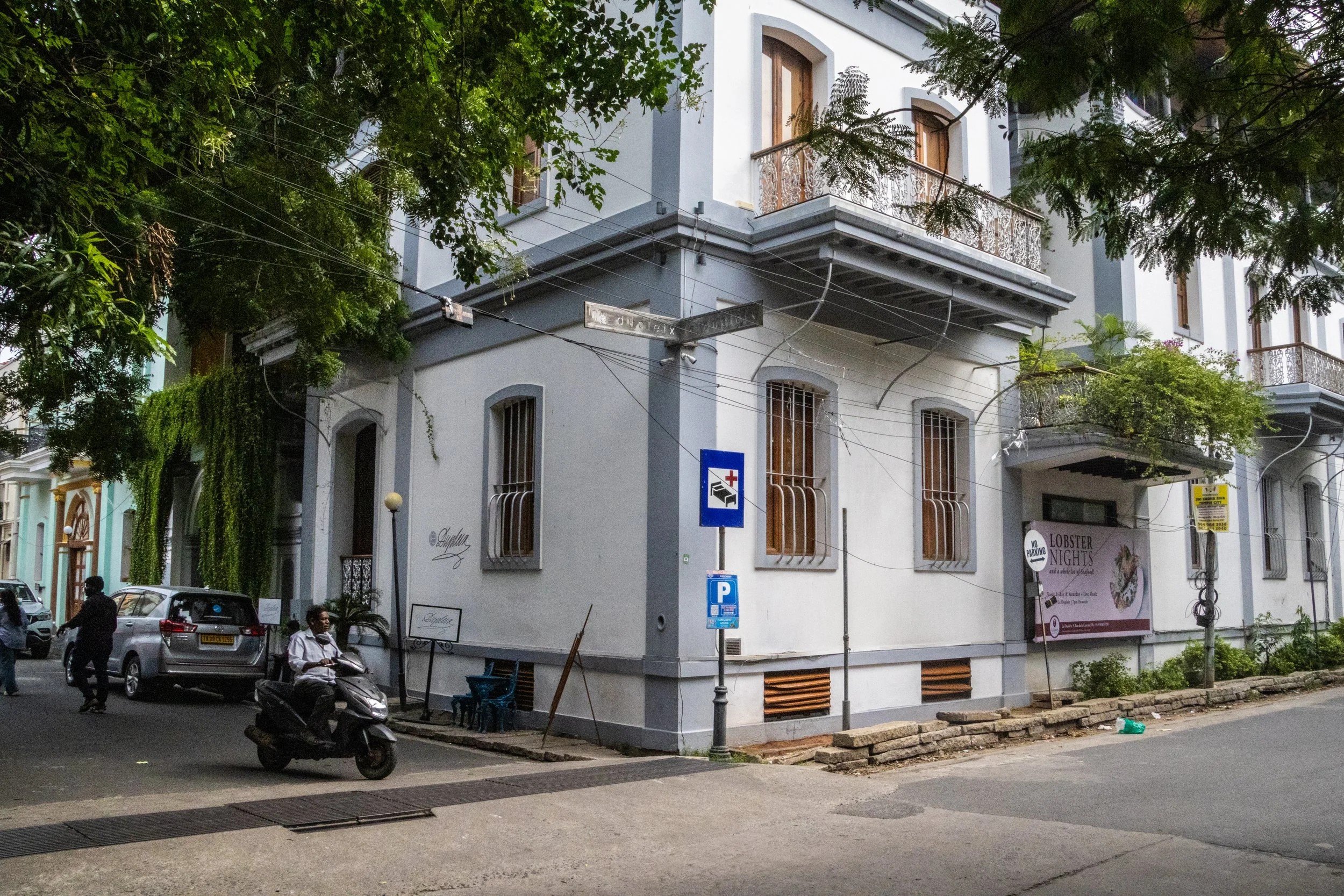
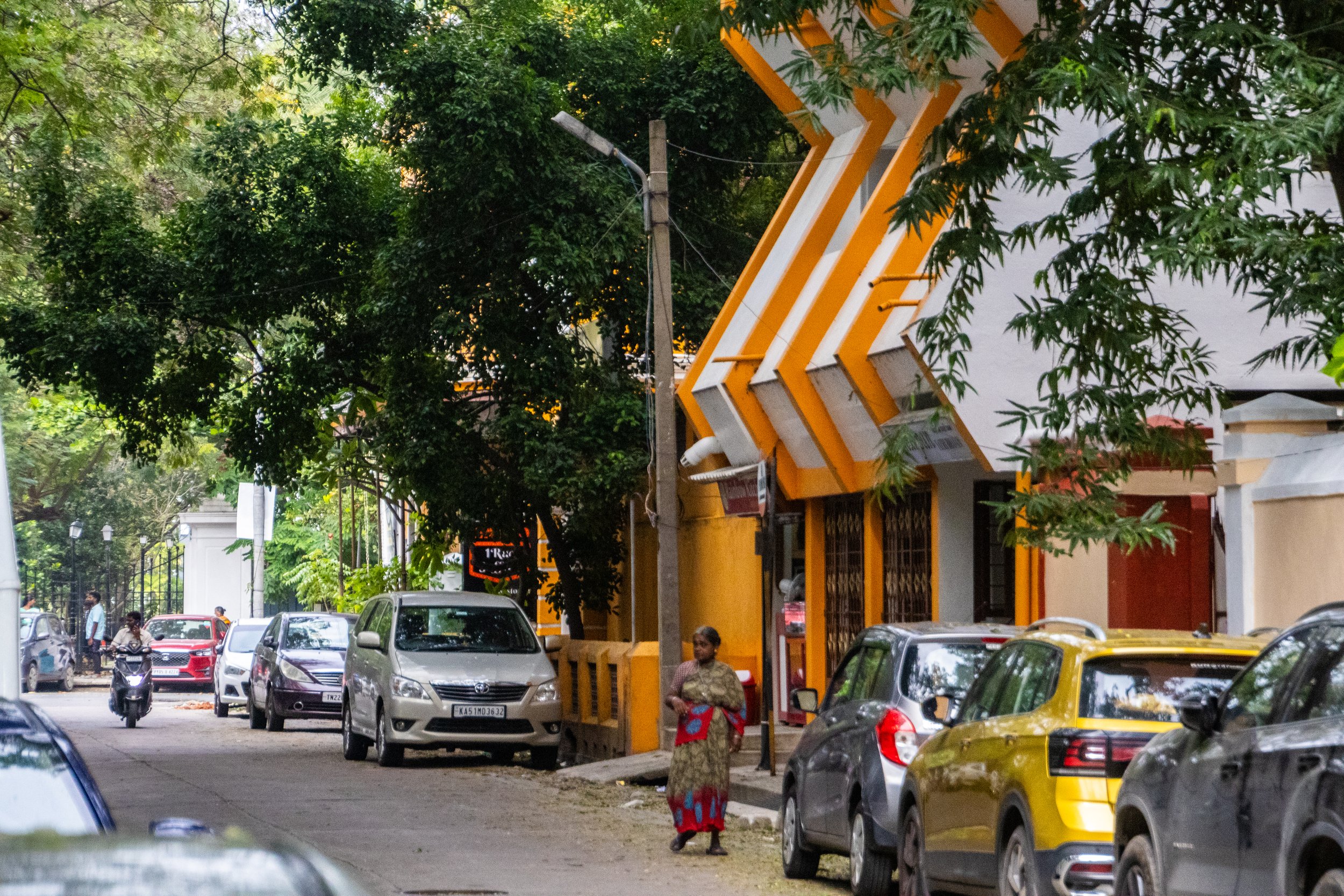
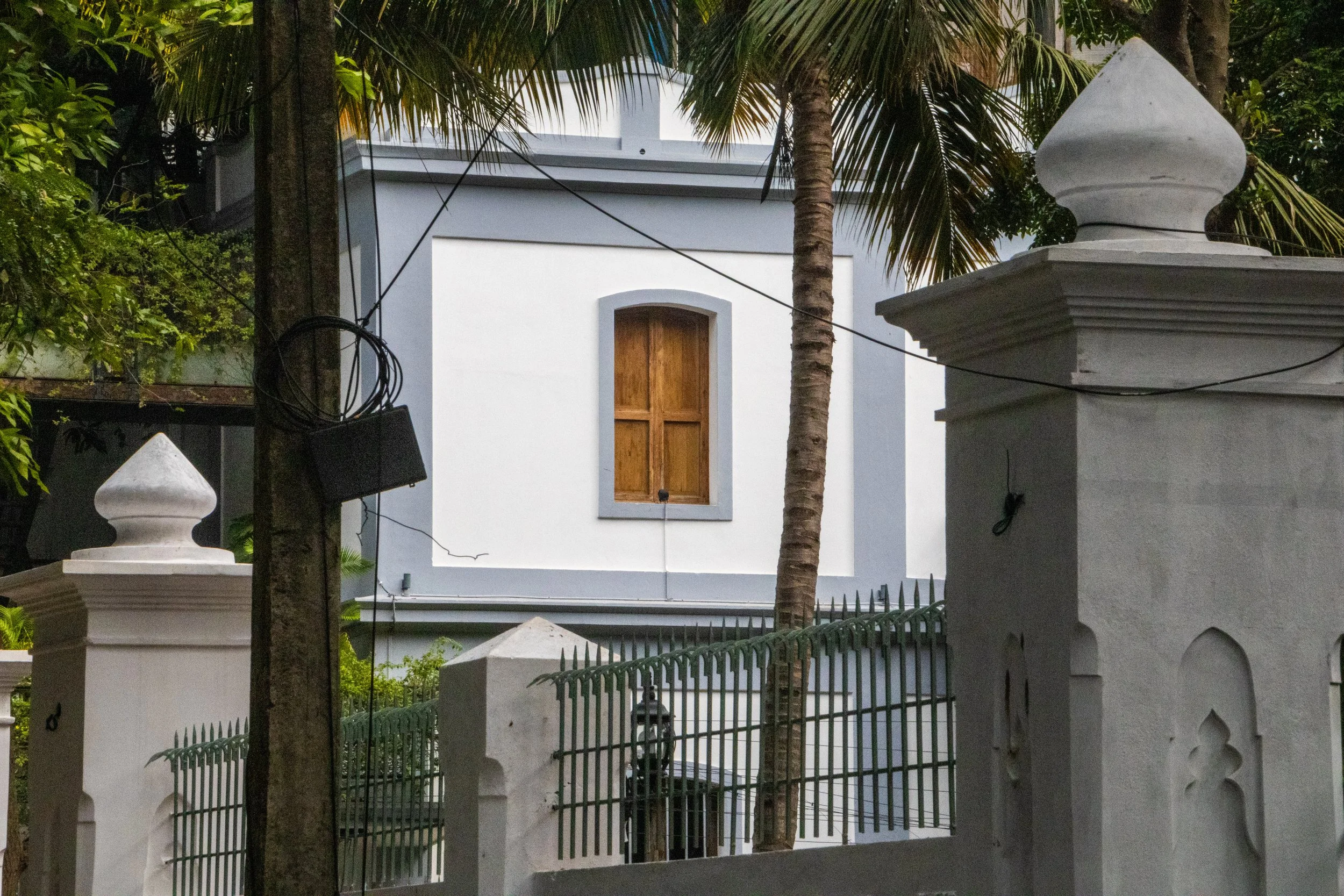
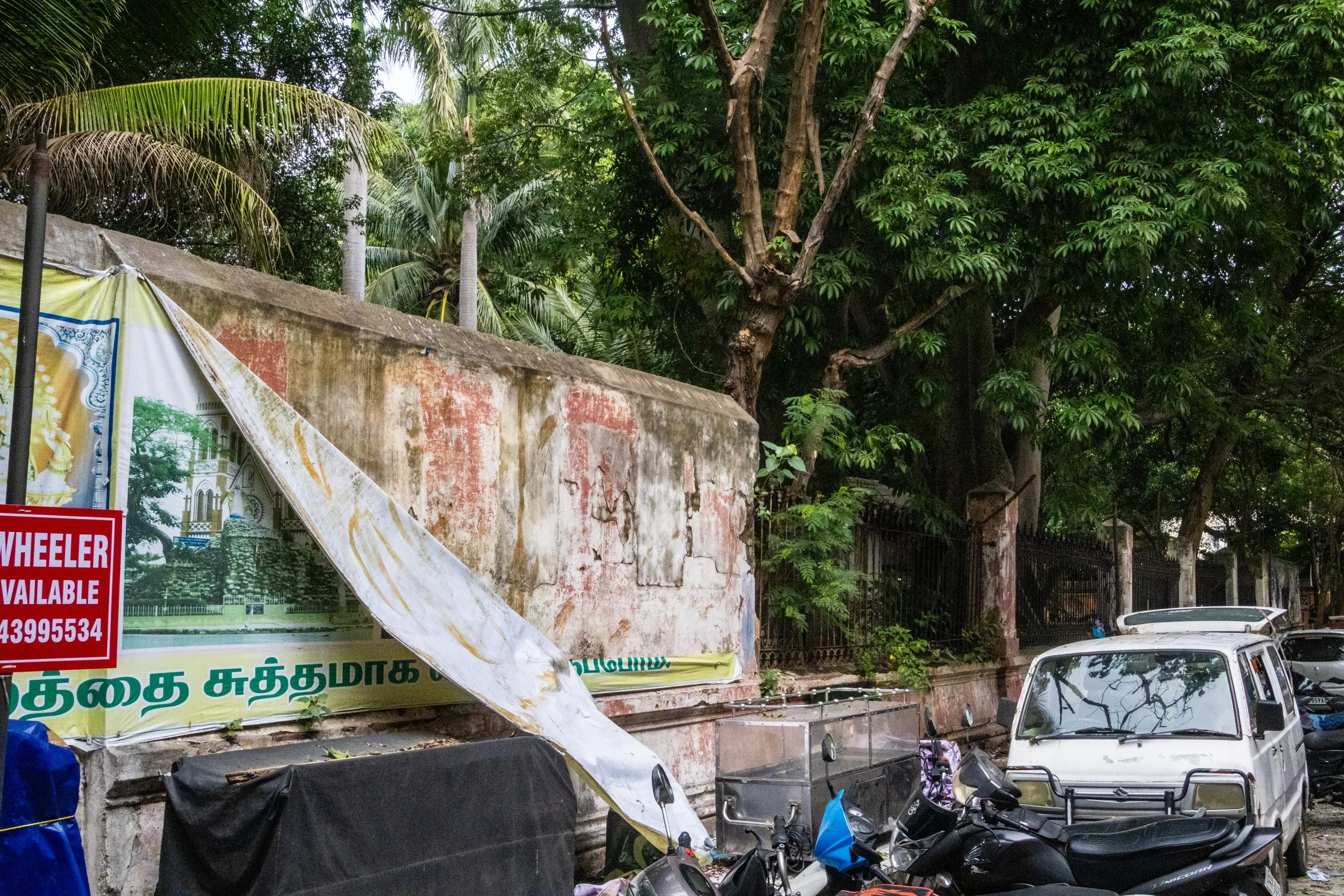
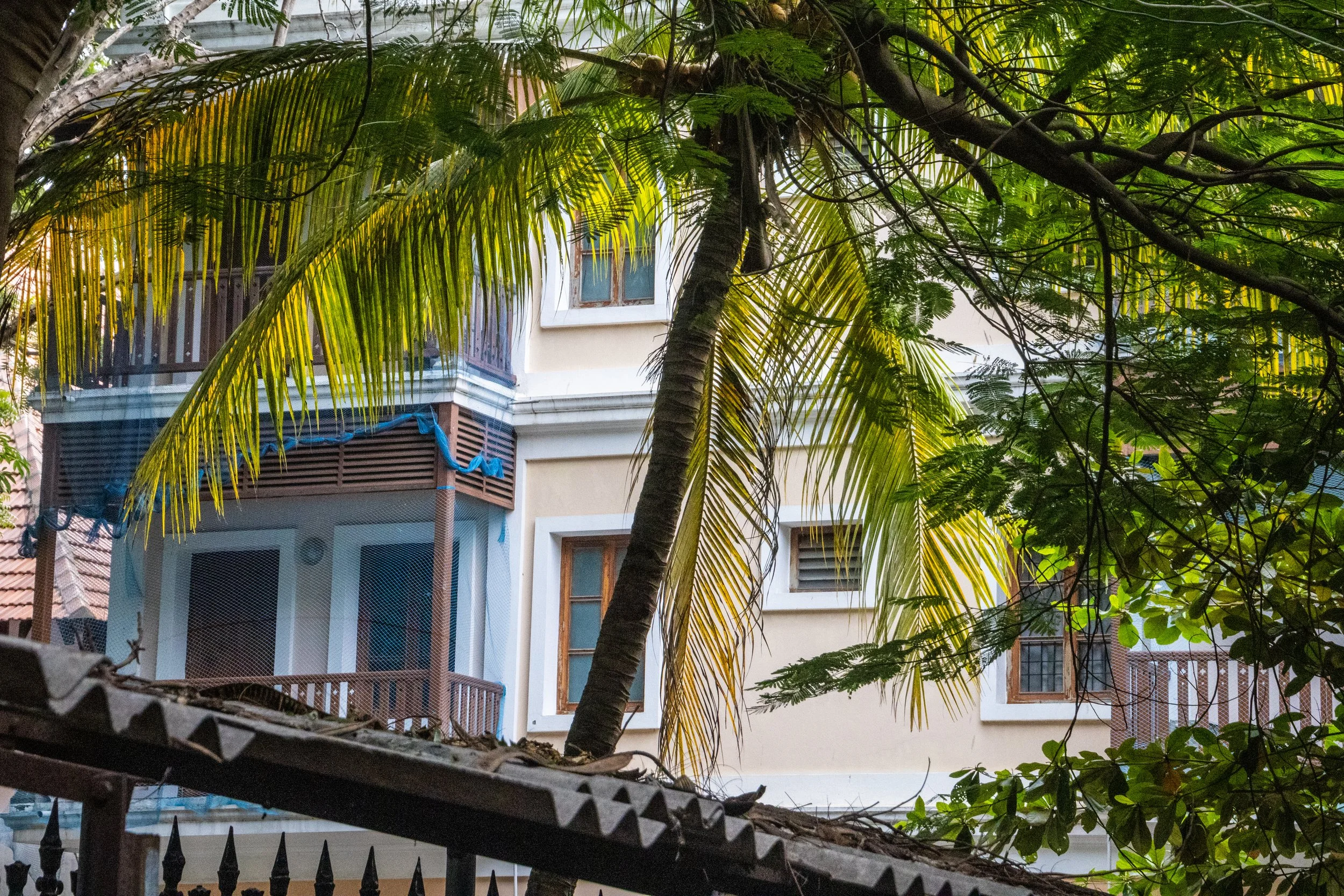
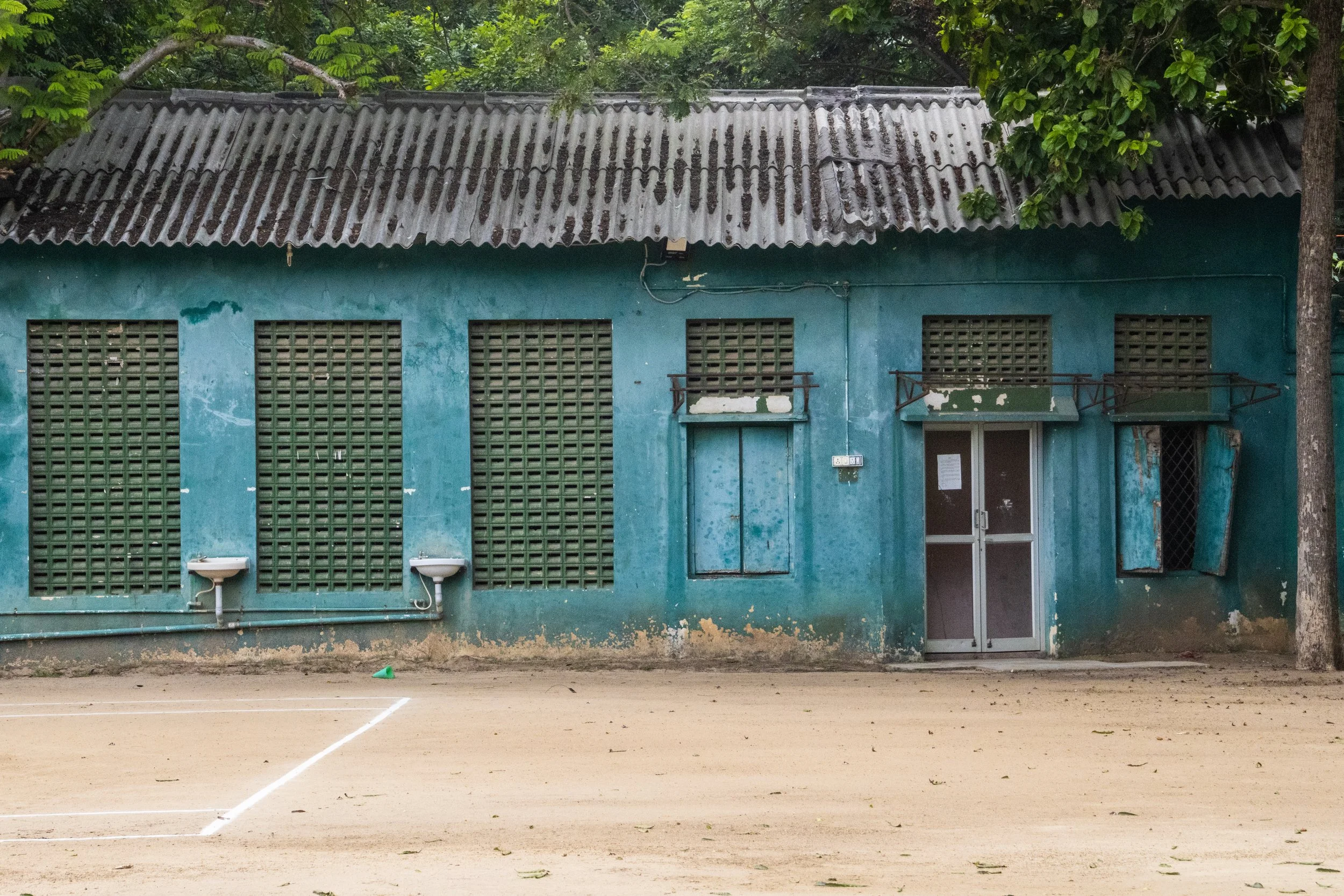
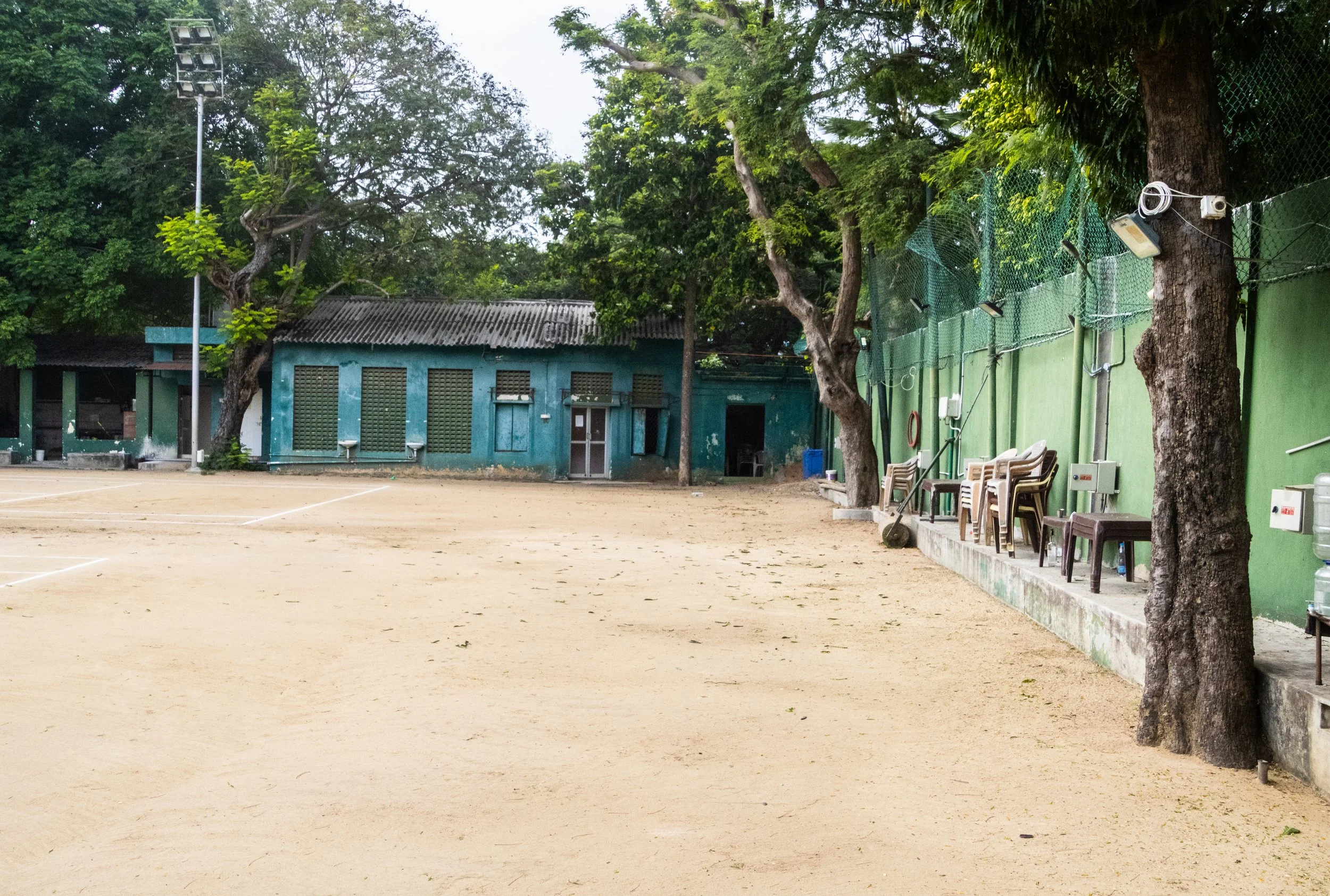
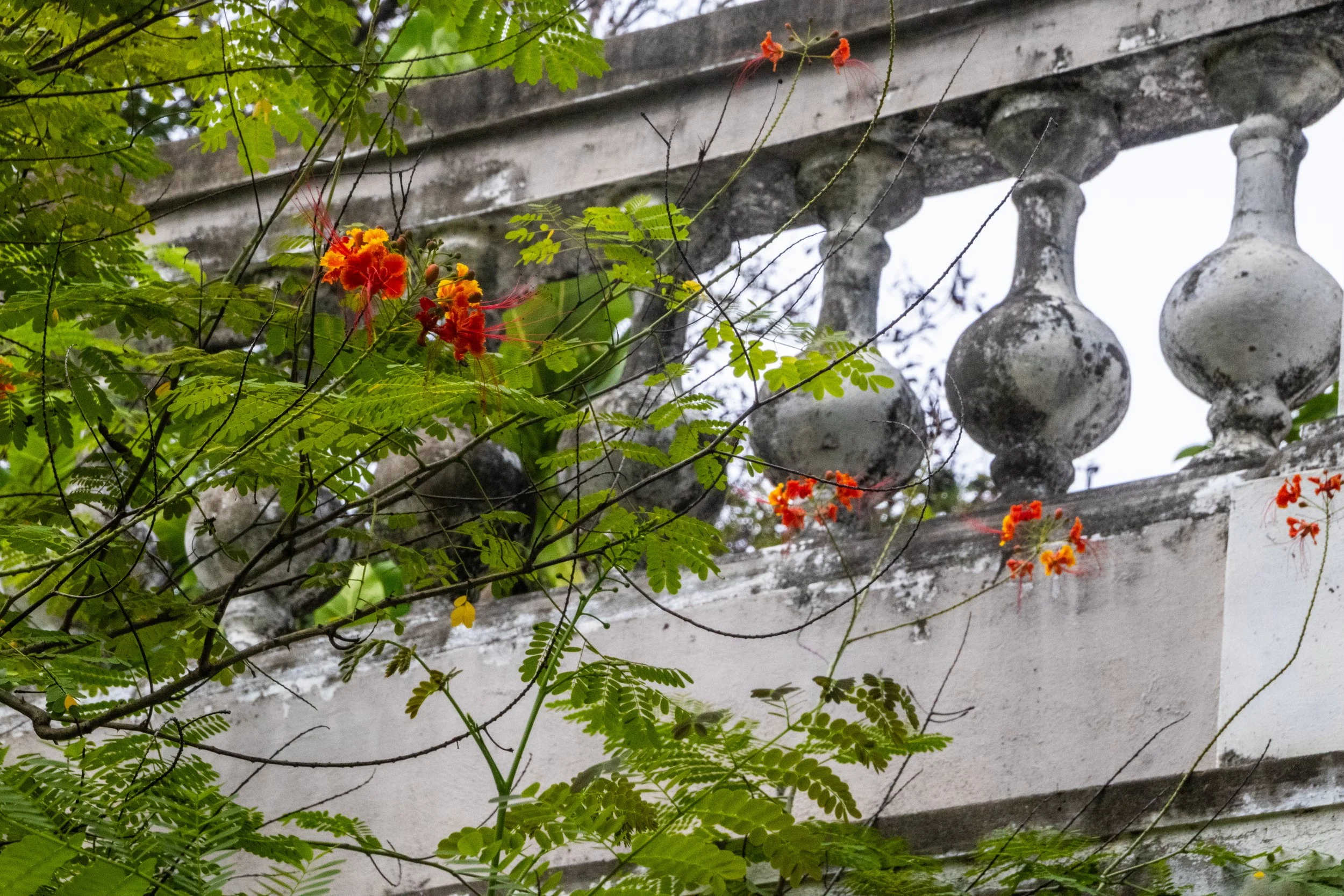
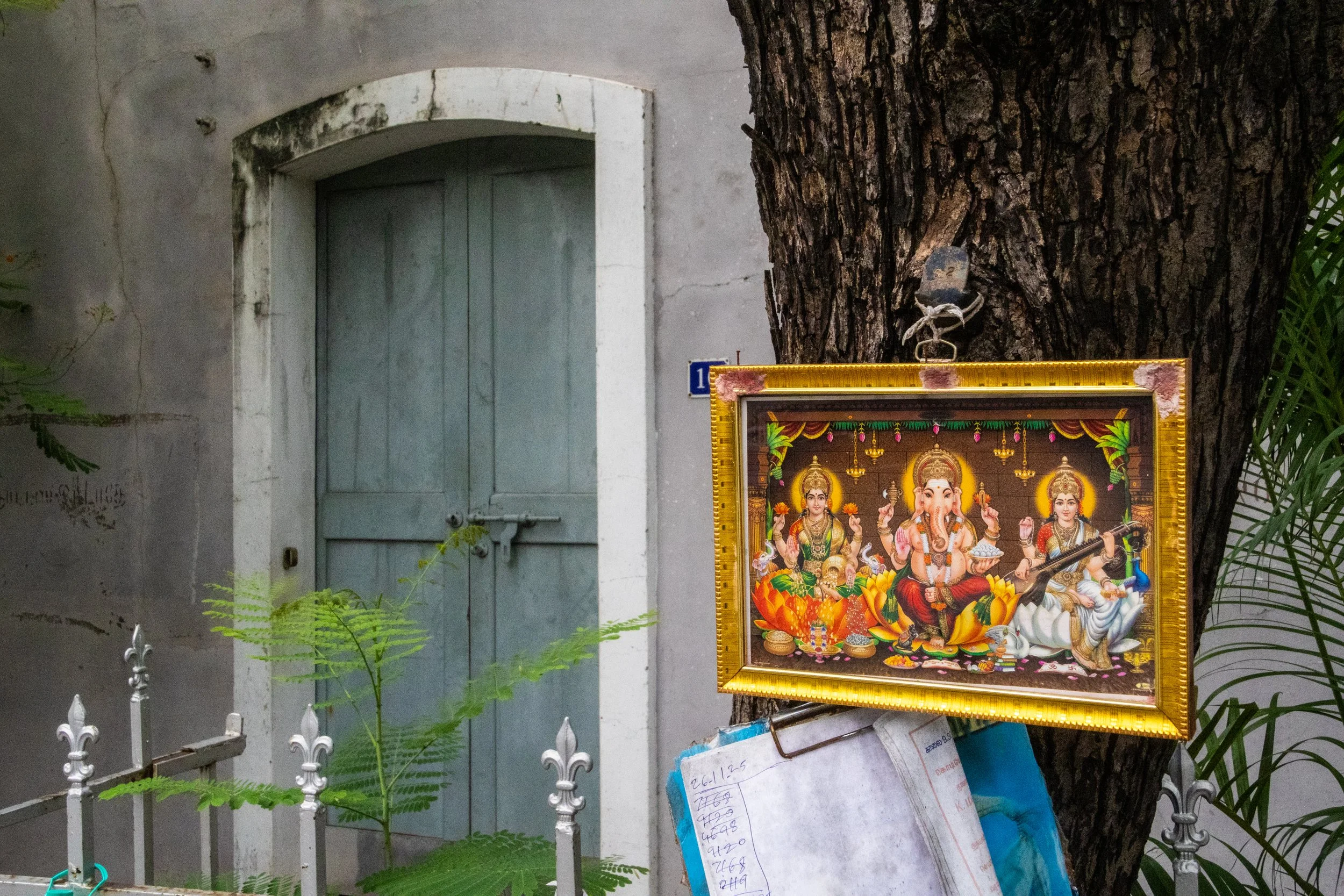
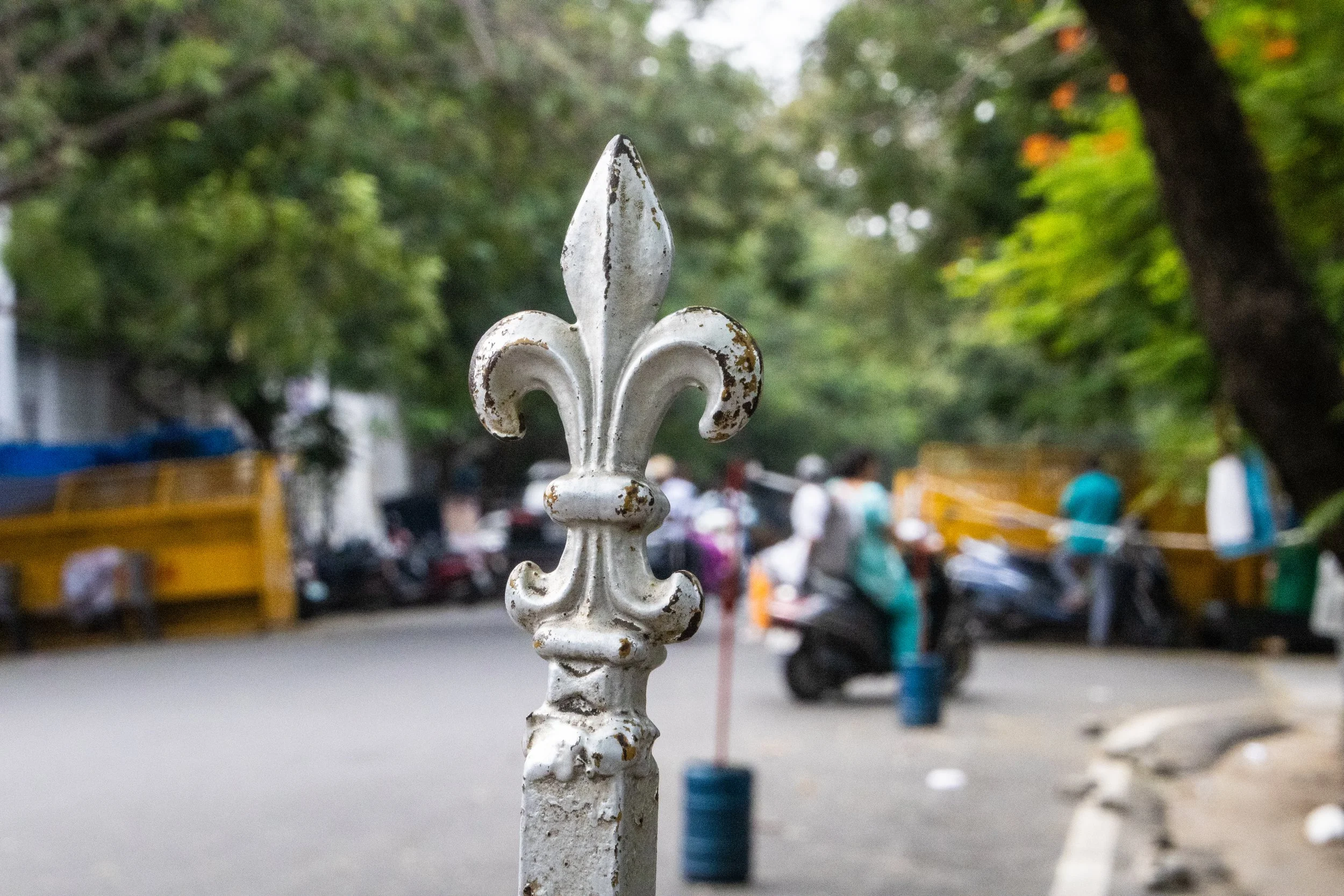
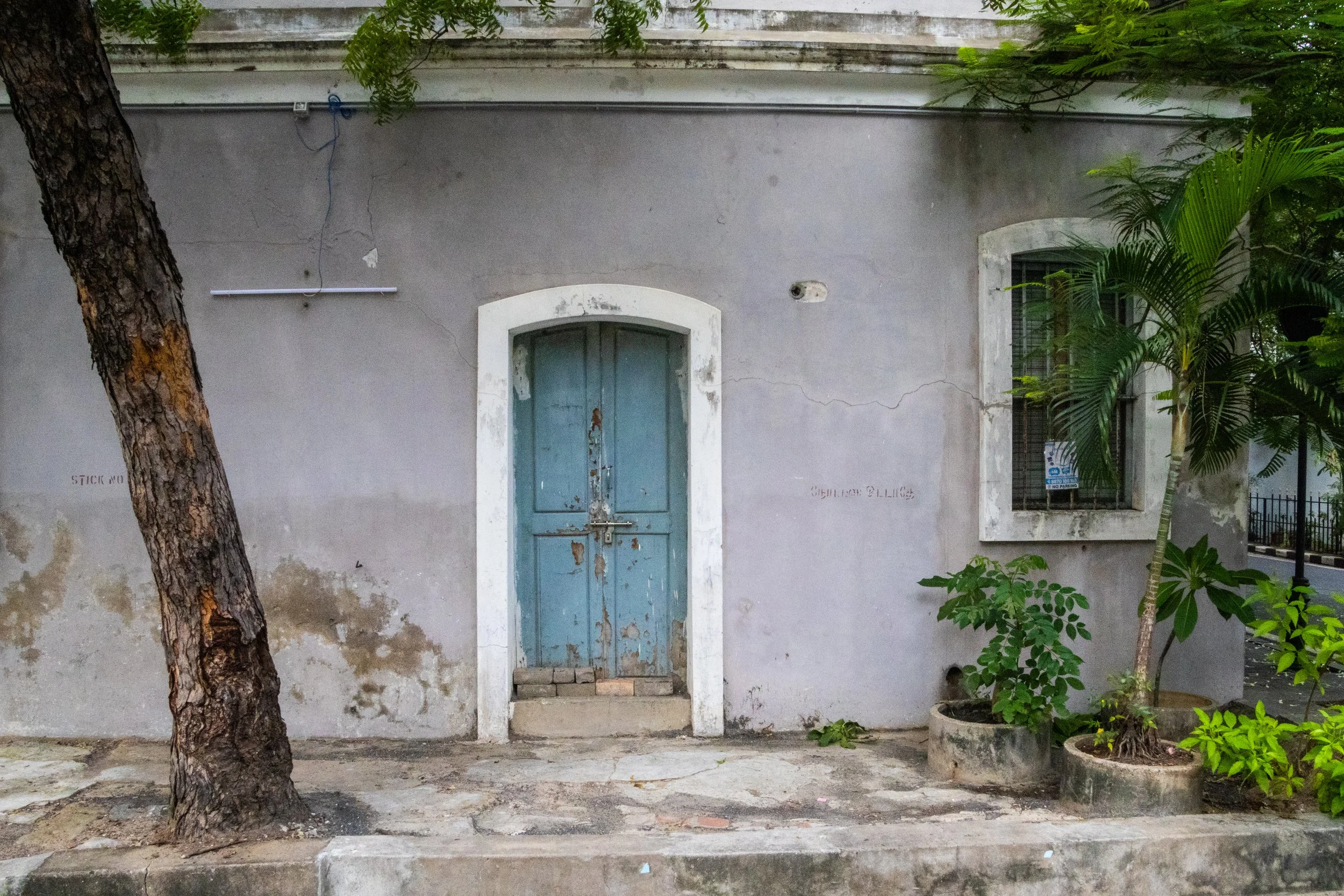
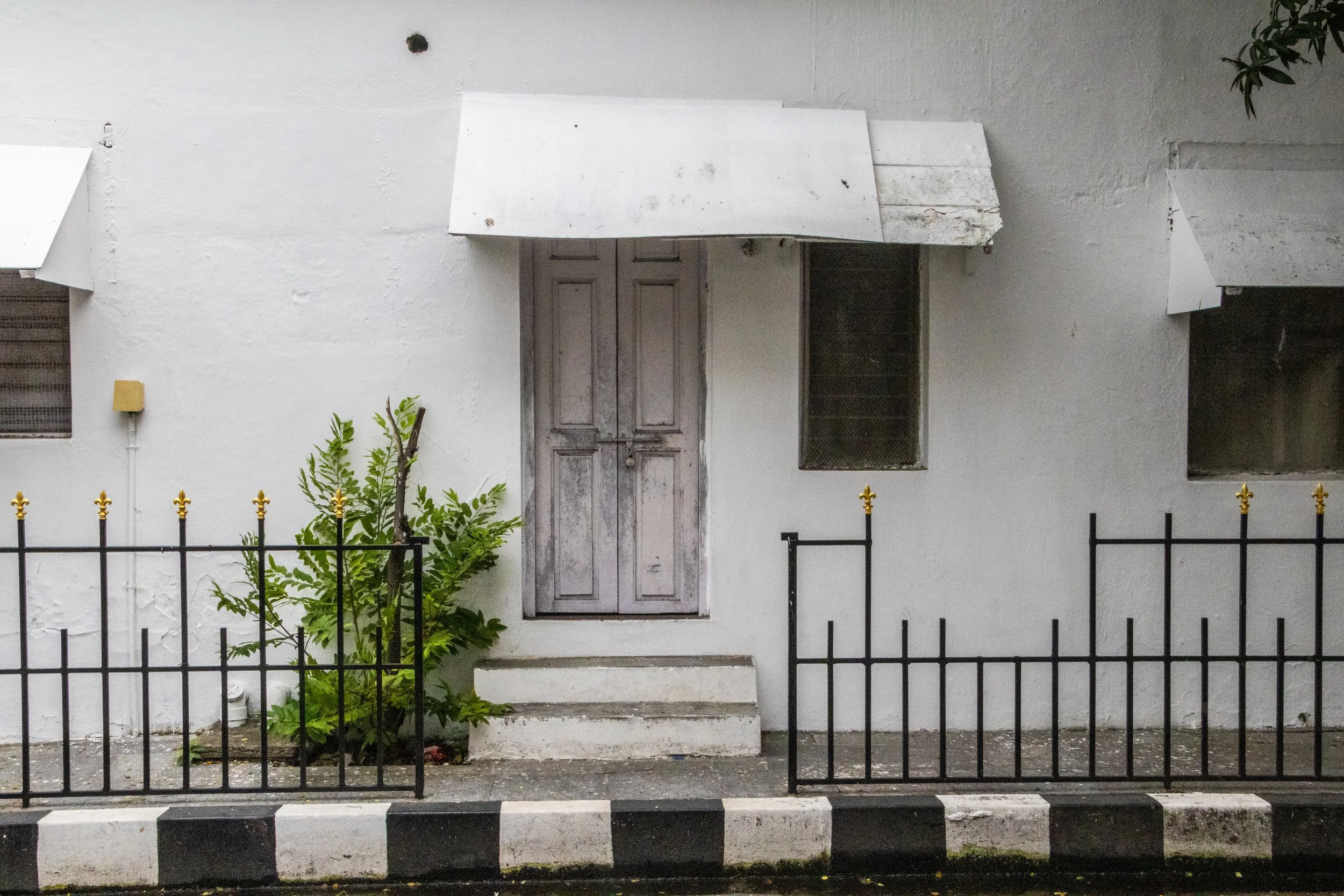
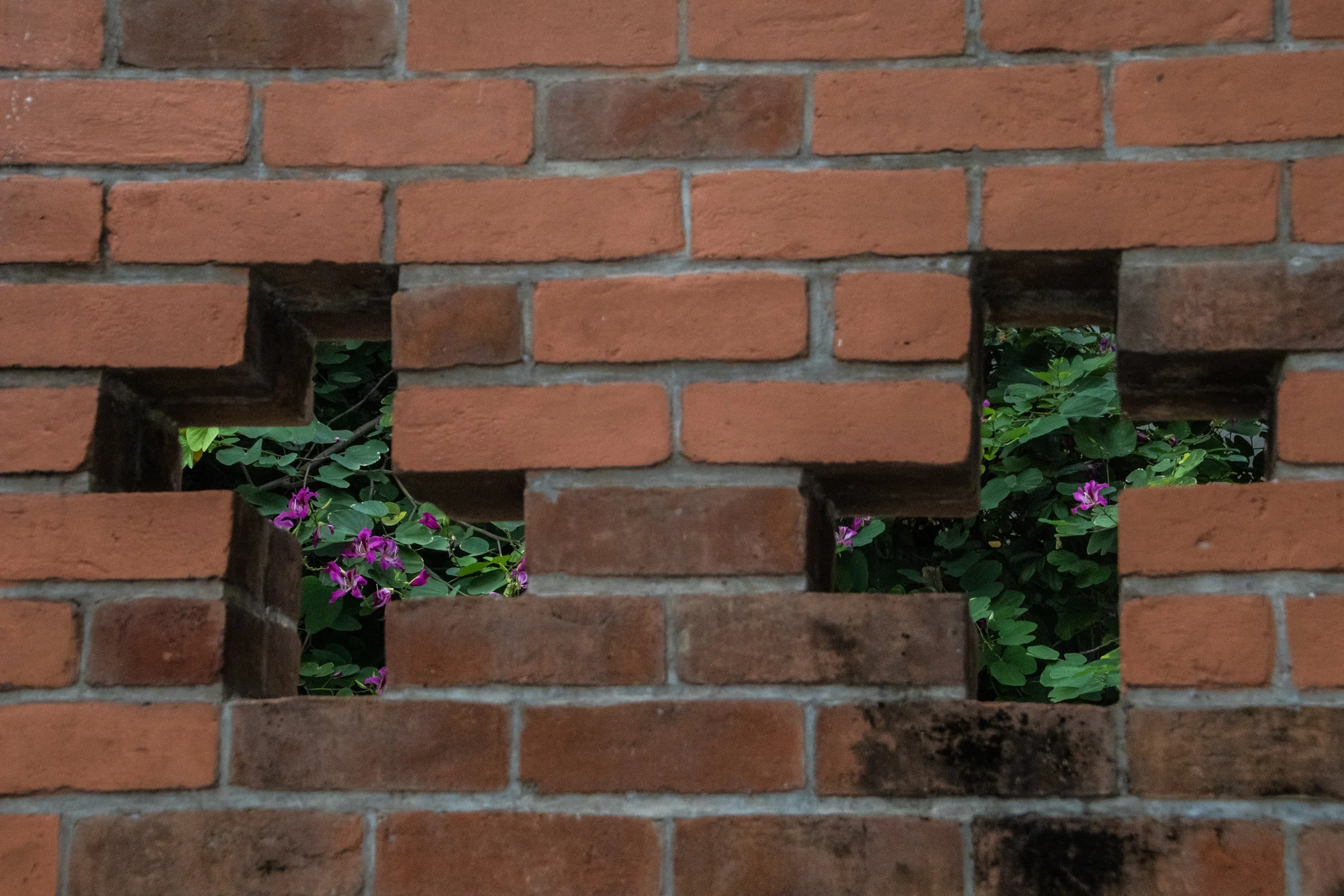
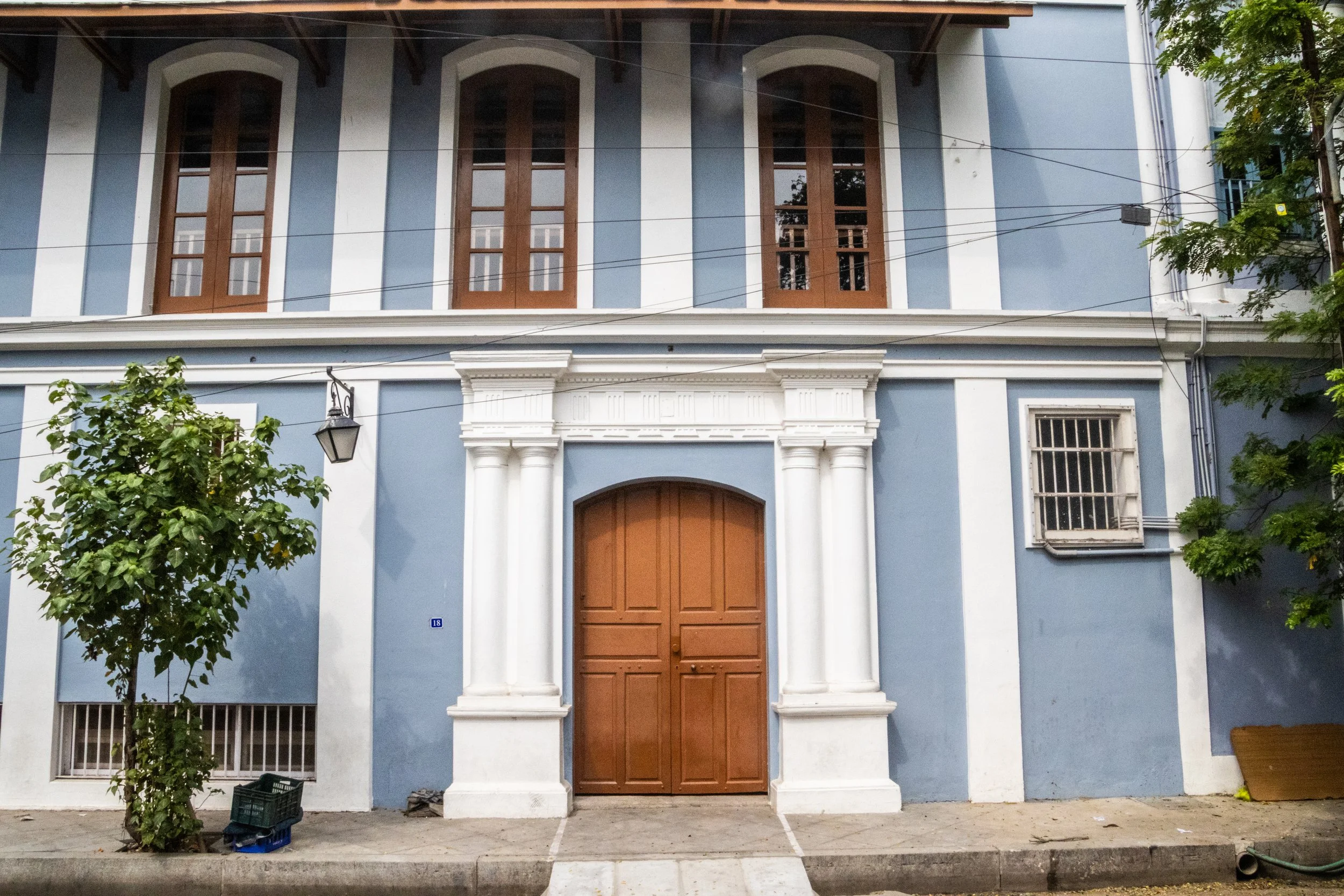
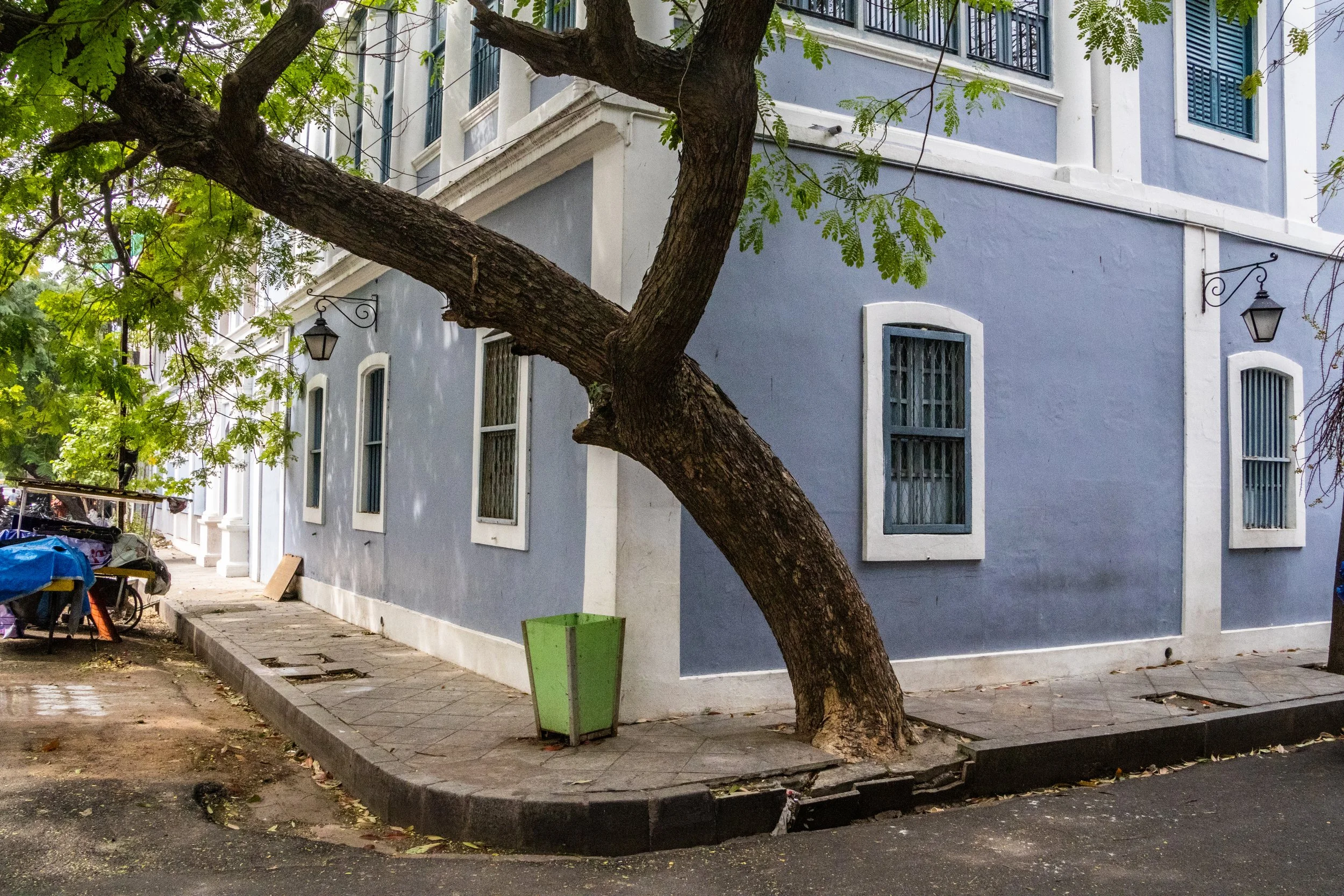
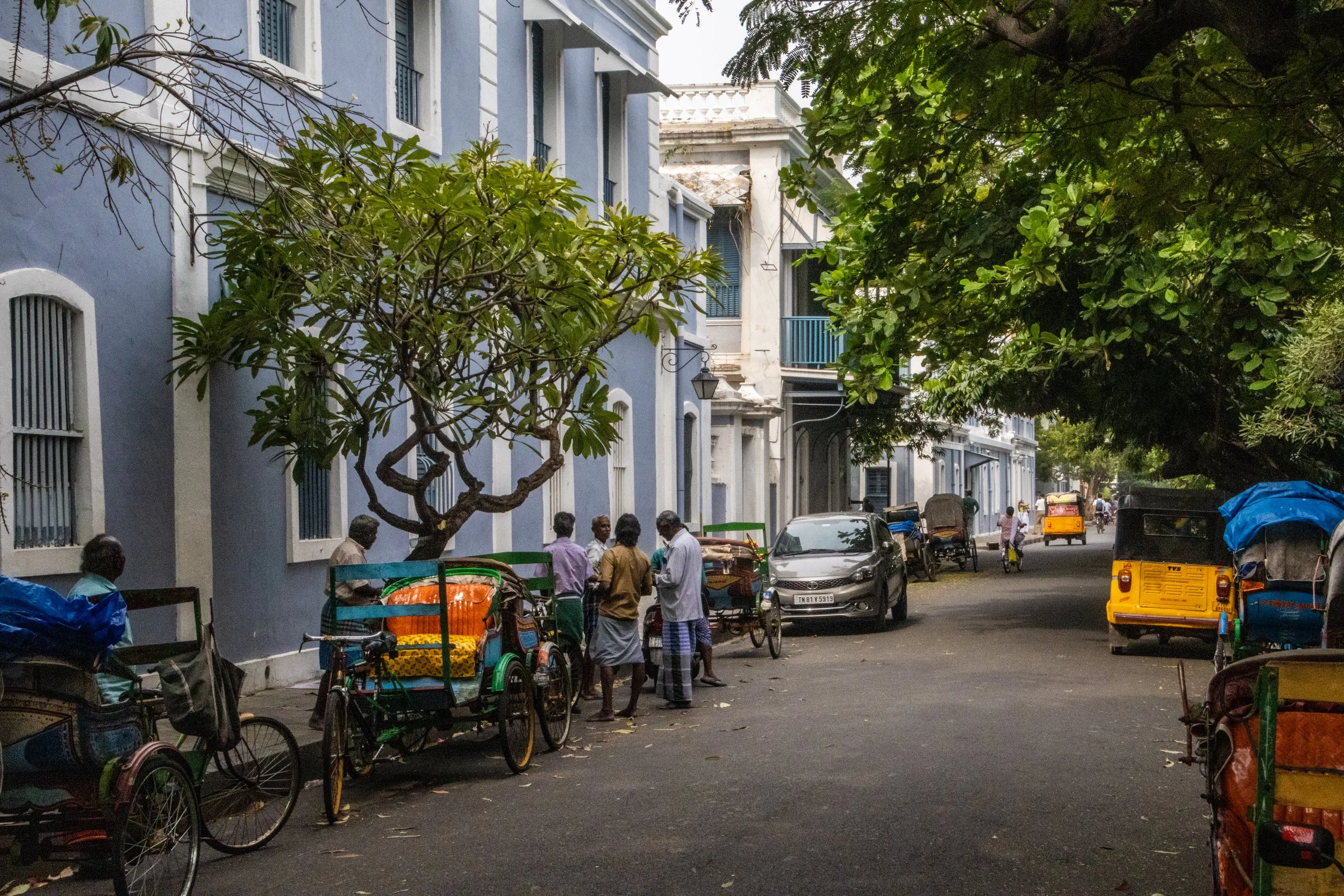
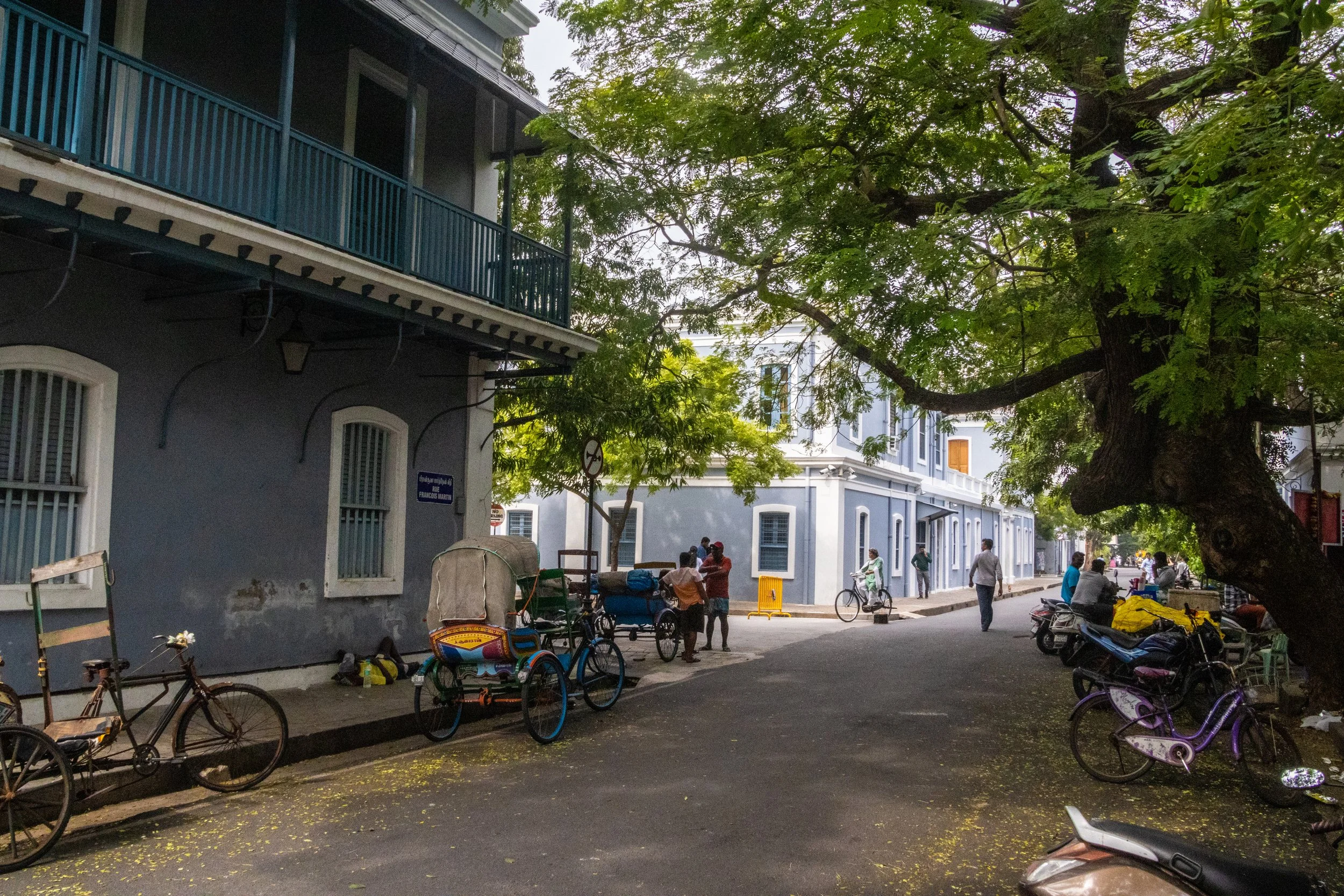
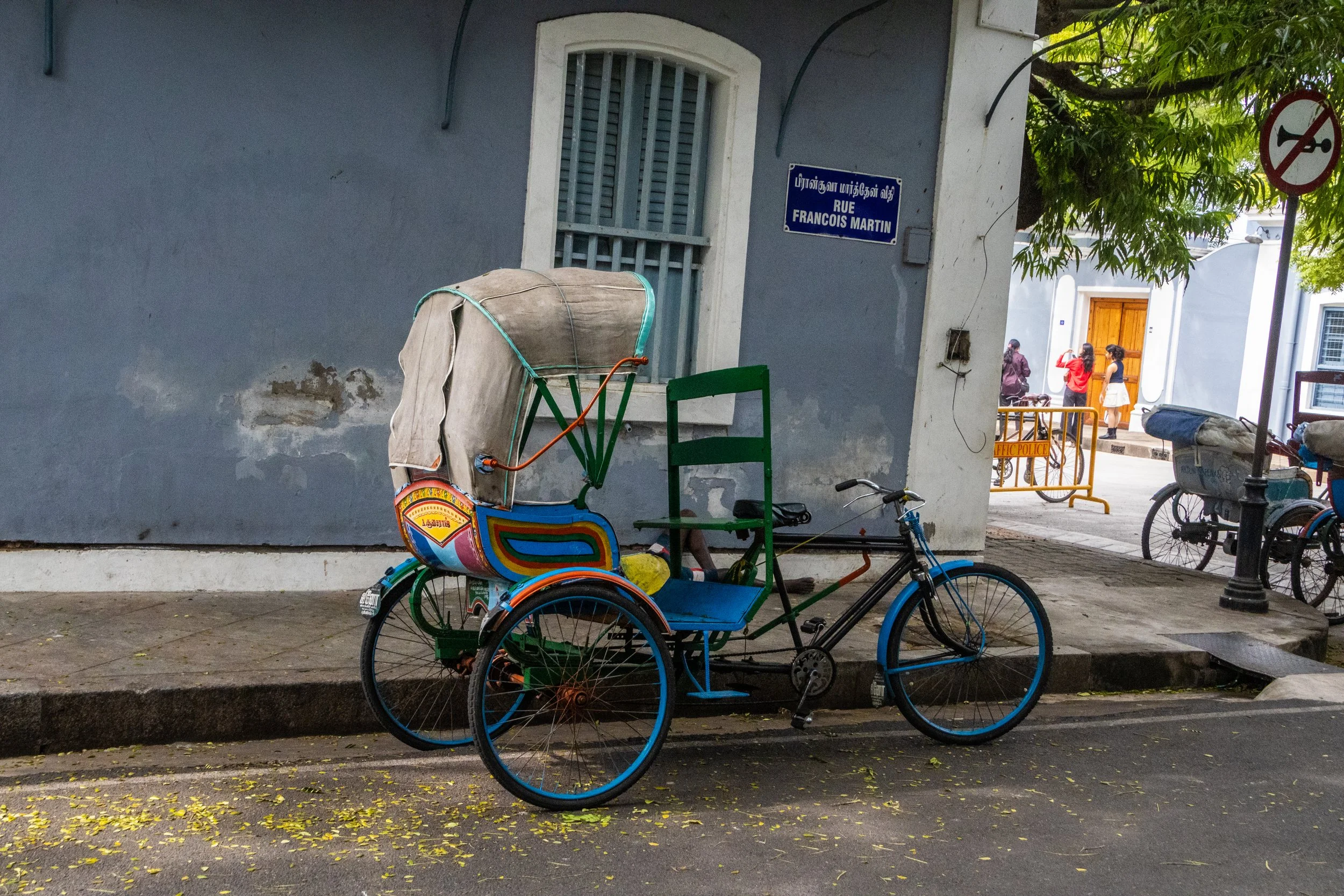
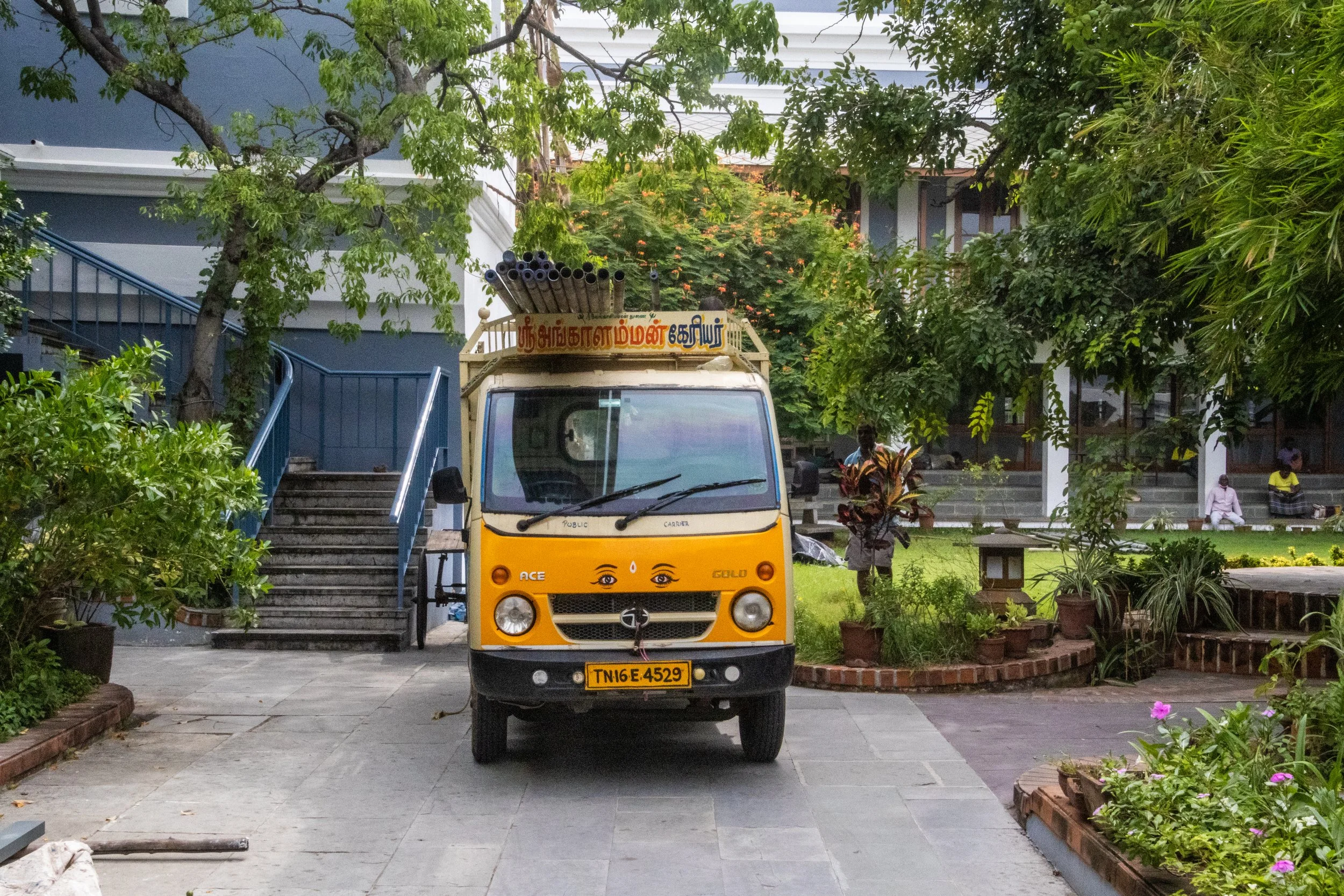
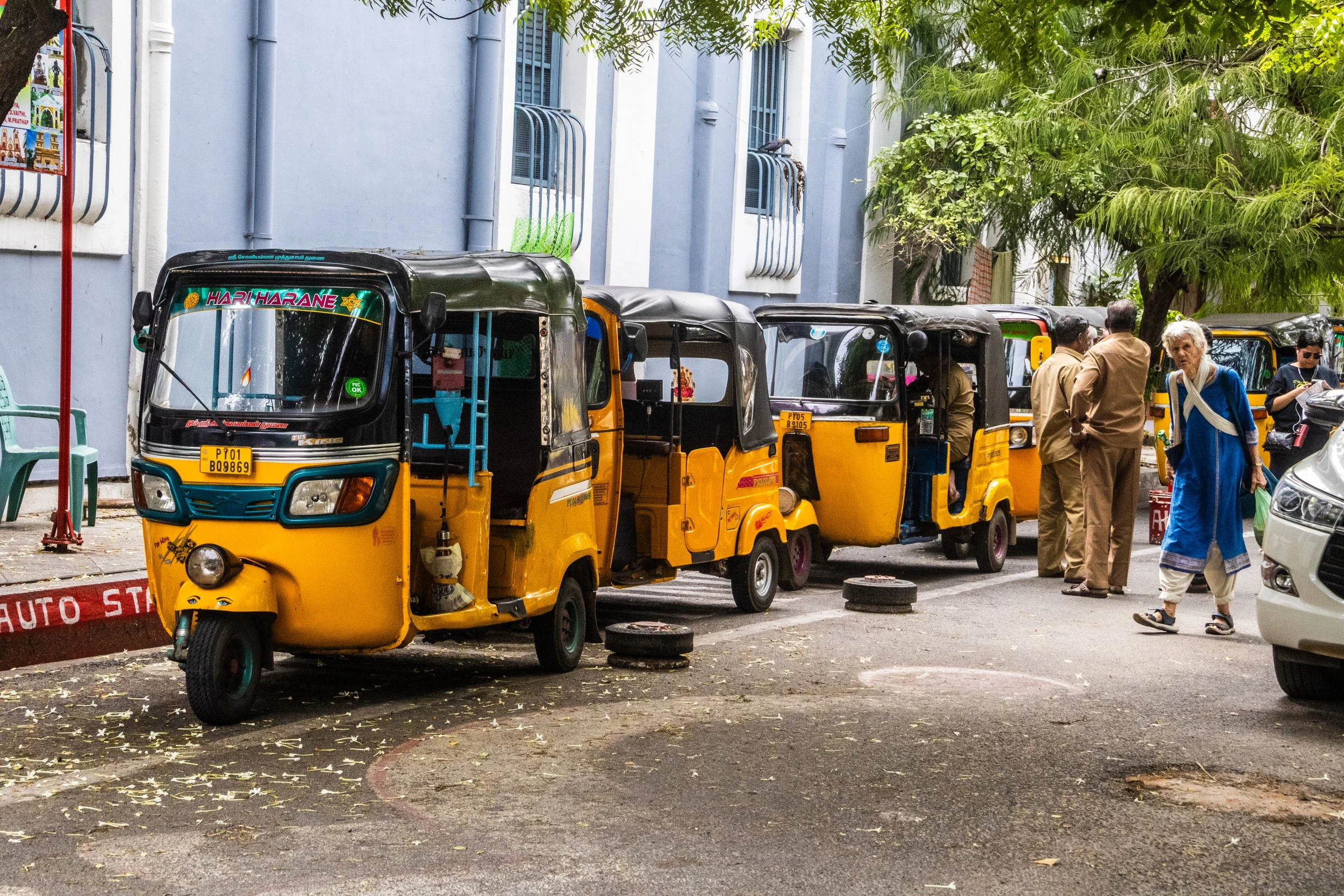
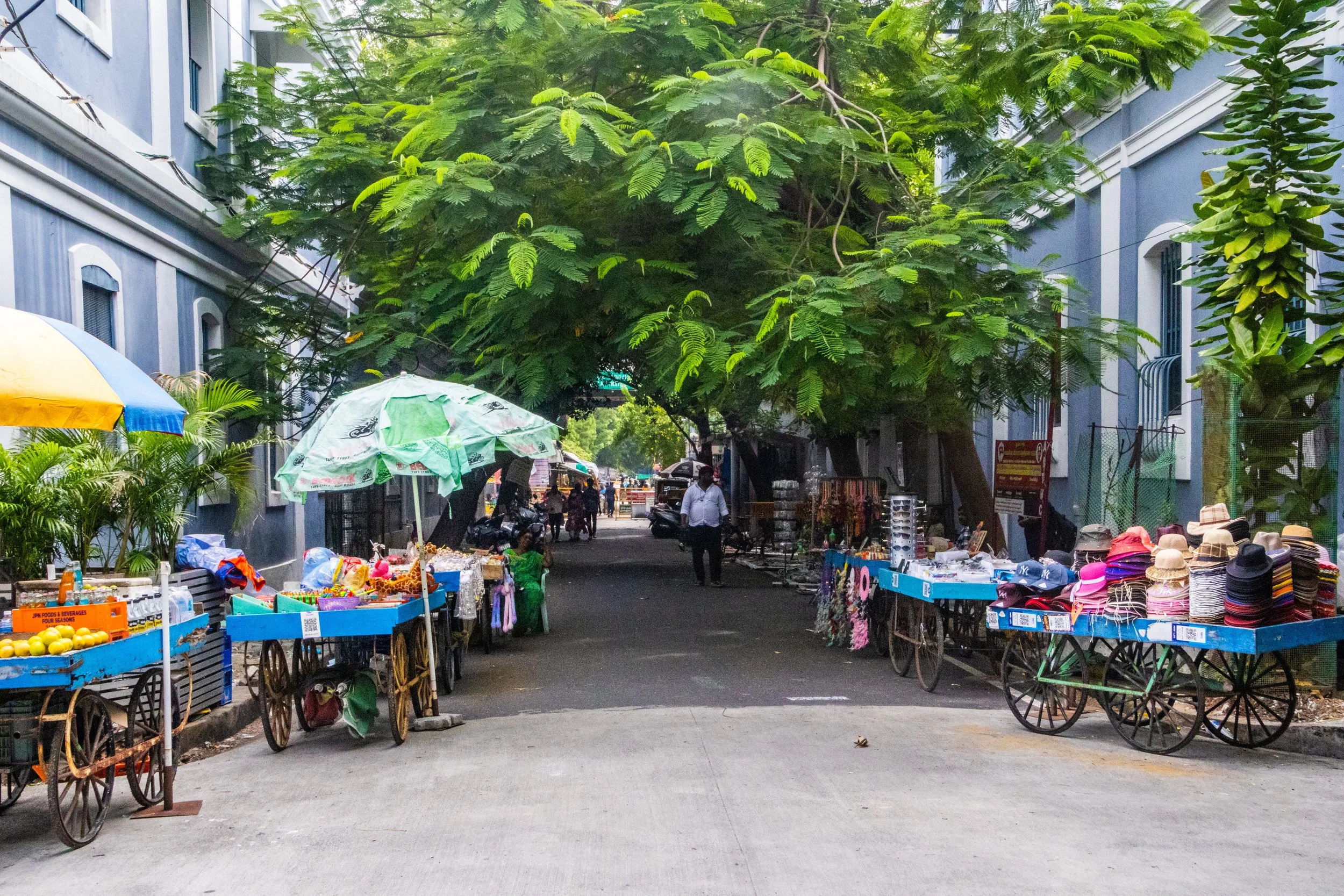
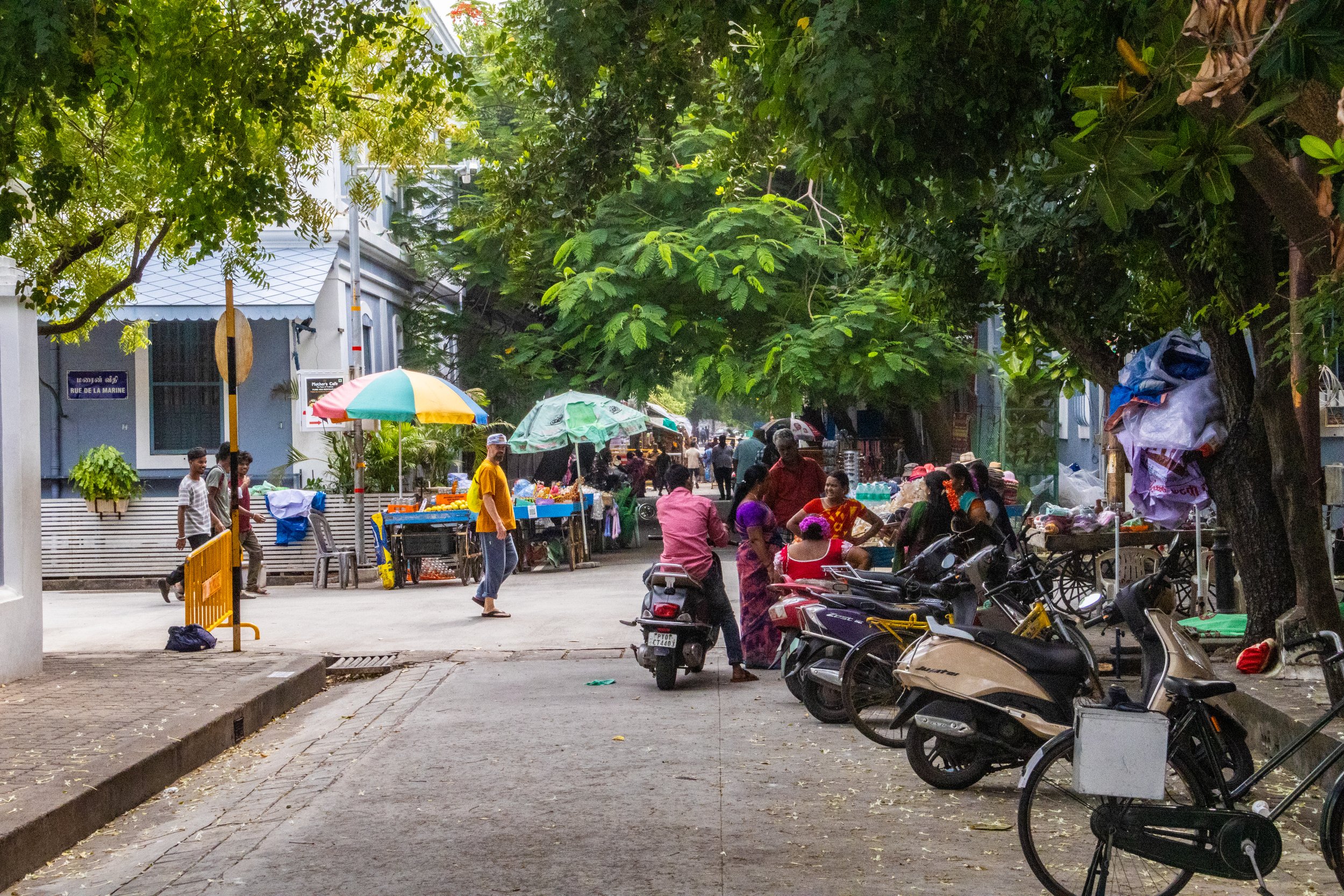
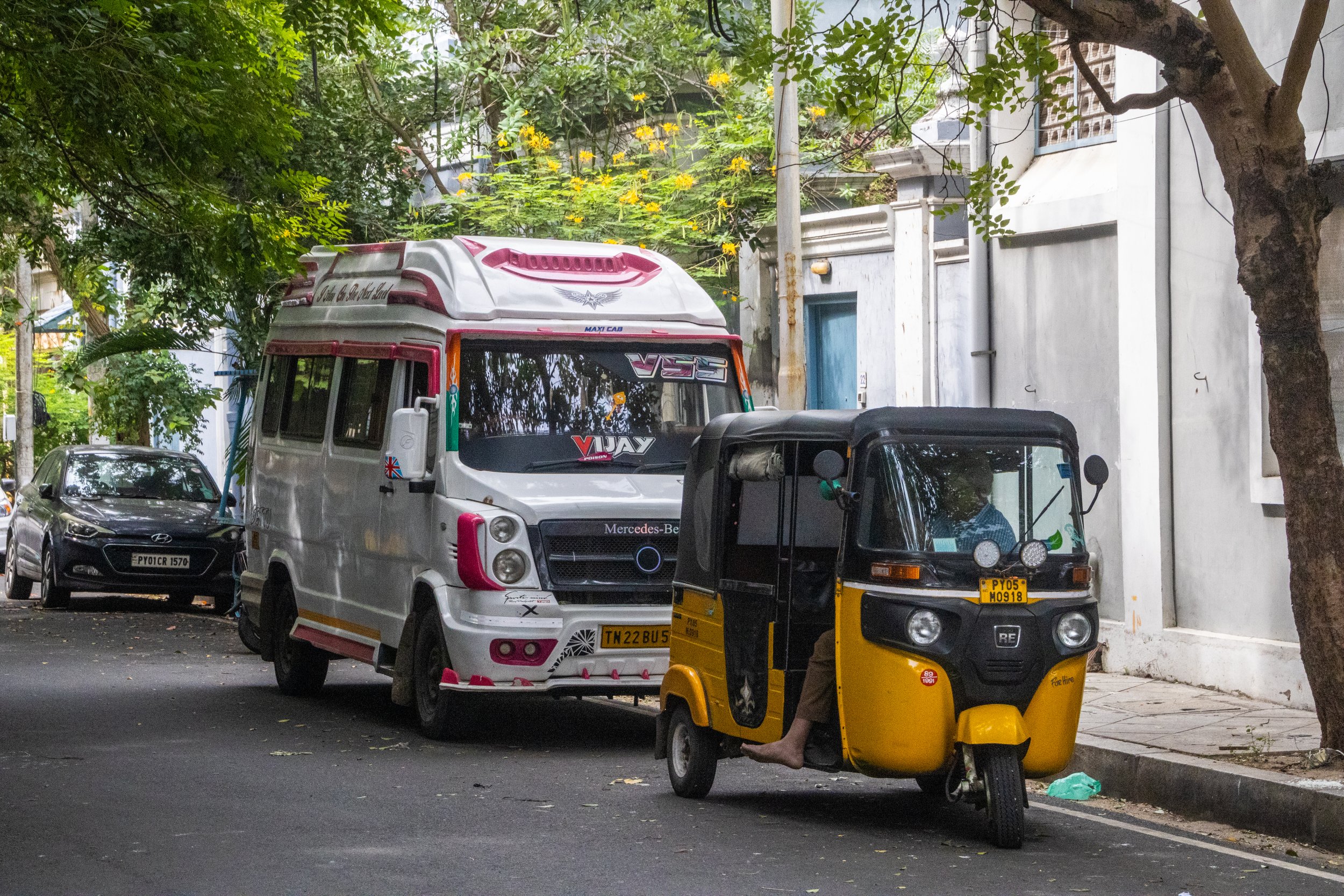
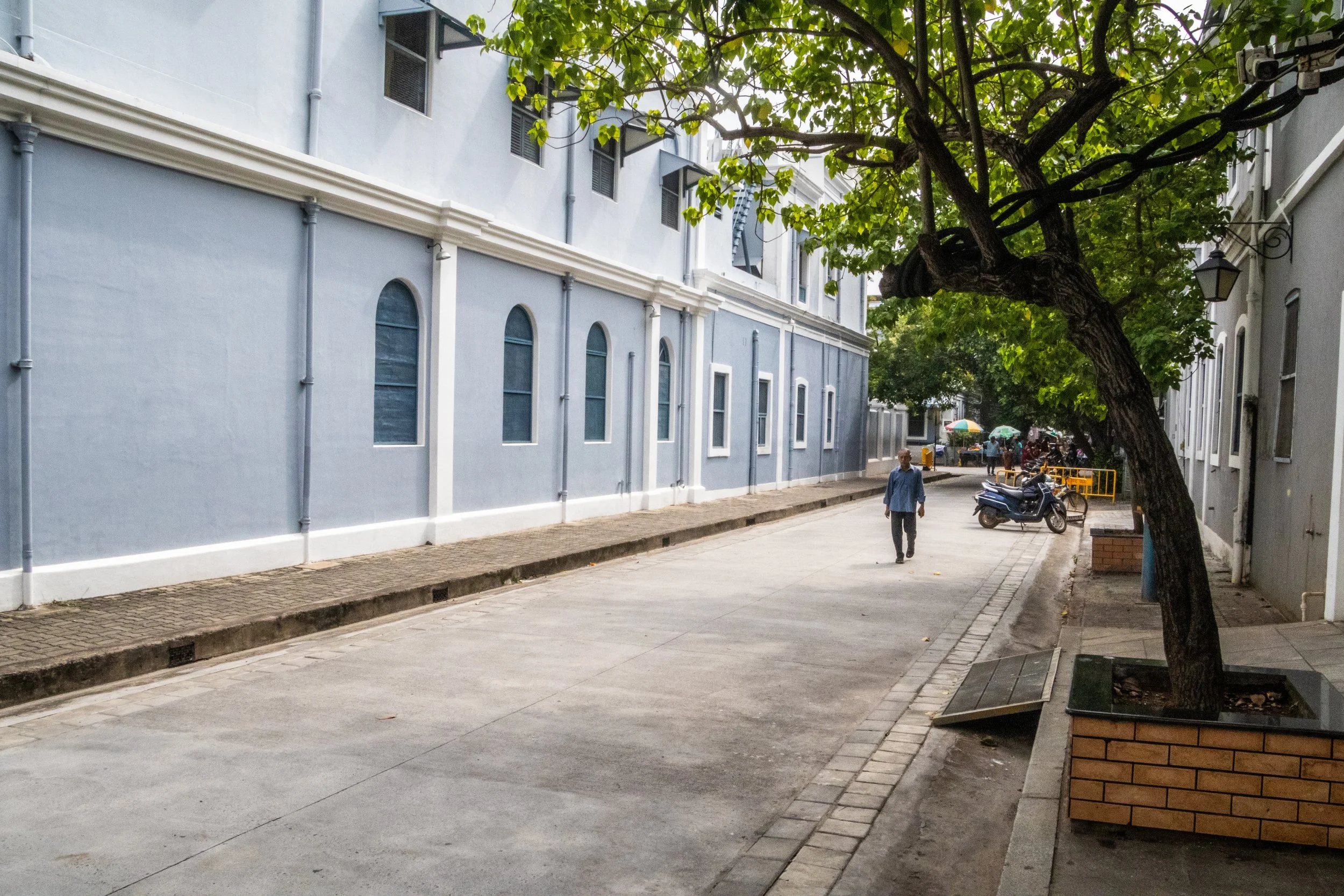
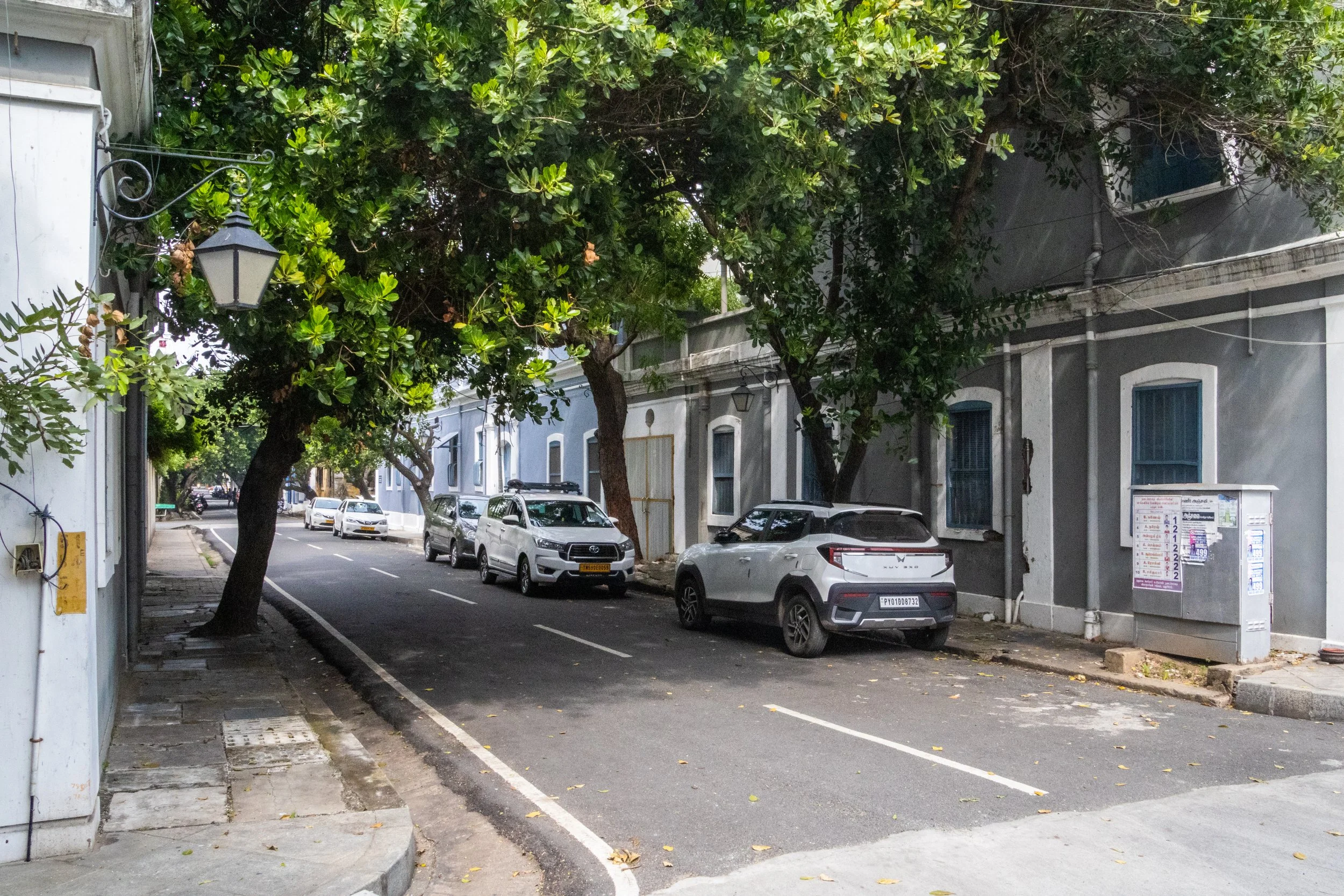
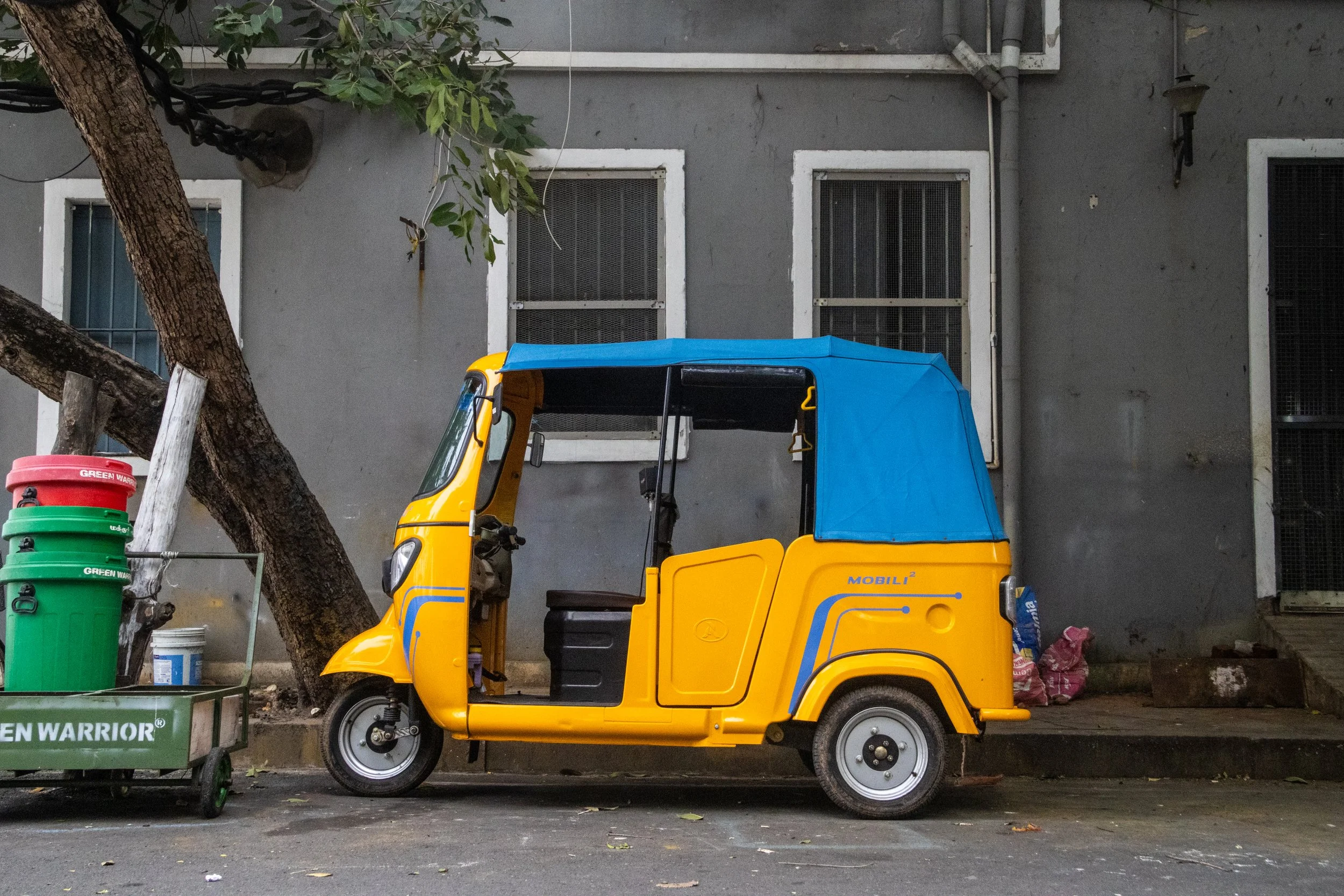
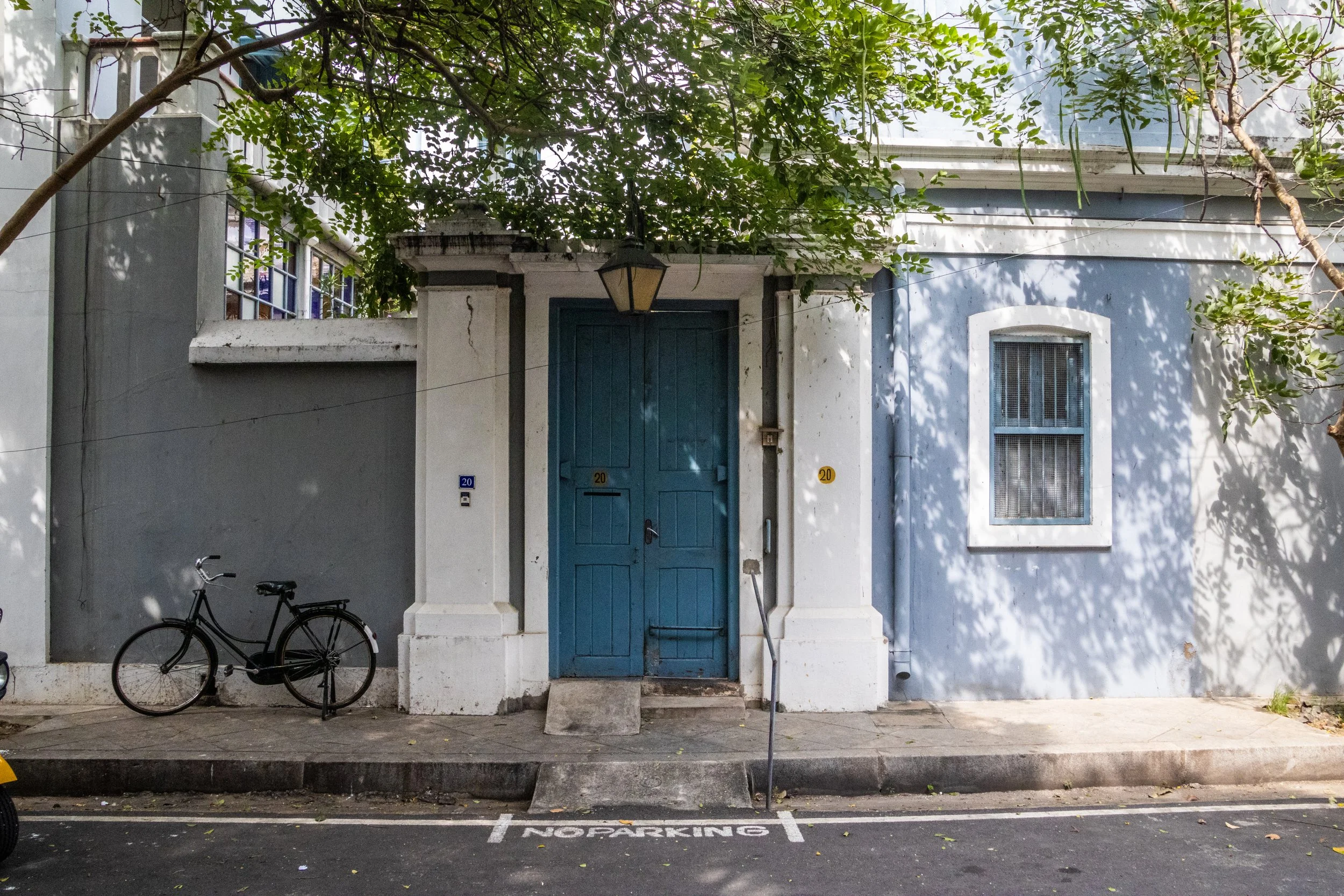
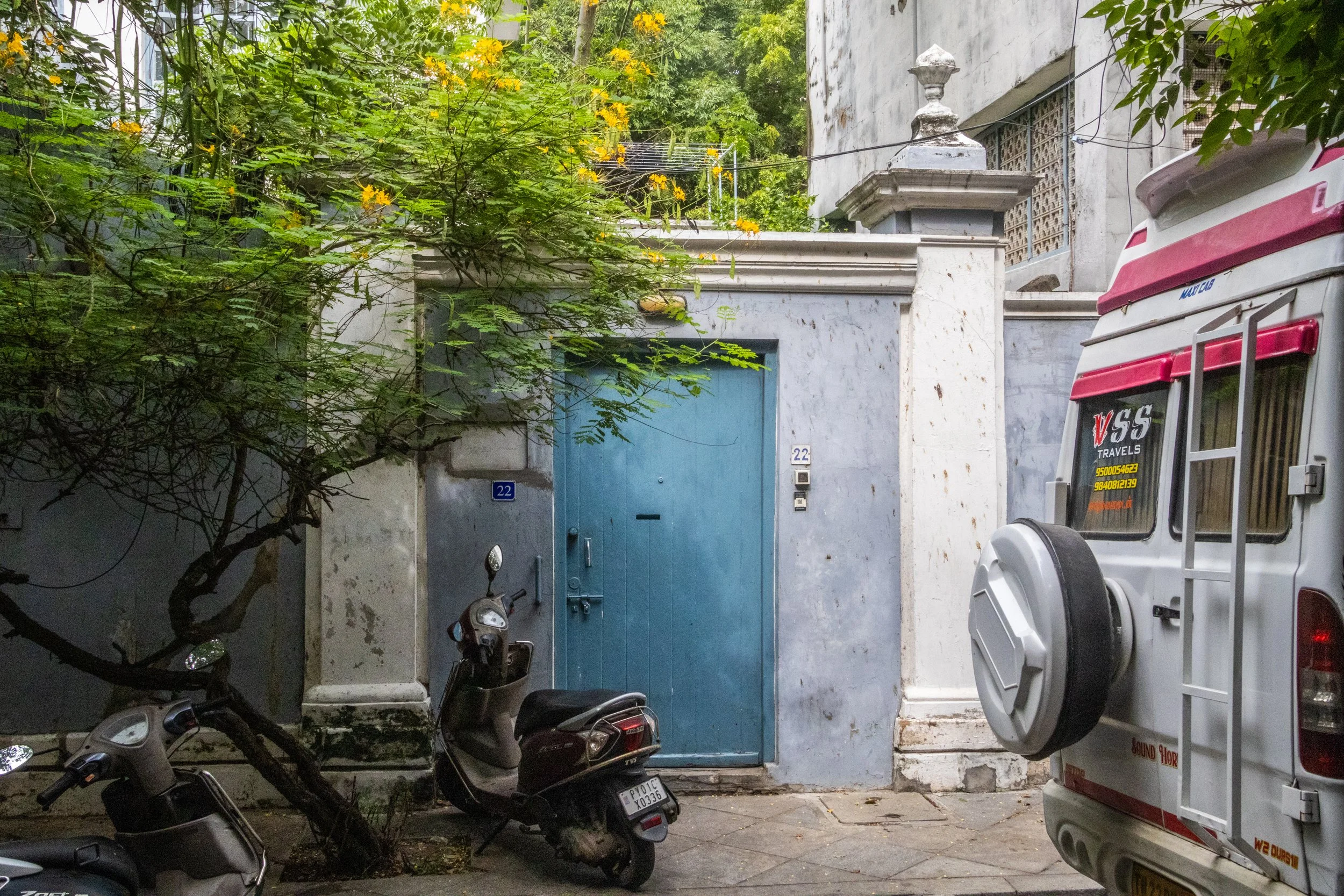
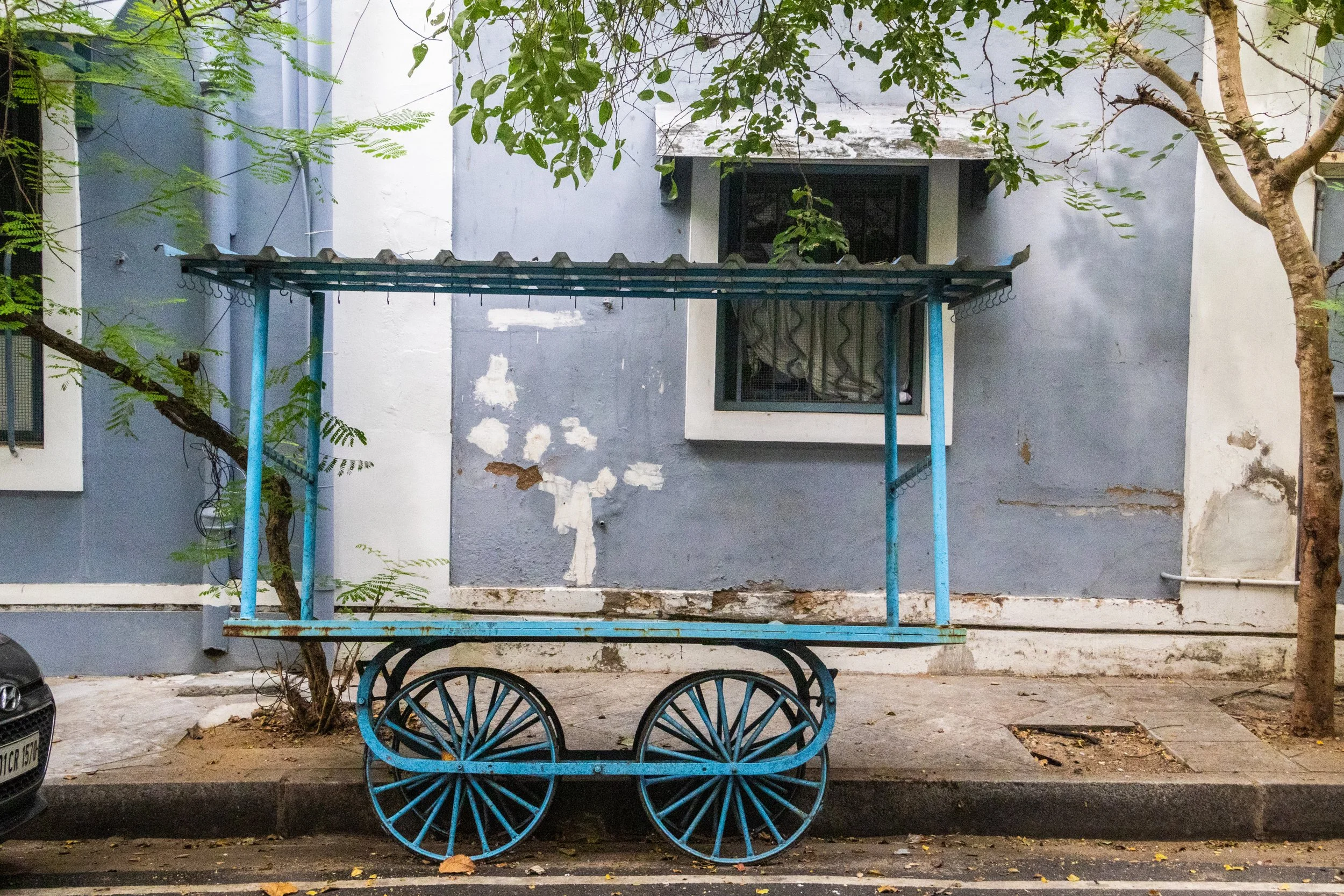
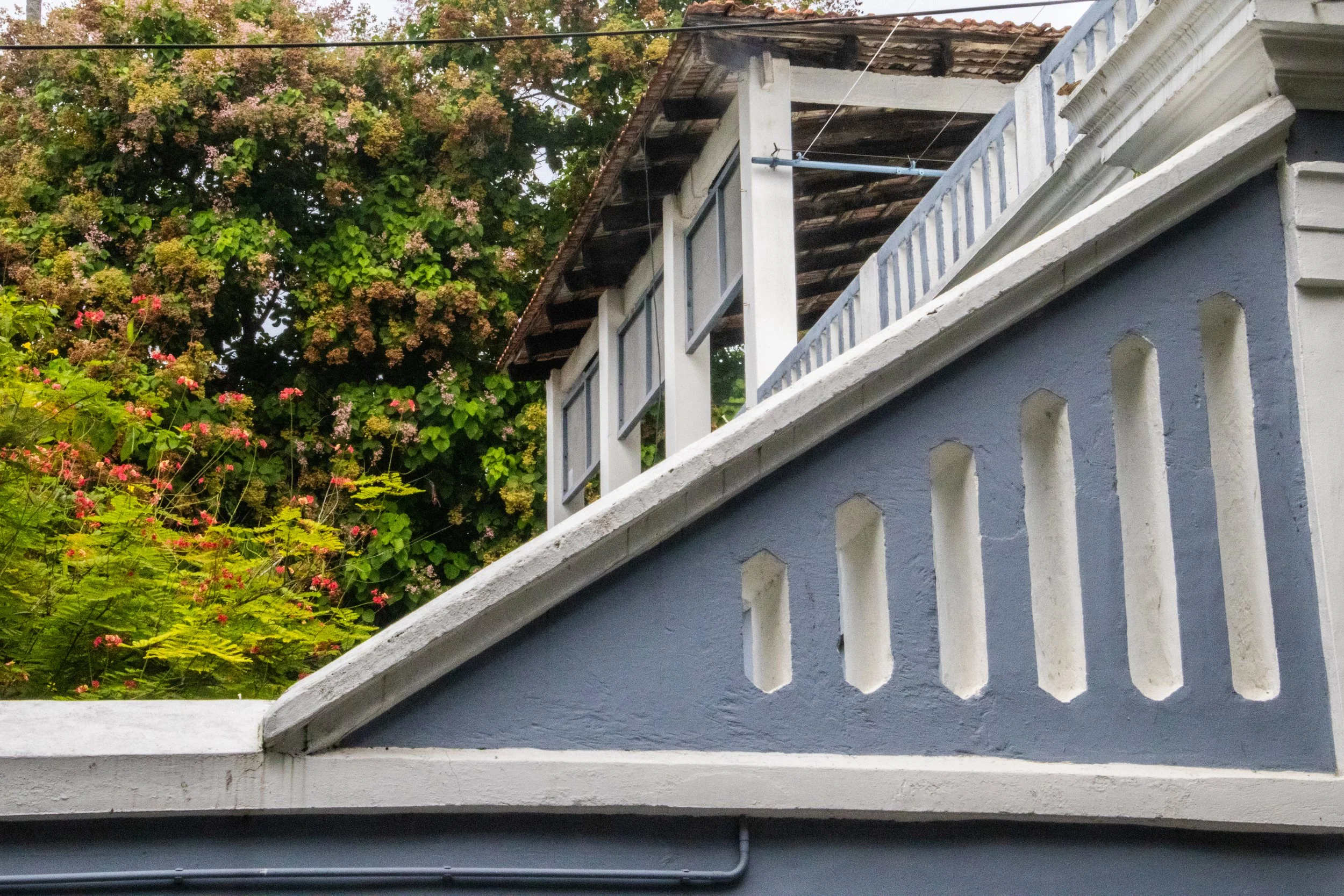
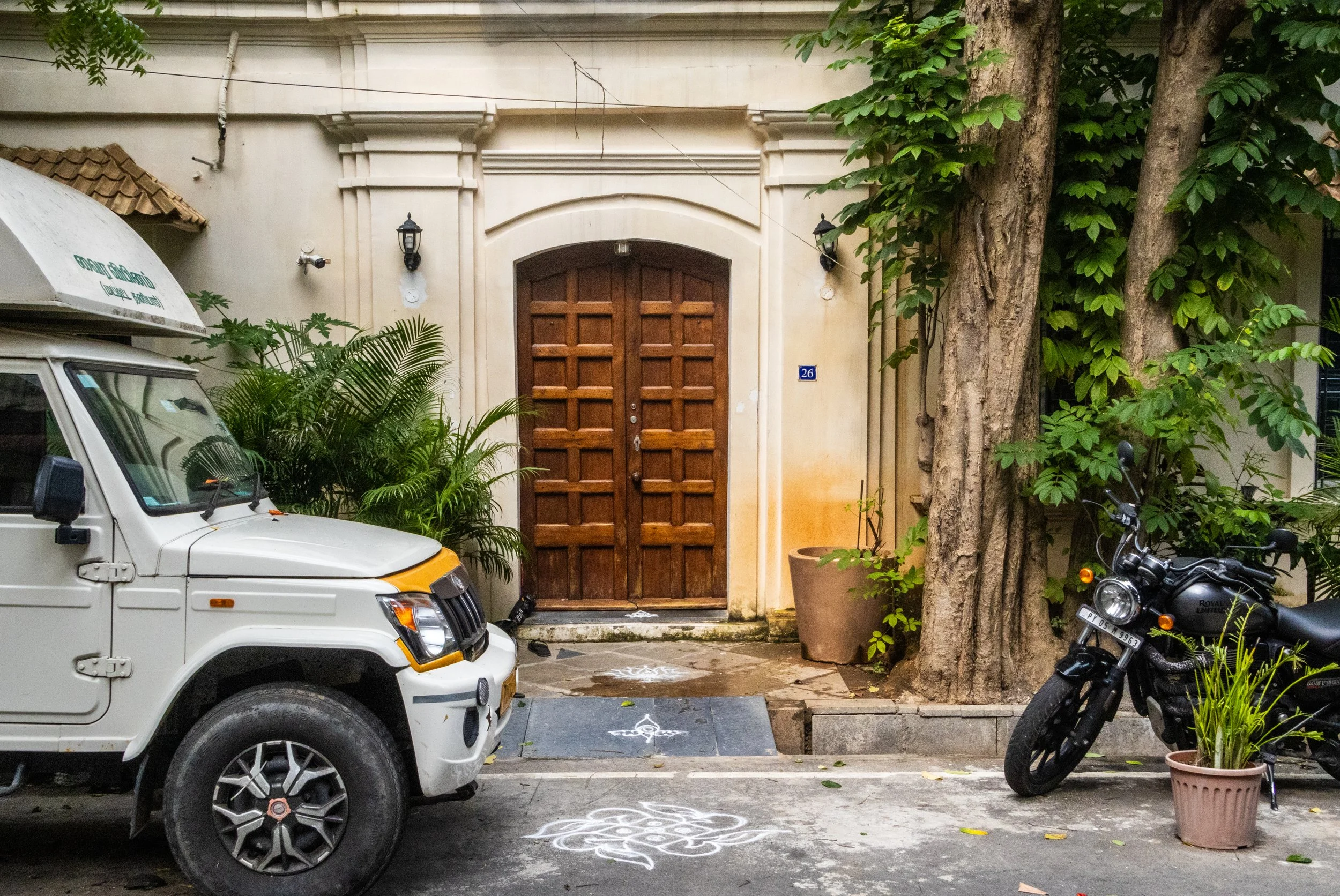
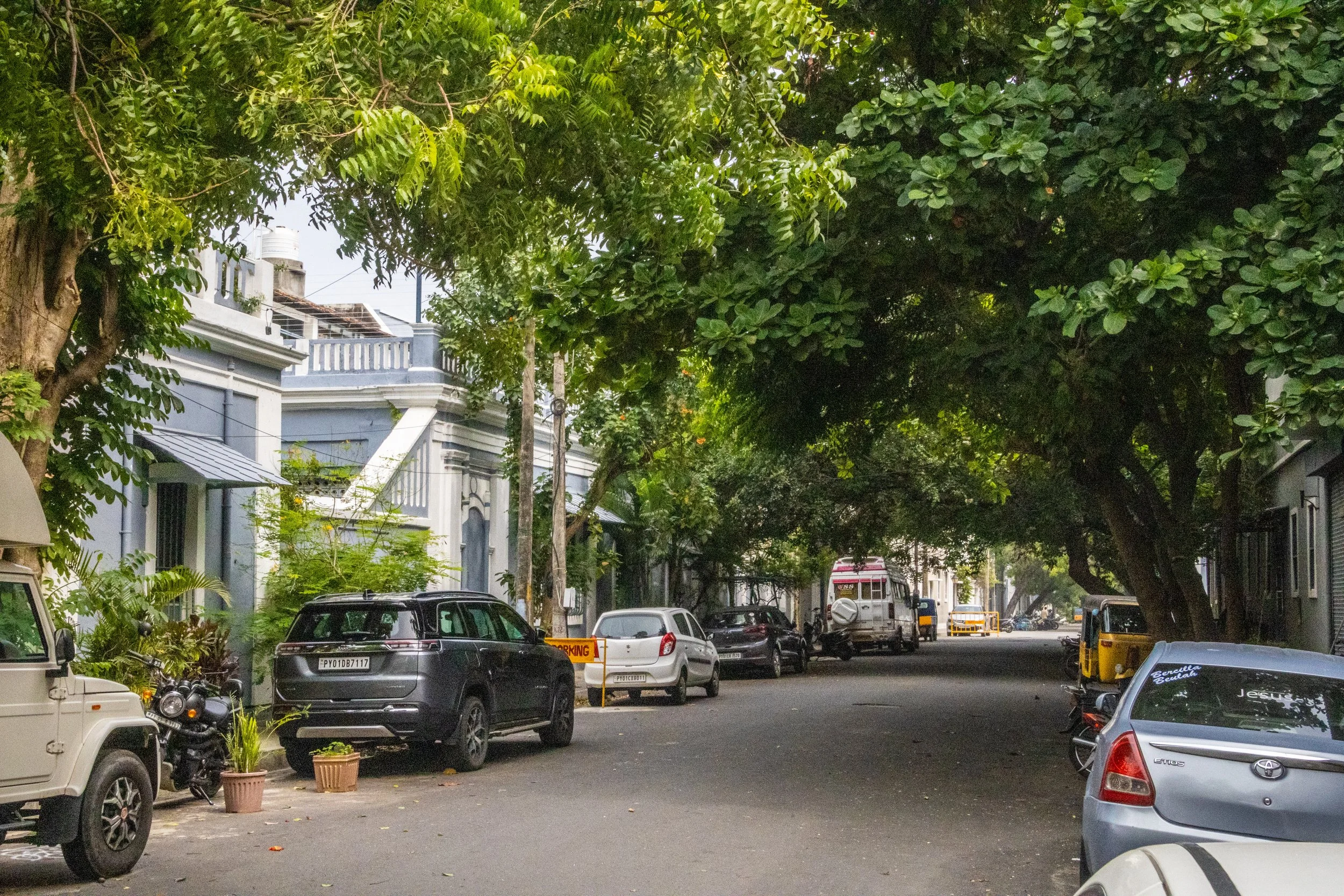
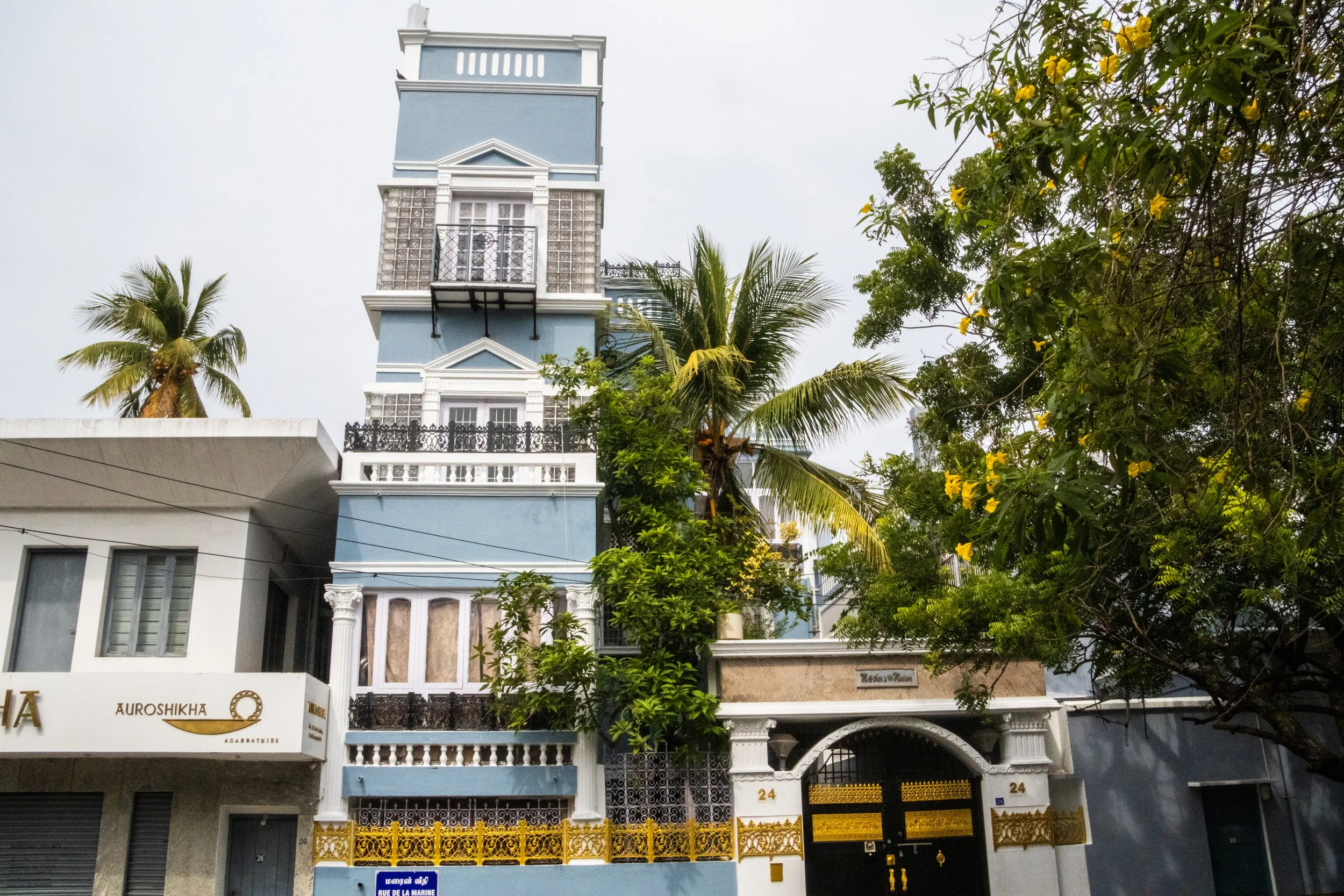
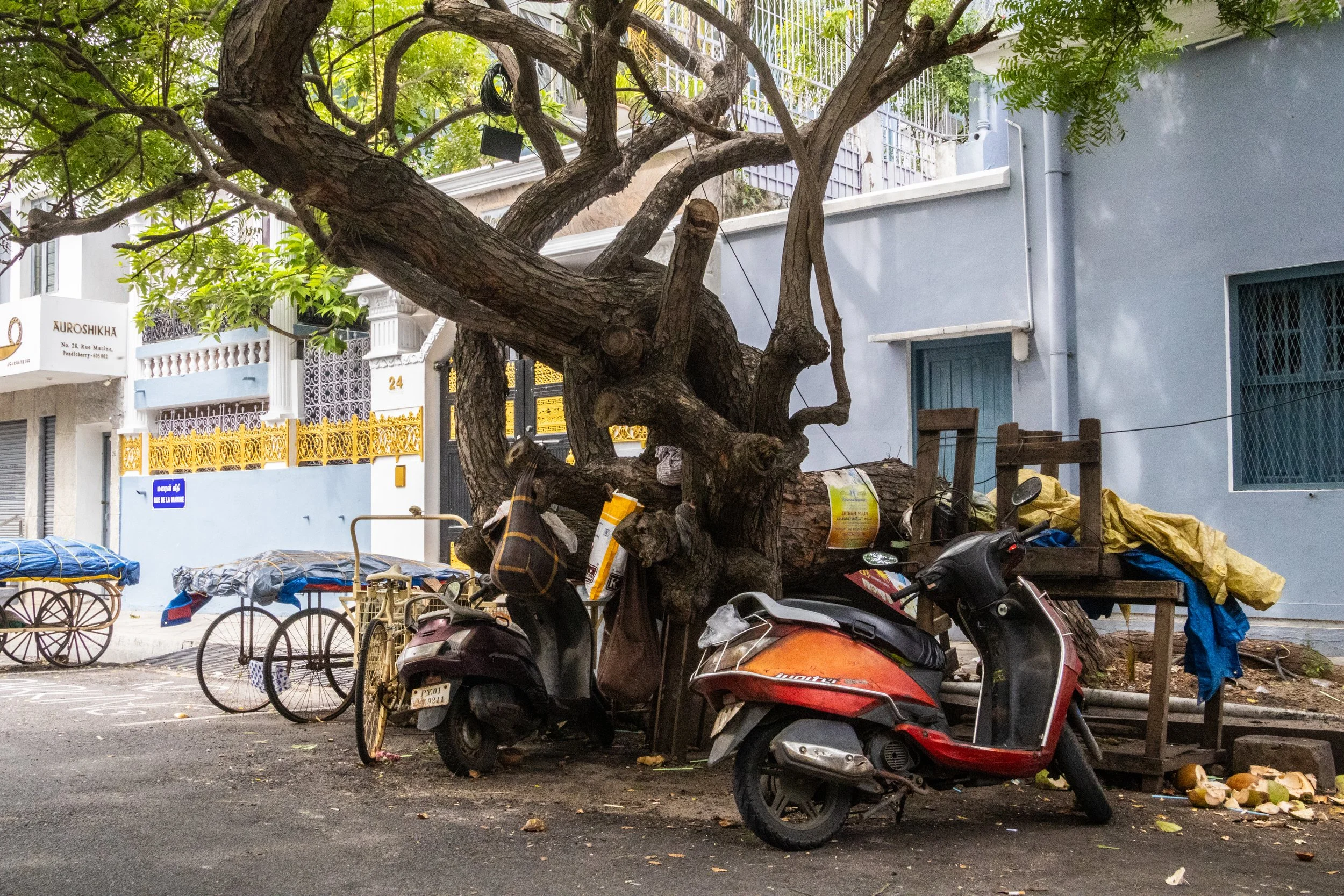
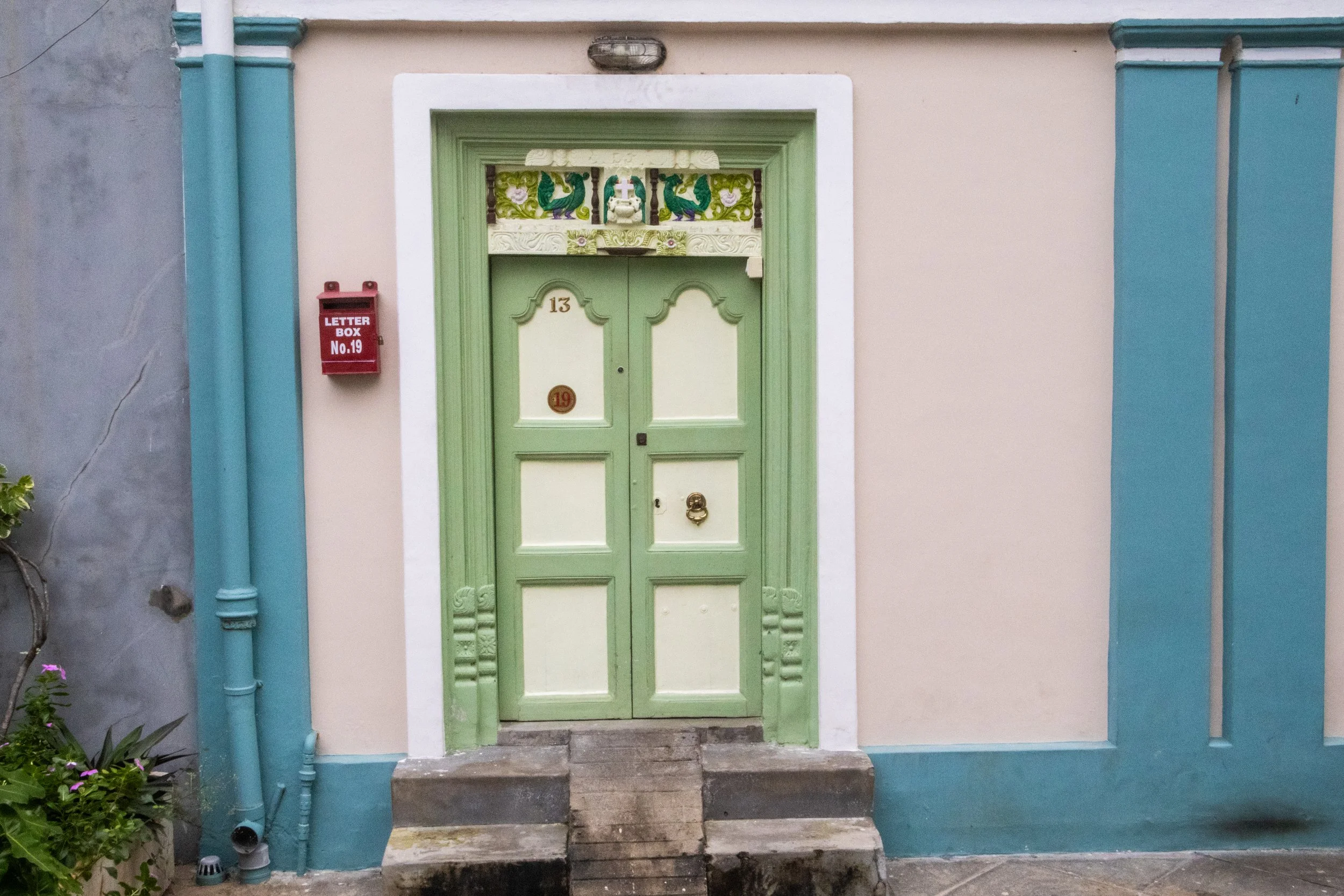
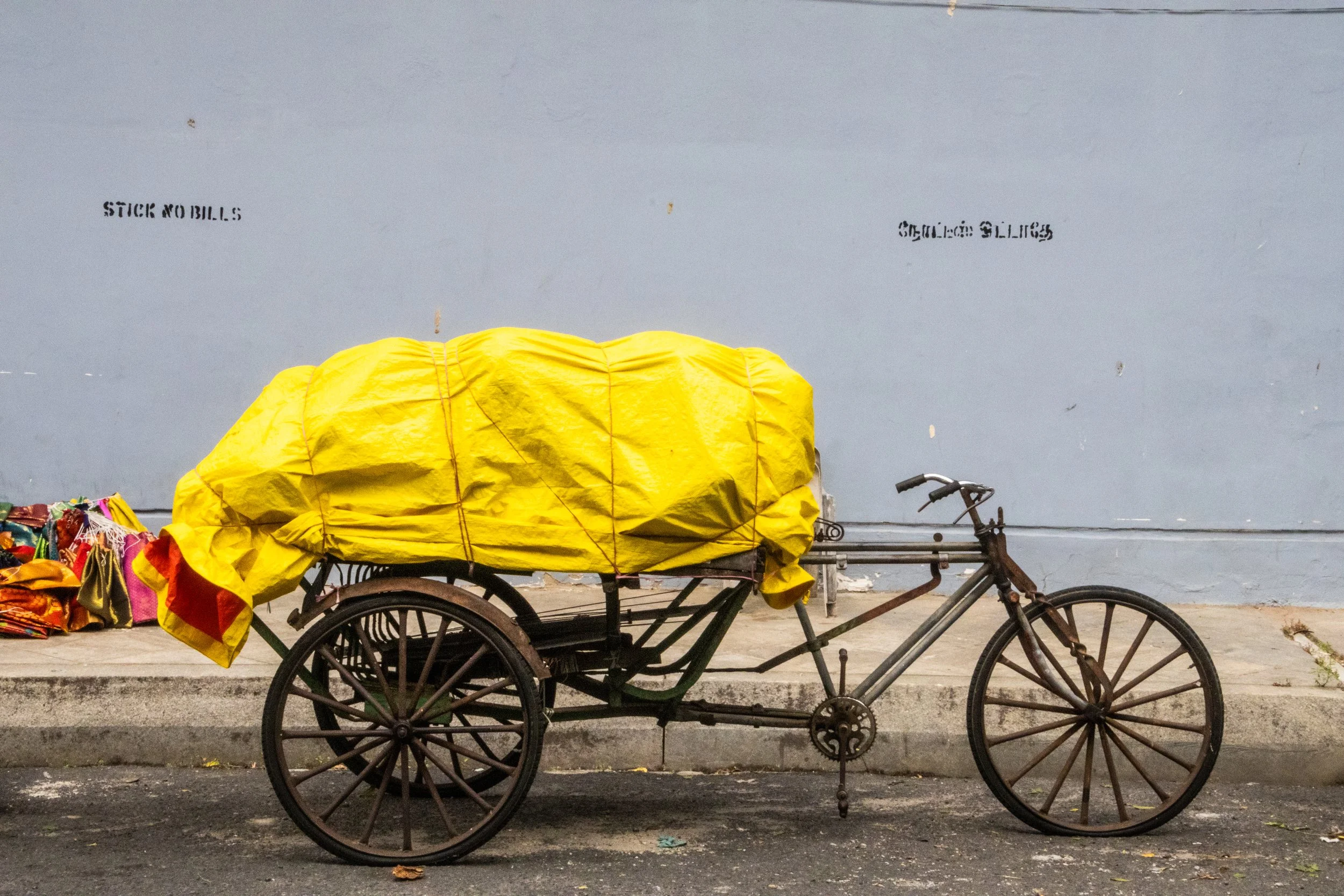
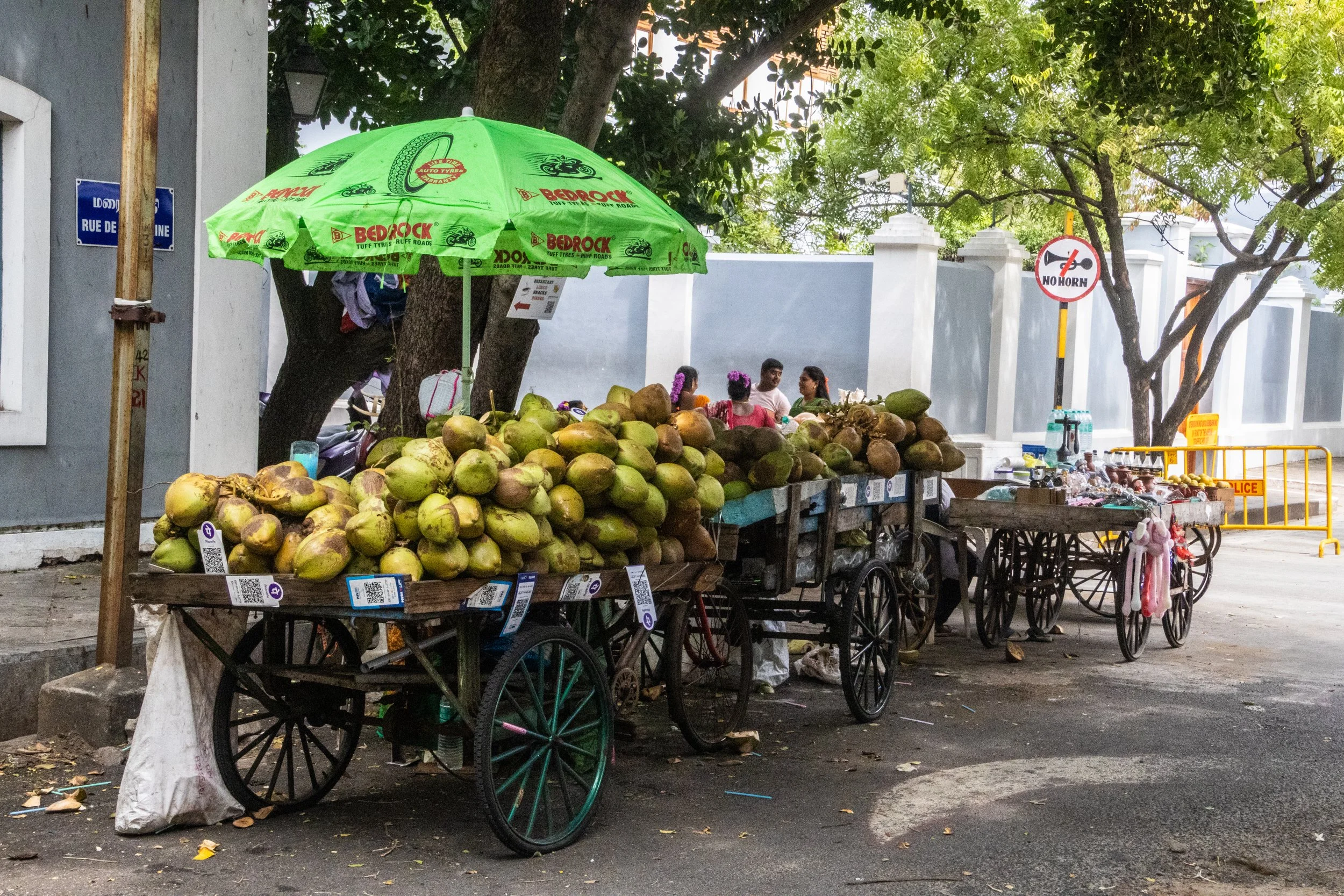
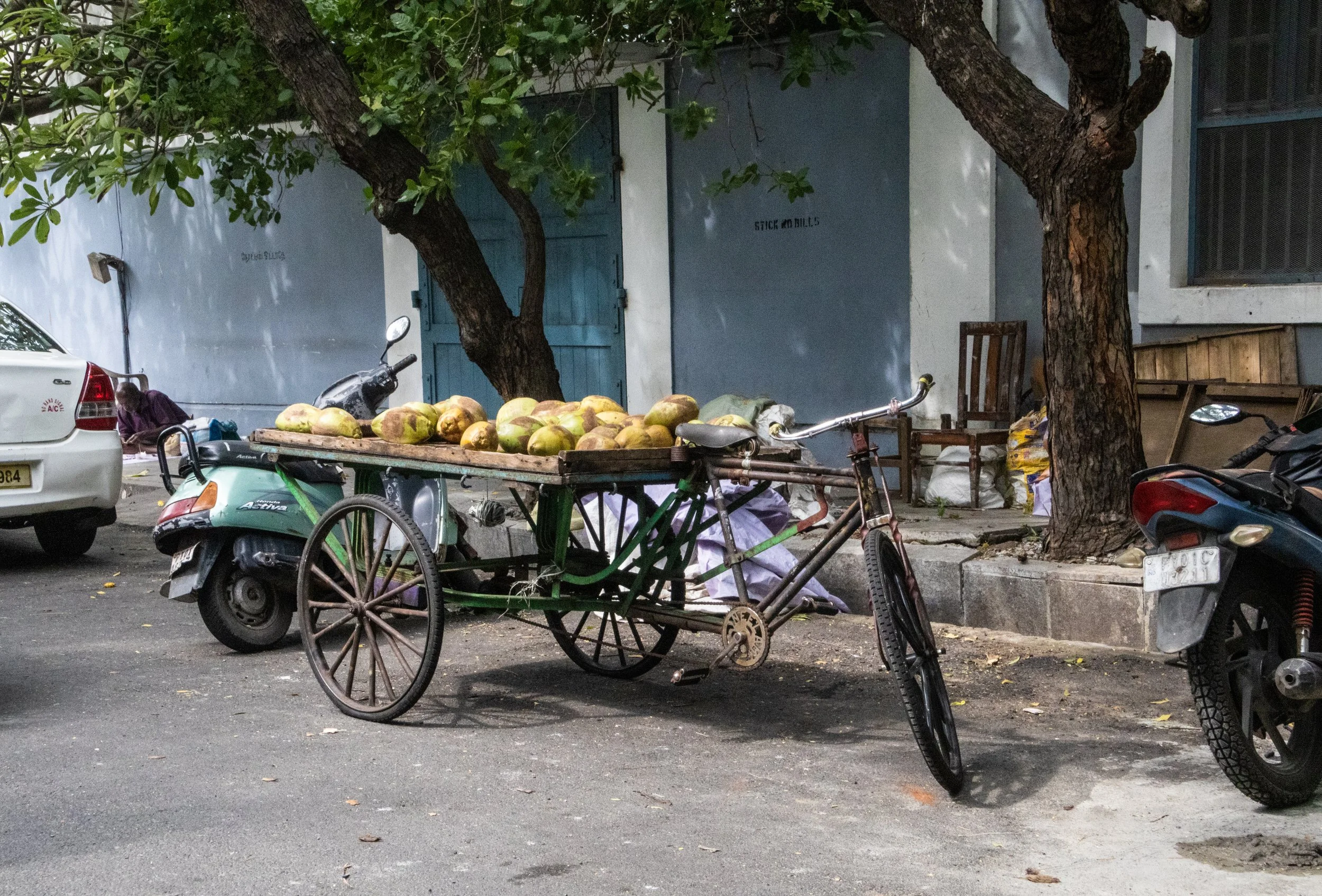
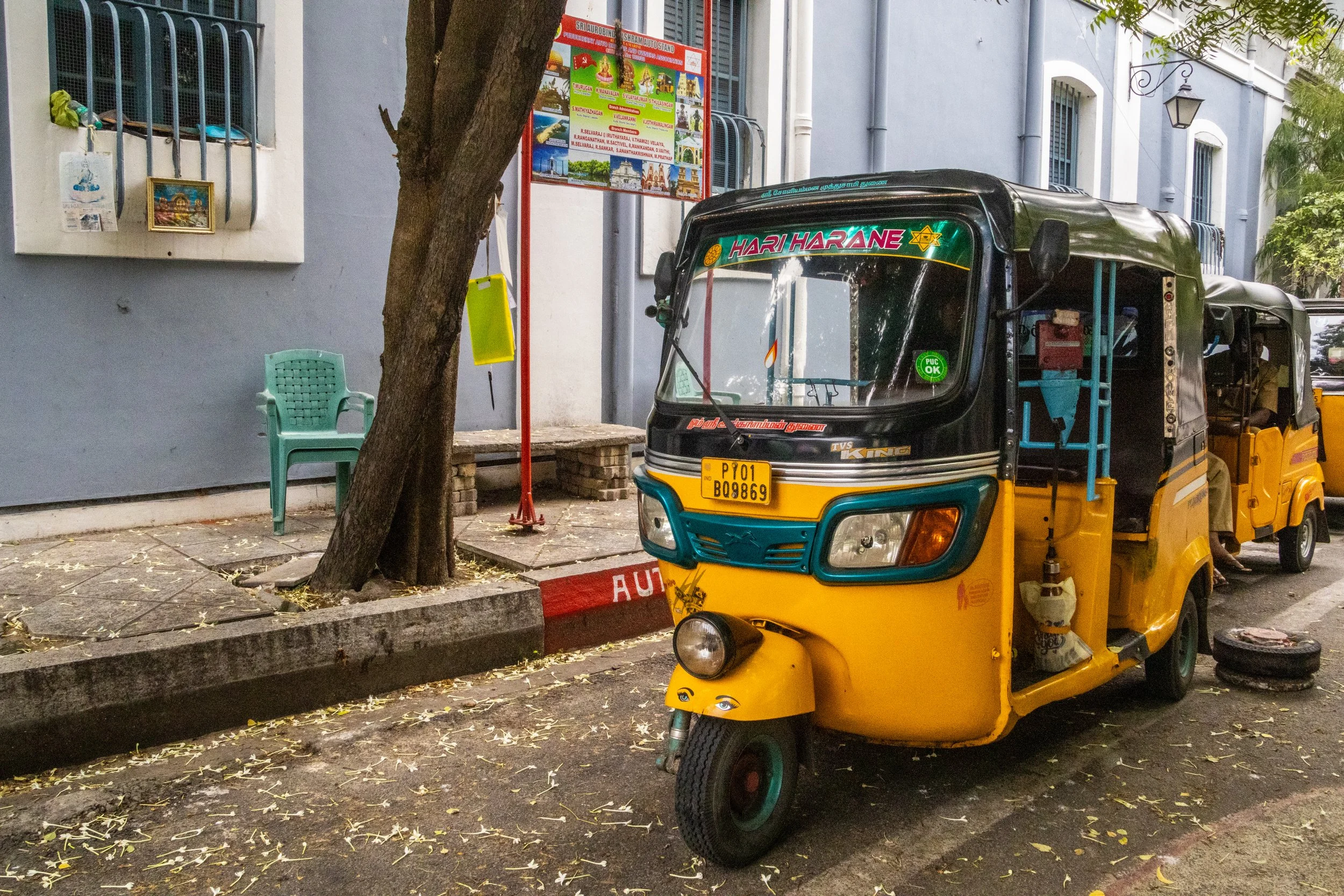
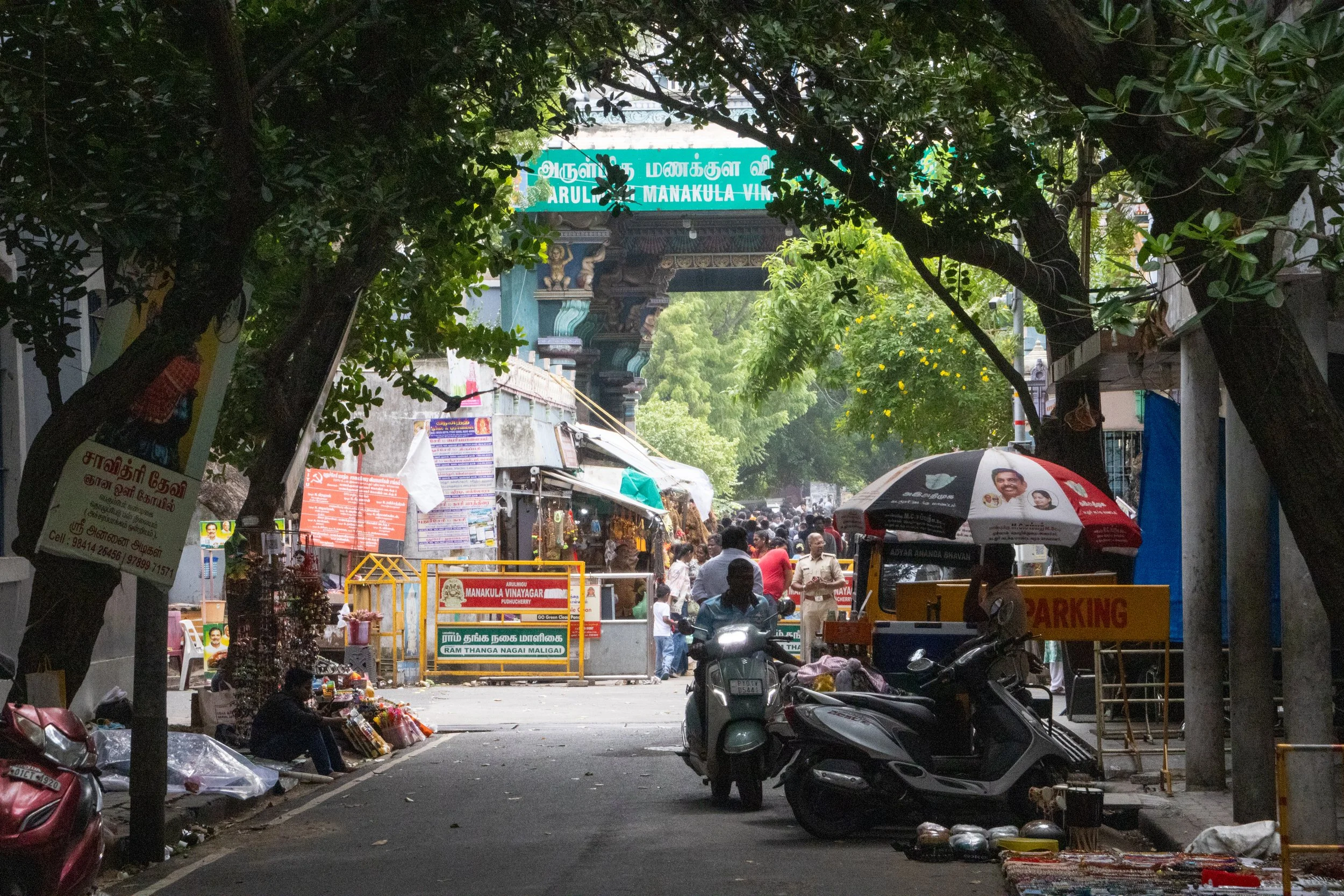
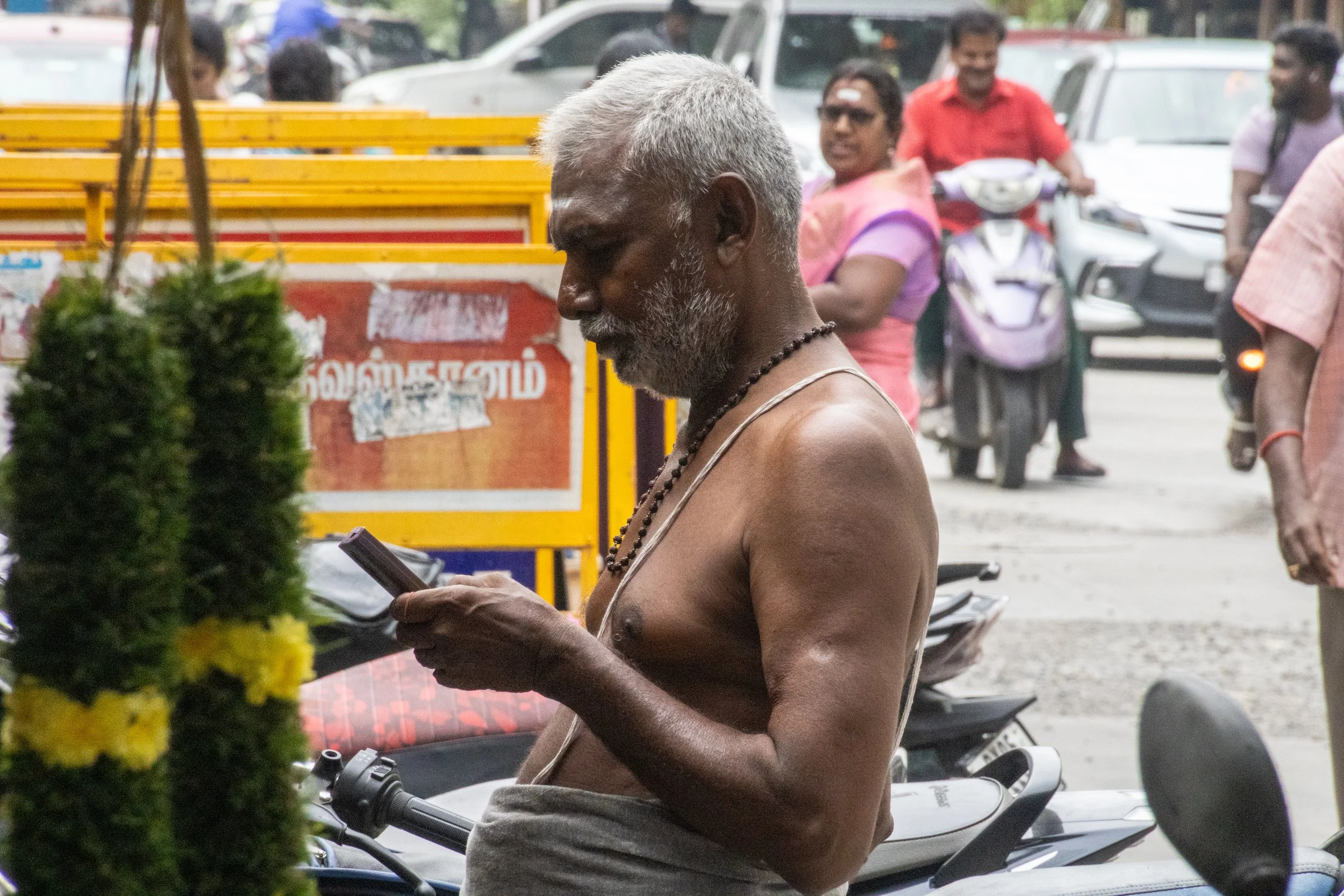
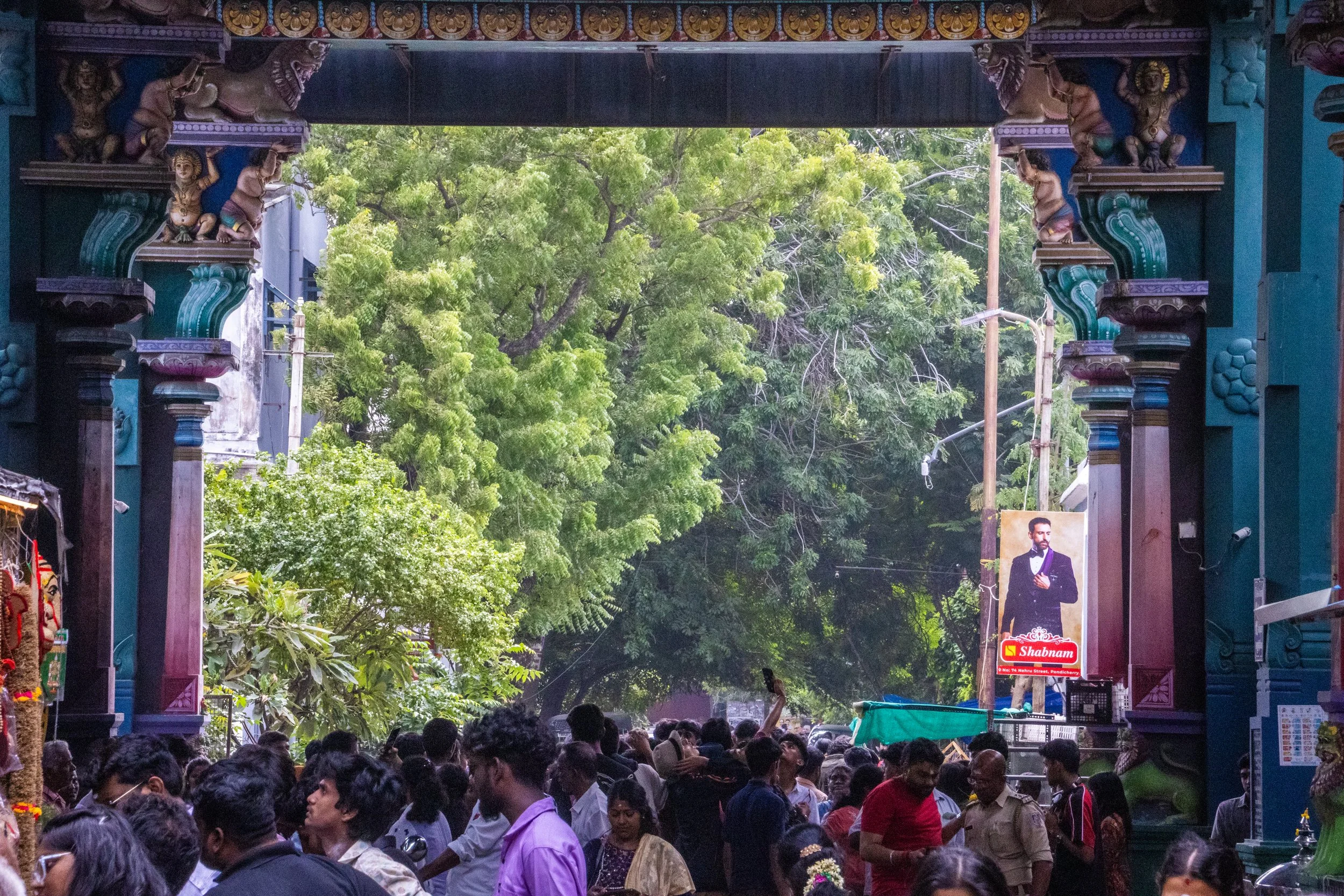
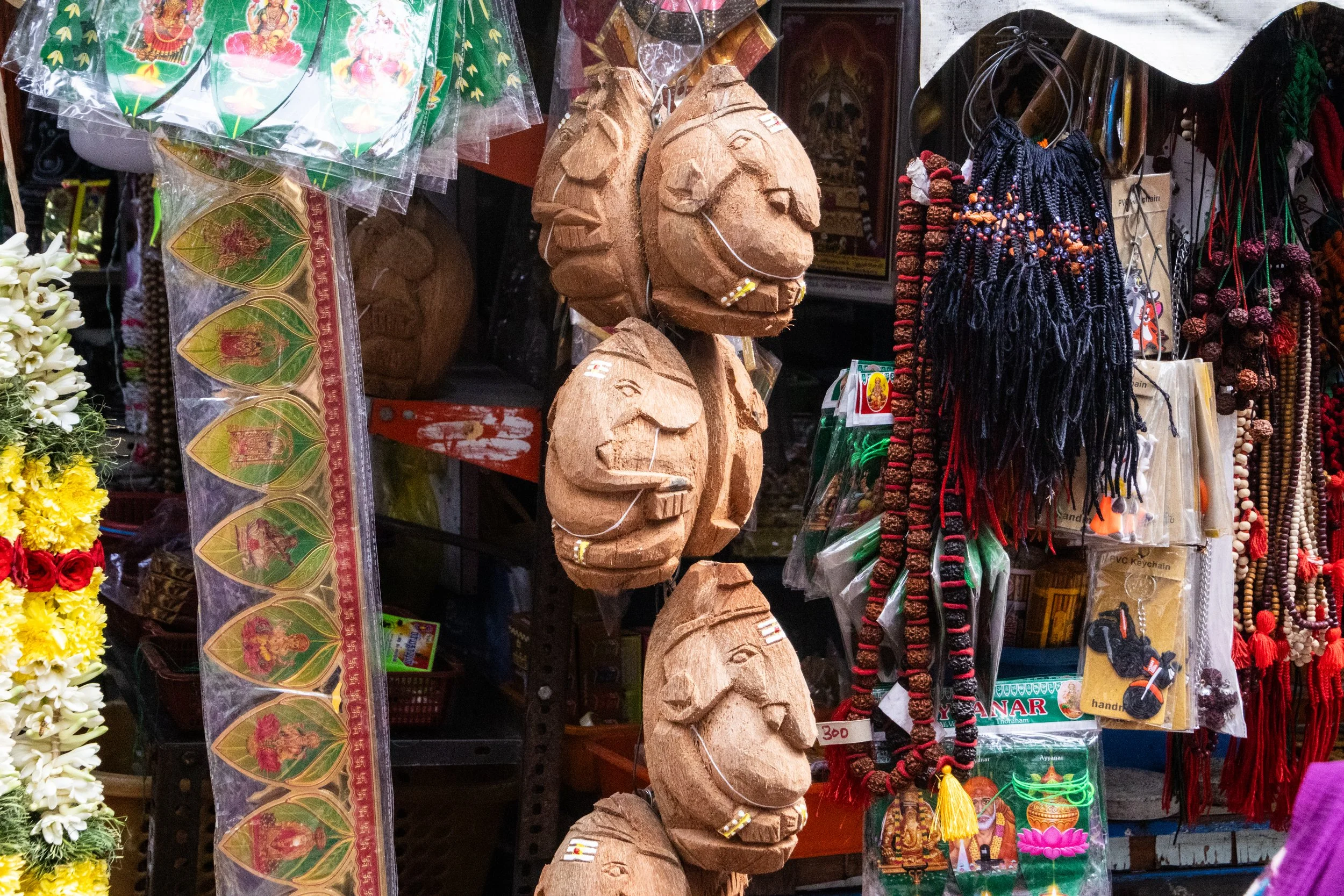
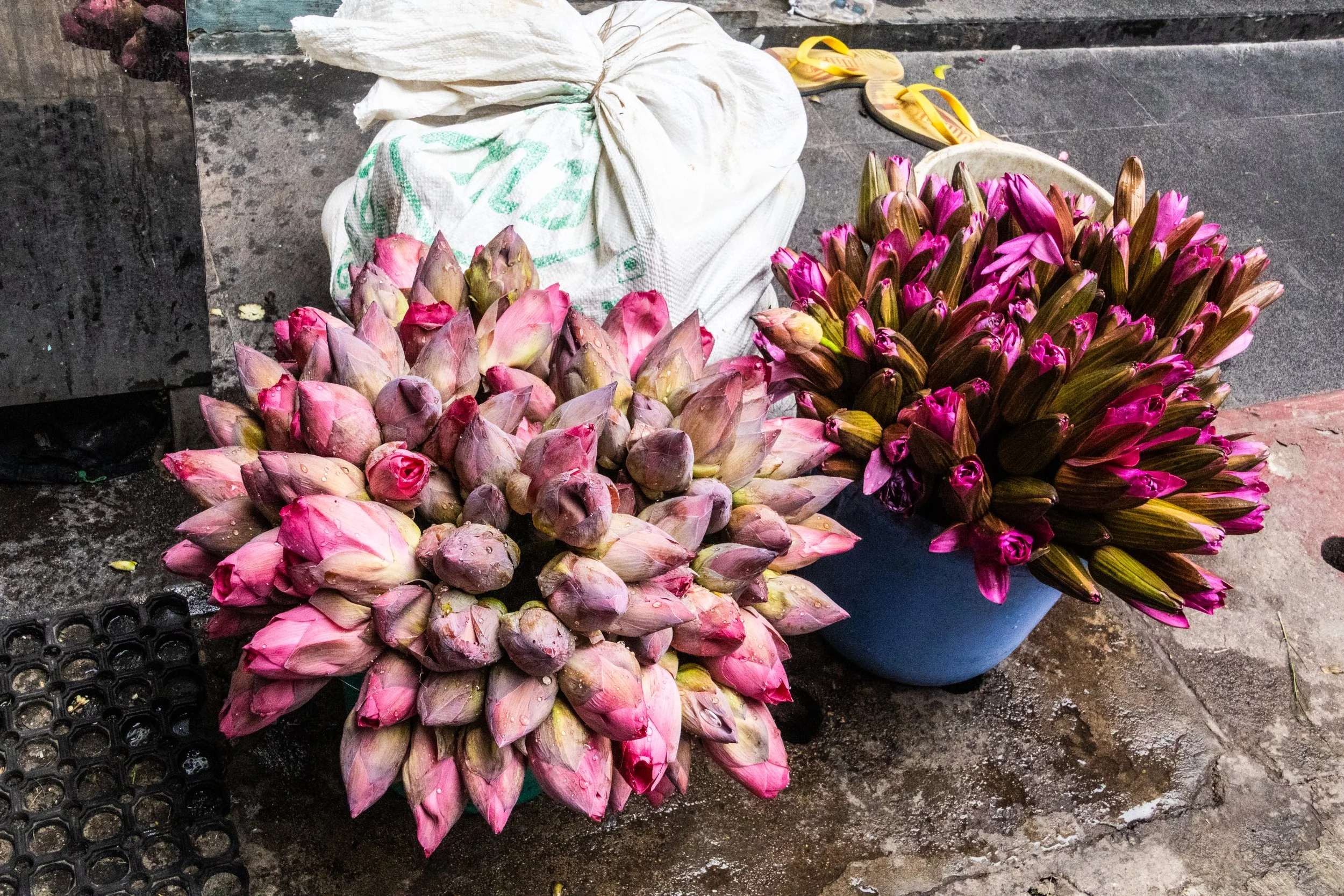
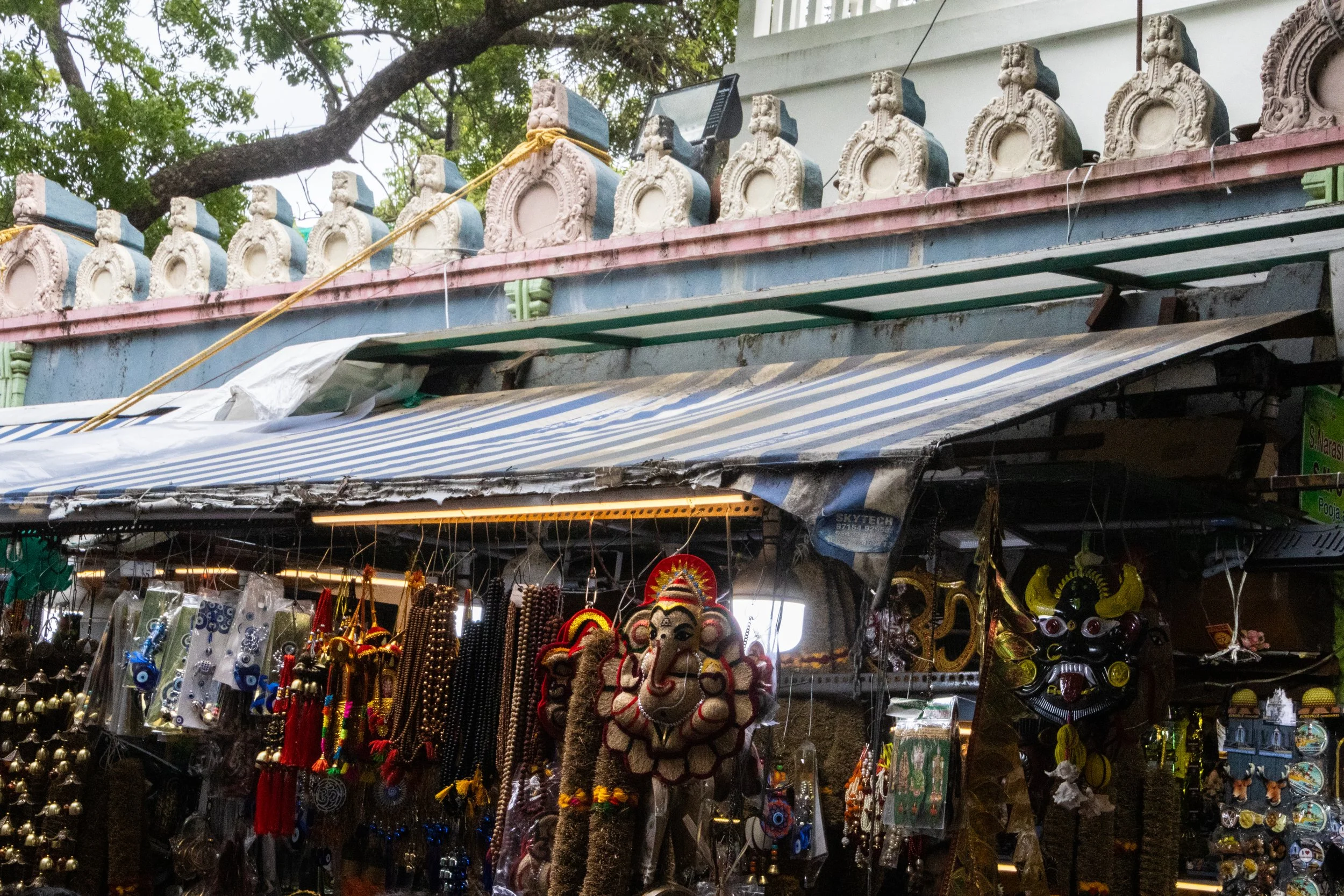
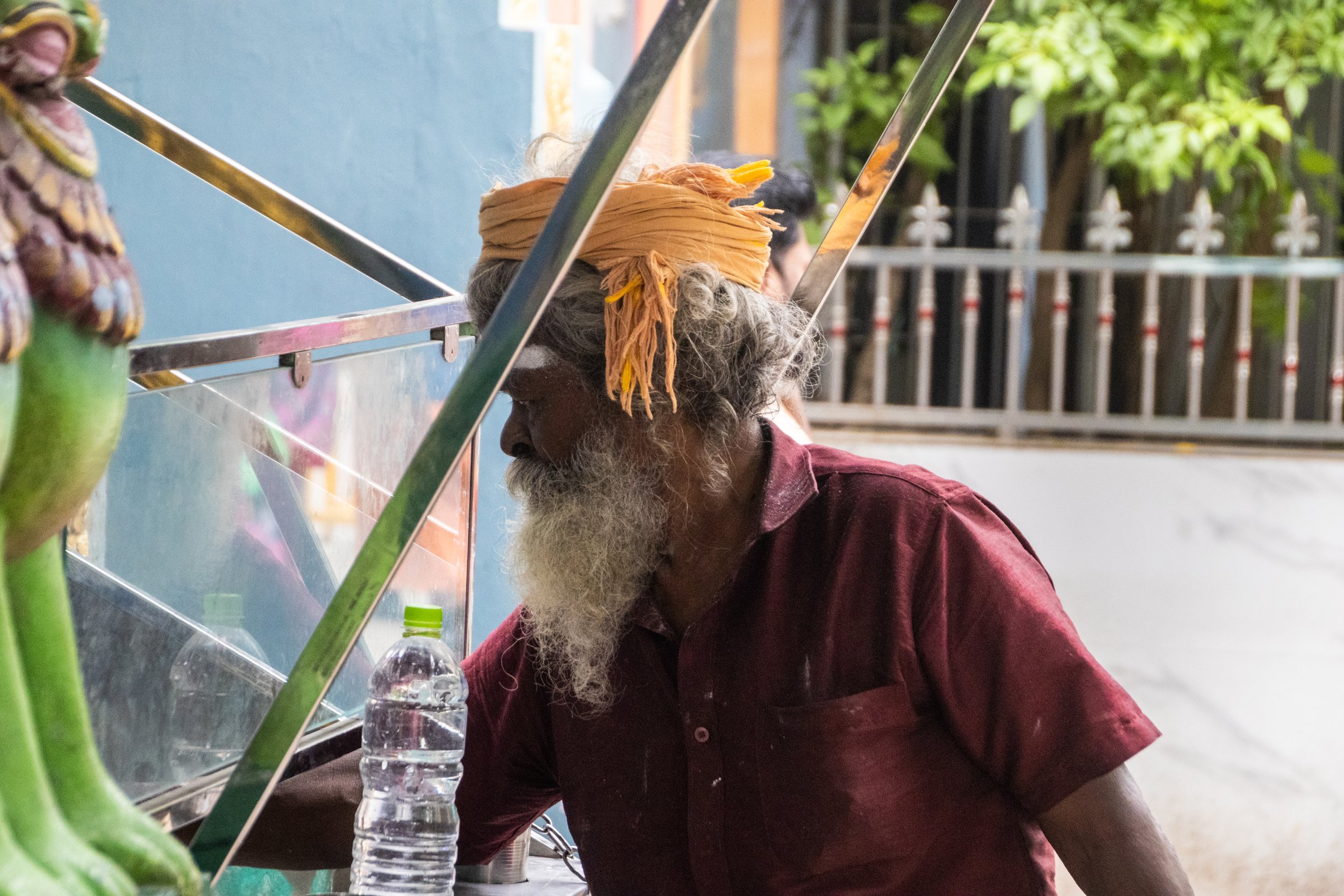
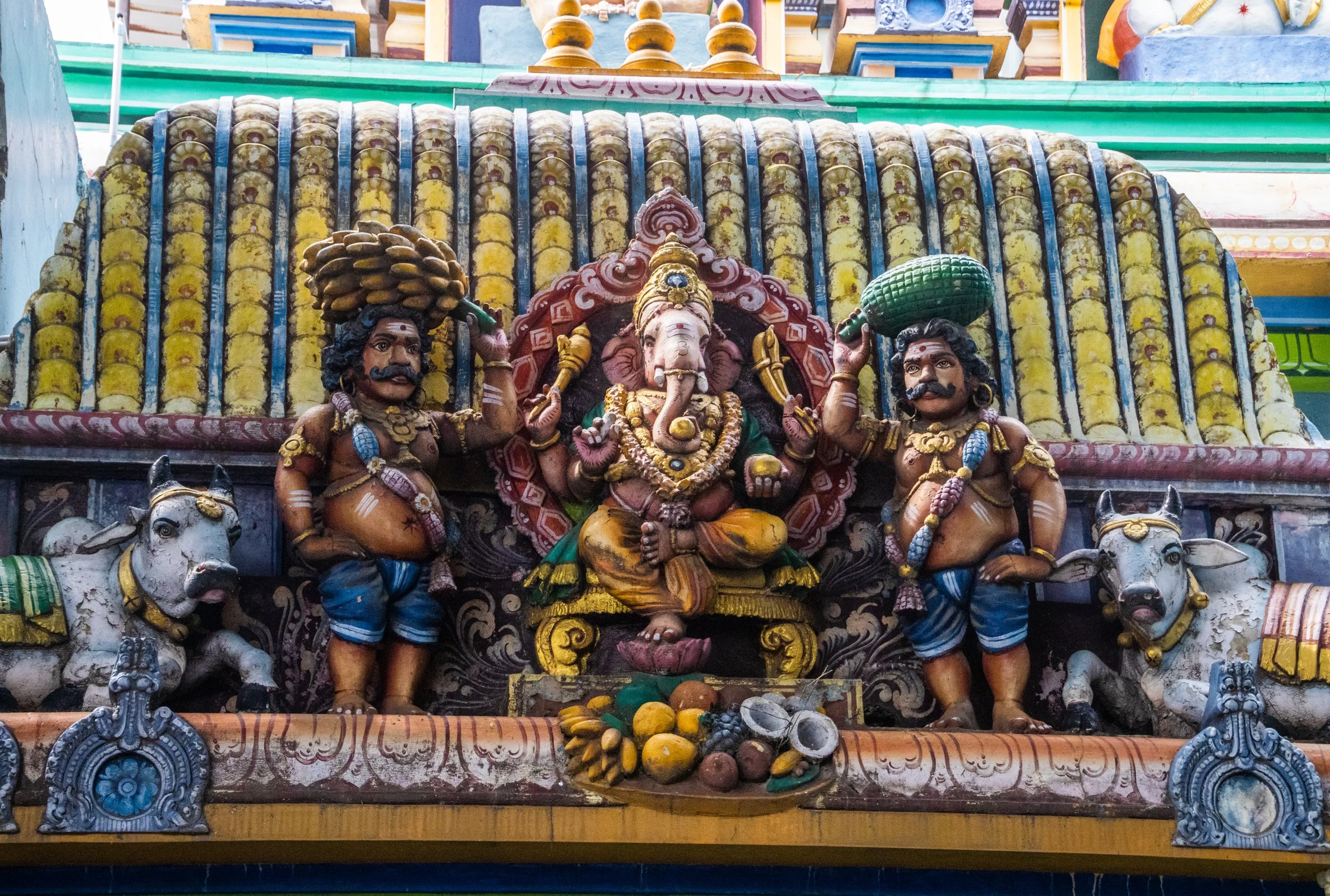
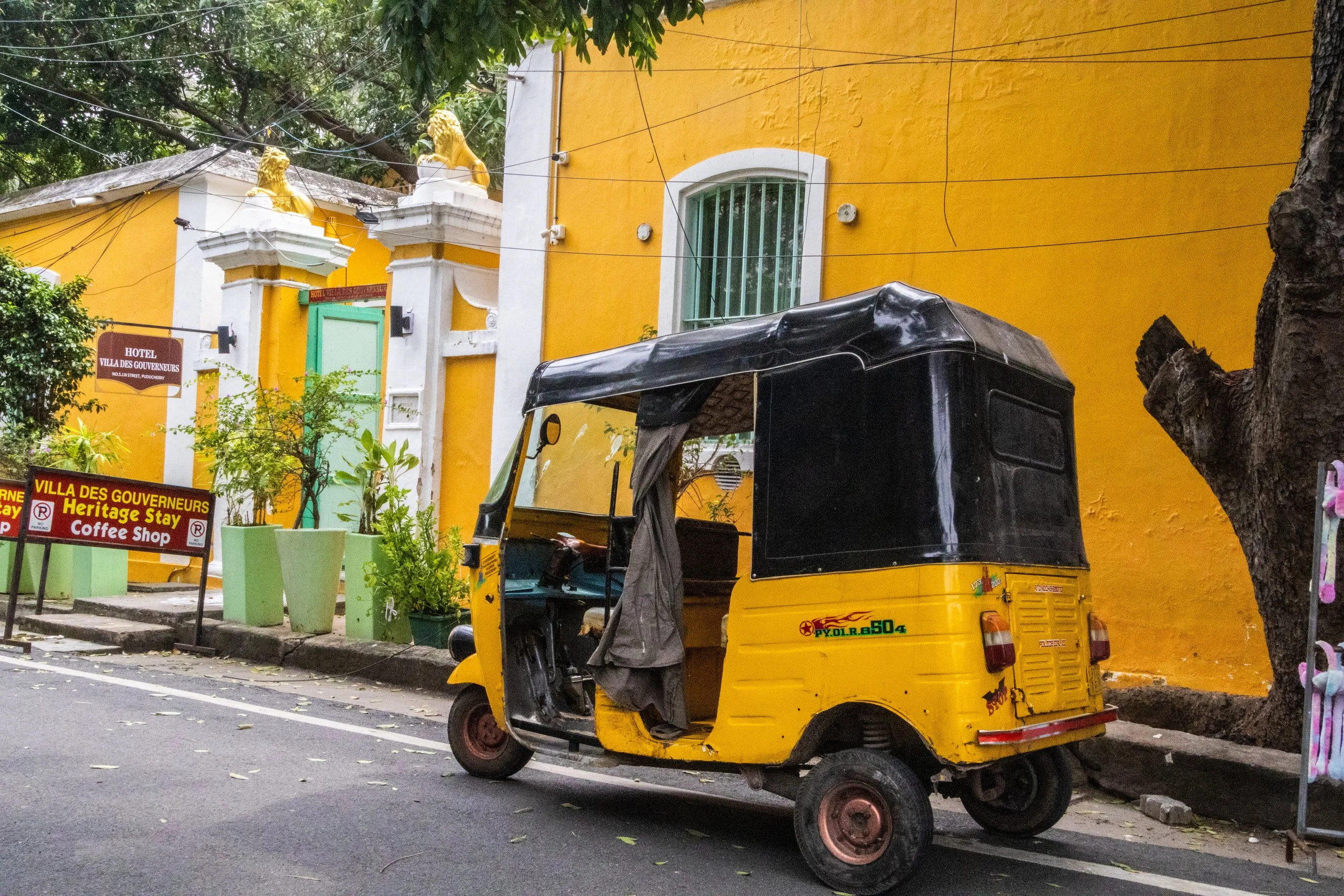
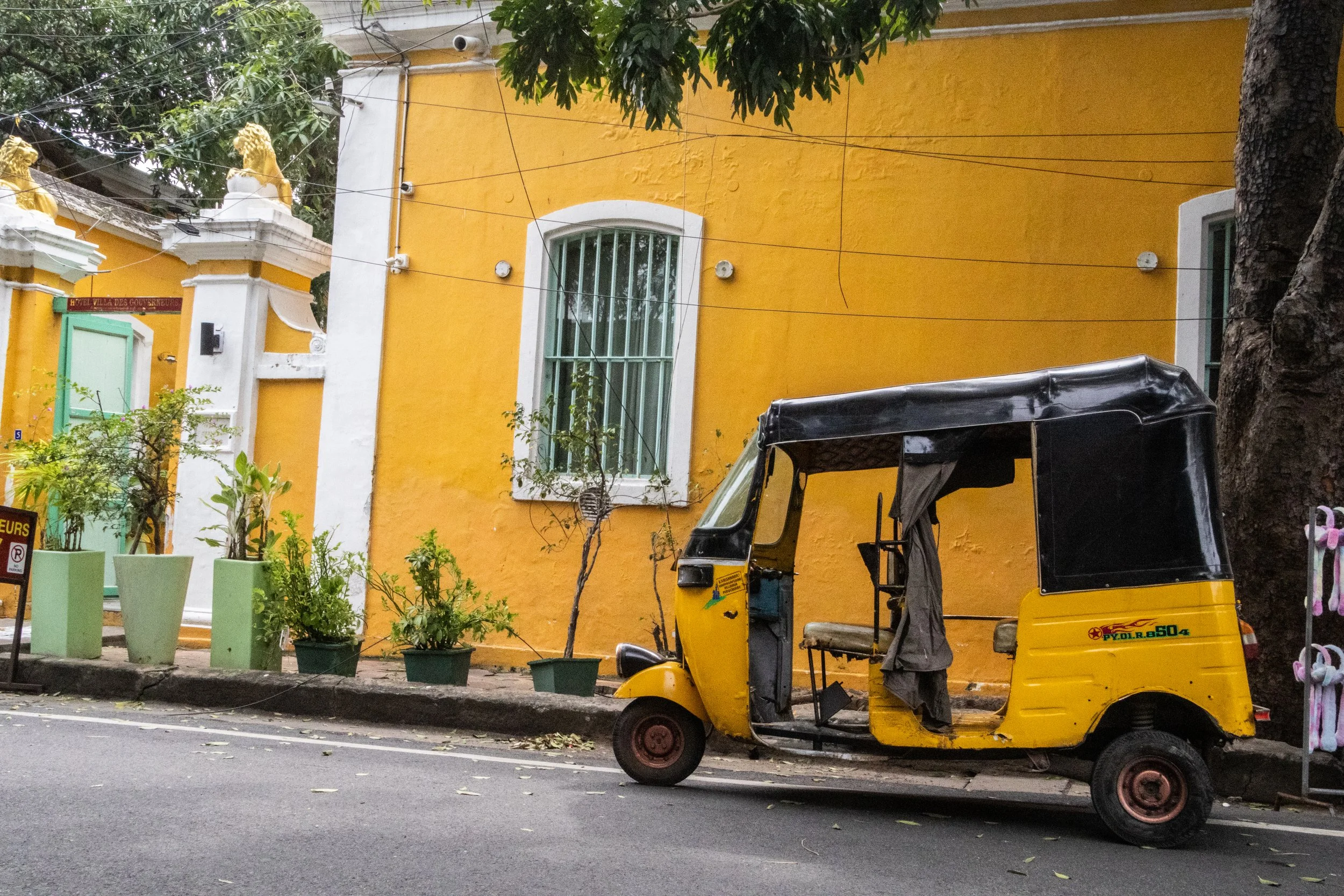
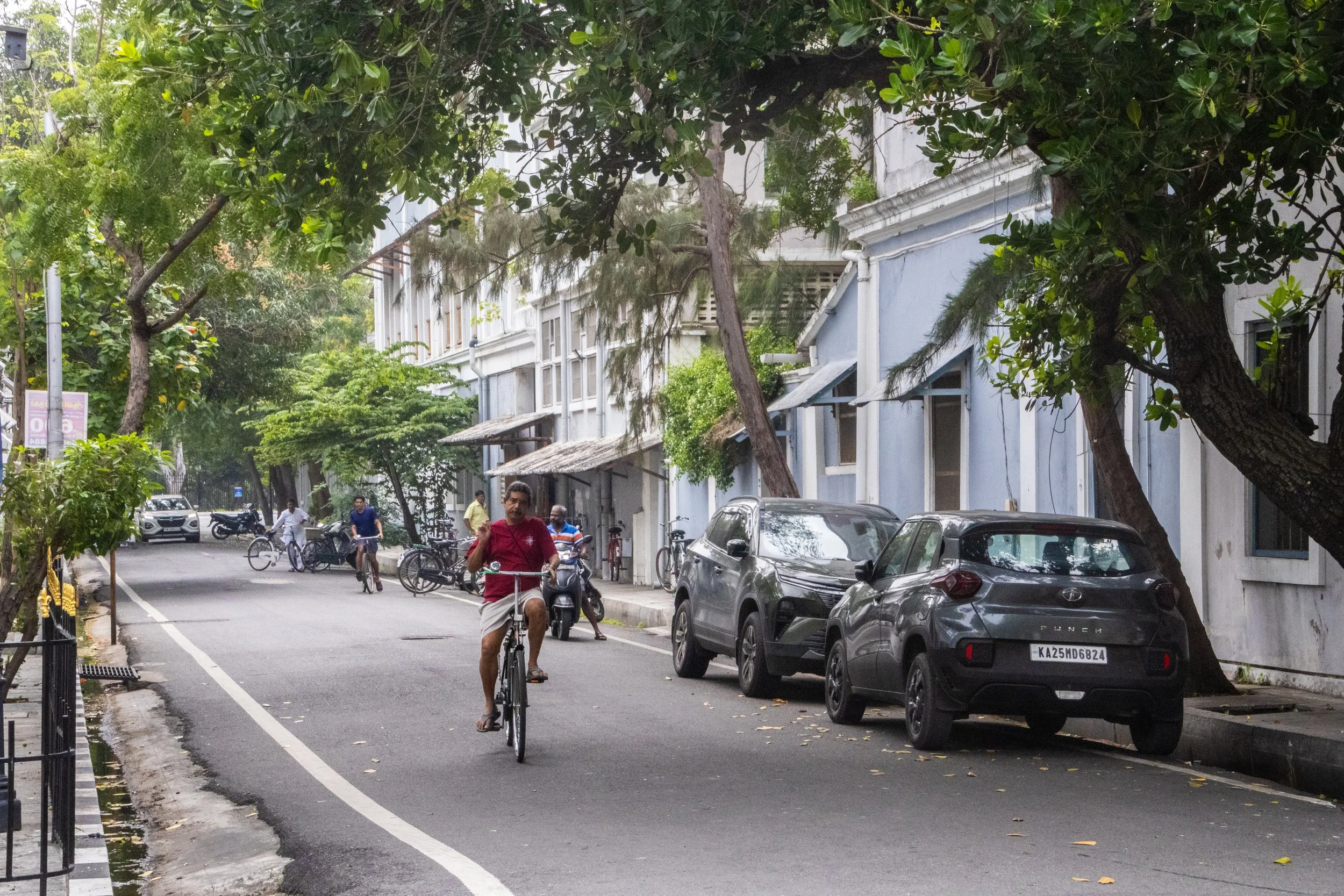
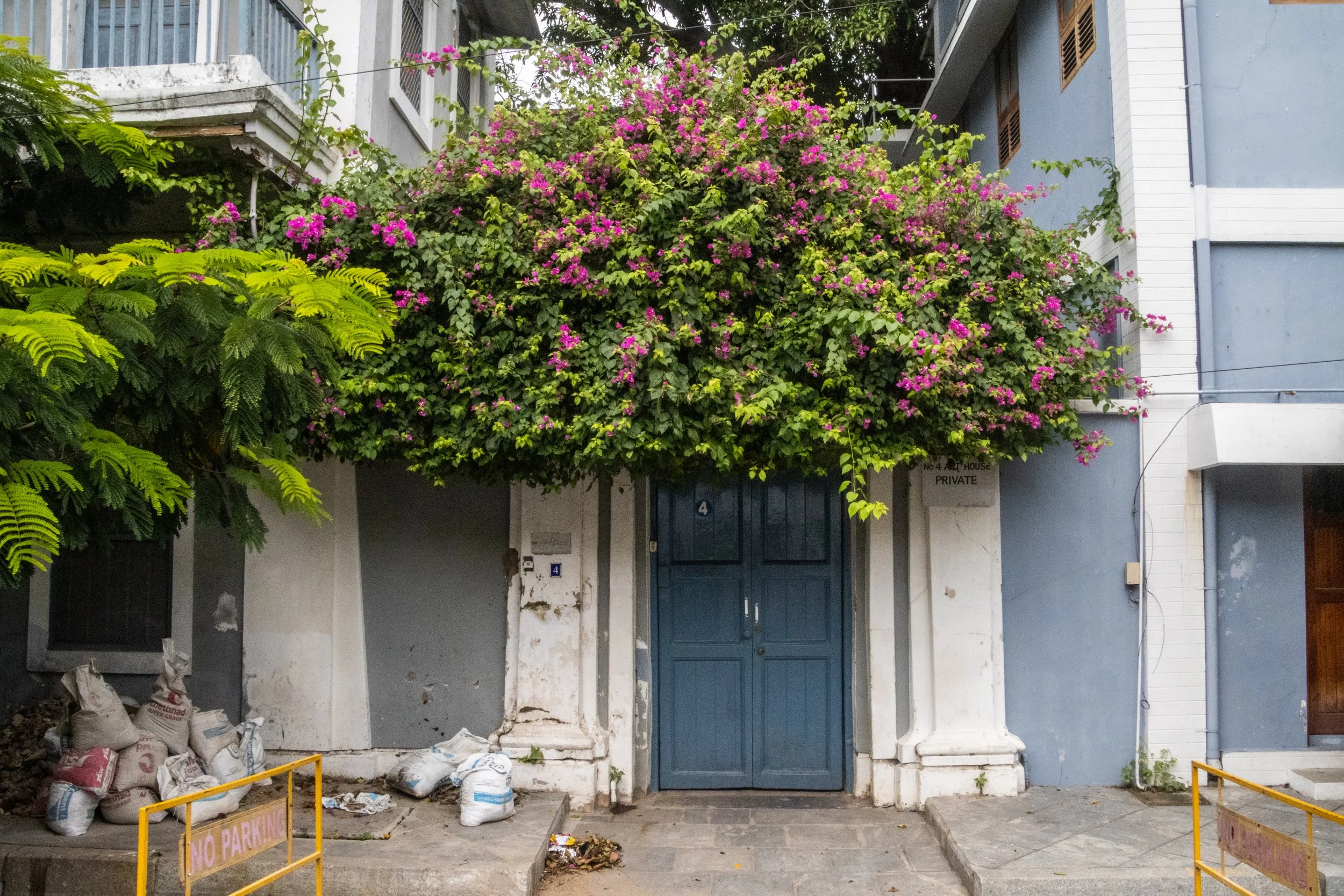
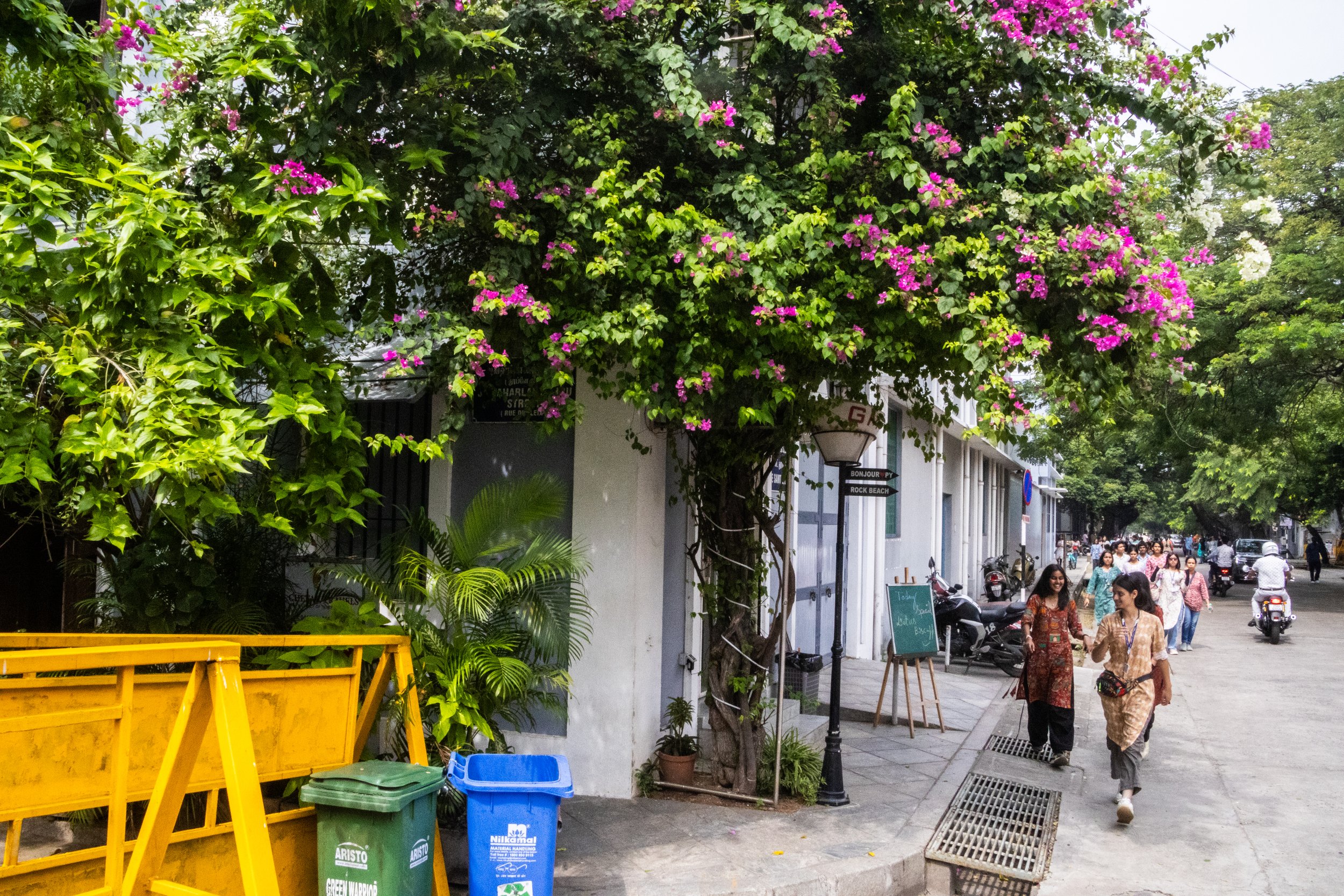
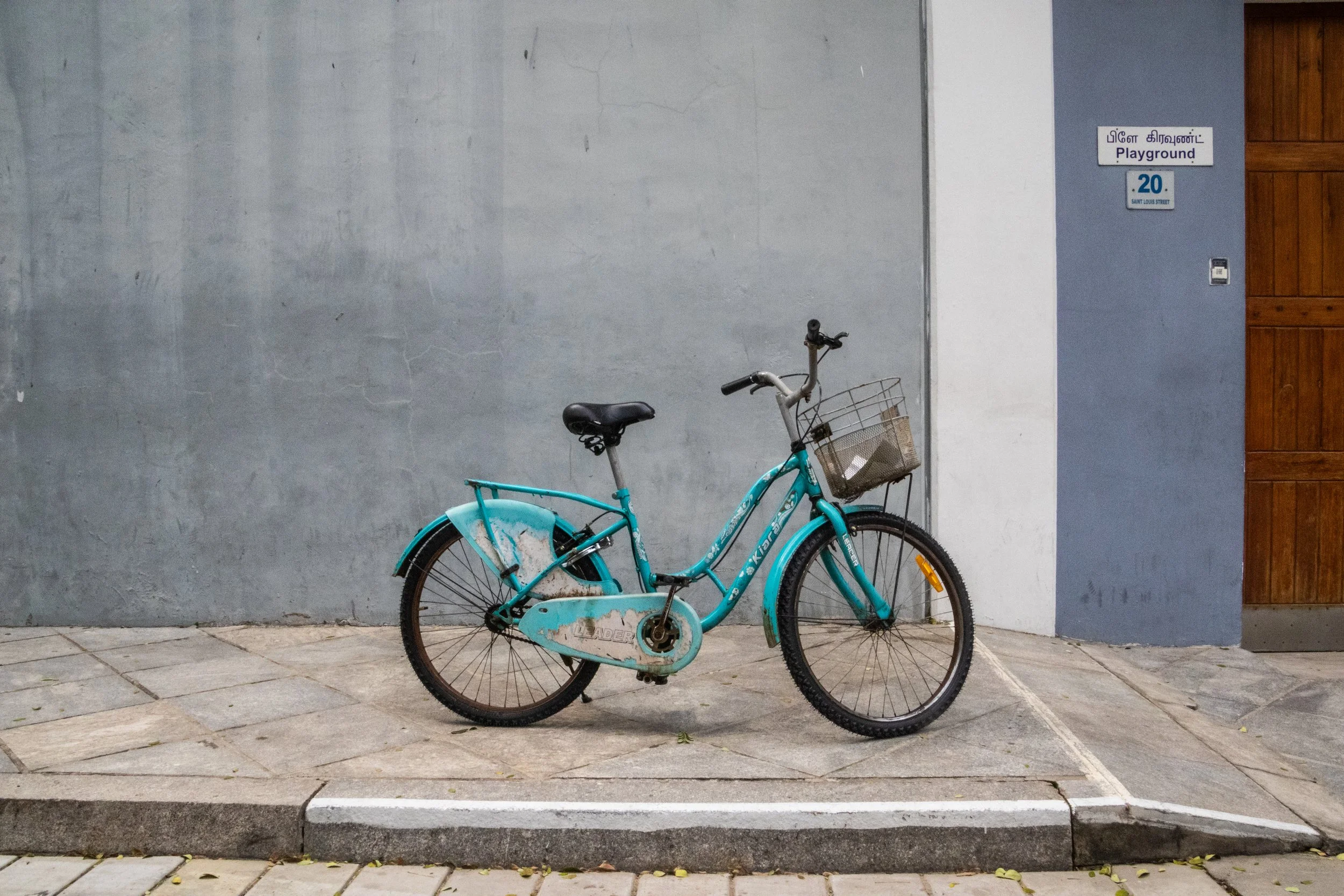
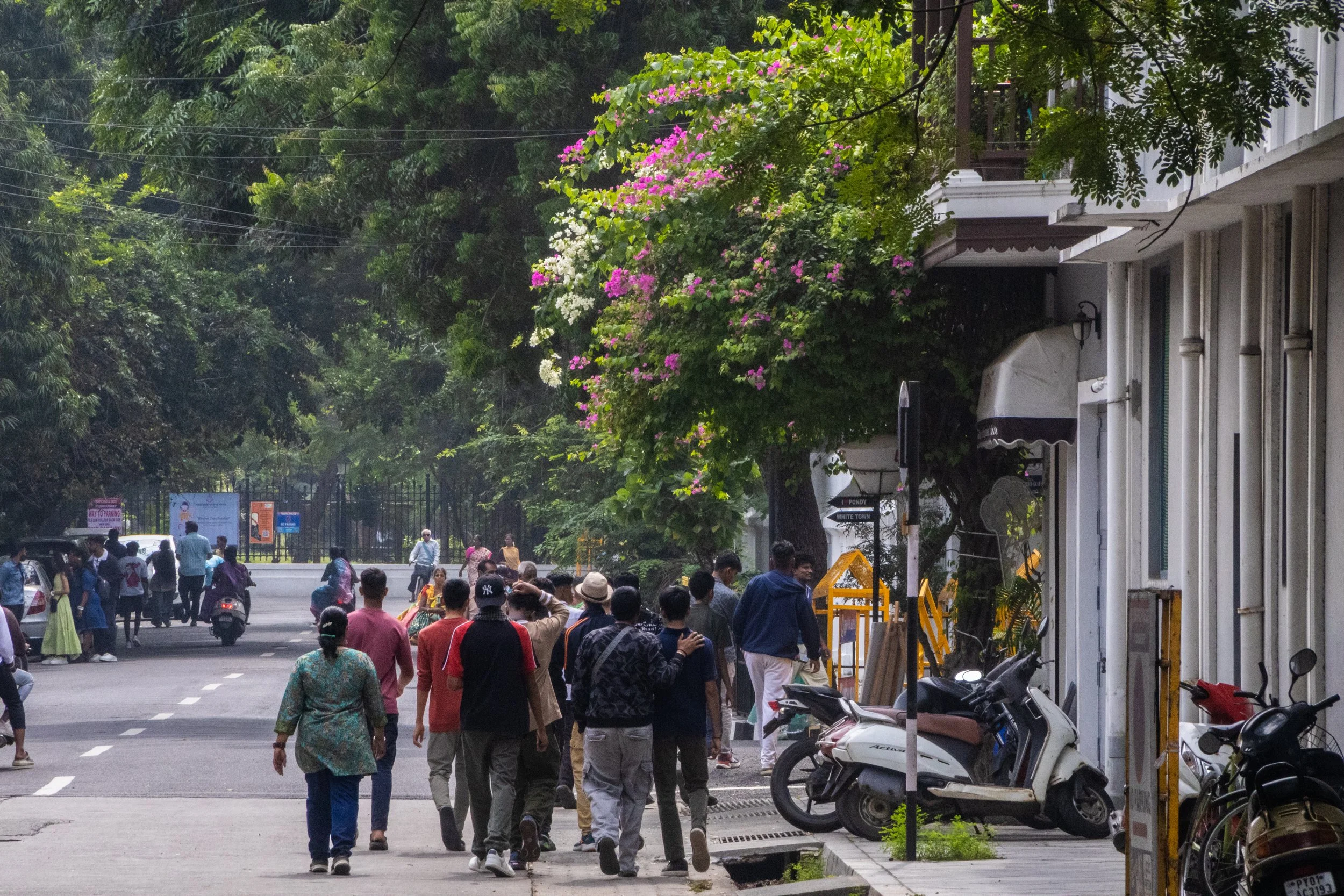
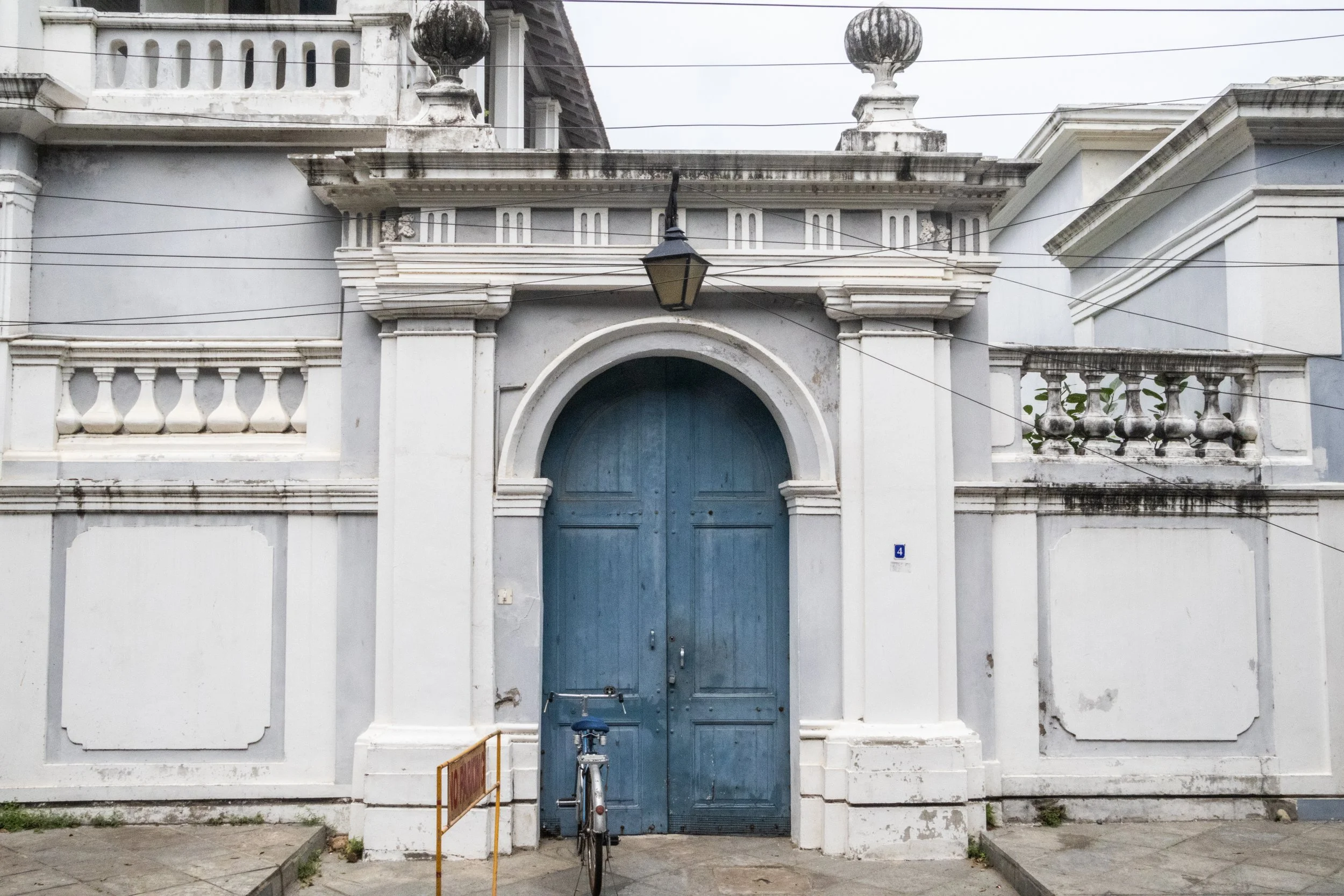
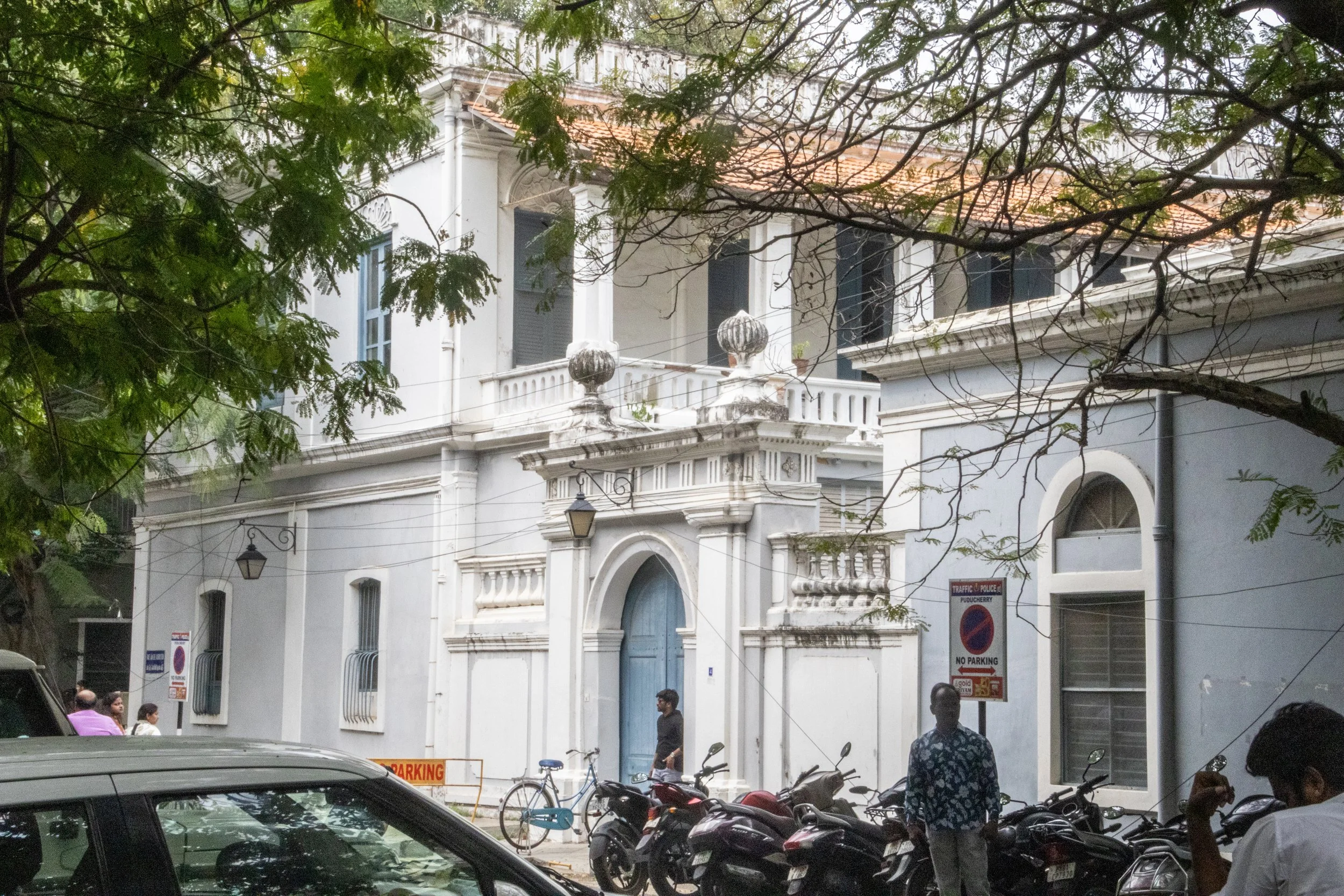
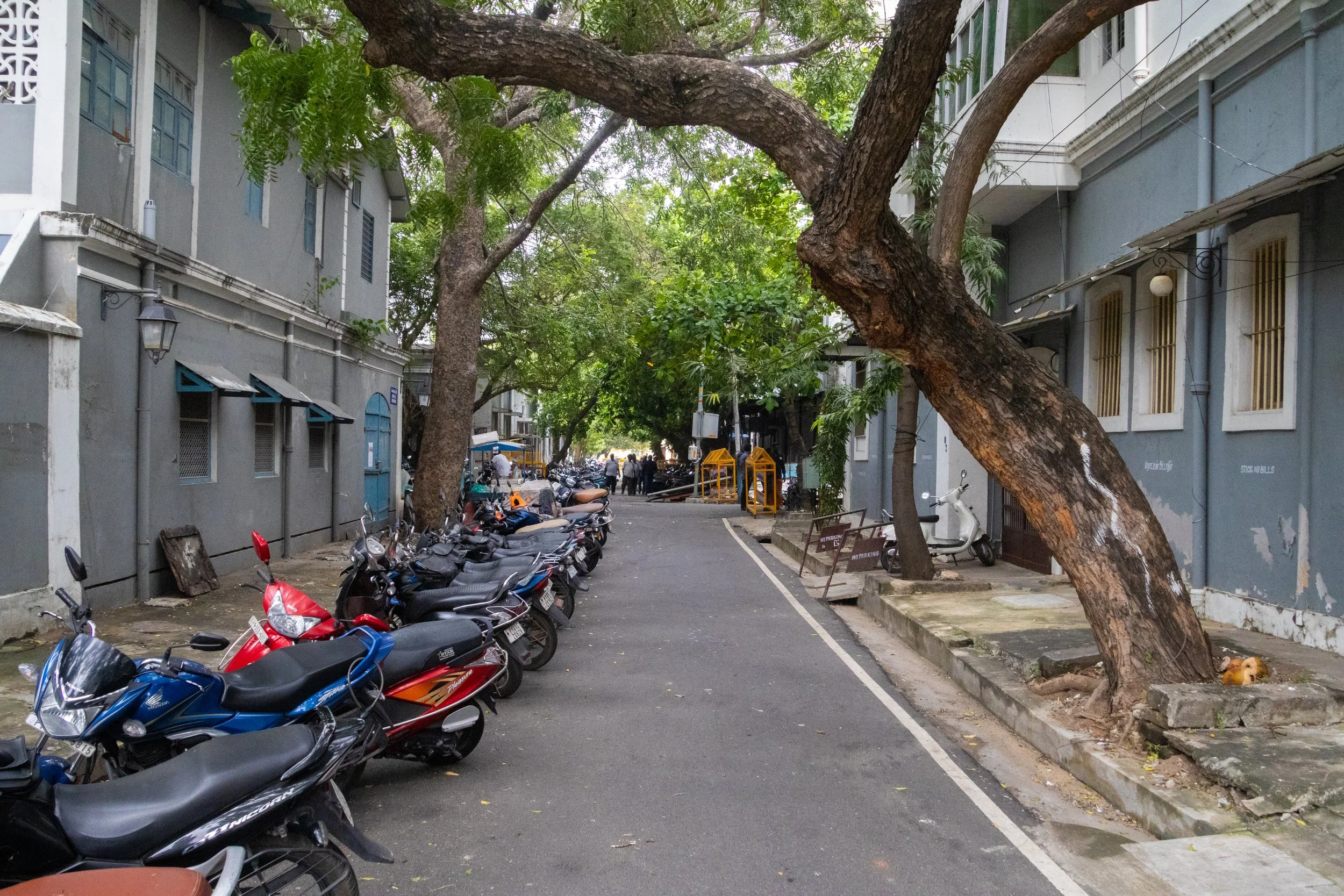
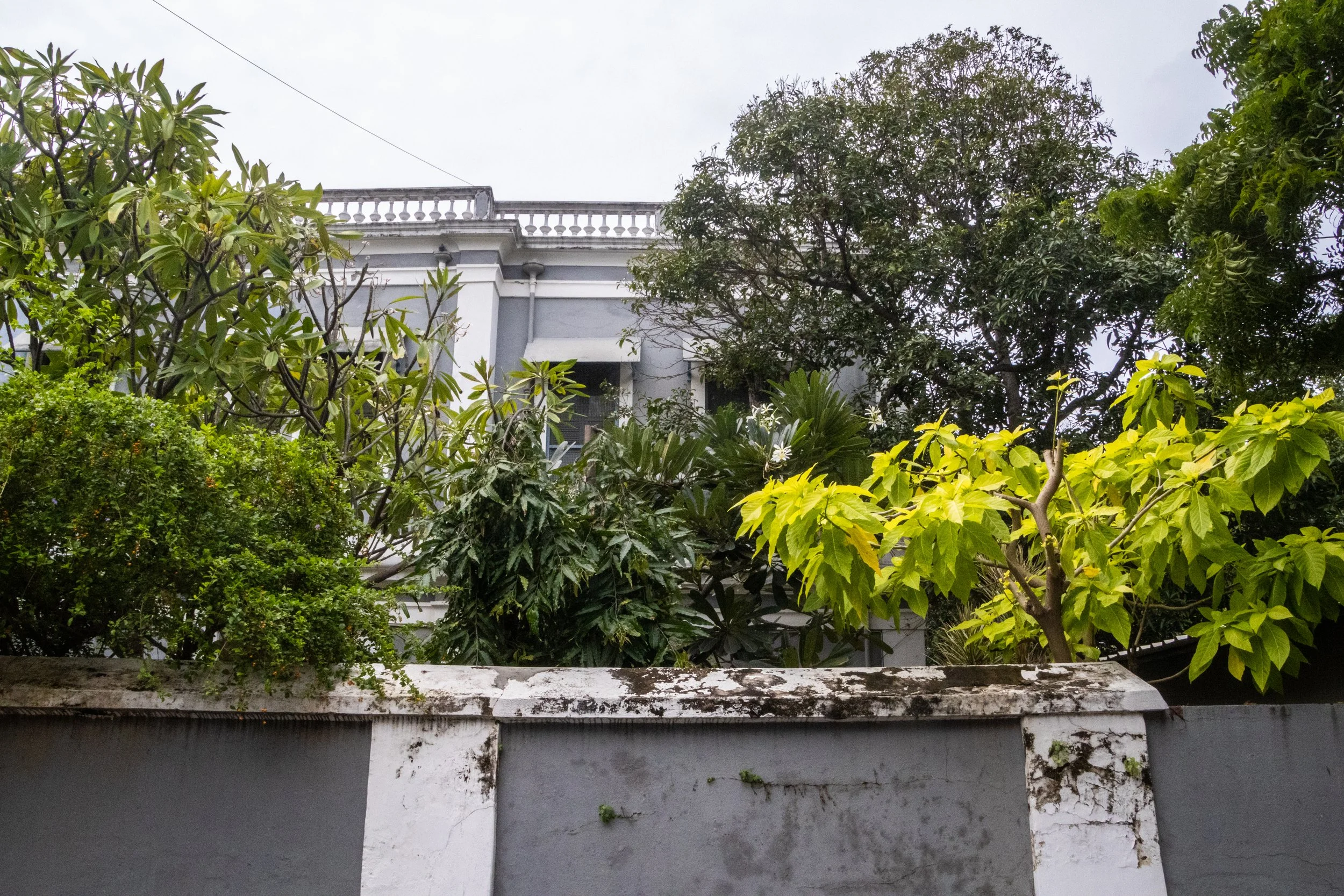
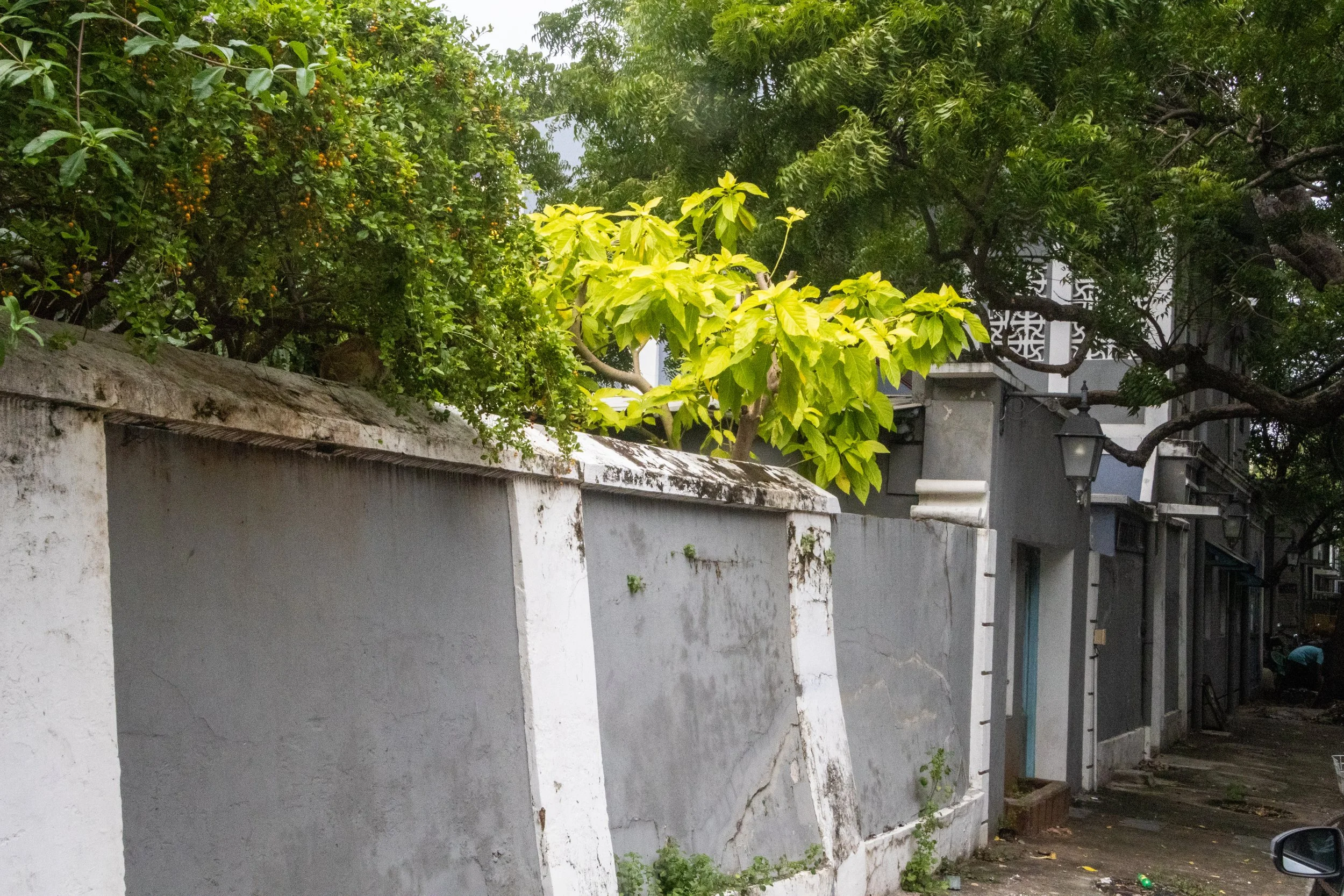
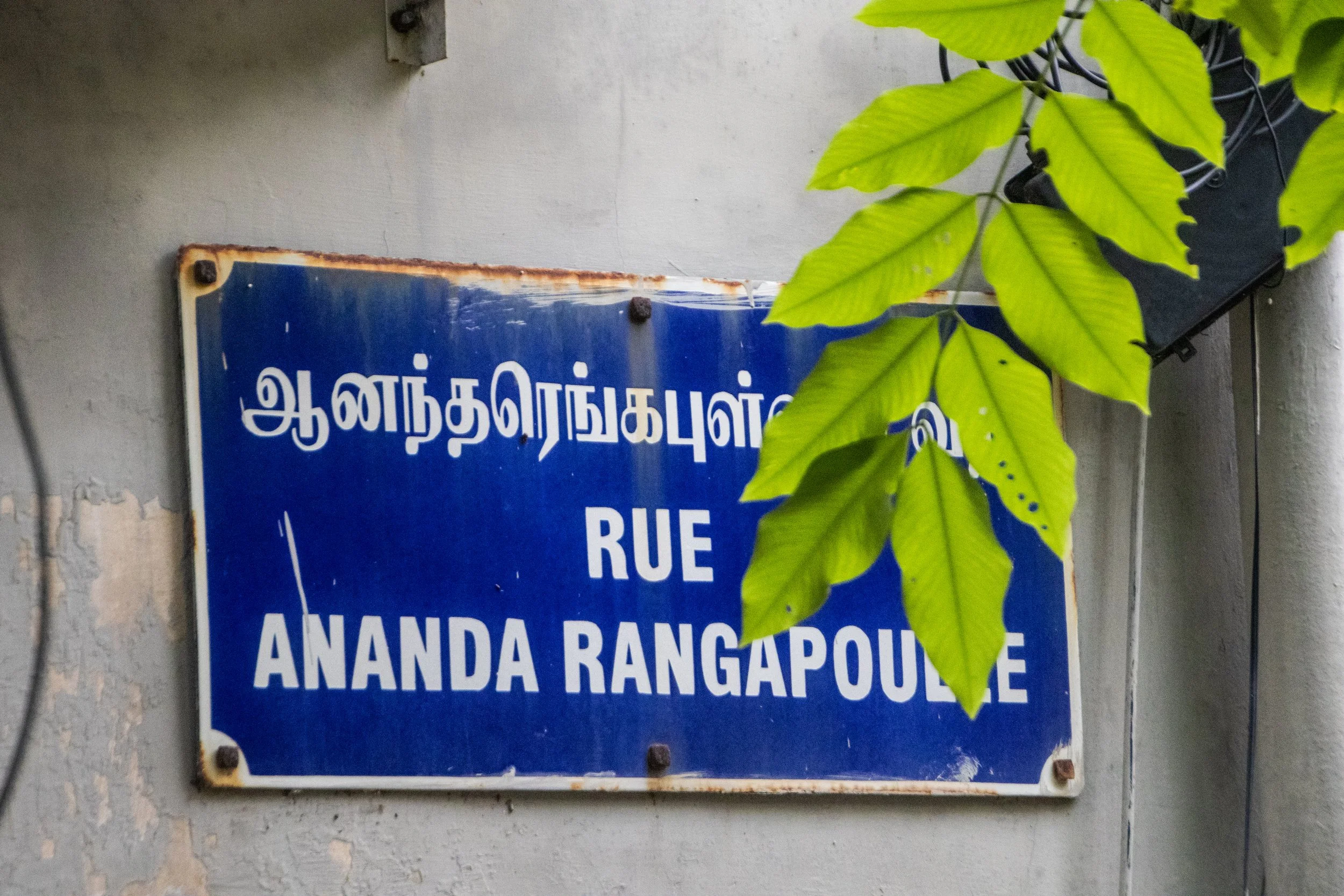
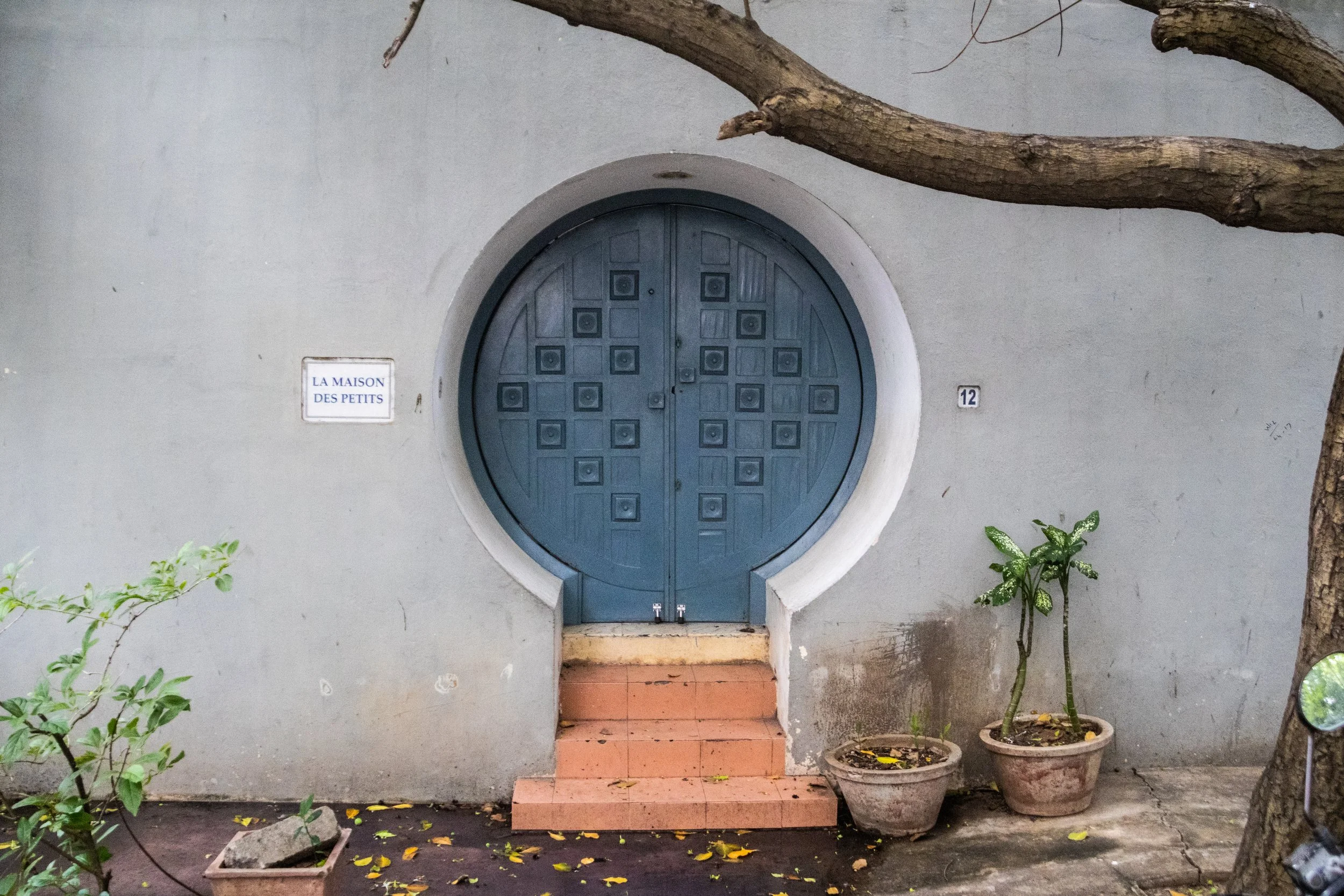
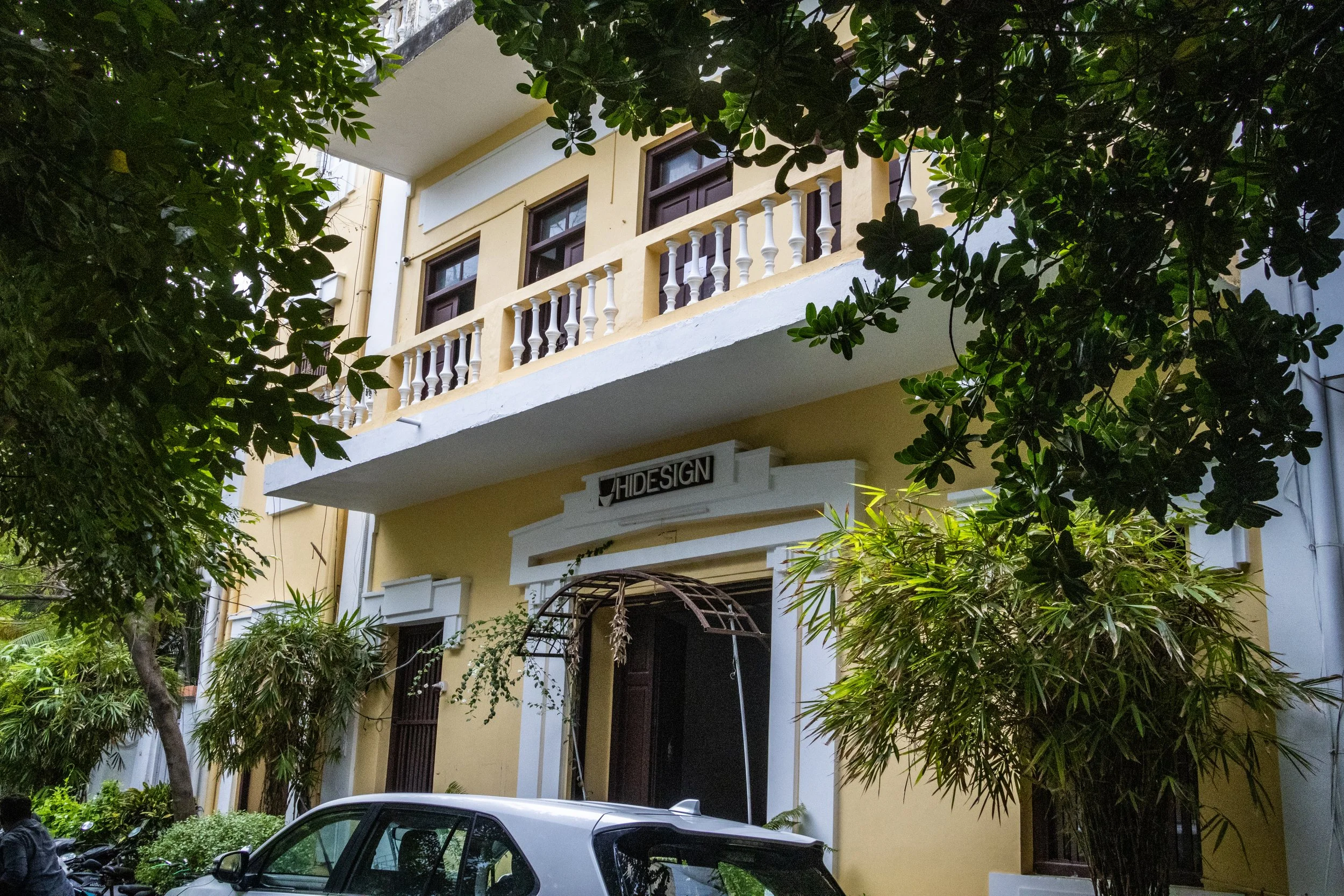
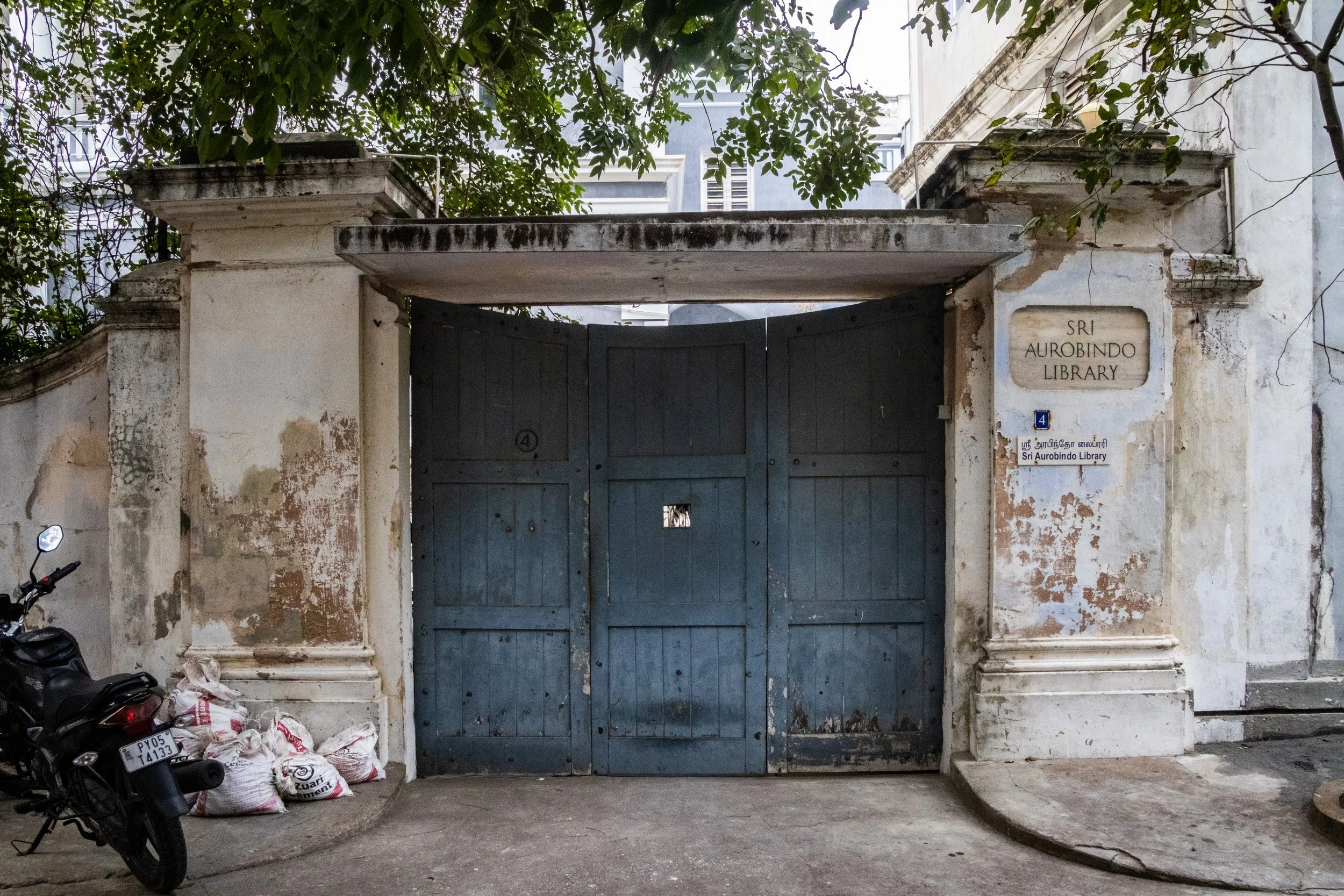
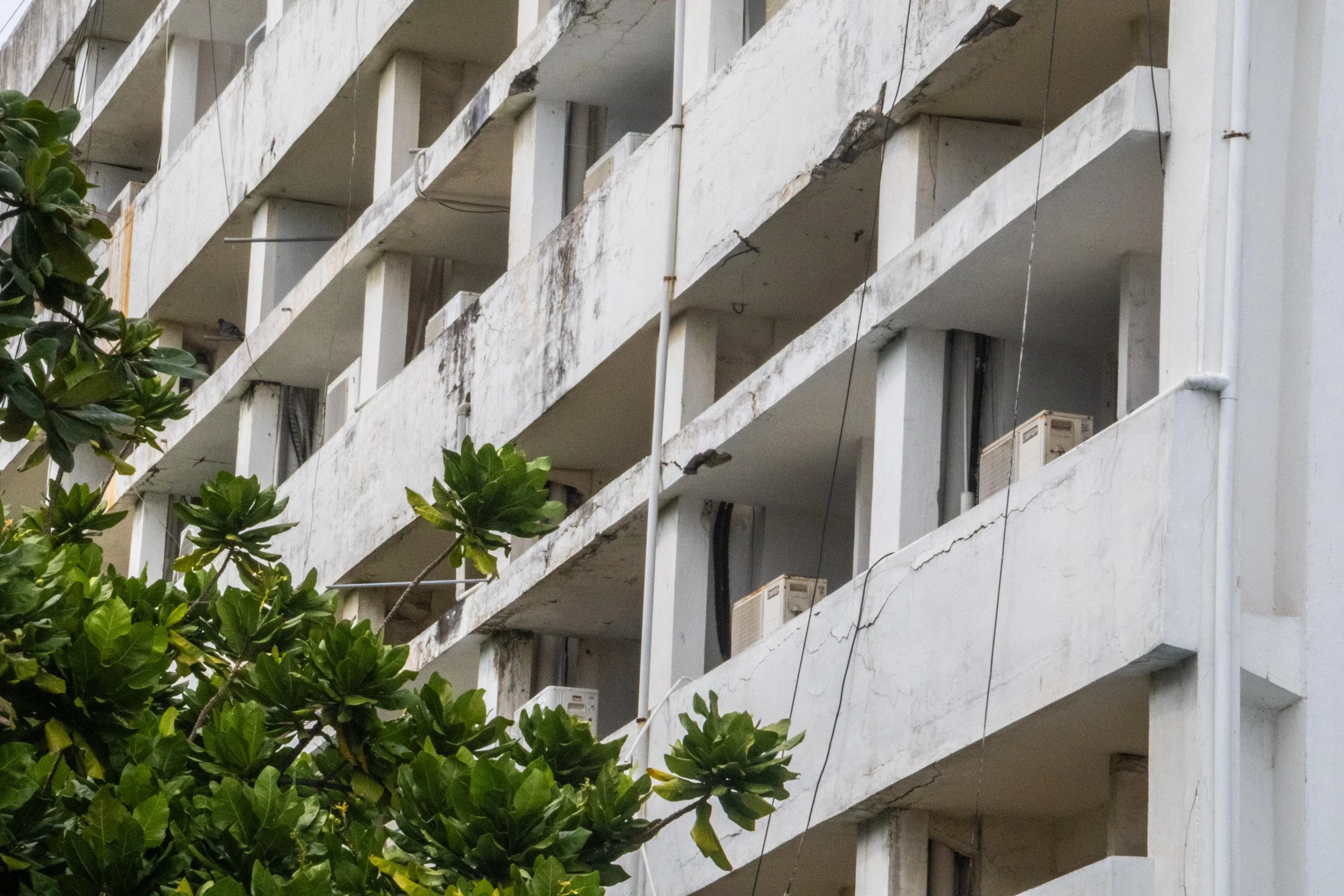
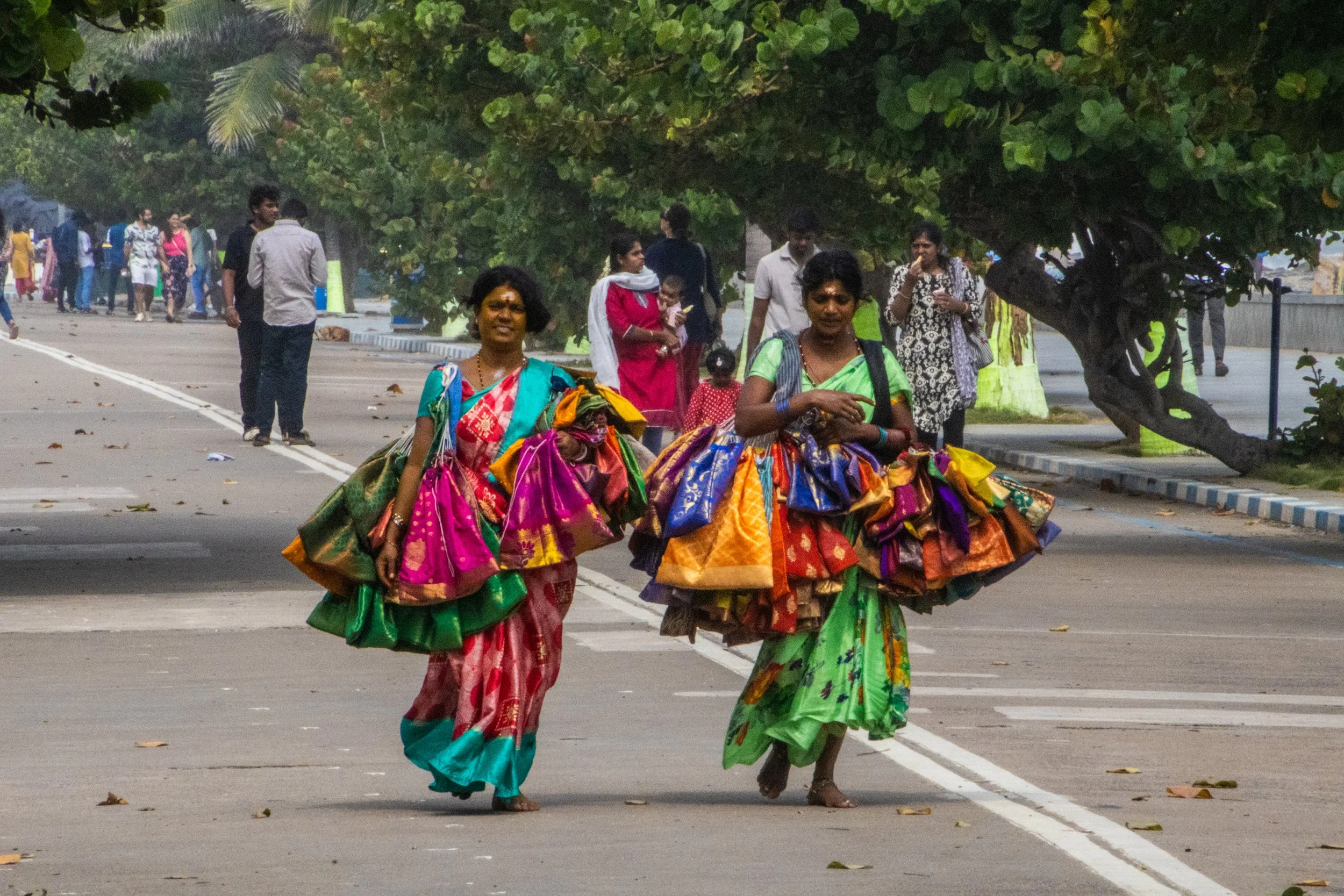
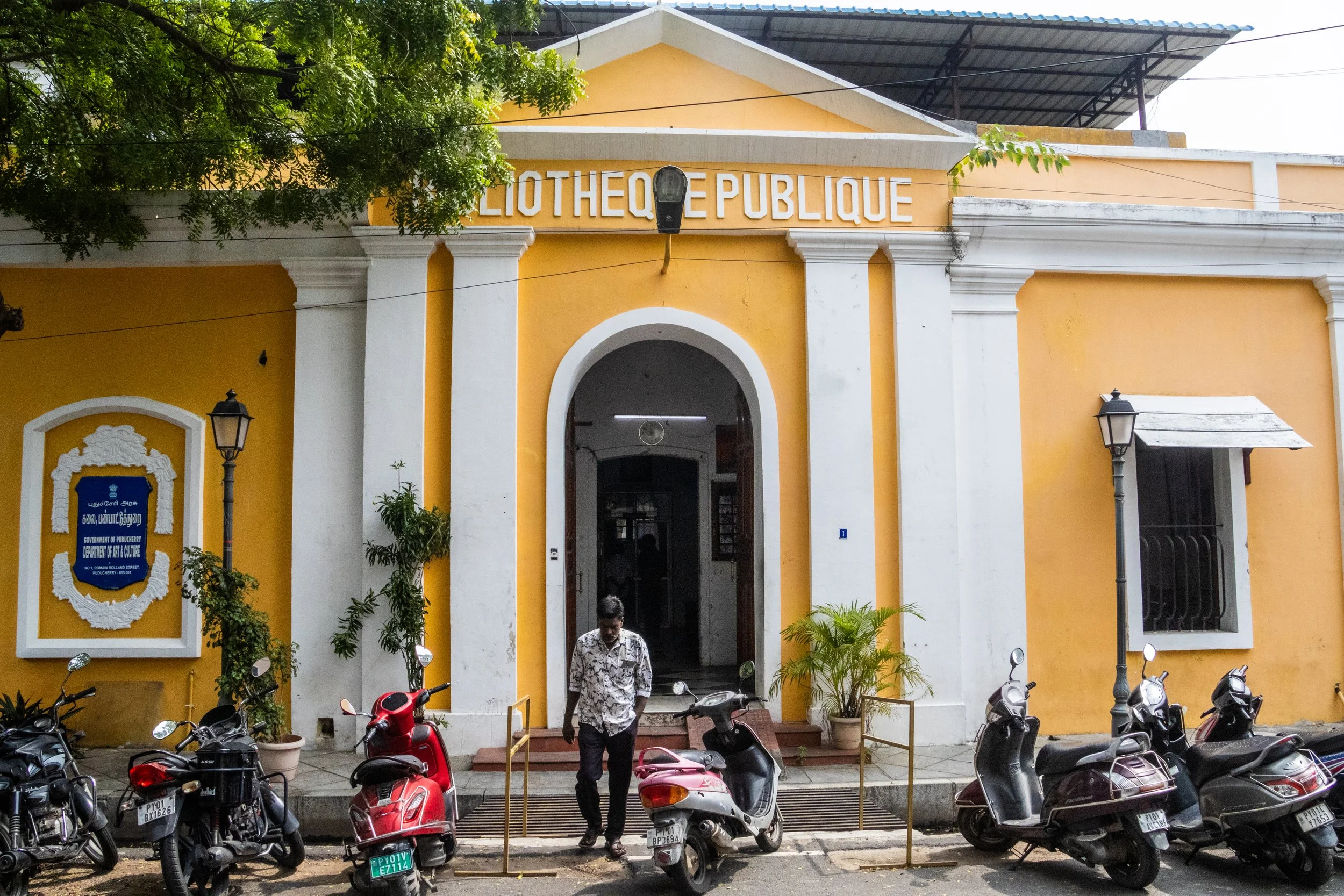
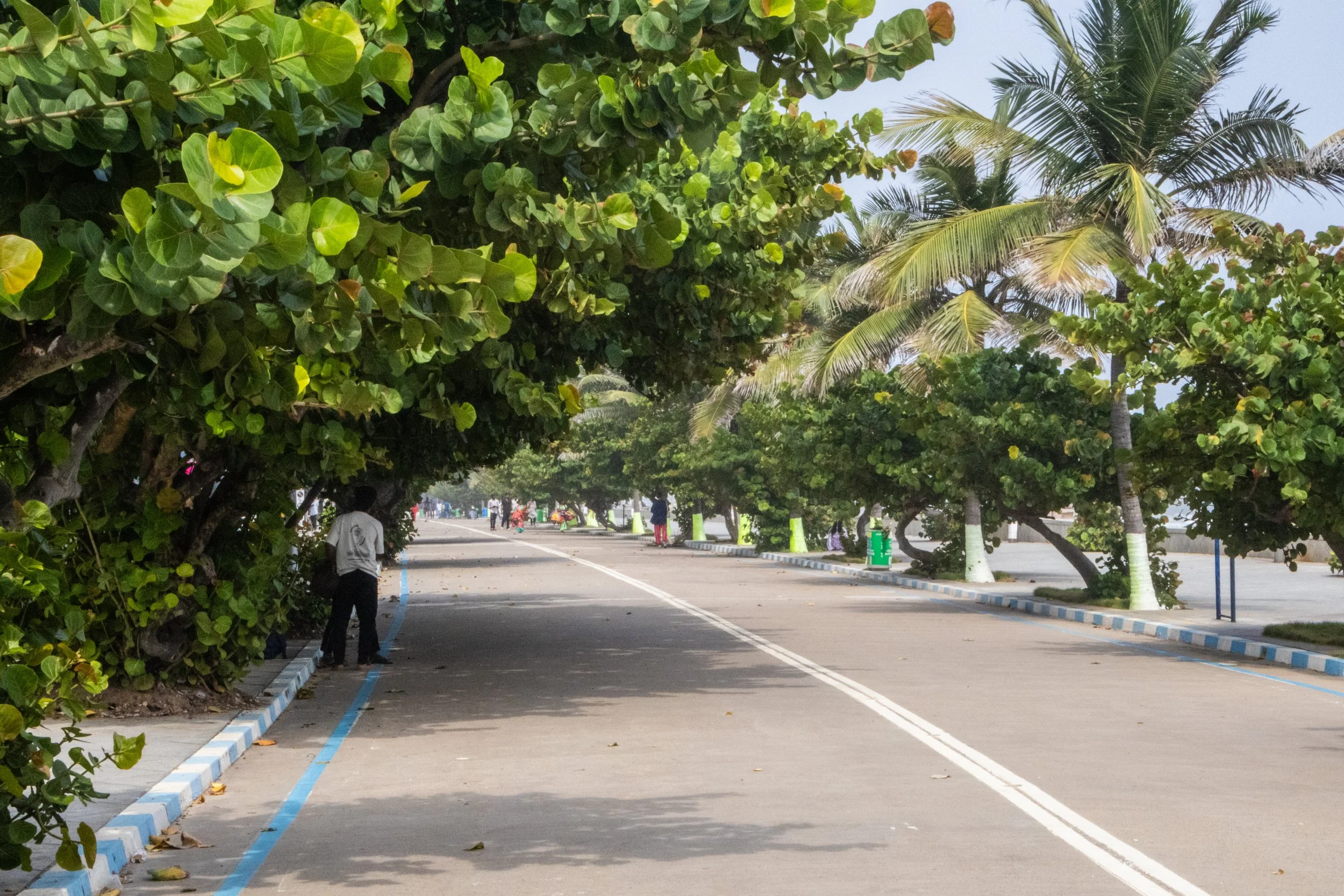
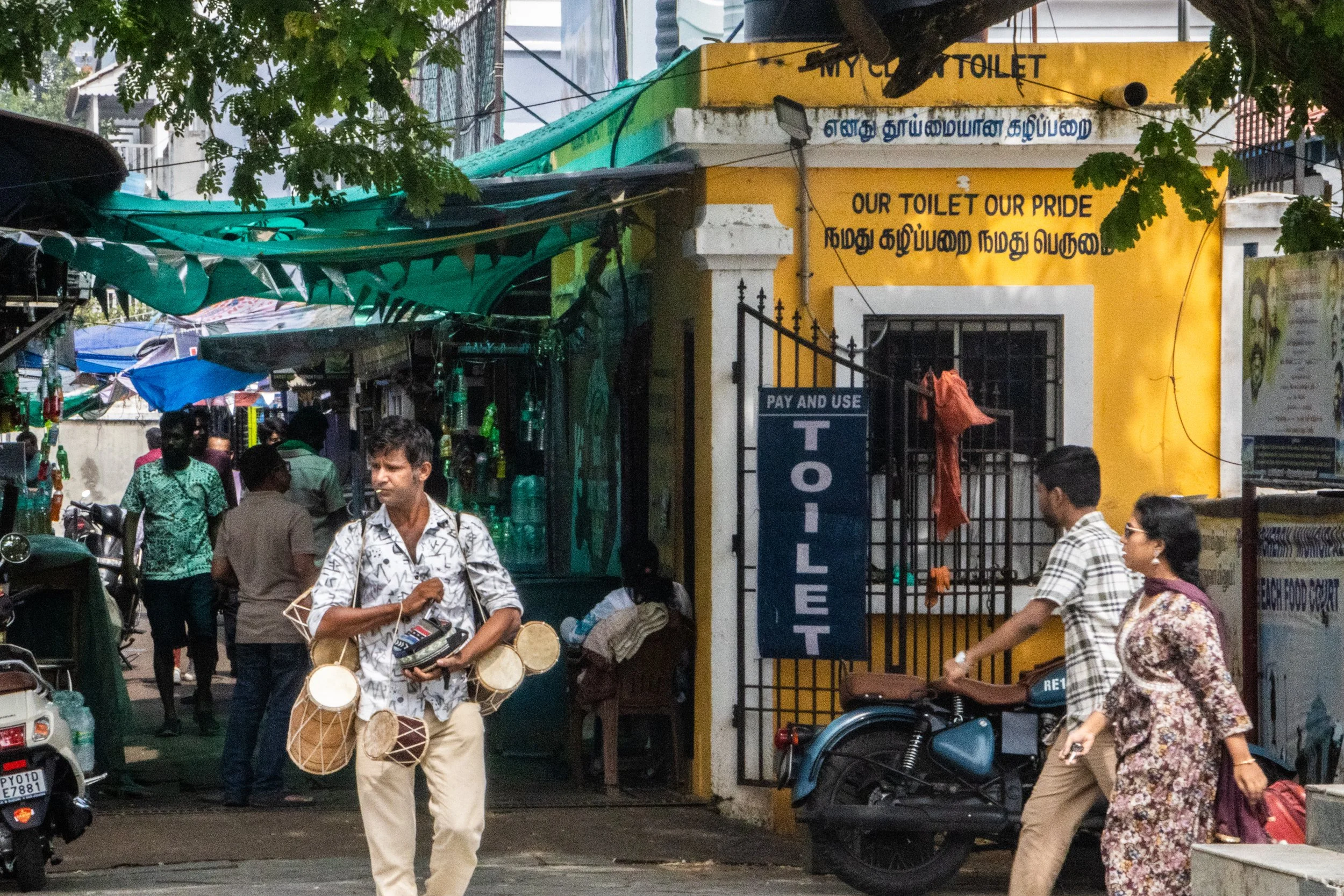
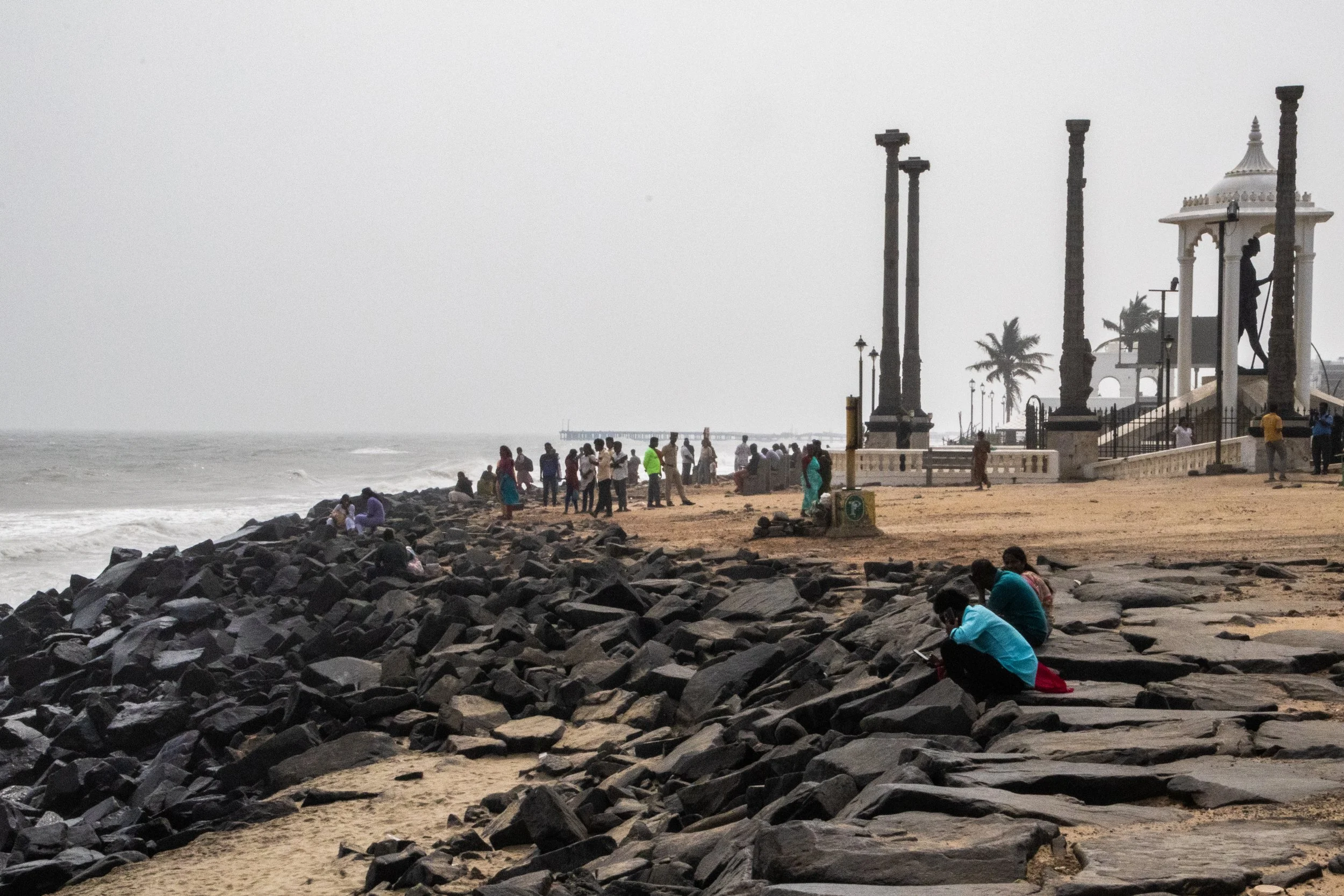
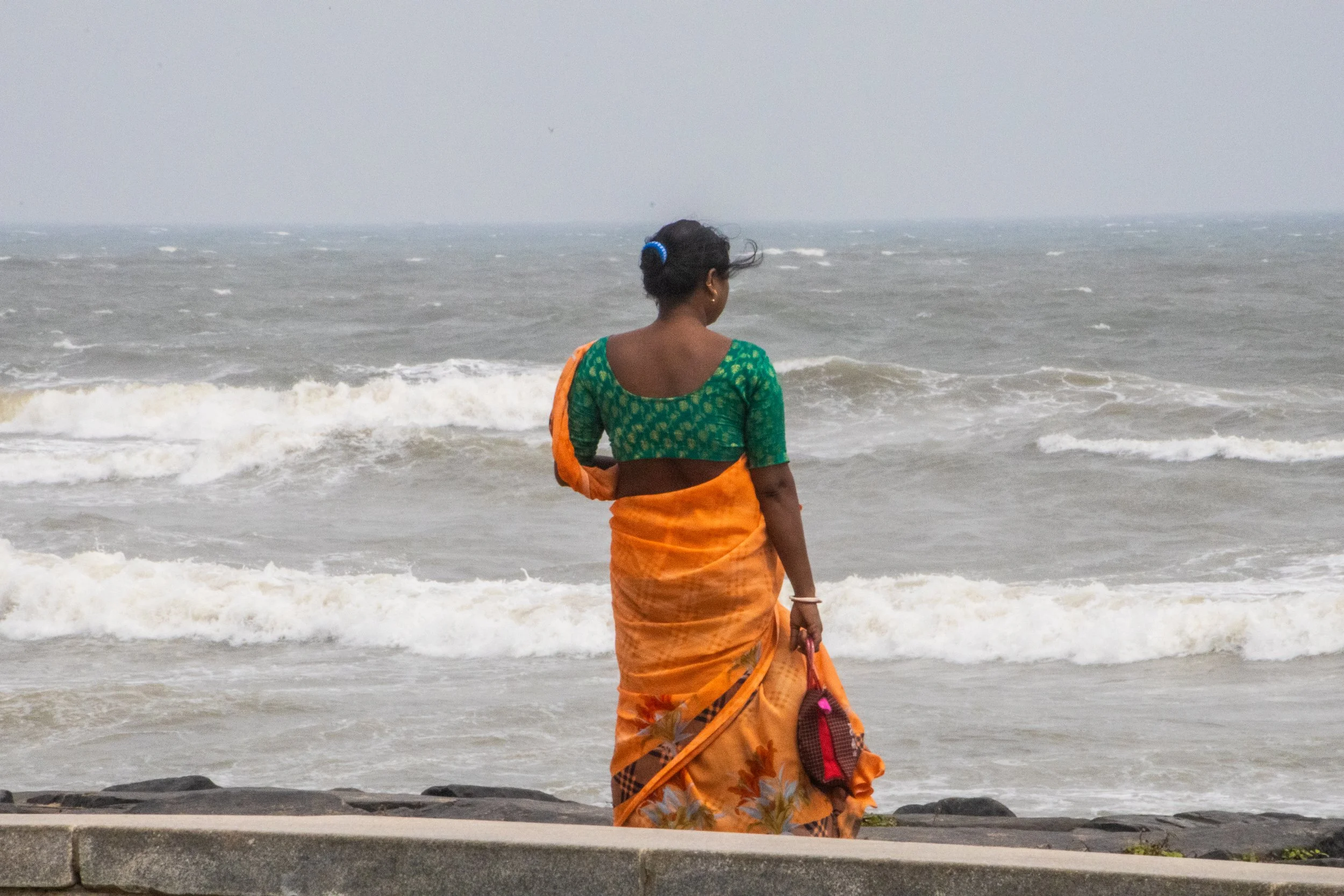
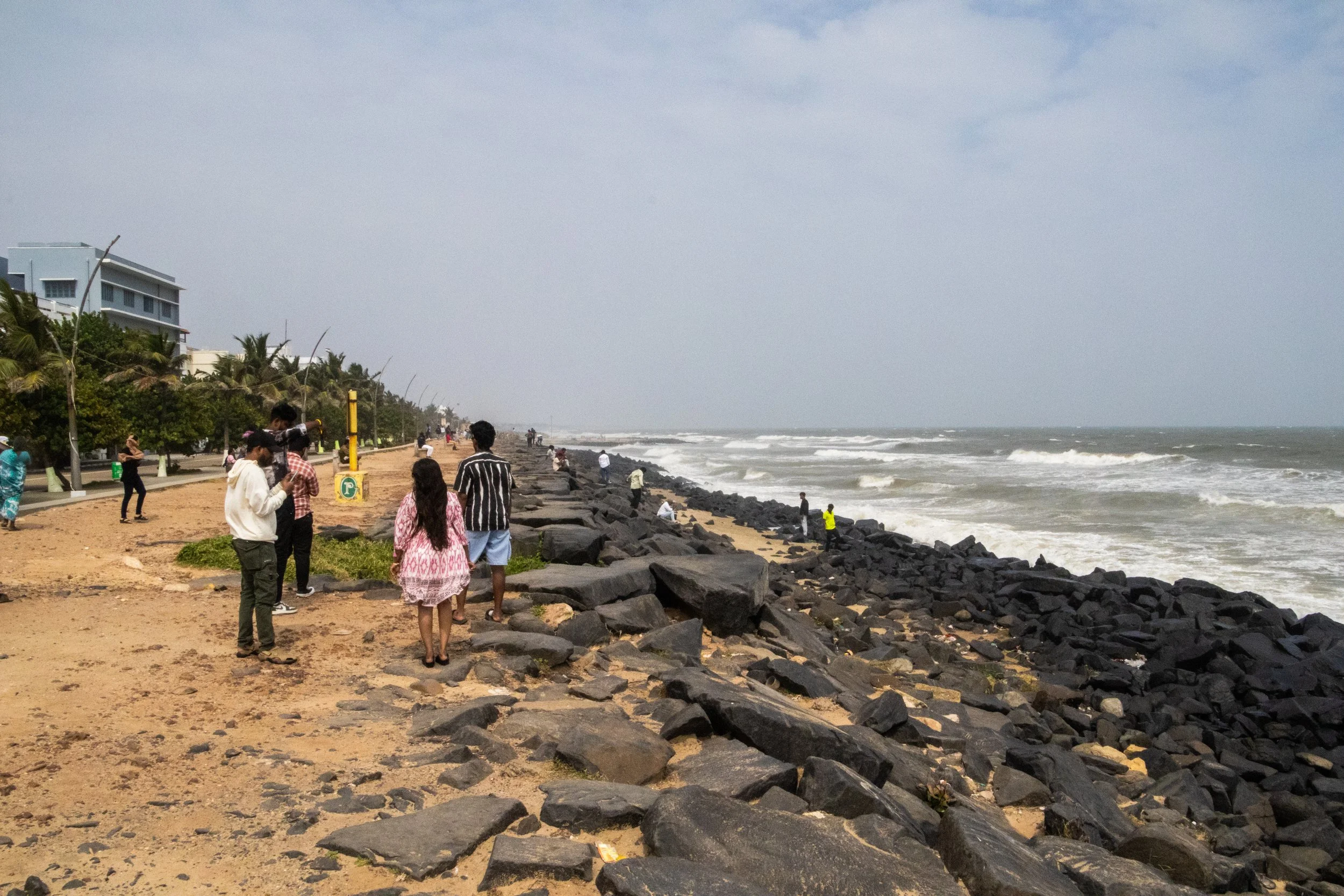
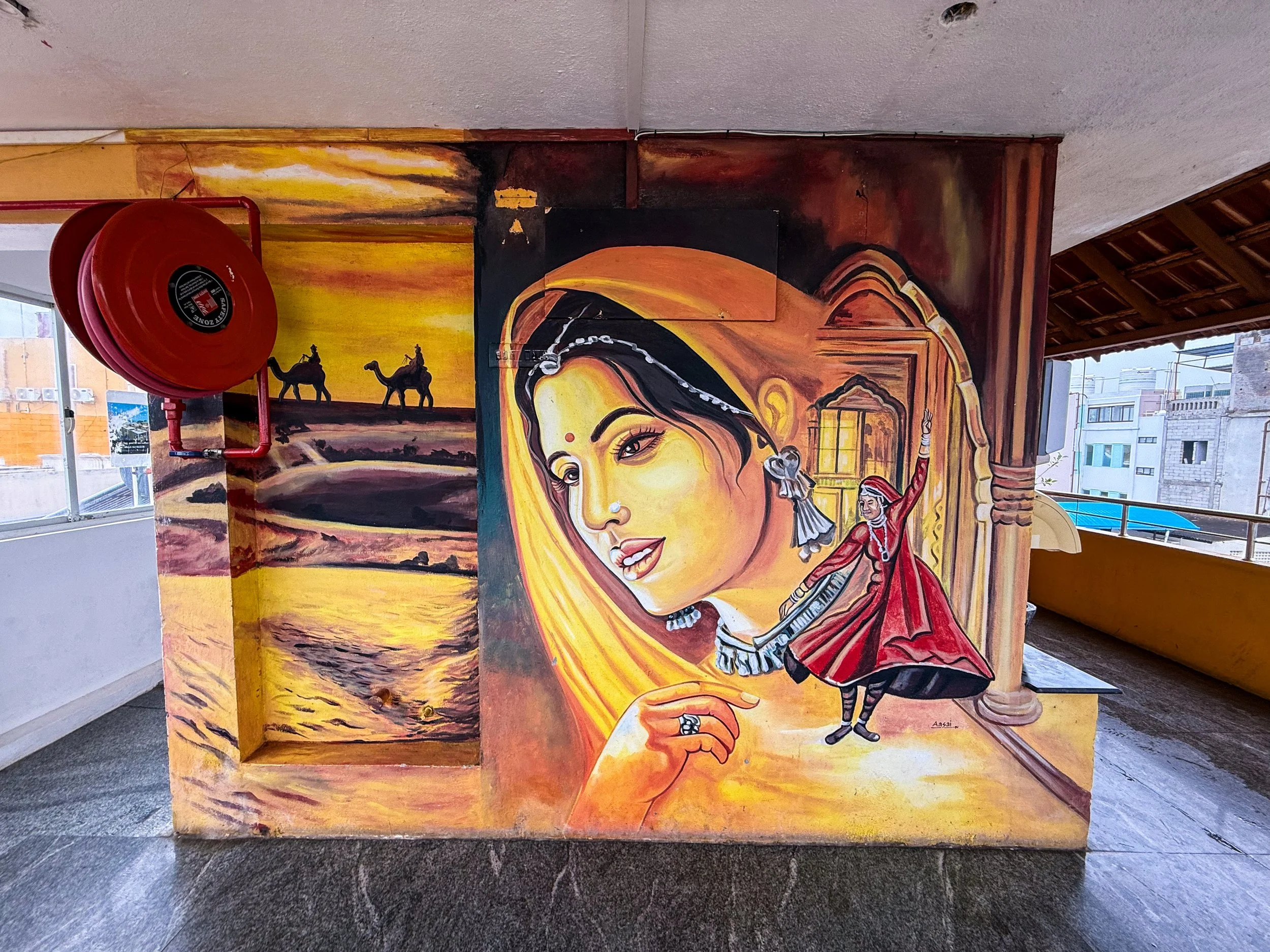
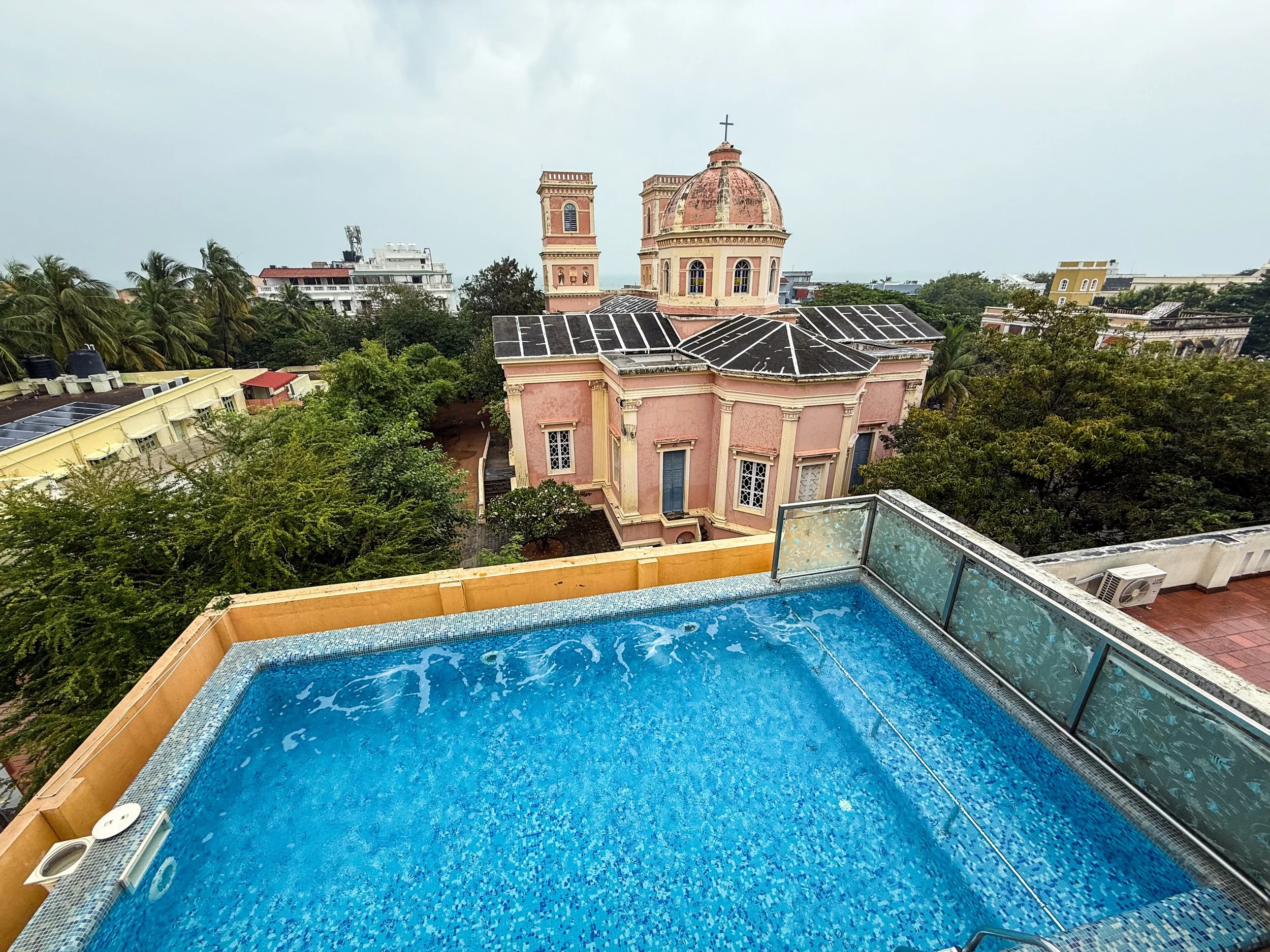
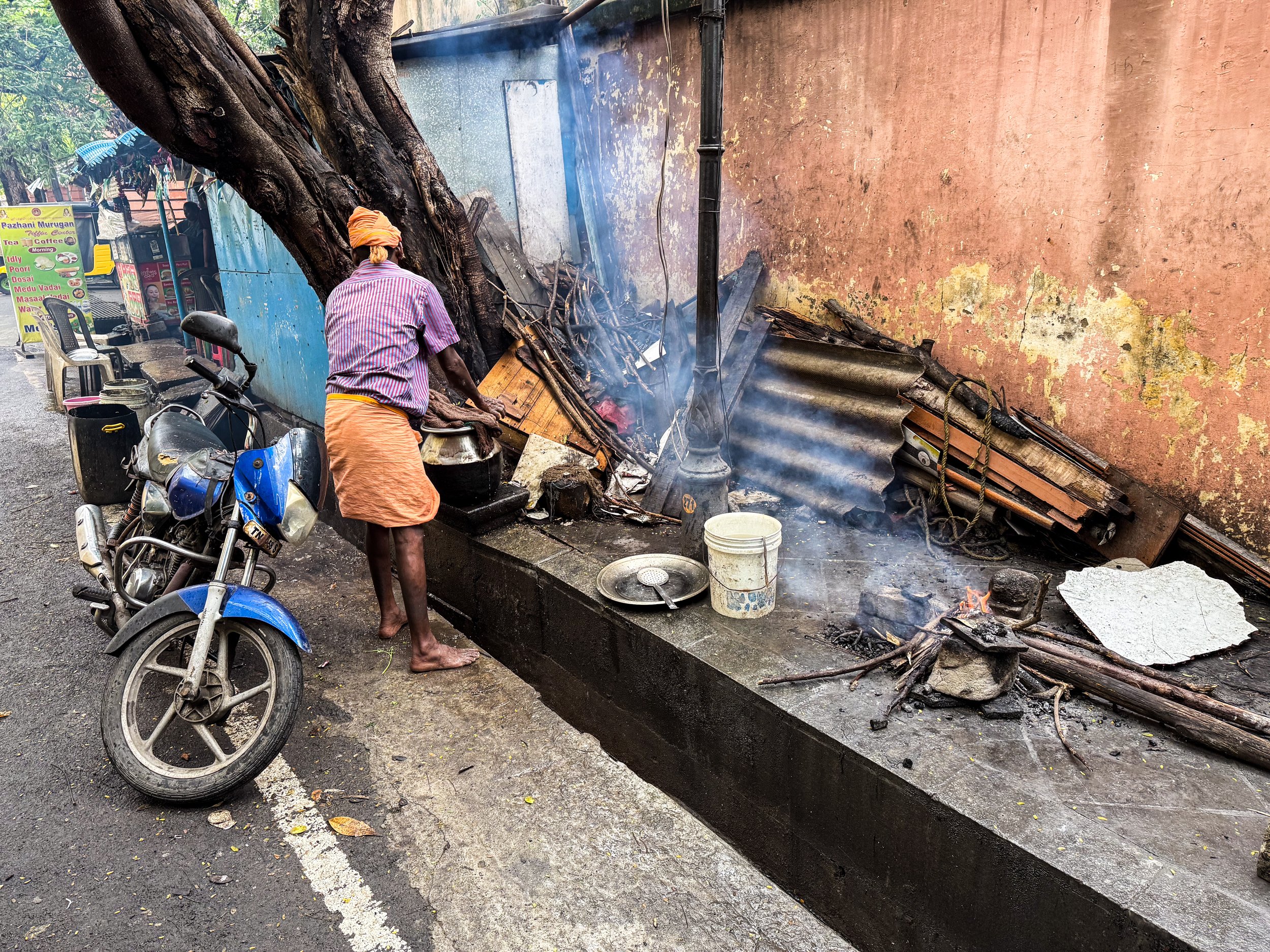
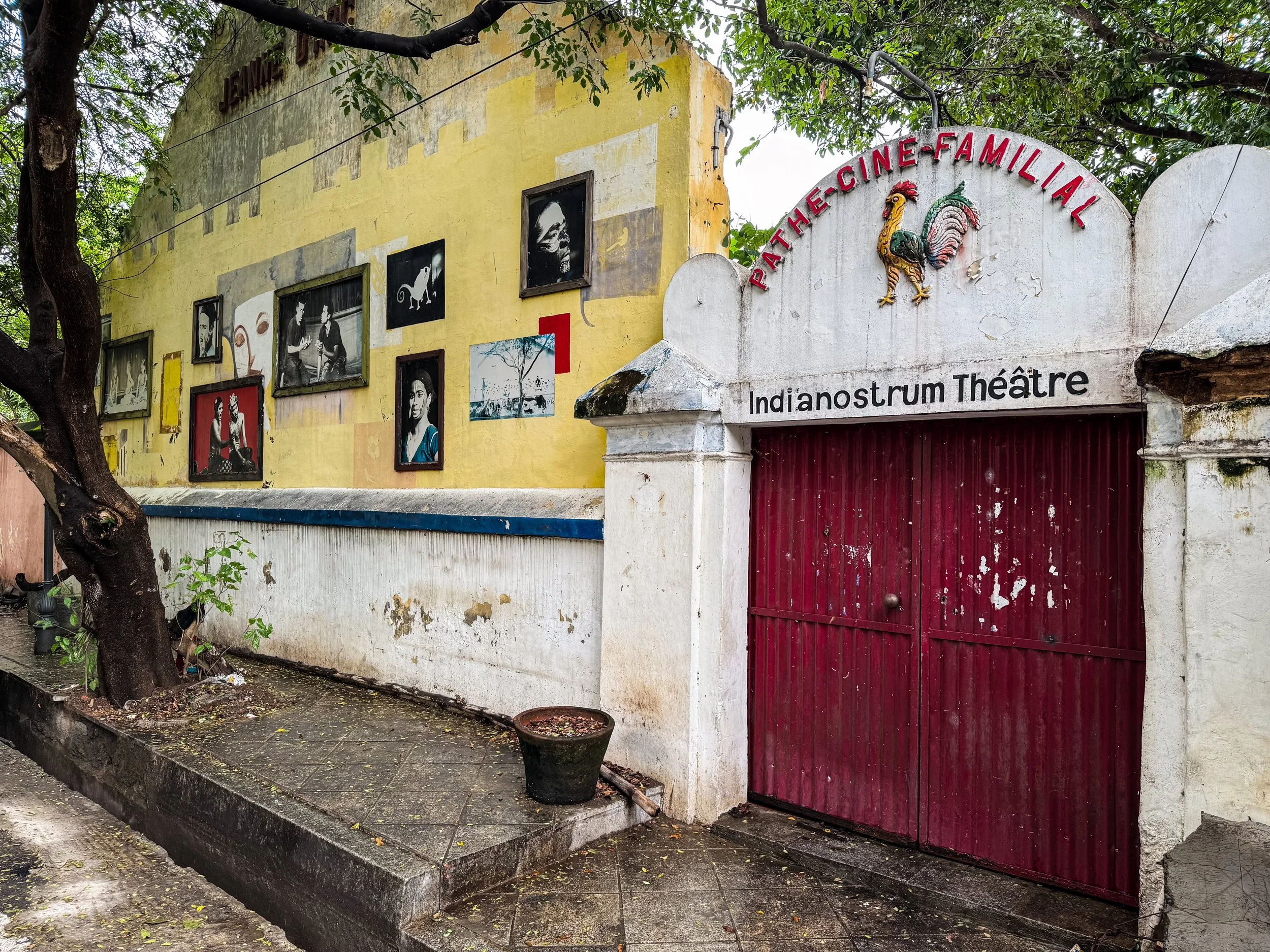
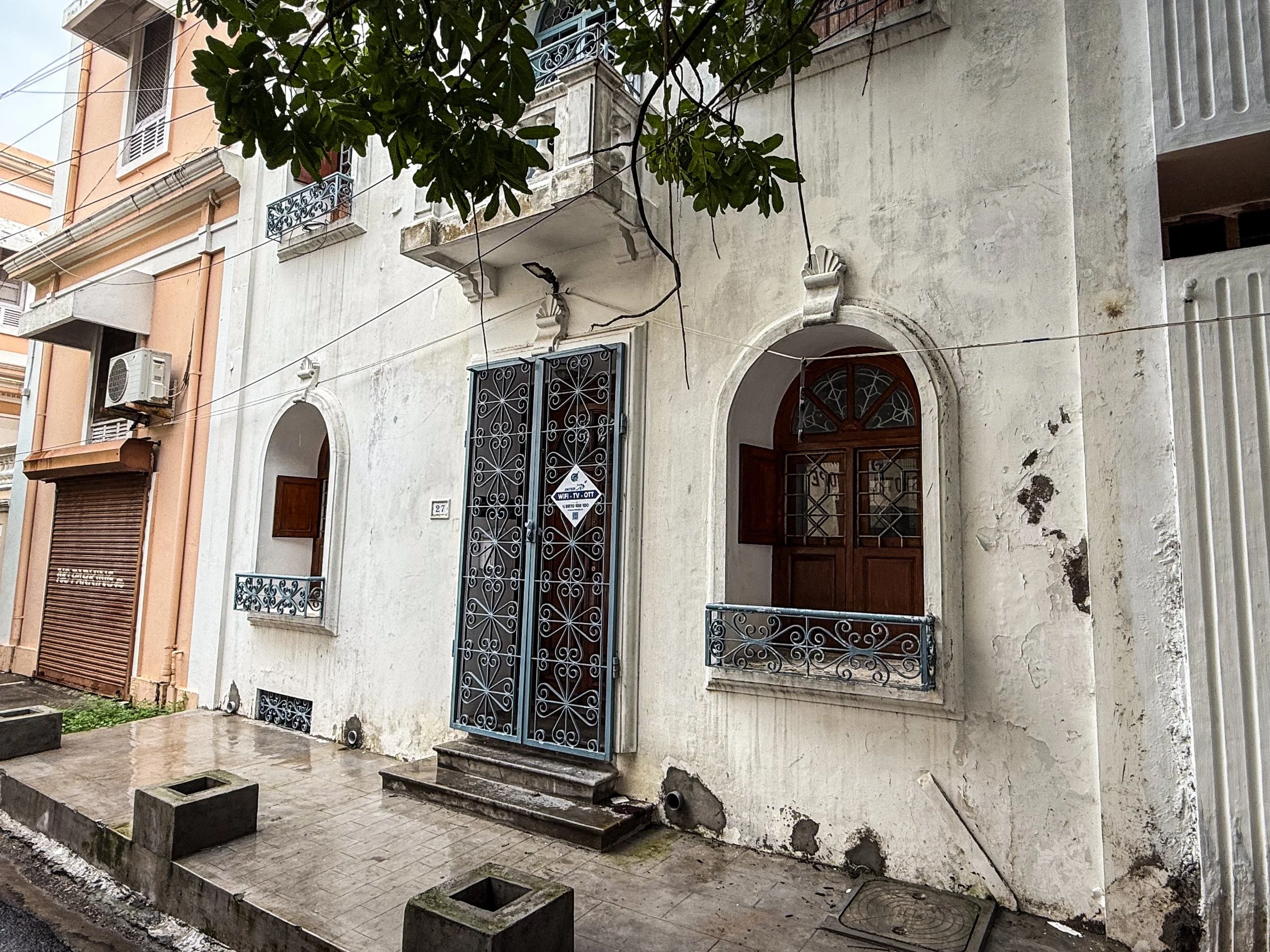
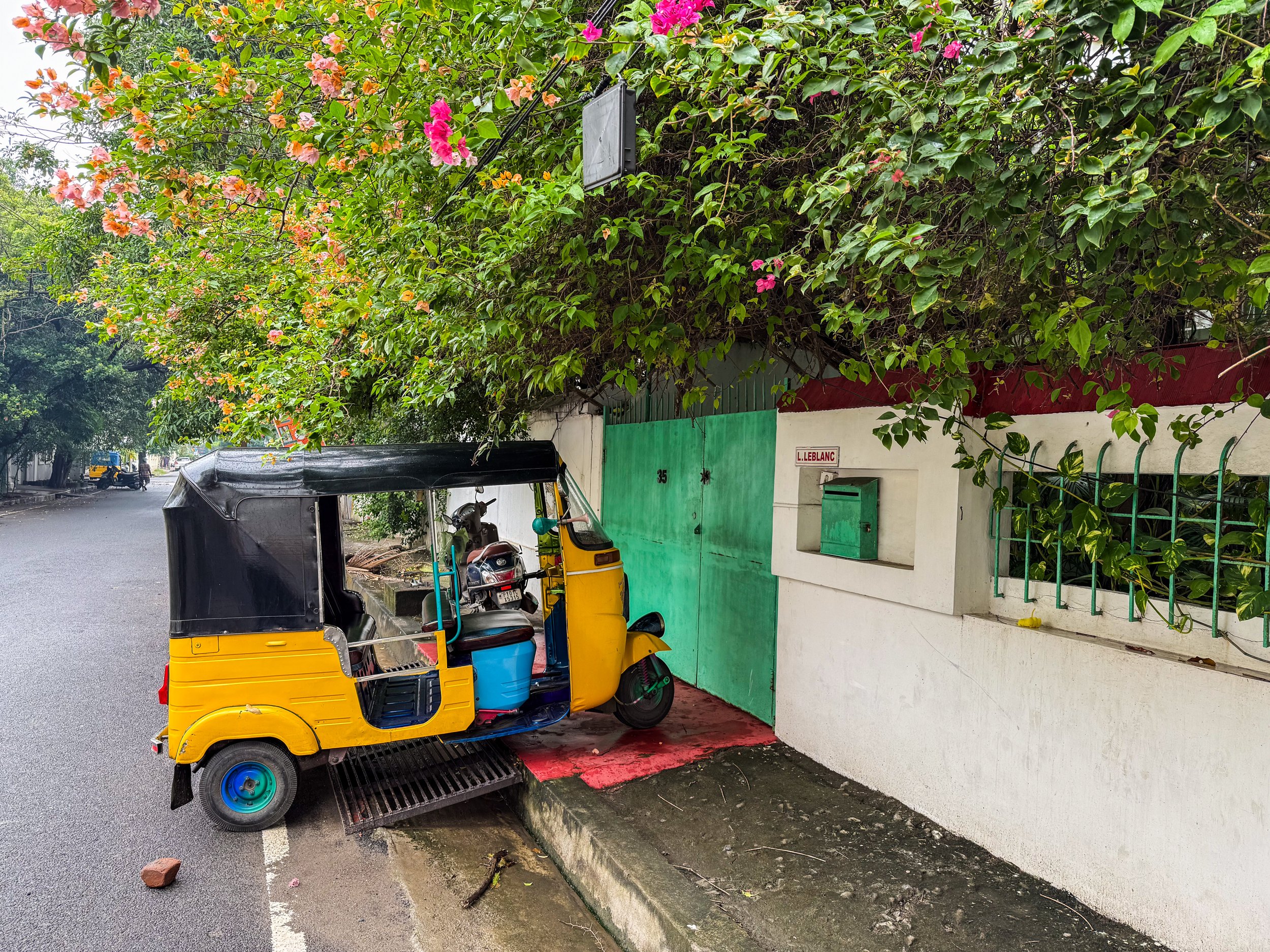
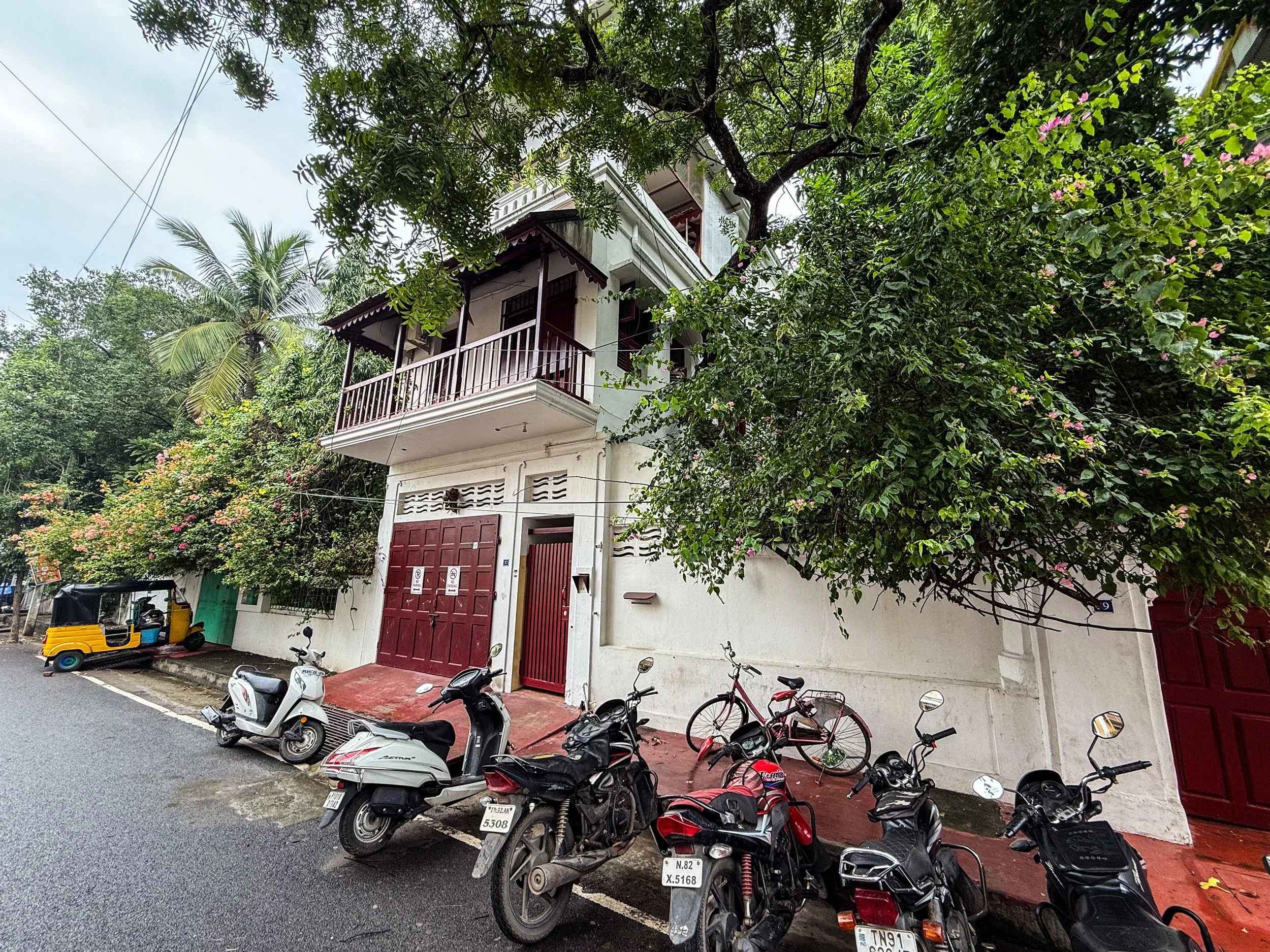
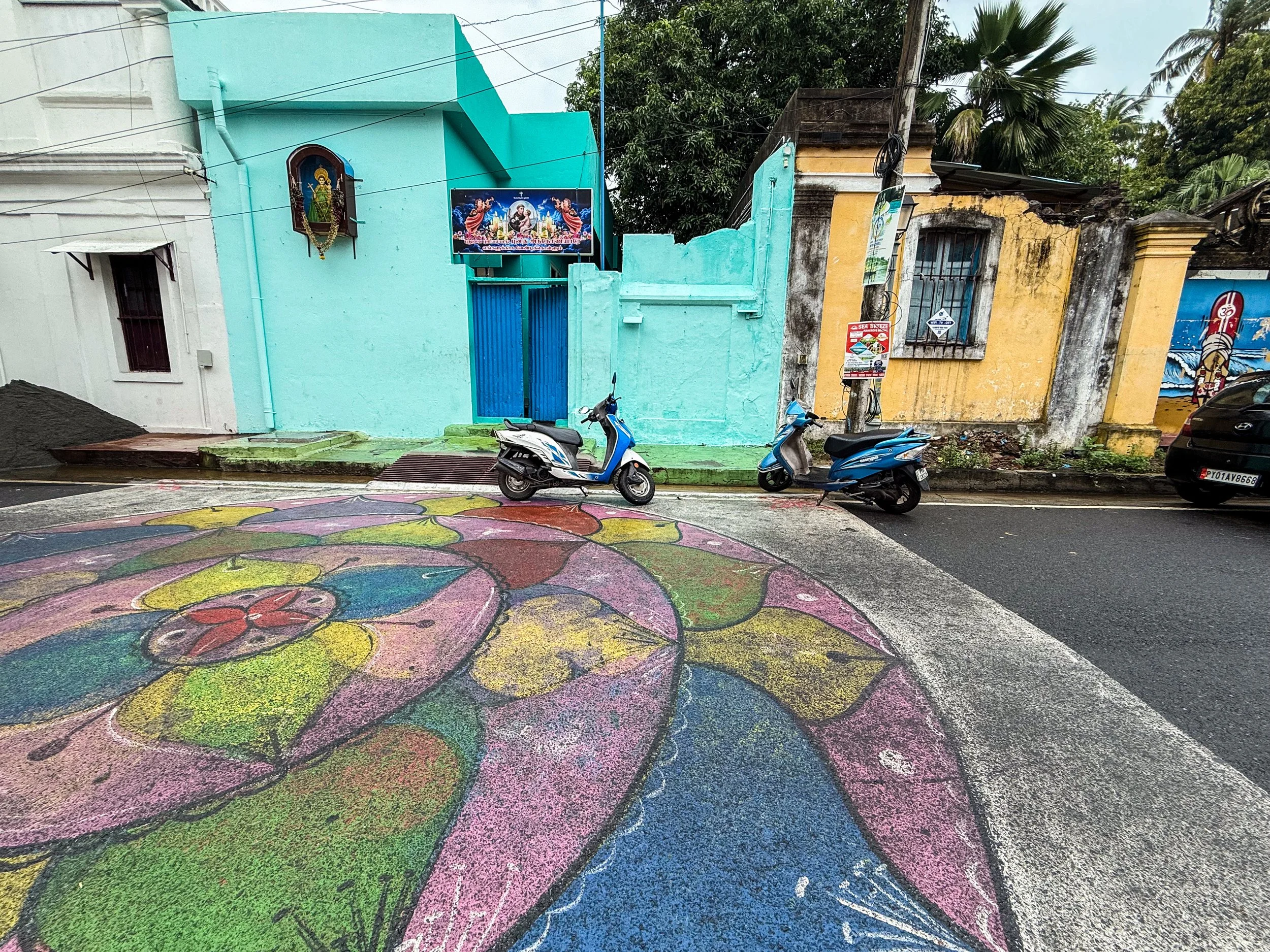
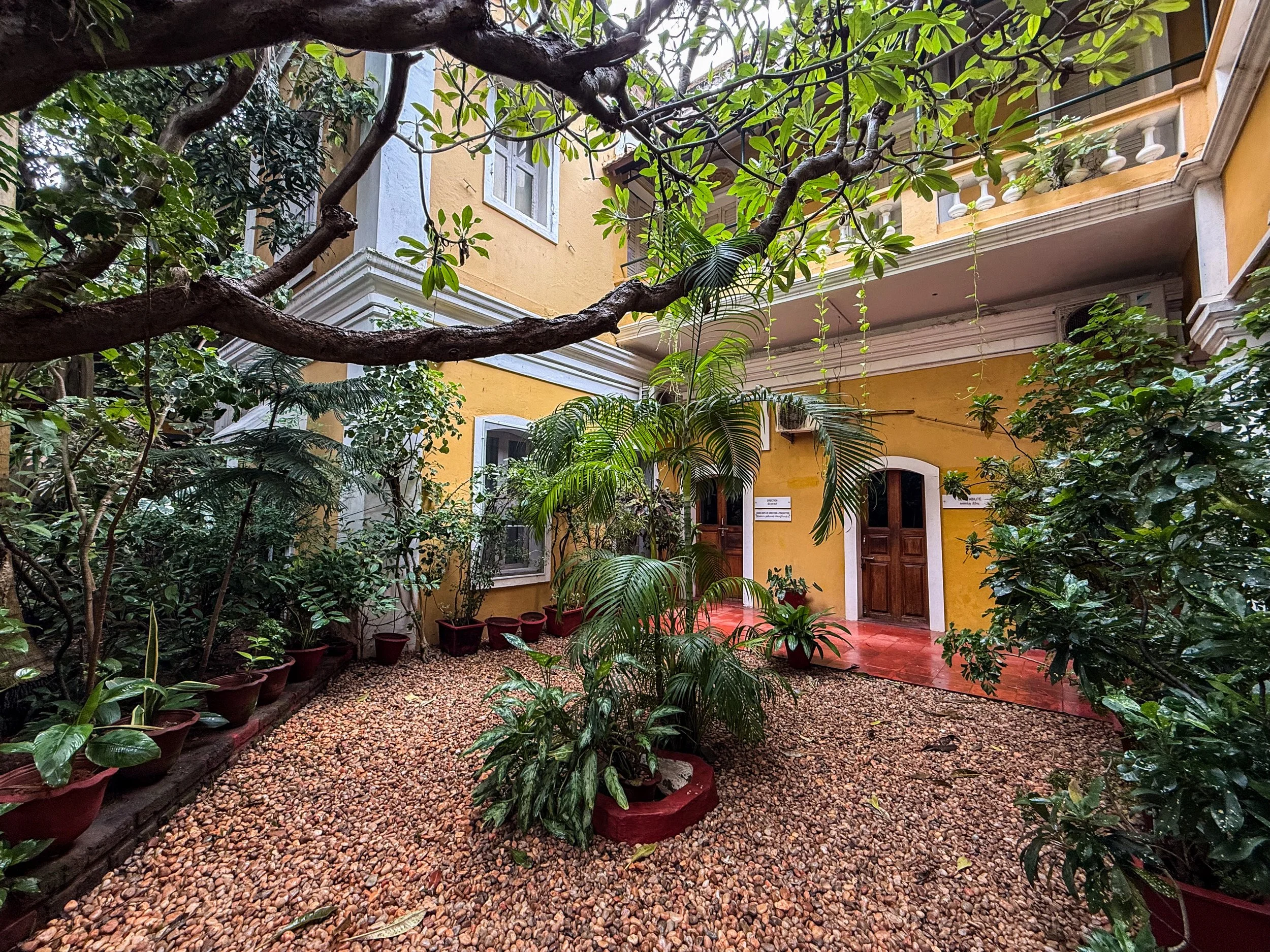
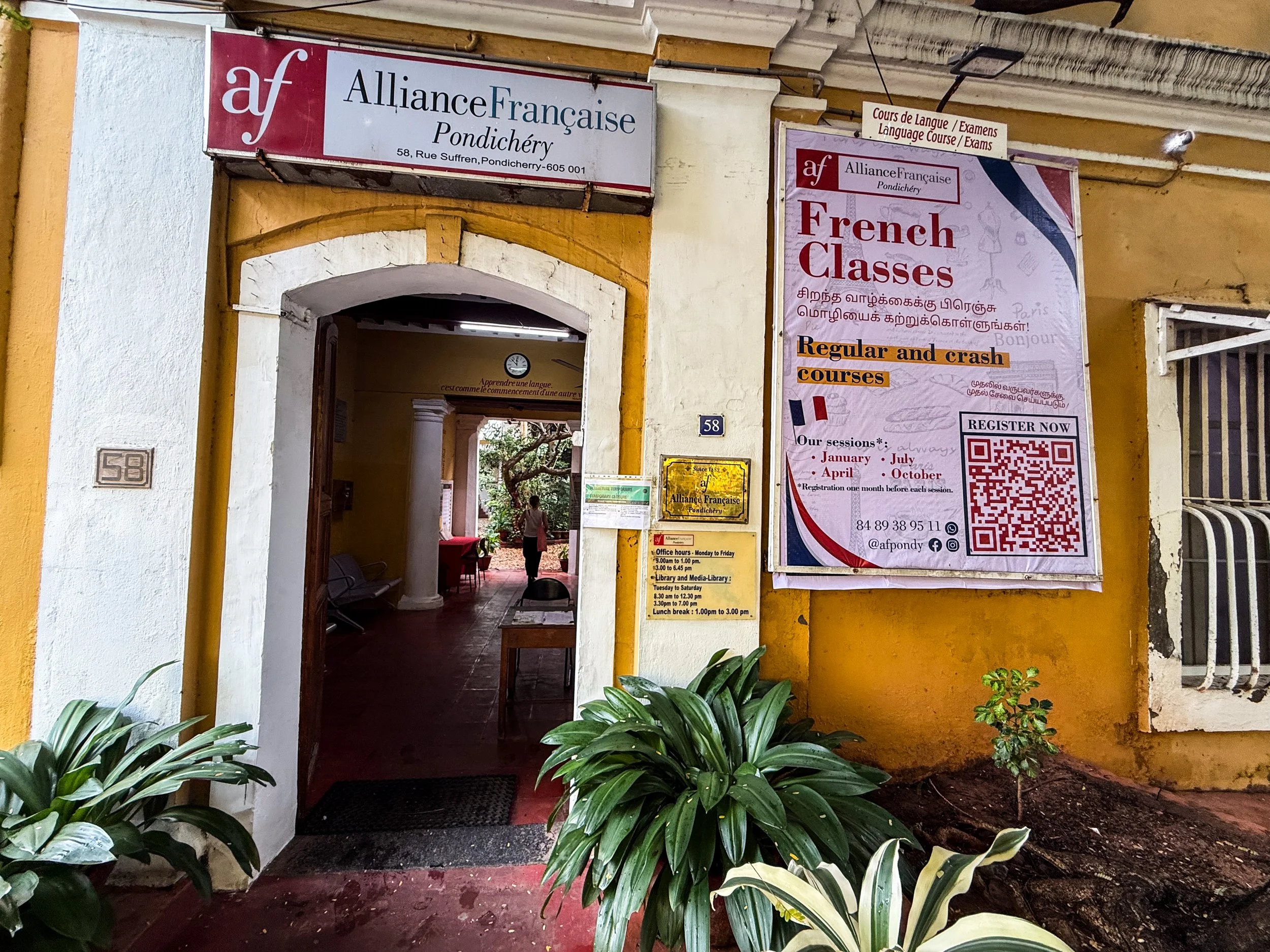
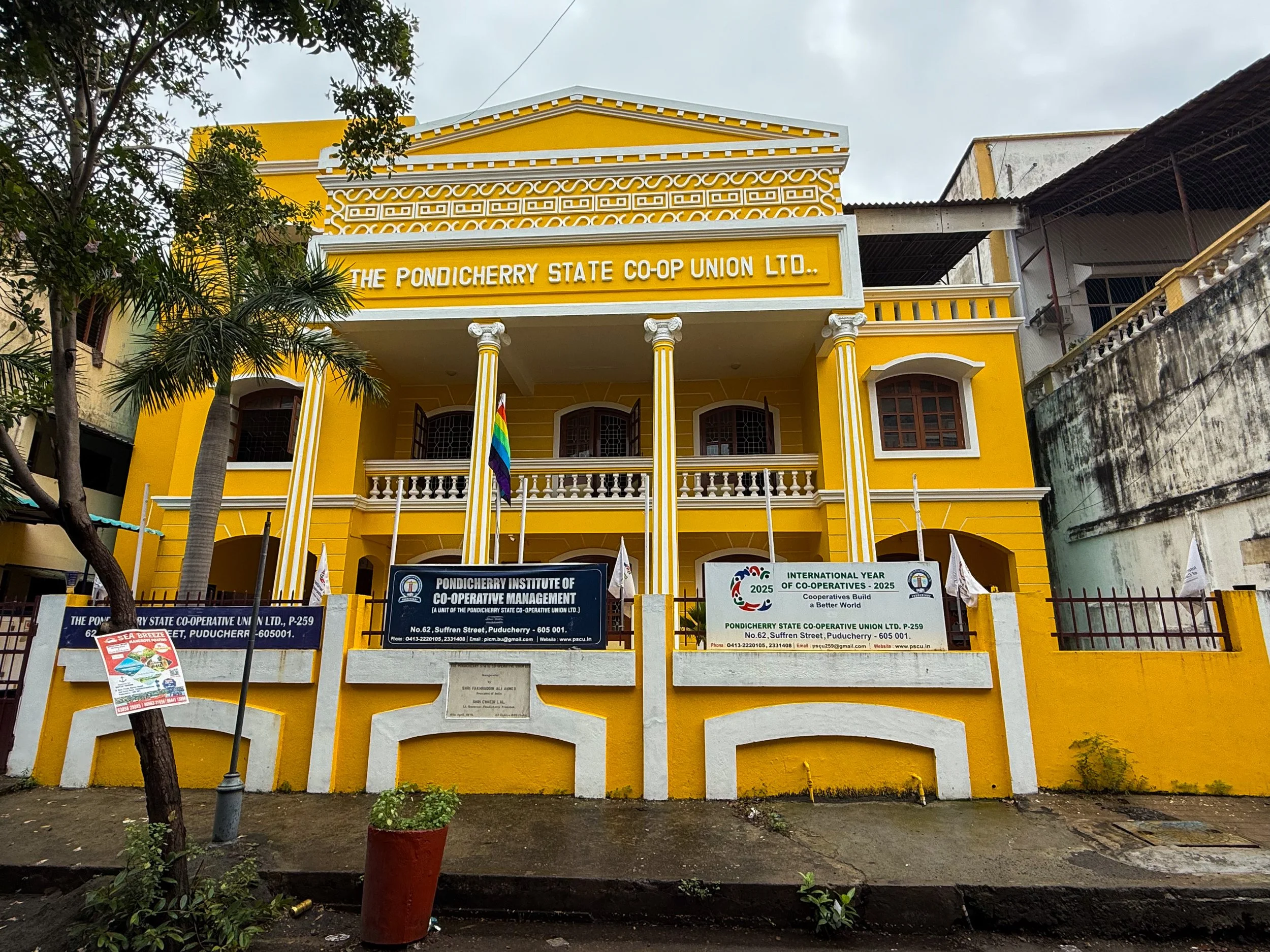
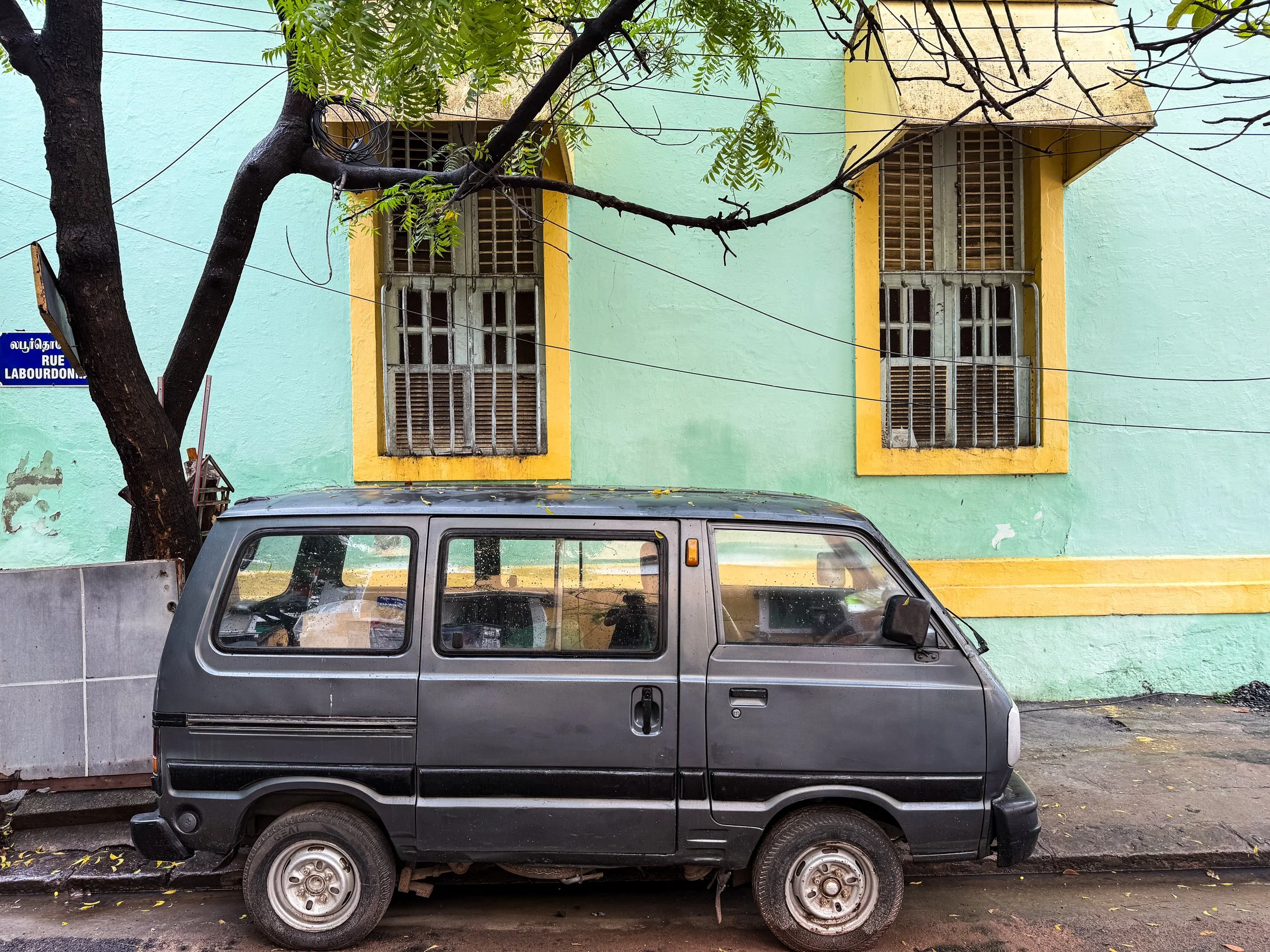
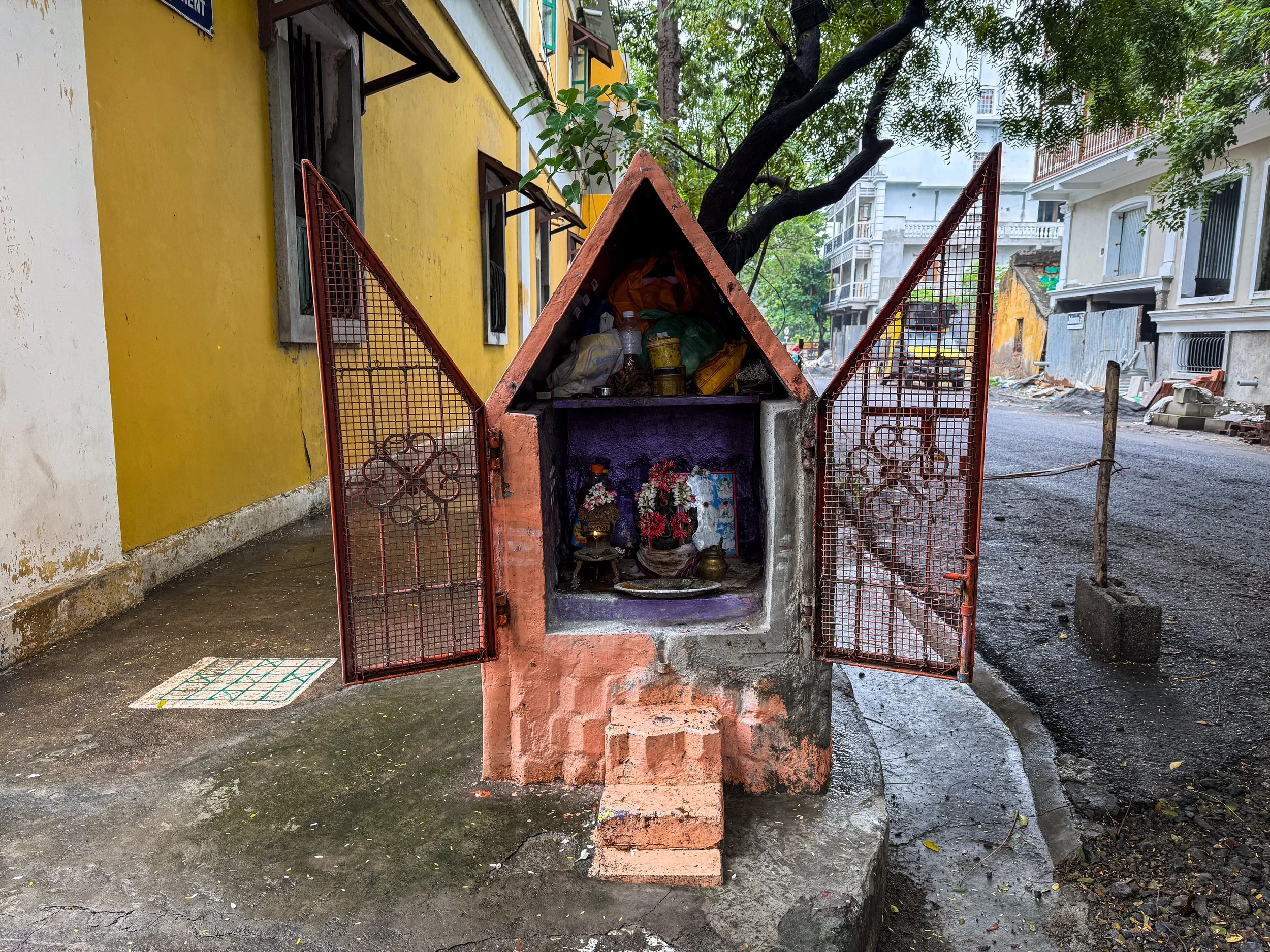
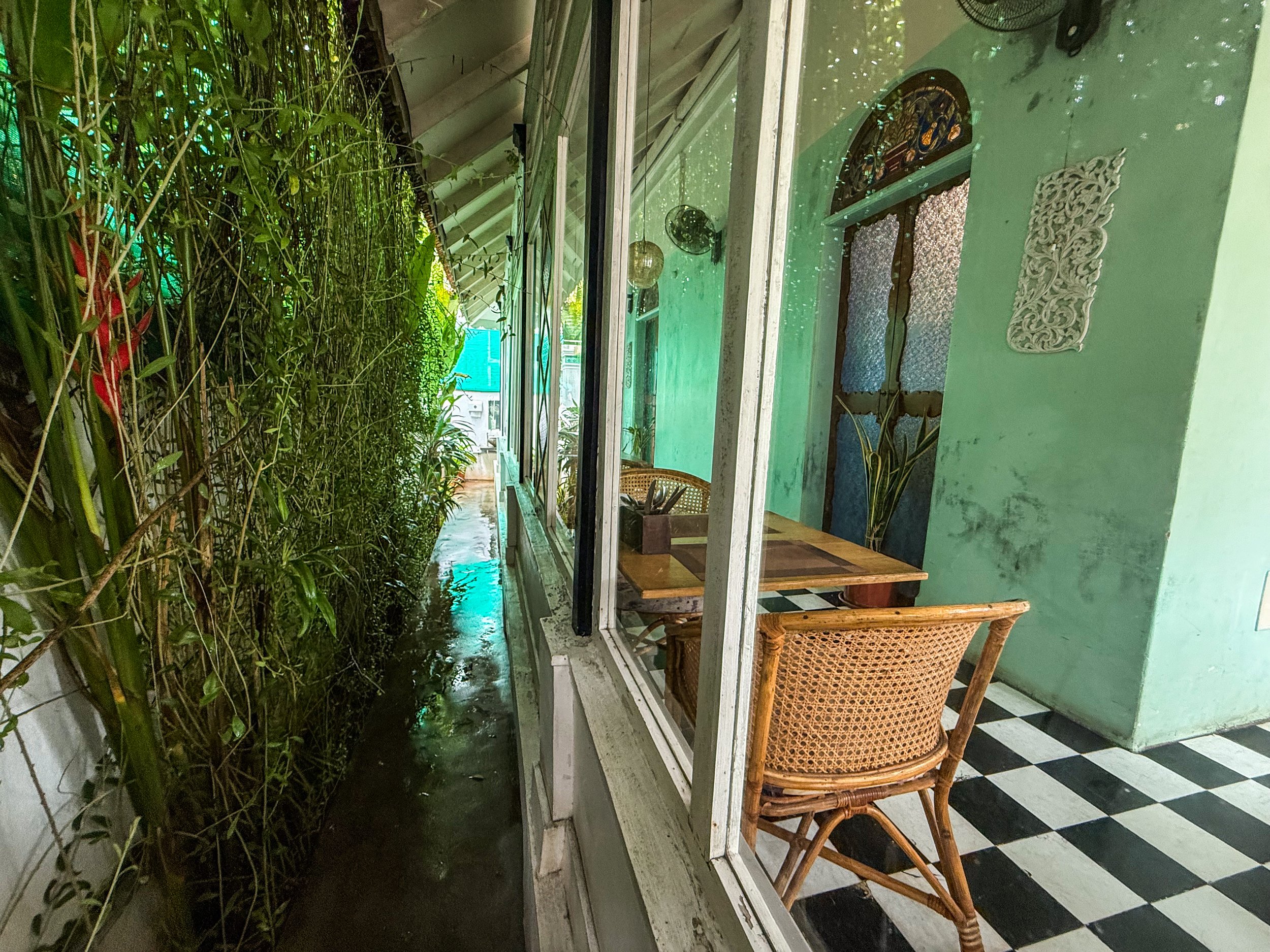
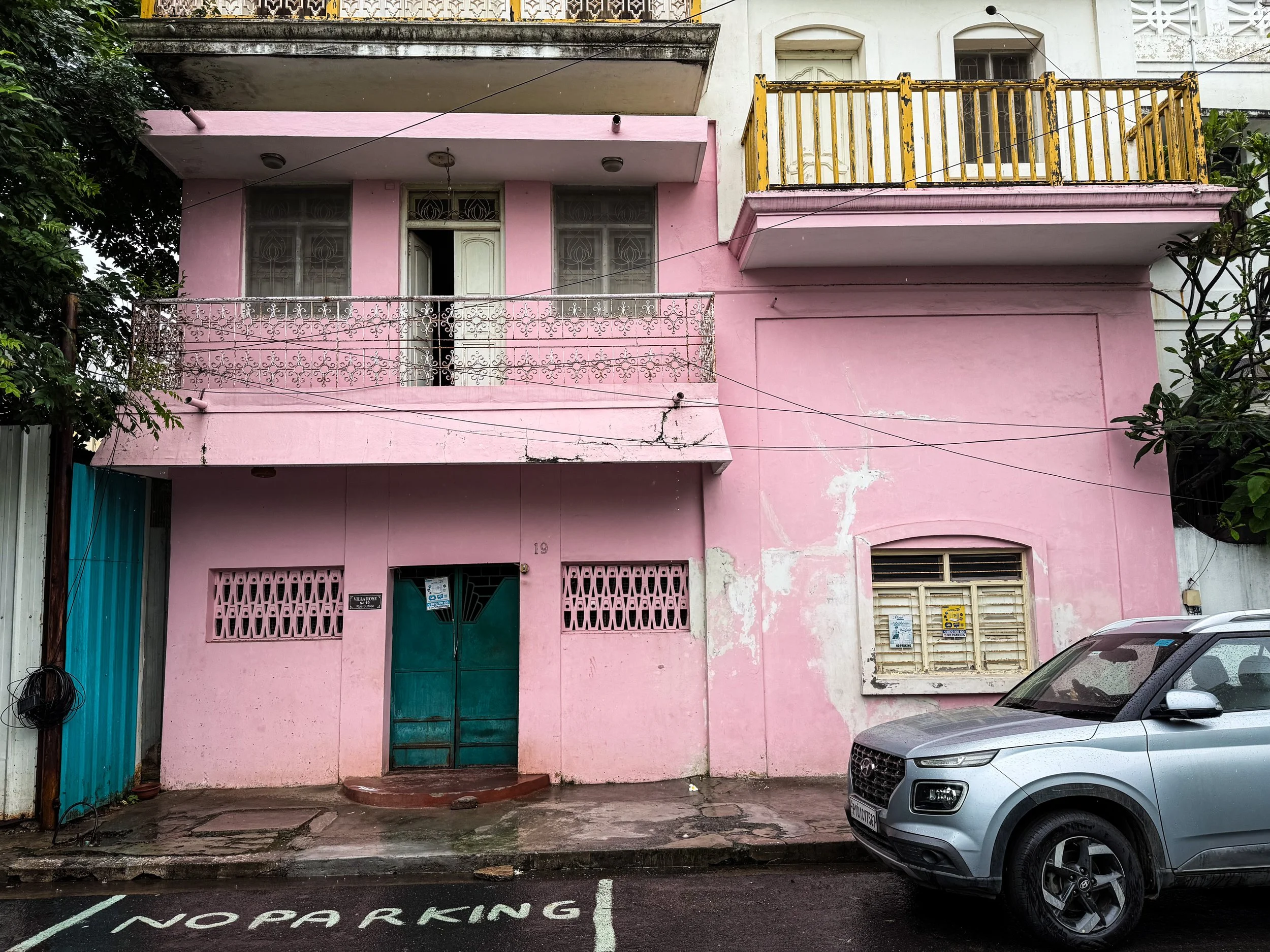
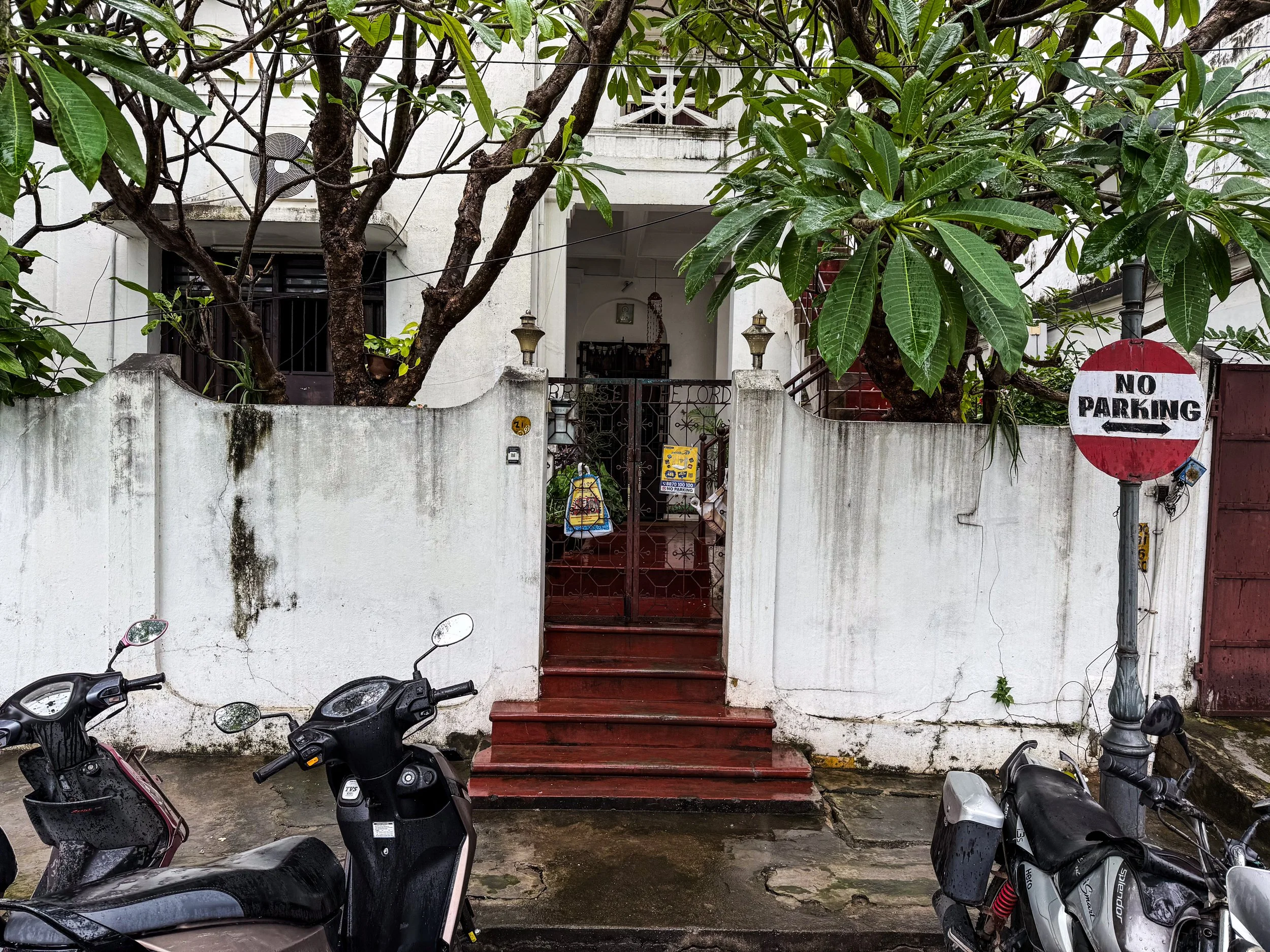
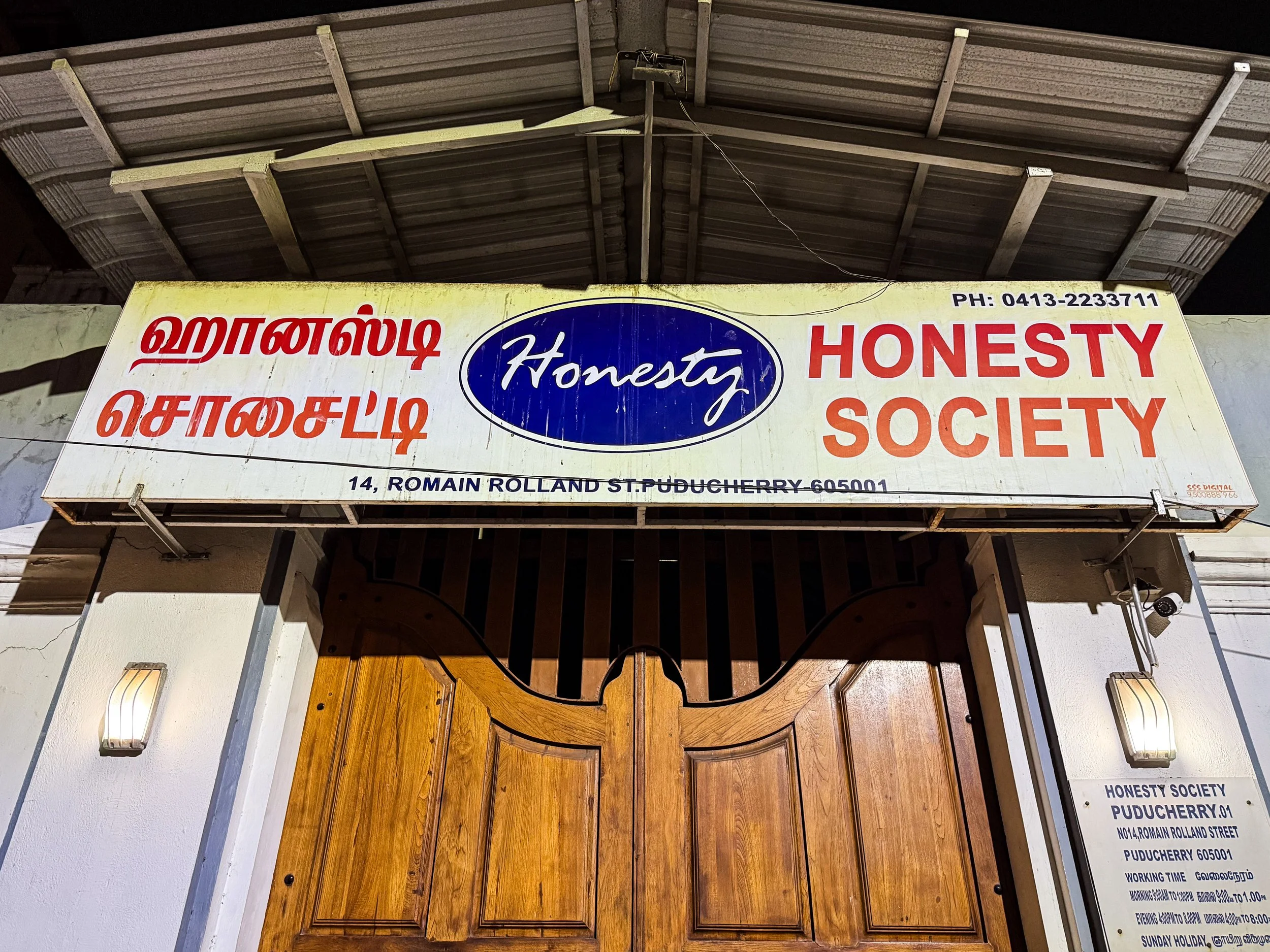
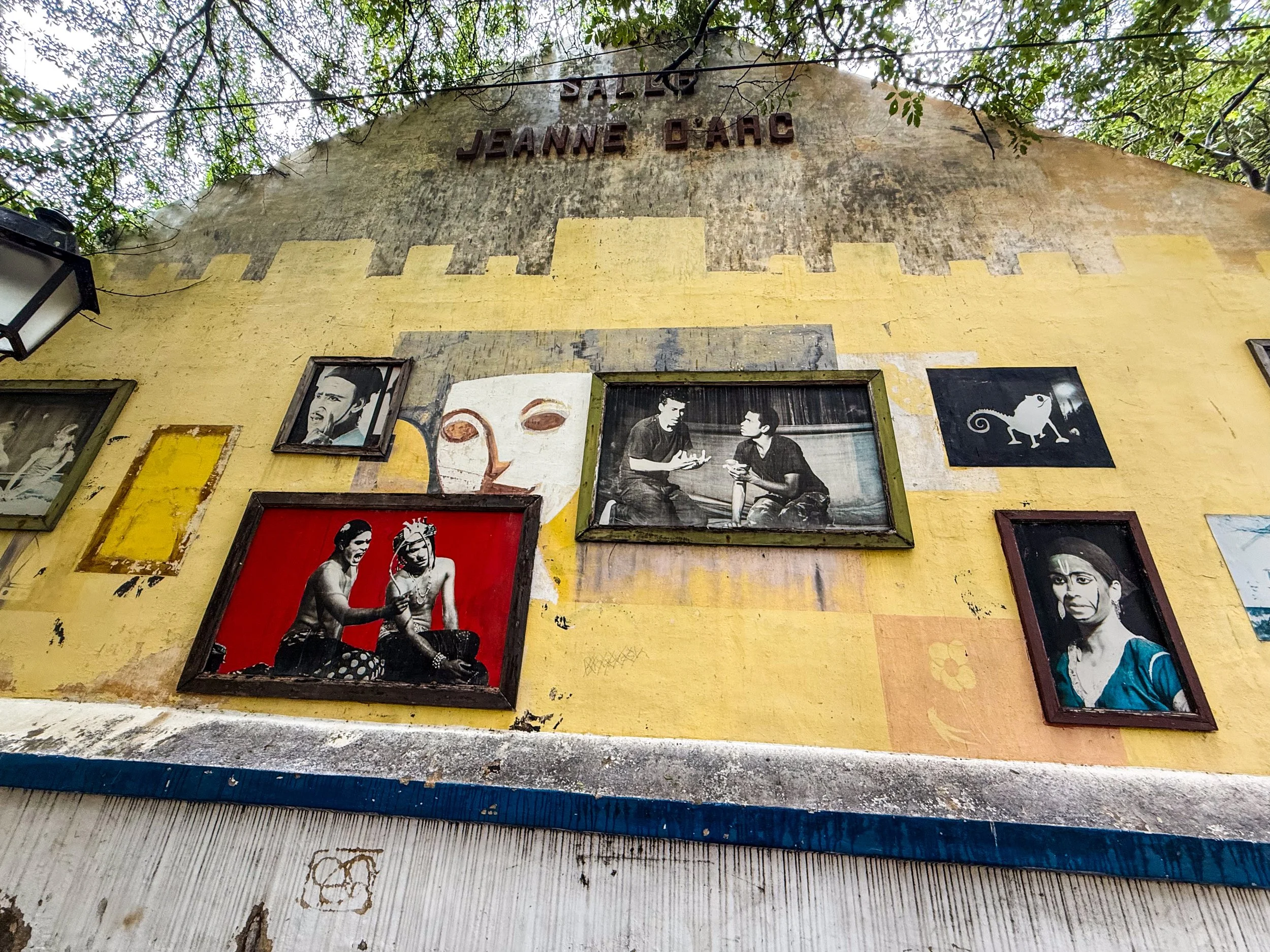
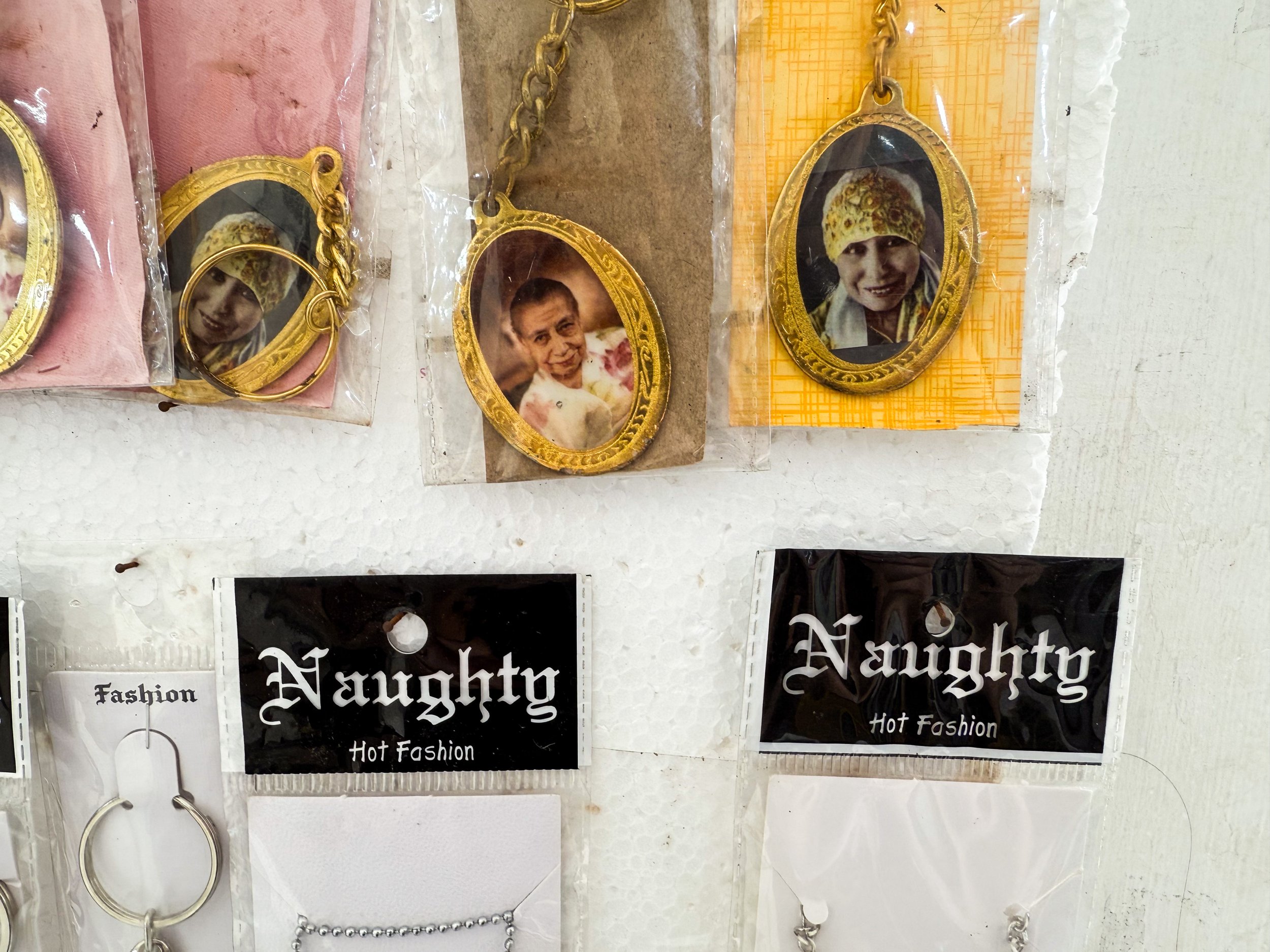
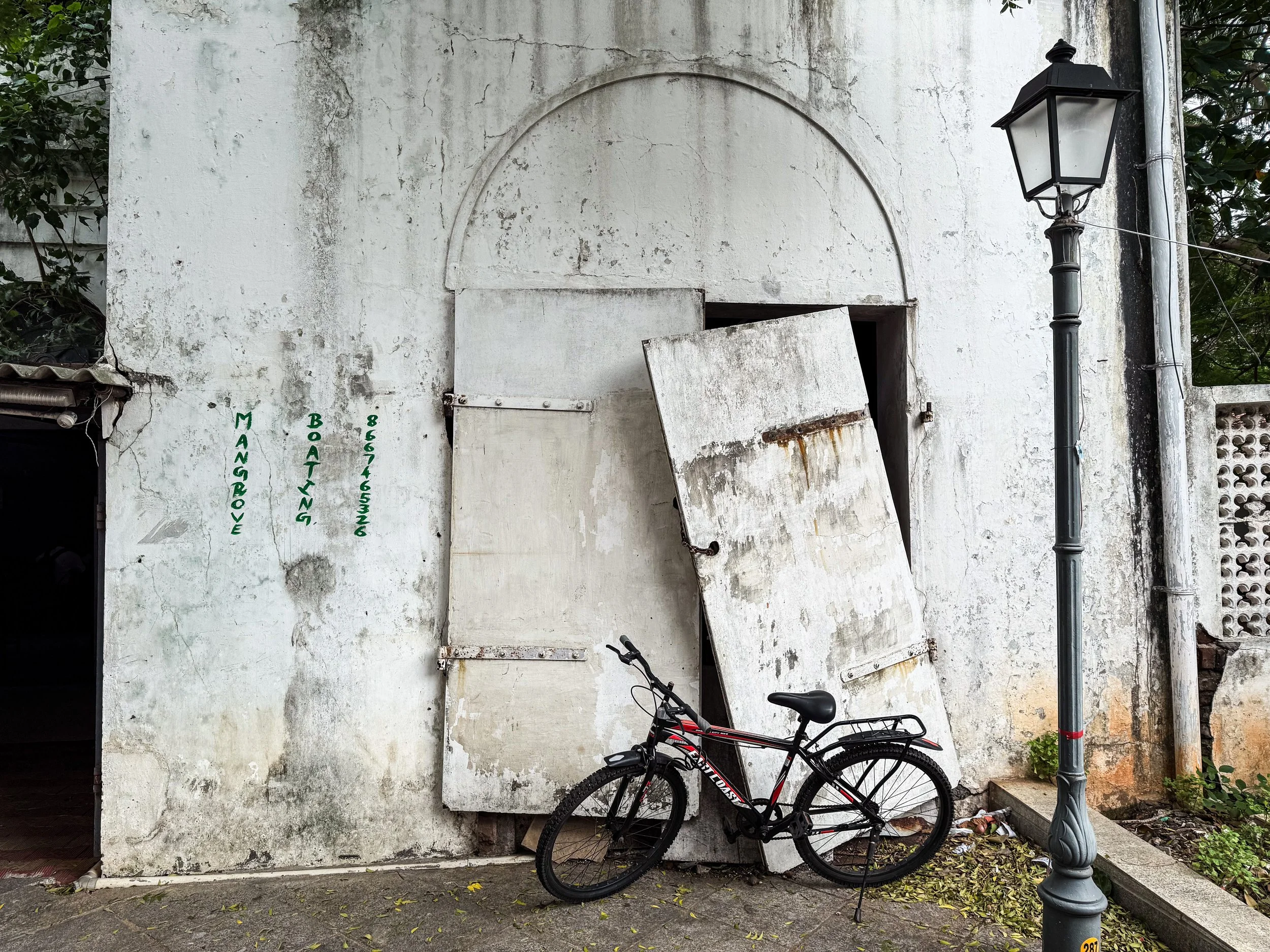
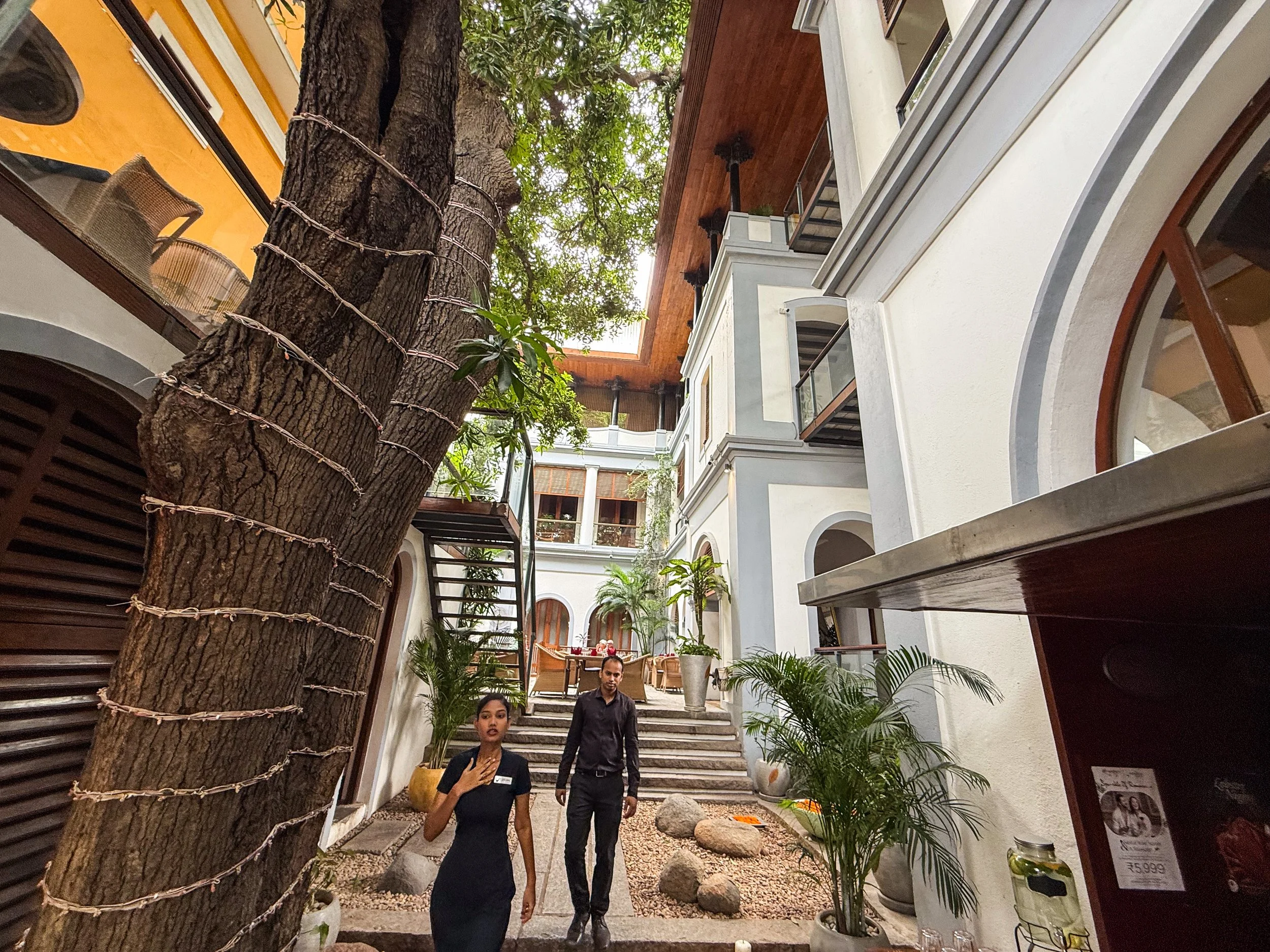
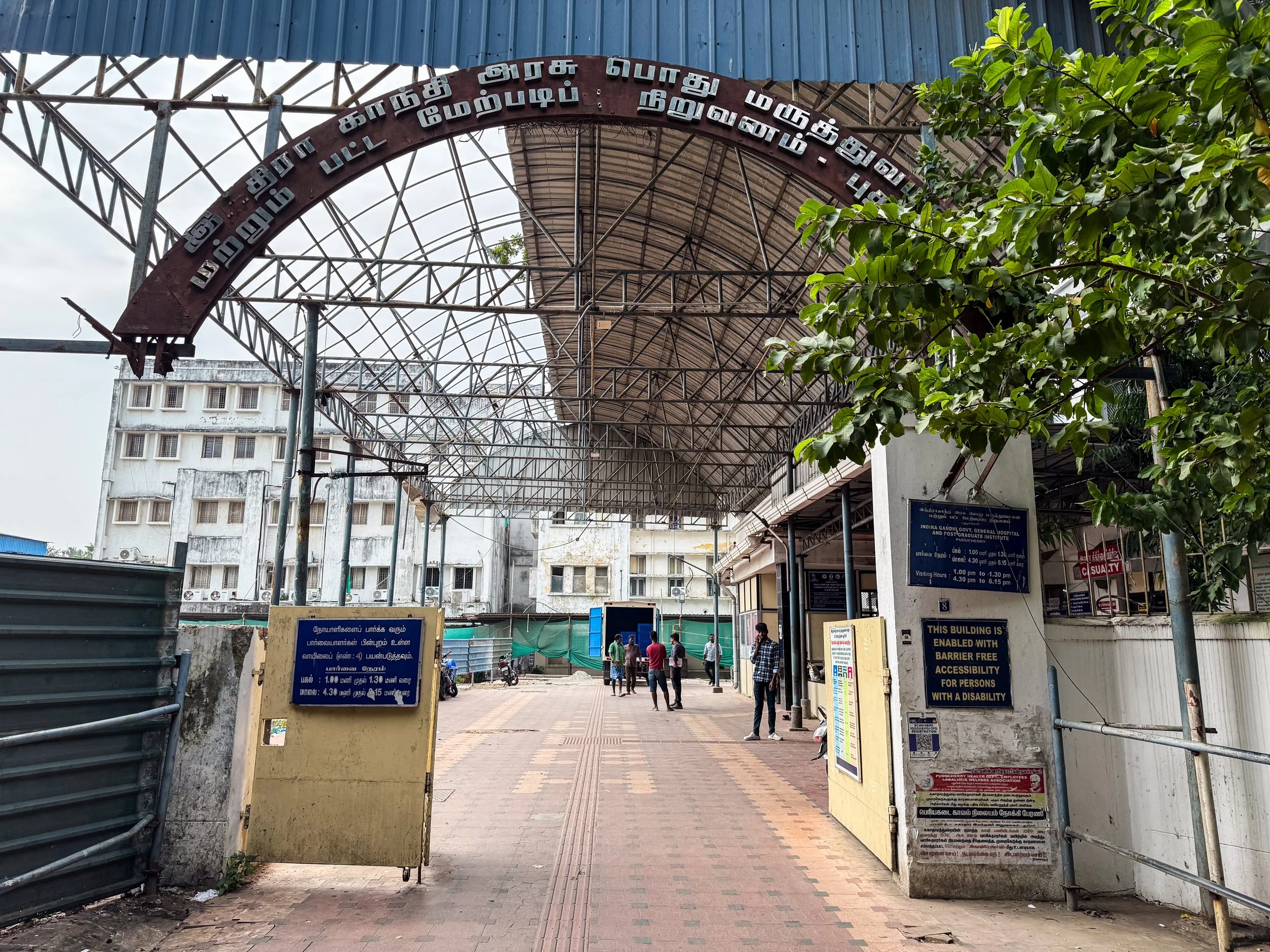
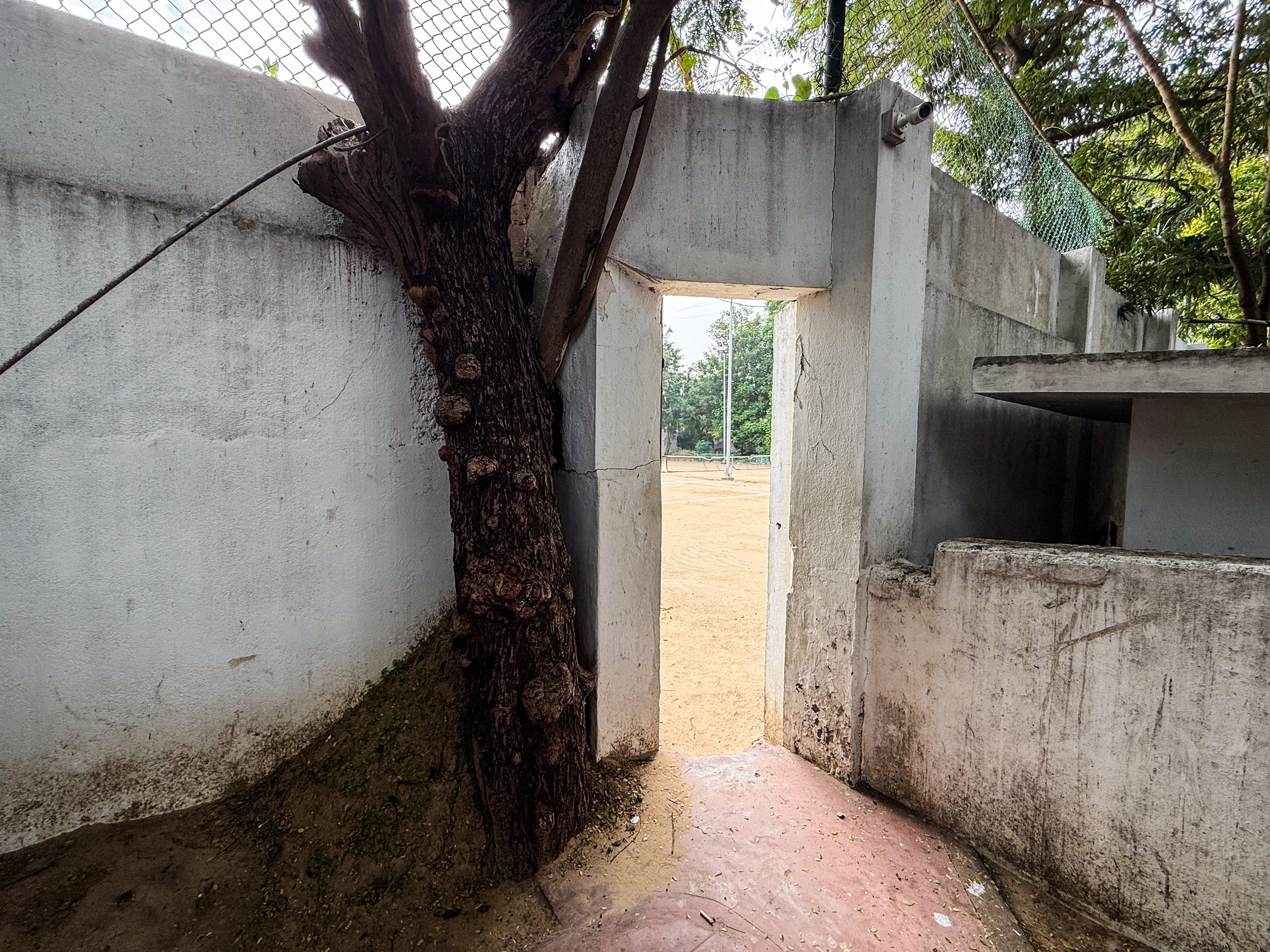
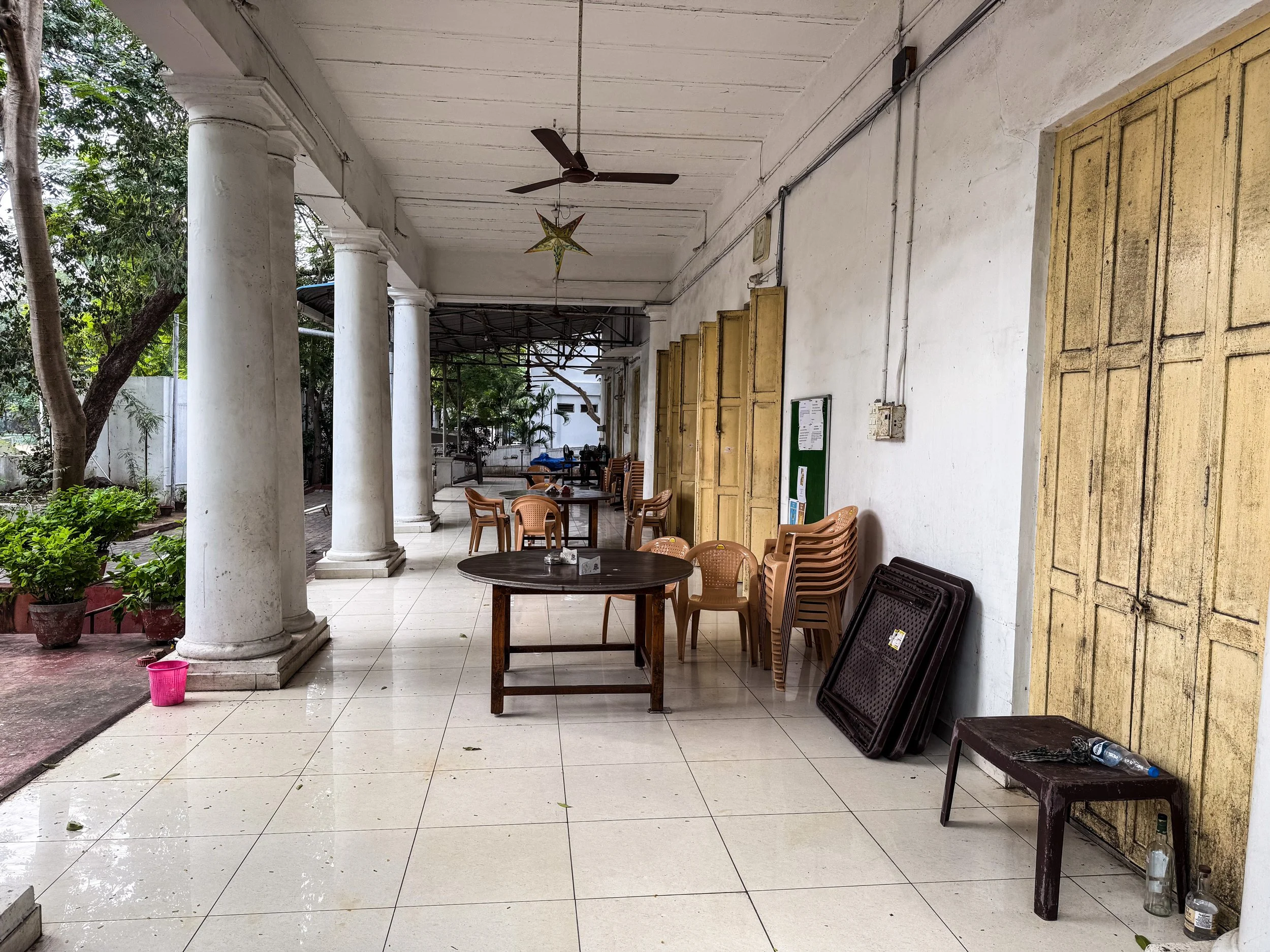
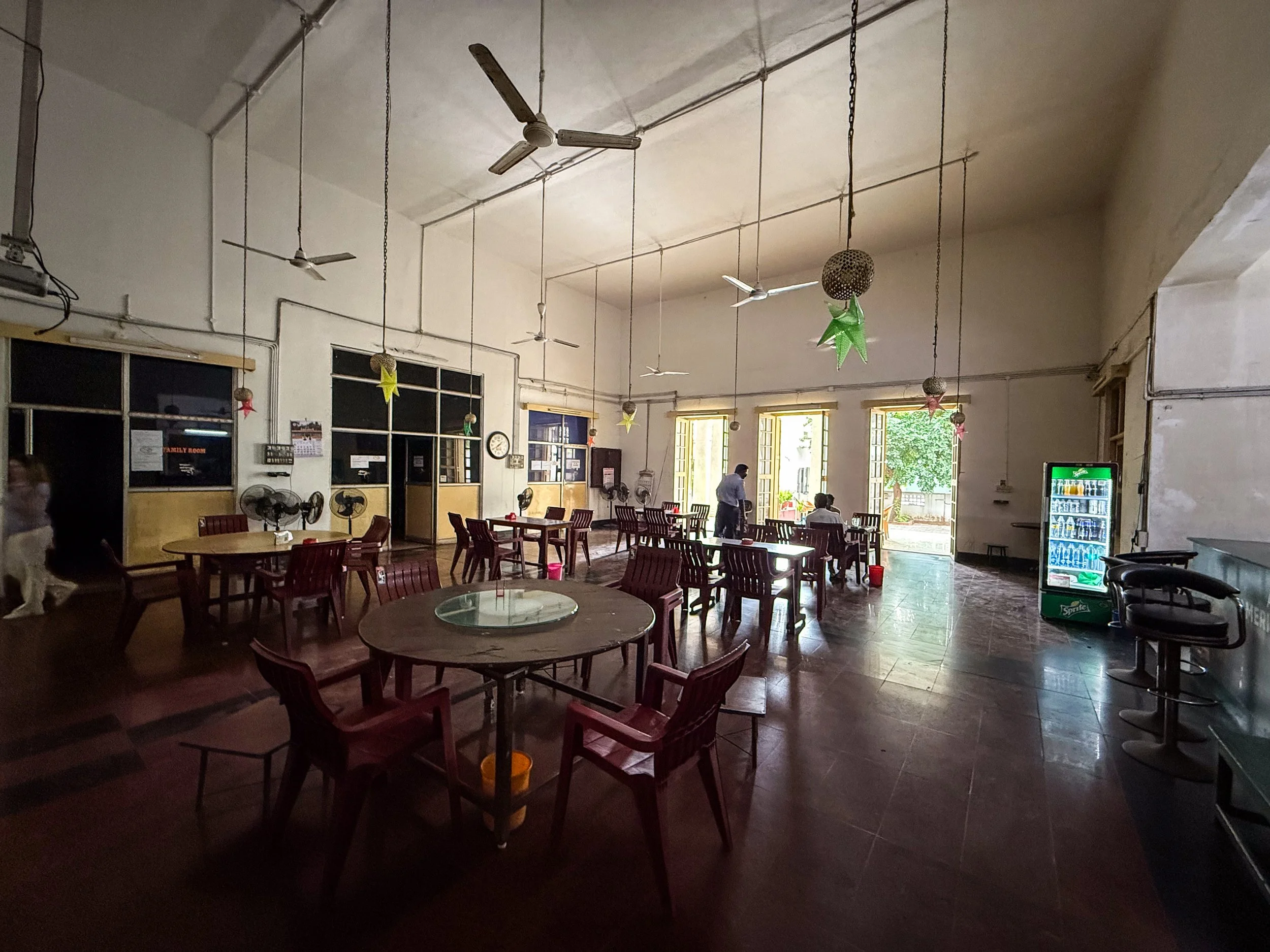
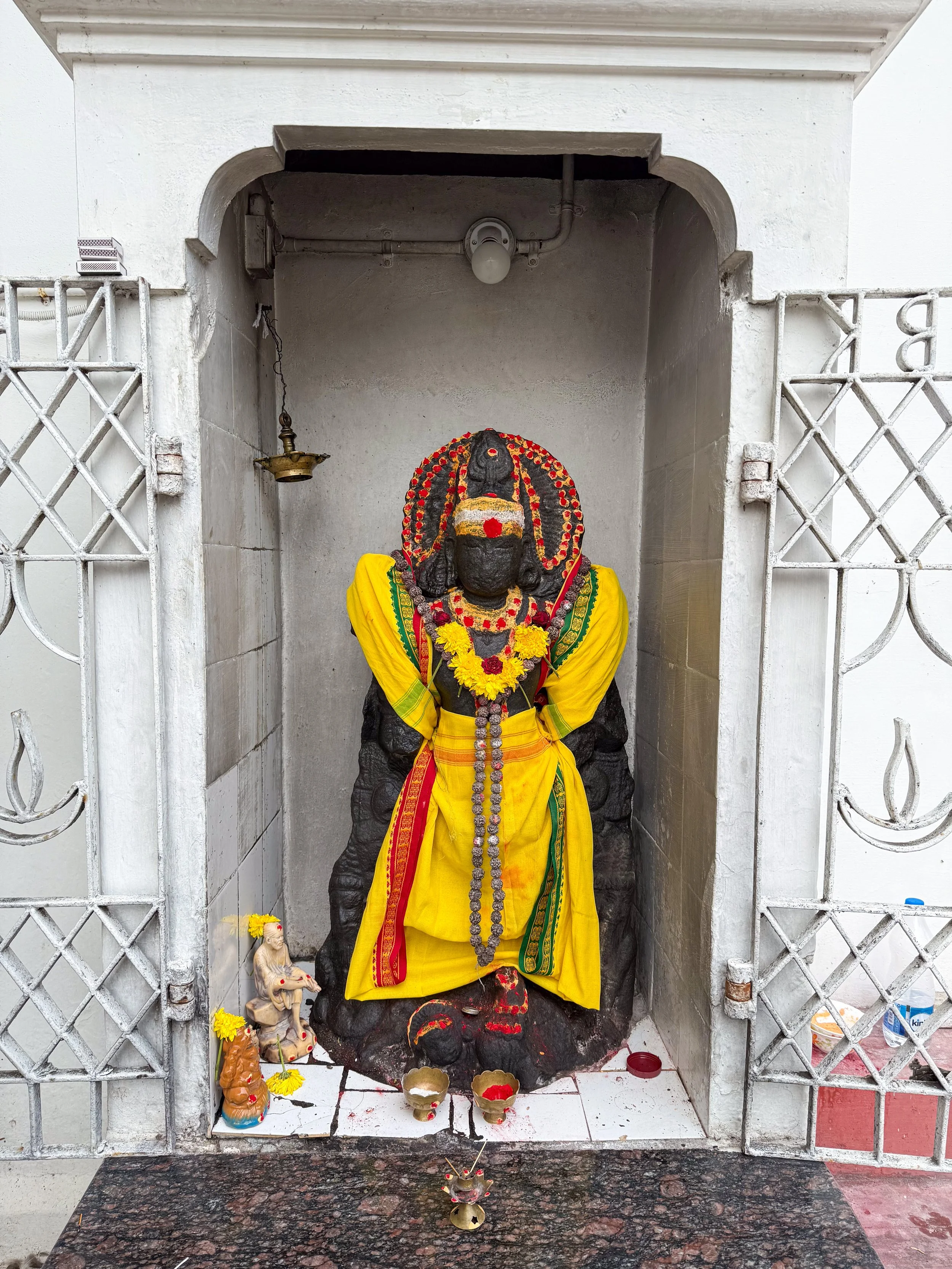
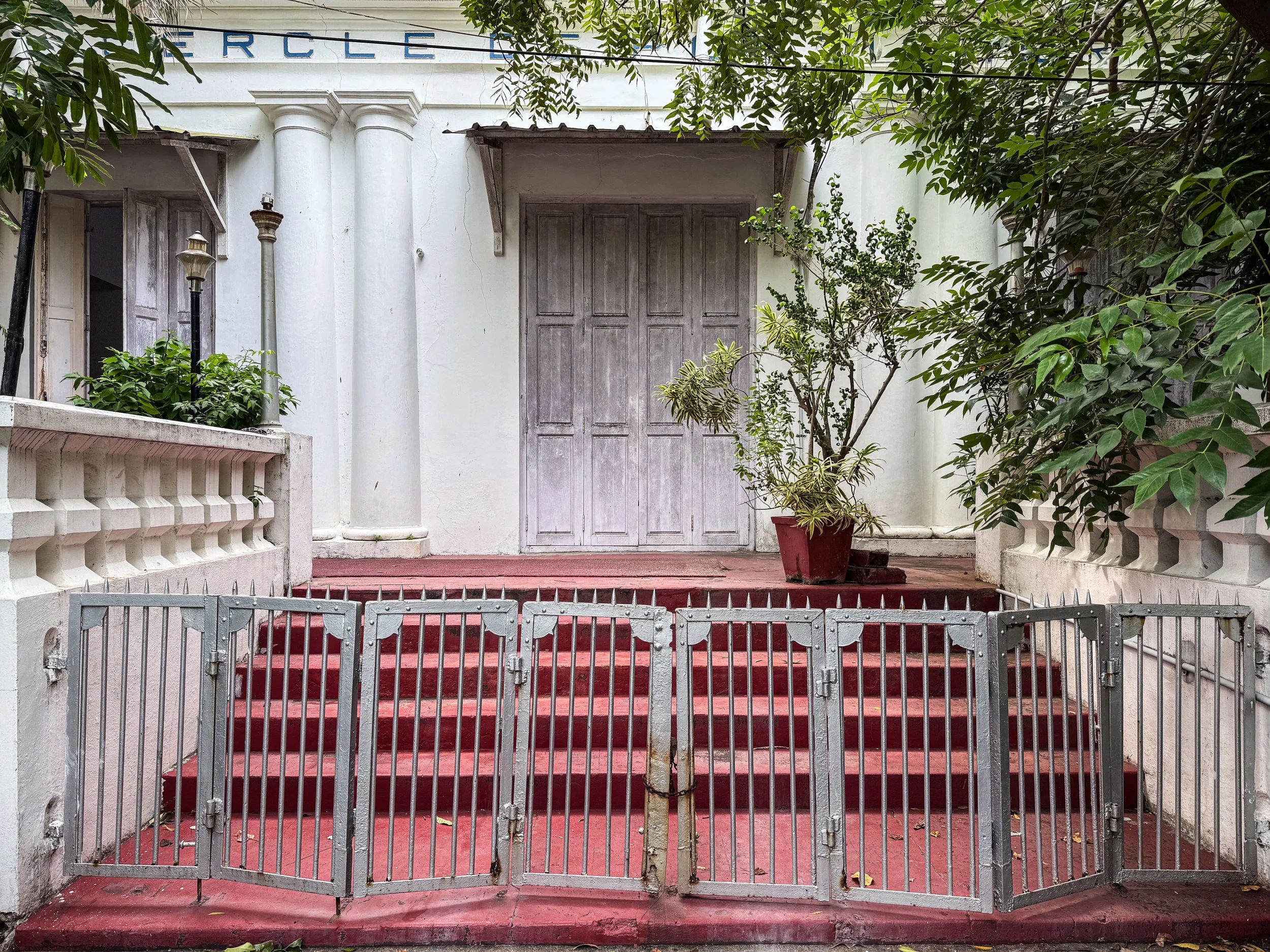
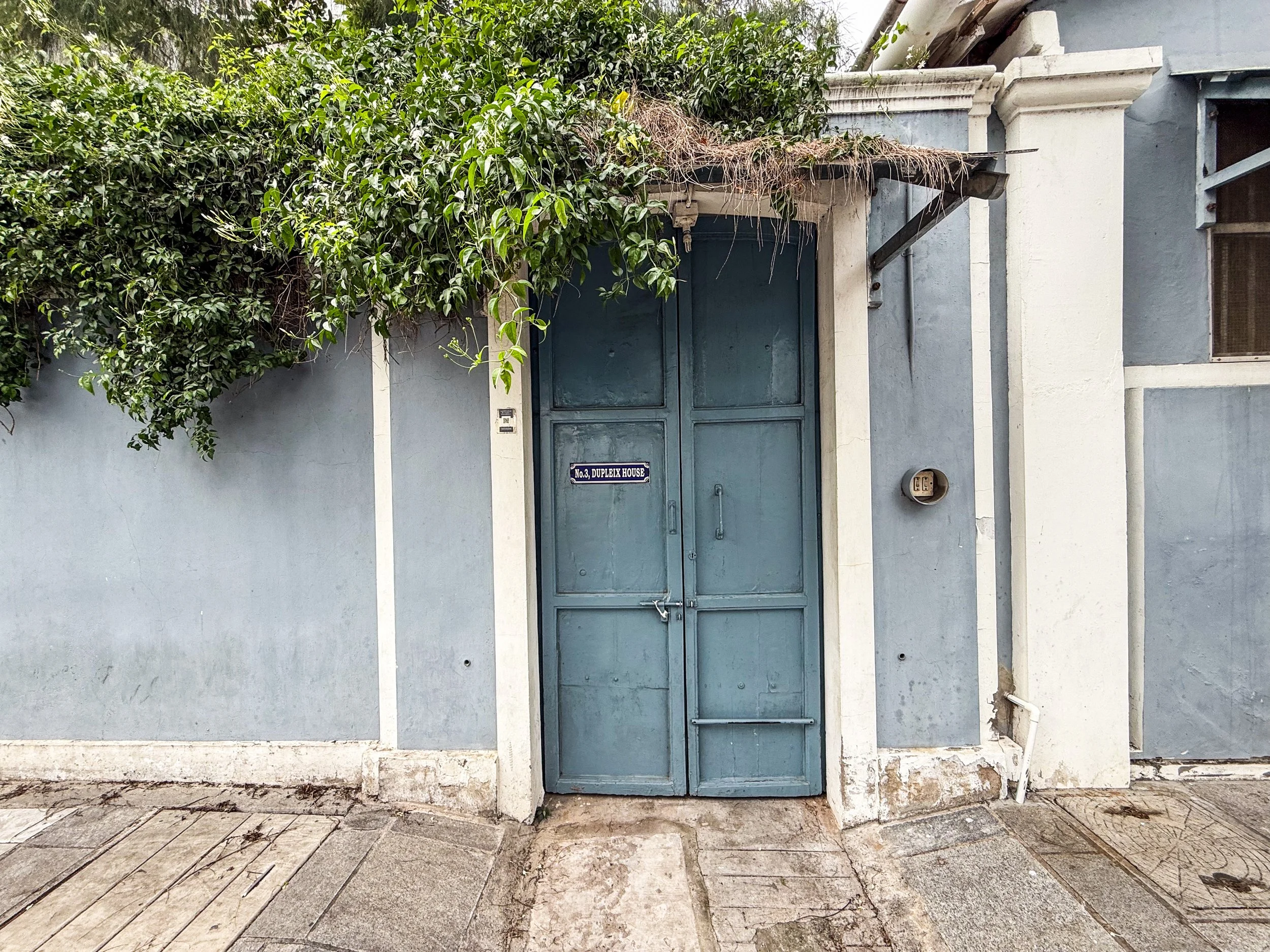
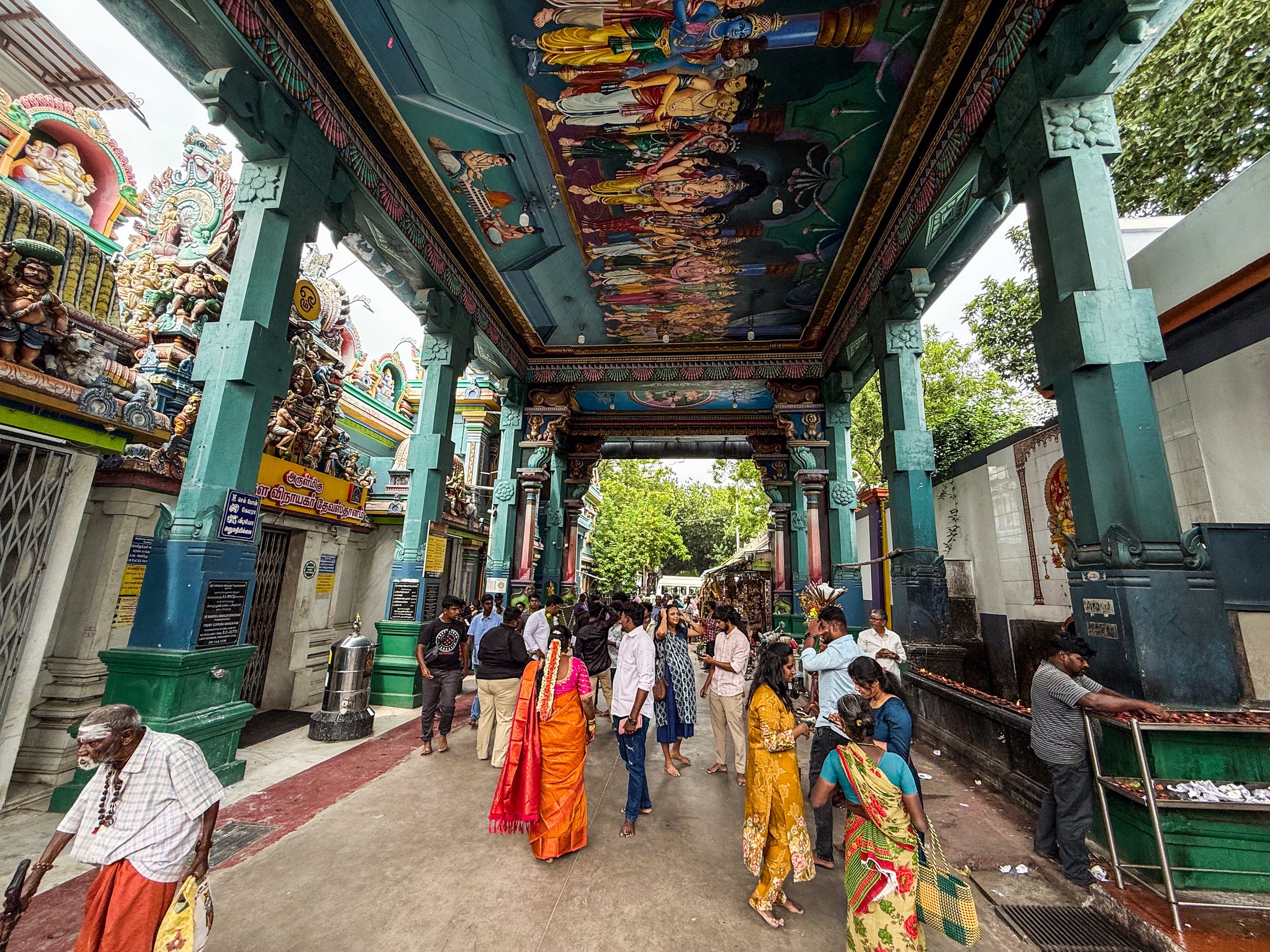
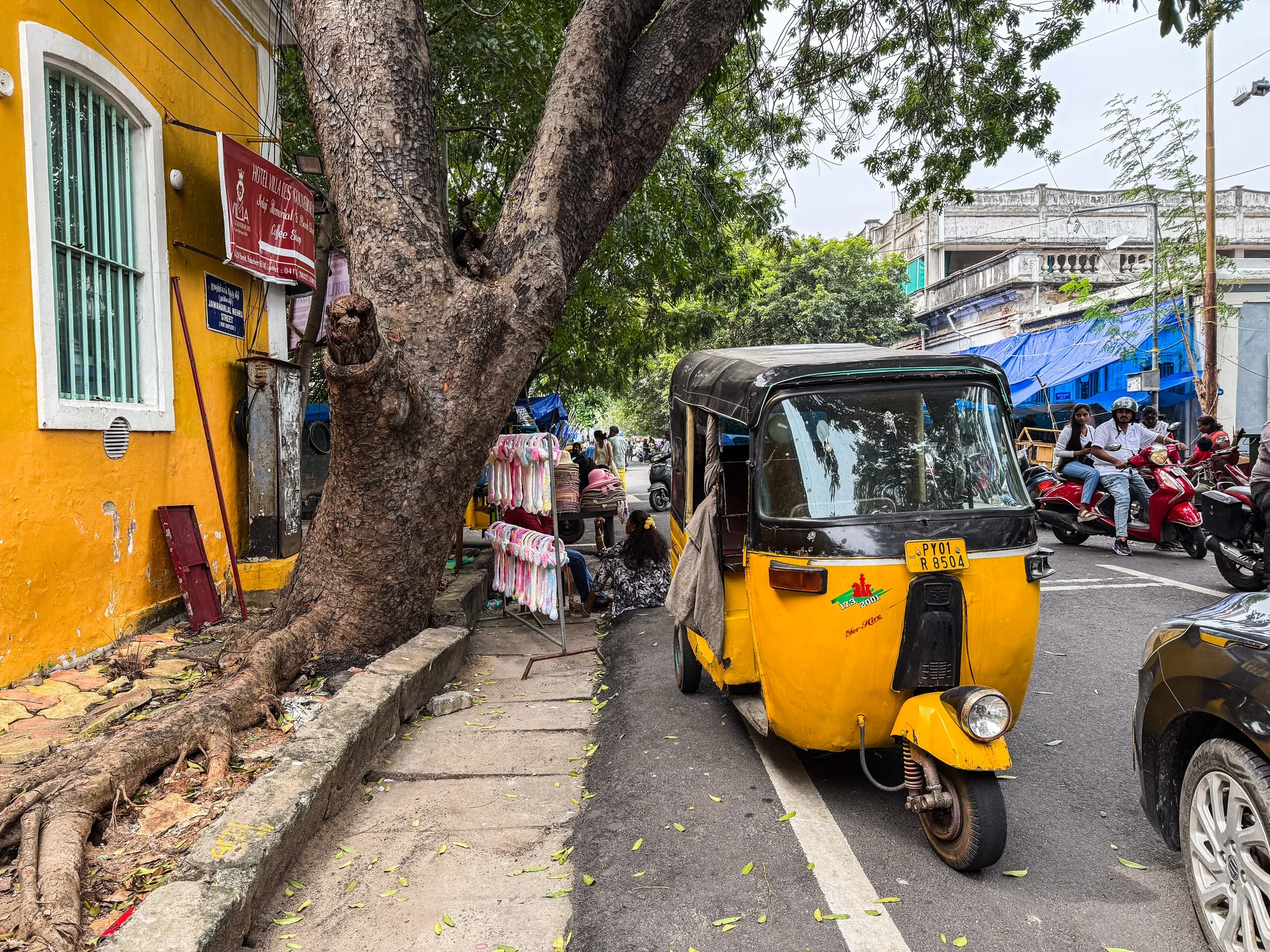
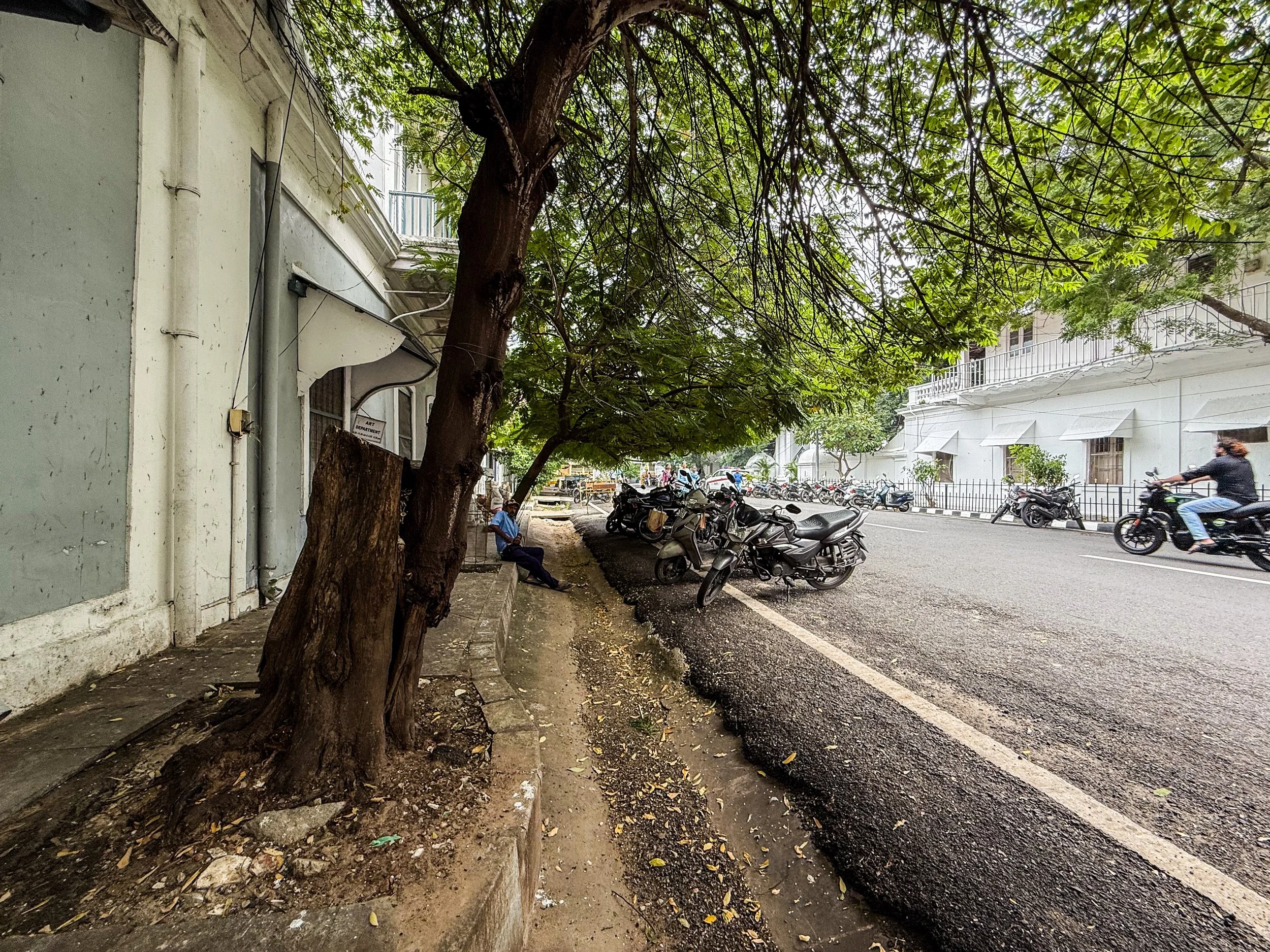
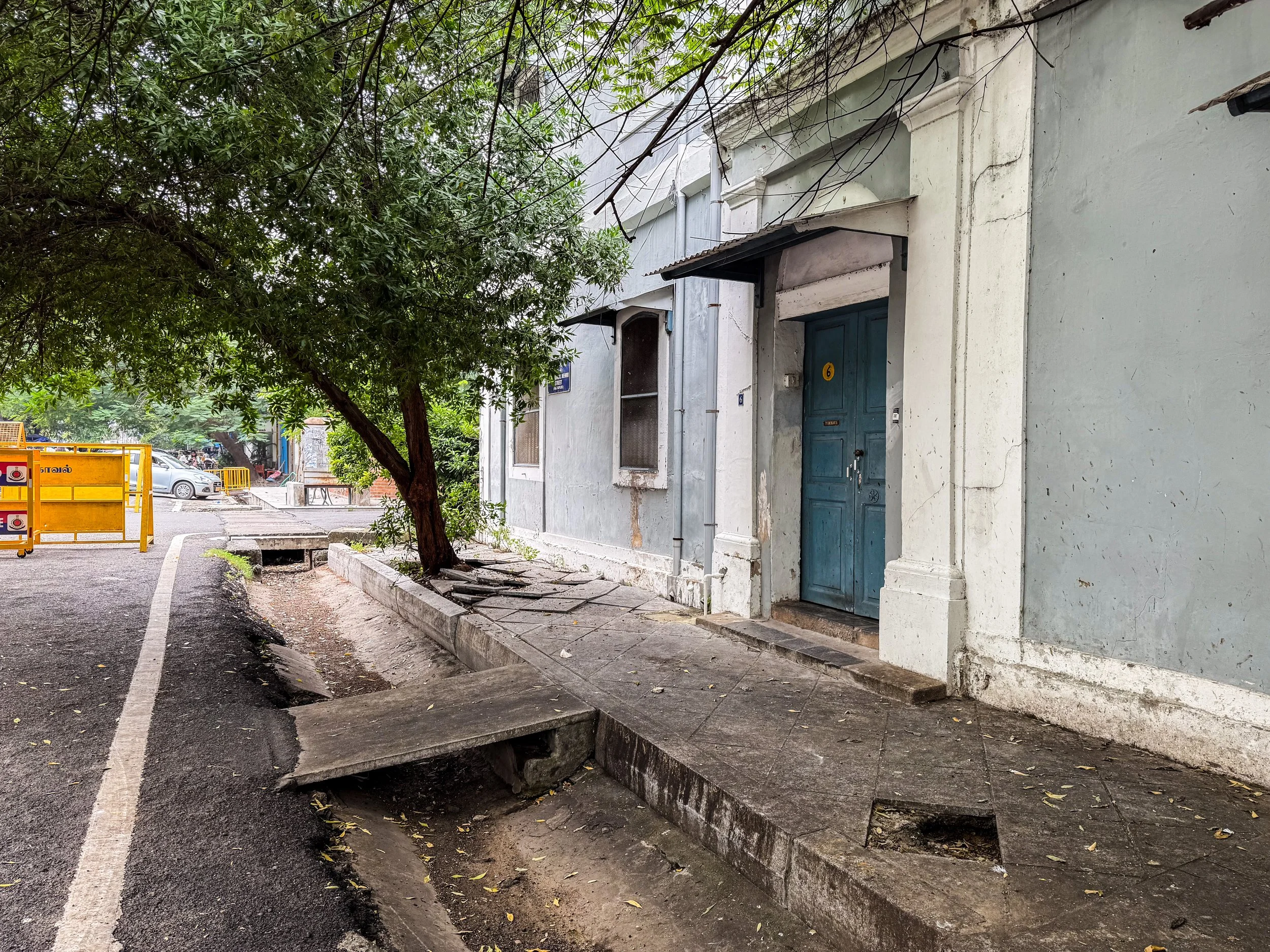
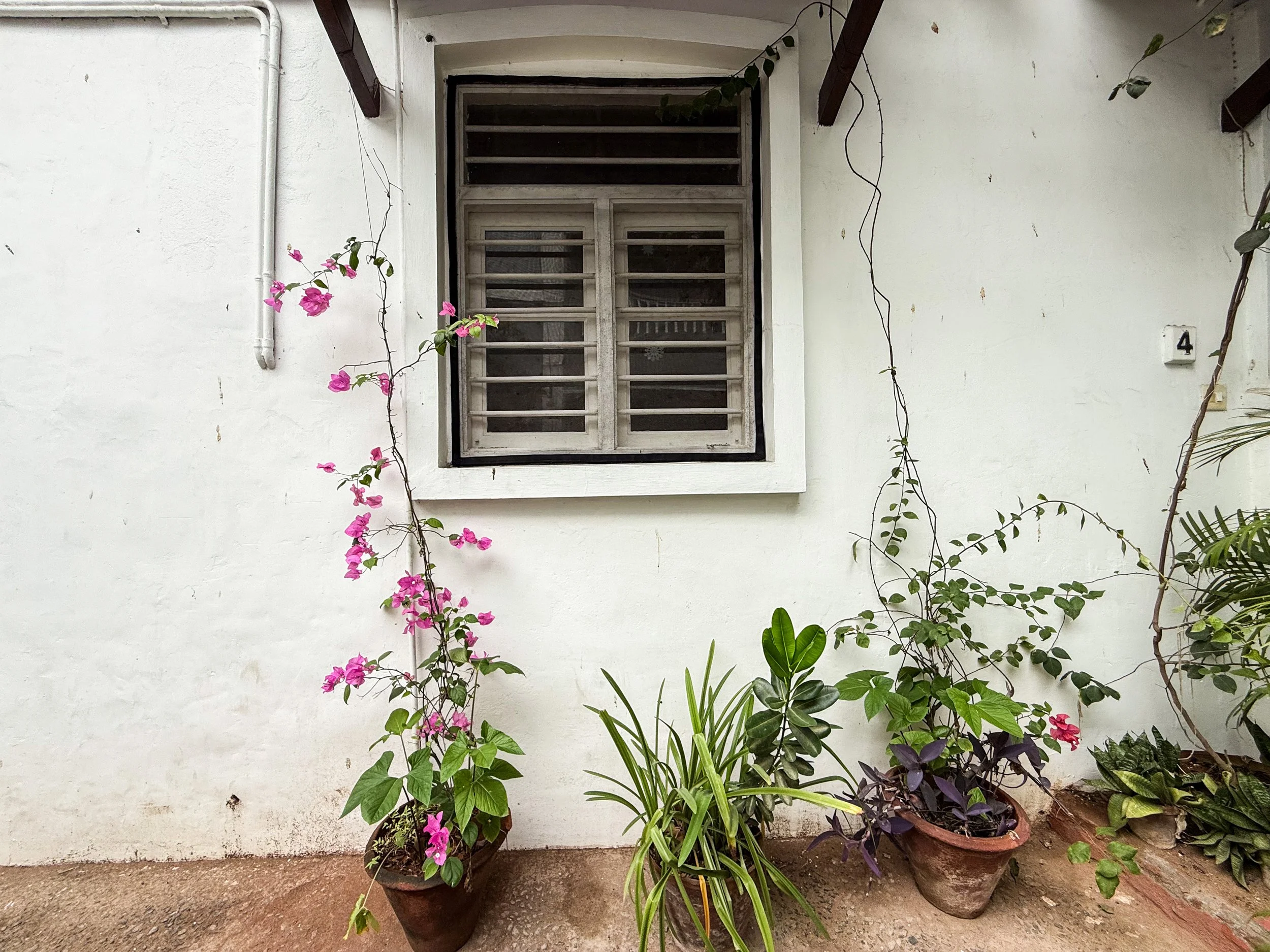
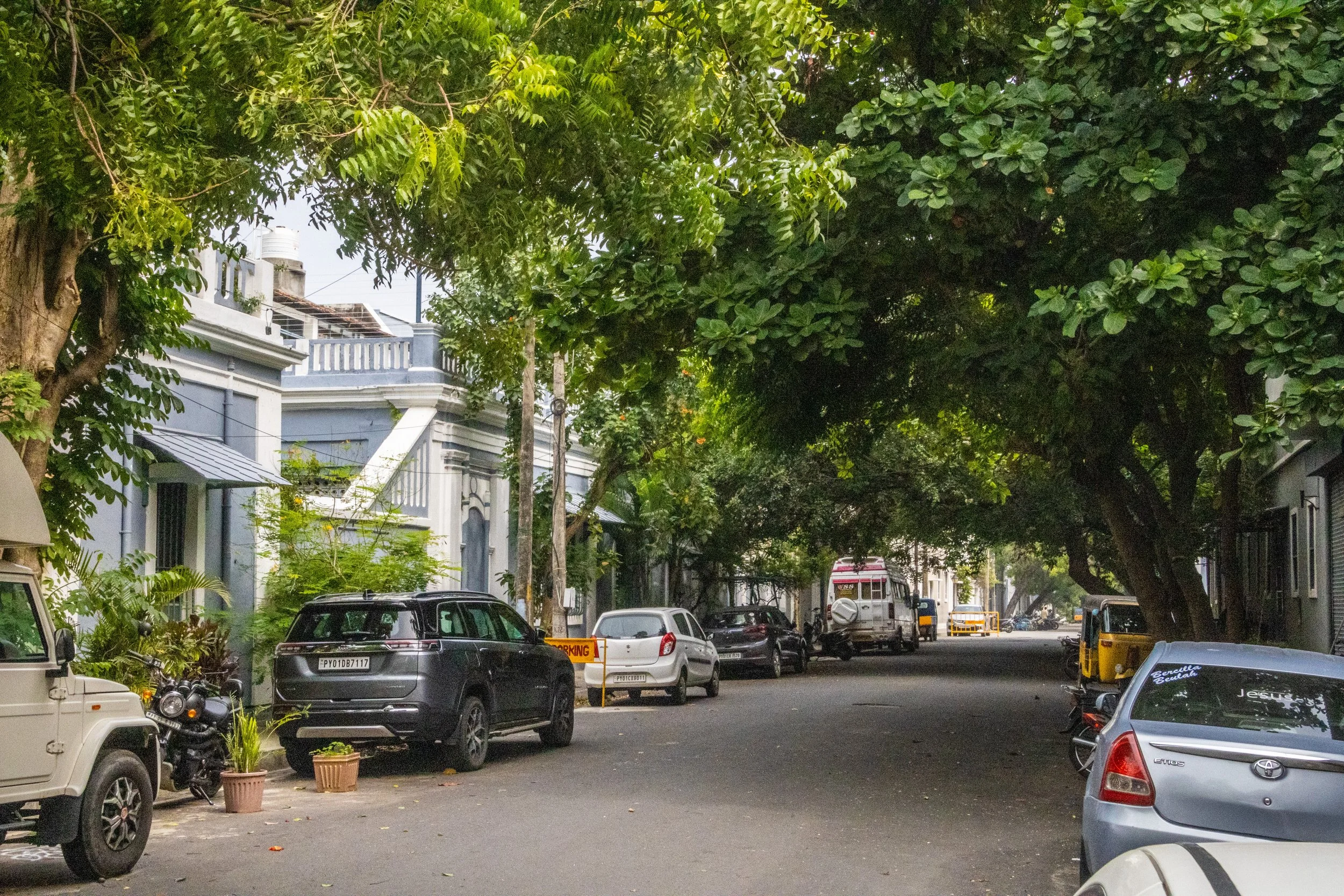
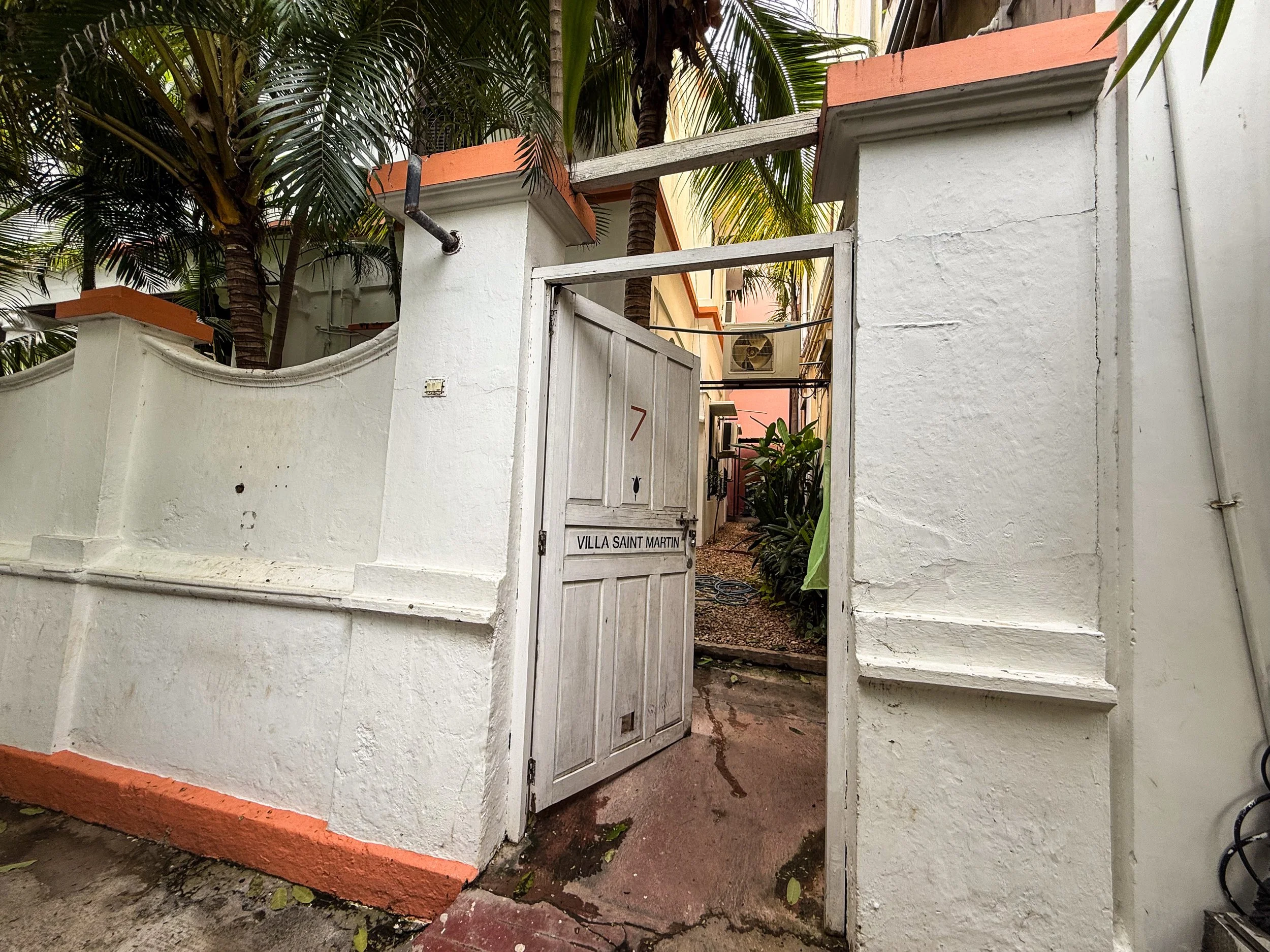
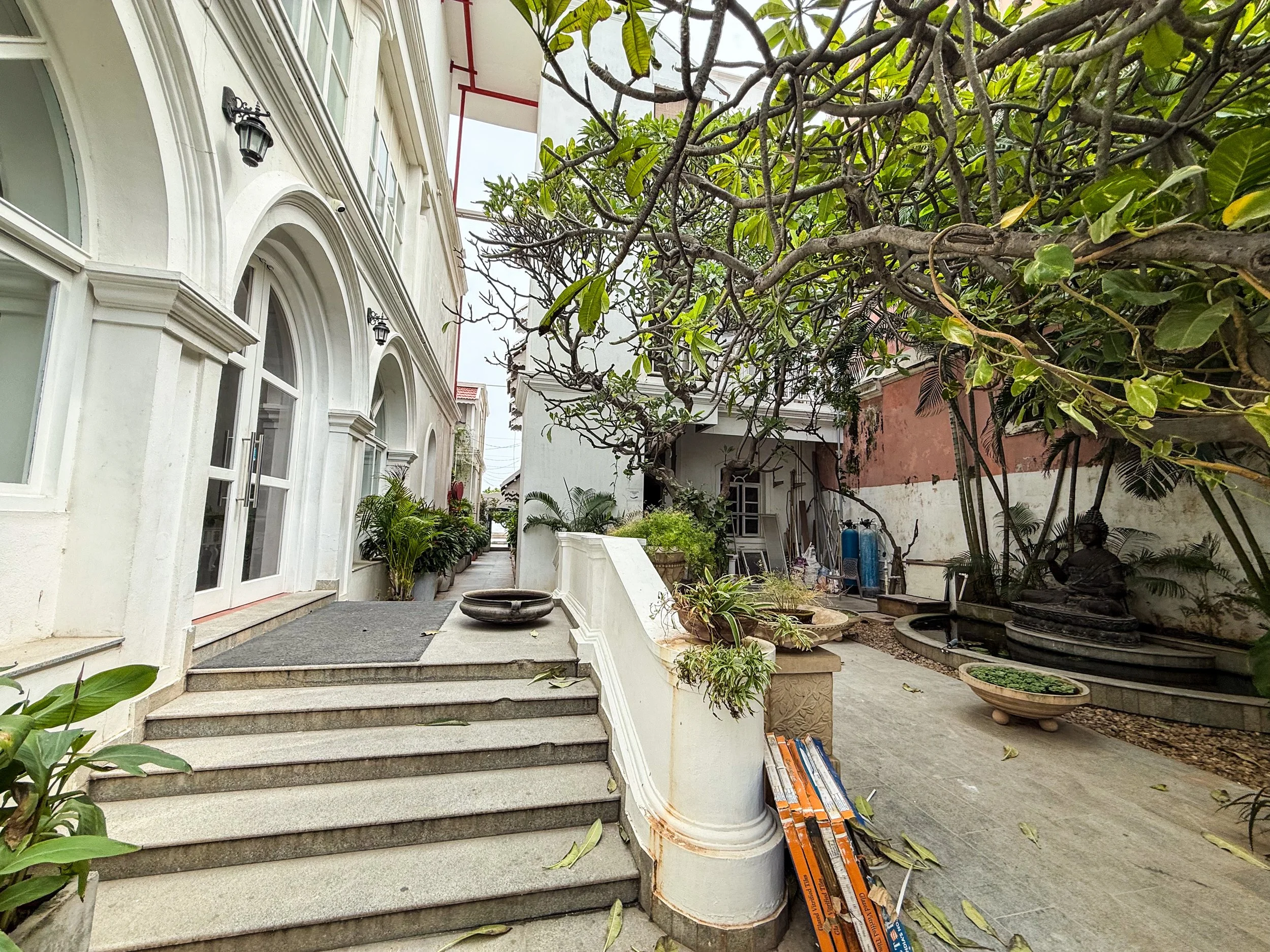
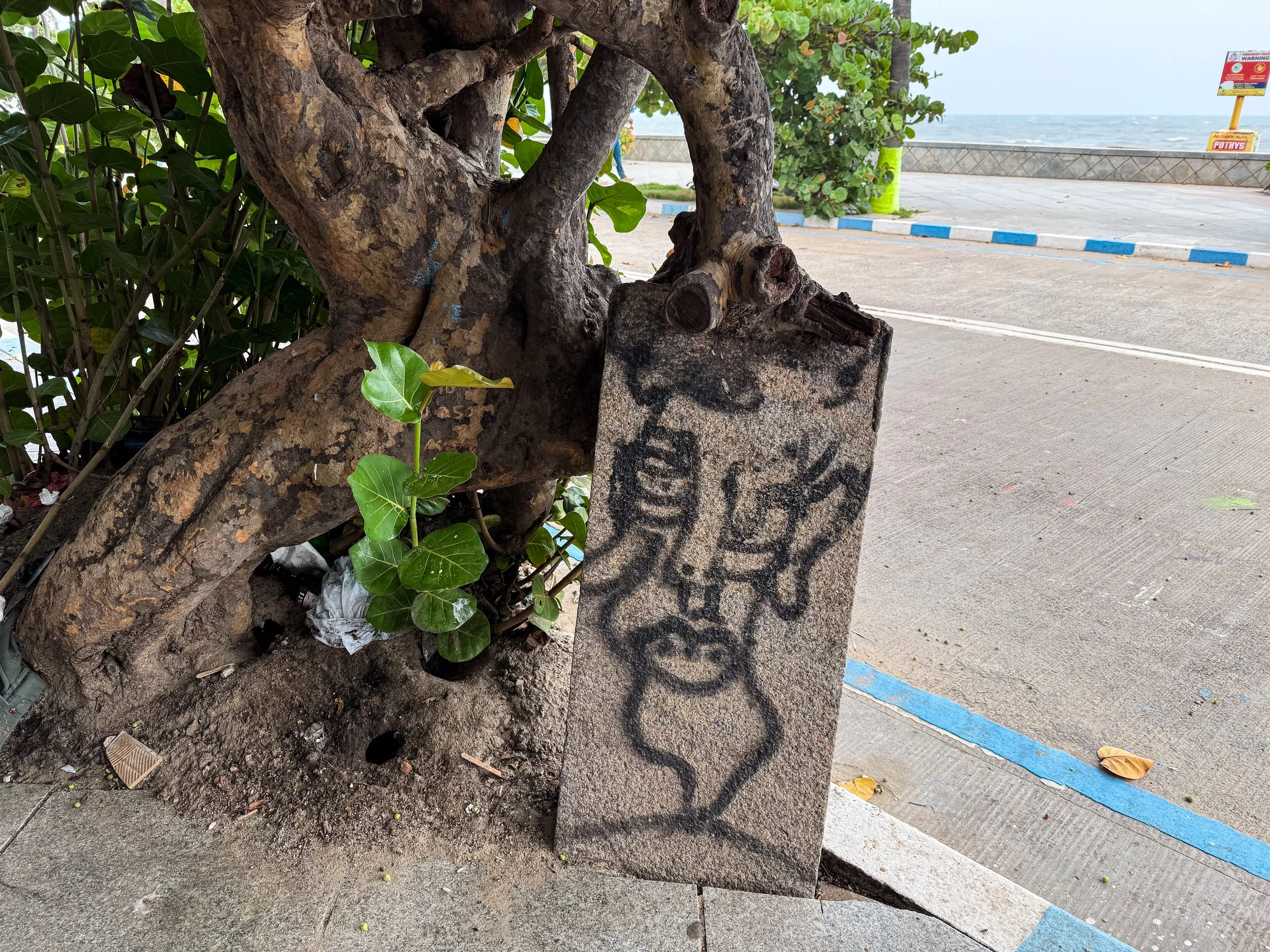
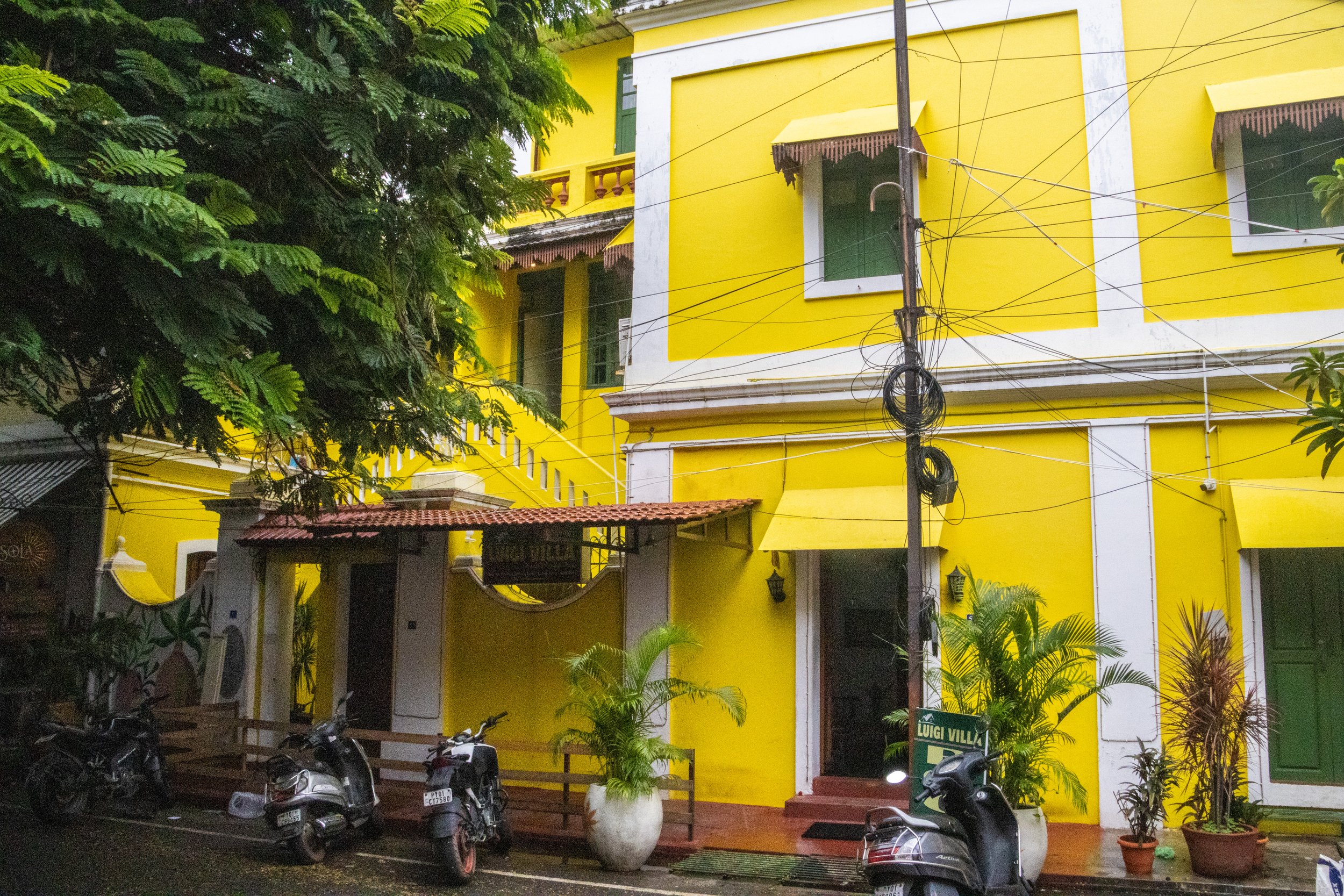
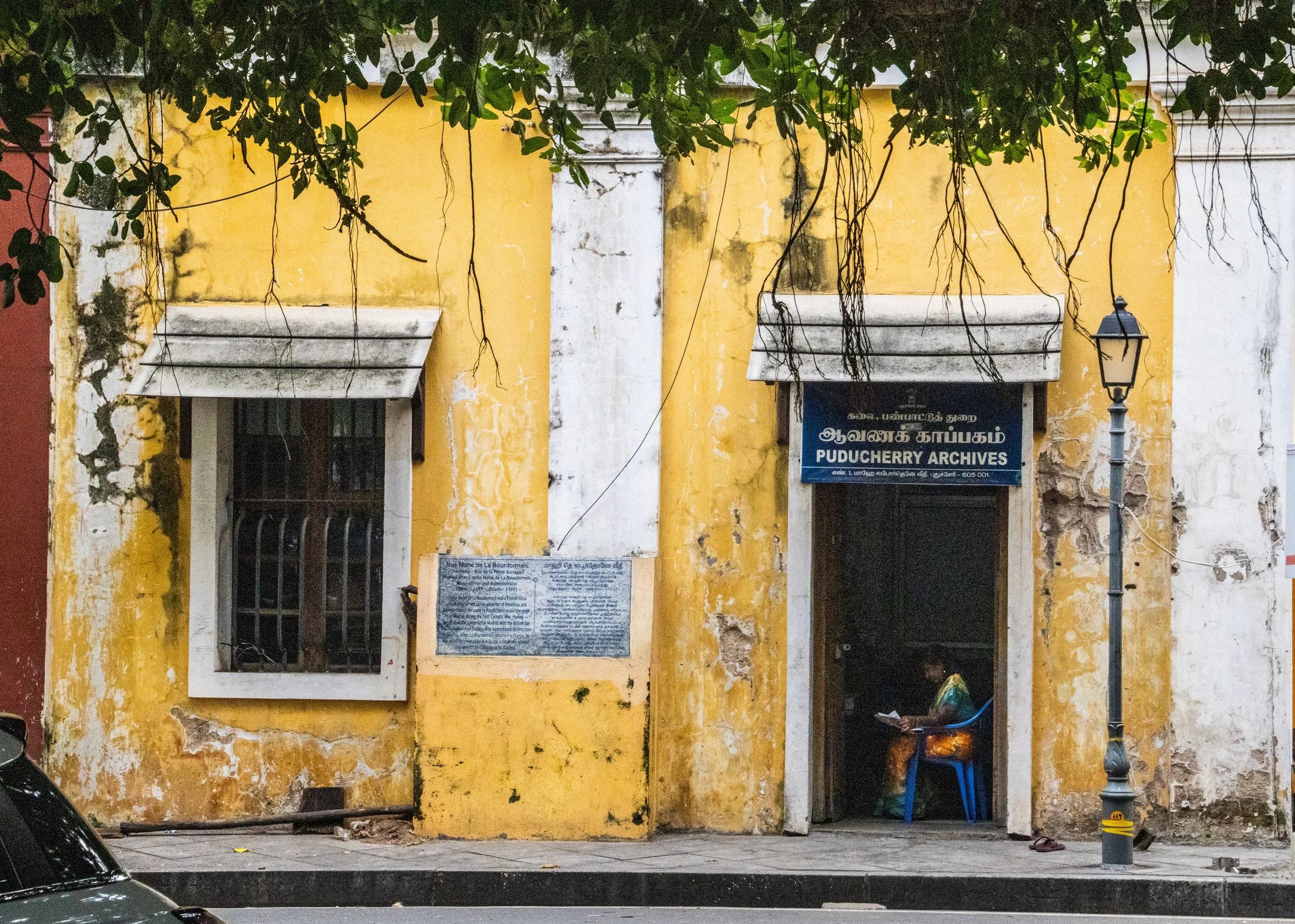
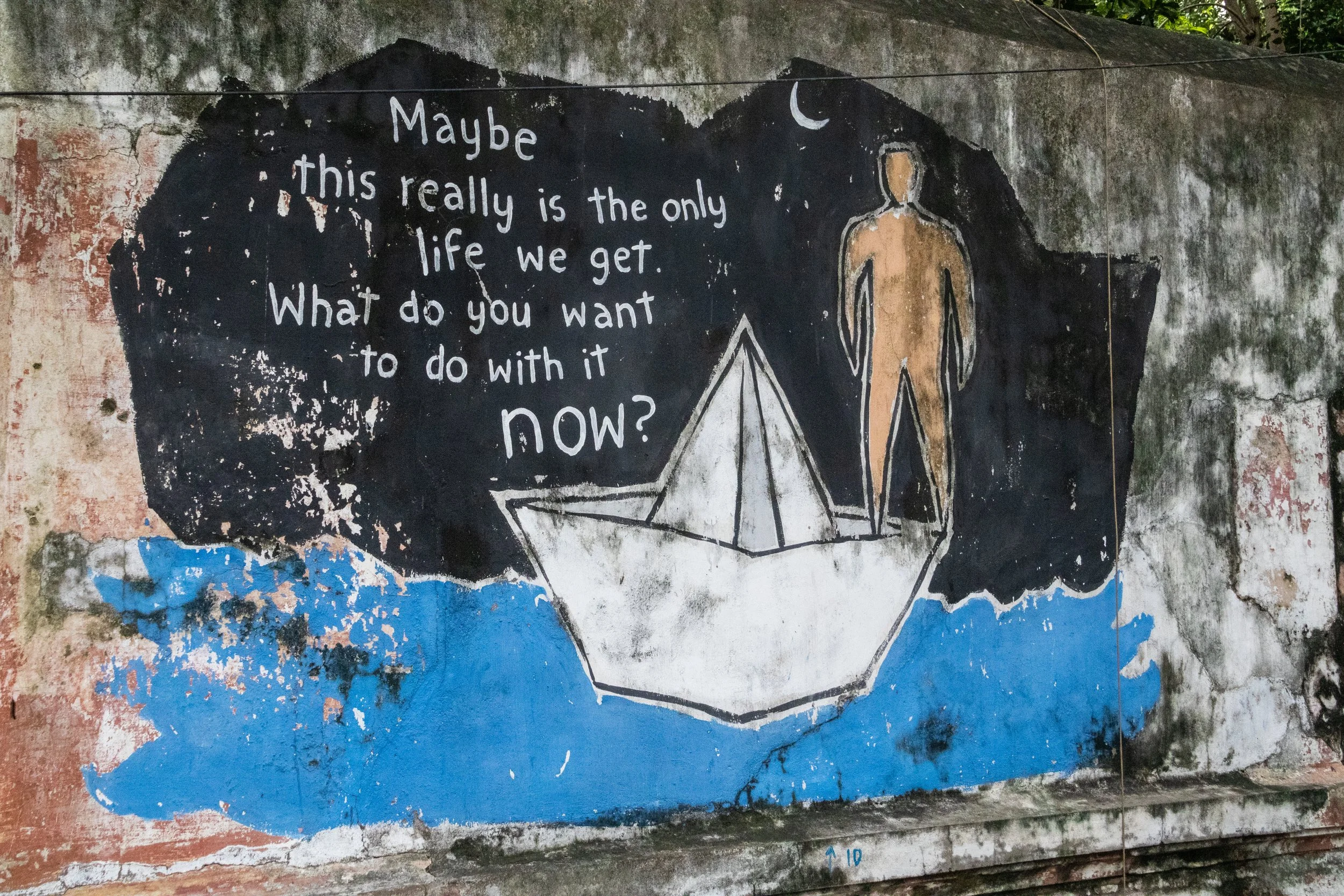
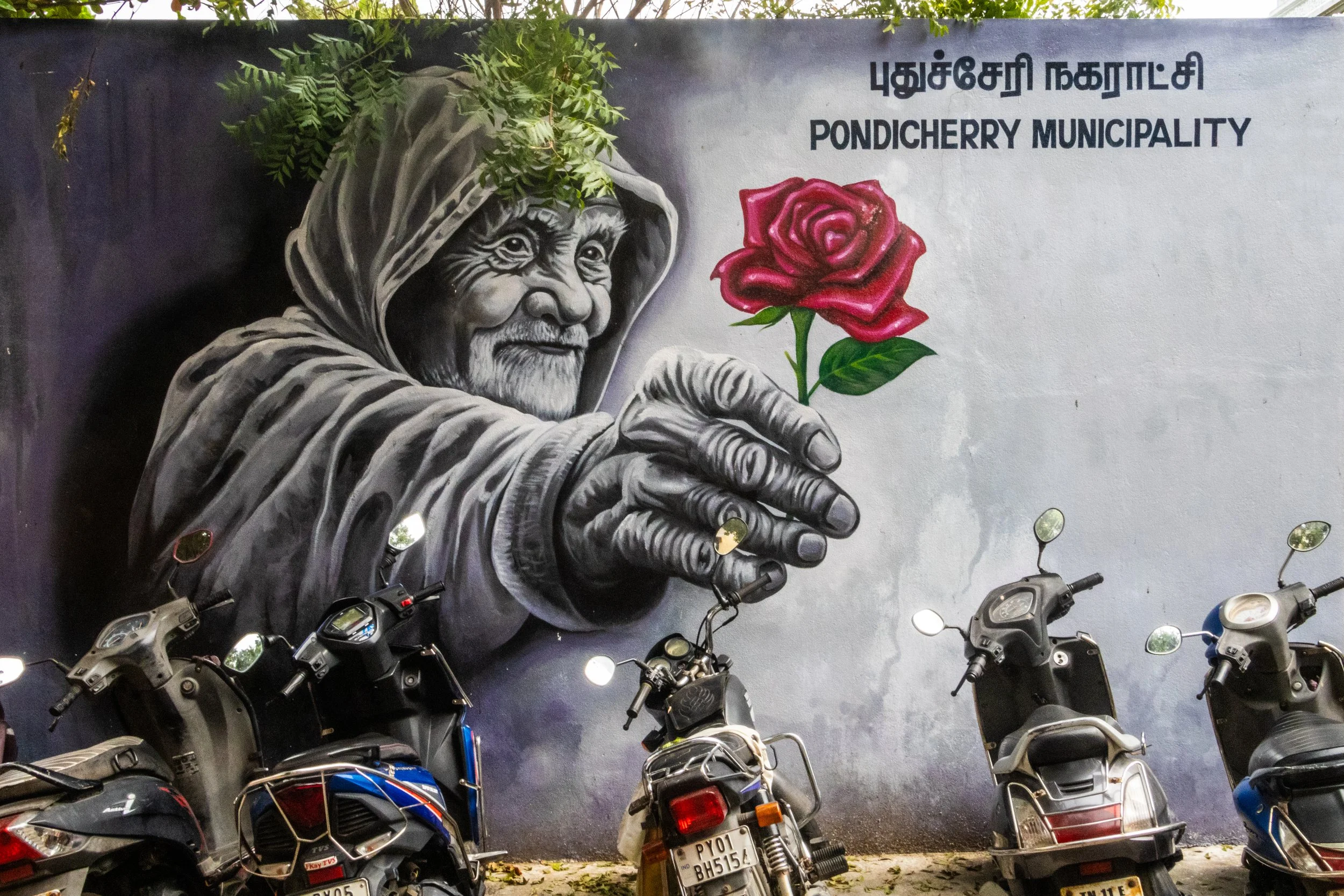
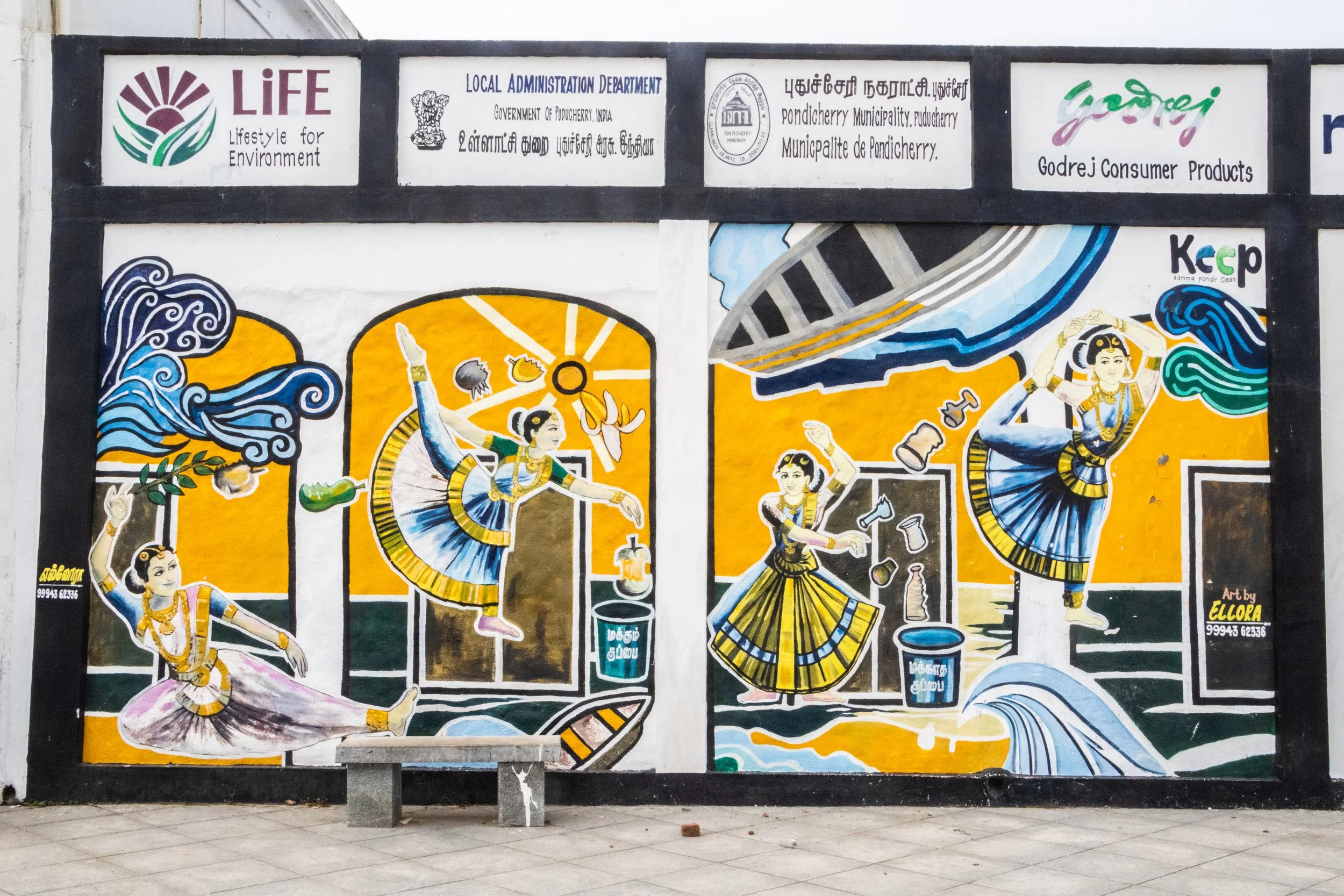
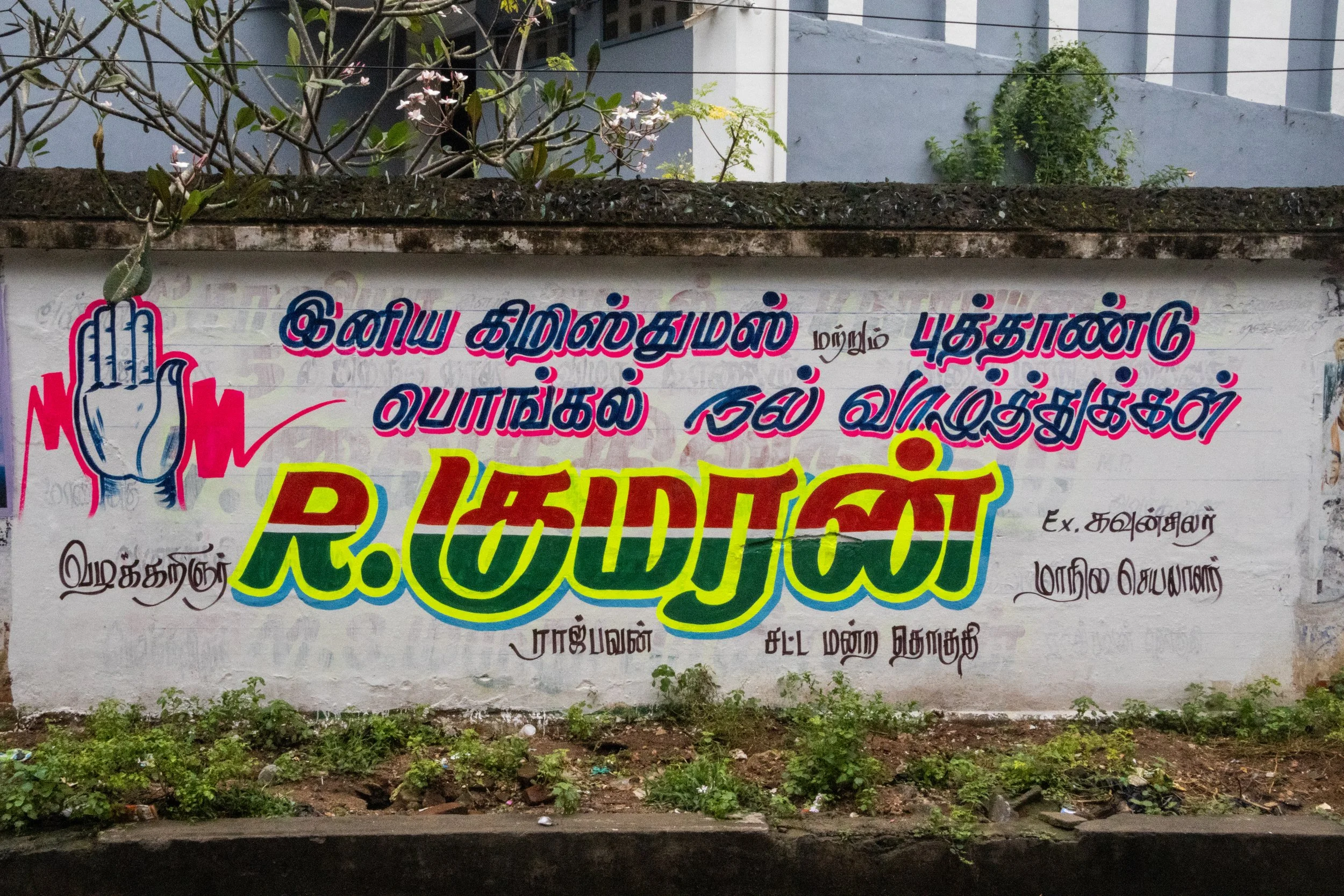
To my pleasant surprise, Pondicherry actually had some STREET ART to offer as well! It was definitely not enough to merit a stand-alone article, but I continue to be caught off guard by India’s sudden interest in murals. Recall that, in our trip to Agra just a few articles ago, there was suddenly also lots of murals to see. I need to make a more concerted effort to chase down Indian street art on my next trip. For now, here’s what I captured from Pondicherry:
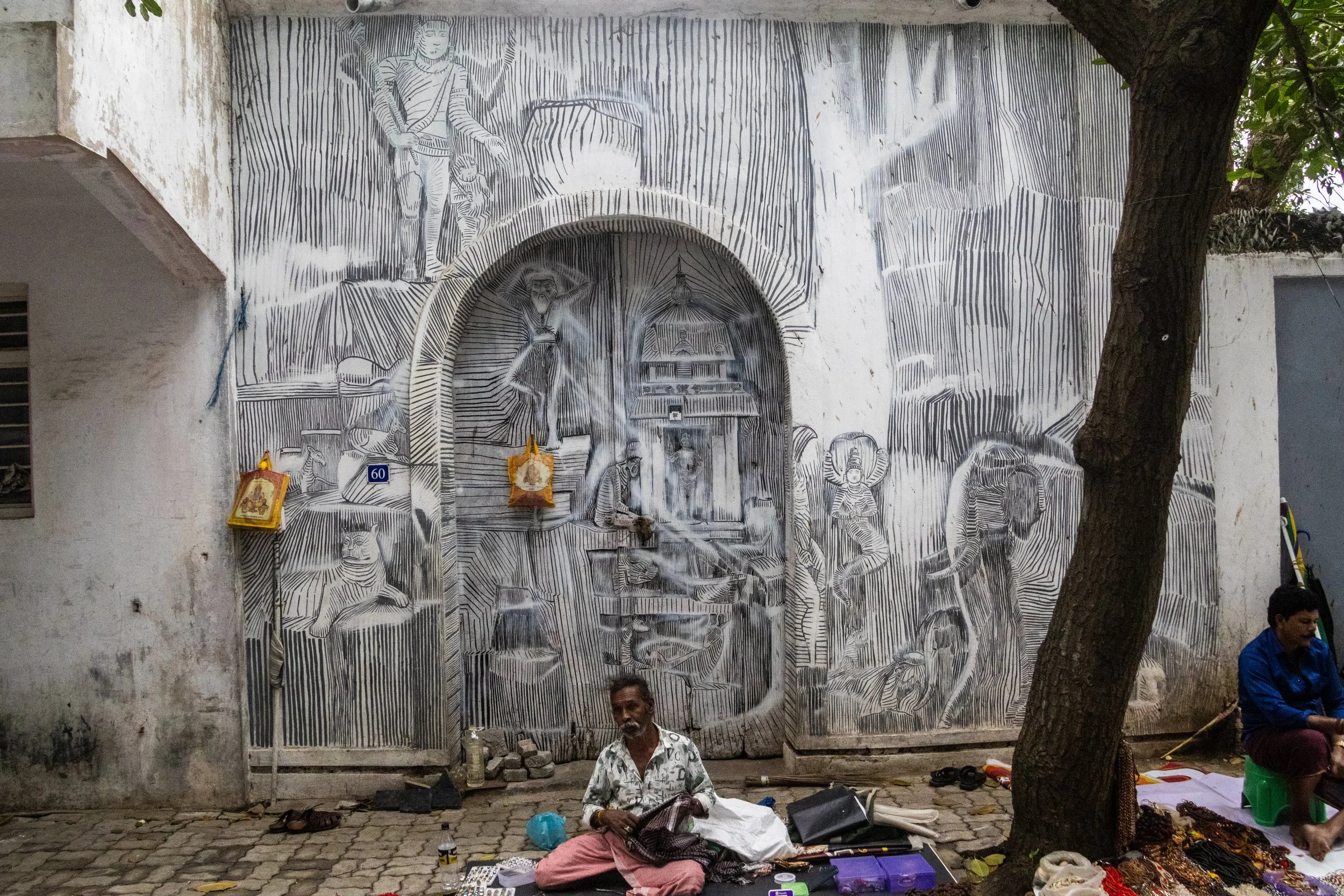
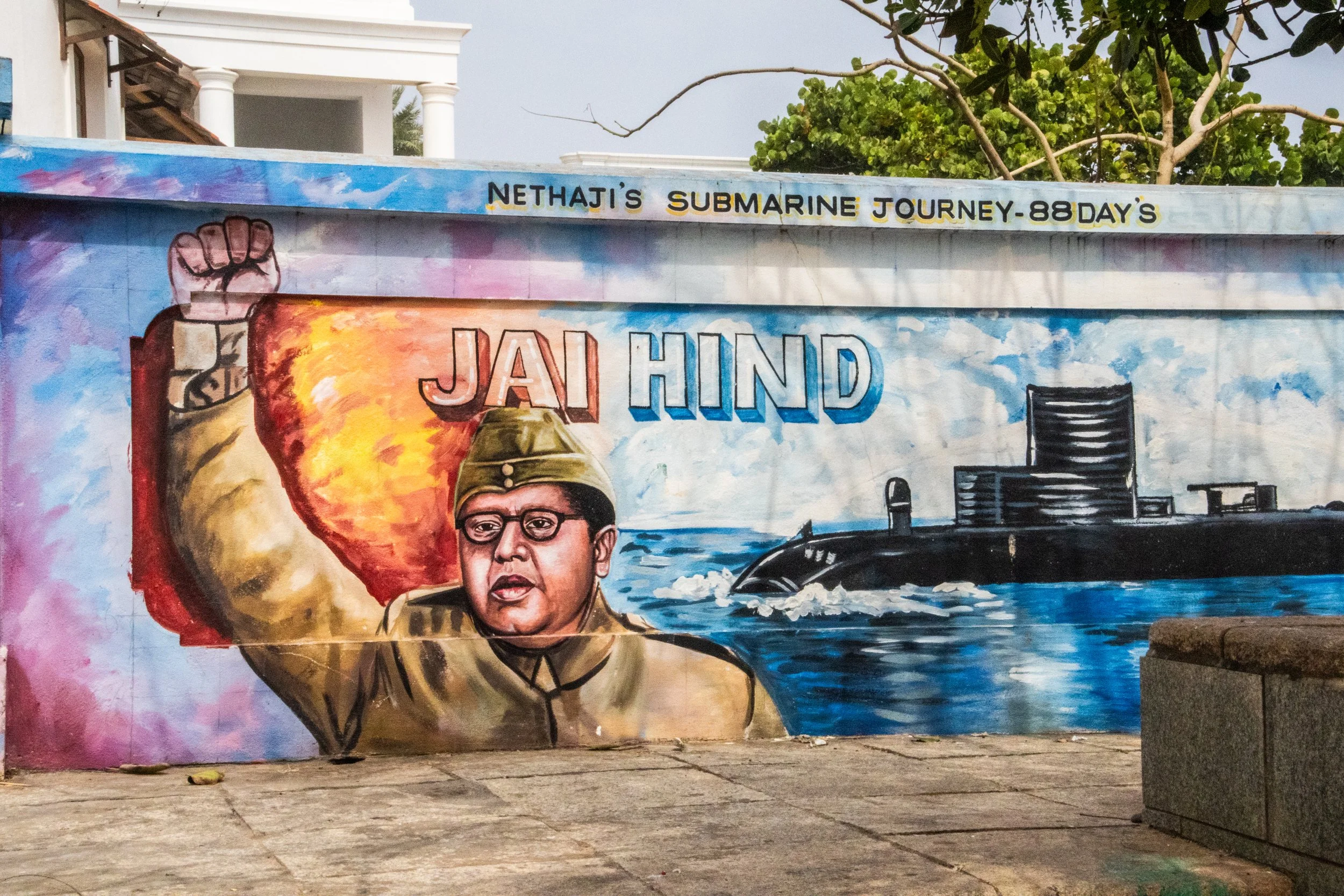
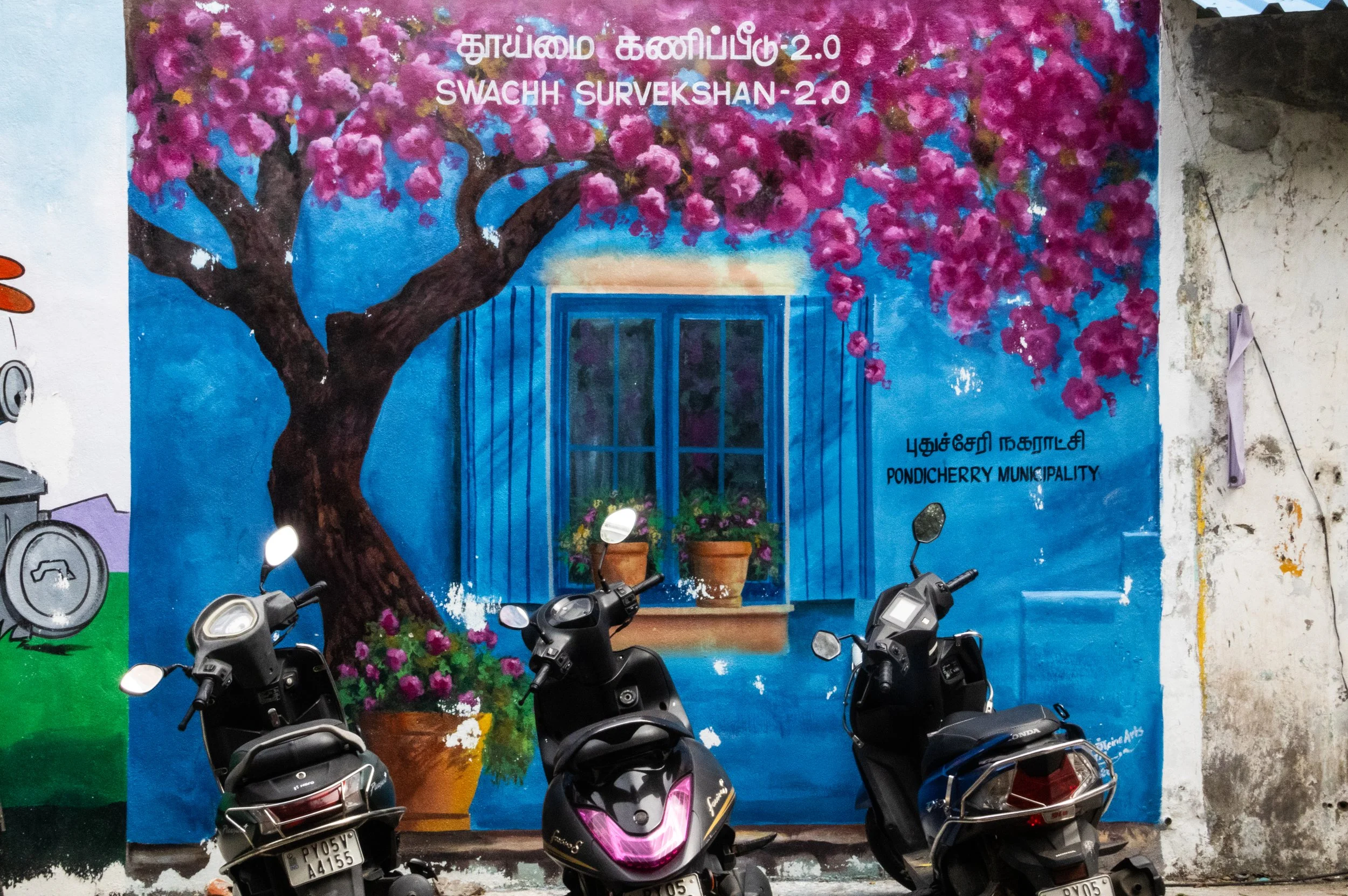
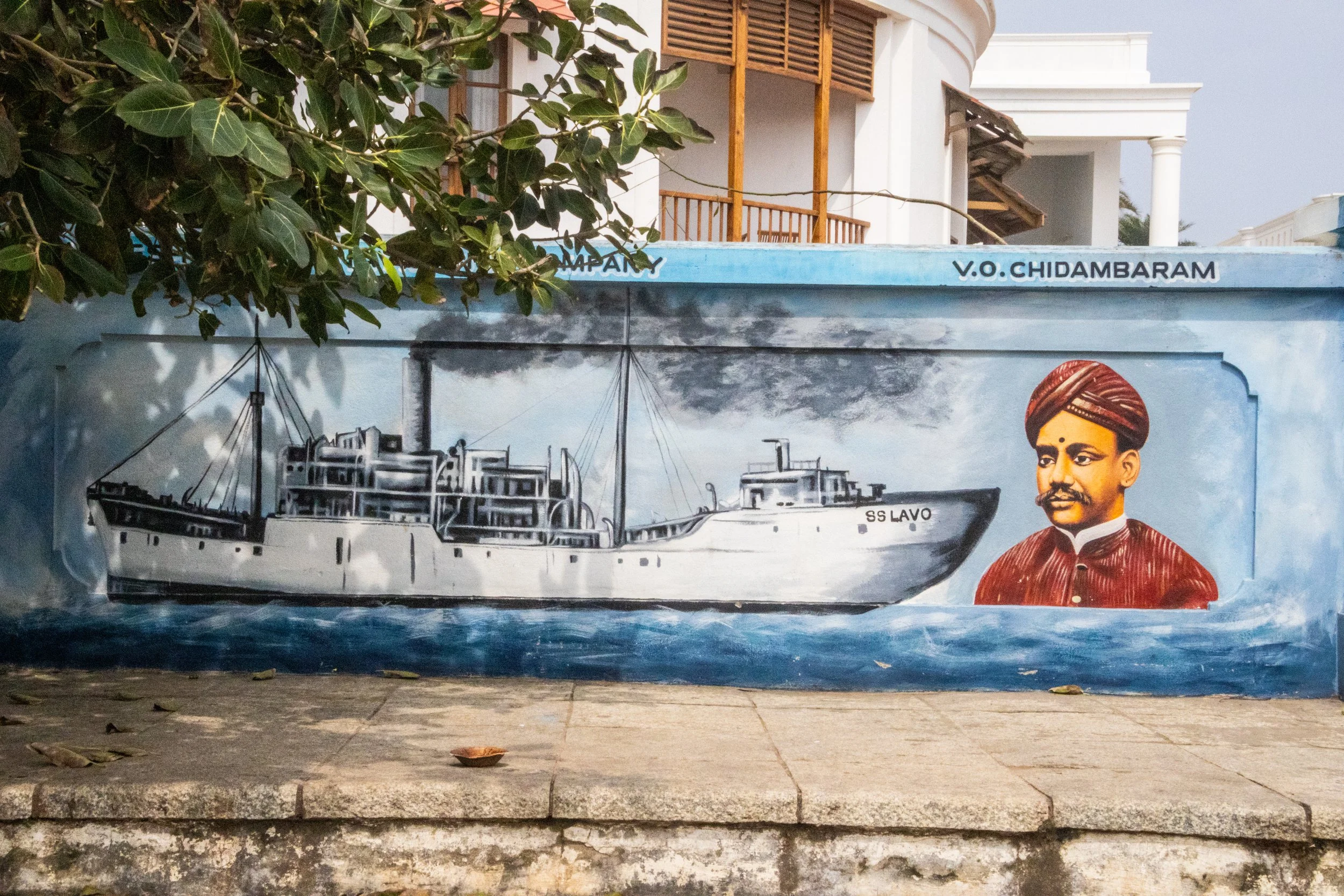
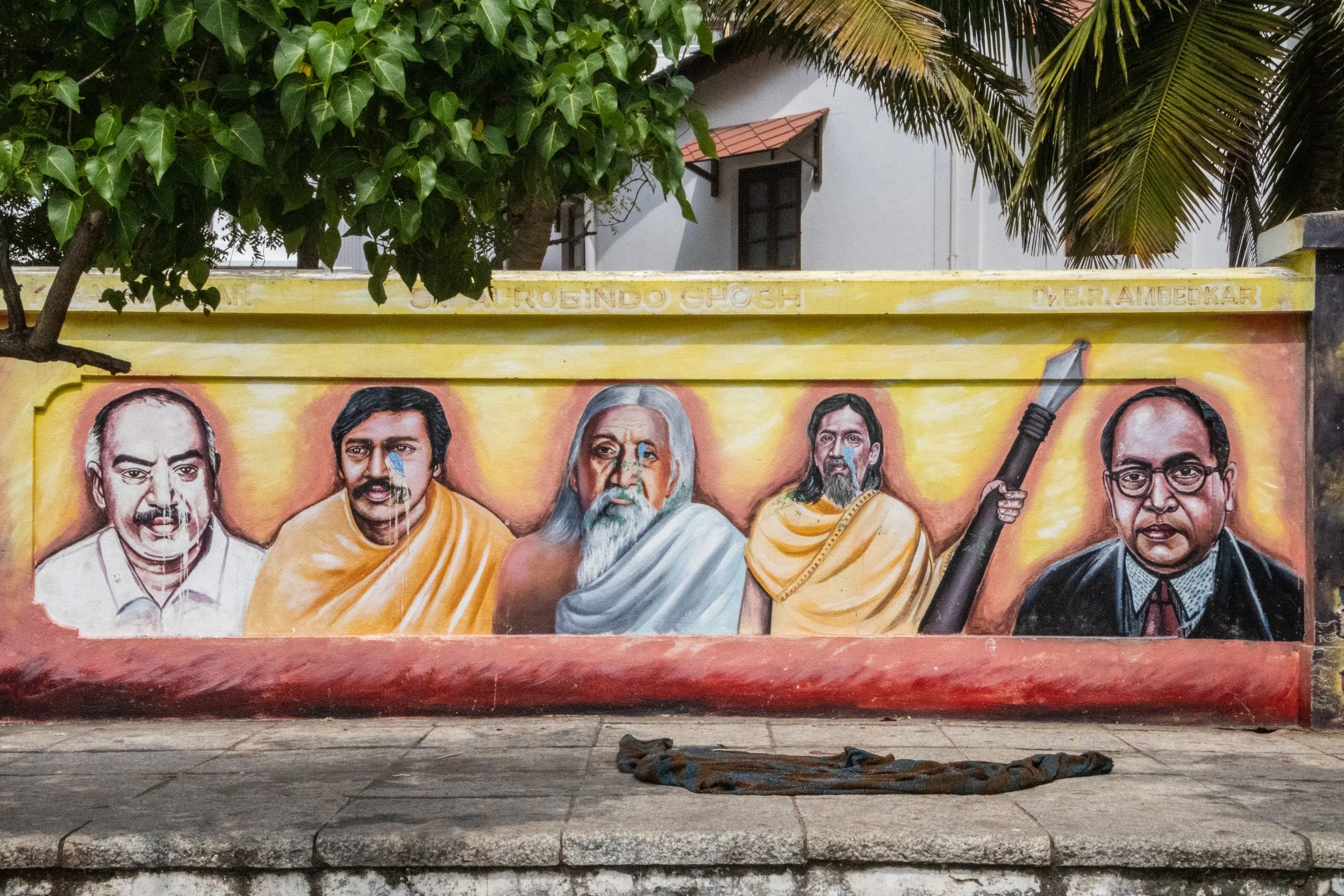
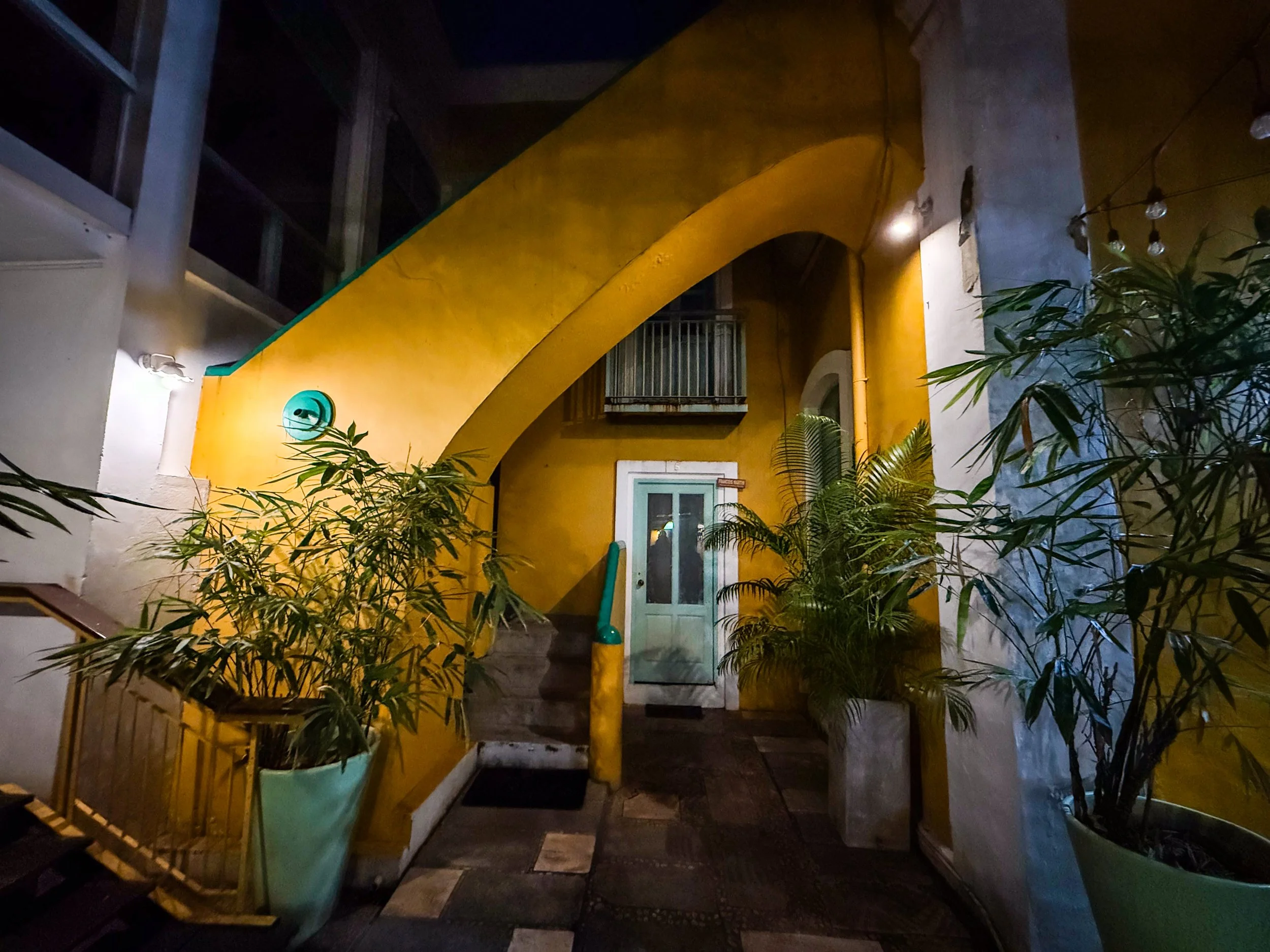
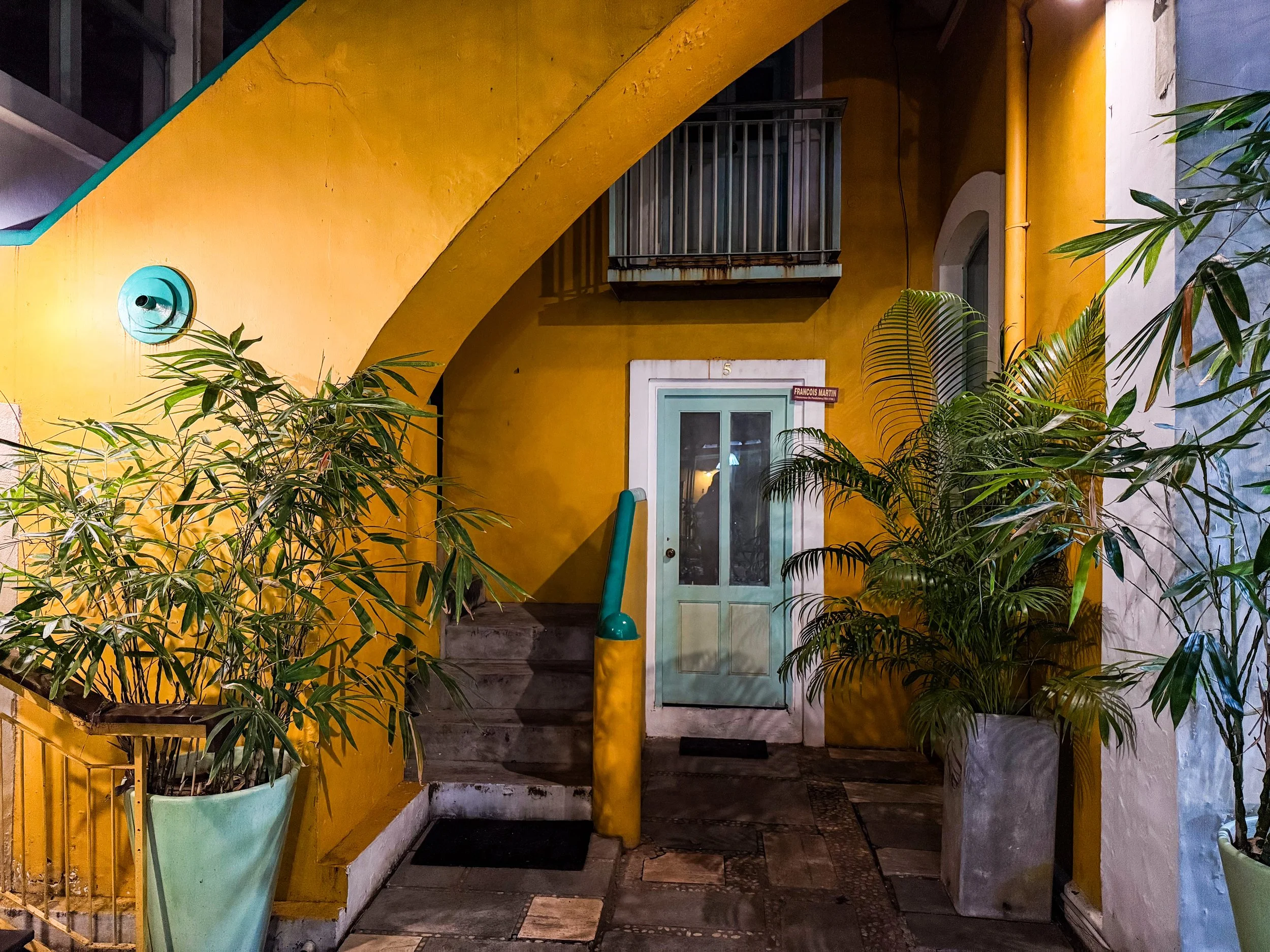
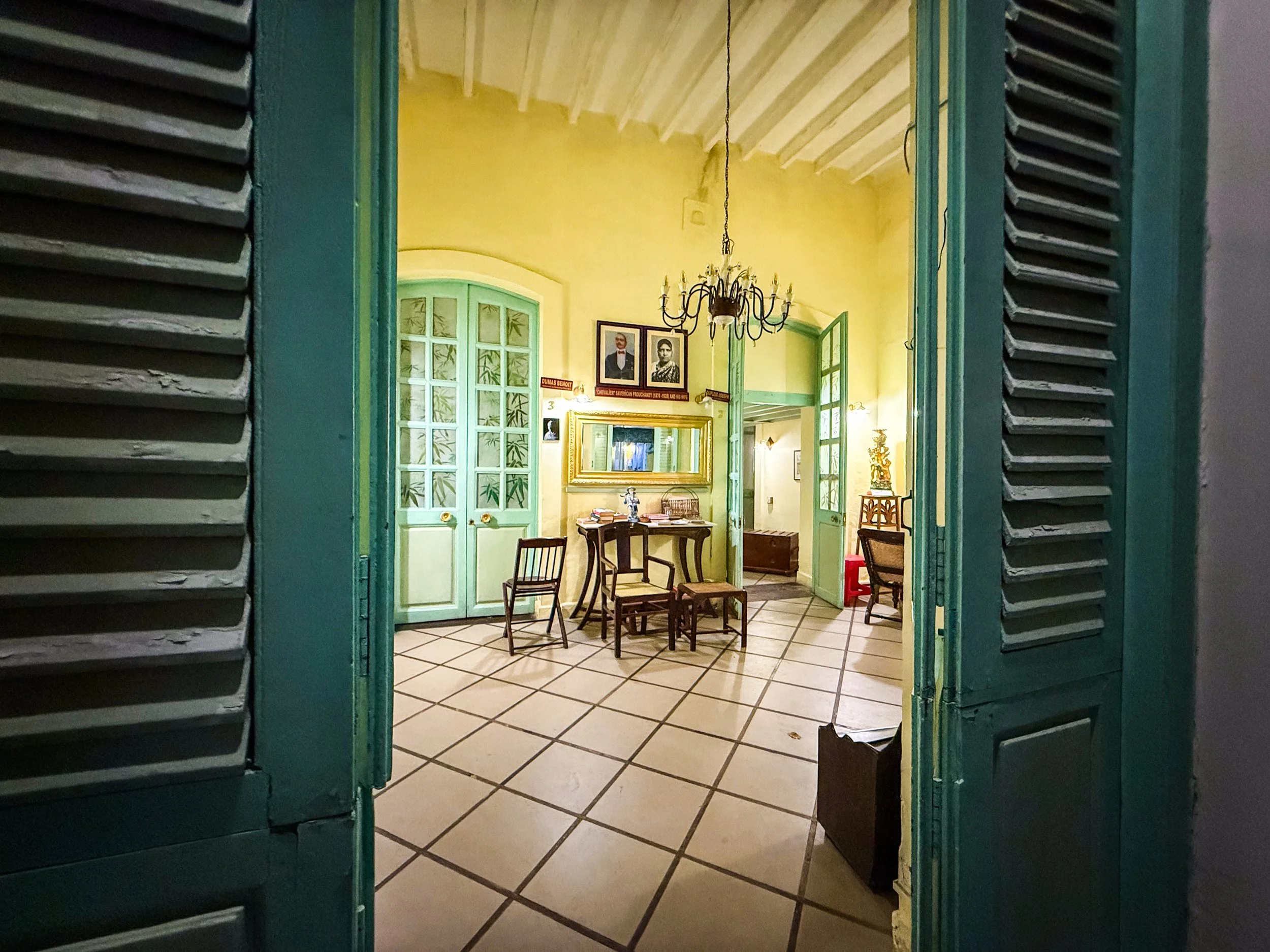
After sunset, the already quiet streets of the French Quarter quickly emptied completely, save for a few pockets of activity around restaurants. Outside the confines of “White Town”, life continued at the same pace as the rest of Tamil Nadu, but here the streets were dead quiet. Again, it was just the hum of insects in the trees and the gentle sound of wind and crashing waves in the distance. It made for an extremely serene and peaceful walking experience. There were also some supremely beautiful French restaurants that were open late where we could sit in decadent French courtyards tastefully overgrown with tropical greenery. Specifically, there are lots of pictures at the end of the gallery below from a place called La Maison Rose, which I’d highly recommend.
Other cool French restaurants we visited in Pondicherry during this trip—and whose pictures are also interspersed throughout this article—include Le Petit Four and the Courtyard Restaurant at Le Dupleix.
I think that walking the deserted streets of Pondicherry at night was my favorite part of this visit, because it was so surreal and peaceful. And, thankfully, iPhone cameras have come a long way in recent years, so I can share some photographs from this night walk with you that actually do a decent job of capturing the atmosphere.
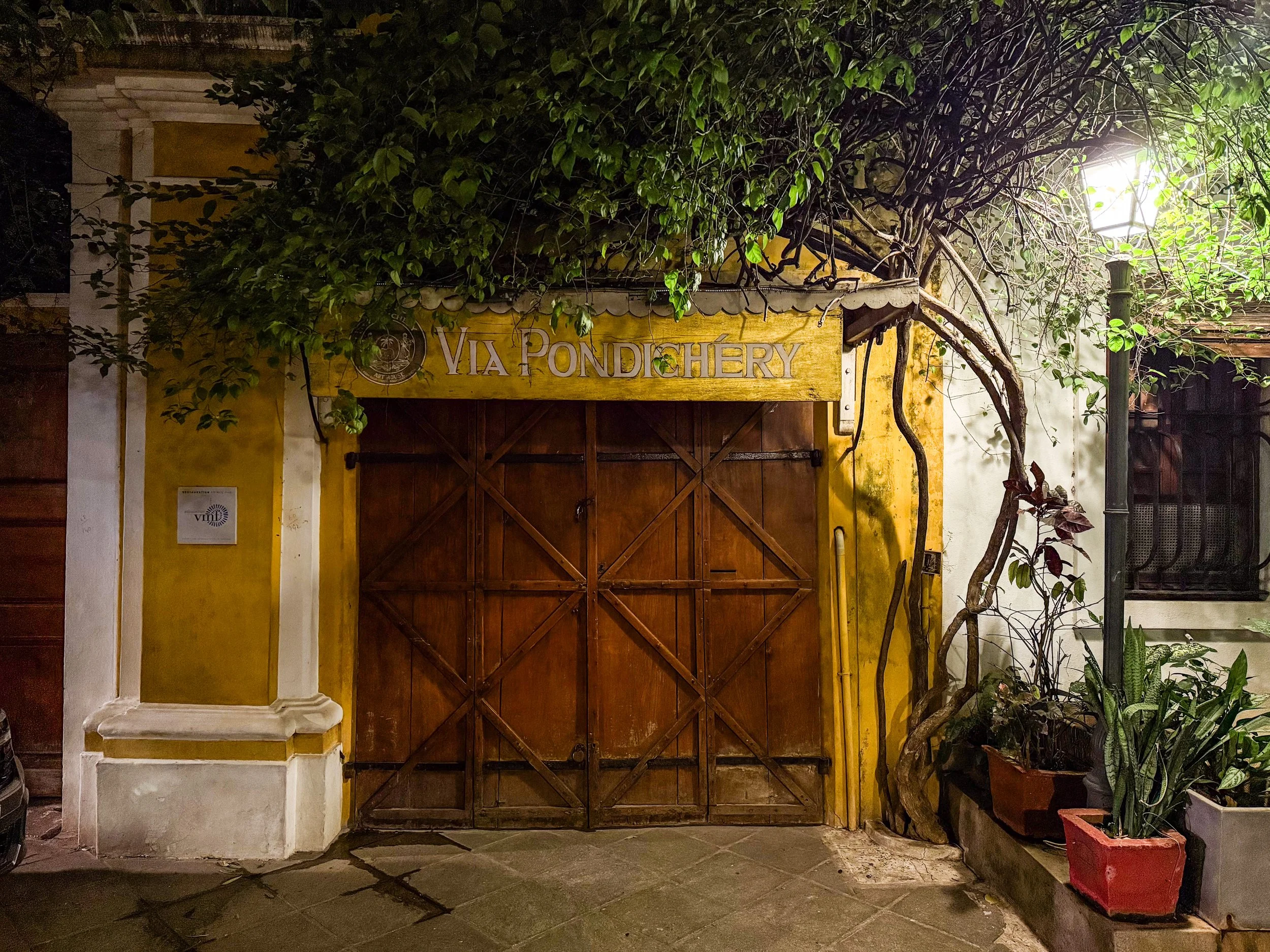
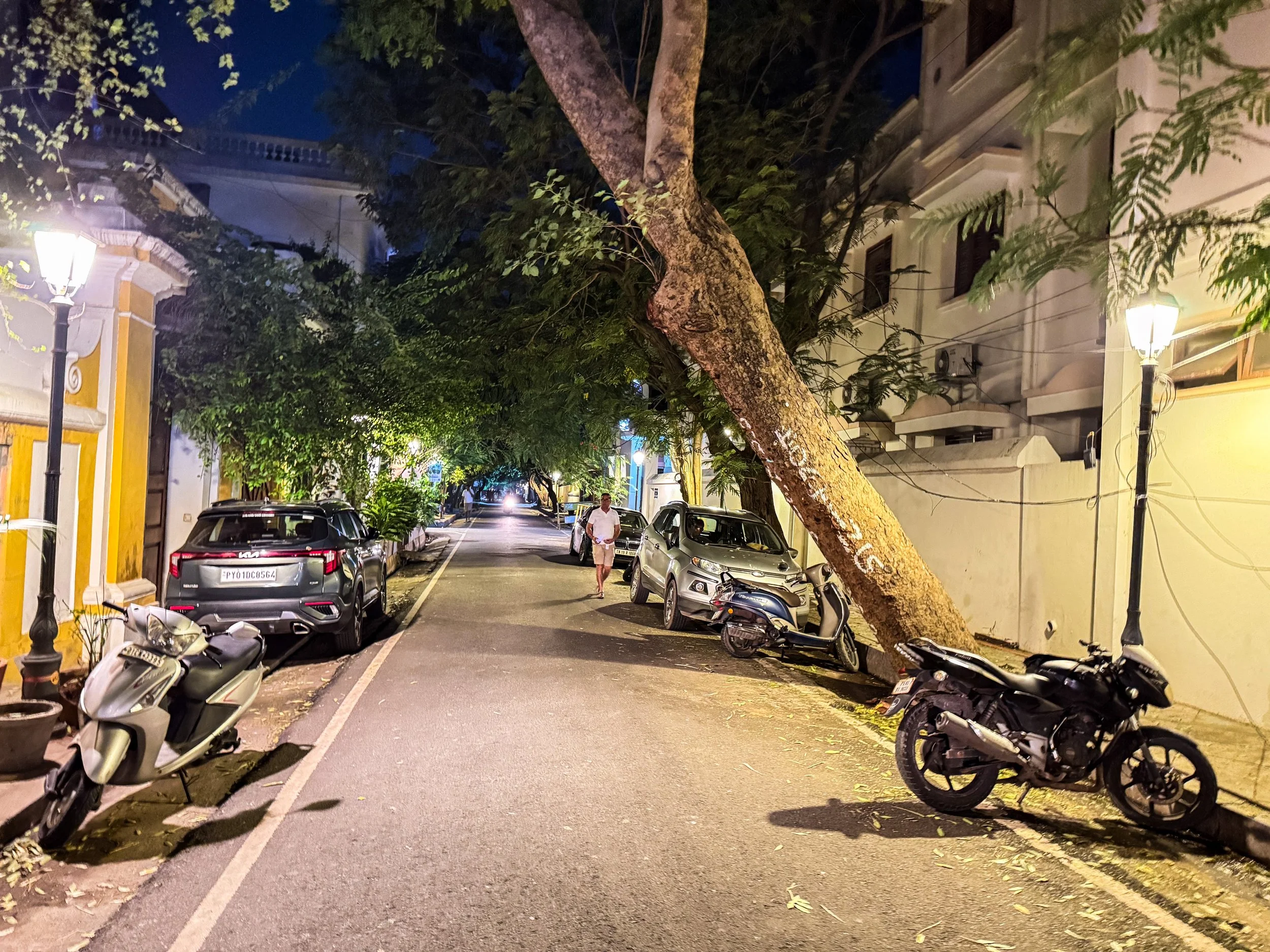
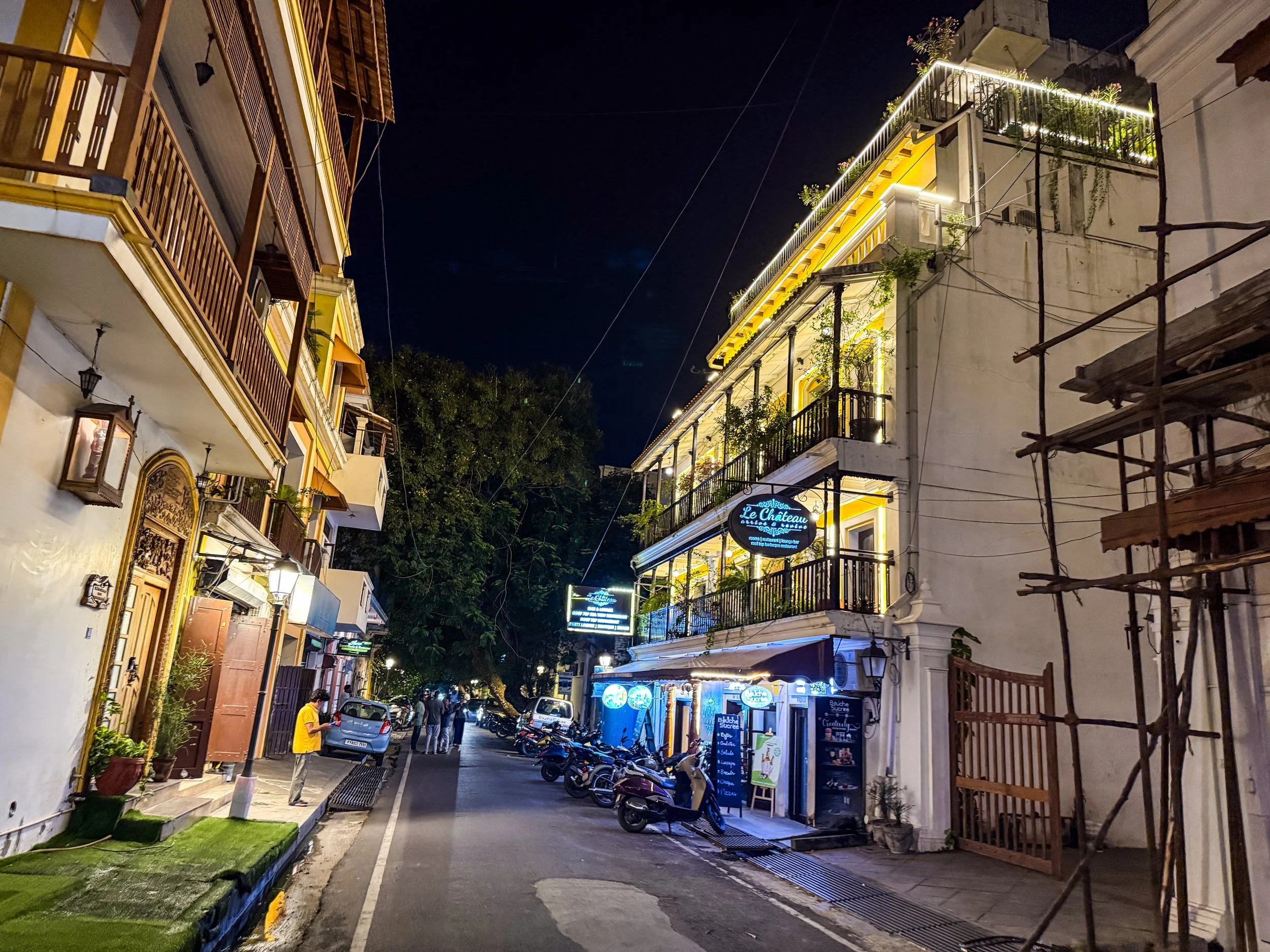
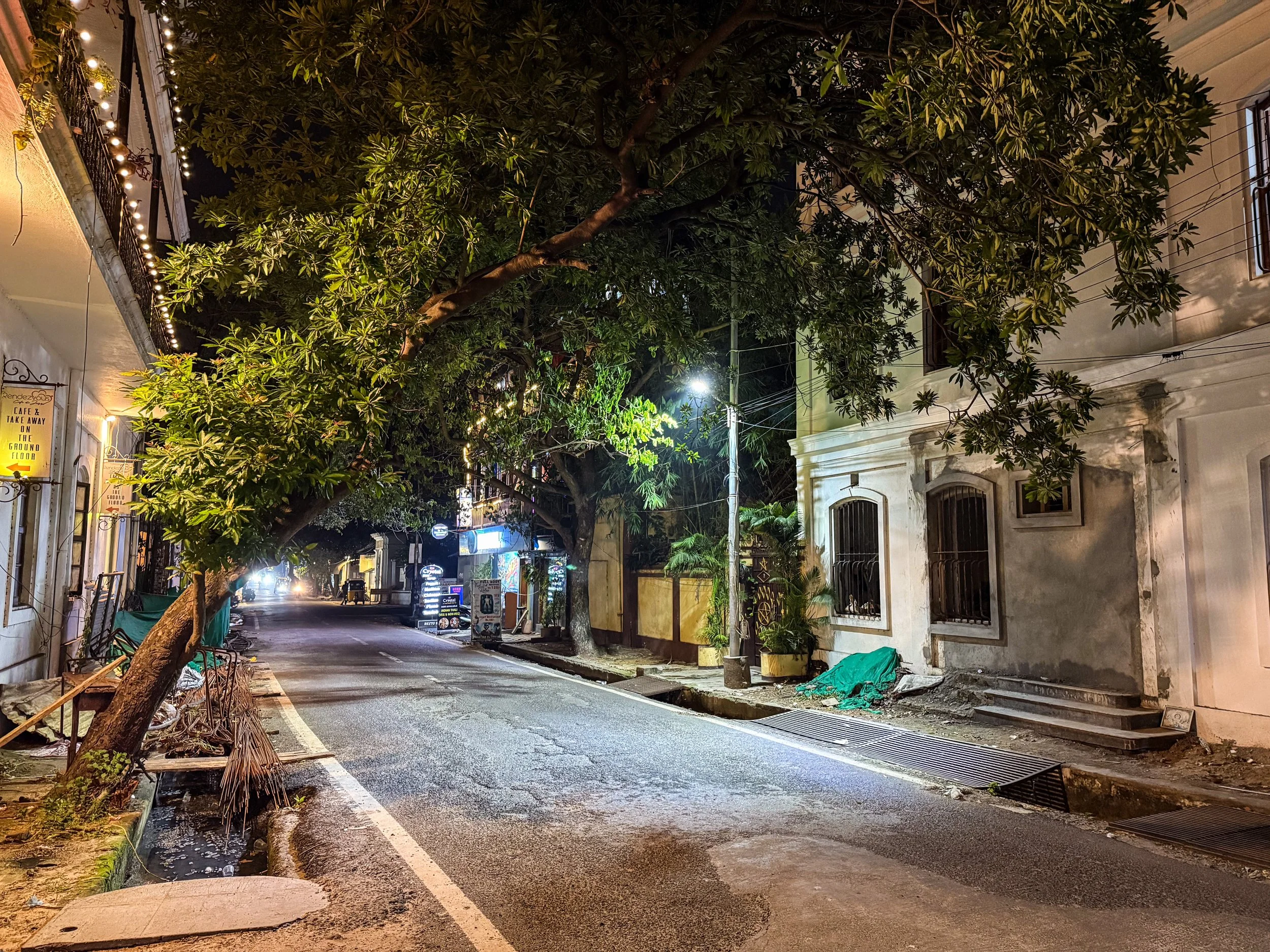
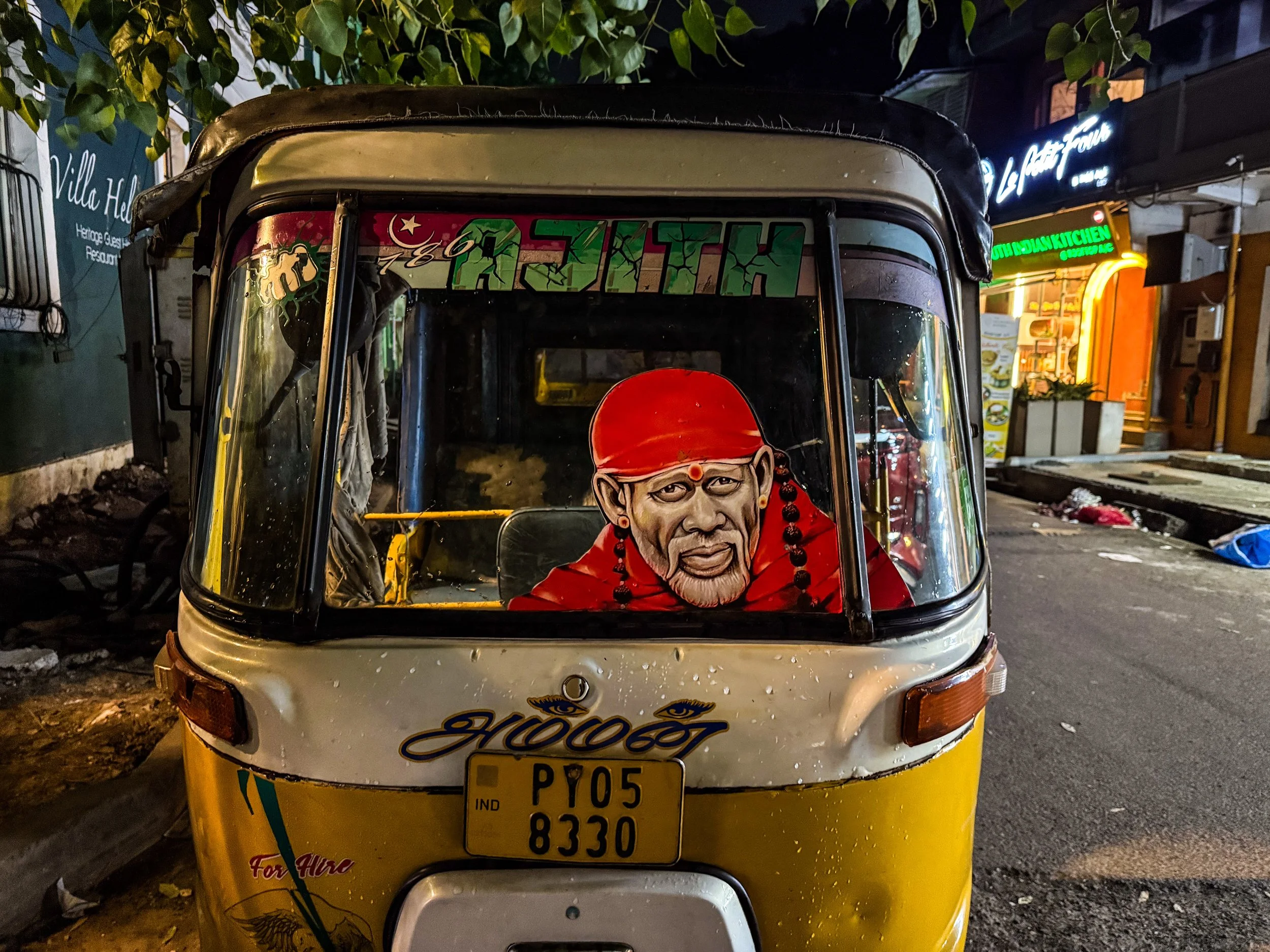
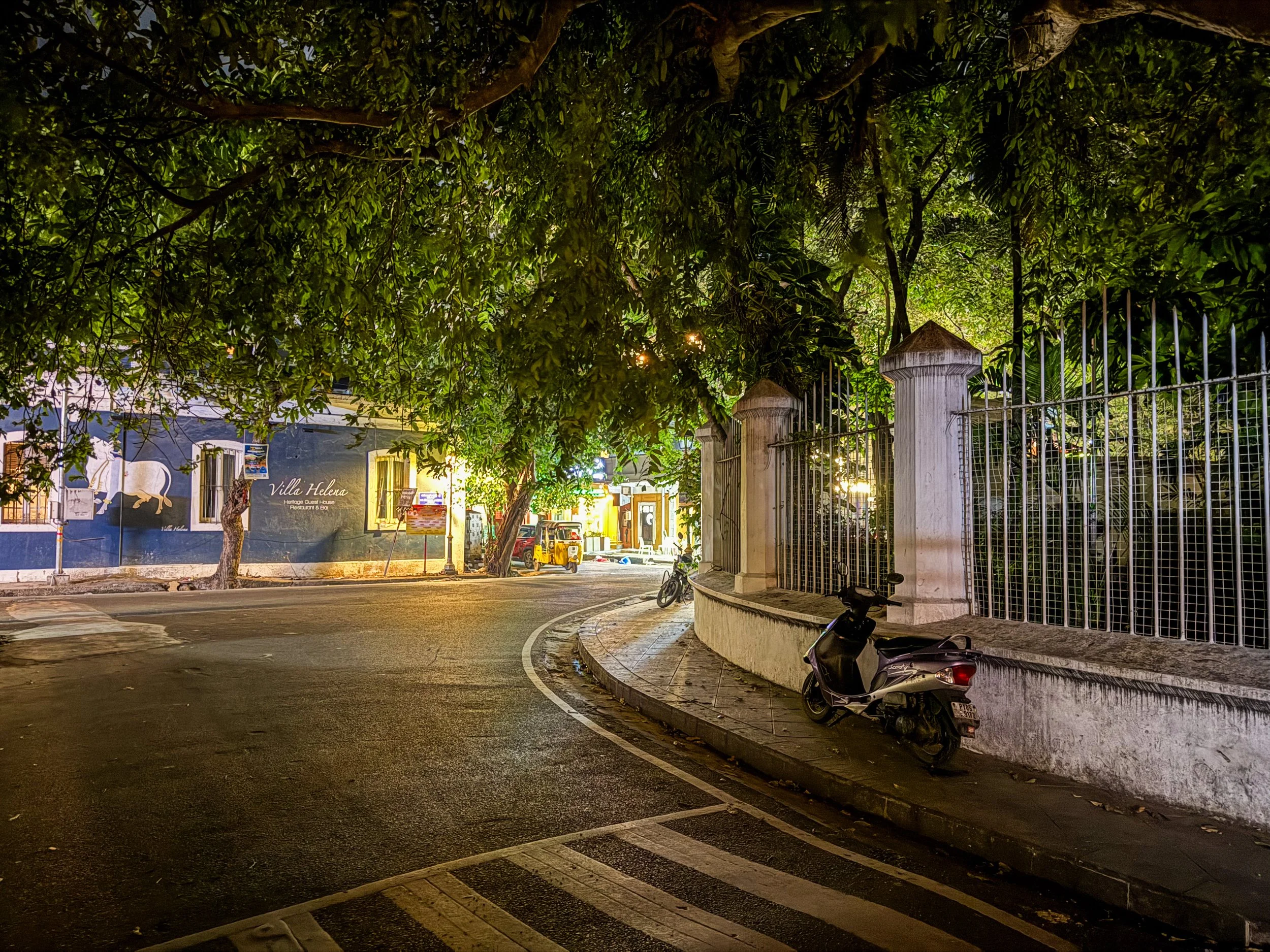
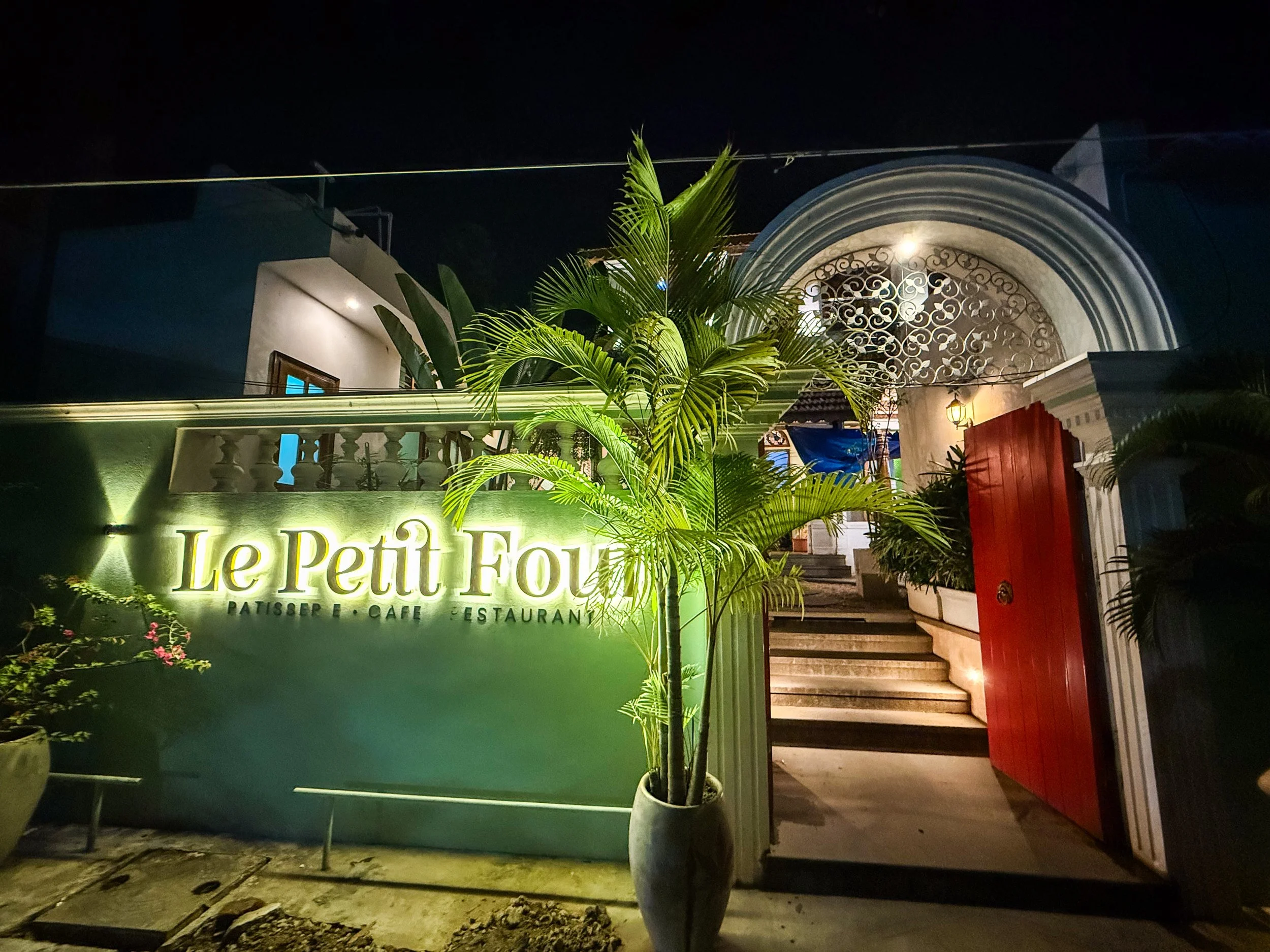
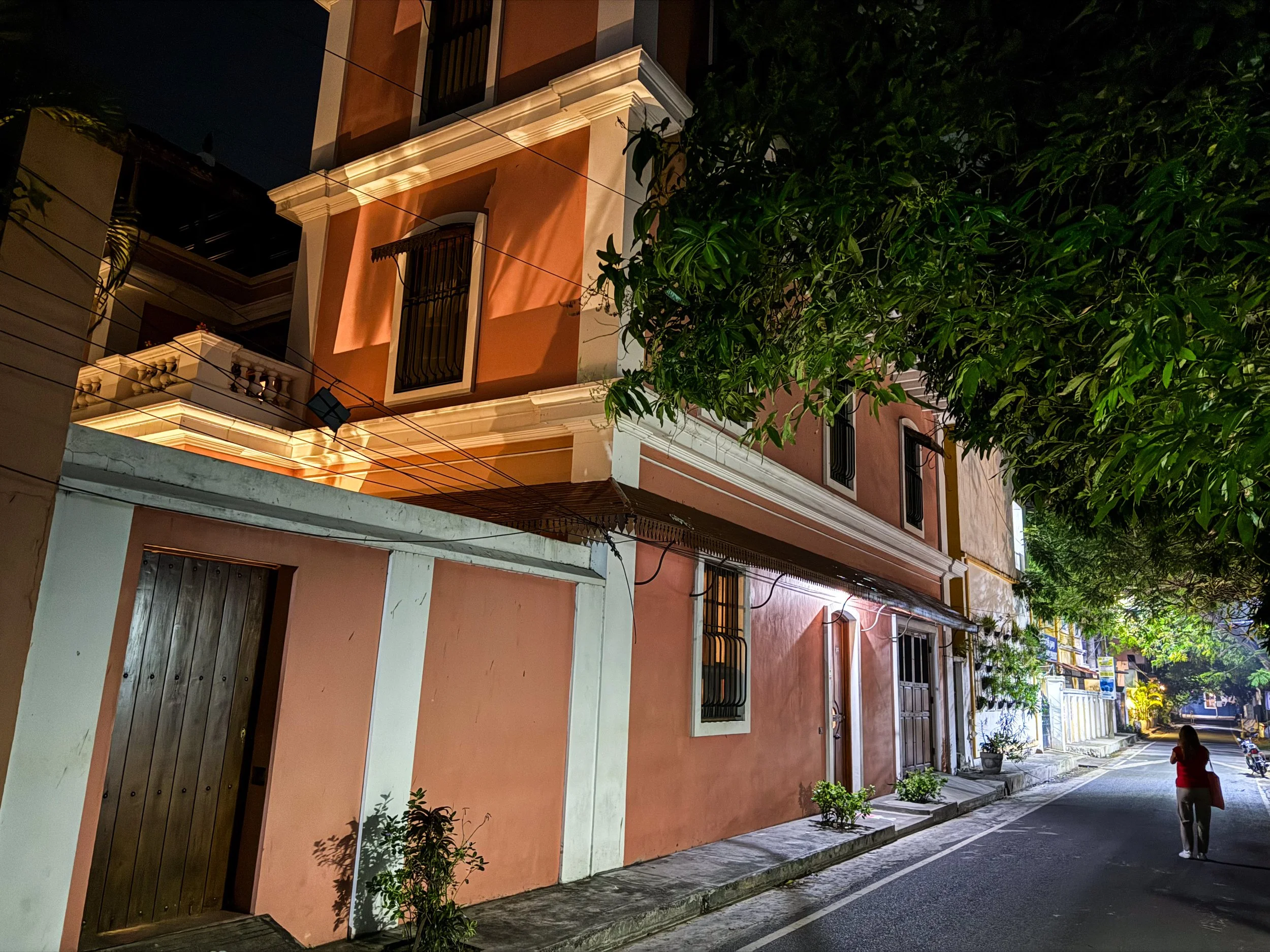
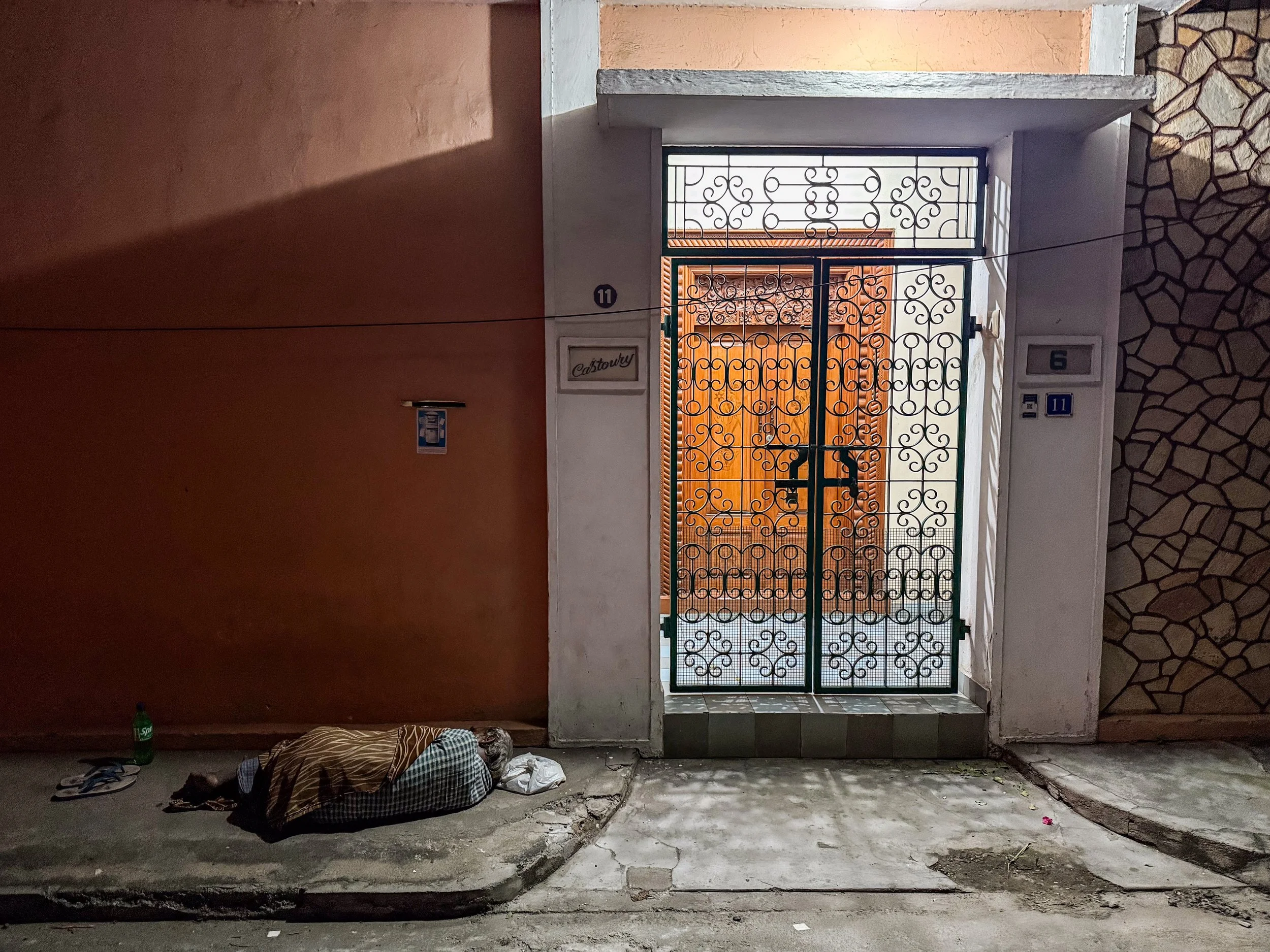
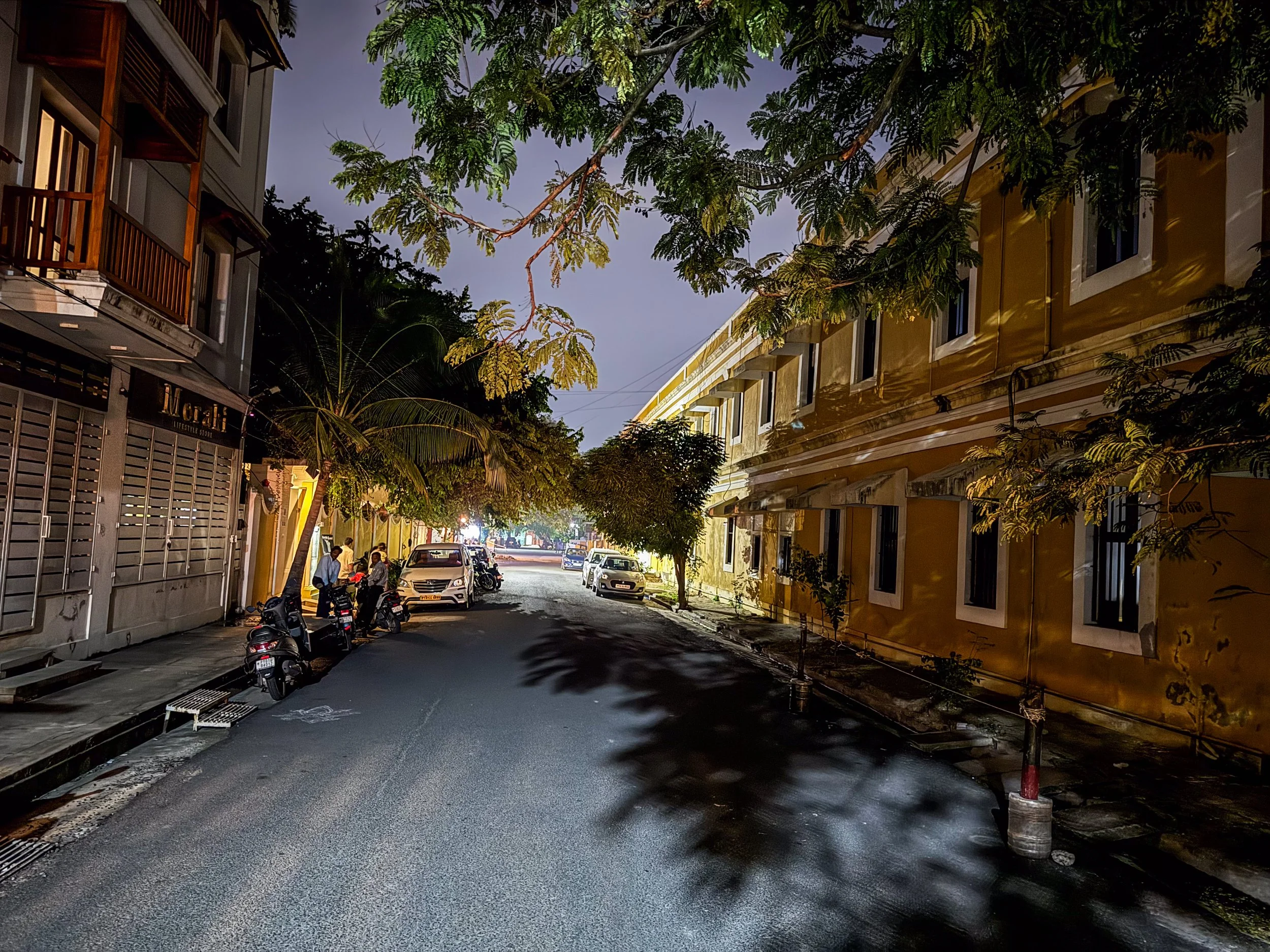
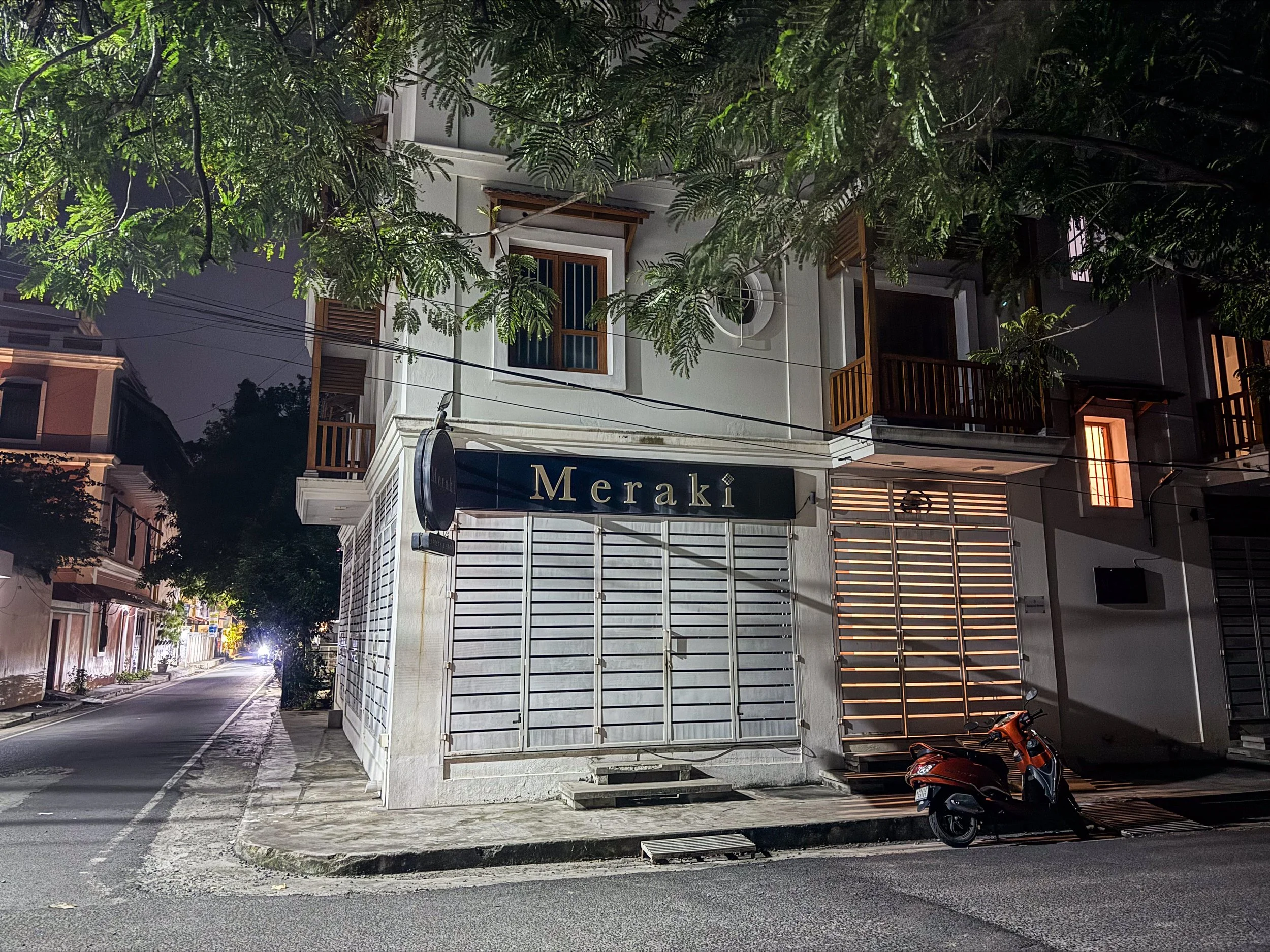
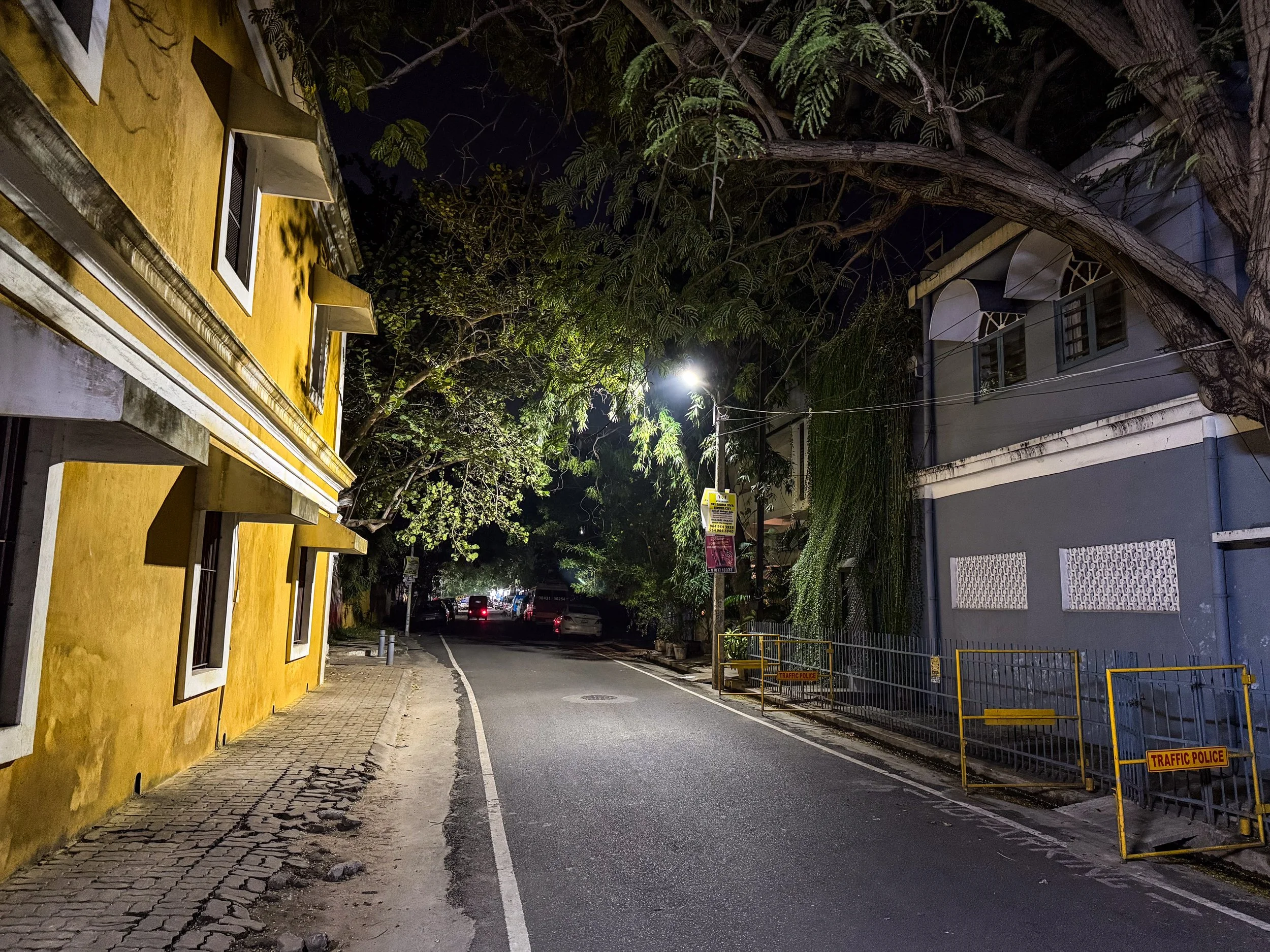
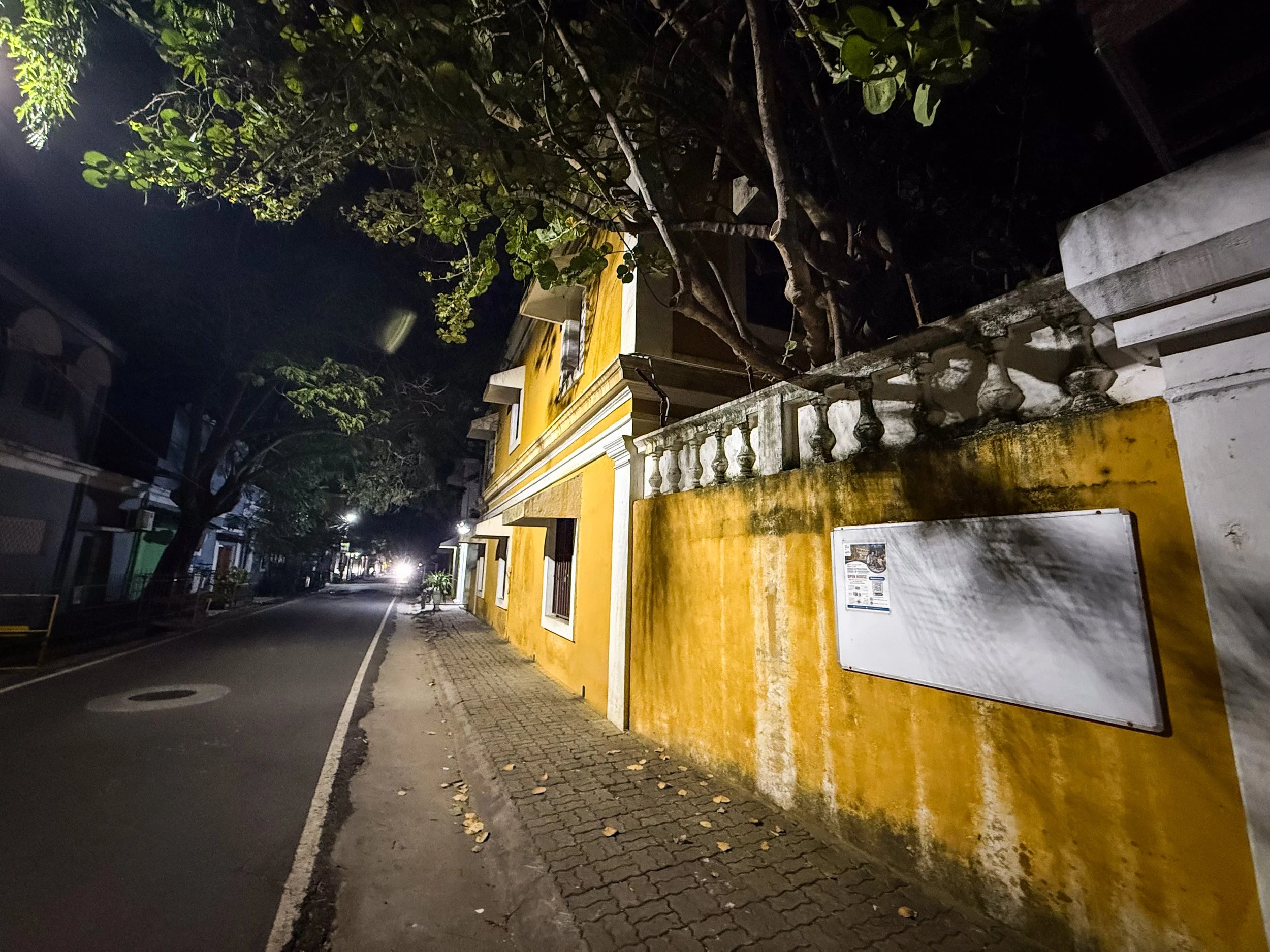
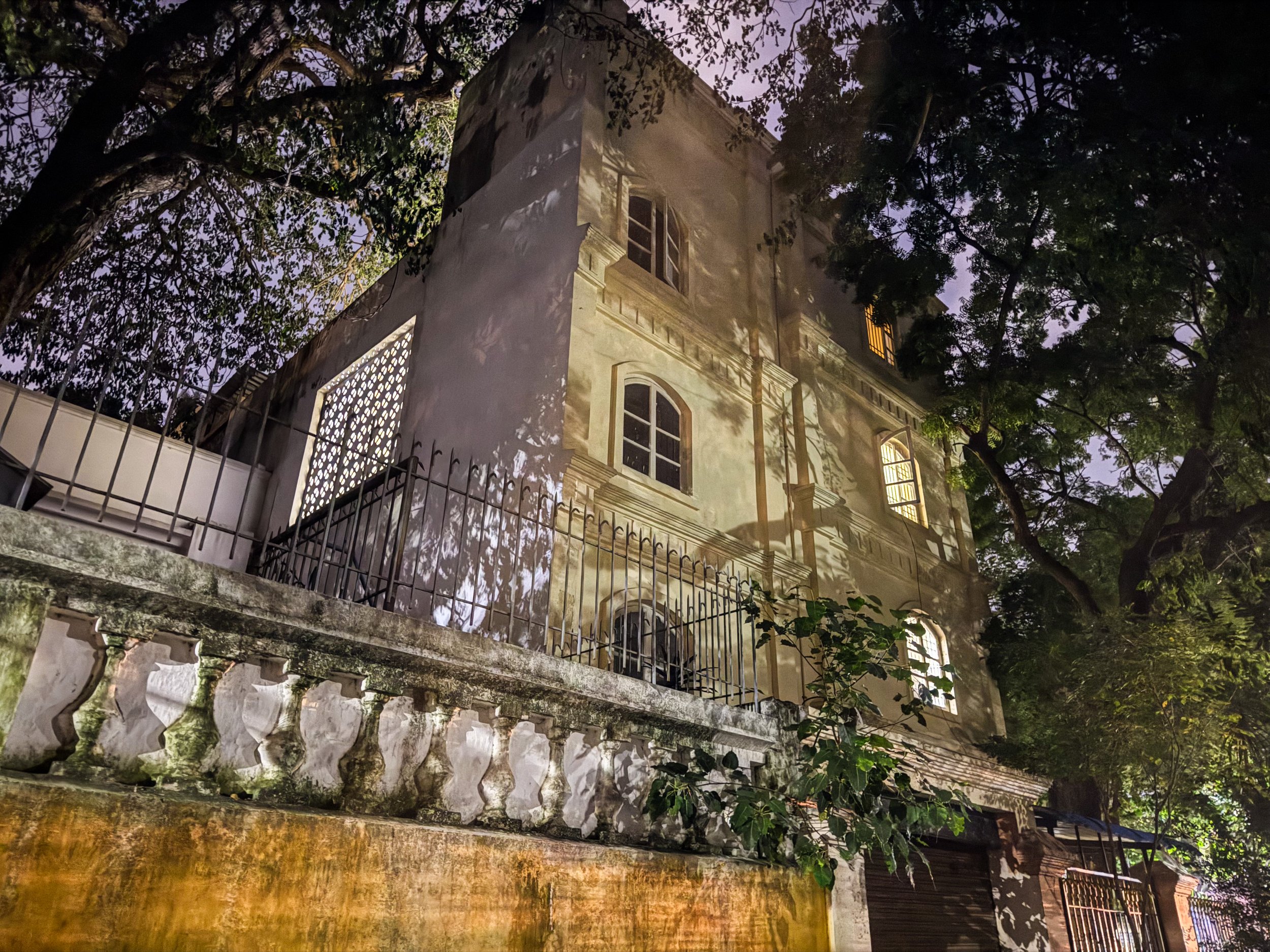
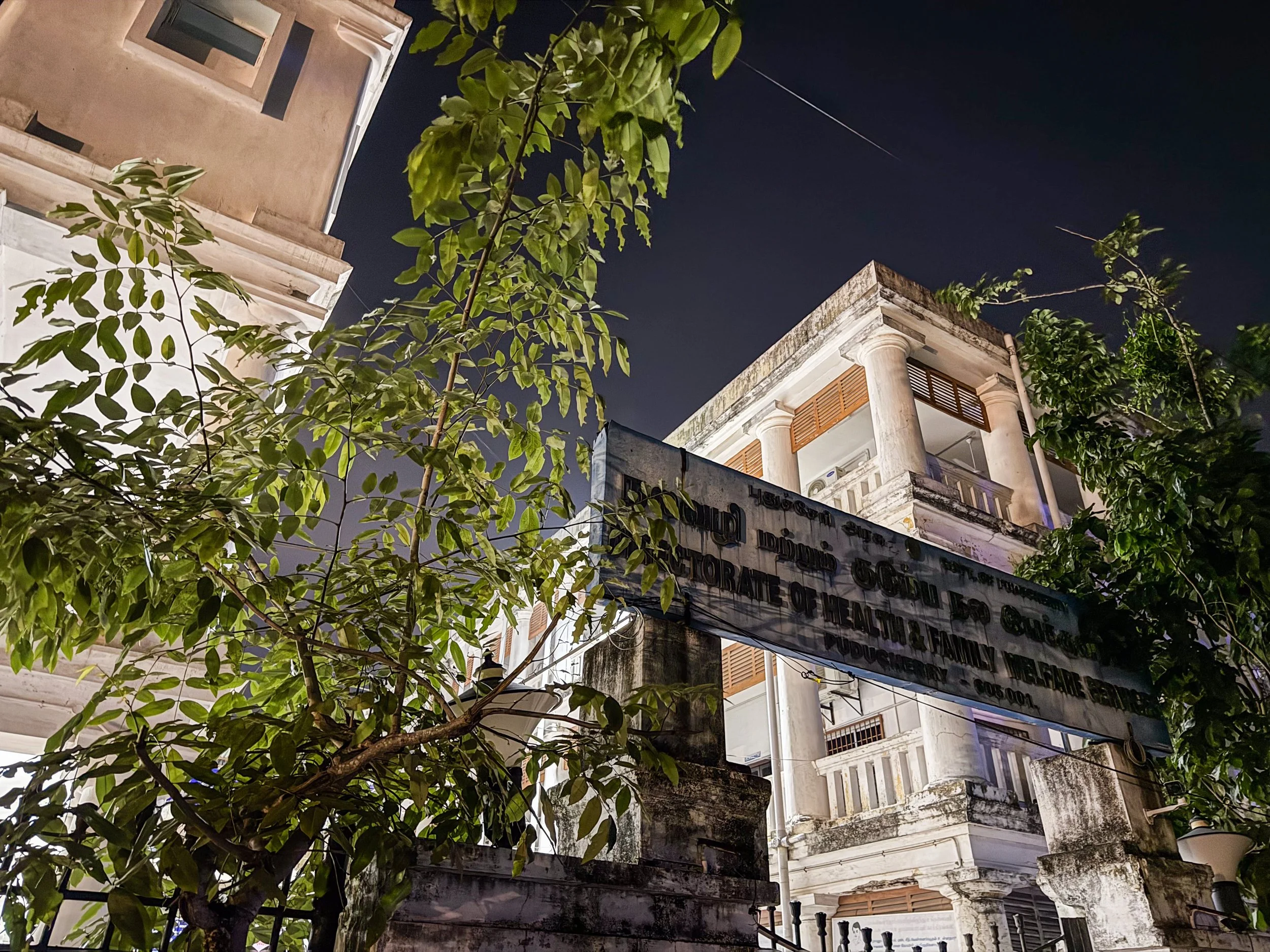
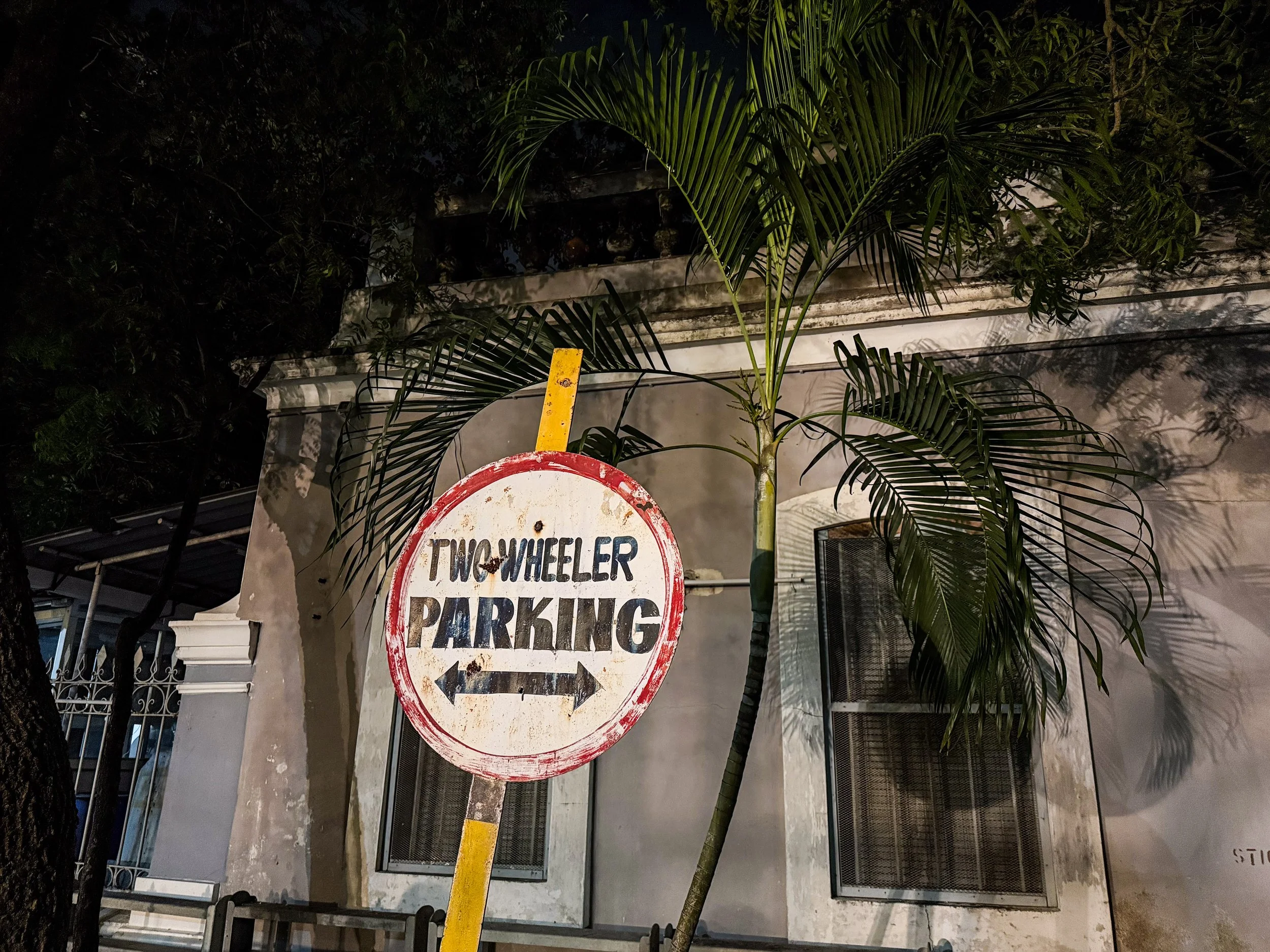
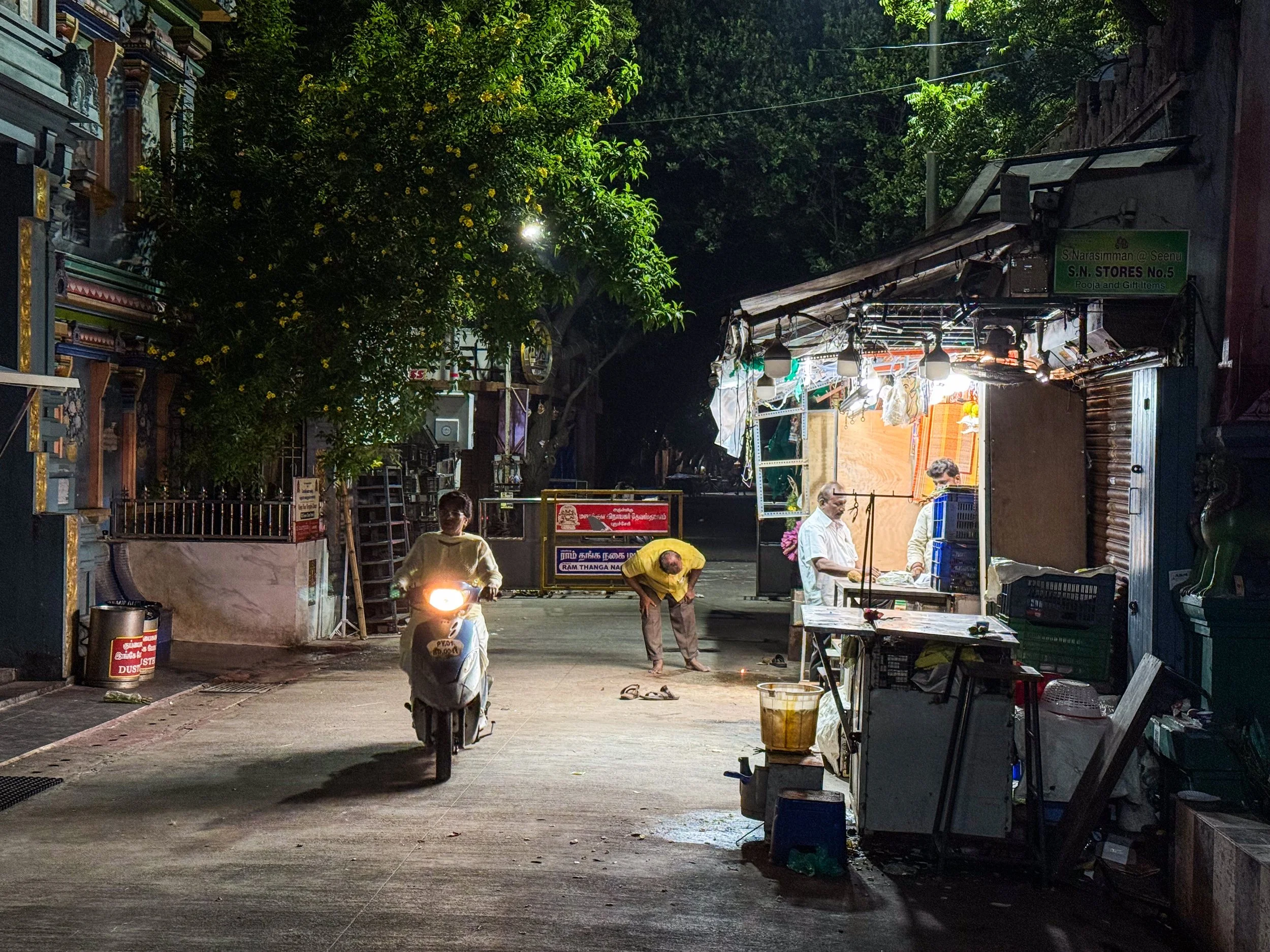
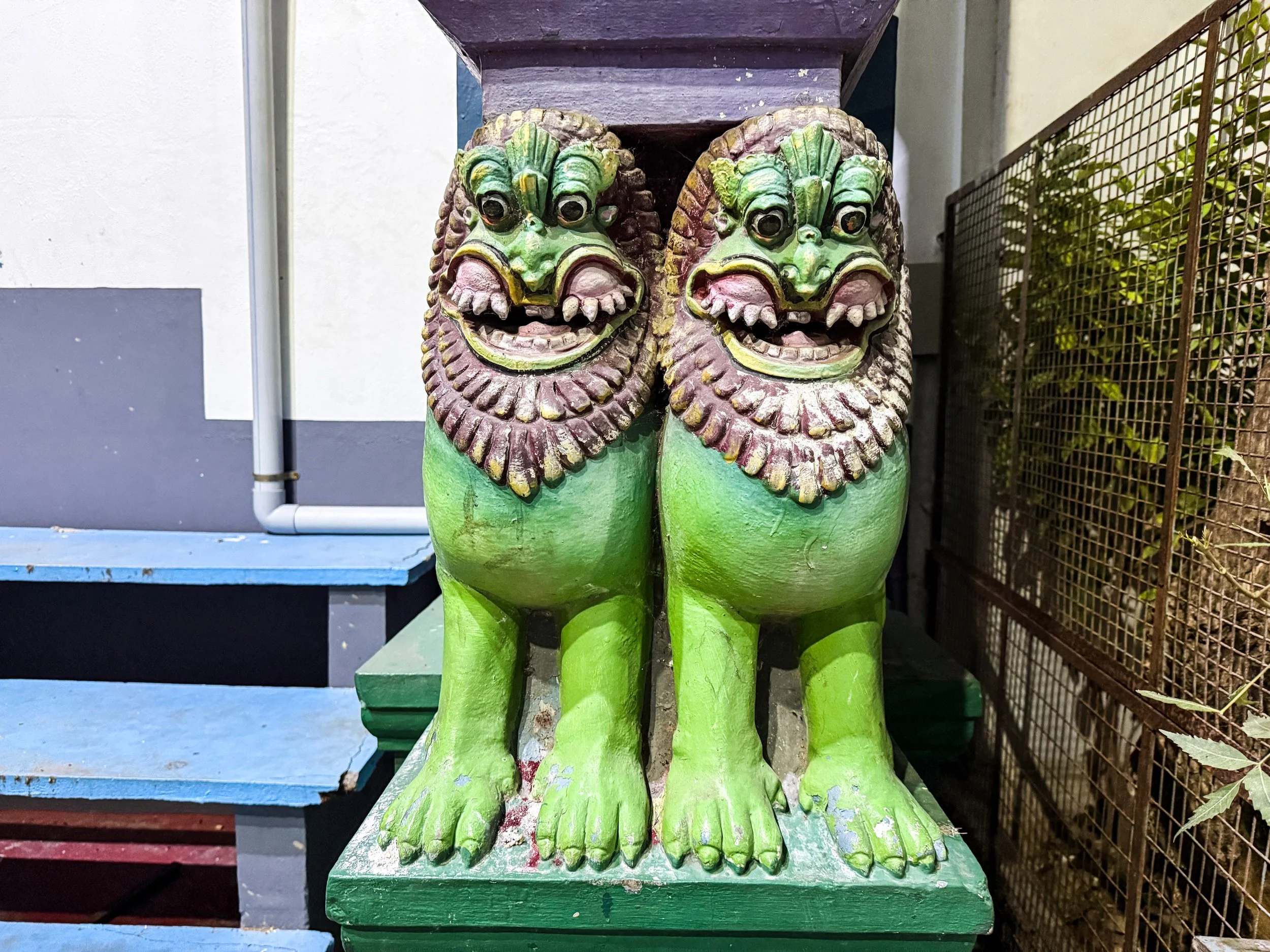
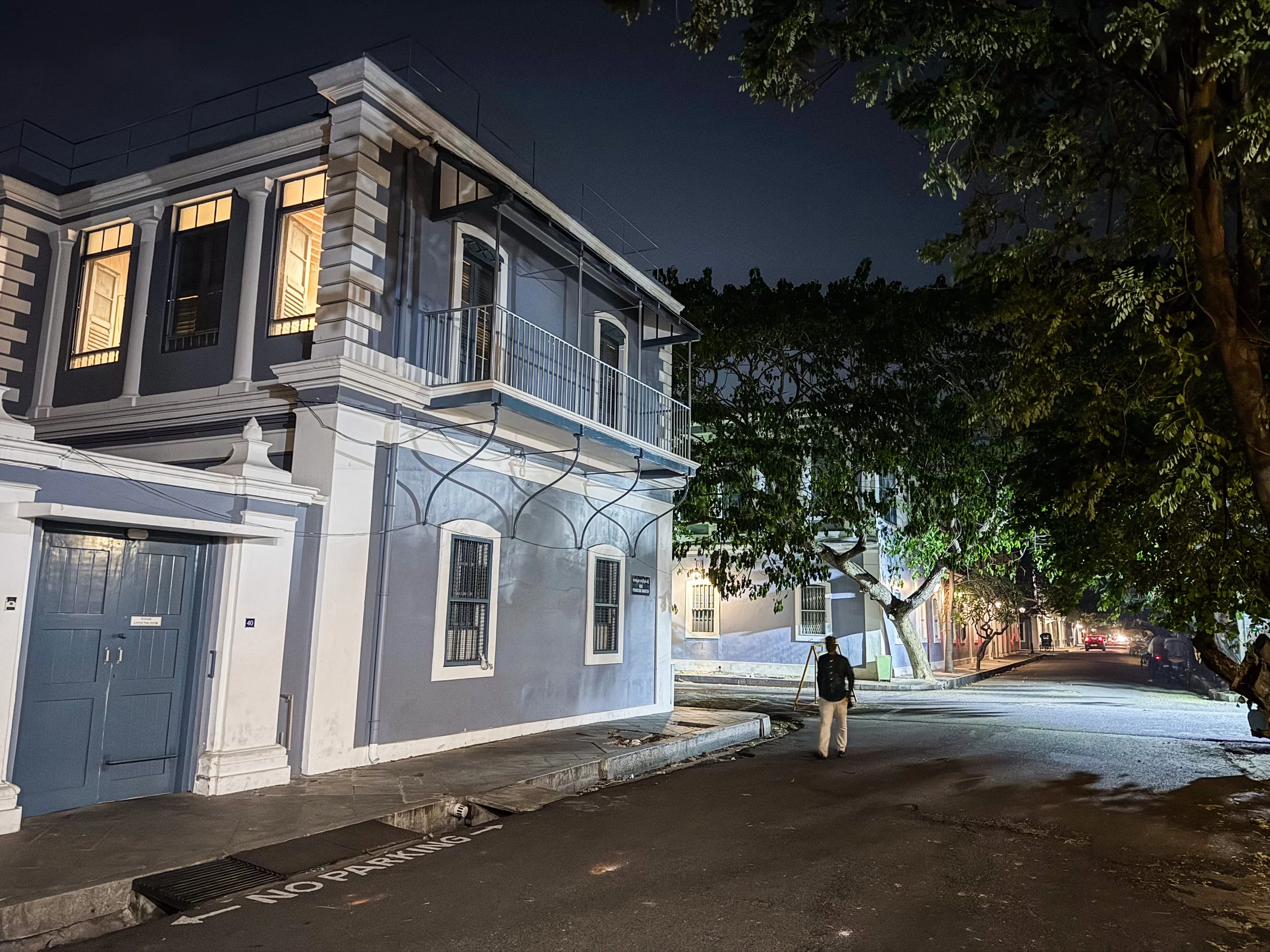
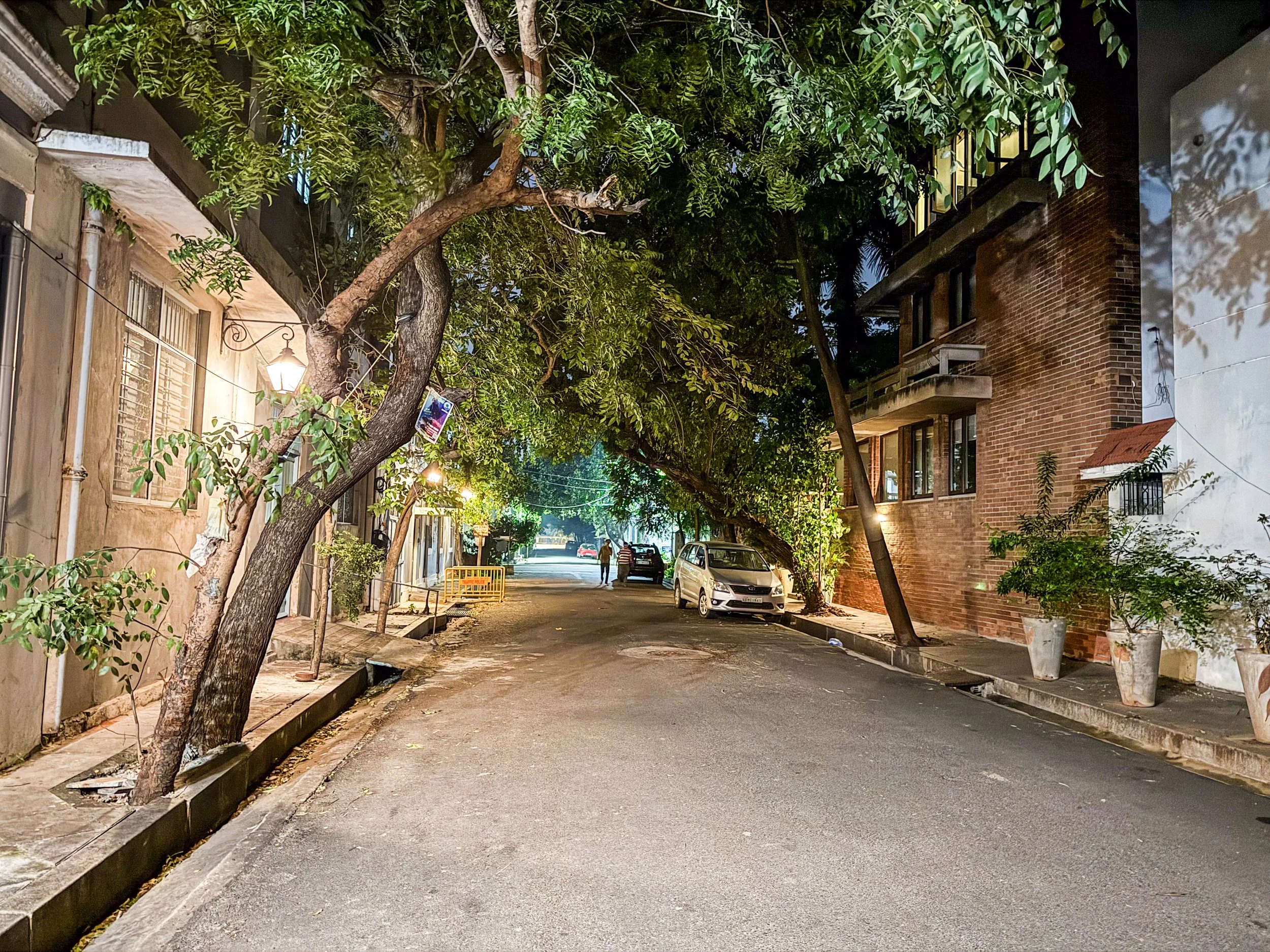
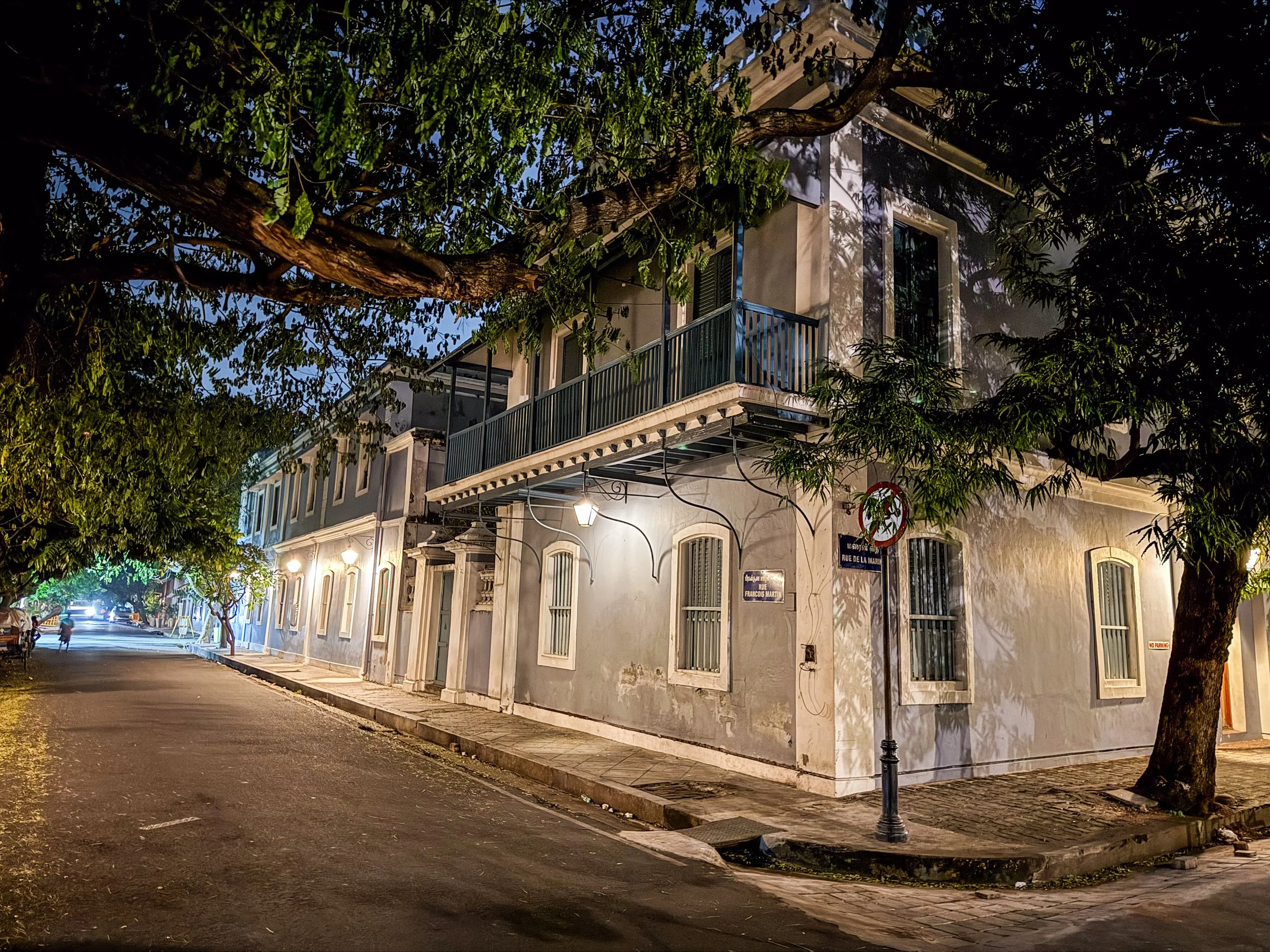
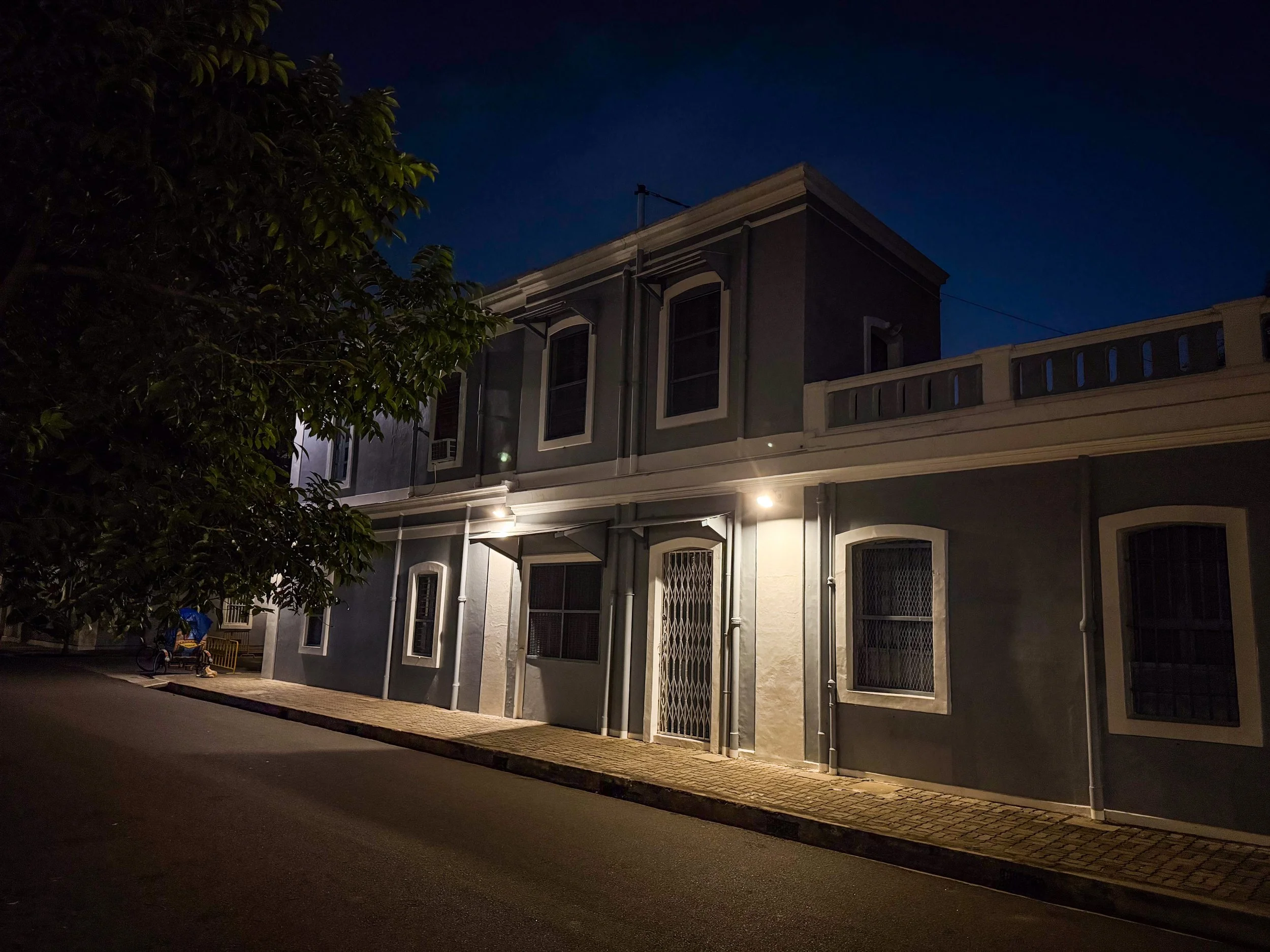
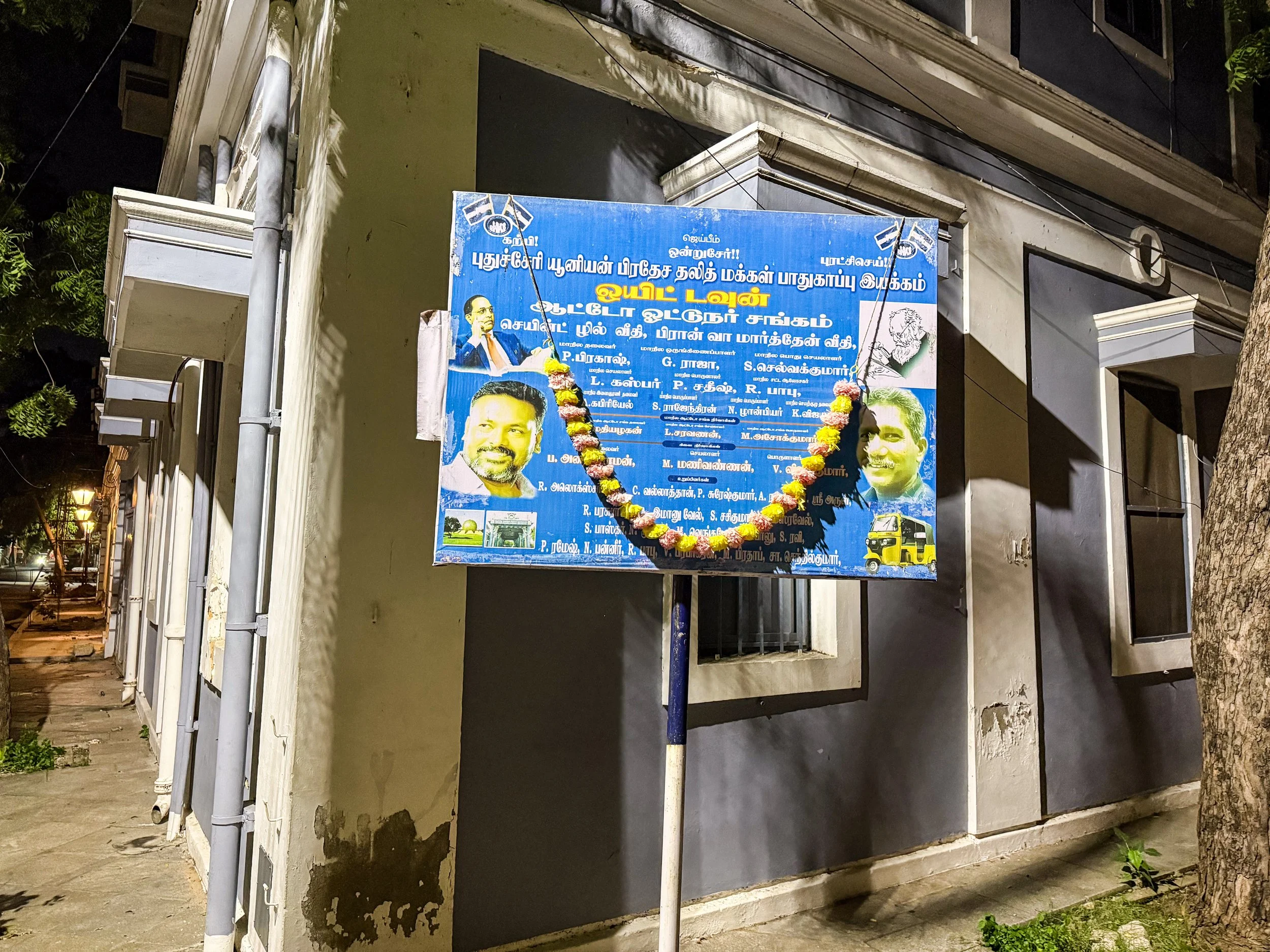
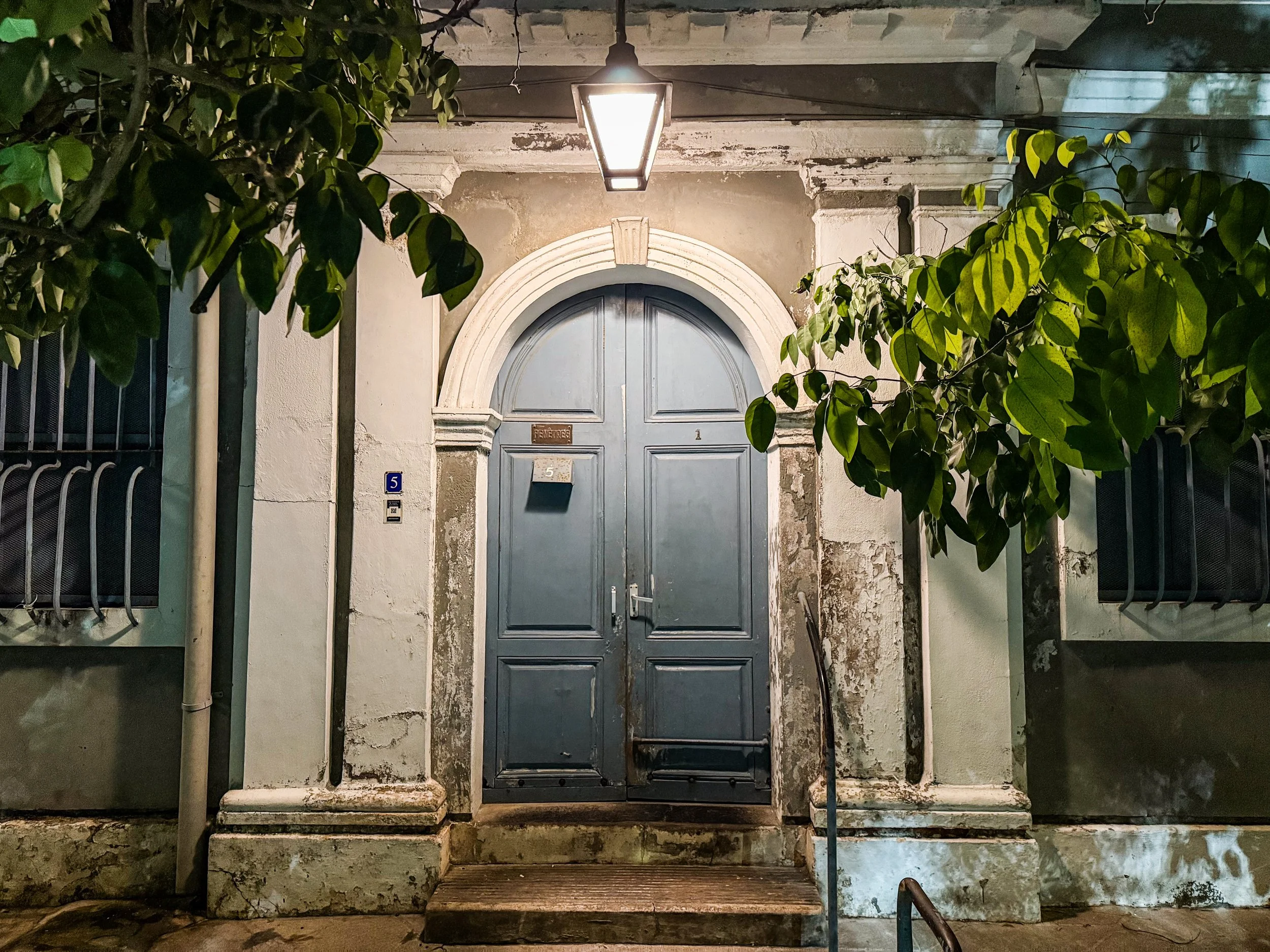
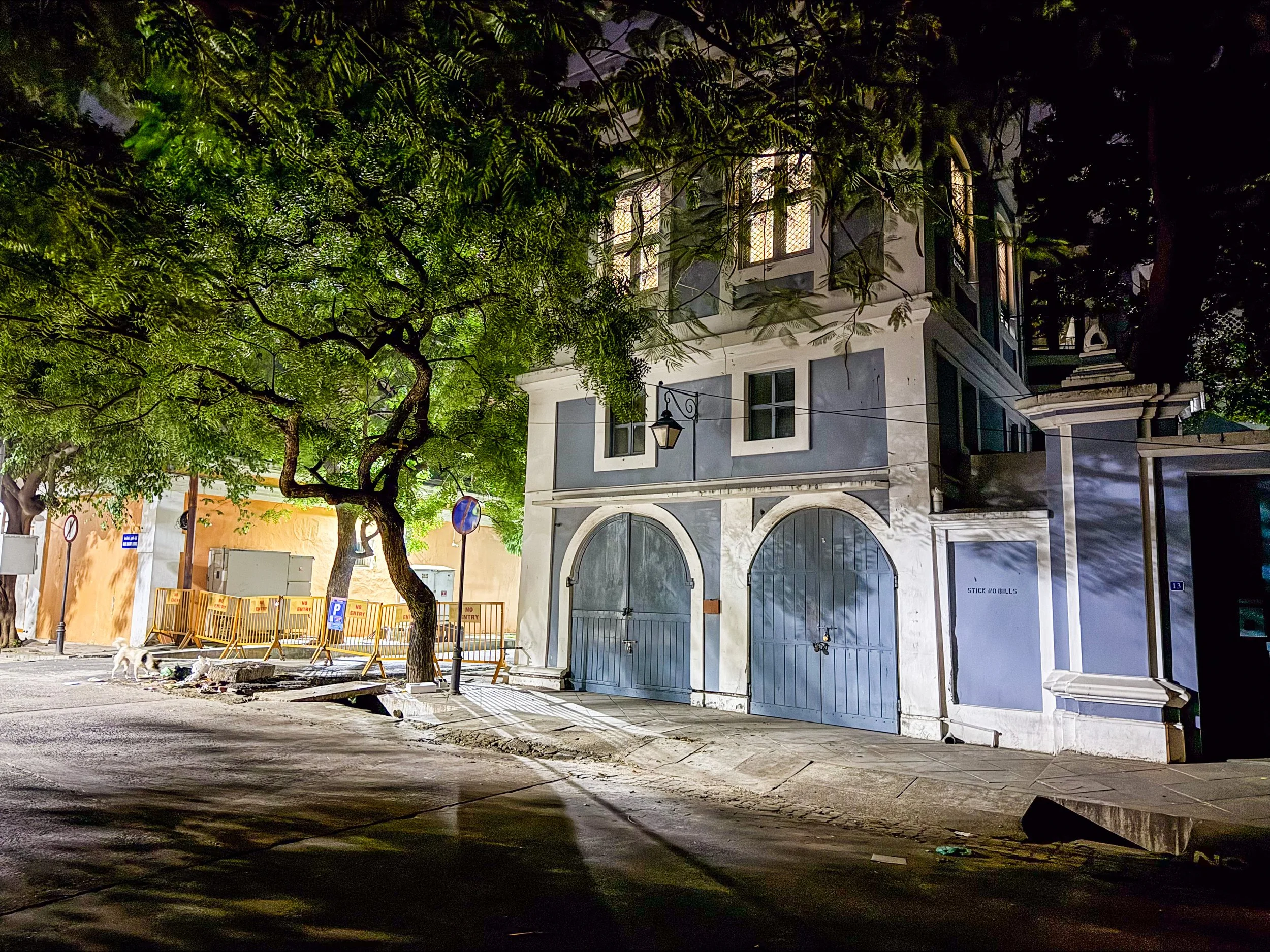
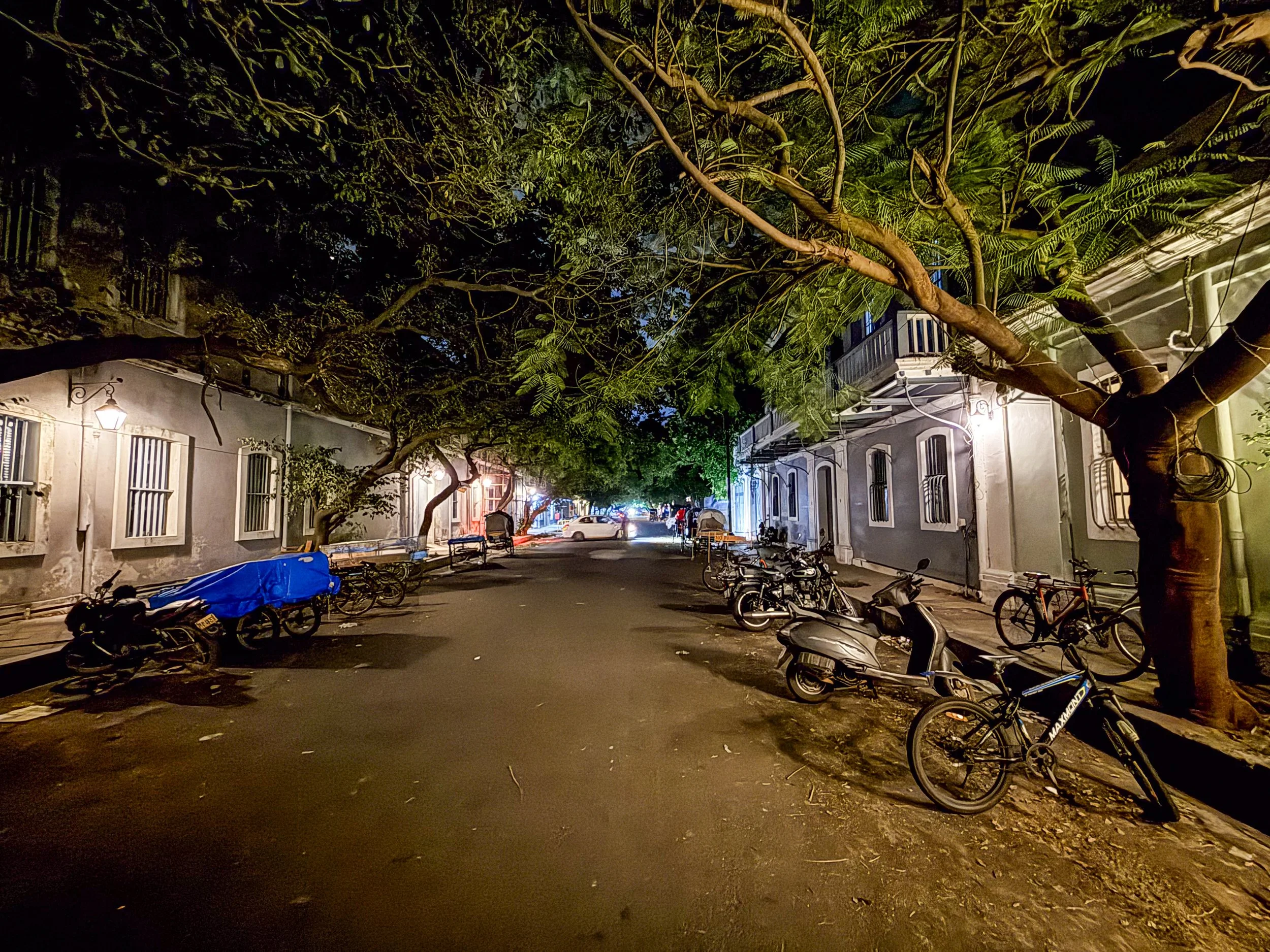
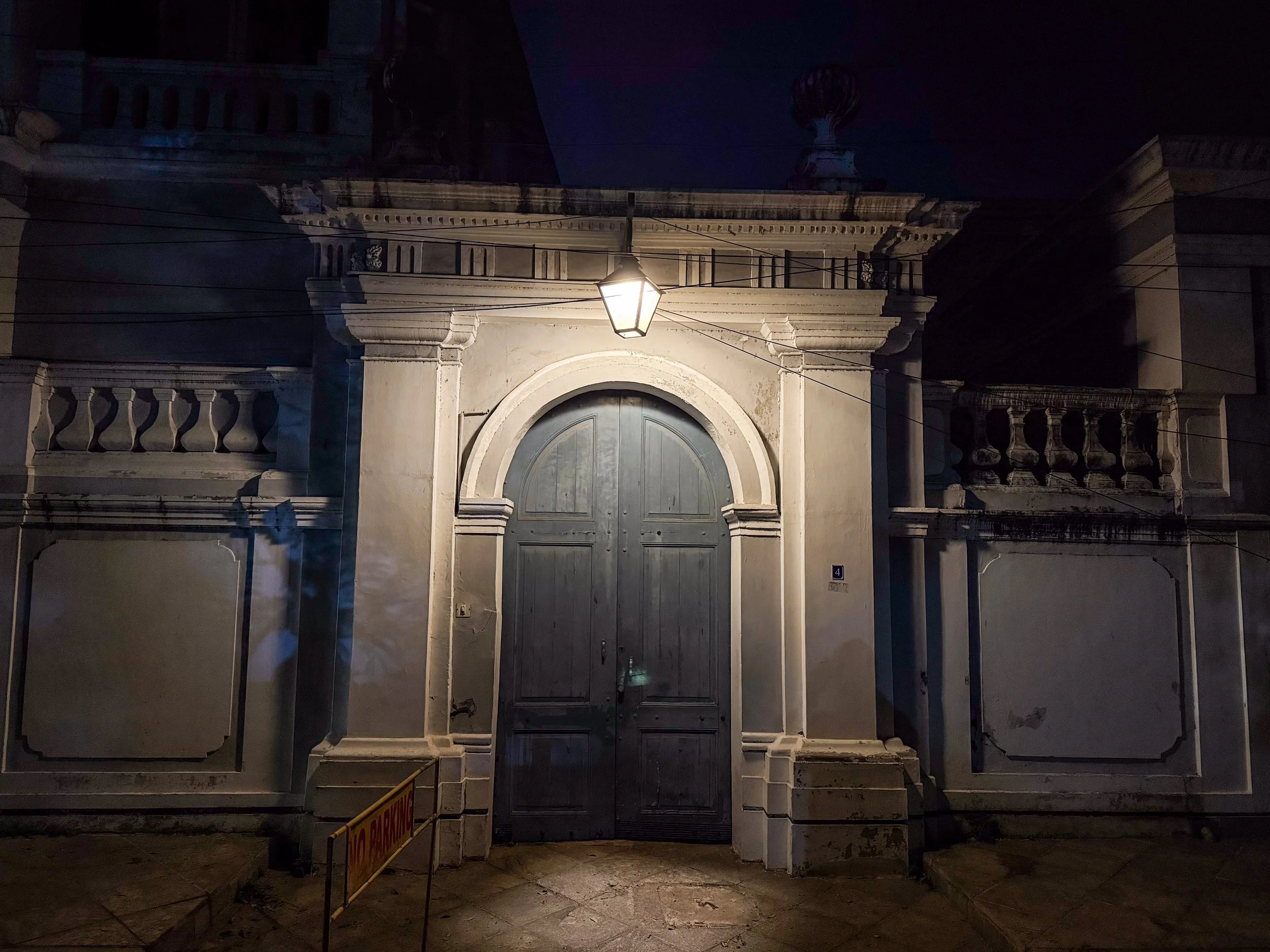
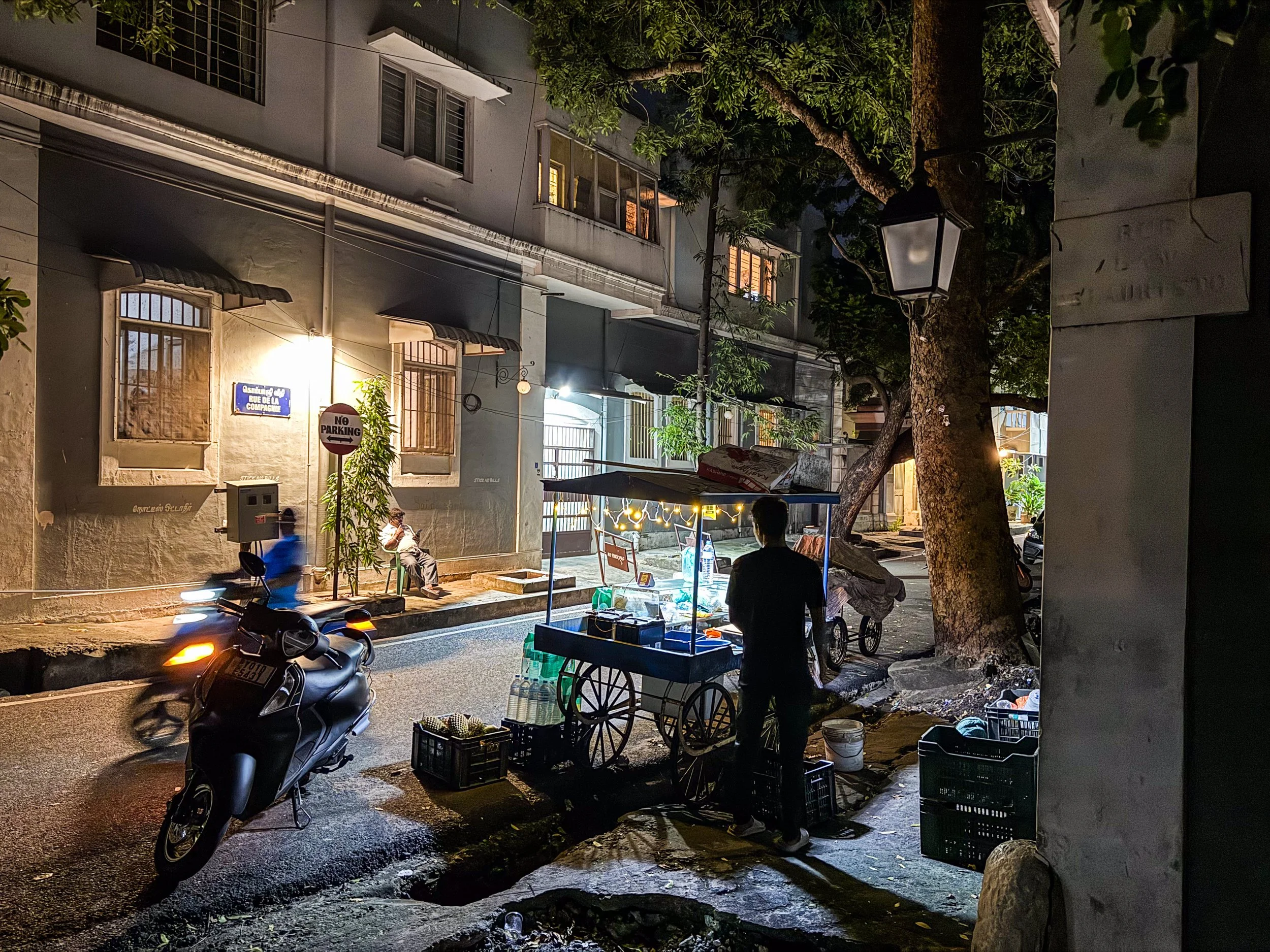
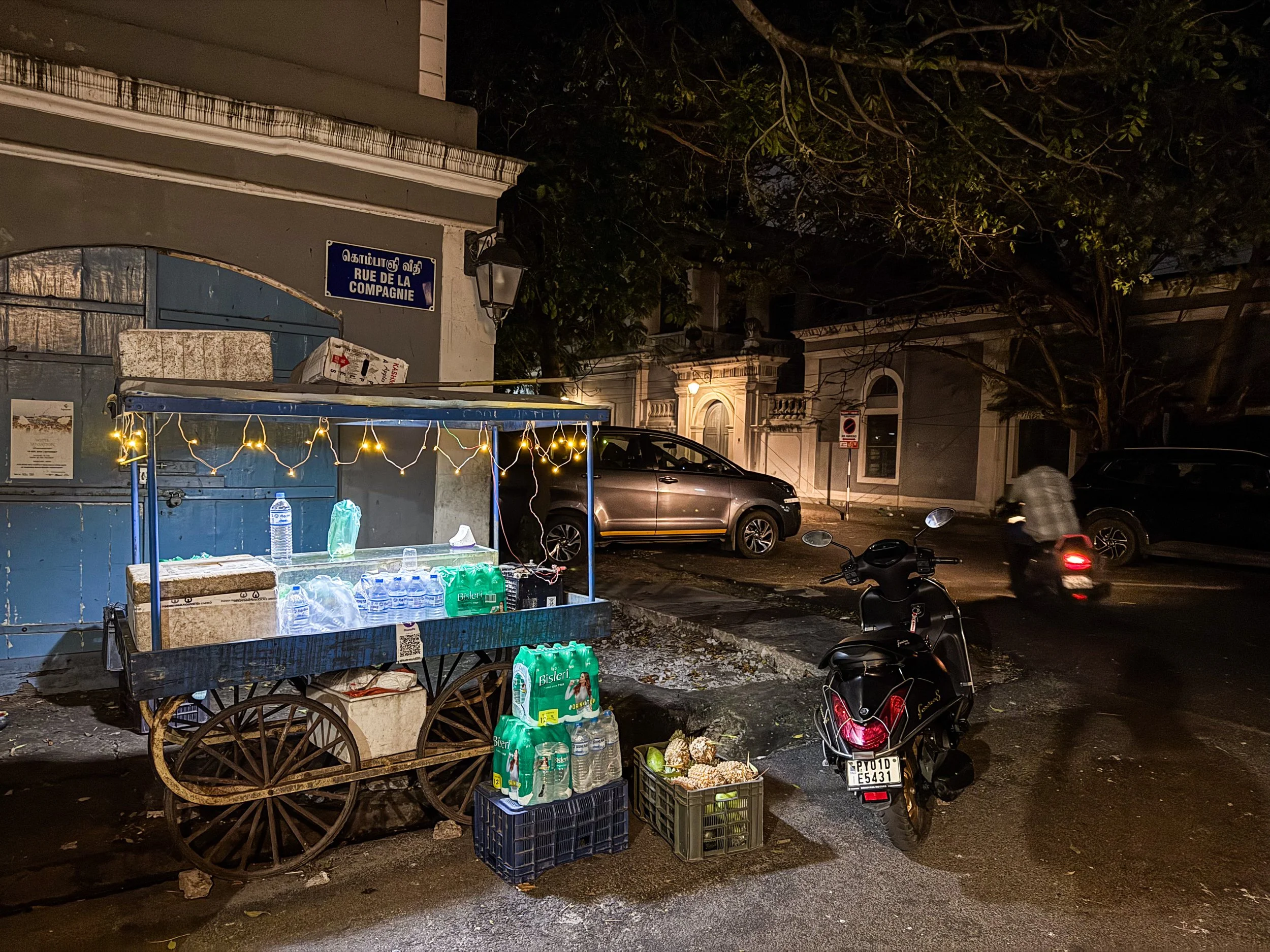
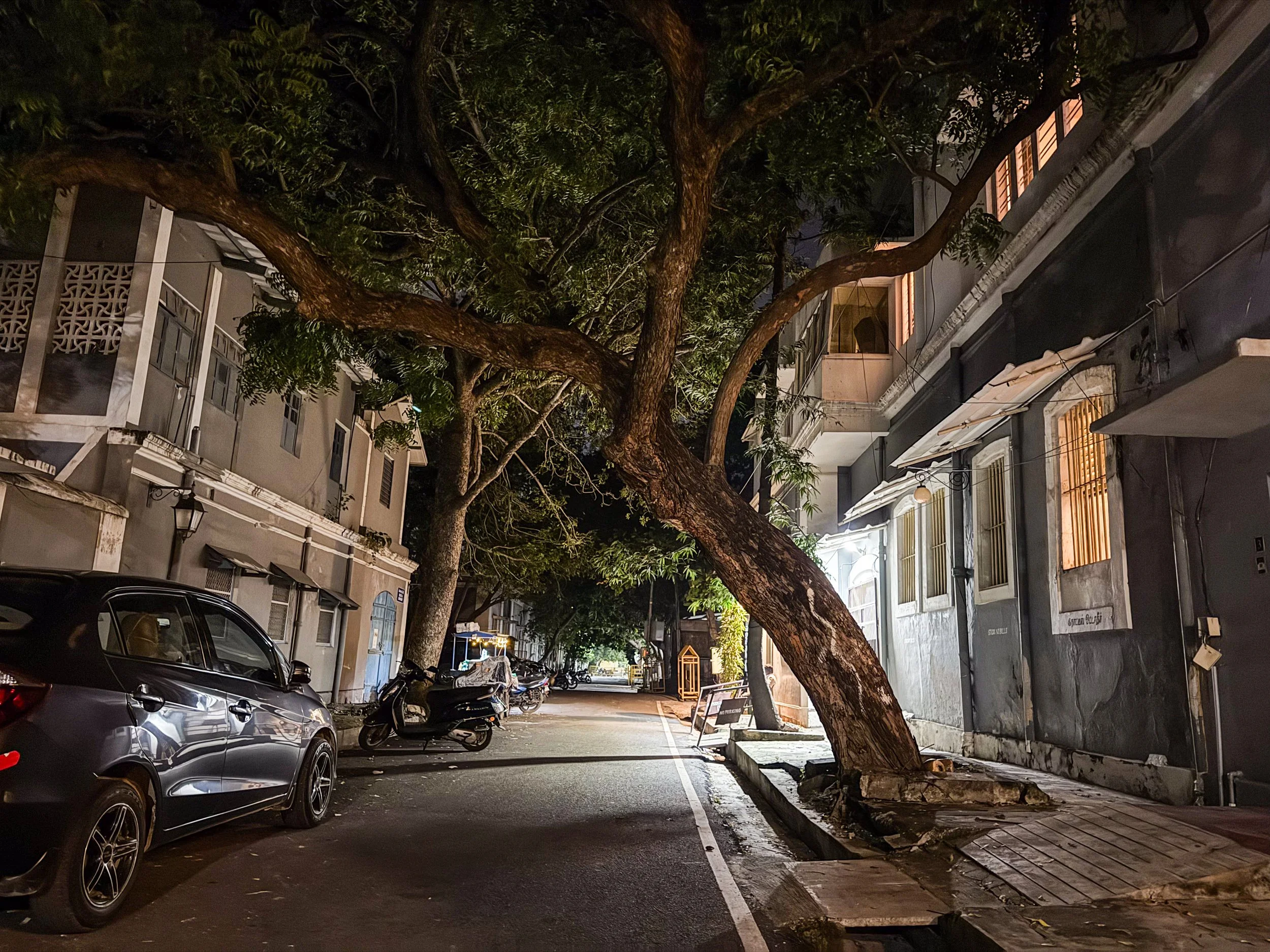
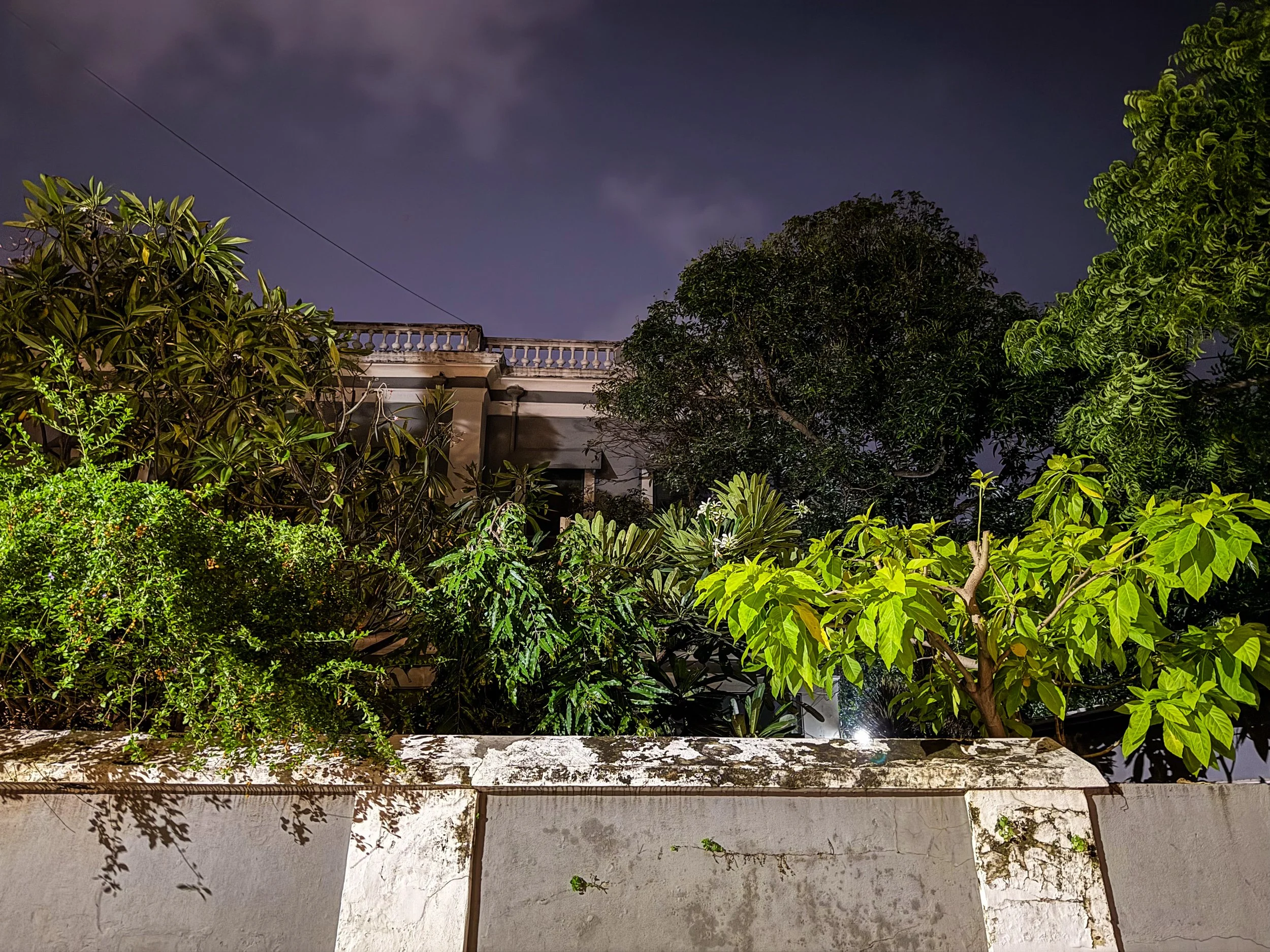
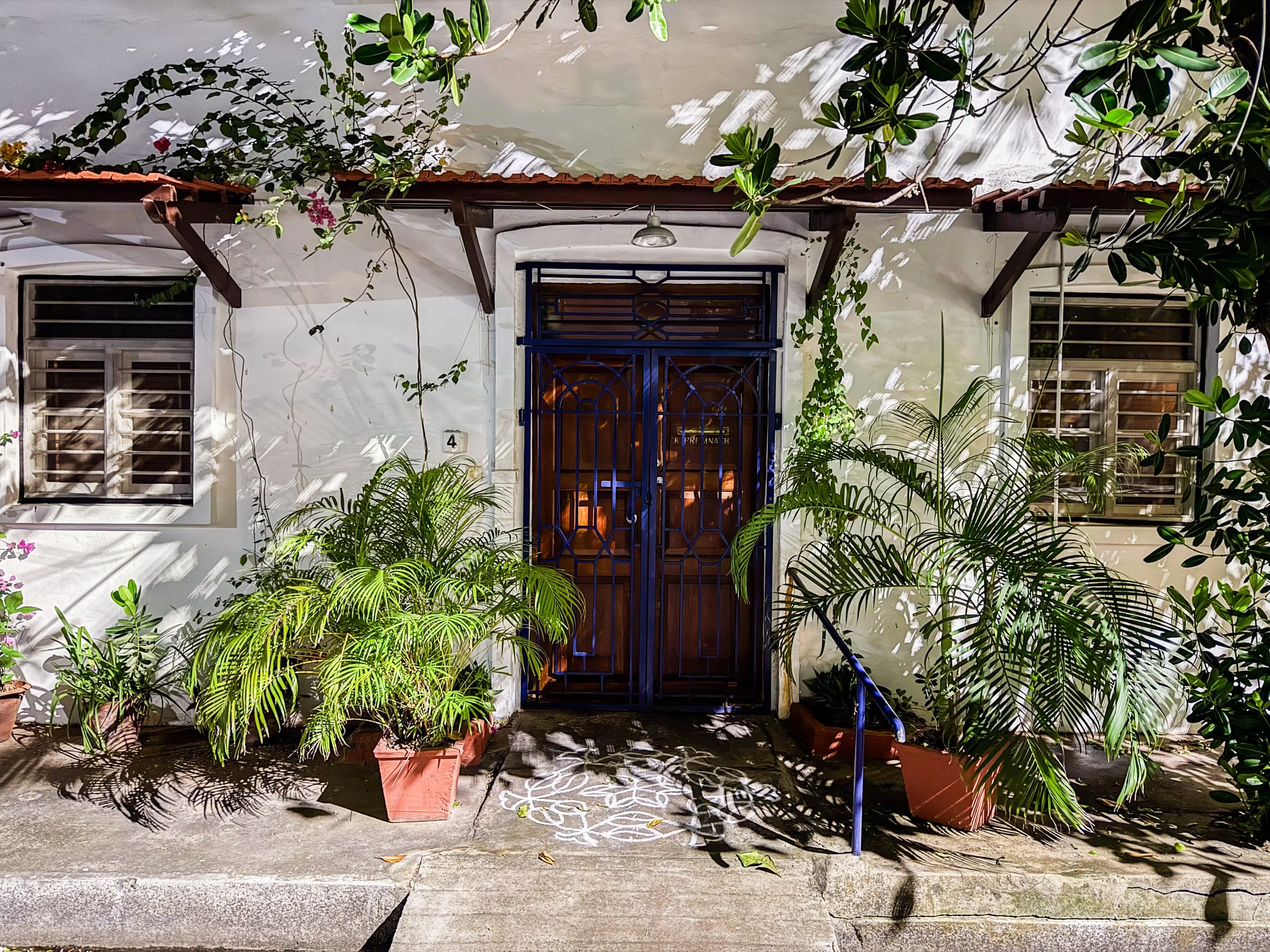
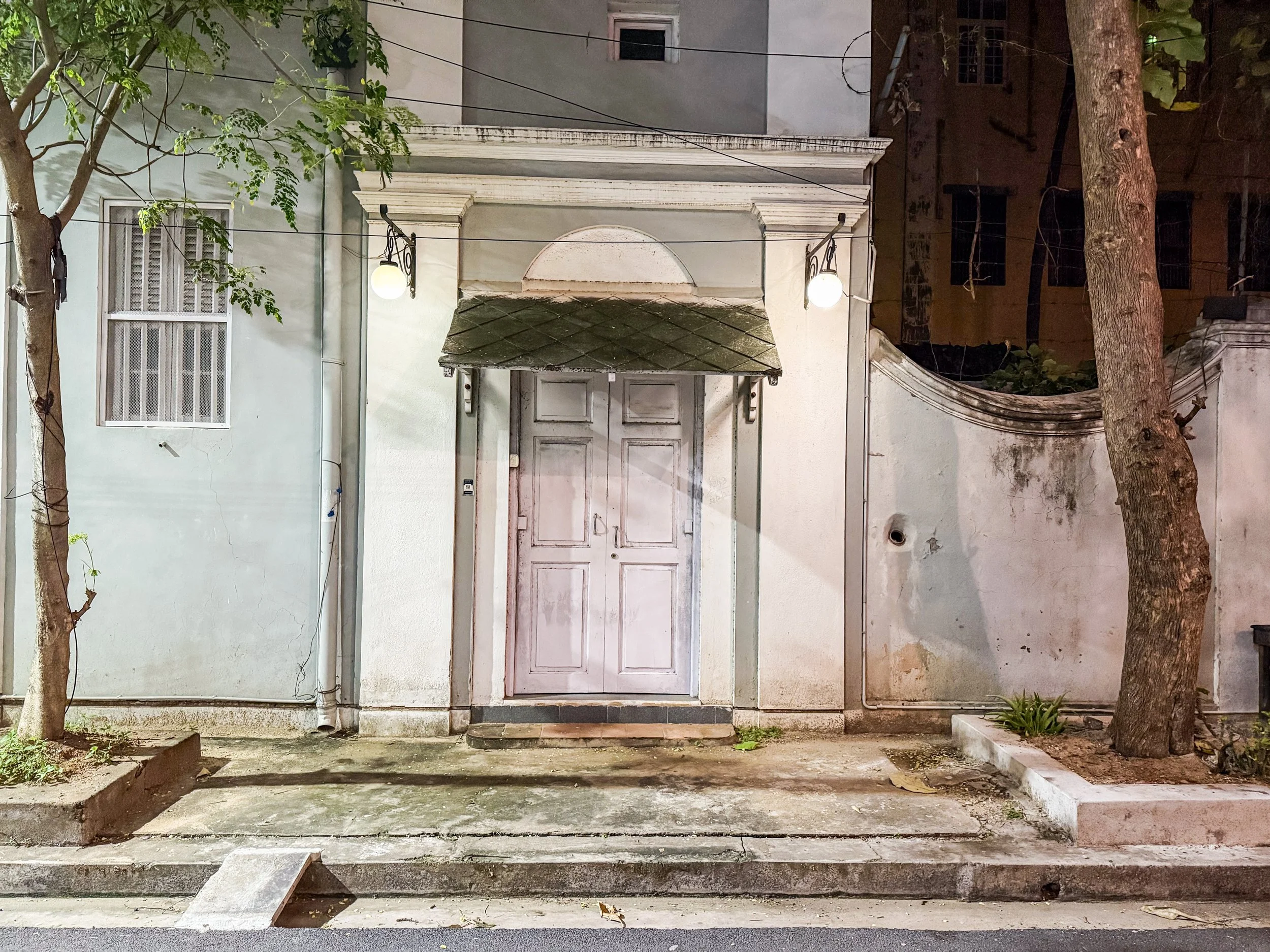
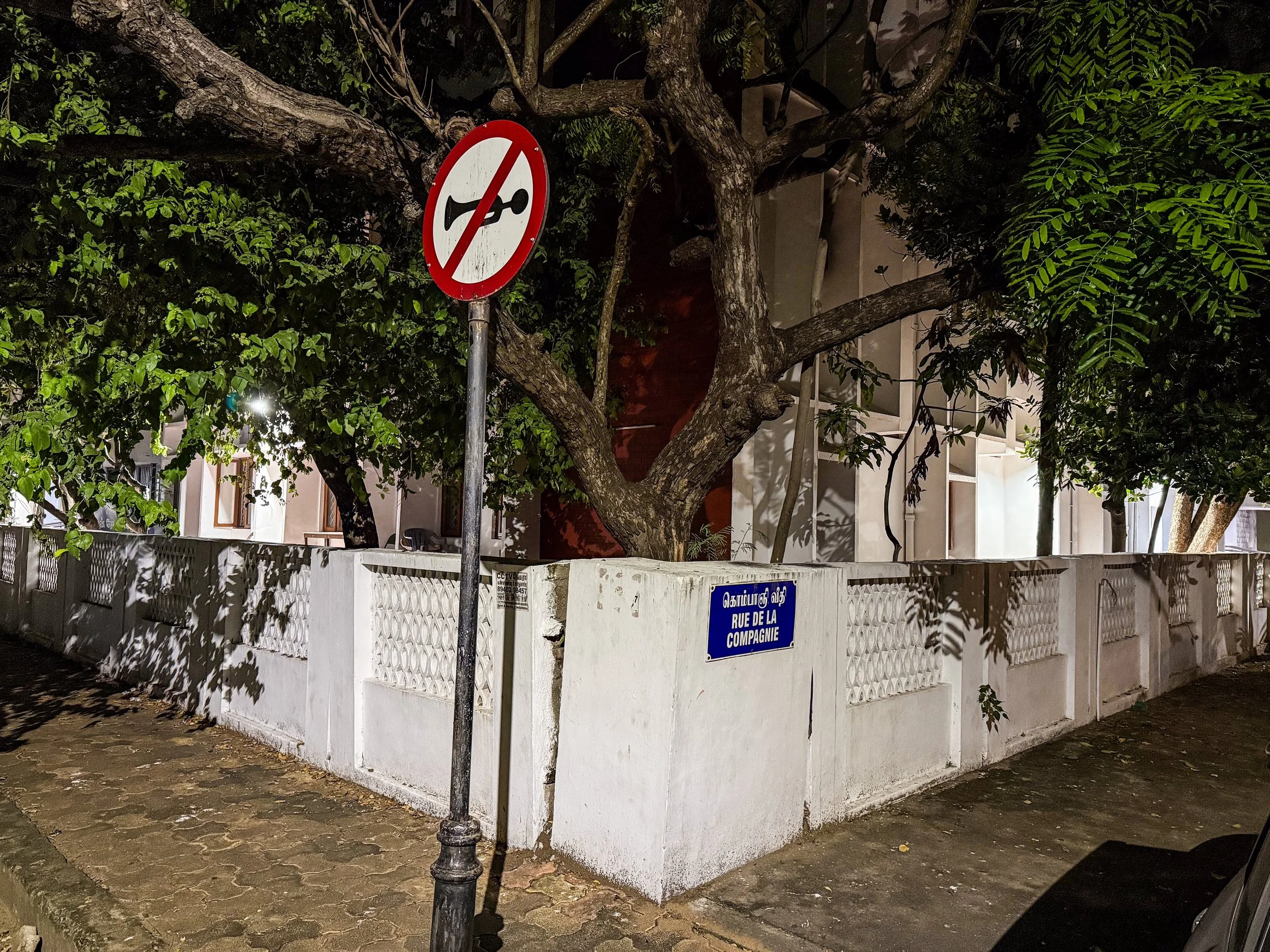
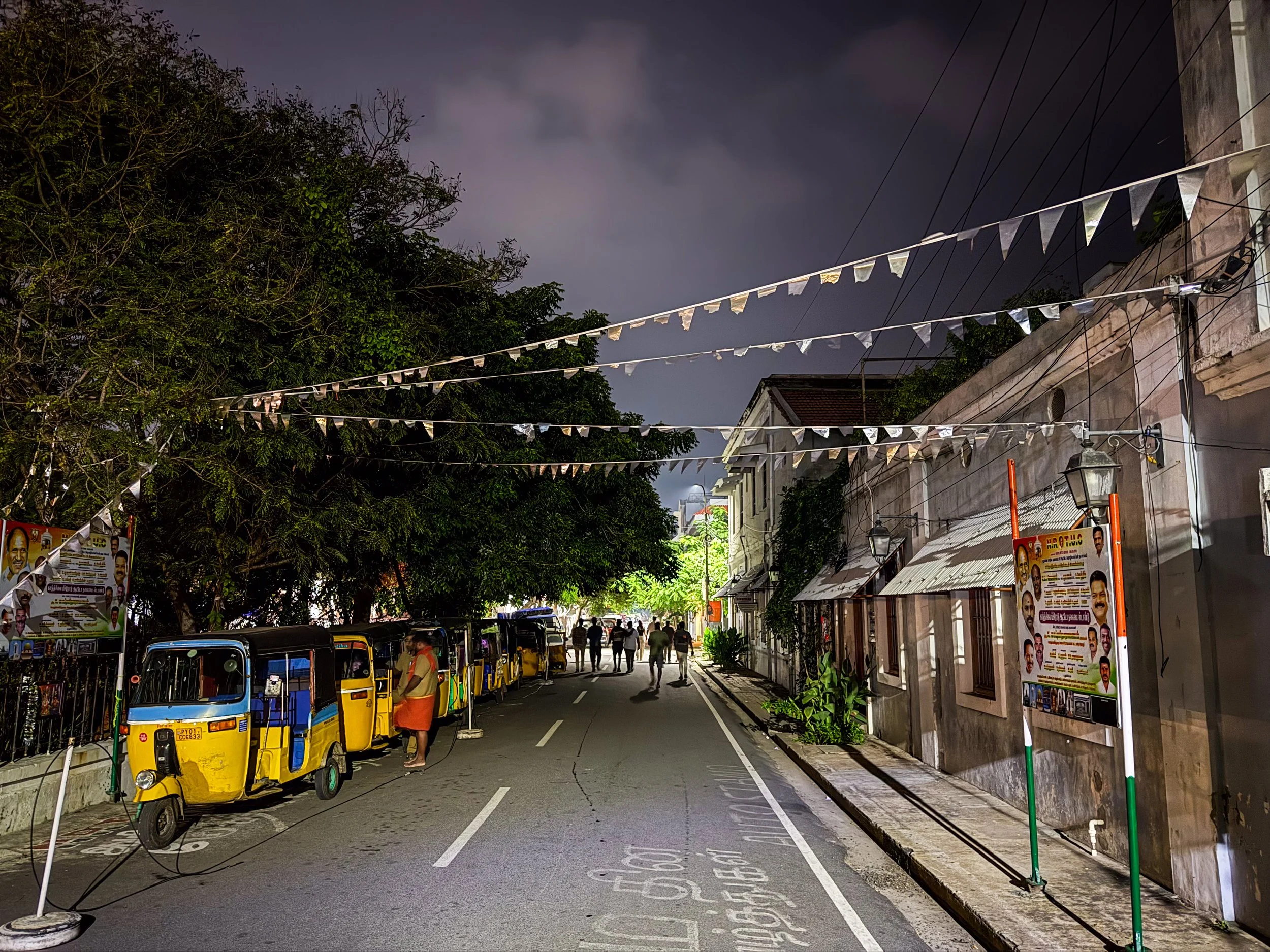
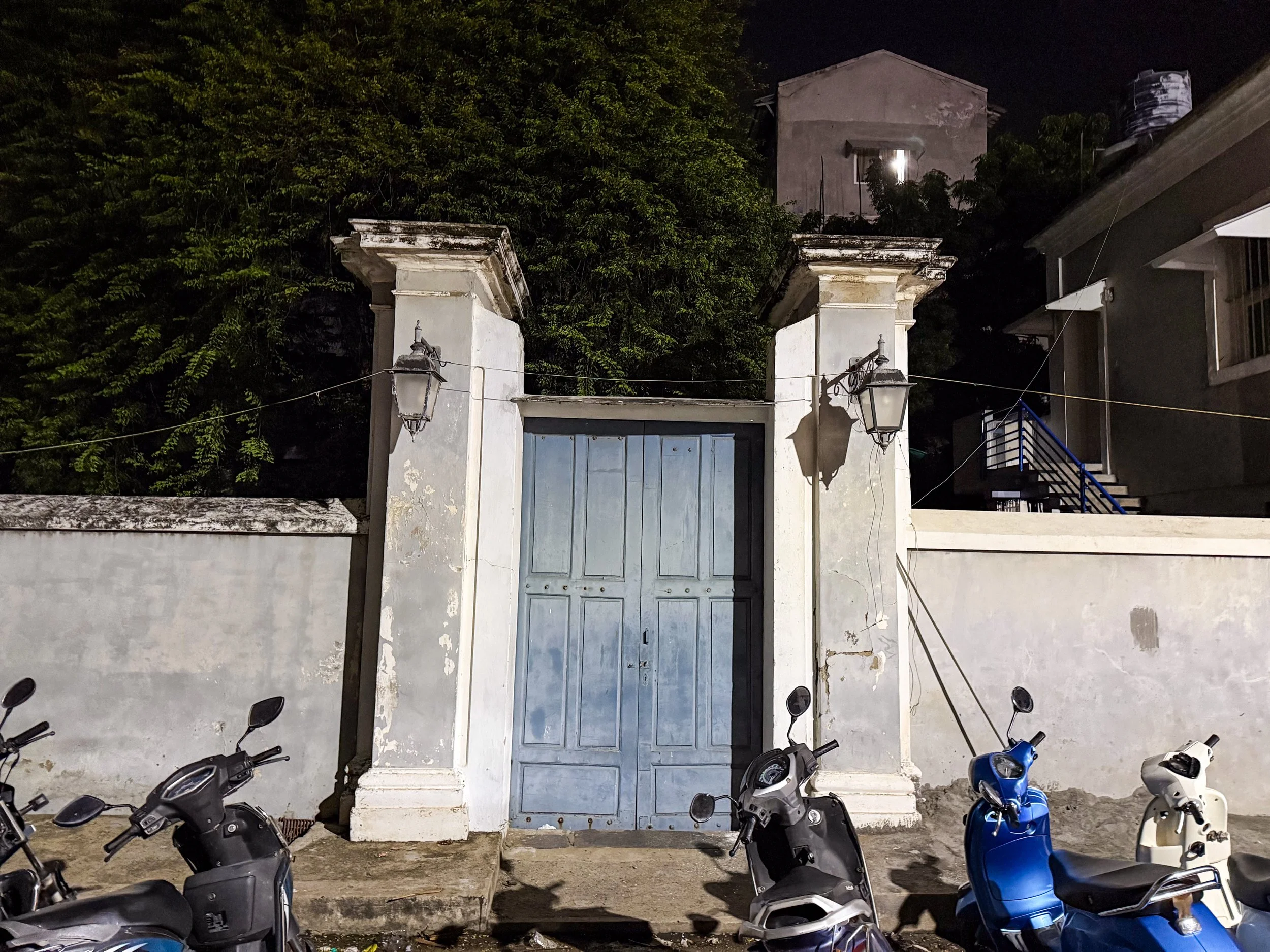
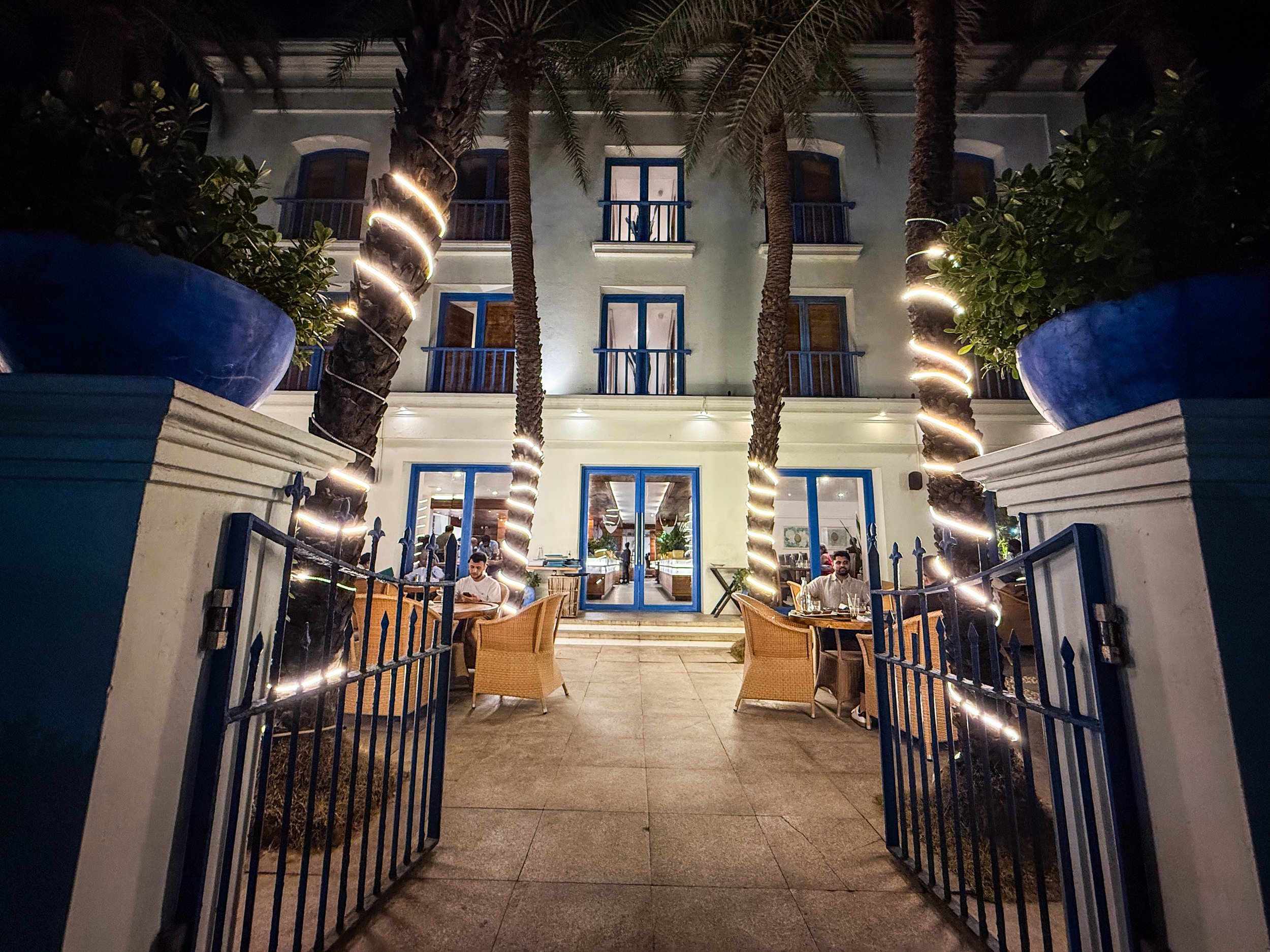
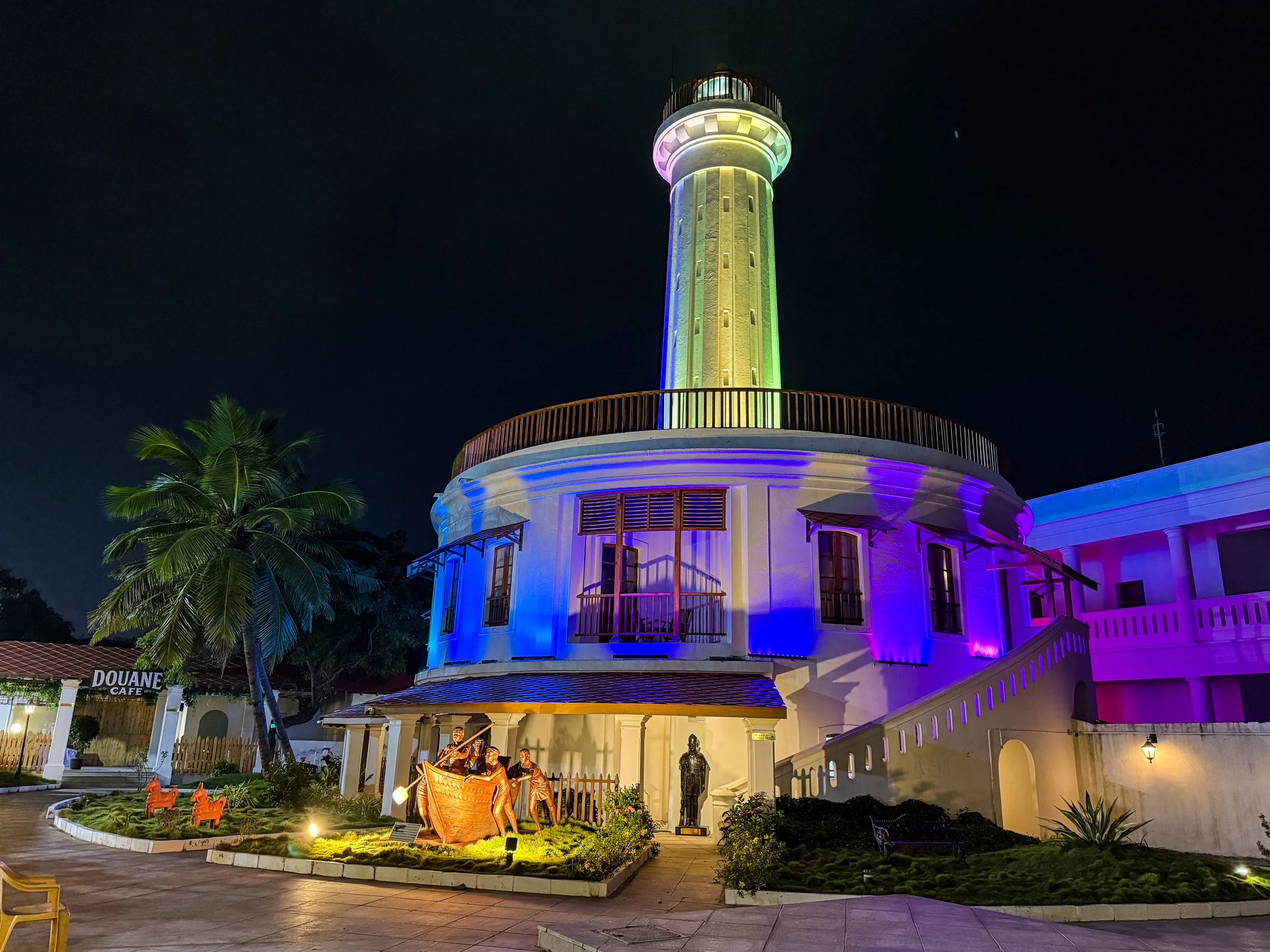
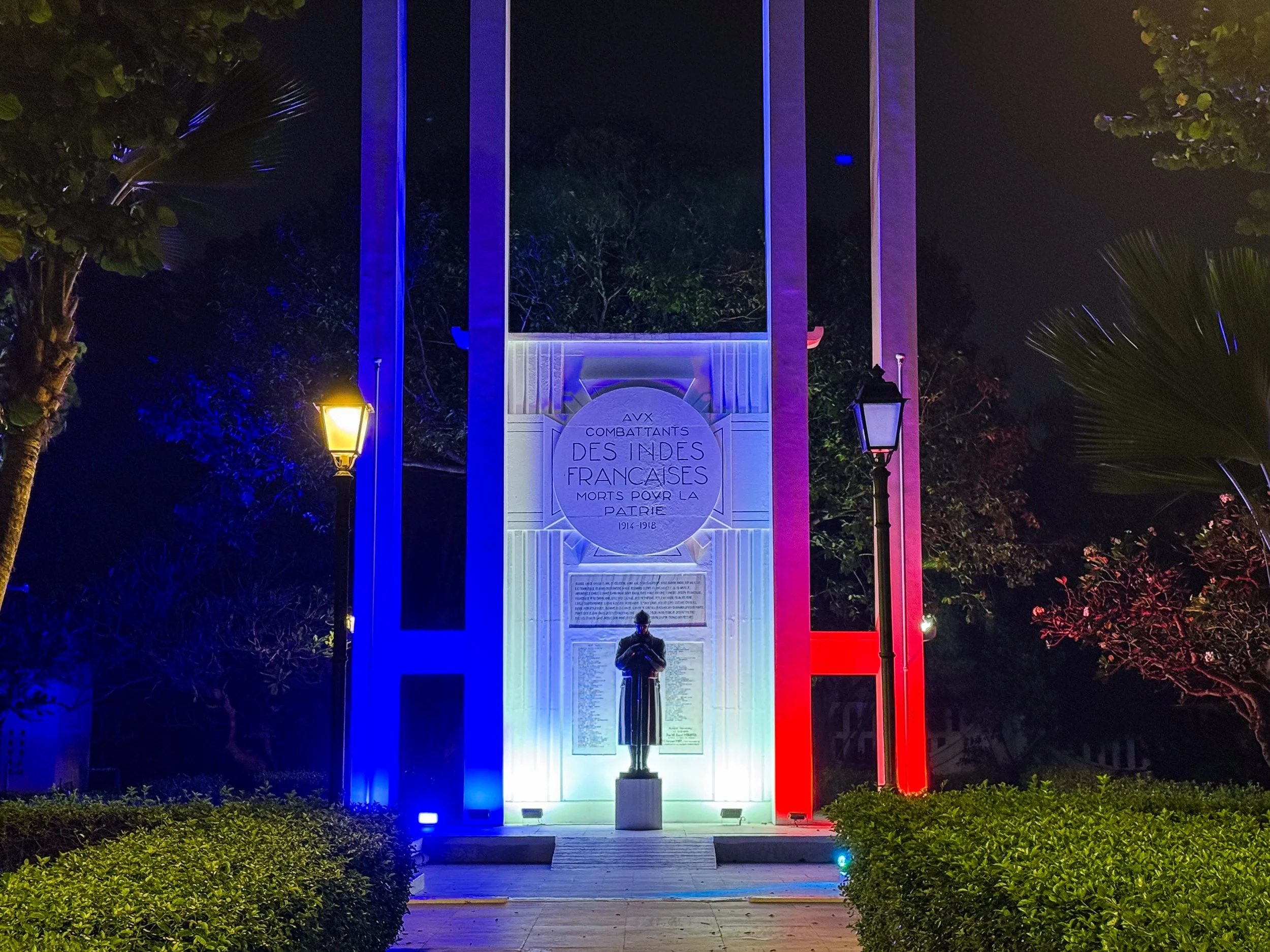
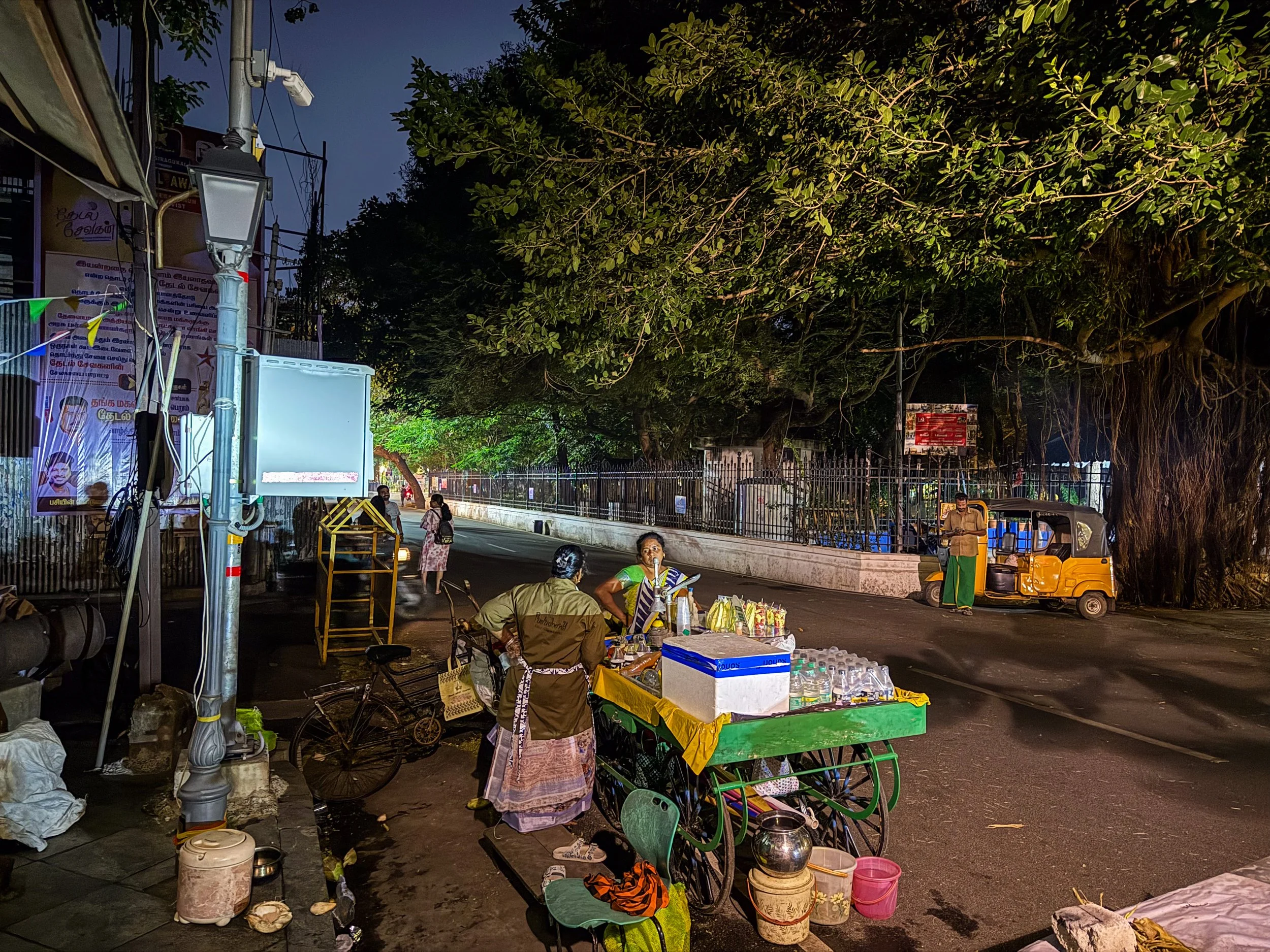
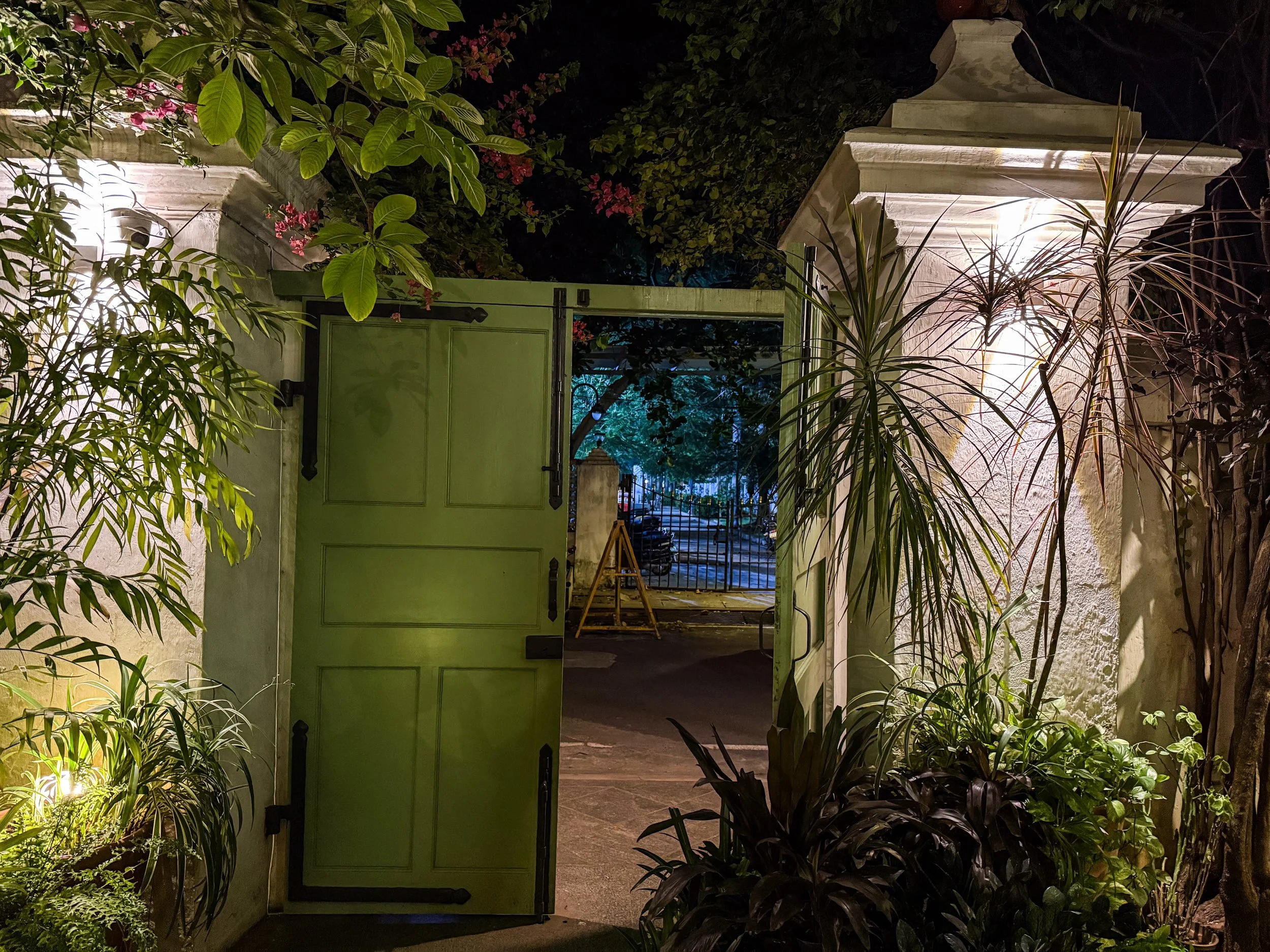
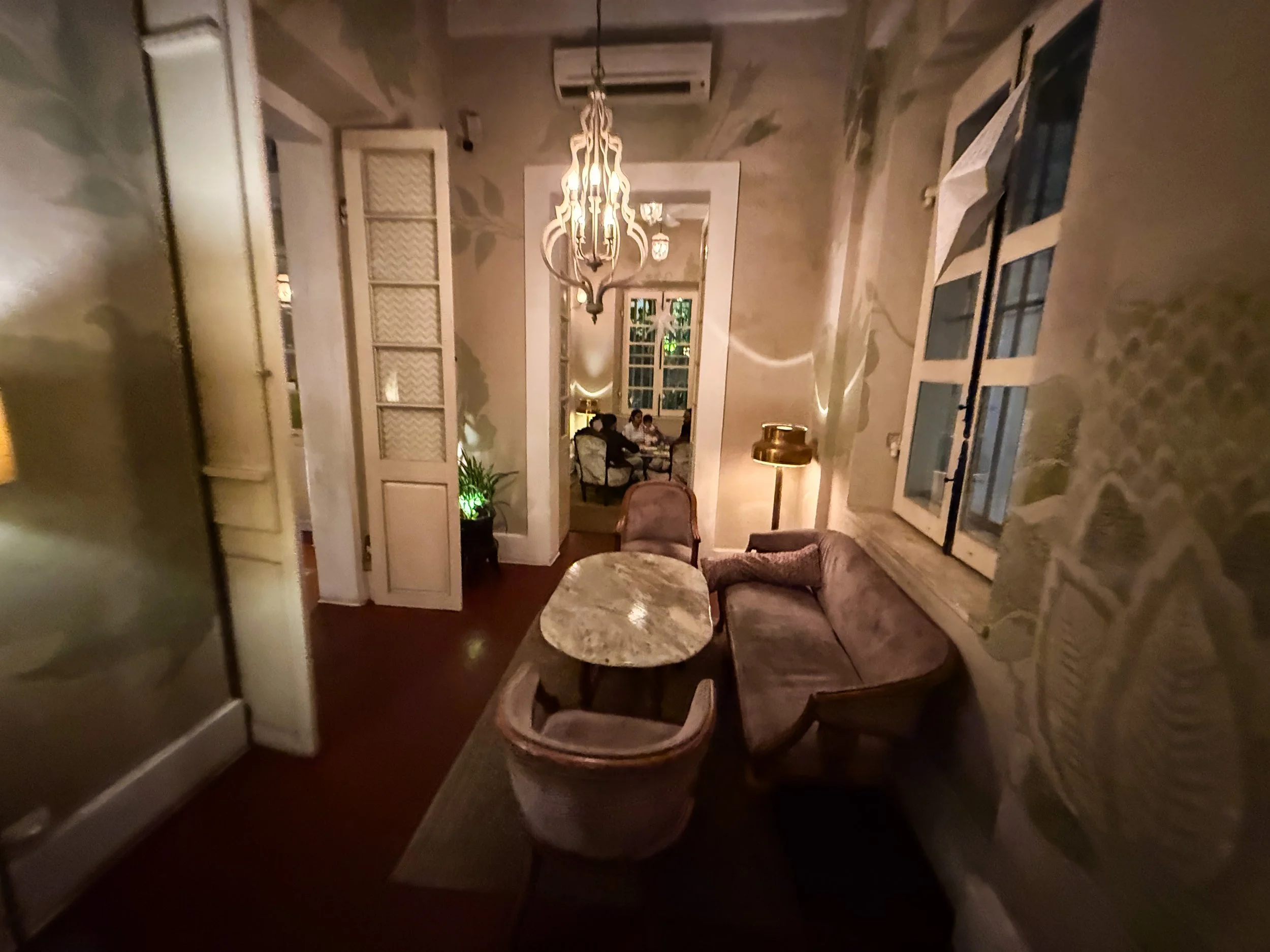
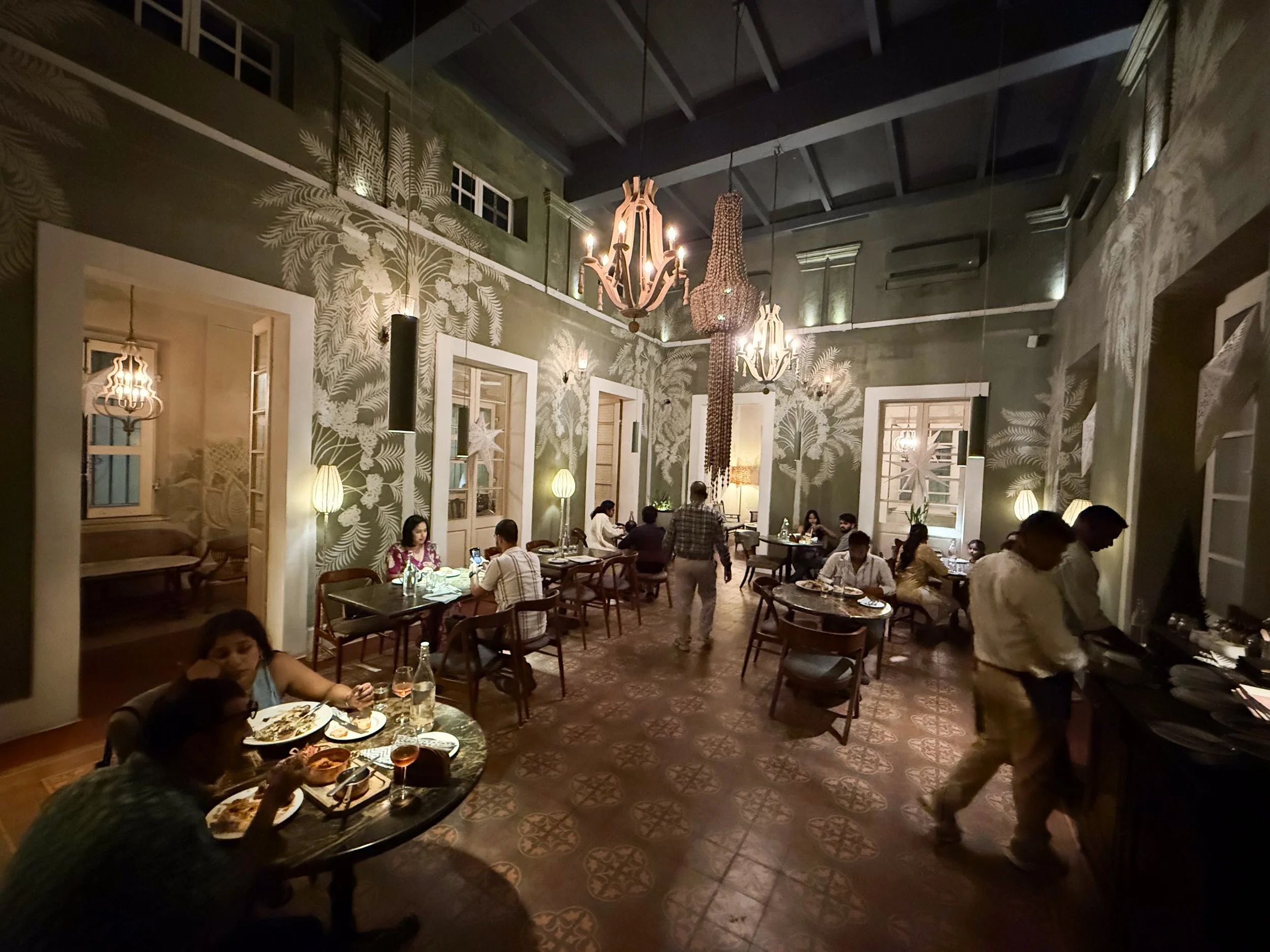
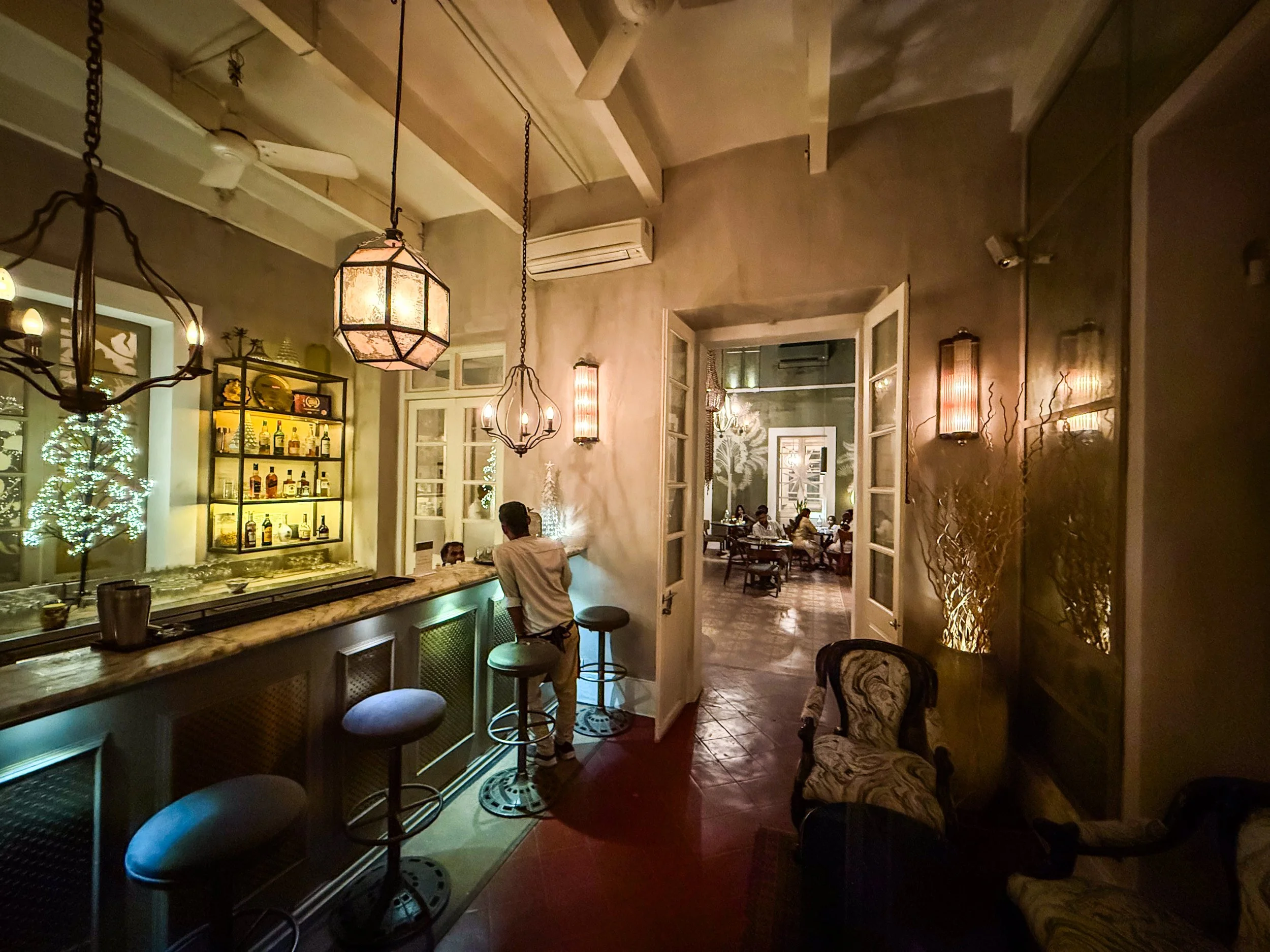
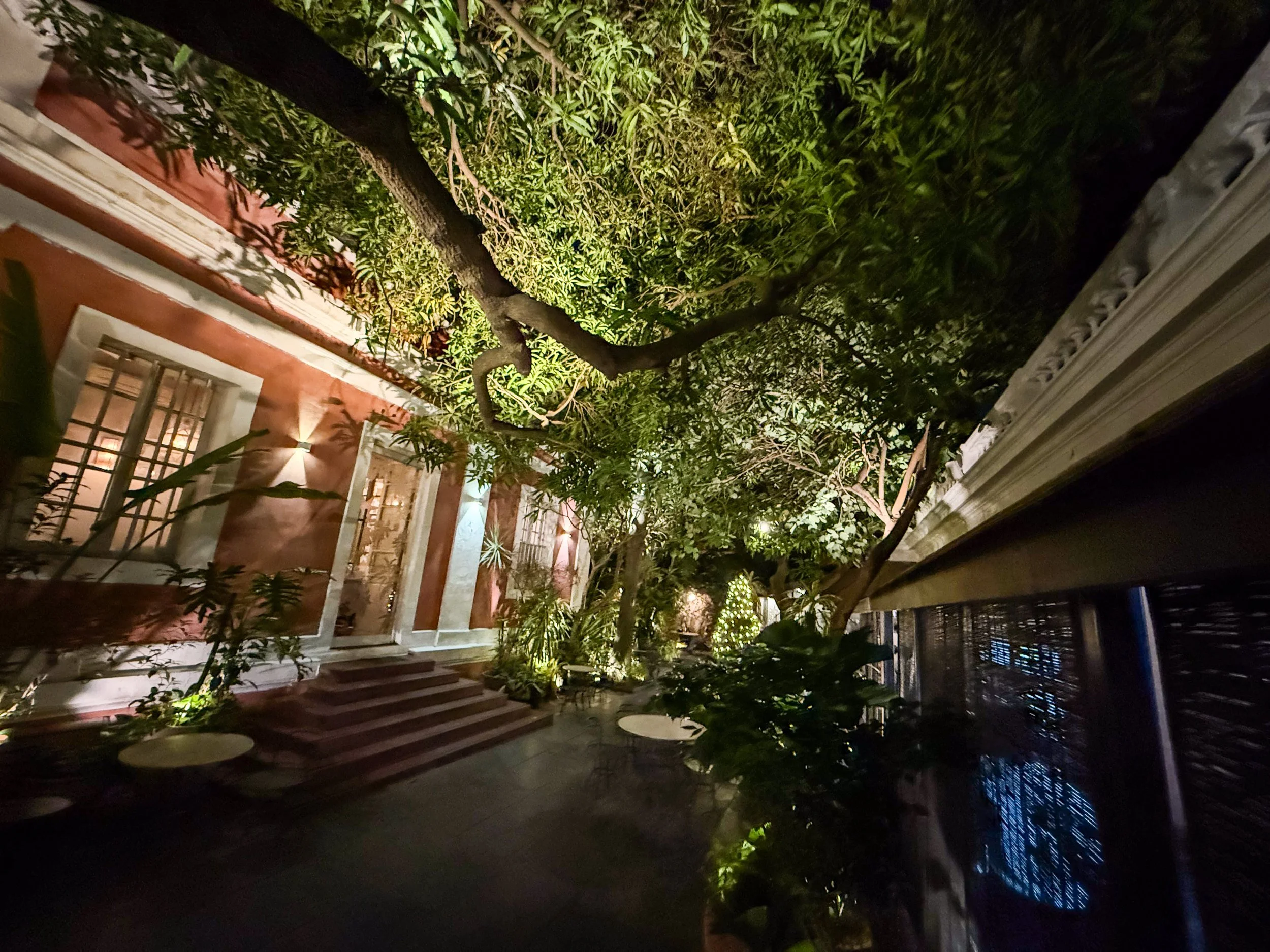
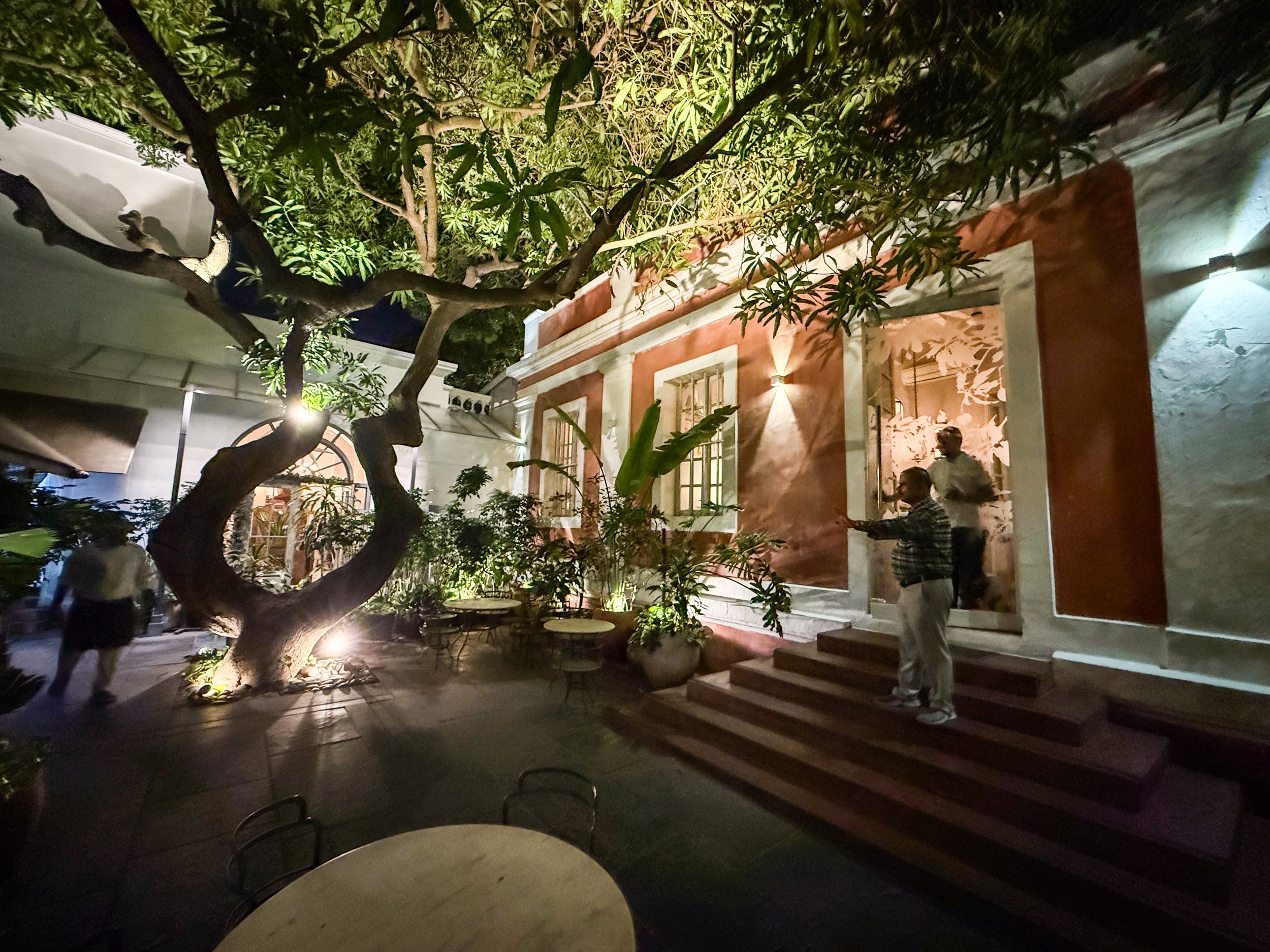
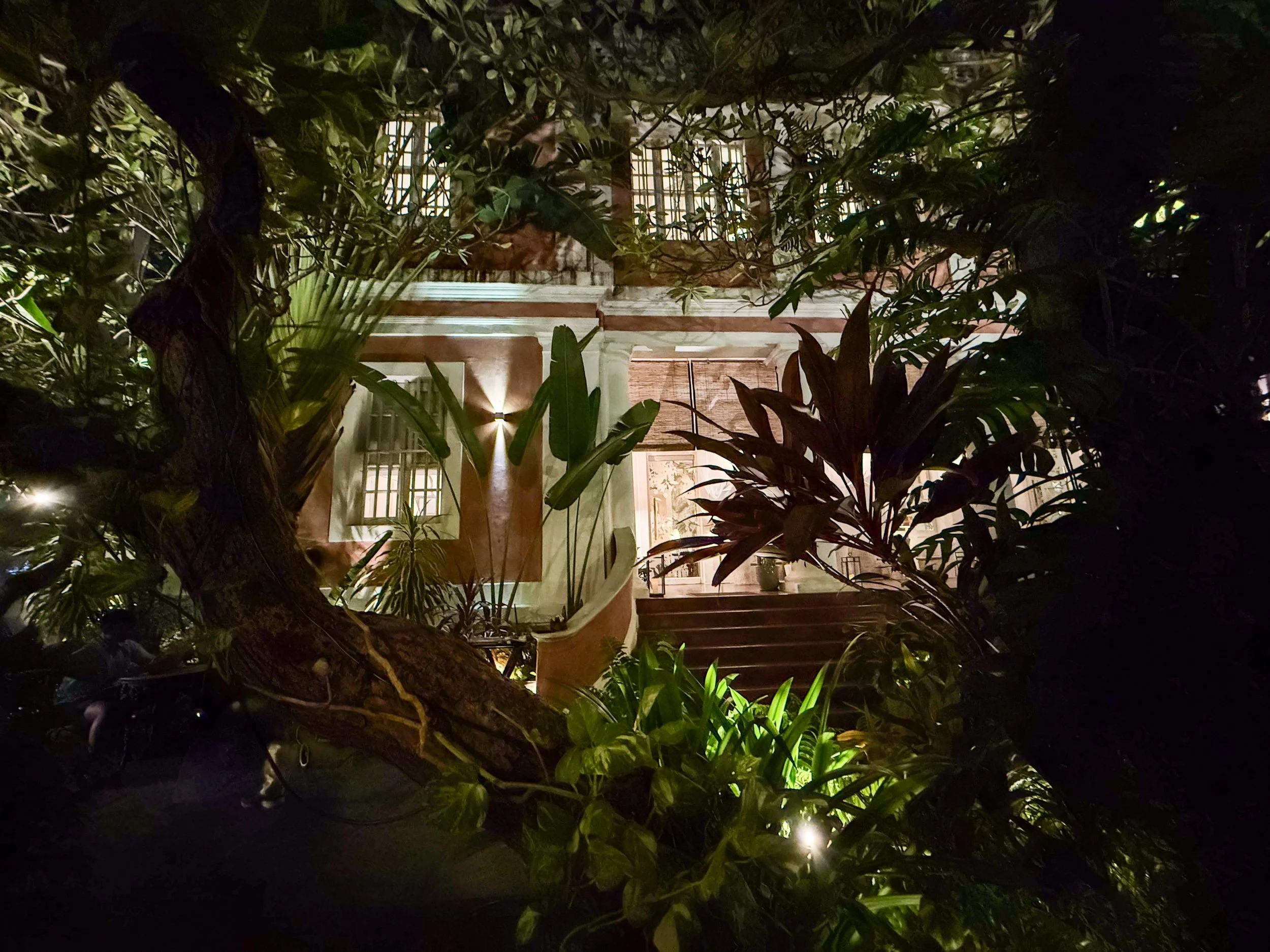
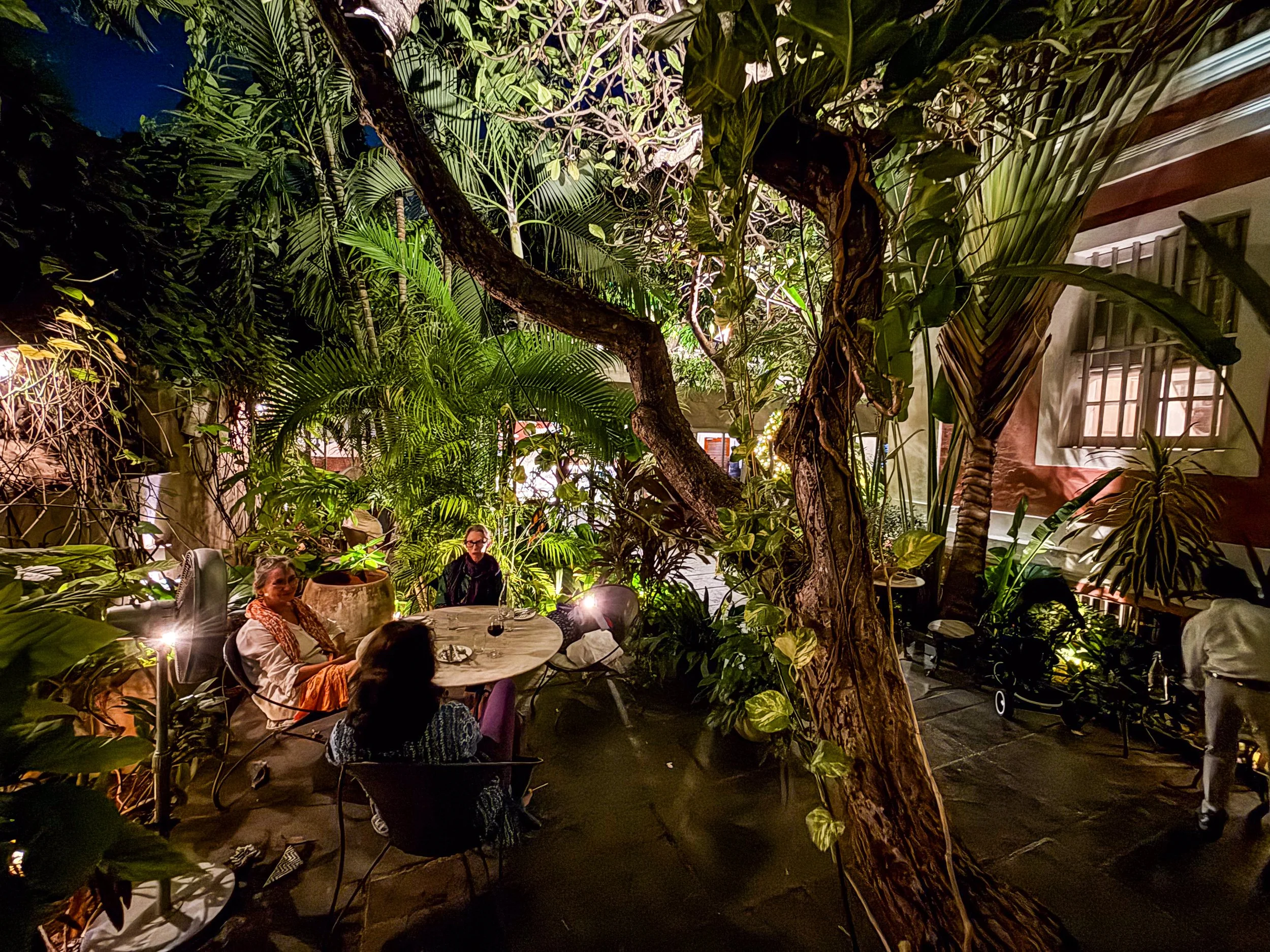
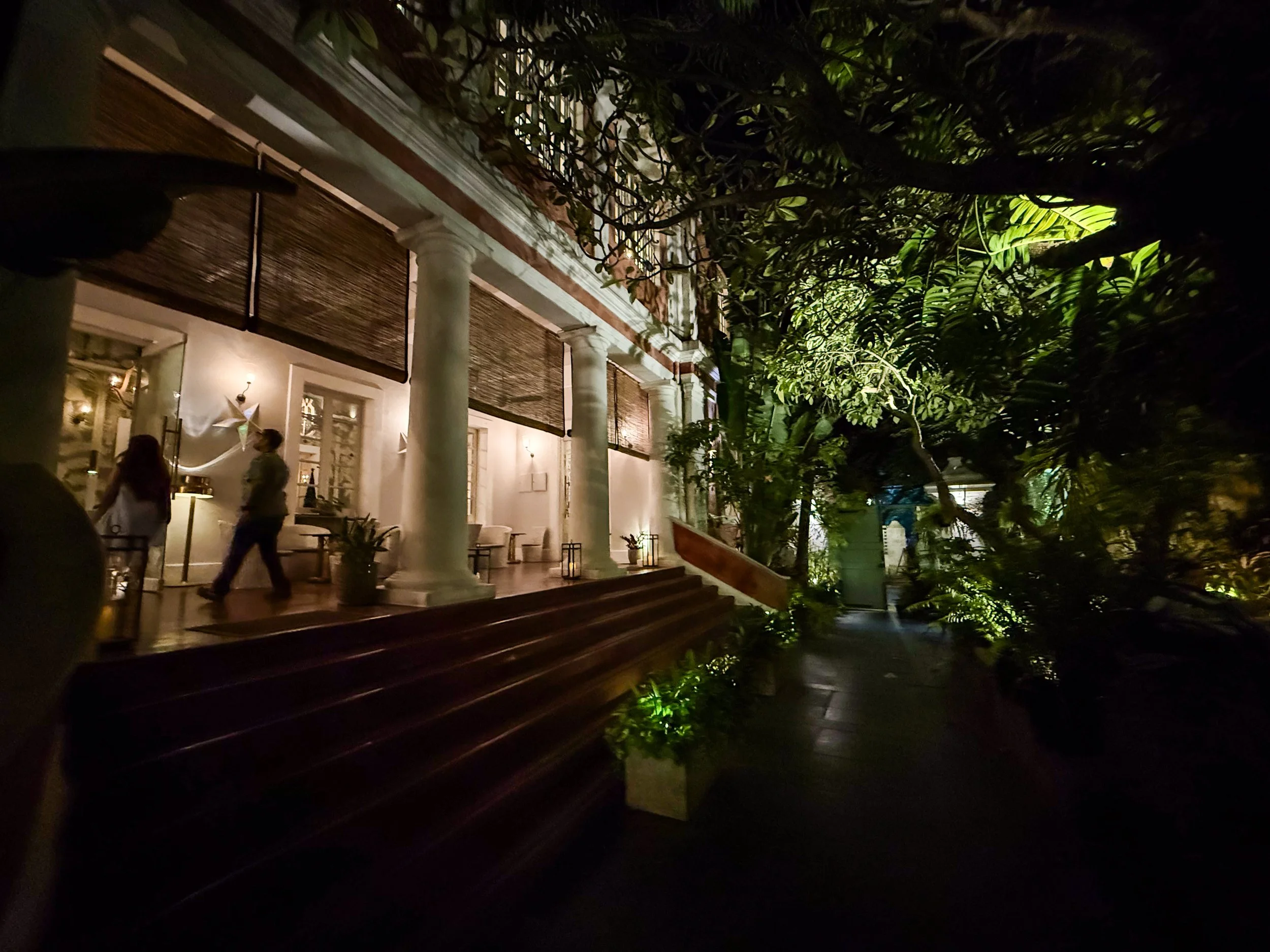
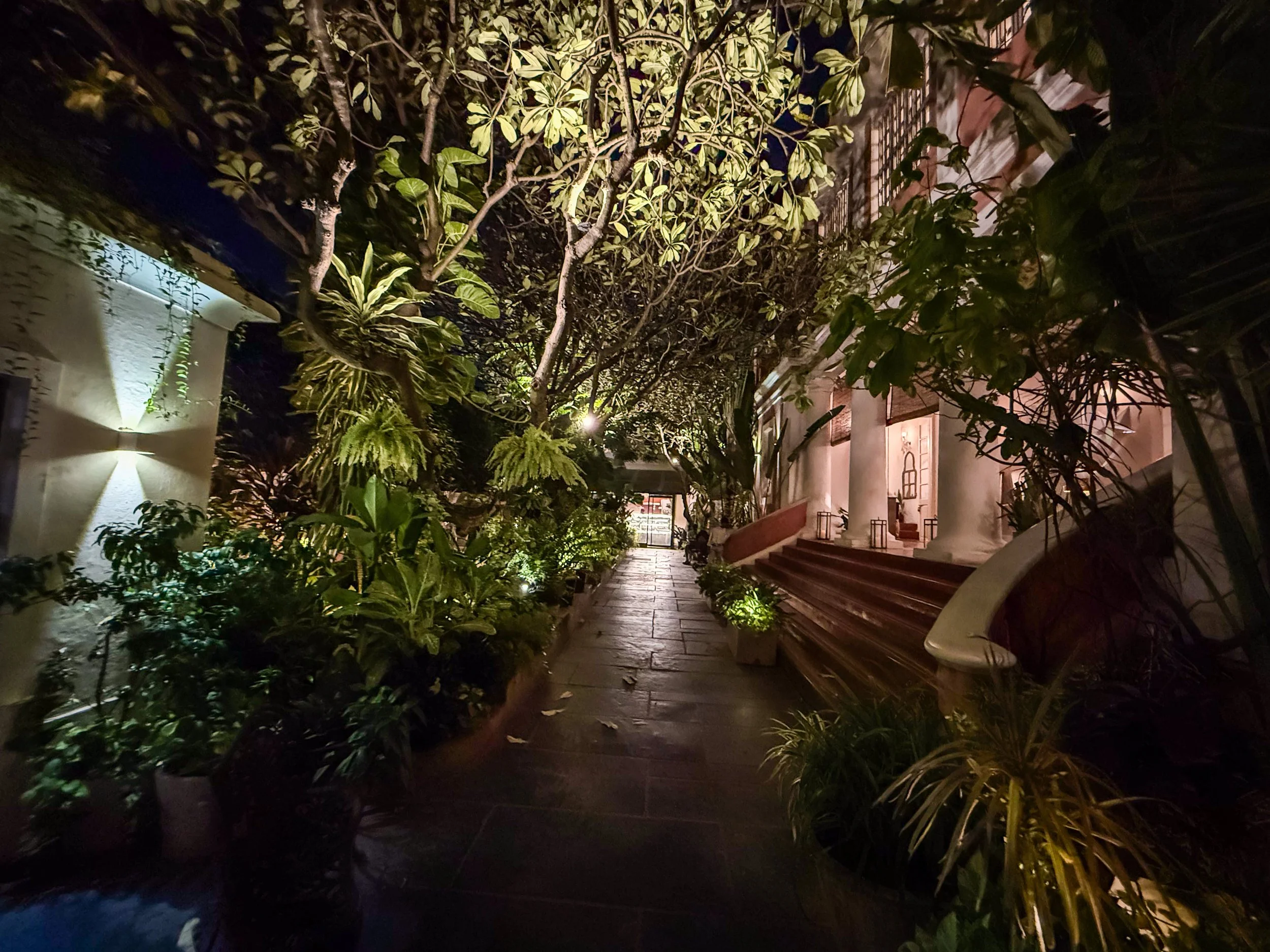
Pondicherry is not a big place; I don’t think I’d be short-changing anybody when I tell you that 1 night is all you need here.
We spent 2 nights, however, and awoke on our final morning to discovered monsoon-level rains moving in. This was around the same time that Cyclone Ditwah was making its brutal landfall in Sri Lanka (just south of us), so we were a bit nervous that this weather system would spread north. I talked about this at length in the previous article on Chennai. We had to fly out of Chennai, so our 3-hour Uber trip back with Ranjith was done through torrential downpour. There were a couple of stops for tea and to use the bathrooms that began and ended with a mad dash through mud, puddles, and rain to shelter. So the peace that I’d felt in Pondicherry came to a frantic and wet end, but I’m still extremely grateful to have been able to see this special little place. ❤️
This series on India ends here! But we’re going to jump straight into another series next, which I think everybody will be very interested in given current geopolitical events…
Up next, we’re visiting the non-Iranian side of the Strait of Hormuz: Oman 🇴🇲
But first, please enjoy this amazing track from the best band you didn’t realize was Indian: Peter Cat Recording Co.




With a metro area population of roughly ~14.5 million people, Chennai is currently the 4th largest city in India, behind only Delhi, Mumbai, and Kolkata. It’s also the capital of the Indian state of Tamil Nadu, which is the formal administrative division corresponding to the Tamil cultural identity. Tamil culture is unique because it is one of the most ancient surviving cultures not only in India, but in the whole world. Its roots can be traced back to ~300 BCE and the Tamil language—one of the world’s oldest living languages—has more than 2,000 years of recorded literature. The Tamil-verse includes multiple different religions (such as Hinduism, Islam, and Christianity), so religion’s typical role as a cultural unifier does not apply here. In its place, the language itself has taken on a unique level of significance.