
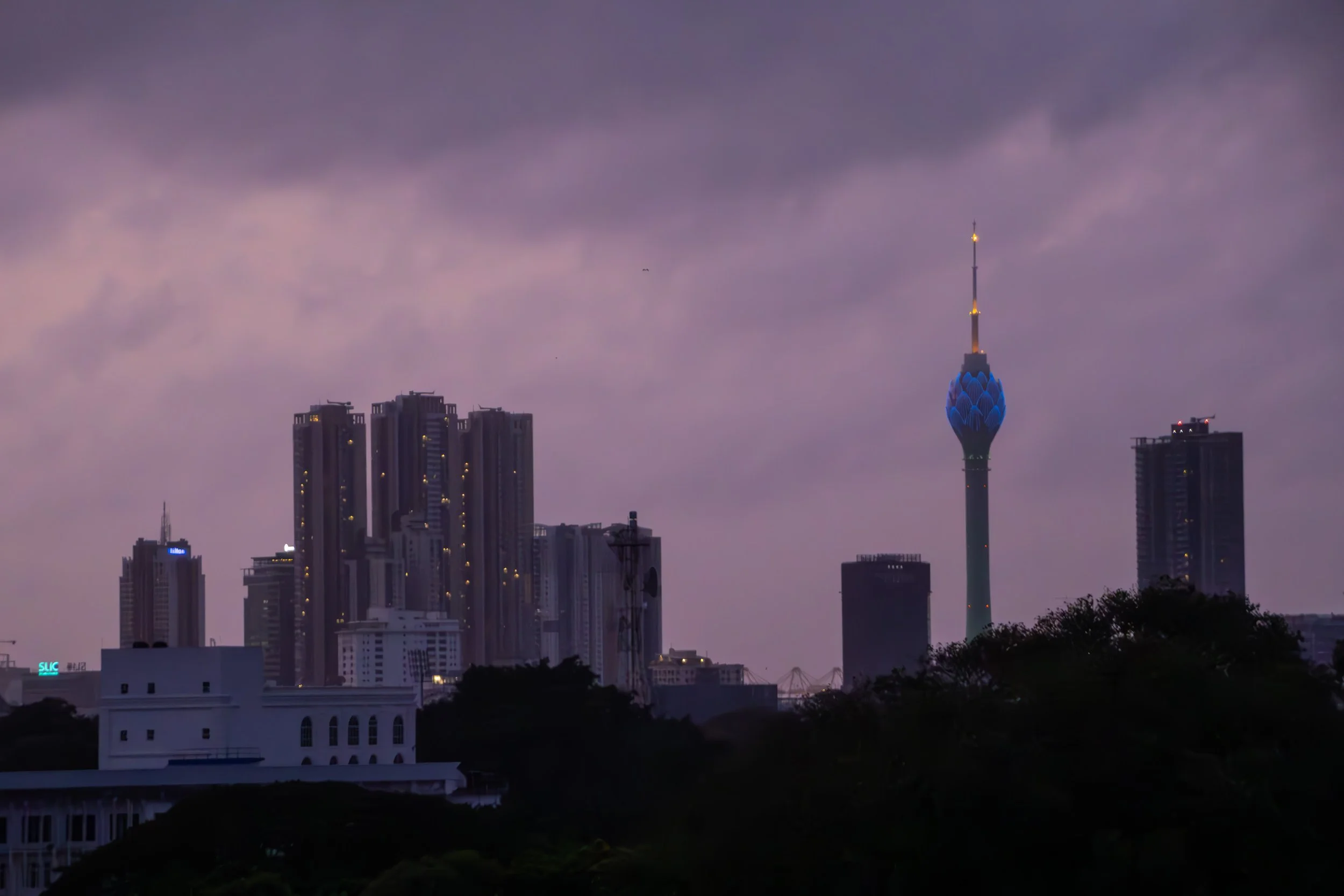
Wooo! It’s time for a new country! Welcome to the start of a long series on Sri Lanka.
Having travelled extensively through South Asia (in India and Bangladesh), I was no stranger to this region, but Sri Lanka would reveal itself to have an identity all its own, quite distinct from its mainland cousins. Honestly, the comparison that I found myself making most often throughout this trip was to Bali, in Indonesia.
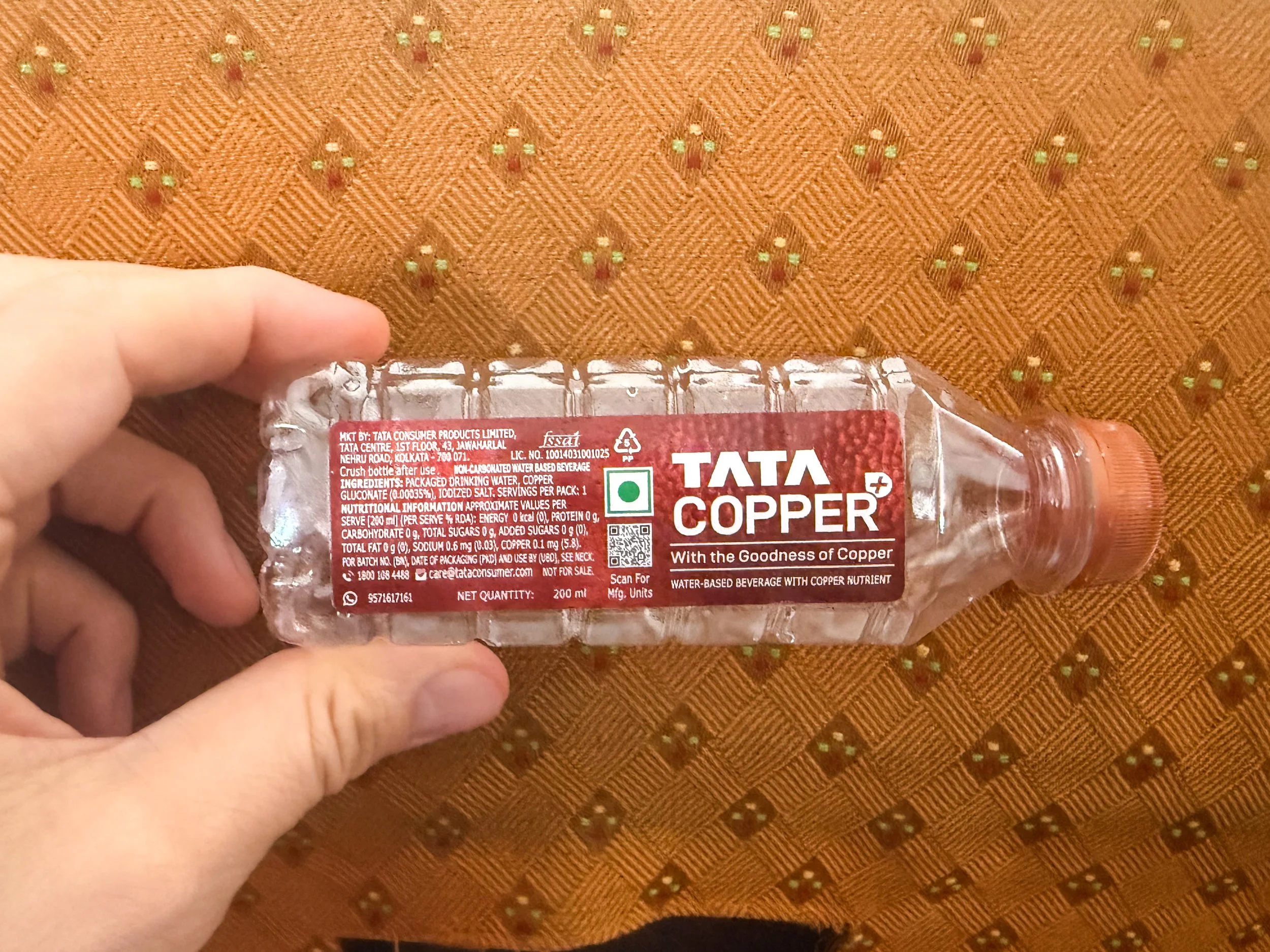
Our flight from Delhi to the Sri Lankan capital of Colombo was longer than you might expect: about 4 hours! This was a powerful reminder of the massive scale of the Indian subcontinent. During this flight, Air India had but one beverage on offer: instead of water, they had “Tata Copper”. Yes, that is Tata, the name of the giant Indian steel & industrials company, next to the name of a metal.
It might look like water, but don’t be fooled! It’s actually a “water-based beverage” with added “copper nutrients”.
I drank it, but I wasn’t happy about it. What smooth-brained, nepo-baby marketing director thought this was a good idea?? Nobody wants metal in their water! And if Tata is looking for ways to ingratiate themselves with the public… I can think of about 1,000 better ways to do that right off the top of my head before forcing airline passengers to drink metal-infused water.
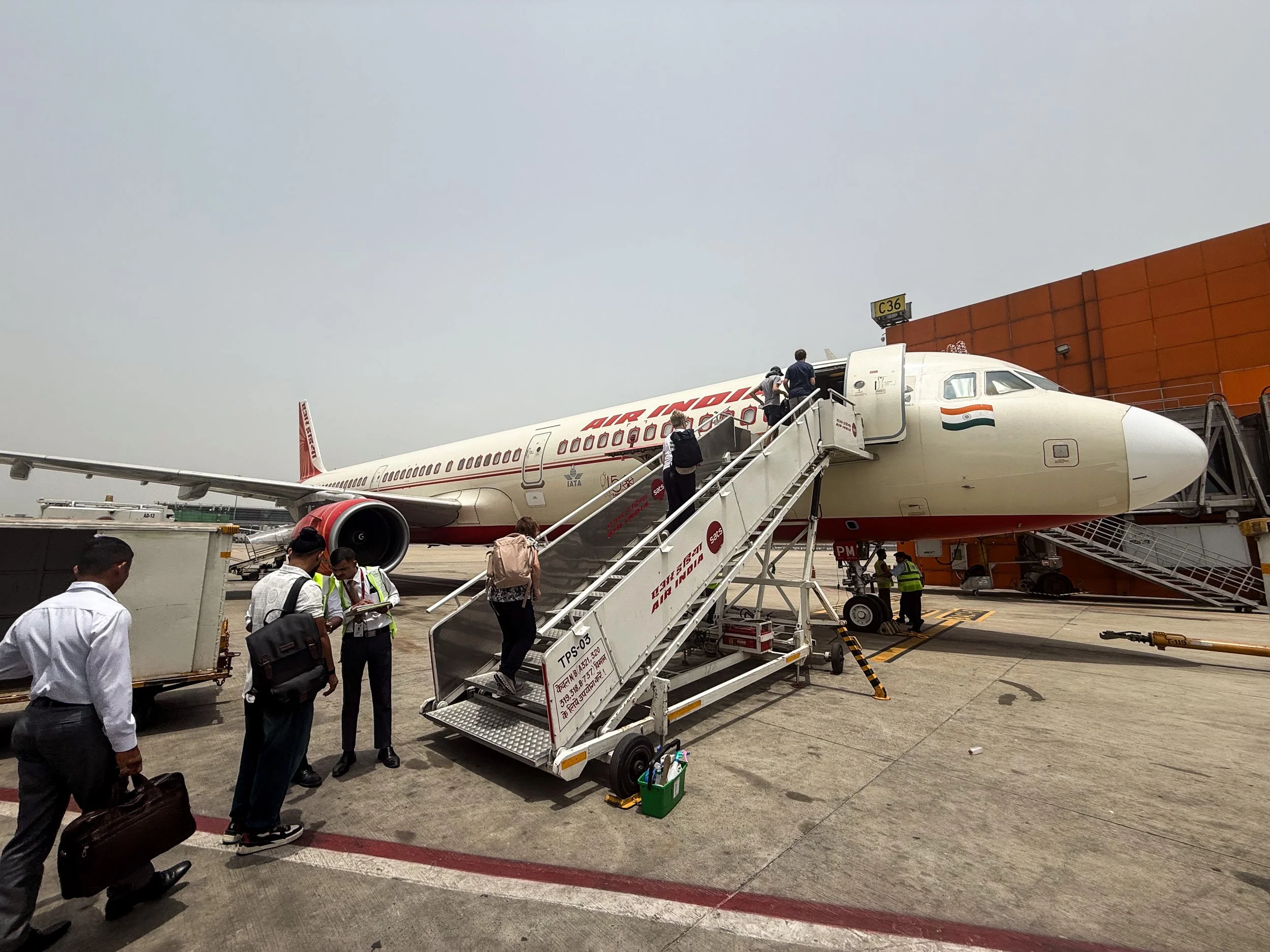
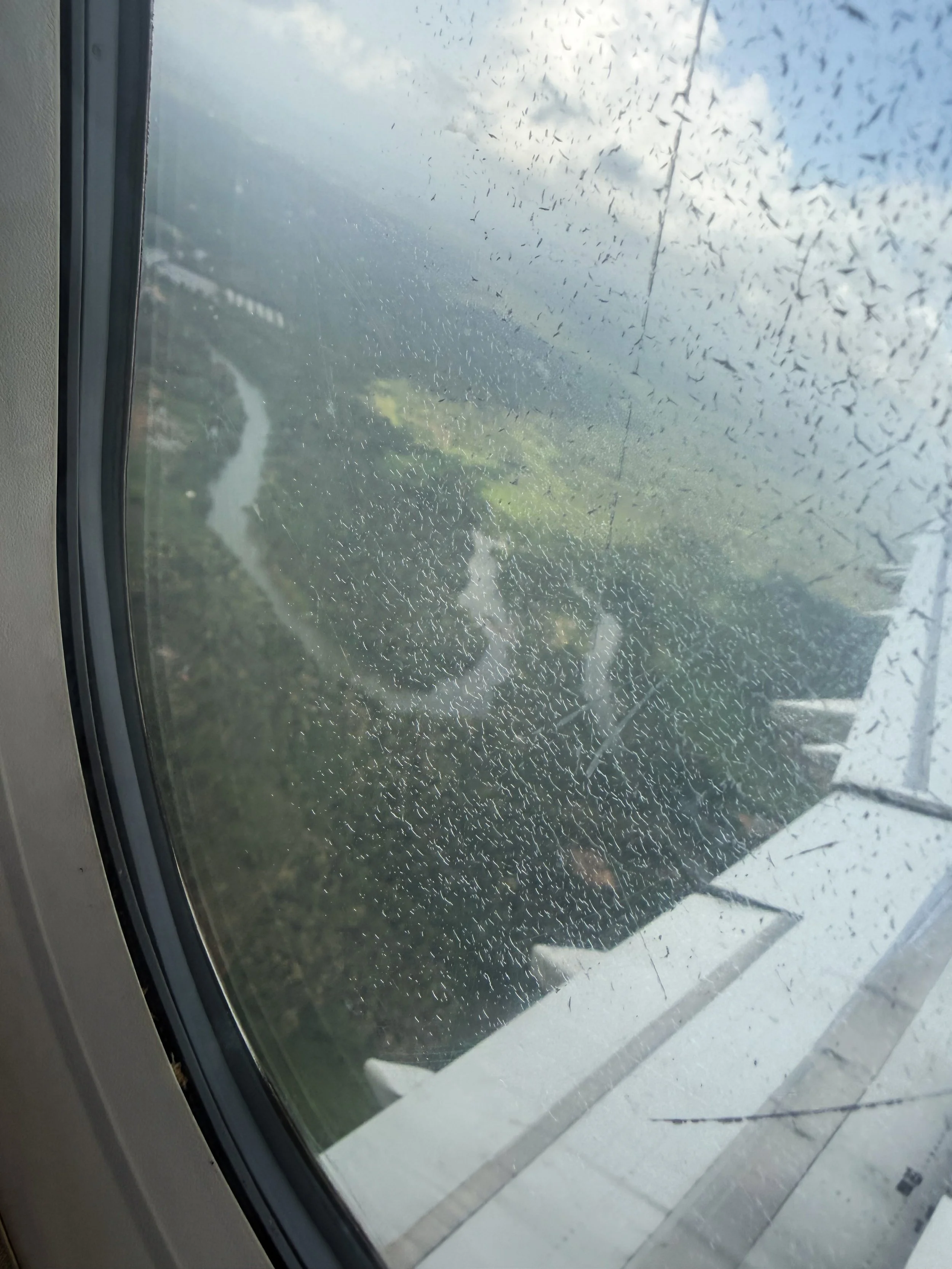
ANYWAY, here are a few snaps from the final leg of this journey. My brother had a connection through Colombo once, and said that he regretted not being able to leave the airport. Apparently, the misty wall of mysterious jungle was calling out to him. I hoped I would feel that same pull when I arrived…
A Brief Introduction to Sri Lanka
Whilst we are flying southward toward the tip of India, sipping from bottles of Tata Copper 🙄 let’s do an introduction to Sri Lanka, eh?
I found Sri Lanka to be one of the most fascinating and compelling places I’ve ever been. It’s a relatively small island, but it’s really action-packed! You can get from the modern high-rise financial district of Colombo to ancient temples, misty tea plantations, tropical rainforests, pristine beaches, and/or world-class wildlife safaris in a matter of just hours. We’re going to do every single one of those things on this trip, but first let’s set the scene.
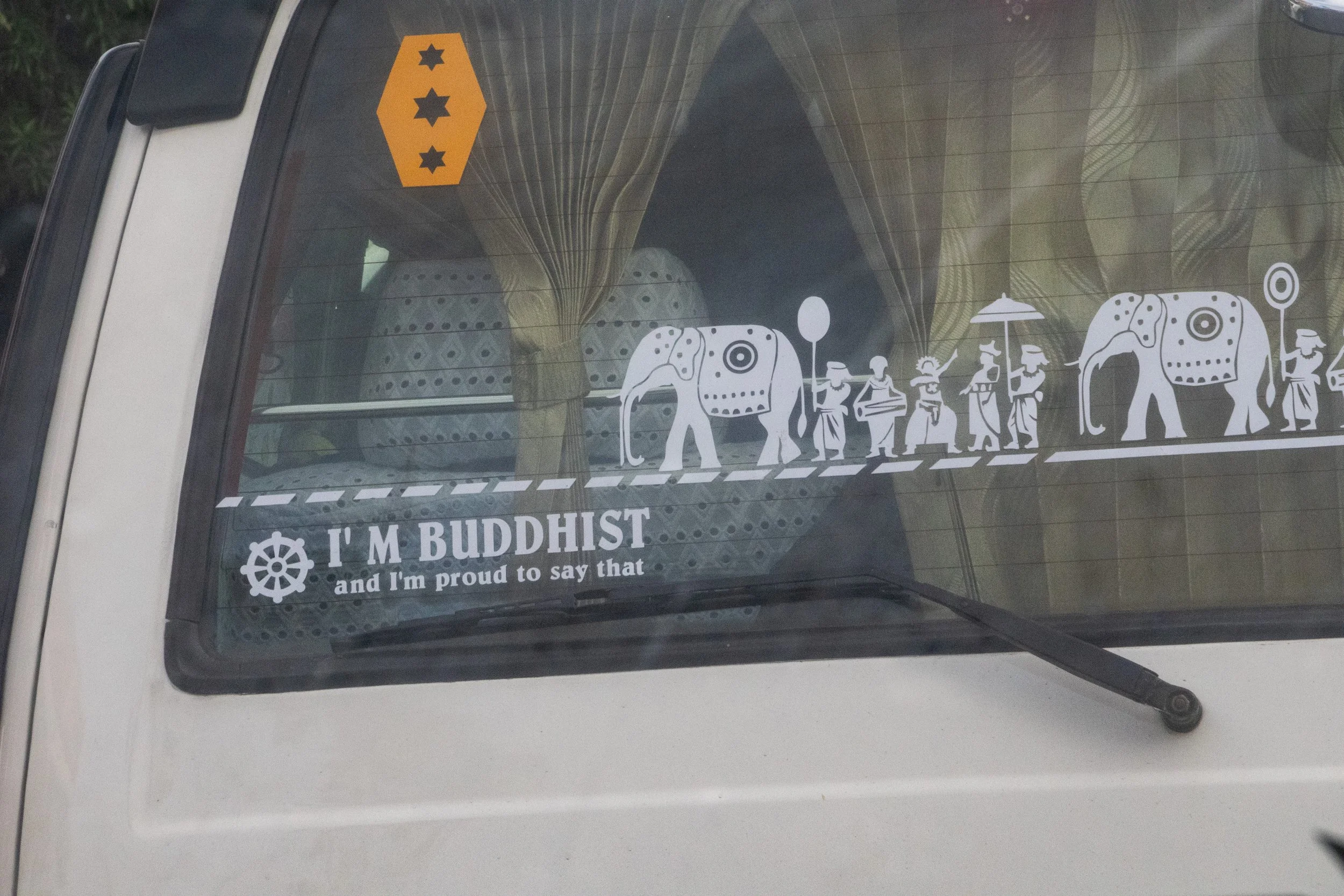
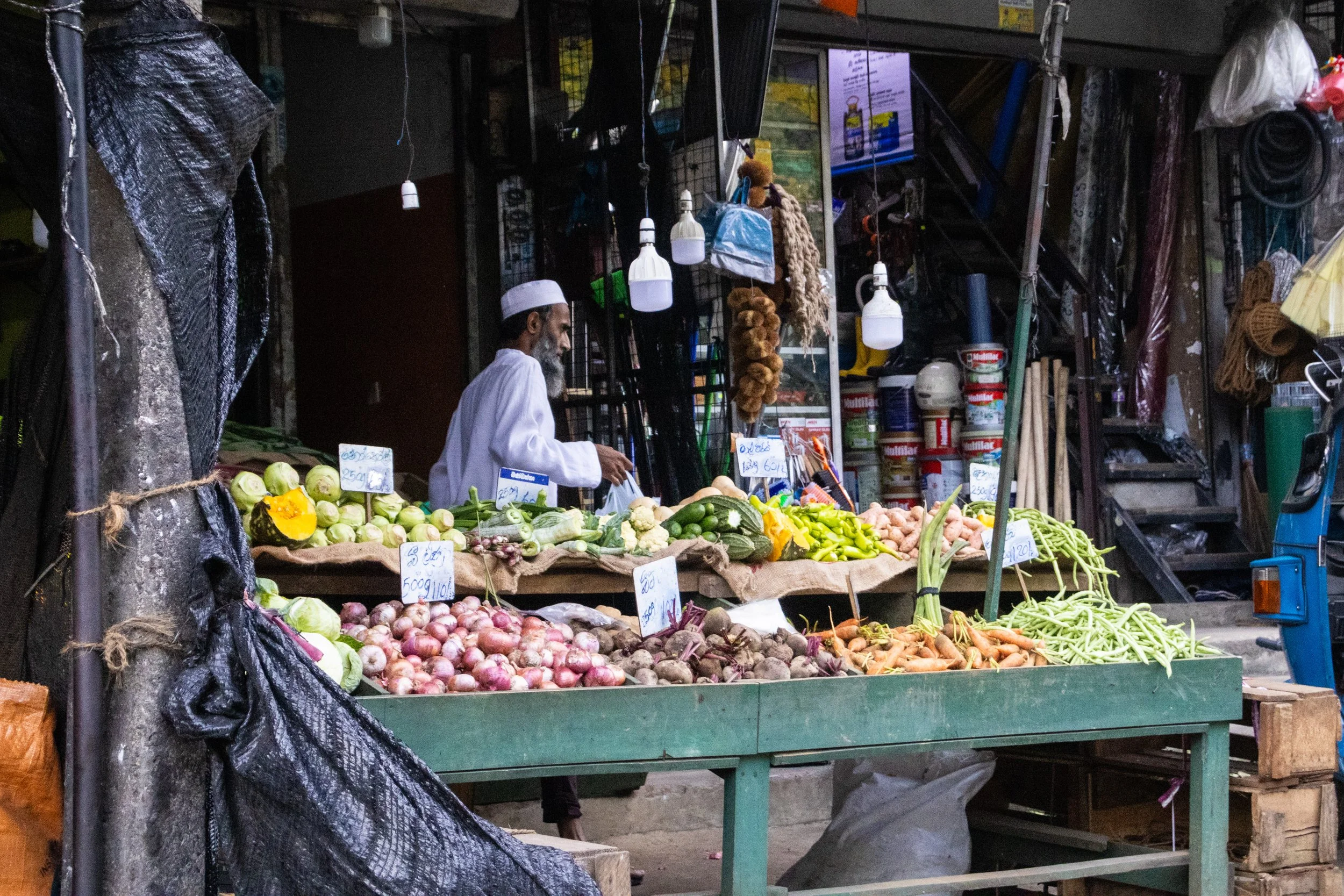
Unlike its mainland neighbors to the north, Sri Lanka is a majority-Buddhist nation. Indeed, about ~70% of Sri Lankans identify as Buddhist, followed by ~12.5% Hindu, 10.5% Muslim (or “the Moors”), and ~7% Christian. Ethnically and linguistically, Sri Lanka is also quite diverse. The majority (~75%) are ethnically Sinhalese and speak the Sinhala language. This portion of the population is mostly Buddhist, but that’s not a hard-and-fast rule. The remainder of the population speaks the Tamil language, and—in terms of cultural communities—is about ~15% Hindu / ~10% Muslim. And each of these communities is quite visible within Sri Lanka!
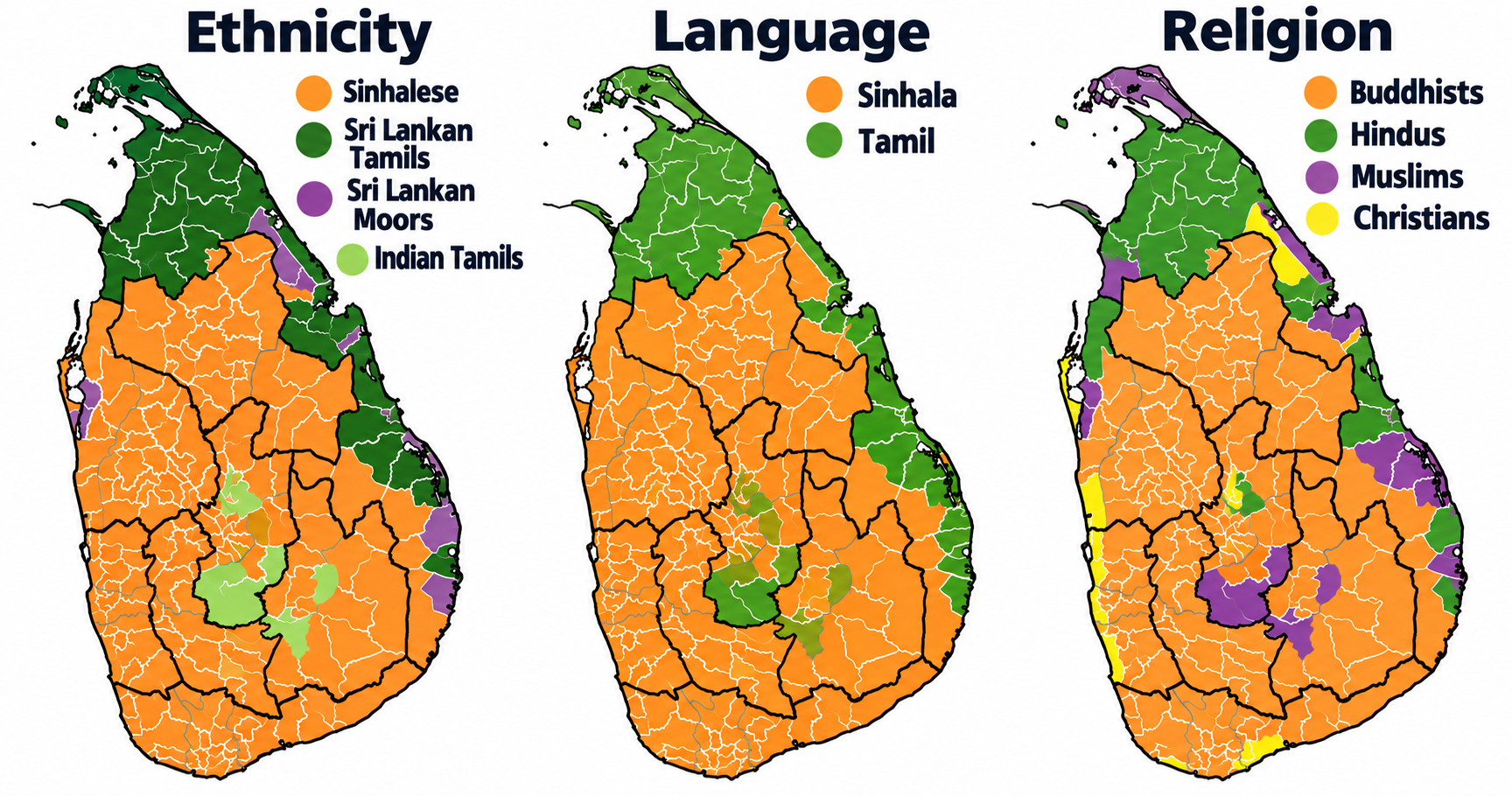
If you’re a regular reader, you may remember that we visited the Tamil “mothership” in the southern part of mainland India not so long ago, with articles on Chennai and Pondicherry. Although we’re in a new country, this is the same universe. Indeed, Sri Lanka is (almost) attached to Tamil Nadu by a chain of ocean shoals and sandbanks called Rama Setu, or—to use its western name—Adam’s Bridge. So there has never been a point where these two worlds were unaware of each other. And, indeed, the northern and northeastern stretches of the island are the Tamil/Hindu/Muslim stronghold (making it feel more like India) whilst the southern stretches of the island are heavily Sinhalese/Buddhist (which makes it feel more like Southeast Asia).
Of course, wherever there are cultural or religious differences, there is bound to be some conflict. And the Sinhalese/Tamil divide in Sri Lanka is, unfortunately, no exception. Sri Lanka had an absolutely awful civil war that lasted from 1983 to 2009. At 26 years long, this was one of the longest and most destructive conflicts in modern Asian history. The dry powder for this conflict was that the Tamil minority was increasingly being marginalized by the Sinhalese majority. In 1983, when Tamil militants (known as the Tamil Tigers) killed 13 Sri Lankan soldiers, anti-Tamil riots ensued, with Sinhalese mobs killing untold thousands of innocent Tamils. This is where the conflict began.
Who were the Tamil Tigers? Their full name was the Liberation Tigers of Tamil Eelam, or LTTE. But colloquially, they were the Tamil Tigers, so that’s what I’ll be calling them throughout this series where they come up. The Tamil Tigers were a separatist insurgent movement within Sri Lanka that was extraordinarily organized and ruthless, eventually developing not only conventional military forces, but also naval units, intelligence operations, and even limited air capabilities. It controlled substantial territory and operated an elaborate diaspora fundraising network. The Tamil Tigers also used extensive suicide bombing tactics, recruited child soldiers, and performed multiple assassinations, including against a sitting Sri Lankan president and ex-Indian prime minister. They even bombed the Sri Lankan central bank and international airport in Colombo. NOT GREAT. But the Sri Lankan security forces committed more than their fair share of atrocities as well, including disappearances, torture, extrajudicial killings, and attacks on civilians. TL;DR – it was messy and there was no clear-cut “good guy”. It came to a bloody end in 2009 when the Tamil Tigers were defeated. Perhaps I’ll write more about this if I travel to the northerly Tamil city of Jaffna one day. But that will be for another trip.
Since 2009, things have been relatively chill in Sri Lanka! There was an ISIS-linked bombing campaign 2019 that killed 250 people (including tourists), but that was an anomaly. Sri Lanka has been driving down a bumpy road from an economic perspective, having defaulted on its external debts and entered an IMF-supported fiscal reform program in 2022, but this is not something that tourists need to think much about. There was never a moment in my travels around this beautiful island where I ever felt unsafe, or that any lingering ethnic tension became apparent to me.
As a tourist, especially one from the West, I think the most impactful geopolitical issue to learn about in Sri Lanka is the legacy of colonialism that persists still to this day. Indeed, Sri Lanka was colonized first by the Portuguese, then by the Dutch, and finally (and most notably) by the British. Interestingly, its colonial administration was completely separate from the mainland British Raj (now India, Bangladesh, and Pakistan), which should serve to underline just how distinct Sri Lanka is from its neighbors. But, during British rule (which ended in 1948), Sri Lanka was known by another name: Ceylon. It was renamed to Sri Lanka in a post-independence rejection of all things colonial, similar to how Burma became Myanmar, or how the Indian city of Madras became Chennai.
Anyway, this is just the introduction; later in this series, I promise we’ll go deeper on all of this and get into pre-Colonial history as well! It’s going to be a fascinating ride, full of some of the coolest pictures I’ve ever taken in my life.
Landing in Colombo
Sitting on the middle-west coast of Sri Lanka, Colombo is not just the capital city; it runs this island. It dominates both economically and politically, with almost half of Sri Lanka’s GDP attributable to the Colombo metro area. And the metro area is huge. Colombo has sprawled to such an extent that it has now sort of absorbed the other cities around it, such as Negombo, Gampaha, and Kalutara. The Colombo airport is actually in Negombo, so we even stayed there one night, and I can confirm that there is absolutely no “daylight” between the two. It’s all one beast! My fellow Americans: think ‘Minneapolis/Saint Paul’ or ‘SF/San Jose’.
To zoom in on economics, Colombo not only boasts one of the most important shipping ports in the region, but also plays host to headquarters of major banks, publicly-listed companies, and government institutions. There’s even a Colombo Stock Exchange!
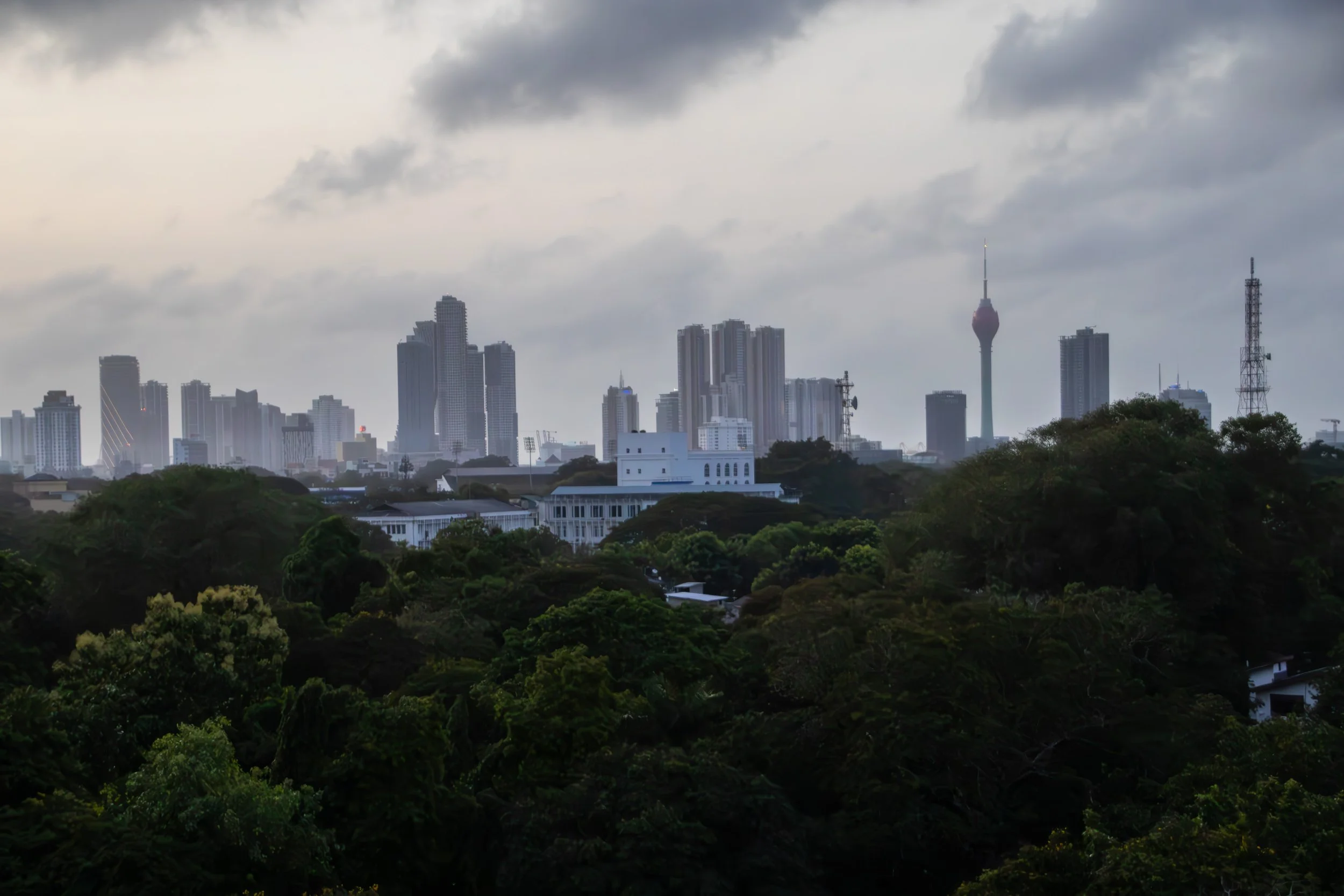
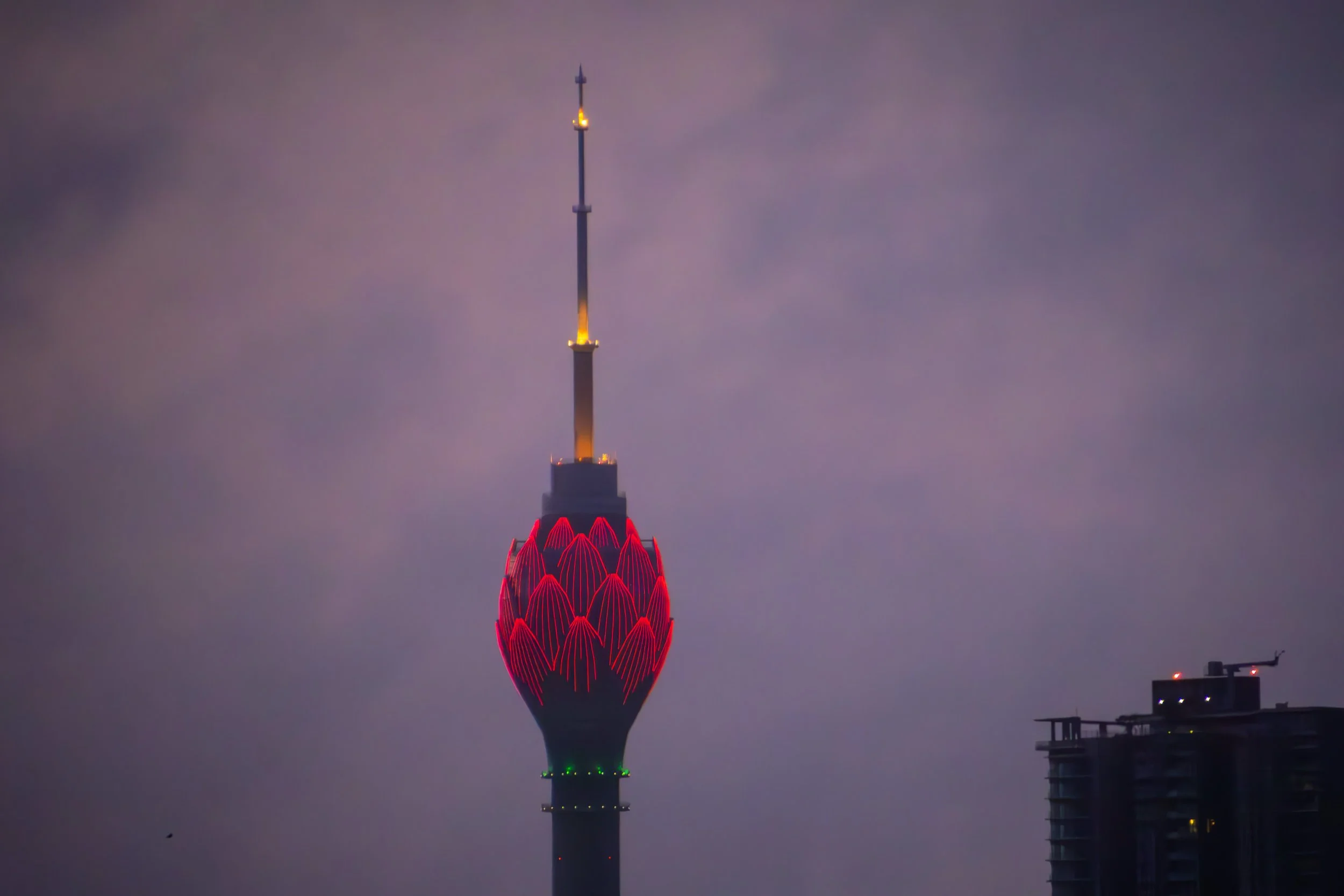
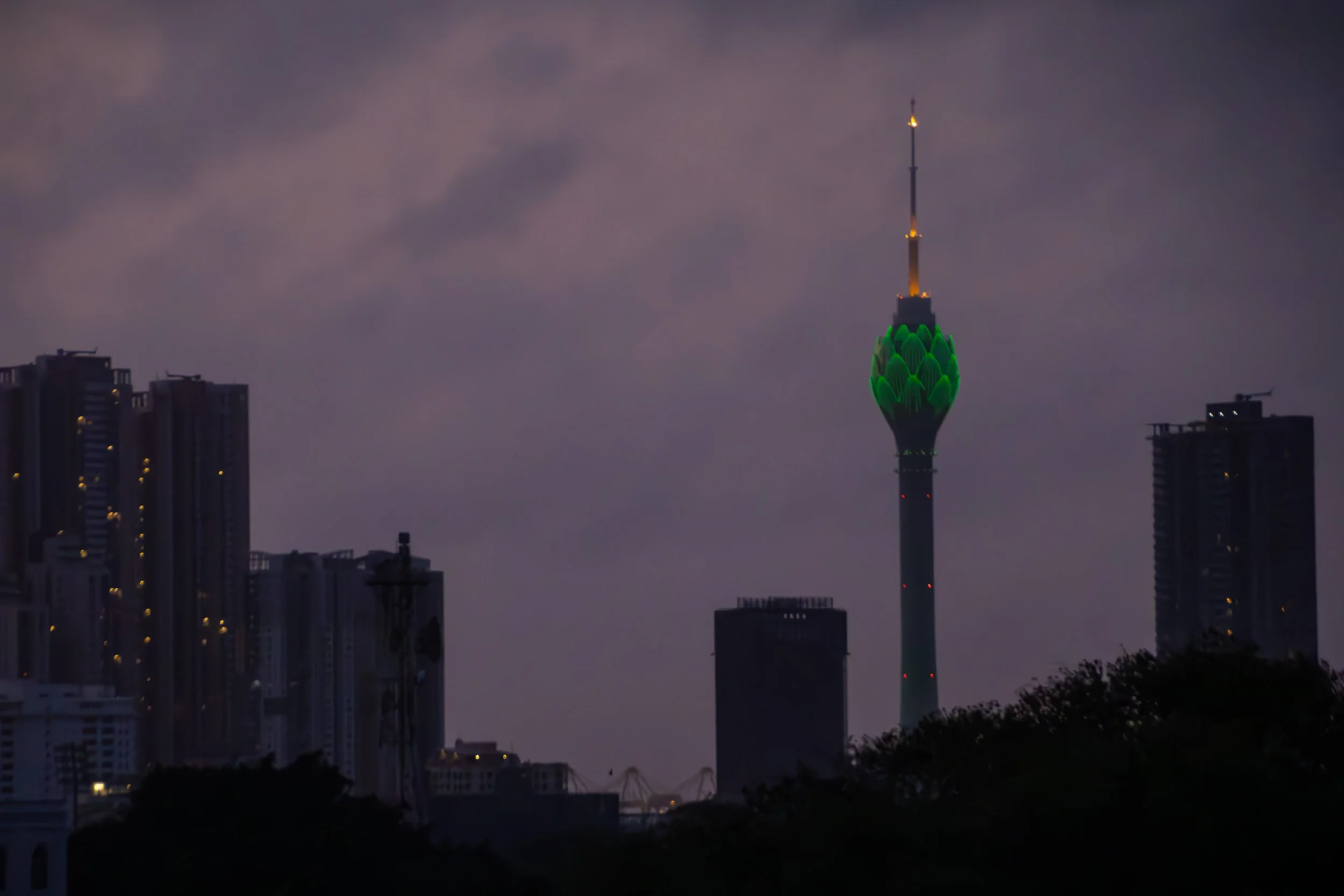
Perhaps the most recognizable structure in Colombo is the Lotus Tower, which—having only been opened in 2022—is quite a recent addition! At 350 meters (~1,148 feet) tall, this is one of the tallest free-standing towers in Asia, and definitely one of the most recognizable. Borrowing from Buddhist imagery, it’s designed to look like a lotus blossom. However, this project was not without some controversy. Although construction on it began all the way back in 2012, the timing of its opening was a bit unfortunate, as 2022 was the same year that Sri Lanka’s economy basically hit rock bottom with Sri Lanka defaulting on its debts and entering the aforementioned IMF-supported fiscal reform program. Even though the tower had actually been constructed largely through foreign direct investment from China, the Sri Lankan public was, understandably, a bit incredulous that its government had managed to get this tower done, while simultaneously failing to meet its actual obligations. The role that Chinese lending played in this project was also controversial. But, despite all of this, it’s done and it’s spectacular!
Having seen many pictures of it prior to my arrival, I was, frankly, not expecting to be as impressed by it as I was. Driving south from the airport in Negombo, its appearance on the horizon was an surprisingly exciting announcement of our arrival in Colombo. And later, from the roof of our hotel, seeing it light up at sunset was actually extremely cool!
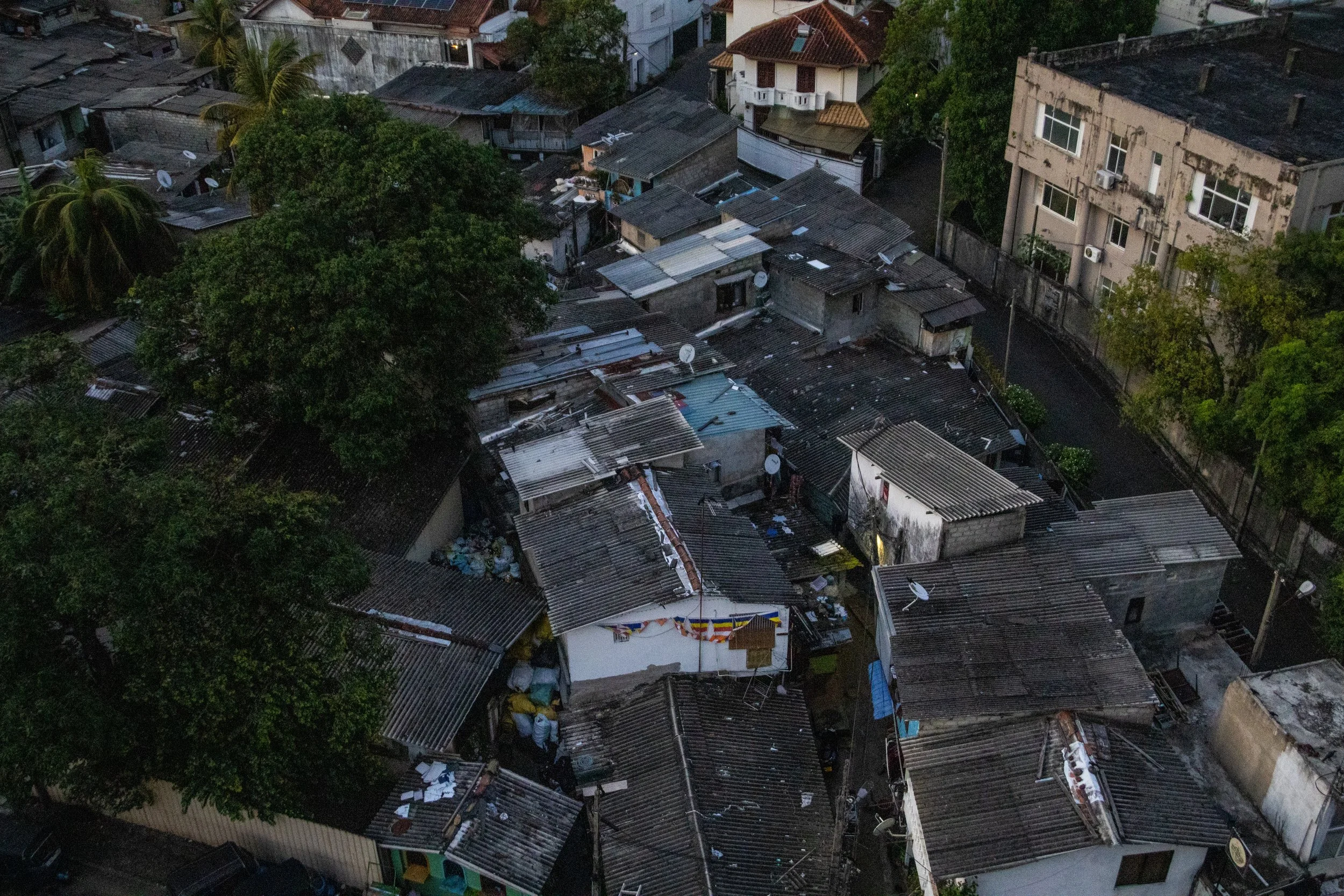
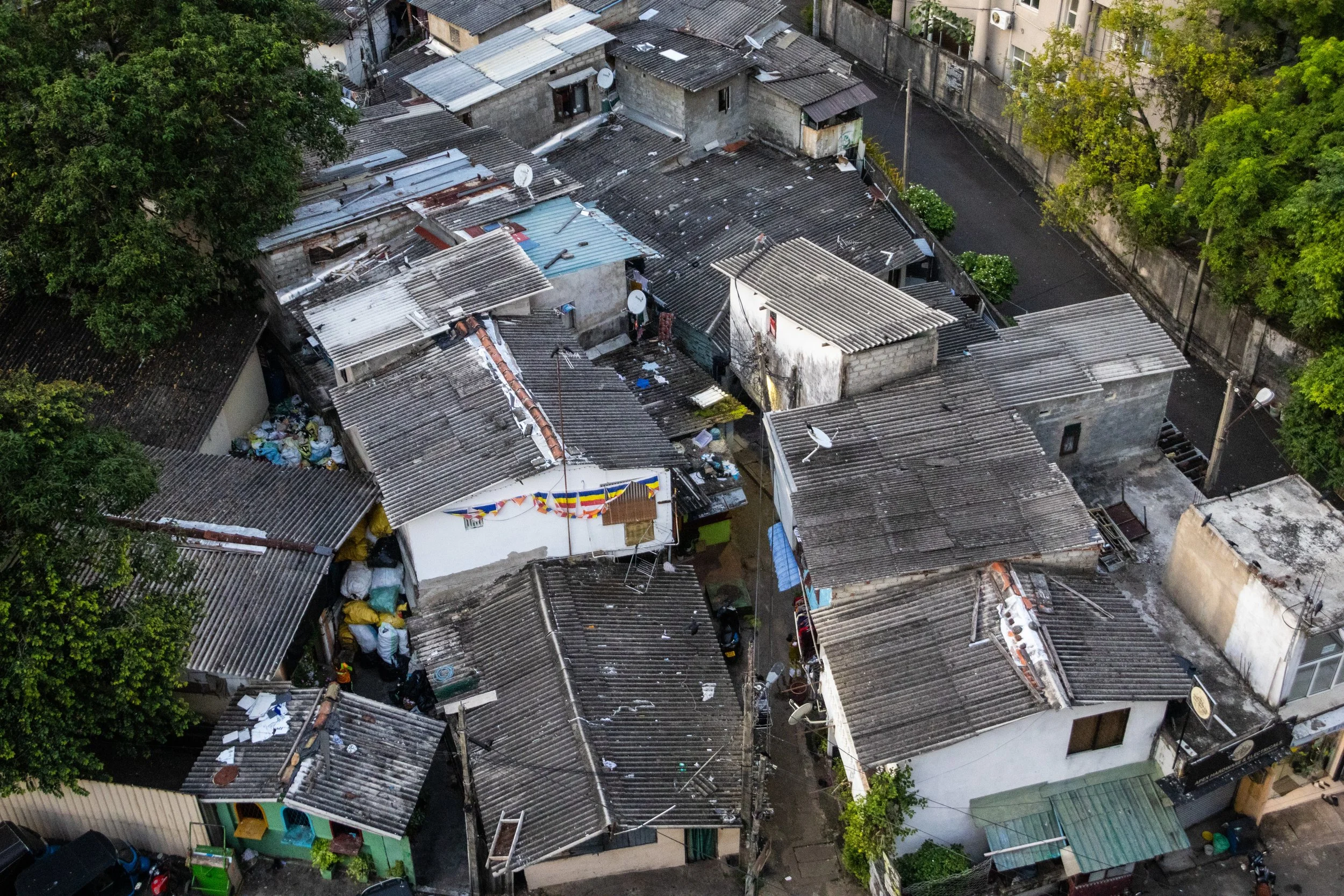
However, given that what filled the view between our high-rise rooftop hotel pool and the glittering lights of Colombo’s financial district was a sea of tin roofs, I think it’s fair to also point out that Colombo shines a light on the inequality of Sri Lanka as well.
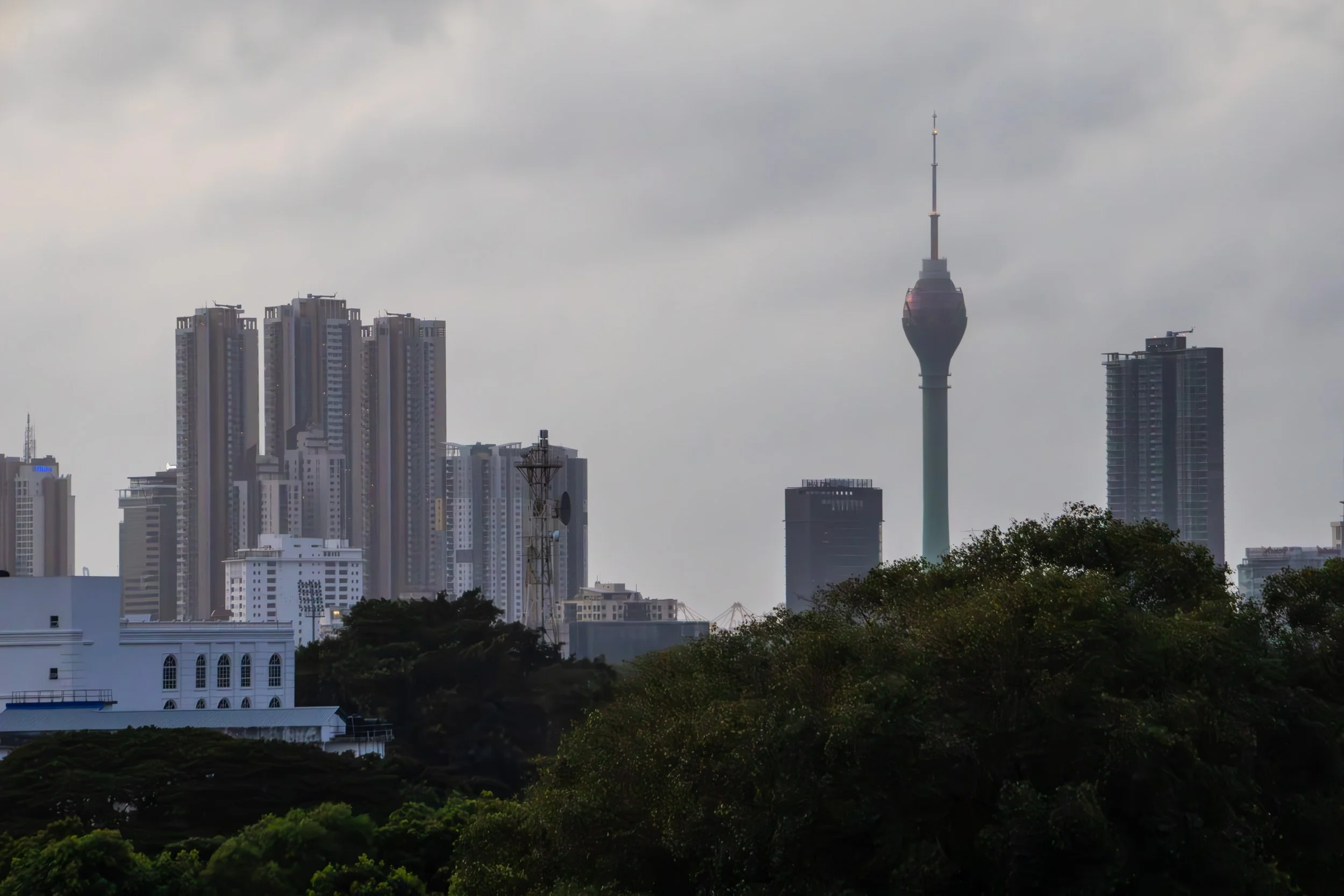
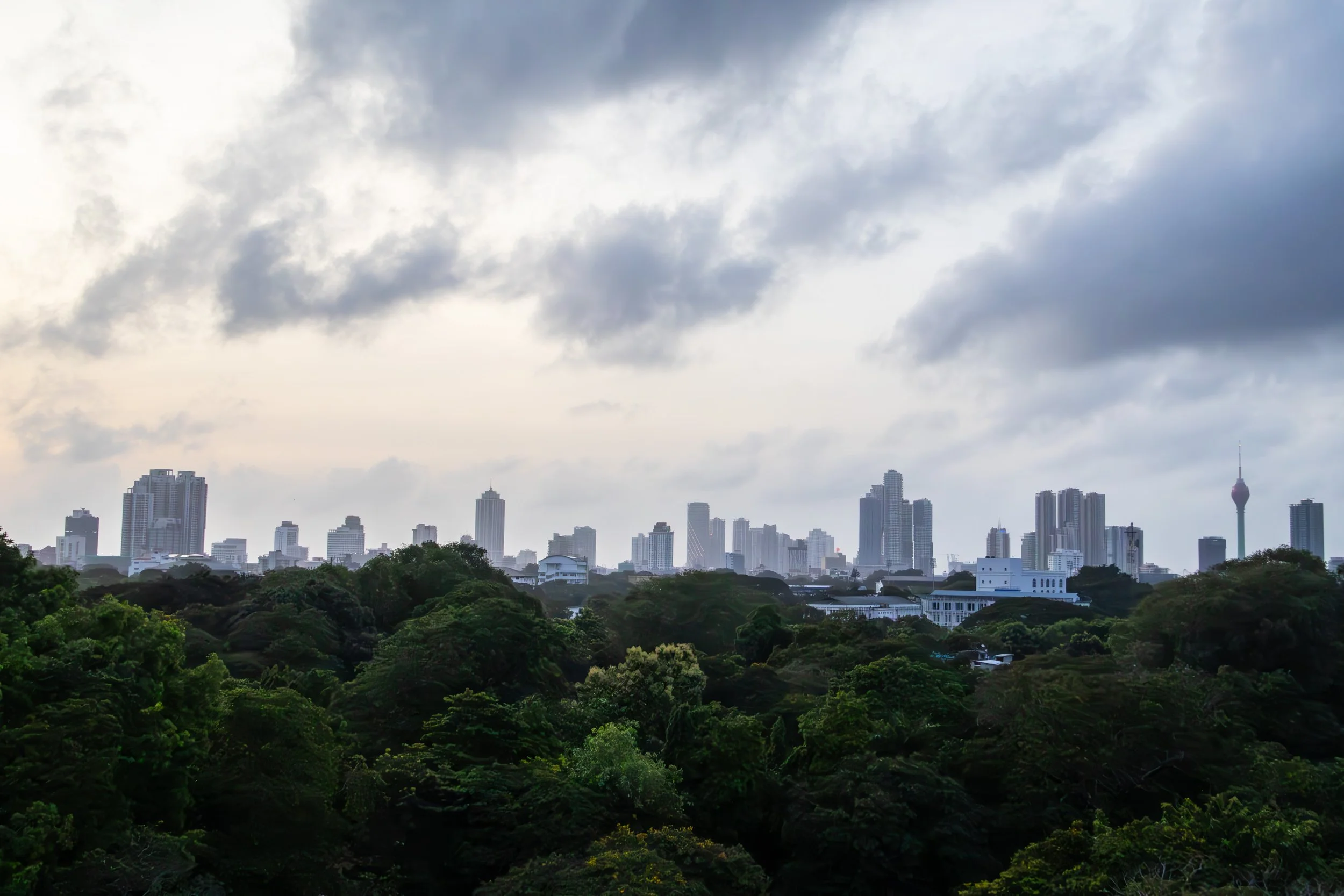
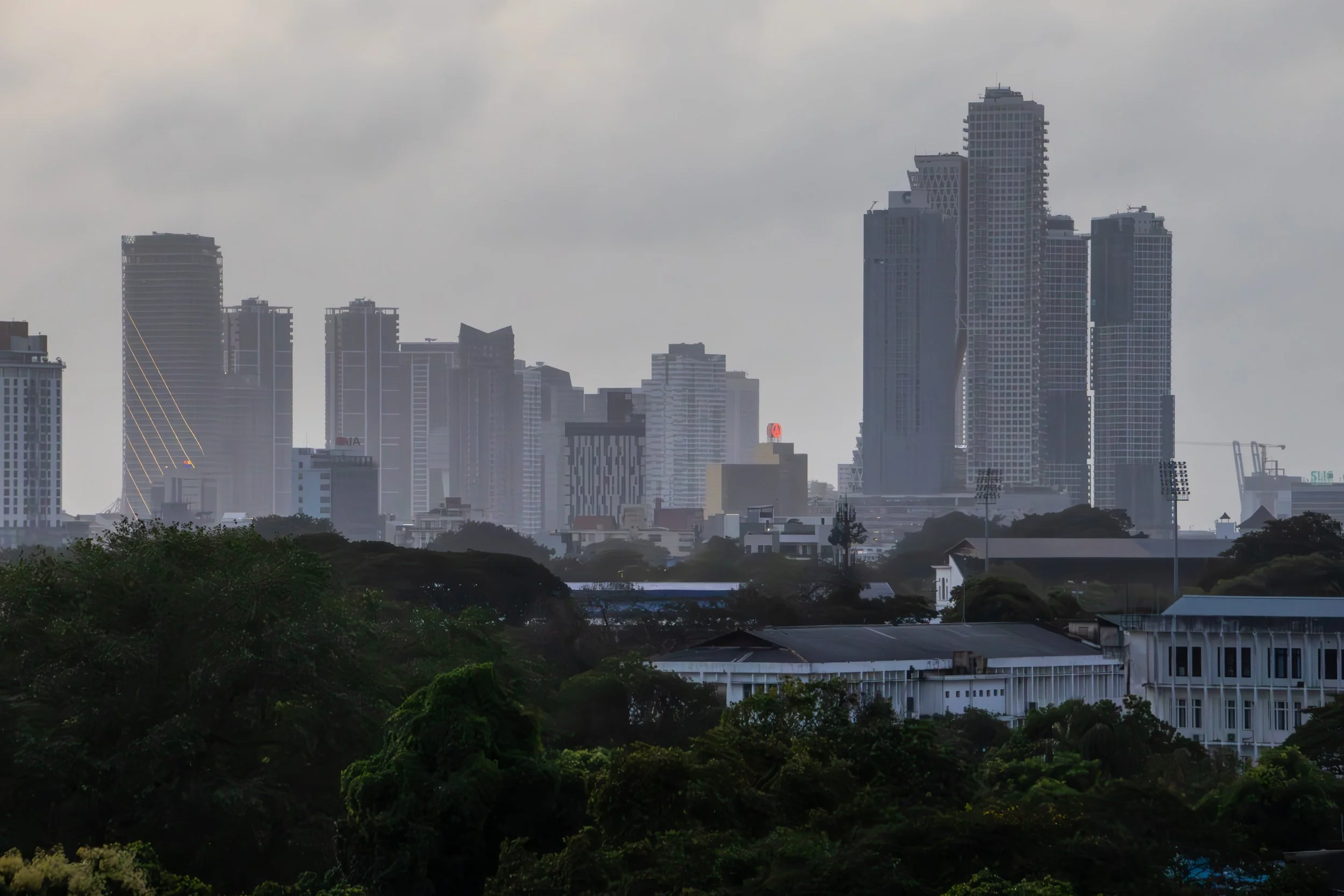
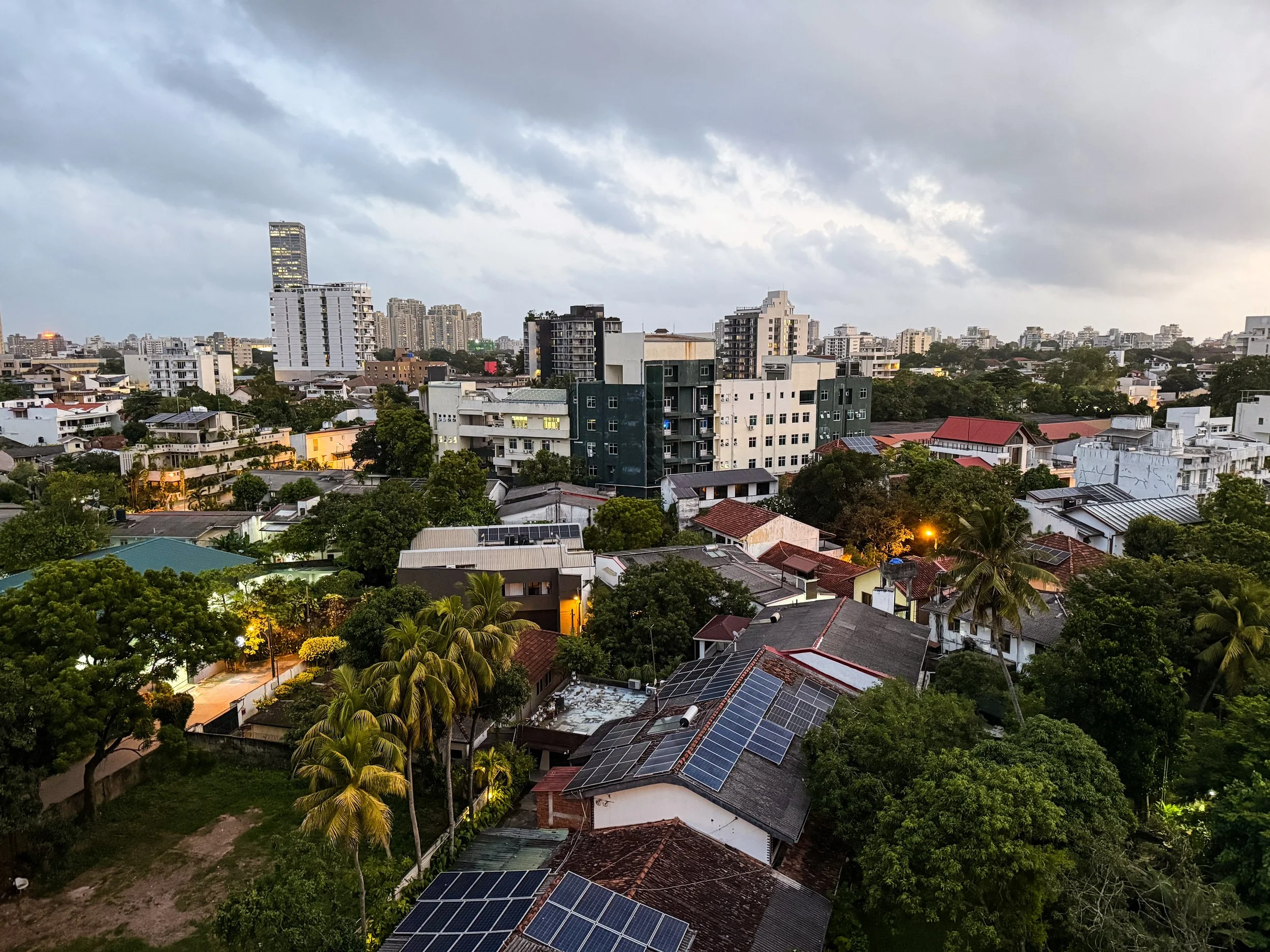
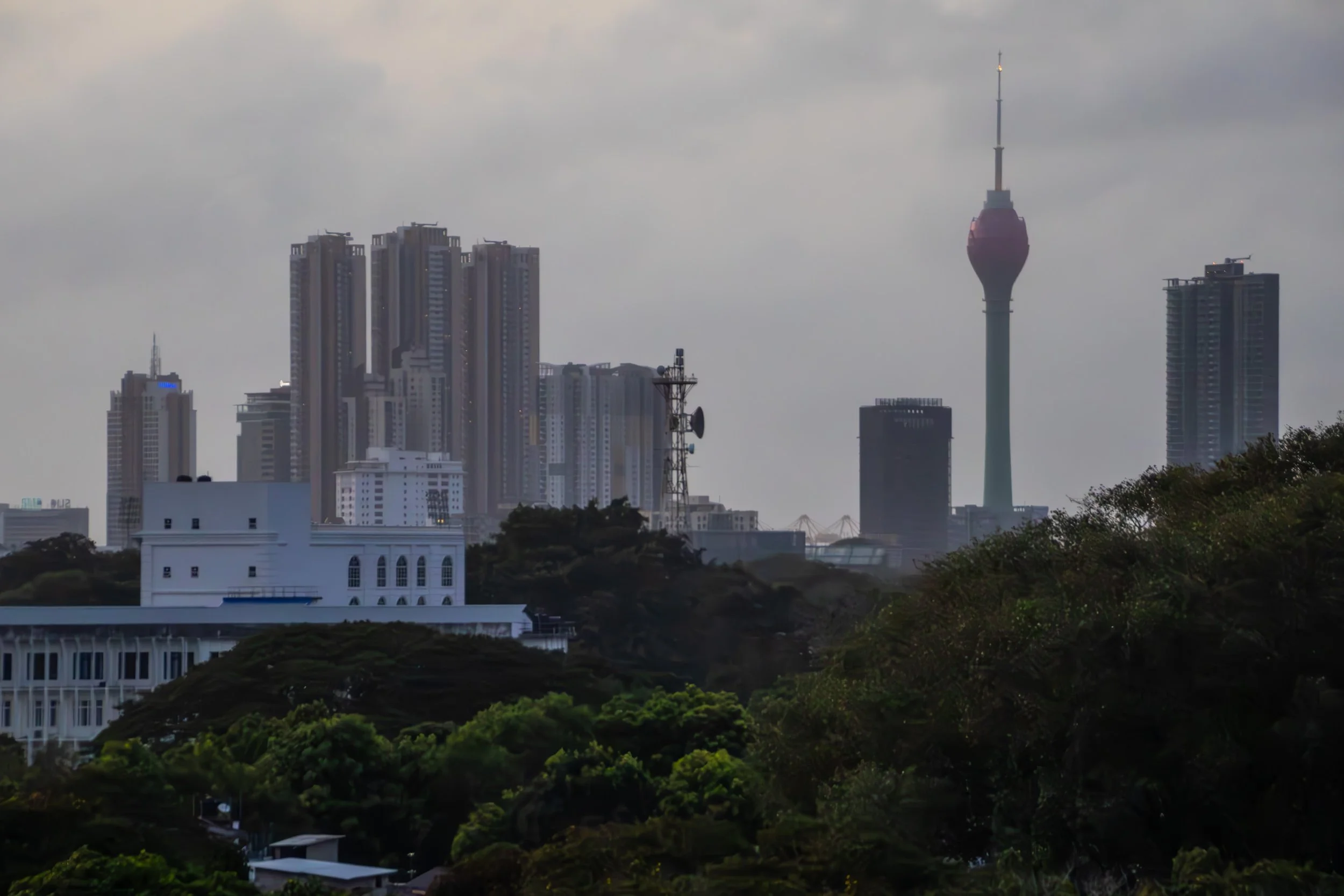
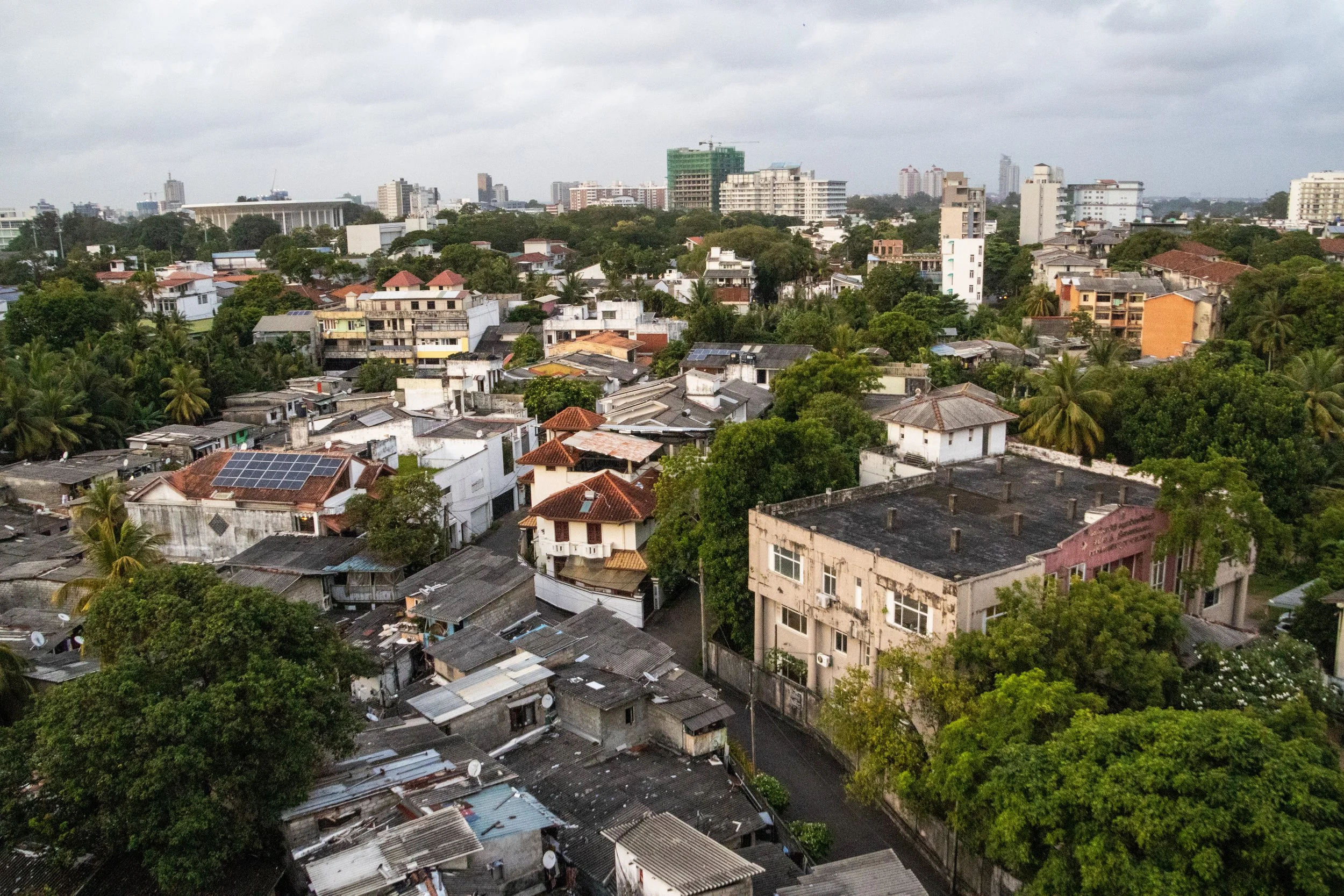
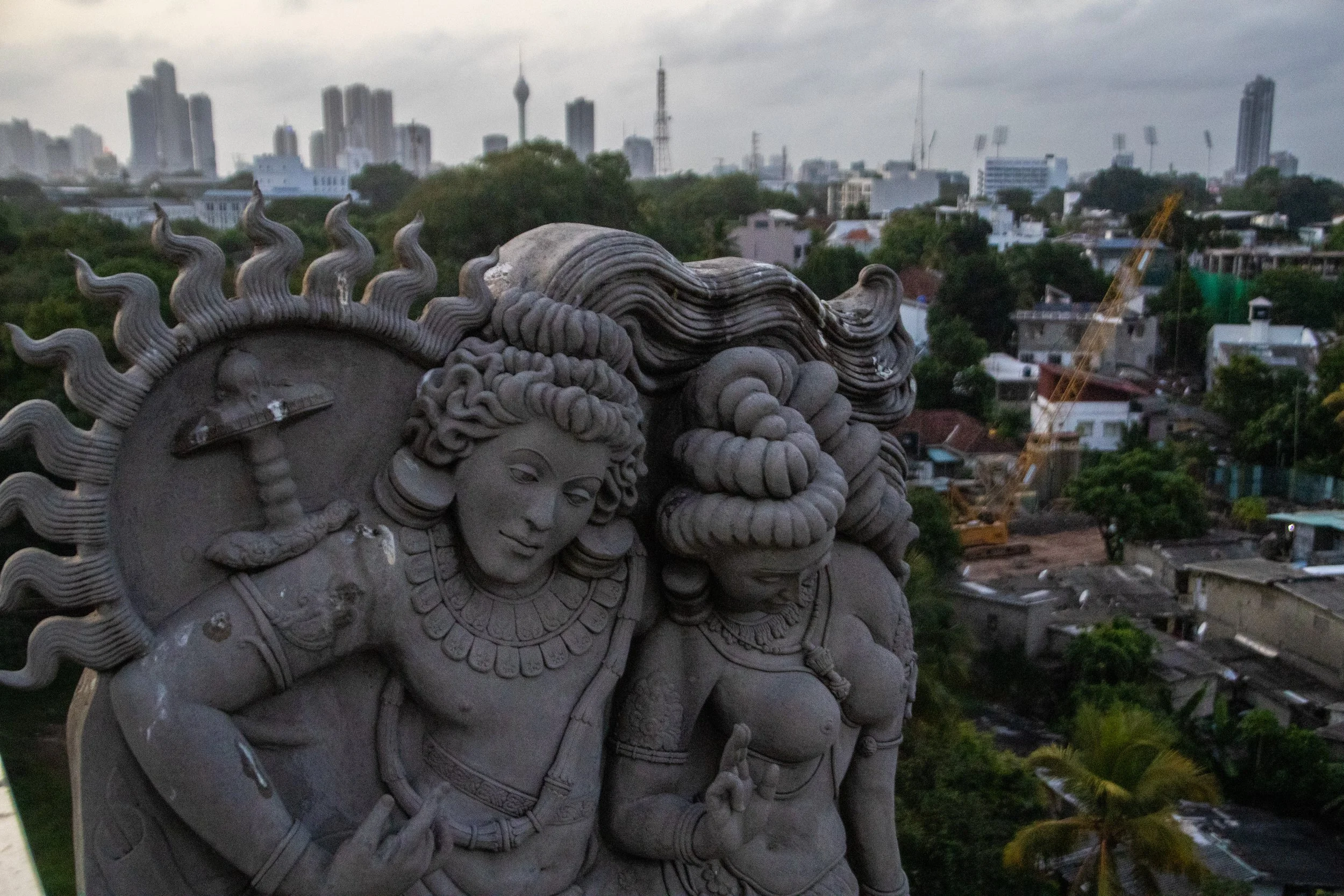
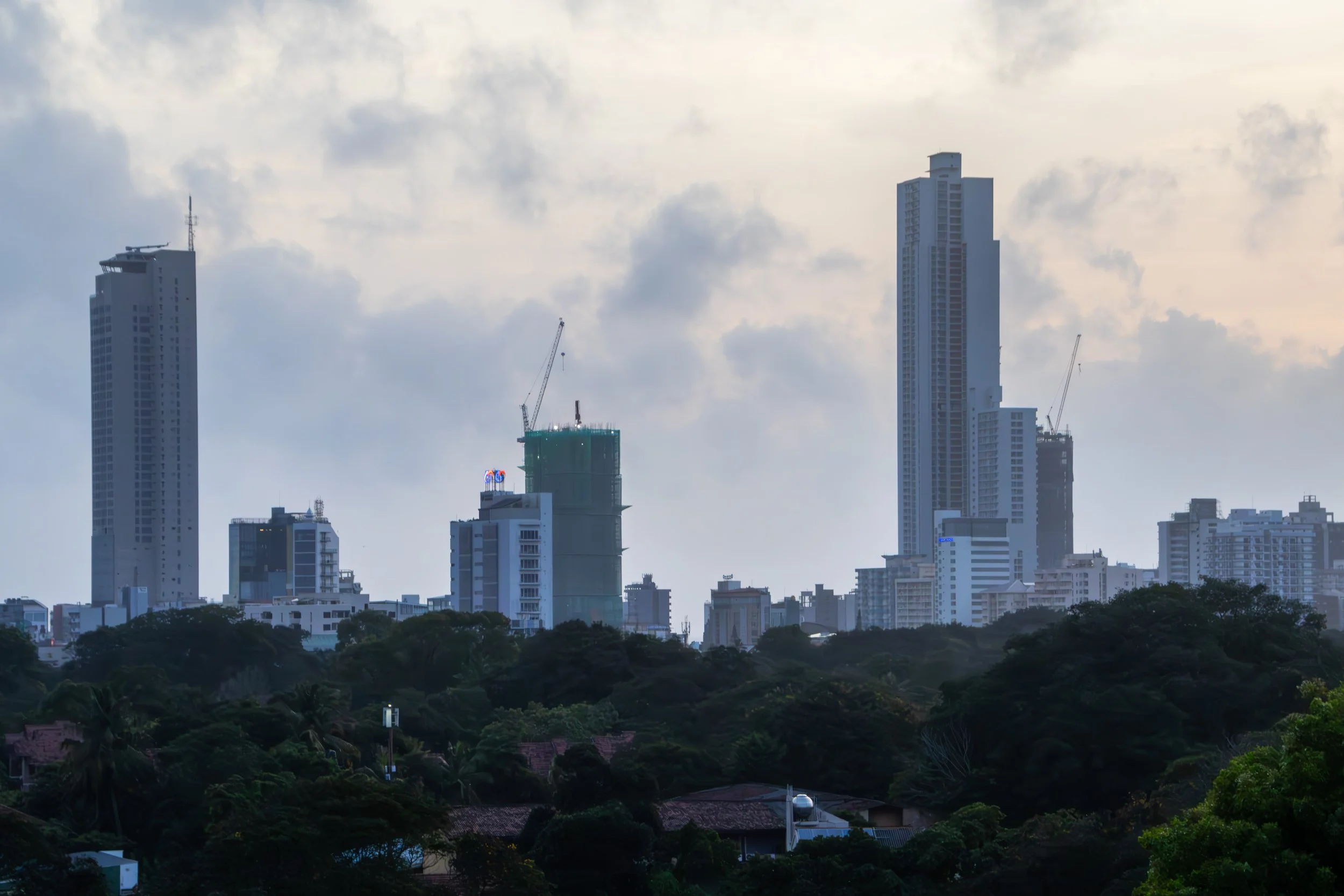
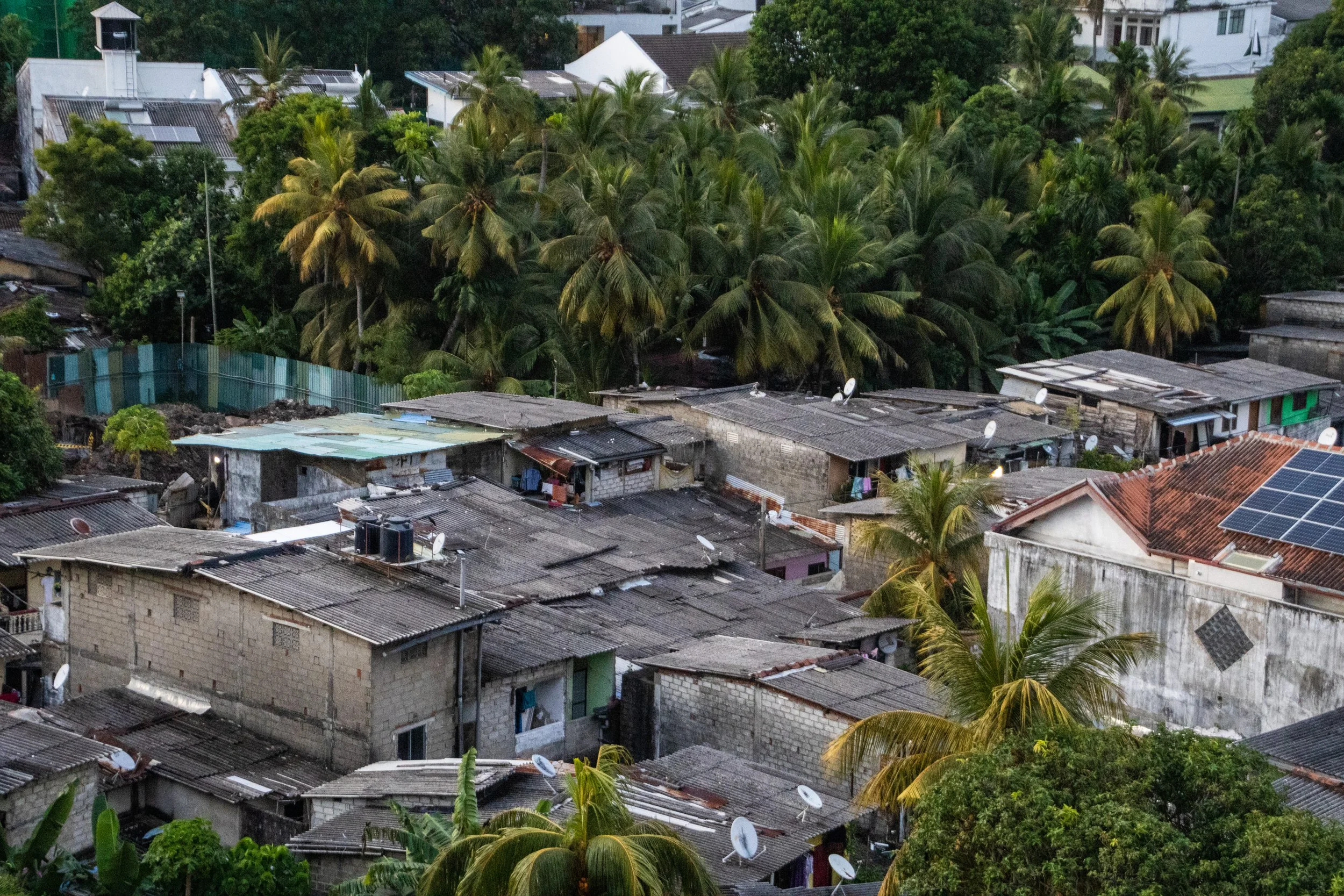
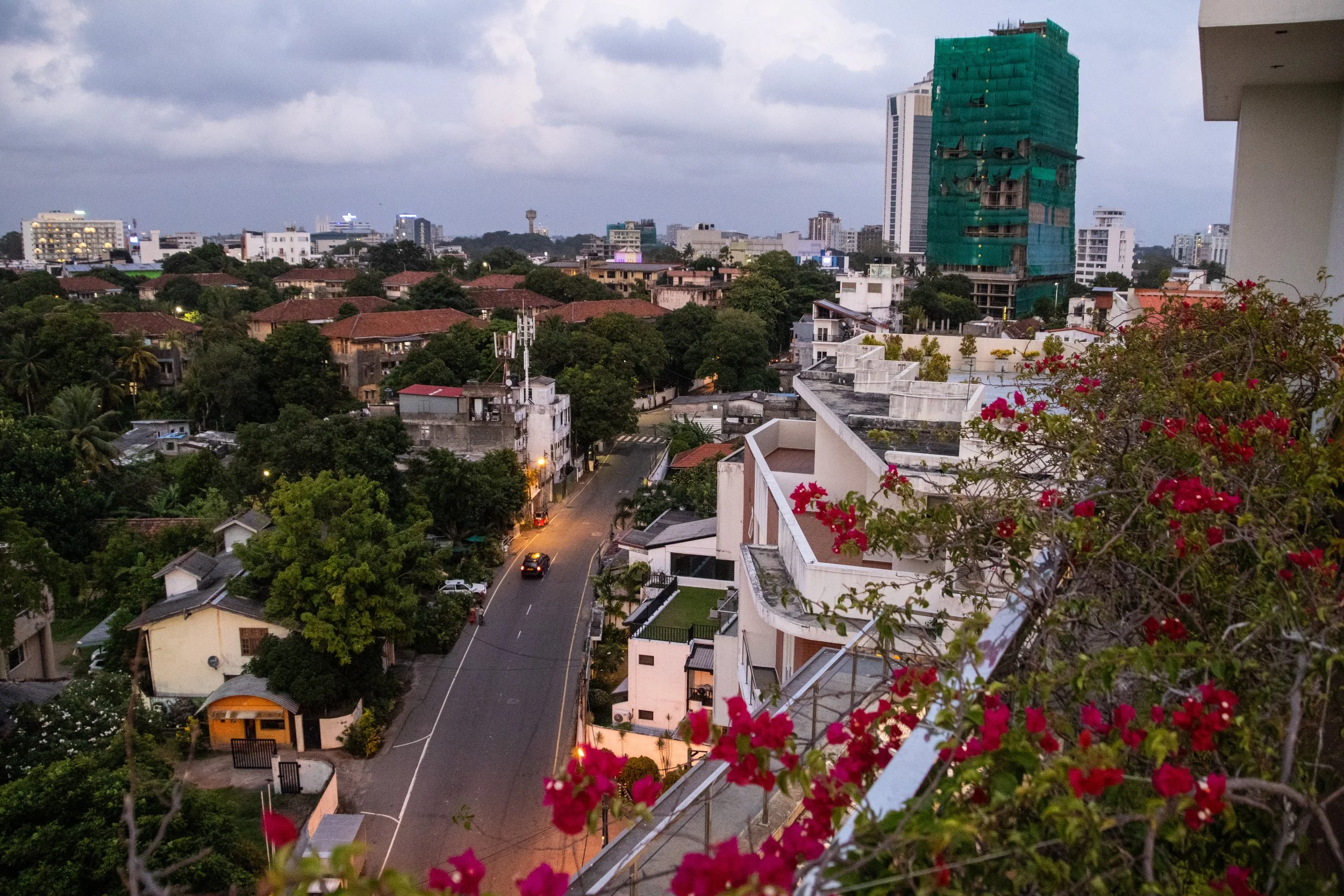
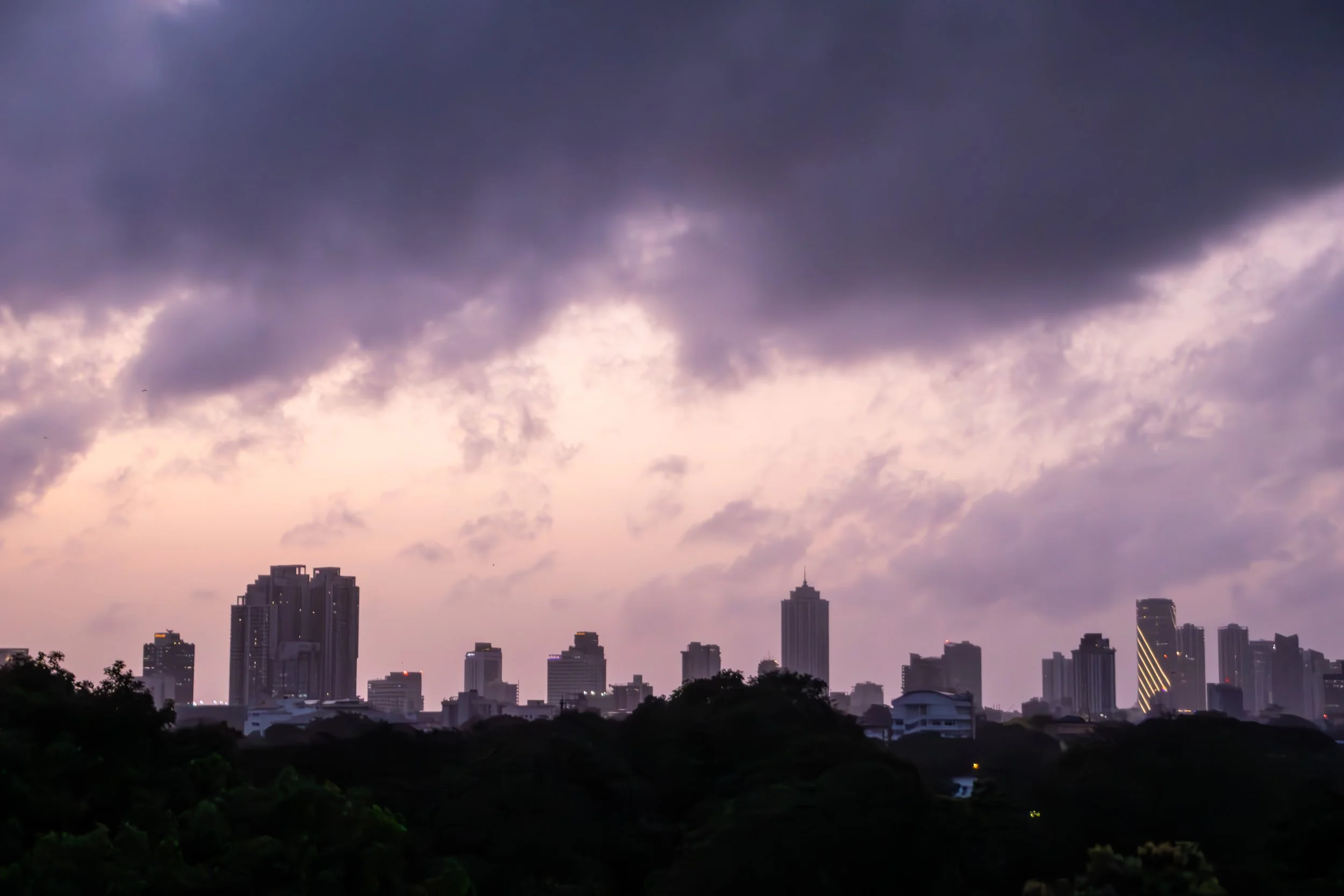
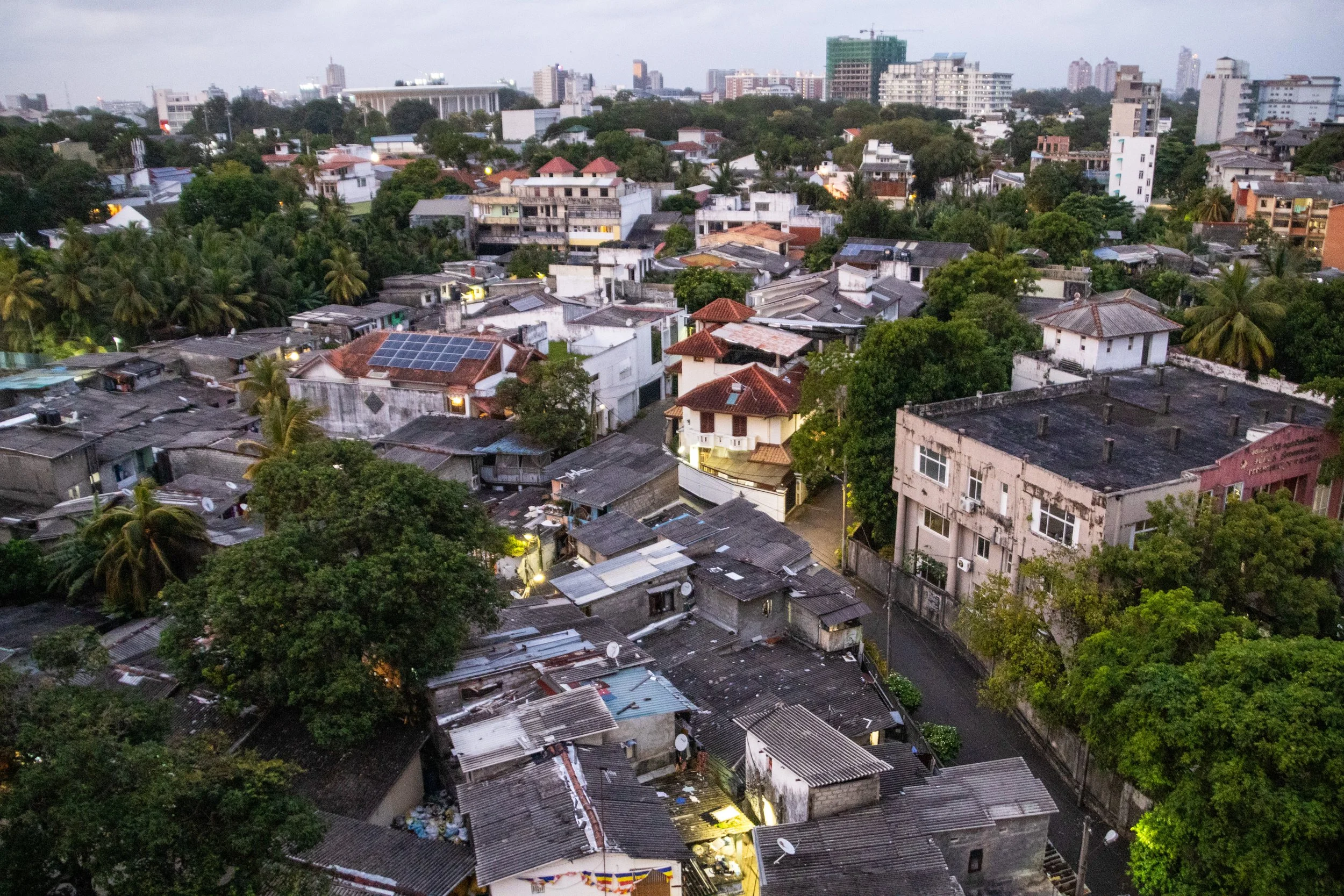
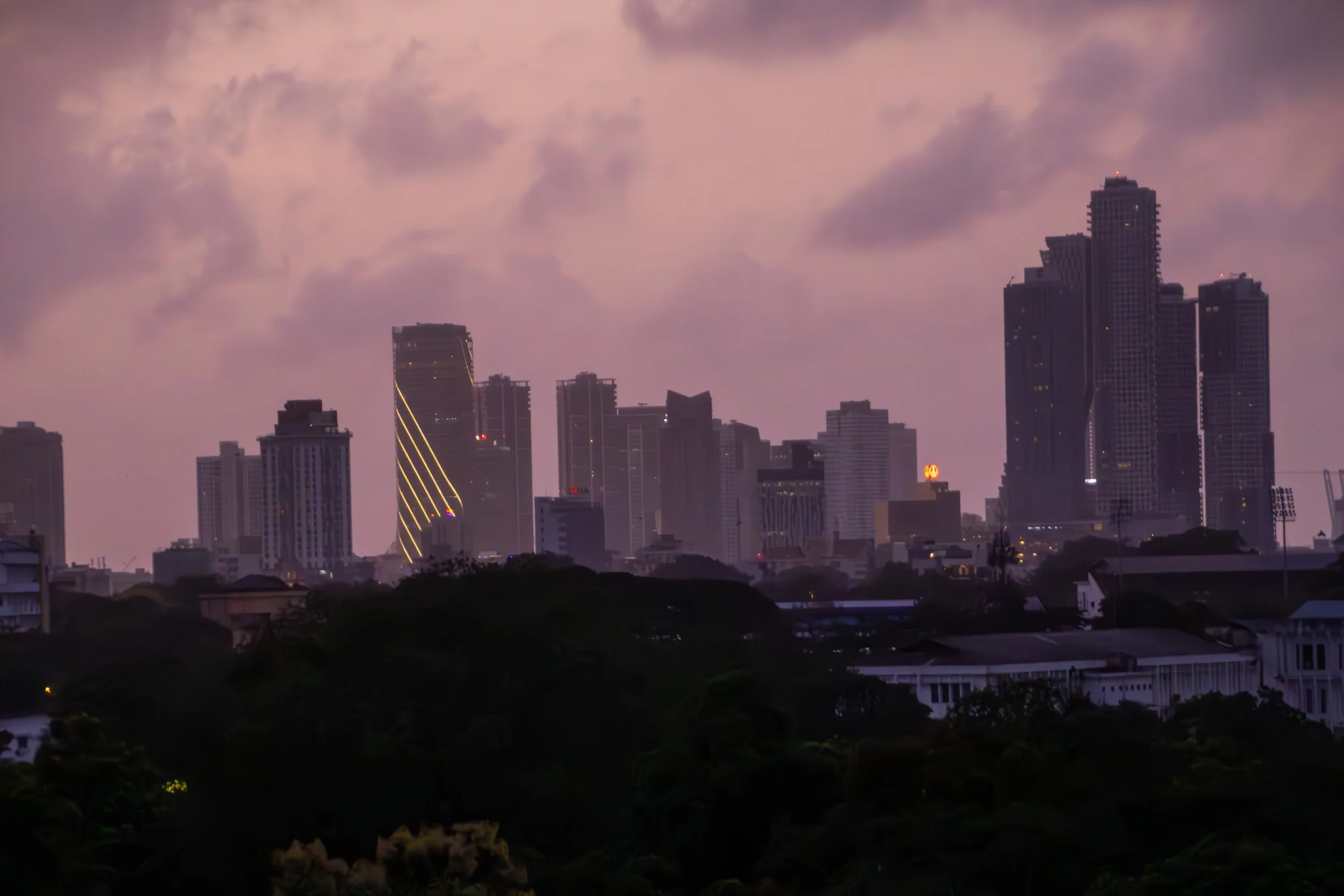
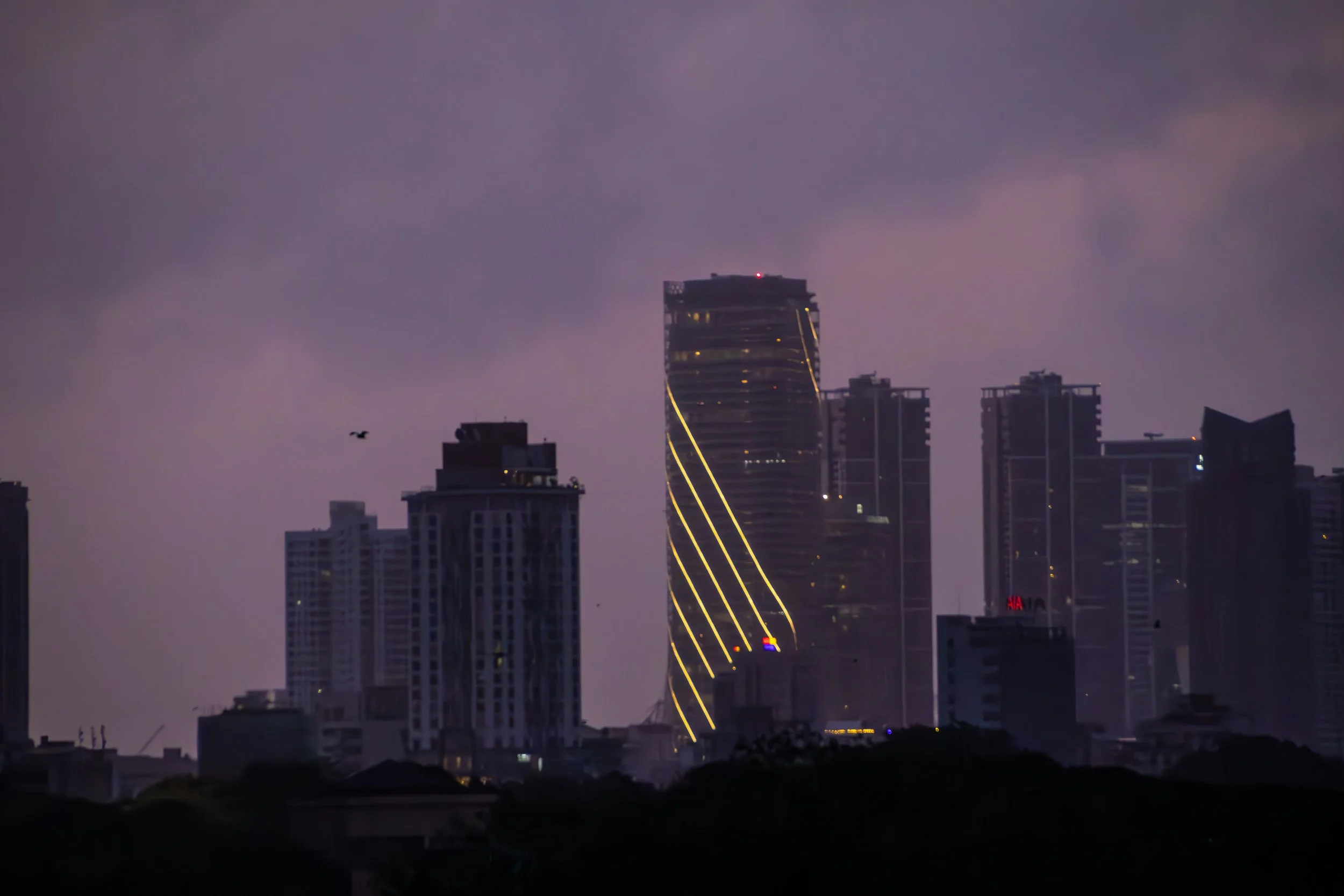
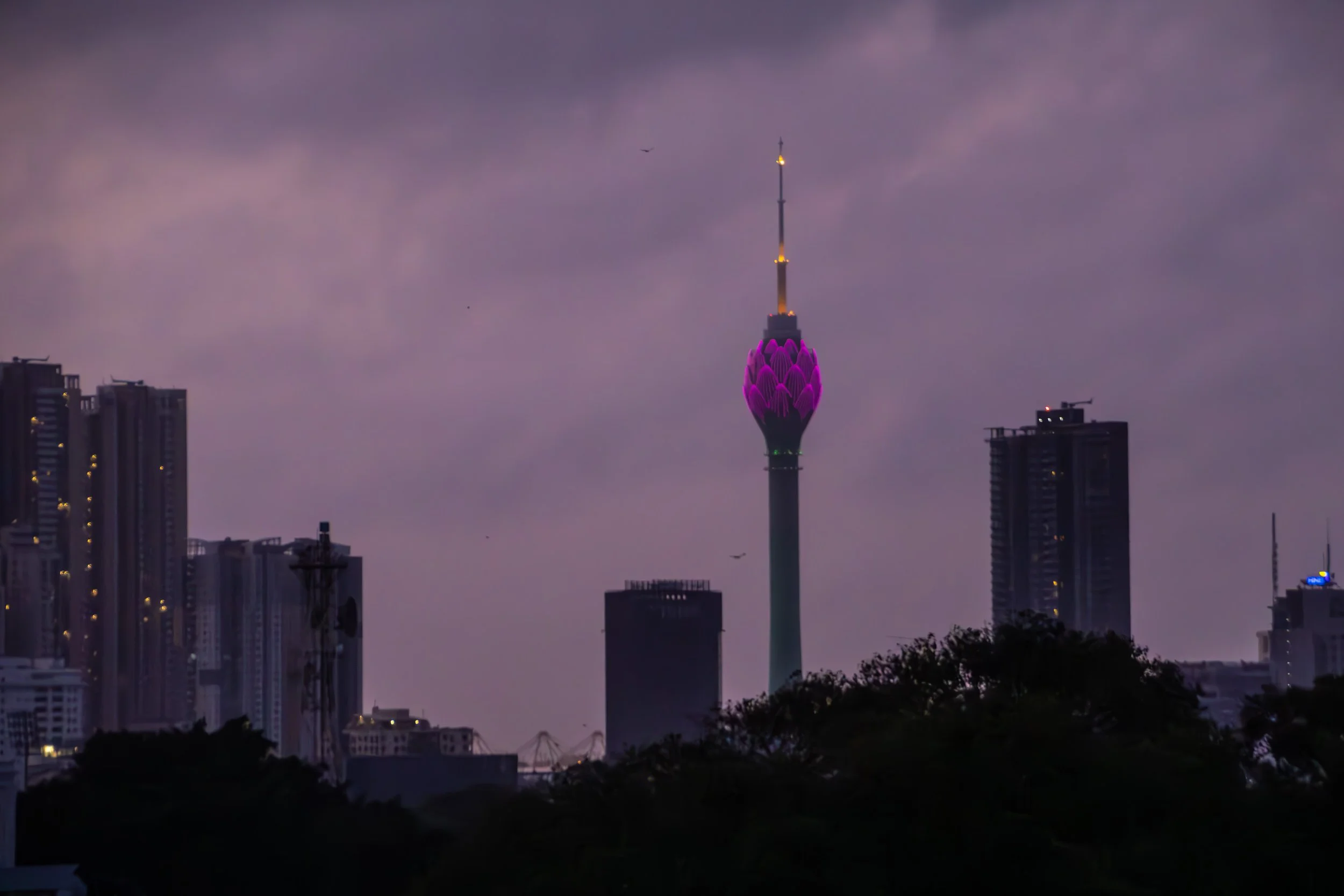
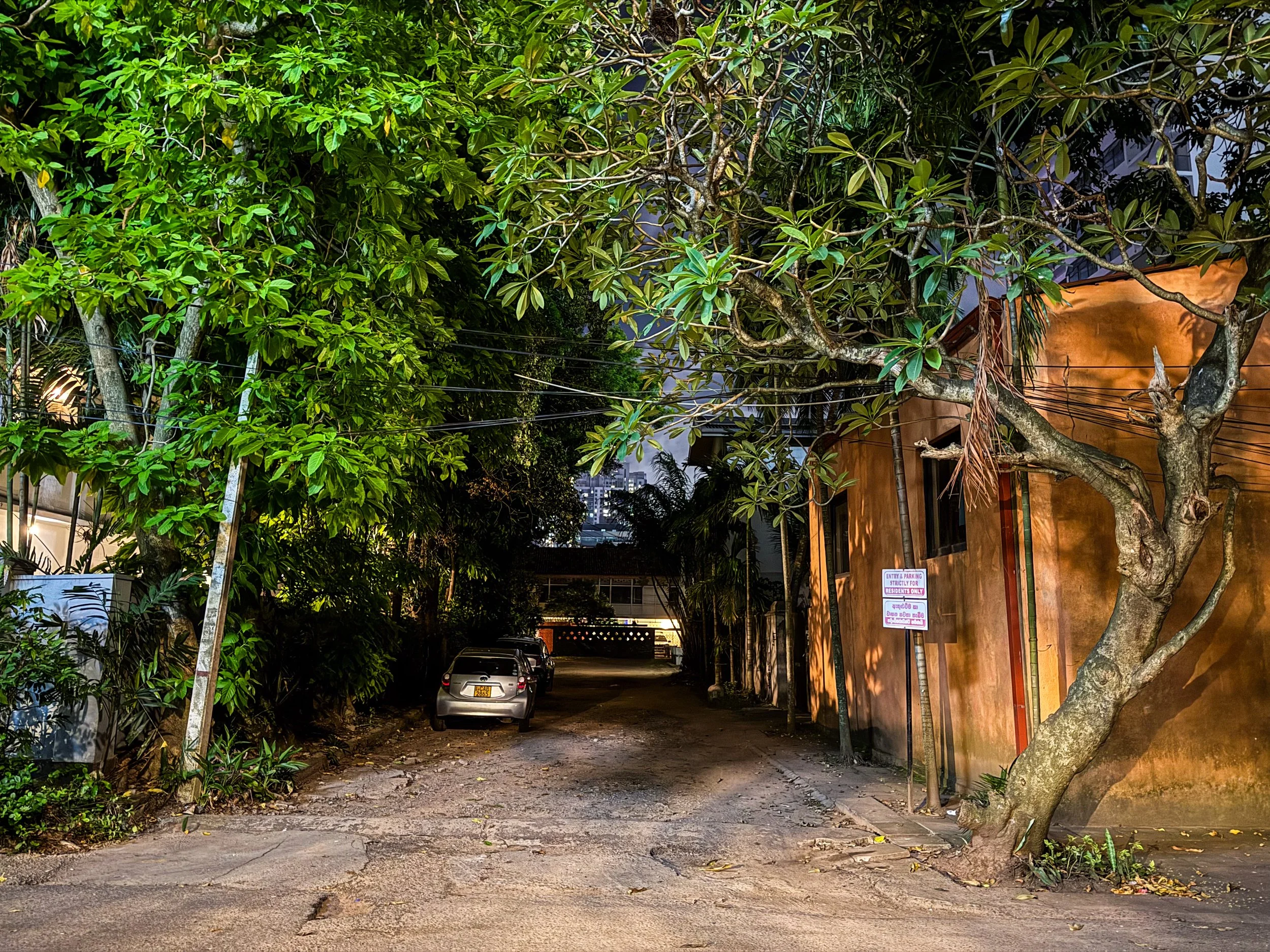
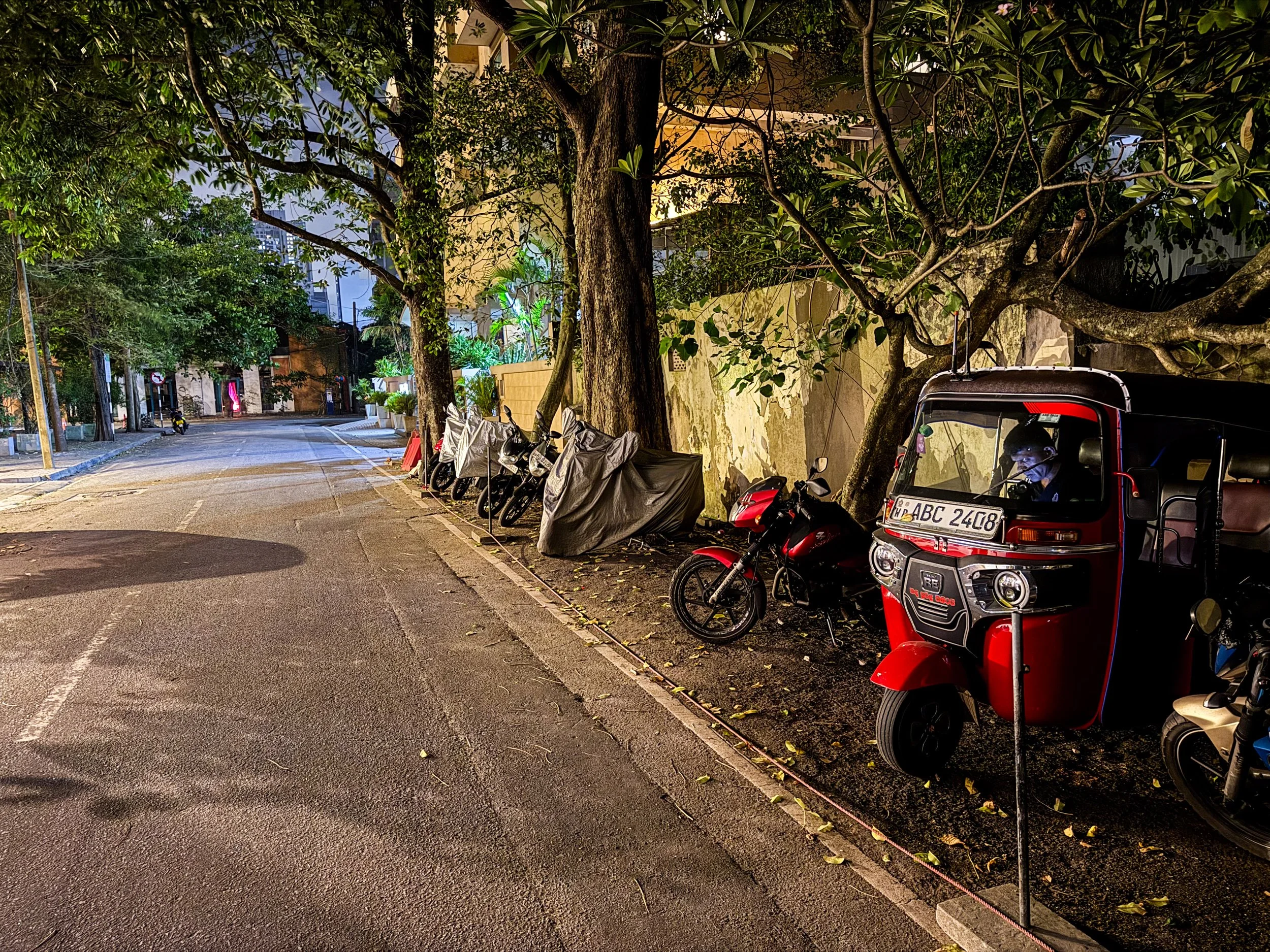
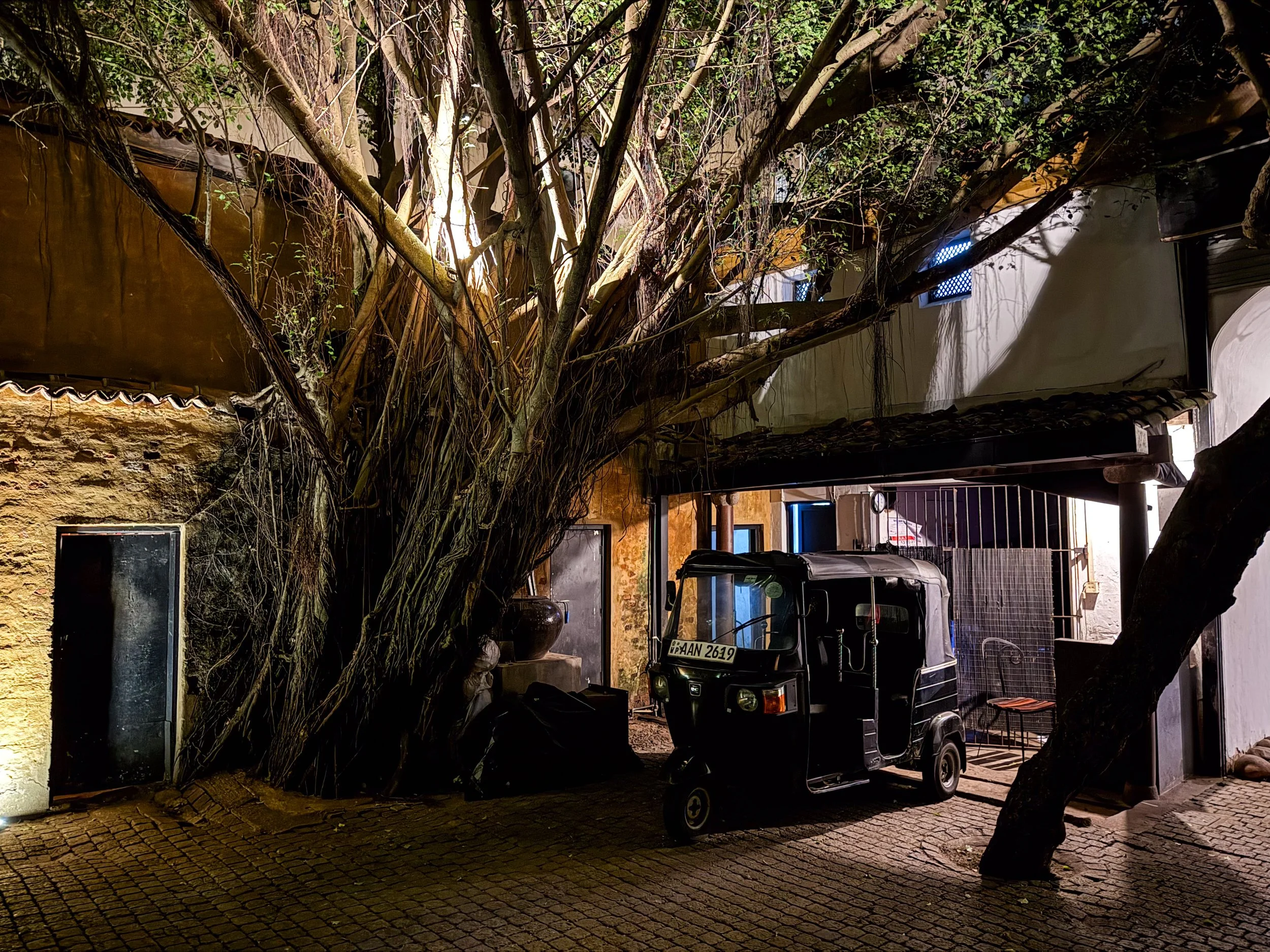
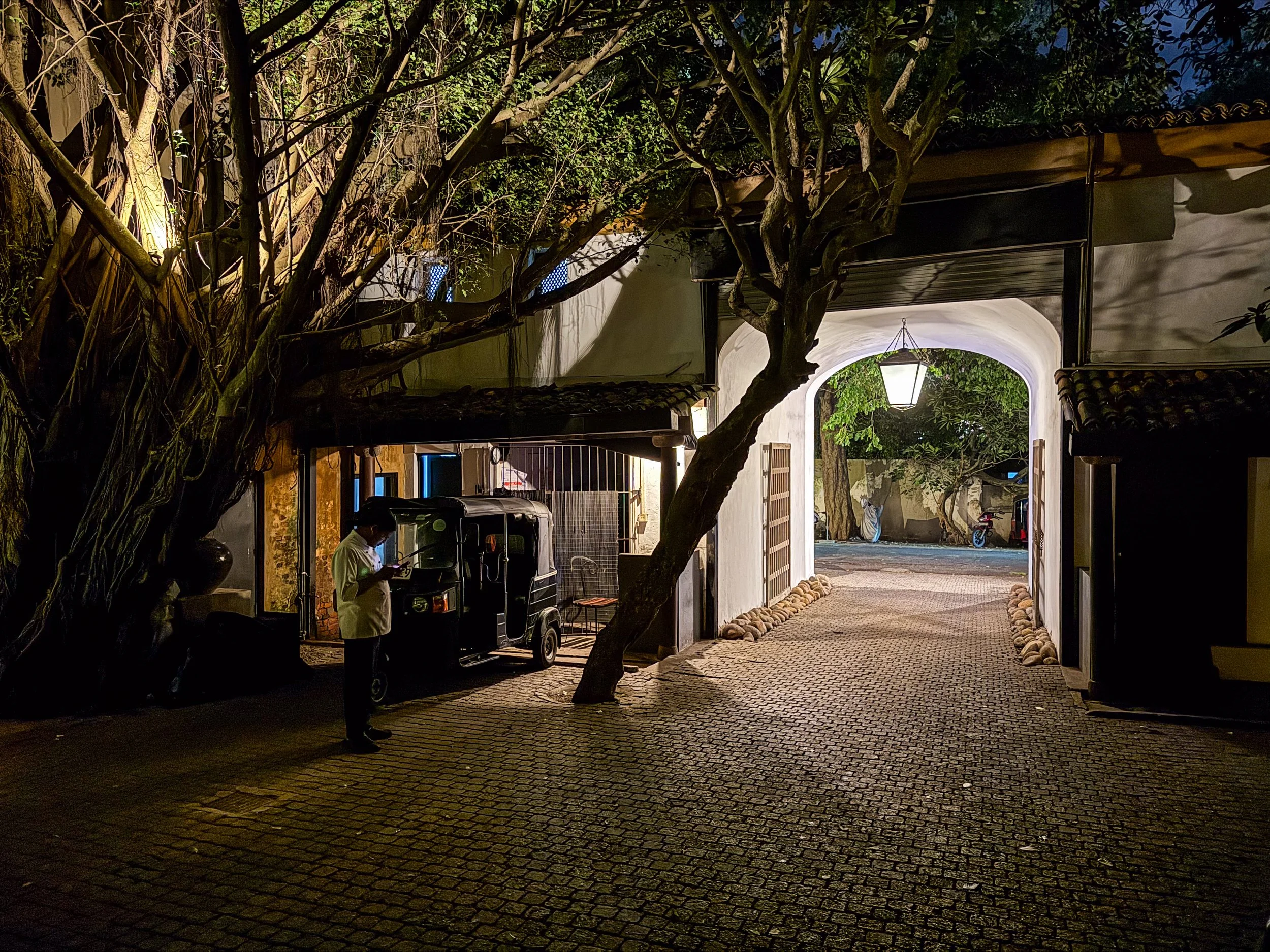
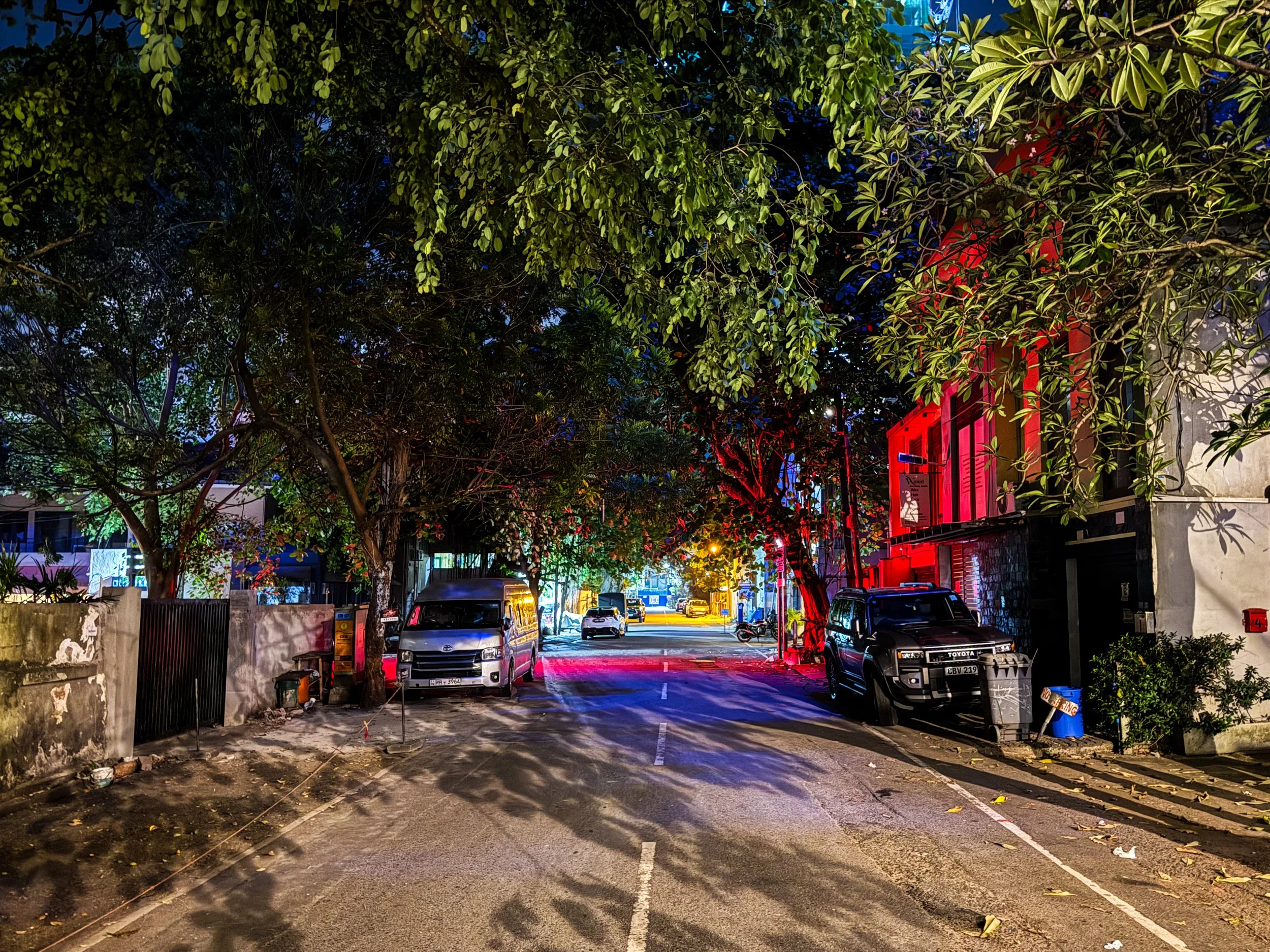
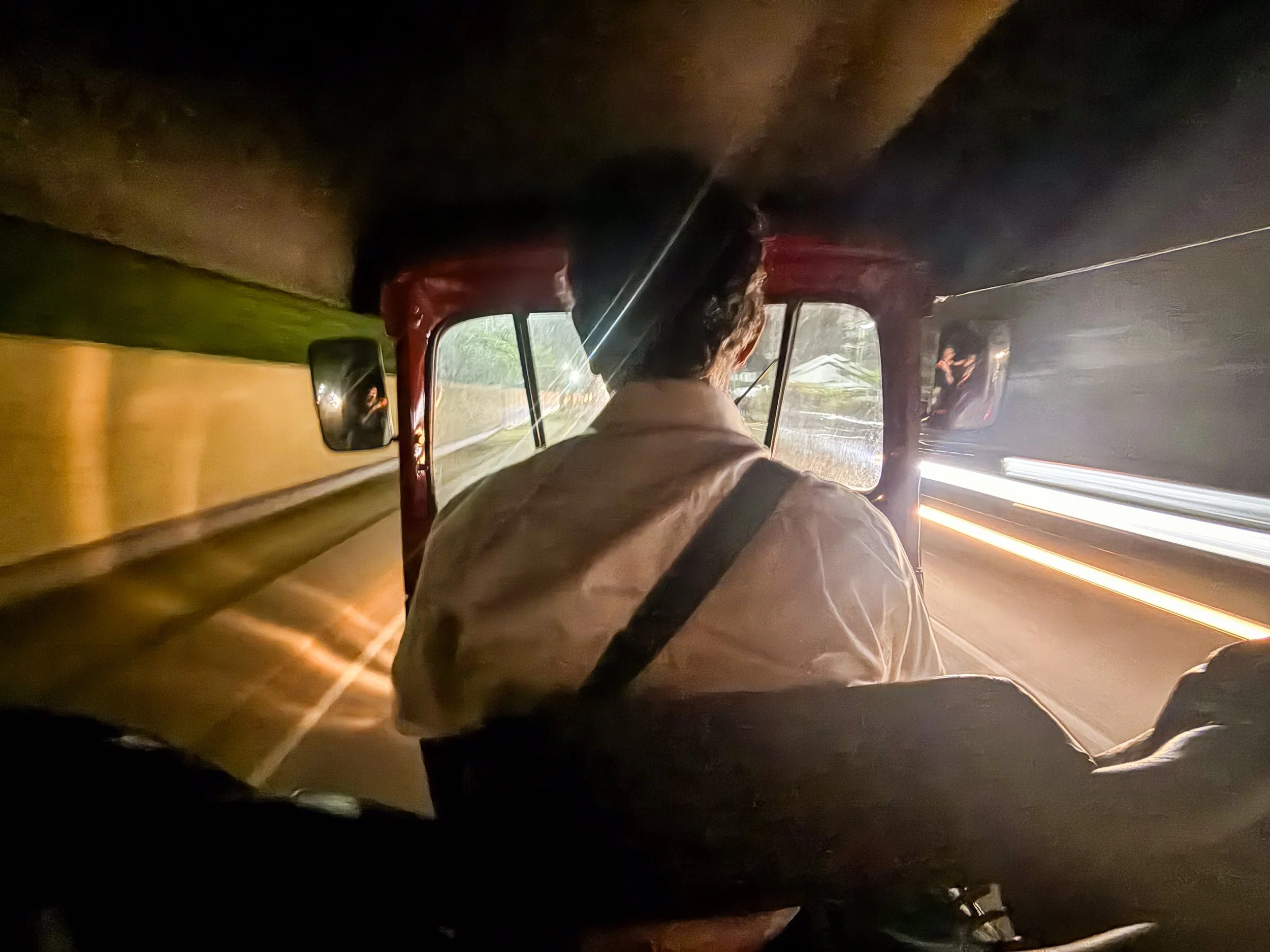
Truth be told, our time spent in Colombo this go-round was somewhat limited. My experience of this city is mostly by night, zooming around in the back of tuktuks. While even the most urban settings were clearly and actively engaged in a battle not to be completely reclaimed by jungle, with roots and vines snaking through every crack and crevice, Colombo felt far less dense than anything I’d experienced in India or Bangladesh. The streets were generally wider, smoother, and—especially after nightfall—quieter. Indeed, Colombo felt quite suburban in many areas!
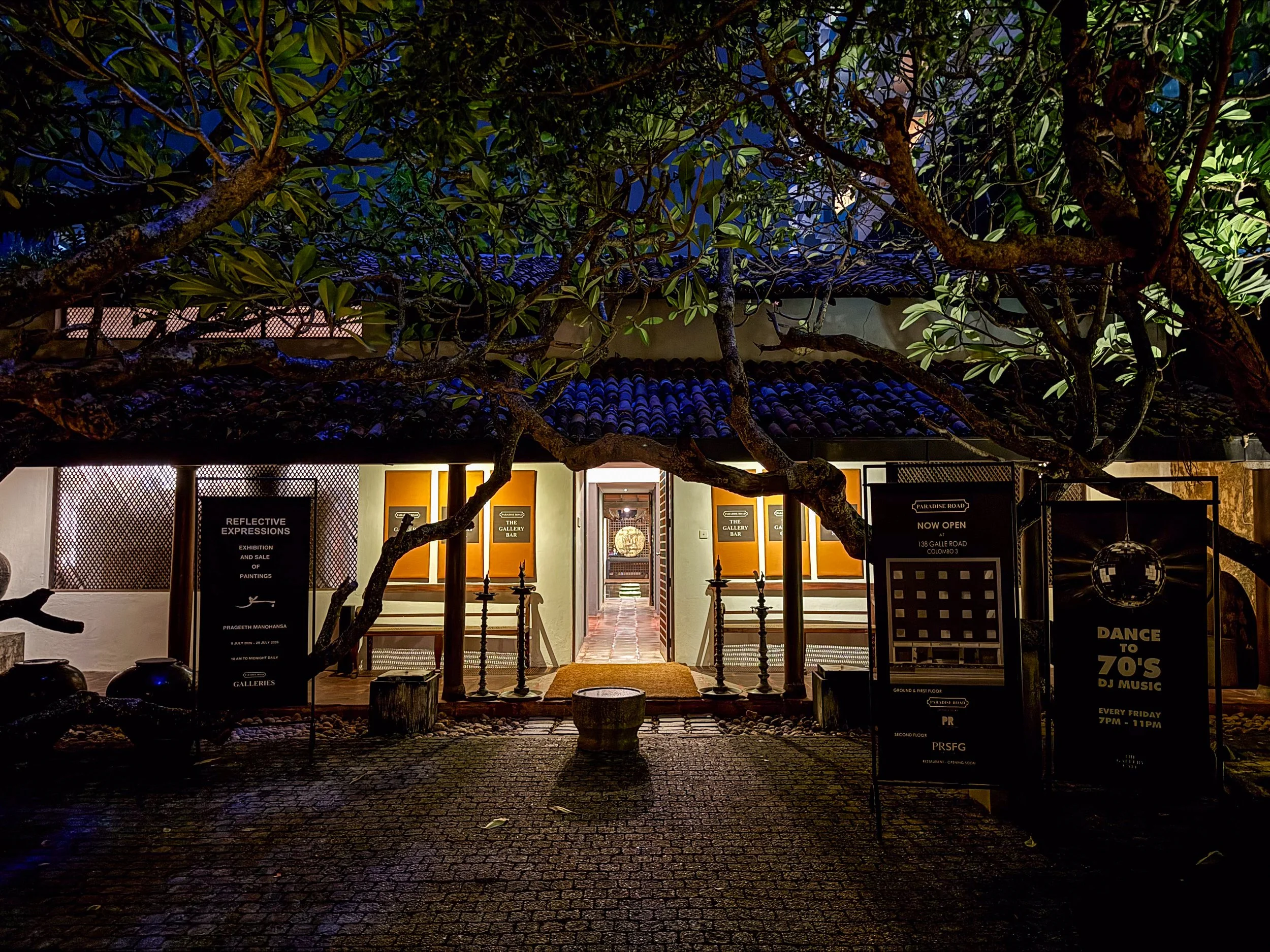
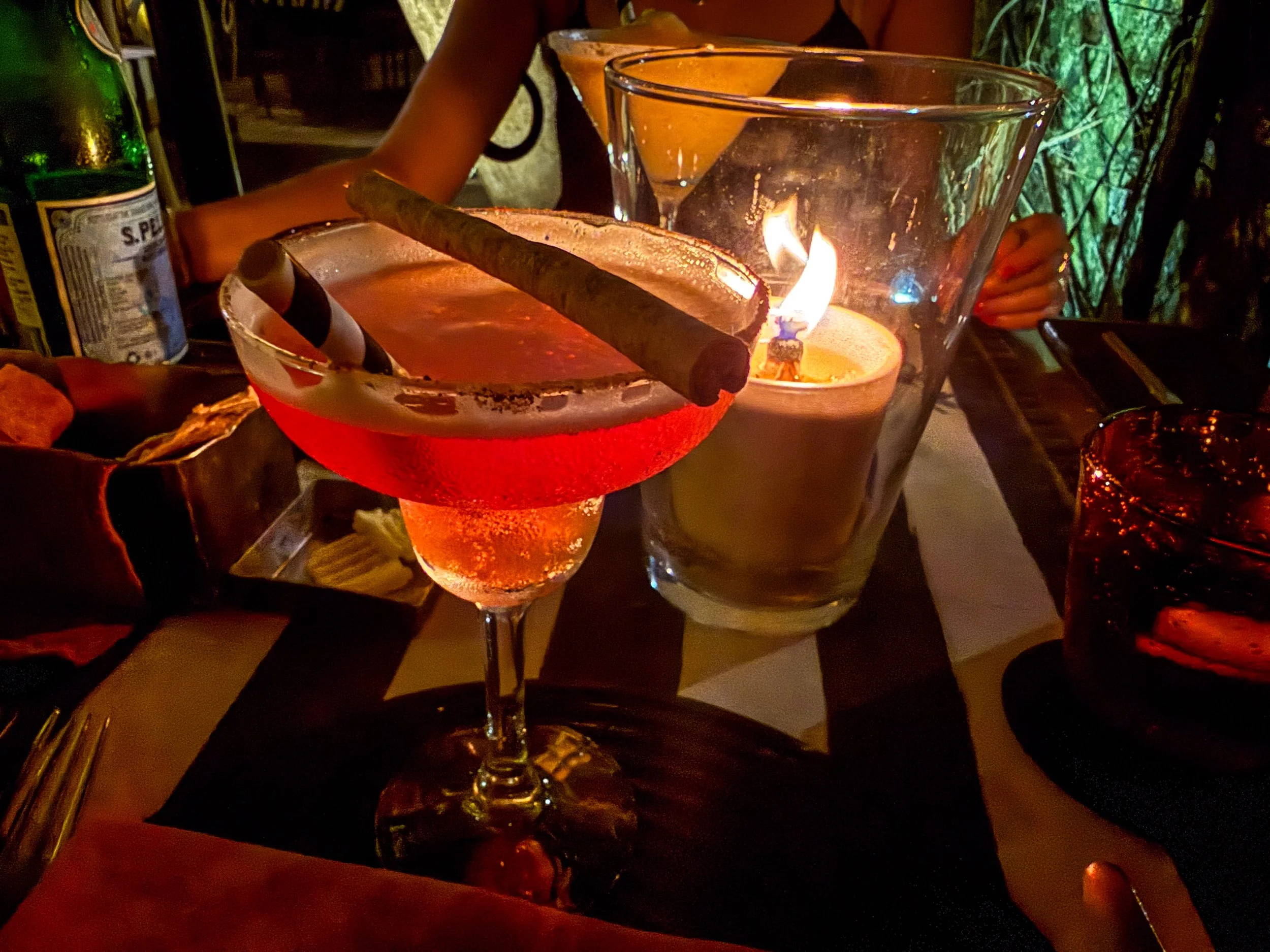
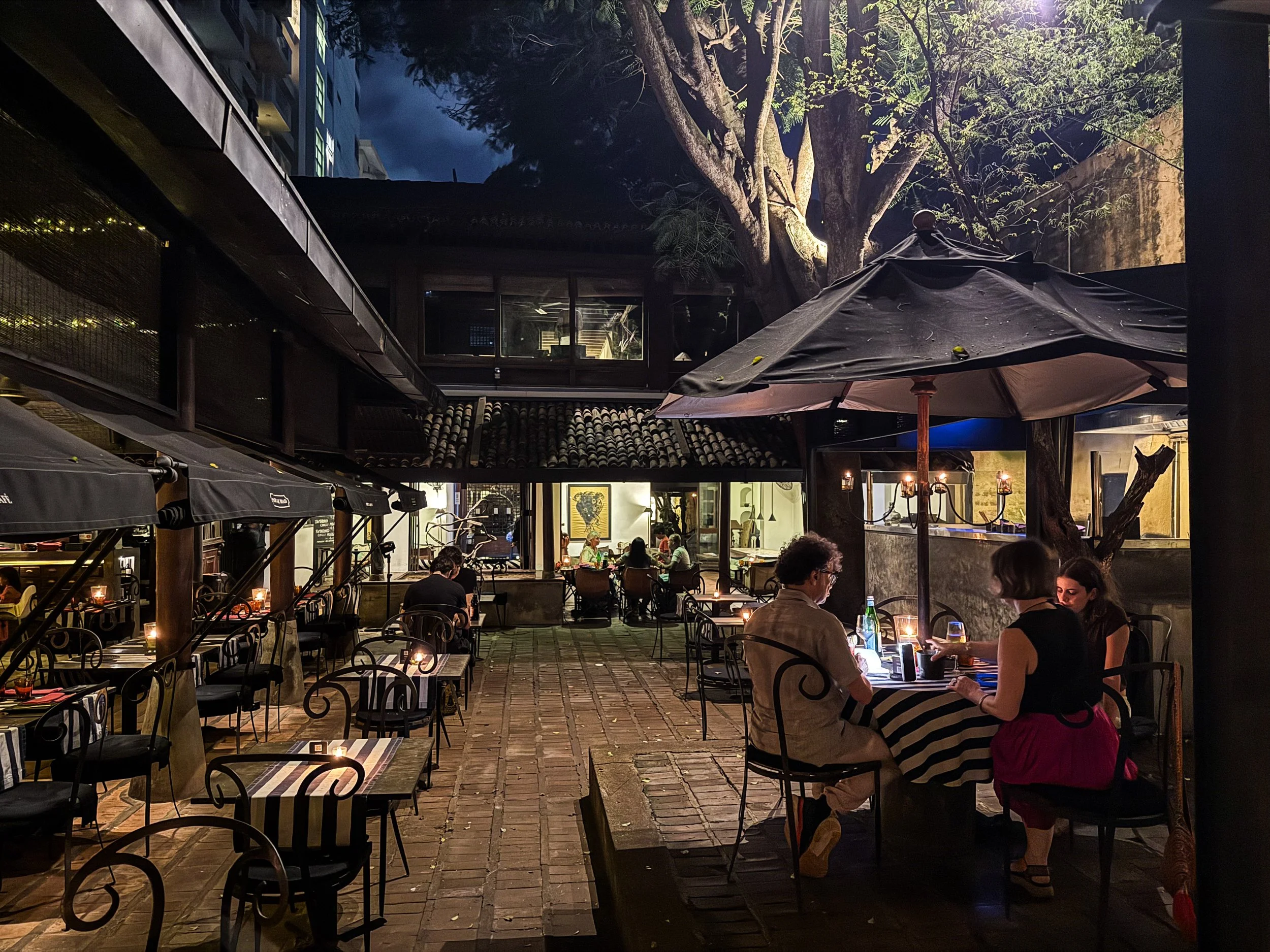
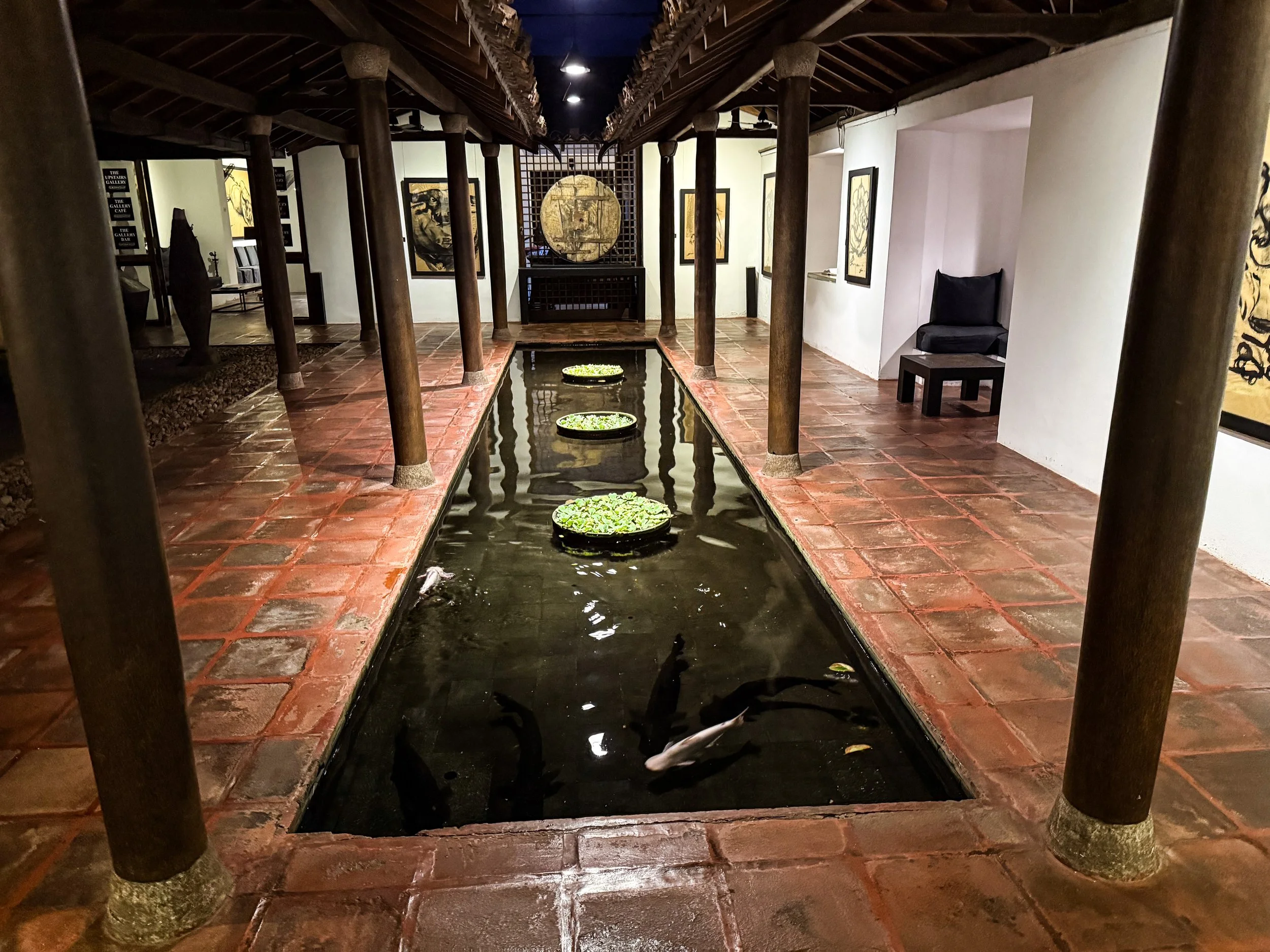
This visit took place during the month of July (2026), so even by night, Colombo was HOT. On our first night, we went out to dinner in a beautiful colonial-era restaurant called The Gallery Café. It was an amazing meal, and my Chai Martini was one of the best cocktails I’ve ever had in my life. However, the fact that most of the restaurant was outdoors made the space, at once, very charming and VERY hot. They had fans set up throughout the dining area, but even still, I managed to find a hot, stagnant pocket of air when I sat down, which eventually forced me to change tables, halfway through the meal. A dramatic move, once you’ve already started eating, no??
I’ll admit that my health anxiety was playing a role during my time in Colombo as well, as I had been warned prior to this trip that there were malaria outbreaks happening in Sri Lanka at the time. You might be tempted to think this is a problem contained mostly to remote areas, but in fact, coastal Sri Lanka—which contains its largest population centers—was/is much more heavily affected. Sri Lanka is quite mountainous, so once you go inland, you will gain altitude rapidly, which already starts to make the environment less hospitable for disease-carrying mosquitos, cooling the air slightly with every incremental gain in elevation. On top of that, the summer is “rainy season” in Sri Lanka. So, we were definitely traveling during the off-season. But, in truth, most of the rains were confined to the west coast, which includes Colombo. Hot, stagnant air and lots of moisture are a bad combo in malaria-prone areas. The upshot of all this was that I was very hesitant to wear anything other than long sleeves or long pants around Colombo, despite the heat. I was also taking malaria meds during this trip, as well as dowsing myself in bug spray to be safe.
So, I did indeed emerge from Sri Lanka malaria-free. Was my level of malaria-paranoia really warranted? Probably not… but there’s some self-acceptance in this; in selecting far-flung travel destinations, I am much more scared of disease than crime, weather events, or political instability. That’s why I focus on it so much in my writing, while speaking plainly and unflinchingly about other things that might be, objectively, much more concerning to a logical person. But I digress…
HOWEVER, the indoor spaces of Colombo are generally quite well-air conditioned. And the breeze from the back of a moving tuktuk is nice as well. To my fellow northerners, fear not!
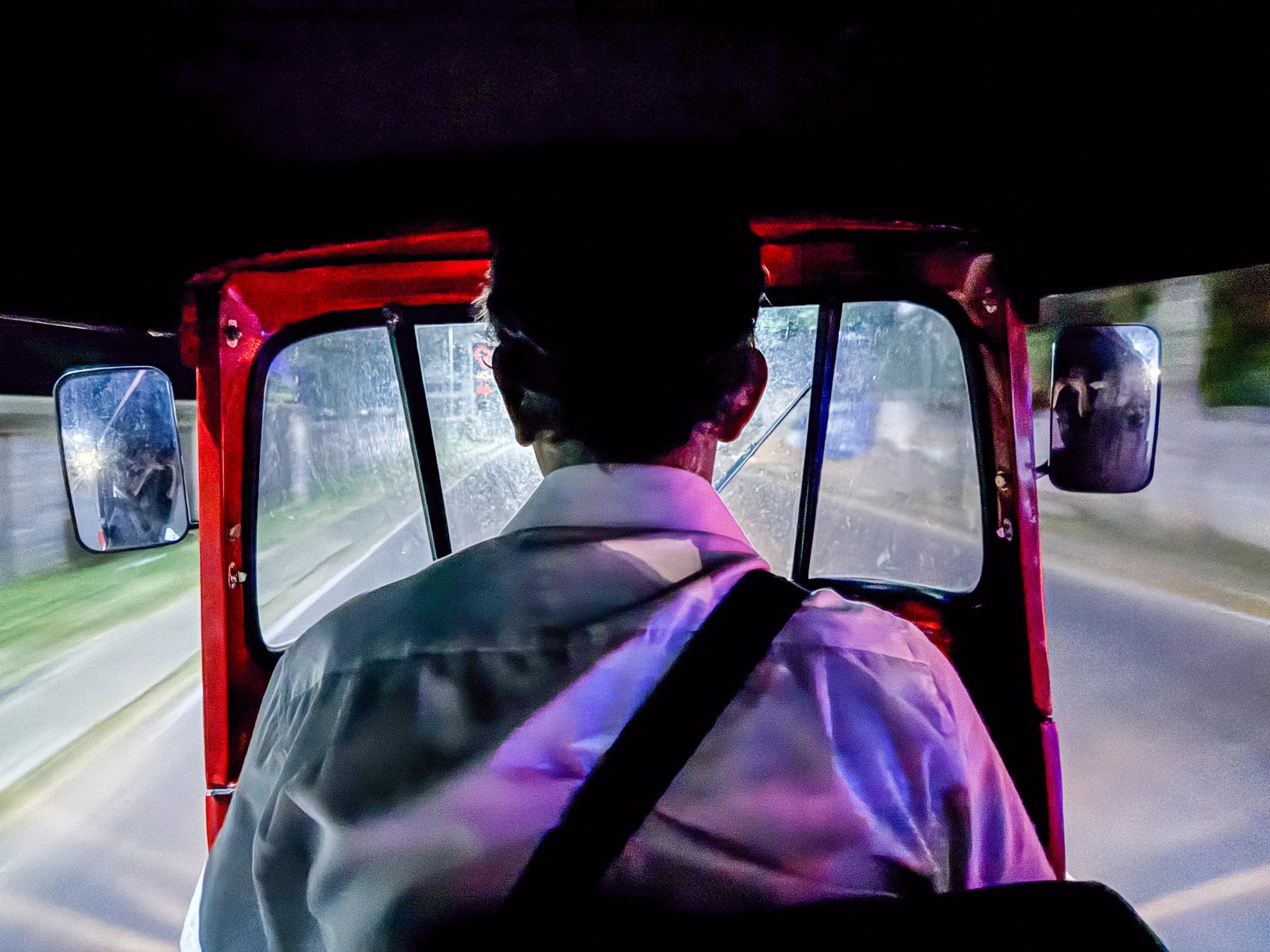
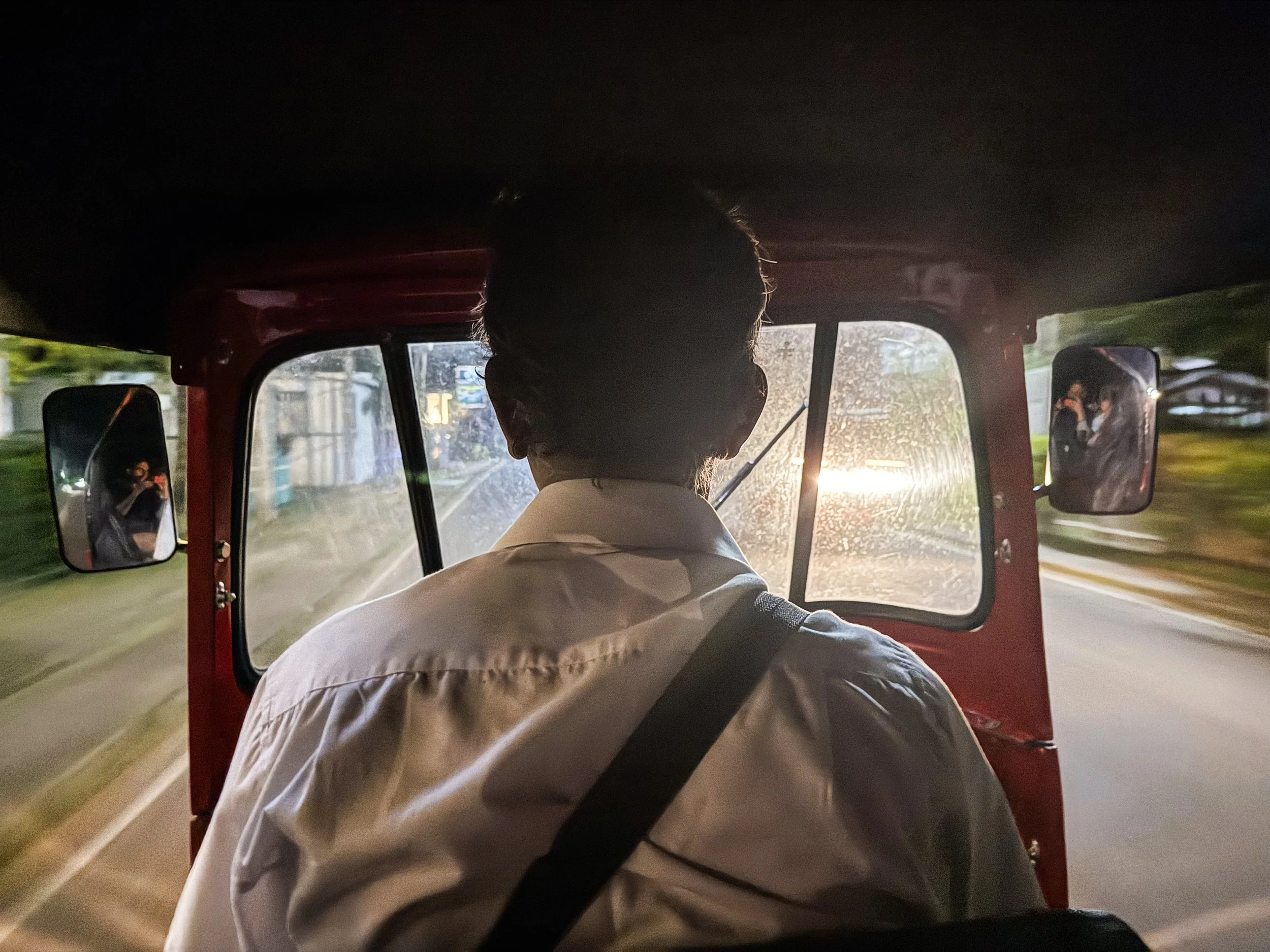
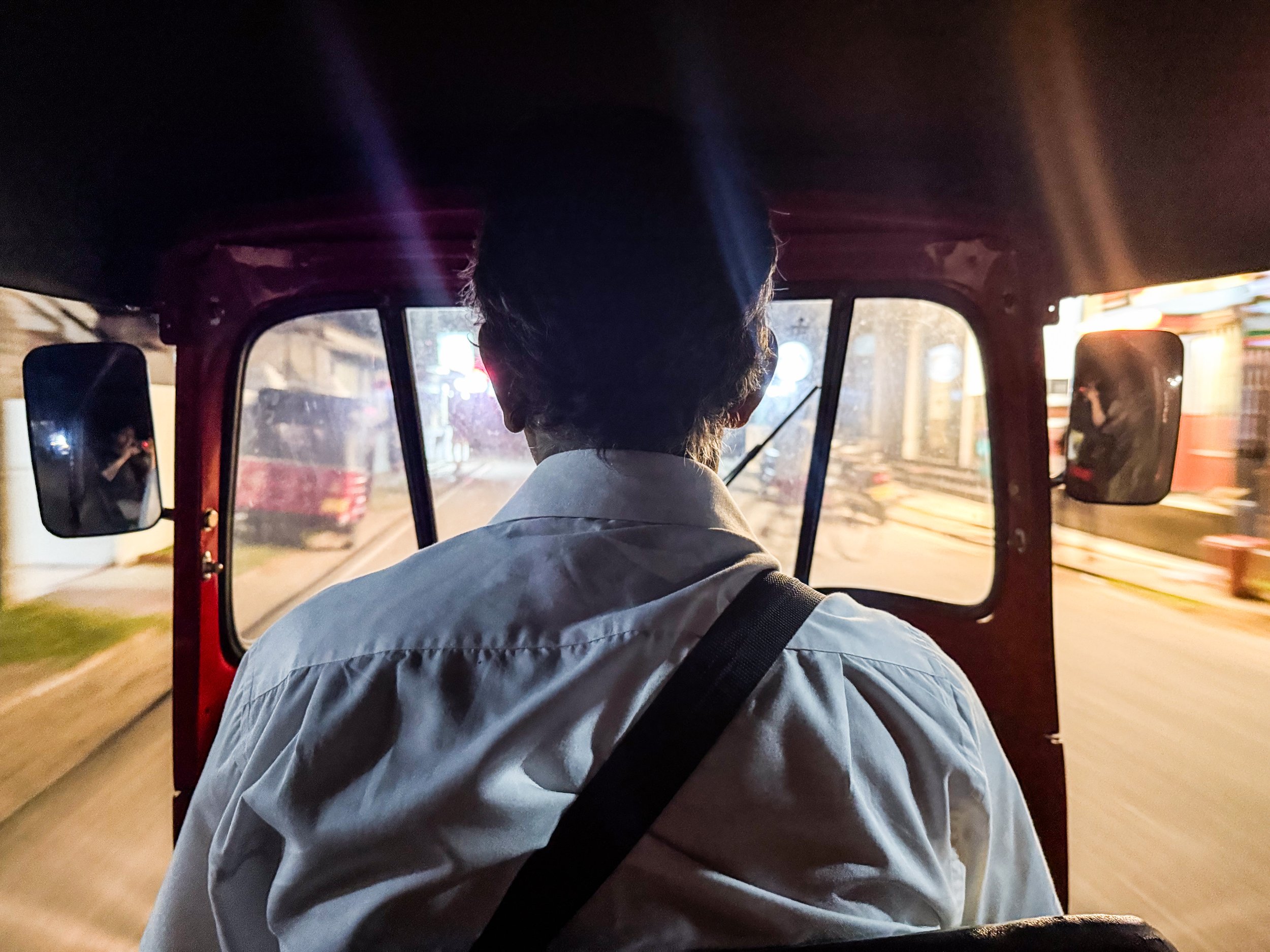
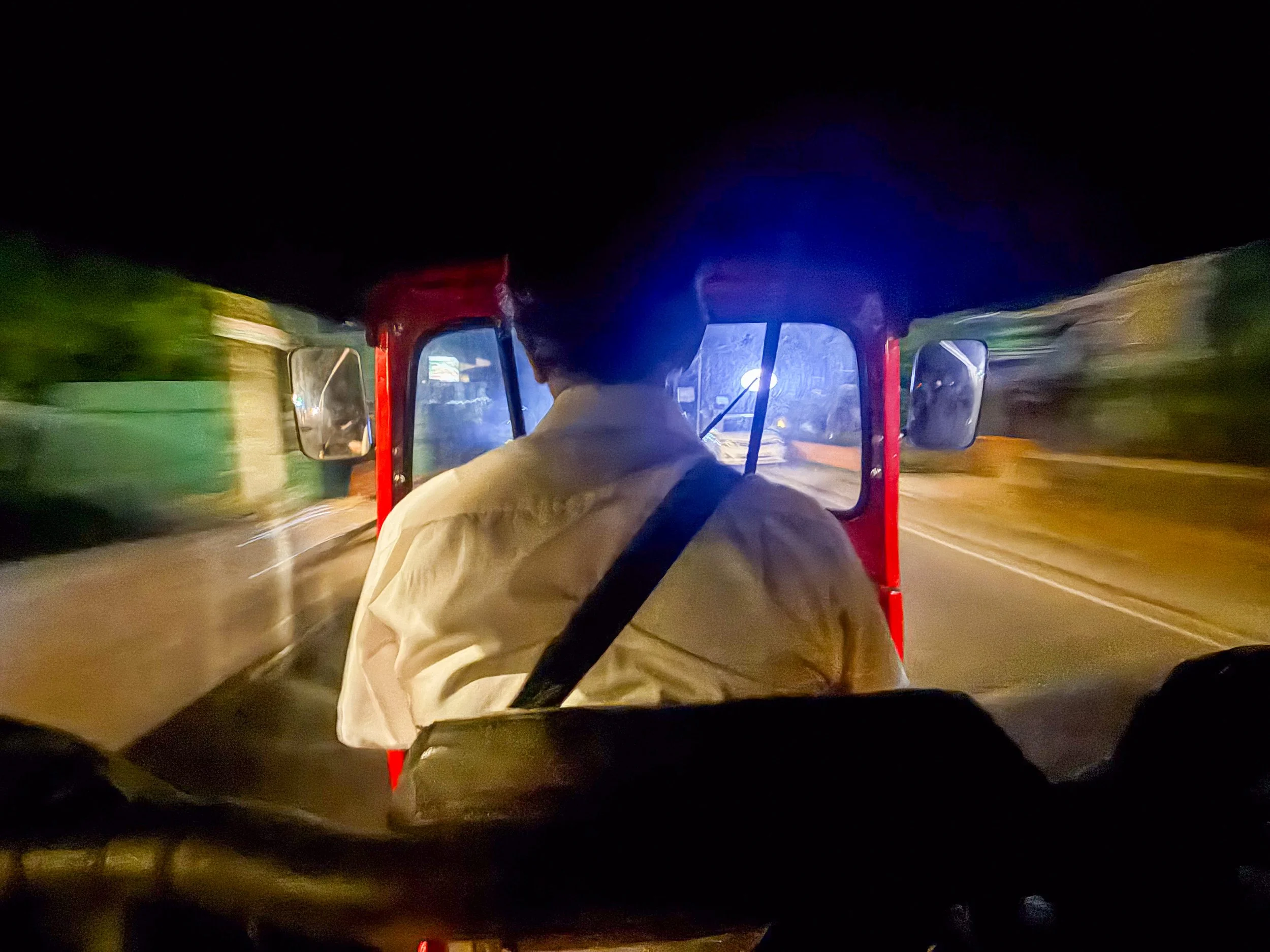
The Road Out of Colombo
So now that we’ve done a high-level introduction to Sri Lanka (and an even higher level introduction to Colombo)… this is where the trip really begins.
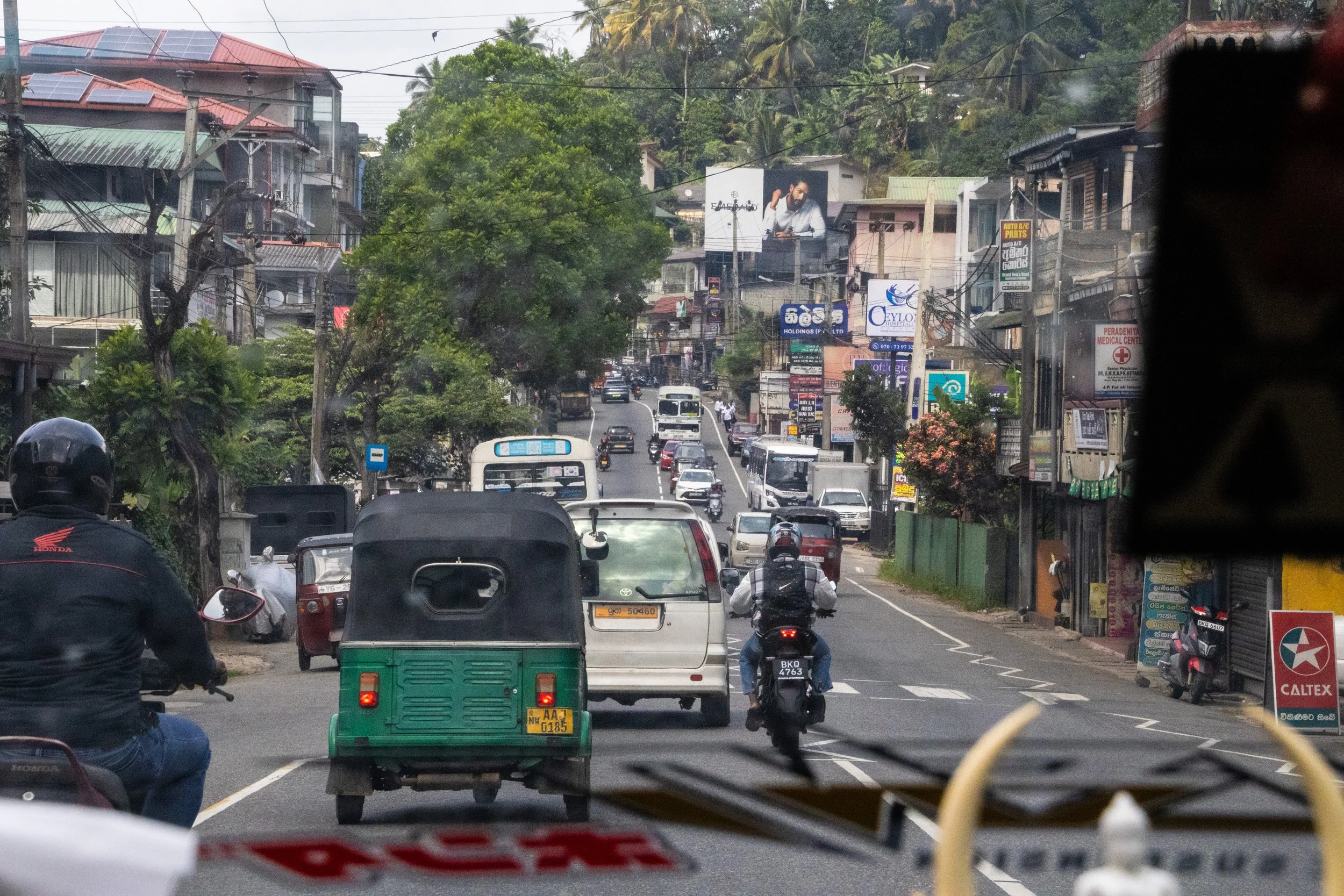
Sri Lanka’s most famous and beautiful sites are mostly located outside of Colombo. The post-card version of Sri Lanka that we will (try to) find on this trip is mostly in smaller towns, rural areas, or in the wilderness. And that version of Sri Lanka presented itself quite quickly once we got onto the road.
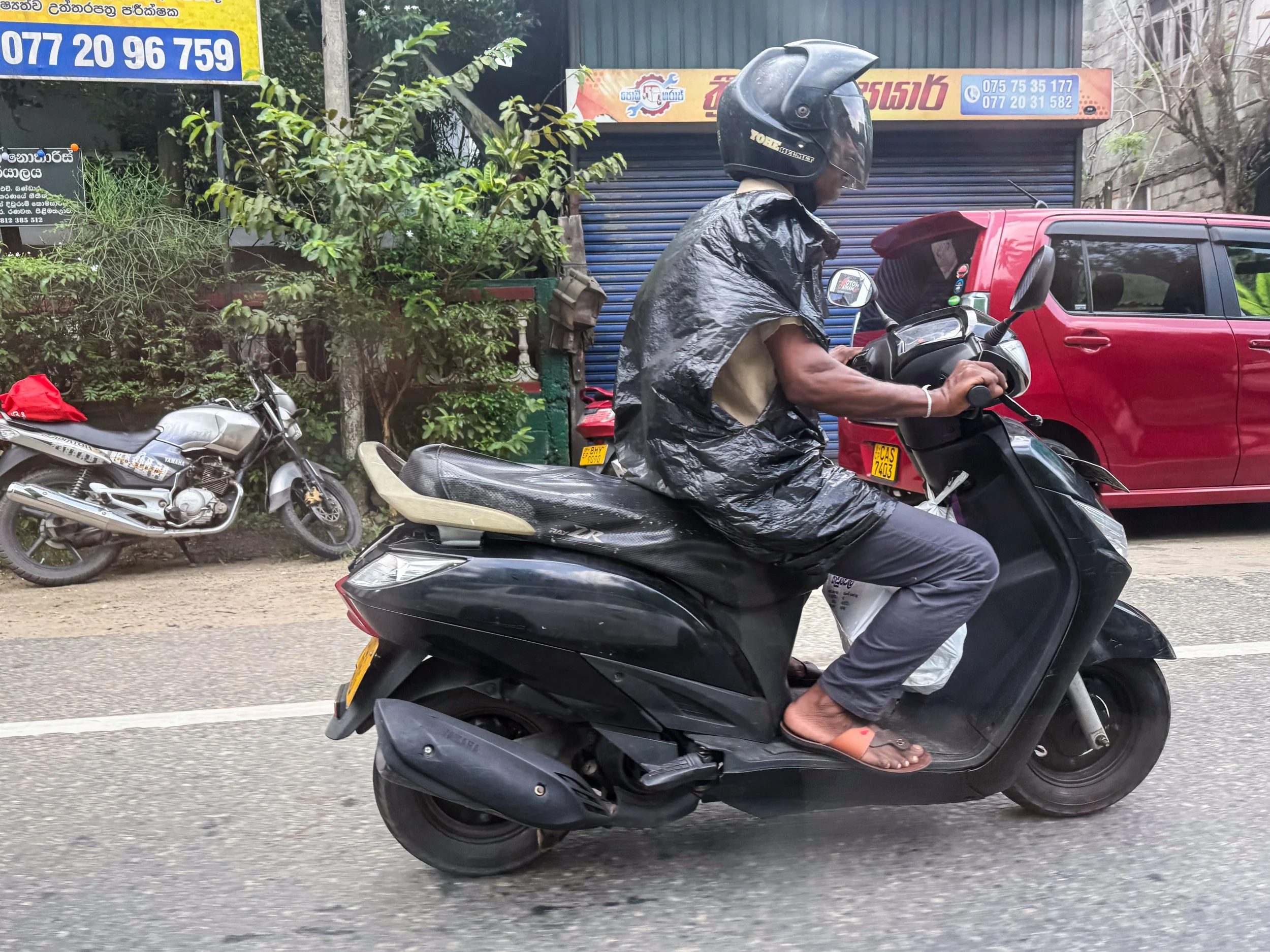
I was glued to the window as our little car rocketed past the Colombo city limits; every little vignette that I caught was so incredibly beautiful and interesting… at one point we passed a woman on the roadside with porcupines on leashes. This might have been the first time I’d ever seen this animal outside of a zoo! At another point, we passed through a parade wherein locals had dressed up as mosquitos. This, I’m told, was to ward off malaria in some sort of spiritual way. I regret not having stopped the car to photograph this! But we did stop for a coconut at one point, which was nice. There are going to be a LOT of pictures taken out the window of a car in this series…
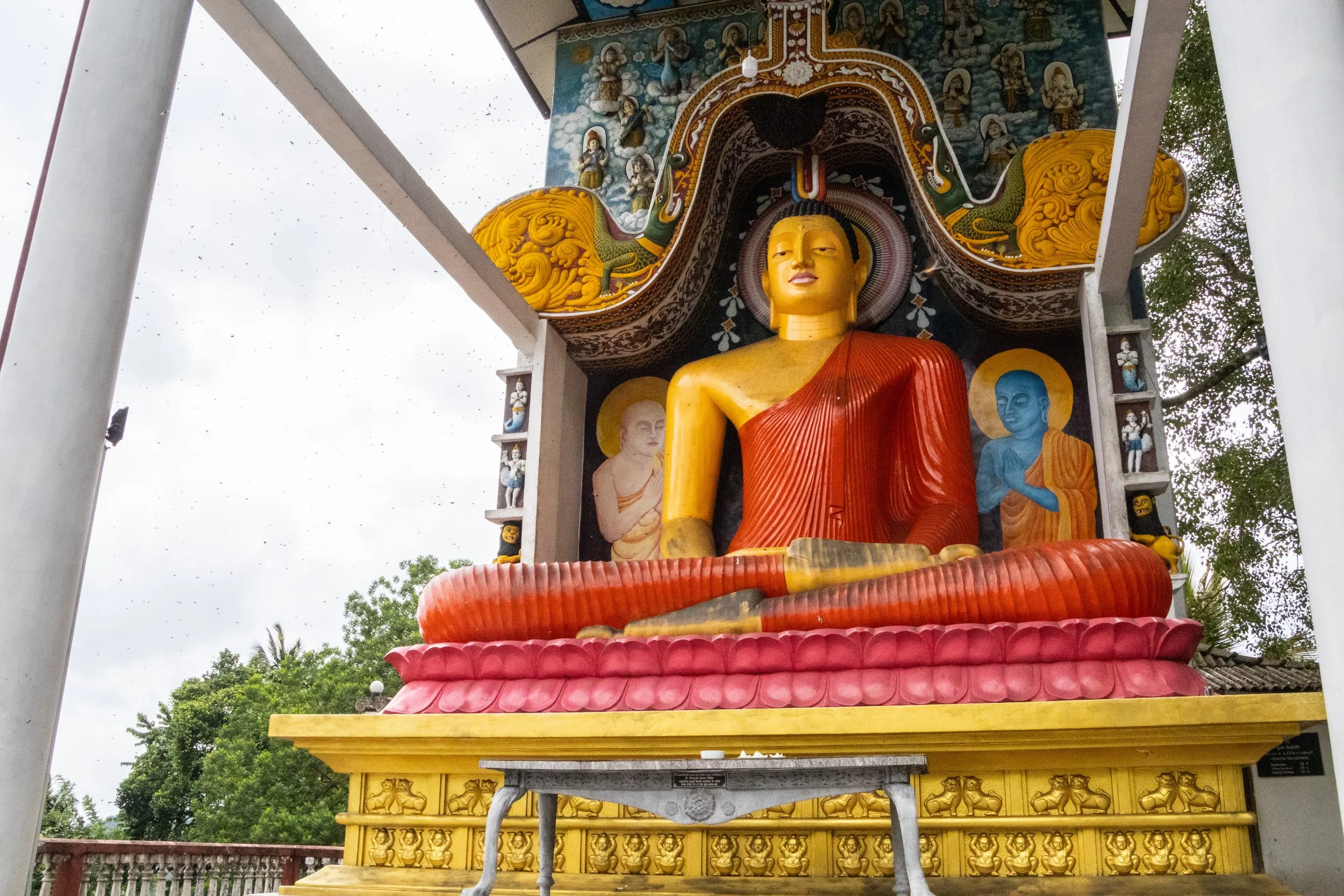
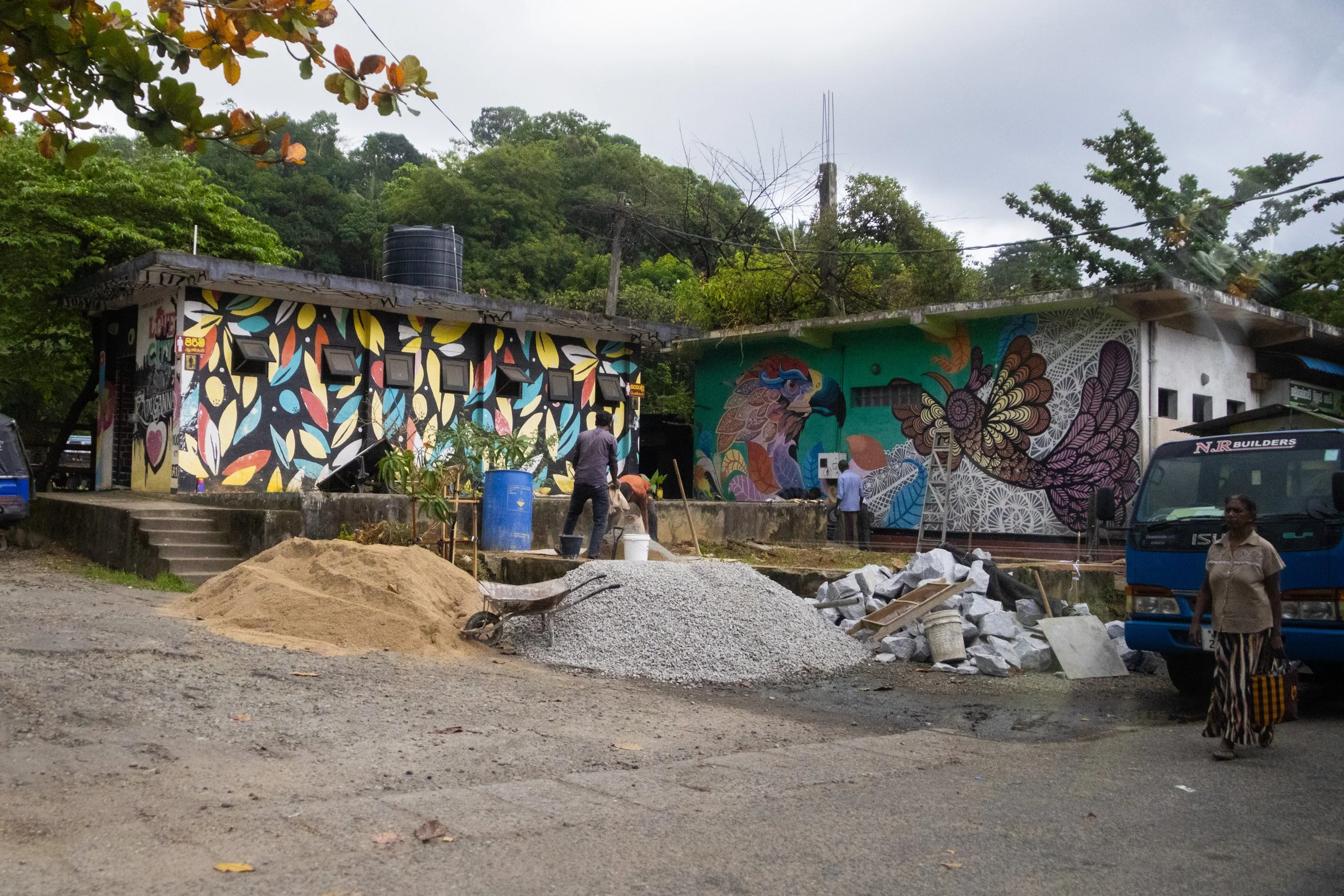
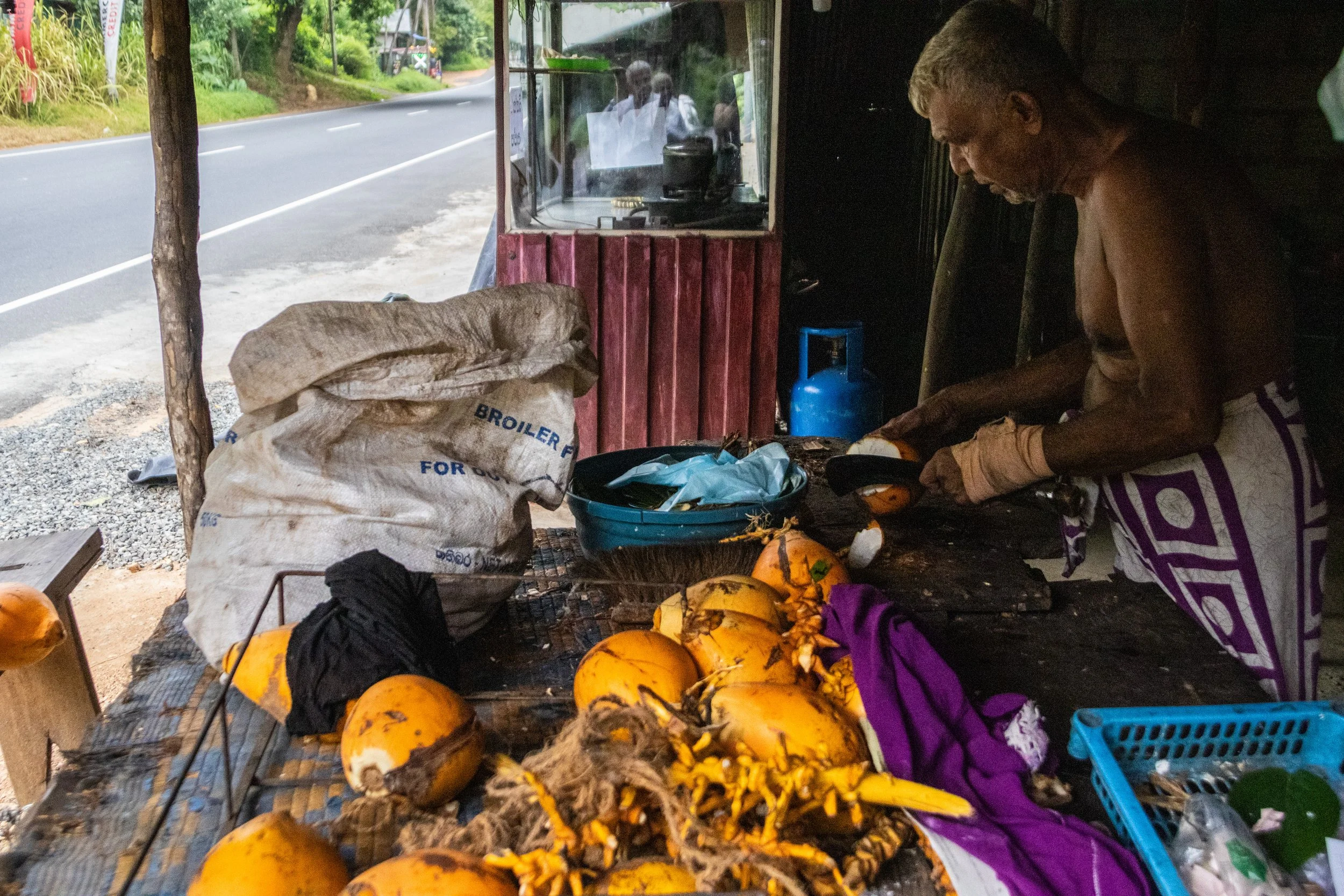
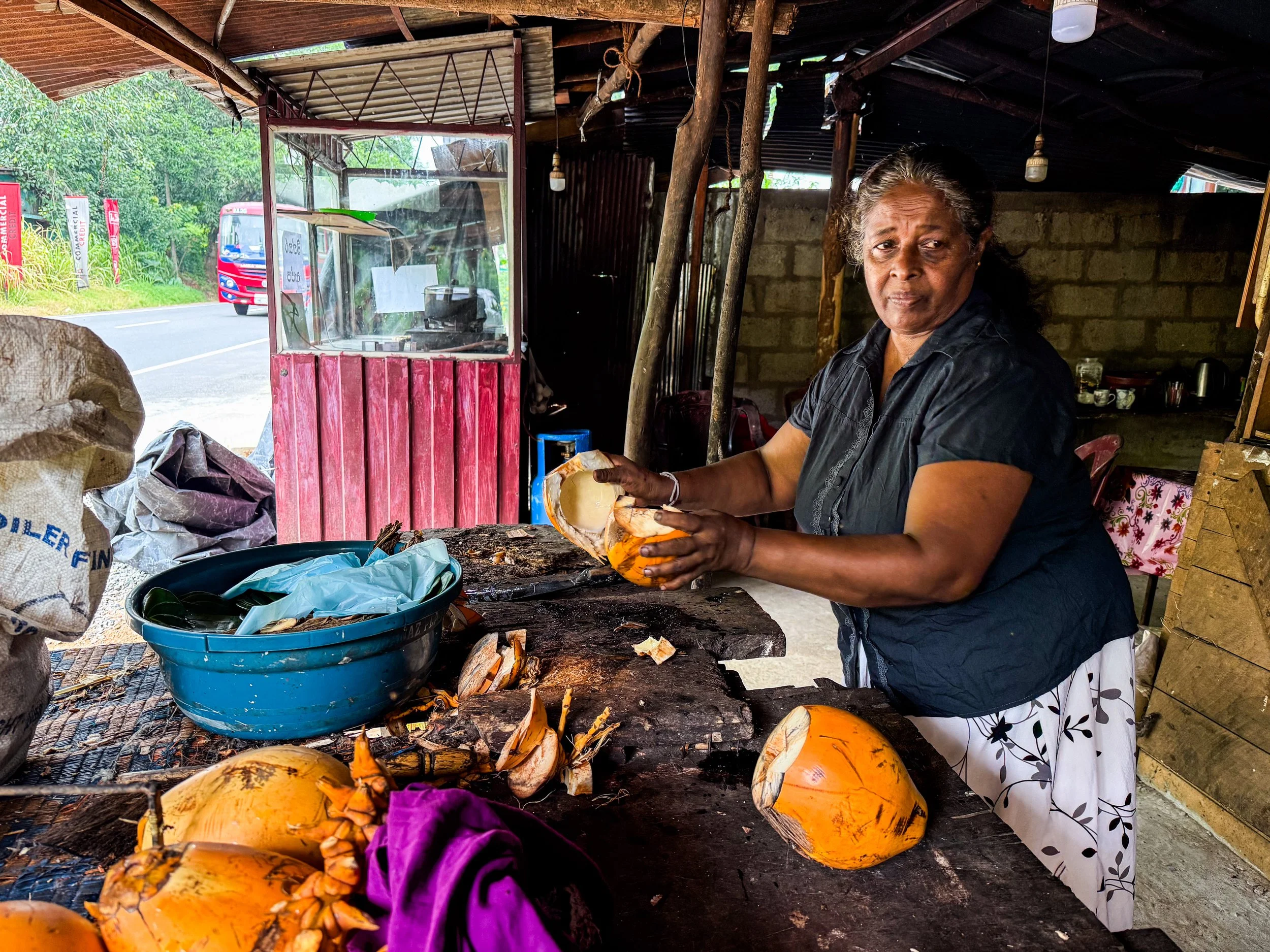
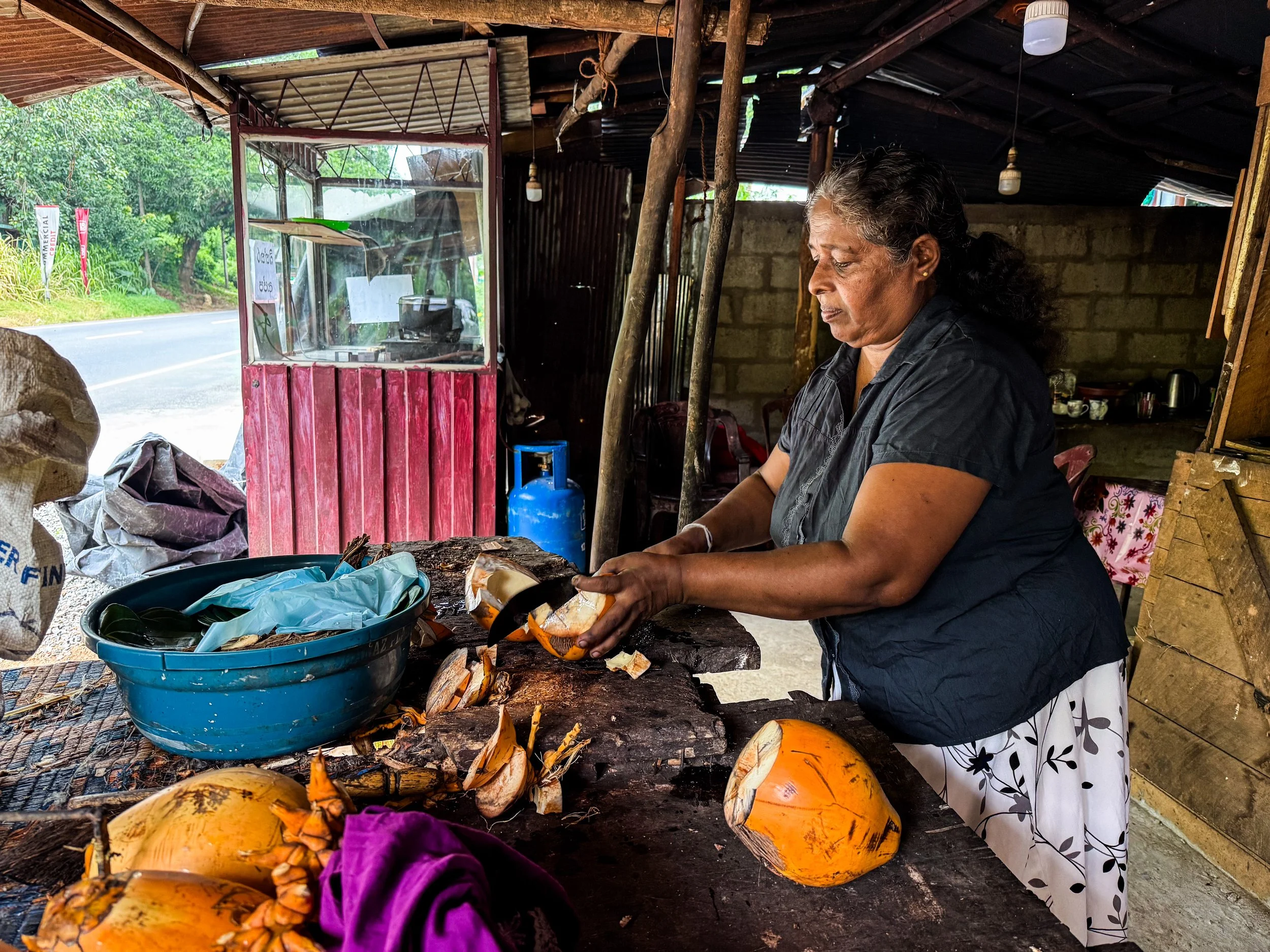
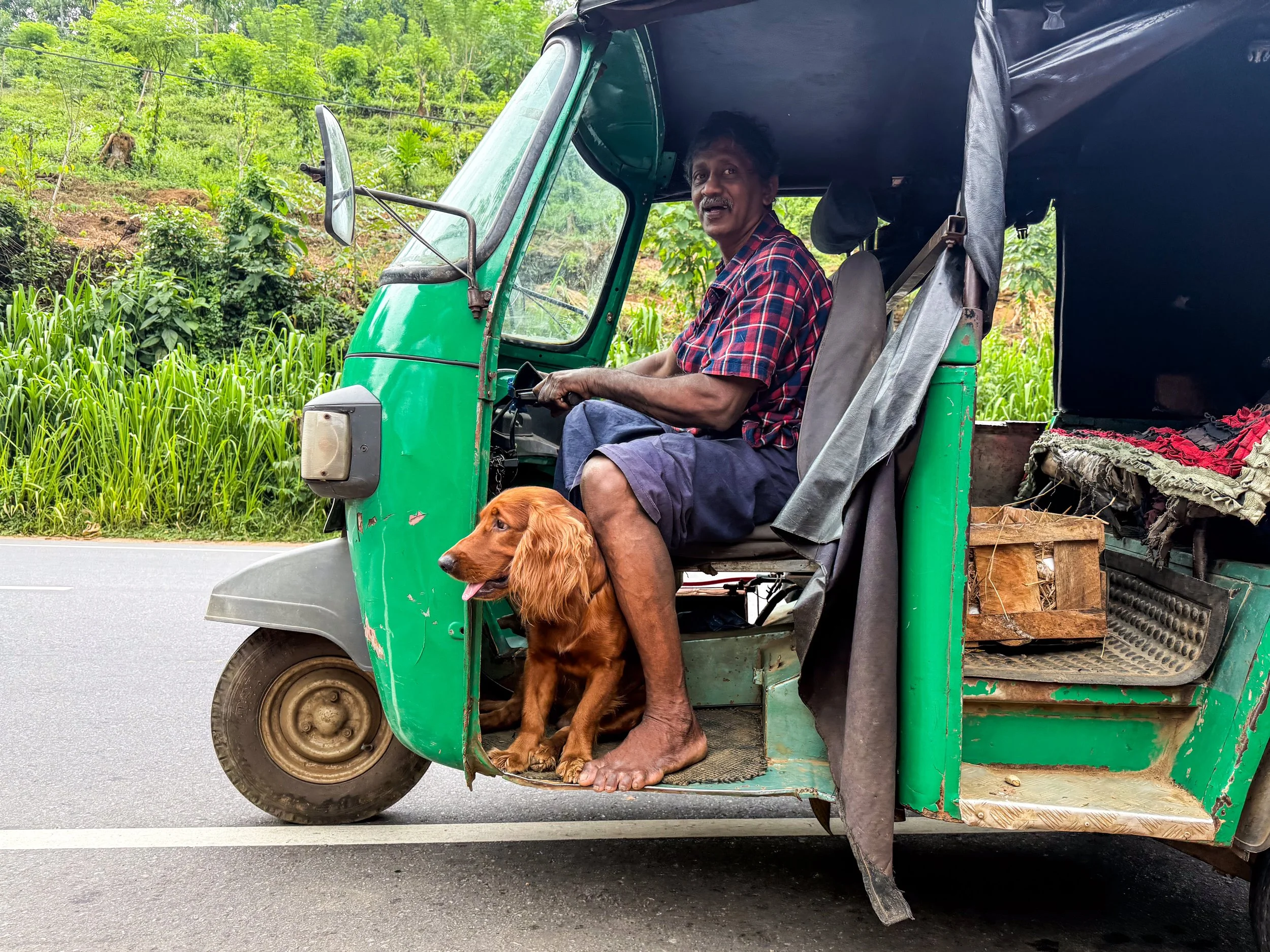
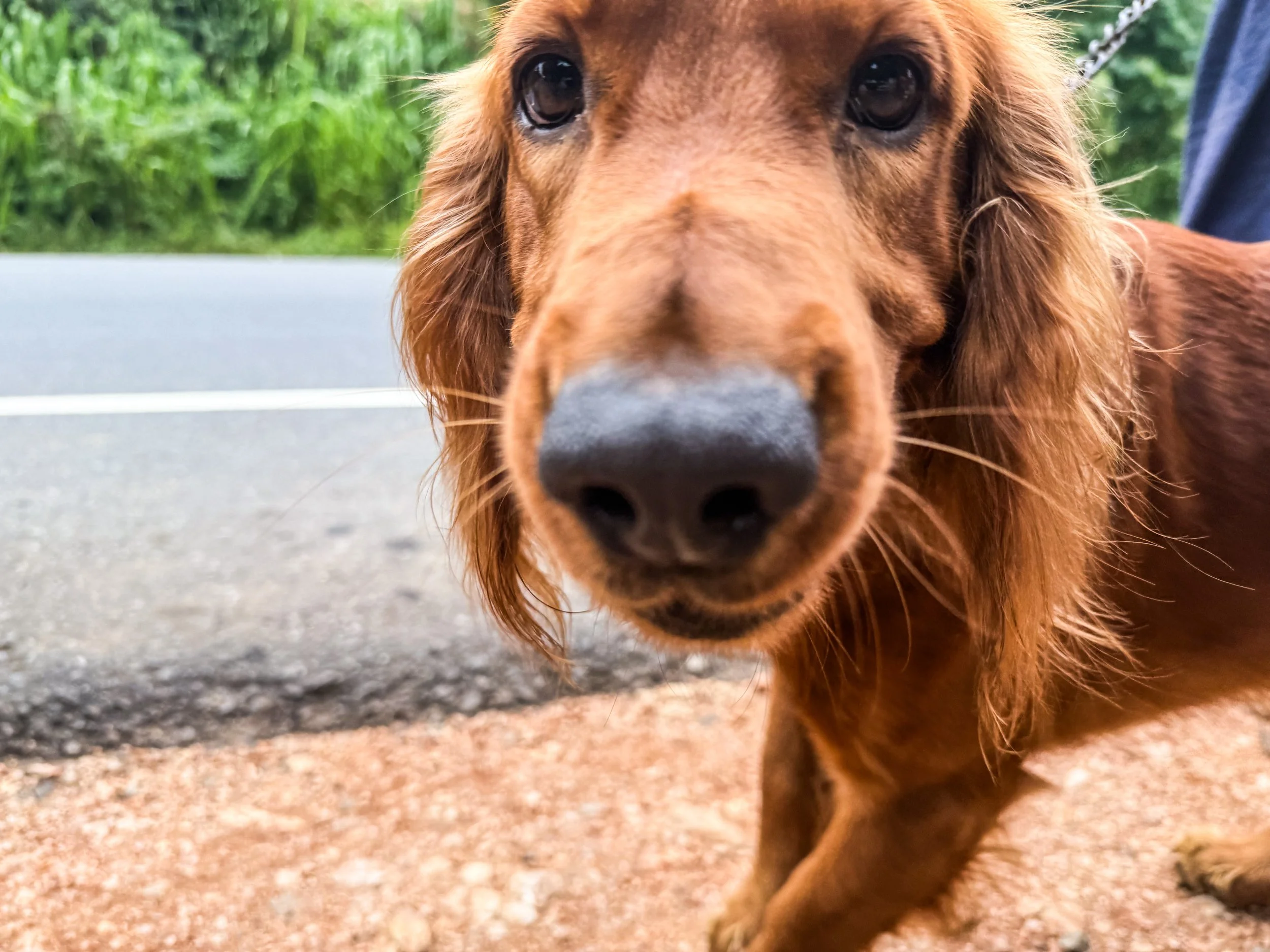
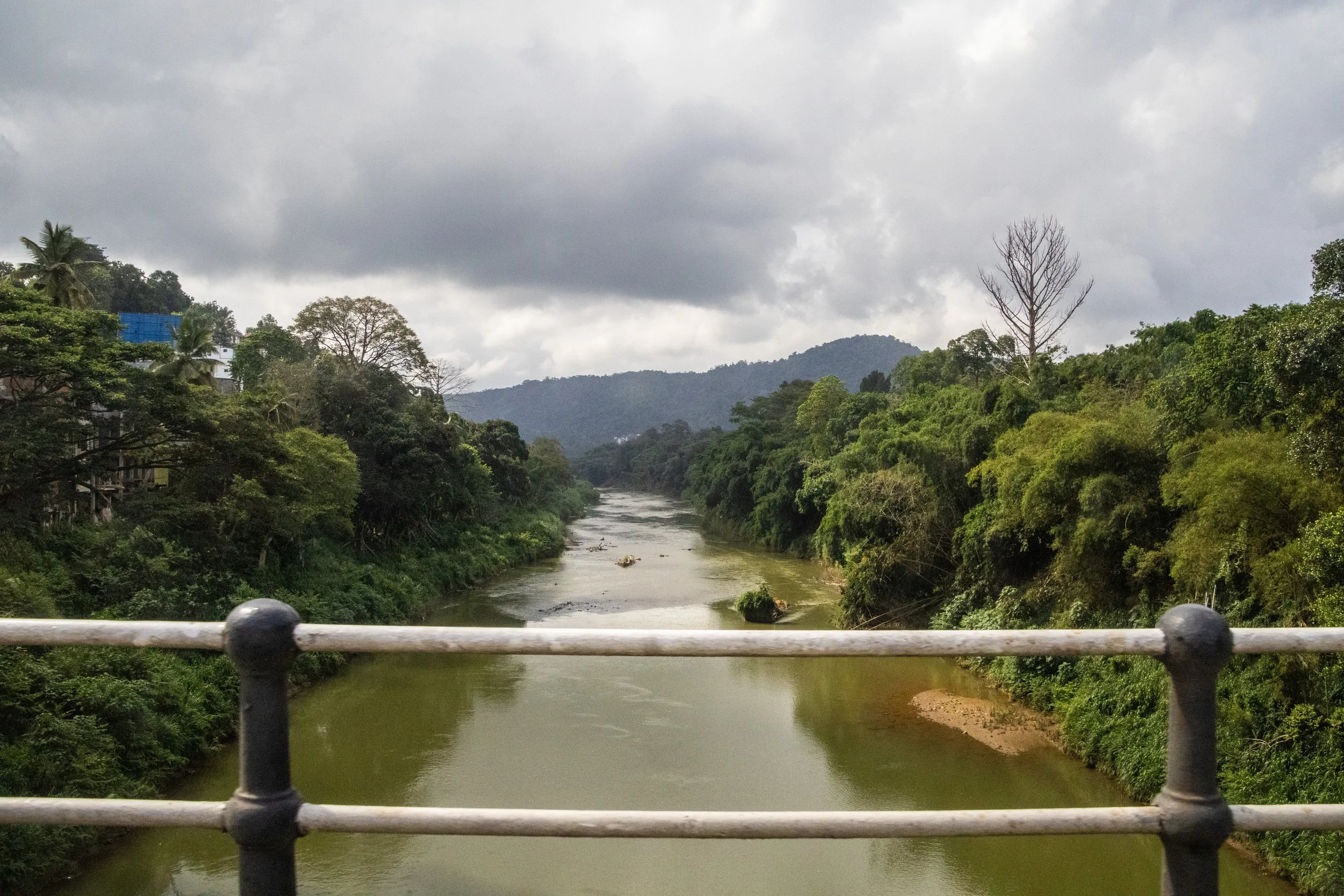
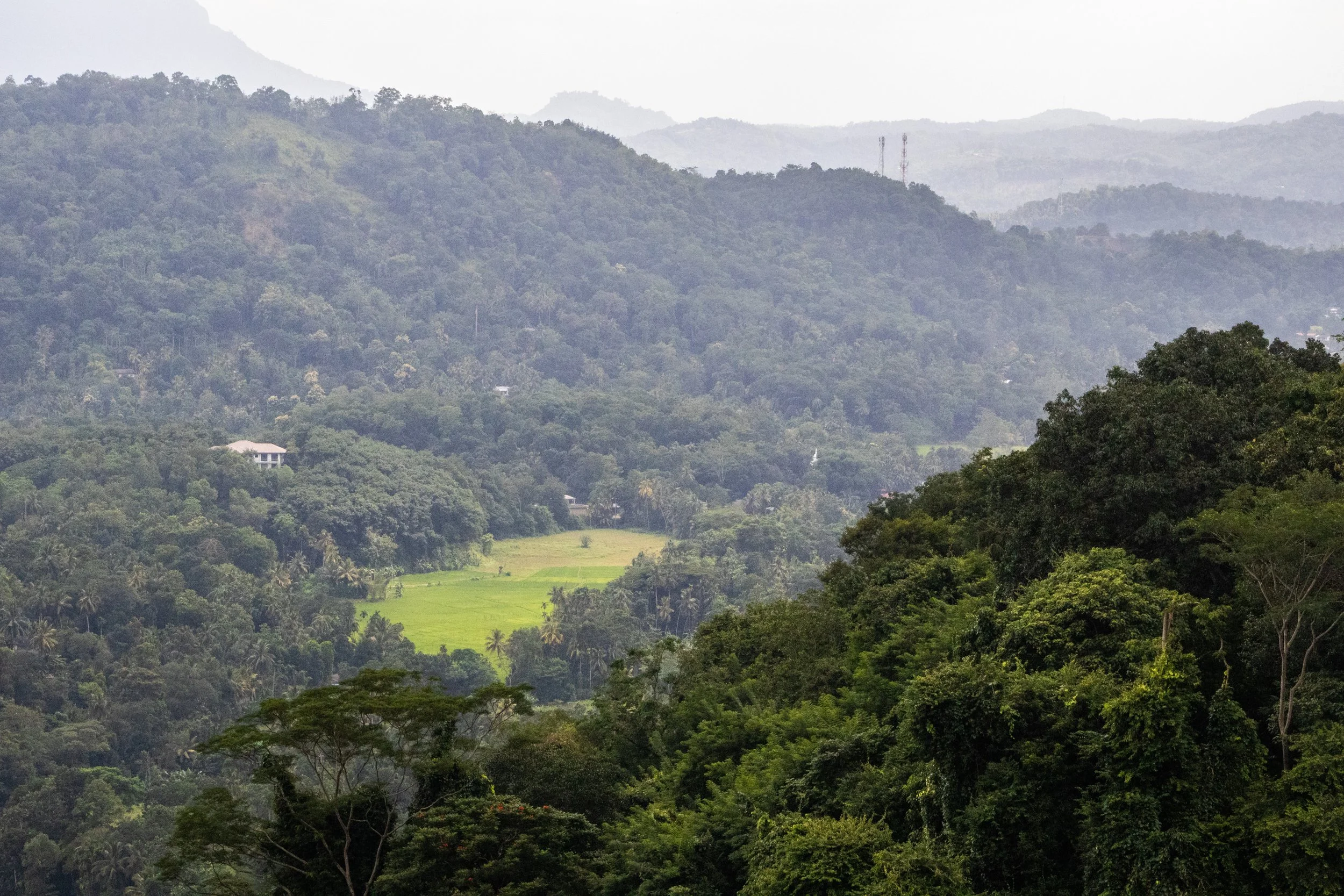
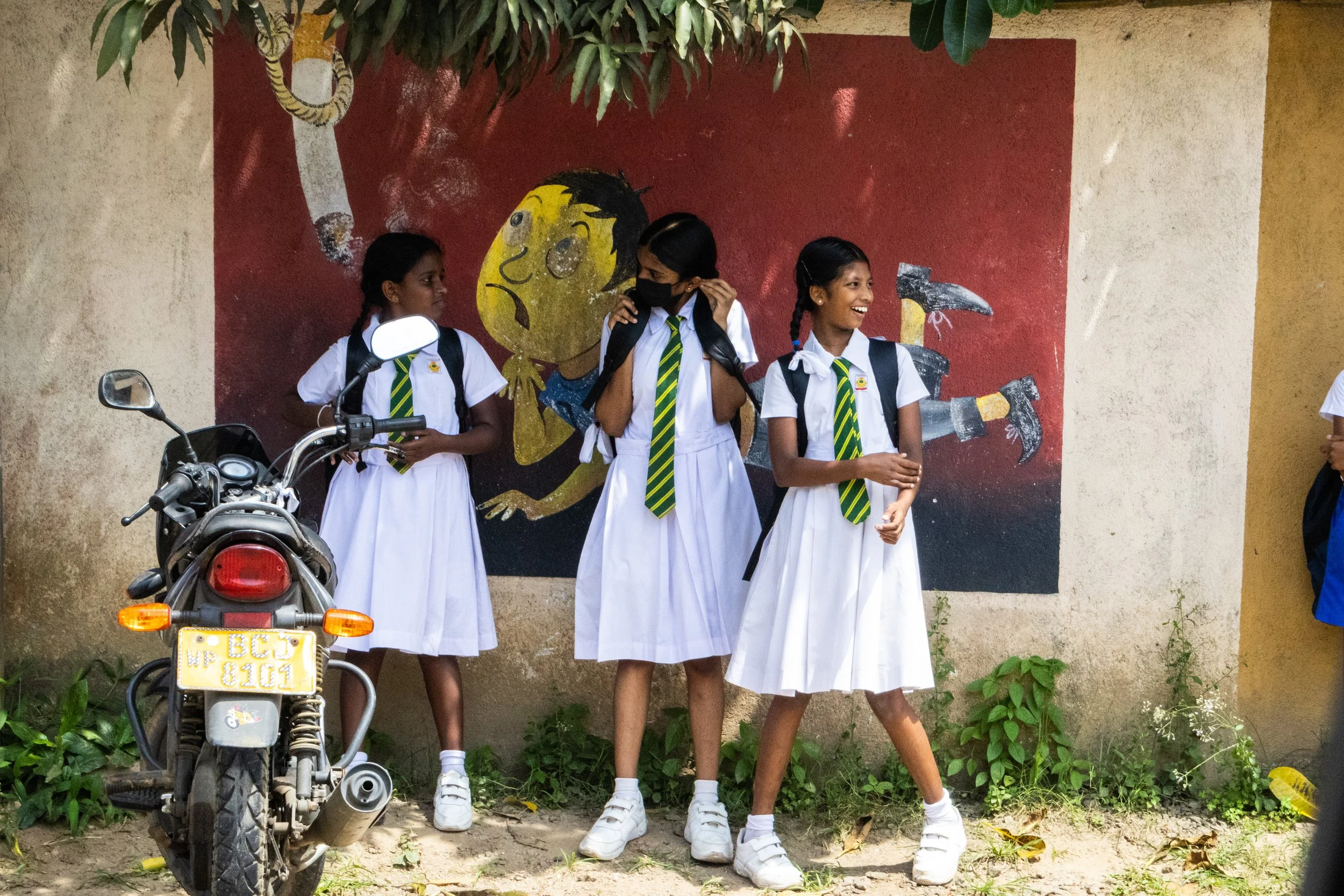
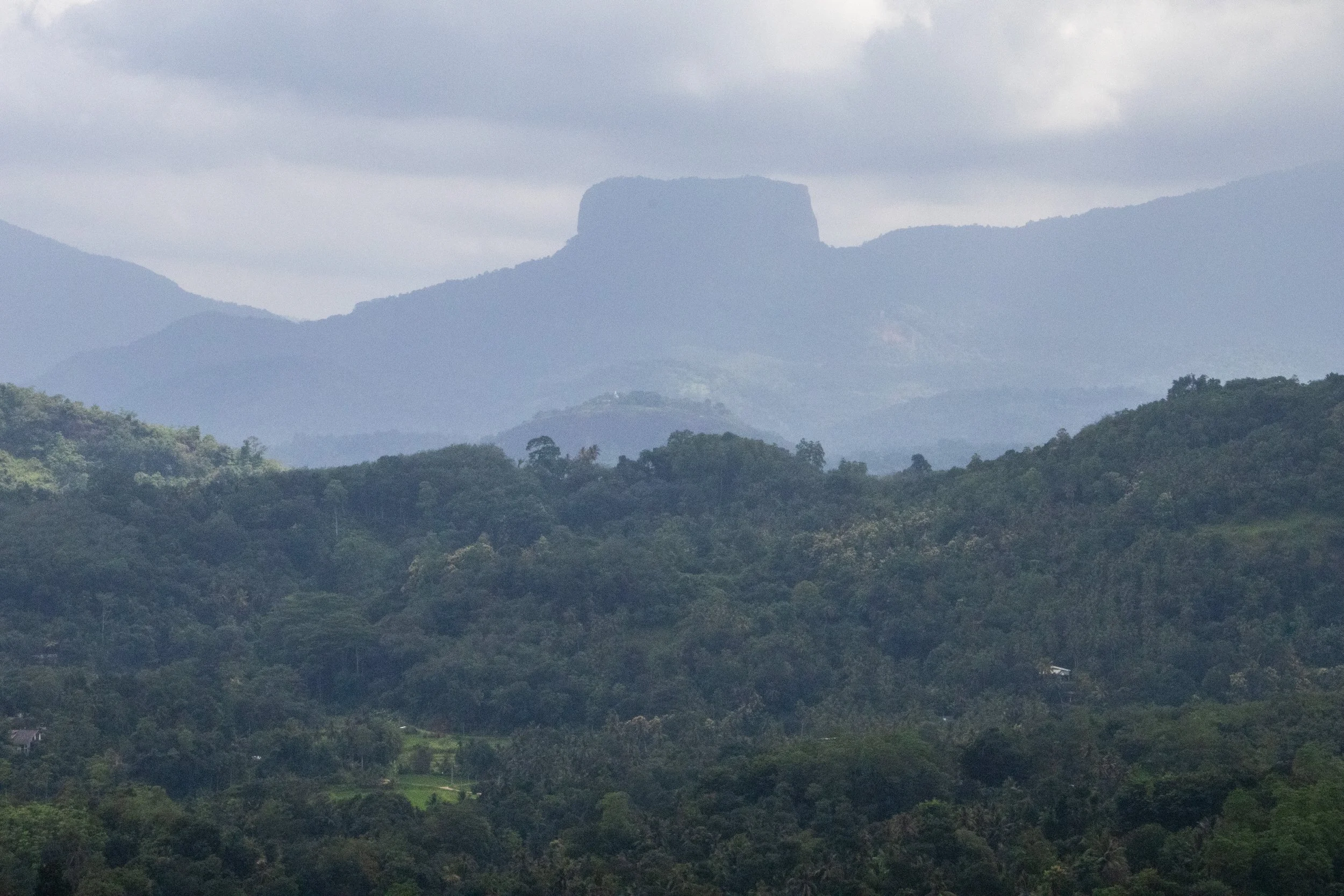
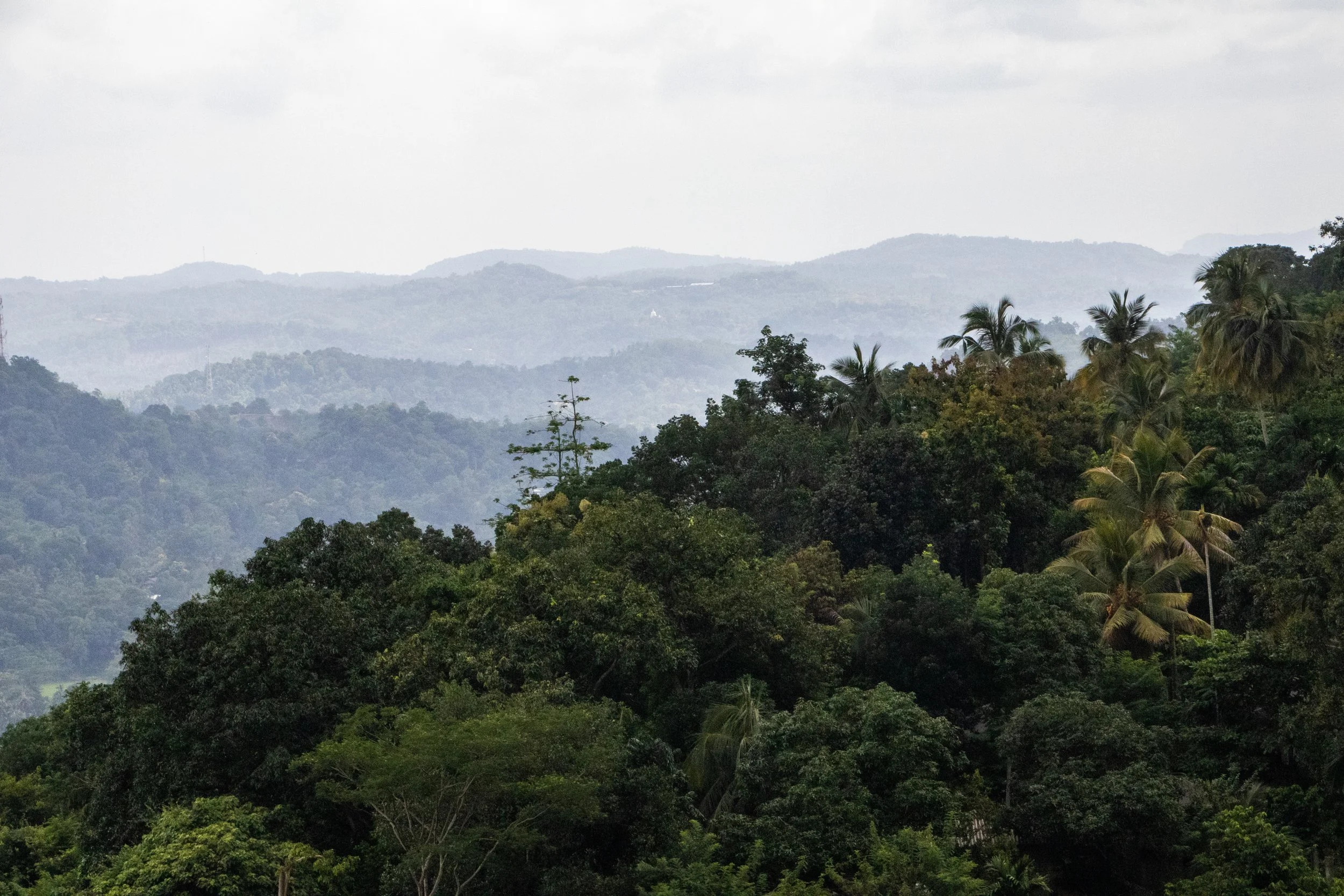
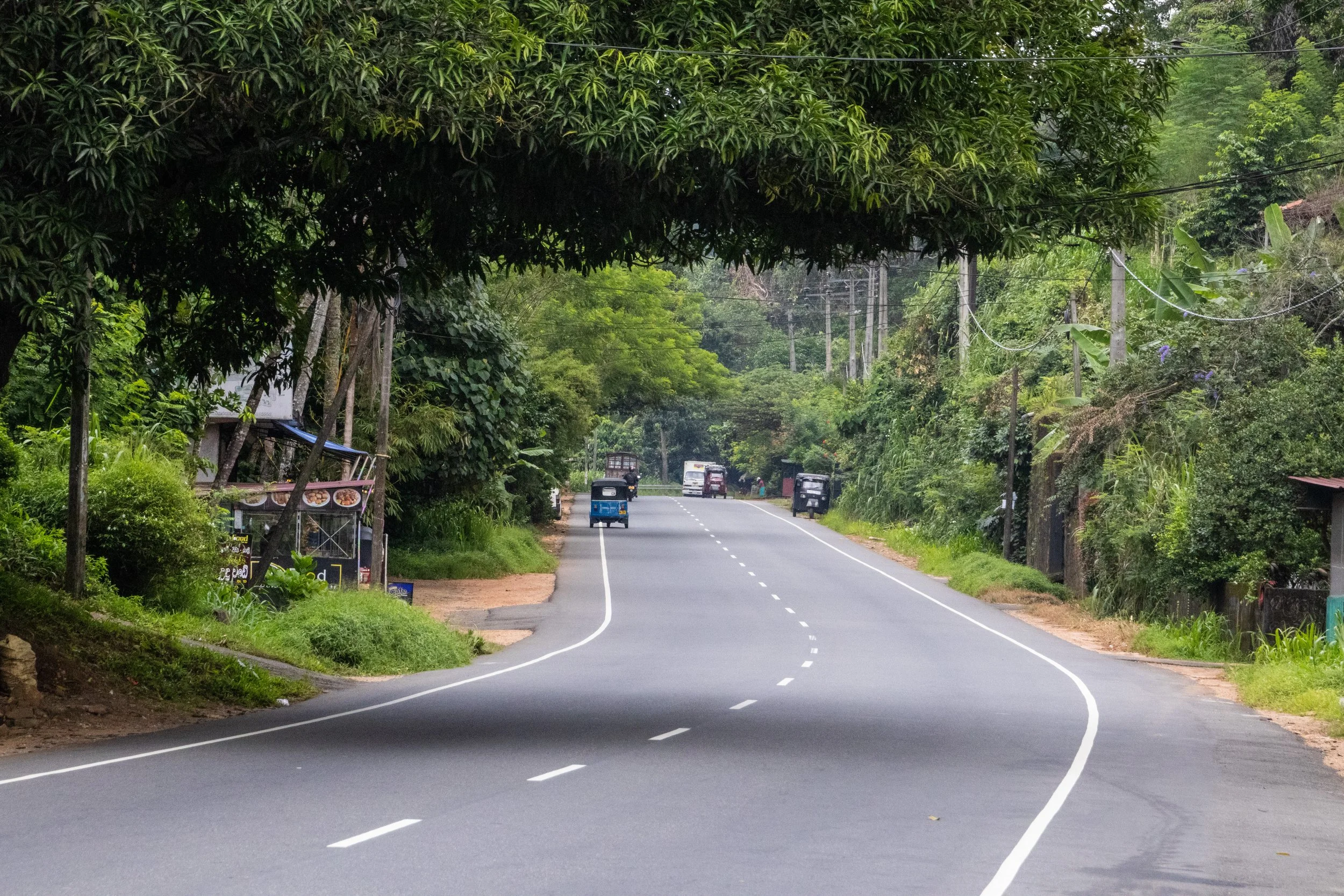
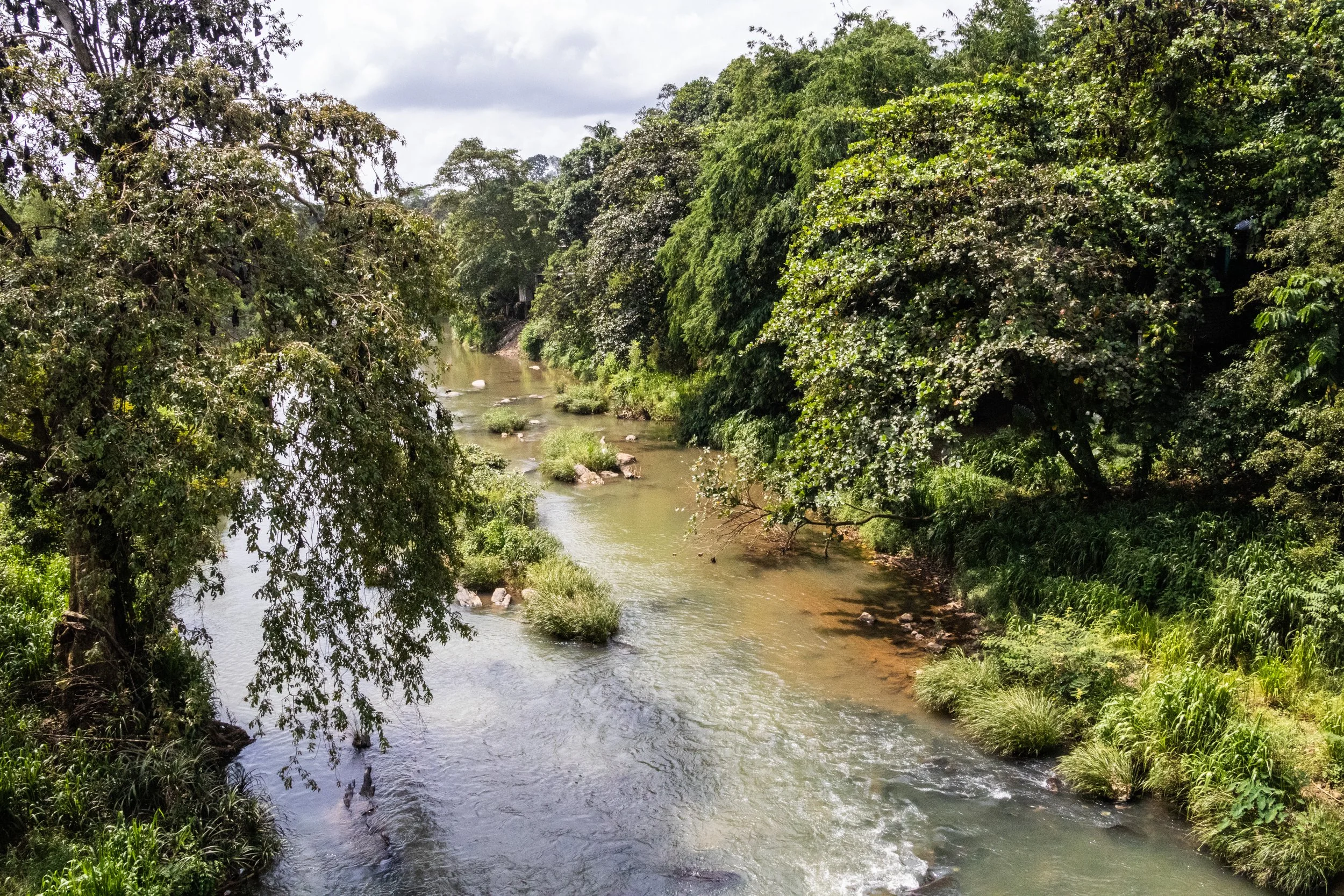
Up next, we’re going to visit the much smaller city of Kandy, which—despite its size—packs a punch of cultural, religious, and historic significance so powerful that it arguably rivals Colombo in its importance to the Sri Lankan identity. And that will be the last major metropolitan area that we will visit until the final article in this series!
Track of the day comes from a massively famous artist that is Sri Lankan/British: MIA.



My fascination with Pondicherry began many years ago when I saw it in the movie Life of Pi. It’s an incredible film, and while most of it takes place at sea, the beginning of the film, as well as the narration throughout, is all set in this idyllic French colonial town in India. Of course I was curious about this place, so I looked it up, and there it was: Pondicherry! It had been sitting on a quiet part of South Indian coast this whole time, but there weren’t many major cities around it so my eyes had never lingered on this particular part of the map. I remember thinking that this far-flung place seemed a bit surreal… it looked like France… but it was in India? I knew very little about South India at the time, and I’d probably never go there… but the way it was represented in the film was absolutely intoxicating!